UW researchers study the relationship between insects and wind turbines
For some time, scientists have been sounding the alarm on the decline of various insect species due to changes in land use and how these shifts will be exacerbated by climate change.
However, insects are often an afterthought in the discussion of conservation issues related to wind energy infrastructure.
A recent University of Wyoming (UW) graduate led a study looking at current knowledge in the relationship between wind turbines and insects – an area of research about which little is known.
UW research
“The argument of the paper is insects are heavily interacting with wind energy, both positively –some insects are able to use turbines for refuge and even overwintering – and negatively – large numbers of insects are killed by striking turbines – but it is not a conservation concern we often hear discussed when it comes to renewable energy, and there is still a lot we don’t know about these interactions that merits study,” says Michelle Weschler, an assistant research scientist with UW’s Natural Wyoming Diversity Database (WYNDD).
“Our paper focuses heavily on the hypothesis insects may be attracted to turbines, which could be increasing the number killed by turbines and also serve to attract vertebrate wildlife to turbines, making them vulnerable to fatally striking the blades as well,” she continues.
The paper also examines ways turbines change habitat conditions, such as temperature, soundscape and wind speed and how this might affect insects, she adds.
Weschler was lead author of a paper titled “Wind Energy and Insects: Reviewing the State of Knowledge and Identifying Potential Interactions,” which was published on Oct. 14 in PeerJ Life and Environment, a peer-reviewed, open access journal which publishes primary research and reviews in biology, life sciences, environmental sciences and medicine.
Lusha Tronstad, lead invertebrate zoologist with UW’s WYNDD, was the second author on the paper and Weschler’s faculty adviser.
Wind energy and insects
In 2023, the wind industry hit a milestone of one terawatt of installed capacity globally, according to the paper. This amount of wind energy capacity is expected to double within the next decade as billions of dollars are invested annually in new wind turbine projects.
As a result, wildlife mortality is a primary concern.
Turbine placement,
color, shape, heat output and lighting are possible attractants of insects to turbines, according to the paper.
“We examined a few of these options as potential attractants. Right now, the most evidence exists for color,” Weschler says. “There have been two studies finding evidence for increased insect attraction to the bright white paint used on most turbines globally compared to other colors.”
Additionally, she says there is reason to believe insects may be attracted to the shape and placement of turbines. That is, wind turbines may be acting as markers on the landscape which could be useful congregation points for insects.
“Turbines also give off heat, which definitely attracts some insects to bask on the towers. Beetles and flies, specifically, have been found to rest on towers despite the increased risk for predation,” Weschler says.
“There is certainly potential for light to be an attractant. By law, turbines must have lights which flash at night, but we have yet to see solid evidence for attraction due to this, and the type of lights that are industrystandard – red and LEDs –are usually less attractive than other types of light,” she adds.
While Weschler says it’s “currently impossible to identify the risk to specific species,” the paper proposes methods for extrapolating this information, such as DNA barcoding of debris scraped or washed from turbine blades.
However, the answer to risk factors will be different depending on the location of a wind energy facility.
The paper includes a table, which is offered as supplemental information and examines the vulnerability of different insect orders based on factors including the maximum altitude at which they’ve been surveyed and responses to stimuli such as light, heat, wind and sound, as well as flight and migration behavior, Weschler says.
Based on this assessment, the table suggests moths and butterflies, beetles, flies and true bugs may be the most vulnerable to striking turbines.
“Members of these orders engage in high-altitude migrations, swarming and hill-topping behavior,” Weschler says. “Additionally, some species within these orders are acutely heat-sensitive and have been found basking on turbine towers.”
Study implications
Weschler hopes the study’s results will be useful for researchers who are interested in insect conservation, as well as land managers and wind energy operators.
“Insects are increasingly being listed under the Endangered Species Act in the U.S., and there is global concern from entomologists regarding large-scale insect decline over the past decades,” she says.
“Wind energy and renewable energy projects, in general, are rapidly growing, so I think the link between these is worth considering on a conservation level,” she continues. “Hopefully, this will inspire further studies and investigation so we can fully understand the scope of the issue.”
The project’s paper was a revised and peer-reviewed version of Weschler’s master’s thesis. Weschler received her master’s degree in zoology and physiology
Continued on next page
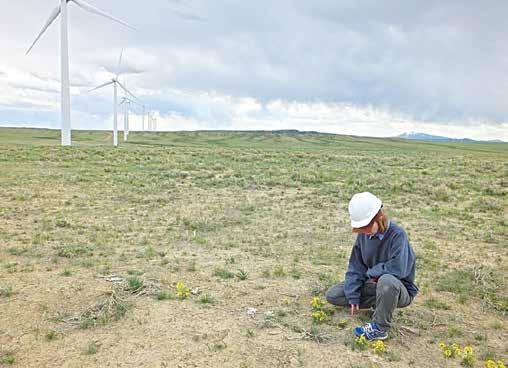
Gathering data – Michelle Weschler, an assistant research scientist with the University of Wyoming’s Wyoming Natural Diversity Database, examines flowering plants within a wind energy facility in southeast Wyoming. Lusha Tronstad photo
IT'S THE PITTS Rat
by Lee Pitts
Hats
Sometimes I collect things because of how strange they are. Take my Stetson nutria hat, for example.
Ever since I was eight years old and got my first Little League ball cap, I have lived my life under a hat of some sort – cowboy hat, oilfield hard hat, welding hat, sombrero, war bonnet. You name it, I’ve worn it.
I now have 400 ball caps, a couple dozen old and dusty Stetson cowboy hats and almost that many Resistol straws. Out of all of them, my Stetson nutria is the most valuable, even
beating out a hat autographed by Roy Rogers himself.
I bought the nutria hat at the estate sale of a plumber on Dec. 7, 2018 and paid $20 for it. It has a three-inch brim and it’s brown – and rightly so. On the inside of the brim, embossed with gold leaf, are the words “Nutria Quality,” which is a big laugh considering what it’s made of.
Throughout the glorious history of the John B. Stetson Hat Company, they’ve been known for their quality, and during all of this time, the mad
hatters who made the hats either used beaver, rabbit – which was half the price of beaver – or a combination of the two.
The only exception are the nutria hats they made in small quantity.
Those who live along the gulf coast probably know a nutria is a river rat with 20 huge orange teeth. Now you know why I’ve never worn my nutria hat and never will.
To the best of my knowledge, it’s the only hat made by the Stetson Hat Company that didn’t have any X’s embossed on the brim.
In the 1940s, Stetson wanted to find an alternative to beaver, which was highly priced due to a shortage. Hat builders during this period often suffered from insanity and later this was found to be caused by the mercuric nitrate used in the felting process.
Vermilion Ranch Vermilion Ranch
Fall Performance Sale
NOVEMBER 29-30, 2024
Public Auction Yards, Billings, MT
I can only assume it was one of these crazy mad hatters who thought cowboys would wear hats made from rats.
The nutria were imported into Louisiana specifically for the hat trade, and most of the imports came from giddy South Americans in the early 1930s who convulsed with laughter Americans would take the rats off of their hands and pay good money for the disgusting creatures.
Had the Stetson Hat Company done their research, they’d have quickly discovered nutria were being shot on sight and poisoned in other parts of the world due to their propensity to tear down dikes, levees and irrigation ditches, and it didn’t take long for them to start doing the same here.
By 2002, most occu-
pied states had a bounty on nutria.
All this for a rat hat no one was proud to wear.
Not only do nutria cause immeasurable physical damage, they also threaten human health because they spread diseases like tularemia, tuberculosis and septicemia.
In the United Kingdom, nutria are listed among the 100 worst species on Earth. They will fight a dog and have been known to attack humans. In the U.S., it’s illegal to have one as a pet.
The females have two litters per year – but never more than six litters in their life – and a female can give birth to as many as 13 little rats at a time.
In a desperate attempt to find something positive to say about the orangetoothed devils, Russia tried to use them as dog food, but even a Russian
dog has the good sense to say “NYET!” to nutria. It’s been my observation cowboys are not easily grossed out. After all, these are people who willingly stick their arms up cow’s butts, but I’ve never come across a cowboy yet wearing a Stetson nutria hat. After reading this column, my wife demanded had she known my hat was made from rats, she’d have never let the thing in the house in the first place.
So, it is with great sadness in my heart I’m offering my rat hat for sale to the general public, and the first person who’ll pay me $1,000 in cash can acquire this item of great historical significance. But please know in advance under no circumstance will I autograph it and have my name associated with the disgusting thing.
Continued from previous page
from UW in August 2023.
Before coming to UW for graduate school, Weschler was living in her hometown of Orlando, Fla. and working remotely for the University of Florida’s Honey Bee Research and Extension Laboratory.
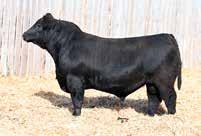
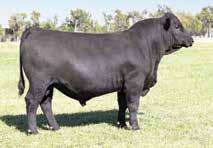
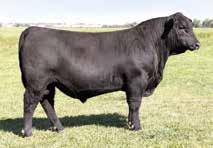
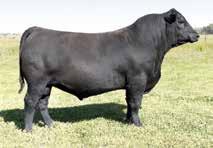
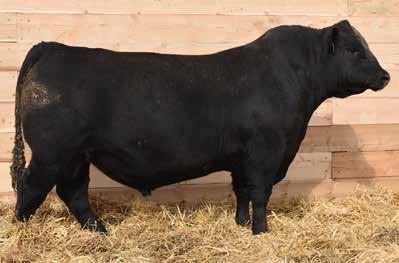
2,100 ANGUS SELL
NEW DATE - Selling Friday, November 29 at 1:00 pm
1,500 Fancy Commercial Angus Bred Heifers
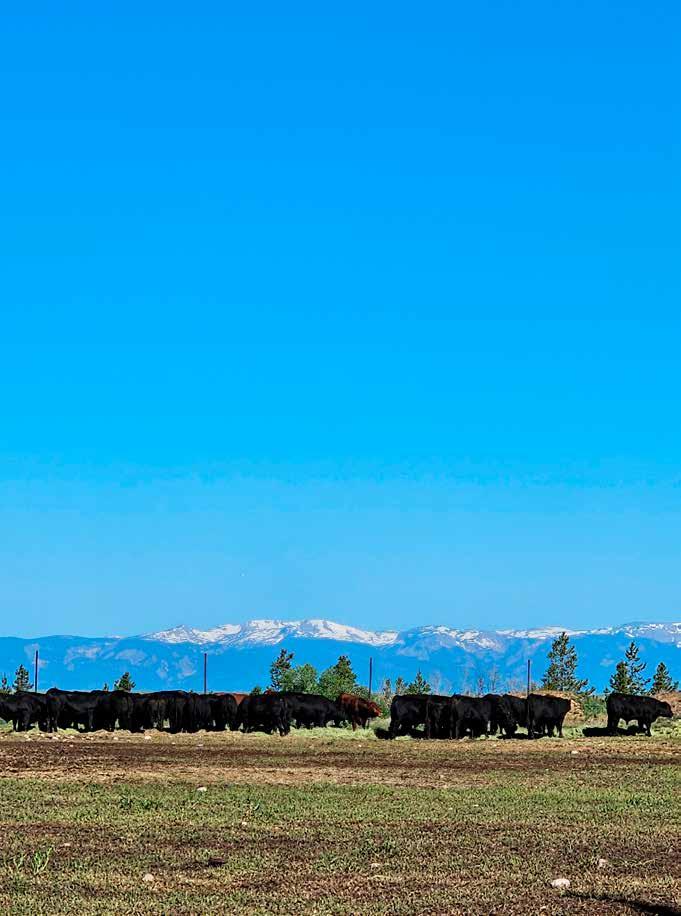
One-Iron – Montana’s Best. 900 heifers AI bred to Unified, Leo and King Air. Calving mostly February-March 2024. All ultrasound pregnancy tested and AI calves will be sexed. 600 pasture bred heifers calving March-April 2025 and bred to Vermilion sons of King Air and Commerce. All heifers will be sorted into 14 day calving periods.
60 Head Commercial Cow Dispersion
All 2017 born Commercial Angus Cows from the Diamond Ring Ranch.
Selling Saturday, November 30 at 11:00 am
320
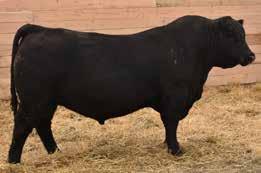
TOTAL PERFORMANCE BULLS
Bulls are genomic measured with and PAP tested at 6,200’.
170 Outstanding Fall Yearlings
The best of our Fall Breeding Program! Sired by Bomber G017, Savvy, Leo, Glory Days, Three Rivers 0065, Conclusion and Power Ball 9195.
150 Big, Stout Coming Two-Year-Olds
Sired by the same outstanding sires!
90 Head Spring-Calving Registered Cow Dispersion
All 2017 born Registered Angus Cows from the Vermilion Ranch. They all sell – no exceptions. Bred to Riverside, Bedrock, Unified and Jameson.
60 Head April-Calving Registered Cow Dispersion
All April-Calving 2 to 6-year-old cows.
70 Registered Bred Heifers
AI bred to Unified, Leo and Teton 107. Guest Consignor Jocko Valley Cattle 10 2-year-old cows with fall calves.
“Lusha has led the charge on a few other studies investigating aspects of wind energy effects on insects. She secured funding from the U.S. Fish and Wildlife Service (FWS) for a master’s project, wherein the final product was a literature review on the subject,” Weschler says.
“I had a background in both entomological field work and synthesizing information from existing literature for classes on apiculture, so I thought the opportunity sounded like a perfect fit,” she adds.
Weschler was awarded the Great Plains Cooperative Ecosystem Studies Unit
Graduate Student Award for her graduate research, Tronstad says.
“Her work is very novel. Wildlife research has been limited to birds, bats and ungulates, and virtually nothing was known about interactions between insects and wind energy. Weschler’s work is not currently available in the literature in any form,” Tronstad says.
“We hope her thesis work creates discussion in wind energy and wildlife sectors. Weschler has supplied the background information on insects and wind energy, and our hope is her foundation will lead to solutions which will conserve wildlife while also leading to more energy produced by turbines,” Tronstad adds.
This study was funded by FWS and the Bureau of Land Management. This article was originally published by UW Ag News on Oct. 21.
Vermilion
Vermilion
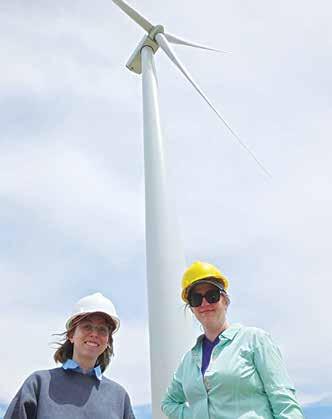
UW researchers – Michelle Weschler, pictured left, an assistant research scientist with the University of Wyoming’s (UW) Wyoming Natural Diversity Database and Amy-Marie Story, pictured right, a master’s student at UW, visit a wind energy facility in southeast Wyoming to conduct insect and plant surveys. Lusha Tronstad photo
According to the Western College of Veterinary Medicine, the odds of a cow having quadruplets are about one in 700,000, and the odds of all four calves being born alive are about one in 11 million.
However, in October, a dairy cow at Calcourt Farms in Wernllwyd, Powys, Wales gave birth to quadruplet calves, a feat described as unheard by farm staff. The recently famous cow gave birth to fit and healthy calves – one bull and three heifers.
“This is a once in a career – probably lifetime – experience,” says Calcourt Farms Fertility Manager Matthew Hicks in an Oct. 23 BBC News article by Catriona Aitken. Hicks continues, “We knew she was carrying twins, but when it all happened, I was wondering what was actually going on. It’s unheard of.”
During a recent episode of Wales Breakfast on BBC Radio, Hick notes all of the
Cows defy odds in 2024, give birth to quadruplets
credit for the calves’ safe delivery went to his calf rearers.
“We had two on the floor, one almost on the floor, and by the time I’d sorted everything out and got some kit on, number four was out,” Hick states.
“I’d say we might have a set of twins once a month – twins do happen – but quads, never,” he reiterates. “I am still in shock of such an unusual occurrence.”
The calves, referred to by numbers rather than names, needed a little more care and were initially fed four times a day to make sure they stayed strong.
“We took the calves as soon as possible after birth, but we let the cow lick them for their own benefit really,” Hicks mentions. “It’s far better we feed the calves and make sure they get the colostrum – the first milk which has all of the antibodies to ensure calves will go on and have a happy healthy life.”
He adds, “They’re just
sort of in a gang with the rest of the calves now and doing really, really well.”
According to Hicks, it was an artificial insemination (AI) pregnancy, but he does not believe this affected the outcome.
“The mother is also doing well,” he mentions. “She was given a little more tender loving care and plenty of fluids, but she’s absolutely flying and doesn’t know how famous she is.”
Making history in 2024
Mark and Erin van Haasterts have been ranching in Bjorkdale, Saskatchewan, Canada since 2000 and have around 400 head of commercial cattle.
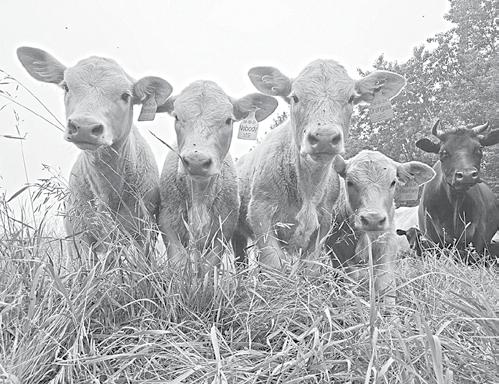
On April 19, the couple was in for quite the surprise when a very confused, eight-year-old Charolais/Simmental cross cow named “Somebody” who never had twins before gave birth to quads, unassisted.
“I guess she was saving them up,” Erin states. “I was out checking cattle when I noticed Somebody had just given birth to twins.”
“I went to get the sleigh to move the calves inside the barn, but to my surprise, when I returned she had given birth to a third,” she explains.
Erin notes she took the three calves to the barn while Mark went to get Somebody, but when he found her, she had yet another calf on the ground.
“The calves were born three-weeks premature, and it was touch and go for a couple days,” Erin explains. “With additional colostrum and antibodies – along with Somebody being a fantas-
tic mother – they are growing well. We did supplement them all as she was having a hard time keeping up with four little calves.”
“The quadruplets are all females, which is even rarer,” she mentions. “Each of them weighed in around 30 to 40 pounds and have all been named by their oldest daughter – Orangala, Greenelope, Bluethany and Nobody.”
“We assume the proud daddy was a Simmental bull, and the calves were conceived during our regular breeding season not using AI,” she mentions. “The quads have spent the summer with our twin group, and we also turned out four milk cows to help out.”
“The quads are thriving and each weigh about 450 pounds,” she explains. “It’s been such a cool experience to have them.”
Closer to home
Closer to home in Merna, Neb., Veterinarian and Farmer Dr. Jeri Sterner had a five-year-old Red Angus give birth to quadruplets earlier this year.
In a March 29 Tri-State Livestock News article by Ruth Wiechmann, Sterner, who has been raising cattle and practicing veterinary medicine for 40 years, states she’s never actually handled a bovine multiple birth beyond twins until this calving season, when her cow had quadruplets.
“I’ve known of a couple of sets of triplets in the region, but I’ve never been around one,” Sterner tells Wiechmann. “I’ve always thought that some time when I go to untangle a set
of twins there’s going to be another one, but it’s never happened until now. It’s amazing.”
“My cows are just range cows. They don’t get a lot of special treatment. We calve two bunches of cows on cornfields, and they mostly get along out there without a lot of fuss,” Sterner says.
Sterner’s hired man calves one bunch while she keeps an eye on the other, but one night he called her to come look at a calf.
According to the article, the calf was pretty little but spunky, and with the nighttime temperatures dropping, it would have been too much for the little guy. So, they headed the cow, now known as “Quad Mom,” and her newborn back to the barn.
“The little snot was trotting right behind mommy. He had already suckled and didn’t need help,” Sterner notes. “When we took her back, I reached in and checked and there was another – twins.”
They the second calf, and when Sterner reached back in, there was another one. As Sterner moved the third calf into better position, she found the fourth calf.
Despite the number of calves delivered, Sterner was amazed by their vigor. She notes all of them got to their feet quickly and tried to suckle her fingers.
Two bull calves and two heifer calves were born –two weighing 30 pounds each and two weighing 35 pounds each.
“They weren’t tangled up, I just brought one out and the next one floated up. Every time I reached in, there were front feet and a head,” she explains. “I’m sure she would have had them fine, but it was already below freezing when we took her to the corral.”
Melissa Anderson is the editor of the Wyoming Livestock Roundup. Send comments on this article to roundup@wylr.net.
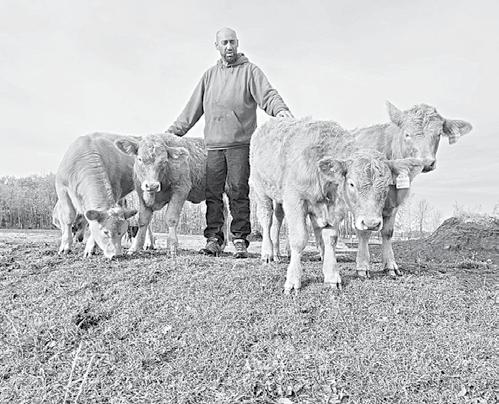
Surprise – Mark and Erin van Haasterts of Bjorkdale, Saskatchewan, Canada were surprised this spring when their Charolais/ Simmental cross cow named Somebody gave birth to quadruplets. Courtesy photo
Thriving – Mark van Haasterts checks on the quadruplet calves Orangala, Greenelope, Bluethany and Nobody, which are all thriving at the family ranch. Courtesy photo
As of Jan. 1, the U.S. Department of Agriculture reported the nation’s cattle inventory at 87.2 million head, a decrease from the year prior and the lowest level reported in 73 years.
Total inventory consisted of 28.2 million head of beef cows, 9.36 million
UNL educators discuss expansion of the nation’s beef cow herd
head of milk cows, 33.6 million calves and 14.4 million head of cattle on feed.
As the cattle cycle continues to expand and contract, University of Nebraska-Lincoln (UNL) Extension Educators Alfredo DiConstanzo
and Connor Biehler dived into the circumstances surrounding the next inventory incline and what this means for cattle producers in an Oct. 30 UNL Beefwatch Newsletter.
Inventory in a steady decline
DiConstanzo and
Biehler note the last peak in the U.S. beef herd inventory occurred in 2019 when 31.6 million beef cattle were reported, 3.4 million head or 11 percent more than the 28.2 million reported at the start of this year.
However, the two educators note it is unlikely the beef herd will rebuild to the same levels seen in 2019 and beyond.
“Many factors will affect the size of the U.S. beef herd at the next peak. Some might consider beefon-dairy crosses will likely affect herd expansion. However, our perspective on this is, unless dairy cows are used to produce fullblood beef-breed embryos, the effects of breeding dairy cows to beef sires on beef production are already absorbed by the industry,” they explain.
They also note, since 1975, the beef cow inventory peak has steadily
diminished – 45.7 million head in 1975, 39.2 million head in 1982, 35.3 million head in 1996 and 32.7 million head in 2005.
Another factor is the aging cow/calf producer population, in addition to low numbers of young producers getting into the business.
“It is quite possible the U.S beef herd will never reach beyond 29 million cows again,” DiConstanzo and Biehler state.
Rebuilding the nation’s herd
When rounding to a starting point of 28 million beef cows, every percentage point lost in productivity represents 280,000 calves, according to DiConstanzo and Biehler.
They point out, if the next herd expansion is to reach 29 million cows by the next cycle peak, beef producers must do one of three things – prevent one million heifers from entering the feedlot, improve survival and breeding success by four percentage points in existing inventories of heifers destined for herd replacement or a combination of the two.
“Raising more calves than needed for harvest or breeding is a necessity of the system. Building efficiency while rebuilding the herd should prevent excessive inventory swings which lead to excessive price swings. Lower cycleover-cycle swings in beef cow inventory since the peak of 1975 are reflective of a unified commitment by the industry for greater production efficiency,” they explain.
DiConstanzo and Biehler note knowing the factors and costs of raising
replacement heifers is critical for beef herd expansion, and to better understand this, an analysis was conducted at the Haskell Agriculture Laboratory in Concord, Neb. on 87 heifers sourced from various producers. According to DiConstanzo and Biehler, heifers were kept in pens for an average of 220 days; fed a diet of corn silage, alfalfa hay, wet distillers’ grains and mineral supplement and bred using timed artificial insemination.
Seventy-one heifers, or 82 percent, were confirmed pregnant and costs totaled $2.85 per heifer per day –$627 per heifer or $768 per pregnancy.
“Therefore, under conditions of the program –with an 82 percent pregnancy rate – if a heifer was retained in the fall of 2023 for replacement, the total cost of her first pregnancy would be $2,400. The value of the heifer in the fall of 2023 was $1,620 and it cost $768 to achieve pregnancy,” DiConstanzo and Biehler explain.
“As producers look at current prices, there may be an opportunity to retain heifers at similar prices as a year ago. Expect to spend from $2,300 to $2,600 to raise a pregnant heifer,” they continue. “However, a thorough analysis of critical control points such as energy, protein and mineral supply, water quality, winter housing, heat abatement and gentle handling is needed to ensure breeding success in 2025.”
Hannah Bugas is the managing editor of the Wyoming Livestock Roundup. Send comments on this article to roundup@ wylr.net.
“It is quite possible the U.S beef herd will never reach beyond 29 million cows again.” –Alfredo DiConstanzo and Connor Biehler, University of Nebraska-Lincoln Extension
Dear Editor,
The purpose of this letter is to let agricultural people know the state of Wyoming, per statue, gives counties the ability to make their own rules in regard to planning and zoning. The Planning and Zoning Board reviews the information, and if it is deemed workable, the rule change goes to the County Commissioners for approval.
The rural residential category change in Albany County would essentially allow a 35- to 40-acre parcel to be eventually reduced to a 2.5- to five-acre parcel if the owner wished.
Many areas of Wyoming have been under severe drought. The combination of drought and many additional households paints a bleak picture for livestock producers who wish to grow hay with flood irrigation and water their livestock.
Those whose land adjoins a housing development are critically affected.
Hopefully other agricultural producers will check into the regulations governing their counties. I sent the following letter to the Albany County Commissioners.
To the Albany County Commissioners, Thank you for your hard work and attention to detail. I am concerned for the proposed rural residential lot size changes.
Albany County needs more housing. All areas of the county are not appropriate for reduced lot sizes for rural residential.
Laramie has unique needs and rural agriculture zoning has unique needs. Water use in certain areas has resulted in depleted water for livestock watering,
wildlife drinking and habitat and water to grow hay and feed. The riparian areas are suffering, and dry creeks have resulted in trout kill.
The Planning and Zoning Board members all have strong backgrounds in ecological matters. I would ask the board members consider the effects of too much water being taken from the granite aquifer due to lot sizes of rural residential.
The monitoring wells for Albany County are the Huntoon One and Two which monitor the Casper Aquifer. These wells can be accessed on the State Engineer website through the Albany County website.
Unfortunately, these two wells are the only monitoring wells for Albany County.
I can only speak with accuracy for the area south of Hermosa Road to the Pumpkin Vine Road, east to Monument Road, west to U.S 287 and south to Pumpkin Vine Hill. The condition in this area is dire with dry creeks, streams, wells and springs. Quite a few rural residential lots surround this area.
Albany County must have other areas which are affected by increased demand of water by rural residential users. I would ask areas which need protection from water loss be evaluated and placed
If potential areas which need water protection are not protected, I ask you to not approve the planning and
Producers are concerned about the financial outlook for 2025, with record trade deficits, a declining net farm income and other challenges in the forecast.
Agricultural trade is the lifeblood of U.S. farming and ranching, and since 2008 the export proportion of U.S. agricultural production has held relatively steady at about 20 percent,
with a compound annual growth rate of 2.1 percent from 2013-23.
At the same time, U.S. agricultural imports have increased at an annual growth rate of 5.8 percent, leading to a widening agricultural trade deficit over the last several years.
According to AgAmerica, with global markets shifting and a pivotal elec
tion, understanding these changes is necessary when making financial and operational agricultural decisions for the year ahead.
The U.S. Department of Agriculture’s (USDA) latest agricultural trade outlook offers key insights into what experts predict lies ahead in 2025 and projects a decline in U.S. agricultural exports to $169.5 billion in Fiscal
Year 2025, driven largely by several key factors.
Meanwhile, imports are expected to rise to $212 billion, widening the trade deficit to a staggering $42.5 billion.
This significant shift presents both challenges and opportunities for U.S. farmers.
Key factors in 2025
According to AgAmerica, factors influencing the U.S. agricultural trade deficit include declining export prices which lower unit values for key commodities like soybeans, corn and beef, reducing the overall value of U.S. exports even as volumes remain steady or increase.
“Rising imports increase demand for imported horticultural products like sugar and tropical products,” states the AgAmerica website. “Horticultural products generally make up as much as one-half of U.S. agricultural imports, which includes a broad category of fruits, vegetables, spirits, wine, essential oils, tree nuts and nursery stock.”
Creating a strong competition particularly in the soybean and corn markets could impact the U.S. export growth.
“Currency strength and appreciation of the U.S. dollar can also influence American goods abroad and would further the challenges in export growth,” reads the website. “Supply chain challenges may continue, like high freight costs and logistical bottlenecks affecting the efficiency and costeffectiveness of U.S. agricultural exports as well.”
Action items
Depending on the presidential election, farmers and ranchers may see additional influences in 2025.
AgAmerica notes, “Under agricultural trade there are three strategies American farmers and ranchers can implement when navigating the complexities of the global agricultural trade landscape.”
According to AgAmerica, producers should prioritize stability and secure contracts with stable markets like Canada and Mexico where demand remains consistent and strong, particularly for horticultural products and ethanol.
AgAmerica also recommends a diversified market by exploring alternative Asian markets to reduce dependence on China and tap into growing demand in the region.
The organization also suggests staying informed by keeping abreast of competitor crop conditions, USDA initiatives, tariffs and other global trade trends, which are important for producers to identify new opportunities and mitigate market risks.
Net income
The University of Missouri Food and Agricultural Policy Research Institute (FAPRI) recently released an update to its annual baseline report, finding net farm income has fallen due to lower crop prices.
In the September report by FAPRI, a third year of farm income decline is on the horizon, as U.S net farm income in 2024 was $137 billion, falling slightly below the USDA September forecast and $9 billion lower than the 2023 figure.
“When adjusted for inflation, an anticipate decline in farm income between 202225 may be $67 billion,” states the report. “However, despite a 35 percent drop,
inflation-adjusted net farm income remains above the levels experienced between 2015-20.”
According to the FAPRI reports, “Net farm income would fall by six percent in 2025 and rebound modestly in 2026, while food inflation was forecast at a low 1.6 percent in 2025, rising slowly to 2.1 percent annually in 2028-29.”
The report also projects net farm income will average $139.6 billion a year between 2026-29, similar to the USDA forecast.
FAPRI’s projections indicate a $32 billion drop in 2024 crop receipts due to lower prices for many grains, oilseeds and other field crops.
Livestock receipts, on the other hand, will see a healthy $19 billion increase – the result of higher cattle prices.
Overall farm production expenses are expected to decline in 2024 after seeing increases in 2022-23.
“This year’s income will be $137.4 billion. A further reduction in cash receipts is projected for 2025, primarily because of lower prices for many crops and for poultry,” states FAPRI. “It pegged net farm income at $129 billion in 2025 which results in a third straight year of declining net farm income before a modest recovery in 2026.”
For 2025, the impact of lower crop receipts outweighs the effects of high cattle prices and moderation of some production expenses, according to the FAPRI report.
Melissa Anderson is the editor of the Wyoming Livestock Roundup. Send comments on this article to roundup@wylr.net.
CLASSIFIEDS
Come Join the Gottsch Livestock Feeders Family! Gottsch Livestock Feeders is looking for Cowboys/Pen Riders for their feedyard in Red Cloud, NE. The main focus of the Cowboy/Pen Riders are spotting, pulling, diagnosing and taking cattle to the
and
fat cattle. This person will need to be a team player who is seeking a long-term position. You will have the opportunity to work with and learn from some of the best in the industry. We offer a benefits
that includes health
dental, vision, 401(k), health savings, life insurance and paid vacation. Retention bonus offered to full-time employees. Incentives paid out at 6 months and 1 year of employment. If you are interested stop by and fill out an application or visit our website at Call Brandon Furr at 402-257-7769 or 402-746-2222 for more information.
K-12 school is 30+ miles away. Housing is provided and on a school bus route. Please send resume with references by mail or e-mail to: PeeGee Ranch, 1251 Lower Powder River Road, Arvada, WY 82831, pgranch@rangeweb.net. Call 307-736-2461 11/30
NOW HIRING: CDL A TRUCK DRIVERS AND FRONT END LOADERS. Home daily, seasonal sugarbeet rehaul. Location: Worland or Lovell, WY. Drivers earn up to $1,900/ week. Loaders earn $25/hour. Flexible work schedules. Drivers must have CDL A with doubles endorsement. To apply, please call 651-364-9578. To view photos, go to www.wylr. net in the classifieds 11/16
Cattle
WANTED RECIP COWS: Must be open!! Two to 6 years old, Red Angus or Angus-based cows. For more information, call Corie Mydland, 406-855-5598 (cell), Trans Ova Genetics 11/9
ALL TYPES OF EQUIPMENT AND VEHICLE FINANCING. Great service!! Great rates!! Call Chuck Brown at C.H. Brown Co., WY LLC, 307-3223232 (office), 307-331-0010 (cell) or e-mail chuckbrown@ wyoming.com 11/9
AGRI-ONE FINANCIAL: Farm/ ranch and all commercial loans. RATES AS LOW AS 5%. We have been helping with all aspects of agricultural, commercial financing and management for years. LET US HELP YOU on a consulting level with management to increase profitability, deal with and fix credit problems and for all your financing needs. WE CARE AND HAVE WORKING PROGRAMS designed for the farmer/rancher and not the banker. Please call Steve, 303-7733545 or check out our website www.agrionefinancial.com. I will come to you and get the job done!! 11/30
FOR SALE: Pure Black Angus bull calves average weaning weight 733 lbs. Herd has been AI’d since 1969. Sold as pure but not registered. Call John Gerstner, 307-366-2911, Ten Sleep, WY 11/16
FOR SALE: Sixty-four head of high elevation front pasture replacement heifers. Sorted by ultrasound to calve the last 2 weeks of April. Bred to 100% registered, PAP tested, calving ease, Black Angus bulls from top notch programs like Sitz, Beartooth and TJS Angus. Top notch vaccine program since birth, most recently: Valbazen, Cleanup, Virashield 6 VL5 and Scour Boss 9 at preg check Aug. 30. From long-time heifer development program X Bar Cattle Co., Laramie, WY. Call 307-760-3837 11/16
250 BLACK ANGUS BRED HEIFERS: South Dakota origin, OCVD, exposed to proven LBW Black Angus bulls for 45 days. Start calving Feb. 1, 2025. References available. Call 785-3941955 (cell), 785-394-2374 (home) or 785-731-5067 11/16
38 HEAD FANCY BLACK ANGUS BRED HEIFERS: Originated from the Moore Ranch and have Schiefelbein genetics. 100% AI bred to Sitz Dignity and Beartooth Atlantis, to calve March 1. Call 307-391-1474 11/9
Hereford
Brands
WYOMING BRAND FOR SALE: Registered to 2031, LRC, LSH, $1,500. Call 307-262-7874 11/30
FOR SALE: Wyoming registered 1 iron (2) letter brand registered on all 3 species and in good locations, RRC, RSS, RSH. One hot iron available. Asking $5,000 for this easy to read brand, registered until 2031. Call or text 307-2542790 if interested 11/9
WYOMING BRAND FOR SALE: RRC, RHS. Electric iron, $3,500. Call 307-8508073 11/23
WYOMING BRAND FOR SALE: Registered in Laramie County in 1930. RBH, $5,000. Call 661-2435442 11/23
TWO WYOMING
BRANDS FOR SALE:
First brand: RHC, RHH. Second brand: LRC, LHH. Both have left ear notch. No irons. $5,000 for both. Call 307-331-1522 11/16
WYOMING BRAND FOR SALE: RHC, $3,500. Call 307-850-8073 11/23
FOR SALE: NINE-WEEKOLD MALE BORDER COLLIE
PUPPY. Sire is Kathy Knox’s Seth. Dam is a daughter of Jack Knox’s Coach. Call for more details, 660-988-8422 11/23
HEELER/BORDER COLLIE
PUPS FOR SALE: Variety of colors, western Nebraska. Call Johnny, 308-279-2419. To view photos, go to www.wylr.net in the classifieds 11/23
BASSET HOUNDS, young adult pups available, 9 months old. One male and 1 female, very friendly and lovable. Well started on training and very sociable. Call for details, 307-2192217 11/23
Pasture
APPROXIMATELY
RIGATED
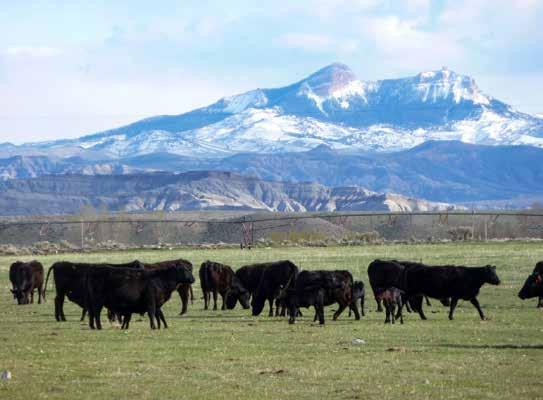
ALONG WITH 250 ACRES OF GREAT GRAZING: This year there is a ton of feed to pasture off. Running water. Located north of Cody, WY on Heart Mountain. Should handle 400-500 head
PASTURE WANTED for 2,000 yearlings and 500 pairs. Can split into smaller bunches. Call 701-523-1235 11/9
Horses
MOLLY MULE FOR SALE: Rides and packs. Backcountry experience. Sweet personality. Friendly and gentle. Shoes easy. Meets you at the gate. Ten years old. Cody, WY area, $10,500. Call 307-413-0767, e-mail wachobdoug@gmail. com. To view photos, go to www.wylr.net in the classifieds 11/23
Saddles & Tack
WELL STOCKED FOR ARENA, RANGE AND ABOVE THE PLAINS!! Great prices!! LARGE selection of SADDLES, headstalls, REINS and saddle pads. HONDO, BOULET, JUSTIN WORK BOOTS, TWISTED X (boots and shoes) and more!! WE CAN ship!! Shop Moss Saddles, Boots and Tack, 4648 West Yellowstone Highway, Casper, WY, 307-472-1872. Our family serving yours for 50 years!! Check us out on Facebook or our website 11/9
WEANER PIGS FOR SALE, located in Powell, WY. For more information, call 307271-1014 1/18
Hay & Feed
BARLEY STRAW: Certified weed-free small squares, $4/ bale. ALSO, 5x6 round bales, $125/ton. GRAIN OATS, wheat and barley $20/cwt. Greybull, WY area. Call 307762-3878 or 307-899-4714, leave message 11/30
HAY FOR SALE: 2023 and 2024, alfalfa, sainfoin, grass and combine grass/straw. Small squares and 3x3x8 bales. Test results available for 2023 and 2024. Will load 3x3s in open truck and trailer. Call 307-2506005 11/30
HAY FOR SALE: 2023 milo and grass/alfalfa. 2024 first cutting 90% alfalfa/10% grass mix, grass mix, grass/alfalfa, millet, milo, CRP cut early, green and high, non-raked and clean. ALSO, new seeding hay field oats/kosha/crested wheat. All in net-wrapped round bales. Semi load delivery available. Call for pricing, ask for Klint, 701-290-4418, send a text if no answer or keep trying 11/30
HAY FOR SALE: Large quantities!! Grass and alfalfa. Cow and horse quality. ALSO, forage wheat. 2023 hay still available. Small squares, 3x3 square bales and 3x4 square bales. Delivery available!! Call 307630-3046 11/30
Swine
CERTIFIED WHEAT STRAW FOR SALE, large round bales. Call 303-898-8496 or 303-5002685 12/28
HORSE QUALITY GRASS HAY, 3x4s barn stored, $175/ ton. 2024 GRASS COW HAY, 3x4s barn stored, $135/ton. 2023 GRASS COW HAY, 3x4s barn stored, $115/ton. Encampment, WY. Call 307-3211444 TFN
2024 FIRST CUTTING HORSE QUALITY HAY: Timothy/orchard/brome with a bit of alfalfa at 14% moisture, 90 round bales averaging 1,450 lbs./ bale. Located in Clark, WY. No rain. Barn stored. $175/ton. Call 847-420-9615. To view photos, go to www.wylr.net in the classifieds 11/30
2,000 TONS OF ALFALFA, ALFALFA/GRASS MIX AND STRAIGHT GRASS: Prices starting at $80/ton, 3x4 squares. Located near Bozeman, MT. Delivery available. Minimum order of 200 tons. Call Doug, 406581-4124 11/9
200 TONS 2023 GRASS/ALFALFA IN LARGE ROUNDS:
Cut slightly mature but baled green!! ALSO, selling 2024 LR certified wheat straw and 200 tons millet hay. Will deliver!! For sale by Cheyenne, WY area producer. Call 307-6303768 11/23
GRASS HAY FOR SALE: 3x4
bales, some barn stored, some outside. No weather damage. ALSO, alfalfa hay for sale 3x4 bales. Test available upon request. Riverton, WY. Call 307709-6290 11/23
HAY AND STRAW FOR SALE:
Round bale grass, net wrapped, 2023 crop $100/ton, new crop $125/ton. ALSO, round bale barley and oat straw, net wrapped, $90/ton. FOB Powell, WY. Call 307-254-5115 or 406480-1248 11/23
HORSE QUALITY GRASS HAY, first, second and third cuttings, $150-$200/ton. OAT/ PEA MIX, $150/ton. All 3x4 square bales. COW HAY, nice green millet, $110/ton. Big square or round bales. Square bales barn stored. Tests available. Lusk, WY. Call Paul Hicks, 970-203-5019 11/23
EAR CORN FOR SALE. NON GMO, no pesticides. Minatare, NE. Call Byron, 303-818-8152, leave message 11/23
LOTS AND LOTS OF HAY FOR SALE!!! Alfalfa, alfalfa/ grass mix, straight grass (crested wheat and native grasses), winter wheat, 1,3001,350 lb. net-wrapped round bales. Deliveries are available if needed or come and get it. Sheridan, WY area. Call the ranch, 307-737-2680 or 702501-4243 (cell) 11/23
2023 ALFALFA ROUNDS: First cutting grinder hay $90/ ton at stack and second cutting good hay $110 at stack. ALSO HAVE NEW CROP GOOD ALFALFA HAY, $130 at the stack. Delivery available in semi loads only. Call 308-279-0490, Bayard, NE 11/16
STRAW FOR SALE: 250 TONS OF BARLEY STRAW, 4x4 squares, $50/ton. Located west of Powell, WY. Call or text 307-202-0532 for more information 11/16
VALLEY VIDEO HAY MARKETS, LLC: Hay available. Go to www.valleyvideohay.com or call Barry McRea, 308-2355386 11/9
CERTIFIED BARLEY STRAW FOR SALE, 3x4 bales. Cody, WY. Call 307-899-1952 TFN
ROUND-BALED GRASS: 2023
$50/bale; 2024 $60/bale. 1,000 lb. net-wrapped bales. Cody, WY area. Call, don’t text, Anthony at 307-254-2645 3/1
HAY FOR SALE!!! Alfalfa, alfalfa/grass mix and grain hay in both round and square bales. Large quantities available. Trucking available with hay trains. THE HAY YARD IS OPEN, conveniently located off I-90 and Johnson Ln. exit in Billings, MT, small to large quantities. Call us today for your fall hay needs. Montana Hay Company, 406-670-6551 11/9
Trucks
FOR SALE: 1995 FREIGHTLINER FLD 132 CLASSIC XL, 3406
B CAT, 100 miles on overhaul, 64” removable sleeper, 9 speed. Loaded with all options. Ready to go to work. Asking $25,000. Have other stuff to go with it. For details call Don, 719-743-2330. To view photos, go to www.wylr. net in the classifieds 11/9
WE HAVE SMALL SQUARE 21-BALE BUNDLES TO OFFER: First, second and third cutting straight alfalfa. First and second orchard/brome grass. First and second cutting alfalfa and grass bales average 53 lbs., third cutting alfalfa bales average 63 lbs. Prices: First cutting alfalfa, $147/bundle or $7/bale (no rain) tests supreme. Second cutting alfalfa, $126/bundle or $6/bale (price reduced due to some rain) tests premium. Third cutting alfalfa, $210/ bundle or $10/bale (no rain, very leafy) tests high supreme. First cutting grass, $126/ bundle or $6/bale (no rain). Second cutting grass, $189/ bundle or $9/bale (no rain, all leaf, very nice). All hay is either stored inside or covered outside. Able to load semi flatbeds and dry van trailers. Hay analysis upon request. Call Scott, 307-272-4570. To view photos, go to www.wylr.net in the classifieds 11/23
CERTIFIED WEED-FREE
PURE ALFALFA HAY: Small squares, covered. 2023 first cutting available for a reduced price. 2024 first, second and third cutting available. Will load trucks and any open trailer. MONIDA OATS: Combine run. Will auger into truck, trailer or large totes/ag bags. STRAW: Small squares available. Located between Powell and Cody, WY. Call or text Knopp Farms for details, 307-254-0554 11/9
WANT TO BUY!! SELECT-OSPEED FORD 4000 TRACTOR with 4 cylinder diesel engine, complete, running or not running. Call Lloyd, 701-226-4055 11/9
FOR SALE: New Holland 195 manure spreader, 410 bushel with slop gate. 2015 Volvo (day cab), 10 speed manual, D13 455 HP, air ride, A/C, cruise control, 229” wheelbase, 11r 22.5 tires with aluminum rims, quarter fenders, 423,000 miles, very clean truck, runs great. Vermeer 7000 bale processor with hydraulic deflector. H&S 7+4 16’ chuckwagon with bunk feeding extensions and tandem 14 ton running gear. John Deere 716A chuckwagons with John Deere running gear and bunk feeding extensions, been shedded, nice condition. Wilson portable wheel corral. 24’ portable ground hay/bale feeder. 12’ HD box scraper with tilt. Farm King 8’ snowblower with hydraulic spout. All in very nice condition!! Call 605-999-5482 11/16
EQUIPMENT FOR SALE, FARM-
2/22
OILFIELD PIPE: PRICE REDUCED!! RPJ Enterprises, Inc. 2 3/8”, 2 7/8” and 4.5” is available, pricing is coming down. Used for fencing, corrals, cattle guards, etc. 2 3/8” and 2 7/8” are on average 31.5’ long per joint. Pierce, CO. Call for details, 970-324-4580 1/11
RAL GAS TO PROPERTY LINE, 38 TO 124 ACRES, several springs, lots of trees, can be purchased with or without older, not fancy, but livable home and 7 outbuildings. Pricing is $228,000 and up, depending on amount of acreage and outbuildings. Comes with Willwood Irrigation District water and older home has well, septic and natural gas. Located 7 miles from Powell, WY. Call 307-219-2217 11/23
GOSHEN COUNTY, WY: Selling 640 acres of pasture grass near Torrington, WY. This is a State of Wyoming Grazing Lease. A 10-year lease with the right to renew. Excellent native grass. No improvements. One well. Selling is the leasehold right. $185,000. NEW PRICE!! 3,316± DEEDED ACRES consisting of improved meadow grass and lush hard grasses. Run 250± cows through 12 pastures. Outstanding condition. Nice home plus excellent corrals and calving facilities. Natural tree-lined draws for livestock protection. LaGrange, WY. $3,900,000!! 1,230 ACRES OF PRIME AGRICULTURAL NON-IRRIGATED FARMLAND: Soils consist primarily of silt and sand loams. Located east of Hawk Springs, WY along the Wyoming/Nebraska state line. Professional care is dedicated to optimizing soil health. Divisible into smaller parcels to meet your investment needs. No improvements. $1,100,000. Pictures and video at www.buyaranch. com. Call Casey Essert, Land Broker, 307-532-1750 TFN
Property for
Property for Sale
NORTHEAST OREGON,
THE DLX RANCH: Located near Baker City, OR the DLX is noted as one of the most productive and finest ranches around. It is well balanced and contains 17,000 deeded acres with 4,000 acres of irrigated meadows and cropland. Native and improved rangeland provides good spring and summer pasture. The ranch is well improved with nice homes, excellent livestock working facilities and is noted for its production and ease of operation and management. Abundant water and over 6 miles of the Powder River running through the ranch provide for not only production but unbelievable waterfowl and upland game bird habitat. The ranch also provides good populations of elk and mule deer. Situated in the heart of the Baker Valley, the ranch enjoys very scenic mountain views and is very private yet only a short drive to Baker City, OR. Currently operated as a commercial cow/calf operation with a permitted feedlot. The ranch would also make an ideal yearling or combination operation. It is rare to find this quality of a ranch and particularly a property that is a going concern. This is a first-time offering and we look forward to hearing from you. $32,500,000. Livestock and rolling stock available by separate treaty. Please give us a call for further information, Greg Sackos, 541-5234434 (office) or 208-598-0267 (cell), Intermountain Realty, www.intermountainland.com 11/30
715-ACRE LIVESTOCK FARM IN THE BIG HORN BASIN with 4 pivots irrigating 541 acres with free water. Functional improvements, 4 bedroom home, larger shop with attached apartment, livestock barn, large metal building, metal equipment building, corrals and feed pens. $2,950,000. RuraLands Real Estate, frank@ruralands. com, 307-851-2426 11/9
NOV. 13-17: PETSKA FUR WILL BE BUYING ALL RAW/DRY FUR DEER/ELK HIDES AND ANTLER IN THE FOLLOWING TOWNS AND LOCATIONS: NOV. 13: Bill 6:30-6:45 p.m., Bill’s Store (drive thru, call/text Greg). NOV. 14: Wright 7-7:30 a.m., Exxon Big D on S. 387; Newcastle 8:45-9:15 a.m., Voelker’s Body Shop; Sundance 10:30 a.m.-11 a.m., Rapid Stop; Moorcroft 11:30 a.m.-12 p.m., The Coffee Cup; Gillette 12:30-12:50 p.m., T&T Guns and Ammo; Gillette 1:10-1:40 p.m., Rocky Mountain Sports. NOV. 15: Sheridan 7:10-7:50 a.m., Sportsman’s Warehouse; Buffalo 9-9:20 a.m., Good 2 Go; Ten Sleep 1111:30 a.m., Pony Express; Hyattville 12:10-12:30 p.m., Paint Rock Processing; Manderson 12:50-1 p.m., Hiway Bar (drive thru, call/ text Greg); Basin 1:15-1:30 p.m., Overland Express Mart (drive thru); Greybull 1:45-2 p.m., Overland Express Mart (drive thru); Lovell 2:40-3 p.m., Good 2 Go; Powell 3:30-3:50 p.m., Murdoch’s; Cody 4:30-5 p.m., Nature’s Design Taxidermy; Meeteetse 5:456 p.m., Elk Horn Bar (drive thru, call/text Greg). NOV. 16: Worland 7:15-7:45 a.m., Coop One Stop; Thermopolis 8:30-8:50 a.m., Renegade Guns; Shoshoni 9:30-9:50 a.m., Fast Lane (NW corner, drive thru); Riverton 10:30-11:15 a.m., Vic’s Body Shop (behind the Dollar Tree); Hudson 11:30-11:45 a.m., Wyoming Custom Meats (drive thru, call/text Greg); Lander 12:30-1 p.m., Zander’s One Stop; Jeffrey City 1:50-2:10 p.m., Split Rock Café (drive thru, call/ text Greg); Muddy Gap 2:30-2:45 p.m., truck stop (drive thru, call/ text Greg); Casper 3:45-4:15 p.m., Wagner Outdoor Sports; Glenrock 4:50-5 p.m., Sinclair. NOV. 17: Douglas 7:10-7:30 a.m., Douglas Feed; Orin Junction 7:50-8:10 a.m., truck stop (drive thru); Lost Springs 8:30-8:50 a.m., Main St. (drive thru, call/text Greg); Lusk 9:15-9:45 a.m., Decker’s Grocery; Alliance, NE 12:45-1 p.m., Petska Fur Shop (drive thru, call/text Greg). For more information, call Greg, 308-750-0700 or visit www.petskafur.net 11/9
Hunting & Fishing
DEC. 2-3: PETSKA FUR WILL BE BUYING ALL RAW/DRY FUR DEER/ELK HIDES AND ANTLER IN THE FOLLOWING TOWNS AND LOCATIONS: DEC. 2: Pine Bluffs 3:45-4 p.m., Sinclair; Burns 4:15-4:30 p.m., Antelope Truck Stop (drive thru, call Greg); Cheyenne 4:50-5:10 p.m., Home on the Range Processing (drive thru). DEC. 3: Cheyenne 7:20-7:50 a.m., Tractor Supply; Chugwater 8:45-9 a.m., Stampede Saloon (drive thru); Wheatland 9:45-10:15 a.m., Wheatland Travel Plaza; Guernsey 10:5011:10 a.m., Crazy Tony’s; Fort Laramie 11:15-11:20 a.m., Ft. Laramie Bar/Grill (drive thru); Lingle 11:30-11:50 a.m., Ty’s Pit Stop; Torrington 12:10-12:40 p.m., Insight Precision Arms; Scottsbluff, NE 1:50-2:20 p.m., Murdoch’s (north side). For more information, call Greg, 308-750-0700 or visit www.petskafur.net 11/23
All systems were a go for Idaho potato growershippers in October. Potato harvest in Idaho was 69 percent complete as of Oct. 6, close to the 66 percent completed at the same time last year and the 65 percent
completed for the five-year average.
Overall U.S. potato acreage in 2024 is down slightly from 2023, according to the U.S. Department of Agriculture (USDA). This year, the U.S. is forecast to plant two
percent fewer acres than in 2023. At 941,000 acres, the 2024 U.S. potato planted acreage forecast is a 24,000acre reduction from 2023 but is 18,000 acres more than the 2020-22 average.
The USDA said decreases in acreage were most pronounced in the Pacific Northwest, which typically accounts for 60 percent of the domestic crop.
Washington, which is
down 10,000 acres; Idaho, which is down 5,000 acres and Oregon, which is down 3,000 acres, are expected to have the largest downward year-over-year adjustments as processors reduce contracted acreage, according to the USDA.
Potato acreage reductions are also expected in seven of the 10 other USDA-surveyed states, likely reflecting higher lateseason storage volumes and softer open-market prices during the September 2023 to August 2024 potato marketing year.
USDA estimates 934,200 of the 941,000 planted U.S. acres will be harvested based on average abandonment rates.
“If this estimate is realized and the U.S. average yield is close to the trendline – 458 hundredweight (cwt) per acre – total potato production would be three percent lower at 12.9 million cwt than last season but four percent higher than the 2020-22 production average,” the USDA noted.
Average yields in 202022 fell below trend, largely due to weather-related issues in Idaho and Washington.
Price direction
Following a large fall harvest in 2023, fresh potato prices fell sharply below prices observed during the previous 16 months.
The USDA reported monthly grower prices for fresh potatoes ranged from $10.20 to $10.60 per cwt
between January and May, compared with $21.20 to $23 per cwt during the same period in 2023.
In mid-October, shipping point prices for 70-count cartons of Idaho russet norkotah potatoes averaged $10 per 50-pound carton, off slightly from $12 per 70-pound carton in midOctober 2023, the USDA reported.
Fresh exports up USDA noted U.S. fresh potato exports to Mexico continue to rise. In the last three years, Canada and Mexico accounted for about two-thirds of U.S. fresh potato export volume, excluding seed.
During the 2022-23 marketing year, fresh potato exports to Mexico reached a record high of 348.8 million pounds.
The USDA said the 2023-24 marketing year will surpass the previous export volume to Mexico. From September 2023 to May 2024, fresh exports to Mexico totaled 420.9 million pounds, 71 percent higher than the same period last season.
Overall, fresh export volume from September 2023 to May 2024 is up 12 percent from last year with the increased volume to Mexico offsetting decreases to Canada, according to the USDA. Tom
is
of The Packer
Rural residents living on private wells should have water tested
According to the U.S. Geological Survey, 43 million Americans get their drinking water from domestic wells, which is a necessary part of living in the country.
Since most of these wells are located on private property, it falls on the property owner – rather than a government entity – to ensure the safety of the water.
However, experts note most residents haven’t had a certified lab test on their well water within the past one to three years, and not knowing what is in well water poses a real health risk.
The Wyoming Department of Environmental Quality (DEQ) website states, “More than 75 percent of Wyoming’s population relies on groundwater for part – or all – of their drinking water supply.”
The agency notes it is the owners’ responsibility to maintain a private water well and to not contribute to contamination of groundwater.
Properly maintaining a well helps protect the groundwater supplying the well. It’s a good idea to regularly inspect the well and have immediate issues corrected.
Water testing
Federal, state and local government agencies provide education and technical assistance to private well owners through programs such as Know Your Well.
Knowing the water quality gives the well owner an idea if there are issues with the well that need to be addressed.
According to the DEQ, in Wyoming it is recommended to test wells for bacteria, such as E. coli and nitrates every year.
Additionally, it’s recommended to test for arsenic, lead, copper, iron, manganese, sulfate and total dissolved solids every five years.
“Uranium, radium, selenium and methane are also common contaminants in Wyoming groundwater,” reads the DEQ website. “It’s also recommended to test well water if there are any changes in the taste, color or odor of the water. If someone in the household has experienced unexplained health issues, it should be tested immediately.”
Contamination
If a well is contaminated, there are several treatment options available for most types of contamination.
The DEQ states, “To determine the best treatment option for a specific well and type of contaminant, it’s recommended to consult a licensed water treatment specialist, as they can recommend and install a treatment option which will work best for each situation.”
For assistance interpreting well water test results, individuals can e-mail deqknowyourwell@wyo.gov, call 307-777-9355 or use the Wyoming-specific tool by visiting bewellinformed. info/workbench to see if any detections exceed drinking
water standards.
The only way to know for sure if well water is safe to drink is through laboratory testing, as most common contaminants cannot be seen, tasted or smelled and cannot be removed by boiling, reads the DEQ website.
Water quality can change naturally over time or as a result of activities in the area, which can affect the quality of the well water.
Well protection
There are several steps an individual can take to protect a well and ensure the safety of drinking water.
Conducting regular water testing is essential to identifying any potential contaminants which can pose a health risk.
Proper maintenance, such as inspecting and repairing well equipment, can prevent well contamination and ensure the longevity of the well.
Also, individuals should properly dispose of hazardous materials but should not dispose of hazardous materials, such as chemicals and pesticides near a well, as they can seep into the groundwater.
“Wells should be properly constructed and inspected by a licensed professional to meet all local codes and regulations,” the DEQ states. “Protecting the area around a well prevents surface water from entering the well by properly grading and maintaining the area around the wellhead.”
DEQ reiterates following these steps to help protect the well ensures the safety of drinking water.
Contamination
According to the DEQ, there are several potential sources of groundwater contamination in Wyoming including the use of agricultural fertilizers and pesticides which can lead to contamination of groundwater with nitrates and other chemicals.
Industrial activities such as mining and manufacturing can lead to groundwater contamination from runoff and discharge of wastewater.
Another form of possible contamination can be from improperly constructed or managed landfills and waste disposal sites which can leach chemicals and other contaminants into groundwater.
“Manure and other animal waste can contain pathogens, bacteria and other contaminants which can leach into groundwater if not managed properly,” notes the DEQ. “Natural sources such as radon, arsenic and uranium can also contribute to groundwater contamination in some areas of Wyoming.”
Oil and gas development including exploration, drilling and production activities can lead to groundwater contamination from spills, leaks and disposal of wastewater.
A failing septic system or an improperly designed septic system can release bacteria, viruses and other contaminants into groundwater.
In addition, DEQ men-
“Wells should be properly constructed and inspected by a licensed professional to meet all local codes and regulations. Protecting the area around a well prevents surface water from entering the well by properly grading and maintaining the area around the wellhead.” –Department of Environmental Quality
tions stormwater runoff from rain and snowmelt can carry pollutants from roads, rooftops and other surfaces into groundwater.
It’s important for well owners to regularly test their water and properly maintain their wells to reduce the risk
of contamination, but there are numerous resources individuals can utilize offered through the DEQ. Melissa Anderson is the editor of the Wyoming Livestock Roundup. Send comments on this article to roundup@wylr.net.
For ranch horses, a forage-based diet is not just a recommendation, it’s essential for their health, energy and overall performance.
Understanding their unique digestive system helps highlight why forage is a critical component of their diet.
Working ranch horses play a vital role in daily ranch operations, and their ability to perform these tasks effectively relies heavily on their overall health, which begins with fueling their bodies to
perform optimally.
Whether itʼs checking fence lines, herding cattle or rotating pastures, these tasks demand a steady supply of energy for ranch horses.
Forage provides the nutrients to help sustain energy levels throughout the day. The slow fermentation process in the hindgut allows for a gradual release of energy.
Added benefits of a forage-based diet
“The horse is an amazing athlete and is uniquely designed to perform the diverse set of tasks required on the ranch,” said Dr. Jennifer Zoller, Texas A&M AgriLife Extension Service horse specialist and associate professor in the Texas A&M University Department of Animal Science.
“Thankfully their digestive system is built to help them survive and thrive on a natural forage-based diet.
Supplementation with concentrates is not always necessary,” Zoller said.
A diet high in forage can help prevent gut health issues in horses.
When ranch horses graze forage, they continuously have something in their stomach to absorb naturally-produced stomach acid. Horses not provided a minimum of one percent of their body weight in forage can have a diminished buffer, which can lead to very painful gastric ulcers.
A horse’s teeth grow continuously throughout its lifetime, and the grinding motion of chewing helps maintain an even wear pattern. However, if a horse doesn’t receive enough long-stem roughage, its teeth may develop hooks and points due to uneven wear, leading to painful dental issues later in life.
Long-stem roughage also has a “scratch factor” which can aid in the overall digestive health of the horse. As the roughage passes through the tract, the rigid structure of the forage can gently “scratch” the intestinal lining to sluff off old cells and promote the generation of new healthy cells.
Understanding
the horse’s digestive system
Horses are non-ruminant herbivores, designed to graze continuously throughout the day. Their small stomachs mean they can only consume small amounts of feed at a time, which is why a continuous grazing diet rich in forage is
ideal, Zoller said. When horses ingest forage, it enters the stomach where gastric acids begin the digestion process. This acidic environment prepares the forage for further digestion.
Partially-digested forage then moves to the small intestine, where enzymatic digestion occurs. This process breaks down complex carbohydrates into simple sugars. Additionally, fats and proteins are also simplified and absorbed into the bloodstream.
Any forage which isn’t fully digested in the small intestine proceeds to the hindgut for complex fermentation to take place, allowing for the breakdown of fibrous materials.
The horse absorbs the volatile fatty acids produced during this fermentation, which can serve as a significant and sustaining energy source.
Balancing forage with other nutrients
Horses may require additional energy if their workload demands it, and the easiest way to know if supplementation is required is to monitor their body condition score (BCS), Zoller said. BCS is a subjective assessment of fat coverage and overall condition.
Depending on the quality of forage available and the specific energy demands of the horse, some ranchers will choose to supplement with grains or commercial feeds.
“The hardest part of supplementing a horse is choosing what source of supplement one is going to use,” said Zoller.
There are many national and local brands of feed suppliers to choose from which can all provide quality supplementation to horses.
When choosing which supplement to feed ranch horses, it’s crucial to select one that best fits the class of the horse and then feed the supplement as directed on the tag.
“Forage should be the cornerstone of a working ranch horse’s diet, and in many cases can provide a balanced intake of nutrients to promote the overall health and longevity of our ranching partners,” Zoller concluded.
Alex Cozzitorto is the Texas A&M University’s Institute for Equine Sciences program coordinator. This article was originally published in Texas A&M AgriLife Today on Nov. 4.
Ranch horse requirements – Ranch horses need a forage-based diet for their health, energy and overall performance. Texas A&M AgriLife photo by Michael Mille