Dogs have a long history of working in partnership with humans, and building on this partnership, the U.S. Customs and Border Protection (CBP) use detector dogs as a key tool for screening passengers and cargo to prevent the introduction of harmful plant pests and foreign animal disease from entering the U.S.
About 120 beagles are employed by the U.S. Department of Homeland Security’s CBP to sniff out potentially harmful cargo.
The Beagle Brigade is a team of hard-working dogs spread out across 88 major international airports in the U.S.
They are specially trained to use their powerful sense of smell to locate food and other prohibited plant and animal products.
According to the U.S. Department of Agriculture (USDA), the dogs’ ability to discriminate and target a specific odor, such as an orange or even a live snail, makes them an invaluable tool in detecting prohibited agricultural items hidden from view.
A trained agriculture dog can scan a piece of luggage for smuggled or forgotten items in mere seconds.
Agriculture canines
In 1984, the USDA established the Beagle Brigade at the Los Angeles International Airport with one beagle trained to sniff out plants and animal products in luggage and carryon items arriving on international flights.
“Beagles and beagle mixes are the preferred breed of dog at the airport because of their keen sense of smell, non-threatening size, high food drive and gentle disposition with the public,” states the CBP website.
In 2000, USDA started using larger dogs outside of the passenger environment by employing Labrador retrievers.
This launched the Border Brigade on the Mexican and Canadian borders and the Cargo Brigade in the CBP cargo inspection facilities at airports and seaports, the website further reads.
USDA transferred approximately 75 canine agricultural inspector teams to the CBP in 2003, and today the agriculture canine program is growing.
The canine teams provide screening at border crossings, preclearance locations, air passenger terminals, cruise terminals, cargo warehouses and mail facilities which process international passengers and commodities.
All of the detector dogs are adopted from rescue shelters in the U.S. or come to the program through private donations.
In 2009, the USDA
For more information on the future of U.S. Customs Agriculture Canines, visit cbp.gov/bordersecurity/protecting-agriculture/ agriculture-canine.
National Detector Dog Training Center (NDDTC) was built near Atlanta to specifically train detector dogs and incorporate environmentally conscious features.
Training
According to CBP, before the selected dogs can start their specialized work, they must be trained and partnered with a CBP agriculture canine officer.
The teams complete a three- to six-month CBP agriculture specialist canine training at the NDDTC and continue training at the team’s home port to maintain their skills.
“Depending on the working environment, the dogs are trained to give either a passive or sitting response or an active response by pawing to indicate the presence of an agricultural product,” the CBP website states. “Regardless of the behavioral response, dog treats and positive praise from their handler is the reward that increases their proficiency.”
Reducing risks
According to the USDA, the Beagle Brigade program averages around 75,000 seizures of prohibited agricultural products annually.
The Beagle Brigade serves as the first line of defense for early detection at the nation’s ports of entries and is critical in keeping foreign animal diseases, like African swine fever (ASF), out of the U.S.
Experienced beagles have a 90 percent success rate and can recognize almost 50 distinct smells, states the CBP.
Throughout the day, these vigilant pups sniff out a variety of potential agricultural hazards which threaten the health and safety of both people and the environment.
Detector dogs find everything from illegal bush meats to exotic plants and soil and even exotic birds people try to smuggle into the country.
One of the most exceptional examples of a beagle intercepting pork occurred at the Hartsfield-Jackson Atlanta International Airport in 2018 after the outbreak of ASF in China.
ASF is a contagious and deadly virus infecting pigs and can be present in foods made from pork.
People can spread the disease by bringing pork or pork products with them when they travel from a country where ASF exists.
“ASF hasn’t reached the U.S., but if it does, an outbreak could be devastating to our farmers, food supply and economy,” reports the
USDA Animal and Plant Health Inspection Service (APHIS).
“ASF won’t make meat unsafe to eat, but it will kill millions of pigs we rely on for food,” APHIS continues.
“Not only will this create pork shortages and driveup food prices, it’s also pre dicted to cost our country billions of dollars and cause thousands of workers to lose their jobs.”
Melissa Anderson is the editor of the Wyoming Live stock Roundup. Send comments on this article to roundup@wylr.net.
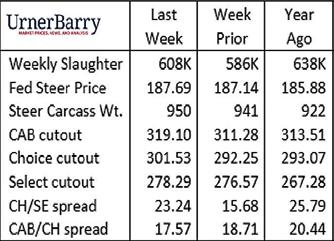
Federally-inspected cattle harvest was variable during the month of October.
Specific to fed cattle, the month started strong with a 498,000 weekly total.
The second week was a major pullback, totaling just 468,000 head and recovering one-half of the large decline a week ago to average 489,000 head harvested.
Although packers chose to tighten product flow, fed cattle prices have plotted a higher trend, building from the mid-September $182 to $184 per hundredweight (cwt) range to the third week of Octoberʼs average of $187 per cwt.
The October price trend has noted a price rally in the
By Paul Dykstra
past three years. The price rally was followed by further November increases in 2021-22, while last year’s October rally marked the top of the fed cattle market.
The collapse in the November 2023 market was much less due to fundamentals and highly influenced by speculative futures activity.
Market enthusiasm swells
Current market enthusiasm on the production side of the beef supply chain has swelled from the eruption of sharply higher carcass cutout values.
Using the Choice 600to 900-pound carcass as the benchmark, the cutout price has increased
$22.69 per cwt from Oct. 1 through Oct. 21.
The production decline during the second week of October spurred prices higher, while the October seasonal trend calls for cutout values to begin their fourth quarter rally by midmonth. The price uptick has been steep, and it arrived earlier than typical this October.
The Certified Angus Beef (CAB) brand cutout has, unsurprisingly, followed a similar uptick with weekly reports indicating a $20 per cwt increase through Oct. 17, with more upside yet to be charted through the current period.
The onset of middle meat demand is especially intense in this period, and widening price spreads for
carcass quality are once again appearing.
However, the CAB cutout remains narrower than a year ago as record carcass weights, combined with exceptional marbling achievement, have boosted the brand’s supply. Oversupply is not a threat as the seasonal dip in industry average grading tends to mark the annual low in November.
tinue, but at a decreasing rate, as live weight passes 1,400 pounds or so in steers.
Inclusion of a beta-agonist in many modern steer diets is also a likely factor in increasing lean muscle growth at the end of the period, increasing ribeye area measurements upon harvest. But, lean growth in the final days of the feeding period allowing heavier outweights to be achieved is an economic benefit.
Without belaboring the topic, it’s appropriate to point out feedyard management will follow where the highest returns exist. Currently adding more pounds to cattle already on inventory is the best proposition in the market.
October and December 2024 live cattle futures prices have posted an extended upward run since mid-September as futures have caught up to the weekly spot market. During the last week of October, those contracts corrected slightly lower but are seeking to maintain a level par with cash cattle.
Ribeye size becomes a factor CAB recently focused on the top five reasons eligible carcasses fail to meet all 10 of the brand’s carcass specifications.
We anticipate the traditional annual heaviest carcass weights by midNovember. Throughout this period CAB brand carcass acceptance rate typically charts a lower seasonal trend due to declining quality grade.
From our 2023 data set, carcasses with marbling scores below Modest 00 or Premium Choice captured 83 percent of carcasses missing the mark. However, as carcass weights continue to balloon this fall, attention turns to the second-most commonly missed specification – the brand’s 10- to 16-inch allowable ribeye area requirement.
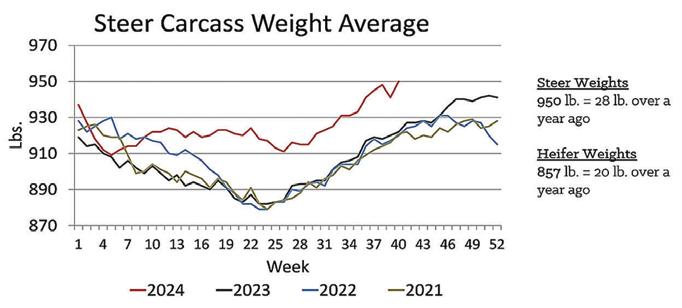
This November will feature a larger-than-normal slippage of brand-eligible carcasses due to ribeye size. This occurs as average steer carcass weights continually increase, and they were averaging 950 pounds two weeks ago.
Intuition suggests since hot carcass weight is also a brand specification –with a 1,100-pound maximum – record-heavy carcasses could have the highest potential to miss brand acceptance.
While carcass weight and ribeye size aren’t directly correlated, heavier carcass weights are associated with larger average ribeye area.
Research done more than a decade ago shows ribeye growth tends to con-
Feeders will continue to reap rewards in the cost and return equation in a market which has recently moved to higher prices.
Grid-sold cattle are, on average, capturing Choice and Prime quality premiums at a higher percentage rate this fall. Yet, yield grade and heavy-weight discounts threaten to devalue premiums for the heavy pens of steers, in addition to fewer CAB qualifiers.
Paul Dykstra is the director of supply management and analysis at CAB. He can be reached at pdykstra@certifiedangusbeef. com.
Electricity supply constraints put AI boom and U.S. economic growth at risk
Generative artificial intelligence (AI) applications have drawn billions of dollars in investments with the expectation of big productivity gains which will propel U.S. economic growth.
But the proliferation of hyperscale data centers powering these applications is creating a widening imbalance between U.S. electricity demand and supply which could jeopardize those expectations.
Data centers currently account for approximately four percent of the country’s energy demand, but this number is expected to grow exponentially over coming years. Many market participants believe the U.S. is 12 to 24 months away from not having enough electricity to run these power-hungry generative AI data centers.
According to a new quarterly report from CoBank’s Knowledge Exchange, the growing imbalance between energy supply and demand could threaten U.S. economic growth. The report suggests AI adoption will be increasingly critical to economic growth given structural problems in the labor market.
“Economic growth is anchored in two core pillars – a growing workforce and technology which makes it more productive,” said Jeff Johnston, digital infrastructure economist with CoBank. “Growing the U.S. workforce will be a challenge given structural headwinds including an aging population, falling birth rates and a lack of immigration reform. This makes the adoption of technologies like generative AI applications and the operational efficiencies they deliver
critically important to future economic growth.”
U.S. economy and government affairs
After months of anticipation, the Federal Reserve finally begin cutting interest rates in September in response to weakening labor market metrics and a series of tame inflation reports.
But market expectations for higher long-term interest rates and widening yield spreads mean borrowing costs will not drop as much as some consumers and companies hope.
Federal Open Market Committee members appear to agree the interest rate environment will remain higher than pre-pandemic levels through at least 2025.
While Congress will be in recess until after the November election, momentum is building to add the farm bill to the lame duck calendar.
High interest rates, low commodity prices and multiple natural disasters are increasing the urgency for legislative progress. The current farm bill has now expired, and a simple extension of the old one is becoming less palatable with reference prices falling further out of date.
Grains, farm supplies and biofuels
U.S. farmers are harvesting a record-large soybean crop and the third-largest corn crop on top of large carryover stocks from the previous marketing year.
The ample harvests coincide with a host of export headwinds including a strong U.S. dollar, stalled rail shipments into Mexico and low water levels on the Mississippi River. However, export demand is showing signs of recovery
as droughts in Brazil and Russia send global grain and oilseed buyers back to the U.S.
Fertilizer prices have moderated and ag retailers are anticipating strong farmer spending on inputs this fall.
Final 2024 expenses for fertilizer, pesticide, fuel and oil are expected to decline nearly 10 percent from 2023, mostly due to price reductions.
While lower, input costs have not dropped in tandem with crop prices and remain above pre-pandemic levels. Many ag retailers are bolstering their input financing programs as a result.
U.S. ethanol production margins will benefit from lower corn and natural gas costs.
Export demand remains strong, but more competition could be on the horizon with Brazil constructing new corn-ethanol plants.
Soy oil demand for U.S. biofuel production continues to face headwinds from rising imports of used cooking oil and tallow, which are now estimated to account for one of every six gallons of biomass-based diesel produced in the U.S. Animal protein and dairy
Despite rising prices, beef demand remained robust throughout the grilling season.
Retail prices continued climbing through August, topping more than $8.60 per pound. Price-sensitive consumers found relief in ample retail hamburger promotions.
The composition of beef coming to market in 2024 has been more fed cattle, with more steers entering the feedlot than last year. Falling feed prices, a chang-
ing mix of cattle and tighter availability is contributing to higher cattle weights.
Hog production margins are improving on lower feed costs.
Iowa State University estimates farrow-to-finish operators recorded their fifth consecutive month of positive margins in August. However, any expansion in production is unlikely as non-feed operational costs remain elevated. Pork prices should hold steady through the rest of the year as a result.
Global pork demand remains robust, and the U.S. will likely overtake Europe as the leader in pork exports this year.
Chicken remains a leading growth segment for animal protein, as consumers seek value at the retail meat case. U.S. per capita chicken consumption is on pace to rise 1.5 pounds in 2024. Consumer interest in both dark and white meat items is growing as marketers address inflation concerns.
Broiler production was moderately higher through summer, with strong revenues for integrators.
Dairy farmers could experience some of the best margins in a decade given the combination of higher milk prices and falling grain costs.
In July, milk production margins climbed to $12.33 per hundredweight (cwt) – the highest level since May 2022. Forecasts for the remainder of the year expect margins to improve to nearly $16 per cwt.
Cheese and butter prices have moved higher due to tighter milk supplies.
Cotton, rice and sugar Hurricane Helene
caused widespread cotton crop losses across the Southeastern U.S. The hurricane arrived with more than three-quarters of the crop in the region having open bolls, risking losses to crop quality.
Other cotton-producing states across the South suffered crop losses from tropical rains in prior weeks. The estimated size of this year’s crop will be revised downward as the losses are tallied.
U.S. rice prices have defied the downward trend in grains amid tight Brazilian supplies. Brazilian rice prices now trade at a rare premium to U.S. prices.
Export demand for U.S. long-grain rice in the Western Hemisphere remains robust. However, India’s return to the export market with non-basmati white rice after a year-long export ban will boost global rice supplies and pressure world prices.
U.S. sugarbeet farmers are harvesting a record crop following a mild growing season. Domestic sugar cane production has also risen to record levels.
Combined, the record crops will help replenish tight U.S. supplies following
Mexico’s drought-stricken cane sugar harvest. Globally, drought and widespread fires in Brazil – the top sugar exporter – have underpinned world sugar prices with Brazil’s harvest expected to fall.
Food and beverage
National food and beverage brands continue to struggle with lower volume sales. Value is still top of mind for consumers, who are continuing cost-cutting behaviors set during the height of inflation.
Grocery price increases have slowed, but a variety of segments are still well ahead of pre-pandemic levels.
Retailers’ early start to the holiday shopping season is likely to keep budgets top of mind for consumers.
Value menus have led to an uptick in restaurant traffic, but not enough to surpass grocery traffic growth.
CoBank is a cooperative bank serving vital industries across rural America, providing loans, leases, export financing and other financial services to agribusinesses and rural power, water and communications providers in all 50 states. For more information, visit cobank.com
Every summer, kids from 16 counties in southeastern Idaho and two counties in western Wyoming have the opportunity to spend three days at 4-H Camp near Alpine.
Bonneville County 4-H Extension Educator Paige Wray has been helping at this camp for two years, as her job with the University of Idaho entails positive youth development and 4-H programming.
Alpine 4-H Camp
Wray explained the Alpine 4-H Camp is operated by these 18 counties under the American Camp Association, in partnership with the U.S. Forest Service.
Each summer, kids ages eight to 12 from three or four different counties are bused to camp for three days throughout the month of June.
“We take busloads of kids to each camp, and they are there Monday through Wednesday or Wednesday through Friday,” she explained. “Each group is there for two and a half to three days and they all do different things, but it serves the same purpose – to
get kids outdoors and to do some outdoor education.”
Wray shared the camp is split into rotational groups so each kid has a chance to participate in every activity.
“The overall goal is well-rounded kids, and the goal of 4-H Camp is wellrounded outdoor education,” she stated.
Wray also noted, “As part of outdoor education, we do shooting sports. We have a rifle range and an archery range where the kids can practice. We also do crafts and a service project. This last year our theme was “Games,” and for their service project, the kids made game bags for the Ronald MacDonald House. They got to make a game bag for themselves as well.”
Wray further explained teen leaders help run the camp.
“Our teen leaders have training sessions throughout the spring so they can help run the kids’ groups and activities,” she said. “They put on a campfire program and a dance, and they are trained to work with kids and help make it a good experience for them.”
Making improvements
In existence for 75 years, the Alpine 4-H Camp requires periodic upkeep and maintenance, and while a groundskeeper lives nearby to conduct routine maintenance, volunteer help is required for the major improvements.
Wray shared, during one day each spring and fall, volunteers help clean up the camp and prepare for summer activity or winterize everything, depending on the season.
BLEVINS
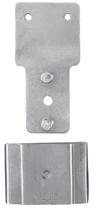
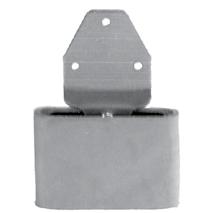
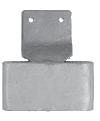
New All Metal Stirrup Buckles
Blevins new all-metal stirrup buckle in 3”& 2-1/2” widths. The 3” and 2-12” widths have the posts set horizontally and fit standard holes while the 2” width has the posts set vertically. Made of stainless steel and heat-treated aluminum, the same as our leather-covered buckles.
Blevins Stirrup Buckles Improved
Sleeves same as on regular style buckle. The tongue has no hinge or strap. Available in 3” and 2-1/2” widths.
Easy to change stirrup lengths quickly and easy to install – won’t slip or stick. Made of stainless steel and heat-treated aluminum. Sleeves covered with leather. Order either improved, regular or four post buckles. Also new all-metal buckle in 3”, 2-1/2” and 2” widths. At your dealers or:
“Some people who participated in 4-H Camp as campers or advisors enjoy coming to help us, because they love the camp,” Wray stated. “We hope to expand on the help they provide through fundraisers, but for now a lot of the work is done by faculty and staff.”
“We have some projects we hope to move forward with this next year in terms of improvements,” Wray continued. “We want to update all of the cabin roofs and bathrooms. These are big projects, so we will be grateful for any help we can get.”
Volunteers and donations are always welcome at the Alpine 4-H Camp.
“We try to be self-sustaining, but with a camp this large, it is sometimes difficult,” she said. “We appreciate any support we can get because it is special place where some kids get their first experience being outdoors or their first experience being a leader.”
Other uses
Although the overarching focus of the Alpine camp is on youth education, it has also opened up to other uses in order to remain sustainable. For instance, the camp can also be booked for family reunions, weddings, etc.
Additionally, in July there is a region-wide, family-friendly 4-H Horse Camp held at the facility.
According to Wray, the camp is a four-day event drawing nearly 80 youth participants and their horses
to learn a variety of equine disciplines and skills from English equitation to leather work. Youth counselors assist with administration of the camp and lead younger campers in activities to enhance the fun of the camp.
Wray said, “4-H kids and their families can come spend a week learning more about horsemanship. This camp is geared toward kids who already have horses and have been participating in horse 4-H projects. They come here to strengthen their skills.”
In 2023, the Alpine 4-H Horse Camp celebrated its 50th anniversary.
“I was up there for one of the days during 4-H Horse Camp, and it was amazing to see how many people were there and all of the fun they were having,” she shared. “Besides horsemanship, camp leaders were teaching line dancing and other fun activities.”
There is no doubt, the 4-H experiences provided at the Alpine camp provide
youth lasting benefits.
A survey of 14 previous camp counselors found 100 percent of respondents gained leadership abilities, knowledge and skills as a result of their 4-H Camp experience, while four out of five who selected the “Other” category specifically stated meaningful friendships in their response.
These camps are a great social outing for kids, providing a safe venue to meet friends from other counties that often turn into lifelong relationships. These experiences also broaden their horizons.
“The same kids often come back for multiple years and enjoy seeing the friends they met earlier,” Wray said. “This camp has made a big difference in many kids’ lives.”
Heather Smith Thomas is a corresponding writer for the Wyoming Livestock Roundup. Send comments on this article to roundup@ wylr.net.
Shooting sports – As part of the outdoor education curriculum provided at the Alpine 4-H Camp, youth learn shooting sports including archery and rifle shooting. Paige Wray photo
Alpine 4-H Camp – The Alpine 4-H Camp offers a safe venue for youth across Wyoming and Idaho to gather for outdoor education and hands-on experience, while also making lifelong friendships. Paige Wray photo
Rodney “Rod” Russell Forgey, age 86, of Casper finished his work here on Earth on Oct. 21. Rod was born on Nov. 2, 1937 to Russell and Phyllis (Hollenbeck) Forgey in Ainsworth, Neb. Rod moved to Casper
with his folks and his sister Hazel in 1944 when Russ decided to go into the construction and ranching business with his brother Joe. This was the beginning of sparks for Rod, as it became his life’s passion to move the earth.
Rod rode his bike to the first job Russ did on what is now the Casper Fairgrounds. Rod’s family traveled throughout the state for work, and Rod learned to run equipment and manage jobs as he got older. Russ depended on him, and both of their love for agriculture expanded as the ranching and farming operations grew.
Amidst all of the work travels and learning, Rod graduated from Natrona County High School in 1957.
When the construction company was working in the Big Horn Basin, Rod met Lenora May Finch while he was taking a break at the roller rink. They were married in 1958 in Worland. They were blessed with three children – Kevin, Keith and Kimberly. The kids were Rod and Lenora’s pride and joy. Family brought Rod strength during hard times and laughter and joy all of the time.
Highway work moved them around the state, until they settled down and made Casper their home in 1965.
As time went on and the family grew, Rod looked forward to Sunday dinners and holidays with grandkids, telling stories and
making memories. Spending time with family was closest to Rod’s heart.
Over the years, Rod enjoyed spending time in Arizona with his sister Hazel and her husband Dan. Rod was proud to trust his sons to run the business while he was a snowbird for several months a year. These were times they looked forward to every year.
Rod’s biggest challenge of his career was in 1972 when they took on the Exxon Mine in Shirley Basin. Forgey Construction made their legacy there, stripping and moving overburden for 12 years.
The company also leveled land for the railroad and continued to build highways throughout the state until the sale of the construction company in April 1993.
The sale of the company
didn’t slow Rod down. He was a hard-working man, and he dove more into the farming and ranching world.
Rod always made sure there was still equipment to keep the roads smooth in the country. He took every opportunity to drive a truck or help out one of his kids or a friend. Rod searched for buddies to have a cup of coffee or a beer with and loved tinkering in his shop and shopping for trucks and equipment.
Rod met Marinel Acuin Rojas in the Providence Philippines in 2007. They fell in love and were married in the Philippines on June 27, 2009. In 2010, Marinel moved to Casper with Rod where they made their home together.
Rod enjoyed showing Marinel all about the U.S., traveling many places to
create memories together. Driving in the country was a favorite pastime they shared together. Rod was preceded in death by his parents, sister Hazel Carr and brother-in law Dan Carr, his son Keith and daughter-in-law Brandi. He is survived by his wife Marinel; son Kevin (Kim) Forgey; daughter Kim Forgey; step-son Raymar; grandchildren Shantel, Scotty, Rachel, Allison, Kaylin, Kelsey, Karl and Korina; 16 great-grandchildren and many friends and other family who loved him. A memorial celebration will be held on Nov. 2 at 1 p.m. at The Barn, with a meal provided. Cards can be sent to PO Box 747 Mills, WY 82644. In lieu of flowers, donations can be made to Wyoming Donor Alliance or a charity of one’s choice.
Judy Daily, age 67, of Huntley died at her home in the arms of her husband Bob Daily on Oct. 26, and cremation has taken place.
Judy was born Feb. 22, 1957 in Torrington, the daughter of Jack and Gertie Sedman. She grew up in Huntley. Throughout high softball, as well as being a 4-H member.
with her husband back to the Huntley community where they started a family and have resided there ever since.
Judy graduated from Huntley High School and attended Casper College. She returned home and married Bob on March 21, 1976. The couple moved to Alliance, Neb. where Bob worked for the Snake
Judy had a very strong faith in God and spent many years teaching Sunday school. She enjoyed being an artist, as well as an avid gardener.
Judy was very focused on her grandchildren and spent a great deal of time
a successful real estate career.
Judy is preceded in death by her father Jack Sedman and her grandparents. She is survived by her beloved husband and best friend Bob; their daughter Jill (Adam) Tregemba and her children Taylor, Cole and Camryn of Huntley; son Matt Daily of Huntley; daughter Dixie (Kirby) Berger and her children
(Karen) Daily and his children Vivian, Max and Ryleigh of Huntley; mother Gertie Sedman of Huntley; uncle Bruce (Jane) Sedman of Huntley and aunts Susan (Wylie) McGuire of Lance Creek and Ginger (Dave) Hansen of Torrington.
A celebration of life will be held on Nov. 4 at the Presbyterian Church with Derek Jackson officiating. Memorial contributions may be made in Judy’s name to the Hawk Springs Fire Department or the Lyman Fire Department.
Oversized cattle are influencing consumer protein buying preferences
After a quick analysis, it becomes clear there is no room on the dinner plate for the baked potato. But as the juicy T-bone steak touches all edges, will the sight bring consumers a sense of culinary satisfaction or financial frustration?
Beef prices for heavier cattle continue to hold strong, and there are no indications cattle producers plan to downsize.
“When we feed them too big, the steak doesn’t fit on the plate, and consumers push it away,” explains Dr. Dan Thomson, a veterinarian and partner in Production Animal Consultation.
While the quality of beef has improved significantly over the years, especially in terms of Prime
In response to the growing challenges in tomato production, Texas A&M AgriLife Research’s Vegetable and Fruit Improvement Center is leading the effort to develop and employ a systems-based approach to build a more sustainable and competitive tomato industry in the U.S.
Awarded an $8.4 million grant by the U.S. Department of Agriculture’s (USDA) National Institute of Food and Agriculture (NIFA) AgriLife Research will spearhead a groundbreaking four-year multi-institutional collaborative project to develop resilient, highquality tomato varieties.
grades, there are practical challenges to consider.
Consumers and retailers do not want to split an expensive steak. It is a matter of eating experience and affordability. Balance quality and quantity
The average Angus slaughtered today weighs the same amount as the average Simmental cow in the 1980s, according to Thomson, who works with 20 veterinarians covering six million head of cattle on feed, one million cow/calf pairs and 600,000 stockers. He notes processing plants struggle with larger animals. For example, the rails at these facilities need to be adjusted higher to accommodate larger carcasses.
Heavier animals pres-
The project, “Climate Resilient High-Quality Tomato Varieties for Sustainable Production,” will be led by Dr. Bhimu Patil, a professor in the Texas A&M Department of Horticultural Sciences and director of the university’s Vegetable and Fruit Improvement Center.
“The innovative work being done by Patil and his team will have a longlasting impact on both the tomato industry and the health of consumers,” said Dr. G. Cliff Lamb, director of Texas A&M AgriLife Research. “This project will improve both the sensory qualities and human health benefits of tomatoes.”
ent challenges at the farm level too.
“Our trucks and trailers have to change,” Thomson says. “The loadout, the equipment, all of it would have to change because it was designed for efficiency with a 1,250-pound animal.”
Working closely with retailers as lead counsel for restaurant chains like McDonald’s, Applebee’s and others, he points out, while consumers love high-quality beef, there’s a risk if steaks become too large it could affect demand.
Smaller-framed animals are likely to see a resurgence, according to Thomson. Producers should think about how they’re breeding and rais-
Industry challenges prompt tomato improvement project
Tomatoes are one of the most widely cultivated, extensively consumed and economically important horticultural crops in the U.S., but Patil said the industry is being challenged. Efforts are needed to sustain the competitiveness of domestic production and develop resilience to the increased frequency and severity of biotic and abiotic stresses, all while meeting consumer demands.
“This project idea was born from extensive discussions with key industry stakeholders, consumers and
ing cattle. Keep the quality, but raise a calf producing beef cuts that are manageable and affordable for the average consumer. Consider consumer priorities
In today’s market, consumer concerns extend beyond price. Safety, freshness and sustainability are also top priorities.
Thomson says many consumers are looking for ethical reasons to justify their purchasing decisions.
“They’d rather say, ‘I’m going to eat this because it’s good for the environment,’” he notes.
Take advantage of this ideology as an opportunity to promote sustainable practices and animal welfare. By aligning each operation with these val-
ues, producers can better position their product in the marketplace. Transparency about on-farm practices can help build trust and encourage consumers to choose local beef over competitors.
In this complex landscape, staying informed about consumer demand trends will be important for beef’s success in the retail space.
Eye on economics
Consumers have shown a willingness to pay higher prices, even if it means eating fewer pounds of beef.
Higher prices have offset the lower consumption volumes, but for how long?
It comes down to strength in demand. If consumer income levels remain stable, there’s
retailers,” Patil said.
“Our national survey identified crucial priorities like heat tolerance, wateruse efficiency, flavor, quality, human health properties and disease resistance. Through this grant, we will address these challenges and improve the overall quality of tomatoes to benefit both producers and consumers,” he added.
He said the team will produce advanced breeding lines of tomatoes better equipped to thrive in diverse growing environments while enhancing flavor, human health-promoting properties and shelf life.
Dr. Amit Dhingra, head of the Texas A&M Department of Horticultural Sciences, said the synergy developed through collaboration with other participating institutions in implementing the project will greatly benefit U.S. tomato production.
“The project will not only produce new varieties of tomatoes but will also generate vital data and tools to benefit breeders, farmers and consumers in Texas and across the U.S. for years to come,” Dhingra said.
He also noted the project aligns with the department’s ongoing efforts to support sustainability, wellness and food security.
Addressing consumer preferences for tomatoes
Patil said one of the key objectives of the project is to address consumer dissatisfaction with the flavor of tomatoes, which has contributed to a decline in consumption.
“The breeding programs will focus on enhancing not just the resilience of the tomatoes but also their taste, texture and aroma,” he said.
By producing tomatoes which are both nutritious and appealing to the palate, the project aims to boost consumer demand and support healthier eating habits.
A collaborative effort across institutions
Patil said the collaborative nature of this project will be integral to its success.
Texas A&M AgriLife
a good chance people will continue to buy beef, supporting market prices.
However, keep an eye on economic indicators – like interest rates and employment levels – because they directly impact how much consumers are willing to spend on protein.
Understanding the factors influencing purchasing decisions and adapting an operation accordingly can help producers better navigate the challenges ahead.
For now, though, consumers want to have their steak and eat it too.
Mindy Ward is the editor of Missouri Ruralist This article was originally published by the Missouri Ruralist on Oct. 7.
Research and the AgriLife Extension Service are joined by the USDA’s Agricultural Research Service, the University of Florida, Michigan State University, the University of California, Cornell University, the University of Arizona, the University of Washington, North Carolina State University, the University of Georgia and Oregon State University.
“Together, these institutions bring a wealth of expertise in tomato breeding, genomics, human health properties, physiology, nutrition and Extension services,” Patil said.
Experts from five major tomato breeding programs will develop regionally-adapted, disease-resistant tomato varieties with improved water-use efficiency and heat tolerance. This systems-based approach will help meet the diverse needs of the industry across the different U.S. regions. Industry support for the project
The project has already garnered enthusiastic support from industry leaders.
“As a specialty crop producer, I strongly believe great-quality tomatoes will help drive the market and provide financial incentives to U.S. producers,” said Jimmie Bassetti, president and chief executive officer (CEO) of J&D Produce. “It will also help bring signifi-
cant health benefits to consumers by ensuring they have access to flavorful, nutritious tomatoes.”
Dante Galeazzi, president and CEO of the Texas International Produce Association, said the project’s focus on water-use efficiency and heat tolerance is crucial for improving the overall quality and sustainability of tomatoes.
“These strategies will have a lasting impact on producers, handlers, processors and retailers across the nation,” Galeazzi said. Developing a sustainable future for agriculture
Patil said the need to produce resilient, high-quality agricultural crops has never been greater.
“This USDA-funded project is an essential step toward building a more sustainable and competitive tomato industry in the U.S.,” he said. “By employing a systems-based approach which incorporates cuttingedge genomics, breeding techniques and consumer insights, the project will provide valuable solutions to the critical challenges facing the tomato industry.”
Paul Schattenberg is a communications and media relations specialist with Texas A&M AgriLife Communications. This article was originally published in the Texas A&M AgriLife E-Newsletter on Oct. 3.
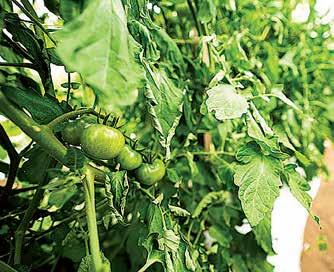
Plant improvements – Texas A&M AgriLife Research’s Vegetable and Fruit Improvement Center will lead efforts to produce more climate-resilient, high-quality breeding lines of tomatoes. Texas A&M AgriLife photo by Michael Miller
Winterizing the coop keeps chickens comfortable and productive through winter months
Although chickens are hardy creatures, experts agree winterizing the chicken coop and yard where birds roam is good practice for keeping chickens secure, comfortable and laying during cold winter months.
With snow already on the fly across the state of Wyoming, individuals should consider winterizing their chicken facilities as soon as possible.
The coop
As the coop is the most likely place chickens will take shelter this winter, it is critical to properly winterize the facility to prevent chilled or deceased birds.
The first step to preparing a coop for the cold is to conduct a deep clean and make any necessary repairs.
Experts at Stromberg’s Chickens suggest removing all bedding and debris from the chicken coop, then thoroughly scrubbing it down and letting it dry.
Individuals should also clean out feeders, waterers and nesting boxes and wipe down or spray with a good sanitizer.
During this time, it is also suggested individuals make any necessary repairs to the coop to ensure warmth stays in and pests and predators stay out.
“This is important because drafts will lower
the temperature and make it hard for birds to warm up,” says Danielle Nater, manager of Northern Colorado Feeder’s Supply in Fort Collins, Colo. in a Backyard Poultry article.
Experts also encourage individuals to pay close attention to the roof and seams of the coop.
“Even if a predator can’t get in, little cracks and flaws in these areas can lead to a draft or snow getting into the coop, making the chickens’ home cold and miserable,” Stromberg’s notes.
Those who live in especially cold climates may also consider insulating their coop to keep as much heat in as possible. However, it is important to ensure proper ventilation, as a stuffy coop can be detrimental to chickens as well.
“The coop should also be checked for evidence of vermin, which can snack on chickens, especially during winter months when food may be scarce,” reads the Backyard Poultry article.
“If vermin are found, they should be removed in whatever way the producer feels comfortable.”
Replacing bedding with certain materials will also serve as insulation for the coop.
Backyard Poultry suggests adding an extra layer of pine shavings on the
floor and in nesting boxes, while Stomberg’s recommends using a thick layer of straw or wood shavings.
“Bedding should be cleaned often because the chickens will be spending more time in the house and will accumulate more feces and urine on the floor,” Nater explains. “This can freeze and be much harder to clean out over time, while also causing respiratory issues in birds.”
Lastly, individuals should have a watering plan in place in the instance of a hard freeze.
Backyard Poultry encourages individuals to leave waterers outside if possible to avoid spillage, freezing and slippery surfaces in the coop. Therefore, they may consider investing in water heaters.
“Care should be taken with heated chicken waterers to ensure the electrical wire is not showing, as chickens may peck at the shiny wire,” the article reads. “If an in-tank heater is used, the water line should never go below the heating coil, and if the heater is a sinking heater, it should be fitted with the cage to keep it from melting the bottom of the water bucket.”
The yard Although winterizing the coop is critical,
care should be taken in the chicken run and yard to prepare for snow and cold temperatures as well.
Experts agree these areas should be cleared of any trash and debris, ensuring it is set up in a location where it will receive direct sunlight during the day.
Fencing should be double-checked for holes and gaps and repaired as needed, while also ensuring it is sturdy enough to stand up to strong winds and heavy snowfall.
“Double-check fencing to ensure it’s sturdy enough to withstand winter,” Stromberg’s states. “Remember the coop is even more attractive to predators during the winter, as it means access to free warmth and shelter – and a free chicken dinner.”
The flock
In addition to the facilities, experts remind individuals they will also need to prepare their flock for winter months, as winter leads to decreased egg production and biological changes in birds.
To keep chickens productively laying, Backyard Poultry recommends fitting facilities with heat and artificial light.
Nater notes hours of daylight is a key factor to egg production, as hens need 14 to 16 hours of day-
s CORRAL 2024
Edition Date: Nov. 9
Edition Date: Nov. 16
Edition Date: Nov. 23
Edition Date: Nov. 30
Edition Date: Dec, 7
27
Deadline: Wed., Dec. 4
20
light to stimulate production. Artificial light simulates longer days, which keeps hens laying more consistently during winter months.
She recommends putting lights on a timer so they turn on in the morning and the evening.
“Put a timer on the lights so they are only on for a certain amount of time throughout the night. Also, they need to be infrared lights. If they are bright white lights and if they are on all of the time, it will irritate the chickens,” Nater says.
Heat also plays a role in egg laying.
“If the chickens aren’t warm, they aren’t going to produce eggs. They will spend all of their energy trying to stay warm instead,” notes Nater. “But, the heaters should only be used when temperatures drop below a certain level. They don’t need to be on very high or all night, just enough to keep the chickens comfortable.”
If heat or lights are installed inside a coop, it is important to keep all electrical cords and heaters out of chickens’ reach so they can’t shock themselves or start a fire.
Heat is also important in preventing frostbite, which can also be a concern
for chickens.
“If they are outside for too long in freezing temperature, their combs, wattles and feet can freeze,” Backyard Poultry explains. “This is painful for birds and can decrease reproduction, especially in roosters.”
Like other livestock and outdoor pets, feeding routines may change during the winter.
Backyard Poultry experts note it is best to feed chickens later in the afternoon or the early evening because they tend to eat more at this time. This also allows chickens to fill up their crops before they nest and give them plenty to digest through the night, which will keep them warm.
It is recommended to feed chickens their normal ration, including scratch. Scraps and eggshells can also be fed.
During cold winter months, chickens may undergo molting, which some chicken owners may perceive as sickness. However, they should note this is a normal biological process for chickens, and it cannot be prevented.
Hannah Bugas is the managing editor of the Wyoming Livestock Roundup. Send comments on this article to roundup@wylr.net.
CLASSIFIEDS
Helping those affected by the fires in Wyoming and Montana:
One FREE 4 week classified line ad available for anyone with the following to give and for those in need:
• Pasture
• Fencing supplies and businesses
• Hay and feed
Call the Wyoming Livestock Roundup to place a classified line ad at 307-234-2700 or e-mail roundup@wylr.net
LLC Red Cloud, NE www.gottschcattlecompany.com Come Join the Gottsch Livestock Feeders Family! Gottsch Livestock Feeders is looking for Cowboys/Pen Riders for their feedyard in Red Cloud, NE. The main focus of the Cowboy/Pen Riders are spotting, pulling, diagnosing and taking cattle to the hospital and shipping fat cattle. This person will need to be a team player who is seeking a long-term position. You will have the opportunity to work with and learn from some of the best in the industry. We offer a benefits package that includes health insurance, dental, vision, 401(k), health savings, life insurance and paid vacation. Retention bonus offered to full-time employees. Incentives paid out at 6 months and 1 year of employment. If you are interested stop by and fill out an application or visit our website at
Call Brandon Furr at 402-257-7769 or 402-746-2222 for more information.
be self-motivated, reliable and responsible with knowledge of haying and farming. Mechanical skills are a must. Farming duties include: Swathing, baling and raking hay, etc. THIS IS NOT A COWBOY POSITION, but applicant will need to assist in all aspects of cattle work as well. Those duties include calving heifers, feeding hay, branding and gathering, etc. Nearest big town is 60+ miles and nearest K-12 school is 30+ miles away. Housing is provided and on a school bus route. Please send resume with references by mail or email to: PeeGee Ranch, 1251 Lower Powder River Road, Arvada, WY 82831, pgranch@ rangeweb.net. Call 307-7362461 11/2
NOW HIRING: CDL A TRUCK DRIVERS AND FRONT END LOADERS. Home daily, seasonal sugarbeet rehaul. Location: Worland or Lovell, WY. Drivers earn up to $1,900/week. Loaders earn $25/hour. Flexible work schedules. Drivers must have CDL A with doubles endorsement. To apply, please call 651-364-9578. To view photos, go to www.wylr.net in the classifieds 11/16
NORTHEASTERN COLORADO FARM AND RANCH IS IN SEARCH OF FULLTIME, SELF MOTIVATED, RESPONSIBLE PERSON WITH KNOWLEDGE OF ALL ASPECTS OF TAKING CARE OF CATTLE: Some farming and haying. Housing available. Salary dependent on experience. Work pickup provided. Send resume, references and work history to bkkramer. kk@gmail.com. Call Kim at 970-520-2513 11/2
Services
Services
Financial Services
AGRI-ONE FINANCIAL: Farm/ ranch and all commercial loans. RATES AS LOW AS 5%. We have been helping with all aspects of agricultural, commercial financing and management for years. LET US HELP YOU on a consulting level with management to increase profitability, deal with and fix credit problems and for all your financing needs. WE CARE AND HAVE WORKING PROGRAMS designed for the farmer/rancher and not the banker. Please call Steve, 303-773-3545 or check out our website www.agrionefinancial.com. I will come to you and get the job done!! 11/2
Auctions Dogs
HEELER/BORDER COLLIE
PUPS FOR SALE: Variety of colors, western Nebraska. Call Johnny, 308-279-2419. To view photos, go to www.wylr. net in the classifieds 11/23
Help Wanted Angus
FOR SALE: Pure Black Angus bull calves average weaning weight 733 lbs. Herd has been AI'd since 1969. Sold as pure but not registered. Call John Gerstner, 307-366-2911, Ten Sleep, WY 11/16
FOR SALE: Sixty-four head of high elevation front pasture replacement heifers. Sorted by ultrasound to calve the last two weeks of April. Bred to 100% registered, PAP tested, calving ease, Black Angus bulls from top notch programs like Sitz, Beartooth and TJS Angus. Top notch vaccine program since birth, most recently: Valbazen, Cleanup, Virashield 6 VL5 and Scour Boss 9 at preg check Aug. 30. From long-time heifer development program X Bar Cattle Co, Laramie, WY. Call 307-760-3837 11/16
250 BLACK ANGUS BRED HEIFERS: South Dakota origin, OCVD, exposed to proven LBW Black Angus bulls for 45 days. Start calving Feb. 1, 2025. References available. Call 785-394-1955 (cell), 785394-2374 (home) or 785-7315067 11/16
38 HEAD FANCY BLACK ANGUS BRED HEIFERS: Originated from the Moore Ranch and have Schiefelbein genetics. 100% AI bred to Sitz Dignity and Beartooth Atlantis, to calve March 1. Call 307-3911474 11/9
WYOMING BRAND FOR SALE: RRC, RHS. Electric iron, $3,500. Call 307-8508073 11/23
TWO WYOMING BRANDS FOR SALE: First brand: RHC, RHH. Second brand: LRC, LHH. Both have left ear notch. No irons. $5,000 for both. Call 307-331-1522 11/16
WYOMING SINGLE IRON SHEEP BRAND FOR SALE: RSS, backwards B on the right shoulder sheep. $5,000. Call Kelly Burch at 307-259-2134 11/2
WYOMING BRAND FOR SALE: Registered in Laramie County in 1930. RBH, $5,000. Call 661-2435442 11/23
WYOMING BRAND FOR SALE: RHC, $3,500. Call 307-850-8073 11/23
BASSET HOUNDS, young adult pups available, 9 months old. One male and 1 female, very friendly and lovable. Well started on training and very sociable. Call for details 307219-2217 11/23 FOR SALE: NINE-WEEKOLD MALE BORDER COLLIE PUPPY. Sire is Kathy Knox’s Seth. Dam is a daughter of Jack Knox’s Coach. Call for more details, 660-9888422 11/2
LOOKING FOR COWS TO WINTER AND CALVES TO BACKGROUND
Excellent feed and facilities. Located at Martin, S.D. 605-515-3540 Leave a message or send a text
Pasture
APPROXIMATELY 500 IRRIGATED ALFALFA/GRASS ALONG WITH 250 ACRES OF GREAT GRAZING: This year there is a ton of feed to pasture off. Running water. Located north of Cody, WY on Heart Mountain. Should handle 400-500 head for 2-3 months, $1.20 a head per day. ALSO, approximately 500 tons of hay, $150/ton. Call 307-899-
PASTURE WANTED for 2,000 yearlings and 500 pairs. Can split into smaller bunches. Call 701-523-1235 11/9
Horses
MOLLY MULE FOR SALE: Rides and packs. Backcountry experience. Sweet personality. Friendly and gentle. Shoes easy. Meets you at the gate. Ten years old. Cody, WY area, $10,500. Call 307-413-0767, e-mail wachobdoug@gmail.com. To view photos, go to www.wylr.net in the classifieds 11/9
silk SCARVES, wool VESTS, winter CAPS and socks…. KENETREK riding packs.!! It’s ALWAYS a great day to $AVE on BOOTS: HONDO, BOULET, JUSTIN WORK BOOTS, TWISTED X (boots and shoes) and more!! WE CAN ship!! Shop Moss Saddles, Boots and Tack, 4648 West Yellowstone Highway, Casper, WY, 307-472-1872. Our family serving yours for 50 years!! Check us out on Facebook or our website 11/2
Leatherwork
LS CUSTOM LEATHER: Belts, tack, cell phone cases and much more!! Contact Lester, 307-631-1053, leave a message. Located in Riverton, WY 11/2
FOR SALE: Fifteen growthy, fertile whiteface Montadale rams. January/February born. Will add pounds to your lamb crop. Great cross to many breeds and commercial crossbred ewe flocks. First come, first served. UTD on vaccinations and dewormed. Miller Farms, Bruce, S.D. 605-6904399 or 605-690-1997 11/2
FOR SALE: Fifty commercial whiteface ewe lambs. Primarily Ill De France x Dorset breeding. February/March born. Will make great mothers and milk great. Very fertile. Excellent maternal ability and traits. Great recip option for embryo transfer programs. First come, first served. Miller Farms, Kody, 605-690-1997 or Greg, 605-690-4399 11/2
Sheep
2,000 TONS OF ALFALFA, ALFALFA/GRASS MIX AND STRAIGHT GRASS: Prices starting at $80/ton, 3x4 squares. Located near Bozeman, MT. Delivery available. Minimum order of 200 tons. Call Doug, 406581-4124 11/9
200 TONS 2023 GRASS/ALFALFA IN LARGE ROUNDS: Cut slightly mature but baled green!! ALSO, selling 2024 LR certified wheat straw and 200 tons millet hay. Will deliver!! For sale by Cheyenne, WY area producer. Call 307-6303768 11/23
GRASS HAY FOR SALE: 3x4 bales, some barn stored, some outside. No weather damage. ALSO, alfalfa hay for sale 3x4 bales. Test available upon request. Riverton, WY. Call 307709-6290 11/23
HAY AND STRAW FOR SALE: Round bale grass, net wrapped, 2023 crop $100/ton, new crop $125/ton. ALSO, round bale barley and oat straw, net wrapped, $90/ton. FOB Powell, WY. Call 307-254-5115 or 406480-1248 11/23
HORSE QUALITY GRASS
HAY, first, second and third cuttings, $150-$200/ton. OAT/PEA MIX, $150/ton. All 3x4 square bales. COW HAY, nice green millet, $110/ton. Big square or round bales. Square bales barn stored. Tests available. Lusk, WY. Call Paul Hicks, 970-2035019 11/23
LARGE ROUND BALES OF NET-WRAPPED GRASS AND ALFALFA HAY FOR SALE: Delivered in semi loads. ALSO, custom hay hauling with 53’ step deck. Call 605770-6453 11/2
LOTS AND LOTS OF HAY FOR SALE!!! Alfalfa, alfalfa/grass mix, straight grass (crested wheat and native grasses), winter wheat, 1,300-1,350 lb. netwrapped round bales. Deliveries are available if needed or come and get it. Sheridan, WY area. Call the ranch, 307-737-2680 or 702-501-4243 (cell) 11/23
GRASS HAY OR ALFALFA HAY EXCELLENT ROUND BALES VERY REASONABLY PRICED!! Call 970-522-5030 11/2
HAY FOR SALE: Alfalfa, mix and grass. Rounds and squares. Call 605-670-9242 11/2
HAY FOR SALE: 3x3 and round bales of grass or alfalfa/grass mix. Prices starting at $70/ton. FOB. Delivered only. Call 605840-0015 11/2
WE HAVE SMALL SQUARE 21-BALE BUNDLES TO OFFER: First, second and third cutting straight alfalfa. First and second orchard/brome grass. First and second cutting alfalfa and grass bales average 53 lbs., third cutting alfalfa bales average 63 lbs. Prices: First cutting alfalfa, $147/bundle or $7/bale (no rain) tests supreme. Second cutting alfalfa, $126/bundle or $6/bale (price reduced due to some rain) tests premium. Third cutting alfalfa, $210/bundle or $10/bale (no rain, very leafy) tests high supreme. First cutting grass, $126/bundle or $6/ bale (no rain). Second cutting grass, $189/bundle or $9/bale (no rain, all leaf, very nice). All hay is either stored inside or covered outside. Able to load semi flatbeds and dry van trailers. Hay analysis upon request. Call Scott, 307-272-4570. To view photos, go to www.wylr. net in the classifieds 11/23
CERTIFIED WEED-FREE
PURE ALFALFA HAY: Small squares, covered. 2023 first cutting available for a reduced price. 2024 first, second and third cutting available. Will load trucks and any open trailer. MONIDA OATS: Combine run. Will auger into truck, trailer or large totes/ag bags. STRAW: Small squares available. Located between Powell and Cody, WY. Call or text Knopp Farms for details, 307-254-0554 11/9
EAR CORN FOR SALE. NON GMO, no pesticides. Minatare, NE. Call Byron, 303-818-8152, leave message 11/23
2023 ALFALFA ROUNDS: First cutting grinder hay $90/ ton at stack and second cutting good hay $110 at stack. ALSO HAVE NEW CROP GOOD ALFALFA HAY, $130 at the stack. Delivery available in semi loads only. Call 308-279-0490, Bayard, NE 11/16
STRAW FOR SALE: 250 TONS OF BARLEY STRAW, 4x4 squares, $50/ton. Located west of Powell, WY. Call or text 307-202-0532 for more information 11/16
NEW HOLLAND 499 12’ HYDROSWING MOWER CONDITIONER. Field ready, $3,800. Call 307-359-8668, Douglas, WY 11/2
VALLEY VIDEO HAY MARKETS, LLC: Hay available. Go to www.valleyvideohay.com or call Barry McRea, 308-2355386 11/9
CERTIFIED BARLEY STRAW FOR SALE, 3x4 bales. Cody, WY. Call 307-899-1952 TFN
HAY FOR SALE: 2023 and 2024, alfalfa, sainfoin, grass and combine grass/straw. Small squares and 3x3x8 bales. Test results available for 2023 and 2024. Will load 3x3s in open truck and trailer. Call 307-2506005 11/2
HAY FOR SALE: Good 2024 small square bales mixed grass, timothy/orchard/brome/garrison/red clover and some alfalfa. First and second cutting. $200/ ton at 34 bales or $6/bale. Some tested at 12% protein. Arapahoe, WY area. Call 307-3499994 11/2
HAY FOR SALE: 2023 milo and grass/alfalfa. 2024 first cutting 90% alfalfa/10% grass mix, grass mix, grass/alfalfa, millet, milo, CRP cut early, green and high, non-raked and clean. ALSO, new seeding hay field oats/kosha/crested wheat. All in net-wrapped round bales. Semi load delivery available. Call for pricing, ask for Klint, 701-2904418, send a text if no answer or keep trying 11/2
HAY FOR SALE: Large quantities!! Grass and alfalfa. Cow and horse quality. ALSO, forage wheat. 2023 hay still available. Small squares, 3x3 square bales and 3x4 square bales. Delivery available!! Call 307630-3046 11/2
BARLEY STRAW: Certified weed-free small squares, $4/ bale. ALSO, 5x6 round bales, $125/ton. GRAIN OATS, wheat and barley $20/cwt. Greybull, WY area. Call 307762-3878 or 307-899-4714, leave message 11/2
ROUND-BALED GRASS: 2023 $50/bale; 2024 $60/bale. 1,000 lb. net-wrapped bales. Cody, WY area. Call, don’t text, Anthony at 307-254-2645 3/1
2024 FIRST CUTTING HORSE QUALITY HAY: Timothy/orchard/brome with a bit of alfalfa at 14% moisture. 110 round bales averaging 1,450 lbs./ bale. Located in Clark, WY. No rain. Currently tarped. $175/ ton. Call 847-420-9615. To view photos, go to www.wylr.net in the classifieds 11/2
HAY FOR SALE!!! Alfalfa, alfalfa/grass mix and grain hay in both round and square bales. Large quantities available. Trucking available with hay trains. THE HAY YARD IS OPEN, conveniently located off I-90 and Johnson Ln. exit in Billings, MT, small to large quantities. Call us today for your fall hay needs. Montana Hay Company, 406-670-6551 11/9
Vehicles
2020 CHEVROLET SILVERADO 2500 HD WITH BALE BED, 6.6L, 70,931 miles. Parking and lane assist with backup camera. Clean pickup with Butler arm bed. $54,900. Call Randy, 605332-2173, option 1. To view photos, go to www.wylr.net in the classifieds 11/2
WANT TO BUY!! SELECT-OSPEED FORD 4000 TRACTOR with 4 cylinder diesel engine, complete, running or not running. Call Lloyd, 701-226-4055 11/9
FOR SALE: New Holland 195 manure spreader, 410 bushel with slop gate. 2015 Volvo (day cab), 10 speed manual, D13 455 HP, air ride, A/C, cruise control, 229” wheelbase, 11r 22.5 tires with aluminum rims, quarter fenders, 423,000 miles, very clean truck, runs great. Vermeer 7000 bale processor with hydraulic deflector. H&S 7+4 16’ chuckwagon with bunk feeding extensions and tandem 14 ton running gear. John Deere 716A chuckwagons with John Deere running gear and bunk feeding extensions, been shedded, nice condition. Wilson portable wheel corral. 24’ portable ground hay/bale feeder. 12’ HD box scraper with tilt. Farm King 8’ snowblower with hydraulic spout. All in very nice condition!! Call 605-999-5482 11/16
EQUIPMENT FOR SALE, FARMER RETIRING: 9600 John Deere combine with 930 30’ grain header and an 893 8 row 30” corn header. A 20’ Krause offset disc (new blades in front). 24’ Model 630 John Deere tandem disc. Safety pull with a bull hitch. John Deere front suitcase weights. IHC front suitcase weights. Round John Deere wheel weights. Two 1,000 gallon fuel tanks with pumps. 500 gallon round fuel tank with stand. Contact Greg Keller at 406-6791136 11/9
IRRIGATED HOMESITE, WITH ELECTRIC AND NATURAL GAS TO PROPERTY LINE, 38 TO 124 ACRES, several springs, lots of trees, can be purchased with or without older, not fancy, but livable home and 7 outbuildings. Pricing is $228,000 and up, depending on amount of acreage and outbuildings. Comes with Willwood Irrigation District water and older home has well, septic and natural gas. Located 7 miles from Powell, WY. Call 307219-2217 11/23
NEW PRICE!! 3,316± DEEDED ACRES consisting of improved meadow grass and lush hard grasses. Run 250± cows through 12 pastures. Outstanding condition. Nice home plus excellent corrals and calving facilities. Natural tree-lined draws for livestock protection. LaGrange, WY. $3,900,000!! 1,230 ACRES OF PRIME AGRICULTURAL NON-IRRIGATED FARMLAND: Soils consist primarily of silt and sand loams. Located east of Hawk Springs, WY along the Wyoming/Nebraska state line. Professional care is dedicated to optimizing soil health. Divisible into smaller parcels to meet your investment needs. No improvements. $1,100,000. Pictures and video at www.buyaranch. com. Call Casey Essert, Land Broker, 307-532-1750 TFN
PIPE FOR SALE!! 2 7/8”, 3 1/2” tubing, 4” drill pipe, 4 1/2” casing, 5” casing, 7” casing. Rods 3/4”, 7/8” and 1” located in Montana, can ship anywhere. Call Mike, 602-758-4447. To view photos, go to www.wylr.net in the classifieds 2/22
OILFIELD PIPE: PRICE REDUCED!! RPJ Enterprises, Inc. 2 3/8”, 2 7/8” and 4.5” is available, pricing is coming down. Used for fencing, corrals, cattle guards, etc. 2 3/8” and 2 7/8” are on average 31.5’ long per joint. Pierce, CO. Call for details, 970-324-4580 1/11
2018 GREAT PLAINS 13’ END
WHEEL ALL SEED DRILL: Model #1300-2606, like new. Call Kelly Burch, 307-259-2134 11/2
SWATHER FOR SALE: 2007 AGCO Challenger swather, model SP115B, CAT motor with 16’ hay head and 25’ draper head for small grain, used very little. Good condition. Call 308430-0346 11/9
NORTHEAST OREGON, THE DLX RANCH: Located near Baker City, OR the DLX is noted as one of the most productive and finest ranches around. It is well balanced and contains 17,000 deeded acres with 4,000 acres of irrigated meadows and cropland. Native and improved rangeland provides good spring and summer pasture. The ranch is well improved with nice homes, excellent livestock working facilities and is noted for its production and ease of operation and management. Abundant water and over 6 miles of the Powder River running through the ranch provide for not only production but unbelievable waterfowl and upland game bird habitat. The ranch also provides good populations of elk and mule deer. Situated in the heart of the Baker Valley, the ranch enjoys very scenic mountain views and is very private yet only a short drive to Baker City, OR. Currently operated as a commercial cow/calf operation with a permitted feedlot. The ranch would also make an ideal yearling or combination operation. It is rare to find this quality of a ranch and particularly a property that is a going concern. This is a first-time offering and we look forward to hearing from you. $32,500,000. Livestock and rolling stock available by separate treaty. Please give us a call for further information, Greg Sackos, 541-5234434 (office) or 208-598-0267 (cell), Intermountain Realty, www.intermountainland.com 11/2
Irrigation Systems
Good time management is essential to farming success. That’s why more farmers are turning to T-L center pivot irrigation systems. Hydrostatically powered, T-L’s simple design gives you the low maintenance time, cost, safety and reliability to let you manage your farm instead of calling electricians or replacing gearboxes. Simplify your complex world and make irrigation easier on you.
Big Horn Truck and Equipment Manderson, WY rairdenjlw@tritel.net • 800-770-6280
Killebrew Irrigation
USED IRRIGATION PIVOTS FOR SALE, www.zimmag. com Irrigation systems are COMPLETE with custom sprinkler package, SORTED, BUNDLED and ready to ship.
WE WILL PICK UP SCRAP IRON: On-site processing and removal. Receive $$$ top dollar $$$ for your junk!! Call for details: Pacific Steel and Recycling, 307-234-6006. Casper/ Central Wyoming 11/2
BUYING 200-300 JACKRABBITS PER MONTH AT $10/ EACH: I pay shipping. E-mail ohminocat@gmail.com or call Dave at 406-529-1080 for further details 11/9
NOV. 13-17: PETSKA FUR WILL BE BUYING ALL RAW/ DRY FUR DEER/ELK HIDES AND ANTLER IN THE FOLLOWING TOWNS AND LOCATIONS: NOV. 13: Bill 6:30-6:45 p.m., Bill’s Store (drive thru, call/ text Greg). NOV. 14: Wright 7-7:30 a.m., Exxon Big D on S. 387; Newcastle 8:45-9:15 a.m., Voelker’s Body Shop; Sundance 10:30 a.m.-11 a.m., Rapid Stop; Moorcroft 11:30 a.m.-12 p.m., The Coffee Cup; Gillette 12:3012:50 p.m., T&T Guns and Ammo; Gillette 1:10-1:40 p.m., Rocky Mountain Sports. NOV. 15: Sheridan 7:10-7:50 a.m., Sportsman’s Warehouse; Buffalo 9-9:20 a.m., Good 2 Go; Ten Sleep 11-11:30 a.m., Pony Express; Hyattville 12:10-12:30 p.m., Paint Rock Processing; Manderson 12:50-1 p.m., Hiway Bar (drive thru, call/text Greg); Basin 1:15-1:30 p.m., Overland Express Mart (drive thru); Greybull 1:45-2 p.m., Overland Express Mart (drive thru); Lovell 2:40-3 p.m., Good 2 Go; Powell 3:30-3:50 p.m., Murdoch’s; Cody 4:30-5 p.m., Nature’s Design Taxidermy; Meeteetse 5:45-6 p.m., Elk Horn Bar (drive thru, call/text Greg). NOV. 16: Worland 7:15-7:45 a.m., Coop One Stop; Thermopolis 8:30-8:50 a.m., Renegade Guns; Shoshoni 9:309:50 a.m., Fast Lane (NW corner, drive thru); Riverton 10:30-11:15 a.m., Vic’s Body Shop (behind the Dollar Tree); Hudson 11:3011:45 a.m., Wyoming Custom Meats (drive thru, call/text Greg); Lander 12:30-1 p.m., Zander’s One Stop; Jeffrey City 1:50-2:10 p.m., Split Rock Café (drive thru, call/text Greg); Muddy Gap 2:302:45 p.m., truck stop (drive thru, call/text Greg); Casper 3:45-4:15 p.m., Wagner Outdoor Sports; Glenrock 4:50-5 p.m., Sinclair. NOV. 17: Douglas 7:10-7:30 a.m., Douglas Feed; Orin Junction 7:50-8:10 a.m., truck stop (drive thru); Lost Springs 8:308:50 a.m., Main St. (drive thru, call/text Greg); Lusk 9:15-9:45 a.m., Decker’s Grocery; Alliance, NE 12:45-1 p.m., Petska Fur Shop (drive thru, call/text Greg). For more information, call Greg, 308-750-0700 or visit www.petskafur.net 11/9
CSA hosts 54th Annual Meeting
Honors, elections and networking were part of the Colorado Simmental Association’s (CSA) 54th Annual Meeting on Oct. 19, hosted by Baty Livestock.
Cattle viewing kicked off the events, followed by reports and planning for upcoming events, including highlights for the 2025 National Western Stock Show.
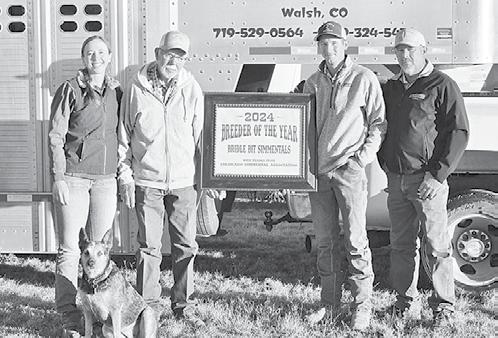
President Willie Altenburg of Fort Collins, Colo. presented honors including naming Bridle Bit Simmentals as the 2024 Breeder of the Year. The Erroll Cook family was praised for its exceptional, high-selling lots at its recent production sales, which helped elevate the recognition of the breed in Colorado.
In addition to his commitment to Simmentals, Chad Cook’s service on the American Simmental Board of Trustees has been essential.
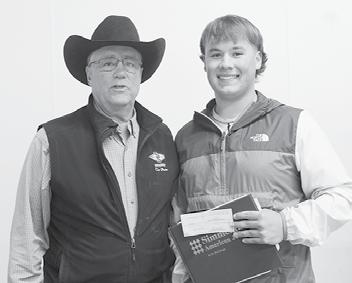
CSA also recognized two outstanding youth with scholarships. Jason Dias of Fort Morgan, Colo. and Bradie Midcap of Wray, Colo. both received CSA Youth Education Grants.
Both are pursuing animal science degrees, with Dias attending Colorado State University and Midcap attending Texas Tech University. They each received $500 scholarships.
Outgoing Directors Jay Hill of Sterling, Colo. and Mitchell Jergensen of Ramah,
USDA releases updated guidelines on meat and poultry labeling
The U.S. Department of Agriculture (USDA) released updated guidelines on Aug. 28 to help the industry strengthen animal-raising and environment-related label claims on meat and poultry products.
The action builds on the significant work USDA has already undertaken to protect consumers from false and misleading labels.
“USDA continues to deliver on its commitment to fairness and choice for both farmers and consumers, which means supporting transparency and high-quality standards,” states Agriculture Secretary Tom Vilsack. “These updates will help to level the playing field for businesses who are truthfully using these claims and ensure people can trust the labels when they purchase meat and poultry products.”
According to the USDA, animal-raising claims such as “raised without antibiotics,” “grass-fed” and “freerange,” as well as environment-related claims such as “raised using regenerative agriculture practices” are voluntary marketing claims highlighting certain aspects of how animals are sourced.
Colo. were thanked with engraved cowbells for their longtime service. They were term-limited after nine consecutive years on the CSA Board.
Paul Hill of Nunn, Colo. was reelected to a second term on the board, with Jane Delling-Baty of Loveland, Colo. and Duane Yearous of Fort Morgan, Colo. elected to their initial three-year term as directors.
Youth scholarships – Outgoing Colorado Simmental Association President Willie Altenburg, pictured left, presented educational scholarships to Jason Dias, pictured right and Bradie Midcap, not pictured. Courtesy photo
Altenburg and Midcap were term-limited in their current offices and thanked for serving for three years as president and vice president, respectively. They remain on the seven-member board.
In a separate board meeting, Hill was elected as president and Cody Pitt of Hotchkiss, Colo. as vice president. Susan Russell of Sugar City, Colo. was reappointed as secretary and treasurer.
as “raised without antibiotics” or “no antibiotics ever” and implement routine sampling and testing programs to detect antibiotic use in animals before slaughter or obtain thirdparty certification, which includes testing.
The documentation submitted by companies to support these claims is reviewed by USDA’s Food Safety and Inspection Service (FSIS), and the claims can only be included on the labels of meat and poultry products sold to consumers after the agency approves them.
Guidelines
FSIS last updated its guidelines on these claims in 2019. In the revised guideline, FSIS strongly encourages third-party certification to substantiate animalraising or environmentrelated claims.
“Third-party certification of animal-raising or environment-related claims helps ensure such claims are truthful and not misleading by having an independent organization verifying their standards are being met on the farm for raising animals and environmental stewardship,” states USDA. “The revised guidelines also emphasize more robust documentation for environment-related and animal-raising claims.”
The updated guidelines recommend establishments use “negative” antibiotic claims, such
The revisions were informed by sampling data, petitions, public comments on those petitions and feedback from various stakeholders.
Addressing concerns about adverse antibiotic claims, FSIS announced last year the agency would be conducting a study in partnership with USDA’s Agricultural Research Service (ARS) to assess the veracity of these claims.
Research
USDA reports FSIS collected liver and kidney samples from 196 eligible cattle at 84 slaughter establishments in 34 states, and ARS analyzed the samples using a method targeting more than 180 veterinary drugs, including various major classes of antibiotics.
The study found antibiotic residues in approximately 20 percent of samples tested from the “raised without antibiotics” market.
FSIS is now using the publishing as guidance to address these concerning findings and take enforcement action against any establishments found to be making false or misleading negative antibiotic claims.
Additionally, FSIS has informed the establishments of positive results from the ARS and
FSIS study and advised them to conduct a root cause analysis and implement corrective actions.
FSIS also advised these establishments to determine how antibiotics were introduced into the animal and to take appropriate measures to ensure future products are not misbranded.
The Federal Register notice announcing the availability of the updated guideline provides further information on the study.
“FSIS and ARS will publish a peer-reviewed paper with complete results from the study in the near future,” states USDA. “The study findings underscore the need for more rigorous substantiation of such claims.”
The sampling results may lead to additional testing by the agency, and FSIS has the authority to collect samples whenever it believes a product is mislabeled with any claim covered by the guidance.
FSIS may consider additional actions, including random sampling and rulemaking, to strengthen the substantiation of animal-raising and environment-related claims.
USDA is committed to ongoing stakeholder engagement, and the updated guideline will be open for public comment for 60 days after it is published in the Federal Register Melissa Anderson is the editor of the Wyoming Livestock Roundup. Send comments on this article to roundup@wylr.net.
For more information on the U.S. Department of Agriculture’s updated guidelines, visit fsis.usda. gov/policy/federal-register-rulemaking/federalregister-notices/availability-fsis-guideline.
Adobe Stock photo
Breeder of the Year – Bridle Bit Simmentals was named the 2024 Colorado Simmental Association’s Breeder of the Year. Pictured form left to right are Rachel Hughes, Austin Cook, Chad Cook and Erroll Cook. Courtesy photo
AG of Heart
BY AMANDA RADKE
I would like to tell you a story of my family’s history.
My grandfather Alvin Nolz only had an eighthgrade education. Yet, he grew up understanding more than most the value of faith, family, farming and freedom.
He served our country during the Korean War. He came home and met a sweet redheaded girl at a local dance.
They married in the
Wyoming Rare USA, Inc. (WRI), a whollyowned subsidiary of American Rare Earths Limited, is exploring approximately 8,000 acres in the Laramie Mountain Range for rare earth elements (REEs).
Recently, WRI announced the discovery of an estimated 2.34 billion metric tons (mt) of REEs at the Halleck Creek Project, which includes the proposed Cowboy State Mine, southwest of Wheatland.
In June, the company’s grant proposal to advance the Cowboy State Mine at Halleck Creek was approved by the Wyoming Energy Authority for $7.1 million in non-dilutive funding conditioned on a one-to-one match of dollars from the company.
On Oct. 22, it was announced they received the first reimbursement of funds under the grant.
At present, China supplies about 95 percent of the global supply of REEs, 74 percent of which are imported by the U.S. WRI believes the resources at Halleck Creek could potentially produce enough REEs to supply 100 years of domestic demand at current consumption levels.
“Over the past several decades, China has cornered the market for processing and refining of key critical minerals, leaving the U.S., our allies and our partners vulnerable to supply chain shocks and undermining economic and national security,” reads a Sept. 20 U.S. White House factsheet.
With WRI developing environmentally-friendly and cost-effective extraction and processing methods, they could meet the rapidly increasing demand for REEs while offering economic and national security incentives.
What are REEs REEs are a group of 17 little-known elements, like neodymium, praseodymium and scandium, and are in many products people
Catholic Church and started a life and family together. Eventually, they settled at the place I call home, north of Mitchell, S.D. When Alvin purchased the land, his neighbors scoffed at him. They told him he would never make it – just a poor, dumb farm kid. He would never last. He would go broke before long.
But my grandpa was determined, gritty, stubborn and probably a little
hardheaded too.
He worked the land with old, rusty equipment. Again, the neighbors laughed. But he never gave up or gave in, despite the naysayers. He was resolved to succeed, no matter what.
Three years later, he had the bank note paid off on the land, and those acres are still owned and operated by my family to this day.
Although grandpa passed five years ago, I still consider him one of the greatest influences in my life, and recently, we had to say “goodbye” to his beloved wife, my grandmother Devona Nolz.
She was born in the 1930s, one of 13 children, and she spent her life working on the farm, both growing up and alongside Alvin
as they raised their three children.
She raised chickens, collected eggs, canned fruits and vegetables, baked fresh bread, rendered lard, made her own laundry soap, sewed and mended clothing for her children and kept a neat and tidy home, all while helping my grandpa run the farm and getting her children in the church pew every Sunday.
They lived through depressions, recessions, wars and turmoil. They lived before the age of technology and through the rapid expansion of a fastpaced society. They were traditional and modest, yet innovative and savvy in business. They made a great pair, and they knew the value of working hard
and being wise in decisionmaking.
Although the life Alvin and Devona lived then looks starkly different to where we are today as a society, the fundamentals of what make life good, true, purposeful and meaningful still hold true.
At the end of the day, it’s stewarding the land and the livestock, seeing the fruits of our labor, overcoming life’s challenges and the people we get to experience it all with – this is what truly matters.
And grandma had all of this and more – three children, nine grandkids, 17 great-grandkids. She was abundantly blessed in all of the ways that count. She was a devoted and faithful servant to Jesus, and
Wyoming has high potential for mining rare earth minerals
use on a daily basis.
“REEs are used in a vast array of products, from computer screens to cellphones and even automobiles,” stated WRI President Joe Evers. “Perhaps the most frequent use of neodymium is in making high-strength magnets, including those used in wind turbine generators.”
REEs are actually commonly found in the earth’s crust, just usually not at economical depths and concentrations.
“This discovery in Wyoming is unusual because the elements are consistently distributed and highly concentrated,” he noted.
In a company scoping study, the mine is estimated to annually produce 1,529 mt of neodymium-praseodymium oxide, 17 mt of terbium oxide, 91 mt of dysprosium oxide, 383 mt of Samarium-EuropiumGadolinium concentrate and 1,486 mt of lanthanum carbonate.
Evers added, “It’s one of the largest deposits of
REEs in the nation, and the project is poised to become a significant long-term asset for Wyoming and the U.S., ensuring the country’s access to these critical materials.”
REEs have become an increasing focus of the mining industry as demand grows as part of the increasing drive for new technology and electrification.
However, trying to obtain these elements can be tricky, and finding new sources is essential.
Evers stated, “The Cowboy State Mine is in phase one, as the organization is doing environmental studies and gathering information but has set a goal to begin mining in the back half of the decade.”
Local connection
Evers is no stranger to the Cowboy State, as he grew up in Sheridan in a generational energy family.
He attended the University of Wyoming (UW) where he played football and graduated with his bachelor’s degree in 2009, then went on to obtain a
joint Juris Doctor and a master’s degree in 2013.
Evers currently serves as the president of WRI, after serving as general counsel.
Previously, he served in various legal, regulatory, policy and external relations positions across the energy and mining industry over the last decade.
Prior to joining WRI, he held positions of increasing responsibility in
the land and policy departments at a publicly-traded oil and gas company and served as corporate counsel at an international mining company.
He also practiced law in Denver, serving clients engaged in natural resource development in the Rocky Mountain Region.
Evers maintains strong ties to his alma mater where he serves as the presidentelect of the Alumni Asso-
she passed this down to the next generation. Alvin and Devona’s life, marriage, work and family may not have been headline worthy, but it’s special to me all the same. They taught me about living a life with purpose, and I only hope I can live up to the example they set for us to follow.
May God bless a generation of family farmers and ranchers who have seen harder days gone by. I pray we have the same strength and fortitude to withstand the hardships of our day, with the same grace and grit they had.
Amanda Radke is a rancher, author, motivational speaker and podcast host. For more from Radke, visit amandaradke.com
ciation, chair of the Advisory Board at the UW Haub School of Environment and Natural Resources and is a member of the Advisory Board at the UW College of Law.
He also chairs the Wyoming Agriculture in the Classroom Board. Melissa Anderson is the editor of the Wyoming Livestock Roundup. Send comments on this article to roundup@wylr.net.
Bieber Fever
Fall Female & Bull Sale
ThurSday, NovemBer 14, 2024
The raNch Near leola, Sd • oNliNe wiTh dvaucTioN
regiSTered Bred heiFerS due JaNuary - march
regiSTered Bred cowS due FeBruary - march
regiSTered Bred cowS due may - JuNe
commercial Bred heiFerS due iN march
age-advaNTaged BullS ouT oF JumpSTarT J137, FlaShdrive g266, paycheck 0728, aSSeT 1276, aNd compoNeNT 1112J
IT'S THE PITTS I Quit
Dear Mr. and Mrs. America,
I’m not going to apologize because I broke the “woke” rules again by “misgendering” you in referring to you as Mr. or Mrs. The fact is, I just don’t care anymore about being politically correct or woke. If this angers or shocks you, so be it.
by Lee Pitts
This letter is to inform you I’m handing in my letter of resignation from American society, effective immediately. I’m not giving you six weeks notice because I simply can’t stand one more minute of all the lunacy going on in our country today. I’ve resigned myself
to think all hope is lost and our current course of self-destruction is, in their words, not sustainable. So go ahead and condemn me in a letter to the editor, say something bad about me on your Facebook page, give me a bad rating on Yelp or “cancel” me altogether. I DON’T CARE.
If I had a kid today, I’d think twice about sending him or her to a public school, where instead of teaching the kids their ABCs, teachers are educating them about LGBTQIAs. Nor will I unlearn the basics of the birds and the bees. I will always believe
there are only two sexes, and no matter how hard a man tries to be a woman, he will never give birth to a baby.
I’m tired of being called a racist simply because I made the comment to my buddies at the coffee shop that “blacks are taking over.”
What I was actually referring to was Black Angus cattle dominating today’s cattle industry, so might I suggest to the eavesdropper who scolded me she might be a lot happier if she’d quit looking for reasons to hate me because I’m a white male.
If this is a problem, get over it, because I’m not
apologizing or attempting to become a female.
I don’t judge people by the color of their skin, and you should quit judging me by my cowboy hat.
I turned off the radio a long time ago and couldn’t name a single song 50 Cent or Snoop Dogg raps or Taylor Swift sings. And while we’re on the subject, I refuse to be swayed to vote for some idiot just because a celebrity who doesn’t have the brains of a lobotomized sheep endorses them.
It’s been years since I’ve been in a theater, not because of COVID-19, but because Hollywood hasn’t produced anything I’d pay 10 cents to watch, let alone $10. This is the same reason I don’t download movies, belong to Netflix or pay for a single streaming service.
I quit watching network television years ago because in every sitcom, movie or the news, there was an attempt to brainwash me. If I wanted to be indoctrinated, I’d go back to grammar school.
I’ve grown sick and
tired of watching misfits turn our schools into shooting galleries, seeing illegal immigrants put up in fourstar hotels while our Vietnam Veterans sleep in tents in sanctuary cities and listening to climate change hacks who say offshore oil wells are evil while offshore windmill farms will be our salvation.
I can’t tell any more if people walking down the street talking to themselves are crazy or are talking on their telephone which is permanently attached to their ear like an extra appendage.
Life has become too crazy, so I’m dropping out and becoming a fulltime hermit. I’m hunkering down and having as little human interaction as possible because I can’t bear one more minute of watching this once great country being destroyed from within by weirdos, whack jobs, nut cases and fruitcakes. So, to those preaching cow farts will cause the end of our civilization, I say, “We can only hope so.” Long live the cow!