BLM publishes RMP amendment for managing sage grouse
On Nov. 8, the Bureau of Land Management (BLM) released its Greater Sage Grouse Rangewide Planning Proposed Resource Management Plan (RMP)
Bioharvesting
Connecting

On Nov. 8, the Bureau of Land Management (BLM) released its Greater Sage Grouse Rangewide Planning Proposed Resource Management Plan (RMP)
Bioharvesting
Connecting
The U.S. Department of Agriculture recently mailed out ballots for Farm Service Agency (FSA) county committee elections to all eligible agricultural producers and private landowners across the country. Elections are occurring in certain local administrative areas for these committee members who make important decisions about how federal farm programs are administered locally. Producers and landowners must return ballots to their local FSA county office or have their ballots postmarked by Dec. 2 for ballots to be counted. For more information, visit fsa. usda.gov
On Nov. 14, PresidentElect Donald Trump said he plans to select North Dakota Gov. Doug Burgum as his nominee for secretary of the interior. Burgum was first elected governor in 2016, won reelection in 2020 and opted not to seek third term in 2024. He also has a business background, working for Microsoft as senior vice president for several years.
Based on Nov. 1 conditions, sugarbeet production in Wyoming is forecast at 1.04 million tons, up 2% from the Oct. 1 forecast and up 22% from the 847,000 tons produced in 2023, according to the Nov. 1 Agricultural Yield Survey conducted by the U.S. Department of Agriculture’s National Agricultural Statistics Service Mountain Regional Field Office. Harvested area, forecast at 31,000 acres, is unchanged from last month but up 2,200 acres from last year. Yields are expected to average 33.4 tons per acre, up 0.8 ton from the Oct. 1 forecast and up from 32.6 tons a year ago. As of Nov. 3, producers had harvested 86% of the crop, compared with 88 percent last year.
Amendment and Final Environmental Impact Statement (FEIS).
According to BLM, the document was prepared with the help of the U.S.
Department of the Interior (DOI), input from cooperating agencies and public comment, in response to the continued loss of sage grouse habitat, despite
ongoing conservation practices and the BLM’s previous planning efforts.
Greater sage grouse populations, which were
The 31st Annual Wyoming Women in Agriculture (WWIA) Symposium was held in Laramie on Nov. 7-8, featuring two full days of educational programming, networking opportunities, local entertainment and facility tours to educate and empower women involved in Wyoming’s ag industry.
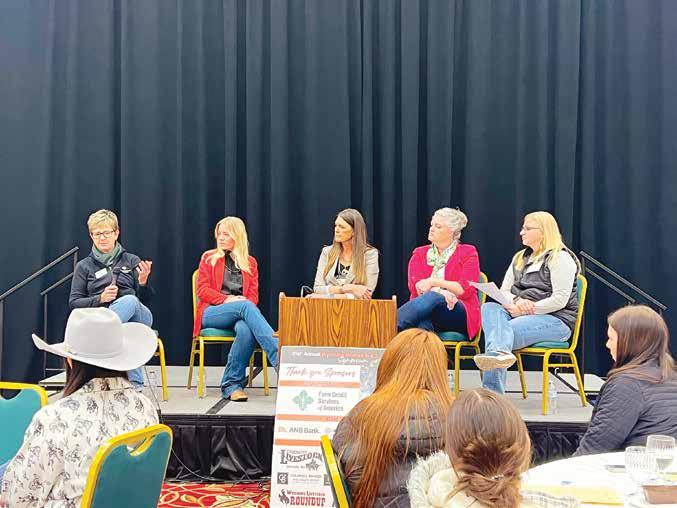
A highlight of the event was the Women in Ag Career Panel, featuring four esteemed individuals with a large presence in the Cowboy State.
Wyoming State FFA Advisor Stacy Broda is the
fifth generation on the ranch she grew up on outside of Cheyenne, where she currently resides with her husband and two sons. She graduated from the University of Wyoming (UW) with bachelor’s degrees in ag business and ag education and taught at Hannah Elk Mountain before moving back to the family ranch and eventually taking over in her current position.
Diana Berger hails from Saratoga where she runs a cow/calf operation with her husband Jack Berger, Please see WWIA on page A10
Career panel – During the 31st Annual Wyoming Women in Agriculture (WWIA) Symposium, four esteemed individuals hosted a panel discussion to support and empower fellow women in ag. Pictured from left to right are Farm Credit Services of America Financial Services Officer Leah Taylor, U.S. Sen. John Barrasso Legislative Assistant Tori Teegarden, Rancher Diana Berger, Wyoming State FFA Advisor Stacy Broda and WWIA Vice President Julie Volker. WYLR photo
During the Wyoming Weed and Pest Council’s (WWPC) 80th Annual Conference, held on Oct. 29-31 at the Ramkota Hotel and Conference Center in Casper, individuals gathered to hear about the latest research being conducted at the University of Wyoming (UW) on reclaiming the state’s grasslands.
Wildfires swept across the Cowboy State in 2024, resulting in more than 810,000 acres of burned range.
Dr. Brian Mealor, director of the UW Sheridan Research and Extension Center and Institute for Managing Annual Grasses Invading Natural Ecosystems, addressed the destruction of Wyoming’s native lands, including the big sagebrush plant species.
“We have been tracking wildfire here in Wyoming for over 80 years, and the thing that really struck me when I started looking at historic fire data was our ecosystem is a lot more fire prone than we want to think. I think there are several reasons for it,” he mentioned.
Big sagebrush
Big sagebrush is perhaps the most important shrubby plant in the Western grasslands, and according to the Sagebrush Conservation Design, it’s been reported 1.3 million acres per year of intact sagebrush rangelands are being degraded by large-scale threats like invasive annual grasses, conifer encroachment, wildfire and development.
Across the West’s sagebrush biome, a 175-millionacre area stretches from New Mexico to southern Canada, according to the U.S Department of Agriculture.

WyFB hosts 105th annual meeting in Casper
“Gather at the Table” was the theme of the Wyoming Farm Bureau Federation’s (WyFB) 105th Annual Meeting, held Nov. 7-9 at the Ramkota Hotel and Conference Center in Casper.
According to WyFB, gathering at the table is something farmers and ranchers enjoy. Whether it be with family for dinner, with friends at the annual meeting or in policy discussions, gathering at the table is a great way to have conversations to guide the organization.
During the two-day event, American Farm Bureau Federation (AFBF) Senior Director of Governmental Affairs Shelby Hagenauer spoke on issues affecting the West. In her role, Hagenauer advocates on behalf of American farmers and ranchers on policy issues including federal lands management, the Endangered Species Act, Western water and protection of private property rights.
Hagenauer has more than 20 years of experience in natural resource and agriculture issues in Washington, D.C. and served on the staff of former Speaker of the House Kevin McCarthy
The Wyoming Society for Range Management (SRM) held its annual meeting and banquet on Nov. 4-6 at the Ramkota Hotel and Conference Center in Casper.
Participants attending the three-day event had the opportunity to participate in training, networking and educational breakout sessions.
During the second day of the conference, SRM Director Candidate Dave Voth brought a ranching perspective to SRM’s program Good Grazing Makes Cent$ (GGMC).
Voth is a ranch manager from northeastern Nevada who also runs a herd of his own cattle and is the Nevada section
president for SRM.
Background
Voth was not born into the cattle industry, but he knew early on it would be the career path he would pick.
“I have always been interested in raising animals, and for no particular reason I was called into the cattle business,” he stated. “As I have gotten older, the more I realized how much ranching meant to me.”
A few years ago, Voth accepted the challenge to turn a large ranch around and recognized, to keep a ranch functioning, there must be a combination of key concepts.

On Nov. 6, after the great general election, the U.S. Meat Export Federation (USMEF) held its annual strategic planning conference in Tucson, Ariz. Of course, the first topic discussed was the analysis of the election, potential impacts on agriculture policy and international trade and how it will reflect on beef and other meat.
All meats, especially U.S. beef, are getting more competitive around the world as the middle class can now afford meat as a protein.
This is occurring despite volatility and strong resistance in some major Asian markets.
The competition for U.S. pork is growing strong around the world. U.S. pork is currently exporting one-half of the pork it produces.
The USMEF forecasts U.S. pork exports will set volume and value records in 2024, surpassing three million metric tons (mt) valued at $8.63 billion, while U.S. beef exports are projected to reach 1.28 million mt worth $10.5 billion, an increase of five percent over 2023.
Latin America is playing a big part in the demand for U.S. red meat. The USMEF realizes the boom in Latin America is great and will only get bigger, so the U.S. industry should keep a close watch on its competition.
A lot of competition comes from Brazil where they export more meat into Mexico, Central America and Japan. But as we know, the U.S. exports the highest-quality meat in the world. It is expensive, but we have the best beef, pork and lamb anywhere.
The USMEF is aggressively looking for new markets around the world, from Latin America to Africa and China.
As the U.S. will no doubt get tougher on trade with China, I wonder how it will affect agriculture products. Currently, China is a huge trading partner with the U.S. for grains, fertilizer and beef, and we hope it will keep growing.
Mexico is the country everyone is watching for trade. The new President Claudia Sheinbaum was sworn in the first of October. Since then, she has somewhat aligned Mexico with Venezuela and Cuba, and she wants the U.S. to stop all embargoes with Cuba. So far, she is supplying Cuba with oil, but this could expand to other products as well.
Mexico and the U.S. have always been good trading partners, but this could change with issues such as Mexico’s restrictions on imports of genetically-modified corn, new U.S. Department of Agriculture rules on voluntary country-of-origin labeling of beef and pork and threats from the U.S. to limit imports of certain produce items.
There is also the issue of Mexico manufacturing autos, tractors and farm machinery and selling them in the U.S. All of these issues will be discussed when the U.S.-MexicoCanada (USMCA) agreement comes up for review in 2026. Canada will also have issues to discuss at the USMCA review in 2026, such as U.S. country-of-origin labeling. They stopped it a number of years ago when the U.S. first implemented it.
Canada appealed it to the World Trade Organization (WTO), and the WTO threatened the U.S. with a couple of billion dollars of tariffs. So, the U.S. had to back down. World trade is a big issue for the U.S. I wish the negotiators have good results.

As November begins, so does the busiest shopping season of the year.
We’re familiar with Black Friday and Cyber Monday, but let’s not overlook Small Business Saturday – a day dedicated to supporting the businesses keeping our communities vibrant and unique.
On this day, shop small and make an impact close to home by supporting the shops, services and makers in our own backyards.
Rural and local businesses face unique pressures. They compete not only with the convenience of online shopping but also with the often lower prices offered by big-box stores.
By Andi McClintic
While saving a few dollars might be tempting, supporting local businesses offers value that goes beyond the bottom line. Local shops offer jobs, character and a sense of shared community, and each of us has a role to play in keeping our local economies thriving.
When we spend locally, we keep more money circulating within our community. Dollars spent at a local business are reinvested in other local businesses, services and wages, creating a positive cycle of economic growth. This keeps our towns and neighborhoods financially resilient and can contribute to com-
munity improvements and local projects.
When we think of local businesses, we might envision the shops lining Main Street, but small businesses come in all forms.
Many local entrepreneurs run online or homebased businesses, selling unique, handcrafted or custom items through websites or social media platforms. Following and engaging with these businesses on social media is a great way to stay connected and discover the variety of products they offer.
This Small Business Saturday, let’s show up for the businesses making our towns feel like home.
Support local businesses, not just for the unique products and services they offer, but for the positive impact they have on our neighborhoods, our economy and our sense of community.
Andi McClintic is the assistant director of lending services with the Center for Rural Affairs. Established in 1973, the Center for Rural Affairs is a private, nonprofit organization working to strengthen small businesses, family farms and ranches and rural communities through action-oriented programs addressing social, economic and environmental issues. For more information, visit cfra.org



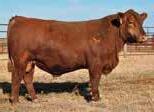
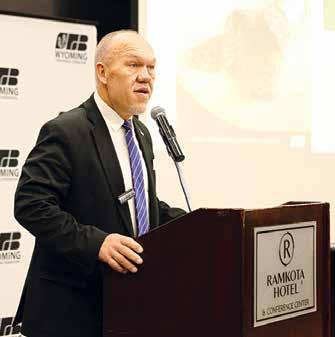
Laramie County Producer Todd Fornstrom was elected to his ninth term as president of the Wyoming Farm Bureau Federation (WyFB) during the organization’s 105th Annual Meeting held Nov. 7-9 in Casper.
“I look forward to the years ahead and to the next set of WyFB leadership. Thank you all for your faith in me, and I look forward to another good year of continuing to fight for Wyoming’s farmers and ranchers,” Fornstrom said.
Voting delegates also elected Goshen County Producer Cole Coxbill to his ninth term as WyFB vice president, while Matt Stroh of Weston County was elected to his first term as the director-at-large. Although Stroh is a fresh face in state board leadership for the federation, he is no stranger to WyFB.
In addition to these statewide elections, the state board includes five district directors and the Young Farmer and Rancher (YF&R) Committee state chair.
Goshen County Producer Cody Alps will take the reins of the YF&R Committee this year and is excited to get started. Alps has been a part of the WyFB YF&R since 2021.
The WyFB Board of Directors is rounded out by Northeast District Director Raenell Taylor, Southeast District Director Kevin Baars, Central District Director Tim Pexton, Northwest District Director Thad Dockery and Soutwest District Director Justin Ellis.
The University of Wyoming Ranch Management and Agricultural Leadership program recently announced the theme and event dates for the 2025 Ranching in the West Spring Seminar Series.
The four-part series, themed “For the Next Generation,” will kick off on Feb. 6, 2025 with the “We Can All Be Heroes in Our Own Lives” program at the Central Wyoming College Ag and Equine Center in Riverton from 5-7 p.m.
On Feb. 20, 2025, individuals can learn how energy and innovation are reshaping ranching during the “Continuing the Legacy: Energy, Innovation and the Future of Ranching” program held at the Roundhouse and Railyard in Evanston from 5-7 p.m.
The “Wyoming AgVentures: Exploring Agriculture, Agritourism and Ranch Life” program will take place on April 3, 2025 at Northwest College’s Yellowstone Building, and the series will wrap up at the Laramie Research and Extension Center in Laramie on April 7, 2025 from 9 a.m. to 3 p.m. during the “Ranching Stewardship at High Elevations: Opportunities and Challenges” program.
All seminars will also be available virtually.
For more information or to register, contact Dr. Randall Violett at rviolett@uwyo.edu or 307-7664239.
The U.S. Cattlemen’s Association (USCA) will host its 2024 Annual Meeting Dec. 5-7 in San Antonio, Texas at the InterContinental Hotel.
Each year, USCA brings together its members and leaders in the industry to discuss current policy and issues facing the industry. This year, USCA will host panels on animal identification, marketing and competition; livestock risk protection and new and emerging technologies within the industry.
The annual meeting will kick off with a “Meet the Officers and Staff Event” on the evening of Dec. 5. Dec. 6 will feature two panels, the Annual USCA Board of Directors and Members Meeting and a dinner and fundraising auction.
The meeting will conclude on Dec. 7 with a full day of panels from industry experts. USCA’s Annual Meeting also serves as the time in which the association reviews its official policy and receives nominations for regional directors.
For more information and to register, visit uscattlemen. org/annual-meeting-2024/
The Wyoming Leadership, Education and Development (L.E.A.D.) program is celebrating its 40th anniversary with a gala slated for Dec. 6-7 in Laramie.
The celebration will begin with an alumni reunion at 3:30 p.m. on Dec. 6, followed by an evening celebration which includes dinner and a keynote address by Dallin Cooper, whose wit and humor will enlighten the audience. Area tours are slated for Dec. 7 to round out the program. The event is open to alumni, friends and supporters of the Wyoming L.E.A.D. program.
Wyoming L.E.A.D. is the state’s oldest statewide leadership program and is designed to create an outstanding, highly-motivated group of agricultural leaders in Wyoming. Since its inception in 1984, 269 individuals have graduated from the program.
According to Cindy Garretson-Weibel, Wyoming L.E.A.D. director, “Many of Wyoming’s most influential agricultural leaders are graduates of the Wyoming L.E.A.D. program and have served in local, state and national organizations. The program is often a springboard for those who want to get more involved in shaping the future of agriculture in Wyoming.”
A detailed agenda and registration information for the gala can be found at go.rallyup.com/40th-anniversary. The early bird registration deadline is Nov. 22. After this date, the cost will increase.
For more information, visit wylead.com or contact Garretson-Weibel at wylead@gmail.com or 307-214-5080.
The Public Lands Council (PLC) has released a new version of their website to further promote public lands ranchers and the issues they face every day as they effectively manage millions of acres of grazing land in the West.
“Our newly updated website is the clearinghouse for everything related to federal lands ranching. From the popular series ‘Real Ranchers. Real Stories.’ to coverage of the latest news on what is happening in the federal government as it pertains to ranching – PLC’s new website has all of this and more in a user-friendly design,” said PLC Executive Director Kaitlynn Glover.
“Over the past few years, there has been monumental growth in the body of research which recognizes and quantifies the environmental benefits of livestock grazing, soundly debunking some of the most egregious myths about ranchers’ conservation work,” she continued. “The new PLC website is designed to be a modern, streamlined hub for information so ranchers, supporters and politicians can find what they need to know about the conservationists of the American West – public lands ranchers.”

According to Reuters, on Nov. 12 Canada moved to end labor disputes at the country’s biggest ports, including Vancouver and Montreal, citing economic damage and the potential for driving away trading partners.
It was the second time in a few months the Liberal government has stepped in to halt a dispute. In August, it ordered an end to work stoppages at the country’s two largest railway companies.
Labour Minister Steven MacKinnon said he had directed the country’s industrial relations board to order an end to the strike and impose binding arbitration.
“As economic losses threaten the country and begin to mount, it is up to the government to ensure we can get on with the economic life of this country and avoid layoffs and other carnage,” he said during a press conference. “Canadians have a limited tolerance right now for economic selfharm.”
The dispute, which MacKinnon said was affecting more than $932 million in U.S. dollars in value of goods every day, had already hit shipments of canola oil, forest products and other goods. Business groups welcomed the announcement.
International Longshore and Warehouse Union (ILWU) Local 514, which represents supervisory longshore workers at the heart of the British Columbia dispute, said it will file a legal challenge to the minister’s orders.
“We will fight this order in the courts,” said Frank Morena, ILWU Local 514 president, in a statement. “And we will not forget how these employers and this federal Liberal government have attacked not only the ILWU but all of labor.”
The Natrona County Predator Management District (NCPMD) is holding its 2024 Annual Meeting on Dec. 4, beginning at 3 p.m.
This meeting will be held in the Casper Room of the ARLC Building in Casper.
All producers, Wyoming Game and Fish Department (WGFD) representatives, Wildlife Services (WS) representatives and the public are invited to participate. Tentative agenda items will include reports from NCPMD trappers, WGFD, Animal Damage Management Board and WS representatives.
At the conclusion of the meeting, NCPMD will conduct an election of officer’s and set predator fees.
For more information, contact the NCPMD Office at ncpmd1@charter.net.
The National Association of State Departments of Agriculture (NASDA) is excited to announce the hiring of Patrick Wade as director of public policy.

In this role, Wade will advance the organization’s public policy advocacy with his nearly 10 years of experience in agricultural policy and government affairs. He will be the staff lead for NASDA’s Plant Agriculture and Pesticide Regulations and Rural Development and Financial Security committees.
“I am thrilled for the opportunity to join the NASDA team and help advance this organization’s essential mission. Now, more than ever, it is critical to champion nonpartisan, collaborative solutions to some of the most pressing issues in agricultural policymaking,” Wade said.
“I have seen firsthand the instrumental role state departments of agriculture play in supporting producers, consumers and the broader agriculture industry,” he continued. “I cannot wait to do my part to help NASDA’s members continue to protect natural resources, bolster sound regulatory frameworks and strengthen rural economies.”
Wade comes to NASDA most recently from the Texas Grain Sorghum Producers, and he holds bachelor’s degrees in government and economics from the University of Texas, Austin. He has also been honored as a Nuffield Farming Scholar and conducted research on the impact of international trade policy on agricultural sustainability outcomes.
Wade’s first day with NASDA was Nov. 12.
Building on Wyoming’s legacy of land conservation, the State Board of Land Commissioners voted three to two to approve the sale of the 640-acre Kelly Parcel to Grand Teton National Park.
The $100 million sale will benefit Wyoming public schools and ensure this particular piece of land is public for Wyomingites and visitors to enjoy.
The Kelly Parcel provides year-round habitat for elk, moose and bison; seasonal habitat for migrating mule deer and is along the Path of the Pronghorn. The parcel is also known for its high-quality recreation opportunities.
Grand Teton National Park is a ready and willing buyer of the Kelly Parcel. Selling the land to the park will keep the land publicly accessible, provide a financial windfall for Wyoming schools, preserve vital wildlife habitat and ensure Americans can enjoy unparalleled views and recreation opportunities for generations to come.
Gov. Mark Gordon led the way to the successful vote, stating, “In public testimony, I heard overwhelming support for this sale and the benefits it will bring to Wyoming students in the form of long-term revenue. This is an iconic parcel, and we have been given a unique opportunity for it to join Grand Teton National Park in perpetuity while protecting current hunting and grazing uses. I am also excited these proceeds can be used to substantially add to the state’s portfolio of lands and minerals.”
On Nov. 12, U.S. Wheat Associates (USW) and the National Association of Wheat Growers praised the Office of the U.S. Trade Representative (USTR) for submitting a counter-notification to the World Trade Organization (WTO) on India’s domestic support, input subsidies and market support prices for wheat and rice.
This is the latest in a series of U.S. counter-notifications showing India is not transparent about the true level of wheat and rice support it provides. Joining the U.S. in this notification were the governments of Argentina, Australia, Canada and Ukraine.
“We appreciate USTR and other country delegations are working to highlight India’s trade-distorting wheat support,” said USW President Vince Peterson. “India’s government continues to be out of compliance on its commitments and its refusal to compromise on its level of support and public stockholding is blocking any progress on agricultural negotiations at the WTO. It is important to keep bringing this issue to light with hopes it will eventually pressure India to become a responsible trading partner.”
India’s wheat support schemes incentivize overproduction and discourage farmers from growing other crops. This has led to massive public stocks of wheat which the Indian government has, at times, dumped onto international markets. The disruption it causes harms farmers in exporting countries and their customers who benefit from stable markets.
Under its WTO commitments, India may provide subsidies equal to no more than 10 percent of the total value of crop production. In marketing years 2021-22 and 2022-23 covered in the counter-notification, the U.S. and other countries demonstrate through India’s own data its support level far exceeds this limit.
CattleCon 2025 invites future agricultural leaders to San Antonio, Texas to experience the largest cattle industry event of the year on Feb. 4-6, 2025. Courtesy of Culver’s and Nationwide Insurance, FFA and 4-H members can receive free trade show admission on Feb. 6, 2025, which includes access to a variety of educational events.
The first 250 FFA members and 250 4-H members to register will receive complimentary National Cattlemenʼs Beef Association (NCBA) trade show admission on Feb. 6, 2025. FFA members and alumni are also invited to the Culver’s Blue Jacket Social, a special gathering designed for networking, sharing experiences and building lasting relationships. NCBA trade show attendees can explore more than nine acres of displays and exhibitors offering the latest advancements, from equipment and technology to pharmaceuticals and feed supplements. In addition to finding the right product or service to solve any problem, there are a variety of educational opportunities within the show.


To receive free Feb. 6, 2025 NCBA trade show registration, FFA members must use the code FFACULVERS and 4-H members can use the code 4HNW. In addition, children 12 and under receive free trade show admission with a paying adult. A variety of other registration options are also available.
For more information and to register and reserve housing, visit convention.ncba.org

Donna June Dixon
April 28, 1938 – Nov. 7, 2024

Donna June (Riehle)
Dixon left to meet her Savior face to face on Nov. 7 at 86 years old at the Niobrara County Extended Care Facility in Lusk.
Donna was born in Douglas on April 28, 1938 to August Henry and Ella June (Good) Riehle. The bassinet she was laid in when she arrived is now on display at the Pioneer Museum.
Donna grew up at the Riehle’s homestead in the Miller Hills, and in 1952 the family moved to a ranch they purchased at Lightning Creek.
Donna and her older brother Wayne were homeschooled, then attended country school until they got to high school. Their mom would take them to Douglas, spend the school week in a house they rented and then drive back out to the ranch on the weekends.
In 1956, Donna graduated as valedictorian.
After taking a year off to help at the family ranch, Donna accepted a job as the secretary at the ASCS Office in Douglas. She patiently worked and saved money until she was 21 years old.
That year, she proudly became the sole owner of a 1959 Chevy Bel Air, which she paid for in cash. She enjoyed traveling in her new car, so much so she took a solo trip through the
Southwestern states.
While living in Douglas at the Jenne Building Apartments, Donna met Clayton Raymond Dixon. On March 18, 1962, Clayton and Donna were wed. She was thrilled to move with Clayton to his family’s ranch north of Lance Creek.
There, they welcomed into their family Thomas Raymond in 1963 and Kenneth Richard in 1965.
Donna loved ranch life. She especially enjoyed riding horses, and she even had her own small herd of cows that carried the brand belonging to her grandfather Jacob Riehle.
She played piano and was the superintendent of Sunday School at Cow Creek, and then later taught children’s church at Lance Creek Community Church.
She lived a full and happy life, watching her two sons continue the family ranch and enjoying her grandchildren as they grew up. Each year, she gave Brenna and Garett a heifer calf to carry on her herd’s superior genetics.
Donna was preceded in death by her husband Clayton on Nov. 25, 2020; father August Riehle on Feb. 19, 1995; mother June Riehle on Oct. 17, 2006 and brother Wayne Henry Riehle on June 13, 2021.
She is survived by her sons Tom Dixon and Ken (LeAnn) Dixon, both of Lance Creek and two grandchildren, Garett (Kassie) Dixon of Belt, Mont. and Brenna (Dalton) Brimer of Lance Creek.
Funeral services for Donna were held on Nov. 14 at the Prairie Hills Community Church in Lusk with Pastor David Dick officiating.
In lieu of flowers, memorials to In Faith, 145 John Robert Thomas Drive, Exton, PA 19341 would be appreciated by the family.
The U.S. Department of Agriculture’s (USDA) Animal and Plant Health Inspection Service (APHIS) announced eight awards totaling nearly $5 million to maintain, expand and utilize previously developed antimicrobial resistance (AMR) dashboard tools. These awards will help advance scientific knowledge around AMR through partnerships with Cornell University, Iowa State University, the National Association of State Departments of Agriculture, Texas Tech University, University of Minnesota and University of Washington.
AMR is a global health threat which makes antibiotics and other antimicrobials less effective. Addressing AMR is important to APHIS, along with the agricultural and public health sectors, because antimicrobials are some of the most critical tools for treating serious animal infections and saving the lives of people and animals.
All AMR dashboards developed with this funding are required to include data protections similar to the Confidential Information Protection and Statistical Efficiency Act. Once created, APHIS will use the dashboards to monitor trends in AMR patterns, detect emerging resistance profiles and better understand relationships between antimicrobial use, animal health management practices and AMR.
WEANED CALVES

North Forgey Ranch 183 Mx Strs & Hfrs, 400-450#, Weaned since Oct. 7, Running out, Hay Fed, Branding & Precond Shots
R & K Farms 140 Blk Strs & Hfrs, 400-450#, Weaned 60 days, Bunk Broke, Birth, Branding & Weaning Shots
Eastgate Ranch 105 Red/Char-x Strs & Hfrs, 485-510#, Weaned 50 days, Bunk Broke,Branding & Precond Shots
McCade Bingham 95 Blk/Bwf Hfrs & Strs, 400-550#, Weaned 60 days, Running out, Hay Fed, 3 Rounds of Shots
Isenberger-Litton Livestock 58 Blk Hfrs (2 Strs), 440-530#, Weaned 30 days, Branding & Precond Shots
Bob Mulkey 46 Herf/Angus Strs & Hfrs, 450#, Precond Shots: 7-way, Weaned 3 weeks, Hay & Pellets
Dennis Brooks 40 Mx Strs & Hfrs, 400#, Branding Shots, Weaned 50 days, Hay Fed (2nd cutting alfalfa), Producer All Natural
Mike & Valorie Heatherly 29 Blk Angus Strs & Hfrs, 400-575#, Weaned 45 days, Branding, Precond & Weaning Shots
Don Guidice 26 Blk few Bwf Strs & Hfrs, 400-600#, Weaned for 30+ days, Branding Shots
Dan Wedemeyer 25 Red/Blk Strs & Hfrs, 565-600#, Weaned 28 days, Branding & Precond Shots, Producer All Natural
Bos Taurus Ranch 19 Blk/Bwf Strs, 400-600#, Weaned 80+ days, Bunk Broke, Branding & Precond Shots, Producer All Natural
HTK Ranch/Ron Beck 19 Blk Strs & Hfrs, 350-400#, Weaned 45 days, Bunk Broke, Birth, Branding, Precond & Weaning Shots
Matt Harris 12 Blk Strs & Hfrs, 500-600#, Weaned 30 days, Bunk Broke, Grass Hay, Branding & Precond Shots, Producer All Natural PRE-COND. CALVES
CHK Cattle 120 Mostly Blk Strs, 500#, Precond Shots
Ole Ranch 80 Blk/Bwf Strs & Hfrs, 500-550#, Branding & Precond Shots
Tunnel Ranch/Gary Kennedy 76 Mostly Blk Strs & Hfrs, 350-500#, Branding & Precond Shots
Kern Ranch 52 Blk/Bwf Strs & Hfrs, 475-500#, Branding & Precond Shots, Running at 8000’ CALVES
Spearhead Ranch/David Moore 157 Blk/Rd Angus Strs & Hfrs, 400-420#, Branding Shots, May/June Calvest
Joanne Jordan 94 Blk Strs & Hfrs, 450-600#, Branding Shots, Sired by Ochsner Roth Bulls, Started on Feed right along side of mothers
Kent Hunter 90 Blk/Bwf/Red/Rwf Strs & Hfrs, 325-425#, Been eating right along side of their mothers
Look Family Ranch LLC/Tara Sanders 65 Bl Strs & Hfrs, 550#, Birth & Branding Shots, Producer All Natural
Colt Gray 12 Blk Strs, 525#, Branding Shots
88 Ranch Land 14 Black
88 Ranch Land 13 Black ST/Mar-Apr Bred Cow 1252 $1,950.00 Josh Foy 6 Black SS-ST/Mar-Apr Bred Cow 1268 $1,875.00
Moore Ranch 21 Black ST/Apr-May Bred Cow 1137 $1,825.00
Riley Graham 23 Black SS-ST/Apr-May Bred Cow 1059 $1,675.00
T Bench Land 5 Blk/Red SM/Apr-May Bred Cow 1374 $2,150.00 T Bench Land 43 Blk/Red ST/Apr-May Bred Cow 1336 $1,900.00 Springfield Ranch 5 Red 3yr/Mar-Apr Bred Cow 1141 $3,200.00 Clyde Bayne 5 Red SM/Mar-Apr Bred Cow 1316 $2,400.00
Clyde Bayne 9 Red SS/Mar-Apr Bred Cow 1357 $2,075.00
Bayne Ranches Inc 11 Red ST/Mar-Apr Bred Cow 1359 $1,960.00
Springfield Ranch 21 Red ST/Mar-Apr Bred Cow 1244 $1,760.00
Ochsner Roth Cattle Co 10 Black Feb 8 Bred Heifer 1017 $3,300.00
Ochsner Roth Cattle Co 100 Black Feb 8 Bred Heifer 1133 $3,250.00
Ochsner Roth Cattle Co 126 Black Feb 8 Bred Heifer 1118 $3,250.00
Dylan Hager 5 Black March-Apr Bred Heifer 1084 $2,550.00
Springfield Ranch 10 Red Mar-April Bred Heifer 916 $2,760.00
Cody Thompson Estate 4 Black 3yr-SM Pairs 1537 $2,675.00
SALE RESULTS -CALF SPECIAL WEDNESDAY, NOVEMBER 13 - 5474
Tanner Groves 41 Blk/Red


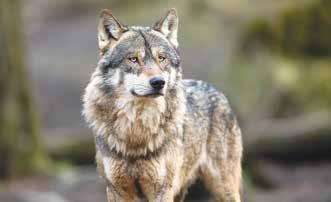
During the 56th Annual Public Lands Council Meeting, held Sept. 17-19 in Grand Junction, Colo., University of California-Davis (UC Davis) Professors Dr. Kenneth Tate and Dr. Tina Saitone discussed a research project and pilot compensation program regarding the indirect economic impacts of cattle and wolf conflicts in California.
“I know many of you have been living with gray wolves for much longer than we have in California so this presentation is going to be couched in the experience we have in a state where populations are developing and expanding rapidly,” Saitone began.
“Our state’s compensation program is the first of its kind and was started as a pilot, so I would like to share some of the experience we have had with it and the lessons that can be learned in other states mov-

ing forward,” she added.
California gray wolves
To start, Saitone explained wolves were reintroduced to California from Oregon in 2011, and in addition to being listed on the federal Endangered Species Act, wolves are also protected at the state level through the California Endangered Species Act.
Since their return, Saitone noted the gray wolf population has continued to grow exponentially in terms of animal number and geographic extent.
In fact, when UC Davis started their research roughly two years ago, only two packs were recognized in the state, Saitone noted.
Today, according to the California Department of Fish and Wildlife (CDFW), there are seven known packs in the state, including the Beyem Seyo, Harvey, Lassen, Whaleback, Yowlumni, Antelope and Unnamed
packs, made up of roughly 45 total wolves.
“If we look at Oregon as a harbinger of population growth, we see in 2013 they had about 62 wolves, and in 2023 the population had more than doubled. This is a sign of what we might expect in our state,” Saitone said.
She also noted California has already started to see their wolf packs overlap, cohabitate and expand their territory all the way from the northern tip of the state to south of the Cascades.
Wolf and cattle conflict
As with all wolf reintroductions, Saitone mentioned there was some discourse among individuals when wolves first entered California regarding conflict with livestock.
This prompted the UC Davis research project, which used a traditional study design to follow six herds in northern California affected by wolves. Origi-
Austin Snook • 307-290-2161
Taylor Snook • 307-290-2273
Craig Deveraux • 307-746-5690
Dan Catlin • 406-671-7715
Clint Snook • 307-290-4000
Cheyenne Seymour • 605-641-0638
nally, the study compared three control herds with no wolf presence to three herds with known wolf presence, but as the population grew and expanded, all herds were affected and the study had to adapt.
Tate explained, prior to summer turnout, randomlychosen cows from each herd were fitted with a GPS collar, which recorded date, time and spatial position at five-minute intervals to track cattle performance and grazing behavior.
At this time, researchers also collected tail hair samples, which were compared to samples collected again at the end of the grazing season to compare hair cortisol concentrations – a non-invasive indicator of long-term stress in animals.
The study also used hundreds of game cameras to track animal movement and fecal sample collection to confirm the presence of
Kyle Kallhoff • 605-881-1526
Casey Sellers • 307-217-2614
Jim Forbes • 307-351-5932
Tye Curuchet • 307-351-8666
Daniel Escoz • 307-217-1440
Kade Kinghorn • 307-620-0525
"From the ring, to the video, and in the country, we market your livestock the competitive way."
Thank you and we appreciate your business!
wolves on the landscape and understand what they were eating.
“During the 2022 grazing season, we collected 59 confirmed wolf scat samples and found 86 percent of those samples included cattle DNA,” Tate said. “During the second year, we had 42 confirmed wolf scat samples and 57 percent of those included cattle DNA.”
Ultimately, all of the data collected was used to quantify the indirect impacts of wolf presence in cattle herds.
“One thing we have consistently observed in our study is that there is conflict,” Saitone said. “Pictures from our game cameras show cattle running from a single wolf in the Harvey Pack, a yearling being chased by two wolves from the Lassen Pack and a set of cows being dogged in the middle of the night by a whole pack of wolves.”
“Whether it is direct lethal depredation or indirect impacts like being dogged during the night, all of these conflicts have economic consequences, which is the focus of our study,” she continued.
Saitone noted some of the indirect economic loss observed in the study include reduced weaning weights, reduced body condition score of cows, lower conception rates, increased instance of abortion and increased time and labor to check on cattle more frequently, move cattle out of areas with high wolf activity, sort cattle that mix and fix fence cattle have been ran through.
for nonlethal deterrent tools.
Although a payout system for indirect losses is certainly progressive, Saitone and Tate shared the WCP comes with its fair share of issues and hope other states interested in implementing something similar can learn from their mistakes.
First, Saitone noted, despite months spent in stakeholder meetings to help inform CDFW in the development of the program, the department seemingly excluded the majority of the stakeholder committee’s input.
“Another one of the things we learned from this program is the advisory committee’s review of applications was lacking because the department has little understanding of ranching and they don’t understand what ranchers may or may not do to try and deter wolves,” she said. “There were things they paid for many of us would agree have no effect on protecting cattle from wolves, and they didn’t pay for others that may have had an impact.”
One of the most frustrating issues Saitone and Tate ran into was the lack of data from collared wolves.
BLK/BWFSTRCF PC 343 417.00 WT 1,428.22 NICK & GAIL MONK, LODGE GRASS MT
BLK-STRCF PC 517 310.00 WT 1,601.66
AND GINGER LADUKE, GILLETTE WY
BLK/BWFHFRCF BT 251 382.50 WT 961.71
ZEZAS, BUFFALO WY
BLK-STRCF PC 425
“We have also had a lot of ranchers who will leave forage behind – whether they leave an allotment early or forego grazing altogether – because wolves are in the area and they would rather feed hay at home than feed the wolves their calves,” Saitone said. “There is also the cost of stress and emotional turmoil producers face when dealing with predators on a daily basis.”
Compensation program
The impacts felt by California producers led to the creation of a compensation pilot program – the Wolf Conflict Program (WCP) – with an initial $3 million allocated in the 2021-22 California State Budget.
Saitone explained the pilot program, which is the first of its kind, included a three-pronged approach, compensating producers for direct losses due to wolf kills, payout for presence of wolves and reimbursement
“The program was designed to use GPS collar data from wolves, but at the time, we only had three active collared wolves to represent the movement of nearly 40 wolves,” she said. “As one might anticipate, it is really hard to establish where wolves are if we don’t have GPS collars. So, ranchers weren’t able to access pay for presence funds even though they had wolves impacting their cattle on a daily basis.” In the future, Saitone said she hopes to see improved communication between stakeholders, better funding application tracking, increased staffing levels and more available CDFW data.
“In the 2024-25 budget, we were successful in getting another $600,000 and are currently working to have the money directed toward lethal compensation for confirmed kills,” she noted. “With our budget status being so bleak in our state right now, we don’t think these funds are sufficient to adequately compensate all ranchers, but we hope it will provide some relief of economic burden for those experiencing direct losses.”
Hannah Bugas is the managing editor of the Wyoming Livestock Roundup. Send comments on this article to roundup@wylr.net.
BY AMANDA RADKE

The political winds are changing as a red wave has swept across America. Currently trending is the theme of “Make America Healthy Again,” the notion being that prioritizing policy within the upcoming Trump administration would help address the health concerns which continue to plague American families.
The rate of obesity, heart disease, cancer, autoimmune diseases, depression, anxiety, dia-
“Those concepts include animal production and animal performance, along with an understanding of ecology and financing,” he mentioned. “If a rancher can’t stay in business, all of the ecological work done means nothing, as the property will be sold and split into smaller parcels.”
Being able to understand these key concepts and implement them is part of being successful, but having the right digestible information is why SRM created GGMC.
“Through the program I can speak to other producers who have tried unique and progressive treatments and see how I can use some of those things and what may or may not make sense on my place,” Voth said.
GGMC
GGMC aims to provide practical, applicable and economically-feasible range management solutions which can ultimately improve productivity of the land and the bottom line of the ranch through conversations between scientists and ranchers.
“GGMC offers me a chance to ask questions in an interactive forum which can connect me to people in the academic world and bring it into a situation where I can use it on my own landscape,” Voth said.
The multifaceted program provides numerous deliverables for ranchers to quickly and easily access information on topics ranging from how the history of
betes and chronic illness continue to skyrocket in this country, and many Americans are looking at food as the culprit – or the cure.
While there is some trepidation and concerns about what “making America healthy again” might look like – largely, would policies coming out make it harder or more limiting for farmers in the future – I anticipate there will be a greater focus on the Dietary Guidelines for
Americans and placing an emphasis on foods which have been proven to be healthful since the beginning of time.
The guidelines impact so many things – daycares, schools, military, hospitals, nursing homes and those living in poverty.
And beyond the scope of nutrition, the guidelines have been compromised by lobbyists and special interests with the committee emphasizing topics like animal welfare and environmentalism when creating their recommendations.
While I’m uncertain what’s ahead as far as food and agricultural policy, I am delighted to see meat, dairy and eggs are trending in a big way right now.
Folks are leaning into the wisdom of our ancestors that these wholesome
foods are nourishing, delicious and should be incorporated into our diets.
As an example, days after the election, the “Make America Healthy Again” mantra transitioned into calls for McDonald’s to go back to cooking its French fries in beef tallow.
Beef tallow has been used for centuries as a primary cooking ingredient, and in my line of work with Bid On Beef, I am thrilled to see some of our ranching clients creating their own line of beef tallow for both cooking and skin care.
Beef tallow has many benefits, including the 10 listed below.
1. Beef tallow contains many nutrients, including vitamins A, D, E, K and B12, as well as choline. These vitamins are fat-soluble, which
means fats in the diet are needed to absorb them.
2. Beef tallow can be used as a natural moisturizer and has anti-inflammatory properties.
3. Beef tallow contains conjugated linoleic acid, which may help with fat burning and metabolism.
4. Beef tallow has antimicrobial properties, which can help boost the immune system.
5. Beef tallow contributes to bone growth and muscle health.
6. Beef tallow may help improve cognition and brain health.
7. Beef tallow may help improve HDL cholesterol.
8. Beef tallow contains a mix of nourishing fats, including saturated fat, which may helps improve blood sugar balance.
9. Beef tallow has a
higher smoke point than other cooking fats and oils, such as butter and olive oil.
10. It makes food flavorful, and it makes your skin glow too.
I’ll be leaning into this trend as much as I can. It’s time to not only “Make America Healthy Again” but to also “Make Ranching Viable Again,” and this growing focus on healthy beef and tallow has me wildly excited for the future for America’s beef cattle ranchers.
I’m bullish on cattle, and I’m excited to see what savvy entrepreneurs in the cattle business will accomplish in the years ahead.
Amanda Radke is a rancher, author, motivational speaker and podcast host. For more from Radke, visit amandaradke.com
land impacts today’s management decisions to best determining grazing intensity, duration and timing.
GGMC’s innovative program was designed to provide a forum for collaboration, community and coordination between rangeland scientists and those who apply the science such as ranchers, farmers and land managers.
“We want to deliver digestible, valuable and trustworthy content through a creative process,” he mentioned.
Each month, a new subject will be dissected through an e-newsletter; YouTube videos with experts; a live, interactive Facebook group and SRM journals and articles.
“Members will drive the content to best meet the needs of the range stewards utilizing the information. There will be multiple avenues to submit questions and connect with range scientists for solutions or other ranchers with similar experiences,” Voth added.
Particularly in the Facebook group, participants have the ability to get answers to their toughest range management questions in real time.
He continued, “Our newsletter has a ‘submit a question’ option which will then be directed to experts or even covered in depth in future editions.”
Melissa Anderson is the editor of the Wyoming Livestock Roundup. Send comments on this article to roundup@wylr.net.
For more information on Good Grazing Makes Cent$, visit goodgrazing.org.


However, a large portion of northern Wyoming’s rangeland was destroyed by wildfires this year, including Wyoming big sagebrush (Artemisia tridentata ssp. wyomingensis).
Big sagebrush usually stands two to four feet tall, but can reach heights of 13 feet and creates a canopy which provides a healthy growing environment and protects several other plants growing underneath.
Ranchers have viewed the plant as a woody weed, but experts say it is an important plant in keeping a balanced ecosystem.
“It brings up water
and nutrients, which is a huge deal,” Mealor mentioned. “Often, the surface soil is pretty depleted, and on a dry year, big sagebrush is what’s wicking up water from deep below the ground.”
Destruction
Studies show complete elimination of big sagebrush has a significant effect on biodiversity and forage production is actually diminished, including grasses and forbs livestock rely on.
Mealor said, “We need to primarily look at soil characteristics following a fire. If it’s a low severity fire, the soil is still
intact and the roots are still there, but if its highlevel intensity, we will see things like a hydrophobic layer which prevents water from moving into the soil causing serious problems.”
Recovery of big sagebrush populations after fire is inhibited by the loss of adult plants and the limited ability of new seedlings to survive or reproduce, a limitation with negative population consequences which can last for decades after postfire seeding restoration efforts, according to recent research.
“It takes a long time for big sagebrush to grow, and it depends on a number of factors including
whether it’s growing from seed or from a transplant and the elevation of the area. It may take decades to reestablish the species here,” Mealor noted.
Reestablishing big sagebrush
Big sagebrush does not typically send out new shoots from its roots after a fire and must rely on seed dispersal to repopulate.
According to recent research, there is pretty clear data if there was a decent amount of sagebrush prior to the fire, the likelihood of reestablishing is higher as it may relate to mycorrhizal association or soil condition.
“One of the biggest challenges we will face in reestablishing big sage-
brush is precipitation at the right time of the year,” Mealor said. “Perennial grass competition is another factor in the success of reestablishing big sagebrush.”
There is a possibility to take big sagebrush cuttings from other areas to help reestablish it in burn areas, but there are limitations.
“We are talking thousands of acres of burn scars from this year’s fires,” he added. “It’s a great place to start and to get a core area started. It is like reestablishing little islands in hopes there will be natural recruitment which comes from the seed sources.”
The recovery of big sagebrush habitat is one of the largest – if not the larg-
est – ecosystem restoration challenges in the U.S.
“Big sagebrush seeds are incredibly small, and their longevity is very short in terms of viability. It would be fall when they would be setting seed,” Mealor said. “Unfortunately, this year’s seed crop was destroyed before it was able to disperse.”
A full recovery of big sagebrush canopy cover can take up to 100 years, and finding ecologically and economically effective ways to establish the species is often critical for restoration success.
Melissa Anderson is the editor of the Wyoming Livestock Roundup. Send comments on this article to roundup@wylr.net.
On Nov. 7, the National Cattlemen’s Beef Association (NCBA), Beef Quality Assurance (BQA), Beef Checkoff and Neogen cohosted the annual Stockmanship and Stewardship Virtual Event, a unique educational experience featuring industry updates, BQA certification classes and information on best practices for livestock production.
With an outbreak of highly pathogenic avian influenza tearing through the states, several of the event’s discussions centered around biosecurity.
During one of the morning sessions, NCBA Beef Cattle Specialist Veterinarian Dr. Julie Herman and Dr. Tom Brownlie, veterinary epidemiologist and founder of ingenum – a New Zealand based company providing disease detection tools for national and international government agencies, agricultural companies and livestock producers – discussed how America’s partner countries have
responded to disease outbreaks and how U.S. producers can potentially apply these biosecurity practices to their own operations.
“At NCBA, we are really focused on biosecurity and trying to get producers to understand what biosecurity means, how they can effectively implement it and to pay attention to biosecurity threats on a global scale,” said Herman. “This session is meant to challenge producers a little bit to figure out what else they

can be doing while looking at some of the things our partner countries have been doing.”
Preparedness
First, Brownlie outlined his experience with disease outbreak which includes helping to eradicate several diseases in Australia and New Zealand, as well as being involved in the foot and mouth disease (FMD) outbreak response in the United Kingdom (UK) in 2001, where over six million cows, sheep and pigs on over 10,000 farms were mass slaughtered.
He noted nothing can prepare individuals for the shock and long-term effects that come with burning piles of corpses, but it’s still critical to stay vigilant and be prepared for anything.
Brownlie explained preparedness plans in these three countries encompass a five-pronged approach.
First, it is important to understand where the threat lies. In the case of FMD, producers and the industry as a whole need to be aware of where the disease is known to be endemic, sporadic, eradicated and nonexistent, as well as possible routes of entry it could take to enter a specific country.
The last three steps, according to Brownlie, include establishing strategy and legislation where required and building tracing and detection mechanisms.
He noted the National Animal Identification and Tracing (NAIT) program in New Zealand and the National Livestock Identification System (NLIS) in Australia track movement of livestock with emerging technology such as electronic identification tags.
“NAIT and NLIS are embedding technology deeper into normal workflow so it becomes more seamless,” he explained. “It is never perfect, but nonetheless it is there, and in the event of an outbreak it is our first go-to in understanding how to move forward.”
Response and recovery
In the unfortunate instance an outbreak does
“Responses are often chaotic, ugly and uncomfortable. Things can always change, but essentially what happens is in the beginning of our response we want to ensure we understand what is going on with the disease without it getting away from us.” – Dr. Tom Brownlie, ingenum
occur, it is critical for the industry to have an immediate and fast-moving response, which Brownlie notes may likely fall to legislation or litigation.
“Responses are often chaotic, ugly and uncomfortable,” he admitted. “Things can always change, but essentially what happens is, in the beginning of our response, we want to ensure we understand what is going on with the disease without it getting away from us.”
“As we move through the response and become more confident, we can drop some of the things that are no longer high risk and focus on others,” he added.
When it comes to the next step – recovery –Brownlie said, “We spend a lot of time thinking about preparedness and a short amount of time flailing around trying to get a disaster response underway. But then we have to think of recovery, which is very important and often overlooked.”
He noted producers involved in an outbreak will likely experience two kinds of recovery – short term and long term.
Short-term recovery efforts may include claiming compensation or insurance payouts and figuring out how to get the business back on its feet.
Long-term recovery may include dealing with grief and heartbreak, which may take years.
“I sat around a lot of kitchen tables after the FMD response in the UK dealing with utter grief, and that doesn’t go away in the weeks and months after the response,” he said.
Prevention and mitigation
While being prepared and having a mechanism in place to respond to an outbreak is absolutely critical,
arguably even more important is taking vigilant steps to prevent the disease from occurring and mitigate its impact in the first place.
“Biosecurity is the reason we are having this talk today. I believe it is the most important part because prevention is vital,” Brownlie said.
He highlighted nine biosecurity measures practiced in New Zealand, starting with drawing a distinct boundary between clean and dirty areas of the operation.
“The second point raised is an important one,” he added. “The notion cleaning must precede disinfection may seem obvious, but if we were to protect livestock, we must maintain a bio-secure boundary, and disinfection doesn’t work on its own”
Along these lines, the third point is that sterility is a myth.
“Making the assumption anything is sterile in the ag industry is naive, but working toward reducing the burden and exposure of pathogens is key here,” he stated.
Other practices adopted in New Zealand include incorporating a unidirectional flow of people and livestock where appropriate; quarantining new animals for at least 21 days; conducting regular health status checks and understanding, when purchasing new stock or semen, there is never an absolute guarantee of health status.
“Finally – and possibly most important – procedures established as part of a biosecurity plan are meant to be followed by everyone who works for the system,” Brownlie concluded.
Hannah Bugas is the managing editor of the Wyoming Livestock Roundup. Send comments on this article to roundup@wylr.net.
12PM


current president of the Wyoming Stock Growers Association, and her children. She attended Laramie County Community College and UW and continues to be an active force on countless boards, committees and organizations in the industry and her local community.
Tori Teegarden is the legislative assistant for Sen. John Barrasso (R-WY), handling his agricultural, natural resource and federal lands and water portfolio. She received her undergraduate degree from Colorado State University and obtained a master’s degree from Texas A&M University.
Leah Taylor is the business development financial officer for Farm Credit Services of America. She grew up as an active member of 4-H and attended the University of Nebraska, where she met an advisor who steered her toward her current career.
The topic of advocacy weaved through most of the panel discussion, with attendees raising concerns about how far removed consumers have become from the ag industry.
Teegarden noted her time spent on The Hill in Washington, D.C. has opened her eyes to how far
removed the public actually is, which often results in negative feelings and connotations towards agriculture.
She believes it is up to those involved in the ag industry to start bridging the gap between urban and ag communities to help consumers understand what farmers and ranchers stand for and where their food comes from.
“In Washington, D.C., which is about as far removed as one can get, ag organizations will actually bring agriculture to the people – they will set up John Deere and Kubota tractors on the National Mall and invite people to come look at them,” she shared. “I think this is really important because going to the public is a good place to start, and if they are interested and have more questions, they will start to engage with us.”
While advocacy in big urban communities is essential, Berger pointed out individuals don’t have to look far to find people with little knowledge of the ag industry.
“I was shocked to find out how few kids in our boys’ classes had nothing to do with agriculture,” she stated. “They lived in a tiny Wyoming town, but they were so far removed from agricul-
ture, it was terrifying.”
To help bridge the gap in her community, Berger and her husband started hosting eighth graders from Rawlins on their operation to ask questions and get hands-on experience on a ranch.
“It’s nice to think we can do something for the people in Los Angeles, but we have a lot of other issues closer to home,” she said. “If those people can leave here with a little bit more knowledge about Wyoming agriculture, they will be better off for it and so will we.”
With this, Berger noted it is important to also be compassionate of others’ viewpoints and opinions, even when they don’t match up with those in the industry.
“We see a lot of people who are passionate against our industry – not because they actually hate it but because of what they think they know about it,” she explained. “So, one of my biggest things is taking the time to understand their point of view and reaching across the aisle to have a civil conversation to let them know all of the good things we do.”
Additionally, Berger mentioned the importance of telling agriculture’s story.
“Our older generation does not tell our story. Older generations are very private, and as an industry, we are kind of notorious for that. We keep everything to our-

selves,” she said. “But there is a huge platform on social media for the younger generation to get their voices out there and tell our story.”
Broda noted, in her opinion, the best strategy for advocacy is planting a seed at a young age.
“If I was queen for a day, I would make every student in every public school take an ag class,” she said. “I think they are just as important as the other life skills and core subjects learned in school.”
Leadership
The panel agreed strong leadership skills and great mentors have been a driving force in the success of their careers.
When asked which leadership skills have served them best, Broda and Taylor said being a good listener, being a team player and building solid relationships are what they believe is most important.
Teegarden noted it is okay to be honest about being unsure of something, and instead of pretending to know, it is better to ask questions.
Berger encouraged individuals to be active members of the industry and their communities, urging them to get on school boards or run for local political office.
But, similar to Teegarden’s sentiment, Berger also noted it is important for individuals to understand their limitations, especially when it comes to making commitments.
“One of my pet peeves is when somebody gets on a board, but they don’t go to meetings or contribute in any way. This is the biggest detriment to those organizations,” she said. “Know what you have time for and give it 100 percent.”
Additionally, in the realm of leadership roles, the women expressed the importance of having and being a good mentor.
“For me, the women mentors I have had in my life filled my bucket and gave me the encouragement and the nudge I needed to know I could do whatever I wanted to do,” Taylor said.
Teegarden shared she has had the privilege of looking up to two female mentors whom she found along her career path and strives to play the same role in someone else’s life someday.
“There is always someone younger in life who is interested in agriculture, and it’s on us to become mentors to them along the way,” she said. “This is something I’ve really tried to do since I have been fortunate to have wonderful mentors in my life.”
Like women in any field, those in agriculture face their fair share of adversity. Each panel member shared anecdotes of being pushed to the side because they are female and offered some advice in paving the way as a woman in the industry.
Broda explained, in her experience, she has found it easiest to compartmentalize relationships, be understanding of people’s worldviews and backgrounds, take hurtful comments with a grain of salt and have confidence.
“Be confident in who you are and what you can and can’t do,” Berger agreed.
Teegarden reiterated, “Know your worth and be confident in your knowledge.”
Teegarden also expressed her excitement for the changing of the tides in an industry that has been
historically male dominant, as the new generation of agriculture includes a lot of women.
Other advice
The panel continued to offer up plenty of advice.
Berger encouraged fellow women in ag to surround themselves with a strong support system and chase their passions.
“There are going to be a lot of obstacles. There is going to be a lot of heartbreak. There is going to be a lot of changes in plans, but if you are truly passionate about what you do, you’re eventually going to make it,” she said.
Teegarden stated, “Speak up for yourself because no one else will. You are your biggest advocate. At the end of the day, no one else is going to speak up for you like you will.”
She also urged attendees to branch out and try new things.
Broda noted one of her biggest life lessons has been to learn to pick her battles and understand what is worth fighting for and what isn’t.
She also said, “We have to be flexible. Not everything is going to be perfect all of the time, and sometimes we have to make do with what we have.” Taylor suggested, “Get comfortable with money. Get comfortable with financing. Take a class. Money is power – not in a bad way. Being comfortable and having confidence in understanding finances gives individuals power and peace of mind and allows them to focus on all of the other great things in life.”
Hannah Bugas is the managing editor of the Wyoming Livestock Roundup. Send comments on this article to roundup@wylr.net.

(R-CA) and former House Ways and Means Committee Chairman Bill Thomas (R-CA), where she advised Rep. McCarthy through a farm bill during his time serving on the House Agriculture Committee.
In the private sector, she has worked at a California-based law firm, advising clients on a range of policy issues and political engagement.
Most recently she served as deputy commissioner at the Bureau of Reclamation in the Department of the Interior (DOI), where she helped lead the nation’s largest wholesale water provider, as well as directly managed Congressional and public affairs and ensured robust stakeholder engagement.
Public Lands Rule
“Today we are going to discuss regulatory policy issues impacting Western states,” Hagenauer stated. “We need to engage in the regulatory process in addi-
tion to engaging with Congress, ensuring these policies support Wyoming.”
For instance, she mentioned Wyoming and Utah filed a lawsuit challenging the new Bureau of Land Management (BLM) Public Lands Rule.
“One of our concerns when they first proposed the new rule is if a developer of solar energy would want to place solar panels in the middle of an existing grazing permit and how they would deal with the conflict,” she shared.
“The rule went into effect in June and AFBF, WyFB and 10 other groups are challenging the lawfulness of the BLM’s Public Lands Rule, which threatens the future of ranching in the U.S. by destabilizing a decades-old tradition of grazing federal lands,” she added.
Additionally, Hagenauer noted the Trump administration could impact this new rule, but for right now the
rule is in place. Therefore, producers need to make sure their voices are heard, but if something should change in the future, AFBF and WYFB will engage with the new administration.
“I would not be surprised if the incoming Trump administration takes action on this rule fairly early on in a new term,” she said.
Greater sage grouse
“Just this morning, I received an e-mail about BLM’s sage grouse management plans,” Hagenauer said.
According to the DOI, the proposal will balance sage grouse protections along with other public land uses, like expanding solar energy.
BLM announced more land in Idaho, Montana, Oregon, Washington and Wyoming is needed to support rising demand for clean energy and to meet President Joe Biden’s target of a 100 percent clean electricity grid by 2035.
“I imagine governors from around the area will
The Bureau of Land Management (BLM) announced the launch of five new public-private partnership agreements designed to place wild horses and burros into private care.
These partnerships could receive up to nearly $25 million in funding over five years and help place approximately 11,000 additional wild horses and burros over and above the BLM’s existing adoption program.
Together, these agreements could help save taxpayers roughly $160 million by reducing the costs to care for unadopted wild
horses and burros. Based on 2023 prices, the average cost is approximately $15,000 to care for a wild horse in BLM facilities over its lifetime if it is not placed into private care, leaving taxpayers on the hook for more than $1 billion for the 67,000 wild horses and burros currently in short- and long-term holding facilities. Forever Branded, a 501(c)(3) nonprofit organization based in Paradise, Texas, will receive up to nearly $16.37 million over five years to support nationwide training and adoption programs for wild horses and burros.
Additionally, Teens and Oregon Mustangs of Yamhill, Ore. could receive up to $6 million; Meeker Mustang Makeover could receive up to nearly $700,000; Sacramento Sheriff’s Office Wild Horse Program may receive up to nearly $700,000 and Mustang Yearlings Washington Youth may receive up to $500,000.
Together, these partnerships are anticipated to place thousands of wild horses and burros into private care while providing meaningful education and engagement opportunities.
For more information, visit blm.gov/whb
The Federal Emergency Management Agency announced federal disaster assistance is available to the state of Wyoming to supplement recovery efforts in areas affected by wildfires from Aug. 21-31.
Public assistance federal funding is available to state, Tribal and eligi-
ble local governments and certain private nonprofit organizations on a costsharing basis for emergency work and the repair or replacement of facilities damaged by the wildfires in Campbell and Johnson counties.
Federal funding is also available on a cost-sharing basis for hazard mitigation
measures statewide.
Dolph Diemont has been named as the federal coordinating officer for federal recovery operations in the affected area. Additional designations may be made at a later date if requested by the state and warranted by the results of further assessments.
review it to see if it’s consistent with other state management plans, but the BLM wants to get this done before Jan. 20, 2025,” she mentioned.
Protests of the proposed amendments may be filed until Dec. 16 at the BLM National Environmental Policy Act Register.
Following resolution of valid protests and responses to governors’ reviews for consistency with state and local plans, the BLM will issue a record of decision for each state where habitat management plans are being updated.
Forestry bill
On Sept. 24, the U.S. House of Representatives approved a forestry bill which was opposed by Biden.
The vote was 268 to 151. Fifty-five Democrats voted with Republicans in favor of the bill, and proponents of the bill say it will help fight wildfires and improve forest management.
Hagenauer said, “Certainly, forest management
has been one of the areas of land management stuck with a lot of litigation. So, we were pleased to support this bill and happy to see it move through the House.”
Sens. John Barrasso (R-WY) and Joe Manchin III (I-WV) of the U.S. Senate Energy and Natural Resources Committee are engaging in bipartisan conversation about forest management as well.
“This is an area where it’s likely Congress can come together and get something done,” she noted.
Recently, the U.S. Department of Agriculture’s Forest Service Chief Randy Moore sent out a note stating they are canceling seasonal hires for 2025 because they are very concerned about their budget for the next year, and this will play into wildfires and recreation as well, she mentioned.
ESA
The Monarch butterfly is currently designated as warranted but precluded for listing on the Endan-

Mooncrest Ranch - Cody
1 Blk Bull, 2025# $14900
1 Blk Bull, 2215# $14500
Greet Ranch Inc. - Ten Sleep
1 Blk Bull, 2050# $13900
Geis, Marcus - Worland
1 Blk Bull, 2070# $13750
1 Blk Bull, 1935# $12900
Bain, C. Joy - Hyattville
1 Blk Bull, 1790# $13600 McCumber, Colter - Thermopolis
1 BWF Bull, 1770# $13100
1 Hrfd Bull, 2255# $12500
Gardner Livestock LLC - Lysite
1 Blk Bull, 1835# $13100
1 Blk Bull, 2070# $13000 Schlager, John - Worland
1 Blk Bull, 1840# $12700
Klaren Cattle Co. - Pinedale
1 Hrfd Bull, 1815# $12650
2 Hrfd Bulls, avg. 1743# $12400 Tharp, Guy & Jill - Manderson
1 Blk Bull, 1605# $12300
Bjornestad Land & Cattle - Manderson
1 Blk Bull, 1795# $12100 Winters, Scott - Otto
1 Blk Bull, 2025# $12000 BRED COWS
Klaren Cattle Co. - Pinedale
2 Blk Bred Cows, 3-4 YO $2300/Hd. Johnstone Ranch LLC - Ten Sleep
3 Blk Bred Cows, 5 & 6 YO $2100/Hd.
14 Blk Bred Cows, SM $1805/Hd.
14 Blk Bred Cows, ST $1805/Hd.
Pitchfork Ranch - Meeteetse
10 Blk Bred Cows, 4 YO $1800/Hd.
COWS Klaren Cattle Co. - Pinedale
1 BWF Cow, 1115# $13500
2 BWF Cows, avg. 1103# $12700
1 Blk Cow, 1195# $12350
1 BWF Cow, 1185# $11900
V Cross Cattle Co. - Kemmerer
2 Blk Cows, avg. 1175# $12400
1 Blk Cow, 1535# $12300
2 Blk Cows, avg. 1163# $12000
2 BWF Cows, avg. 1093# $11950
1 Blk Cow, 1285# $11650 Nielson, Hunter - Worland
1 Blk Cow, 1235# $12250
1 Blk Cow, 1160# $11900
2 Blk Cows, avg. 1288# $11300 Gardner Livestock LLC - Lysite
1 Blk Cow, 1620# $12150
1 Blk Cow, 1360# $12000
2 Blk Cows, avg. 1270# $11950 Bower, Eric - Worland
1 Blk Cow, 1260# $12100
1 Blk Cow, 1170# $11550 Dale Lyman Ranch Inc. - Ten Sleep
1 BWF Cow, 1225# $12050
1 BWF Cow, 1230# $11700
1 BWF Cow, 1315# $11650
L U Ranch - Worland
1 Blk Cow, 1165# $12000
1 Blk Cow, 1310# $11950
Anderson Ranch Co. - Ten Sleep
3 Red Cows, avg. 1095# $12000
Johnstone Ranch LLC - Ten Sleep
1 Blk Cow, 1395# $11900
French Clay Creek Angus - Greybull
1 Blk Cow, 1250# $11800
1 Blk Cow, 1385# $11100
gered Species Act (ESA) because other species are of higher conservation concern. However, the U.S. Fish and Wildlife Service (USFWS) is expected to release a decision on whether to list the butterfly in December.
“This could lead to restrictions on pesticides and will impact producers as Monarch butterflies rely on milkweed,” Hagenauer mentioned. “So, we have been very actively working with the Environmental Protection Agency on their mitigation strategy to keep using pesticides while protecting the butterfly.”
The USFWS plans to propose the Monarch butterfly for listing in Fiscal Year 2024, and the process includes gathering and analyzing public comments and new information before making a final decision.
Melissa Anderson is the editor of the Wyoming Livestock Roundup. Send comments on this article to roundup@wylr.net.
1 Blk Cow, 1530# $10900 Leigh Creek LLC - Ten Sleep
1 Blk Cow, 1745# $11800
1 Blk Cow, 1585# $11650
1 Blk Cow, 1560# $10850 Brazelton, Roger - Powell 1 BWF Cow, 2010# $11750 Neves, Jay & Susan - Otto 1 Blk Cow, 1250# $11700 Geis, Marcus - Worland 1 Blk Cow, 1325# $11500 Borre, Gene - Burlington
Consignments • November 18 • Bawl of the Fall Feeder Special
Hampton Sheep Co. – 300 mixed black, 450-500#, complete vacc at branding.
Shawn Scolari – 200 mixed black, 425-475#, complete vacc at branding.
Eddie Shumway – 130 mixed black, 450-500#, complete vacc at branding.
Tyson Sims – 60 yearling black steers, 800-900#.
Bob & Wade Nicol – 90 mixed black, 450-600#, complete vacc at branding.
Mendez Brothers – 80 black steers, 500-550#, two rounds of shots.
Crown H Ranch – 40 black steers, 500-550#, preconditioned, two rounds of shots.
James Butterfield – 30 mixed black, 500-550#, complete vacc at branding.
Hopkin Livestock – 30 mixed black, 500-550#, shots at branding.
Eric Bower – 20 black heifers, 550-600#, two rounds of shots, poured, weaned.
Dave & Carrie Dausman – 20 mixed black, 500-550#, shots at branding.
Dusty Mills – 15 Blk/BWF steers, two rounds of shots, knife cut, bunk broke, weaned.
Cheyenne Creek – 25 mixed black, 500#, shots at branding.
Ramon Frias – 30 mixed black, 500-600#.
Whispering Creek Cattle Co. – 25 mixed black & red, 400-500#, two rounds of shots, high elevation.
Tye Henderson – 15 black steers, 550#, two rounds of shots, poured, bunk broke, weaned 45+.
RCA Cattle – 7 red steers, 5 red heifers, 550-600#, two rounds of shots, poured, bunk broke, weaned Oct. 1.
Gene Borre – 10 mixed black, 500#.
Chuck & Christina Powell – 9 BWF steers, 600#, three rounds of shots, bunk broke, weaned.
Michael Bottoms – 12 black steers, 500-550#, 10 black heifers, 500#, two rounds of shots, pasture & grass/alfalfa, weaned 30+ days.
Paul Lewis – 8 black heifers, 500-600#, shots at branding, weaned.
Randy Baird – 6 black steers, 425-450#, shots at branding, bunk broke, weaned Oct. 15.
Will Dalin – 4 black steers, 400-500#.
November 21 • All Class Cattle, Sheep & Goat
Vigil
Nov. 19 2024 Southeast Wyoming Beef Symposium and Trade Show, Rendezvous Center, Torrington. For more information, visit eventbrite.com/e/2024-southeast-wyoming-beef-symposium-trade-show-tickets-969431053377
Nov. 19-20
Nov. 20
U.S. Department of Agriculture Animal Plant and Health Inspection Service Center for Animal Welfare Virtual Avian Enrichment Welfare Symposium, online. For more information, visit aphis.usda.gov/animal-care/caw
U.S. Department of Agriculture Hurricane and Disaster Tax Issues for Farmers and Ranchers Webinar, 12:30-2:30 p.m., online. For more information or to register, visit farmers.gov
Nov. 20 Livestock Theft Informational Meeting, 6 p.m., Glendo Town Hall, Glendo. For more information, contact Lisa Millikin at 307-331-1714.
Nov. 20-22 Wyoming Association of Conservation Districts Annual Convention, The Virginian, Jackson Hole. For more information, visit conservewy.com/events2/2023-annual-convention
Nov. 22
U.S. Department of Agriculture Working with a Tax Professional Webinar, 11 a.m.-12:30 p.m., online. For more information or to register, visit farmers.gov
Nov. 22-23 Rocky Mountain Farmers Union Annual Convention, DoubleTree by Hilton, Colorado Springs, Colo. For more information, visit rmfu.org
Nov. 18-Dec. 1 Cheyenne Livestock Exposition, Laramie County Event Center, Cheyenne. For more information, visit cheyennelivestockexpo.com
Dec. 4 Second Annual Green River Valley Rancher’s Workshop, 9 a.m.-4 p.m., Sublette County Extension Office, Pinedale. For more information or to RSVP, e-mail dmontgo8@uwyo.edu or call 307-367-4380.
Dec. 4 Natrona County Predator Management District 2024 Annual Meeting, 3 p.m., ARLC Building, Casper. For more information, e-mail ncpmd1@charter.net.
Dec. 4-6 Ninth Annual National Grazing Lands Conference, Tucson, Ariz. For more information, visit grazinglands.org/grazing-conference
Dec. 4-6 Montana Stockgrowers Association Annual Convention and Trade Show Billings, Mont. For more information or to register, visit bit.ly/MSGAconvention
Dec. 5 West Greeley Conservation District Ag Symposium, 7:30 a.m.-4:30 p.m., Island Grove Event Center, Greeley, Colo. For more information, visit wgcd. org/symposium or call 970-302-1011.
Dec. 5-7 U.S. Cattlemen’s Association 2024 Annual Meeting, InterContinental Hotel, San Antonio, Texas. For more information or to register, visit uscattlemen.org/ annual-meeting-2024/.
Nov. 16 Pharo Cattle Company Fall Sale, Headwaters Livestock, Three Forks, Mont., 800-311-0995, pharocattle.com
Nov. 18 J&L Livestock Montana Angus Female Bonanza XX, PAYS, Billings, Mont., 406-861-5664, 406-690-1150, northernlivestock-video.com
Nov. 21 K2 Red Angus and Friends Fall Female Sale, K2 sale barn, Wheatland, 307331-2917, k2redangus.com
Nov. 21 Largent and Sons “Prime Fuel” Sale, at the ranch, Kaycee, 307-738-2443, 307-267-3229, largentandsons.com
Nov. 21 5L Red Angus Fall Profit $eeker Bull Sale, at the ranch, Sheridan, Mont., 406-596-1204, 5lbulls.com
Nov. 23
Nov. 23
Nov. 25
Nov. 26
Nov. 26
Nov. 29-30
Dec. 2
Redland Angus Annual Production Sale, Buffalo Livestock Marketing, Buffalo, 307-250-1548, redlandangus.com
Pharo Cattle Company Fall Sale, Valentine Livestock Auction, Valentine, Neb., 800-311-0995, pharocattle.com
The Berry’s Herefords Annual Bull Sale, at the ranch, Cheyenne, 307-6345178 and 307-630-7944
Paint Rock Angus Annual Fall Sale, at the ranch, Hyattville, 307-469-2206, 307-271-2000, 307-272-5332, 307-578-7392, paintrockangus.com
Huge Premier Retirement Online Auction, Bonesteel, S.D., 800-251-3111, 605-491-4748, wiemanauction.com
Vermilion Ranch Fall Performance Sale, PAYS, Billings, Mont., 406-6700078, 406-672-5844, vermilionangus.com
Stevenson’s Diamond Dot Angus 64th Annual Fall Production Sale, at the ranch, Hobson, Mont., 406-366-9023, 406-374-2250, stevensonsdiamonddot.com
Dec. 3 Western Video Market, Silver Legacy, Reno, Nev., 530-347-3793, wvmcattle.com
Dec. 3
Saturday, Dec. 7, 2024 • 1 p.m.
Location: Lofink Farms stackyard on 929 Nakamura Lane, approximately 9 miles North of Thermopolis on Highway 20 North WATCH FOR SIGNS All Hay is Conventional (Non-Roundup Ready)
1st Cutting - 3'x3's - 1,894 Bales, Avg. Wt. 800
2nd Cutting - 3'x3's - 1,686 Bales, Avg. Wt. 767
3rd Cutting - 3'x3's - 830

ZumBrunnen Angus Annual Bull and Female Production Sale, at the ranch, Lusk, 307-216-0198, 307-334-2265, zbangus.com
Dec. 3 Ward Livestock Sixth Annual Red, White and Blue Bull Sale, at the ranch, Laramie, 307-399-9863
Dec. 5 Sitz Angus 59th Annual Fall Bull Sale, at the ranch, Harrison, Mont., 406683-5277, 406-581-9153, 208-670-2364, sitzangus.com
Dec. 6 KG Ranch Annual Production Sale, at the ranch, Three Forks, Mont., 406285-3660, kgranch.com
Dec. 7 Leachman Cattle of Colorado High Altitude Sale, Loma Livestock, Loma, Colo., 970-568-3983, leachman.com
Dec. 7
T-Heart Ranch High Altitude Female Sale, at the ranch, LaGarita, Colo., 719-850-3082, 719-850-3083, t-heartranch.com

Compiled by Dick Perue rrichardperue@gmail.com

In order to “soak in” the fascinating history of Saratoga’s famous mineral hot springs and Hobo Pool, folks were invited to come to the Saratoga Branch Library for a pictorial slide show by local Historian Dick Perue on Nov. 14.
Friends of the Saratoga Library urged everyone to enjoy stories and photos portraying not only the history, but some of the lore, legends and a few tall tales of the town’s most precious asset.
The history lesson extended from the Native American influence to present-day information concerning the springs.
Today’s promotional information relates:
Located on the edge of the Upper North Platte River at the east end of Walnut Avenue in Saratoga, the Hobo Pool is open 24 hours a day, seven days a week, at no charge.
The historic original mineral hot springs is located at the Saratoga Hot Springs Hotel and is available only to guests and clients of the former Saratoga Inn.
The hot springs were originally discovered by Native Americans who frequented the area. They believed the springs to have healing properties.
However, as white men moved to the area, the pools were utilized as an attempt to stop a smallpox epidemic which raged among the Native Americans. After nearly every inflicted person died of the disease, the springs were considered bad medicine by the
Natives and abandoned.
As the springs began to become popular among white men, in the late 1870s, a settler built a three-room house, complete with two hot tubs installed, for locals and weary travelers. The settlement was called “Warm Springs” and later renamed “Saratoga.”
People suffering from rheumatism, eczema, stomach trouble, kidney and blood disorders and several other skin diseases heard of the healing properties of Saratoga’s hot mineral water and began to frequent the area just to soak in the pools.
Mineral hot water at the Hobo Pool was originally contained in a couple of pools by the CCC boys in the 1930s as a project to expand the Saratoga State Park. The town of Saratoga acquired it from the state in 1983, and it contin-
ues to monitor and maintain the springs. The Hot Pool has a heated bathhouse facility for changing or showering.
The Hobo Pool contains three distinct areas – the “lobster pot” which averages 118 degrees Fahrenheit, the main pool which runs from 108 to 112 degrees Fahrenheit and the “not-so-hot” section which usually reads close to 100 degrees.
For those who enjoy a cooler dip, several homemade pools exist in adjoining Spring Creek. Due to the high temperatures, soakers are encouraged to drink plenty of water, which is only allowed in plastic containers.
No alcoholic beverages, no smoking and no glass containers are allowed in the pool area. Also, individuals must watch their language, and nude swimming comes at a hefty price tag of a $200 fine.
Doctors advise visitors to avoid the pool after consuming alcohol and while smoking, as the constriction of blood vessels can lead to passing out.
Those who feel lightheaded while soaking should get out of the pool immediately and drink plenty of water.

Source: USDA AMS Livestock, Poultry & Grain Market
Source: USDA AMS Livestock, Poultry & Grain Market News, Greeley, CO National Sheep Summary
As of November 8, 2024
Compared to last week slaughter lambs mostly steady to 10.00 higher. Slaughter ewes mostly steady to 10.00 higher. Feeder lambs 10.0018.00 lower. At San Angelo, TX 5,622 head sold in a one day sale. Equity Cooperative Auction sold 705 slaughter lambs in North Dakota and Wyoming. 2,850 lamb carcasses traded with no trend due to confidentiality All sheep sold per hundred weight (CWT) unless specified. Slaughter Lambs: Choice and Prime 2-3 San Angelo: wooled and shorn 110-155 lbs 150.00-200.00. Ft. Collins: wooled and shorn 145-160 lbs 145.00-170.00. South Dakota: wooled and shorn 120-160 lbs 151.00-167.00. Billings: wooled and shorn 110-130 lbs 156.00-158.00. Equity Coop: Tappen pool 147 lbs 155.00; Powell Pool 130 lbs wooled 159.50.
Slaughter Lambs: Choice and Prime 1-2 San Angelo: hair 40-60 lbs 280.00-318.00, few 320.00-345.00; 6070 lbs 266.00-310.00, few 310.00-325.00; 70-80 lbs 240.00-298.00, few 305.00-315.00; 80-90 lbs 222.00-264.00, few 268.00-270.00; 90-110 lbs 200.00-236.00. wooled and shorn 60-70 lbs 270.50296.00; 70-80 lbs 254.00-278.00; 80-90 lbs 238.00-262.00; 90-105 lbs 210.00-230.00.
Ft. Collins: wooled and shorn 73 lbs 230.00; 96 lbs 225.00; 100-115 lbs 180.00-205.00. hair 70-80 lbs 210.00-230.00; 86 lbs 197.50; 90-110 lbs 205.00-227.50. South Dakota: wooled and shorn 59 lbs 265.00; 60-70 lbs 230.00 255.00; 70-80 lbs 230.00-240.00; 80-90 lbs 210.00-235.00; 90-100 lbs 180.00-205.00; 100-110 lbs 168.00-172.50; 110-115 lbs 165.00170.00. hair 69 lbs 250.00; 101 lbs 180.00. Billings: wooled and shorn 50-60 lbs 237.00-262.50; 60-70 lbs 206.00-255.00; 70-80 lbs 185.00-225.00; 80-90 lbs 179.00-208.00; 90-100 lbs 161.00-169.00. hair 59 lbs 262.50; 60-70 lbs 239.00241.00, few 252.50; 80-90 lbs 209.00-220.00; 97 lbs 245.00; 100110 lbs 159.00-165.00. Slaughter Ewes San Angelo: Good 3-4 (very fleshy) no test; Good 2-3 (fleshy) 89.00109.00, hair 88.00-107.00; Utility and Good 1-3 (medium flesh) 96.00, hair 104.00-114.00; Utility 1-2 (thin) 81.00, hair 80.00-98.00.00; Cull and Utility 1-2 (very thin) hair 72.00-78.00; Cull 1 48.00-50.00. Ft. Collins: Good 3-4 (very fleshy) 80.00-82.50; Good 2-3 (fleshy)
72.00-97.50; Utility 1-2 (thin) no test; Cull 1 no test. South Dakota: Good 3-4 (very fleshy) 75.00-87.00; Good 2-3 (fleshy)
66.00-95.00, hair 65.00-80.00; Utility 1-2 (thin) 66.00-68.00, hair
65.00-85.00; Cull 1 28.00-65.00, hair 70.00. Billings: Good 3-4 (very fleshy) 114.00-115.00; Good 2-3 (fleshy)
81.00-86.00, hair 93.00-105.00; Utility 1-2 (thin) 72.00-81.00; Cull 1 52.00-65.00.
Equity Coop: no report.
Feeder Lambs: Medium and Large 1-2
San Angelo: 44 lbs 305.00; 55 lbs 290.00; 60-70 lbs 266.00275.00. hair 30-40 lbs 347.00-378.00; 40-50 lbs 308.00-335.00. Ft. Collins: 42 lbs 210.00; 55 lbs 217.50. South Dakota: 40-50 lbs 259.00-271.00; 50-60 lbs 265.00-285.00; 60-70 lbs 218.00-240.00; 70-80 lbs 195.00-213.00; 80-90 lbs 190.00-210.00; 90-100 lbs 178.00-189.00; 100-110 lbs 164.00-
Billings: 37 lbs 265.00; 40-50 lbs 240.00-245.00; 50-60 lbs 240.00-252.50; 60-70 lbs 220.00-235.00; 70-80 lbs 195.00-212.00; 80-90 lbs 165.00-190.00; 90-100 lbs 163.00-177.00; 100-110 lbs 148.00-159.00; 119 lbs 148.00; 125 lbs 138.00. hair 47 lbs 255.00.
Equity Coop: no report. Replacement Ewes: Medium and Large 1-2
San Angelo: hair ewe lambs 112 lbs 218.00/cwt; young hair 110125 lbs 114.00-144.00/cwt.
Ft. Collins: ewe lambs 75-95 lbs 200.00-260.00/head.
South Dakota: yearlings 185.00-200.00/head; young 210.00/ head; aged 115.00-150.00/head.
Billings: ewe lambs 100 lbs 164.00/head.
Sheep and lambs slaughter under federal inspection for the week to date totaled 37,000 compared with 33,000 last week and 40,000 last year.
Source: USDA AMS LPG Market News, San Angelo, Texas
National Wool Review
As of November 8, 2024
Australian Wool Exchange
Domestic wool trading had no confirmed trades reported this week. Prices reflect trades FOB warehouse in
or
pack, bellies out, some graded, and 76 mm or longer. No
made for coring, freight, or handling fees at the
to reflect net grower prices. Wools shorter than 75 mm
discounted .10-.20 clean. Classed and skirted wools
is lower than normal this past week, according to producers, movement and demand is light for this time of year all over Wyoming. According to the Wyoming Crop Progress Report, as of November 12th, 2024 Alfalfa Hay 3rd cutting is 91% completed, other hay 2nd cutting is 84% harvested, corn harvested for silage is completed in the state, pasture condition is 12% good condition and 33% fair condition. According to the U.S. Drought Monitor Website most of Eastern Wyoming is under extreme dry soil moisture. Western Wyoming is moderately dry to severe dry soil moisture. According to the National Weather Service Website precipitation was 1.51 inches which is above normal for this time of year. Temperatures have been an average of 50 degrees which is higher than normal for this time of year.
Compared to last week bales of grass and alfalfa hay sold steady. Dehy, sun-cured alfalfa pellets, ground and delivered hay steady. According to U.S. Drought Monitor as of November 12,
and
once in the millions, now number fewer than 800,000, largely due to habitat loss caused by drought, wildfire and invasive species.
Building on its draft RMP released in March, the agency considered amendments to 77 BLM RMPs across the Greater sage grouse’s western range to incorporate the newest available science; lessons learned; input from local, Tribal and federal partners and collaborative work with states, while accommodating for an ever-changing landscape and increasing implementation flexibility.
BLM claims the proposed RMP amendment and FEIS “balance a consistent West-wide management approach with unique policies in the individual states responsible for managing wildlife populations.”
“Guided by the best available science, we are committed to the continued balance in our multi-use
mandate for America’s public lands,” says DOI Secretary Deb Haaland in the Nov. 8 press release. “For too long, a false choice has been presented for land management aiming to pit development against conservation. This administration’s collaborative work has demonstrated we can do both successfully. Through collaborative work in local communities, developed over decades, we are presenting sciencebased and thoughtful proposals to protect the Greater sage grouse and its habitat.”
Document details
According to the BLM, the agency considered nearly 38,000 comments from the public on the draft RMP, as well as information shared by state, local, Tribal and federal partners during more than 100 meeting held over the course of two years.
“States also contributed data and scientific information to help frame direction on adaptive management
and mitigation requirements and supported updates to the boundaries of habitat management areas,” the BLM notes.
The new document includes the original six alternatives outlined in the draft RMP, with the addition of a seventh amendment – the Proposed RMP Amendment Alternative – which builds on the agency’s preferred draft alternative, Alternative Five.
According to the draft RMP, Alternative Five “balances conservation with increased levels of site-specific allowances for public land uses, while aligning habitat management areas with new information and science.”
The Proposed RMP Amendment Alternative increases sage grouse protections in Amendment Five, while still maintaining a balance of public land uses, according to the BLM.
“The Proposed RMP Amendment Alternative incorporates management direction approaches from all of the alternatives analyzed
in the draft RMP and EIS,” the BLM explains. “Specifically, priority habitat management areas (PMHAs) are identified as exclusion for solar and wind energy and no surface occupancy for fluid minerals. PMHAs remain an avoidance area for major rights of way, but the exceptions for allowing development are strengthened.”
“Since the changes in management were consistent across the range, the areas were less suited to being identified as proposed areas of environmental concern, which are generally tailored to different values and locations,” BLM continues.
“These additional protections will provide the necessary protections for Greater sage grouse habitat, given anticipated development threats and negative impacts from climate change, all while ensuring an appropriate balance of public land uses.”
Stakeholder disappointment
Despite the agency’s claim of considering stakeholder input, Gov. Mark Gordon released a statement
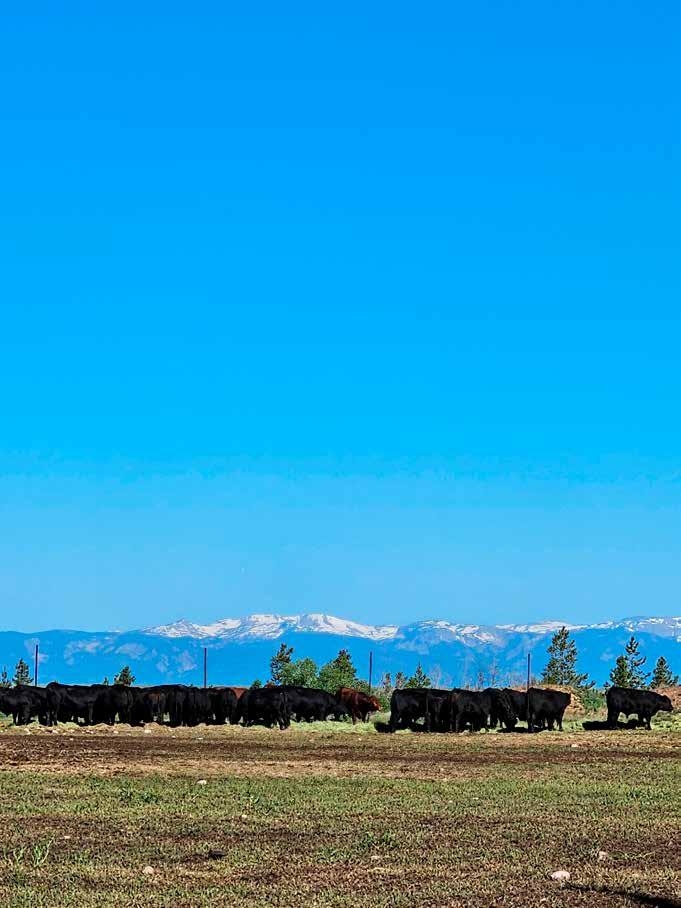
voicing his disappointment in the lack of regard BLM has for Wyoming’s expertise in sage grouse management and conservation.
“As expected, the sage grouse amendments’ final form did not take into account the state’s most substantial comments, which were informed by decades of expertise in Greater sage grouse management in Wyoming,” he says. “Three Wyoming governors have demonstrated their commitment to sage grouse over the past 16 years, and Wyoming is the stronghold of sage grouse in the West, with millions of acres of valuable sage grouse habitat. We have shown how to successfully manage this bird and do so in a way which allows for protection of core habitat, alongside responsible development.”
“It is unfortunate the BLM’s approach and plan altogether ignores Wyoming’s leadership, experience and knowledge with regard to management of both sage grouse populations and habitat,” he adds. “BLM’s planning efforts reflect extreme indifference to the primacy vested in Wyoming’s exclusive authority to manage sage grouse populations.”
Gordon further noted, as his team fully dissects the document and develops a response, priority will be placed in defending the state’s management authority of Greater sage grouse under an executive order.
“Additional layers of federal regulation on top of state management will hinder our ability to develop practical, workable solutions, without

perceivably benefitting neither sage grouse nor its habitat,” Gordon continues. “I am hopeful, as we move into a new Trump administration, we can shape a functional record of decision in the New Year. Wyoming has been and remains committed to the long-term well-being and management of Greater sage grouse.”
The governor will lead state agencies through a protest response in addition to his consistency review, which are due on Dec. 16 and Jan. 7, 2025, respectively.
Protest period
The publication of the proposed RMP amendment and FEIS in the Federal Register kicked off a 30-day public protest period, which will end on Dec. 16.
Protests must be written and filed to the BLM Director via USPS mail to BLM Director, Attn: Protest Coordinator (HQ210), PO Box 151029, Lakewood, CO 80215 or overnight mail to BLM Director, Attn: Protest Coordinator (HQ210), Denver Federal Center, Bldg. 40, Lakewood, CO 80215.
Protests can also be filed electronically at eplanning. blm.gov/eplanning-ui/project/2016719/510
After reviewing public protests and governors’ reviews for consistency with state and local plans, the BLM will issue a record of decision for each state where habitat management plans are being updated.
Hannah Bugas is the managing editor of the Wyoming Livestock Roundup. Send comments on this article to roundup@wylr.net.



On Nov. 4, Trout Unlimited (TU) launched a new film titled “Lifeblood,” celebrating the collective work and partnerships needed to revitalize Muddy Creek, an important tributary of the Colorado River Basin located south of Rawlins.
For decades, TU and partners such as the Bureau of Land Management (BLM) Wyoming, the Wyoming
Game and Fish Department and the Little Snake River Conservation District have been restoring vital habitat for Colorado River cutthroat trout in this watershed.
Home to four native fish species, Muddy Creek is part of the Little Snake River Basin. Through a feat of Western water engineering, the basin serves as both a headwater for the Upper Col-
orado River Basin and provides source water for the city of Cheyenne, which is outside of the watershed.
“Historically, Muddy Creek has always been an important water source for both wildlife and humans given its location in the high desert,” said Nick Walrath, Green River senior project manager for TU. “Tribal Nations, emigrants along the
Overland Trail and even visitors to the landscape to this day have all relied upon this creek for water.”
Although restoration efforts have been happening in the area for years, recent federal infrastructure funding has supercharged this restoration work.
Utilizing funds made available by the Inflation Reduction Act, BLM Wyo-
ming plans to invest $10 million dollars to repair habitats in the Muddy Creek Restoration Landscape in southwestern Wyoming, with over $1 million planned for stream restoration work.
Seeing the success for these efforts in recent years, corporate and philanthropic partners like Microsoft, the Water Foundation and the Walton Family Foundation
also joined forces with TU to expand watershed restoration work, culminating into the revival of a historic watershed.
“I’m looking forward to telling future generations of Wyomingites conservation is as clear as Muddy Creek,” said Walrath.
To watch the film, visit prioritywaters.tu.org/lifeblood/
FRIDAY, NOVEMBER 22
618# $253.00
13 Heifer, 759# $243.00 BONDURANT 22 Heifer, 737# $241.50
FRIDAY, NOVEMBER 29
FRIDAY, DECEMBER 6
1 Cow, 1045#
LANDER 2 Cow, 1035#
BONDURANT 9 Cow, 1007# $162.50 LANDER 1 Cow, 1015#
6 Cow, 1088#
Cow, 1050# $145.00 CODY 2 Cow, 1097# $142.50
1 Cow, 1145# $140.00
PINEY 1 Cow, 1005# $137.00
2 Cow, 1217# $133.00
GREEN RIVER 1 Cow, 1625# $128.50 BIG PINEY 2 Cow, 1550# $124.00
ROCK SPRINGS 4 Cow, 1505# $123.50
CASPER 2 Cow, 1340#q $122.50
CROWHEART 1 Cow, 1365# $122.00 BIG PINEY 1 Cow, 1515# $121.00
CROWHEART 1 Cow, 1570# $120.00
OPAL 3 Cow, 1366 $119.00
CODY 7 Cow, 1427# $118.50
6 Cow, 1480# $117.00
BLACKFOOT, ID 2 Cow, 1442# $116.00
LABARGE 11 Cow, 1142# $115.50
CODY 5 Cow, 1431# $115.00
BIG PINEY 4 Cow, 1127# $114.50
LABARGE 10 Cow, 1130# $114.00
CODY 6 Cow, 1204# $114.00
BIG PINEY 10 Cow, 1201# $113.00
5 Cow, 1264# $112.50
5 Cow, 1373# $112.00
9 Cow, 1153# $111.50
6 Cow, 1259# $111.00
9 Cow, 1150# $110.50
6 Cow, 1351# q$110.00
LANDER 4 Cow, 1420# $109.00
TUESDAY, NOVEMBER 19
Layne & Robin Pentz- 175 Blk Ang & AngX Strs & Hfrs 500-550#. Rec Virashield 6 & 8 way @ branding & weaning. Over 40 days weaned. Hay fed. Choice, high desert weaned calves! Woolsey Family Farms- 150 Blk & BWF Ang Strs & Hfrs. 2 rounds of shots spring & fall & poured this fall. Weaned 45 days. Sired by Powerful Blk Ang bulls. High elevation. Super set of reputation calves!
Ransom & Jill Logan- 100 Blk Ang & AngX (BWF & RWF F1) Strs & Hfrs 525-600#. Rec Vista Once SQ & Vision 8 w/Somnus + Spur @ branding & Precon (poured w/ Ivomec) Sired by Redland Redbank Blk Ang & Collyer Herford Bulls. High elevation, real performing crossbred calves! Fancy! TY Ranch- 100 Blk, BWF, Hereford Strs & Hfrs 425475#. Rec Vista Once SQ & 7 way @ branding & Precon. High elevation & Green!! Downs Ranch- 100 Mostly Blk Hfrs 500-550#. Rec Inforce 3, Bovishield Gold Pro & 8-way w/Somnus. Complete mineral program. High elevation. Reputation, one brand calves! Continental Cattle- 100 Blk Ang Strs & Hfrs 450525#. Rec Bovishield Gold One Shot & Vision 7 @ branding. Fancy, high elevation calves!
FRIDAY, DECEMBER 13 CALF SPECIAL • START TIME 9:00 AM LOAD LOTS START @ 10:30 AM
TUESDAY, DECEMBER 10
Steve Mines- 80 Blk Ang Strs 525-575#. Rec Vista Once SQ & 7 way spring & fall. High desert. Super set of one brand, reputation calves! Griffin Land & Livestock- 50 Blk Ang Strs &


