DOI finalizes Western Solar Plan, includes state of Wyoming
On Dec. 20, 2024, the Department of the Interior (DOI) announced an updated Western Solar Plan to promote efficient and environmentally-responsible solar energy permitting

On Dec. 20, 2024, the Department of the Interior (DOI) announced an updated Western Solar Plan to promote efficient and environmentally-responsible solar energy permitting
In the fourth snow report for Water Year 2025, the state’s snowpack telemetry data reads 92% of median, with a basin high of 109% and a basin low of 20%. Last year, the state was at 65% and at 123% in 2023. The report and a map displaying basin snow water equivalent percentages of median for the state may be found at wrds.uwyo.edu/ wrds/nrcs/nrcs.html
The U.S. Department of Agriculture (USDA) reminds specialty crop producers to apply for assistance for marketing and food safety certification expenses. Specifically, USDA’s Farm Service Agency reminds specialty crop producers of the Jan. 31 deadline to apply for the Food Safety Certification for Specialty Crops program for 2024 expenses.
U.S. Department of Agriculture (USDA) Rural Development Under Secretary Dr. Basil Gooden invites grant applications to improve access to remote education and healthcare in rural and Tribal communities. USDA is making approximately $40 million in funding available under the Distance Learning and Telemedicine (DLT) Grant Program. This program funds distance learning and telemedicine equipment, and funds will help digitally connect people to education, training and healthcare resources otherwise unavailable or limited in remote parts of the country. For more information, visit rd.usda.gov
Applications are now open for the Young Cattlemen’s Conference, which begins in Denver and proceeds across the country to Washington, D.C. to help young leaders understand all areas of the beef business. The program is limited to a small number of producers each year and all participants must be nominated by one of the National Cattlemen’s Beef Association’s affiliate organizations. For more information or to apply, visit angus.org/events/young-cattlemens-conference. Applications will close on Jan. 31.
on public lands throughout the West.
The DOI’s initiatives regarding clean energy on public lands are overseen by the Bureau of Land Management (BLM), and
since 2021, the BLM has approved 45 renewable energy projects on public lands, surpassing its goal of permitting 25 gigawatts of renewable energy by 2025.
According to the DOI,
the updated plan aims to guide the placement of solar energy proposals in areas with fewer resource conflicts and seeks to advance the nation’s growing clean
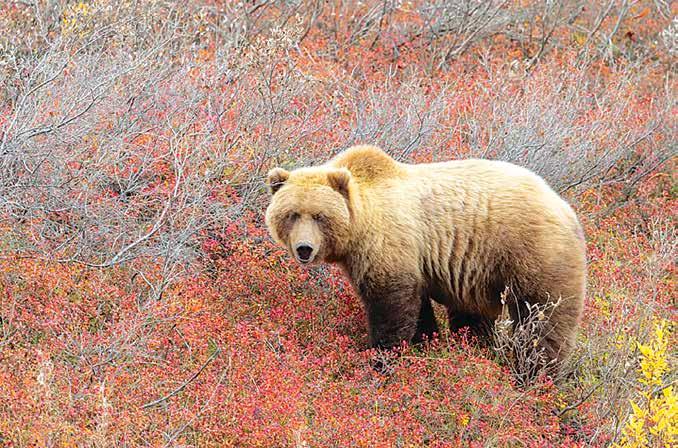
On Jan. 8, the U.S. Fish and Wildlife Service (FWS) announced grizzly bears in the Greater Yellowstone Ecosystem (GYE) will remain listed as a threatened species under the Endangered Species Act (ESA), denying petitions from Wyoming and Montana to remove the species from the ESA.
At the same time, the agency issued a proposed rule to increase management flexibility and allow state wildlife agencies to better address human safety and livestock depredation.
“FWS is proposing a rule to clarify the geographic area where grizzly bears in the lower 48 states are subject to protection under the ESA,” reads the press
On Dec. 12, 2024 U.S. Sen. Mike Rounds (R-SD) introduced the Fence Line Fairness Act, which aims to establish a formal mediation process for land boundary disputes between landowners and the U.S. Forest Service (USFS).
According to Rounds, the Fence Line Fairness Act would create a committee composed of appointed producers who would be responsible for mediating disputes and providing recommendations to both the agency and involved producers.
Rounds explains, “The committee will include producers from the state, with two members appointed by the U.S. Secretary of Agriculture and three members appointed by the state’s departments of agriculture or natural resources.”
This legislation is supported by several organizations, including the South Dakota Cattlemen’s Association, South Dakota Stockgrowers Association, National Cattlemen’s Beef Association (NCBA), R-CALF USA, Public Lands Council (PLC) and the U.S. Cattlemen’s Association.
A look inside the new bill
During the Dec. 26, 2024 episode of NCBA’s Beltway Beef podcast, PLC and NCBA Natural Resources Executive Director Kaitlynn Glover shares an update on the new Fence Line Fairness Act.
“This act would create a mediation process when a boundary dispute occurs with the USFS, one we haven’t seen before, as the USFS has a number of tools to resolve defense line boundary disputes,” Glover explains. “However, USFS doesn’t have a mediation process and this bill will fill this void.”
release. “FWS also proposes revisions to the current protective regulations to provide additional management flexibility for authorized agencies and individuals experiencing conflicts with grizzly bears.”
Additionally, FWS announced it will publish an “updated, independent peer-revied species status assessment to compile best available science to help inform further decision-making.”
“This reclassification will facilitate recovery of grizzly bears and provide a stronger foundation for eventual delisting,” says FWS Director Martha Williams. “And the proposed changes to our 4(d) rule will
Please see BEARS on page A7
Following Wyoming’s second worst wildfire year in terms of acreage burned, wildfire recovery efforts were a hot topic during the Wyoming Stock Growers Association Winter Roundup Convention and Trade Show, held Dec. 9-11, 2024 at the Ramkota Hotel and Conference Center in Casper.
During the Progressive Rancher Forum on the first morning of the event, Dr. Brian Mealor, a University of Wyoming professor and the director of the Sheridan Research and Extension Center, discussed post-fire recovery of rangeland forages.
Fire history
To begin, Mealor outlined the instance of wildfire throughout Wyoming’s history.
What can pork producers expect in 2025?
The pork industry is constantly up against variables and unknowns which make the future hard to predict.
On the Jan. 3 episode of Farm Journal’s Pork podcast, Host Jennifer Shike joins Rabobank Senior Animal Protein Analyst Christine McCracken, who shares her knowledge and perspective about what she sees for the pork marketplace in the year ahead.
From a young age, McCracken has actively participated in the pork industry, showcasing hogs in 4-H and FFA throughout her childhood.
She holds a bachelor’s degree in agricultural economics from the University of Georgia and a master’s degree in agricultural and natural resource economics from the University of California-Davis. She currently conducts animal protein research for North America at Rabobank.
Rabobank was founded by farmers and a group of small credit unions, and its entrepreneurial spirit and cooperative mentality have guided producers throughout its 125-year history.
A look at 2025 McCracken shares profitability is always a moving target, but she is optimistic heading into 2025.
“We’re much more of a fire-prone landscape than we think we are in parts of the state,” he said. “And, fire is not necessarily strange to what we manage for in Wyoming.”
Mealor displayed a map showing high fire activity across the forested mountain ecosystem in the northwest part of the state, over to the grasslands of northeastern Wyoming. He pointed out a noticeable gap in the southwest corner.
“The northeastern corner of the state is more of a Great Plains type of rangeland setting, and as we move south and west, we get into more of a true sagebrush grassland situation,” he explained.
A couple of years ago, the American Lamb Board (ALB) made a decision to initiate a study to evaluate the environmental footprint of the U.S. sheep industry. This proactive approach, working with Michigan State University (MSU), resulted from a 2011 Environmental Group Study which found sheep and lambs to be one of the largest contributors of greenhouse gases (GHG).
Sheep and GHG have never been on my radar, and I don’t believe it has been on others’ either.
We know some environmental groups have been after cattle for some time now, but I think it is mostly caused by animal rights activists wanting people to quit eating meat. It would be interesting to see who was on the Environmental Working Group Study and who was funding them.
In a statement, then ALB Chairman Peter John Camino of Buffalo said, “It is extremely important for our industry to identify and evaluate our role in GHG emissions. Accurate data is the basis for improvement strategies and providing factual information to consumers and the media.”
Camino has always been a leader in the sheep industry. This Wyoming Agriculture Hall of Fame recipient is being honored with the McClure Silver Ram Award at the American Sheep Industry’s annual convention in Scottsdale, Ariz. later this month. We thank him for all of his years of service in the sheep industry.
I was curious to see what other studies MSU had done on the environment and climate change, and man was I surprised. They have done a lot on the GHG issue.
They did include positive attributes of sheep production, which was nice to read. But row crops, cattle, sheep and lambs took a lot of heat for causing climate change. Basically, they believe agriculture is the problem.
There are statements like, “According to the Food and Agriculture Organization of the United Nations (UN), the livestock sector contributes between 15 to 18 percent of all GHG emissions. Beef and milk cattle are responsible for most of the emissions, followed by meat pigs and water buffalo, milk and meat.”
I may be wrong, but I have never trusted any data on agriculture coming from the UN. If they want to do some good, they need to work on GHG emissions in China and India.
Another study conducted by the University of Michigan and Tulane University, commissioned by the Center for Biological Diversity, said, “Replacing one-half of all animal-based foods like red meat, poultry, fish or seafood, eggs, dairy and animal-based fats with plant-based alternatives would reduce U.S. diet-related emissions by 35 percent.”
We all need to help take care of our planet and feed the 800 million hungry around the world, but we have to get politics and our selfish ideologies out of the way.
I think there are a lot of Americans who are fed up with the climate change talk and people telling us what to eat and not to eat. We just don’t know who to believe anymore. When people go to the store and buy meat, milk and eggs, no one is thinking about climate change or GHG.

By Ted McKinney
State agriculture departments play a critical role in safeguarding the nation’s food supply, detecting and preventing the spread of animal diseases and supporting small and mediumsized producers.
These responsibilities are carried out through federal and state cooperative agreements designed to share responsibility and resources.
States are confronting impossible challenges as increasing funding gaps leave them without federal support to fulfill their statutory responsibilities. Without immediate Congressional action to address critical funding shortfalls, the programs safeguarding our
food supply against foodborne illnesses and devastating animal diseases will be severely jeopardized, leaving public health, consumer confidence and the stability of our agricultural economy at significant risk.
State agriculture departments are collectively calling on Congress to immediately address the draconian budget cuts states are facing from federal agencies for three critical cooperative agreements, including the U.S. Food and Drug Administration’s (FDA) state and local food safety regulatory programs, the U.S. Department of Agriculture’s (USDA) Food Safety and Inspection Services (FSIS) and


USDA’s Animal and Plant Health Inspection Service (APHIS).
FDA food safety
FDA proposed 30 percent budget cuts to state and local food safety regulatory programs in Fiscal Year 2025 (FY25), threatening public health and food safety infrastructure nationwide. Once the 30 percent reductions take effect and jobs are lost, these programs may not recover for years, jeopardizing food safety infrastructure and public health.
State and local agencies conduct most inspections on behalf of the FDA. State labs and response teams are also essential during outbreaks and recalls.
In New York, the Department of Agriculture and Markets, led by Commissioner Richard Ball, key programs like the Manufactured Food Regulatory Program, covering over 5,800 establishments; the Produce Safety Inspections Program, conducting approximately 150 inspections annually and the Milk and Shellfish Cooperative Agreement, vital for training and lab resources for the Grade “A” milk program, will all be drastically reduced and face substantial jeopardy if Congress does not act.
USDA FSIS State meat and poultry inspection programs, which Please see FUNDING on page A8




Imports of feeder cattle from Mexico are expected to partially resume the week of Jan. 20, according to sources.
Imports will be slow at first due to the need to implement and test new protocols. Live animal movements are expected to resume fully sometime after the initial reopening.
The U.S. Department of Agriculture’s Animal and Plant Health Inspection Service suspended imports of live cattle and bison from Mexico on Nov. 22, 2024, following the detection of New World screwworm along Mexico’s southern border.
This pest can have a significant negative impact on cattle health, and U.S. authorities have been working to develop protocols to screen animals coming into the country.
Several factors are influencing the timeline and pace of reopening.
Both countries have agreed on protocols, but implementation requires facility inspections and approvals, as well as a seven-day quarantine period after animal checks. Additionally, port readiness will be a factor, and the most important port to get moving again is Santa Teresa, N.M.
The temporary suspension of cattle imports from Mexico has had notable effects on the U.S. cattle market including about 250,000 to 300,000 fewer head of cattle estimated to have been imported due to the suspension, and the trade disruption has been supporting feeder cattle and calf prices in the U.S.
The Bureau of Reclamation (BuRec) is inviting public comment on the draft environmental assessment (EA) for the Fort Laramie Tunnel rehabilitation project, aimed at improving water supply reliability for Fort Laramie Canal users by rehabilitating Tunnels One and Two along their existing alignments.
The comment period runs from Jan. 7 through Feb. 7, with the draft EA available at usbr.gov/gp/nepa/ sopa.html
The draft EA outlines the project’s goals, public concerns and management objectives, while analyzing potential environmental impacts, as required by the National Environmental Policy Act.
Public feedback will influence whether a finding of no significant impact is issued.
The Fort Laramie Canal, part of the North Platte Project, supplies irrigation water to approximately 107,000 acres across Wyoming and Nebraska and is managed by Goshen and Gering-Ft. Laramie Irrigation Districts.
For questions or to submit comments, contact Stacey Johnston at 307-261-5631, e-mail sjohnston@usbr. gov or send via mail to Bureau of Reclamation, PO Box 1630, Mills, WY 82644.


The Department of the Interior announced a more than $41 million investment from President Joe Biden’s Bipartisan Infrastructure Law for 21 projects to bolster water resources, advance ecosystem health and support resilience in communities facing drought and other climate change impacts.
The projects will support instream and riparian restoration, canal lining and piping, fish habitat improvements and fish passage. This follows a $51 million investment for Environmental Water Resource Projects through the same program in 2023.
Projects selected to receive this funding through the Bureau of Reclamation’s WaterSMART program are in California, Colorado, Hawaii, Idaho, Montana, Nebraska, Nevada, New Mexico, Texas, Washington and Wyoming.
For more information or to view the full list of projects, visit usbr.gov
The University of Wyoming’s (UW) GrowinG Internship Program is now accepting applications for interns and hosts in 2025.
The program connects beginning farmers and ranchers with host farms and ranches, providing interns with hands-on agricultural experience.
The program provides a $5,000 stipend for a 10-week work experience, which is funded through the U.S. Department of Agricultureʼs Beginning Farmers and Ranchers Grant. Host farms and ranches must be located in Wyoming.
Selected interns assist with daily activities and learn from the site host, while hosts provide room and board along with safe educational experiences.
Online application forms for 2025 hosts and interns are available at GrowinG-WY.org/apply. Applications must be submitted by Feb. 7.
For more information, contact the GrowinG Internship Program at coordinator@growing-wy.org or visit GrowinGWY.org
University of Nebraska-Lincoln (UNL) Extension will host a webinar entitled “Drylot Feeding Cow/Calf Pairs in the Spring and Summer of 2025” on Jan. 13 at 6:30 p.m.
As of Jan. 1, the U.S. Drought Monitor found areas in the West be in severe to extreme drought conditions. While there is still time between now and May to get precipitation, in a bestcase scenario, the lingering effects of drought will likely delay when pasture turnout should occur.
“The feed needs of the calf have to be accounted for. Either the calf needs to be fed in a separate creep area or the pair intake needs to be increased as the calf grows to meet its needs,” said Dr. Karla Wilke, UNL Extension cow/calf systems specialist.
The webinar will provide information producers can use now to consider their option of drylotting cows this spring and summer.
Some of the content to be covered will include the logistics for drylotting pairs, including needed bunk space, water, fence, shade and creep access for baby calves; examples of rations and feed costs based on current commodity prices; limit feeding versus full feeding; annual forages as a complement to drylot feeding; health considerations for calves and cows and strategies for breeding cows in a drylot setting.
The webinar is free, but registration is required. To sign up for the Drylot Feeding Cow/ Calf Pairs webinar, contact Aaron Berger at aberger2@unl.edu.
The 2025 American Lamb Summit is scheduled for July 22-25 at the University of Idaho in Moscow Idaho.
This biennial industry event addresses critical strategies to improve the sheep industry’s competitiveness and profitability.
The American Lamb Summit seeks to inspire a new level of change and collaboration across all sectors of the U.S. lamb industry as it works to improve competitiveness, product quality and productivity through increased use of the most efficient, progressive management tools.
The 2025 event highlights include meeting marketing demand, developing profitable grazing systems, defining lamb quality, hitting carcass targets and increasing production efficiency.
For more information or to register, visit lambboard.com


On Jan. 9, the Colorado Conservation Alliance, Inc. (CCA) provided an update on mounting concerns surrounding Colorado’s wolf introduction program, including confirmation non-native gray wolves released into Colorado have tested positive for Echinococcus granulosus, a dangerous tapeworm causing hydatid disease.
This pathogen was previously unknown in Colorado before the introduction of the wolf, raising serious public health concerns as the Colorado Parks and Wildlife (CPW) rushes to expand the controversial program.
The health risk compounds a series of legal and procedural violations by state agencies, including violations of federal environmental laws, strong opposition from Native American Tribes, disregard for voter-approved introduction zones and a rush to import Canadian wolves despite mounting concerns.
Environmental review
CCA has filed a lawsuit against CPW and the U.S. Fish and Wildlife Service (FWS) for failing to complete required federal environmental reviews before releasing wolves.
Specifically, the agen-
cies failed to conduct an environmental impact statement required under the National Environmental Policy Act (NEPA), submit updated resource management plans (RMP) to the Bureau of Land Management (BLM) for federal lands where wolves were released and honor their own commitment not to introduce wolves with a history of livestock predation.
CCA seeks to suspend further wolf releases until CPW and FWS complete the required NEPA process and submit proper RMPs to the BLM. These federal requirements are designed to protect the environment and affected communities.
Strong Tribal opposition
The Southern Ute Tribe has repeatedly warned against the program’s threats to their sovereign rights and resources.
In a June 4, 2021 letter, the Tribe expressed “concern restoration of the gray wolf would present an unacceptable risk to hunting resources.”
A follow-up letter on Feb. 21, 2023 detailed additional threats to their hunting rights across 3,700,000 acres under the 1874 Brunot Agreement; livestock on Southern Ute
Reservation lands and the genetically-distinct Mexican Wolf population in New Mexico.
The Tribe’s concerns led FWS to grant them authority for lethal control of wolves impacting ungulate populations on Tribal lands.
Additionally, the Confederation Tribes of the Colville Reservation in Washington withdrew their authorization to provide wolves after learning CPW had failed to consult properly with the Southern Ute Tribe.
Violation of voter intent
Despite Colorado voters specifically approving wolf introduction “West of the Continental Divide” from New Mexico to Wyoming, CPW signed an agreement on Dec. 23, 2024, prohibiting wolf releases across 5,806 square miles of southwestern Colorado.
This exclusion zone includes Southern Ute hunting grounds and territory within 60 miles of the Utah border, dramatically restricting the voter-approved introduction area.
Unable to source wolves domestically, CPW plans to import wolves from British Columbia, Canada in January 2025, despite formal opposi-
On Jan. 8, Colorado Parks and Wildlife (CPW) announced it plans to continue the introduction of gray wolves into the state of Colorado early this year, after the agency’s commission voted 10 to one to reject a petition asking for a delay in further releases.
The petition was filed by over 20 different groups including the Middle Park Stockgrowers Association, Club 20, the Colorado Wool Growers Association and Colorado Cattlemen’s Association which requested the commission pause gray wolf reintroduction into the state of Colorado until CPW takes specific steps to resolve wolf conflict with livestock producers.
The petition noted, in the first eight months following the release of 10 wolves from Oregon to northwest Colorado, there were 24 confirmed livestock kills by wolves in Grand, Jackson and Routt counties.
The petitioners further asked CPW meet a number of specific conditions to
tion from CCA.
Urgent call to action CPW held a hybrid public meeting on Jan. 9 in Denver.
CCA urged Colorado residents, particularly those from counties which voted against wolf introduction to attend or submit comments demanding immediate suspension of further non-native gray wolf releases until fed-
address livestock and wolf conflict before moving ahead with the reintroduction program.
According to The Daily Sentinel, CPW encouraged the commission to deny the petition, claiming they have been addressing all of the conditions raised.
“CPW Director Jeff Davis contends releasing more wolves is necessary to achieve a self-sustaining population and will contribute to wolves forming packs which will establish more predictable territories and hunt as groups rather than individuals,” reads a Jan. 8 article in the Sentinel written by Dennis Webb. “This will make them more likely to prey on elk and deer and less prone to resort to livestock as a food source.”
CPW is set to move ahead with the reintroduction program this month and have chosen Garfield, Pitkin, Rio Blanco and Eagle counties as drop off points for the 10 to 15 wolves the agency sourced from British Columbia, Canada.
eral environmental requirements are met, protection for counties opposing introduction through memorandum of understanding agreements similar to those granted to the Southern Utes to protect their Tribal hunting grounds and Utah to create a wolf exclusion zone between Colorado and Utah and comprehensive health screening and monitoring protocols.
The public can submit comments to dnr_cpwcommission@state.co.us or online at cpw.state.co.us CCA is a Colorado nonprofit corporation dedicated to protecting Colorado’s outdoor heritage and wildlife habitats through responsible, science-based wildlife management. For more information or to support CCA’s legal action, visit cocoal.org


“Boundary disputes between private landowners and the USFS are very common across the West for a variety of reasons,” she adds. “Even if land was surveyed in the 1950s or 1960s, it could be off by as much as a couple hundred yards.”
Old federal survey techniques have resulted in some variations between the legal boundaries based on modern technology and historic boundary markers between private land and federal lands.
“Disputes today are happening because technology is at the tip of our fingertips and more awareness is being brought forward on these misplaced boundaries,” she mentions. “And if this is happening between private landowners and the USFS, USFS has the upper hand in a way that does not honor the American spirit of private property rights.”
Currently, if there is a dispute over a boundary line, the first step is to have the property resurveyed, which could take some time because it is a fairly intensive process.
Glover notes, “Typically, if a discrepancy occurs, the infrastructure or the property description is adjusted, and it’s a simple administrative process. However, when disputes escalate, like several we have seen over the past year, the need for this form of bill is needed so private landowners do not bear the burden.”
According to Glover, this bill would provide a means of fairness for private landowners, establish a less confrontational resolution and be more cost effective.
Burden of disputes
“Recently, we have seen boundary line disputes escalate into legal fights in the courtroom,” Glover adds. “We know if the federal government has a void in a process, they default to other tools like we’ve seen in several cases over this last year.”
Glover feels the USFS has gone to the most extreme level of enforcement in some of these boundary disputes, which does not encourage the landowner to resolve things normally.
“In these events, the landowner feels like they are being punished for something they did not initiate nor is it something they should bear the responsibility for,” she states.
Unfortunately, Glover thinks there will be more disputes in the future, and the landowner should not bear the legal, criminal or process burden.
“This burden should land on the agency, and the USFS should take responsibility for working with the landowner to resolve the dispute,” she concludes.
Melissa Anderson is the editor of the Wyoming Livestock Roundup. Send comments on this article to roundup@wylr.net.
Brandi O’Brien has been selected to lead the Wyoming Department of Environmental Quality (WDEQ) Land Quality Division (LQD) as its new administrator.
The position became open in November, and O’Brien served as the interim administrator during this time.

“It gives me great pleasure to announce O’Brien as our new LQD administrator. She has a wealth of knowledge and the experience needed for this role,” said WDEQ Director Todd Parfitt. “It is always rewarding to see those who have served the WDEQ promoted and become leaders within the agency.”
Having worked for the WDEQ over 13 years, nine of those years have been with the LQD, where O’Brien managed the Uranium Recovery Program since 2022. Prior to her work with LQD, she served in the WDEQ’s Air Quality Division, spending three years as an inspector in the Pinedale Anticline and Jonah gas fields and a year working as a New Source Review permit writer.
O’Brien has a Bachelor of Science in Nuclear Engineering and was a fellowship student at the Idaho National Laboratory for three years, researching uranium nitride fuel development.
“I am honored and excited to serve as the LQD administrator,” expressed O’Brien. “I look forward to continuing the great work this division has done to protect, conserve and enhance the quality of Wyoming’s environment for the benefit of current and future generations.”
FEEDERS
WEDNESDAY, JANUARY 15, 2025 - FEEDER SPECIAL
Jud & Jennifer Skavdahl & Family 460 Blk Strs, 750-875#, Fall Shots, Home Raised with few Purchased from Torrington Livestock Markets Ochsner-Roth Cattle 40 Blk/Hereford Strs, 750-900#, Weaned since Oct.1, 2 Rounds of Shots: Bovi-Shield Gold One Shot, UltraBac Somubac, Poured, Home Raised MR Angus 34 Blk Hfrs, 1100#, PTO @ ranch, Complete Vac. Program, Coming off grass
WEANED CALVES
L D Ranch 500 Blk Strs & Hfrs, 400-700#, Weaned 90 days, Running Out on Hay Meadows, Bunk Broke, Hay Fed, 3 Rounds of Modified Live Vac. Program, Steers are Knife Cut
Cobb Cattle Co 390 Blk Strs, 550-675#, Weaned 60+ days, Running Out, Hay Fed, Branding & Precond Shots, Home Raised, High Elevation
Buckhaults Cattle Co. 368 Blk Strs, 675-775#, Weaned a long time, Bunk Broke, High Roughage Grower Ration, Branding & Weaning Shots Diamond N Livestock 325 Blk/Bwf Strs, 600-650#, Weaned a 100 days, Bunk Broke, Been on a Grower Ration for grass, 3 Rounds of Shots, Wintered for Grass. This is the Top End Sort out of 1000 head
Ken Dixon 300 Blk/Bwf Strs & Hfrs, 500-600#, Weaned since Oct. 17, Running out on grass supplemented with Hay, Branding & Precond Shots, Home Raised, Steers are Knife Cut, NO Replacements kept
Amy & Brandon Miller 300 Blk/Rd Hfrs (few Strs), 550-600#, Weaned since Aug., Running out on Hay Meadows supplemented with a Light Grower Ration, Bunk Broke, Complete Modified Live Vac. Program
Smith Sheep Co. 200 Blk/Red Angus Strs, 600#, Weaned sice Nov. 17, Bunk Broke, Been on Ground Hay and Calf Creep, Complete Vac
Riehle Ranch 170 Blk Hfrs. 500#, Weaned 60 days, Running out on Pasture supplemented with Hay, Branding, Precond & Weaning Shots
Goodrich Ranch 165 Blk/Bwf/Rwf Strs & Hfrs, 400-575#, Weaned 90 days, Bunk Broke, Been on a Light Grower Ration, Branding Shots, High Altitude, Home Raised, May/June Calves
Ken & Bobie Fackrell 160 Blk few Blk Hfrs, 500-550#, Weaned 60 days, Running out, Supplemented with long stem hay, Spring & Fall Shots, Been Selling at Torrington Livestock Markets for 51 Years
C 3 Land & Cattle/Len Camp 150 Blk/Bwf Strs & Hfrs, 450-650#, Weaned 60+ days, Bunk Broke, Running out, Branding & Weaning Shots
Alan Harrison 120 Blk Strs & Hfrs, 550-625#, Weaned 90 days, Bunk Broke, Hay Fed, Branding Shots Hardy Von Forell 120 Mx Strs, 600-750#, Weaned for 60 days, Running out, Bunk Broke, Started on Silage, Branding, Precond & Booster Shots
Todd, Laua & Libbie Schaefer 115 Blk/Bwf few Rwf Strs & Hfrs, 600-700#, Weaned since Sept. 24, Bunk Broke, Been on a Grower Ration, Branding & Weaning Shots, Beefcare, NHTC, Source & Age, Vegetarian Fed, Verified Natural thru IMI Global
Doug Brickman 100 Red Angus Strs, 600#, Weaned 90 days, Bunk Broke, Been on a Grower Ration, Branding & Precond Shots, Home Raised Bridle Bit Cattle LLC/Dalton Ward 100 Blk/Bwf Hfrs, 600-625#, Weaned since Oct. 12, Running out on Hay Circles, Cake Broke, Branding & Precond Shots, No Replacements Kept
J & J Ochsner 99 Blk Angus/Sim Angus Strs, 625#, Weaned 75 days, Bunk Broke, Been on a Light Grower Ration, Branding & Weaning Shots PT Livestock/Pete & Lynnda Thompson 86 Fancy Blk Strs & Hfrs, 650-840#, Weaned since Oct. 1, Bunk Broke, Light Grower Ration, Branding, Precond & Booster Shots, Superior Genetics, Most are AI’d Sired by Top Bulls in the Industry
Darlene Herman 85 Blk Strs & Hfrs, 450#, Weaned since Oct. 16, Bunk Broke, Hay Fed, Cake Broke (20%), Been on a Mineral/Salt Program, Branding & Precond Shots
Chuck & Tracy Martin 80 Blk Angus Hfrs, 500-550#, Weaned 60+ days, Bunk Broke, Alfalfa/Oat Hay and Silage, 2 Rounds of Shots
Kevin Rothchild 80 Mx Strs & Hfrs, 480-620#, Weaned 60 days, Running out on Meadows supplemented with Hay, Branding & Weaning Shots
Sandberg Farms LLC/Leaning T Livestock LLC 77 Char-x Strs & Hfrs, Majority will be 600-700#, Weaned since Nov. 27, Bunk Broke, Been on A High
Roughage Ration, Stress Tubs (Bovi Box R), Branding & Precond Shots
Randy & Ty Steben 70 Blk/Bwf Hfrs, 700#, Weaned since Oct. 1, Been on a Grower Ration, Bunk Broke, Branding & Precond Shots, Home Raised
Wade Phipps/Scott Rabe 70 Blk/Bwf Strs & Hfrs, 500-600#, Weaned 90 days, Hay Fed, Shots at Birth: Vision 7, Branding & Precond Shots
Rock Lake Angus/Todd Platt 61 Blk Angus Strs & Hfrs, 625-725#, Heifers are Guaranteed Open, Weaned 90 days, Bunk Broke, Been on a Grower Ration, Branding, Precond & Weaning Shots
Morris Hochstedler 45 Blk Strs few Hfrs, 575-650#, Weaned 75 days, Hay Fed, Shots will be called in, No Implants, Home Raised
Scott Forrest 44 Blk Strs & Hfrs, 500-600#, Weaned since Mid-Oct., Bunk Broke, Been on Alfalfa/Grass Hay Mix, Been on a Mineral Program, Branding & Precond Shots
Brian Peterson 37 Blk few Bwf Strs & Hfrs, 525-575#, Weaned 120+ days, Bunk Broke, Hay Fed, Branding & Precond Shots, Replacement Quality
Irwin Ranch 30 Mx Hfrs, 575-625#, Weaned since Oct. 15, Hay Fed, Full Vac. Program, Replacement Quality
Steve Shockley 25 Blk Strs & Hfrs, 500-550#, Weaned 120 days, Bunk broke, Running out on Meadows supplemented with Hay, Cake, & Ground
Corn, Branding & Precond Shots
Arlin Torkelson 19 Blk Strs, 650-700#, Weaned 45 days, Hay Fed, Branding & Weaning Shots
Gene & Kelly Roberts 17 Mx Hfrs, 575#, Weaned a long time, Running out on Meadows, Complete Modified Live Vac. Program
Jim Snow 15 Blk Hfrs, 500-650#, Weaned since Oct. 16, Hay Fed, Full Vac. Program, Poured w/Dectomax
Gene & Elaine Hart 15 Blk/Bwf (1 Red/1 Char-x) Strs & Hfrs, 540-575#, Weaned 45 days, Bunk Broke, Been on Pellets and Hay, Branding, Precond & Booster Shots, Pre-breeding Shots; Preg-Guard Gold
CALVES
K Powd and Mary Ann Boles 100 Blk/Red Angus Strs & Hfrs, 450-500#, Branding & Precond Shots, Running at 6900’, Sired by Poweder River
Angus, Rock Lake Angus and K2 Red Angus Bulls, Started on cake along side of mothers, Coming off cows
Cross C Ranch 70 Mostly Blk Strs & Hfrs, 500#, Branding & Precond Shots
MONDAY, JANUARY 20, 2025 - BRED COW SPECIAL
March 19, Clean-up with Calving Ease Blk Angus
Torrington Livestock Markets in January of 2024 from the DesEnfants Ranch, Ran on NE Colorado Pasture all Summer, Currently on High Roughage Ration (Breakdown: 57 head (AI’d) to CF: March 19 for 1 day; 14 Head to CF: March 20th for 21 days, 12 Head to CF: April 9th for 21 days)
Will & Jennie Whitlock 70 Blk/Bwf Hfrs, 900-950#, Bred to Spring Valley or MR Angus Low Birth Weight Blk Bulls, CF: Feb. 25 for 30 days, Fall Shots: Staybred, Vira Shield 6+VL5, Poured Clinton Breeden 12 Hereford Hfrs, Bred to a Low Birth Weight Blk Bull, CF: Feb. 21 for 42 days
BRED COWS
Roger & Pam Peterson 80 Mostly Blk Cows, Mostly SS-ST, Bred to ZumBrennen Blk Angus Bulls, CF: March 4, Spring Shots: Pre-Guard, No Fall Shots
Travis & Shelly Rodewald 50 Blk Angus few Red Angus Cows, Running Ages, Bred to Registered Blk Angus Cows, CF: May 1,
Ackerman

Nolan Brott - Lusk, WY
Scott Redden - Burns, Co 970-596-3588
“The good news is a lot of the trends driving better profitability at the end of 2024 are going to continue into early 2025,” she explains. “We’re going to have ongoing low feed costs, especially on meal for pig producers. At the same time, hog supplies are relatively well-balanced, which supports the market in the short run, and the industry is doing a good job controlling the aspects of the business it can impact.”
She emphasizes possible tariff increases are a primary uncertainty impacting global pork trade, encouraging producers to consider tools to reduce or eliminate these risks.
“Maintaining current biosecurity standards and focusing on herd health is an everyday priority for producers. It’s a good reminder to keep pigs healthy, as it is the only way to ensure the
industry can stay profitable,” McCracken says.
Disease outbreaks in South Korea, Russia and the European Union (EU) led to production losses in the second half of 2024, limiting herd rebuilding despite effective biosecurity measures, Rabobank reports.
However, China’s moderating disease pressure should support a return to herd growth in 2025, with a slight production growth also expected in Brazil, the U.S. and southern EU countries.
She explains labor costs are an important consideration for the industry, particularly at the packer level, and refers to the recent tightening of immigration standards, which may lead to challenges similar to those faced by producers during previous supply chain disruptions.
“Not only could pack-
ers see constraints on worker availability, we would also expect higher turnover and increased absenteeism,” states McCracken. “We could also see increased issues with on-farm labor availability.”
At the end of the day, McCracken believes it’s all about controlling what can be controlled – managing risks and working with advisors to make sure producers are taking advantage of solid profit opportunities.
Navigating the pork industry
McCracken also appeared on the Dec. 26, 2024 Feedstuffs Pork Nation Focus podcast where she discussed additional strategies to bolster the pork industry.
The weekly podcast, hosted by Alltech Sales and Portfolio Director Mark Hulsebus and Farm Progress Brand Management Director Sarah Muirhead, discussed current issues facing the hog industry in 2025.

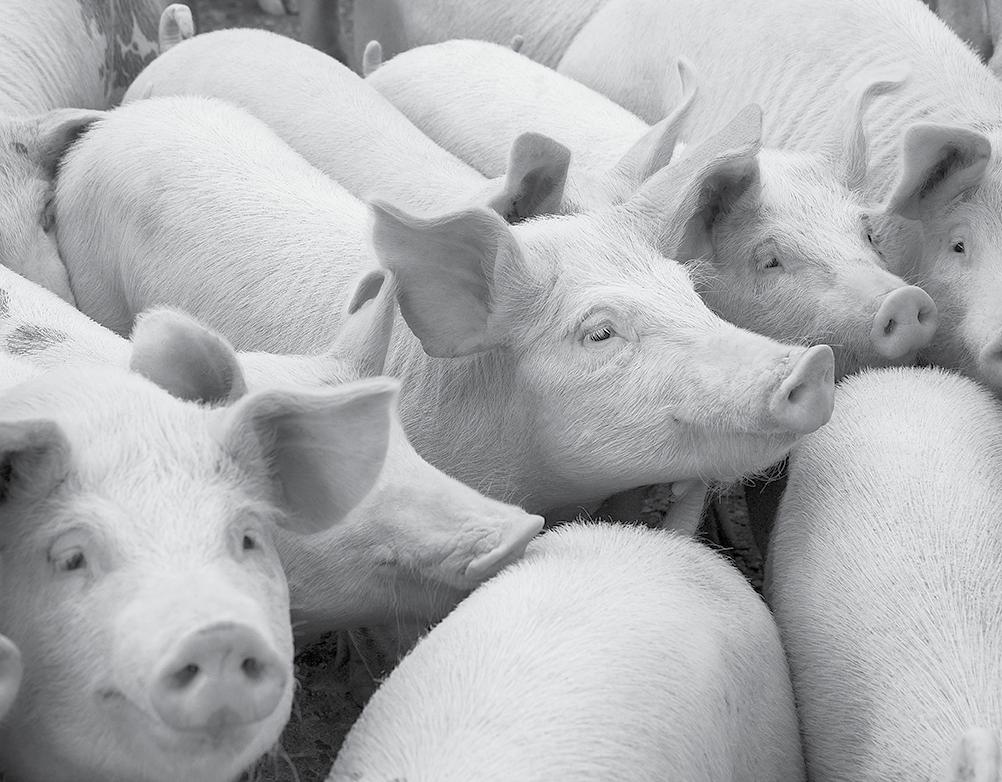
“It’s been a rough go, but there is good news as we are seeing a lot of black in the future compared to what the industry saw a year ago,” McCracken states.
Producers are taking a closer look at their financial health and finding ways to improve it, as there’s a lot of optimism for strong margins in 2025.
Even with the challenges posed by tariffs and immigration policies, it’s an exciting time to prepare for what lies ahead.
She adds, “Maintaining a trade policy with Mexico is crucial for the U.S. pork market because Mexico is consistently the larg-
est destination for U.S. pork exports.”
In fact, Mexico represented over 30 percent of total U.S. pork production last year.
McCracken highlights the significance of the renewal of the U.S.-MexicoCanada Agreement, which is set to be renewed at the end of this year.
“This agreement highlights how important those markets have become to the U.S. and how we really need to work on ensuring they stay open, as it will be critical for the industry,” she continues.
Hulsebus asked McCracken about Mexico’s
new leadership and how it could impact the pork industry.
“The pork industry remains cautious about future policy shifts in Mexico, as new leadership could introduce changes to import regulations or tariffs,” she continues. “We are trying to figure all of this out and find solutions, but it’s politics so there will always be give and take. Maintaining solid trade relationships with key partners such as Mexico and Canada is more crucial than ever.”
Melissa Anderson is the editor of the Wyoming Livestock Roundup. Send comments on this article to roundup@wylr.net.
The U.S. Department of Agriculture’s Animal and Plant Health Inspection Service (APHIS) is announcing adjusted user fee rates for the costs of providing certain goods and services, including veterinary diagnostic goods and services and veterinary services for imports and exports of live animals and animal products.
The changes ensure the fees APHIS charges more closely align with the costs of providing these services. They also allow the agency to improve customer service by hiring and training personnel and ensuring the availability of information technology needed to facilitate trade processes, such as issuing export health certificates.
The final notice may be viewed in the Federal Register and will be effective Jan. 10.
APHIS has not adjusted its fees for veterinary services since 2012, and the agency does not receive appropriated funding to support these activities.
In 2023, APHIS issued a final rule outlining a new process for updating user fees and rates. This is the first fee adjustment using the new process.
APHIS’s animal health import and export user fees cover significant activities across the country, including at border locations and quarantine facilities. These fees support personnel, facilities and information technology systems. They also recover the costs of inspection and certification services for imports and exports of live animals, animal products and animal byproducts, as well as provide for veterinary diagnostic goods and services.


On Nov. 8, 2024, APHIS published a notice in the Federal Register with proposed user fee changes. Stakeholders had 30 days to review the proposed changes and provide comments.
APHIS has reviewed and addressed the 33 comments received in the final notice in the Federal Register. APHIS will post the new fees to the user fee website on Jan. 10.
provide management agencies and landowners more tools and flexibility to deal with human and bear conflicts – an essential part of grizzly bear recovery.”
Distinct population segment
According to FWS, grizzly bears were originally listed under the ESA in 1975 in the lower 48 states with six recovery zones outlined in the nation’s northwestern most corner.
Through continued conservation and management efforts from federal, state and Tribal partners, as well as significant sacrifices made by private landowners, grizzly bear populations in the area have rebounded and expanded their territory, blurring the lines of individual recovery zones.
Because of this, the FWS’s newly proposed rule would revise the ESA listing to establish a single, large distinct population segment (DPS), encompassing all six recovery areas across Idaho, Montana, Washington and Wyoming.
The proposed rule indicates grizzlies within this DPS would retain threatened status protections under the ESA, while protections would be removed for bears outside of the DPS, where FWS notes “grizzly bears do not occur and are not expected to inhabit in the future.”
“Establishing a single DPS encompassing all six recovery zones will provide a comprehensive and scientifically-based framework for recovery,” FWS claims. “We also recognize recovery of small and extirpated populations relies on contributions from highlyresilient populations. Maintaining all recovery zones together in one DPS will increase the speed of recovery in remaining ecosystems and the overall viability of grizzly bears, increasing the likelihood of successfully delisting the entire DPS by addressing the species’ recovery needs as a whole.”
The 4(d) rule
Additionally, FWS’s proposal includes revisions to the 4(d) rule, “giving management agencies and landowners greater flexibility and tools to take bears in the context of research and conflict management.”
“Grizzly bear expansion is challenging for local communities and working lands, and FWS is committed to a collaborative approach and helping partner agencies, private landowners and livestock producers by providing additional management tools,” reads the agency’s press release. “Management
tools can be implemented along with important safeguards to promote connectivity and resiliency which are necessary for delisting.”
“The proposed 4(d) rule recognizes the need for added flexibility and responsiveness on private lands and areas where grizzly bear populations are impacting private landowners and livestock producers while continuing efforts to promote conservation in areas crucial to the eventual delisting of grizzly bears in the lower 48 as a whole,” it continues.
Shared frustration
Following the agency’s announcement, Wyoming Gov. Mark Gordon and Montana Gov. Greg Gianforte voiced their shared frustration.
“It has always been clear the Biden administration had no intention of delisting the GYE grizzly bear,” Gordon says. “This latest move to keep a fully-recovered population on the ESA and eliminate the DPS confirms this decision is driven by politics and not biology.”
“The GYE grizzly bear has been delisted twice. Population determinations should not be made whimsically. The lower 48 management approach is not scientifically based,” Gordon adds. “I remain committed to working on delisting grizzly bears in Wyoming and will consider multiple avenues to do so.”
He continues, “I look forward to working with the Trump administration, Department of Interior Secretary Nominee Doug Burgum and Congressional leaders on delisting the GYE grizzly, as well as on reforming the broken ESA, which has lost its focus on species recovery and returning wildlife to state management.”
Gianforte also condemned the decision, stating, “The full recovery of the grizzly bear across the Rocky Mountain region should be acknowledged and celebrated – period. It’s time for FWS to catch up with the science, follow the law and return management of grizzlies to the states where it belongs. We look forward to working with the incoming Trump administration to explore a new path forward.”
Other individuals and organizations have expressed their frustration with the decision as well.
“Today’s announcement is incredibly frustrating for Montana,” notes Sen. Steve Daines (R-MT). “For decades, Montana has followed science, and as a result, the bear has more



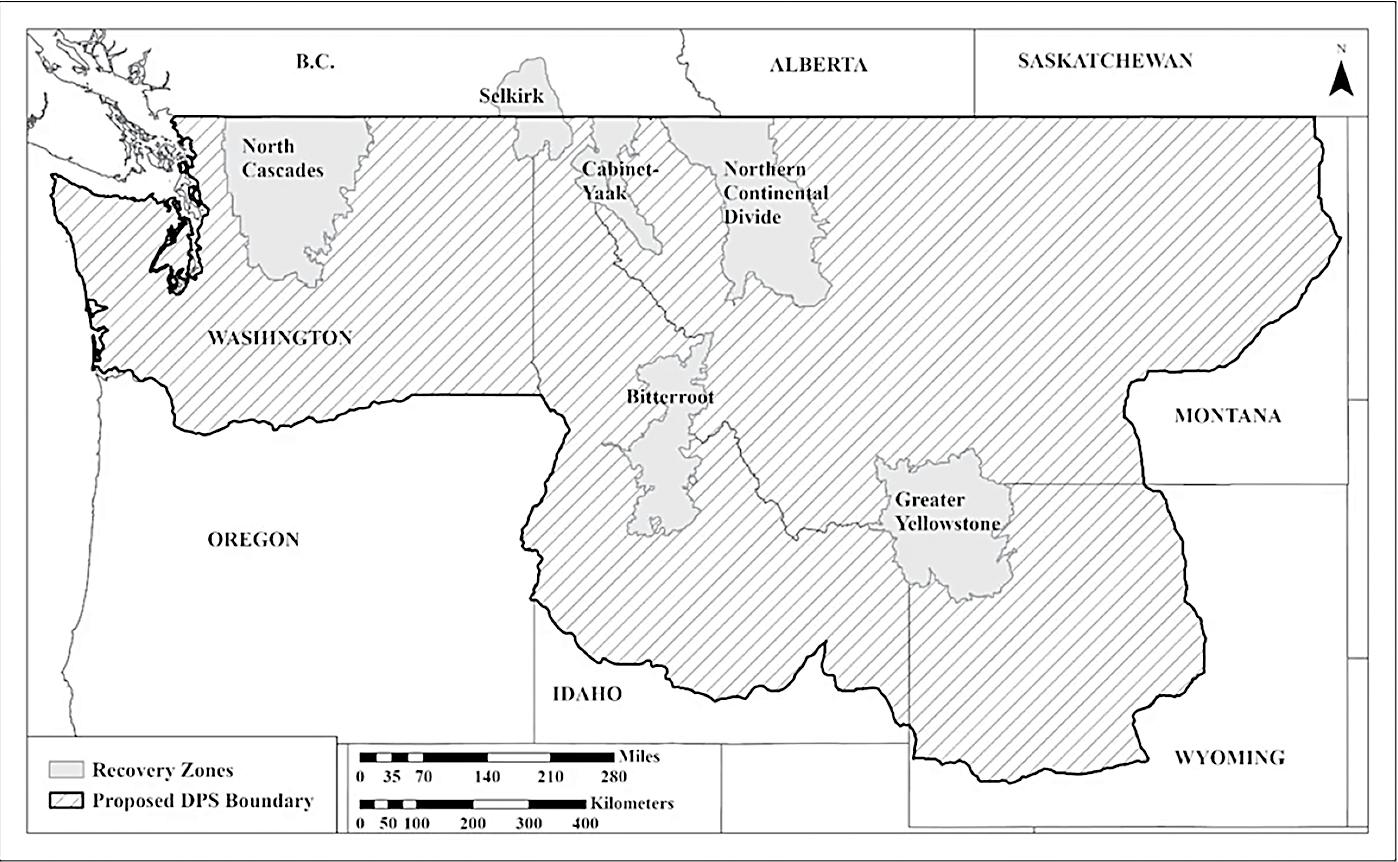
Proposed DPS – Pictured is a map of the U.S. Fish and Wildlife’s (FWS) proposed distinct population segment (DPS) boundary, overlaid with the six current recovery zones. FWS graphic
than recovered in the GYE and the Northern Continental Divide Ecosystem. Continuing to move the goalposts on recovery is only harming the bear and putting our Montanan communities at risk. This is a shameful partisan play, and I’ll be pushing back every step of the way.”
Lesli Allison, chief executive officer of the Western Landowners Alliance, reiterates this sentiment.
“The reality is grizzly bears are increasing in population and expanding in range well beyond original recovery targets,” Allison says. “While grizzly bear recovery is widely celebrated as a success, the

Publication of the proposed rule in the Federal Register in coming days will kick off a 60-day public comment period. For more information or to participate in the public comment period, visit fws.gov/grizzlyrulemaking.
moving goalposts for delisting are a source of deep frustration for many in the region.”
The National Cattlemen’s Beef Association (NCBA) and Public Lands Council (PLC) also denounced the FWS’s announcement.
In a Jan. 8 statement, PLC Director and NCBA Director of Government Affairs Garrett Edmonds comments, “This proposed rule and rejected delisting
petitions do nothing other than move the goal posts for species recovery and deny sound science. It is disappointing to see FWS create a single DPS spanning four states, millions of acres and multiple areas where the science already shows grizzly bears have recovered.”
“Combining multiple distinct ecosystems into one giant population segment for a solitary, apex predator further muddies the waters
Austin Snook • 307-290-2161
Taylor Snook • 307-290-2273
Craig Deveraux • 307-746-5690
Dan Catlin • 406-671-7715
Clint Snook • 307-290-4000
of what species recovery looks like and only makes it harder for recovered species to be delisted in the future,” he concludes. “By creating this brand-new barrier to recovery, the Biden administration is further weaponizing the ESA and aiming it directly at rural communities on their way out the door.”
Hannah Bugas is the managing editor of the Wyoming Livestock Roundup. Send comments on this article to roundup@wylr.net.
Cheyenne Seymour • 605-641-0638
This is not a sale order list!
Thank you and we appreciate your business!
weaned and hay fed, weighing 575-625 lbs. HR
Powder River Angus
• 120 head of black steers, BT and PC shots, weighing 750-800 lbs, weaned since September. HR
PENDING
• 120 head of black and black baldy steer, BT and PC shots, weaned, weighing 575 lbs. HR
J&P Partnership
• 75 head of black steers, BT and PC shots, weaned and bunk broke, weighing 550-650 lbs. HR
• 25 head of black heifers, BT and PC shots, weaned and bunk broke, weighing 550-650 lbs. HR
Austin and Hannah Snook
• 95 head of mixed black and black baldy calves, BT and PC shots, weaned and hay fed, weighing 500-600 lbs. HR
Paintrock Angus
• 90 head of black steers, BT and PC shots, weaned and have been fed a light grow ration, weighing 500-700 lbs. HR
Bales Ranch
• 60 head of mixed black and black baldy calves, BT an PC shots, weaned and hay fed, weighing 500-550 lbs. HR
Roduner Ranch
• 50 head of black heifer calves, BT and PC shots, weighing 500-550 lbs. HR
John Moore
• 40 head of black and black baldy steers, 3 rounds of shots, weaned and have been fed ground oat and alfalfa hay, weighing 500-550 lbs. HR
Wade Baker
• 20 head of black heifer calves, BT and PC shots and bangs vaccinated, weighing 500-550 lbs. Weaned since October 5th, been hay fed. HR Bryan and Audrey Pryor
• 10 head of Black Angus heifers, BT, PC and bangs vaccinated, weaned 90 days, weighing 600-650 lbs Plus, more by sale time!
are voluntary for states, are essential to U.S. food safety. By law, slaughter facilities cannot operate without an inspector present.
Reduced FSIS funding to state agencies has strained these programs, threatening facility closures, public health and producer efficiency.
Without a full 50/50 cost share, states may be forced to opt out entirely. If this happens, the federal government will not only need to cover 100 percent of the costs but also hire additional staff to cover demand.
Make no mistake, if states are forced to opt out of inspections, this would immediately disrupt supply chains, particularly for small producers.
States are already feeling the consequences of current funding shortfalls. Unexpected cuts have made it difficult for states to keep
up with inspection demand, as there has been a dramatic increase in the number of small and medium establishments.
For example, growing demand from local processors in Kansas has driven the need for additional staff and higher salaries to address hiring and retention issues.
Alabama Agriculture and Industries Commissioner Rick Pate is grappling with real and negative impacts on Alabama producers and risks becoming far worse without action from Congress.
Similarly, Oklahoma Agriculture Secretary Blayne Arthur faces a shortfall straining the department’s capacity to meet the growing needs of local producers and processors.
USDA APHIS
State agriculture departments and animal health officials are critical part-
ners in safeguarding animal health through cooperative agreements administered by USDA APHIS.
State agencies play a vital role in the early detection, prevention and management of foreign animal disease threats such as highly pathogenic avian influenza, African swine fever and foot and mouth disease.
In addition to concerns about animal disease, state cooperative agreements with USDA APHIS also support plant protection activities, including efforts to prevent, detect, control and eradicate invasive species.
Without Congressional action, the risks to plant and animal health will skyrocket.
For example, in Minnesota, the agriculture department led by Commissioner Thom Petersen, faces a debilitating cut for spongy moth management as the pest advances into the state.
Additionally, cuts to
invasive species monitoring, which has seen flat funding for 20 years, limits the state’s ability to detect and manage new threats.
The National Association of State Departments of Agriculture (NASDA) urges Congress to act with urgency and bipartisanship to fully fund these three cooperative agreements in FY25.
Without proper funding to federal agencies for cooperative agreement funding, disruptions in food production, weakened public health protections and economic harm will intensify.
Food security is national security. Congress must act now to protect our food supply, rural economies and the health of our nation.
Ted McKinney is the chief executive officer of NASDA and can be reached by visiting nasda. org. This opinion column was originally published in AgriPulse on Jan. 6.

Over the past few years, raising backyard flocks has surged in popularity, with an estimated 85 million backyard chickens reported in 2024 in the U.S. alone, making Americans’ feathered friends the third most common pet in the nation.
Experts suggest individuals who find themselves in a pinch or those simply looking for natural and organic ways to keep their flocks healthy may need to look no further than their kitchen cupboards.
From the kitchen cupboard
Garlic is a tried-andtrue, all-around natural remedy trusted by many people who raise chickens.


According to several sources, garlic has antiviral, antibacterial and antiparasitic properties and can be used to boost the immune system. Garlic may also prevent respiratory infections and remedy oral canker.
“Garlic can be given to hens in the form of oil or raw bulbs crushed up and added to drinking water,” explains the British Hen Welfare Trust (BHWT). “A word of warning, however, go easy to begin with. A whole bulb of garlic in the water will taste funny to your hens, so start with a small amount and gradually increase to their tolerance level.”
Other herbs used as natural home remedies by those who raise chickens include echinacea, a powerful immune booster used to prevent and treat infections such as colds and respiratory issues, and thyme, a powerful antimicrobial herb also used to prevent and treat respiratory infections and other ailments.
With its antiviral, antibacterial and antiparasitic properties, oregano can also be used to treat a variety of chicken ailments, including respiratory infections and parasites.
Additionally, oregano oil mixed with olive oil is believed to be effective in remedying sour crop, while olive oil is thought to be helpful in remedying impacted crop.
If individuals have a difficult time getting olive oil into an impacted hen, BHWT suggests mixing it with mashed watermelon and feeding it to the hen.
Some experts recommend massaging with coconut oil to loosen an impacted crop.
Apple cider vinegar is another helpful at-home remedy many likely have on hand.
According to BHWT, apple cider vinegar is a
great natural supplement useful for crop and gut conditions at a recommended dosage of 10 to 50 milliliters per liter of drinking water for five consecutive days.
However, BHWT warns, “Do not use apple cider vinegar in a metal container, as it can cause zinc poisoning which could prove fatal to your hens.”
From the bathroom cabinet
A few other natural remedies may be found just a short distance away in the bathroom cabinet.
In fact, BHWT notes Vaseline can be applied to edges of the henhouse to deter red mites, as they can’t travel across the slippery surface.
Baby oil has also been suggested by those who raise chickens to treat hens with dry, balding skin.
Other home remedies
Other home remedies worth mentioning include baicalin powder, a natural food product reported to help with Marek’s disease; milk thistle, which is believed to be useful in supporting hens with liver disease and acidified copper sulphate, which can be used as an antifungal treatment for sour crop and in remedying oral canker.
“The suggested quantity, as confirmed by our poultry veterinarian, is to add one gram per three to five liters of drinking water and three milliliters of apple cider vinegar,” BHWT explains. “Make it fresh on a daily basis and feed ad lib as drinking water. Again, please note, it is important not to use a metal waterer when using apple cider vinegar.”
BHWT also recommends providing the flock with wood ash, multipurpose compost, diatomaceous earth and/ or sand to protect chickens from red mite.
“We’ve long promoted the benefits of a good dust bath – it’s your chicken’s version of a spa day,” BHWT says.
Speaking of the spa, BHWT also notes spraying eucalyptus oil on bedding can help deter parasites and aid in respiratory health.
“We suggest not using full strength oil and diluting it instead with a carrier oil such as olive oil, sunflower oil or coconut oil,” BHWT concludes.
Hannah Bugas is the managing editor of the Wyoming Livestock Roundup. Send comments on this article to roundup@wylr.net.

by Lee Pitts
I’ve always wondered, when does a town become a city? Is there a magic number like 10,000 or 100,000?
I may not know when a town becomes a city, but I darn sure know when I’m in one. I start getting the heebie-jeebies at anything over 30,000 people, and I left San Diego one time at 3 a.m. because I couldn’t take it any longer.
I don’t know if it’s the noise or the way people like to congregate in crowds. You’ve probably heard the phrase “A New
Wildlife Services (WS), a program within the U.S. Department of Agriculture’s Animal and Plant Health Inspection Service, has issued a record of decision (ROD) for its final environmental impact statement (FEIS) titled “Predator Damage Management in Idaho.”
On Dec. 6, 2024, the U.S. Environmental Pro-
York Minute.” This is how long I can stand to be in the big bad apple.
I was born in a “hospital” with three or four beds in the town I was raised in.
The sign at the edge of town said we were the “Citrus Capital of the World,” and the population was 10,000 – both of which were lies. They must have been counting the influx of braceros who came to pick our fruit every year.
We lived at the edge of town on one acre of land, and the street in front of our house was the city limits.
tection Agency published a notice of availability in the Federal Register of the WS Idaho FEIS.
After the required 30-day review period, WS signed the ROD on Jan. 6.
The FEIS analyzed the potential environmental impacts of six alternatives for WS Idaho’s involvement in predator damage management (PDM) activities
Speed one way going down the street, and a policeman would give you a ticket. On the other side it would be a sheriff.
We had a volunteer fire department where both my grandfather and greatgrandfather were the chief.
My great-grandfather was even the town mayor, but this was based solely on the fact he gave out sixinch Milky Way bars to young kids on Halloween who grew up to become voters.
The train went through our town, but it didn’t stop unless it hit a car or a cow.
We did have a motel, but it had threadbare carpet, cardboard walls and the occasional mouse.
All but a couple years of my life I’ve lived in small towns, and from this experience, I’ve learned there are many things one won’t
to protect agriculture, natural resources, property and human health and safety in Idaho.
The ROD documents WS Idaho’s selection of the preferred alternative – Alternative Two – which continues current PDM activities with limitations including caps on maximum anticipated take of predators, limits on the types of projects

find in a typical town.
For instance, I’ve lived at my current residence for 40 years, and in all this time, we’ve never had parking meters, oneway streets, a metro area, a high school, neither a new or used car lot, a mortician, a dermatologist, an Olive Garden nor any other chain restaurant.
But we do have a great Mexican food joint that serves our needs quite nicely.
We don’t have a museum or a mausoleum or a place to buy clothes, except the hardware store.
We did have a barber shortage until recently when a brave soul opened a shop, and our church-tobar ratio is about one to one, which seems to be the standard against which all towns are measured. My mom went to church while
which may be conducted for the enhancement of natural resources and a ban on the use of M-44s and livestock protection collars.
The ROD concluded the alternative would have low to moderate impacts on the human environment and
my father hung out in bars. I got a cowboy job straight out of college and lived outside of one of my favorite burgs that I loved because it had about three cows for every permanent resident. It would have been what we call a “one stoplight town,” except it didn’t have one.
It did have a small grocery store and a cemetery – but no hospital or urgent care, which might explain the need for a cemetery.
It’s never had a Starbucks, but it did have a laundromat where I could wash my cowy clothes and pity the person who came after me.
We could order a pizza from Dominos but it would take an hour to get to us, which was about the same time it took for an ambulance to arrive. The town still doesn’t have a Subway
– neither the kind you ride or order a sandwich from. It doesn’t have an airport or a single skyscraper, and the only elevator in town is the kind which holds grain, not suits holding briefcases. In my opinion, there are a few minimum necessities to even be called a town. It should have at least one gas station selling both gas and diesel, a drugstore where people can fill a prescription and at least one bank, preferably with the words “mechanics” or “farmers” in its name. It should also have a 4-H group and some folks who know what the letters FFA used to stand for. Those who live someplace with absolutely none of these symptoms of civilization, reside in either the country or in Heaven – but I repeat myself.
Alternative Two best meets the purpose, need and objectives.
Alternative Two allows WS Idaho to respond to the greatest number of requests for PDM assistance using an integrated approach including education, technical assistance, nonlethal and lethal methods, while giving preference to non-lethal methods when they are appropriate and effective. For more information or to view the FEIS and ROD, visit regulations.gov/ docket/APHIS-2019-0005
$15550 Russatt Ranch, Inc. - Basin
1 Blk Bull, 1785# $14350 Sims, Tyson - Riverton
1 Blk Bull, 1855# $13900 Gooseberry Creek Ranch - Worland 1 Blk Bull, 1915# $13800 Pitchfork Ranch LLC - Meeteetse
Red Cow, 1310# $13500

Hutcheson, Tom - Meeteetse
3 Blk Cows, avg. 1402# $12700
1 Blk Cow, 1405# $11500
3 Blk Cows, avg. 1287# $11100 Baker, Mike - Thermopolis
2 Blk Cows, avg. 1415# $12650
1 Blk Cow, 1365# $11100 Hoodoo Land Holdings LLC - Cody
3 CharX Cows, avg. 1228# $12200 Whitt, Slim - Thermopolis
1 Roan Cow, 1175# $12000 Sims, Tyson - Riverton
1 Blk Cow, 1405# $11800 Jones, Randall - Otto
1 Blk Cow, 1610# $11250 Herman Livestock LLC - Hyattville
1 Blk Cow, 1285# $10800
Consignments • January 16 • Bred Cow Special w/ All Class Cattle
Guy & Tracy Goad – 91 bred cows, 3-4 YO; 69 Black Angus; 11 Hereford; 10 BB; 1 Red Angus, CF March/April, bred to Adam Redland Redbank bulls; 4 pairs, 4 YO, September calves.
Double Dollar Cattle – 60 bred top end black SM & ST cows, calve May-June, bred to Redland Redbank bulls.
John Chrisman – 80 bred ST black cows, calve March 25-May 15, bred to low PAP Balancer bulls; 60 bred running age black cows, CF late May-June, bred to low PAP Balancer bulls; 25 weigh-up cows.
Russatt Ranch – 35 heiferettes, open; 10 bred black cows, CF May/June, bred to black bulls.
Dave Bellis – 40 bred to Bl,ack Angus heifers, CF March 25 for 45 days, Redland LB Angus bulls, all shots, ViraShield 6+, VL 5, Dectomax injectable, wormed, poured.
Steve Watkins – 7 bred Black Angus, CF April 1-May, bred to Black Angus bulls; 2 pairs 4 & 6 YO, bull calves.
Wayne Brost – 5 bred Black Angus x Jersey heifers CF mid-Feb, AI’d to Baldridge Movin On.
Greet Ranch – 3 bred cows, black BB, RB, CF March 1, bred to red and black bulls.
Mills Ranch – 9 bred black cows, CF June, bred to Black Angus bulls.
January 20 • Monday • Feeder Special
Brewster Ranch LLC – 100 black/BWF heifers, 550-650#, two rounds of shots, weaned in September, high elevation, by Obsisian Angus & Redland Redbank bulls, running out on hay fields.
TD & Sons – 220 black steers, 550-700#; 80 black heifers, 500-600#, two rounds of shots, out of Vermilion & Paint Rock bulls, weaned Oct. 12, running out.
Crouse Farms – 150 mixed black, 600-700#, two rounds of shots, weaned Oct. 12.
Jim & Jeff McKim – 75 black & CharX steers, 750-800#; 65 black & CharX heifers, 650-750#, two rounds of shots, weaned Oct. 1.
Gavin & Anna Shurtleff – 80 black steers, 585-625#; 65 black heifers, 585-625#, two rounds of shots, out of Leachman bulls, weaned 60+.
Chip Axtell – 120 mixed mostly black, 450-550#, two rounds of shots, weaned Oct. 1.
Mark Hoyt – 90 black heifers, 550#, two rounds of shots, long-stem hay, 5# corn, weaned Oct. 1.
Jerry Lake – 60 black heifers, 500-600#, two rounds of shots, weaned Oct. 15.
Mike Riley – 85 red steers, 800-900#; 35 red heifers, 700-800#, all shots, weaned.
Travis Friesen – 40 mixed black, 500-700#, two rounds of shots, Grow ration, weaned Nov. 1; 6 mixed yearlings, red, 1,000#, Grow ration.
Russatt Ranch – 30 mixed black, 400-500#, two rounds of shots, weaned.
Starbuck Ranch – 35 black steers, 500-600#, weaned September 15.
Gary Gillett – 35 mixed black, 300-650#, two rounds of shots, weaned long term.
RCA Livestock, Rick Apland – 32 mixed red, 500-600#, two rounds of shots, poured, weaned Oct. 5.
Karl & Kenny Pierce – 26 mixed black & BB, 450-500#, two rounds of shots, weaned 40+ days. Myron Casdorph – 15 mixed Char/AngusX, 450-500#, two rounds of shots, weaned Oct. 1.

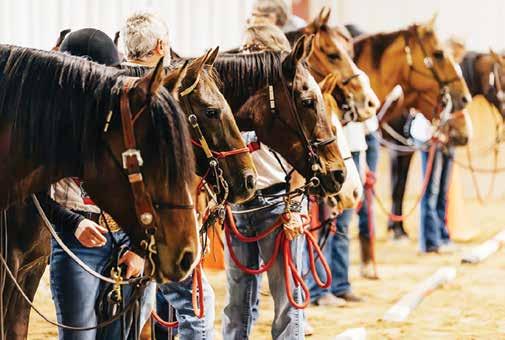
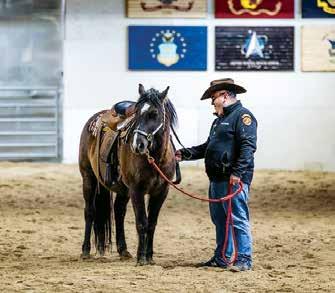
BraveHearts is a nonprofit organization based in Illinois, which was started more than 20 years ago as a therapeutic riding program to help disabled children, military Veterans and their families.
All Veterans and family members are served at no charge.
Therapeutic riding lessons are offered year-round, and the staff provides therapy every night of the week.
Trail to Zero
One of the many things the nonprofit does to raise awareness for the plight of Veterans is to put on the Trail to Zero, a 20-mile trail ride held at various cities across the country.
Around eight to 15 riders from BraveHearts, along with local mounted police units and staff from the U.S. Department of Veterans Affairs (VA) take part in the ride.
These rides are called Trail to Zero because, sta-
tistically, 20 U.S. Veterans every day, on average, commit suicide due to post-traumatic stress disorder.
The goal is to try to reduce this number to zero.
Getting involved
BraveHearts depends on a score of dedicated people – staff and volunteers – who believe in the organization’s mission and goals.
One of these people is David House, a member of the nonprofit’s board of directors.
House was introduced to BraveHearts through the cutting horse industry.
Although his career was in the oil and gas industry, he always liked horses. He grew up in southwest Arkansas and his family owned horses. He has lived in Tulsa, Okla. for 50 years.
“When I left home to go to school, I had to sell all of my horses and didn’t have any horses for the next 40 years,” House shares. “Then I just happened to be in the

right place at the right time to be reintroduced to horses, and they’ve been an important part of my life for the past 15 years.”
House enjoys riding cutting horses as an amateur competitor.
“When BraveHearts came to Fort Worth, Texas for their cutting demonstration and competition four years ago, my trainer Andy Sherrerd was involved as a volunteer, which is how I found out about BraveHearts,” House says.
He notes Sherrerd understands horses and the importance of the animals in helping people heal. Sherrerd has been an active supporter of BraveHearts by helping secure horses for the program.
“BraveHearts became very special to me because I have a nephew who came home from deployment in Afghanistan and Iraq 100 percent disabled,” House remarks. “Organizations
that have figured out how to help Veterans soon became very important to me.”
Diving in House notes, over the years, he has become more heavily involved in the program and has purchased horses specifically for the organization. He




also handed over one of his retired cutting horses to the program
“BraveHearts does an incredibly good job at helping Veterans reclaim their lives, and this is very special to me because I’ve seen what happens to people when they don’t have access to these types of programs,” he says.
business, it always came down to capital allocation,” he says. “If you allocate your capital in the right place, you’ll have a successful company. If you allocate capital to the wrong projects, you will fail.”
“We just need an opportunity to allocate more capital to BraveHearts,” he adds.










“I have talked with scores of Veterans who have been through or are still active in BraveHearts programs, and they will tell you they wouldn’t be here today without this program – they would have taken their own lives,” he adds. “There’s nothing more powerful than a statement like that. It really gets your attention.”
House was on a prayer call a few months ago illustrating this point.
“The Vet who was on the call said he was able to put his gun down after he went out to the BraveHearts farm and spent time with his horse,” House shares.
Looking to expand
“BraveHearts President and Chief Executive Officer Meggan Hill-McQueeney and her team have figured it out, realizing what it takes to save Veterans with an incredibly successful program. The only thing they can’t do is get to everybody who needs their help,” House says.
He notes his long-term goal as a board member is to expand BraveHearts to everyone who needs it – as far west as California and east as Florida.
“I spent 50 years in the oil and gas business in various capacities, and in this
“Meggan is incredible. She has the vision and comes to it with a horse perspective that is so important for people who are trying to expand programs at BraveHearts.”
House notes the challenge has been raising enough money to expand, which is their current focus. He points out the BraveHearts budget needs to be nearly ten-fold of what it is right now.
He believes it will help if more people learn about the BraveHearts mission and success, as nearly everyone who knows a Veteran realizes the issues they face is a universal problem.
“BraveHearts is unique. There are hundreds of equine therapy groups and many of them help Veterans, but in terms of effectiveness I think BraveHearts is in a league of their own,” House states. “They understand how to help these people. This is a very spiritual organization, with prayer chains going around daily. There are so many positive interventions that emanate from BraveHearts on a daily basis.”
Heather Smith Thomas is a corresponding writer for the Wyoming Livestock Roundup. Send comments on this article to roundup@ wylr.net.
energy economy, reduce energy costs for consumers, create well-paying jobs, address the climate crisis and support clean air and environmental justice priorities.
This effort aligns with the overall goal of achieving a 100-percent clean electricity grid by 2035.
The DOI states, “The updated Western Solar Plan identifies the availability of over 31 million acres of public lands across the 11 western states for utility-scale solar project applications. However, only approximately 700,000 of those acres are anticipated to be developed by 2045 to meet projected demand.”
The original Western Solar Plan included six southwestern states – Arizona, California, Colorado, Nevada, New Mexico and Utah.
With the update, Idaho, Montana, Oregon, Washington and Wyoming have been added.
The updated Western Solar Plan’s approval follows the publication of a draft plan in January 2024 and a proposed plan in August 2024.
It reflects input received from a diverse group of stakeholders, governments and other interested parties throughout the process.
The proposed plan also underwent a 30-day public protest period and a 60-day governor’s consistency review before the BLM decided to approve it.
Plan support
This action builds on dozens of executive actions the Biden-Harris administration has taken to accelerate and improve federal permitting to deliver more projects more quickly.
“The plan seeks to guide solar project development by identifying lands near transmission lines and previously disturbed lands as available for project applications, while excluding sensitive areas like specially-protected lands, lands containing important cultural resources and critical wildlife habitat,” states the DOI press release. It further notes this will help ensure responsible development, speed up the permitting process and
provide greater predictability to the solar energy industry.
“Under the BidenHarris administration, the DOI has moved at the pace needed to meet the moment and swiftly grow a robust and sustainable clean energy economy while protecting precious resources in America’s public lands. With an updated Western Solar Plan, created with extensive input from the public, DOI will ensure the responsible development of solar energy across the West for decades to come,” states DOI Secretary Deb Haaland in the press release.
Principal Deputy Assistant Secretary for Land and Minerals Management Dr. Steve Feldgus adds, “Solar energy is an affordable and fastgrowing component of the nation’s modern power supply and is helping the U.S. build a strong and resilient clean energy economy. The updated Western Solar Plan will ensure solar project permitting is more efficient and offers clarity for project developers, while maintaining flexibility to adapt to local needs and concerns.”
Overall, the BLM has
permitted clean energy projects on public lands with a total capacity of more than 33 gigawatts –enough to power over 15 million homes.
In 2024, the BLM also issued a final Renewable Energy Rule, which lowers consumer energy costs and the cost of developing solar and wind projects, while improving the project application processes, creating jobs and incentivizing developers to continue responsibly developing solar and wind projects on public lands.
Opposition to the plan Late last year, U.S. Rep. Harriet Hageman (R-WY) responded to the plan stating, “This proposal will severely impact Wyoming, as one-half of our state’s surface lands are federally managed. The plan blocks off large swaths of lands for the installation of environmentally-unfriendly solar panels, eliminating the ability to graze, mine or produce fossil fuels – all the things America needs to drive down costs of energy, food and housing.”
Western Caucus Chairman Dan Newhouse (R-WA), along with Hageman, led nine additional Western Caucus members
in a letter to the BLM in September 2024, requesting the agency withdraw its proposed updated Western Solar Plan.
“The proposed Western Solar Plan is another Biden-Harris administration policy detrimental to communities across the West,” states Newhouse. “This plan risks violating the multiple-use mandate for public lands established by the Federal Land Policy and Management Act and threatens valuable grazing lands while also elevating.”
According to U.S. Rep. Matt Rosendale (R-MT), the agency’s plan will lock up 572,479 acres of public land in Montana alone for solar development, creating a “multitude of problems” for wildlife, the environment and the livelihood of citizens in Montana.
He says, “I’m concerned the Western Solar Plan violates the Taylor Grazing Act, which regulates grazing on public lands and will produce intermittent energy in places where it will still need to be transmitted hundreds, and in some cases, thousands of miles before it can be used.”
Other lawmakers in
Western states have also expressed concern over BLM’s plan for solar development, including U.S. Sens. John Barrasso and Cynthia Lummis (both R-WY), Jim Risch and Mike Crapo (both R-ID), Steve Daines (R-MT) and Mike Lee (R-UT), as it could disrupt grazing, mineral development and recreation.
In addition, American Clean Power Chief Policy Officer Frank Macchiarola mentions in a statement, “It’s disappointing BLM did not finalize a more balanced approach to development and conservation. The solar industry has consistently raised concerns during this process about the impact of land exclusions and project design features which are not even remotely addressed by this decision.”
He continues, “This final decision represents a missed opportunity to deliver benefits to the U.S. economy and our energy security and reliability by helping pending and future projects get approved on an appropriate timeline.”
Melissa Anderson is the editor of the Wyoming Livestock Roundup. Send comments on this article to roundup@wylr.net.
After many years of service to the state of Wyoming, Alan Edwards, the Department of Environmental Quality (WDEQ) deputy director, has announced his retirement, effective Jan. 10. Edwards served within the WDEQ as deputy director and administrator of various departments including administrator of the Abandoned Mine Land Division from 2010-20 and as the Industrial Siting Division administrator from 2022-23.
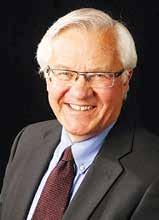
Over his last year and a half at WDEQ, Edwards was the deputy director, providing day-to-day assistance to the agency’s director and coordinating agency-wide activities.
WDEQ Director Todd Parfitt says, “Edwards has been an invaluable part of the WDEQ. His institutional and professional knowledge of the agency and the state and his ability to work with stakeholders was a tremendous benefit to the WDEQ and Wyoming.”
Prior to working at the WDEQ, Edwards was a member of the state Planning Office under Gov. Mike Sullivan. Counting his work there and his work at WDEQ, Edwards served the state of Wyoming in various administrative capacities for about 22 years.
Edwards began his career in energy and the environment after receiving his bachelor’s and master’s degrees in civil engineering and geology.
Among his various roles, he was appointed and worked with the U.S. Department of Energy as the principal deputy assistant secretary for fossil energy. For several years, he worked with the National Rural Electric Cooperative Association,
developing new cooperative businesses nationwide.
After his tenure with the association, he went on to be a senior vice president for several years for the Basin Electric Generation and Transmission Cooperative. As an engineer, he also provided professional engineering services to two separate regional and national engineering firms.
“My time with the state and WDEQ has been personally very rewarding. I have been afforded the opportunity to work with some great people both inside state government, in the state and on a regional and national level,” states Edwards.
“It is rare to have this depth of knowledge and experience working for

you,” says Parfitt. “We’ll miss his incredible leadership and extensive knowledge of the agency’s work,
government and the environment, but we wish him all the best in his wellearned retirement.”

Jan. 11-13 50th Annual National Salers Show, OKC Fairgrounds, Oklahoma City, Okla. For more information, visit salersusa.org/events/cattlemen-s-congress
Jan. 13
Jan. 13
Jan. 14
Jan. 14
Jan. 15
Jan. 15
University of Nebraska-Lincoln Extension Fundamental Knowledge for a Successful Calving Season Webinar Series, 6:30-7:45 p.m., online. For more information or to register, visit cvent.me/3YDblK
University of Nebraska-Lincoln Extension Drylot Feeding Cow/Calf Pairs in the Spring and Summer of 2025, 6:30 p.m., online. For more information, e-mail Aaron Berger at aberger2@unl.edu.
University of Wyoming Post-Fire Educational Rangeland Management Program, 10 a.m.-2 p.m., Twing Room, Johnson County Public Library, Buffalo. For more information, contact the Johnson County Extension Office at 307-684-7522.
Bureau of Land Management Newcastle and Nebraska Resource Management Plan Public Meeting, 3:30-7:30 p.m., Crook County Courthouse, Sundance. For more information, visit eplanning.blm.gov/eplanning-ui/project/2013064/510
University of Nebraska-Lincoln Extension Fundamental Knowledge for a Successful Calving Season Webinar Series, 6:30-7:45 p.m., online. For more information or to register, visit cvent.me/3YDblK
Bureau of Land Management Newcastle and Nebraska Resource Management Plan Public Meeting, 3:30-7:30 p.m., Newcastle Lodge and Convention Center, Newcastle. For more information, visit eplanning.blm.gov/ eplanning-ui/project/2013064/510
Jan. 15 Beef Cattle Research Council Foot and Mouth Disease Webinar, 7 p.m., online. For more information or to register, visit beefresearch.ca
Jan. 15-18 American Sheep Industry Association Convention, Scottsdale, Ariz. For more information, visit sheepusa.org
Jan. 16 Bureau of Land Management Newcastle and Nebraska Resource Management Plan Public Meeting, 3:30-7:30 p.m., Niobrara County Fairgrounds, Lusk. For more information, visit eplanning.blm.gov/eplanning-ui/project/2013064/510
Jan. 16-18 Wyoming Farm Bureau Federation Young Farmer and Rancher Conference, Cody. For more information, visit wyfb.org
Jan. 16-Feb. 27 University of Wyoming Preserve@Home Course, every Thursday at 1 p.m., Zoom. For more information, contact Vicki Hayman at vhayman@uwyo.edu or 307-746-3531. To register, visit bit.ly/register-preserve
Jan. 21 University of Nebraska-Lincoln Extension Fundamental Knowledge for a Successful Calving Season In-Person Workshop, 6 p.m., Box Butte County Extension Office, Alliance, Neb. For more information or to register, visit cvent. me/3YDblK
Jan. 21-23 University of Wyoming Extension Pesticide Safety Education Program, Ramkota Hotel and Conference Center, Casper. For more information, visit uwyoextension.org/psep or contact Jeff Edwards at jedward4@uwyo.edu or 307-837-2956.
Jan. 22 University of Nebraska-Lincoln Extension Fundamental Knowledge for a Successful Calving Season In-Person Workshop, 12 p.m., Sandhills Public School, Dunning, Neb. For more information or to register, visit cvent.me/3YDblK
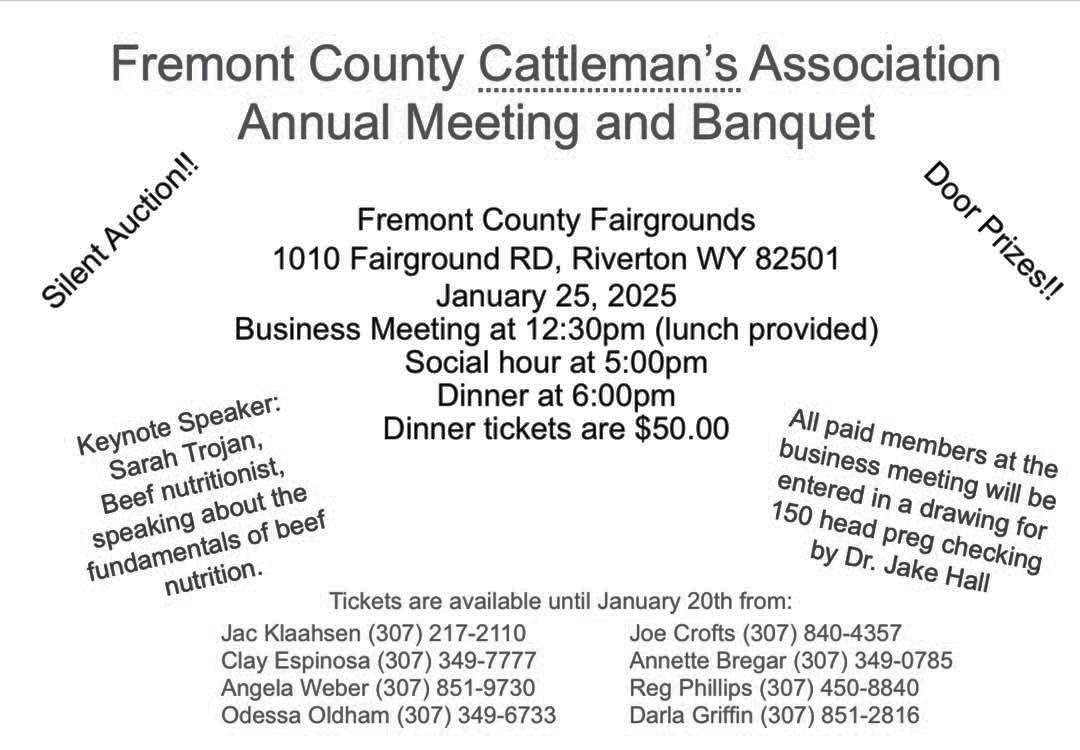
Dec. 15-Jan. 21 Beaver Creek Ranches Silent Auction, 918-413-7016, 307-672-7434, 307461-0906, 307-674-6947, 307-752-6949, beavercreekranches.weebly.com
Jan. 14 Cattle Country Video Winter Classic, Goshen County Rendezvous Center, Torrington, 888-322-8853, 307-575-5005, cattlecountryvideo.com
Jan. 16




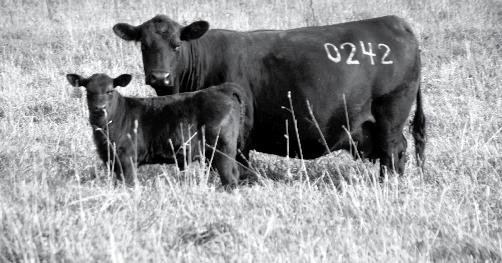


Ingalls Angus and Quarter Horses Annual Production Sale, Riverton Livestock Auction, Riverton, 307-349-3097, 307-349-1894, 307-690-7557
Jan. 18 Redland Angus Annual Range Calved-Range Raised Production Sale, Buffalo Livestock Marketing, Buffalo, 307-250-1548, redlandangus.com
Jan. 21
Jan. 23
Jan. 24
Ken Haas Angus 44th Annual Right Combination Bull Sale, at the ranch, LaGrange, 307-834-2356, kenhaasangus.com
Marcy Livestock 63rd Annual Angus Bull and Female Sale, Gordon Livestock Auction, Gordon, Neb., 308-430-2005, marcylivestock.com
McConnell Angus Annual Bull and Female Sale, at the ranch, Dix, Neb., 308-235-5187, 308-230-0430, 970-215-3204, mcconnellangus.com
Jan. 25 Little Goose Ranch Eighth Annual Production Sale, Buffalo Livestock Marketing, Buffalo, 307-751-1535, 307-622-8330, 307-673-0049, littlegooseranch.com
Jan. 25 Jauer Dependable Genetics 48th Annual Bred Female and Bull Sale, at the ranch, Hinton, Iowa, 712-253-8710, jauerangus.com
Jan. 25 21 Angus 31st Annual Top Cut Bull Sale, at the ranch, New England, N.D., 701-579-4221, 21angus.com
Jan. 26 Triangle J Ranch 35th Annual Bull Sale, at the ranch, Miller, Neb., 308-6275085, 308-457-2505, 308-293-9241, trianglejranch.com
Jan. 27 Douglas Booth Family Angus 33rd Annual Bull Sale, Torrington Livestock Market, Torrington, 307-532-5830, 307-532-6207, boothfamilyangus.com


An editorial in the May 23, 1895 Saratoga Sun relates:
We have two kinds of money. One is money of redemption, and the other is credit money. Up to 1873, gold and silver was our redemption money, and paper money was our credit money.
Since then, gold alone is our redemption money, and silver and paper money are both credit money. Redemption money is that which is used as a basis for a monetary system. Thus, when we had a bimetallic system, the government exercised its option to redeem credit money in either, but adapted its practice in this respect to the convenience and requirements of business.
It could easily throw its great influence toward increasing the use and popularity of either metal if it saw fit to do so.
This gave a double standard and a double quantity of redemption money, adapted to both the wants of the people and the large transactions of commerce.
“Demonetizing” silver was caused by taking away from its free coinage, its legal tender character and its right to be used as money of redemption.
to its proper position as redemption money.
The less redemption money, the less credit money can be safely floated, so under a gold standard, only one-half as much paper or credit money can be issued as under a bimetallic standard.
Many ingenious statements are made by monometallists that are confusing, and among them is the statement they are in favor of bimetallism.
But, when questioned, it is found they are in favor of buying one metal with the other using gold to buy silver. They lose sight of the distinction in one case silver is redemption money and in the other is credit money and as credit money, is no more useful than paper money.
Wheat, cotton, corn and all commodities would immediately advance under a bimetallic system, and under
a single standard system, will remain low and unprofitable as at present. When considered in connection with the rapidly increasing debt of the country, now amounting to about $40 billion, conditions will grow worse. Under a free bimetallic system, it will take years to undo the evils which have reunited and reduce this accumulated indebtedness. And, in doing so, we will need all of the gold and silver we can induce to come into the U.S., and it may be necessary to reproduce the old laws of Washington and Jefferson who made silver coins of other nations legal tender in this country. It may also be necessary to reduce our ratio to 15 to one, less than that of other nations – 15.5 to one – as an inducement for their silver to come to this country. – Coin’s Hand Book
Spooky, isn’t it. Reading this article is like my grandkids trying to explain to this old geezer the meanings and workings of cryptocurrency, Bitcoin and AI. Last I remember, AI stood for artificial insemination which the kids didn’t understand –as well as the present day national debt.




It is still coined into money, but it is now used as credit money, the same as paper money. No number of “purchase acts” could restore it to its old position. These purchase acts have been used to pile silver up, while prejudicing the people against it.
Nothing but free and unlimited coinage, the same it enjoyed before 1873, can restore silver
Source: USDA AMS Livestock, Poultry & Grain Market News, Torrington
Source: USDA AMS Livestock, Poultry & Grain Market News, Greeley, CO
Wyoming Hay Summary
As of January 8, 2025
Movement and demand has been slow the past couple weeks all over Wyoming. According to the U.S. Drought Monitor Website most of Eastern Wyoming is under extreme dry soil moisture. Western Wyoming is moderately dry to severe dry soil moisture. According to the National Weather Service Website precipitation was a lot lower than normal for this time of year all over the state. Temperatures have been above normal for this time of year. Central Wyoming
Alfalfa - Supreme Cubes 400 Eastern Wyoming
Alfalfa - Supreme Large Square 3x4 195 Pellets 15% Suncured 260
Alfalfa - Good Large Square 3x4 145 (Old Crop) Large Square 3x4 115 Western Wyoming
Alfalfa - Supreme Cubes 380 Small Square 270 Small Square 240
Alfalfa - Good Large Square 3x4 125-135
Alfalfa/Grass Mix -Good Large Square 3x4 145
Grass - Good Large Square 3x4 110
Source: USDA AMS Livestock, Poultry & Grain Market News Torrington
Nebraska Hay Summary
As of January 9, 2025
Compared to the last report three weeks ago hay prices sold steady. Demand remains mostly light. Best demand is for hay going out of state, especially getting transported east of Nebraska. Many hay producers thought we needed
Source: USDA AMS Livestock, Poultry & Grain Market
As of January 3,
U.S. Drought Monitor as of December 31, 2024 Small areas of the region did observe heavy rainfall, where rainfall totals were more than an inch above normal. This above-normal precipitation allowed for improvements to be made in South Dakota and along the Wyoming-Colorado border. Moderate to extreme drought were improved in northern Colorado and southern Wyoming, while severe drought was improved in western South Dakota. Abnormal dryness was also improved in areas along the Wyoming-Colorado border this week.
AMS Livestock, Poultry
Colorado Hay Summary
As of January 8, 2025
Compared to last report: Trade activity and demand light. No trend available as the last report was 3 weeks ago. Growers are seeing an increase in price inquiries since the Christmas Holiday week. The next available report will be
January 16, 2025.
“I think there are some different responses that manifest themselves based on where we are in the state, and I think they are tied to a few key things.”
According to Mealor, these include a higher proportion of rhizomatous grasses in the eastern part of the state and a history of shorter fire return intervals in the west.
“There’s some evidence suggesting in the western part of the state, there may have been up to 300 years between naturally occurring fires historically,” he noted.
Post-fire grazing
Mealor further noted the ability to manage for diverse and healthy rangeland communities or predict vegetation trajectory following a fire depends on a few key aspects.
These include fire intensity, fire severity, weather, precipitation and pre-fire vegetation composition.
He pointed out one of the most frequently asked questions from producers following a fire is how long they should rest pastures before grazing.
To answer this, he cited findings of several research
studies conducted in Wyoming and Montana comparing grazing intensity over time following a fire.
“There was a slight tendency grazing in the first year reduced perennial grass biomass, especially when they got up to 50 percent utilization, but we kind of expect this because animals are grazing the only biomass there,” Mealor stated. “Then, if we look at the second year after the fire, we saw a tendency to have more perennial grasses.”
He continued, “If we see an increase in annual grasses following a fire, in many cases, it isn’t the first year or two after a fire. Sometimes it takes three to four plus years for annual grasses to ramp back up and either be where they were pre-burn or maybe even exceed those pre-burn levels in some cases.”
Additionally, these studies found post-fire grazing resulted in a tremendous increase in annual bromegrasses, including Japanese and downy bromegrass.
Ultimately, Mealor noted, “The thing I want to point out, especially in the
Vance Burton Anderson passed peacefully in the comfort of his home on Jan. 1.
Burton was the definition of the saying “The man, the myth, the legend,”
which all started on Dec. 22, 1940 when he made his big debut by being born in the car while heading to the hospital in Ogden, Utah. Growing up, Burton spent most of his time help-
Great Plains system, it’s not a foregone conclusion a fire is going to shift to annual grass dominance, especially if there was an annual grass dominance before the fire.”
However, he noted this pattern is species specific.
“If we look at Western wheatgrass, which is bulletproof in a lot of ways –it stands up to grazing, fire and many of our herbicide treatments – so grazing the year following the fire did not seem to negatively affect the composition the next year,” he said.
On the other hand, grasses like needle and thread and bunchgrass tend to be a little more susceptible to grazing and may see a decline in production.
“The take home here is it’s probably not going to hurt plant community composition to take time off from grazing following a fire,” he concluded. “But, if there is a situation where grazing is necessary on those sites and they get some precipitation before spring, it’s not a nail in the coffin to graze those sites appropriately.”
Invasive grasses
Mealor noted it’s hard to have a post-fire range-
ing on his parent’s dairy farm in Kanesville, Utah. Burton is the third of six children, and their home was a place of love, adventure and hard work.
Burton met the love of his life, Joan Wintle Anderson, after playing saxophone with his band at the Utah State Music Clinic. He knew the moment he laid eyes on her she was the one, and they didn’t come
land recovery discussion without bringing up invasive grasses.
“I think we have excessively publicized the relationship between fire and cheatgrass to some extent,” he admitted. “But there is some really interesting new research showing fire needs cheatgrass more than cheatgrass needs fire.”
With this, Mealor explained fire isn’t the sole perpetrator of a cheatgrass problem – there must be a seed source that is able to respond to the disturbance.
He nodded to some observational studies based in the Thunder Basin which found sites with less than 20 percent annual grass cover had a lower likelihood of annual grasses becoming dominant after a fire than sites with greater than 20 percent annual grass cover.
“So, we’re kind of faced with an interesting trade off regarding where we should try to invest in some post-fire annual grass control, and I think it would make the most sense on sites where we knew we had problems beforehand,” he explained.
“One of the silver linings is there may be a window of opportunity to reestablish desirable plants on burn sites before cheatgrass
better than her. Their love story progressed quickly, and despite her parent’s wishes for them to slow things down, Burton and Joan ran away to Minnesota and tied the knot on Sept. 17, 1959. One year later, they were sealed for time and all eternity in the Salt Lake City temple. Soon after, they started their family and had six beautiful children.
or other annual invasives start to ramp up,” he added.
Ventenata is another invasive grass plaguing the state of Wyoming, and while little is known about ventenata’s response to fire, data from Oregon suggests ventenata does not react positively or negatively to fire disturbance.
“Whether the monitoring sites in the study were burned or not burned, the frequency and cover of ventenata continued to march forward and get worse,” Mealor shared. “I guess in one way, it means it’s predictable and we should just continue to work our strategy for this species.”
To conclude his presentation, Mealor noted Wyoming is home to half of the best sagebrush grasslands in the nation, and recently there has been a large push to conserve these habitats.
“Historically, it took quite a long time before sagebrush naturally came back after a fire. Areas with annual grasses makes this even more difficult because sagebrush seedlings are puny competitors, especially where there is a high density of annual grasses,” he explained. “I would also say it’s hard for sagebrush to recover on sites with
Burton could take raw ground and make it prosperous. He loved learning and had many talents. He had a creative and brilliant mind and could invent or reinvent anything to make any given profession run more efficient.
He was the type of guy to make anything work – he could make a square block fit in a round hole. It seems impossible, but he is the one person who could figure it out.
good perennial grass cover as well.”
“But, in places where we were able to reduce grass competition over the long term, we’ve seen some pretty tremendous sagebrush growth in just a year,” Mealor added.
The good news for producers is grazing has been found to be an effective method for reducing grass cover and encouraging sagebrush growth post fire.
Mealor reiterated this by mentioning research done in eastern Oregon which tracked the growth of sagebrush transplants in areas with and without livestock grazing. The study ultimately found areas that were grazed had a greater instance of sagebrush reestablishment over time.
“Overall, I think many of the places where we had severe fires this year are probably going to be in pretty good shape in a couple of years if we are able to manage them correctly,” he concluded. “In the meantime, I will pray for rain and snow – hopefully we will get it.”
Hannah Bugas is the managing editor of the Wyoming Livestock Roundup. Send comments on this article to roundup@ wylr.net.
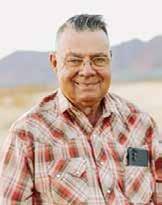
people he cared about.

Burton had a strong testimony of Jesus Christ and His gospel. He enjoyed church and served in many capacities. Burton spent many summers as a missionary for The Church of Jesus Christ of Latter-Day Saints, assembling the Nauvoo pageant stage.
One summer, the British pageant joined the Nauvoo pageant, and Burton was honored to be the one to design and weld the metal gates and fencing on stage.
Burton was a dedicated and supportive family man. His children, grandchildren and friends could always count on him for anything.
As he grew older, he would sit quietly in the chaos of family gatherings with a big smile on his face, contentedly observing the
Burton is preceded in death by his parents Alvin Bennett Anderson and Melba Ruth Burton, his wife Joan Wintle Anderson, his brothers Alvin Bennett and Harold Brent, granddaughter Miranda Colleen Kesler and great-grandson Deagan Kaden Brown.
Burton is survived by his wife Linda Wilson Anderson; his sisters Melba Bodily, Margaret Henstra and Connie Ship; his six children, Jodie (Norman) Hansen, Jeffery (Robin) Anderson, Lance (Jennifer) Anderson, Brenda (Scott) Kesler, David (Jennifer) Anderson and Meri Ellen (Wayne) Nunley; 39 grandchildren and 60 greatgrandchildren.
Funeral services were held on Jan. 11 at the Ivins Stake Center in Ivins, Utah.







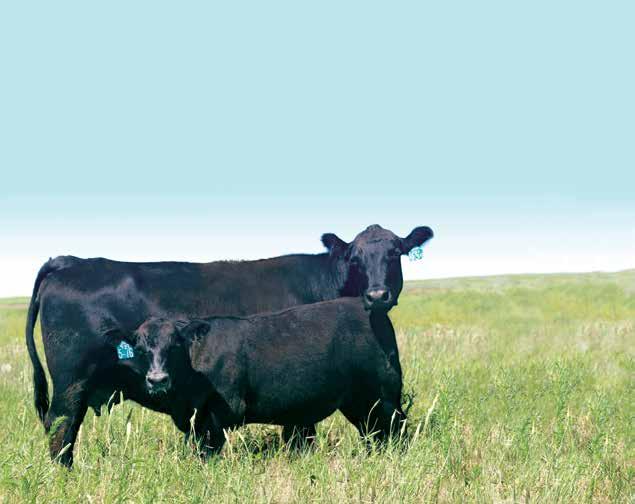
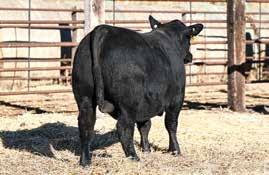
MILK COW
Dillon Hedges- 1 Jersey 5 yr old Bred Cow. Bred to LBW Durbin Creek Hereford Bull to calve in May. Bull was pulled August 10th. Halter Broke, Hand & Machine milked, used as nurse cow last 2 years. Raised 3 calves that avg 525# mid Oct. Rec Virashield 6 VL5, Clean-Up & Poured this fall. Been running out all fall.
Dockery Ranch- 1 Brown Swiss Milk cow. Older. Calving after June.
1 Jersey Milk cow. Older. Calving after June.
BRED COWS
Anderson Ranch- 109 Blk,BWF & Sml % RWF ST Bred Cows. Bred to Blk Ang bulls to calve March/April. Choice, high desert cows!
Double L Ranch- 100 Blk Ang & AngX Running Age Bred Cows. Rec Virashield 6 VL5 & poured. Bred to Abernathy Ranch Black Ang bulls to calve March/April. Raised 530# calves in mid Oct. Complete dispersion of One Brand cows! High desert cows!
Abernathy Ranch- 80 Blk Ang & AngX Bred ST Cows. Bred to good Black Angus bulls to start calving March 10th. Rec Virashield 6 VL5, Pili Shield + C & poured this fall. Super group of proven high desert cows!
Hat Bar Cattle Co- 70 Blk Ang & AngX 6-10 yr old Bred Cows. Bred to Popo Agie Blk Ang bulls, selected for WW & YW, to calve March-May. Complete Dispersion!
Grant Whitman- 55 Blk Ang/SimX Bred 3-ST Cows. Bred to Sim/Ang low PAP tested bulls to start calving the end of March. Years of Low PAP genetics. Complete dispersal of high desert, proven cows!
Hopkin Hamilton Ranch- 50 Blk Ang & AngX Bred Cows 5-9 yr olds. Bred to Vermillion Ranch Blk Ang bulls to calve April/May. Reputation, one brand & High Desert!
Dockery Ranch- 46 Blk Ang Bred Cows (3-ST). Bred to Sitz Blk Ang bulls to start calving March 15th. Rec Virashield 6 VL5 HB & poured this fall. High desert cows!
Martin Ranch- 40 Blk Ang & AngX ST Bred Cows. Bred to Blk Ang bulls to calve March/April. Rec Virashield 6 VL5 & poured. Choice, one brand, High desert Cows!
Frank Ranch- 25 Blk Ang Bred Running Age Cows. Bred to SO Ranch Blk Angus bulls to start calving Feb 10th. Rec Scour Guard & poured twice. High elevation. Good, reputation cows!
Horton Land & Livestock- 20 Blk Ang & AngX Bred ST Cows. Bred to Paintrock Blk Angus bulls to calve March/April. Rec Scour Bos, Poured & Safeguard this fall. Good, proven cows!
P/T Livestock- 15 Blk Ang Bred 4-8 Yr old Cows. Bred to Blk Angus & Sim/Ang Bulls to calve March/April. Big time calf raiser used in our ET Recip program. Been weaning 700-800# calves. Complete vaccination & mineral program. Brandon Teppo- 6 Blk Ang Bred Running Age Cows. Bred to Hereford Bull to start calving April. Shots & poured @ branding. High elevation. Nice cows!
Ryan Hedges- 3 RedX ST Bred Cows. Bred to LBW Blk or Red bulls to calve March/April. Rec Virashield 6 VL5, Clean-Up & Poured this fall. Running out on pasture. High desert proven cows! BRED HEIFERS
Sarah Faith Ranch- 75 Blk/BWF Ang & AngX Bred Heifers 1000#. AI Bred & Synchronized to LBW Select Sires Blk Ang bull Wolverine to calve end of Feb/1st of March. Born @ 7000 ft, summer @ 8000 ft. Rec shots & poured this fall. Body condition score of