PINK CONNE ION

Issue 43: Feb - April ‘26
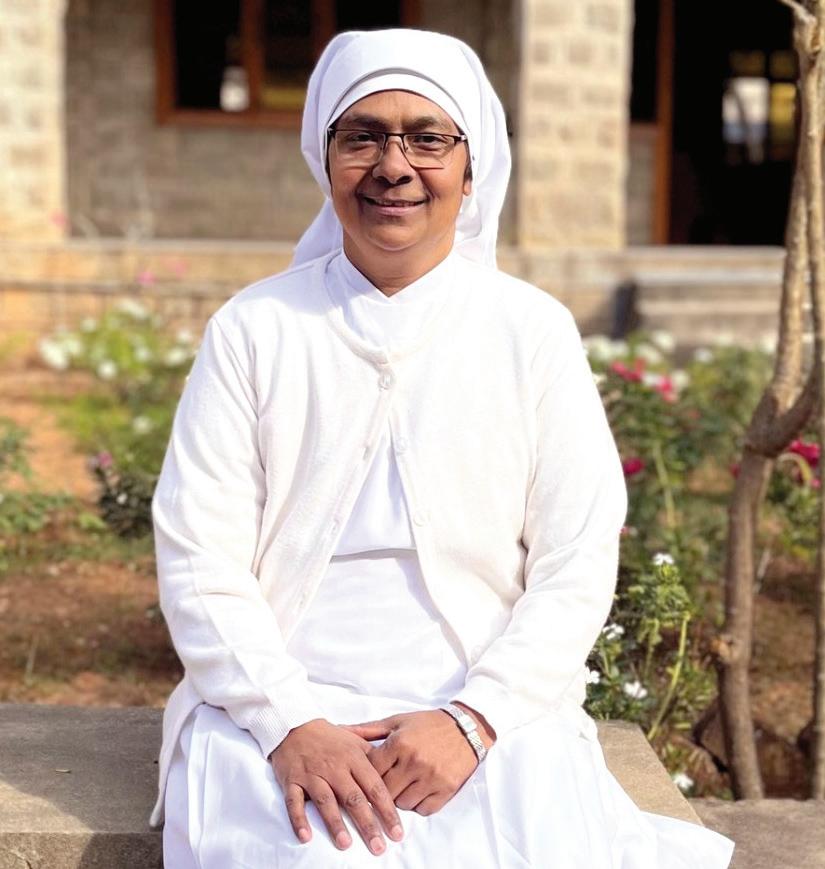
Sister Veronica’s triumph over breast cancer
Shaheen Malik became a lifeline for others
Lit Fests
The sheer energy they generate
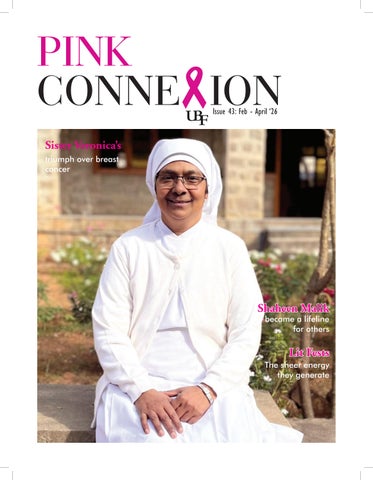
Issue 43: Feb - April ‘26
Sister Veronica’s triumph over breast cancer
Shaheen Malik became a lifeline for others
Lit Fests
The sheer energy they generate
We seem to be so stressed these days, which often leads to many physical and mental ailments. Apart from work or family pressures, much of our anxiety is caused by information overload. We are constantly on our phones and iPads, receiving endless updates.
Unfortunately, our brains are not wired to process so much information, especially at such speed.
We seldom have a moment of quiet. This is truly the age of distraction. When we cook, we feel compelled to catch up on phone calls. When we go for evening walks, we listen to a guru who ironically tells us to slow down. When we talk or play with children, they are distracted by their iPads just as we are consumed by our to-do lists.
I recently listened to the travel writer and philosopher Pico Iyer, who does not carry a cell phone. He doesn’t feel the need to be accessible all the time or to check social media updates. He suggests to try keeping it away for half an hour every day. “You will see how the mind calms, and you are able to listen to your thoughts,” he says.
There is so much cacophony around us that we need to reclaim the peace that lives within us, and this will come only through silence. In Japan, where Pico Iyer lives, people have few conversations. His Japanese wife knows no English, and he knows no Japanese, yet they have been peacefully married for more than three decades.
I too urge this anxious generation to be mindful, and follow the best practices of Buddhism, which teaches us to do one thing at a time. But, when are we ever present in the moment? We live worrying about the future or the burdens of the past. Perhaps, we should let go, and live quietly in the present.
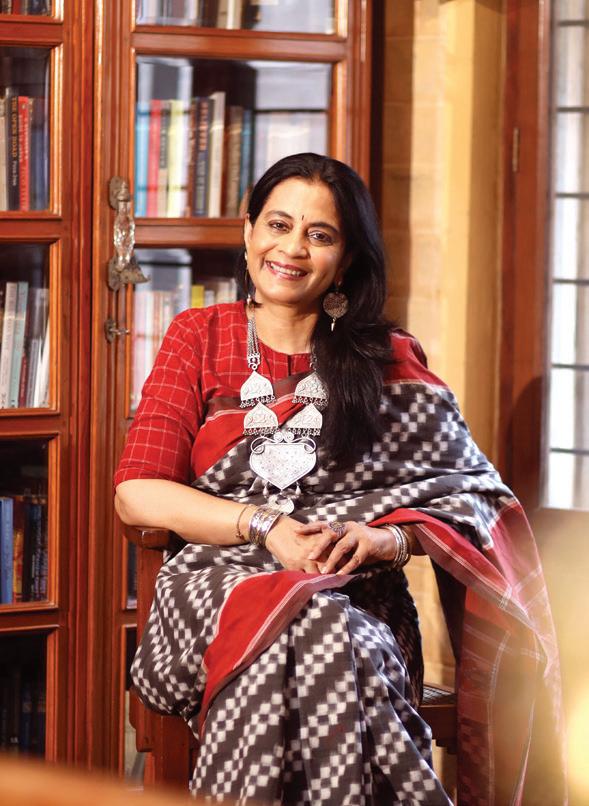
Ratna Rao Shekar
CANCER CONQUEROR
It has been an eventful quarter for Dr Raghu Ram and the KIMS–USHALAKSHMI Centre for Breast Diseases—from visits by experts, to delivering prestigious orations and making history at RCPSG! 3 8 11 14 17
Anchored in a greater purpose, devoted to serving the needy, Sister Veronica Maria was able to face breast cancer pragmatically. She shares her inspiring story
MAKING A DIFFERENCE
Pink profiles acid attack survivor Shaheen Malik, who transformed pain into purpose by founding the Brave Souls Foundation—which empowers survivors and fights gender-based violence
MY VIEW
In his quarterly column, Dr Raghu Ram argues that India must move towards meaningful action in its battle against cancer by strengthening systems and placing people at the heart of healthcare
FESTIVAL OF IDEAS
India’s literary festivals, from Jaipur to Hyderabad, are vibrant arenas—as they celebrate literature as performance, debate, and spectacle. Pink reflects on this colourful carnival
UBF DIARY
EDITOR
Ratna Rao Shekar CONTRIBUTORS
Sharmistha Maji
Mallik Thatipalli
Nivedita Choudhuri
DESIGN
Malvika Mehra
COPY EDITOR
Kavitha Shanmugam
PUBLISHED BY Ushalakshmi Breast Cancer Foundation


KIMS-USHALAKSHMI Centre for Breast Diseases Krishna Institute of Medical Sciences, Minister Road, Secunderabad - 500 003 +91-91009 13217 ubfhyderabad@gmail.com www.breastcancerindia.org


Follow us on https://www.facebook.com/ubfoundation https://twitter.com/rrpillarisetti
https://www.youtube.com/c/UshalakshmiBreastCancerFoundation
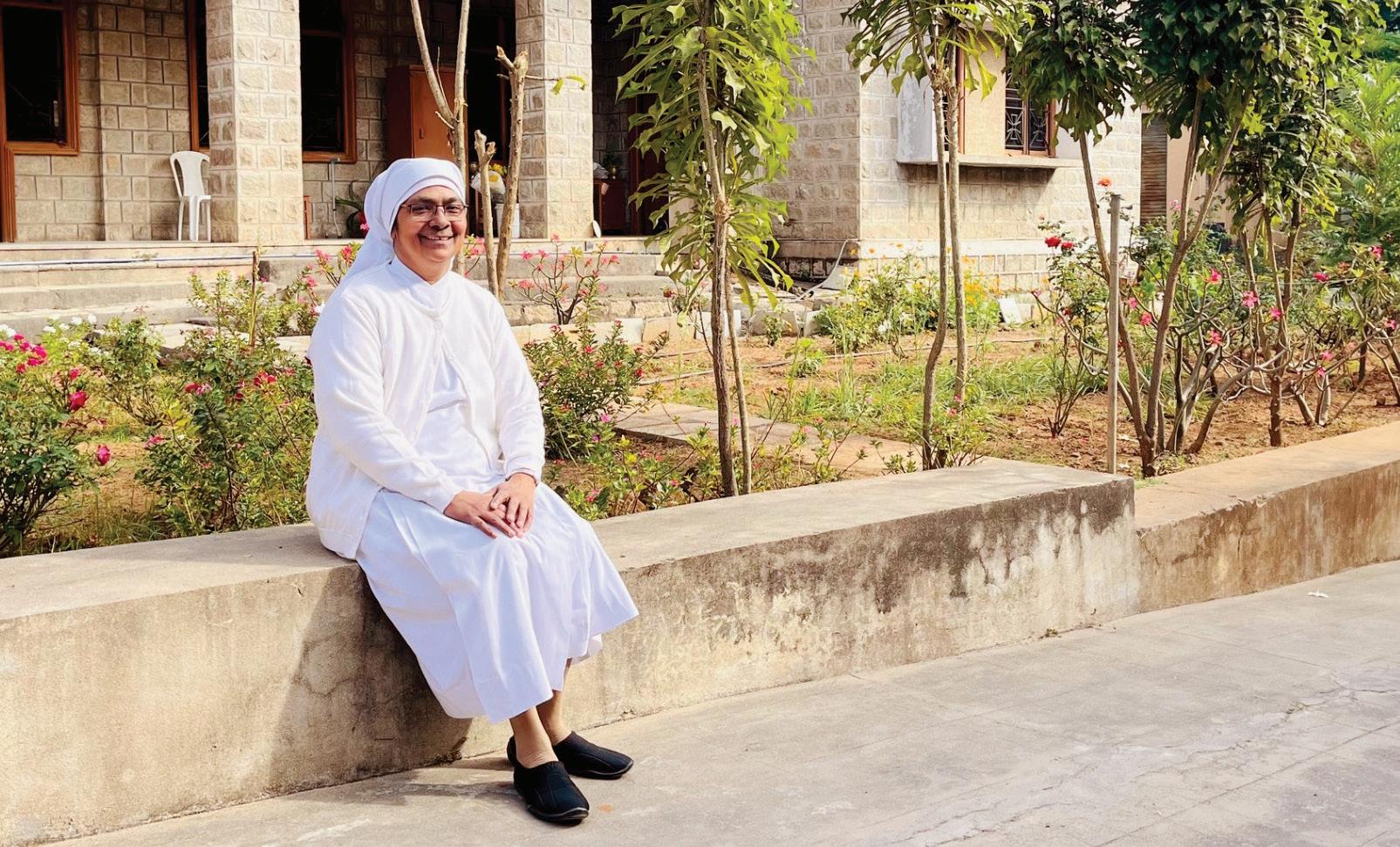
When someone dedicates her entire life to serving the less privileged, even life-threatening health conditions cannot shake her resolve. That was exactly the situation when Sister Veronica Maria learnt she had breast cancer. Her devotion to the less privileged gave her strength to overcome her tough battle.
The resilient survivor from Hyderabad shares her story with Sharmistha Maji
Atypical day for Sister Veronica Maria starts with gently helping senior citizens out of bed, assisting them with their morning routines, and accompanying them on short walks. Once the residents are cared for, she turns to her administrative responsibilities at Little Sisters of the Poor, an elderly care home in Secunderabad
What is remarkable is that even after being diagnosed with breast cancer, her daily life and devotion to service remained much the same.
As we sit down in the home for a conversation on her cancer survival, I honestly expect it to be an emotional one. But instead, I am quite pleasantly taken aback by her positivity.
She recalls, “I did not panic nor worry. In fact, I had no time to think about cancer and get bogged down by it, because I have loads of work at the elderly home. So, I would just rest for 1-2 days after the chemo sessions and then get back to work.”
“I believe one should continue working even when we are sick. If we just lie down thinking it’s the end of the world, that’s when more problems arise. I was very happy to remain busy with my daily duties,” says Sister Veronica, with a peaceful, almost calming smile, in a conversation with Pink.
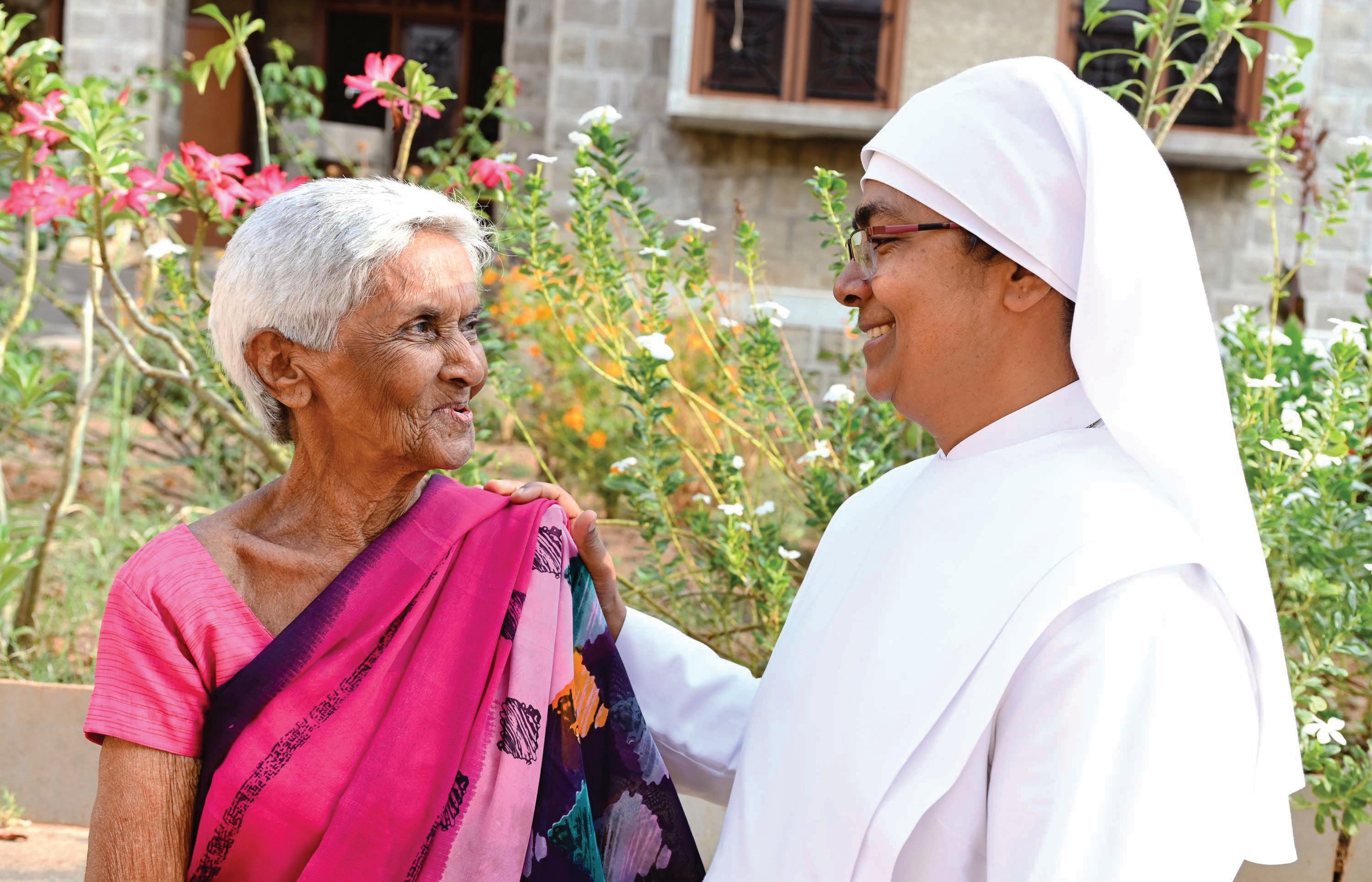
Her words instantly remind me of a chapter in the global bestselling book—Ikigai: The Japanese Secret To A Long And Healthy Life. The authors find that one of the biggest secrets behind the longevity of a Japanese community is that they never retire. They continue working throughout their lives, which gives them a sense of purpose, keeping them fit.
Dr Raghu Ram spent considerable time counselling me about the treatment plan, and his humane, empathetic approach was deeply reassuring. Fortunately, the cancer had not spread elsewhere in my body
The book also mentions how the famous artist and founder of Studio Ghibli, Hayao Miyazaki, went to his workshop to paint everyday even after he had officially retired. Continuing to lead a purposeful life probably helps people like Miyazaki and Sister Veronica to retain their sanity, regardless of circumstances.
The diagnosis
In February 2025, Sister Veronica noticed a lump in her breast. She first consulted Dr Evita Fernandez, a well- known
gynaecologist and a long-standing patron of the Little Sisters of the Poor, who advised mammography and an ultrasoundguided core needle biopsy. When the investigations confirmed malignancy, When the investigations confirmed malignancy, Dr Evita promptly referred Sister Veronica to Dr Raghu Ram.
The 55-year-old nun recalls, “Dr Raghu Ram carefully explained the results of my investigations and arranged a staging PET scan. He spent considerable time counselling me about the treatment plan, and his humane, empathetic approach was reassuring. Fortunately, the cancer had not spread elsewhere in my body. As the tumour was hormonereceptor negative (ER and PR negative) and HER2-positive, he explained that I would require chemotherapy along with part of the anti-HER2 therapy before surgery (neoadjuvant therapy).”
She was advised to undergo eight cycles of chemotherapy, followed by a mastectomy with removal of lymph nodes from the armpit (axilla), radiotherapy to the chest wall, and a one-year course of anti-HER2 therapy (trastuzumab). This comprehensive, step-wise treatment was aimed at eliminating the aggressive cancer cells and significantly reducing the risk of recurrence.
What was her initial reaction after it was confirmed that she had breast cancer? “I was not shocked at all and fully prepared. I have been tending to sick residents here for several years. Due to the nature of my work, I had a strange fleeting thought in 2024 that I might get cancer. I was feeling some tightness in my arms and couldn’t sleep one night,” she explains. This was one year before her diagnosis. Normally, people would not be so unperturbed by a lifethreatening disease, but for someone whose life is firmly anchored in a greater purpose, nothing could shake her spiritual outlook. Her approach was pragmatic and philosophical. “We are all eventually going to die someday. So, I always accept whatever God sends my way. Even when breast cancer was confirmed, I remained calm. But my sisters here (at the elderly care home) and my family members were worried,” she recalls.
Sister Veronica comes from Kerala, where she grew up in a family of eight sisters and one brother. There was no history of cancer in her immediate family, except her paternal uncle and his daughter, who had throat cancer and breast cancer respectively.
Though her administrative work at the old age home is largely a desk job, she has been following a fairly healthy lifestyle too—with timely meals and simple physical activities. Her
physical activities involve going on multiple rounds across the facility through the day, meeting and greeting the elderly residents and helping them with their daily activities, such as bathing. As a nature lover, she also enjoys gardening.
For a nun serving in a charitable organisation without any income, cancer treatment can be unaffordable. Yet she believes that God always sends angels to help, especially in recognition of the unconditional service they provide.
“We look after the poor elderly people here for free without charging them anything until death, since we believe in divine providence. By God’s grace, we have never lacked for basic needs—even for a single day. We simply write our requirements on a blackboard outside, and people respond with extraordinary generosity; someone always comes forward to provide what is needed,” she says.
In the same spirit, her cancer treatment was also supported. Dr Evita generously paid for her chemotherapy and radiotherapy, while Dr Raghu Ram waived his professional fee and extended a substantial concession on her surgical costs at KIMS Hospitals. “He told me, ‘We will treat you as family.’ He and his entire team were compassionate, encouraging, and deeply supportive, giving me immense strength and courage throughout my journey,” she recalls.
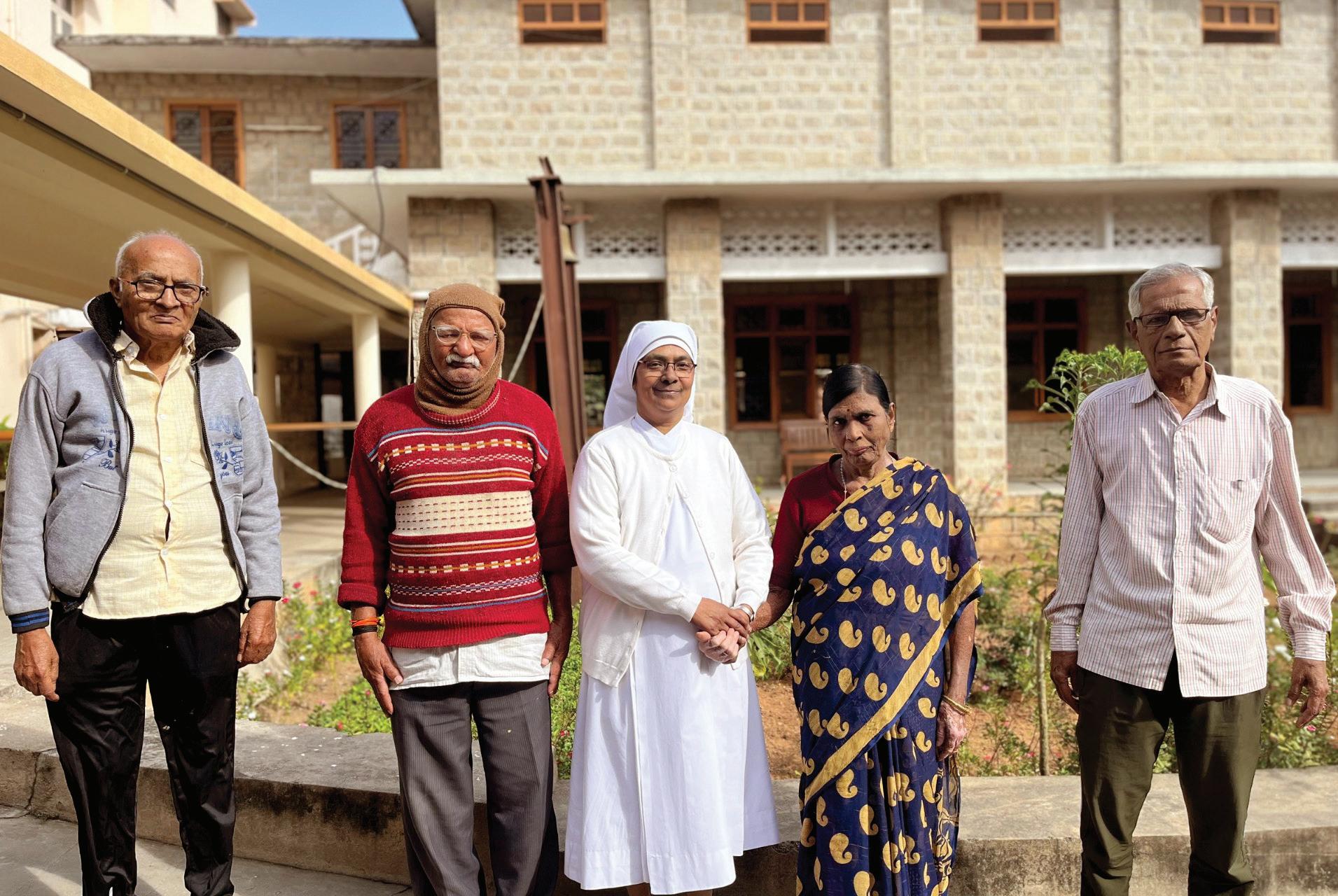
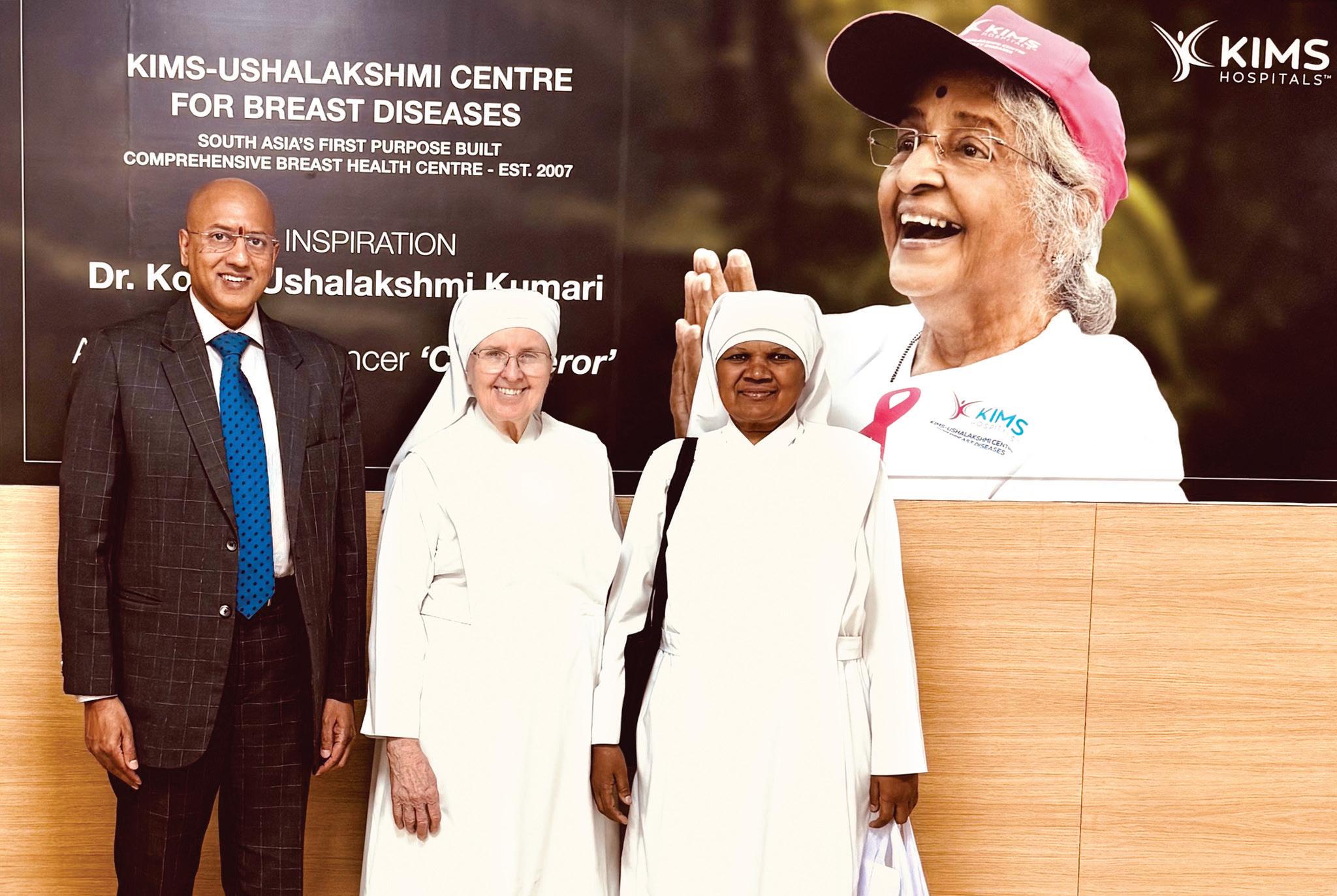
The Trastuzumab injections (anti-HER2 therapy) were also prohibitively expensive. Eight of them were generously sponsored by Ushalakshmi Breast Cancer Foundation through Dr Raghu Ram, while the remaining eight were funded by Dr Evita.
Sister Veronica’s first chemotherapy session was held on March 26, 2025. By the 14th day, she had lost all her hair. “But I was thinking it’s easy for me to take a bath now. For my hair needs relatively less water and soap,” she points out with a laugh. Her hair loss didn’t affect her as much as it might have, since she wears a coif and keeps her head covered with a veil at all times. As a result, her bare head is never visible.
However, the first two chemotherapy sessions were accompanied with side effects like severe body pains, drastic drop in BP and nausea. During that difficult phase, she found solace in the presence of her family and other nuns.
“My sisters, brother and sister-in-law came from Kerala to support me during those days. They stayed with me on rotation for 21 days, as I needed help with bathing. They left only after the drains were removed following surgery, and I could take a bath on my own. Even after they left, all the sisters here looked after me so well. I am truly grateful for having my family members and sisters by my side at such a time. In fact, some of them are nurses, so they knew exactly what needed to be done,” she recounts.
‘Compassion is highest form of worship’
Sister Kathleen, who leads The Little Sisters of the Poor in Hyderabad, has devoted 48 selfless years of her life to loving service, guiding this home with compassion, humility, and unwavering faith. She is truly a living embodiment of grace in action. I was blessed to be involved in Sister Veronica’s care —a breast cancer conqueror and an angel who herself has spent a lifetime serving others at this home for the elderly. Also, I consider myself deeply fortunate to have been given the divine opportunity to contribute, in a small way, to this sacred sanctuary for the aged. I firmly believe that compassion is the highest form of worship.
Dr P Raghu Ram
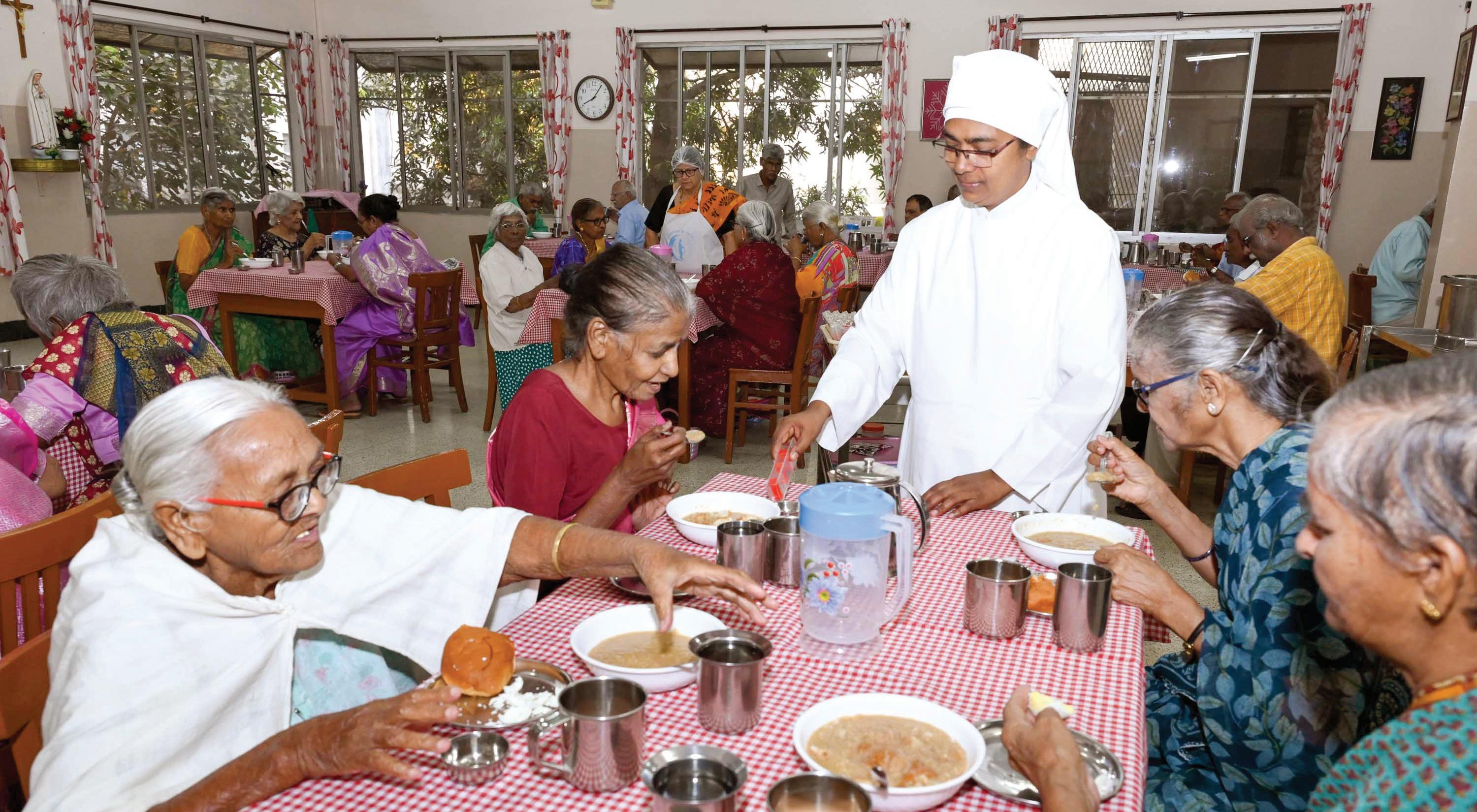
Little Sisters of the Poor is a charitable home in Secunderabad that provides free care for elderly individuals from economically weaker sections—right until the end of life, including their burial. Established in 1903, the home runs entirely on donations. Supporters can contribute through monetary aid, groceries, kitchen essentials, or by sponsoring meals.
Fortunately, from the third chemotherapy session, her body had started adjusting well to the treatment and she didn’t have any major issues.
“So, I got back to my duties as usual. All the sisters here were saying—first time we are seeing someone with cancer doing their regular work instead of resting,” she says with a smile.
After her chemotherapy sessions ended, she underwent a mastectomy with axillary lymph node clearance on September 17, 2025. She was discharged the following day and advised to avoid lifting heavy objects. Her postoperative recovery was smooth, and she was able to resume her normal duties within the same week.
Sister Veronica did not have any diet restrictions, during or after the treatment. But she was asked to wash her fruits and dry fruits thoroughly before consumption.
“I was happily eating whatever I wanted to. But I was avoiding direct activities with the elderly to avoid infections from spreading, and I was wearing a mask for those few days. But we are like a big family. So, every time they would see me, they would say –we are praying for you, don’t worry. This kind of support made everything seem easier.”
After her surgery, she underwent five weeks of radiotherapy to the chest wall, which ended in October 2025. Today, she
is free of cancer, and back to her normal life serving at the elderly care home. “I can even move my arms comfortably now. I am feeling good. I never feel sick,” she says.
We
are all eventually going to die someday.
So, I always
accept whatever God sends my way. Even when breast cancer got confirmed, I remained calm. But my sisters here (at the elderly care home) and my family members were extremely worried, says Sister Veronica
As we wrap up our conversation, Sister Veronica walks me through their facility. On the way, we meet many elderly women and men, who greet us with the most cheerful smiles. Everyone’s face instantly lights up the moment they see her. It seems like her presence and aura are unmistakably reassuring for them all.
Before bidding adieu, she leaves behind a message for anyone facing illnesses –“Don’t ever focus on the sickness. Just take it positively and believe you will overcome it. Never give up, God is above all.”
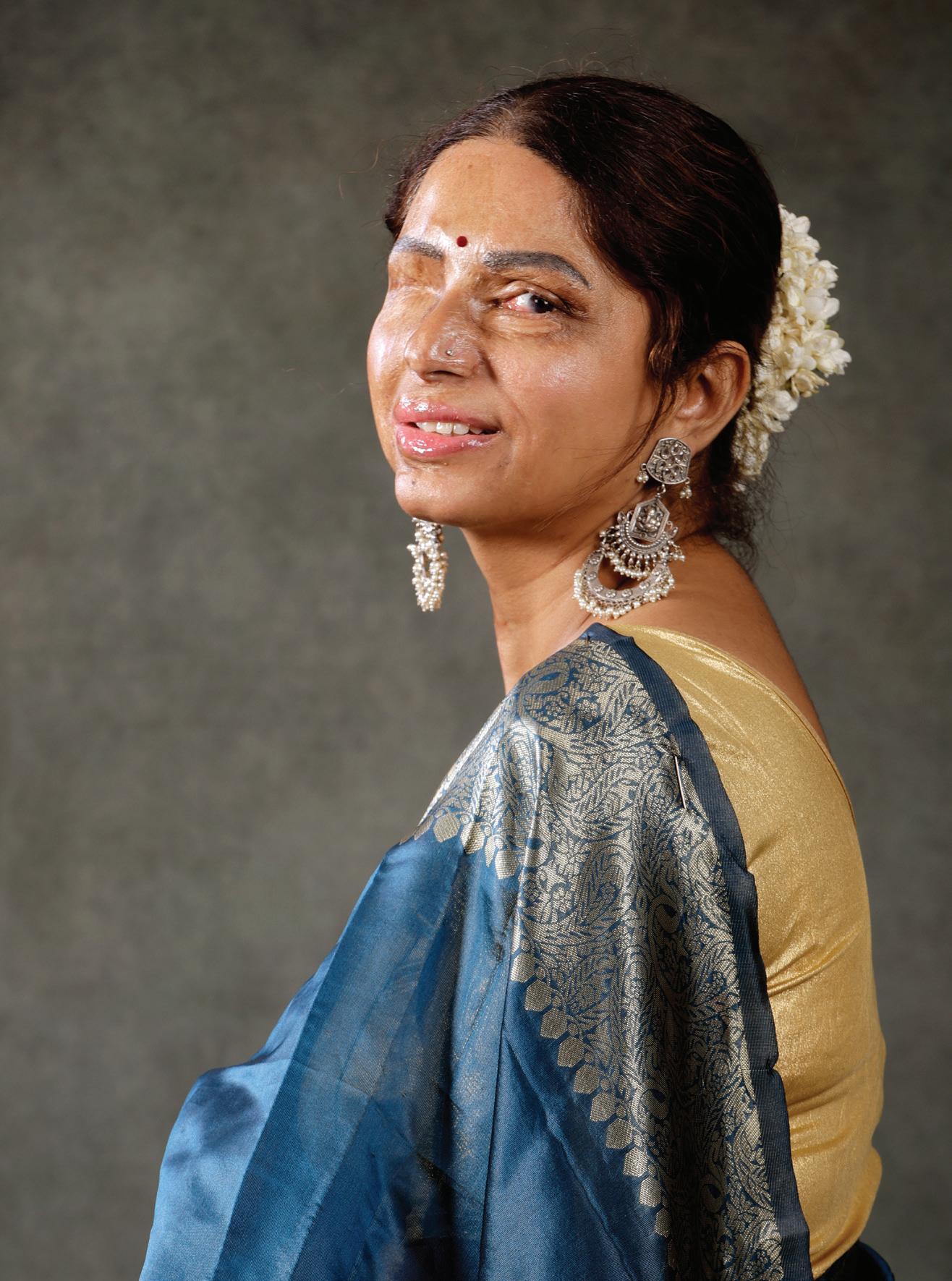
Who is a brave soul, one may ask? It is someone who refuses to be defined by tragedy, who rises above unimaginable pain to inspire others. Shaheen Malik is one such figure. At 41, she stands as a beacon of resilience and hope, having transformed her own devastating experience into a mission to protect and empower others.
In 2009, her promising career and youthful dreams were shattered by a brutal acid attack that claimed half her face and one eye. Yet, instead of retreating into silence, Shaheen chose to fight back—not only for herself, but for countless
Every year in India, hundreds of women are scarred by acid attacks, while countless others remain hidden in silence. For the survivors, justice is often elusive. An acid attack survivor, Shaheen Malik, set up Brave Souls Foundation to become a voice against genderbased violence, and a symbol of courage for those who have been forsaken.
In conversation with Nivedita Choudhuri, Shaheen shares her heart-rending story—which is one of resilience, and the unbreakable spirit of a woman who chose to fight back
survivors like her. Her journey is not just about survival – it is about defiance, justice, and the unyielding belief that life, even scarred, can shine with purpose.
She was in her mid-twenties and on the cusp of a promising life in 2009, when she faced the dastardly acid attack. But she did not let the cowardly, horrific act deter her from living her life. Like the Unsinkable Molly Brown, who survived the deadly Titanic disaster and became an activist in later life, Shaheen has not only remained afloat, but she is providing succour to others like her.
Shaheen traces her willpower and fortitude to her early childhood and life in a conservative family in Delhi. “I was a bright child and I loved to read. I wanted to go to school even on Sundays. As I grew older, I sensed that my parents were not as serious about my education as they were about my brothers,” she recalls in an interview with Pink.
Her story
“They spoke about getting me married, how much gold they would give at my wedding. I could not explain to my family that I wanted to study and achieve something in life. In my locality, everyone thought like my family. Girls only studied till class X or class XII, then they would get married and have children,” shares Shaheen. However, she did finish secondary school and graduated through a correspondence course. But then she “really wanted to see the world and learn to fly”.
Shaheen finally managed to leave her city and travel to Panipat in Haryana, where she joined an authorised learning centre of Punjab Technical University as a student counsellor, and also as an MBA student.
“It was fine at the beginning but then my employer became fixated on me. He used to pay me unnecessary attention and did not like me talking to others. I felt trapped,” she recounts. She had no support system and tried to leave her job but she was helpless since her marksheets and MBA documents were with her employer.
Narrating the sequence of events that led to the life-altering and shattering experience, Shaheen reminisces, “Finally, I gathered courage and resigned on November 1, 2009. I was serving my notice period when this incident happened on November 19. I was leaving after work when a stranger hurled some liquid at my face. In a short while, I had lost my eyesight. I became extremely frightened. People gathered around me and took me to the hospital. It took about an hour to reach the hospital. Meanwhile, the acid was getting absorbed into my skin every second. At the hospital, my clothes and ornaments had to be cut to be extricated. When someone put water on my skin, it felt like needles were stinging me. I had to undergo 25 surgeries to get to this stage I am at now.”
Becoming an activist
In 2013, Shaheen sent a letter to the Haryana government seeking compensation. A month after the attack, she had named the accused—her employer and his wife—in an FIR. The case had to be closed due to police inaction. However, she got her case reopened and also chose to venture into activism. She explains, “I wanted justice for victims of acid attacks and gender-based crimes. Nothing gave me more satisfaction than aiding victims of crimes against women. I started Brave Souls Foundation, a non-profit body, in 2021 to prevent acid attacks against women and improve the lives of survivors.”
As per the National Crime Records Bureau (NCRB), around 250 cases of acid attacks are reported every year, she points out, adding that many cases go unreported as well.
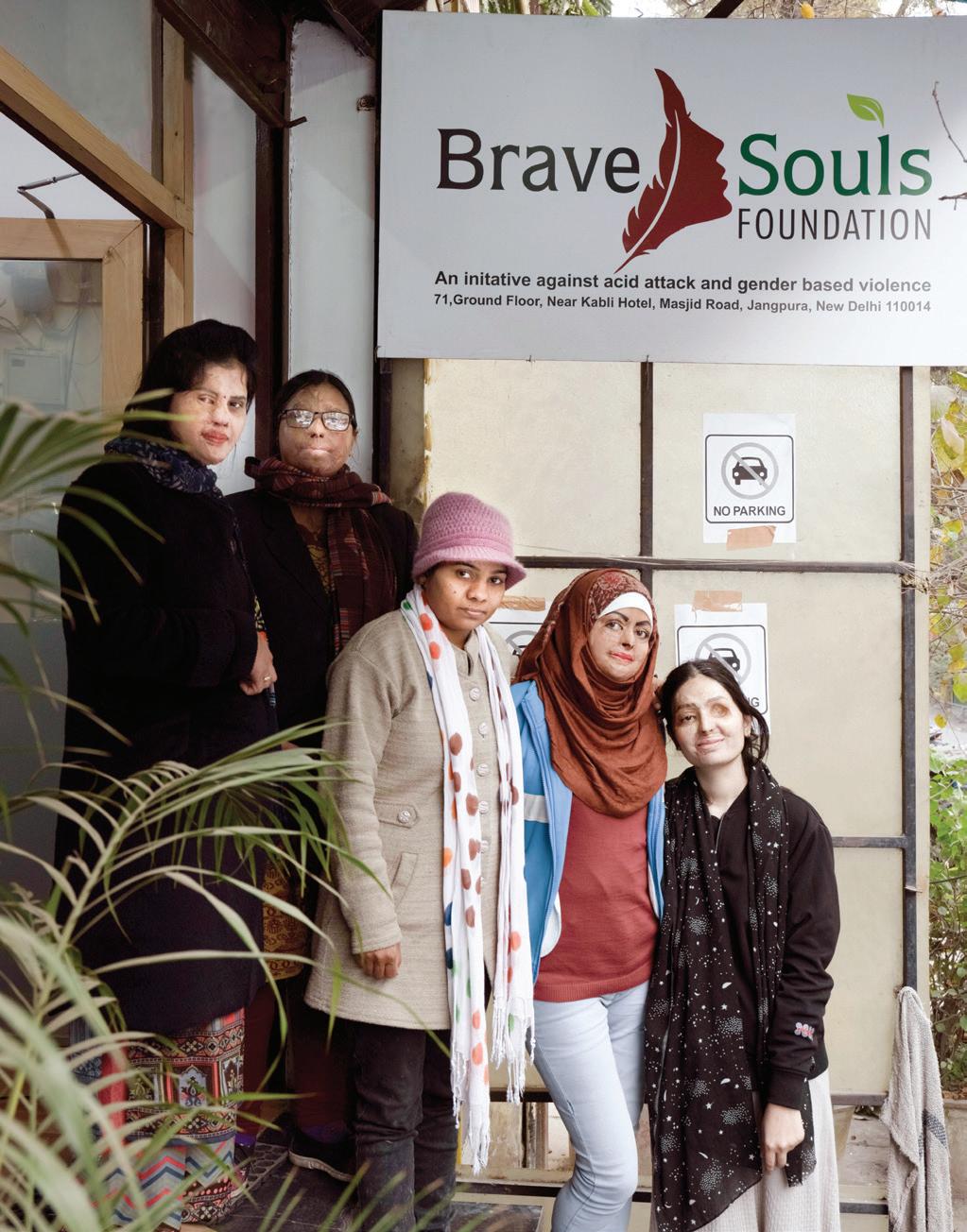
The Brave Souls Foundation runs many initiatives, one being Apna Ghar. This is a shelter- cum-rehabilitation home and safe space for acid attack survivors, who have been forsaken by their families. There are two shelter homes currently in Delhi and Kolkata. Besides accommodation, Apna Ghar provides survivors with food, travel, and medical treatment.
Shaheen says that they help survivors to get access to reconstructive and cosmetic surgeries, therapy, and counselling so that they can cope with the trauma they have suffered. They also provide skill development classes so that acid attack survivors can become self-sufficient and find work, she adds.
Bitter experiences
For acid attack survivors, life is a continuous challenge. Their lives are shattered in an instant, leaving them to rebuild amidst pain, stigma, and unimaginable challenges.
In 2009, her promising career and youthful dreams were shattered by a brutal acid attack that claimed half her face and one eye. Yet, instead of retreating into silence, Shaheen chose to fight back – not only for herself, but for countless survivors like her
Shaheen says, “Acid attack survivors are hassled daily. No one wants to employ them or give them houses on rent as people don’t want to see their distorted faces every day. Often, survivors suffer full or partial loss of vision. They also become less able after the many surgeries they undergo following an acid attack and such intensive treatment. So, they are not able to work like before.”
Further, teenagers who are attacked take a forced break from studies and it’s tough for them to get back to where they were academically. Survivors are also badgered on public transport and discrimination is rampant. Once, a survivor on a Metro was told to cover her face as her appearance was bothering other people. “People instinctively push children away when they see a survivor so that they don’t get scared,” Shaheen says bitterly.
Talking about acid attack cases that stood out in her memory, Shaheen shares the case of two sisters Anusha and Payal (names changed). “Both became completely blind after the acid attacks and have received meagre compensation—only Rs 7 lakh each. There have been no convictions in their case and the
High Court upheld the lower court verdict which went against their favour. The sisters have literally been in the dark for 16 years now. They need support to walk. Their only hope is the Supreme Court now, but their lives have become wretched.”
“There are other cases that are equally horrendous,” says Shaheen.
Gender-based crimes
Most attacks are prompted by love stories gone askew or due to jealousy. Jilted lovers and husbands are most commonly behind attacks. Once, six people in a family in Meerut were attacked, including a six-month-old baby. Shaheen’s foundation ensured they received the best treatment possible in private hospitals.
In Gurgaon, a young boy called Ayush (name changed) faced an acid attack that was spurred by jealousy in 2016. He was thrown into a dumpster and was in a really bad state when his cries attracted locals who rescued him. “With our support, he received treatment in a private hospital,” she says.
Earlier, only female survivors of acid attacks received compensation in Haryana and Punjab. After this case happened, Shaheen’s foundation filed a petition successfully in the Punjab and Haryana High Court to ensure benefits can be can be granted to male survivors too.
“However, acid attacks are largely gender-based crimes. Ninety-five per cent of the attacks happen on women. Around five per cent of the sufferers are men and children. Some-
times, a male child may also be attacked simply because he was sitting on his mother’s lap the mother being the intended target,” Shaheen points out.
Providing hope and solace
Shaheen’s foundation has also been able to initiate pension schemes for survivors, who have been able to get money retrospectively. They have also been working towards increasing pension amounts. The Haryana government awards Rs 13,000 monthly pension to victims, while the Punjab and Karnataka governments award Rs 10,000 and Rs 8,000 respectively.
One survivor, Anita (name changed), was able to get Rs 38 lakh in compensation – purportedly, the highest in India awarded to an acid attack survivor. “It’s heartbreaking when a person loses their eyesight completely in both eyes. At least, I have sight in one eye. But the survivors who have gone completely blind need support to walk every step,” she stresses.
Most attacks are prompted by love stories gone askew or due to jealousy. Jilted lovers and husbands are most commonly behind attacks. Once, six people in a family in Meerut were attacked, including a six-month-old baby
Shaheen has already mapped out her vision for the future. “I have campaigned tirelessly to ban the over-the-counter sale of acid. Cases involving acid attack survivors must be handled with the utmost sensitivity by courts, and the accused must face strict punishment. Justice should not be delayed; fasttrack courts must ensure swift verdicts. The government must step in to provide proper treatment and rehabilitation for survivors. It is not enough to have laws; they must be enforced. The police, the judiciary, and society at large must recognise and uphold their responsibilities,” says Shaheen with determination in her voice.
Not only is she determined, but Shaheen also strives to remains positive even though she has been fighting for justice for herself for 16 years. There are other problems at hand too – she is looking for a new office space as her landlord is objecting to pictures of acid attack survivors being posted along the stairs of his property.
Tenants have said they don’t want to look at ravaged faces early in the morning. “I will need lifelong treatment for my eye which still provides me some vision, but I haven’t forsaken hope. Neither should anyone. Be positive. Fight for your rights and fight for the rights of others,” says this braveheart. For what is life without hope?
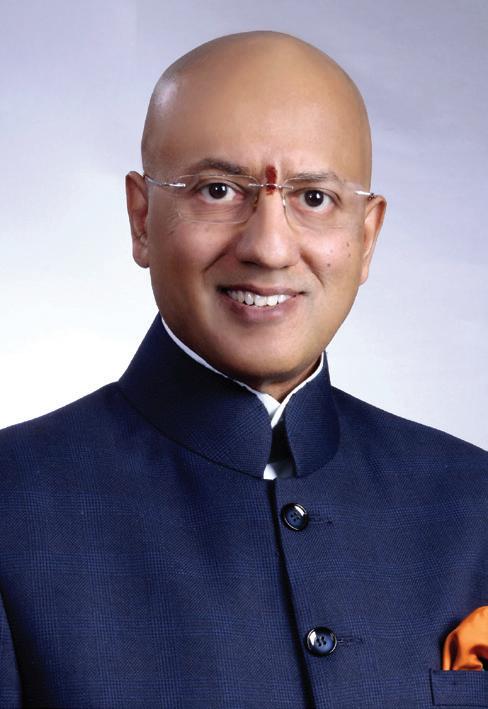
Cancer in India is often diagnosed too late. With 1.4 million new cases annually and most detected late, India must shift from slogans to systems, urges Dr P Raghu Ram in his quarterly column. Moreover, this year’s World Cancer Day’s theme, ‘United by Unique’, pushes for meaningful action and places people at the heart of cancer care
Cancer is no longer a marginal health issue in India. With over 1.4 million new cases annually, it has become a major public health challenge. Without intervention, the cancer burden will escalate to 2.08–2.46 million by 2045/2050 (~75 per cent rise).
What is particularly distressing is that more than 60 per cent of cancers in India are diagnosed at an advanced stage, when treatment is more complex, outcomes are poorer, and costs—financial and emotional—are far higher. This is not a failure of medical science. It is a failure of systems.
Every World Cancer Day, we speak about awareness. We share statistics, survivor stories, and slogans. Yet, in
clinics across India, the same tragic pattern continues —patients arrive late, frightened, and burdened by disease that could have been detected earlier. Awareness, while essential, has not been enough. What India now needs is decisive, measurable action.
‘United by Unique’: A theme India must operationalise
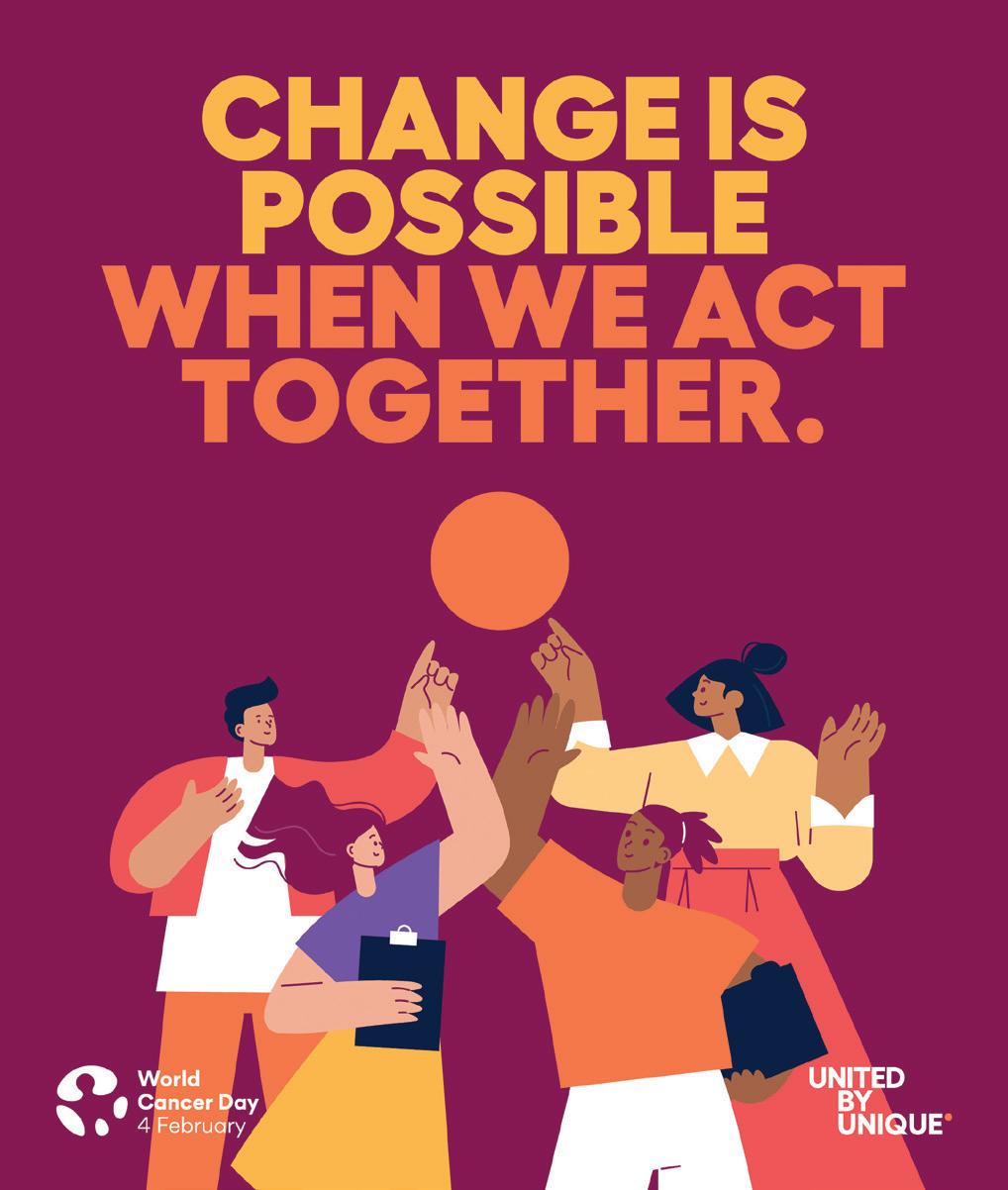
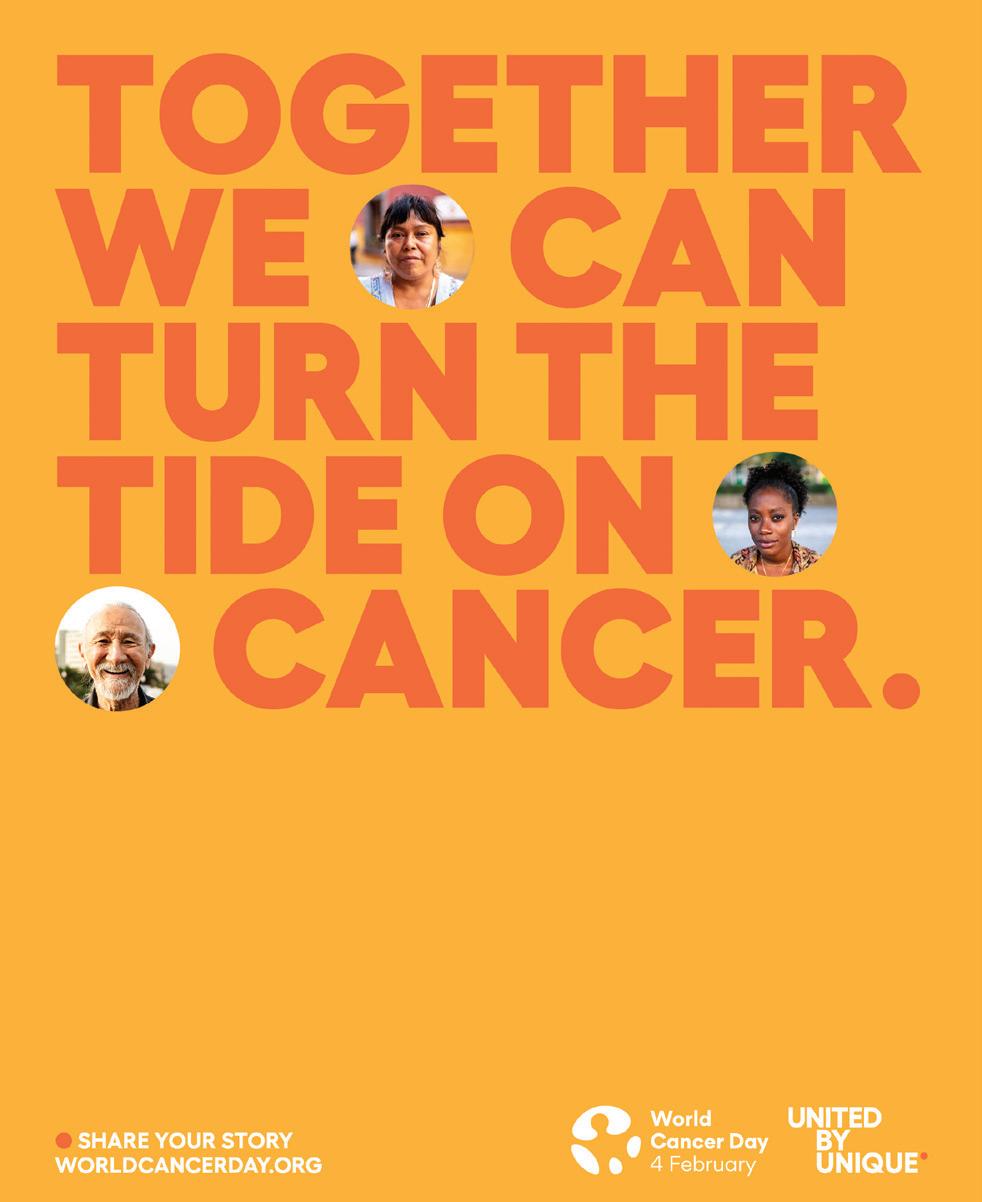
This year’s World Cancer Day theme, “United by Unique”, is part of a three-year global campaign (2025–2027) that urges countries to move beyond symbolism towards meaningful action.
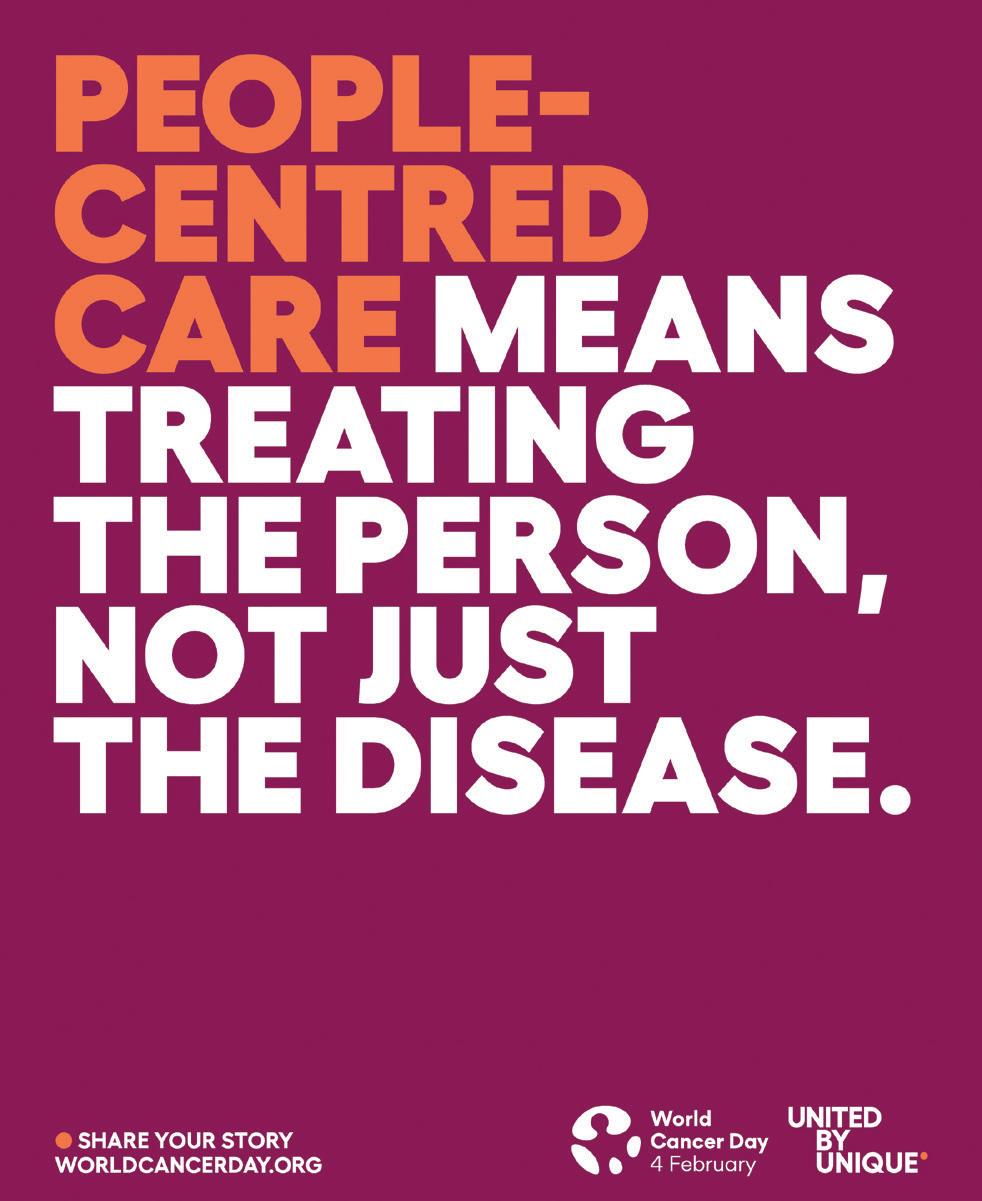
It places people at the heart of cancer care, recognising that every cancer journey is unique and that patient experiences must guide policy. For India, this theme must translate into a clear shift—from intention
to implementation, from pilots to scale, and from announcements to accountability.
Ayushman Bharat: From financial protection to cancer prevention
India already has powerful tools. Ayushman Bharat has significantly reduced catastrophic health expenditure for millions. But its greatest potential in cancer care lies not only in financing treatment, but in strengthening prevention and early detection. The health and wellness centres under Ayushman Bharat are uniquely positioned to serve as the backbone of organised cancer screening.
Yet, cancer screening remains inconsistent across states, often limited by training gaps, weak referral pathways, and lack of monitoring.
India should commit to ensuring that every health and wellness centre delivers structured screening for common cancers, with mandatory reporting of coverage, referrals, and stage at diagnosis. Frontline health workers must be trained not just to screen, but to counsel, refer, and follow through.
Screening without a clear pathway to diagnosis and treatment is ineffective—and ethically indefensible.
NPCDCS: Integrate, execute, and measure
The National Programme for Prevention and Control
of Cancer, Diabetes, Cardiovascular Diseases and Stroke (NPCDCS) provides a strong framework, but its impact has been diluted by uneven execution.
NPCDCS must be tightly integrated with Ayushman Bharat to ensure:
• Seamless referral from primary care to district hospitals and tertiary centres
• Time-bound diagnostics (no patient should wait weeks for confirmation)
• Clear treatment initiation benchmarks for confirmed cancers
Every screened individual must have a clearly navigable pathway—from suspicion to diagnosis to treatment—without being lost in the system.
It is my wish and desire that timebound concrete, short-and long-term implementable steps be taken by the government to strengthen actions that improve access to prevention, early detection, and treatment – all of which are essential to transform the delivery of cancer care in India
District hospitals: The missing link
India cannot manage its cancer burden through metropolitan centres alone. District hospitals must be empowered as functional cancer hubs. This requires:
• Trained clinicians in oncology basics
• Functional pathology and imaging services
• Tele-tumour boards connecting districts with tertiary centres
• Clear referral escalation protocols
Every district hospital should be capable of early cancer diagnosis and structured referral, reducing delays that currently cost lives.
People-centred care is not a luxury
‘United by Unique’ also reminds us that cancer care is not only clinical—it is deeply human. Fear, stigma, confusion, and financial anxiety often accompany a diagnosis.
People-centred care means:
• Honest, compassionate communication
• Multidisciplinary decision-making as standard practice
• Psychological and social support alongside treatment
• Respect for dignity and informed choice
Outcomes improve when patients are partners in care, not passive recipients.
Robust cancer registries
Comparing the socio-demographic data of patients with geographic trends in cancer incidence and cancer types helps assess risk factors, identify high-risk groups, and plan interventions for cancer prevention and screening.
There are currently only 38 Population Based Cancer Registries (PBCRs) that cover only 10 per cent of the Indian population. The irony is that most of them are located in urban areas, with only 2 PBCRs solely dedicated to rural areas, where 70 per cent of India’s population reside.
Furthermore, funding constraints of the registries often limit their ability to ensure the quality of the data collected. Big states such as Andhra Pradesh, Haryana, Chhattisgarh, Himachal Pradesh, Jharkhand, Odisha, and Rajasthan still do not have a single registry. Much as there are 268 hospital-based cancer registries that
only record cancer patients in the hospital, there is a pressing need for more PBCRs to be made available and functional, particularly in rural areas.
Cancer as ‘Notifiable disease’
The Parliamentary Standing Committee for Health and Family Welfare recommended that cancer should be classified as a ‘notifiable disease’ in September 2022. However, this has not translated into reality.
Making cancer a “notifiable disease” will not only ensure a robust database of cancer deaths, but will also help in accurately determining the incidence and prevalence of the disease in the country.
National call to action
In conclusion, India must set clear targets and timelines. We should aim to diagnose most common cancers at earlier stages, ensure district-level access to diagnosis and referral, fully integrate NPCDCS with Ayushman Bharat, and protect families from catastrophic cancerrelated costs.
Awareness has had its moment. Action must now define our response. If we truly believe that every cancer journey is unique, then every life saved through early detection must become the measure of our success. It is my wish and desire that time-bound concrete, shortand long-term implementable steps be taken by the government to strengthen actions that improve access to prevention, early detection, and treatment—all of which are essential to transform the delivery of cancer care in India.
On this World Cancer Day, India must move— decisively and compassionately—from awareness to action.

Yesterday, a woman in her early forties came to see me with her family. She had felt a lump in her breast almost a year earlier but delayed seeking care—fear, misinformation, and lack of access held her back. By the time she arrived, the cancer was advanced. After a long pause, she asked quietly, “Had I come earlier, would things have been different?” The honest answer was “Yes”.

Dr P Raghu Ram
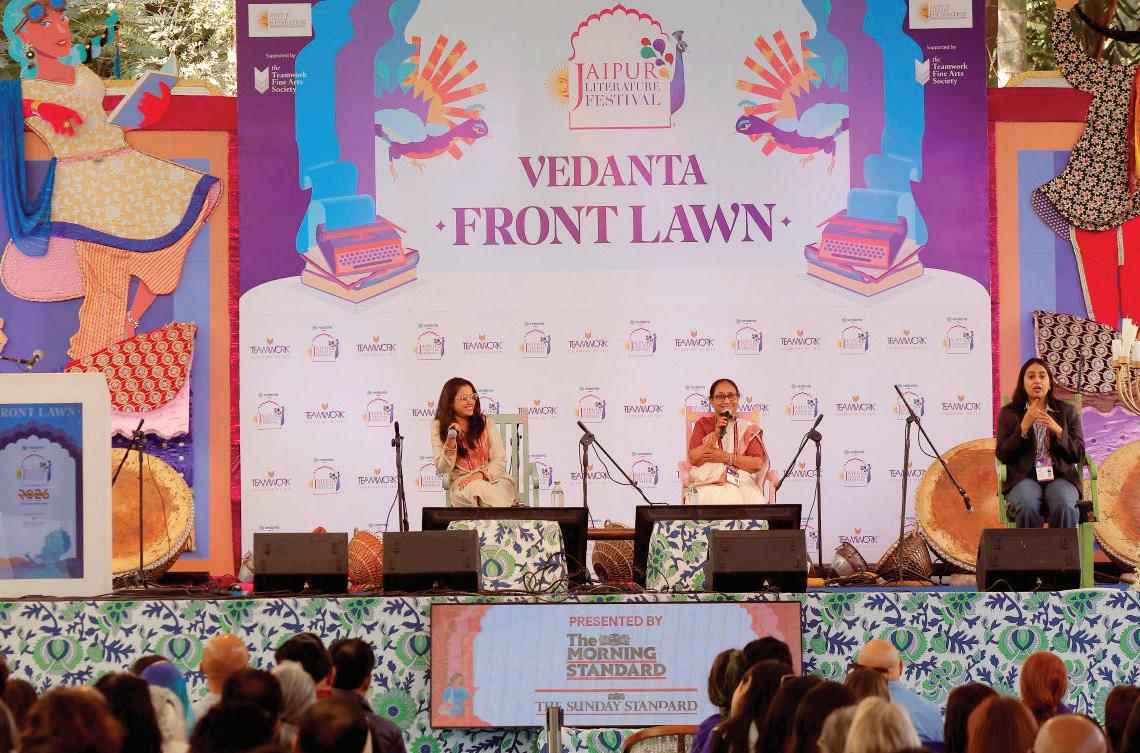
India’s literary festivals are far from being hushed temples of books. Instead, they are vibrant arenas where ideas collide, voices rise, and anticipation hums like electricity in the air. From Jaipur to Hyderabad, they stand as the country’s grandest gatherings – celebrating literature not only as text but as performance, debate, and spectacle. As Mallik Thatipalli reflects, it is the sheer scale and the way issues are debated at the festivals that set them apart
There is a particular sound to a literary festival in India. It is not silence despite the books nor is it quite noise. It is a hum: of overlapping conversations, of microphones being tested, of pages riffling in canvas totes, of autorickshaws idling just beyond the gates. It is the sound of anticipation, of ideas about to be put forth. From Jaipur, Chennai to Calicut and Hyderabad, literary festivals are probably the last bastion where
ideas are celebrated and conversations welcomed.
The scale
Walk into any major Indian literary festival—Jaipur, Kolkata, Calicut, Hyderabad—and the first thing that strikes you is the scale. The crowds are dense and determined, queues curling around heritage buildings and temporary shamianas.
College students with dog-eared paperbacks stand shoulder to
shoulder with publishers, diplomats, Instagram poets, retired civil servants, and writers who look faintly surprised to be recognised. The audience is young, conspicuously so, and hungry: for proximity to writers, for arguments, for the feeling that literature is not an abstract pursuit but a live event unfolding in real time.
Carnival energy
As Georgina Godwin, honorary fellow of the Royal Society of Literature and
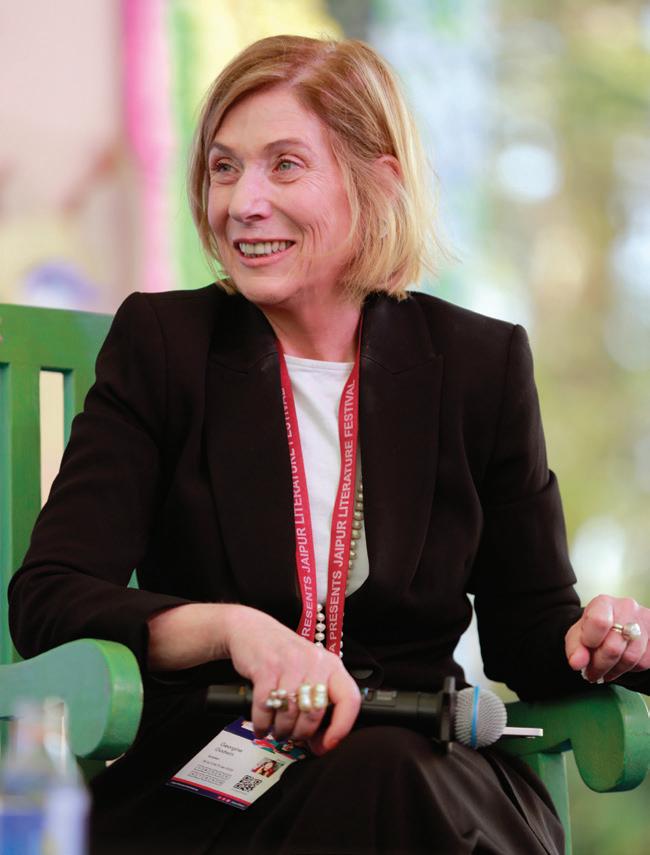
broadcast journalist observes, “What distinguishes festivals like Jaipur from their Western counterparts is not just size but the demographic energy.” .
“There’s a unique energy here,” she says. “In Britain, the demographic that attends literary festivals is much older and predominantly female. Here, it’s much younger, the gender divide is almost equal—and people are so engaged.” Here, the rooms are packed with younger readers, the gender balance almost even, and the engagement unmistakable.
People are not drifting in for ambience; they are there because they urgently want to listen. The energy, she points out, is generated not only by the speakers but by the crowd itself—a feedback loop of attention that gives the festival its high voltage.
There is a carnival quality to it all in Indian literary festivals. Panels run simultaneously, forcing small existential dilemmas—fiction or non-fiction? Nobel prize winner or a Booker winner? Politics or poetry? A debut novelist or a global star flown in business class? Stages are named after rivers, saints, ideas. The programming is relentless, breathless, and almost defiant in its refusal to pause.
Even lunch feels like an interruption. You eat quickly, standing, eyes still on the schedule, afraid to miss something important or at least something Instagrammable.
This atmosphere is not incidental. It is carefully produced. Indian literary festivals have mastered the choreography of buzz: the tightlytimed sessions, the charismatic moderators, the applause cues that ripple across lawns. Energy is the currency here, and everyone —speakers, audiences, organisers— contributes to its circulation.
We’ve had Nobel Prize winners, Booker Prize winners, writers like Kiran Desai, Stephen Greenblatt – extraordinary historians, philosophers, poets. It’s like a mini-university setting up for a minimum fee, says William Dalrymple, co-founder and co-director of the Jaipur Literature Festival
In this ecosystem, writers are rarely allowed to simply be writers. They must also be performers. Wit travels faster than nuance; provocation faster than reflection. A sharp oneliner can eclipse a carefully built argument. Applause comes easily, especially for lines that confirm an audience’s existing beliefs or neatly puncture an opposing camp. A good panel is no longer just one that illuminates, but one that trends.
The festivals know this and lean into it. Sessions are livestreamed, clipped, and hash-tagged. Literature, long accused of being slow and inward, has learned to speak in bursts. There is something exhilarating about this transformation—about seeing books spark debate, laughter, even outrage in real time. It collapses the distance between the private act of reading and the public world literature responds to.
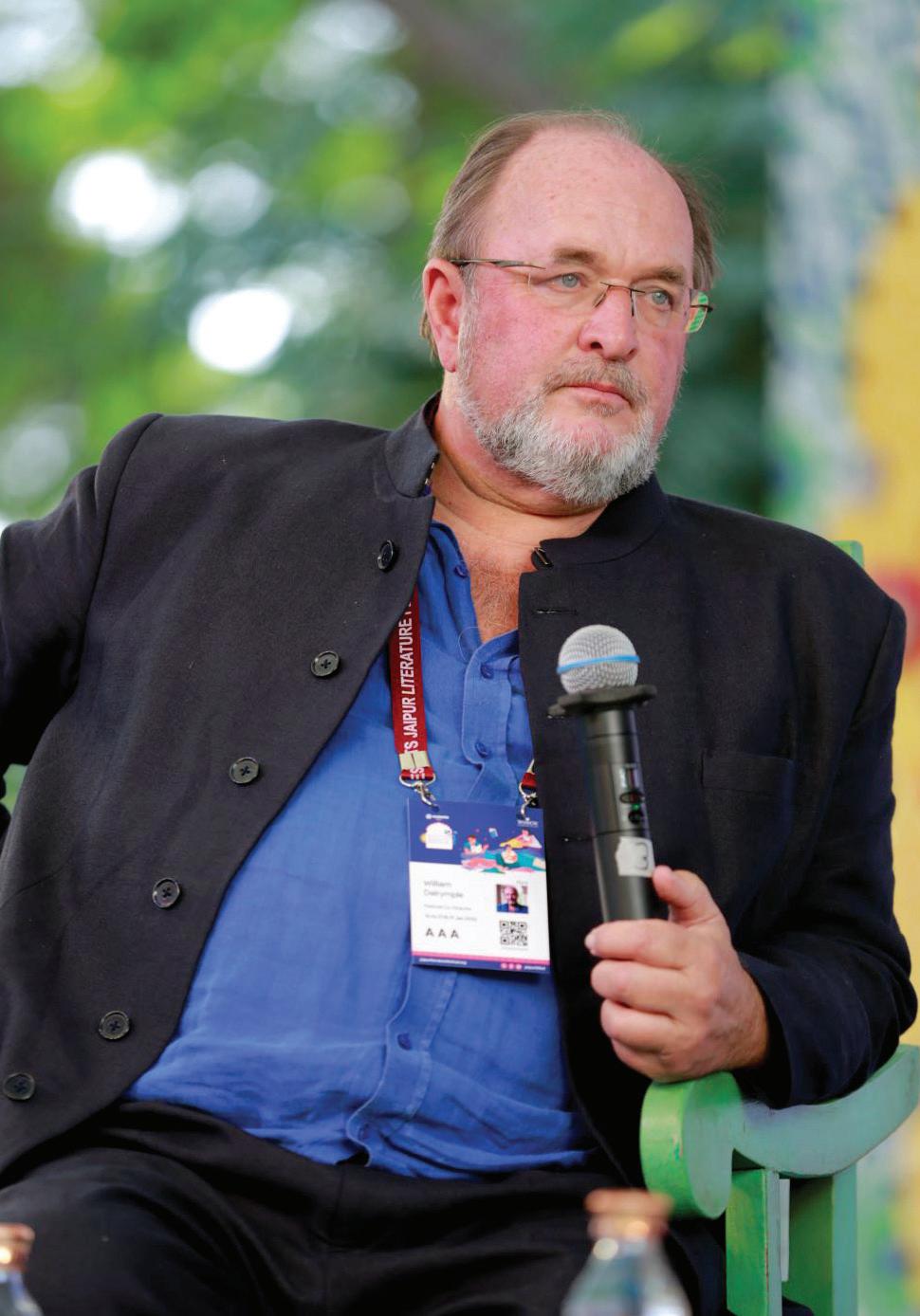
What distinguishes Jaipur, William Dalrymple, co-founder and co-director of this popular festival, argues, is not a monopoly on freedom but a rare density of intellectual life.
“We’re the biggest festival in the world,” he says, pointing to the scale and ambition of the programming.
“We’ve had Nobel Prize winners, Booker Prize winners, writers like Kiran Desai, Stephen Greenblatt— extraordinary historians, philosophers, poets. It’s like a mini-university setting up for a minimum fee,” he stresses.
Dalrymple is careful to resist the idea that festivals are the last remaining spaces for free speech. India, he reminds us, remains a democracy where governments can be challenged and views expressed beyond festival tents. The value of a literature festival, in his telling, lies not in exclusivity but in concentration: the rare intensity of a temporary public sphere where historians, poets, Nobel laureates, and first-time readers coexist.
“They are open spaces and they’re wonderful for that reason,” he says of literary festivals, “but they’re not the last. We live in a democracy here.”
Yet even within that generosity, the performative logic persists. Certain kinds of thinking—hesitant,
unfinished, quietly radical—do not always survive the stage. Complexity can feel out of place in a format designed for momentum. The question is not whether festivals simplify literature, but whether they allow it to remain difficult.
Who gets to speak, and how For all their spectacle, Indian literary festivals also carry a genuine democratic impulse. Many are free, open, sprawling. People really do listen. You see it in the way a crowd goes still when a writer
Indian literary festivals have mastered the choreography of buzz: the tightly-timed sessions, the charismatic moderators, the applause cues that ripple across lawns. Energy is the currency here, and everyone speakers, audiences, organisers contributes to its circulation
reads a difficult passage, or when a conversation unexpectedly deepens.
You see it in the long signing lines, readers waiting patiently to exchange a few awkward sentences with someone whose words have mattered to them in private. For many, these festivals are gateways—first encounters with writers from other languages, other regions, other histories.
This openness is often contrasted with anxieties elsewhere. “We often say lit fests are the bastions of free press,” says Godwin. Also, she adds, “Events like this exist for us to have those conversations. If you disagree with someone, don’t cancel them, get them on a stage and have a civilised debate.”
For her, this was a spectacular failure of nerve: festivals exist precisely to host difficult conversations, not to shut them down. What feels striking about Indian festivals, she points out, is the relative lack of fear around naming contentious subjects, deep political divides, or ideological conflict are spoken aloud rather than euphemised.
Disagreement, here, is framed as the point rather than the problem.
That sense of permission is echoed, cautiously, by Leo Varadkar, the former Irish Prime Minister who spoke at the Jaipur Literature Festival in 2026. “I’ve no experience of freedom of expression being restricted here,” he says, noting that he spoke openly about Gaza and about being an openly gay politician.
Curated spaces can protect speech without necessarily reflecting the conditions beyond their boundaries.
Indian literary festivals, then, mirror the country’s contradictions with unsettling clarity. Corporate logos bloom across ancient forts. Sponsors find themselves as moderators. Sessions on dissent
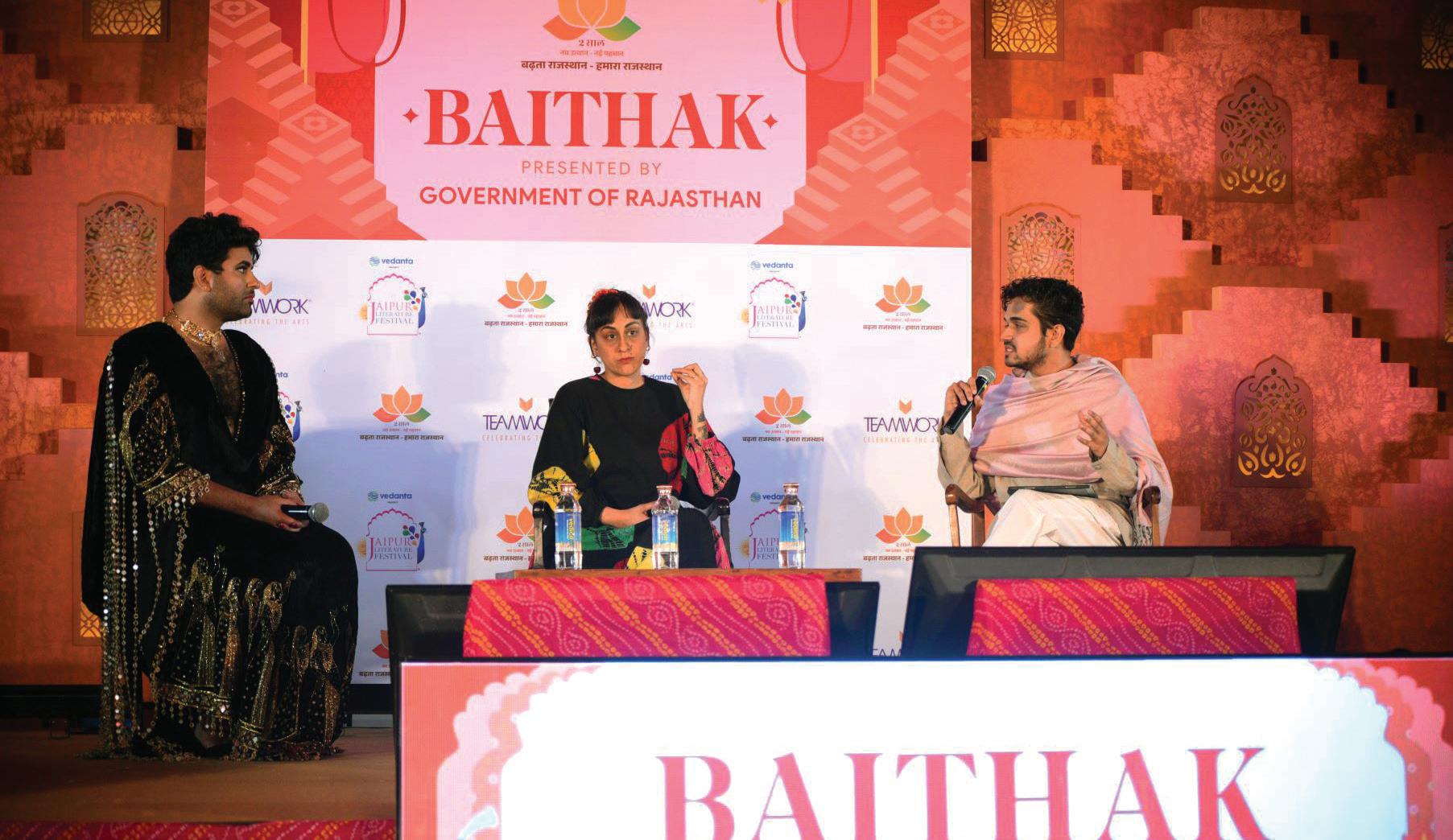
unfold under the watchful presence of security personnel.
Language, always political in India, sits at the centre of these tensions. English dominates the main stages, but regional languages press insistently at the edges and increasingly at the centre. Translation panels draw crowds; poets switch languages mid-sentence. The idea of “Indian literature” is not presented as a settled fact, but as a noisy, ongoing argument.
Closer home, the Hyderabad Literary Festival in 2026 seems to have finally come into its own after years of false starts. With a line-up like Nobel winners Kailash Satyarthi and Abhijit Banerjee and cultural icons like Gopalkrishna Gandhi and ghatam player Sumana Chandrashekar making their mark, it really seemed like a festival of the people.
What these festivals do exceptionally well is create momentum. They make books feel urgent. They turn reading into a social act, something you do with others, in public, under the sun, arguing over coffee. For a few days, literature feels like the main event rather than an elective interest.
But momentum can also smooth rough edges. As the tents come down and the stages are dismantled, a question lingers: are India’s literary festivals pushing the envelope, or merely stretching it? Are they making space for genuinely uncomfortable conversations, or packaging dissent into palatable slots? Do they choreograph critique in ways that remain safely consumable?
Perhaps, this is too much to ask of a festival, which is, after all, a temporary city. Still, the question remains worth asking. In all their buzz and brilliance, are India’s literary festivals content to amplify literature or are they willing to let it disrupt, unsettle, and refuse the familiar applause lines?
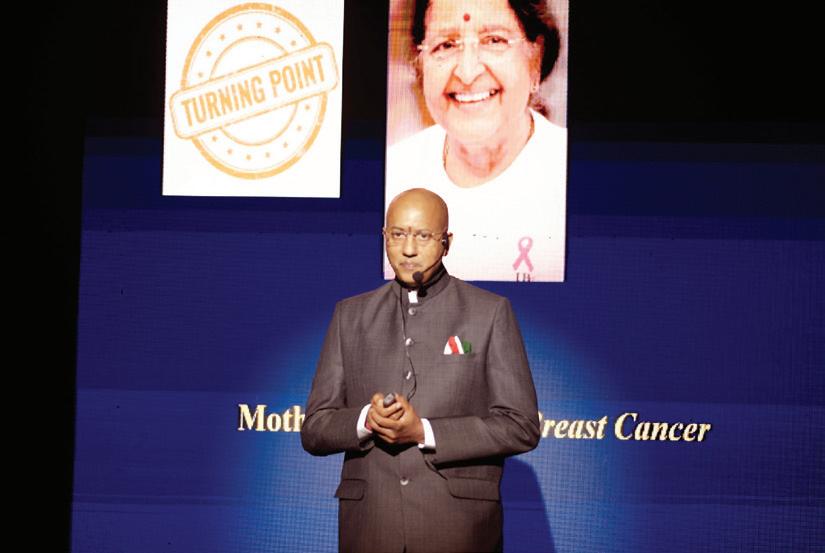
Dr Raghu Ram was invited to participate in the first edition of the “TEDx Youth” at his alma mater, The Hyderabad Public School, organised by the students on November 1, 2025. He began by expressing his heartfelt gratitude to his teachers – not merely for lessons from textbooks, but for instilling values that have
guided every step of his journey. Those values, he said, have been his true education.
Through his talk, Dr Raghu Ram reflected on his 18 year-journey of purpose with the Ushalakshmi Breast Cancer Foundation – born from his mother’s personal battle with breast cancer and transformed into a nationwide movement for awareness, advocacy, and early detection. He shared how an extraordinary wave of awareness – sparked in the Telugu states and resonating far beyond – ignited a ripple effect across the country, inspiring NGOs and hospitals nationwide to launch similar initiatives and adapt the advocacy model to champion other health causes that deserve equal voice and visibility.
The warmth, applause, and deep connection with the audience served as a powerful reminder that when work is driven by love and purpose, it not only touches hearts but truly transforms lives.
Link to TEDx Presentation:
https://youtu.be/qjmOomhr5Mg?si=oOliOWbQ6dTRpXuf
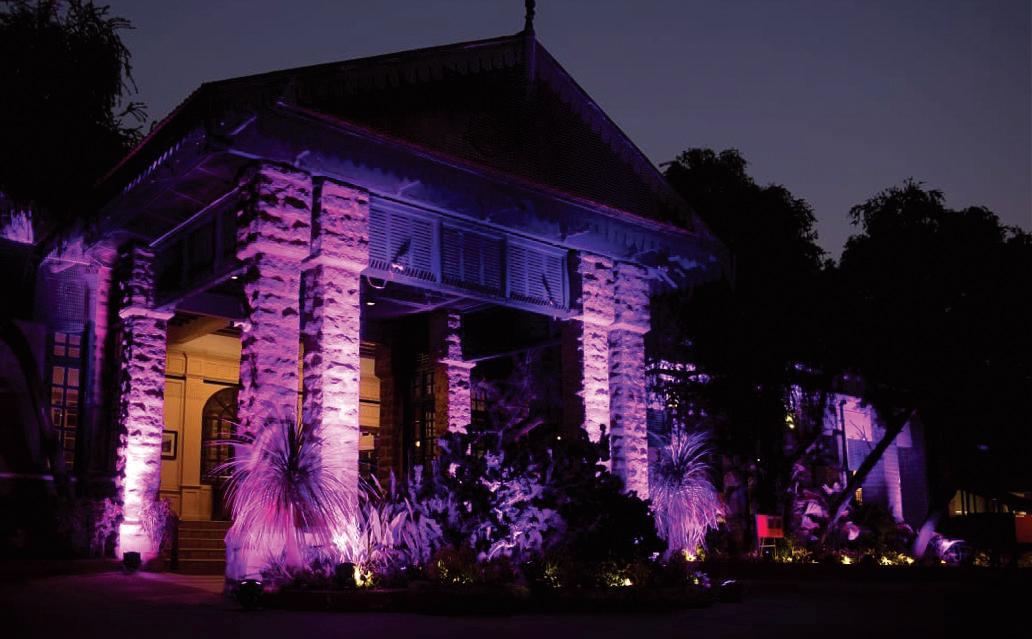
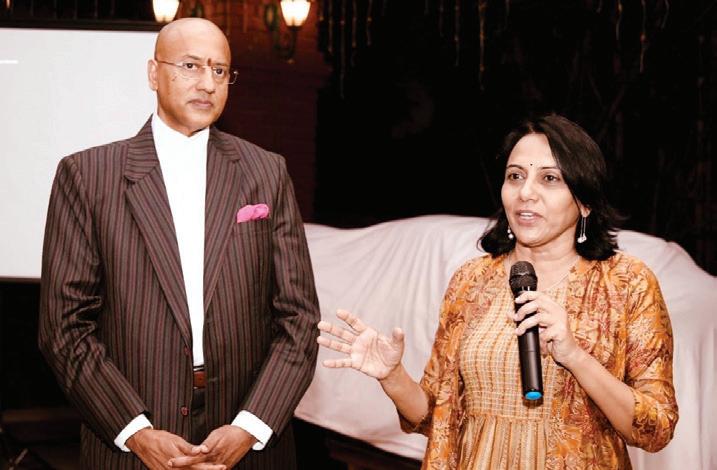
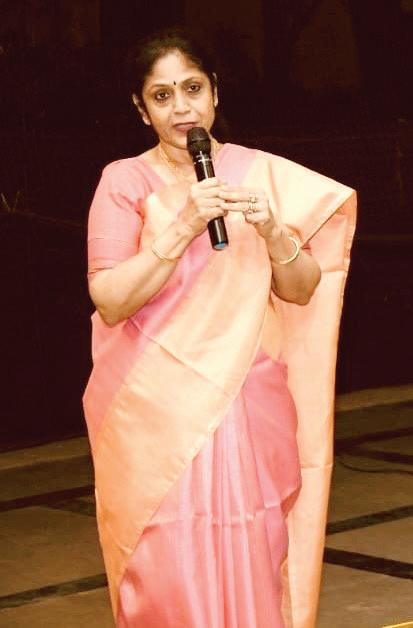
It was a truly special evening on November 8 at the Secunderabad Club, as this historic institution stood shoulder to shoulder with the Ushalakshmi Breast Cancer Foundation, to celebrate 18 years of unwavering breast cancer advocacy.
Dr Raghu Ram delivered an engaging talk on “ABCs of Breast Cancer – What Every Woman Must Know,” and it was heartening to see so many club members gather on a Saturday evening in support of early detection and awareness.
The evening was made meaningful by the presence of Ananda Shankar Jayant, Padma Shri awardee, renowned classical dancer and breast cancer conqueror, and Uma Sudhir, executive editor, NDTV. Their deeply moving reflections inspired everyone present.
As the 147-year-old club building glowed pink, it felt profoundly symbolic – a tribute to courage, a salute to conquerors, and a beacon of hope for every woman. This was not just light on stone, but the glow of collective compassion, awareness, and purpose – carrying forward a mission that began 18 years ago, and continues with even greater resolve.
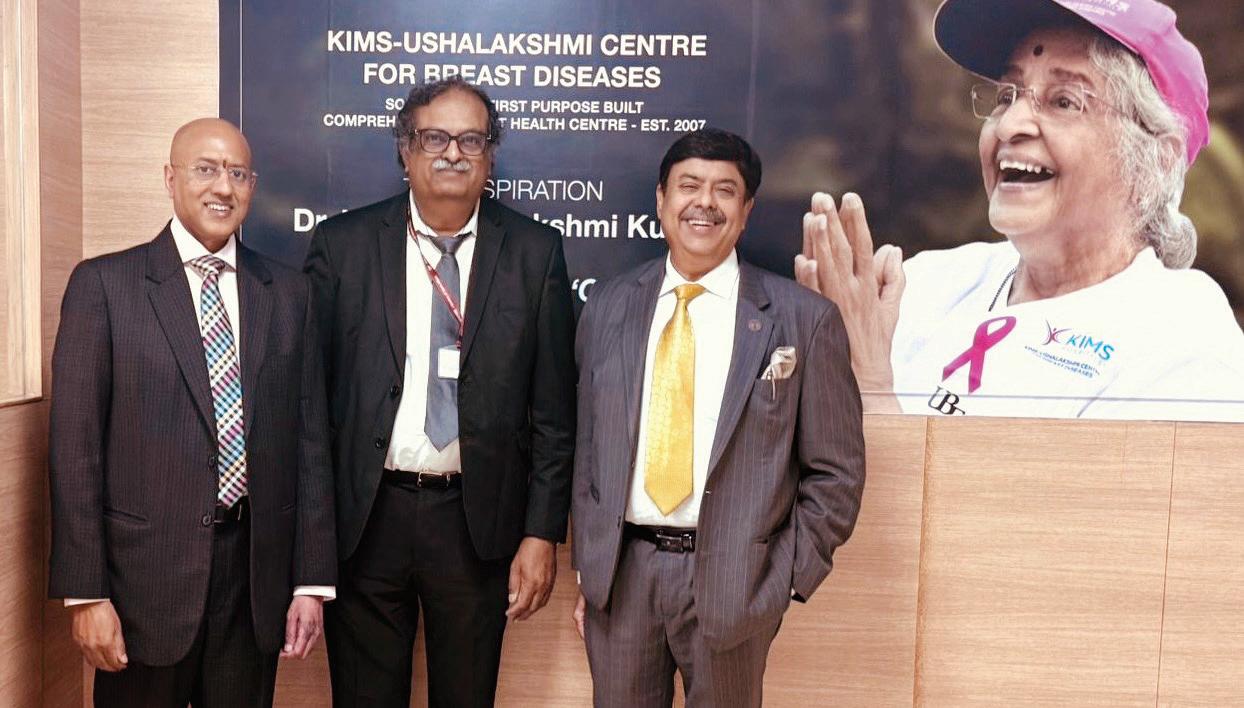
Prof Abhijat Sheth, chairman, National Medical Commission and president, National Board of Examinations, along with Prof Shiva K Misra, vice-president, National Board of Examinations and past president, Association of Surgeons of India, visited the KIMS–USHALAKSHMI Centre for Breast Diseases at KIMS Hospitals, on November 10.
During the visit, they interacted with Vedha Penmetcha, a Fulbright Fellow and a pre-medical student from Cambridge, who is currently working on a research project undertaken by the MD Anderson Cancer Center, in partnership with the Ushalakshmi Breast Cancer Foundation and the Breast Centre, KIMS Hospitals.
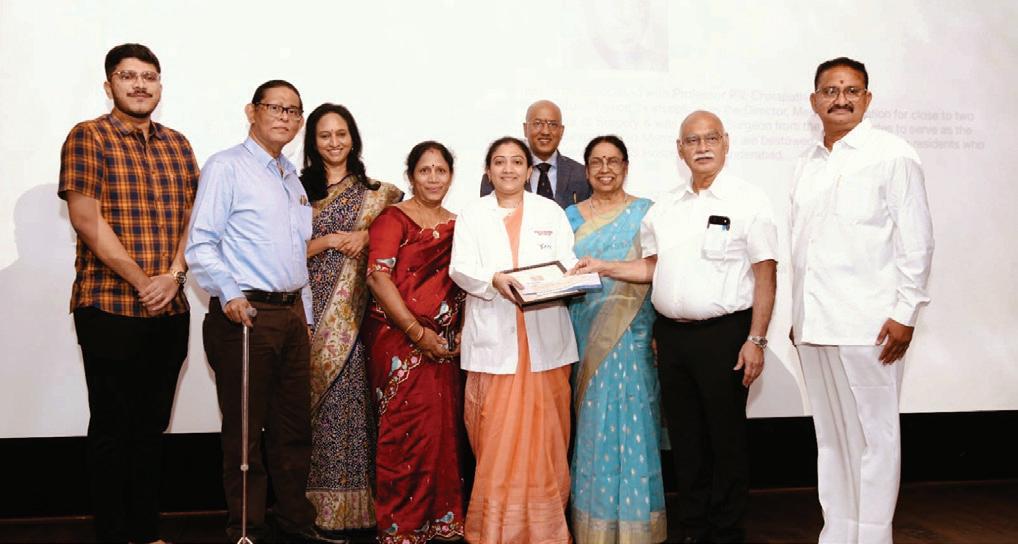
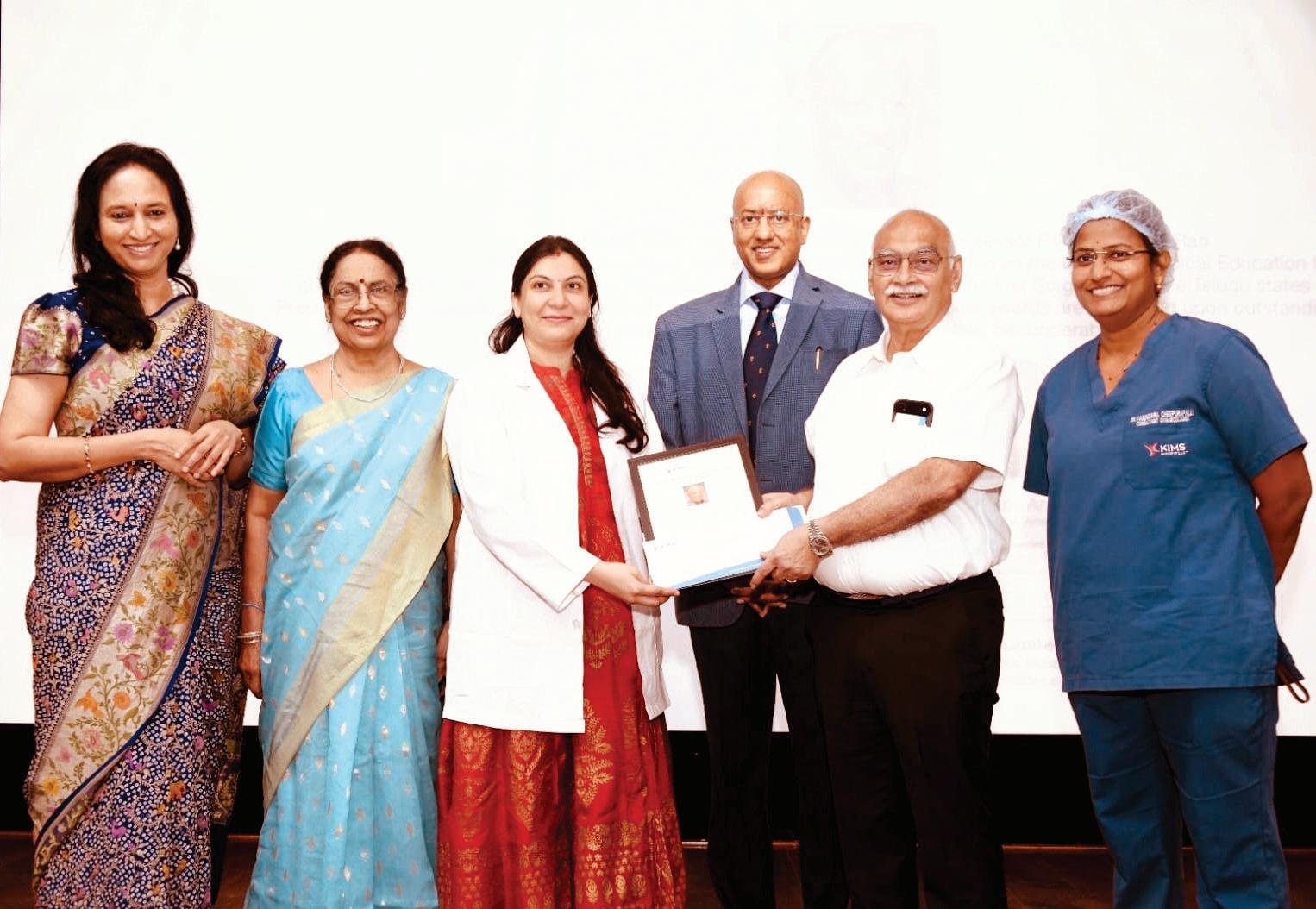
The 5th Edition of the Annual Prof PV Chalapathi Rao Memorial Awards at KIMS Hospitals was presented to honour excellence and legacy in the medical field.
The Best Outgoing Trainee Awards for 2025 were presented on November 18 to Dr Poonam Aniket Patil (Obstetrics & Gynaecology) and Dr Naga Bhagyasri Mangam (Endocrinology). Instituted in memory of Prof PV Chalapathi Rao, Dr Raghu Ram’s father, these awards have been given for the past five consecutive years.
Dr Raghu Ram expressed his heartfelt gratitude to Dr B Bhaskar Rao, chairman and managing director of KIMS Hospitals, for instituting these awards in 2021, to recognise his father’s immense contribution to the institution as director of medical education for nearly two decades.
Here’s more about Dr Chalapathi Rao: Link:
https://youtu.be/Fs87zEGWsEs?si=bsdE23DIR3Hk-RNw
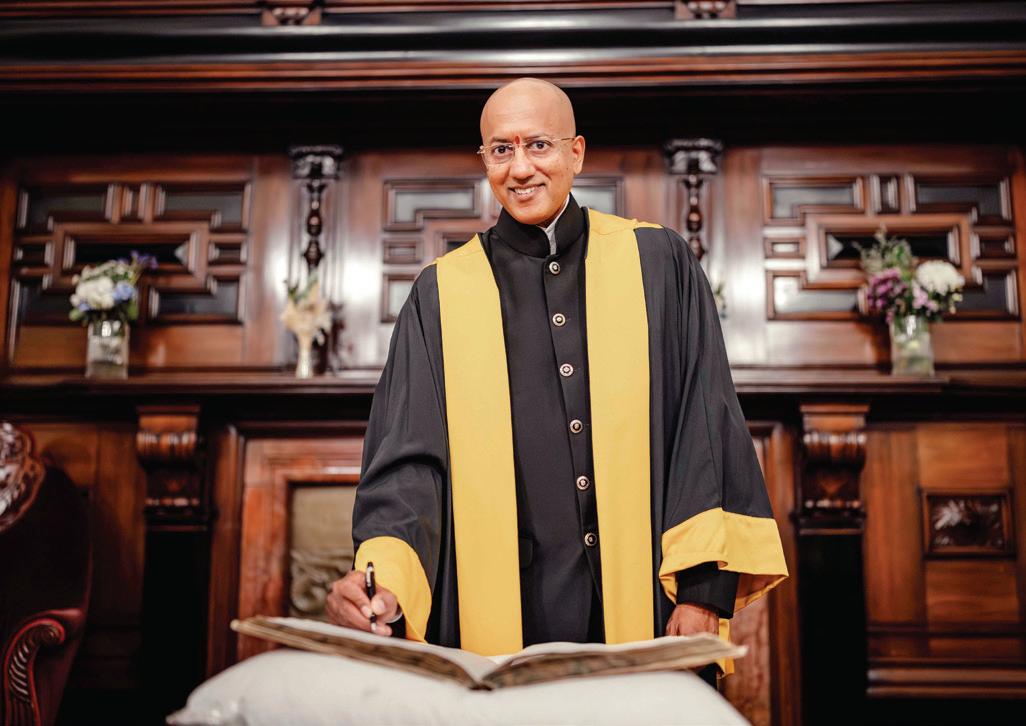
In an unprecedented milestone, Dr Raghu Ram has been elected to the Governing Council—the apex decisionmaking body—of the Royal College of Physicians and Surgeons of Glasgow (RCPSG), one of the world’s oldest and only multi-disciplinary Royal Colleges in the United Kingdom and Ireland.
Dr Raghu Ram becomes the first and only practising surgeon from India to be elected as an International Councillor of this 425-year-old prestigious institution, which represents surgeons, physicians, dentists, podiatrists, and travelmedicine specialists across 97 countries worldwide.
The results were announced by Prof Hany Eteiba, president RCPSG, during the Annual General Body Meeting at the College in Glasgow on December 5, 2025. This year’s election also marked a historic first: 27 surgeons from across the world contested for this single position—making it the most competitive election in the 500-plus-year history of all UK Royal Colleges.
As International Councillor (2025–2028), Dr Raghu Ram will represent RCPSG across all countries outside the UK, promoting professional development and strengthening the College’s global presence.
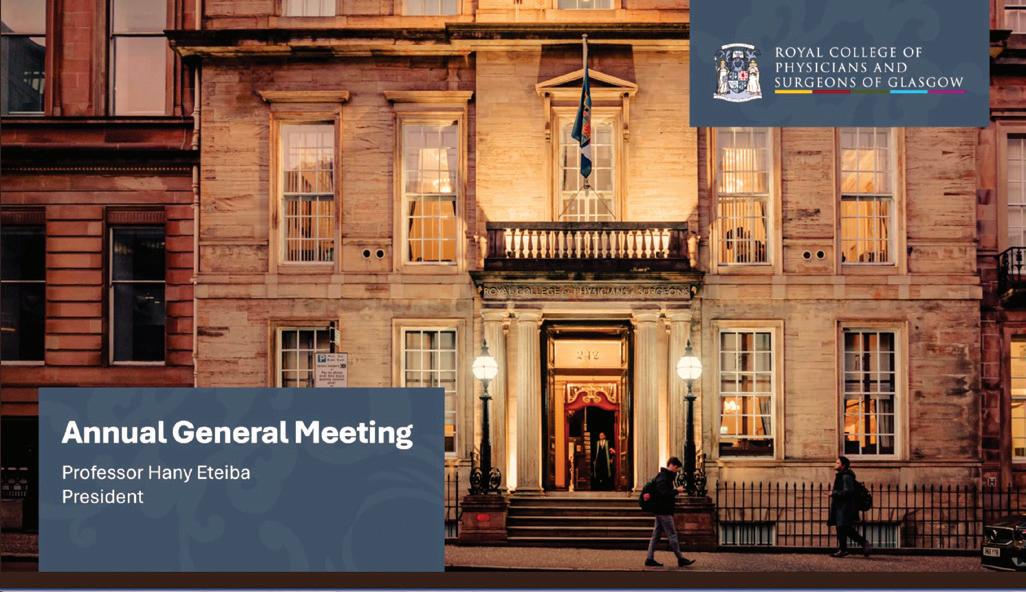
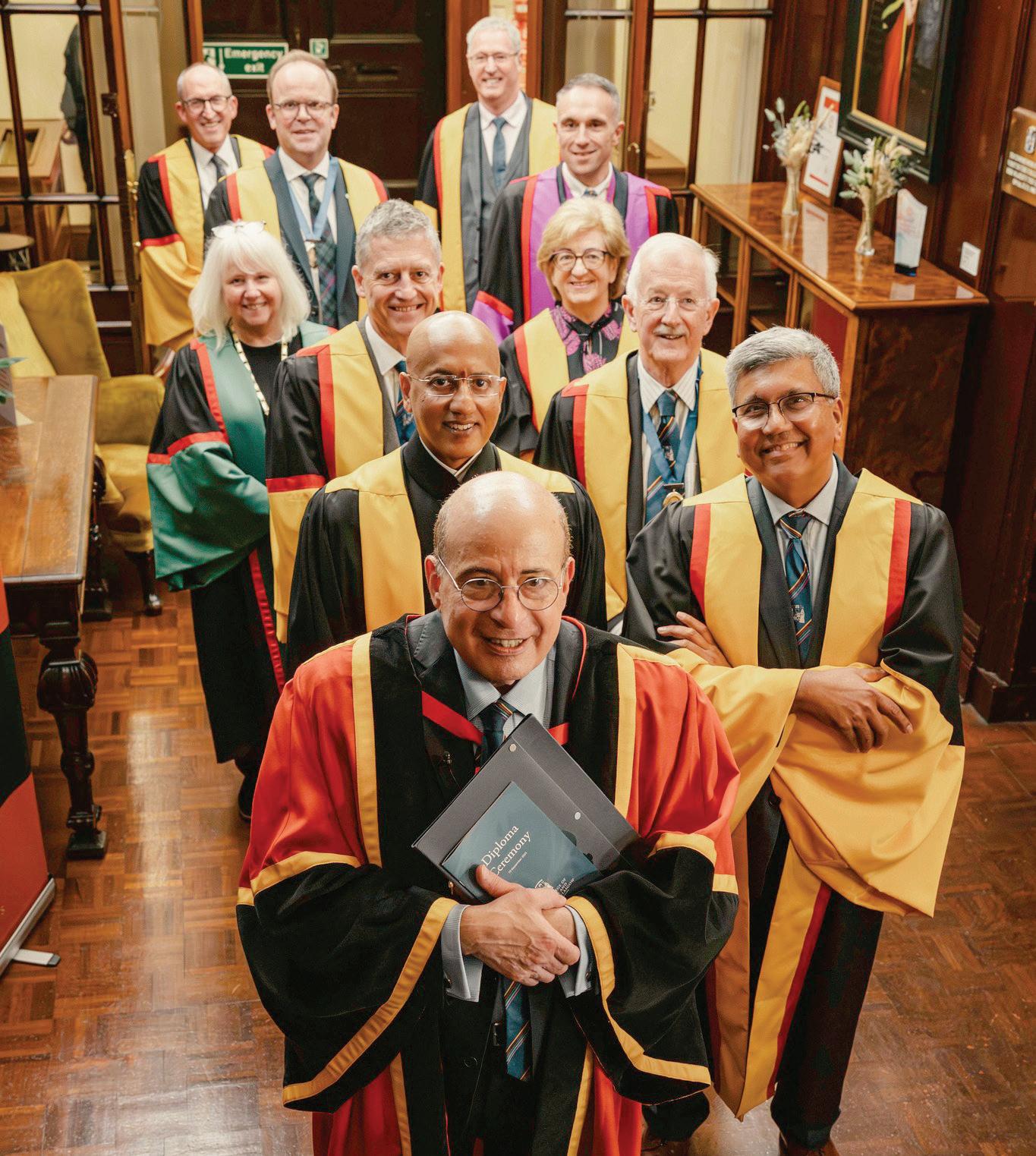
Speaking on this prestigious global role, Dr Raghu Ram said: “I am profoundly grateful to the electorate – Members and Fellows of RCPSG across the world – for this historic mandate and the trust they have placed in me. I dedicate this honour to my family, my patients, and my motherland, who have shaped my journey and purpose. My mission will be to strengthen professional development and champion the College’s global presence with integrity, inclusivity, and excellence.”
Dr Raghu Ram was also recently conferred Honorary FRCS (Glasgow) – the highest honour bestowed by the College. He holds the unique distinction of being both an FRCS by examination and an Honorary Fellow of the same College.
ETV News: https://youtu.be/cqwQc0o7StE?si=ZOUZQ9_yIt_8LaBW
20
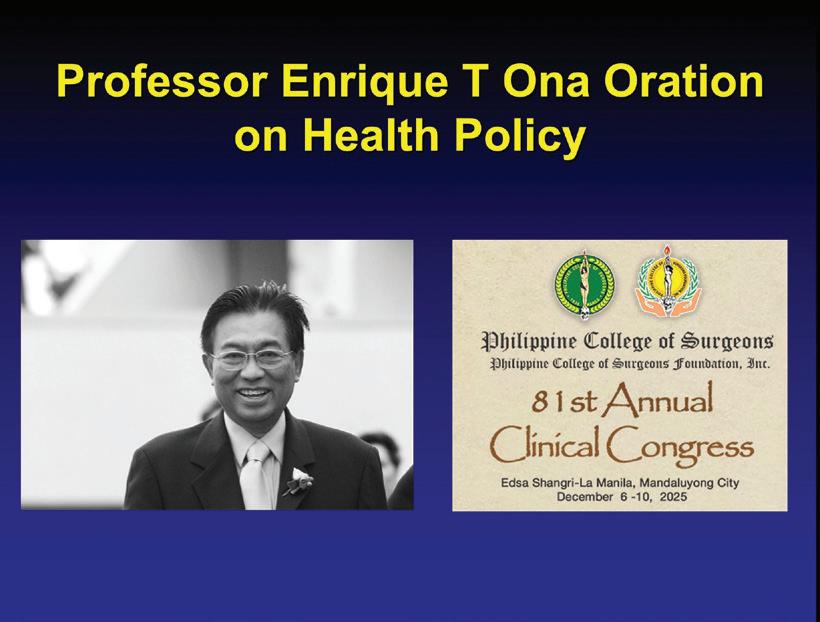
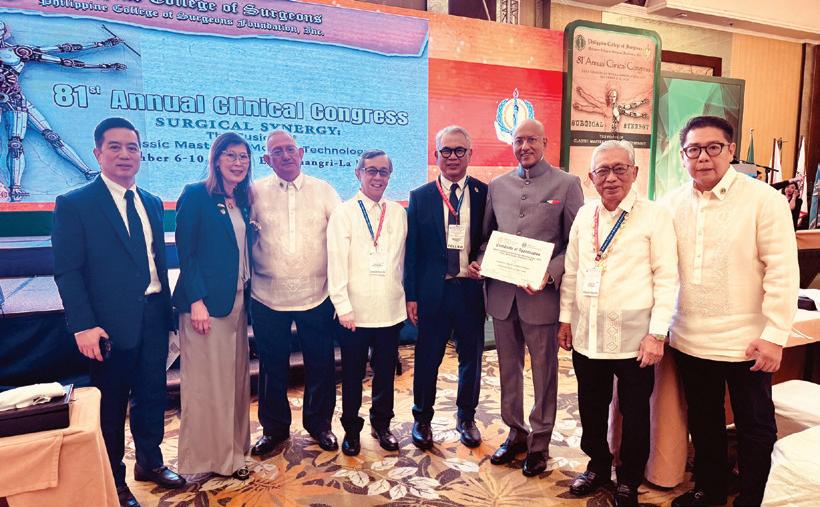
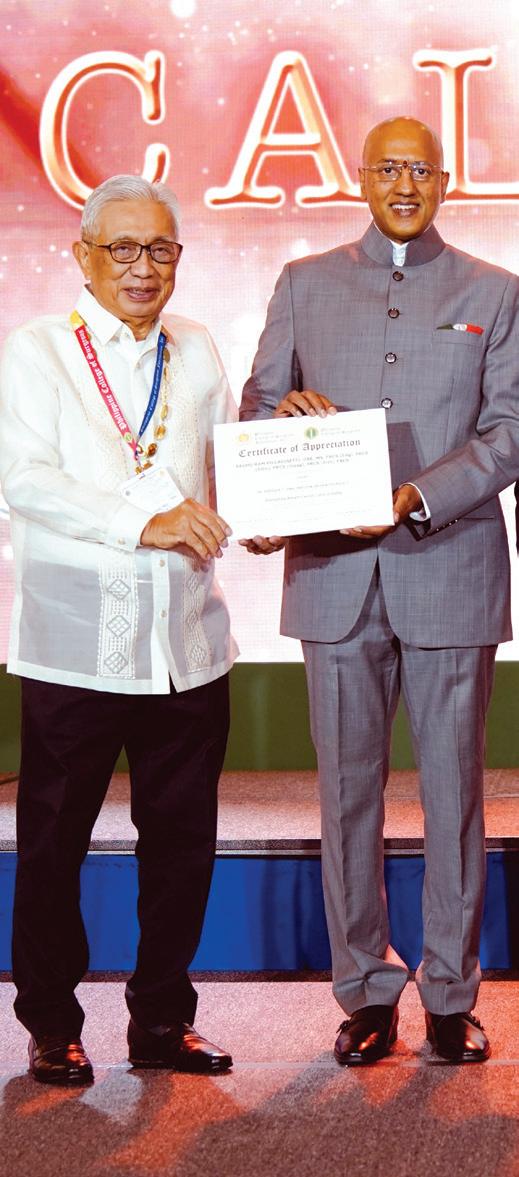
Purpose knows no borders was proven when Dr Raghu Ram was honoured to become the first surgeon from South Asia, and only the second from the Asia Pacific region, to deliver the Dr Enrique T Ona Oration on Health Policy, on December 7, 2025. He delivered the oration at the 81st Annual Congress of the Philippine College of Surgeons.
This prestigious one-hour, prime-time named lecture commemorates Dr Enrique T Ona – a pioneering transplant surgeon and former health secretary of the Philippines government.
Dr Raghu Ram, who delivered this Oration in the presence of the legend himself (Dr Enrique Ona), dedicated this singular honour to his parents and his motherland, and outlined the various disruptive initiatives spearheaded over the past 18 years, under the aegis of the Ushalakshmi Breast Cancer Foundation and the Breast Centre at KIMS Hospitals, in an earnest endeavour to transform breast cancer care in India.
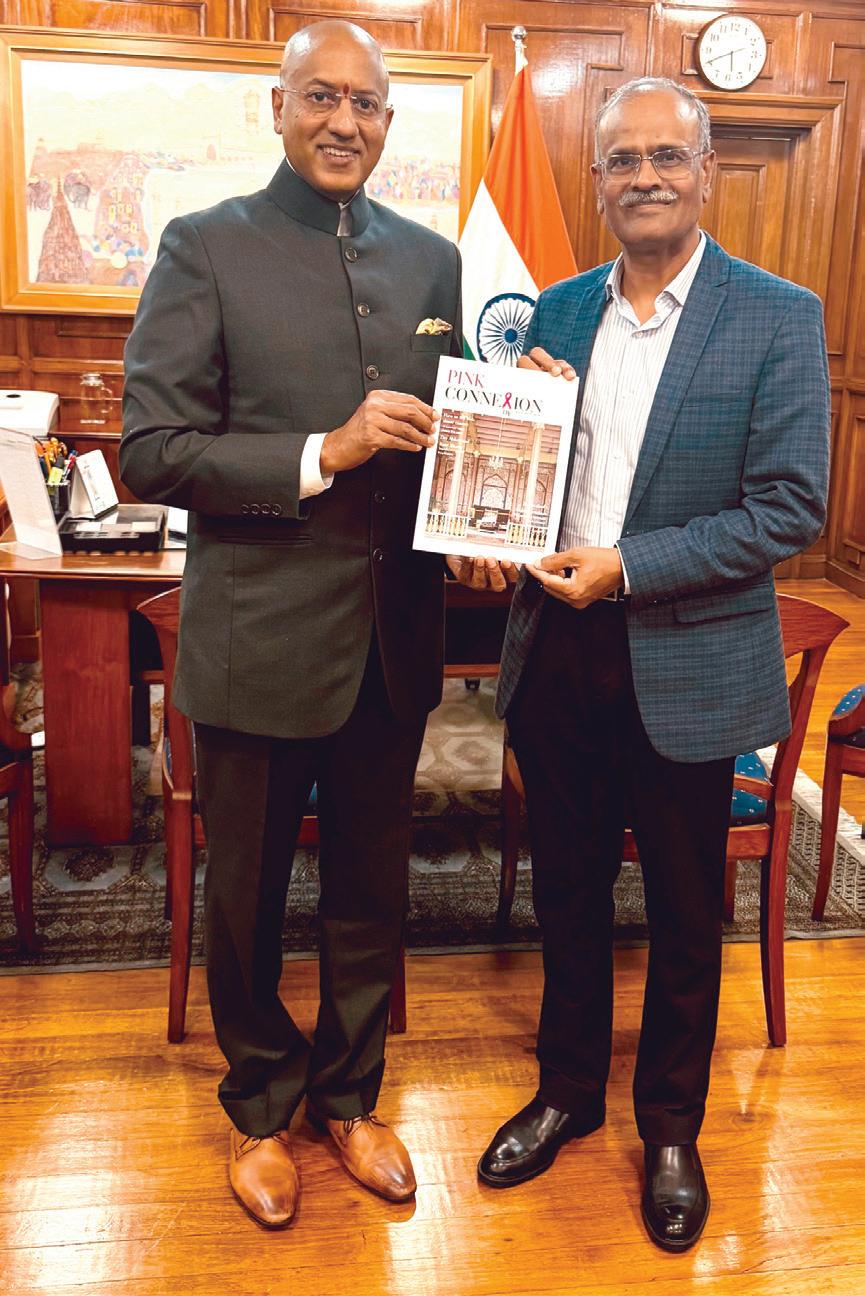
Dr Raghu Ram met Harsh Kumar Jain, Ambassador of India to the Philippines on December 8, 2025 at the Embassy of India, Manila, and presented him with the latest quarterly issue of Pink Connexion (Nov ’25 – Jan ’26), an innovative initiative of the Ushalakshmi Breast Cancer Foundation and KIMS–Ushalakshmi Centre for Breast Diseases, KIMS Hospitals.
The Ambassador was deeply impressed and appreciated Dr Raghu Ram for his decision to return to his motherland and for the disruptive initiatives undertaken over the past 18 years to transform breast cancer care in India.
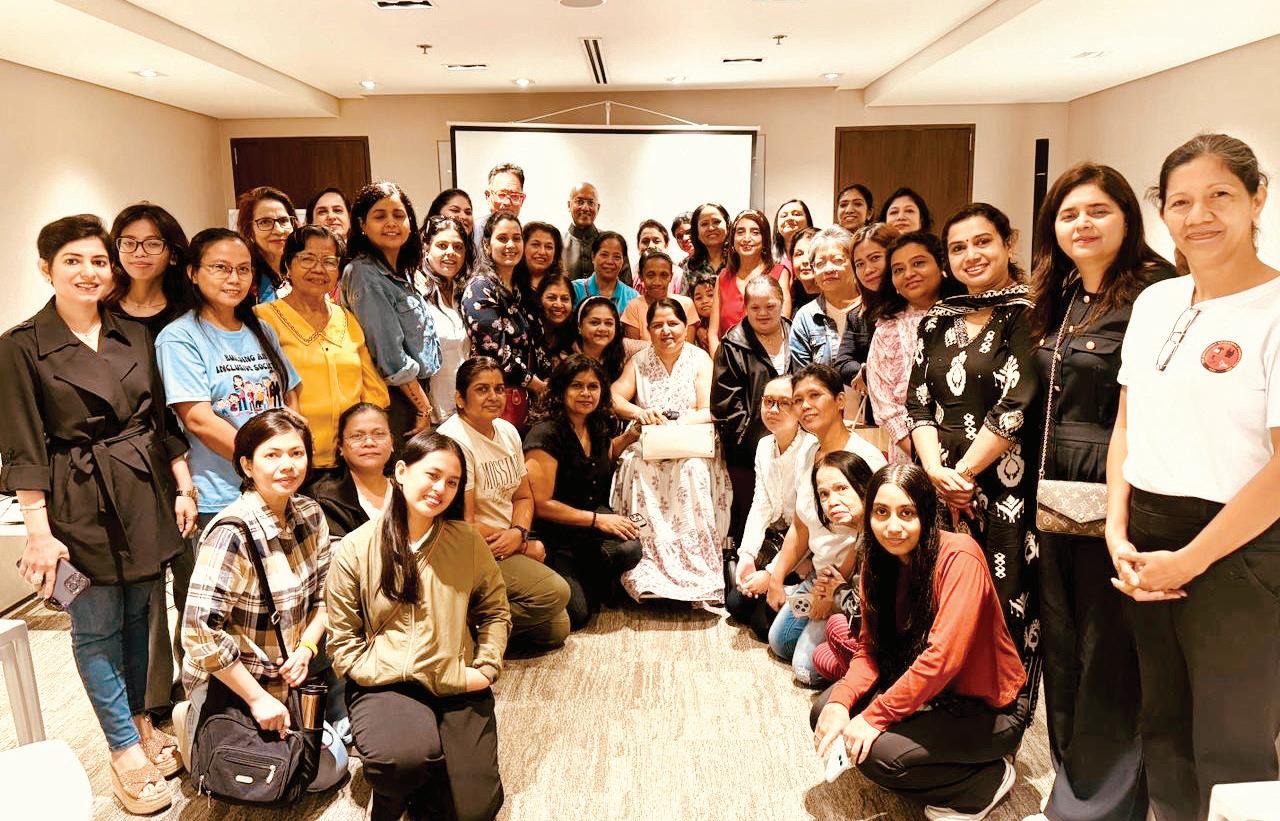
I-WE, a not-for-profit organisation and a unique platform in the Philippines, is dedicated to empowering professional and entrepreneurial women. On December 8, Dr Raghu Ram had the privilege of engaging with the Indian diaspora in Manila, underscoring the importance of early detection of breast cancer and dispelling common myths surrounding the disease.
The Q&A session extended even beyond the talk itself—a testament to the tremendous enthusiasm in the room. Women representing the Telugu, Tamil, Malayalee, Kannadiga, Bengali, and Sindhi associations in the Philippines participated with great interest, including a few courageous breast cancer ‘conquerors’. Their collective slogan, “I’m healthy and full of energy,” resonated powerfully across the hall.
A truly humbling moment for Dr Raghu Ram was when he received a warm pat—as a gesture of appreciation—from the Ambassador of India to the Philippines.
KIMS Hospitals had the honour of hosting Prof Masaki Mori, one of Japan’s most distinguished surgeons, during his visit to Hyderabad on December 16.
Prof Mori is the vice-president of Tokai University, Provost of the Medical Science College and Dean of Tokai University School of Medicine, Tokyo, and a former president of the Japan Surgical Society.
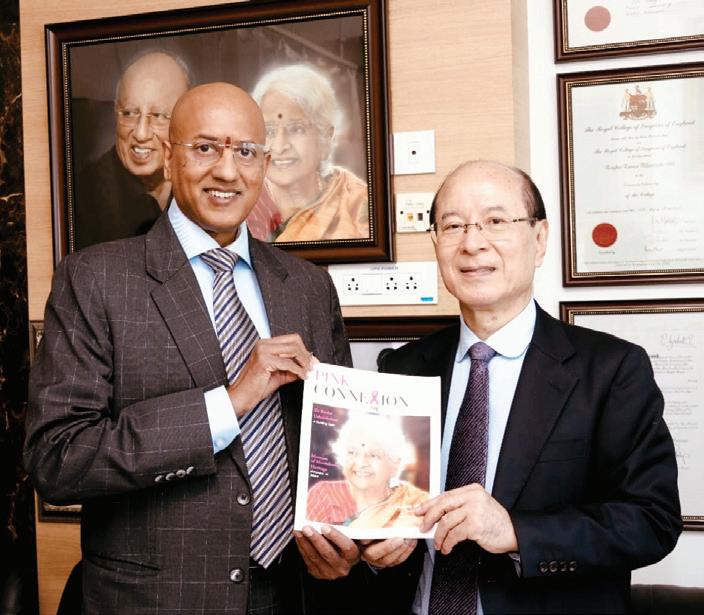
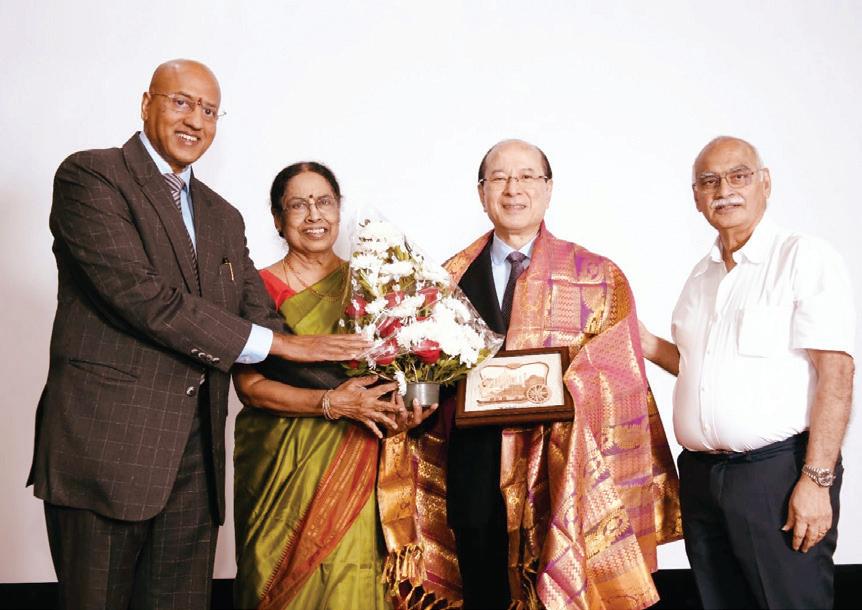
His keynote address, in which he highlighted global best practices, academic excellence, and innovation in surgical care, was exceptionally well received and left a deep impression on the medical fraternity in Hyderabad.
Prof Mori later visited the KIMS-USHALAKSHMI Centre for Breast Diseases, where
he interacted with patients and the clinical team. He paid rich tributes to Dr Raghu Ram for establishing South Asia’s first state-of-the-art comprehensive Breast Centre, describing it as a benchmark in patient-centred, multi-disciplinary breast care.
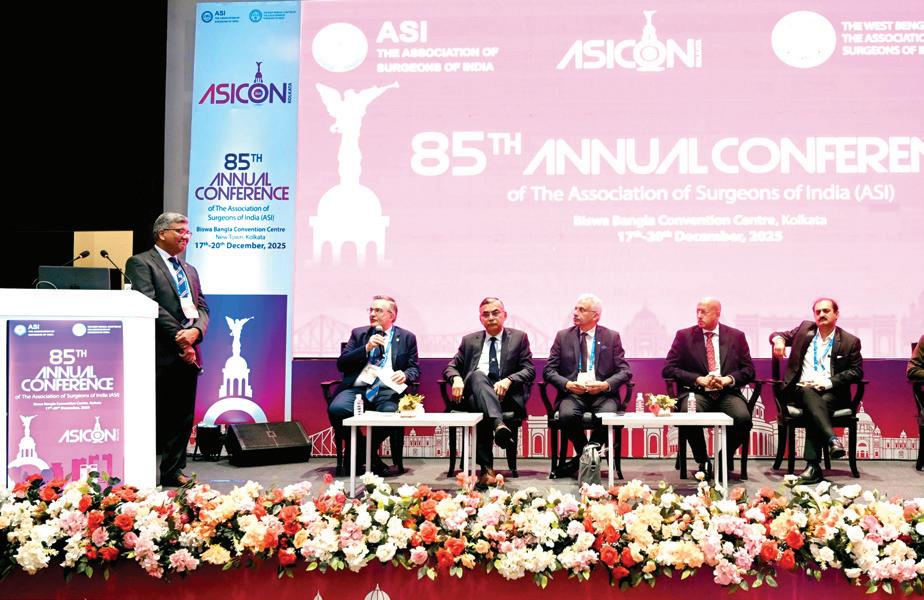
Dr Raghu Ram participated in a Communication Skills Workshop held during the 85th annual Conference of ASI (ASICON 2025) in Kolkata on December 18, 2025.
It was conducted under the auspices of The Royal College of Physicians and Surgeons of Glasgow (RCPSG), in partnership with the Association of Surgeons of India (ASI).
The workshop focussed on strengthening non-technical skills in surgery, emphasising the critical role of effective communication in reducing errors, improving patient and
team satisfaction, and enhancing clinical efficiency. The session empowered both surgical trainees and consultants with practical strategies to improve communication across the surgical care continuum.
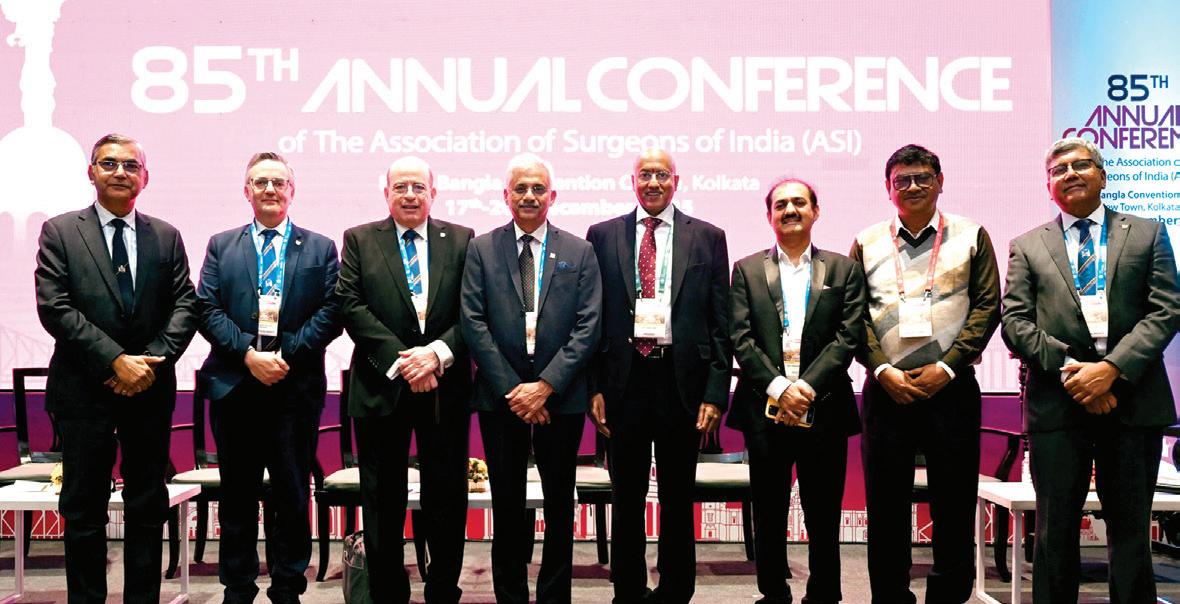
The session was convened by Prof Abhay Rane, registrar, RCPSG, and featured participation and active engagement from Prof Hany Eteiba, president, RCPSG, and Prof John Camilleri-Brennan, vice-president, RCPSG, along with Dr M B V Prasad (Hyderabad), Prof Somashekhar (Bengaluru), Prof Pawanindra Lal (Delhi), and Prof Utpal De (Kolkata).
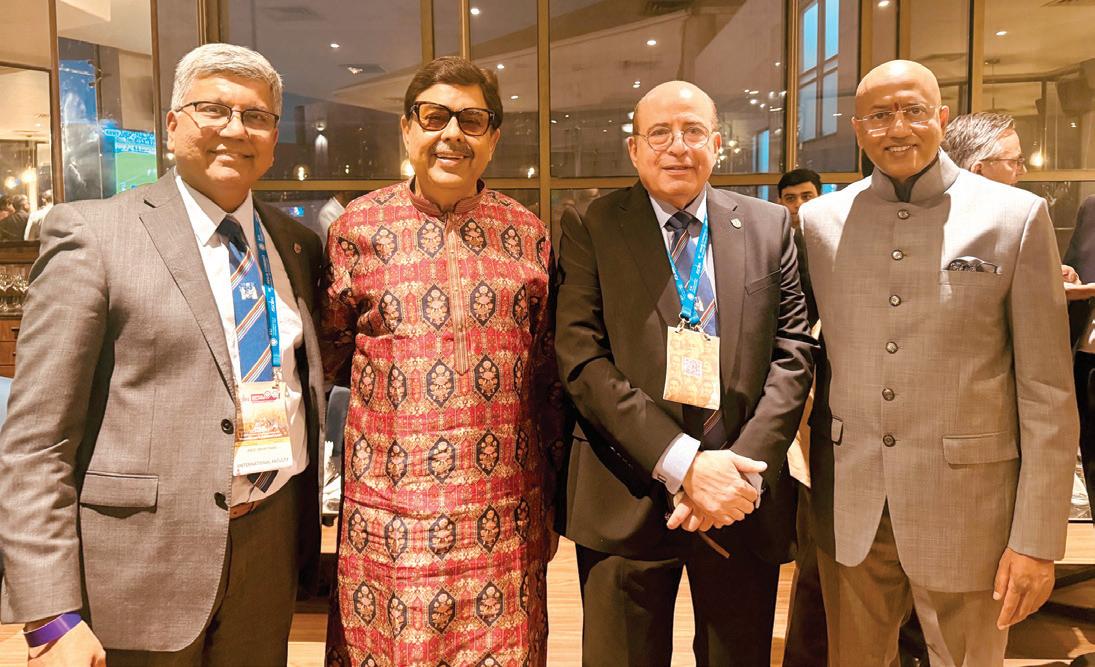
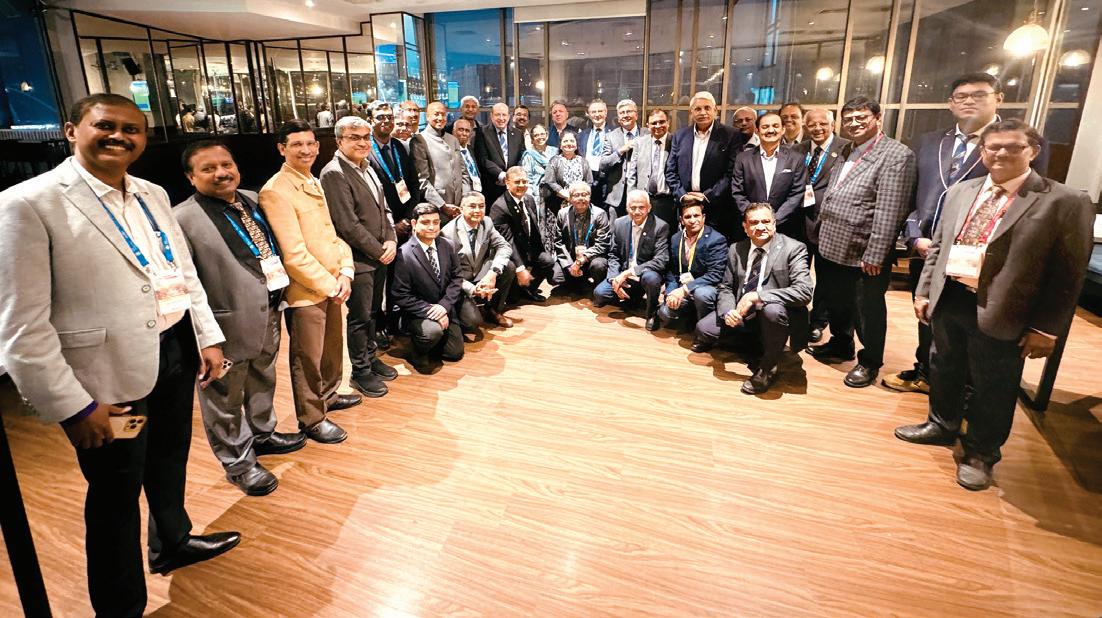
A reception was hosted by Prof Hany Eteiba, president of the Royal College of Physicians and Surgeons of Glasgow (RCPSG), in honour of the Fellows and Members of the College, who attended the Association of Surgeons of India (ASICON 2025)’s 85th Annual Conference in Kolkata on December 19.
During the reception, Dr Raghu Ram expressed gratitude to the Fellows and Members of the College across the world for the historic mandate that has made him the first—and only—practising surgeon from India to be elected to the RCPSG’s apex Governing Council.
Andrew Fleming, British deputy high commissioner to the East and North Eastern States of India, paid rich tributes to Dr Raghu Ram for his outstanding contributions to surgery and his exemplary role in advancing global academic and professional collaboration.
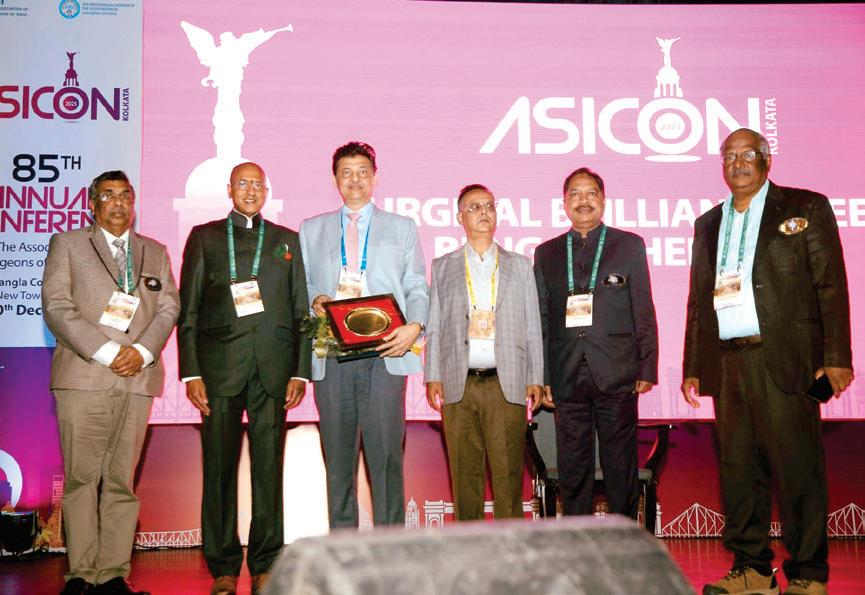
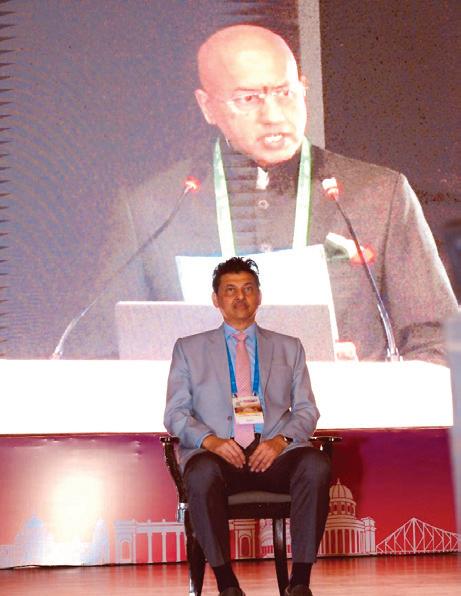
Dr Raghu Ram had the honour of chairing the fifth Dr PV Chalapathi Rao Memorial Oration, held on December 19, 2025, during the 85th Annual Conference of the Association of Surgeons of India (ASICON 2025).
The Oration was delivered by Prof Roy Patankar, a distinguished surgeon and outstanding academician, widely respected for his clinical excellence, intellectual rigour, and above all, his humane and grounded approach to patient care. The Oration honours the memory of Dr PV Chalapathi Rao—an eminent surgeon, a revered teacher, a towering mentor, and a father whose values and principles profoundly shaped Dr Raghu Ram’s life.
January 2026
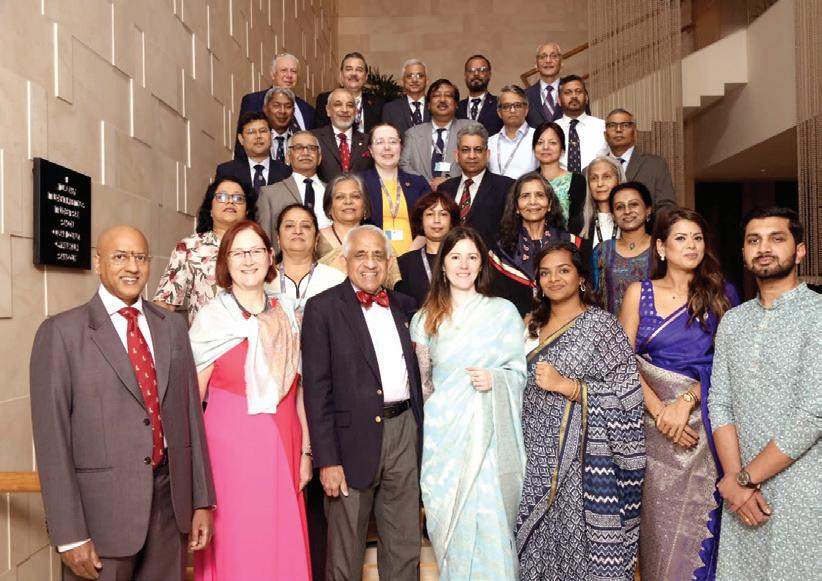
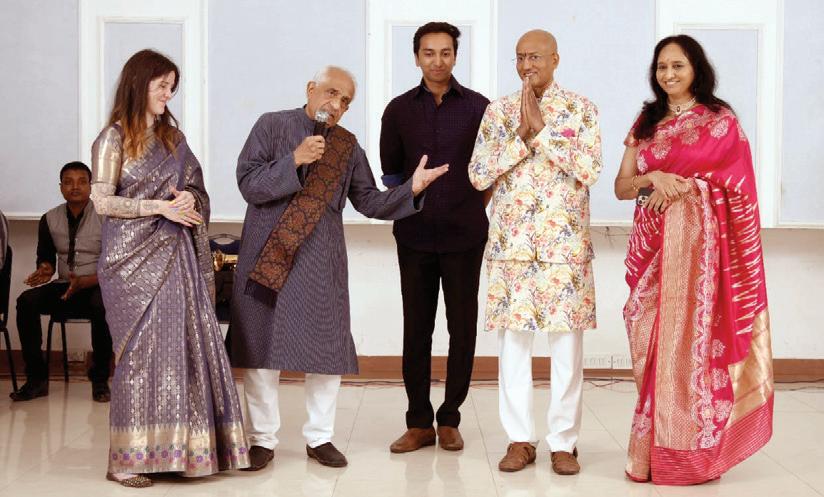
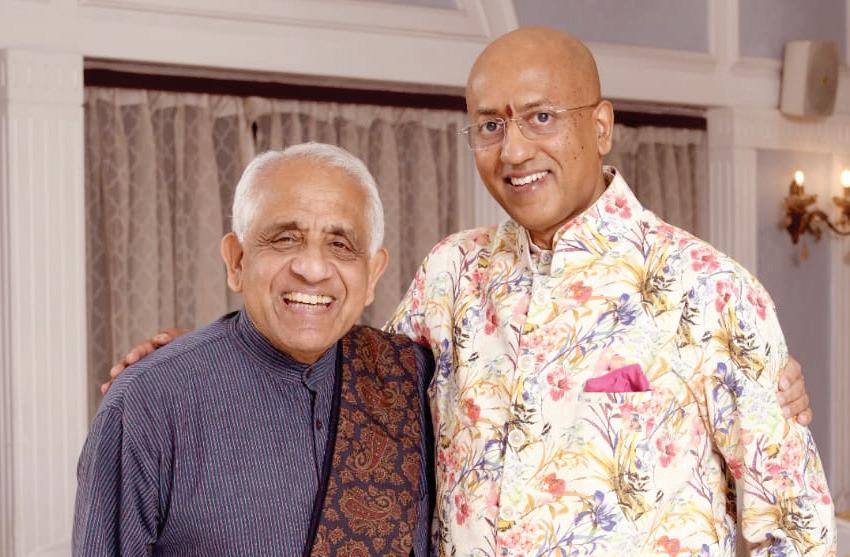
The 10th edition of the Intercollegiate Final MRCS examinations was held in Hyderabad from January 13 to 15, 2026, under the auspices of The Royal College of Surgeons of England.
The examinations were hosted by Dr Raghu Ram, continuing a longstanding collaboration aimed at expanding access to internationally benchmarked surgical assessment in the region. Since 2008, Hyderabad has served as a major international examination centre, enabling more than 2,000 surgical trainees from South Asia and beyond to sit for the Final FRCS and Final MRCS Examinations locally. These examinations were conducted under the auspices of The Royal College of Surgeons of Edinburgh (2008–2015), and subsequently The Royal College of Surgeons of England (2015–2026).
This sustained initiative reflects a shared commitment to maintaining the highest standards of surgical training and assessment, while improving accessibility and reducing geographical and financial barriers for candidates.
During the Examiners’ Dinner, Professor Vishy Mahadevan, convener of the RCS England Examinations, expressed his appreciation to Dr Raghu Ram for his leadership and unwavering, long-standing commitment to the successful conduct of the MRCS examinations in Hyderabad.

Hyderabad, India
Empowering people...impacting lives