PINK CONNE ION

Vol 9 Issue 1: Aug- Oct ‘22
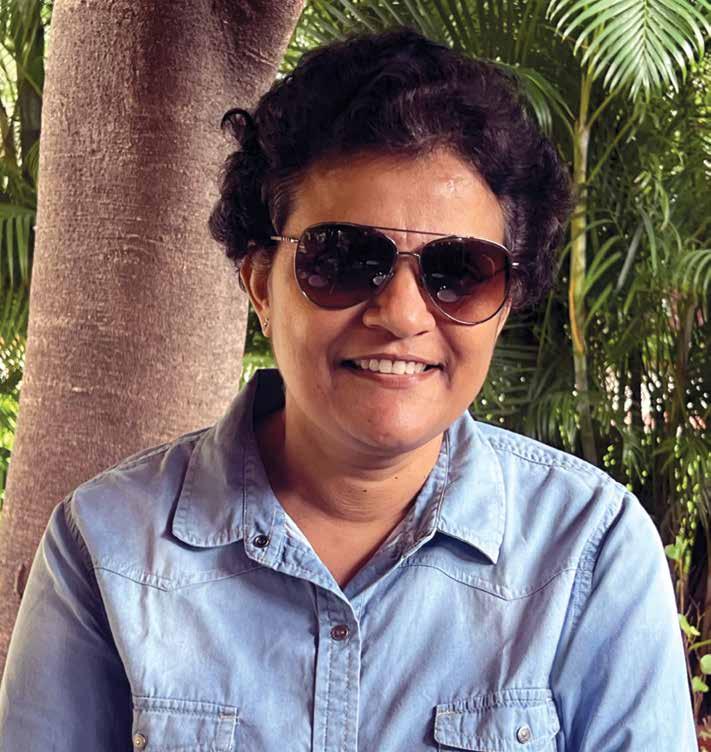
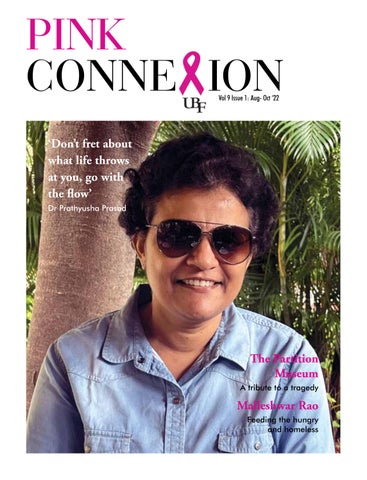
‘Don’t
fret about what life throws at you, go with the flow’
Dr Prathyusha Prasad
Vol 9 Issue 1: Aug- Oct ‘22
‘Don’t
fret about what life throws at you, go with the flow’
Dr Prathyusha Prasad
TThe release of ‘Pink’ this time will coincide with the 75th anniversary of India’s independence. I say this with pride – it is no small achievement that India continues to be a democracy, and despite the many things we feel could be better, the country has only grown stronger.
A social scientist has observed how every ve years, India’s population spills out of their homes, riding bullock cars and rickshaws, and even walking miles to cast their vote. Nowhere else in the world is election day declared a holiday, and while the city folk is cynical about the voting process, the ordinary man will go cast his vote, no matter what. It is not a small matter that millions, not only take pride in the democratic process, but believe that their one vote will make a di erence. To me, this is nothing short of a miracle.

We have also made huge strides in medical care as well so that the longevity of the Indian has increased. If there are ve-star hospitals that can rival the best in the US, government hospitals play a signi cant part in taking medical care to remote corners of the country.
Independence of course brought in its wake, the tragedy of partition. Lady Kishwar Desai speaks to ‘Pink’ about the Partition Museum she set up in Amritsar that memorialises the tragedies of those a ected. Also, there’s the inspiring story of Malleshwar, who distributes food to the homeless and hungry in Hyderabad.
Small initiatives have long legs and travel a long way, as are Dr Raghu Ram’s relentless e orts to raise awareness about breast cancer.
Jai Hind, we say, hoping democracy grows stronger!
Ratna Rao Shekar
CANCER CONQUEROR
Dental surgeon Dr Prathyusha Prasad’s philosophy of not letting a bout with cancer overwhelm her. We feature an interview with her
MAKING A DIFFERENCE
Malleshwar Rao’s laudable initiative Don’t Waste Food, to feed the homeless and hungry in Hyderabad from left-over food in restaurants, continues to thrive despite his ill-health
EDITOR
Ratna Rao Shekar
10 15 17
HERITAGE
The Partition Museum in Amritsar is filled with mementoes to mark the tragedy that disrupted many lives. Delhi is all set to have one, Pink meets Lady Kishwar Desai to get the details
MY VIEW
Dr P Raghu Ram talks about the unnecessary scare over genetic testing and explains which group is at a higher risk and need to take it
UBF DIARY
Dr Raghu Ram joins a distinguished group of surgeons and personalities around the world, to be conferred the honorary FRCS by The Royal College of Surgeons of England in London last month 3

CONTRIBUTORS
Minal Khona
Mallik Thatipalli
Nivedita Choudhuri
DESIGN
Malvika Mehra
COPY EDITOR
Kavitha Shanmugam
PUBLISHED BY Ushalakshmi Breast Cancer Foundation
PRINTED AT
Kala Jyothi Process Pvt. Ltd.
1-1-60/5, RTC Cross Roads
Musheerabad
Hyderabad - 500 020
KIMS-USHALAKSHMI Centre for Breast Diseases
Krishna Institute of Medical Sciences, Minister Road, Secunderabad - 500 003
+91-91009 03781
ubfhyderabad@gmail.com
www.breastcancerindia.org

An unplanned mammography of the breast led to the discovery of a lump for Dr Prathyusha Prasad. She did not let the cancer get her down because she never saw it as a ‘life-threatening’ disease. With the support of her family and her colleagues at KIMS Hospitals, this dental surgeon, who believes that one should not worry about what life gives us and go with the ‘ ow’, managed to ght her cancer with fortitude
Minal Khona meets this spunky cancer survivor
Dr Prathyusha Prasad, a Hyderabad consultant dental surgeon at the dental care department of KIMS Hospitals, where she has been working for the past 22 years, had her first brush with the possibility of cancer in 2003. At that time, she had quickly removed her right ovary after a benign tumour was discovered. She did not want to take a chance considering the history of ovarian cancer in her family.
Overtheyears,DrPrathyushapaidattentiontoherreproductive system to ensure the left ovary did not get affected too. However, somehow, she had skipped her annual breast cancer screening last year.
One day, in July last year, she walked into the KIMSUSHALAKSHMI Centre for Breast Diseases for what she calls
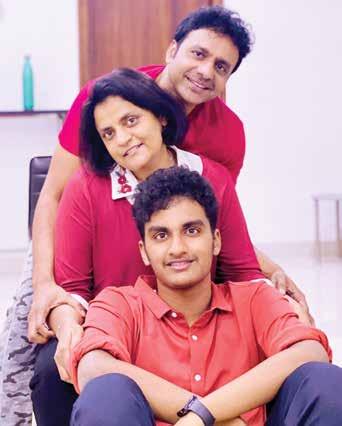
Dr Prathyusha with her husband Dr Prasad and son, Arya: Standing by her to give her the support she needed
a “random check-up”. She recalls, “I had no pain, no feeling of a lump or any other symptoms. It was purely a casual check-up. “
The routine screening mammogram and ultrasound scan revealed a lump, which was highly suspicious of right breast cancer. Core needle biopsy of the breast lump and FNAC (needle test) of an abnormal looking lymph node in the right arm pit (axilla) was done by Dr Jwala Srikala, consultant radiologist.
My colleagues from various departments came to meet me. Dr R V Rao, my medical oncologist would treat me like a baby. Though there was no need for them to do so, they would all take turns checking on me; some would come and stand beside me when the chemo was on
While the tests were on, her worried husband, Dr Prasad, who is a prosthodontist, called her. She says, “I told him I will call him back. I was still in shock and my main concern was how my 16-year-old son, Arya, and my husband would take it. I didn’t want them to be upset; especially since my son was to move to England to study medicine in September that year. I went back to my office and informed my husband but asked him not to let Arya know. Later, I also informed my staff about the cancer.”
She continues, “The breast biopsy did confirm my worst fears—malignancy. However, the FNAC of lymph node did not show evidence of cancer. I was relieved when the staging PET Scan also did not show spread of cancer anywhere in the body.”
Dr Raghu Ram spent considerable time counselling her and her husband about the surgical options and said that she was eminently suitable for a lumpectomy (wide local excision) and reshaping the breast using oncoplastic techniques to ensure good cosmetic outcome, along with a Sentinel Node Biopsy (SNB), which involves removal of a few lymph nodes in my arm pit (axilla).
This procedure had to be necessarily followed up with radiotherapy to the breast. The other option was removal of the breast (mastectomy), with or without breast reconstruction.
“I chose mastectomy as I did not want to worry about the possibility of cancer recurrence in the breast and was not keen on radiotherapy, which is essential after breast conserving surgery. Also, the cosmetic factor did not bother me and so I did not want breast reconstruction,” explains Dr Prathyusha.
Dr Prathyusha admits she was blank when she received her diagnosisandinthedaysthatfollowed.Hersonwasscheduled to have a minor surgery to clear his airway. Coincidentally, it was scheduled for August 4, the same day Dr Prathyusha’s surgery was also fixed.
At the operation, to Dr Raghu Ram’s surprise, the frozen section of four lymph nodes that he removed as part of the SNB revealed that cancer had spread to all the four lymph nodes. Frozen section, for someone who is not aware, involves a rapid analysis of the lymph nodes done by the pathologist and reported back to the surgeon during the surgery. Based on this report, as there was a distinct possibility for other lymph nodes to be also harbouring cancer cells, Dr Raghu Ram removed all the other lymph nodes in the axilla (Axillary node clearance). The breast was also removed (mastectomy).
Understandably, Dr Prathyusha was numb. “My mind went blank; I could not think or feel anything. I consulted Dr Raghu Ram, who examined me with the utmost care. I still remember, the only thought I had was that I would do whatever he said,” she says.
“My post-operative period was most uneventful and I was up and about on the same evening after surgery,” reminisces Dr Prathyusha. “Dr Raghu Ram makes sure his patients are in their home wear and not in a hospital dress within a few hours after surgery. His patients feel at home and are comfortable because of his personal touch and meticulous attention to detail. He also demonstrated and made me do
exercises to mobilise my shoulder joint from day one after surgery. Shoulder physiotherapy is crucial to prevent frozen shoulder and I am very grateful to Dr Raghu Ram for ensuring that I recovered effortlessly after surgery,” she adds.
The final pathology report showed that cancer had metastasized (spread) to six out of 17 lymph nodes. “This meant that the cancer was aggressive and I needed both chemotherapy and radiotherapy to the chest wall to get rid of any microscopic cancer cells in the body,” she says.
After the surgery, Dr Prathyusha had the drain for a couple of weeks. Her husband had by then let their son know about it. “They both were depressed but decided to stand by my side to give me the kind of strength and support that I needed,” she reveals.
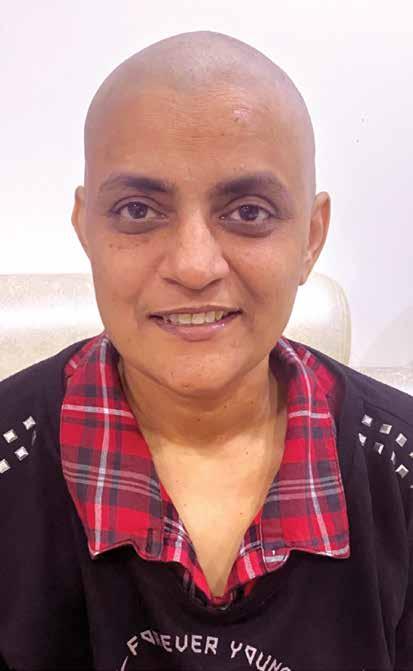
She was also very confident that she would get better. Dr Prathyusha insisted that Arya carry on with his plans to go to England. “My first chemo was on August 28, 2021, and I had shaved my hair off on the 27th,” she confides.
After the surgery, Dr Prathyusha recalls with gratitude the support she received from her family and colleagues. “My husband and son have always been supportive, and after the surgery, my husband would wake up every two hours to check on me. My colleagues from various departments came to meet me. Dr R V Rao, my medical oncologist would treat me like a baby. Though there was no need for them to do so, they would all take turns checking on me; some would come and stand beside me when the chemo was on.”
I could not have done this without Dr Raghu Ram. His extraordinary counselling skills in reassuring me and giving me the much needed ‘inner strength’ to ght the cancer, are second to none. One word from him was enough to reassure me
Even the founder and MD of KIMS, Dr Bhaskar Rao, was supportive and kind enough throughout my treatment and has been the backbone for me and my family. “But, I could not have done this without Dr Raghu Ram. His extraordinary counselling skills in reassuring me and giving me the much needed ‘inner strength’ to fight the cancer, are second to none. One word from him was enough to reassure me,” she says.
The chemo as always, all eight cycles of it, was hard to cope with. Dr R V Rao prepped her for the chemo almost as if she was taking a vitamin injection. Despite her practical approach to the disease, the side effects of chemotherapy and the complications that followed were hard on Dr Prathyusha.

Dr Prathyusha never considered her cancer as a life-threatening disease. “I always told my patients not to get scared or worry about what life gives us; and that we should go with the ow, so I followed the same principle.”
She had complications in the treatment due to a bacterial infection. The chemo was put on hold after five sessions and she completed her treatment in April, along with the radiation to the chest wall.
“My body was not co-operating with the medicines. As for the side effects, I cannot even express what I felt. I had no sense of taste, there was nausea and I would feel itchy all the time. I could not even drink coconut water as it gave me a cough. Any food made me feel bloated; I could only eat a pomegranate. Though, I could not eat anything, I would try and drink a protein shake twice a day along with one egg white and some juice,” she says.
Other side effects included insomnia. “Though my husband would check on me, I was having trouble sleeping. And, when I slept, I would find myself crying unconsciously. I was emotionally disturbed; during chemotherapy and radiation as I was missing my son. When he was here, Arya had seen to that I would exercise regularly. Later, my husband and my mother-in-law were supportive during the treatment. She used to pray for me and my health, but even after receiving all this care and support, I would still wake up wondering why I was weeping,” she says.
But, Dr Prathyusha never considered her cancer as a lifethreatening disease. “I always told my patients not to get scared or worry about what life gives us; and that we should go with the flow, so I followed the same principle.”
After completing her chemotherapy, the radiation planning was done by Dr Narsimha Rao, her radiation oncologist. Six weeks of radiation therapy spread over five days a week, was given. It restricted her hand and affected her skin, but Dr Narsimha Rao and his staff was supportive and took care of her during every visit and gave here moral support throughout her ordeal.
Barely having finished her own treatment, Dr Prathyusha has had no time to make lifestyle changes for her health. “My mother-in-law was diagnosed with gall bladder cancer and she was with me for the past few months. She passed away in June. I have to now start exercising regularly,” she confesses. She lives with the hope that she will one day bounce back to her usual healthy self. Let’s hope the universe grants Dr Prathyusha her wish.
Dr Prathyusha has won the war on cancer with her enormous fortitude and extraordinary resilience. I feel privileged to have been involved in her care and pray for her good health, always.
Dr P Raghu Ram

When a young man noticed excess food going waste in hotels and at functions in the city, he decided to collect them and distribute to the homeless living on the streets of Hyderabad. It gradually grew to become a movement and his ‘Don’t Waste Food’ initiative was most e ective during the pandemic. Malleshwar Rao continues to feed the hungry to this day despite battling several health problems of his own, writes Minal Khona
Sometimes, those among us who grow up with hardships, have the biggest hearts. And, Malleshwar Rao is one such young man from the village of Varni in Nizamabad district.
As a child, Malleshwar and his brother could afford to eat a full meal only on the days his father earned some money. Education then would have been a pipe dream. Luck was on his side however. Hemlata Lavanam, a Padma Bhushan awardee used to run an ashram in his village. She admitted him and his brother at the ashram school as day scholars. It meant that he could come home on weekends but during the weekdays, he stayed and studied at the ashram and had access to food. During the holidays, the siblings would take up odd jobs to supplement their family income.
Growing up with the other children at the ashram instilled in Malleshwar, a sense of empathy, as some of them were children of petty criminals, orphans, or born to sex workers and devadasis. It made him sensitive to the challenges and hardships faced by those less fortunate.
As an adult, he moved to Hyderabad on a government scholarship for further studies. But he wasn’t allowed inside the classroom, as he didn’t have the books or the equipment. He started to work as a waiter in the night at the nearby resorts and function halls to earn money to buy what he needed at college.
One night, after an event, the organisers asked the waiter staff to eat and take the leftover food with them. Malleshwar
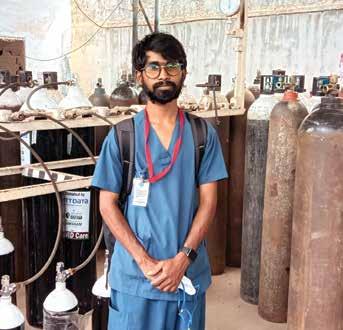
and his friends packed up the food and distributed it to the homeless they came across on the way back to the hostel.
That one experience led Malleshwar to start his initiative aptly titled ‘Don’t Waste Food’. In a conversation with Pink, Malleshwar says, “I felt good when I fed the homeless who were so hungry. I wondered then that if just one venue could have so much food left over, wouldn’t it be the same with other hotels and wedding halls too? So, my friends and I approached local hotels for leftovers. That is how I started ‘Don’t Waste Food’ ten years ago.”
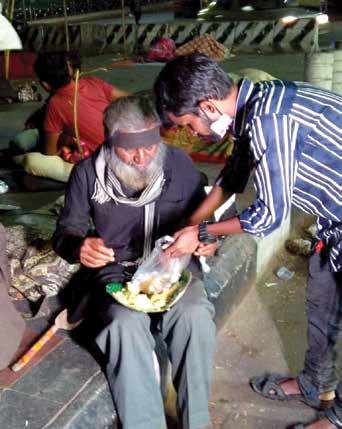
He registered it as an NGO only recently and it is now called ‘Don’t Waste Food Trust’. Gradually, he got volunteers from other cities like New Delhi, Rohtak, Chennai, Vijayawada, Rajahmundry and Jamshedpur. Today, they feed at least 200 people every day, and the number goes up to a 1,000 on weekends in Hyderabad alone. Before Covid, they used to feed around 2,000 to 3,000 people.
One incident that always stayed with him and motivates him was when he distributed a food packet to a well-dressed young man sleeping on a bench at Secunderabad station. He recounts, “Most of the homeless and poor I feed, I have noticed, no matter what their condition, they would always wash their hands and then start eating. But, when I gave this man a packet of food, he was so grateful. He thanked me and immediately started eating. He didn’t even wash his hands so I can imagine how hungry he must have been to do that. That incident stayed with me and I remember it every time I feel down.”
He recalls, how, during the lockdown, he managed to get a pass for essential services to distribute food items. He also got help from generous souls. When they spread the word during the lockdown that they wanted to distribute food to the poor, several families came forward.
“They would let us know how many people they could cook for and we would go and collect it. We’d give it to the migrant workers, and other labourers we saw who were struggling during that time. A Telugu singer, Smita, sponsored eggs; we would distribute 25,000 eggs amongst 4,000 people every day,” he says.
The cooked food varied from items such as dal or sambar and rice, curd rice, pulihora etc. An animal lover, Malleshwar would take the curd rice to areas like the ORR or industrial areas to feed stray dogs because they were starving as well and no one would venture to these areas to feed them.
During Covid, when they were feeding migrant labourers and people who didn’t have access to food, he observed that like him, there were other volunteers who used to bring food. There was a surplus and food was getting wasted.
I felt good when I fed the homeless who were so hungry. I wondered then that if just one venue could have so much food left over, would it not be the same with other hotels and wedding halls too? So, my friends and I approached local hotels for leftovers. That is how I started ‘Don’t Waste Food’ ten years ago
He says, “How much can a person eat after all? Like me, there were others who were feeding the slum dwellers who had lost their jobs, or homeless people. So, I started asking donors to donate groceries instead. For those people who had access to a stove and could cook, we would supply them with rice, dals, flour and some vegetables. That way they could cook only as much as they needed. It prevented food from getting wasted.”

An anonymous caller, who had seen his appeal for rice and other staples on his Facebook page called him and sent him two truckloads of rice bags to be distributed among the poor. He refused to divulge his name.
If all the food that actually goes waste can be mobilised, it can feed half of Hyderabad, says Malleshwar
And, as if providing food for the hungry was not enough, Malleshwar would even work as a volunteer to supply oxygen cylinders to government hospitals in far-flung areas such as Patancheru, Jeedimetla and Cherlapally.
He adds that after Covid, several hotels cook less food than they used to so wastage has also come down. But celebrity parties, weddings, function hall events and restaurants are still where he mainly sources the food which he distributes. “If all the food that actually goes waste can be mobilised, it can feed half of Hyderabad,” he says.
Unfortunately, for Malleshwar, who used to work at an MNC, health problems last year forced him to quit his job. He says, “I had a good salary and I could easily use 40 per cent of my income to have the food collected and distributed. But I got ulcerative colitis and it was quite serious. The doctors even found a benign tumour in my large intestine. I lost over 20 kilos and when my stomach started bloating due to gastric
issues, my friends, who shared the flat with me, left. They were scared that I would die there. My brother helped me, and we did not even inform my parents when I was in hospital for the surgery. I spoke to the hospital about the work I did and the lack of funds, so they gave me a discount and helped me get a medical loan too.”
When you help so many people, the universe sometimes returns the favour. A generous donor, Yashaswini used to ensure he got to eat a healthy breakfast every day at the hospital. Once he was discharged, she paid for a month-long treatment programme for him at the Martena Satyanarayana Raju hospital in Vijayawada, which is a naturopathy centre.
Today, his condition is still delicate. He eats five small meals a day; he is not allowed dairy, spicy food or sweets. Also, the volunteers and the drive to supply leftovers have dwindled in the other cities. Currently, Malleshwar reveals that he and his team work predominantly in Hyderabad and Rajamundhry on a daily basis.
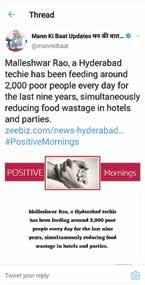
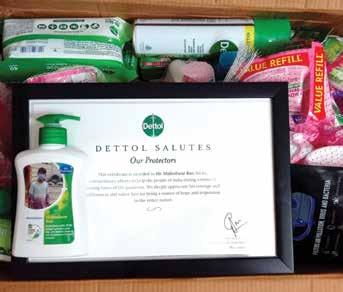
Malleshwar’s work has been praised by Prime Minister Narendra Modi on his Mann ki Baat twitter handle on December 17, 2020; Erik Solheim of Brut and Anand Mahindra have also tweeted praising his service.
He continues to rally for leftovers to be fed to poor and homeless people, as he reiterates that nothing makes him happier than seeing the look of contentment on their faces when they have eaten. His illness has slowed him down, and he is in the midst of creating an app that offers tourism packages for families. But no matter what else he does in life, Malleshwar plans to continue feeding the hungry for as long as he can.
To donate food or to contact Malleshwar, you can call him on 72071 03539 Website: dontwastefoodtrust.org
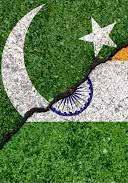
The India-Pakistan partition has been a traumatic memory for many Indians. It is only appropriate that a museum lled with mementoes of that time is set up to mark the tragedy that disrupted so many lives on both sides. Amritsar has one such museum on the partition, and now New Delhi is poised to get one on the event of India’s 75th year of independence.
Nivedita Choudhuri meets Lady Kishwar Desai, the lady behind the nobel venture, to share the genesis of the museum and the poignant memories it holds
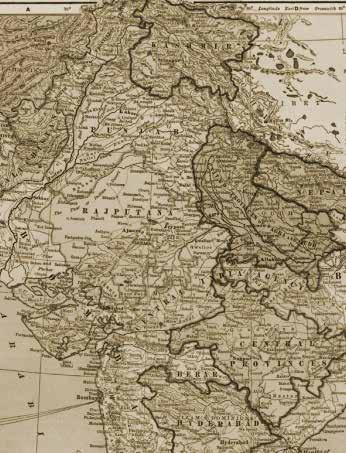
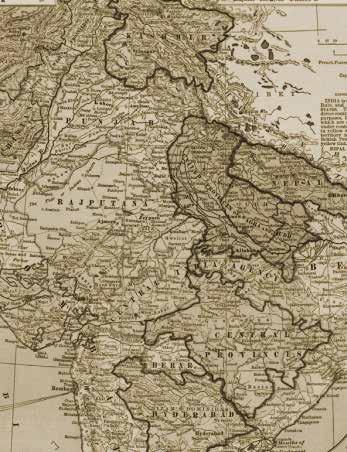
The India-Pakistan partition happened nearly 75 years ago, but after so many decades it holds sway over us even today evoking painful memories. The ordeal of the millions of people displaced by partition and the trauma caused by the splitting of the Indian subcontinent into India and Pakistan in 1947, is often termed as one of the greatest refugee crises in the history of the world. It seemed apt then to unveil a museum in Amritsar to document the untold heart-rending stories, and this was done on the 70th anniversary of India’s Independence in 2017.
Now, Delhi is all set to have its own partition museum that will be inaugurated on August 15 this year, on the 75th anniversary of Indian Independence.
The story began in 2015, when a group of people led by author and columnist Lady Kishwar Desai came together to set up a museum to commemorate the partition. No memorial or museum dedicated to this momentous event existed and The Arts and Cultural Heritage Trust was registered with the aim of establishing the first museum on partition. Lady Desai is the chairperson of the Board of Trustees.

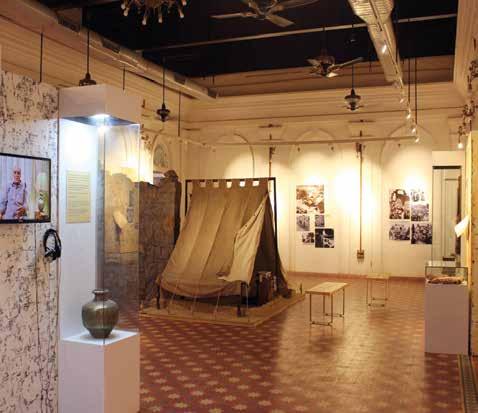
“As a child of parents who had survived partition, I had always toyed with the idea of setting up a museum dedicated to this historic event. I felt a physical space was needed so that future generations would understand what happened during Independence and partition. We approached the then chief minister of Punjab, Prakash Singh Badal, who supported our idea. We were finally allotted 17,000 sq feet of space at the colonial-style Town Hall, in Amritsar, which is a stone’s throw from the Golden Temple,” says Lady Desai in a chat with Pink.
“We wanted the museum to be ready by August 17, 2017. This date marked the 70th anniversary of the Radcliffe Award, which had determined the borders between the two newly-created countries,” she explains.
“Three galleries at the museum were completed and a curtain-raiser exhibition was held in 2016. The rest of the galleries— there are 14 in all—were completed and inaugurated in time in 2017. We launched funding and awareness drives and were fortunate to receive generous donations. A lady gave us office space for free for one year,” she recalls, adding that they had more than 35 interns on board, and they often worked till midnight to get the collections ready.


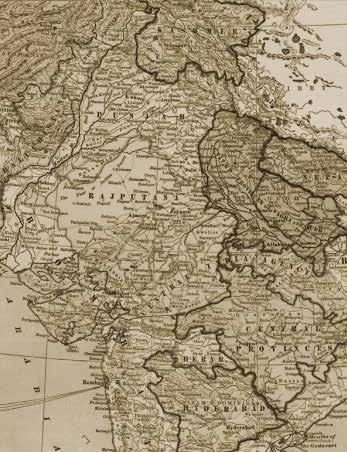
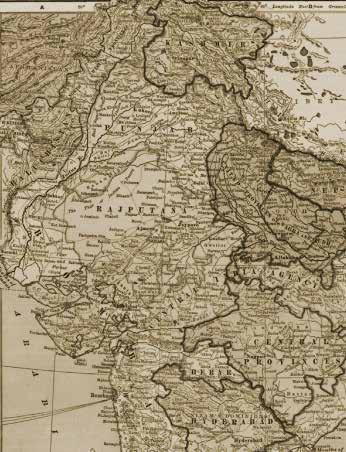
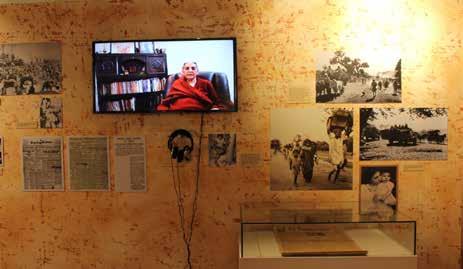
Alerted by their awareness drives, people came forward in hordes to donate memorabilia related to partition. Artefacts ranging from trunks, items of clothing and identity cards to works of art are today displayed at the museum. “There are also colonial-era papers that were obtained from the British Library,” she reveals.

The ordeal of the millions of people displaced by partition and the trauma caused by the splitting of the Indian subcontinent into India and Pakistan in 1947, is often termed as one of the greatest refugee crises in the history of the world
The refugee artefacts are revealing and evocative. Sudershana Kumari, eight years old at the time of partition, who had barely managed to escape the riots with her family, donated to the museum, a tin box that she found in a rickety house, while waiting for an army truck to take her family across the border. The little girl thought of

her dolls that she had left behind in her home in Sheikhupura. She decided to take the box to house her new dolls in her new home.
“I had to flee with my family one evening whilst my mother was preparing dinner. We had to leave the rotis and atta behind and scale walls to escape goons. My uncle’s family was massacred, and I saw bodies of known persons and acquaintances on the way, but I managed to reach Wagah border with the precious tin box,” says Kumari. Her account is among many in the oral histories section that will tug at the hearts of the most hardened persons.
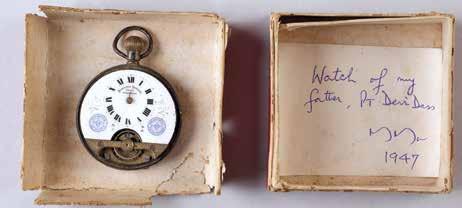
A thali, lassi glass and katori were bestowed by Kamal Bammi, whose family had lived in Lahore. The glass, made of brass, and katori and thali, made of kansa metal, were brought over by a Muslim friend of the family, when he travelled to their house in Delhi from Pakistan in 1949.
Another moving tale is that of Bhagwan Singh Maini, then 30, and Pritam Kaur, then 22, in 1947. He was from Mianwali and she from Gujranwala and they had been introduced to each other for the purpose of marriage. During the riots, they lost contact with each other. Three of Maini’s brothers died in the
violence and Kaur’s family put her on a train to Amritsar with her brother. After reaching the station, Kaur and her brother made their way to a refugee camp at Khalsa College. There, as fate would have it, she met Maini again and they eventually got married. Kaur had a phulkari coat with her when she crossed the border, which was later donated to the museum.
Sunil Chandra Ghosh remembers his father’s friend, Hamid Miyan, who helped his family cross over from East Pakistan (now Bangladesh) to India. “Miyan visited our home in Barrackpore, near Kolkata, a few times, bringing hilsa fish from the River Padma. He knew that we were missing hilsa from the Padma. My father had left our house with Miyan, saying he would return to his ancestral home if the political situation improved. Once, Miyan suggested that

my father return and take back the house, but my father said no,” Ghosh says.
People came forward in hordes to donate memorabilia related to partition. Artefacts ranging from trunks, items of clothing and identity cards to works of art are displayed at the museum. There are also colonial-era papers that were obtained from the British Library
Heart-breaking photographs in the archives such as the one showing the migration of thousands by trucks are too sombre for words. Large numbers of people needed to be deported amid the disturbances and armies from both sides provided trucks to help people trying to cross the border. The trucks were loaded beyond capacity and people had to stand throughout the entire journey.
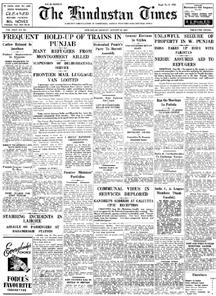
People also left their homes and undertook gruelling train journeys in search of safety. Reports from The Hindustan Times point to trains being stopped, people being robbed and butchered.
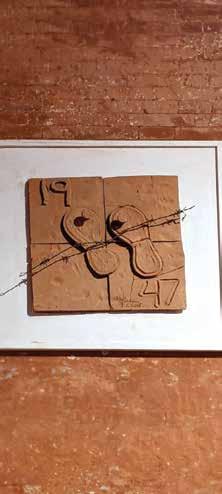
Reprints of paintings by Krishen Khanna, Satish Gujral and SL Parasher are a pointer to how the division of the country affected these renowned artists. Arpana Caur’s deeply haunting work titled 1947 uses clay and barbed wire to represent the mitti that was divided during Partition. It shows Mahatma Gandhi’s slippers as a symbolic representation of the politics involved in diving the sub-continent.
The Partition Museum, in collaboration with National Rail Museum, Delhi and Google Arts and Culture, has made the institution’s archives available to people all over the globe. ‘Trains and the Raj’ and ‘Railways and Partition’ are the two online exhibitions that depict the role of the railways in significant developments in the subcontinent.
The world’s first Partition Museum at Amritsar has been a huge accomplishment and now a second one in Delhi is on the anvil. It will be inaugurated on the 75th anniversary of India’s Independence this year.
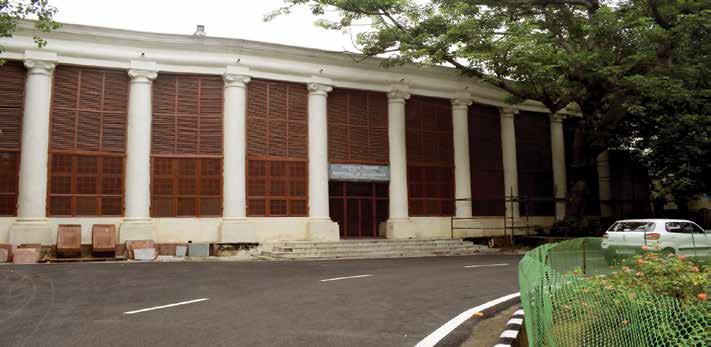
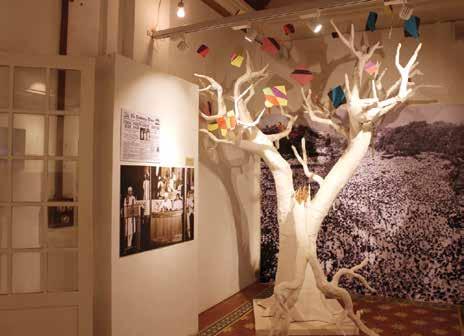
The Dara Shikoh Library Building in Old Delhi is where the new museum will be based. The city took in lakhs of refugees who were fleeing Pakistan in 1947, and it is only appropriate that the second museum should be established here.
The building, which is where the palace and library of Shah Jahan’s eldest son used to be, will display stories on different aspects of the city from the ancient times to the present. Built in 1643, near the Kashmiri Gate, the library lies on the campus of Ambedkar University. This building later served as the residence of the Mughal viceroy of Punjab, Ali Mardan Khan and British resident to the Mughal court at Delhi David Ochterlony at the beginning of the 19th century.
The Dara Shikoh Library Building in Old Delhi is where the new museum will be based. The city took in lakhs of refugees who were fleeing Pakistan in 1947, and it is only appropriate that the second museum should be established here
The curated cultural experiences will be titled Dastaan-e-Dilli. There will be focus on three facets: the Partition, with focus on its impact on Delhi, Dara Shikoh and antiquities from the Delhi State Archaeological Department.
Hamida recollects leaving her home in India and going to Pirojpur in East Pakistan after the unrests broke out. A Hindu washerman apparently provided her family shelter for the night. Ghosh and his family were also helped by a Muslim friend when crossing over to India. These tales of loyalty and comradeship are as much a part of the narrative as are tales of anguish and despair. Hate does not always triumph after all.
In his quarterly column, Dr P Raghu Ram discusses how the ‘Angelina e ect’ has caused an unnecessary scare about genetic testing and explains which group is at a higher risk and need to take it
As a doctor, one must always remember an important component of the Hippocratic Oath — Primum non nocere — ‘do not harm’. Angelina Jolie is a celebrity and her brave decision to go public with her treatment received wide coverage in the media, the world over. This surely has helped raise awareness about genetic testing for breast cancer. However, there is a fine line between advocacy and creating a scare. As a doctor, I have noticed an increased anxiety amongst the vast majority of the ‘worried well’, who are ‘not’ at an increased risk for genetically induced breast cancer.
Over the years, ever since Angelina announced to the world her ‘brave decision’, many in India wonder if it is a good idea to get the genetic test done ‘just in case’. A number of women with average risk (i.e., one member of the family affected with breast cancer over the age of 40) get genetic testing done, which is most unnecessary, and can cause unnecessary alarm.
This group of women in the ‘average risk’ category is the one that is most misguided and most at risk of getting the genetic testing done in India, and that too without adequate genetic counselling. Indeed, most calls and enquiries that I receive are from this group, whose risk of developing breast cancer is the same as the rest of the population.
Only 5-10 per cent of breast cancers are likely to carry faulty gene/s (BRCA1 and BRCA2). Those found to be positive for these faulty genes have significant lifetime risk of getting breast cancer. Also, not everyone who has BRACA positivity gets breast cancer. The test should be considered only when there is a significant family history of breast cancer (high-risk group)
The high-risk group with a significant family history of breast cancer includes:

• One or more close relatives who have had breast cancer before the age of 40
• Two or more close relatives who have had breast cancer at any age
• Close relatives who have had breast cancer and others who have had ovarian cancer
• One close relative who has had breast cancer in both breasts (bilateral) or who has had breast and ovarian cancer
• Male relative who has had breast cancer
• An ethnic background where faulty breast cancer genes are more common – for example, people with Ashkenazi Jewish ancestry
The genetic test is a simple blood test (quite expensive – around Rs 50,000). If the blood test is positive, the lifetime risk of developing breast cancer and ovarian cancer is very high (50 – 85 per cent for breast cancer and 15-45 per cent for ovarian cancer).
Although surgery by way of removal of both breasts (bilateral mastectomy) and ovaries + fallopian tubes (bilateral salpingo-oophorectomy) before the natural menopause has shown to reduce the risk of both breast and ovarian cancer, there are other well established non-surgical options. If surgery is offered, there must be expertise to perform oncoplastic breast reconstruction during the same sitting (immediate breast reconstruction).
The two non-surgical options include taking a drug, tamoxifen (has been long used to treat hormone receptor positive breast cancer) for five years and ‘close monitoring’.InacountrylikeIndiawherebreastcancer genetics clinics and centres undertaking risk reducing surgeries are few and far between, close monitoring is
perhaps the most valid option. This option does not prevent breast cancer, but helps detect breast cancer very early. It is done through a combination of MRI of the breasts and bilateral mammograms alternating every six months from the age of 25 or 10 years earlier than the age at which the cancer was diagnosed in the youngest member of the family.
In light of the recent ‘Angelina effect’, the ‘emotional drive’ to get the test done ‘just in case’ should be resisted, as the decision made in a rush can potentially have far reaching irreversible bearing not just upon the individual taking the test, but the entire family.
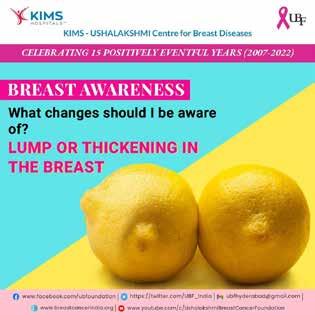
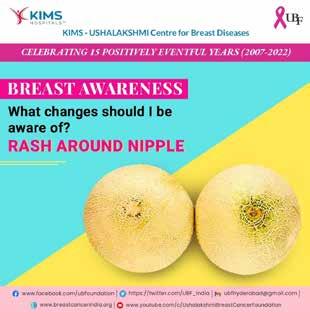
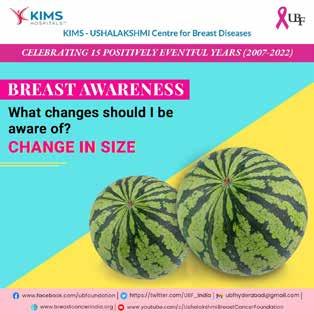
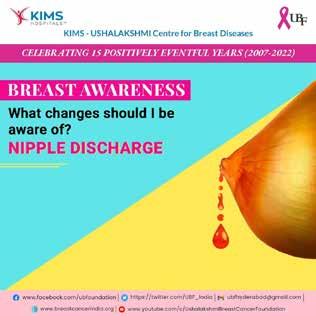
Whatever the risk, a healthy diet and regular exercise can minimise the chance of developing breast cancer. As breast cancer cannot be prevented, it would be prudent to be ‘breast aware’ to ensure early detection, which is the only way to fight breast cancer.
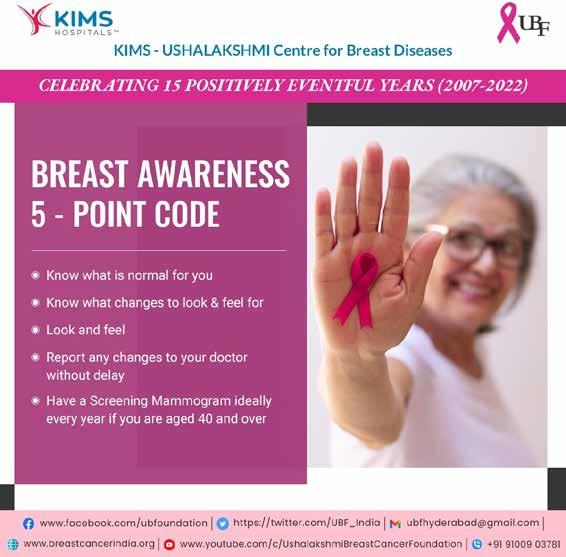
BREAST AWARENESS 5 POINT CODE
1. Know what is normal for you
2. Know what changes to look for
3. Look and feel
4. Tell your doctor about any changes straightaway
5. Have a screening mammogram annually if you are 40 and over

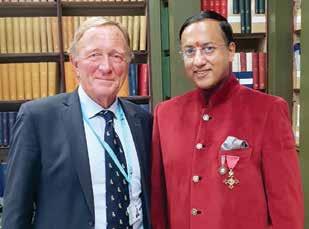
In July, Dr P Raghu Ram was conferred with the Honorary FRCS by The Royal College of Surgeons of England in London. It is the highest recognition bestowed by one of the world’s oldest and most prestigious surgical colleges in the British Isles
Dr P Raghu Ram, director, KIMS-USHALAKSHMI Centre for Breast Diseases and founder/CEO of Ushalakshmi Breast Cancer Foundation has achieved the rare distinction to become the youngest surgeon of Indian origin to be conferred the Honorary FRCS in the 482-year history of the Royal College of Surgeons of England.
This is the highest recognition bestowed by The Royal College in recognition of his outstanding contribution to the art and science of surgery. The award was presented by Prof Neil Mortensen, president, The Royal College of Surgeons of England during a glittering ‘Diplomates Ceremony’ held on July 6, in the Conference Suite at the Royal College in London.
Dr Raghu Ram joins a select group of 156 other worldrenowned distinguished surgeons and personalities from the world over, including Her Majesty Queen Elizabeth II & His Royal Highness, Prince Charles, who have been bestowed with this prestigious honour in the past.
As a recipient of the Honorary Fellowship, Dr Raghu Ram was also given the singular honour to address the Diplomates, who had recently passed the MRCS and Intercollegiate FRCS examinations, where he highlighted the importance of safeguarding the ‘Trust’ that patients place in their doctors and being ethical not just in the medical profession, but in all aspects of life.
Professor Neil Mortensen, president, RCS broke hundred years of protocol with a “Namaste” to Dr Raghu Ram for his outstanding achievement (Pic enclosed)
Expressing his remarks on being conferred the Honorary Fellowship, Dr Raghu Ram said, “I am deeply grateful to the College Council for conferring me this high honour. Over the past 15 years, I have strived to replicate the best
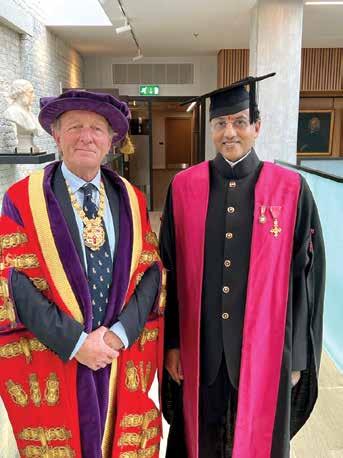
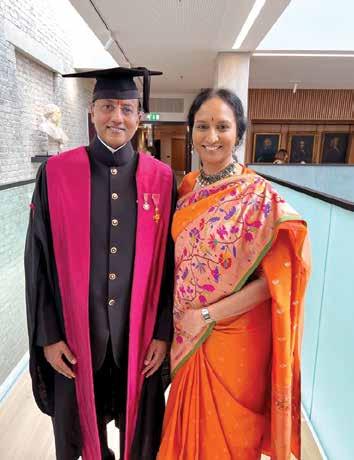

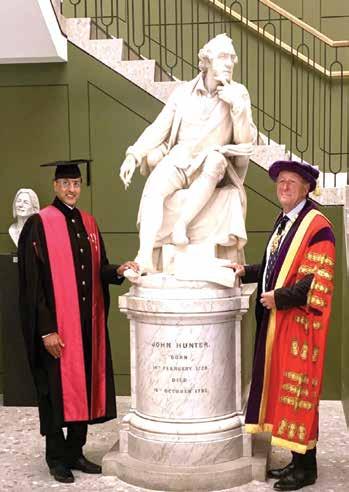
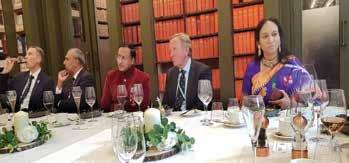
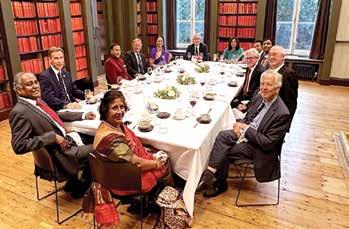
of British practices in my motherland and feel immensely proud to have been a ‘living bridge’ between the UK and India. I dedicate this high honour to my family, my patients, my colleagues at KIMS Hospitals and to the Indian surgical fraternity the world over. Proud to represent my motherland at the Royal College today in the traditional bandhgala, proudly displaying India’s tricolour pocket square representing Bharath.”
A world-renowned surgeon, Dr Raghu Ram is also one of the youngest recipients of the prestigious Padma Shri and Dr BC Roy National awards conferred by the President of India in 2015 and 2016 respectively.
Besides a string of degrees and Fellowships attached to his name, Dr Raghu Ram is a Fellow of all four surgical Royal Colleges in the British Isles (London, Edinburgh, Glasgow and Ireland), the Fellow of American College of Surgeons, and he has been conferred Honorary Fellowships from several other international prestigious surgical organisations. This includes the Hon Fellowship from the Association of Surgeons of Great Britain and Ireland, Hon FRCS (Thailand), Hon FCSSL (Sri Lanka) and Hon FCCS (China).
Dr Raghu Ram’s distinguished academic track record, love for his motherland and passion for social service are his strong characteristics and what sets him apart in the medical fraternity. He has been an advocate of best practices in his chosen eld, coupled with a human touch and altruistic values. His signi cant contribution over the past 15 years towards improving breast healthcare and surgical education in India through his strong links with the United Kingdom, is laudatory.
Further, Dr Raghu Ram established south Asia’s’ rst dedicated comprehensive Breast Health Centre, founded a breast cancer charity to raise awareness about the importance of early detection, implemented south Asia’s largest population-based breast cancer screening programme in Telangana and Andhra Pradesh, which has saved many lives.
Also, he has been the driving force behind the formation of The Association of Breast Surgeons of India, a dedicated organisation that brings together surgeons practising the art and science of breast surgery under one platform. He championed several life-transforming initiatives in his adopted village, Ibrahimpur through personal philanthropy in addition to raising money and spearheading a major pan India initiative to procure and distribute the much-needed PPEs to healthcare workers in response to the COVID-19 crisis.