

Annual Report 2025
Mission
Preparing students for life through Christ.
Vision
Exceptional teaching and learning will enable our students to confidently contribute to community.
Values
Excellence Integrity Creativity Service Community

Luther College prepares young people for life. We know that young people learn best when they feel safe, comfortable and connected in an atmosphere that is nurturing, yet challenging and motivating. We understand that our young people are facing the most significant disruption in the world of work since the industrial revolution and, as such, education must build capabilities that will best position our learners for tomorrow. The college’s programs offer rich, personalised learning experiences embedded in a contemporary and innovative curriculum that encourages student agency and will develop the essential knowledge, skills and attributes student’s need to meet these challenges and experience an exceptional future.
Our Goals
1. Drive innovative, contemporary teaching and learning.
2. Build a culture of inclusivity and equal opportunity.
3. Promote sustainable practices.
Objectives
Since its commencement in 1964, Luther College has been a significant leader in Christian co-education, offering an educational environment where Christ is central, excellence is pursued, and relationships are valued. Our college motto, Unctio Eius Docet (The Holy Spirit is our Teacher) forged by our college’s founders continues to inform and guide our school.
We are committed to the provision of an exceptional Lutheran education that recognises and nurtures the distinct link between pastoral care, wellbeing and student learning outcomes. Our curriculum and pedagogy will empower students to be citizens of change, global stewards and community builders as they develop the sense of agency they need to reshape the world.
We invest in the formation of strong relationships, acknowledging that these are precursors for positive communities, safe learning and effective leading. We are committed to fostering a culture of care, collaboration and service, within our local and global community.
The Luther Learner attributes of Communication, Collaboration, Critical Thinking, Creative Thinking, Global Stewardship and Self-management continue to be at the centre of our curriculum design, our learning opportunities and our assessments. These, along with subject-specific knowledge and abilities, are the skills that our students need to be successful contributors beyond their time at Luther College. We know that this is the learning that really matters, and we are committed to it and the changes that are required to achieve it.
Details
School type: Non-government
Range: 7-12 secondary
Location: Metropolitan
Enrolment: 1219
Gender: Male 618
Female 601
Teaching staff: 134 (FTE 118)
Total operational staff: 56 (FTE 43.5)
Indigenous: Staff 0
Students 3
STUDENT ATTENDANCE
Student attendance is recorded electronically.
VICTORIAN CERTIFICATE OF EDUCATION (VCE)
The Class of 2025 can be justifiably proud of their collective accomplishments, achieving outstanding results through sustained commitment to purposeful learning, personal growth, and excellence. We celebrate the agency, capability, and determination demonstrated by each Year 12 student, and congratulate the cohort on completing their secondary education.
SMS is used to notify parents for unexplained absences.
These results reflect both individual and collective success. An ATAR of 90 or above was achieved by 11% of students, with 26.8% attaining an ATAR of 85 or above. Almost half of the cohort achieved an ATAR above 80, placing them within the top 20% of students across the state. These outcomes highlight the capacity of our students to set meaningful goals, apply themselves with purpose, and achieve to a high standard.
Aligned with a future-focused pathway approach, all students who applied for tertiary study successfully secured a place. Graduates are pursuing diverse futures across fields including Commerce and Management, Science, Medical and Health, Arts and Communication, Law, Architecture, Engineering, Education, Agriculture and Environmental Studies, and Creative Artsreflecting both their individual strengths and aspirations.
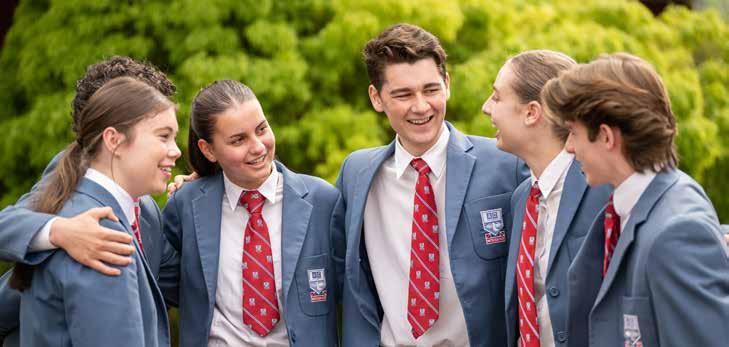
Beyond their academic achievements, the Class of 2025 have made significant and sustained contributions to the life of the College. Through their engagement in sport, the performing arts, service and leadership, students have demonstrated a strong sense of community, responsibility, and dedication to making a positive impact. Their active participation in the everyday life of Luther College reflects the values of collaboration, contribution, and service that underpin an Exceptional Futures education.
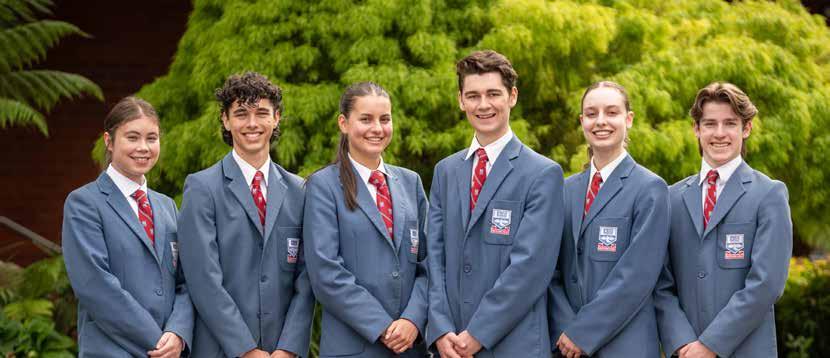
2025 School Captains
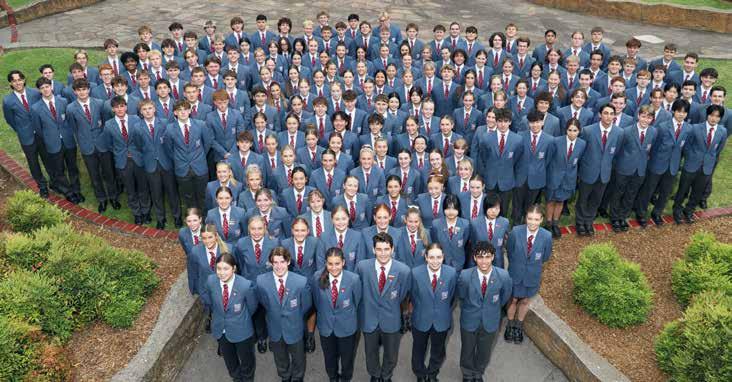
Class of 2025

NAPLAN 2025
NAPLAN (National Assessment Program – Literacy and Numeracy) assesses students in Years 3, 5, 7 and 9 across key domains of literacy and numeracy. The results provide both the College and families with insight into student progress relative to peers across the state.
The assessment, completed in March, marked the fourth year of full online delivery across all schools. It is important to recognise that NAPLAN represents a snapshot of student performance on the days of testing and should not be viewed as a definitive measure of student potential.
Student performance is reported across five domains: Reading, Writing, Spelling, Grammar and Punctuation, and Numeracy. Since 2023, results have been aligned to proficiency standards, replacing the previous NAPLAN bands and national minimum standards. As a result, NAPLAN data from 2023 onwards is not directly comparable with results prior to 2022.
From 2025 you can see NAPLAN achievement over time and compare to the previous year.
These four proficiency standards provide a clear picture of student achievement, representing challenging yet appropriate expectations based on prior learning.
• Exceeding: demonstrates performance above expected levels.
• Strong: meets expected standards at the time of testing.
• Developing: works towards expected standards.
• Needs additional support: is below expected standards and requires further support to progress.
We prioritise the growth of every learner as a central measure of success within our Exceptional Futures framework. While overall progress across the cohort is strong, the data provides valuable insight to inform targeted next steps and continuous improvement.
Consistent with contemporary research and our commitment to purposeful learning, we recognise that literacy and numeracy are developed through a rich, broad curriculum. These capabilities are strengthened across all learning areas, as students apply and transfer their skills in diverse, authentic contexts—fostering deeper understanding, learner agency, and future readiness.
NAPLAN results for Year 7 students. The table shows the percentage of students who met the proficiency standards.
NAPLAN results for Year 9 students. The table shows the percentage of students who
the proficiency standards.
Luther College is a not-for-profit organisation and follows contemporary commercial practices to manage our finances in an effective and efficient manner including, where achievable, generating an annual surplus from operating activities to invest in ongoing development and enhancement of the college, our facilities, buildings and educational programs. Such management is important to ensure a sustainable future for students and continue to provide the quality of education for which we continuously strive. The following charts illustrate sources of revenue and expenditure during the financial year 2025:
Expenses
Tuition Fees (67.3%) Government Grants (30.7%) Non-Operating Income (1.7%)
Capital Income (0.3%)
Total Income: $35,203, 730
Employee Benefits Expense (70%)
Capital Expense (11%)
Tuition and Administration Expense (5%)
Property Expense (6%)
Depreciation Expense (8%)
Total Expenses: $33,860,691
ENGAGEMENT AND COMMUNITY BUILDING
Luther College values the richness and diversity of the wider community and other education sectors. Positive and strategic partnerships are developed and maintained with students, families, local Christian communities, the broader community and Lutheran education. The relationships are built upon support, collaboration, trust and reconciliation. The community lives out the gospel and is active in service of others. The multicultural and multi-faith nature of Lutheran education and Australian society fosters understandings of diverse cultures. Lutheran education promotes the understanding of, and respect for, Aboriginal and Torres Strait Islander people.
EXCELLENCE IN LEARNING
Luther College values excellence and creativity in teaching and learning for all community members. A culture of challenge and support nurtures enthusiastic, independent learners, committed to lifelong learning. Excellence in teaching and learning is focused on improving student outcomes which includes spiritual, intellectual, physical, emotional, cultural and social dimensions. All learners should have access to quality learning experiences that ensure they develop their God-given abilities so that they may enrich the world. High expectations are established through reflective practice, collaborative planning, monitoring, providing feedback and reporting on the effectiveness of learning. The learning environment promotes active engagement, risk taking, motivation and a strong learner voice.
ONGOING IMPROVEMENT AND INNOVATION
Improvement is guided by our mission, vision and values. Excellence is pursued through a culture of reflection, collaboration, innovation and creativity. Evidence is gathered to develop and implement improvement plans and policies for the continuous development of teaching and learning, the institution and its facilities. Ongoing professional learning encourages all members of the community to achieve high standards and develop their service and leadership capacity.
LEADING EFFECTIVE ORGANISATION AND MANAGEMENT
Roles, responsibilities and procedures are clearly articulated so that staff can participate in our smooth and efficient operation. Data and knowledge management methods and technologies are used to ensure that resources (human, physical, technological and financial) are efficiently organised and managed to provide an effective, safe and caring, growth-oriented learning and working environment. Strategic planning ensures the ongoing improvement and sustainability of the school. Best practice is built upon effective collaboration between the governing body, staff, students, families, church and others.

CHILD SAFETY AND WELLBEING COMMITMENT
Our Luther College community is committed to providing a child safe environment where young people are safe from abuse and harm and feel confident to actively participate. Our commitment to ensuring all children are safe and actively supported is demonstrated through the implementation of a comprehensive Child Safe Program, designed to promote a child safe culture by prioritising the safety, wellbeing and engagement of young people.
Luther College has a zero tolerance for child abuse and harm. We are committed to acting in young people’s best interests, keeping them safe from harm and actively supporting their wellbeing. We promote a child safe culture by prioritising the safety and wellbeing of young people and helping them feel confident and engaged to participate in a safe and inclusive environment.