• Christie’s to auction rare blue diamond in Geneva
JEWELLEX AFRICA 2025: WHERE THE INDUSTRY CAME TO SHINE
This year’s Jewellex Africa brought together the best in the business
SEEN AROUND
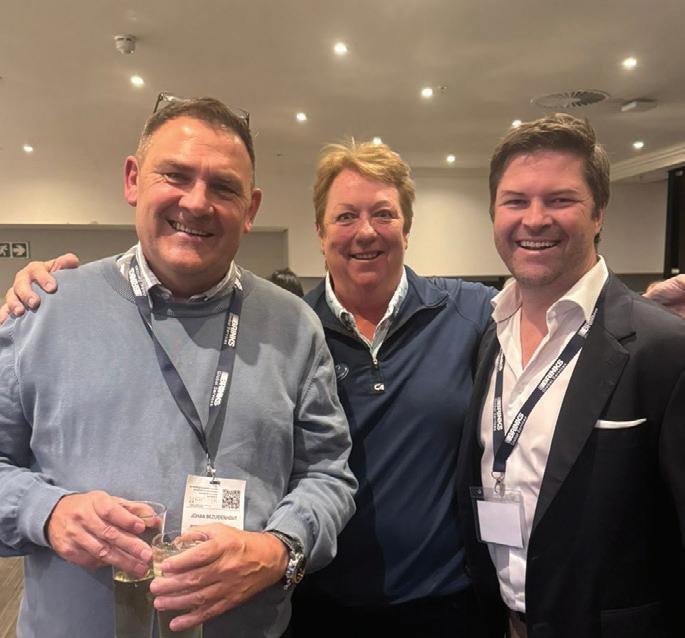
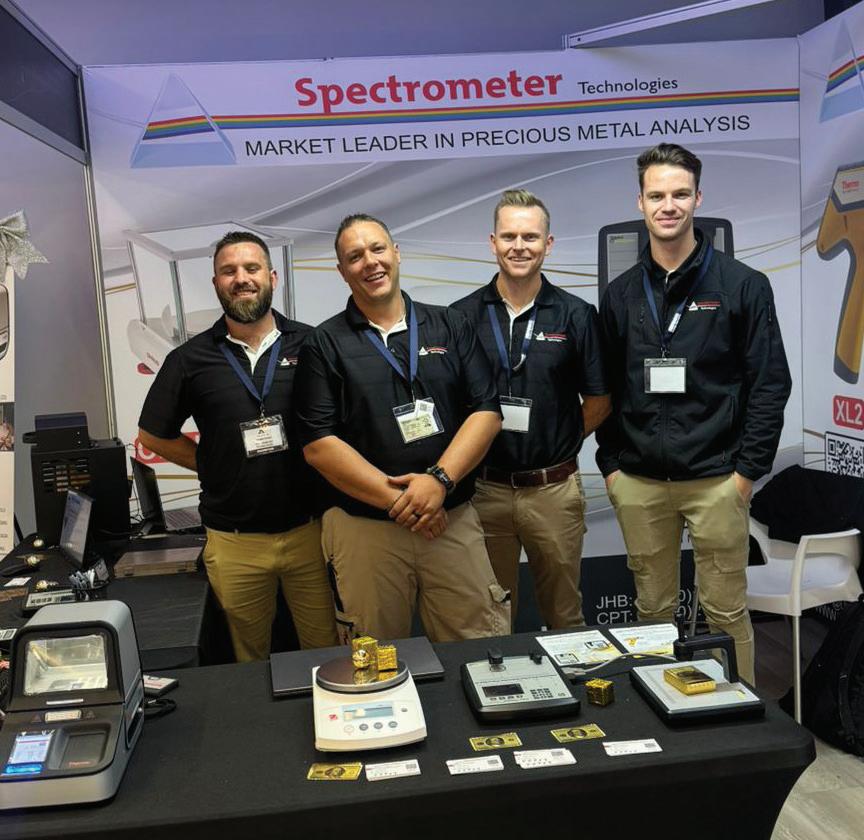
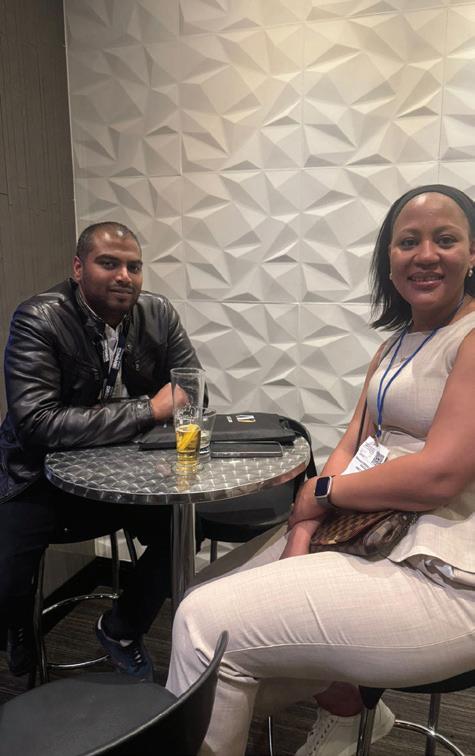
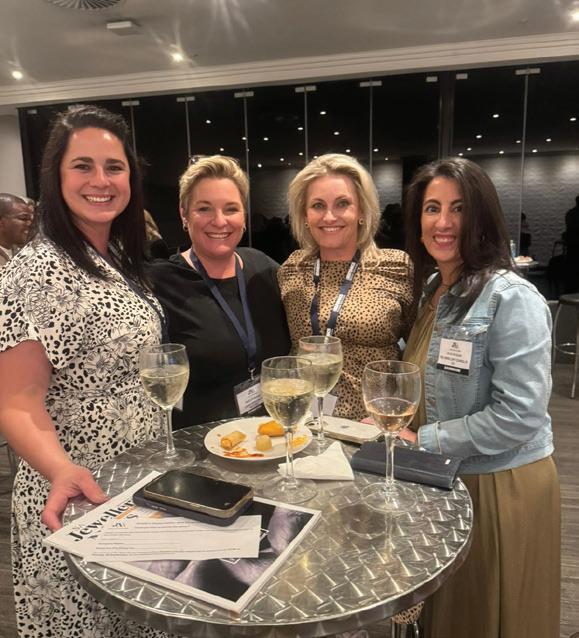
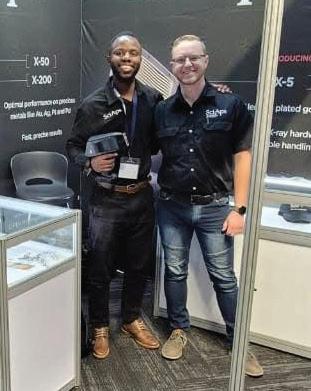
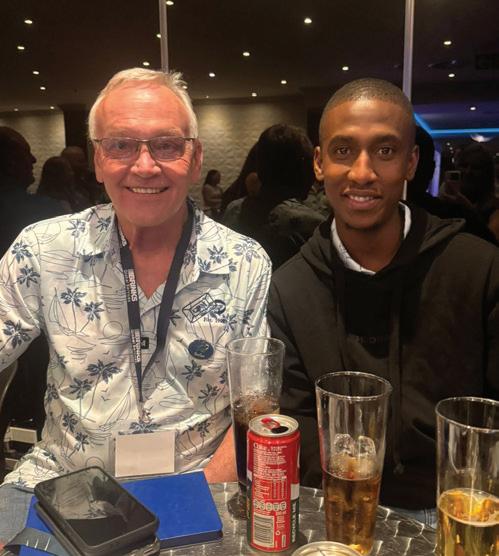
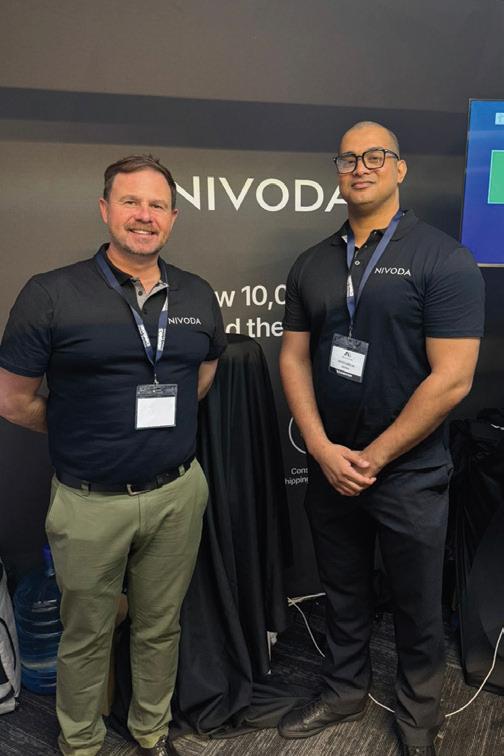
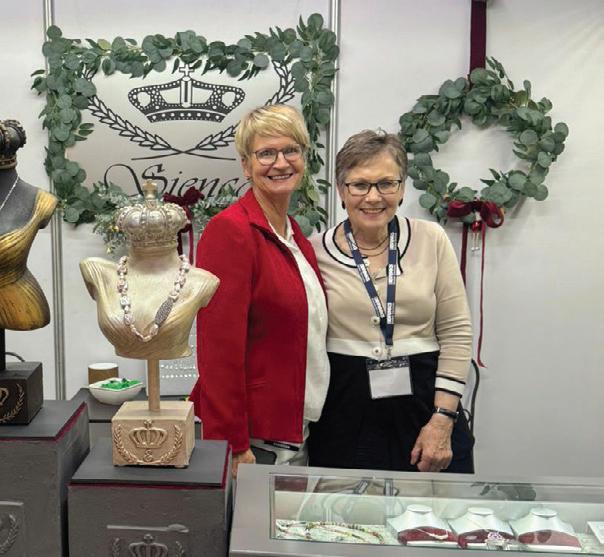
Catching up with the crowd: here’s who we spotted at Jewellex Africa 2025
JEWELLERY DESIGN PROTECTION IN SA
In an era when jewellery designs can be replicated overnight, the protection of original creative work has never been more critical
SETTING THE STANDARD
The hands shaping SA’s jewellery dynasty
COVER FEATURE
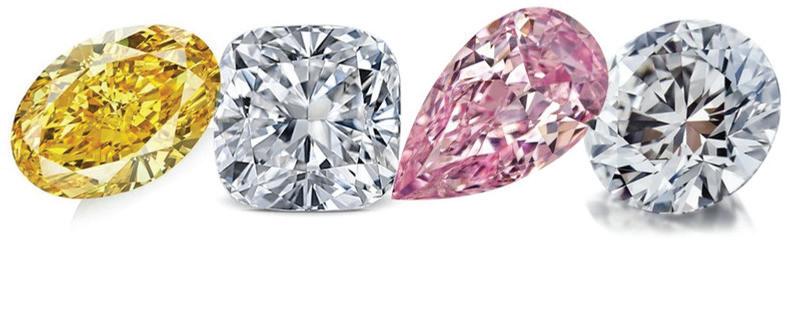
Colour, character and global demand drive the future of the market
TOP MARKETING TIPS FOR INDEPENDENT JEWELLERS
In a rapidly evolving market, strategic marketing is vital for independent jewellers to stand out and thrive
SUPPORTING GROWTH: THE 2026 JCSA MEMBERSHIP INITIATIVE
A sponsorship opportunity for 2026 Jewellery Council memberships is now available to nonmembers and former members
ENDURING LEGACY
Glowing gems: fluorescence, phosphorescence of diamonds, coloured stones and pearls
BORN IN AFRICA
A comprehensive directory featuring information and contact details of all members of the Jewellery Manufacturing Association of SA 24. 26. 38. 28. 40. 43. 20.
Jewellery Council of SA update
Lorna Lloyd, CEO of the Jewellery Council of SA (JCSA), shares the latest developments from the council’s office
Iwould like to reiterate, once again, that the JCSA is proud to serve its members across all sectors of the jewellery industry. Our mission is to support you, represent you and help your business not only survive, but thrive.
The jewellery landscape in South Africa
I thought I would begin this month’s message by taking a closer look at how the South African jewellery market is currently faring.
Every day, I engage with members across the supply chain – from manufacturers and retailers to designers and suppliers. It is always insightful to hear diverse experiences and views, and it reminds me of just how dynamic and resilient our industry truly is.
While jewellery-specific retail statistics remain limited, broader indicators help us form a clearer picture:
• According to StatsSA, the combined jewellery and watch market in SA is expected to generate US$1,33 billion in 2025, growing at a compound annual growth rate of 7,75% to 2030.
• General retail trade in SA has shown steady growth in 2025:
o January 2025: retail trade sales increased 7,0% year-on-year.
o May 2025: growth stood at 4,2% year-on-year.
According to Eurovision, performance remains strong, despite broader economic influences in the luxury jewellery segment:
• Richemont, one of the world’s leading luxury groups, reported a 4% increase in full-year sales (year ending March 2025), with its jewellery maisons showing double-digit growth in the second half of the year.
• Reports suggest that jewellery continues to outperform other discretionary categories, even in a tighter spending environment.
At the same time, economic challenges in 2024 prompted a shift in consumer behaviour:
• Shoppers are increasingly value-conscious, opting for affordable stones, smaller carat weights or independent retailers.
• The rise of platforms like Shein and Temu has added competitive pressure in the costume jewellery space, with broader selections at lower prices.
• Tourism remains a key driver for fine jewellery sales in SA, with international buyers attracted by our competitive pricing compared with global markets.
• Despite global fluctuations, the South African luxury goods market continues to expand, driven by a rising number of affluent individuals and renewed interest in high-end local craftsmanship. Jewellery purchases remain strongly occasion-driven and customers are looking for both meaning and value in their purchases.
Recognising technical skills in the workplace
The Jewellery Council, in collaboration with the Jewellery Manufacturers Association of SA (JMASA), introduced a unique benefit for our members some years ago – the Professional Technical Skills Certificate.
This initiative recognises skills acquired informally in the workplace, offering formal acknowledgment to individuals who may not hold traditional qualifications, but contribute significantly to our industry’s output.
While the certificate’s title may not matter to everyone, for the artisan who has mastered one key skill – be it casting, setting or polishing – it represents pride, recognition and professional validation.
Certificates are available for the following roles:
• Bench technician.
• CAD technician.
• Indian jewellery bench technician.
• Jewellery casting technician.
• Production setter.
• Refining technician.
• Surface finishing technician.
To learn more about how to certify your staff, e-mail the council at: admin@jewellery.org.za.
Sponsored 2026 JCSA membership opportunity
This is a reminder of a unique opportunity which is open to non-members and former members of JCSA who are currently not part of our network.
Thanks to the generous support of Inferno Gold, a committed JCSA member, a limited number of 2026 memberships will be covered in full for qualifying businesses.
“The Jewellery Council has played a pivotal role in the survival and growth of my business,” says Johann Claassens, owner of Inferno Gold. “This is my way of giving back – by helping others benefit from the same support I received.”
Whether you are a manufacturing jeweller, retailer, importer or wholesaler, this initiative is open to all businesses across the jewellery value chain.
To apply, e-mail Lizelle Claassens at: lizelle. claassens@infernogold.co.za.
If you are already a member, we encourage you to share this opportunity with peers who could benefit. Your referral could make a meaningful difference.
Get involved. Stay connected. Grow together. The strength of the JCSA lies in the active participation of its members. We encourage you to engage with our programmes, contribute to industry initiatives and take full advantage of the support available.
To explore upcoming opportunities, learn more about our advocacy work or find out how we can assist your business: Visit: www.jewellery.org.za. Tel: (011) 484-5528. E-mail: admin@jewellery.org.za.
Together, we can continue to strengthen and grow the South African jewellery industry.
“The strength of the Jewellery Council lies in the active participation of its members. We encourage you to engage with our initiatives and take full advantage of the services available.”
Editor: Adri Viviers Cell: 084-261-1805
E-mail: adriv@jewellery.org.za
Sales Representative and Administrative Manager: Thuli Majola Cell: 074-243-0703
E-mail: thulim@jewellery.org.za
SA Jewellery News is published by: Jewellery Council of South Africa
CEO: Lorna Lloyd Cell: 082-456-5558
E-mail: lornal@jewellery.org.za
Executive Assistant to CEO: Elsa da Silva Cell: 082-214-0028
As the dust settles on Jewellex Africa 2025, there is an unmistakable energy that lingers, one of reconnection, optimism and shared purpose. It was truly heartening to see so many familiar and new faces gathered under one roof, celebrating not only the artistry and innovation of our industry, but the relationships that continue to drive it forward.
This year’s show was more than a trade exhibition – it was a testament to the resilience and creativity of the South African jewellery sector. Jewellex served as a vibrant reminder of just how much can be achieved when we come together with a common goal.
In this issue, we refl ect on that spirit. Our Jewellex Africa feature captures the essence of the event, from dazzling displays to meaningful networking moments, while Seen Around off ers a snapshot of the people who made it all happen.
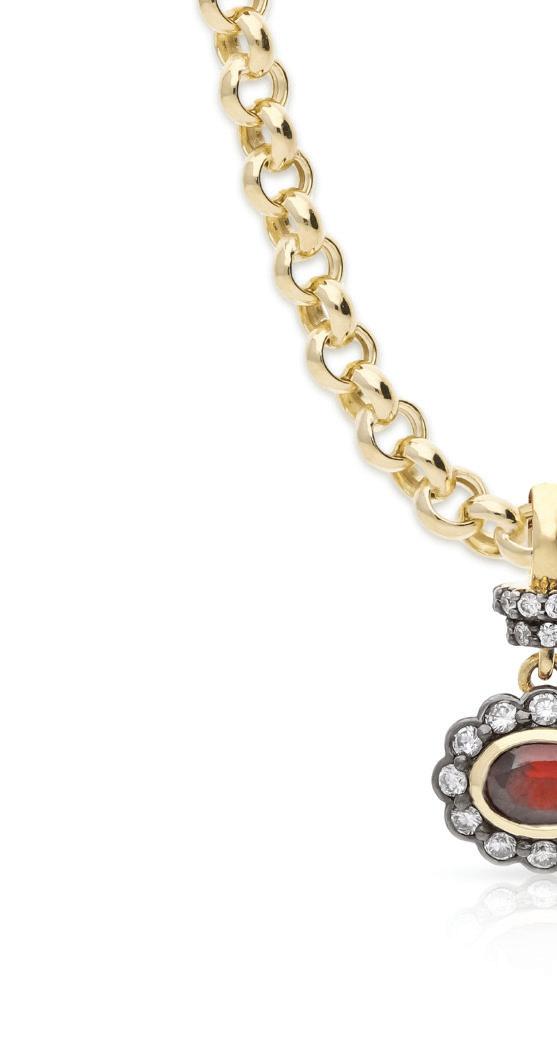
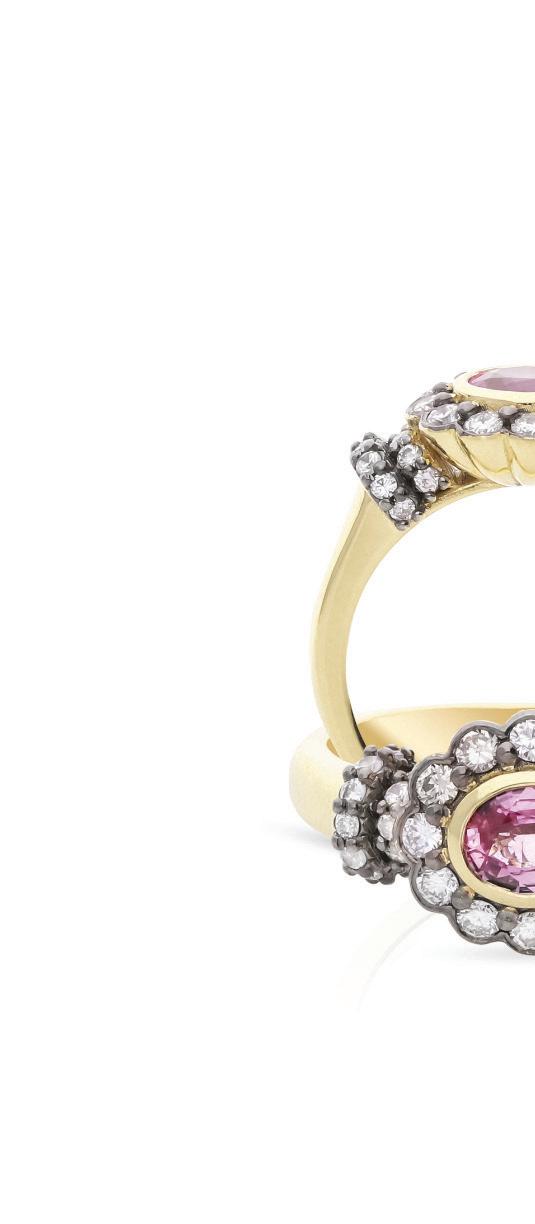
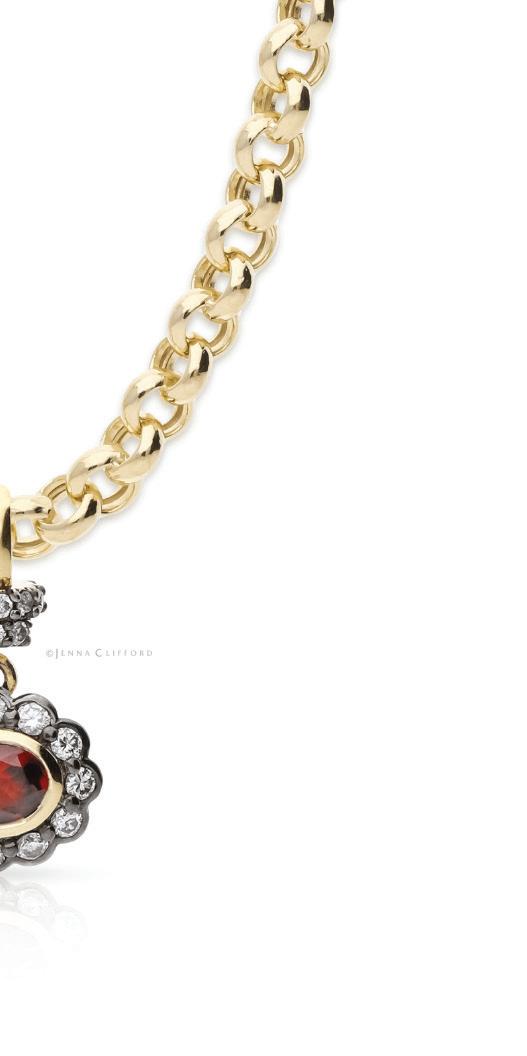
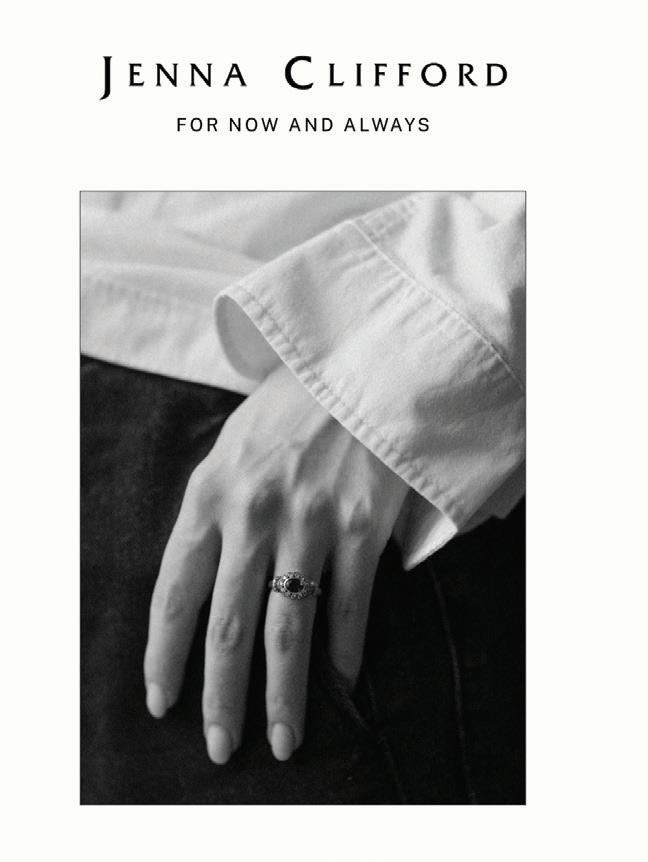
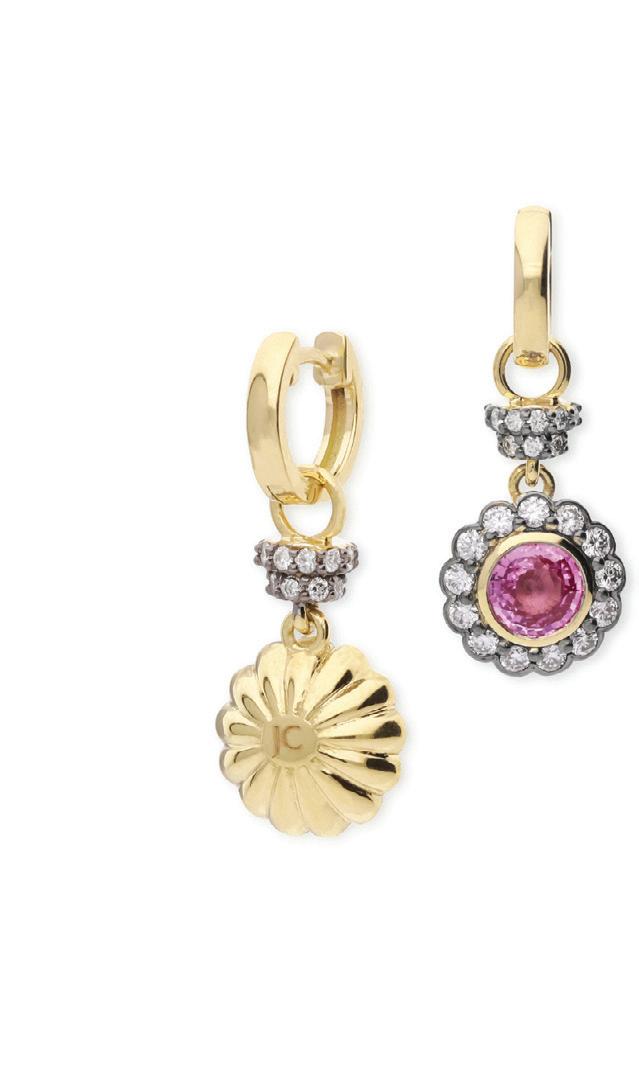
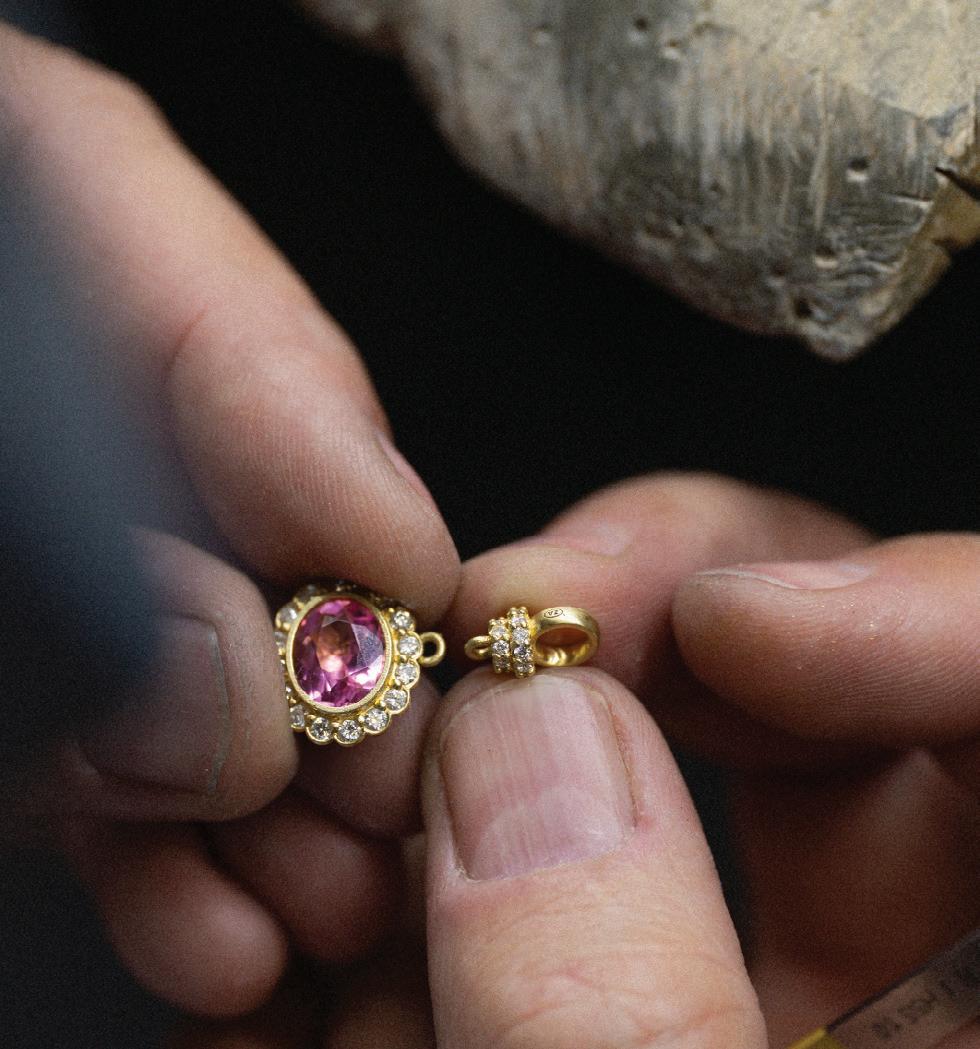
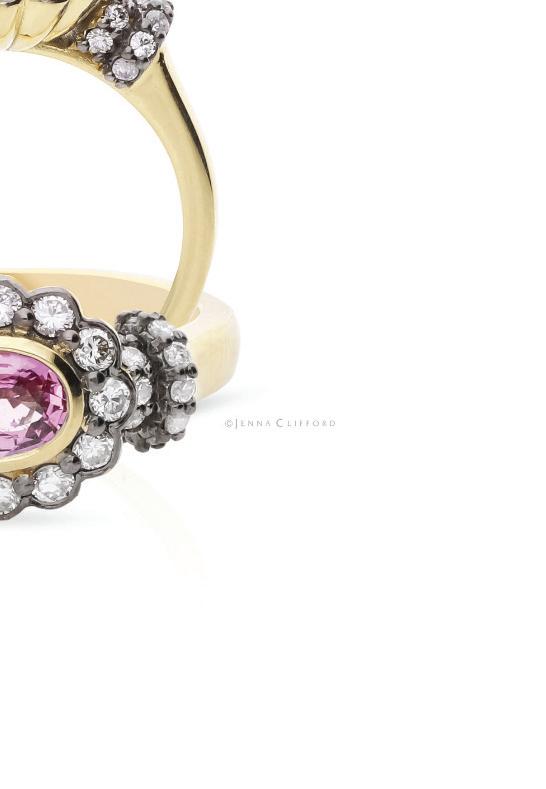
Elsewhere in the magazine, we bring you important updates from the JCSA, delve into sustainability trends, spotlight marketing tips for independents and unpack the critical topic of design protection in the digital age. We also honour the enduring legacy of Jenna Cliff ord, whose fi nal design collection is a celebration of story-telling through jewellery.
As we head into the fi nal stretch of the year, let us carry forward the momentum, ideas and inspiration sparked at Jewellex. This is a time of growth and opportunity and we look forward to walking this journey with you, one page at a time.
Report crime Incidents to the CGCSA. Robberies, break-ins, and thefts remain a serious concern in our industry. Jewellers and industry members are strongly encouraged to report any such incidents to the Consumer Goods Council of South Africa (CGCSA) via e-mail: pulengr@cgcsa.co.za / crime@cgcsa.co.za. Please share detailed information, such as date, time, location, SAPS case number and any available photos or video footage, which is used to support investigations and help secure successful convictions.
ON THE COVER
Happy reading!
Adri
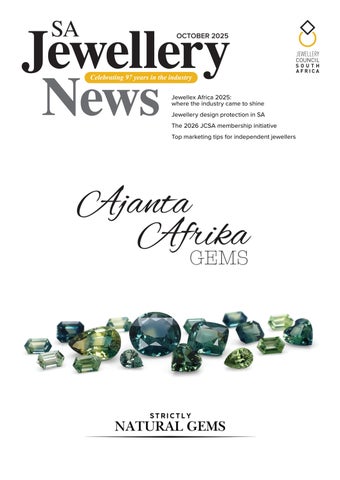
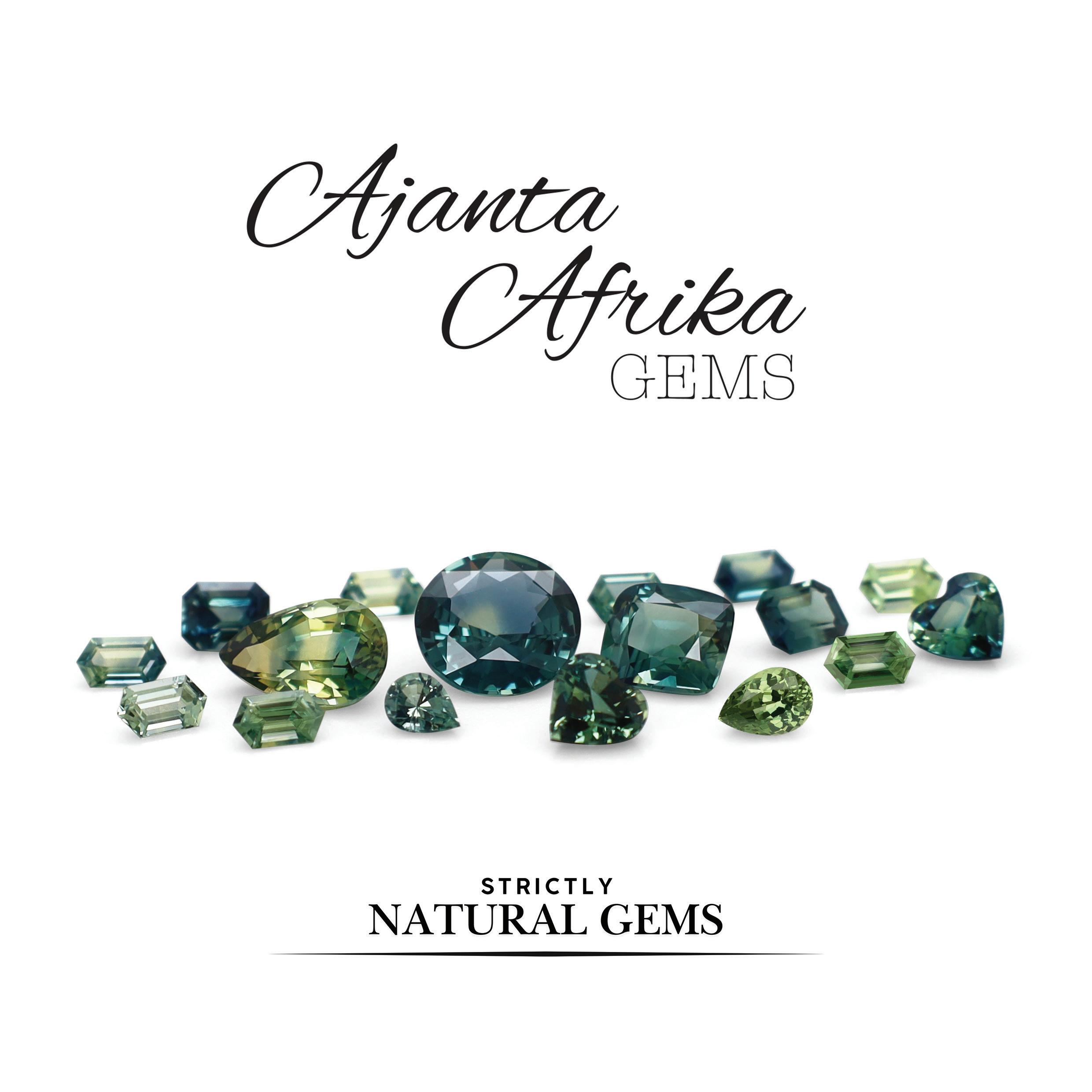
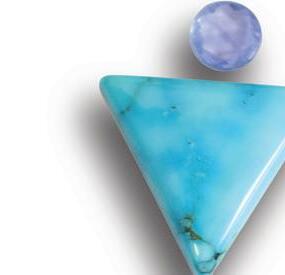
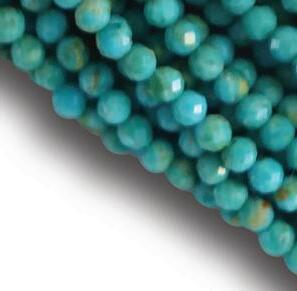
Ajanta Afrika is a South African supplier that deals exclusively with the trade, specialising in natural precious and semi-precious gemstones, unconventional diamonds and a variety of curated beads. Ajanta Afrika’s website features approximately 4 000 products along with detailed price lists. Registered trade members can apply online to be approved as wholesale buyers, gaining full access to the complete product range. Please note: Ajanta Afrika supplies strictly natural stones and works only with members of the trade. For more information, visit www.ajantaafrika.com, call them at 021 422 4677 / 066 416 5929 / 076 162 3741 / 064 903 0380, or email gems@ajanta.co.za.
MetCon
Powering the Future of Jewellery in Africa
At MetCon, we are driven by a bold and ambitious vision: to shape the future of African wealth by elevating the jewellery industry and empowering the jewellers who define it. Our legacy is built on more than just refining precious metals; it’s about enabling transformation. We help turn raw resources into refined brilliance and creative potential into lasting impact.
Value Beyond Metal: A Full-Circle Offering Jewellers today are looking for more than supply. They are looking for a partner who understands their challenges, enhances their craft, and helps grow their brand. That’s why MetCon offers a complete ecosystem under one roof, combining:
• Responsibly sourced metals
• Advanced casting and refining
• 3D wax printing and design solutions
• Tailored alloy development
• Expert support from concept to final product
But what truly sets us apart is the technological edge we provide through exclusive partnerships with industry leaders like Legor and Invicon.
Legor: Research-driven Innovation
Through our partnership, we offer jewellers access to:
• Advanced alloy formulations: Tailored for specific performance and aesthetic goals, ensuring the right balance of workability, durability, and brilliance.
• High-performance plating solutions: Including rhodium, gold, and ruthenium plating that enhances finish, longevity, and anti-tarnish protection.
Invicon: The Science of Colour in Jewellery
Invicon brings German precision and innovation in colour technologies that go beyond basic aesthetics. Through our Invicon offering, jewellers benefit from:
• High-tech precision colour applications, engineered for high resistance, consistency, and long-term visual impact. Design freedom, unlocking new levels of creativity for contemporary and expressive jewellery collections.
MetCon: Your Partner in Becoming an Icon
solutions through research driving innovation.
solutions through research driving innovation.
At MetCon, we don’t see ourselves merely as a supplier — we are a platform for growth, innovation, and excellence. As the jewellery industry evolves, so must its leaders. MetCon stands at the intersection of tradition and innovation, local heritage and global excellence, helping jewellers not only navigate change but lead it. When you work with MetCon, you’re stepping into a community of forward-thinking professionals, cutting-edge technology, and shared success.
Let’s build the future of African jewellery together.
Let’s create brilliance, from the ground up.
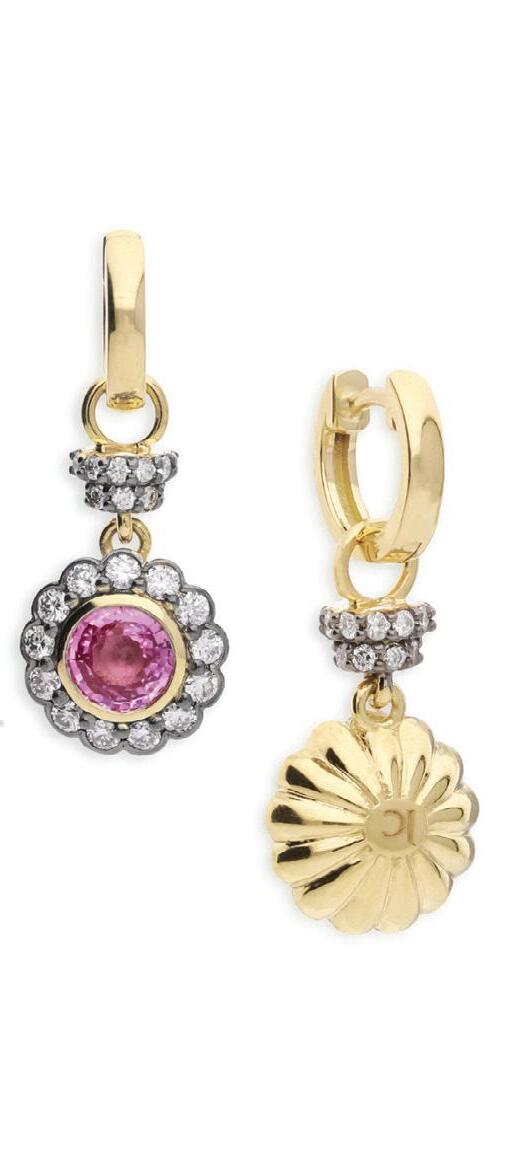
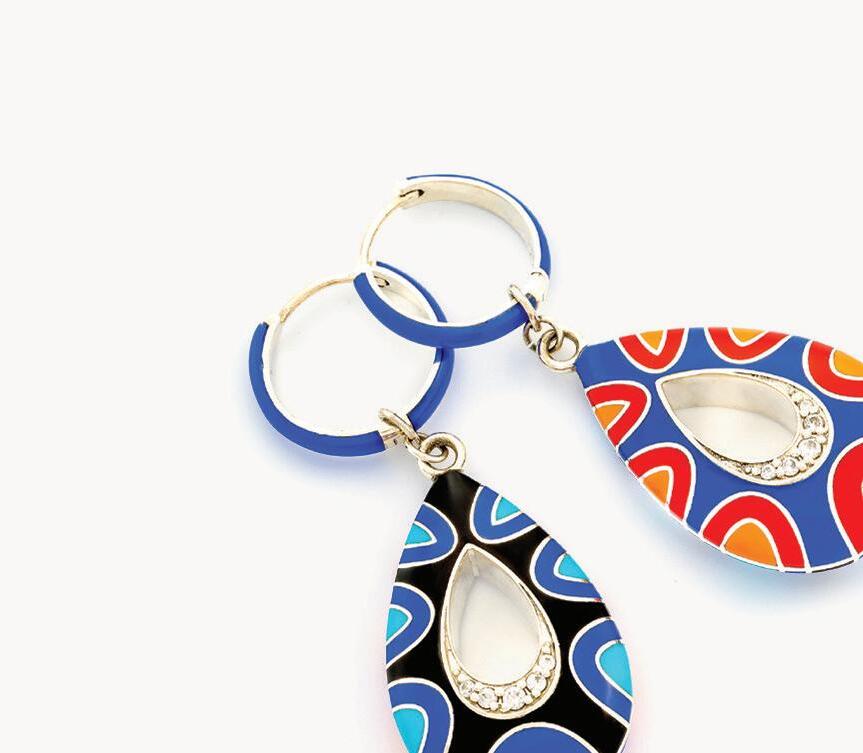
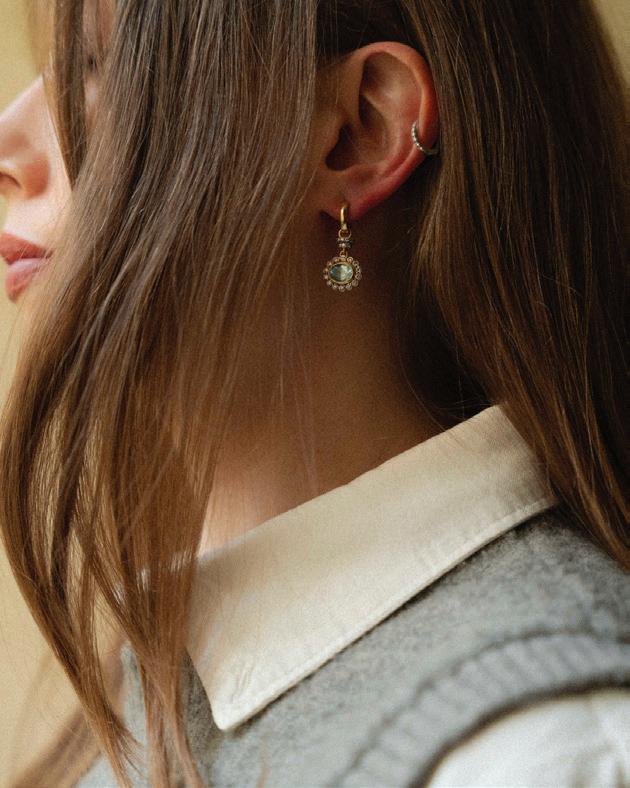
Earrings designed by Vijay Shah of Vijay Shah Concepts
Honouring two remarkable lives
Arthur Ernest Thoma
Arthur Ernest Thomas, a respected gemmologist, educator and pioneer in the Southern African gem trade, passed away on 25 September 2025.
Born in Wallasey, England, Arthur’s lifelong passion for minerals began at the age of six. His fascination grew into a remarkable career that spanned more than six decades and shaped the gemmological landscape across Africa.
Arthur studied gemmology formally, becoming a Fellow of the Gemmological Association of Great Britain and later a Graduate Gemologist (GG) from the GIA in Carlsbad, California.
In 1962, while in Northern Rhodesia (now Zambia), he founded the Luanshya Gem and Mineral Society, where he played a key role in the discovery of Zambia’s first emerald deposit, now known as the Miku Mine.
He later moved to Rhodesia and in 1975 was appointed Director of Education by the Jewellery Council of South Africa. He proudly represented South Africa at the 1976 International Diamond Education Conference in Lausanne, hosted by De Beers.
For 47 years, Arthur ran his own business, Arthur Thomas Gems, providing both gemstones and expert gemmological services. Known for his generosity with knowledge, he mentored and inspired many within the industry. His stories, insights and enthusiasm for gemmology left a lasting impression on all who knew him.
Arthur will be deeply missed by his family, friends and colleagues in the jewellery and gemmology communities.
Martinus Christiaan Naude
It is with great sadness that the industry learnt of the passing of Martinus Christiaan Naude, a talented and widely respected goldsmith.
Martinus began his career as a dental technician before transitioning into goldsmithing, where he quickly distinguished himself through his precision, creativity and unwavering commitment to excellence. Over 16 years in the trade, he played a key role in producing numerous award-winning competition pieces, most notably at the 2010 AngloGold Ashanti Awards, where every podiumed piece was crafted by him, earning the team the Technical Excellence Award.
Highly regarded not only for his technical skill but also for his professionalism and camaraderie, Martinus’s passing is a significant loss to the industry. He leaves behind a legacy of exceptional craftsmanship and a deep impact on those who had the privilege of working alongside him.
SA Jewellery News extends its sincere condolences to his family, friends and colleagues.
Future proof your career with a dynamic MQA jewellery learnership
The Mining Qualifications Authority (MQA) is a Sector Education and Training Authority (SETA) that facilitates skills development under the Department of Higher Education and Training (DHET) and supports mine health and safety under the Department of Mineral Resources and Energy (DMRE) for the mining and minerals sector under Skills Development Act (SDA) 97 of 1998 and Mine Health and Safety Act (MHSA) 29 of 1996, respectively.
The objective of the MQA is to address the skills needs in the South African mining and minerals sector, including the jewellery sub-sector, to improve health, safety, employment equity and productivity.
The MQA is also responsible for maintaining the quality of standards, qualifications and learning provision, and supports the career progression of individuals in the sector through various learning interventions and opportunities, with a special focus on learners situated in rural and mining communities.
The following non-artisan jewellery learnerships are offered through MQA accredited Skills Development Providers:
• National Certificate: Jewellery Manufacturing
• National Certificate: Diamond Processing
• Further Education and Training Certificate: Jewellery Designing
• Further Education and Training Certificate: Jewellery Manufacturing Operations
• National Certificate: Laboratory Practice: General
• National Certificate: Laboratory Practice: Precious Metal
• National Certificate: Mineral Processing
• Further Education and Training Certificate: Mineral Processing
• Further Education and Training Certificate: Diamond Processing
• Further Education and Training Certificate: Laboratory Analysis: Mining and Minerals
• Further Education and Training Certificate: Diamond and Evaluation
• National Certificate in Diamond Processing Operator
Mining for future skills!
For futher information on these or other jewellery-related learning programmes, please contact the MQA:
• Telephone: (011) 547-2600
• Website: www.mqa.org.za
• Enquiries: info@mqa.org.za
Follow us on our social media platforms:
• Facebook: @Mining Qualifications Authority
• X (Twitter): @MQA_SA
• Instagram: @mqa_sa
• YouTube: Mining Qualifications Authority
Rand Refinery releases 2025 Sustainability Report
Rand Refinery, Africa’s only London Bullion Market Association (LBMA)-accredited precious metals refinery, has released its latest Sustainability Report, highlighting progress over the past three years in ethical sourcing, environmental stewardship and community investment.
CEO Praveen Baijnath says the report reflects a broader vision beyond compliance. “This report is more than a record of environmental data points or governance metrics – it’s a statement of intent,” he explains. “It reaffirms our belief that gold refined responsibly has the power to uplift communities, protect the planet and drive long-term value for all our stakeholders.”
Key achievements include a 24% reduction in energy consumption since 2021, with a further reduction to 20,47 GWh targeted by 2028. The company has invested over R75 million in a 4,5 MW solar farm and implemented technologies aimed at cutting 13 500 kilotons of CO2e by 2027. Currently, 80% of its operations are powered by solar energy, with a goal of reaching 100% renewable energy use by 2027. Rand Refinery also supports its employees with interest-free loans to install solar panels at home and has avoided operational impacts from South Africa’s ongoing load-shedding.
Water use has been reduced by 23,4% since 2021 to 55 473 kl, with a 44% overall reduction targeted by 2027. The company is also eliminating effluent discharge and exploring water harvesting. Efforts to preserve biodiversity include pollution prevention at Germiston Lake and planting 400 indigenous trees at local schools.
The company has operated for over 3,5 years without a lost-time injury and no reportable cases of
occupational disease. A wellness programme called “Khula Nathi” supports employees and contractors across eight well-being dimensions.
Rand Refinery continues its commitment to social impact, having invested R3 million in Mercy Haven, a shelter supporting survivors of gender-based violence, and funding a safe room at Germiston Police Station. Over R43 million has been invested in education, including bursaries for 95 students, school infrastructure upgrades and donations of stationery, hygiene supplies and STEM libraries. Its support of small businesses through partnerships with the Ekurhuleni Jewellery Project, NQ Jewellery and the SA Diamond and Precious Metals Regulator has empowered over 55 jewellery SMEs through interestfree metal loans and mentorship.
On the innovation front, Rand Refinery has enhanced traceability through the RandPure® product line and participation in the Gold Bar Integrity (GBI) initiative. It joined the aXedras platform in May 2024 and went live on GBI in August 2024. By April 2025, it had published over 1 700 provenance records using blockchain technology to ensure full traceability from mine to market.
The company aligns with international standards, including LBMA Responsible Gold and Silver Guidance, OECD Due Diligence Guidelines, UN Sustainable Development Goals and SA’s King IV principles. It complies with anti-bribery, anti-money-laundering and know-your-customer regulations, and reports to GRI and TCFD frameworks.
Baijnath says the company is focused on a future powered by ethical innovation and inclusive growth.
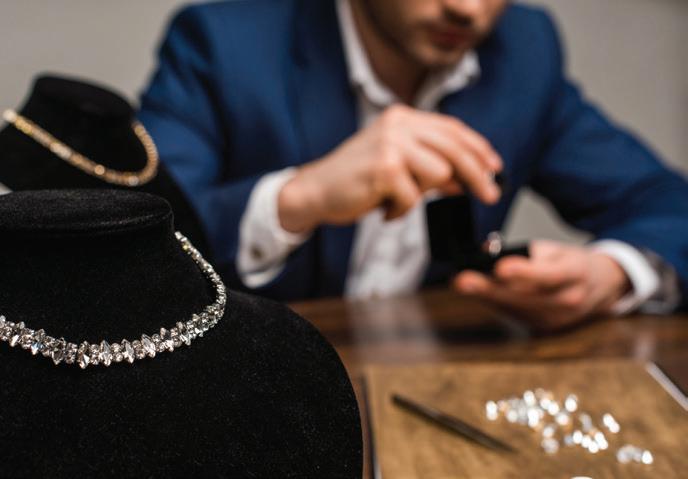
Christie’s to auction rare blue diamond in Geneva
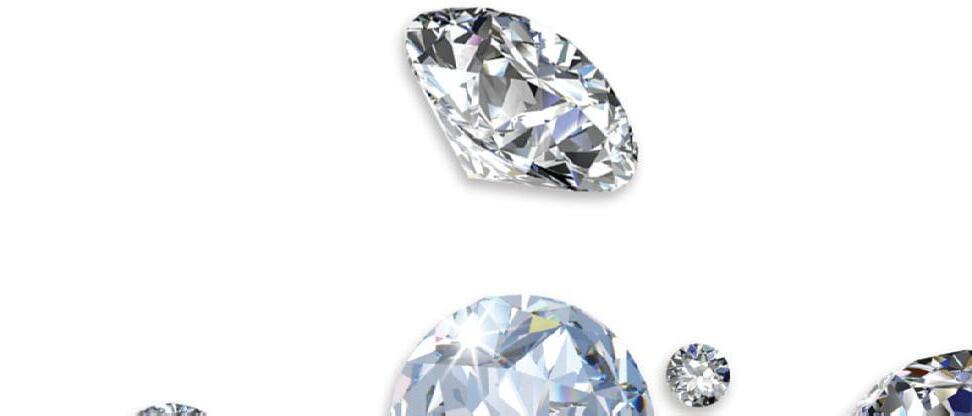
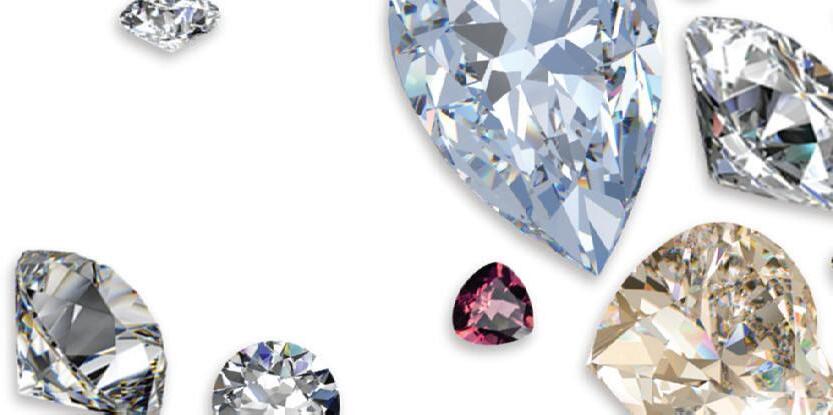
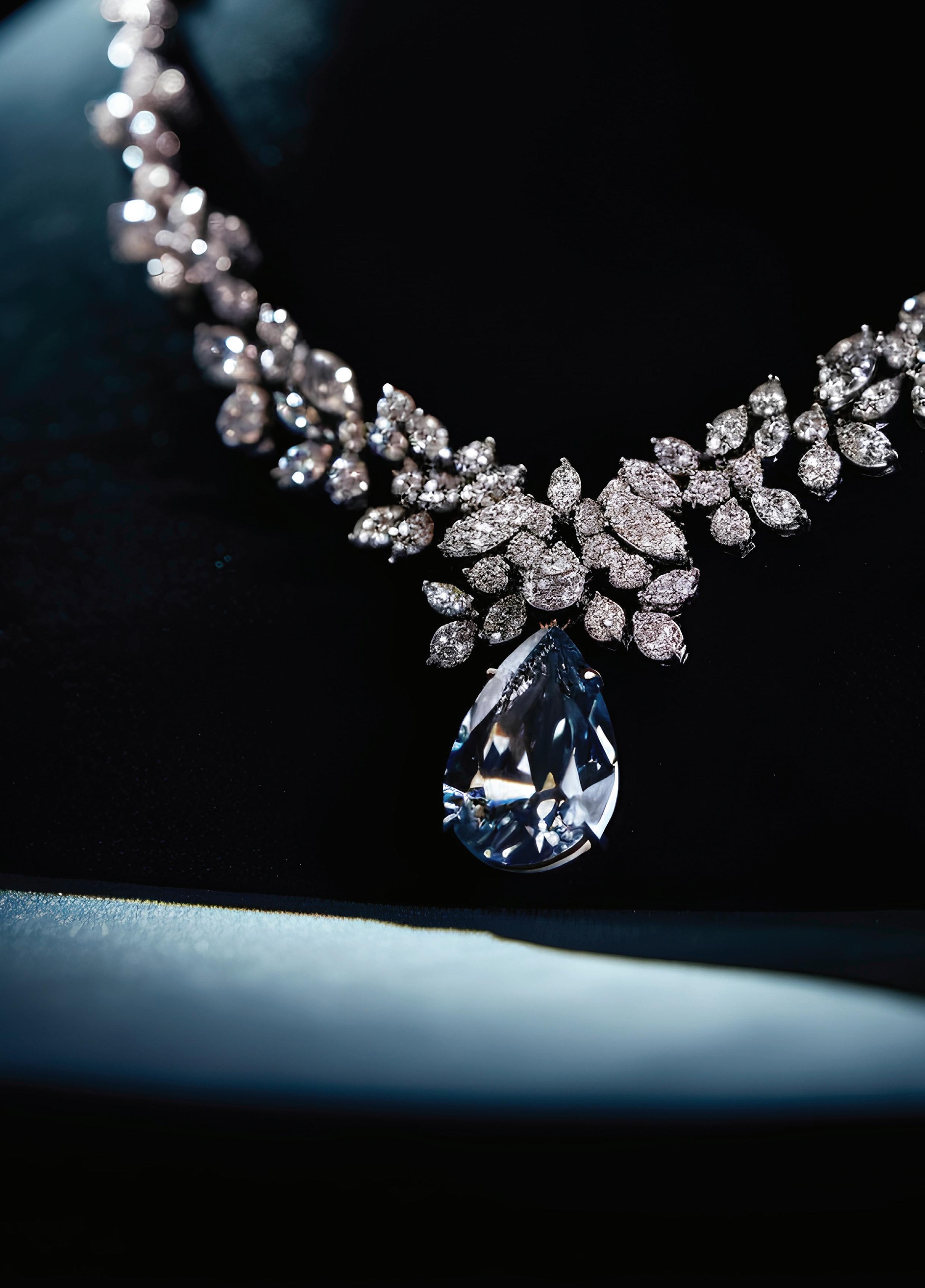
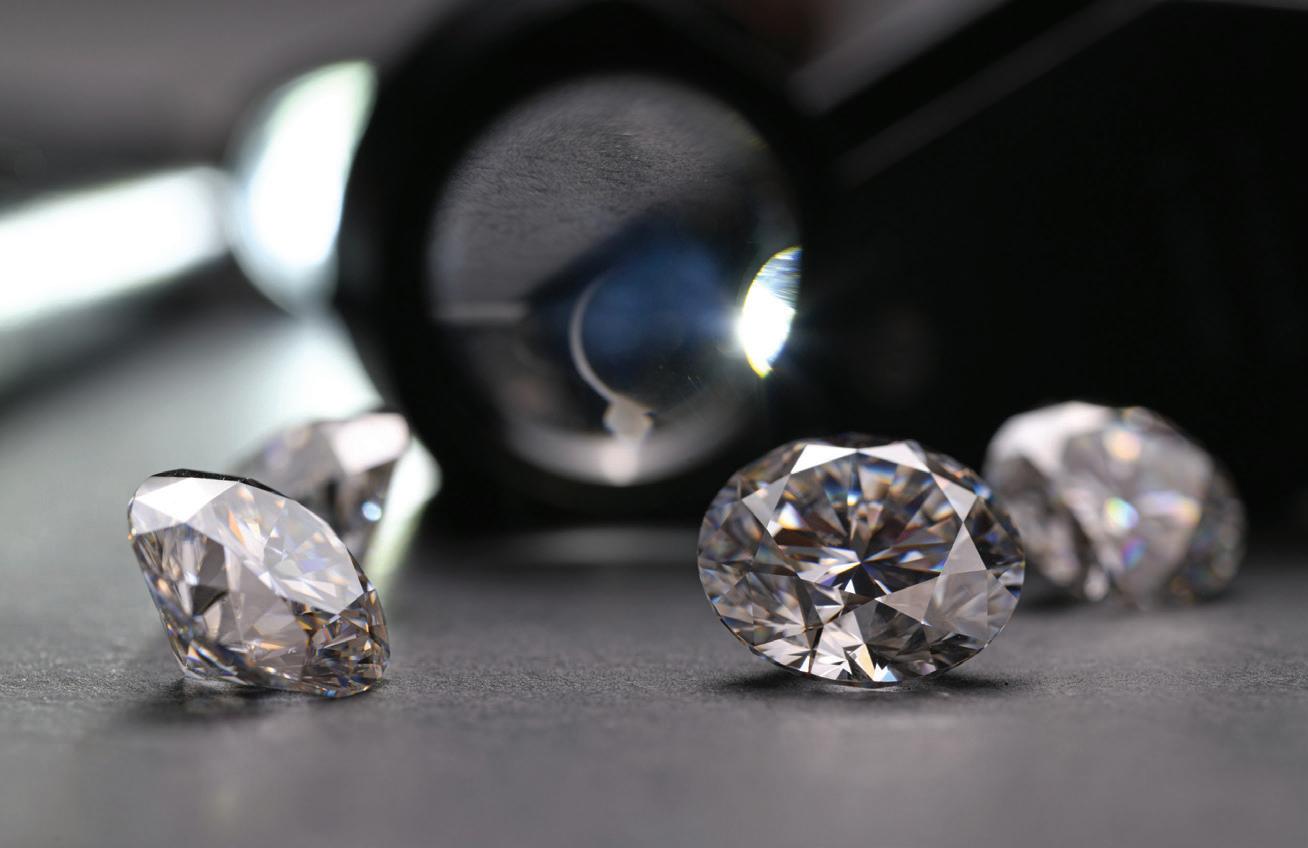
A 9,51ct fancy vivid blue diamond ring, known as the Mellon Blue, will lead Christie’s Magnificent Jewels auction in Geneva on 11 November, with an estimated value of up to US$30 million.
The internally flawless, pear-shaped diamond was once part of a pendant owned by Rachel “Bunny” Mellon, a renowned horticulturalist and philanthropist. Her landscape designs include gardens at the White House and the Palace of Versailles.
Previously sold at Sotheby’s in 2014 for US$32,6 million before it was recut, the stone had set a world record for a blue diamond at the time.
Christie’s will preview the jewel in cities including Riyadh, Shanghai, Hong Kong, Bangkok and New York. Rahul Kadakia, Christie’s International Head of Jewellery, describes the diamond as “among the finest coloured diamonds ever to appear at auction”.
“Discover a world of exquisite gemstone jewellery”
For over 50 years, JPPE, a Cape Town family business, has been crafting exquisite gemstone jewellery. Since 1966, our passion for precious stones has inspired us to create stunning designs, captivating both locals and tourists.
From Big Five-inspired pieces and elegant African designs to timeless classics, our extensive collection showcases a rainbow of loose gemstones and a broad selection of in-house designs.
As one of South Africa's most established gemstone jewellers, we pride ourselves on offering quality ranges that reflect global trends, catering to every taste.
Every piece is meticulously crafted in South Africa and backed by a 100% service guarantee. Choose from a variety of gemstones and precious metals, including silver and 9ct, 14ct, and 18ct gold.
Combining the innovation of CAD design with the expertise of our master artisans, JPPE delivers craftsmanship that meets the highest international standards.
Gilson Director
Sales Representative
A festive showcase of excellence
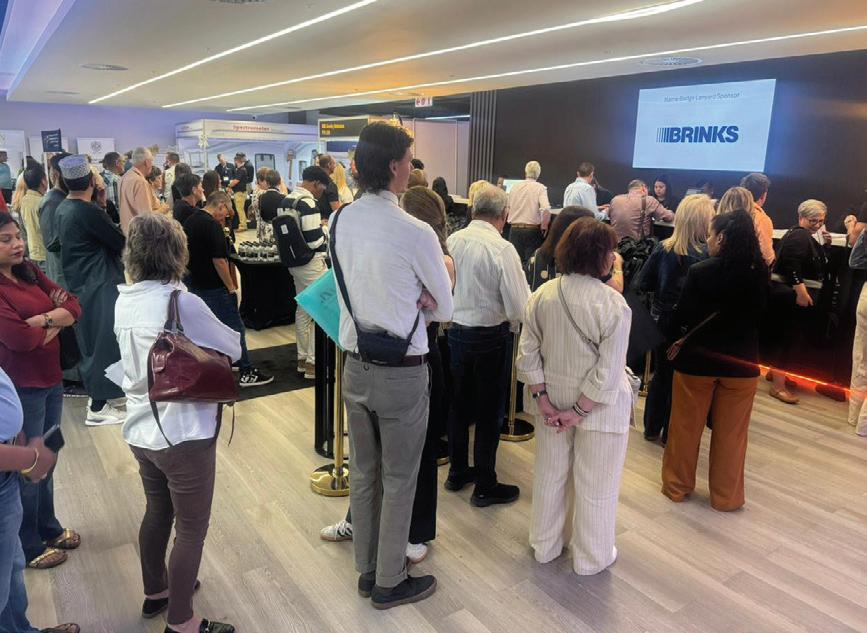
From the moment the doors opened at 10:00 on Sunday morning, the atmosphere was electric. Long queues at registration moved quickly and efficiently, allowing eager visitors to step into an exhibition that embraced this year’s theme, “Festive”, with vibrancy and flair. The décor at the entrance set the tone, drawing admiration for its classy, international feel, an aesthetic that carried throughout the show.
The day kicked off with a fully booked Business Breakfast sponsored by Rand Refinery where attendees enjoyed a delicious meal alongside an informative presentation by Terance Nkosi and Unathi Sihlahla before hitting the show floor.
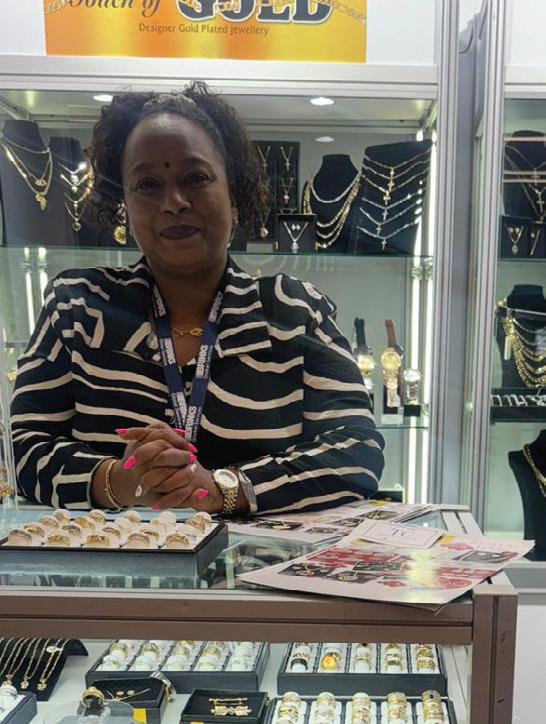
The numbers told a promising story: this year’s edition featured 10 more exhibitors than 2024, along with a record number of preregistered visitors. With striking stand designs, many embracing the festive theme, the exhibition floor was abuzz with excitement, trade and industry dialogue. The Galleria proved to be an excellent venue. Its single-level layout and wider corridors created a seamless and comfortable visitor experience.
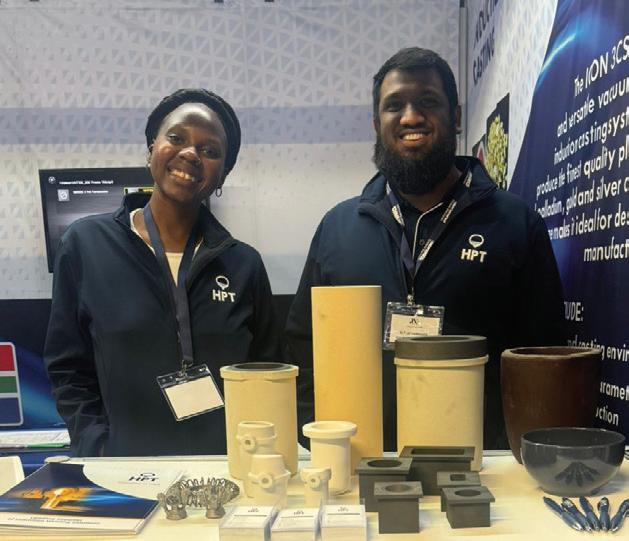
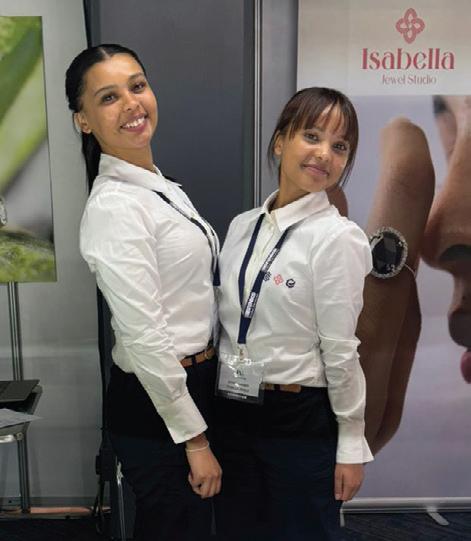
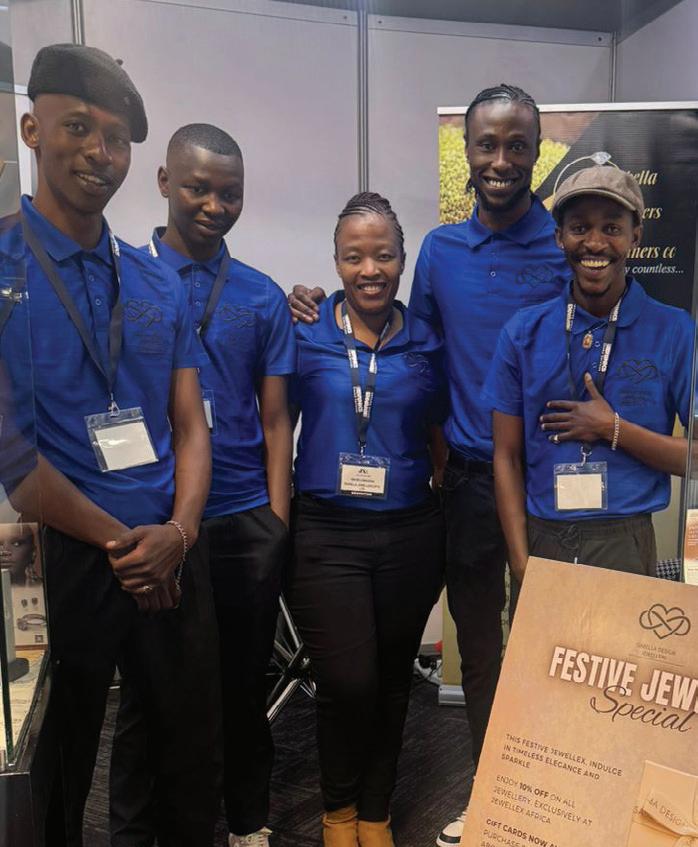
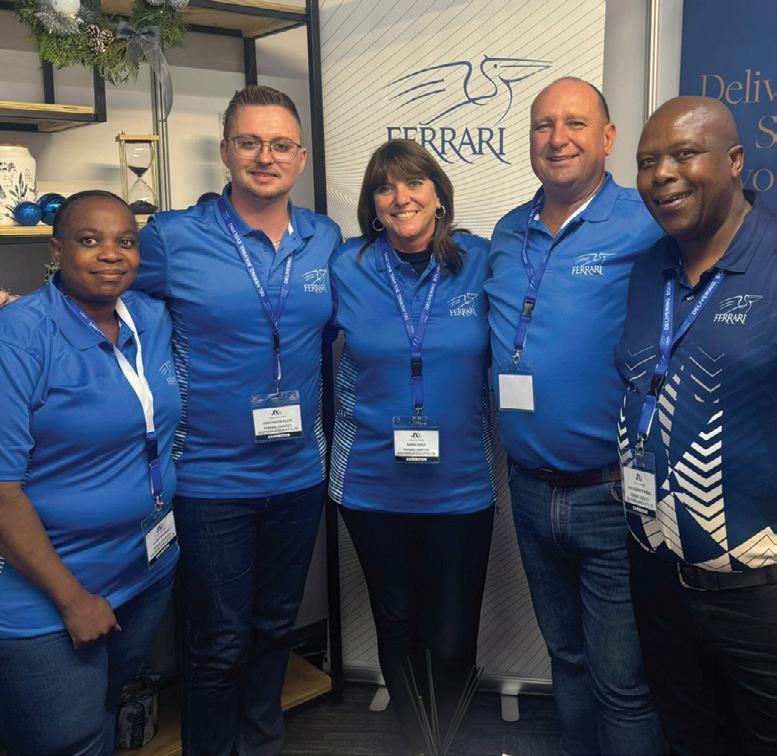
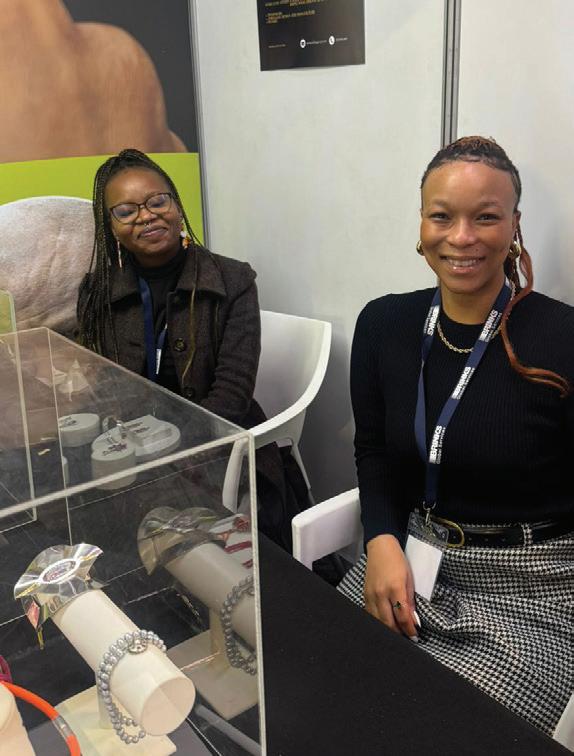
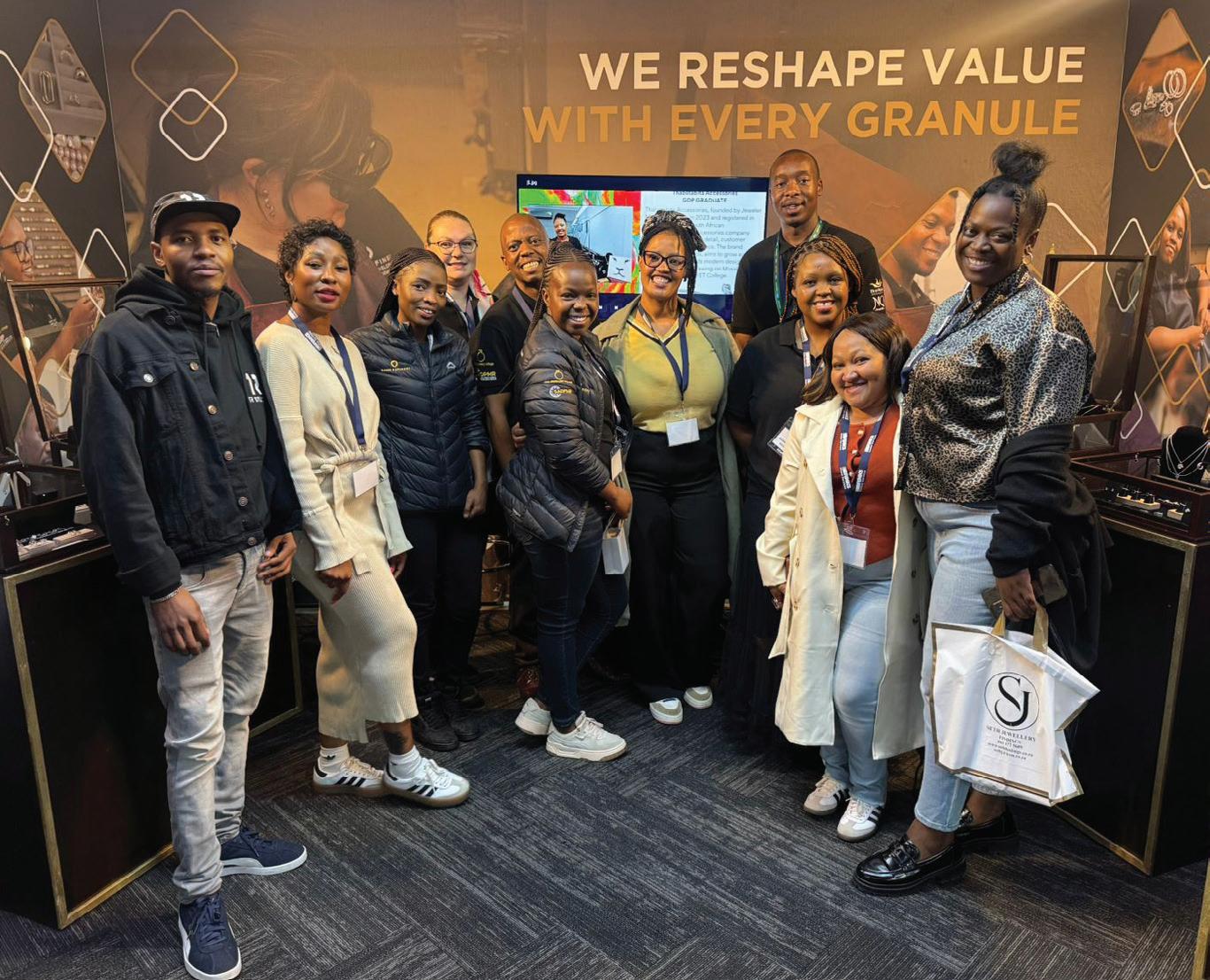
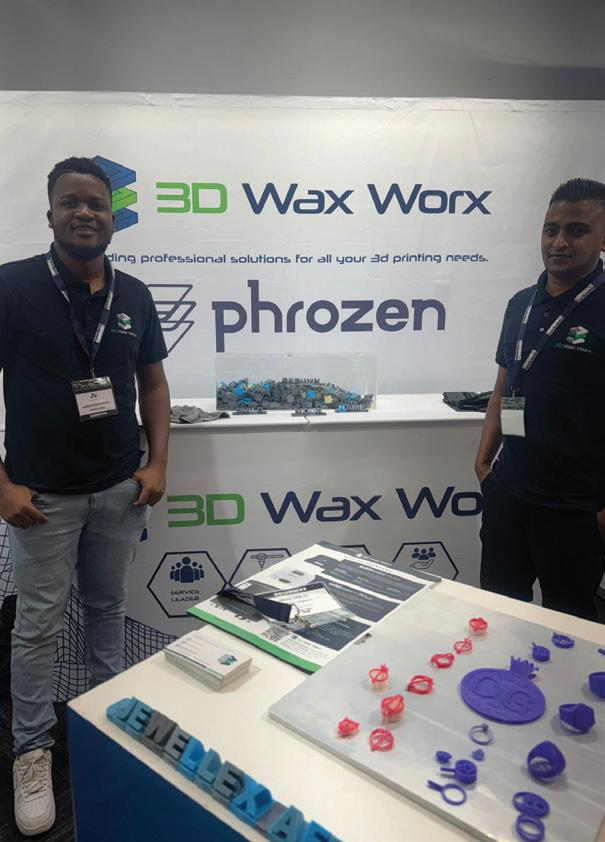
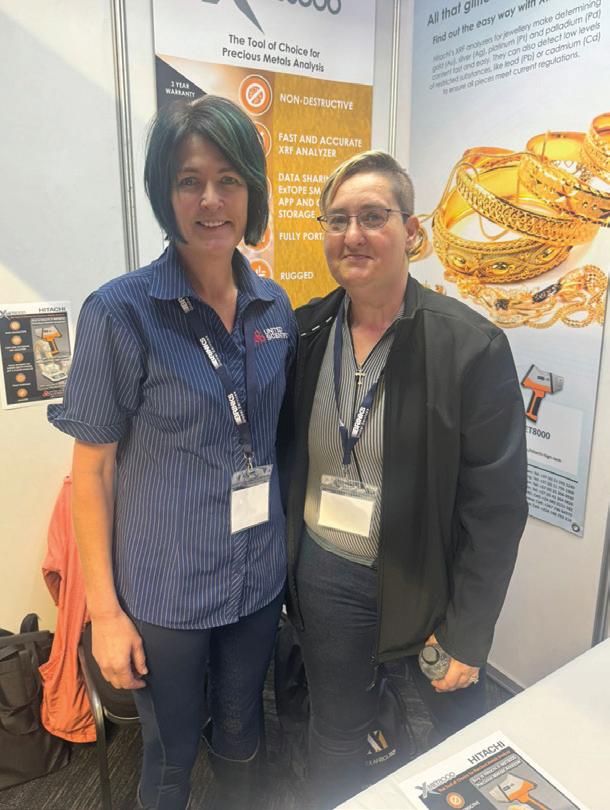
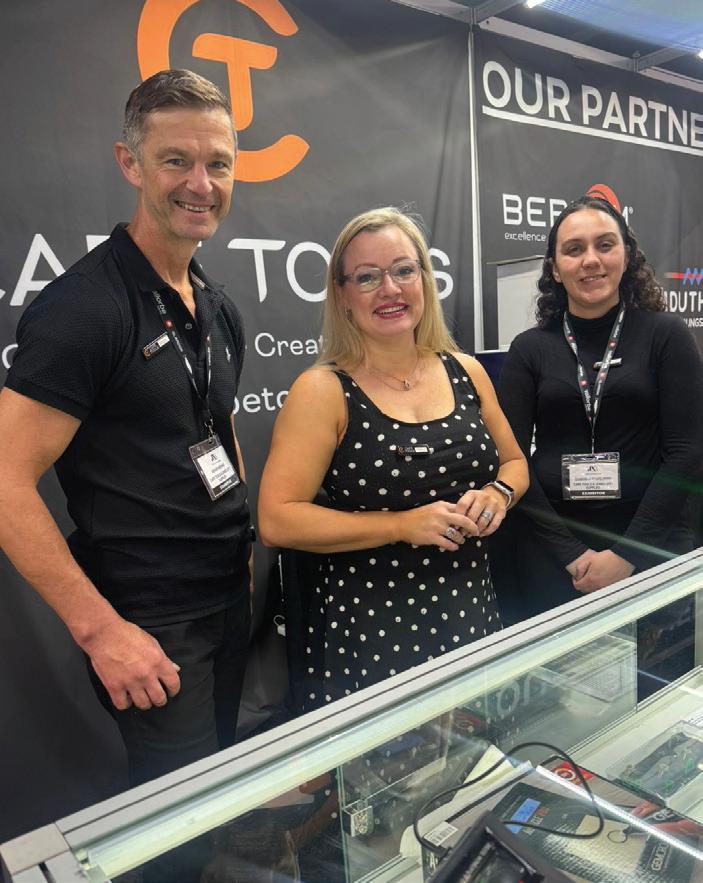
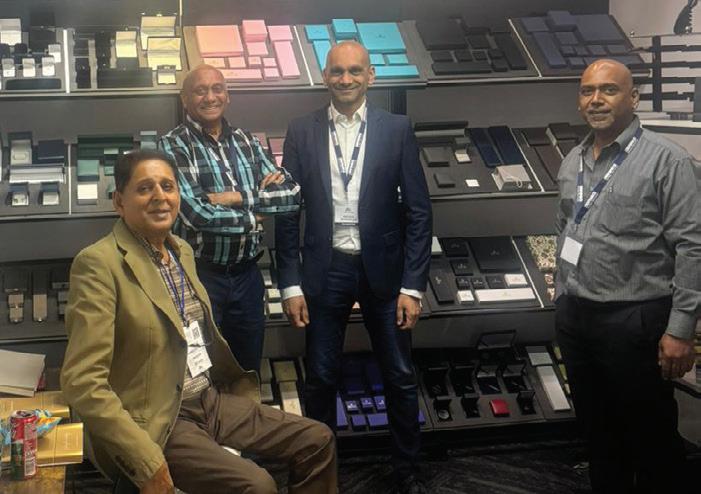
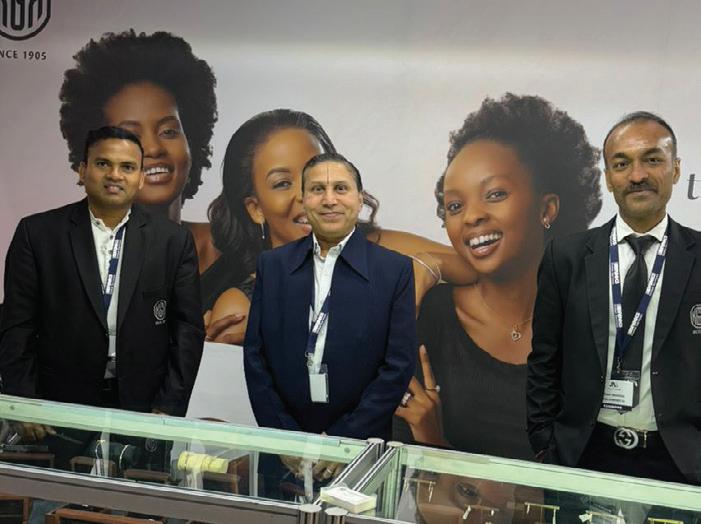
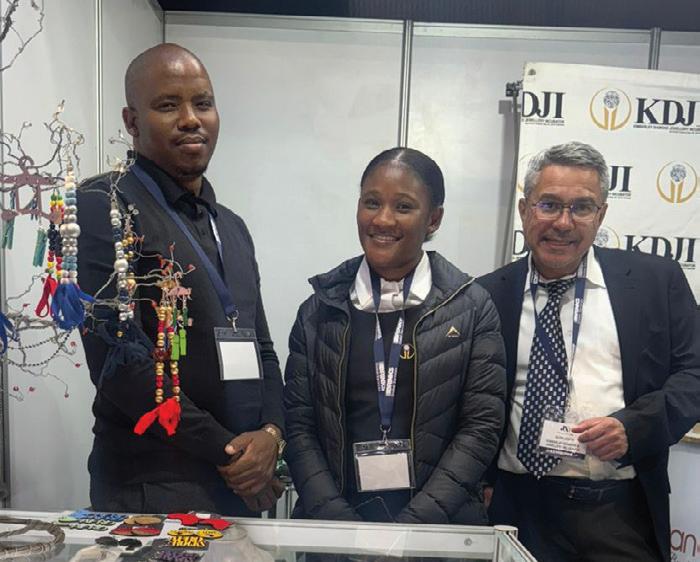
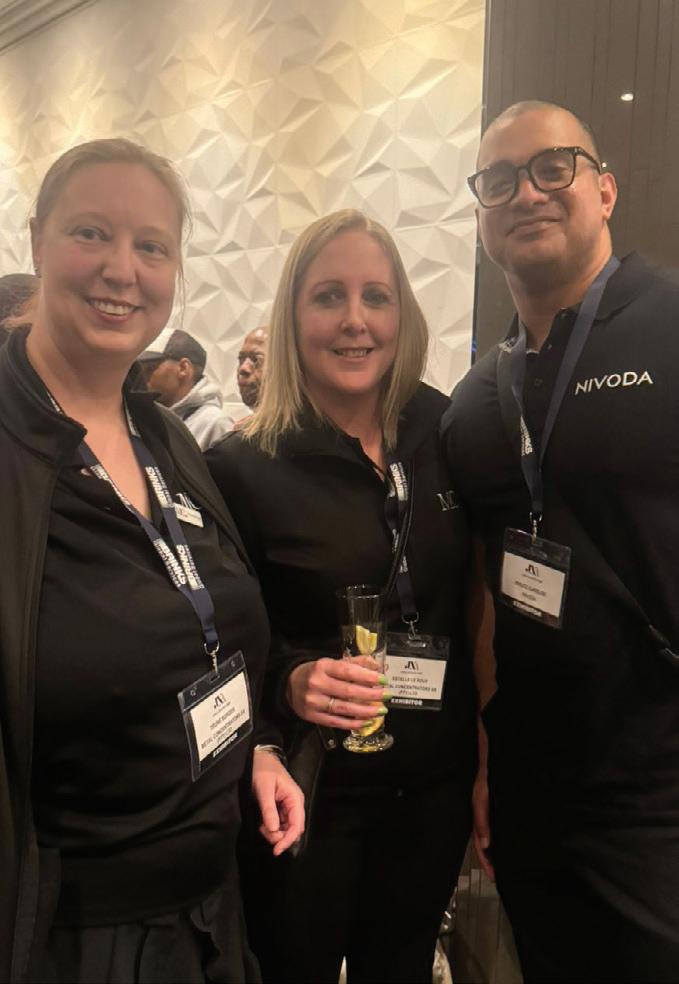
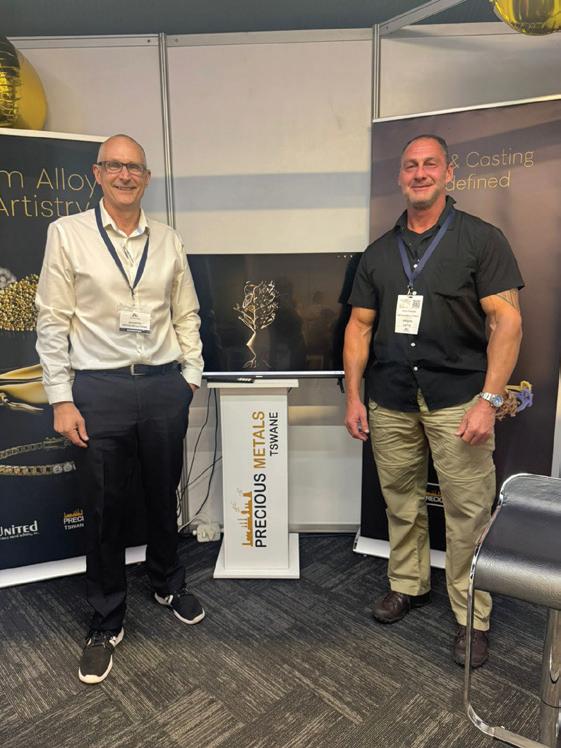
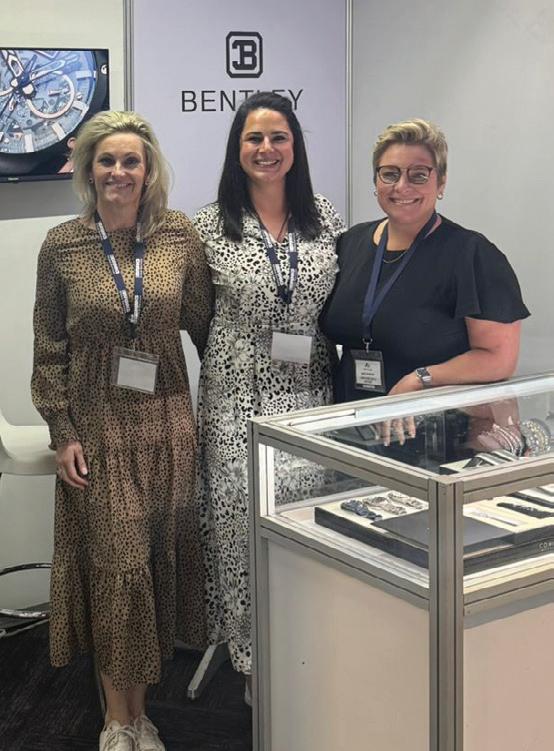
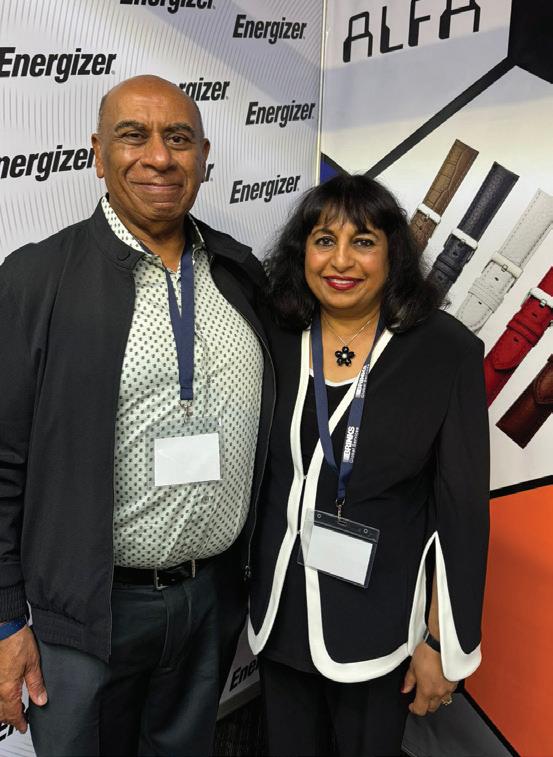
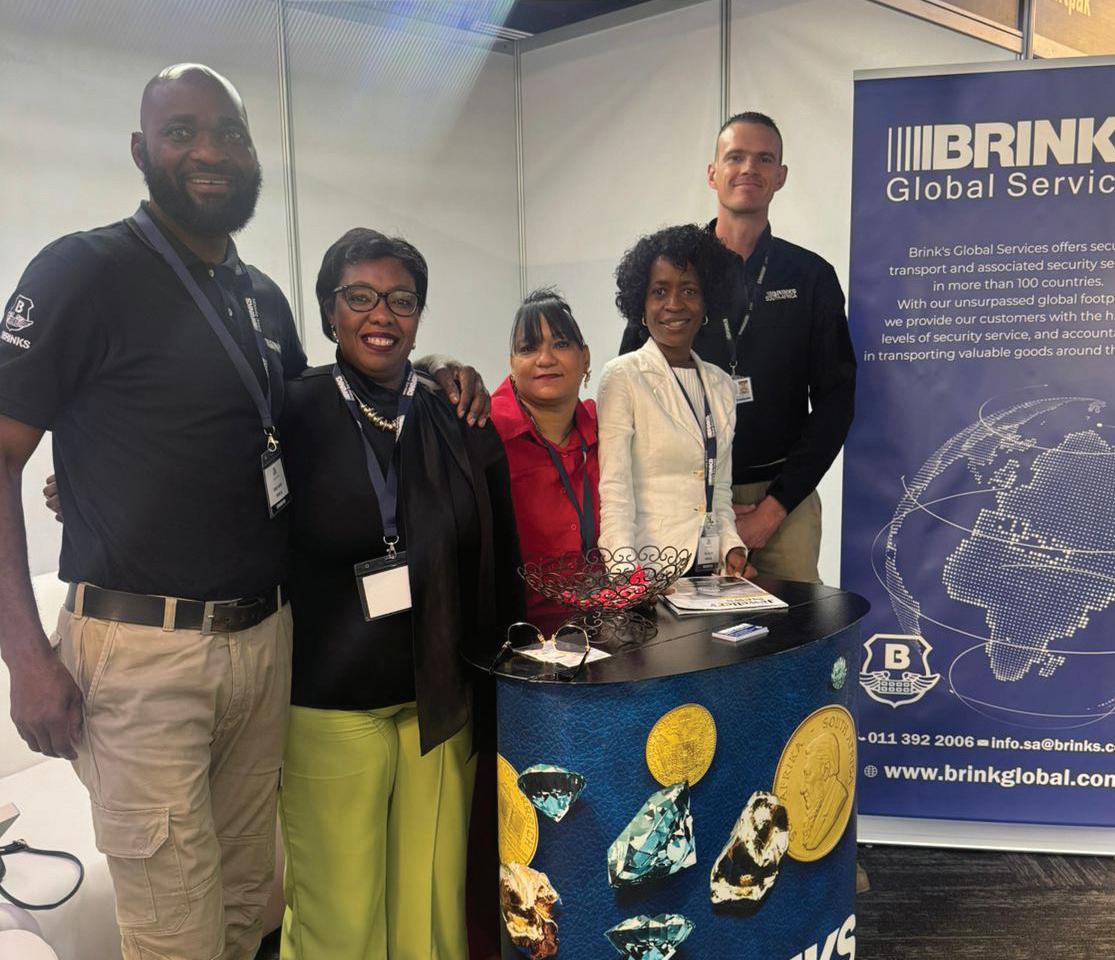
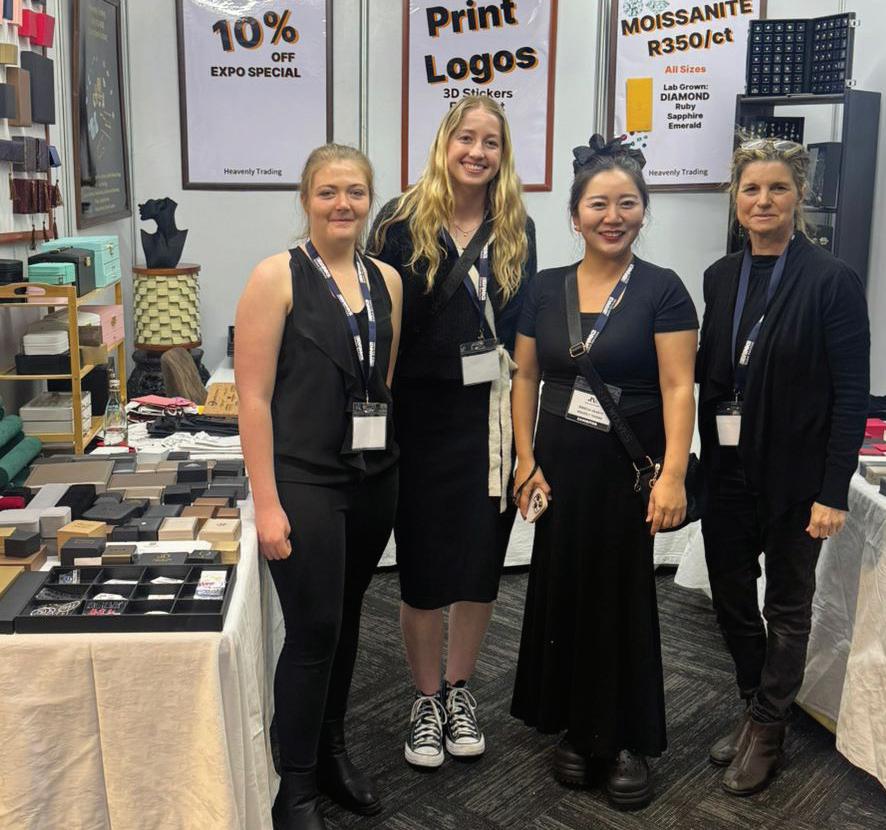
Jewellex Africa 2025, South Africa’s premier jewellery trade event, returned with energy and elegance on 28 and 29 September, hosted for the first time at the stylish Galleria in Kramerville, Sandton. The show impressed with its festive theme and strong industry support, making it one of the most talked-about editions in recent years.
The Galleria’s modern single-level layout and spacious corridors created a comfortable visitor experience and many exhibitors praised the venue’s ambience and future potential for expansion. The Jewellex Committee is carefully
considering all feedback regarding the venue as they plan future editions of the show.
The show wasn't only about business, it was also about celebration. The Sundowners
“With the bar now set even higher, the excitement for Jewellex Africa 2026 is already building and if 2025 was any indication, it promises to be another unmissable event for the trade.”
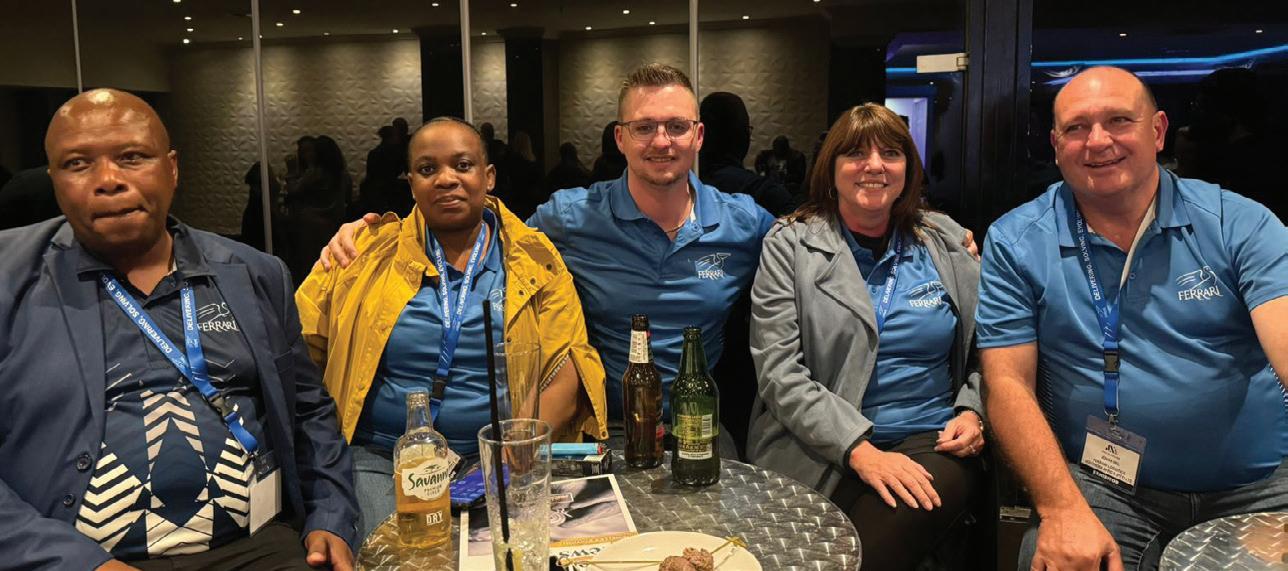
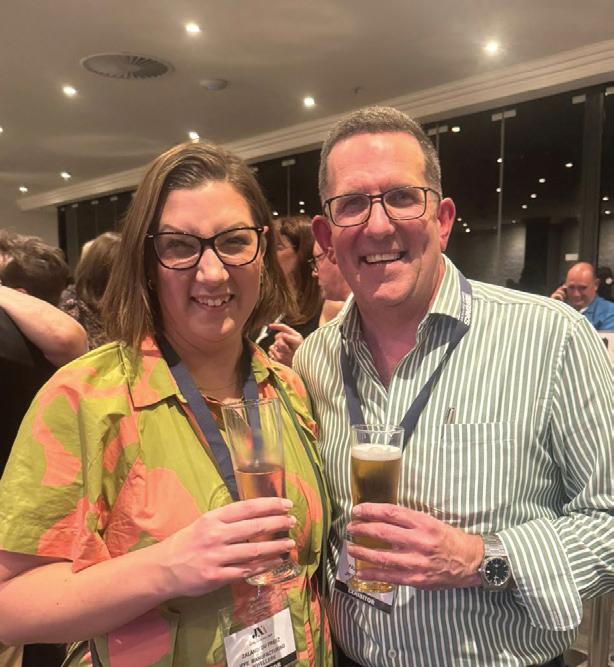
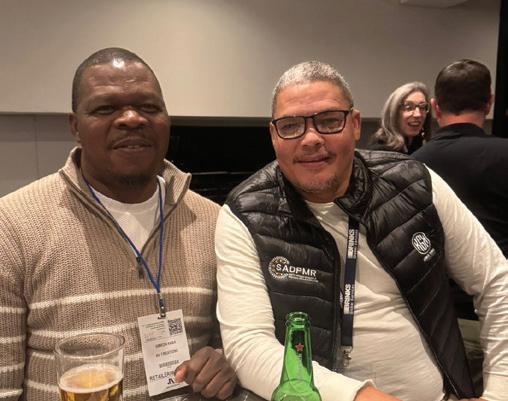
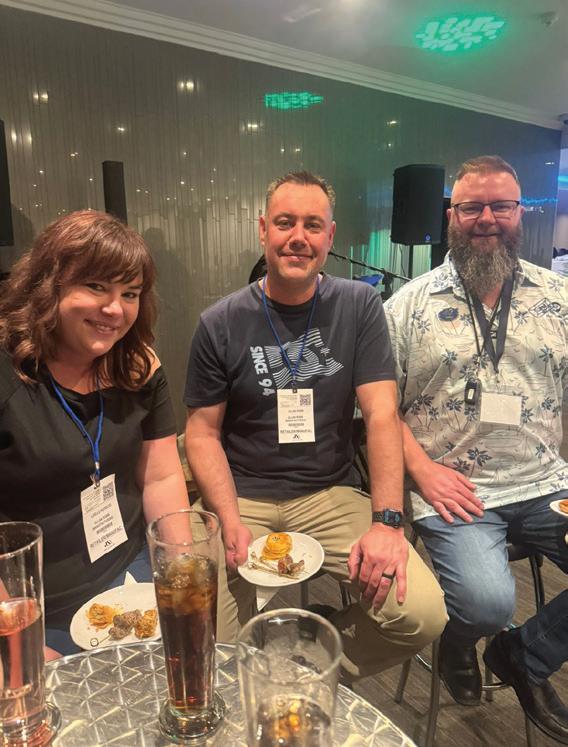
Networking Event, sponsored by Cape Precious Metals, wrapped up the first day on a high note. Though originally planned for the rooftop bar, it was relocated indoors due to weather, but this did nothing to dampen the mood. With live music by Gabriel Shai, the evening offered a relaxed and joyful opportunity for exhibitors and visitors to connect informally.
Day two began slightly slower but quickly built momentum, with exhibitors once again busy servicing customers. Across the board, feedback indicated strong sales and genuine trade activity.
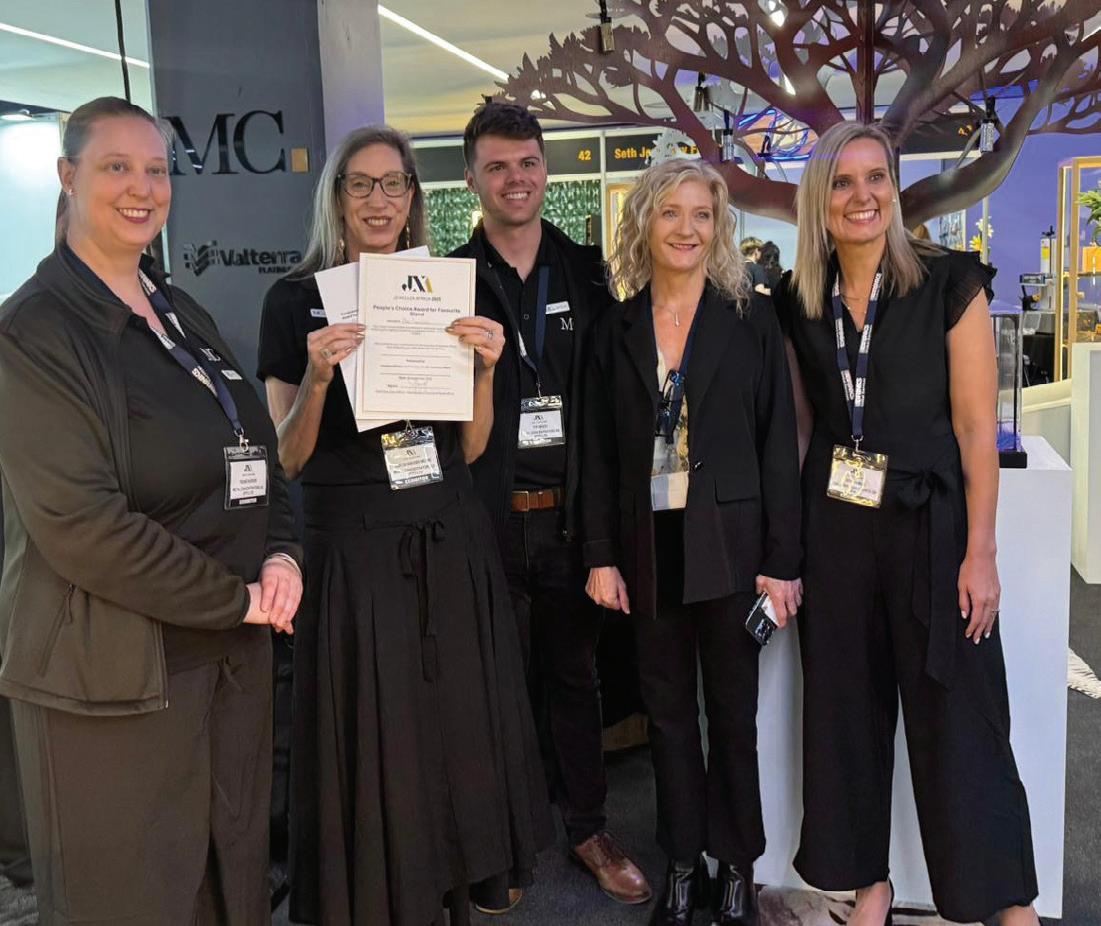
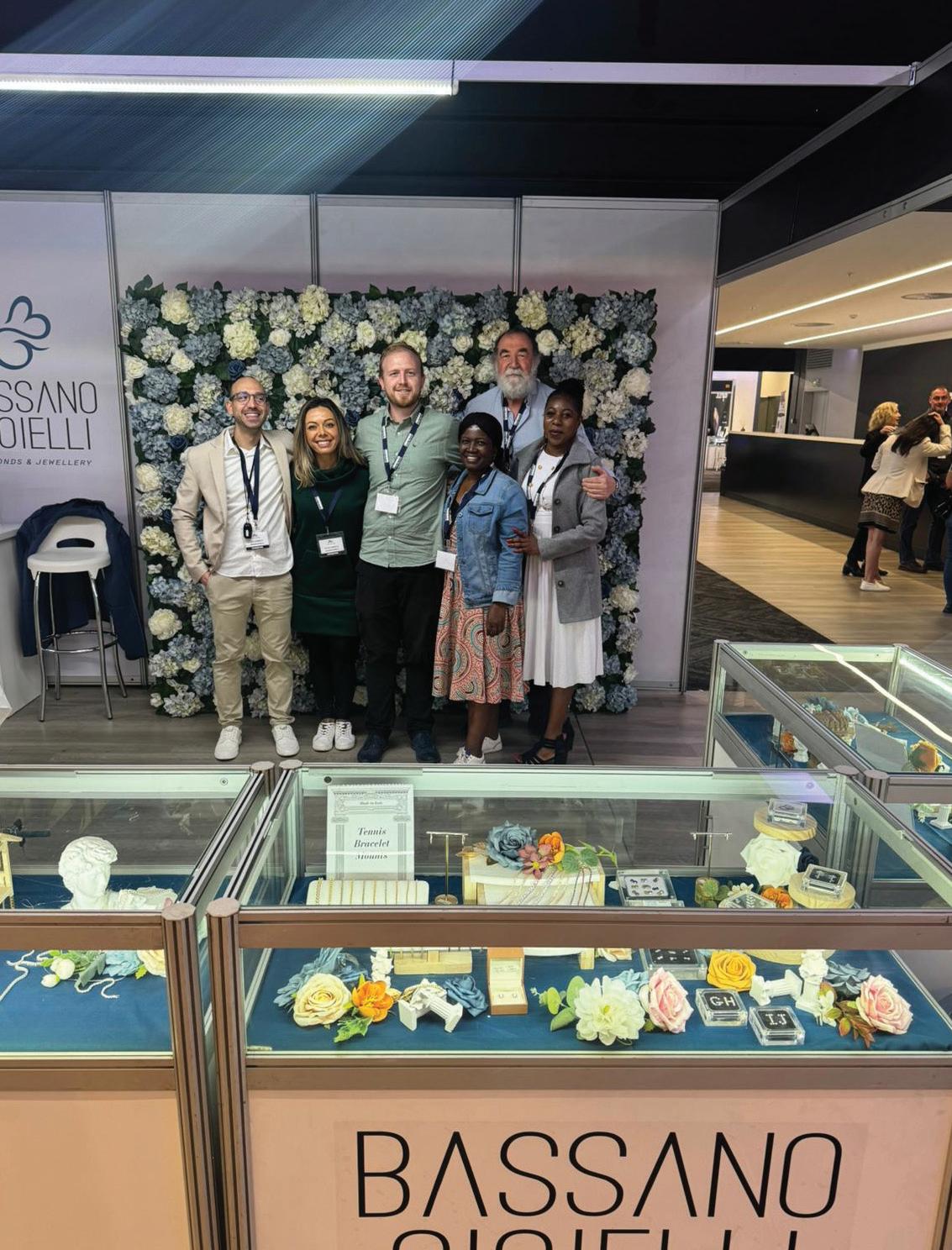
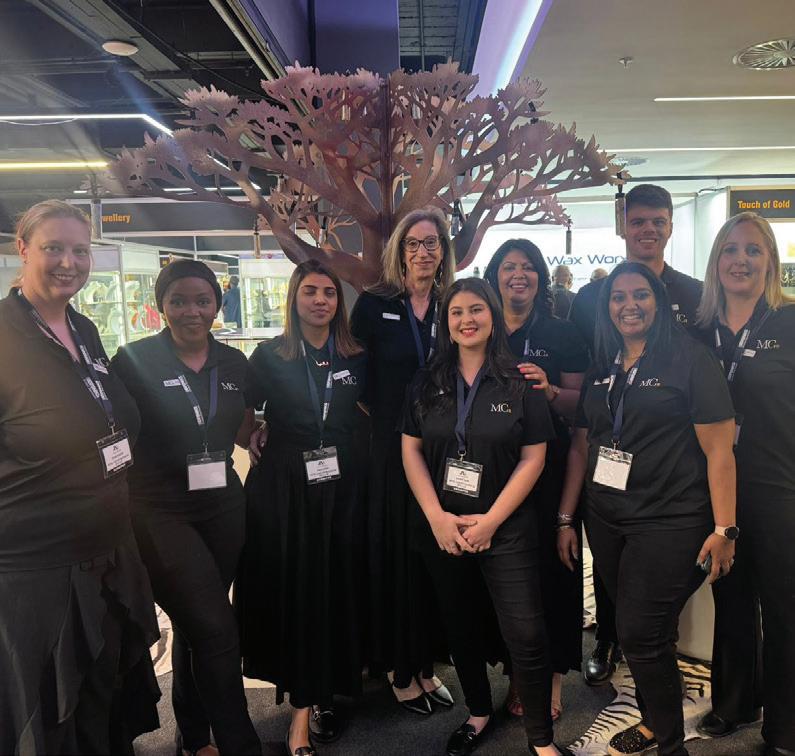
At noon on Monday, two highly anticipated awards were announced. Best Stand of the Year went to Bassano Gioielli, honoured for their beautiful floral and pastel-themed stand, marked by elegant attention to detail. The People’s Choice Award, determined by more than 100 visitor votes, was awarded to Metal Concentrators for their stunning
African-inspired stand, complete with a majestic Baobab tree centerpiece.
A noteworthy observation at this year’s show was the limited presence of watch companies. While brands such as SM Watch, AA Watch and newcomer Lunar Watches & Jewellery were present, the hope is to see greater participation from the watch sector in future editions, which would bring added value and variety to the exhibition.
Organisers report a significant number of exhibitor enquiries for 2026, a sure sign that the success of this year’s show has reignited industry enthusiasm.
Jewellex Africa continues to be a cornerstone event for the South African jewellery industry, a place where professionals not only do business but also strengthen relationships, explore trends and celebrate craftsmanship. We extend heartfelt congratulations to all exhibitors, sponsors and industry partners, and thank the many visitors who showed up in force to support the event. Their participation and engagement were key to the show’s success.
With the bar now set even higher, the excitement for Jewellex Africa 2026 is already building and if 2025 was any indication, it promises to be another unmissable event for the trade.
Highlights in action
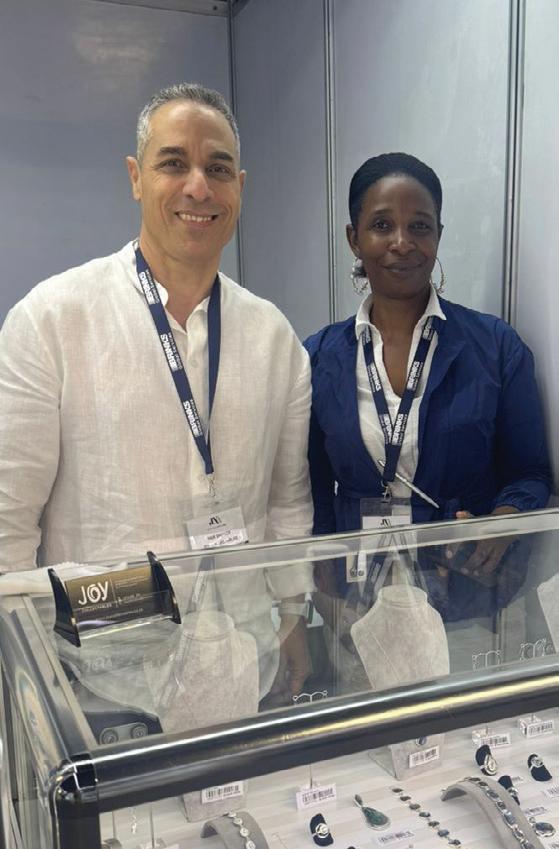
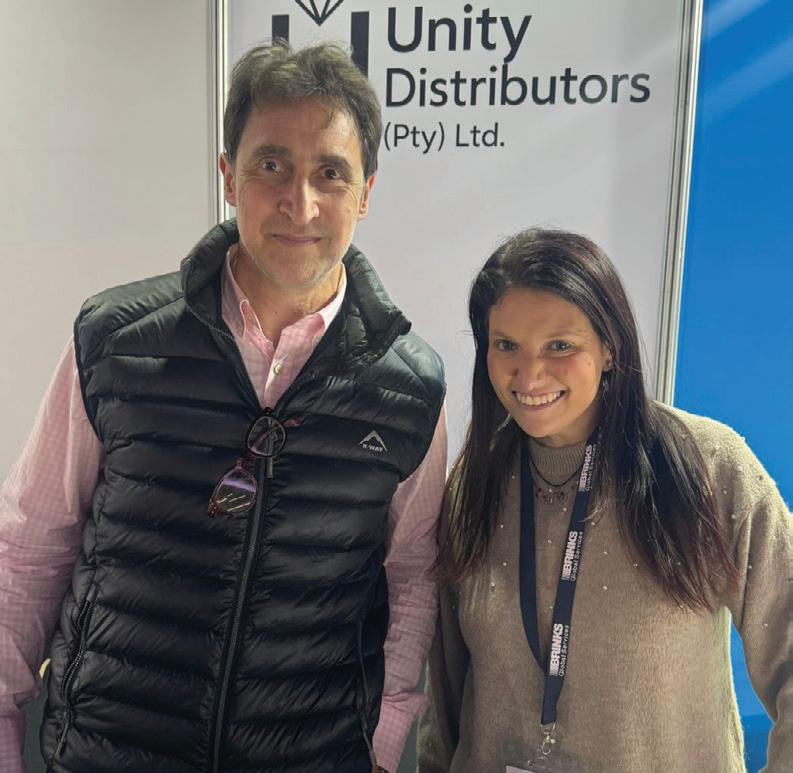
From festive stands to lively networking moments, Jewellex Africa 2025 was filled with energy, connection and celebration.
JXA
JEWELLEX AFRICA 2025
THANK YOU!
The strength of the South African jewellery industry is its people. The Jewellery Council of South Africa (JCSA) offers its heartfelt thanks to all exhibitors, trade buyers and sponsors who made the show such a vibrant and productive event
This gathering is crucial for strengthening our community and ensuring the future competitiveness of our industry, from manufacturing to retail Your dedication to ethical standards and excellence is our collective foundation.
We invite you to remain actively engaged w JCSA as we work together to build on this s
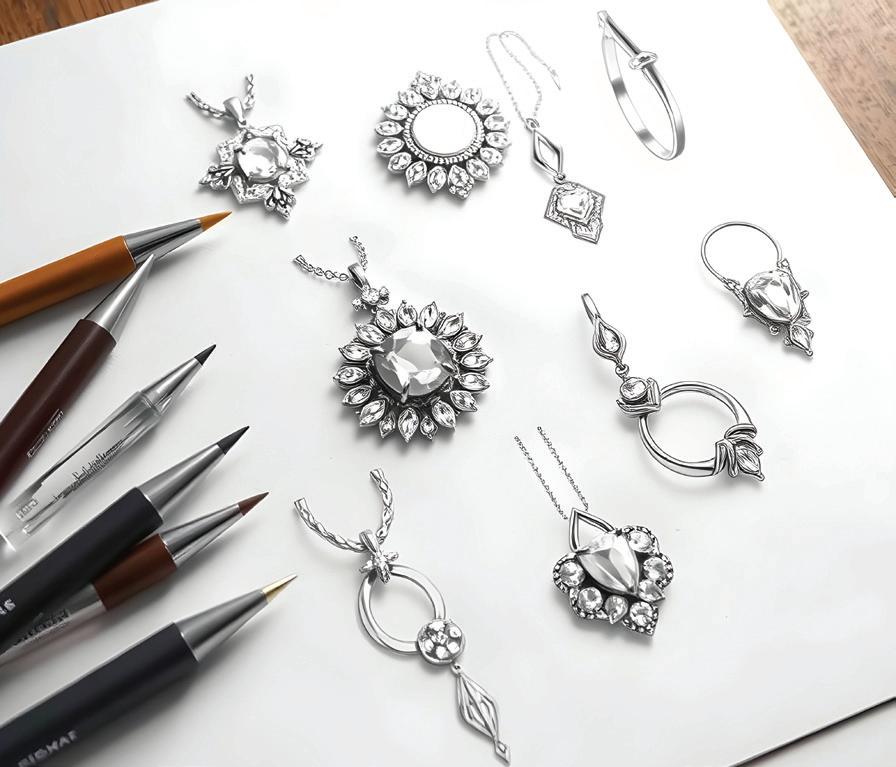
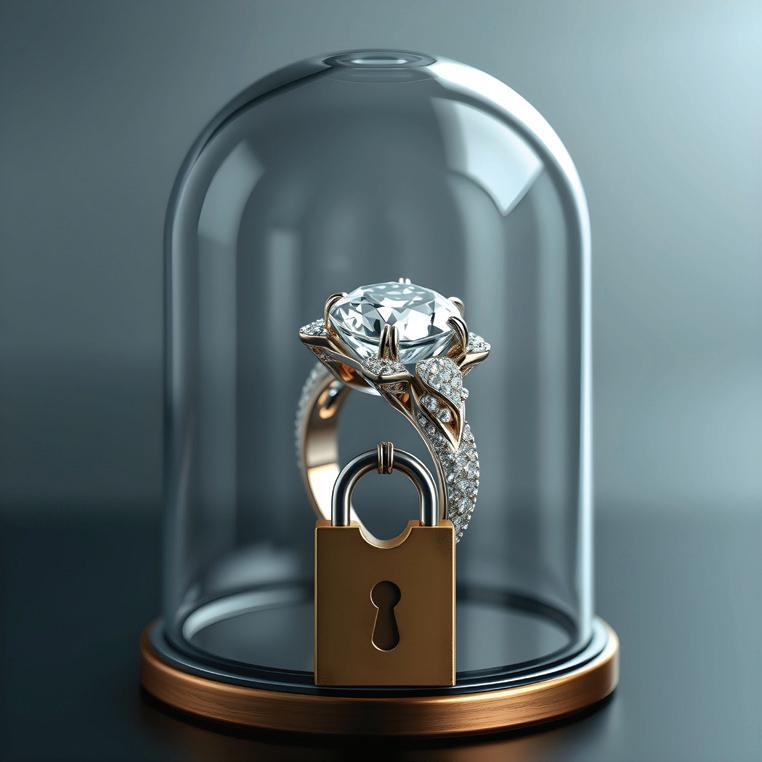
In an era when jewellery designs can be replicated overnight and online marketplaces make global distribution instantaneous, the protection of original creative work has never been more critical.
Recognising this reality, KISCH IP hosted an in-depth webinar on 10 September 2025, unpacking the legal landscape of jewellery design protection in SA. The session, titled Jewellery Design Protection: Why Focus on Registered Designs?, was presented by Ursula Baravalle (Head of the Patent Department) and Tim Laurens (Associate: Patent Department).
The webinar covered a broad scope, including the filing and enforcement of design registrations, the interplay between registered designs, trademarks and copyright and strategic considerations for both emerging designers and established brands.
Why focus on registered designs?
At the heart of the presentation was the message that registered designs are not just legal protections, but strategic business assets.
A registered design protects the visual appearance of an article. This includes its shape, configuration, pattern or
protection in SA Jewellery design
On 10 September 2025, Ursula Baravalle (Head of the Patent Department) and Tim Laurens (Associate: Patent Department) from KISCH IP presented a highly insightful webinar on jewellery design protection in South Africa. Titled Jewellery Design Protection: Why Focus on Registered Designs?, the session explored the strategic value of registered designs and provided essential guidance for both emerging designers and established brands
ornamentation, rather than its function. In the jewellery industry, where aesthetic appeal is paramount, this protection becomes essential.
“The competitive threat posed by fast fashion, 3D printing and global e-commerce makes jewellery designs especially vulnerable to copying. Without protection, your design can become just another mass-produced item, often without any credit to the originator,” said Baravalle.
Understanding registered designs under South African law
SA’s Designs Act provides for the registration of designs in two distinct categories:
• Aesthetic designs – where protection is sought for the appearance of a product (eg jewellery, furniture and fashion items).
• Functional designs – where the shape or configuration is dictated by the product’s function (eg industrial tools or components).
For jewellery, applications are generally filed in the aesthetic register, under Class 11 (Articles of Adornment). At the time of the webinar, there were 377 designs registered under Class 11.
Designs can also be registered:
• In multiple classes (if applicable).
• As a set of articles (eg a matching necklace or a bracelet and earrings), provided the set shares a common design character.
Requirements
for registrability
To be registered, an aesthetic design must be both:
• New: It must not have been disclosed to the public before the filing date or release date (whichever is earlier), barring a six-month grace period.
• Original: It must be independently created and not copied.
The importance of timing was repeatedly emphasised. Publicly disclosing a design, even on Instagram or at a trade show, before filing could render the design unregistrable after the sixmonth window lapses.
Common pitfalls in filing design applications
The webinar detailed several common mistakes that designers and businesses should avoid:
• Filing too late
Designers often publish their work online or show samples to retailers before filing. Even one post on social media can count as a public disclosure and compromise the novelty.
• Incomplete or unclear drawings “What you file is what you protect.” The SA Design Office only grants protection for what is visible in the submitted representations. Poor image quality or missing angles (eg only showing a front view of a ring) create loopholes for infringers.
• Filing without a clear strategy Not every design needs to be registered. Designers should ask:
• “Which pieces drive sales?”
• “Which ones will be marketed internationally?”
• “Which ones are part of my/our signature line?”
• Protecting every piece indiscriminately can be financially unsustainable. Strategic filing enhances commercial leverage.
The competitive advantage of registered designs
Design registration offers the following legal rights:
• The exclusive right to exclude others from making, importing, using or selling a product embodying the design or one not substantially different from it.
• Protection across all articles in the same design class.
• Moreover, design rights can increase business valuation, strengthen investor confidence and act as a public deterrent to copycats, especially when the registration number is visibly used in branding and marketing materials.
Quick
and cost-effective registration in SA
Unlike patents, design applications in SA are not substantively exam-
ined. They are assessed only for formal compliance. This allows for:
• Fast registration (typically within a few months).
• Lower costs compared with patent prosecution.
However, the burden of proving validity lies with the proprietor in the event of a legal challenge.
What cannot be protected
The law excludes several categories from design protection:
• Purely functional features (eg a clasp designed only to close a necklace).
• Designs that lack novelty or originality.
• Ideas, concepts or methods (eg a new laser-cutting technique, more suitable for patent protection).
• Trivial modifications of existing designs that do not create a “substantially different overall impression”.
Baravalle explained that small tweaks, such as adding an extra screw head to an iconic bracelet, are unlikely to meet the threshold for originality.
Enforcing design rights
A registered design is only as effective as the owner’s willingness to enforce it. The presenters outlined the typical enforcement process:
• Monitoring the market This includes trade shows, e-commerce platforms and social media. Design owners should consider watch services and educating retailers on how to spot infringing products.
“A registered design protects the visual appearance of an article. This includes its shape, configuration, pattern or ornamentation, rather than its function. In the jewellery industry, where aesthetic appeal is paramount, this protection becomes essential.”
• Cease-and-desist letters
A cease-and-desist letter is often the most cost-effective and immediate remedy. It serves as a formal assertion of rights and a warning of legal consequences.
• Court remedies These include interdicts (injunctions) to stop ongoing sales or marketing, damages or surrender of profits and delivery up orders for infringing stock
• Settlement and licensing Litigation is not always the best course. Infringement cases can sometimes be converted into licensing agreements, turning a legal threat into a revenue stream.
Beyond design registrations: trademarks and copyright
In addition to registered designs, copyright and trademark law offer vital intellectual property (IP) protection for jewellery creators.
Trademarks
• A trademark protects brand elements such as names, logos and taglines.
• It must be distinctive, not descriptive or generic.
• Registration grants an exclusive right to use the mark for the specified goods/services.
• Duration: a trademark is valid for 10 years from filing and is renewable indefinitely.
• Territorial: it is only enforceable
in the country of registration.
• Marking: it uses the symbol ™ for unregistered marks and ® for registered marks.
Trademarks are a cornerstone of brand identity and long-term value
- Seek guidance from IP incubators or firms offering affordable entry-level services.
• For established brands
- Build and manage a global IP portfolio.
- Aggressively monitor and enforce your rights against counterfeiters.
- Use litigation and licensing as business tools.
- Differentiate through brand heritage and IP value.
- Invest in ongoing IP strategy aligned with international market presence.
For jewellery designers and businesses seeking to proactively protect their creative output, the presenters offered a step-by-step approach:
- Conceptualise your design and contact an intellectual property law firm (eg KISCH IP) to assess the best protection route.
- File your design applications before any public release and register relevant trademarks.
- Clearly mark marketing and product materials with IP indicators, monitor the market and be ready to enforce your rights.
- Use your IP portfolio as a business development asset.
Creativity remains at the heart of SA’s jewellery industry, but creativity without legal protection is vulnerable to exploitation. As this webinar from KISCH IP made clear, understanding and leveraging registered designs, trademarks and copyright allow designers to protect their work, enhance their brand and generate real commercial value.
For professionals across the jewellery spectrum, from start-up creators to established houses, IP protection should not be an afterthought – it should be a core part of your business strategy.
The hands shaping South Africa’s jewellery dynasty
SA’s jewellery training landscape is facing significant challenges. In this monthly column, Faldilah Garrett discusses the way forward when it comes to reviving skills development and securing the industry’s future
Forging legacies
Deep within the sun-drenched landscapes of SA lies a story not just of earth, but of alchemy. For centuries, the world has looked to this region as a treasure chest, a source of the planet’s most magnifi cent diamonds and purest gold. But a quiet, brilliant renaissance is unfolding. The narrative is shifting from what is simply extracted from the ground to what is meticulously crafted by the hands. At the heart of this transformation is the hope for a
About Faldilah Garrett
Faldilah is an expert in occupational programme development for the NQF, working with clients such as the MQA, SASSETA, the QCTO, the Reserve Bank and leading SETAs.
A qualifi ed goldsmith since 1999, she has helped shape national jewellery and mining qualifi cations since 2002. She serves on the JMASA Executive Committee and has trained top skills providers.
new generation of artisans, their skills honed by a sophisticated ecosystem of occupationally directed training, forging not just precious metals, but a new global identity for African luxury.
For too long, the journey of a South African gem was a tale of departure. A rough diamond unearthed in Kimberley would begin its life in African soil, only to be spirited away to the cutting capitals of Antwerp or Mumbai, its true brilliance and value unlocked far from its home. Today this economic exodus is being challenged by a powerful counter-movement rooted in education and empowerment. The focus is now on value addition, transforming raw potential into exquisite, fi nished heirlooms right here at the source. This is where the magic of occupationally directed training begins.
The emerging artisans from a partnership like this would be fl uent in the digital dialect of modern design. Computer-aided design software allows them to render complex, visionary pieces with architectural precision before a single gram of gold is melted. This fusion of hand and technology ensures that South African jewellery is not a relic of the past, but a bold statement about the future of luxury. It respects provenance while championing progress.
The future of South African jewellery through strategic partnership
This would not be the dusty vocational training of a bygone era. Instead, imagine state-ofthe-art studios where the ancient hiss of a jeweller’s torch mingles with the quiet hum of 3D printers. By aligning the JMASA’s industry insights, centuries of combined experience and wisdom, the MQA’s resources for skills development in the mining and minerals sector and the QCTO’s mandate to oversee occupational qualifications, we could be implementing curricula which are not only innovative and industryrelevant, but nationally accredited and internationally respected. This collaboration would streamline learning pathways, enhance the quality of apprenticeships and ensure that graduates possessed the precise skills required by a dynamic and competitive market.
“These training initiatives can sculpt more than just ornaments; they can shape a future where the country is celebrated not just as the cradle of mankind, but as the crucible of the world’s most exciting and authentic new luxury.”
Together, we would be building a sustainable talent pipeline that would fortify SA’s position as a world leader in jewellery design, manufacturing and innovation. This would be the new guilds, tasked with safeguarding a priceless legacy while propelling it into the 21st century.
This is how bright the future could be if we improved the current state of affairs, with bold men and women leading the way. More
than a movement, more than just aesthetics, it would be a profound social and economic statement. Occupationally directed training is a powerful engine for change, creating sustainable careers. It empowers young artisans, providing them with a highly sought-after, globally recognised skill. This is the definition of conscious luxury, a purchase that is not only beautiful, but tells a story of ethical empowerment and community upliftment.
In an ideal world, if we could forge a synergy through innovation and partnership, the future would look bright, with designs becoming bolder and more intrinsically South African. We are already seeing collections inspired by the
geometric beauty of Ndebele art and the delicate silhouette of the protea. This is a design language born of place, a declaration that African luxury has its own unique, powerful voice. All we need is for inspiration to be followed by meaningful collaboration.
The next time you gaze upon a brilliant diamond or a lustrous gold ring, consider the journey it has taken. The true value of South African jewellery should not be measured solely by carats or weight. It should be measured by the skill, passion and ambition of the hands that brought it to life. These training initiatives can sculpt more than just ornaments; they can shape a future where the country is celebrated not just as the cradle of mankind, but as the crucible of the world’s most exciting and authentic new luxury.
A shining symbol of our South African soul
National pride is forged in fire and polished to perfection within our jewellery sector. It is born from the rich soil of our nation.
Every locally designed and manufactured piece that shines on the world stage is a testament to our excellence and a carrier of our spirit. We do not just create jewellery: we craft symbols of our home. To wear a piece of South African jewellery is to wear our story – and in that, we take immense pride.
Colour play: designing in palettes instead of stones
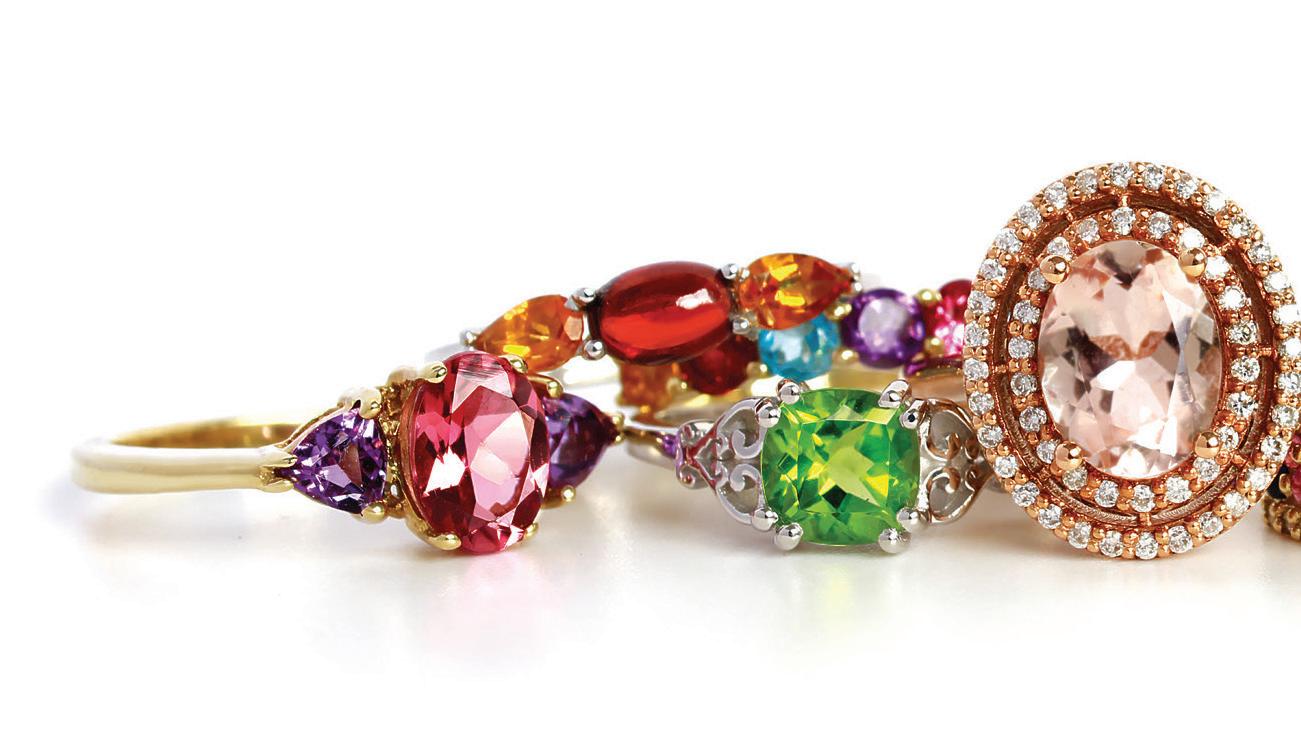
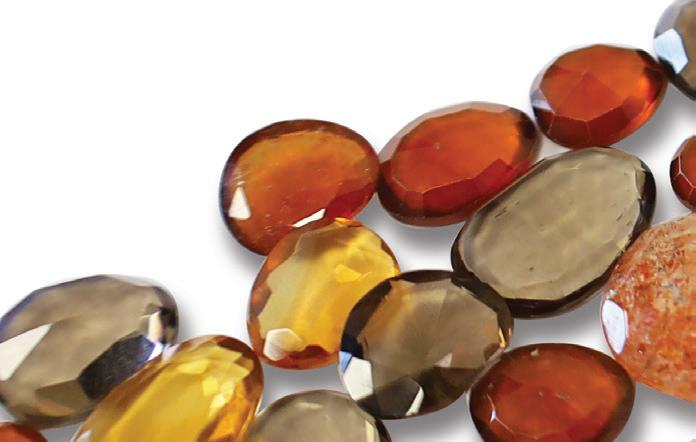
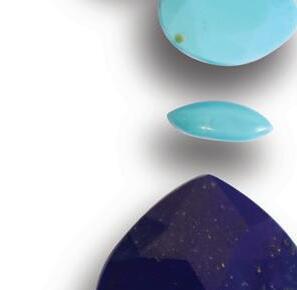
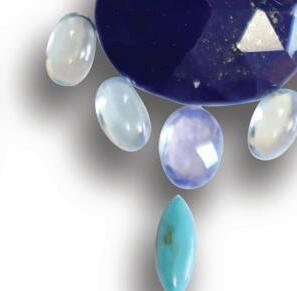
For centuries, jewellery design has followed a familiar approach: starting with a single, standout gemstone – the “hero” – and building the piece around it. From diamond solitaires to ruby-centred brooches, the central stone has traditionally set the tone, scale and style of the jewellery. However, a new movement is overturning this tradition. “Today’s designers increasingly begin with colour palettes rather than individual stones. They draw inspiration from fashion, art, and nature, and create collections that celebrate harmony over hierarchy,” says Adine Lutz of Ajanta Afrika.
Ajanta Afrika was founded in 2006 from a love of travel and a passion for gemstones. What began with sourcing stones from around the world has grown into a renowned name in the trade, specialising in cut and polished gems, both precious and semi-precious, along with a curated selection of beads. Today, we proudly supply only the jewellery industry. Our focus is strictly on natural stones that inspire creativity and craftsmanship. designers increasingly begin with colour palettes rather than individual
The Rise of Gemstone Palettes
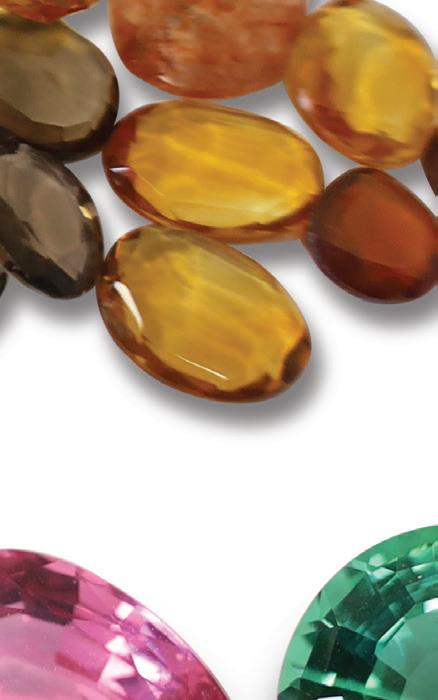
Today's collectors, especially Gen Z and millennials, favour self-expression over formality. While previous generations focused on the "Big Four" – diamond, sapphire, ruby, and emerald – modern buyers gravitate towards a broader spectrum: juicy spinels, pastel sapphires, neon tourmalines, and moody garnets.
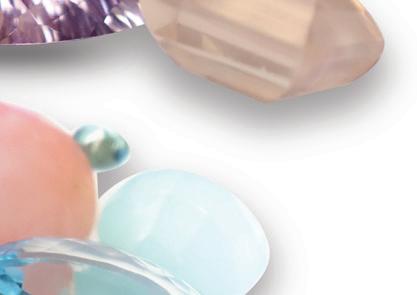
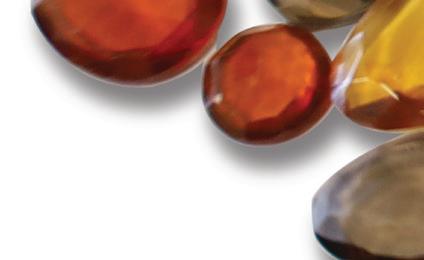
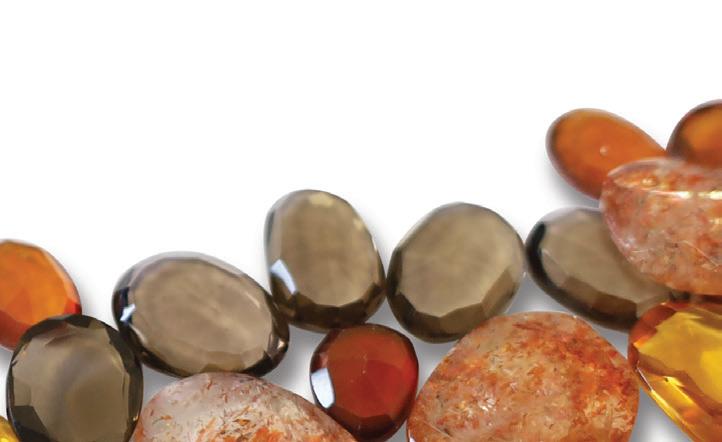
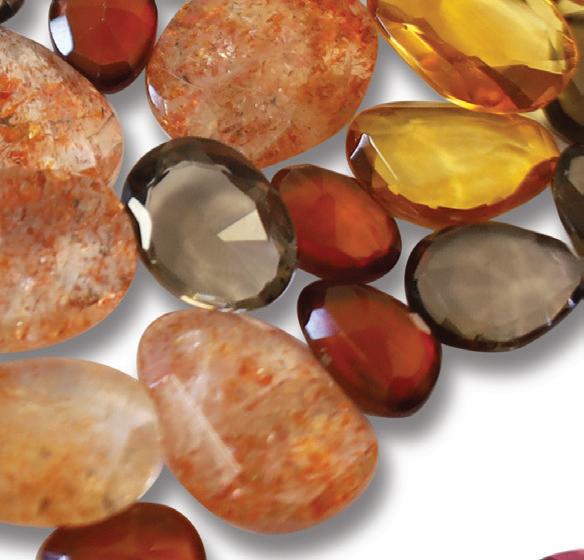
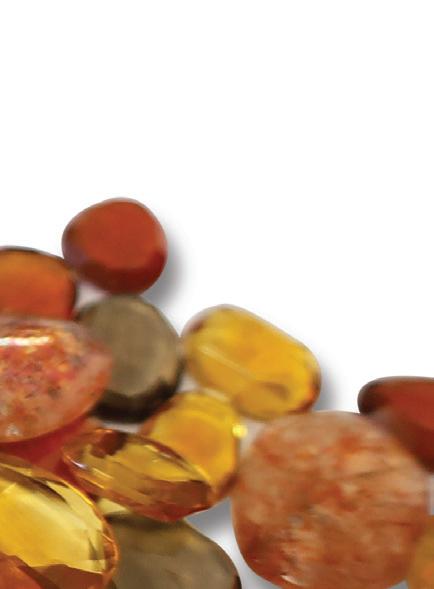
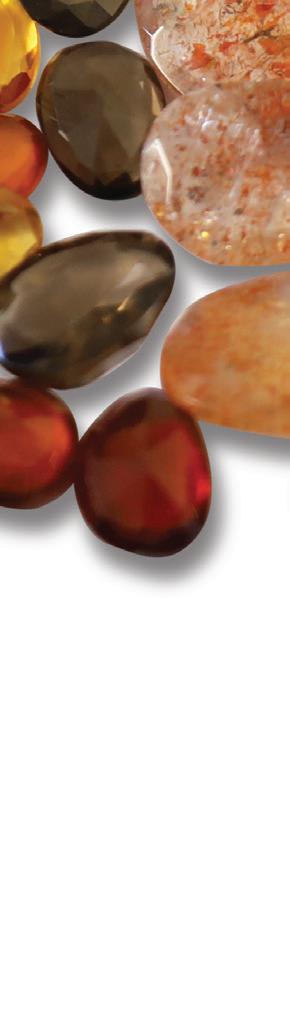
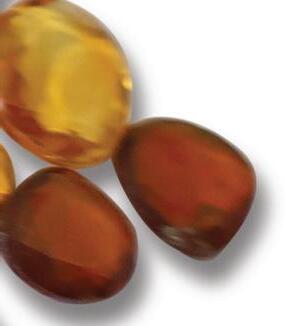
Designers are responding by creating compositions that resemble colour studies more than traditional fine jewellery. Picture suites inspired by spring, with shades of lilac, mint, and blush, or fiery autumnal blends of orange garnet, yellow sapphire, citrine, and smokey zircon. These designs feel personal and playful, focusing more on emotion than investment value.
Designing with Suites
At the heart of this movement is the gemstone suite: carefully matched sets of stones aligned in tone, saturation, and scale. Like a painter blending pigments, jewellers now design with colour gradation and balance in mind.
Textural Palettes: The Rise of Contrast
From ombré eternity bands to cluster rings that evoke impressionist paintings, suites offer deliberate, cohesive storytelling. For makers, sourcing pre-sorted suites streamlines production, ensures colour consistency, and enables scalable design without sacrificing artistry.
Colour isn’t the only element at play. Designers also experiment with texture, pairing transparent and opaque stones to create rich visual contrast.
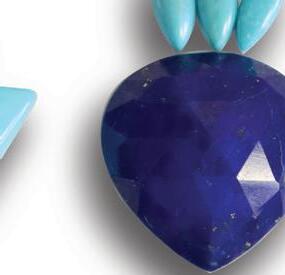
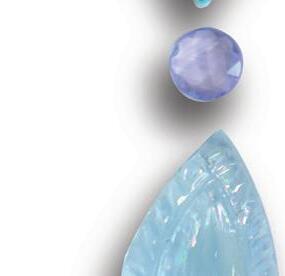
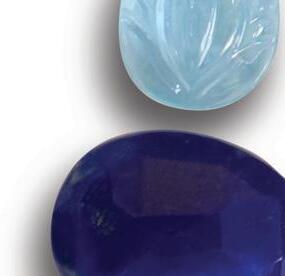
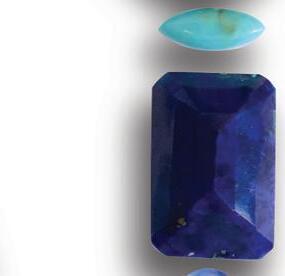
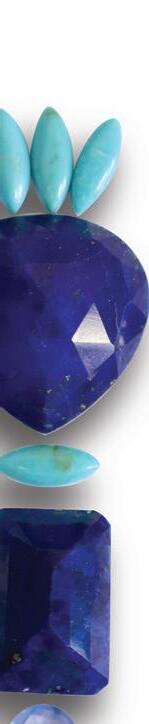
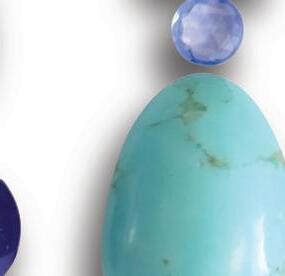
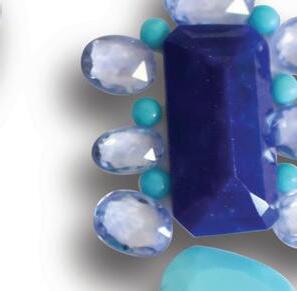
Imagine lapis lazuli layered with aquamarine or turquoise combined with soft-hued sapphires. These combinations introduce variety and a contemporary edge, particularly in bohemian luxury or artisanal fine jewellery, where tradition meets experimentation.
“At the heart of this movement is the gemstone suite: carefully matched sets of stones aligned in tone, saturation and scale. Like a painter blending pigments, jewellers now design with colour gradation and balance in mind.”
A Palette-First Future
“Gemstones will always hold their magic, individuality and allure,” she concludes. “But the future of design lies not in spotlighting a single stone, but in orchestrating a symphony of colours.”
By embracing palettes, designers unlock a powerful toolkit –one that transcends tradition, sparks creativity, and transforms jewellery into wearable art, an intimate reflection of style, story and self.
As independent jewellers navigate a market shaped by shifting consumer habits, digital disruption and global competition, strategic marketing has never been more critical. The following practical guide aims to help independent jewellery retailers stand out, build loyal customer bases and increase sales.
1. Know your customer: invest in localised market research
Understanding the demographics, preferences and purchasing behaviours of your local market is key. While national trends matter, local data – such as which product categories perform best, what price points are preferred and peak purchasing seasons – will drive more accurate stock selection and promotional targeting.
Tip: Use in-store surveys, social media polls or POS data to gather insights. Tools like Google Trends and Meta’s Ad Manager can also offer regional insights.
In a rapidly evolving market, strategic marketing is vital for independent jewellers to stand out and thrive. The following practical tips will help attract loyal customers and boost both in-store and online sales
Top marketing tips for independent jewellers
2. Craft a strong brand identity
A well-defined brand identity builds trust and communicates your unique value proposition. From your store design and packaging to your logo and tone of writing on social media, every touchpoint should tell a cohesive brand story. Independent jewellers often have rich heritage and personal stories. Leverage these to connect emotionally with customers.
Tip: Create a brand guide to ensure consistency across digital and physical platforms. Consider hiring a local brand consultant, if needed.
3. Prioritise omnichannel marketing
Today’s consumers move seamlessly between on- and offline shopping. Ensure your brand presence is equally strong across all channels: bricks-and-mortar, website, social media and third-party platforms such as Google Business.
Essentials:
• A responsive, well-designed website with e-commerce capabilities.
• Active and visually curated Instagram and Facebook pages.
• Integration of in-store promotions with online campaigns.
Tip: Consider tools like Shopify, Wix or WordPress for manageable e-commerce solutions.
4. Harness the power of e-mail marketing
Despite the rise of social media, e-mail remains one of the highestconverting marketing channels. Regular newsletters featuring new arrivals, exclusive offers, care tips and behind-the-scenes content help to build engagement and repeat visits.
Tip: Segment your mailing list (eg VIP customers, occasional buyers and bridal clients) and tailor your content accordingly.
5. Use story-telling to drive sales Jewellery is emotional. Telling stories about craftsmanship, the inspiration behind a design or the customer who wore your piece to an event celebrating a life milestone adds perceived value and creates memorable connections.
Tip: Feature customer testimonials or “real stories” on social media and in-store displays. Always obtain permission to do so and ensure that customers’ privacy is respected.
6. Invest in local SEO and Google Business
When customers search for “jeweller near me” or “engagement rings”, your business must appear. Local search engine optimisation ensures visibility.
Action points:
• Claim and optimise your Google Business profile.
• Encourage satisfied clients to leave reviews.
• Use location-based keywords on your website and social posts.
7. Collaborate with local businesses and infl uencers Partnerships can extend your reach. Consider collaborations with florists, wedding planners, fashion boutiques or local influencers to cross-promote services or host co-branded events.
Tip: Choose partners whose values and audiences align with yours. Micro-influencers (those with fewer than 10 000 followers) often have more engaged, niche audiences.
8. Run in-store events to build community Events are a powerful tool to increase foot traffic and build brand loyalty. Whether it is a private viewing, a jewellery care workshop or a trunk show with a designer, events create exclusivity and excitement.
Tip: Promote events via e-mail, social media and in-store fl yers. Always capture photos and video for future marketing content.
9. Track your return on investment and adjust regularly Every marketing activity should be tracked. Use analytic tools (Google Analytics, social media insights and POS data) to monitor what is working. Focus your resources on high-performing channels and be prepared to pivot if something is not delivering returns.
Tip: Set quarterly marketing goals and review your brand’s performance regularly with your team.
10. Off er exceptional after-sales service
Marketing does not stop with a sale. A follow-up message, complimentary cleaning or loyalty reward can turn a one-time customer into a lifelong ambassador.
Tip: Train staff to log client milestones (eg birthdays and anniversaries) and follow up with personalised messages or offers.
In a rapidly evolving marketplace, independent jewellers who invest in smart, targeted marketing are best positioned to thrive. By blending tradition with innovation and local relevance with digital reach, your business can build lasting customer relationships and achieve sustainable growth.
Did you know?
In 19th-century jewellery, moustache cups, designed to protect gentlemen's moustaches from hot beverages, were a practical accessory.
In ancient Rome, a bride-tobe would receive two rings: a gold one to wear in public and an iron one for when she was at home attending to household duties. The iron ring was meant to symbolise her bond to the house and her duties within it.
Gold is infinitely recyclable. Unlike many other materials, it does not lose any of its quality or properties when it is melted down and re-used.
Once sorted by initial characteristics, diamonds are often sorted again – and again – into thousands of micro-categories. For instance, a "sawable" diamond of a certain size and clarity will be further sorted into categories based on its exact shape and the precise location of its inclusions. The number of sorting categories can exceed 12 000 in a single facility.
The darkest material in the world, Vantablack, has been used on watch faces by companies like Moser & Cie. While not a gemstone, it is a material that absorbs 99,965% of light, creating a void-like appearance that makes the watch hands look as if they are fl oating in space.
Following the execution of King Charles I in 1649, Oliver Cromwell ordered the destruction of the Royal regalia, as it was considered a symbol of the "detestable rule of kings". The jewels were sold and the gold was melted down. The current collection of Crown Jewels was almost entirely remade for the coronation of Charles II in 1661, with only the 12th-century Coronation Spoon surviving from the original set.
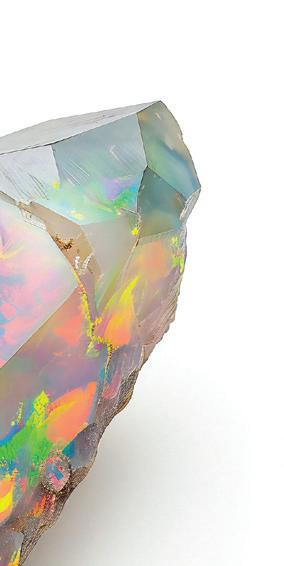
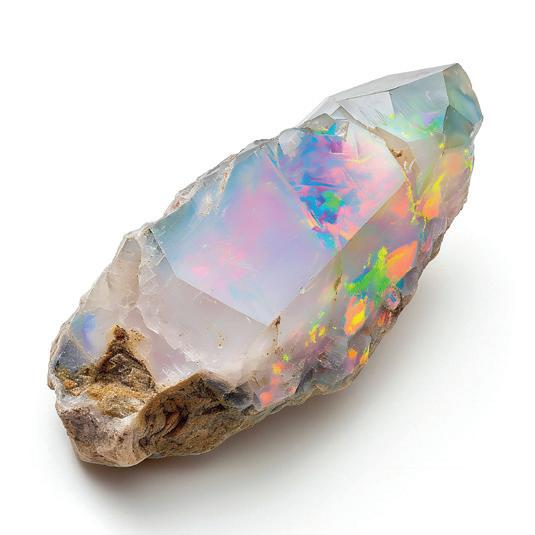
In 2008, NASA's Mars Reconnaissance Orbiter discovered deposits of opal on the planet. This was a signifi cant finding, as opal is a hydrated silica mineral. The discovery is one of the strongest pieces of evidence that water once existed on Mars for an extended period, which in turn indicates the possibility of ancient life.
GEMS & GEMOLOGY GEMS & GEMOLOGY
Glowing gems: fluorescence and phosphorescence of diamonds, colored stones, and pearls
Ulrika F.S. D’Haenens-Johansson, Sally Eaton-Magaña, W.Henry Towbin, and Elina Myagkaya
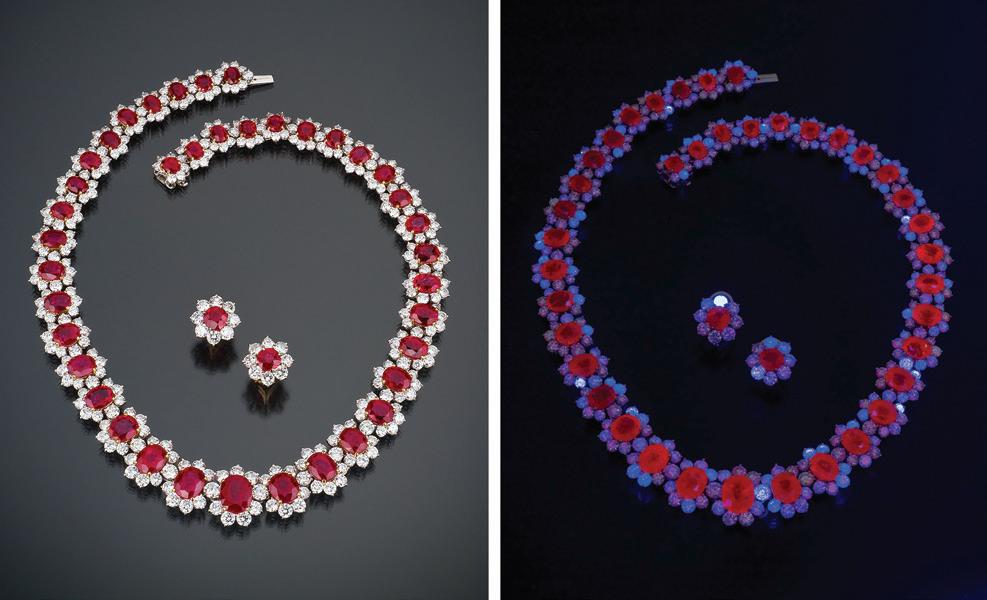
The use of photoluminescence imaging for gemstone characterization is reviewed, considering both fluorescence and its time-delayed counterpart, phosphorescence. Luminescence results from the excitation of atomic impurities and defects by an external source. Fluorescence can be excited by ultraviolet, visible, or infrared light, or even x-rays. Fluorescence to long-wave UV light is a characteristic included in diamond grading reports issued by major gemological laboratories. This article provides a comprehensive overview of the principles, mechanisms, and characteristics of luminescence that create the impressive and memorable glow of gemstones. Although diamond is the focus, a variety of colored stones and pearls are reviewed as well. This article is intended to foster a deeper appreciation of the complexity necessary to understand these natural wonders. Have you ever wondered why certain materials appear to glow from within when exposed to ultraviolet light? Luminescence, the emission of energy as light following the absorption of applied energy, is a fascinating and often beautiful property of many minerals and gemstones (figure 1). Luminescence phenomena can be classified according to the excitation source, such as: incident light or photons (photoluminescence, PL), an electron beam (cathodoluminescence), heat (thermoluminescence), electric currents (electroluminescence), and friction (triboluminescence). Luminescence signals can be detected through visual inspection, camera imaging, or spectroscopic means. This review will focus on photoluminescence, further separated into fluorescence or phosphorescence (within gemology defined as during or following excitation, respectively), as well as observations and imaging as routes
and the expected mineralogy and phase changes within slab rocks. Overlaying the slab geotherms onto phase diagrams helps to illustrate where water-bearing phases break down and release fl uid, such as the relatively well-accepted loss of most water from warm slabs at relatively shallow depths (<200 km). This is the activity that generates melt and fuels arc volcanoes such as those of the Pacifi c Ring of Fire. Cold slabs, however, can partially bypass this shallow dewatering process and transport a budget of carbonate and water to depths beyond 300 km, where its later release can cause deep-focus earthquakes (figure 3).
The cold slabs can be thought of as having a carbonated crust component and a hydrated/serpentinized mantle peridotite component that lies shielded beneath the crust, toward the interior of the slab. The deep release of carbonatitic melt and hydrous fl uid from each component, respectively, is shown in the two depth profiles in figure 3. The carbonated crust (mid-ocean ridge basalt, or MORB) of the slab surface will intersect a deep depression in its solidus, the curve describing the beginning of melting, meaning it exceeds the melting temperature. Beyond this point, carbonate melting (red arrows) is expected to occur within the top/crustal portion of the slab.
For hydrated/serpentinized mantle peridotite inside the slab, its stability also depends on temperature. If it remains cool, the serpentine can metamorphose into higher-pressure water-
to explore luminescent defects in gem materials. The luminescence energies or wavelengths (which are inversely proportional to one another) of a suitably excited gemstone can reveal a wealth of information related to its chemical and structural identity and purity. Additionally, the spatial distribution of luminescence features can elucidate a gem’s unique growth and potential treatment history. Although applications for colored stones and pearls will be discussed, diamond will be the primary example presented. The detailed multidisciplinary study of diamond’s luminescence has captivated gemologists, geologists, and physicists for centuries since Robert Boyle’s first reported observation in 1664 (Boyle, 1664).
bearing minerals called dense hydrous magnesium silicates (DHMS) rather than breaking down. DHMS phases are a good vehicle for transporting water, with some carrying as much as 10% or more water by weight. The geotherm for the interior of cold slabs remains in the DHMS stability fi eld far beyond a depth of 300 km (far right in figure 3). The slab in figure 3 is shown defl ecting as it reaches the top of the lower mantle (at 660 km), where there is a change in mantle density and deformability. As the slab stalls and warms up, DHMS phases break down to form minerals that carry much less water, thereby causing water release (blue arrows in figure 3). These are the mechanisms proposed to trigger not only deep-focus earthquakes but also super-deep diamond growth (Shirey et al., 2021).
Principles of luminescence
A deeper understanding and appreciation of luminescence requires the consideration of the electronic states of the species within a material being excited (e.g., a structural defect or impurity) and where they lie relative to the electronic band structure of the crystal. The electronic band structure of a solid describes the energy ranges or levels that its electrons may have according to the principles of quantum mechanics. This model lays the foundation for explaining many of the electronic and optical properties of insulating and semiconducting materials such as gemstones.
Inclusions in the smaller, lower-quality varieties of sublithospheric diamonds often show evidence of growth from carbonatitic melts derived from slabs (Walter et al., 2008), but hydrous/aqueous fl uids have also been implicated for some samples (Wirth et al., 2007; Pearson et al., 2014; Palot et al., 2016). Serpentinite in subducting slabs can be relatively enriched in boron, meaning that the eventual breakdown of hydrous minerals from serpentinized peridotite can release boron-bearing hydrous fl uid, which has been linked with the formation of type IIb (boron-bearing) diamonds (Smith et al., 2018). Figure 4 shows a calcium silicate (breyite) inclusion with methane and hydrogen in a type IIb diamond. The original mineral inclusion may have been relatively hydrogen-rich
kimberlite eruption
Low-quality, non-gem sublithospheric diamonds
Lithospheric diamonds
1. Burmese ruby and diamond necklace and earrings under daylightequivalent (left) and long-wave ultraviolet (right, ~365 nm) illumination, revealing an alluring fluorescence response. Several of the diamonds show blue fluorescence attributed to the N3 (N3V0) defect, whereas trivalent chromium ions (Cr3+) produce red fluorescence in the rubies. Intense red fluorescence is particularly common in Burmese rubies, though not exclusive to them (Webster, 1975; Fritsch and Waychunas, 1994). Courtesy of a private collector and Mona Lee Nesseth, Custom Estate Jewels. Photos by Robert Weldon.
Diamond, for instance, consists of carbon atoms in a tetrahedral configuration, with each atom covalently bonded to four neighboring atoms. The interaction between the carbon atoms results in diamond’s characteristic electronic band structure, illustrated in figure 2. The outermost electrons of the carbon atoms that are involved in the chemical bonding occupy the valence
Oceaniclithosphere
In Brief
• Ultraviolet light can excite fluorescence and phosphorescence in many gems, providing insights into the material’s chemical and structural identity.
Carbonated slab melting
Hydrous uid
• The luminescence response depends on the excitation wavelength. Deep-UV illumination (<225 nm) will induce fluorescence from practically all diamonds, even if inert to long- or short-wave UV.
• The luminescence colors observed depend on the impurity and structural defect structures present in the crystal lattice.
Figure 3. Mantle cross section showing a relatively cool subducting slab, with an inset histogram of earthquake frequency (from figure 1). Profiles on the right show the slab surface and interior temperature during subduction. Where the slab surface temperature intersects the solidus of carbonated mid-ocean ridge basalt (MORB), partial melting may occur (red arrows). At the far right, a cold slab interior remains within the dense hydrous magnesium silicates (DHMS) stability field until the slab stalls and warms up, causing the breakdown of these hydrous phases and the release of hydrous fluid (blue arrows). Large white and smaller brown diamond symbols signify the growth of high-quality gem diamonds (CLIPPIR and type IIb) and low-quality, generally non-gem sublithospheric diamonds, respectively. Poorly understood mechanisms transport some diamonds upward where they can be swept up in kimberlite eruptions and mixed with common lithospheric diamonds (small black diamond symbols). Modified from Smith and Nestola (2021) with carbonated MORB solidus from Thomson et al. (2016b) and DHMS stability field from Harte (2010).
• The spatial distribution of luminescence features can reveal whether a gem is natural or laboratory-grown, and may also indicate treatment, coating, dyeing, and fracture filling.
Figure
Conduction band (empty)
and the expected mineralogy and phase changes within slab rocks. Overlaying the slab geotherms onto phase diagrams helps to illustrate where water-bearing phases break down and release fl uid, such as the relatively well-accepted loss of most water from warm slabs at relatively shallow depths (<200 km). This is the activity that generates melt and fuels arc volcanoes such as those of the Pacifi c Ring of Fire. Cold slabs, however, can partially bypass this shallow dewatering process and transport a budget of carbonate and water to depths beyond 300 km, where its later release can cause deep-focus earthquakes (figure 3).
Band gap, Eg
Valence band ( lled)
Figure 2. The filled valence band and empty conduction band in a semiconductor and insulator are separated by the band gap energy (Eg). Intrinsic luminescence can occur when incident photons (light) or electrons of energies greater than the band gap excite valence electrons (e–) into the conduction band, leaving behind holes (h+). In the absence of any defects, the electrons and holes may recombine, emitting intrinsic luminescence. Defects introduce energy levels within the band gap that can trap the electrons, resulting in extrinsic emission. Each defect has its own characteristic energy level structure that can also lead to absorption and emission processes at lower excitation energies. Nonradiative relaxation processes can also occur, producing vibronic structure in both the absorption and emission spectra (e.g., figure 3). Absorption
The cold slabs can be thought of as having a carbonated crust component and a hydrated/serpentinized mantle peridotite component that lies shielded beneath the crust, toward the interior of the slab. The deep release of carbonatitic melt and hydrous fl uid from each component, respectively, is shown in the two depth profiles in figure 3. The carbonated crust (mid-ocean ridge basalt, or MORB) of the slab surface will intersect a deep depression in its solidus, the curve describing the beginning of melting, meaning it exceeds the melting temperature. Beyond this point, carbonate melting (red arrows) is expected to occur within the top/crustal portion of the slab.
For hydrated/serpentinized mantle peridotite inside the slab, its stability also depends on temperature. If it remains cool, the serpentine can metamorphose into higher-pressure water-
band, which is separated from the empty, electronically allowed conduction band by the forbidden band gap, with energy Eg. Diamond is classified as either an insulator or a wide-band gap semiconductor with an indirect band gap energy Eg ~5.49 eV (Clark et al., 1964)—practically too wide to conduct through thermal energy alone. However, if an electron in a perfect defect-free diamond is exposed to light with energy >Eg, the electron-pair bonds can be successfully broken and the electron can be excited into the conduction band, resulting in intrinsic edge absorption (Collins, 1992, 1993; Green et al., 2022). The excited electron leaves behind a hole in the valence band, conceptually a positively charged electron void. Together, the electron-hole pair is known as an exciton and can move through the crystal as a unit. As the electron deexcites back to the valence band, it releases energy in the form of a photon—i.e., creating luminescence and recombining with the hole. Since diamond is an indirect semiconductor, the excitation of electrons into the lowest energy level of the conduction band also involves lattice vibrational waves known as phonons, that are affected by the sample’s temperature (Collins et al., 1990a; Collins, 1993; Barjon, 2017). The loss of energy through nonradiative processes means that the emitted light has a lower energy E (i.e., longer wavelength λ) than the light that was originally absorbed. In this ideal, defect-free diamond, the resulting emitted light is its intrinsic edge emission (Collins, 1992, 1993; Barjon, 2017).
bearing minerals called dense hydrous magnesium silicates (DHMS) rather than breaking down. DHMS phases are a good vehicle for transporting water, with some carrying as much as 10% or more water by weight. The geotherm for the interior of cold slabs remains in the DHMS stability fi eld far beyond a depth of 300 km (far right in figure 3). The slab in figure 3 is shown defl ecting as it reaches the top of the lower mantle (at 660 km), where there is a change in mantle density and deformability. As the slab stalls and warms up, DHMS phases break down to form minerals that carry much less water, thereby causing water release (blue arrows in figure 3). These are the mechanisms proposed to trigger not only deep-focus earthquakes but also super-deep diamond growth (Shirey et al., 2021).
Inclusions in the smaller, lower-quality varieties of sublithospheric diamonds often show evidence of growth from carbonatitic melts derived from slabs (Walter et al., 2008), but hydrous/aqueous fl uids have also been implicated for some samples (Wirth et al., 2007; Pearson et al., 2014; Palot et al., 2016). Serpentinite in subducting slabs can be relatively enriched in boron, meaning that the eventual breakdown of hydrous minerals from serpentinized peridotite can release boron-bearing hydrous fl uid, which has been linked with the formation of type IIb (boron-bearing) diamonds (Smith et al., 2018). Figure 4 shows a calcium silicate (breyite) inclusion with methane and hydrogen in a type IIb diamond. The original mineral inclusion may have been relatively hydrogen-rich
Diamond-bearing kimberlite eruption
Continental lithosphere
Deep-focus earthquake activity
Oceaniclithosphere
Depth (km) 1000
Temp. (°C) Temp. (°C)
High-quality CLIPPIR and type IIb diamonds
Low-quality, non-gem sublithospheric diamonds
Lithospheric diamonds
Carbonated slab melting Hydrous uid
Crystalline gems can contain a variety of atomic-scale irregularities, scientifically termed point defects, in their crystal lattice due to their unique formation and postgrowth environmental histories. For diamond, these point defects include missing carbon atoms (vacancies), displaced atoms (interstitials), and impurity complexes based on elements including nitrogen, boron, nickel, silicon, and hydrogen. Extended defects such as dislocations also exist. Their presence disturbs the host lattice, introducing additional energy levels within the band gap (figure 2). Defects introduce alternative relaxation pathways following exposure to above band gap excitation energies, leading to extrinsic emission with characteristic energies that allow the defects to be identified. Furthermore, these defects open up the possibility that incident light with energies smaller than the band gap energy (longer wavelengths) may be absorbed and subsequently emitted if the photon energy lies within a defect’s absorption band. Thus, diamonds with defects can support vibronic transitions of electrons—combining vibrational and electronic interactions—between the valence band, defect energy levels, and the conduction band, leading to a rich combination of absorption and luminescence features (Collins, 1992, 1993).
Figure 3. Mantle cross section showing a relatively cool subducting slab, with an inset histogram of earthquake frequency (from figure 1). Profiles on the right show the slab surface and interior temperature during subduction. Where the slab surface temperature intersects the solidus of carbonated mid-ocean ridge basalt (MORB), partial melting may occur (red arrows). At the far right, a cold slab interior remains within the dense hydrous magnesium silicates (DHMS) stability field until the slab stalls and warms up, causing the breakdown of these hydrous phases and the release of hydrous fluid (blue arrows). Large white and smaller brown diamond symbols signify the growth of high-quality gem diamonds (CLIPPIR and type IIb) and low-quality, generally non-gem sublithospheric diamonds, respectively. Poorly understood mechanisms transport some diamonds upward where they can be swept up in kimberlite eruptions and mixed with common lithospheric diamonds (small black diamond symbols). Modified from Smith and Nestola (2021) with carbonated MORB solidus from Thomson et al. (2016b) and DHMS stability field from Harte (2010).
Luminescence becomes significantly more interesting— and informative—if we move away from a perfect crystal.
In colored stones such as rubies, sapphires, and emeralds, it is the electrons in trace amounts of the metallic ions (e.g., Cr3+, V3+, and/or Mn3+/2+) or rare earth elements in the host lattice that are excited and subsequently luminesce (Fritsch and Waychunas, 1994; Ponahlo, 2000; Waychunas and Kempe, 2024). These are often called activators. In
Vibronic structure
and the expected mineralogy and phase changes within slab rocks. Overlaying the slab geotherms onto phase diagrams helps to illustrate where water-bearing phases break down and release fl uid, such as the relatively well-accepted loss of most water from warm slabs at relatively shallow depths (<200 km). This is the activity that generates melt and fuels arc volcanoes such as those of the Pacifi c Ring of Fire. Cold slabs, however, can partially bypass this shallow dewatering process and transport a budget of carbonate and water to depths beyond 300 km, where its later release can cause deep-focus earthquakes (figure 3).
Figure 3. The blue fluorescence commonly observed for natural diamonds (e.g., figure 1) is attributed to emission from the N3 defect (inset), consisting of three nitrogen atoms surrounding a vacancy, N3V0. Its characteristic spectrum has a zero-phonon line at 415 nm (arrow) and vibronic structure extending to longer wavelengths.
some cases, sensitizers or coactivators, such as Pb2+ for Mn2+, facilitate fluorescence by strongly absorbing the incident light and transferring the energy to the activator. Waychunas and Kempe (2024) present a detailed review of activators, sensitizers, and electronic defects and their roles in the luminescence of minerals.
The cold slabs can be thought of as having a carbonated crust component and a hydrated/serpentinized mantle peridotite component that lies shielded beneath the crust, toward the interior of the slab. The deep release of carbonatitic melt and hydrous fl uid from each component, respectively, is shown in the two depth profiles in figure 3. The carbonated crust (mid-ocean ridge basalt, or MORB) of the slab surface will intersect a deep depression in its solidus, the curve describing the beginning of melting, meaning it exceeds the melting temperature. Beyond this point, carbonate melting (red arrows) is expected to occur within the top/crustal portion of the slab.
For hydrated/serpentinized mantle peridotite inside the slab, its stability also depends on temperature. If it remains cool, the serpentine can metamorphose into higher-pressure water-
The spectroscopic signatures of these luminescence features for diamond and other gemstones have been tabulated and described in several publications (e.g., Collins, 1982, 1992; Ponahlo, 2000; Zaitsev, 2001; Gaft and Panczer, 2013; Luo and Breeding, 2013; Shigley and Breeding, 2013; Gaft et al., 2015; Green et al., 2022; Zhang and Shen, 2023). Identifying the structural defects associated with these features is a non-trivial matter that combines rigorous experimental and theoretical work that may span several decades. Importantly, correlation does not imply causation. Somewhat confusingly, features may be referred to by their most recognizable energy or wavelength of absorption or emission (often the zerophonon line [ZPL] for vibronic defects), by a nickname, or by their structural identity (if determined). For example, blue luminescence from diamond is often associated with the N3 defect (as pictured in figure 1) (Clark et al., 1956). It is characterized by a ZPL at 415 nm (2.985 eV), with vibronic structure extending to higher or lower wavelengths for emission and absorption, respectively (e.g., Davies et al., 1978). During room temperature luminescence, the
vibronic structure of N3—peaking at ~450 nm—dominates (figure 3), resulting in visible blue emission. The N3 defect has been conclusively identified as three nitrogen atoms surrounding a vacancy, N3V0 (when considering diamond defects, “V” stands for a vacancy instead of the element vanadium) (Davies et al., 1978; Van Wyk and Loubser, 1993; Green et al., 2017).
bearing minerals called dense hydrous magnesium silicates (DHMS) rather than breaking down. DHMS phases are a good vehicle for transporting water, with some carrying as much as 10% or more water by weight. The geotherm for the interior of cold slabs remains in the DHMS stability fi eld far beyond a depth of 300 km (far right in figure 3). The slab in figure 3 is shown defl ecting as it reaches the top of the lower mantle (at 660 km), where there is a change in mantle density and deformability. As the slab stalls and warms up, DHMS phases break down to form minerals that carry much less water, thereby causing water release (blue arrows in figure 3). These are the mechanisms proposed to trigger not only deep-focus earthquakes but also super-deep diamond growth (Shirey et al., 2021).
When multiple luminescing defect species are present, they may be excited simultaneously, depending on the incident energy. For energies above the band gap (>Eg), emission at defects can be induced by the capture of the exciton. Spectroscopically, each defect’s contribution can be distinguished. Yet during visual or imaging-based observations, the overlapping luminescence features cannot be separated and instead the combined color is perceived. These contributions can be separated by optical filtering of the emission signal. Deliberate tuning of the excitation energy can also lead to selective excitation of defects, depending on their energy structure and absorption. If the incident energy of the photons (<Eg) matches the absorption spectrum of one or more defects, electron excitation may occur at those defects, followed by emission. If the energy does not coincide with the absorption of one or more of the defect species, those defects will remain inert and the overall luminescence response will instead be based on that of the other defects present.
Inclusions in the smaller, lower-quality varieties of sublithospheric diamonds often show evidence of growth from carbonatitic melts derived from slabs (Walter et al., 2008), but hydrous/aqueous fl uids have also been implicated for some samples (Wirth et al., 2007; Pearson et al., 2014; Palot et al., 2016). Serpentinite in subducting slabs can be relatively enriched in boron, meaning that the eventual breakdown of hydrous minerals from serpentinized peridotite can release boron-bearing hydrous fl uid, which has been linked with the formation of type IIb (boron-bearing) diamonds (Smith et al., 2018). Figure 4 shows a calcium silicate (breyite) inclusion with methane and hydrogen in a type IIb diamond. The original mineral inclusion may have been relatively hydrogen-rich
Diamond-bearing kimberlite eruption
Continental lithosphere
Deep-focus earthquake activity
High-quality CLIPPIR and type IIb diamonds
Low-quality, non-gem sublithospheric diamonds
Lithospheric diamonds
Oceaniclithosphere
MORB
of
Carbonated slab melting Hydrous uid
Whereas the absorption of light by a defect is proportional to its concentration, the potential presence of other nonradiative relaxation pathways means that luminescence is only semi-quantitative. A sufficient concentration of the defect must be present for significant absorption of the incident radiation, yet the subsequent emission may be weak if the energy is instead transferred nonradiatively to another defect, effectively quenching the defect’s luminescence. For instance, the luminescence of N3 (N3V0), H3 (N2V0), and GR1 (V0) defects in diamond can be quenched by A-centers (nitrogen pairs) (Davies and Crossfield, 1973; Crossfield et al., 1974; Thomaz and Davies, 1978; Davies et al., 1987), while the transition metal ions Fe+3, Fe+2, Co+2, and Ni+2 are common quenchers in colored stones (Ponahlo, 2000; Fritsch and Waychunas, 1994; Yu and Clarke, 2002; Waychunas, 2014; Waychunas and Kempe, 2024). Other forms of quenching are concentration quenching, where high concentrations of activators in colored stones result in the fluorescence being absorbed by neighboring ions of the same species, and thermal quenching, where a temperature increase results in increasing lattice vibrations that carry off the excitation energy (Fritsch and Waychunas, 1994).
Breakdown of hydrous phases
Figure 3. Mantle cross section showing a relatively cool subducting slab, with an inset histogram of earthquake frequency (from figure 1). Profiles on the right show the slab surface and interior temperature during subduction. Where the slab surface temperature intersects the solidus of carbonated mid-ocean ridge basalt (MORB), partial melting may occur (red arrows). At the far right, a cold slab interior remains within the dense hydrous magnesium silicates (DHMS) stability field until the slab stalls and warms up, causing the breakdown of these hydrous phases and the release of hydrous fluid (blue arrows). Large white and smaller brown diamond symbols signify the growth of high-quality gem diamonds (CLIPPIR and type IIb) and low-quality, generally non-gem sublithospheric diamonds, respectively. Poorly understood mechanisms transport some diamonds upward where they can be swept up in kimberlite eruptions and mixed with common lithospheric diamonds (small black diamond symbols). Modified from Smith and Nestola (2021) with carbonated MORB solidus from Thomson et al. (2016b) and DHMS stability field from Harte (2010).
Evolution of fluorescence and phosphorescence observation methods
In 1852, the Irish physicist George Stokes created the term “fluorescence” to refer to the visible light reaction seen in objects when illuminated by ultraviolet light. In his magnum opus (Stokes, 1852), he added a footnote: “I am almost inclined to coin a word and call the appearance fluorescence, from fluor-spar [fluorite], as the analogous term opalescence is derived from the name of a mineral.”
and the expected mineralogy and phase changes within slab rocks. Overlaying the slab geotherms onto phase diagrams helps to illustrate where water-bearing phases break down and release fl uid, such as the relatively well-accepted loss of most water from warm slabs at relatively shallow depths (<200 km). This is the activity that generates melt and fuels arc volcanoes such as those of the Pacifi c Ring of Fire. Cold slabs, however, can partially bypass this shallow dewatering process and transport a budget of carbonate and water to depths beyond 300 km, where its later release can cause deep-focus earthquakes (figure 3).
The excitation ranges associated with the term have expanded over time to encompass short-lived luminescence excited by electromagnetic radiation from x-rays, ultraviolet, visible, and infrared sources. This feature is commonly observed in gemstones and minerals, and its measurement has become standard practice in gemology.
The cold slabs can be thought of as having a carbonated crust component and a hydrated/serpentinized mantle peridotite component that lies shielded beneath the crust, toward the interior of the slab. The deep release of carbonatitic melt and hydrous fl uid from each component, respectively, is shown in the two depth profiles in figure 3. The carbonated crust (mid-ocean ridge basalt, or MORB) of the slab surface will intersect a deep depression in its solidus, the curve describing the beginning of melting, meaning it exceeds the melting temperature. Beyond this point, carbonate melting (red arrows) is expected to occur within the top/crustal portion of the slab.
For hydrated/serpentinized mantle peridotite inside the slab, its stability also depends on temperature. If it remains cool, the serpentine can metamorphose into higher-pressure water-
Gemologists typically observe fluorescence using longwave (defined as 365 nm emission) and shortwave (254 nm) UV excitations, based on the filtered output from readily available and inexpensive mercury-vapor discharge lamps. Unfortunately, the bandpass filters in these portable lights deteriorate over time, allowing additional mercury emissions to slip through and leading to variability in the observed fluorescence (Williams, 2007; Pearson, 2011; Luo and Breeding, 2013). Filtering or monochromating broadband emission of a xenon arc lamp is also an option (e.g., Hainschwang et al., 2013). Currently, long- and short-wave UV light is frequently produced for fluorescence applications using LEDs, or light-emitting diodes (Luo and Breeding, 2013).
bearing minerals called dense hydrous magnesium silicates (DHMS) rather than breaking down. DHMS phases are a good vehicle for transporting water, with some carrying as much as 10% or more water by weight. The geotherm for the interior of cold slabs remains in the DHMS stability fi eld far beyond a depth of 300 km (far right in figure 3). The slab in figure 3 is shown defl ecting as it reaches the top of the lower mantle (at 660 km), where there is a change in mantle density and deformability. As the slab stalls and warms up, DHMS phases break down to form minerals that carry much less water, thereby causing water release (blue arrows in figure 3). These are the mechanisms proposed to trigger not only deep-focus earthquakes but also super-deep diamond growth (Shirey et al., 2021).
the spatial distribution of otherwise overlapping emissions. The DiamondView rapidly established itself as a popular tool for diamond identification, and images collected from it are frequently included in diamond studies. Deep-UV fluorescence imaging studies of other gemstone materials are limited, though this energy can effectively excite common fluorescence features and provide the magnification necessary to observe their distribution.
UV lamp output can significantly affect the observed fluorescence and phosphorescence color and intensities for gemstones. Pearson (2011) and Luo and Breeding (2013) present emission spectra for common UV light sources used by the jewelry industry and hobbyists. Observation, whether unaided or using a microscope, should include light filtration through appropriate engineering controls and/ or the use of UV goggles to avoid eye and skin damage. Color cameras can be used to safely capture and store fluorescence and phosphorescence images for subsequent analysis. Although most fluorescence testing in gemology today is still based on visual observation and imaging, technological developments and lower equipment costs have made fluorescence spectroscopy a much more widely used tool for rapid analysis (e.g., Hainschwang et al., 2013, 2024; Tsai and D’Haenens-Johansson, 2021; Zhang and Shen, 2023; Tsai et al., 2024).
Inclusions in the smaller, lower-quality varieties of sublithospheric diamonds often show evidence of growth from carbonatitic melts derived from slabs (Walter et al., 2008), but hydrous/aqueous fl uids have also been implicated for some samples (Wirth et al., 2007; Pearson et al., 2014; Palot et al., 2016). Serpentinite in subducting slabs can be relatively enriched in boron, meaning that the eventual breakdown of hydrous minerals from serpentinized peridotite can release boron-bearing hydrous fl uid, which has been linked with the formation of type IIb (boron-bearing) diamonds (Smith et al., 2018). Figure 4 shows a calcium silicate (breyite) inclusion with methane and hydrogen in a type IIb diamond. The original mineral inclusion may have been relatively hydrogen-rich
Diamond-bearing kimberlite eruption
Continental lithosphere
Depth (km)
Deep-focus earthquake activity
High-quality CLIPPIR and type IIb diamonds
Low-quality, non-gem sublithospheric diamonds
Lithospheric diamonds
In 1996, De Beers launched the DiamondView instrument, which illuminates samples using ultrashort wave or deep-UV illumination (λ < 225 nm, E > 5.51 eV) generated by filtering the output from a xenon flash lamp (Welbourn et al., 1996). Targeting diamond, this wavelength results in excitation with above band gap energy, inducing fluorescence from practically all diamonds, including those that are inert to longwave and short-wave UV. As diamond is strongly absorbing of light with E > Eg, the fluorescence is generated close to the sample surface, resulting in sharp patterns that can be used as evidence of the diamond’s identity (natural or laboratorygrown), as well as possible dissolution and treatment, as described later in this article. In a fully enclosed system, digital images of sample fluorescence and phosphorescence can be collected under either optical or digital magnification (original and current design, respectively). A selection of optical filters (blue = 390 nm band-pass, green = 475 nm long-pass, orange = 550 nm long-pass, and red = 725 nm long-pass) can be placed in the detection path to restrict the detected wavelengths, enabling more detailed inspection of
Oceaniclithosphere
There have been several compilations of fluorescence and phosphorescence observations across various gems (e.g., Kunz and Baskerville, 1903; De Ment, 1949; Webster, 1983; Fritsch and Waychunas, 1994; Hainschwang et al., 2024). These works established the definitions of fluorescence and phosphorescence still used by gemologists today. Namely, fluorescence is “luminescence lasting only during the direct influence of the exciting agent,” and phosphorescence is the “emission or propagation of ethereal stresses, which affect the optical centers, producing light, white or colored, which persists after the removal of the cause” (Kunz and Baskerville, 1903).
Fluorescence and phosphorescence observations of diamonds
Carbonated slab melting Hydrous uid
Short-wave and long-wave UV excited luminescence of diamonds.
Figure 3. Mantle cross section showing a relatively cool subducting slab, with an inset histogram of earthquake frequency (from figure 1). Profiles on the right show the slab surface and interior temperature during subduction. Where the slab surface temperature intersects the solidus of carbonated mid-ocean ridge basalt (MORB), partial melting may occur (red arrows). At the far right, a cold slab interior remains within the dense hydrous magnesium silicates (DHMS) stability field until the slab stalls and warms up, causing the breakdown of these hydrous phases and the release of hydrous fluid (blue arrows). Large white and smaller brown diamond symbols signify the growth of high-quality gem diamonds (CLIPPIR and type IIb) and low-quality, generally non-gem sublithospheric diamonds, respectively. Poorly understood mechanisms transport some diamonds upward where they can be swept up in kimberlite eruptions and mixed with common lithospheric diamonds (small black diamond symbols). Modified from Smith and Nestola (2021) with carbonated MORB solidus from Thomson et al. (2016b) and DHMS stability field from Harte (2010).
The luminescence of diamonds has long captured the interest of the scientific community and the jewelry industry. One of the first documented instances was by the famous Irish scientist Robert Boyle, who noted that a flash of light was released when a diamond broke, a phenomenon now known as triboluminescence (Boyle, 1664). In 1813, the English mineralogist John Mawe discussed the
and the expected mineralogy and phase changes within slab rocks. Overlaying the slab geotherms onto phase diagrams helps to illustrate where water-bearing phases break down and release fl uid, such as the relatively well-accepted loss of most water from warm slabs at relatively shallow depths (<200 km). This is the activity that generates melt and fuels arc volcanoes such as those of the Pacifi c Ring of Fire. Cold slabs, however, can partially bypass this shallow dewatering process and transport a budget of carbonate and water to depths beyond 300 km, where its later release can cause deep-focus earthquakes (figure 3).
The cold slabs can be thought of as having a carbonated crust component and a hydrated/serpentinized mantle peridotite component that lies shielded beneath the crust, toward the interior of the slab. The deep release of carbonatitic melt and hydrous fl uid from each component, respectively, is shown in the two depth profiles in figure 3. The carbonated crust (mid-ocean ridge basalt, or MORB) of the slab surface will intersect a deep depression in its solidus, the curve describing the beginning of melting, meaning it exceeds the melting temperature. Beyond this point, carbonate melting (red arrows) is expected to occur within the top/crustal portion of the slab.
bearing minerals called dense hydrous magnesium silicates (DHMS) rather than breaking down. DHMS phases are a good vehicle for transporting water, with some carrying as much as 10% or more water by weight. The geotherm for the interior of cold slabs remains in the DHMS stability fi eld far beyond a depth of 300 km (far right in figure 3). The slab in figure 3 is shown defl ecting as it reaches the top of the lower mantle (at 660 km), where there is a change in mantle density and deformability. As the slab stalls and warms up, DHMS phases break down to form minerals that carry much less water, thereby causing water release (blue arrows in figure 3). These are the mechanisms proposed to trigger not only deep-focus earthquakes but also super-deep diamond growth (Shirey et al., 2021).
Figure 4. Representative long-wave, short-wave, and deep-UV excited fluorescence and phosphorescence responses for D-to-Z color natural and laboratorygrown diamonds. Diamond origin details: blue-fluorescing natural (A), yellow- fluorescing natural (B), untreated CVD-grown (C), HPHT-annealed CVD-grown (D), and HPHT-grown (E). White light, long- and short-wave fluorescence, and phosphorescence images by Towfiq Ahmed. Deep-UV fluorescence and phosphorescence images by Ulrika F.S. D’Haenens-Johansson.
For hydrated/serpentinized mantle peridotite inside the slab, its stability also depends on temperature. If it remains cool, the serpentine can metamorphose into higher-pressure water-
luminescence of diamonds exposed to sunlight and also to electricity (electroluminescence) (Mawe, 1813). Since then, numerous publications have documented observations of fluorescence and, less commonly, phosphorescence in gem diamond (e.g., Anderson, 1943; Dyer and Matthews, 1958; Moses et al., 1997; Eaton-Magaña et al., 2007; Luo and Breeding, 2013; Breeding and Eaton-Magaña, 2019).
Inclusions in the smaller, lower-quality varieties of sublithospheric diamonds often show evidence of growth from carbonatitic melts derived from slabs (Walter et al., 2008), but hydrous/aqueous fl uids have also been implicated for some samples (Wirth et al., 2007; Pearson et al., 2014; Palot et al., 2016). Serpentinite in subducting slabs can be relatively enriched in boron, meaning that the eventual breakdown of hydrous minerals from serpentinized peridotite can release boron-bearing hydrous fl uid, which has been linked with the formation of type IIb (boron-bearing) diamonds (Smith et al., 2018). Figure 4 shows a calcium silicate (breyite) inclusion with methane and hydrogen in a type IIb diamond. The original mineral inclusion may have been relatively hydrogen-rich
Diamond-bearing kimberlite eruption
Continental lithosphere
Among natural colorless to faint yellow colored diamonds on the D-to-Z scale, approximately 35% fluoresce when exposed to long-wave UV light (Moses et al., 1997). While a rainbow of fluorescence colors are possible, the overwhelmingly most common color is blue (97%) due to emission by the N3 (N3V0) defect, as shown in figures 1, 3, and 4 (Moses et al., 1997; Luo and Breeding, 2013). Green fluorescence is usually caused by the H4 (ZPL at 496.2 nm, N4V2 0) or H3 (ZPL at 503.2 nm, N2V0) defects, but it can occasionally arise from the nickel-nitrogen-related S2 and S3 defects (ZPLs at 489.2 and 496.7 nm, respectively) (Clark et al., 1956; Collins, 1982, 1992; Eaton-Magaña et al., 2007; Yelisseyev and Kanda, 2007; Luo and Breeding, 2013). An overlapping combination of unidentified broad emission bands in the ~500–700 nm range are responsible for yellow to orange fluorescence (e.g., figure 4), most clearly detected in diamonds with 480 nm band absorption and
Deep-focus earthquake activity
High-quality CLIPPIR and type IIb diamonds
Low-quality, non-gem sublithospheric diamonds
Lithospheric diamonds
Oceaniclithosphere
in color-changing “chameleon” diamonds, though notably the fluorescence is not directly caused by the 480 nm band defect (Hainschwang et al., 2005; Eaton-Magaña et al., 2007; Fritsch et al., 2007; Luo and Breeding, 2013; Byrne et al., 2018; Lai et al., 2024). Finally, orange to red fluorescence can be produced by NV0/– defects (ZPLs at 575 and 637 nm, respectively) (Davies and Hamer, 1976; Collins, 1992; Eaton-Magaña et al., 2007; Luo and Breeding, 2013). This list is not exhaustive, and Shigley and Breeding (2013) provided a convenient diamond defect reference chart showing representative fluorescence images under longwave and deep-UV (DiamondView) excitations. For natural diamonds, the fluorescence response is generally stronger to long-wave compared to short-wave UV, though there are exceptions. The scientific definition of phosphorescence is complex, linked to the luminescence lifetime and the types of transitions that produce it (Nasdala and Fritsch, 2024). In practical terms, it is typically considered the emission of light after excitation is turned off (i.e., an “afterglow”). As a general guide, any emission lasting longer than 100 ns following excitation can be classified as phosphorescence.
Carbonated slab melting
Hydrous uid
Figure 3. Mantle cross section showing a relatively cool subducting slab, with an inset histogram of earthquake frequency (from figure 1). Profiles on the right show the slab surface and interior temperature during subduction. Where the slab surface temperature intersects the solidus of carbonated mid-ocean ridge basalt (MORB), partial melting may occur (red arrows). At the far right, a cold slab interior remains within the dense hydrous magnesium silicates (DHMS) stability field until the slab stalls and warms up, causing the breakdown of these hydrous phases and the release of hydrous fluid (blue arrows). Large white and smaller brown diamond symbols signify the growth of high-quality gem diamonds (CLIPPIR and type IIb) and low-quality, generally non-gem sublithospheric diamonds, respectively. Poorly understood mechanisms transport some diamonds upward where they can be swept up in kimberlite eruptions and mixed with common lithospheric diamonds (small black diamond symbols). Modified from Smith and Nestola (2021) with carbonated MORB solidus from Thomson et al. (2016b) and DHMS stability field from Harte (2010).
...to be continued in the November 2025 issue
Tools of the trade
In a dynamic jewellery landscape where precision, authenticity and presentation are everything, the right tools are no longer optional – they are essential. This month, we explore three core areas: magnification, diamond testing and tarnish prevention
See the finer details: magnification tools Whether it is a loupe, a microscope or a magnifier, the ability to see details clearly can make or break quality assurance. From examining stone settings and surface finishes to assessing polishing quality and checking plating consistency, magnification is critical across the board.
Retailers rely on these tools for clear customer demonstrations, while casting houses use them for quality control on everything from stone placement to surface texture. It is about delivering excellence and the right magnification tool ensures that nothing goes unseen.
Diamond testing: know what you are holding The surge in synthetic, lab-grown, heat-treated Moissanite and natural diamonds has blurred the lines and buyers, sellers and consumers are all feeling the uncertainty. A variety of diamond testers exist on the market, ranging from budget-friendly to top-end professional devices.
But how do you choose the right one? Consider:
• Who is using it: a jeweller, a buyer or a layperson?
• Volume: are you testing one stone or hundreds of them?
• What is being identified: origin, treatment or composition?
• Certification: does the tester come with trusted lab affiliations?
• Accuracy limits: colour, size and reporting capabilities.
• Can it produce a verifiable record (image, video or report)?
Anti-tarnish: protect your product, protect your profit Tarnish is more than a cosmetic issue – it is a cost. Hours spent cleaning, repolishing and relabelling can erode your profit margins. Whether your pieces are brass, copper, silver or plated, effective tarnish prevention starts with smart storage and handling solutions.
Anti-tarnish products include:
• Stri ps.
• Papers.
• Filters.
• Storage materials.
These protect your jewellery from environmental damage during storage, shipping or display. By integrating tarnish-prevention technology into your workflow, you are extending the life and lustre of your pieces and cutting down on labour and loss.
We thank Cape Tools & Jewellery Supplies for its ongoing assistance with the Tools of the Trade column. Cape Tools & Jewellery Supplies offers a curated range of testers for identifying and authenticating stones with confidence, as well as a full suite of anti-tarnish products.
Supporting growth: The 2026 JCSA membership initiative
A sponsorship opportunity for 2026 Jewellery Council memberships is now available to non-members and former members. This initiative is designed to broaden access to industry resources for businesses experiencing financial constraints
The Jewellery Council of SA (JCSA) is pleased to remind industry stakeholders of a unique opportunity for non-members and former members who may have faced financial challenges that hindered their continued affiliation. Thanks to the generous sponsorship of Johann Claassens of Inferno Gold, several fully sponsored memberships for the 2026 calendar year remain available and the application deadline has now been extended to 28 November 2025.
This initiative is designed to support businesses which are either unaffiliated with the council or who have had to cancel their membership due to financial pressure. By widening access to the JCSA’s extensive resources and support, the programme aims to help revitalise the sector by enabling broader participation in the council’s initiatives.
Claassens, a long-standing and active JCSA member, credits the council’s support for playing a pivotal role in navigating his own business challenges over the years. His sponsorship reflects a commitment to giving back and strengthening the sector through collaboration and access to shared resources.
As part of the initiative, Inferno Gold participated in the JCSA’s roadshows in Durban, Cape Town and Johannesburg
earlier this year, where the membership sponsorship programme was launched.
Interested businesses can e-mail Adri Viviers at the Jewellery Council at: adriv@jewellery.org.za for a short application questionnaire. This needs to be completed and submitted via e-mail to Lizelle Claassens at lizelle.claassens@ infernogold.co.za by 28 November 2025.
Membership of the JCSA provides significant advantages, including representation at national and international levels, access to legal and compliance updates, and networking and training opportunities, as well as increased visibility through inclusion in the council’s trusted professional directory.
In an increasingly competitive and regulated environment, these benefits are vital, particularly for small and medium-sized businesses seeking to ensure long-term sustainability.
The JCSA expresses its sincere gratitude to Claassens and Inferno Gold for their industry leadership and for investing in the collective success of the South African jewellery community.
Eligible businesses are encouraged to apply and take advantage of this meaningful opportunity and strengthen their position in the market.
Jenna Clifford’s vision lives on in "For Now and Always"
Jenna Clifford Designs presents For Now and Always, a poignant fine jewellery collection and one of the last shaped by the legendary founder herself. Infused with her signature elegance, strength and soul, the collection is a timeless tribute to her life, legacy and creative spirit
Jenduring
enna Cliff ord Designs has unveiled its latest fi ne jewellery collection, For Now and Always, a striking tribute to the life, legacy and creative vision of its founder, Jenna Cliff ord. As one of the fi nal collections personally shaped by Cliff ord before her passing in May this year, it holds deep emotional and artistic signifi cance, refl ecting her unwavering commitment to meaningful design and her enduring infl uence on the jewellery landscape.
be
Crafted with the elegance, strength and individuality which defi ned Cliff ord’s signature aesthetic, For Now and Always is more than a collection: it is a continuation of a philosophy rooted in personal story-telling, empowerment and timeless craftsmanship. Bold, yet refi ned, the pieces are designed to be lived in and loved, evolving with the wearer over time.
“This collection is incredibly special to us, not only because it’s one of the last collections my mom personally worked on, but because it represents her belief that jewellery should live with you, not sit in a box,” says Summer Clifford Kotzé, Head of Marketing & Creative at Jenna Clifford Designs. “It’s jewellery that you never want to take off and will always be treasured.”
Crafted
Each piece in the For Now and Always collection refl ects Cliff ord’s signature approach to jewellery: fusing emotion with artistry and blending bold design with practical versatility. Whether worn daily or reserved for extremely signifi cant occasions, these pieces are designed to move seamlessly with the modern woman, from a boardroom meeting to a special evening out.
The collection is also a nod to the brand’s commitment to local craftsmanship and sustainability. Every item is masterfully made in South Africa, preserving the brand’s legacy of supporting skilled artisans and honouring the stories embedded in each stone and setting.
This new chapter for Jenna Cliff ord Designs also marks a generational transition. The founder’s three daughters, Shayna, Chanelle and Summer, now serve on the board of directors,
continuing their mother’s work with the same creative spirit and commitment to excellence which established the brand over three decades ago.
Founded in 1992, Jenna Clifford Designs has long been synonymous with bespoke fine jewellery, story-telling and empowerment. Clifford’s work was never just about adornment: it was about connection, values and commemorating life’s most meaningful moments. Her designs became icons of individuality and love, sought after by clients both in SA and around the world.
While Cliff ord’s passing earlier this year marked the end of an extraordinary era, the release of this collection ensures that her legacy continues through every gemstone chosen, every design sketched and every story shared between a client and their jewellery.
For Now and Always is not only a tribute to the woman who built an iconic South African brand, but a celebration of her lifelong mission to uplift, connect and inspire through beauty and meaning.
“This collection is incredibly special to us, not only because it’s one of the last collections my mom personally worked on, but because it represents her belief that jewellery should live with you, not sit in a box.”
BORN IN AFRICA
A comprehensive directory featuring information and contact details of refining members and members of the Jewellery Manufacturers' Association of South Africa –proudly showcasing manufacturers committed to crafting quality jewellery locally.
ADELE'S MANUFACTURING JEWELLERS
Tel no: 082 595 3868
E-mail: adele@amj.co.za
AFRICAN TRADE BEADS
JEWELLERY COLLECTION
Tel no: 011 726 7643
E-mail: tamiko@zazenconsulting.com
AFROGEM
Tel no: 076 726 8491
E-mail: k ylegilson@mweb.co.za; jess@afrogem.co.za; info@afrogem.co.za; accounts@jppe.co.za; leighann@afrogem.co.za
All JCSA member details were correct at time of going to press. While every eff ort has been made to ensure the accuracy of contents, the Jewellery Council of South Africa cannot be held responsible for any omissions or errors; or any misfortune, injury, consequences or damages which may arise therefrom.
(PTY) Building 3, OR Tambo International Airport Special Economic Zone, Bonaero Drive, Bonaero Park, 1619 Tel: +27 87 654 2543 | Cell: +27 72 472 7170 / +27 66 488 2055 Email: info.za@ferrarigroup.net | Website: www.ferrarigroup.net
Brand supporters
GIA EDUCATION AND LABORATORY
AJANTA AFRIKA www.ajantaafrika.com gems@ajanta.co.za (021) 422-4677
Tee-Box Sponsors - a dedicated table at a sponsored hole to display banners, promotional materials and engage with players.
Sponsors will receive publicity on all promotional material and industry social media leading up to the Golf Day.
Sponsorship is an excellent opportunity to align your brand with the values of excellence, precision and prestige shared by the jewellery and golfing communities.
FRIDAY,28
NOVEMBER 2025
SPONSORSHIP OPPORTINUTIES
Premium Hole 1
WIN PRIZE
Premium Hole 10
Longest Drive -Holes 4 & 12
Longest Putt - Hole 5
Nearest to the Pin - Holes 8 & 15
Hole-in-One - Hole 17
R5,000
R5,000
R10,000
R5,000
R10,000
Auction prizes & prizes for the winning Four-Ball
RANDPARK GOLF CLUB
09h00
5 500 ncludes: Halfway House Voucher Golf Cart inner