NOVEMBER 2025
Celebrating 97 years in the industry
Winners shine under a new horizon at PlatAfrica
The hands shaping South Africa’s jewellery dynasty
Turning potential into craft
2025 Grand Prix d’Horlogerie De Genève finalists revealed

NOVEMBER 2025
Celebrating 97 years in the industry
Winners shine under a new horizon at PlatAfrica
The hands shaping South Africa’s jewellery dynasty
Turning potential into craft
2025 Grand Prix d’Horlogerie De Genève finalists revealed
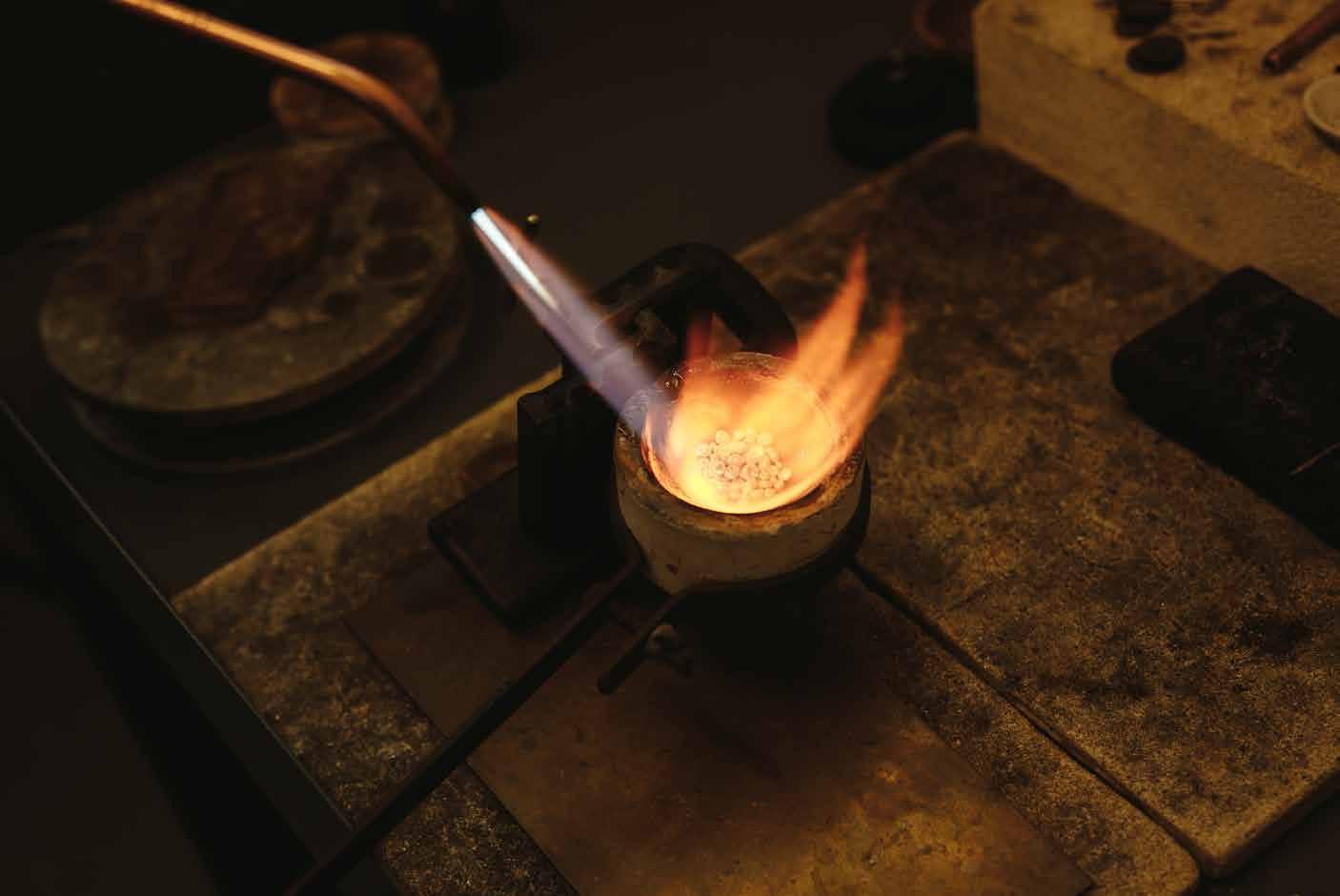

EASY / MEDIUM / HARD
R550.00 / R650.00 / R750.00
SCULPTING / CUSTOM / DESIGN CHANGE
R950.00 / RFQ / R150.00

GOLD & SILVER CASTINGS
925 | 9CT | 14CT | 18CT | 22CT
R25.00 PER GRAM
PLATINUM CASTINGS
PTAU | PTCU
R50.00 PER GRAM Finishing




R50.00 PER GRAM









6. 14. 18.
Lorna Lloyd, CEO of the Jewellery Council of SA (JCSA), shares the latest developments from the council’s office
• The De Beers Group launches Desert Diamonds Beacon
• Priceless jewels stolen in daring heist at Paris’s Louvre museum
• Gemstone knowledge proves a key sales driver in retail jewellery
• Petra Diamonds launches rights issue to raise US$25M

Hosted annually by Anglo American Platinum, Metal Concentrators (MetCon) and Platinum Guild International (PGI), PlatAfrica is SA’s premier platinum jewellery design and manufacturing competition
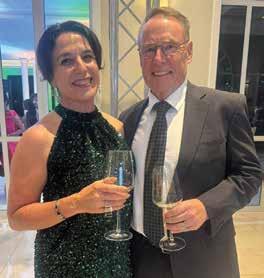
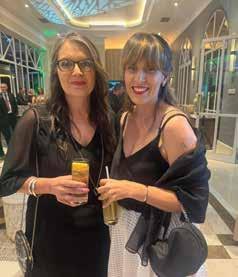
The industry came together in style on 24 October at the Four Seasons Hotel in Westcliff, Johannesburg, for the prestigious PlatAfrica Jewellery Competition Awards Ceremony


The global precious metals market is showing significant movement, underpinned by tightening supply, shifting industrial demand and changing investor sentiment
Dealers in high-value goods can mitigate the risks of criminal abuse by complying with the Financial Intelligence Centre Act
Beyond the beauty of its designs, freeRange JEWELS is also dedicated to developing the future of SA’s jewellery industry through active participation in the MQA internship programme
The hands shaping SA’s jewellery dynasty
Inferno Gold offers high-precision gold refining, recovery and trading services with a focus on sustainability
Glowing gems: fluorescence, phosphorescence of diamonds, coloured stones and pearls
FINALISTS REVEALED FOR THE 2025 GRAND PRIX D’HORLOGERIE DE GENÈVE
As the watch industry’s most prestigious awards event approaches, the spotlight falls on a diverse selection of nominees
A comprehensive directory featuring information and contact details of all members of the Jewellery Manufacturing Association of SA 22. 24. 28. 26. 31. 40. 43. 20.
Lorna Lloyd, CEO of the Jewellery Council of SA (JCSA), shares the latest developments from the council’s office
We are entering the final stretch of the year into the busiest season for many in our industry. The lead-up to Christmas presents a vital opportunity for jewellers across South Africa to showcase their creativity, craftsmanship and service excellence. I wish all our members a successful and rewarding trading season, filled with strong sales, satisfied clients and welldeserved recognition for the hard work you put in throughout the year.

While this season brings exciting opportunities, it also requires heightened awareness. As jewellers dealing in highvalue items, we must remain especially vigilant during this period of increased foot traffic and financial activity. Sadly, crime remains a reality in SA and we urge all members to prioritise safety. Please ensure that your security measures are up to date, staff are briefed on safety protocols and any suspicious activity is reported promptly. Your safety, and that of your teams and clients, is paramount. Very importantly, ensure sufficient CCTV coverage within the store. The entrance cameras should be at eye level and of good quality to generate clear, identifiable images.
The council is proud to report that Jewellex Africa 2025, the premier event on the industry calendar, was a resounding success. We extend our sincere thanks to the Jewellex Committee for their dedication and giving freely of their time, which made this event possible.
Highlights of the show included a fully booked Business Breakfast, generously sponsored by Rand Refinery, and the lively Rooftop Sundowners event, hosted by Cape Precious Metals (CPM), featuring live music and a relaxed evening of networking over canapés.
“The strength of the Jewellery Council lies in the active participation of its members.”
We are also grateful to all our other sponsors, including Metal Concentrators, Brinks, Precious Metals Tshwane, Unity Diamonds, Giftpak, Ungar Brothers and Bryte, whose generous support played a vital role in making the show the success it was.
While The Galleria proved to be a stunning and functional venue, we acknowledge concerns raised around its location. Despite the presence of comprehensive security measures, including armed and unarmed guards, as well as visible patrol vehicles, some exhibitors felt vulnerable.
In response, the Jewellex Committee is actively exploring alternative venues for future events, to identify a new home for Jewellex that prioritises both safety and accessibility, while meeting the needs of all exhibitors and buyers.
We look forward to building on this year’s momentum and will be announcing the official date for Jewellex Africa 2026 in the coming weeks.
(CGSO)
The council has addressed this important topic on several occasions and I would like to again reiterate its importance to our industry. The CGSO scheme is mandatory for all manufacturers, importers, distributors, wholesalers and retailers whose operations fall within the consumer goods and services supply chain.
As the official ombud scheme for the industry, the CGSO is responsible for resolving consumer complaints in line with the Consumer Protection Act (CPA) and the Industry Code of Conduct.
Participation in this scheme is compulsory and all qualifying businesses are required to register with it and contribute to its funding.
For further information, please visit the CGSO website at: www.cgso.org.za, or feel free to contact the council directly for assistance.
Following our meeting with SARS on 1 July, members were assured that the automatically triggered DRC audits would decrease and be replaced with a system of randomised audits.
To assess whether this change has been implemented in practice, the council conducted a quick poll across various industry WhatsApp groups. The results were as follows:
• Still receiving audits: 73%.
• No longer receiving regular audits: 27%.
While it is clear that a significant number of members are still experiencing regular audits, it is encouraging to note that some companies have reported a reduction in audit frequency, suggesting that changes may be gradually taking effect.
We will formally report these findings back to SARS and continue to advocate the full implementation of the promised shift away from automatic audits. Our aim remains to ensure a fair and reasonable approach that reduces the administrative burden on compliant businesses.
The Executive Committee believes it is important to remind the industry of key legal and monetary issues, particularly regarding the handling of South African legal tender coins, to avoid any unintentional violations.
While most professional coin dealers are familiar with the applicable regulations, individuals (including members of the public and some industry participants) may unknowingly present high-intrinsicvalue coins (such as pre-2000 R1 or R2 silver coins) for sale or melting, without being aware of the correct legal procedures. This has, in some cases, led to these coins entering the illicit or informal market.
The committee further agrees that there is a pressing need for a government-supported legal mechanism for the destruction or repurposing of legal tender coins, to ensure responsible disposal and prevent cross-border smelting or unauthorised trade. One suggestion raised was to introduce regulated processes, similar to models used in other sectors, that would allow coins to be valued at market-related prices while ensuring full compliance with the law.
Currently, the SA Reserve Bank (SARB) only redeems coins at face value, which renders the official buy-back process impractical for coins with high metal content. This has inadvertently encouraged grey-market activity. To address this gap, it was recommended that the industry petition for a legitimate, simplified and transparent process for managing such coins, with input from the SARB and the relevant regulatory bodies.
The council is in the process of drafting a guidance document for jewellers, refiners and coin dealers on the legal handling, trade and disposal of South African legal tender coins. We will also formally approach the SARB to propose a clearer, more practical framework for the processing and management of such coins.
In the meantime, we invite members to contribute their insights or concerns on this matter by e-mailing us at: admin@jewellery.org.za
Get involved. Stay connected. Grow together. The strength of JCSA lies in the active participation of its members. We encourage you to engage with our programmes, contribute to industry initiatives and take full advantage of the support available.
To explore upcoming opportunities, learn more about what we do or find out how we can assist your business:
Visit: www.jewellery.org.za
Tel: (011) 484-5528
E-mail: admin@jewellery.org.za
Together, we can continue to strengthen and grow the South African jewellery industry.
Editor: Adri Viviers Cell: 084-261-1805
E-mail: adriv@jewellery.org.za
Sales Representative and Administrative Manager: Thuli Majola Cell: 074-243-0703
E-mail: thulim@jewellery.org.za
SA Jewellery News is published by: Jewellery Council of South Africa
CEO: Lorna Lloyd Cell: 082-456-5558
E-mail: lornal@jewellery.org.za
Executive Assistant to CEO: Elsa da Silva Cell: 082-214-0028
E-mail: elsad@jewellery.org.za
The views expressed in this publication do not necessarily reflect those of the owners, affiliated organisations, members, the publisher, or its agents. While every effort has been made to ensure the accuracy of the content, neither the owners, affiliated organisations, the editor, nor the publisher can be held responsible for any errors, omissions, or any consequences arising therefrom. The same applies to all advertising. © 2025. All rights reserved. No part of this publication may be reproduced or transmitted in any form or by any means, electronic or mechanical, without prior written permission from the publisher.

As we approach the end of the year and prepare for the jewellery industry’s busiest season, we have a wonderful opportunity to pause and celebrate the exceptional talent flourishing right here in South Africa. This issue features some of the beautiful designs from the PlatAfrica 2025 jewellery design competition, an annual showcase that highlights the remarkable creativity, craftsmanship and innovation of our local designers and manufacturers. Congratulations to all the winners and finalists who have truly set a new standard of excellence and continue to shine on both the national and international stage.
Our industry is built on passion, skill and resilience, especially as we enter this demanding period. We know how important it is to stay informed and inspired, which is why SA Jewellery News is dedicated to delivering content that supports you every step of the way. From in-depth industry insights and news updates to stories that celebrate the people shaping our jewellery landscape, we hope to be a valuable resource for your business and creative journey.
As we look forward to a successful season ahead, we send our best wishes to everyone in the jewellery trade. May your craftsmanship continue to dazzle and your passion drive your success. Together, let us keep pushing the boundaries of what South African jewellery can achieve.
Report crime Incidents to the CGCSA. Robberies, break-ins, and thefts remain a serious concern in our industry. Jewellers and industry members are strongly encouraged to report any such incidents to the Consumer Goods Council of South Africa (CGCSA) via e-mail: pulengr@cgcsa.co.za / crime@cgcsa.co.za. Please share detailed information, such as date, time, location, SAPS case number and any available photos or video footage, which is used to support investigations and help secure successful convictions.
Happy reading!
Inferno Gold, formerly Piccolo Fine Designer Jewellery, has rebranded to include refining as part of its services to the industry. With years of expertise, the company now offers ethical, sustainable and reliable refining solutions, aiming to support jewellers and businesses with top-tier gold products. This transition is not just a business evolution, but also a rebrand that marks its commitment to excellence in both jewellery design and refining. For further information, contact Inferno Gold on tel: 083-396-6178 or visit: www.InfernoGold.co.za.


At MetCon, we’re proud to supply gold, silver, and platinum of the highest standard — metals refined with precision, responsibility, and a passion for perfection. As a Certified Member of the Responsible Jewellery Council (RJC) and holder of Chain of Custody (CoC) Certification, every gram we produce is traceable, ethical, and aligned with global best practices in responsible sourcing.
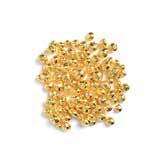
Gold – The Eternal Standard of Purity
MetCon’s gold stands as the benchmark of excellence refined to the highest levels of purity and verified for precision and consistency. When you order gold grain as a manufacturing jeweller, you receive the finest quality available: 999.9 parts per thousand of pure brilliance
But brilliance is not just about purity — it’s about performance. That’s why MetCon proudly offers Legor PreAlloys for gold , the Italian-engineered master alloys that set the global standard for reliability and refinement.
By sourcing both your fine gold and Legor Pre-Alloys from MetCon, you create the foundation of brilliance — the perfect synergy of purity and performance, all from one trusted source. Each batch is meticulously verified through X-Ray fluorescence and fire assay technology, ensuring flawless casting, consistent colour, and enduring value.
Silver – The Artisan’s Versatile Canvas
Every creation begins with 99.99% pure silver, refined to exceptional standards and responsibly sourced to uphold integrity at every stage. To bring out silver’s true potential, MetCon supplies Legor Pre-Alloys for silver — innovative
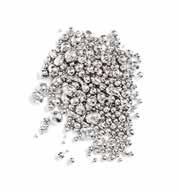
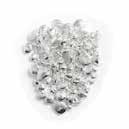
formulations designed to enhance workability, brightness, and tarnish resistance
When you combine MetCon’s fine silver with Legor’s silver pre-alloys , you’re not just creating jewellery — you’re crafting excellence. Together, they embody purity, precision, and performance , enabling your designs to shine with both artistry and endurance.
Platinum – Provenance, Precision, and Prestige
Refined to 99.98% purity and backed by our Platinum Provenance Certificate , MetCon’s platinum stands at the pinnacle of ethical luxury and technical mastery. Accredited by the Responsible Jewellery Council , it embodies trust, transparency, and the finest in South African craftsmanship.
MetCon’s Pt/Ru alloyed platinum delivers casting performance that sets new standards — combining superior flow, strength, and surface finish for impeccable results.
Our partnership with Valterra Platinum shines through in PlatAfrica , the continent’s flagship platinum design competition. Now in its 26th year, it celebrates innovation, creativity, and the brilliance of African design.
Refining Brilliance – From Metal to Masterpiece
At MetCon, we believe true wealth lies not just in metals, but in the stories they tell — of origin, of craft, and of enduring beauty.When you source your fine metals and Legor Pre-Alloys from MetCon, you establish the ultimate foundation of brilliance — a seamless link between purity, performance, and provenance
Together we’ll refine brilliance — from mine to masterpiece, and from your hands to your customer’s heart.
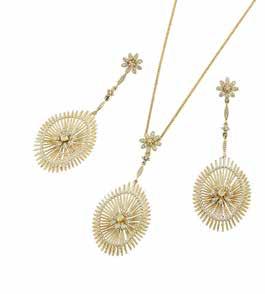

The De Beers Group has officially launched Desert Diamonds to consumers, marking its first new category “beacon” in over a decade and backed by its largest marketing investment in more than 10 years. De Beers beacons are jewellery concepts designed to celebrate natural diamonds and unite the industry around shared storytelling and category growth.
First previewed at the JCK Las Vegas Show, Desert Diamonds are inspired by the raw beauty of desert landscapes, many of which are home to natural diamond origins. The concept embraces a spectrum of earthy tones, from warm whites to amber hues, using these colours as markers of authenticity and individuality.
The launch aligns with shifting consumer preferences towards jewellery that reflects personal meaning, natural character and uniqueness. De Beers’ research revealed strong appeal for these tones, with over 90% of consumers indicating a desire to own
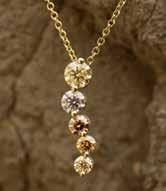
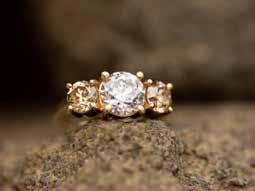
or consider purchasing a Desert Diamond.
Desert Diamonds have already sparked global attention, garnering over 250 000 online mentions and 450 million digital views. Public interest soared in August 2025 following Taylor Swift’s engagement ring featuring a rare, softly hued old minecut diamond. Similar attention followed from Kim Kardashian, Doja Cat and Bad Bunny, each incorporating Desert Diamonds in their signature styles.
Petra Diamonds has announced a rights issue to raise approximately GBP18,8 million (US$25,1 million) to support operations amid ongoing market weakness. The capital raise, part of a broader refinancing plan, includes extending debt maturity by up to four years.
The offer allows existing shareholders to buy discounted shares. Petra also introduced a cash-or-equity interest payment option on loan notes, with a higher rate of 11,5% if paid in shares instead of 10,5% in cash.
The rights issue is subject to shareholder approval at a meeting on 6 November. Without approval, Petra warned it may lack sufficient working capital for the next 12 months.
The miner continues to face headwinds including lower demand, rising competition from lab-grown diamonds and a 33% drop in annual sales. Net debt rose to US$264 million in its latest report.
Like previous De Beers beacons, such as the eternity ring and tennis bracelet, Desert Diamonds is an industry-wide initiative aimed at celebrating natural diamonds and reigniting consumer desire. Retailers and designers have embraced the concept with new collections reflecting the desert-inspired palette. These include Jared’s Storied Diamond – Desert Sands of Eternity™ and Neil Lane’s Desert Diamonds for KAY Jewelers, offering both bridal and fashion styles.
The launch will be accompanied by a multi-channel global campaign, highlighting the natural uniqueness of each diamond and drawing parallels with the individuality of its wearer. The campaign aims to deepen emotional resonance with consumers by linking each diamond’s story to personal moments and identity.
“We’re seeing growing desire for diamonds that reflect individual stories, from celebrity engagements to everyday wear. Desert Diamonds merge timeless natural beauty with today’s call for authenticity. As a new beacon, they build on a legacy of cultural icons, uniting our industry around a renewed celebration of natural diamonds and their enduring meaning,” says Sandrine Conseiller, CEO of De Beers Brands & Diamond Desirability.
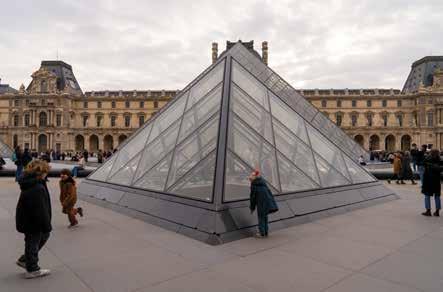
Thieves wearing balaclavas broke into the Louvre museum in Paris on Sunday morning, 19 October, using a crane to smash a window and steal priceless objects from the Galerie d’Apollon, home to the French crown jewels. The group escaped on motorbikes shortly afterwards, prompting renewed scrutiny over security at one of the world’s most visited museums.
The robbery took place at around 9.30am, shortly after the museum had opened to the public. According to Paris Prosecutor Laure Beccuau, four unarmed individuals carried out the theft in just under seven minutes, threatening guards with angle grinders. Eight items were stolen, while a ninth, a crown belonging to Empress Eugénie, was dropped during the escape and subsequently found not far from the museum.
French President Emmanuel Macron called the theft “an attack on a heritage that we cherish because it is our history” and vowed to both
recover the stolen items and bring those responsible to book.
While the stolen objects are believed to be worth several tens of millions of euros, experts noted that more valuable pieces, such as the Regent Diamond, estimated at over US$60 million, were left untouched. Authorities are still investigating the motive and whether the thieves acted on commission.
Investigators recovered a reflective vest believed to belong to one of the suspects and noted that the group attempted, but failed, to destroy the crane used in the break-in. A specialist police unit is leading the investigation, considering links to organised crime. Officials said the jewels could either be intended for a private collector or destined for illegal resale and money-laundering.
The Louvre closed its doors for the day and is co-operating fully with authorities. The incident follows recent calls by museum leadership for greater government investment in security and restoration. Culture Minister Rachida Dati confirmed that museum security has long been under-resourced and must evolve in response to increasingly sophisticated criminal threats.
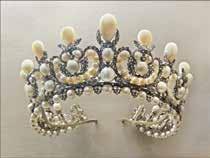
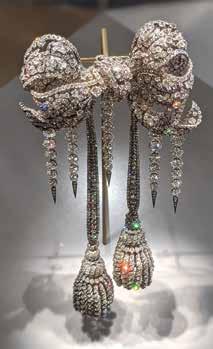
The Louvre was last the scene of a major theft in 1911, when Leonardo da Vinci’s iconic Mona Lisa was stolen and hidden for two years before its recovery. The painting remains unharmed, but the latest heist has revived concerns about the museum’s ability to protect its most treasured artefacts in the modern era.
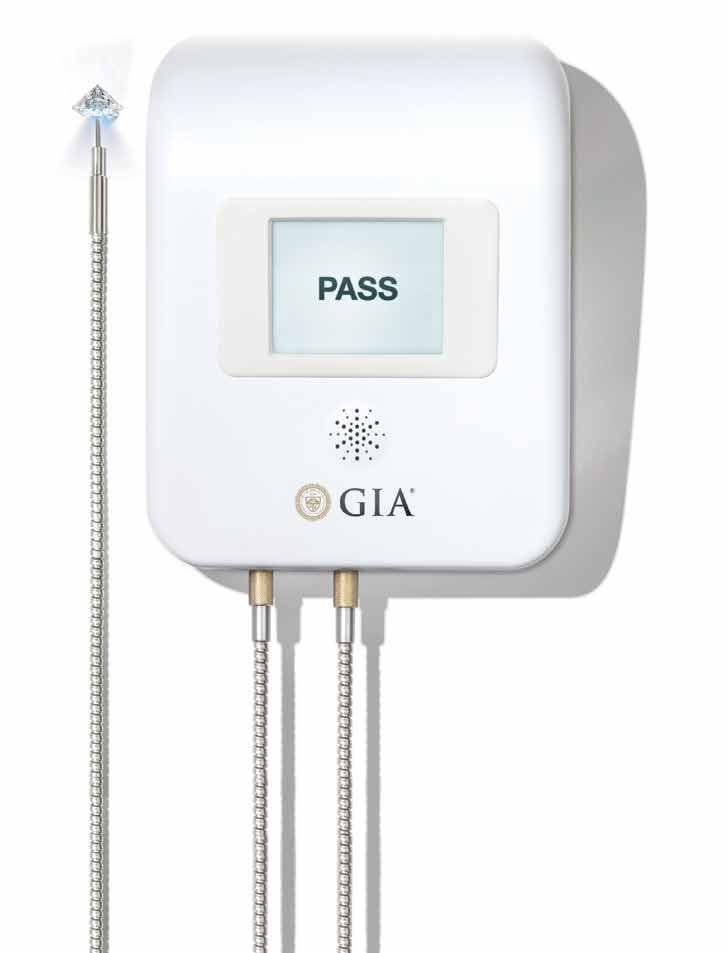
The most effective defense against diamond deception.
The most effective defense against diamond deception.
In under two seconds, the easy-to-use GIA iD100 a diamond as natural with 100% accuracy
In under two seconds, the easy-to-use GIA iD100 a diamond as natural with 100% accuracy
® can identify
® can identify
Speed, precision, and convenience – the ideal tool to add to your protocol.
Speed, precision, and convenience – the ideal tool to add to your protocol.
An article by South African jewellery expert Hayley Henning, published in an international jewellery journal, has renewed focus on how gemstone education boosts retail performance. Her insights reinforce a vital, but often overlooked truth: gemstone knowledge is not optional – it is a powerful sales tool.
With today’s consumers better informed than ever, lack of instore expertise can cost more than a sale: it can cost long-term customer loyalty. Shoppers who research before entering a store expect professionals to provide deeper, specialised insights. When staff fall short, trust is lost.
Conversely, trained sales professionals speak with confidence and clarity, offering details that build trust and add value. Henning
highlights, for example, how distinguishing between treated and untreated emeralds impacts both price and perception. Likewise, explaining the origin and treatment of a pink sapphire can turn a simple sale into a memorable story.
These exchanges spark curiosity, justify value and guide informed decisions, all contributing to higher conversion rates. Leading retailers report improved sales when investing in gemstone training, particularly during slower periods.
Recognising this, The Gem Lab is offering Jewellery Council of SA members a discounted rate on its online Basic Gem Identification course. Now R650 (normally R850), it also includes the ICSL Coloured Stone Grading System (valued at R350) free of charge.
The offer is valid until the end of December 2025.
To claim, members can e-mail Jeremy Rothon at: jeremy@gemlab. co.za for coupon codes. More course details can be found at: https://gemlab.co.za/courses/ basic-gemstone-identification.
As the market evolves, gemstone knowledge is becoming not just a differentiator, but a core part of exceptional customer service and long-term retail growth.

Hosted annually by Valterra Platinum (previously Anglo American Platinum), Metal Concentrators (MetCon) and Platinum Guild International (PGI), PlatAfrica is South Africa’s premier platinum jewellery design and manufacturing competition. The initiative continues to encourage forward-thinking creativity and technical excellence across the jewellery industry. The 2025 winners were announced at a gala evening held on 24 October at the Four Seasons Hotel in Westcliff, Johannesburg.
The winners of PlatAfrica 2025 were officially announced on 24 October at a stylish gala evening held at the prestigious Four Seasons Hotel in Westcliff, Johannesburg. The event honoured excellence in platinum jewellery design and manufacturing across both the Professional and Student/Apprentice categories.
Now in its 26th year, PlatAfrica continues to provide an esteemed platform for designers to showcase their creativity and technical skills, working with one of the world’s most precious metals – platinum.
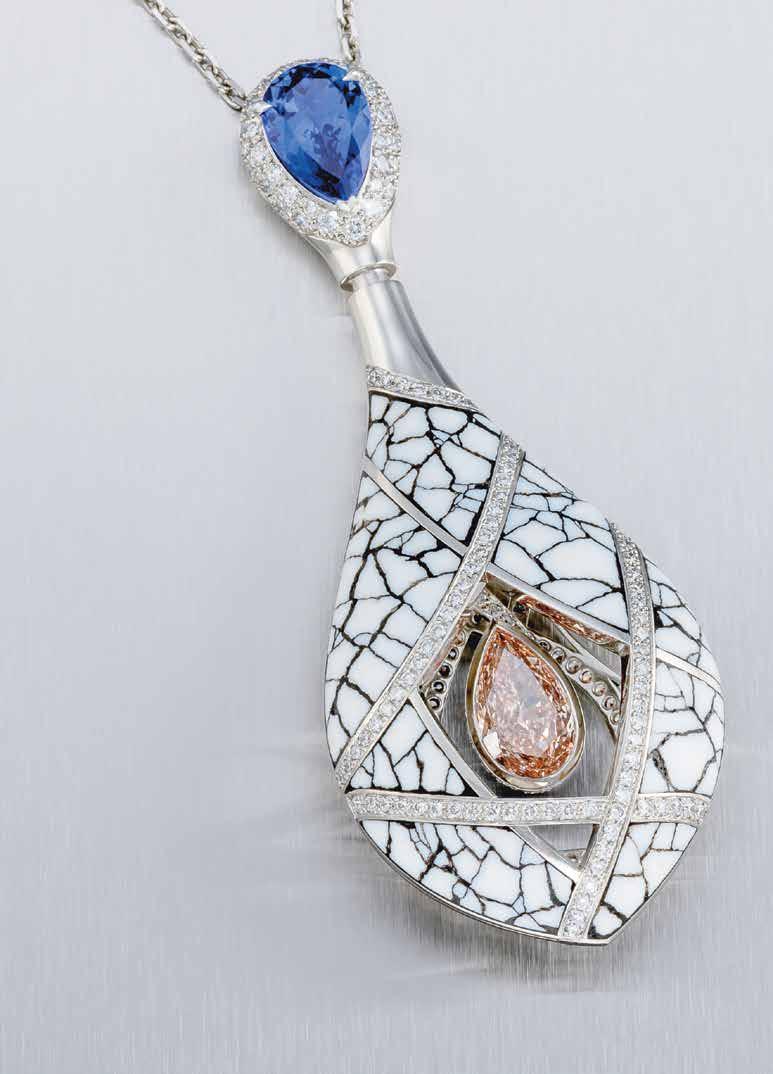
In the professional category, first place was awarded to Emile Pitout, Lorin Bohm, Seth Tilanus and Rob Burton from Platandia Jewellery Collection. Their winning entry was a neckpiece incorporating platinum and ostrich eggshell inlay, featuring a pear-cut natural blue tanzanite, natural dark and light blue sapphires, a lab-grown pearcut pink diamond, lab-grown diamond smalls and a 60 cm anchor link chain.
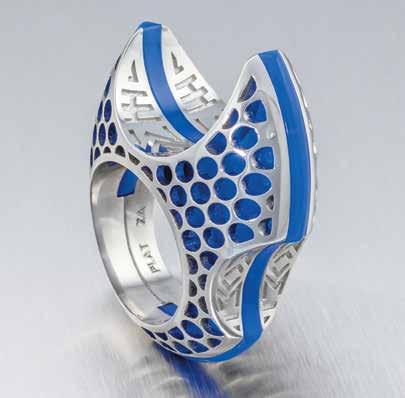
Second place in the professional category went to Nihal Shah from Vijay Shah Concepts for a unisex ring and pendant design crafted in platinum and blue acrylic. In third place, Esther Boshoff and
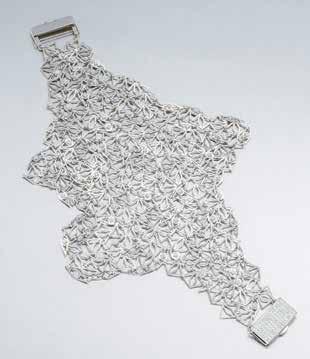
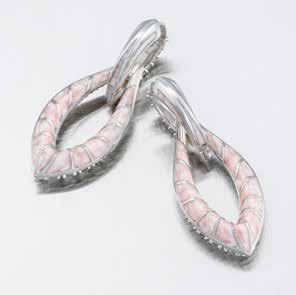
her team from Beaudell Designs were recognised for an armpiece made using platinum and 140 lab-grown diamonds totalling 1ct. Fourth place was awarded to Ann ten Cate from Mark Solomon Jewellers for her platinum earrings featuring pearl rose, diamonds and 168 natural diamonds with a total weight of 2,98ct.
In the student and apprentice category, first place went to Seinoli Valentine Maketela from Pneuma Jewellers for a ring created using platinum and cubic zirconia.
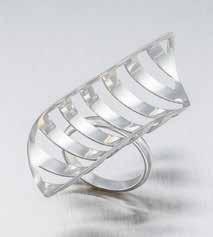
Joint second place was awarded to Nolwazi Linda and Siyabonga Retshe, both from the Cape Peninsula University of Technology, for their ring designs. Third place was awarded to Peter-Ivan Mitrovich from Stellenbosch University for a neckpiece-pendant made using platinum, sterling silver for clasps, neodymium magnets, a 0,6ct bi-colour tourmaline and braided string. Joint fourth place in the student category went to Jana Basson from Free Range Jewels for a neckpiecependant and Tshepo Sethosa from Sivana Diamonds for his platinum earrings.
This year’s theme, “New Horizon”, invited participants to explore ideas of transformation, sustainability, cultural
evolution and artistic freedom. Hosted annually by Anglo American Platinum, Metal Concentrators (MetCon) and Platinum Guild International (PGI), PlatAfrica continues to encourage forward-thinking creativity and technical excellence across the jewellery industry.
With judging criteria focused on originality, theme interpretation, technical skill and wearability, PlatAfrica provides valuable exposure and recognition for South African jewellery designers.
PlatAfrica remains a significant platform for promoting platinum craftsmanship, innovation and talent across South Africa and beyond.

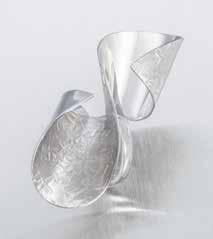
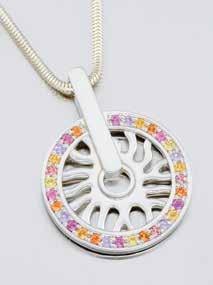
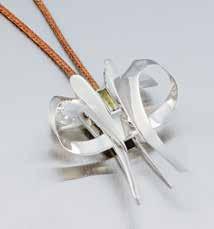
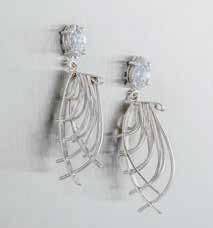














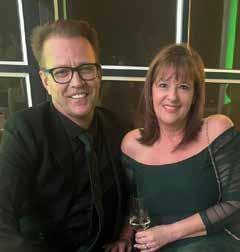
The industry came together in style on 24 October at the Four Seasons Hotel in Westcliff, Johannesburg, for the prestigious PlatAfrica Jewellery Competition Awards ceremony. Guests stepped out in true elegance, celebrating creativity, craftsmanship and community. It was a beautiful evening filled with sparkle, talent and shared passion for platinum design.


















In 2025 the global precious metals market is showing significant movement, underpinned by tightening supply, shifting industrial demand and changing investor sentiment. For the jewellery professional, these dynamics have direct implications for costs, material sourcing and design decisions
Platinum: tight supply, rising demand Platinum has emerged as a standout performer among precious metals this year, supported by structural market factors.
According to the World Platinum Investment Council (WPIC), the global platinum market is projected to run a third consecutive annual deficit in 2025, with demand expected to exceed supply by around 850 000 oz.

Supply challenges are largely driven by declining mine output (especially in South Africa) and insufficient growth in recycling. Above-ground stocks have been drawn down significantly, falling by an estimated 23% in 2024 and forecast to decline further in 2025.
On the demand side, platinum jewellery is showing signs of resurgence. The WPIC forecasts jewellery demand rising in 2025, propelled in part by China’s recovery and by consumers seeking an alternative to gold in a high price environment.
However, industrial and automotive usages remain critical variables. While some contraction is expected in these segments, demand resilience in emissions-critical applications and stricter environmental standards could support platinum’s pricing strength.
In short: platinum is under supply strain and rising demand in jewellery and investment is pushing it into a tighter market.
Gold: safe haven, price pressure Gold continues to dominate as a precious metal in jewellery
Defined in item 20 of Schedule 1 of the FIC Act, a highvalue goods dealer is described as: “A person who carries on the business of dealing in high-value goods in respect of any transaction where such a business receives payment in any form to the value of R100 000 or more, whether the payment is made in a single operation or in more than one operation that appears to be linked, where “highvalue goods” means any item that is valued in that business at R100 000 or more.”
The R100 000 threshold
Where a business sells a single item or a unit of items (bundled goods), that are not sold mutually exclusive, that is priced at R100 000 or higher, that business is considered a HVGD. The business should know whether the items they sell or trade, either single or per unit, is at a value of R100 000. The value is the amount at which the high-value good is sold or traded.
The Financial Intelligence Centre (FIC) has published guidance to assist sectors with the interpretation of the definition of high-value goods dealers. See public compliance communication 58. High-value goods are physical items i.e. tangible items such as precious stones and precious metals, which can be new, used or second hand.
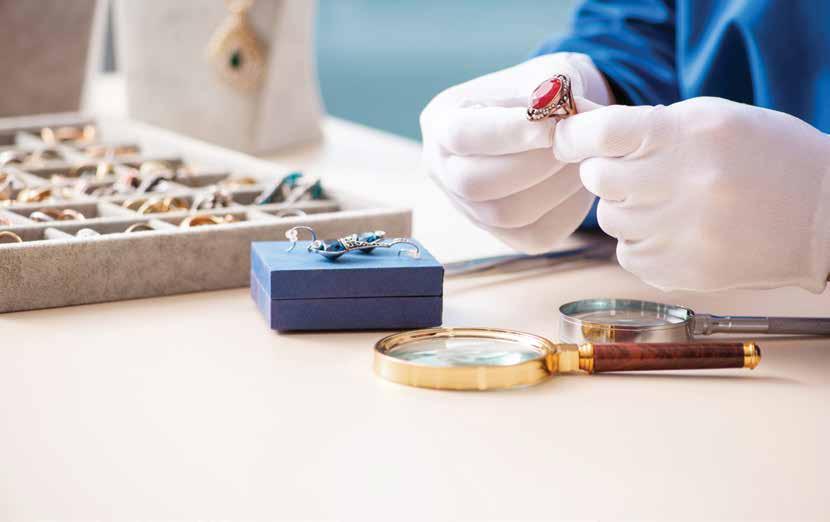
Dealers in high-value goods such as diamonds, jewels and precious metals are often a target for criminals to launder their ill-gotten gains. Dealers in these and other highvalue goods can mitigate the risks of criminal abuse by complying with the Financial Intelligence Centre Act (FIC Act), which is geared towards identifying and stemming financial crimes such as money laundering and terrorist financing.
What does it mean to be an accountable institution?
In terms of the FIC Act, accountable institutions are required to meet certain regulatory obligations including:
• Registering with the FIC
• Submitting reports to the FIC
• Applying a risk-based approach to combating money laundering, terrorist financing and proliferation financing
“The FIC interprets and analyses the regulatory reports and other data it receives to produce financial intelligence reports. Where necessary, financial intelligence reports are provided to law enforcement and other competent authorities for their investigations, prosecutions and applications for asset forfeiture.”
• Developing and implementing a risk management and compliance programme (RMCP)
• Customer due diligence
• Record keeping
• Providing ongoing training to employees on their RMCP and FIC Act requirements
• Having a robust compliance function including a compliance officer
• Scrutinising client information against targeted financial sanctions lists.
Registration and reporting
In terms of the FIC Act, high-value goods dealers are required to submit regulatory reports to the FIC. Before any accountable institution can submit reports, they must register on the FIC’s goAML electronic platform. For further information on registration with the FIC, refer to PCC 5D.
There are three main regulatory reporting streams for accountable institutions:
• Cash threshold reports (CTRs) – on transactions where cash exceeding the threshold of R49 999.99 is received or issued. See FIC Guidance Note 5C.
• Suspicious and unusual transaction reports (STRs) –on transactions or activities that are unusual or arouse suspicion in terms of money laundering or terrorist financing. See FIC Guidance Note 4B.
• Terrorist property reports (TPR) – where the accountable institutions identify a designated person on a targeted financial sanctions list. See FIC Guidance Note 6A.
The FIC interprets and analyses the regulatory reports and other data it receives to produce financial intelligence reports. Where necessary, financial intelligence reports are provided to law enforcement and other competent authorities for their investigations, prosecutions and applications for asset forfeiture.
There are four types of suspicious and unusual transaction reports, which may be submitted under section 29 of the FIC Act, depending on the transaction or activity giving rise to the suspicion:
• Suspicious and unusual transaction report –submitted when the transaction has been completed
• Suspicious and unusual activity report – submitted when the transaction has been aborted or cancelled
• Terrorist financing transaction report – submitted when the transaction has been completed and specifically relates to the financing of terrorism
• Terrorist financing activity report – submitted
when the transaction has been aborted/cancelled and specifically relates to the financing of terrorism.
High-value goods dealers should consult the dealers in precious metals and stones’ sector risk assessment for indicators of potential money laundering, terrorist financing, and proliferation financing which could raise a suspicion.
A suspicion may involve several factors that could seem insignificant but taken together may arouse suspicion concerning that situation. The reporter should evaluate the transactions and the client’s history, background and behaviour when determining whether a transaction or activity is suspicious or unusual.
A suspicious and unusual transaction report must be submitted as soon as possible without delay and no later than 15 days after the institution becomes aware of a fact concerning a transaction or a suspicion. An accountable institution can continue with the transaction when an STR has been submitted to the FIC. However, they may not disclose whether a report was submitted or the content of the report. Doing so would amount to “tipping off.” Refer to Guidance Note 4B for further information on STRs.
If high-value goods dealers receive or make a payment in cash exceeding R49 999.99, then they are required to file a cash threshold report (CTR).
“Cash” has a specific meaning under the FIC Act and refers to physical paper money, coins and travellers’ cheques. Electronic funds transfers and crypto currency transactions do not qualify as “cash” and will not trigger the CTR obligation.
A CTR must be submitted within three business days of receiving or paying the amount exceeding the R49 999.99 threshold. It may be possible that a transaction could give rise to both the CTR and STR reporting obligation. If a client pays for a high-value good in separate installments to possibly avoid exceeding the CTR threshold, the accountable institution should consider submitting a STR. For further information refer to Guidance Note 5C.
For sector specific compliance information and guidance refer to the high-value goods dealers web page on the FIC website. The FIC’s compliance contact centre can be reached on +2712 641 6000 or log an online compliance query on the FIC website. To learn more, visit the Financial Intelligence Centre at https:// www.fic.gov.za.
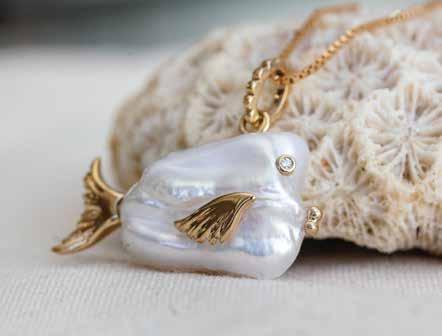
Beyond the beauty of its designs, freeRange JEWELS is also dedicated to developing the future of South Africa’s jewellery industry through active participation in the Mining Qualifications Authority (MQA) internship programme
Tucked between Cape Town’s vibrant BoKaap and trendy Green Point, freeRange JEWELS is a space where creativity, craftsmanship and community meet. The hum of a nearby local radio station provides a fitting soundtrack to a workshop alive with precision, artistry and transformation. From sketch to show-stopper, the studio produces timeless pieces that sparkle with story and soul.
Led by founder and concept designer Marelé Lamprecht, the business is rooted in a deep appreciation for quality craftsmanship and a genuine commitment to nurturing the next generation of skilled goldsmiths. Lamprecht, alongside her team (including Production Manager Riefqah Davis), believes in creating opportunities that bridge the gap between formal education and the realities of the working world. With 17 years of industry experience and a strong systems-orientated approach, Davis plays a crucial role in ensuring that the studio runs efficiently, from production to mentorship.
The decision to participate in the MQA programme came from recognising the need to close the gap between tertiary institutions and employment. Lamprecht sees the programme as a direct way to address the na -
tional skills shortage, helping to prepare goldsmiths with practical, real-world experience in a professional environment. Both she and Davis agree that many graduates emerge from institutions with varying levels of practical knowledge and technical training, which makes it difficult to set a standard for entry-level skill. The approach
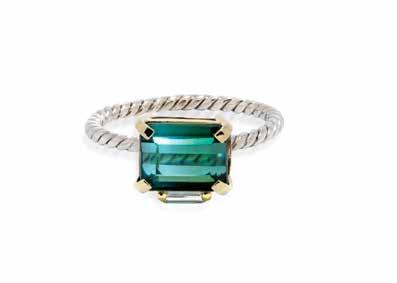
at freeRange is to begin with very basic exercises to assess each intern’s understanding of metallurgy, their tool usage and their conceptual thinking. From there, training is adapted individually, providing personalised guidance and mentorship.
Each intern is treated as a unique talent, with different strengths, skill levels and ambitions. The aim is not to push everyone through the same mould, but to support each person in becoming the best goldsmith they can be and – most importantly – to help them leave the studio with confidence in their abilities. For Lamprecht, one of the greatest rewards is witnessing
the growth that takes place when interns are taught problem-solving skills and are empowered to think through manufacturing processes. She reflects on this as a reliving of her own journey as a goldsmith, a reminder of the satisfaction that comes from perseverance and progress.

Davis, who was a finalist in the professional category of PlatAfrica 2025, has been closely involved in training interns for the past two years. She notes that one of the biggest challenges lies in understanding the level of previous training each intern has received and then building on it in a way that is both supportive and demanding. Her
South Africa’s jewellery training landscape is facing significant challenges. In this monthly column, Faldilah Garrett discusses the way forward when it comes to reviving skills development and securing the industry’s future.
SA is the birthplace of legends, a land where the earth yields the world’s most profound symbols of beauty, rarity and eternalness. This is the stuff that fairytales are made of! For generations, our story has been one of extraction; we were the source. However, a new, brilliant chapter can be written. The future of South African jewellery lies not just in the treasure we hold, but in the alchemy of what we create with it.
Moving from a resource giant to a global manufacturing and design powerhouse requires a bold strategy. It demands that we champion our unique design heritage, leverage digital highways to reach global clients and, most critically, invest in a new generation of legends. This is not about replacing craft with code; it is about empowering our craft with technology.
The blueprint for brilliance
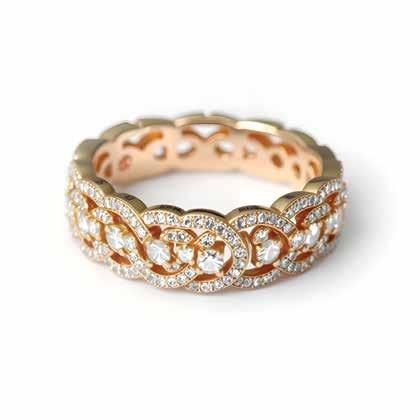
Ensuring sustainable growth for our manufacturing industry is a multi-faceted endeavour. It begins with aggressively promoting “Brand South Africa” – a hallmark of ethical sourcing, unparalleled materials and audacious designs. We must harness e-commerce to build direct relationships with

Faldilah is an expert in occupational programme development for the NQF, working with clients such as the MQA, SASSETA, the QCTO, the Reserve Bank and leading SETAs.
A qualified goldsmith since 1999, she has helped shape national jewellery and mining qualifications since 2002. She serves on the JMASA Executive Committee and has trained top skills providers.
global connoisseurs, telling our unique stories in a crowded market. However, the true engine of this transformation is talent. The industry’s growth is inextricably linked to our ability to cultivate a workforce fluent in the language of modern luxury.
The digital vanguard: vision and precision
Technological advancement is not just about the machines we buy; it is about the minds we train. The formal qualifications of today will create the masters of tomorrow.
• Jewellery computer-aided design (CAD): This is the architect of the new era. The CAD designer transforms an ephemeral concept into a flawless, three-dimensional digital model. This is the direct gateway to technological advancement. It unlocks rapid prototyping, allowing designers and clients to hold a 3D-printed model of a piece in hours, not weeks. It enables the creation of intricate geometries and fluid lines that would be impossible to carve by hand, pushing our creative boundaries.
• Jewellery design: As visionaries, modern designers are creative directors who understand the full potential of new tools. They are material scientists, exploring how gold and platinum interact with new alloys. They are the “why” to the CAD designer’s “how”, ensuring that technology serves the singular purpose of creating breathtaking art.
Tradition meets tech Technology filters down from the design studio to the artisan’s bench, elevating the hands-on skills that lie at the heart of our craft.
• Jewellery mould-maker and wax injector: These two roles form the critical bridge between the digital file and the physical product. The mould-maker takes the high-resolution, 3D-printed resin model and uses it to craft a master mould. The wax injector then uses this mould to create perfect, identical wax replicas to be produced. This is the workflow that makes “digital luxury” a commercial reality.
• Casting bench worker: Far from being made obsolete, the bench worker is elevated by technology. The digital design and injection process yields a casting of superior quality: the bench worker spends less time on basic clean-up and more time on high-value finishing. Technology empowers them to be true finisseurs, focusing their artistry on the intricate setting of micro-pavé diamonds or achieving a flawless mirror polish.
• Jewellery sales consultant: Technological advancement must extend to the client
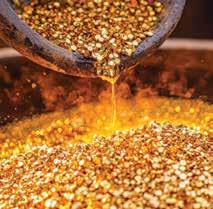
experience. Modern consultants are brand ambassadors armed with sophisticated tools. They use customer relationship management platforms to manage relationships and preferences. They use tablets to present a designer’s entire digital portfolio. Soon they will use augmented reality to allow a client to “virtually” try on a bespoke jewellery piece. They are the data-gatherers, feeding real-world trends back to the design team, thus completing the technological loop.
Crafting policy: a collective voice
This renaissance cannot happen in a vacuum. It requires a legislative framework that fosters growth, not friction. While regulations like the Precious Metals Act are vital for integrity, they can – and must – be influenced to support our manufacturing ambitions.

So where and how can this influence be applied?
1. Industry associations: The Jewellery Council of SA is our primary collective voice. As a unified body representing manufacturers, retailers and wholesalers, it has the platform to lobby government (including the Department of Mineral Resources and Energy, and National Treasury) for regulatory reform. This includes advocating streamlined applications for the essential Jeweller's Permit or creating tax incentives for investing in manufacturing technology.
2. The regulator: The SA Diamond and Precious Metals Regulator (SADPMR) is mandated not only to regulate, but also to promote local beneficiation. Our industry must actively participate in the SADPMR’s stakeholder consultations, providing evidence-based feedback on how complex compliance hinders small businesses and technology adoption.
3. The skills pipeline: We can directly influence the creation of the qualifications we need. By engaging with the Mining Qualifications Authority (MQA), industry leaders can define the national curriculum development processes. By submitting detailed workplace skills plans, companies signal exactly which skills (such as CAD design and digital marketing) are in urgent demand, ensuring that government funding is allocated precisely where we need it most.
SA’s new gold standard will be measured not by the carats we export, but by the creativity we ignite. By investing in this potent blend of digital skill and traditional craft, we are not just forging jewellery: we are forging a new, brilliant legacy.
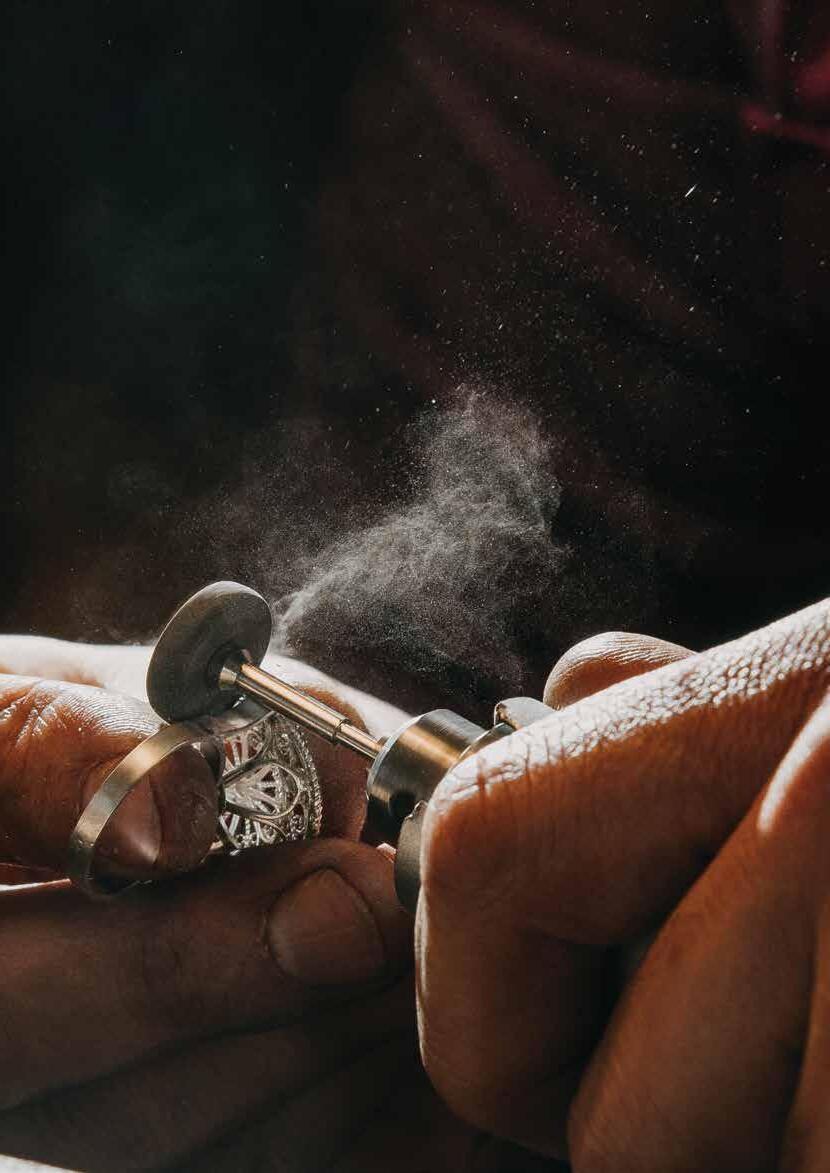

Born from decades of experience in jewellery design under the Piccolo Fine Designer Jewellery brand, Inferno Gold rebranded in 2025 to meet the evolving needs of today’s jewellery professionals. Now operating as a cutting-edge gold refinery and service partner, Inferno Gold delivers tailored solutions for manufacturing jewellers, second-hand gold dealers and the wider jewellery trade.
Speed, consistency and communication, these are the reasons Inferno Gold is becoming the go-to partner for jewellery manufacturers.
“Their casting is very good. It helps a lot with my orders and has done a lot for my business in every aspect. Good communication is key.”
– Theo, Morgans Jewellers
“Very competent, friendly and helpful. They walk the extra mile effortlessly and with kindness.”
– Luani Wegerle, 925 Manufacturing Jewelers
“With Inferno, I can always rely on fast turnaround, proper alloys and consistent carat values. Very impressed.”
– Cherise Falk, Cherise Falk Studios

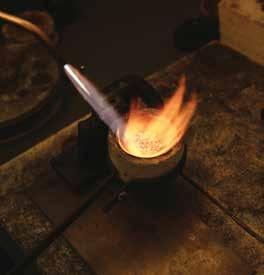
Whether you're running a production workshop or trading in recycled metals, Inferno Gold offers a full suite of services designed with trade efficiency in mind:
• Gold Refining: Up to 9999 fine purity using advanced refining technology.
• Precious Metal Recovery: Extracting value from scrap, sweep and industrial by-products.
• Assaying & Testing: Fast, accurate purity and value assessments with clear documentation.
• Gold Buying: Competitive, transparent pricing on second-hand jewellery and scrap.
• Manufacturing Support: Alloying, casting, wax printing, semi-finishing and more, all under one roof.
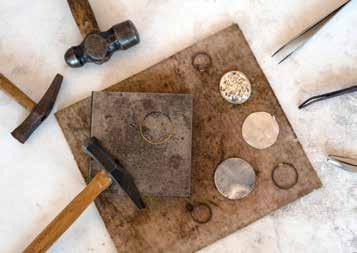
Unlike traditional refineries, Inferno Gold understands what happens after refining, casting, finishing, delivery deadlines. That’s why jewellers who demand traceability, purity and reliability choose a partner who speaks their language.
For gold dealers and second-hand traders, Inferno Gold offers a refreshing alternative.
“Fair value, detailed breakdowns and fast payments, it’s seamless and reliable.”
–
Zoea Jansen van Rensburg, Zoea Jewellery
“Best payout and value I’ve seen. Efficient, transparent and fast.”
– Cherise Falk
With straightforward reports, competitive rates and rapid processing, Inferno Gold makes it easier to turn gold into cash, without the stress.
Manufacturing Jewelers
IN-HOUSE MANUFACTURING SUPPORT
END-TO-END SERVICE BUILT AROUND YOUR TIMELINES
“With Inferno, I can always rely on fast turnaround, proper alloys and consistent carat values. Very impressed.”
– Cherise Falk, Cherise Falk Studios




Glowing gems: fluorescence and phosphorescence of diamonds, colored stones, and pearls
Ulrika F.S. D’Haenens-Johansson, Sally Eaton-Magaña, W. Henry Towbin, and Elina Myagkaya











and the expected mineralogy and phase changes within slab rocks. Overlaying the slab geotherms onto phase diagrams helps to illustrate where water-bearing phases break down and release fl uid, such as the relatively well-accepted loss of most water from warm slabs at relatively shallow depths (<200 km). This is the activity that generates melt and fuels arc volcanoes such as those of the Pacifi c Ring of Fire. Cold slabs, however, can partially bypass this shallow dewatering process and transport a budget of carbonate and water to depths beyond 300 km, where its later release can cause deep-focus earthquakes
The cold slabs can be thought of as having a carbonated crust component and a hydrated/serpentinized mantle peridotite component that lies shielded beneath the crust, toward the interior of the slab. The deep release of carbonatitic melt and hydrous fl uid from each component, respectively, is shown in the two depth profiles in figure 3. The carbonated crust (mid-ocean ridge basalt, or MORB) of the slab surface will intersect a deep depression in its solidus, the curve describing the beginning of melting, meaning it exceeds the melting temperature. Beyond this point, carbonate melting (red arrows) is expected to occur within the top/crustal portion of the slab.
Most of the famous natural diamond examples are boroncontaining type IIb diamonds, which can show chalky blue to green, or rarely red or orangy red, phosphorescence following exposure to short-wave UV (Eaton-Magaña et al., 2008; Gaillou et al., 2010a). The phosphorescence can last from a few seconds to typically under a minute, though rare longer-lived natural examples exist (Shen and EatonMagaña, 2011). The phosphorescence is produced by two emission bands centered at 500 nm (blue-green) and 660 nm (red); the relative intensities and lifetimes determine the dominant phosphorescence color and its possible color evolution with time (Eaton-Magaña et al., 2008; Gaillou et al., 2010b; Eaton-Magaña and Lu, 2011). The mechanism used to explain the broad blue-green band is donor-acceptor pair recombination (DAP), where electrons bound to substitutional nitrogen defects (NS 0, the donors) and holes bound to substitutional boron defects (BS 0, the acceptors) are excited by the ultraviolet light, emitting phosphorescence as they recombine (Dean, 1965; Watanabe et al., 1997; EatonMagaña et al., 2008; Eaton-Magaña and Lu, 2011; Zhao et al., 2023). The detailed origin of the red band remains unexplained. Phosphorescence has also been reported for type I diamonds. Weak yellow and blue phosphorescence can be observed in strongly bluefluorescing (N3) diamonds (Chandrasekharan, 1946a,b). Yellow phosphorescence
(DHMS) rather than breaking down. DHMS phases are a good vehicle for transporting water, with some carrying as much as 10% or more water by weight. The geotherm for the interior of cold slabs remains in the DHMS stability fi eld far beyond a depth of 300 km (far right in figure 3). The slab in figure 3 is shown defl ecting as it reaches the top of the lower mantle (at 660 km), where there is a change in mantle density and deformability. As the slab stalls and warms up, DHMS phases break down to form minerals that carry much less water, thereby causing water release (blue arrows in figure 3). These are the mechanisms proposed to trigger not only deep-focus earthquakes but also
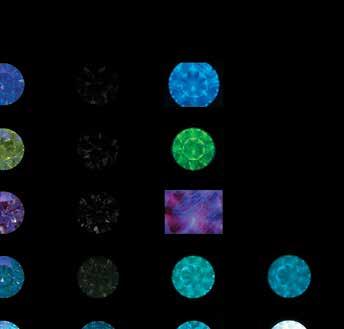
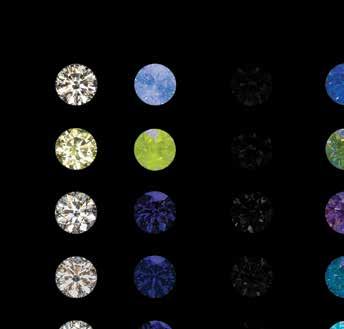
4. Representative long-wave, short-wave, and deep-UV excited fluorescence and phosphorescence responses for D-to-Z color natural and laboratorygrown diamonds. Diamond origin details: blue-fluorescing natural (A), yellow-fluorescing natural (B), untreated CVD-grown (C), HPHT-annealed CVD-grown (D), and HPHT-grown (E). White light, long- and short-wave fluorescence, and phosphorescence images by Towfiq Ahmed. Deep-UV fluorescence and phosphorescence images by Ulrika F.S. D’Haenens-Johansson.
For hydrated/serpentinized mantle peridotite inside the slab, its stability also depends on temperature. If it remains cool, the serpentine can metamorphose into higher-pressure water-
Inclusions in the smaller, lower-quality varieties of sublithospheric diamonds often show evidence of growth from carbonatitic melts derived from slabs (Walter et al., 2008), but hydrous/aqueous fl uids have also been implicated for some samples (Wirth et al., 2007; Pearson et al., 2014; Palot et al., 2016). Serpentinite in subducting slabs can be relatively enriched in boron, meaning that the eventual breakdown of hydrous minerals from serpentinized peridotite can release boron-bearing hydrous fl uid, which has been linked with the formation of type IIb (boron-bearing) diamonds (Smith et al., 2018). Figure 4 shows a calcium silicate (breyite) inclusion with methane and hydrogen in a type IIb diamond. The original mineral inclusion may have been relatively hydrogen-rich
Diamond-bearing kimberlite eruption
Continental lithosphere
Deep-focus earthquake activity
High-quality CLIPPIR and type IIb diamonds
Low-quality, non-gem sublithospheric diamonds
Lithospheric diamonds
following shortwave UV excitation, with a band centered at 550 nm, is considered a defining characteristic of colorchanging “chameleon” diamonds (Hainschwang et al., 2005; Byrne et al., 2018; Lai et al., 2024).
The luminescence behavior of laboratory-grown diamonds produced by the high-pressure, high-temperature (HPHT) and chemical vapor deposition (CVD) methods has been studied extensively since their inception in the 1950s. For recent detailed reviews on the synthesis of diamond using these techniques, see Palyanov et al. (2015), Arnault et al. (2022), and D’Haenens-Johansson et al. (2022). These diamonds’ fluorescence and phosphorescence properties, along with the distributions of the associated defects (discussed later in this article), have been exploited for diamond screening to separate natural from laboratory-grown diamonds, resulting in an assortment of device designs and approaches (Welbourn et al., 1996; Martineau et al., 2004; Hainschwang et al., 2013; Lan et al., 2016; Dupuy and Phillips, 2019; McGuinness et al., 2020; Tsai and D’HaenensJohansson, 2021; Tsai et al., 2024).
Carbonated slab melting
Hydrous uid


Figure 3. Mantle cross section showing a relatively cool subducting slab, with an inset histogram of earthquake frequency (from figure 1). Profiles on the right show the slab surface and interior temperature during subduction. Where the slab surface temperature intersects the solidus of carbonated mid-ocean ridge basalt (MORB), partial melting may occur (red arrows). At the far right, a cold slab interior remains within the dense hydrous magnesium silicates (DHMS) stability field until the slab stalls and warms up, causing the breakdown of these hydrous phases and the release of hydrous fluid (blue arrows). Large white and smaller brown diamond symbols signify the growth of high-quality gem diamonds (CLIPPIR and type IIb) and low-quality, generally non-gem sublithospheric diamonds, respectively. Poorly understood mechanisms transport some diamonds upward where they can be swept up in kimberlite eruptions and mixed with common lithospheric diamonds (small black diamond symbols). Modified from Smith and Nestola (2021) with carbonated MORB solidus from Thomson et al. (2016b) and DHMS stability field from Harte (2010).
Shigley et al. (2004a) and D’Haenens-Johansson et al. (2022) tabulated common fluorescence and phosphorescence characteristics for HPHT-grown diamonds produced with a

and the expected mineralogy and phase changes within slab rocks. Overlaying the slab geotherms onto phase diagrams helps to illustrate where water-bearing phases break down and release fl uid, such as the relatively well-accepted loss of most water from warm slabs at relatively shallow depths (<200 km). This is the activity that generates melt and fuels arc volcanoes such as those of the Pacifi c Ring of Fire. Cold slabs, however, can partially bypass this shallow dewatering process and transport a budget of carbonate and water to depths beyond 300 km, where its later release can cause deep-focus earthquakes (figure 3).
The cold slabs can be thought of as having a carbonated crust component and a hydrated/serpentinized mantle peridotite component that lies shielded beneath the crust, toward the interior of the slab. The deep release of carbonatitic melt and hydrous fl uid from each component, respectively, is shown in the two depth profiles in figure 3. The carbonated crust (mid-ocean ridge basalt, or MORB) of the slab surface will intersect a deep depression in its solidus, the curve describing the beginning of melting, meaning it exceeds the melting temperature. Beyond this point, carbonate melting (red arrows) is expected to occur within the top/crustal portion of the slab.
For hydrated/serpentinized mantle peridotite inside the slab, its stability also depends on temperature. If it remains cool, the serpentine can metamorphose into higher-pressure water-
range of bodycolors. Eaton- Magaña et al. (2017) analyzed several thousand HPHT-grown diamonds submitted to GIA from 2007 to 2016 and found that those showing fluorescence generally had a stronger reaction to shortwave UV than to long-wave UV, in contrast with most natural fluorescing diamonds. Since the majority of HPHT-grown diamond gemstones in the market today are colorless, including >90% of those submitted to GIA, it is appropriate to highlight their luminescence characteristics here (EatonMagaña et al., 2024). Among colorless and near-colorless HPHT-grown diamonds, the vast majority are inert to long-wave UV, with a yellow or orange emission if observed, while ~90% show yellow or yellow-green fluorescence to short-wave UV (Eaton-Magaña et al., 2017). Short-wave UV also induces an often strong and long-lived blue, yellow, or green-yellow phosphorescence that is associated with boron (Watanabe et al., 1997; Eaton-Magaña and Lu, 2011; Zhao et al., 2023). The range of phosphorescence colors observed are influenced by the intensities and lifetimes of a boron-related blue emission band centered at 500 nm and an orange or yellowish orange emission band whose center can range from 575 to 590 nm (Watanabe et al., 1997; Eaton-Magaña et al., 2008; Eaton-Magaña and Lu, 2011; D’Haenens-Johansson et al., 2015; Zhao et al., 2023). Figure 4 shows an example of the fluorescence and phosphorescence response of a colorless HPHT-grown diamond compared to that for natural and CVD-grown diamonds. It is, however, possible to reduce and even remove the phosphorescence through irradiation treatment, leaving screening instruments that rely on this feature vulnerable (Robinson, 2018; Dupuy and Phillips, 2019; EatonMagaña et al., 2024).
Depth (km)
bearing minerals called dense hydrous magnesium silicates (DHMS) rather than breaking down. DHMS phases are a good vehicle for transporting water, with some carrying as much as 10% or more water by weight. The geotherm for the interior of cold slabs remains in the DHMS stability fi eld far beyond a depth of 300 km (far right in figure 3). The slab in figure 3 is shown defl ecting as it reaches the top of the lower mantle (at 660 km), where there is a change in mantle density and deformability. As the slab stalls and warms up, DHMS phases break down to form minerals that carry much less water, thereby causing water release (blue arrows in figure 3). These are the mechanisms proposed to trigger not only deep-focus earthquakes but also super-deep diamond growth (Shirey et al., 2021).
are now nearly all inert under both long- and short-wave UV illumination (Eaton- Magaña et al., 2021); see, for instance, the sample shown in figure 4. Decolorizing annealing treatments reduce the relative concentration of NV centers while introducing green fluorescence from H3 (N2V0) defects or an unidentified defect with a ZPL at 499 nm and a complex vibronic band centered at ~550 nm; these treatments are most easily detected using short-wave UV (Martineau et al., 2004; Wang et al., 2012; Wassell et al., 2018; McGuinness et al., 2020). Weak blue-green phosphorescence associated with trace amounts of boron may also be introduced (Wang et al., 2012). The fluorescence and phosphorescence behavior for an HPHT-annealed colorless CVD diamond using long-wave, short-wave, and deep-UV illumination is shown in figure 4.
Inclusions in the smaller, lower-quality varieties of sublithospheric diamonds often show evidence of growth from carbonatitic melts derived from slabs (Walter et al., 2008), but hydrous/aqueous fl uids have also been implicated for some samples (Wirth et al., 2007; Pearson et al., 2014; Palot et al., 2016). Serpentinite in subducting slabs can be relatively enriched in boron, meaning that the eventual breakdown of hydrous minerals from serpentinized peridotite can release boron-bearing hydrous fl uid, which has been linked with the formation of type IIb (boron-bearing) diamonds (Smith et al., 2018). Figure 4 shows a calcium silicate (breyite) inclusion with methane and hydrogen in a type IIb diamond. The original mineral inclusion may have been relatively hydrogen-rich
Diamond-bearing kimberlite eruption
Continental lithosphere
Deep-focus earthquake activity
High-quality CLIPPIR and type IIb diamonds
Low-quality, non-gem sublithospheric diamonds
Lithospheric diamonds
CVD-grown diamonds dominate the non-melee-sized laboratory-grown gem market; they currently account for ~80% of laboratory-grown diamond submissions to GIA (Eaton-Magaña et al., 2024). Of those, ~80% are graded as colorless. To achieve such high colors, CVD-grown diamonds are regularly subjected to HPHT or LPHT (low-pressure, hightemperature) annealing treatments, in which less desirable brown hues are reduced or removed (e.g., Martineau et al., 2004; Meng et al., 2008; Wang et al., 2012; Eaton-Magaña et al., 2021, 2024; D’Haenens-Johansson et al., 2022). These treatments modify the relative concentrations of defects in the material, resulting in changes to the fluorescence behavior. Early “as-grown” (untreated) CVD diamonds sometimes showed orange, orange-yellow, or yellow fluorescence to both long- and short-wave UV (with a stronger response to the latter) from high concentrations of NV0/– defects (Martineau et al., 2004; Wang et al., 2007). Yet, as the colors and purity levels of as-grown products have improved, they
Natural diamond can be pictured as growing outward from a nucleating core, supplied with carbon atoms from melts and fluids, deep in the earth’s mantle at the high temperatures and pressures at which diamond – rather than its allotrope graphite – is stable. Sunagawa (1984) and Harris et al. (2022) presented comprehensive reviews of natural diamond morphology, or crystal shape. The ideal natural diamond rough morphology is octahedral: two square-based pyramids connected at the base with {111}-oriented faces.1 The second most common morphology has well-developed, gently curved, and hummocky square faces that are approximately {100}-oriented. As they are not true {100} cubic faces, the preferred name for this morphology is cuboid. Diamonds can also experience mixed habit growth, though rarely observed, developing both octahedral and cuboid faces. By the time the diamond is recovered, the external morphology could be dramatically modified through geological processes, leading to rounded and irregular shapes. Furthermore, in the gem trade, the external surfaces are removed through polishing. Yet all is not lost: conditions of natural diamond formation, their residence in the mantle, and subsequent transportation to the surface combine to leave an imprint.
Carbonated slab melting Hydrous uid
Figure 3. Mantle cross section showing a relatively cool subducting slab, with an inset histogram of earthquake frequency (from figure 1). Profiles on the right show the slab surface and interior temperature during subduction. Where the slab surface temperature intersects the solidus of carbonated mid-ocean ridge basalt (MORB), partial melting may occur (red arrows). At the far right, a cold slab interior remains within the dense hydrous magnesium silicates (DHMS) stability field until the slab stalls and warms up, causing the breakdown of these hydrous phases and the release of hydrous fluid (blue arrows). Large white and smaller brown diamond symbols signify the growth of high-quality gem diamonds (CLIPPIR and type IIb) and low-quality, generally non-gem sublithospheric diamonds, respectively. Poorly understood mechanisms transport some diamonds upward where they can be swept up in kimberlite eruptions and mixed with common lithospheric diamonds (small black diamond symbols). Modified from Smith and Nestola (2021) with carbonated MORB solidus from Thomson et al. (2016b) and DHMS stability field from Harte (2010).
Diamond growth progresses through a series of episodes, experiencing changes in the growth environment and the source fluid composition. Additionally, diamonds can potentially go through periods during which their surfaces are attacked by aggressive fluids, removing atoms and leading to crystal dissolution and resorption (Fedortchouk, 2019; Fedortchouk et al., 2019; Smit and Shirey, 2020; Harris et al., 2022). Diamonds may also be subjected to plastic deformation, introducing extended defects such as dislocations and glide planes (Evans and Wild, 1965; Willems
(DHMS) rather than breaking down. DHMS phases are a good vehicle for transporting water, with some carrying as much as 10% or more water by weight. The geotherm for the interior of cold slabs remains in the DHMS stability fi eld far beyond a depth of 300 km (far right in figure 3). The slab in figure 3 is shown defl ecting as it reaches the top of the lower mantle (at 660 km), where there is a change in mantle density and deformability. As the slab stalls and warms up, DHMS phases break down to form minerals that carry much less water, thereby causing water release (blue arrows in figure 3). These are the mechanisms proposed to trigger not only deep-focus earthquakes but also
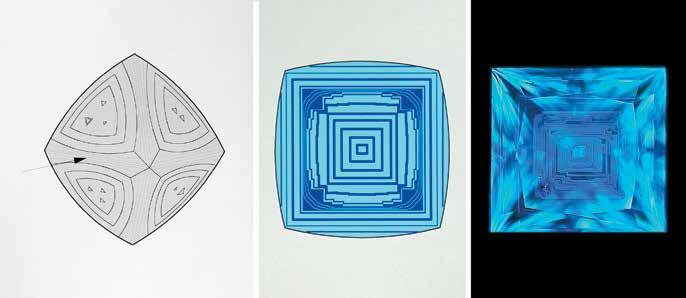
Figure 5 A: A representative illustration of a natural octahedral type Ia diamond crystal, showing rounded edges from resorption, as well as trigon etch pits.
B: If the crystal was sliced along the central cubic {100} plane, the resulting distribution of fluorescent defects may show a series of concentric rectangles and hillocky rounded regions of cuboid growth. C: This 1.18 ct diamond displays an octahedral growth pattern when illuminated under deep-UV. Illustrations A and B are from Welbourn et al. (1996), and image C is from Chan (2009).
et al., 2006; Laidlaw et al., 2020, 2021). As a result, the distributions, combinations, and relative concentrations of defects present in the crystal are heterogeneous, and every diamond has a unique and complex internal growth structure that reveals a fascinating history. One can think of these patterns as analogous to the growth rings present within a tree trunk, with variations caused by cyclical environmental changes as well as stressing conditions such as disease or insect infestations.
component that lies shielded beneath the crust, toward the interior of the slab. The deep release of carbonatitic melt and hydrous fl uid from each component, respectively, is shown in the two depth profiles in figure 3. The carbonated crust (mid-ocean ridge basalt, or MORB) of the slab surface will intersect a deep depression in its solidus, the curve describing the beginning of melting, meaning it exceeds the melting temperature. Beyond this point, carbonate melting (red arrows) is expected to occur within the top/crustal portion of the slab.
For hydrated/serpentinized mantle peridotite inside the slab, its stability also depends on temperature. If it remains cool, the serpentine can metamorphose into higher-pressure water-
fundamental growth structure of a diamond, whether natural or laboratory-grown, cannot be changed by treatment, though the fluorescing colors can potentially be modified.
Inclusions in the smaller, lower-quality varieties of sublithospheric diamonds often show evidence of growth from carbonatitic melts derived from slabs (Walter et al., 2008), but hydrous/aqueous fl uids have also been implicated for some samples (Wirth et al., 2007; Pearson et al., 2014; Palot et al., 2016). Serpentinite in subducting slabs can be relatively enriched in boron, meaning that the eventual breakdown of hydrous minerals from serpentinized peridotite can release boron-bearing hydrous fl uid, which has been linked with the formation of type IIb (boron-bearing) diamonds (Smith et al., 2018). Figure 4 shows a calcium silicate (breyite) inclusion with methane and hydrogen in a type IIb diamond. The original mineral inclusion may have been relatively hydrogen-rich
Diamond-bearing kimberlite eruption
Continental lithosphere
Since many diamond defects are luminescent, their distribution may be observed through fluorescence and phosphorescence, as well as electron-beam excited cathodoluminescence imaging (e.g., Welbourn et al., 1996; Harris et al., 2022). Although growth structure can occasionally be perceived through long-wave or short-wave UV illumination, the preferred excitation energy of incident photons is greater than diamond’s band gap energy, here termed deep-UV, resulting in surface-specific emission from practically all diamonds (Welbourn et al., 1996). The characteristic fluorescence colors associated with specific luminescing defects described in the previous section remain unchanged, though the emission efficiency is generally improved using deep-UV illumination. Additionally, deepUV illumination is able to excite blue to green “band A” emission (Dean, 1965; Ruan et al., 1992; Green et al., 2022). Recent high-resolution multi-technique studies by Laidlaw et al. (2020, 2021) have shown that band A originates from unidentified defects in the material adjacent to dislocations and grain boundaries, which themselves act as nonradiative recombination centers (i.e., they are dark). Importantly, the
Deep-focus earthquake activity
High-quality CLIPPIR and type IIb diamonds
Low-quality, non-gem sublithospheric diamonds
Lithospheric diamonds
Internal growth patterns associated with natural octahedral diamond growth present themselves as a series of concentric squares or rectangles with varying luminescence, as shown in figure 5 (e.g., Welbourn et al., 1996; Harris et al., 2022). Depending on the crystallographic orientations of a polished diamond’s facets and the viewing angle, the pattern may deviate from this ideal and appear truncated. Figure 6 shows a selection of natural diamond fluorescence patterns collected under deep-UV illumination. Cuboid growth introduces curved and hummocky growth horizons (figure 6A; Moore and Lang, 1972; Lang, 1974, 1979; Suzuki and Lang, 1976; Welbourn et al., 1989; Harris et al., 2022).
Sometimes the internal growth patterns in natural diamond can be highly irregular or show multiple nucleation sites (figure 6B). Additionally, plastic deformation can introduce luminescent glide planes or dislocations (figure 6, C and D). Luminescence patterns in high-purity type IIa and boroncontaining type IIb diamonds are typically dominated by polygonized dislocation networks (e.g., Hanley et al., 1977;
Carbonated slab melting
Hydrous uid
1In crystallography, the Miller indices h, k, and l are used to mathematically define crystal planes and directions, enveloped by different forms of brackets and parentheses. Briefly, the notation is as follows: {hkl} represents planes that are symmetrically equivalent to a specific plane (hkl) [hkl] is a specific direction lying perpendicular to (hkl), whereas <hkl> is a group of directions that are equivalent to [hkl] by symmetry. For diamond, key crystallographic faces are the {111} octahedral, {100} cubic, and {110} dodecahedral faces.
Figure 3. Mantle cross section showing a relatively cool subducting slab, with an inset histogram of earthquake frequency (from figure 1). Profiles on the right show the slab surface and interior temperature during subduction. Where the slab surface temperature intersects the solidus of carbonated mid-ocean ridge basalt (MORB), partial melting may occur (red arrows). At the far right, a cold slab interior remains within the dense hydrous magnesium silicates (DHMS) stability field until the slab stalls and warms up, causing the breakdown of these hydrous phases and the release of hydrous fluid (blue arrows). Large white and smaller brown diamond symbols signify the growth of high-quality gem diamonds (CLIPPIR and type IIb) and low-quality, generally non-gem sublithospheric diamonds, respectively. Poorly understood mechanisms transport some diamonds upward where they can be swept up in kimberlite eruptions and mixed with common lithospheric diamonds (small black diamond symbols). Modified from Smith and Nestola (2021) with carbonated MORB solidus from Thomson et al. (2016b) and DHMS stability field from Harte (2010).
and the expected mineralogy and phase changes within slab rocks. Overlaying the slab geotherms onto phase diagrams helps to illustrate where water-bearing phases break down and release fl uid, such as the relatively well-accepted loss of most water from warm slabs at relatively shallow depths (<200 km). This is the activity that generates melt and fuels arc volcanoes such as those of the Pacifi c Ring of Fire. Cold slabs, however, can partially bypass this shallow dewatering process and transport a budget of carbonate and water to depths beyond 300 km, where its later release can cause deep-focus earthquakes (figure 3).
De Corte et al., 2006; Smith et al., 2016, 2017; Smith, 2023), often emitting blue band A emission (figure 6E). High levels of natural irradiation can create structural damage to the diamond lattice, quenching luminescence, resulting in localized dark regions in fluorescence images, as shown in figure 6F (Schulze and Nasdala, 2016; Breeding et al., 2018; Smit et al., 2018; Breeding and Eaton-Magaña, 2019). Diamonds that phosphoresce under conventional UV excitation wavelengths, such as type IIb diamonds (e.g., figure 7), will also phosphoresce under deep-UV (e.g., Gaillou et al., 2010a; Eaton-Magaña and Lu, 2011; Eaton-Magaña et al., 2018). The response is typically more pronounced. With practice, these patterns can be recognized as natural, though complementary data is occasionally necessary for conclusive identification. Notably, treatments may or may not create changes in the fluorescence or phosphorescence colors, depending on the starting material and the treatment recipe (e.g., Hainschwang et al., 2008, 2009; Nasdala et al., 2013; Eaton-Magaña and Ardon, 2016; Wang et al., 2018; Breeding and Eaton-Magaña, 2019; Eaton-Magaña, 2020). Due to this variability, discussion is beyond the scope of this article.

bearing minerals called (DHMS) rather than breaking down. DHMS phases are a good vehicle for transporting water, with some carrying as much as 10% or more water by weight. The geotherm for the interior of cold slabs remains in the DHMS stability fi eld far beyond a depth of 300 km (far right in figure 3). The slab in figure 3 is shown defl ecting as it reaches the top of the lower mantle (at 660 km), where there is a change in mantle density and deformability. As the slab stalls and warms up, DHMS phases break down to form minerals that carry much less water, thereby causing water release (blue arrows in figure 3). These are the mechanisms proposed to trigger not only deep-focus earthquakes but also super-deep diamond growth (Shirey et al., 2021).
The growth morphology of HPHT-grown diamonds is typically cuboctahedral, with well-developed cube {100} and
The cold slabs can be thought of as having a carbonated crust component and a hydrated/serpentinized mantle peridotite component that lies shielded beneath the crust, toward the interior of the slab. The deep release of carbonatitic melt and hydrous fl uid from each component, respectively, is shown in the two depth profiles in figure 3. The carbonated crust (mid-ocean ridge basalt, or MORB) of the slab surface will intersect a deep depression in its solidus, the curve describing the beginning of melting, meaning it exceeds the melting temperature. Beyond this point, carbonate melting (red arrows) is expected to occur within the top/crustal portion of the slab.
For hydrated/serpentinized mantle peridotite inside the slab,
octahedral {111} faces, with minor dodecahedral {110} and trapezohedral {113} faces (illustrated in figure 8), the balance of which can be affected by the growth temperatures (Strong and Chrenko, 1971; Kanda et al., 1980, 1989; Sunagawa, 1984, 1995; Satoh et al., 1990; Burns et al., 1999; Sumiya et al., 2002; D’Haenens-Johansson et al., 2022). The uptake of impurities is strongly sector-dependent and sensitive to growth rates and temperatures (Strong and Chrenko, 1971; Burns et al., 1990, 1999; Satoh et al., 1990; Kiflawi et al., 2002). Boron concentrations are typically highest in {111} growth sectors, followed by {110} sectors; nitrogen
Inclusions in the smaller, lower-quality varieties of sublithospheric diamonds often show evidence of growth from carbonatitic melts derived from slabs (Walter et al., 2008), but hydrous/aqueous fl uids have also been implicated for some samples (Wirth et al., 2007; Pearson et al., 2014; Palot et al., 2016). Serpentinite in subducting slabs can be relatively enriched in boron, meaning that the eventual breakdown of hydrous minerals from serpentinized peridotite can release boron-bearing hydrous fl uid, which has been linked with the formation of type IIb (boron-bearing) diamonds (Smith et al., 2018). Figure 4 shows a calcium silicate (breyite) inclusion with
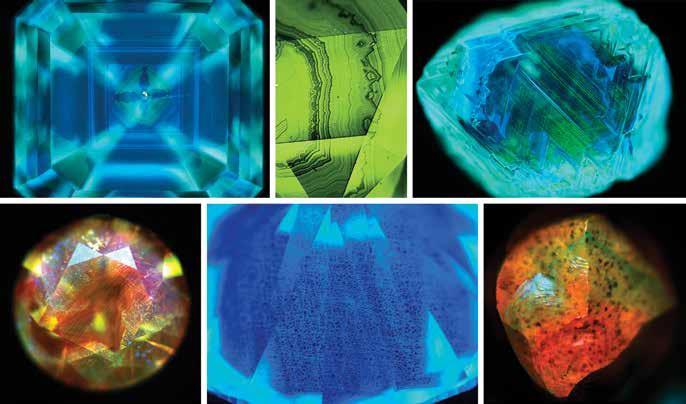
surface and interior temperature during subduction. Where the slab surface temperature intersects the solidus of carbonated mid-ocean ridge basalt (MORB), partial melting may occur (red arrows). At the far right, a cold slab interior remains within the dense hydrous magnesium silicates (DHMS) stability field until the slab stalls and warms up, causing the breakdown of these hydrous phases and the release of hydrous fluid (blue arrows). Large white and smaller brown diamond symbols signify the growth of high-quality gem diamonds (CLIPPIR and type IIb) and low-quality, generally non-gem sublithospheric diamonds, respectively. Poorly understood mechanisms transport some diamonds upward where they can be swept up in kimberlite eruptions and mixed with common lithospheric diamonds (small black diamond symbols). Modified from Smith and Nestola (2021) with carbonated MORB solidus from Thomson et al. (2016b) and DHMS stability field from Harte (2010).
concentrations follow a different order: {111} > {100} > {113} > {110} (Burns et al., 1990). The incorporation of nickel- and cobalt-related defects is also sector-dependent (Collins et al., 1990b; Lawson et al., 1996).
In fancy-color HPHT-grown diamonds, the cuboctahedral distribution of defects may be noticeable under visible light, short-wave, and/or long-wave UV (e.g., Shigley et al., 2004a,b). Using deep-UV, the characteristic cuboctahedral growth patterns are enhanced (figure 8); this feature was largely the driving force for the development of the DiamondView instrument for diamond identification (Welbourn et al., 1996). The fluorescence colors depend on the concentration of defects, as summarized by Eaton-Magaña et al. (2017) and D’Haenens-Johansson et al. (2022). Colorless type II specimens fluoresce blue-green to green-blue, followed by remarkably long-lived green-blue (500 nm band) and/ or yellow-orange (575 nm) phosphorescence, as shown in figure 8 (Watanabe et al., 1997; Eaton-Magaña et al., 2008, 2017; Eaton-Magaña and Lu, 2011; D’Haenens-Johansson et al., 2014, 2015; Zhao et al., 2023). The combination of the characteristic growth zonation, fluorescence color, and phosphorescence is recognizably different from what is observed for similarly colored natural and CVD-grown diamonds, making this a powerful technique to differentiate between HPHT-grown and other diamond materials.
and the expected mineralogy and phase changes within slab rocks. Overlaying the slab geotherms onto phase diagrams helps to illustrate where water-bearing phases break down and release fl uid, such as the relatively well-accepted loss of most water from warm slabs at relatively shallow depths (<200 km). This is the activity that generates melt and fuels arc volcanoes such as those of the Pacifi c Ring of Fire. Cold slabs, however, can partially bypass this shallow dewatering process and transport a budget of carbonate and water to depths beyond 300 km, where its later release can cause deep-focus earthquakes (figure 3).
The cold slabs can be thought of as having a carbonated crust component and a hydrated/serpentinized mantle peridotite component that lies shielded beneath the crust, toward the interior of the slab. The deep release of carbonatitic melt and hydrous fl uid from each component, respectively, is shown in the two depth profiles in figure 3. The carbonated crust (mid-ocean ridge basalt, or MORB) of the slab surface will intersect a deep depression in its solidus, the curve describing the beginning of melting, meaning it exceeds the melting temperature. Beyond this point, carbonate melting (red arrows) is expected to occur within the top/crustal portion of the slab.
For hydrated/serpentinized mantle peridotite inside the slab, its stability also depends on temperature. If it remains cool, the serpentine can metamorphose into higher-pressure water-
The CVD growth method is based on careful control of the gas-phase chemistry of a carbon-containing plasma that has been activated by a source of energy (typically microwaves), leading to diamond deposition on diamond seeds that act as the template for crystal growth. High-quality CVD diamond deposition usually occurs on (001)-oriented diamond seeds (also referred to as substrates), following what is known as “step-flow growth,” with microscopic riser and terrace segments oriented along [001] and [101] directions, respectively (Martineau et al., 2004; 2009). The ensuing idealized layer-by-layer deposition produces a crystal with a cubic growth morphology. The different impurity uptake in the risers and terraces results in a heterogeneous incorporation of defects, creating a characteristic fluorescence pattern of tightly spaced striations that can be observed by deepUV illumination (figure 9) (Martineau et al., 2004, 2009). Furthermore, any modifications to the growing conditions, whether unintentional or caused by planned interruptions, result in changes to the defect content in a plane parallel to the substrate, creating a layered appearance that depends on the viewing angle. This is a feature often observed in the deep-UV fluorescence images for large CVD-grown diamonds, presenting clear evidence they are produced through multiple-stage growth (e.g., Dieck et al., 2015; Law
and Wang, 2016; Tam and Poon, 2023; Eaton-Magaña et al., 2024). Blue-fluorescing threading dislocations and bundles can also be observed, oriented in a direction approximately parallel to the main macroscopic growth direction, with deviations caused by the step-flow growth (Martineau et al., 2004, 2009). Notably, these dislocations may have a recognizably linear appearance when viewed along directions that transect the growth planes, but can look patchy and nearly polygonized when the viewing angle is parallel to the main growth direction (Martineau et al., 2004, 2009; Dieck et al., 2015).
bearing minerals called dense hydrous magnesium silicates (DHMS) rather than breaking down. DHMS phases are a good vehicle for transporting water, with some carrying as much as 10% or more water by weight. The geotherm for the interior of cold slabs remains in the DHMS stability fi eld far beyond a depth of 300 km (far right in figure 3). The slab in figure 3 is shown defl ecting as it reaches the top of the lower mantle (at 660 km), where there is a change in mantle density and deformability. As the slab stalls and warms up, DHMS phases break down to form minerals that carry much less water, thereby causing water release (blue arrows in figure 3). These are the mechanisms proposed to trigger not only deep-focus earthquakes but also super-deep diamond growth (Shirey et al., 2021).
Inclusions in the smaller, lower-quality varieties of sublithospheric diamonds often show evidence of growth from carbonatitic melts derived from slabs (Walter et al., 2008), but hydrous/aqueous fl uids have also been implicated for some samples (Wirth et al., 2007; Pearson et al., 2014; Palot et al., 2016). Serpentinite in subducting slabs can be relatively enriched in boron, meaning that the eventual breakdown of hydrous minerals from serpentinized peridotite can release boron-bearing hydrous fl uid, which has been linked with the formation of type IIb (boron-bearing) diamonds (Smith et al., 2018). Figure 4 shows a calcium silicate (breyite) inclusion with methane and hydrogen in a type IIb diamond. The original mineral inclusion may have been relatively hydrogen-rich
Diamond-bearing kimberlite eruption
Continental lithosphere
Deep-focus earthquake activity
The fluorescence colors can span the entire visible spectrum, even for samples that are colorless. As-grown CVD diamonds generally show red, orange, or pink fluorescence colors from NV0 defects, whereas the fluorescence colors of these nitrogen-containing CVD diamonds progress from yellow to green to turquoise with higher annealing temperatures (Martineau et al., 2004; Wang et al., 2012; Eaton-Magaña and Shigley, 2016; Wassell et al., 2018). Many annealed CVD diamonds also show green-blue phosphorescence (e.g., Wang et al., 2012). Eaton-Magaña and Myagkaya (2024) recently compared changes to the deep-UV images for a CVD-grown diamond that was submitted to GIA before and after HPHT annealing (figure 10). The deep-UV fluorescence images illustrate luminescent defect concentration changes, highlighting that the sample’s intrinsic growth pattern, characteristic of multi-stage CVD growth, was unaffected. CVD-grown diamonds that have been treated to produce blue, pink, or yellow body colors display similar characteristic patterns, but with different fluorescent colors depending on the defect content of the starting material and the treatment sequence (e.g., Wang et al., 2010; Moe et al., 2015; EatonMagaña and Shigley, 2016; Johnson et al., 2023).
High-quality CLIPPIR and type IIb diamonds
Low-quality, non-gem sublithospheric diamonds
Lithospheric diamonds
Carbonated slab melting
Hydrous uid
Deep-UV imaging has also proven to be an invaluable tool in detecting rare CVD diamonds that are grown on natural diamonds, creating a “hybrid” natural/ laboratory-grown diamond product (Fritsch and Phelps, 1993; Moe et al., 2017; Tang et al., 2018; Ardon and McElhenny, 2019). These examples were apparently produced to increase the sample weight or to create a potentially more valuable color, such as the blue hues introduced by type IIb CVD overgrowth layers. When exposed to deep-UV, the hybrid diamonds studied thus far have shown distinctive fluorescence patterns. The natural regions fluoresce blue due to N3 defects, while the CVD layers fluoresce red due to high NV0 concentrations or, for cases of type IIb diamond deposition, fluoresce greenblue with similarly colored phosphorescence.
Figure 3. Mantle cross section showing a relatively cool subducting slab, with an inset histogram of earthquake frequency (from figure 1). Profiles on the right show the slab surface and interior temperature during subduction. Where the slab surface temperature intersects the solidus of carbonated mid-ocean ridge basalt (MORB), partial melting may occur (red arrows). At the far right, a cold slab interior remains within the dense hydrous magnesium silicates (DHMS) stability field until the slab stalls and warms up, causing the breakdown of these hydrous phases and the release of hydrous fluid (blue arrows). Large white and smaller brown diamond symbols signify the growth of high-quality gem diamonds (CLIPPIR and type IIb) and low-quality, generally non-gem sublithospheric diamonds, respectively. Poorly understood mechanisms transport some diamonds upward where they can be swept up in kimberlite eruptions and mixed with common lithospheric diamonds (small black diamond symbols). Modified from Smith and Nestola (2021) with carbonated MORB solidus from Thomson et al. (2016b) and DHMS stability field from Harte (2010).
...to be continued in the December 2025 issue

“Discover a world of exquisite gemstone jewellery”
For over 50 years, JPPE, a Cape Town family business, has been crafting exquisite gemstone jewellery. Since 1966, our passion for precious stones has inspired us to create stunning designs, captivating both locals and tourists.
From Big Five-inspired pieces and elegant African designs to timeless classics, our extensive collection showcases a rainbow of loose gemstones and a broad selection of in-house designs.
As one of South Africa's most established gemstone jewellers, we pride ourselves on offering quality ranges that reflect global trends, catering to every taste.
Every piece is meticulously crafted in South Africa and backed by a 100% service guarantee. Choose from a variety of gemstones and precious metals, including silver and 9ct, 14ct, and 18ct gold.
Combining the innovation of CAD design with the expertise of our master artisans, JPPE delivers craftsmanship that meets the highest international standards.
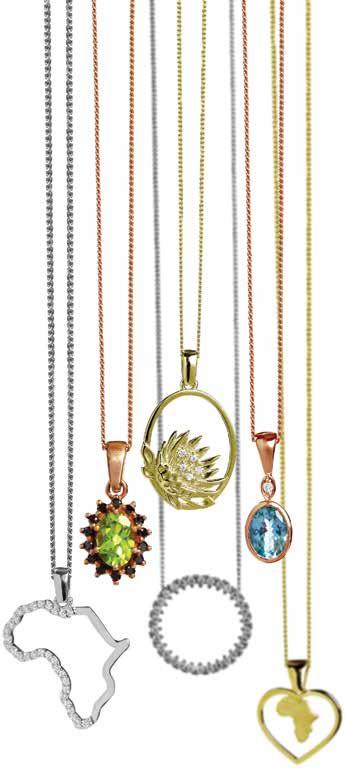
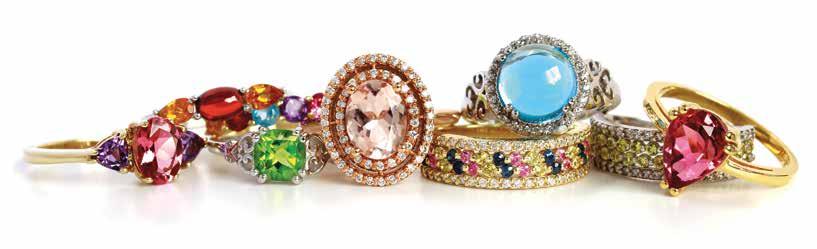
Kyle Gilson Director
Paul Sales Representative
Sales Representative

Cubic zirconias were not created for fashion – Soviet scientists developed them in the 1970s for use in lasers and optics before they became a diamond substitute.
Empress Eugénie adored antique jewels and collected pieces once owned by Marie-Antoinette, Josephine and Queen Hortense. She saw herself as their successor and often reset their gems into new designs. During the fall of the Second Empire in 1870, many crown jewels were seized or sold. Eugénie’s crown was saved thanks to careful hiding by loyal officials and later returned to France.

Due to conservation efforts, genuine red and pink coral jewellery is now strictly regulated — ethical jewellers often use dyed bamboo coral or vintage coral instead.
The Manin chain (Venetian gold chain) is made of such tiny welded links that approximately 15 cm of chain can be made from just 1 g of gold, with about 20 rings per centimetre.

After Marie Antoinette’s execution, some of her diamonds were smuggled out of France sewn into the hems of loyalists’ clothes – later resurfacing in royal collections across Europe.
“Invisible” gemstone settings (first patented in 1933 by the house of Van Cleef & Arpels) allow stones to sit without visible prongs, creating the illusion of a continuous gemstone surface. The technique was developed by engineers rather than traditional jewellers.

The Delhi purple sapphire was gifted to the Museum of Natural History in London after the owner's death. Upon opening the box, a handwritten note surfaced, detailing the amethyst's cursed history. The note included protective charms and rituals to counteract the stone's malevolent influence. Although the museum accepted the generous donation, it cautiously stored the amethyst in a vault for an extended period before finally unveiling it for public display in 1972.
As the watch industry’s most prestigious awards event approaches, the spotlight falls on a diverse selection of nominees, from storied maisons to daring independents
The watchmaking world is once again turning its attention to Geneva, where the 2025 Grand Prix d’Horlogerie de Genève (GPHG) will announce its category winners at a muchanticipated ceremony on 13 November 2025. The GPHG, often described as the “Oscars of Watchmaking”, has released its official list of finalists, drawing from a wide field that includes horological heavyweights like Audemars Piguet, Bvlgari, Piaget and Chopard, as well as innovative independent brands such as Ming, Raúl Pagès and Hazemann & Monnin.

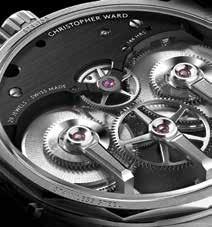
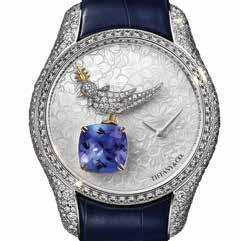
Founded in 2001, the GPHG now operates as a public-interest foundation and serves as a platform to showcase excellence in watchmaking. Its nomination process begins with the GPHG Academy, a global body comprising over 1 000 members from the horological community, including journalists, collectors, retailers and industry professionals. These members propose and shortlist the “competing watches”, from which a 30-member jury selects the final nominees and, ultimately, the winners.

While major names such as Patek Philippe, Rolex and brands within Swatch Group and Richemont often opt out of participating, the GPHG remains a critical annual moment for both traditional maisons and rising independents to gain recognition on a global stage. Each category features six finalists, culminating in the prestigious Aiguille d’Or Grand Prix, awarded to the best overall watch across all classifications. Last year’s top honour went to the IWC Portugieser Eternal Calendar, a technical and aesthetic standout.
This year, the awards cover a broad range of categories, from traditional “Time-Only” and “Chronograph” designs to technically complex pieces competing in “Mechanical Exception” and “Tourbillon” categories. Among the notable entries is the Royal Oak Perpetual Calendar “150th Anniversary” Openworked by Audemars Piguet in the Men’s Complication category, the ultra-thin Bvlgari Octo Finissimo Ultra Tourbillon and the technically ground-breaking Grand Seiko Spring Drive UFA, arguably the most accurate mechanical watch in this year’s selection.
The Ladies’ Watch and Ladies’ Complication categories are particularly competitive, with standouts such as Piaget’s Sixtie, Tiffany & Co’s Bird on a Rock Legacy Tanzanite and Hermès’ Cut Le Temps Suspendu, a poetic reinterpretation of time display. Meanwhile, the Chronograph category includes technologically intriguing entries like the H Moser & Cie Streamliner Alpine Drivers Edition and the Andersen Genève Split Second Chronograph Worldtime.
Newcomers are making a strong showing in the “Challenge” and “Petite Aiguille” categories, which focus on accessible pricing and innovation. Independent brands like Kurono Tokyo, Christopher Ward, Otsuka Lotec and Amida are proving that exceptional horology can still be achieved at relatively modest price points. The Mechanical Exception and Tourbillon categories, traditionally hotbeds of highend creativity, are once again brimming with technical marvels, from Greubel Forsey’s Nano Foudroyante to Urban Jürgensen’s 250th Anniversary Tourbillon.
Also worth noting is the often-debated “Iconic” category, which aims to honour enduring designs or modern reinterpretations of historically significant timepieces. This year’s entries include the Breguet Classique Souscription 2025, the Piaget Andy Warhol and the intriguing Bvlgari x MB&F Serpenti, though the criteria for inclusion in this category remain loosely defined.
Participation in the GPHG comes at a financial cost to brands. Each submitted watch carries an entry fee and those selected as finalists are required to pay an additional sum to support exhibition and promotional efforts. These exhibitions, featuring the finalist watches, travel internationally prior to the awards ceremony and offer collectors, journalists and industry professionals a rare chance to examine the pieces up close.
While not every major brand participates, the GPHG offers an invaluable platform to spotlight cutting-edge watchmaking and elevate both legacy and up-andcoming names. Beyond being a competition, it is increasingly seen as a curated showcase of innovation, creativity and craft, particularly for independent watchmakers whose creations might otherwise be overshadowed by industry giants.
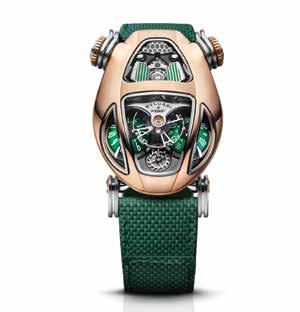
As the November awards approach, anticipation continues to build. Regardless of who takes home the Aiguille d’Or, this year’s finalists reaffirm the enduring vitality, technical ingenuity and artistic flair that define modern haute horlogerie.
For the full list of finalists, visit the official GPHG website at: www.gphg.org.
“The GPHG, often described as the ‘Oscars of Watchmaking’, has released its official list of finalists, drawing from a wide field that includes horological heavyweights like Audemars Piguet, Bvlgari, Piaget and Chopard, as well as innovative independent brands such as Ming, Raúl Pagès and Hazemann & Monnin.”

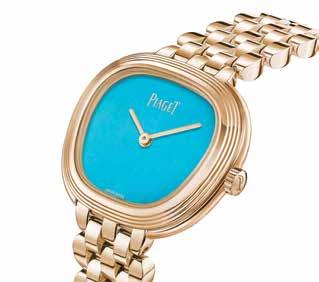

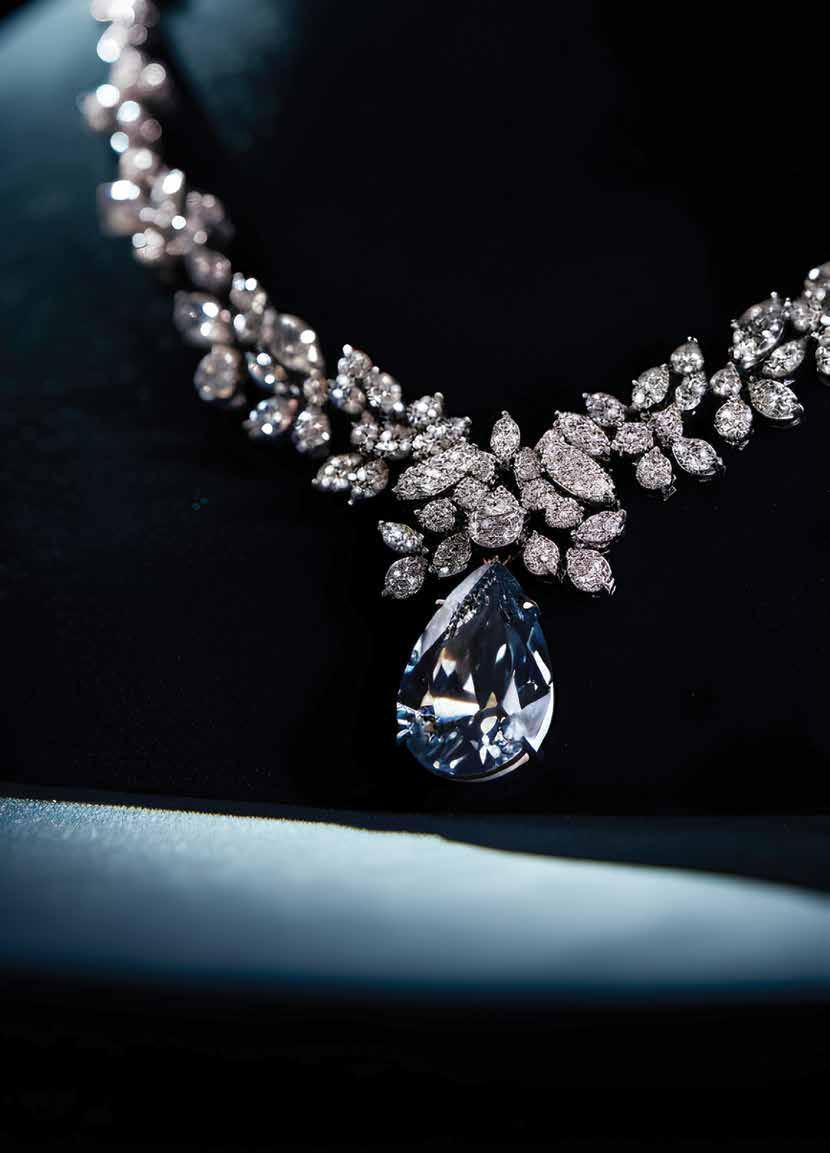
A comprehensive directory featuring information and contact details of refining members and members of the Jewellery Manufacturers' Association of South Africa –proudly showcasing manufacturers committed to crafting quality jewellery locally.
ADELE'S MANUFACTURING JEWELLERS
Tel no: 082 595 3868
E-mail: adele@amj.co.za
AFRICAN TRADE BEADS
JEWELLERY COLLECTION
Tel no: 011 726 7643
E-mail: tamiko@zazenconsulting.com
AFROGEM
Tel no: 076 726 8491
E-mail: k ylegilson@mweb.co.za; jess@afrogem.co.za; info@afrogem.co.za; accounts@jppe.co.za; leighann@afrogem.co.za
ALLOY JEWELLERY GALLERY (PTY) LTD
Tel no: 073 924 5254
E-mail: edna@alloygallery.co.za
ALTIN JUWELIERS BK
T/A ALTIN JEWELLERS
Tel no: 082 454 4430
E-mail: info@altin.co.za
AMBER & FORGE (PTY) LTD
T/A SCHERMANS
Tel no: 072 928 0385
E-mail: info@schermans.co.za
AMBIGO JEWELLERS
Tel no: 062 282 6924
E -mail: ntobekobasil@gmail.com
ANDREAS SALVER
MANUFACTURING JEWELLERS
Tel no: 011 706 6828
E-mail: andreas@andreassalver.com
ANKE LINDEN JEWELLERY (PTY) LTD
Tel no: 0 69 925 3699
E-mail: lindenjewellery@gmail.com
ANNA ROSHOLT JEWELLERY DESIGN
Tel no: 0 61 080 6481
E-mail: anna@annarosholt.com
ANNELLE MURRAY GOUDSMID
Tel no: 082 956 7747
E-mail: murrayannelle@gmail.com
ASHOK JEWELLERS DESIGNERS & MANUFACTURERS
Tel no: 031 566 5046
E-mail: info@ashokjewellers.co.za; 5665046@gmail.com
ATHENA A
Tel no: 072 272 30 89
E-mail: info@brandathenaa.co.za; athena@athena-a-shoes-andaccessories.com
AUGENTA JEWELLERS
Tel no: 021 883 8288
E -mail: dylan@augenta.com
AURUM DESIGN
Tel no: 021 423 6590
E -mail: sebastian@aurumdesign.co.za adela@aurumdesign.co.za
AURUM MANUFACTURING (PTY) LTD
Tel no: 011 568 9967
E-mail: info@aurummanufacturing.co.za; oliver@aurummanufacturing.co.za; karina@aurummanufacturing.co.za
AUTHOR BY KATHLYN ALLAN
Tel no: 084 247 0358
E-mail: mail@worldofauthor.com
BAKOENA’S FASHION JEWEL & HAIR BEAUTY (PTY) LTD
Tel no: 074 886 0505
E-mail: makhethatshepo85@gmail.com
BEAUDELL DESIGNS (PTY) LTD
Tel no: 083 2 82 3566
E-mail: esther@beaudell.co.za
BEAUTIFUL SELECTION (PTY) LTD
Tel no: 021 137 1792
E-mail: chantelle@beautifulselection.co.za admin@beautifulselection.co.za
BRESCO DIAMONDS (PTY) LTD –
MANUFACTURING
Tel no: 012 998 3150
E-mail: karl@brescodiamonds.co.za; info@brescodiamonds.co.za; veronica@brescodiamonds.co.za
BRETTLAND POULSEN
DESIGNER GOLDSMITH
Tel no: 031 562 8009
E-mail: brett@brettlandpoulsen.co.za
BRONSKI JEWELLERS
Tel no: 021 852 7891
E -mail: info@bronskijewellers.co.za

BROWNS THE DIAMO ND STORE –WORKSHOP
Tel no: 0860 276 967
E-mail: larry@brownsjewellers.com; carel@brownsjewellers.com; info@brownsjewellers.com
BULLION STAR (PTY) LTD
Tel no: 011 202 5 021
E-mail: bullionstr@gmail.com
CADTOCRAFT (PTY) LTD
Tel no: 011 781 0 303
E-mail: johanwessels12@gmail.com
CAPE PENINSULA UNIVERSITY OF TECHNOLOGY
Tel no: 021 460 3632
E-mail: konstandakellisv@cput.ac.za; camerondowl@cput.ac.za; davidsre@cput.ac.za
CARESS JEWELLERS UITENHAGE CC
Tel no: 0 41 992 4421
E-mail: eben-caress@mweb.co.za
CHARLENE NEL T/A BELLA COSA
Tel no: 021 975 5097
E-mail: charlene@bellacosa.co.za
CHARLES NORMAN DIAMONDS (PTY) LTD
Tel no: 083 557 3252
E-mail: rishan@charlesnormandiamonds. com; drrchetty@me.com
CHIEDZA JEWELLERY CREATIONS (PTY) LTD
Tel no: 067 813 9903
E-mail: chiedzajewellery@gmail.com
CLARITY DESIGNS (PTY) LTD
T/A JENNI GAULT INTERNATIONAL JEWELLERY DESIGN
Tel no: 083 379 9797
E-mail: gault.jenni@gmail.com
CPM – CAPE TOWN
Tel no: 021 551 2066
E -mail: Sharon@cpmct.co.za; jolandie@cpmct.co.za
CPM – DURBAN
Tel no: 031 303 5402
E -mail: malcolm@cpmdbn.co.za
FERRARI LOGISTICS SOUTHERN AFRICA (PTY)
Building 3, OR Tambo International Airport Special Economic Zone, Bonaero Drive, Bonaero Park, 1619
Tel: +27 87 654 2543 | Cell: +27 72 472 7170 / +27 66 488 2055
Email: info.za@ferrarigroup.net | Website: www.ferrarigroup.net
CPM – GQEBERHA
Tel no: 041 365 1890
E-mail: renee@cpmpe.co.za
CPM – JOHANNESBURG
Tel no: 011 334 6 263
E-mail: shannon@cpmjhb.co.za; bianca@cpmjhb.co.za
CREATIVE DESIGN
MANUFACTURERS (PTY) LTD
Tel no: 031 563 3987
E-mail: goldlink@iafrica.com; prakashsoni@iafrica.com
DABERON MANUFACTURING (PTY) LTD
Tel no: 011 334 8841
E-mail: daberon1@gmail.com; david@dulondon.com
DANIYAL GOLD JEWELLERS
Tel no: 073 797 4460
E-mail: daniyalgoldjewellers@gmail.com
DAVID BOLDING GOLDSMITH
Tel no: 083 2 55 3484
E-mail: david@dbgold.co.za
DC JEWELLERS
Tel no: 044 691 3692
E -mail: dcjewel@mweb.co.za; santie@dcjewellers.co.za
DEGLON JEWELLERY STUDIO
Tel no: 021 8 51 3182
E-mail: waynedeglon@gmail.com
DEON SMITH JEWELLERY
Tel no: 083 454 2161
E-mail: deonsmithjewellery@gmail.com; drdwsmith63@gmail.com; deon@deonsmithjewellery.com
DIDIDESIGN
Tel no: 011 784 0369
E-mail: didi@dididesign.co.za
DR ESME SPICER
Tel no: 073 239 9983
E -mail: esme.spicer@gmail.com
DURBAN UNIVERSITY OF TECHNOLOGY
Tel no: 031 373 6673/6
E-mail: queenethn@dut.ac.za; samanthav@dut.ac.za;
EBFORSON
Tel no: 082 453 5155
E-mail: a rt@ebforson.co.za
ECO CHIC JEWELS
Tel no: 083 987 2069
E -mail: esmarie.ecochic@gmail.com
EDEL DESIGNER JEWELLERY
Tel no: 072 6 36 0213
E-mail: edeldesignerjewellery@gmail.com
EKURHULENI JEWELLERY PROJECT
Tel no: 011 825 5822
E-mail: samuel@ejewellery.org.za; didi@ejewellery.org.za
ELEMENTAL STUDIO
Tel no: 084 507 7777
E -mail: lezamcleod@icloud.com
EMBER MANUFACTURING AND DESIGN (PTY) LTD
Tel no: 083 557 5190
E-mail: info@ember.co.za; stephloubser@gmail.com
EON HOON JEWELLERY DESIGN
Tel no: 0 83 578 7447
E-mail: eon@eonhoon.com
ERICA STRAUSS DESIGNER JEWELLERY STUDIO
Tel no: 072 596 9014
E-mail: esdjewellery@gmail.com
ETERNITY ENTERPRISE
JEWELLERY (PTY) LTD
Tel no: 018 290 5722/3
E-mail: info@eternityenterprise.com; daleen@eternityenterprise.com
EVERTRADE 142 (PTY) LTD
T/A D'OURO JEWELLERS
Tel no: 011 615 3402
E-mail: a.veloso@dourojewellers.co.za; dourojewellersjhb@gmail.com
FACET JEWELLERY
Tel no: 073 397 8820
E -mail: catherine@facetjewellery.co.za
FARIED JEWELLERY DESIGN STUDIO
Tel no: 021 671 5529
E-mail: insaaf.achmat@gmail.com; fachmat@gmail.com
FERROS JEWELLERS
Tel no: 041 363 1881
E -mail: alex@ferrosjewellers.com
FINEGOLD LABORATORY SERVICES CC
Tel no: 021 511 6237
E-mail: admin@finegold.co.za; steven@finegold.co.za
FREE RANGE JEWELS
Tel no: 021 418 3607
E-mail: marele@freerangejewels.co.za
GATTOO'S JEWELLERS
Tel no: 084 852 2046
gattoosjewellery@gmail.com
GAUTA REFINERIES (PTY) LTD
Tel no: 082 4 57 6926
E-mail: rudi@gautarefinery.com
GEM AFRIQUE
Tel no: 062 050 6479
E-mail: s oni2.goldsmith@gmail.com
GEMOLOGY AFRICA
Tel no: 044 534 8170
E -mail: gemologyafricasales@gmail.com; mandy@tenikwa.co.za
GERHARD MOOLMAN FINE JEWELLERY
Tel no: 021 914 0838
E-mail: gerhard@gmfinejewellery.co.za
GOLD AND I (PTY) LTD
Tel no: 084 360 6762
E -mail: info@goldandi.co.za
HADLEY HOLDINGS (PTY) LTD
Tel no: 061 5 01 9592
E-mail: hadleyholdings@protonmail.com; contact@juliapharo.com
HARRY OPPENHEIMER DIAMOND TRAINING SCHOOL
Tel no: 011 334 9003/8420
E-mail: neil@diamondtrainingschool.co.za; koos@diamondtrainingschool.co.za; info@diamondtrainingschool.co.za
HAVILAH GOLD CREATIONS
Tel no: 041 5 81 1942
E-mail: sheyna@havilah.co.za; carol@havilah.co.za; charlie@thejacksons.co.za
HELEN MICHALETOS
Tel no: 082 342 1577
E -mail: studio@helenmichaletos.com; studio@wildadornment.com
HESTI WADE T/A FETTER-AND-THREE
Tel no: 082 855 9088
E-mail: hesti@fetter-and-three.co.za
HUIZEN'S MANUFACTURING JEWELLERS
Tel no: 018 880 0455
E-mail: info@huizens.co.za
IDA ELSJE DESIGN
Tel no: 021 424 1101
E -mail: ida@idaelsje.com
ILITHA GREEN TECH
Tel no: 087 822 1824
E -mail: siya@alurite.co.za; jason@alurite.co.za
ILONKA JEWELLERS
Tel no: 072 778 1540
E -mail: info@ilonkajewellers.co.za
FERRARI LOGISTICS SOUTHERN AFRICA (PTY)
Building 3, OR Tambo International Airport Special Economic Zone, Bonaero Drive, Bonaero Park, 1619
Tel: +27 87 654 2543 | Cell: +27 72 472 7170 / +27 66 488 2055
Email: info.za@ferrarigroup.net | Website: www.ferrarigroup.net
IMFUNDISO SKILLS DEVELOPMENT
Tel no: 012 734 0245
E-mail: imfundiso@mweb.co.za
IMPILO COLLECTION
Tel no: 010 021 0441
E -mail: ayeung@impilocollection.co.za
INGE SCHOLTZ JEWELLERY DESIGNER AND MANUFACTURER
Tel no: 073 271 3789
E-mail: admin@csvaluers.co.za
ISA B JEWELLERY DESIGNS
Tel no: 0 67 255 2494
E-mail: bothmaisabel09@gmail.com
ISABELLA JEWELLERS & REFINERS CC
Tel no: 011 524 6385
E-mail: meiki@isabella-refiners.co.za; isabella@isabella-refiners.co.za; info@isabella-refiners.co.za
ISIMODENI JEWELLERY
Tel no: 083 757 9505
E-mail: nomfundo@isimodeni.co.za
J HIND JEWELLERS
Tel no: 031 306-1330
E -mail: jhindr23@gmail.com
JAGGATH JEWELLERS
Tel no: 031 307 7790
E -mail: navinjagath372@gmail.com
JANINE BINNEMAN JEWELLERY DESIGN
Tel no: 021 715 6178
E-mail: janine@janinebinneman.com; info@janinebinneman.com; studio@janinebinneman.com; customerlove@janinebinneman.com
JOHANNA VAN ZYL
Tel no: 082 778 5846
E -mail: jo@johannavanzyl.co.za
JOHN 3 JEWELLERY
Tel no: 076 822 8783
E -mail: john3jewellery@gmail.com
JOHREN MANUFACTURING
T/A THE J EWELLERY SHOP
Tel no: 046 624 3748
E-mail: johren@telkomsa.net
JOY MASSYN JEWELLERY (PTY) LTD
Tel no: 012 662 2861
E-mail: joy@joymassyn.co.za
JYARAS JEWELLERS (PTY) LTD
Tel no: 067 3 97 6373
E-mail: admin@jyarasjewellers.co.za; sai@jyarasjewellers.co.za;
KARLIEGH KING (PTY) LTD
Tel no: 072 283 2334
E- mail: karleighkingdesigns@gmail.com
KARLIEN DESIGNS
Tel no: 083 695 2607
E- mail: karliendesigns@gmail.com info@kaeliendesigns.com
KATANNUTA CC
Tel no: 083 234 0247
E-mail: sparkle@katannutadiamonds.co.za; clare@katannutadiamonds.co.za
KAYRO JEWELLERS
Tel no: 041 585 4842
E -mail: slaide.kayro@mweb.co.za
KIM CLOETE JEWELLERY DESIGN
Tel no: 021 531 9082
E-mail: kim@kimcloetedesign.co.za
KIMBERLEY DIAMOND
JEWELLERY INCUBATOR
Tel no: 053 831 1570
E-mail: info@kdji.org; isaac@kdji.org
KIONI GOODS (PTY) LTD
Tel no: 083 375 7813
E-mail: accounts@kioni.co.za
KRISTEN MALAN CC
Tel no: 011 880 1866
E -mail: kristen@merindol.com; john@merindol.com
KUSASA REFINING (PTY) LTD
Tel no: 010 0 01 6284
E-mail: greg.magid@kusasarefining.co.za; info@kusasarefining.co.za
L'AUTRICHE FINE JEWELLERY
Tel no: 074 973 9308
E-mail: ernst@lebijoux.co.za
LETHALE CARAT (PTY) LTD
Tel no: 083 306 1333
E-mail: lethalecarat@gmail.com
LILJA HASTIE JEWELLERY (PTY) LTD
Tel no: 0 82 324 3312
E-mail: liljadesankahastie@gmail.com
LILLY FRIEDLAENDER CC
Tel no: 021 887 1655
E-mail: lilly.f@wol.co.za
LIMPOPO JEWELLERY
BUSINESS INCUBATOR
Tel no: 015 293 0214
E-mail: tessa@ljbi.org.za; mabatho@ljbi.org.za; siphelele@ljbi.org.za; admin@ljbi.org.za; kgothatso@ljbi.org.za
LIPMAN & SON
Tel no: 021 424 3371
E -mail: ian@lipmanson.co.za
LORIEN MANUFACTURING JEWELLERS
Tel no: 011 967 1700
E-mail: heather@allanybrink.co.za
LOTTI JEWELLERY
Tel no: 079 386 1079
E -mail: info@lottijewellery.co.za
LYNDA MARION JEWELLERY
Tel no: 082 6 51 8145
E-mail: silver@lyndamarion.com
M2 JEWELLERS CC
Tel no: 012 460 6793
E -mail: maryna@m2jewellery.com
MADELINE'S TEMPTATIONS
Tel no: 083 3 05 2798
E-mail: info@madelinestemptations.co.za
MAGGIE AFRICA
Tel no: 072 882 2586
E -mail: maggieroodt@telkomsa.net
MAGMA METAL RECOVERIES
Tel no: 031 702 4422
E-mail: edwards@astronet.co.za; valuchem.investments@gmail.com
MAGNAVOLT TRADING 215 CC
T/A METAL IMAGE
Tel no: 021 447 6600
E-mail: maburchell@gmail.com; shameela@metalimage.co.za; info@metalimage.co.za
MARINE GOLD CC
Tel no: 021 424 0077
E -mail: stephen@marinegold.co.za
MARION'S JEWELLERY STUDIO
Tel no: 041 3 68 4582/3
E-mail: marionsstudio@mweb.co.za
MARK WHITEHORN GOLDSMITH
Tel no: 0 83 271 6065
E-mail: info@markwhitehorn.co.za; whitehorngoldsmith@gmail.com
MARTIN NAGEL
MANUFACTURING JEWELLERS
Tel no: 011 484 4978
E-mail: info@martinnagel.co.za; laura@martinnagel.co.za
MASELESELE JEWELLERS
Tel no: 012 734 0245
E-mail: imfundiso@mweb.co.za
MEDITERRANEAN JEWELLERS
Tel no: 0 82 689 0630
E-mail: panayiotis@mmjewellers.co.za
FERRARI LOGISTICS SOUTHERN AFRICA (PTY)
Building 3, OR Tambo International Airport Special Economic Zone, Bonaero Drive, Bonaero Park, 1619
Tel: +27 87 654 2543 | Cell: +27 72 472 7170 / +27 66 488 2055
Email: info.za@ferrarigroup.net | Website: www.ferrarigroup.net
METAL CONCENTRATORS SA (PTY) LTD
– CPT
Tel no: 021 510 0770
E-mail: info@metcon.co.za; melynda@metcon.co.za
METAL CONCENTRATORS SA (PTY) LTD
– SEZ
Tel no: 012 000 4440
E-mail: charlotte.crosse@metcon.co.za; grant.crosse@metcon.co.za; Hendri.Keulder@metcon.co.za; Diane.Duncan@metcon.co.za; tania.pelser@metcon.co.za; michelle.boxall@metcon.co.za; Amelia.vdMerwe@metcon.co.za; Aasha.Sadanan@metcon.co.za
METTLE JEWELLERY
Tel no: 073 292 8674
E -mail: marlie@mettlejewellery.com; marlievn@gmail.com
MICHAEL J SOLOMON MANUFACTURING JEWELLERS
Tel no: 064 930 2270
E-mail: ms@absamail.co.za
MICHL JEWELLERY
Tel no: 083 601 8535
E -mail: michelleliaosa@gmail.com
MINITZA (PTY) LTD
Tel no: 082 772 9812
E -mail: info@minitza.co.za
MIRKO JEWELLERY
Tel no: 021 886 8296
E -mail: mirinda@mirkojewels.co.za
NATURAL PRECIOUS METALS (PTY) LTD
Tel no: 031 569 3010/1/2
E-mail: info@npmkzn.co.za; nikki@npmkzn.co.za
NDALO JEWELLERY (PTY) LTD
Tel no: 066 183 4142
E-mail: thulanesifiso6@gmail.com
NEWMAN JEWELLERY DESIGN
Tel no: 012 329 9600
E-mail: nina@newmandesign.co.za; dave@newmandesign.co.za
NILU ENGRAVING & JEWELLERY (PTY) LTD
Tel no: 083 384 7792
E-mail: laser@nilu.co.za
NINA BOSCH PORCELAIN
Tel no: 079 891 7 240
E-mail: info@ninabosch.co.za
NOLO M JEWELLERY DESIGN (PTY) LTD
Tel no: 076 695 9382
E- mail: nolomjewellery@gmail.com
NV DESIGN COMPANY T/A BY NANETTE
Tel no: 021 883 3856
E-mail: nanette@bynanette.com; studio@bynanette.com
OEL GRAHAM CC T/A CAPE DIAMONDS
Tel no: 021 421 5364
E-mail: joelgraham@capediamonds.co.za
ORO AFRICA (PTY) LTD
Tel no: 021 480 9 860
E-mail: gnathan@oroafrica.com; mlesueur@oroafrica.com; marketing@oroafrica.com; finance@oroafrica.com
PAUL GALLIAS
Tel no: 073 194 2415
E-mail: p gallias@hotmail.com
PEARL AND DIAMOND STUDIO
Tel no: 011 678 0595/6
E-mail: pearldiamond@mweb.co.za
PHILIP ZETLER JEWELLERS
Tel no: 021 423 2771
E-mail: pzetler@mweb.co.za
PICCOLO FINE DESIGNER JEWELLERY
T/A INFERNO GOLD
Tel no: 083 396 6178
E-mail: info@piccolo-jewellery.co.za; suvette@piccolo-jewellery.co.za
PIYUVE JEWELERS CC
Tel no: 031 301 3963
E -mail: aroon@piyuvejewelers.co.za; shashi@piyuvejewelers.co.za
PNEUMA JEWELLERS CC
Tel no: 011 702 1462; 011 702 1891
E-mail: admin@pneumajewellers.com; sales@pneumajewellers.com; mikep@pneumajewellers.co.za
POPULAR DIAMOND JEWELLERY
MANUFACTURERS 1986 CC
Tel no: 011 486 1602/3
E-mail: popd@mweb.co.za; popj@mweb.co.za; lynette@popularjewellers.co.za
PRECIOUS METALS TSWANE
Tel no: 012 035 0260
E-mail: info@preciousmetalstswane. co.za; iain@preciousmetalstswane.co.za; accounts@preciousmetalstswane.co.za; louise@preciousmetalstswane.co.za
PRECISION SETTERS
Tel no: 011 484 7804
E -mail: julian@precisionsetters.co.za
PREVIDA & CO
Tel no: 011 701 5074
E-mail: p revida@previdaandco.com
PRINS & PRINS DIAMONDS
Tel no: 021 422 1090
E-mail: petre@prinsandprins.com; riana@prinsandprins.com; consultants@prinsandprins.com; stefan@prinsandprins.com
RAIMONDO
Tel no: 073 906 9163
E-mail: h ello@raimondo.co.za
RAMSDEN DIAMONDS
Tel no: 011 404 5 010
E-mail: info@olympia-avenue.co.za; natasha@ramsdendiamonds.co.za
RAND REFINERY LIMITED
Tel no: 011 418 9 000
E-mail: nicolab@gold.co.za; PraveenB@gold.co.za; liezlek@gold.co.za amandah@gold.co.za; zahirm@gold.co.za;
RARE EARTH CREATIONS
Tel no: 011 326 1727
E-mail: noloyiso@rarearth.co.za; svetla@rarearth.co.za
RD DIAMONDS
Tel no: 084 234 4433
E -mail: rien@rddiamonds.co.za
REC SET AND ENGRAVE (PTY) LTD
Tel no: 011 326 1727
E-mail: neil@rarearth.co.za; info@rarearth.co.za
REVELEA JEWELLERY (PTY) LTD
Tel no: 081 355 8412
E-mail: reveleajewellery@gmail.com
RICHLINE SA (PTY) LTD
Tel no: 011 418 1600
E-mail: johan.bezuidenhout@richline group.com; marco.decarvalho@richlinegroup.com
RITCO MANUFACTURING JEWELLERS
Tel no: 041 374 2101
E-mail: sales@ritco.co.za; info@ritco.co.za
ROHAN CHERRY DESIGNS
Tel no: 0 82 974 4566
E-mail: info@rohancherry.com
ROK ORIGINALS
Tel no: 072 203 3288
E -mail: info@rokoriginals.com
RUTH PROWSE SCHOOL OF ART NPC
Tel no: 021 447 2492
E-mail: admin@ruthprowse.co.za; sbeukes@ruthprowse.co.za
SANDHAVON DIAMOND CUTTING WORKS
Tel no: 083 233 0910
E-mail: kevin@lutrin.co.za; kelli@lutrin.co.za
FERRARI LOGISTICS SOUTHERN AFRICA (PTY)
Building 3, OR Tambo International Airport Special Economic Zone, Bonaero Drive, Bonaero Park, 1619
Tel: +27 87 654 2543 | Cell: +27 72 472 7170 / +27 66 488 2055 Email: info.za@ferrarigroup.net | Website: www.ferrarigroup.net
SATHKAAR JEWELLERS CC
Tel no: 031 3 06 4921
E-mail: admin@sathkaar.com
SAVAGE JEWELLERY (PTY) LTD
Tel no: 082 9 02 2302
E-mail: nicola@savagejewellery.com
SCARAB JEWELLERY STUDIO CC
Tel no: 021 683 4646
E-mail: janine@scarabjewellery.co.za; Tanya@scarabjewellery.co.za; christine@scarabjewellery.co.za
SEA & SHORE
Tel no: 072 390 6311
E-mail: s eashore.resin@gmail.com
SERAGLIO JEWELLERS
Tel no: 011 783 8 301
E-mail: rolling.albert@yahoo.com
SHANI D JEWELLERY DESIGN (PTY) LTD
Tel no: 082 308 2111
E-mail: diamondshani@gmail.com
SILÉMAY JEWELLERS
Tel no: 083 389 6402
E -mail: sile_L@hotmail.com
SINCE NOW JEWELS
Tel no: 072 336 9518
E -mail: sincenowcz@gmail.com; nosh29@live.co.za
SIVANA AFRICA
Tel no: 011 025 2552
E -mail: info@sivanadiamonds.co.za; accounts@sivanaafrica.co.za
SL HERMAN
MANUFACTURING JEWELLERS
Tel no: 012 460 6771
E-mail: slhj@telkomsa.net
SOMESTUFF CC T/A BEZALEL ATELIER
Tel no: 082 923 6546
E-mail: martie@bezalelatelier.com
STARBRIGHT JEWELLERY
Tel no: 0 83 775 9995
E-mail: megan@starbrightgirl.com
STUDIO 1980 (PTY) LTD
Tel no: 083 379 0171
E -mail: info@studio1980za.com
STUDIO 39 JEWELLERY DESIGN
Tel no: 031 764 3000
E-mail: kim@studio39.co.za
STUDIO C MANUFACTURING JEWELLERS
Tel no: 011 642 7826
E-mail: chris@studioc.co.za;
peggy@studioc.co.za; janvanrens@icloud.com
STUDIO LOUBSER
Tel no: 011 782 4051
E -mail: liz@lizloubser.com; info@studioloubser.com
STUNNING SILVER (PTY) LTD
Tel no: 083 2 83 7476
E-mail: info@stunningsilver.co.za
SURITA DU TOIT
FINE JEWELLERY (PTY) LTD
Tel no: 082 779 7084
E-mail: info@suritadutoit.com
THABSTABITA ACCESSORIES
Tel no: 066 336 7275
E- mail: mathabomosala26@gmail.com
THATO RADEBE JEWELLERY (PTY) LTD
Tel no: 072 810 4958
E-mail: thato@thatoradebejewellery.co.za; morwa@thatoradebejewellery.co.za
THE JABULANI CHARITABLE TRUST
Tel no: 0 31 303 2396
E-mail: paula@jabulanijewellery.co.za; colleen@jabulanijewellery.co.za
THE JEWELLERY HUB
Tel no: 083 326 5746
E -mail: ian@thejhub.co.za
TIFFANY MARX-INSPIRED JEWELLERY
Tel no: 083 534 2462
E-mail: tiffanymarx@icloud.com
TINSEL CONTEMPORARY JEWELLERY CC
Tel no: 082 342 3496
E-mail: geraldine@tinsel.co.za
TIP TOP JEWELLERS
Tel no: 044 873 3048
E -mail: tiptop@lantic.net; nelisbez@gmail.com
TOPSY JEWELLERY (PTY) LTD
Tel no: 072 064 6977
E-mail: Topsyhlongwane1@gmail.com
TR STUDIO (PTY) LTD
Tel no: 067 976 2266
E- mail: smashmokoka@gmail.com
TRIMALCHIO
Tel no: 012 346 6874
E-mail: c asanra@mweb.co.za
TSHWANE UNIVERSITY OF TECHNOLOGY
Tel no: 012 382 6007
E-mail: newmand@tut.ac.za; NewmanN@tut.ac.za
UBUNTU AFRICAN SILVER
Tel no: 083 707 7 367
E-mail: henry13@rocketmail.com
UNCUT JEWELLERS
Tel no: 083 225 8221
E -mail: mark@uncutjewellers.co.za
UNIVERSITY OF JOHANNESBURG
Tel no: 011 559 1299
E-mail: fnazier@uj.ac.za; cels@uj.ac.za; ThatoR@uj.ac.za; hselolo@uj.ac.za; amaritz@uj.ac.za
UNIVERSITY OF STELLENBOSCH
Tel no: 0 21 808 3047
E-mail: ct@sun.ac.za; joani@sun.ac.za
VAN DEIJL MANUFACTURING JEWELLERS
Tel no: 021 914 2192
E-mail: info@vdmj.co.za
VAWDA GOLDGEM JEWELLERS
Tel no: 031 2 08 9142/3
E-mail: info@vawdagoldgem.co.za
VIJAY SHAH CONCEPTS
Tel no: 031 564 2 948
E-mail: info@vijayshahconcepts.com; nihal@vijayshahconcepts.com
VK JEWELLERY
Tel no: 082 789 4498
E-mail: v ivek@vkjewellery.co.za
WAINWRIGHT FINE JEWELLERS
Tel no: 0 74 369 4294
E-mail: info@wainwrightjewel.co.za; david@wainwrightjewel.co.za
WOOSH DESIGNS JEWELLERY STUDIO
Tel no: 011 318-1340
E-mail: wooshen@wooshjewellery.co.za
YOL NOMADIC JEWELLERY
Tel no: 0 74 136 3633
E-mail: yol_lu@yahoo.fr
ZULU MIEN
Tel no: 082 334 4426
E-mail: z ulumien@gmail.com
ZUREL BROTHERS SA (PTY) LTD
Tel no: 015 2 93 2306
E-mail: shikara@zurel.co.za
All JCSA member details were correct at time of going to press. While every effort has been made to ensure the accuracy of contents, the Jewellery Council of South Africa cannot be held responsible for any omissions or errors; or any misfortune, injury, consequences or damages which may arise therefrom.

AFRASIAN DIAMONDS www.afrasiandiamonds.co.za info@afrasiandiamonds.co.za (011) 268-6980

BYL DIAMONDS www.byldiamonds.com orders@byldiamonds.com (021) 419-2000

FERRARI LOGISTICS SOUTHERN AFRICA (PTY) www.ferrarigroup.net info.za@ferrarigroup.net

FINANCIAL INTELLIGENCE CENTRE (FIC) www.fic.gov.za (012) 641-6000

GIA EDUCATION AND LABORATORY www.gia.edu (011) 334-2744

INFERNO GOLD

wholesalers of South Africa's broadest selection of fine quality colour gemstones
J.P.P.E MANUFACTURING www.jppe.co.za info@jppe.co.za (021) 424-7764

PRECIOUS METALS TSWANE www.preciousmetalstswane.co.za info@preciousmetalstswane.co.za (012) 035-0260 smwatch@iafrica.com

METAL CONCENTRATORS www.metcon.co.za info@metcon.co.za (012) 000-4440 (SEZ) (021) 510 0770 (Cape Town)
UNGAR BROTHERS www.ungarbros.co.za ungar1@worldonline.co.za (011) 642-2018/9
“Keeping up with changing legislation is overwhelming, I’m not sure what’s required for my business to stay compliant ”

DID YOU KNOW that as a Jewellery Council member, you receive guidance on key industry regulations, including FICA compliance, the Consumer Protection Act, the Precious Metals Act, the Domestic Reverse Charge in the VAT Act, SA National Standards of the SABS legislation relating to articles of precious metals, and the SecondHand Goods Act, to name a few JCSA helps you navigate legal requirements, ensuring your business stays compliant and avoids costly penalties.


Tap into BYL Diamonds’ international offices in London, Cape Town & Johannesburg and close deals with confidence, anywhere in the world.





The diamond indus shouldn’t be limited. With BYL Diamonds, eeting locations across three major cities, buyers effortlessly.
Whether your clients are travelling, relocating or based abroad , our trusted onground teams are ready to support you ,so every deal can be completed with credibility, privacy and peace of mind.
Contact our friendly representatives today to let us know your needs and ensure you’re fully stocked for the season ahead.