Gold price volatility and its impact on jewellery manufacturing
Men’s jewellery can be more than just metal
With Father’s Day around the corner, two South African jewellery brands are making the case for giving men something truly worth keeping.
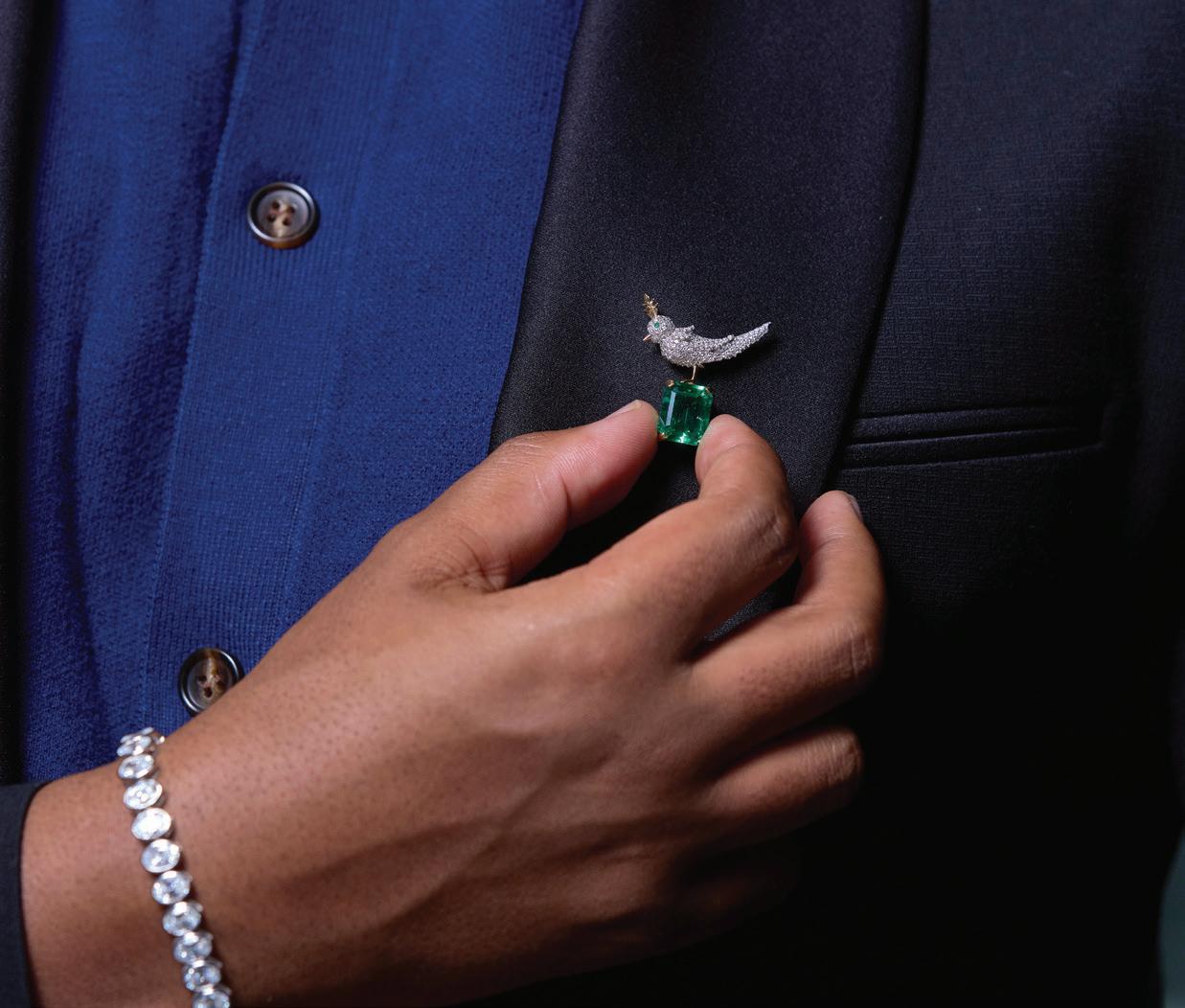
A subtle revolution is happening in the South African jewellery market – on the wrists, fingers and lapels of ordinary men.
For years, men’s jewellery has occupied a fairly narrow lane: a plain wedding band, perhaps a chain, the occasional cufflink. But consumer tastes are shifting, and two local brands are at the forefront of that change.
Axel Diamond and Shine Jewellery & Accessories are both building businesses around the proposition that men’s jewellery can be meaningful, considered and worth passing down.
Men need to be shown something worth wearing “Men are boring,” admits Axolisiwe Mbontsi, founder of Axel Diamond, only half-joking. The truth, he explains, is that most men simply haven’t been shown enough to want more.
“When a guy comes in looking for a wedding ring and he says he doesn’t want diamonds – the moment he tries something on and sees it in front of him, his whole perspective changes,” he says.
Shine Jewellery & Accessories founder Joe Matthews agrees. “Modern men have become more interested in wearing jewellery,” he says. “We get different types of men – some love bolder pieces; others prefer minimalist jewellery. At Shine, we tend to focus on the minimalist end.”
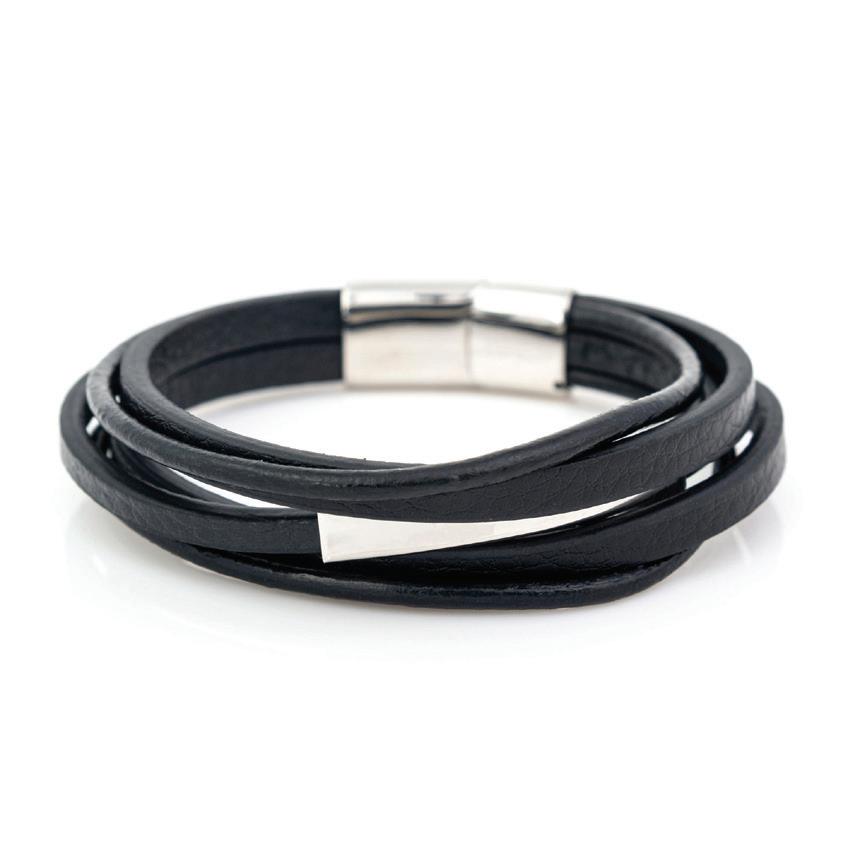
For those still on the fence, his practical advice is to start with something personal: an identity bracelet or name piece. In essence, he recommends
something that carries meaning without demanding too much of its wearer.
The bespoke difference
What sets both brands apart from mass-market retail isn’t just what they make – it’s how they make it. Axel Diamond operates on a consultation model: every client sits down with the team, and the jewellery is built around who they are.
“We try to find out who the person is,” explains Mbontsi. “We’re creatives – we can see what type of jewellery looks good on you, and then we introduce things based on your personality.”
Shine Jewellery & Accessories takes a similar stance. “We let the client – tell us how they feel,” says Matthews. “Sometimes they want to buy something based on an emotional moment or a personal story. We - incorporate the client into our pieces.”
Jewellery as legacy
Beyond the aesthetics, both brands point to something more enduring: the idea of jewellery as a legacy gift. “Once you add diamonds into a piece, it becomes more valuable – something that can be worn and passed on through generations,” says Mbontsi. “It becomes an heirloom.”
So, whether you’re shopping for a first piece or ready to commission something entirely unique, Axel Diamond and Shine Jewellery & Accessories offer something the malls can’t: an experience, a story and a piece of jewellery that means something to its wearer.
Both Mbontsi and Matthews are participants in the De Beers Enterprise Development Programme, which supports jewellery entrepreneurs as part of the diamond beneficiation value chain.
For more information on men’s jewellery, please contact Shine Jewellers and Accessories at info@shineja.co.za or Axel Diamonds at hello@axeldiamond.co.za.
Ever y Diamond Carries
a Stor y. We Uncover It .
Invented the Common Language
GIA created the 4Cs to help people understand diamond quality with consistency.
Guided by Science
Our research-driven approach ensures every report reflects careful, objective evaluation.
Confidence in the Details
A GIA report helps buyers and sellers move forward with trust and certainty.
E n d - t o - e n d j e w e l l e r y
m a n u f a c t u r i n g , M e t a l a n d
D i a m o n d s t r a d i n g
N e w M o u n t s a v a i l a b l e i n
P a l l a d i u m S i l v e r
FROM THE JCSA OFFICE
Lorna Lloyd, CEO of the Jewellery Council of SA (JCSA), shares the latest developments from the council’s office
INDUSTRY INSIGHTS
• Dates for 2026 JCSA roadshows announced
• De Beers boosts Q1 production as Venetia output surges
• US market lifts watches of Switzerland sales
• India raises precious metal import duties
• Fancy colour diamond prices ease in Q1
• Vanderlinden takes top WDC role
SURVIVING SEASONAL AND MARKET PRESSURE
Cash flow remains one of the most critical determinants of sustainability in jewellery businesses, where high-value inventory, fluctuating gold prices and seasonal demand cycles place continuous pressure on liquidity
CPM HOSTS OVERBERG NETWORKING EVENT
On 7 May 2026, Cape Precious Metals hosted an industry networking event at the Hermanus Yacht Club in the Overberg region of the Western Cape
GOLD PRICE VOLATILITY AND ITS IMPACT ON JEWELLERY MANUFACTURING
Gold price volatility continues to be one of the most significant operational and financial challenges facing jewellery manufacturers globally
THE RISK REPORT
Employee vetting and background checks are a critical, yet often underestimated component of risk management in jewellery businesses
EDUCATIONAL INSERT
A guide to diamonds with the 480 nm absorption band
THE ROLE OF MODERN GOLD ANALYSERS
Hand-held x-ray fluorescence and advanced spectrometer systems now allow jewellers, refiners and assay professionals to determine gold and precious metal composition quickly and accurately
SETTING THE STANDARD
The hands shaping South Africa’s jewellery dynasty
MEN’S JEWELLERY: EVOLVING DESIGN, SHIFTING DEMAND AND A GROWING MARKET SEGMENT
Men’s jewellery has emerged as a steadily expanding category within the global and local jewellery industry
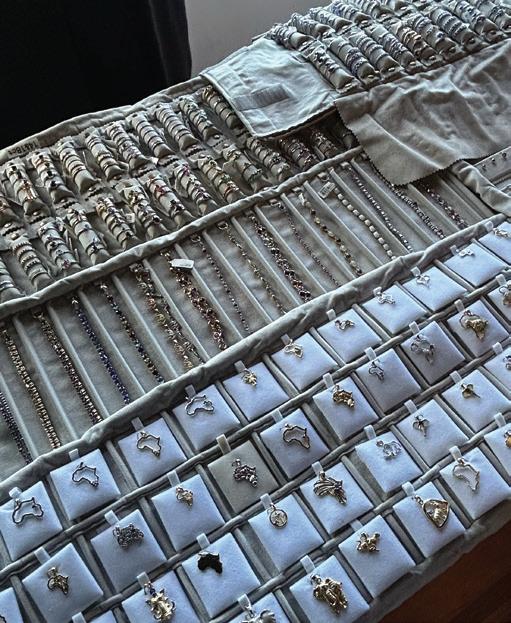
BORN IN AFRICA
A comprehensive directory featuring information and contact details of all members of the Jewellery Manufacturing Association of SA
INDUSTRY EMPLOYMENT BOARD
Dedicated to supporting professionals within the jewellery industry who are seeking employment opportunities 26. 31. 38. 40. 42. 48. 20
Jewellery Council of SA update
Lorna Lloyd, CEO of the Jewellery Council of SA (JCSA), shares the latest developments from the council’s office
Akey success
As part of the Jewellery Council’s ongoing efforts to promote both the council and our retail members to consumers, our marketing agency launched our first consumer-facing campaign and digital presence with the Mother’s Day campaign. The campaign delivered a major interaction spike, with 25 700 views and meaningful follower growth without paid media.
We encourage you to visit and engage with the JCSA website and Instagram platforms, where we continue promoting the importance of buying from trusted Jewellery Council members.
Please check out our Father’s Day campaign running on Facebook and Instagram.
SARS and domestic reverse charge (DRC)
The Jewellery Council recently thanked SARS for the progress made in addressing the automatically triggered DRC audits and for the transition to a system of randomised audits since July last year.
It is encouraging to note that some members have experienced a reduction in audit frequency and, in certain cases, audits have ceased altogether. However, we have received feedback that a number of jewellery companies have still undergone a significant number of audits – in some instances, every month.
Where members have consistently complied and completed audits without any negative findings, it would be reasonable to expect a reduction in audit frequency. Unfortunately, this does not appear to have occurred in all cases.
We asked SARS whether there are any additional measures our members could implement to demonstrate their ongoing compliance, with a view to reducing the frequency of audits. We highlighted the operational burden these audits place on businesses, specifically where additional specialised staff are required to manage repeated audits despite a strong compliance track record.
The Jewellery Council remains committed to working collaboratively with SARS to find practical solutions that support compliant businesses while maintaining the integrity of the DRC system. SARS is currently working through the list of companies sent to it and we are hopeful that it will be able to assist our members.
Legislative requirement for synthetic and labgrown diamonds
The burden of legislative compliance continues to present significant challenges for jewellers, taking up much of their time.
One legislative requirement recently brought to our attention is the obligations concerning synthetic and enhanced diamonds, including lab-grown diamonds under the Diamonds Act. In terms of Section 56A(1) (a), any person who sells or delivers a synthetic or enhanced diamond is required to provide written disclosure, in the prescribed form, confirming that the stone being sold or delivered is synthetic, enhanced or lab-grown.
A copy of the disclosure must be furnished to the relevant recipient. This obligation reinforces the importance of transparency within the trade and ensures that consumers are informed regarding the product being purchased.
Regarding the import and export of synthetic or enhanced diamonds, including lab-grown diamonds, the process is administered through the Diamond Exchange and Export Centre (DEEC) at the SA Diamonds and Precious Metals Regulator. Any person wishing to import or export these stones must engage directly with the DEEC section of the regulator, where guidance on the applicable process will be provided. At present, a fee of R1 000 per shipment is payable to the regulator.
The council will circulate a detailed communication to members in due course outlining the procedures, documentation requirements and relevant contact details to facilitate compliance.
Financial Intelligence Centre Act (FICA)
Another important legislative requirement for jewellers who are accountable institutions is compliance with FICA.
Our FICA consultant requested that we alert all members to the importance of ensuring that Risk Management and Compliance Programmes (RMCPs) are up to date. RMCPs must be updated annually, and more frequently as new directives, guidance notes or amendments are published by the FIC.
Members are further reminded that customer due diligence must be aligned with their RMCPs, particularly regarding sales of items valued at R100 000 or more and proof of the identification and Targeted Financial Sanctions list screening of beneficial owners, directors and controllers must be retained. Cash transactions of R50 000 or more must be reported via cash threshold reports. Very importantly, suspicious and unusual transactions must be reported regardless of value.
Directive 11, which became effective on 1 April 2026 and will soon be enforceable, introduces enhanced compliance expectations.
Should you require assistance with updating your RMCP or understanding your obligations, please do
not hesitate to contact us. We can put you in touch with our consultant, who is also a member of the Jewellery Council.
Hosted buyer programmes at international jewellery shows
The Jewellery Council continues to collaborate with organisers of international shows in Hong Kong, Dubai and Bangkok to take advantage of their hosted buyer programmes with services and support such as free hotel accommodation, use of VIP lounges, access to networking events, business matching and issuing of hosted buyer badges.
Strengthening co-ordinated business action against organised crime and corruption through BACSA
In May, Business Against Crime SA (BACSA), in partnership with the Consumer Goods Council of SA, hosted an industry-wide workshop focused on organised crime and corruption The session applied to a range of sectors, including the jewellery industry.
The purpose of the workshop was to create a more co-ordinated private-sector response to organised crime by sharing information, aligning efforts with government priorities, identifying gaps and overlaps, and exploring practical ways for industries to collaborate securely and effectively.
The overall conclusion of the workshop was clear: organised crime is a shared national challenge which no sector can solve alone and stronger co-ordination between business and government will be essential to improving safety, economic resilience and the effectiveness of SA’s criminal justice response.
Should you require any further information, please contact the Council:
Winter is a season that naturally invites reflection, resilience and renewed focus. While the colder months often bring their own set of challenges, they also present an opportunity to reset, strengthen relationships and prepare for the busier periods ahead.
With that, here at SAJN we have also taken time for renewed focus, with our social media platforms being one of the areas we want to grow and take to the next level. We are therefore very excited to share some exciting developments. SAJN has appointed a marketing company to further enhance our social media presence. This initiative is aimed at strengthening engagement with our audience and providing our advertisers with even greater visibility and exposure across our platforms.
We are also excited to announce the dates for the 2026 Jewellery Council roadshows, which will take place in Durban on 8 July, Cape Town on 9 July and Johannesburg on 16 July. We are really looking forward to what we are confident will be highly valuable and insightful sessions.
In this month’s issue, we explore key topics affecting the trade, including survival strategies amid seasonal and market pressure, the impact of gold price volatility on manufacturing and the growing importance of modern gold analysis technology. We also report on Cape Precious Metals’ recent networking event in the Overberg, as well as the critical role of risk management and employee vetting in safeguarding jewellery businesses.
Report crime incidents to the CGCSA. Robberies, break-ins and thefts remain a serious concern in our industry. Jewellers and industry members are strongly encouraged to report any such incidents to the Consumer Goods Council of South Africa (CGCSA) via e-mail: pulengr@cgcsa.co.za / crime@cgcsa.co.za. Please share detailed information, such as date, time, location, SAPS case number and any available photos or video footage, which are used to support investigations and help secure successful convictions.
ON THE COVER
We hope you enjoy this issue as much as we enjoy putting it together for you every month. Stay warm and happy reading!
Adri
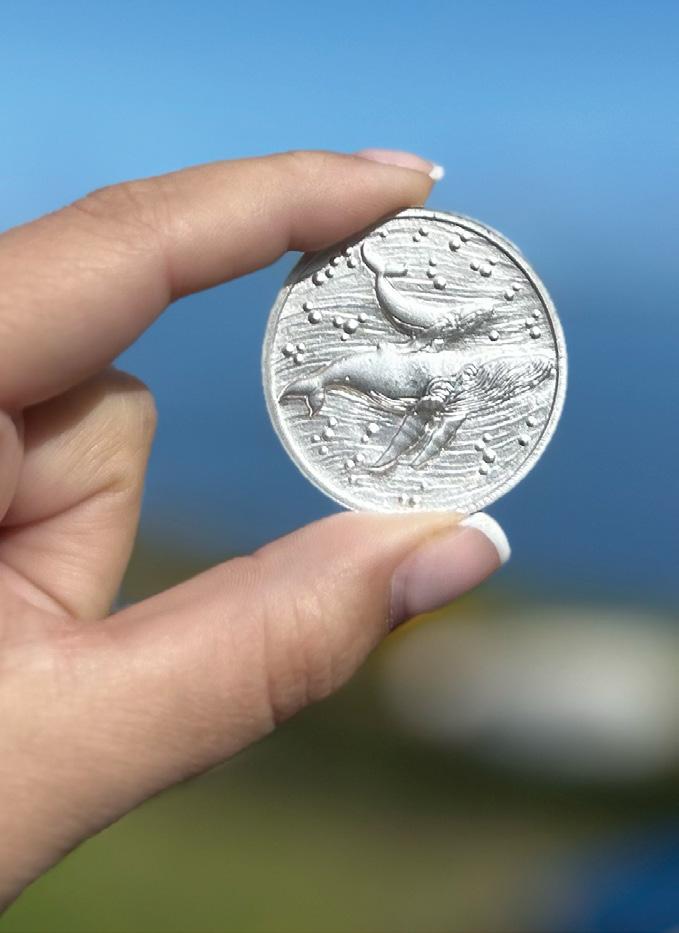
From R510, a broken table, and a laptop missing three keys, Steve and Ashly Subel built Just Coins SA into one of South Africa’s increasingly recognised names within the precious metals and collectibles industry. Built on old-school trust, modern thinking and a passion for helping people, the father-and-son team have earned growing recognition alongside some of the country’s most respected bullion and coin businesses. Today, Just Coins SA continues expanding nationally while developing advanced internal authentication and valuation systems designed to improve accuracy, consistency and client trust within an ever-evolving market. For more information, e-mail: info@justcoinsa.co.za or visit: www.JustCoinSA.co.za.
Helping members trade better.
Dates for 2026
JCSA roadshows announced
The Jewellery Council of South Africa has announced the dates for its 2026 national roadshows which will take place in July.
The roadshows are scheduled for 8 July in Durban, 9 July in Cape Town and 16 July in Johannesburg.
All events will commence at 6pm and are expected to bring together members of the local jewellery industry for discussions, updates and networking opportunities.
Further details will be announced shortly.
De Beers boosts Q1 production as
Venetia output surges
Global diamond producer De Beers reported a 17% increase in rough diamond production to 7,1 million carats for the first quarter of 2026, driven by stronger output from Canada’s Gahcho Kué mine and South Africa’s Venetia underground operation.
In SA, Venetia production rose by 53% to 0,7 million carats as higher volumes of underground ore were processed. Botswana production increased by 5% to 4,8 million carats due to improved grades at Orapa, while Namibia’s output declined by 12% following vessel maintenance and the decommissioning of two Debmarine Namibia vessels in 2025.
Despite stronger production, De Beers said rough diamond trading conditions remained under pressure due to ongoing geopolitical and industry challenges. Consolidated rough diamond sales revenue increased to US$648 million from two Sights during the quarter, compared with US$520 million in Q1 2025. However, the average realised price fell by 19% to US$101 per carat, mainly due to lower rough diamond prices and a higher proportion of lowervalue goods sold.
Parent company Anglo American said it continued to progress the formal sale process of De Beers and expects to provide further updates during 2026. Production guidance for the year remains unchanged at 21-26 million carats.
US market lifts watches of Switzerland sales
Watches of Switzerland achieved record annual sales of GBP1,83 billion (US$2,44 billion) for the 53 weeks ending 3 May, supported by strong momentum in the US market.
Revenue in the USA climbed 18% to GBP927 million, driven by steady growth across luxury watches, jewellery and pre-owned timepieces. The retailer’s UK business also delivered positive results, with sales rising 5% to GBP901 million despite ongoing economic pressure.
Vanderlinden takes top WDC role
Ronnie Vanderlinden has been appointed President of the World Diamond Council (WDC), succeeding Feriel Zerouki following the organisation’s annual general meeting in Antwerp.
Vanderlinden, founder of diamond manufacturer Diamex and former Vice-President of the WDC,
CEO Brian Duffy said the USA had become the company’s biggest growth market, now contributing more than half of total group revenue.
Luxury watch sales increased 10% to GBP1,5 billion, while jewellery revenue rose 14% to GBP240 million. During the year, the group also acquired a stake in Texas-based retailer Deutsch & Deutsch, contributing GBP16 million in revenue. The company expects revenue growth of 5-10% in fiscal 2027 and will release full-year results on 14 July.
said the industry needed to unite in promoting natural diamonds.
He will serve alongside newly-elected VicePresident Anoop Mehta, who is also Chairperson of Mohit Diamonds and President of the Bharat Diamond Bourse.
India raises precious metal import duties
The Indian government has sharply increased import duties on gold and silver from 6% to 15% in an eff ort to reduce soaring imports and ease pressure on foreign exchange reserves.
The move follows calls by Prime Minister Narendra Modi for consumers to limit non-essential gold purchases. India’s gold import bill
Fancy
reached a record US$71,98 billion last year, according to the Gem and Jewellery Export Promotion Council (GJEPC).
Import duties on platinum have also risen to 15,4% from 6,8%.
While supporting the government’s broader economic goals, the GJEPC warned that higher duties could
colour diamond prices ease in Q1
Prices of fancy-colour diamonds edged lower during the fi rst quarter of 2026, according to the Fancy Color Research Foundation.
The overall index declined 0,9% year-on-year and slipped 0,2% compared with the previous quarter, refl ecting a stable, but selective market environment.
Yellow diamonds recorded the biggest annual decline, falling 1,2%, although certain categories of vivid and intense yellow stones
posted gains. Pink diamonds dropped 0,8% year-on-year, with larger vivid pink stones among the weakest performers.
Blue diamonds proved more resilient, declining 0,5% annually while improving slightly from the previous quarter.
Ephraim Zion said buyers remained highly selective, with stronger demand for rare stones displaying exceptional colour and quality.
place significant strain on smaller jewellery manufacturers and may encourage illegal gold smuggling.
The organisation said industry members would focus on promoting lower-carat jewellery, encouraging gold exchanges and discouraging investment in gold bars and coins to help reduce import volumes.
Since 2005, pink diamonds have shown the strongest long-term growth, rising 389%, followed by blue diamonds at 241%.
Surviving seasonal and market pressure
Cash flow remains one of the most critical determinants of sustainability in jewellery businesses, where highvalue inventory, fluctuating gold prices and seasonal demand cycles place continuous pressure on liquidity. Effective cash flow management is essential to maintaining operational stability, funding growth and ensuring resilience during periods of market volatility
Cash flow management is a fundamental pillar of business survival in the jewellery industry, where capital is often heavily tied up in inventory and raw materials. Unlike many retail sectors, jewellery businesses operate with high-value stock, long replenishment cycles and significant exposure to global commodity prices, particularly gold. These factors create a working capital environment which is both capitalintensive and sensitive to external market shifts.
Seasonality is one of the most predictable, yet challenging drivers of cash flow fluctuation in the jewellery trade. Demand typically peaks during specific trading periods such as year-end holidays, Valentine’s Day, Mother’s Day, wedding seasons and major cultural or religious celebrations. Outside of these periods, sales can slow significantly, particularly in discretionary luxury categories. This cyclical pattern requires businesses to carefully align stock procurement, staffing and marketing expenditure with anticipated demand peaks and troughs.
In many cases, jewellery retailers and manufacturers must invest in inventory well ahead of peak trading periods. This means that cash outflows occur months before revenue is realised, placing strain on liquidity. If sales performance does not meet expectations during peak seasons, businesses can be left with excess stock and reduced working capital, creating additional pressure in the following cycle. As a result, forecasting accuracy plays a critical role in maintaining financial stability.
Gold price fluctuations further complicate cash flow planning. As gold is the primary input cost for most jewellery manufacturing, price volatility directly impacts both cost of goods sold and inventory valuation. When gold prices rise, businesses must allocate more capital to purchase the same quantity of raw material, reducing purchasing power. Conversely, if prices fall after stock has been purchased, businesses may experience margin compression or inventory write-down risk. This unpredictability makes it difficult to maintain consistent pricing strategies and stable cash flow projections.
To manage these risks, many jewellery businesses adopt structured purchasing strategies. Instead of large, infrequent stock purchases, some manufacturers and retailers prefer staggered buying cycles. This approach helps smooth cash outflows over time and reduces exposure to short-term price spikes. In addition, some businesses adjust product
pricing more frequently to reflect current gold values, although this can introduce complexity in retail environments where price consistency is important for consumer confidence.
Credit control is another key component of cash flow management in the jewellery sector, particularly in wholesale and manufacturing operations. Trade credit extended to retailers or clients can create delays between production costs and payment receipt. While credit terms are often necessary to support commercial relationships, extended payment cycles can place significant pressure on working capital. Effective credit risk assessment, clear payment terms and consistent follow-up processes are therefore essential to maintaining healthy cash flow.
Inventory management also plays a central role in liquidity planning. Jewellery stock is typically high in value and relatively slow-moving compared with fast-moving consumer goods. Holding excessive inventory ties up capital that could otherwise be used for operations, marketing or expansion. At the same time, insufficient stock levels can result in missed sales opportunities during peak demand periods. Balancing these competing pressures requires careful stock planning, often supported by historical sales data and trend analysis.
In recent years, many jewellery businesses have increasingly adopted more data-driven inventory management systems. These systems allow for better tracking of sales patterns, product performance and seasonal demand fluctuations. By identifying slow-moving stock early, businesses can implement discounting strategies or redirect marketing efforts to improve turnover. This
“The jewellery industry’s unique combination of high-value inventory, cyclical demand and commodity-linked pricing makes cash flow management particularly complex.”
helps convert inventory into cash more efficiently, supporting overall liquidity.
Operational overheads also influence cash flow stability. Fixed costs such as rent, utilities, security, insurance and staff salaries must be met regardless of sales performance. In environments where revenue is seasonal or inconsistent, these fixed obligations can place additional pressure on cash reserves. Businesses that maintain strong cash buffers are better positioned to absorb slower trading periods without compromising operations.
Access to financing is another important factor in cash flow management. Some jewellery businesses rely on short-term credit facilities, overdrafts or trade finance solutions to bridge gaps between inventory investment and revenue collection. While external financing can provide flexibility, it must be carefully managed to avoid over-leveraging, particularly in periods of market uncertainty or declining consumer demand.
The rise of recycling and secondary gold markets has also introduced new dynamics into cash flow management. Selling scrap gold or recycled materials can provide an additional revenue stream and help offset raw material costs. In some cases, businesses use recycling cycles to improve liquidity during slower trading periods, effectively converting dormant assets into working capital.
Digital payment systems and e-commerce platforms have also contributed to improved cash flow efficiency in certain segments of the industry. Faster payment processing, reduced reliance on manual invoicing and real-time transaction tracking have helped improve visibility over incoming revenue. However, these benefits are often offset by increased competition and pricing pressure in online markets.
Ultimately, successful cash flow management in jewellery businesses depends on a combination of forecasting accuracy, disciplined inventory control, effective credit management and adaptability to external market conditions. Businesses that proactively plan for seasonal fluctuations and gold price volatility are better positioned to maintain stability and support long-term growth.
The jewellery industry’s unique combination of high-value inventory, cyclical demand and commodity-linked pricing makes cash flow management particularly complex. While seasonal peaks present strong revenue opportunities, they must be carefully balanced against periods of reduced demand and rising input costs. Strong financial discipline, supported by data-driven decision-making and structured operational planning, remains essential for sustaining profitability and resilience in a highly competitive market.
CPM hosts Overberg networking event
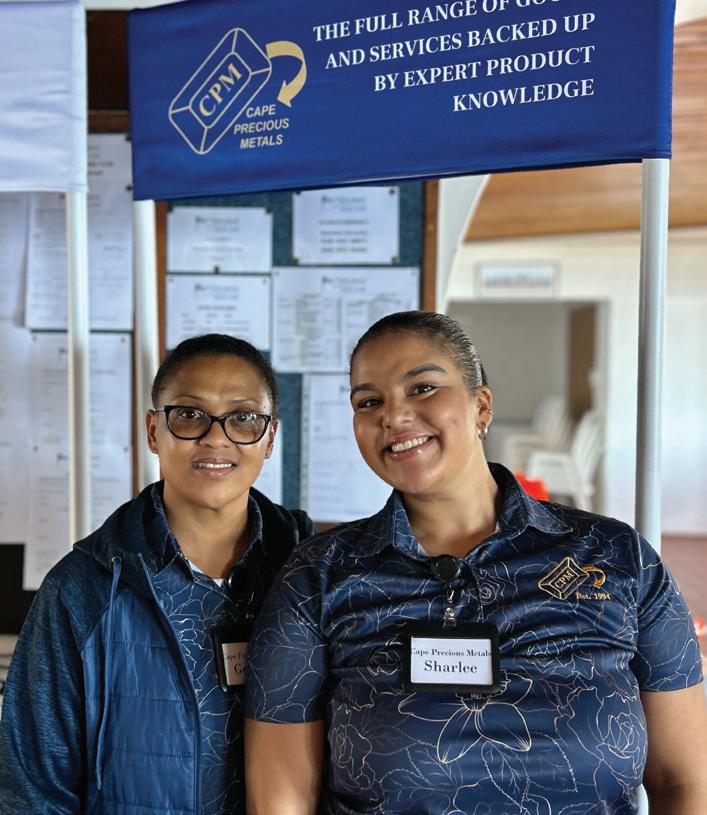
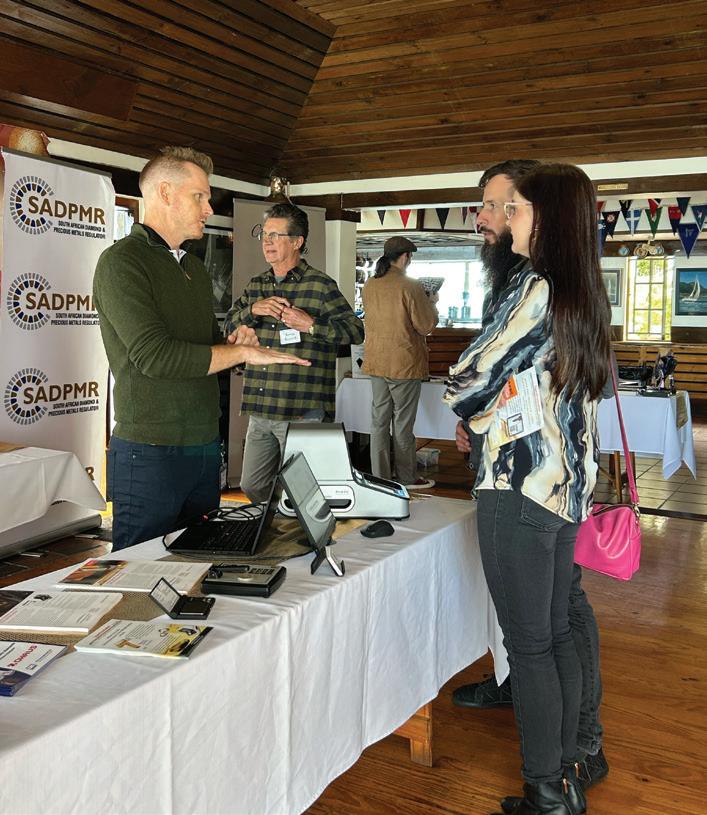
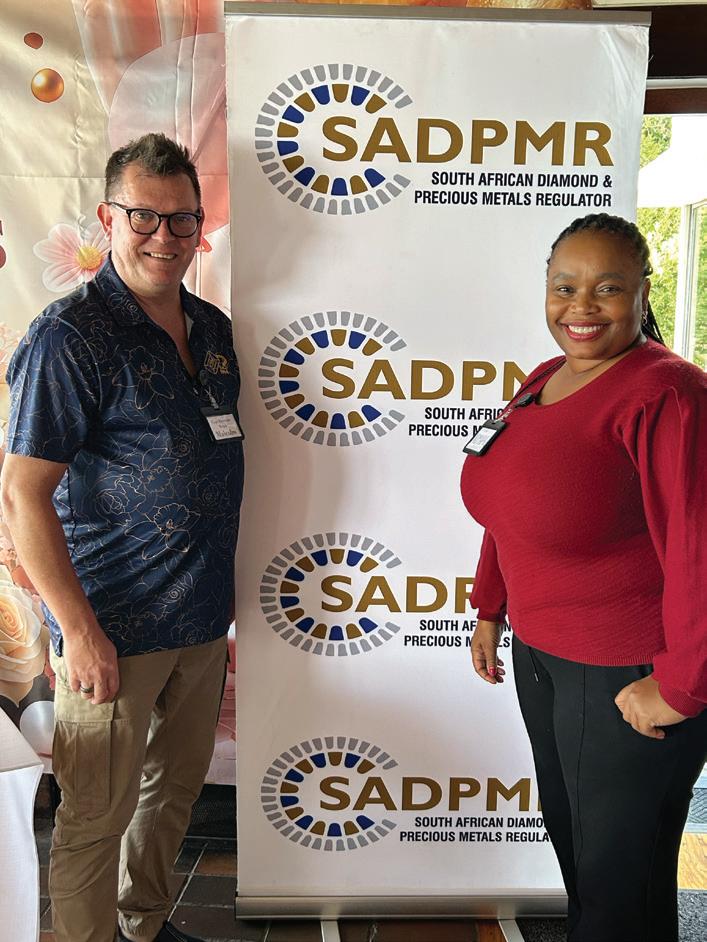
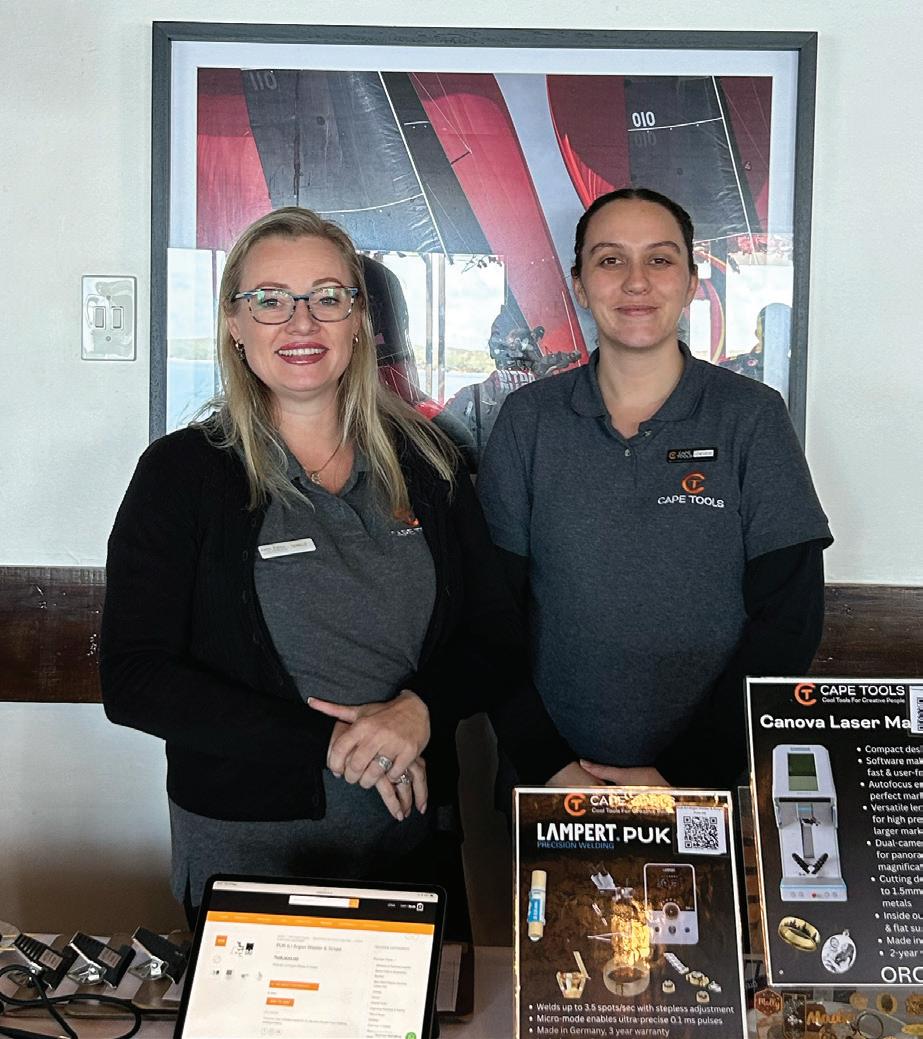
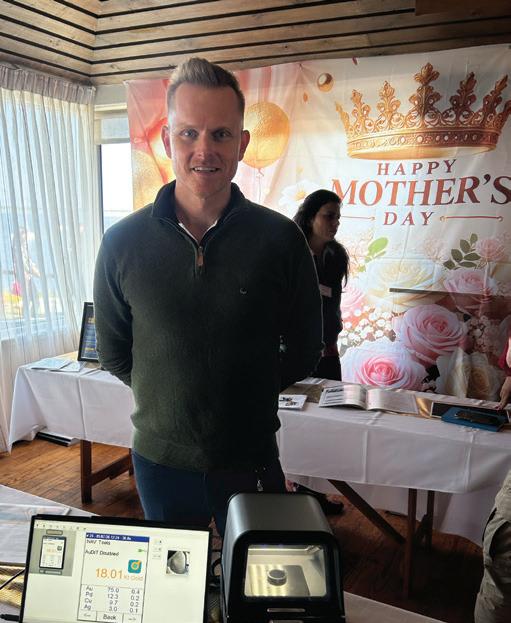
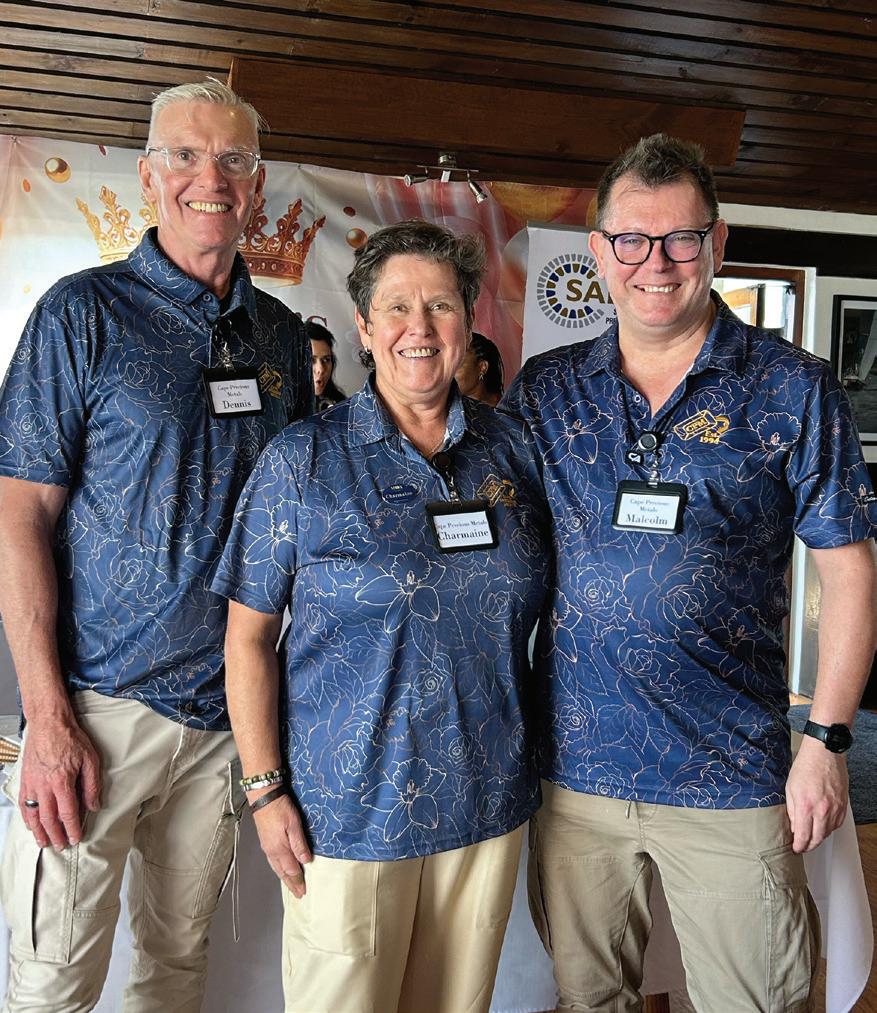
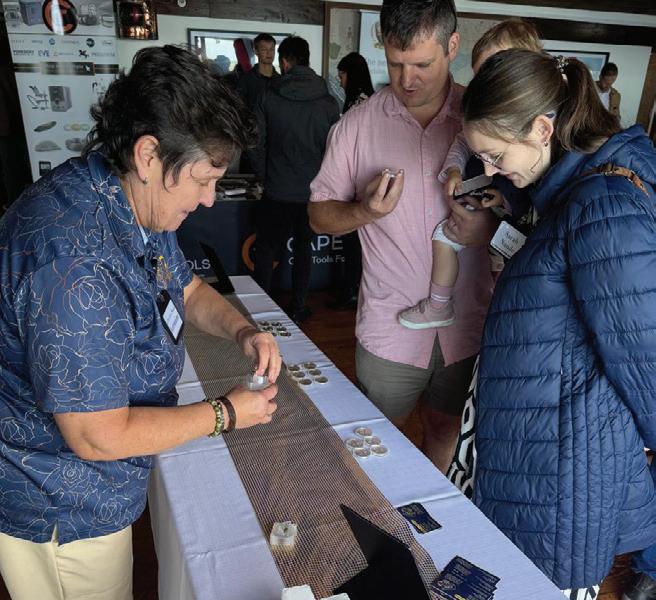
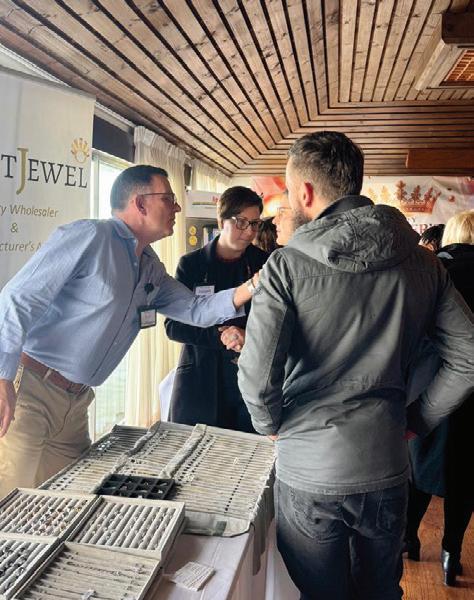
On 7 May 2026, Cape Precious Metals hosted an industry networking event at the Hermanus Yacht Club in the Overberg region of the Western Cape.
Held with a Mother’s Day theme, the event brought together jewellery industry professionals, suppliers and stakeholders for a day of networking and industry engagement in the scenic setting of the Klein River Lagoon between Hermanus and Stanford.
The initiative aimed to strengthen industry relationships while extending engagement opportunities to businesses and professionals based in the Winelands and Overberg regions.
Gold price volatility and its impact on jewellery manufacturing
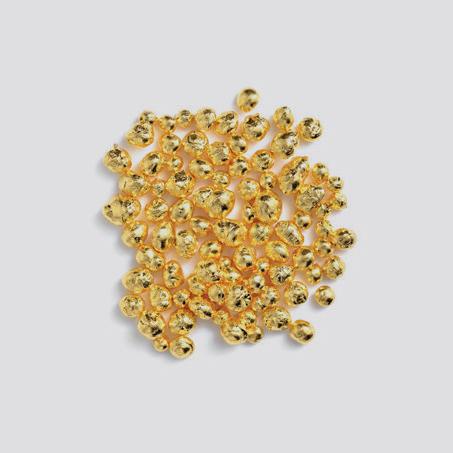
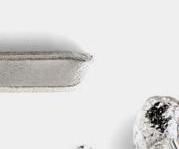
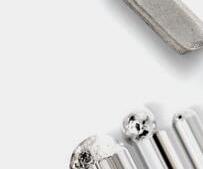
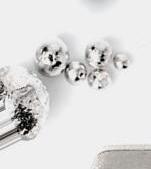
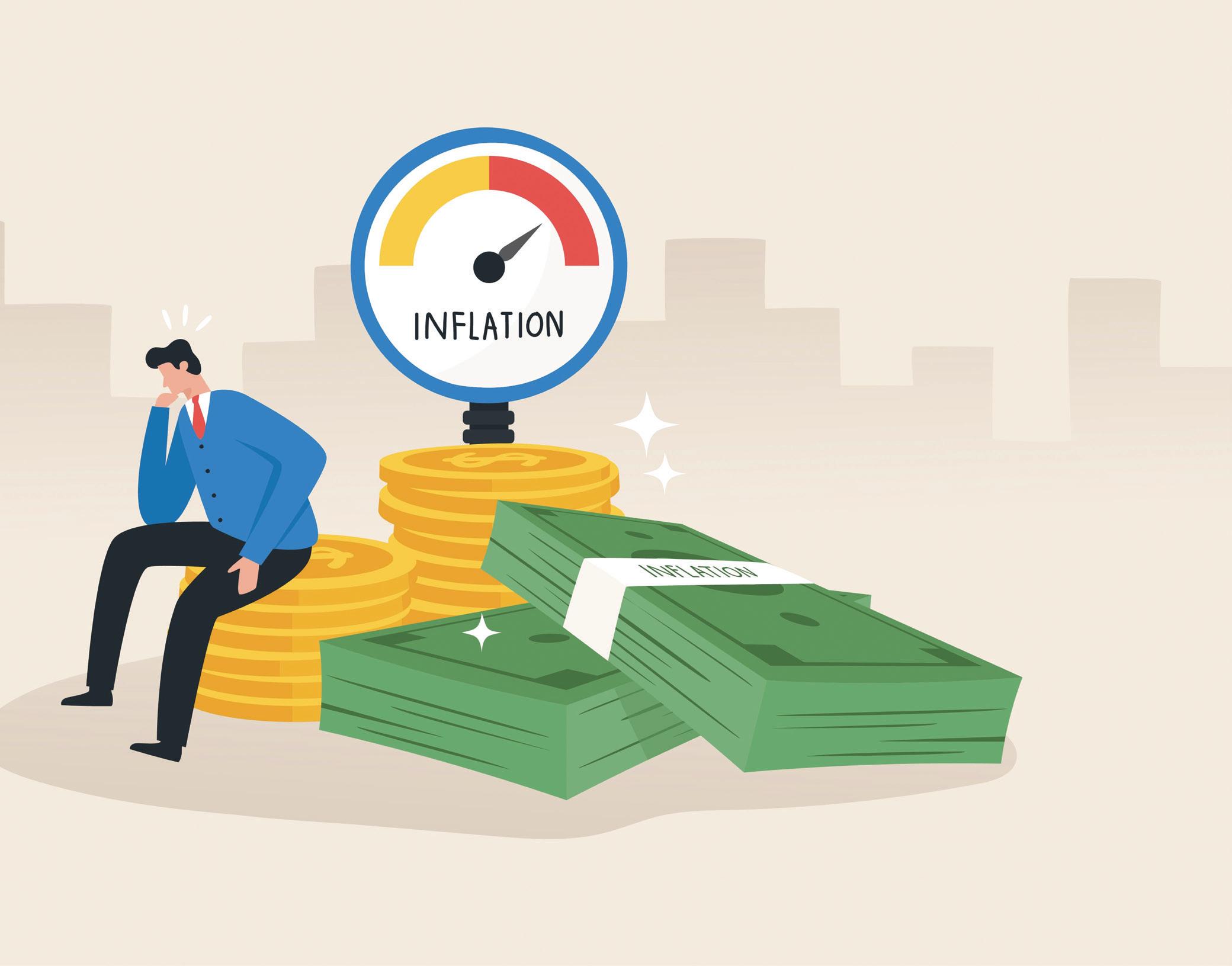
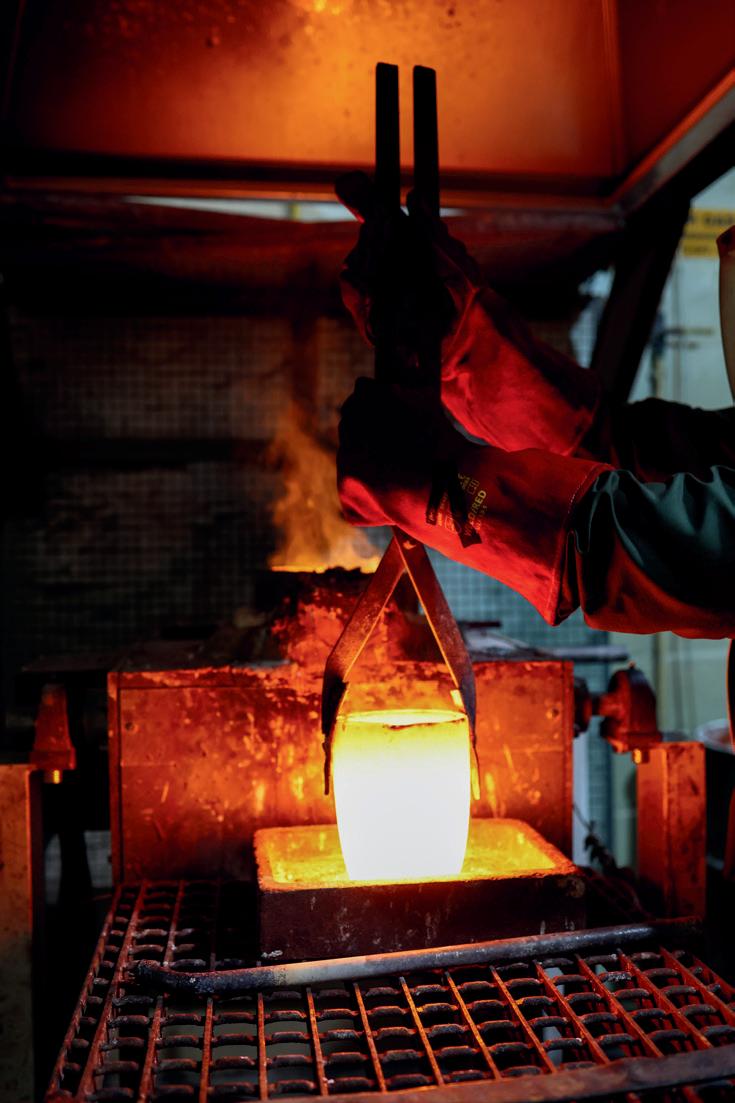
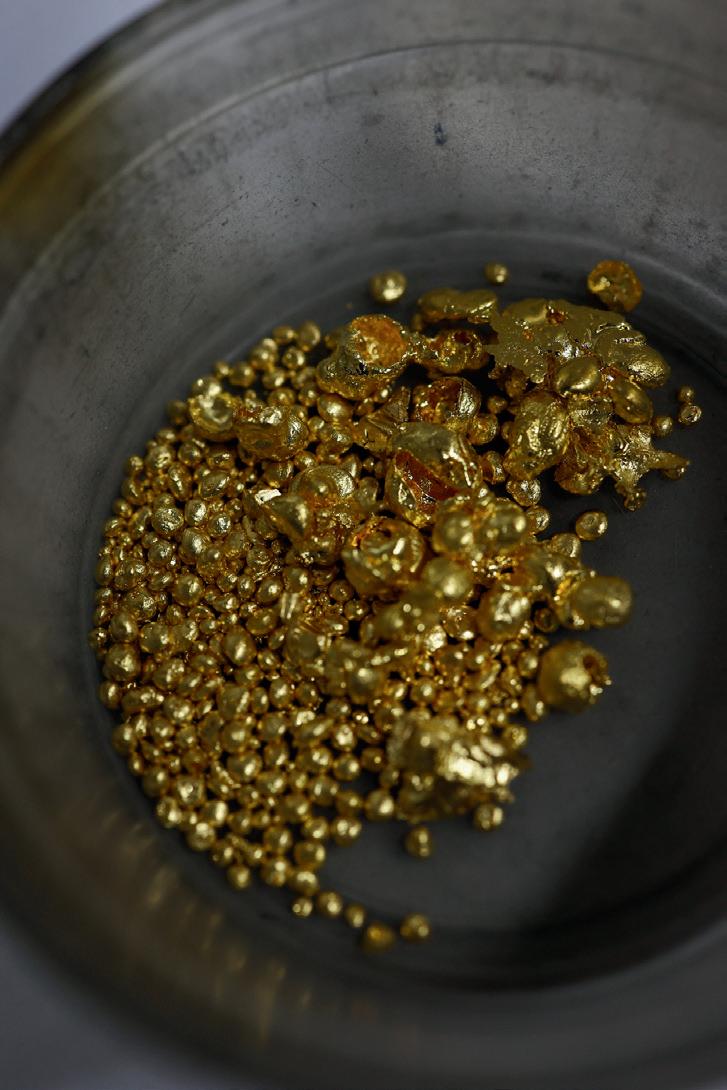
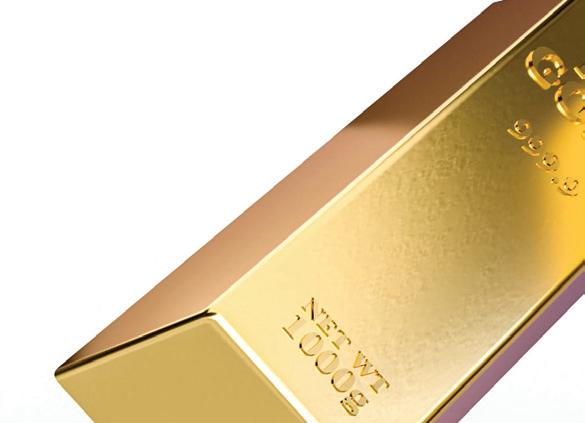
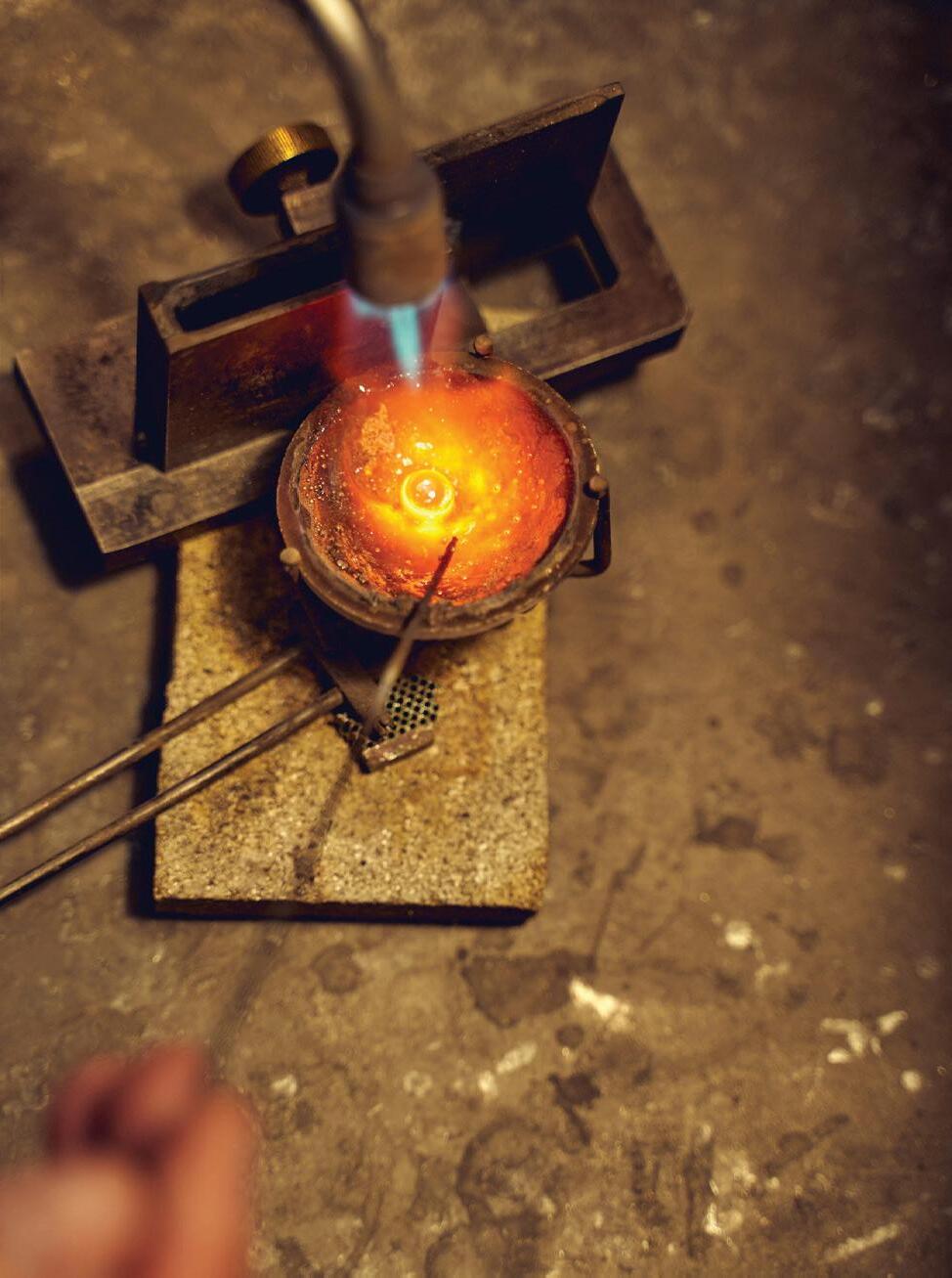
Gold price volatility continues to be one of the most signifi cant operational and fi nancial challenges facing jewellery manufacturers globally. With sharp price movements driven by macro-economic uncertainty, currency fl uctuations and shifting investment demand, manufacturers are increasingly required to adapt pricing strategies, production models and inventory management practices to maintain profitability and competitiveness
Gold remains the primary raw material for much of the global jewellery manufacturing industry and its price movements directly influence every stage of the value chain. Over the past two years, gold has experienced sustained upward momentum alongside increased volatility, with prices reaching multiple record highs in 2025 and continuing into 2026. According to global market reporting, gold recorded one of its strongest annual performances in decades in 2025, rising by more than 60% in some currencies while simultaneously experiencing frequent intra-year fluctuations which placed pressure on downstream manufacturing margins.
At the same time, jewellery demand in volume terms has declined, even as value-based demand has increased. This divergence highlights a key structural shift: consumers are purchasing less gold by weight, but paying more per transaction due to elevated prices. Global data indicates that jewellery consumption volumes fell to multi-year lows in 2025, while total spending on jewellery reached record levels of approximately US$170 billion, driven primarily by price inflation, rather than volume growth. This has created a complex operating environment for manufacturers, who must manage higher input costs while navigating more pricesensitive consumer behaviour.
One of the most immediate impacts of gold price volatility is on inventory management. Manufacturers traditionally hold gold stock to stabilise production pipelines and ensure consistent fulfilment of orders. However, in volatile markets, holding large inventory positions exposes businesses to significant price risk. If gold prices rise rapidly after procurement, manufacturers benefit from increased margins; if prices fall, they face immediate inventory devaluation. This has led many producers to adopt shorter procurement cycles, just-in-time manufacturing models or hedging strategies to mitigate exposure.
Price volatility also directly affects product pricing strategies across both wholesale and retail channels. Jewellery pricing is typically based on a combination of metal cost, workmanship and margin. However, frequent gold price fluctuations make it difficult to maintain stable pricing structures. As a result, many manufacturers now adjust pricing more frequently or incorporate dynamic pricing models that reflect real-time gold valuations. While this improves cost alignment, it also introduces complexity for retailers and can create uncertainty for consumers, particularly in massmarket segments.
“Gold price volatility has a multi-layered impact on jewellery manufacturing, influencing everything from inventory strategy and product design to pricing models and consumer behaviour.”
retail price points while reducing material input costs. In parallel, there has been increased use of hollow designs, thinner profiles and alternative metal combinations in certain categories. While these approaches support affordability, they also require careful balance to ensure that structural integrity and consumer perception of value are maintained.
A further consequence of elevated gold prices is the shift in product design and manufacturing approaches. Higher raw material costs have encouraged manufacturers to reduce gold weight per item, a trend commonly referred to as “lightweighting”. This allows jewellers to maintain
Gold price volatility has also influenced alloy composition trends within the manufacturing sector. In periods of sustained high prices, manufacturers often increase the use of lower-carat gold alloys or substitute metals such as platinum or silver in certain applications. This is particularly evident in markets where consumers are highly price-sensitive. In contrast, higher-end segments tend to maintain higher purity standards but adjust design scale, rather than composition. These shifts demonstrate how volatility affects not only pricing, but also material engineering decisions within production environments.
Demand behaviour also plays a critical role in shaping manufacturing responses. Research from global precious metals markets shows that while jewellery demand volumes tend to decline during periods of high prices, total spending often increases, as consumers allocate larger budgets to fewer, lighter pieces. This has been observed across multiple major markets, including India, China, Europe and the USA. In some regions, jewellery demand volumes declined by more than 15-20% year-on-year in 2025, while value-based demand rose by similar margins. This indicates that manufacturers must increasingly cater to a consumer base that is still willing to spend, but more selectively.
Another significant impact of gold price volatility is on order timing and purchasing cycles. Retailers and wholesalers are more likely to delay orders during periods of rapid price increases in anticipation of potential corrections, while accelerated purchasing often occurs when upward momentum is expected to continue. This behaviour creates irregular order flows for manufacturers, complicating production scheduling and workforce planning. In extreme cases, volatility can lead to short-term spikes in demand followed by sharp slow-downs, placing additional pressure on operational efficiency.
From a financial perspective, volatility has increased the importance of risk management tools within the jewellery manufacturing sector. Hedging through futures contracts, forward purchasing agreements and structured procurement strategies has become more common, particularly among larger manufacturers. However, smaller and midsized enterprises often lack access to sophisticated hedging instruments, leaving them more exposed to price swings. This has contributed to widening operational disparities within the industry.
Sustainability and recycling have also become more prominent in response to price volatility. High gold prices incentivise increased recycling of existing jewellery and scrap gold, which in turn provides an alternative source of raw material for manufacturers. In several recent reporting periods, recycled gold supply has
increased year-on-year as consumers and businesses capitalise on elevated prices. This trend helps partially offset supply constraints and reduces reliance on newly mined gold, while also contributing to circular economy objectives within the industry.
Looking ahead, industry forecasts suggest that gold price volatility is likely to remain a structural feature of the market, rather than a temporary condition. Factors such as geopolitical uncertainty, central bank gold accumulation, inflationary pressures and currency fluctuations continue to underpin price instability. As a result, jewellery manufacturers are expected to further refine their operational models, with increased emphasis on flexibility, digital pricing systems and integrated supply chain management.
Gold price volatility has a multi-layered impact on jewellery manufacturing, influencing everything from inventory strategy and product design to pricing models and consumer behaviour. While high prices have supported record revenue levels in value terms, they have also introduced significant operational complexity. Manufacturers who are able to adapt through agility, efficient material usage and effective risk management are likely to be best positioned to navigate ongoing volatility in the global gold market.
Did you know?
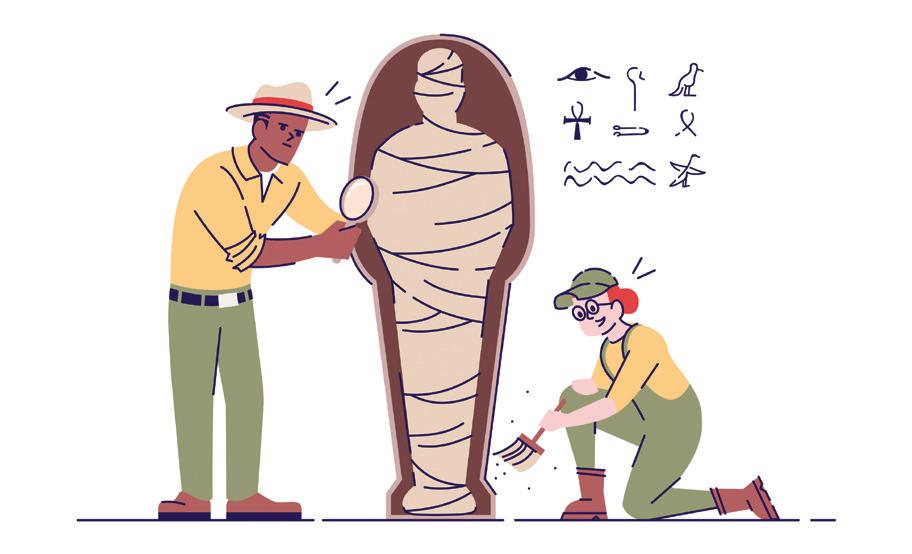
Ancient Egyptians believed gold was the “flesh of the gods”, especially associated with Ra, the sun god. They were buried with jewellery so they could use it in the afterlife – it was considered essential, not decorative.
Some watch complications like perpetual calendars are engineered to track leap years and dates correctly for over 100 years without adjustment.
Cartier’s rise in the industry was strategically built through relationships with royalty. By the early 1900s, the house held multiple royal warrants and King Edward VII famously called it: “The jeweller of kings and the king of jewellers.”
One of the most famous natural pearls is the 50.56 ct La Peregrina. About the size of a pigeon’s egg, the drop shaped pearl was discovered in the 1500s in the Gulf of Panama.
Maasai beadwork uses specific colours to represent meanings like strength (red), peace (blue) and fertility (green).
Lockets gained prominence in European courts, particularly under Queen Elizabeth I, who wore a famous locket ring containing miniature portraits. At the time, carrying someone’s image was an intimate act – lockets were often hidden beneath clothing, making them deeply personal rather than publicly displayed.
Certain highend watches and jewellery are assembled in dustfree rooms like medical labs.
The most sacred combination of gemstones according to Hindu belief are the Navratna (Nine Gems): which are ruby, blue sapphire, yellow sapphire, pearl, emerald, diamond, hessonite stone, red coral and cat's eye stone. Each gemstone represents an astrological planet and wearing them together is believed to bring one success, emotional balance, prosperity and divine connection
Employee vetting and background checks are a critical, yet often underestimated component of risk management in jewellery businesses, where staff may have direct access to high-value stock, sensitive client information and secure areas.
Malcolm Jenner, KwaZulu-Natal representative for the Jewellery Council Risk Initiative (JCRI) and Marketing and Administrative Director at Cape Precious Metals (CPM), outlines why robust pre-employment screening and ongoing verification processes are essential to protecting businesses from internal risk
The Risk Report
Employee-related risk remains one of the most significant, yet least visible vulnerabilities within the jewellery industry. While external threats such as burglary and armed robbery receive considerable attention, internal risk – including theft, fraud and misconduct –often originates from insufficient employee screening or reliance on incomplete employment histories.
This month’s Risk Report examines the importance of structured employee vetting and background checks as a core component of business risk management within jewellery manufacturing, retail and wholesale environments.
Understanding internal risk
Jewellery businesses operate in a uniquely sensitive environment where employees may have access to loose precious metals, gemstones, finished stock and high-value client orders. In addition, many staff members handle cash transactions, manage security systems or process supplier payments.
Without proper vetting, businesses expose themselves to risks such as prior theft involvement, undisclosed criminal history, falsified qualifications or patterns of dishonest conduct in previous employment. In some cases, individuals may move between businesses within the industry without accurate disclosure of their employment record or reasons for leaving previous roles.
The importance of structured vetting processes
Effective employee vetting should be a standardised process, rather than an informal exercise. At minimum, businesses should implement:
• Identity verification and legal right-towork confirmation.
• Criminal background checks, where legally permitted.
• Verification of qualifications and professional certifications.
• Reference checks with previous employers.
• Verification of employment history and tenure.
In addition to direct recruitment, businesses may also benefit from engaging reputable recruitment agencies, as these organisations often conduct preliminary
screening, vetting and interview processes, helping to strengthen the quality of shortlisted candidates.
These checks should be applied consistently across all roles, with enhanced screening for positions involving direct access to stockrooms, vaults or financial systems.
Ongoing verifi cation and internal controls
Background checks should not be viewed as a one-time requirement at the point of hiring. Ongoing internal controls, including periodic role reassessment, access control reviews and audit trails, are essential to maintaining security integrity. Rotation of duties, separation of responsibilities and restricted access to sensitive areas further reduce opportunities for internal misconduct. Regular monitoring also helps identify behavioural changes or procedural deviations which may indicate emerging risk.
Industry collaboration and shared intelligence
An initiative in strengthening employment integrity within the South African jewellery sector is the Jewellery Council of SA past employee database. This database has been designed as a tool for members to make informed hiring decisions by providing information on past employees who have left in various circumstances.
Legal and ethical considerations
Employee vetting must always be conducted within the framework of applicable labour laws and privacy regulations. Employers are required to ensure that all background checks are relevant to the role, conducted with appropriate consent and handled in accordance with data protection requirements.
Transparency with employees regarding vetting processes is also important, as it reinforces trust while maintaining necessary safeguards for business protection.
Building a
culture
of trust and accountability
While background checks are a critical risk mitigation tool, they should form part of a broader culture of accountability within the workplace. Clear policies on handling stock, cash management, access control and reporting proce-
dures help reinforce expectations and reduce ambiguity.
Training and awareness programmes further strengthen internal resilience by ensuring that all staff understand their responsibilities and the importance of security compliance.
Employee vetting and background checks are a foundational element of risk management in the jewellery industry. When combined with structured internal controls, businesses are better positioned to reduce internal risk and protect valuable assets.
In an industry where trust is central to operations, knowing who you employ is not only a procedural requirement, but a critical safeguard for long-term business sustainability.
“Thorough vetting is not about mistrust; it is about due diligence. Knowing who you employ is one of the strongest safeguards against internal loss and reputational damage.”
CALL TO ACTION: REPORTING INCIDENTS
All security-related incidents, whether successful or attempted, should be reported to the Jewellery Council of South Africa by e-mailing: admin@jewellery.org.za. Please include as much detail as possible, such as the date, time and location, a description of what occurred, any suspect details, vehicle information, CCTV footage or images and the SAPS case number, where applicable.
How a father and son CHANGED THE STANDARD
Just Coins SA has built a reputation for trust, speed and follow-through in the precious metals trade.
What began as a survival decision eventually became something far bigger than Steve and Ashly ever expected.
In 2019, after nearly 17 years in the gold industry, Steve walked out of his job with no plan, no backup, and no certainty about what would come next. At 61 years old, starting over was daunting, especially with no intention of launching a business.
Then Covid-19 arrived.
With only R510 to their name, Steve and his youngest son, Ashly, started Just Coins SA from Ashly’s one-bedroom apartment using a single table, one chair, and a laptop missing three keyboard keys.
There were no investors, no financial backing, no mentorship, and no guidance. Apart from Ashly’s sister helping to build the first website using free internet at a friend’s restaurant, Just Coins SA was built by Steve and Ashly alone – from the systems and operations to the marketing, strategy, and daily work that kept the business moving forward.
finance, and international markets. Together, they combined traditional values with a drive to modernise the industry.
That mindset led them to develop internal AI-assisted authentication and valuation tools designed to improve consistency and research across coins, watches, precious metals, art, and collectibles.
(Above): The first day Steve and Ashly opened the Just Coins SA
Industry relationships also helped shape the company’s growth. Steve and Ashly openly credit Cliff van Rensburg and Jason Brady at Randcoin for supporting them early on, including helping facilitate their first major transaction: 13 monster boxes containing 6,500 Silver Krugerrands weighing more than 202 kilograms. They also give special recognition to Mr K, Moreleta Park, Karen Brand, and Dylan Els – people who became more than part of the industry network. To Steve and Ashly, they are family, and their continued loyalty, trust, and support remain an important part of the Just Coins SA story.
Even their first office at Bedford Centre was modest: a termite-damaged table, two plastic chairs, and an otherwise empty space.
Before entering the gold trade in 2002, Steve spent more than 20 years in South Africa’s tyre industry helping grow branches nationwide. As a single father raising two boys, he moved into precious metals out of necessity. Over time, clients came to trust his old-school business values where relationships mattered and a handshake still meant something.
Ashly brought a more modern perspective, with experience in drafting, project management,
The client had been referred to them because nobody else could secure that volume on short notice. Even then, people already knew that when something seemed impossible, Steve and Ashly would find a way.
Today, Just Coins SA operates from Johannesburg and officially opens its second office in Boksburg on 1 June, with further expansion planned across South Africa and internationally.
What started in a one-bedroom apartment with R510 has become a family-run business known for trust, responsiveness, and delivering when timing matters most.
OCCURRENCE OF 480 NM ABSORPTION BAND WITHIN SMALL YELLOW COLOR ZONES
and the expected mineralogy and phase changes within slab rocks. Overlaying the slab geotherms onto phase diagrams helps to illustrate where water-bearing phases break down and release fl uid, such as the relatively well-accepted loss of most water from warm slabs at relatively shallow depths (<200 km). This is the activity that generates melt and fuels arc volcanoes such as those of the Pacifi c Ring of Fire. Cold slabs, however, can partially bypass this shallow dewatering process and transport a budget of carbonate and water to depths beyond 300 km, where its later release can cause deep-focus earthquakes (figure 3).
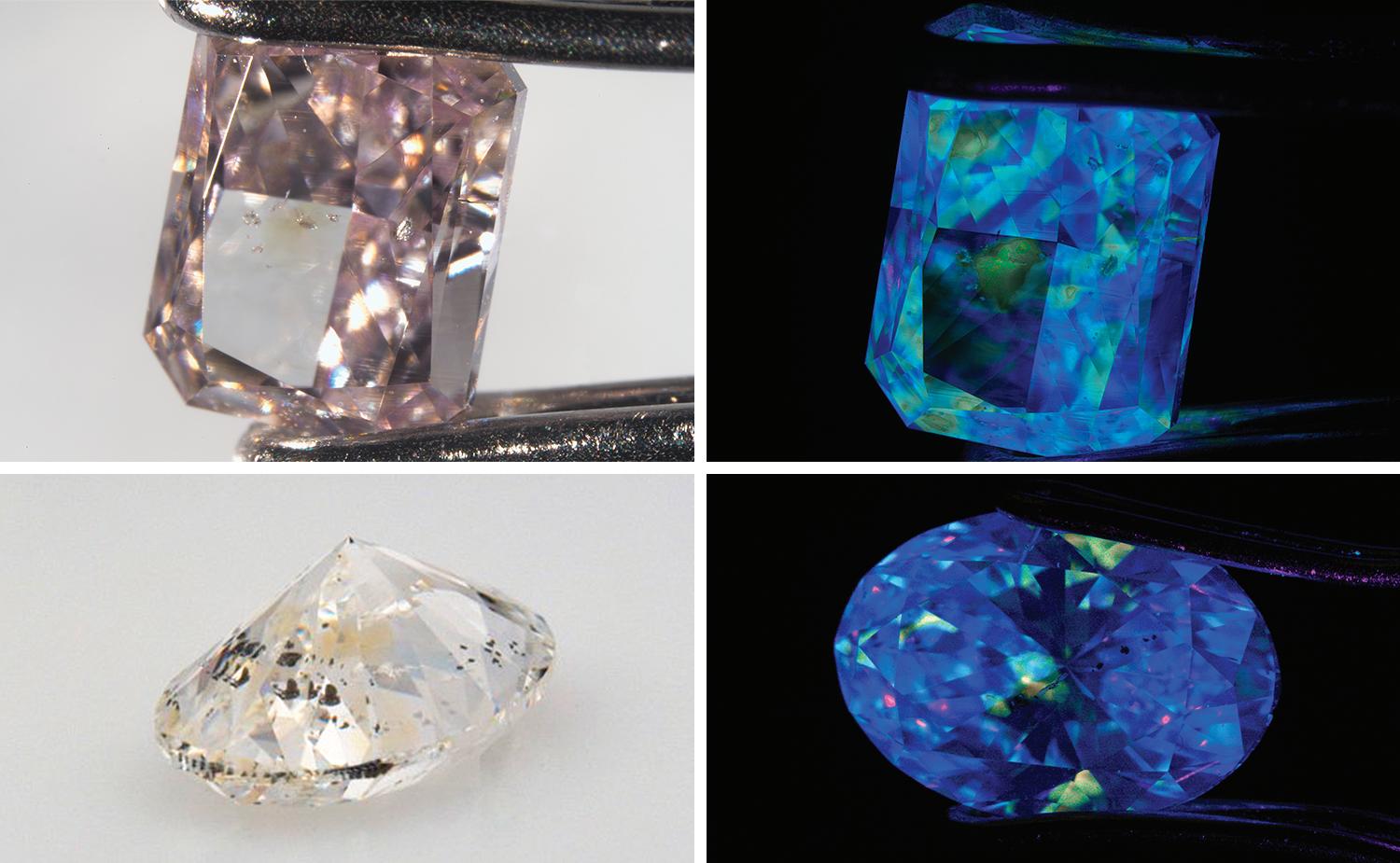
Irregularly shaped or cuboid yellow color zones caused by the 480 nm absorption band have been observed in several colorless and pink diamonds (figure 13) (Sohrabi et al., 2023; Lai et al., 2024b; Hardman et al., 2025). In most of these diamonds, the yellow color zones are volumetrically minor compared to the rest of the diamond. Consequently, the 480 nm absorption band is usually not detected when the bulk diamond is measured using Vis-NIR absorption spectroscopy. Instead, PL spectroscopy is a highly sensitive in situ technique that has been used to confirm that the yellow color zones in these diamonds contain PL features associated with the 480 nm absorption band (Lai et al., 2024b; Hardman et al., 2025).
The cold slabs can be thought of as having a carbonated crust component and a hydrated/serpentinized mantle peridotite component that lies shielded beneath the crust, toward the interior of the slab. The deep release of carbonatitic melt and hydrous fl uid from each component, respectively, is shown in the two depth profiles in figure 3. The carbonated crust (mid-ocean ridge basalt, or MORB) of the slab surface will intersect a deep depression in its solidus, the curve describing the beginning of melting, meaning it exceeds the melting temperature. Beyond this point, carbonate melting (red arrows) is expected to occur within the top/crustal portion of the slab.
Similar to typical 480 nm band diamonds, yellow color zones in colorless and pink diamonds have medium to strong yellow fluorescence when exposed to long-wave UV, whereas the colorless or pink color zones have blue fluorescence (figure 13). When examined with the DiamondView instrument, yellow color zones generally show much weaker yellow fluorescence compared to that produced by long-wave UV. This is partly because
For hydrated/serpentinized mantle peridotite inside the slab,
the yellow color zones are small and/or are only partially located on the surface of these diamonds; occasionally the yellow color zones are completely beneath the diamonds’ surfaces, in which case a yellow fluorescence response cannot be detected by surface fluorescence imaging using the DiamondView. For diamonds with subsurface yellow color zones, PL depth profiling (collecting PL spectra as a function of depth) has demonstrated the ability to detect the zone where the PL features associated with the 480 nm absorption band are the strongest, hence estimating the depth and thickness of the yellow color zones (Lai et al., 2024b). The occurrence of diamonds containing yellow color zones further emphasizes the dynamic environments in which 480 nm band diamonds may grow.
bearing minerals called dense hydrous magnesium silicates (DHMS) rather than breaking down. DHMS phases are a good vehicle for transporting water, with some carrying as much as 10% or more water by weight. The geotherm for the interior of cold slabs remains in the DHMS stability fi eld far beyond a depth of 300 km (far right in figure 3). The slab in figure 3 is shown defl ecting as it reaches the top of the lower mantle (at 660 km), where there is a change in mantle density and deformability. As the slab stalls and warms up, DHMS phases break down to form minerals that carry much less water, thereby causing water release (blue arrows in figure 3). These are the mechanisms proposed to trigger not only deep-focus earthquakes but also super-deep diamond growth (Shirey et al., 2021).
SOURCES
The global abundance and distribution of 480 nm band diamonds are presently unknown. These diamonds are not commonly reported by the mining industry or geological research fields, due in part to their scarcity (and that they are not found in all diamond mines) and/or that these industries are not aware of their features. To date, only two localities are confirmed to produce 480 nm band diamonds: the Chidliak kimberlite field in Canada (Lai et al., 2020) and
B A
Inclusions in the smaller, lower-quality varieties of sublithospheric diamonds often show evidence of growth from carbonatitic melts derived from slabs (Walter et al., 2008), but hydrous/aqueous fl uids have also been implicated for some samples (Wirth et al., 2007; Pearson et al., 2014; Palot et al., 2016). Serpentinite in subducting slabs can be relatively enriched in boron, meaning that the eventual breakdown of hydrous minerals from serpentinized peridotite can release boron-bearing hydrous fl uid, which has been linked with the formation of type IIb (boron-bearing) diamonds (Smith et al., 2018). Figure 4 shows a calcium silicate (breyite) inclusion with methane and hydrogen in a type IIb diamond. The original mineral inclusion may have been relatively hydrogen-rich
with carbonated MORB solidus from Thomson et al. (2016b) and DHMS stability field from Harte (2010).
up, causing the breakdown of these hydrous phases and the release of hydrous fluid (blue arrows). Large white and smaller brown diamond symbols signify the growth of high-quality gem diamonds (CLIPPIR and type IIb) and low-quality, generally non-gem sublithospheric diamonds, respectively. Poorly understood mechanisms transport some diamonds upward where they can be swept up in kimberlite eruptions and mixed with common lithospheric diamonds (small black diamond symbols). Modified from Smith and Nestola (2021)
D C
Figure 13. Yellow zones colored by the 480 nm absorption band have been observed in pink (A) and colorless (C) diamonds. B and D: When exposed to longwave UV, the yellow color zones in the pink and colorless diamonds show yellow fluorescence, while the remaining areas of the diamonds show blue fluorescence. Photos by Mei Yan Lai.
The cold slabs can be thought of as having a carbonated crust component and a hydrated/serpentinized mantle peridotite component that lies shielded beneath the crust, toward the interior of the slab. The deep release of carbonatitic melt and hydrous fl uid from each component, respectively, is shown in the two depth profiles in figure 3. The carbonated crust (mid-ocean ridge basalt, or MORB) of the slab surface will intersect a deep depression in its solidus, the curve describing the beginning of melting, meaning it exceeds the melting temperature. Beyond this point, carbonate melting (red arrows) is expected to occur within the top/crustal portion of the slab.
super-deep diamond growth (Shirey et al., 2021).
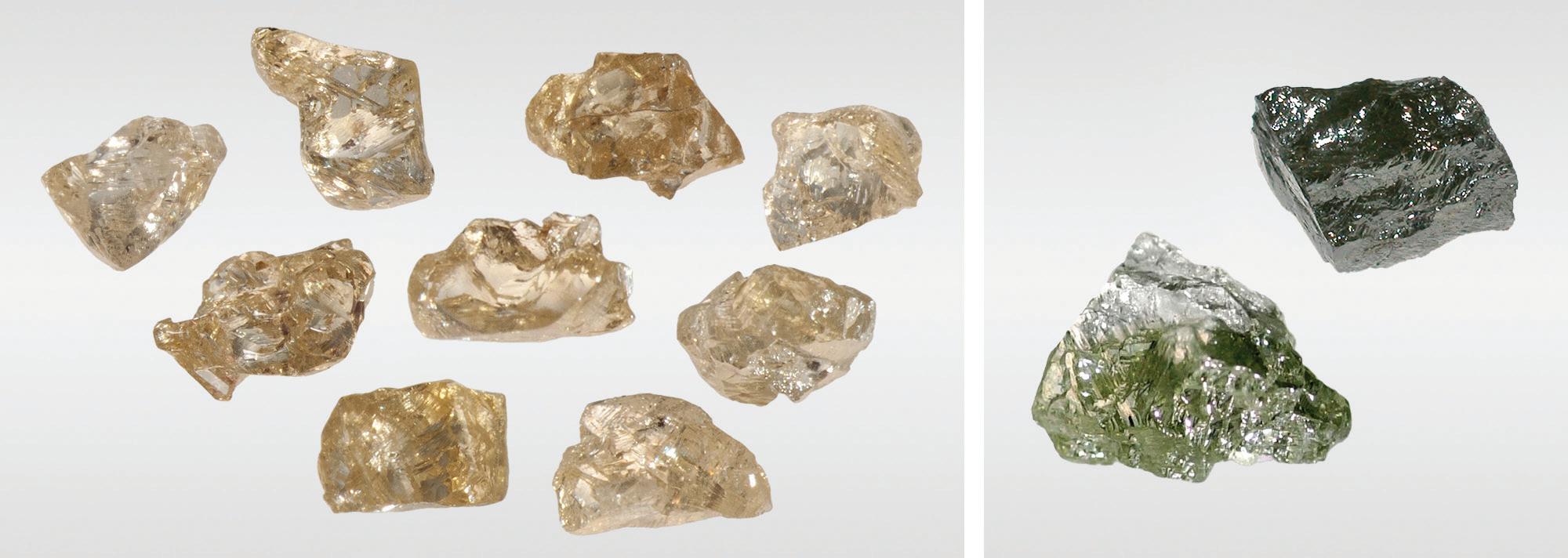
Right: Rough chameleon diamonds submitted to GIA for analysis. All of these diamonds have irregular morphologies. Photos by Mei Yan Lai (left) and GIA staff (right)
the kimberlites of the Siberian Platform in Russia (Titkov et al., 2014). Other localities that likely also contain 480 nm band diamonds are Botswana’s Orapa kimberlite cluster (Timmerman et al., 2018) and Canada’s Lake Timiskaming kimberlite cluster (Van Rythoven et al., 2022), based on the interpretation of FTIR spectra and surface fluorescence patterns of the reported yellow diamonds from these localities that are similar to 480 nm band diamonds.
For hydrated/serpentinized mantle peridotite inside the slab, its stability also depends on temperature. If it remains cool, the serpentine can metamorphose into higher-pressure water-
MORPHOLOGY OF ROUGH 480 NM BAND DIAMONDS
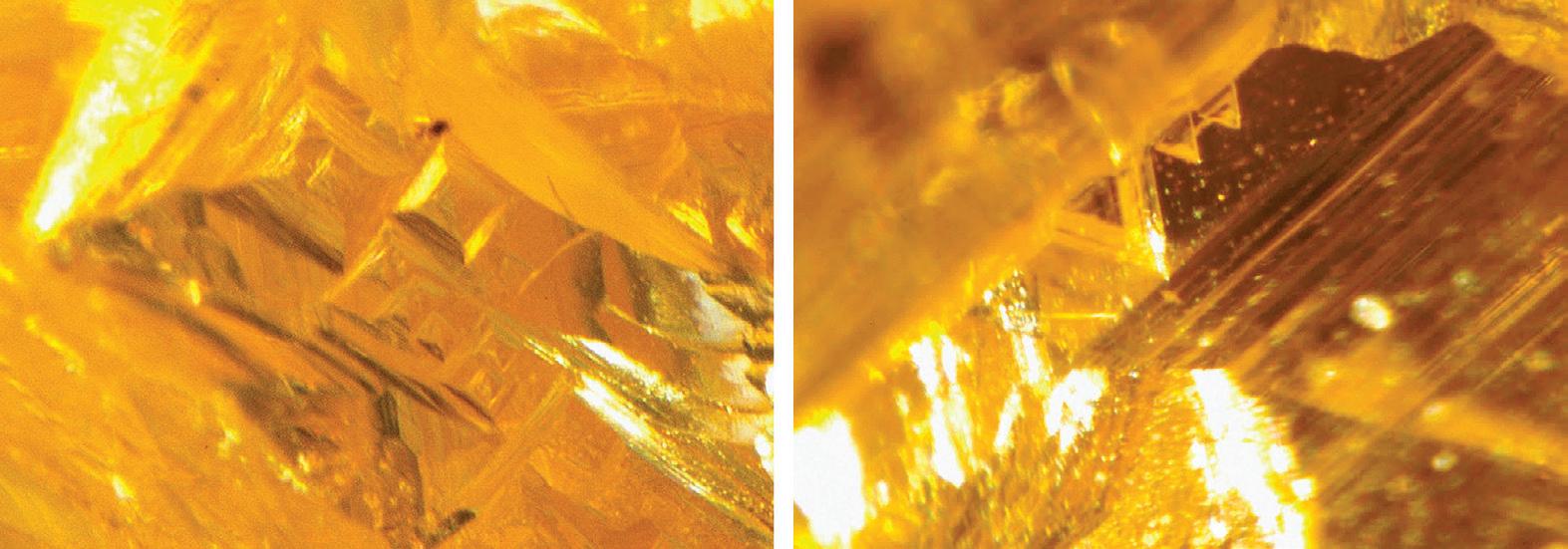
Rough 480 nm band diamonds commonly have irregular morphology, lacking any well-defined octahedral or cuboid crystal faces. This morphological characteristic is observed among 480 nm band diamonds from the Chidliak kimberlite field in Canada (figure 14, left) (Lai et al., 2020). Over the past few years, GIA has received several rough 480 nm band diamonds, including chameleon diamonds, for analysis (figure 14, right). Similar to the Chidliak diamonds, none showed any well-defined octahedral or cuboid crystal faces. Another submitted rough diamond exhibited both trigons and tetragons on the same face (figure 15). Trigons and tetragons are etched features restricted to the octahedral and cuboid crystal faces, respectively, formed on the surface of
Inclusions in the smaller, lower-quality varieties of sublithospheric diamonds often show evidence of growth from carbonatitic melts derived from slabs (Walter et al., 2008), but hydrous/aqueous fl uids have also been implicated for some samples (Wirth et al., 2007; Pearson et al., 2014; Palot et al., 2016). Serpentinite in subducting slabs can be relatively enriched in boron, meaning that the eventual breakdown of hydrous minerals from serpentinized peridotite can release boron-bearing hydrous fl uid, which has been linked with the formation of type IIb (boron-bearing) diamonds (Smith et al., 2018). Figure 4 shows a calcium silicate (breyite) inclusion with methane and hydrogen in a type IIb diamond. The original mineral inclusion may have been relatively hydrogen-rich
Diamond-bearing kimberlite eruption
Continental lithosphere
Deep-focus earthquake activity
diamond from the interaction with fluids in Earth’s mantle or during kimberlite eruption. This suggests that the diamond has a combination of octahedral and cuboid growth habits, probably resulting from crystallization under dynamic geological conditions. While most 480 nm band diamonds submitted to GIA are faceted and hence the original morphologies are unknown, occasionally etch features are preserved within indented naturals, which reveal the growth habits of these diamonds (e.g., Lai and Hardman, 2023).
MINERAL INCLUSIONS
Oceaniclithosphere
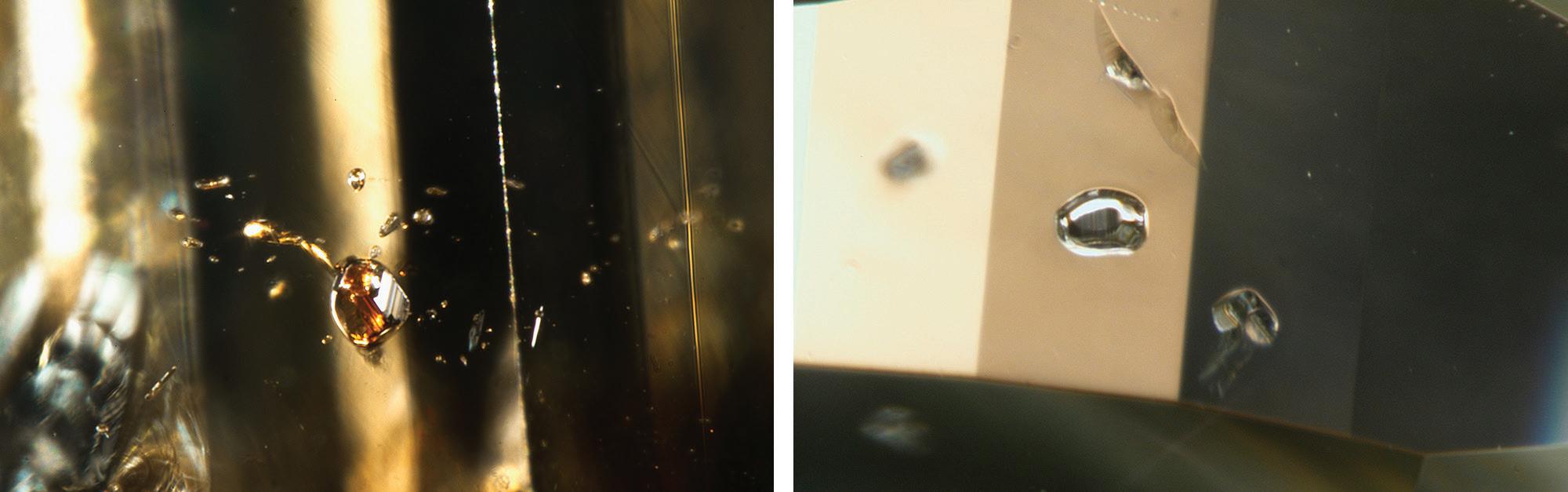
Often minerals from mantle rocks are encapsulated by diamonds during growth. These mineral inclusions can be used to interpret the mantle rock from which they were derived, and hence the rock in which the diamond may have grown. Mineral inclusions observed in 480 nm band diamonds include pyrope-almandine-grossular garnet, omphacite, rutile, graphite, and sulfide minerals. Pyropealmandine-grossular garnet ((Mg,Fe,Ca)3Al2Si3O12), omphacite ((Ca,Na)(Mg,Fe,Al)Si2O6), and rutile (TiO2) are minerals associated with eclogite—a major host rock for diamond in the lithospheric mantle (figure 16). Based on the observation that most, if not all, inclusionbearing 480
Figure 3. Mantle cross section showing a relatively cool subducting slab, with an inset histogram of earthquake frequency (from figure 1). Profiles on the right show the slab surface and interior temperature during subduction. Where the slab surface temperature intersects the solidus of carbonated mid-ocean ridge basalt (MORB), partial melting may occur (red arrows). At the far right, a cold slab interior remains within the dense hydrous magnesium silicates (DHMS) stability field until the slab stalls and warms up, causing the breakdown of these hydrous phases and the release of hydrous fluid (blue arrows). Large white and smaller brown diamond symbols signify the growth of high-quality gem diamonds (CLIPPIR and type IIb) and low-quality, generally non-gem sublithospheric diamonds, respectively. Poorly understood mechanisms transport some diamonds upward where they can be swept up in kimberlite eruptions and mixed with common lithospheric diamonds (small black diamond symbols). Modified Thomson et al. (2016b) and DHMS stability field from Harte (2010).
Figure 15. Tetragons (left) and trigons (right) were observed on the same side of this rough 480 nm band diamond, indicating a combination of octahedral and cuboid growth habits. Photomicrographs by Mei Yan Lai; fields of view 2.41 mm (left) and 0.73 mm (right).
Figure 14. Left: Rough yellow 480 nm band diamonds from the Chidliak kimberlite field in Canada.
where its later release can cause deep-focus earthquakes (figure 3).
nm band diamonds submitted to GIA are eclogitic, it is inferred that these diamonds are more likely to be found in mines that predominantly produce eclogitic diamonds. However, this does not preclude the possibility that 480 nm band diamonds can also form in peridotite—another major diamond host rock in the lithospheric mantle comprised predominantly of olivine ((Fe,Mg)2SiO4), orthopyroxene ((Mg,Fe)2Si2O6), and chromium-rich diopside ((Ca,Cr)MgSi2O6).
The cold slabs can be thought of as having a carbonated crust component and a hydrated/serpentinized mantle peridotite component that lies shielded beneath the crust, toward the interior of the slab. The deep release of carbonatitic melt and hydrous fl uid from each component, respectively, is shown in the two depth profiles in figure 3. The carbonated crust (mid-ocean ridge basalt, or MORB) of the slab surface will intersect a deep depression in its solidus, the curve describing the beginning of melting, meaning it exceeds the melting temperature. Beyond this point, carbonate melting (red arrows) is expected to occur within the top/crustal portion of the slab.
CONCLUSIONS
For hydrated/serpentinized mantle peridotite inside the slab, its stability also depends on temperature. If it remains cool, the serpentine can metamorphose into higher-pressure water-
Diamonds colored by the 480 nm absorption band have attracted little attention in the mining industry and gem trade, due in part to their scarcity and therefore unfamiliarity with their properties. While most 480 nm band diamonds have a saturated yellow body color similar to that generated by other diamond defects, these diamonds also occur in a variety of additional colors, including the highly sought-after pure orange diamonds and color-change chameleon diamonds.
(DHMS) rather than breaking down. DHMS phases are a good vehicle for transporting water, with some carrying as much as 10% or more water by weight. The geotherm for the interior of cold slabs remains in the DHMS stability fi eld far beyond a depth of 300 km (far right in figure 3). The slab in figure 3 is shown defl ecting as it reaches the top of the lower mantle (at 660 km), where there is a change in mantle density and deformability. As the slab stalls and warms up, DHMS phases break down to form minerals that carry much less water, thereby causing water release (blue arrows in figure 3). These are the mechanisms proposed to trigger not only deep-focus earthquakes but also super-deep diamond growth (Shirey et al., 2021).
Inclusions in the smaller, lower-quality varieties of sublithospheric diamonds often show evidence of growth from carbonatitic melts derived from slabs (Walter et al., 2008), but hydrous/aqueous fl uids have also been implicated for some samples (Wirth et al., 2007; Pearson et al., 2014; Palot et al., 2016). Serpentinite in subducting slabs can be relatively enriched in boron, meaning that the eventual breakdown of hydrous minerals from serpentinized peridotite can release boron-bearing hydrous fl uid, which has been linked with the formation of type IIb (boron-bearing) diamonds (Smith et al., 2018). Figure 4 shows a calcium silicate (breyite) inclusion with methane and hydrogen in a type IIb diamond. The original mineral inclusion may have been relatively hydrogen-rich
Currently, no known commercial treatments or synthetic growth methods can create the defect(s) associated with the 480 nm absorption band or the color-change property associated with chameleon diamonds. However, it is certainly possible to artificially create other defects in 480 nm band diamonds to alter their colors (e.g., laboratory irradiation treatments to produce a green body color); therefore, advanced gemological testing may be required to ensure that the diamonds are naturally colored. Finally, care must be taken when examining colorless or pink diamonds, as small yellow color zones caused by the 480 nm absorption band may occur in these diamonds and affect their color grades.
Diamond-bearing kimberlite eruption
Continental lithosphere
Deep-focus earthquake activity
High-quality CLIPPIR and type IIb diamonds
ABOUT THE AUTHORS
Oceaniclithosphere
Dr. Mei Yan Lai is a metrologist and former postdoctoral research associate at GIA in Carlsbad, California.
ACKNOWLEDGEMENTS
Low-quality, non-gem sublithospheric diamonds
Lithospheric diamonds
Rapid diamond screening can be achieved by exposing them to long-wave UV, as 480 nm band diamonds generally emit medium to strong yellow fluorescence, a mixture of yellow and blue fluorescence, or (occasionally) orange fluorescence. The presence of micrometer-sized dark inclusion clusters – identified as graphite – are a diagnostic gemological feature of 480 nm band diamonds. These platy inclusions are extremely thin and highly reflective when viewed at certain angles, with rounded or well-defined hexagonal shapes. Other characteristic features of 480 nm band diamonds include irregular surface fluorescence patterns, anomalous absorption in the one-phonon region of the FTIR spectrum, and a broad PL band centered at 650–685 nm when the diamond is excited by lasers with wavelengths in the range of, for example, 488–532 nm.
Carbonated slab melting Hydrous uid
The author is grateful to Matthew Hardman for many helpful suggestions and comments on the first draft of the manuscript. George Rossman (California Institute of Technology) is sincerely thanked for providing access to a UV-Vis-NIR microspectrometer. Thank you to Christopher M. Breeding and Sally Eaton-Magaña for their guidance on this research and providing helpful comments on the manuscript. Paul Johnson, Kyaw Moe, and Virginia Schwartz and her team are acknowledged for providing data and identifying the diamonds for this study. Simon Lawson and three reviewers are thanked for reviewing the manuscript and providing constructive comments.
Figure 3. Mantle cross section showing a relatively cool subducting slab, with an inset histogram of earthquake frequency (from figure 1). Profiles on the right show the slab surface and interior temperature during subduction. Where the slab surface temperature intersects the solidus of carbonated mid-ocean ridge basalt (MORB), partial melting may occur (red arrows). At the far right, a cold slab interior remains within the dense hydrous magnesium silicates (DHMS) stability field until the slab stalls and warms up, causing the breakdown of these hydrous phases and the release of hydrous fluid (blue arrows). Large white and smaller brown diamond symbols signify the growth of high-quality gem diamonds (CLIPPIR and type IIb) and low-quality, generally non-gem sublithospheric diamonds, respectively. Poorly understood mechanisms transport some diamonds upward where they can be swept up in kimberlite eruptions and mixed with common lithospheric diamonds (small black diamond symbols). Modified from Smith and Nestola (2021) with carbonated MORB solidus from Thomson et al. (2016b) and DHMS stability field from Harte (2010).
Figure 16. Pyrope-almandine-grossular garnet (left) and omphacite (right) are the most common mineral inclusions observed in 480 nm band diamonds. (The tan areas in the right photo are reflections from the girdle facets.) Photomicrographs by Mei Yan Lai; fields of view 1.76 mm (left) and 0.93 mm (right).
“ The Jewellery Council has been an invaluable support to our business over the years.
When the DRC regulations were introduced, their team was extremely helpful in guiding us through the correct procedures and compliance requirements, making the transition far smoother for our company They have also assisted us greatly with VAT refund processes and industry-related guidance.
Being part of the Jewellery Council gives us confidence knowing that we have access to knowledgeable support and a strong industry network when needed ”
– Luca Chiminello, Bassano Gioielli, Jewellery Sales Director
The role of modern gold analysers
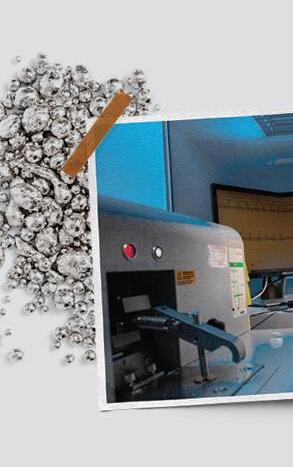
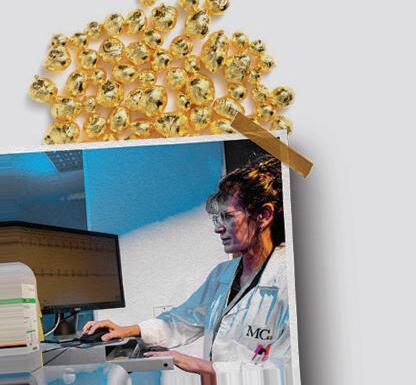
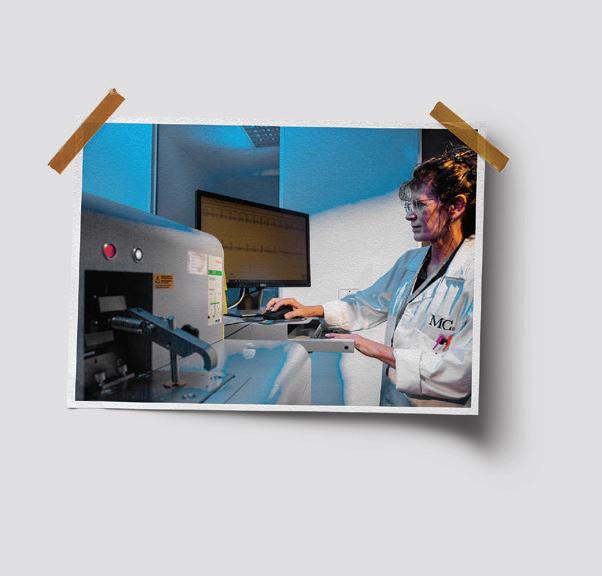
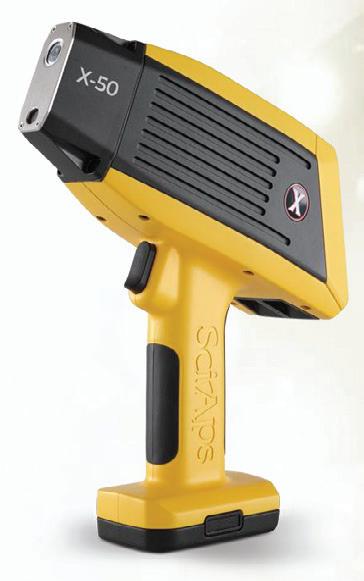
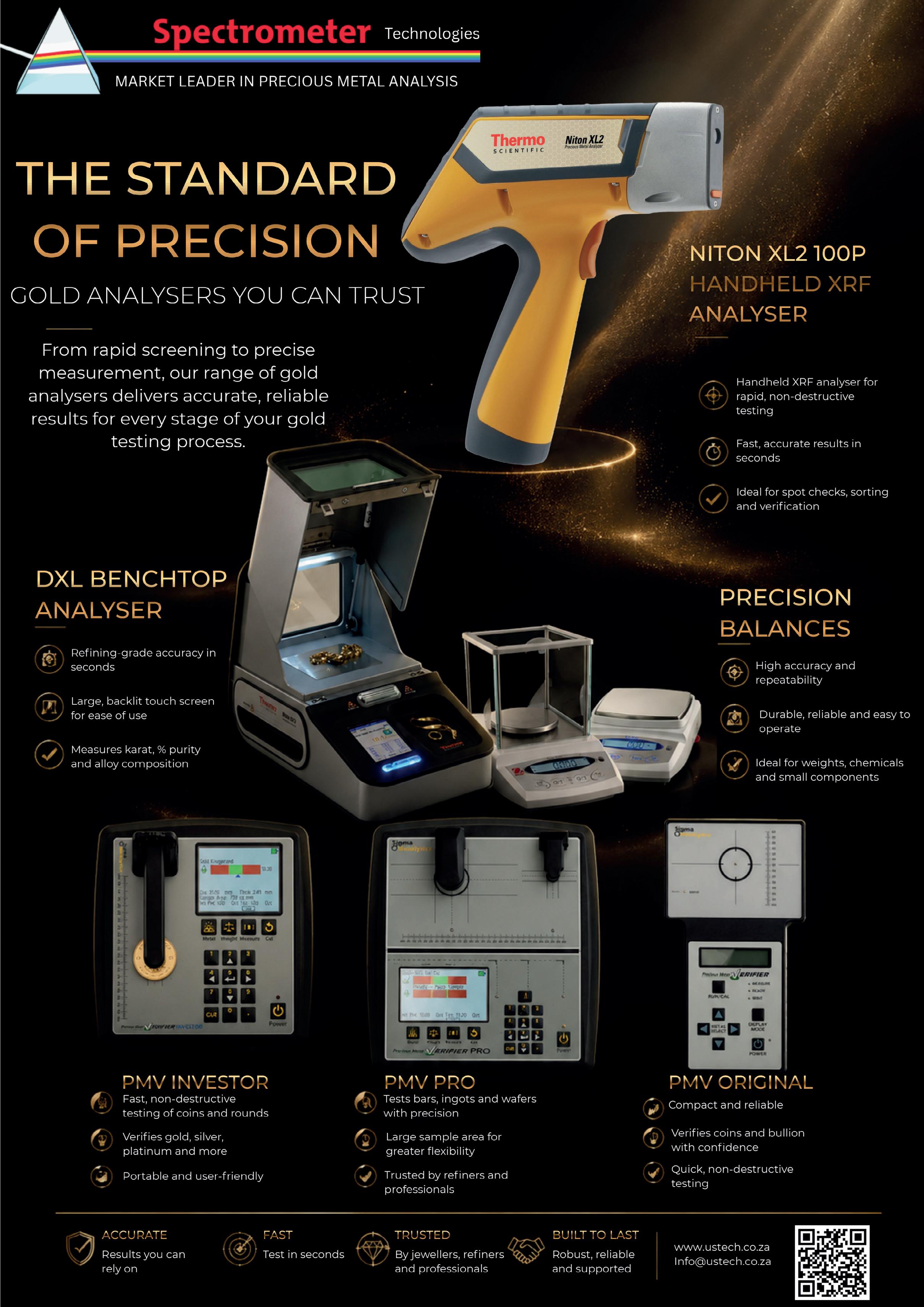
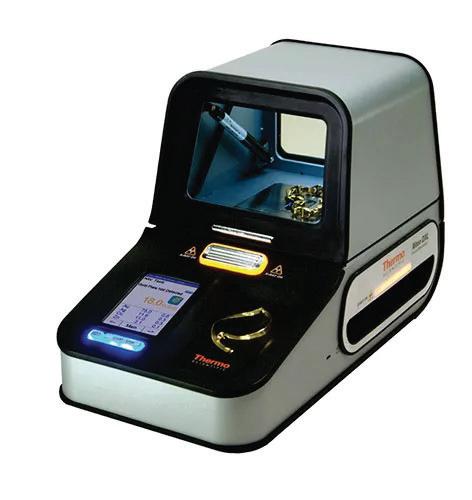
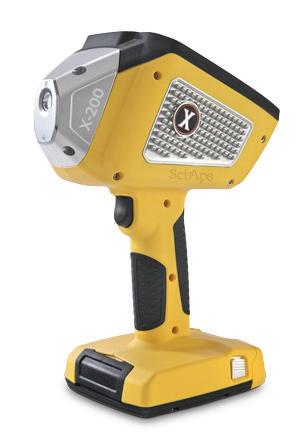
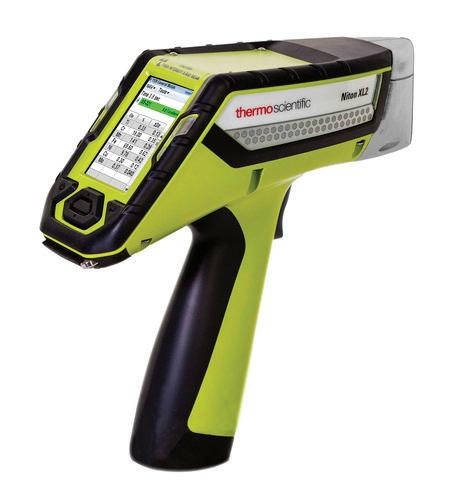
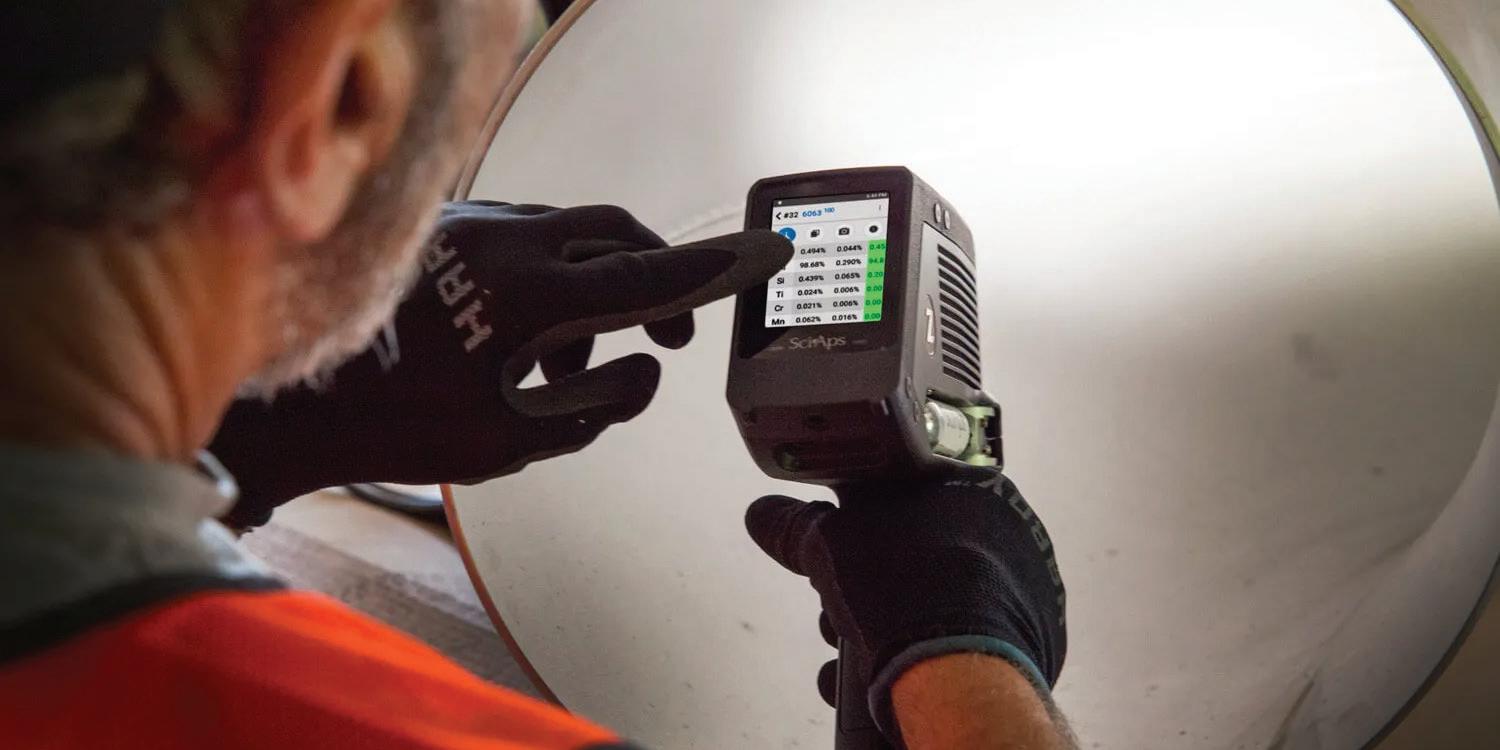
Precious metal verification has become increasingly sophisticated with the rise of portable analytical technologies. Hand-held x-ray fl uorescence (XRF) and advanced spectrometer systems now allow jewellers, refiners and assay professionals to determine gold and precious metal composition quickly, accurately and non-destructively, transforming quality control and trade confidence across the industry
The evolution of precious metal testing
Accurate determination of precious metal content is fundamental to the jewellery industry, supporting valuation, compliance, manufacturing quality control and consumer confidence. While traditional fire assay methods remain the benchmark for ultimate accuracy, they are time-intensive and destructive, making them less practical for everyday commercial use.
In response, advanced analytical technologies such as hand-held and benchtop XRF and spectrometer systems have become widely adopted. These instruments allow users to identify and quantify elemental composition within seconds, without damaging the sample.
Hand-held XRF analysers for on-site testing
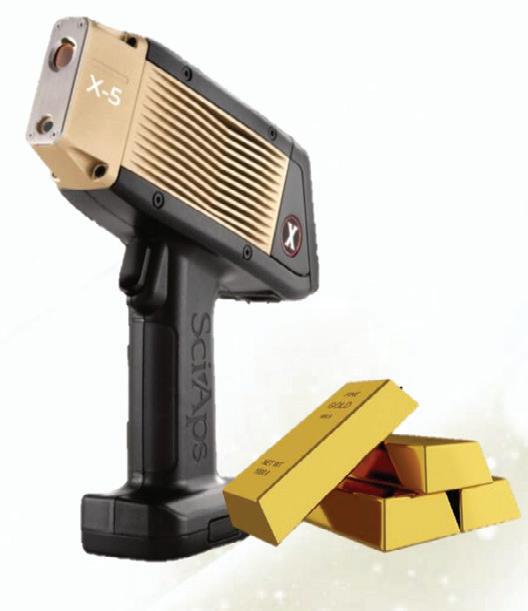
Hand-held XRF (x-ray fl uorescence) analysers are now a standard tool in the jewellery trade, off ering fast and reliable analysis of gold, silver, platinum group metals and common alloying elements.
Modern hand-held units typically provide:
• Rapid carat and purity verification.
• Non-destructive surface and bulk alloy analysis.
• Immediate identification of plating or counterfeit materials.
• Portable operation for retail, trade and field environments.
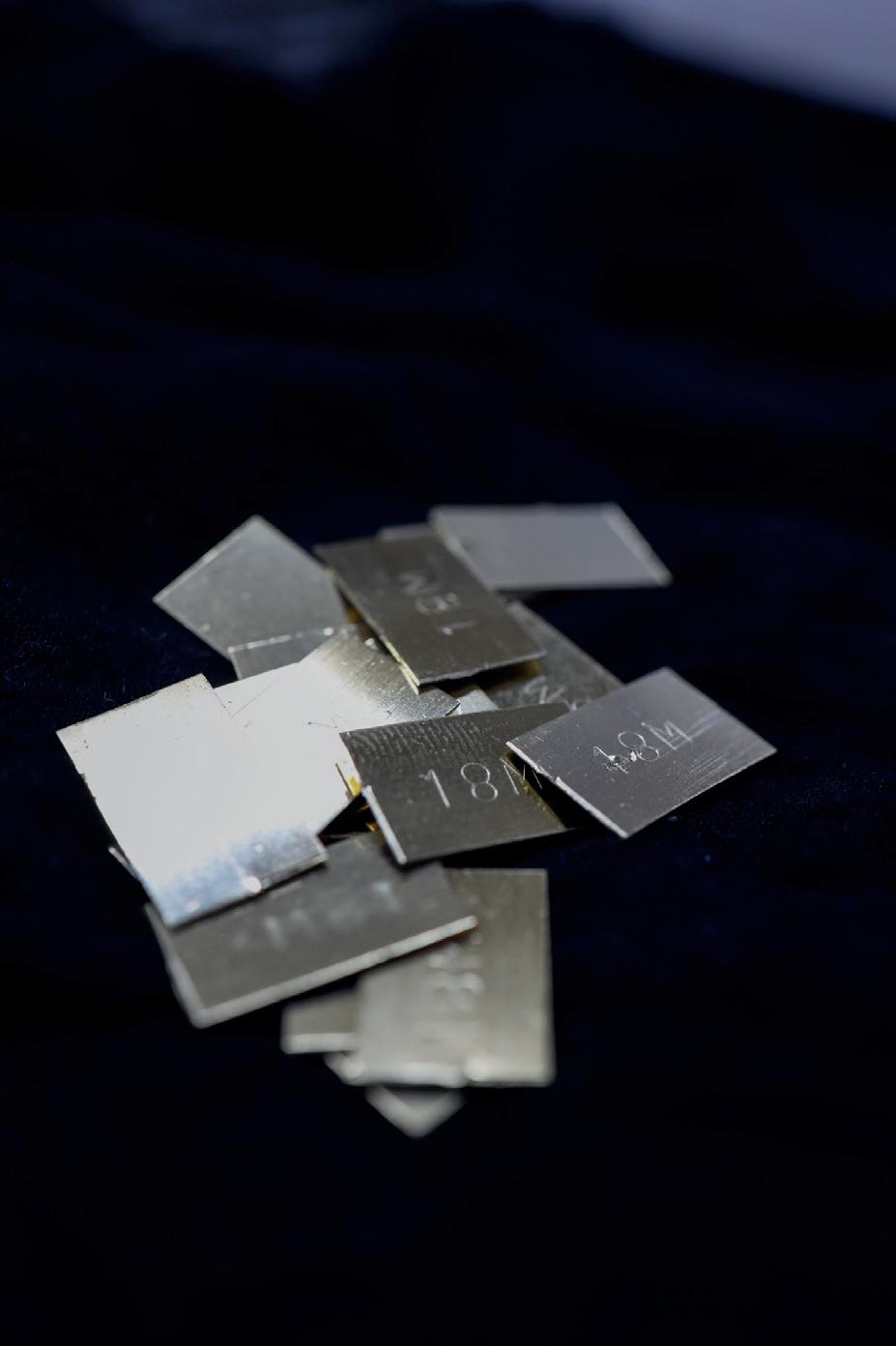
Advanced models are designed with high-resolution detectors and optimised calibration modes specifically for precious metals, enabling accurate differentiation between closely related alloys such as 9ct, 14ct, 18ct and 22ct gold, as well as platinum and palladium alloys.
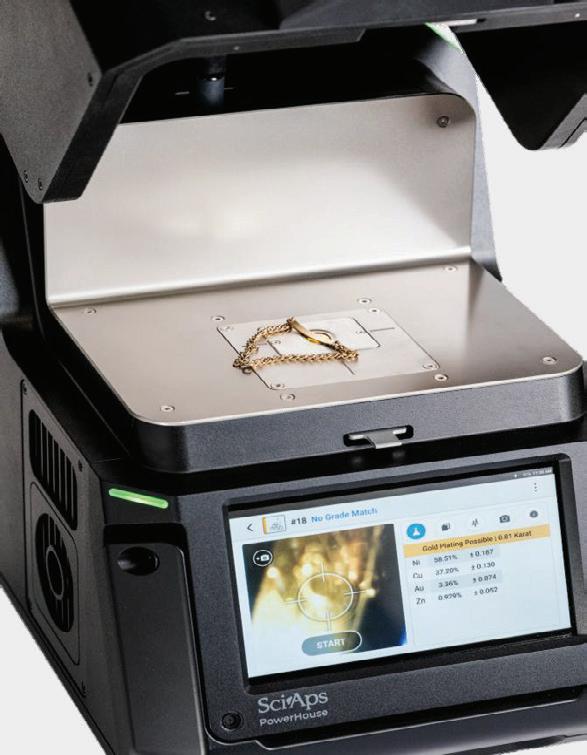
Benchtop XRF systems for high-precision analysis
For laboratory, manufacturing and refining environments, benchtop XRF systems offer enhanced analytical precision and stability. These systems are typically used where regulatory compliance, assay reporting and repeatability are critical.
Key advantages include:
• Higher spectral resolution compared with hand-held devices.
• Improved detection of trace elements and minor alloy components.
• Greater long-term measurement stability.
• Suitability for batch testing and quality assurance workflows.
Benchtop systems are commonly integrated into hallmarking support processes, refining verification and incoming material inspection within manufacturing facilities.
In addition to XRF, LIBS technology has emerged as a powerful alternative for rapid precious metal analysis. LIBS instruments use a focused laser pulse to vaporise a microscopic portion of the sample surface, generating a plasma which is analysed to determine elemental composition.
Key benefits include:
• Extremely fast analysis times (often seconds per reading).
• Capability to detect lighter elements that XRF may not effectively measure.
• High precision for alloy differentiation in complex materials.
• Minimal sample preparation requirements.
LIBS systems are increasingly used for applications requiring fast sorting, scrap analysis and alloy identification where high throughput is required.
The adoption of modern analytical technologies has significantly improved efficiency and transparency across the jewellery and precious metal value chain.
Key applications include:
• Retail and trade jewellery authentication.
• Bullion and investment metal verification.
• Scrap sorting and recycling operations.
• Manufacturing quality control.
• Refining input and output validation.
These technologies reduce reliance on outsourced laboratory testing and enable faster decision-making, particularly in high-volume trading environments.
The continued development of portable XRF and LIBS technologies is transforming precious metal verification across the jewellery industry. By combining speed, accuracy and non-destructive analysis, modern analysers are strengthening trust, improving operational efficiency and supporting more transparent precious metal markets.
“By combining speed, accuracy and non-destructive analysis, modern analysers are strengthening trust, improving operational efficiency and supporting more transparent precious metal markets.”
Elevating craftsmanship: The JCSA Professional Technical Skills Certificate
In an industry where excellence is measured in microns and mastery is often passed from hand to hand, the recognition of skill has long been an elusive prize. From the artistry of jewellery manufacturing to refining, the jewellery ecosystem thrives on highly specialised expertise, much of it acquired informally on the workshop floor, writes Faldilah Garrett
In 2018, the Jewellery Manufacturers’ Association of South Africa (JMASA), a division of the Jewellery Council of SA (JCSA), introduced a transformative initiative: the Professional Technical Skills Certificate (PTSC). Designed to recognise workplaceacquired competencies, it brings long-overdue structure and prestige to the industry’s practical experience and knowledge.
From informal learning to formal recognition
As the JMASA notes, a signifi cant amount of training occurs informally in the workplace. The PTSC converts this experiential knowledge into a recognised professional credential, one which instils pride in employees and provides measurable assurance to employers.
Unlike a National Trade Test, the PTSC is not positioned as a regulatory qualification. Instead, it is an industry-endorsed assessment, created by the industry for the industry. It reflects real-world competencies rather
than purely academic benchmarks, making it both practical and relevant.
Defi ned skill pathways
The JMASA has already developed a portfolio of technical skills qualifications under the PTSC umbrella, including:
• Bench technician.
• CAD technician.
• Jewellery casting technician.
• Refining technician.
• Surface finishing technician.
• Production setter technician.
• Indian jewellery bench technician (still in development).
These categories reflect the diversity and depth of technical capability required across modern jewellery production and allied sectors.
A trusted, ethical framework
Employers, specifically members of the JCSA, play a central role in the PTSC by assessing their employees against clearly defined technical criteria.
2. Once an employee is deemed competent, the employer submits an application to the JMASA Executive Committee.
3. Upon approval, a jointly signed certificate, bearing both the council’s and the employer’s credentials, is issued.
4. A nominal fee per skill assessment ensures accessibility while maintaining professionalism.
This approach eliminates bureaucratic complexity while upholding trust, ethics and the reputational strength of member organisations.
Portability of reputation
One of the most compelling aspects of the PTSC is its portability. A certified professional carries not only a document, but the endorsement of a recognised employer and the JCSA. In a sector where reputation is paramount, this creates a powerful signal.
A new standard of pride
Beyond its practical benefi ts, the PTSC addresses something deeper: professional identity. For many individuals who have honed a singular craft over years, the certifi cate represents validation, achievement and belonging within a broader professional community. Such recognition elevates not only individuals, but the collective standard of the sector.
Faldilah is an expert in occupational programme development for the NQF, working with clients such as the MQA, SASSETA, the QCTO, the Reserve Bank and leading SETAs.
A qualifi ed goldsmith since 1999, she has helped shape national jewellery and mining qualifi cations since 2002. She serves on the JMASA Executive Committee and has trained top skill providers.
“For manufacturers and refiners, the PTSC is more than a certificate – it is a celebration of craftsmanship, integrity and the enduring value of skills.”
About Faldilah Garrett
Historically, men’s jewellery has been limited to traditional items such as wedding bands, cufflinks, signet rings and timepieces. However, over the past decade the category has expanded considerably, influenced by changing cultural norms, celebrity fashion trends and the growing intersection between jewellery and contemporary menswear.
Once a niche segment, men’s jewellery has emerged as a steadily expanding category within the global and local jewellery industry, driven by changing consumer attitudes, increased fashion influence and broader acceptance of personal adornment among male consumers
Global market analysis indicates that the men’s jewellery segment is experiencing consistent growth, supported by increased consumer willingness to experiment with personal style and a shift away from strictly traditional genderbased product categories. While exact growth rates vary by region, industry reports consistently identify men’s jewellery as one of the fastest-growing segments within the broader fashion accessory market.
In particular, younger consumers – including millennials and Gen Z demographics – are driving demand for more expressive and versatile jewellery pieces. This includes
Men’s jewellery: evolving design, shifting demand and a growing market segment
chains, bracelets, rings, earrings and layered accessory styling that was previously less common in mainstream male fashion. Social media platforms and digital influencers have played a significant role in normalising these trends, accelerating visibility and acceptance. From a manufacturing perspective, the growth in men’s jewellery has
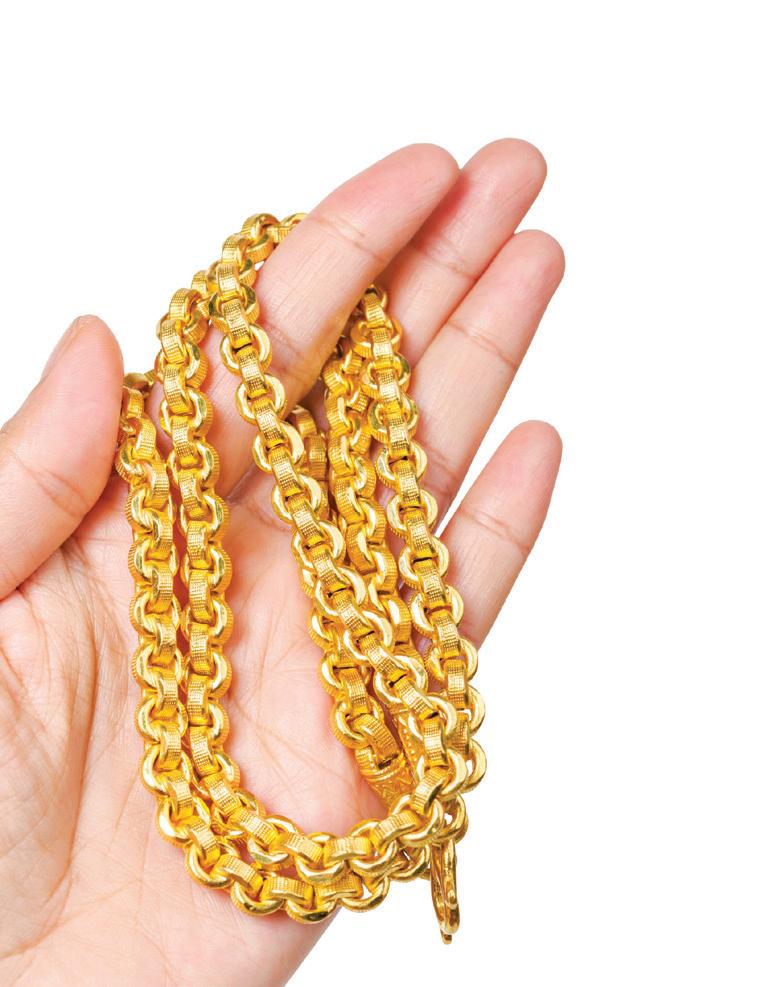
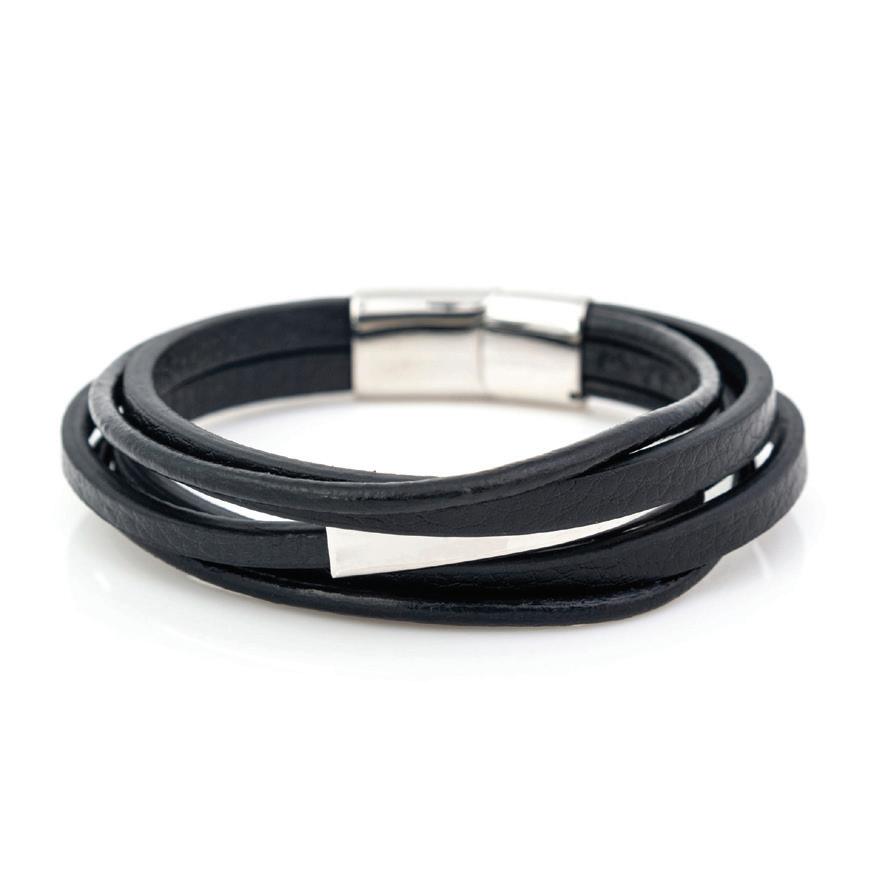
prompted increased diversification in design, material usage and production techniques. Traditional yellow gold remains popular, particularly in heavier and more substantial designs, while white gold, sterling silver, titanium, stainless steel and mixed-material pieces are increasingly being incorporated to meet demand
for durability, affordability and contemporary aesthetics.
Design trends within the segment tend to favour bold, structured forms, geometric shapes and minimalist styling. Signet rings, once associated primarily with heritage and family crests, have been reinterpreted as fashionforward statement pieces. Similarly, chain necklaces and bracelets have evolved from basic link designs into more complex and varied styles, often layered or combined with pendants and personal engravings.
The rise of customisation has also had a notable impact on the men’s jewellery market. Personalised engraving, bespoke design services and made-to-order pieces are increasingly sought after, reflecting a broader consumer preference for
Retailers have also adjusted their merchandising strategies to better accommodate the category. Dedicated men’s jewellery sections, gender-neutral displays and lifestyle-based marketing approaches are becoming more common. In many cases, men’s jewellery is no longer treated as a separate category, but is integrated into broader fashion and accessories offerings.
this demand by expanding men’s collections and incorporating flexible design ranges which can be adapted for different price points. This includes the use of alternative metals and modular production techniques that allow for scalability while maintaining design integrity.
Despite its growth, the men’s jewellery segment still faces certain challenges. Market education remains important, particularly in regions where jewellery purchasing is still strongly associated with women’s fashion or specific cultural traditions. In addition, pricing sensitivity can influence purchasing behaviour, especially in mid-market segments where consumers are balancing style preferences with affordability.
Nevertheless, the long-term outlook for men’s jewellery remains positive. Continued integration with fashion, increased visibility through digital platforms and ongoing product innovation are expected to support sustained growth. As the category continues to mature, it is likely to become an increasingly important component of both local and international jewellery markets.
In the South African context, the men’s jewellery market reflects many of these global trends, albeit with regional nuances. Demand is particularly strong in urban centres, where exposure to international fashion trends is higher and disposable income levels support discretionary luxury spending. At the same time, there is growing interest in locally produced, handcrafted pieces which reflect cultural identity and craftsmanship.
Manufacturers in the local market are increasingly responding to individuality and exclusivity. This aligns with wider luxury market trends, where personal identity and story-telling are becoming central to purchasing decisions.
Men’s jewellery is no longer a peripheral category, but a dynamic and expanding segment of the industry. For manufacturers, designers and retailers, it presents significant opportunities for innovation, diversification and market growth in an evolving consumer landscape.
“Men’s jewellery is no longer a peripheral category, but a dynamic and expanding segment of the industry. For manufacturers, designers and retailers, it presents significant opportunities for innovation, diversification and market growth in an evolving consumer landscape.”
BORN IN AFRICA
A DELE'S MANUFACTURING JEWELLERS
Tel no: 082 595 3868
E-mail: adele@amj.co.za
AFRICAN TRADE BEADS
JEWELLERY COLLECTION
Tel no: 011 726 7643
E-mail: tamiko@zazenconsulting.com
AFROGEM
Tel no: 076 726 8491
E-mail: k ylegilson@mweb.co.za; jess@afrogem.co.za; info@afrogem.co.za; accounts@jppe.co.za; l eighann@afrogem.co.za
AKAPO JEWELS
Tel no: 011 038 3130
E-mail: wumba@akapo.co.za; labi@akapo.co.za
ALLOY JEWELLERY GALLERY (PTY) LTD
Tel no: 073 924 5254
E-mail: edna@alloygallery.co.za
ALTIN JUWELIERS BK
T/A ALTIN JEWELLERS
Tel no: 082 454 4430
E-mail: info@altin.co.za
AMBER & FORGE (PTY) LTD
T/A SCHERMANS
Tel no: 072 928 0385
E-mail: info@schermans.co.za
AMBIGO JEWELLERS
Tel no: 062 282 6924
E -mail: ntobekobasil@gmail.com
ANDREAS SALVER
MANUFACTURING JEWELLERS
Tel no: 011 706 6828
E-mail: andreas@andreassalver.com
ANKE LINDEN JEWELLERY (PTY) LTD
Tel no: 0 69 925 3699
E-mail: lindenjewellery@gmail.com
ANNA ROSHOLT JEWELLERY DESIGN
Tel no: 0 61 080 6481
E-mail: anna@annarosholt.com
ANNELLE MURRAY GOUDSMID
Tel no: 082 956 7747
E-mail: murrayannelle@gmail.com
A comprehensive directory featuring information and contact details of refining members and members of the Jewellery Manufacturers' Association of South Africa – proudly showcasing manufacturers committed to crafting quality jewellery locally.
This monthly section is dedicated to supporting professionals within the jewellery industry who are seeking employment opportunities and aims to help connect skilled jewellery professionals with businesses looking for talent
Jewellery designer and manufacturer seeking opportunity
A passionate and detail-orientated jewellery designer and manufacturer with experience in bench work, casting, stone setting and hand manufacturing. Creative, motivated and eager to grow within a dynamic team while producing high-quality jewellery pieces. Dedicated to continuously developing skills within the jewellery industry.
For a CV or further details, contact: duduzilesithole29@gmail.com.
Experienced jeweller seeking opportunity
A skilled and hard-working jeweller with 10 years of experience in jewellery manufacturing, repairs and finishing. Experienced in polishing, wristbands, bangles, box rings, pendants and cutout nameplates. Passionate about the industry, detail-orientated and willing to take on any task within a professional jewellery environment.
For a CV or further details, contact: 3cafenet@gmail.com.
Experienced jeweller seeking opportunity
A highly experienced jeweller with 30 years in the jewellery industry, specialising in manufacturing and jewellery craftsmanship. Seeking a fulltime opportunity within South Africa or internationally. Dedicated, skilled and passionate about delivering quality workmanship.
For a CV or further details, contact 072-529-7366 / 061-791-6264 or africanthemejewellers@yahoo.com.
Jewellery designer seeking opportunity
A passionate jewellery designer with a keen eye for detail and a love for creating unique, wearable pieces seeks an opportunity within the industry. Creative, skilled and innovative, with a strong design portfolio.
For a CV or further details, contact: sellosolomon03@gmail.com or 067-021-2268.
Qualified goldsmith seeking position
A qualified and professional goldsmith, trained at Tshwane University of Technology, is seeking employment. Dedicated, detail-orientated and eager to grow within the industry.
For a CV or further details, contact: webster.negredo@gmail.com or 079-708-3323.
Jewellery design and manufacturing graduate seeking opportunity
A motivated individual holding a National Diploma in Jewellery Design and Manufacturing, with two years of GDP experience in sales and marketing, jewellery design and manufacturing and CAD. Skilled, committed and eager to grow within the jewellery industry.
For a CV or further details, contact: mmaninimahoko@gmail.com.
LOOKING FOR EMPLOYMENT?
To be featured, e-mail your information to: adriv@jewellery.org.za. Include a short description of your experience and skills (max 50 words), your region and contact details.