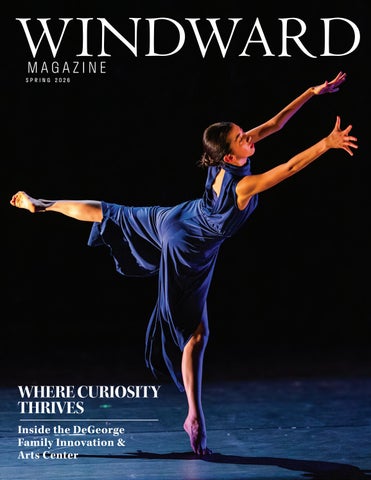
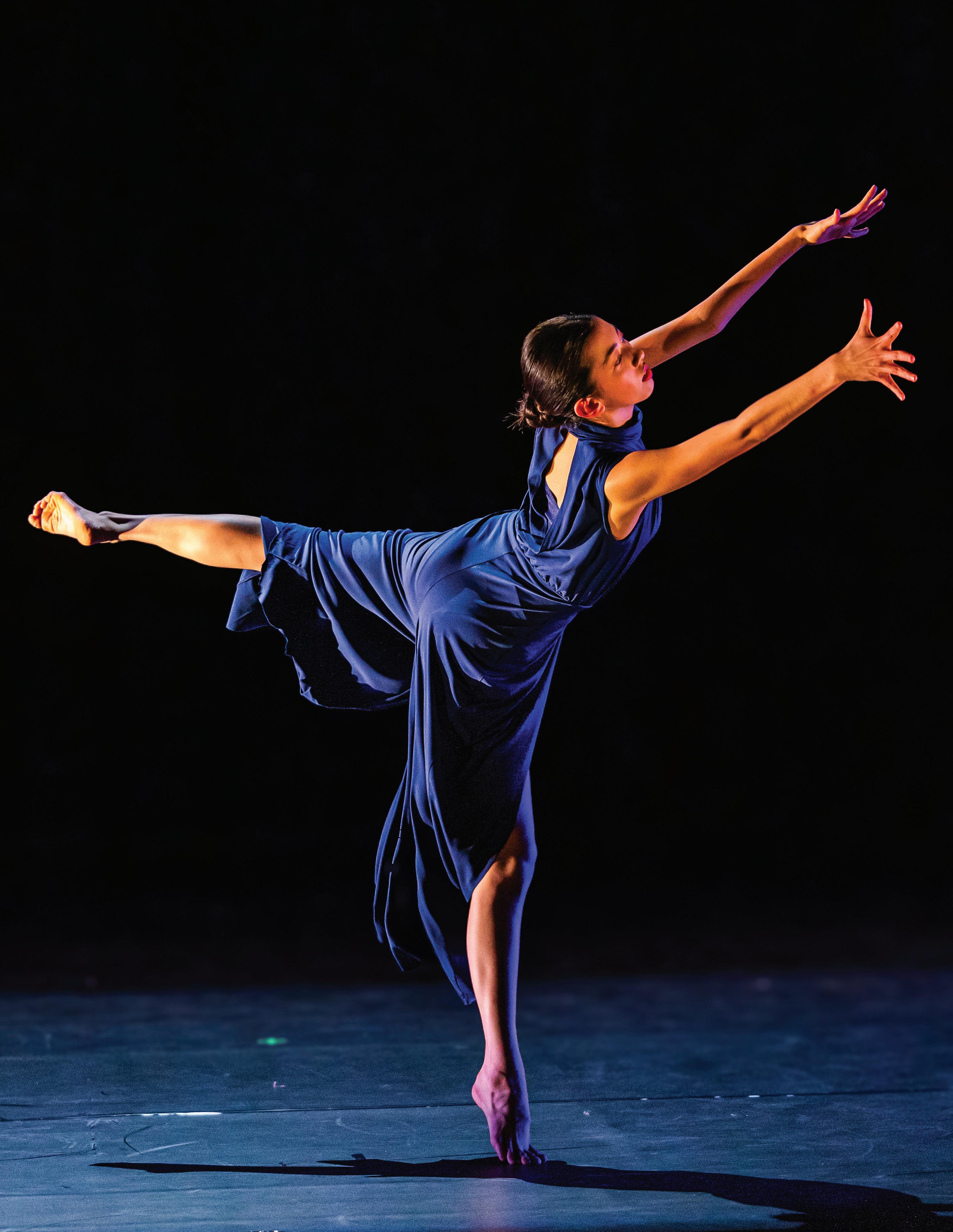
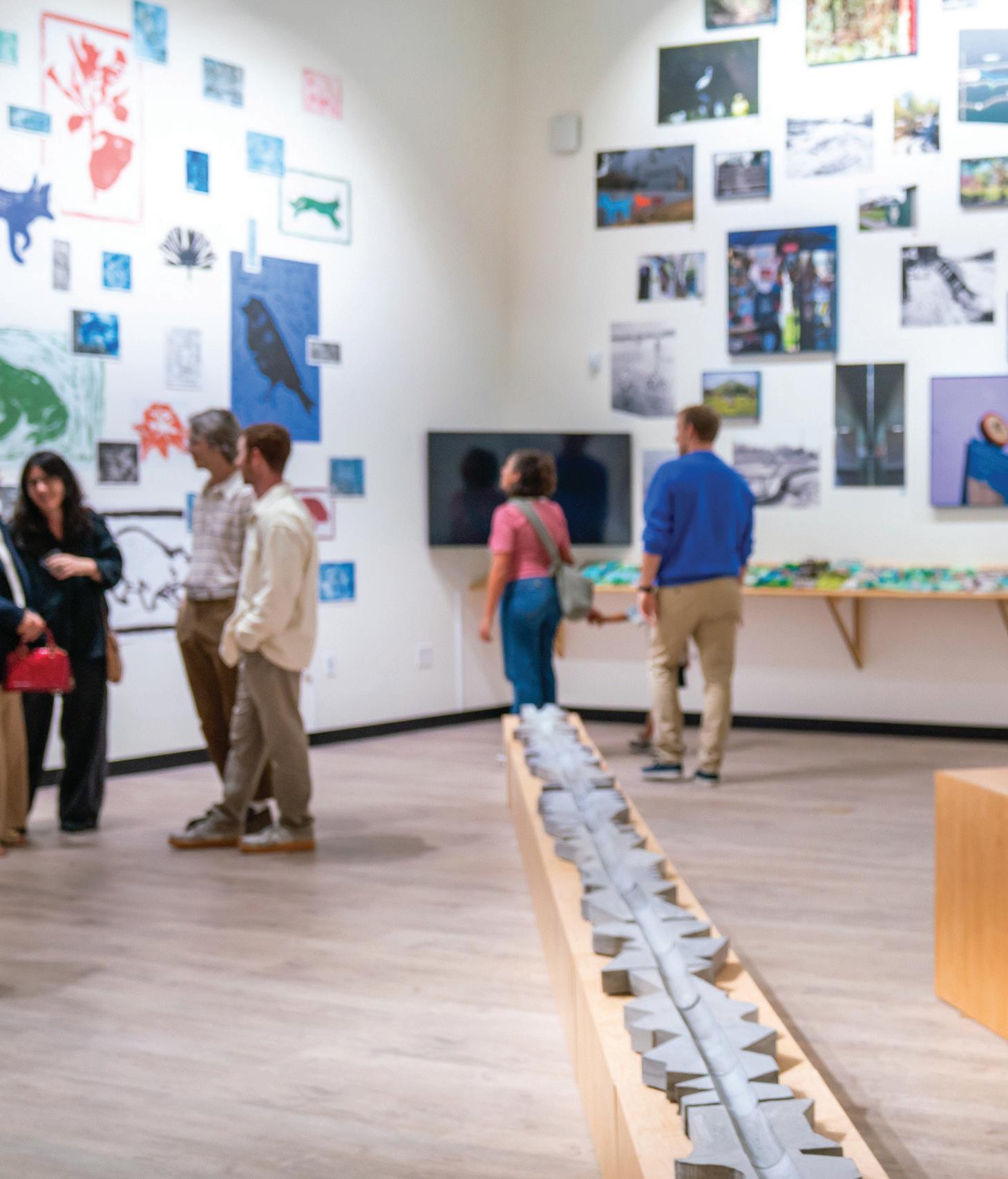
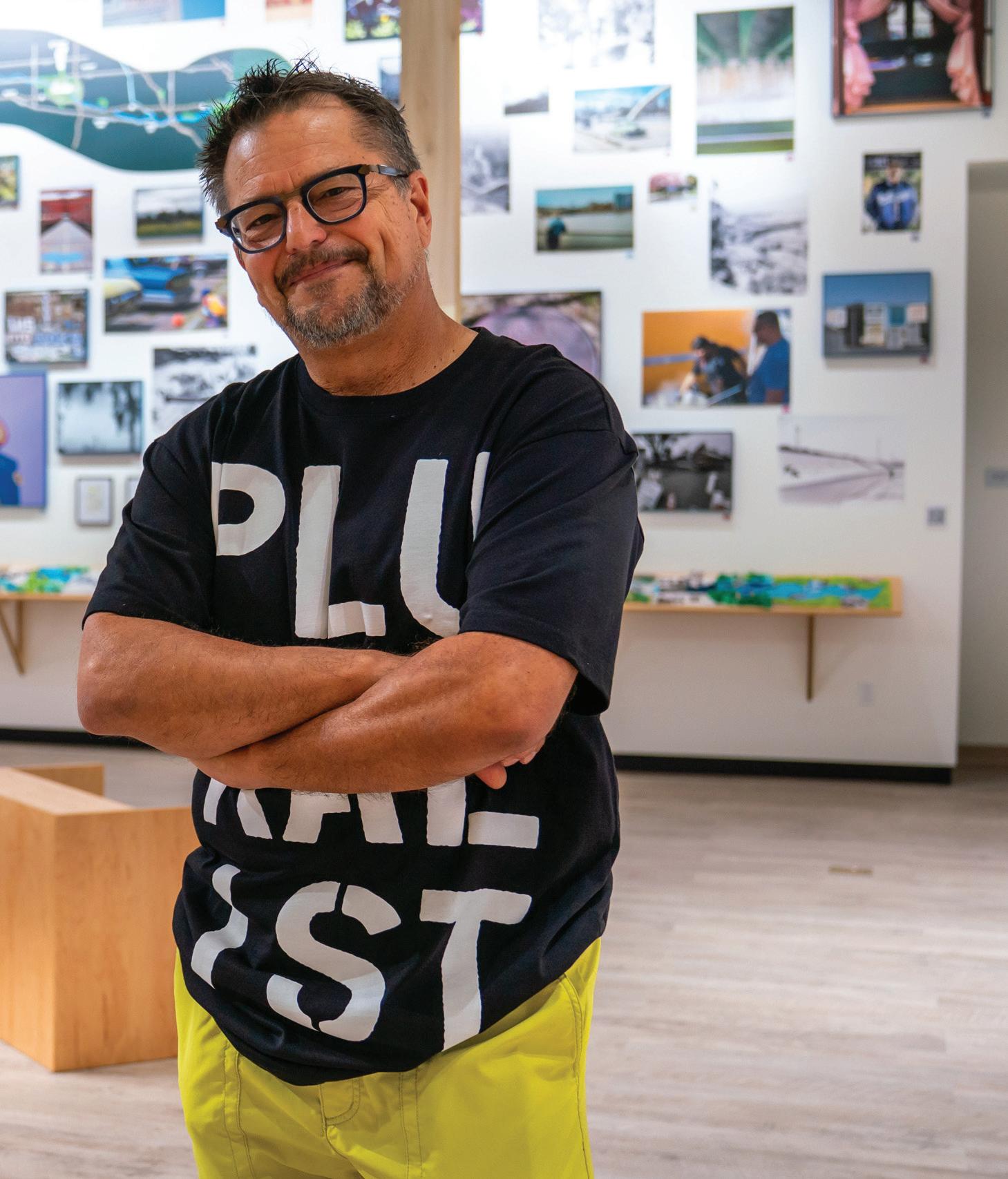
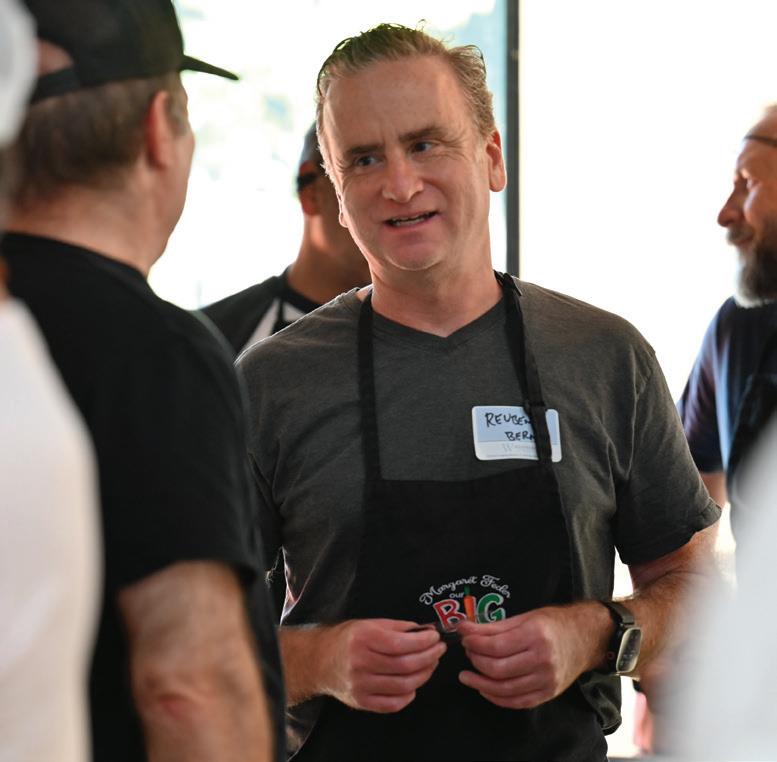
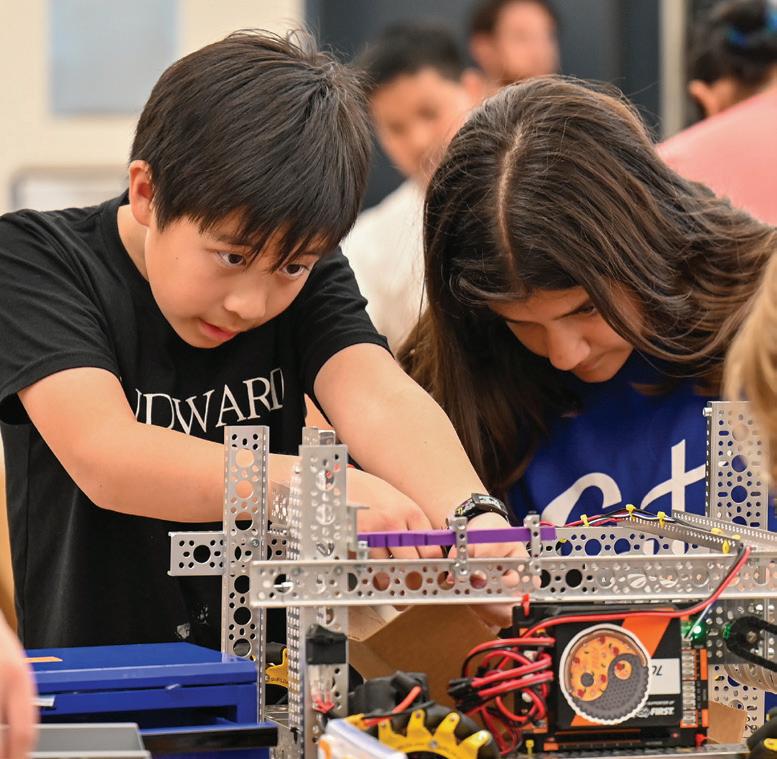
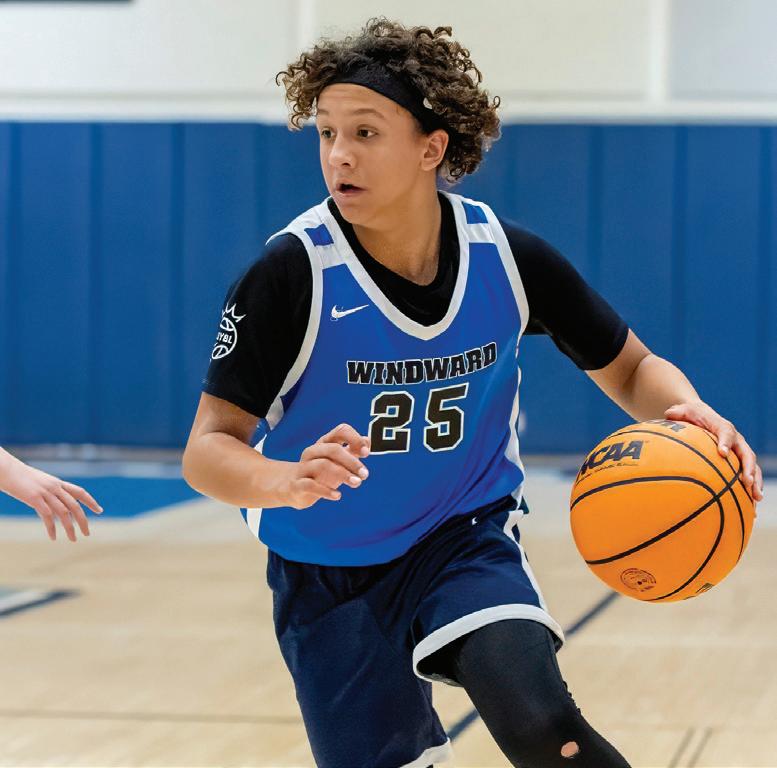
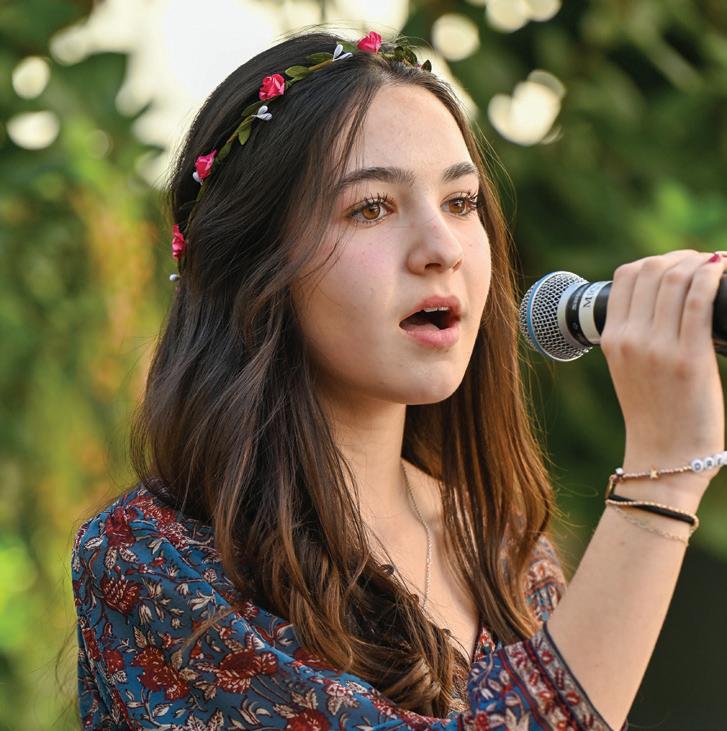
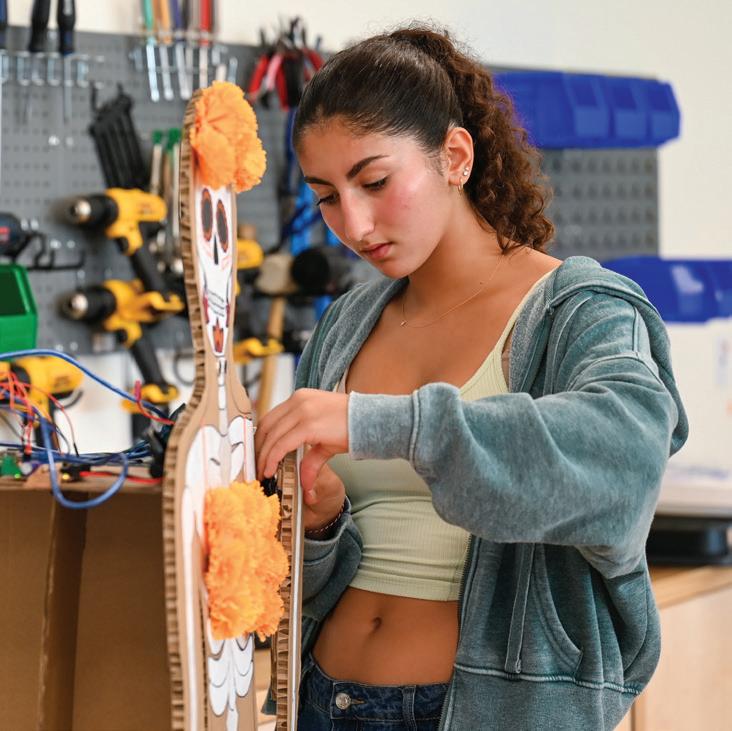
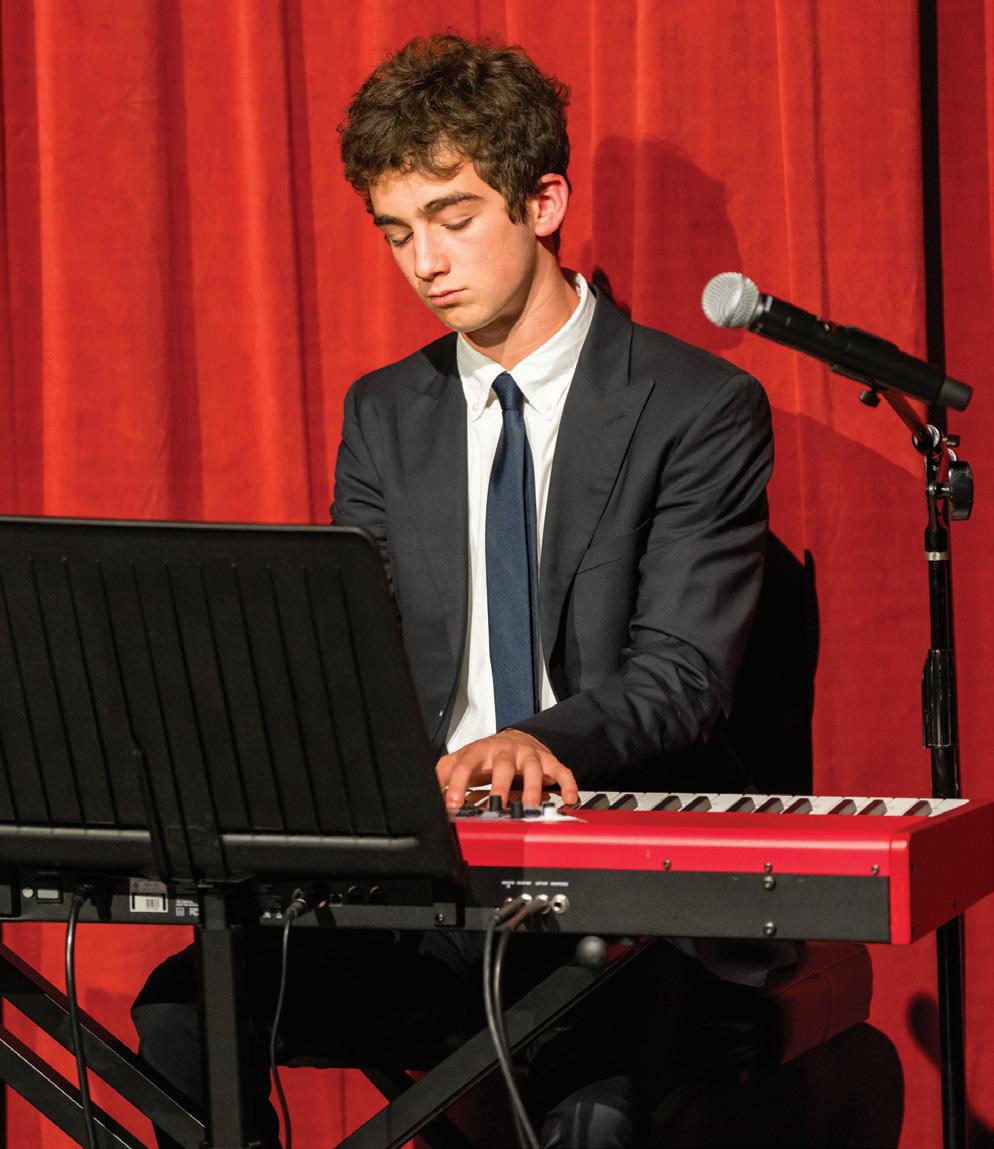
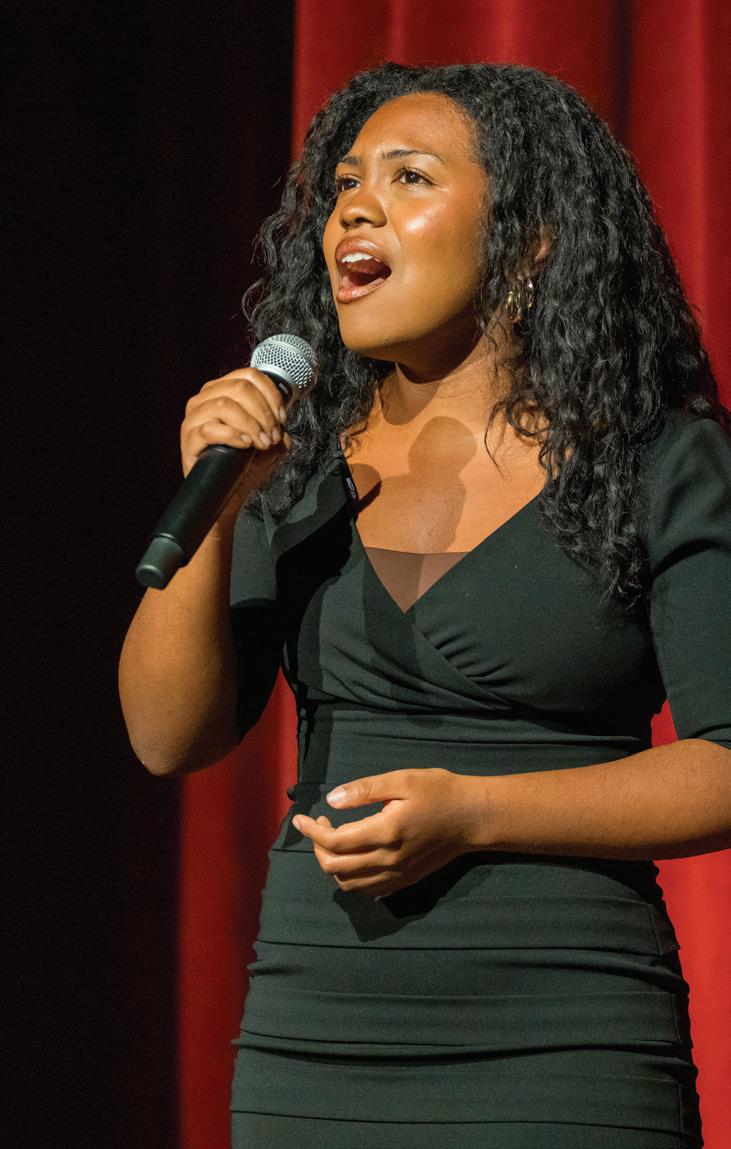
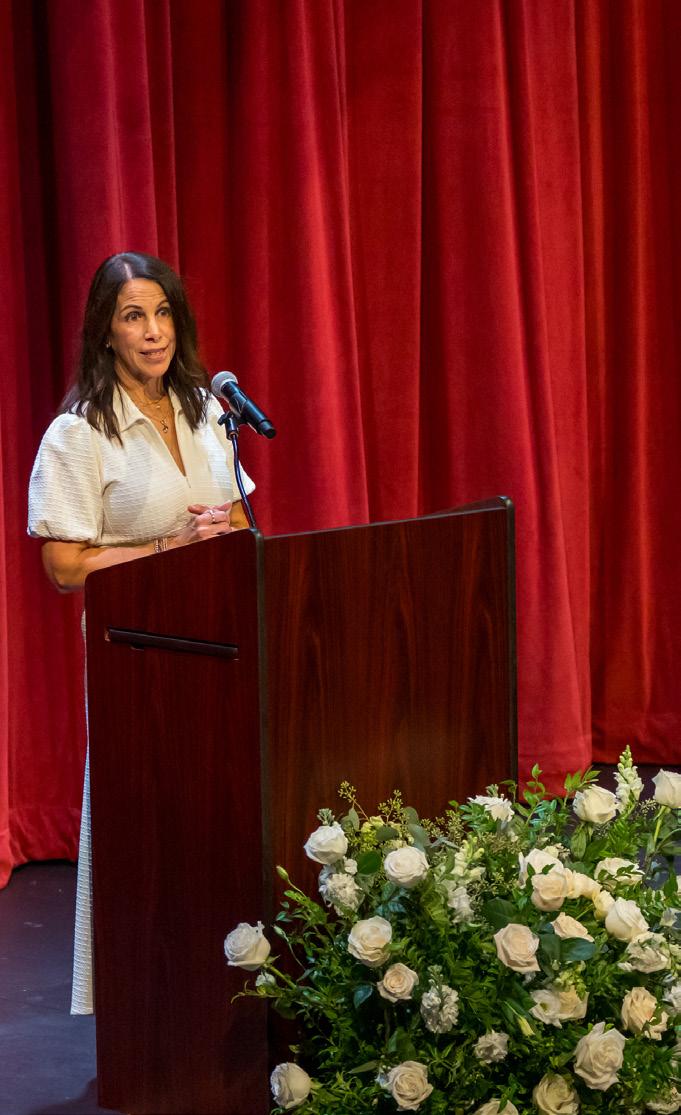
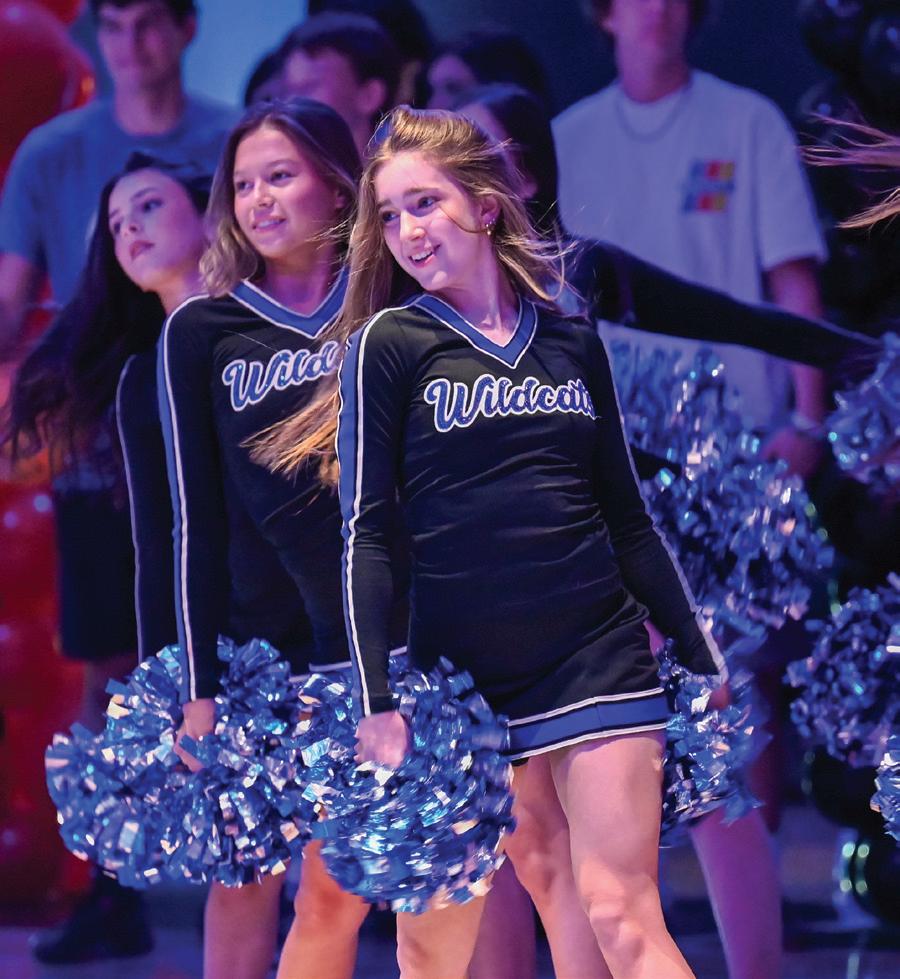
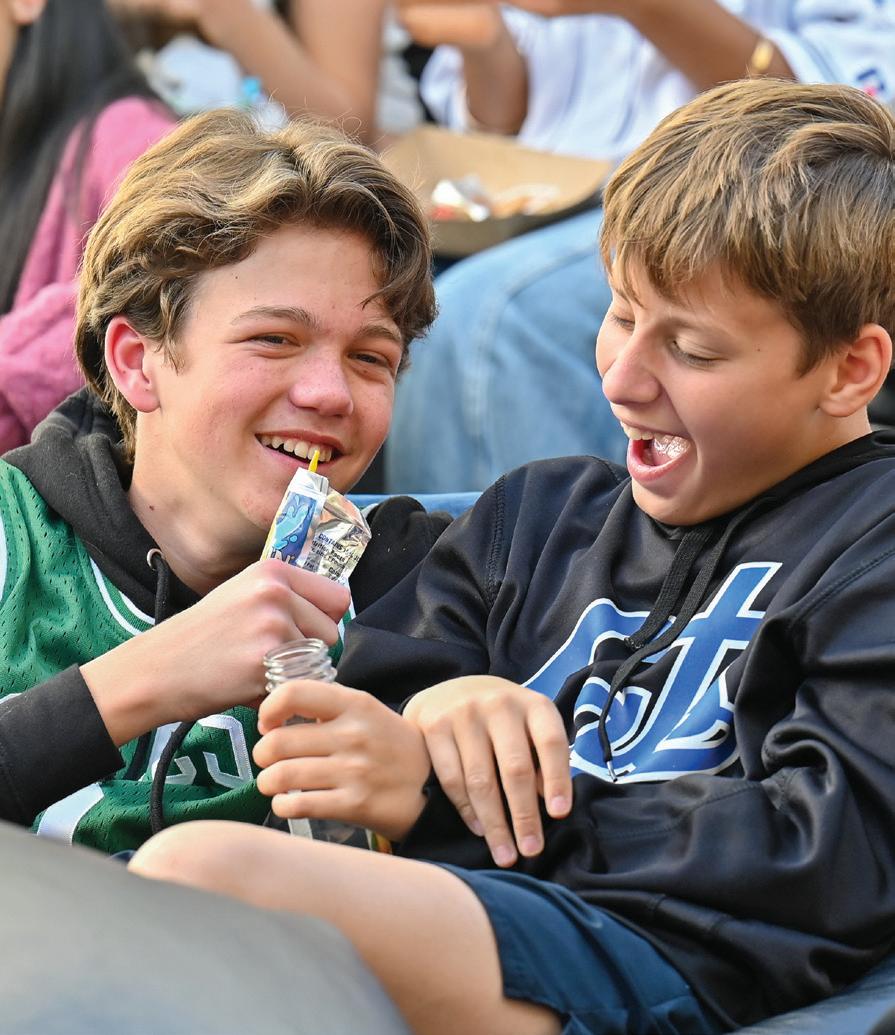
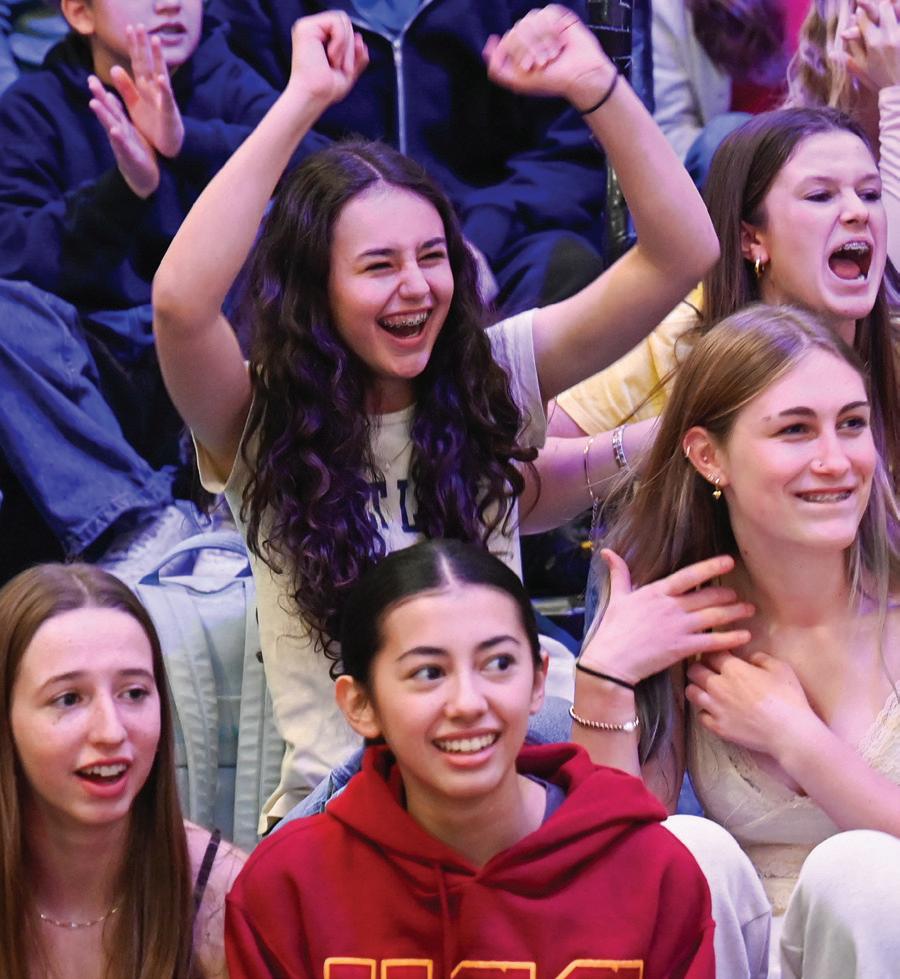
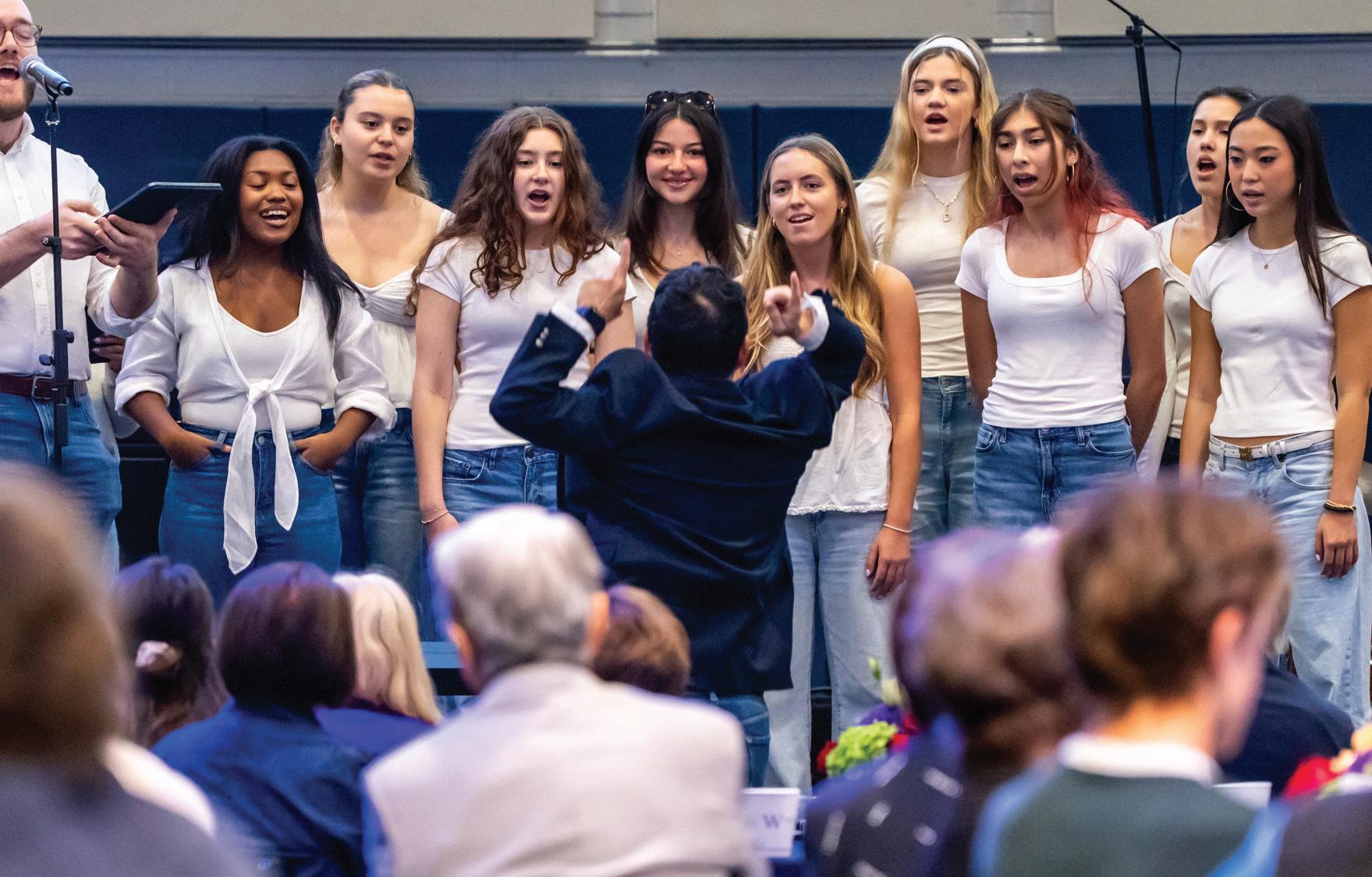
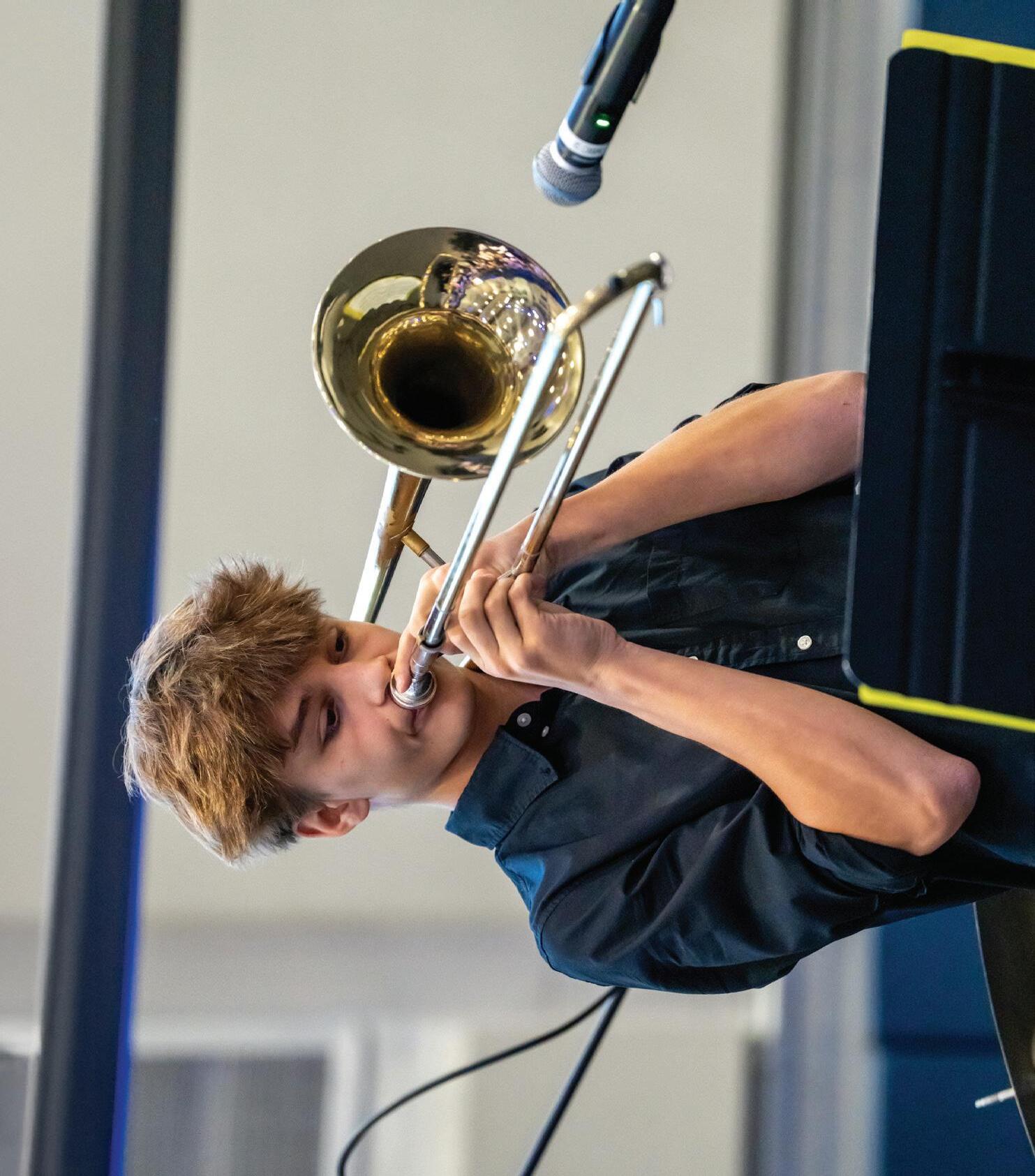
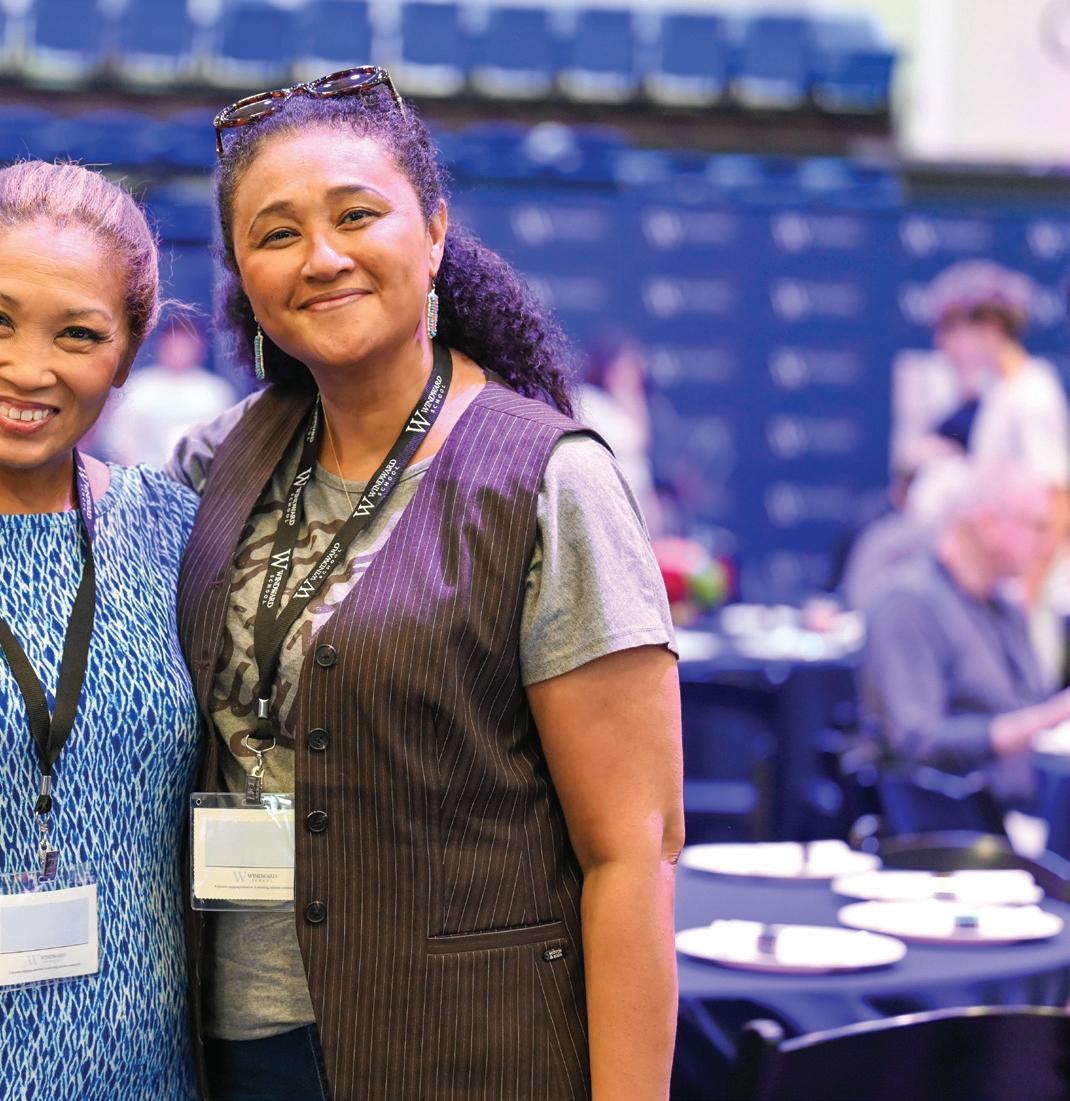
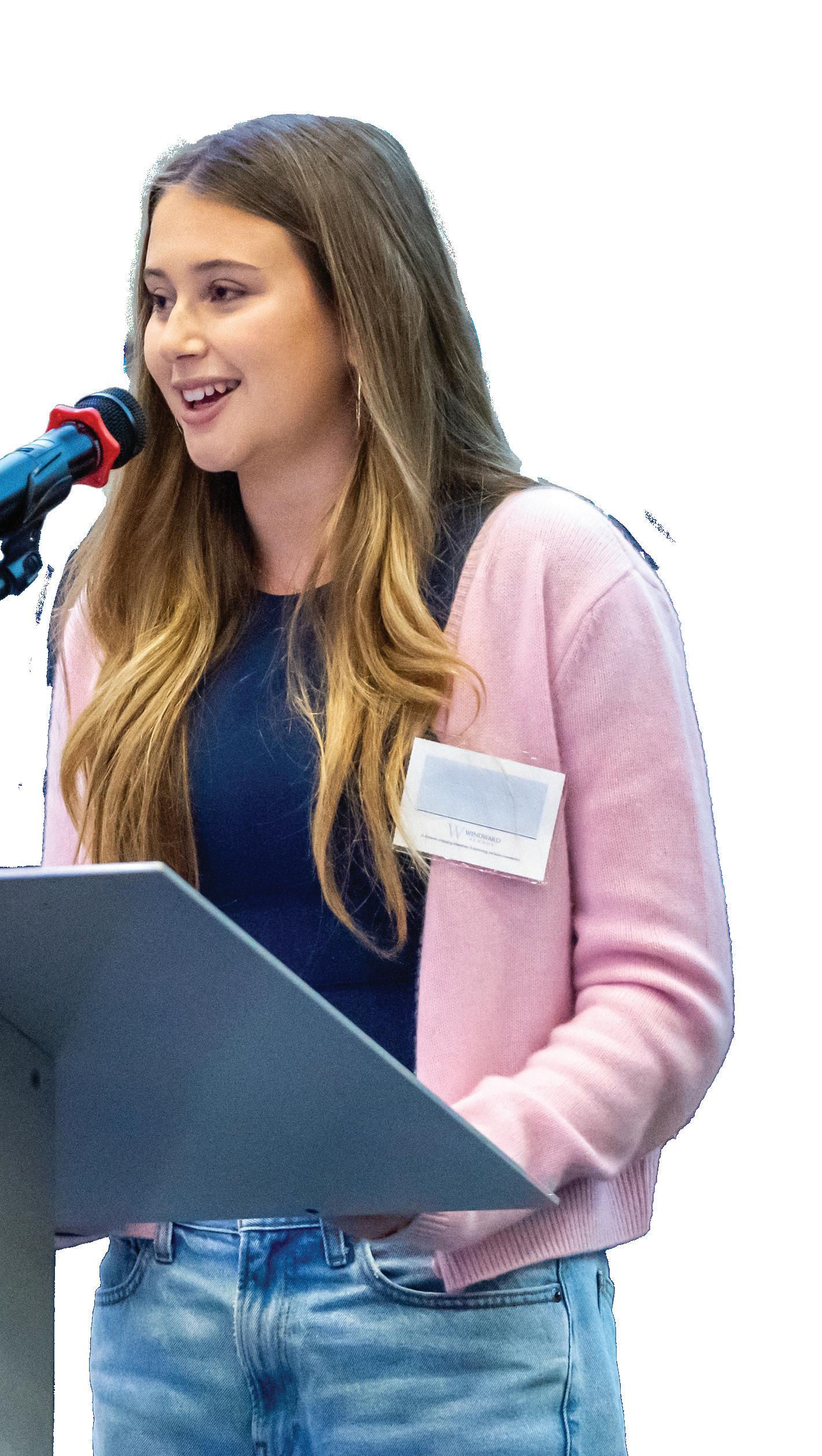
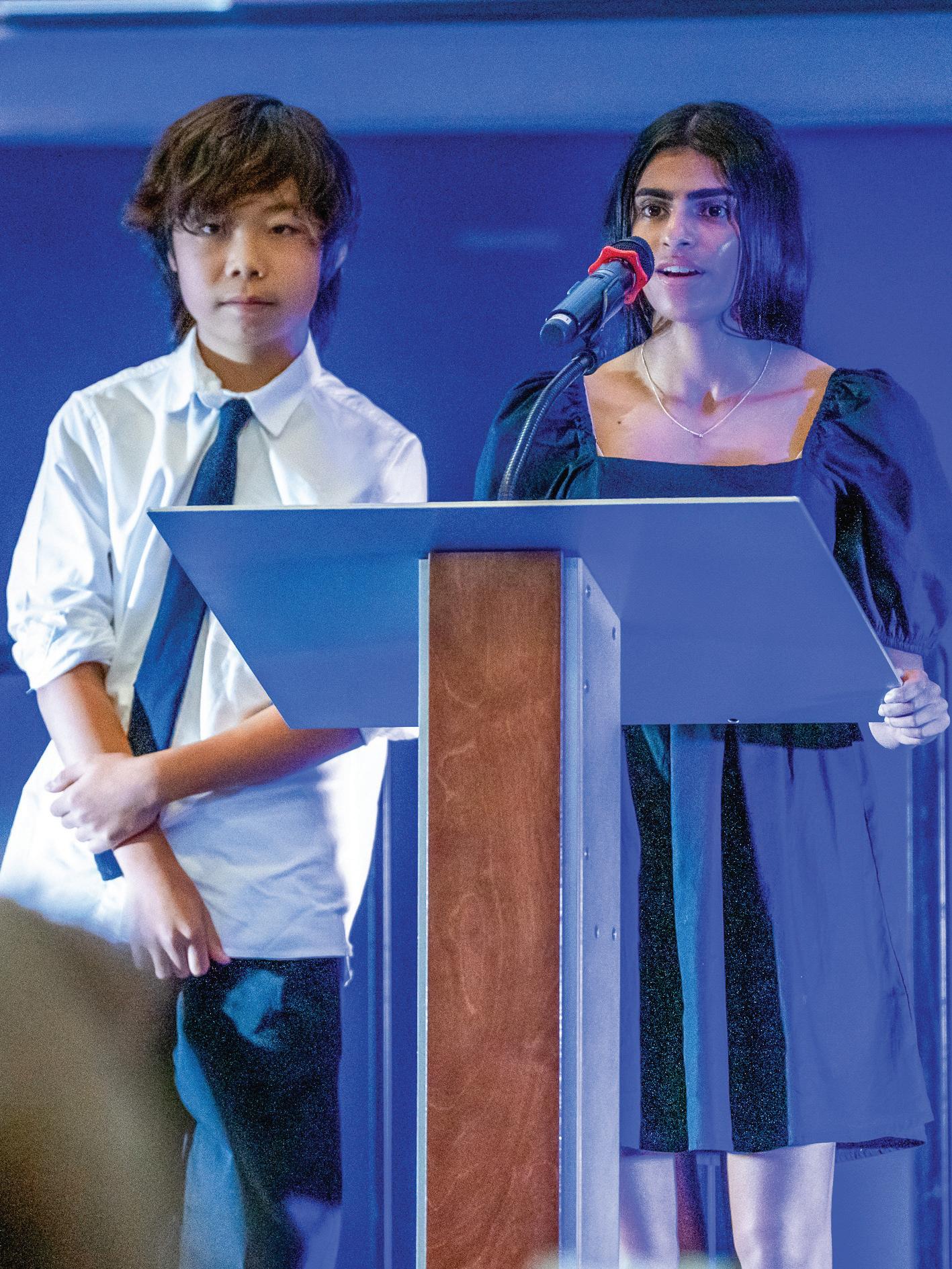
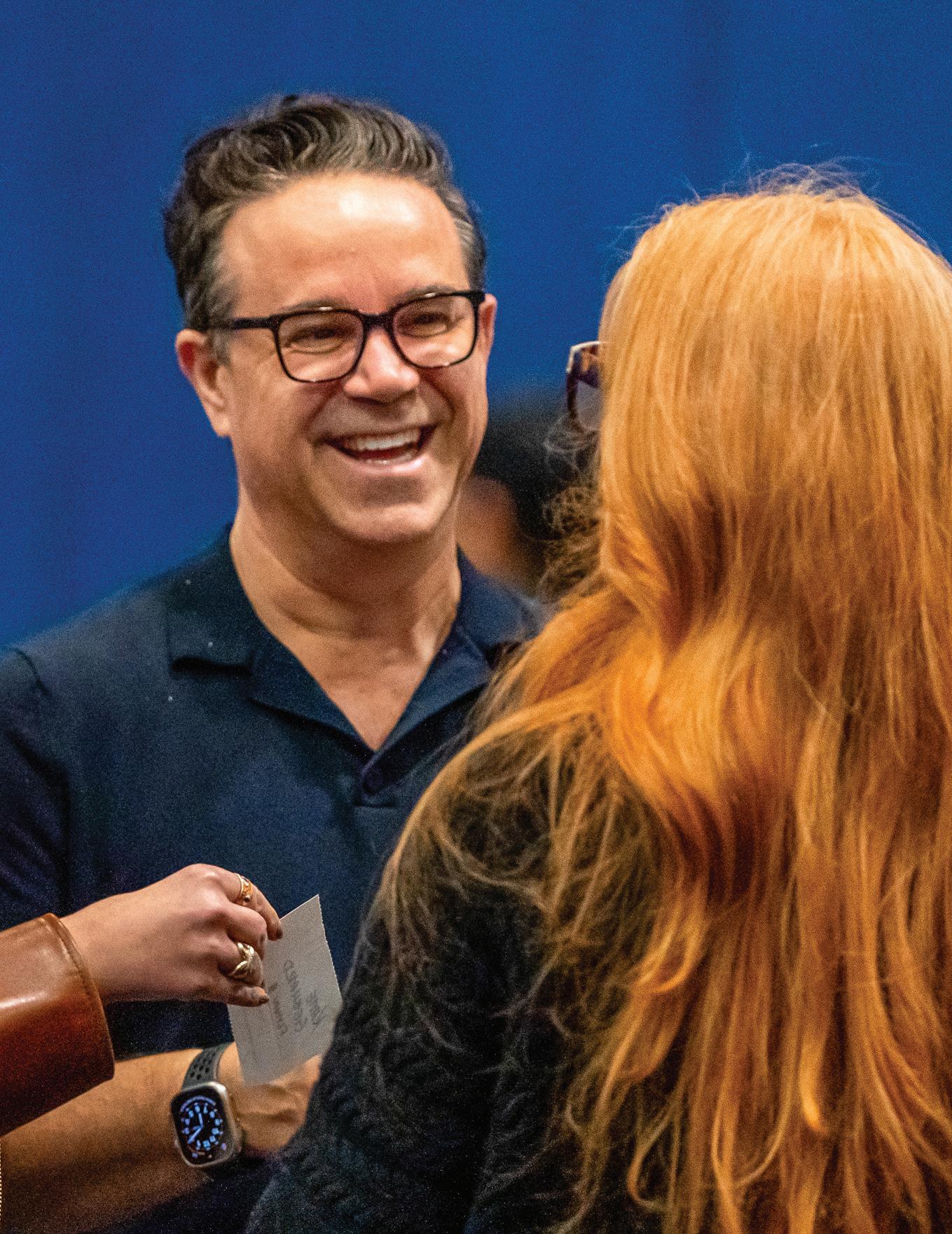
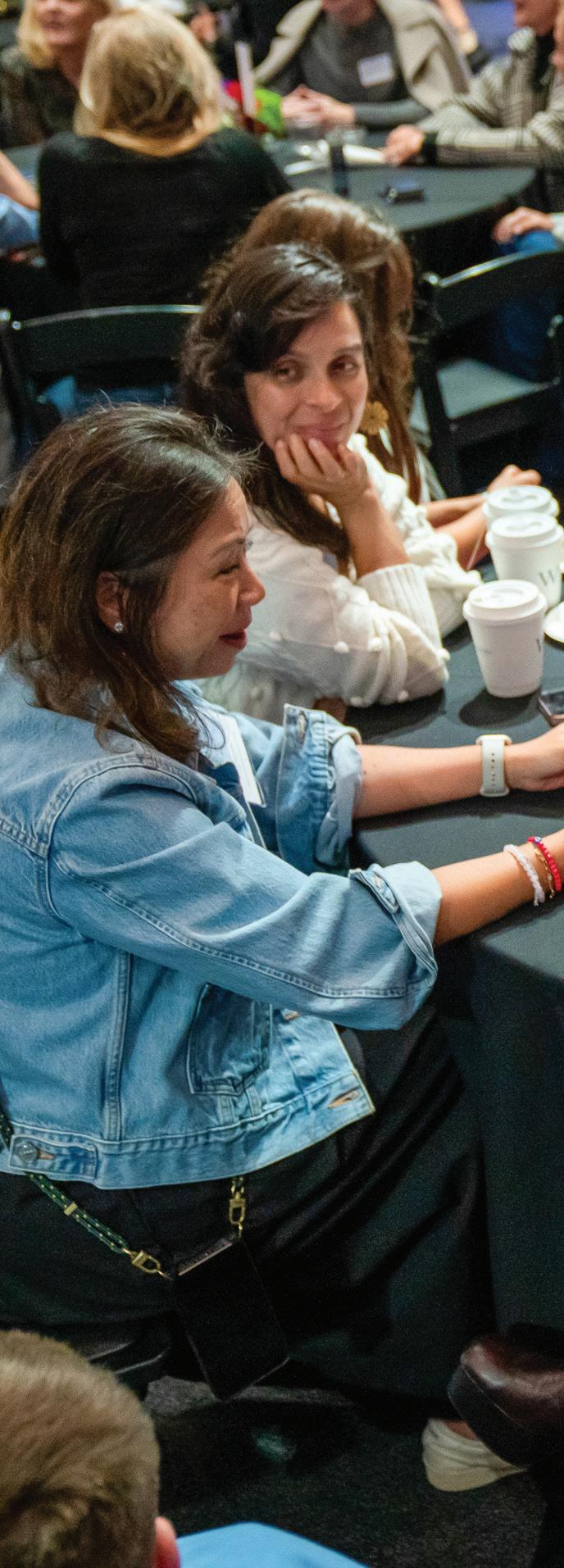
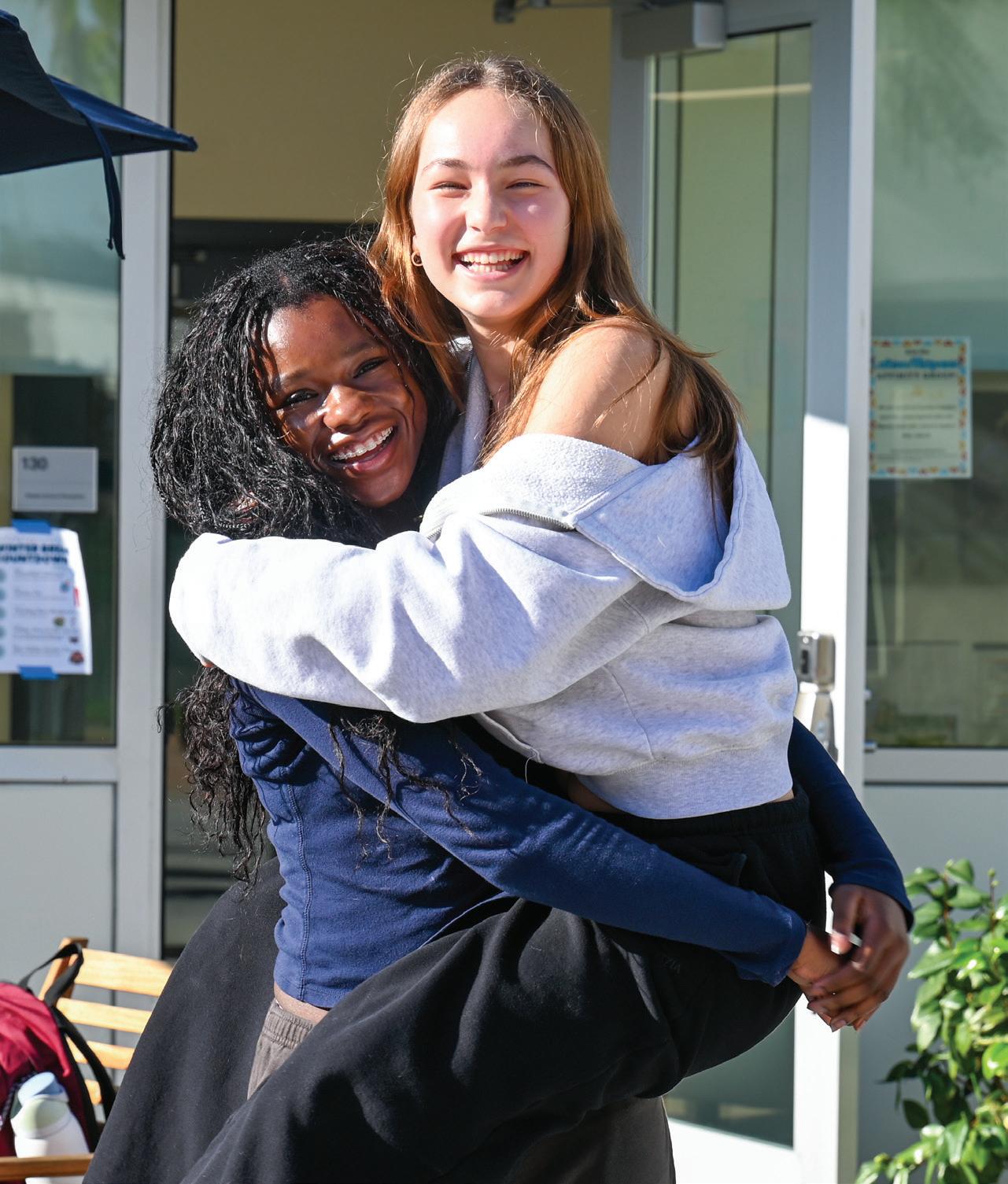
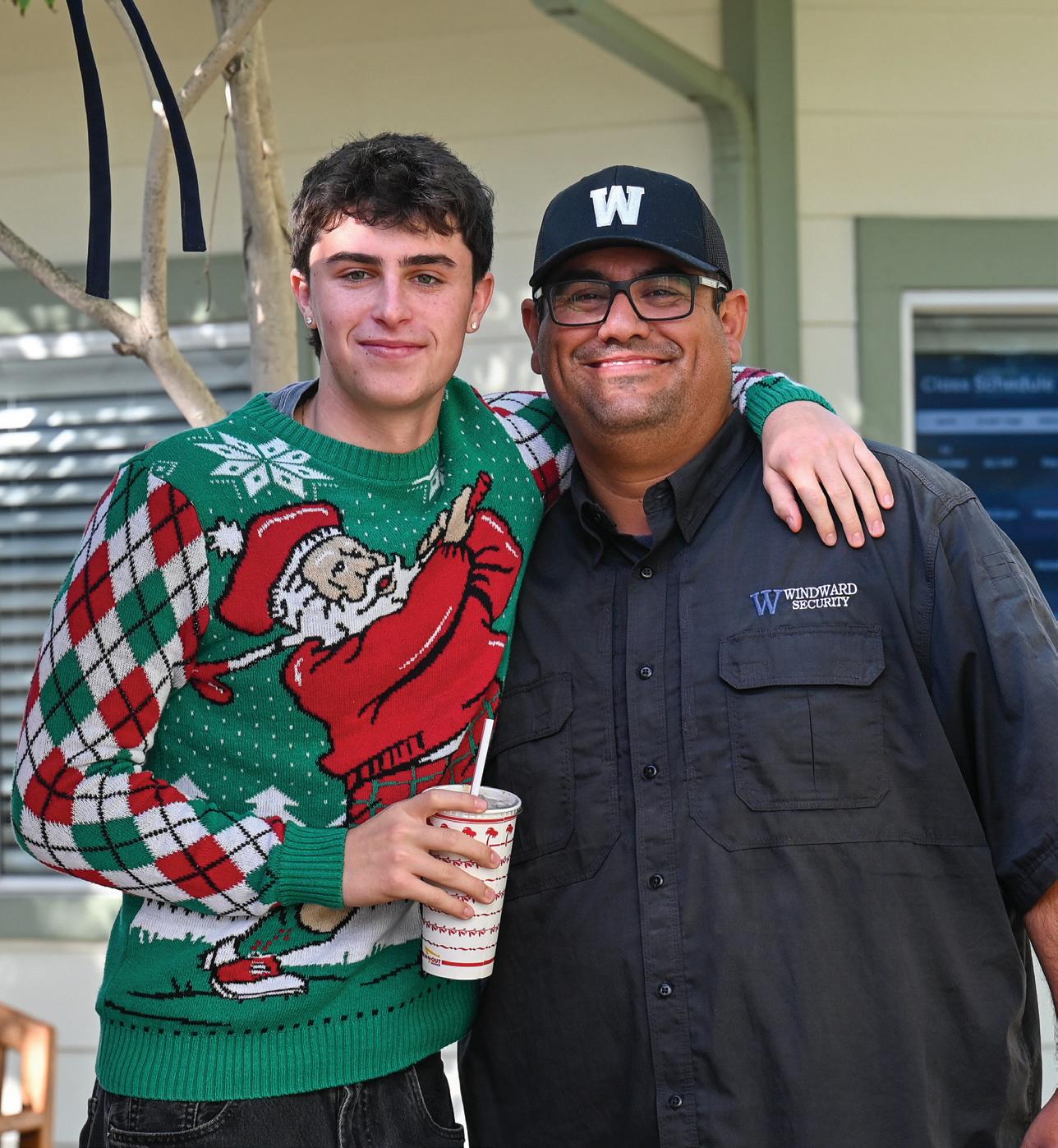
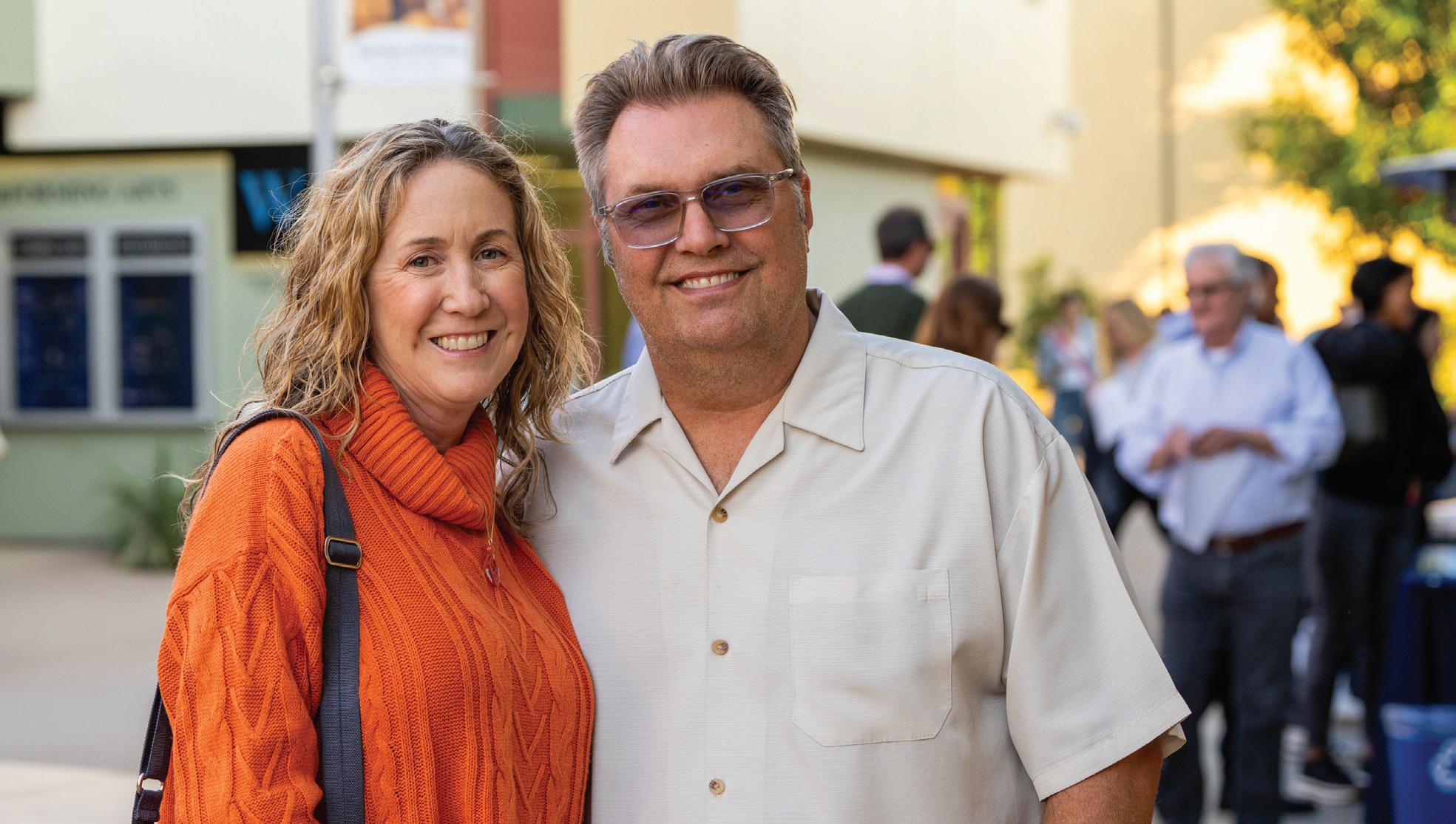
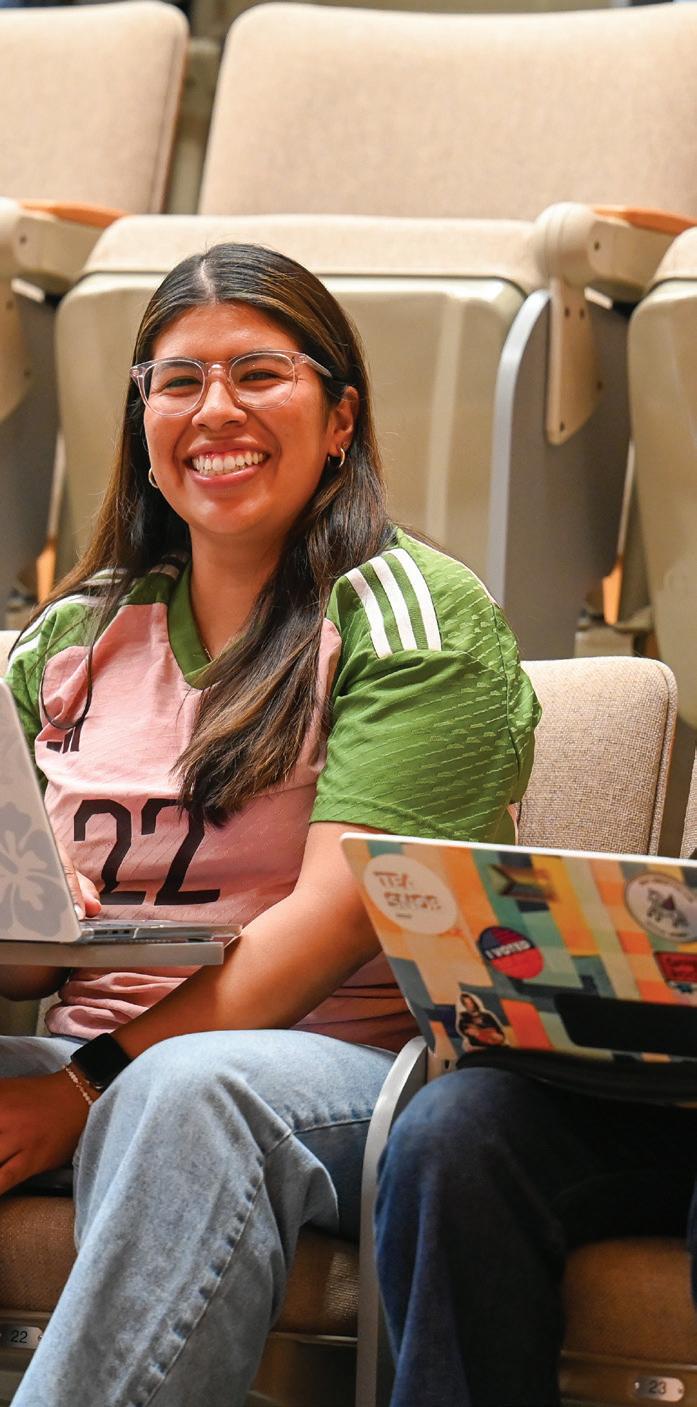
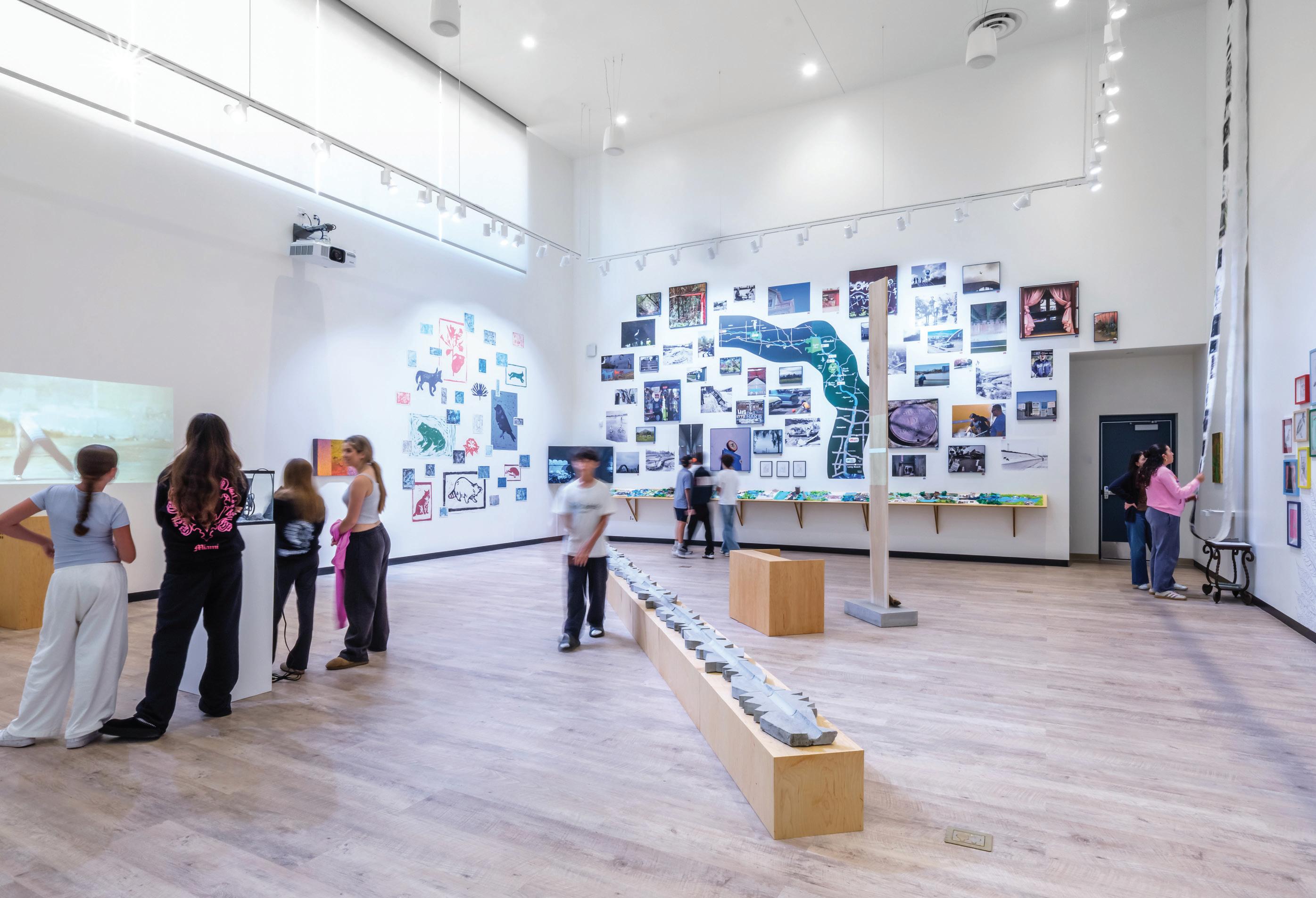
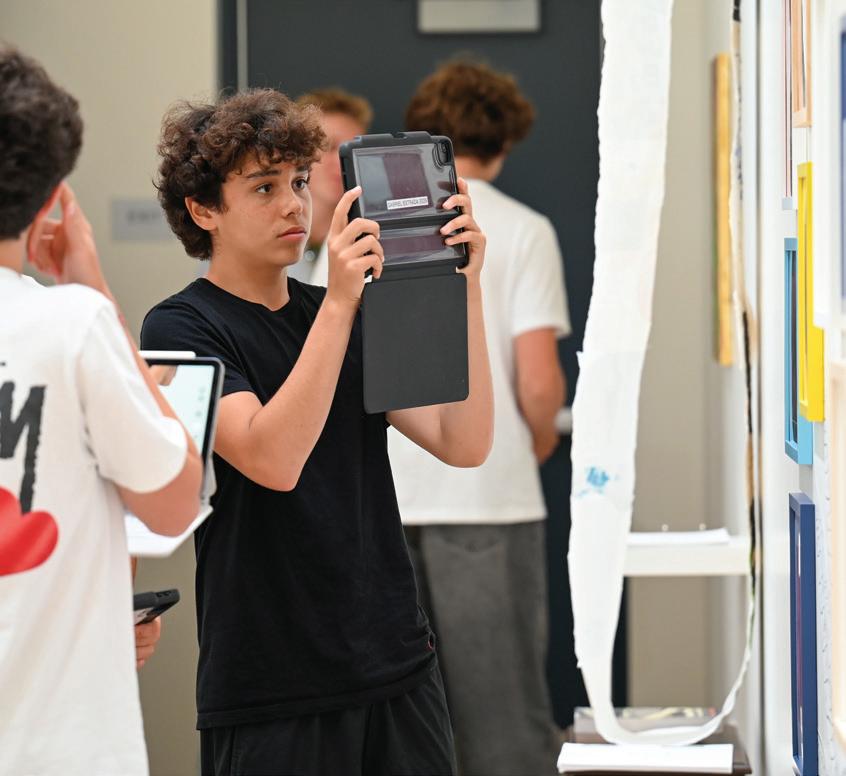
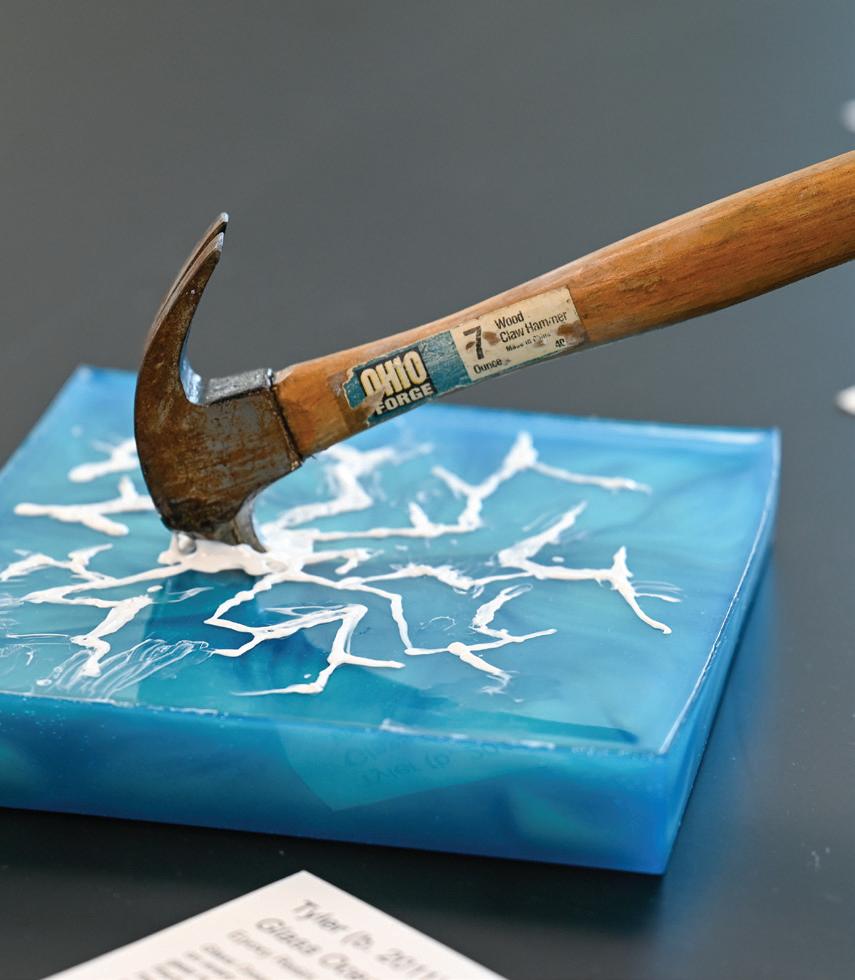
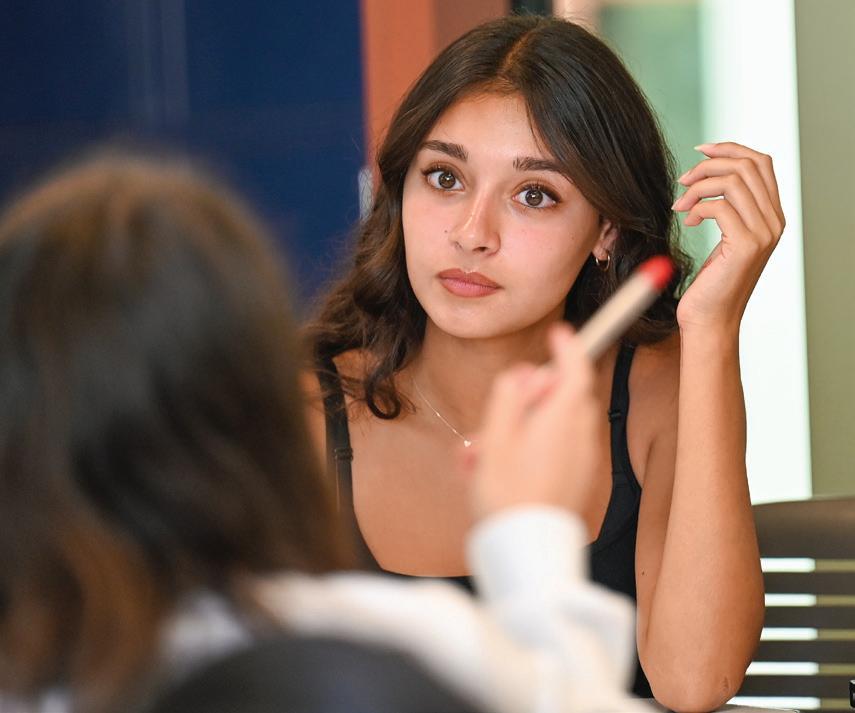
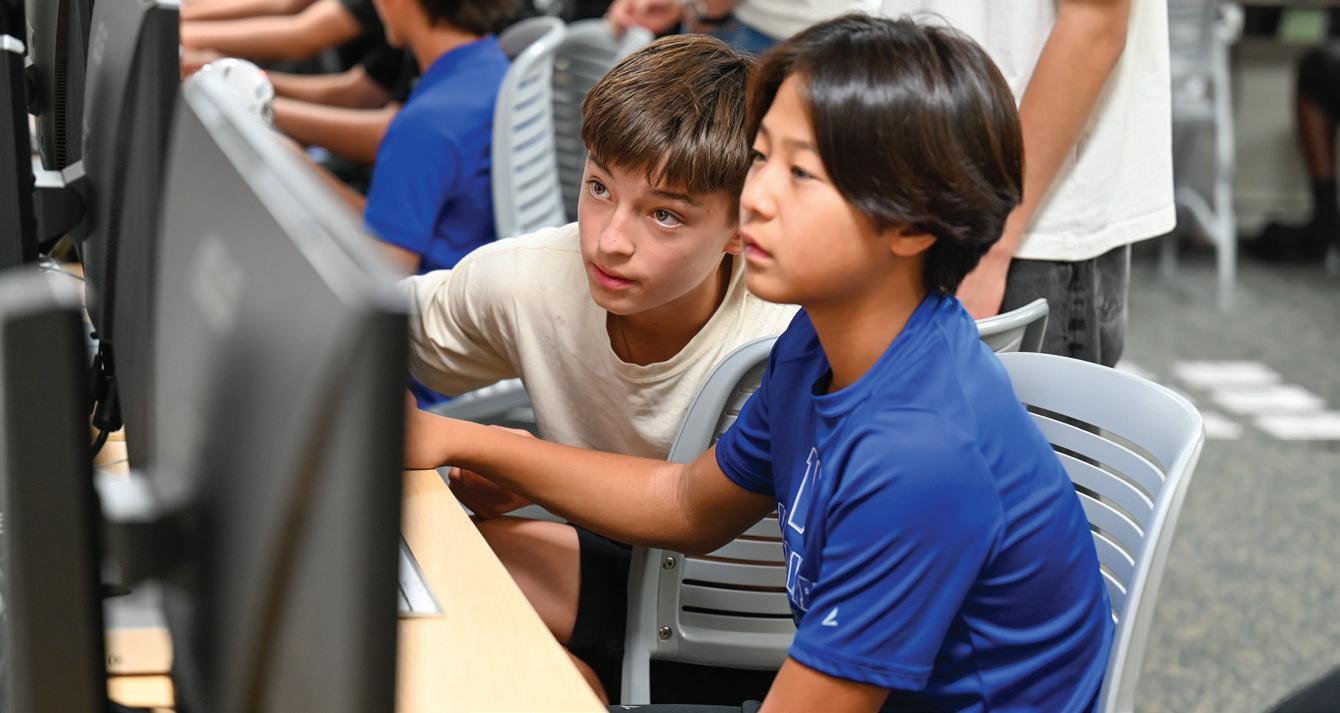
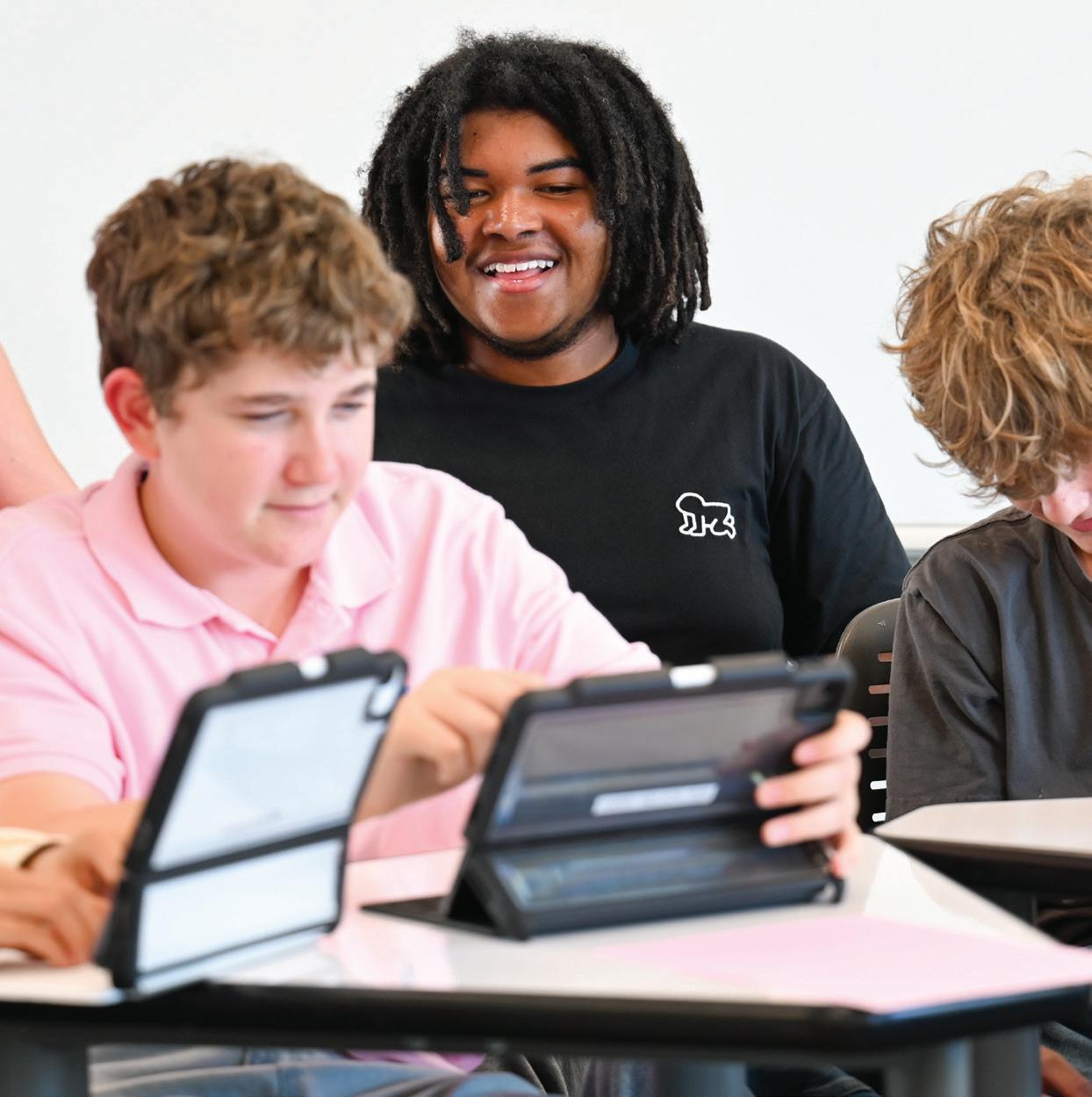
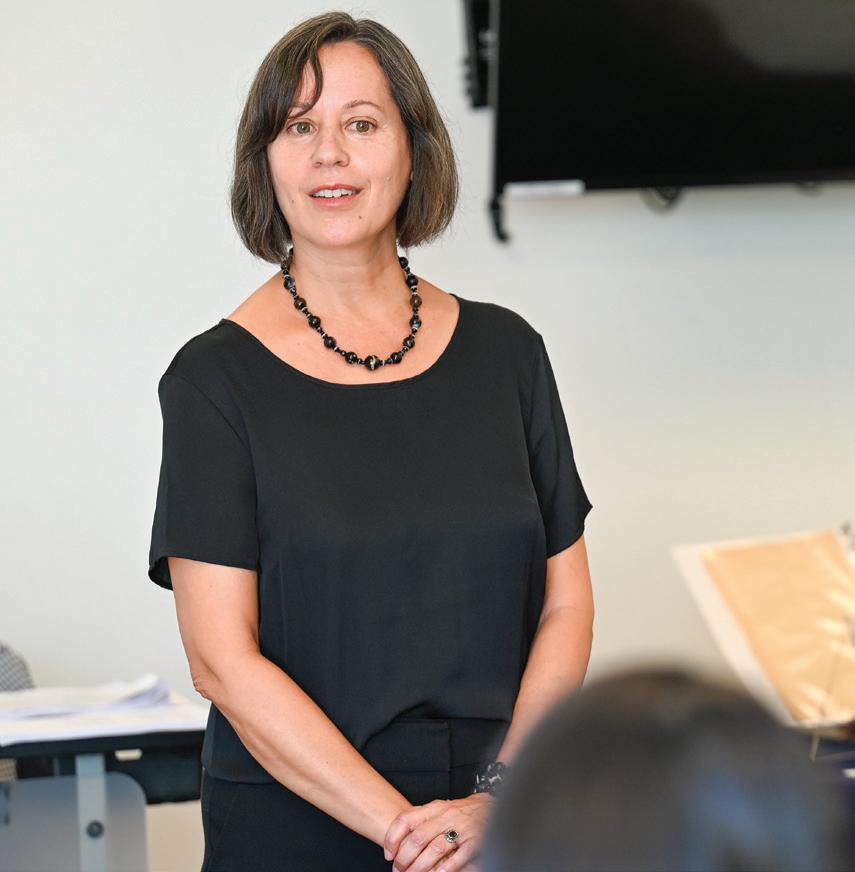
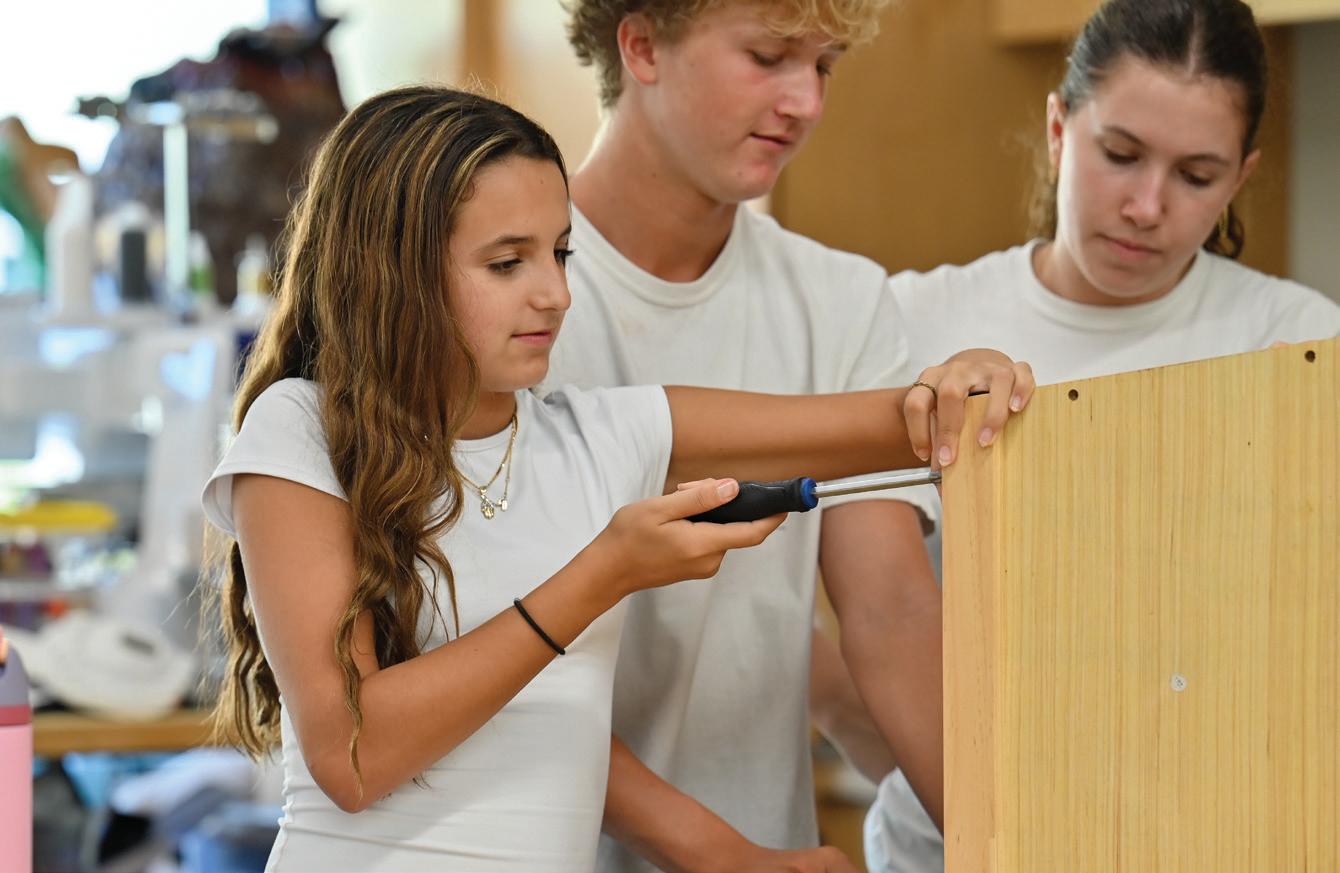
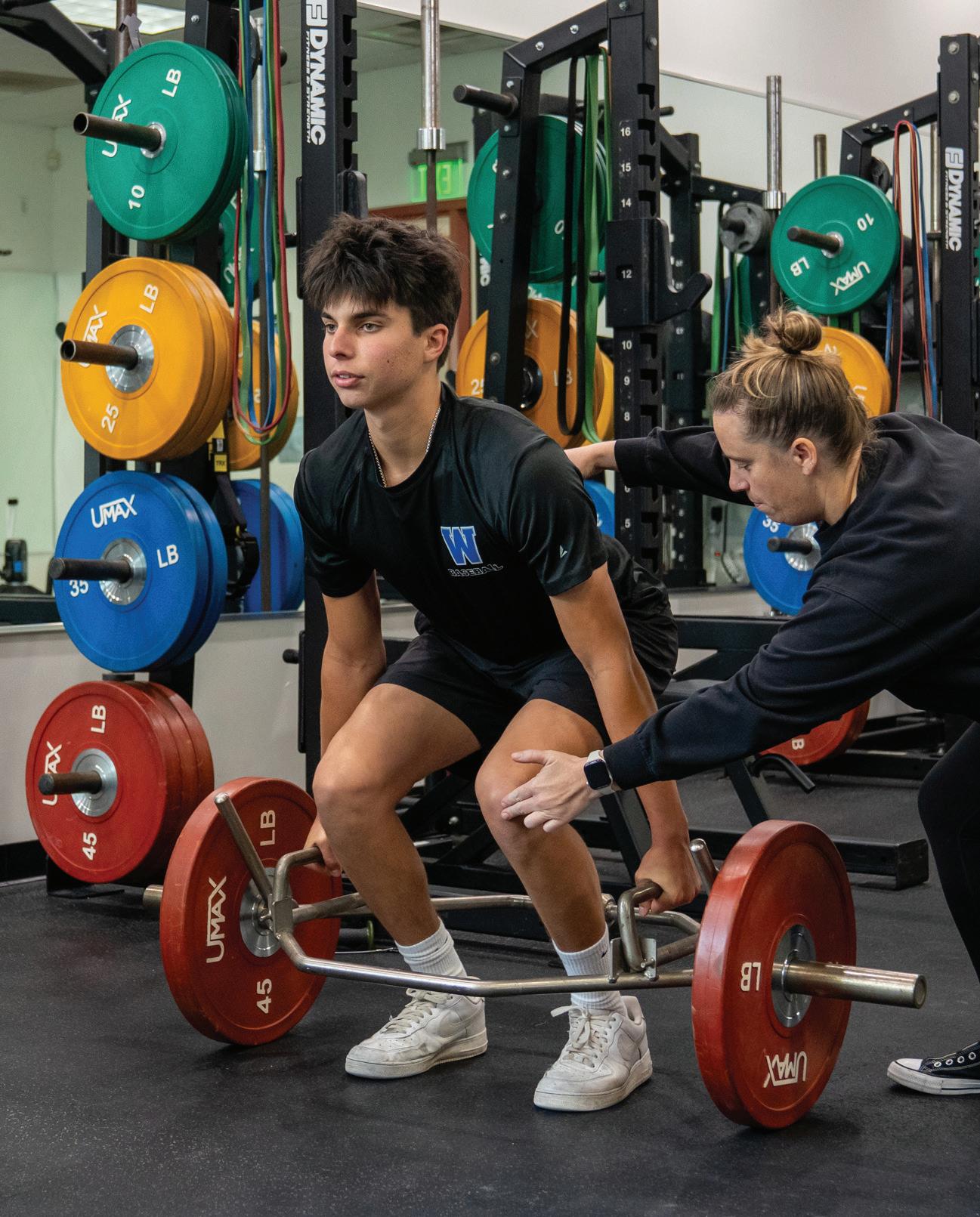
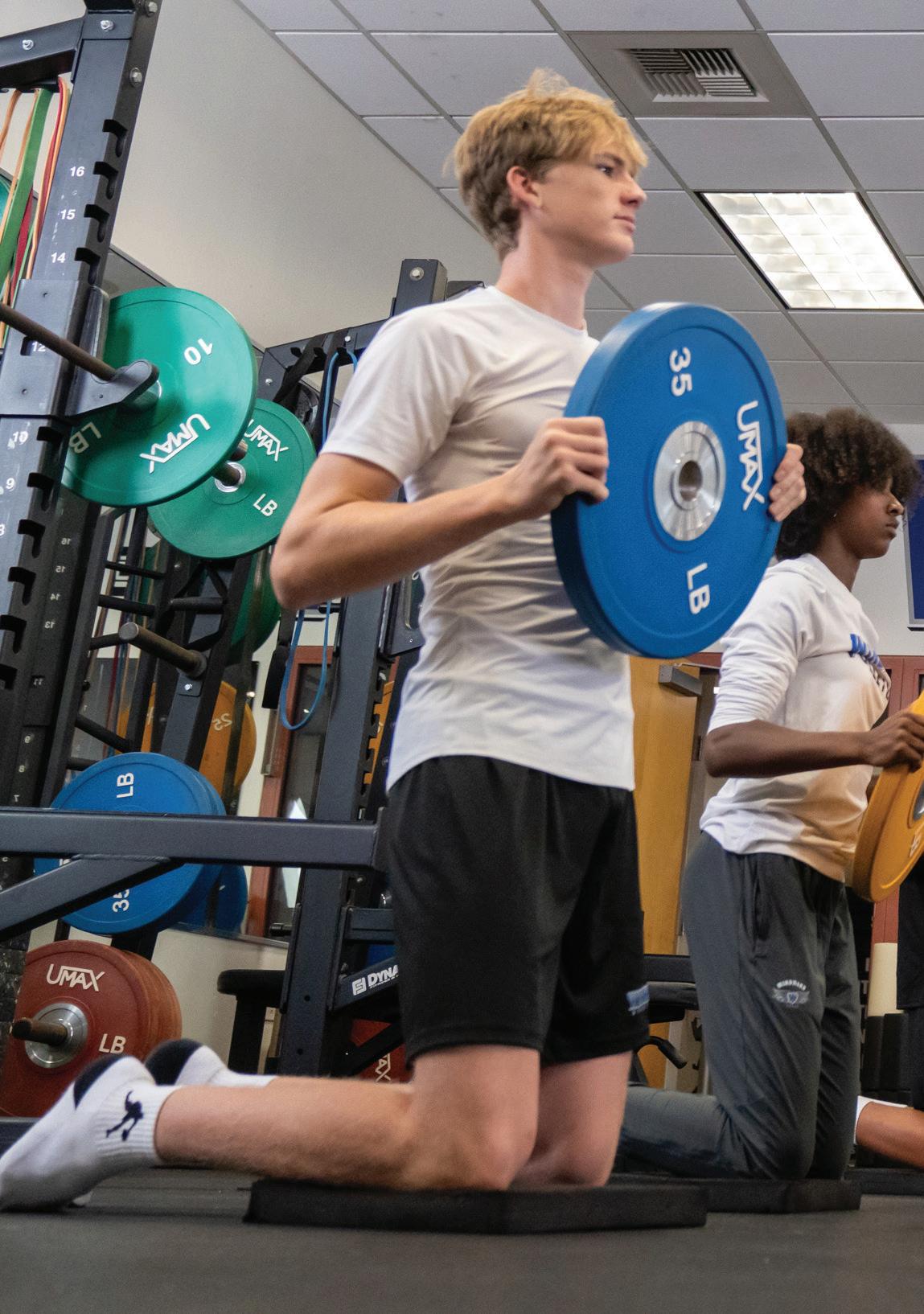
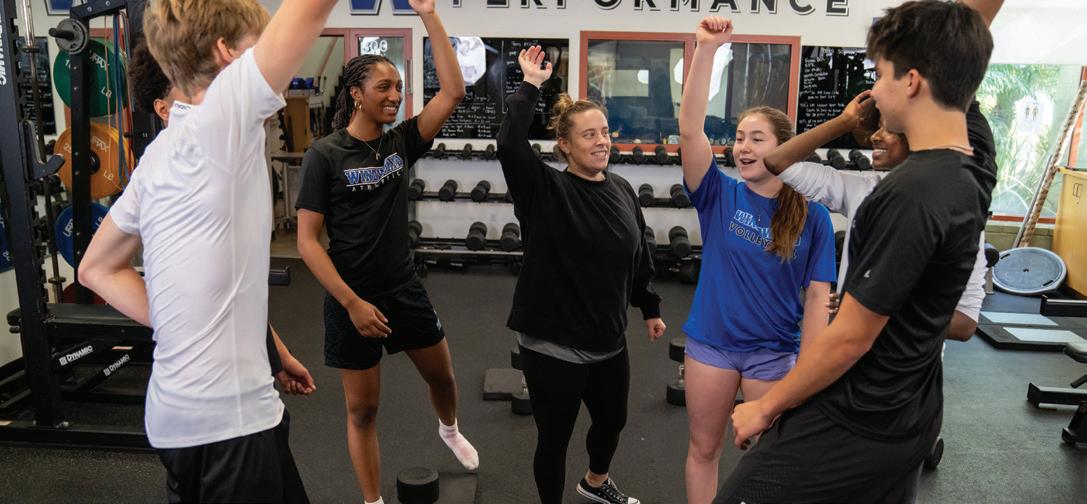
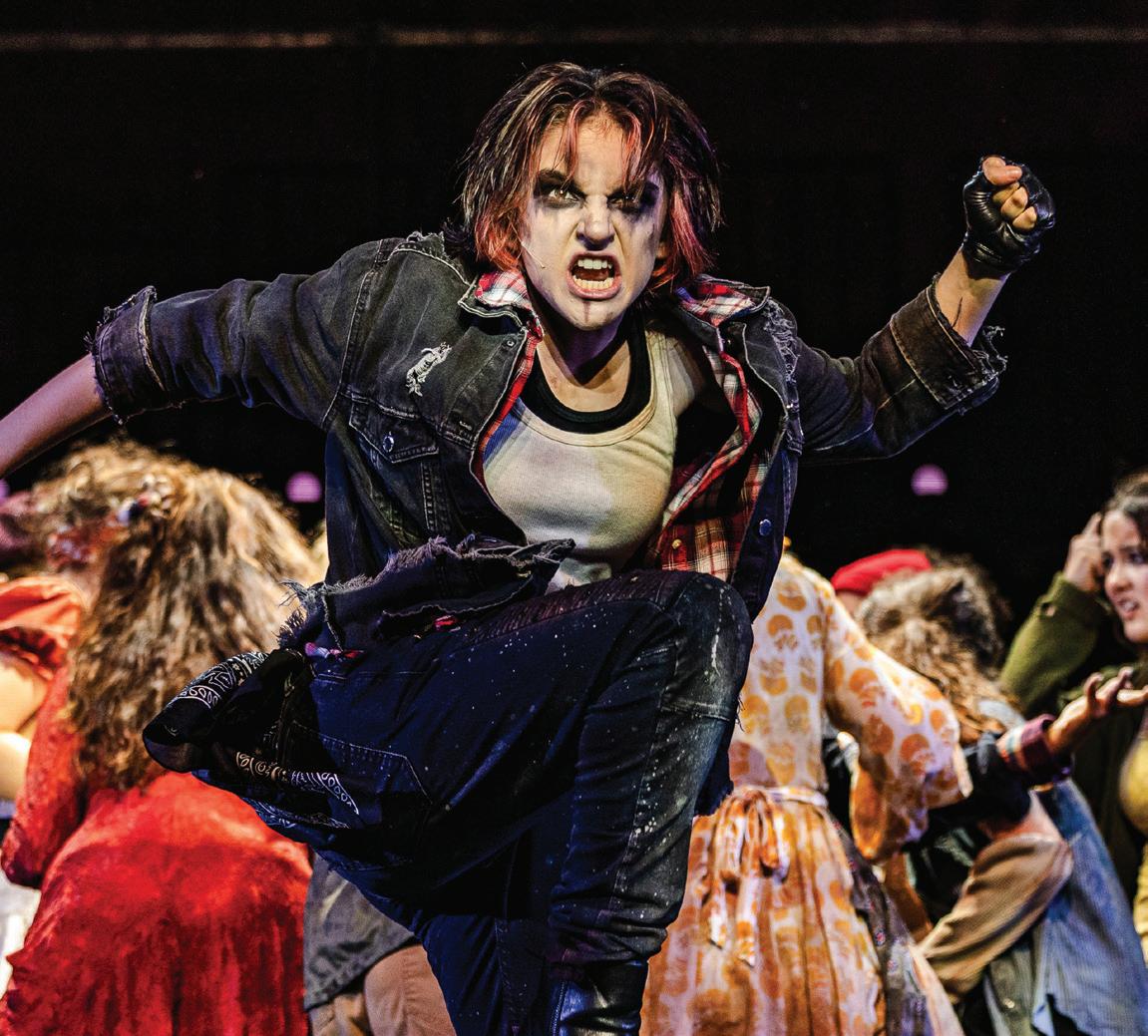
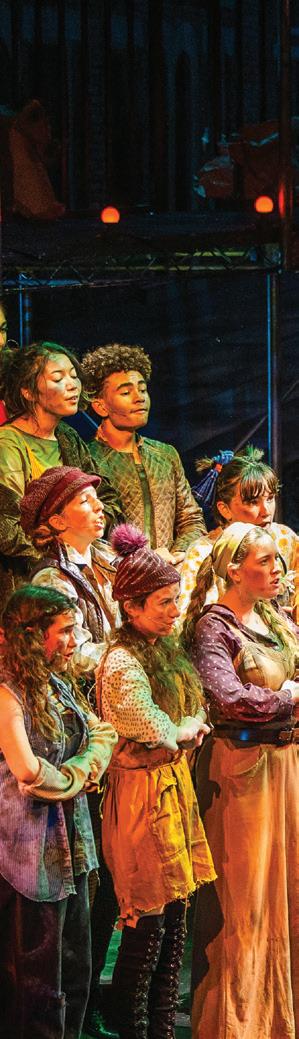
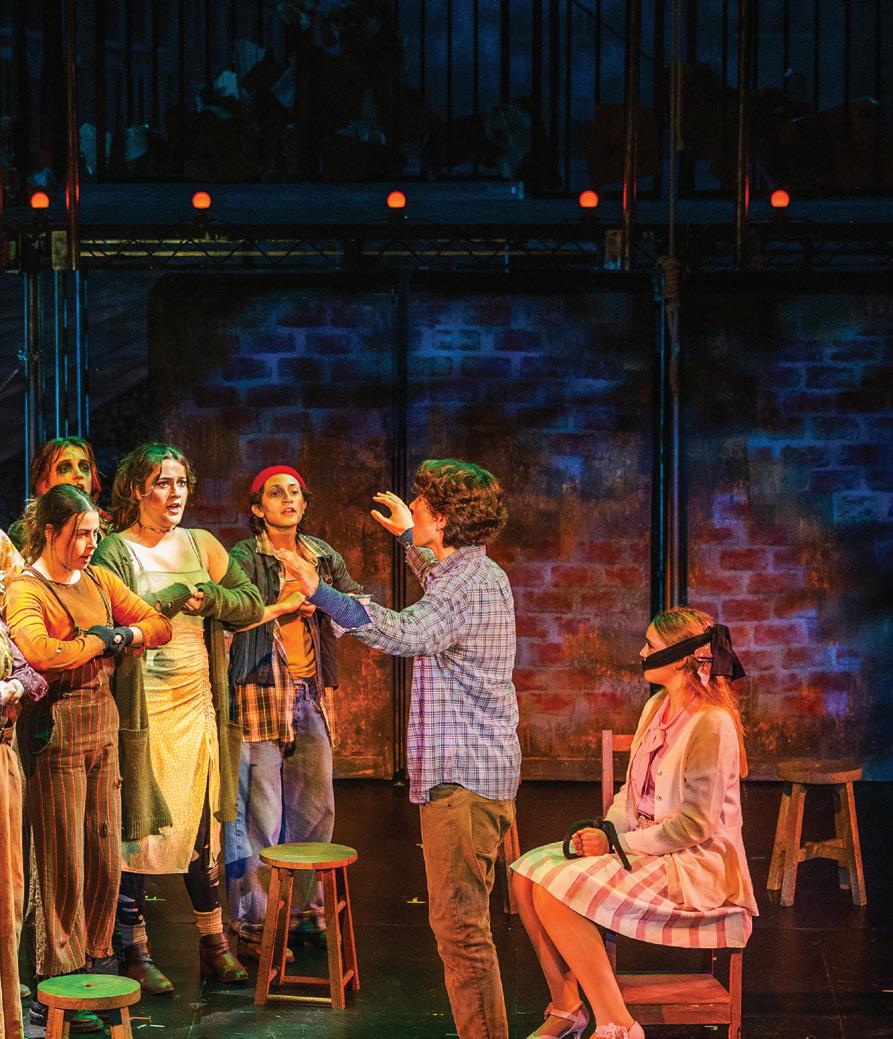
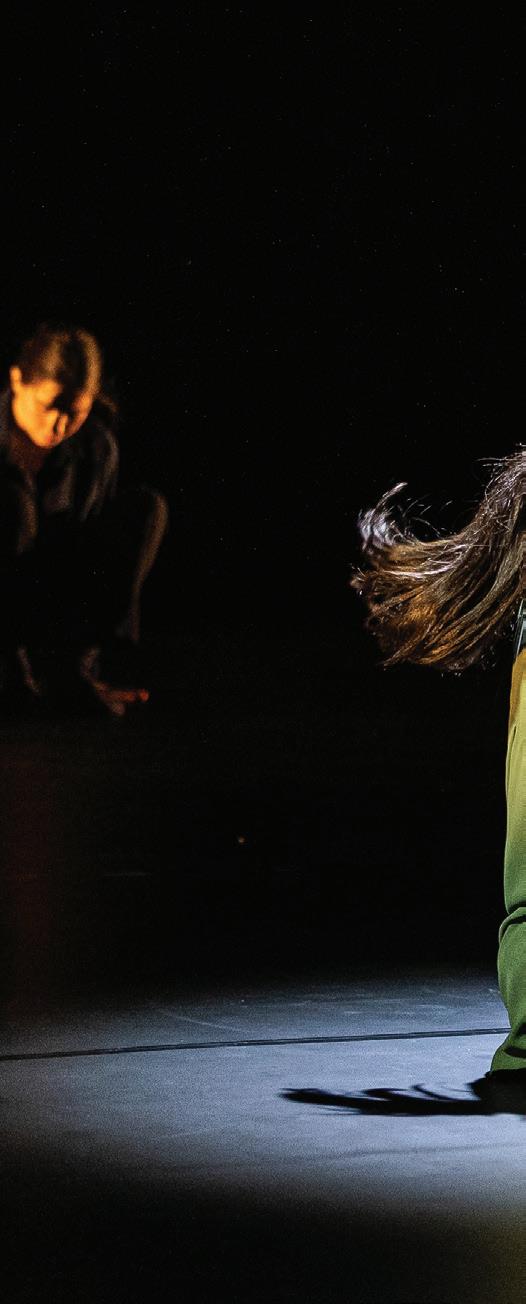
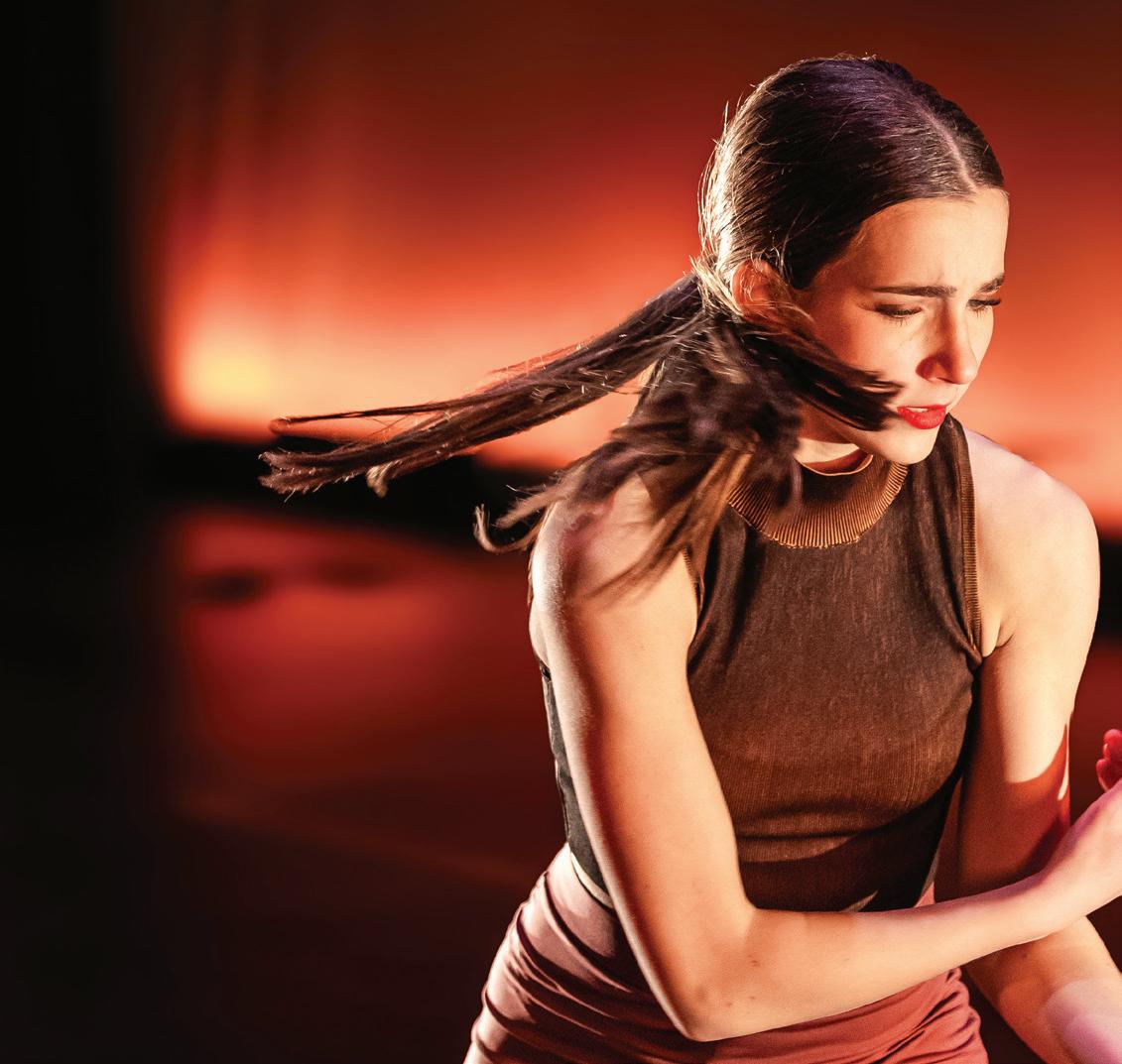
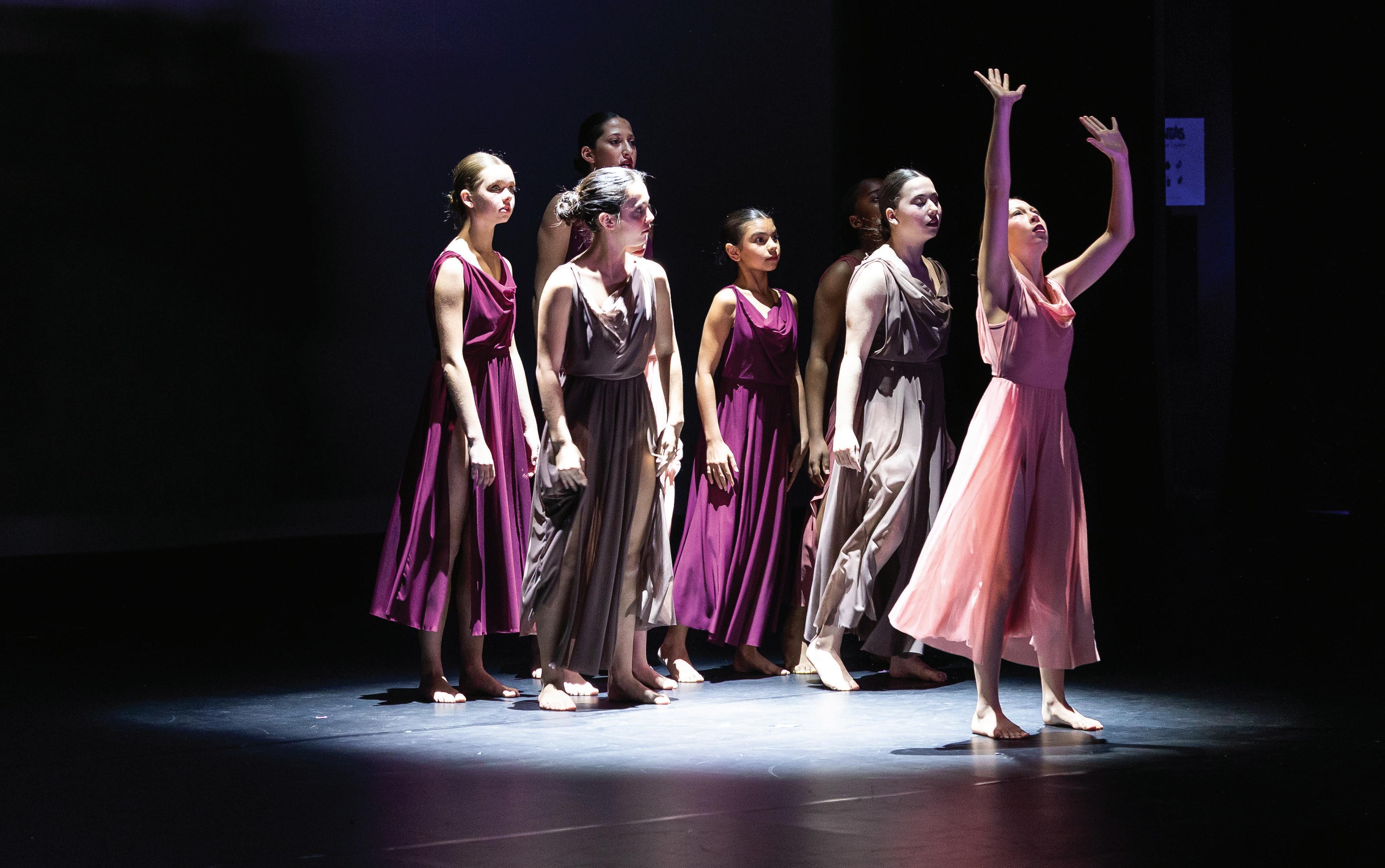
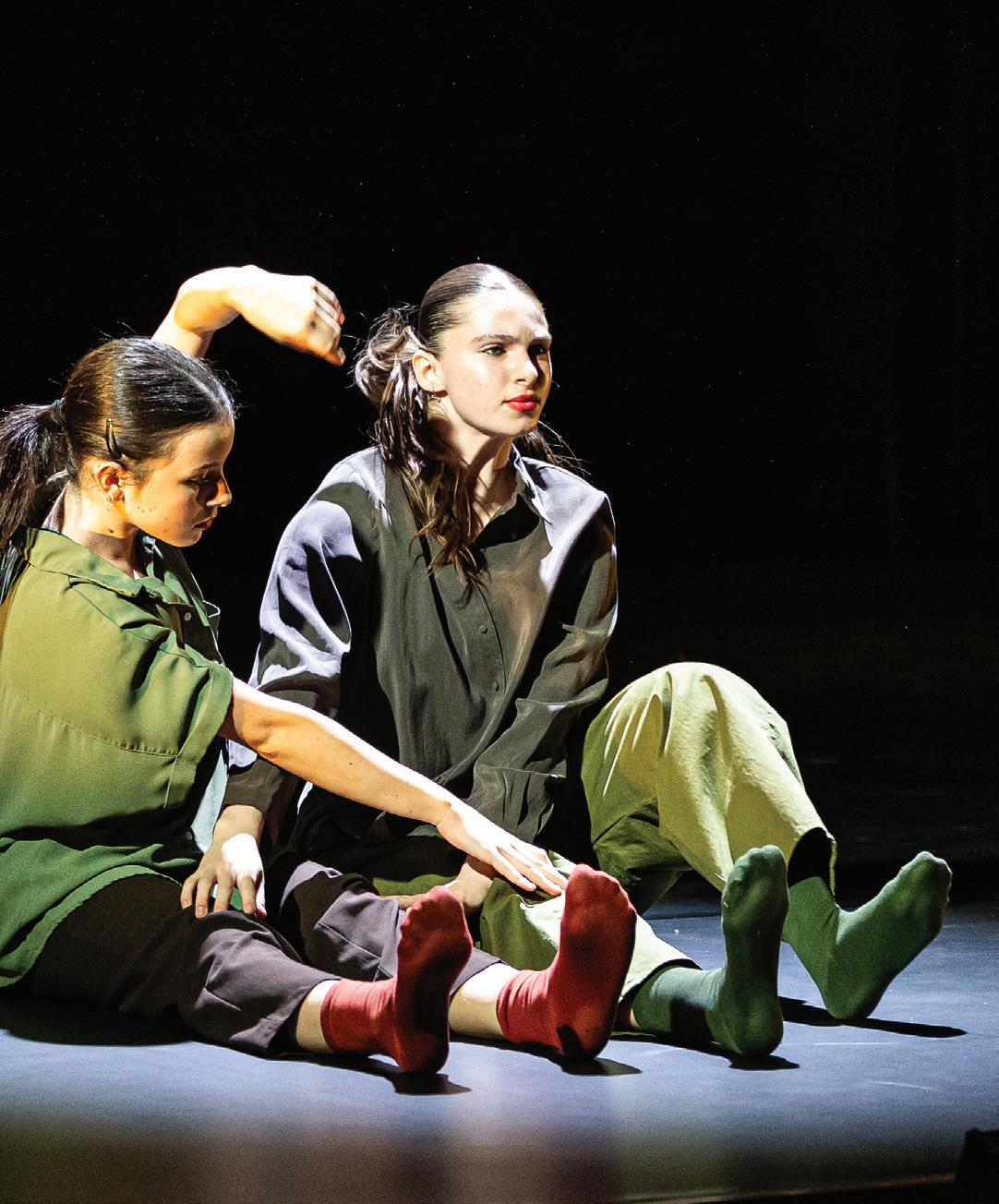
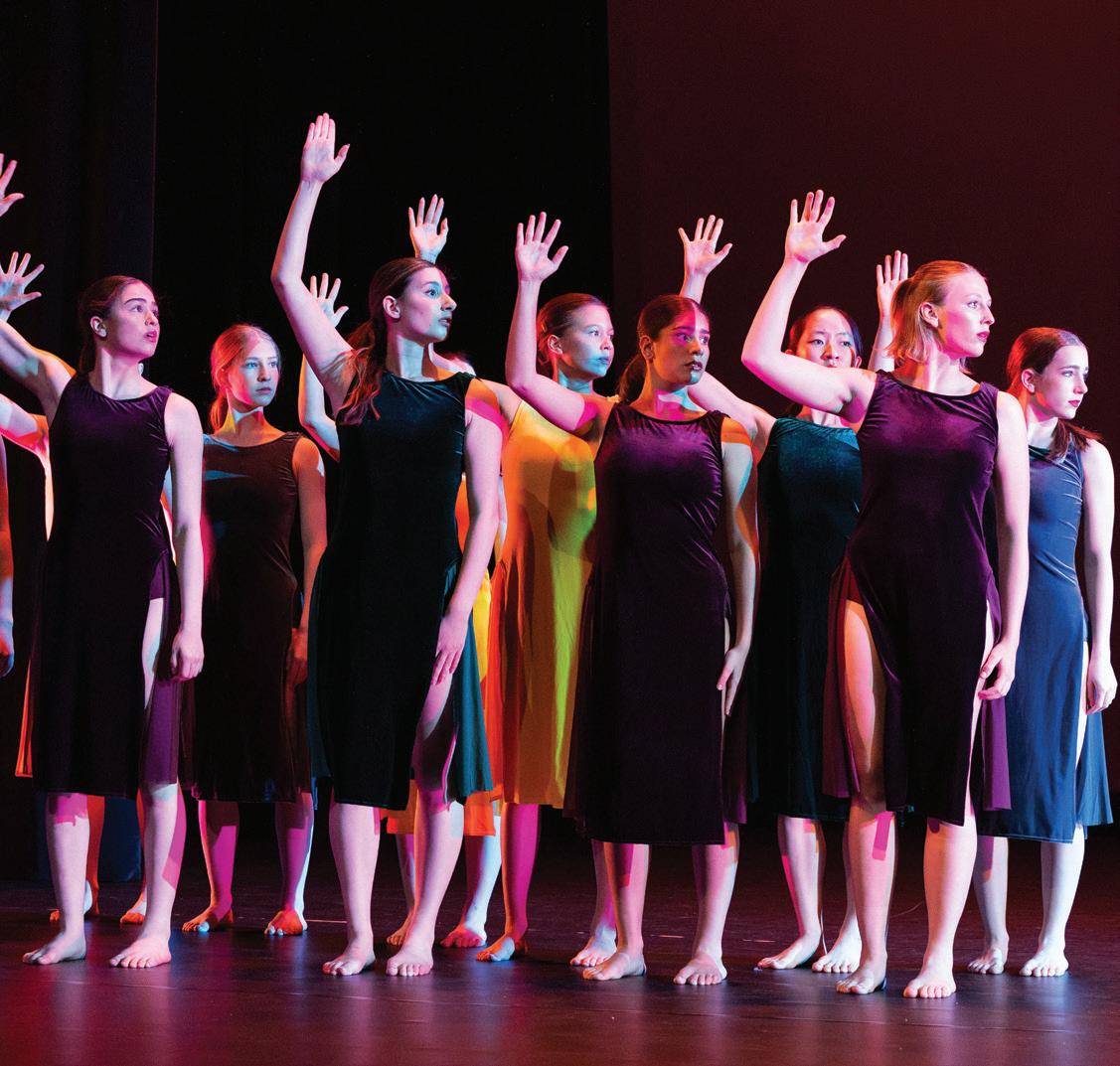
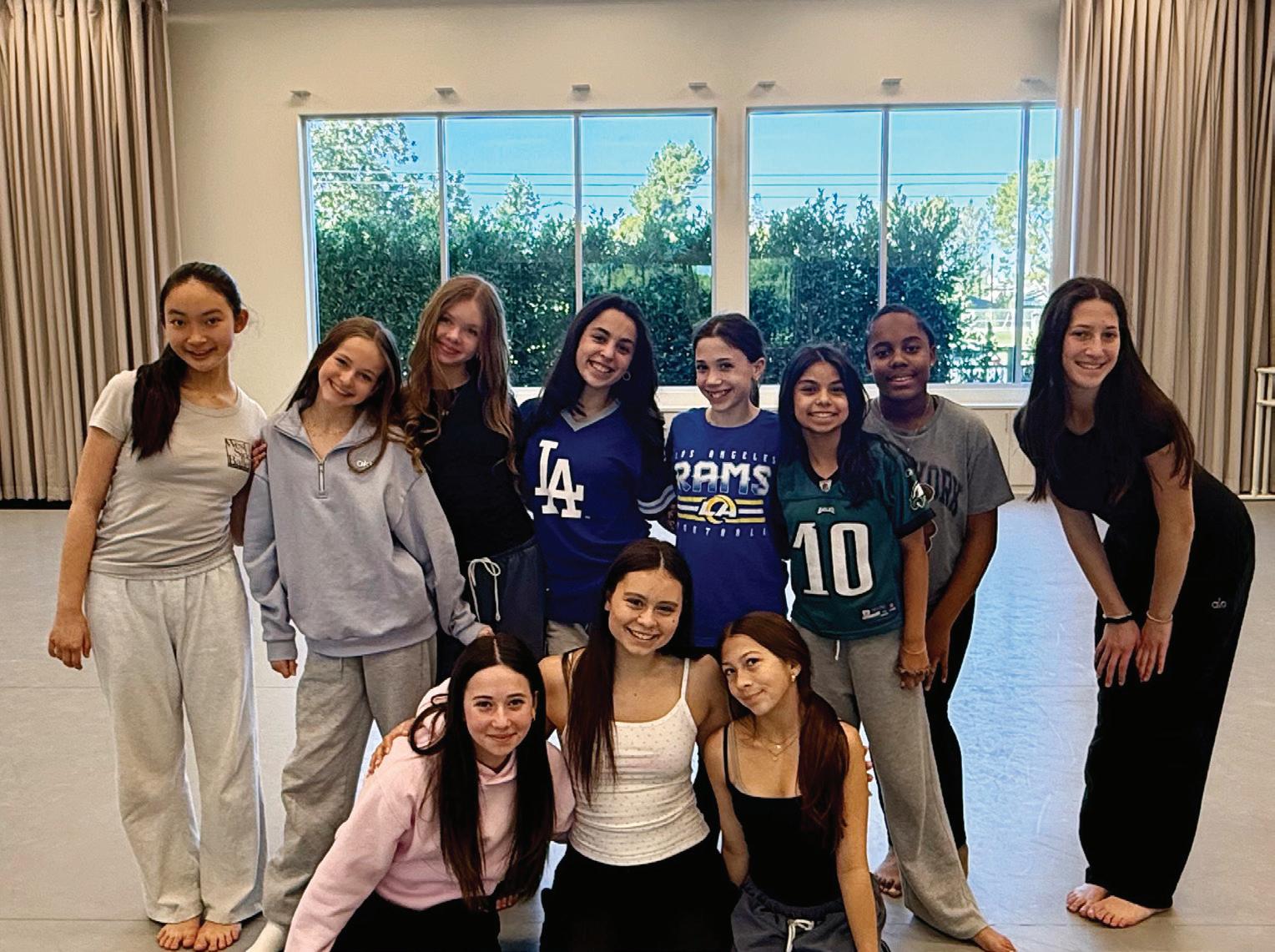
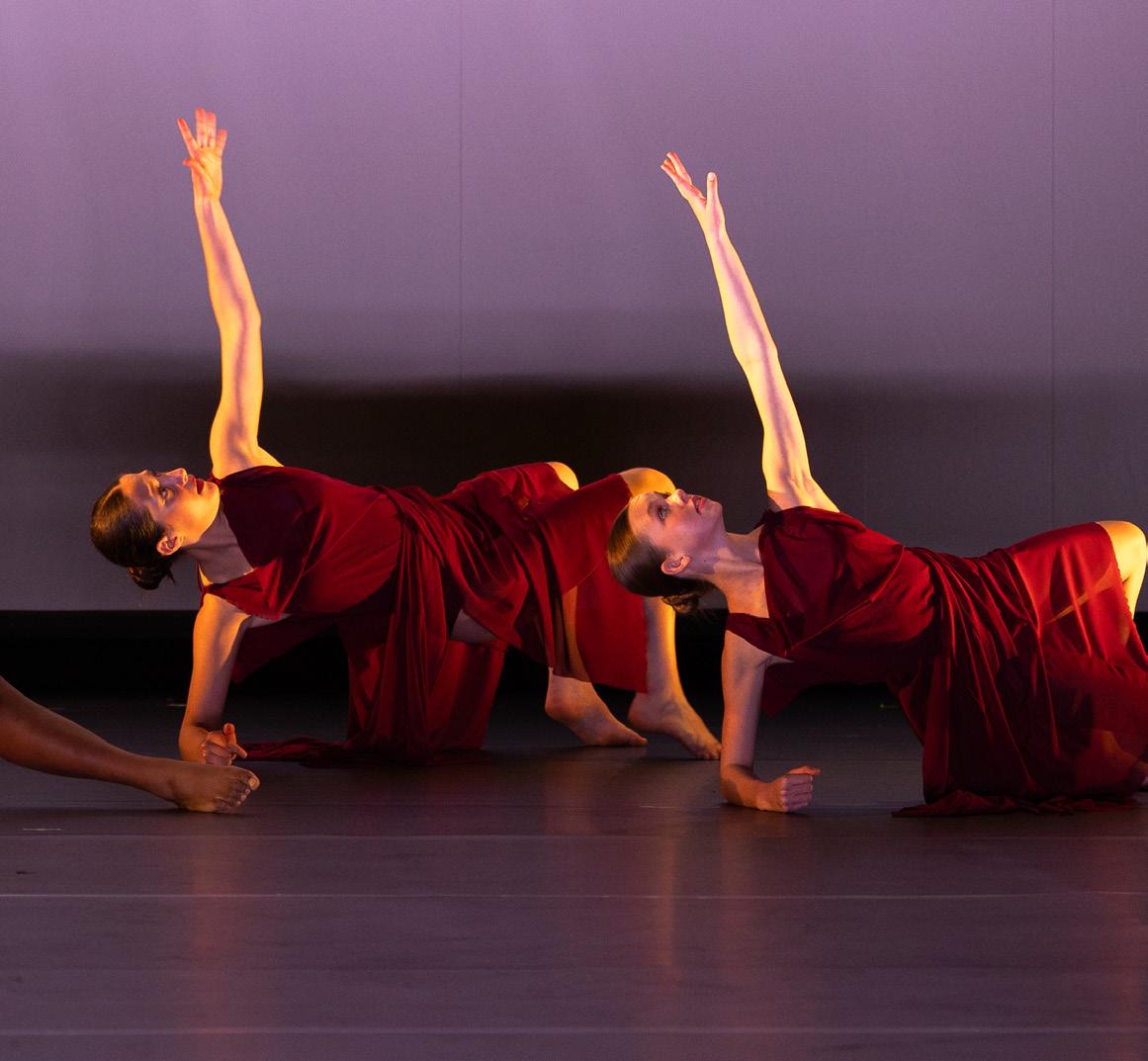
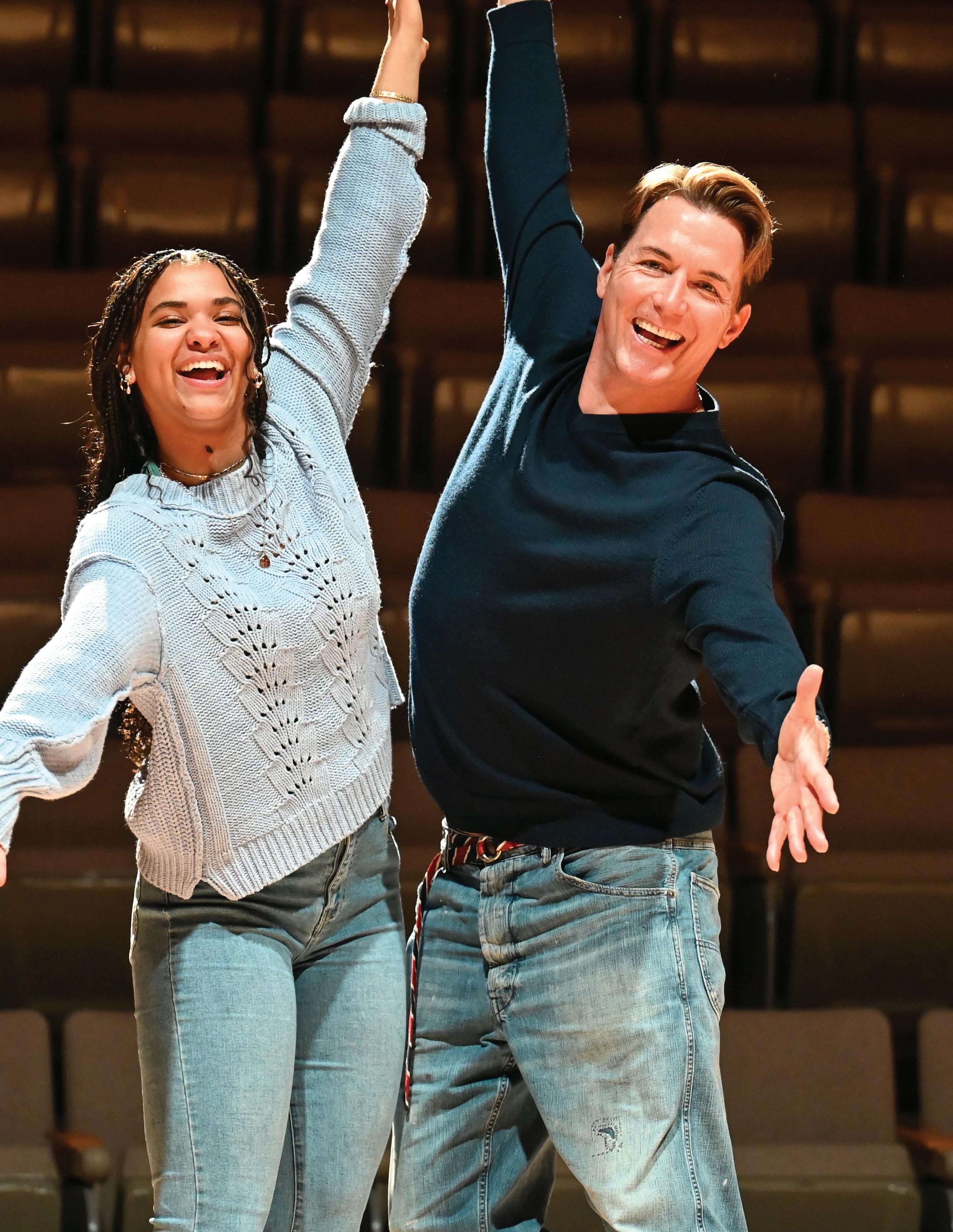
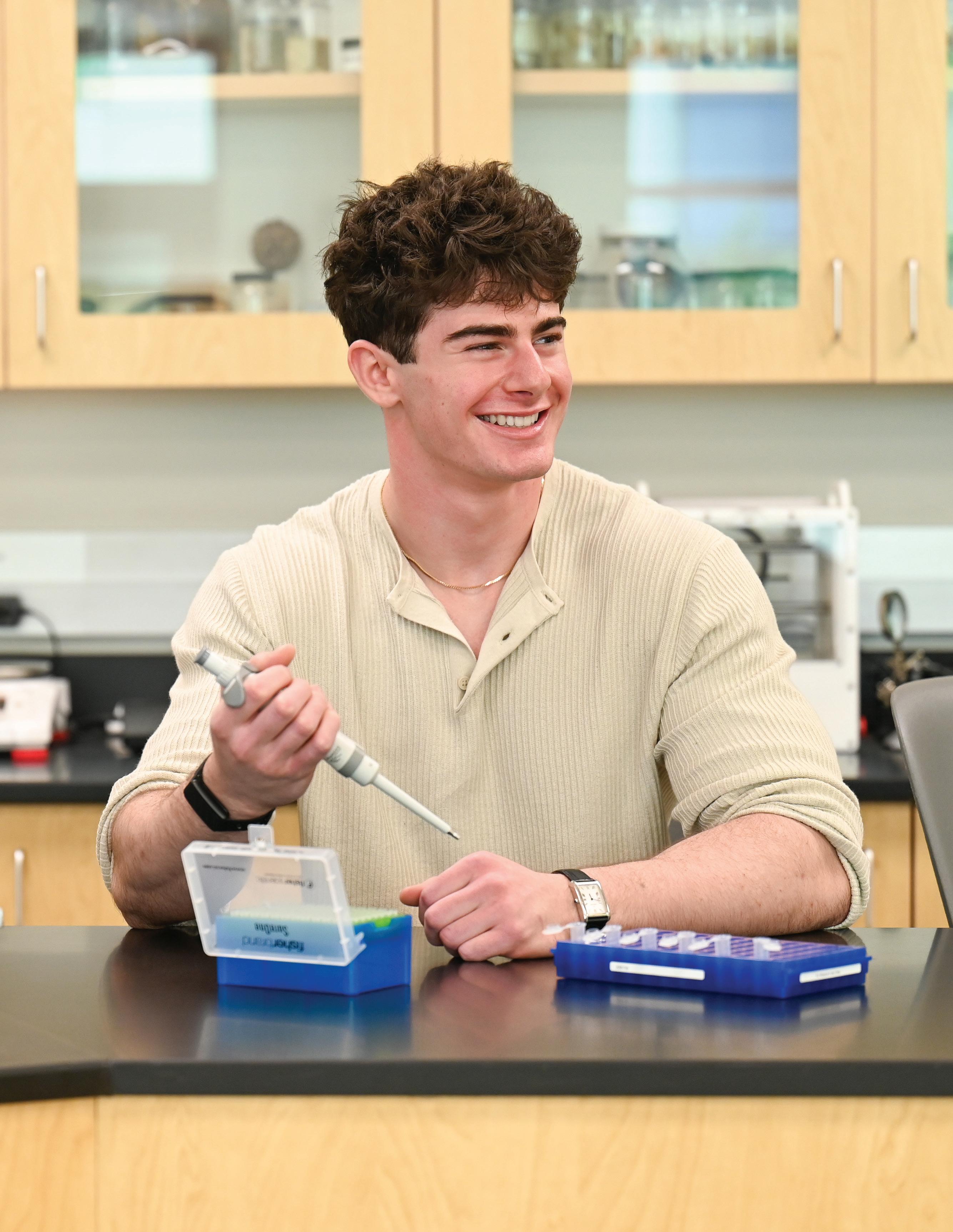
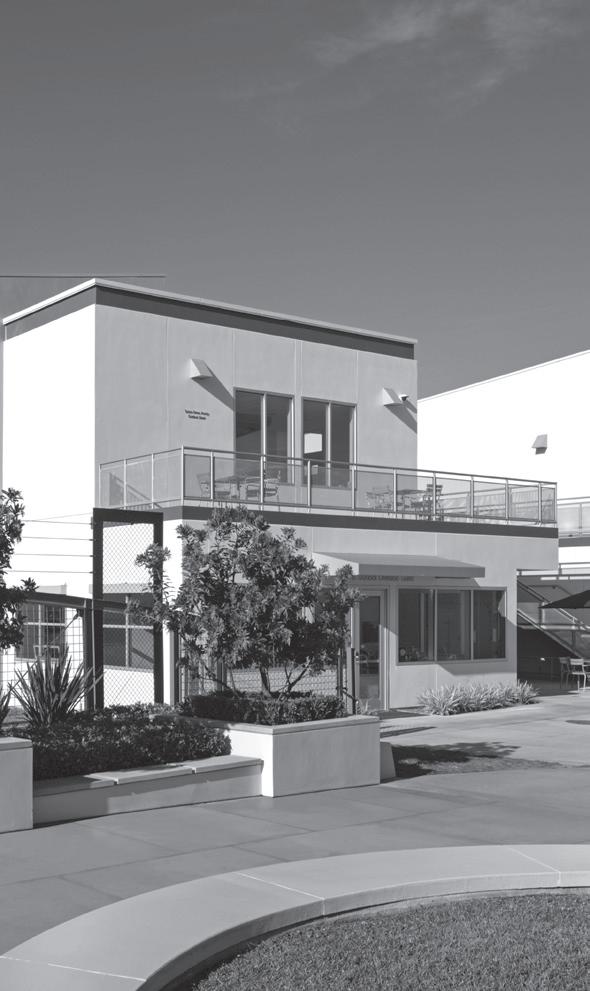
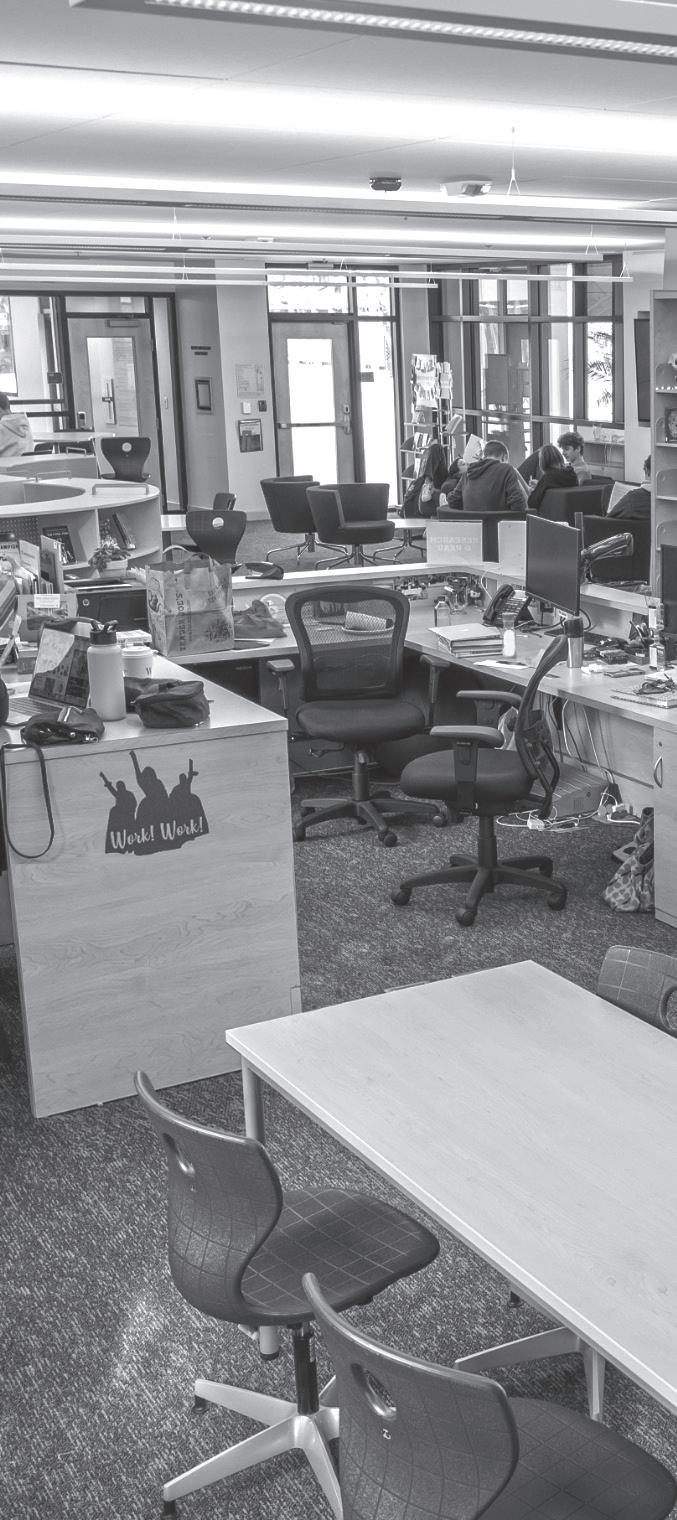
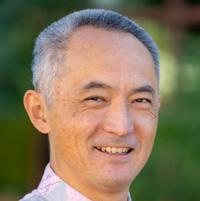
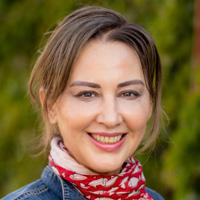
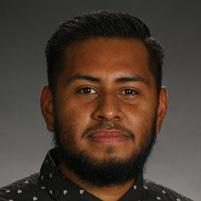
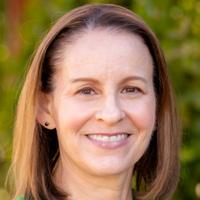
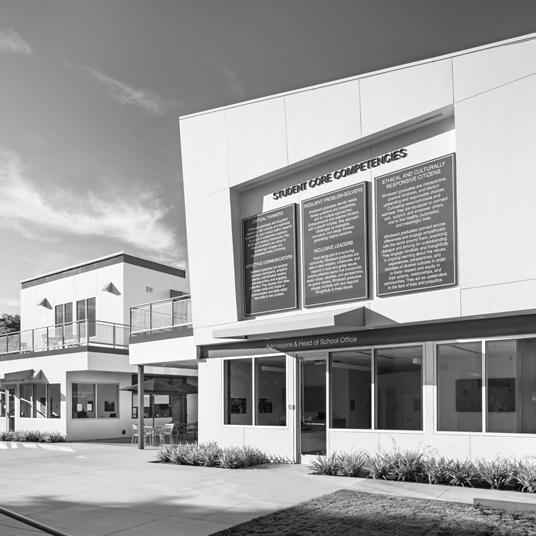
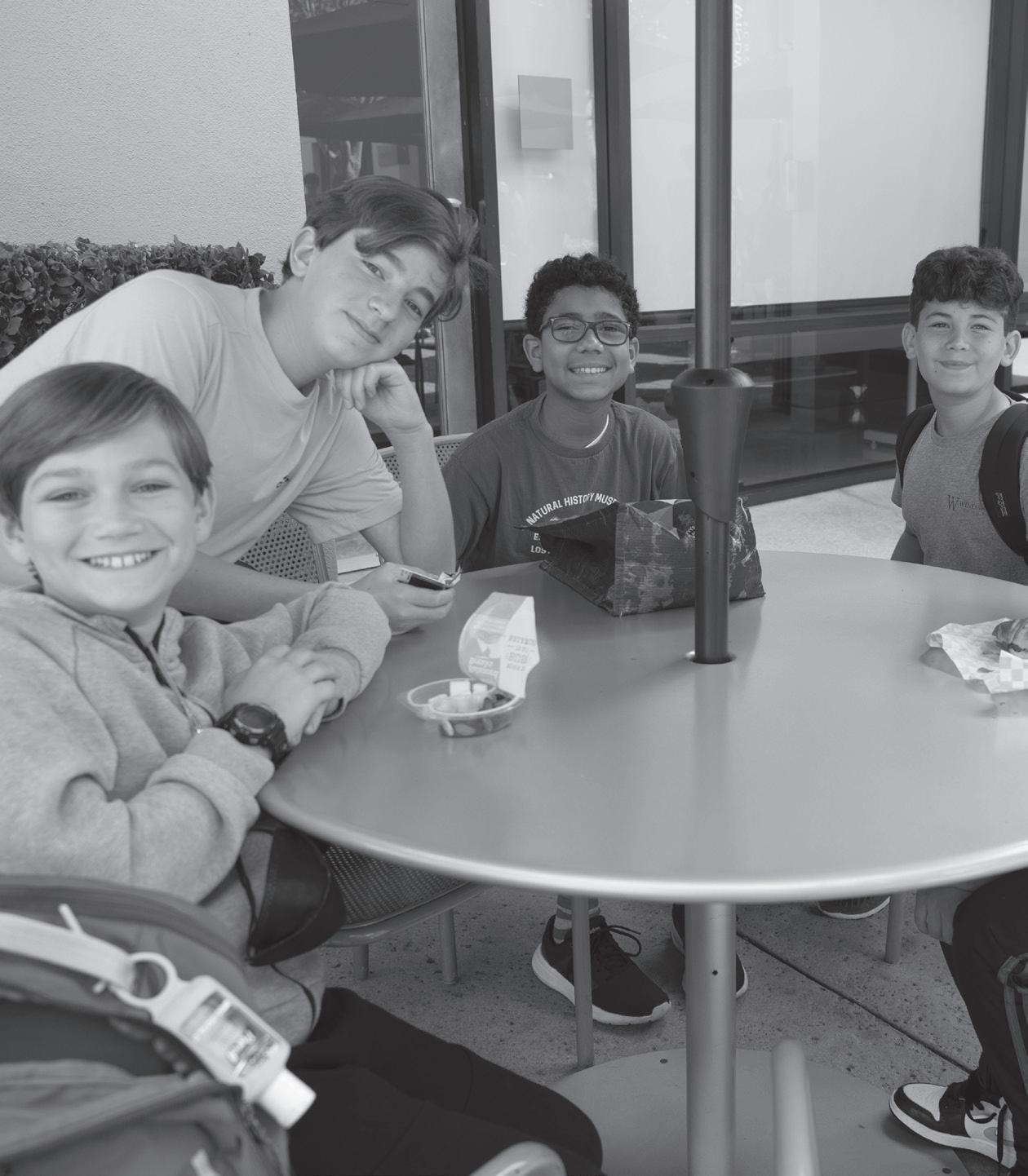
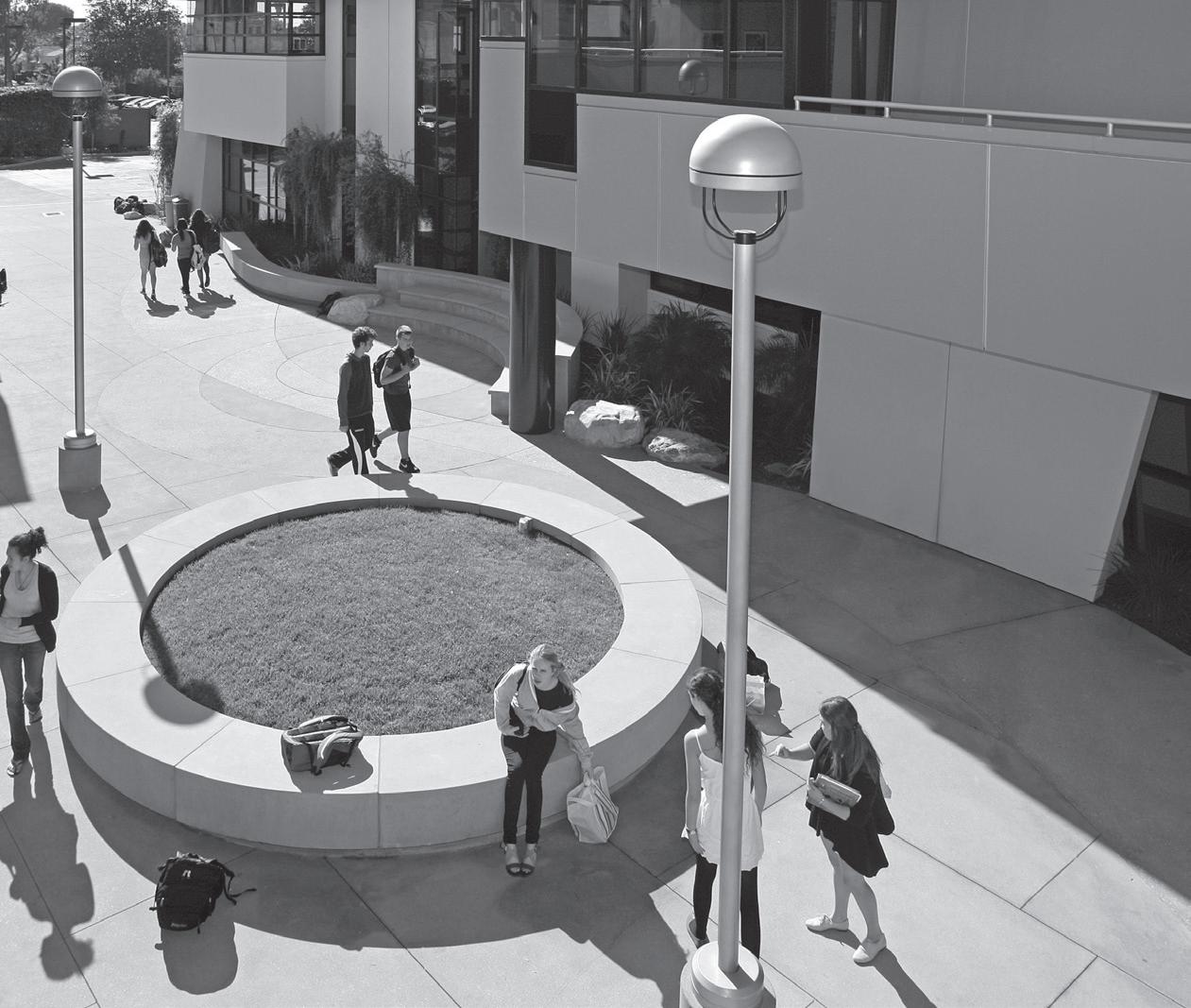
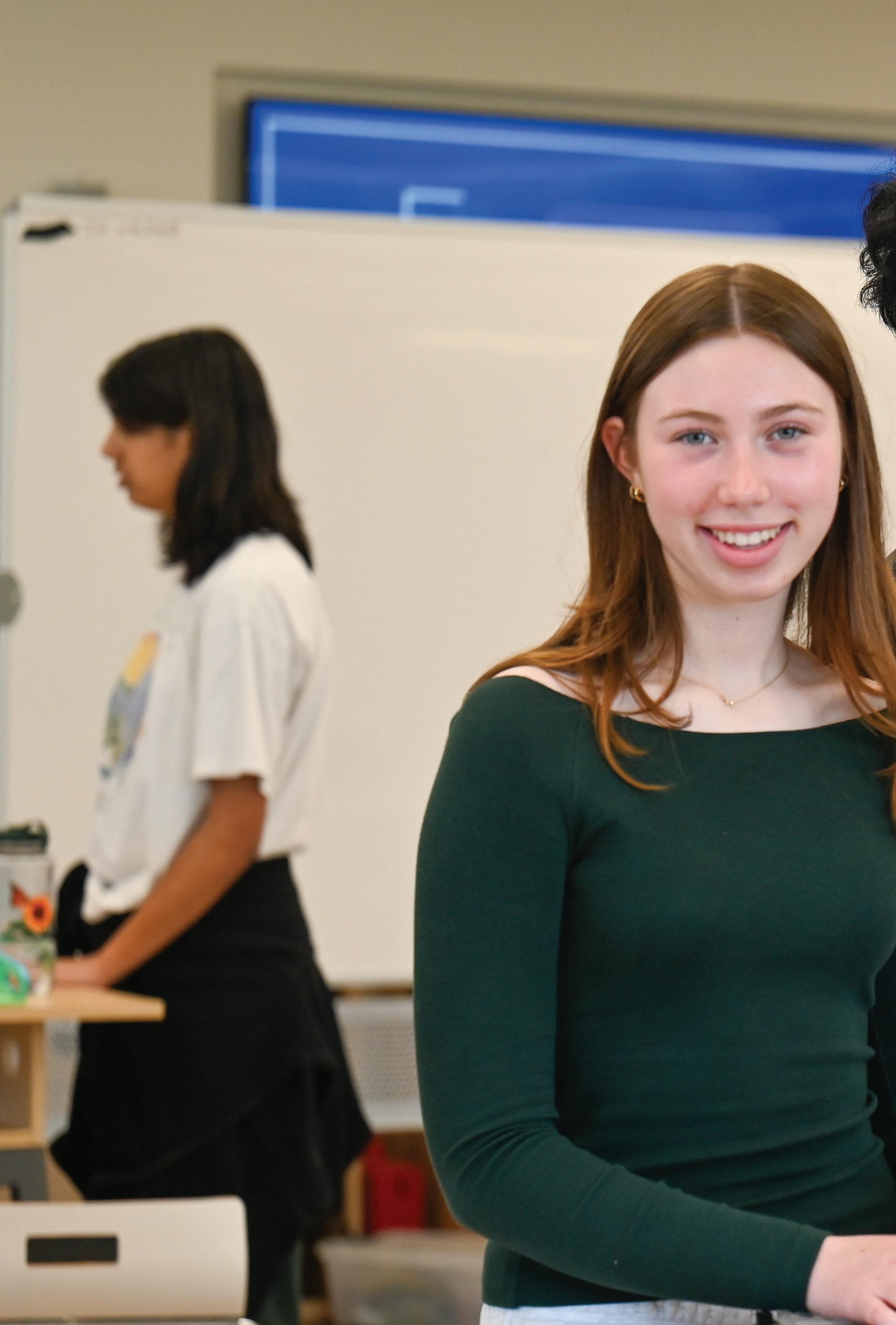
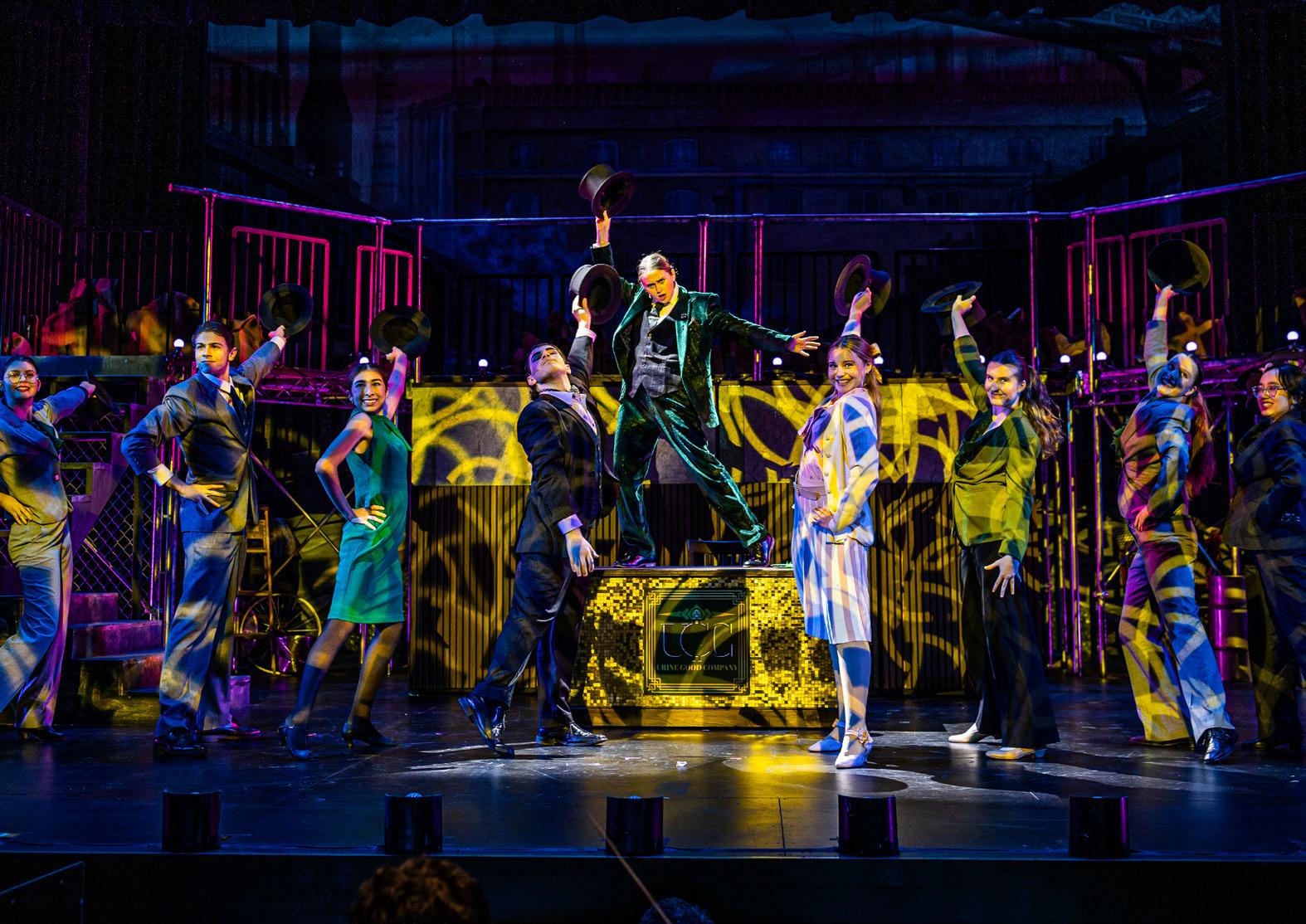
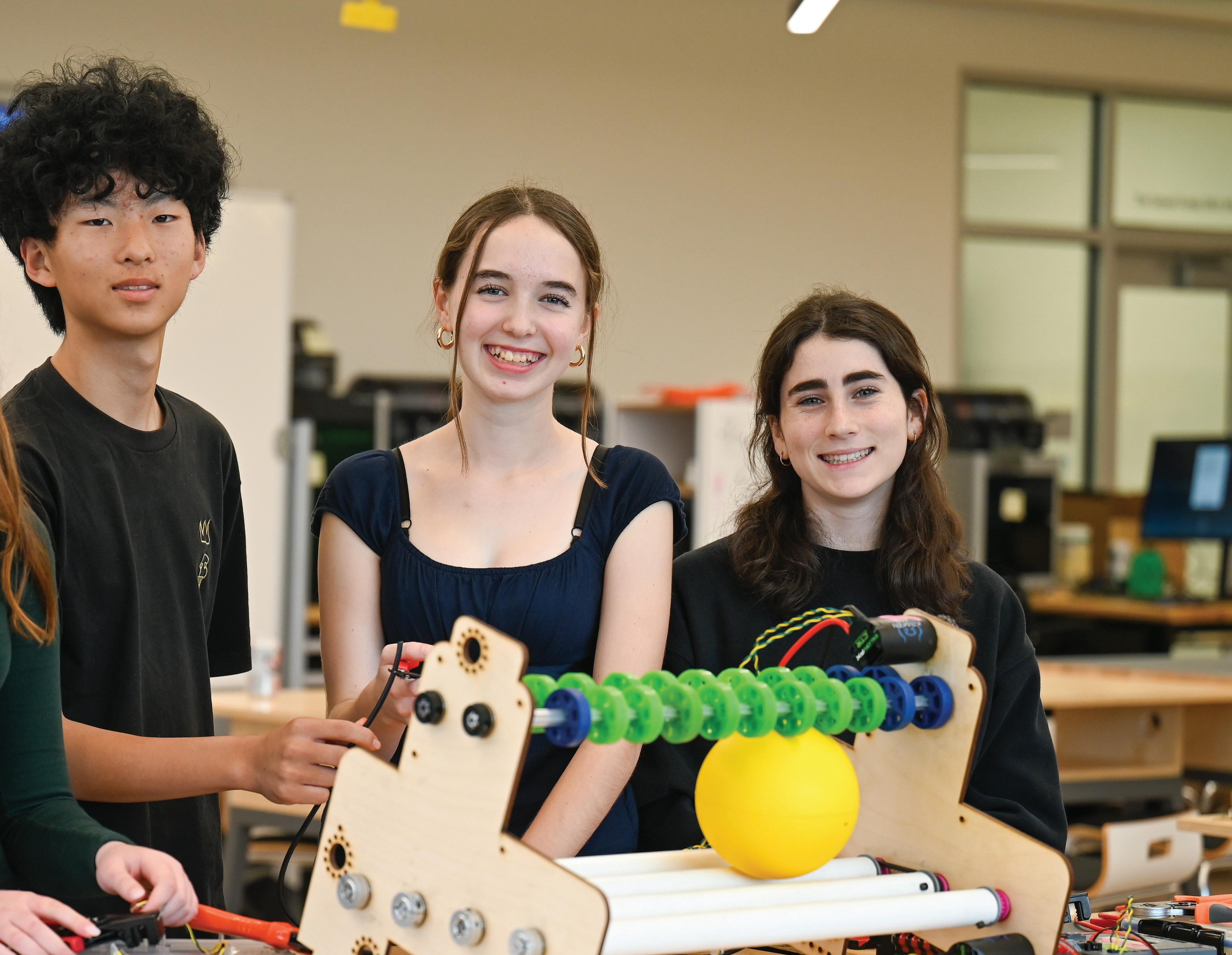
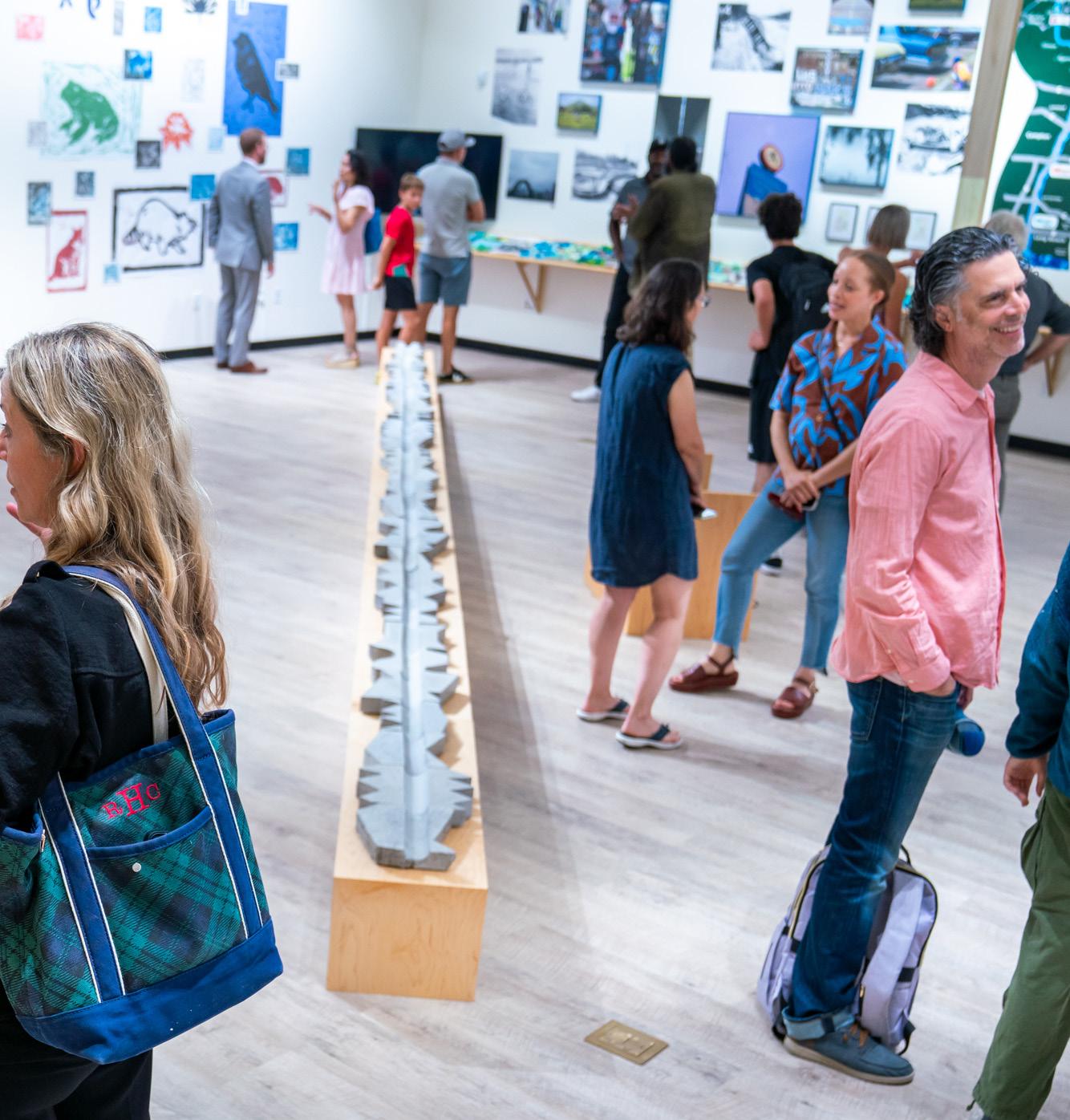
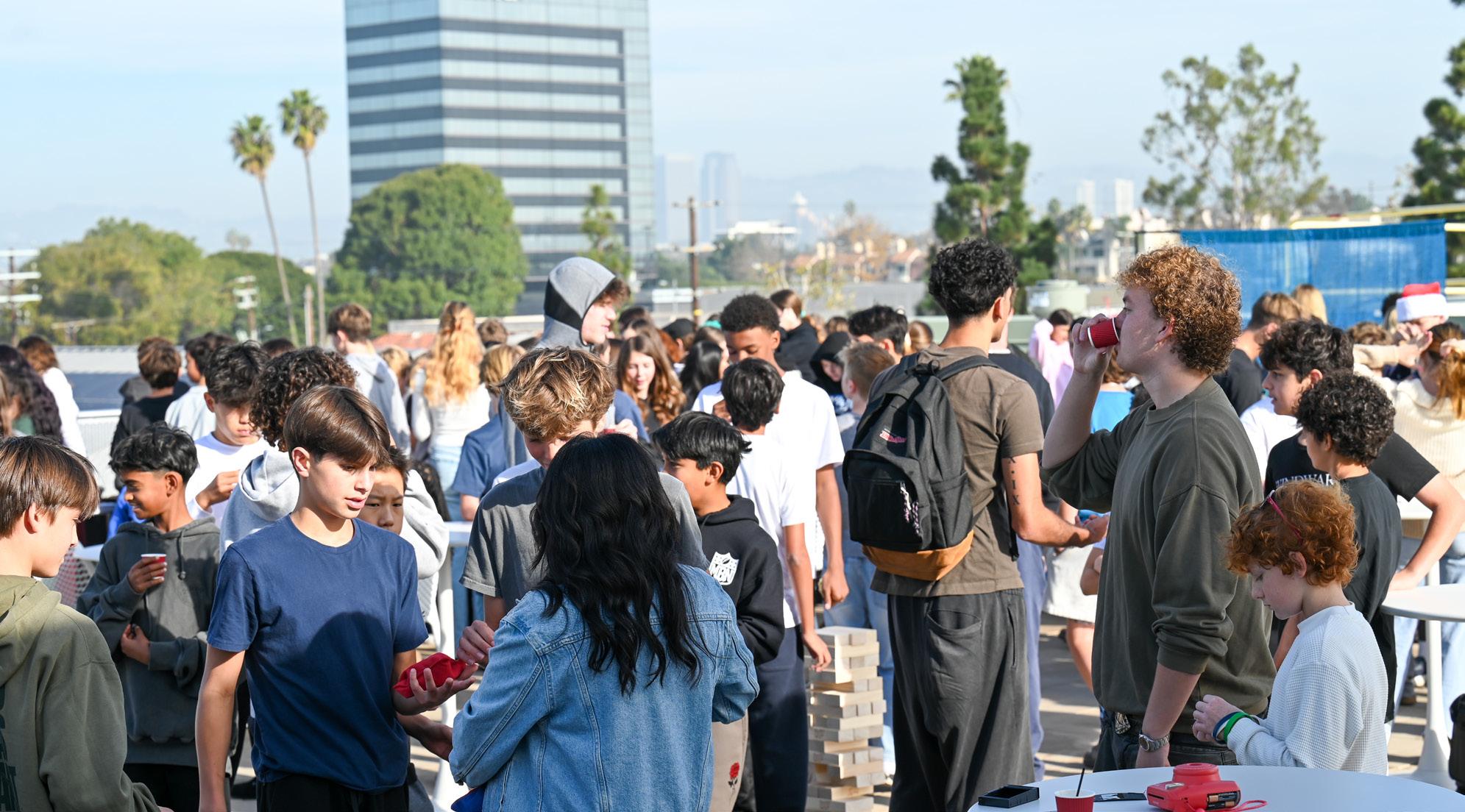
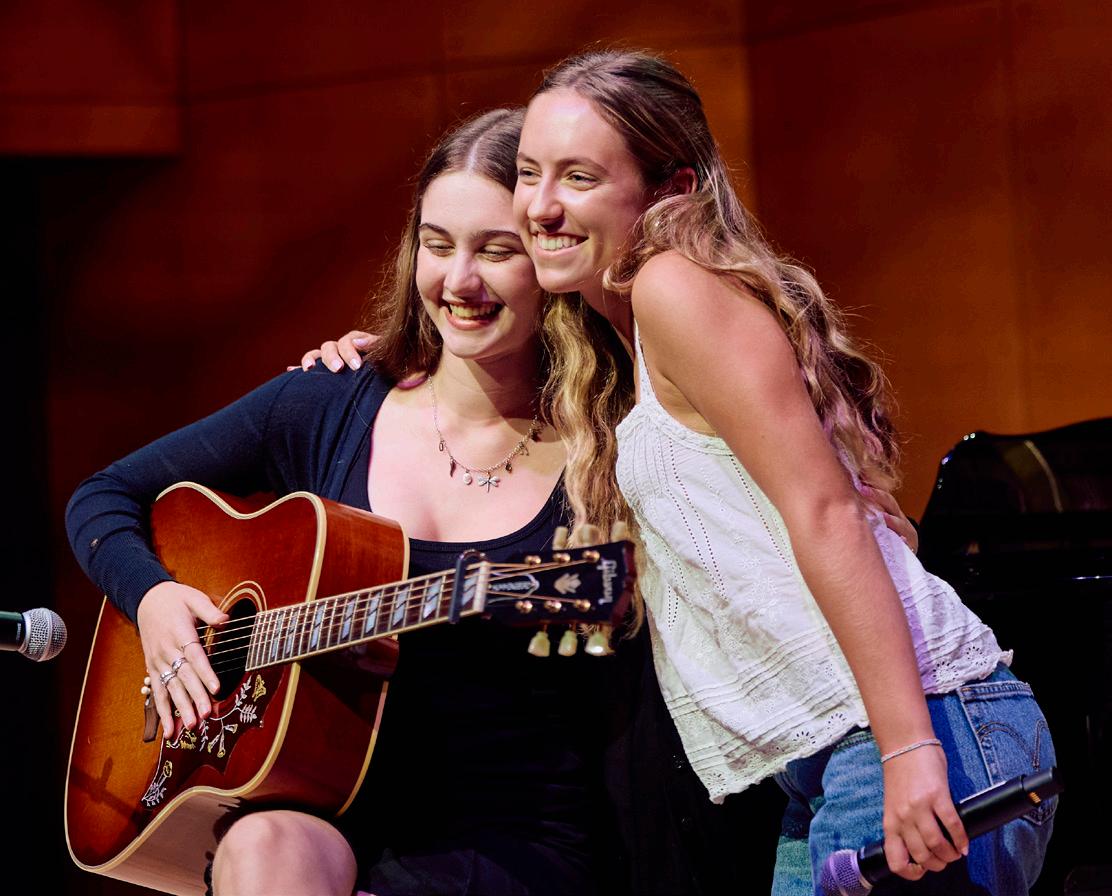
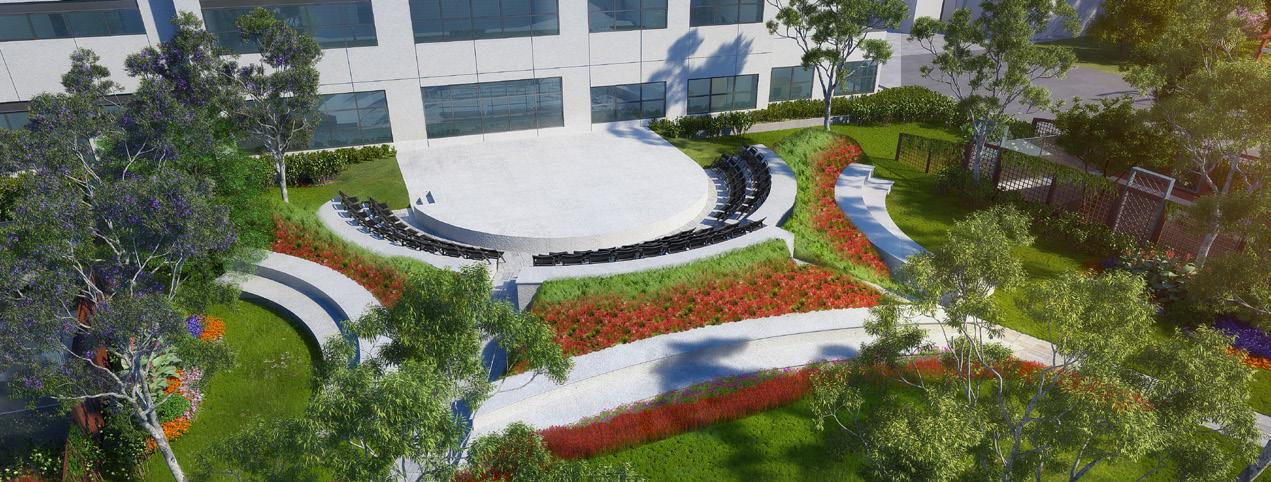
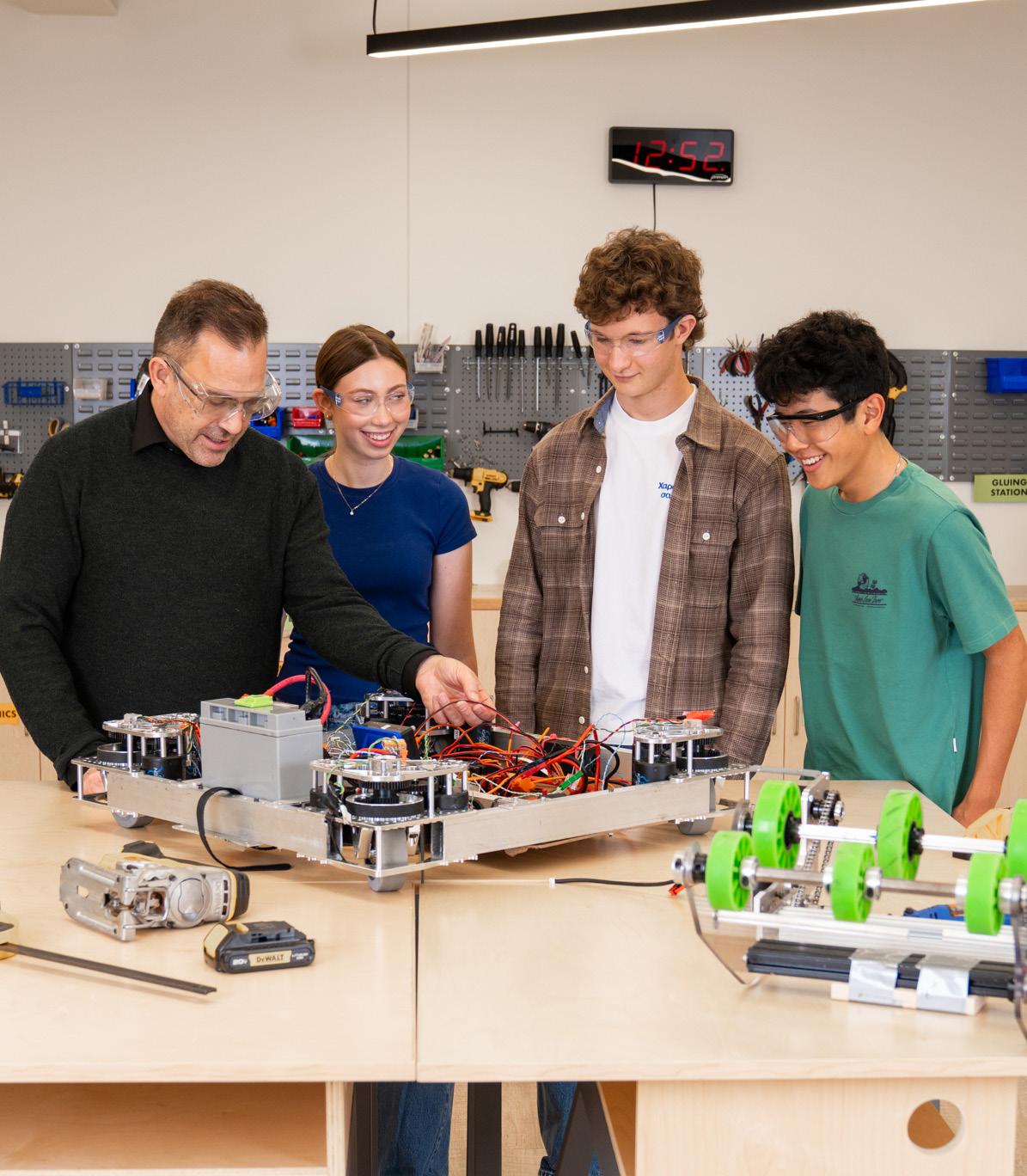
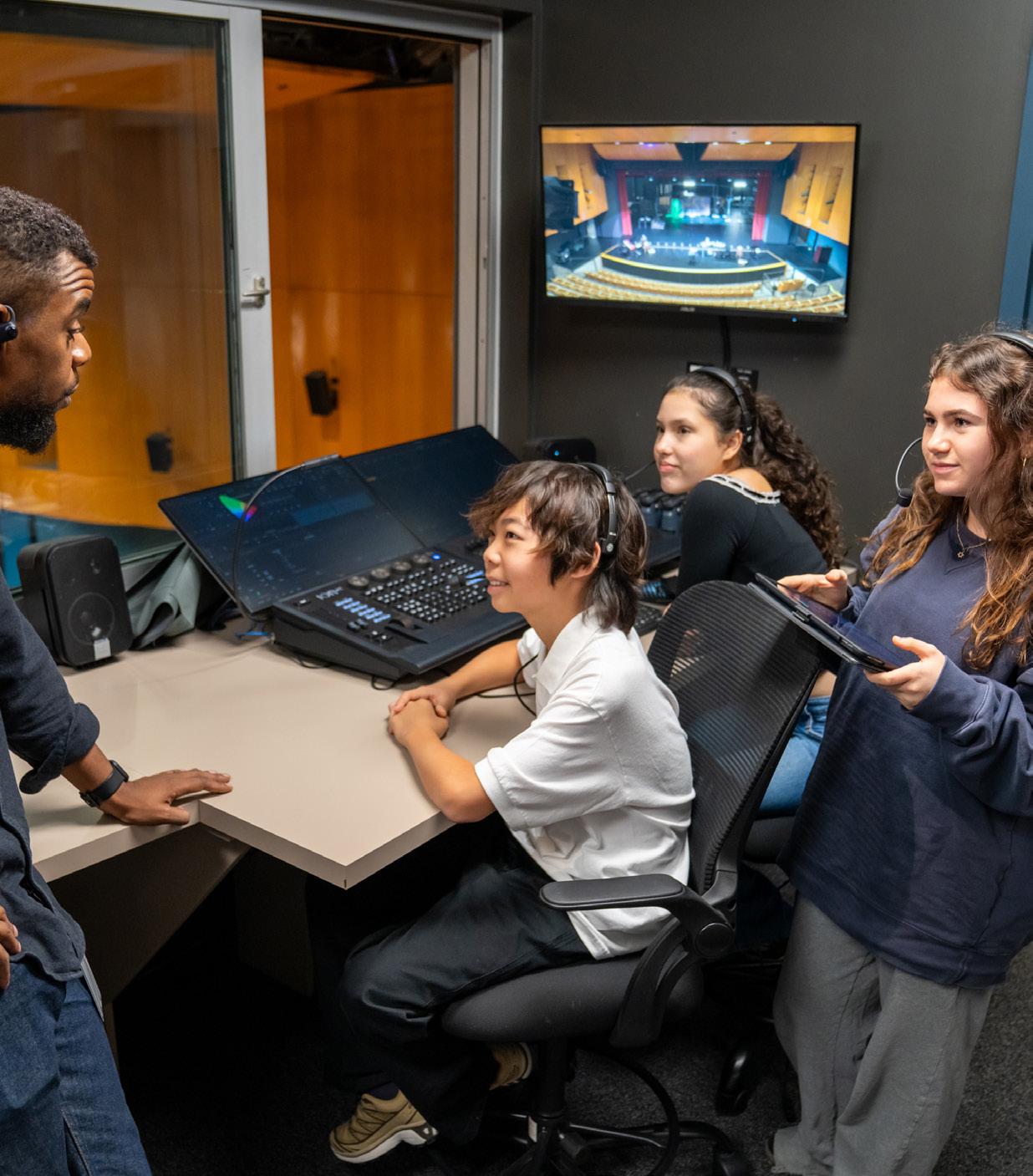
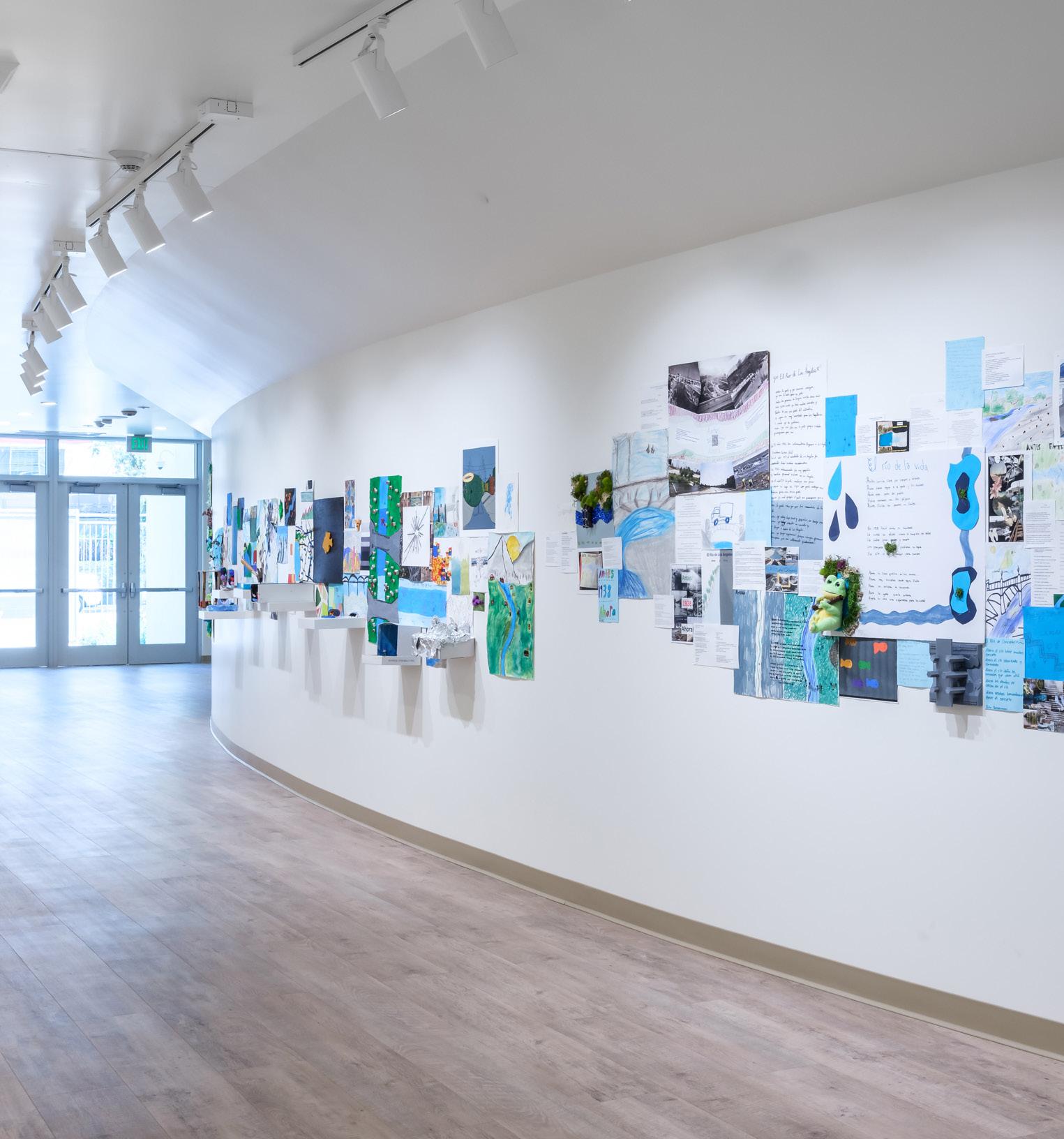
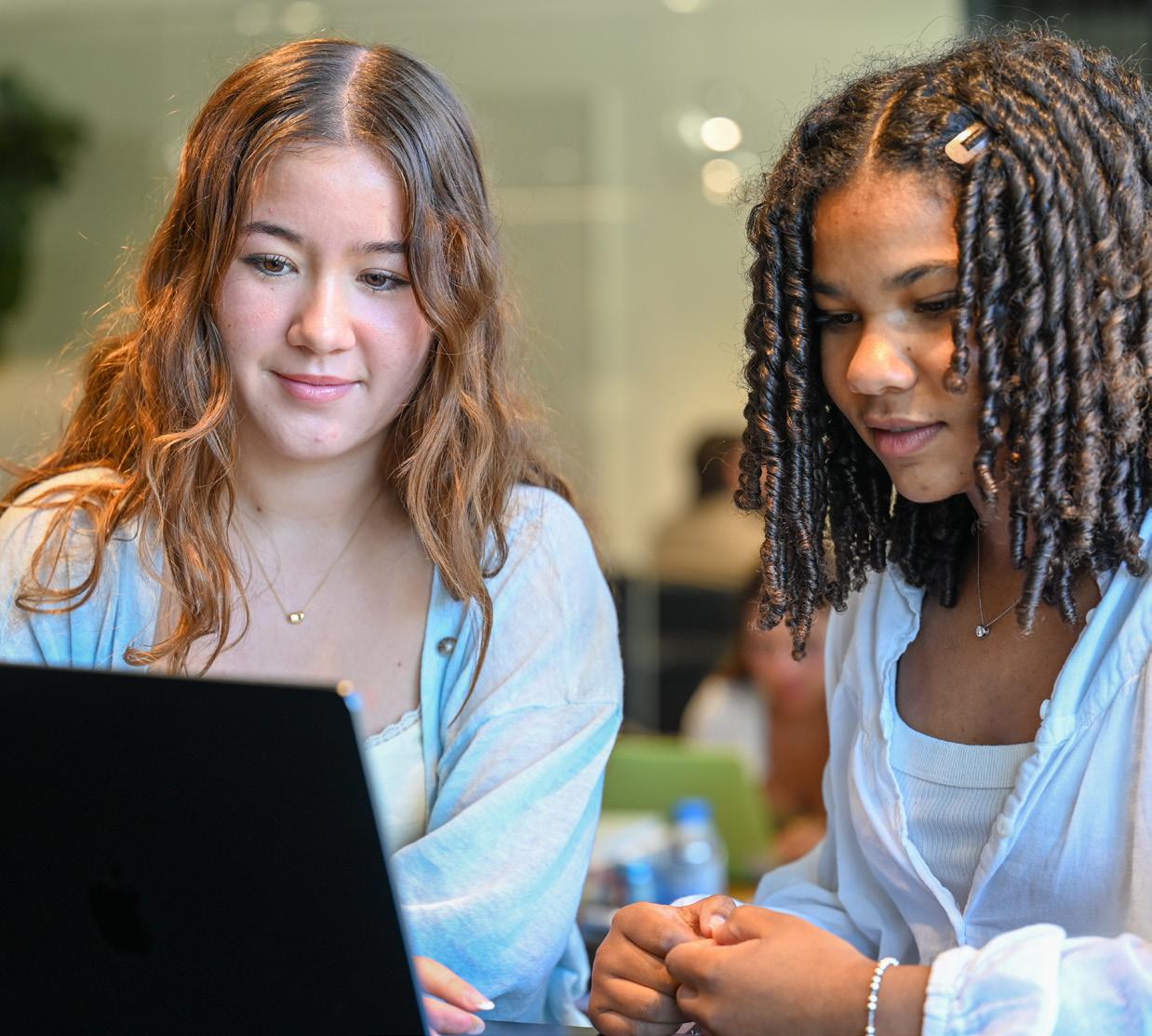
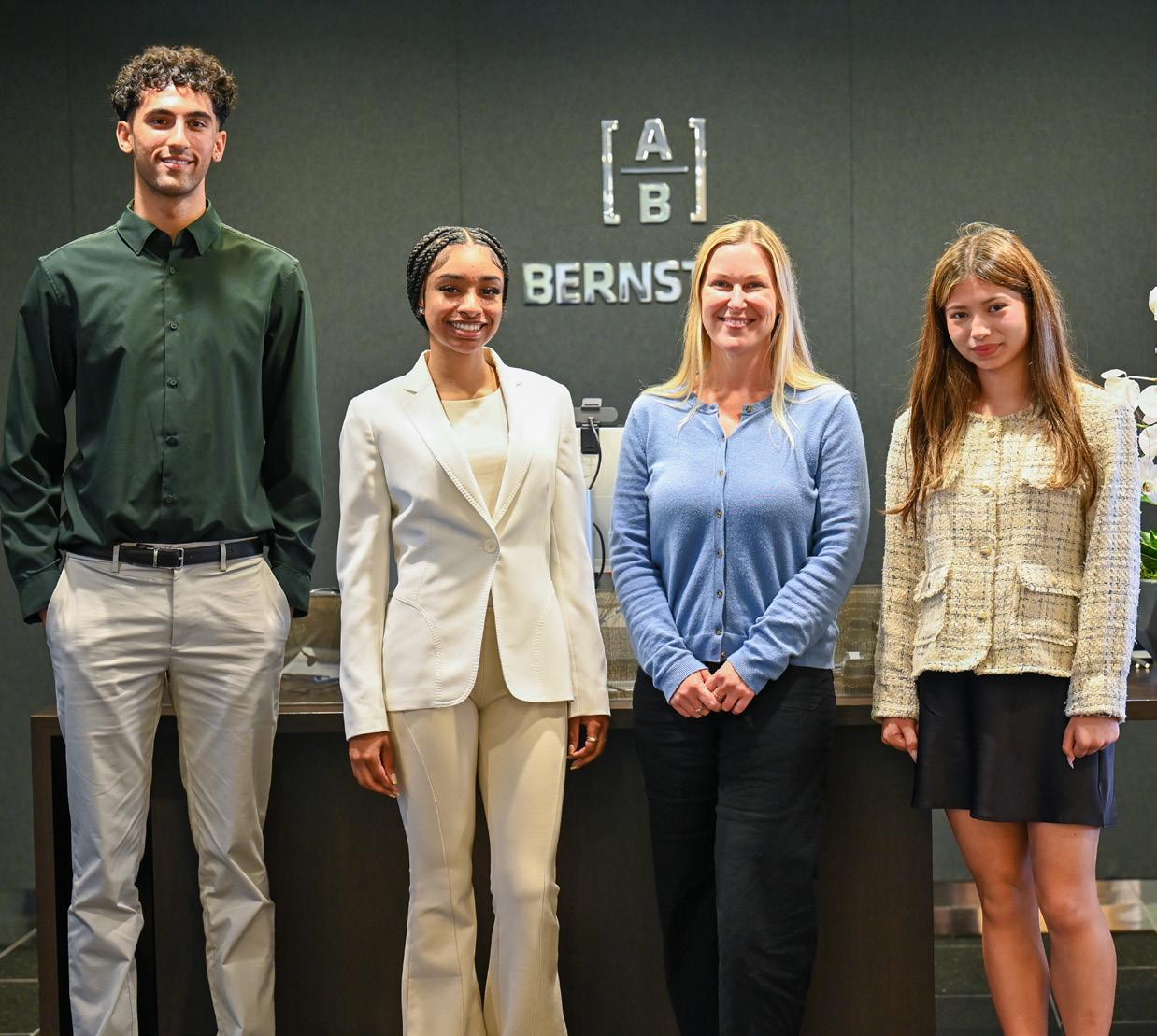
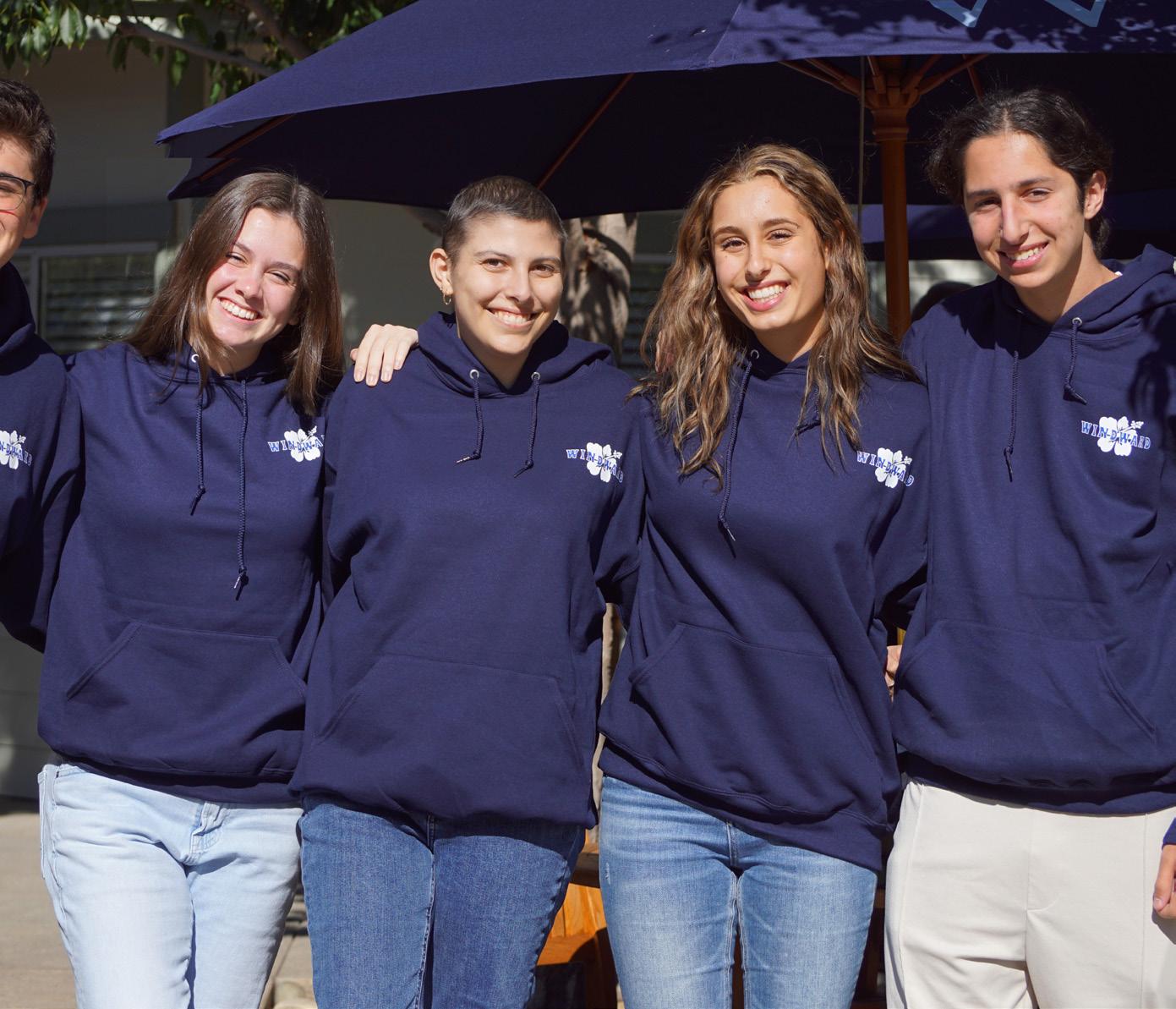
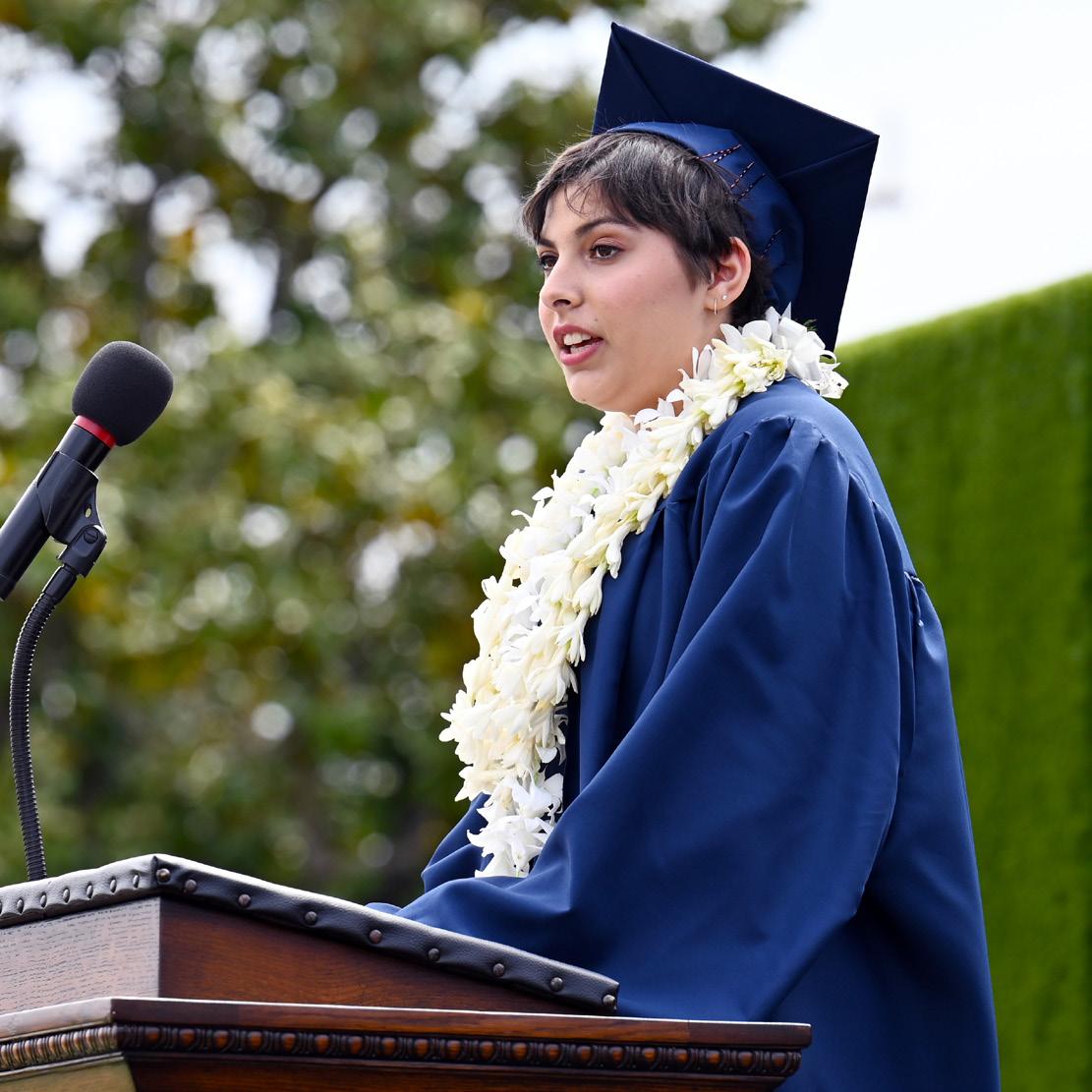
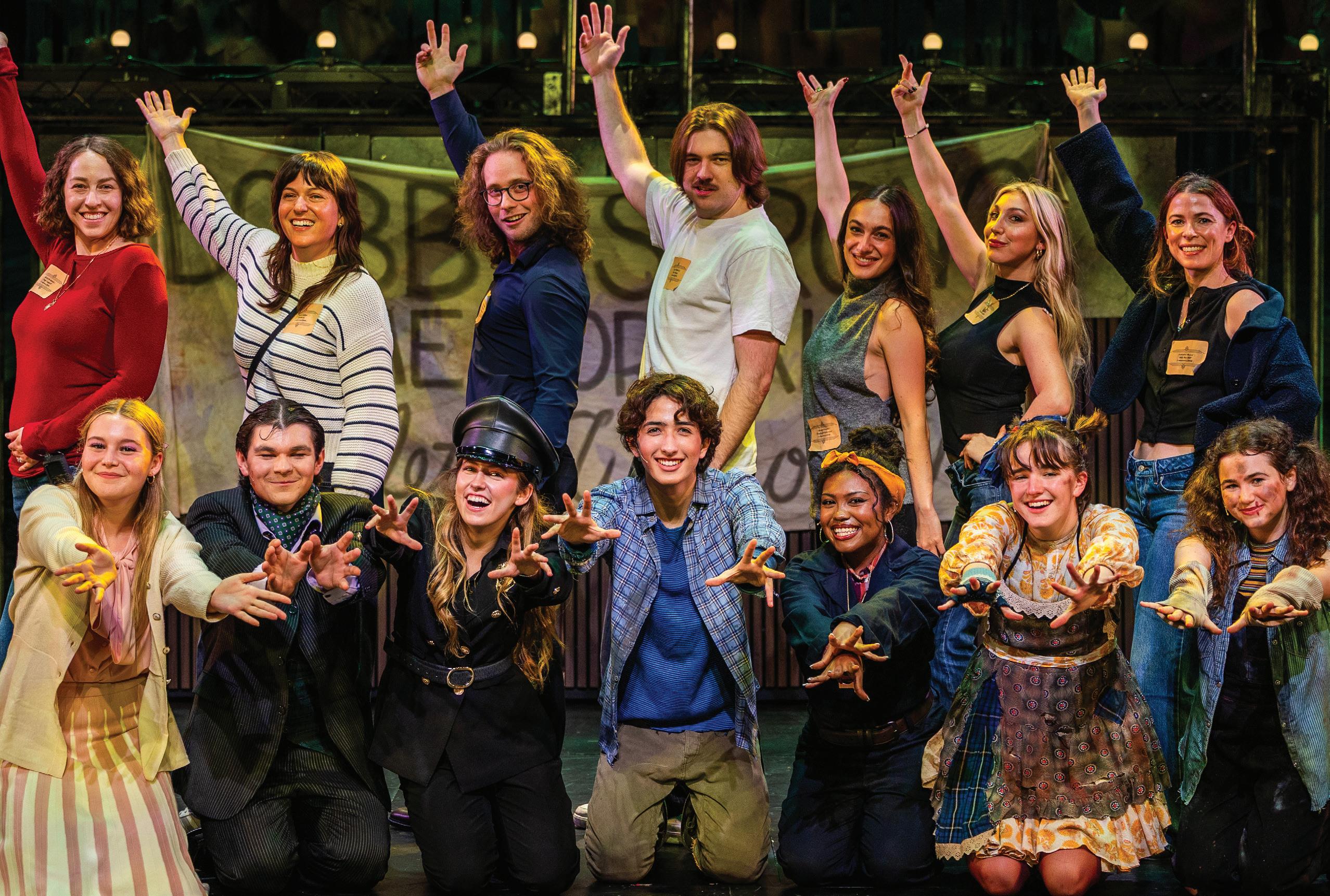
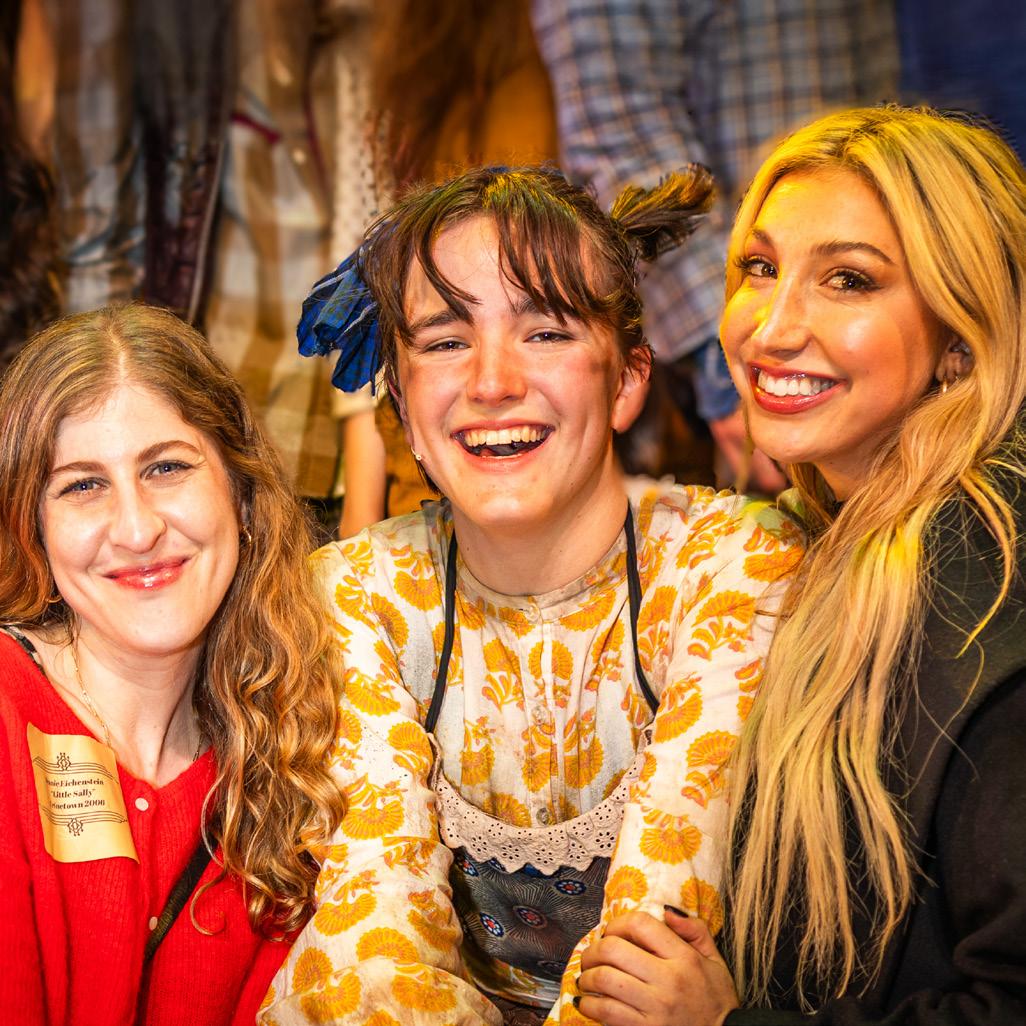
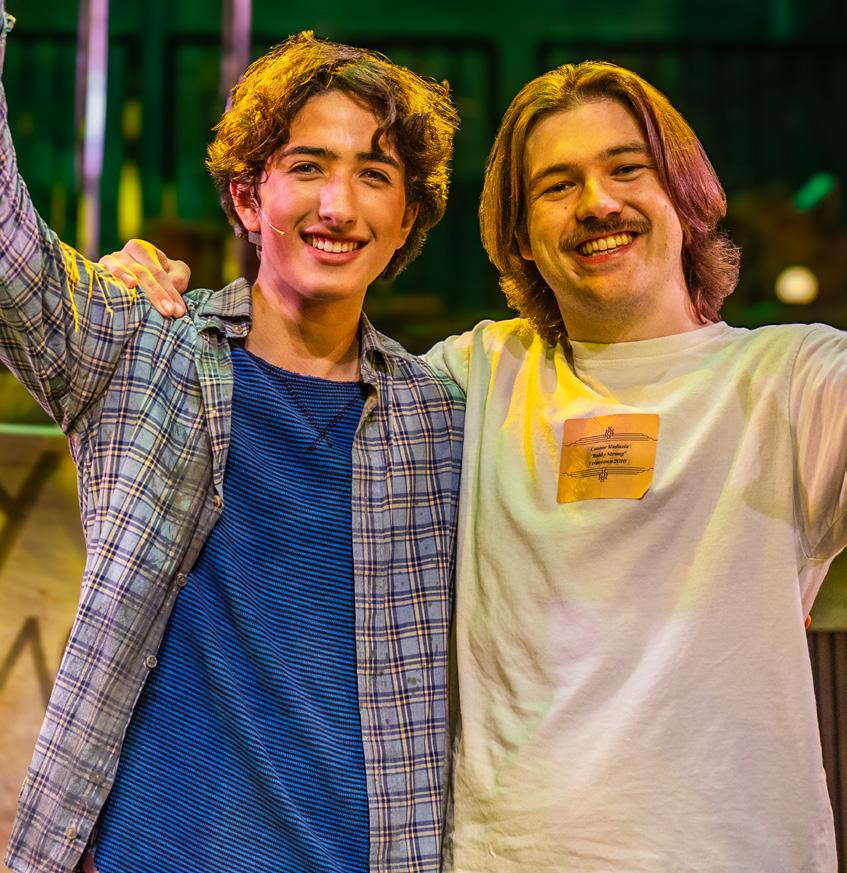
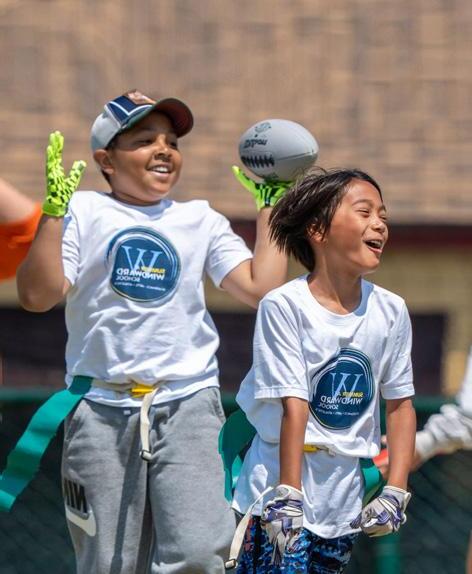
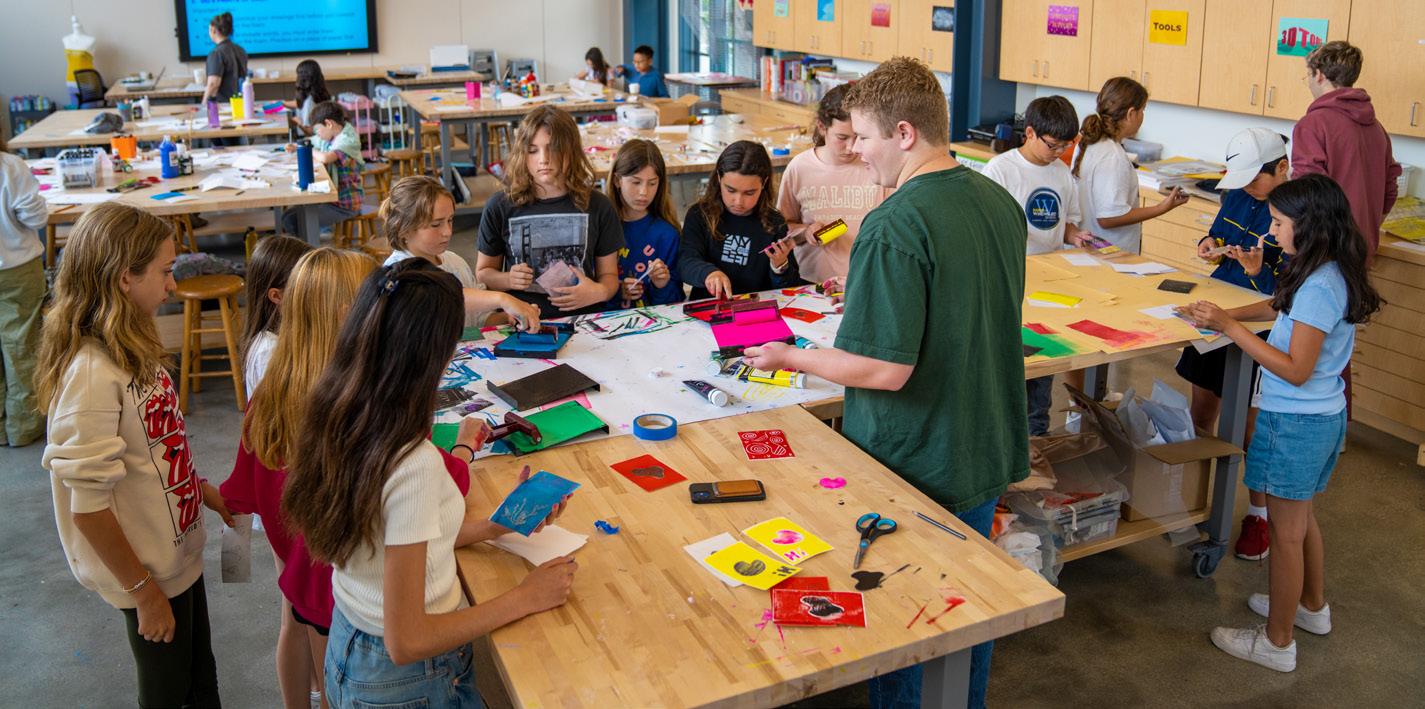
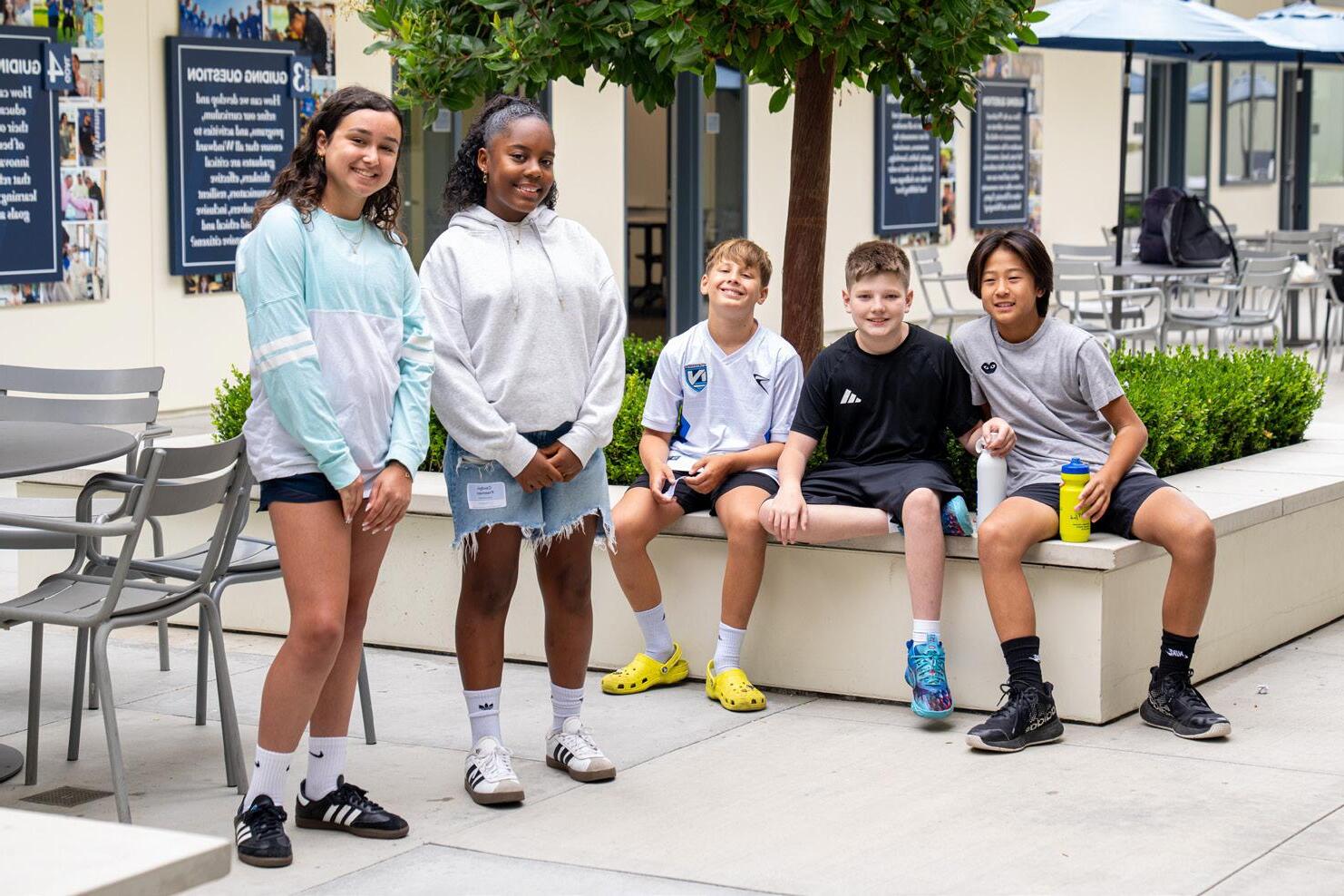
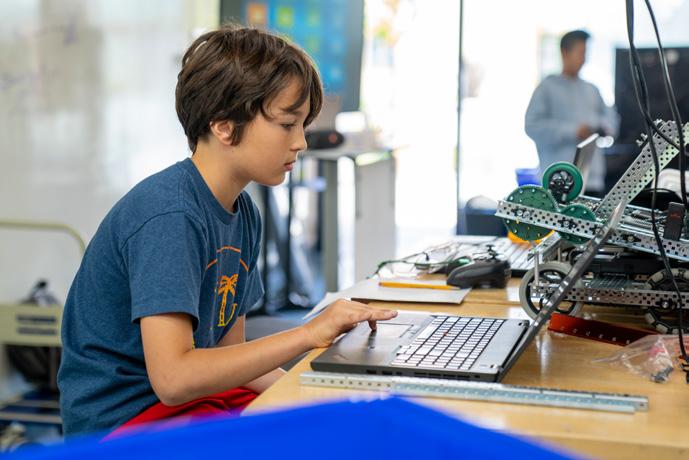
The opening of the DeGeorge Family Innovation & Arts Center sparked a new era for Windward’s STEAM programs. From dynamic performances and immersive galleries to state-of-theart maker resources, students continue to push the boundaries of what’s possible—supported by the faculty expertise and purpose-built spaces that bring their ideas to life (page 30).
FROM THE HEAD OF SCHOOL
A Letter from Sarah Beck
All in the Family Sharing Our Stories — Tales at the Table
Leading with Language — Windward’s Learning and Belonging Statement
Community At Its Core
VISUAL & MEDIA ARTS
A Campus Composition — Windward’s Art Gallery A Wider Frame
Connected by Craft — Navigating Education in the Age of AI PERFORMING ARTS
The Talk of the “Town” — Opening the Allison & Bennett Rosenthal Theater with “Urinetown” A Dazzling Debut — Evening of Dance Setting the Stage — U.S.
STUDENT SPOTLIGHTS
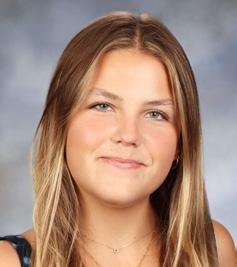
Sydney Litt ‘26
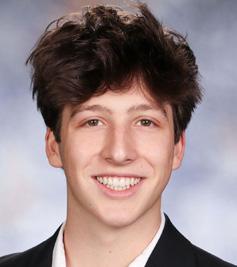
Grant Ruttenberg ’26
INNOVATION CAMPAIGN
Year One: The DeGeorge Family Innovation & Arts Center
Innovation Campaign Donor Spotlight
Innovation Campaign Donor Roll
WINDWARD NETWORK
Summer 2026 Internship Preview
Entering the “Real” World: Windward Network Profiles
ALUMNI
Alumni Legacy: Aerin Glaser ‘23
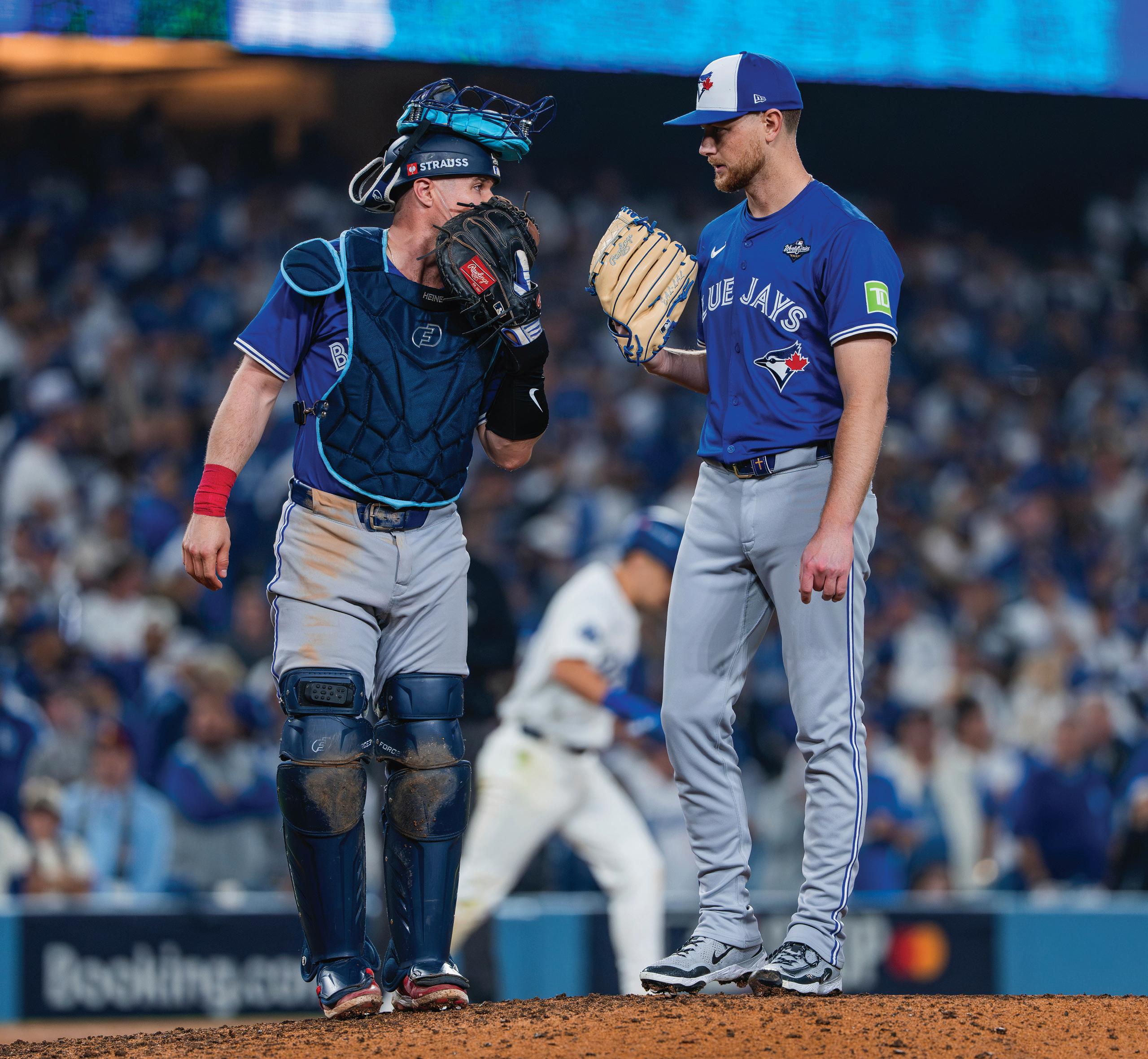
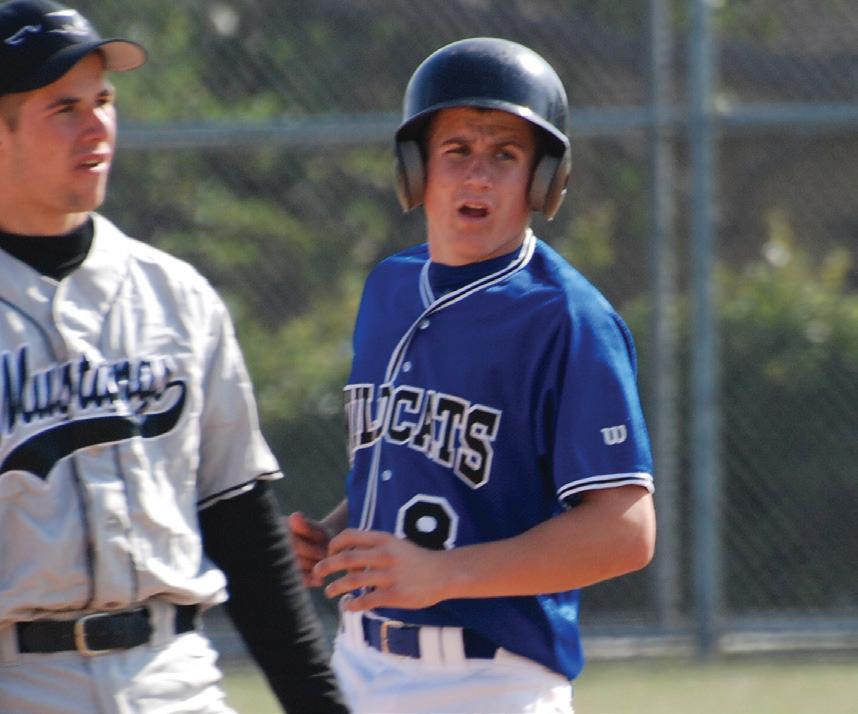
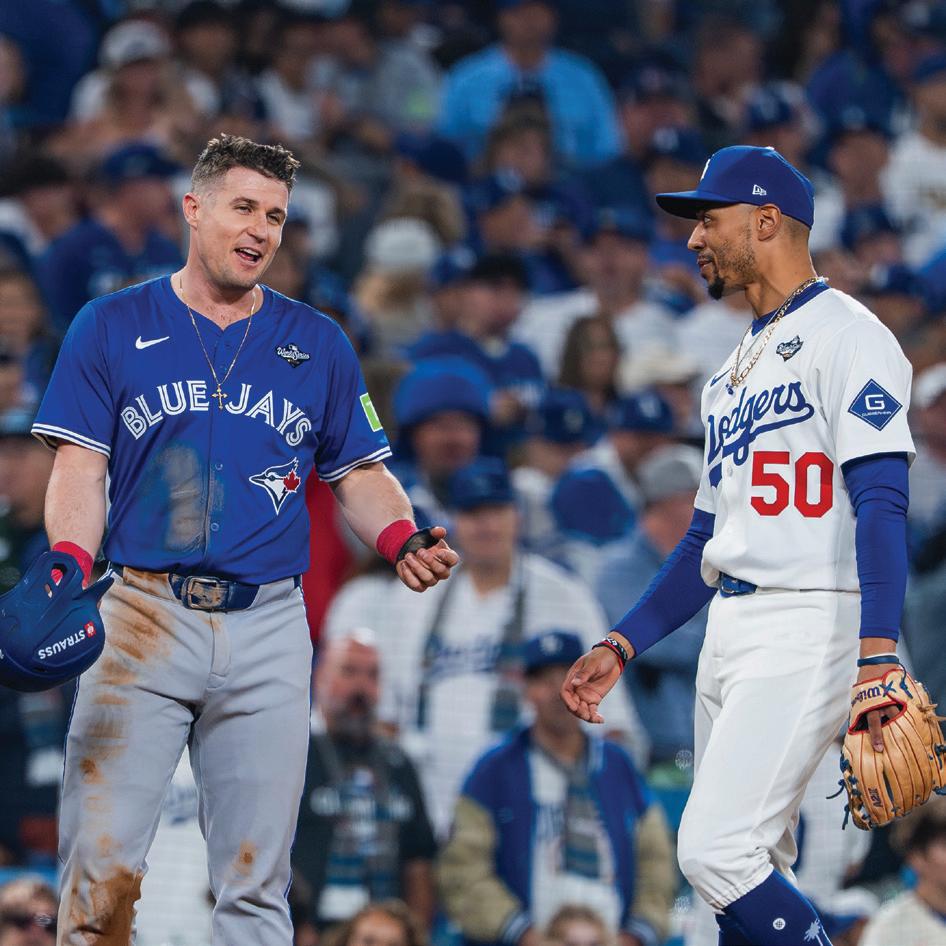
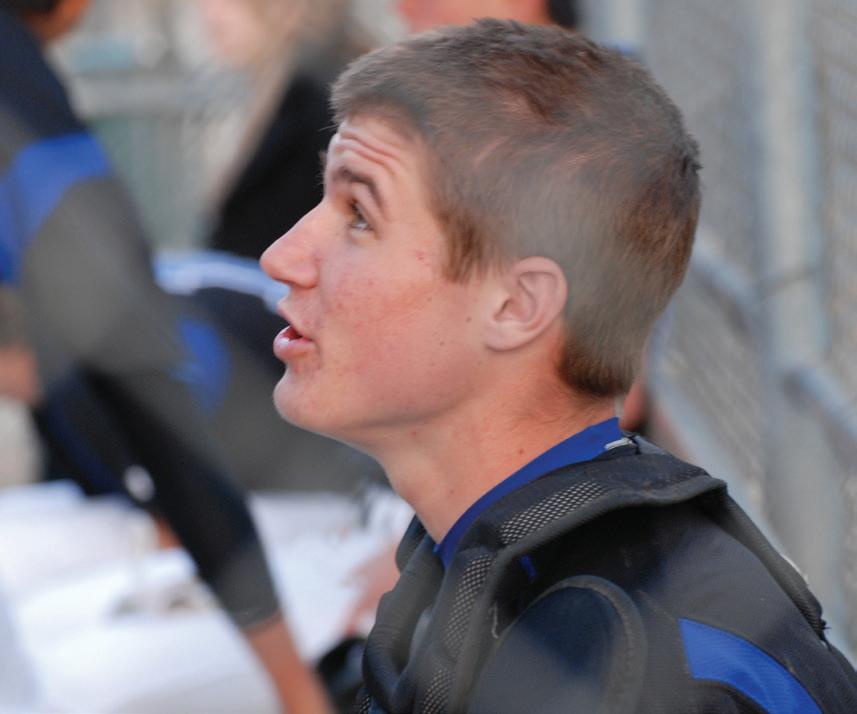
Alumni Spotlight: Tyler Heineman ’09
Alumni Spotlight: Urinetown Restrospective
ADVANCEMENT OFFICE CONTRIBUTIONS
Dawn Barrett
Associate Head of School for Advancement, Finance, and Operations
MaiChi Do
Director of Data Management and Research Analyst
Jeff Gilder ’08
Director of Alumni Development and Engagement; Associate Director of Admissions
Ashley Goodman
Director of Service Learning and Associate Director of Admissions
Molly Hudson
Senior Communications Manager
Jeff Lake
Director of Communications and Public Relations
Lindsay Knaub
Director of Development and Engagement
Jamey McElvain-Whitman
Graphic Designer; Brand Strategist
Robin Pickett
Director of Windward Network; Associate Director of Admissions
Jacqueline Varney Director of Development and Major Gifts
La Donna Wertlieb Director of Development & Donor Services
Photography
Akiko Nimura
Brandon Kirk Photography
Brian Gove Photography
Corey Marquetti
Eric Hamilton Photography
Molly Hudson
Randi Roberts Photography
Regina Hoffman
Ultimate Exposures
Design
Akiko Nimura
Multimedia Specialist
A LETTER FROM Sarah Beck
Of the many joys I have experienced in my first year as Windward’s Head of School, the opportunity to see this community through fresh eyes has been among the most meaningful. These opening months have offered me something unexpected and deeply energizing: the permission to be curious. Around every corner and in every classroom, I have encountered new ideas, thoughtful questions, and creative risks. With each discovery comes a natural follow-up: Where might this lead? How far can we take it? What else is possible?
In every instance, it became clear that this spirit of curiosity is not limited to student projects or classroom moments. It also shapes how we reflect on our identity as a community.
That same spirit guided our work in developing the School’s new Learning and Belonging Statement (page 14). As a community, we engaged in reflection about who we are and who we hope to be for one another. The process required listening carefully, asking honest questions, and considering how our values are lived each day. Curiosity, in this case, meant looking at our own practices with clarity and care. It meant recognizing that growth is ongoing and that belonging must be continually nurtured if it is to remain meaningful.
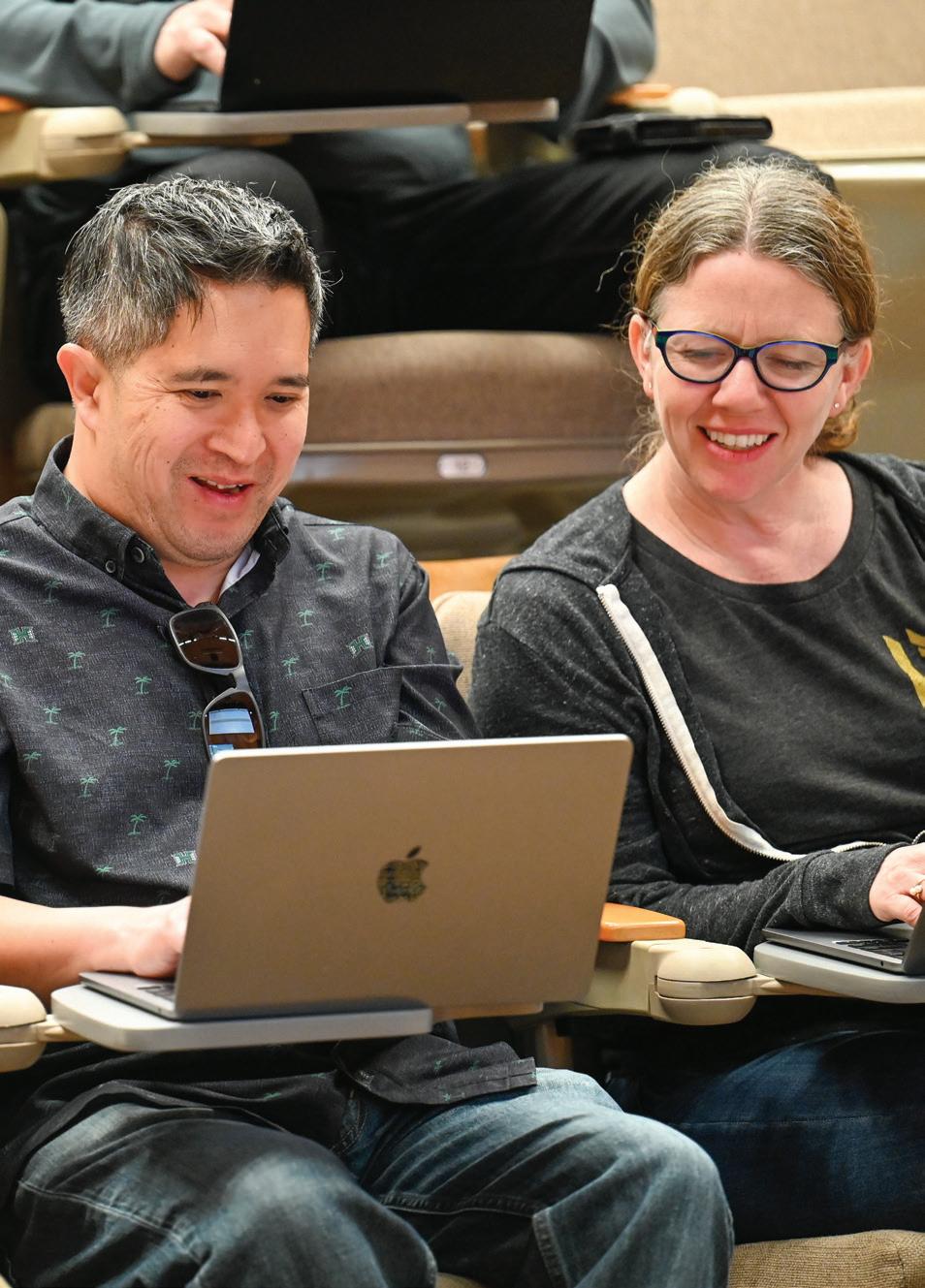
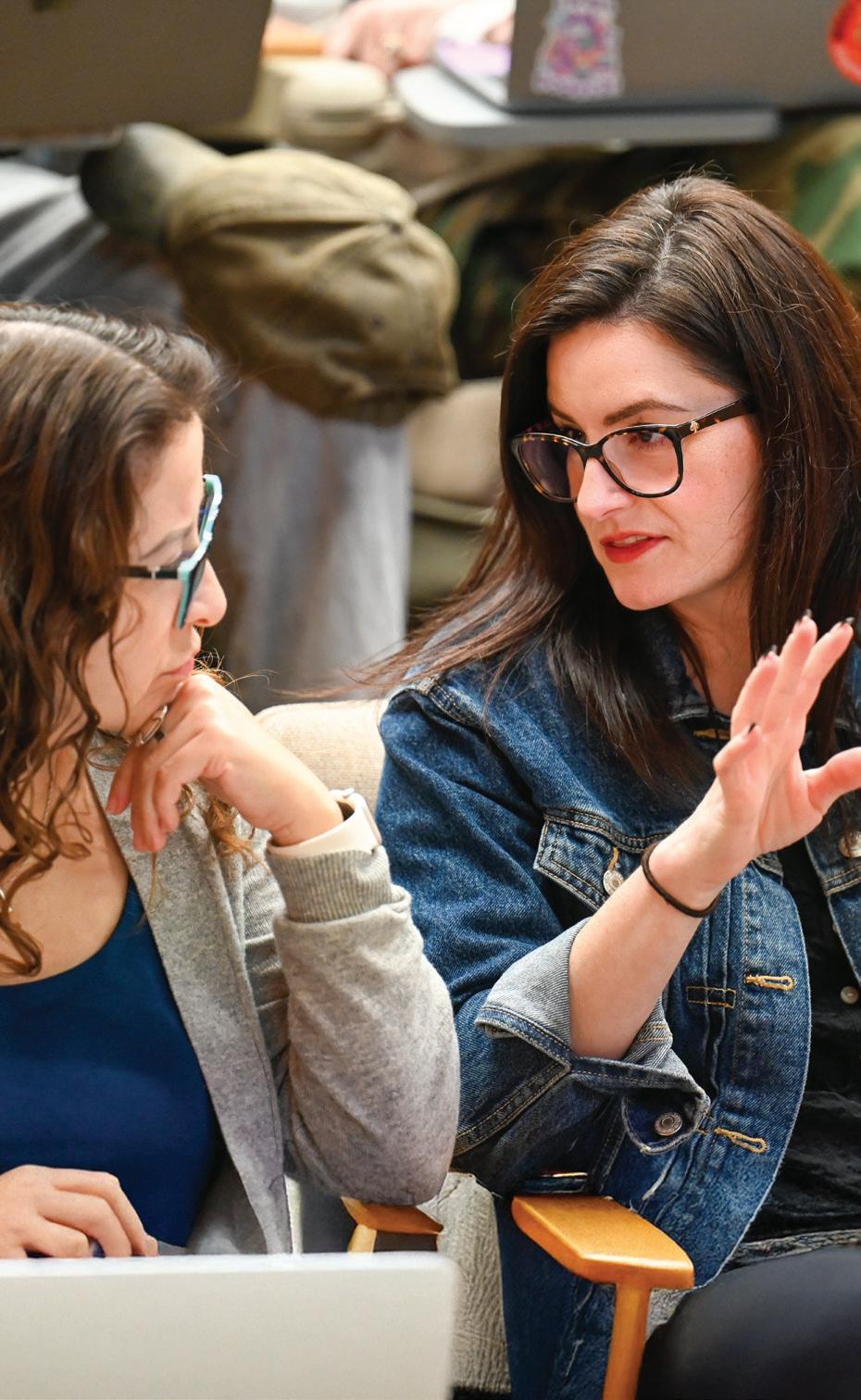
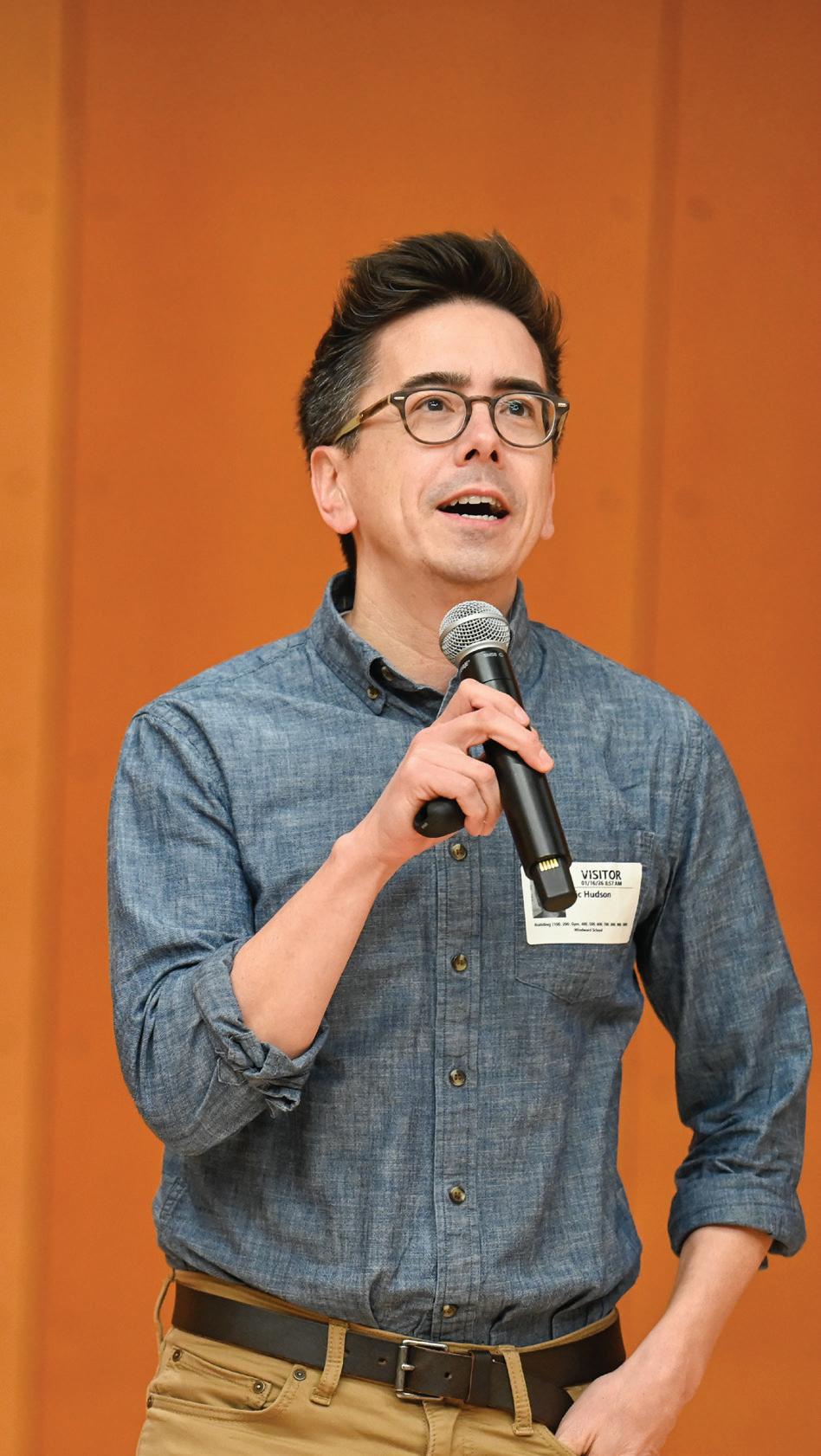
We saw that same spirit of inquiry when we welcomed Eric Hudson, a nationally recognized educator, to explore with us what teaching and learning looks like in the age of artificial intelligence (page 20). Faculty from Windward and neighboring schools gathered not to seek quick answers, but to engage in thoughtful dialogue. What does deep learning look like in a rapidly evolving world? How do we ensure that emerging technologies strengthen critical thinking and creativity? Curiosity in that setting was collaborative and reflective, grounded in a shared commitment to doing what is best for students.
The LA River Project (page 23) offers another example of where curiosity can lead. What began as an idea grew into an ambitious, yearslong interdisciplinary experience that brought together environmental research, artistic expression, and community engagement. Students followed their questions beyond the classroom, allowing investigation and imagination to shape the work. The result was not only a compelling final product, but a process that required sustained collaboration and shared purpose.
And of course, curiosity has thrived within the walls of the DeGeorge Family Innovation & Arts Center, now fully woven into the daily life of campus. Within its galleries, studios, and performance venues, students are designing, engineering, composing, fabricating, exhibiting, and performing with growing confidence. We have already experienced remarkable gallery shows and stunning theater and dance performances, each reflecting both technical skill and creative exploration. What continues to inspire me most is not simply what the building makes possible, but how it invites experimentation. It encourages students to revise, to test ideas, and to approach challenges with imagination.
Across these many moments, I see a consistent thread. Curiosity is not confined to a single classroom or building. It shapes the questions we ask about belonging, the conversations we have about the future of learning, and the projects our students bring to life. It reminds us that education is not static. It is dynamic, relational, and continually unfolding.
As we move into the final months of the school year, I remain grateful for the ways this community models thoughtful inquiry and shared purpose. When we allow ourselves the freedom to ask questions, to listen carefully, and to explore new possibilities together, we create a school where growth feels both intentional and inspired.
It is a privilege to witness that spirit each day.
Sarah Beck HEAD OF SCHOOL
Community A
GATHERING
THE INSTALLATION OF WINDWARD’S THIRD HEAD OF SCHOOL
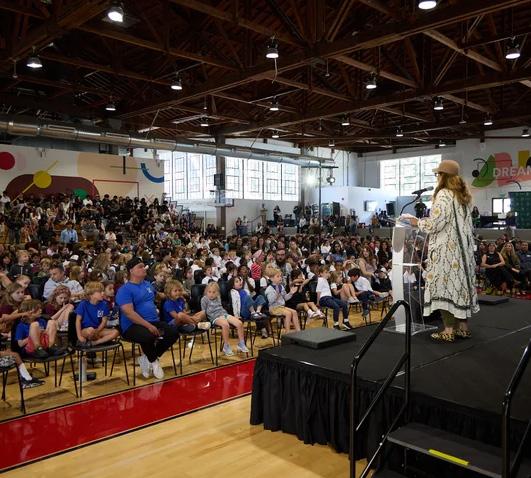
On October 14, the community came together to formally welcome Sarah Beck as Windward’s third Head of School.
Held in the DeGeorge Family Innovation & Arts Center, the Inaugural Ceremony and Community Gathering brought together Windwardians past and present, including students, parents and guardians, faculty and staff, trustees, and alumni, as well as members of Sarah’s family. The setting, the School’s state-of-the-art new space, served as a fitting reflection of the sense of excitement and possibility that had accompanied Sarah since joining the community in the Summer of 2025.
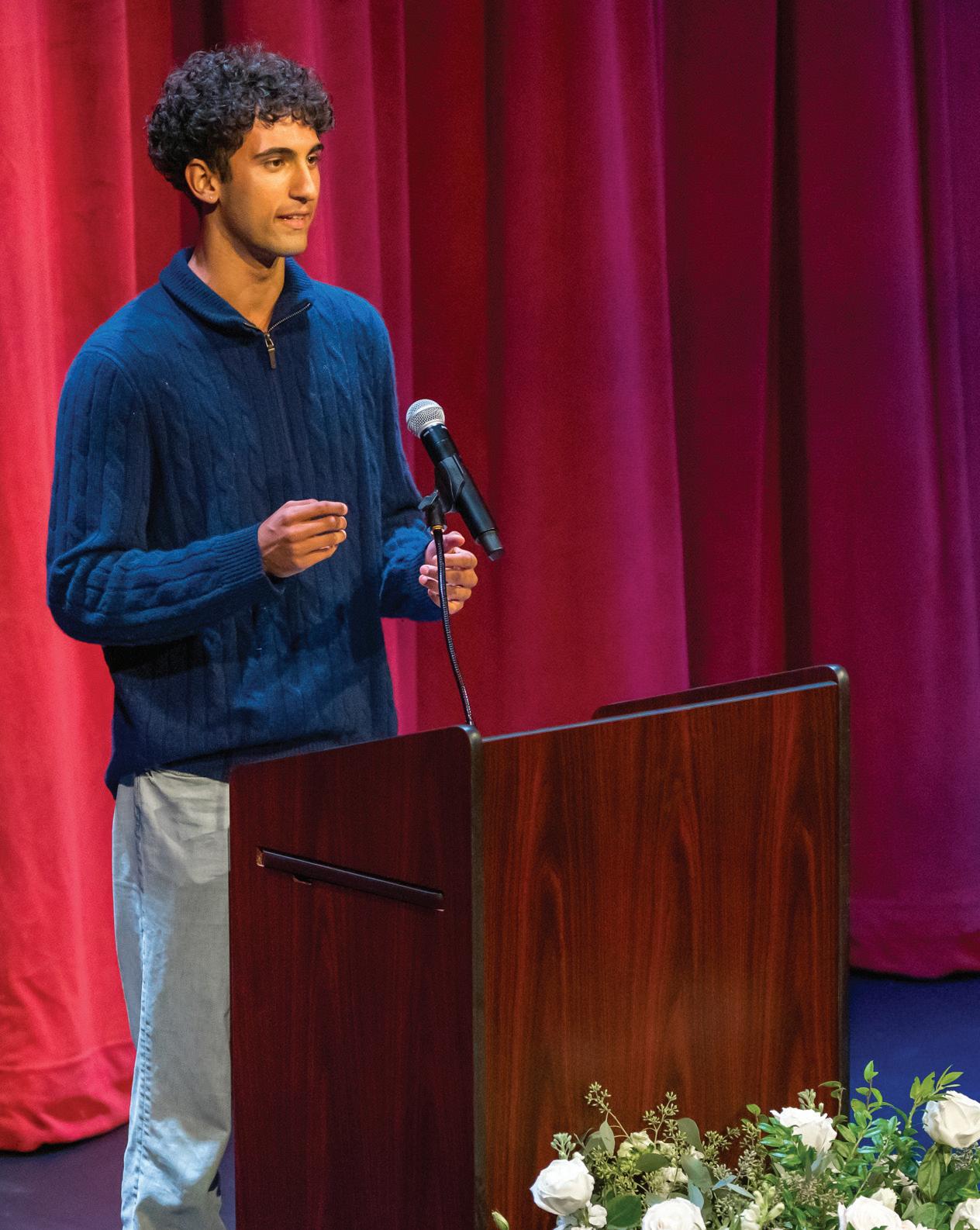
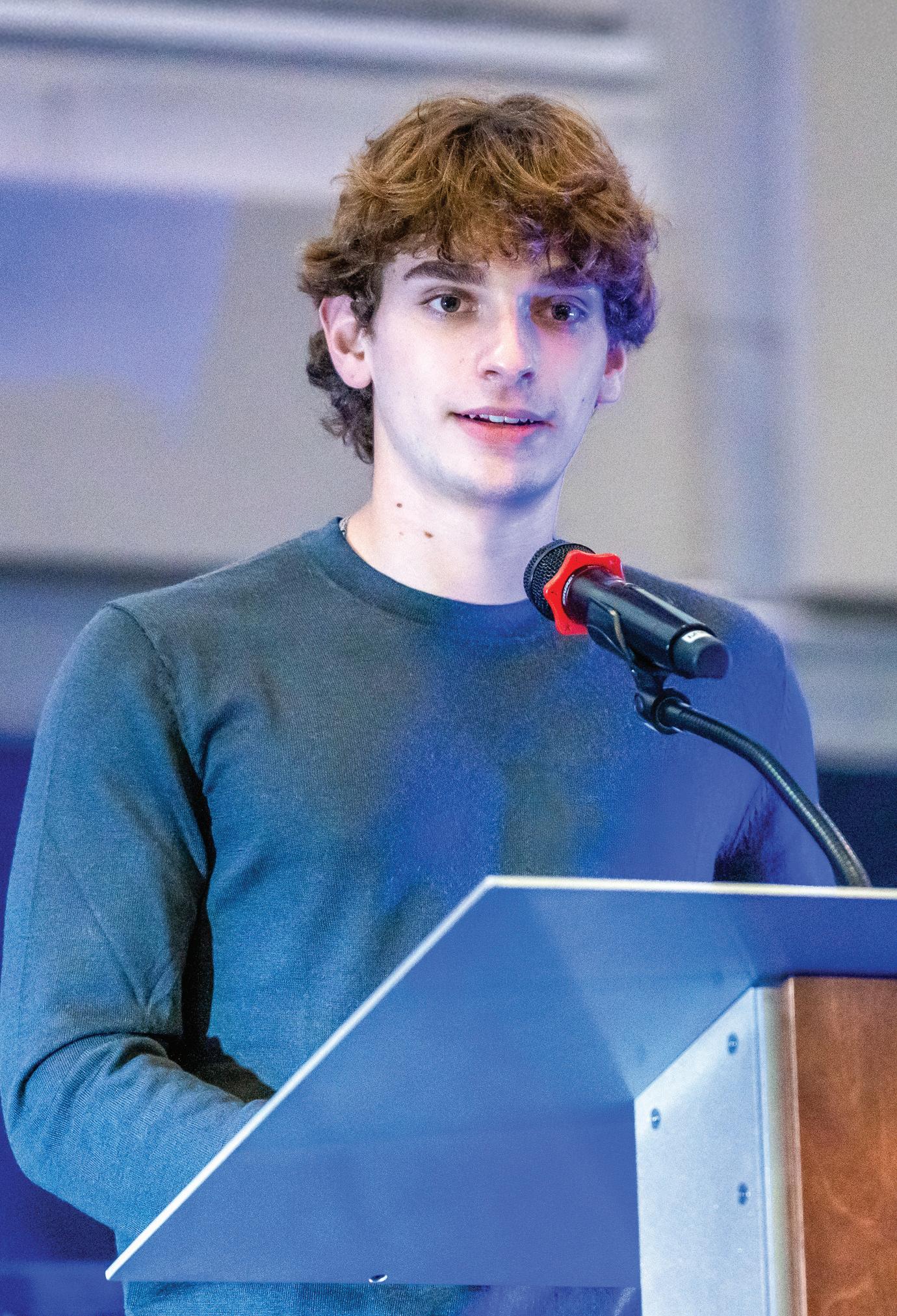
Despite forecasts of rain, the evening unfolded with the usual easy Southern California calm, lending the gathering a relaxed, communal feel. Taking place on the main stage of the new Allison & Bennett Rosenthal Theater, the program featured remarks from Chair of the Board of Trustees Michelle Alvarez Taub, Trustee and Head of School Search Committee Chair Chelsea Patterson, Senior Kyan Kumar, and Sarah herself. Each speaker reflected on Windward’s history and values while looking ahead to the work that continues: supporting students, strengthening relationships, and building on a foundation shaped over decades. The program also included musical performances by Seniors Charlie Cohn and Kaleo Knight, bringing a distinctly student voice to the evening.
In her address, Sarah spoke about her love of stories and the many small moments that have shaped her first months at Windward. From early conversations with Seniors to time spent in classrooms and impromptu exchanges on the Bridge, she reflected on how a school’s story is told not only on stages like this one, but in everyday interactions.
She also turned her focus outward, speaking to the responsibility of sustaining a school where students are both challenged and deeply known, where excellence and inclusion are not in tension, and where community requires active care. The future of Windward, she suggested, will be shaped not by a single moment, but by the steady, collective work of students, faculty, families, and alumni.
Following the ceremony, guests gathered on the Leichtman-Levine Family Foundation Bridge for refreshments and conversation. In true Windward fashion, the evening reflected the very ideas Sarah had described: a community grounded in relationships, sustained by shared responsibility, and committed to shaping what comes next together.
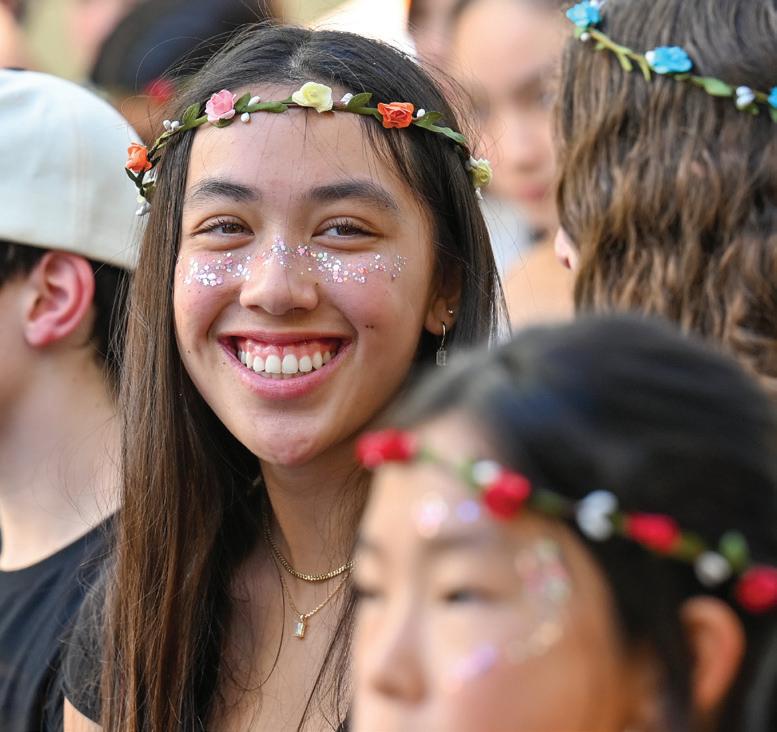
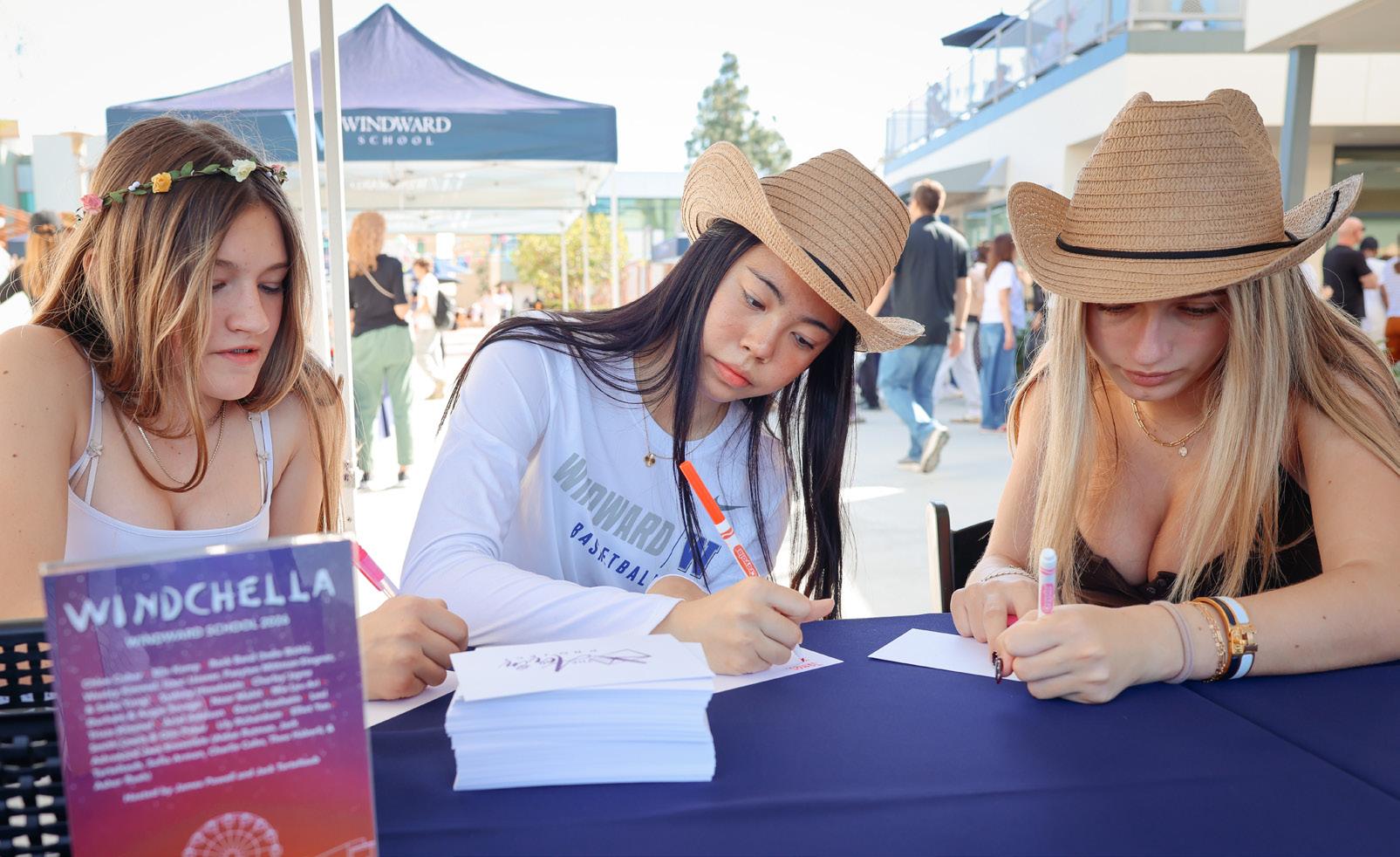
Of Windward’s many traditions, few sweep campus quite like Spirit Week. From January 26–30, school pride built steadily across the School, culminating in one of its most joyous and vibrant annual staples: Windchella.
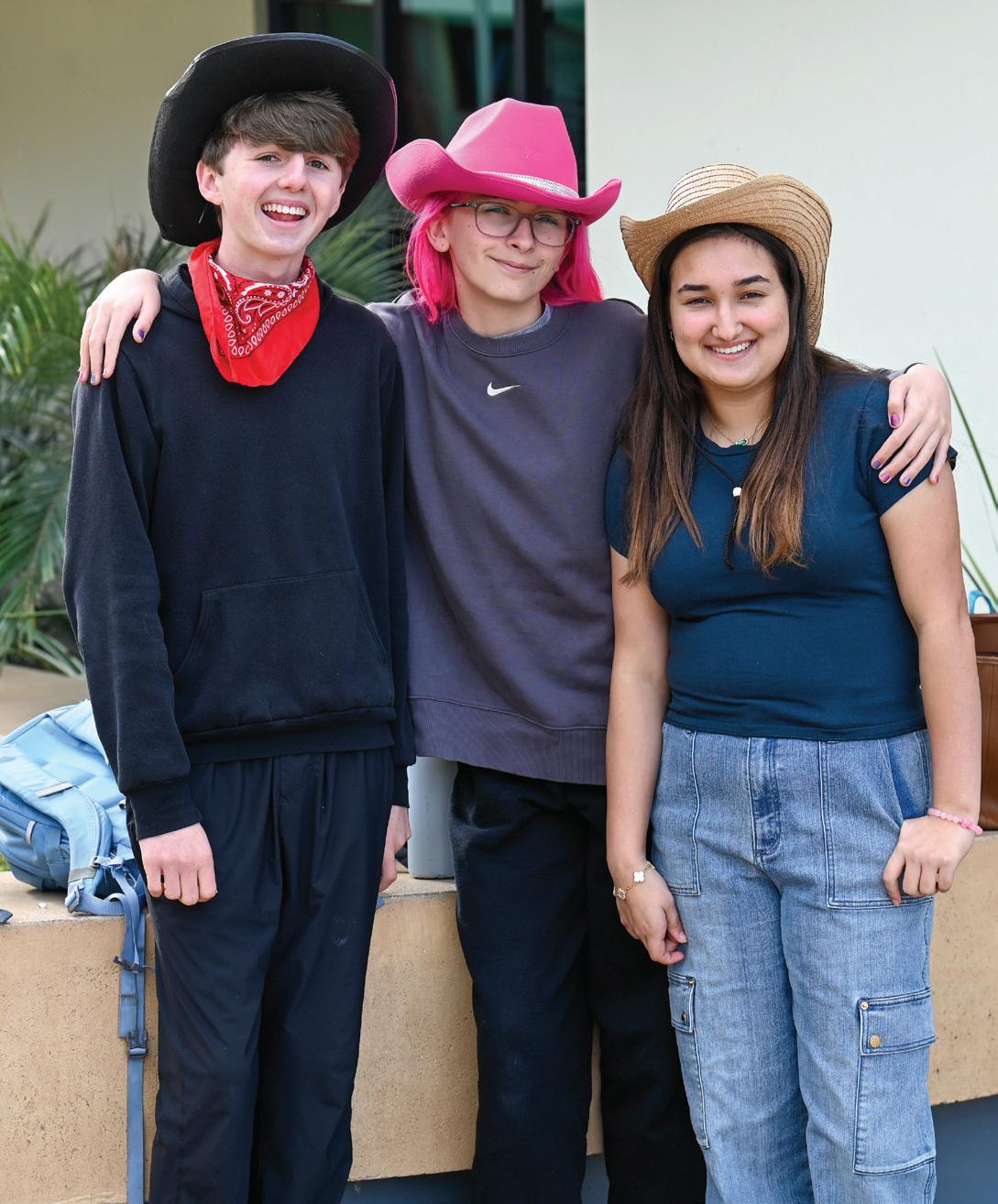
Featuring uniquely themed days, daily Winter Athletics contests, and CREATE Studio activities, Spirit Week offers a welcome opportunity for students, faculty, staff, and volunteers to celebrate Windward together. Across the week, students and faculty leaned fully into each day’s theme, earning Spirit Points and turning everyday spaces into something a little louder and more fun. From daily outfits to lunchtime gatherings to afterschool games, the energy grew with each passing day.
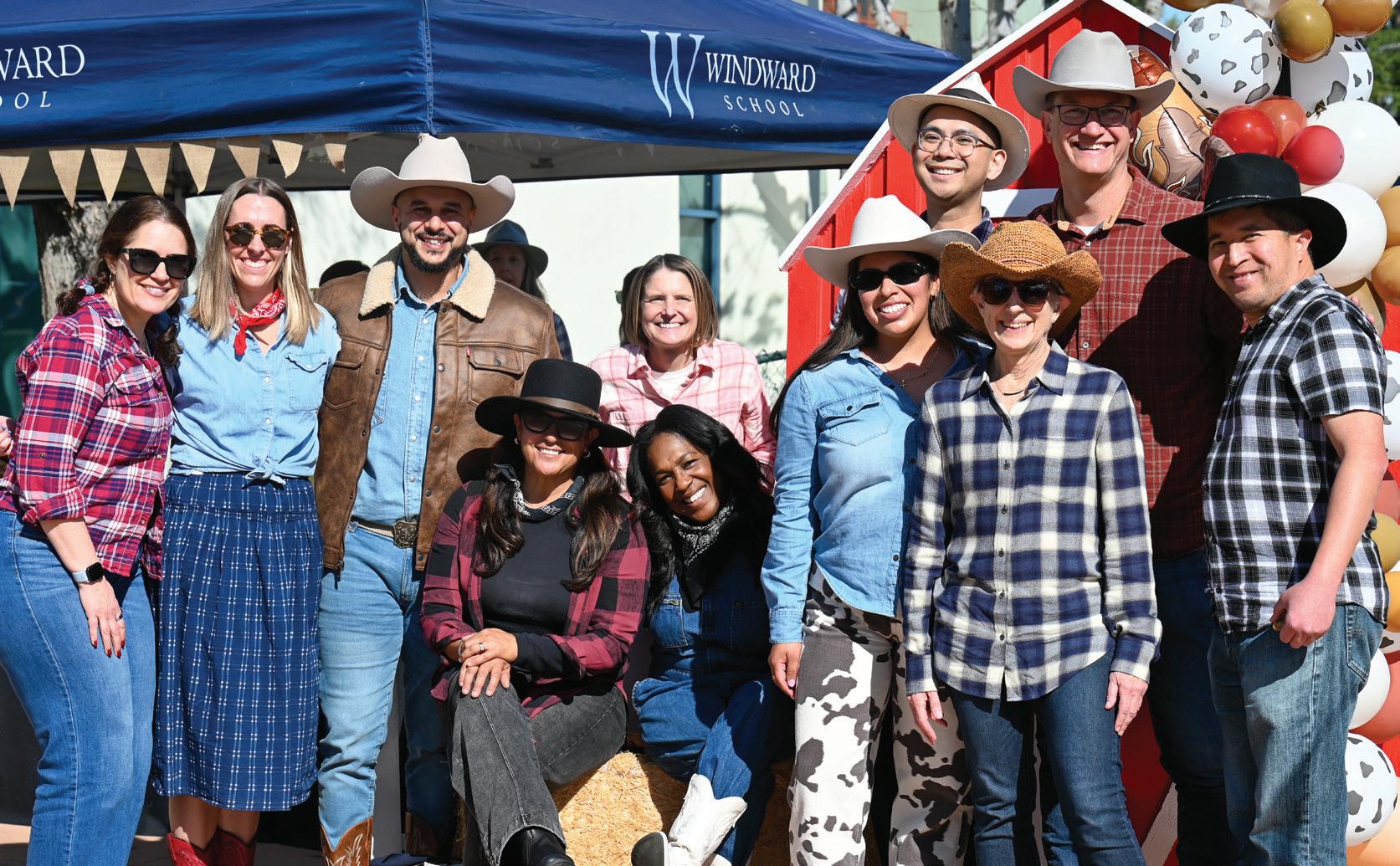
Monday kicked things off with Boots & BBQ Day, creating a giddyup good time right out of the gate. Students and faculty lassoed themselves some fun on the Bridge, while a petting zoo quickly became a favorite stop as everyone clamored to spend time with some four-legged celebrities—especially a group of very social goats that became instant campus stars.
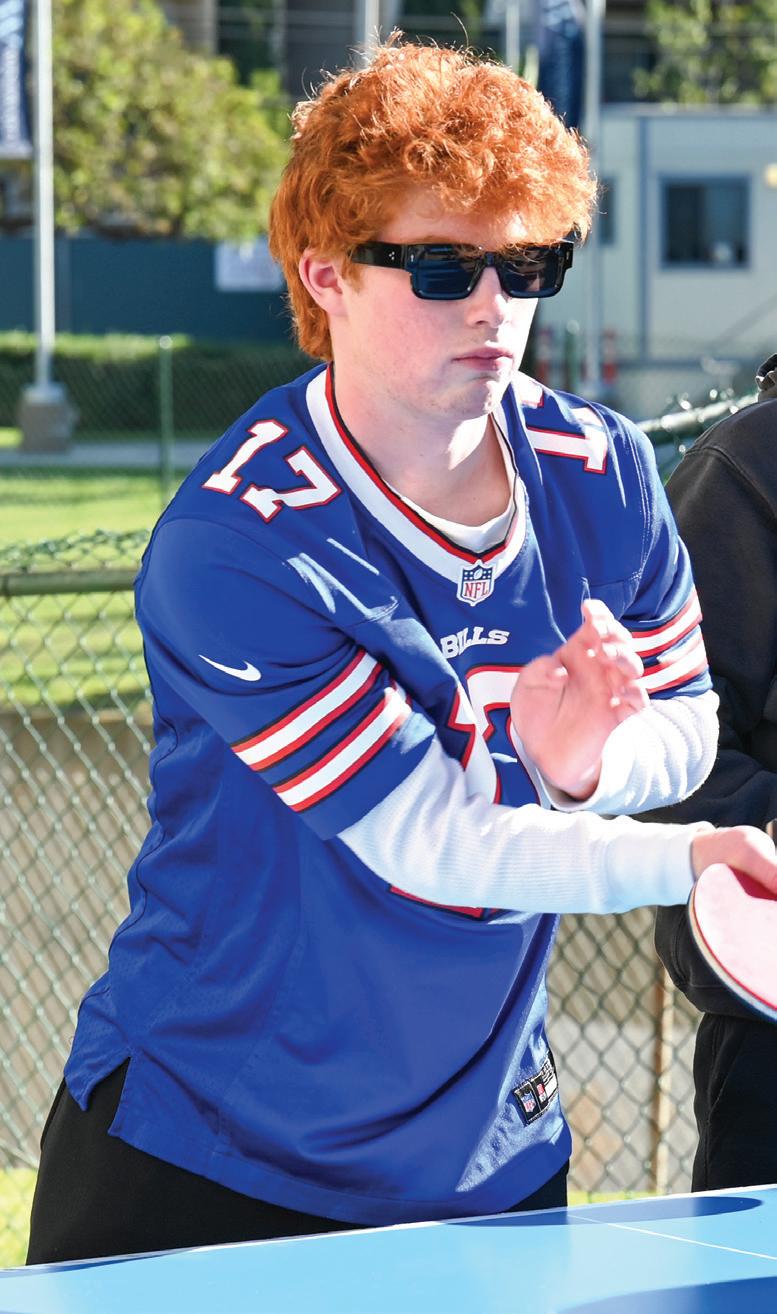
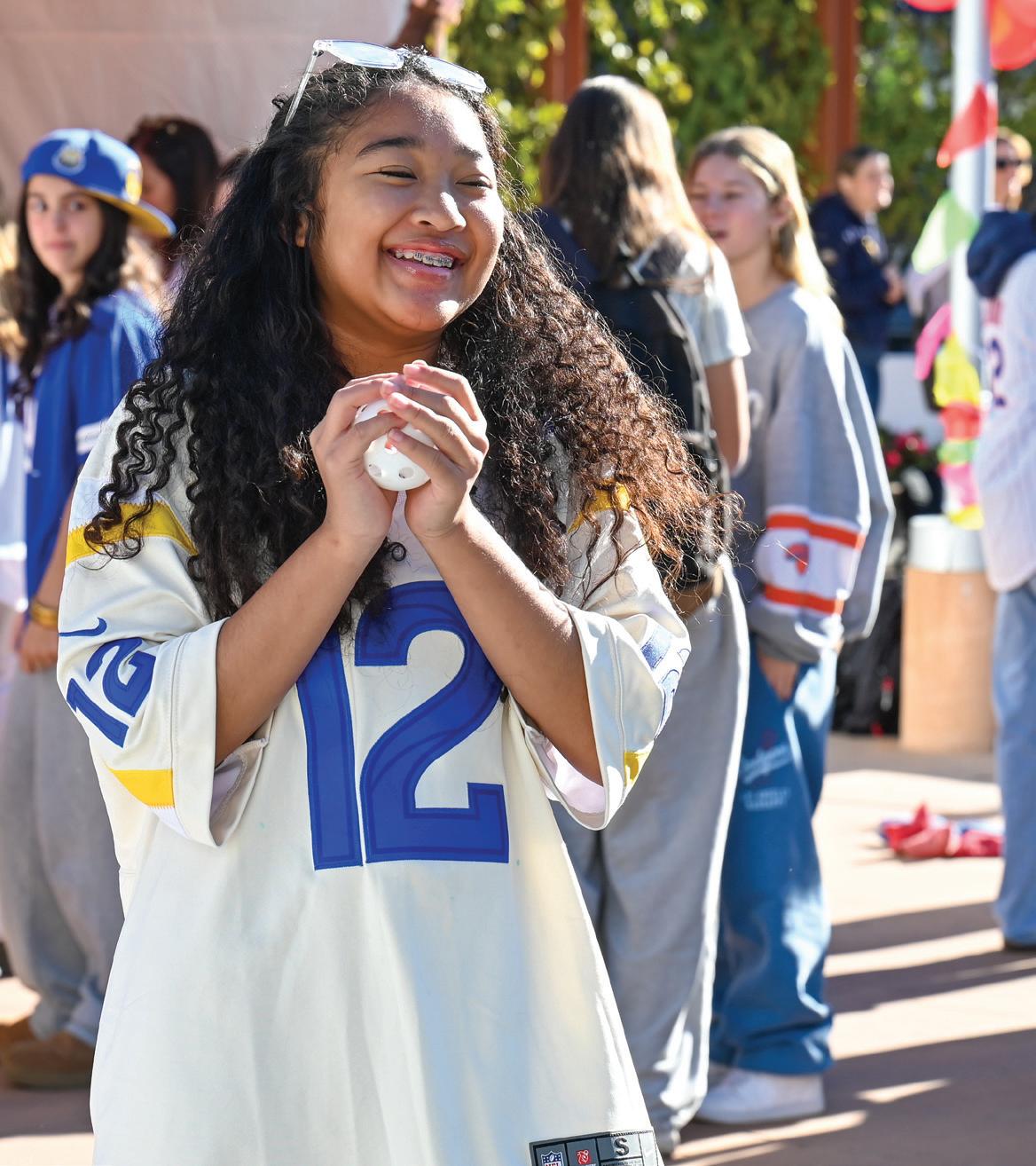
On Tuesday, Wildcat Game Day brought jerseys from every corner of the sports world onto campus, making for a colorful (and numerical) afternoon. The Bridge became fun central as students played, competed, and lingered among an expansive carnival setup filled with games and friendly challenges.
Wednesday delivered a change of season and scenery with Winter Wonderland. Layers, mittens, and cold-weather flair appeared across campus—even as the Southern California sun made its presence known. Donuts disappeared quickly, and an on-theme ice cream-making station gave the day a festive, wintry feel.
By Thursday, Spirit Points were firmly on the line. Class Colors Day saw students go monochrome in support of their grade, turning campus into a moving mosaic as classes competed for bragging rights. The Rock, Paper, Scissors Challenge lived up to
That WILDCAT
its competitive reputation, and the Windward Pep Rally was a massive hit. Highlights included an electric performance by the Windward Cheer Team, a nailbiter of a basketball game between students and faculty (won by the students), and what may have been the most highwire game of musical chairs to ever grace the Lewis Jackson Memorial Sports Center.
The week culminated with Decades Day and Windchella, a special celebration honoring Windward’s most formative visionaries, including school co-founders Shirley Windward and Carl Parsons and former Head of School Tom Gilder. Decked out in looks spanning generations, students gathered for a special extended break to host Windchella, a dynamic performance showcase created entirely by Windward’s talented performers. From gorgeous serenades to rollicking rock performances, it was the perfect capper to a spirit-filled week.
As always, Spirit Week wouldn’t be what it is without the people behind it. Thank you to the Events team, our parent and guardian volunteers, and student leaders—and to the entire Windward community for showing up, joining in, and making it a week to remember. We’re already looking forward to next year!
All in the FAMILY
GRANDPARENTS AND SPECIAL FRIENDS BRUNCH
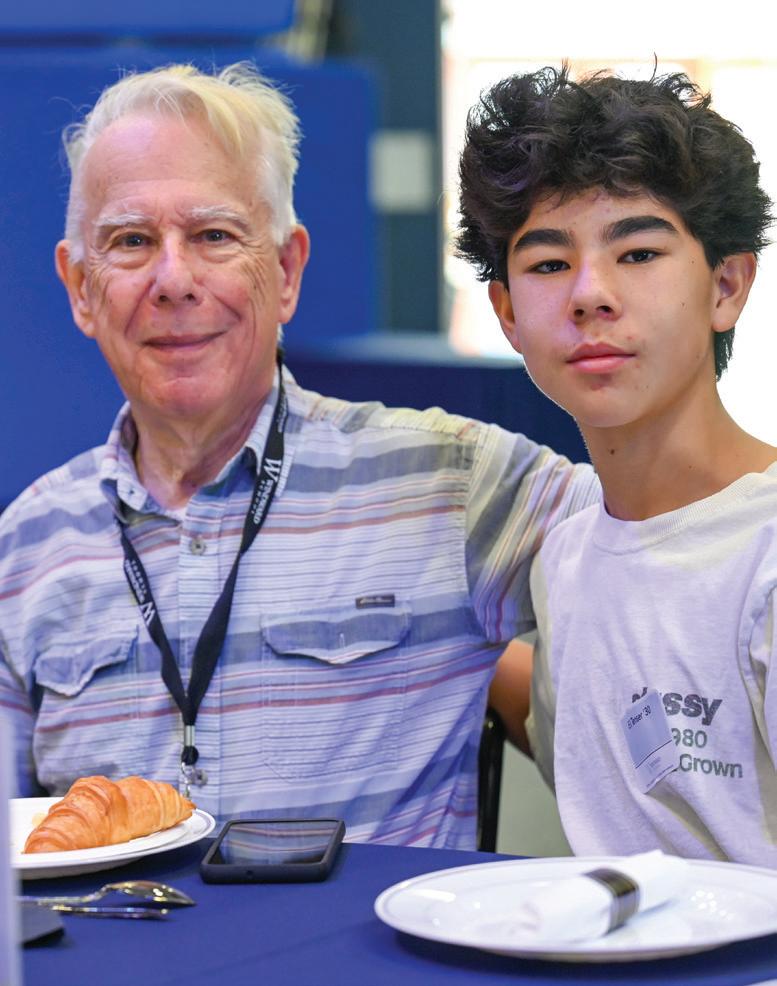
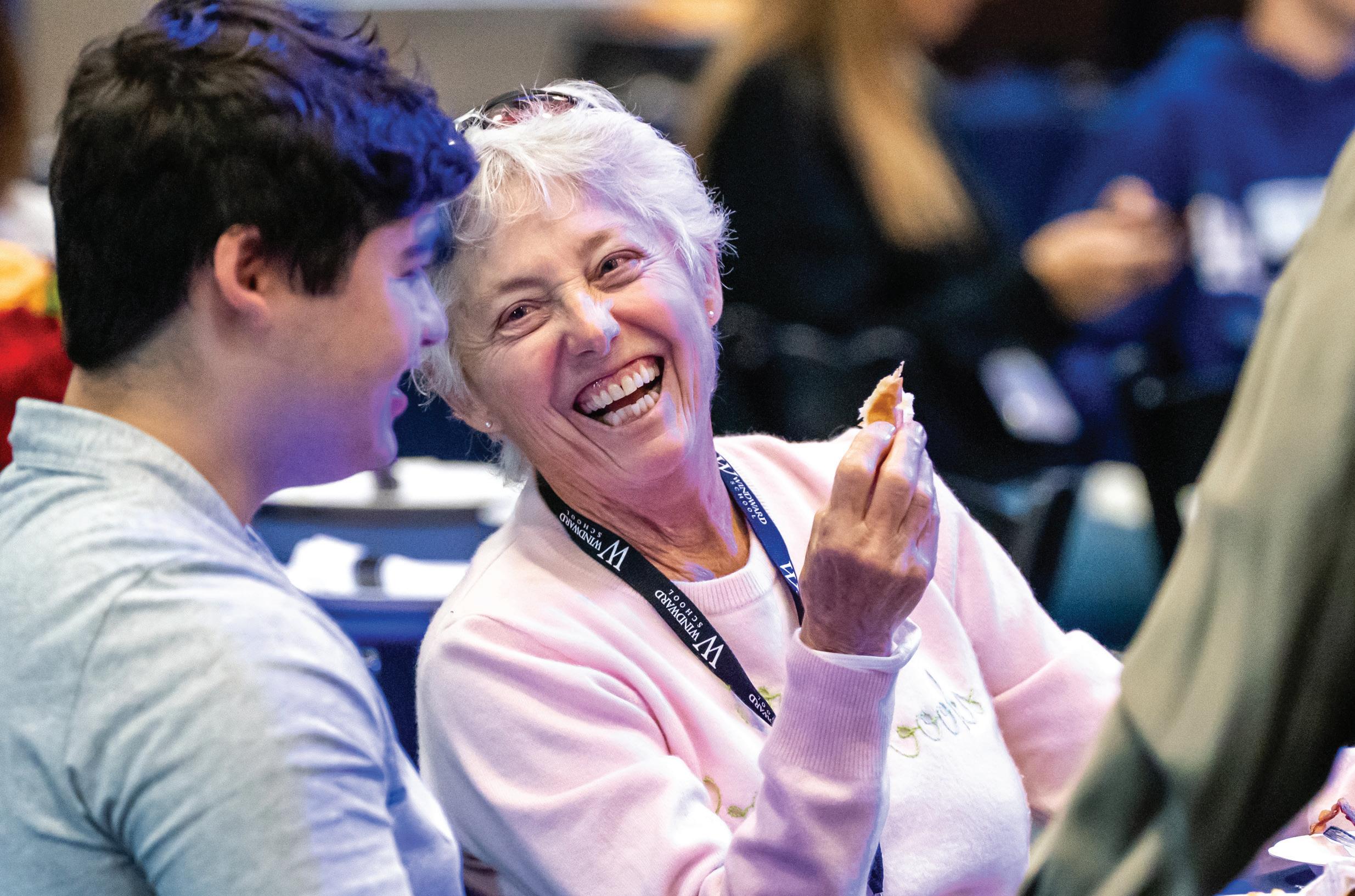
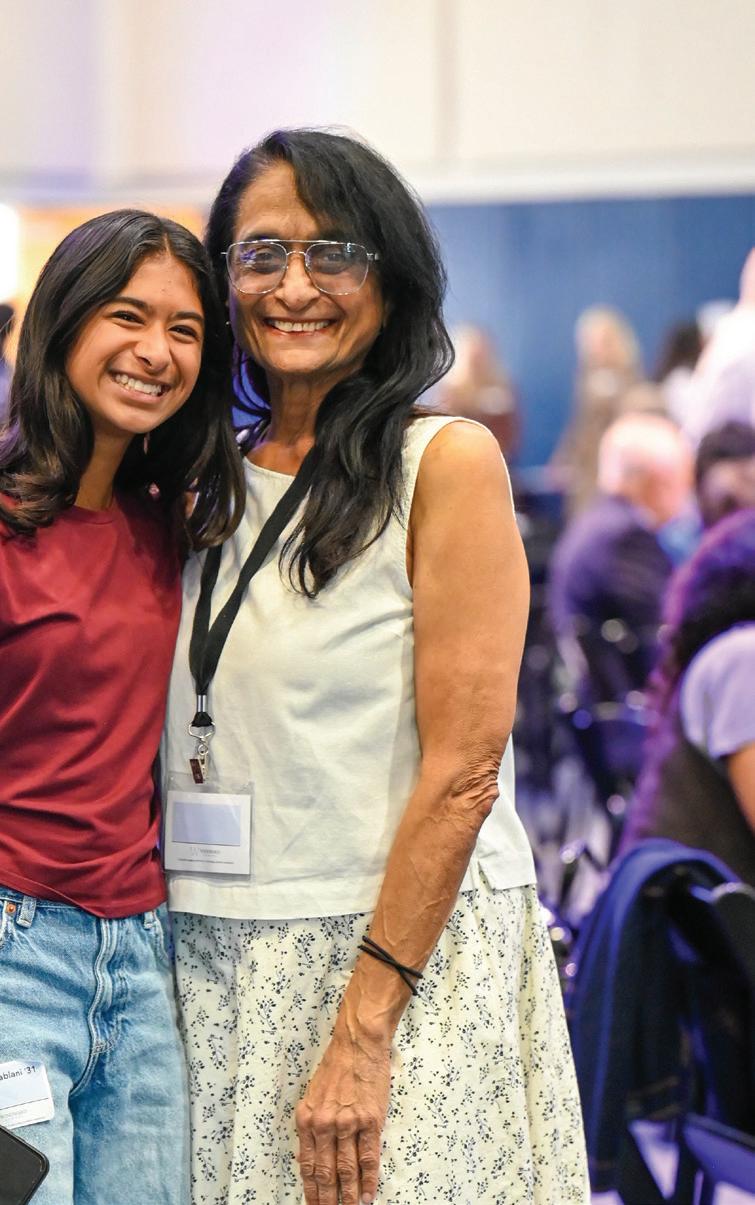
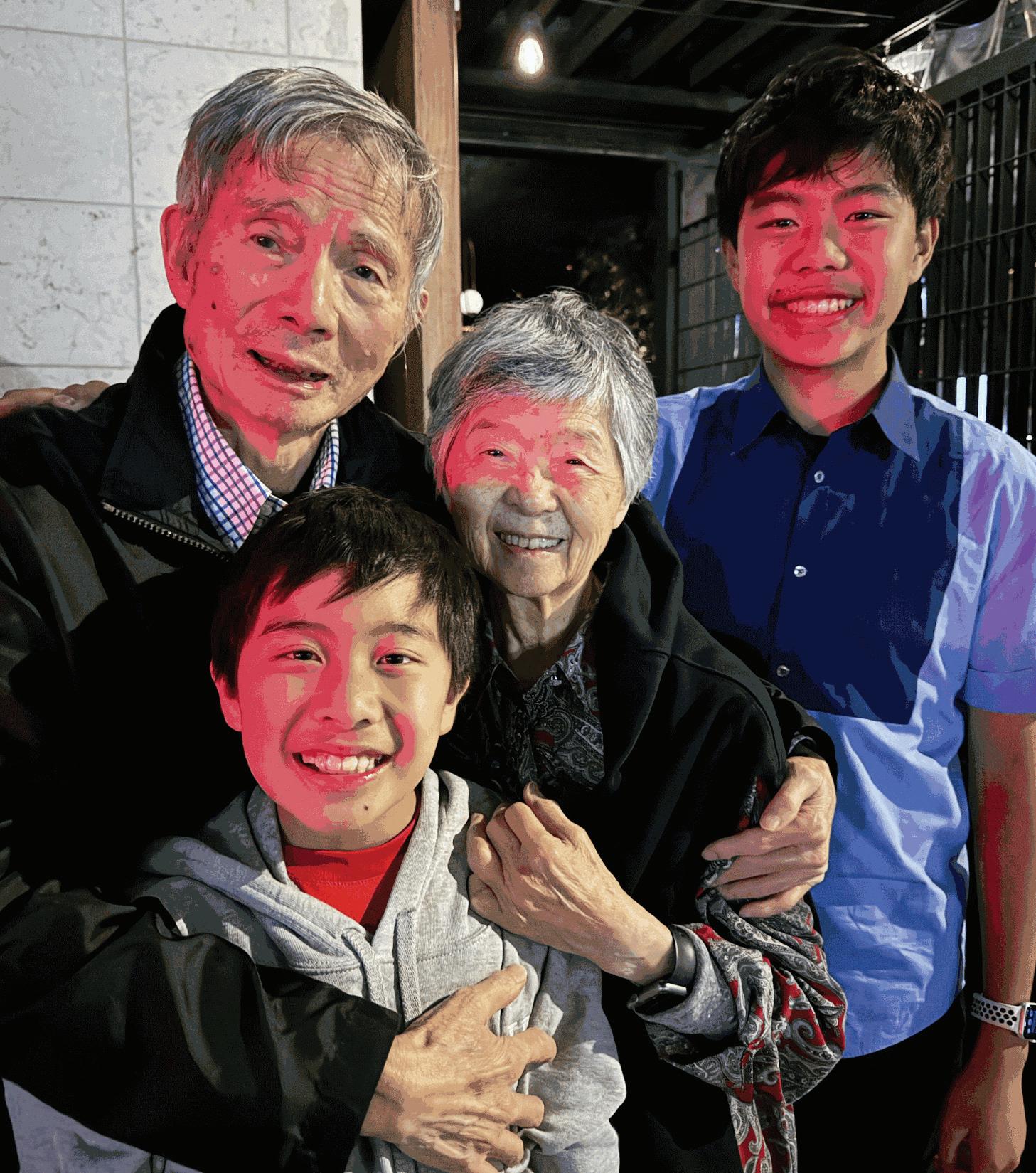
On November 8, Windward students took to campus with some very special guests in tow—their grandparents and special friends. A longstanding Windward tradition, the Grandparents and Special Friends Brunch allows students to welcome their most ardent supporters, gathering together to share both a meal and the larger Windward experience.
As students arrived with their important plus ones, twos, and even fours, they paused to greet classmates, make introductions, and find their way to the brunch tables. Conversation settled in quickly, the excited chatter punctuated by the clinking of busy silverware.
With brunch complete, Head of School Sarah Beck greeted those in attendance and reflected on the role grandparents and special friends play in the life of the School—not only as supporters of individual students, but as valued partners in the School’s larger community.
Student speakers Charlie Cohn ’26 and Lila Hernand ’26 then took the stage, offering reflections drawn from their own experiences at Windward. Their remarks touched on the rhythms of student life—moments of challenge, discovery, and growth—and the encouragement that helps students navigate each stage of the journey.
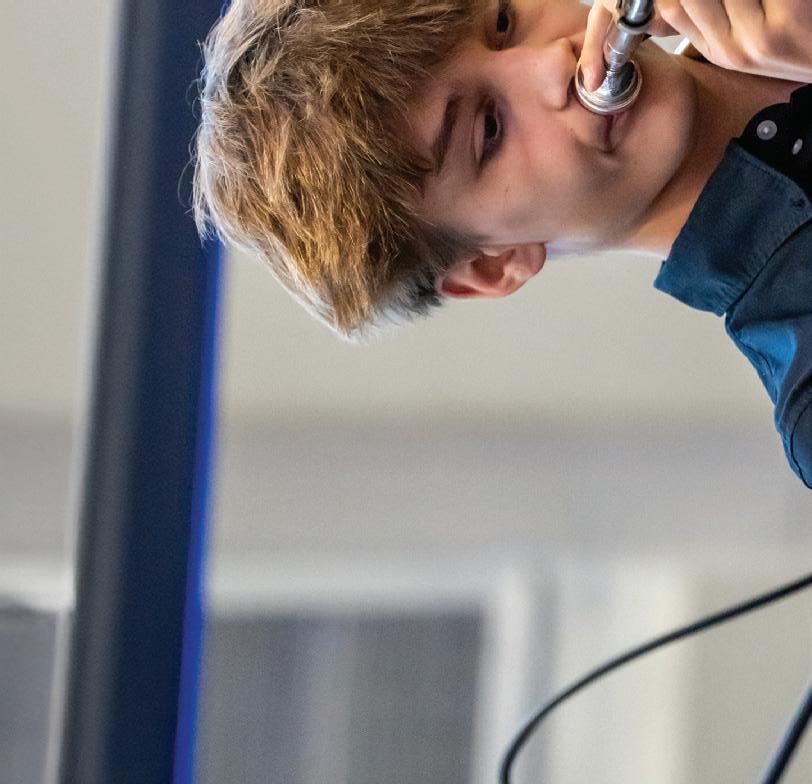
Music added to the morning, with performances by the Advanced Jazz Ensemble and The Chromatics.
Following the program, guests were invited to join optional campus tours alongside their grandchildren. Together, they moved through classrooms, walkways, and common spaces, exchanging stories along the way. As the brunch concluded, the campus remained animated with conversation, a reminder of the many ways the Windward community stays connected, on and off campus.
Sharing
TABLE our STORIES
WINDWARD’S TALES
AT
THE
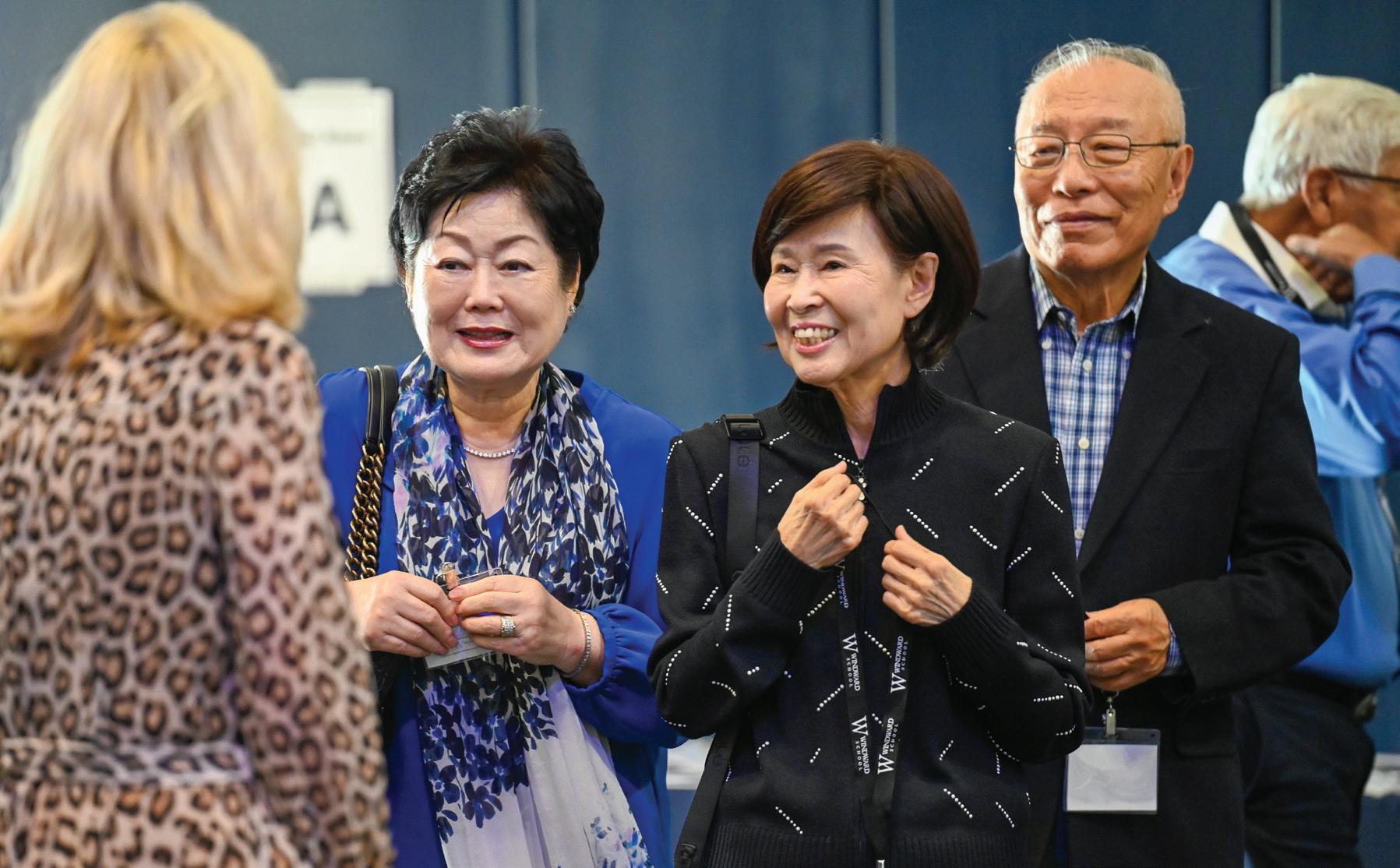
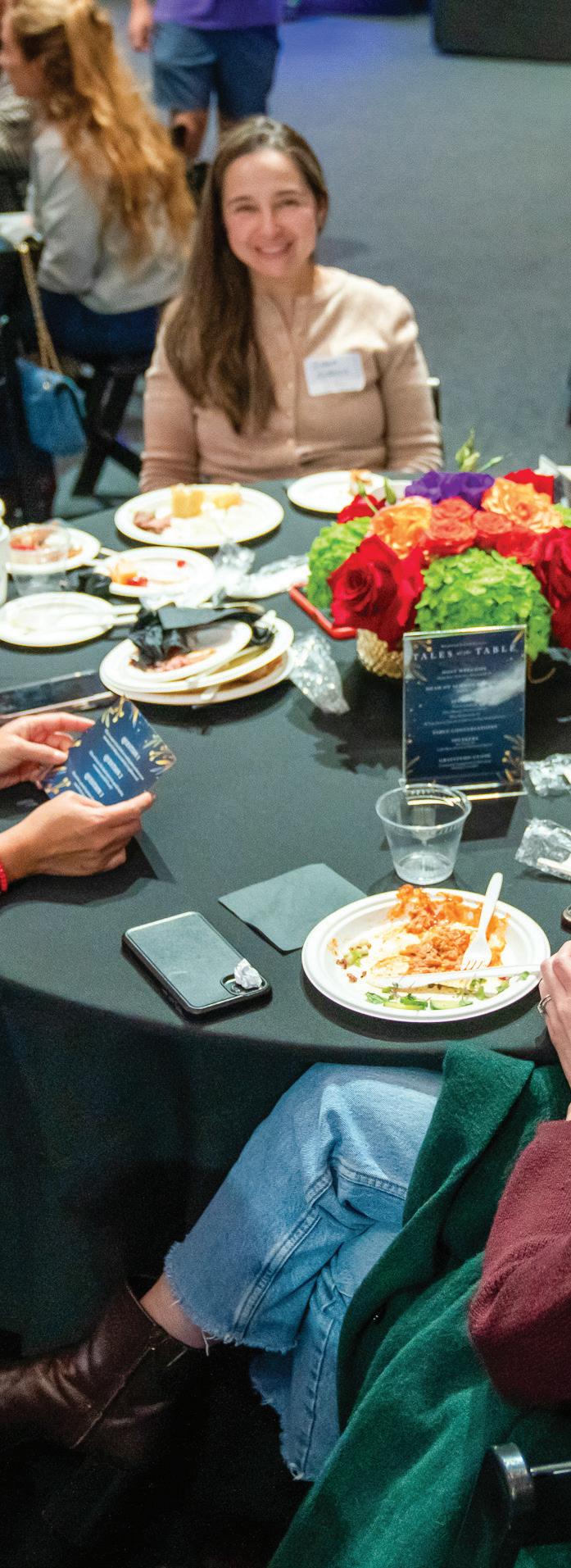
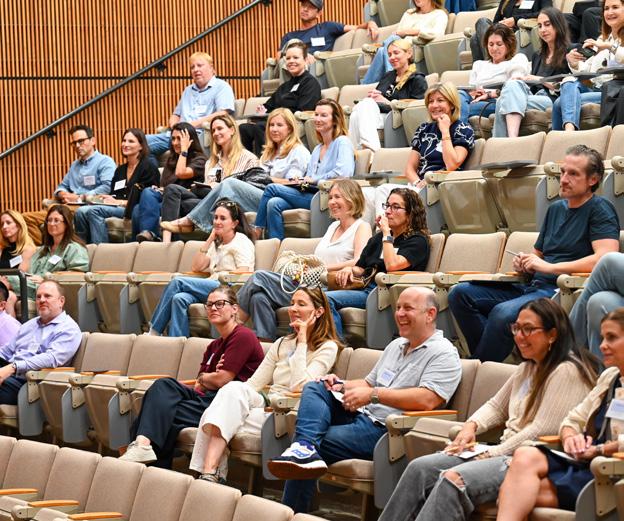
On November 10, the Windward community gathered for Tales at the Table, an annual evening that brings students, parents, faculty, and staff together around shared stories and conversation.
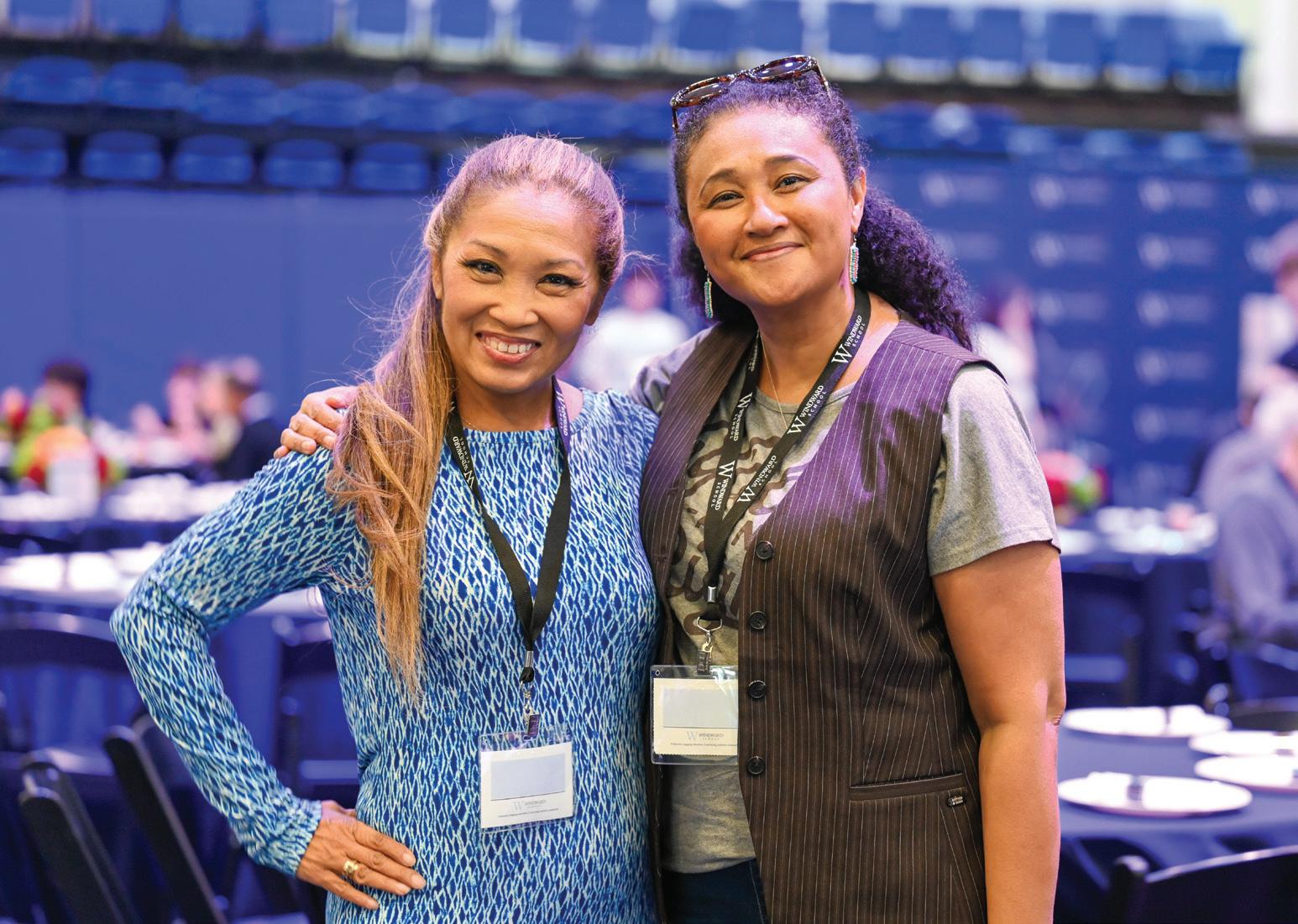
For the first time, the event was held in the Lewis Jackson Memorial Sports Center, newly transformed with long tables, warm lighting, and a shared meal prepared by the CulinArt team. The familiar space took on a different feel, shaped less by formality and more by proximity, with people seated side by side across roles and generations.
Student hosts Henry Kim ’30 and Saira Rahematulla ’28 opened the program, followed by remarks from Head of School Sarah Beck. From there, the evening unfolded through a range of voices reflecting the breadth of the Windward community: students Zaynah Ismail ’26, Miles Shimanovsky ’26, and Ava Torres ’29; Windward parent Dave Marrujo; and DJ Gay, Associate Director of Athletics and Boys Basketball Coach. The program concluded with remarks from Gabe Baez, Director of Information Systems, alongside the student hosts.
“The breadth of the speeches was really terrific—it felt like it hit on topics that almost everyone might be able to relate to in some way,” says Windward parent Faye Iosotaluno. “To hear stu-
dents, faculty and parents speak so articulately about their lived experiences was incredibly powerful.”
Between speakers, attention shifted back to the tables, where guests were invited into conversation with those around them. These personal moments gave the evening its rhythm, allowing stories to echo outward and take on new meaning through shared response.
“It was a powerful night of storytelling, and after all, our stories are what make us ‘us,’” says parent Beth Kemp. “Hearing each speaker’s story opened up space for empathy, humanity, understanding, and shared experiences.”
The evening resonated well beyond the room. Alum Matt Wapnick ’02 notes, “I thought this year’s speakers and their stories were very engaging. Windward’s current students, in particular, continue to blow me away. They are mature well beyond their years. It was also great to hear Gabe speak—I believe his first year at Windward coincided with my first year as a student, so that was a nice blast from the past.”
For many parents, hearing from students, faculty, coaches, and staff offered a fuller, more textured view of the school community. As parent Erika Savage shares, “Hearing the experiences of students, parents, coaches and staff gave me a ‘way in’ to really get to know Windward. Everyone in the room was willing to move outside their comfort zone and it felt like a safe space.”
As the evening wound down, conversations carried on around the room. At its heart, Tales at the Table affirms a simple but powerful idea: that community is built through partnership and presence. Year after year, the event creates space for connection—across differences, across roles, and across experience.
with LANGUAGE Leading
WINDWARD’S LEARNING AND BELONGING STATEMENT
Across the educational landscape, institutional language plays a powerful role in shaping how schools understand themselves and how people experience them each day. Websites and admissions materials are filled with words like belonging, inclusion, and well-being—terms repeated often and intended to signal deeply held values. Over time, that repetition can soften meaning. Language intended to guide practice can instead begin to sound aspirational, offering reassurance without always providing direction.
Since its founding in 1971, Windward’s guiding ethos has shaped how students learn, how adults teach, and how the community understands belonging. As the School has grown and evolved, that commitment has remained constant, even as the language used to express it has required renewed attention. The question was never whether belonging mattered, but whether the words used to describe it continued to reflect daily life with clarity and purpose.
That belief was reflected in Windward’s 2023 Strategic Plan, which named Belonging as a core value shaped through extensive community reflection. The plan affirmed something long understood at the School: students learn best when they feel known, supported, and respected for who they are. As that commitment continued to shape daily life on campus, the School also recognized the importance of returning to the language used to describe it.
Rather than adding a new initiative or revising language in isolation, the School chose to slow down and look more closely. In 2025, Windward began a review of its existing Belonging Statement, not to replace what existed, but to examine whether the words still carried the clarity and nuance needed to support meaningful action across the community.
“We wanted to be thoughtful about the language we use to describe what matters most to us,” explains Head of School Sarah Beck. “Words can sound right without always helping people act. Our goal was to choose language that felt real, that could hold nuance, and that would actually guide how people show up for one another. That required slowing down, engaging many voices, and trusting the process.”
Under Sarah’s leadership, faculty and staff were invited early in the academic year to engage with the existing statement through an anonymous survey that considered language, intention, and alignment with Windward’s goals. That feedback became the foundation for a series of conversations throughout the Fall, creating space for listening, reflection, and shared inquiry. Rather than working toward predetermined conclusions, those conversations focused on how learning and belonging show up in daily school life. Faculty and staff reflected on academic challenge alongside support, intellectual safety, and the role of student agency in shaping connection. Throughout the process, there was a shared understanding that the language would need to hold complexity without flattening experience, offering clarity without oversimplifying the realities students and adults bring with them.
WINDWARD’S LEARNING AND BELONGING STATEMENT
“The process used to develop the Learning and Belonging Statement was both aligned with Windward’s historical emphasis on process and more transparent than anything I’ve been a part of in my seven-plus years at Windward,” says Garrett Tyau, Dean of Students, Prep Division. “The acknowledgment of the realistic potential for not feeling like one belongs was especially important, given its honesty and alignment with lived experience.”
As the work continued, a central idea came into sharper focus: Windward’s approach to belonging is rooted in learning itself. Belonging is not only social or emotional. It is academic. Students experience it when they are trusted to take intellectual risks, supported through challenge, and understood as capable of growth. With that understanding, the language increasingly reflected the inseparable relationship between learning and belonging. As drafts took shape, the statement was shared more widely for additional input. Students were introduced to the language during divisional meetings, while parents engaged with it through the Parent Guild. The Community Engagement and Belonging Committee and the Board of Trustees Executive Committee also reviewed the evolving draft, ensuring that multiple perspectives informed the final version. “There was a sense that being more open and less restrictive with our language would serve us well,”
Sarah adds. “Especially in a year of leadership transition, we believed that exploring language together could be empowering for the community. We’re proud not only of where the statement landed, but of how it was built and how it was received.”
“I was honored to have the opportunity to review and reflect on the Learning and Belonging Statement,” agrees student prefect Chelsea Richardson ’29. “I was especially impressed that the administration embraced our honest feedback. When I first read the statement, I appreciated how clearly it captured the connection between learning and belonging. It describes belonging as a process, not simply an outcome.”
For other student leaders, the language resonated because it reflected daily experience rather than aspiration alone. “The statement felt like a clear representation of not only the intentions of the faculty, but the actual practices of the community,” says prefect Oliver Eshaghoff ’26. “I see teachers, students, and adults across campus practicing belonging in real ways every day.” Students also noted the importance of seeing themselves reflected in the language, and of being invited into a process that treated their perspectives as essential.
Senior prefect Kyan Kumar was struck by how clearly the statement names student agency as part of belonging. He noted that it reflects not only how the School supports students, but how students shape the community in return. As a student leader, Kyan sees the statement as an encouragement to take intellectual, social, and personal risks, and to engage more fully in the life of the School. “It outlines how students share responsibility for creating a welcoming environment,” Kyan says, “and how our actions shape the community just as much as the community shapes us.”
That sense of shared responsibility extended beyond students and faculty to Windward’s parent and guardian community as well. “What excited me most was the shared understanding that this statement isn’t static,” shares Lisa Nishimura, Windward parent and Chair of the Parent Guild’s Diversity, Equity, Inclusion, Belonging, and Community Engagement Committee. “It’s meant to be a long-term, active practice—an evolving ambition brought to life.”
Lisa also emphasized the importance of continued engagement beyond the statement itself. “I look forward to opportunities to connect with faculty and staff and to better understand how these values show up across campus,” she says. “Spaces like Grounds for Conversation matter because they help parents and educators learn from one another, especially when navigating moments of challenge or stress.”
When the full Learning and Belonging Statement was shared with the community in December 2025, it was never intended as a final word. Instead, it offers language the community can return to as decisions are made, questions surface, and practices continue to take shape. The work ahead is not about defending the statement, but about testing it—asking how it shows up in classrooms, conversations, and daily choices, and what structures are needed to support it.
In that sense, the statement reflects something broader about how Windward approaches its values. The same collaborative, inquiry-driven process is now shaping the early development of the School’s Community Discourse Guidelines, extending this work into how the community speaks, listens, and engages with one another across differences.
In a landscape where institutional language can easily drift toward the familiar or the fixed, Windward’s approach rests on a different conviction: that words matter most when they remain in use. Grounded in shared experience and revisited through practice, language can continue to shape not only what a school says it values, but how those values are lived each day.
at its COMMUNITY
Core
CATCHING UP WITH CORE GROUPS
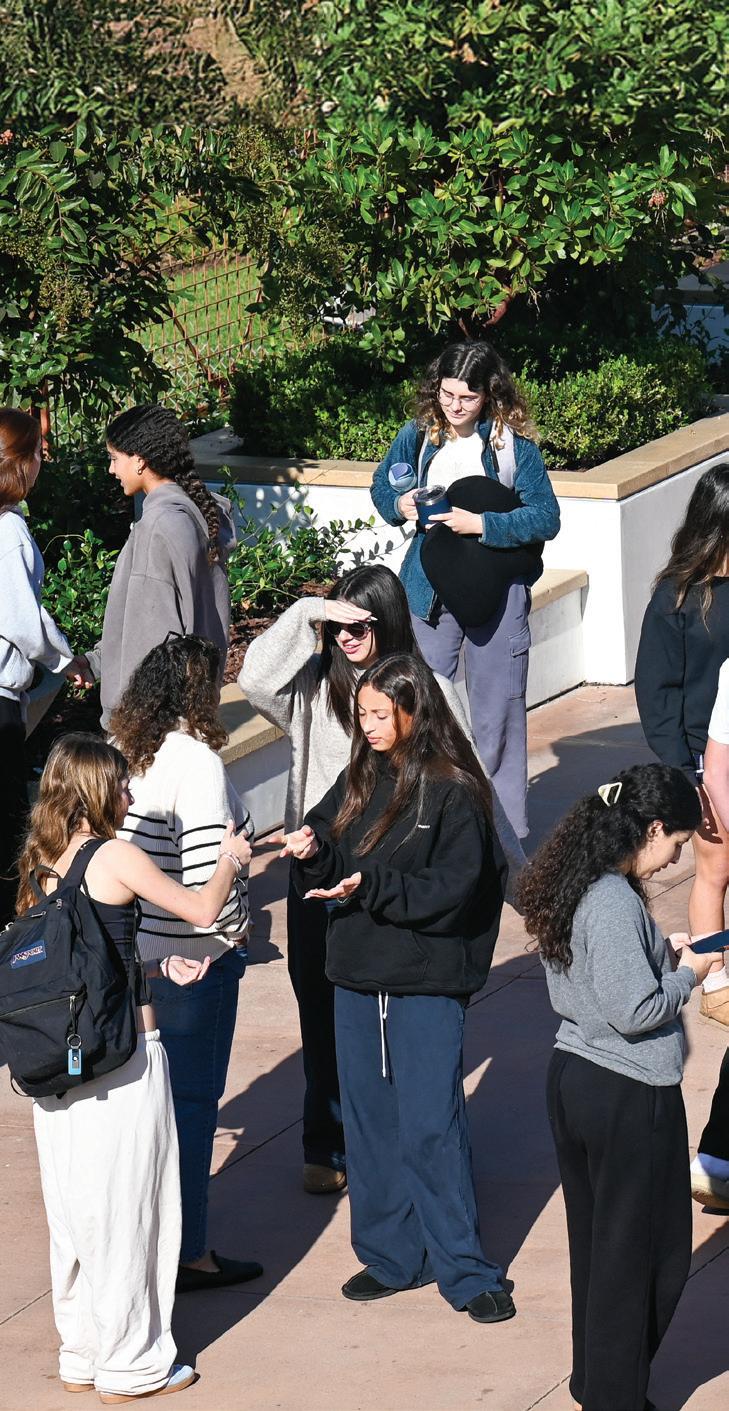
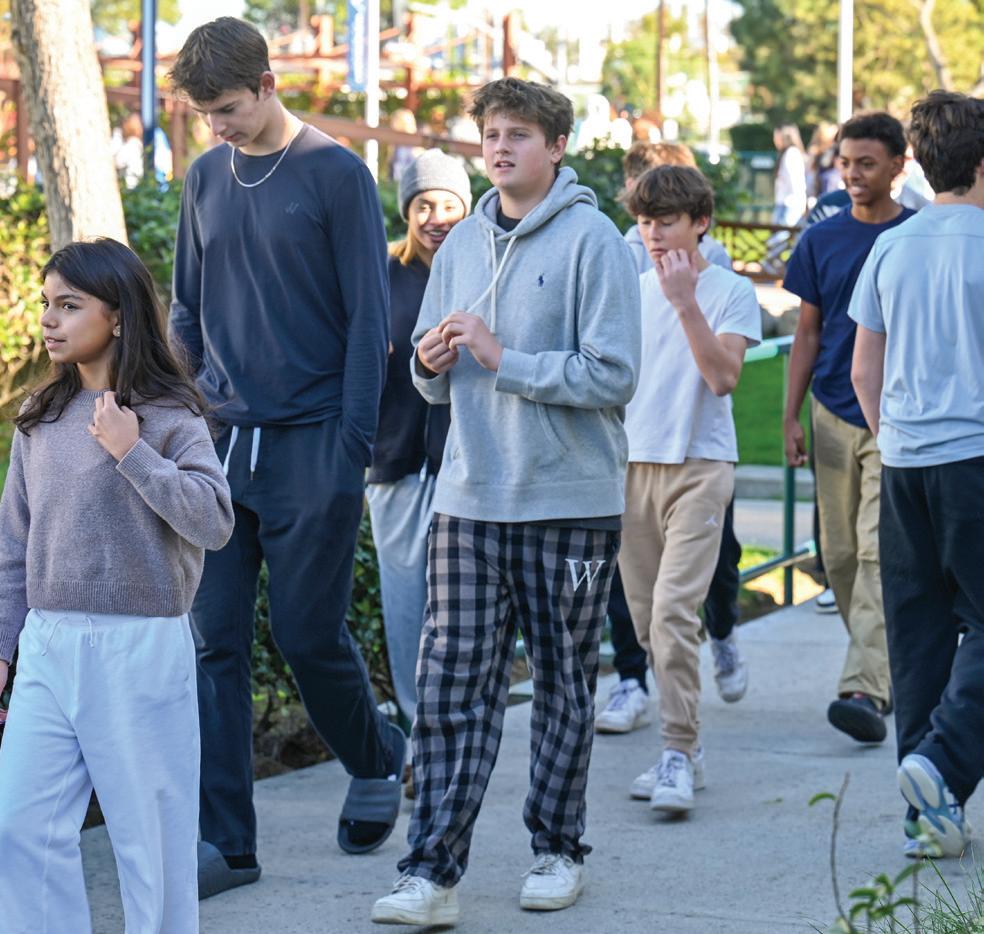
On a recent Windward afternoon, students set out across campus in pairs. 7th Graders walked alongside Seniors, Juniors paired with 9th Graders, each exchange unfolding perhaps nervously but naturally. Some groups strode confidently; others moved more cautiously. A few conversations sparked easily, while others took time to warm up. There was no presentation or agenda beyond the simple act of getting to know someone new. In those moments, Core Groups were doing exactly what they were designed to do.
Core Groups bring together students from 7th through 12th Grade in intentionally mixed groups that meet periodically throughout the year. Sometimes the focus is conversation around meaningful topics, sometimes experiential activities, sometimes simply shared time. The goal is consistent: to create space for connection across grade levels and to strengthen a sense of belonging through community.
“Core Groups are about sharing space, learning about one another, and engaging in experiences that help students feel connected,” says Tyrone Powell, Director of Athletics, Belonging, and Interdisciplinary Studies. “They’re meant to build community in an authentic, genuine way.”
From the outset, the program was shaped by student voice. During the 2023–24 school year, student prefects worked with Kevin Newman, Director of the Collegiate Division, and Julia Coley, Director of the Prep Division, to imagine new ways to build connection across grades. What began as a student concept—initially described as “family groups”—evolved into what are now known as Core Groups. The original pilot met once as a proof of concept, intentionally limited to allow space for reflection and learning.
Since then, Core Groups have expanded thoughtfully year to year. Groups now meet four to six times annually, reflecting an approach grounded in iteration rather than urgency and guided by experience, feedback, and a commitment to letting the program grow in ways that feel authentic to students.
One reason Core Groups have resonated is the kind of space they create. “It feels like one of the only places where students across all grades come together in a small group without an academic structure,” notes Jocelyn Castillo, Assistant Director of Community, Engagement, and Belonging for Students. “By allowing Seniors to take ownership of the space, it creates a less intimidating environment for younger students.”
That ownership is intentional. From Summer retreats and orientations onward, Juniors and Seniors are encouraged to see themselves as leaders—not just by title, but through presence and responsibility. As the oldest students on campus, they help model what it means to listen, include, and engage.
“Juniors and Seniors have experienced what community means at Windward longer than other students,” says Dahlia Morrone, Associate Director of the Collegiate Division. “They’re instrumental in helping younger students feel seen, heard, and appreciated in their Core Groups.”
For Dahlia, the most meaningful moments are often the simplest. She points to recent partner walks as an example of how low-pressure interactions can foster real connection. Watching older and younger students talk, listen, and learn about one another offers a glimpse of what belonging can look like when it’s practiced rather than prescribed.
These thoughtful exercises provide students with a window into the larger student population they’re a part of. “In our last Core Group, we did partner walks where each Senior was paired up with a 7th Grader,” shares Bella Kapoor ’26. “I connected with a 7th Grader named James, whom I had never spoken to before. It was really nice to speak to a younger student because I could relate to some of the classes and teachers he’s had, and it was nice to be another friendly face on campus for him.”
As a Senior, Bella also describes Core Groups as a space where leadership feels both natural and earned. “It feels like a privilege that we are now the oldest students and can come up with fun things the younger students want to do and connect with them in a more ‘fun’ environment,” she says. “I also like the freedom of Seniors getting to lead something rather than the teachers, because it builds a tradition and bond that the younger kids can look forward to taking over one day.”
Moments like these highlight how Core Groups complement, rather than replace, existing student communities. Windward students already belong to teams, clubs, friend groups, and informal spaces across campus. Core Groups bring students from those smaller communities together, creating opportunities for connection that might not otherwise happen—and encouraging those connections to extend beyond the scheduled meeting.
As with any developing program, Core Groups continue to grow and refine. Tyrone is candid about the importance of allowing the work to build over time. “Like any program in its infancy, there are growing pains,” he notes. “Our work is to continue creating sessions that build on one another and create a foundation for what Core Groups are meant to do.”
At their best, Core Groups offer a time and place where students across all grade levels can connect—imperfectly, but authentically.
To help ensure that Windward remains actively engaged with emerging questions in education, in January faculty and staff used a school in-service day to step back from the rhythms of the classroom and lean into a larger, shared question: how is Artificial Intelligence (AI) reshaping education, and how can educators engage it thoughtfully in service of student learning?
To help guide that exploration, Windward welcomed Eric Hudson, a nationally recognized educator and consultant who works with schools across the country to navigate teaching and learning in the age of AI. Known for his human-centered, research-informed approach, Eric brought clarity to complex technological shifts, helping attendees focus less on hype and more on meaningful, developmentally appropriate practice.
For Marisela Ramos, Associate Director of the Prep Division, it was the perfect opportunity to turn to an external perspective. “We are fortunate to have a wealth of internal knowledge, but bringing in an outside voice like Eric—who is a leading expert in the field with deep experience in private schools—adds a different layer of validation and perspective,” she shares. “Sometimes, having an external expert underscores the importance and relevance of a topic, helping us see the broader landscape and how we fit in it.”
Jim Bologna, Senior Director of Innovation and Technology, echoes that value. “Bringing in an outside expert who works with schools from around the country provides a high-level view of the educational landscape, validating that the shifts we are feeling are industry-wide and not unique to our school. This context helps demystify the technology, allowing faculty to approach AI with practical curiosity rather than apprehension.”
Importantly, Windward did not undertake this work in isolation. Educators from neighboring partner schools were invited to join in the in-service, reinforcing the idea that navigating a shift as significant as AI is something shared across the broader educational community.
by CONNECTED
Craft NAVIGATING EDUCATION
IN THE AGE OF AI
“Anytime we learn alongside colleagues from the broader community, it creates a richer learning experience,” says Marisela. “As a private institution, we feel it is vital to recognize that we are part of a larger local educational ecosystem. We are in a fortunate position to share knowledge and resources, and hosting partner schools is a way to honor our responsibility to our broader community. Even when we are just sitting sideby-side, it serves as a powerful reminder that we all value the same purpose: education. It also demonstrates that facing a shift as massive as AI is a collective effort, not a solitary one.”
Over the course of the day, attendees took part in a series of sessions designed to move faculty from curiosity to confidence. In his keynote, AI Skills That Matter, Eric introduced essential competencies for both students and teachers, offering clear frameworks for integrating AI into learning in ways that support—not replace—critical thinking and creativity. Later, during a hands-on workshop focused on Gemini and NotebookLM, faculty engaged directly with AI tools, practicing prompting strategies, experimenting with each platform, and reflecting on how these technologies might enhance their own classrooms.
The in-service was designed to build on foundational work already underway. Earlier in the Fall, faculty had engaged in shared readings and conversations about AI, including Co-Intelligence: Living and Working with AI by Ethan Mollick. The in-service, Marisela explains, was intended to move that learning from concept to application, encouraging faculty
to approach AI with the same mindset they bring to student learning. “Our hope is for faculty to give themselves the grace to experiment, fail, and iterate,” Marisela says. “We want to acknowledge that our own learning is much like the learning we model for our students: this work requires practice, attention, revision, and reflection.”
That philosophy carried through the structure of the day, particularly in the emphasis on starting small. “We recognize that the rapid pace of AI development can be paralyzing,” Jim says. “We do not expect faculty to go from 0 to 60 overnight; instead, we encourage small, low-stakes steps to build confidence through iteration.”
“Starting small matters because we have to acknowledge that everyone is starting from a different place,” Marisela continues.
“For those who haven't used AI much, the technology can feel daunting or abstract. By asking faculty to try just one thing, we lower the barrier to entry, making it safe to explore without the pressure of having to overhaul everything at once.”
A faculty showcase during the in-service highlighted innovative work already happening across divisions. “Seeing the innovative work our colleagues are already doing is a powerful reminder of how hard our teachers work and the deep care and dedication they have for our students’ learning,” Marisela says.
“We are incredibly grateful to everyone who contributes to the success of the day; it proves that we have the talent and commitment within our own community to navigate this shift together.”
Looking ahead, the purpose of this work extended well beyond fluency with new tools. At its core, the in-service centered on defining—and protecting—what makes teaching meaningful. “By clearly understanding what AI can do, we are better equipped to safeguard what it cannot do: the critical thinking, authentic voice, and relational mentorship that are critical to a Windward education,” says Jim.
“Ultimately, we hope this work protects the human connection to knowledge, ideas, and, most importantly, our students,” Marisela agrees. “If the return to in-person learning after the pandemic taught us anything, it is that the human relationship is the bedrock of education. Exploring AI allows us to define those values even more clearly, ensuring that as technology advances, our commitment to student-centered learning remains affirmed and strong.”
LEARNING BEYOND THE CLASSROOM
For Junior Max Lugash, the door to new subjects—and new ways of learning—opened with the single click of a button. Through the Global Online Academy (GOA), Max explored courses beyond Windward’s curriculum while learning alongside students from around the world. In the process, he earned GOA’s Global Learning Certification, an honor that, according to GOA, reflects students’ initiative, curiosity, and exceptional dedication to pursuing their academic passions and deepening their learning.
The Global Online Academy is a global consortium of independent schools that offers students the opportunity to take semester-long, online courses alongside peers from around the world, exploring subjects not available on their home campuses.
“I was interested in GOA courses because they offered classes that weren't available at Windward and really focused on real world skills,” says Max. “The Global Learning Certification motivated me to push myself outside of the normal classroom setting and learn more independently in a more global environment while learning about topics that I am personally curious about.”
One course in particular reshaped how Max thinks about technology and its role in society. “Introduction to Artificial Intelligence had the biggest impact on me because it changed how I think about technology and problem solving,” he explains. “It helped me understand how AI actually works and how it affects business, human behaviors, and everyday life.” As AI becomes increasingly embedded in modern systems, Max began to see its influence more clearly. “It opened my eyes to see it not just as a tool but as something that shapes decision making as AI is integrating itself into every big industry.”
Equally impactful was the global nature of the classroom itself. Studying alongside peers from different countries challenged Max to think more intentionally about communication and collaboration. “Studying with students from different countries really made me push myself to explain my ideas clearer and consider different perspectives,” he says. “It really opened my eyes to how each part of the world thinks differently especially during discussions when people approached problems from different cultural and personal backgrounds.”
That global collaboration also led to an unexpected takeaway. “One skill I gained was learning how to collaborate effectively with people I have never met in person,” Max reflects. “Working across time zones and communication styles taught me flexibility and how to adapt my approach depending on who I'm working with.”
As he looks ahead, the experience has already begun to influence Max’s academic interests at Windward. “This certification made me more interested in exploring business, technology, and problem solving courses at Windward,” he says. “It’s encouraged me to look for classes and projects that connect academics to real world applications and global issues.”
WADING INTO THE WATER LA RIVER PROJECT
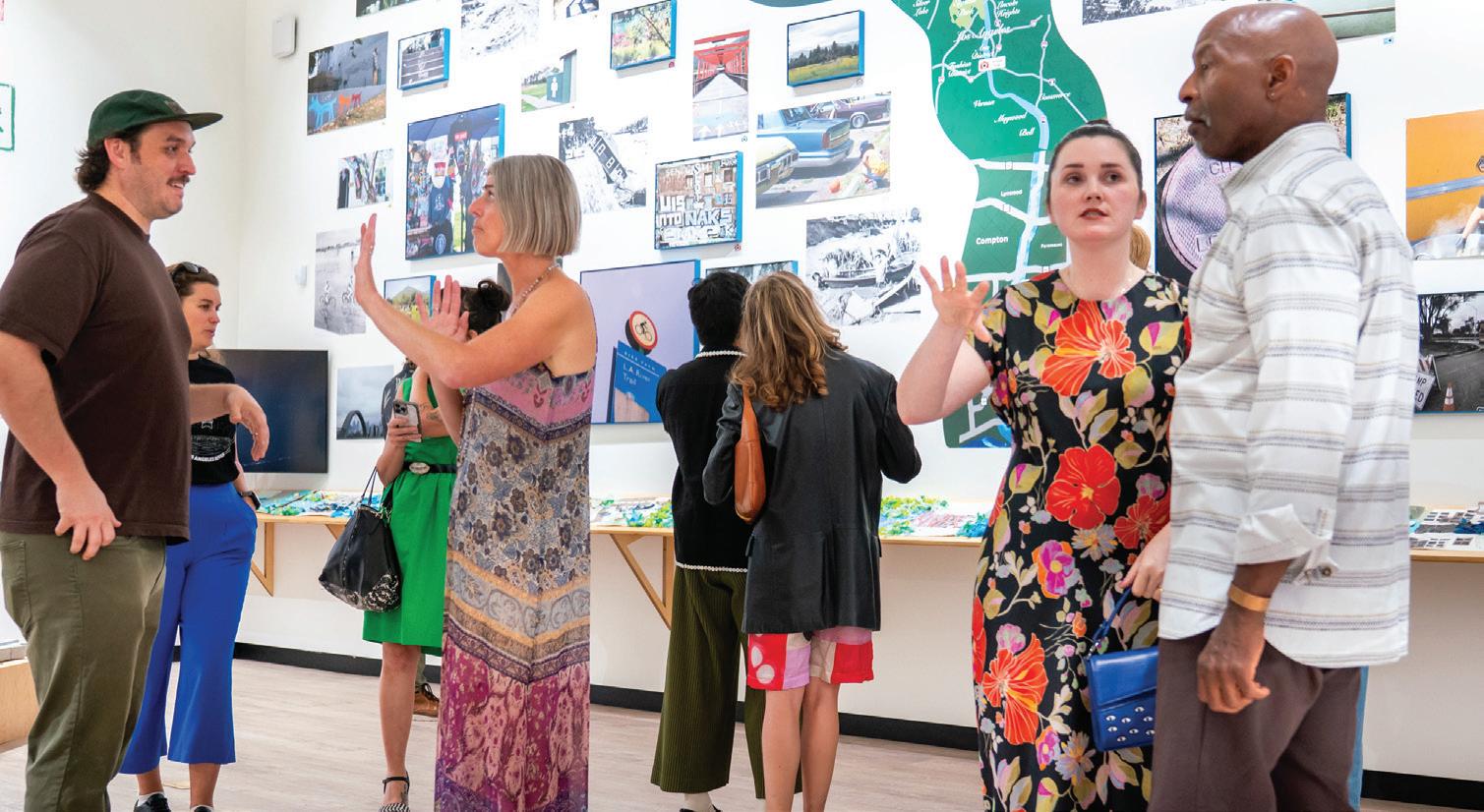
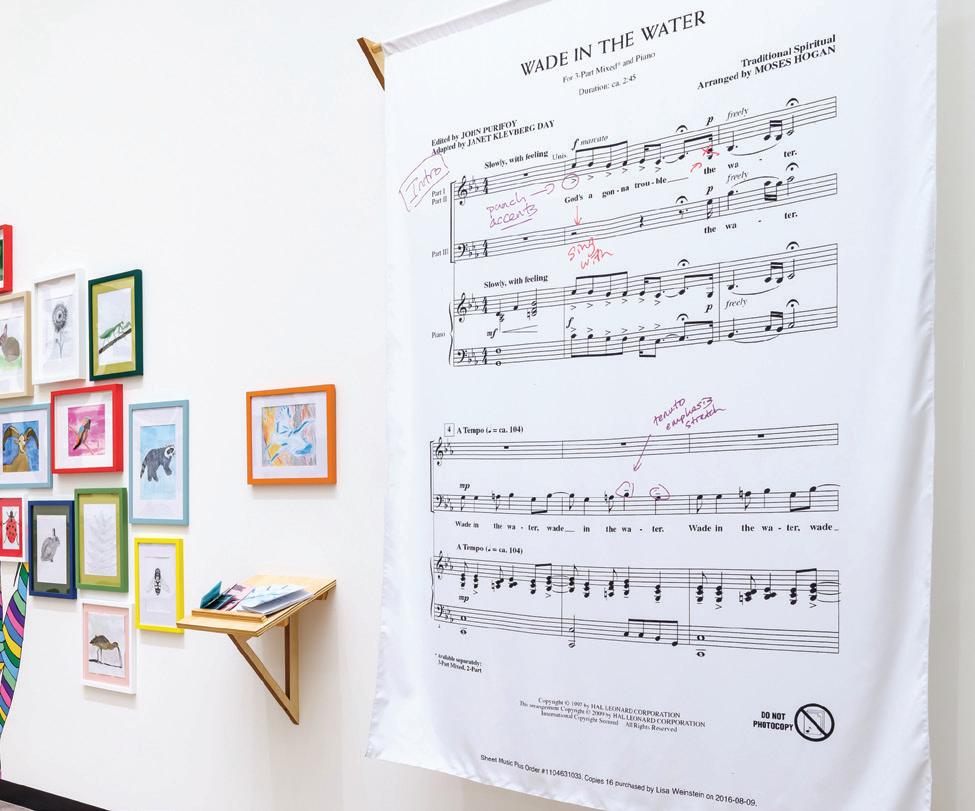
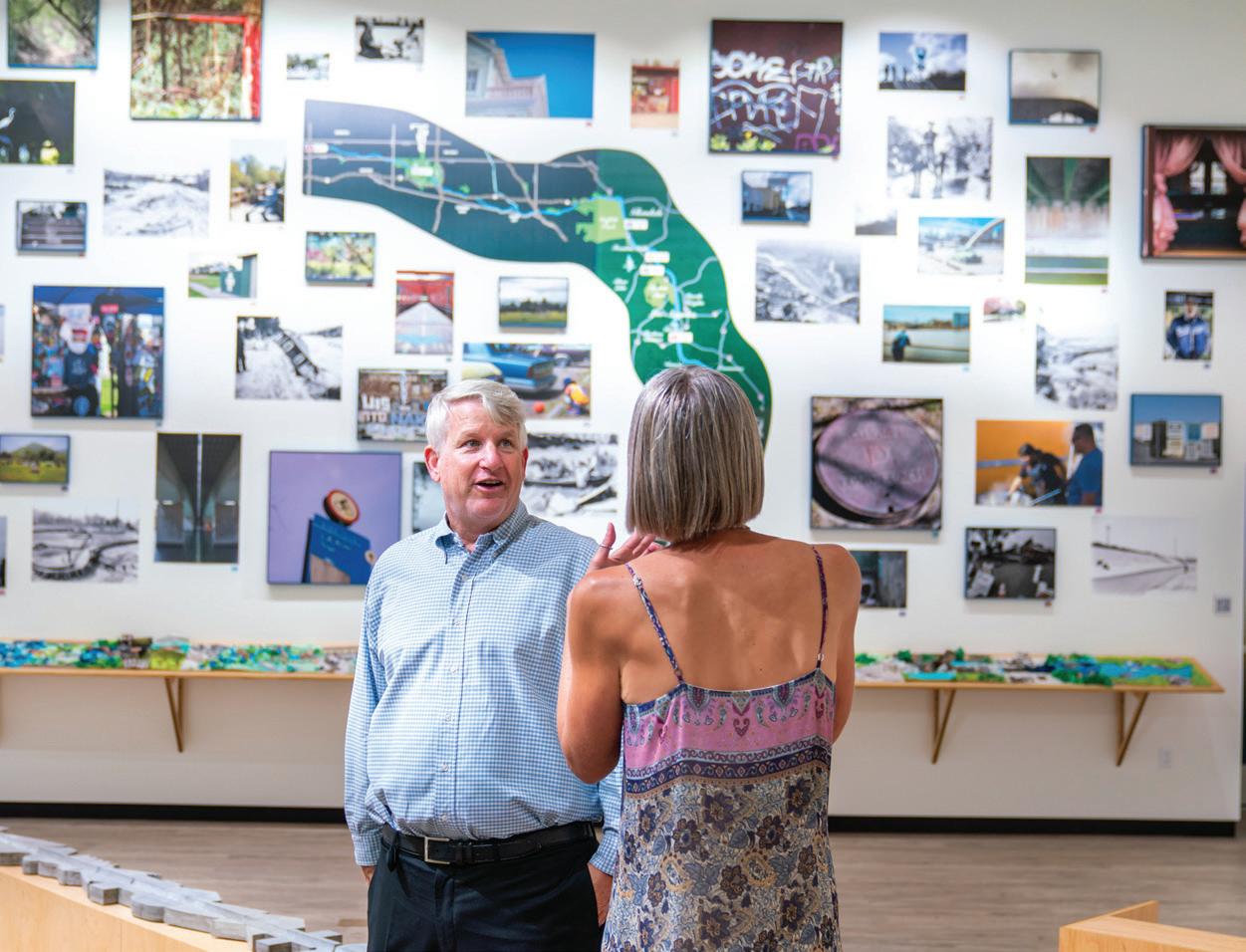
For many Angelenos, the LA River sits on the edge of daily life, familiar and visible, yet rarely examined. At Windward, the river became something else entirely: a point of inquiry, a creative catalyst, and the unifying thread of a campus-wide, interdisciplinary project that culminated in Wade in the Water, the inaugural exhibition in the DeGeorge Family Innovation & Arts Center art gallery.
The LA River Project began in November 2023, long before the gallery doors officially opened this past Fall. Tony de los Reyes, Visual and Media Arts (VMA) teacher and Director of Programming and Special Projects, alongside VMA Chair Katie Thoma, envisioned a schoolwide initiative that could invite every department into conversation—intellectually, creatively, and experientially.
“I was looking for a school-wide project that would interest as many departments as possible,” Tony shares, “knowing that if the gallery was to open in 2025, an enterprise of this magnitude would have to begin well before a year out.”
LA RIVER PROJECT
To spark that conversation, Los Angeles–based environmental artist Debra Scacco was invited to campus in December 2023, meeting with interested faculty. Her work helped frame the river not just as a subject for visual art, but as a living system embedded in history, ecology, infrastructure, and culture. “One of the great misconceptions about contemporary art is that it’s hermetic and obsessed with personal expression,” Tony explains. “I wanted to counter that, and open up for discussion new ways of thinking about the river from multiple academic perspectives.”
That invitation was met with enthusiasm. At a follow-up meeting in January 2024, faculty from across departments began imagining how the river might flow through their curricula. Questions surfaced that were both practical and philosophical: What is the LA River, really? Where does it begin and end? How has it been shaped by human intervention, and how might it be reimagined? As one attendee noted, “It’s something we see every day, but how many of us really know what the heck it is?”
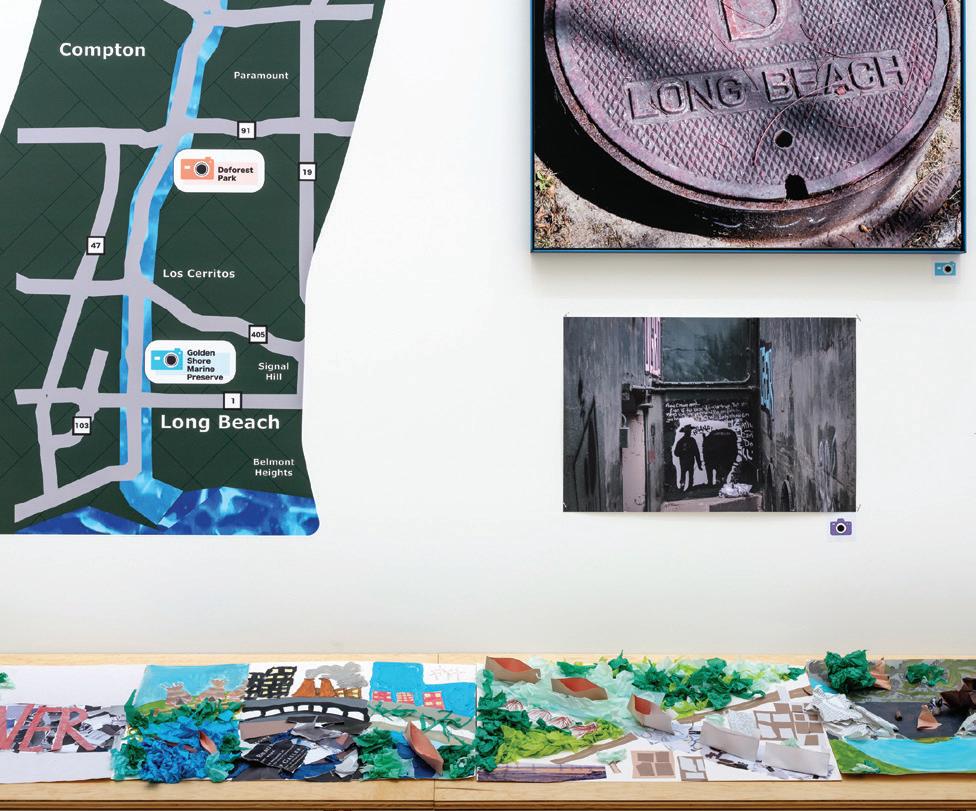
In total, approximately 20 classes spanning every department and grade level participated, involving more than 150 students and 23 faculty members. Projects ranged widely in form and approach: collages, photography, data-driven artworks, virtual river tours, animal studies, choral music, and even a cooperative, “cozy” video game inspired by the river’s flora, fauna, and potential as a space for public play and communion.
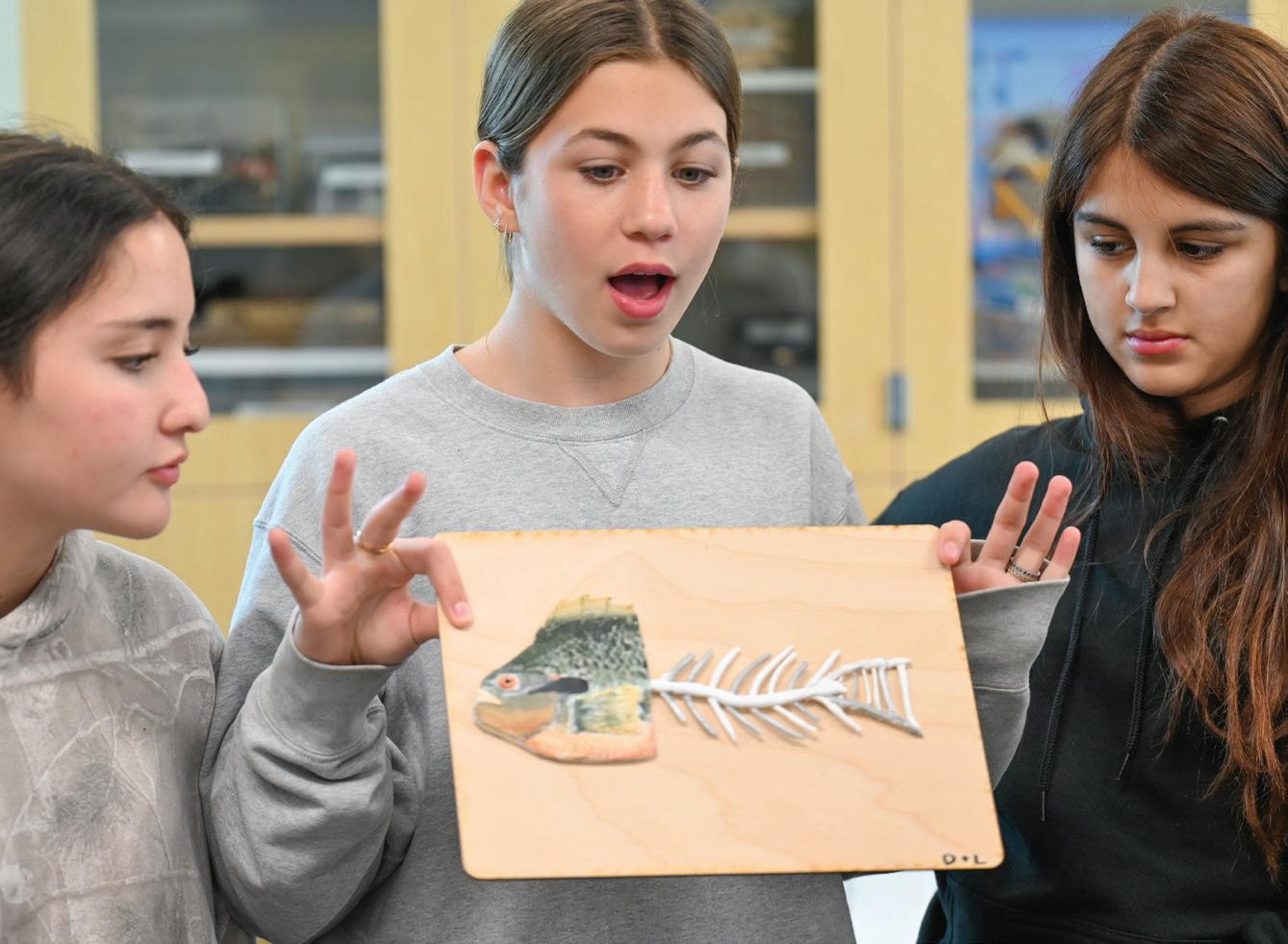
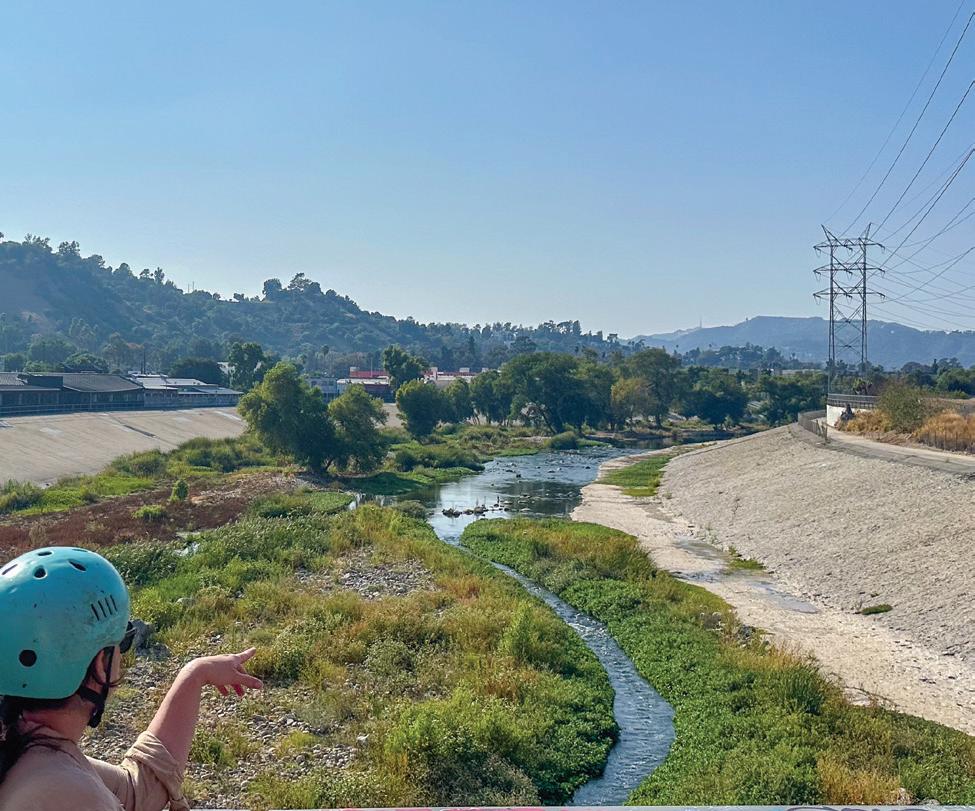
Collaboration became a defining feature. Science Chair Gage Loveless and Biology teacher Erin Borgstrom worked with VMA and English faculty to design a project that combined rigorous research with creative expression. Honors Environmental Science students researched plant and animal species found along the LA River and created field guide entries paired with creative artifacts—models, sketches, poems, photographs, and songs. With support from Friends of the LA River, students visited the Glendale Narrows, a revitalized stretch of the river, allowing them to directly observe the ecosystem and contextualize the contrast between channelized and restored sections. The work ultimately became a printed field guide. “I’m so impressed with the way our faculty went above and beyond to inspire our students and showcase their work in a meaningful and integrated piece of literature,” Gage reflects.
In English classes, the river became both literal and symbolic. Damon Van Leeuwen’s AP Literature and Composition students crafted an immersive installation exploring the eternal flow of the LA River through the intersection of literature and moving image. “The work begins with student-created found poetry, constructed by reconfiguring passages from Hermann Hesse's Siddhartha that speak to the river's omnipresence and cyclical nature,” Damon says. “Selected lines from these poems are then projected onto a continuous video of the LA River, which flows across a towering poplar plinth.”
Meanwhile, English teacher Will Vincent’s 7th Graders created blackout poems using textbooks, screenplays, and ecological field guides, later collaged into a 40-foot scroll for the gallery. Will and Erin also partnered with VMA teacher Christina Hendershaw to publish I Am It and It Is Me: An Inquiry into LA River Life, an anthology of poetry, scientific writing, and visual art. Movement, too, became a way of knowing the river. Honors Dance 4: Dance Company students, led by Alesia Young, approached the LA River as a body moving through space, filming dancers on location at the Sepulveda Dam. What began as a study of geographic pathways evolved into three duets reflecting the intimate connection between people and the natural landscape. “Students were absolutely critical in the creation of the choreographic material,” she recalls. “They were troopers on location during some very hot and long days, and carried throughout the process the integrity of the piece—grounded in an understanding of the power of this water system from a cultural, economic, and environmental perspective and conscious of how the process of making this film brought them all closer to one another creatively and personally.”
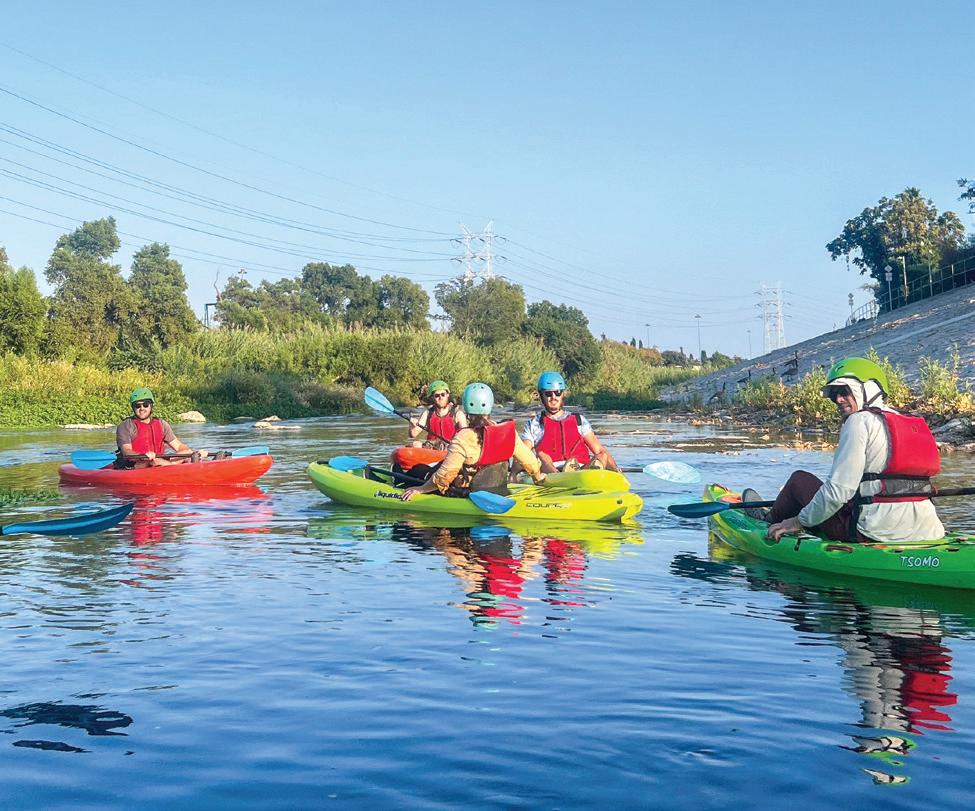
And the project extended beyond classrooms. Faculty and staff were invited to encounter the river firsthand through experiences like a kayaking trip organized with LA River Kayak Safari and a bike ride along the Ballona Creek Bike Path, led by Will. “It really is a lush and beautiful jungle in the Glendale Narrows,” Will says. “There are rapids, tall grass creating cool channels, and tons of birds.”
At its heart, the LA River Project reflects a broader vision for Windward’s new gallery spaces. “The goal of the gallery, and particularly the first show of each season,” Tony explains, “is to help audiences understand the breadth of outstanding teaching and student work that occurs on campus daily.”
With Wade in the Water, Windward makes visible what has long been true: creativity is not confined to a single discipline, but flows—like the river itself—through every corner of the School.
A SECOND READ
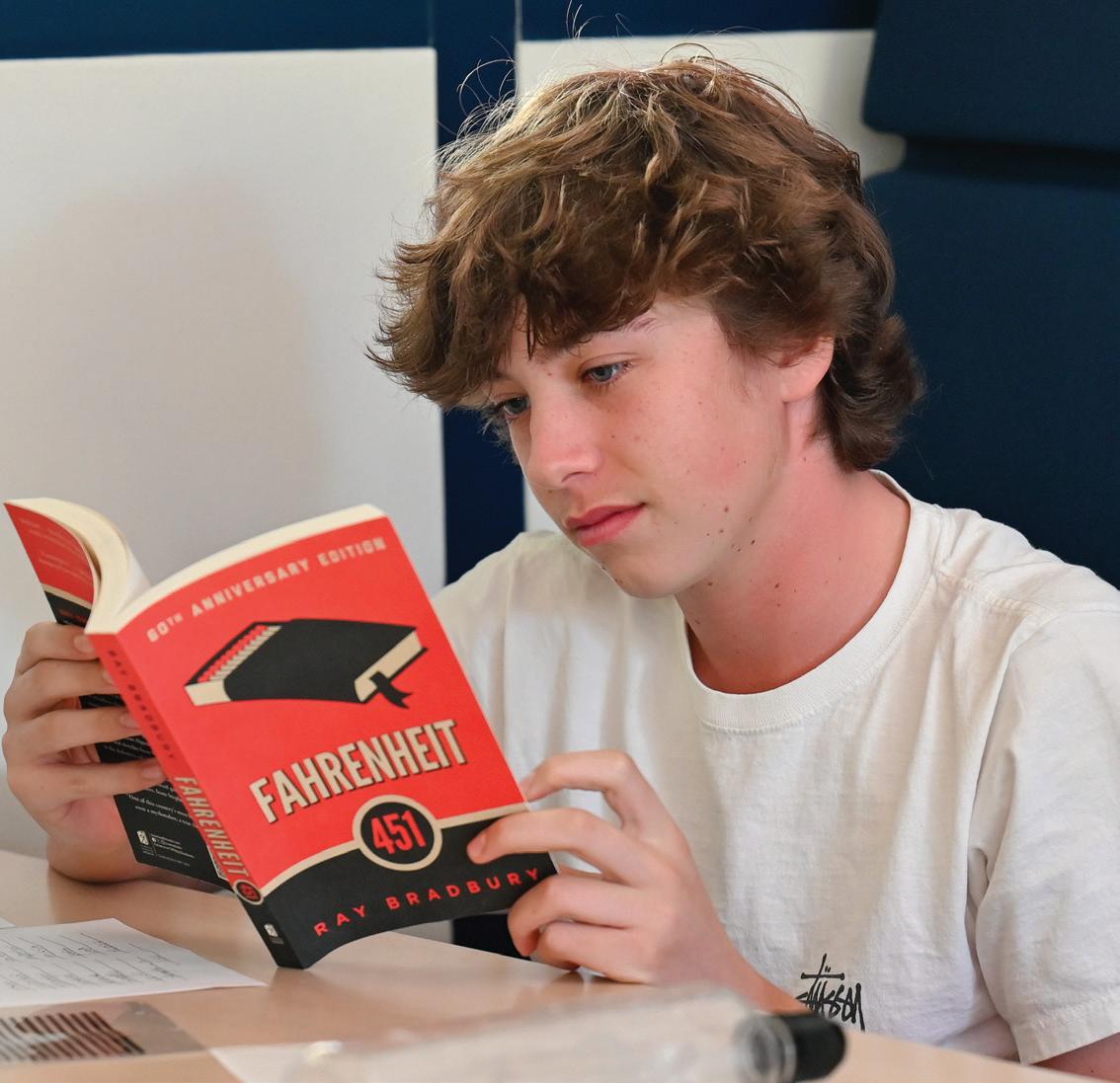
Following its inaugural year, the Big Windward Read returned to campus in September with a new text and a renewed sense of shared intention. Built around the novel Fahrenheit 451 by Ray Bradbury, the second iteration of the program invited students, faculty, and staff into a common reading experience—one designed less as a single event than as a collective practice in thinking, questioning, and engaging together. Kicking off the event at an all-school assembly, Head of School Sarah Beck framed the novel not simply as a cautionary tale, but as an invitation. “This Summer, we read Fahrenheit 451 together—a story about a future where books are banned, ideas are suppressed, and people are numbed by distraction,” Sarah shares. “At its core, it’s also a story about awakening: one person’s journey from passively existing to actively thinking, feeling, and choosing.”
Selected by a committee of students and faculty, Fahrenheit 451 was chosen for its accessibility and its urgency. “It’s a short book with a lot of depth,” Dawn Robinson, English Teacher and Big Windward Read facilitator, explains. “It presented a lot of opportunities for discussion and academic exploration. I think that in writing the book, Bradbury was asking a lot of important questions that still resonate today: What is the purpose of reading and pursuing knowledge? How do we as a society handle disagreement? How can we discern between endeavors that will ultimately bring us fulfillment and those which are distractions?”
Jake Williamson, English Department Chair, added, “Much of the book is about contemplating our actions, our influence, and how we might respond appropriately to disagreement, fulfillment, distraction, oppression, etc. These ideas seem particularly relevant to our current moment where we all navigate information overload, competing demands for attention, and a society where we encounter many different perspectives.”
That relevance shaped not only the choice of text, but the structure of the day itself. After a shared opening, the Big Windward Read expanded into a wide range of student- and faculty-led sessions across campus. “The sheer variety of learning sessions was the most impressive part of this process to me,” Dawn shares. “There was a session on music censorship in Stalinist Russia and also one in which students turned pages of the literal book into art. Students explored big ideas about cultural erasure, societal change, and technology, while also getting hands-on and building a Little Free Library, solving an escape room, holding a mock trial, and even making a play.”
At the center of that variety was an increase in student leadership, a shift that distinguished the program’s second year from its first. “We were excited to have considerably more student facilitators this year than last,” says Dawn. “We’ve had a handful of really engaged students at every step of the way, from choosing the book to organizing the day and recruiting session leaders.” English Teacher Emily Miner agrees, noting, “Not only did this make the day feel more organically targeted to student interests, but it gave our older students a chance to step into additional leadership roles, to reflect more deeply on the text, to connect with students across grade levels, and to experience the role of teacher and facilitator. With increased student leadership come increased opportunities for connection, growth, and enduring reflections on the text.”
For Sarah, those moments echoed the ideas she raised at the opening of the day. “What struck me most was the reminder that we are shaped by what we consume and by what we ignore,” she shares. “The people in Montag’s world scroll endlessly on their wall screens and drown out discomfort with noise. They don’t ask questions, and they’re afraid of honest conversation. That might feel extreme—but in quieter ways, we all face that temptation. It’s easier to tune out than tune in.
“That’s why Fahrenheit 451 still matters,” Sarah explains. “It reminds us that staying curious is an act of courage. That reflection is radical. That connection takes effort.”
Now in its second year, the Big Windward Read continues to take shape not as a fixed program, but as a shared practice—one that invites the community to slow down, read closely, and engage deeply with one another. As Jake reflects, “I hope students and faculty walk away with the idea that reading books and sharing your experiences with a community can enrich our lives in a variety of meaningful ways.”
TRAINING WITH PURPOSE
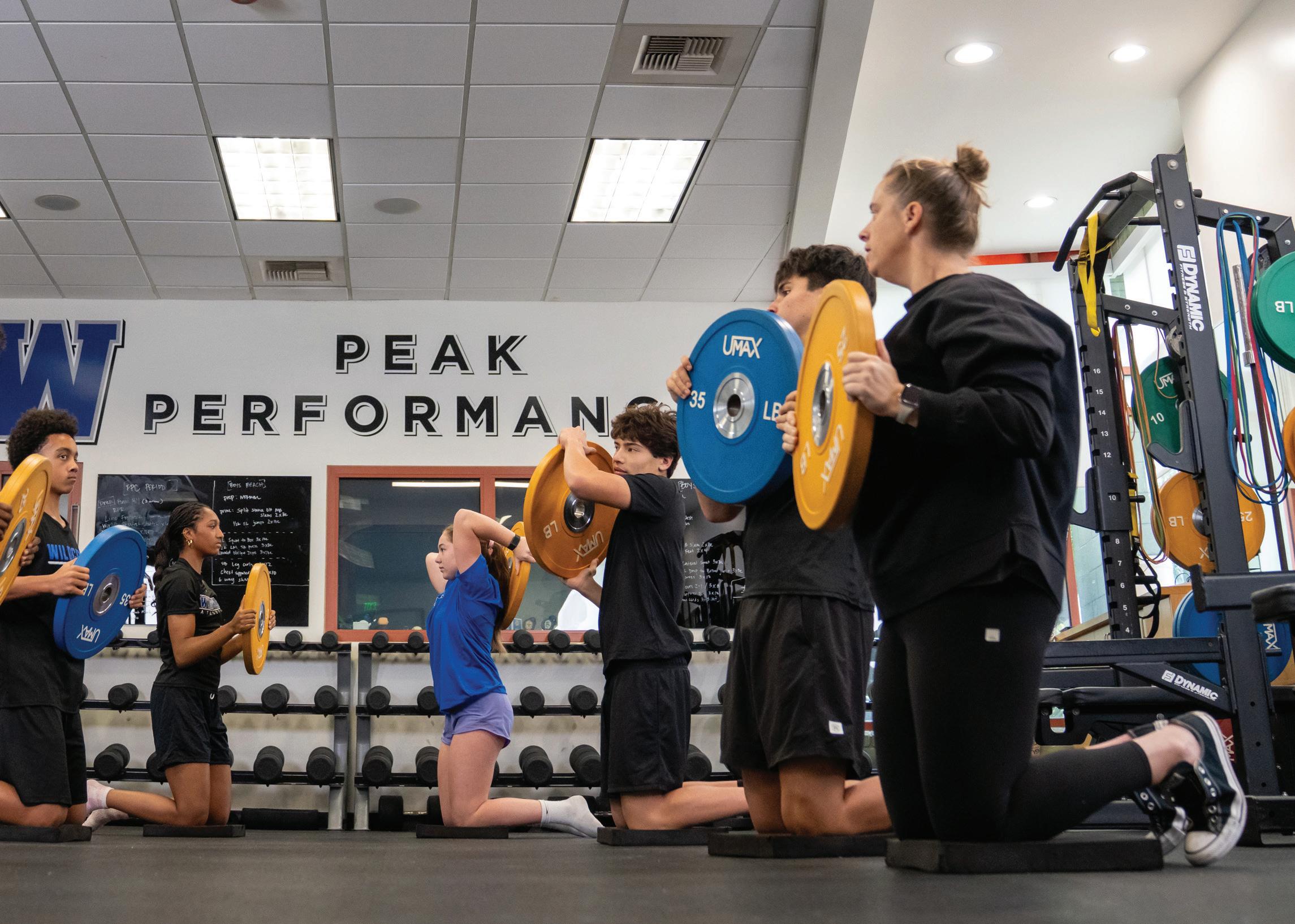
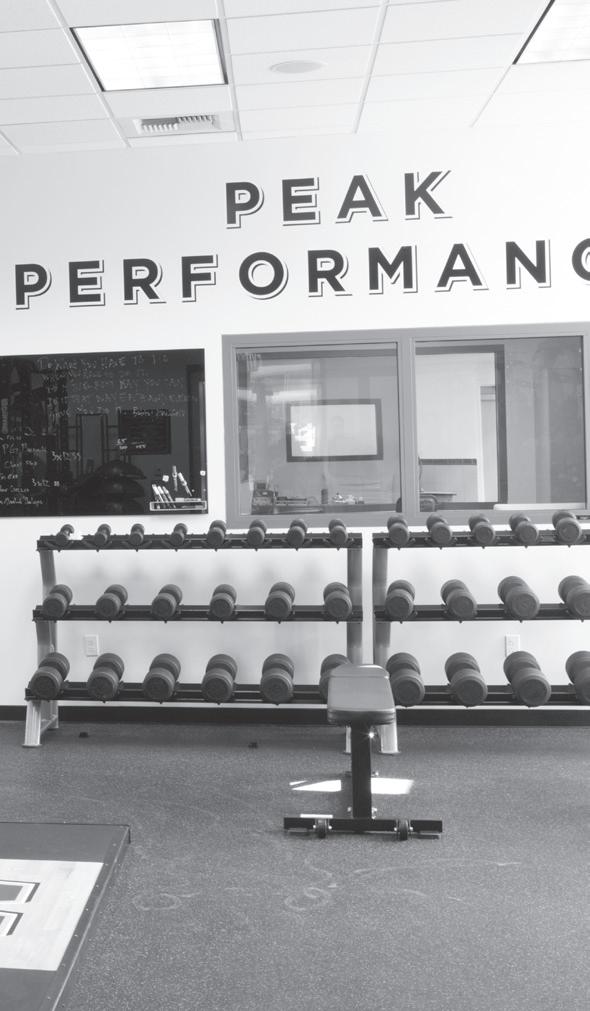
WINDWARD’S PEAK PERFORMANCE CENTER
For many students, athletic training is often understood as seasonal or situational, something tied to a sport, a schedule, or a short-term goal. At Windward’s Peak Performance Center (PPC), that assumption has been intentionally challenged. The work happening there is rooted in a simple belief: learning how to move well, care for one’s body, and build strength over time is a life skill, not a temporary pursuit.
“At its core, the PPC helps students see training as something that extends beyond a season or a sport,” explains Amanda Mills, Director of Peak Performance. “We want scholar-athletes to understand that progress comes from consistency over time, and that strength, confidence, and resilience are built through the process, not overnight.”
The PPC supports scholar-athletes in developing movement competency across seven foundational movement patterns, while also learning how to fuel their bodies, manage stress, and build mental resilience. Students are taught not only what to do, but why it matters, and how habits built through training can support them academically, athletically, and personally. The emphasis is on steady effort, helping students understand that improvement is earned over time.
Over the past several years, the Peak Performance Center has evolved in both purpose and practice. What began as a more traditional training space has grown into a comprehensive performance and education program, one that places intention at the center of physical development. “Training used to be more about getting through a workout,” says Amanda. “Now, the focus is on helping students understand how each phase of training supports long-term development and overall well-being. We want them to know why they’re doing what they’re doing.”
Training in the PPC now integrates strength development, movement mechanics, recovery strategies, nutrition, and mental performance. As students begin to understand how those elements work together, it changes how they move through the space. Many begin to ask more thoughtful questions, adjust their habits, and take greater ownership of their development.
That philosophy also led to the launch of the Intro to Peak Performance class for Middle School students this year. The course was designed to support students at a critical stage of growth, when bodies are developing rapidly and habits are beginning to take shape. The class focuses on physical literacy, coordination, and strength, helping students build a foundation that supports both athletic development and long-term health. It also introduces our youngest students to training environments in a way that feels accessible and supportive.
“The earlier students learn how to move well, the better prepared they are for both sport and long-term health,” Amanda notes. “During the Middle School years, there’s often an overemphasis on sport-specific skills without enough attention to movement competency and strength development that supports growing bodies.” For many students, the course serves as an entry point into the PPC itself. By the time they reach Upper School, they are more comfortable in training spaces, more confident in their abilities, and better equipped to engage fully in Windward’s broader performance program.
As students spend more time in the PPC, the impact shows up in both data and demeanor. There are measurable gains in strength and explosiveness, including notable improvements in metrics such as the vertical jump. Just as telling are the moments when students who once felt hesitant begin to move with confidence, recognizing the PPC as a space where they belong and can grow.
“We’re seeing students take real ownership of their progress,” Amanda shares. “They’re not just training harder, they’re training smarter.”
Looking ahead, the Peak Performance Center will continue to support more students and teams across campus, while maintaining a strong emphasis on education. The long-term goal remains consistent: to equip students with the knowledge, habits, and confidence to care for their bodies, manage stress, and approach challenges with resilience. “Success for us isn’t just about performance,” Amanda says. “It’s about students leaving here with skills and habits they can carry into whatever comes next.”
At the Peak Performance Center, learning happens through repetition, adjustment, and sustained effort. From refining a movement pattern to rethinking a recovery plan, or returning to a lift after a setback, the PPC treats movement and training as essential life skills— helping students build strength that extends well beyond athletics and into everyday life.
Windward’s Art Gallery
By Tony de los Reyes, Visual and Media Arts Teacher, Co-Director of Programming and Special Projects
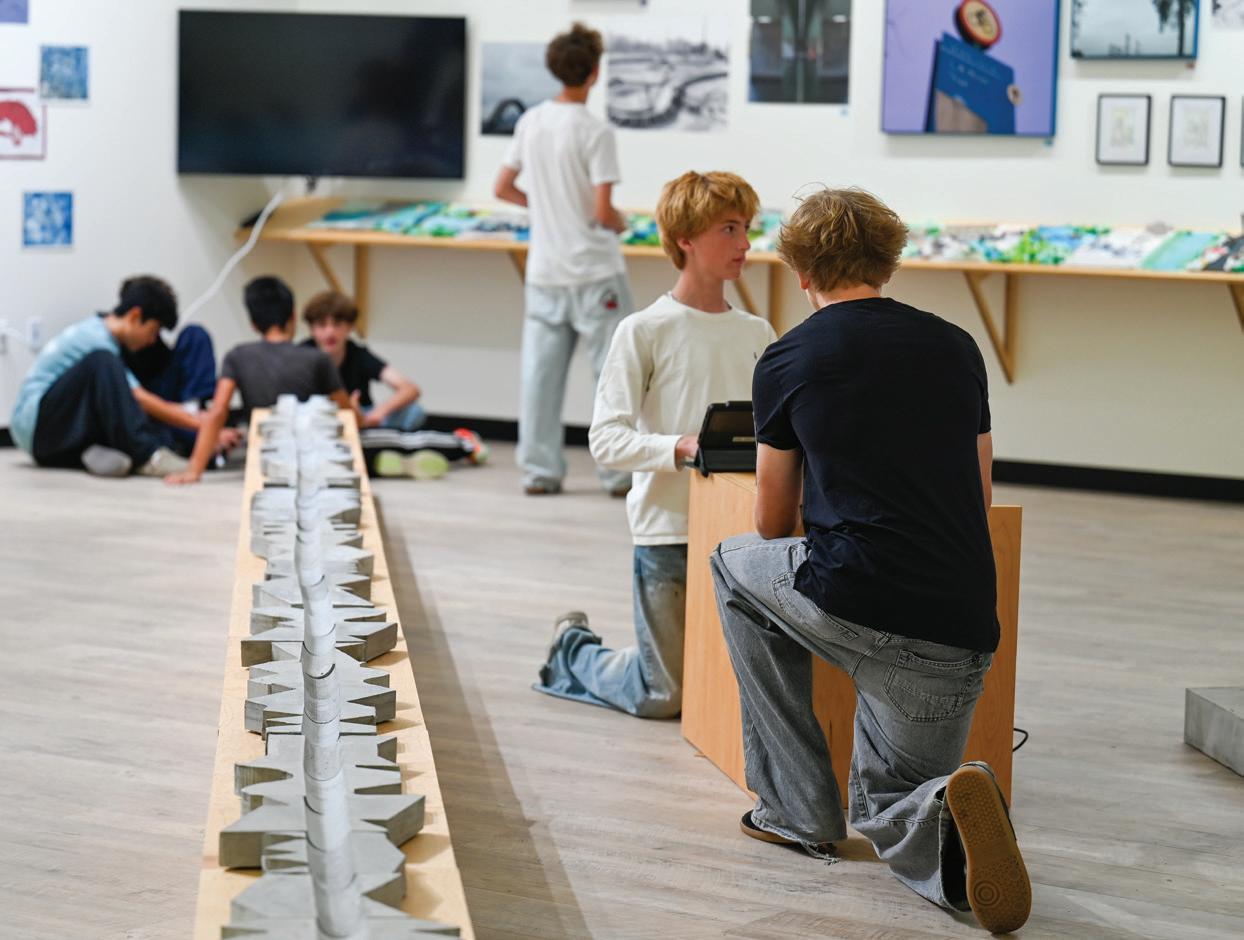
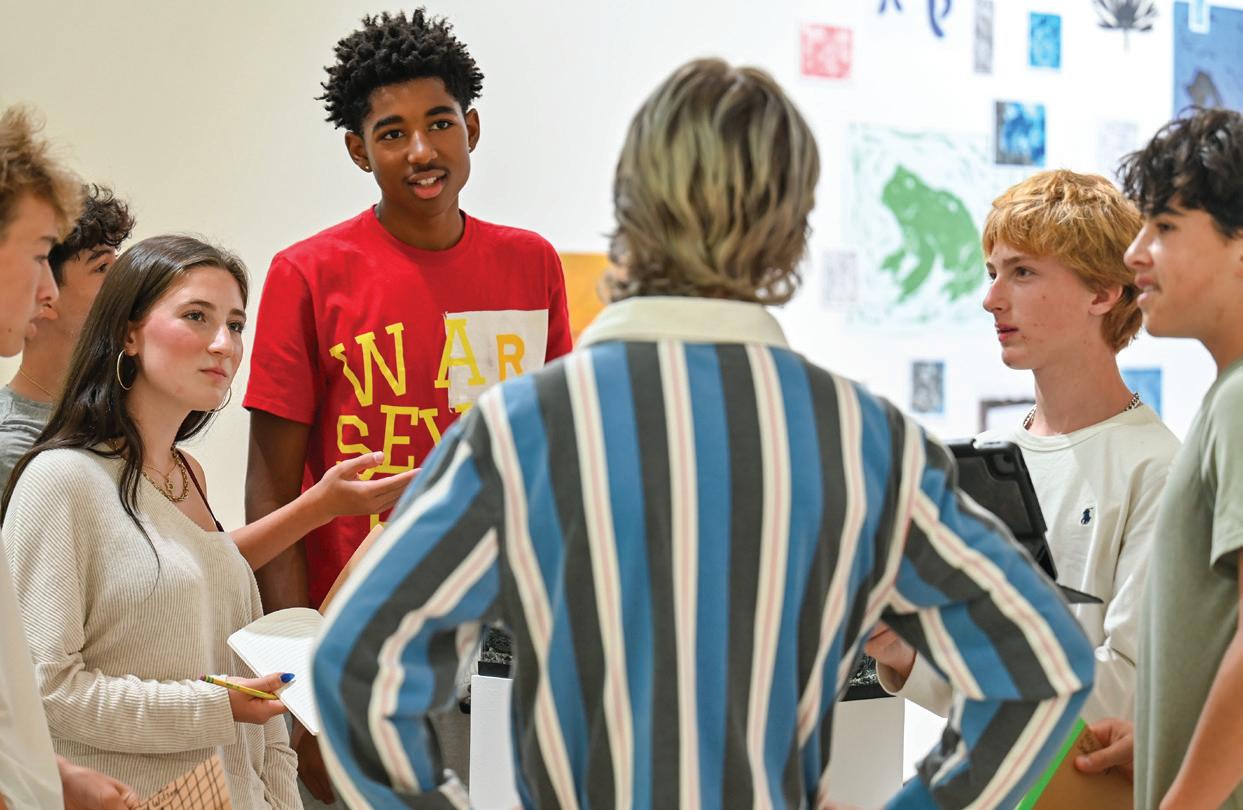
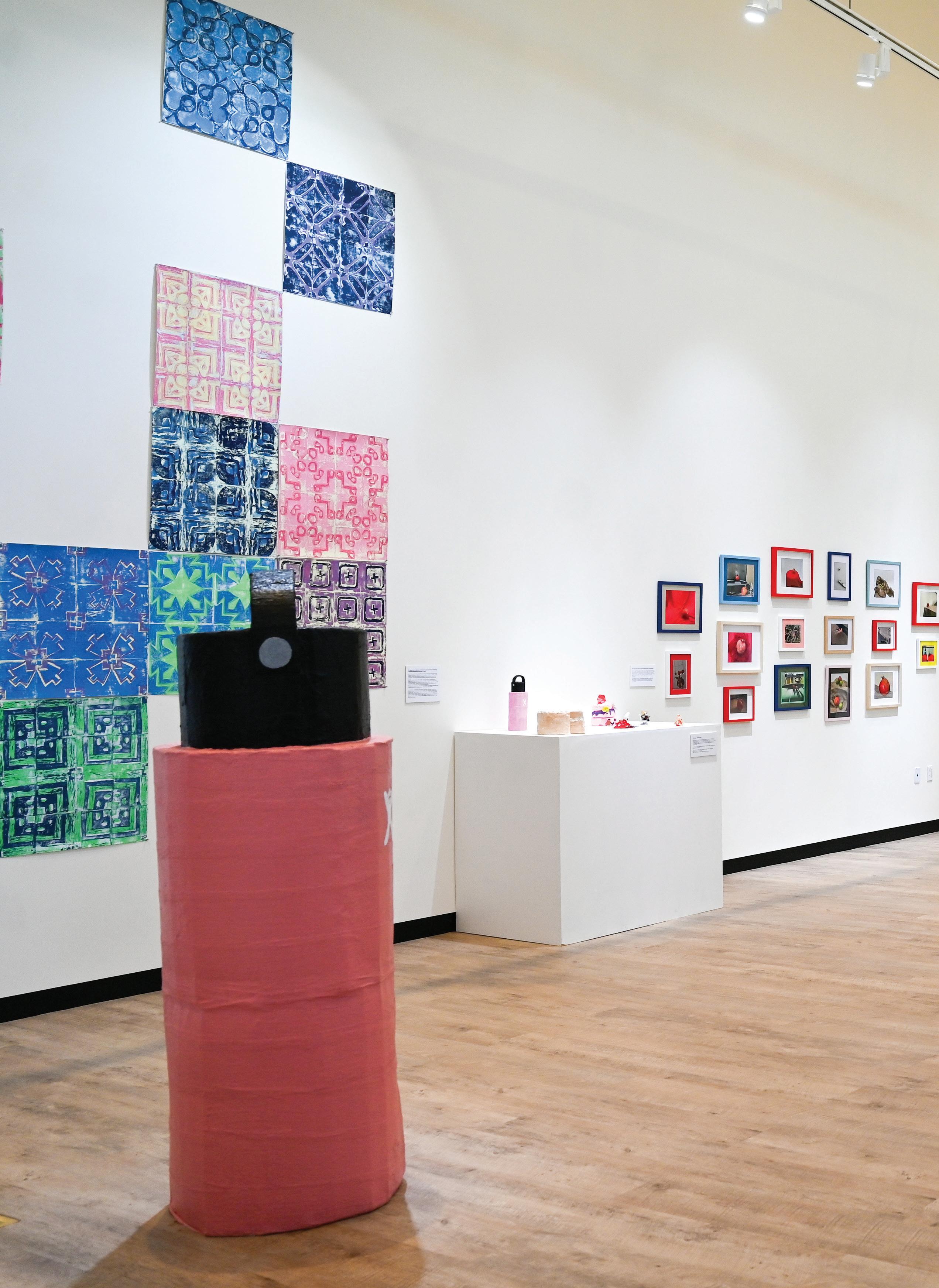
What is the difference between making a work of art and exhibiting it? Hanging a painting on a wall, installing a sculpture, or projecting a video for others to encounter? A gallery invites viewers to look more deeply—to ruminate, question, and return. As Windward’s art gallery, housed within the DeGeorge Family Innovation and Arts Center, began its inaugural season last August, students experienced firsthand how creativity invites curiosity and fosters the communal relationships that make art a shared experience.
Campus A Composition
The gallery itself has been a dream years in the making. Over time, a team of Windward faculty, staff, and administrators worked together to establish a professional exhibition space that matched the depth of the School’s visual and media arts program. Prominent Los Angeles galleries, colleges, and museums were studied in the process. The result is 1,400 square feet of thoughtfully proportioned space, filled with natural light and equipped for high-tech installations. Yet a gallery is only as strong as its programming. In its first season, the gallery has already demonstrated how intentionally curated exhibitions can extend learning beyond the classroom.
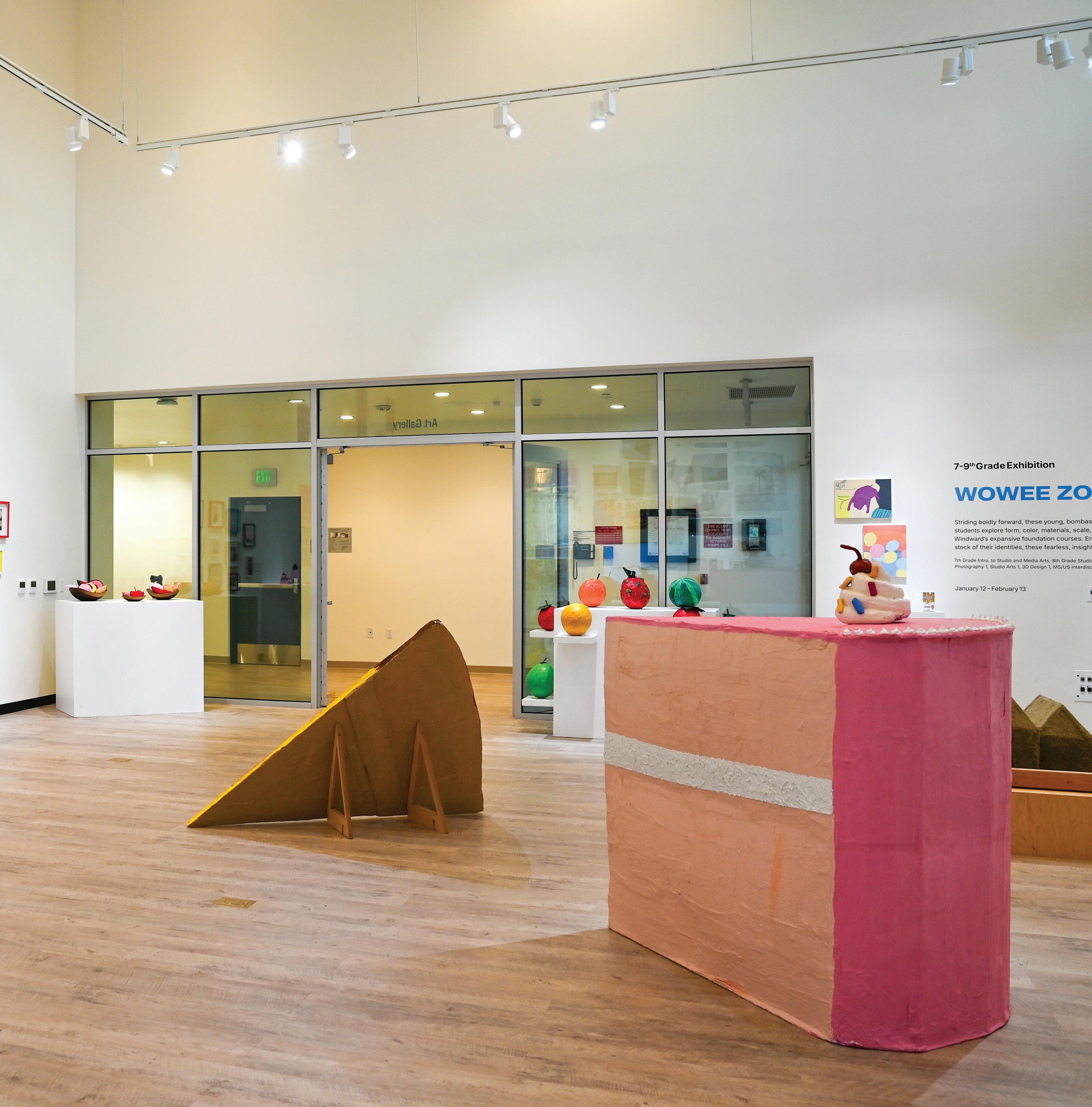
Each of the five annual exhibitions addresses a distinct aspect of visual and media arts practice. Opening exhibitions focused on Windward’s interdisciplinary curriculum. Last Fall’s Wade in the Water: The Los Angeles River brought together more than 150 students and 23 faculty members to explore the cultural, historical, and environmental significance of the river. The upcoming 2026 exhibition, Another Time Is Now: History & Photography, will connect student work and History department pedagogy with the profound role photography and film play in shaping how we understand the world.
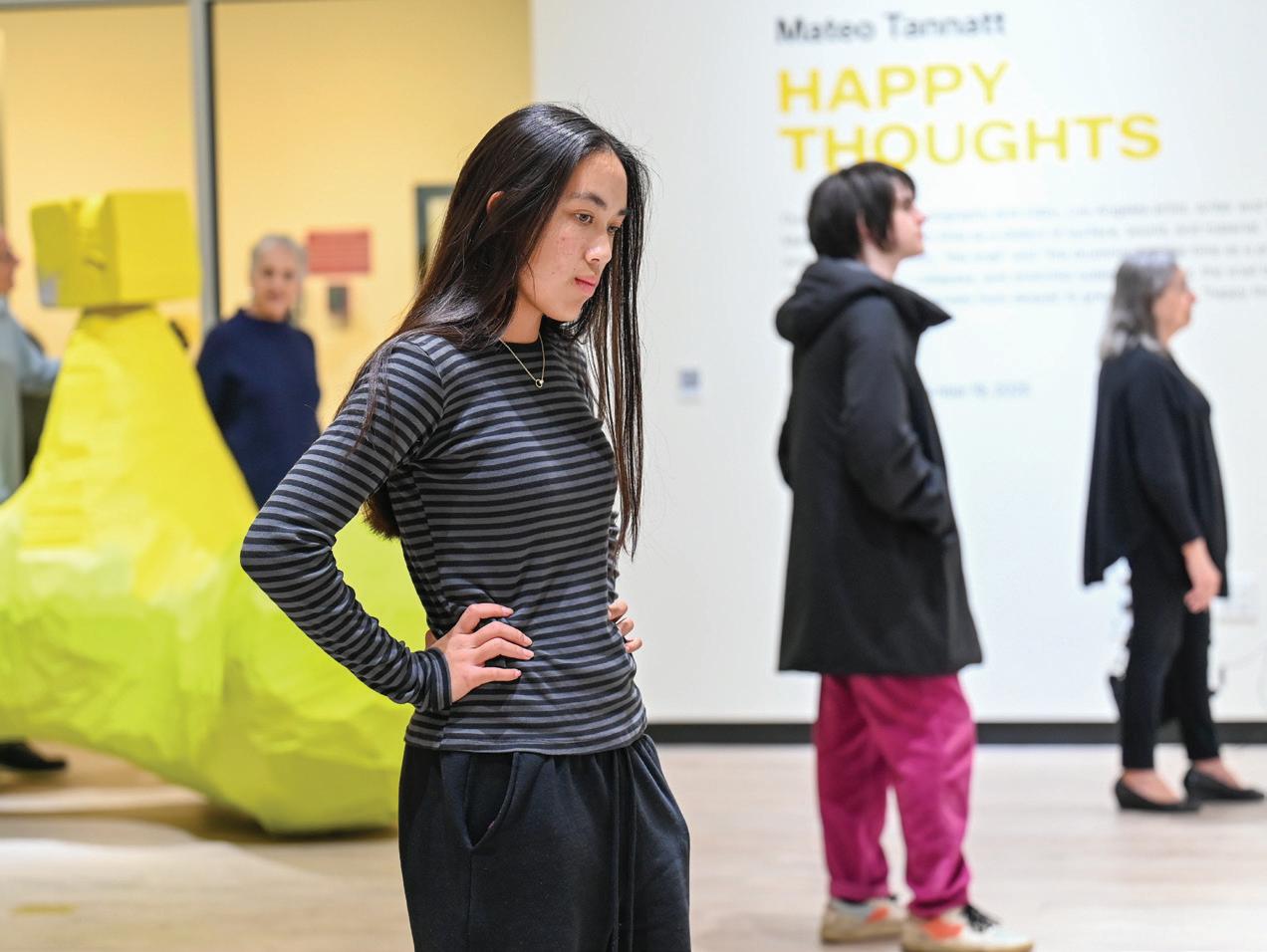
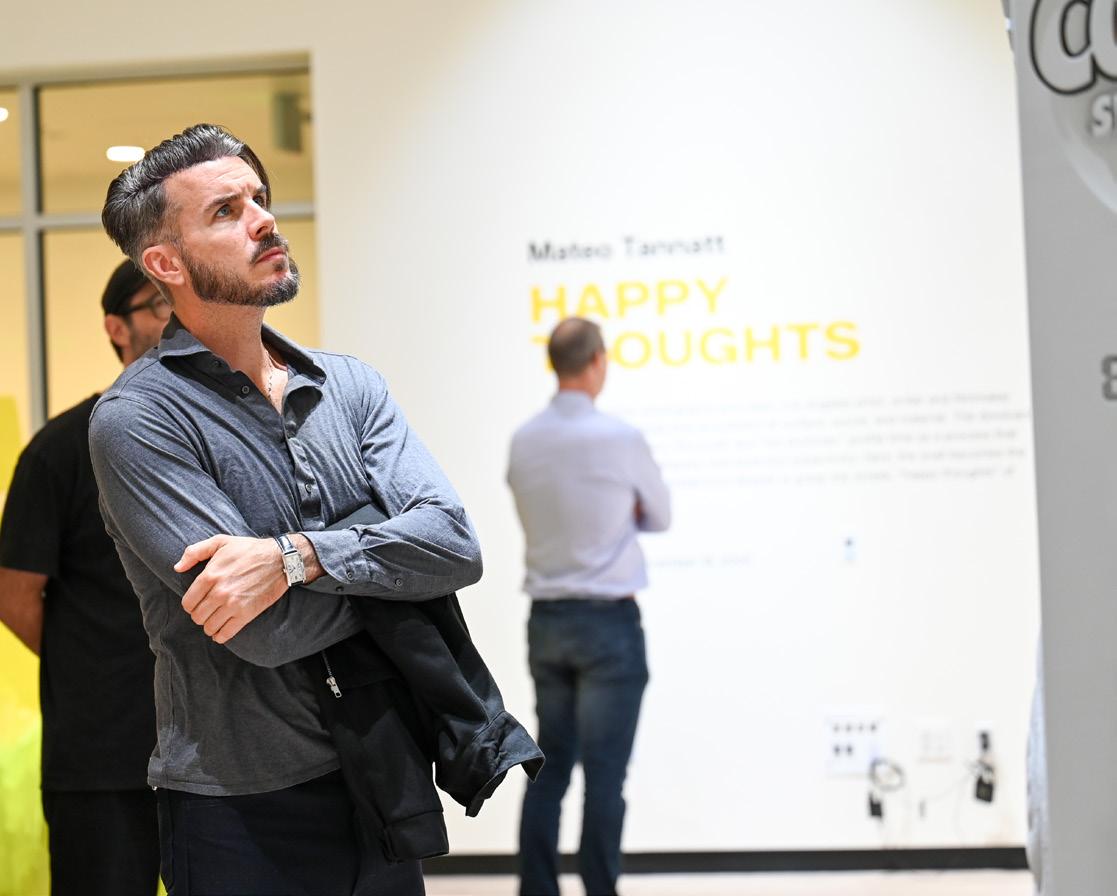
The second exhibition of the season was dedicated to the work of a solo Los Angeles–based artist. Happy Thoughts by Mateo Tannatt wove together Piaget’s theory of cognitive development, the myth of Sisyphus, and the common snail through video, sculpture, and conceptual artworks. Its complexity, humor, and visual impact surprised students and fulfilled the gallery’s mission of bringing critically engaged contemporary art to the Windward community.
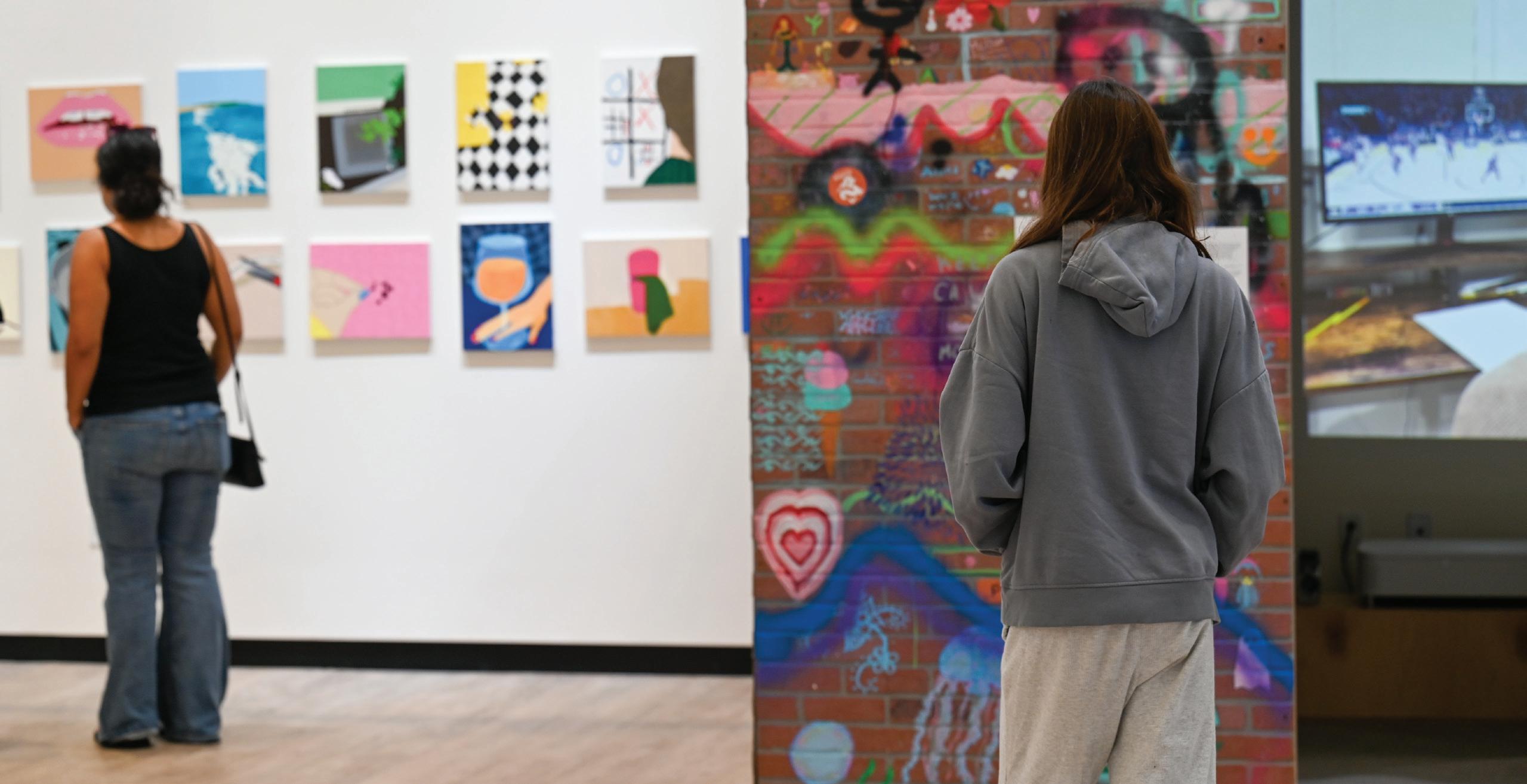
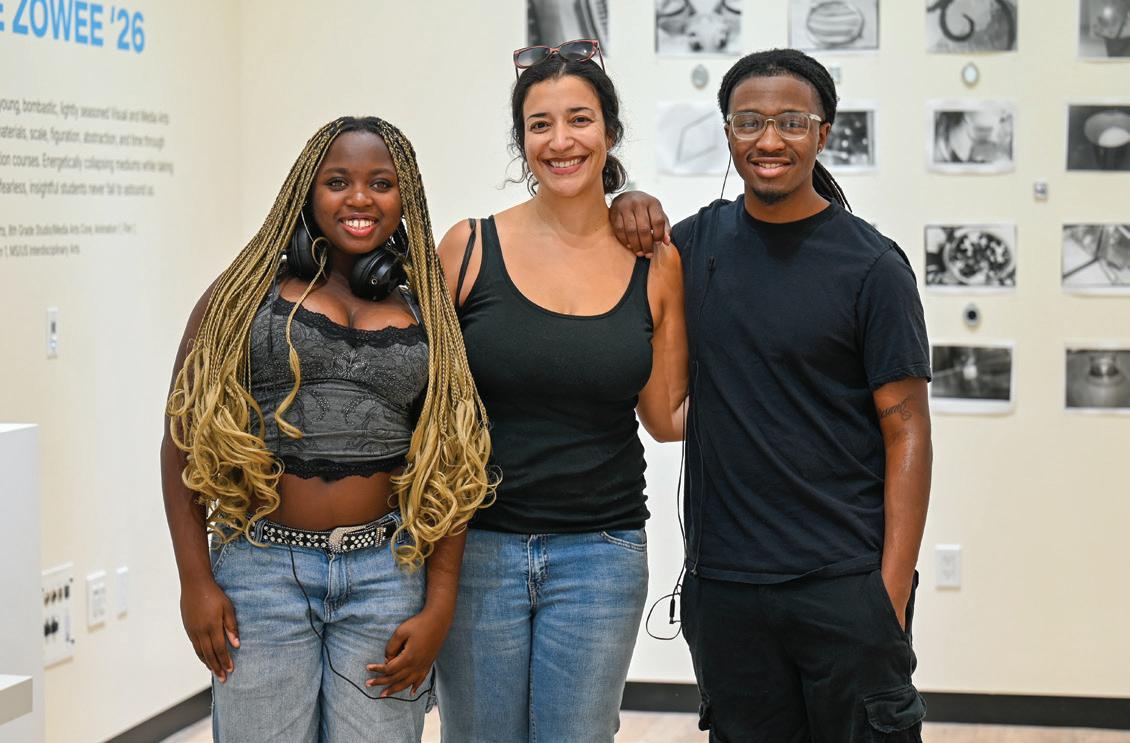
Each January–February slot highlights the energy of Windward’s 7th-9th Grade VMA students. WOWEE ZOWEE ’26 captured
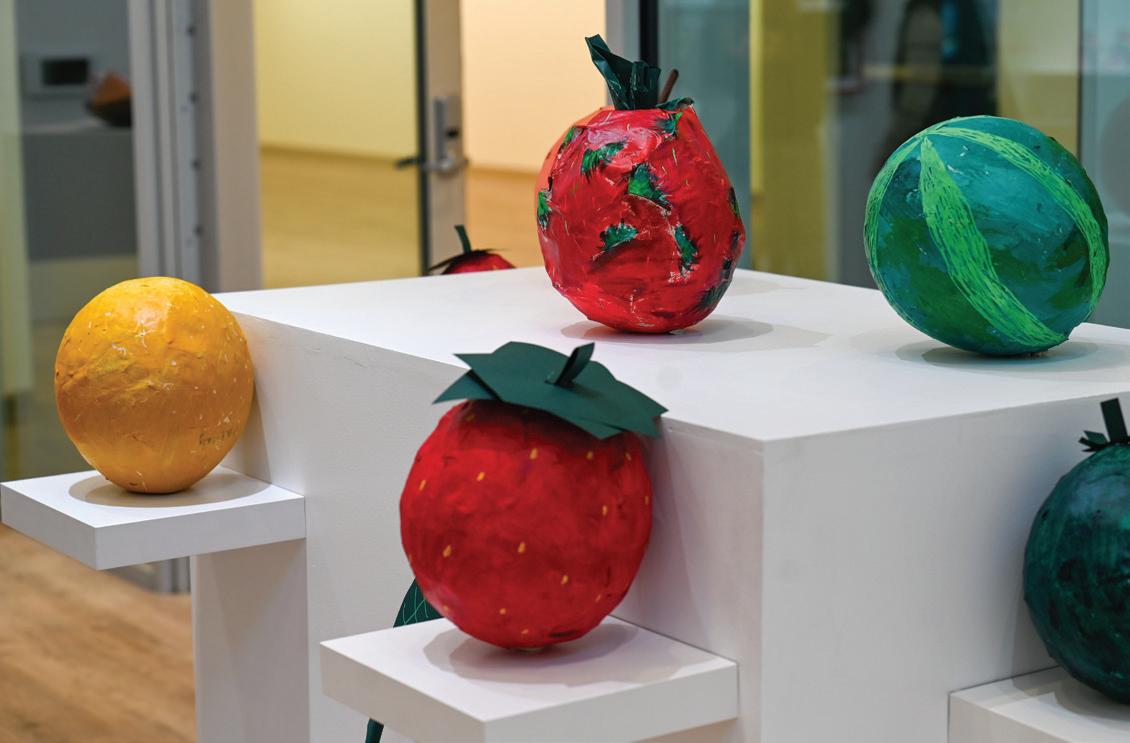
explorations of form, color, material, scale, figuration, abstraction, and time across foundation courses. Alongside large-scale prints, Pop Art sculptures, and bold paintings, visitors encountered the playful faux-brick “video hut,” where short films with titles like “The Killer Volleyball” and “Super Fahrenheit 451” drew steady audiences.
For students, the opportunity to see their work presented publicly marked an important shift. Senior Bella Kapoor, whose art appears in the exhibition, described the experience as affirming. “It feels so full circle that now, after doing art since 7th Grade, I finally get to see my pieces all together on a large scale and see how far I’ve come as a painter,” she shares. “I’m excited for the gallery because it highlights all of the unique and beautiful mediums we’ve learned how to use throughout the years—paint, photography, 3D sculpting—and expresses our identities for all to see and experience.”
Visual & Media Arts Teacher Hannah Northenor (Photography), who graduated from Windward in 1999, has watched the School’s creative spaces evolve over time. “Windward has always been a dream, built upon the wings of an artist. It has been a safe space for me to express myself and create work since I was a young girl struggling to find my artistic voice,” she explains. “Now, it is the safe space where I guide students to unlock their own.”
The season’s fourth exhibition will build on connections between faculty and alumni. In 2026, artist and VMA faculty member Colleen Hargaden will collaborate with alumna Madeline Hollander (Class of 2004). Their joint exhibition will center on the idea of the “perpetual motion machine” and its enduring role as a framework for imaginative inquiry, bridging Windward’s past and present through shared practice.
The season will conclude with a return to student work from Grades 10-12. The recital hall lobby gallery will feature pieces from Studio Art, 3D Design, Graphic Design, and Photography courses, leading into the main gallery, where AP Studio seniors will present their cumulative thesis work. In May, advanced Film and Animation students will continue this tradition of public exhibition, showcasing their work at the American Cinematheque’s Aero Theatre in Santa Monica.
As Windward’s physical spaces continue to evolve, Hannah sees continuity beneath the change. “The facilities, the buildings, the equipment, the technology, and the possibilities for making work continue to expand,” she reflects. “The physicality of Windward changes, as bodies do over time and space. The spirit within it remains the same—warm, safe, and filled with the dreams of artists and the visions of generations to follow.”
“The gallery is such a powerful way for us to say that the arts really matter here. It’s a place where students, faculty, alumni, and artists beyond our community get to showcase work, and where art is elevated and taken seriously. I love that it’s a space where we can gather and see art that has a point of view, art that makes us feel something, art that makes us stop and think. That matters in a school. It is a real reflection of Shirley Windward’s belief that creativity and curiosity connect us. They connect us to our own humanity, to each other, and to the world beyond our campus.”
- Sarah Beck, Head of School
Learning beyond campus
For Regina Hoffman, professional growth begins with a willingness to step back into the role of the student. “I just think we always need to be learning,” she shares, “and we can only grow our classrooms if we also are learning from other people. You can't just be in your bubble—it gets lonely.”
With support from the Windward Fund, Regina used Professional Development funds in 2025 not simply to refine her craft, but to reenergize it through immersive learning, national collaboration, and expanded opportunities for her students—both current and former.
Over the Summer, Regina traveled to Savannah, Ga., to participate in the Savannah College of Art and Design (SCAD) Educator Forum. Designed as a fully immersive experience, the forum asked educators to inhabit student life—staying in dorms, attending classes, and learning alongside fellow arts teachers from around the country. Regina enrolled in two courses, one focused on communication and the other on storytelling, both of which pushed her to reflect on how creative work and collaboration intersect in the classroom.
That focus on communication proved especially resonant. During the forum, Regina was introduced to the DiSC model, a framework developed in the 1920s that identifies four communication styles: Dominance, Influence, Steadiness, and Conscientiousness. After completing an assessment, participants broke into groups based on their styles and shared how they function in professional settings.
“People were very open,” Regina says. “I was really surprised how open people were in terms of really revealing what they need and what they crave for their relationship with their colleagues.”
The experience reshaped how she thinks about collaboration, particularly in school environments, where assumptions about shared perspectives can quietly undermine teamwork. “I think that's been really helpful for me, just even going into a room, and I think we all presume that people are like us, and they're not,” she says. “So that's good to remember when you're working with people.”
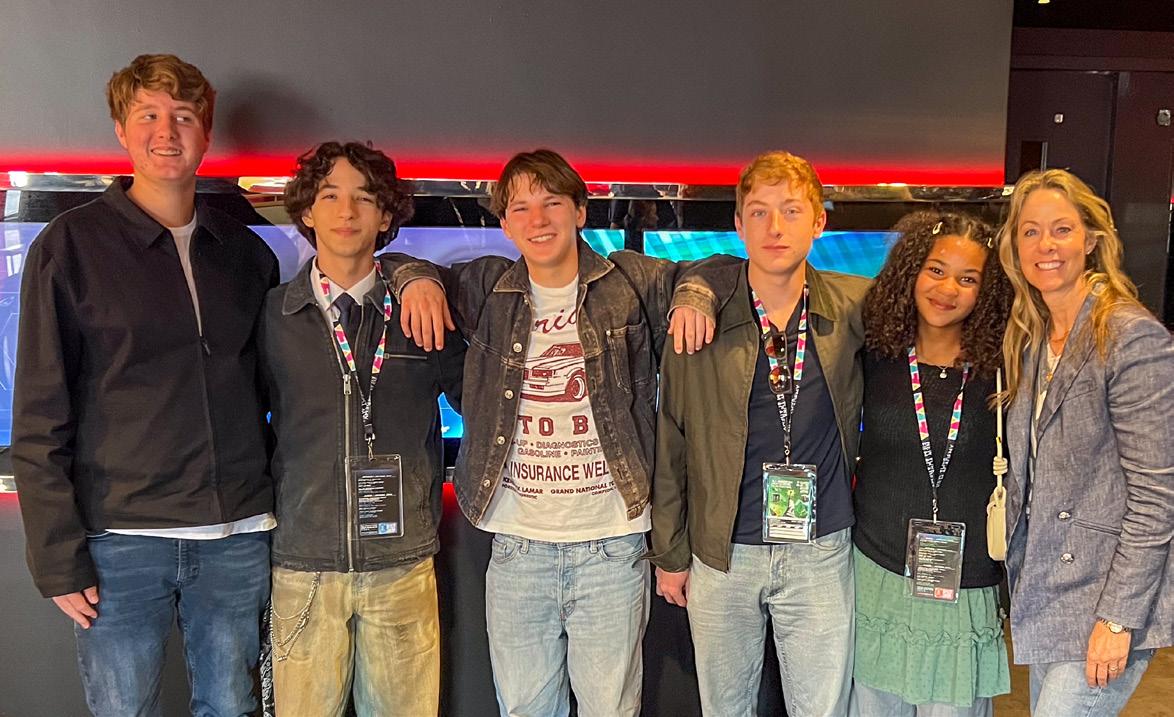
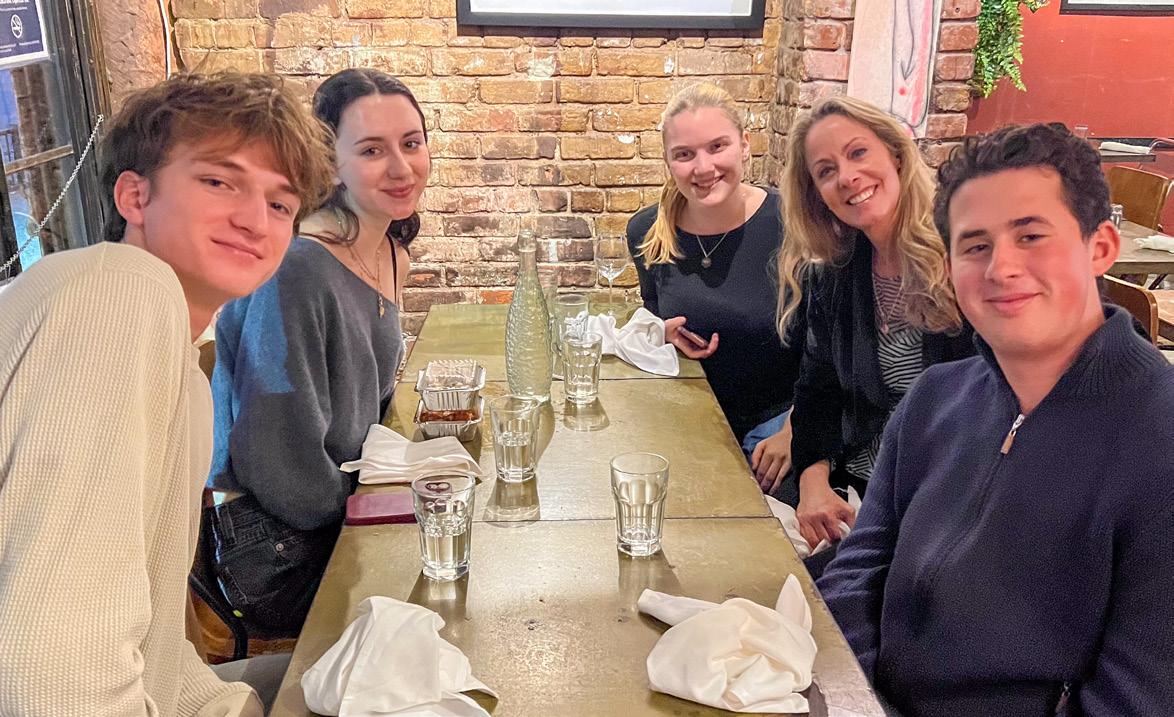
That commitment to learning beyond campus continued into the Fall. In October, Regina traveled to New York City to attend screenings at the All American High School Film Festival and to reconnect with Windward alumni now pursuing a wide range of paths.
While in New York, she hosted a dinner with Windward film alumni to launch a Windward Film Alumni Group. Created in partnership with Jeff Gilder, Director of Alumni Development and Engagement, the group is open to all alumni who participated in the film program, regardless of whether they are studying film in college, and will eventually host one annual gathering on the East Coast and one on the West Coast.
Wider A Frame
At the All American Film Festival, Regina attended screenings alongside Windward students and their families. For students accustomed to the supportive audiences of on-campus screenings, the national stage offers a different kind of challenge.
“Students need opportunities to share their films beyond the Windward community to truly grow as filmmakers,” Regina explains. “While showcasing work at school is valuable, stepping outside of their comfort zone and engaging with a wider audience pushes students to think more critically about their storytelling. Seeing films made by students from across the United States and around the world exposes them to new perspectives, styles, and voices they would not otherwise encounter. Film festivals challenge students to raise their standards, learn from their peers, and understand how their work resonates with a broader audience. While our film community nurtures their development, true artistic growth requires students to share their voice with audiences beyond Windward.”
"TOWN" THE TALK OF THE
Opening the Allison & Bennett Rosenthal Theater with “Urinetown”
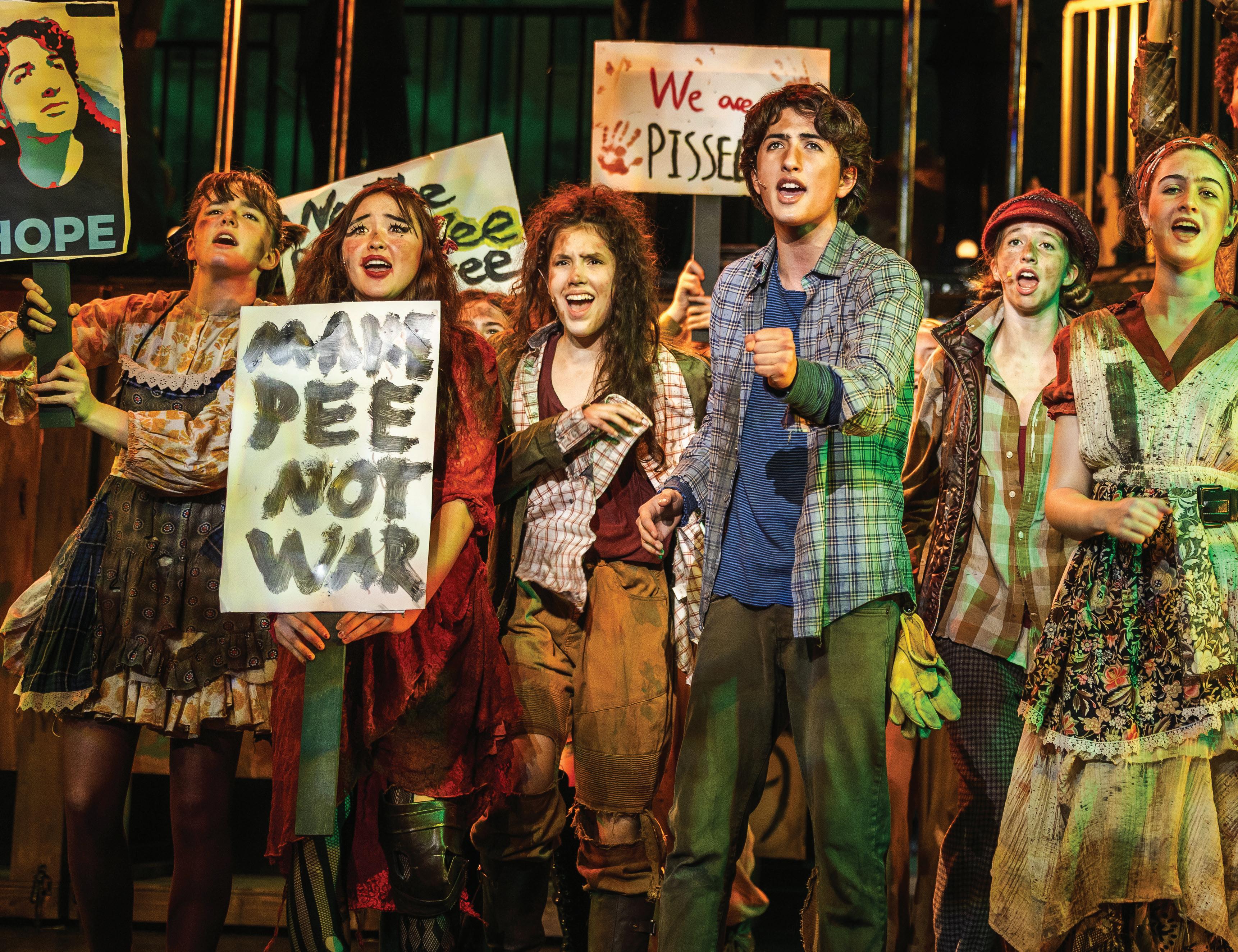
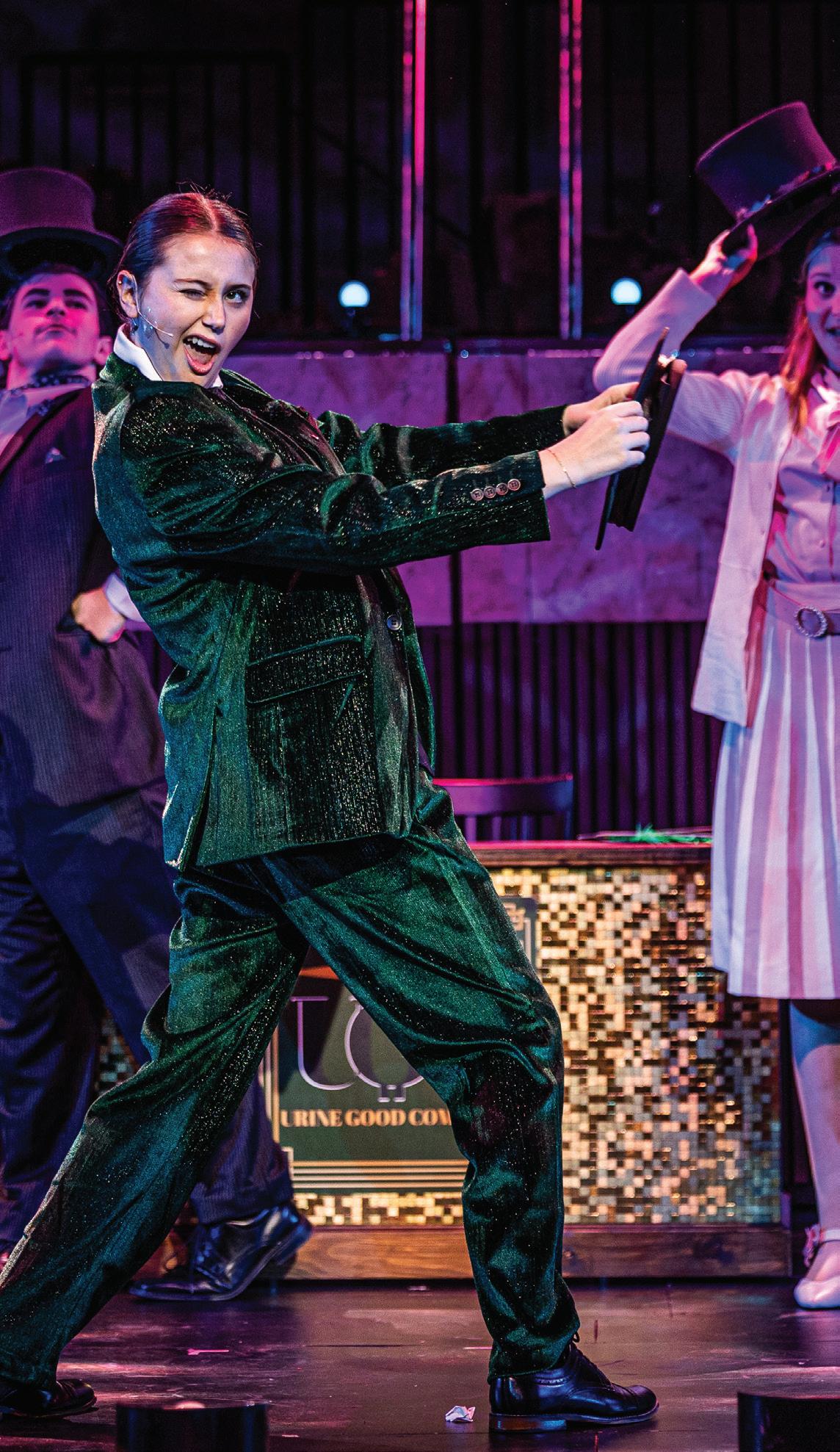
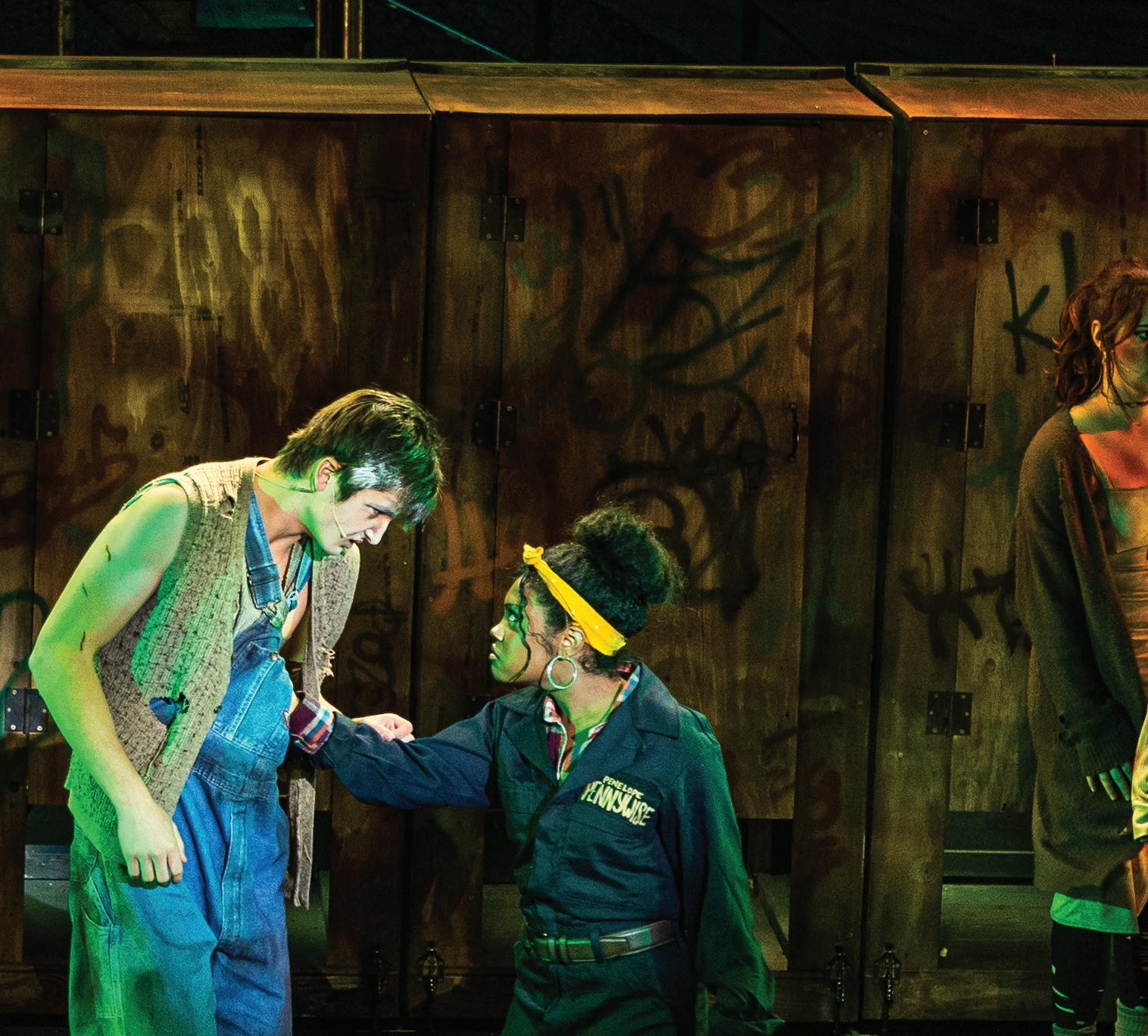
When the red velvet curtain opened on Windward’s Fall production of Urinetown, it marked more than the beginning of a performance. It marked the debut of a new era for Windward’s Performing Arts program, shaped by a theater built to support the commitment and scale of the work onstage.
The new Allison & Bennett Rosenthal Theater, a professional-caliber space within the DeGeorge Family Innovation & Arts Center, opened with Urinetown as its inaugural production. The state-of-the-art facility expands performance capacity, updates technical systems, and provides performance space that had not previously been available, changing how productions are built and rehearsed. The opening of the Rosenthal Theater reflects years of thoughtful investment in giving students the spaces they need to do their best work. Former Head of School Tom Gilder supported the growth of the Performing Arts program by recognizing that serious creative work relies on having the right facilities—an understanding that helped ensure student artists had the room and tools to pursue their work as part of Windward’s broader academic program.
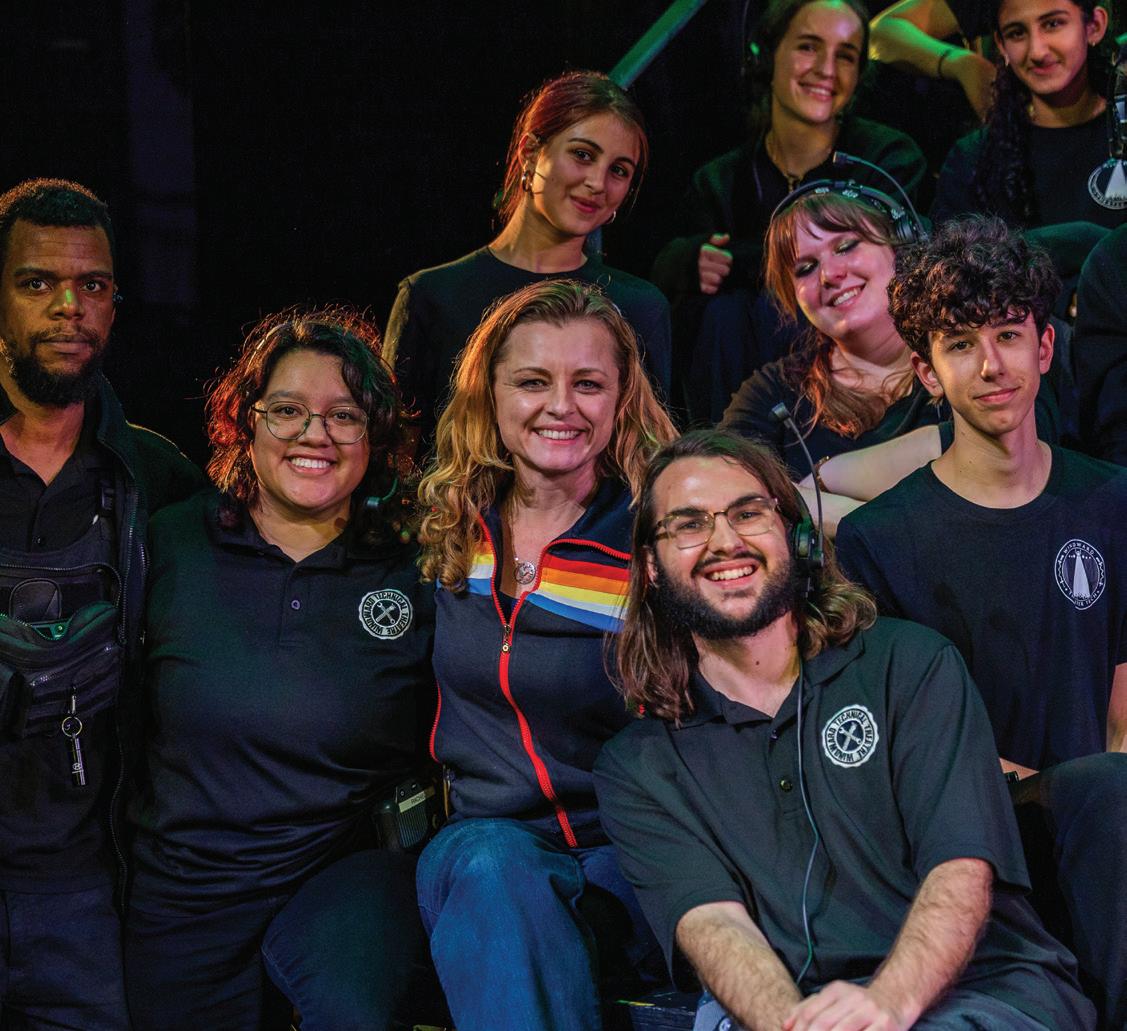
Preparing the Rosenthal Theater for its first production took months of coordination. Facilities staff worked closely with Production Manager Kristie Mattsson and Technical Director Ian Sloane to bring the new space online while a full-scale musical was already in development. That overlap added complexity, but it ensured that when students stepped onto the Rosenthal stage, the theater was fully operational.
The choice of Urinetown as the opening production reflected both the opportunities of the space and the history of the program. This marked the third time Windward has staged the musical, offering a familiar title through which to explore new technical possibilities and a different scale of production. (For more on the alumni legacy of Urinetown, see page 82.) The satirical musical is demanding, both musically and technically, and requires careful coordination between performers and designers. As rehearsals moved into the new theater, students adjusted to its acoustics and sightlines while learning how the space supports lighting, sound, and movement at a higher level than before.
Rehearsals often continued beyond the scheduled day, with the cast organizing additional work sessions and refining scenes together—an early sign of how the new space was already shaping expectations.
“The focus and dedication of both our student tech crew and actors was truly astounding,” shares Jordan Fox, Director of Theatre and Dance. “At every step of the process, they were committed to learning more, deepening their passion for theatre, and helping each other out as we approached the opening of Urinetown. This was a beautiful reminder of why we all love being a part of the theatre, as it is about challenging ourselves with sophisticated material while strengthening our connections as a community. We are so grateful to have this opportunity to be creating important work in such a beautiful space
“This ensemble of actors, crew, and creatives has done the profound work necessary to honor the promise of this glorious space,” agrees director James Moran. “They did not simply meet the moment; they transcended it.
to inaugurate the Allison and Bennett Rosenthal Theater, we certainly drew upon our institutional connection to the piece. However, the choice was primarily a declaration of intent: that this new stage is dedicated to exploring timely, vital stories—narratives that demand reflection from our audience and empower our young artists to find their own expressive voices.”
On opening night, the curtain rose not only on a production, but on the next chapter of Windward’s Performing Arts program.
DAZZLING A
DEBUT
Evening of Dance
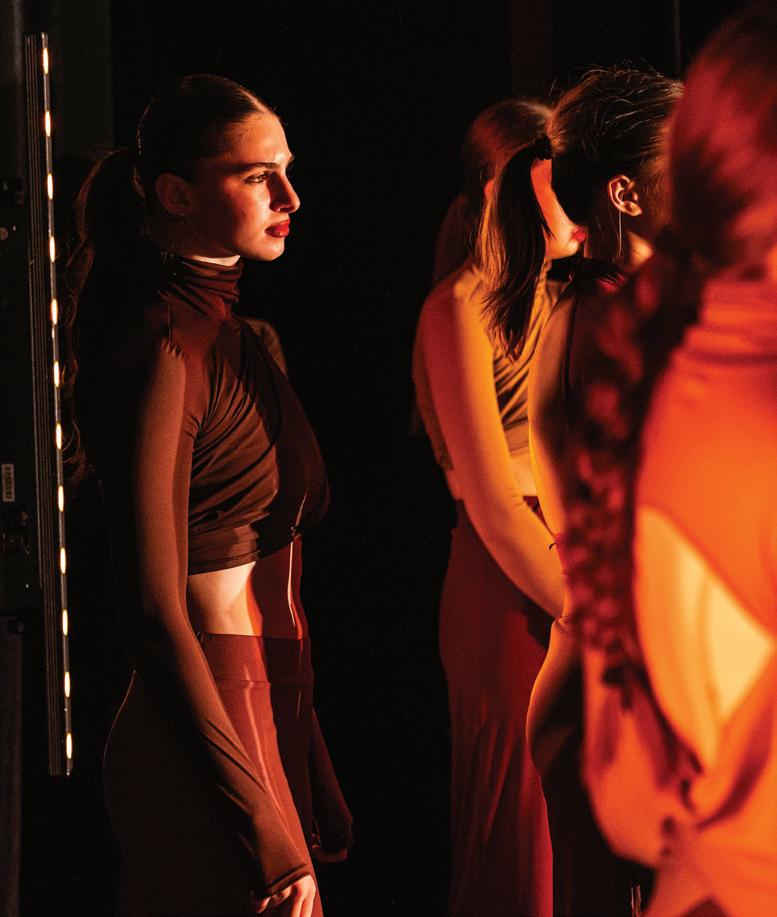
For Windward’s Performing Arts program, this year’s Evening of Dance marked a defining milestone. Held on February 6 and 7, the performances ushered Windward Dance into its dynamic new home—the DeGeorge Family Innovation & Arts Center and Allison & Bennett Rosenthal Theater—bringing movement, music, and storytelling into a space meticulously designed for creative possibility. With soldout audiences both nights, the event became a celebration not only of dance, but of a bold new chapter for the Windward community.
This showcase of contemporary work featured performances by the Middle School Repertory Dance Ensemble and Upper School Dance Companies, alongside professional guest artists BODYTRAFFIC, Alex Thomas, and a duet by Casey Murray and Emma Suther land. Together, the performances reflected the creative agility cultivated in Windward’s dance studios every day. In an ever-evolving dance world, being a specialist is no longer enough. Windward dancers are trained to be multidimensional, moving fluidly between styles, honoring the history and technique of each, while discovering the shared thread of expression that connects them all.
“Transitioning into the new facility energized every stage of the creative process,” shares Alesia Young, Performing Arts Teacher (Dance) and Co-Director of Programming & Special Projects. “Early access to the space allowed students and designers to fully explore its possibilities, making the shift from rehearsal to performance seamless. More importantly, having a dedicated center for innovation empowered students, guest artists, and the production team to push boundaries further than ever before.”
In addition to the live performances, the evening featured a dance film originally created for the LA River Exhibition, produced in collaboration with longtime videographer Guzman Rosado Nosti, as well as an original composition by emerging artist Nile Hoilett and a new choreographic work by Windward alumna Chloe Stephan ’24. Featuring Middle School dancers, Chloe’s piece, Untethered, reflected a growing sense of continuity within the program—one rooted in mentorship, collaboration, and the passing of artistic knowledge from one generation of dancers to the next.
“Having returned to Windward as a choreographer was absolutely surreal,” says Chloe. “The Innovation & Arts Center is stunning, and I felt so fortunate to have my choreography shared in such a grand space.” Working in the new facility, she notes, opened up new possibilities for scale and movement, while also reconnecting her to the foundations of her own Windward experience. “As a Middle Schooler, I was amazed by the amount of knowledge and experience we were given at such a young age by choreographers who came to work with us from all over the world,” Chloe remembers. “Now, as a choreographer who had the full dance company experience throughout my time as a Windward student, I strive to create the same positive and collaborative environment that I was fortunate enough to have as a dancer in the company.”
Ultimately, what audiences experienced during Evening of Dance was the result of this col lective focus: a testament to the hard work and creative spirit of the Windward Dance program. The performances showed what becomes possible when students are given a space built for the work they are doing—allowing them to explore more fully, take creative risks, and present work that feels confident, expansive, and very much their own.
SETTING STAGE
THE
U.S. Presidential Scholars
Each year, the U.S. Presidential Scholars Program honors up to 161 graduating Seniors nationwide for exceptional achieve ment in academics, the arts, and career and technical education, as well as for leadership and service. Each annual class recognizes one male and one female scholar from every state, the District of Columbia, Puerto Rico, and U.S. families living abroad.
The 2025 class included alumna Crystin Herring ’25, who represented the state of California. As part of the recognition, each U.S. Presidential Scholar was invited to name the teacher who had the greatest influence on their academic, artistic, and personal growth. For Crystin, the decision was an easy one: Performing Arts Teacher James Moran. “I had a very unserious relationship with theater before transferring to Windward Sophomore year,” she explains. “Dance was my focus and as far as I was concerned, I was only a dancer through and through who loved listening to musicals. James made it clear that he saw something big for me—that I had way more versatility and capability than I thought.”
As a result of that nomination, James was named a 2025 U.S. Presidential Scholars Most Influential Teacher, a national honor reflecting the student-teacher relationship at the heart of the program.
“Theater with James was a game changer,” Crystin recalls, “especially since I had been in a place of such self doubt and lack of community having left my old school and ballet studio. Like all James’ theater students, I had felt his ambition, powerful imagination, and vision the moment I stepped into the room. I loved that James knew the impact the theater could have and approached his directing from a place of how it can affect the community, how it can make one more person feel seen. This is a quality that continues to lead me in my training at Juilliard and beyond.”
For James, the recognition is inseparable from the work he witnessed in Crystin. “Every once in a generation, you encoun ter a student whose immense potential illuminates the path ahead,” he shares. “Crystin’s journey is uniquely hers to blaze, but I have no doubt that her extraordinary talents will lead her to the most coveted spaces in theatre, film, and television. She is truly destined for everything she envisions in her wildest dreams, and beyond. Crystin is a once-in-a-generation, game-changing artist and human being.”
Being named a U.S. Presidential Scholar capped a whirlwind year for Crystin, who was also named a YoungArts winner during her time at Windward. “It was such an honor and surprise to receive this award following a very fruitful and supportive year. I believe that the creatives have a unique strength to change the world for the better and to help people feel seen. Art doesn’t just touch the mind but the heart. I don’t take this award as a final stop but just a stepping stone to the changes and good I want to bring to my communities.”
She also connects that environment directly to her future, saying, “I would not have submitted myself for YoungArts, summer programs, and even Juilliard had I not been in an environment that properly fed and watered my seed, my passion for the theater. James guided me through numerous practice sessions before my drama school auditions and provided me with the mantra that ‘You can do this, and you should never settle for less.’”
Together, their recognitions reflect the spirit of the U.S. Presidential Scholars Program—an acknowledgment not only of individual excellence, but of the formative relationships that made such excellence possible. Congratulations to Crystin and James on this extraordinary national recognition!
ALL ABOUT MIDDL SCHOOL
E
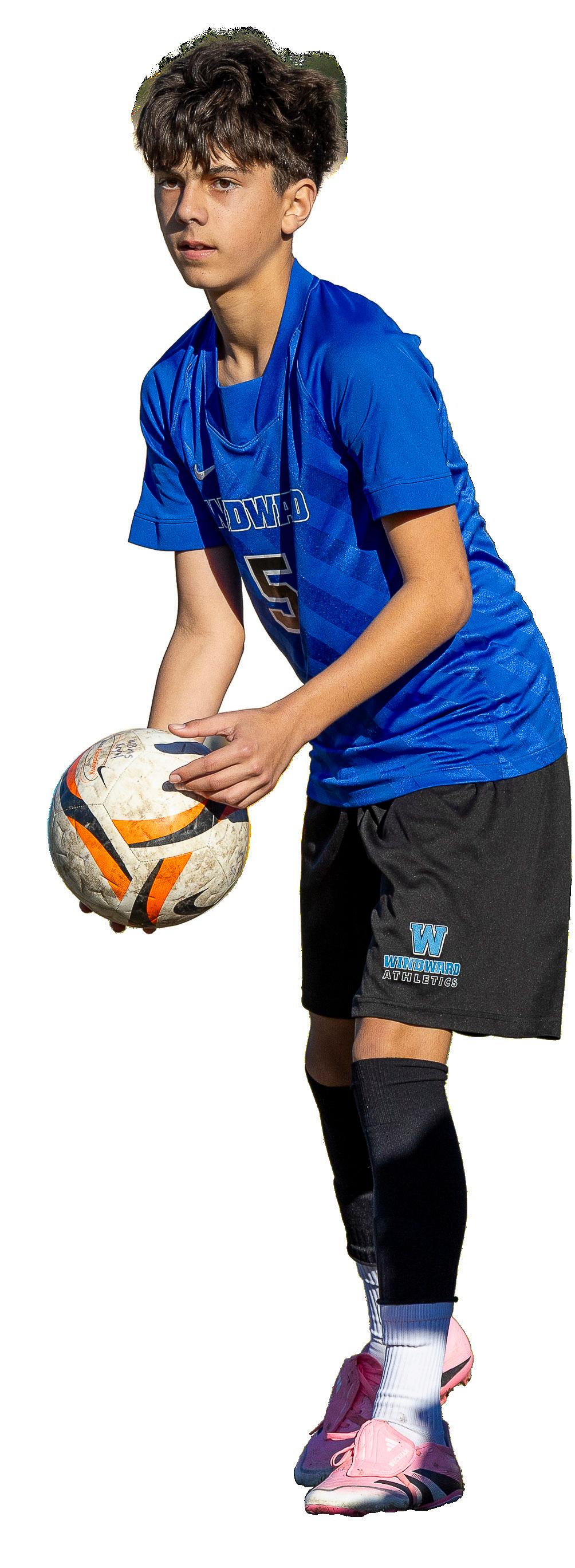
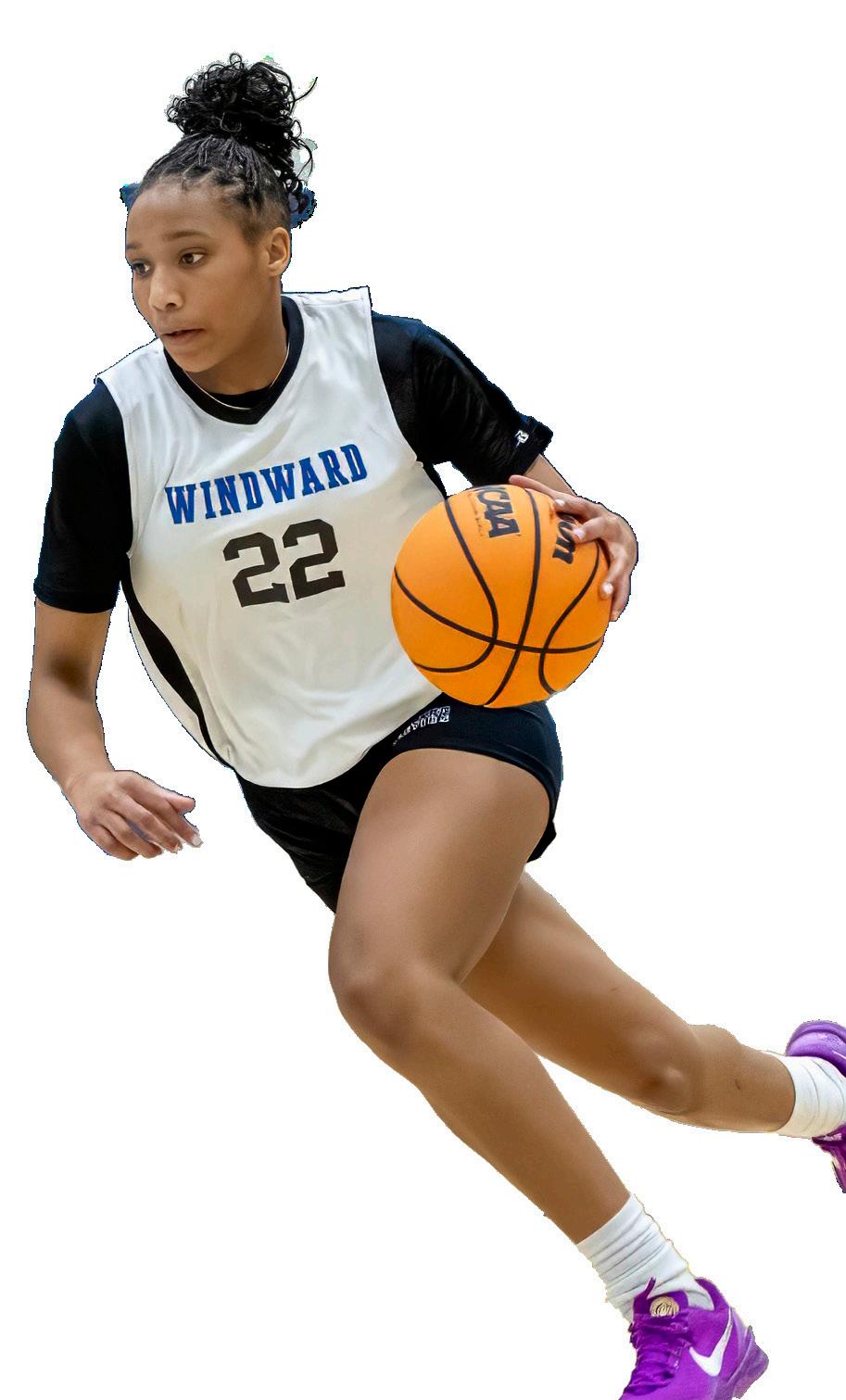
On January 9, the Windward community lined the stands and filled the bleachers in a sea of Windward blue for the annual Middle School Extravaganza. Featuring a dynamic slate of athletic contests, including Girls and Boys Basketball and Girls and Boys Soccer, the event offered a spirited show case of Windward’s Middle School scholar-athletes and the energy that defines the division.
Often described as a homecoming-style event for the Middle School community, the Extravaganza brings together students, faculty, and families for an afternoon and evening of friendly com petition and shared celebration. This year’s event felt especially meaningful as Middle School Student Leaders took on an expanded role, helping to shape both the planning and the atmosphere of the day.
“The students were involved every step of the way,” says Jocelyn Castillo, Assistant Director of Community, Engagement, and Belonging for Students. From creating posters and developing GooseChase prompts to attending games and encouraging peers to stay and participate, their leadership helped set the tone. “Their enthusiasm played a huge role in the energy and success of the event.”
The games themselves were competitive and well attended, complete with cheering sections and even a halftime performance. Between contests, students gathered around food options on campus, including a fruit cart, tacos, and Kona Ice, adding to the festive atmosphere and giving the day a relaxed, communal feel.
The event was supported by a broad team effort across campus, including the Athletics Department and coaches, along with Windward’s Security and Facil ities teams, whose work helped ensure the day ran smoothly. Parent volun teers also played an essential role, helping with everything from distributing shirts and decorating to supporting concessions and ticket sales.
For the Middle School community, the Extravaganza continues to be a special moment on the calendar—one that belongs wholly to them. “I think this event allows Middle School students to feel a piece of what is to come when they transition into the Upper School program,” Jocelyn shares, “while still keeping the focus on them.”
FINDING HER LINE
Selynne Park ‘27
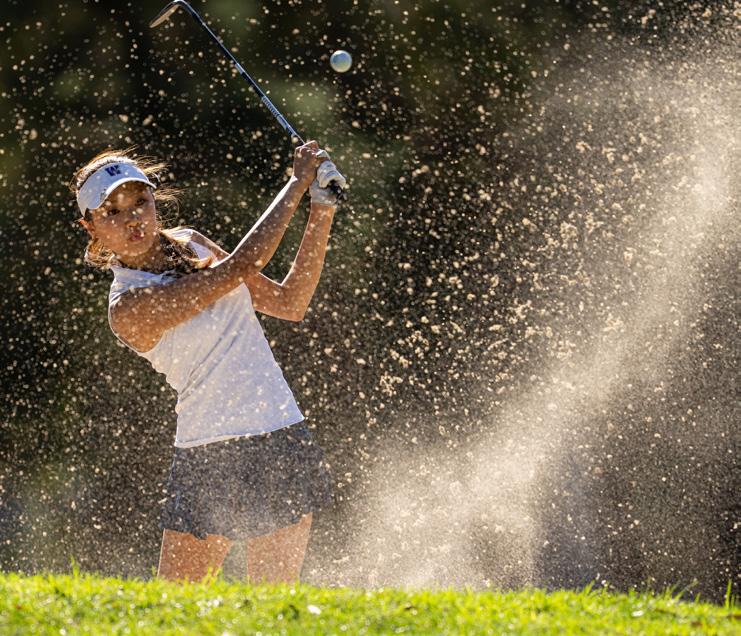
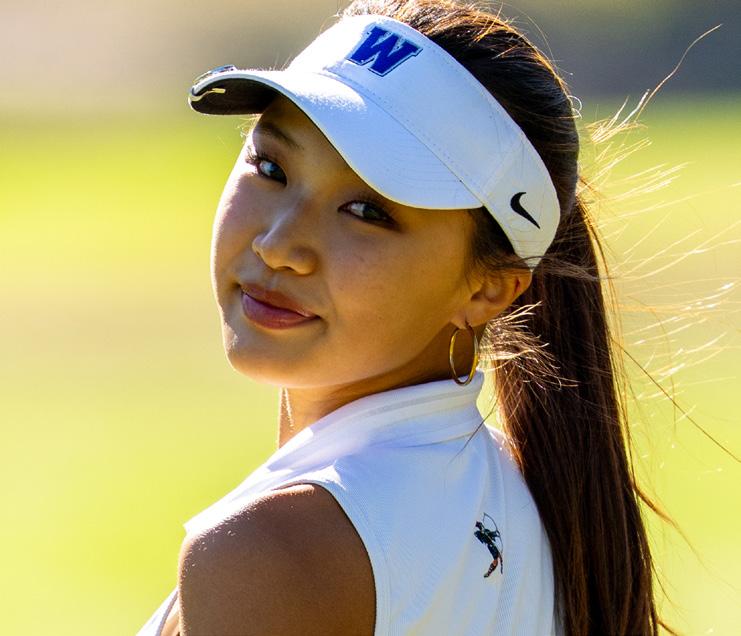
Golf has been part of Selynne Park’s life for as long as she can remember. “I started playing golf at a young age because my entire family, including my grandparents, played the sport for fun,” she says. “I often followed them to country clubs and spent long days around the course. What initially drew me to golf was the beauty of all the various golf courses all around the world and the opportunity to spend meaningful time in such peaceful scenery.”
As a scholar-athlete at Windward, Selynne’s path has asked her to move between different competitive roles. During the Girls Golf season, she often competes as an individual, sometimes as the only golfer in the field. “This was difficult for me
Golf’s individual nature has also shaped how Selynne approaches pressure. Without teammates to share decisions, accountability is built into every shot. “Competing individually can feel isolating, but it has helped me improve my self-accountability skills,” Selynne shares. “Every decision, mistake, and recovery is entirely my responsibility. Since golf is an individual sport, being the only Girls Golfer at Windward at times has further strengthened this mindset and taught me how to trust myself in competitive situations.”
Being part of the Boys program added another layer to that development. “Having Selynne on the team has been fantastic,” says Richard Brisacher, Golf Program Lead. “As an individ-
at first, because I am not naturally the most independent person,” she admits. “Over time, however, being placed in that position helped me develop greater independence and confidence.”
The Spring season brings a different structure and set of expectations. Competing on the Boys Golf team means longer tees, greater physical demands, and a more strategic approach to each hole. “During the Boys season, I had to increase my strength and distance, as playing from the blue tees is significantly more challenging,” she explains. “I value the opportunity to represent both teams for my school and to compete during both seasons.”
Across the two golf seasons, consistency has defined Selynne’s competitive record. She has qualified for CIF as an individual in each of her three years at Windward, a benchmark that reflects sustained effort rather than a single breakthrough. “Qualifying for CIF consistently every year has been very challenging, but it has motivated me to continue improving,” she says. “Each year has pushed me to raise my standards and work harder on my game. Seeing how my performance has evolved over time has strengthened my determination and growth.”
ual, she has represented Windward extremely well, finishing in the top four golfers in every league event she has competed in and earning League MVP honors. As a member of the Boys team, she has been our strongest JV golfer for the past two years and reminds us that golf isn’t just about hitting the ball as far as you can. I’m excited to see her compete at the varsity level this season.”
“Being part of the Boys team taught me how to compete in a high-expectation environment,” says Selynne. “I learned how to approach the game more strategically from the blue tees, which significantly changed how I plan each hole. Watching my teammates hit the ball with power motivated me to become stronger, which helped me increase my own distances.”
As she looks ahead to her Senior year, Selynne is focused on what comes next. “I am currently focused on refining the mental side of my game,” she says. “Because golf is an individual sport, I am still learning how to stay calm and openminded when shots do not go as planned and how to recover effectively. I am also working on playing under pressure and building more confidence in myself. I aim to become a golfer who trusts her process and competes confidently in any environment.”
When Windward’s scholar-athletes take the field, court, or track on any given day, they do so under the guidance of exceptional coaches and Program Leads. Most have stood in a scholar-athlete’s figurative shoes at one time or another. But for some Windward coaches, the connection runs deeper—they once stood on the exact same home court, wearing the same jersey, learning what it meant to represent the “W” both on and off the field.
For these alumni coaches, returning is not about nostalgia. It is about extending the same support and values that once shaped them.
“I had a great experience at Windward as a student, and athletics played a huge role in that,” says Matthew Greenebaum ’15, now Girls Middle School Soccer Head Coach and Varsity Assistant. “My fondest memories were on the soccer field, track, and cross country courses, so getting to come back and coach the scholar-athletes has been extremely rewarding from day one.”
The role, however, carries new weight. “As a student-athlete, I felt a responsibility to perform at my best, help the team, and represent the school the way it deserved,” Matthew says. “Stepping into a leadership role as a coach, I feel an even greater responsibility to lead in a way that represents Windward proudly.”
Jessica Christensen (Sacks) ’09, now Girls Middle School Soccer Assistant and JV Assistant, experienced a similar shift. “I’ll be honest: as a student, I didn’t always feel connected to Windward in the way I do now. Seeing the athletic program through the lens of a coach has completely reshaped my perspective. What I see today is a community that is aligned, supportive, and committed to building something special.”
“When I look back at my years at Windward, it was my personal relationships with coaches—not their ability to improve my skills—that left a lasting memory,” says Zach Bright ’08, who now coaches Upper and Middle School Baseball. “So when dealing with players today, I try to prioritize showing a significant interest in their lives outside the diamond.”
Matthew shares that experience. “I remember the genuine care and interest my teachers and coaches showed in me and my peers beyond whatever subject they were teaching or sport they were coaching. That was invaluable to me as a scholar-athlete at Windward, and it is something I strive for now—building relationships with my players and making sure they know how much I value and care about them as people.”
CARRYING THE “W” FORWARD
Alumni Coaches Come Full Circle
Zach Bright ’08
Ani Rosen ’19
Ben Meyer ’18
For Ani Rosen ’19, now Cheer Program Lead, that relational connection feels immediate. “There is a certain mutual familiarity the students and I have because we have experienced some of the same things and walked the same campus,” she says. “I think this creates a strong sense of trust and bond between us.”
Ani’s return also represents something uniquely personal. As a Senior, she founded the Windward Dance Crew, which evolved into today’s Cheer Team. “Being part of a program that I once dreamed of having as a student is truly full-circle,” she says. “My goal is to build a culture where every scholar-athlete grows into their most confident self, starting on the court and carrying that confidence into every aspect of their lives.”
Ben Meyer ’18, now Boys & Girls Tennis Program Lead, traces that same continuity to a mentor of his own. “Ryan Shelven, the Tennis Program Lead before me, was a fantastic role model,” Ben says. “He developed great relationships with students, built a strong, positive team culture, and kept in touch with alumni. I aspire to continue that culture of hard work, accountability, and mutual respect.”
That continuity—mentor to athlete, athlete to coach—is also what shapes how these alumni respond to the high expectations students place on themselves. “The students put a lot of pressure on themselves to succeed, and this can be daunting,” Ben says. “Being an alumnus gives me insight into their mindset and helps me understand how many different directions they are often being pulled.” That insight guides his approach. “It allows me to push students to be their best while still giving them space to fulfill the many responsibilities of being a Windward student.”
Across programs, the philosophy is consistent: high standards grounded in connection. “As a student-athlete, I played under a coach who was extremely tough—so tough that, at times, the joy of the game was lost,” Jessica says. “That experience taught me something important about balance. Athletes perform best when they feel challenged and supported. Creating space to talk, connect, and have fun is not a distraction from excellence—it’s a pathway to it.”
Matthew’s experience reinforced that balance in a different way. “I was challenged and pushed while also feeling safe to fail or make a mistake,” he says. “Creating an environment where scholar-athletes are encouraged to take risks while understanding that failure is part of life is incredibly important. Growth comes from how you respond to those moments.”
Jessica calls it failing forward. “Failure is the foundation of learning, especially for scholar-athletes at this age,” she says. “My goal is to create an environment where athletes are not afraid to try, fail, and adapt, because that’s how confidence and resilience are built.”
The School, Matthew adds, “teaches students to be critical thinkers and intentional about the decisions they make and the actions they take. There is so much value in education-based athletics beyond what happens on the field.”
Those lessons shape the standards they now reinforce. “The expectations I consistently reinforce go far beyond talent or wins,” Jessica says. “They center on effort, competition, and composure, accountability and attitude, teamwork and trustworthiness, and support and selflessness. These standards shape not only how we play, but who we become.”
Ani echoes that emphasis on character and culture. “Confidence, accountability, hard work, respect, teamwork, communication, leadership, and perseverance are essential—not only for success in Windward Athletics, but for life beyond the court.”
For Matthew, those values show up most clearly in the daily work. “I expect my players to show up and work hard every day while understanding that the result is secondary to being the best version of themselves in how they approach the process.”
That process requires patience, Zach adds. “When placed in positions of power, it is easy to become overly focused on broader goals while forgetting the individual needs of those around you. Being able to redirect your focus and give others’ priorities the respect they deserve is something that stays with me from my years on campus.”
And for Jessica, it ultimately comes back to connection. “Being the most talented team doesn’t matter if we’re not the most connected. What matters is competing for the ‘W’ on your chest and representing something bigger than yourself—your teammates, your program, and the values you stand for.”
In returning to Windward, these alumni are continuing a cycle in which mentorship becomes leadership, and leadership shapes the next generation of Wildcats. “My hope is that one day some of these scholar-athletes recognize what it means to be invited back into a community like this,” Jessica says, “and that they, too, want to leave a positive impression on the next generation. If I can help plant that seed, then I’ve done my job well.”
Jessica Christensen ’09
Matthew Greenebaum ’15
Making Their
MALIA WALLACE ’27 AND LANDON WALLACE ’28
“List”
Over time, their work with Miry’s List deepened their understanding of service as something guided by what families say they need most, rather than short-term help. That sustained involvement built a familiarity with the organization that ultimately made a Windward service retreat centered on Miry’s List possible.
“As time went on, we realized the purpose behind the organization was something important that we needed to share with other students,” explains Malia. Inspired by Miry’s List, the siblings helped start Windward CARES (Community Assistance and Refugee Empowerment by Students), an on-campus club focused on listening to refugee families and supporting them respectfully.
As CARES grew, it created space to extend that work beyond regular meetings. The service retreat brought together students from across campus for a more focused, shared experience rooted in Miry’s List’s approach. “As more students joined and became invested, it created an opportunity to take the work fur-
When Malia Wallace ’27 and Landon Wallace ’28 participated in a service learning retreat with Miry’s List this past Fall, they arrived as seasoned volunteers. They first became involved with the nonprofit in Middle School, attending welcoming events, delivering items to newly arrived refugee families, and helping fulfill personalized wish lists created by each household.
ther,” adds Landon. “The retreat felt like a natural extension of what we had already built on campus, just in a more focused and hands-on setting.”
Because of their familiarity with Miry’s List, their role in shaping the retreat came with a sense of responsibility. “We understood the families behind the work and why the details mattered,” Malia notes. “That made us more thoughtful about how the experience was structured.” It was important to them that the retreat reflected the organization’s values and approached the work with intention and respect for the refugee community.
One of the central projects of the retreat involved packing individualized home care kits for newly arrived refugee families. The kits were assembled in collaboration with Miry’s List founder Miry Whitehill, as well as Ashley Goodman, Windward’s Director of Service Learning, with a focus on identifying what families needed most immediately.
“Instead of viewing it from an outside perspective, we focused on the items families needed immediately in order to function day to day,” Landon explains. “The home care kits were important because they included basic essentials, items families often arrive without and are not able to navigate to attain right away.” Knowing the kits would go directly to families upon arrival shaped how the work felt. “Being able to contribute to that sense of comfort and stability, even in a small way, made a real difference.”
Collaboration shaped the work from the start, both during CARES club meetings and throughout the retreat itself. “Working as a group meant talking through why certain items mattered, how families might experience receiving them, and how small details could affect how welcomed someone feels,” says Landon. “It pushed us to be more thoughtful rather than just focused on finishing tasks.”
For Malia, collaboration also influenced how the work resonated beyond the retreat. “By working together and talking openly
about what we were learning, we were able to share the mission more widely on campus,” she adds. “Seeing the enthusiasm and willingness of the students made the volunteer work feel especially satisfying.”
When reflecting on what they hope other Windward students took away from the retreat, Landon points to perspective. “As students, we hoped it would be easier to imagine how overwhelming it would feel to start school in a new country without knowing anyone and struggling to communicate,” he reflects. Malia returns to what felt most essential. “Ultimately, we hope this understanding fosters greater patience, empathy, and awareness,” she says. “More than anything, we hope students recognize that small, thoughtful actions can make transition feel less isolating.”
TREEAMS Team The
Like many in the Windward community, students Christopher Henning ’27, Louis Thuan ’27, Daniel Morrison ’26, and Daniel Turtletaub ’28 found themselves directly impacted by the devastating fires that spread the Palisades in early 2025. With such a personal connection to the wide-ranging tragedy, all four began looking for a way to contribute to the recovery in a meaningful way.
That desire led them to start the Windward chapter of TREEAMS, a student-led effort rooted in environmental recovery and service, developed on campus and shaped through collaboration with Windward educators and peers. Rather than taking shape as a formal program from the outset, the work grew out of what the students were seeing around them. “All of us went to the Palisades and saw firsthand the burned-down buildings, houses,
and schools that we went to as kids,” shares Christopher. “The devastation motivated all of us to really get behind this project.”
The group’s earliest efforts were kickstarted through Christopher’s connection to Seven Arrows Elementary, where all four students are alumni. After learning that the school would be hosting a Fire Victims’ Day at Culver Park, Christopher volunteered to help gather names and contact information from community members interested in restoring the local ecosystem. The initial idea, he explains, came from a current Seven Arrows student who wanted to plant trees in fire-affected areas. With continued encouragement from Seven Arrows educators, the students brought that idea to Windward and began developing it further.
Christopher soon brought Louis into the project, and as conversations continued, Daniel Morrison and Daniel Turtletaub joined as well. As the work took shape, the TREEAMS team brought their vision to neighboring schools, looped in peers from across Windward, and began coordinating with educators and community partners. Rather than following a fixed blueprint, the group allowed the work to develop directly through feedback.
While TREEAMS began with the practical goal of planting trees, its meaning to the group has continued to evolve. “Originally, TREEAMS stood for ‘Together Revitalizing Environments and Elevating Awareness by Mobilizing Society,’ but it has since evolved to ‘Trees + Dreams,’” Christopher explains. “Originally, we wanted to create an organization to plant trees and revitalize the burned-down community, but this has grown into a concept of teaching younger kids, establishing lifelines with them, and fighting for ecosystem change.”
That evolution has brought its own challenges. Expanding the work across schools and organizations has required patience and flexibility, particularly as the group continues to navigate different systems and expectations. Progress has been slower than anticipated at times, shaped by logistics the students are still learning to manage.
Even so, the work continues to move forward. Plans are underway for seminars and workshops at elementary and high schools, with Windward club members supporting and leading those sessions. The group is also preparing to use an environmental curriculum being designed for elementary students, with the goal of partnering with local schools on after-school programs and on-campus tree planting, including a planned Earth Day event in Pacific Palisades. For the TREEAMS Team, what began as a response to sudden adversity has evolved into a purposeful, collaborative engagement with the community around them.
Dad’s Night
A PATERNAL PARTNERSHIP
On October 19, Windward fathers and father figures paired ballcaps with hairnets as they gathered for a special service learning event—Dad’s Night. Held at Our Big Kitchen (OBKLA), a Los Angeles–based nonprofit dedicated to addressing food insecurity through volunteer-powered meal preparation, the afternoon brought together male-identifying parents and guardians for hands-on service and conversation.
Approximately 40 dads gathered on a Sunday afternoon, representing every division of the School—from families new to Windward to parents of Seniors. The event began with a brief introduction to Our Big Kitchen, followed by a quick lesson in knife skills. From there, the group moved easily into the work itself, splitting into teams to prepare vegetables, chicken, and dough
before shifting into an assembly line to package meals and baked goods for distribution.
“It was really enjoyable spending time with other dads and participating in an activity that helps the larger community in LA,” shares Windward parent David Yang. “There was a great turnout, the energy of the group was positive, and overall it was a nice reminder of how lucky we all are at Windward.”
For parent Matthew Hayutin, the combination of service and connection made the experience stand out. “I thought this event was fantastic. It was super meaningful and high impact. I met some great dads while learning about a vital cause,” he shares. “I think any dad's event that includes an activity or has a community service element of giving back will always be popular with
many of us: we're getting to know each other in a very authentic way while doing something collectively that has meaning.”
Parent Gregory Seese noted how the structure of the work itself encouraged conversation. “The One Big Kitchen prep tables were incredibly user-friendly in facilitating connected, engaged conversation with fellow fathers/father figures,” says Gregory. “I ended up getting to know the stories of not only five new Windward dads, but also three other dads who matriculated to the School at the same time as our family.”
Event facilitator Tyrone Powell highlighted the role of the partnership in shaping the afternoon. “Our Big Kitchen’s staff created a welcoming environment that included a streamlined process for prep and packaging, allowing Windward dads to connect and
collaborate in a meaningful way,” he shares. “It is definitely an experience that we should repeat.”
Over the course of just under two hours, the kitchen stayed busy and focused as dads rotated through tasks and worked side by side. For OBKLA, the gathering marked its first all-dads volunteer group—one that staff members described as among the most productive they had ever hosted.
As Windward continues to expand its service learning initiatives, Dad’s Night has begun to carve out a welcome niche. That sense of connection and camaraderie is likely to deepen as more opportunities to come together take shape, including a second Dad’s Night planned for the Spring.
MAKING HER CASE
SYDNEY LITT ‘26
As a student at Paul Revere Charter Middle School, Sydney Litt ’26 found herself drawn to the mock trial experience, building a sense of shared community with her teammates while also growing as a researcher and developing valuable argumentative and rhetorical skills. When she arrived at Windward her Freshman year and discovered that the School did not have an active mock trial program of its own, she quickly recognized an opportunity to bring that same enriching environment to her classmates and peers.
Rather than waiting for a program to appear, Sydney began building one. Throughout her Freshman year, she met with faculty members, researched local organizations, and developed presentations outlining how a mock trial club could take shape on campus. By her Sophomore year, the Mock Trial Club officially launched—and it has continued to expand in both membership and ambition ever since.
As the club grew, so too did the focus on deepening the experience for its members. That meant introducing new drills and activities, but also building bridges beyond campus by bringing legal professionals into direct conversation with students. This year, Deputy District Attorney Jeff Stodel and former U.S. Attorney Martin Estrada visited campus to speak with the club about their careers, their responsibilities, and the realities of working within the justice system. During those sessions, students were able to ask candid questions about courtroom procedure, case preparation, and the challenges of pursuing justice in high-stakes environments—conversations that connected their mock trial exercises to the real-world systems they are designed to mirror.
For Sydney, those visits were about more than exposure to impressive résumés. As she states, “I believe that building an understanding of the justice system that makes up part of the very foundation of our country is not just crucial to becoming informed citizens and advocates, but is empowering on an individual level, too.”
Sydney’s leadership also extended into the classroom through this year’s Big Windward Read. Asked to contribute to the allschool event, Sydney designed a mock trial inspired by this year’s chosen text, Fahrenheit 451, translating the novel into a courtroom case that required students to step into the roles of prosecution and defense.
“Reimagining the book into a compelling legal trial definitely took a creative approach,” Sydney explains, “one that involved determining what in the book could be translated into a fair trial, writing up a summary of the crime, and providing character descriptions. But in doing all of this, I hoped to challenge students’ perspectives of the book by having them become participants in the story while questioning characters’ motives and actions.”
Throughout the session, students combed through the text for evidence, debated strategy, and immersed themselves in the process. The session generated the same palpable energy that led Sydney to form the club in the first place, and many of the students who participated joined Mock Trial at the Clubs and Groups Fair the following week. “I consider it one of the most rewarding things I have ever done,” says Sydney.
As the Mock Trial Club continues to grow, Sydney remains focused on fostering the same environment she initially found so enriching. “Put simply, mock trial is for everyone,” she notes. “Whether someone is interested in acting, speech and debate, the justice system, or simply looking for an enjoyable hobby, I want to open up an accessible space for them to explore that, gain invaluable skills like public speaking, grow without hesitation, and find a community of supportive peers.”
What began as a gap has become a thriving space for inquiry and advocacy, one built on student initiative and driven by the belief that students deserve the chance to find and grow their voice.
PUSHING PAST THE POSSIBLE
For Grant Ruttenberg ’26, reading scientific papers isn’t something reserved solely for the classroom—it’s something he does for fun. Long before his research was accepted for publication in a peer-reviewed scientific journal, Grant was spending his free time immersed in academic literature, drawn by curiosity and a desire to understand some of the most complex questions in neuroscience.
That curiosity ultimately led Grant to conduct an independent research project analyzing large genomic datasets related to schizophrenia, work he completed largely on his own and that culminated in the publication of a paper in Frontiers in Neuroscience. The accomplishment is notable not just for its subject matter, but for its scope: Grant designed the research question, taught himself the necessary computational tools, performed the statistical analysis, and wrote the paper without formal mentorship or institutional backing. He then submitted the work to a peer-reviewed journal—an arena that typically only accepts submissions from established researchers—and it was accepted and published.
Grant’s project focused on a long non-coding RNA, HTR5A-AS1, that had not previously been characterized in scientific literature. While proteins are often the focus of genetic research, schizophrenia is believed to be influenced largely by regulatory regions of DNA, making non-coding RNA a compelling area of study. Through his analysis, Grant found that this RNA was significantly downregulated in patients with schizophrenia, particularly in the hippocampus, a brain region associated with memory.
Because there was no existing research on the RNA, Grant’s work involved more than identifying correlations. “There was no literature on it, so it was possible that it didn’t even exist,” he explains. “I had to prove that it wasn’t just transcriptional noise.” To do so, Grant developed an extensive verification process, demonstrating the RNA’s developmental regulation and structural features.
The work required skills well beyond the standard high school science curriculum. To prepare himself, Grant taught himself multiple coding languages and bioinformatics techniques through online courses and trial and error. “I didn’t really have free time, but I found it,” he says. “If you’re interested in something, you’ll find the time.”
GRANT RUTTENBERG ’26
That process wasn’t always efficient. Grant recalls spending dozens of hours pursuing lines of inquiry that ultimately proved irrelevant. “Sometimes I’d go down the wrong path and realize it had nothing to do with my work,” he says. “But you don’t know that until you look into it.” Over time, the structure of the project became clearer, and his skills sharpened alongside it.
While Grant’s paper identifies a promising genetic association, it stops short of making causal claims. Limited by a lack of funding and access to laboratory resources such as human cell culturing, Grant instead focused on laying out a clear roadmap for future research. “At the end of my paper, I laid out what I think are the best future directions,” he explains. “So if someone decides to take it further, they have a place to start.”
For Colin Rose, Science and Technology Teacher and Grant’s instructor in Honors Capstone: Molecular Biology, the project’s defining feature was Grant’s independence. He conducted the research, analysis, and writing himself—an approach that is rare even among professional scientists. “This is very, very rare to see,” Rose says. “To have anyone, let alone a high school student, do this from start to finish is exceptional.”
Grant’s interest in schizophrenia research is rooted in more than academic curiosity. “Human dignity is really important to me,” he says. “Seeing people affected by schizophrenia, especially here in Los Angeles, really gets to me. It’s upsetting how often people just walk past without thinking about it.” That sense of urgency, combined with a fascination with the serotonin system, continues to shape his interests.
At Windward, Grant sees his work as part of a broader culture of student ambition. “There’s definitely a culture of ambition here,” he says. He credits the School’s flexibility and emphasis on student agency for allowing him to pursue his interests in depth.
As he looks ahead, Grant hopes to continue exploring schizophrenia and the genetics underlying neurological disorders, potentially returning to this research when he has greater access to resources. For Colin, Grant’s approach to the work offers a powerful example for other Windward students. “This is how leaders in the field emerge—by doing things people don’t think are possible.”
To view Grant’s article, “First computational characterization of HTR5A-AS1: a schizophrenia-linked antisense RNA with synaptic functions,” please scan the QR code.
5 YEARS
7 YEARS
10 YEARS 2020 2018 2015
Jocelyn Castillo Assistant Director of Athletics and Community Engagement & Belonging for Students
Corey Marquetti Dean of College Counseling
Sudha Joga Director of Information Technology
Julia Phillips Science & Technology Teacher, Chemistry
Kristen Petrasic Associate Director of Athletics
Margarito Garcia Assistant Facilities Manager
Jeff Lake Director of Communications & Public Relations
Jacob Van Der Wilk Administrative Coordinator to the Admissions Department
Jonathan
Information Systems and Apple Device
English Teacher and Director of the Creative Expression Program
Benjamin Delwiche Math Teacher
Regina Hoffman Film & Video Teacher
Asha Francisco Spanish Teacher
Christina Dempsey Performing Arts Teacher (Dance), Athletics Teacher
Stephanie Grissom Math Teacher
Colleen Hargaden Animation and Media Arts Teacher
Susan Herrera Director of Human Resources and Recruitment
Raul Villa Facilities Manager
Samantha Pack English Teacher
Westerman
Specialist
Paola DeCastro World Language Teacher, Chair
Kevin Kloeker Science & Technology Teacher
Emily Miner
Tri Nguyen Laboratory Technician, Laboratory Safety Coordinator
Donata Takahashi Senior Finance Associate
Katie Thoma Visual and Media Arts Teacher, Chair
Colin Rose Science & Technology Teacher
Kevin Newman Assistant Head of School, Director of Collegiate Division
Maynor Castellanos Facilities Associate
Wayne Northrup Director of Athletic Medicine
Meredith Hamel Director of Health Services
Tyrone Powell Director of Athletics, Belonging, & Interdisciplinary Studies
Gail Holmes Director of Counseling Services, Prep Division
DONOR UPDATE
It’s not too late to show your support and add your name to this impressive list.
More information can be found online by scanning the QR code.
List reflects donors having made a gift or pledge on or before February 26, 2026
Legacy
$100,000+
Anonymous (1)
Founder
$50,000+
Anonymous (1)
The Ahmanson Foundation
The Elbaz Family Foundation
Viveca Paulin-Ferrell & Will Ferrell
Goldhirsh-Yellin Foundation
Sara & Matt Katz
EJ & Gregory Milken
Ryan Murphy & David Miller
The Schwartzberg Family
Annie Belanger & Gaines Wehrle
Head of School
$25,000+
Anonymous (3)
The Binder Foundation
Jenna & Todd Binder
Wendy & Gary Broad '77
Ashley & Scott Cohen
Kim & Marco DeGeorge
Jenni Kayne-Ehrlich & Richard Ehrlich
Jennifer Garner
Ann & Jim Gianopulos
Whitney & Bill Glass
Jennifer Winer-Gordon & Rafi Gordon
Krystyna & Dan Houser
The Klos Family
Sophia Whang & Bobby Lee
Joanne & Navid Mahmoodzadegan
Lorraine & Damien McCann
Juliet & Jun Oh
Dana & Richard Pachulski
Pardee Properties
Amy & JB Perrette
Zaheeda & Nav Rahemtulla
Anna & Jeffrey Reyna
Josh Simms
Kara & Brad Slater
Hillary & Brett Thomas
Tina Holmes & John Tripp
Sharon De Mayo & Luca Viola
Tracy & Justin Ward
Kate Phillips-Wiczyk & Modi Wiczyk
Visionary
$15,000+
Anonymous (4)
Lisa & David Alpern
Joli & Andrew Altshule
Abby & Reuben Berman
Theane Evangelis & James Kousoulas
Angela Asher & Ted Fikre
Valerie Karno & Eric Glaser
Erin & Seth Grahame-Smith
Vika & Brian Gray
Rubina & Pierre Habis
Esther Chang & Matthew Hanna
Stacey & Stephen Henning
Lisa & David Hernand
Randy & Jon Hurwitz
Aliza Reder & Benjamin Kacev
Alison Kaplan '96 & Jason Kaplan
Betty & Rick Kim
Kate & Aaron Korsh
Curtis Macnguyen & Sandy Le
Wendy & Eric Levine
Samantha & Gregory Lombardo
Aarti & Jaret Matthews
Staci & Adam Miller
The Newkirk Family
Marlien Rentmeester & John Phelps
Henry Pincus
The Pollack/Robinson Family
Molly & Erick Richardson
Laura & Jason Richardson
Leanne & Jeff Richardson
Tracy Robinson
Aimee & Mark Rosenbaum
Jessica & Cory Rosenberg
Pippa Bond & Stan Savage Jr
Jennifer & Fred Savage
Tara Kowalski & Zach Schorr
Lisa Nishimura & Gregory Seese
Jennifer Shore
Noah Shore
The Shourie Family
Mark Siegel
Chiara & Greg Slewett
Robin & Jeffrey Strug
Linda & Jay Sures
Jennifer & Chase Utley
The Walt Disney Company Foundation
Liz & Andy Waters
Julie & Eric Yamin
Effie Epstein & Ira Yasnogorodsky '01
Lanhee & Mark Yung
Leadership
$10,000+
Anonymous (8)
Amy & Paul Arenson
Starr Silver-Baker & Eli Baker
Alexandra & Mickey Berman
Bhavnani Family Foundation
Catherine Bridge
Courtney & Noel Bright
Michelle & Tyrone Chang
Allison & Adam Checchi
The Chiate Family
Subha & Neil Chudgar
Susie & Peter Comisar
The Crotty Family Foundation
Emily & Aaron DeBevoise
Heather & Terry Dubrow
Rosalia Ibarrola & Michael Egner
Ana Fernandez Pincus
Sarah & Christopher Foss
Karen Silagi & Jeffrey Freedman
Sabina & Gregory Gault
Michael Ginestro
Suzanne Ginestro
Ilene & Stanley Gold
Andrea & Donald Goodman
Shelby & Sam Grayeli
Michelle Vick & Scott Greenberg
Julie & Garen Hartunian
Jennifer & Marc Heenan
Mavis & Chris Hillin
Victoria Hong & Wei Jiang
The Horowitz Family
Karen Kwak & Jaycen Joshua
Ana & Eddie Kim
Cate Jenkins & Keith Klein
Autumn & David Konheim
Emma Watts & Jonathan Krauss
The Kwit Family
Erin Estrada & Ron Laffitte
Talia & Martin Lesak
Kristin Vogelsong & Zander Lurie
Samantha & Jason Milner
Yunnie & Greg Morena
Megan & Eric Needleman
Stephanie Kleinjan & Sol Poursalimi
Jennifer & Abhijay Prakash
Jennifer Suzuki & Lee Rawles
Tristan Bickman & David Ribakoff
Michelle & Keith Richman
Ann Singhakowinta & Jeremy Rogers
Laura & Kenny Rogers
Deitra & Michael Rosson
Amy Klimek & Joshua Roth
Samantha & Bejan Rufeh
Gretchen & Dan Rush
Lia & Jeffrey Seabold
The Steier Family
Veronica Cajigas & Brian Stolz
Synchrony Financial
Michelle & David Taub
Amy & Jon Turteltaub
Elle & Ross Walker
Renee & David Yang
Sharon Dai & Eric Zabinski
Shana & Matthew Zarcufsky
Benefactor
$5,000+
Anonymous (10)
Claudia & Roberto Apelfeld
Michelle & Gareth Asten
Bank of America Charitable Giving
Dawn Barrett
Ashita Shah & Arun Bohra
The Broumand Family
Lynette Brown
Soma Samanta-Buck & Stephen Buck
Capital Group Companies
Charitable Foundation
Sheila Vasan & Rahul Chhablani
Junko & Jason Choy
Dana & Jonathan Cohen
Faye Iosotaluno & Peter Coppa
Emily Dawe & David Weil
Helen & Gary Dosik
Jenine & Eric Dreisen
Caskey & Mick Ebeling
Melanie Murakami & Timothy Eng
Roya Ghafouri & Daniel Esmaili
Kerry O'Neill & Martin Estrada
Rene & Danny Farah
Jennifer & Todd Feldman
Samantha & Jonathan Firestone
Caroline Wittcoff & Douglas Fuchs
Tannaz Nikravesh-Galker & Andrew Galker
Jennifer Gold
Amy Harkin & Steven Goodrich
Carol Schwartz & Elliot Gordon '74
Gabe Gordon '98
Sheri & Michael Green
Jolie & Rick Greenwald
Jessica & Ralph Haberli
Mary Alice Haney & Tom Davidov
Ruth & Tom Harkin
Lizette Sanchez-Hayutin & Matthew Hayutin
Amy Friedlander Hoffman & Todd Hoffman
Cassie & Robert Holmes
Nathalie & Michael Huddleston
Roopal & Dylan Jadeja
Jordana & Mark Jaffe
Seema & Saurabh Jain
Andrea Kahn '02
Lindsey & Matt Karatz
Olivia & Brian Kelly
Eryn & Ryan Kilstein
Linda Kwak & Jimmy Kim
Carly & Jonathan Kimmel
Ashley & Matt Kline
Charice & Ko Kobayashi
Vivian & Samuel Ku
Kalou Cheong & Edward Kung
Mags & Trevor Lavin
Tamara Umansky & Boaz Lev-Ari
Jessica & Lior Lewensztain
Lisa & Kevin Lewin
Clara & Glen Lim
The Lugash Family
Jamie & Douglas Lynn
Alissa & Daniel Mafrice
Ingrid Eskeland-Adetuyi & Todd Makurath
Erin & Mike Mand
Carrie Loewen & George Martinez
Adie & Brian McPartland
Melinda & Steve Mehringer
Katherine & Andrew Meyer
Katherine Meyer & Jim Fabe
Catherine & Christopher Milton
Allison & Jeffrey Mirkin
Danielle & Kevin Misher
Carlye & Michael Morgan
Allison & Peter Morrison
Aida Mazaheri & Robert Naraghi
Roberta & Richard Nathanson
Lauren & Scott Neustadter
Samantha & Michael Nussbaum
Margo & Michael O'Connell
Mindy & Mark Owens
Tami Pardee & John Moos
Chelsea & Saladin Patterson
Huria & Abhijeet Patwardhan
Kimberly & Joshua Perttula '88
Prudential Foundation
Michelle Adelson & Matthew Puopolo
Peter Rieveschl
Robert T. Blywise Family Foundation
Raina & David Rosenblum
Reagan Rosson
Elaine & Steve Russell
Henry Rust
Allison Bloom & Gabriel Mann
Nancy & Kenneth Ruttenberg
Janey & Ryan Sakamoto
Michal Amir Salkin & Ken Salkin '86
Katie Gebhard & Raney Schackne
Lauren & Kevin Scher
Dana & Evan Schlessinger
Chana & Justin Schuman
Karen Weiss & Brad Schwartz
Ankita & Nilay Shah
Salimah & Shahad Shamji
Lisa Shannon
Tina & Mike Shayestehfar
Naz & Zad Shooshani
Kelly & Matt Sloan
Linda & Glenn Solomon
Jody & Jacques Stambouli
Eleni Mavromati & John Stasinos
Arika Mittman & Cynthia Stegner
Patricia Park & Joon Suh
Sarmela & Luxman Sunder
Martha & Ari Swiller
Hana Ogawa Sziraki & Kyle Sziraki
Lilian Jensen & Sam Tabibian
Linda & Thomas Tierney Jr
Katherine Jakle & David Travers
The Trilling Family
Michelle & Robert Watkins
Nicole & Jeffrey Westheimer
Partner
$2,500+
Anonymous (9)
Rachel & Jayson Adams
Erika Savage & Philip Alberstat
Rachel & Jeffrey Baldino
Sarah & Nicolas Beck
Alisa Becket & Leo Marmol
Kristin & Aaron Bendikson
Suzanne & Marc Berkman
Linda Guerrero & Brett Berkowitz
Margaret Yuspa & David Blackman
Daniel Branscome
Ruthanna & Steven Brill
Graydon Brittan
Tracy Brittan
Maria Bustria
Ali & Marc Campbell
Lori Christopher
Nicholas Ciriello
Allison Cobar '97 & Larry Cobar '97
Liz Mahoney & Peter Cohen
Polly & Joe Cole
Alexandra Conrad
Amy Bersch & Christopher Crain
Nicole Deddens & Ronn Davids
Amy & Joseph Dickstein
Julie & Steve Dolcemaschio
Rachel & John Edwards
Sharon & Chad Eshaghoff
Erin & David Felman '96
Deeba Haider & Peter Fischer
Lauren Bowles & Patrick Fischler
Gulden & Craig Fox
Meredith Milton & Jonathan Frank
Frederic W. Cook & Co., Inc.
Samantha & Michael Friedland
Shana & Todd Garner
Carol & Kevin Gelbard
Caryl Golden & James Gerson
Adam Glickman
Jana Baumgarten & Michael Goldberg
Kelly & Sean Gorman
Laura & David Gottlieb
Tamara & Andrew Gross '92
Rachel & Gary Gutkin
Melissa & Brian Haloossim
Danielle Miller & Jonathan Hausman '85
Tish Bridges & Dulany Hill
Julie & Jake Himelstein
Courtney & Nicholas Hobson
Lauren & David Howard
Carolyn & Danny Huang
Lizna & Abdul Ismail
Laura James
Rachel Davidson & Jeffrey Janger
Taji Yazdany & Barsam Kasravi
Jennifer & Eric Kaufman
Britt Johansson & Jeremiah Knight
Amanda & Jeffrey Kolodny
Francie Berns & Richard Levin
Morina & Zander Lichstein
Michelle Martinez & Corey LoPrete
Jori Finkel & Michael Lubic
Cara & David Luse
Tonja & Ramin Mahallati
Eric Mandel
Hanelle & Jeff Meier
Liz Mirkin & Ryan Mirkin '06
Elizabeth & Bill Molinski
Ashley & Chris Morrow
Barbara Crawford & Garth Mueller
Venisa Ibarra & Tamir Nadborny
Jamie Chasalow-Neiman & David Neiman
June & Carl Phelps
Maureen & Noah Pollack
Orit & Nadav Ravid
Jessica & Eric Reid
Starlyn & David Ross
Melissa Karz & Thomas Rubinson
Jessica & Scott Samet
Jenny & Steven Savitsky
Pamela & Matt Schwab
Carolyn & Jeremy Shapiro
Kalyani Chirra & Peter Simon
Sara & Larry Sloan
Lisa & Mitch Smelkinson
Cheryl & David Snow
Pam & Stephen Soller
Kate Lally & Paul Solomon
Susie Romano & Randy Steinberg
Georgeann Carras & Adam Stotsky
Jennifer & Sean Sullivan
May & Matt Tenser
Nina Kogan Tepper '86 & Yaniv Tepper
Colleen Terpening
Lexine & Cuyler Tremayne
Jennifer & Spencer Tyler
Mark Vander Ploeg
Mary Vig
Rajneesh Vig
Maia & Matt Wapnick '02
Dorit & Douglas Warner
Amy & Brian Weitman
Kerry & Adam Wright
Kate Adler & Marcelo Ziperovich
Friend
Up to $2,499
Anonymous (39)
Allora Adams & Will Adams '86
Alexis Aguirre
Jeffrey Allen '18
Kavita Amar
Sabine Dreher & Robert Amin
Estela Zarate & Tait Anderson
John Andrews
Adelaine Antonino '96
Barbi Appelquist
Roz & John Arenson
Robin & Bijan Armandpour
Gabriela Venegas & Jren Armon
Natasha Arnold
Sandra & Chuck Aronberg
Cindy Aronberg
Ken Asher
Barbara Avilez
Gabe Baez
Richard Bailey
Naader Banki '07
Shlomit & David Bard
Lia & Gabe Barenfeld
Katrina & Jordan Barron '05
Ryan Baumann '23
Miki & Bruce Baumgarten
Annick Bellordre
Keli Kastrup & Mike Bennett
Tisha & Andrew Berman
Karen Van Nuys & Antonio Bernardo
Ryan Bernet '02
Brian Bernhards
Brittany Berriz
Bridget & Charles Best
Kimberley & Sunil Bhuta
Kelly & Stephen Bickle
Friederike Biggs
Alma Castellanos & Dirk Binkley
Ali & Don Bland
Phyllis & Robert Blaustein
Jasmine Blevins '17
Erin Bloom '04
Elizabeth & Matt Boatright-Simon
Susan & Jim Bologna
Natalie & Brian Boren '04
Michael Boren '02
Erin Borgstrom
Cielo Botello-Williams & Michael Williams
Molly & Peter Branch
Amy Green Bray '99 & Tom Bray
Zachary Bright '08
Amos Buhai '98
Maya Burrell Marrero
Gunilla Byfield
Khyasia Caldwell Adams
Carmen Camacho
Mya Caruso
Beatriz Castellanos & Luis Castellanos
Jocelyn Castillo
Marilyn & Christian Cazun
Funda Gurgoze & Haldun Cetinbay
Polina & Sam Chapiro
Brenda Chavez '95
Candice Chiang & Jason Hsu
Andrea Lieberman & David Chill
Samantha Chinn '86
Sarah Clark
Tammy Clem
Natasha & Emil Cobar
Roya & Peter Cohen
Polly Cohen
Shanna Cohen
Lynn & John Connolly
Luci Kim & Christian Consilvio
Bryan Cook
Deb Cook
Amber & Lloyd Cook
The Cotsen Family
Carrie Creighton
Lilian Cuenca
Emily Cummins
Jennifer Dao
Elizabeth Davids '25
Judi Davidson
Michael Day
Julie Pan & Jeffrey de Chausse
Mary Leigh Cherry & Tony de los Reyes
Paola DeCastro
Jean-Paul deGuzman
Nelly Del Rosario
Benjamin Delwiche
Wendy Dembo '84
Christina Dempsey
Dionne Washington-Denny & John Denny
Julia Mosel & Matthew Dente
Beth Rendeiro & Steven DePaul
Alden Derr
Mary Evans & George DeShazo
Danté Dixon
Amparo Durham
Jahmal Durham
Dr. Bob & Kristin Dworkoski
Amanda & Brian Egan
Orly & Jeffrey Elson
Cathy & Jeff Engel-Marder
Valerie & Anthony English
Johnny Enriquez
Katherine & Sean Eskovitz
Choiwan & David Essey
Carolyn Estrada
Anita Famili
Aaron Farkas '14
Courtney Farkas '20
Dori Farkas '25
Reed Farkas '23
Alia Faubert
Ayn Faubert
Alexa Faucette
Beth Osisek & Ken Fink
Adine & Dan Forman
Fox Corporation
Michael Fox-Boyd
Jordan Fox
Asha Francisco
Adena & Bill Frank
Sheila Lawrence & Breen Frazier
Aidan Freedman '20
Benjamin Freedman '18
Ethan Freedman '20
Stephanie & Michael Freeman
Dana & Alan Frelix
Julie & Garth Friedrich
Patrick Friel
Jill & Leonard Fromer
Portia & Sean Furst '88
Norma Gamez
Alison Garb
Carlos Garcia
Margarito Garcia
Meresa Garcia '19
Jolie Garwood '96
DJ Gay
Alyson & DeMarkus George
Giso Ghassemi
Tiffanie & Jeff Gilder '08
Jenna Gilder '11
Lori & Tom Gilder
Barnett Gimbel '98
Naomi & Cameron Gloege
Allison Diftler & William Goldenberg
Hiliana Gomez
Lindsay Gonzales
Edgar Gonzalez
Gigi & Jay Goodfader '88
Ashley Goodman
Kenneth Goodman
Nancy & Jonathan Goodson
Julia Coley & Jerry Goren
Zachary Gottlieb '24
Nicole & James Green
Andrea & Bruce Greenwood
Stephanie Grissom
Ethel Gullette
Min Xie & Dedian Guo
Janyee Gutierrez
Alex Haas '08
Brandon Hakim '08
Tess Halavy '08
Joanne Rosario & Ernesto Halim
Linda & Marion Hall Jr
Jessica Halloran Goldman '07
Meredith Hamel
Alma Medina '88 & Colin Hampson
Jasmine Parker-Hampton & Jeramy Hampton
Morgan Handel & Ryan Handel '00
Colleen Hargaden
Danielle & Burt Harris Jr
Corey & Eric Hartnack
Wendy & Brett Hauser
Hillary Heath
Eveneshia Hedgeman
Alayna Held '11
Rose & Peter Helm
Christina Hendershaw
Evangelina Morales & Ruben Hernandez
Susan Herrera
Carlos Higuera
Ann-Marie & Nicholas Hobbs
Kristen & David Hodess
Jennifer Leitzes & Jon Hoeber
Erika Hoffman
Lauren Hoffman '05
Regina Hoffman
Gail & Robert Holmes
Jennifer McDonnell & Jeff Holsey
Andrea & Scott Holtzman
So-Young & Sung Hong
Swagata Mandal & Andy Hsu
Molly Hudson
Tiffaney Hughes
Simon Huss
Michelle Nilsson & Ronaldo Ignacio
Julie Zissimopoulos & Ryan Irvine
Toccara & Ryan Jackson
Robin Jacobson Sipkins
Sudha Joga
Peggy Procter & John Johnston
Frances & Josh Jones
Adity & Teddy Kapur
Dana & Alan Katz
Danielle Katz '11
Kristen Gonzalez & Art Kelly
Beth & Christopher Kemp
Leah Kessler '04
Farrah Khaleghi Aizenman '07
Denise Wong & Philip Khosid
Karen & Jeff Kirshner
Shelley & Bill Klein
Jordan Klein '06
Tracy '91 & Ethan Kleinberg '85
Joel Kleinberg '89
Martha Kleiner
Kevin Kloeker
Chris Klos
Lindsay Knaub
Lauren Kawasaki-Knight & Derek Knight
Daniel Koh
Annie Lee & Linn Koo
Emily Kovner '91
Jacob Kovner '04
Cynthia & Mitchell Kraus
Natalie Kyriakoudis
Julie LaBeach
Jeff Lake
Shai Kapur & Sunita Lalvani
Becca Larson
Vanessa Sorenson & Derek Leavitt '95
Hye & Benjamin Lee
Dorothy Lee
Mina & Peter Lefevre
Michelle & Daniel Lehmann
Stephen B. Lemann Memorial Fund
Eleanor Suhr & Michael Lerner
Leah & Michael Levine
Elinor & Jonathan Lewis
Duan Peng & Suxi Li
Monica Lienke '03
Susannah Liguori '12
Heidi & Damon Lindelof
Sheila Darcey & Micah Linton
Lauren & Josh Lippman '95
Lany & Sy Lippman
Stefan Litt
Sara Lofton
Eric London '02
Gage & Laura Loveless
Kara Luna
Laura Luna & Reinaldo Luna
Cary Lurie
Margarita & Danilo Magno
Jennifer & Charles Malaret
Hatim Malek
Shelly & Martin Mand
Joan Marantz
Susan Getlein & Mark Marcum
Leslie & James Margolis
Paul Marks
Corey Marquetti
Brooke & Dave Marrujo
Susan & Josh Marx
Jennifer Benedisuk & Mark Mascolo
Andrew Mathes '05
Cherie & Anthony Matthews
Kristie Mattsson
Amanda Cohn Matus '02 & Nick Matus
Julie Marsh & Steve Mayer
Susan & Bart McCarthy
Jamey McElvain-Whitman
Sandy & Loren Mendell
Jeanet Mendez
Drue Metz
Bob Meyer
Meagan & Brian Midwin '97
Jeff Miller
Trevor Miller '03
Amanda Mills
Emily Miner '17
Abby Morguelan Mirkin '01 & Matthew Mirkin '01
Sarah Mitchell '14
Hillary & Brandon Moglen
Nicole Monk
Norma & Todd Monroe
James Patric Moran
Greg Moreno
Dahlia Morrone
Steph Rae-Duncan Moss & Jonathan Moss
Regina & Hasan Muhammad
Sarah & Chris Musich
Brooke Hasegawa-Nakaoka & Kyl Nakaoka
Justin Nasatir '99
Wells Butler & Oliver Nathan
Candace & Charles Nelson
Cheryl & David Nelson
Zachary Neufeld
Jordan Newman '04
Amy Weimer & Kevin Newman
Tri Nguyen
Julia & Joel Nickerson
Kathleen Niles
Akiko Nimura
Max Nishimura
Susan & Stanley Noh
Hannah Freed Northenor '99
Wayne Northrup
Katie & Mason Novick
Eva Baker & Harold O'Neil
Tony Ogletree
Hee & Haeng Oh
Emily & Eric Olson
Stephanie Osimiri
Christopher Padilla
Sindy & David Paikal
Linda Hayashi & Jae Pak
Femke Wolting & Tommy Pallotta
Melissa & Keith Parker
Jayashree Patwardhan
Christina & Matthew Paul '98
Khanh Truong & Mark Paz
Irene Perez
Kristen Petrasic
Julia Phillips
Roxana Pianko
Jeff Pickett
Robin Pickett
Lisa & Michael Pierce
Gillian Ondaatje '15 & Drew Pion '14
Bunny Pollack & Stan Korenman
Nora Portillo
Jennifer Portnoy '92
Lauri & Jemeel Powell
Susan & Tyrone Powell
Mary & Mark Presser
Lauren Preston
You Sun & Brian Ra
Lani & Stephen Rabin
Amber & Paul Rainey
Karalyn Ramon
Marisela Ramos & Corrie Martin
Ally Rand '09
Schuyler Ransohoff '07
Heather Regnier '04 & Matt Dines
Jennifer Regnier '02
Judith Gonda & Victor Regnier
Michaela & Mischa Reis
Mahi Lashgari Renselaer & Edward Renselaer
Elizabeth & David Ricanati
Lauren Rice
Erika & Craig Rich
Dawn Robinson
Ashley Rose '03
Emily & Colin Rose
Joan & Robert Rosenbaum
Abby Rosenzweig '09
Shoshana & Mark Ross
James Rothstein
Heide-Marie Rufeh
Deonna Betts-Martin & Darnell Russell Jr
Marc Sabine
Amber & Warren Saft '91
James Sainz
Dorothy & Avram Salkin
Patty Samarge
Jessica & Steven Samarge
Edward Sanchez
Benjamin Sanders '02
Maryann & Michael Sanders
Nayla & Joselito Santo
Alex Sarkissian '09
Jiyoung Moon & Pawel Sasik
Annie Schlesinger & Andy Messersmith
Eva Schmidt
Tirosh Schneider
Lauren Schubiner '03
Emily Fox & Peter Scott
Kate & Pete Scudese
Katie & Darren Segal
The Seton Family
Michael Shephard '13
Amy Cozamanis & Andrew Shikiar
Sharon & Boris Shimanovsky
Kyle Shimoda
Chelsea & Greg Shukov
Charlotte Siegel '22
Kathleen & Charles Sipkins
Sophie Sloan '24
Ian Sloane
Cindy & Andrew Smith Lewis
Logan Solomon '11
Jennifer & Rob Solomon '87
Zakaria Solotoff
Chantal Spanicciati '01
Kerri Speck
DeAnn & Rhazes Spell
The Stanwyck Family
Stacey & Will Staples
Maja Starcevic & Kresimir Petrinec
The Steinberg Family
Matthew Steward
Eva & Jeffrey Stodel
Carolyn & Norman Straker
Jasper Stratton '21
The Stratton Family
Joanne Van Emburgh & Sam Surloff
Eliana Szabo '19
Donata Takahashi
Jacqueline Tate-Naghi & Nicole Tate-Naghi '02
Angela DuRoss & John Taylor
Sandy Teitsworth
Katie Thoma
Ben Thomas
Nicole Pearl & Cindy Tobisman
Julie & Albert Torres
Amanda Troughton
Erica Tukiainen '06
Lori & Barry Turbow '89
Garret Tyau
Vivian & Oscar Valladares
Sara & Damon Van Leeuwen
Sarunas Varanauskas
Jacqueline & Adam Varney
Jane Vaynerov Angel '01
Vanessa Vazquez
Jill & Salvador Velazquez
Rene Phillips & Carlos Vidal
Raul Villa
Will Vincent
Lisa & Dennis Walker
Barbara Wallace
Melanie Walton
Lynne & Jonathan Weaver
Karen & Alan Weil
Lisa Weinstein
Julie & Eric Weissman
Cole Wertlieb '17
Drake Wertlieb '20
Ian Wertlieb '20
La Donna & Neil Wertlieb
Jon Westerman
Curtistine Spates White '84 & Tom White
Jake Williamson
Nathaniel Willis III
Leslie & David Wimmer
Nicholas Winnie
Laurel Wong '89
Whitney Wood
Connie Yamaguchi
Jane & TT Yang
Tiffany & Tory Yeargin
Alesia Young
Emily & Emily Yu
Sherif Zakaria
Uriel Aguirre Zamora
Jenn Zanoria
Jenny & Ronen Zipkin
Alejandro Zuniga
WHY I SUPPORT THE WINDWARD FUND
A Grandparent’s Perspective
“I choose to support the Windward Fund because I can see, very clearly, how much this school has helped my grandchildren, Dominic and Rylen. In simple conversations, they share with me what matters to them. They talk about their teachers with real appreciation—how their teachers notice them, care about them, and help them learn in ways that make sense. That tells me a lot.
They also talk about their friends and how comfortable they feel at school. They really enjoy being part of a community. Dominic and Rylen are proud to take part in school sports, like cross-country and tennis. They talk about practicing, improving, and supporting their teammates. Both boys are also in robotics, and I can see how much fun they have building things together when they show me photos of their robots.
As a grandmother, watching them grow with confidence and happiness is very meaningful to me. I support Windward because I see the results every day in my grandchildren.”
Jane Yang
Grandmother of Dominic ‘28 and Rylen ‘31
VOLUNTEERS & STEERING COMMITTEE MEMBERS
Windward Fund and Steering Committee Volunteers
Rachel Adams
Joli Altshule
Tait Anderson
Amy Bersch
Dilip Bhavnani
Jenna Binder
Lulu Cheong
Whitney Chiate
Allison Cobar
Alex Conrad
Emily Cummins
Sharon Dai
Sabine Dreher
Rene Farah
Peter Fischer
Christopher Foss
Patrick Fu
Sabina Gault
Jennifer Gold
Kristen Gonzalez
Jennifer Gordon
Andrea Greenwood
Matthew Hanna
Brooke Hasegawa-Nakaoka
Matthew Hayutin
Rob Holmes
Carolyn Huang
Rosalia Ibarrola
Seema Jain
Cate Jenkins
Benjamin Kacev
Shai Kapur
Philip Khosid
Tara Kowalski
Mitchell Kraus
Leah Levine
Wendy Levine
Jessica Lewensztain
Krista Lissner
Carrie Loewen
Samantha Lombardo
Todd Makurath
Brian McPartland
Megan Needleman
Tannaz Nikravesh-Galker
Samantha Nussbaum
Caolionn O’Connell
Kerry O’Neill
Hana Ogawa Sziraki
Beth Osisek
Maureen Pollack
Noah Pollack
Jessica Reid
Jeffrey Reyna
Erika Rich
Jeff Richardson
Laura Richardson
Starlyn Ross
Joy Rothenberg
Jessica Samuel
Lauren Scher
Annie Schlesinger
Katie Segal
Shahad Shamji
Naz Shooshani
Josh Simms
Kara Slater
Kerri Speck
Jessica Steier
Joanna Sutton
Sheila Vasan
Michelle Vick
Vicki von Holzhausen
Ross Walker
Dorit Warner
Caroline Wittcoff
Renee Yang
Taji Yazdany
Shana Zarcufsky
2025-26
Alex Kwit
Rich Pachulski
Steering Committee Co-Chairs Steering Committee
Phyllis Crotty
Marco DeGeorge
Ann Gianopulos
Year One
THE DEGEORGE FAMILY INNOVATION & ARTS CENTER
Last August, the DeGeorge Family Innovation & Arts Center (IAC) opened its doors, ushering in an exciting new era for Windward’s campus spaces. From the first weeks of school, the building has been in daily use by students across disciplines. Whether designing and building robotics projects, rehearsing performances, installing exhibitions, or presenting public work, our students quickly made the IAC an active and visible part of campus life.
Throughout the year, the IAC has supported a wide range of studentcentered activities. Entrepreneurship and robotics classes have met daily on the IDEA Floor, while the Art Gallery and the Allison & Bennett Rosenthal Theater were used regularly for exhibitions, rehearsals, and performances. The building also hosted a number of school-wide gatherings, including the inauguration of Windward’s new Head of School, Sarah Beck, along with parent and student meetings and a faculty and staff milestone celebration on the Sky Deck.
As intended, student work quickly became the primary focus of the IAC. The spacious new Art Gallery opened with Wade in the Water, a cross-disciplinary exhibition featuring work by more than 150 students and faculty. The exhibition included drawing, painting, photography, sculpture, animation, video, and sound, inviting visitors to move through work created across multiple classes and perspectives.
In December, the gallery hosted its first community-centric gallery, Happy Thoughts, an exhibition by Los Angeles–based artist, writer, and filmmaker Mateo Tannatt. Through sculpture, photography, and video, the exhibition introduced students to a contemporary artist working across media and materials, offering a model for thinking about time, process, and form in creative work.
That same month, Upper School students staged Windward’s first theatrical production in the new Allison & Bennett Rosenthal Theater. Urinetown marked the first opportunity for students to use the space for a full production, including staging, technical design, and performance. The production also drew an audience that included members of the two previous Urinetown casts, connecting current students with Windwardians who had performed in the show 10 and 20 years prior.
To kick off the new year, the Visual & Media Arts Department debuted Wowee Zowee, the third gallery installation of the year, featuring work by 7th through 9th Grade artists. The exhibition highlighted students early in their artistic development as they explored form, color, material, scale, and identity through Windward’s foundational VMA courses. The Spring season also included performances from the Music and Dance programs, including the Plugged Concert, the Unplugged Concert, and An Evening of Dance, Windward’s first dance performances in the new space.
In just its first year, the DeGeorge Family Innovation & Arts Center has already reshaped how students at Windward learn by doing. It has provided room for sustained projects, public exhibitions, and performances, and it is already a place students use daily to bring academic study and creative work together in visible, tangible ways.
We are deeply grateful for the many families, both past and present, who have brought the IAC to life through their support of the Innovation Campaign. Thank you for your dedication to Windward and the growth of our campus.
INNOVATION CAMPAIGN DONOR SPOTLIGHT
The McPartland Family
Brian, Adie, Teddy ‘28, and Brady ‘30
Windward plays an important role in our family’s life during these formative years. Teddy joined in 7th grade in 2022, and Brady followed in 7th grade in 2024. Entering a 7–12 school at that stage can feel daunting, but from the beginning Windward has felt welcoming and grounded. Our boys are supported by a nurturing environment and a culture where they are seen, challenged and encouraged to growth within a community that values connection as much as academic rigor. Trips to the South and Washington, D.C., along with flag football and volleyball championships, have already become some of their most meaningful memories.
At its core, Windward represents challenge paired with growth. Our boys are pushed to think critically, engage deeply, and advocate for themselves, while also receiving the guidance they need to build confidence and resilience. The close community and friendships they’ve formed have helped them grow more independent and self-aware. Windward has become woven into their daily lives, well beyond the classroom.
Investing in Windward matters because the school is deeply committed to its mission and lives it out each day. A dynamic, engaging education requires strong leadership, dedicated faculty, and spaces intentionally designed to support student growth. Supporting Windward strengthens what already works and ensures it continues to evolve in step with the times.
We encourage others in the Windward community to support the Innovation Campaign because its impact is lasting. Giving is not just about buildings or facilities; it is about investing in the students, faculty, and culture that make Windward such a special place. The campaign strengthens the foundation that allows Windward students to thrive—academically, socially, and personally.
THANK YOU TO OUR DONORS
It is with deep appreciation and gratitude that we acknoweldge and thank the following families for their commitment to Windward and their investment in the Innovation Campaign.
$5MM+
Anonymous (1)
The DeGeorge Family
$2MM+
The Lauder Family
The Milken Family
Allison & Bennett Rosenthal
The Schwartzberg Family
$1MM+
Anonymous (3)
The Ahmanson Foundation
Krystyna & Dan Houser
Christine & Jordan Kaplan
Leslie & Bill McMorrow
Nushin & Farhad Mohit
$500,000+
Anonymous (1)
Valerie & Faraz Daneshgar
Shannon & Dean Factor
Caroline & Michael Hackman
Joanne & Navid Mahmoodzadegan
Lorraine & Damien McCann
Dana & Richard Pachulski
Amy & JB Perrette
The Shourie Family
The Wiczyk Family
$250,000+
Anonymous (4)
Bhavnani Family Foundation
Shainaz Donnelly Burg & Mark Burg
The Cayton Family
The Crotty Family Foundation
The Cwiertnia Family
Jenine & Eric Dreisen
The Elbaz Family Foundation
Theane Evangelis & James Kousoulas
Quinn & Bryan Ezralow
Angela Asher & Ted Fikre
The Karno Glaser Family
Nancy & Jon Glaser
Erin & Seth Grahame-Smith Family
Adity & Teddy Kapur
Sara & Matthew Katz
The Kwit Family
Samantha & Jason Milner
Allison & Jeffrey Mirkin
The O'Connor Family
The Rosenthal Family
Amy Klimek & Joshua Roth
Pamela & Matt Schwab
Lia & Jeffrey Seabold
Josh Simms
Kara & Brad Slater
The Tuzon Stone Family
The Yi Family
$100,000+
Anonymous (11)
The Albert Family
The Alpern Family
The Altieri Family
Lori & Howard Altman
Michelle & Gareth Asten
The Binder Foundation
Jenna & Todd Binder
Ashita Shah & Arun Bohra
Nicole & Brad Brooks
Jennifer & Mercel Chambers
Jo Champa
The Comisar Family
Cara Di Bona
Jenni Kayne-Ehrlich & Richard Ehrlich
Julia & Jonathan Eng
The Finger Family
Samantha & Jonathan Firestone
The Foster Family
Evanne & Edward Gargiulo
Jennifer Garner
Gary Gersh
The Glass Family
Carol Schwartz & Elliot Gordon '74
The Gordon Family
Susan Winfield & Stephen Grynberg
The Horowitz Family
Nathalie & Michael Huddleston
Sophia Whang & Bobby Lee
Lauren Leichtman & Arthur Levine
Wendy & Gary Leshgold
Lisa & Kevin Lewin
The Lippman Family
The Lugash Family
Maria Mancuso
The Mass Family
The MCJ Amelior Foundation
Michelle & Yariv Milchan
As of February 23, 2026
Staci & Adam Miller
Candace & Charles Nelson
The Newkirk Family
Christine & Richard Newman
The Ouchi Tsai Gallon Families
The Pauley Foundation
Kelly & Darren Peers
The Phelps Family
Rachael & Bob Platt
R&S Kayne Foundation
Tristan Bickman & David Ribakoff
Laura & Kenny Rogers
The Rosenbaum Family
The Richard Salomon Family
Foundation
Dana & Evan Schlessinger
Tara Kowalski & Zach Schorr
Lisa Nishimura & Gregory Seese
Paulina & Carlos Smith
The St. John Family
The Stratton Family
The Trilling Family
Tina Holmes & John Tripp
Candice & Perrie Weiner
Amy & Brian Weitman
Elisabeth & Rich Welch
La Donna & Neil Wertlieb
The Yamin Family
Sharon Dai & Eric Zabinski
$50,000+
Anonymous (4)
John Andrews
Nadine Bell
The Benudiz Family
Lorraine & Joe Berchtold
Alex & Jason Brent
Alison Garb
Risa Gertner
Cathy & Josh Goldsmith
Shiva & Cyrus Hadavi
Stacey & Stephen Henning
Lisa & David Hernand
Roopal & Dylan Jadeja
Lindsey & Matt Karatz
Lisa & Brian Kessler
Leah & John Ketcham
The Corshen Klubeck Family
Serena & Shawn Levy
Laura & Chris Miller
Juliet & Jun Oh
Judith Hayward & Michael Parks
Kimberly & Joshua Perttula '88
Anna & Jeffrey Reyna
Leanne & Jeff Richardson
The Sachs Family
Sheri & Shawn Sani
Bart Williams
up to $49,000
Anonymous (4)
Randye Soref & Michael Abrams
Jennifer & Chris Andrews
Jamie & Michael Angus
Karol Watson & Christopher Branche
Rachel & John Edwards
Katherine & Sean Eskovitz
The Farar Family
Lori & Tom Gilder
Sheri & Michael Green
Jamie & Joshua Gutfreund
The Gutman Family
Stacie & Bryan Hausner
Randy & Jon Hurwitz
Jiang & Hong Family
The Kallman Family
The Kane Family
Ashley & Matt Kline
The Klos Family
Emily Kovner '91
The Kung Family
The Lamishaw Family
Cathy & Matt Leaf
Heidi & Damon Lindelof
Debbie & Jonathan Markiles
Adie & Brian McPartland
Dana Sano & James Meyers
The Nichols Levey Family
Lydia & Charles Oppenheim
I-Shyh & Paul Ortiz
Patricia Duncan & Winston Peters
Jessica & Eric Reid
Ann Singhakowinta & Jeremy K. Rogers
Kelly & Matt Sloan
Lilian Jensen-Tabibian & B. Sam
Tabibian
Michelle Alvarez Taub & David Taub
Amy & Jon Turteltaub
Courtney & Jared Wolff
Malea & Reza Zafari
Gina Deutsch-Zakarin & Mark Zakarin
SUMMER INTERNSHIP OPPORTUNITIES 2026
Each Summer, Windward students and alumni step beyond the classroom and into professional spaces where curiosity, responsibility, and follow-through matter. Through the Windward Network’s Summer Internship Program, participants gain firsthand exposure to a wide range of industries while testing interests, building skills, and learning what it means to show up in a real workplace.
This year’s program includes internship placements at 40 companies across multiple sectors, open to Windward students and college-age alumni. Designed to connect classroom learning with lived experience, the program emphasizes meaningful participation, thoughtful mentorship, and opportunities that reflect both student interests and evolving industry needs.
The 2026 Windward Network internships span a broad range of fields, including:
LAW
This Summer, the Network expands its legal offerings with new placements, including opportunities with the District Attorney’s Office and The Wonderful Company, giving students exposure to real-world legal environments and professional expectations.
MEDICINE
Long one of the program’s most popular sectors, Medicine continues to grow. New placements include opportunities with a surgical spine practice and a pediatric dental practice, allowing students to observe patient care, clinical workflows, and the realities of medical professions.
ENTERTAINMENT
New opportunities in entertainment include internships with television writer Jordana Lewis Jaffe and at the award-winning Reach Agency, offering students insight into creative development, collaboration, and production.
Additional placements are available across Finance, Nonprofit, Start-Ups, Real Estate, and more.
To learn about these and about the Windward Network internship program in general, scan the QR code.
“I would recommend participating in an internship through the Windward Network because I was able to get an experience that I would've never gotten otherwise and there is nothing that compares to being in a professional office setting doing a real and important job. I learned so much about the entertainment industry and working in-person with co-workers who relied on me to do my job. “
- Maple Mand ‘25
“I can confidently say that shadowing Dr. Anselmo was one of the most rewarding experiences of my life, an opportunity that most students can not have until after medical school throughout their residency and fellowship.”
- Noah Cohen ‘23
THIS YEAR
Television & Storytelling Internship with Jordana Lewis Jaffe
This internship offers students a unique, behind-the-scenes look at the creative and professional world of television and film storytelling. Under the mentorship of Jordana Lewis Jaffe—a seasoned television writer and producer with credits including NCIS: Los Angeles, High Potential, and CSI: Vegas, as well as romantic comedies, romance films, and short fiction—students gain direct exposure to how stories are developed for the screen. Participants can expect a substantive, hands-on learning experience. Interns actively assist with breaking story, proofreading scripts, conducting research, and contributing original ideas, rather than simply observing from the sidelines. Jordana’s additional background as a lawyer and former journalist for The New York Times and Newsweek brings a valuable interdisciplinary perspective, emphasizing critical thinking, strong writing skills, and professional discipline. Well suited for students interested in writing, media, or the entertainment industry, this internship provides meaningful mentorship and practical experience, helping participants understand both the creative process and the realities of building a career in television and film.
Summer Legal Internship with The Wonderful Company
This Summer Legal Internship offers students a rare opportunity to gain meaningful, real-world legal experience at The Wonderful Company, one of the world’s largest privately held companies. Families may recognize the company’s household names, including FIJI Water, POM Wonderful, Wonderful Pistachios, JUSTIN Wine, Lewis Cellars Wine, Teleflora, and Halos Citrus, brands that students will help support from a legal perspective.
Designed for law students who have completed their first year, this paid internship immerses participants in the work of a professional legal team, focusing primarily on real estate matters with additional exposure to corporate, intellectual property, and regulatory law. Interns develop critical skills in legal research, analysis, and professional communication, while contributing to active projects that impact the company’s business and legal operations across its portfolio of brands.
Whether students are exploring a new interest, deepening an existing passion, or discovering what isn’t the right fit, the Windward Network’s Summer Internship Program is designed to meet students where they are—and help them take the next step with perspective and purpose.
ENTERING THE “REAL” WORLD
Windward Network Profiles
GARRETT BOYD ‘26
Internships offered through the Windward Network are designed to give students meaningful, hands-on experiences beyond the classroom—while also fostering mentorship and professional connection. In 2025, Garrett Boyd ’26 participated in a real estate internship through the Network, working alongside mentor Joanne Ludwick at Compass Real Estate. Their paired reflections offer two perspectives on the same experience: what it looks like to learn by doing, and what it means to guide that learning in a professional setting.
Windward Network Intern
What sparked your interest in real estate, and what made you apply for this internship?
I’ve been interested in houses for as long as I can remember. I used to go to open houses with my family and was always curious, wanting to explore and understand how they worked. When I started looking for an internship last year, I knew I wanted to major in business, so I was drawn to opportunities in that field. When I came across this real estate internship, it felt like a natural fit, especially since I’m interested in working in real estate in the future.
What kinds of tasks or projects did you work on during your internship?
I worked on a variety of projects, including creating flyers for sold and for-sale homes and researching properties in specific areas. A lot of my work involved evaluating houses to determine whether they would be a good fit for particular clients, which gave me insight into how agents use data and judgment together when advising buyers.
Was there a property, project, or moment that really stood out to you? Why?
Going to open houses stood out to me the most. Seeing how connected the real estate world is really emphasized how much success in the industry depends on relationships. I also never got tired of seeing the houses, which made me realize that working in real estate is something I could genuinely enjoy long term.
What skills did you gain through the internship—whether related to real estate, communication, or professionalism?
I learned a lot about the process of buying and selling a home and everything that happens behind the scenes for agents, buyers, and sellers. More broadly, I learned how important building connections is, no matter what industry you’re in. I also gained a clearer understanding of what it means to be part of a professional workplace and what’s expected day to day.
How did your mentor support your learning and help you understand the real estate industry?
My mentor supported my learning by teaching me whenever and wherever she could. Whether we were in the car, at a sales meeting, or at an open house, she was always explaining what was happening and why. She made me feel like I was working with her rather than for her, which made me comfortable asking questions and learning as much as possible.
What surprised you most about working in a professional real estate environment?
I was surprised by how connected everyone is. I initially thought that because so many people work in real estate, it would be difficult to build relationships, but the opposite turned out to be true. You form connections quickly with people you might never have met otherwise.
How has this experience influenced your future goals or how you think about careers in real estate or business?
This experience definitely strengthened my interest in business and real estate. It pushed me to explore real estate more seriously as a potential career path, and I feel confident that I’ll be involved with real estate in some way in the future.
JOANNE LUDWICK
What motivated you to become a mentor for a high school intern in real estate?
I think it’s important to show young people that there are many possibilities for their futures, and that they don’t have to wait until after college to start exploring them. Early exposure and experiences like this can dramatically improve a student’s confidence. I also have children around Garrett’s age who have benefited from the professional guidance of adults in our community, and I believe strongly in paying that forward.
What kinds of projects or responsibilities did you involve the intern in, and why were those important learning opportunities?
Garrett was involved in nearly every aspect of my real estate business. He attended open houses, met clients, participated in Compass sales meetings, created marketing pieces for listings, and used technology to evaluate home values through comparative market analyses. I wanted him to see how many different areas come together in a single business—sales and marketing, relationship building, operations and contracts, and technology. While real estate is one profession, it requires expertise across multiple fields.
Was there a moment when you saw the intern really grow or gain confidence?
Toward the end of the internship, Garrett was evaluating homes for a client searching in Santa Monica. He reviewed listings, photos, and videos and shared his feedback through our online platform. I remember reading his comments and thinking, “Wow, this is exactly how I would have evaluated this home.” That was a moment when I could really see his growth.
What key skills or lessons did you hope the intern would take away from this experience?
More than anything, I wanted Garrett to leave feeling confident and aware that there are many paths open to him. There’s a lot of pressure on students to have their lives figured out early on, but the reality is that most people change careers multiple times. You don’t need to have it all mapped out right now.
How do you approach mentoring a high school student who’s new to a professional real estate environment?
At the beginning of the internship, Garrett and I sat down to talk through the different types of projects he could work on. I wanted to understand his interests and make sure the experience felt meaningful to him. Throughout the internship, I checked in regularly to ensure he was enjoying the work and focusing on areas that suited him best.
What surprised you about working with a high school intern in this field?
The experience felt very natural. What surprised me most—in the best way—was how willing my colleagues and associates were to offer advice and support. It reinforced an important takeaway for students: ask questions, seek guidance, and look for mentors. People are often eager to help.
Why do you think early exposure to real estate and professional workplaces is valuable for students?
Early exposure to professional environments is incredibly valuable. While it can feel intimidating at first, students quickly realize that—even at a young age—they’re capable of interacting successfully with adults in professional settings. So much of life depends on communication, relationships, and the ability to build and maintain connections, and experiences like this help students develop those skills early on.
ALUMNI LEGACY AERIN GLASER‘23
Some words are written for the moment they are read. Others are written for the moment someone might need them.
The Aerin Project began with that belief. Before she passed away in 2024, Windward alumna Aerin Glaser ’23 wrote a series of letters to her close friend Tilly LaPaglia ’23, each one intended for a specific moment in the future—a reflection of the attentiveness Aerin brought to her relationships at Wind ward. Some were meant for times of doubt, others for celebra tion, uncertainty, or change. They were not written to solve problems or offer instruction, but to remind the reader that they were seen, understood, and not alone. The letters antic ipated feeling. They trusted that words written in advance could still meet someone at exactly the right moment.
Aerin’s legacy is one rooted in compassion and resilience. In 2025, Windward partnered with Aerin’s family to expand The Aerin Project on campus, carrying that same attentiveness forward as a collective practice within the community.
where she felt so at home. It is only fitting that Windward School serves as the model for other schools to emulate when bringing The Aerin Project to their communities.”
ALUMNI LEGACY AERIN GLASER‘23 A PASSION “PROJECT”
What began as a personal act of care has since taken shape in many corners of campus life. The Aerin Project does not exist as a single program or event, but as a shared way of working— one that invites members of the community to reflect and to put words to relationships that matter. In doing so, it reinforces a sense of connection by asking people to notice one another more intentionally.
For Seniors, this work unfolds in the months leading up to graduation. Students are invited to write letters to friends, teachers, coaches, and mentors who have shaped their experience. Writing becomes a way to name connections that already exist, often in ways daily school life does not always make time for. The letters give Seniors the opportunity to articulate gratitude and appreciation with clarity and intention.
Often, the letters include guidance for when they should be opened. Some are meant for the start of a new school year. Others are written for moments when reassurance might be needed. A letter to a teacher or coach becomes an affirmation of impact. A letter to a friend becomes a touchstone, a reminder of shared history and mutual care that can be returned to over time. For those who receive them, the letters offer recognition and reassurance. For those who write them, the act itself affirms the relationships that have helped shape who they are.
That same attention to relationship and mutual recognition appears across campus. In the Middle School, The Aerin Project is being woven into the Peer Counselor program, where Seniors and 7th Grade students spend months building one-on-one relationships grounded in trust. Through guided writing exercises, students practice listening closely to one another’s experiences and imagining how someone else might feel in moments of uncertainty or challenge. The focus is not on shared experience, but on empathy and understanding.
As the year comes to a close, Peer Counselors will write letters to the 7th Grade students they have supported, naming the growth and care they have witnessed. 7th Graders, in turn, will write letters back. The exchange is intentional and reciprocal, reinforcing that belonging is created through recognition on both sides. The letters capture relationships as they have been lived, offering words that affirm connection and understanding beyond the moment they are written.
The Aerin Project also extends across generations of the Windward community. Alumni have been invited to write letters to faculty members who had a lasting impact on their lives, offering gratitude years after classrooms and conversations have ended. Faculty and administrators are participating as well, writing to colleagues to acknowledge support and dedication that often go unspoken in the rhythm of school life. In each case, the act of
writing creates space to recognize the ways people contribute to one another’s sense of belonging.
Taken together, these moments form a shared language rather than a collection of initiatives. Letters move across age and role, offering recognition, reassurance, and connection. They ask writers to consider what another person might need to hear and to trust that those words matter. In each setting, the practice reflects the same intention that guided Aerin’s original letters: an effort to anticipate another person’s feelings and respond with care.
That emphasis on attention and process extends beyond writing. It is also guiding plans for the Aerin Glaser Fine Fabrication Corner, a creative space within the IDEA Lab currently in development. Envisioned as a reflection of Aerin’s love of making, the space is intended to support jewelry making, leather working, fabric arts, and work with resin and glass. When realized, it will offer students a place to work with their hands and engage deeply in process. Like the letter-writing practices at the heart of The Aerin Project, the space is imagined not as a memorial, but as an environment shaped by curiosity and presence.
Aerin’s letters were written with an understanding of how much words can matter. Through The Aerin Project, that belief contin-
ues to guide how the Windward community connects with one another and reflects more deliberately. In choosing to write and listen with intention, the community affirms something essential: that belonging is built through attention, and that a kind word, thoughtfully given, can still make all the difference when it is needed most.
ALUMNI SPOTLIGHT TYLERHEINEMAN’09
From their earliest days on the field and in the dugout, every scholar-athlete imagines themselves competing under the brightest lights on the biggest stage. It’s a dream Tyler Heineman ’09 got to live out this past Fall, taking the field in the 2025 World Series for the American League Champion Toronto Blue Jays.
For Tyler, the moment represented the culmination of years of dedication and perseverance. Yet despite the magnitude of it, he never experienced it as something larger than life. “We build it up in our heads to be something greater than it is. It’s amazing. It’s the pinnacle of the sport. But it’s the same game,” he shares. “When the adrenaline hits and the game speeds up, having that perspective helps you stay present and not allow little things to speed up.”
As a catcher, staying present isn’t an option, it’s a necessity. With the pitch clock running, each decision comes quickly. “It’s a lot easier than most would think to stay in the present moment as a catcher because, quite literally, you have no time to think about the what ifs,” Tyler explains. “With the pitch clock and how fast the pace of play is nowadays, I’m looking into the dugout for a sign from the coaches — picks, slide steps — thinking about the situation, going over the scouting report of the hitter, going over how we have pitched him this game, remembering who we have available in the bullpen, trying to think along with the manager, anticipating the next move. The list goes on and on. And this all happens in the span of 15 seconds. So there really is no time.”
Tyler’s steady approach began long before the major leagues. At Windward, he quickly learned what daily improvement required and how much it depended on the people around him. “My time at Windward was great. I learned a lot about myself as a person and a player. I would say the main thing was consistently trying to improve every day. And I think that
comes from the people that you sur round yourself with.”
He points to Tyrone Powell, Director of Athletics, Belonging, and Interdisciplinary Studies, as one of those lasting influences. “He was always around and eager to help his players improve,” Tyler recalls. “He has an infectious personality and it’s easy to play hard for someone like that. Usually, when you have fun and play hard, you get the best out of your abilities.” Just as formative were the teammates who pushed him — Jesse Weiss ’09, Jimmy Huettner ’09, David Grunfeld ’09, Henry Gitman ’09, Johnny Black ’09, among others — many of whom remain close friends. “I had a great group of guys that held me accountable,” he says.
Professional baseball would soon test that accountability. The minor leagues demand patience as much as performance, and progress is rarely linear. “The hardest part is the doubt that creeps in,” Tyler explains. “You feel like you are good enough, but it’s about opportunity and timing for 99.9% of players.”
Rather than letting that doubt dictate his path, he instead narrowed his focus. “Having the mindset of controlling what you can control on a daily basis helps push you through those many moments of doubt and allow you to keep going,” he says.
That mindset carried him through to 2019. At the end of that minor league season, his manager called him into the office. “He played a joke on me and told me I had a
great year and they hope to have me back next year. He told me to enjoy the offseason,” Tyler recalls. As he turned to leave, the message changed — Tyler had been called up to the majors. “I immediately cried and then called my dad, followed by my mom, wife, and then brother. The moment was great.”
It was a moment years in the making, and one that Tyler sees as the culmination of sustained habits. “If you want something. I mean, really want something, and you are willing to sacrifice things that don’t align with that goal, you can achieve it,” Tyler reflects. “You just have to be willing to do the things that the other 99.9999999% are not willing to do. Success comes when opportunity meets preparation.”
Even now, he resists framing that call-up — or even a World Series appearance — as a final destination. “I haven’t really reflected too much about the journey because I’m still on it.”
ALUMNI SPOTLIGHT " URINETOWN" 2006 -
As the lights dimmed on Windward’s 2025 production of Urinetown, some members of the audience knew exactly what was coming. They recognized melodies before the first notes were sung. They remembered jokes, anticipated entrances, and waited for lines they had once delivered themselves. For Windward alumni who had performed Urinetown years earlier, watching the show again carried a different kind of attention.
This Fall marked the third time Windward has staged Urinetown, with productions roughly a decade apart. Each time, the same source material returned to the stage. What changed was the experience of performing it—and the perspective of those watching from the audience.
For
Rachel Hirshleifer ’07, who played Hope Caldwell in the 2006 production, returning to Urinetown was both familiar and disorienting. “Firstly, it was incredible seeing the brand new space and watching kids, who were literally not even born when we first did Urinetown, take the stage with so much confidence,” she marvels. While she noted the talent onstage, what stayed with her most was the level of commitment she observed throughout the cast. “I watched the ensemble so much during this production and was wowed by how much energy and focus they had every time they were onstage. It was a true ensemble performance.”
That focus brought back memories of her own experience with the show, which extended far beyond a single run. The 2006 cast performed Urinetown at Windward, then at the Morgan-Wixson Theatre, and later as the UK premiere at the Edinburgh Fringe Festival. “Because of this long run, we knew the show so well it was in our bones,” says Rachel. Watching the 2025 production, she was surprised by how much she still remembered. “I remembered practically every word of every song and could very well sing you the entire show still today.”
Joining Urinetown also played a formative role in Rachel’s future. Cast as a lead while still a Junior, she credits the
experience with giving her the confidence to pursue musical theater as a career. “For me, this show was formative,” she shares. Sitting among fellow alumni during the recent performance, she described a shared sense of memory unfolding in real time. “It was magical watching everyone remember so many specific moments from this production as if we just performed it yesterday.”
Elizabeth Donzis ’19, who played Little Sally in the 2016 production, described returning to Urinetown as an alum as “one of the most surreal experiences” of her life. Walking back onto campus eight years later, she felt a rush of pride and nostalgia tied to what the show still represented for her.
“When I did Urinetown eight years ago, I was a scared 16-year-old Sophomore with no idea what I wanted to do,” she recalls. Encouraged by her best friend, she auditioned despite intense anxiety and stage fright. That decision proved pivotal. “I’ll never forget (director) James Patrick Moran looking at me with that magical glimmer in his eyes and saying, ‘Now where did you come from?’ It was the first time I truly felt seen and believed in.”
Watching the 2025 production, Elizabeth felt that same warmth return. “Seeing a new generation sing the same songs with their own perspectives and individuality was truly remarkable.” What stayed with her was not only the performance itself, but the sense of belonging she associated with the experience. She recalled long rehearsals, inside jokes, and the sense of safety the show gave her during her teenage years—an experience that continues to shape her life as a singer-songwriter.
For current cast member Hudson Hillin ’27, performing Urinetown carried a different weight, knowing that alumni from earlier productions were in the audience.
“Performing Urinetown knowing that Windward students from 10 and even 20 years ago were in the audience made the experience feel bigger than just our cast and this moment,” he shares. “It felt like we were stepping into something that already had history.”
Performing in Windward’s new Allison & Bennett Rosenthal Theater added another layer to that experience. “Going from the black box venue to a state-ofthe-art theater pushed the boundaries of what we thought we were capable of,” says Hudson. Performing in Windward’s new Allison & Bennett Rosenthal Theater also changed the scale of the experience.
“It was scary, exciting and prompted me to think more expansively about how I performed and how to tell the story.”
What mattered most to Hudson was the collective effort behind the production.
“Everyone from our director, crew members, and actors showed up with heart, grit, and complete dedication. I hope it resonated with the alumni and made them proud to see the students who followed them reimagine and celebrate a show they once performed.”
Across three productions, Urinetown has become a shared point of reference at Windward—something students can return to years later with different perspectives, and something new casts step into with their own questions and experiences.
Windward’s TRANSPORTATION PROGRAM
As a proud member of the Mar Vista community, Windward is committed to reducing traffic and lowering our carbon footprint through a comprehensive busing program. Beyond the environmental impact, our buses offer students a safe, convenient, and connected way to travel.
For the 2026-27 school year, all 7th, 8th, and 9th Grade students (Classes of 2032, 2031, and 2030) are required to participate in the bus program. Windward’s routes span neighborhoods across Los Angeles, including:
Palisades
Bel-Air/San Fernando Valley
Rancho Park/Larchmont
Brentwood/Santa Monica
South Bay/Marina/Playa
SAVE THE DATE SATURDAY, MAY 30, 2025
ALUMNI FESTIVAL
12 p.m. - 2 p.m.
Craft Beers, Wine Tasting, Food Trucks, and Activities for Kids & Adults