
Internet service providers were reclassified by the Federal Communications Commission on February 26, 2015 as “common carriers,” which many heralded as a win for net neutrality - the idea that all data on the Internet is to be treated equally.
The five FCC members voted 3-2 along party lines, with three democrats voting for the new regulation which reclassifies the Internet as a public utility under Title II of the Communications Act of 1934.
According to the FCC fact sheet, ISPs (Internet Service Providers) can no longer block, or throttle access to legal content, applications, services or non-harmful devices. ISPs will not be allowed to favor or prioritize content with the creation of “fast lanes.” Fast lanes are something that have been talked about by the industry, but never actually implemented.
Some worry that parts of the regulation could have unintended consequences.

“For 20 years, there’s been a bipartisan consensus in favor of a free and open internet,” said FCC Commissioner Ajit Pai in a

dissenting statement.
Pai said that every FCC chairman, republican and democrat, has let the Internet grow free from utility-style regulation and the results speak for themselves. He said the new regulation allows the FCC to direct where ISPs make investments and determine what service plans will be available to the American public.
“For all intents and purposes, the Internet didn’t exist until the private sector took it over in the 1990s, and its been the commercial Internet that has led to the innovation, the creativity, the engineering genius that we see today,” Pai said.
Pai questioned the FCCs claim that a threat to Internet openness exists. He said that the only evidence for threats are anecdotes or hypothesis and hysteria.
“A small ISP in North Carolina allegedly blocked VoIP calls a decade ago. Comcast capped BitTorrent traffic to ease upload congestion eight years ago,” said Pai, “Examples this picayune and stale aren’t enough to tell a coherent story about net neutrality. The bogeyman never had it so easy.”
Pai said that the Title II classification is not just a solution in
search of a problem, it’s a government solution that creates a real-world problem.
John Haverty, assistant director of user services at Washburn’s Information Technology Services, said that he isn’t aware of any problems with throttling through Washburn’s Internet provider.
“We haven’t seen any type of communications problems, network connection problems anywhere,” Haverty said.
Haverty said the issues of throttling and blocking have been an issue with commercial ISPs.
Washburns Internet comes from Kansas Research and Education Network. KanRen is a non-profit consortium of universities, colleges, and other school districts in Kansas that are organized for intercommunications with each other and with the Internet. It is a statewide network.
No single company or government owns the internet. It is made up of a series of interconnected networks that span the globe. When something is requested, whether it is a website or a Netflix video, the information is chopped up into individual “packets” that are sent over multiple networks until it reach-

es its final destination. If the Internet were thought of as a series of highways and roads, the only piece that broadband ISPs control is the “last mile” of the internet; the connection from their network to an individual home. This is where the concept of net neutrality resides.
All packets on the Internet travel separately and are reassembled at their destinations. Packets travel along these roads and, like cars and trucks, they are subject to the same speed limit. But that speed limit varies depending on how congested the network is. Some packets arrive sooner than others and sometimes out of order. This isn’t a problem for a website, but it can make for a frustrating viewing of the latest episode of “House of Cards” on Netflix. Companies like Netflix try to limit the distance traveled by reducing the number of “network hops” between the server and the end user. This provides fewer places for congestion to occur and makes for faster travel with packets arriving in order.
Wednesday, March 4
Chelsea Howe, BFA Sr
Art Exhibition, “Gingerly Genuine” (ALL WEEK)
C-TEL & ITS Webinar:
Innovative and Collaborative Learning Environments
11:00 AM - 12:00 PM
Free Creativity Lunch Group
12:00 PM - 1:00 PM
C-TEL Webinar Wednesday
3:00 PM - 4:00 PM
DiversiTEA
3:00 PM - 4:00 PM
Thursday, March 5
Greens and Other Outside Things
Neck up check up
8:00 AM - 5:00 PM
Alumni Association: MIAA
Basketball Tournament event
12:00 PM
Washburn’s Who’s Who Among Students
6:00 PM - 9:00 PM
Volunteer at KTWU March
Pledge Drive
6:30 PM - 10:00 PM
Friday, march 6
Dine and Donate night for Kansas Correctional Association Student Chapter
11:00 AM - 11:00 PM
Men’s Tennis vs. Baker University (Kan.)
2:00 PM
Film Screening: The Cherokee Word for Water
6:00 PM - 8:00 PM
Saturday, March 7
Men’s Tennis vs. University of Missouri - St. Louis
11:00 AM
Women’s Tennis vs. University of Missouri - St. Louis
11:00 AM
Baseball vs. Pittsburg State University
1:00 PM
Softball vs. Lindenwood University
1:00 PM
Baseball vs. Pittsburg State University
3:00 PM
Planetarium Open House
3:00 PM - 4:00 PM
Softball vs. Lindenwood University
3:00 PM
Volunteer at KTWU March
Pledge Drive
6:30 PM - 10:00 PM
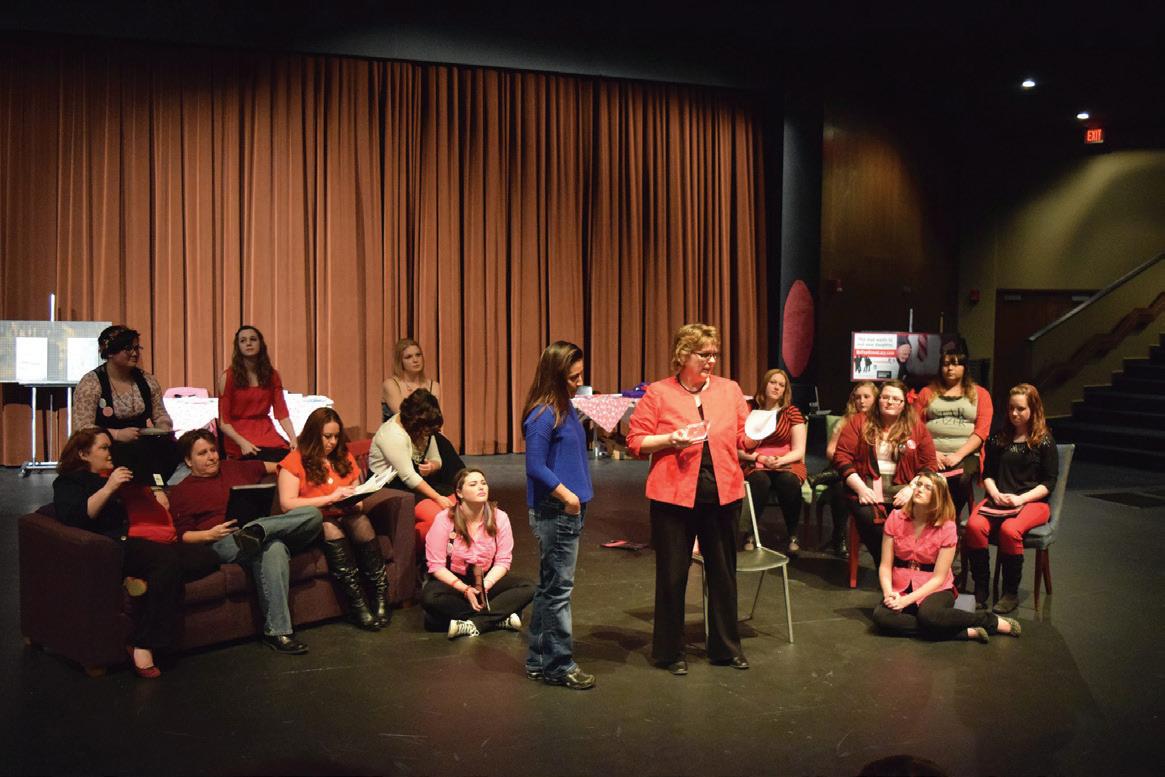
Photo by Farai Harreld
survivors of human trafficking. Ramirez recieved the award during last week’s campus production of the Vagina Monolouges. The cast of the Vagina Monolouges joined Sullivan and Ramirez on stage for the award presentation.
As of March 2, the course schedule for the Fall 2015 semester is now available for viewing. Students may access the viewable schedule through MyWashburn or on the Washburn University website at washburn.edu/schedule.
To view the schedule through MyWashburn, click on the Student Academics tab on MyWashburn and then click on the Course Schedule and Registration Information Guide link in the Registration and Academic Information section. Select Fall 2015 to see the available courses for this fall.
Courses are only available for viewing at this time. Students will be able to register for Fall 2015 courses April 6-15 after meeting with their advisor and
revieving their PIN number for Fall registration.
Also available on the Washburn website at washburn.edu/ schedule are PDFs pertaining to topics such as the fall semester calendar, tuition and fees, registration information guide and advance, open and late registration dates and guidelines.
Students with questions in reference to the courses offered for the Fall 2015 semester should contact their respective departments or their advisor.
Students with questions about website navigation or access should contact CJ Crawford at cj.crawford@washburn.edu for assistance.
The Kansas Wildlife and Parks magazine has been supporting young photographers of Kansas and now is giving the opportunity to people of all ages to show off the natural beauty of Kansas.
The Kansas Department of Wildlife and Parks has begun its annual wildlife photo contest, which was started in 2013 by Marji Nadia, associate editor for Kansas Wildlife and Parks magazine. This year they are hosting the contest for all ages; previously it had only been open to youth.
“This year I decided to change that and allow all ages to enter the contest,” said Marji Nadia. Now youth and adults can submit photos for the contest hosted by Kansas Wildlife and Parks Magazine.
There are three categories in which the photos may fall: wildlife, outdoor wildlife and rec-
reation. The photos are judged based upon creativity, composition, subject matter, lighting and the overall sharpness. A panel of six judges gives first, second and third place awards and an honorable mention for each category. The winners will be featured in the 2016 Kansas Wildlife and Parks January/February photo issue.
“No matter who you are, where you live or what your skill level is with a camera, there is something in Kansas outdoors waiting to be photographed by you,” Marji Nadia said. By opening up the contest they are allowing different perspectives to be brought to the table and seen by the people of Kansas. Submissions will be accepted until 5 p.m. on Oct. 23. For more information, details on the contest and entry forms visit http://kdwpt.state.ks.us/.
Emily Kobzar, emily.kobzar@ washburn.edu is a freshman English major.
Graduating seniors are invited to the 2015 Spring Grad Fair. The event will be held from 9:30 a.m. until 6:00 p.m. on Wednesday, March 25. The fair will be held in the Washburn Room A & B located in the Memorial Union.
The Grad Fair is for students who are graduating this spring or summer. Students will have the opportunity to purchase regalia, graduation announcements, and class rings.
There will also be commencement ceremony information available, a cap and gown photo opportunity, food, prizes and more.
For those who are unable to attend Grad Fair, the purchase of graduation regalia can be done through the Ichabod Shop - www.ichabodshop.com - and all commencement ceremony information will be available at www.washburn.edu/commencement.

February 26
17:39 - Motor Vehicle Accident Hit and Run, Parking Lot 5. Report Taken: Investigation continues for hit and run vehicle and driver.
February 26
21:55 - Information Report Alcohol Violation, Living Learning Center. Report Taken: Referred to the associate VP for Student Affairs.
February 27
09:34 - Burglary/Theft from Vehicle Billfold and Contents, On Campus Location. Report Taken: No suspect(s) at this time: investigation continues.
February 27
09:34 - Criminal Use of a Financial Card, Plazo Amoco. Report taken: No suspect(s) at this time: investigation continues.
March 1
08:00 - Information Report Suspicious Activity, KTWU. Report Taken: Individual involved in the suspicious activity is known: investigation continues.
March 2
10:22 - Information Report/ Possible Damage to Washburn Vehicle, Warehouse I. Report taken: Oily substance on a Univsersity vehicle: this proved to be ice melt and washed off.
March 2
16:49 - Information Report Fire Alarm, Morgan Hall. Report Taken: Probable cause dirty detectors: detectors were cleaned, alarm reset.
Mark Feuerborn WASHBURN REVIEW
Graduate students of the Washburn University Psychology program are developing group psychology sessions for the benefit of students involved in various activities. The groups’ subjects are healthy relationships, creativity and performance enhancement.
Each offers different assistance to students in particular fields, such as those interested in discovering how to know and build healthy relationships, artists who would like help overcoming obstacles in their creative processes, or athletes who wish to become better team players.
Sorority members at Washburn have been encouraged to attend the healthy relationships group, while it is open to everyone. The group aims to cover various relationship aspects, such as dating safety, healthy communication and how to support friends who may be involved in unhealthy relationships.
The performance enhancement group is being provided exclusively for the WU Women’s Soccer team, which will aim to educate the members on positive player psychology for team unity and coordination and enhance each individual player’s strengths.
The creativity group is encouraged for creative people of any kind, not limited to artists, writers, actors or musicians. This group also aims to provide awareness on how to foster creativity and avoid problems in the creative process that can hinder someone’s work.
“What I really like about the group is that it has allowed us to come get out of it what we want to get out of it,” said Wendy Nichols, member of the Artist’s Way group that focuses on creativity.
Like the other groups, the Artist’s Way group meets weekly to cover different subjects of their
respective field. For creativity, the group has themes that are addressed in each meeting including the creator’s senses of identity, power and integrity.
The group follows along with the book “The Artist’s Way” by Julia Cameron, which provides lessons on each of the themes regarding creativity, and provides activities for the members to partake in to explore their creativity.
“Not only am I leading the group and experiencing it with them, but I’m also experiencing it myself, and so it’s a very flexible program step-by-step,” said Jonathan Huffman, leader of the Artist’s Way group. “While it is very organized, it allows for self-interpretation and understanding, and so I think that’s beneficial both as a facilitator and a member within the group.”
In particular, the Artist’s Way group aims to push the idea that in any walk of life, a person utilizes creativity, and that it is okay to get in touch with and explore one’s creative self.
“I think it’s important to point out that going through the Artist’s Way isn’t just about becoming a better painter or sculptor. It could be a better student, or a better person in general. Creativity isn’t just limited to the arts as we think about it, creativity is a part of everybody’s life,” said Shari LaGrange-Aulich, a facilitator of the Artist’s Way group.
Mark Feuerborn,mark.feuerborn@washburn.edu, is a freshman radiology major

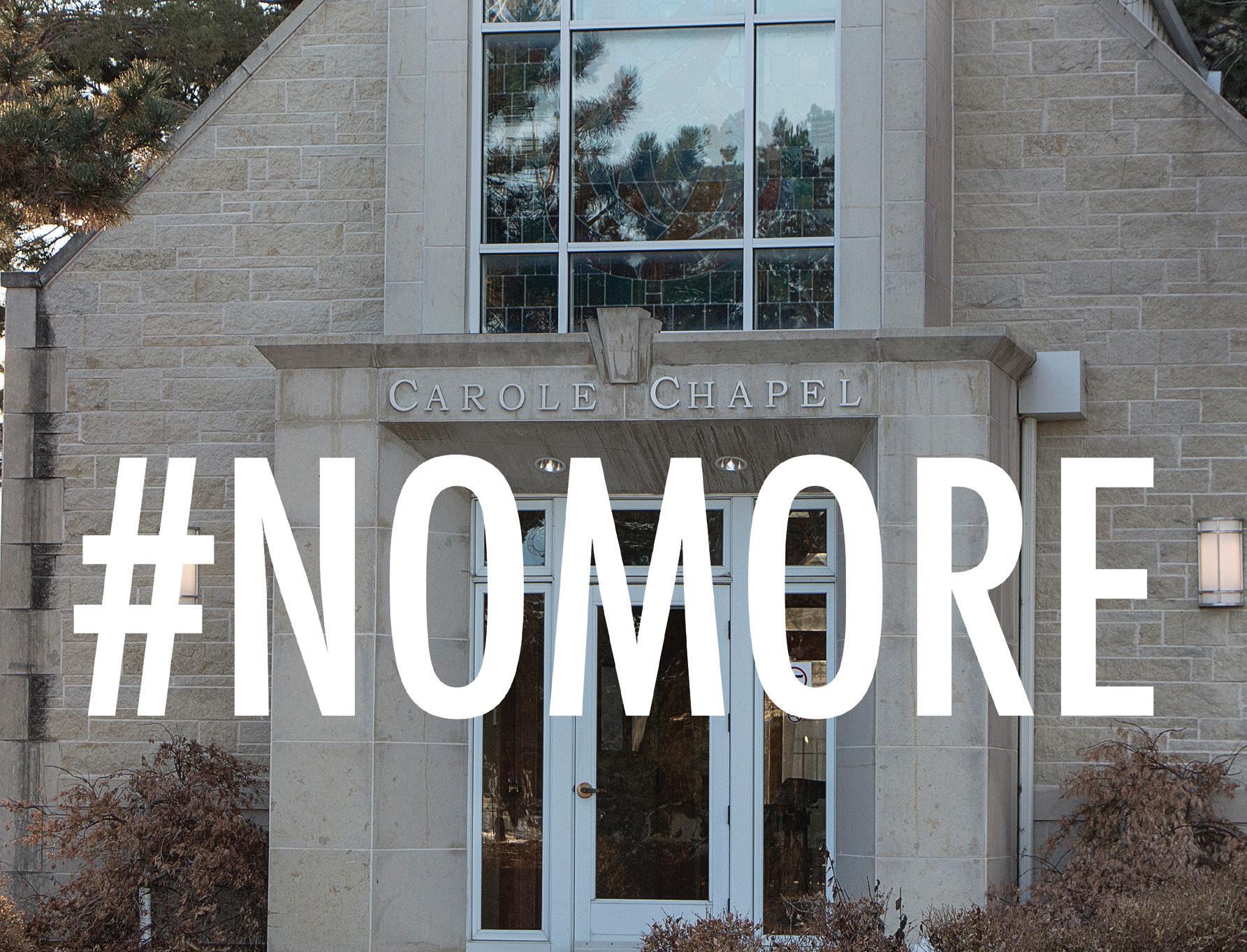
After an alleged sexual assault was reported at Washburn’s Carole Chapel last month, students across campus have voiced their concerns, not only for their own safety, but also about the way in which the university handled the event.
To unify their voices, Washburn student organizations STAND WU and TWLOHA will hold a vigil to honor victims of sexual assault on Thursday, March 5 at noon in front of the chapel.
“This is not necessarily a direct reaction to the incident, but it was the tip of the iceberg, said junior BFA Christian Sauerman, one of the organizers of the vigil. “We need to bring more attention to this, but in an appropriate manner. With sexual assault, and assault in general, there are always going to be gray areas, it is not black and white; that’s where we have to be careful.”
Among the concerns Sauerman and others hope to address is the university’s decision to not send out a campus-wide iAlert after the assault was reported.
“With the iAlert system, there’s got to be a way to keep students informed without breaking any confidentiality,” Sauerman said. “We want to bring attention to the fact that this is serious. However Wash-
burn deems fit to appropriately handle the situation is fine, but we have our own view.”
News of the alleged assault came to light on Friday, Feb. 20, but it was not until the following Wednesday that Washburn president Jerry Farley released an official statement, via email, about the incident. In the email, university officials stated that, “given the circumstances of the case – there was no threat to the campus community.” The email also stated that officials would review campus policy regarding the timely notification system.
However, some students feel that the statement was too little, too late.
“The Carole Chapel incident may not have been an imminent threat, but we should have been notified. Not necessarily given any names, because this is a very sensitive issue, but at least let the students know, ‘An alleged incident happened at this time.’ This isn’t something that should just leak out,” Sauerman said. “If you look at the email that was sent out, it started with, ‘As many of you are now aware…’ That’s a huge indicator that says, ‘Obviously you guys have found something out, so we have to give a response because everyone is upset.’ It’s about being able to protect the integrity of the situation, the victim and the perpetrator, but making sure the students are notified so they don’t think they’re
left in the dark.”
Citing legal reasons and the sensitive nature of the incident, Farley declined to comment further on the issue.
At Thursday’s vigil, students will have the opportunity to express their concerns over campus safety issues. After which, organizers will draft a letter to Farley and other university officials outlining those concerns. The letter to Farley will also include an invitation to a rally, which is tentatively schedule for Thursday, March 12.
In addition to raising awareness to campus safety issues, organizers hope that the vigil will bring students together in a healing manner.
“This is a vigil of comfort where people can share their concerns and experiences, or just listen,” said mass media major Farai Harreld.
STAND WU has two speakers scheduled to address the crowd at the vigil. Washburn student and 2015’s Miss Greater Topeka Misha Reed will speak on the platform of “Ending Rape Culture…Education of Consent.” Rev. Joshua Longbottom of Topeka’s Central Congregational United Church of Christ is also scheduled to appear.
Ryan Ogle, ryan.ogle@washburn.edu, is a senior mass media major
Video services in particular tend to build or buy servers all over the Internet that can store or “cache” popular videos closer to where customers access it. These are known as Content Delivery Networks, and they are like warehouses at the edge of town. In order for CDN to deliver content to users, the last mile still needs to be traversed.
This is where a dispute between Comcast and Netflix came up.
Netflix accounts for upwards of 35 percent of all United States Internet traffic. Comcast felt that this large exchange of data over their network to the end user was extremely one sided and Netflix should pay to help increase bandwidth.
This isn’t unheard of. Network hops occur all the time and packets are usually swapped one-to-one in a barter-like system. Occasionally, one network asks another network to compensate if packet swaps are one sided.
Netflix argued that the improved quality of video to ISP customers from a clearer stream is so valuable that they should not be charged for the imbalance of traffic on their networks.
Reed Hastings, CEO of Netflix said in a blog post on March 20, 2014 that a strong form of net neutrality is required to prevent ISPs from charging a toll for interconnection to services like Netflix.
“They must provide sufficient access to their network without charge,” Hastings said.
But the FCC rules last week did not prevent companies like
Comcast from charging “tolls” to companies like Netflix. Instead it gave itself authority to “hear complaints and take appropriate enforcement action if necessary if it determines the interconnection activity of the ISPs are not just and reasonable.”
Verizon was so frustrated by the FCC, they released a press release in Morse code dated Feb. 26, 1934.
According to the press release, “the FCCs move is regrettable because it is wholly unnecessary. The FCC had targeted tools available to preserve an open Internet, but instead chose to use this order as an excuse to adopt 300- plus pages of broad and open- ended regulatory arcana that will have unintended negative consequences for consumers and various parts of the Internet ecosystem for years to come.”
Regardless of any consequences, good or bad, the average person may remember Feb. 26, 2015 less by the reclassification of the Internet, and more by news of llamas on the loose and over exposed pictures of a blue and black dress.
Haverty said students should always pay attention to what local and federal governments are doing.
“Definitely something you want to watch. See what’s going to happen with it. It could eventually hit you in the pocketbook,” Haverty said.
Derek Richardson, derek. richardson@washburn.edu, is a junior mass media major
Kenzie McCoy WASHBURN REVIEW
“What other comedian do I look like?” asked comedian Emma Willman, who commented on her striking resemblance to famous comedian Ellen Degeneres.
Willman performed at Washburn’s Bradbury Thompson center Tuesday night.
The comedian was dressed casual in her black t-shirt and bright green sneakers and instantly got the crowd laughing. Her relaxing yet hilarious comedic style pleased the crowd as she told stories about online dating, her vertically challenged stepmother and her childhood memories.
Willman remarked on the difficulties she had as a child when picking out large pant sizes in stores, saying that she wished there were cookies in the pockets of the bigger-sized pants.
“I just loved when she was talking about when she was a fat kid,” said Hillary Ronnebaum, an undeclared freshman. “I liked how she kept it casual. It felt like she was just having a normal conversation with us.”
Willman connected with the audience by talking about her college days when she studied philosophy and communications. Willman also involved the audience by asking spectators about their majors and dating lives.
Willman gave the audience advice about the dating app, Tinder, saying that the app has helped her enter relationships.
“I thought she was really great,” said Kaylee Erickson, a sophomore elementary education major.
Erickson said her favorite line from Willson’s show was, “I’m single because of my schedule and my personality.”
“That was so funny,” Erickson said.
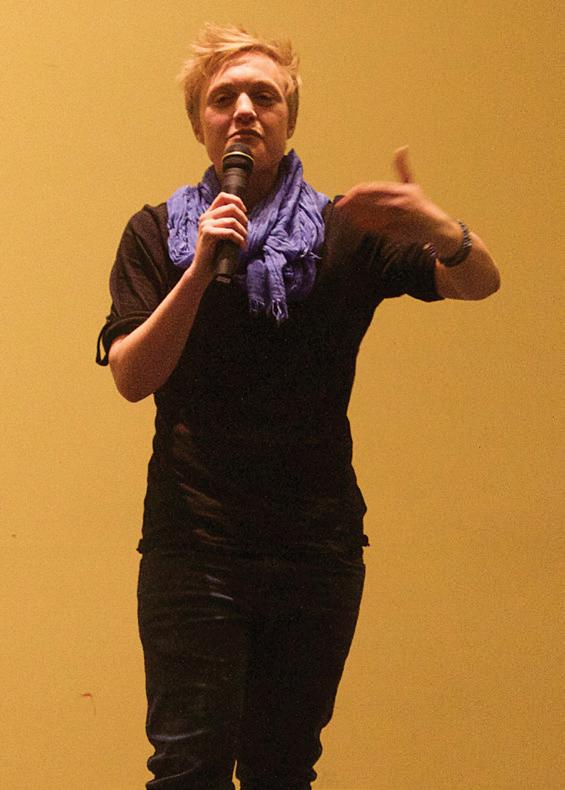
NYC-based comedian Emma Willman brought her act to Bradbury Thompson Alumni Center on Tuesday night.
Ryan Ogle WASHBURN REVIEW
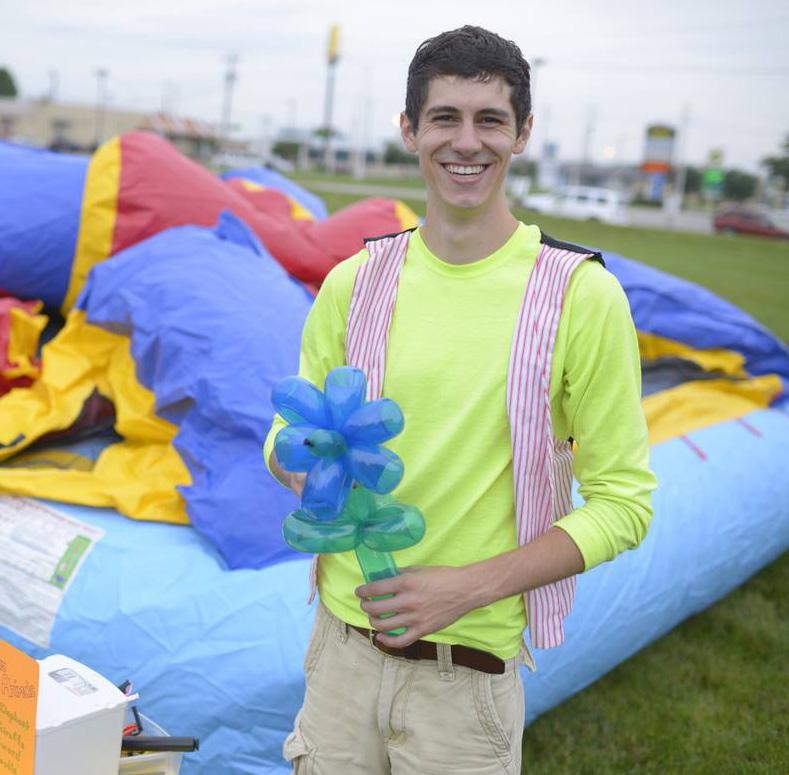
Washburn freshman and teenage CEO Zach Haney came up short in Tuesday night’s city council primary elections.
Haney was vying for the District 4 seat, which was left open when Councilwoman Denise Everhart opted to not run for re-election.
District 4 candidate Anthony Schumm led with 37 percent, followed by Les Parrish with 29 percent. Christina Rondash came in third with 18 percent of the votes, leaving Haney in dead last with 15.9 percent.
Of the 7,529 registered voters in District 4, fewer than 900 made it out to the polls for Tuesday’s primary election.
Haney is the owner of Carnival Guy and author of “The Teen CEO: Lessons from a Teenage Business Owner.”
Kenzie McCoy, mckenzie. mccoy@washburn.edu, is a sophomore mass media major Ryan Ogle, ryan.ogle@ washburn.edu, is a senior mass media major
Emily Kobzar
WASHBURN REVIEW
On Feb. 26 Washburns Law’s Business and Transactional Law center and the Washburn Law Journal hosted The Future of Housing symposium.
The morning began with a welcome from Thomas Romig, Dean and Professor of Law at Washburn, and Andrea Boyack Co-Director and Associate Professor of Law, also at Washburn.

Kali Murray, Associate Professor of Law at Marquette University Law School, did the opening presentation that focused around Equity, Stability and the Sustainable Market. Other professionals from various law schools--such as Boston College Law School, University of Notre Dame Law School and Savannah Law School--served as speakers on the three panels that were held throughout the day.
The first panel focused on equality in housing, issues of intentional discrimination and the unintentional, unequal impact of housing policy and law.
During lunch, Kathleen Engel, Research Professor of Law at Suffolk University Law School, addressed the question ‘Can technology solve the problem of complex consumer contracts?’
The second panel discussed Stability: Market Re-stabili-
zation after 2008. They concentrated on sustainability in the modern American housing market and how to deal with the fallout of the 2008 crash.
The third and final panel of the day discussed the topic of Sustainability: Planning for the Future and Creative Solutions.
The panel went into detail about innovative models that will help sustain housing policy in new and emerging markets. In additions they spoke about some
new tactics to planning, zoning and environmental law.
At the end of the symposium, speaker James Kelly Jr., Clinical Professor of Law from the University of Notre Dame Law School, spoke about civil rights protections in vacant properties.
Emily Kobzar, emily.kobzar@ washburn.edu, is a Freshman English major



The federal government has decided it’s time to increase its ever-growing power and regulate another facet of the people’s lives: the Internet.
With the introduction of net neutrality, the Internet will now be classified as a public utility. But since the federal government cannot help itself from controlling and monitoring as much as possible, why can’t it perhaps define as a utility and regulate something that actually gets out of control?
From Lear jets to lawnmow-
ers, gasoline is used every day in the United States by millions and millions of people, most prominently in road vehicles.
There was no problem with the Internet. The socialist side of the country was upset because the free market was at work (and simply existing, at that), but no damage was actually done to anyone.
People have options if a problem were to arise. If one Internet service provider were causing a problem, there are plenty of others for people to switch to.

Kansas Legislature, welcome back to our editorial page! It’s honestly pretty impressive how many times we’ve written about you. You are just a fountain of material ripe for the mocking. Today we would specifically like to address SB45 which authorizes the carrying of concealed handguns without a license.
What could have possibly gone through your collective
mind when this amendment passed 31 to 7? To senators Faust-Goudeau, Francisco, Hawk, Hensley, Holland, Pettey, and Wolf: don’t worry this rant is not for you seven nay-sayers. Congratulations on being seven of the eight democrats in the Kansas Senate by the way. (This raises a plethora of questions for Sen. Kelly, our eighth democrat.) No this article is for the rest of you, who apparently

But when gas prices exceed $4 per gallon, there aren’t really any options people can take to avoid that. Different gas stations in the same region may have different prices, but only by a couple cents if they do.
From cars to public buses to commercial trucks to planes to boats and back to lawnmowers, gasoline is something that is used every day on a massive scale, and, barring the entire country going to school, work and business trips on bicycles and scooters, it is a necessity.
Internet equality is not a necessity (or even a proven problem). High gas prices, which are not a problem now but have been before and very most likely will be again, are a problem.
So to at least tide over the ultimately insatiable hunger of the federal government to control, it would be great if it would control real problems instead of trying to control private companies because “they’re not being fair.”
- The Executive Staff
Each week, the Washburn Review will recognize an individual or individuals who have thrust themselves into the public limelight, with actions and or statements that prove worthy of editorializing. Said person has gone above and beyond to prove themself A Societal Standout. Opinions expressed below are strictly those of the author and do not reflect upon the Washburn Review or Washburn University as a whole.
said, “Yeah it’s a great idea to let anyone carry a handgun.”
There’s absolutely no way that can go wrong. Who needs safety classes before strapping on something that was involved in 51,370 incidences in the United States alone in 2014?
Now that any yahoo with an all right background check and a bit of spending money can get their trigger-happy little fingers on a handgun and LEGALLY
carry it around, this writer is worried. There’s no issue with people having guns as long as they are extensively trained and educated on gun safety but under SB45 safety classes are now optional. Do you think these senators would be so eager to vote yes if they had to deal with the idiots who are sure to take advantage of this bill?


Stephanie Cannon WASHBURN REVIEW
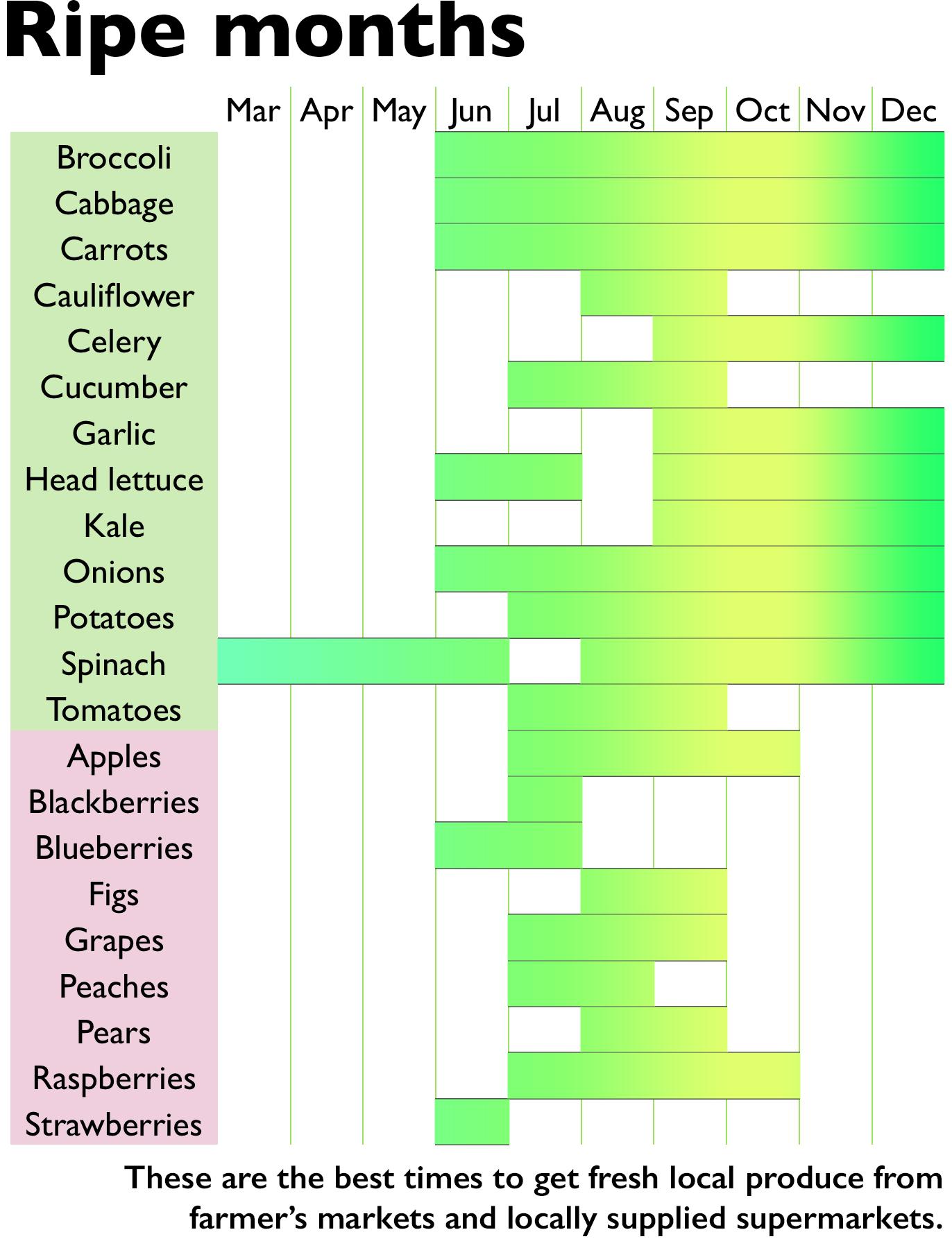
Some of us even wish we had started our own little gardens, eyeing the seeds every time we visit the store, checking to see if they’re heirloom or GMO, but by that time it’s too late. However, this year
you’re in luck, with this handy planting guide you can start your broccoli and cabbage patches before it’s too late. Even if you don’t have a green thumb, using these tips and this planting guide will help.
Stephanie Cannon, stephanie.cannon@washburn. edu, is a junior mass media major Summer is the time we usually think about flowers, vegetables and herbs.

The soil will dry out quickly, so be prepared to water often.
Potting soil and potting mix aren’t the same thing. Choose a mix for indoor containers.
Look for organic soil mix if you want your soil to be free of chemicals.
Use free materials, such as old wooden pallets, to make a boarder for your garden.
For many seeds, planting at the quarter inch soil depth, recommended on the package, is too deep. Research your specific seed for the best results.
Different plants need different care so be sure to research what you plant.
Make sure your pots have good drainage and are the proper size. Herbs can’t stand wet soil.
Use natural repellents such as chili powder, soap or vinegar as a short-term way to dissuade rabbits from eating your plants.
Too busy to farm yourself? Visit a local farmer’s market.
Topeka’s Downtown Farmer’s Market opens April 11, 2015




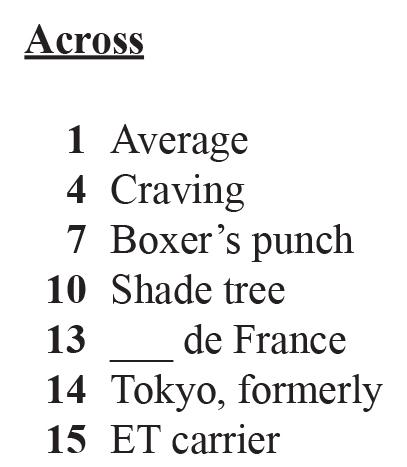


VULCAN
VULCAN
WAGON
YIDDISH





In only four days the Major League Soccer season will begin. Every year since 2011, fans have been flocking to Sporting Park in Kansas City to watch Sporting Kansas City play their MLS home games. Some fans were even lucky enough in 2013 to witness the club win the MLS Cup. If you have never been to the stadium, you should. It is a must for any sports fan. The stadium hosts both hardcore soccer fans that go to every game and first-time visitors that have never even watched a full 90 minutes of soccer.
The charm of the stadium is what
keeps fans coming out every game. Its innovative design and fan experience are head and shoulders above any other venue in the region. Last season, colleges and other pro teams even sent representatives to see what Sporting Club was doing to attract and retain fans. The secret is that from the moment you reach the parking lot to the moment you leave the lot you feel welcomed and that you are part of the club. As crazy as it may sound, they make you feel like you are a big part in what happens on the field.
As of late, the product on the field has been one to be proud of. In the last eight years, the team has been in the playoffs in all but two of those years. This included
hosting and winning the MLS cup in 2013. The average attendance last season was the highest it has ever been, just over 20,000 people.
The MLS season starts on Sunday as Sporting hosts the New York Red Bulls, the same team that knocked Sporting KC out of the playoffs last year. If you have never gone, now is a good time to go to a game. The popularity of the sports continues to grow and so does the stock of a few of the Sporting players. You don’t have to be a soccer fan to know the names of Matt Besler and Graham Zusi, as they have been a big part of the local sports scene leading up to and after last summer’s World Cup in Brazil.
Take the chance to go see one of the league’s top teams in quite possibly the league’s best stadium. The placement of the stadium, near the Legends, makes it easy for one to get there from Topeka. Take either I-70 for 45 minutes or take Highway 24 straight to the stadium without the toll.
Trevin Edelman, trevin.edelman@ washburn.edu, is a junior mass media major.

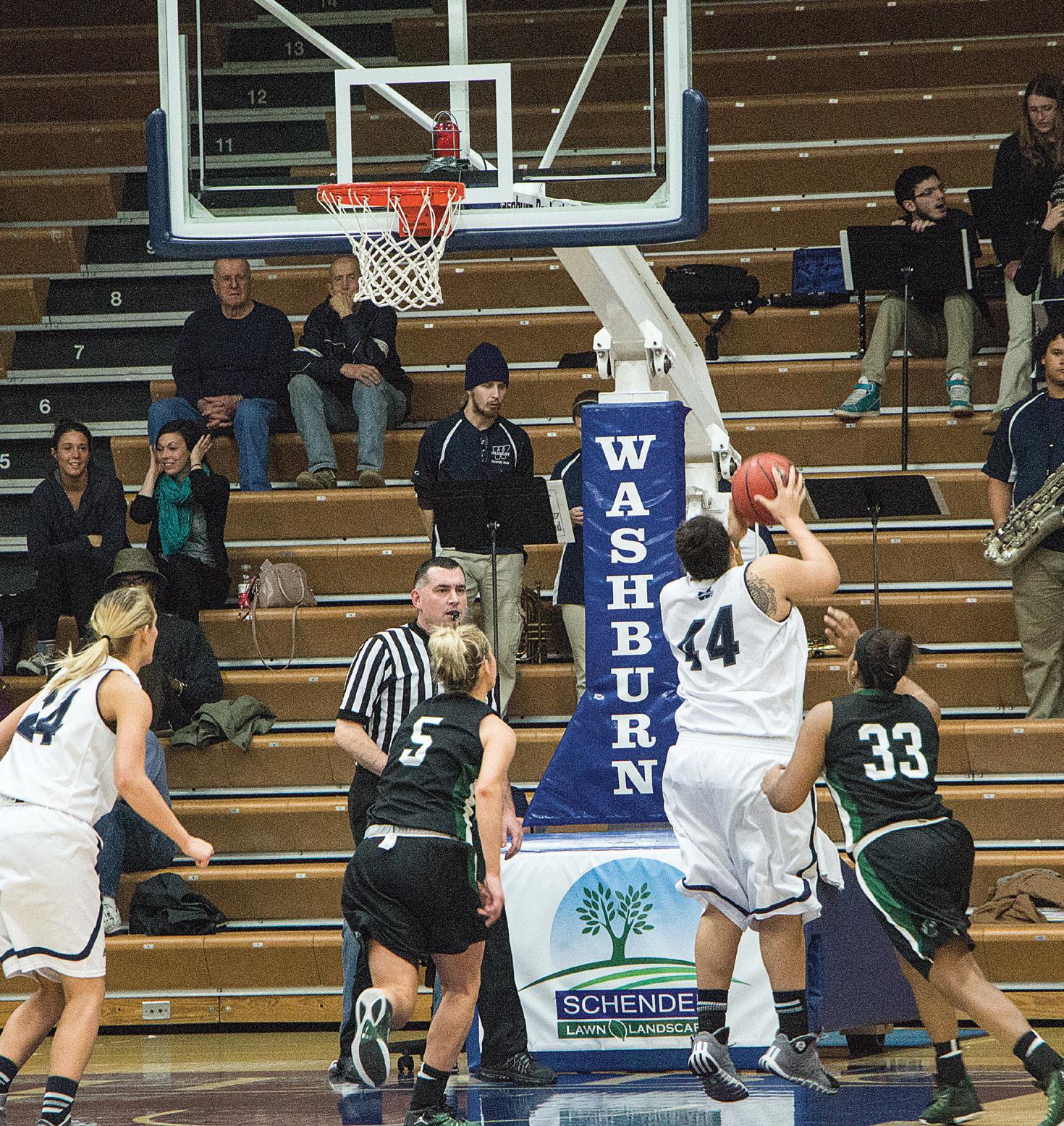
Eighth-seeded Washburn women’s basketball (16-12) put up a fight to the end Tuesday night, March 3 in the first round of the MIAA tournament, facing off against the ninth-seeded Northeastern State University Riverhawks (12-15). But in the end, the Ichabods could not withstand an onslaught of 3-pointers from NSU.
After winning the tip and scoring within seconds with a layup from Honor Duvall, Washburn increased its lead with two more points from sophomore guard Erika Lane.
Down 4-0, the Riverhawks responded by hitting the first of many 3-pointers.
The game was tied up 9-9 at the 14-minute mark, with all of NSU’s points coming from beyond the arc, before the visitors went on a 6-2 run in the following two minutes to secure a 15-11 lead at the 12-minute media timeout.
Over the course of the next 10 minutes, the Riverhawks went on a crushing 18-7 run.
The Bods scored seven of the last 10 points of the first half, but despite that burst they still trailed 25-35 going into the locker room.
The Ichabods were led at half in scoring by Honor Duvall and Erika Lane, each with eight points. But as a team, Washburn shot 30 percent from the field and 15 percent from 3-point range.
Northeastern State shot 39 percent from the field in the first half, but their
real damage came from deep shots. The Riverhawks hit 67 percent of their 3-point attempts, going 8-12.
The second half was a back-and-forth battle, starting with a field goal from Duvall. But NSU came right back doing what they did best: shooting 3-pointers.
Eight minutes into the second half, only 12 points had been scored between both teams, but the Riverhawks still led, 40-32.
As far as putting points on the board, Washburn only received help in the second half from Duvall, Allyssa Nikkel and Janelle Travis. Together, the three scored all of Washburn’s 21 points in the final 20 minutes of the game.
Northeastern State only hit three 3-pointers in the second half compared to their eight in the first half, but they managed to maintain the lead the rest of the game, never letting their advantage drop below six points. The final numbers put the Riverhawks on top, 59-46, advancing them to the next round of the MIAA tournament where they will face No. 1 seed Fort Hays State on Friday.
Washburn shot 24 percent from the field in the second half and 8 percent from 3-point range, landing only one of 12 attempts.
With the loss, the Ichabods’ season came to a close with a final record of 1612.
Adm Vlach, adam.vlach@washburn.edi,
is a senior English and mass media major.
Tyler Feist
WASHBURN REVIEW
The last time the Washburn men’s basketball team played Pitt State was earlier this season on Jan. 17. Pitt State dominated the Ichabods by blowing them away 82-40. That was one of the worst losses in Washburn basketball history.
Saturday night the men’s team wrapped up their regular season by hosting Pitt State for a rematch. It was Senior Night and the home team had every reason to want payback against the Gorillas.
Before the game, the four seniors on the team, Korey Fisher, Algie Key, Kyle Wiggins and Alex North, were honored for their hard work and contribution to Washburn and the basketball program.
All four seniors started the game along with freshman Jeremy Lickteig. Lickteig had a huge block that deflected the ball to half court and led to a transition layup by Korey Fisher to score the first points of the game.
The two teams were neck and neck most of the first half and neither team could create separation. Washburn was led by the hot shooting of Fisher and Andy Wilson in the first half, who both had a combined eleven points. WU went into the locker room with a 26-24 lead.
The first half was mostly highlighted by solid
defense. Neither team was hitting very many shots and did a poor job of taking care of the ball. WU was shooting 32 percent from the field and 27 percebr from 3-point range. PSU was shooting 37 percent from the field but went 0-8 from behind the arc.
The turnovers continued for WU to begin the second half as they allowed PSU to pull back in front 32-28. But after two more 3-pointers by Andy Wilson, the Ichabods were back in the lead. The turning point in the game was after the score was tied 39-39 halfway through the second half. After this point WU would go on a 22-4 run over the next nine minutes. The run included two 3-pointers from Korey Fisher, a David Salach alley-oop from Algie Key, three buckets from Kyle Wiggins and an Alex North 3-pointer. All four seniors were contributing on their special night.
WU went on to win 63-48. They got sweet revenge and the bad taste out of their mouths from the last time they played PSU.
WU improved their field goal percentage in the second half and finished shooting 39 perecent. The Bods were successful from the free throw line and finished 11-12 from the charity stripe. The
Washburn defense held PSU to shooting 37 percent from the field, 18 percent from the 3-point line and forced the Gorillas to turn it over 15 times.
Washburn was led in scoring by Fisher and Wiggins, who both finished with 13 points. Andy Wilson hit four 3-pointers and finished with 12 points. The other two seniors also contributed. North had 8 points and 6 rebounds and Key finished with 4 assists and 2 steals.
North and Wiggins have both scored over 1000 points in their careers at Washburn. This season is the first time in WU history that there have been two players in the 1000 point category on the same team.
WU finished the regular season with a 15-15 overall record and a 10-9 record in the MIAA.
FHSU 33-31.
The Washburn men’s basketball team hosted Fort Hays State in the opening round of the MIAA Tournament Monday at Lee Arena.
The 8-seeded Ichabods (15-15) were facing the nine-seeded Tigers (1513) for the third time this season. In the first match up , Washburn won at home 69-58 and FHSU won the second game in Hays 87-79. But on Monday home court advantage prevailed once again and Washburn won 66-57.
Senior forward Alex North scored the first seven points for WU, who quickly pulled out to a 10 point lead in the first half. WU led by as much as 10 and seven points on two different occasions, but FHSU went on a couple runs and fought back to cut the lead to two both times. At the half, WU led
WU shot 37 percent from the field and made 5-13 3-pointers in the first twenty minutes of the game. FHSU shot 44 percent and hit 2-5 threes. However, FHSU had seven first half turnovers compared to Washburn’s two.
FHSU would tie the game at 42-42 with fourteen minutes remaining in the second half. Then WU settled in and went on 13-1 run over the next six minutes and once again had a comfortable lead. This time FHSU could not recover and only came within seven points the rest of the game.
Tyler Feist, tyler.feist@ washburn.edu, is a freshman busines major.
WU improved their shooting in the second half and finished with 44 percent field goal shooting. The Ichabods were also impressive at the free throw line where they went 19-23. The key for WU was their 21 points off the bench and their 20 points off FHSU’s turnovers. FHSU finished shooting 40 percent from the field and 29 percent from the 3-point line. Alex North led Washburn in scoring with 18 points and also had 9 rebounds. Kyle Wiggins had 13 points, 6 rebounds, and 3 assists, and Kevin House was held scoreless but recorded 6 assists. WU improved to 16-15 on the year and will face the top-seeded Northwest Missouri State (22-5) in the quarterfinals on Thursday in Kansas City. The two teams faced off once this season on Jan. 10 at NMSU where WU won 70-64. The Bearcats finished the regular season on a 9 game winning streak and will be looking for revenge on the Ichabods.
Tyler Feist, tyler.feist@ washburn.edu, is a freshman busines major.

This weekend I had the unfortunate opportunity to watch "The Lazarus Effect". It tried very hard to have redeeming factors, but when it came down to it, the movie fell into the same traps most sci-fi/horror movies do.
It starts with your typical character tropes. You have the a-hole kid who doesn't follow the rules but somehow has the expertise needed to solve the most complex technical problems in their bio-research lab. You also have the older male scientist who is too busy with his work to marry his fiancée, who is also a researcher. The fiancée herself is also an expert on biotechnology, yet somehow she feels strongly about her Catholic roots and believes man shouldn't play god. You then have the 'camera girl', who has an absence of personality and is only a student that they trusted with filming their secret
research even. The camera girl is even called an 'outsider' in the group several times during the movie, and she never presents any credentials which would make the viewer think she had any right to be there. The only possibly redeeming role in this movie is played by Donald Glover. His character is in love with the fiancée, and clearly has been for years, but he is too noble to try and convince her to leave her fiancée. Unfortunately, his character is also hijacked by horrible writing.
Everything starts out so well. They attempt to bring a dead pig back to life. Fail. Then they try to bring a dead dog back to life, and of course since dogs are so much more lovable than pigs, the dog makes it. They don't even keep the dog in a metal cage for observation, instead, they comment about how odd it's acting, and about how it may act aggressively due to hyper-
thyroidism. So of course they must bring it home and let it run free inside their house. If this gives you an idea about how well the characters can analyze complex ideas, or their survivability overall, then you probably have a good idea about how well the rest of this movie goes.
The movie's actual plot -- the consequences of trying to bring a human back to life -- has been recycled so many times the movie even calls itself out when it uses the "you only use 10% of your brain" plot.
If you don't like jumpscares, and like your horror to be bloody and psychological, don't expect this movie to be your cup of tea. The actual plot isn't scary in the slightest and they have to use dirty tricks to make it fit into the horror genre.
Stephanie Cannon, stephanie.cannon@washburn. edu, is a junior mass media major.
Derek Richardson WASHBURN REVIEW
Leonard Nimoy: a great actor, director, poet and songwriter died on Feb. 27, 2015 due to complications with chronic obstructive pulmonary disease.
He is best known for his role as the character Spock in “Star Trek,” a cultural icon associated with pointy-ears and a Vulcan salute.
Nimoy began acting when he was 8 years old, and eventually took drama classes at Boston College. After spending over a decade playing small parts in low quality movies, he took up the role of Spock in 1965. His half-human character allowed him and writers to examine what it really means to be human.
In 1986 Nimoy directed the second most successful film in the “Star Trek” franchise, “Star Trek IV: The Voyage Home.” The film captured the best of “Star Trek,” and the character Spock.

Nimoy became so synonymous with Spock that he wrote two books: “I Am Not Spock” in 1975, and “I Am Spock” in 1995. Both deal with his self-proclaimed identity crisis.
After “Star Trek,” Nimoy expanded his roles to the stage. He played the starring role of Tevye in “Fiddler on the Roof” in 1971.
He expressed his feelings via poetry on Twitter. His last tweet, only days before his death: “A life is like a garden. Perfect moments can be had, but not preserved, except in memory. LLAP.”
The garden of Nimoy's life resulted in many wonderful memories for more people than he ever physically touched. His perfect moments will live on in the memory of all who loved him.
To borrow a line from “Star Trek II: The Wrath of Khan,” when William Shatner's character, Kirk, and the crew are assembled to pay tribute to their fallen comrade, “of all the souls I have encountered in my travels, his was the most...human.”
Derek Richardson, derek. richardson@washburn. edu, is a junior mass media major
Colleen Kelly
WASHBURN REVIEW
I’m generally skeptical of novels centering around mental illness, mainly due to their bizarre and largely inaccurate portrayals, but this one did the subject better justice than I expected.
“Schizo” follows the story of Miles, a high schooler struggling with both schizophrenia and his grief over his younger brother Teddy’s abduction two years prior.
Miles feels personally responsible for Teddy’s disappearance and the way it devastated his family, seeing as it occurred the same day as his first psychotic break. Now progressing with therapy and his new, effective drug regimen, Miles decides the only way he can move forward after high school and make amends with his family is to find Teddy.

Miles was a highly sympathetic character, and what little we got to know about him beyond his illness had me invested in him from the get go.
I wish, though, we had delved into Miles The Person half as much as we did Miles The Schizophrenic, the story never quite married the two like it should have.
We aren't given a lot of in-
sight about the supporting characters either, but that didn't bother me much for once because of how the story was set up and how that spoke to Miles's frame of mind at various points. It still would have been nice to get to know Miles better, though, see more of the dynamics of his friendships and school life. If we're going to have an under explored cast, even understandably so, you've got to split the difference with me and write the main character more complexly.
The story itself is told in a very nuanced fashion, you had to really pay attention to the fact that Miles is an unreliable narrator, but he's always so sincere and well-intentioned that you forget you can't always trust his judgements or perceptions. A few smaller details were left up to interpreta-
tion seeing as Miles didn't always give us enough to work with. That made me want to pull my hair out, and that's not a compliment. Sometimes, an author just needs to take the time to explain what they were going for.
More than anything, I wanted more of this book. I liked what we were given, that it was tinged with hopefulness despite everything.
It was easy to care about the important characters, and the portrayal of mental illness and its stigma (societal and internalized) were touched upon in an accurate manner. I wanted
more humanization of Miles and substantial commentary on mental illness (the title itself is a slur, I thought for sure we'd hear school was harder for Miles than simply being ignored).
This was a very well-written book, but it always felt like it was holding back. Add another 100 pages tops, then we'll talk.
Colleen Kelly, colleen.kelly@ washburn.edu, is a sophomore English major


Topeka is a city with a rich history in fine arts and theater. With big names like the Topeka Community Theater and the Topeka Performing Arts Center taking the main stage, smaller theater groups are often left unheard of. One such gem is the up and coming Ad Astra Theatre
Ensemble. With humble beginnings and a passion for celebrating local playwrights, Ad Astra has the potential to hold its own in the Topeka big leagues.
“In 2010, I and about five of my friends decided that we wanted to produce different types of shows that weren’t being done here in this community. And we all came together
with an idea and produced two shows over one summer and that has developed into a bigger thing each year. Now we are officially a nonprofit doing a full, year-long season,” said Craig Fisher, owner/artistic director and board president of the Ad Astra Theatre ensemble.
Because the group is only in its sixth season there are chal-

lenges facing the ensemble.
“The challenges, I think, are the fact that we are doing things that people haven’t necessarily heard of. That’s a challenge for an audience because an audience may not know what we’re doing so they may not plan on coming to see it,” Fisher said.
Another difficulty mentioned by Fisher was the challenge of drawing in actors to audition for lesser known plays. One way the ensemble works to combat the obscurity of some of the scripts is through advertisement and social media.
“We really work to make sure that we tell people what the shows are about; we advertise,” Fisher said.
Another important difference between Ad Astra and some of the larger theaters in Topeka is the way in which they fundraise.
Each year the ensemble puts on a 24-hour play festival. Over the course of 24 hours, directors, actors and playwrights meet together and compose, memorize and perform six to seven completely new plays.
“It’s an idea that began and is trademarked by a theater company in New York, and it’s filtered down through many smaller theaters throughout the
country. We brought the idea up on our third season to essentially do it as a fundraiser for the theater. It was a huge success and the actors and the playwrights all really loved getting to create six or seven new pieces over the course of 24 hours. We have strived over the past two years to shine light on or create new original work within our community, so we’re creating new plays or finding local playwrights and helping them produce their work, this has kind of helped us find a way to do that,” Fisher said.
Fisher said anyone interested in being a part of the theater or volunteering can visit adastratheatre.com for information.
“There is a volunteer section on our website and a little form that you can fill out if you are interested in volunteering,” Fisher said.
Other means of getting in touch with the group include Facebook, Twitter, email or face-to-face at one of the shows.
“Give us a heads up as to what you want to do and we can always find a place for you,” Fisher said.