



The RBR50 Robotics Innovation
Awards recognize the companies, technologies, and applications moving robotics forward. Now in its 15th year, the RBR50 highlights not just technical achievement, but also realworld impact.
The 2026 winners reflect the breadth of today’s robotics landscape. This year’s honorees include a warehouse robot that uses touch to manipulate cluttered environments, a soft exoskeleton improving mobility for stroke and ALS patients, and a robotic hand enabling communication for the DeafBlind community.
The RBR50 Gala returns May 27 from 6-8 p.m. in Boston at the Robotics Summit & Expo. The gala offers attendees a chance to network with this year’s winners and other industry leaders. The Robotics Summit also has a dedicated section on the expo floor highlighting this year’s RBR50 winners. Tickets to the RBR50 Gala are limited and can be purchased online during Robotics Summit & Expo registration.
Extended profiles of all RBR50 winners can be found online at The Robot Report
Robot of the Year: Amazon Vulcan
Amazon’s Vulcan, the 2026 Robot of the Year, stands out not just as a new system, but also as a rethinking of how robots
COMPANY
Association for Advancing Automation (A3)
ABB Robotics
Agility Robotics
Amazon
Ambi Robotics
Anyware Robotics
AutoStore
Boston Dynamics
Brightpick
CaPow
cellumation
Chef Robotics
INNOVATION
Congressional Robotics Caucus relaunches to help U.S. industry be competitive
OmniCore EyeVision lets robots adapt autonomously in complex environments
Digit humanoid moves 100,000-plus totes for GXO Logistics
Vulcan’s sense of touch automates warehouse picking and stowing
AmbiStack robot optimizes warehouse package handling
Pixmo robot handles unloading and palletization at Saddle Creek
ASRS reshapes vertical farming at Opollo Farm
DHL purchases 1,000+ Stretch trailer-unloading robots
Giraffe raises mobile manipulator to new heights
Genesis powers robots continuously with in-motion charging
cv.PAL automates material flow with adaptable robotics
Chef+ improves consistency and productivity in food production
MyMR mobile robots strengthen automation portfolio
CraftifAI
Orbit accelerates ROS 2 robotics software development



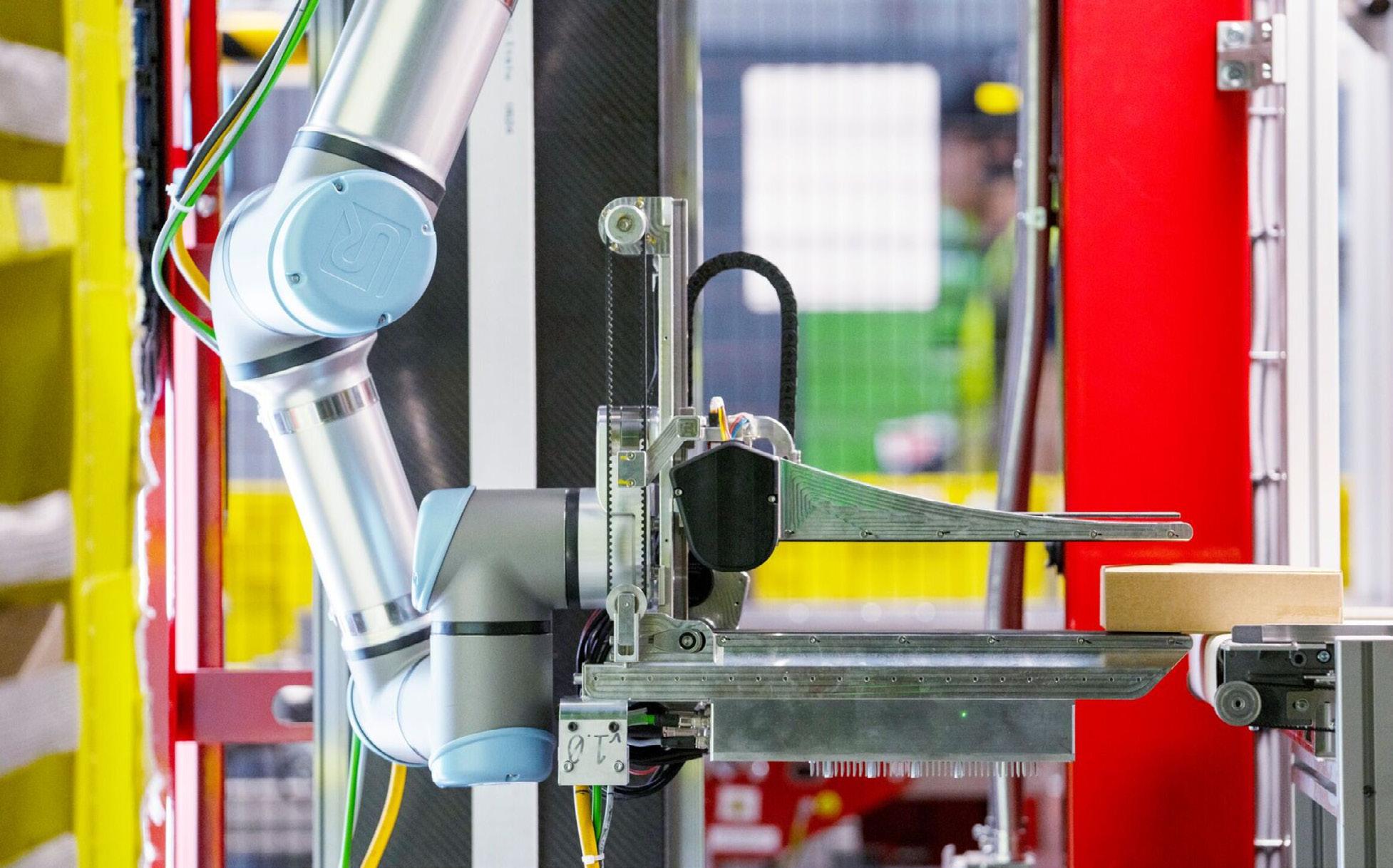
interact with the physical world. At the core of Vulcan is its ability to use touch as an input to both plan and control motion, something traditional industrial automation has largely avoided.
Instead of trying to eliminate contact, Vulcan seeks it out, using force and torque sensing across multiple axes to understand how objects and environments respond in real time.
This capability is critical inside Amazon’s fabric storage pods, where items are randomly packed, partially obscured, and held in place by elastic bands. In these high-contact environments, Vulcan doesn’t rely on perfect perception.
Instead, it probes, slides, and adjusts based on what it feels. Its specialized end-of-arm tooling reflects this approach: a gripper with conveyor-like plates and an extensible “spatula” to create space for stowing, alongside suction-based picking tools and a secondary arm to manipulate the elastic bands.
Vulcan’s sense of touch enables it to manipulate objects with greater precision and dexterity. According to Amazon, Vulcan can pick and stow approximately 75% of the items in Amazon warehouses.
What ultimately earned Vulcan top honors is its ability to bring these concepts into real production. Vulcan is purpose-built for stowing and picking, two of the most difficult tasks in warehouse automation, and is already being scaled at Amazon warehouses worldwide.
Aaron Parness, director of applied science at Amazon Robotics, led the development of Vulcan. He will discuss the development of Vulcan in an exclusive conversation with Steve Crowe, executive editor of The Robot Report, during the RBR50 Gala.
Startup of the Year: Physical Intelligence
Physical Intelligence is one of the fastest-rising companies in robotics. Founded in 2024 by a team of leading AI researchers, the San Francisco–based startup is focused on developing general-purpose foundation models that allow robots to learn and perform a variety of real-world tasks.
In just two years, the company has attracted massive investor interest, raising more than $1.1 billion across multiple funding rounds, including a $400 million Series A and a $600 million Series B that
Vulcan has a sense of touch for picking.
Amazon Robotics
COMPANY INNOVATION
CreateMe Technologies
Exotec
FANUC
Geekplus
Google DeepMind
GrayMatter Robotics
Hardhat Robotics
Harvard University
HEBI Robotics
Hugging Face
igus
Jacobi Robotics
Johns Hopkins
KUKA
LimX Dynamics
APPLICATION OF THE YEAR
MeRA automates high-volume, flexible garment production
Next-gen Skypod ASRS enhances productivity in warehouses
Industrial robots help 165-year-old manufacturer remain in U.S.
Robot Arm Picking Station boosts goods-to-person automation
Gemini Robotics brings AI to physical robots
World’s largest aircraft painting company automates sanding tasks
New platform handles hazardous large circuit energization
Wearable robot aids impaired arms for stroke, ALS
Haptic-enabled CHISLR robot reduces hazards in metal ingot operations
Reachy Mini provides robotics platform for embodied AI builders
ReBeL Move Pro expands mobile robotics for SMEs
OmniPalletizer uses AI stack for mixed-case deployments
Surgical robot hits milestone in autonomous gallbladder surgery
Robotic hippotherapy accelerates recovery after stroke, injury
TRON 2’s multi-modal locomotion powers robotics research and deployment




























valued the company at $5.6 billion. It is reportedly in talks to raise even more capital at valuations exceeding $11 billion, underscoring the industry’s belief in its approach.
What makes Physical Intelligence especially important is its focus on open, generalizable foundation models for robotics. Rather than programming robots for single, fixed tasks, its models learn from large, diverse datasets and can transfer skills across different robots and environments. This could reduce the cost and complexity of deploying automation, enabling robots to adapt to new tasks with minimal retraining.
By bringing the foundation model paradigm into the physical world, Physical Intelligence is aiming to shift robotics from rigid, task-specific systems to flexible, scalable platforms to unlock a future where robots can learn, generalize, and operate more like humans.
Application of the Year:
Harvard University
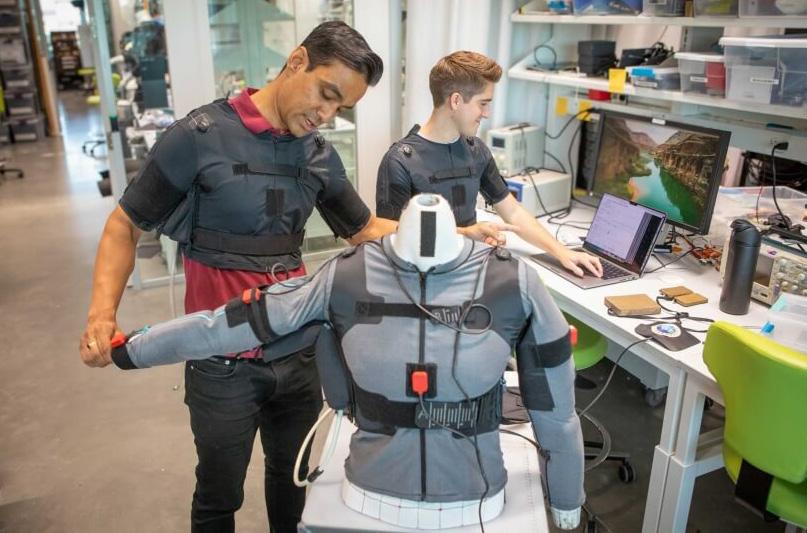
Harvard University is winning The Robot Report’s Application of the Year Award for its soft exoskeleton that has demonstrated promising early results for stroke and ALS patients.
Harvard’s exoskeleton is lightweight and compliant, assisting the shoulder through a fabric-based system worn on the body. The innovation is a personalized control approach: Sensors track subtle user movements, while a machine learning model predicts intent such as lifting or lowering the arm with more than 94% accuracy. This allows the robot to provide assistance in real time, tailored to each individual’s motion patterns.
In early trials involving nine participants – five post-stroke and four living with ALS – the system significantly improved arm function. Users experienced increased range of motion across the shoulder, elbow, and wrist, reduced compensatory body movements, and improved movement efficiency. The robot also reduced the physical effort required for common tasks, helping users lift and hold objects longer and with less fatigue.
The exoskeleton has also shown promise beyond the lab. At-home evaluations demonstrated improved performance in real-world daily activities, highlighting its potential as both an assistive and rehabilitative technology
COMPANY
Locus Robotics
MassRobotics
maxon
Medical Microinstruments
NASA
NVIDIA
Nyobolt
Palladyne AI
Physical Intelligence
Pickle Robot Company
INNOVATION
Array mobile manipulator enables autonomous fulfillment
International Immersion Program prepares global startups for U.S. entry
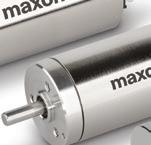
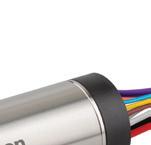
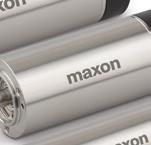
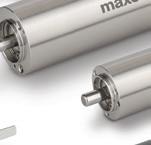
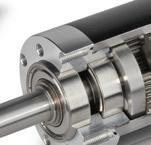
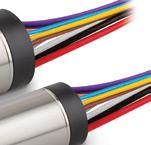
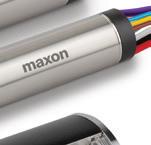
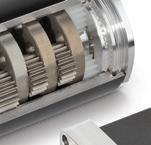
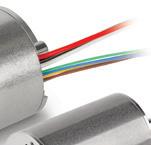
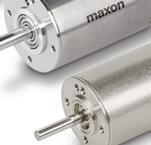
IDX 70 servo motor boosts performance, safety, and integration efficiency
Symani surgical robot approved for Alzheimer’s trial
Perseverance Rover completes 1st AI-planned drive on Mars
Cosmos improves robot development using digital worlds
Fast-charging batteries enable virtually continuous robot operation
SwarmOS enables autonomous drones to work together
Startup’s PI (π) models change how robots learn
Upgraded trailer-unloading robot powers significant company growth
GEDP streamlines development of secure robotics systems
RealSense
Spinoff from Intel stabilizes vision technology for robotics
AI tool simplifies debugging and log review for roboticists
Carter becomes 1st cobot in DHL Latin America operations





















See a live demo!
Boston, May 27-28, Booth #436







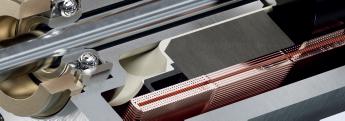




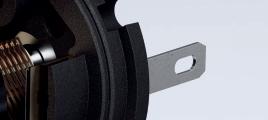





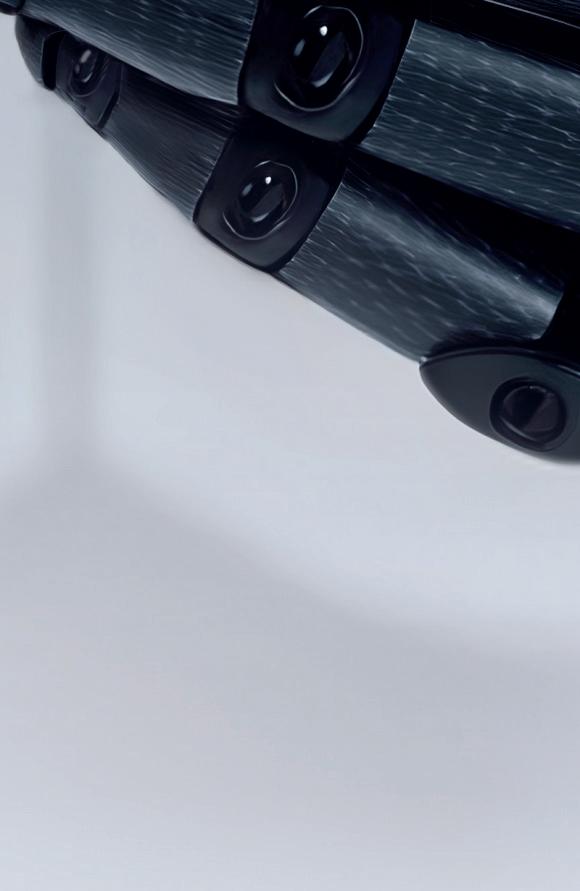

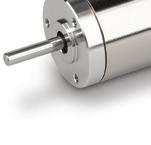
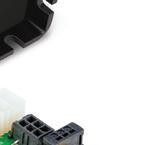
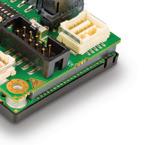
FAULHABER Applications WE CREATE MOTION



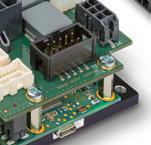
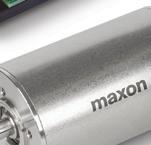
Compact FAULHABER micro drive systems make humanoid robotic hands perform intelligent manipulation with precision and speed of their human role model.
More information: www.faulhaber.com/humanoid-robotics/en




Robots for Good: Tatum Robotics
Tatum Robotics earned the Robots for Good Award for developing a first-ofits-kind communication system for the DeafBlind community. Deafblindness is a combination of sight and hearing loss that affects a person's ability to communicate, access information and get around.
According to The World Federation of the DeafBlind, between 0.2% to 2% of the world’s population is impacted by varying degrees of deafblindness. People with deafblindness are, overall, more likely to be poor and unemployed, and with lower educational outcomes.
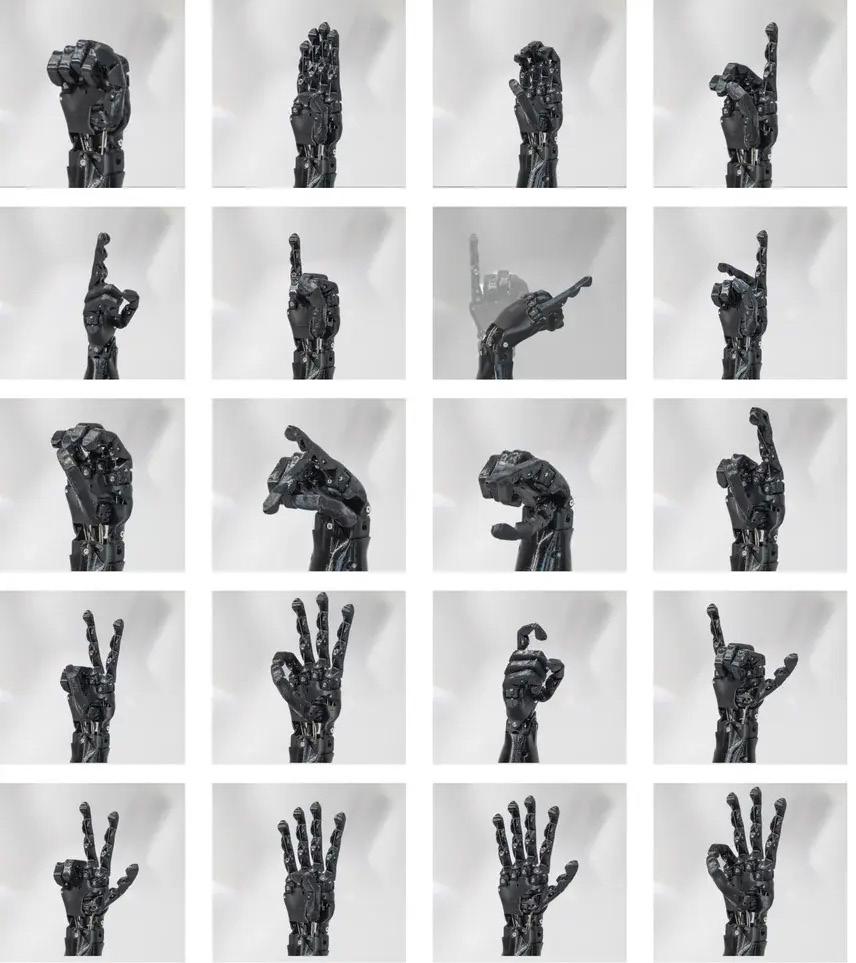
Tatum’s flagship device, Tatum1, translates written English into tactile American Sign Language (ASL). This enables users to read messages through touch, which is the primary communication method for people with severe deafblindness.
At the core of Tatum1 is a compliant, 18-degree-of-freedom anthropomorphic robotic hand that can fingerspell and form complex ASL handshapes. Tatum1 is designed for safe, expressive communication. Paired with cloudconnected software, the system allows users to independently access phone calls, texts, weather, and news.
Since its July 2025 launch, more than a dozen units have been deployed, with strong early feedback. One user shared: “I love using the robot for communication access using the phone. The reason is because video phones with sign language, I can't see them. It's very frustrating and I get really nervous because I can’t make calls. That's why I love to use the Tatum robot for communication!”
By combining robotics with direct community input, Tatum Robotics is restoring autonomy, privacy, and connection for an underserved population. RR

Tatum1 provides tactile communication for the deafblind.
RBR50 WINNERS (CONTINUED)
End-of-Arm Safeguard improves human-cobot collaboration
Modular architecture unlocks flexible mobile robotics Skyline Robotics
Tension Dynamics
Highway driving sets stage for wider robotaxi expansion 2026
Robot hand Tatum1 enables tactile sign language communication
Ozmo robot enables around-the-clock skyscraper window cleaning Tatum Robotics
Novel linear actuator offers high performance in compact package Universal Robots Cobots power Multiply Labs’ cell therapy automation