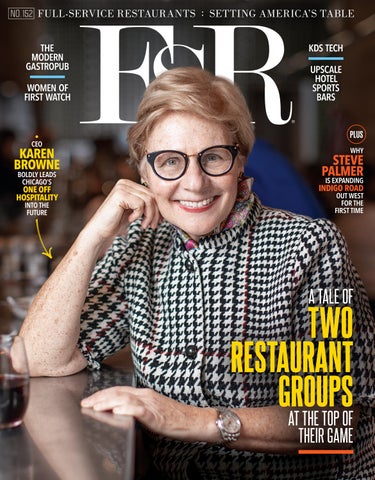
WHY STEVE PALMER IS EXPANDING INDIGO ROAD OUT WEST FOR THE FIRST TIME • CEO
BOLDLY LEADS CHICAGO’S ONE OFF HOSPITALITY INTO THE FUTURE PLUS
A
TALE OF
TWO
RESTAURANT GROUPS AT THE TOP OF THEIR GAME
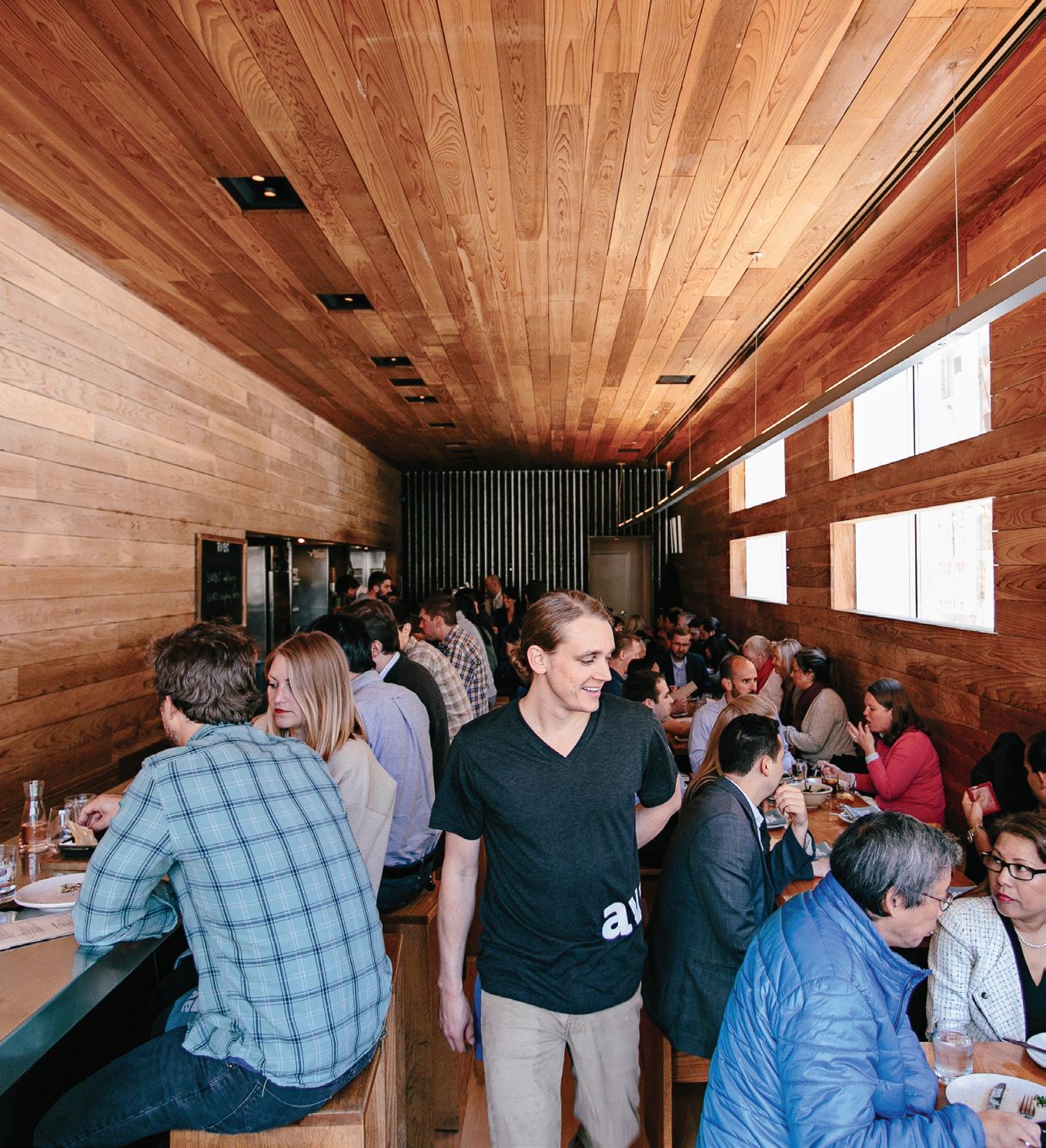
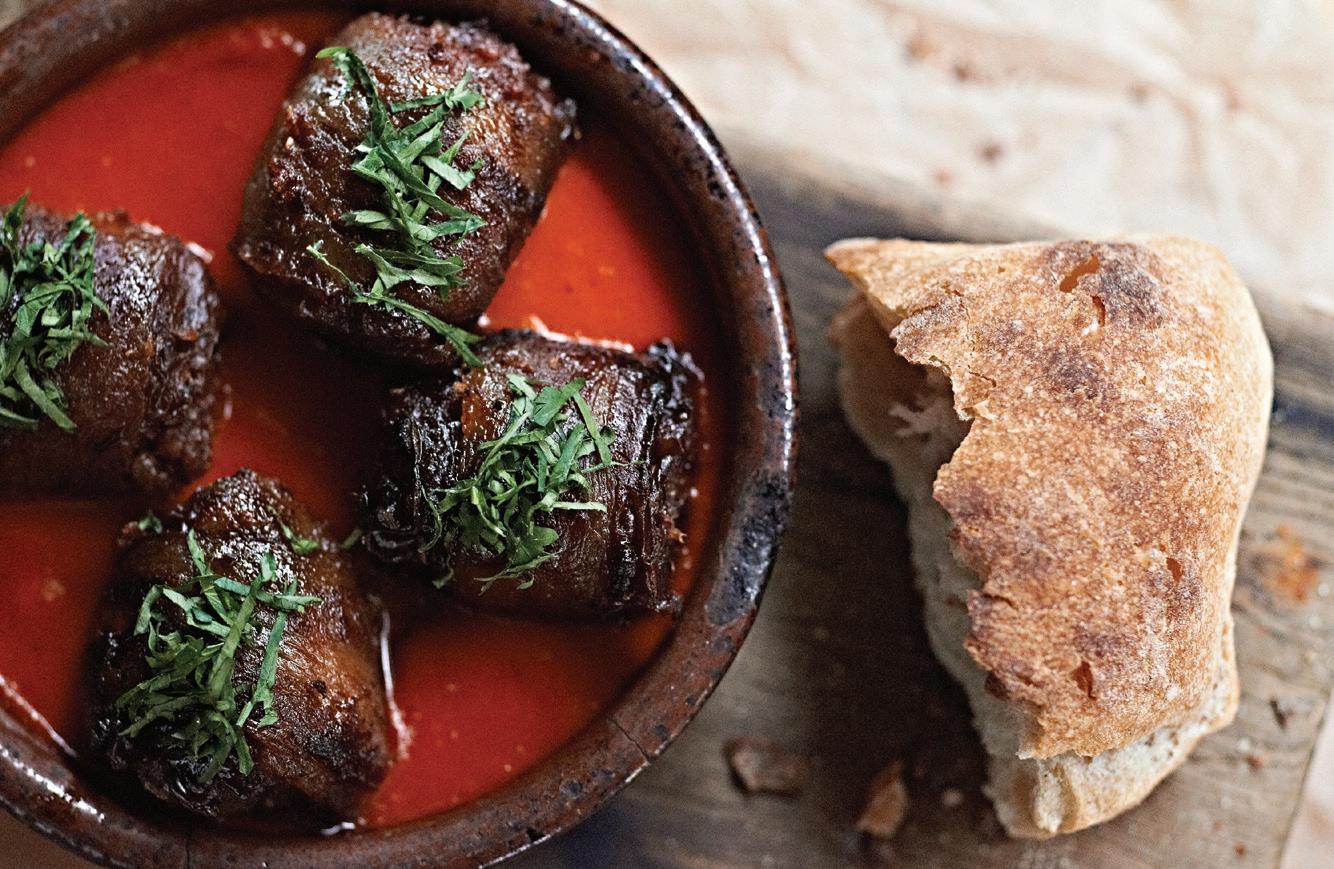
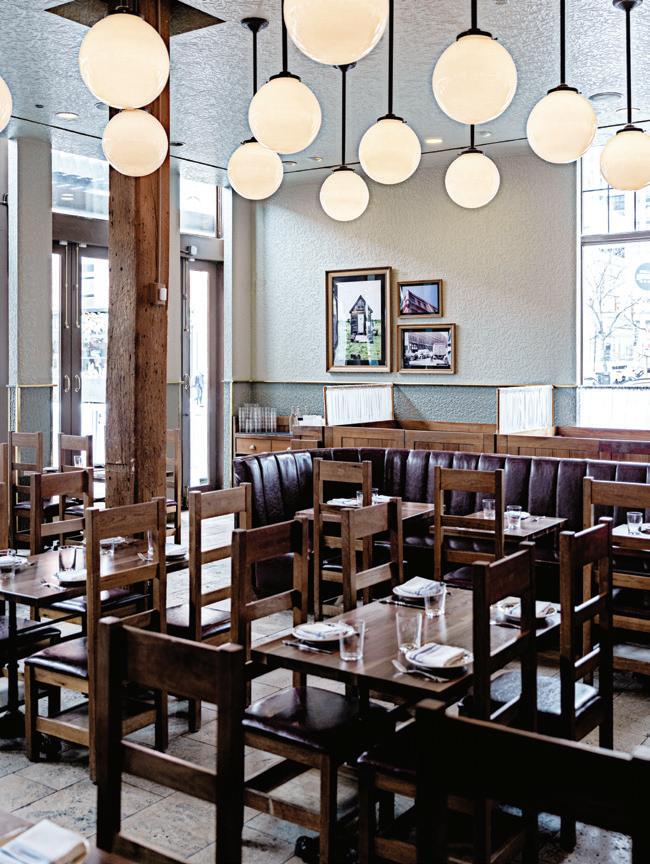
ONE OFF HOSPITALITY’S COLLECTION OF CHICAGO CONCEPTS INCLUDES RENOWNED RESTAURANTS LIKE AVEC, THE PUBLICAN, AND BIG STAR.
24 Two Restaurant Groups to Watch
BY SAM DANLEY AND CALLIE EVERGREEN
Chicago’s One Off Hospitality and Charleston’s Indigo Road
Hospitality Group are proving how leading with a people-fi rst, systems-driven strategy is the winning ticket to sustainable and profitable growth.
CHEFS & INGREDIENTS
11
Championing Catering in California
BY CALLIE EVERGREEN
Michael Campbell is betting his future on high-end catering and truly caring for his team members at his growing hospitality group— Pacific Pearl Cafe, White Rooster Cafe, and Capo Leisure House.
16 The Modern Gastropub
BY SATYNE DONER
Innovative operators at American Social, barleymash, and e Edison are proving the gastropub is all about gathering around elevated yet approachable F&B.
LIQUID INTELLIGENCE
19 The New Hotel
Sports Bar
BY SAM DANLEY
From craft cocktails and local partnerships to private events and premium viewing experiences, hotels are redefi ning what a sports bar can be.
7 Letting Go to Lead Better
BY CALLIE EVERGREEN
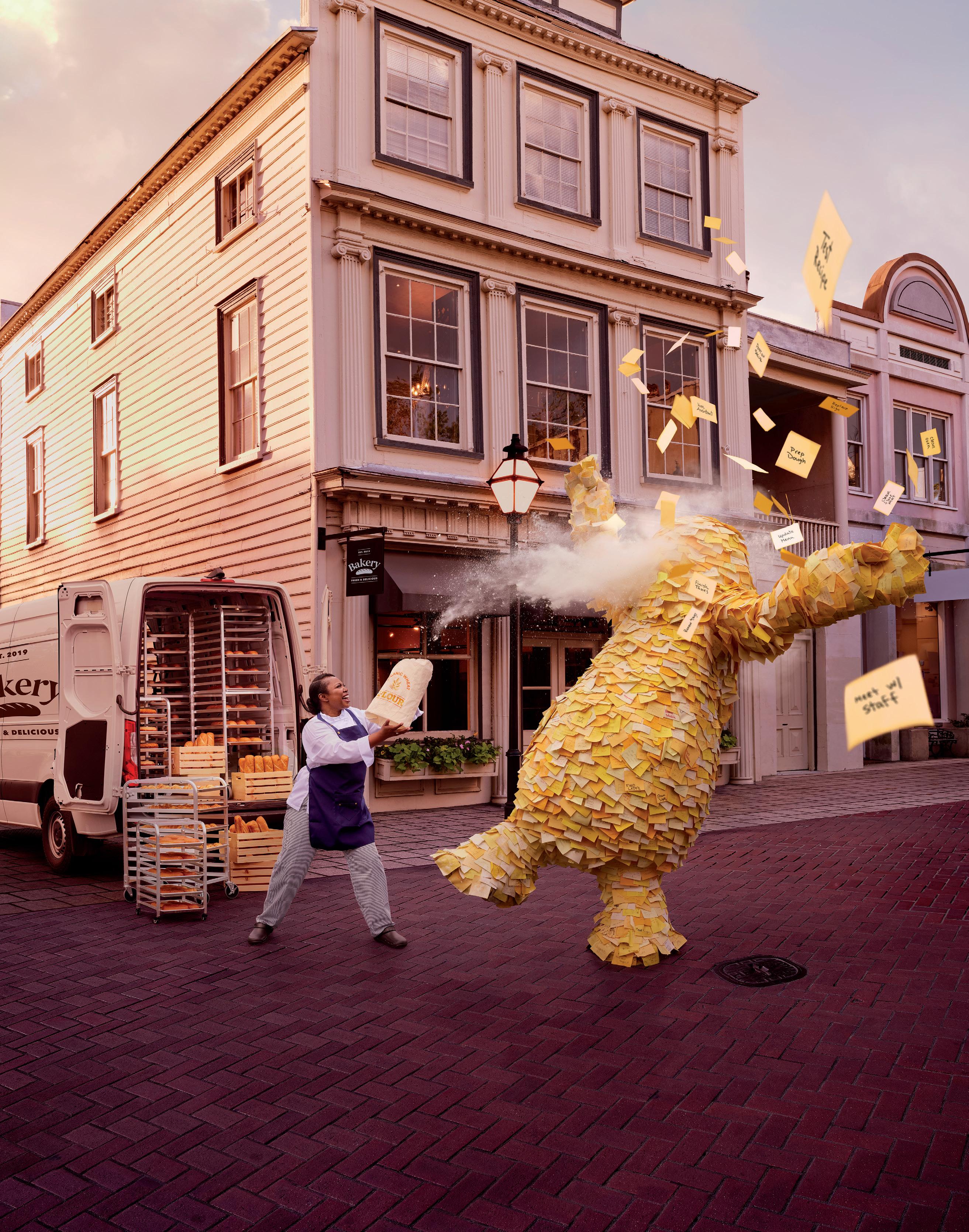
What happens when you start trusting your team to perform without you?
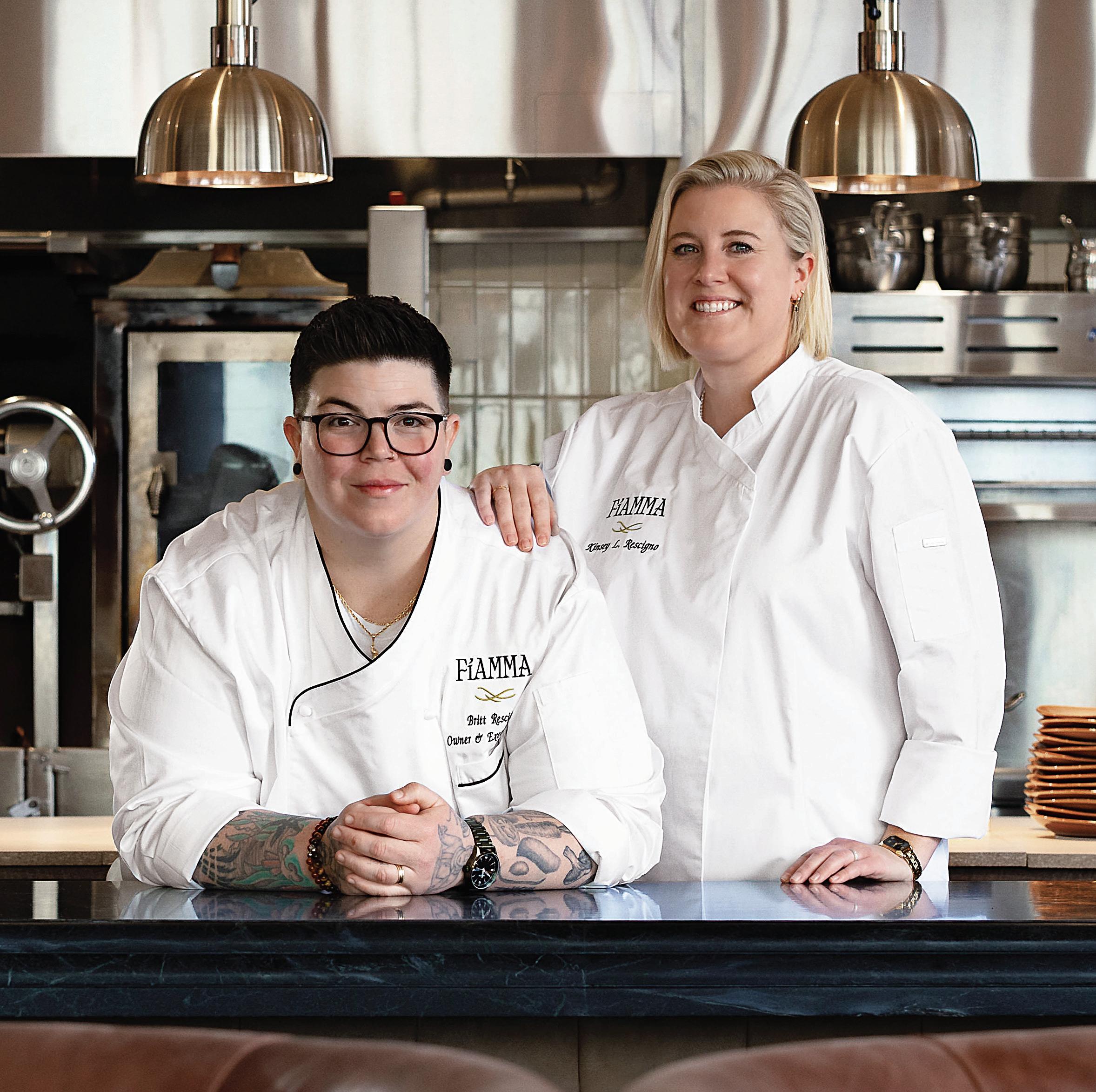
Fiamma co-chefs and coowners Britt Rescigno and Kinsey Leodler offer their thoughts on how to stop micromanaging and start giving “space with support.”
8 Summer Hiring Stats
Restaurants are projected to add about 450,000 seasonal jobs this summer, with hiring demand varying considerably by geography, according to a recent report.
BACK OF HOUSE
35 Five Leaders, One Vision
BY SATYNE DONER
WOMEN IN LEADERSHIP
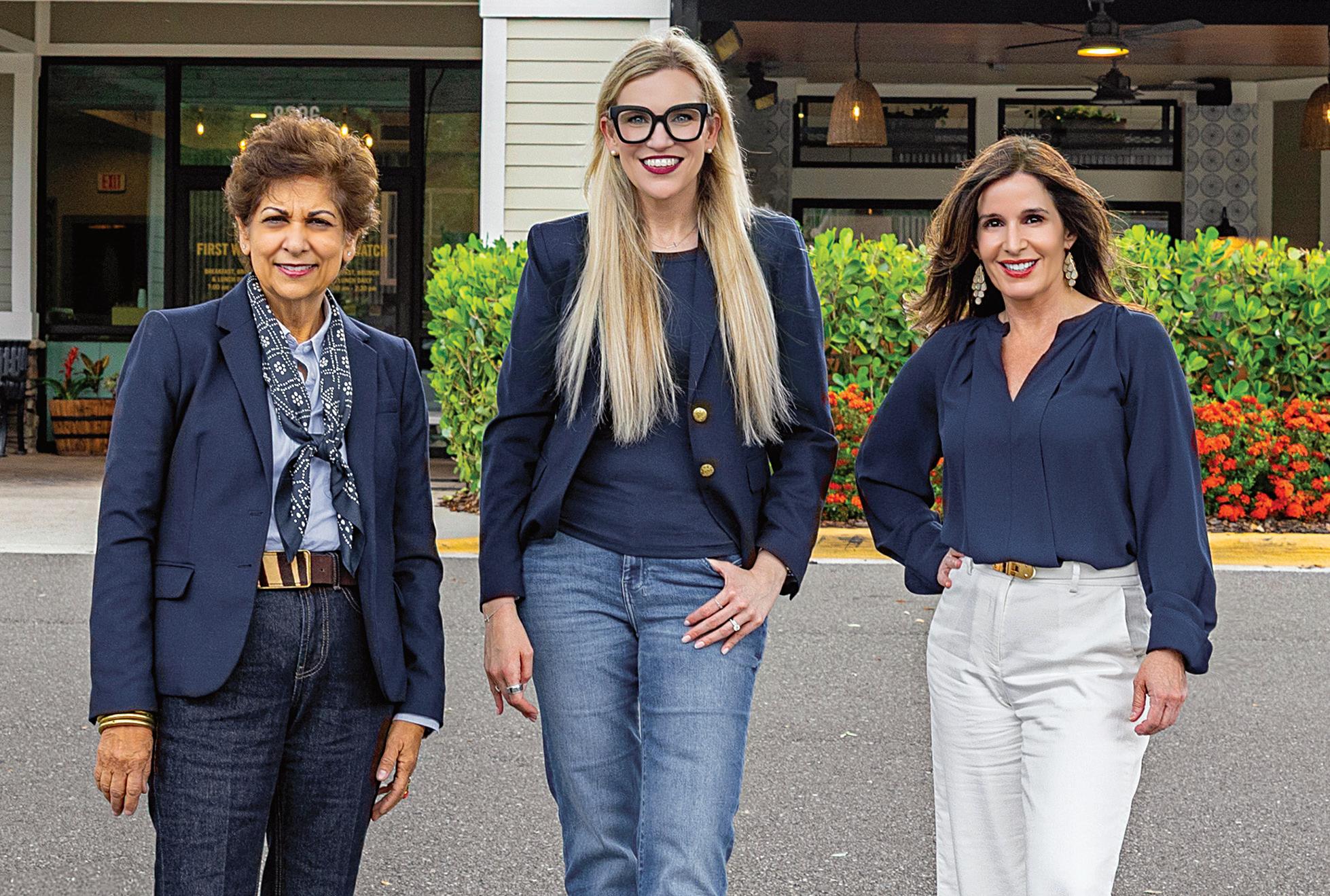
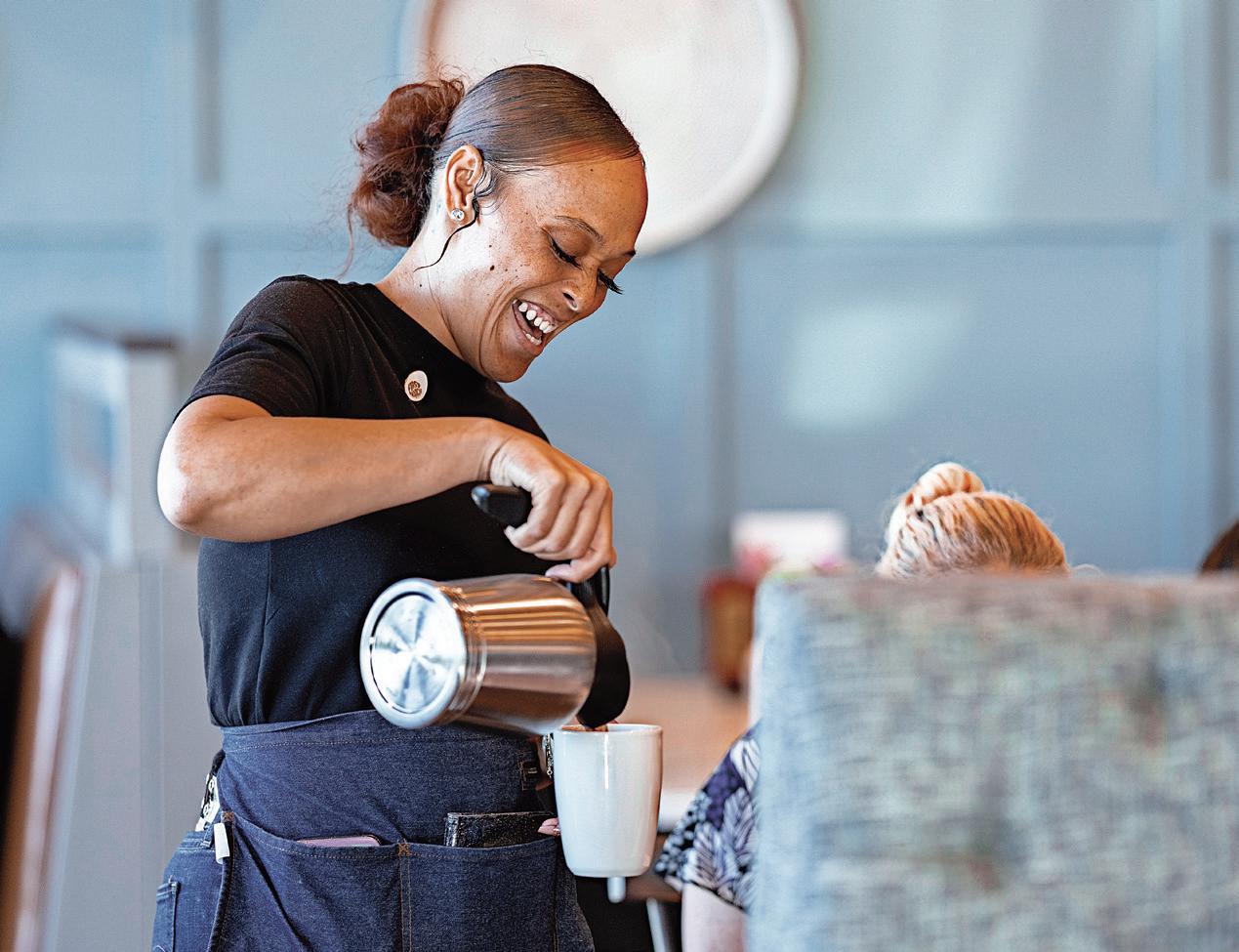
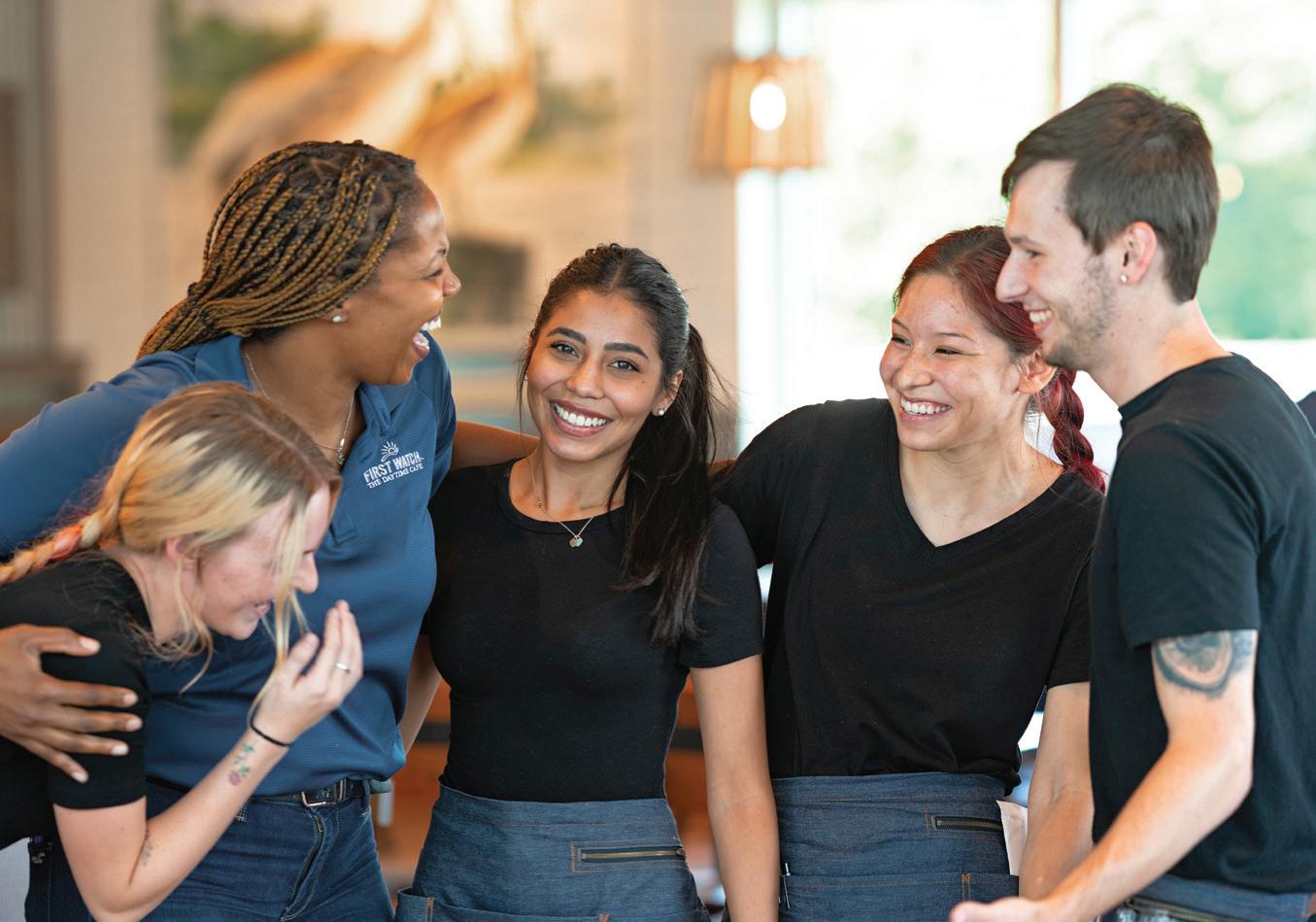
Five women are reshaping First Watch’s future from
every angle: the boardroom, the supply chain, the restaurant floor, and every level in between.
37 The New KDS and AI Roadmap
BY BRITT ENGLER
TECH CHECK The next era of restaurant technology will belong to operators who can thoughtfully connect their systems, own their data, and move managers out of the back office.
40
An
Intentional Approach to Growth
BY CALLIE EVERGREEN
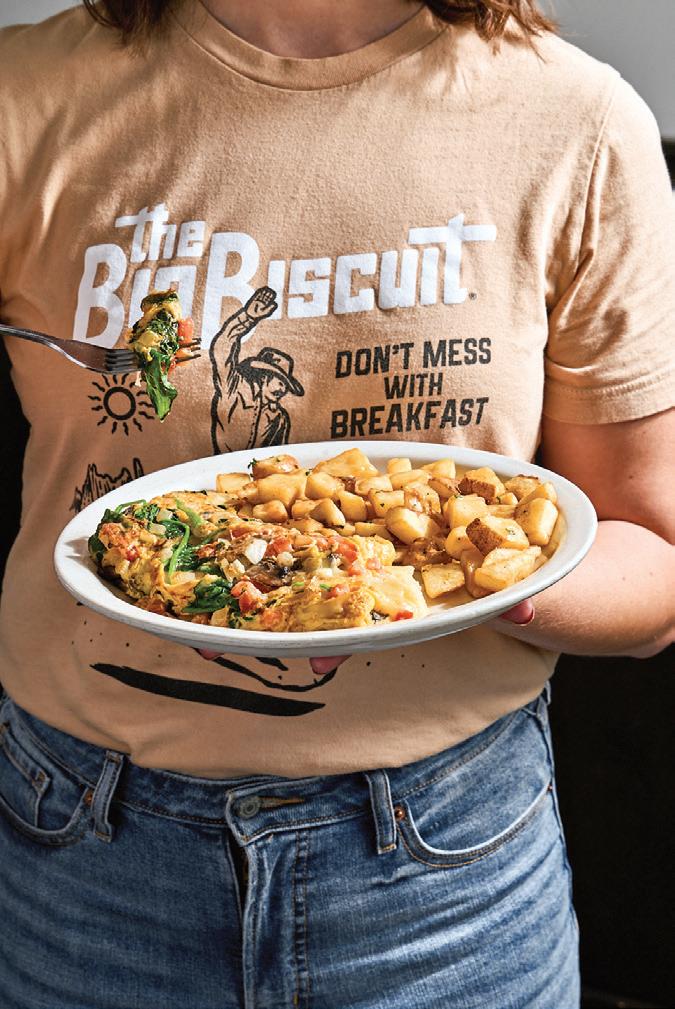
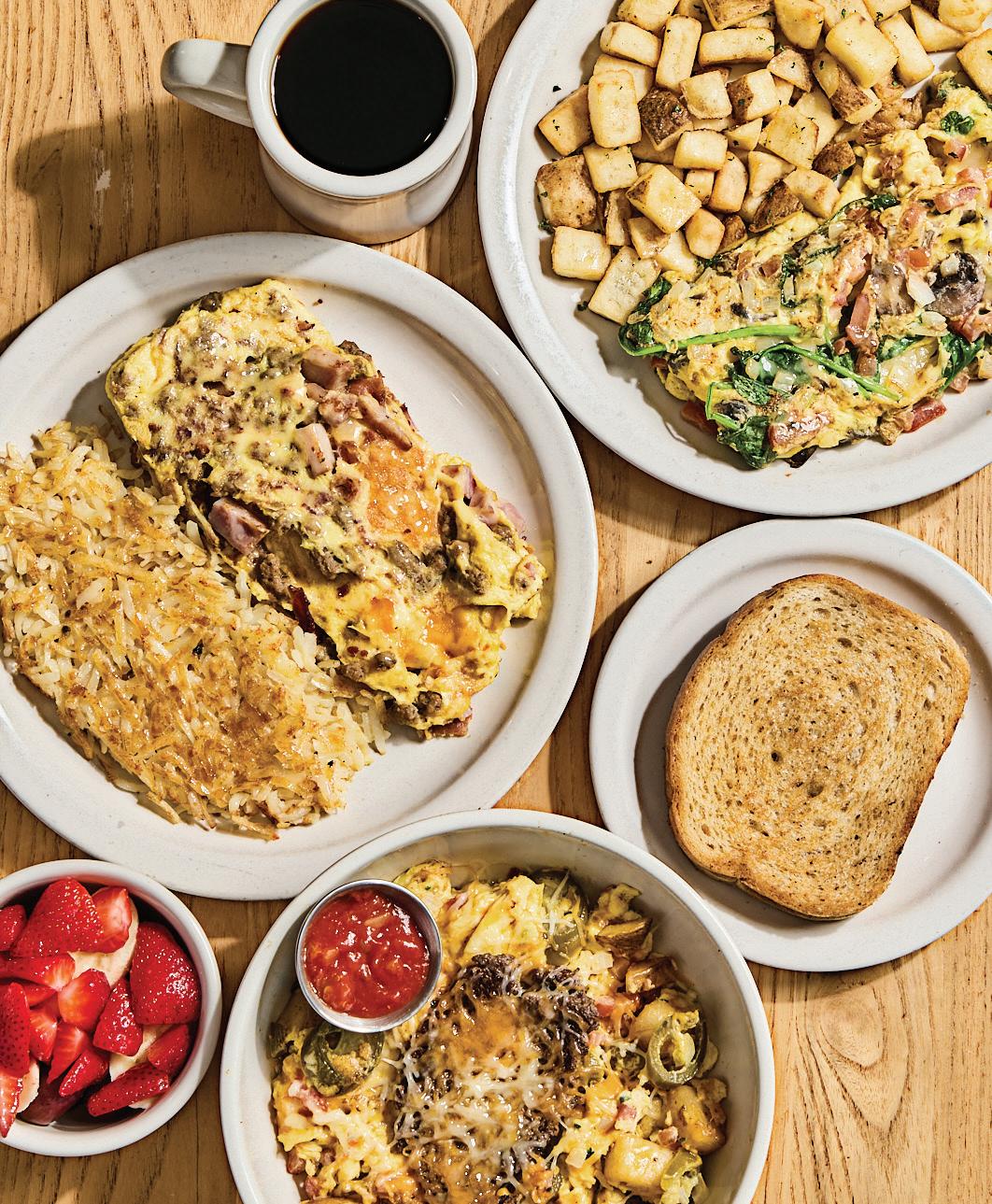
BEHIND THE SCENES As VP of finance at The Big Biscuit, Alex Clark is shaping a datadriven, focused financial strategy that’s enabling future franchisee growth into new markets—while staying true to the brand’s hometown hospitality roots and DNA.
2023 NATIONAL GOLD AWARDS: FRONT COVER (PHOTO), BEST USE OF COLOR NATIONAL SILVER AWARD: BEST USE OF TYPOGRAPHY
2016 MAGAZINE OF THE YEAR TOP 10 AWARD
2015 MAGAZINE OF THE YEAR
FOLIO: Eddie Awards
2022 BEST FULL ISSUE HOSPITALITY 2022 BEST SPONSORED CONTENT
BEST FULL ISSUE
1120, Cleveland, OH 44114.
Sponsored content in this magazine is provided to the represented company for a fee. Such content is written to be informational and non-promotional. Comments welcomed at sponsoredcontent@ fsrmagazine.com.
FOUNDER
Webb C. Howell
& BEVERAGE 2013 BEST DESIGN, NEW MAGAZINE 2013 BEST FULL ISSUE, FOOD SERVICE/HOTEL LinkedIn.com/company/ FSR-magazine
Thoughtfulness is a Di erentiator
IN THIS AI-FUELED ERA, what quickly sets you apart from the crowd is using your authentic, human voice and creativity. You won’t fi nd me using ChatGPT to write my editor’s letters, for example, and I highly doubt AI would start a Chef Profi le off by writing “Michael Campbell grew up eating dried parsley out of his family’s cupboard, but he had never tasted fresh cilantro before the age of 12.” (You can read about how Campbell revamped his business model, and why he’s betting on expanding his California restaurants with catering at the core, starting on PAGE 11.) is month’s issue highlights leaders who are being incredibly intentional about menu and restaurant design, growth strategies, and company culture. On PAGE 24, read about how Karen Browne stepped in as an industry outsider to lead Chicago’s One Off Hospitality, where she created a systems-driven approach with a clearer framework for expansion, and helped the group start looking less like a collection of concepts and more like a hospitality ecosystem. On PAGE 32, dive into Steve Palmer’s approach to strategically growing Indigo Road Hospitality Group, and why he’s expanding out west for the fi rst time in the brand’s history by opening Colletta in Colorado’s Vail Valley.
en there are F&B leaders who are creating the NextGen model for gastropubs on PAGE 16, and operators who are redefi ning the future of the hotel sports bar on PAGE 19. Learn how five women from First Watch are reshaping the booming brand’s future from the boardroom, the supply chain, the restaurant floor, and every level in between on PAGE 35. You can also read an honest take on the mistake of micromanaging and the power of learning to trust your team from two chef-owners in Idaho by fl ipping over to PAGE 7 e throughline in each story is a hyperfocus on the human element behind hospitality, which is what makes this community so special in the fi rst place. It shows up when guests and team members alike can see people in leadership who truly care; who are thoughtful in each decision and how they communicate, and who take their time and don’t bypass the creative process with shortcuts. I think Steve Palmer sums this sentiment up perfectly. His overarching goal for Indigo Road is to “leave the industry better than we found it, to be the better employer, and to have fun working in what I think is the best industry in the world.”
Callie Evergreen EDITOR
cevergreen@arrowfly.com FSRmag
@FSRmagazine
On the Cover
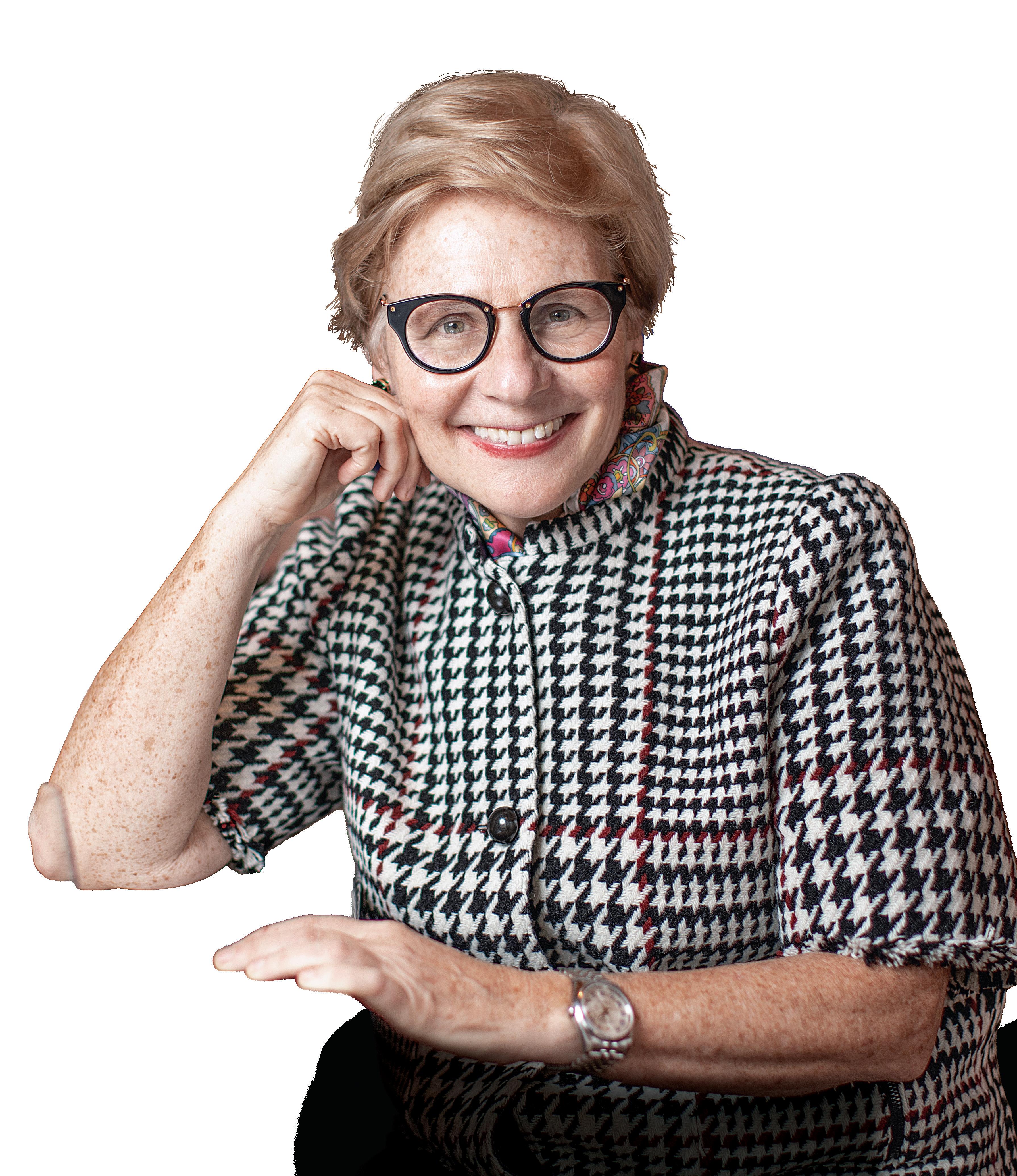
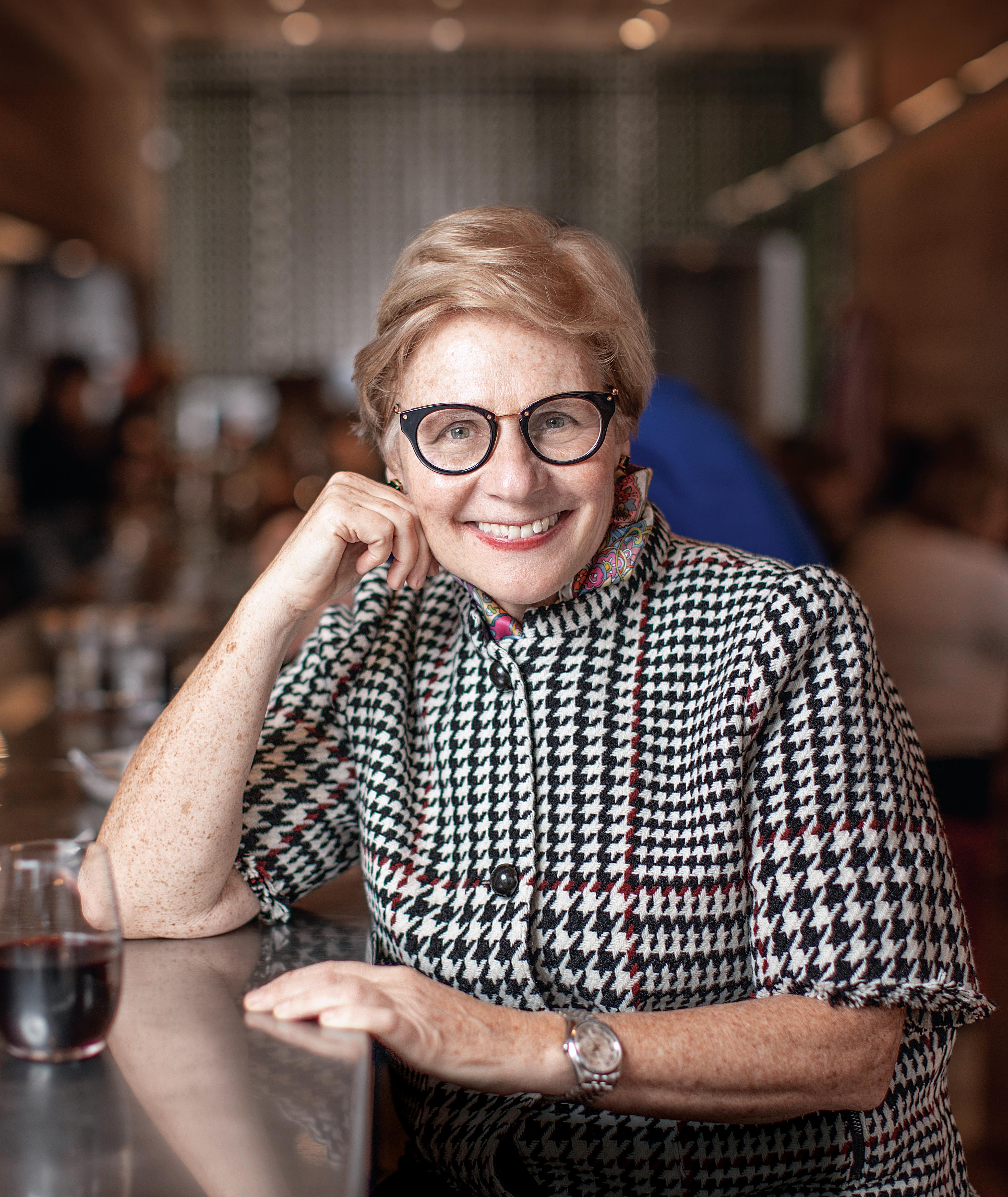
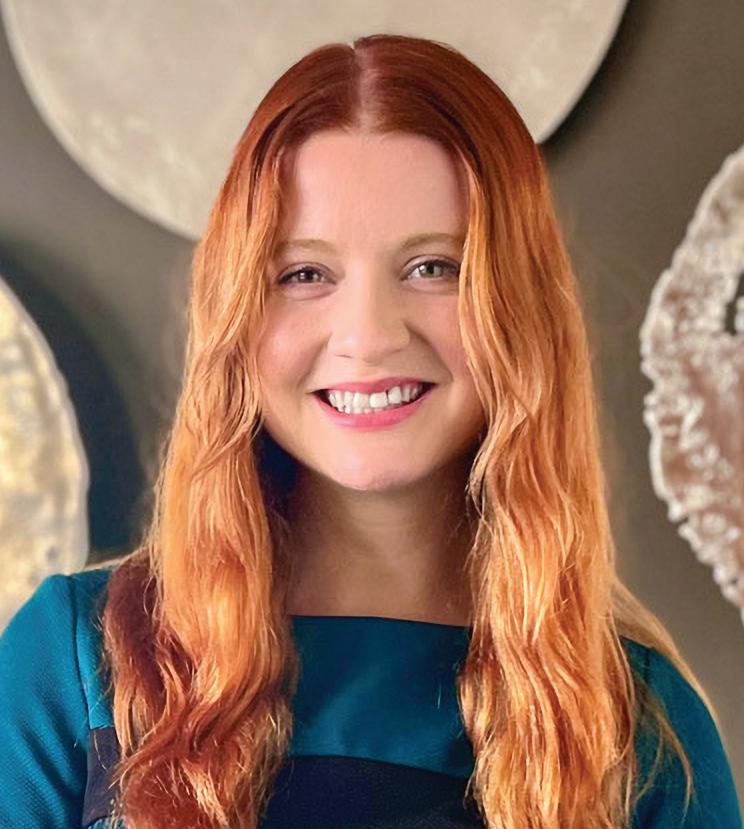
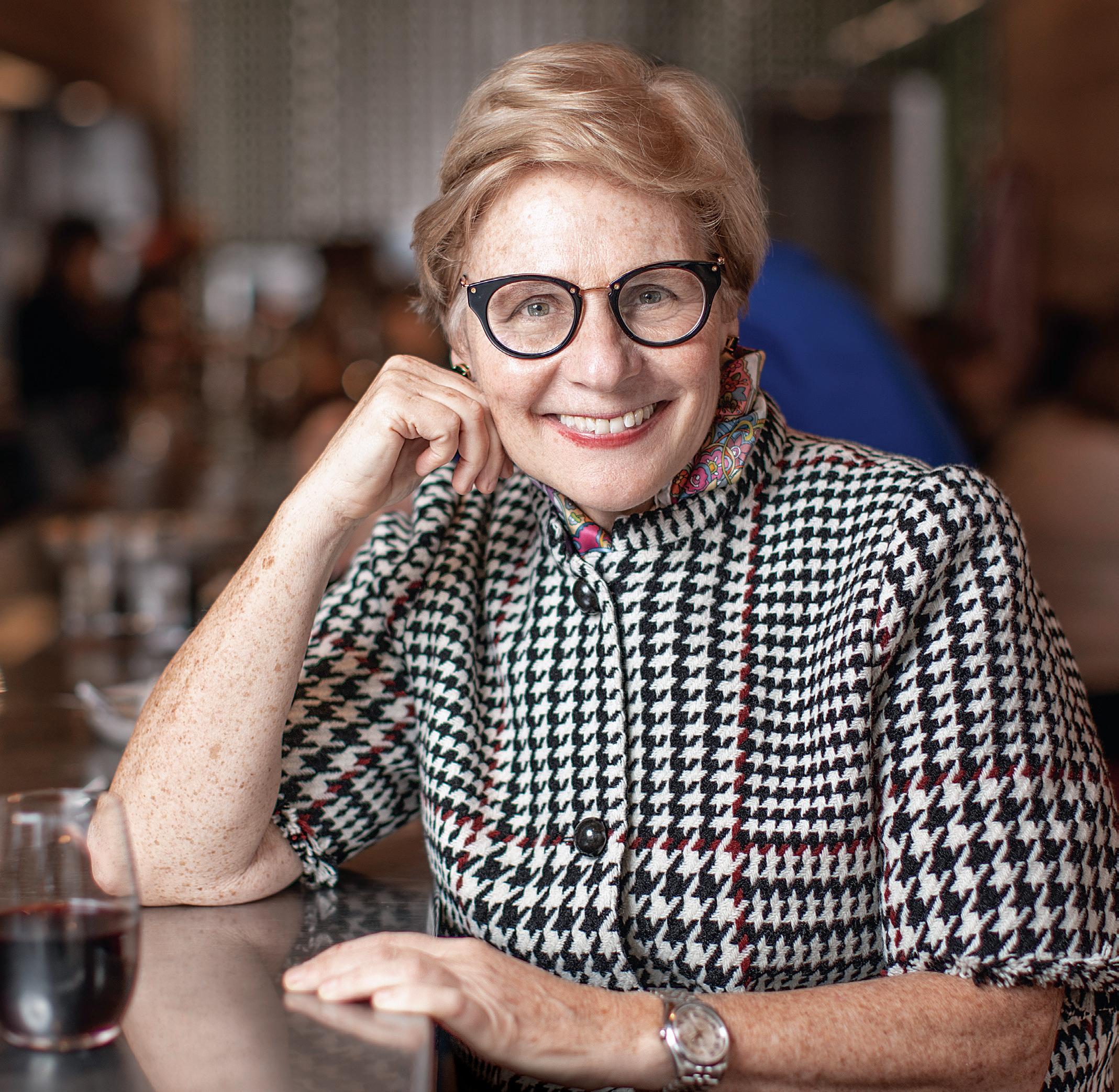
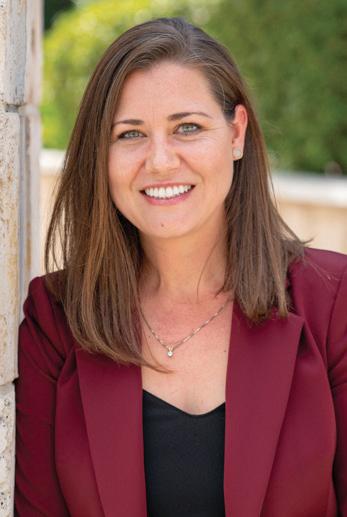
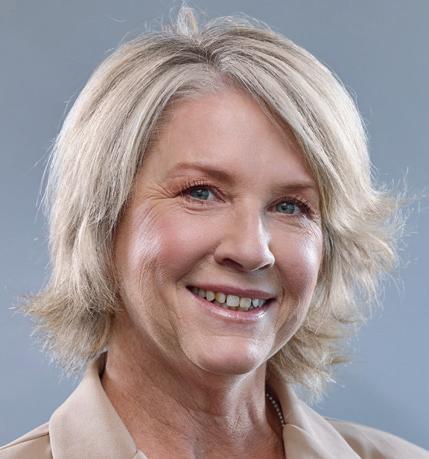
Our August cover spotlights Karen Browne, who was appointed CEO of Chicago’s One Off Hospitality Group in 2019. She arrived with deep executive experience leading some of the country’s largest human capital organizations, including a decade-long run as president of PeopleScout. Browne was brought into One Off with scalability in mind, and that goal runs through nearly every part of her agenda—from reporting systems to hiring frameworks and centralized support. For her, that means a mix of new ideas and expanding proven brands, not just adding more dining rooms.
First Course
Chef-wife duo Britt Rescigno and Kinsey
Leodler-Rescigno are the creators and co-owners behind Fiamma in Sun Valley, Idaho.
Letting Go to Lead Better
BY CALLIE EVERGREEN
What happens when you start trusting your team to perform without you?
AS A LEADER, how do you let go of the reins and learn to trust your team?
Especially when so often, chefs and restaurant operators are praised for the awilling to step in to work any job on the line. In reality, the true mark of success is—or should be—knowing your
team will be OK without you there 24/7.
"When you trust your team and allow them to do their jobs, you start giving away keys and you realize that everyone is way more efficient by you not doing everything," says Britt Rescigno, chef and co-owner of Fiamma, on a
First Course
recent episode of The Restaurant Innovator podcast, alongside her wife, business partner, and Fiamma co-owner Kinsey Leodler.
"That's the thing about micromanagement," Leodler adds. "If you just hover over your entire team and never allow them to make those mistakes, they're not going to learn. People learn more by taking the chance and either succeeding or not succeeding."
One year after opening Fiamma, the live-fire destination restaurant they created in Sun Valley, Idaho, Rescigno and Leodler say the biggest sign of success isn't a packed dining room or glowing reviews, but the confidence to leave the restaurant knowing everything will run smoothly.
"I don't feel like if I'm not there, the whole building is going to burn down," Rescigno says. "I don't feel like I have to watch the cameras. In fact, at the end of the night, I get really excited to read the manager log to see how everyone did. And I think that’s a real testament to how we’ve trained our staff and how they receive us."
However, that confidence didn't happen overnight. In the early days of Fiamma, the couple was involved in every decision, every station, and every service. But as the business matured, so did their approach to leadership. Today, several managers oversee different areas of the restaurant, giving the owners the freedom to focus on menu development, longterm strategy, and creating new opportunities for their team.
For Leodler, successful delegation in leadership looks like creating "space with support."
"The hardest thing for us in the last year was giving people the space to do what they're super qualified and what we hired them to do," she says. "Give them the room to spread their wings … When you allow people that space, they'll surprise you nine times out of 10. But it's good to be there for support and make sure you're that gentle guiding hand."
That philosophy also changes how they view mistakes. Rather than seeing an error as evidence someone isn't ready, the duo sees it as an opportunity to coach. "You really have to frame your thinking and your perspective as those mistakes are not problems—they're opportunities and learning moments," Leodler says. "Those are moments where we get to teach."
In fact, some of Fiamma's operational improvements have come directly from employees who were given the freedom to experiment. Leodler recalls team members proposing new administrative systems and digital tools that ultimately improved efficiency. "It's an opportunity for us to learn too," she says.
TO LEARN MORE, LISTEN TO ‘THE RESTAURANT INNOVATOR’ PODCAST.
Listen to Rescigno and Leodler share more on The Restaurant Innovator Podcast about the genius behind their "five-burgers-a-day" exclusivity play, adapting to an emerging market, building a sustainable team culture, and the "yin and yang" of a professional and personal partnership.
Hiring Summer STATS
According to the National Restaurant Association’s 2026 Eating and Drinking Place Summer Employment Forecast, restaurants are projected to add approximately 450,000 seasonal jobs this summer. Hiring demand will vary considerably by geography, with states across the Northeast projected to experience the strongest uptick due to tourism.
Maine
is expected to lead the nation with a 35% increase
CULINARY INSPIRATION AND STORIES FROM INDUSTRY TRAILBLAZERS
MENTIONED IN THIS SECTION BARLEYMASH
CAPO LEISURE HOUSE THE WHITE ROOSTER
Chefs & Ingredients
in Championing Catering
California
BY CALLIE EVERGREEN
Michael Campbell is betting his future on high-end catering and truly caring for his team members.
MICHAEL CAMPBELL STARTED PACIFIC PEARL CATERING IN 2021, OFFERING FINE-DINING STYLE DINNERS AND A RESTAURANT-LIKE EXPERIENCE IN PEOPLE’S HOMES AT A TIME WHEN MANY DINERS DIDN’T WANT TO SIT IN DINING ROOMS.
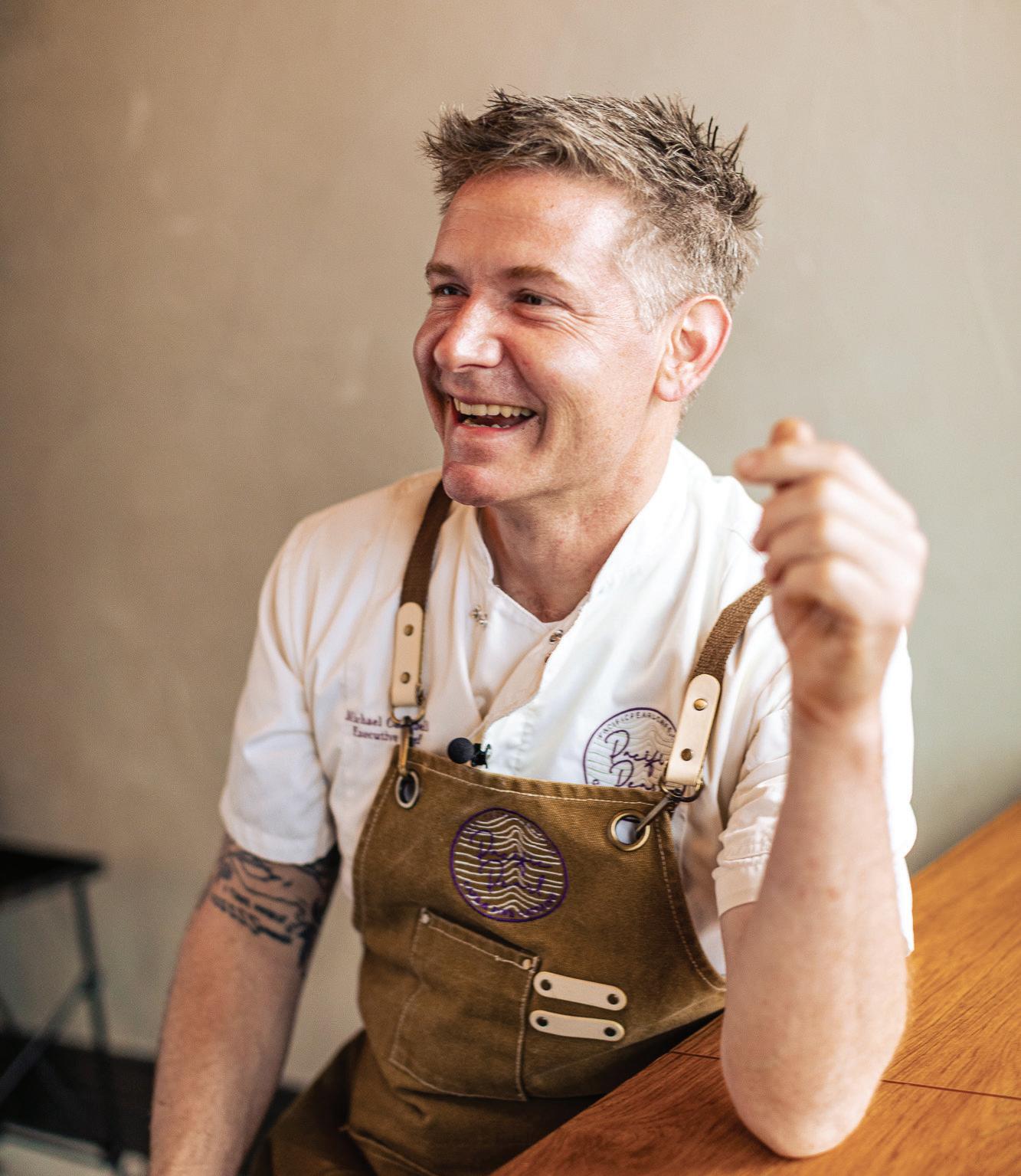
MICHAEL CAMPBELL GREW UP EATING DRIED PARSLEY out of his family’s cupboard, but he had never tasted fresh cilantro before the age of 12. Raised in southwestern Virginia, he remembers the first time he tried the contentious leafy herb at a Chi-Chi’s restaurant by the airport. Thankfully, it didn’t taste like soap to him, and it sparked a love for experimenting with new ingredients and cooking family dinners. “I just love that feeling
FAVORITE SPICE AT THE MOMENT: Guajillo chilis
POST-SHIFT DRINK: Tall sparkling water
GO-TO MEAL AT HOME: Fish tacos or bean salad
FAVORITE BEAN: Gigante beans or pickled green beans
MOST UNDERAPPRECIATED
INGREDIENT: Onions— sweet yellow, caramelized, or pickled
of preparing food for people from a very young age. I think it got hardwired in my DNA as a way of showing love,” he says.
At the turn of the millennium, he graduated from culinary school at Johnson & Wales in Charleston, South Carolina, and then decided to expand his horizons by moving across the country to Portland, Oregon. ere, he recalls the experience of trying “blackberries for the fi rst time and fresh parsley, fennel, and the salmon they had there was like nothing else I’d ever had,” Campbell says. “I distinctly remember these food experiences as being like, now that I can work with these ingredients, it’s a game changer.”
“I fell in love with these beautiful ingredients [and] seeing things for the fi rst time that I’d never grown up eating, and my whole culinary world expanded,” he adds.
Now boasting over two decades of culinary experience, Campbell has sharpened his skills across worldrenowned hubs including Barcelona, New York, San Francisco, Orange County, and Avignon, France. He’s also had the opportunity to work with top chefs and industry pros, notably serving as chef de cuisine at Montage Hotel, as executive sous chef for the Michael Mina Group, and exploring classic Spanish and French techniques at Dan Barber’s Blue Hill.
Amid his gastronomic globetrotting, Campbell somehow always knew
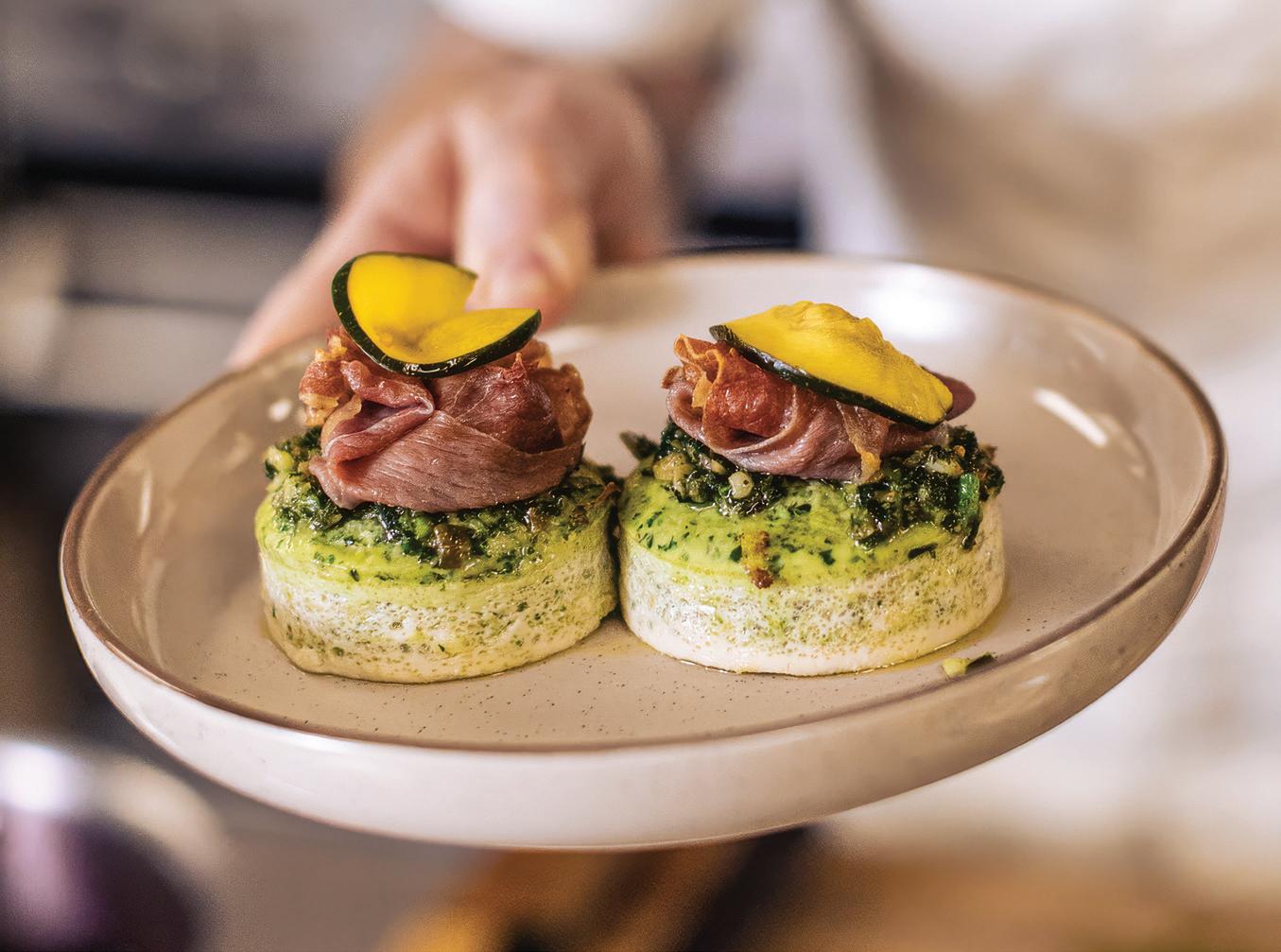
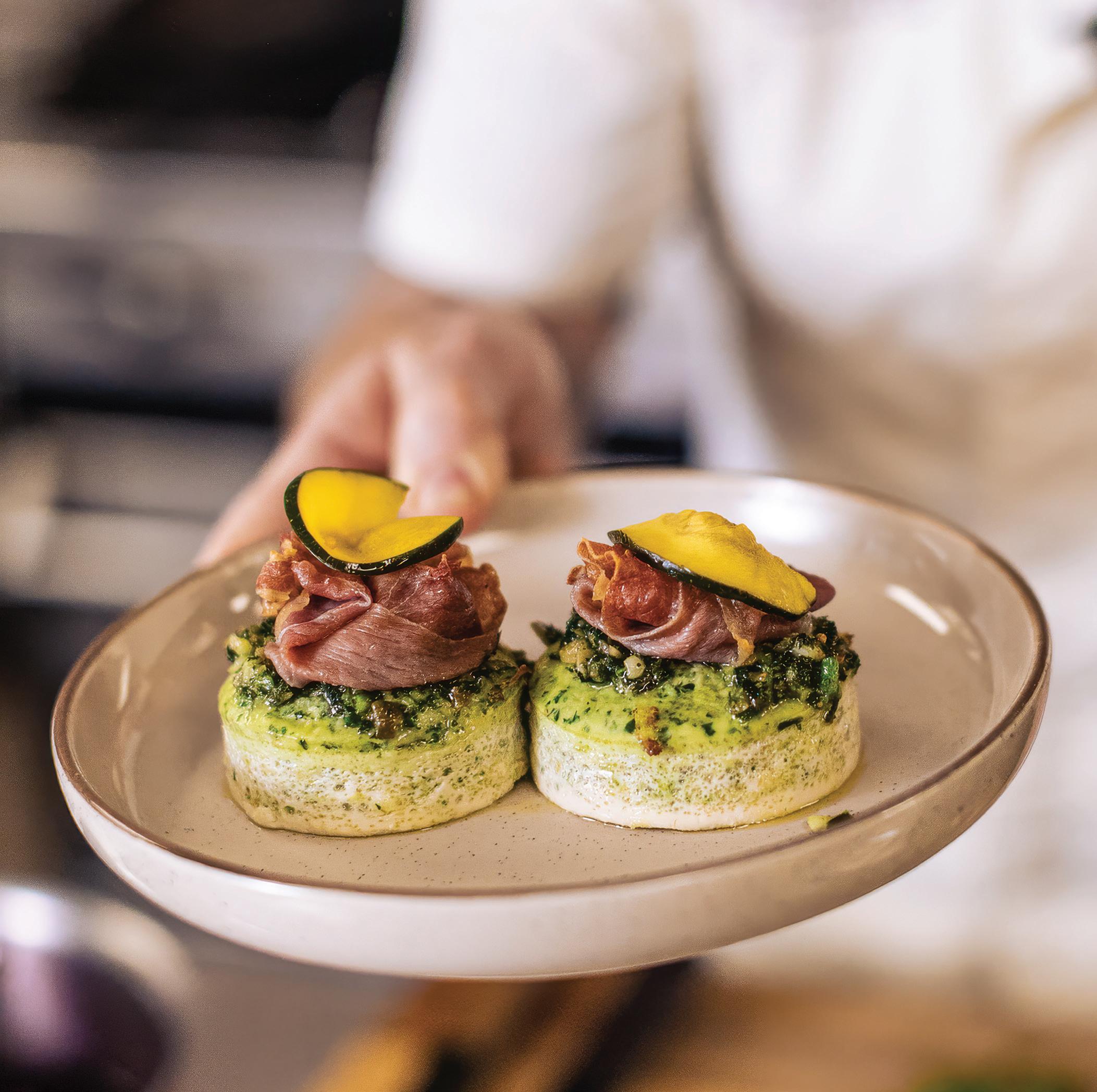
PACIFIC PEARL CAFÉ’S LUNCH MENU IS BRIGHT, CALIFORNIA-FRESH, AND SANDWICH-FORWARD, MIXING MELTS, GLUTENFREE CIABATTA SANDOS, AND SALAD/BOWL COMBOS WITH PUNCHY ADD-ONS LIKE PICKLED ZUCCHINI, ARUGULA, AND HOUSE SAUCES.
he’d end up in Southern California. “I just love the lifestyle. I’m sitting across from the Pacific Ocean now, I’ve got surfboards on the wall, I’ve got a mountain bike on the back of my car,” he explains. Plus, there’s access to fresh food from multiple farms just down the road.
“Between the lifestyle and the restaurant scene, I’ve just always been drawn out west. What a place to call home.”
And yet, operating a restaurant in California is no easy feat, given regulatory and real estate hurdles adding significant fi nancial strain to restaurateurs. Add intense market competition and strict labor laws to the equation, and it sends many folks running for the hills to “easier” markets like Florida and Texas.
But those factors didn’t scare Campbell away; they just made him think more creatively to survive. “ ere’s mandatory regulations that we have to contribute into retirement funds and things like that, but I believe if you look at the business model, we can make room for that. We can adjust to that. You just have to be willing to work with these regulations and figure out how to make it work within the business model,” he says.
“Post-COVID, we’ve had to rethink that altogether. A restaurant business like it was 20 years ago is not a profitable model,” Campbell continues. “ is might sound like a silly response, but you just have to generate more revenue, right?”
While simple in theory, Campbell backs up the idea with a poignant example. He was overseeing several hotel restaurants for Paley Hospitality Management in Portland when COVID fi rst hit, and after closing a few restaurants, he “had to pivot quick” and figure out what he was going to do next.
He decided to regroup and return to Orange County, California, where he launched a catering business after noticing how strong banquet and catering margins were in hotels. “ ey always have the best numbers as far as food
HABANERO
costs. They’re running 10-11 percent, which is a lot different than the 25-30 percent in traditional restaurants,” he says. “So I started a catering business, and that went really well, and it helped me build out my fi rst Pacific Pearl Café.”
Campbell started Pacific Pearl Catering in 2021, offering fi ne-dining style dinners and a restaurant-like experience in people’s homes at a time when many diners didn’t want to sit in dining rooms. “I’d sling out eight different Spanish-style tapas, and then be cooking a paella in the meantime, and do some alburinos and other Spanish wines,” he recalls. “I just treated it like an elevated dinner party, and that’s how I built the model.” e catering business performed well enough to help him build out his fi rst Pacific Pearl Café, which opened in late March 2022 in San Juan Capistrano, California. Open from 8 a.m. until early afternoon, Pacific Pearl Café’s menu is a fresh, California-leaning lineup built around sandwiches and hearty salads/ bowls, with lots of add-ons like pickled zucchini, arugula, sprouts, and house sauces. “Melts” range from a smoked albacore tuna melt and kale pesto grilled cheese to a grilled chicken quesadilla, turkey reuben, and grilled cheese with tomato soup.
Campbell opened a second Pacific Pearl Café in Costa Mesa, with another location slated to open this fall. “Going from one location to two locations was the biggest cliff to jump off of,” he reveals. e key to success for him was providing his team with “proper support and guidance,” showing up excited and willing to help, and recognizing team members for their talents. “I make sure that everyone knows that they’re supported. I recognize what they do for me,” he says. “I’m only as good as they are, so I just try to lead by example, and I try to support and reward, because we’re going to build this together. It’s not a ‘me’ thing—I’ve always just wanted to build a hospitality group.”
at mindset has enabled Campbell to continue growing and opening new restaurants in California. In 2024, he launched a concept called Capo Leisure
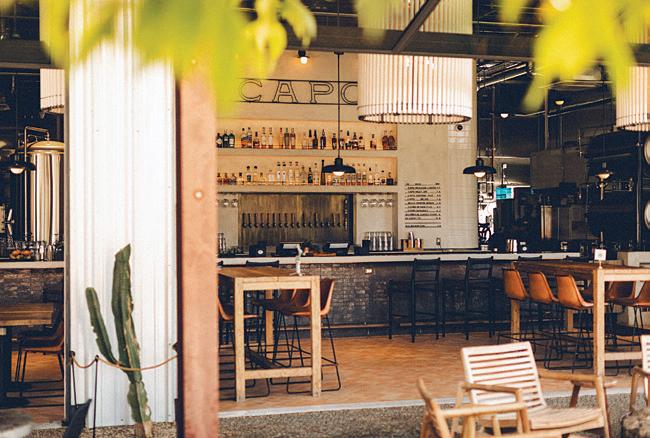
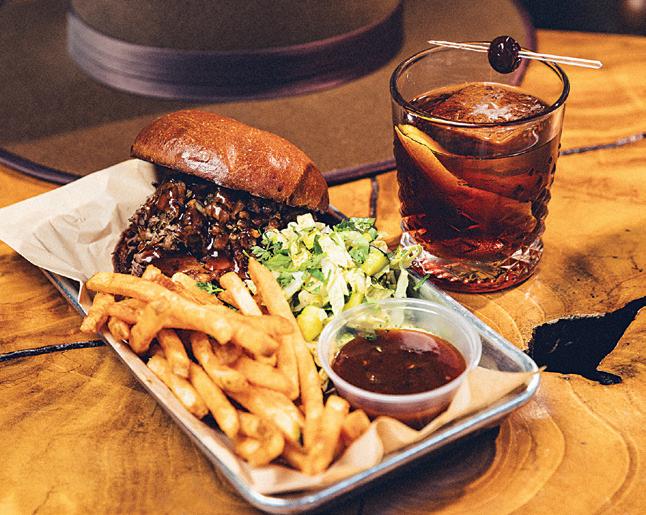
CAPO LEISURE HOUSE LEANS INTO “COMIDOS CALIFORNIOS,” PAIRING COASTAL FLAVORS WITH FIRE-AND-SMOKE BARBECUE, FROM TACOS AND BOWLS TO BURGERS AND “MELTIES”—HIGHLIGHTS INCLUDE THE BLUE-CORN BEER-BATTERED FISH TACOS AND THE BRISKET BURNT ENDS BOWL.
House at River Street Marketplace with live-fi re cooking, smoked meats, ceviche, and tacos, all integrated with a neighboring brewery to create a cohesive F&B experience. e kitchen is dedicated to “Comidos Californios”—a style of cooking that traces the cultural and culinary line running from the historic missions of San Juan Capistrano down through the surf breaks, ranchos, and roadside cocinas of the Baja shore.
And in January of this year, Campbell and his team opened White Rooster Cafe—a coastal eatery specializing in elevated brunch and comfort food, located in Dana Point across from Doheny State Beach. e menu is entirely gluten-free and seed-oil-free, and built around freshness and bright fl avors. “I wanted every aspect of the plate to be a little unexpected,” he notes. Even the beans are treated with attentive care and finished with orange juice, lime juice, and (of course) cilantro.
“As a classically trained chef, one of the things you have to get rid of is the idea that you know what’s best and what your customers want to eat,” Campbell says, noting how he pivoted within 30 days of opening the White Rooster and made a classic Americana section on the menu. “We do a tri-tip breakfast burrito, we do a smoked carnita breakfast burrito with sweet potato and pickled zucchini, and what I overlooked was the fact that some people want to come in and have bacon, eggs, and pancakes for breakfast,” he admits. “My first thought was, ‘ ere’s a Denny’s two blocks that way,’ but you want to capture everything.”
Campbell says White Rooster has the best margins and most engagement out of any of his concepts so far, ”but we still haven’t hit that catering stream or private party stream, which is really our bread and butter these days. We have the potential to do that,” he says. Catering continues to be a key revenue stream and strategic pillar of his business model at all of his restaurant concepts. “ at revenue stream continues to help us do what we want to do in the regular restaurants,” he adds. “If it’s not there, we see it in the monthly P&Ls.”
DAVID MARANO
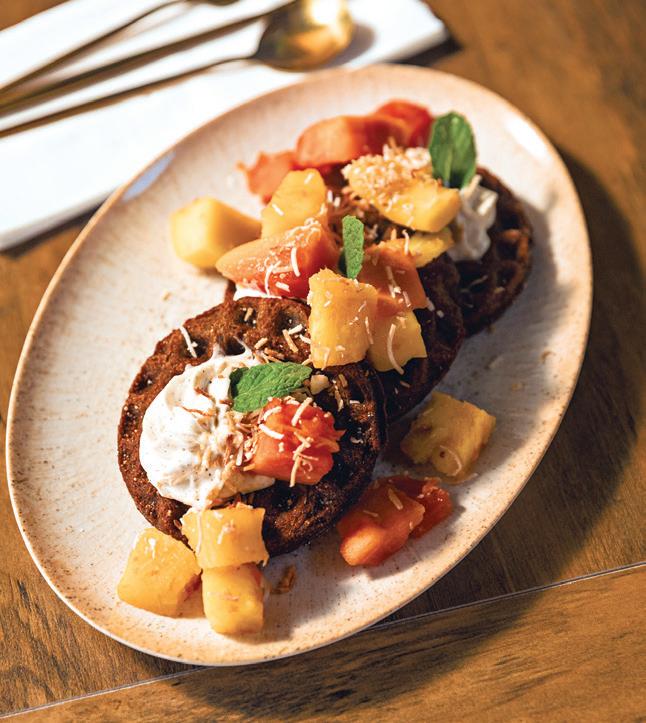
THE WHITE ROOSTER CAFE DELIVERS A RELAXED COASTAL BRUNCH-TO-NIGHT VIBE WITH BAJA-LEANING COMFORT FOOD, BUILT AROUND BLUE CORN WAFFLES AND HEARTY PLATES WITH PLENTY OF TRI-TIP AND SEAFOOD.
The Modern Gastropub
BY SATYNE DONER
Three restaurants are proving the gastropub is all about gathering around elevated yet approachable F&B.
FOR CENTURIES, TAVERNS in Roman Britain, Anglo-Saxon alehouses, and early-19th-century London pubs served one primary purpose: to serve beer (and lots of it). Food took a backseat until 1991, when two British pub owners coined the term “gastropub”—a concept that began to reinvigorate pub dining in London and spread to the U.S. in the early 2000s. e gastropub has evolved significantly since then.
San Diego’s barleymash restaurant exemplifies a modern approach, shed of any pretension. Since 2012, it has brought rotating local craft beers, a bourbon-forward cocktail program, and scratch-made bar fare that celebrates the richness of American culture to the downtown community.
“ ere was a time that the gastropub stood for very elevated bar food, and then people would get crazy with foams and all of these different things where you’d read the menu and say, ‘What is that?’” says executive chef Kevin Templeton. “I wanted barleymash to feel elevated in the sense that it’s all the things you know and love, but we’re making the mayonnaise from scratch. We’re using fresh herbs and going as organic and sustainable as possible.”
e spicy shrimp skillet is one of Templeton’s favorite dishes—not overcomplicated, just fresh shrimp sautéed in garlic and shallots, deglazed with tequila, and served with homemade garlic chili butter, wasabi cream, and focaccia bread. en there’s the slow-braised short ribs, on the menu since day one, smothered in red chili and garlic, served with arugulainfused mashed potatoes, roasted farmhouse veggies, and crispy tobacco onions. It’s elevated, but approachable—
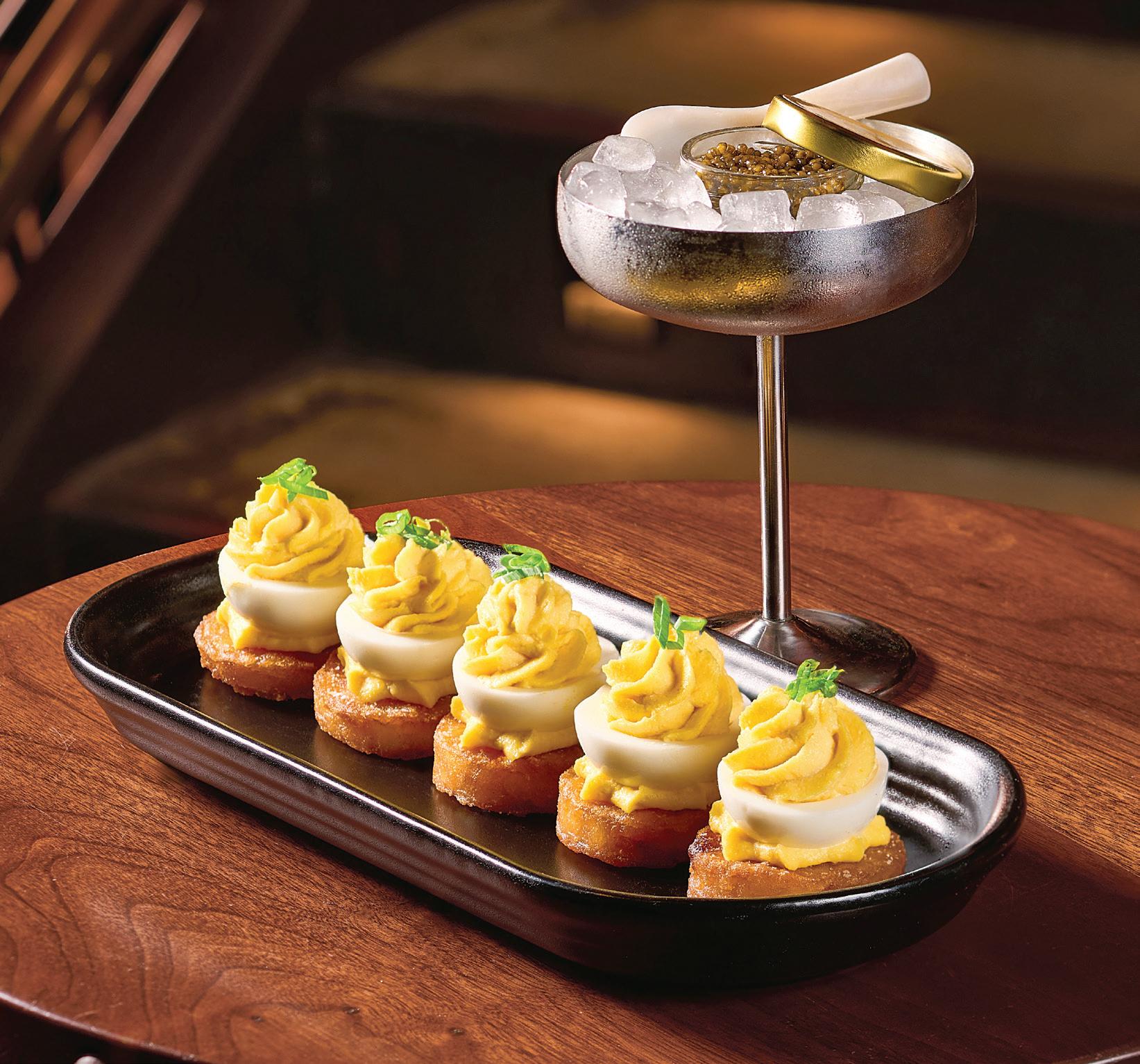
THE EDISON’S TWIST ON A DEVILED EGG, CALLED ANGELED EGGS, IS SERVED ON A CRISPY POTATO CAKE WITH AN OUNCE OF CAVIAR FOR THOSE WHO YEARN FOR AN EXQUISITE, YET FAMILIAR EXPERIENCE.
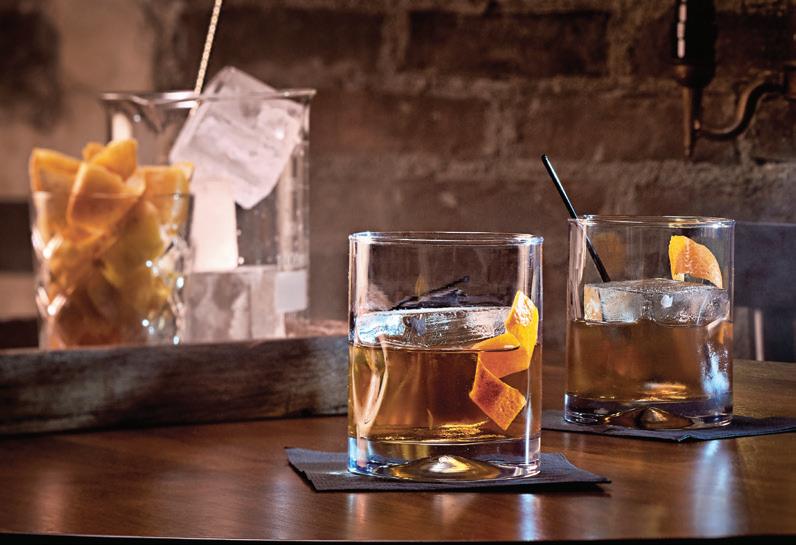
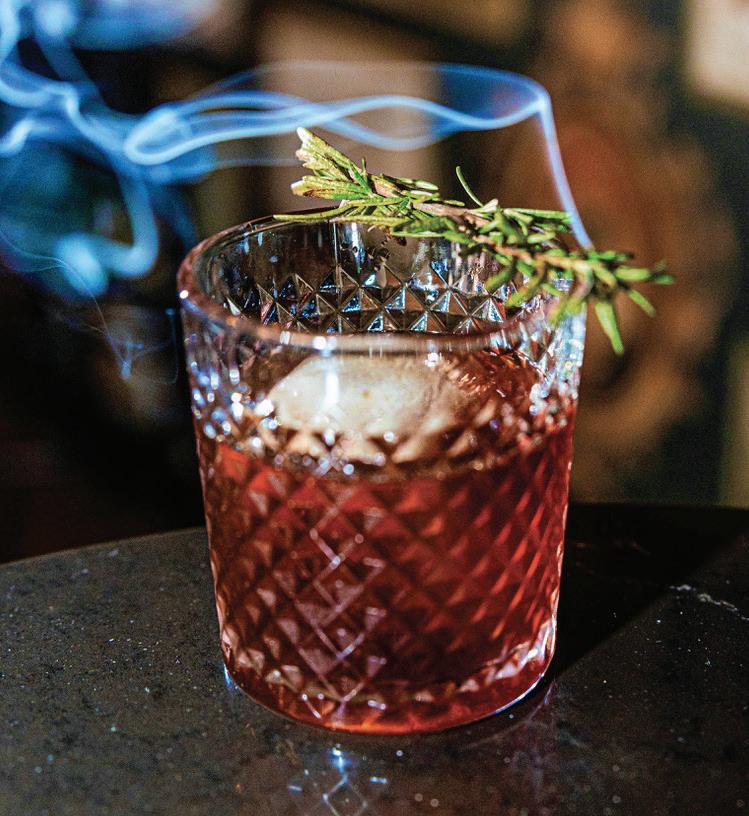
THE EDISON’S PATENTED, GILDED OLD FASHIONED FEATURES WHISTLEPIG 18-YEAR WHISKEY, BOURBON-BARRELAGED VERMONT MAPLE SYRUP, BITTERCUBE TRINITY BITTERS, TORCHED BACON, AND IS PRESENTED TABLESIDE WITH TWO GOLD COINS.
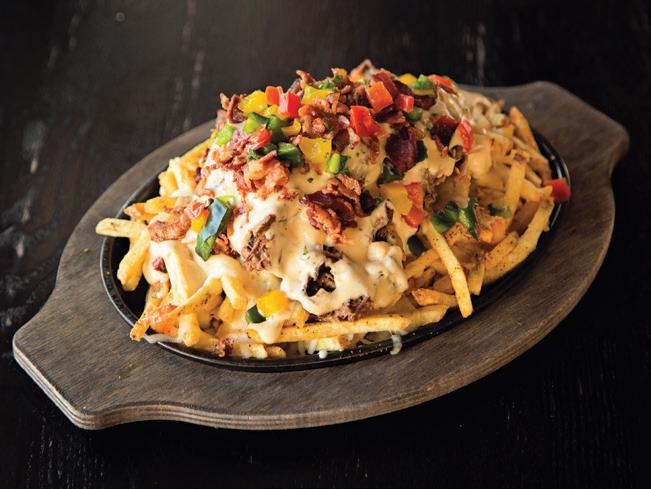
heavy portions of house-cut fries available in a variety of toppings, mac and cheese smothered in beer-cheese sauce, and creative fl atbreads.
“A modern gastropub is elevated, but not pretentious. You don’t have to have just fried foods … ere’s so much variety with gastropubs, from fresh salads to pickled vegetables and different craft beer options,” Templeton
says. “It’s a vibrant, open place where people feel safe and come together in the age of social media.”
But modern gastropubs take many forms. e Edison, sitting at the heart of Disney Springs in Lake Buena Vista, Florida, represents a different interpretation—an industrial-style, 1920s-inspired destination that blends American cuisine, craft cocktails, and live entertainment with theatrical fl air. e dishes have a theatrical presentation. For starters, there’s the clothesline candied maple black pepper bacon, served with sweet and spicy pickles and held up on clothespins. e classic Bavarian bar pretzel, delicately hung on a stand, comes with honey mustard and pimento cheese. e Edison’s twist on a deviled egg, called Angeled Eggs, is served on a crispy potato cake with an ounce of caviar for those who yearn for an exquisite, yet familiar experience.
“Because of our location at Disney Springs, we try to do a lot of different things to appeal to a wide range of people and have things that are approachable,” executive chef Benjamin Dodaro says. “Our Angeled Eggs are served with a full one-ounce tin of caviar instead of paprika and bacon, so it’s a little bit more of an elevated experience, but the egg becomes a familiar vessel.”
The same principle applies to the cocktail program. e gilded Old Fashioned features Whistlepig 18-year whiskey, bourbon-barrel-aged Vermont maple syrup, Bittercube Trinity bitters, torched bacon, and is presented tableside with two gold coins. e Strawberry Fields Forever (inspired by the Beatles) drink features Wheatley vodka, St-Germain, lime juice, local honey, strawberries, and mint.
Yet another model exists in American Social, which operates five restaurants throughout Florida. Its award-winning modern American menu is deliberately curated for sharing, indulging, and gathering—with local craft beers and carefully crafted cocktails woven into the narrative.
Executive chef Ryan Leonard articulates this philosophy clearly: “When
SINCE 2012, SAN DIEGO’S BARLEYMASH HAS BROUGHT ROTATING LOCAL CRAFT BEERS, A BOURBON-FORWARD COCKTAIL PROGRAM, AND SCRATCH-MADE BAR FARE THAT’S ELEVATED, BUT APPROACHABLE— LIKE HEAVY PORTIONS OF HOUSE-CUT FRIES AVAILABLE IN A VARIETY OF TOPPINGS.
AMERICAN SOCIAL WAS BORN IN 2013, IN THE THICK OF THE CRAFT BEER EXPLOSION. EXECUTIVE CHEF RYAN LEONARD’S “FROM SCRATCH” MENTALITY HOLDS ACROSS THE KITCHEN AND BAR—FROM LOCAL BEERS AND HANDCRAFTED COCKTAILS TO HANDROLLED CROQUETTES AND HAND-BREADED CHICKEN.
I think of ‘social,’ I think family. And family means familiarity. Everything I put on this menu is designed to feel like something you recognize, something that makes you lean in. I think of our menu as a road trip—and road trips are always better together.”
e sharables section reflects this philosophy. Goat cheese croquettes with a red chili guava glaze nod to South Florida’s Hispanic influence. Nashville hot chicken-inspired sandwiches and New Orleans-inspired barbecue shrimp served over pimiento cheese polenta
honor Leonard’s childhood in Southern Appalachia.
American Social recently went through the most comprehensive menu overhaul since the brand’s opening, says Kathryn Raponi, director of innovation and brand experience. at includes a new beverage program across cocktails, shot callers, wine, and beer; daily features like Burgers & Barrels on Mondays and Wine Down Wednesday; a full Boozy Brunch program; and a new latenight menu, AmSo After Dark, which launched in April.
“Every single one of those builds from the same foundation: familiarity, shareability, and an excuse to stay a little longer, anytime, any day,” Raponi says.
Born in 2013 in the thick of the craft beer explosion, Leonard’s “from scratch” mentality holds across American Social’s kitchen and bar—from local beers and handcrafted cocktails to hand-rolled croquettes and hand-breaded chicken.
Like e Edison, culinary and experiential work together because they’re built from the same intention—to create a winning guest experience.
“The drinks don’t inform the food, or vice versa,” Raponi says. “It’s all connected. When approaching the menu, the customer experience is as much of a product as anything on the plate.”
e three restaurants represent different expressions of the same modern gastropub philosophy: barleymash champions approachable elevation, e Edison marries theatrical presentation with familiar flavors, and American Social centers the social experience— food as an excuse to gather. Yet all three share the core belief that a true gastropub pulls from everything and provides a space for everyone.
“Our menu pulls from a wide range of inspiration—fi ne-dining techniques, regional American cooking, pop culture, nostalgia; [and] you end up with an eclectic mix of elevated and simple,” Leonard says. “You have to look at all of this comprehensively to fi nd the sweet spot, and do it on the regular. at sweet spot is the whole philosophy [of a modern gastropub].”
TRENDS AND CREATIVE APPROACHES TO SPIRITS, WINE, AND BEER.
MENTIONED IN THIS STORY
FOUNDRY FIELDHOUSE SPORTS BAR & TAPROOM • HONORABLE MENTION
The New Hotel Sports Bar
Liquid Intelligence
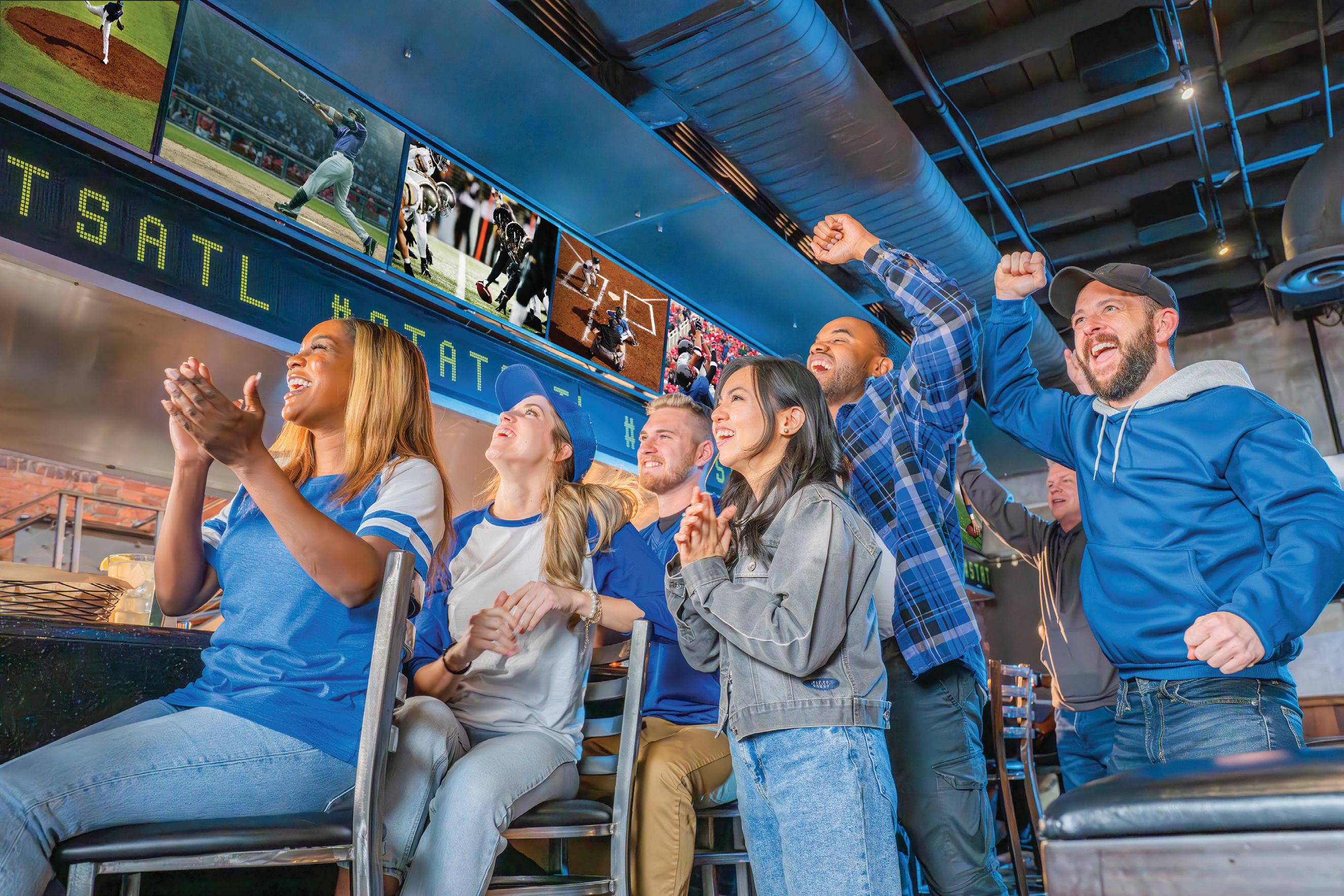
THE MOST SUCCESSFUL HOTEL SPORTS BARS ARE INCREASINGLY DESIGNED TO BECOME PART OF THE LOCAL DINING AND SOCIAL LANDSCAPE. FOR OPERATORS, THAT MEANS CREATING CONCEPTS PEOPLE ACTIVELY CHOOSE TO VISIT RATHER THAN SIMPLY DISCOVER BECAUSE THEY’RE STAYING ON PROPERTY.
BY SAM DANLEY
From craft cocktails and local partnerships to private events and premium viewing experiences, hotels are redefining what a sports bar can be.
FOR YEARS, THE HOTEL SPORTS BAR occupied a familiar place in the hospitality ecosystem: a convenient spot to catch a game, grab a beer, and spend some downtime between meetings, events, or sightseeing. But as food and beverage has become increasingly important to the overall guest experience, operators are rethinking what
LIQUID INTELLIGENCE
those spaces can be and what role they can play within a property.
Today, a growing number of hotels are investing in sports bars that look and feel less like traditional game-day hangouts and more like destination venues. Elevated food and beverage programs, thoughtful design, local storytelling, flexible event capabilities, and premium viewing experiences are transforming these concepts into key gathering spaces for hotel guests, locals, corporate groups, and private-event clients alike.
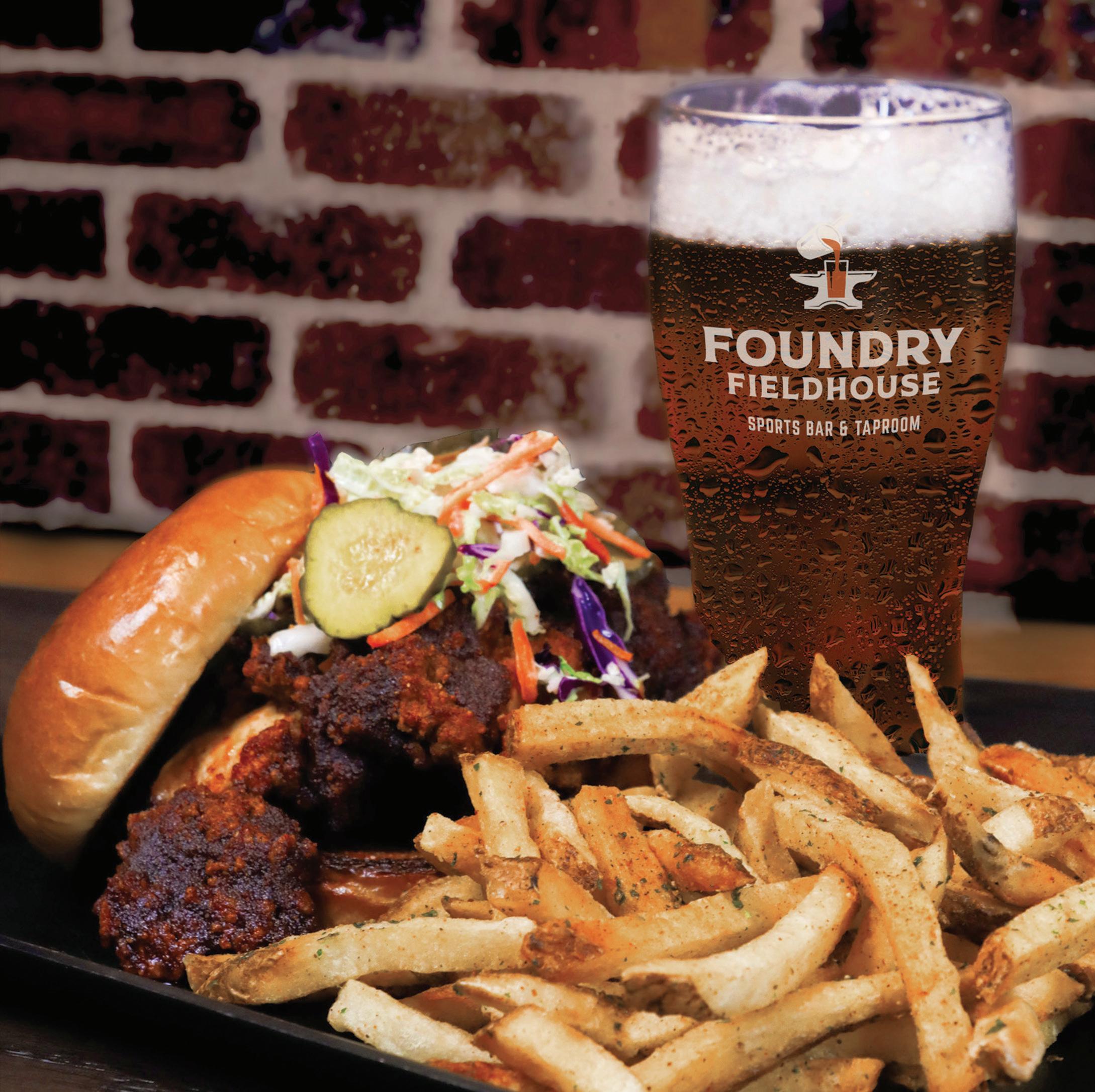
The trend is playing out in different ways across the country. At Gaylord Opryland Resort in Nashville, Tennessee, Foundry Fieldhouse Sports Bar & Taproom combines a 707-seat footprint, multiple event spaces, and a 38-foot LED screen into a multi-use gathering place. Beneath Portland’s historic Benson Hotel, Honorable Mention takes a more intimate approach, positioning itself as a luxury sports lounge with a cocktail-forward beverage program, upscale atmo-
“Twenty years ago, you went to a sports bar because they had a bigger TV than you had at home. Now, everybody’s got a 70-inch or 80-inch TV in their house. You’ve got to one-up that experience.”
sphere, and strong community focus.
At the JW Marriott Indianapolis, High Velocity has become a flagship gathering place built around massive video walls and a steakhouse-quality menu. Omni Dallas’s Owner’s Box takes a private-club approach, while Biggio’s Sports Bar & Grill at Marriott Marquis Houston blends elevated game-day fare with the energy of one of the country’s largest convention hotels.
All reflect growing investment in sports-centric venues that offer far more than the traditional hotel sports bar experience. e common thread is a recognition that simply showing the game is no longer enough.
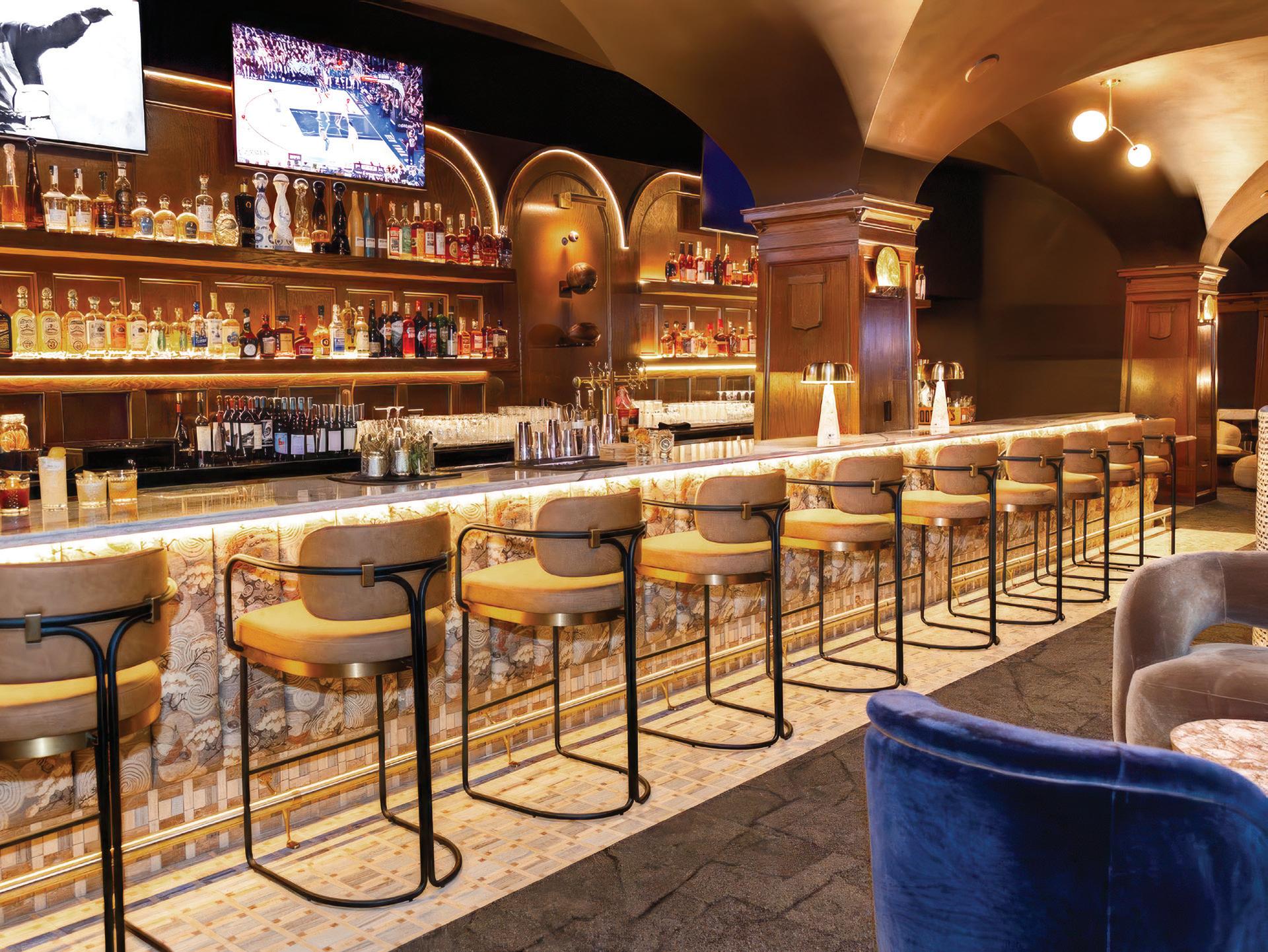
CONCEPTS LIKE HONORABLE MENTION ARE EXPANDING THE AUDIENCE BY CREATING SPACES THAT APPEAL TO GUESTS WHO MAY BE JUST AS INTERESTED IN THE ATMOSPHERE, DRINKS, AND OVERALL EXPERIENCE AS THEY ARE IN THE GAME ITSELF.
“Twenty years ago, you went to a sports bar because they had a bigger TV than you had at home,” says Nick Kabetso, food and beverage director at Gaylord Opryland Resort & Convention Center. “Now, everybody’s got a 70-inch or 80-inch TV in their house. You’ve got to one-up that experience.”
At Foundry Fieldhouse, that starts with scale. The venue’s 38-foot LED screen can display up to 16 feeds simultaneously or serve as one massive viewing surface for marquee events like the Super Bowl. Combined with additional screens throughout the venue, the setup ensures guests have sightlines to the action from virtually anywhere in the space.
But Kabetso says the real opportunity extends far beyond creating a better place to watch sports.
Designed as a two-story, 707-seat venue with multiple indoor and outdoor environments, Foundry Fieldhouse was intentionally built to accommodate a wide range of guests and occasions simultaneously. On a given day, the property might be serving convention attendees, leisure travelers, local residents, and private-event groups—all with different needs and expectations.
“We can slice and dice the restaurant,” Kabetso says. “I can have an event in
the tasting room. I can have an event upstairs. I can have an event in the yard. And I can still run my restaurant.” at flexibility has become increasingly important as hotels look to maximize the value of food-and-beverage spaces. Rather than functioning solely as restaurants, venues like Foundry are being designed to accommodate everything from casual lunches and game-day gatherings to corporate receptions, buyouts, and large-scale events.
Kabetso believes that versatility is one of the most important considerations for operators looking to elevate a hotel sports bar concept.
“If I was building a sports bar, I would defi nitely make sure it was flexible,” he says. “You’re going to have locals. You’re going to have people staying at the hotel. You’re going to have groups that want to do private dinners or events. You need a space that can adapt.”
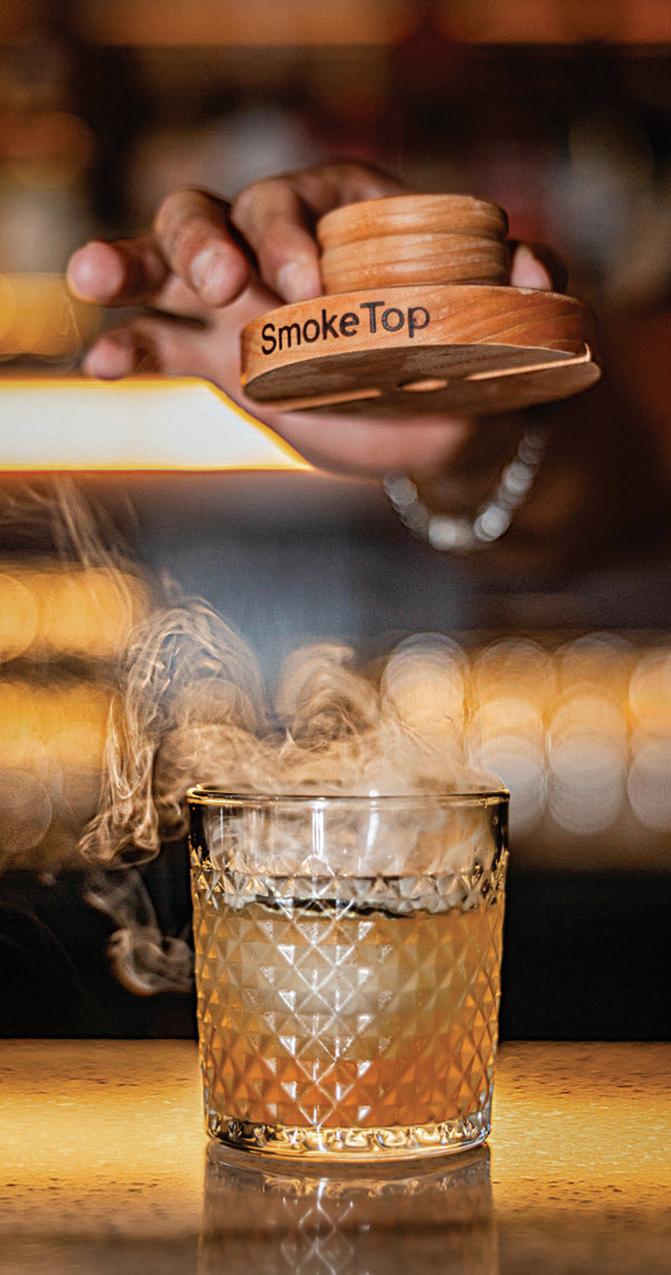
The evolution isn’t limited to the physical environment. Kabetso says one of the biggest surprises since opening has been the strength of the cocktail business. While Foundry offers 16 beers on tap, cocktails have emerged as some of the venue’s biggest sellers.
“I’ve been pleasantly surprised by the amount of cocktails we’ve sold,” Kabetso
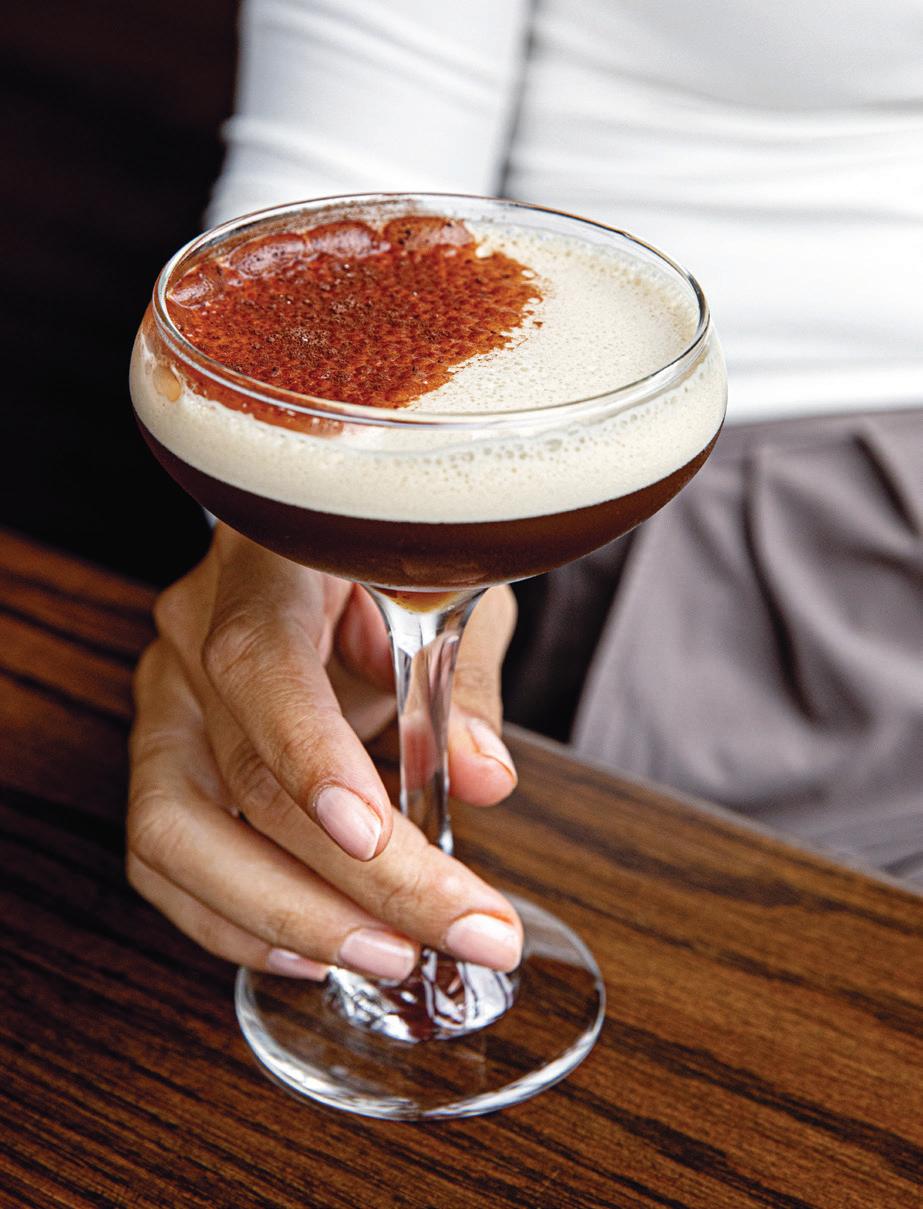
says, noting that the smoked Old Fashioned and espresso martini have become guest favorites.
If Foundry Fieldhouse represents the large-scale, convention-oriented version of the upscale hotel sports bar, Honorable Mention shows that the concept can be just as effective in a far more intimate setting.
Located beneath Portland’s historic Benson Hotel, the venue intentionally positions itself as a “luxury sports lounge” rather than a sports bar, pairing live sports with a cocktail-forward beverage program, elevated food, and a moody atmosphere designed to feel
equally appropriate for a playoff game or a date night.
“We’re an elevated sports lounge,” says Natalia Barwegen, director of marketing for Urban Restaurant Group, part of the ownership group that opened the concept earlier this year. “You can come watch sports, but it’s also moody and sexy and dark. You can bring a date here. You can have incredible food and incredible cocktails.”
That positioning reflects a broader shift happening across the category. While traditional sports bars have often prioritized volume and energy above all else, concepts like Honorable Mention are expanding the audience by creating spaces that appeal to guests who may be just as interested in the atmosphere, drinks, and overall experience as they are in the game itself.
e beverage program plays a central role in that strategy. Rather than leaning heavily on beer buckets and gameday specials, Honorable Mention emphasizes craft cocktails, an extensive wine program, and partnerships that reinforce local connections, including wines from former Portland Trail Blazer CJ McCollum’s label.
Just as importantly, the concept was designed to function as a gathering place for the community. Barwegen says the ownership group—which includes Portland Trail Blazers’ Damian Lillard and several local partners—wanted to create a venue where people felt represented and welcomed while also contributing to the ongoing revitalization of downtown Portland.
“One thing we hear all the time is, ‘ ank you so much. Portland needed a place like this,’” she says.
at speaks to another defi ning characteristic of the category’s evolution: e most successful hotel sports bars are no longer built solely around serving hotel guests. They’re increasingly designed to become part of the local dining and social landscape. For operators, that means creating concepts people actively choose to visit rather than simply discover because they’re staying on property.
At Foundry Fieldhouse, that philosophy extends beyond the venue’s flexible layout and viewing experience. Kabetso’s team has leaned heavily into local sourcing and storytelling, from working with nearby farms and producers to developing an exclusive Tennessee Lager with Tennessee Brew Works. Available only at Foundry, the beer gives both locals and travelers a product uniquely tied to Nashville.
“We didn’t just want another beer on tap,” Kabetso says. “We wanted something people couldn’t get anywhere else.”
For Kabetso, that’s part of a broader shift away from the generic hotel bar model. Rather than trying to appeal to everyone with a one-size-fits-all approach, operators are increasingly finding success by creating concepts with a distinct identity, a strong sense of place, and reasons for guests to return.
With so much emphasis on elevated food, cocktails, design, and unique experiences, it can be tempting to view sports as secondary to the overall concept. Barwegen argues that’s not the case. “We’re an elevated sports lounge, but sports are still integral to what we do,” she says.
e venue regularly promotes major sporting events—from playoff games to Monday Night Football—and has become a gathering place for fans while also offering experiences that extend beyond game day. An attached speakeasy, accessed via a daily code and a vintage-style red phone booth, serves as a private-event venue and exclusive hideaway for locals, visiting teams, and VIP guests. Much like Foundry Fieldhouse’s modular event spaces, it demonstrates how operators are layering multiple experiences into a single concept without losing sight of the sports-viewing occasion at the center of it all.
As hotels continue to invest in food and beverage as a differentiator, concepts like these suggest the future of the category may lie in blending hospitality, entertainment, community, and experience. e game may still bring people through the door, but increasingly, it’s everything around it that keeps them there.
JOIN US FOR THE INDUSTRY’S MOST CONNECTED RESTAURANT EVENT. REGISTER ONLINE TODAY.
SEPTEMBER 8-10, 2026 | HYATT REGENCY • ATLANTA, GEORGIA
AGENDA AT A GLANCE
TUESDAY SEPTEMBER 8, 2026
3:30PM - 4:30PM Pre-Event Innovation Forum
5:40PM - 6:30PM Welcome to Atlanta By Susannah Frost President | Chick-fil-A, Inc.
6:30PM - 8:00PM Welcome Reception: 80s Night for 80 Years
WEDNESDAY SEPTEMBER 9, 2026
12:00PM - 7:00PM Registration & Information Desk
Option 3: QSR: Getting Your First Investment, and Then Getting More
By Jim Balis Partner and Head of Strategic Operations | CapitalSpring, Berry Epley President and Chief Administrative Officer | Nobles Restaurants, LLC, James Nusbaum CEO | Barry Bagels, Michael Schatzberg (Moderator) Co-Founder and Managing Partner | Branded Hospitality Ventures, Darren Spicer CEO | Clutch Coffee, Ryan Weaver Chief Executive Officer | Lee’s Famous Recipe Chicken
Option 4: QSR: CEO to CEO: Round 1: Hot Palette America’s Troy Hooper and OriginalChop Shop’s Jason Morgan
By Troy Hooper CEO | Hot Palette America, Jason Morgan CEO | Original ChopShop
Option 5: QSR: Franchisee Roundtable: A Front Lines Debate
8:00AM - 8:45M Networking Breakfast
8:45 AM - 9:45 AM Opening Keynote By Tom Curtis President | Burger King U.S. and Canada
10:00 AM - 10:45 AM Breakouts Round #1
Option 1: QSR: Keeping Hospitality Human in the Age of AI
By Chris Dull CEO | Freddy’s Frozen Custard & Steakburgers, Michel Falcon CEO and Founder | Brasa Peruvian, Christopher Gumprecht VP of IT | Craveworthy Brands, Geoff Henry President | Gong cha, Jenifer Kern (Moderator) CMO | Qu, Matthew Steele Director of Training and Innovation | Galardi Group
Option 2: QSR: Is Your Restaurant Easy to Work In?
By Donny Bradley Founder and CEO | Lola Beans, Jason E. Brooks (Moderator) Restaurant Coach | HospiVation, Alex Cone VP of Talent Acquisition | Jason, Dan Doulen, CFE Senior Director of Franchise Business Development | Golden Corral, Dave Pelletier Chief Operating Officer | Checkers and Rally’s, Jackie Secor COO | Taco John’s
Option 3: QSR: The Startup Grind: What Nobody Tells You About Opening a Restaurant Brand
By Luke Christian CEO | Surcheros, Joey Cioffi Founder and CEO | Salad House, Kyle Gordon Cofounder and CEO | Dillas Quesadillas, Allie Haskell Vice President of Marketing | NorthStar, Nate Hybl CEO and Founder | gusto!, Jay Scherger Founder and CEO | Jukebox
Option 4: QSR: Fireside Chat
By Kevin Purcer Officer VP, Customer Technology & Insights | Chick-fil-A
Option 5: QSR: The Return of the Franchise Experts Forum
By David Bloom Chief Development & Growth Officer | Capriotti’s and Wing Zone, Graham Chapman (Moderator) Franchise Coach | FranCoach, Van Ingram Chief Development Officer | Jack in the Box, Heather Neary CEO | Taco John’s, Michael Nilevsky Head of Franchising | Yum! Brands, Sam Stanovich SVP of Franchise Leadership | Craveworthy Brands, Kendall Ware Fractional Chief Growth Officer | Smokey Mos BBQ
Option 6: FSR: The New Menu R&D Cycle
By Robin Blanchette Founder & CEO | Norton Creative, Srishti Handa VP, Marketing - Brand and Growth | Dave’s Hot Chicken, Ed Harris Chef/Founder | KnifeNSpoon, Cai Palmiter Head of Marketing | JW Concepts
Option 7: FSR: The Tactical Playbook for Building Emotional Connection
By Elizabeth Brasch EVP of Marketing | Mellow Mushroom, Kathleen Bush CMO | Ford’s Garage, Christine Lorusso Vice President of Digital Marketing | Firebirds Wood Fired Grill, Jonathan Weathington CEO | Shuckin Shack Oyster Bar
11:15AM - 12:00PM Breakouts Round #2
By Graham Chapman (Moderator) Franchise Coach | FranCoach, Imaan Ferdowski Chief Executive Officer | MRCO, Matt Forbush Franchisee | (Auntie Anne’s, Cinnabon, Jamba, Häagen-Dazs), Ryan O’Malley Franchisee | Wendy’s of Bowling Green, Inc., Kajal Patel CEO | Hena Group (Buffalo Wild Wings and Dunkin’ franchisee), Mandy Ristic Franchisee, Operating Partner | OM Group (Dunkin’, BaskinRobbins, QDOBA, Smoothie King, Jimmy John’s, Auntie Anne’s and Cinnabon))
Option 6: FSR: Tech That Lets Hospitality Shine
By John Christen Founder/CEO | Himes Breakfast House, Ahsan Jiva EVP of Strategy and Transformation | Mellow Mushroom, Toni Ronayne Founder/Fractional CEO | The C Society, Lauren Selman VP Operations | IFBTA
Option 7: FSR: CEO to CEO By Mina Haque CEO | Tony Roma, Josh Kern CEO | Snooze, an AM Eatery
12:00PM - 1:30PM Networking Lunch
12:15PM - 1:00PM Sponsor Lunch & Learn
1:30PM - 2:15 PM Breakouts Round #3
Option 1: QSR: The New Customer Journey, with Sonic’s Former CEO and CIO By Clifford Hudson Former CEO | Sonic Corp, Craig Miller Former CIO | Sonic Corp, Joseph Szala (Moderator) Vice President of Digital Experience | 3 Owl
Option 2: QSR: Coaching to Win the ‘Experience Economy’ By Tony Capuano VP of Franchise Operations | Donatos, Paul Miramontes, CHT Manager of Learning and Development | Galardi Group –Wienerschnitzel, Corban Nichols Vice President of Restaurant Excellence | Piada Italian Street Food, Philip Pinkerman Learning, Development & Recruiting Manager | Bristol Farms, Lazy Acres Natural Market, & New Leaf Community Markets, Jessicah Pounds VP of Training and Leadership Development | GoTo Foods, Mary Pillow Thompson (Moderator) Co-founder | Zignyl
Option 3: QSR: The Heart of Business: Cultivating Authentic Customer Connections By Kevin Paul Scott Cofounder | ADDO
Option 4: QSR: Fireside Chat: Mike Freeman, President, Brands, GoToFoods By Michael Freeman EVP, President of Brands | GoTo Foods
Option 5: QSR: Solving the Mystery of Site Selection
By Shawn Caric (Moderator) VP, Franchise Development | Smoothie King, Kelly Gray VP and Co-Owner | Hot Head Burritos, Jake Philpotts VP of Business Development & Franchise Relations | Surcheros, Dannon Shiff Senior Vice President of Real Estate | Dave’s Hot Chicken, Erin Snyder Vice President of Franchise Development | Handel’s Ice Cream, Andrew Thengvall Chief Development Officer & Chief Legal Officer | Freddy’s Frozen Custard & Steakburgers
Option 1: QSR: Do You Really Know Your Guests?
By Stacey Kane CMO | California Tortilla, Eric Knott CEO | Tiki Taco, Jason Levinson VP, Marketing Technology | WOWorks, Ben Linero CMO | Vicky Bakery, Kelly O’Rourke Director of Marketing | FiiZ Drinks, Kevin Planovsky (Moderator) Principal, Account Strategy | Croud Atlanta
Option 2: QSR: Building Teams and Investing in Talent
By Bob Andersen President | The Great Greek Mediterranean Grill, Lauren Cohen (Moderator) CEO and Founder | Cohen Leadership Group, Dana Edwards Manatos Founder and CEO | Milkshake Factory, Jodi Latuszek VP of Legal and Human Resources | BIGGBY COFFEE, Kelly McCutcheon (Moderator) Group Director of Training & Development | Whataburger Restaurants LLC., Amer Wahab President | Kettlemans Bagel
Option 6: FSR: Nostalgia, Comfort, and “The Vibe Shift” By Kimberly Bean VP, Brand Experience | Arby’s, Ray Blanchette CEO | TGI Fridays and Sugarloaf Holdings, Paul Mangiamele Founder/Chairman and CEO | Legendary Restaurant Brands, Liz Seelye (Moderator) Founder | StarryEyed Strategy, Yasaman Stewart Sr. Director of Marketing | BRIX Holdings
Option 7: FSR: Coaching the Next Generation of Leaders
By Jeremy Edmonds EVP of People and Culture | Snooze, an A.M. Eatery , James Frank Manager of Field Training | Dine Brands Global, Autumn Nessibou Director of Operations | Farrelli’s Pizza, Joshua Rossmeisl Founder, Chief Vision Officer | AMP Up1 Hospitality
2:30PM - 3:15PM Closing Keynote #1: 30-Second Leadership: Coaching Your Crew for High Performance By Scott Greenberg Author and Keynote Speaker
3:15PM - 4:00PM Closing Keynote #2: White Castle CEO: Lisa Ingram By Lisa Ingram CEO | White Castle System, Inc.
4:00PM - 5:30PM Around the WiRL-D Happy Hour
Option 4: QSR: CEO to CEO: Round 2: Jennifer Dodd, CEO, Main Squeeze, and Claudia Lezcano, CEO, Fuku By Jennifer Dodd CEO | Main Squeeze Juice Co., Claudia Lezcano CEO | Fuku
Option 5: QSR: The Beverage Phenomenon By Joel Bulger CMO | WOWorks, Jason Ingermanson CEO and Founder | JRI Hospitality, Brandon Knudsen Co-Founder and CEO | Ziggi’s Coffee, Katherine LeBlanc (Moderator) Fractional CMO | Apollo CMO, Susan Taylor President and CEO | Juice it Up!
8:00PM - 10:00PM Late Night Reception/Networking
THURSDAY SEPTEMBER 10, 2026
8:00AM - 8:45AM Networking Breakfast
8:45AM - 9:00AM Intouch Insight Drive-Thru Report Reveal By Sarah Beckett (Moderator) VP Sales and Marketing | Intouch Insight, Laura Livers (Moderator) Chief Revenue Officer | Intouch Insight
9:00AM - 9:45AM Opening Keynote: Shake Shack By Rob Lynch CEO | Shake Shack
10:00AM - 10:45AM Breakouts Round #4
Option 1: QSR: Unveiling the Drive-Thru of the Future
Option 6: FSR: Rethinking FOH Roles for Today’s Guest By Kamal Hakim Senior Business Developer | HCG/Gen USA/ IHOP, Sarah Meriam Shuckin, Rachel Richal VP, Restaurant Experience & Training | Buffalo Wild Wings (Inspire Brands)
Option 7: FSR: Protecting Identity Through Growth By Kristen Hohl EVP, Marketing | SPB Hospitality, John Iannucci CEO | Agave & Stone Hospitality, Betty Kaufman Strategy Director | The Culinary Edge
12:00PM - 1:30PM Networking Lunch
12:15PM - 1:00PM Sponsor Lunch & Learn
By Sarah Beckett (Moderator) VP Sales and Marketing | Intouch Insight, John Brittian Vice President of Information Technology | Biscuitville Fresh Southern, Lawrence Brown CDO | Rita’s Italian Ice & Frozen Custard, Chris Cheek Chief Development Officer | Newk’s Eatery, Laura Livers (Moderator) Chief Revenue Officer | Intouch Insight, Trace Miller Founder & CEO | Konala, Tim Sharpe COO | Oliver’s Real Food
Option 2: QSR: Inside the 2026 Restaurant Labor Market: First Look at Black Box Intelligence Total Rewards Survey By Victor Fernandez Chief Insights Officer | Black Box Intelligence
Option 3: QSR: Marketing Above Your Weight Class By Alice Crowder Chief Marketing Officer, Eleni Gates (Moderator) Founder & Principal | Gates Hospitality Group, Carmela Hughley Vice President of Marketing Strategy & Insight | Rita’s Italian Ice & Frozen Custard, Angela Johnson CMO | Edible Brands, Jessica Serrano CMO | Einstein Bros. Bagels, Marissa Sharpless VP of Marketing | Carvel
Option 4: QSR: Fireside Chat: Krispy Kreme CEO Josh Charlesworth By Josh Charlesworth President & Chief Executive Officer | Krispy Kreme
Option 5: QSR: The Real Price of Value By Mindy Armstrong VP of Menu Innovation | Tropical Smoothie Cafe; NextGen Council Leader, Scott Ball President | FiiZ Drinks, Ed Howie (Moderator), Sunny Ilyas Founder and CEO | Vale Healthy Kitchen, Sara Ozege Loughry Director of Operations & Training | Kettlemans Bagel, Natalie Sharpe CEO | Oliver’s Real Food, Bethany Strong Chief Operating Officer | NAYA
12:00PM - 2:00PM WiRL Workshop + Lunch By Nancy Combs SVP, Growth | Shake Shack, Devon Croom Senior Team Leader, Networking | Chickfil-A Corporate, Somia Farid Silber CEO | Edible Brands, Kelly McCutcheon (Moderator) Group Director of Training & Development | Whataburger Restaurants LLC., Maria Valero Director, International Architecture & Design | Papa Johns
12:15PM - 1:00PM WiRL State of the Union Session 1
1:00PM - 1:15PM Networking Break
1:15PM - 2:00PM WiRL State of the Union Session 2
1:30PM - 2:15PM Breakouts Round #6
Option 1: QSR: Loyalty Reinvented (Value Without Coupons)
By Katherine Barone Sr. Brand Manager, Delivery | KFC U.S., David ‘Rev’ Ciancio (Moderator) Restaurant Owner, Marketing Consultant and CMO | Salad House, Ryan Stein Senior Director of Marketing | gusto!, Julie Wade Fractional CMO | Crazy Pita, Mitch Walden VP of Marketing | Scooter, Luke Watson CEO and Owner | Timber Pizza
Option 2: QSR: The Best Advice I Ever Received (and the Worst)
By Chris Artinian Founder and CEO | Artinian Holdings Inc, Josh Halpern Chief Brand Officer | Craveworthy Brands, Cody Hicks Chief of Staff | gusto!, Lisa Miller (Moderator) President | Lisa W. Miller & Associates, LLC, Chris Thomas Senior Principal team Leader | Chick-fil-A, Inc., Paul Tran Franchise Advisor + Franchisee, Dr. Felicia White Ed.D Director of Operations | Askar Management Group
Option 3: QSR: Staying ‘Fast Casual’ in a QSR World
Option 6: FSR: Beyond Instagram: Designing for Craveability, Camera, and Connection By Tammy K. Billings VP, Business Development | SignalFlare.ai, Ginger FlesherSonnier Founder & CEO | The Ginger Companies, Andrew Glantz Founder/CEO | GiftAMeal, Clayton Krueger Chief Marketing Officer | Farrelli’s Pizza, Erin Levzow Chief Marketing, Growth and Commercial Officer
Option 7: FSR: Retention Starts Before You Hire By Jeremy Edmonds EVP of People and Culture | Snooze, an A.M. Eatery, John Haggai President & CEO | Burtons Grill & Bar, Red Heat American Tavern, Kenneth Knief (Moderator) Managing Director | Hospitality Resource Group
11:15AM - 12:00PM Breakouts Round #5
Option 1: QSR: Driving Real ROI and Transformation Through AI and Automation
By Trish Heusel Vice President of Innovation | Little Caesars Pizza, Carl Orsbourn SVP–Food, Hospitality, Retail | Invisible, Jessa Parette Head of Design | Yum! Brands, Kartik Pillai Director of Data Platform Engineering, Master Data Management, and Data Governance | Yum! Brands, Thibault Roux Chief Digital Officer | Burger King U.S. and Canada, Atul Sood (Moderator) Fractional Chief Business Officer
Option 2: QSR: Why Employees Stay, and Why They Leave By Melissa Doolin-Koehne (Moderator) Founder and Principal | Elevate 4, Steve Felson Senior Vice President, Franchising | Buona Beef and The Original Rainbow Cone, Damian Hanft VP, Human Resources | Taco John’s, Lacey Navarrete Vice President of Human Resources | Scooter’s Coffee, Maryna Shuliakouskaya Franchisee | Aroma Joes, Brian Witte Strategic Operations Advisor
Option 3: QSR: Designing the ‘Worth the Trip’ Experience By Jonathan Bowyer (Moderator) Director of Business Development | C3, Miguel Chilleron Director of AI & Design | Livit, Kim Lewis Chief Marketing Officer | Capriotti’s, Tonya McCoy VP, Marketing | Angry Chickz, Adam Modzel Chief Operating Officer | Einstein Bros. Bagels, Mike Perry Founder & Chief Creative Officer | Tavern Agency
By Jeff Galletly Chairman & CEO | Brooklyn Dumpling Shop, Tricia Houston (Moderator) Vice President of Discovery & Design | KS&R, James O’Reilly Former CEO | Ascent Hospitality, Smokey Bones, Jessica Osborne VP of Marketing | McAlister, Garrett Reed CEO | Layne’s Chicken Fingers, Matthew Walls President, Chief Stores Officer | Edible Brands
Option 4: QSR: Fireside Chat: Papa Johns CMO Jenna Bromberg By Jenna Bromberg CMO | Papa Johns
Option 5: QSR: The Unstoppable Chicken Wars
By Matthew Caric Senior Manager, International Operations Excellence | WingStop, Ryan Hanawalt SVP, U.S. Franchise and Operations Service | Church’s Chicken, Shawn Lalehzarian Cofounder and CEO | The Red Chickz, Mike LaRue VP of Franchise Development | Angry Chickz, Dan Sokolik Vice President | Lee’s Famous Recipe Chicken, Christina Vaughan President and COO | Slim Chickens
Option 6: FSR: Raising the Bar: Innovation, Ops, & What’s Next By Peter Kiley Co-Owner/Brewmaster | Monday Night Brewing, Ian O’Neil Director of Consumer Intelligence | Rubix Foods
Option 7: FSR: The Purpose-Driven Playbook
By Graham Humphreys CEO | The Culinary Edge, Steve Palmer Founder, Managing Partner, and Chief Vision Officer | Indigo Road Hospitality Group, Marita Swift VP of Strategic Growth | The Big Biscuit
2:15PM - 2:30PM Networking Break
2:30PM - 3:30PM Closing Keynote #1: Datassential State of the Industry
3:30PM - 4:00PM Closing Keynote #2: Texas Roadhouse CEO: Jerry Morgan By Jerry Morgan CEO | Texas Roadhouse
4:00PM - 5:30PM Closing Reception
A Tale of Two Rising Restaurant Groups to Watch
One Off Hospitality and Indigo Road are proving how leading with a people-first, systems-driven strategy is the winning ticket to sustainable and profitable growth.
One Off Hospitality
HQ: Chicago • ESTABLISHED: 1997
BY SAM DANLEY
Nearly 30 years ago, Blackbird helped kick off a shift in Midwestern dining.
The restaurant was set in Chicago’s then-gritty West Loop and looked nothing like the white-tablecloth rooms the city was used to. But by pairing high-caliber technique with an approachable and vibrant minimalist setting, it helped pull fi ne dining out of its formal past while offering a new, modern blueprint for farm-to-table cuisine.
Blackbird’s runaway success helped lay the foundation for what would become One Off Hospitality, a trailblazing collection of restaurants and defi ning force in Chicago’s food scene. From the rustic, communal warmth of avec and the beer-and-
pork-laden halls of e Publican to the honky-tonk energy of Big Star and the craft cocktail precision of e Violet Hour, the group has helped reshape the independent dining landscape with its array of concepts over the years.
Along the way it has earned nine James Beard Awards, Michelin recognition, and widespread acclaim. And its kitchens have produced a generation of chefs who have gone on to make their own marks on the industry, cementing One Off ’s status as an institution in American dining.
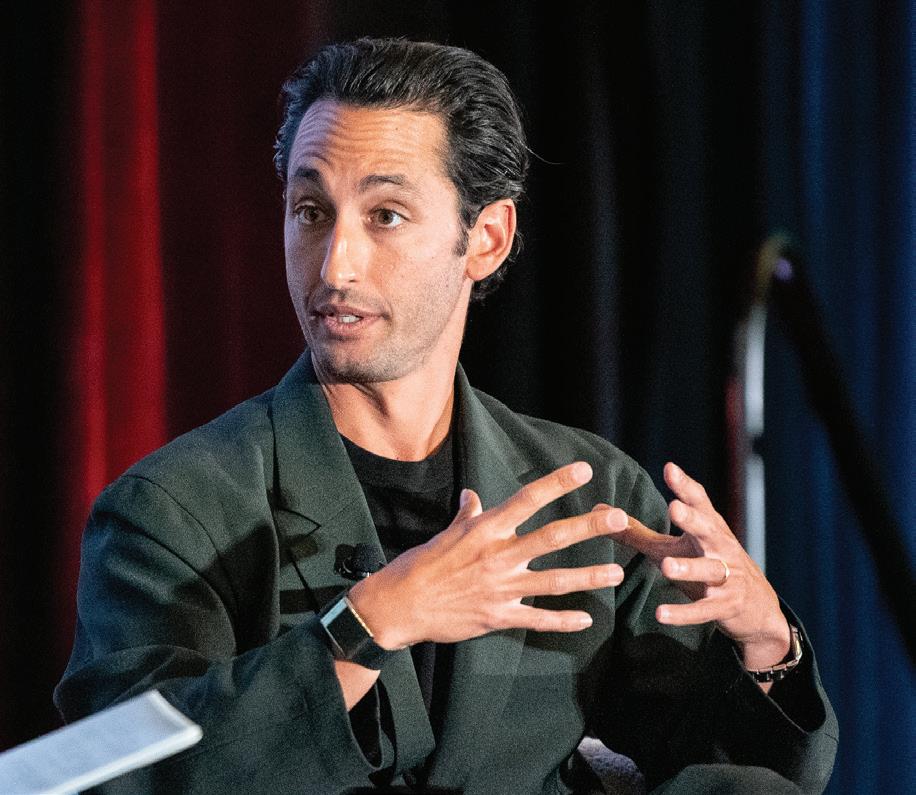
Which is why, at fi rst glance, the appointment of Karen Browne as the company’s fi rst-ever CEO in 2019 seemed like an unexpected choice. Here
THE STRUCTURE AND GUARDRAILS NOW ENABLING ONE OFF TO THINK ABOUT SCALING BEYOND CHICAGO HAVE BEEN YEARS IN THE MAKING. BUT WHEN CEO KAREN BROWNE FIRST ARRIVED, NONE OF THAT WAS A GIVEN.
RESTAURANT GROUPS
you had an influential restaurant group, known for operating hugely successful spots in one of the world’s most celebrated food cities. And the woman stepping in to steer the ship was a total newcomer to hospitality.
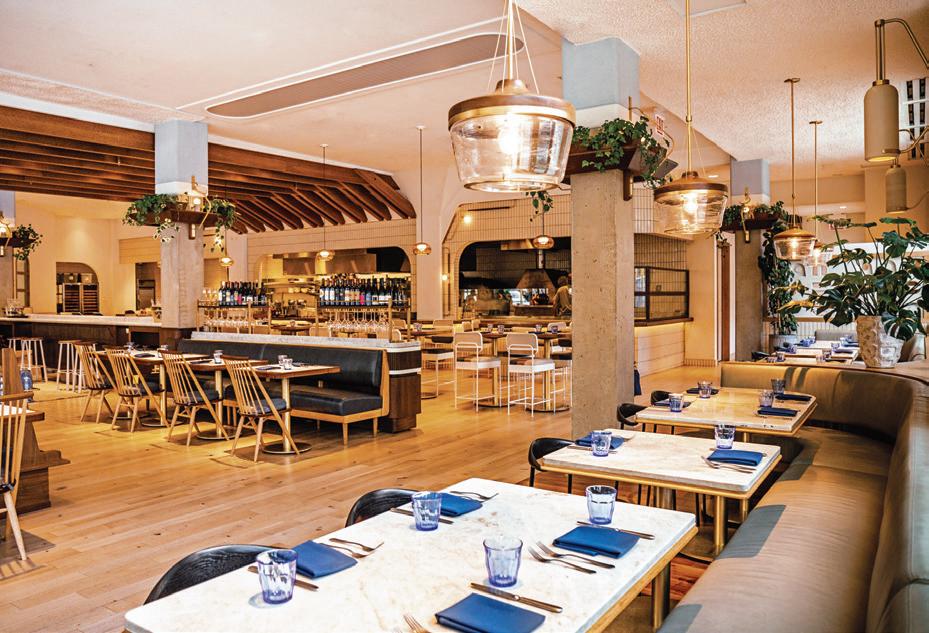
But nearly eight years after hiring an outsider to lead an insider institution, One Off is thinking bigger than it ever has before. It has started to look less like a collection of concepts and more like a hospitality ecosystem—restaurants, yes, but also catering and events, partnerships, and other touchpoints that extend its culinary prowess beyond the dining room. Behind the scenes, it’s a more disciplined company than it used to be. ere’s tighter reporting, clearer systems, and a framework designed to protect what made these places successful while making room to grow across e Windy City, the suburbs, and eventually beyond.
THE FIXER STEPS INSIDE
To understand how Browne set out to professionalize a chef-driven empire, it helps to start with where she came from. She arrived at One Off with deep executive experience leading some of the country’s largest human capital organizations, including a decade-long run as president of PeopleScout.
ere, she helped turn the Chicagobased fi rm into a global hiring force by “building a system that leveraged scalability and centralization” to make recruiting more efficient without stripping out the human element. Later, she was tapped to lead Advantage xPO, where she consolidated dozens of struggling staffi ng fi rms into a handful of brands and steered the company through its sale to Recruit, the HR giant behind platforms like Indeed and Glassdoor. From there she served as president and COO of EG Workforce Solutions before launching her own consulting and creative fi rm.
Across those roles, her work kept circling the same idea: solving problems through people. “My growing up was going into companies, figuring out how to fi x a problem, designing the process, executing, and refi ning,” Browne says.
RESTAURANT GROUPS
at systems-driven approach wasn’t necessarily how One Off had been built. e group was shaped by career restaurateurs, including executive chef Paul Kahan and partners Donnie Madia, Terry Alexander, Eduard Seitan, Peter Garfield, and the late Rick Diarmit. e creatives spent years developing unique concepts before formalizing that collaboration under the One Off Umbrella in 2011. When Browne arrived eight years later, they had a proven track record and plans to grow, but needed more structure to support it.
Stepping into One Off marked a new dynamic for Browne, and not just because she was entering a different industry. It was the fi rst time she’d taken her playbook inside a company instead of applying it as an outside fi xer. As CEO, she wouldn’t just be responsible for diagnosing a problem and designing solutions. She’d be responsible for building the framework and living inside it, too.
When she fi rst took stock of the company, she saw a group “overflowing with creative fi repower,” but with “a framework that wasn’t really scalable.”
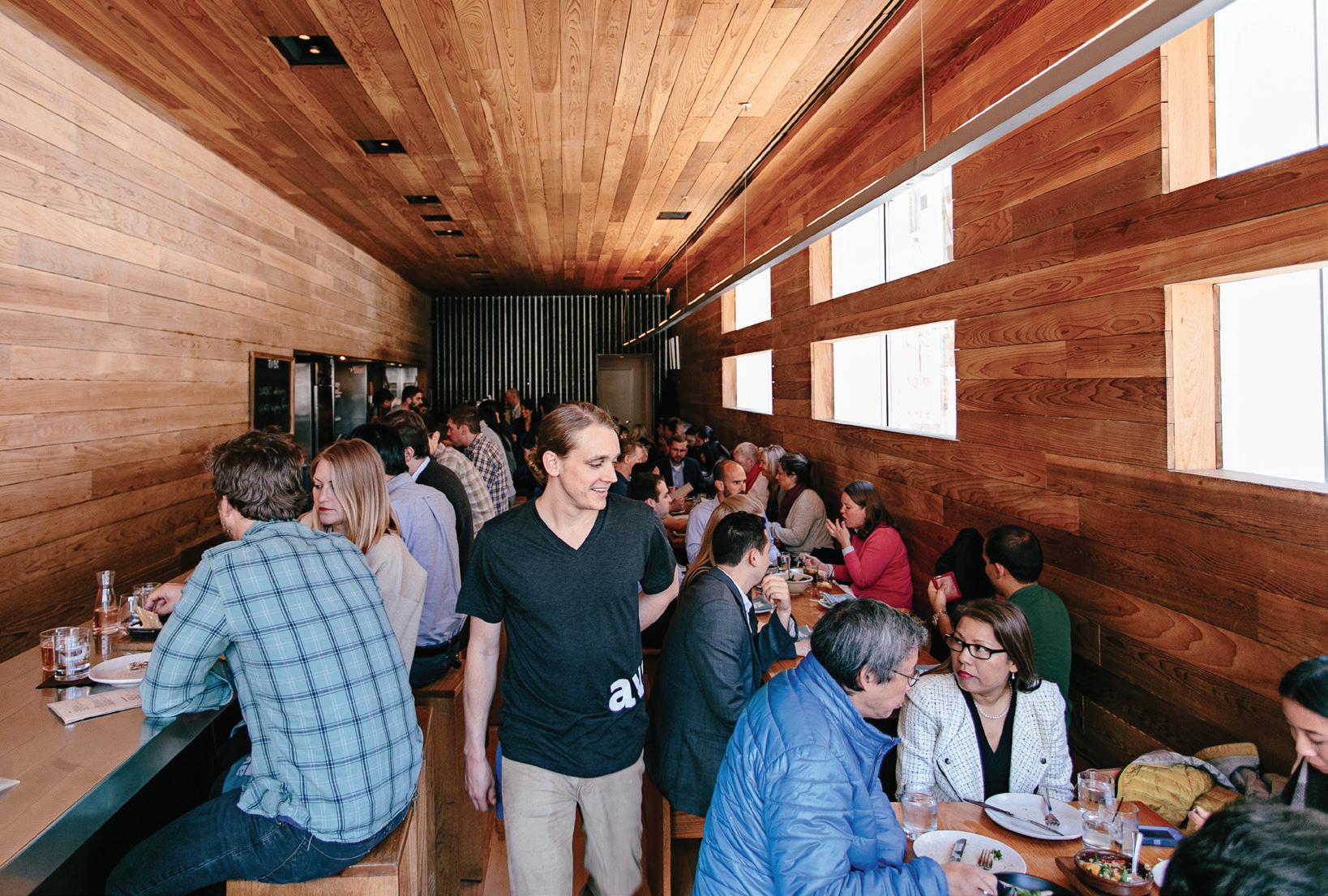
It began with Blackbird, the West Loop restaurant that opened in 1997 and established the group with a more contemporary, minimalist approach to fi ne dining rooted in Midwestern cuisine. e second concept was avec, a woodpaneled, communal space that opened nearby in 2003, serving Mediterranean-influenced shared plates alongside a nationally recognized wine program. It was followed in 2007 by The Violet Hour, a pioneering speakeasy marked
ONE OFF HOSPITALITY’S TRAILBLAZING COLLECTION OF CHICAGO RESTAURANTS INCLUDES CONCEPTS LIKE THE COMMUNAL WARMTH OF AVEC AND THE BEERAND-PORK-LADEN HALLS OF THE PUBLICAN TO THE HONKY-TONK ENERGY OF BIG STAR.
by its ever-changing exterior mural and unmarked entrance. At the time, Chicago’s craft cocktail scene was still in its infancy, and the bar helped introduce a more rigorous approach built around fresh juices and classic preparations.
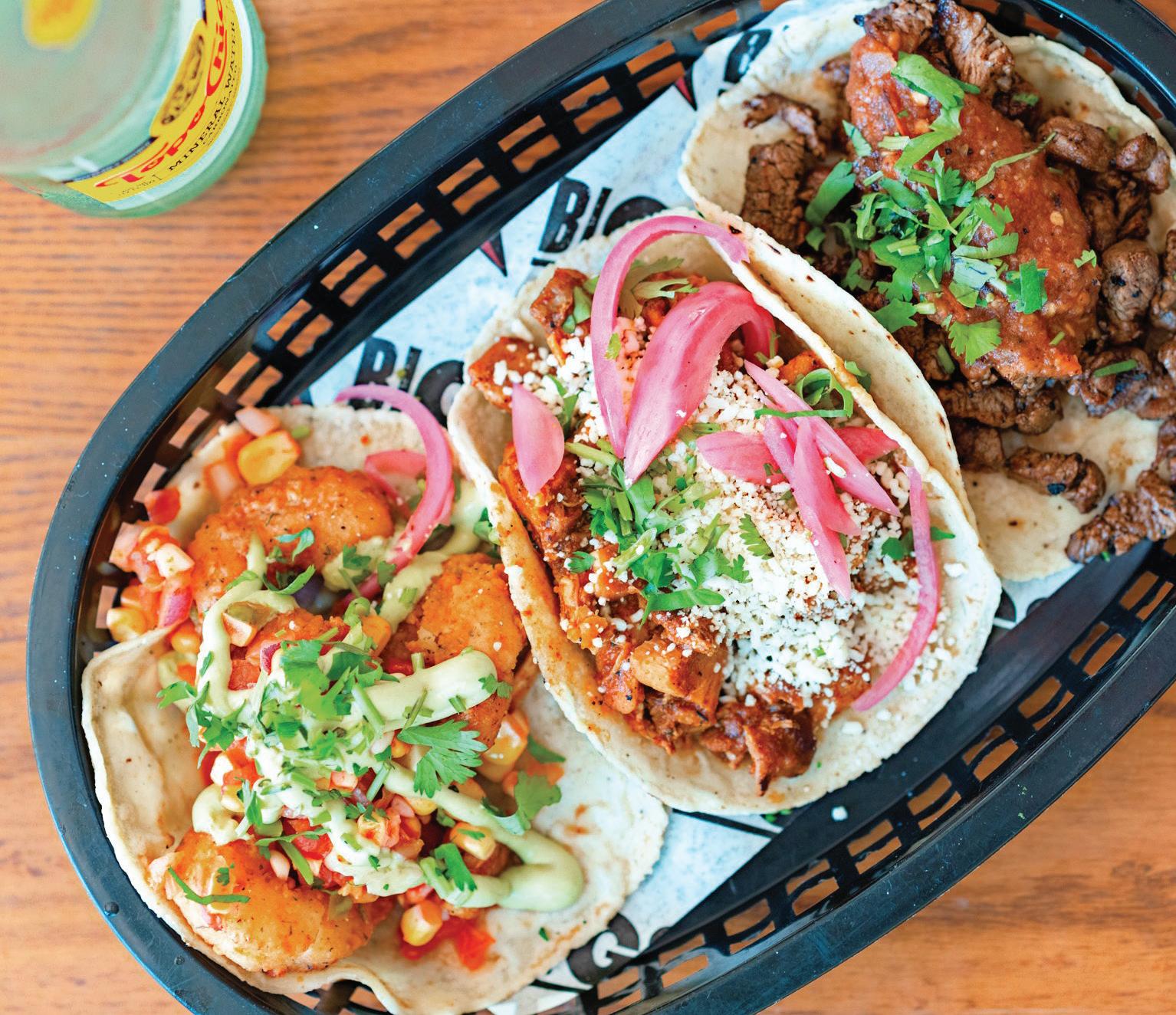
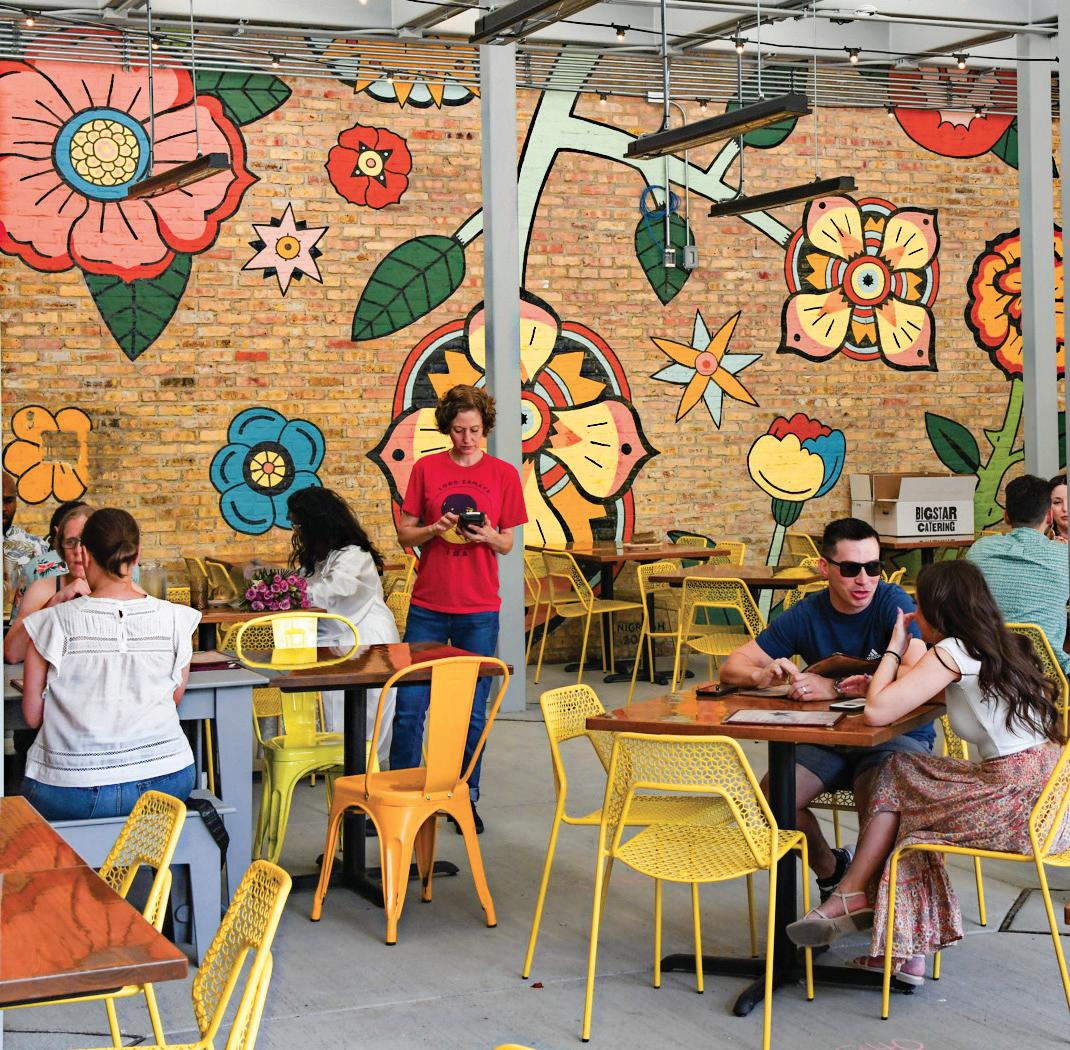
In 2008, the group expanded into Fulton Market with e Publican, a largeformat beer hall inspired by European farmhouse traditions, centered on pork, oysters, and beer. Big Star came a year later, introducing a high-volume taqueria and whiskey bar in Wicker Park, built
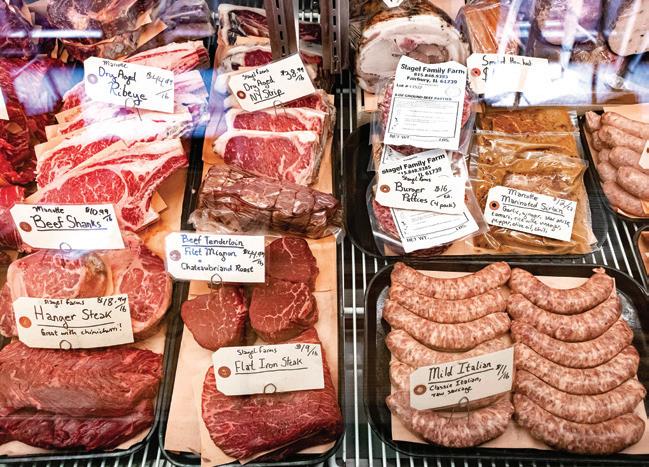
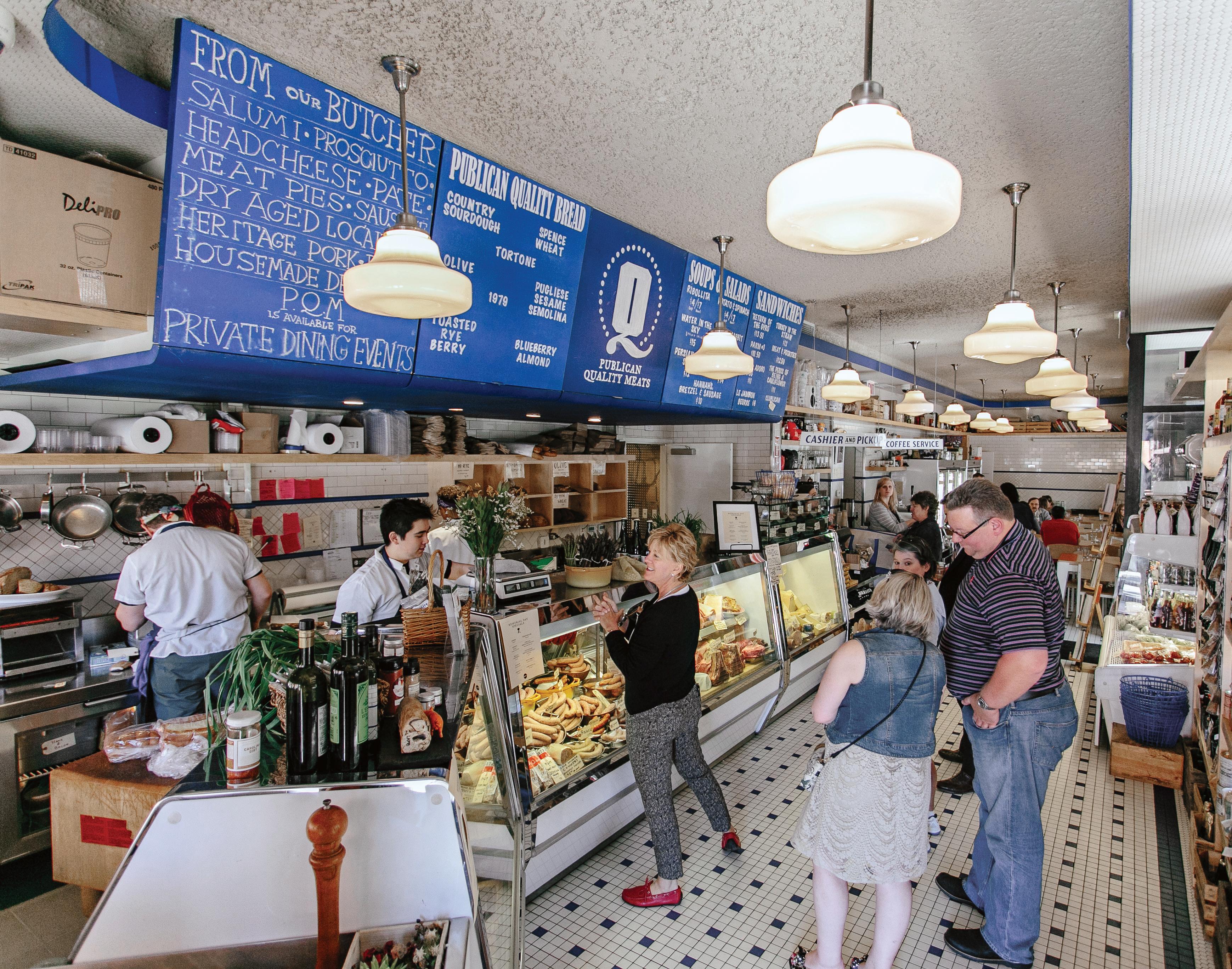
around Mexican street-style food and a busy outdoor patio. In 2012, the company added Publican Quality Meats in Fulton Market, a butcher shop and market that serves sandwiches by day and operates as a private event space at night.
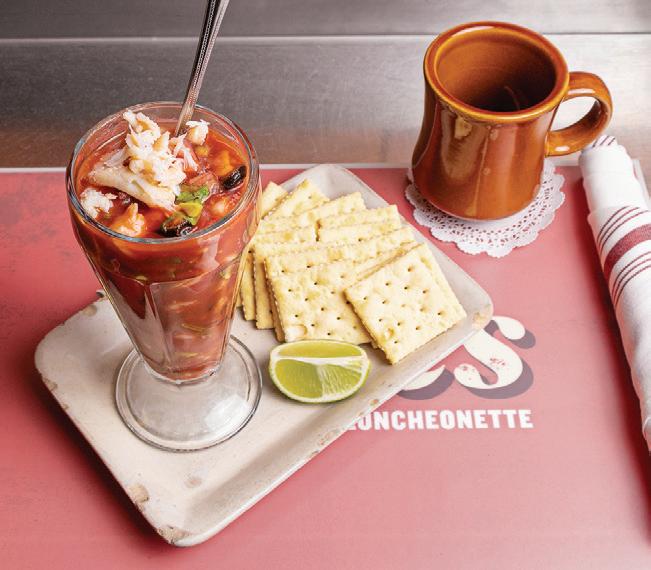
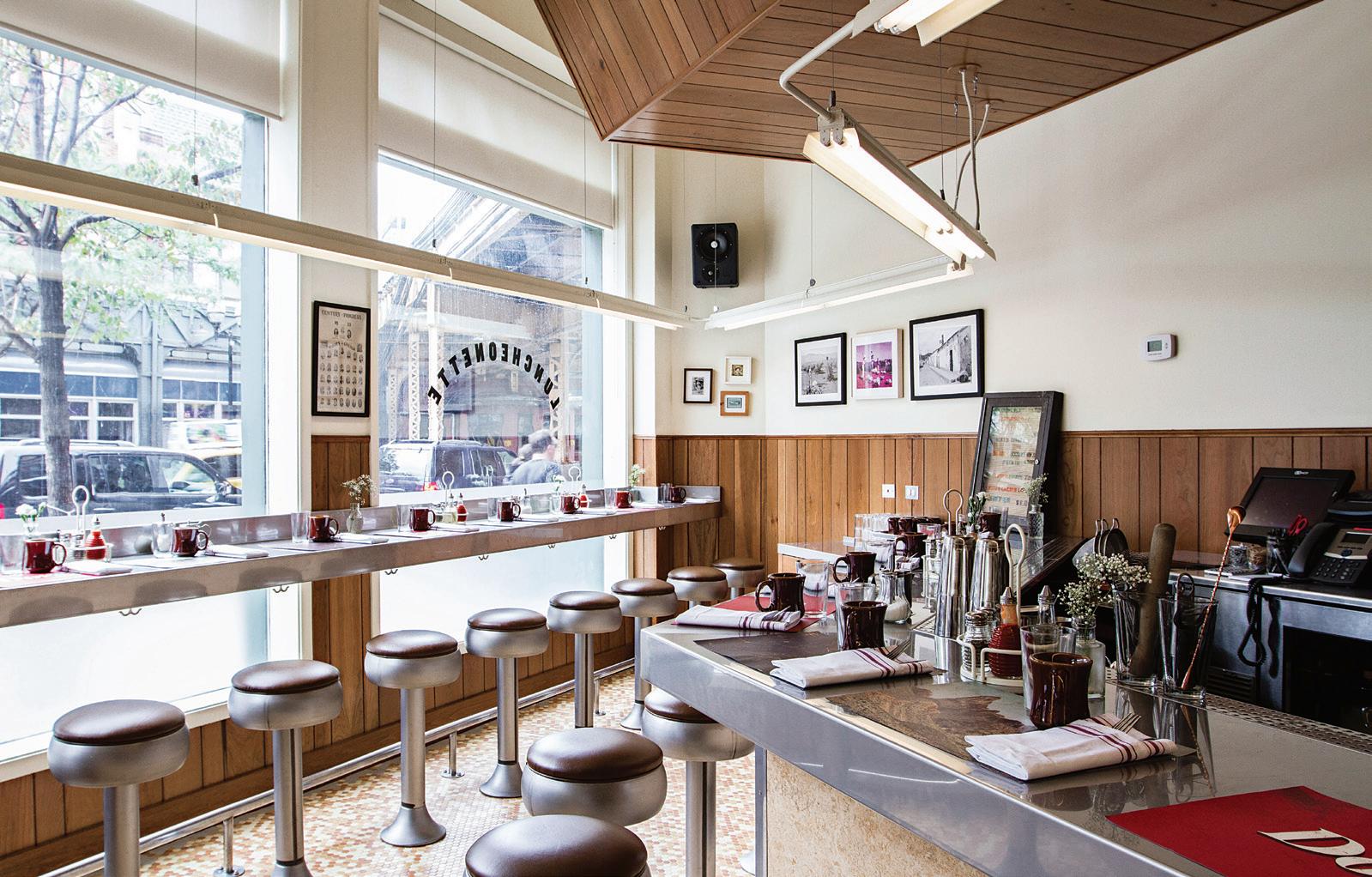
In 2014, the team introduced Dove’s Luncheonette, a smaller, counter-service diner in Wicker Park serving Southern-influenced Mexican comfort food, and launched Publican Quality Bread as a wholesale baker supplying its restaurants. e following years brought
AVEC
DEREK RICHMOND
ANDREA BEHRENDS JOHN PHILP
RESTAURANT GROUPS
extensions of some of those ideas into new settings, including Publican Tavern in O’Hare International Airport and a larger-format Big Star location in Wrigleyville.
By the time Browne arrived, One Off had grown into a portfolio of distinct concepts spanning full-service restaurants, bars, retail, and production—each developed individually and each operating with its own approach.
“You had five very talented partners, together for over 20 years, and almost everything they touched was highly successful,” she says. “ ey had a plan to grow and they knew they needed someone with an outside perspective to help them do it. What I’ve worked on is a governance model that lets the creatives spend their high impact on creating delicious dishes and magical moments.”
In theory, the job was supposed to be “more conceptual.” Browne says she was brought in to help at a high level and not necessarily dive into every operational detail. But she immediately reverted to her natural style—“super hands-on, just getting in there and fi xing things”—and began tightening up the way the company handled everything from fi nances and contracts to hiring and communication.
One of her first orders of business was getting talented operators and chefs to see margin not as a constraint on the work but as part of it. Step one, she says, was “getting people comfortable with the fact that businesses have to be profitable.” at means learning how to manage the variables they can actually control.
“To manage controllables, you have to teach creatives how to read a P&L and know the targets for labor costs, food costs, bar costs, and everything else,” Browne says. “You can’t just say, ‘We’re busy, guests are happy, we must be fi ne.’”
Since then the company has built “really sophisticated reporting” so teams aren’t just cooking and selling but operating with a clear picture of the business behind every plate. ey know what they’re buying, the cost of each dish, and what that dish should actually be priced at.
Browne says menu margins are never purely mathematical. But they can’t be
treated as instinct alone, either. Ultimately the work is a blend of art and science.
“Sometimes we deliberately lose money on a dish because we know the guest won’t tolerate the real price, but then you have to know where you’re making it back,” she says. “You can’t do it blind.”
The same logic applies beyond the menu. Browne sees contract management as one of the more important guardrails in the business, especially in an industry where operators often sign agreements without fully understanding the long-term implications. Someone has to be tracking termination clauses, understanding what rights the company actually has, and asking what happens if they need out. Otherwise, it’s easy to lock yourself into an arrangement that erodes the very margin you’re working so hard to protect.
e advantage is consistency. Instead of every concept improvising its own systems, processes, and playbooks, support functions are centralized under people who specialize in those areas. “You have true experts who support all of the brands, and that creates scalability,” Browne says.
If there’s one area where she has the most advice to offer, it’s staffi ng— recruiting, retention, and everything in between. Browne has spent her career building hiring engines, and she understands how even strong operators can end up sabotaging themselves.
“Desperate hiring managers will do desperate things,” Browne says. “What that means is when they’re understaffed, they’re hiring bodies, they’re not prescreening for the successful attributes you need for the job.”
Structurally, she’s tried to build that oversight through what she calls a matrix organization, where centralized fi nance, marketing, and HR teams are “matrixed into the field with a service mentality.”
Her advice to restaurant leaders struggling on the staffi ng front? “Slow down and design a system.”
That system can’t rely on passive recruiting. Hospitality hiring is still deeply personal, she says, and the best candidates aren’t going to emerge from emails or a string of automated messages. at’s why she still calls candi-
RESTAURANT GROUPS
dates herself every week, especially when a part of the business—say, catering and events during a busy stretch—is understaffed.
Just as important, she believes restaurants often fail to explain why a job matters in the fi rst place. Too many postings reduce the work to wages, hours, and shifts, when what candidates actually want to understand is what they will gain from the experience and where the job might lead. “You have to have a compelling employment proposition,” Browne says, recalling how she once reframed a customer service call-center job around purpose—“be someone’s superhero for a day”—instead of a sterile list of hours and requirements. en there is speed, which Browne sees as one of the industry’s most consistent self-infl icted wounds. “You’ve got to move candidates through the funnel quickly,” she says, noting that restaurants often call a candidate but then get busy and leave them hanging. When they return, “that person is already long gone.” at’s important in the current environment because the industry is entering a period of “candidate abundance” with more talent in the pipeline. For roughly the past five years, she says, employers have been operating in a candidate-scarce environment. Now the pendulum is moving the other way.
Her message to restaurateurs is not to waste that moment. If there are poor performers dragging down a shift, it might be the time to upgrade. at can be uncomfortable, but she argues it is necessary, “especially because high performers rarely want to work alongside low performers for long.”
e other defi ning dynamic in restaurant labor right now is technology and automation. But for all her focus on systems and efficiency, Browne isn’t especially interested in a future where hospitality gets engineered out of the experience.
She can imagine some consolidation in back-end areas like marketing. But on the floor, where hospitality is actually felt, the human role is enduring. ere will always be guests who don’t want to
scan, tap, and self-serve.
“ ey want to talk to someone and they want the staff to socialize with them,” she says. “They want to know about the cut of meat. ey want to hear about how the cocktail was built. I’m pretty bullish on that human element as the distinguisher in this industry.”
EXPANDING THE PLAYBOOK
Browne was brought in with scalability in mind, and that goal runs through nearly every part of her agenda—from reporting systems to hiring frameworks and centralized support. But what does scalability look like for a group like One Off ?
For Browne, it means a mix of new ideas and expanding proven brands, with growth rooted in efficiency—not just adding more dining rooms. “We will absolutely create new concepts, but a lot of the opportunity right now is taking the brands that already have a following and being more thoughtful about where and how we replicate them,” she says.
Since her arrival, One Off hasn’t launched a new fl agship concept, instead expanding in more targeted ways.
The company has grown Publican Quality Bread beyond its original wholesale business, opening a fl agship bakery and café in West Town before adding suburban and airport locations, with plans to
add roughly five locations over the next three years. It transformed Pacific Standard Time into avec River North and its rooftop companion, Bar Avec, while pruning its portfolio with the closures of Blackbird, Café Cancale, and, more recently, e Violet Hour. One Off has also developed F&B concepts for Bally’s Chicago casino and the Blackhawks Ice Center. at approach still leaves room for creativity. e partners, Browne says, “always have ideas swirling around,” but near-term growth is largely coming from scaling existing brands. A third avec in the North Shore suburb Highwood is currently in the works.
Browne frames the current strategy as leaning into replication where demand already exists—places like Highwood, where residents have been lobbying for an avec—while leaving room to introduce new concepts more selectively over time. Geographically, the plan is to lay down more real estate across the Midwest in a deliberate way, starting with Chicago’s suburbs, then radiating outward once the model is fully dialed in closer to home. e structure and guardrails enabling One Off to consider scaling beyond Chicago have been years in the making. But when Browne arrived, none of that was a given. She recalls walking into what felt like “a suspect crowd,” with people questioning how an outsider’s playbook would translate to restaurants. Early on, she had to prove her approach could hold up in a very different environment.
It didn’t happen seamlessly. When she pushed teams to focus on managing controllables, “I failed in the beginning of my tenure,” she says. She was “probably too rigid” and initially mistook a lack of tools for a lack of effort. at realization led her to build more sophisticated systems and reporting, giving teams clearer visibility into the business instead of simply asking them to hit targets.
at kind of work is never really fi nished, she says. e systems evolve and the expectations keep moving. Now, One Off is layering in AI-driven business intelligence tools to give teams deeper insight and support better realtime decisions.
THE PUBLICAN
RESTAURANT GROUPS
She points to Big Star and its highenergy patios as an example.
“If it’s sunny outside, we could already know how many covers we’re going to do and how many people we’re going to need,” she says. “ at kind of sophistication with AI is going to be very relevant in this industry.”
Even with the learning curve—coming in as an outsider and aligning a large group around a new way of operating— Browne initially saw the role as something of a “victory lap.” It was supposed to be “the fun job, the easy job,” she says. Within a year, COVID turned it into the toughest assignment of her career.
The scope of the job changed overnight. One Off went from more than 1,000 employees to roughly 20, shut down its dining rooms, and effectively mothballed much of the business.
Browne stepped into a crisis command role, framing the moment as a survival
mission—triaging cash flow, negotiating with partners and landlords, and preserving enough of the organization to rebuild when guests returned.
Under her lead, One Off created new revenue streams in real time: at-home offerings and subscription-style boxes built around signature dishes, along with a suburban supper series that brought Publican and avec favorites into neighborhoods outside the city. At its peak, the effort generated several million dollars in annualized revenue.
Looking back, Browne describes COVID as a “perfect exercise” for her skill set. e partners let her run the play, and she focused on revenue relief and structural resilience rather than day-to-day execution.
The experience reshaped how she
PUBLICAN QUALITY BREAD
MADDY COX
KELLY SANDOS
thought about the business. If One Off could sustain itself with at-home boxes and suburban suppers while dining rooms were closed, then growth didn’t have to mean just more restaurants. It could mean more ways to extend the brands across different channels.
Coming out of COVID, the company pushed hard in that direction: diversifying revenue streams, building infrastructure to support them, and treating catering, events, and off-premises channels as core parts of the business.
Catering, in particular, was an obvious opportunity. Demand had long been there, but the operation was fragmented—run out of individual restaurants and pulling labor away from core service. Browne led the effort to centralize it, spinning out a dedicated events
and catering arm supported by a roughly $3 million commissary kitchen in Chicago’s West Town, located next to Publican Quality Bread’s fi rst retail spot.
e shift has worked “very, very well,” she says, becoming a meaningful growth driver and extending One Off ’s brands beyond their own four walls. It’s part of a broader evolution in how the company sees itself as an expanding hospitality ecosystem.
at mindset is creating new opportunities. One Off has deepened its ties to Chicago through partnerships with three professional sports teams—the Chicago Fire, Chicago Red Stars, and Chicago Blackhawks—feeding players and staff in relationships Browne says open the door to “a whole host of other business.” e partners had shown early “ecosystem” instincts years earlier when they launched Publican Quality Bread as a wholesale bakery supplying its restaurants, and again when they opened Publican Quality Meats across from e Publican.
“ eir vision was to have whole animal butchered at the butcher shop and carried across the street to Publican, and we still do that today,” she says, noting that the model reinforced the group’s farm-to-table DNA while offering a blueprint for how different parts of the portfolio could feed each other.
Now, that thinking is being applied even more deliberately. As the group prepares to open a third avec in Highwood, Browne uses something as simple as hummus to illustrate the point. It’s labor-intensive and requires specialized equipment, raising a question: does it make more sense to produce it centrally and distribute it across locations? e same logic applies to salsas and other components—relieving kitchen teams while capturing efficiencies without outsourcing.
Publican Quality Bread is increasingly central to that strategy, evolving into a hub for the portfolio that doesn’t just supply restaurants and anchors its own retail locations, but also serves as a platform for distributing products across brands.
Browne sees it becoming something “closer to a gourmet grocer” where guests can buy signature focaccia alongside PQM cuts, avec’s beloved hummus and dates, and other staples, effectively packaging the One Off ecosystem into a format people can take home.
IT ALL COMES DOWN TO PEOPLE
When asked how she describes the company today, Browne says she hears it all the time and agrees that One Off is “a cadre of iconic brands.” And she’s quick to remind people that the concept ideation will always be driven by the partners, citing the origin story of Big Star as an example: Donnie Madia and Paul Kahan on the roof of Violet Hour, looking down at the future home of the restaurant and realizing it would be a great spot for a high-energy, patio-centric taco place. at eventually became the honky-tonk, whiskey-slinging concept Chicagoans know and love today.
e creative minds at One Off never just say “let’s open a burger place,” Browne explains. It always starts with something more specifi c and conceptual, an idea with texture and a point of view.
Looking ahead, she distills the next few years down to two key priorities: expanding the company’s iconic brands into more locations and ensuring that growth is supplemented by auxiliary revenue streams. But it’s the people that ultimately tie it altogether and motivate her to keep pushing ahead. “ at’s what I see everyday,” she says. “It’s the partners and teams who are deeply invested, who care about what they’re building and how it shows up.”
It’s the throughline across her own career, and across a portfolio that encompasses different cuisines and formats and increasingly diversified revenue streams.
“I know it sounds so soft and cushy, but it all comes down to having the right people,” Browne says. “Because if you don’t have the right people, you don’t care for your people, and you don’t mentor your people, you’re not going anywhere.”
JOHN PHILP
The Indigo Road Hospitality Group
HQ: Charleston, South Carolina
Established: 2009
BY CALLIE EVERGREEN
Steve Palmer has made a name for himself and Indigo Road Hospitality Group in the world of elevated NextGen hospitality, with a continually growing portfolio of independent polished dining concepts and boutique hotels.
Founded in 2009 in Charleston, South Carolina, when Palmer began working with the celebrated restaurant Oak Steakhouse on historic Broad Street, Indigo Road now owns and operates more than 20 restaurant concepts throughout the southeast. ese properties include:
• Colletta
Atlanta; Cary, North Carolina; in development: Vail Valley, Colorado; Jacksonville, Florida
• O-Ku
Alys Beach, Florida; Atlanta; Charleston, South Carolina; Charlotte, North Carolina; Greenville, South Carolina; Jacksonville, Florida; Nashville, Tennessee; Raleigh, North Carolina; Tampa, Florida; Washington, D.C.; in development: Winter Park, Florida
• Oak Steakhouse
Alexandria, Virginia; Atlanta; Charleston, South Carolina; Charlotte, North Carolina; Highlands, North Carolina; Nashville, Tennessee; Northwest Arkansas; Raleigh, North Carolina; in development: Athens, Georgia; Jacksonville, Florida; Savannah, Georgia)
STEVE PALMER’S OVERARCHING GOAL FOR INDIGO ROAD IS TO “LEAVE THE INDUSTRY BETTER THAN WE FOUND IT, TO BE THE BETTER EMPLOYER, AND TO HAVE FUN WORKING IN WHAT I THINK IS THE BEST INDUSTRY IN THE WORLD.”
• Indaco Atlanta; Charleston, South Carolina; Charlotte, North Carolina; Greenville, South Carolina; Nashville, Tennessee; in development: Alys Beach, Florida; West Palm Beach, Florida
• Barn8 Goshen, Kentucky
• Sestina Bentonville, Arkansas
• Co-Op Ramen Bentonville, Arkansas
• Louise Bentonville, Arkansas
• The Preacher’s Son Bentonville, Arkansas
• Corner Chophouse Winter Park, Florida
• Two Bit Club Charleston, South Carolina
• Shokudô Charleston, South Carolina
• Post House Charleston, South Carolina
• Junto Sushi Northwest Arkansas
• Osteria Olio Athens, Georgia
• Luminosa Asheville, North Carolina
• The Independent Georgetown, South Carolina
• Mizu Charlotte, North Carolina
• Brasserie La Banque Charleston, South Carolina
• The Kingstide Daniel Island, South Carolina
• Edmund’s Original Charleston, South Carolina
• Town Hall Florence, South Carolina
• Riva Mare in development: Charleston, South Carolina
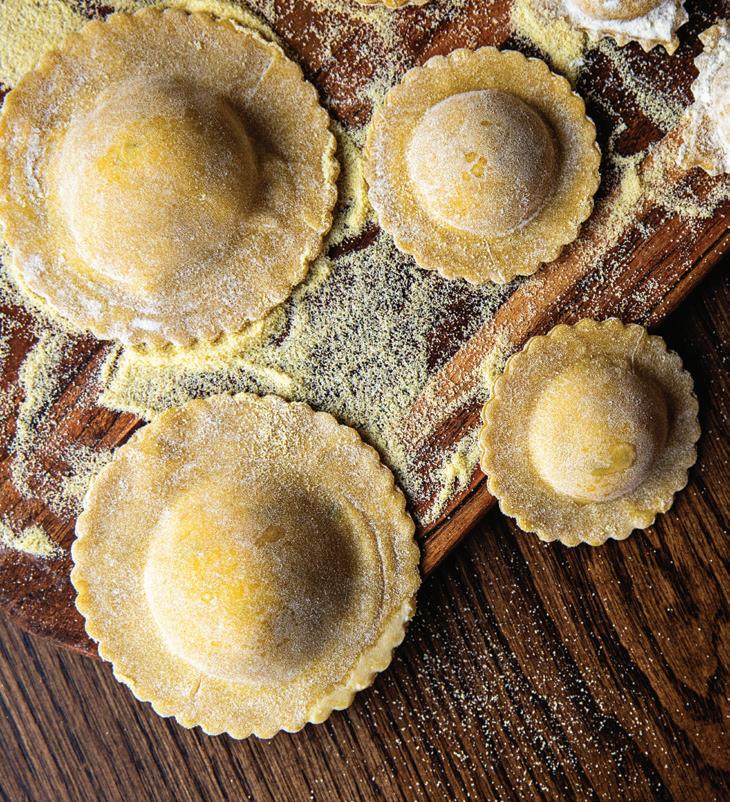
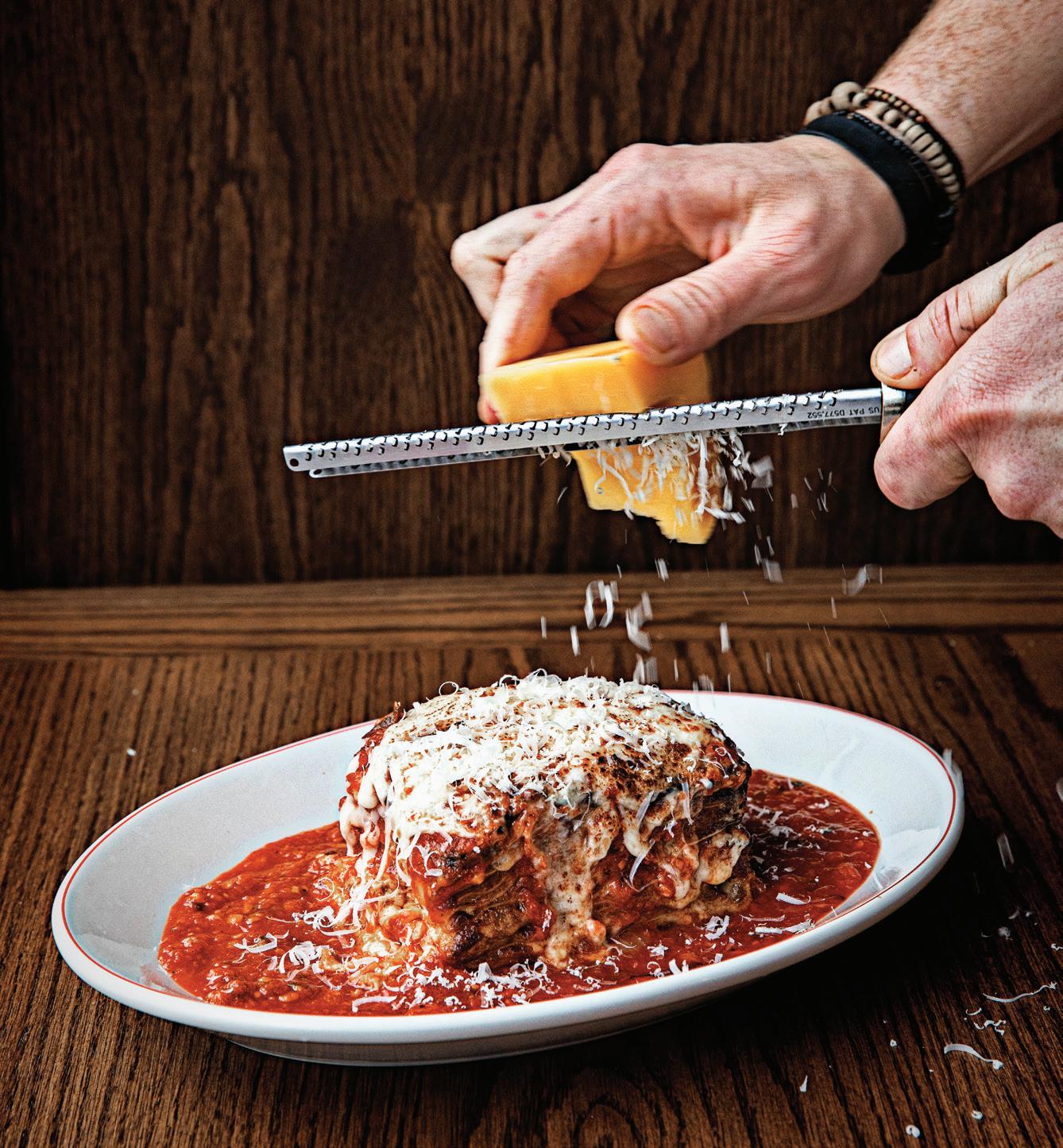
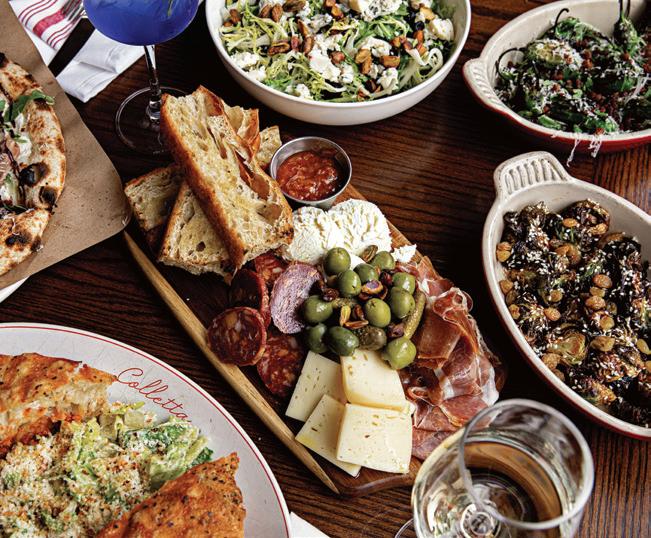
Now, for the fi rst time in the brand’s history, Palmer and his team are expanding out west and opening the fi rst Colletta in Colorado’s Vail Valley this summer. For a southeast operator, opening a full-service restaurant in a destination ski market is a real test of whether a concept travels.
“First off, I have an obsession with the west,” Palmer admits. But the bigger draw was opening with a trusted team of operators within e Westin Riverfront Resort & Spa at the base of Beaver Creek, a famous family-friendly ski destination. “I always say about Colletta— which is our Italian-Americana, more approachable version of Carbone, if you will—that it casts a broad net,” Palmer explains.
Colletta means “collection” in Italian, and is meant to be a gathering place rooted in Italian-American traditions with a menu full of scratch-made pastas, house-made pizzas, and a thought-
ful beverage program with creative cocktails, Italian wines, and seasonal spritzes.
“It’s a concept that we’re looking to grow right now. I don’t have any big strategic comment on that other than I really like the concept,” he says, adding that another Colletta will open next year in downtown Jacksonville, Florida, at the newly restored Hotel Merrydelle (the historic Ambassador Hotel), in the center of the Pearl Square development.
More than any other factor, however, Palmer lists relationships as the core driver of expansion into markets. Indigo Road will work with East West Partners—a nationally recognized real estate development company known for designing, building, and managing innovative mixed-use properties—for the upcoming Colorado Colletta location, where East West was the master developer behind Beaver Creek Village in the 1980s. East West also partnered with Indigo Road in 2021 to create e Kingstide on Daniel Island outside of Charles-
COLLETTA IS ROOTED IN ITALIAN-AMERICAN TRADITIONS WITH A MENU FULL OF SCRATCH-MADE PASTAS, HOUSE-MADE PIZZAS, AND THOUGHTFUL BEVERAGES.
COLLETTA
RESTAURANT GROUPS
ton, South Carolina.
“Like so many moves that we make, it’s based on relationships,” Palmer says. “Who you’re in business with is everything, so I think that’s why we’ve made some of the moves that at certain times people might have said, ‘Huh, Florence, South Carolina?’ Well, it was because of the partners involved. We love East West … their company is founded in Colorado in that area, so they’ve got a ton of stuff in Snowmass and all over the place, so when they called, the answer was automatically yes, for sure.”
Colletta’s culinary team will adapt the menu to its new mountainous home with dishes like Elk Saltimbocca and Colorado bass, rather than simply copying the menu from locations in Atlanta or Cary, North Carolina. “Elk and bison that you see are plentiful out there, we’re doing Italian takes on those. Interestingly enough, the pasta, the pizza dough, the bread, [and] the recipes at that altitude have to be adjusted, which is something our pastry team is learning for the fi rst time,” Palmer says. “And obviously we’ll cook with local produce, which we try to do at all of our concepts.”
As far as the concept itself goes, Colletta will make those small tweaks and adjustments to fit within its new community, while maintaining its spirit and core identity—think Italian Americana and big families sitting together for dinner. “What’s the intention of the restaurant, right? What are you trying to communicate?” Palmer explains.
“ at’s what Colletta is for me—it’s about nostalgia and connection. So I think as long as you’re hitting that note,” he continues. “ e pasta has got to be handmade, the focaccia has got to be handmade. We’re always going to have a pizza oven in our Italian restaurants, because I think it adds a layer that allows you if you want to come and have a Peroni and a margarita pizza, you can, or if you want to come and have a threecourse meal, you can.”
When asked why he chose to expand an existing concept rather than create a new independent restaurant, Palmer says it comes down to the individual
COLLETTA’S CULINARY TEAM WILL ADAPT THE MENU TO ITS NEW MOUNTAINOUS HOME WITH DISHES LIKE ELK SALTIMBOCCA AND COLORADO BASS, AND MAKE OTHER SMALL TWEAKS AND ADJUSTMENTS TO THE RESTAURANT’S DESIGN TO FIT WITHIN ITS NEW COMMUNITY— ALL WHILE MAINTAINING THE CORE SPIRIT AND BRAND IDENTITY OF COZY, FAMILIAL, ITALIAN-AMERICANA.
space—and when he walked into the space at e Westin, it felt like Colletta. “I always laugh when I get asked, ‘So how do you decide which city to go to, and do you have market studies?’ No, I literally land and walk in the room—I’m the restaurant whisperer, I guess. I just go, ‘ is feels like this,” he says—essentially a well-educated “vibe check.”
“When I haven’t listened to that, it has not gone well,” Palmer adds. “I have said repeatedly, usually my fi rst thought about something is the right thought, and it’s just learning to trust that. And it doesn’t mean that upon further exploration I don’t have a different thought, but when I’ve had a first thought about something and I haven’t listened to it, it has been painful. So I’m really trying to just be like, ‘OK, that’s what we’re doing.’ And obviously, if somebody presents a bunch
of other facts, then I’ll listen, but I think you’ve got to just trust your instincts.”
Palmer can also see an Oak Steakhouse being a natural fit for Colorado someday, but when it comes to his other restaurants, like sushi concept O-Ku, he’s not as certain. “Sushi in the mountains? I don’t know. Nobu [Matsuhisa] is in Aspen, so I think it can work. But part of that, as I’m sure you would guess, is the logistics—getting access. We’ll cross that mountain, pun intended, [when we get to it],” he adds. “Whatever we think will fit in the particular place. But Italian and steak, obviously we feel like [those] play pretty well.”
The eventual goal for Palmer is to expand Indigo Road out to Montana, where he’s currently scoping out a location for a future restaurant in Whitefish.
“I’ll be in Montana three times this summer, so we’ve been manifesting,” he says. “I’ve been going to Montana for 25 years, mostly in the summers … at’s kind of where my heart lies, probably where the retirement house is.”
And ultimately, Palmer’s overarching goal for Indigo Road is to “leave the industry better than we found it, to be the better employer, and to have fun working in what I think is the best industry in the world.”
Women in Leadership
BY SATYNE DONER
Five Leaders, One Vision
Five women are reshaping First Watch’s future from every angle: the boardroom, the supply chain, the restaurant floor, and every level in between.
LIKE WINDING RIVERS that lead to the same lake, fi ve women who chose wildly different career paths all arrived as leaders at a booming brunch brand with more than 630 locations.
After grad school, Laura Sorensen joined Federated Department Stores (now Macy’s, Inc.) in Miami, where she had to choose between two career paths: buying or operations. She wanted to be as close to the cash register as possible, so she chose operations and wound up managing a team of 18 people. ere was one small caveat: none of them spoke English as their fi rst language.
“ is was Miami, and I quickly realized that they didn’t need to learn English; I needed to learn Spanish, so they taught me what I needed to get by,” Sorensen recalls. “ ey were the most amazing team to work with. ey taught me about people, about life; they were so hardworking. And in that role, I understood that I wanted to have a broader impact on more people.”
She learned how to look for things in people that they often didn’t see in themselves, helping them grow, develop, and open doors they would never have thought possible. When she was tapped on the shoulder to move into a human
resources role, the president of the company said, “You’re making the biggest mistake of your life leaving operations.”
But she wasn’t—her explosive career was just beginning. From advancing through the ranks at LongHorn Steak-
WITH ROLES RANGING FROM CHIEF PEOPLE OFFICER TO CFO TO LEADING SUPPLY CHAIN AND OPERATIONS, THEIR DIVERSE EXPERTISE IS ROOTED IN A SINGULAR, SHARED VISION OF WHAT RESTAURANT LEADERSHIP SHOULD BE.
house (Darden) to accepting the position at First Watch, where she has served as chief people officer since 2016, she has never lost her connection to operations. “I’m thinking about that frontline worker, and when we’re creating a policy, when we’re looking at a practice, I’m thinking of how it impacts the cook and busser in the restaurant. If we’re making their life easier or better, and making their environment more fun.”
From monthly recognition budgets for general managers to celebrate their teams, to the “We Hear You Tours” listening to hourly workers struggling to
LEFT TO RIGHT:
LILAH TAHA-RIPPETT, ASHLEE WEISSER, LAURA SORENSEN ALISON
Women in Restaurant Leadership
navigate a post-pandemic world, to offering mental health programs like Calm and partnering with organizations to provide backup child care, Sorensen and her team are living out the First Watch values set forth by co-founder and former CEO Ken Pendery: just be kind, stand shoulder to shoulder, roll up your sleeves, and follow the sun.
As Sorensen builds culture from the ground up, Ashlee Weisser is building the fi nancial infrastructure to sustain it. In June 2026, she stepped into the role of chief fi nancial officer after serving as the senior vice president of fi nancial planning and analysis since 2023.
“Being part of a growing company in restaurants is rare—not many are posting massive amounts of growth like First Watch is,” Weisser says. “It’s been thrilling. What mostly changes now [for me] is that I get to be a big decision maker. One week, I was providing information to the decision makers … and the next, I am one.”
Her path to the c-suite is anything but traditional. A psychology major and fi rstgeneration college student with no exposure to corporate America, Weisser never saw herself in a role like this. After going back to school for a marketing MBA and interning at Darden in a fi nance role (her professors pushed her), she discovered how she could make her own unique
impact in an industry she had deeply fallen in love with.
“When I first started my career, I struggled with what it looked like to be a female leader in fi nance, but I realized there is so much power in diversity of all kinds,” Weisser says. “I have people on my team with anthropology and engineering degrees. Being open-minded and knowing that you don’t have to fit in a certain box to be successful in a role is important to me … if you’re a strong thinker, the rest will fall into place.”
First Watch is a place where employees are encouraged to bring their whole
selves to work—encouraged by leaders at the top levels like Sorensen and Weisser, who are authentically themselves—but this spirit lives on through every level, every function of the business.
For Lilah Taha-Rippett, growing up in Detroit in a foodservice family meant she tried many times to get out of restaurants—fi rst to be a lawyer—but ended up in restaurants anyway. She fell in love with economics, the commodity, and the global view of the invisible infrastructure—the supply chain. It’s like a puzzle to her—and any good supply chain worker, she says,
[CONTINUED ON PAGE 39]
FIRST WATCH IS A PLACE WHERE EMPLOYEES ARE ENCOURAGED TO BRING THEIR WHOLE SELVES TO WORK—ENCOURAGED BY LEADERS AT THE TOP LEVELS WHO ARE AUTHENTICALLY THEMSELVES.
The New KDS and AI Roadmap
The next era of restaurant technology will belong to operators who can thoughtfully connect their systems, own their data, and move managers out of the back office.
ARTIFICIAL
INTELLIGENCE has entered the restaurant industry with plenty of promises, but there hasn’t been enough time to establish best practices for introducing this technology to the team in the field, let alone across multiple units. For operators, the most pressing question is whether their businesses are ready for the changes AI can provide.
Patrick Bobrukiewicz, vice president of AI strategy and innovation at rive Restaurant Group, says many restaurants are still trying to build the future on top of fragmented information. Even training materials, operating procedures, and brand standards are scattered in shared drives, PDFs, emails, or storelevel documents. is disjointedness is a huge problem when it comes to using AI for efficiency, because AI can only be as useful as the information it can access.
“ e majority of the data that we have in restaurants is really structured data,” Bobrukiewicz says. “Sales, labor, inventory, all of those things live in tables somewhere. e next step is getting it into a place where you can ask better questions.”
at shift, Bobrukiewicz believes, is where the industry is heading. Dashboards and reports are not going away, but
he sees a future where operators spend less time hunting through them. Instead of pulling five reports to figure out what happened in a store, a manager could ask a system why labor ran high, why a menu item fell off, or whether a store is likely to run short on a key product before the weekend. is is a change with the potential for a real positive impact.
“A P&L is like reporting on the news the week after the weather is already done,” Bobrukiewicz says. “You’re sitting over here saying, ‘Hey, three weeks ago it was sunny.’ Great.”
e next phase, he says, is not about reporting the weather. It is giving operators a forecast.
At rive, that work includes using Google’s Gemini Enterprise to connect
structured information with unstructured data. e goal is to start asking why things are happening and make adjustments from there. Bobrukiewicz describes the work through what he calls the “three threes”: get the data right, defi ne the domain, and then create a discovery layer.
e
fi rst step is clean, accessible data. e second is teaching the system the language of the business. For example, a company may call its brick-and-mortar properties “units,” “restaurants,” “stores,” or “locations,” and the tool needs to recognize those nuances. Executive leaders may be called area directors, district managers, or something else entirely. If the AI does not understand those terms, the answers will feel off to the people
IF A RESTAURANT GROUP CANNOT CONNECT ITS DATA, IT WILL STRUGGLE TO USE AI FOR ANYTHING MORE THAN SURFACE-LEVEL TASKS. OPERATORS WITH CLEANER SYSTEMS AND STRONGER VENDOR AGREEMENTS WILL HAVE A BETTER CHANCE OF TURNING AI INTO SOMETHING USEFUL IN THE LONG TERM.
Tech Check
who need to trust them. Only after those fi rst two steps are completed should operators start building dashboards or internal chatbots.
“Most people want to jump immediately to the discovery layer,” Bobrukiewicz says. “ ey’re going to say, ‘Oh look, I’ve got the data. Let me build a dashboard. Let me build a report.’” at approach can backfi re. If a manager gets a bad answer once, or even an answer that feels disconnected from how the restaurant actually runs, the tool risks losing credibility with the team. “If they don’t trust that it’s right, they’ll put it down, and they just won’t use it again,” Bobrukiewicz says.
Before restaurants can reach the AI piece, many still need to confront data ownership. Bobrukiewicz says operators should pay close attention to whether vendors allow them to access and export their own information.
“Getting your paws on the data is usually the very first hurdle that we come up with in our industry. We talk a lot about owning our own data, but then we will sign contracts left and right with vendors who won’t give us data. Don’t sign the contracts.”
“Getting your paws on the data is usually the very fi rst hurdle that we come up with in our industry,” Bobrukiewicz says.
“We talk a lot about owning our own data, but then we will sign contracts left and right with vendors who won’t give us data. Don’t sign the contracts.” at advice is becoming increasingly urgent as AI moves from curiosity-driven
use to operational applications. If a restaurant group cannot connect its data, it will struggle to use AI for anything more than surface-level tasks. Operators with cleaner systems and stronger vendor agreements will have a better chance of turning AI into something useful in the long term.
Bobrukiewicz sees that practicality fi rst shows up in the daily decisions managers already make. An AI-powered system may alert a store that it is trending toward a labor miss before the end of the day. It could fl ag that one restaurant is about to run out of a product while another nearby unit has excess inventory. It could help the executive team see patterns without waiting for a weekly report. at same thinking applies to kitchen display system (KDS) technology.
“KDS for me is a really easy sell,” Bobrukiewicz says. “Do you want your cold food cold, and do you want your hot
food hot? If your answer to that is yes, insert KDS.”
A strong KDS can manage timing across stations, stage items that cook at different speeds, and separate dine-in orders from off-premise traffic. It can also show where service slows down. A paper ticket cannot tell an operator whether the problem was expo, the line, or a backedup grill, but a KDS can. As restaurants continue to grow their online ordering and add more complexity to their menu, having a granular view of what’s happening is vital.
Marketing is moving in the same direction. We’re seeing Google Business Profi les as one of the most important assets for restaurants in response to changes in how guests search online. Consumers have transitioned away from simple queries to more specific prompts. As an example, instead of asking Google for “Mediterranean restaurants near me,” a diner may ask for “a dog-friendly dinner spot with gluten-free options, outdoor seating, Mediterranean cuisine with fourstar reviews or above in a five-mile radius.”
Restaurants that keep their hours, photos, menu attributes, and review responses up to date, with keywords when applicable, will have more success showing up as a suggested spot than businesses that don’t.
AI has also advanced A/B testing of creative assets across diverse platforms, suggesting variations and showing how certain types might perform. is frees up time for marketers to focus more on strategy instead of spending hours manually testing every component of a campaign.
For Bobrukiewicz, giving workers back their time is the larger promise of AI in this industry. e technology should not pull managers deeper into the back office. It should give them cleaner answers so they can spend more time training employees, serving guests, and getting results.
“It’s the art of the possible; it truly is,” Bobrukiewicz says. “We’re the ones helping to program the Iron Man suit. Let’s take this opportunity to use AI, to take our humans and let them do what humans do best: [Be] human.”
needs to love puzzles.
Today, as the senior vice president of First Watch’s supply chain, you can fi nd Taha-Rippett in her office watching the news and weather all day. Between strong storms, gas prices, and wars, among other macroeconomic factors, she’s conjuring up backup plan upon backup plan to ensure only the freshest, highest quality ingredients are coming through the growing restaurant chain’s back doors and into the kitchens.
“Without the product, there really isn’t a reason for anyone to walk in the front door—a supply chain professional needs to know the whole system, not just a piece of it. From the amount of rainfall to the fertilizer and then some,” TahaRippett says. “It’s been satisfying for me to know that I’m supporting a brand, and that support helps feed servers who are working for tips and have what they need to deliver to our consumers.”
Angela Mitchell and Alison Barritt are the closest to the heartbeat of First Watch’s restaurants as regional vice presidents of operations. Mitchell has been working in brunch restaurants since her freshman year of college; Barritt got her start slinging hamburgers at age 15. ey are both watching and developing First Watch’s future from the ground level.
“We’ve got a deep bench of great talent just waiting for the next opportunity, and the more openings we do, the more pathways for growth there are,” Barritt says. “We’re not just giving people a paycheck—we’re giving them something they’re proud of.”
Mitchell is living proof of this philosophy. So many of her dreams have come true working with First Watch— and it’s her absolute responsibility to live out those values and pay it forward.
“When I was little, I had this dream of going to Harvard. When my mom was pregnant with me, she went to the campus and got a Harvard onesie,” Mitchell says. “As my life progressed, I thought that was probably not in the cards, but a couple of years ago, Laura [Sorensen] and the team sent me to do an executive leadership program at Harvard … and it was a dream come true.”
ALEXANDRA (ALEX) CLARK
ROLE: VP of Finance
BRAND: The Big Biscuit
JOINED: 2025 UNITS: 31
HQ: Prairie Village, Kansas
Alex Clark is shaping a data-driven, focused financial strategy that’s enabling The Big Biscuit to grow into new markets. She joined the Kansasbased brand last year, armed with a passion for helping franchisees understand the connection between day-to-day decisions and long-term financial outcomes. With 23 corporate-owned locations, Clark sat down with FSR to share how she’s helping The Big Biscuit prep for expanding its franchisee footprint, her approach to seamlessly integrating tech, and how the team balances innovation with staying true to the brand’s hometown hospitality roots and DNA.
BY CALLIE EVERGREEN
An Intentional Approach to Growth
How are you preparing for more franchise growth?
We worked really hard on our FDD this year to make sure we were intentional about every single word, every single disclosure, specifically around our numbers. Our focus was to get that data accurate, to be really spot on, so potential franchisees can really see how our stores are performing.
We’ve gotten proof of concept with 31 locations. We know this works. We want to expand so our franchisee and corporateowned portfolios are a little more balanced. At the end of 2026, we’re going to be in a completely different position.
What innovation has made the biggest impact this year?
We are diving into the tech stack and developing it. We’re getting tools and systems for our employees—like a training platform that’s online, [and a] cashless tip solution. And we’re building this vertically. We’re making sure all of our tech partners are seamlessly integrating, so then we can focus on things like menu
innovation, and getting that FDD where we want it to be, and the guest experience.
How do you balance innovation with ensuring your brand identity stays intact?
We are super committed to the DNA of the brand. We know who we are. at doesn’t mean that we don’t change, we don’t pivot, we don’t innovate, but it does mean we are really comfortable with who we are and what we offer that guest. We’re going to be there to open the door for you, and greet you with a smile, and ask you to come on in and have breakfast or lunch with us.
How do you efficiently turn tables but still give guests that experience?
We’ve optimized our kitchens to achieve that average six-minute ticket time with an average 33-minute table turn; and, lean labor. We are very intentional, all the way from restaurant design to getting that food on the table. It’s really about being able to efficiently serve the guests, but also focus on hospitality and not mechanics.
you’re a restaurateur. be intuitive. trust your palate and your people. create a place someone didn’t know they needed. obsess over details no one notices. welcome everyone like they belong. change the menu before it’s perfect. listen more than you speak. fix what’s broken before it’s seen. remember names. remember stories. make ordinary nights feel like occasions. embrace the chaos.
CHICKEN
® SEE IT IN ACTION REQUEST A SAMPLE TODAY
Say no more to frying chicken from raw or frozen. There’s a third way that’s a fried chicken breakthrough in every way. FLASH 180® Battered Sous Vide Chicken cuts fry times in half. The wet batter coating lets you fry as is, or get wildly creative with custom seasoning, spices and breading options. And the sous vide process locks in juices and delivers standout tenderness that never misses a bite, while eliminating contamination concerns .