Meet C+RC’s 2026
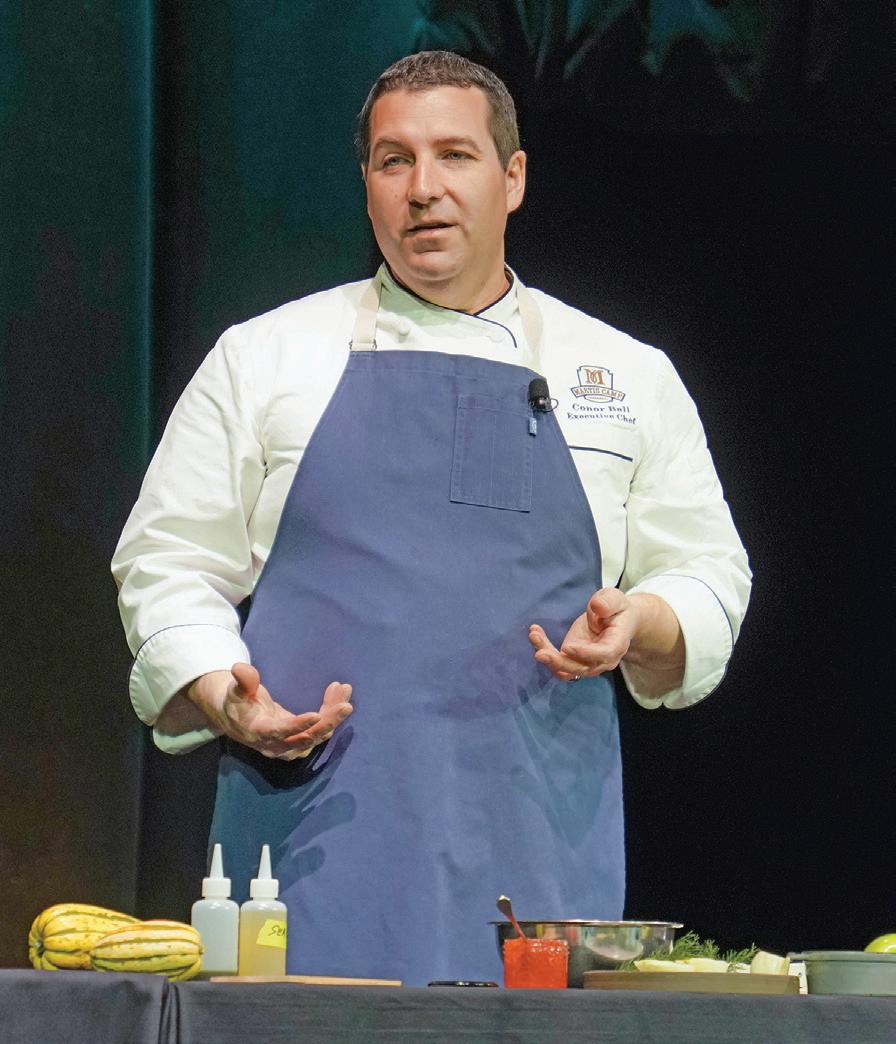
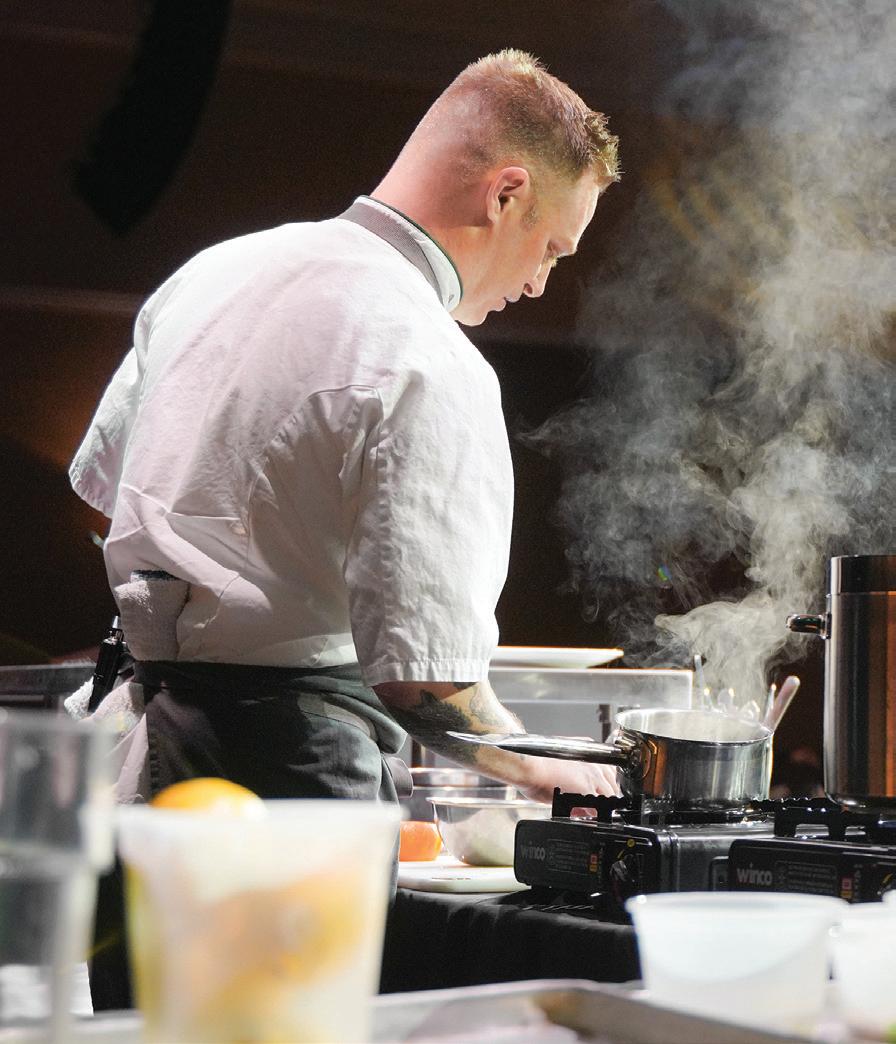
Chef of the Year: Jacob Picking p. 26
The Tee Sheet Squeeze p. 28
Turning Followers Into Members p. 34 plus

Meet C+RC’s 2026
Chef of the Year: Jacob Picking p. 26
The Tee Sheet Squeeze p. 28
Turning Followers Into Members p. 34 plus
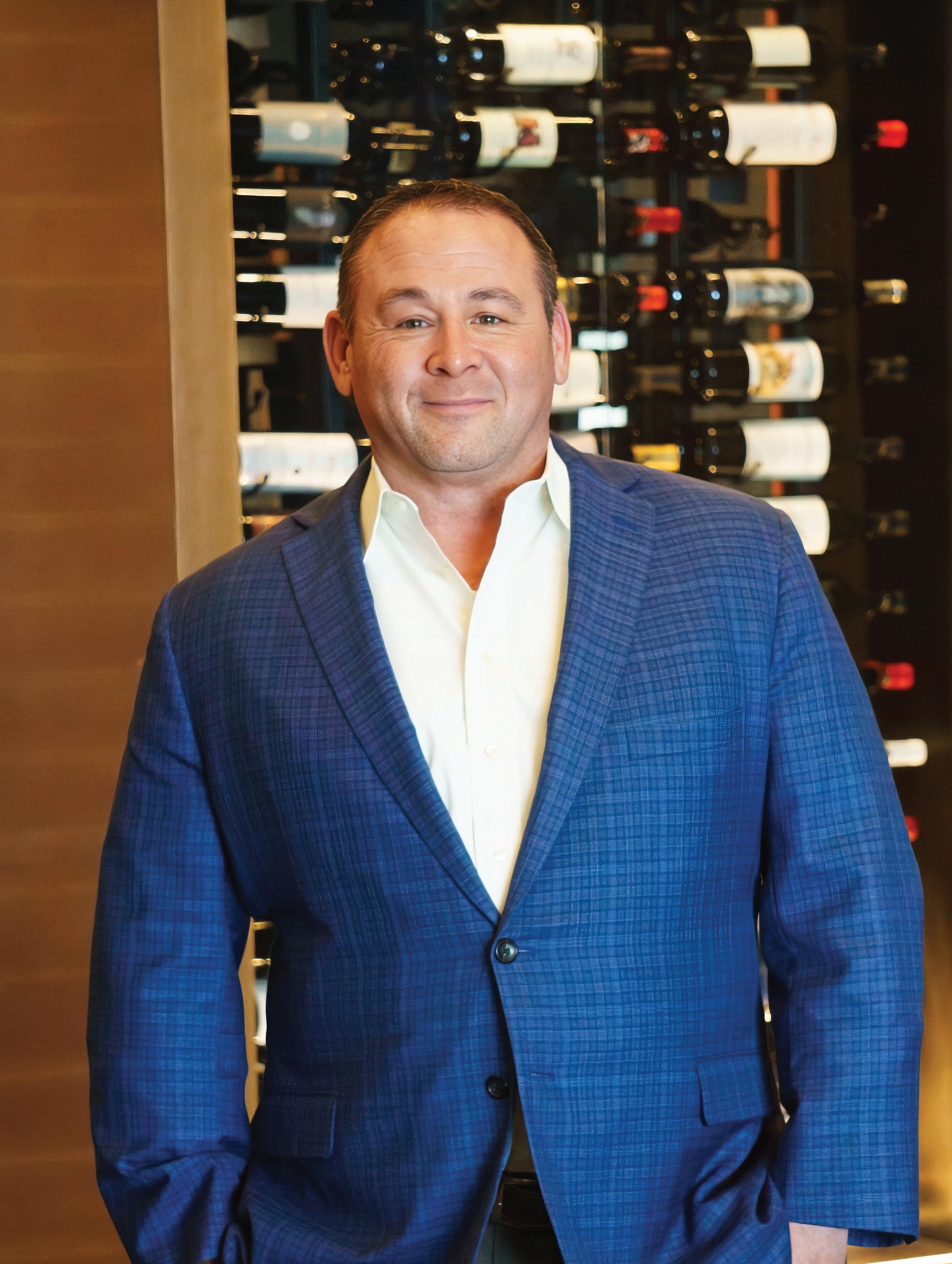
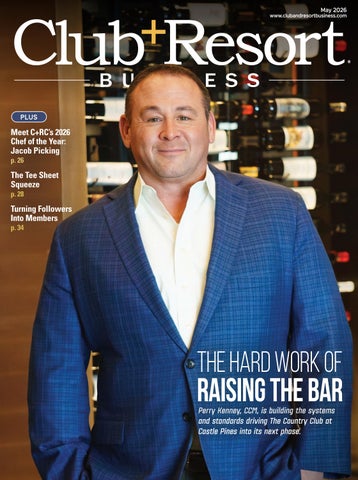
Perry Kenney, CCM, is building the systems and standards driving The Country Club at Castle Pines into its next phase.









There’s a certain kind of leader who talks about strategy, capital plans, and growth. And then there’s the kind who keeps a stack of handwritten notes from former employees within arm’s reach.
Daniel Perez, GM/COO of The Yale Club of New York City, is the latter.
You could spend this entire space talking about the size of Yale and still not cover it all. The building, the membership, the volume of business, the pace of investment. It’s a serious and huge operation, and it requires a level of discipline that most GMs never have to think about. Every dollar is accounted for. Every project has to be justified. The expectations are clear, and they are high.
Perez understands that part of the job. He is good at it. But it is not what he talks about first.
He talks about his team.
He talks about hiring people who are better than he is in specific areas and then letting them do their job. He talks about making sure people feel like they are part of something, not just working inside of it. He talks about energy, accountability, and the responsibility that comes with leadership, whether or not a title says you have it.
And you believe him, because he can point to it.
WTWH MEDIA, LLC
1111 Superior Ave., Suite 1120 • Cleveland, OH 44114
Ph: 888.543.2447

You see it in the way the club is evolving. The membership is getting younger, expectations are shifting, and the club is adapting without feeling like it is chasing anything. Spaces are being updated. The experience is sharper. It all feels intentional.
But what stayed with me after the interview was not the investment or the strategy. It was those notes.
He keeps them close as a reminder of what matters. Someone took the time to tell him that he made a difference in their life or their career. That is the measure he cares about.
Clubs spend a lot of time focusing on what they offer. The better question is what kind of people they produce along the way.

EDITORIAL DIRECTOR

Joanna DeChellis jdechellis@wtwhmedia.com
Scan this QR code to sign up for our newsletter and join the conversation.
www.clubandresortbusiness.com • www.clubandresortchef.com
SUBSCRIPTION INQUIRIES
To enter, change or cancel a subscription: Web (fastest service): https://clubandresortbusiness.com
Phone: 888-543-2447 (U.S. only, toll-free)
Mail: Club & Resort Business
1111 Superior Ave., Suite 1120 Cleveland, Ohio 44114
Copyright 2026, WTWH Media, LLC
Club + Resort l May 2026












Subscriptions: Qualified U.S. subscribers receive Club + Resort Business at no charge. For all others the cost is $75 U.S. and possessions, $90 Canada, and $145 all other countries. Per copy price is $3. Club + Resort Business does not endorse any products, programs or services of advertisers or editorial contributors. Copyright© 2026 by WTWH Media, LLC. No part of this publication may be reproduced in any form or by any means, electronic or mechanical, or by recording, or by any information storage or retrieval system, without written permission from the publisher.
Club + Resort Business (ISSN 1556-13X), USPS Publication #23658 is published 6 times: (January, March, May, July, September, November) by WTWH Media, LLC, 1111 Superior Avenue, Suite 1120, Cleveland, OH 44114 Copyright© 2026.
Periodicals postage paid at Cleveland, Ohio, and additional mailing offices. Postmaster: Send change of address notices to Club + Resort Business, 1111 Superior Ave., Suite 1120, Cleveland, Ohio 44114.
Editorial
EDITORIAL DIRECTOR
Joanna DeChellis jdechellis@wtwhmedia.com • 412-260-9233
SENIOR EDITOR Isabelle Gustafson igustafson@wtwhmedia.com • 314-606-9430
ASSOCIATE EDITOR
Madison Hartline mhartline@wtwhmedia.com
VP, EDITORIAL Danny Klein dklein@wtwhmedia.com • 919-945-0726
Content Studio
VP, CONTENT STUDIO
Peggy Carouthers pcarouthers@wtwhmedia.com
WRITER, CONTENT STUDIO Ya'el McLoud ymcloud@wtwhmedia.com
WRITER, CONTENT STUDIO Drew Filipski dfilipski@wtwhmedia.com
Art + Production VP, CREATIVE DIRECTOR Matthew Claney mclaney@wtwhmedia.com
CREATIVE DIRECTOR Erin Canetta ecanetta@wtwhmedia.com
Sales + Business Development
SVP SALES & STRATEGY Matt Waddell mwaddell@wtwhmedia.com • 312-961-6840
NATIONAL SALES MANAGER Amber Dobsovic adobsovic@wtwhmedia.com
BRAND LEADER Patrick McIntyre pmcintyre@wtwhmedia.com • 216-372-8112
SALES DIRECTOR Mike Peck mpeck@wtwhmedia.com • 773-859-1107
KEY ACCOUNT MANAGER John Petersen jpetersen@wtwhmedia.com • 216-346-8790
CUSTOMER SERVICE REPRESENTATIVE Tracy Doubts tdoubts@wtwhmedia.com
Leadership CEO Matt Logan mlogan@wtwhmedia.com
CHIEF OPERATING OFFICER George Yedinak gyedinak@wtwhmedia.com
CHIEF REVENUE OFFICER Scott Kelliher skelliher@wtwhmedia.com
VP OF MARKETING Annie Wissner awissner@wtwhmedia.com
SENIOR VP, AUDIENCE GROWTH Greg Sanders gsanders@wtwhmedia.com
www.clubandresortbusiness.com

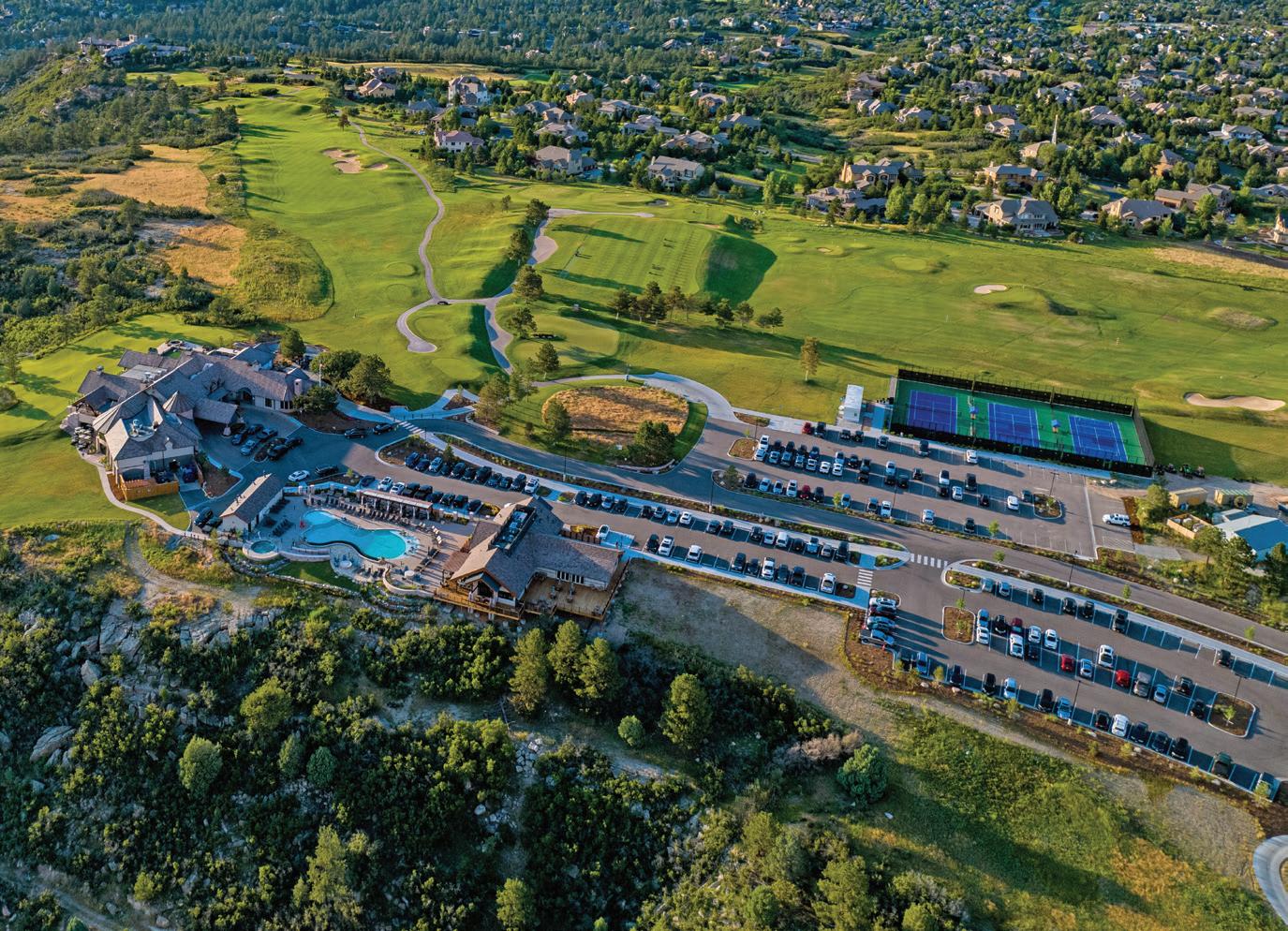
A $20 million renovation reshaped The Country Club at Castle Pines, but the real work was rebuilding how the club operates from the inside out.
(Cover photo and photo above courtesy of The Country Club at Castle Pines)
4 EDIT MEMO: The Measure that Matters
8 CLUB PEOPLE ON THE MOVE:
Sponsored by Kopplin, Kuebler & Wallace
10 SPONSORED CONTENT
Asking for Help Is Not a Weakness. It’s a Superpower.
Sponsored by Kopplin, Kuebler & Wallace
16 DESIGN + RENOVATION
The Role of Retail
Directors of golf, GMs, and directors of retail weigh in on the latest in pro shops and the power of design and renovation to better the member experience.
22 FOOD + BEVERAGE
Grab and Go-To
Three of C+RC’s 40 Under 40 club chefs share the grab-and-go items members are gravitating toward, plus what’s in store.
43 www.clubessential.com
CRES COR 7 www.crescor.com
ENGAGEMENT SUMMIT 33 events.wtwhmedia.com/crb-engagement-summit
EUSTIS CHAIR 14 978-827-3103 | sales@eustischair.com
24 FOOD + BEVERAGE
At Rock Creek GC, Coffee Creates a New Way In The Oak & Iron Coffee Bar gives members and the surrounding community a simple reason to stop by the club.
26 CLUB + RESORT CHEF PROFILE
Meet the 2026 Club + Resort Chef of the Year
Jacob Picking, CEC, Executive Chef of Blue Hills CC in Kansas City, Mo., took home the prestigious title following the 2026 Chef to Chef Conference.
28 GOLF OPERATIONS
Clubs Perfect Their Swing With Tee Time Management
From handling no-shows, to safeguarding against resales, tee time operations require ahands-on approach.
30 RACQUETS + FIELD SPORTS
Filling the Calendar, Filling the Courts
Directors across three clubs break down the planning, staffing, scheduling, and member feedback strategies required to deliver consistent, high-quality racquet programming.
34 MEMBERSHIP + MARKETING
From Impressions to Membership: How Clubs Are Rethinking Social Media
By blending brand storytelling, trend-driven content, and data-backed decisions, Invited is using social media to expand reach and reinforce member experience.
36 RECRUIT + RETAIN
Marius Ilie Puts Employee Investment at the Center of His Leadership
The General Manager of St. Andrews Country Club is proving that employee investment drives retention, culture, and club success. From tripling the cafeteria budget to checking in with every department daily, his approach is simple: Employees remember how you make them feel.
38 GM TO GM
Building the Team That Builds the Experience At TPC Potomac at Avenel Farm, Ned Graff has shaped a leadership approach centered on trust, clarity of purpose and empowering staff to deliver meaningful moments for members.
40 SPECIAL REPORT INSIDE THE 2026 CHEF TO CHEF CONFERENCE
FIBERBUILT UMBRELLAS & CUSHIONS 18 www.fiberbuiltumbrellas.com
INFRARED DYNAMICS 20 888-317-5255 | www.infradyne.com
JBD/JGA DESIGN AND ARCHITECTURE 21 401-721-0977 | Pcafaro@JBDandJGA.com
KOPPLIN KUEBLER & WALLACE 9 www.KKandW.com www.ClubLeadershipAlliance.com
PEACOCK + LEWIS AIA 5 561-626-9704 | 239-631-2332 www.peacockandlewis.com
PREFERRED CLUB 15 800-523-2788 | www.preferredclub.com
ROBOT COUPE 25 www.robot-coupe.com
STONE GROUP ARCHITECTS 19 605-271-1144 www.stonegrouparchitects.com
THE VERDIN COMPANY 44 800-543-0488 | www.verdin.com




OVENS LEFT TO RIGHT
Under Counter*: RO151XWUA5DX
Half Size*: RO151HWUA9DX
Stacked: RO151XWUA5DXSTKM2081
Full Size: RO151FWUA18DX
*Shown with optional stand and window. (Roll-in racks and Pass-Through ovens also available.)
Air Fry, Bake, Cook, Roast, Rethermalize and Hold with precise temperature and humidity control.
• Quicker temperature start-up and recovery times.
• Power boosting switch allows end user flexibility to increase or reduce air flow.
• Operate all fans on high for air frying crispy foods.
• Models available with or without humidity. Full, half and under counter sizes available.
• Non-venting; does not require a hood. (Check with your local codes.)
• Available in 208/240V, or 480V.

ROBERT BARRETT, PGA
Recognized among the city’s most distinguished private clubs, Bel-Air Country Club in Los Angeles, Calif. welcomes Robert Barrett, PGA as Assistant General Manager. The club is anchored by its celebrated championship golf course, originally designed by George C. Thomas, Jr. and thoughtfully restored, winding through four dramatic canyons of the Santa Monica foothills. Complementing golf, members enjoy tennis, fitness, a golf simulator, and overnight accommodations. A newly rebuilt clubhouse serves as the social heart of the club, offering refined dining, elegant event spaces, and a world-class wine cellar, all supported by a culture of exceptional service. Barrett was most recently Club Manager at The Quail Golf Club in Carmel, Calif.
JOHN BEANE, MS, CSCS, TSAC-F
Recognized as one of the world’s premier private residential communities, Desert Mountain Club welcomes John Beane, MS, CSCS, TSAC-F as Director of Fitness. Spanning 8,000 acres in Scottsdale, Ariz., the club features seven architecturally distinct, luxurious clubhouses and offers exquisite cuisine across its ten restaurants. Additional amenities include a collection of six Jack Nicklaus Signature Golf Courses, a distinct par fifty-four championship course, a state-ofthe-art Performance Center, the Sonoran Fitness, Tennis & Spa facility, and a fifteen-mile private hiking trail system. Beane was most recently Director of Training at Woodside in Westwood, Kan.


JAMES KREMER, CEC, AAC
Spring Island Club, a three thousand-acre Lowcountry retreat surrounded by ancient oaks, tidal creeks, and salt marshes in Okatie, S.C., welcomes James Kremer as Executive Chef. The club offers a peaceful, nature-rich environment where refined amenities such as the Arnold Palmerdesigned golf course, Sports Complex, and equestrian trails blend seamlessly into the landscape. A member-run farm, native plant nursery, and vibrant artist community reflect shared values of sustainability, creativity, and lifelong learning, fostering a deep sense of connection and purpose among members who shape and enrich Island life. Kremer was most recently at Berkeley Hall Club in Bluffton, S.C.

Sharon Heights Golf & Country Club, located in the casually elegant community of Menlo Park, Calif., welcomes Geoffrey Bisi, PGA, as Director of Golf
The club is one of the Bay Area’s premier private clubs, featuring an eighteen-hole championship golf course which recently underwent a $23 million dollar renovation by Todd Eckinrode. Additional amenities include extensive tennis facilities and a fitness center promoting health and wellness. Bisi was most recently Head Golf Professional at Monterey Peninsula Country Club in Pebble Beach, Calif.

The historical Seawanhaka Corinthian Yacht Club in Oyster Bay, N.Y., welcomes James Catania as General Manager/Chief Operating Officer. Host of the Seawanhaka Cup, the oldest continuously contested original U.S. yachting trophy, the club remains competitive in sailing, team racing, and junior programs. Additional amenities include a beautifully maintained clubhouse; a mooring field for member and club-owned boats; hoists, boat yard, four docks and other marine facilities; tennis and Bocce courts, beautiful dining venues with stunning waterfront views, private event space for summer dining and parties; eight overnight guest rooms and a vibrant social and racing calendar. Catania was most recently Food & Beverage Manager at Fox Hollow in Woodbury, N.Y.
Established in 1922, Round Hill Club in Greenwich, Conn., welcomes Lindsey Levine as Assistant General Manager. The club has consistently earned the distinction of being a Platinum Club of America, delivering residents of this community a unique atmosphere, intimate culture, and the finest private club experiences available. Members enjoy a variety of amenities including indoor and outdoor dining opportunities, golf, indoor and outdoor tennis, squash, pickleball, paddleball, a fitness & wellness center, swimming pool, and shooting range. Comprehensive youth and adult activities are offered in all of the sporting venues. The club’s vibrant social schedule features traditional and special events throughout the year. Levine was most recently Assistant General Manager at The Patterson Club in Fairfield, Conn.
Century Country Club welcomes Cameron Silverman as Director of Racquets to lead their premier programs in tennis, platform tennis, and pickleball. Founded in 1898 and situated on two hundred scenic acres in Purchase, N.Y., the club features thirteen tennis courts, three platform tennis courts, two pickleball courts with a seasonal winter tennis bubble, a championship golf course, fitness center, pool, and award-winning dining. Recognized as a Platinum and Distinguished Club of America, Century blends historic tradition with exceptional facilities. Silverman was most recently Director of Racquets at Fairview Country Club in Greenwich, Conn.
Located in the charming hamlet of Locust Valley, N.Y., Piping Rock Club welcomes Christopher Wellenbrink, CPA as Chief Financial Officer. The club stands as one of the finest private country clubs in the nation and is consistently recognized as one of the top 100 golf courses. The main clubhouse dining venues and bars are complemented by overnight guest suites and multiple member cottages. The club features an exceptional array of racquet facilities, along with a fully equipped second-floor fitness center. The state-of-the-art Golf House is complete with indoor bays, simulators, a putting lab, and a professional club fitting center. Members also enjoy trap and skeet shooting. Adding to its premier amenities, Piping Rock operates the scenic Fox Point Beach Club, located 4.5 miles from the Main Club. Wellenbrink was most recently Controller at New York Athletic Club in New York, N.Y.
"We

Saeed Assadzandi, CCM, CGCS General Manager/COO Hermitage Country Club
Alfonso Bacalja | Director of Racquets Myers Park Country Club
Alyxander Bihuniak BA Hons | Golf Operations Manager Hindhead Golf Club
Chris Bonvie, PGA | General Manager La Jolla Country Club
Nicholas Brisk, CCM | General Manager/COO The Reserve Club
Zachary Carpenter | Dir. of Food & Beverage Monterey Peninsula Country Club
Margot Carter | Head Racquets Professional Wycliffe Golf & Country Club
Carrie Chapin | Clubhouse Manager Stock Farm Club
James Clark | General Manager Encinal Yacht Club
Erin Fabian | General Manager The Sanctuary Community Association
Andrew Farrea, PGA | Director of Golf The Amelia Island Club
Joshua Fries, CPA | Director of Finance & Accounting Sugar Mill Country Club
Daniel Furey | Executive Chef The Country Club of Sapphire Valley
Dan Gottfried | Clubhouse Manager Vero Beach Country Club
Hannah Greenland | Dir. of Food & Beverage Atlantic Fields Club

Albemarle Plantation POA
Megan Panayi | Director of Clubhouse Operations Cosmos Club
Casey Paulson | General Manager The Mackenzie Club
Philip Petullo | Executive Chef Port Royal Club
Brian Plum | Executive Chef Windstar on Naples Bay
Phillip Ponticelli | Executive Chef Lebanon Country Club
Rhett Robicheaux, CCM | COO/Island Manager Cat Cay Yacht Club
Alessondra Hopman, CCM | General Manager/COO Skokie Country Club
Stephen Hubner | Vice President of Operations Discovery Dubai
Nathan Johnson | General Manager/COO Bloomington Country Club
Zane Kohrs | Director of Racquets The Town Club
Chris LaRocque | President/Executive Director Tee It Up For The Troops
Steve David, PGA | General Manager/Director of Golf Burl Oaks Golf Club
José Detaille, CCM | General Manager Kensington Golf & Country Club
James Robinson | Finance Manager The Victoria Golf Club
Jeffrey Robinson | General Manager Newark Country Club
Maxwell Rutherford | Club Operations Manager
Royal Wimbledon Golf Club
Matthew Spangenberg | General Manager/COO Moss Creek Owners Association
Stephen Strickland | Director of Culinary Ocean Reef Club
Dane McLaird | General Manager Greenbriar Hills Country Club
Sharon Meirav, CCM, CAM | General Manager/COO The Club at Ibis
Kelly Watson | Area Retail Manager Discovery Land Company
Ryan Williams, PGA | Director of Golf Suntree Country Club


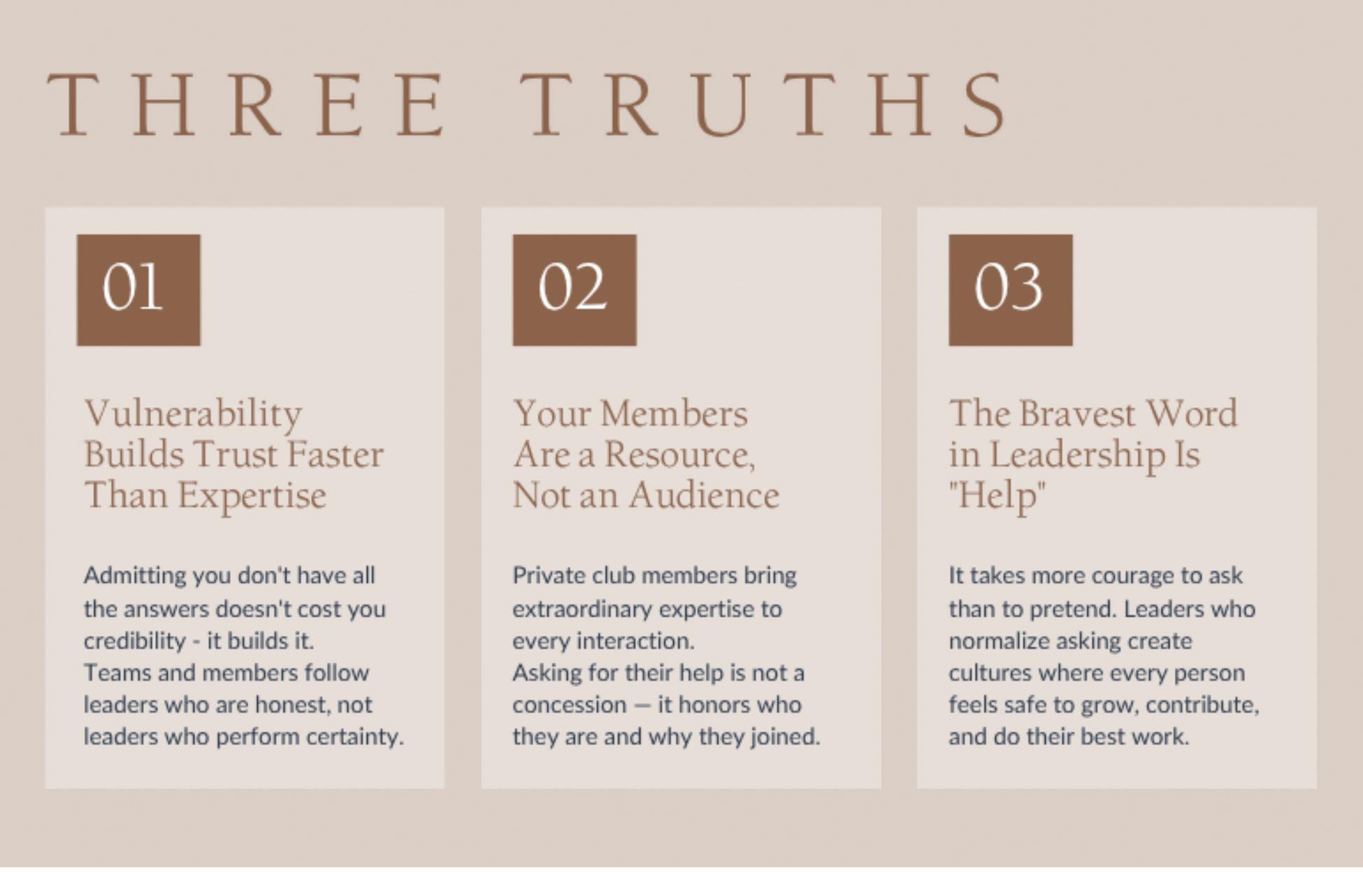
moments in a private club career don’t happen in a boardroom presentation or a flawless member event. They happen in the quiet, courageous instant when a leader looks at a member, a teammate, or a mentor and says, “I need your help.” That moment of vulnerability is not a crack in the armor. It is the armor.
We have spent the better part of three decades watching leaders build remarkable clubs and extraordinary careers. And the ones who endure, the ones whose teams run through walls for them, the ones whose members feel genuinely seen…they all share one trait in common. They know how to ask for help.
Reflecting on nearly thirty years of working with leadership in some of the
finest private clubs in this country, a pattern has repeated itself so consistently that it can no longer be considered a hunch. The leaders who build the deepest loyalty (from their staff, from their boards, from their members) are not the ones who project the most confidence. They are the ones who are most comfortable not having all the answers.
We recognize that it is a counterintuitive thing to say in an industry that prizes polish and precision. We are in the business of delivering exceptional experiences, and there is a natural temptation to believe that means appearing to have everything figured out. But, time and time again, the moment a leader sits across from a key member or a department head and says, “I need your perspective on this,” something shifts in the room. Trust deepens. People lean in.

By Richard M. Kopplin, CMAA Fellow
Kurt D. Kuebler, CCM, CMAA Fellow
III, CCM, CCE,
The relationship becomes real.
Thinking about admired club industry leaders and icons, they are not all the most decorated or the most credentialed, but they are the most honest. They know what they do well, where they need help, and have the self-awareness and the security to act on both. That combination is not a weakness. It is the foundation upon which every great club culture is built.
YOUR MEMBERS ARE A RESOURCE, NOT AN AUDIENCE
One of the great untapped assets in private club leadership sits in plain sight every single day. It is the membership itself. Private club members are not passive consumers waiting to be served. In a member-owned club, they are co-owners of the organization you have been entrusted to run. They are lawyers, financiers, builders, strategists, physicians, and executives who have chosen to invest their time, their money, and their identity in this community.
And yet, club leaders too often treat the membership as an audience rather than a resource. They communicate at their members rather than with them. They plan for their members rather than alongside them. And when challenges arise (operational, financial, cultural) they retreat into their own expertise
rather than inviting the extraordinary human capital sitting right across from them at the next committee meeting.
We have witnessed what happens when a General Manager walks into a room and says, genuinely and without a hidden agenda, that they would value the perspective of the people in it. The energy changes. Members, when engaged as owners, bring their professional networks, their decades of experience, and their deep affection for the club to bear on the challenge at hand. That is not a soft benefit. That is a competitive advantage.
Asking for help from your members is not a concession. It is a signal that you understand what kind of organization this is, and that you are wise enough to lead it accordingly. A General Manager who treats their membership as a partner will always have more resources, more insight, and more goodwill than the one who goes it alone.
Somewhere along the way in private club leadership, asking for help became perceived as being less talented or less experienced, but in reality, it has just made things harder than they need to be.
It’s understandable how this has come to fruition. Leadership in the private club world carries enormous visibility. The expectations are high, the stakeholders are invested, and the culture of excellence can sometimes create unspoken pressure to appear as though you are always in command. But there is a cost to that performance that most leaders underestimate. It costs trust. It costs talent. It costs the kind of culture where the people around you feel safe enough to bring their best thinking to the table.
Some of the greatest professional moments we have witnessed – when a difficult problem found an elegant solution,
when a team came together in a way that was genuinely moving – happened precisely because someone in the room was willing to say they needed help. That act of vulnerability did not diminish anyone. It elevated everyone. It gave people permission to contribute fully, and it signaled that the goal was more important than the ego.
The private club industry is navigating real headwinds right now: generational shifts in membership, staffing challenges that require genuine creativity, and governance pressures that demand more collaboration than ever before. The leaders who will build clubs that endure are not the ones who perform certainty in the face of complexity. They are the ones who have the courage to ask, the wisdom to listen, and the humility to act on what they hear. Asking for help is not the moment a leader shows weakness. It is the moment they show what kind of leader they truly are.
A $20 million renovation reshaped The Country Club at Castle Pines, but the real work was rebuilding how the club operates from the inside out.
By Joanna DeChellis • Editorial Director
WE’VE ALL HEARD THE CINDERELLA story before. A club gets its makeover, the right leader steps in, and everything clicks.
At a glance, that’s what happened when The Country Club at Castle Pines, a 680-member club in Castle Rock, Colo., named Perry Kenney, CCM, as its General Manager/COO in March 2023 on the heels of an impressive $20 million renovation that introduced new dining, social, and wellness amenities across the property.
But that version skips past what it took to build the infrastructure to support the range of amenities the renovation added as well as the expectations from members that rose immediately. The operation had to catch up. Kenney was brought in to do exactly that.
Kenney arrived at Castle Pines after nearly 22 years at Sawgrass Country Club (Ponte Vedra Beach, Fla.). He spent a decade as the club’s Executive Chef before moving into food and beverage leadership and eventually into broader club operations.
He was uniquely qualified for the opportunity, as the club was looking for someone who understood both the experience and the operation behind it.
In his first weeks, Kenney moved through the club the same way he had
learned it. He spent time in the kitchen, on the floor, and with department heads. He reviewed financials, sat in on meetings, and paid attention to how decisions were being made and where they were getting stuck.
The gaps became clear fairly quickly.
Dues did not cover operations. A capital reserve study was not in place. In some cases, department heads had been reporting directly to board leadership. Priorities varied from department to department, and there wasn’t a consistent way to measure employee performance.
Kenney’s first step was to set direction. He started by establishing clarity at the leadership level. Each department head needed to understand how their decisions connected to the club’s priorities and goals.
“We needed to be clear on expectations and how we were going to measure them,” says Kenney.
Performance improvement plans were introduced to create consistency. Goals were defined and progress was reviewed at a regular cadence. Conversations that had not been happening started to happen regularly. There was some turnover across the leadership team. It did not happen all at once, and it did not come as a surprise.
“In some cases, those conversations made it clear whether it was the right fit

moving forward,” says Kenney.
For some, that meant staying and growing into the role. For others, it meant moving on.
While he was building his leadership team, Kenney was also working with the board to reset how decisions were made and where responsibility sat.
Within the new structure, department heads reported through the General Manager, and operations were clearly placed within the leadership team. The board shifted its focus to governance.
In one of Kenney’s first board cycles, that shift was most clearly reinforced.
“My second or third board meeting, the agenda was all operational, and the board president canceled it,” says Kenney. “He said, ‘If that’s what we’re going to talk about, we’re not having a meeting. Come back with a better agenda.’”
From there, the structure held.
“I’ve worked with three different presidents through this, and they gave me the support to do the job as we worked through some tough moments,” Kenney says.
Operational decisions now move through Kenney and his department heads, while the board remains focused

on strategic priorities. With that separation in place, Kenney has been able to establish a master plan that aligns capital priorities, financial performance and departmental execution around a shared direction for the club.
With reporting lines clarified and decision-making centralized, the focus shifted to building a financial model the club could sustain.
That work started with the support of finance committee. “Dues must cover operations,” says Kenney.
It sounds straightforward, but it wasn’t.
When Chief Financial Officer Crystal Gray arrived at Castle Pines in March 2025, she stepped into an accounting environment that required a full reset. Processes were inconsistent, reporting
lacked clarity, and in some cases, the underlying data could not be relied upon. The work that followed was less about a single correction and more about rebuilding the system piece by piece, starting with the most immediate issues and working outward.
“You just start digging,” says Gray. “You tackle what’s in front of you and keep going.”
As that work progressed, a larger issue came into focus. The level of service members expected from the club did not align with how it was funded. Aligning cost with service required both internal changes and communication with members.
“We clearly explained to the board that if this is the level of service the
members expect, this is what it costs to provide it,” says Gray.
The board approved a dues increase of more than 35% over three years to align costs with the level of service. Quarterly updates were also introduced to provide a clearer picture of performance, with an emphasis on making the information accessible without oversimplifying it.
“We built a portal with everything in it,” says Kenney. “Budgets, presentations, surveys, governing documents. If someone joins the board, they can go in and understand where we are and where we’re going.”
He also began documenting communication on an ongoing basis, including monthly written updates to explain
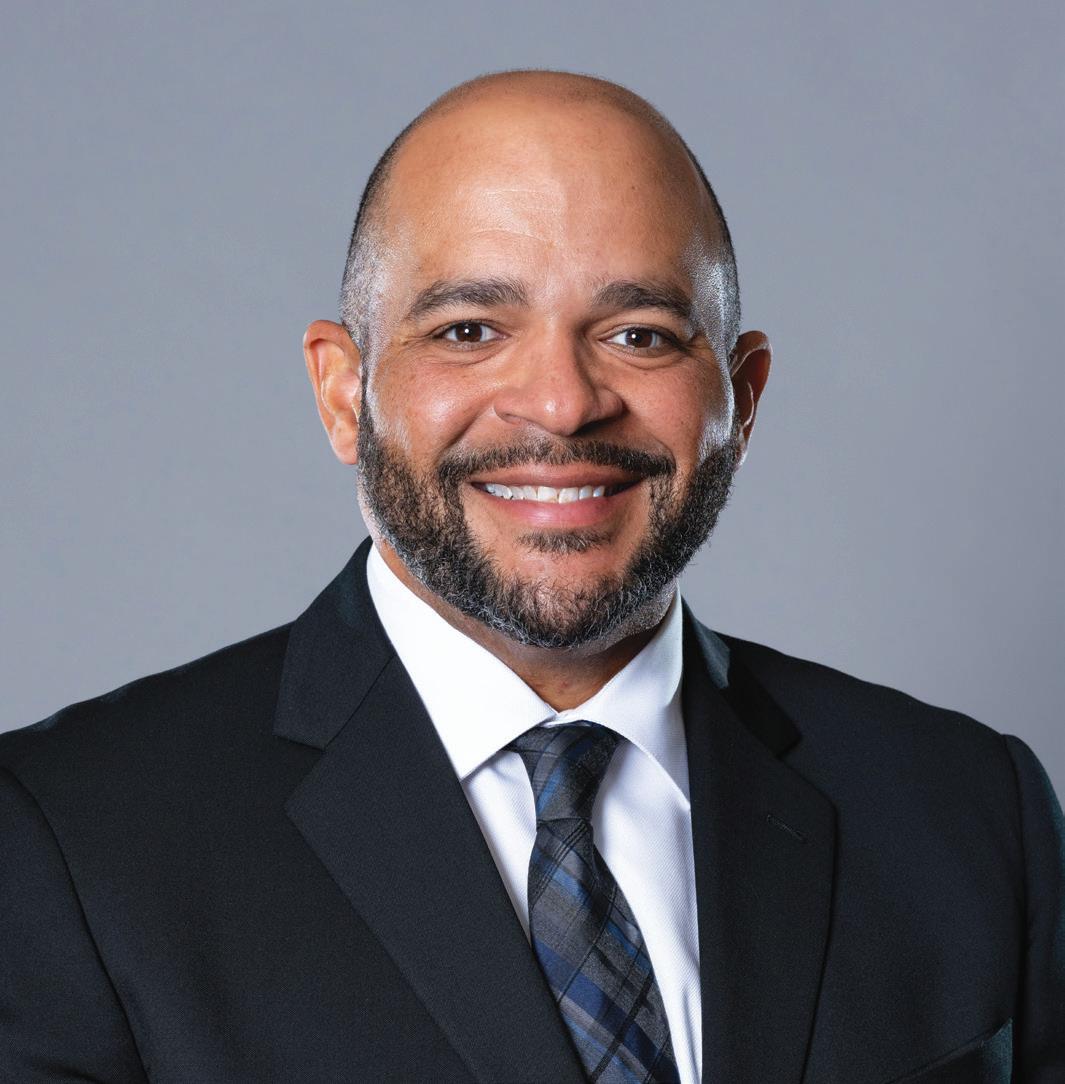
financial performance, planning efforts and key decisions. The goal was consistency and transparency, both for current board members and for those coming into the role.
That communication has since helped establish a baseline understanding that had not existed previously.
The results are beginning to show. Op-
erations are now funded through dues, cash reserves have been established, and capital funding, while still developing, is now data driven.
That stability allowed the next phase of the plan to take hold.
Thanks to the renovation, Castle Pines
is no longer a club defined almost entirely by golf. The Jack Nicklaus Signature course remains central to the club’s identity, but the renovation expanded how members use the property day to day.
Dining, fitness, tennis, aquatics and social programming now carry more weight in the member experience. Each area requires a level of staffing, planning

and execution the club had not needed in the same way before.
“The programming piece was a big part of why I was brought here,” says Kenney. “There was a new pool, casual dining, fitness, a gym, tennis, all stuff they had never had before. They needed someone who could drive energy and excitement into the programming.”
Kenney’s culinary background gave him a direct line into one of the most important parts of that work. He understood how much of the member experience would depend on the kitchen’s ability to support the club’s expanded use of space.
That made the search for a chef a priority.
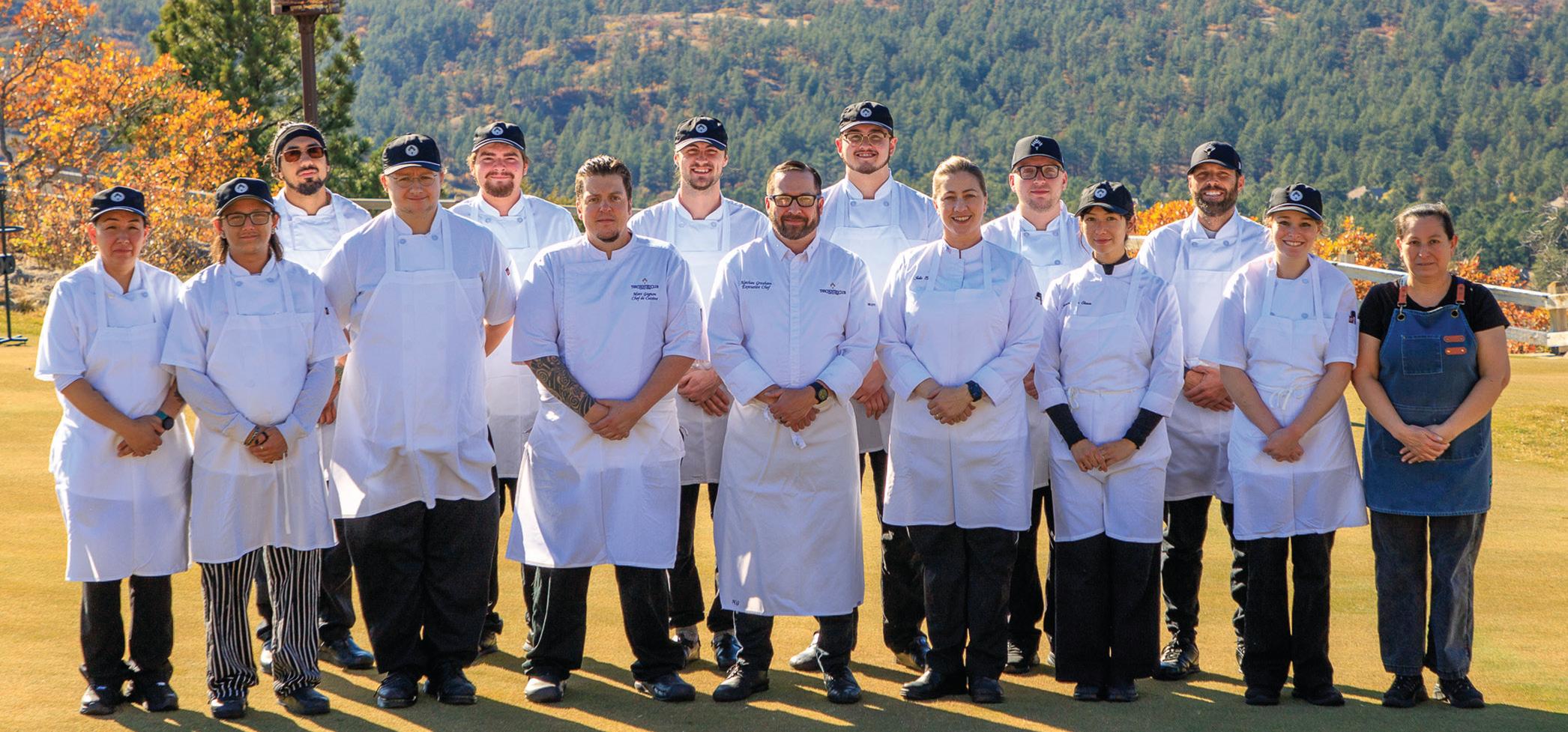
Executive Chef Nathan Gresham came in as the club was moving into that next phase. Kenney describes him as “an absolute rock star” and says the fit was immediate.
“We sat down, and right off the bat, we just talked for two hours,” says Kenney. “I knew this was the guy.”
Gresham’s arrival gave the culinary program the leadership Kenney wanted as Castle Pines began using its new amenities more fully. Outdoor cooking, on-course service during member events and food stations tied to the club’s expanded social spaces became part of how the club could activate the property.
For Director of People and Culture
William Borre, the focus now is on how the leadership group operates across departments that are more interconnected than ever before.
“It’s about alignment and support,” he says. “Not just at the leadership level, but all the way through the team.”
That expectation carries into the club’s operations. Department heads continue to meet regularly with updates, current challenges and next steps, with an emphasis on how work in one area affects another. The board focuses entirely on governance. Finance is handled with
clearer reporting and regular review.
The club is preparing for another busy season with a leadership team that has now worked through a full year together under that structure.
“We’re coming out of the fix-it phase,”
Kenney says. “We’re moving into the refine-it phase.”
For Castle Pines, the renovation changed the scope of the club. The work that followed is what makes a “happily ever after” possible. C+RB




Directors of Golf, GMs, and Directors of Retail weigh in on the latest in pro shops and the power of design and renovation to better the member experience.
By Isabelle Gustafson
•
Senior Editor
CLUBS ARE INVESTING in pro shop renovations that elevate retail presentation through more intentional layouts and upgraded displays, creating environments that support strong retail performance while bettering the member experience.
As part of an $18 million renovation, set to be completed in 2027, Pinewild Country Club of Pinehurst (N.C.) will soon be home to a fully reimagined pro shop.
Director of Golf Kyle Kirk, who’s been with the club for over nine years, says the plan is to ensure this is members’ first stop for golf and lifestyle merchandise.
“We have big goals with the new shop,” he says. “Right now, we’re in the range of $350,000 to $400,000 [annual] sales. … I would love to be able to double that.”
The old pro shop in the current clubhouse is about 900 square feet, while the new shop will be 1,700. The design is warm, transitional modern, intended to be refined yet inviting. Painted wood display units line the walls, leading members to a sitting area anchored by a brick accent wall. Floating within the space are smaller merchandise units in a rich wood that add warmth, complementing the carpet tones that lead to the golf studio. The ceiling combines exposed structural elements with light wood accents, marked by modern pendant lighting over the checkout counter.
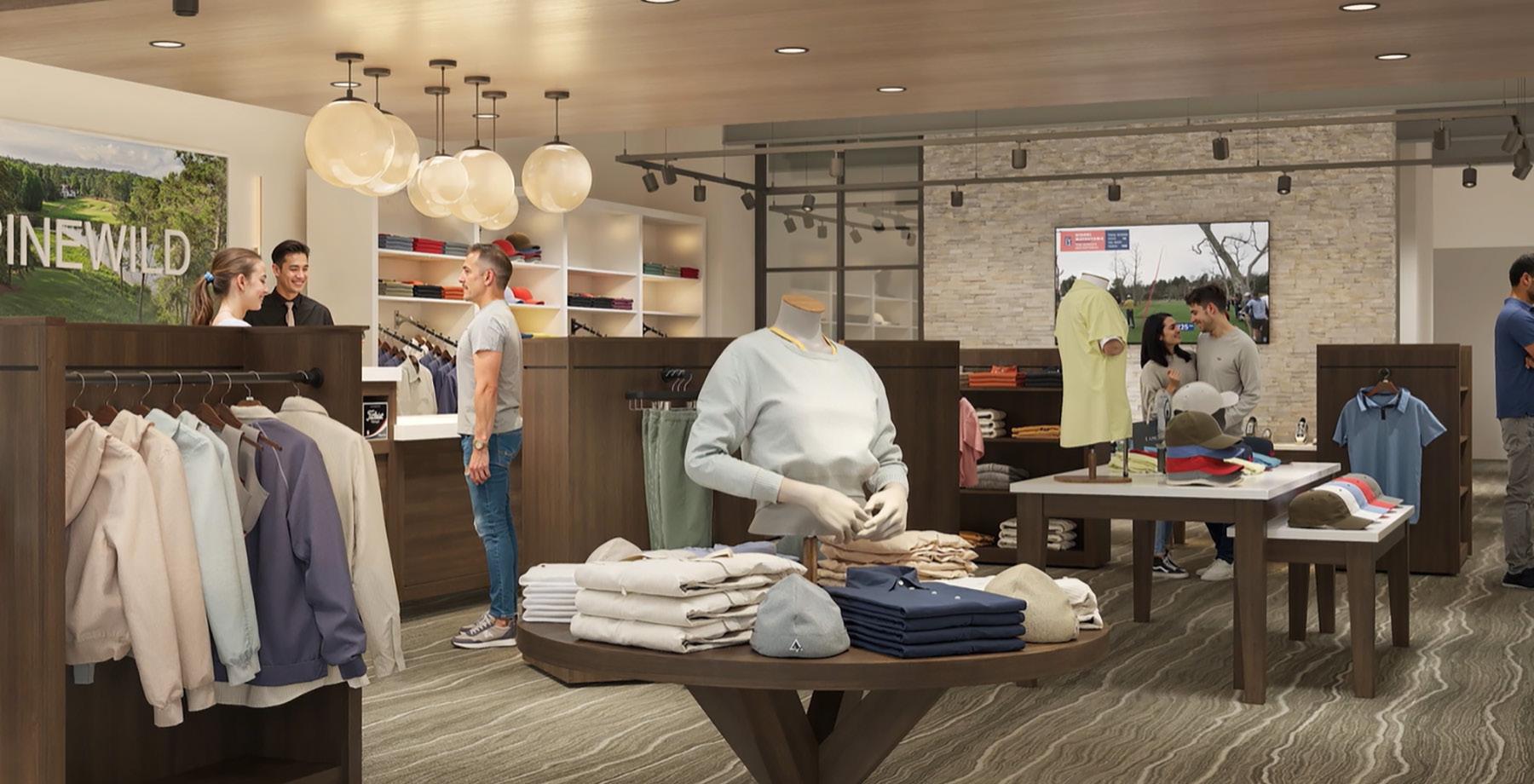
The studio space will house all of the hard goods, like golf clubs and head covers, plus a putting surface and a full-length mirror so members can test the putters inside.
“If we want to do a little impromptu golf lesson or just give a tip to a member, we’ll be able to use that as a resource,” says Kirk. Plus, he adds, “You want members buying your gloves, your golf balls, and the clubs. But when you put all those into golf shops, a lot of times, the space becomes cluttered.
… Taking those and putting them into a studio is going to give a new look [and] let the golf shop itself focus more on the apparel and the accessories.”
Standout features will include a head cover display in the studio—one of the more popular purchases for golfers today, says Kirk—and builtin drawers behind the counter for gloves.
“With golf gloves, you have to carry a large inventory, so now we’ll be able to have a drawer that has them all filed in there, very efficiently.”
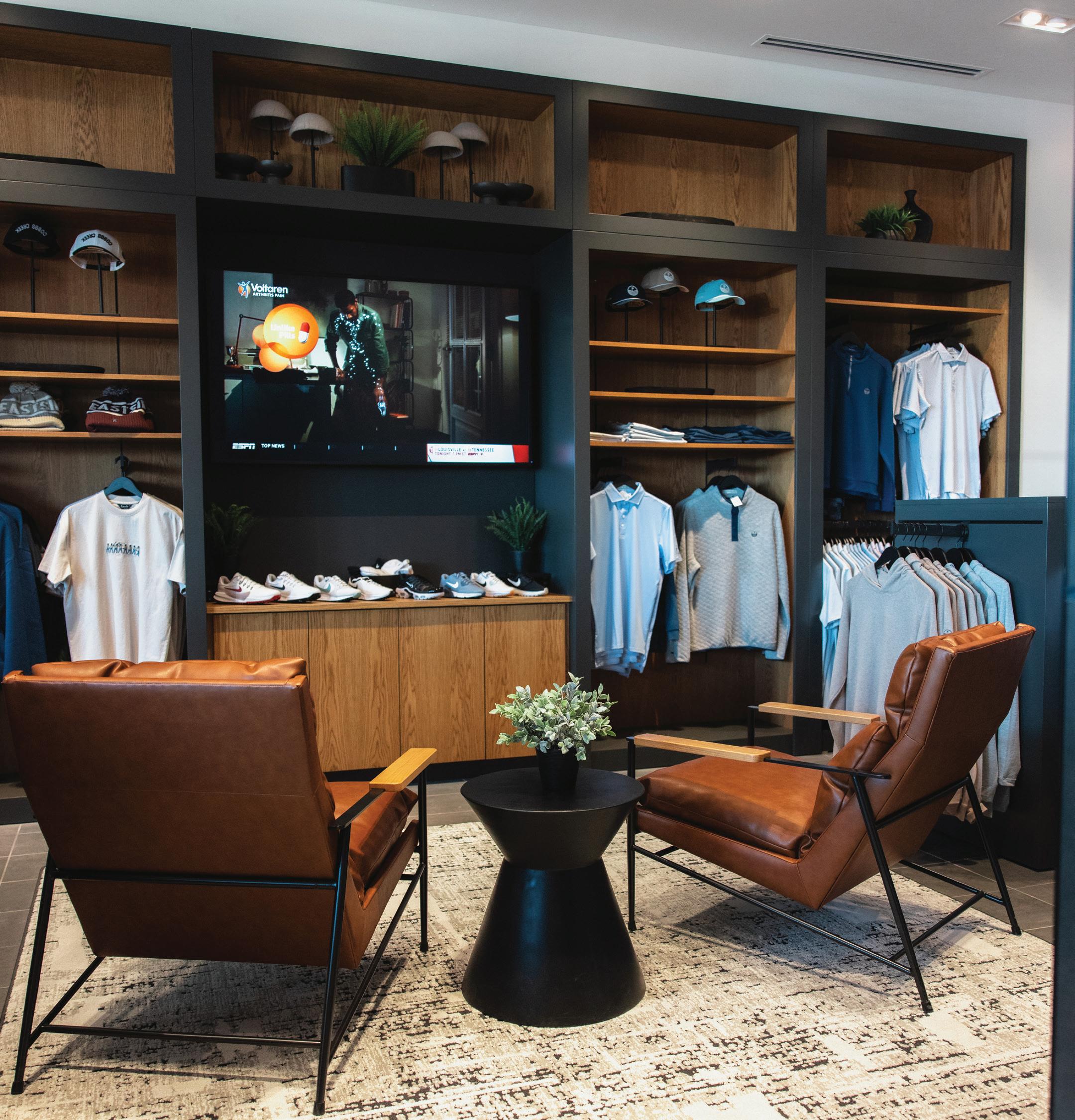
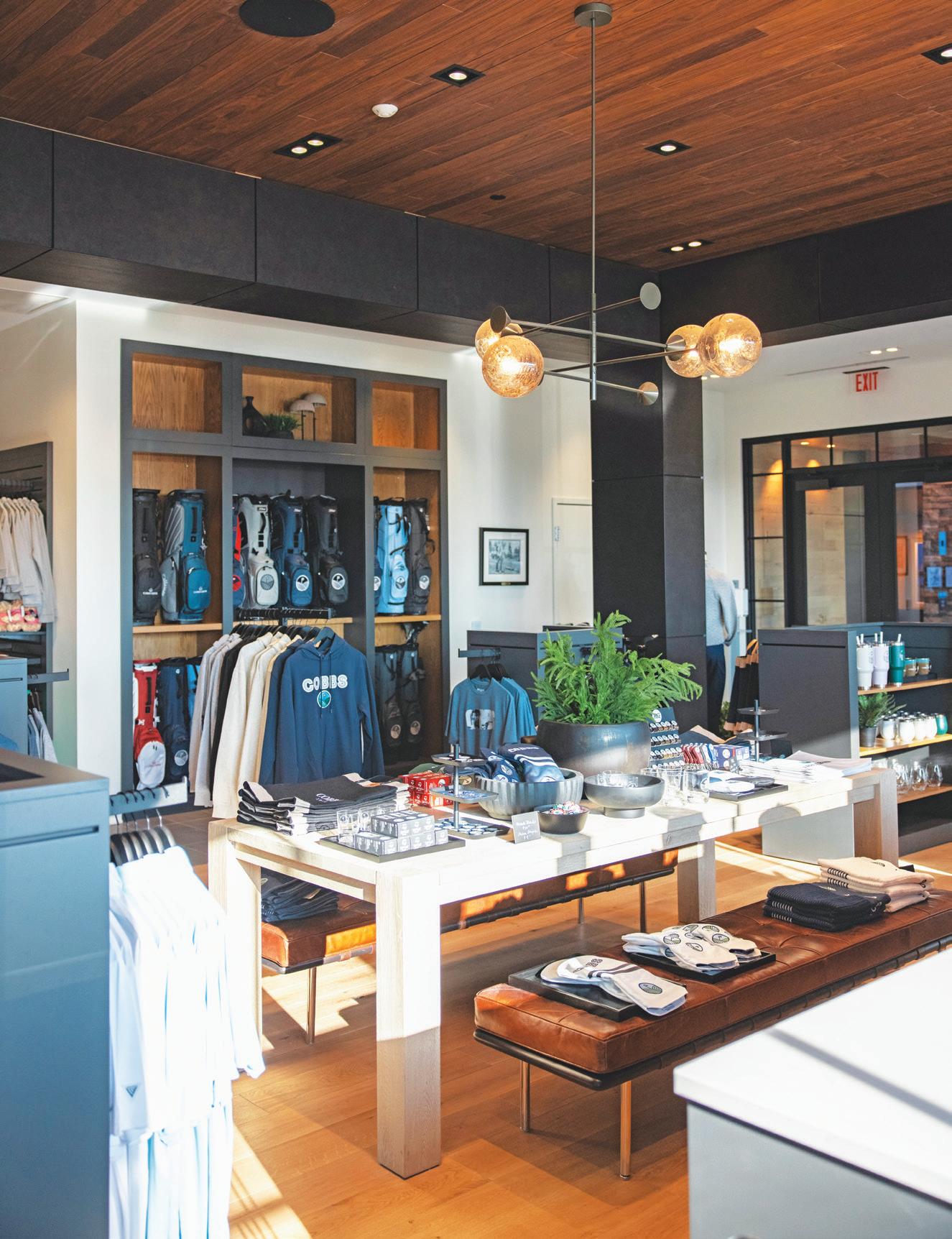
In December, the Cobbs Creek Foundation opened a new twostory driving range and golf entertainment center, along with a pro shop, inside the newly completed Lincoln Financial Center at Cobbs Creek in Philadelphia. The openings mark the completion of the three-story Lincoln Financial Center and represent the next major step in the long-term reopening of the Cobbs Creek Golf Course. The Cobbs Creek campus will continue opening in phases, with the championship 18-hole course set to reopen in 2027 and the nine-hole Karakung course set to reopen in 2028.
“The golf shop before was really limited—balls, gloves, hats— it didn’t have an extensive merchandise selection,” says Christopher Parker, General Manager of the Cobbs Creek Golf Campus. “We’ve tried to curate what we consider to be a world-class golf shop. That’s always our goal.”
The project was a collaborative effort, Parker says, involving multiple design teams and guidance from Troon’s corporate retail team.
“When we’re thinking about picking out brands and how we allocate the shop and how it displays, we look at trends from across the country, and we’ve got some of the best shops in the world, so we have extensive knowledge and people to pull from,” he says.
The new, 1,720-square-foot shop was designed with flow and accessibility in mind.
“Everything’s laid out to flow right,” Parker says. “We have an area dedicated to ladies’ apparel. We have youth apparel. We have house accessories, anything from a blanket to a tote bag. We have some books. We have scorecard holders. Really cool head covers, some footwear, teddy bears. You name it; it’s there.”
The space leans modern, with an emphasis on visual appeal and merchandising.
“It’s a cool shop,” Parker says,” lots of different displays and things to catch your eye. There’s something for everyone.”
Attention to detail extended to lighting and product displays.
“Lighting is a big thing for retail, so I think the time and effort that we put into picking out the right displays and picking out the lighting to highlight it was all well worth it,” he says.
Beyond retail, the shop also incorporates elements that reflect the history of the property.
“We have some t-shirts and hats that pay homage to Charlie Sifford and everything that he meant to these properties,” Parker says. “There’s artwork right outside that gives Hugh Wilson his flowers for everything that he meant to the design of the golf course. You see little touches like that throughout the building, and I think that’s one of the things that makes it really special.”
Early response from members has been strong.
“The shop turned out better than we imagined. I’ve seen all types of reactions—people crying when they walk into the build-
ing—so I think we nailed it,” Parker says. “It makes all the work that went into it worth it when you see people’s reactions.”
Some early merchandising results have also stood out, particularly around new branding.
“I didn’t know how well our short course logo would do, and I was very pleased to see that it’s moving well, and people are receiving it well; there’s a lot of excitement around it,” he says. “To me, clean logos are important, and it’s really clean; it stands out.”
As more parts of the facility come online, Parker expects the shop to continue to see new business.
“As we’re opening different revenue streams, it’s going to evolve. We anticipate that sales will continue to increase as we open the short course. … Once the 18 hole golf course opens, we’re looking at a different revenue model in that space as well, but we’re planning for it to continue to evolve,” he says.
However, he notes that maintaining a consistent core offering remains a priority.
“It’s important for us to keep it fresh, but also have some products that are staples that everyone wants,” Parker says.

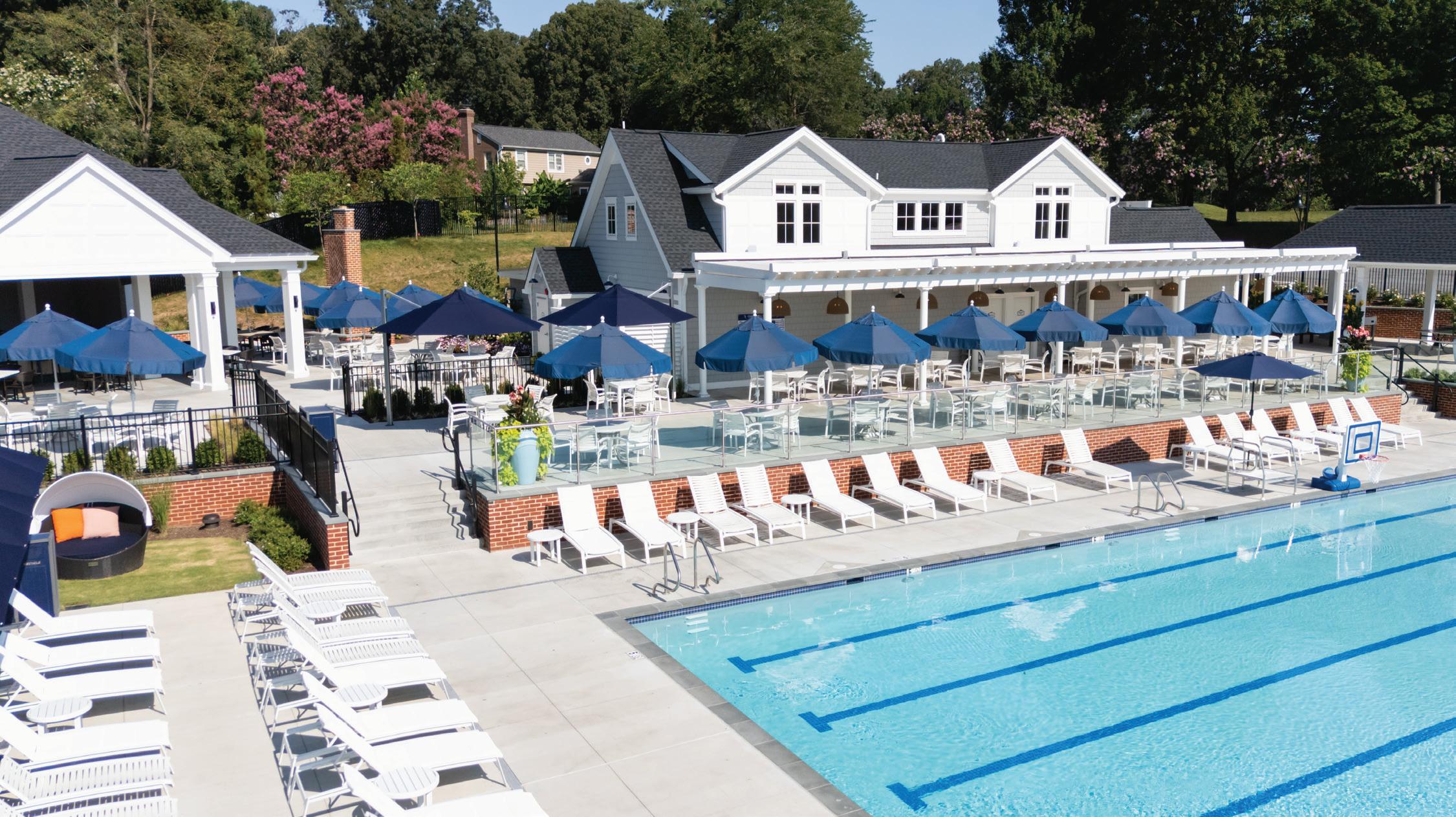
“The previous shop was beautiful, but it was very choppy, and things were kind of jammed,” says Capital City Club Director of Retail Aimee Ganote. “It was hard to merchandise. Now, it’s open, it’s easy to shop, it’s very welcoming, and it’s much easier to merchandise.”
At Capital City Club in Atlanta, the golf shop renovation was part of a larger clubhouse project, and the retail transformation had been years in the making.
“We completely shut down our golf shop as we knew it, and we moved into two temporary trailers,” says Aimee Ganote, Director of Retail. “We worked out of there for two years.”
Still, planning began years prior and covered both the member experience and operational needs. The result is a shop that feels larger and more open, despite a fairly small increase in square footage.
“The current space is really open. It’s big—about 1,800 square feet. We only gained about 200 extra square feet,” Ganote says, “but it looks so much bigger.”
Lighting and visibility were key design priorities.
“The lighting is amazing—natural lighting, but also the different lighting throughout the shop,” Ganote says. “Our space changed a little structurally, but there was also some of the previous space that stayed. One was these beautiful, pictur-

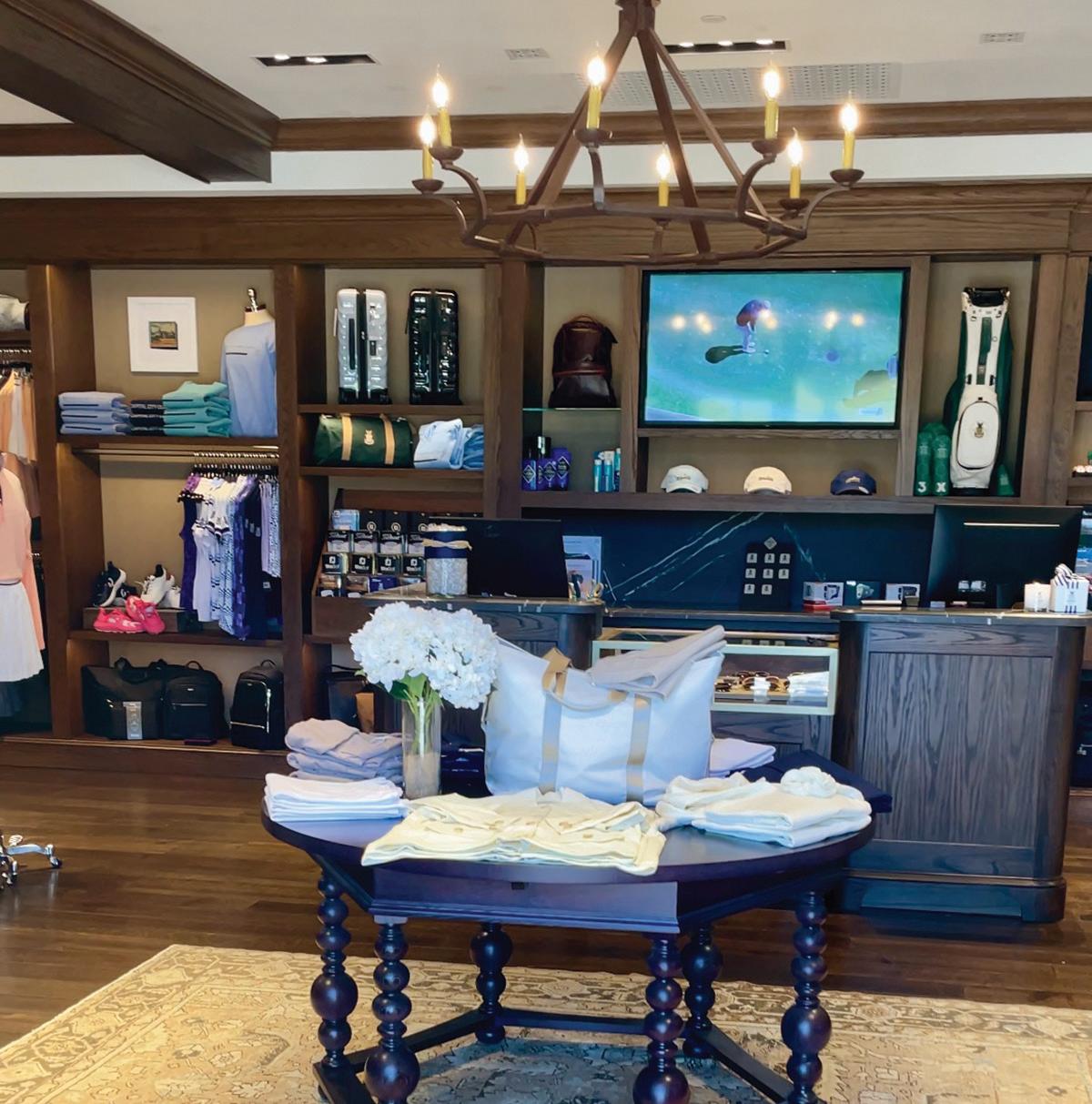
esque windows that look out over our driving range and our practice putting area. We had blinds on them in the old shop. When the designers came in, they said, ‘Let’s open this up. Let’s take all the blinds down.’”
The change brought in significantly more natural light, while an exterior window film protects merchandise and furniture from sun. Meanwhile, the updated interior lighting was optimized for the retail experience.
“The interior lighting that they provided is very dedicated and planned out for each section,” Ganote says. “Our built-in shelves have built-in lighting, so when you pull out a shelf, the lighting comes with you.”
In addition to lighting, the redesign addressed longstanding issues with the previous layout.
“The previous shop was beautiful, but it was very choppy, and things were kind of jammed,” says Ganote. “It was hard to merchandise. Now, it’s open, it’s easy to shop, it’s very welcoming, and it’s much easier to merchandise.”
While modernized, the space still reflects the club’s history, which dates back to 1883.
On the merchandising side, though, trends are evolving—especially in women’s apparel. In fact, ladies’ sales grew 100% from 2024 to 2025.
“It was a small percentage,” Ganote notes; “it had been at 6-7% since I’ve been here, which is almost 12 years. But last year it was 15%. … What’s trending now are things you can wear on the golf course, but also off the course. We’ve been trying new brands—more lifestyle, everyday items that don’t [necessarily] have that true golf outfit look.”
Men’s offerings remain relatively traditional, while lifestyle items and gifts are growing in popularity.
“On the men’s side, for us at Capital City Club, the members still love tradition. They’re very classic. They love brands that have the more tailored cuts,” she says. “On accessories, we’re trying all different things. Jewelry and other gifts—candles, blankets—have been a big trend for us, different things that you wouldn’t think you would see in a golf shop, we’re giving it a try.”
To accommodate, behind the scenes, storage and back-ofhouse space were expanded. Still, Ganote says, “you can never have too much storage.”
“You always think, ‘This is so big. We will never fill this up.’
But you will always fill it up,” she says. “If you think you have enough storage, add a little more.”
Other advice to clubs considering a pro shop renovation: Start planning as soon as possible, and make time for site visits.
“Whoever you’re working with, your architect, if they suggest doing some site visits to their current or previous customers, it’s worth the trip,” Ganote says. “You can look at a design on paper, but to actually see it live in action was super helpful.“

Ganote also suggests attending all of the meetings to advocate for the specific needs of retail.
“The last year of the project, there were two meetings a month, and a lot of time, they didn’t have anything to do with the pro shop, but I made sure I was there [in case] there were any questions or any changes they were going to make,” says Ganote. “I was there to make sure I was representing [the retail] side of the project.” C+RB



Three
of C+RC’s 40 Under 40 club chefs share the grab-and-go items members are gravitating toward,
plus what’s in store for the summer season and beyond.
By Isabelle Gustafson • Senior Editor
STOWE COUNTRY CLUB IN VERMONT is in the final stages of construction of its new comfort station, The Sugar Shack. Now, the club’s culinary team, led by Executive Chef Seth Gallant, is tasked with planning the venue’s offerings in a way that balances funtion and locality.
The Sugar Shack will feature a variety of snacks, Gallant notes, both purchased and housemade, ice cream, beer and wine, canned cocktails, coffee drinks and soft drinks. A beverage canner will enable them to provide housemade drinks in addition to the classics.
“The process has been an ongoing collaboration,” Gallant says, “taking feedback from our member preferences, ownership, and management every step of the way.”
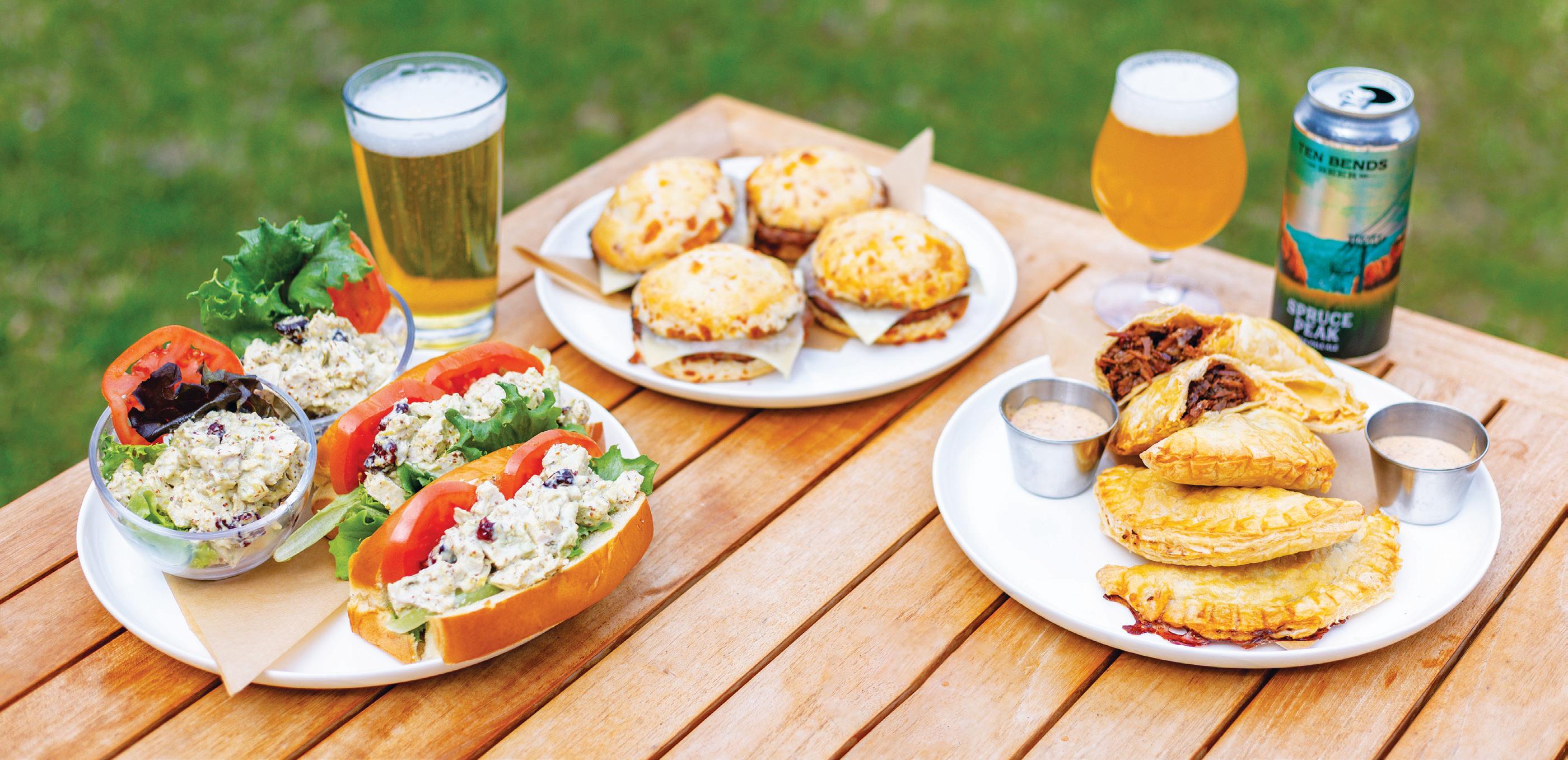
Personally, Gallant’s most excited to offer housemade hand pies as well as
maple sausage cheddar biscuits in the hot food display on the weekends.
“Keeping in mind where we are, The Sugar Shack will have maple-themed nuances throughout the offerings,” he notes. Maple-smoked cranberry chicken salad cups and maple sugar cookies are other favorites.
“We leverage some of our restaurant maplewood-smoked meats, Vermont cheddar and other local products wherever we can,” Gallant adds.
Because the food will be enjoyed by golfers, ease of carry is key.
“Keeping the options portable, [avoiding] messy hands, is something I’ve tried to keep in mind,” says Gallant. “We are mindful of simplicity and convenience, while also telling the story of the place where we are.”
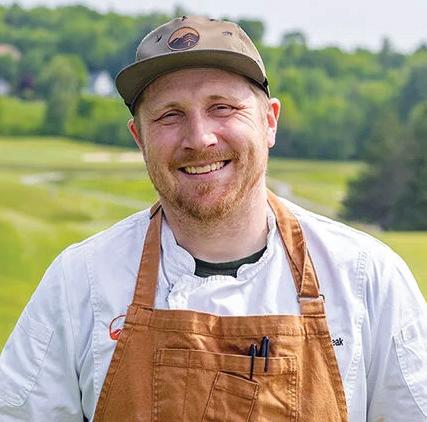
Seth Gallant, Executive Chef
is working with his team to plan the menu for the club’s new comfort station, The Sugar Shack. Themed offers will include housemade hand pies, maple sausage cheddar biscuits, and maple-smoked chicken salad cups.
Cool Springs Cafe at The Country Club of Virginia in Richmond, Va., serves around 500 covers a day, and doughnuts are the top seller.
“It’s been a dream to have a pastry shop,” says Executive Pastry Chef Jessica Quiet, “but right now, the Cool Springs Cafe is the avenue for creative grab-andgo items.”
Quiet and her team (six full-time pastry staff) started the rotational, daily doughnut program about a year ago. Each day of the week is a different offer, and Thursday is a mystery doughnut.
“Every week, somebody on the team throws their hat in the ring, and they get to come up with something that they’ve seen trending or something that is familiar to them,” Quiet says. “We’ve done ube, we’ve done banana pudding, we’ve done peach cobbler. We did a blueberry pancake doughnut with little mini blueberry pancakes on top, a peach cobbler doughnut, strawberry matcha, Key lime pie.”
Every week is different, and the team has not repeated a flavor since the program began.
“The members are really excited to see what we come up with,” Quiet says. “We have members who come in super early for the daily donut. They get really excited.”
In addition to doughnuts, the cafe is stocked with a variety of sweet and savory daily croissants, cookies, Danishes, macarons, gourmet chocolate bars, pizza, and protein bars, all housemade.
On March 1, Quiet and her team began making housemade ice cream, packaged in pints for grab-and-go convenience.
“Members can purchase a pint for $12, or they can turn it into a sundae kit to take home for the kids, with a jar of housemade chocolate sauce, housemade salted caramel, and containers of different sprinkles,” Quiet says.
Among the favorite flavors is the signature CCV Cookie—chocolate chip cookie with toffee bits.
At the 2026 Chef to Chef Conference, Quiet says she was inspired by another chef to ask for a gelato machine to open a little
The CC of Virginia’s membership is familycentric, and both healthy options and sweets do well for grab-and-go. The daily doughnut program, led by Executive Pastry Chef Jessica Quiet (right) is among the member favorites. It also offers her team an opportunity for increased creativity.
gelato shop by the pool, to offer alongside other poolside favorites like burgers, hot dogs, and sandwiches next season.
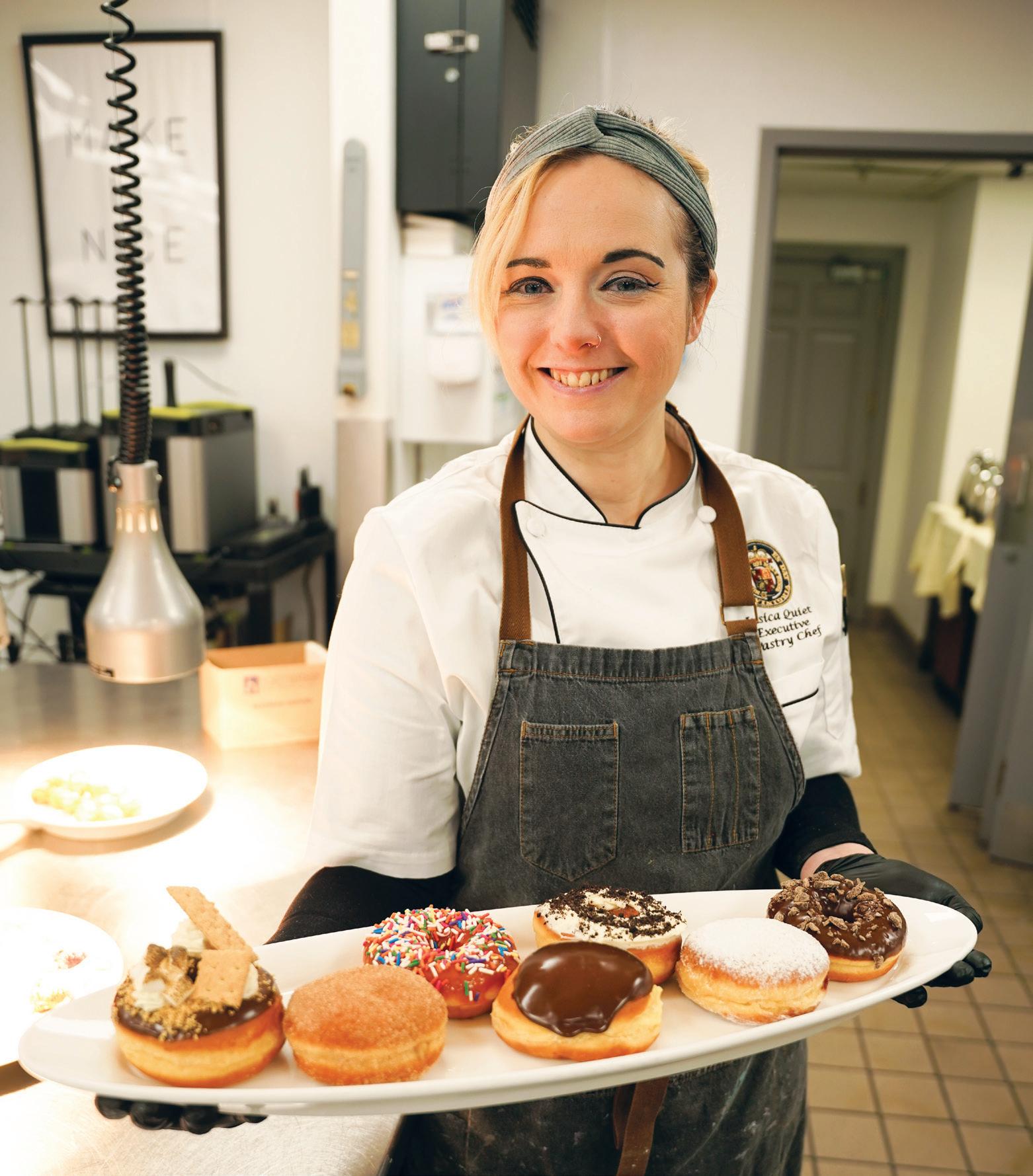
Sweets like doughnuts and cookies perform well (the signature CCV Cookies sell around 1,200 per month), but healthy offers like the housemade protein bars perform well, too, Quiet says, given the club’s family-centric membership. The next grab-and-go launch has this in mind.
Erica Medina, CSC, Banquet Chef de Cuisine at the Country Club of Virginia, is in the process of launching a brand-new grab-and-go product for the youngest of the club’s 7,000 members: prepackaged, housemade baby food.
The idea stemmed from Medina’s own interest in fresh, healthy foods.
“I’ve always been passionate about fresh vegetables and produce,” Medina recalls. “I was the kid who would bring a tomato to school and eat it like an apple.”


The Cool Springs Cafe will offer four variations, all represented by different colors and coordinating labels: banana, pear, and spinach; blueberry, banana, and spirulina; sweet potato and carrot; and apple and beet (pictured above).
“I started with the colors and chose ingredients from there,” Medina says, avoiding flavors that might be too strong or overwhelming for kids.
She expects to price the jars about $1 more than what’s at a typical grocery store. But her version will be fresh, with a seven-day shelf life. While she expects CCV to have high demand, for smaller clubs, she notes, baby food could easily be made from scrap product.
When launching a new product at a club, she advises chefs consider whether they’re “actually capturing a new revenue stream, or are you just spreading it out?”
Medina expects the grab-and-go side of Cool Springs Cafe to expand, as members—and the club—are “busier than ever.” C+RB
The Oak & Iron Coffee Bar gives members and the surrounding community a simple reason to stop by the club.
By Madison Hartline • Associate Editor
AT THE END OF 2025, Rock Creek Golf Club, a semi-private club in Fairhope, Ala., was looking for another way to attract potential members while adding a new offering for current ones. General Manager Duncan Miller says that led to the idea of a coffee bar.
First, the club wanted to give the broader community, both members and non members, a reason to visit. With Rock Creek operating as a self contained residential community with homes on the property, Miller says a coffee shop felt like a natural addition.
“People love their morning coffee, so it made sense for us,” he says.
Second, a drive through coffee shop just outside the neighborhood was closing, creating an opportunity to fill that void.
In December 2025, the Oak & Iron Coffee Bar opened, offering staple items alongside seasonal creations and Buzzed Brews, its line of alcoholic coffee drinks.
The coffee bar is housed in the club’s existing bar space, which had been underutilized. With a few small tweaks and a thorough cleaning, the area was transformed. The club’s food and beverage team operates the concept as part of their existing responsibilities, adding no additional labor overhead.
Miller says one of the strengths of his team is its ability to take an idea from concept to execution. They spend time

brainstorming, workshopping, and pressure testing ideas before putting them in front of members.
“Once we had the idea nailed down, the next step was making sure the staff was trained,” says Miller. “We did inhouse training where we were serving ourselves, working out the kinks, figuring out the recipes, and really getting comfortable making and serving the coffee.”
The club did a soft launch in November 2025, a slower time of year, to ease both staff and members into the new offering.
“Everything we do here needs to add member value, serve the community, and
make financial sense,” says Miller.
The soft opening also functioned as a test period. The team used that time to evaluate whether the concept could operate as intended, meet cost of sale targets, and hold up as a standalone offering.
Miller says the biggest challenges were finding the right space and getting the equipment in place, but demand and inventory quickly became part of the equation as well.
“We wanted to make sure there was enough demand,” he says. “And if demand was strong, we needed to have the inventory to support it. Finding that balance was a challenge.”
Once the concept was in place, the team turned its attention to building a menu that could drive repeat visits.
Miller gives much of the credit for the concept to his Events and Food and Beverage Manager, Ashli Pridgen.
Pridgen researched what other coffee houses in the market were serving and charging to ensure the club could meet margins while staying competitive.
The coffee bar offers staples such as lattes, espresso, cappuccino, hot chocolate, and teas. To keep the menu fresh and give members a reason to return, the team also rotates in specialty and seasonal offerings.
“For Mardi Gras season, we offered a king cake latte, and for spring, we’re offer-
ing a lavender honey latte,” says Miller.
Another distinct element of the Oak & Iron Coffee Bar is its Buzzed Brews menu, which features coffee drinks with alcohol. Options include an Irish coffee with espresso, whiskey, and cream, as well as a cola coffee made with coffee liqueur, vodka, cola, and cream.
Miller says the coffee bar filled a gap in Rock Creek’s operation and has since created new traffic from non members while giving members another way to use the club.
“People are spending more time in the clubhouse, and we are seeing an uptick in remote workers coming in to grab their coffee and do some work at the bar area,” he says. “It was an untapped market within the community that we took advantage of.”
Miller says he now sees people stopping in before work, between rounds of
golf, or simply to have a beverage while sitting out on the patio.
“I was cautiously optimistic when we opened this, and it has exceeded my expectations,” he says.
Many clubs offer complimentary coffee in the clubhouse, and that is still available at Rock Creek.
“It’s drip coffee,” says Miller. “No variety, no sweetener or frills. The coffee bar is a higher quality amenity.”
Miller says Oak & Iron Coffee Bar provides a stronger overall offering without significantly increasing costs. With existing labor running the bar and no need to build out a new space, margins are slightly better than simply offering complimentary coffee.
“There is a benefit to having that complimentary pot of coffee,” Miller notes, “like when members arrive before the coffee bar opens. But at the end of the
day, you might be throwing out half the pot because it goes unused.”
Miller says a coffee bar like Oak & Iron is an amenity other clubs should consider, especially those in large residential communities like Rock Creek, which includes roughly 700 homes.
His advice to clubs exploring a similar concept is straightforward. Try something new.
“You have to grow. The industry has to grow, facilities have to grow,” he says. “You can’t be the same all the time. You get stale, especially in a master planned community. Anything you can do to get local residents onto your property is worth it. Activity breeds activity.”
Miller adds that once people come in for coffee and have a good experience, they are more likely to return for lunch, dinner, or events. Over time, that repeat guest can turn into a member.
“Be a risk taker,” he says, “especially if it’s a low cost risk.” C+RB


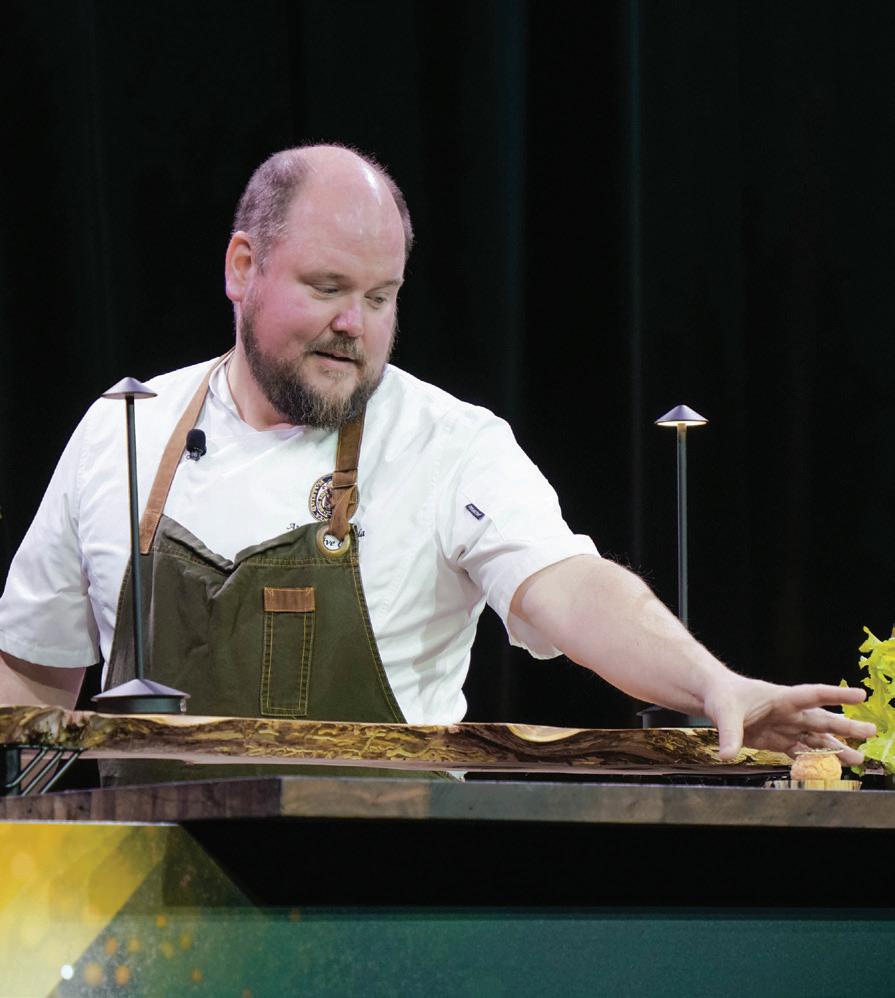
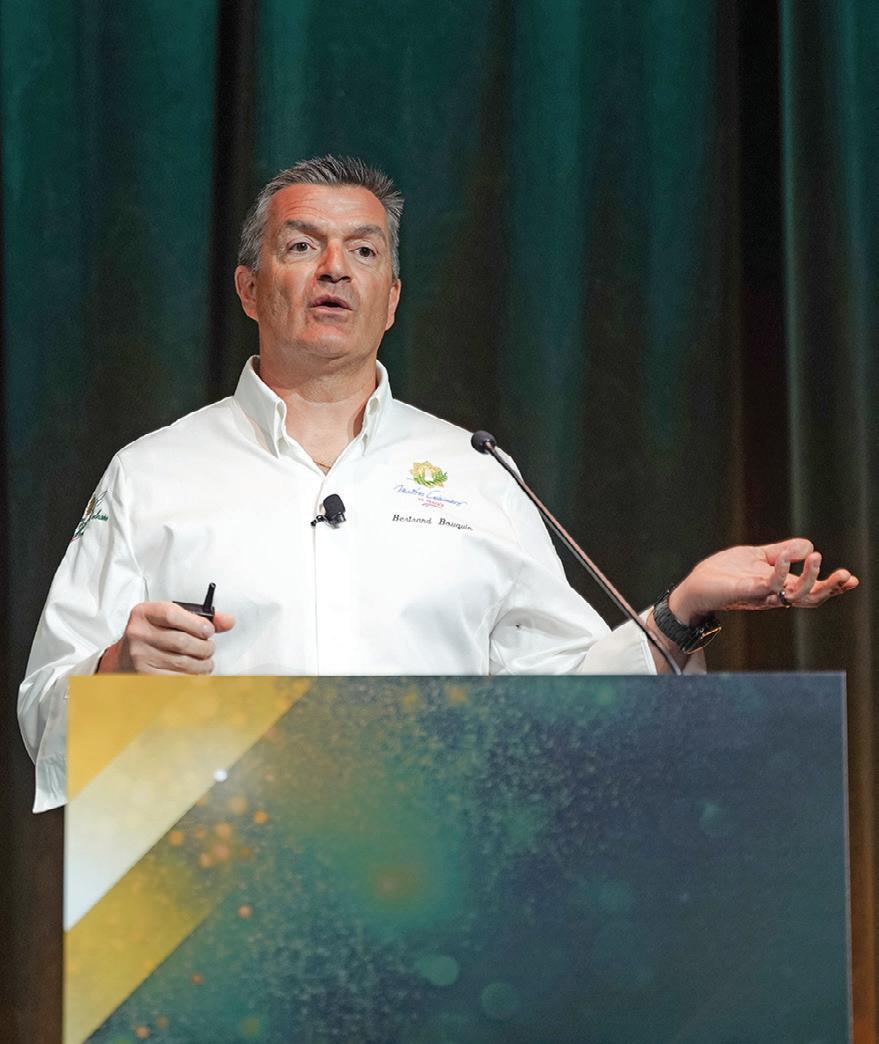
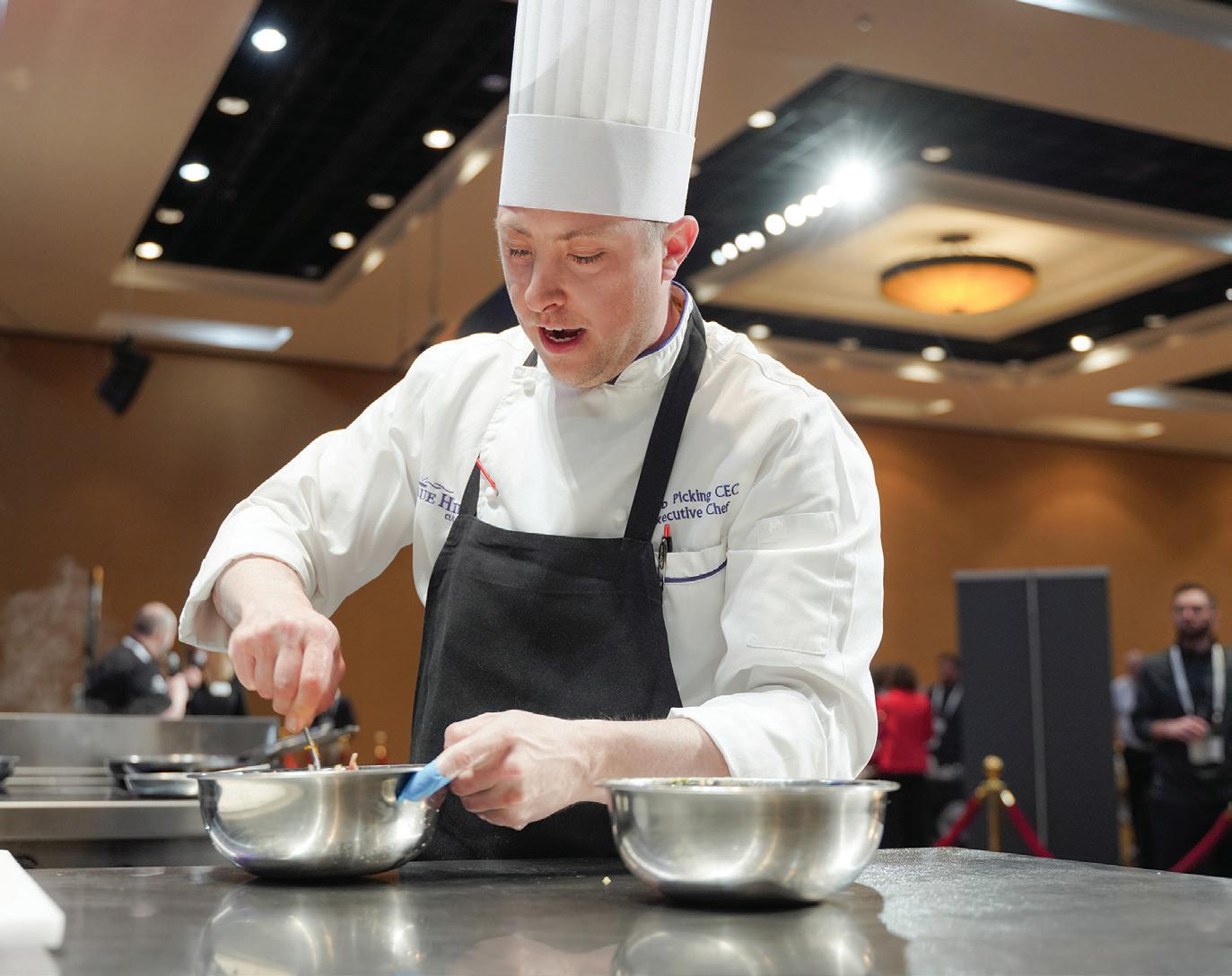
Jacob Picking, CEC, Executive Chef of Blue Hills Country Club in Kansas City, Mo., took home the prestigious title following the 2026 Chef to Chef Conference at The Broadmoor. Learn more about his background, the competition, and the dish that solidified his win.
By Isabelle Gustafson • Senior Editor
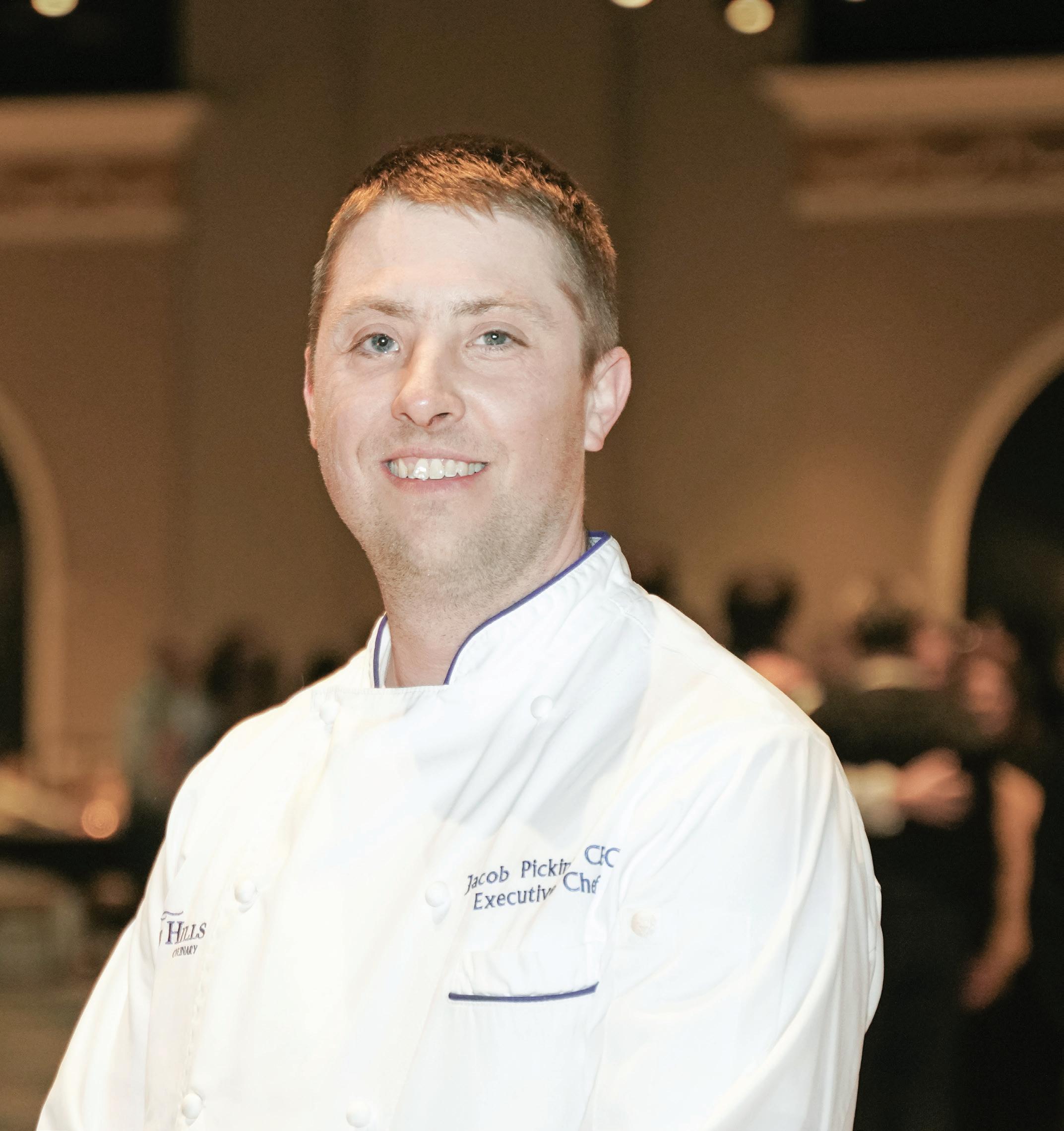
JACOB PICKING DIDN’T EXPECT to compete for 2026 Club + Resort Chef of the Year. And he certainly didn’t expect to win.
The Executive Chef of Blue Hills Country Club in Kansas City, Mo., had been to the Chef to Chef Conference five times, so he’d watched other chefs compete. But he’d never been able to summon the nerve himself.
“I debated for days whether I was going to even apply—with the tab open on my computer,” Picking says. “I was still telling myself that I wouldn’t do it. And then I decided I needed to get over it.”
He bounced ideas off of a former
colleague until landing on a variation of the dish he’d produce. As soon as he was selected, he started prepping, tapping coworkers to act as his apprentice and industry colleagues to help taste-test.
“From the list of [available] proteins, I felt most comfortable with whole duck. I thought I could produce a good product and good flavor within one hour.”
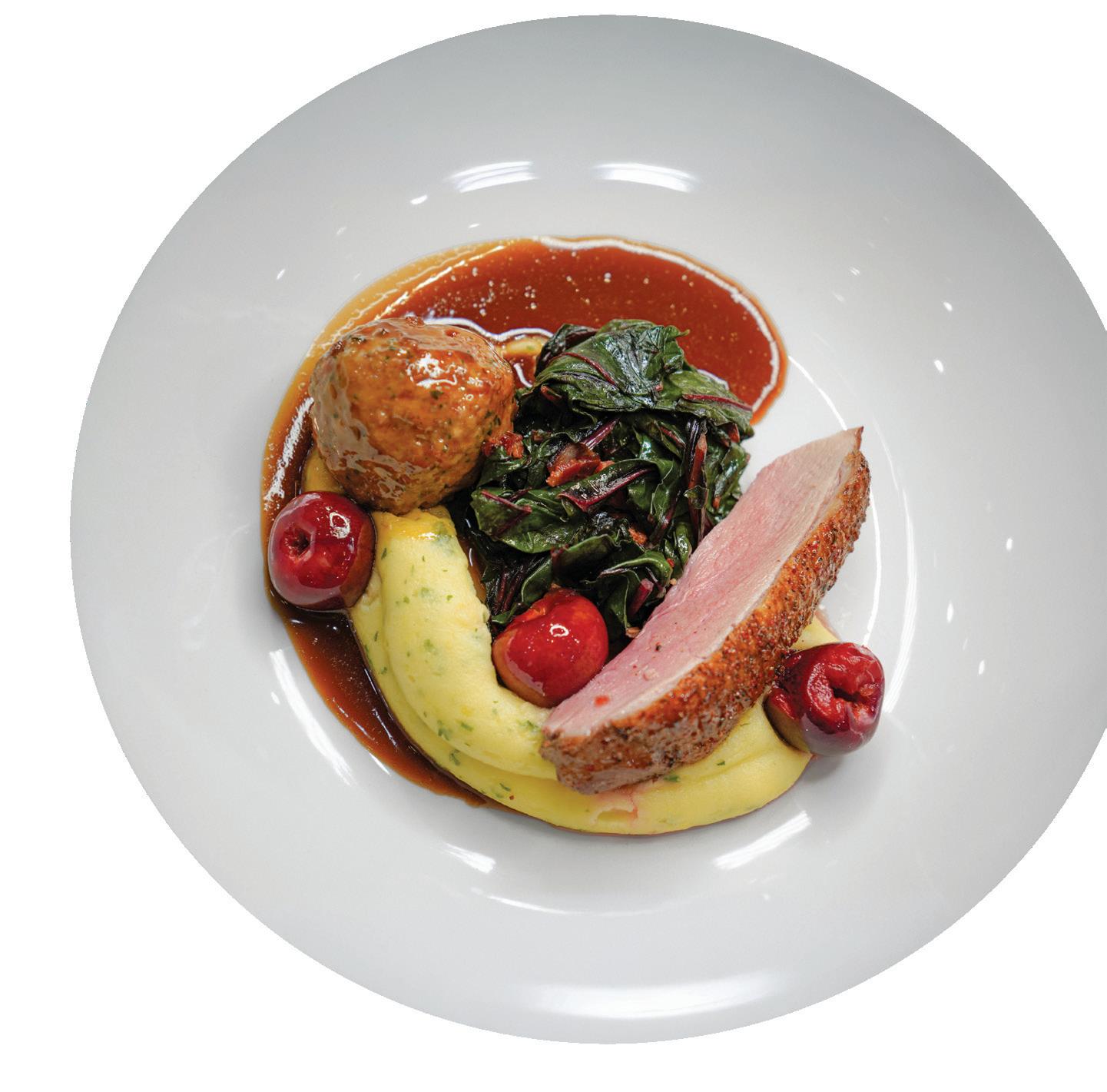
The winning entrée was a honeyglazed duck duo: roasted breast, duck meatball, potato purée, Swiss chard and bacon, duck jus, and pickled cherry.
“There are a lot of other things that go with duck, but I’ve made a lot of pota-
toes here in the Midwest,” says Picking. “I felt that I could make a really solid potato purée to go with the duck.”
Ultimately, he says, the flavor profile is an homage to the Midwest.
Picking is originally from Abilene, Kansas. After working in a local restaurant, he decided to attend culinary school at Johnson County Community College.
One of his instructors was Todd Walline, Executive Chef of Blue Hills Country Club. In 2014, Picking joined him there, where they worked together for five
years. In 2017, Walline won the C+R Chef of the Year title in the same competition.
“I worked pretty much every position: sauté, sous chef, chef de cuisine, and everything in between,” says Picking.
When Walline left in 2019, Picking was offered the Executive Chef position. Just as he was getting his bearings, the pandemic hit.
Today, Picking and his team are solid, and he brought both his sous chef and his chef de cuisine to Chef to Chef.
Blue Hills CC has 15 culinary team members, 600 members, and three dining venues. It does about $3 million in food and beverage revenue annually.
Menus are updated seasonally, save for a few favorites. Several are pasta dishes, all made in-house, thanks to a fresh pasta initiative Picking started about four years ago. The latest venture is a three-day-fermented pizza dough for the club’s new pizza program.
As far as his culinary style, Picking is classically trained, and he makes a point to “do things the right way.” Still, he clarifies that the membership is solidly Midwestern.
“In the Midwest, I think we always go back to meat and potatoes,” he says. “I always tell my team: It’s about flavor. A lot of these techniques or knife cuts, whatever they might be, don’t matter if [the food] doesn’t taste good, if you
haven’t developed any flavor in the dish.”
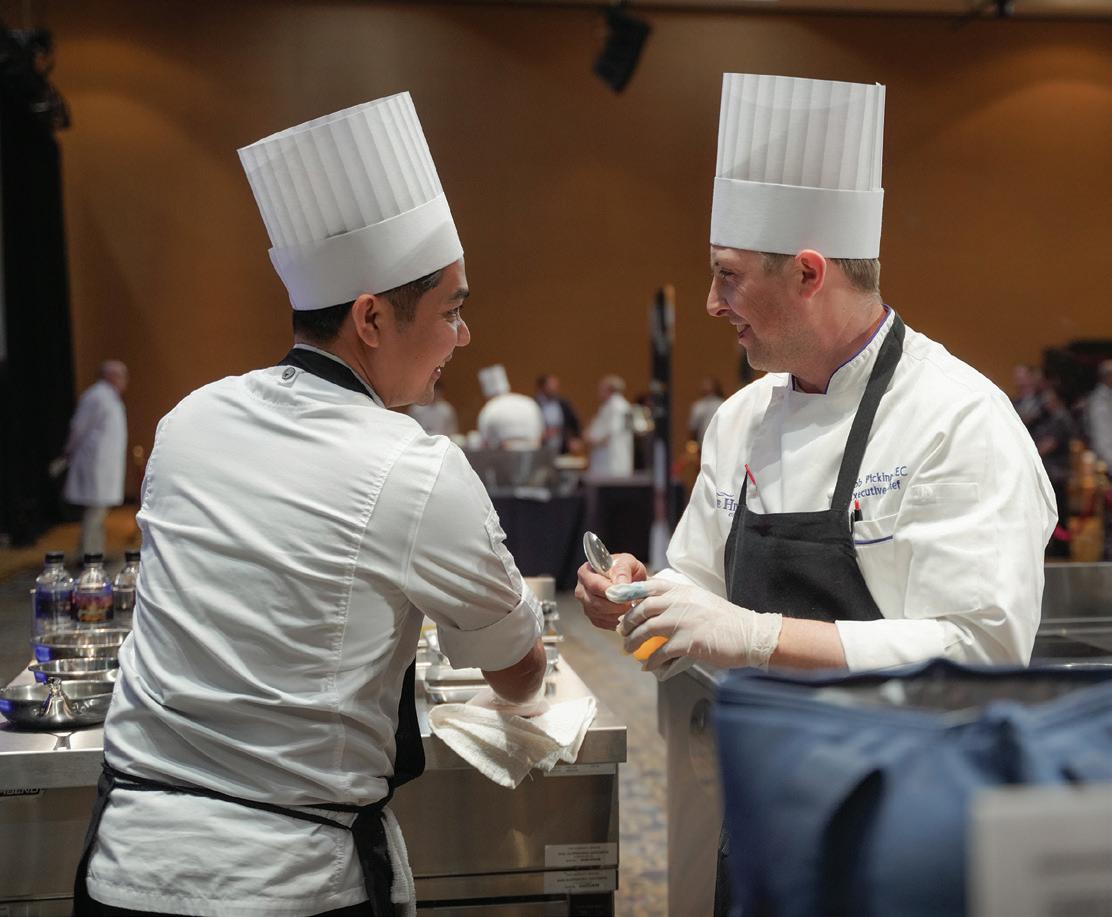
Unlike last year’s Chef of the Year, Geoffrey Lanez, CMC, Executive Chef of The Patterson Club, Picking didn’t have much competition experience. But he was confident in his dish, and he worked well with his apprentice, Brian Roque, Executive Sous Chef of Paradise Valley (Ariz.) Country Club.
“He’s a great chef,” says Picking of Roque. “Calm, focused. He followed the timeline really well, and he’s just a good, all-around natural cook. I couldn’t have asked for a better partner.”
Despite Picking’s nerves—or maybe because of them—the dish the two executed was among the best versions Picking had created.
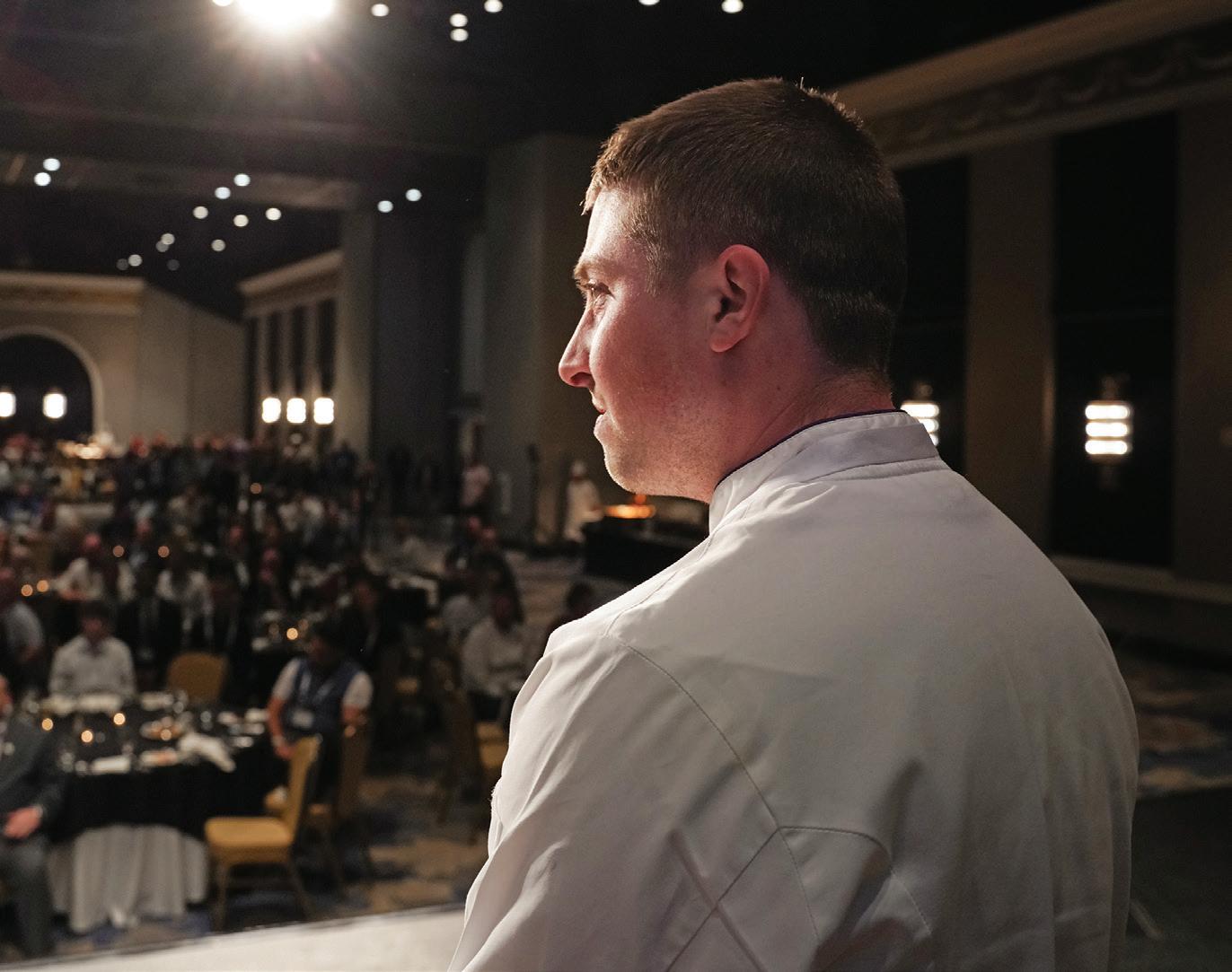
“I was so nervous that I didn’t look at [the crowd] or the judges,” he says. “I just focused on the food.”
Still, he never allowed himself to consider that he’d win.
“Last year, I felt you could see nightand-day differences between a couple of the competitors,” Picking recalls. “This
year, I didn’t feel that way. … Personally, I thought that my other competitors might have made better dishes than I did. I thought there were a few more technical elements they had brought to the plate. But I was really confident in the dish that I practiced and the flavor that we produced.”
His advice for chefs considering applying for 2027? “Do it. But have a plan.”
“I didn’t expect to compete. I didn’t expect to win. I couldn’t be happier,” says Picking, adding that the Chef of the Year experience has given him the confidence to pursue more local and national culinary competitions. C+RC
From handling no-shows, to safeguarding against resales, tee time operations require a hands-on approach.
By Pamela Brill • Contributing Editor
IT’S NOT EASY MANAGING the green these days. While the latest technology aims to simplify tee time bookings, operation managers must also contend with the potential for data scraping, illegal resales, and the impact of artificial intelligence. With the absence of industry standards, clubs must develop their own best practices to ensure a highly functional backend.
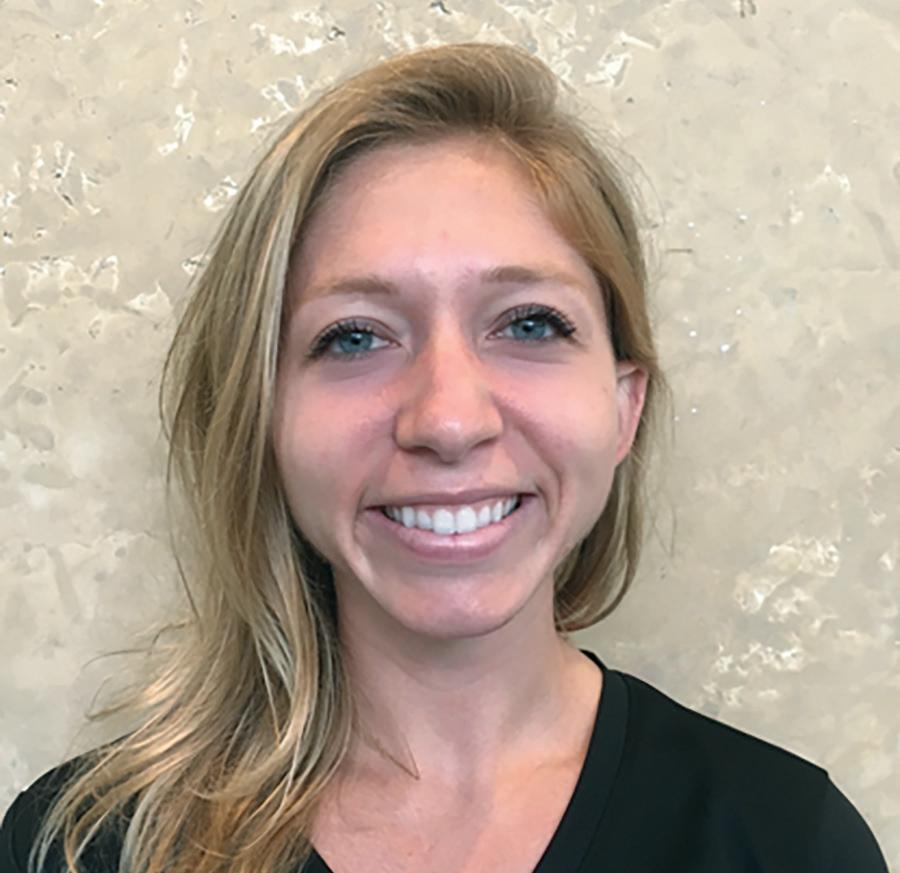
Shannon Martin, USGTF Certified Golf Instructor and Director of Golf Operations of Foxchase Golf Club, (Stevens, Pa.) shares her strategies for
addressing the latest challenges in the marketplace.
Demand for tee times has exploded in the last few years, prompting golf management teams to revisit their payment structures. At Foxchase, this meant shifting to a dynamic pricing plan in 2022 and consulting other markets for guidance. “We found that looking at how other industries have adopted these processes has helped us explain this change to customers and staff,” says Martin. She cites the similarity


of booking a flight, where costs shift based on peak traffic periods. “We explained to the customer how their price would change, depending on how busy we were on the course,” says Martin.
To further streamline tee time placements, Foxchase reexamined memberships, discounts, and group outings, opting to offer them only on days and times when they were unable to make immediate sales. The club analyzes this approach at the end of each season to determine if they need to make any adjustments.
Implementing new sale strategies doesn’t happen overnight and often involves educating membership. However, as Martin stresses, management must lead by example to demonstrate the value in the long-run.
“Making these changes when you have a customer base that is not used to change can cause some of the biggest challenges,” she explains. “But remembering to stand firm on your decisions and having confidence in the research you have done has helped us.”
On the backend of any well-oiled golf operation is a software-based system that manages online bookings seamlessly. Investing in a robust solution that
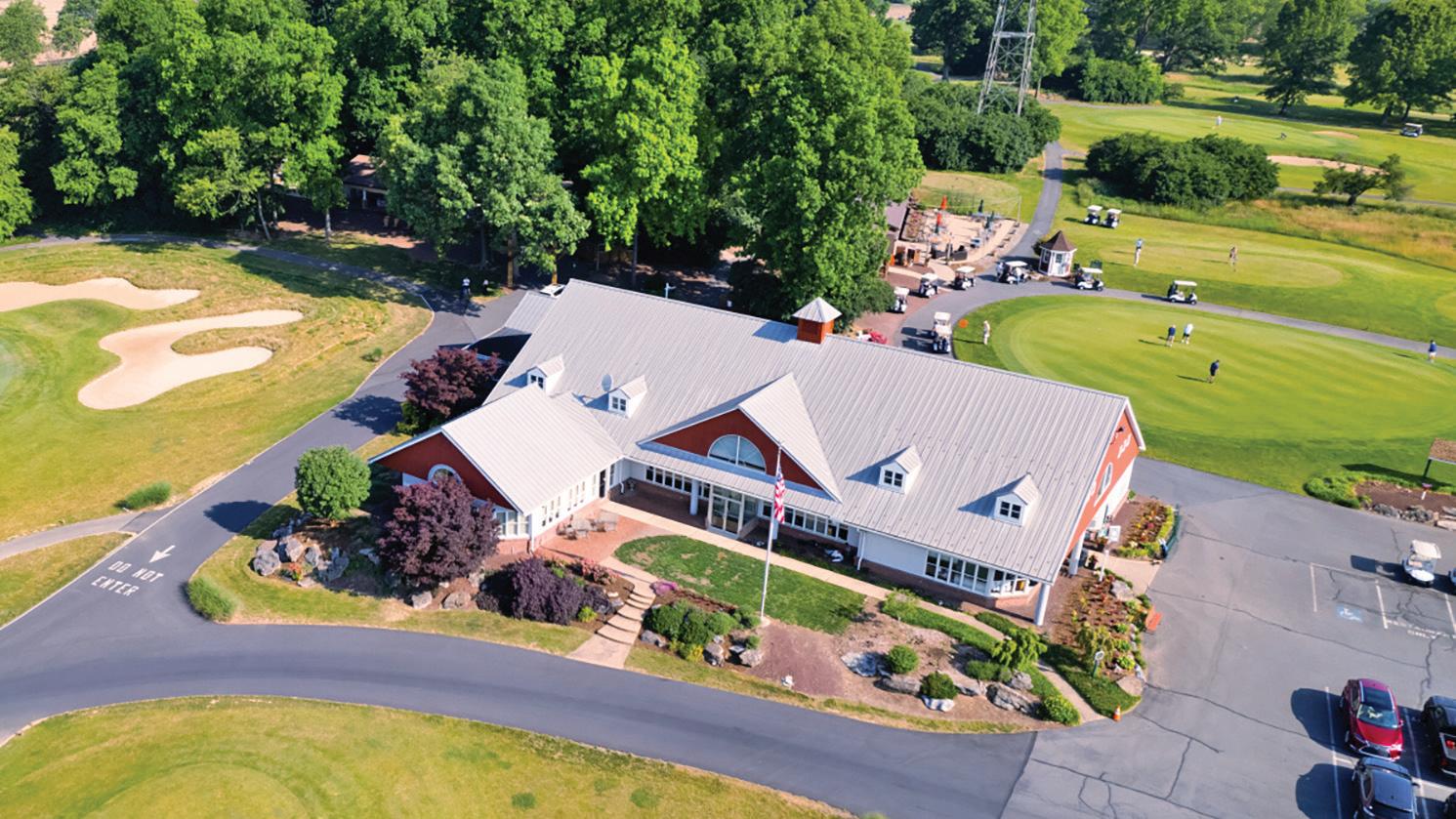
Among strategies to streamline tee time placements, Shannon Martin, USGTF Certified Golf Instructor and Director of Golf Operations of Foxchase GC, reexamined memberships, discounts, and group outings, opting to offer them only on days and times when they were unable to make immediate sales.
alleviates the need for constant intervention enhances employee productivity, allowing the team to concentrate on in-person exchanges. “This creates better relationships with our customers and improves staff morale and retention,” says Martin.
A sizable portion of tee time management involves dealing with no-shows, which Foxchase has been tracking over the past five years. The integration of Noteefy into the club’s golf management platform, which sends a text message to confirm a scheduled tee time, has proven its value. Prior to using the app, no-show rates were 10 percent and have since dropped to 2 percent. “Our goal for next year is to decide what we want to do with customers that book for four [players] and only bring three at a busy time,” says Martin.
Not only is this confirmation feature useful for small groups, but it helps reduce no-shows for league bookings. Rather than requiring the organizer to pre-pay, Foxchase now requests a noshow deposit upfront. Once the league arrives, that value is removed from their deposit, and any balance is refunded at the conclusion of the season.
While Foxchase has not yet implemented AI for its tee time bookings, it began offering a payment incentive in 2022. Customers who book online earned $2-$4 savings per player, which has increased web-based reservations. According to Martin, the current online booking rate holds steady at 86 percent.
In 2026, the club plans to utilize Noteefy’s Pro Shop Assistant chatbot. This new feature will allow golfers to book tee times through the club’s website, join a virtual waitlist, and receive answers to any golf course-related questions. “If AI is able to cut back on the time and burnout on our staff in making tee times, and if this becomes the norm for bookings, then I think it is very important to adopt,” notes Martin.
As any user knows, technology has its potential pitfalls, with security ranking high on the list. In the club world, tee time sales and data scraping are two major areas of concern, which prompted Foxchase to adjust its online settings. When a customer selects a specific tee time, they receive a code and have five minutes to complete their booking, verify
their identity and reduce fraudulent bookings. In addition, canceled online reservations are released after a random period (rather than immediately). “This is effective at preventing customers from reselling their slots on the black market,” notes Martin.
As clubs continue to navigate the rocky terrain of tee time management, Foxchase is considering additional measures for future bookings. These include adding pre-payment options for busy times of the week and collecting customer information on individual players. Martin believes that the development of a formal playbook would go a long way in supporting golf management teams and benefiting the overall marketplace.
“Setting industry standards would help ease the fear and emotions of many owners and operators in being unsure of how many other courses draw a hard line on these operating standards,” she explains. “This can also help with golf course profits, allowing for more investment in the product …and will result in more golf courses staying alive.” C+RB
Directors across three clubs break down the planning, staffing, scheduling, and member feedback strategies required to deliver consistent, high-quality racquet programming.
By Madison Hartline • Associate Editor
THERE’S NO DOUBT THAT A STRONG racquet program stems largely from the events and programs that clubs put on for their members. Although members reap the benefits of a busy calendar, it’s the pros and directors behind the scenes that are bringing these events to life.
We talked to two directors of racquet sports and a director of recreation and member events to get insight into what it takes to create programming and a packed events calendar to drive member engagement and attract new members to the courts.
Fair Oaks Ranch Golf & Country Club (Fair Oaks Ranch, Texas) recently completed a half-a-million-dollar renovation focused on adding dedicated pickleball courts and resurfaced tennis courts.
A big push for the renovation was to add more space for the club’s popular leagues and mixers.
“We used to only be able to tape off two of the tennis courts for pickleball leagues, meaning we only had six courts available,” says Alex Ortega, Director of Racquet Sports of Fair Oaks Ranch Golf & Country Club. “Now, we are filling 11 out
of the 12 courts for our mixed leagues.”
Ortega says the leagues and mixers add a sense of community to Fair Oaks Ranch. The club also offers events like Dinks and Drinks and hosts a social every Friday, which Ortega describes as a “melting pot,” as it’s complimentary, and many attendees aren’t fully immersed in the racquet membership.
“It’s a space where we can bring in new members and retain our current members,” says Ortega, who believes a strong racquet program should focus on

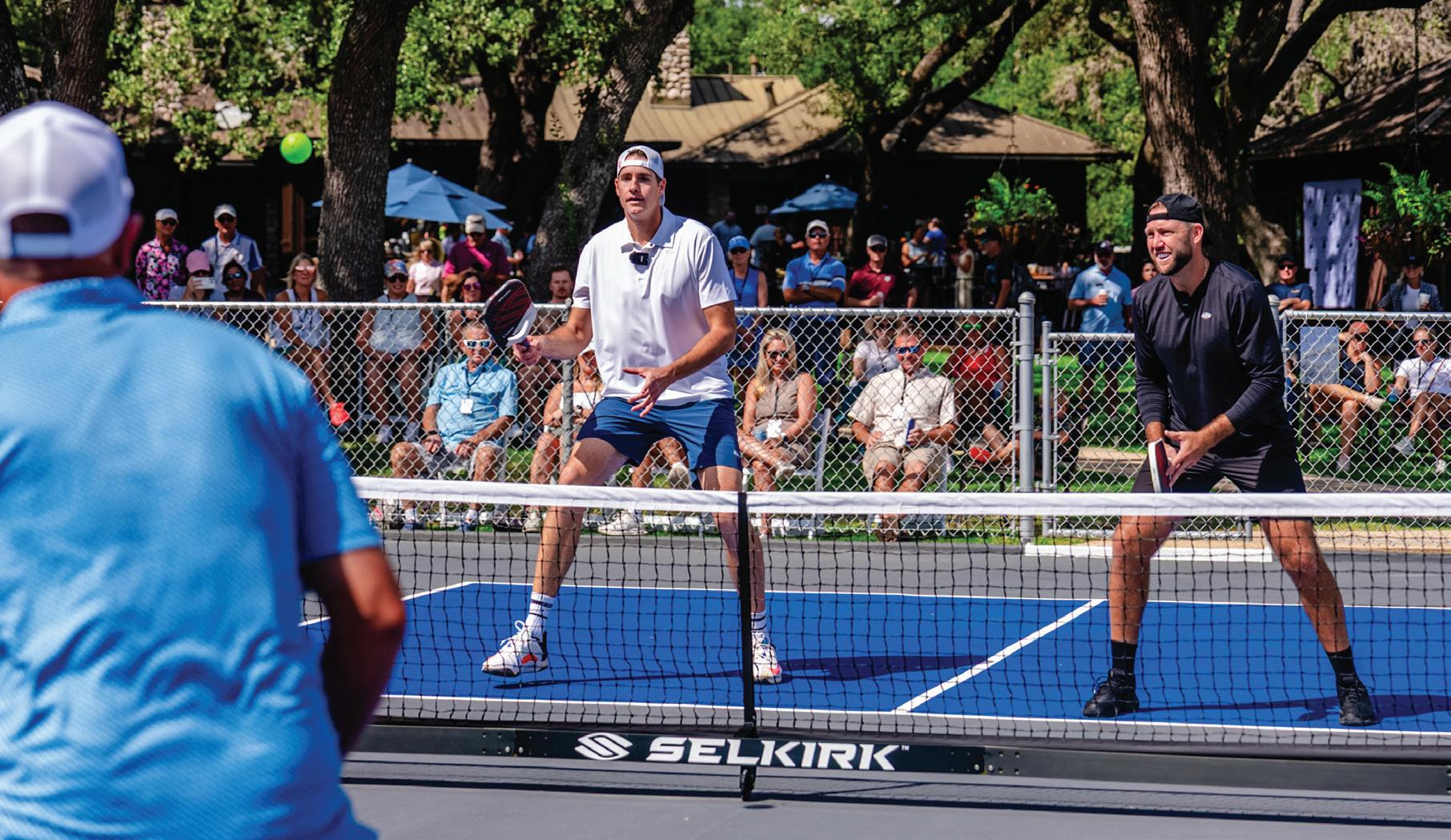
Alex Ortega, Director of Racquet Sports of Fair Oaks Ranch G&CC, utilizes his member experience team, racquets pros and GM to create an engaging and fun racquets calendar for members.
competitive events and social events. For example, league play is very competitive, though there are beginner leagues mixed in that allow newcomers a chance to understand the sport. The socials hosted on Fridays lean toward a more casual type of play.
“My staff is there so members can get to know them,” he says. “We give out badges for a drink, we offer some food, and we encourage play—but you’re not forced to. I would say 95% of people who come just to check it out and have no interest in playing end up asking us for extra paddles to jump into a game by the end of the event.”
This approach keeps the game exciting for current players and offers an easy opportunity for non-players to get introduced to the sport.
The visibility of staff at events creates a sense of community that members are looking for when they sign up for a club membership.
Ortega and his team make visibility fun at events by dressing in costume. This past Easter, Ortega dressed as a carrot, while one of his pros dressed as the Easter bunny.
“It gets members excited to come see what my team and I will be dressed up, offering even more incentive to get out to our events,” he adds.
Planning racquet events for the year involves Ortega’s member experience team, racquets pros and the GM. Each quarter, this group gets together to discuss what’s working and what’s not.
“We’re not here to just host tournaments and leagues—we’re here for the member experience,” he says.
Ortega says they gather feedback through surveys and by being present at events, which encourages organic conversations that often lead to ideas or adjustments.
“We have different avenues for everyone because not everyone thinks the same or wants to be in the same space,” says Ortega.
Aaron Fox, Director of Recreation and Member Events, Brentwood CC, is mindful of cadence when building his racquets calendar, understanding some events should be annual, while others can become stale.
When it comes to hosting events, Ortega says you have to trust the event and, regardless of participation, commit to it fully from a staff perspective.
Ortega believes not putting in the effort or commitment is where some racquet programs fall short.
“If you just put an open play event on the calendar and not give it any thought, that’s a miss,” he says. “We do have open play at our club, but we are still present at the event and offer direction. We even get creative and have certain courts be challenge courts. From there, you can promote all your programming and happenings going on at the club.”
Other logistical practices that make a big difference include maintaining the facility, handling behind-the-scenes tasks like stocking water bottles, offering wrist fans on hot days, and making balls readily available.
“Attention to detail goes a long way,” says Ortega. “Members may not see the work, but they’ll recognize the outcome.”
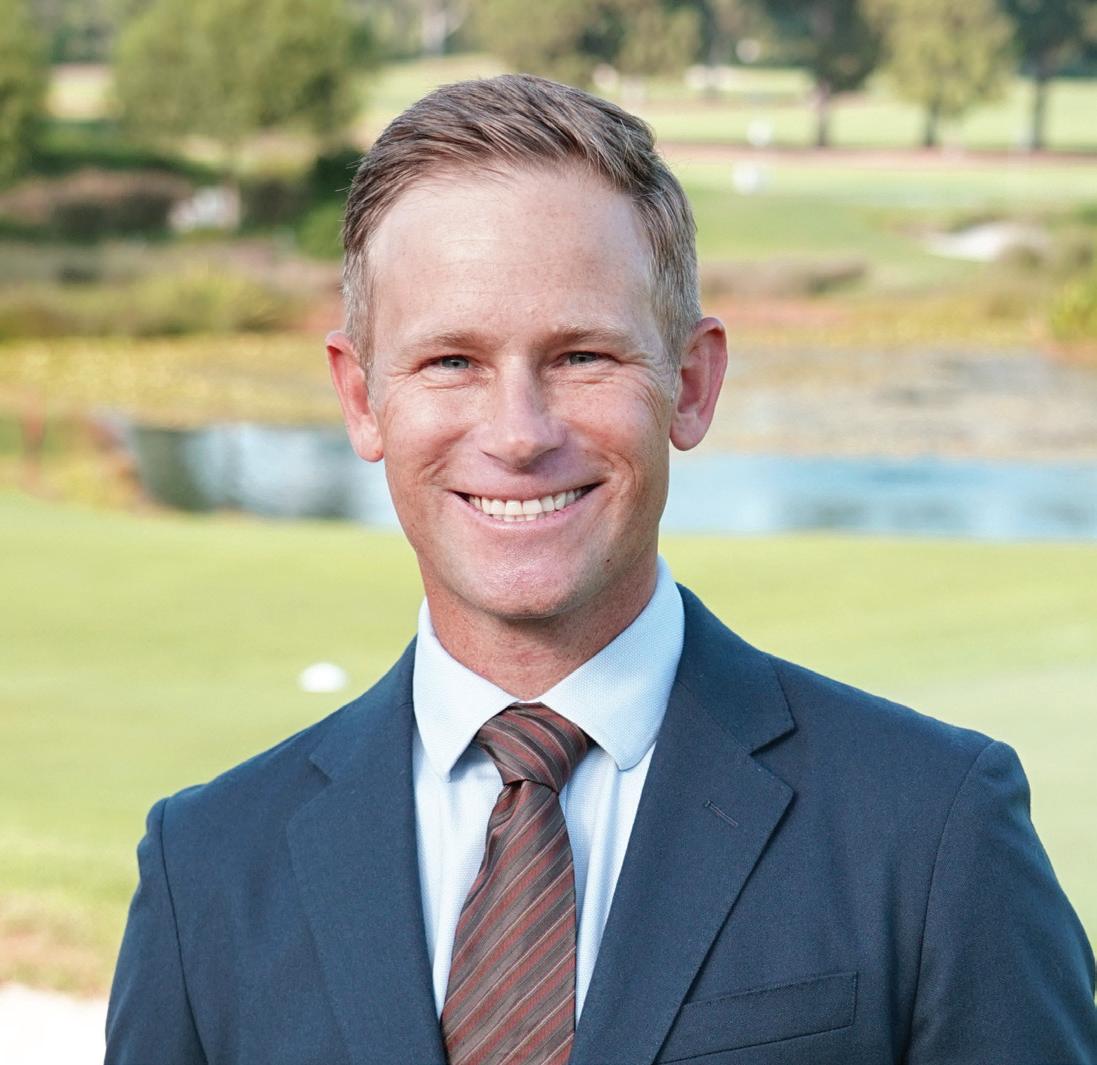
Aaron Fox, Director of Recreation and Member Events at Brentwood Country Club in Los Angeles has an extensive background in racquet sports, both as a player and operator in private clubs.
He describes Brentwood CC as not a volume business, but a true private club, meaning the club really focuses on driving participation, which drives member satisfaction.
“We cater to a wide range of demographics within our membership, and
one of the most important parts of that is building a team that can support those different needs,” says Fox.
Part of being on the team is to be tightly bound to membership and communicate with them.
“We are most successful when we have conversations with our leaders in our pickleball competitions or junior teams, asking what they want and then giving it to them,” says Fox.
In this way, Fox’s strategy for event planning is led by members.
“It’s not to say you shouldn’t be proactive, but the worst thing you can do is put out a flyer and announce an event,” he says. “In a private club environment, if your core players can’t attend, you’ve wasted your time.”
Fox is also mindful of event cadence. A recurring mixer like First Friday initially saw strong participation, but by the third month, interest dropped and the event became stale.
However, some recurring events are useful, like annual events or legacy events.
“I am a big believer that you want to offer free social events because you’re building attachment, so we offer weekly socials for both tennis and pickleball,” he says.
When building the racquet calendar, Fox tries to plan it out for the year, but he also emphasizes adaptability.
“We have a complimentary sunset
pickleball exchange each year, but when it came time for the event, the Dodgers were in the World Series, so no one in LA wanted to come play—they wanted to watch the game,” he says.
He also stresses understanding your location. For Brentwood CC, traffic is the biggest competitor.
“It would be insane of me to put on a mixer on a Friday at 4 pm,” he says. “No one is going to want to make that drive and spend their Friday stuck in traffic.”
Another operational consideration is ensuring staff availability.
“Pros work a lot, and the last thing you want is to scramble to staff an event that wasn’t communicated properly,” he says.
Fox holds weekly meetings with his team in order to minimize problems like that and get ahead of the day and week.
He believes the most important thing someone in his position can do is to build relationships—with employees and with members. His mentor gave him advice to find out what people want and give it to them.
“That’s the call of our business,” he says. “It’s not about being right. It’s about making people feel heard and cared for.”
Bryan Fox—twin brother of Aaron Fox and Director of Racquet Sports at Lakeshore Country Club—believes the proven pathway towards participation is sanctioned play. Special events are designed not just for a great experience, but to increase long-term engagement and participation. This is why 60% of court activity is programmed events, while 40% is open play.
“We have a weekly calendar of programming that ranges from pickleball instruction to open-play, round robins,” he says.
The round robin, introduced last year, takes place every Tuesday. Bryan aligned
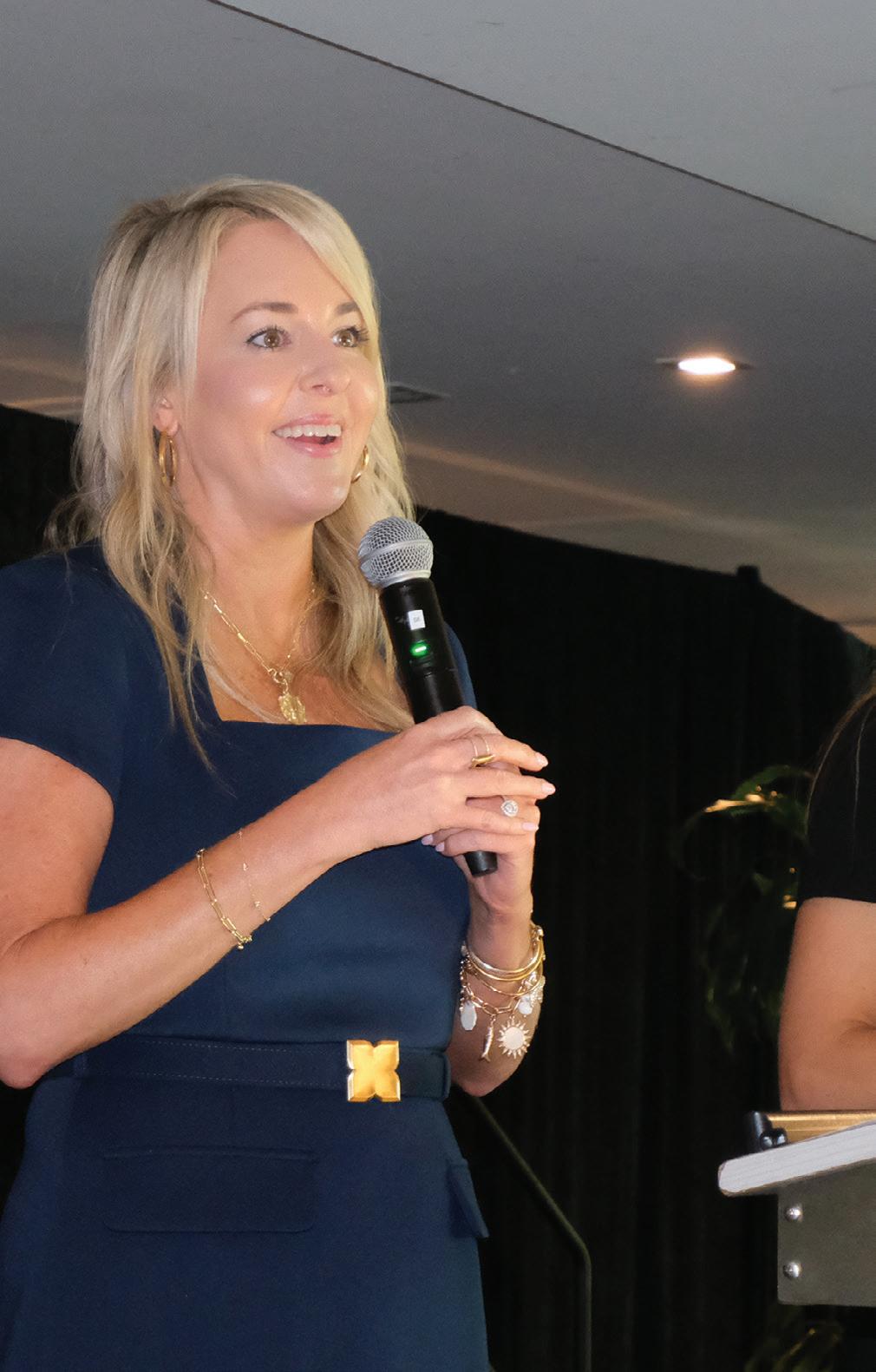
Bryan Fox, Director of Racquets Sports of Lakeshore CC, believes a great racquets progam is built off of knowing your membership, trusting your team, and being adaptable when plans change.
the timing with kids’ activities, allowing parents to participate without worrying about childcare.
Another family-oriented event is the Fourth of July Family Cup. Families can sign up together to participate in pickleball or tennis in tournament style play.
Knowing your membership is a huge factor when it comes to planning for events at Lakeshore CC. Being a primarily Jewish club, many kids are gone for camp in the summer, which impacts junior programming.
“It’s just not part of what our club is,” says Bryan.
However, he created a Kids Night Out where they can come to the club and play tennis or pickleball, take part in fun games and watch a movie at the end of the night.
“What I’ve learned is that you have to try new things in your programming and every demographic is going to be different,” he says. “Something that works at one club is not going to fly at Lakeshore. It takes exposing yourself to great educators and great directors to know as much as you can.”
Learning about membership wants comes from open communication and dialog. Bryan sends out surveys and gets feedback after the event to see what worked and what didn’t.
Building a great team is another tip he follows closely. He mentions that an assistant on his team is great with kids, so whenever there is an event with kids, he brings them in to shine in the area they excel at.
“On the other hand, I have a pro

tennis player who won two gold medals, 17 grand slams, and is a number one Hall of Fame player,” he says. “Their knowledge is high-level and cerebral, so they make a great coach for people wanting to hone their skills and advance.”
When it comes to behind-the-scenes work to get these programs in place, it’s important to have a team that delivers the non-negotiables. For example, having water on the courts, having towels laid out, and having a pro shop that has the right equipment offerings.
“I try to put myself in their shoes and think about what they would want, but at the same time you don’t want to be wasteful,” he says. “So, it’s managing your budget or your resources wisely.”
He also mentions that courts have to be pristine and to keep up with maintenance and making sure facilities are top-notch.
“Another thing is being able to pivot along with your membership,” Bryan says. “Right now, we might not have a strong junior program, but that could change in a few years. We have to be ready to meet those needs. Whatever the membership or the demographic is, we will be behind it and support it.” C+RB

From onboarding and retention to brand clarity, digital presence, and technology, the Club + Resort Business Engagement Summit is dedicated to the strategies that support stronger connections with members and prospects.
OCTOBER 5 - 6 2026
UNIVERSITY CLUB OF CHICAGO
•
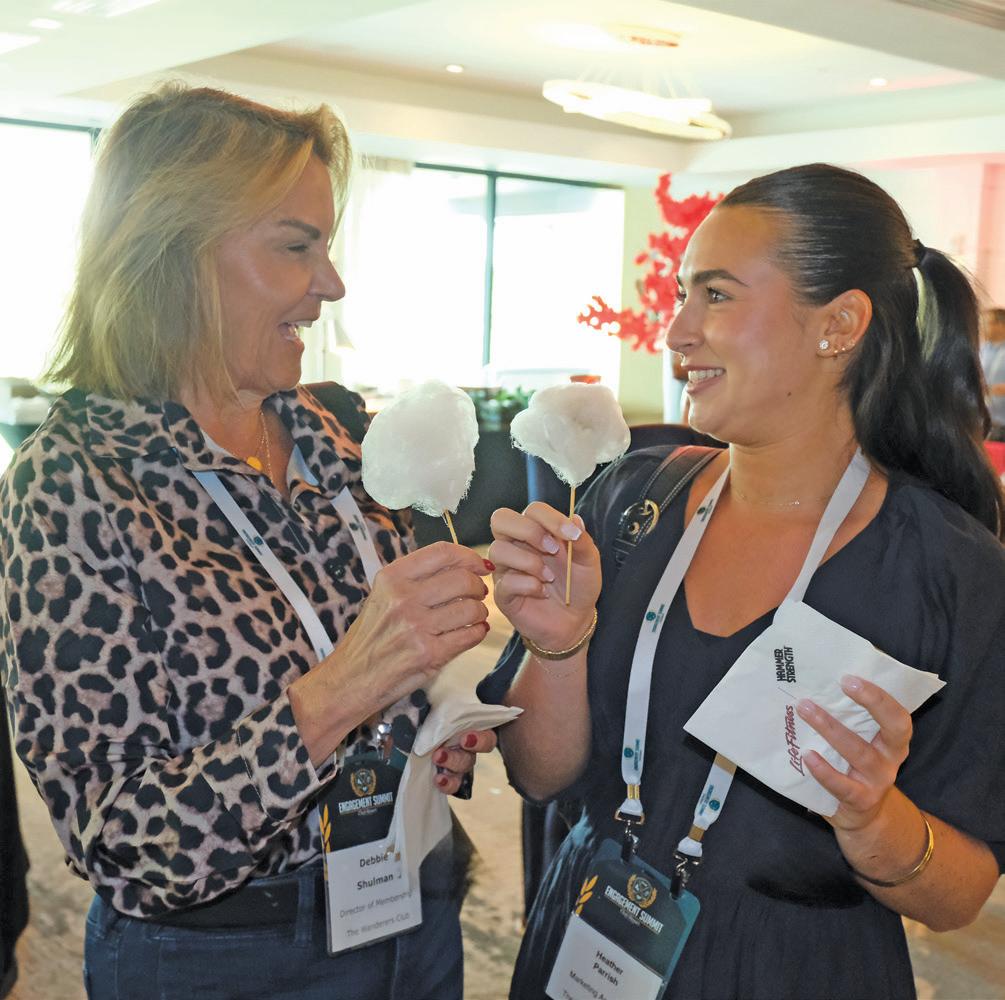
Sessions by club industry leaders and peers reveal how they approach specific challenges inside their own clubs.
• Directors of Marketing
• Directors of Membership
• Membership Services
• Communication Leaders
• General Managers
If your role influences how the club presents itself, connects with members, or strengthens demand, you will find relevant perspective and strategies you can use here.
Register today.

• Participation in small-group workshops and breakout discussions
• Peer-led conversations focused on membership growth, communication strategy, and engagement
• Dedicated networking with membership, marketing, and communications leaders from clubs across the
•
•
•
•

By blending brand storytelling, trend-driven content, and data-backed decisions, Invited is using social media to expand reach and reinforce member experience.
By Madison Hartline • Associate Editor
FERNANDA GUERRA , Member Experience Coordinator, has been with The Hills Country Club (Austin, Texas) for just over a year. During this time, she has increased social media impressions by 59% and engagement by 11%.
Guerra focuses on gaining brand awareness through social media and attracting prospective members. Although she does have creative freedom to add her own personal twist to the social posts, Riley Holman, who oversees the

Guerra, Member Experience Coordinator of
social media and influencer strategy for all Invited clubs, provides a framework and strategy.
Holman and Guerra dive into what makes a good social media strategy, how to capitalize on trends, the importance of making a club’s presence known on social media, and more.
Holman says the number one goal for social media across more than 150 Invited clubs is to get in front of new people and prospects.
“In 2022, we rebranded the business from Club Corp. to Invited. The reason for that is because, historically, country clubs can feel unapproachable, stuffy or unattainable,” says Holman.
Having a wide variety of clubs allows for different communities that prospective members can join.
“Our number one goal is to look inviting and feel approachable, but we still hold onto the tradition and the history that clubs or golf offer,” she says. “It’s the perfect marriage of being progressive and forward and applying what will get the interest of new prospects piqued and into our clubs, while still having a high

respect for the tradition and history of the game of golf.”
Holman reminds her team that when someone does land on one of their social media channels, they take less than 10 seconds to already pass judgment on who the club is, which is why she also focuses on clarity.
“We want everything to be crystal clear from the moment someone lands on our page so they know who we are, what we offer, and what the club offers them,” she says.
The other half of Invited’s social strategy is to retain current members.
Members get club information like event calendars on social media. Members also like to see recaps from past events.
“Last week, we did a par-3 challenge for Masters week, and our clubs do a great job of recapping photos and moments from those events,” says Holman. “Members love to re-share those with friends and family, putting more eyeballs on our pages.”
WHAT’S WORKING ON INSTAGRAM, FACEBOOK, AND LINKEDIN
Holman says she wants her teams to
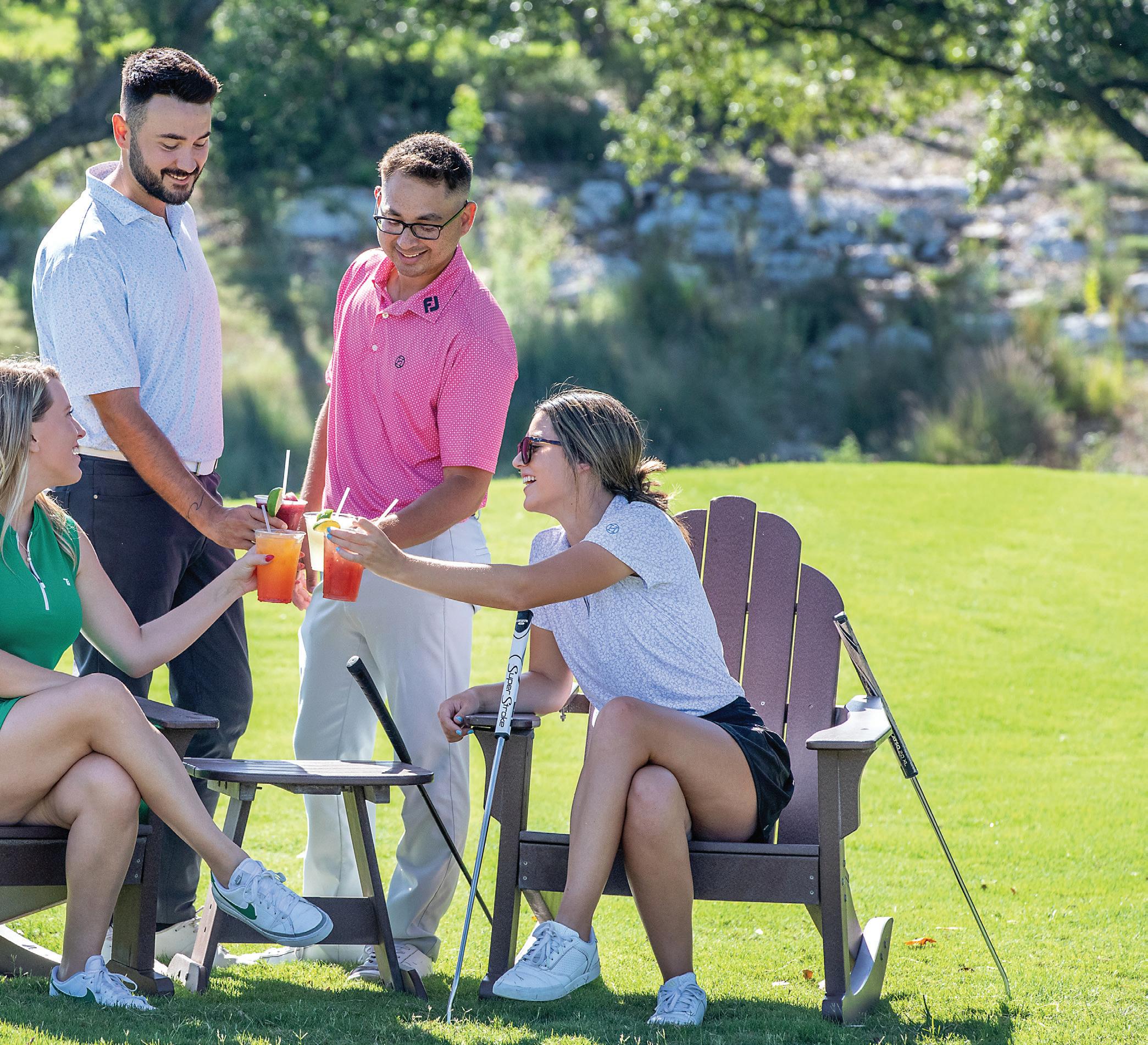
be on LinkedIn, Instagram, and Facebook. She believes these platforms have the most potential for quality membership leads, and it’s the right demographic for who Invited is trying to reach.
“Twitter or X is a great platform, but you have to be so active in order to see any growth or engagement,” says Holman. “I think it better suits live updates for things like sports or news.”
All three platforms that Holman encourages her teams to use are utilized differently.
“For Instagram, I tell our team we want to be more creative and can step outside the box more,” says Holman. “We can be more lighthearted, participate in viral trends, and be more lifestyle-driven. It doesn’t have to be so professional and buttoned up.”
When it comes to LinkedIn, Holman advises team members to do the opposite by being more professional and focus on business initiatives and employeefocused content.
“We’ll have employees that may be recognized, highlight golfers of the year or chefs of the year,” she says. “When it comes to employer or people recognition, LinkedIn is the spot for that.”
Facebook is viewed as a platform that reaches different demographics and audiences. Because Meta owns Instagram and Facebook, Holman encourages crosssharing on the platforms.
Guerra agrees that Facebook can hit different audiences and is more casual, with analytics showing that users enjoy seeing real-time photos straight from an iPhone. On Instagram, content is more curated and designed to capture attention and stop the scroll.
Content planning is casual as well. Holman and her team provide member experience coordinators like Guerra with a monthly calendar based on holidays, key events, key dates, or key programming.
“For example, all clubs had a par-3 contest last week for the Masters, so in the calendar we will have a reminder to put up a recap of the event,” says Holman. “My team will provide general content planners, and it’s up to the team to adapt that content plan and also apply boots-on-the-ground content.”
Guerra attributes The Hills CC social growth to centering posts on telling the club’s story and showing followers

Social Media Specialist Riley Holman emphasizes clarity on social media pages: She wants prospective members to know who Invited is, what they offer, and what Invited can do for them.
who the club is. “Engage, entertain, and educate,” says Guerra. “Those are my core elements when I post to our social media.”
Guerra says before she puts something on social media she asks herself how it impacts followers—will it entertain, engage, or educate them?
“Capturing their attention is important, too, so they actually stop scrolling and can achieve one of those pillars,” adds Guerra. “Visually, it has to be appealing.”
Guerra relies on analytics on the social media platforms to see what times are most active for her followers and to better understand the platform algorithms.
She also utilizes the platform’s tools to avoid oversaturating a follower’s feed with a constant stream of posts.
“We have so much going on across the club that I make a judgment call if something is feed-worthy or story-worthy,” says Guerra. “If it’s items that could have a call to action, it usually goes on our stories with a link that drives people to our website. On the feed, I focus on items that give our followers FOMO (fear of missing out) [so they] want to participate in the next event we put on.”
Following current social trends is another tactic Guerra and Holman closely follow and adapt to their brands.
Ultimately, Guerra says, social media is a digital bridge between the audience and the brand. C+RB
The General Manager of St. Andrews Country Club is proving that employee investment drives retention, culture, and club success. From tripling the cafeteria budget to checking in with every department daily, his approach is simple: Employees remember how you make them feel.
By Madison Hartline • Associate Editor
MARIUS ILIE HAS BEEN IN THE GM seat at St. Andrews Country Club (Boca Raton, Fla.) for almost six months and is working on creating a culture where employees feel comfortable, secure, and like they’re a part of something bigger.
When Ilie was interviewing for his current position, he made it known that employee investment was a dealbreaker for him and wanted to confirm that was a priority for St. Andrews CC.
“I believe employees come first, and I wanted to make sure we aligned on that,” says Ilie. “The club was completely on board and gave me as many resources and opportunities as I need to build a culture of community.”
Ilie says many clubs base their success off of membership or new amenity renovations, but what makes a club great in his eyes is the impact and investment being made into the lives of the employees.
“You can build marble countertops and the most beautiful crystal chandeliers, but if they’re not wiped down and clean, they’re not going to shine,” he says.
Ilie’s management style is to personally know his employees. To him, that means he is barely in his office; rather, he’s out riding around the property on a golf cart or walking around to different
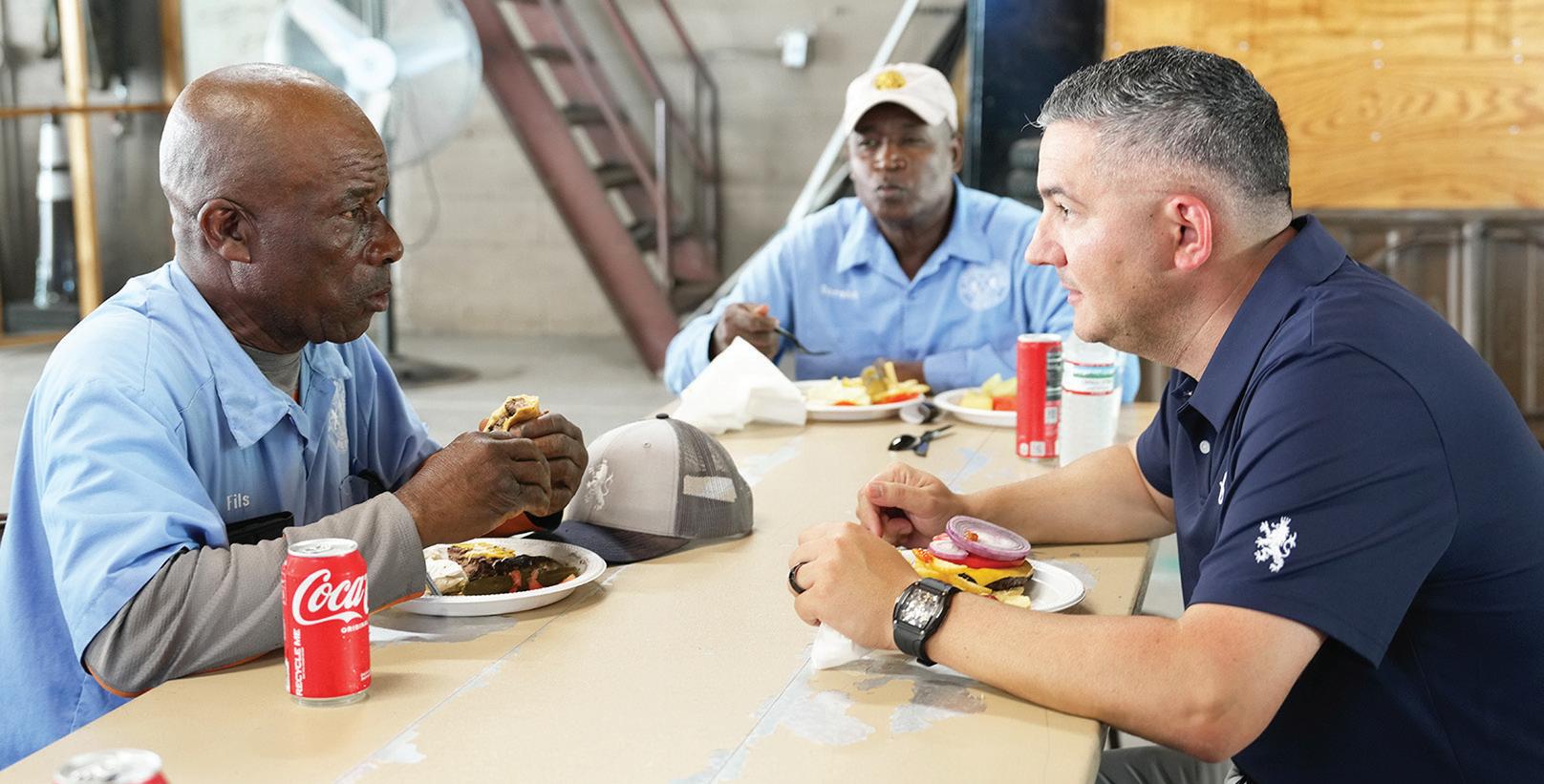
sections of the clubhouse.
Ilie enjoys having lunch with different members of the team. This sparked the idea for a barbecue for the golf maintenance team. He asked his superintendent if they could set up a barbecue for the team and invite the board members.
“We didn’t do this because it’s a nice thing to do for them; we did it because they’re valued,” says Ilie. “The experience at the country club doesn’t start at noon for lunch. It starts at 5:30 in the morning. These are the employees who are making it happen. If the behind-thescenes workers are not happy, then the
front-of-house staff is just a show.”
At the barbecue, Ilie says he and the team forgot about the work and talked about families, soccer, baseball, and more. He also checked in with them and asked what they need to succeed.
“We are in the middle of a golf course renovation, so I asked them if they have all the equipment, proper hydration, and if there is anything that I could provide to make their life easier,” he says. “I gained a lot of valuable feedback from those conversations, but I think the most important part is the connection and the shared humanity.”

Although the golf course maintenance staff isn’t responsible for the work on the new renovation, Ilie says the winter in Florida was very cold this year, negatively affecting the course greens.
“I was driving the golf cart every day on the property, and this team was out there every day trying to basically resuscitate the grass and keep it the way it needs to be,” he says. “No matter how many challenges they have in their life, they just keep on smiling and doing their job over and over again. I knew we needed to connect with them even more.”
This isn’t the first time Ilie has gone to bat for his employees. He also tripled the cafeteria budget for employees.
“I like to eat with my team in the cafeteria, so I went there and asked an employee what the menu was for the employee cafeteria, and she told me it’s whatever is left over from the buffets for the members,” he says. “I asked her how much money we are spending on meals per employee, and she told me $1.50. That’s when I realized we had a bigger problem.”
After this conversation, Ilie went to the board and said he needed a budget of $150,000 for the employee cafeteria. He received it.
Now, employees have multiple lunch options, coffee machines, and beverage options. Ilie even started a wellness program where a nutritionist wrote up menus for employees to eat healthier.
“The moral of the story is you have two options: You have culture or you have lip service,” says Ilie. “You either create a welcoming environment for employees, or you just say you’re going to.”
Ilie wants his team to feel like more than a number at St. Andrews.
“I get there are procedures and standards, but if you manage the policies and you don’t manage the employee experience, that’s when it becomes a problem,” he says. “If you work with us at St. Andrews and you choose to go somewhere else, you don’t leave the job—you leave the environment. You’re emotionally connected with us.”
This is why culture is so important to Ilie. Not only does he want his team to feel valued, but he wants to keep a strong team at St. Andrews, and this is the best way to retain employees.
“Employees don’t always remember policies,” Ilie notes, “but they do remember how you make them feel.”
Ilie has no problem jumping in to lend a hand as needed because he understands loyalty isn’t built with paychecks alone.
He makes it a point to go to each department every morning and check in with his employees asking them how they are doing, if they need anything from him, what their schedule looks like that day, and oftentimes inviting someone to lunch.
Employees do not have to make an appointment to talk with Ilie, though he says sometimes employees do that if they have a bigger problem that needs to be addressed.
Ultimately, Ilie’s perspective was formed by his own experience forging a career in hospitality. Originally from Romania, he came to the U.S. when he was about 18 years old.
Ilie notes he had to work hard for his career, but he was also aided by many people along the way. After coming to the U.S. via an H-2B visa, he was guided by people already established in the industry.
Today, he values the opportunity to help his team in the same way.
“It’s a good feeling to be able to help somebody,” Ilie says. “It means more to me than every single paycheck I have ever received.” C+RB
At TPC Potomac at Avenel Farm, Ned Graff has shaped a leadership approach centered on trust, clarity of purpose and empowering staff to deliver meaningful moments for members.
By Joanna DeChellis • Editorial Director
LEADERSHIP FOR NED GRAFF , CCM, PGA, General Manager/Director of Golf of TPC Potomac (Md.) at Avenel Farm, starts with the people closest to the member. After decades spanning resort operations, golf and multi-unit management, Graff returned to the club environment to focus on what he values most: building teams that create memorable experiences.

At TPC Potomac, that philosophy has translated into a service culture defined by shared ownership, clear expectations and a belief that small details often create the most lasting impressions.
Club + Resort Business (C+RB): You joined TPC Potomac in 2020 after many years with Hershey Entertainment & Resorts. What drew you back to the club environment?
Ned Graff (NG): I spent 13 years at Hershey in progressively broader leadership roles, overseeing everything from golf operations to lodging and restaurant groups. It was an incredible learning experience, but I realized I was moving further away from what I enjoy most, which is working closely with people in a club setting. I wanted to return to an environment where relationships with members and staff are central to the work.
Clubs create a sense of community that is unique. Members see the club as a third place between home and work, somewhere they can relax and feel known. That atmosphere is what drew me back.
C+RB: How would you describe your leadership philosophy today?
NG: The foundation is simple. We hire talented people, give them the tools they need and trust them to do what they were hired to do.
If you build the right leadership team, everything else becomes possible. Culture, service consistency and operational success all grow from that base. Over the past six years, building our team has probably been the accomplishment I am most proud of.
Leadership is not about inserting yourself into every decision. It is about creating clarity and removing barriers so your team can perform at a high level.
C+RB: What lessons from Hershey have influenced how you lead at TPC Potomac?
NG: At Hershey, we developed what we called the “One Voice” approach, bringing representatives from different departments together to define what service should feel like from the member’s perspective.
At TPC Potomac, we adapted that concept into what we call the “One
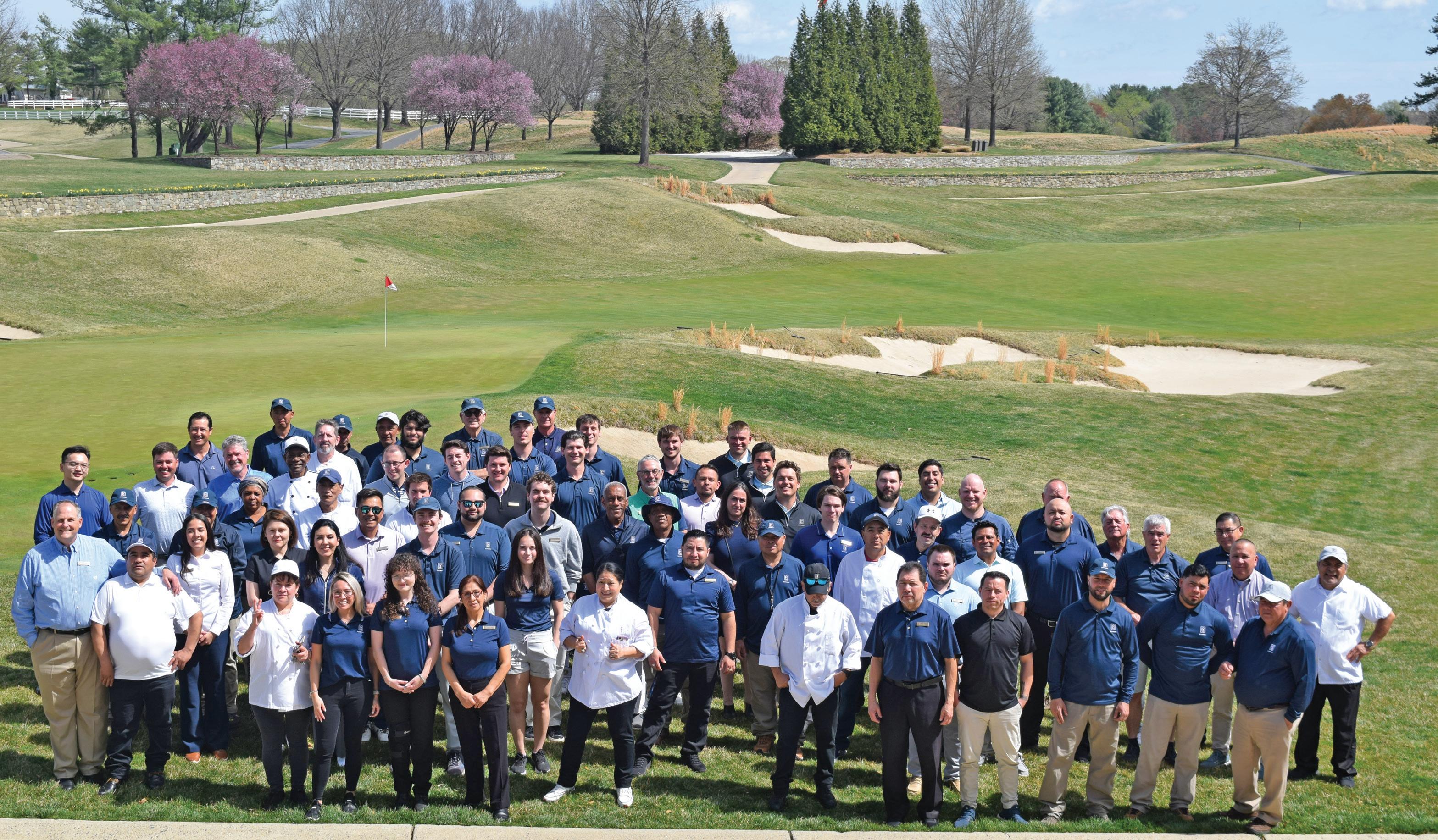
Potomac Team.” The group includes representatives from golf, food and beverage and agronomy, ensuring that service standards are shaped by the people delivering them every day.
We created property-specific pillars focused on teamwork, professionalism, communication and respect. Those principles guide how we operate and how we evaluate the member experience.
C+RB: How do those pillars translate into day-to-day operations?
NG: We talk often about gathering small pieces of information that help us personalize the experience.
If a staff member hears that a member is celebrating something special, that information should move quickly across departments so the team can respond in a thoughtful way. The goal is to create moments that feel natural rather than scripted.
One example involved a member
guest event where a spouse mentioned she wished oysters had been available that evening. A staff member shared that information with the kitchen, and the team arranged a small plate for her. It was a simple gesture, but it demonstrated that the team was listening and willing to act.
Those moments build loyalty because they show attentiveness.
C+RB: You have also emphasized junior golf as an area of growth. Why is that important?
NG: Junior programming has expanded significantly over the past few years, supported by a dedicated director of junior golf—Young Joo—and a structured curriculum that focuses on skill development and engagement.
We view junior golfers as both current participants and future members. When young players feel connected to the club, they often bring their families into the experience as well. That strengthens the
long-term health of the membership.
Consistency in instruction and clear progression in programming have been key factors in that growth.
C+RB: Looking back, what defines strong leadership in the club environment?
NG: Leadership in clubs is about creating alignment around a shared purpose.
When your team understands what the experience should feel like and believes they have the authority to contribute to it, the culture becomes self-reinforcing. Members notice that consistency, and it shapes how they view the club.
Our responsibility is to create an environment where employees feel supported, respected and empowered to take initiative. When that happens, the member experience takes care of itself. C+RB
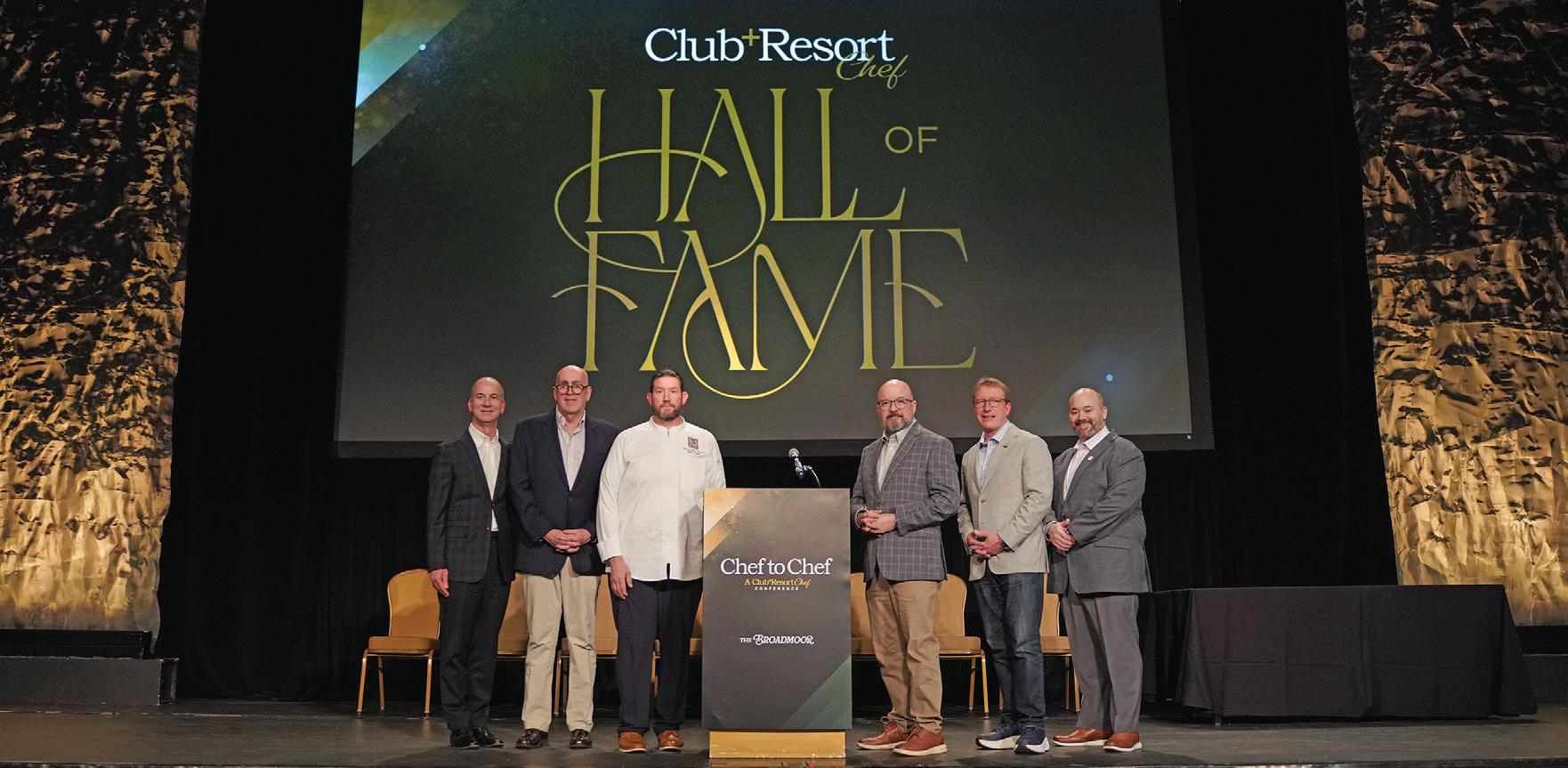
At the 2026 Chef to Chef Conference at The Broadmoor, C+RC recognized the inaugural Club + Resort Chef Hall of Fame, a new distinction honoring chefs whose careers represent sustained leadership, meaningful influence, and enduring contributions to the profession.
THE 2026 CHEF TO CHEF CONFERENCE , presented by Club + Resort Chef, took place March 8-10 at The Broadmoor in Colorado Springs. The agenda featured a robust lineup of culinary demonstrations, leadership sessions, operational deep dives, and careerforward discussions designed for today’s club and resort culinary leaders. With perspectives from chefs and managers actively leading programs of varying scale and complexity, the conference offers a cross-section of how the profession is thinking, adapting, and moving forward. The full photo gallery is available at cheftochefconference.com
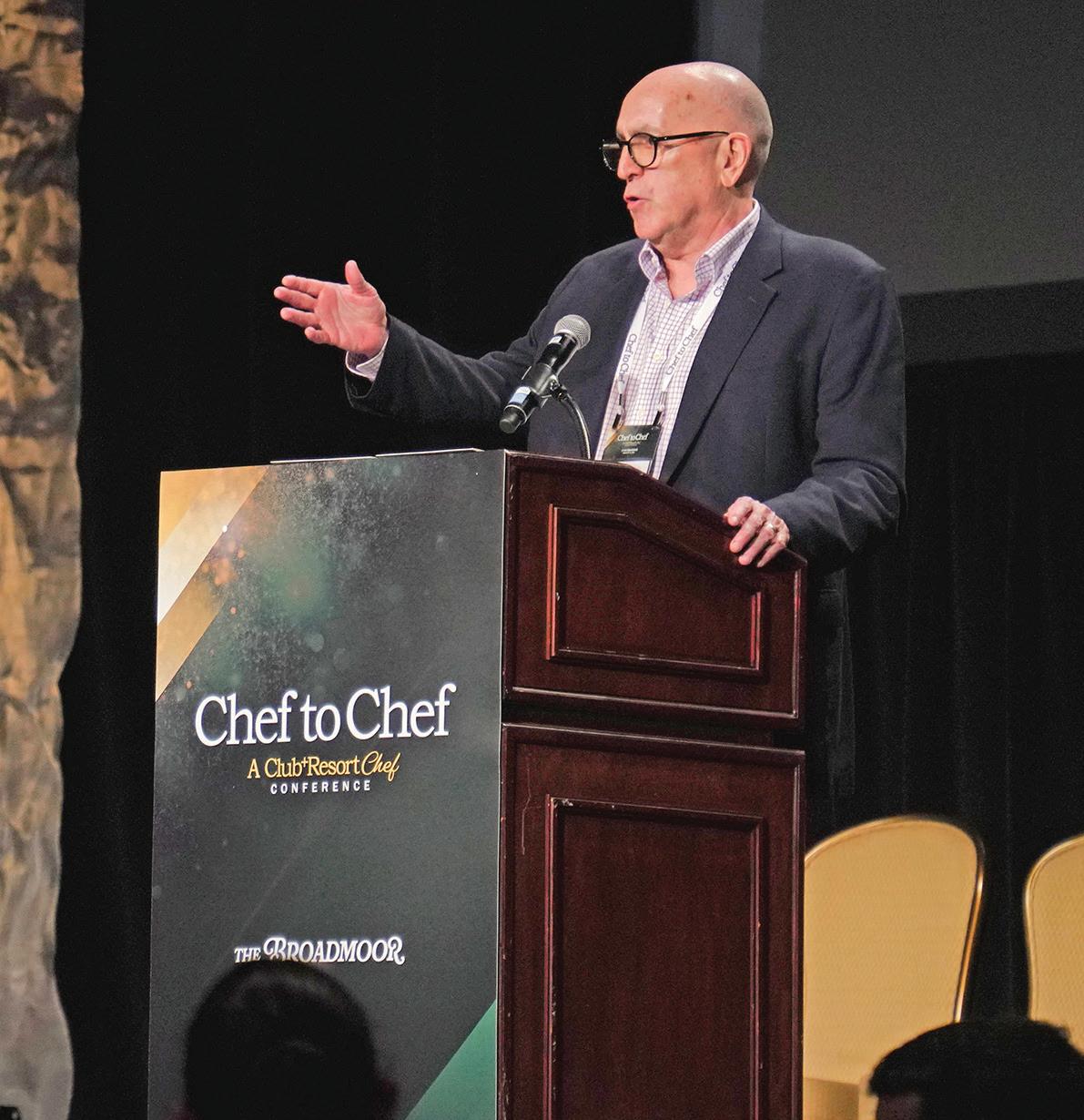
among the
role in the formation of this club culinary community.
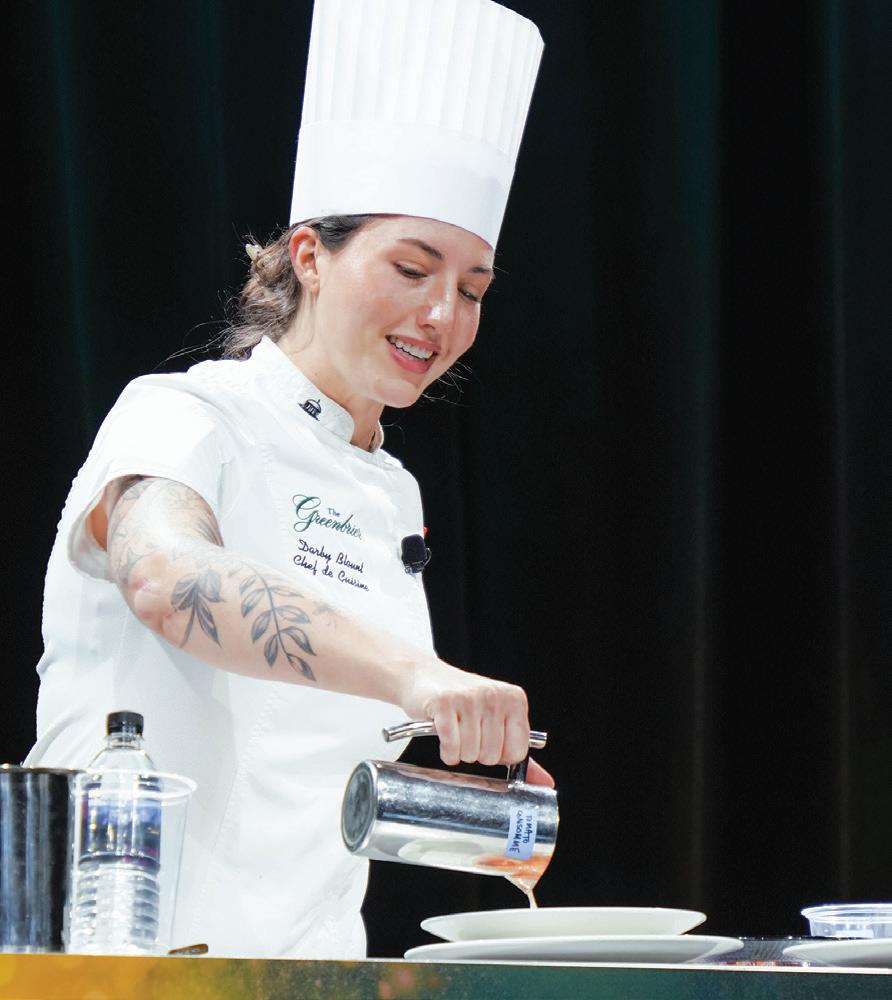
In her culinary demonstration, Darby
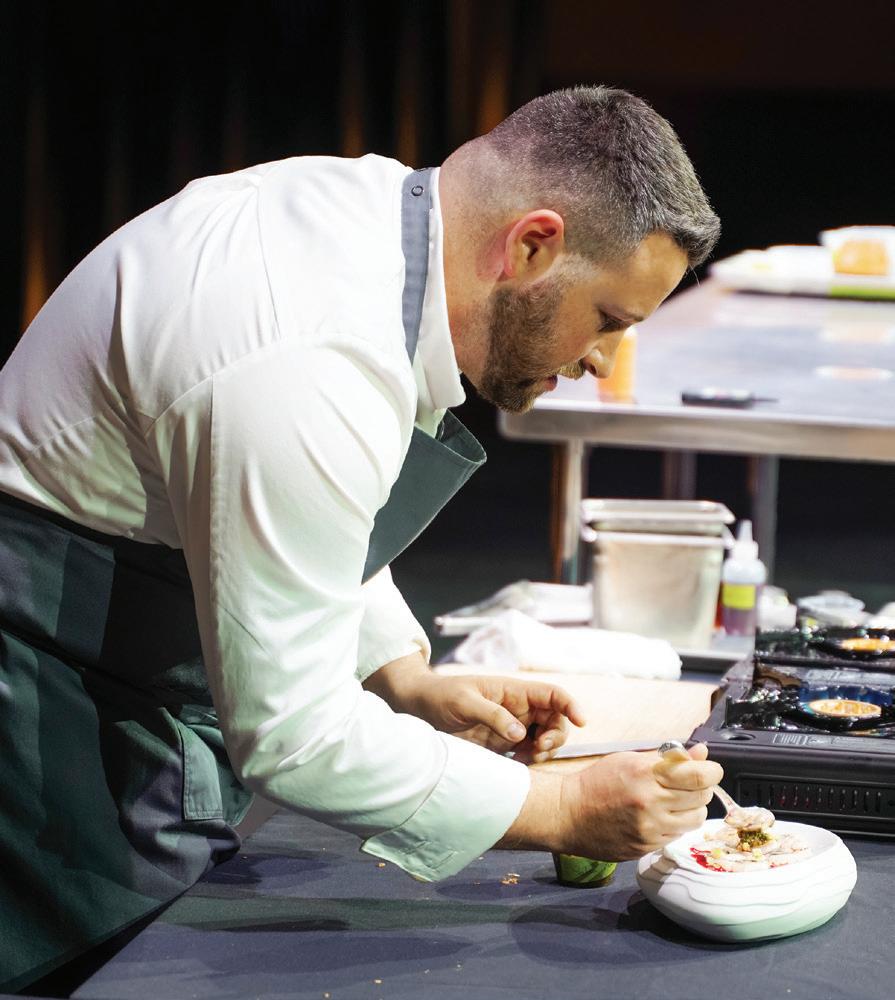
In his live culinary demo, Corey Siegel, a five-time Culinary Olympic gold