The Newsletter of the Wisconsin Society of Science Teachers
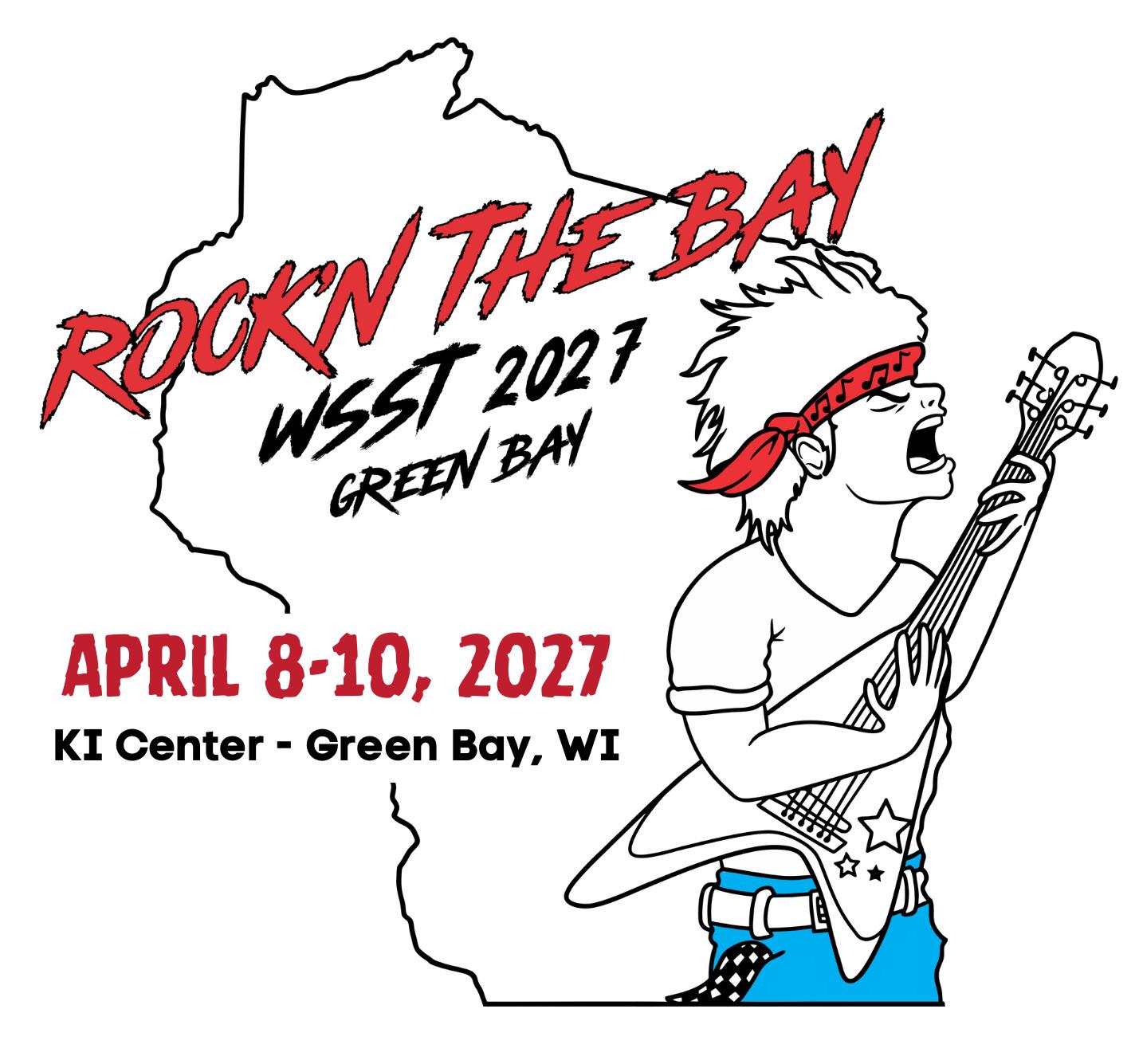
Get Ready to Rock the Bay
April 8-10, 2027 in Green Bay
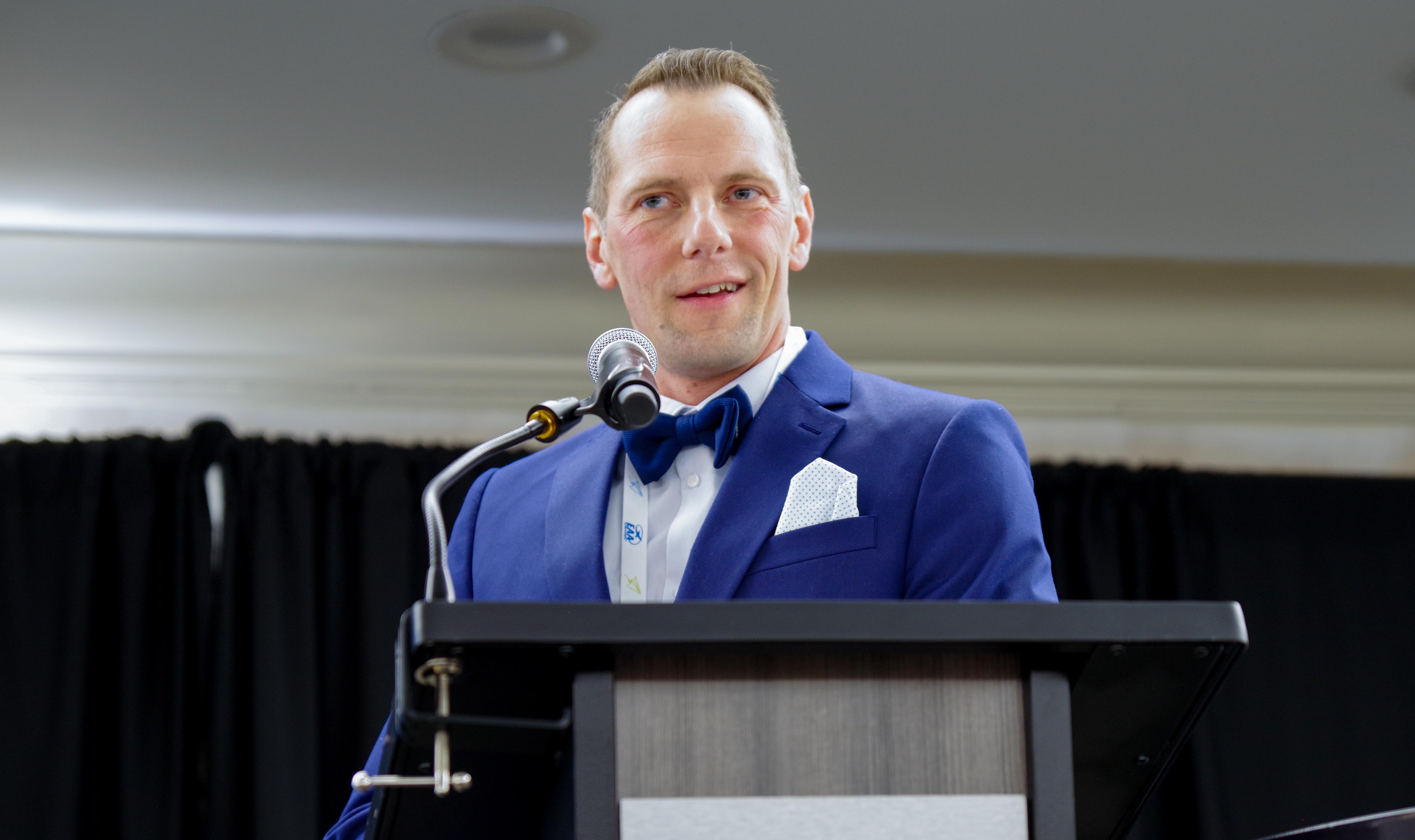
By Dennis Rohr and Chad Janowski
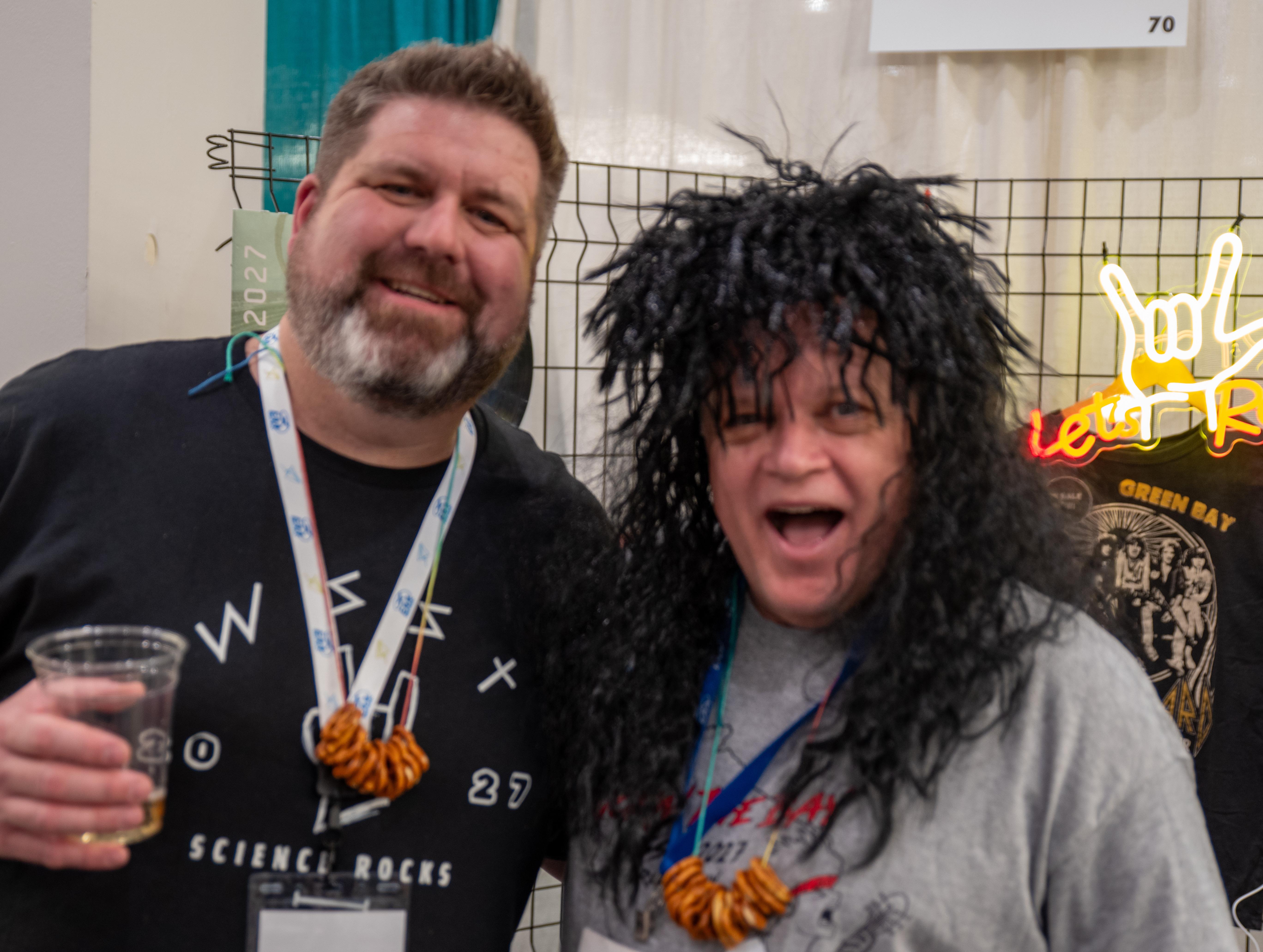
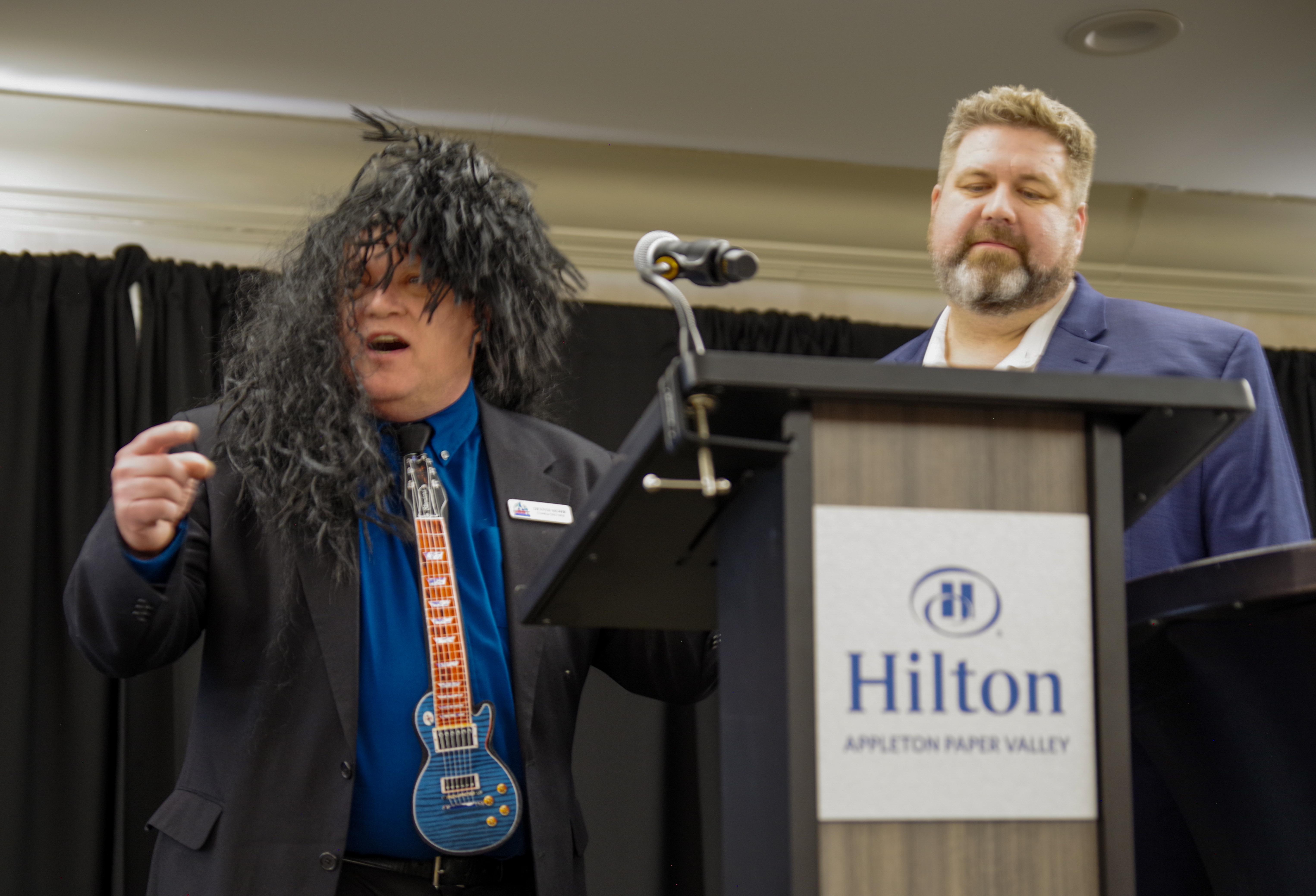
Get your vintage rock theme attire ready for another fantastic fun-filled event where we will science all day and rock the bay all night! Keynote speakers will be national author and scientist Kenneth Miller (sponsored by Savvas), and UWGreen Bay Geoscience professor Dr. John Luczaj, who is a leading expert on the Niagara Escarpment and Groundwater issues.
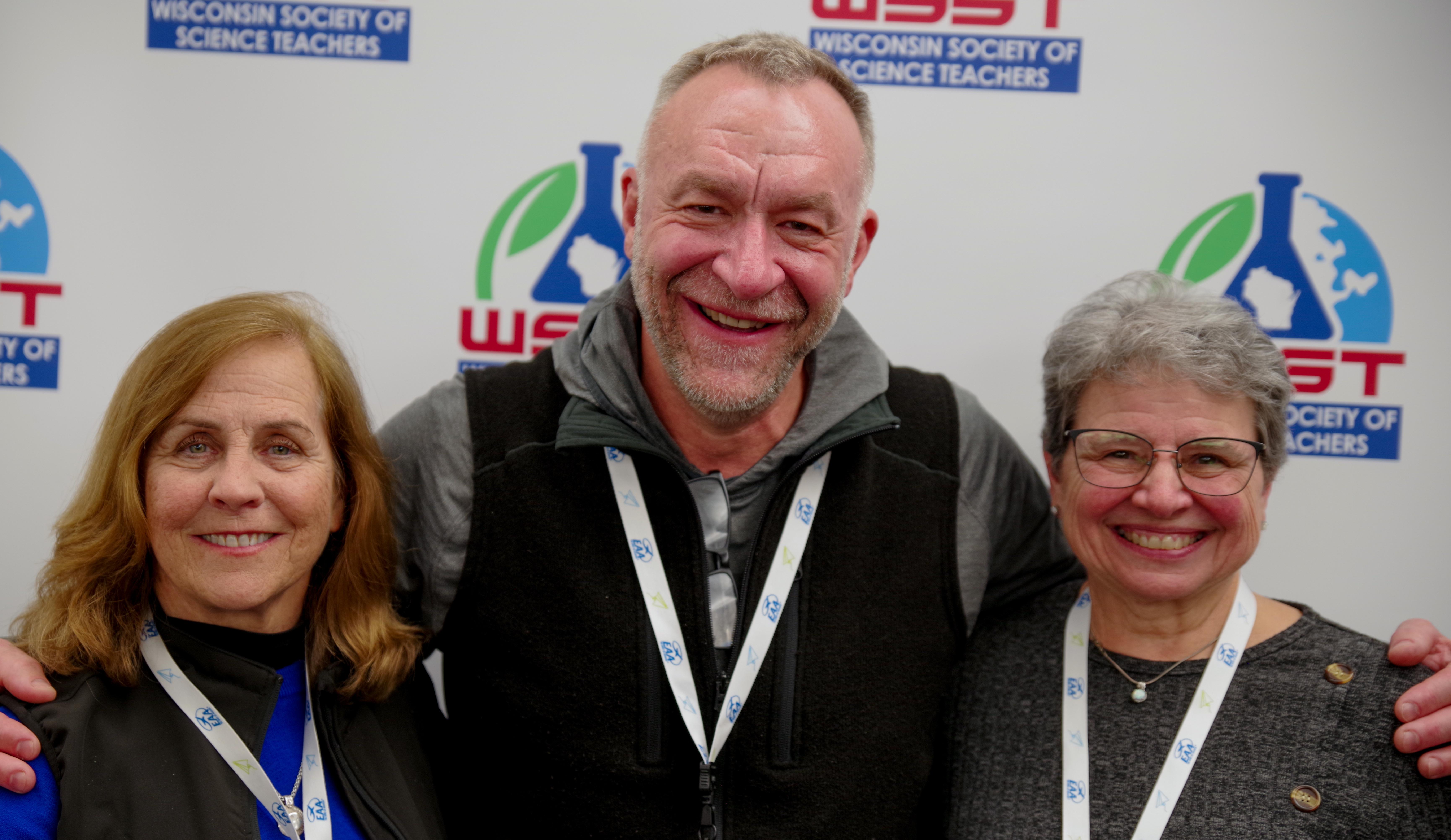
We plan to have many fun and rock’n activities for you as we continue to plan for the conference. Your Co-Chairs for the
continued on page 4
From the President
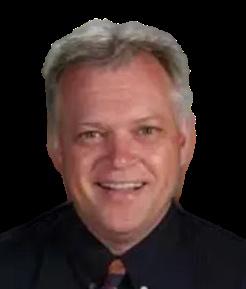
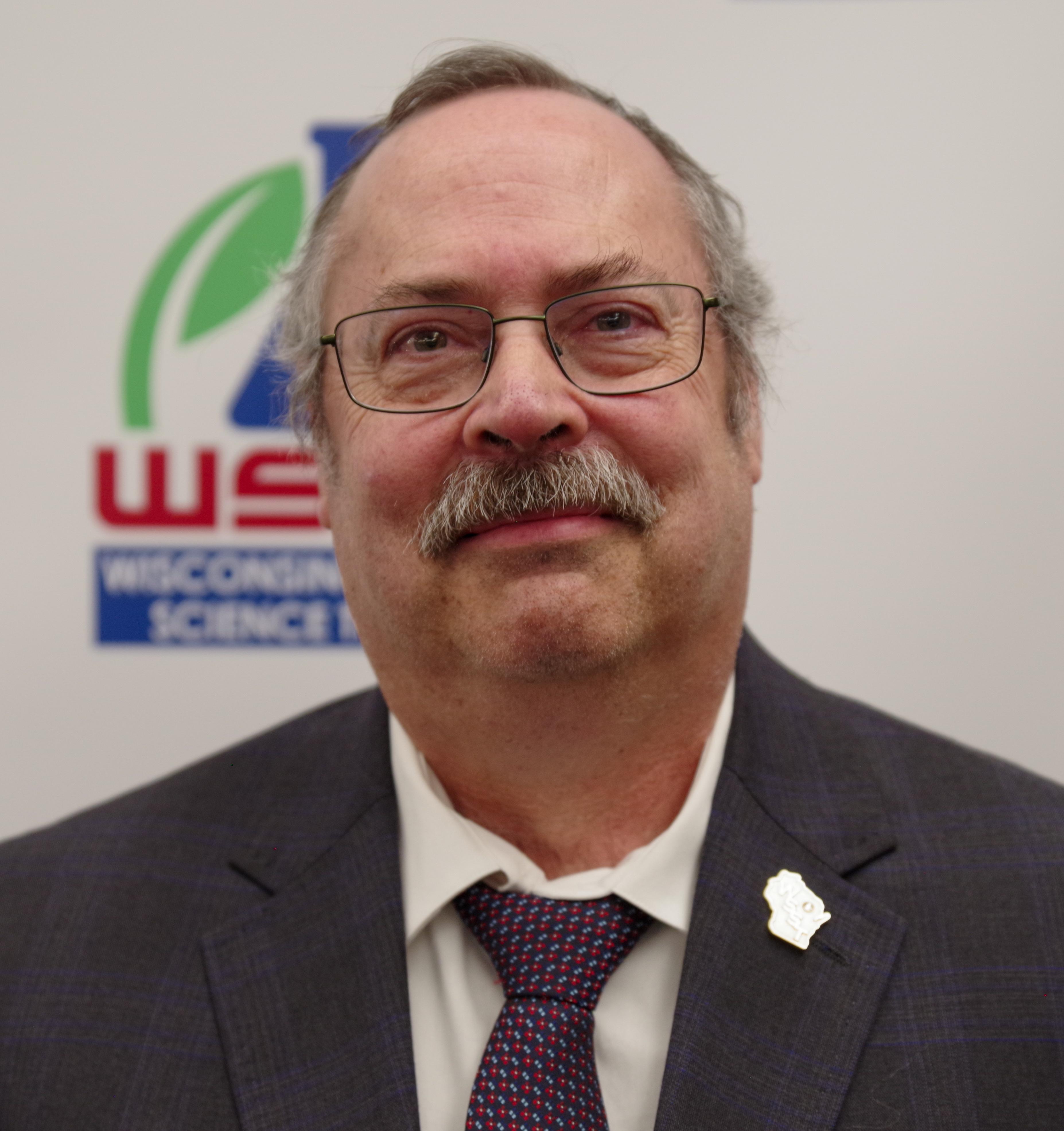
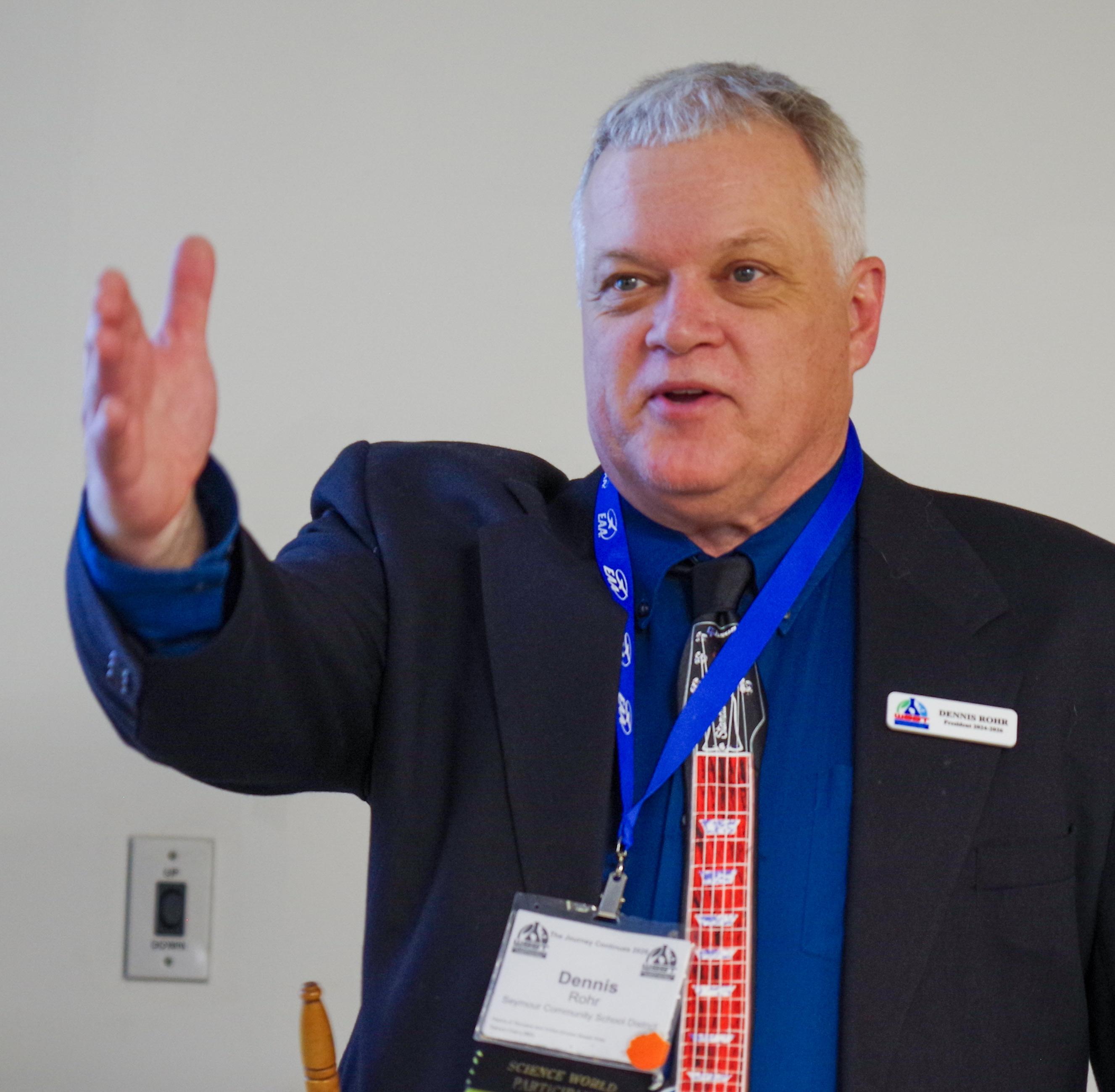
WSST President, Dennis Rohr
Bring on Summer and get us out of this spring! As I look across Wisconsin, there have been very difficult weather events that have placed a lot of burden on many of us - from flooding to tornadoes - after many of us experienced large snowfall and/or ice storms. Each of these events have impact both on our lives and those of our students and families.
Someone I knew called these difficult events “pride builders”. For the first time in 27 years, our home’s sump is no longer dry, and the pump in it finally had to run. Unfortunately, it didn’t keep up, and we came home to a big mess. Our finished basement is no longer finished, but at least we still have the rest of our
continued on page 4
Page 9
Page 10-11
Page 12-17
Page 18
Page 19
Page 20-29
Baseball: July 12
The Wisconsin Society of Science Teachers
Our Mission: WSST provides a welcoming collaborative network, useful resources, and professional learning to support all Wisconsin science educators in delivering high quality instruction.
Our Vision: All Wisconsin students engage in meaningful and relevant three-dimensional science learning that prepares them to use valid evidence to make sense of the world and solve current and future problems.
WSST Newsletter Archive
Visit www.wsst.org/newsletter to download past issues of the WSST newsletter. Available from WSST’s founding in 1958, newsletters are as PDFs.
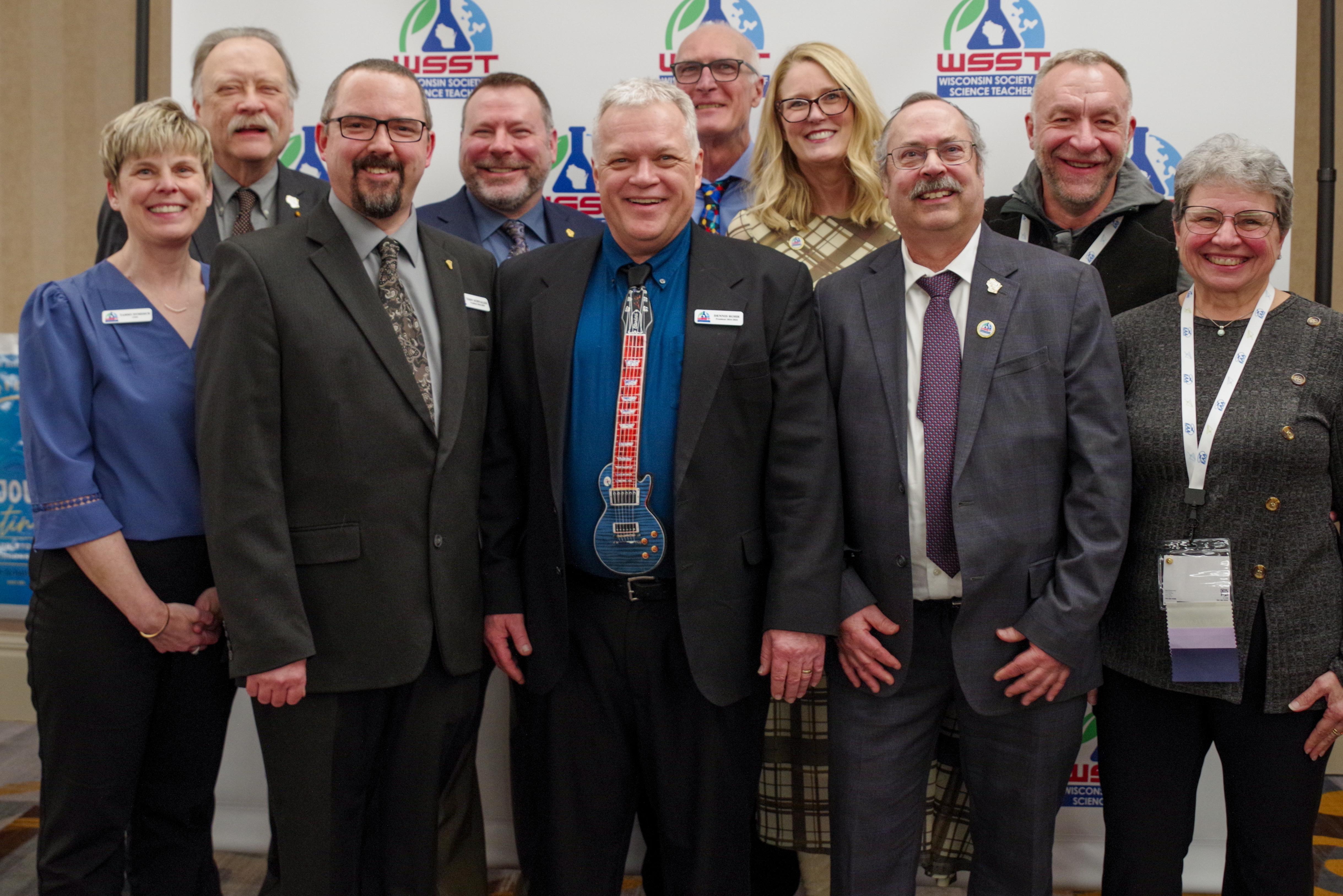
Dennis Rohr, President president@wsst.org
Terry Schwaller, President-Elect tschwaller@wsst.org
Stephaine Baker, Secretary secretary@wsst.org
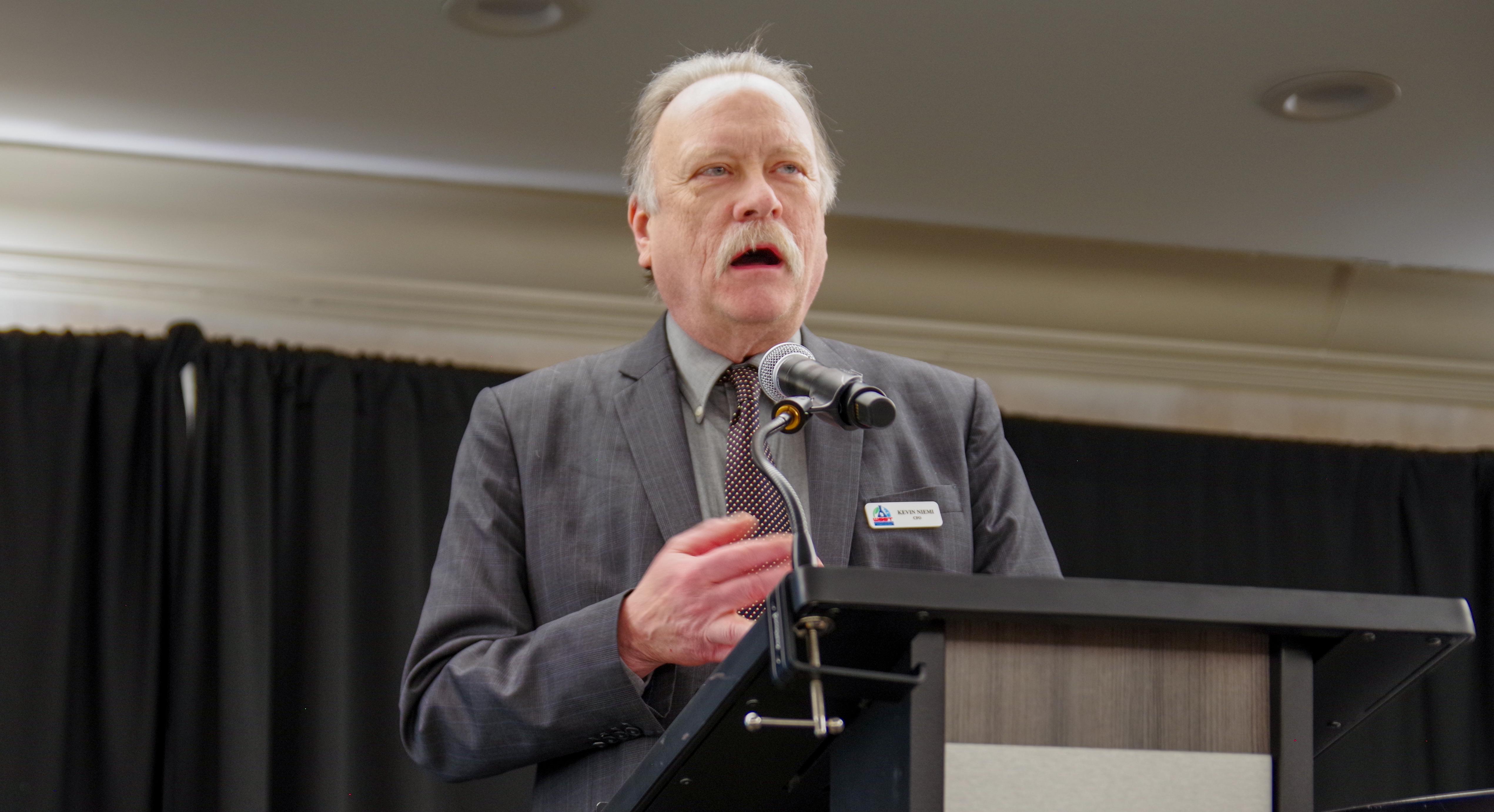
Kevin Niemi, Chief Financial Officer cfo@wsst.org
Chad Janowski, CFO (in training) chad@einsteinproject.org
Andy Pokrzywinski, Dist 1 (CESA 11 & 12) district1@wsst.org
Thomas Davies, District 2 (CESA 9 & 10) district2@wsst.org
Sarah Klingbile, District 3 (CESA 7 & 8) district3@wsst.org
Megan Sprague, District 4 (CESA 3 & 4) district4@wsst.org
Patrick Mootz, District 5 (CESA 2 & 5) district5@wsst.org
Teri Dillenberg, District 6 (CESA 6) district6@wsst.org
Stacey Strandberg, District 7 (CESA 1) district7@wsst.org
WSST Committees
Awards/Recognition
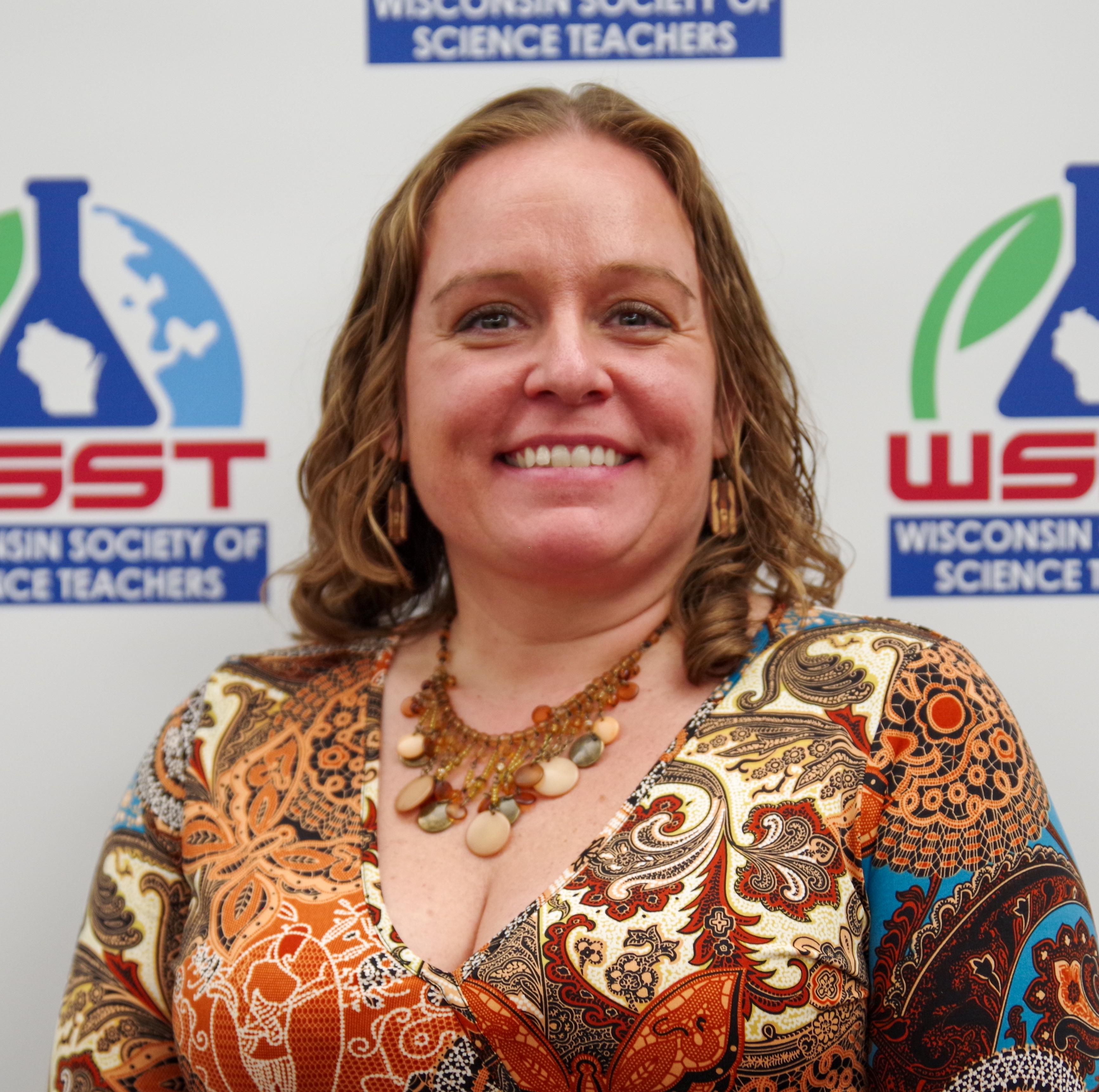
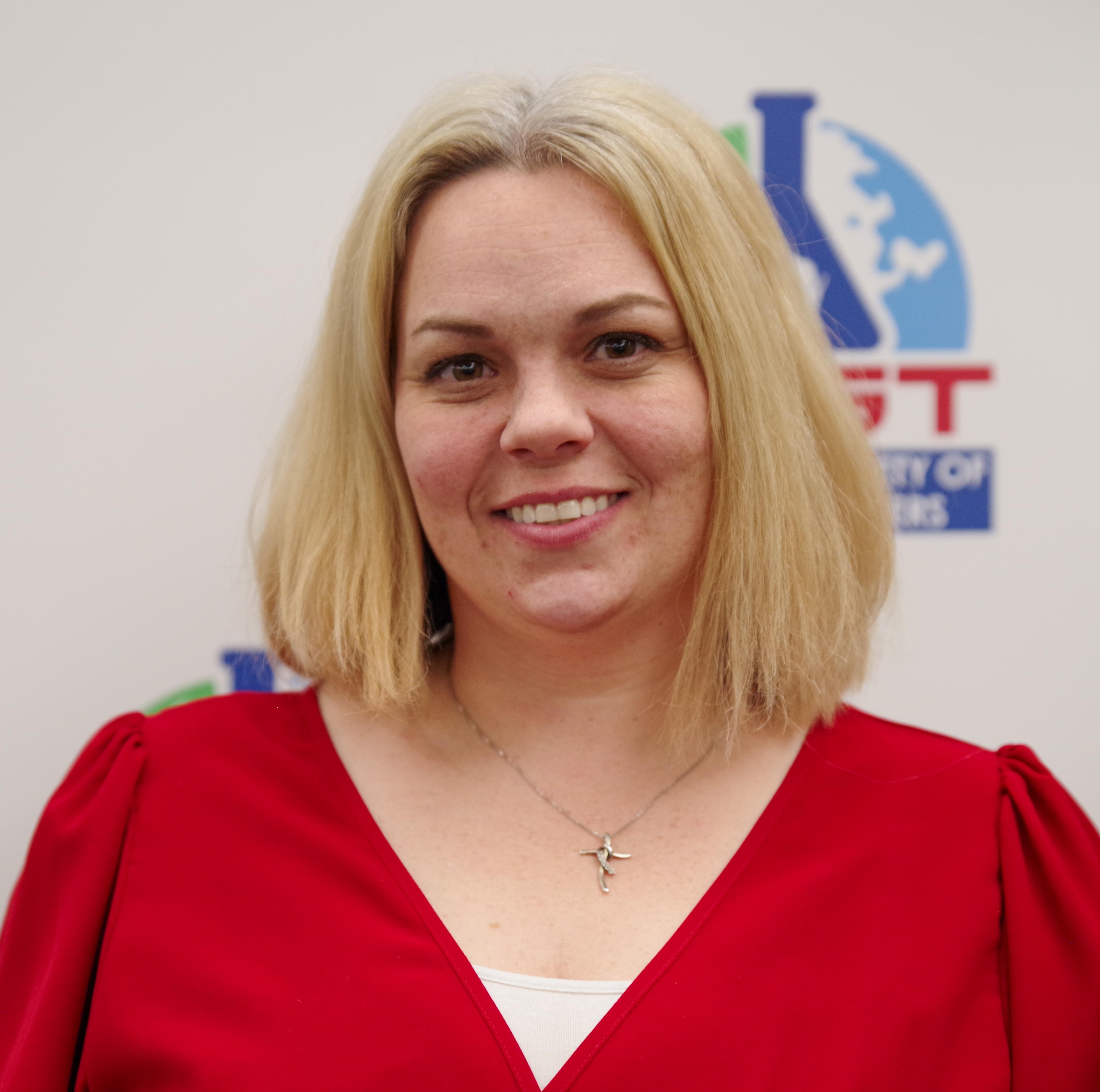
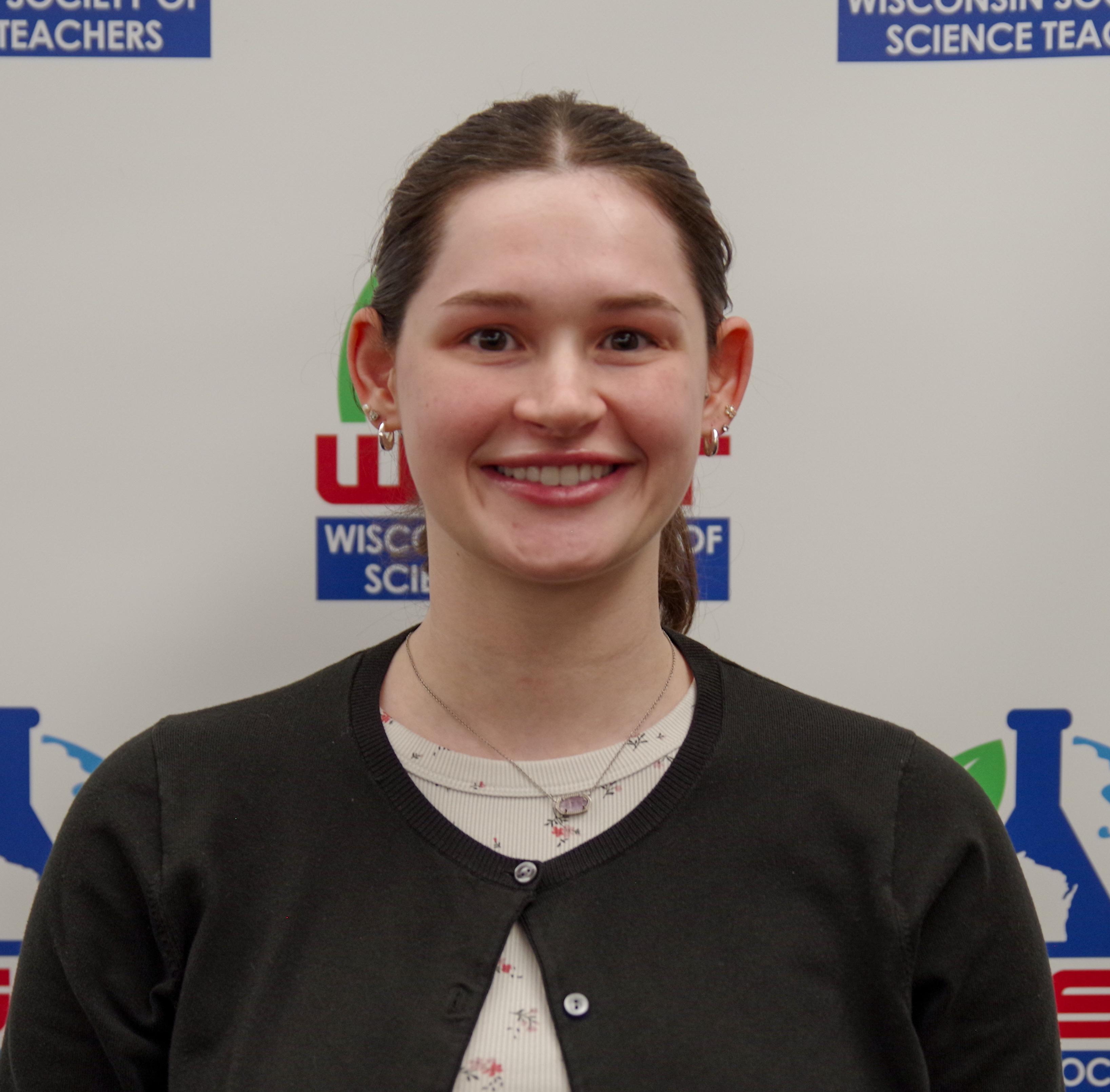
Miranda Dahlke (co-chair)
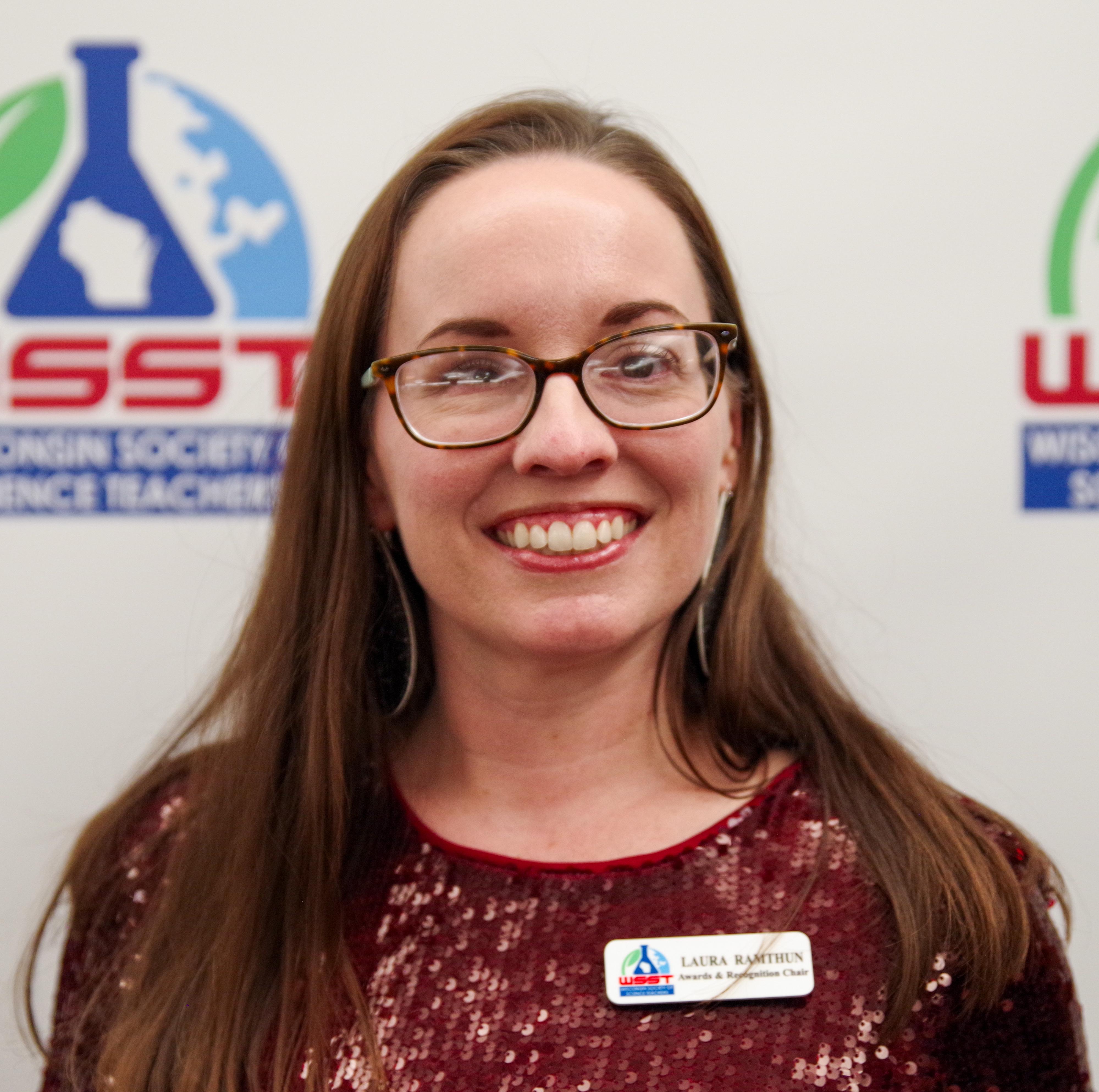
Laura Ramthun (co-chair)
Tom Davies
Stephanie Bartels
Michelle Howe Karen Messmer
Sue Whitsett Megan Sprague
Document Review
Stacey Balbach (chair)
Dave Bergerson Sue Whitsett
Chad Janowski
Elementary Education
Shelly Petzold (co-chair) Leah Aubert (co-chair)
Melissa Wimmler Teri Dillenberg
Dawn Brenner
Equity and Access
Kevin Anderson (co-chair)
Claire Bernatz (co-chair)
Zach Pratt Kristin Michalski
Lalitha Murali Karyl Rosenberg
Sara Krauskopf Kelly Steiner
Leigh Kohlmann Sarah Ratelis
Finance
Kevin Niemi (chair)
Matt Lindsey Terry Schwaller
Sue Whitsett
Foundation
Brian Bartel (President)
Denise McCulley (1st Vice-President)
Carol Ochsner (2nd Vice-President)
Dale Basler (3rd Vice-President)
Tracy Swedlund (Treasurer) Ray Scolavino (Secretary)
Higher Education
Adam Schafer (chair)
Ray Scolavino
Joel Donna
Kevin Anderson Mark Olson
Membership
Michelle Griffin-Wenzel (chair)
Ray Scolavino Tracy Swedlund
Deanna McClung Matt Lindsey
New Teacher Network
Jamie Lauer (co-chair) Sonja Gasper (co-chair)
Stephanie Ruder Megan Sprague
Terry Schwaller
Nominations and Elections
Stephaine Baker (chair)
Stephanie Ruder
Professional Development
Jamie Groark (chair)
Kevin Anderson Shelley Petzold
Stacey Strandberg Andrea Christianson
Sonja Gasper Tom Davies
Communications
Brian Bartel (co-chair) - Newsletter Editor
Julie Fitzpatrick (co-chair) - Website
Sarah Adumat (Copy Editor)
Karyl Rosenberg (Historian)
Dan Nelson
Strategic Planning
Kevin Anderson (chair)
Dennis Rohr Ray Scolavino
Kevin Niemi Kristin Michalski
WESTA
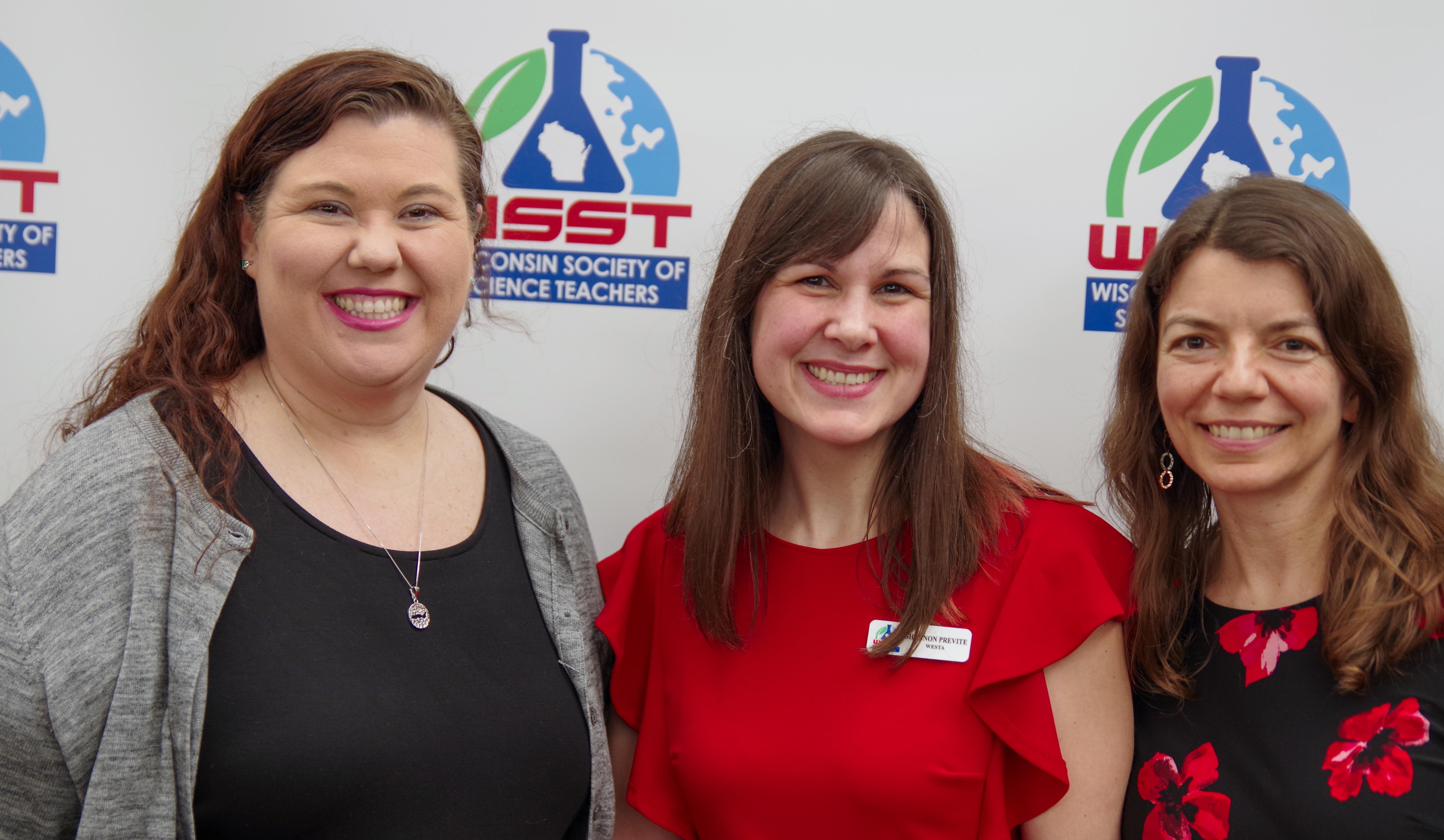
Shannon Previte (chair)
Dennis Rohr Chad Wilkinson
Michael April
Jonathan Baker
Megan Luedtke Tomara Whiteaker
WSELA
Kevin Niemi (co-chair) Kevin Anderson (co-chair)
WSST Conference Director Ray Scolavino
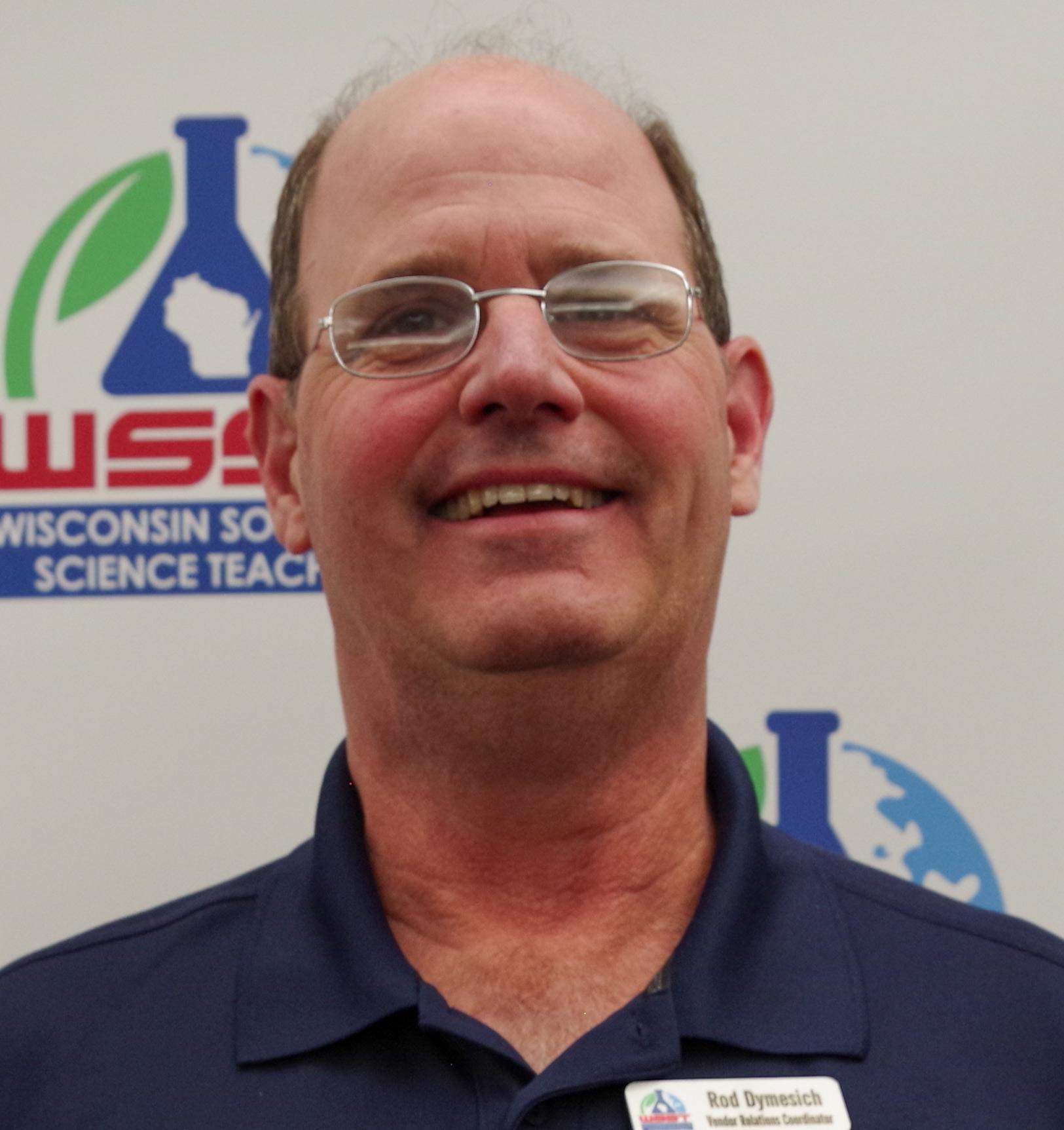
WSST Vendor Coordinator Rodney Dymesich
WSST Conference Chairs
Terry Schwaller and Kristin Kyde Appleton - 2026
Dennis Rohr and Chad Janowski Green Bay - 2027
Jamie Lauer and Megan Sprague Middleton - 2028
SHARE YOUR THOUGHTS
To submit a letter to the WSST Newsletter, send your thoughts via email to newsletter@wsst.org Content may be edited for length, clarity and appropriateness.
Conference continued from page 1
Conference will be Chad Janowski and Dennis Rohr. Please reach out to us if you have an interest in being a part of our Conference Committee. You can contact me at dennisrohr90@gmail.com
President continued from page 1
house, unlike many others right now. Someone at my work put a remote camera on just their sump pump area so they can be alerted right away if something happens, and I think that is genius. It is these tough times that accentuate our need as stewards in our community to help out others in times of need. We went to the Shawano landfill yesterday morning to get rid of all of our destroyed basement flooring, drywall and furniture. Then as we were just starting to unload it all from our filled trailer and truck, a guy pulled in forward into the building and got out, and started helping us unload our trailer. He didn’t have to, he could have just driven by, but to us that simple gesture made our day. There are good people in this world, and each of us can find some way to just help out our neighbors right now, big or small. Kindness is contagious. Hang in there, better times are ahead.
I certainly enjoyed our amazing WSST Appleton Conference and it was so nice to see so many of you there to catch up with you! Congratulations to Krisin Kyde and Terry Schwaller, along with their entire Conference planning team for a job so well done! From the early Thursday morning Registration desk team to the 11am Saturday morning presenters and
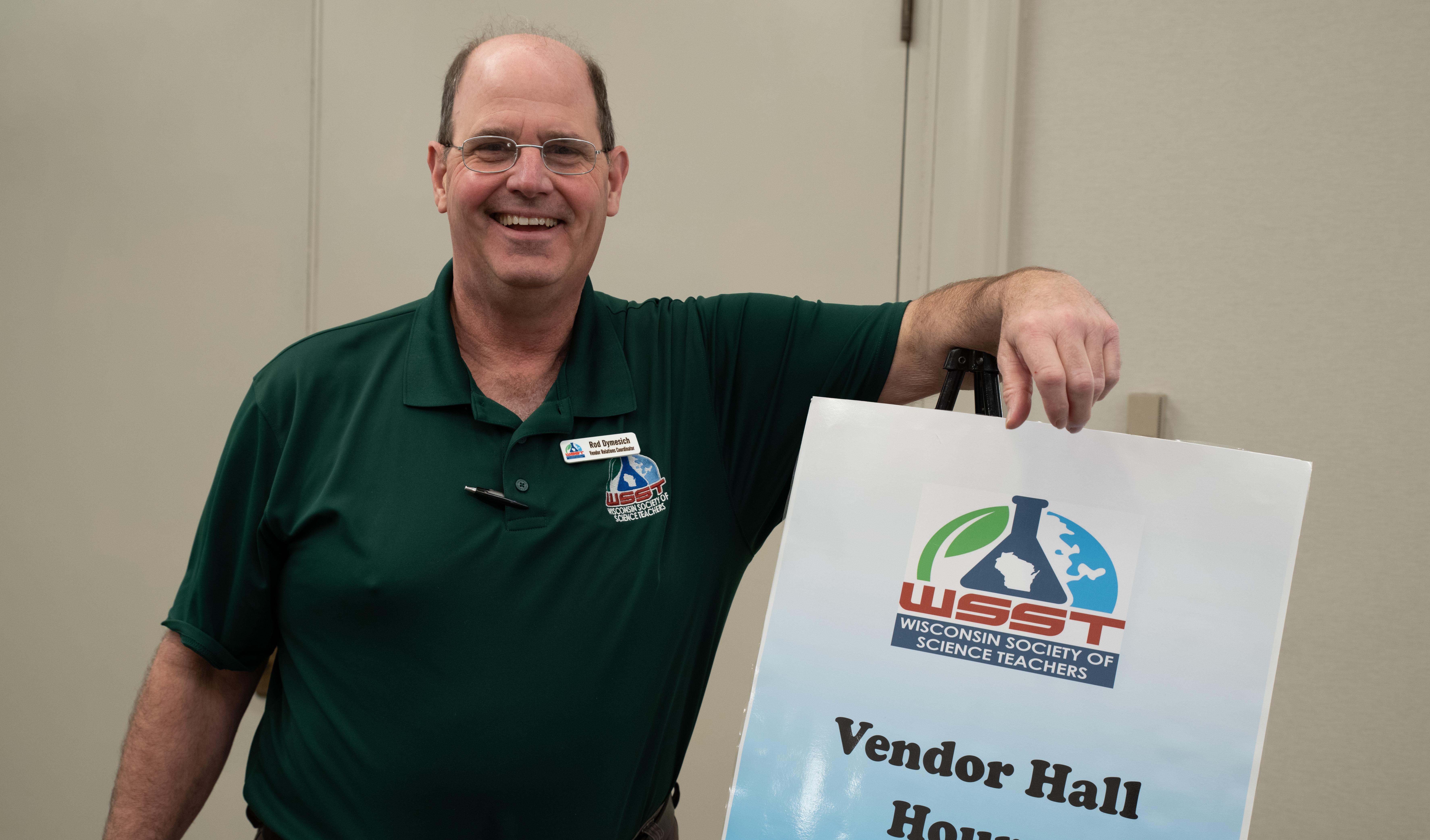
attendees, it was a whirlwind of awesome events and great times. And we learned so much along the way from the incredible list of presenters. Each of the Conference Committees did an exceptional job, and I wanted to highlight a few. Thank you to Rod Dymesich as Vendor Coordinator and his team for again pulling in so many vendors for our conference. And kudos to Shannon Previte and her team for another incredible Rock Raffle with a record amount raised! And I really appreciate the team of Michelle Howe and Megan Hahn for a fun Presidential Social with Trivia, and their work organizing all of the amazing door prizes, but for also securing the Friday morning coffee courtesy of Dunkin Donuts! That was so awesome! I hope that each of you finds a way to relax and recharge this summer! If you
Digital Presence
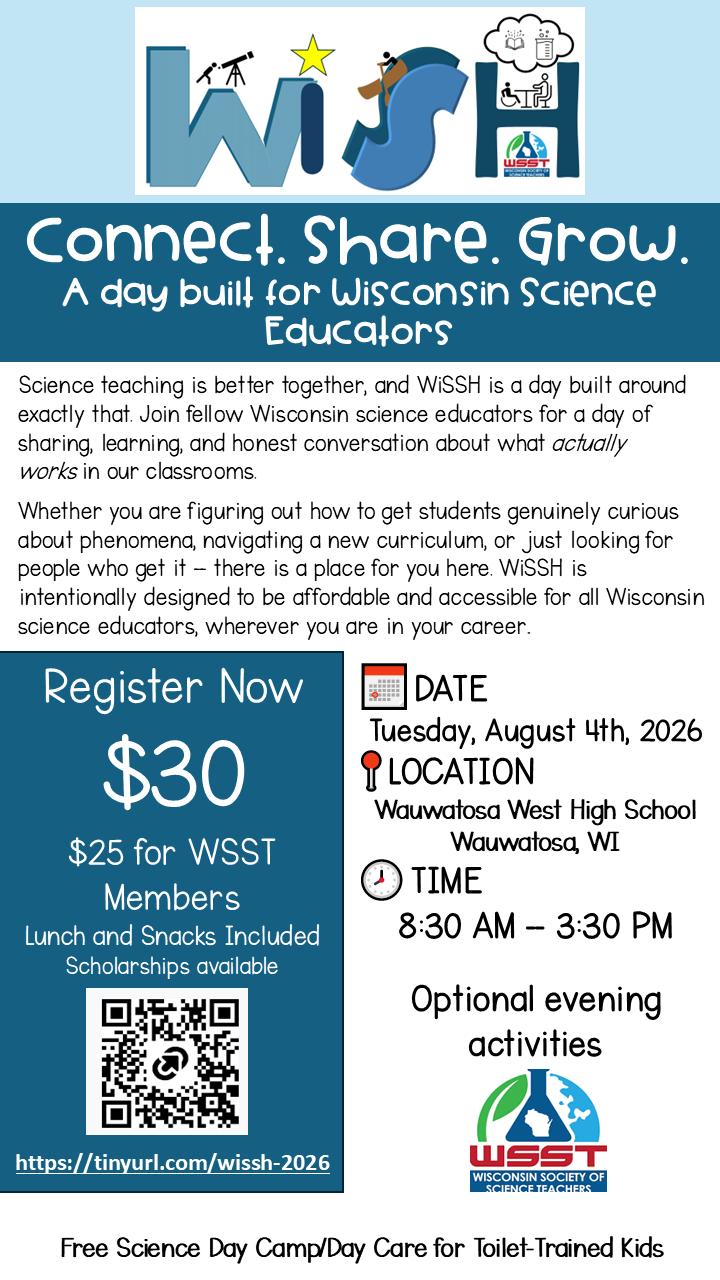
would like, our WSST Summer Board meeting will be held in southwest WI at the Kickapoo Reserve on Tuesday, June 23 and Wednesday June 24. Any member is always welcome to attend our meetings, as it is your organization. And if you are heading to WINGS 2026 in Land O’ Lakes, congratulations to you! I hope you have a fantastic time collaborating with like-minded people and enjoying all that the Northwoods has to offer! It truly is a life transformational experience in the world of science teaching! And don’t forget about WSST’s newest professional development opportunity on Tuesday, August 4th as we introduce WISSH - a one day “miniWINGS” event held in Wauwatosa. Please note that they will also have on-site child care available. I also hope that you don’t forget to mark your calendars for next year’s WSST Conference in Green Bay on April 8-10, 2027, where we will Rock The Bay! Find your inner rock star! Chad Janowski and I can’t wait to Rock the Bay with you! You keep on Sciencing!
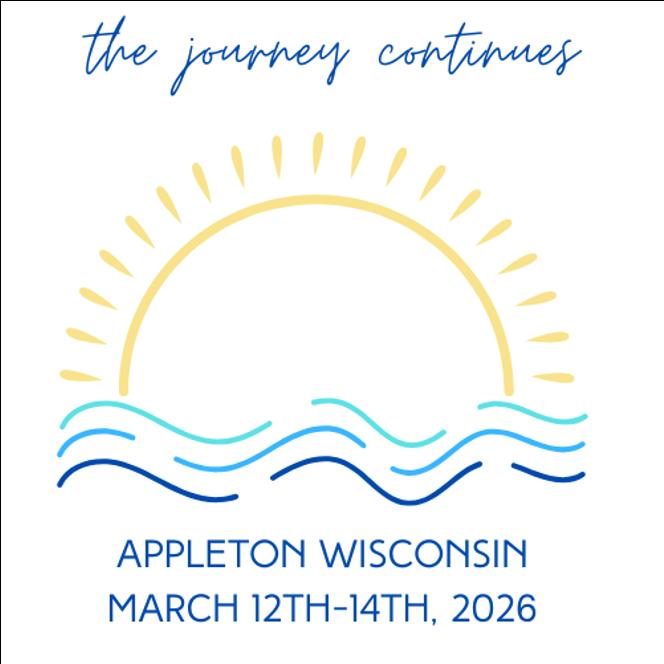
WSST Conference 2026: The Journey
Continues!
By Kristin Kyde and Terry Schwaller, Conference Co-Chairs
We would first like to extend a huge thank you to everyone who came to the conference in Appleton! No matter how much time and planning goes into the conference each year, it cannot be a success without our WSST membership. From presenters, to exhibitors, to all of you who just came out to improve your professional practices, we appreciate all
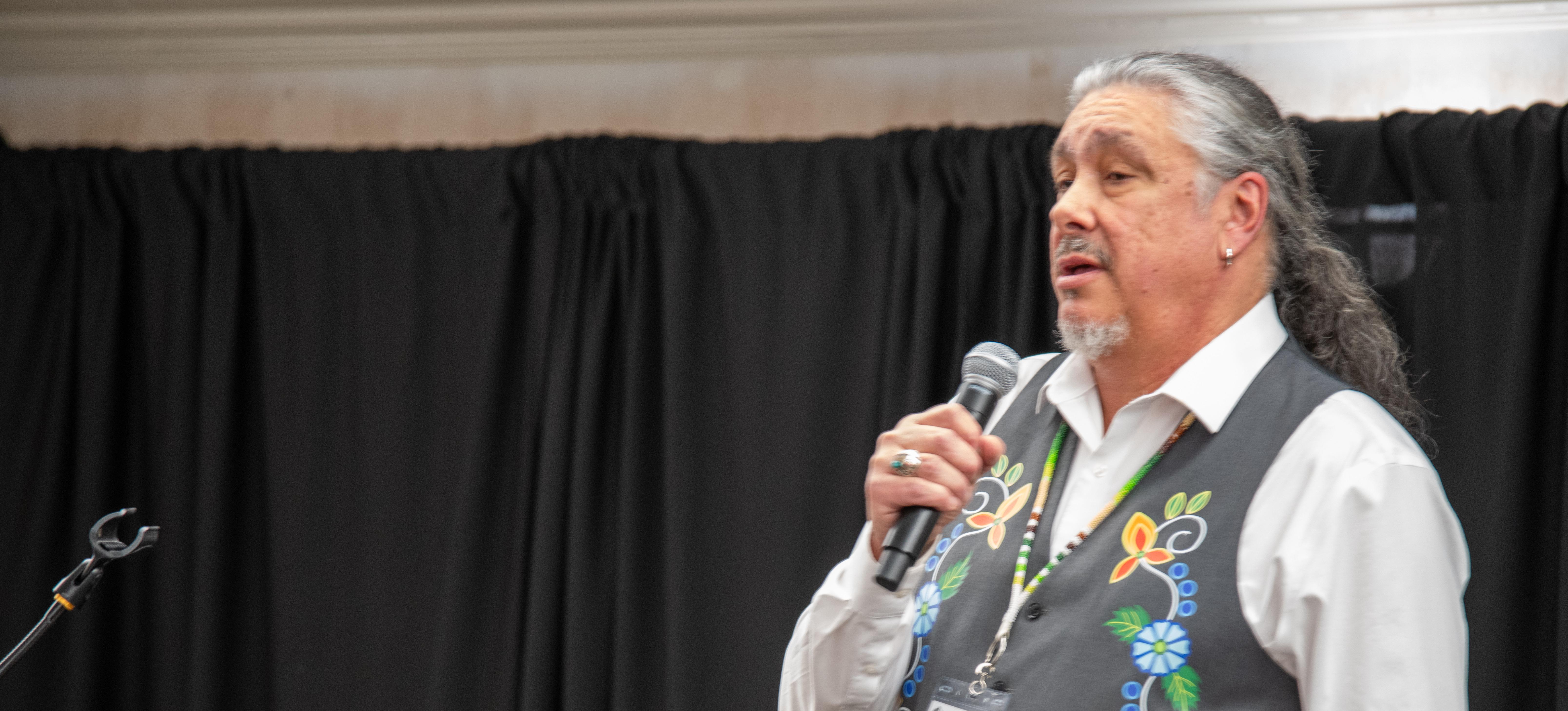
of your enthusiasm and collegiality. We would like to thank Michael Waasegiizhig Price, our Ed Mueller Luncheon keynote speaker. Michael delivered a fantastic presentation, connecting environmental and conservation issues to his Anishanabe heritage. The message resonated with the membership in attendance; we really do need to pay more attention to our environment, and our impacts on it.
A big congratulations is extended to all of our award and grant winners! The Milton Pella Banquet was a jam-packed affair, and included the unveiling of the brand new Legacy Award and the John and Sue Whitsett Pre-Service Teacher Scholarship.
Lastly, we would like to thank our conference committee and all of those who volunteered at the conference. Co-chairs cannot plan the conference alone, and everyone on the 2026 conference team did an outstanding job! You are all rockstars!
Speaking of rockstars, we cannot wait to see what next year’s conference co-chairs have in store for 2027. We will be there to “Rock the Bay!” in Green Bay next year, as we complete our journey up the Fox River. See you all then!
WSST Annual Awards Presented at the Milton O. Pella Banquet, March 13, 2026
The Awards and Recognition Committee congratulate the following winners who were recognized during the Milton O. Pella Banquet on March 13, 2026. Winners were recognized for the 2026 Ron Gibbs Award, Excellence in Science Teaching Award, Administrator Award, and Frank Zuerner New Science Teacher Award and Scholarship.
Ron Gibbs Award
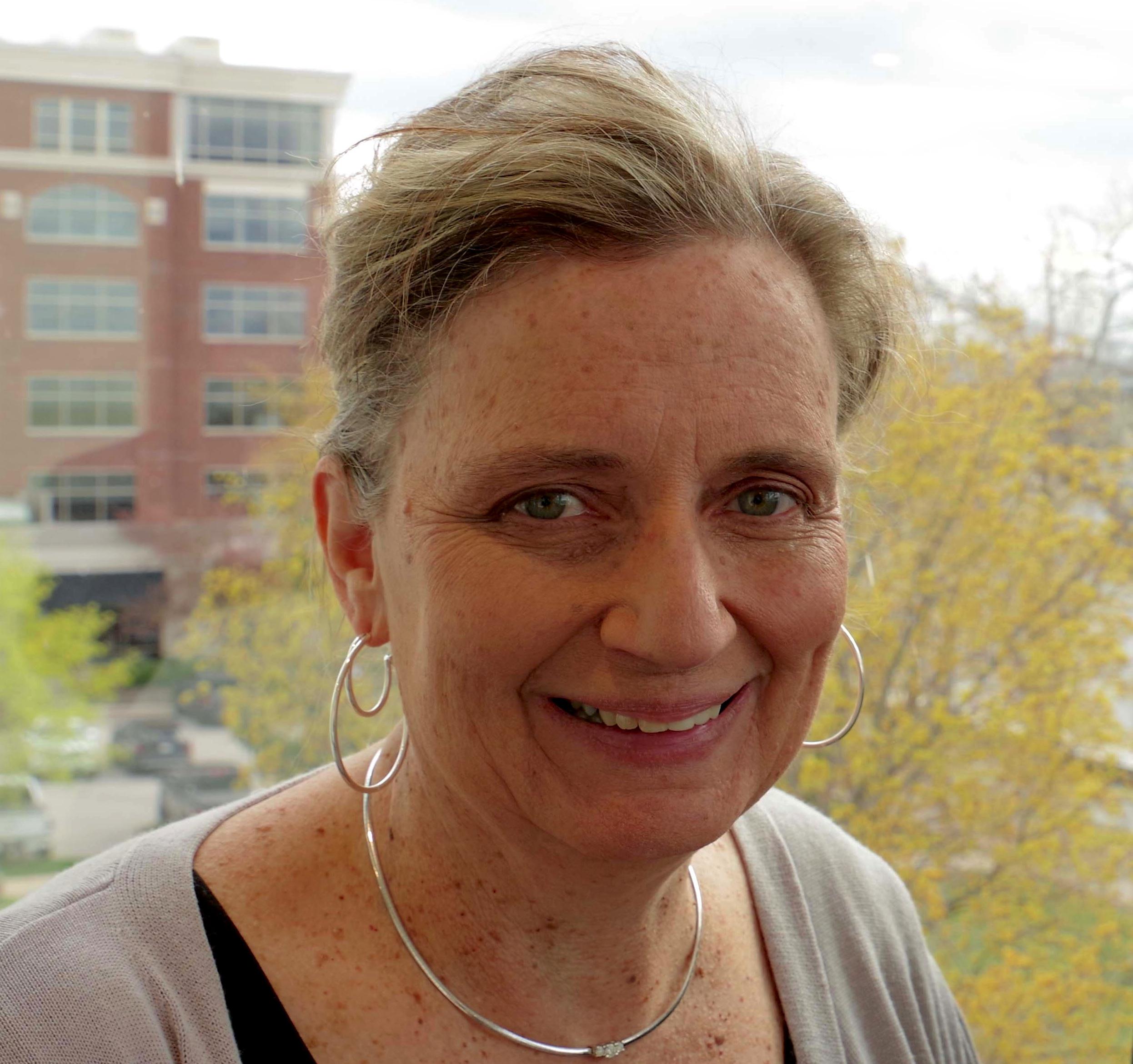
Kristin Michalski has dedicated more than 30 years to advancing science teaching and supporting educators across Wisconsin. A longtime high school physics teacher in East Troy and Mukwonago, she has played a pivotal role in WSST through conference leadership, executive board service, and strategic planning initiatives. Her efforts helped modernize conference experiences through the implementation of digital tools that enhance accessibility and organization. She has also served the executive board as both Secretary and President, overseeing the organization’s most recent strategic planning cycle.
Kristin’s impact extends beyond WSST. She founded the Milwaukee Area Physics Sharing group to support collaboration and participated in the Research Experiences for Teachers Program to strengthen classroom practice. Kristin also continues mentoring future teachers at the undergraduate level following her retirement in 2023. Her distinguished career includes numerous accolades, including National Board Certification and the Presidential Award for Excellence in Mathematics and Science Teaching.
Excellence in Science Education Awards
Mary Caucutt teaches 7th-grade science at Templeton Middle School, and brings nearly three decades of experience to her classroom. She is a leader in integrating technology and promoting the ethical use in science education, a mentor to pre-service teachers, and an active contributor to assessment development. Her inquirybased, student-centered approach challenges learners to think critically and engage deeply with NGSS-aligned content. Her principal, Brad Hoffman, shared that “Dr. Mary Caucutt is an out-
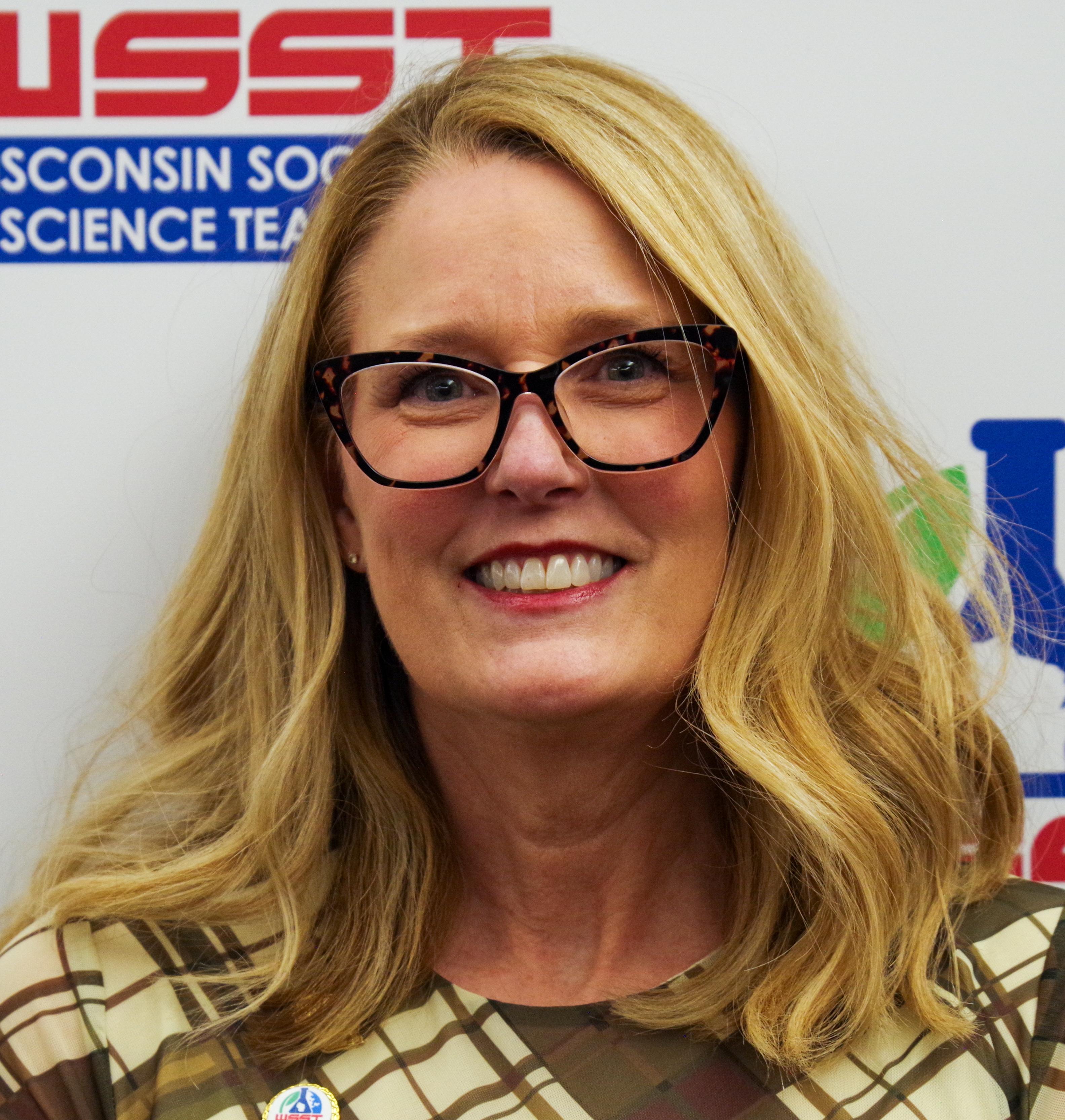
Kristin Michalski
standing educator whose expertise, professional growth, leadership, and contributions have made a lasting impact on students and science education.”
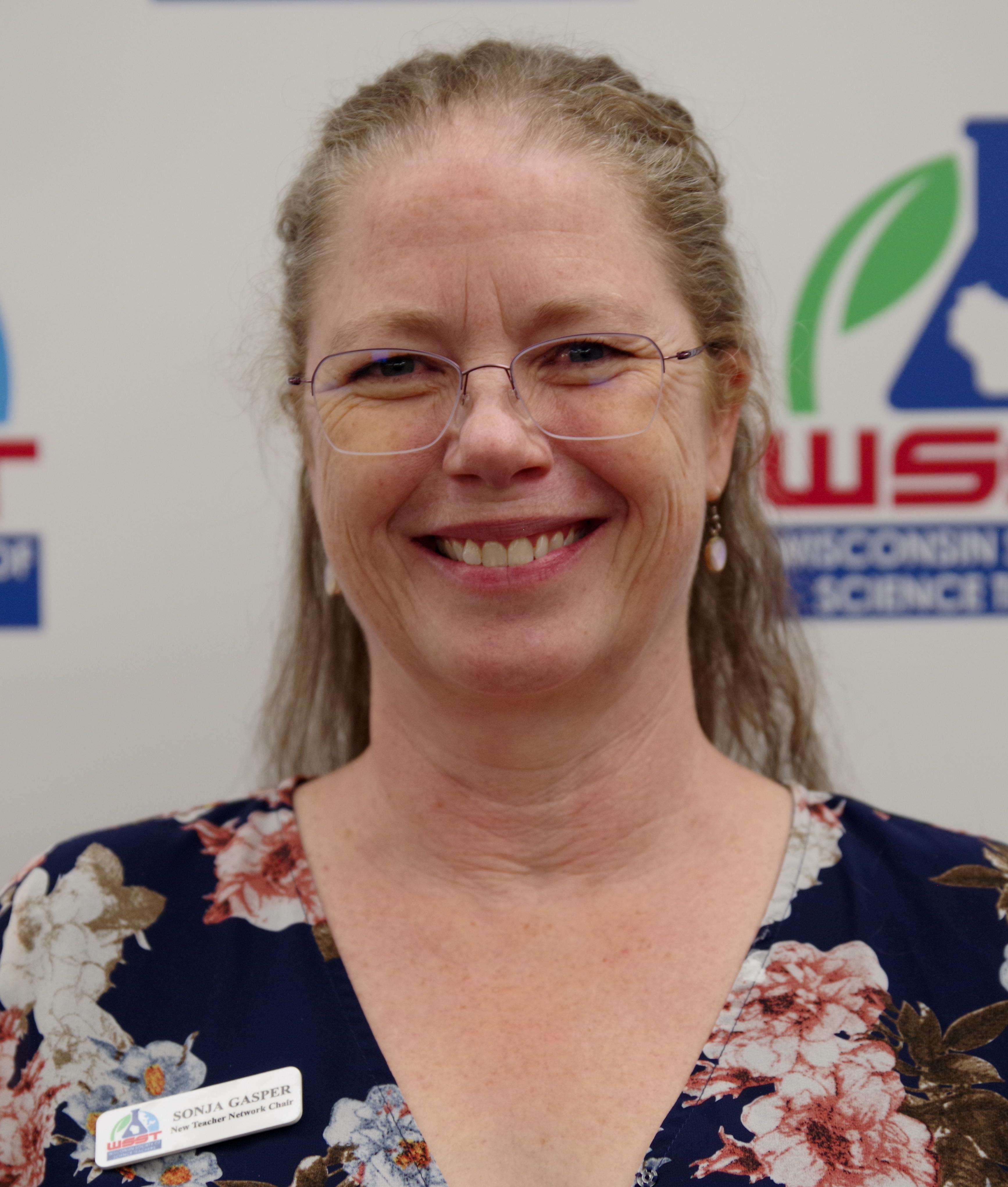
Sonja Gasper is a life sciences teacher at Newman Catholic High School and stands out for her dynamic, phenomenon-driven instruction. Her classroom emphasizes scientific storytelling and student sensemaking, fostering both conceptual understanding and confidence. Beyond the classroom, she is an active WSST member, contributing to professional development initiatives and supporting new teacher networks across the state. Terry Schwaller, a collaborator of Sonja’s at WINGS, shared that after visiting her classroom and seeing her guide her students through a discussion of must haves for their models, they were able to create some of the most intricate and impressive models he had ever seen incorporating in-depth explanations with detailed, labeled drawings.
Administrator Award
Constance Quade, Executive Director and Principal of iForward Public Online
Charter School, is honored for her innovative leadership in a virtual learning environment. She has prioritized time and funding for curriculum development tailored to online instruction, fostered collaboration through peer review and professional learning communities, and supported staff engagement in organizations such as WSST and NSTA. Under her leadership, students have also participated in authentic scientific experiences, including the Student Spaceflight Experiments Program, enabling experiments aboard the International Space Station. One of Constance’s staff, science teacher Laura Kavajecz stated, “Constance has been an advocate for offering our students a wide variety of interesting, challenging, and unique science elective courses”.
Frank Zuerner New Teacher Scholarship Winners
Isabel Saber is a biology and anatomy & physiology teacher at Baraboo High School. She is recognized for her ability to transform student perceptions of science. In just four years, she has fostered
Sonja Gasper
Constance Quade
Mary Caucutt
a classroom environment where students who once identified as “not science people” become engaged learners, motivated to explore scientific phenomena. Her principal noted her reflective practice and commitment to continuous growth.
Bridget Topczewski teaches biology and Project Lead the Way: Medical Interventions at Catholic Memorial High School and has created meaningful, place-based learning experiences throughout her courseload. By
WSST Legacy Award
engaging students in ecological research at Sullivan Wetlands, she has helped them connect scientific content to realworld applications within their community. Colleagues highlight her collaborative spirit and dedication to professional growth.
Rumford Award
The Rumford Award was established to showcase a science teacher who has been a member of WSST for at least 10 years, made presentations at least once during the spring conference, and served productively for at least four years as officer, committee chair or district representative.
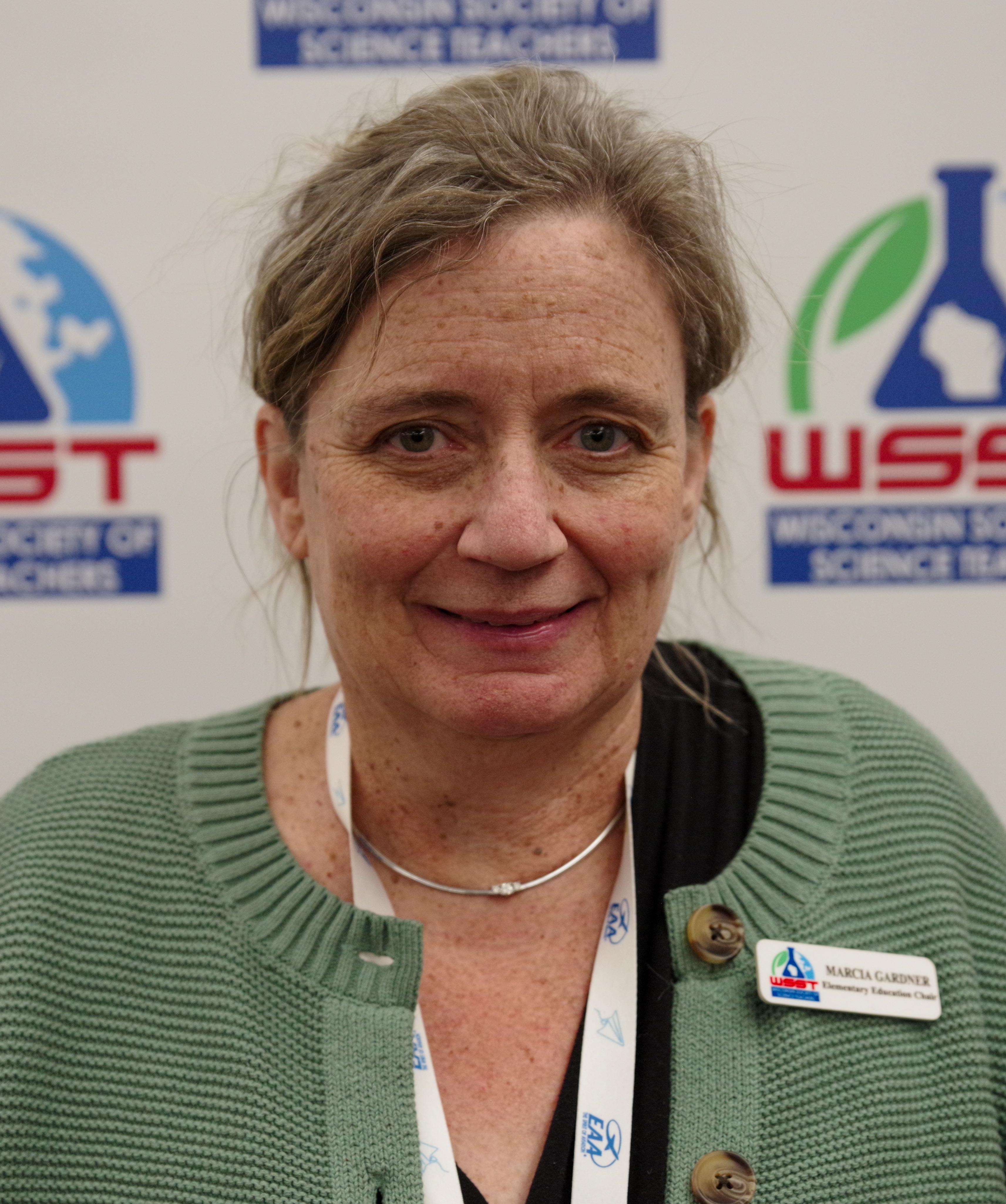
WSST is pleased to announce Marcia Gardner as this year’s recipient.
Established in 2025, the Legacy Award recognizes people who have made outstanding contributions to WSST, in numerous areas, and have supported the organization's mission for many years. WSST’s inaugural Legacy Award goes to Tammy Dymesich, Rodney Dymesich and Ray Scolavino.
Bridget Topczewski
Isabel Saber
Marcia Gardner
Rodney Dymesich Tammy Dymesich
Ray Scolavino
2026 WSST Election Results
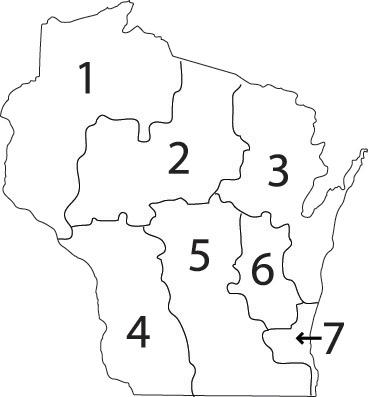
WSST Voting Districts
District 1 (CESA 11 & 12)
District 2 (CESA 9 & 10)
District 3 (CESA 7 & 8)
District 4 (CESA 3 & 4)
District 5 (CESA 2 & 5)
District 6 (CESA 6)
District 7 (CESA 1)
Nominate a Colleague for a WSST Award Today!
Do you have a colleague you wish to nominate? Nominations for the coming year are accepted at any time through the first Friday in December of each year. See the WSST website for links to nominate at www.wsst.org/awards
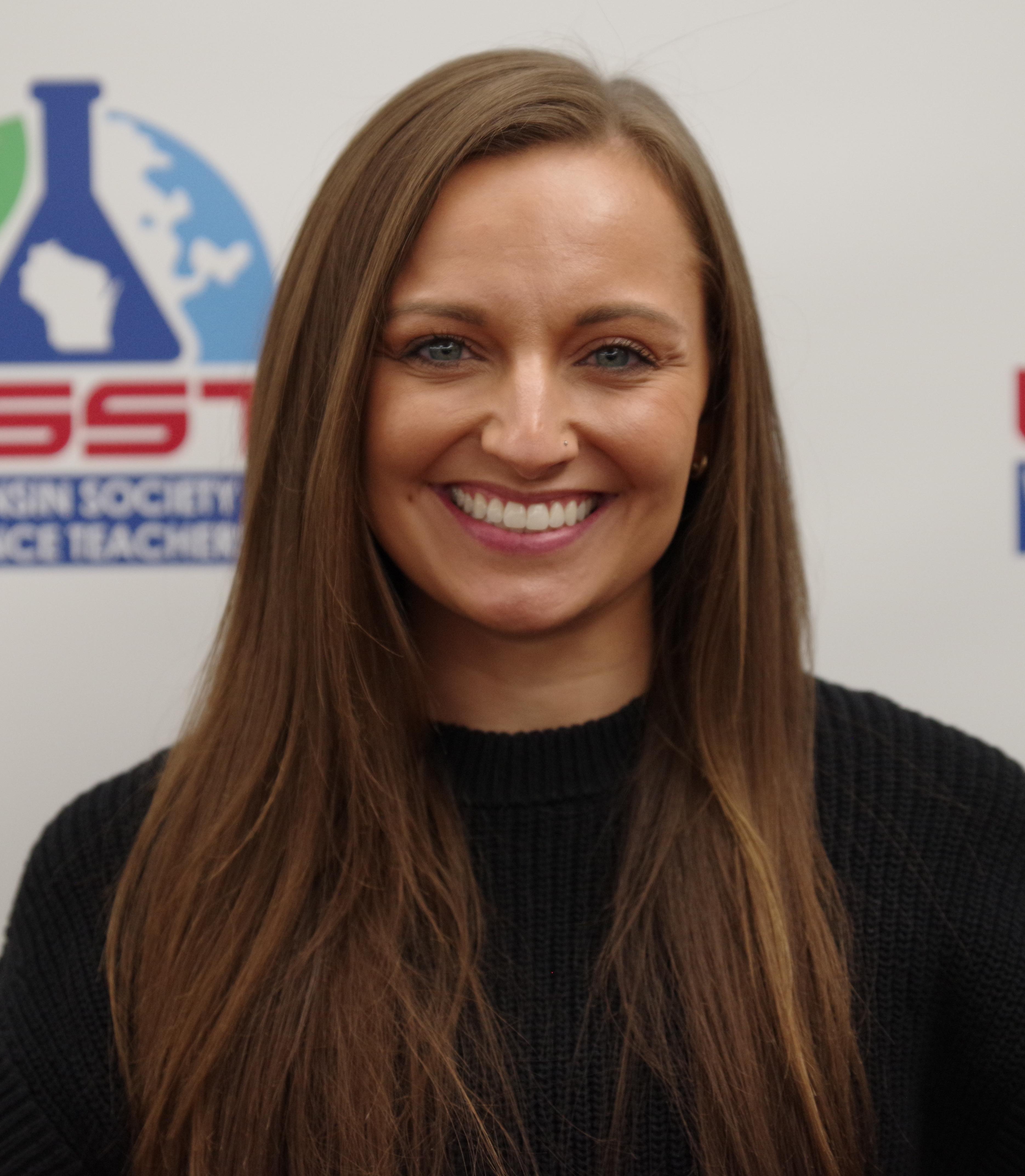
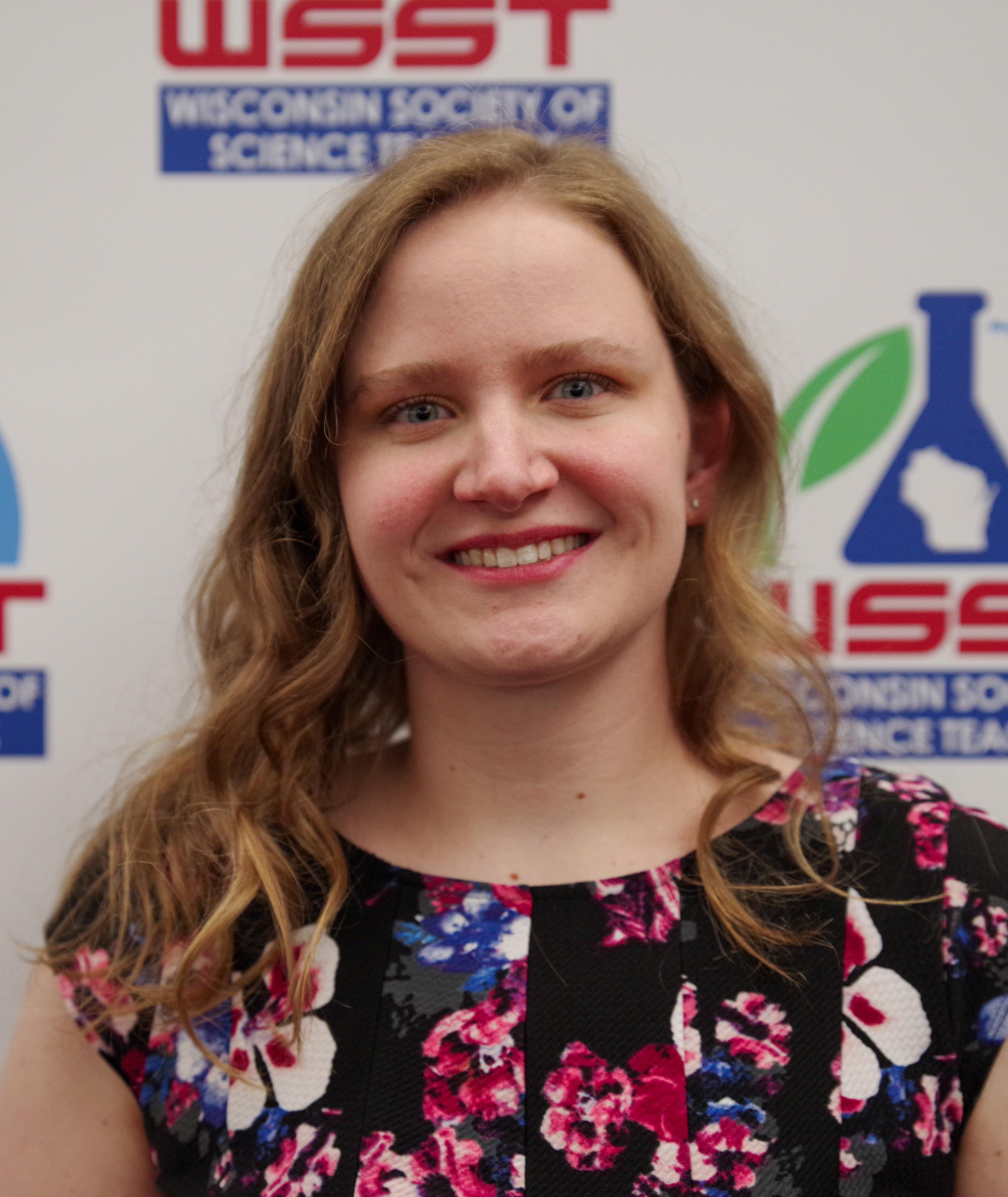
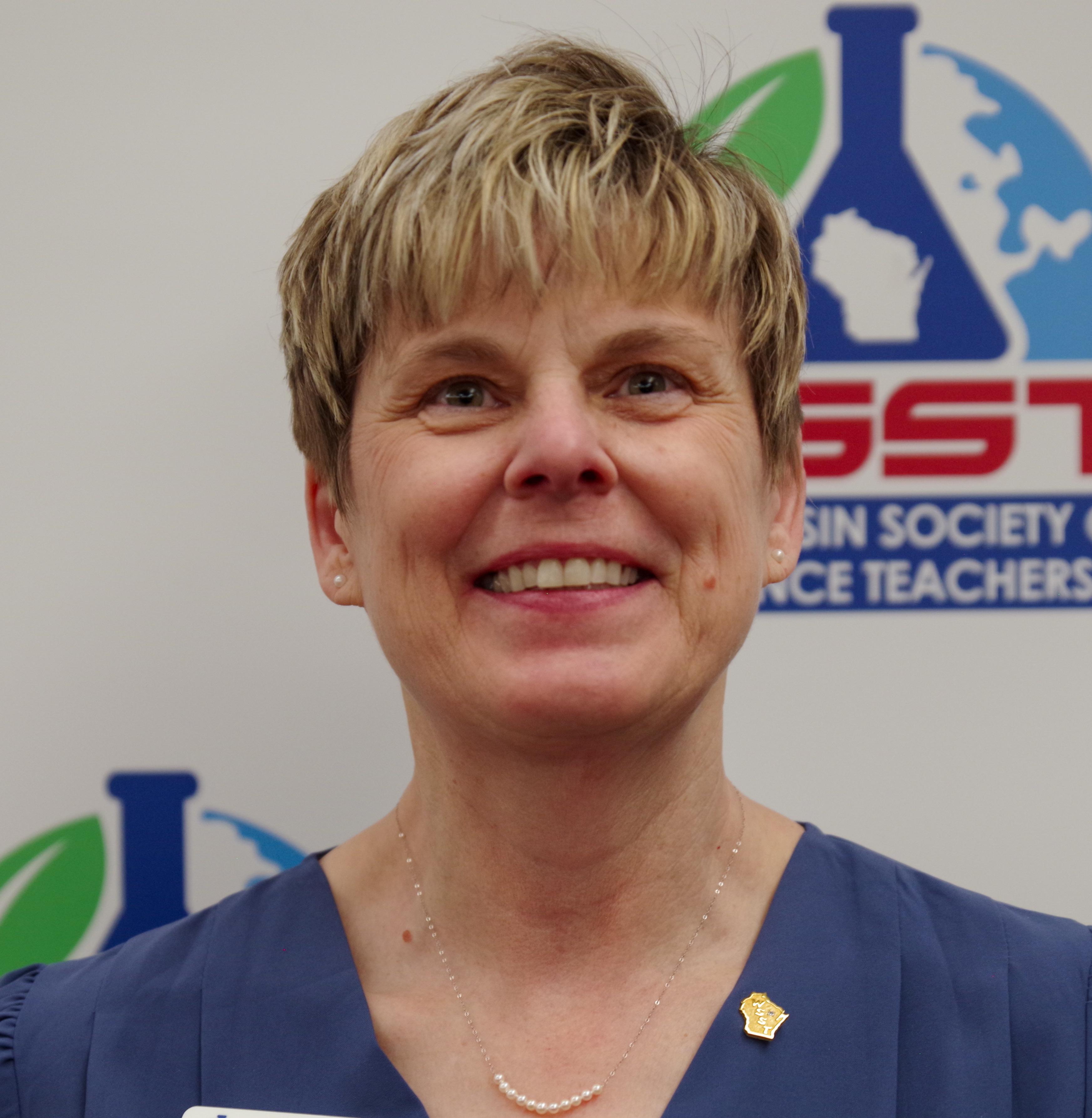
Tom Davies District 2 Director
Sarah Kingbile District 3 Director Marcia Gardner Secretary
Foundation Grant Awards
The WSST Foundation is proud to present the following grant winners acknowledged at the 2026 Milton Pella Banquet.
Byerly Grant
The Byerly Grant is a memorial to Don Byerly, who was instrumental in developing and sustaining Science World.
Stephanie Schreiner, Fort Atkinson Earth Science Community Service
Classes will work with the Jefferson County Parks Department in a series of stations that are community service and educational based.
Milton Pella Grant
The Milt Pella Grant supports the professional activities of our members.
Sarah Adumat, Waupun Area Jr/Sr High Making Engineering Come to Life with ChompShop
Students will actively engage in science and engineering practices through the excitement of making with cardboard!
Emma Holtan, Superior Rivers Watershed Association
Local Streams, Real Data: Student Scientists Explore Macroinvertebrates as Indicators of Water Health in the Lake Superior Watershed Biology students at Ashland High School collaborate on authentic watershed research with the Superior Rivers Watershed Association and pub-
lish findings through the Data Nuggets program.
Katherine Lehto, Monroe High School
Indoor Worm Composter
AP Environmental Students will be using the worm composter to understand the carbon and nitrogen cycle.
Michelle Howe, Lodi Middle School
Trailblazers: Engaging Students and Community in the Lodi School Forest
This grant will help us build educational kiosks in the Lodi School Forest to guide students and visitors, sharing maps, forest ecology, and cultural history while supporting outdoor learning.
Foundation STEM Grant
These grants are to be used to improve STEM learning for science students tied to a specific project or curricular topic.
Jessica Peterson, Brillion Middle School Micro:bit Hovercrafts
This grant will purchase codable hovercrafts that will enhance a middle school STEM class where students explore astrodynamics, forces, and coding through flight experiments with drones, planes, and rockets.
Sarah Ludwig, Woodworth Middle School, Fond du Lac School District
Code to Curiosity: Empowering STEM Learning Through Coding and Real-World Force Phenomena
This project engages students in hands-on STEM learning by integrating coding, modeling,
Michelle Howe
Jessica Peterson
Amber Halverson
and investigation of real-world force phenomena to build problem-solving and scientific reasoning skills.
Kelly Kramer, Edgar School District
Engaging Students in Physics
This grant will introduce hands-on physics experiments using Vernier dynamics carts to explore motion, force, and data analysis.
Amber Halverson, Dodgeland Force Science through Concussion Studies
This grant will allow students to explore how impact and force cause a concussion. This information can then be shared with both the football team as well as medical classes.
Founder’s Pre-Service Teacher Grant
These scholarships of $500 each will pay for pre-service teachers to attend the upcoming WSST conference.
Lauren Hose, UW-Milwaukee
Front and Center Grants
These special grants, in the amount of up to $200 each, are awarded at the annual conference.
• Jasmine Valentine, La Crosse - Doh you
Megan Sprague, CESA 4 - Traveling Library
• know about resistor?
Megan Luedtke, Appleton North High
• School - From Stardust to Substances: Visualizing Atomic Creation and Bonding
• in science
Kassandra Felts, Wausau, Solarcan PUCKS
Tom Davies, DC Everest, Solarcans Pucks
• Niasya Timolien, Glen Hills Middle School -
• Hydroponics/Aquaponics System
• Improving Engagement with Cell Models
Laura Ramthun, New Berlin Eisenhower -
• Solarcan Pucks: Capturing the Sun’s Path
Shannon Previte, Badger HS, Lake Geneva –
Ian Dorney-Riffle, Riverside University
• High School, MPS - Ecological Sampling
• - PPMS Revitalization Project
Michelle Mallonen, Pilgrim Park, Elmbrook
• Conservation Labs
John Reiland, Oshkosh West - Energy
Stephanie Ballard, Campbellsport High -
• Using Play Doh to Investigate Electricity
• (Elkhorn) - Personalized Medicine: Diagnosing & Targeting Breast Cancer
Molly Wallace, Career & College Academy
• Robotics
Julie Fitzpatrick, Fond du Lac - STEM Lego
• Light Box Discoveries
McKenzie Grant, Trees For Tomorrow -
• 3D Cell Biology Modeling
Sarah Eloranta, Florence School District -
Kiana Johnson-Carter, New London High
Gillian King, Woodworth Middle School in
• School - Small Scale Hydroponics In the Classroom
• Fond du Lac School - Seeing the Invisible: Thermal Energy in Action
• Discovering the lipid bilayer
Abbie Shinkle, Evansville High School -
Laura Ramthun Abbie Schinkle
Niasya Timolien
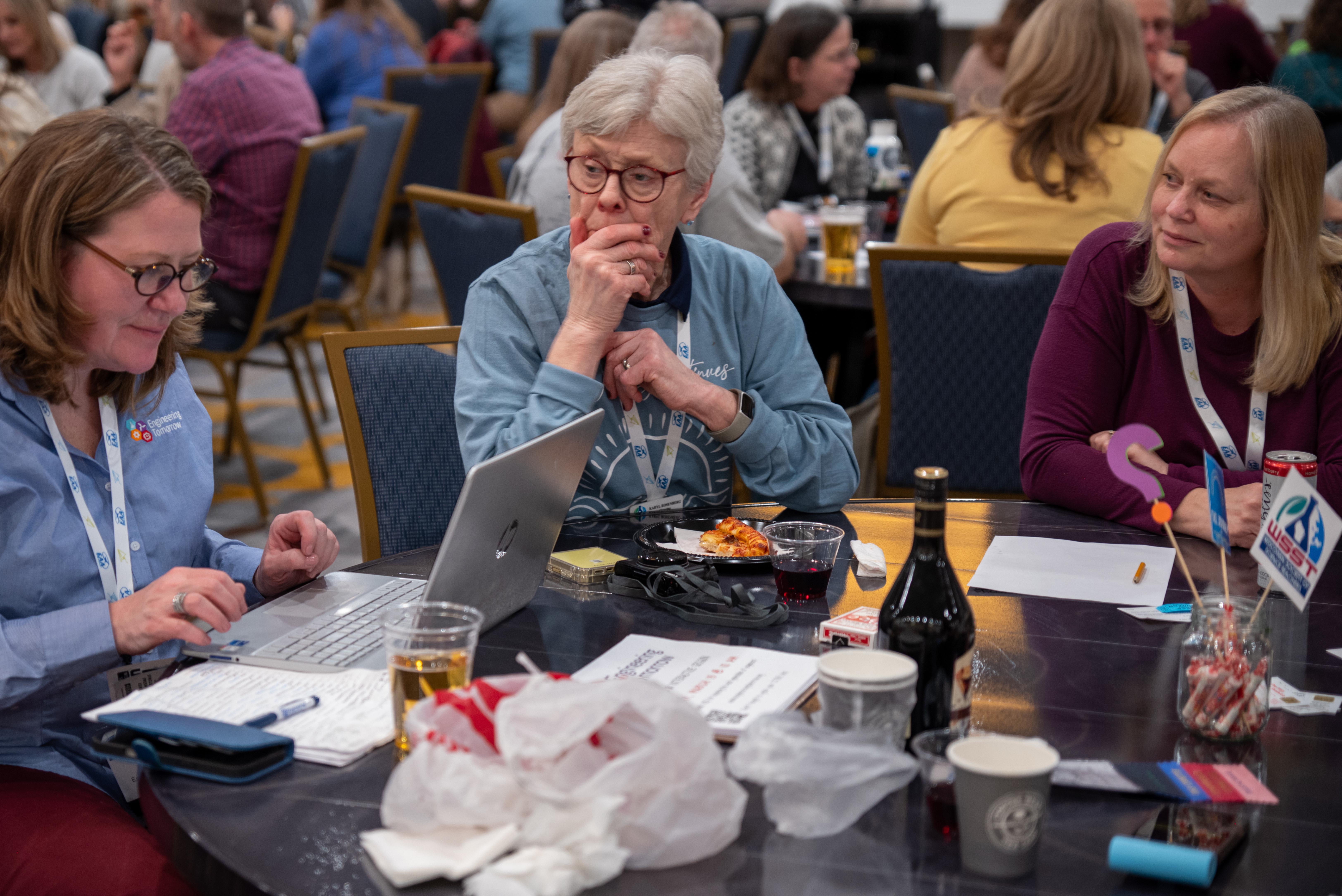
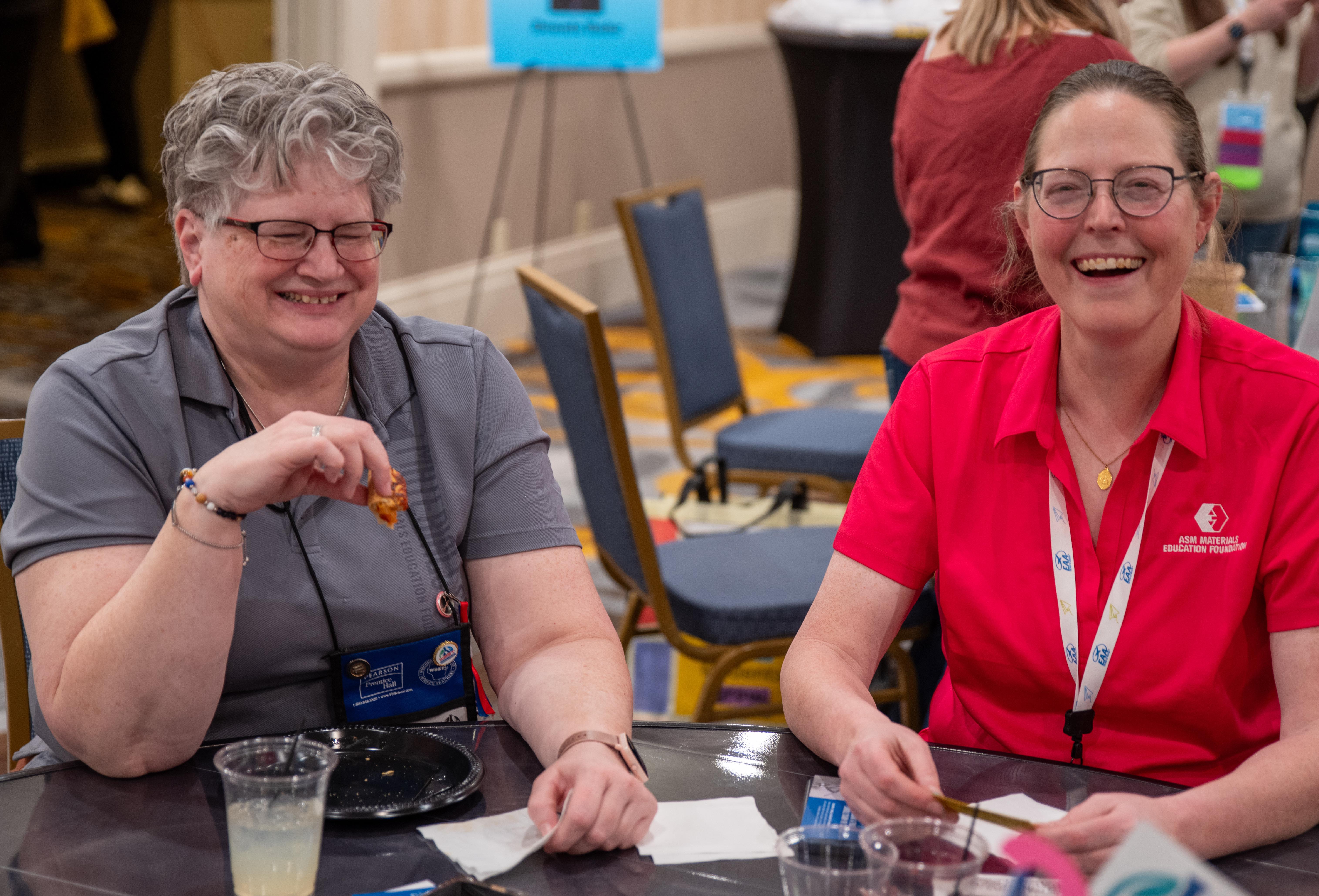
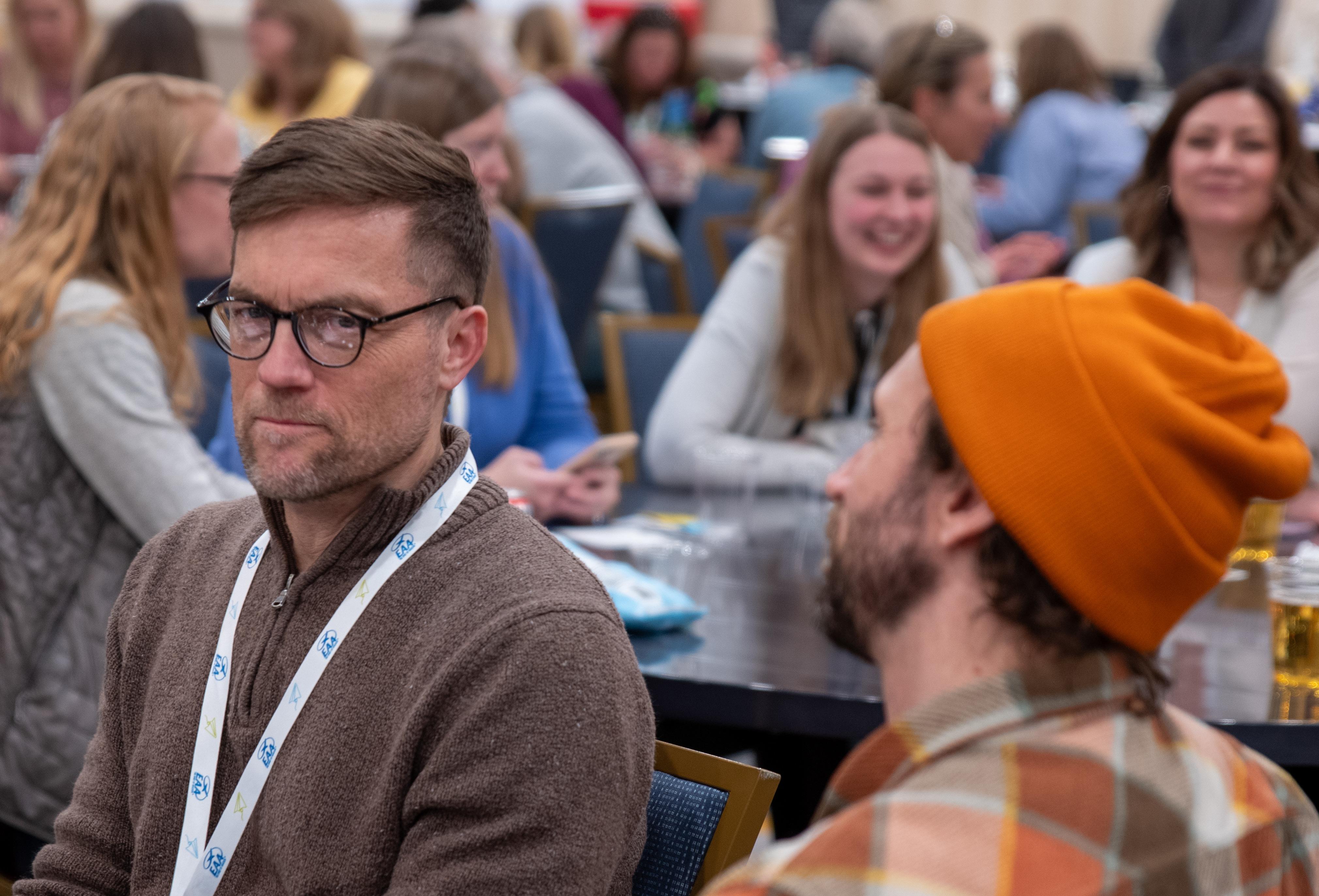
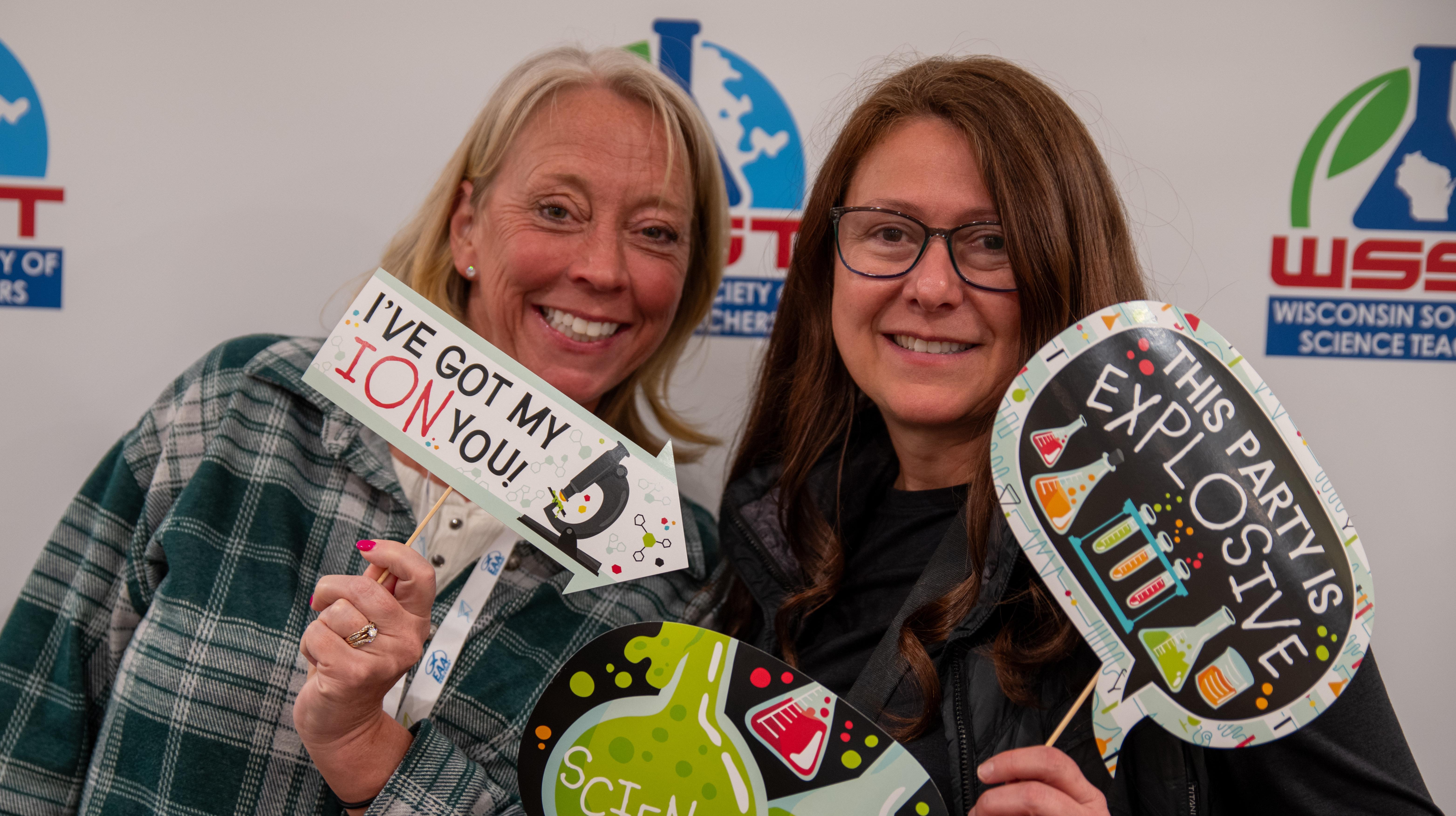
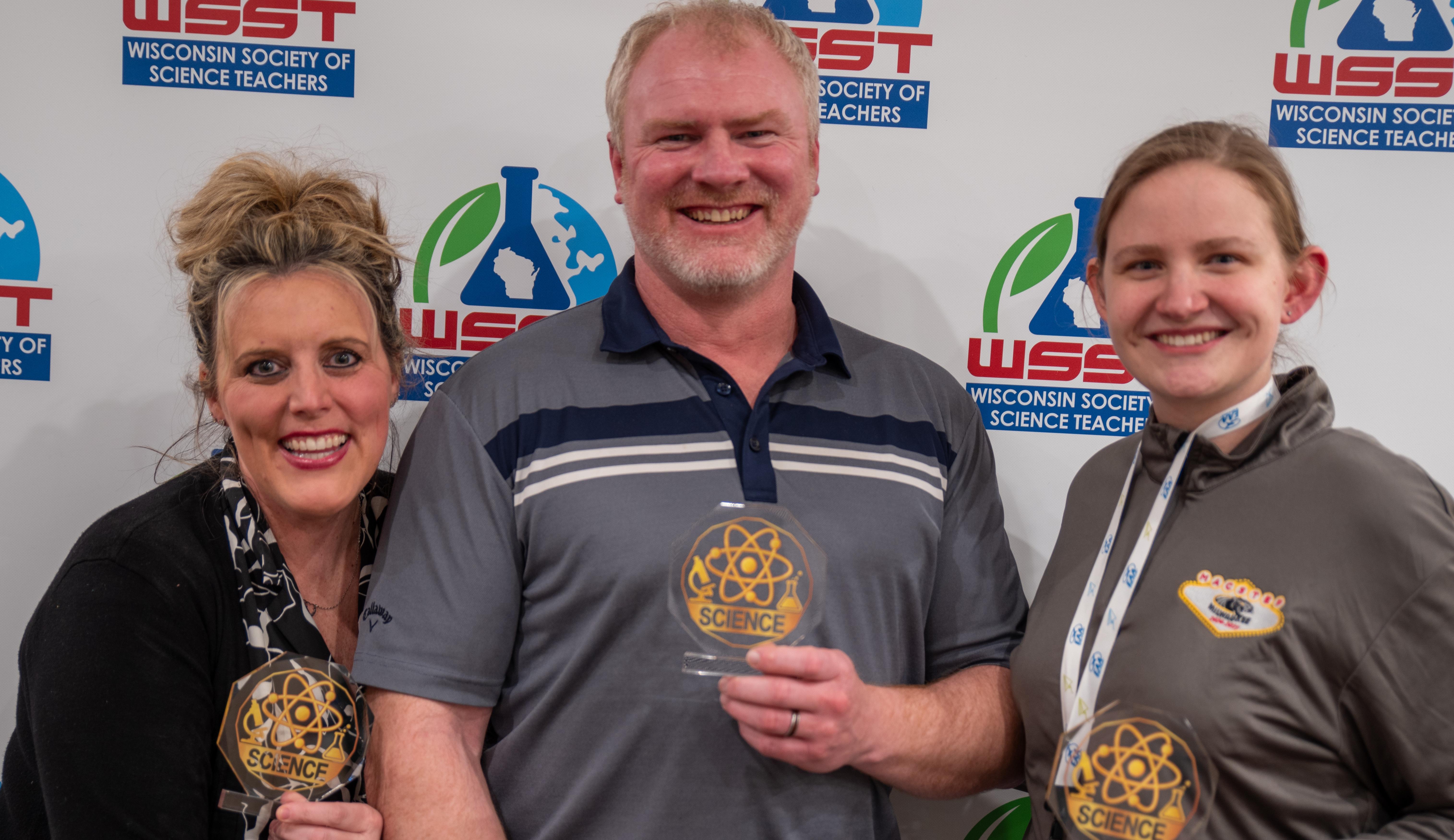
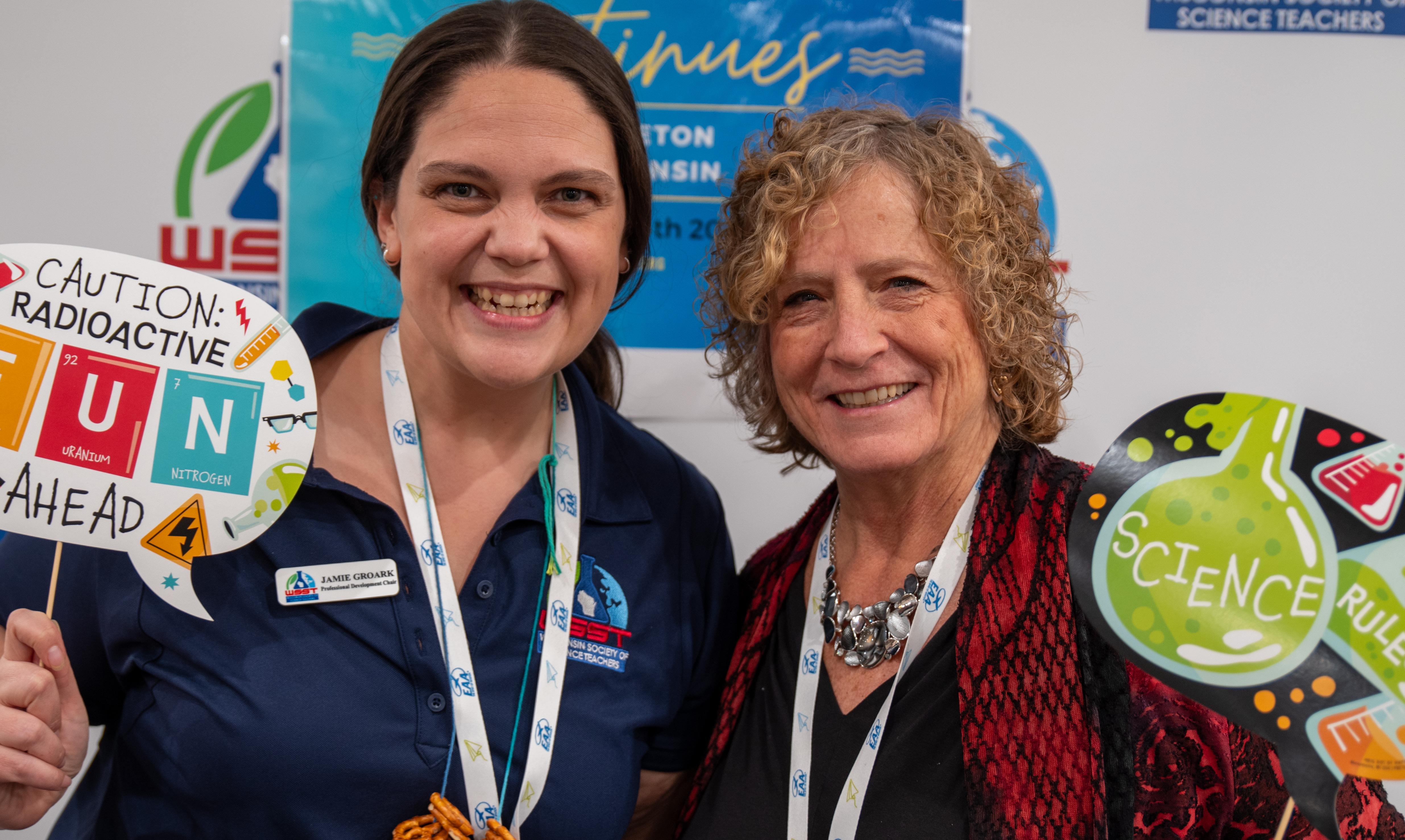
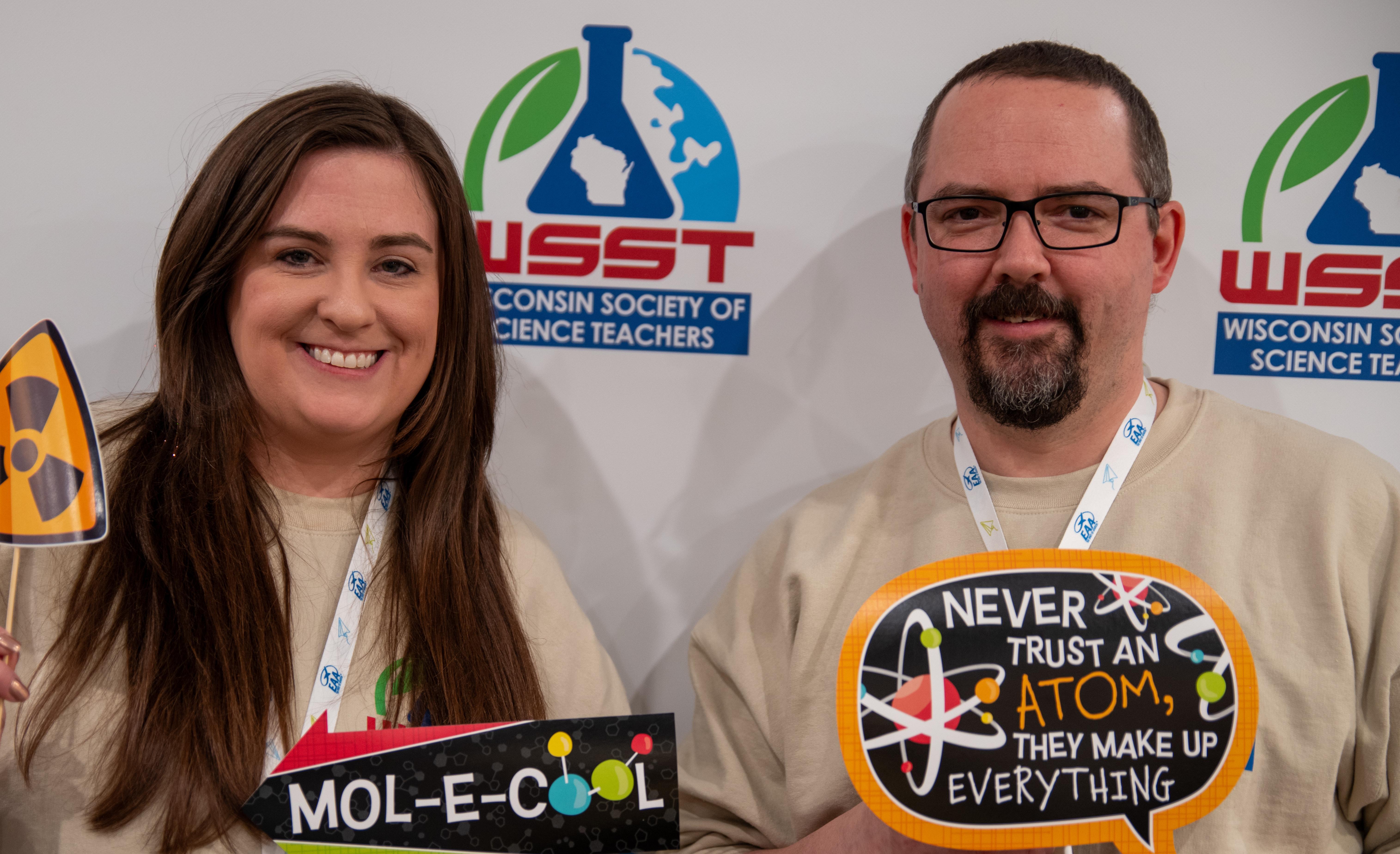
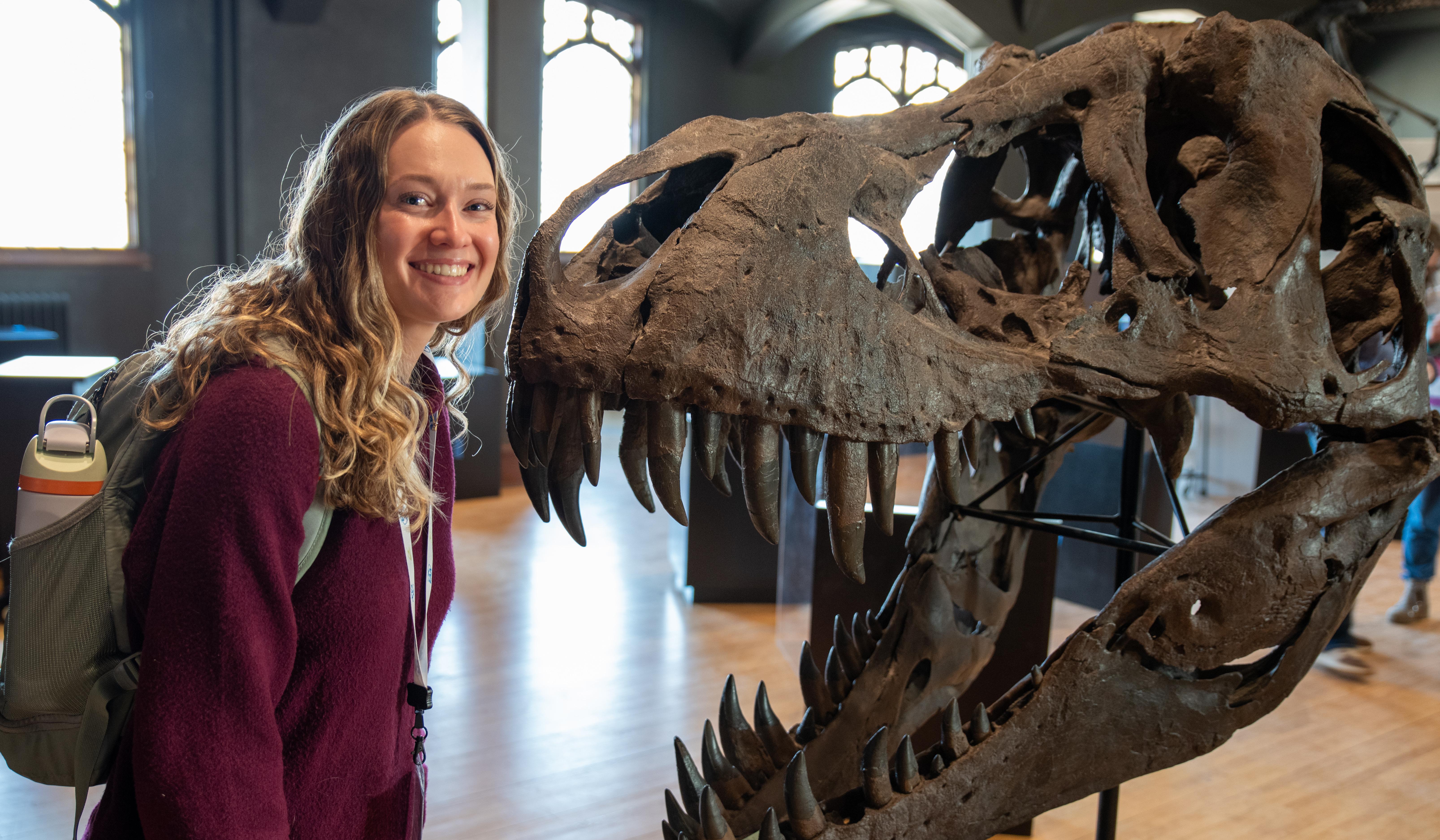
2026 Conference in Appleton
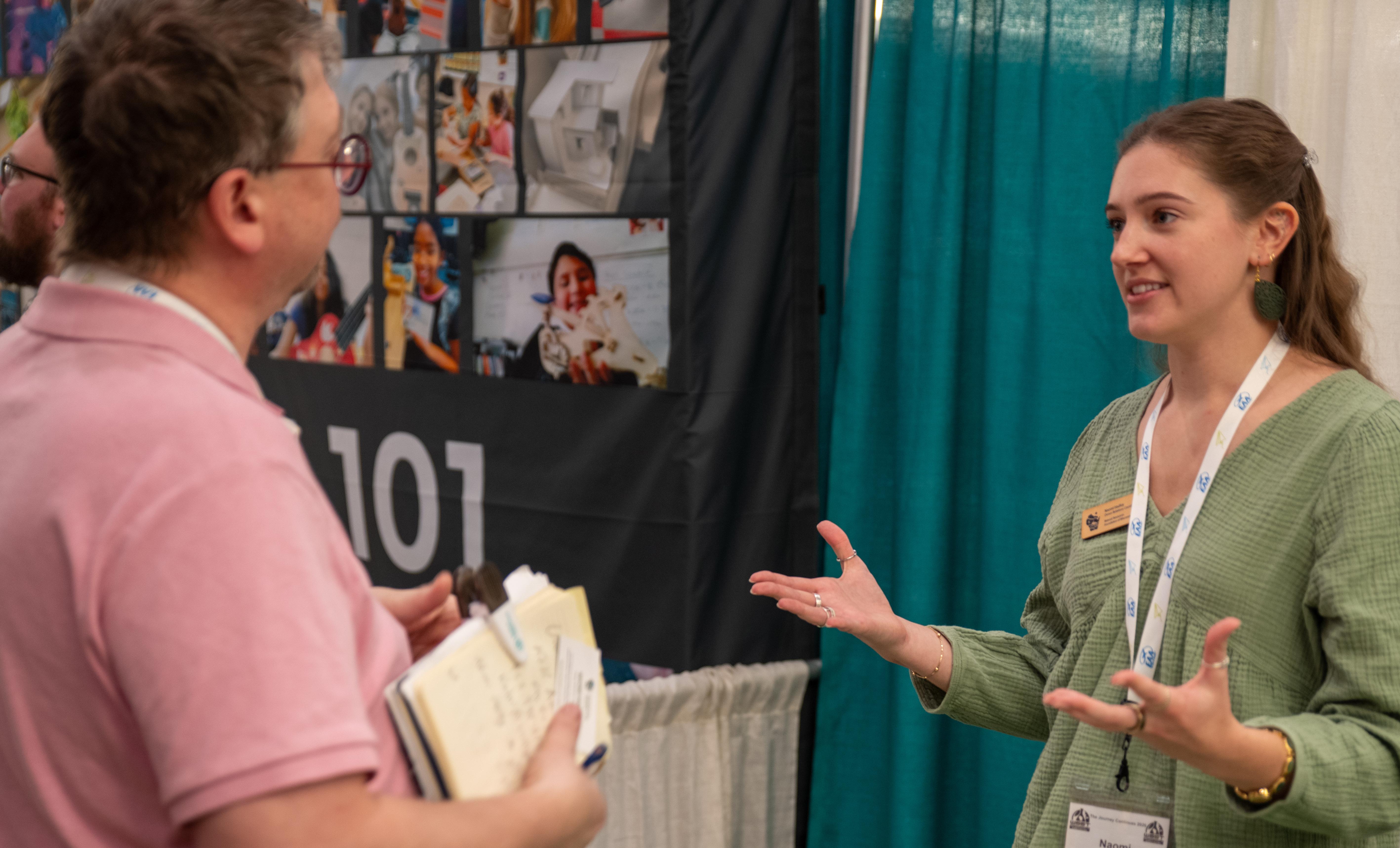
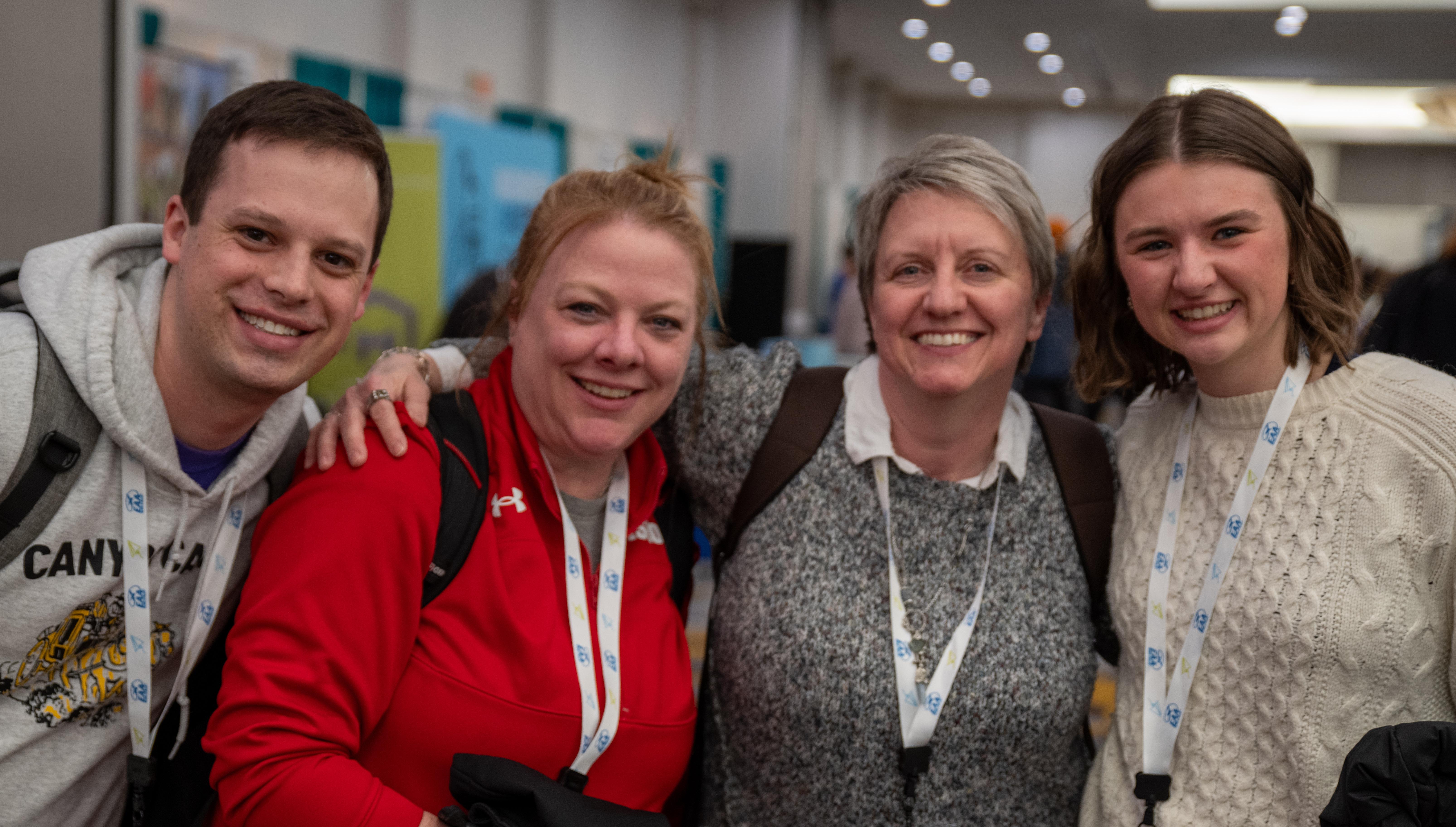
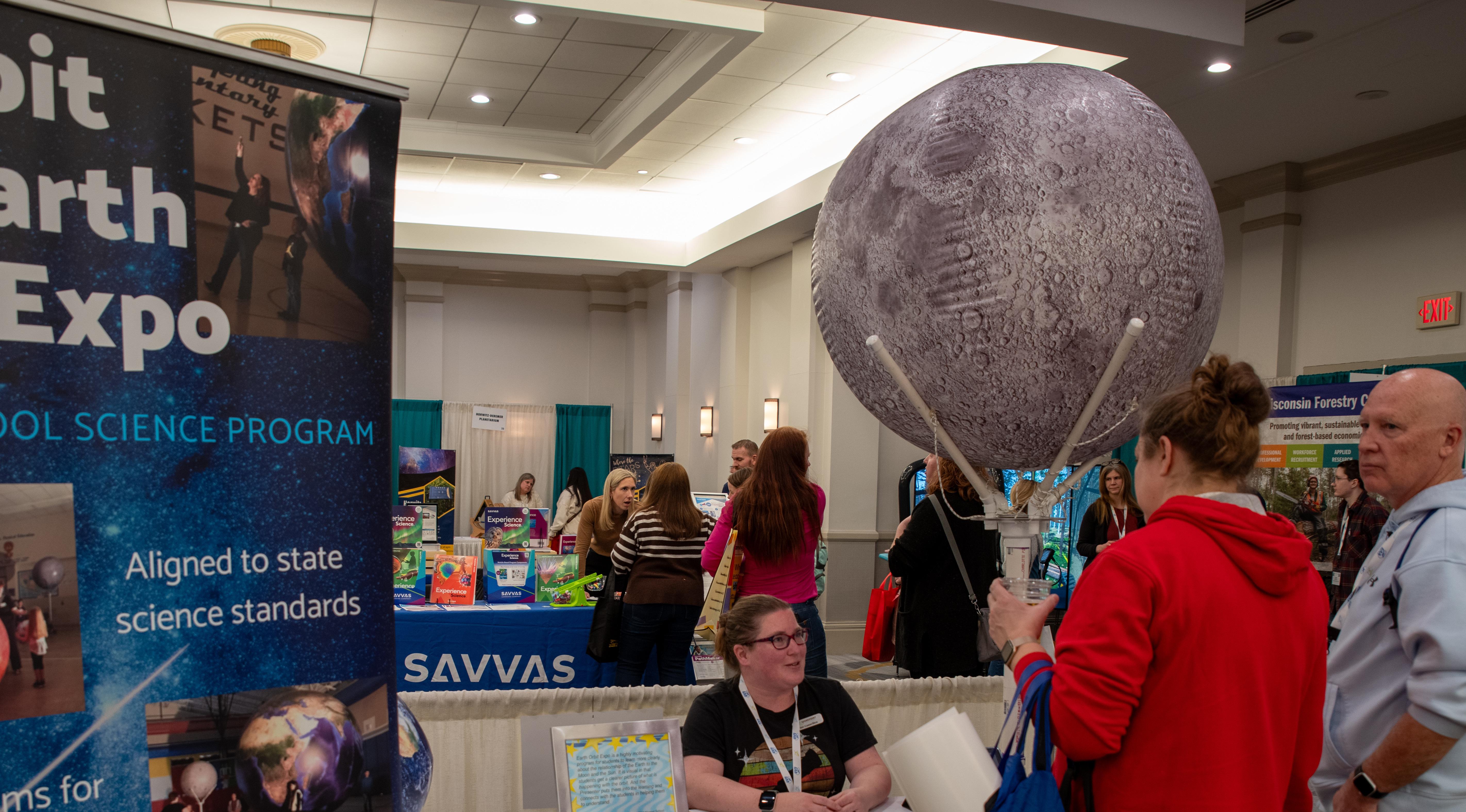
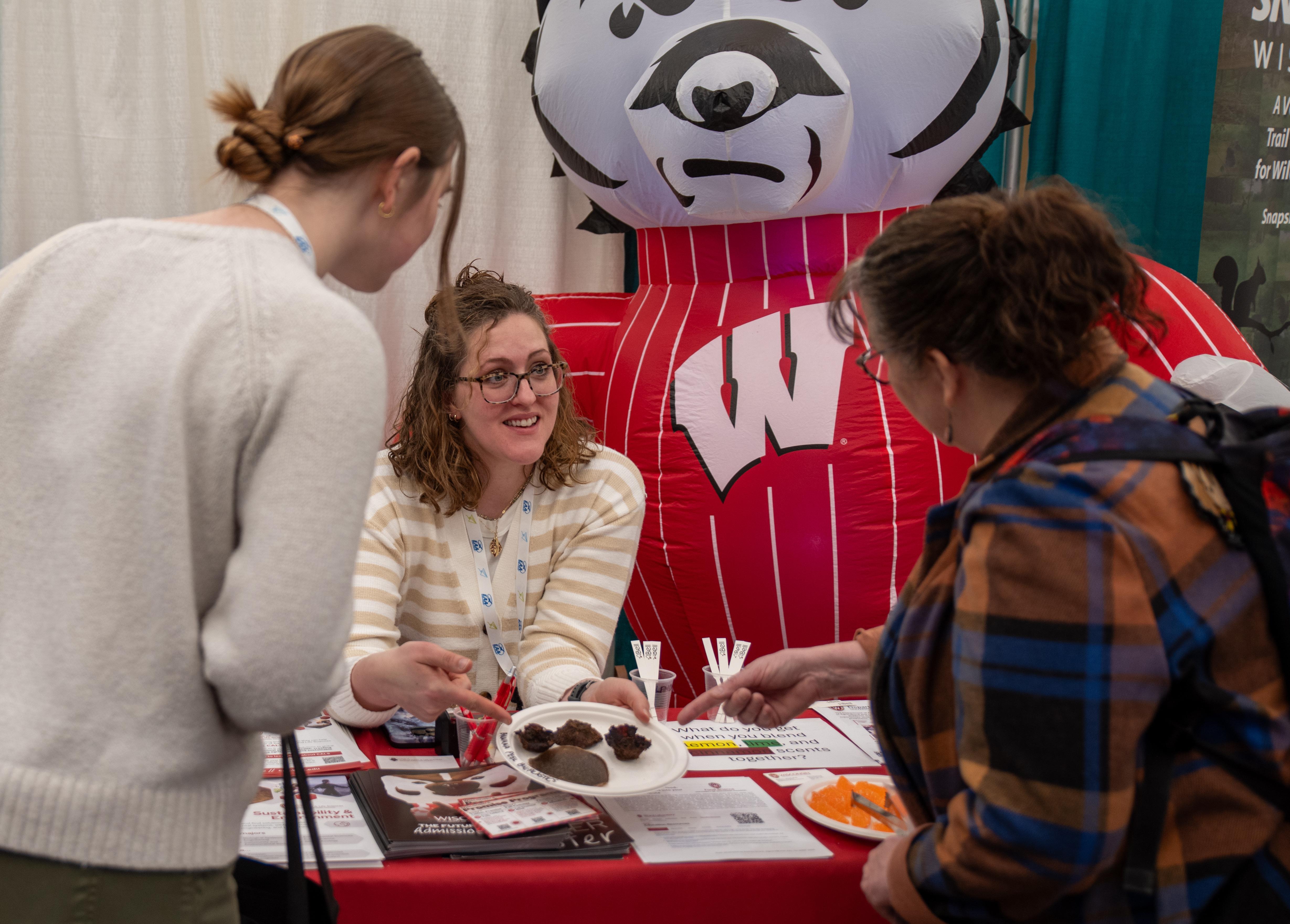
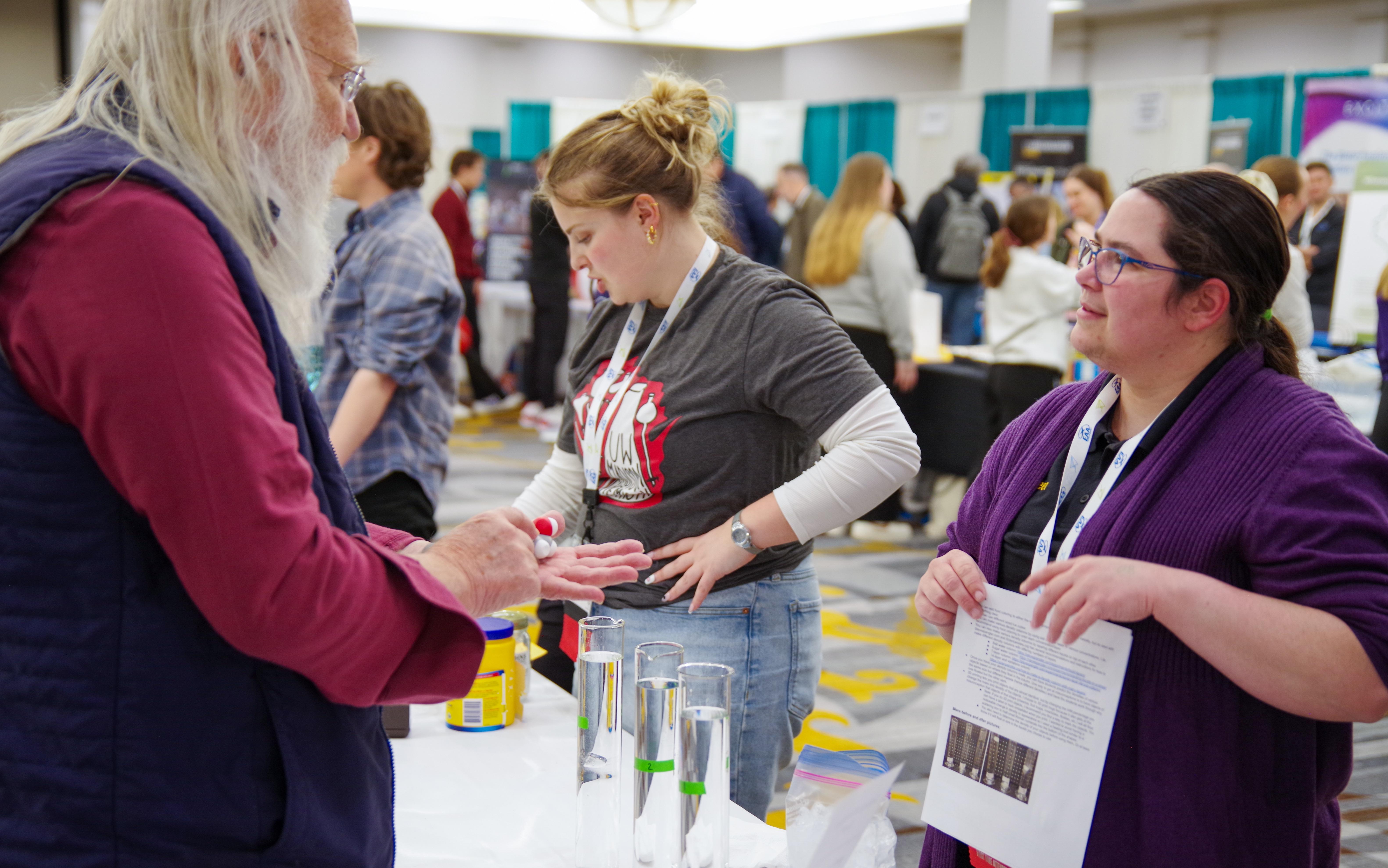
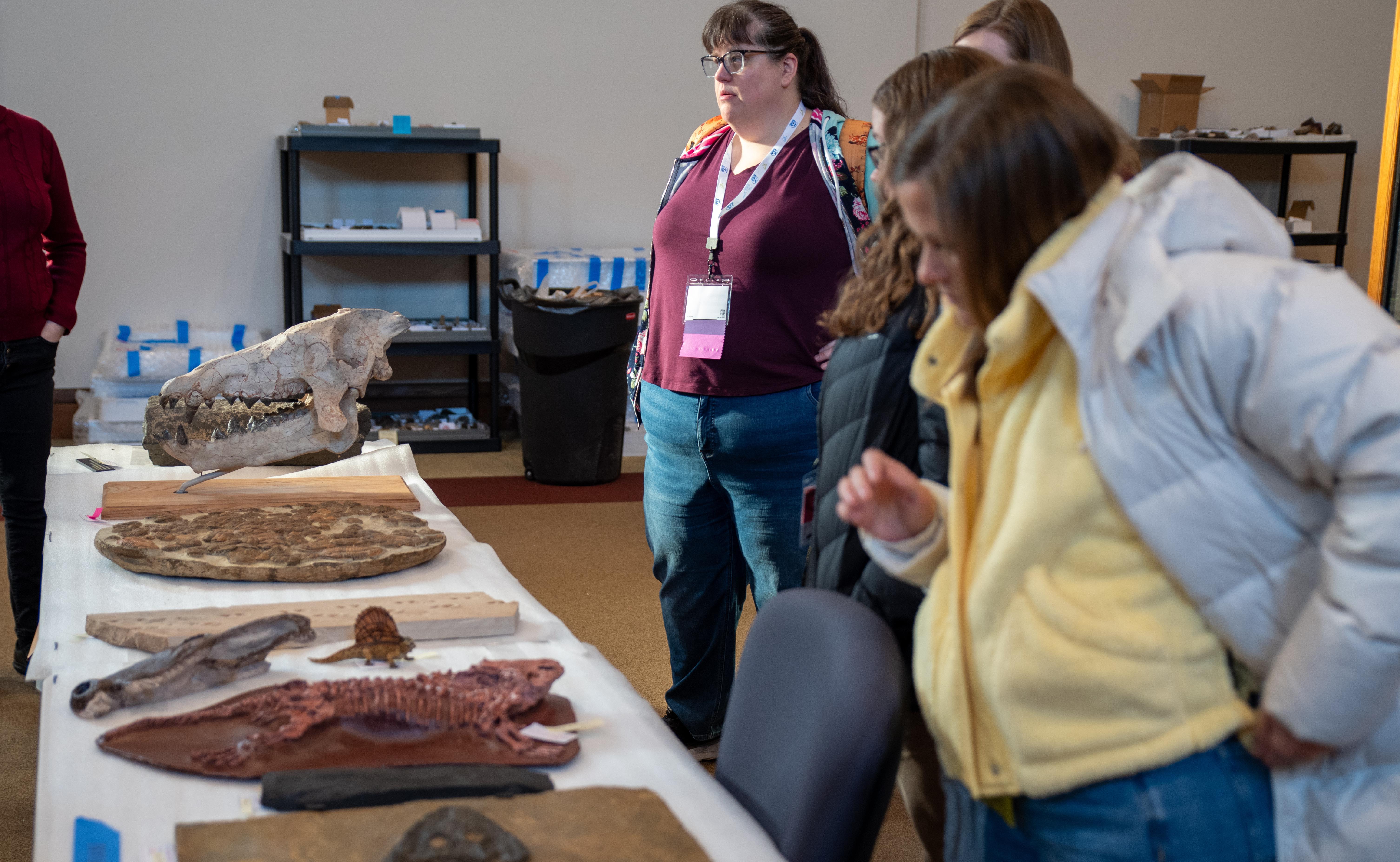
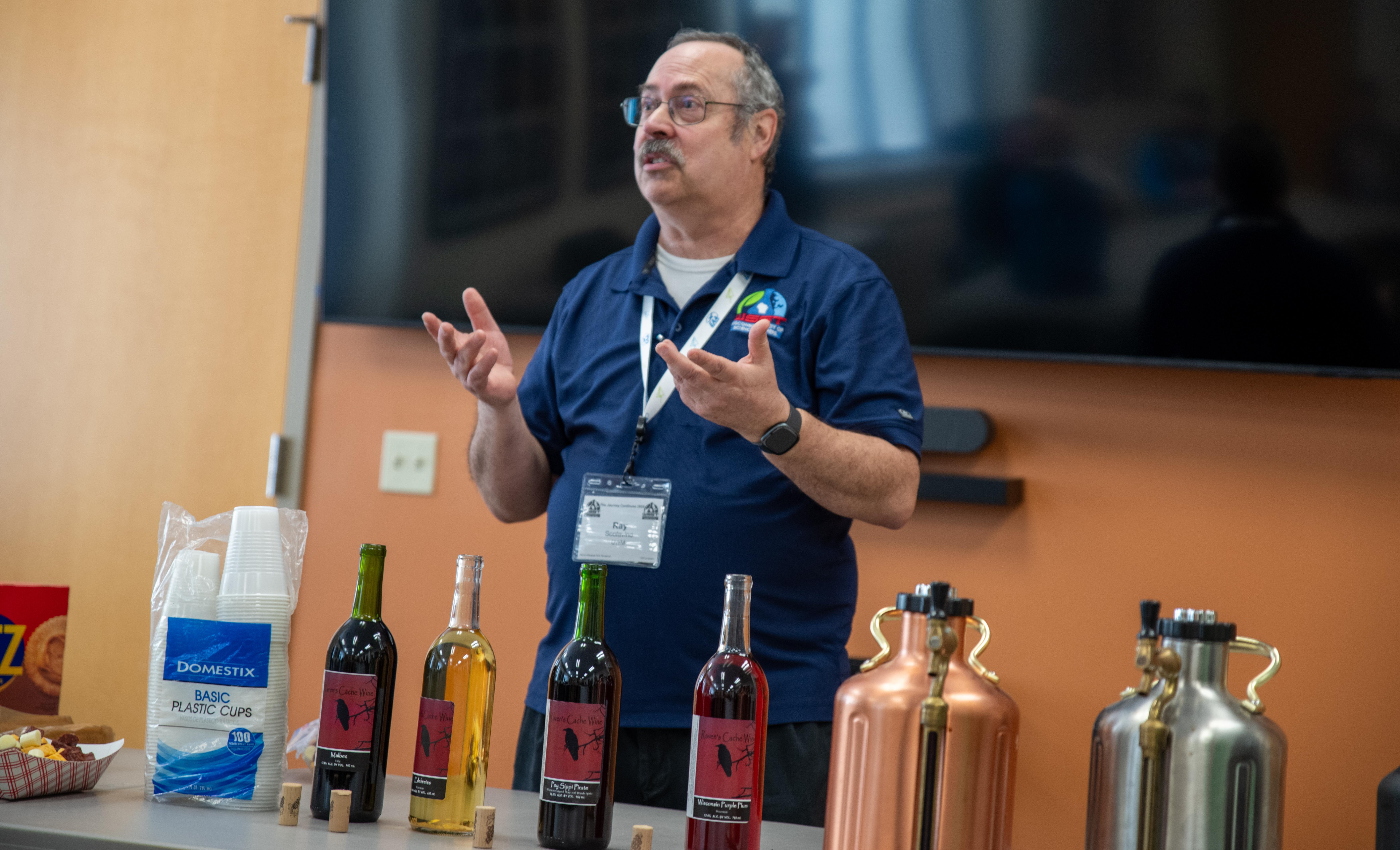
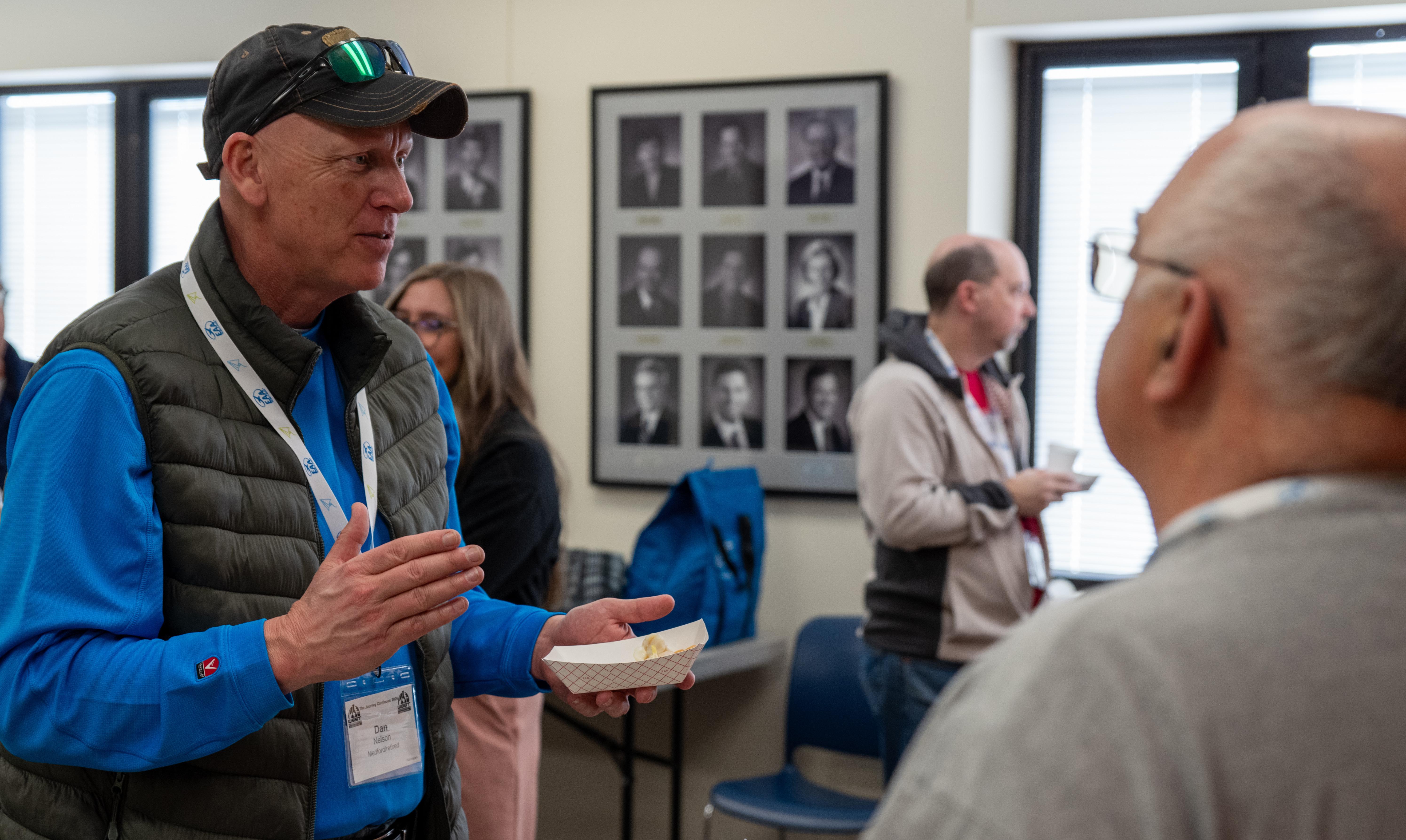
Exploring Products, People and Ideas in the Exhibit Hall
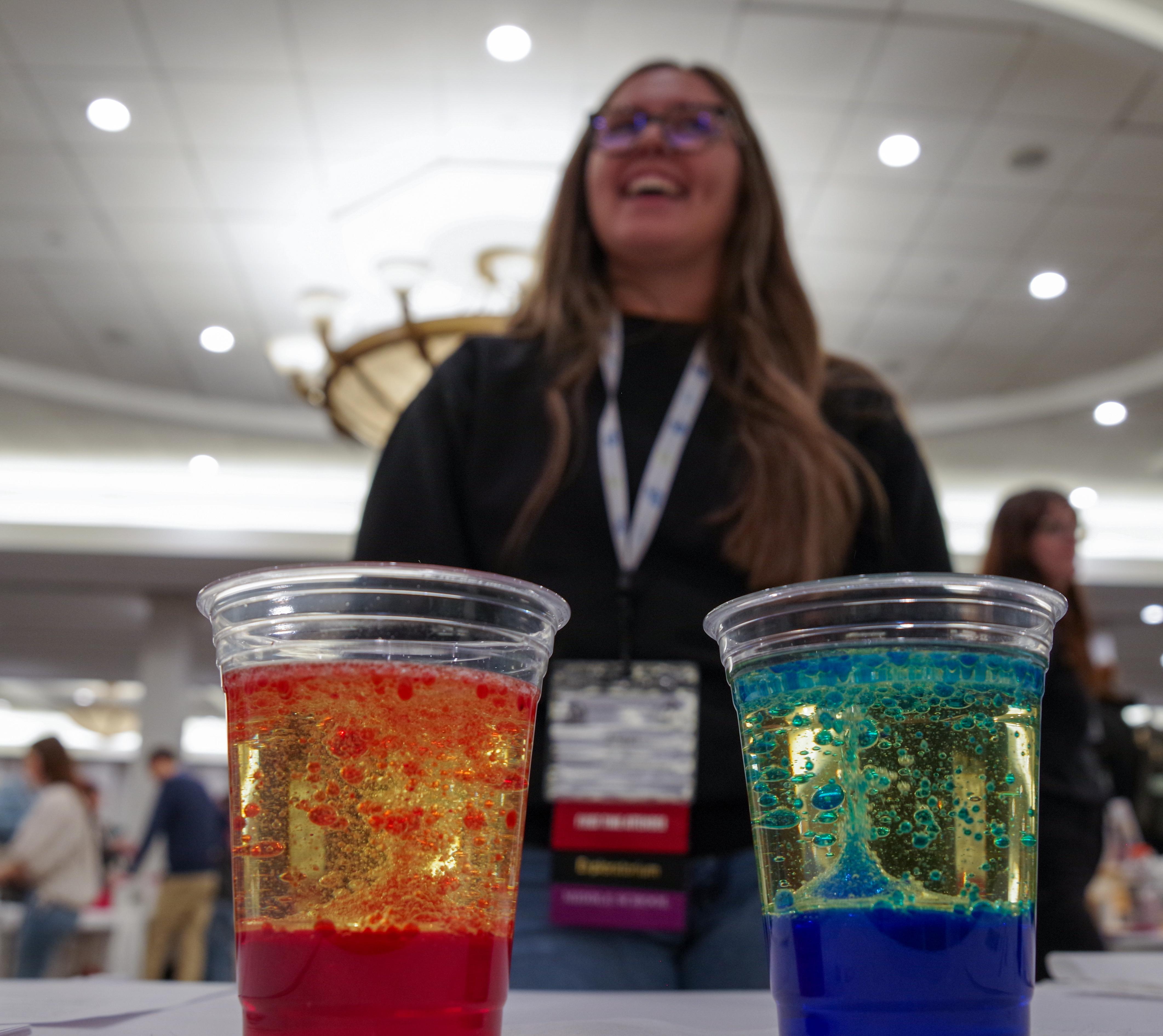
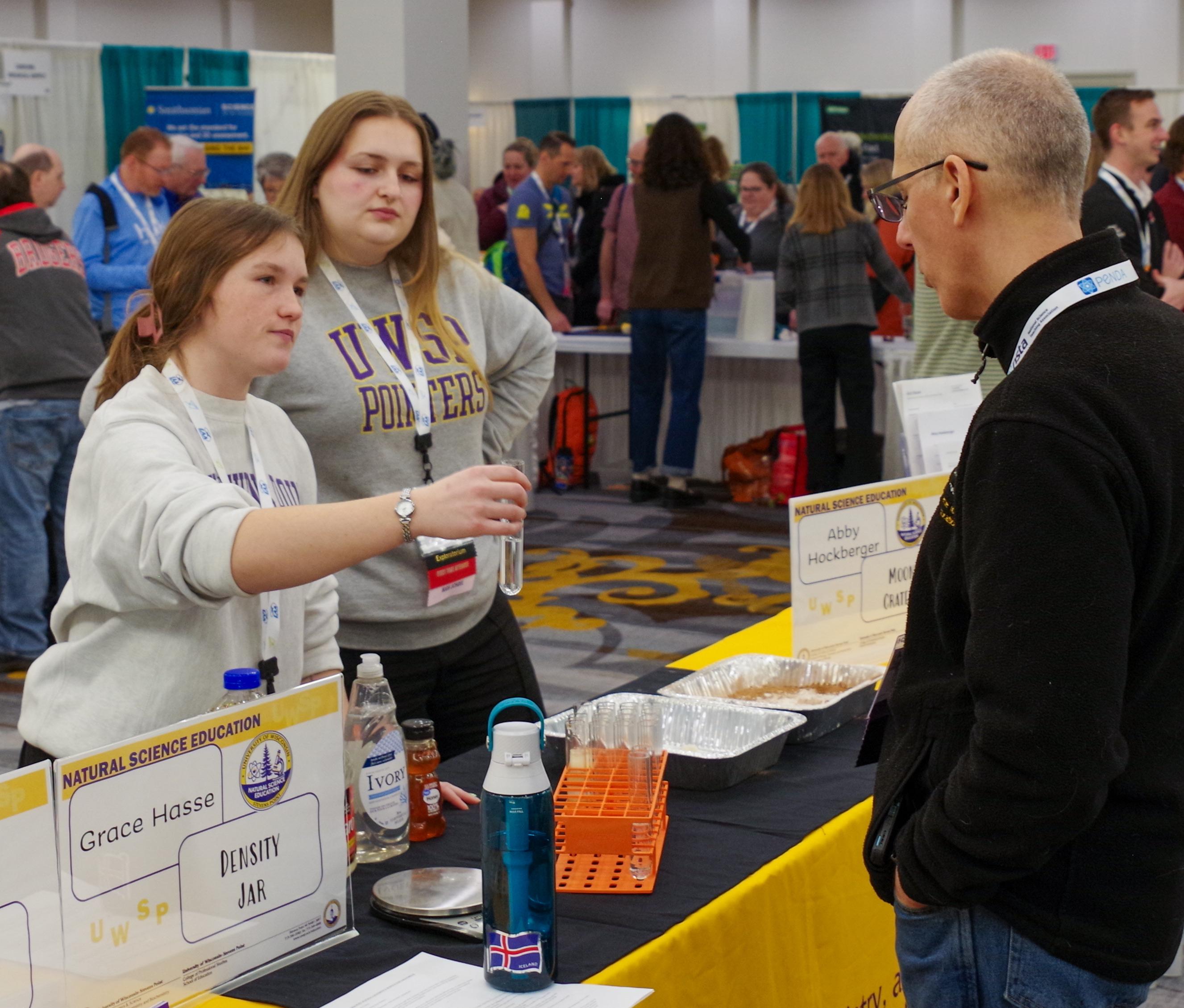
Learning from future Science Teachers in the Exploratorium
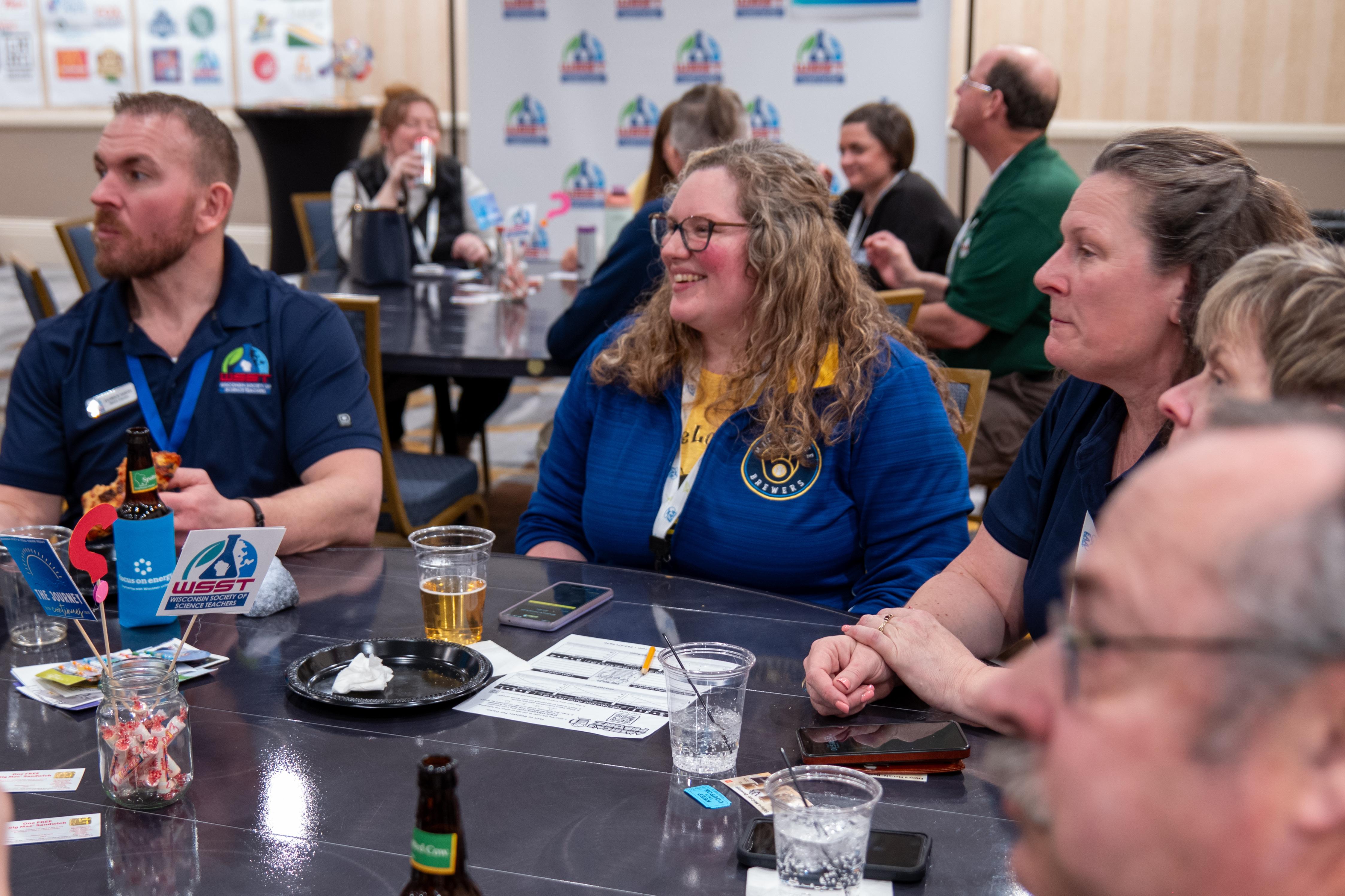
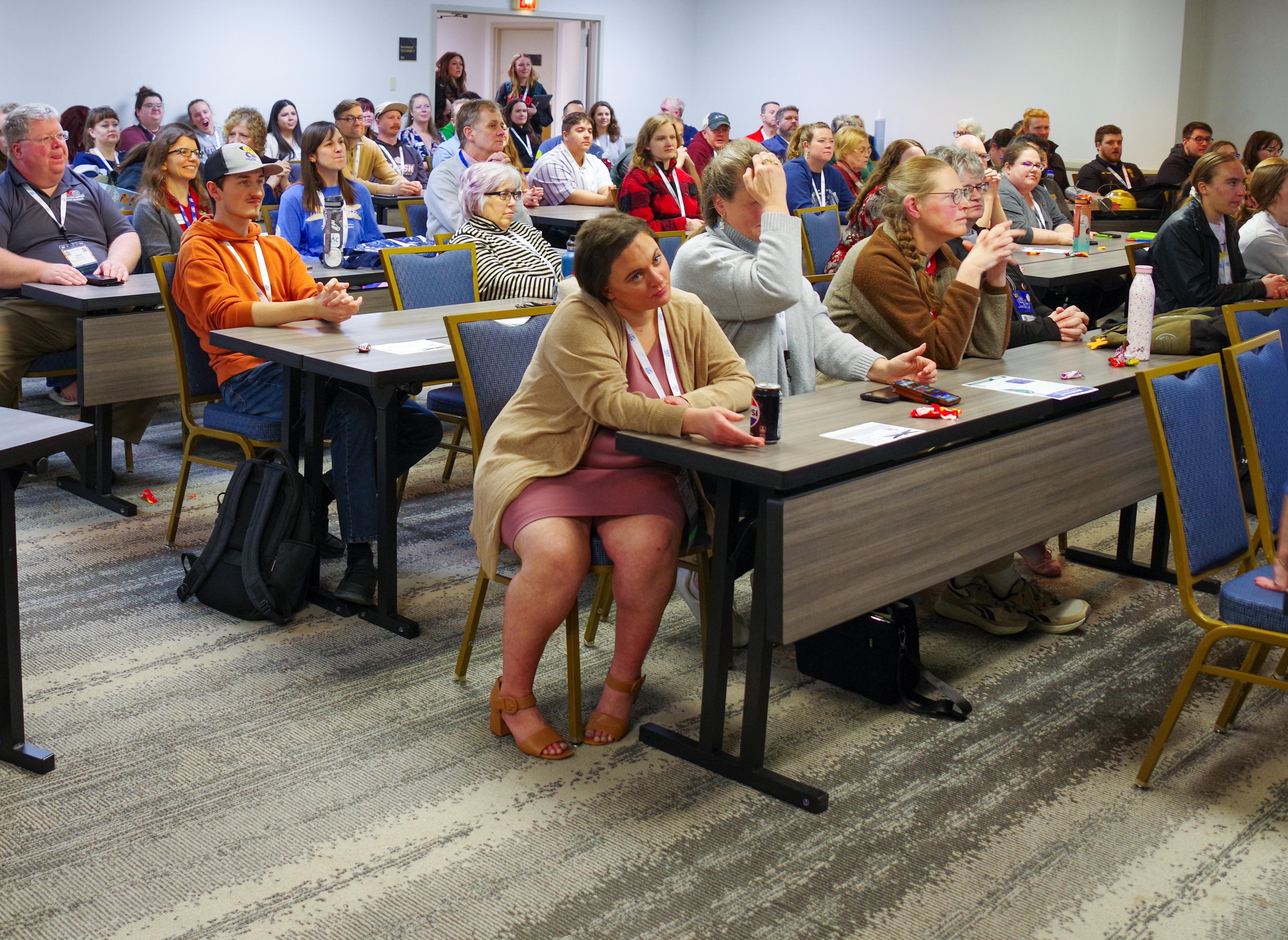
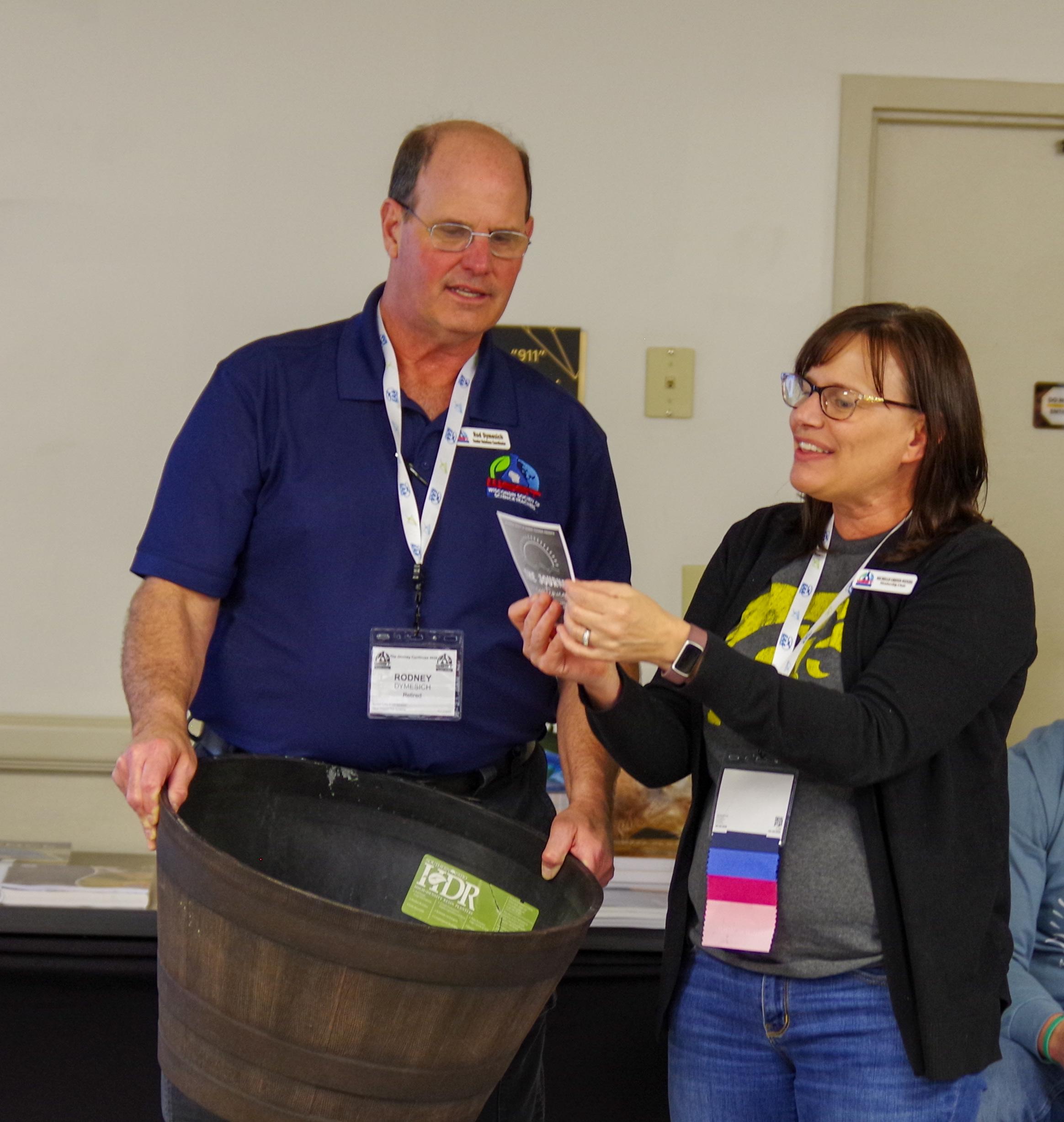
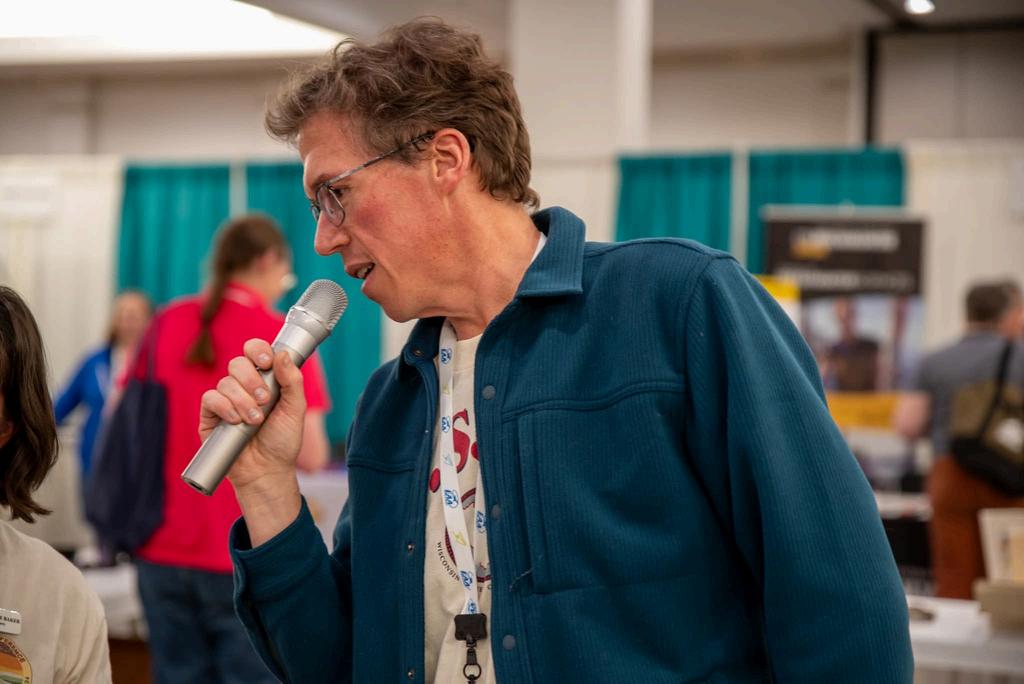
WSST Town Hall Meeting and Vendor Raffle
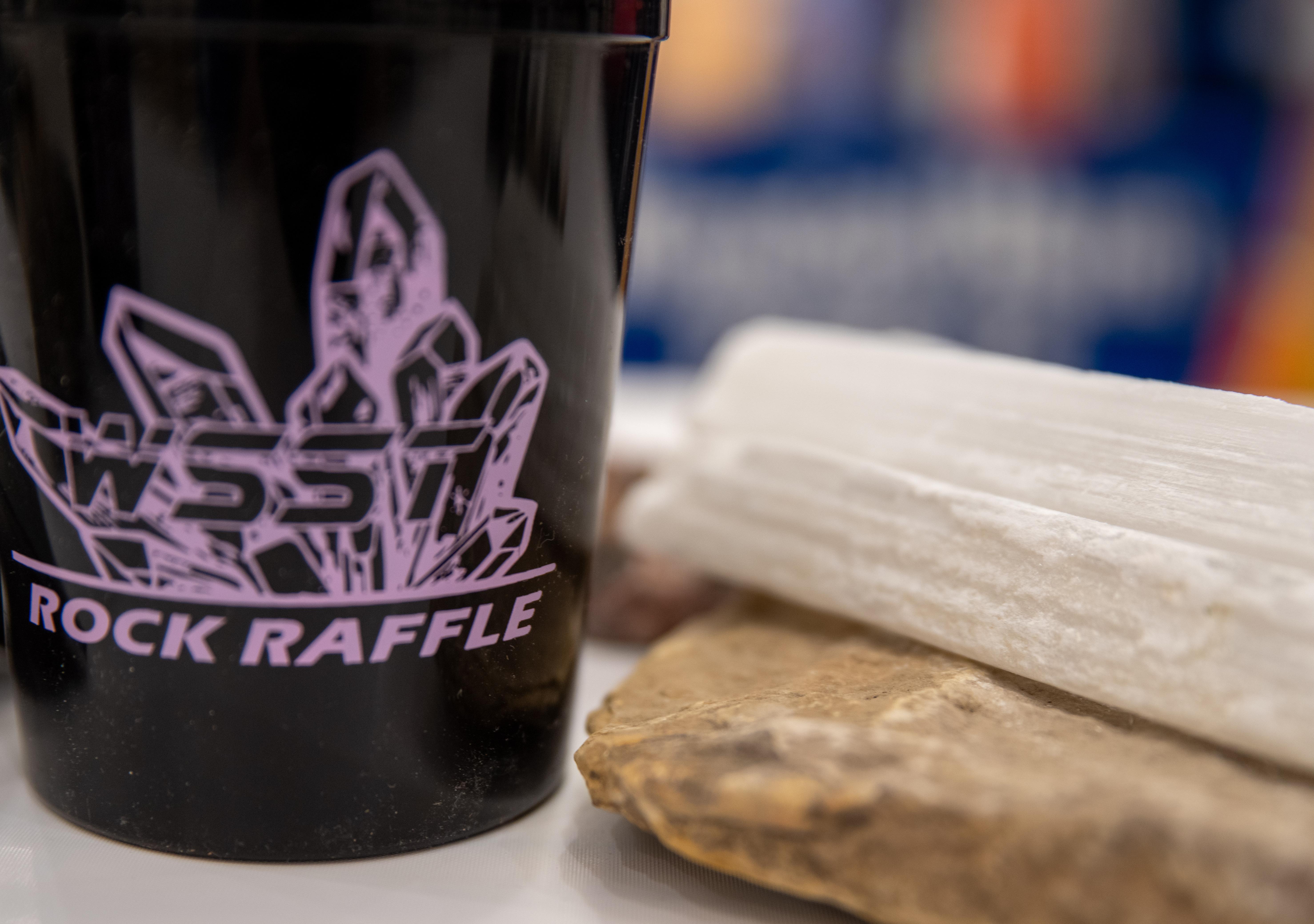
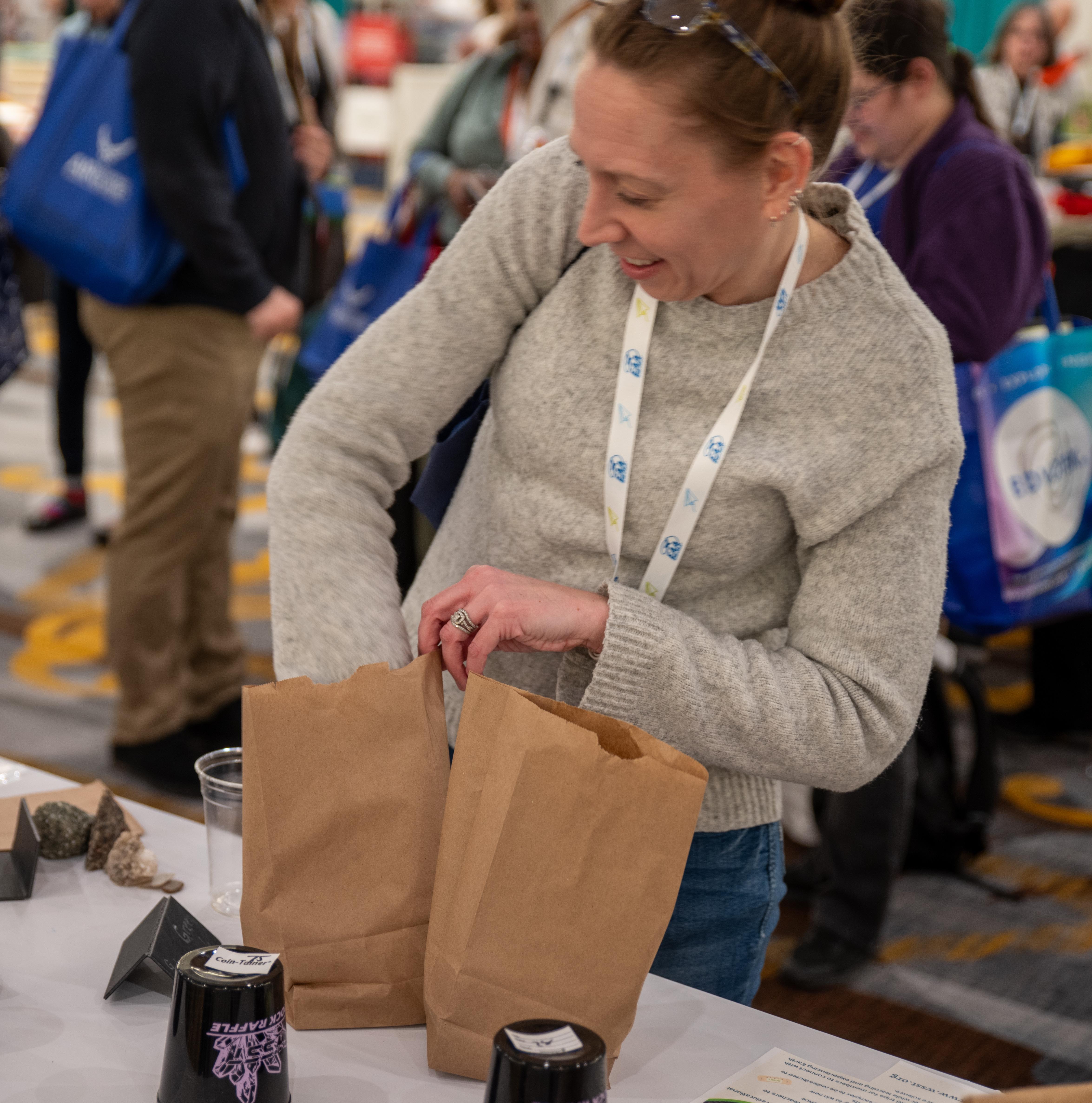
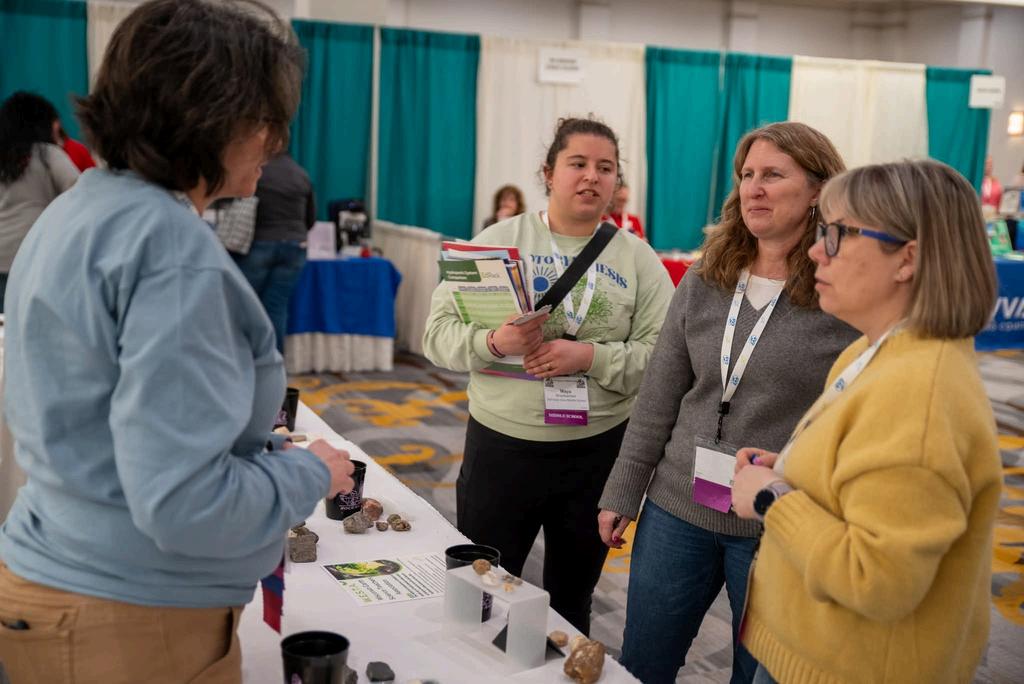
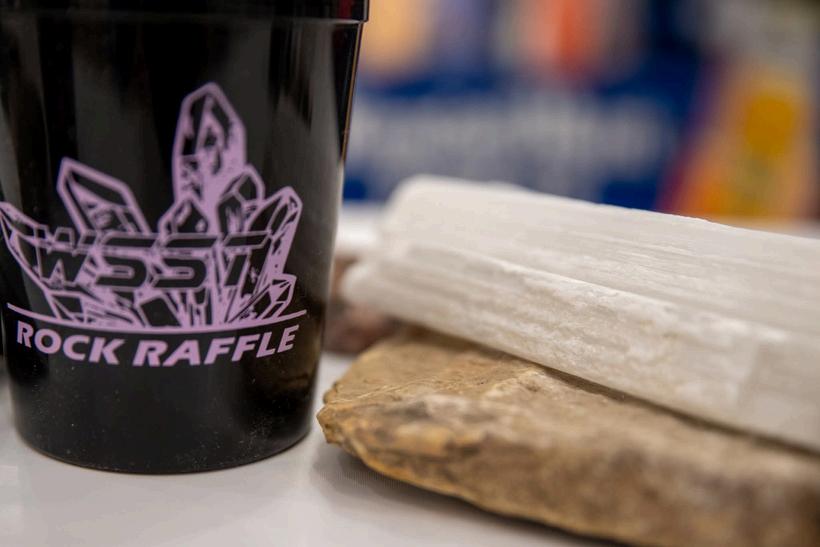
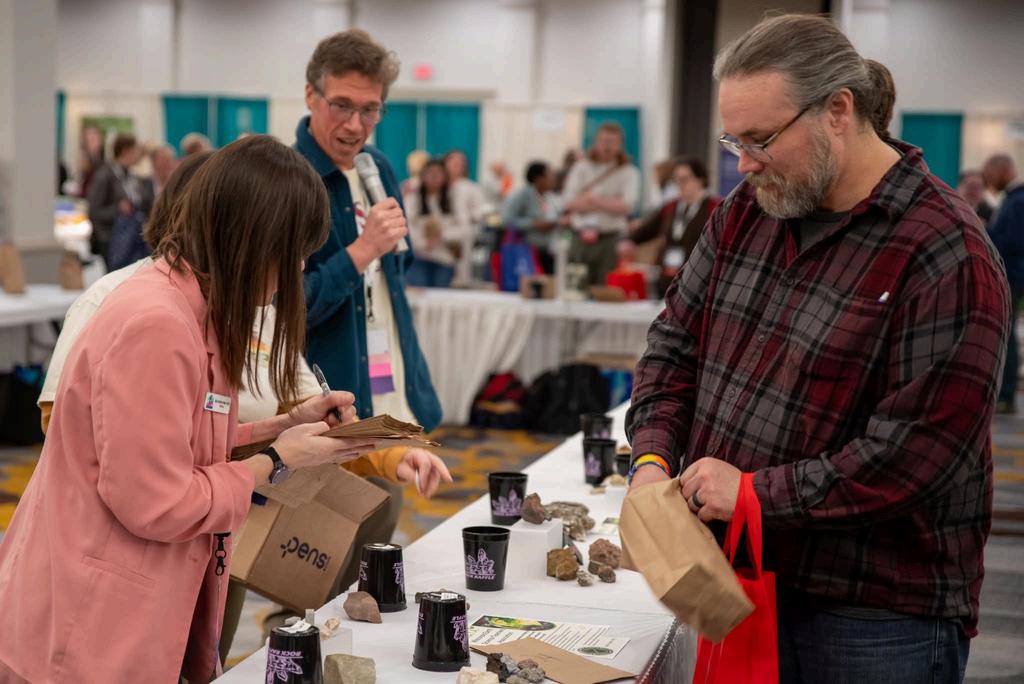
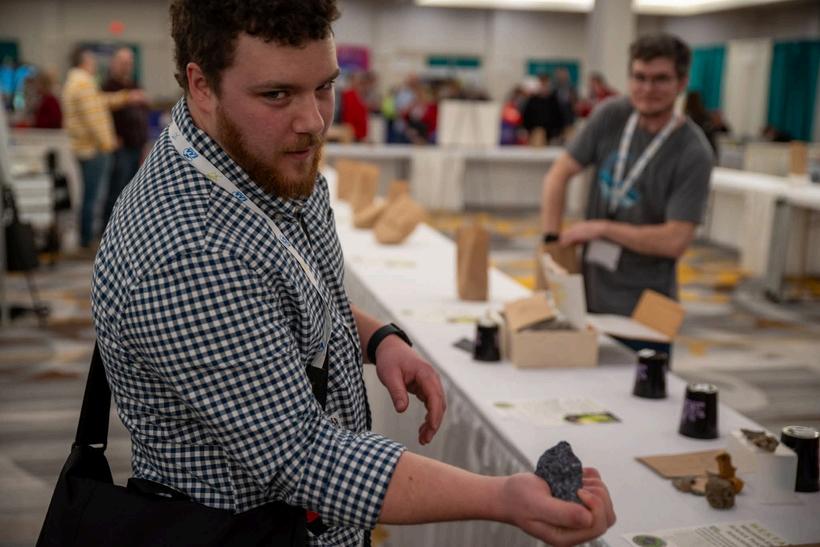
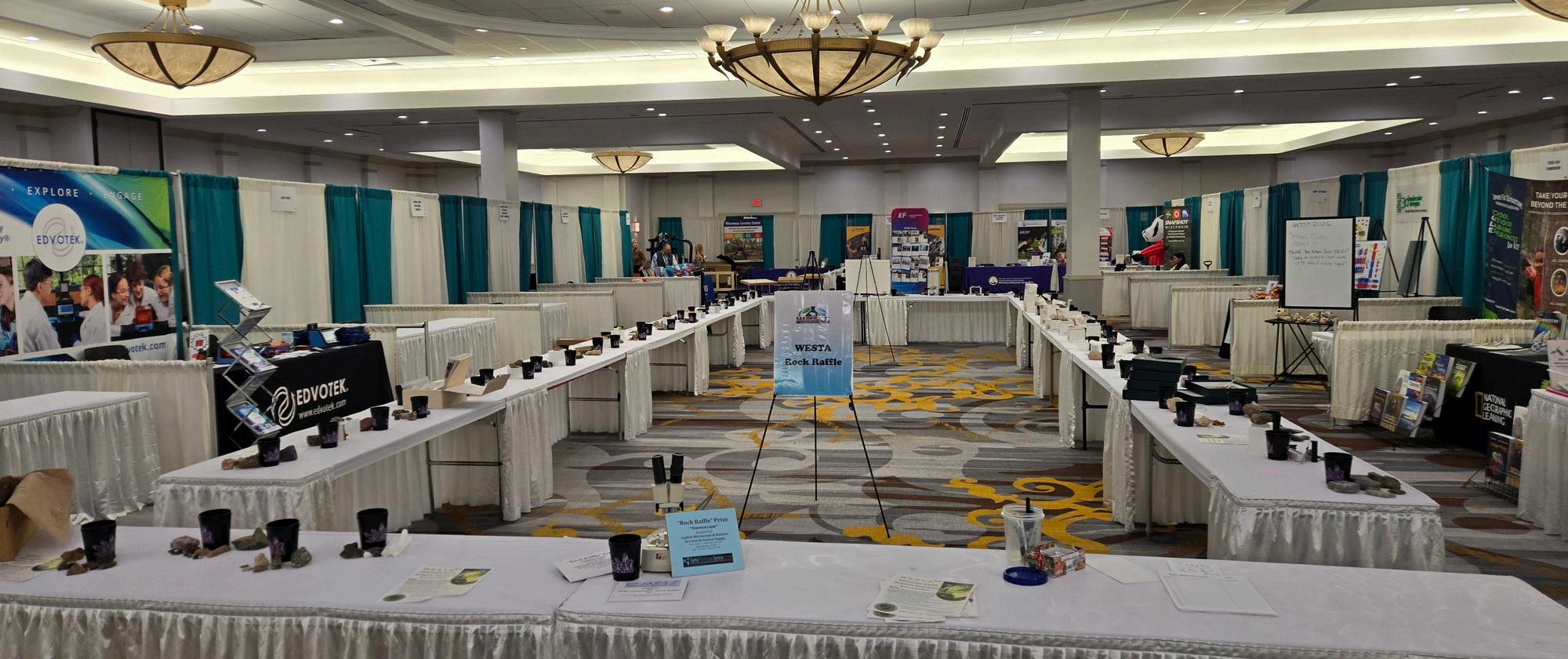
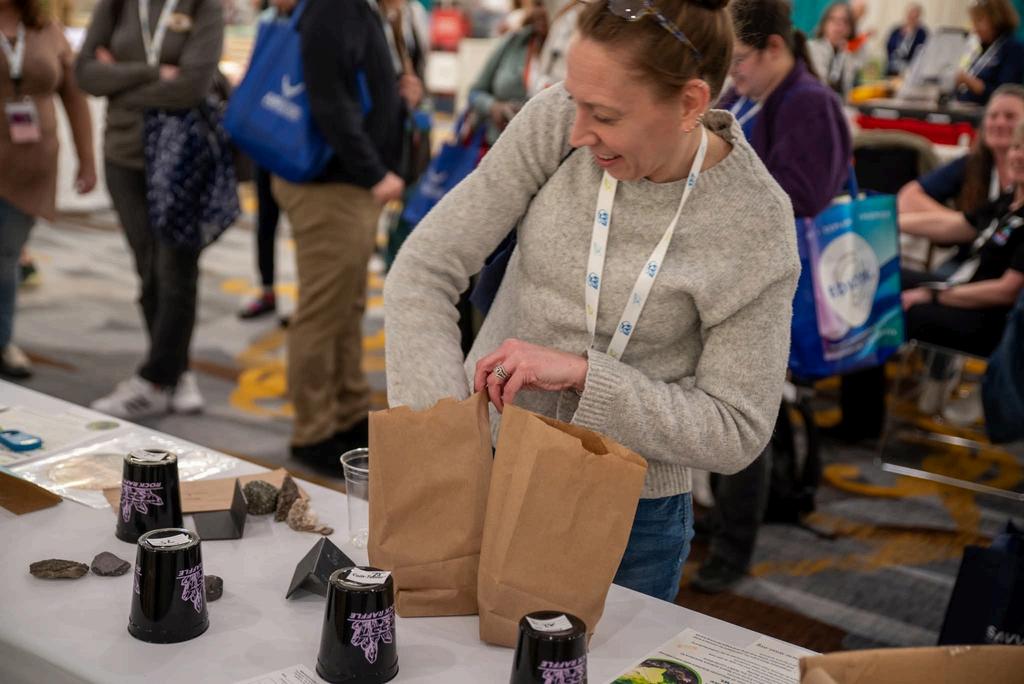
WESTA Rock Raffle
2026 Milton O. Pella Banquet and Social
4-5 Blake $100 Samuel Clemens Aruna M. HalalaVishudh
6-8 Margaret $100 Shorewood Intermediate School Samantha Palmisano
9-12 Ira $100 Shorewood High School Regina Schindel
Thank you to everyone who submitted! Watch for the essay contest next fall!
Greetings WSST friends! Here’s hoping you had as good a time at “The Journey Continues” in Appleton on March 12-14, 2026 as I did. As is my tradition, I will now list my top 10 memories (not necessarily in order of quality - though there is a good chance they are all pretty equal in historical value!)
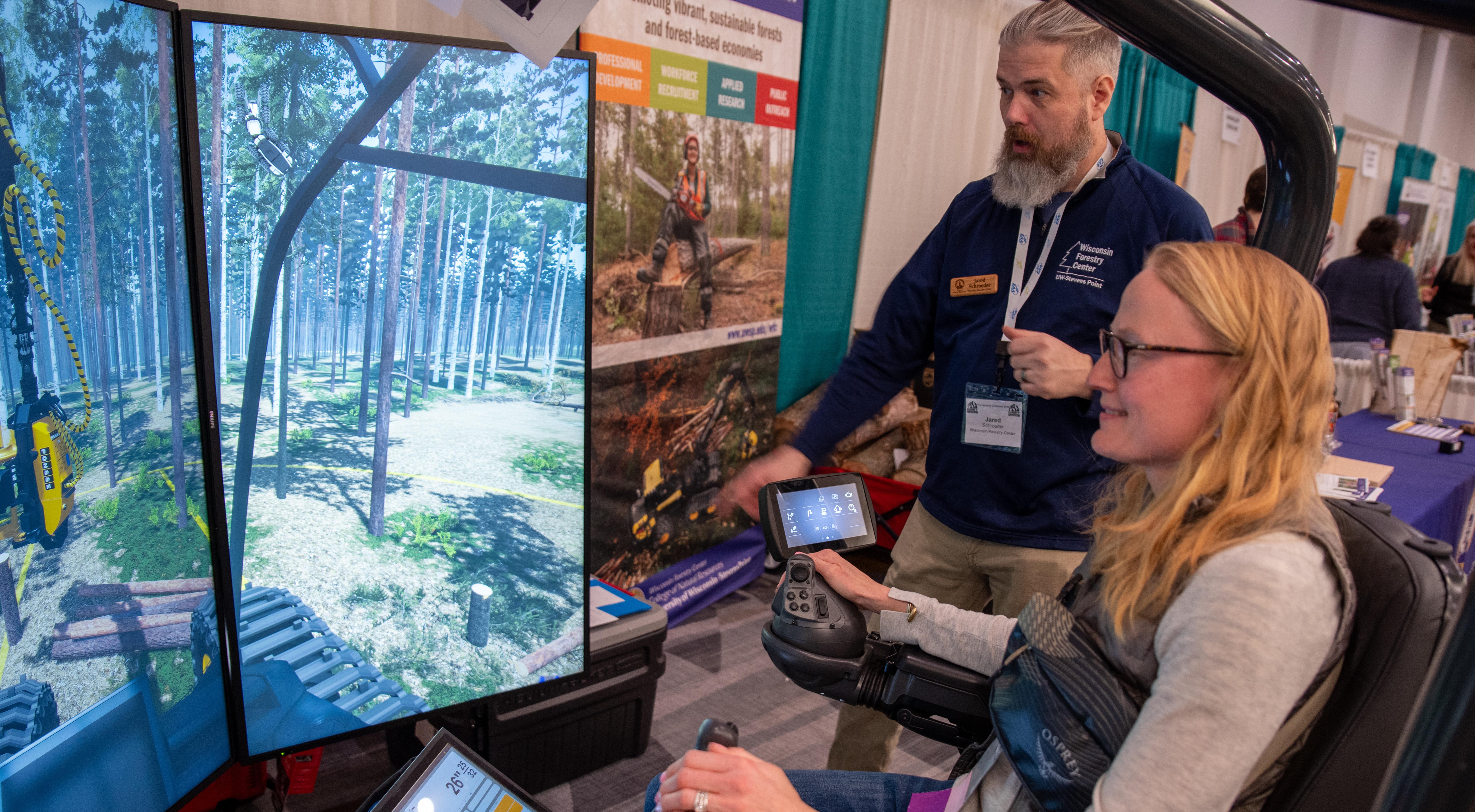
the chance to try out the special forestry training tool at a forestry education booth.
Playing trivia with a table full of old 6 and new friends.
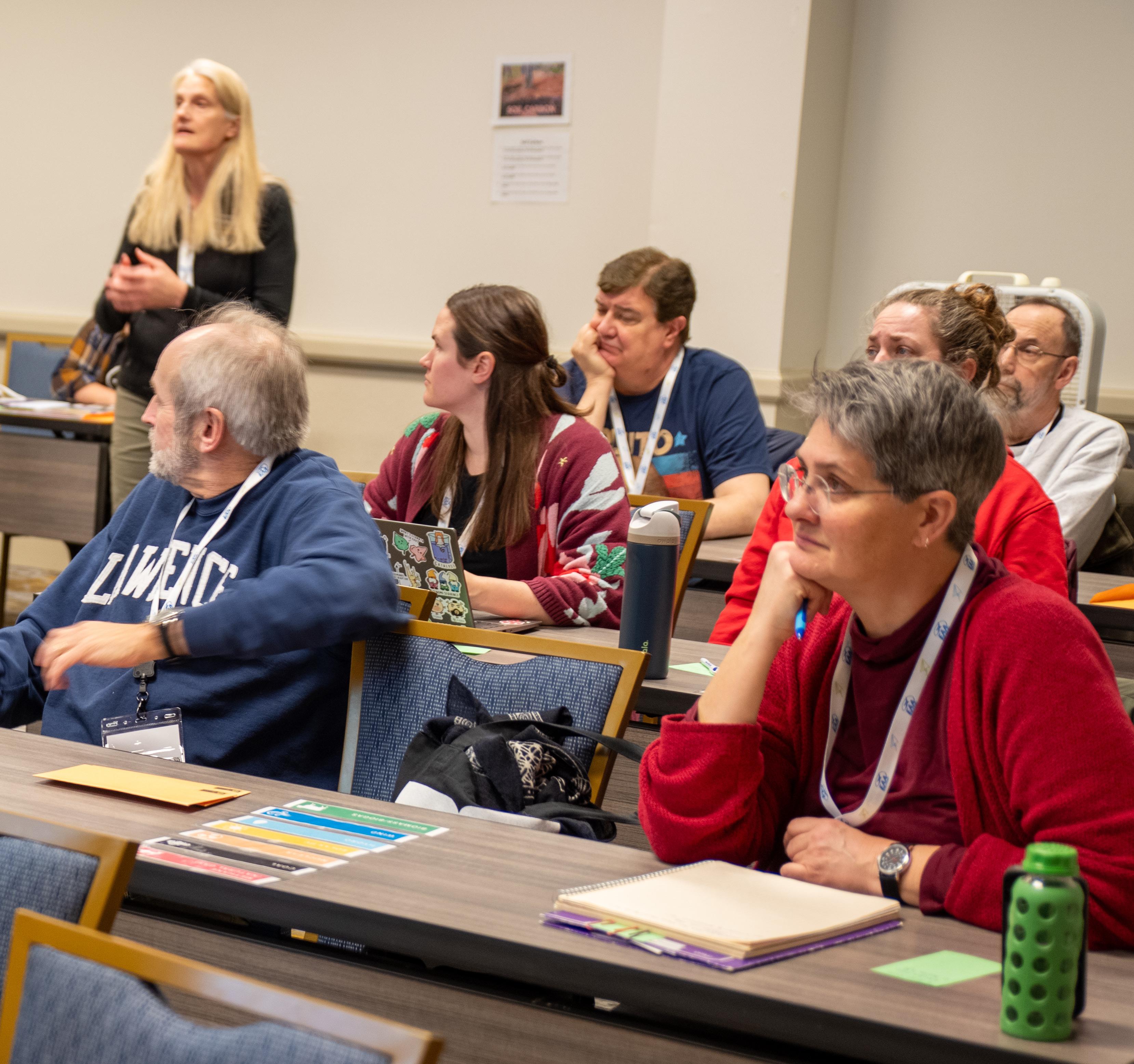
Spending time “sitting” at the WSST 7 booth with many good conversations. Attending a couple of AI connected 8 sessions and discovering that I could actually use the tools that were being presented and I could access them on my 10-year-old laptop.
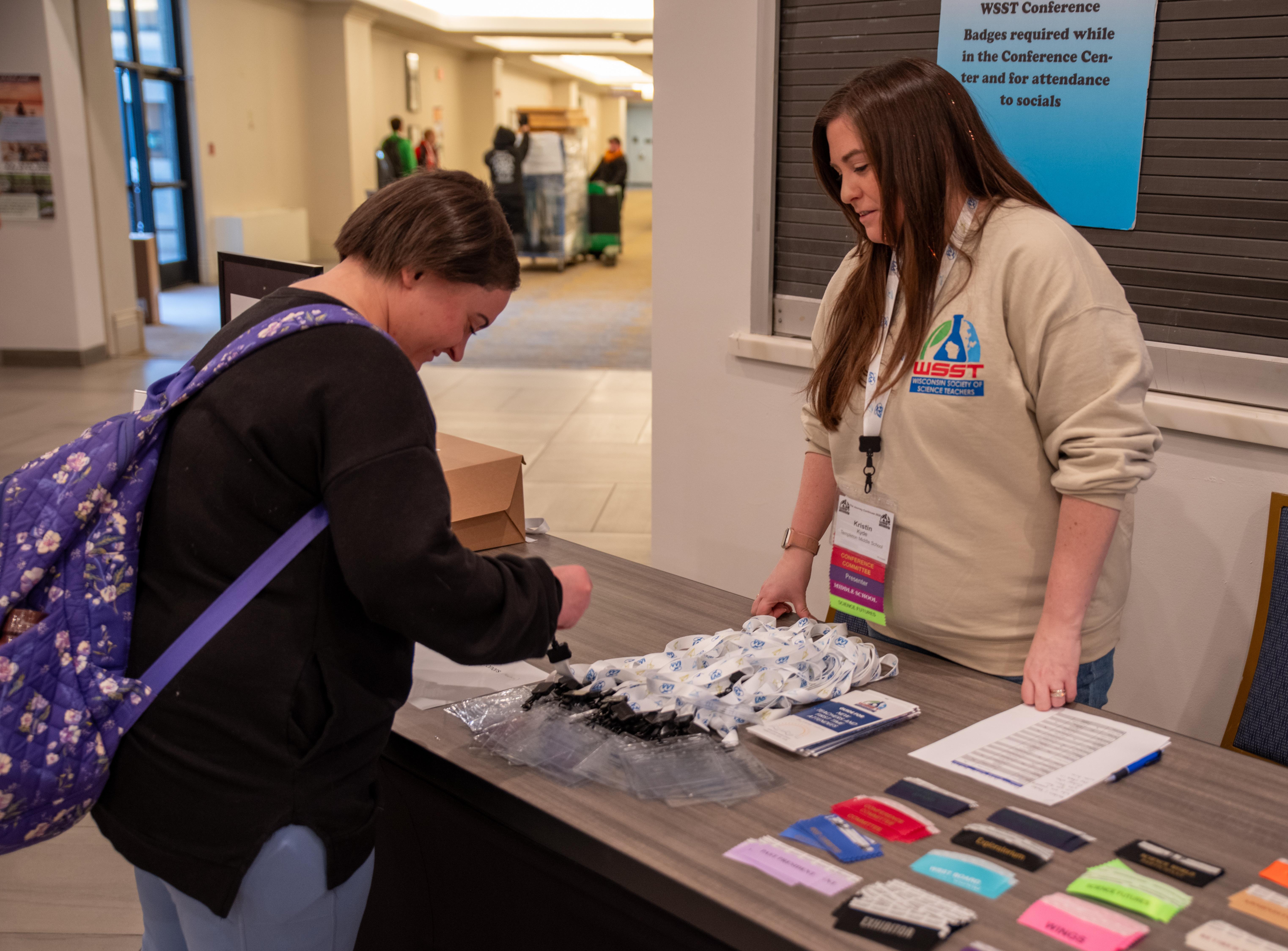
Entering a familiar hotel lobby to see 1 many friends from around the state then getting cheerful greetings from all of them.
Making myself useful in some last 2 minute set up activities - we always need many lanyards and name tag holders ready to go.
Visiting with my fellow retirees - we 3 always talk about what we’ve been reading! A not quite retired member joined us seeking advice, which we happily gave.
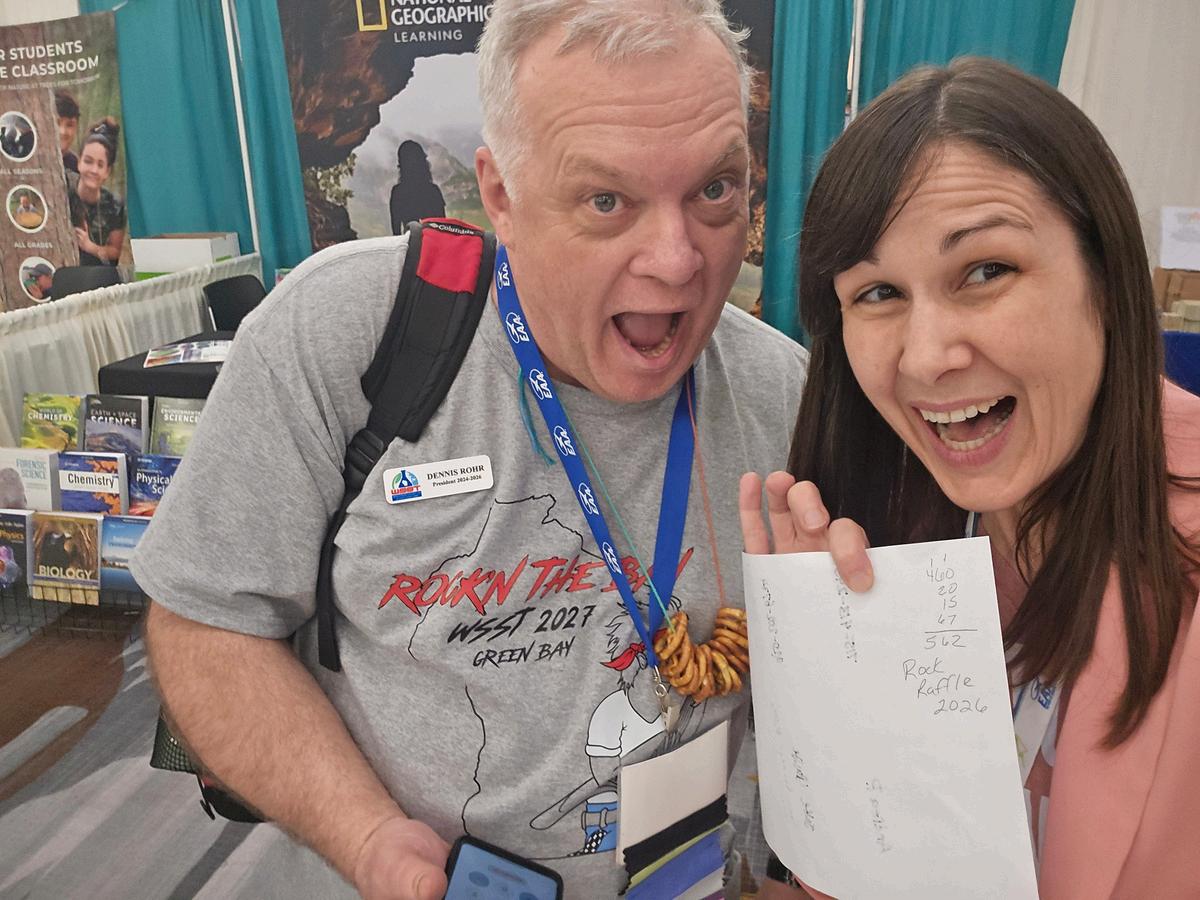
Selling tickets for the rock raffle, then 4 helping to pick the winners.
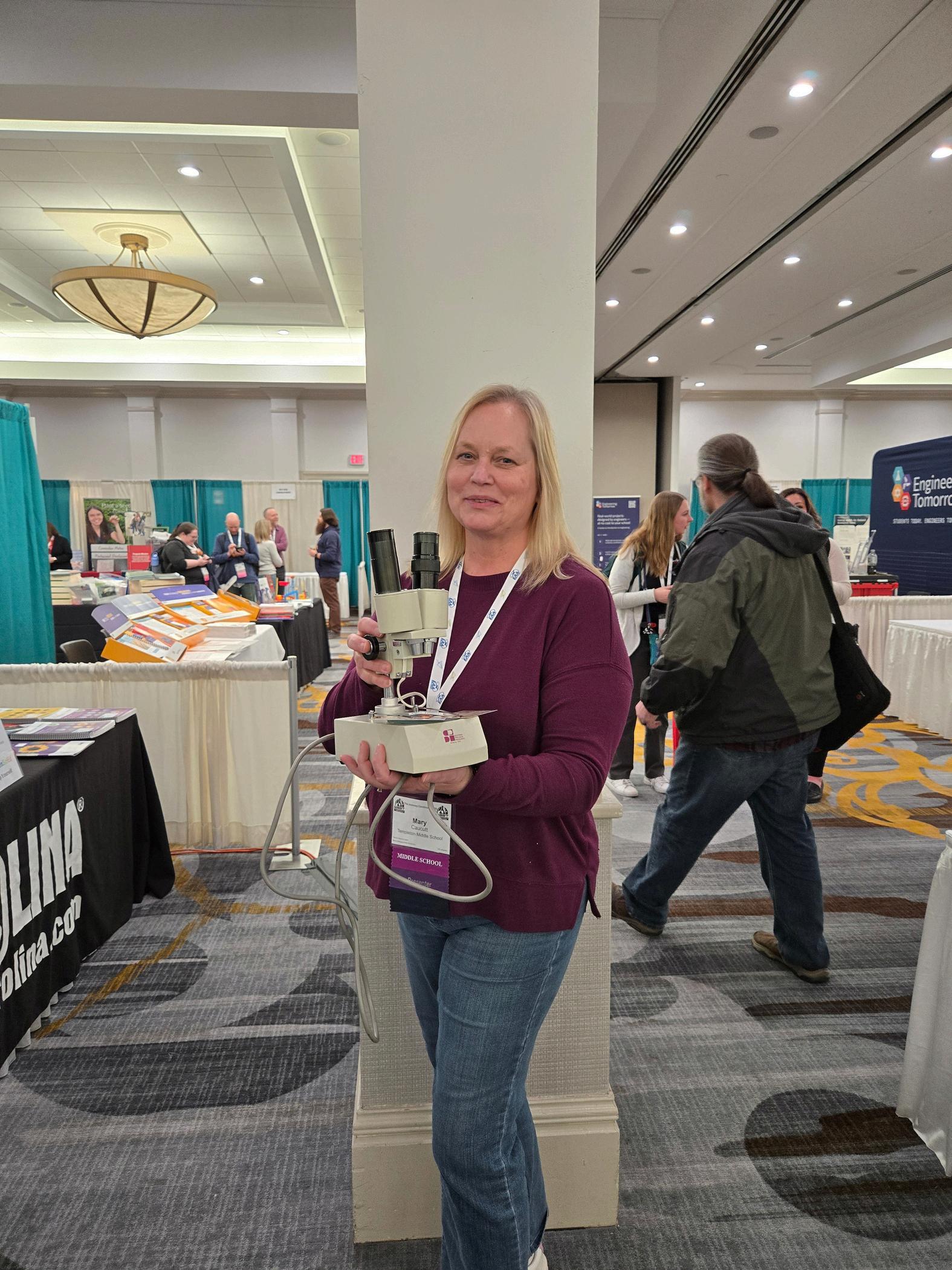
Discovering that my roommate/sisterin-law won the binocular microscope, which she really wanted!
Observing and visiting with the great 5 variety of vendors - in particular the increased numbers of exhibitors with an agriculture-science connection and
Taking an amazing field trip down the 9 Fox River and getting to help operate a 150 year old lock, then seeing a very new hydroelectric plant in Kaukauna.
Seeing the people I nominated for 10 awards receive them.
Those are just the top 10 to pop up for me while sitting here being a responsible historian and writing a newsletter article. Giving me more time I could probably come up with more- but as I said earlier these seem to be equal in value for me. If you have some more, let me know!
New Teacher Network Committee Newsletter
Bridging the Gap: Connecting New
& Pre-Service Teachers
The New Teacher Network Committee is thrilled to share highlights from our second year of engaging with pre-service teachers at UW-Whitewater. What started as a simple mission of building meaningful relationships between experienced educators and future teachers has blossomed into something truly special.
From Fears to First Placements
Our journey this year began virtually at the semester’s start with Adam Schafer’s Elementary Science Teaching Methods course. We gathered to do something we Science Teachers, 7-12
Summer Engineering Seminar
don’t always make time for: listening. Pre-service teachers shared their concerns about stepping into a classroom for the first time with a cooperating teacher. Some of these concerns were punctuated with nervousness about classroom management, imposter syndrome, and questions about building relationships with students. These worries felt fresh and real. Yet, our committee members listened. We were reminded of something important: we’ve all been there. Many of us recalled our own undergraduate years and those same butterflies, doubts, and hopes. In that recognition, we found common ground.
From Virtual to In-Person
Fast forward to semester’s end, and our
Connect Classroom Science to Real‑World Engineering
Tues., August 4, 2026, 9 a.m. – 3 p.m. UWSP main Campus
Why Attend
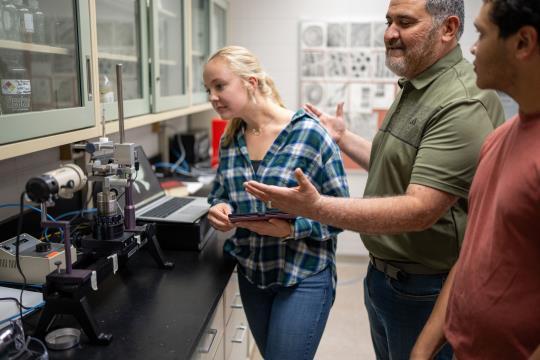
This one‑day immersive seminar helps middle and high school science teachers connect classroom concepts to real‑world engineering applications. Participants explore hands‑on labs, classroom‑ready lessons, and engineering career pathways – especially within Wisconsin’s vital paper and manufacturing industries.
Who Should Attend
Middle and senior high school science teachers. Participation is limited to 20 educators.
Questions? email engineering@uwsp.edu
What You’ll Experience
• Four hands‑on engineering labs aligned with science and math, with engineering professors and industrial professionals.
• Laboratory demonstrations and a guided paper machine tour
• Overview of UWSP engineering programs and student career pathways
committee made the drive to campus to meet these students face-to-face. What a difference a semester makes! The pre-service teachers who had worried about their placements came back with stories. While some were triumphant and some were humbling, all were valuable. They shared what they’d learned in real classrooms with real students and real challenges. Our role was simple but meaningful: we listened again, offered encouragement, and shared the wisdom that comes from years in the classroom. We reminded these future educators that the uncertainties they faced are part of the journey, and not a sign they’re unprepared. Many of us shared our own “first placement” stories along with the mistakes we made, the victories we celebrated, and how those experiences shaped us as educators.
Looking Ahead to WSST
Before we parted ways, we made sure to highlight an opportunity we hope these future teachers won’t miss: the Wisconsin Society of Science Teachers (WSST) Conference. We encouraged them to consider attending, to continue building their professional network, and to see firsthand the community of educators invested in their growth.
Why This Matters
The New Teacher Network Committee exists because we believe teaching doesn’t happen in isolation. New teachers thrive when they have mentors, peers,
and a community cheering them on. By connecting pre-service teachers with veterans early before the challenges feel overwhelming, we’re investing in the future of education in Wisconsin. Not only are they benefiting from the mentorship, but they are building us up as well, reminding us of that spirit of excitement we feel when engaging students. We’re grateful to Adam Schafer and UWWhitewater for partnering with us, and we’re already looking forward to next year’s cohort.
To our pre-service teachers: You’ve got this. And you’ve got us.
This submission was created in collaboration between the New Teacher Network Committee and Magic School AI.
Our published project booklets have resulted in new faculty hires at Wisconsin’s Flagship Institution, UW-Madison!!!
Inquire about Fuel Cells and electrolyzers as class activities. Find Books: https://bookdatabase.online
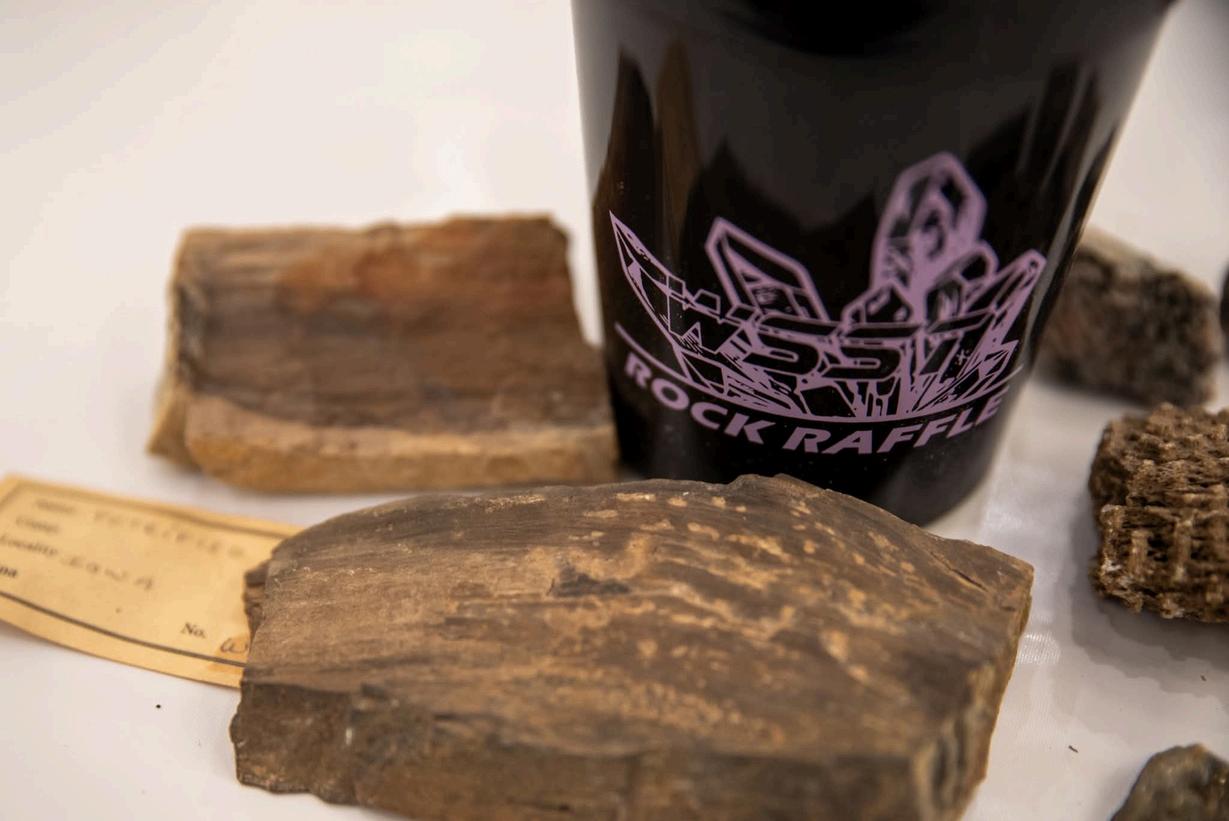
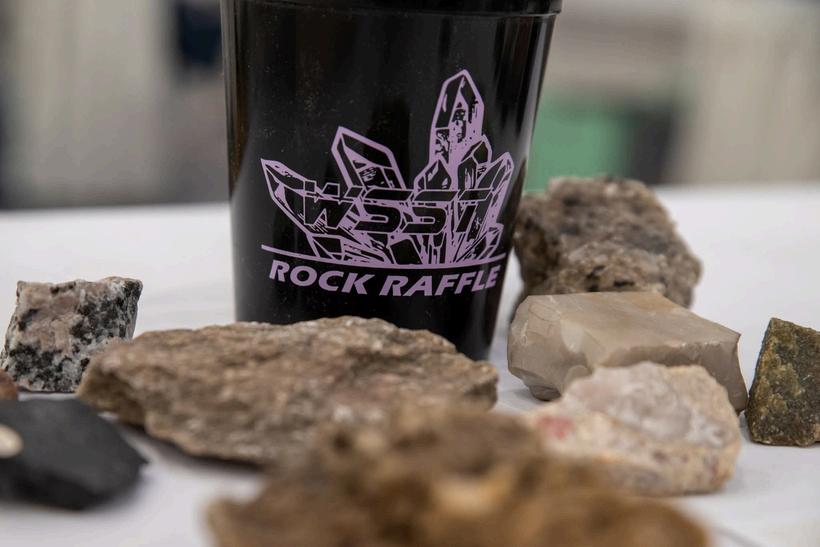
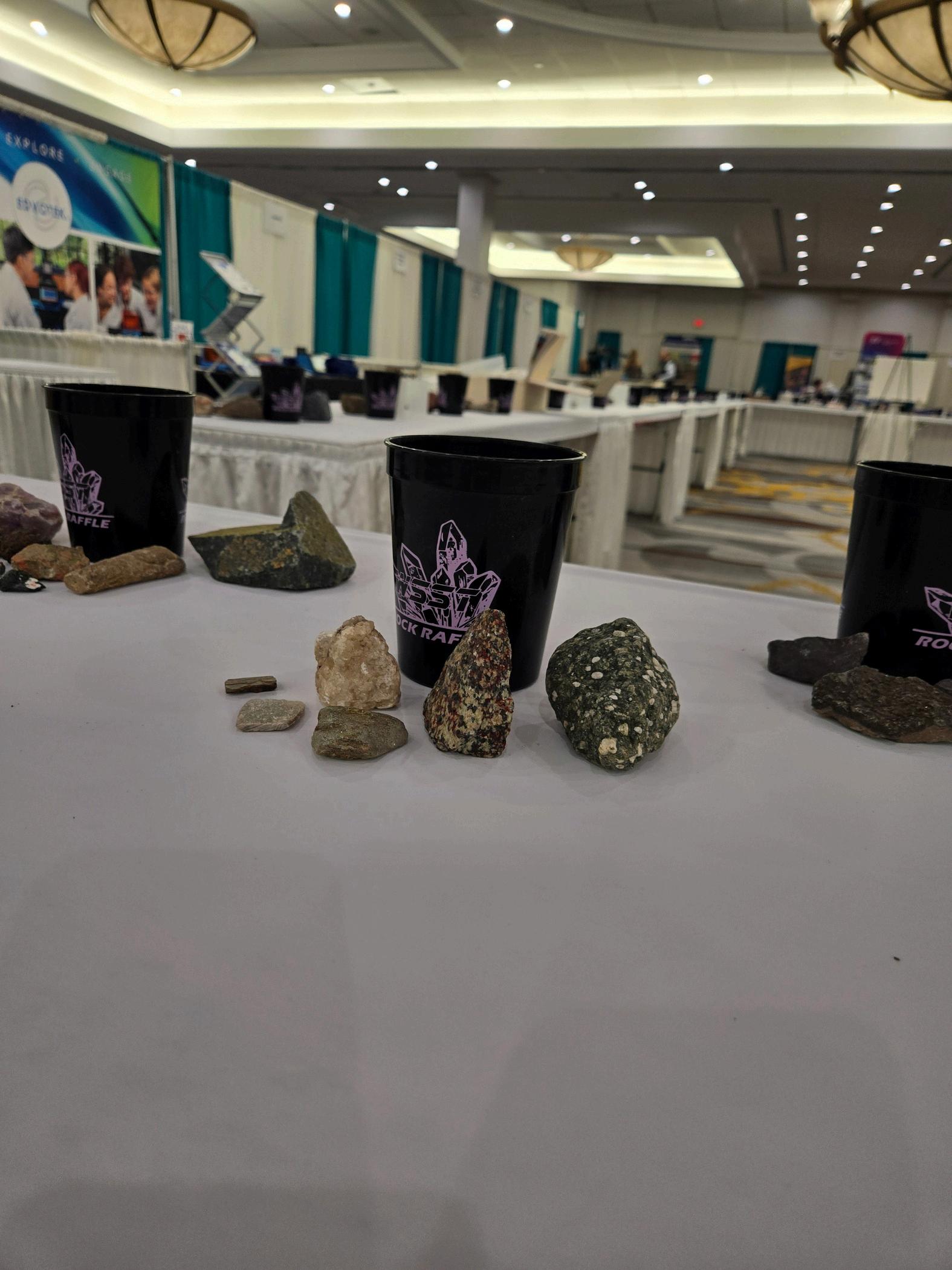
Do you have rocks, minerals, or cool fossils collecting dust? Consider donating to the RockRaffle 2027
WESTA ROCK RAFFLE 2026
AT WSST CONFERENCE
WESTA is a committee of WSST to promote Earth Science education and provide professional development opportunities for educators from throughout the state of Wisconsin
Join us next year at WSST conference Green Bay, Thursday during the Vendor social. Bring cash - raffle tickets are 0.25/each or 5/$1
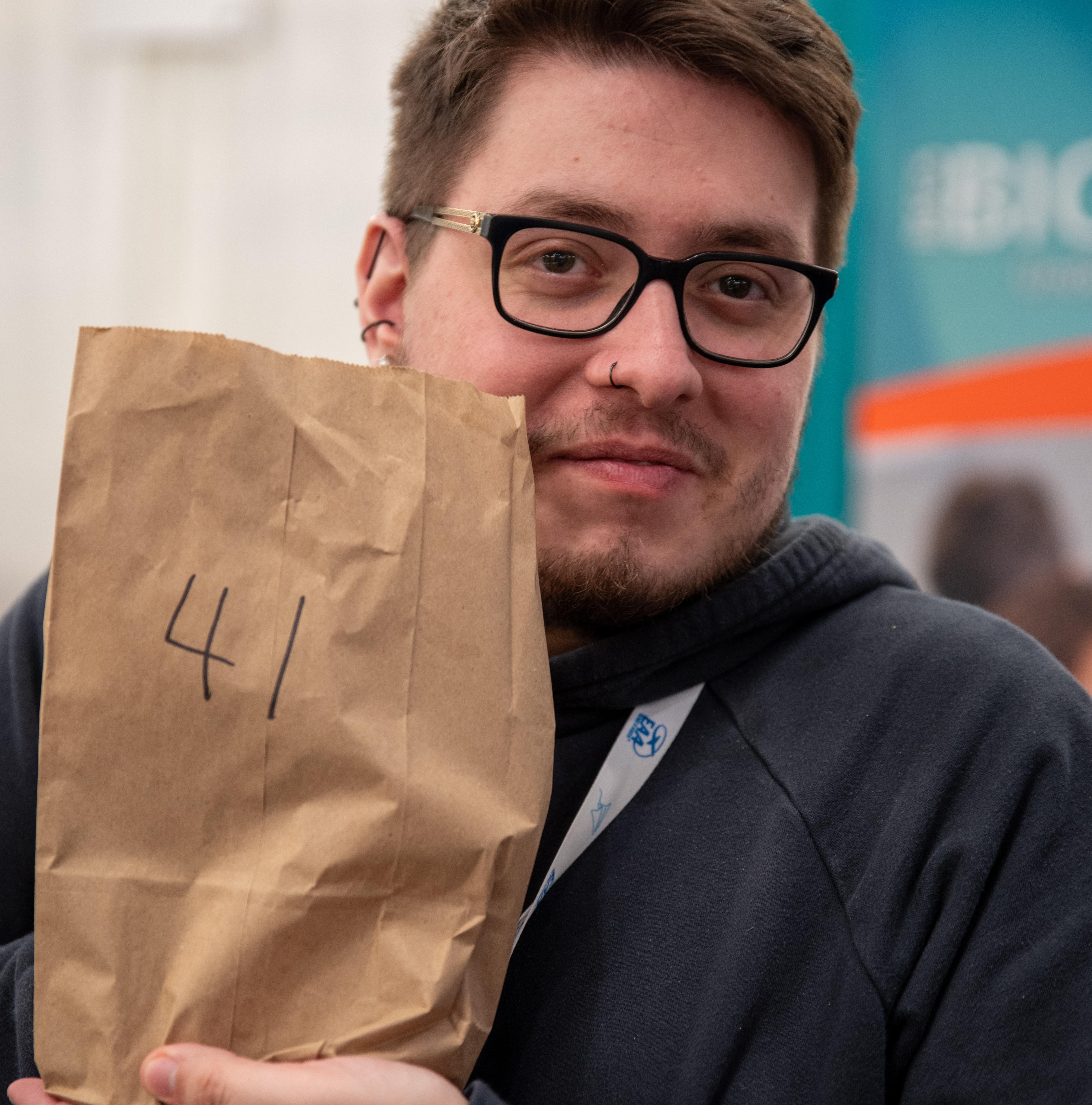
Rock Raffle 2026: at WSST conference raised amazing $512, Thank You donors and all participants! Proceeds go directly toward Earth science professional development an summer field trips.
What 15 Years of Presenting Science to Kids Taught Me About Learning
By Dave Daniels, Forest Whales
I was walking through a school gymnasium in Wisconsin when I noticed a girl moving from exhibit to exhibit, crying. She was about 11 years old. I walked over, concerned, and asked if she was okay.
She told me she had always wanted to visit a natural history museum. She had never had the opportunity. But that day, she said, the museum had come to her. It was the best day of her life.
I have been presenting science to children for 15 years. I have stood in hundreds of gymnasiums across Wisconsin and the Midwest, watched thousands of kids hold fossils and whale bones and stone tools for the first time. And I still think about that girl. Because she said in one sentence what I have spent a decade and a half trying to prove: that the experience of science — the tactile, visual, and immediate — changes something in a child that a textbook simply cannot reach.
We all know this, if we’re being honest. I see it with my own two children. The moment learning becomes something you can hold in your hands, something you can hear and see and feel all at once, it stops being school and starts being something else entirely. It starts being a fire.
I watch that fire ignite at a specific
The Ocean Just Pulled Up to Your School.
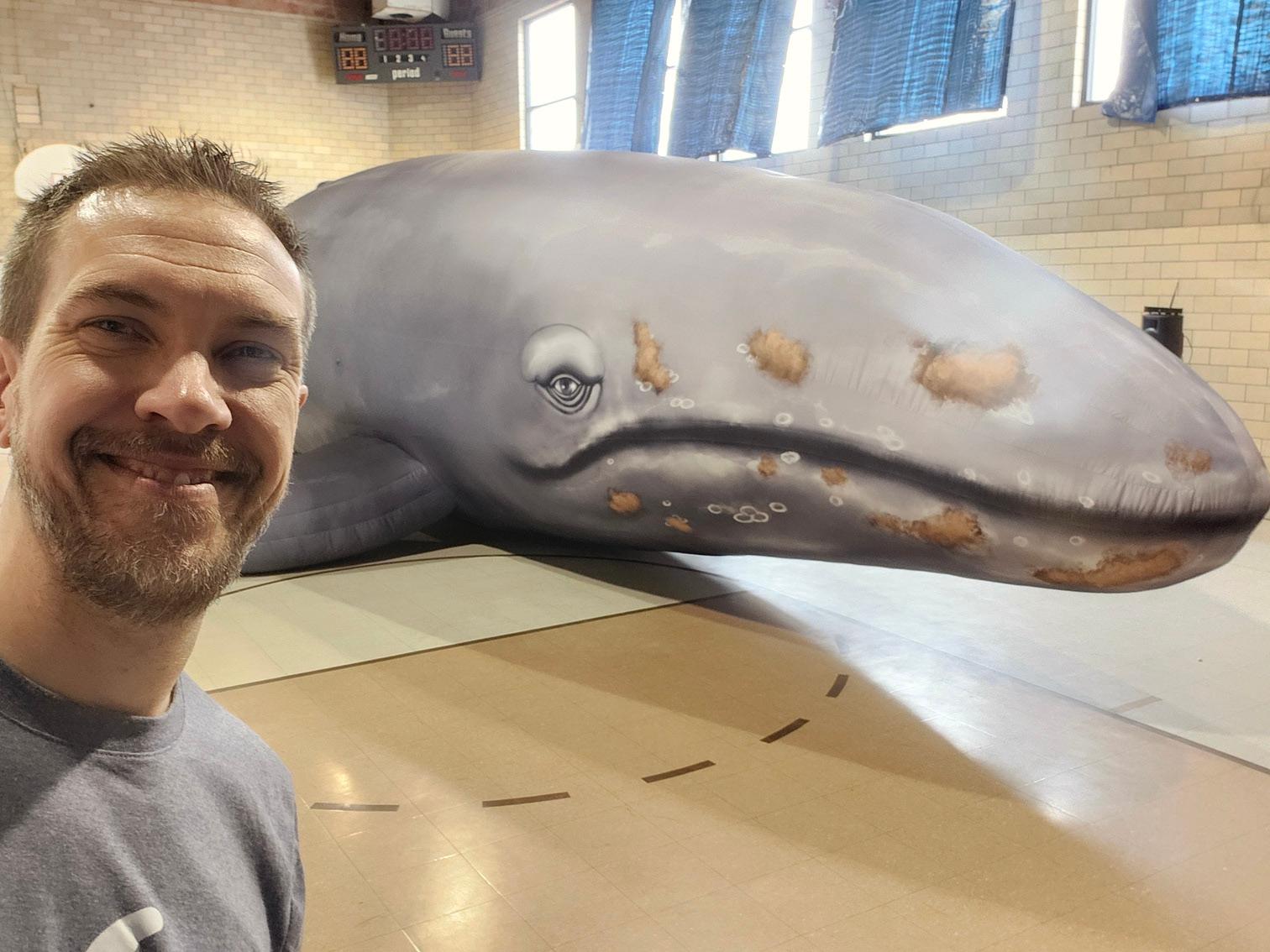
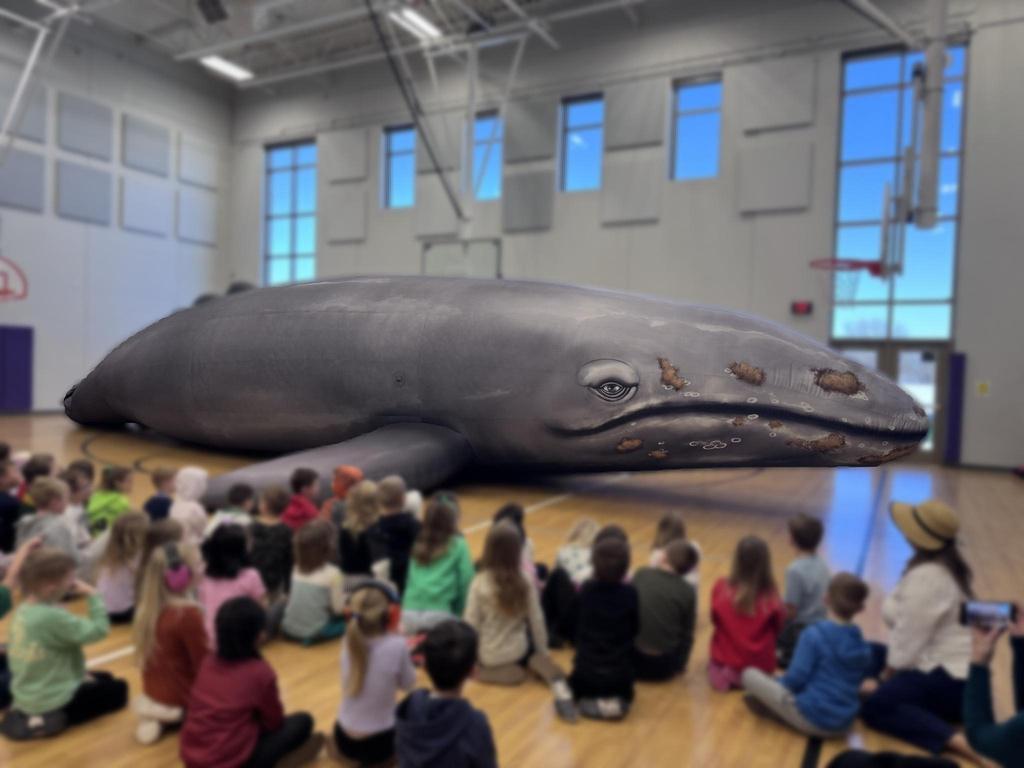
Forest Whales brings a 56-foot inflatable gray whale and hands-on bone collection to K-12 schools, libraries, and community events across Wisconsin and the Midwest –fully NGSS-aligned and hands-on.
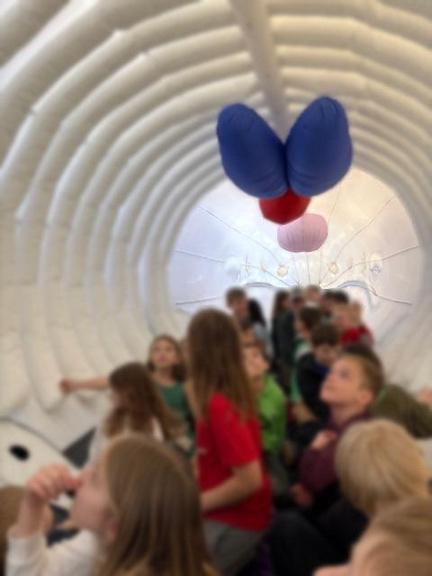
moment in every program I run. It happens when the whale begins to inflate. Initially, there is a mound of gray cloth on the gymnasium floor. Then the fans start, and something extraordinary happens in front of these children’s eyes. The cloth rises. Takes shape. Becomes a tail, a fluke, a massive gray body. Nine feet tall. Fifty-six feet long. A living, breathing animal, or something close enough that every child in the room forgets it isn’t.
We all see whales in books and on screens. But to stand next to one, to crane your neck upward and try to comprehend the sheer size of a creature that shares this planet with us, that is something different.
I did not set out to build a traveling science program. I was in my basement one afternoon when I found a cardboard box I hadn’t opened in years. Inside were fossils I had collected as a kid - ancient things, wrapped carefully and packed away. I spent the next hour on the concrete floor, unwrapping each one, turning them over in my hands, wondering why I had kept them hidden all that time. And then wondering how I could share them with others.
That box eventually grew into something larger than a school bus. If people hadn’t wanted to see these things, the idea would have died with that box years ago. But they did want to see them. Kids especially. And I learned something important in those early years: children do not need to be convinced that science is interesting. They need to be given the chance to find out for themselves.
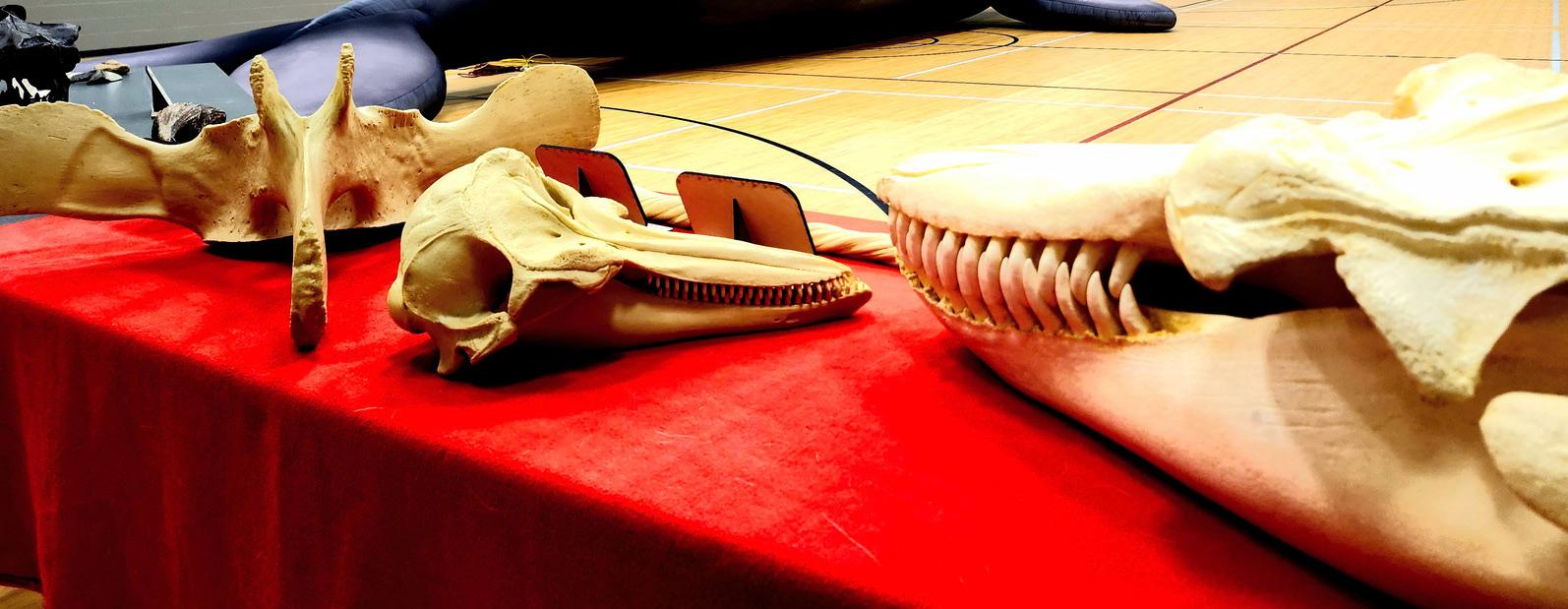
Two items in my collection illustrate
this better than anything I could say. The first is a 2-million-year-old hand axe from Africa. Not made by our species. Made by another species of human entirely. That idea is genuinely difficult to grasp in the abstract. But the moment a child holds that stone tool in their palm, something shifts. The deep past becomes real. Another mind, another hand, another kind of person is suddenly present in a Wisconsin gymnasium.
The second is a dolphin skull. On the right side of the jaw, the teeth show dramatically more wear than the left. I ask the kids why they think that might be. It doesn’t take them long. This animal caught nearly all of its food on the right side of its mouth. The room erupts. “I do that too!” someone shouts. “So it was right-flippered, kind of like how humans are right-handed?”
In that moment, a child has just reasoned their way to a scientific conclusion using evidence in their hands. They didn’t read it. They didn’t memorize it. They figured it out. That is what science actually is, and it is available to every kid in every gymnasium in Wisconsin, if we give them the chance.
The girl who cried in that gymnasium never forgot that day. I know this because learning that will stay in the body. That lives in the memory of a smell, a weight, a texture. It does not leave the way a lesson from a page does.
That is what hands-on science does. It stays.
Dave Daniels is the founder of Forest Whales, a traveling marine science and paleontology program serving K-12 schools, libraries, and communities across Wisconsin and the Midwest.
Inclusive by Design: Science Learning for Everyone
By Sarah Ratelis
Creating an inclusive classroom is about more than meeting accessibility requirements. It’s about ensuring every student can fully engage in the wonder of science. When I work with students who are visually impaired (VI), I am constantly reminded that inclusion means planning with intention, and that requires more creativity and often, a bit of crafting. Over the past few years, I’ve developed strategies and materials that enable my VI students to actively participate in investigations, manipulate models, and explore concepts in tangible, meaningful ways. At my recent WSST presentation, I shared a gallery walk of the materials I’ve made and curated for several VI students. One of the most popular items was sets of 3D models my husband and I designed and printed together to support investigations for a chemistry unit and a waves unit. These models began as a visual from a worksheet I wanted for a student investigation, and through collaboration and iteration, we created something tactile, manipulable, and conceptually accurate. Another highlight was a
new slate with special paper that raises lines after being drawn on with a stylus. This innovation allows students to “see” with touch and gain independence in recording observations.
I also use braille graph paper that allows us to plot lab data using map pins. With this tool, the teacher or other students can quickly create a graph so that the VI student can join in the data analysis. It’s a small adjustment, but it transforms participation, making students full collaborators in investigations rather than observers.
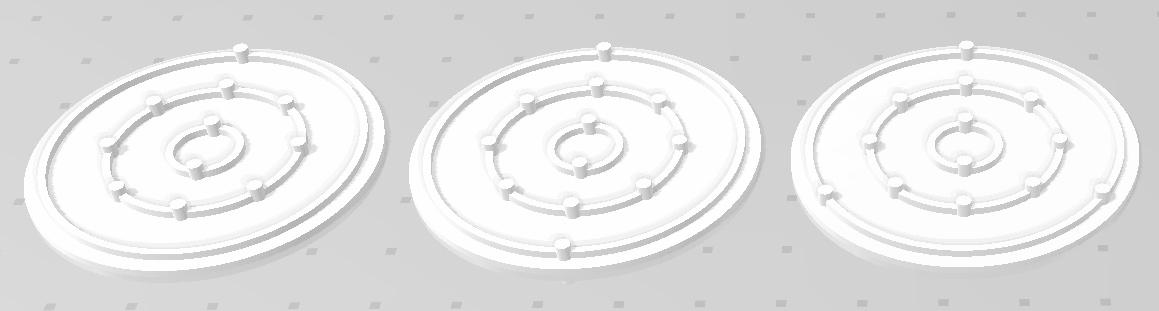
In addition, I’m sharing links to 3D printing files for the waves model and atomic energy levels for elements 1–20. These resources bring tactile, hands-on exploration into classrooms beyond my own, not only supporting VI students but enhancing understanding for any learner who benefits from interactive models. Many of the adaptations I create extend learning for all students, demonstrating that accessibility and engagement often go hand in hand.
This approach reinforces a core belief: accessibility is not a separate track but an opportunity for richer, more creative learning for everyone. Crafting these resources may require time, patience, and 3D Models
ingenuity, but it rarely requires significant funding. Simple materials, thoughtfully adapted, can transform abstract concepts into tangible experiences, making science accessible and exciting for every learner. Ultimately, my vision for an inclusive classroom is one in which all students are active participants in scientific discovery. It’s a space where adaptations are not seen as special accommodations but as thoughtful tools that expand and illuminate learning for all. Inclusion, in science, is about creativity, community, and curiosity.
WSST Newsletter
192 Depot Road
Cambridge, WI 53523
ADDRESS SERVICE REQUESTED
Volume 67, No. 4
Published in Appleton, Wisconsin
Editing & Layout: Brian Bartel
Publisher: Kevin Niemi
DUES EXPIRE ON DATE PRINTED
Submissions to the Newsletter
If you wish to contribute to the WSST Newsletter or place an advertisement, please forward items to Newsletter Editor, Brian Bartel, Morgan Building, 120 East Harris St, Appleton, WI 54911. The preferred method of submission is by e-mail at newsletter@wsst.org Please send as text or Microsoft Word Document.
For advertising rates, visit www.wsst.org/newsletter
Join us or check your account
Stay informed and get connected with the largest professional society for teachers of science in Wisconsin. Regular Membership in WSST is only $25 per year, Retired teacher annual membership is $15.00, and Student annual membership is $10.00. Visit www.wsst.org/join to join today.
To check on your WSST account, change your address or school, visit www.wsst.org and click on My Account.