HARD Trails Master Plan

Page 1


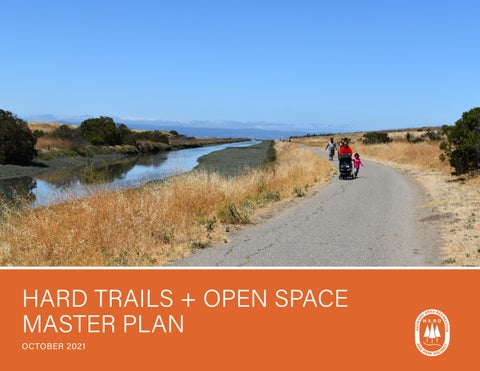
HARD TRAILS + OPEN SPACE MASTER PLAN

ACKNOWLEDGMENTS

HAYWARD AREA RECREATION AND PARK DISTRICT

MEGHAN TIERNAN

MICHAEL WILLIAMS

CONSULTANT

WALLACE ROBERTS & TODD, LLC

STEERING COMMITTEE

ADDITIONAL THANKS

MANY THANKS TO ALL OF THE STAKEHOLDERS WHO PARTICIPATED IN THE COMMUNITY DESIGN PROCESS

THROUGH MULTIPLE ENGAGEMENT EVENTS. THANK YOU ALSO TO THE EDEN AREA, CASTRO VALLEY AND FAIRVIEW MUNICIPAL ADVISORY COUNCILS.

ALISON ABBORS ALAMEDA COUNTY PLANNING

HANK ACKERMAN ALAMEDA COUNTY FLOOD CONTROL DISTRICT

RACHEL PARAS ALAMEDA COUNTY PUBLIC HEALTH

DEBORAH COX ASSEMBLY MEMBER BILL QUIRK- DISTRICT 20

SUSIE HUFSTADER BIKE EAST BAY

MO SHARMA CITY OF HAYWARD

ERNESTO SARMIENTO DOWNTOWN STREETS TEAM

TONYA COVARRUBIAS EBRPD

BRUCE KING FRIENDS OF SAN LORENZO CREEK

CINDY TORRES HARD - CITIZENS ADVISORY COMMITTEE

WESLEY LIGHTFOOT HARD - CITIZENS ADVISORY COMMITTEE

CHRIS (CJ) COSTANZO HARD - PARKS

MARK OAKMAN HARD - RANGER SUPERVISOR

JIM WHEELER HARD - RECREATION

GALE BLETH HAYWARD POLICE DEPARTMENT

CHRIS GILSTRAP PG&E

BREANN GALA RCD HOUSING

JOAQUIN NEWMAN REACH ASHLAND YOUTH CENTER

CARMEN LOPEZ SAN LORENZO UNIFIED SCHOOL DISTRICT

DIANA MARAVILLA SAN LORENZO UNIFIED SCHOOL DISTRICT

KATHIE READY SAN LORENZO VILLAGE HOA

KATHY ORNELLAS TRAILS ADVOCACY-AT-LARGE

MATT TURNER TRAILS ADVOCACY AT-LARGE

The Trails and Open Space Master Plan sets the course for the Hayward Area Recreation and Park District’s embrace of a linked, green recreational system. The system will serve all of our communities and a help us more effectively serve our mission. This chapter provides important background, and introduces the goals of the plan.

INTRODUCTION

Figure 1-1: Hayward Area Recreation + Park District Location

WHAT IS THE HARD TRAILS + OPEN SPACE MASTER PLAN?

The HARD Trails and Open Space Master Plan lays the groundwork for creating a connected trail system and open space network throughout the Hayward Area Recreation and Park District’s service area. The Master Plan will help the District more fully meet the recreational needs of a growing a diversifying community, while also creating positive benefits for active transportation and resilience in the context of climate change.

THE SETTING

The Hayward Area Recreation and Park District (HARD) encompasses 104 square miles in Alameda County, with a mix of urbanized areas and protected regional open space. The District is located about 14 miles south of Oakland and 26 miles north of San Jose, stretching from the San Francisco Bay shoreline into the East Bay hills.

HARD’s park system includes some 1,359 acres of local and community parks, aquatic centers, golf courses, and other special facilities, along with greenbelts, open spaces and trails—the subject of this Master Plan. The District offers an array of programs including after-school programs, camps, arts classes, fitness classes, sports, and classes for seniors. HARD provides park and recreation services

to nearly 300,000 residents in the City of Hayward, as well as the neighboring unincorporated areas of San Lorenzo, Ashland, Cherryland, Castro Valley and Fairview.

The District contains a diverse group of urban and suburban areas. Everything from turn-of-the century Victorians and commercial districts to large postwar subdivisions, large industrial areas and contemporary transit-oriented development are present. This landscape both conceals and expresses a complex history. Following some 10,000 years of habitation by Ohlone people, the Hayward area experienced a rapid succession of changes, with the Spanish mission period, Mexican ranching, the arrival of American settlers, the establishment of Hayward, rail and shipping, large-scale agriculture and canning, development of suburban housing tracts and industrial areas, preservation of regional open spaces, and absorption into a diverse, metropolitan region.

Hayward Plunge Trail and San Lorenzo Creek History Photos

Source: Hayward Area Historical Society

HAYWARD AREA RECREATION AND PARK DISTRICT

The Hayward Area Park, Recreation and Parkway District was established in 1945. Since 1958 HARD (having adjusted its name) has been led by a fivemember Board of Directors, with each Director representing constituents from the area at large. Directors are elected to four-year terms. The District’s offerings have grown tremendously over the years, as it came to develop and manage its own parks and expand its recreational programming to reach a broader and increasingly diverse service population.

The District has been instrumental in bringing green space and recreation opportunities to Hayward and the unincorporated communities of Ashland, Castro Valley, Cherryland, Fairview and San Lorenzo. However, it has faced an uphill climb, as much of the area’s growth occurred before the District existed or had capacity to develop adequate park land.

THE VALUE OF OPEN SPACE AND TRAILS

What benefits do trails and open space bring? Let’s start with their ability to support both recreation and transportation, their contribution to health and to healthy natural systems, and the way they help connect us with the landscape and adapt to environmental change.

RECREATION AND ACTIVE TRANSPORTATION

A survey of residents’ priorities in 2016 and interviews with parks stakeholders in 2018 showed a strong interest in expanding the trail network. People expressed particular interest in opportunities to create east-west linkages and trail connections to the hills and the bay, and also talked about the need for trails to serve a broad variety of users for both recreation and transportation. Trails give people a way to be immersed in nature, go on a run or a ride, or just get to school or work safely and comfortably without a car.

TO YOUR HEALTH

The Center for Disease Control and Prevention, along with other federal, state, and non-profit organizations, including the Trust for Public Land (TPL), the Robert Wood Johnson Foundation, and the National Recreation and Park Association (NRPA), have thoroughly documented the link between having access to places for physical

activity and improved physical and mental health. Trails and open space corridors give people scenic places that encourage them to get outdoors and incorporate exercise into daily routines. Better health translates not just physical fitness but also self-confidence and happiness.

CONNECTION WITH THE NATURAL SETTING

HARD’s service area stretches from the hills to the San Francisco Bay. An enhanced open space and trail network can give residents opportunities to meaningfully experience this setting in their dayto-day lives. Parks and trails can give people access to diverse natural environments—open hillsides, riparian creek corridors, the marshy Bayshore—and reinforce a sense of how people and nature are interrelated in our region.

ENVIRONMENTAL BENEFITS AND ADAPTATION

Trails and open spaces are also valuable for their ability to contribute to better air and water quality, enhance natural ecosystems, and help adapt to a changing climate. Trails promote walking and biking, and reduce vehicle trips and the carbon emissions they generate. Vegetation absorbs carbon dioxide in the atmosphere, and promotes the infiltration of water, filtering out pollutants.

Open spaces preserve natural landscapes, helping to reconnect fragmented habitats. Open space can relink shoreline and upland environments and help us adapt to a changing climate.

Source: WRT

Eden Greenway Park

RELATIONSHIP WITH OTHER PLANNING EFFORTS

The HARD Parks Master Plan, adopted in 2019, recommends the development of a master plan for trails. That recommendation is being carried out here. At the same time, we are able to build on current pedestrian and bicycle plan updates by Alameda County and the City of Hayward. The system recommendations, trail standards, and other aspects of those plans have informed this one. HARD and its partners have recognized that this effort is an important opportunity to align the goals and actions of the many jurisdictions that have a role in shaping our communities. And the HARD Trails + Open Space Master Plan is being created side by side with master plans for two specific trails that will be integral to the system: the Foothill Trail and San Lorenzo Creekway.

Figure 1-2: Relationship between Planning Efforts

THE PLANNING PROCESS

The HARD Trails and Open Space Plan, and the two companion master plans noted above got underway in January 2020. HARD convened a Steering Committee with members representing a range of agencies and organizations essential to the Plan’s success. HARD and its consultant, WRT, met with this Steering Committee over the months that followed to present and discuss existing conditions, preliminary recommendations, and a draft master plan approach.

The draft Master Plan was presented to Metropolitan Area Councils (MACs) for the Eden

Area, Castro Valley, and Fairview, and to Hayward City Council, before being brought to HARD’s Board of Directors for a study session and, ultimately, for approval.

HARD and the Consultant Team also reached out to the broader community. This outreach was focused on visioning for the San Lorenzo Creekway, for which two sources of State grant funding were being sought. Outreach during this time was complicated by the shelter-in-place orders during the COVID-19 pandemic; not being able to hold public meetings, we relied on virtual

Figure 1-3: HARD Trails + Open Space Planning Process

workshops, online surveys, and a redoubled effort to raise awareness of these opportunities for input, including the placement of banners, the enlistment of community liaisons, and paid “youth ambassadors.” Outreach and engagement will continue in the context of specific trail and open space improvements.

STAKEHOLDER INPUT

Agency collaboration. We need robust coordination between agencies, starting with alignment with Alameda County’s and Hayward’s bike and pedestrian master plans.

Trails and ecological restoration. Trails should support habitat conservation, and allow people to explore creeks and open spaces.

Trail corridors. The trail system should connect to parks and address park deficiencies; connect to employment areas; and cross I-880 and other barriers.

Trail connections. A trail is only as good as its access points. We’ll need safe and attractive access to trails.

Signage and wayfinding. Wayfinding will be critical for on-street segments, especially at transitions.

Trail design. Trails that are designed with separate lanes for bikes and pedestrians need careful design attention; they can actually create safety issues.

Equity and community ownership. The Plan should be infused with a commitment to equity and a role for the community.

HARD received extensive input from community members on the San Lorenzo Creekway. This input has informed the overall master plan.

VISION & GOALS

The Hayward Area Recreation and Park District, with our partners, will develop a network of paths and trails that create valued opportunities for recreation and movement for everyone, in the context of an enhanced open space system.

GOALS

1. Network for Recreation and Active Transportation. Create a growing and diverse system of trails that meets the demand for safe and appealing places to walk, run, bike and scoot.

2. Open Space System. Develop a network of open spaces that connect with the Bay shoreline, creek corridors, the immediate foothills, and the East Bay Hills.

3. Partnerships. Embrace partnerships with regional agencies, social service providers, the County and the City of Hayward to achieve goals of a connective open space and trail system.

4. Connect People and Places. Connect communities with each other and connect people with parks, open spaces, schools, workplaces, transit stations, and other destinations, with low-stress options for nonmotorized travel.

5. Equitable and Resilient Community. By creating new options for recreation and active transportation, help people in all parts of the District lead healthy lives and adapt to life changes and changes in the broader world.

Figure 1-5: Vision for a Creek Overlook

Vision for an amenity zone that provides opportunities to view the creek. The trail and amenity zone will be designed in compliance with City and County ordinances to provide sufficient setback from the creek.

TRAIL SYSTEM FRAMEWORK 2

HARD’s trail system will create a safe, attractive network for travel and recreation, connecting neighborhoods with transit, parks with other parks, and our urban communities with the shoreline and hills that frame our part of the Bay Area.

Clockwise from top left: Hawyard Plunge and Greenbelt Trails, Eden Greenway, San Lorenzo Creek Corridor, and Foothill Trail Corridor.

OPEN SPACE + TRAILS

HARD operates over 100 parks with 1,360 acres of park land across our 104 square miles. Our existing trail system includes the Hayward Plunge and Greenbelt Trails along Ward Creek, and the trail along parts of Eden Greenway. There are also paths linking parks in the Cannery district, and paths in parks. And we are already planning for new trails along two corridors: the San Lorenzo Creekway and the Foothill Trail.

Our District also has thousands of acres of preserved open space along the Bay and in the hills. Some of this is managed by HARD, but the great majority is part of the East Bay Regional Park District system or the State of California. Long segments of both the San Francisco Bay Trail and the Bay Area Ridge Trail—major regional trails that in our area are operated by the East Bay Regional Park District.

Figure 2-1: Existing and Planned Parks, Open Spaces + Trails

RECREATIONAL OPPORTUNITIES

As many parks as we have, there are still neighborhoods that are more than half-mile walk from a park. HARD is focusing on these gaps as we plan new parks, including new parks at Mission & Mattox and at La Vista—new parks that will be linked to our trail system. In other areas, future trails may provide recreational opportunities closer to home while helping to create an interconnected park system.

Figure 2-2: Access to Parks

BIKE NETWORK

Figure 2-3: Existing and Planned Bike Network

Today, our communities have a limited network of bike lanes, but that is poised to change a lot in the years ahead. East 14th Street is in the process of being rebuilt with protected bike lanes and wider, better sidewalks, and more improvements are planned for the Mission Boulevard. Both the City of Hayward and Alameda County updated their Bicycle and Pedestrian Master Plans in 2020 (the County’s plan has not yet been adopted as of this writing.) The focus of these plans is to create a low-stress network to make biking a safe and attractive option for all riders. On low-traffic streets, this can be as simple as traffic calming and shared lane markings (Class III bikeways). On many busy roadways, bike lanes separated from traffic (Class IV) are planned.

Figure 2-4: Residential Density
Figure 2-5: Employment Density
Figure 2-6: Commute Patterns

COMMUNITY FABRIC

Our service area includes classic suburban single-family neighborhoods as well as older neighborhoods with a more dense mix of houses and apartments. There are areas with a lot of jobs, including downtown Hayward, the Hayward industrial area, and CSU-East Bay. Still, the great majority of people who live here commute to other areas for work.

The transit system—especially BART—is a magnet of activity, and will become more so in the years ahead. This is because the area around BART stations and along major bus routes have been designated as “priority development areas.” This means they will get more apartments, condos, office buildings, shops and entertainment.

Figure 2-6: Commercial Districts, Schools, and Priority Development Areas

ENVIRONMENT

The District is nearly flat between the Bay and the foot of the hills. The Fairview and Castro Valley feature rolling, upland valleys, and then land rises to steep, rugged hills in the east.

There are significant environmental hazards. The active Hayward fault traverses the district from southeast to northwest, generally following the Foothill Trail corridor. Large areas of the baylands are subject to flooding, and will be increasingly at risk due to sea level rise

Figure 2-7: Steep Slopes, Fault Zones, Flooding + Sea Level Rise

EVALUATING POTENTIAL TRAILS

Figure 2-8: Evaluating Potential Trails

EXISTING PARKS

To evaluate where our system of trails and open spaces should be created, we start with our goals.

What routes would support a strong network for both recreational trail users and for active transportation?

How can open space and trails help people in all parts of the district and from all walks of life lead healthy active lives, have access to opportunities, and access to nature?

Where can we tap into partnerships with regional agencies, leverage existing plans for bike and pedestrian plans, and leverage existing public land?

DESTINATIONS

TRAIL FRAMEWORK

BIKE NETWORKS

ENVIRONMENT

CREATING A FUTURE TRAIL + OPEN SPACE SYSTEM

We envision a future network of trails that includes:

» San Lorenzo Creekway

» Foothill Trail

» Eden Greenway Trail

» B Street to Bay Trail

» Fairview –Five Canyons Trail

» Garin to Eden Trail

» Greenbelt Trail Extension

» Cull Canyon Connection

» Lake Chabot Connection

Each of these trails will be used and enjoyed by people in a variety of ways: to get to work or school, to bike to the bayshore, to take a walk in the hills, or simply to include a short segment of a trail in a daily walk in the neighborhood.

The open space network willl include hillside grassland and woodlands, riparian creek corridors, and lowlands that may be re-integrated with the bayshore.

What do these trails look and feel like? What features do they include? How do we create them? These are the subjects of the following chapters.

Figure 2-9: Hard Trails + Open Space Plan

TRAIL TYPES + OPEN SPACE CHARACTER 3

HARD’s trails range from earthen paths in natural settings to sidewalks and bikeways in the heart of our community.

This chapter defines a typology of trails and the critical characteristics they need to be successful, from trail surfaces to street crossings to such trail elements as seating, lighting, fencing, wayfinding, and public art.

It also establishes a typology of open spaces.

OFF-STREET TRAILS

The Hayward Plunge and Greenbelt Trails are examples of unpaved shared use trails. Source: www.redwoodhikes.com/EastBay/Hayward

This section introduces a typology for HARD’s trail system.

Trails are distinguished at a high-levle as o ffstreet trails (Type A) , on-street trails (Type B), or crossings (Type C).

Within each category, more specific trail types are presented (A-1 through A-3, B-1 through B-3, and C-1 through C-5).. Each type of trail and crossing is suited to a context in our community.

A-1

UNPAVED SHARED USE TRAILS

TYPICAL LOCATIONS

• Hayward Plunge and Greenbelt trails (existing)

• Eden Greenway east extension (proposed)

• Bay Area Ridge Trail (reference)

CRITICAL CHARACTERISTICS

• Soft surface

• Variable width (4’ to 12’, depending on context, right-of-way

• May not be fully accessible

• Pedestrian priority

• Trails may also be open to mountain bikers, equestrians

• Equestrian trails may include uncompacted earth surface alongside pedestrian trail

A-2 PAVED SHARED USE TRAILS

TYPICAL LOCATIONS

• Segments of all proposed HARD trails

• San Francisco Bay Trail (reference)

CRITICAL CHARACTERISTICS

• Asphalt or compacted aggregate base (AB) trail with soft shoulders

• Versatile contexts: parks and open spaces, easements within development, Alameda County Flood Control District (ACFCD) access roads

• Preferred trail width of 16’ including shared 6’ travel lanes in each direction and 2’ decomposed granite (DG) shoulders

• 10’ to 12’ trail width acceptable where context requires

• Opportunity zones for amenities in additional 4’ right-of-way where possible

Figure 3-1: Paved Shared-Use Trail (Foothill Trail)
Figure 3-2: Paved Shared-Use Trail (San Lorenzo Creekway)

3-3: Paved Separated Use Trail

A-3 PAVED SEPARATED USE TRAIL

TYPICAL LOCATIONS

• Not defined

• Appropriate where needed for safety due to sight lines or high volume of pedestrian and bicyclist users

CRITICAL CHARACTERISTICS

• Same paving and contexts as paved shared use trails

• Preferred trail width of 16’ including separated 5’ to 7’ dedicated travel lanes in each direction for bikes plus 4’ dedicated lane for pedestrians

• 10’ to 12’ trail width acceptable where context requires

• Opportunity zones for amenities in additional 4’ right-of-way where possible

Figure

ON-STREET TRAILS

B-1 ENHANCED SIDEWALKS + CLASS III BIKE BOULEVARDS

TYPICAL LOCATIONS

• 4th Street (Foothill Trail)

• Bunker Hill Boulevard (Foothill Trail)

CRITICAL CHARACTERISTICS

• Ideal for streets with low vehicle traffic volumes and speeds

• Center of pavement markings (“sharrows”) at least 4’ from curb (11’ if parallel parking is present)

• Where part of the trail system, 10’-wide sidewalks recommended

• Should include trees and/or plantings with greater width and furnishings in areas with greater pedestrian volumes

• Trail identity and wayfinding signage

Source: City of Hayward Bicycle and Pedestrian Master Plan

Figure 3-4: Class III Bikeway + Enhanced Sidewalk
Trail segments on low-traffic streets like 4th Street can have shared bike/vehicle lanes, sidewalks, and trail markings.

Trail segments along moderately busy streets like Grove Way should have bike lanes and a comfortable pedestrian realm, along with clear trail identity and wayfinding signage.

Source: City of Hayward Bicycle and Pedestrian Master Plan

B-2 ENHANCED SIDEWALKS + CLASS II BIKE LANES

TYPICAL LOCATIONS

• Grove Way (San Lorenzo Creekway)

• B Street (B to Bay Trail)

CRITICAL CHARACTERISTICS

• Appropriate for streets with moderate vehicle traffic volumes and speeds

• Bike lanes 6’ from curb (5’ minimum), or 4’ striped with 2’ distance from vertical objects

• Where part of the trail system, 10’ sidewalks recommended

• Should include trees and/or plantings with greater width and furnishings in areas with greater pedestrian volumes

• Trail identity and wayfinding signage

Figure 3-5: Class II Bikeway + Enhanced Sidewalk

B-3

ENHANCED SIDEWALKS + CLASS IV SEPARATED BIKEWAYS

LOCATIONS

• A Street (B to Bay Trail)

CRITICAL CHARACTERISTICS

• Appropriate for streets with high vehicle traffic volumes and speeds

• 5’ to 7’ separated bikeways in each direction, or single two-way 10’ bikeway

• 2’ to 3’ buffer between bikeway and vehicle travel lanes

• Recommended 10’ sidewalk with pedestrian amenities, including 3’ furnishing/planting zone, 6’ minimum throughway zone for pedestrians

• 2’ frontage zone preferred where businesses front the sidewalk to enable outdoor use

• Trail identity and wayfinding signage

Trail segments on high-traffic arterials like A Street should have separated bikeways where possible, ample sidewalks, and trail identity and wayfinding signage.

Figure 3-6: Class IV Bikeway + Enhanced Sidewalk

CROSSINGS

Where trails cross streets at intersections, treatments for pedestrian and bike safety are essential.

Source: City of Hayward Bicycle and Pedestrian Master Plan

Midblock street crossings are appropriate where trails cross lower-traffic streets or where crossing at an intersection would require significant out-of-direction travel.

Sources: City of Hayward Bicycle and Pedestrian Master Plan (left), NACTO Urban Street Design Guide (right)

C-1

INTERSECTIONS

TYPICAL LOCATIONS

• Numerous locations on all proposed trails

CRITICAL CHARACTERISTICS

• Treatments for bikes include:

• Bike boxes with sensors

• Two-stage turn queue boxes

• Intersection crossing markings

• Protected intersections

• Crosswalk markings and devices for pedestrians should emphasize visibility and be scaled based on traffic volumes and speeds

C-2

MIDBLOCK STREET CROSSINGS FOR TRAILS

TYPICAL LOCATIONS

• Washington Avenue (San Lorenzo Creekway)

• Carlos Bee Boulevard (Foothill Trail)

• Harder Road (Eden Greenway)

CRITICAL CHARACTERISTICS

• Enables direct movement for pedestrians and cyclists, without diversion

• Treatment depends on path volume and traffic volume on the crossing street and can include:

• HAWK signal

• High-visibility markings

• Raised crosswalks

C-3 BOARDWALKS AND CREEK CROSSINGS

TYPICAL LOCATIONS

• Creek and riparian corridor crossings (San Lorenzo Creekway, Foothill Trail)

CRITICAL CHARACTERISTICS

• Elevate off-street trails on structures above creeks and sensitive vegetation to minimize impact and maintain accessibility

• Maintain minimum 12’ width; 16’ preferred to create viewing opportunity

• Railings required (42” minimum, or higher where horses are permitted)

• Pursue opportunities for protection and potential restoration/enhancements of creek banks and setbacks.

Creek and riparian crossings will conserve sensitive ecology and create opportunities to experience it.

Source:

www.americantrails.org/resources/steel-trail-bridges-on-shared-use-urban-pathways https://www.gooood.cn/grand-voyeux-natural-reserve-by-territoires-charles-henri-tachonnicolas-granger.htm

C-4

GRADE-SEPARATED OVERCROSSINGS

TYPICAL LOCATIONS

• Eden Greenway @ I-880, BART

• Eden to Garin Trail @ I-880

CRITICAL CHARACTERISTICS

• Provide connectivity of off-street trails across freeways and rail corridors and maintain accessibility

• Most appropriate where connection would otherwise require significant outof-direction travel

• Maintain minimum 12’ width; 16’ preferred to create viewing opportunity

• Railings and barriers needed

• Opportunity for architectural identity

C-5

GRADE-SEPARATED UNDERCROSSINGS

TYPICAL LOCATIONS

• San Lorenzo Creekway @ I-880

• San Lorenzo Creekway @ Capitol Corridor

• A Street @ I-880 (B to Bay Trail)

• Eden to Garin Trail @ I-880, BART

• Eden Greenway @ Capitol Corridor

CRITICAL CHARACTERISTICS

• Provide connectivity of off-street trails across freeways and rail corridors and maintain accessibility

• Maintain minimum 12’ width; 16’ preferred.

• Tunnel conditions require greater width

• Well-lit for increased personal safety

• Opportunity for public art

BUILDING THE VISION: TRAIL ELEMENTS

To be attractive, comforatble, safe, inspiring, and easy to use, HARD’s trail system needs more than just the trail itself. It needs furnishings: places to sit, places to park a bike, and shaded places to gather. It needs barriers and fences and lighting in certain areas. It needs signs to announce trail entrances, to direct people toward destinations, and to give the trails a clear identity. And it needs art to add beauty and meaning.

The important characteristics and locations of these trail elements are summarized in the following pages.

Facing page:

Overcrossings create opportunities to give a strong identity to the trail system. Undercrossing design requires close attention to safety and experience.

Sources: www.eastbaytimes.com/2014/08/15/from-railsto-trails-iron-horse-cuts-a-pioneering-path-in-urban-trailsmovement/ www.architonic.com/en/project/ross-barney-architectschicago-riverwalk

1.Seating with Creek View

Hand Railing 3. Privacy Fencing

Pedestrian Bridge 5. Wayfing and Interpretive Signage 6. Ground Wayfinding 7. Public Art - Mural

Figure 3-7: Trail Elements

FURNISHINGS

HARD’s trail system will feature places to sit , bicycle racks , water fountains , waste receptacles , and places to gather in the shade. Furnishings should be:.

Comfortable and Accessible. Select and design furnishings with dimensions that work for people (and in the case of water fountains, dogs), and that don’t absorb heat or produce glare.

Durable. Use materials and construction that minimize the need for maintenance and replacement.

Sustainable. Incorporate recycled materials, promote reusable water bottles, and enable recycling and composting.

Identity-Creating. Contribute to the unique identity of the trail system and the specific trail.

PLACEMENT

Seating should be placed periodically along a trail, and located to take advantage of views, shade trees, or other appealing conditions.

Shaded gathering areas may be created at key trailheads and at key scenic locations.

Bike racks, water fountains, and waste receptacles should be placed at major trail entrances.

LIGHTING + BARRIERS

Lighting and barriers are critical to keep trail users safe and provide clear delineation between trails and adjacent properties.

Safety lighting should be:

Oriented to Trail Users. Create an evenly lit environment that is inviting and reinforces the human scale.

Habitat-Sensitive. Illuminate the trail while avoiding overspill into ecologically sensitive areas. Identity-Creating. Contribute to the unique identity of the trail system and trail.

Barriers and fencing should:

Function. Barriers must ensure safety. Fences should ensure privacy and prevent access. Support a Good Trail Experience. Preserve views, provide handrails, and don’t create fortress-like edges.

PLACEMENT

Barriers and fencing should be placed between trails and steep slopes or water bodies, and between trails and back yards.

Lighting should be placed at trail entrances and along trail segments where significant early morning and late evening use is expected.

3-8: Wayfinding Standards

WAYFINDING AND INTERPRETATION

Signage orients trail users to the trail system, communicates rules and precautions, provides directional guidance, and interprets the landscape. Trail signage will:

Vary by Context. Signs at trailheads and along offstreet and on-street trail segments will be designed and scaled for their setting and the user groups they serve (including, on some trails, equestrians!)

Be Legible and Accessible. Signage will use lettering sized for visibility, and include translation where needed.

Leverage Other Features. Signage may be mounted on street furnishings or painted on surfaces.

Create Identity. More than any other trail element, wayfinding signs produce identity for both the system and individual trail.

Tell a Story. Interpretive signage can tell us about Ohlone time, subsequent history, our environment, and our current experience.

Off-Street Trail Signs
Figure
On-Street Trail Signs
Type A: Trailhead Type C: Interpretive Panel
Type B: Off-Street Trail Directional

PLACEMENT

Wayfinding signs will be placed at:

• Trailheads and junctions

• Intersections

• Places where on-street trail segments turn

• Places that shed light on facets of the community’s history, culture or environment.

PUBLIC ART

Public art will add character, meaning, and identity to our trails. It can:

Express Culture. Art can use colors, styles, and motifs that reinforce the cultural diversity of the community.

Express Environment. Art may have natural forms, materials and textures that complement the natural setting.

Be Local. Local artists, youth, and other community members can be creators of art along trails.

PLACEMENT

Public art may be:

• Placed at high-visibility locations, in the form of 3-dimensional installations, murals, etc.

• Embedded in or applied to surfaces, furnishings, barriers or fencing

OPEN SPACE

PARKS MASTER PLAN GUIDANCE

HARD’s Parks Master Plan defines Open Space, Greenways and Trails as non-traditional parklands that provide a significant connection between the District and surrounding open spaces and between parks, schools, neighborhoods, transit facilities, business, and shopping areas. As of 2021, the District includes 603 acresin this category, including the Hayward Shoreline, the Hayward Plunge Greenway and Trail, the Greenbelt Riding and Hiking Trails, and Eden Greenway.

Trail and greenway development should be linked to environmental stewardship and management along creek corridors, sensitive hillside areas, and the Bay shoreline. Greenways and trails should link new or enhanced parks, which can help fill park gaps in underserved neighborhoods. (Policy D10, HARD Parks Master Plan.)

Additional guidance for open space is provided on these pages.

CHARACTERISTICS

HARD’s open space lands will:

Enable Experiences of Nature. Open space lands will give people opportunities to feel immersed in nature, close to home.

Conserve. Open space will conserve natural environments and resources.

Protect and Adapt. Open space lands may help to protect people from hazards and adapt to a changing climate.

LOW-IMPACT RECREATION

Improvements on open space lands will be limited to:

Trails. Trails may include both paved, multiuse trails and soft-surface trails.

Trailheads. Trailheads may include limited parking for vehicles and bikes; identity and wayfinding signage; seating and shadeand nature viewiing structures; and restrooms, water fountains, waste receptacles.

Trail Amenity Areas. Trails may feature small amenity zones that may include benches, tables, shade structures, interpretive signage, and public art.

Low-Impact Recreational Uses. Open spaces may include such low-impact recreational uses as disc golf courses, archery ranges, adventure courses, fishing piers or small craft launches, where these uses do not negatively affect sensitive natural resources.

Visitor Facilities. Open spaces may include unique facilities for gathering and education (e.g. nature centers, indoor or outdoor classrooms.)

ECOLOGICAL ENHANCEMENT

Open space lands should preserve :

• Sensitive habitats and vegetation communities

• Mature trees, vegetation and natural features

Open space should enable:

• Restoration of natural environments, including riparian areas

• Transition from more managed to more natural conditions, and transition to native and low-water use planting.

• Groundwater recharge and hydrology that supports healthy ecological systems.

Open space should hlep protect from hazards including flooding, landslides and earthquake fault rupture.

Open space lands should help us adapt to climate change by:

• Establishing or re-establishing natural hydological conditions and bayshore environments

• Creating space for bayshore environments to migrate to upland areas

• Providing vegetation that absorbs carbon dioxide and offsets urban heat

Open space creates opportunities for experiencing nature, and for preserving and restoring natural conditions.

GUIDANCE FOR KEY TRAILS 4

HARD’s trail and open space system will begin with four key trails: San Lorenzo Creekway, Foothill Trail, B to Bay Trail, and Eden Greenway. These are presented in this chapter.

SAN LORENZO CREEKWAY

Figure 4-1: San Lorenzo Creekway Concept Plan

San Lorenzo Creekway will create a travel route for bikes and pedestrians that connects San Leandro, San Lorenzo, Ashland, Cherryland, Hayward and Castro Valley. Eventually, the trail wll reach from the San Francisco Bay all the way to Don Castro and Cull Canyon regional recreation areas.

The lower segments of the trail will use Alameda County Flood Control District (ACFCD) access roads. In central Hayward, an off-street trail will be created alongside the Japanese Gardens. In Castro Valley, the trail will follow A Street, Grove Way, and Crow Canyon Road.

San Lorenzo Creekway vision. Amenity zones along the trail will feature places to rest, gather, and enjoy the envioronment.

TRAIL RECOMMENDATIONS

The Creekway will follow ACFCD access roads on the north and/or south sides of San Lorenzo Creek from the San Francisco Bay Trail to Mission Boulevard. These off-street shared-use trail segments will be up to 16 feet wide where right-of-way allows, providing space for seating or other amenities outside the 10 to 12’ travel zone. These segments of the trail include atgrade street crossings at Washington Avenue, Hesperian Boulevard, and Meekland Avenue, and undercrossings of two freight/commuter rail lines and BART. A short segment of the trail will depart from the creek and follow Hesperian and Lewelling boulevards.

The central leg of the trail includes an on-street segment along City Center Drive, the existing pedestrian bridge over Castro Valley Creek, and a new off-street segment along the creek to A Street, sharing this segment with the Foothill Trail.

To the east, the trail will follow A Street, Grove Way, and Crow Canyon Road, with enhanced bike and pedestrian facilities and trail wayfinding and amenities.

A new off-street trail connection will be provided to Don Castro Regional Recreation Area.

Figure 4-2: San Lorenzo Creekway along Concrete Channel
Figure 4-3: San Lorenzo Creekway along Embankment

OPEN SPACE RECOMMENDATIONS

The Creekway will include opportunities to experience open space and/or enhance natural areas in certain locations. These include:

• The lower reach of the creek west of the railroad;

• The creek canyon along City Center Drive;

• The creek corridor south of Crescent Avenue and Ruby Street;

• The creek corridor beneath I-580;

• The forested slope east of Grove Way in Don Castro Regional Recreation Area.

The trail will create a new connection to Meek Park, the Hayward Japanese Gardens and Morrisson Theater, and the planned park at Mission and Mattox, and opportunities for trailhead plazas at Mission Boulevard and at A and Ruby streets.

HARD and its community partners will continue to support ecological enhancement along the creek corridor.

FOOTHILL TRAIL

Figure 4-4: Foothill Trail Concept Plan

Foothill Trail will follow the corridor created for the cancelled I-238 bypass freeway, hugging the lower elevations of the East Bay hills directly east of Foothill and Mission boulevards. It will provide a scenic trail experience for residents all along the corridor and beyond, and connect key locations including downtown Hayward, Cal State East Bay, and Memorial Park.

The trail will be an off-street shared-use trail for most of its distance, with connective segments along streets.

Vision for the Foothill Trail and open space, upper Parcel Group 8.

TRAIL RECOMMENDATIONS

Where the Foothill Trail alignment crosses undeveloped land, including the Route 238 Bypass Corridor parcel groups, it will be set aside as a 20’ open space corridor with a 16’ trail right-of-way accommodating two shared-use travel lanes and shoulders. Periodic areas for resting and gathering will be provided.

Off-street segments of Foothill Trail may have a crushed stone (DG) or asphalt surface, depending on location and local preference. Where land constraints do not allow the full 20’ trail right-ofway, narrower configurations may be acceptable but must provide the desired trail experience to the greatest extent possible. Where the trail crosses creeks and drainages, treatment must minimize disruption.

On-street segments of the trail will follow guidance from Chapter 3 depending on street type and character. Bike and pedestrian facilities and trail identity and wayfinding signage must be provided.

Figure 4-6: Foothill Trail in Park Context (La Vista Park)
Figure 4-5: Foothill Trail in Development Context (Bunker Hill)

OPEN SPACE RECOMMENDATIONS

The Foothill Trail will be created along with open space preservation or enhancement at certain locations, including:

• The southern portion of Parcel Group 8, adjacent to Carlos Bee Park;

• Sulphur Creek between D and E streets;

• Ziele Creek in Parcel Group 4.

Much of Parcel Group 4 adjacent to the trail will retain an open space character with very limited residential development.

Foothill Trail will connect Carlos Bee Park, the Morrsson Theater, Hayward Japanese Gardens, Memorial Park and the Hayward Plunge, and the planned La Vista Park in south Hayward.

On-street segments along Mission Boulevard and Garin Avenue will connect to Garin Regional Park and the regional open space system.

The Foothill Trail will be combined with conserved open space as part of sensitively-designed future development.

EDEN GREENWAY

Figure 4-7: Eden Greenway Concept Plan

TRAIL RECOMMENDATIONS

The Eden Greenway Trail will include existing pathway segments upgraded to support bike and pedestrian use following the guidelines for offstreet shared use trails in this Plan. These segments will be linked with on-street segments and, ultimately, direct overcrossings of I-880 and the rail corridors.

The trail would also include extensions to the west, using on-street alignments between I-880 and the Bay Trail, and to the east, along a new off-street trail within the utility right-of-way into the hills.

OPEN SPACE RECOMMENDATIONS

Eden Greenway’s central segment may be updated to feature a sequence of small parks with amenities, linked by an open space corridor with low-water use planting along the trail.

The future eastern extension, within the utility rightof-way, is an open space/ecological restoration opportunity.

Figure 4-8: Eden Greenway, Eastern Extension
Figure 4-9: Enhanced Eden Greenway, Central Segment
Eden Greenway today.

B TO BAY TRAIL

Figure 4-10: B Street to Bay Trail Concept Plan

TRAIL RECOMMENDATIONS

The B to Bay Trail would connect from Downtown Hayward to the San Francisco Bay Trail. Its eastern segment would go through the heart of downtown, along leafy B Street, and then along A Street as part of multimodal enhancements proposed in the City’s Bicycle and Pedestrian Master Plan and proposed I-880 interchange improvements.

To the west, the trail would follow new northern edge of the Skywest Golf Course property on a new shared-use off-street trail, and connect through San Lorenzo Community Park to the San Francisco Bay Trail.

OPEN SPACE RECOMMENDATIONS

The northern edge of the Skywest Golf Course is envisioned to become an open space and trail corridor, with potential for ecological restoration.

Figure 4-11: B Street to Bay Trail, A Street

Figure 4-12: B Street to Bay Trail, Skywest Site

5 IMPLEMENTATION

The Trails + Open Space Master Plan will take many years to complete, and HARD can’t do it alone. This chapter outlines roles for community partners, and breaks down how trails and open space corridors may be completed in smaller increments.

PARTNERSHIPS

REACH outdoor classroom

Source: reachashland.org/

Source: www.streetsteam.org/hayward

HARD’s service area includes many overlapping jurisdictions and active community-based organizations. At each stage, HARD will implement, maintain, and manage or open space and trail system with a little help from our friends.

TRAIL PLANNING + DEVELOPMENT

Agency and community partners have been part of the master planning process, with representatives from the City of Hayward, Alameda County, and community and advocacy groups on the Steering Committee.

The system’s development will rely on our government partners as well as developers, who will play a key role in realizing the Foothill Trail in particular.

MAINTENANCE + SAFETY

HARD will have primary responsibility for maintaining trails and open space in our system overall. We will share that responsibility with Alameda County Flood Control District where trails use ACFCD access roads. Developers will maintain certain trail segments, based on development agreements. And we look forward to partnering with the Downtown Streets Team as well as local volunteers to help keep our trails clean and safe.

EDUCATION

Trails and open space will provide new settings for HARD’s recreation programming. We look forward to sharing the trails as educational spaces with schools and youth organziations like REACH, too.

ECOLOGICAL RESTORATION

Creating new trails can go hand in hand with ecological restoration along their routes. Ecological stewardship over time will require ongoing partnership with community-based groups like Friends of San Lorenzo Creek.

SOCIAL SERVICES

In some places, trail development may take place in areas where people experiencing homelessness camp. And throughout the trail system, it will be critical to make sure all members of the community feel safe on trails.

HARD’s rangers will coordinate with the City of Hayward, the Alameda County Sheriff’s Office, the Alameda County Social Services Agency, Bay Area Community Services, and others to ensure public safety and support people in need. These partnerships have begun during the planning process.

Downtown Streets Team

Table 5-1: Partnerships

ACTIONS

HARD will proceed to lay the groundwork for our trail system, including the following.

AGENCY COLLABORATION IN PLANNING

The Steering Committee created for this Master Plan is a good foundation for agency collaboration. HARD will continue to engage each of our key agency partners in understanding and working together to realize the trail system vision. Specifically:

• Alameda County Flood Control District owns and manages access roads along San Lorenzo Creek as well as other channels where we envision creating a Garin to Eden Trail.

• Alameda County Public Works is responsible for streets in unincorporated areas in our service area, and for implementing the Alameda County Bike and Pedestrian Master Plan. Those improvements will be a foundation for some of our trails, including the eastern segments of San Lorenzo Creekway, the Lake Chabot Connection, the Cull Canyon Connection and the FairviewFive Canyons Trail.

• Hayward Public Works & Utilities is responsible for streets within city limits, and for implementing the City of Hayward Bike and Pedestrian Master Plan. Those improvements will be a foundation for several of our trails, including

segments of the B to Bay Trail, Foothill Trail, and Eden Greenway, as well as the Garin to Eden Trail and Greenbelt Trail Extension.

• Alameda County and City of Hayward Planning departments will review planned development along the trail corridor through the appropriate processes, taking trail master plans into account.

• Hayward Area Shoreline Planning Agency is planning to implement improvements to protect infrastructure, recreation and other facilities from flooding while helping adapt to sea level rise. These improvements can be linked to our trail system, in particular the inland-to-bayshore connections for the B to Bay Trail and Garin to Eden Trail.

• Caltrans has jurisdiction over freeways and major arterials for which we will need to coordinate trail segments and crossings. These include the B to Bay Trail’s undercrossing of I-880 on A Street, a potential future overcrossing of I-880 for Eden Greenway Trail and others.

• Railroads. HARD will need to coordinate with railroad owners for safe pedestrian and bike crossings along the San Lorenzo Creekway, B to Bay Trail, Eden Greenway and Garin to Eden Trail.

• PG&E. PG&E’s utility corridor has already allowed HARD to create park space and walking paths. We will seek to continue our arrangement, and expand to the east and west.

FUNDING SOURCES AND PROJECT IDENTIFICATION

As of this writing, HARD has applied for grant funding for the San Lorenzo Creekway through Caltrans’ Active Transportation Program (ATP) and the California Natural Resource Agency’s Urban Greening program. Environmental mitigation may be a source of funding for open space restoration opportunties. We will continue to research and monitor funding sources and define projects that can be competitive for grants.

DEVELOPER AND EASEMENT AGREEMENTS

HARD will develop a standard agreement for trail easements through private property created as part of future development. This agreement will establish terms for trail design, construction, maintenance and management, with clear roles for each party. This agreement can serve as a template to be modified to suit circumstances at each site.

WAYFINDING SIGNAGE PROGRAM

HARD will create a wayfinding signage program for the trail system, including branding for the system and for each individual trail, identification of sign types, and specifications for where signs will be placed.

PUBLIC ART AND CULTURE STRATEGY

HARD will create a strategy to infuse the trail system with art and cultural representation. This will involve collaboration with historians, biologists, local artists, tribal representatives, community and youth groups and others.

OPEN SPACE AND ECOLOGICAL RESTORATION STRATEGY

HARD will define standards for open space along trail corridors, including plant palettes, ecological restoration needs and opportunities for partnering with community volunteers.

TRAIL MAINTENANCE AND MANAGEMENT PLAN

HARD will define how trails will be maintained and managed, including maintenance schedules, hours of operation, ranger patrols, and roles and responsibilities as they apply to HARD and our partners. The public safety team created during the trail planning process will be leveraged.

INDIVIDUAL TRAIL MASTER PLANS

HARD will create individual trail master plans to provide detailed guidance for each prioritized trail.

Improvements on Mission Boulevard are being completed in phases, led by the City of Hayward (top).

Trail development on Route 238 parcels between D and E streets presents an opportunity for restoration along Sulphur Creek (bottom).

TRAIL + OPEN SPACE PROJECTS

Figure 5-1: Trail Improvement Projects

The trails and open space system will not be developed all at once. Even individual trails will require multiple unique project efforts to fully come together.

For example, the San Lorenzo Creekway is anticipated to be developed through a series of grant-funded projects supporting active transportation and urban greening, as well as standalone improvements to be completed by HARD and developers.

Foothill Trail will require trail design and development as part of future development in each parcel group being planned as part of the City of Hayward’s Route 238 Corridor Lands project.

The B to Bay Trail will come together as the City of Hayward implements its Bike and Pedestrian Master Plan, as the Skywest property is redeveloped, and as the Hayward Regional Shoreline Adaptation Master Plan is implemented.

Turn static files into dynamic content formats.
Create a flipbook
Issuu converts static files into: digital portfolios, online yearbooks, online catalogs, digital photo albums and more. Sign up and create your flipbook.
HARD Trails Master Plan by wrtdesign - Issuu