
FINAL_North End Plan

Page 1


NORTH END Hoboken Redevelopment Plan

ADOPTED MARCH 3, 2021

NORTH END

Acknowledgments + Project Partners

Cover Illustration: View of proposed transit-oriented development and new transit plaza at the end of 15th Street.

PREPARED FOR:

CITY OF HOBOKEN

94 Washington Street

Hoboken, New Jersey 07030

MAYOR OF HOBOKEN

THE HONORABLE MAYOR RAVI S. BHALLA

2020 HOBOKEN CITY COUNCIL

JENNIFER GIATTINO

6 TH Ward - President

VANESSA FALCO

At-Large - Vice President

MICHAEL DEFUSCO

1 ST Ward

TIFFANIE FISHER

2 ND Ward

MICHAEL RUSSO

3 RD Ward

RUBEN RAMOS JR.

4 TH Ward

PHIL COHEN

5 TH Ward

JAMES DOYLE

At-Large

EMILY JABBOUR

At-Large

PREPARED BY:

WRT Philadelphia, PA

WITH HELP FROM:

HOBOKEN DEPARTMENT OF COMMUNITY DEVELOPMENT

CHRISTOPHER A. BROWN, AICP, PP Community Development Director

JESSICA L. GIORGIANNI, AICP, PP Supervising Planner

DLR GROUP New York, New York

ECONSULT SOLUTIONS INC. Philadelphia, PA

SHERWOOD DESIGN ENGINEERS New York, New York

MIC New York, New York

RAMBOLL Arlington, VA

NORTH END

01: INTRODUCTION Chapter

Figure 1. regi ONAL CONT e XT

CHAPTER 1: INTRODUCTION

The City of Hoboken views the North End as a historic opportunity to transform a vital portion of the City from a former industrial use to one consistent with its vision not only for the area but also as an integral part of the mile square city. This Redevelopment Plan has been prepared for the North End Rehabilitation Area (“North End”, “North End Area”, or “Redevelopment Plan Area”) within the City of Hoboken, Hudson County, New Jersey, pursuant to the New Jersey Local Redevelopment and Housing Law (LRHL) (codified at New Jersey Statutes Annotated [N.J.S.A.] 40A:12A-1 et seq.). This North End Redevelopment Plan provides a framework for the redevelopment of properties in the northwestern portion of the City and sets forth standards and guidelines for land use and design, circulation and parking, and open space and recreation.

1.1 LOCATION OF THE NORTH END

The Rehabilitation Area is located in the northwestern corner of the City of Hoboken adjacent to Union City and Weehawken. The area consists of approximately 30.17 acres, roughly bounded by the 14th Street Viaduct to the south, the Palisades cliffs and Union City to the west, Weehawken to the north, and Park Avenue to the east. The Hudson Bergen Light Rail line runs along the western and northern boundaries of the North End Area, although no transit stop is currently located in the North End Area.

Figure 2. MAP OF LOCAT i ON AND CONT e XT OF TH e ST u DY A re A

Figure 3. A eri AL V ie W OF TH e NO r TH e ND re HAB i L i TAT i ON A re A F r OM TH e H u DSON ri V er
S OURCE : GOOGLE EARTH

1.2 REDEVELOPMENT PLAN PURPOSE AND GUIDING PRINCIPLES

The purpose of this Redevelopment Plan is to:

f Determine the appropriate program and level of development for the Redevelopment Plan Area that is sensitive to the City of Hoboken’s predominant land uses, building heights, and community character.

f Provide a development vision for the North End that can be implemented and realized with minimal need for tax payer expenditure through the careful negotiation of Redevelopment Agreements that maximize community benefit contributions.

f Specify the key ingredients of a well-designed transit-oriented development in the North End, including a new transit station, commercial uses and economic attractors, a mix of residential types, affordable housing, public facilities, schools, and community services, with a network of walkable and bikable streets, public plazas and open space

f Develop a distinct place with its own neighborhood identity that preserves and enhances the quality of life in Hoboken while blending with and reinforcing Hoboken’s image through well-designed transitoriented development.

f Invest in a vibrant and authentic live/work/play environment that attracts residents and visitors to experience the North End.

f Create incentives for economic development in the North End and provide for high-quality jobs that support the long-term strength of the City’s economy and fiscal health.

f Improve connectivity between the North End and the rest of the City and our municipal neighbors with safe, inviting connections for pedestrians, bicyclists, vehicles, and public transit.

f Implement the necessary infrastructure improvements and optimize land use to ensure a diversified ratable base given the City’s land constraints and approaching saturation.

f Take advantage of the larger-sized properties in the North End to provide the land uses and types of facilities and services that cannot be accommodated in other parts of the City due to limited land availability and space constraints, including: new schools, educational facilities, community and recreation centers, office buildings with large floorplates, entertainment venues, and others, that can serve the City’s growing population.

f Advance environmental, social, and economic sustainability goals of the City and the region.

1.3 DESIGNATION OF THE REHABILITATION AREA

On February 18, 2009, the Hoboken City Council authorized the Hoboken Planning Board to undertake a preliminary investigation and conduct a public hearing to determine whether the North End Area fulfilled the criteria for designation as “an area in need of redevelopment” under the statutory requirements of the New Jersey LRHL. A planning consulting firm was retained using Port Authority of New York and New Jersey (PANYNJ) grant funding and authorized by the Planning Board to conduct this investigation, which was completed on January 3, 2013.

NORTH

ROCKEFELLER GROUP

NORTH HUDSON SEWERAGE AUTHORITY

BIJOU PROPERTIES

ACADEMY BUS

PSE & G

POGGI REALTY

ADVANCED REALTY

OTHERS

Figure 4. OWN er SH i P MAP OF re HAB i L i TAT i ON
LS

The Planning Board conducted a hearing to review the investigation and, on May 8, 2013, moved to recommend to the City Council that there was insufficient evidence that the area met the criteria for redevelopment designation. However, the Planning Board did move to recommend to the City Council that the entire area be designated as “an area in need of rehabilitation.”

The Planning Board adopted a memorializing resolution to that effect on June 11, 2013. Based on this resolution and the findings of the redevelopment investigation, the City Council on December 4, 2013, designated the entire North End Area as an area in need of rehabilitation pursuant to the LRHL.

The LRHL (N.J.S.A. 40A:12A-1 et seq.) permits an area to be designated in need of rehabilitation if the area meets one or more of the following criteria:

f A significant portion of structures in the area are deteriorated or substandard; there is a continuing pattern of vacancy, abandonment, or underutilization of properties in the area; and there is a “persistent arrearage” of property tax payments; or

f More than half the housing stock in the delineated area is at least 50 years old, or a majority of the water and sewer infrastructure in the delineated area is at least 50 years older and is in need of repair or substantial maintenance.

Pursuant to the authorization of the City Council, the Rehabilitation Area tax blocks include the following: 118, 119, 120, 121, 122, 123, 125, 127, 128, 129, 130, 131, 133, 134, 136, 137, 138, 140, and 141.

* NOTE THE 30 ACRES DOES NOT INCLUDE THE PUBLIC RIGHT OF WAY (ROW)

NO PUBLIC PARKS, RECREATION, MUNICIPAL FACILITIES, COMMUNITY CENTERS, POLICE, FIRE, ETC

Attachment 4 – Zoning Map

[Adopted 3-5-2020 by Ord. No. B-242; amended 3-18-2020 by Ord. No. B-240; 4-1-2020 by Ord. No. B-254]

1.4 OVERVIEW OF THE REHABILITATION AREA

The North End Area is the last remaining large-scale area for redevelopment or rehabilitation in Hoboken that does not yet have a redevelopment plan. The area is characterized by various uses representing different eras of development and redevelopment. These uses include the North Hudson Sewerage Authority (NHSA) pumping station and treatment plant, Public Service Electric and Gas(PSE&G) substation and offices, outdoor commercial bus and vehicle parking including the Academy Bus depot, auto services, industrial uses, retail, and some residential. The conditions of the properties are equally varied, ranging from refurbished office spaces to dilapidated, vacant industrial buildings. As is the prevalent design throughout Hoboken, the North End area is formed by a dense, uniform street grid that creates rectangular blocks for development. On some blocks, buildings are built up to the sidewalk, forming an urban street wall; on others, paved parking lots encompass most of the block. The area serves as a well-travelled gateway to and from Hoboken, and as a conduit for vehicular traffic traveling to and from the Lincoln Tunnel to New York City.

The Rehabilitation Area encompasses 16 blocks, and approximately 30 acres of land area; the area within the North End boundary, including all of the streets, is approximately 44 acres. Many of the lots are 25 feet by 100 feet and in common ownership; there are an estimated 28 separate property owners in the North End.

The Rehabilitation Area properties are located within the I-1 Industrial District as shown on the City’s zoning map. The I-1 zone permits the following uses: manufacturing, processing, producing or fabricating operations, research laboratories, warehouses and related office buildings, and essential utility and public services. APPeND i X 4 provides a detailed description of existing zoning.

Figure

As an urban coastal city, Hoboken experiences localized stormwater flooding during intense rain events, and is significantly affected by coastal storm surge events, like Hurricane Sandy. More frequent and intense storm events are expected. Severe storms can threaten the health of residents, affect the local economy, and strain the City’s infrastructure. The North End is located in a low-lying part of the City and is particularly vulnerable to inland and coastal flooding.

1.5 RECOGNIZING THE IMPACT OF COVID-19

In March 2020, when the City was close to finishing work on the North End Redevelopment Plan, a process that had been initiated more than 10 years earlier, the outbreak of the Novel Coronavirus (COVID-19) was declared a “Global Pandemic” by the World Health Organization. The pandemic is currently causing heightened uncertainty in local, regional, and global markets across all economic sectors. It is also causing nearly every type of business and industry to re-think how it can and should operate post-pandemic to maximize health and safety while remaining economically viable. The land use and development industries are at the forefront of this discussion. Development practitioners literally build the places and spaces where people live, work, recreate, and interact with each other. These industries are quickly adapting to social distancing needs, which may leave long term design impacts on every space—from residential amenity spaces to retail, office, and public plazas, both indoors and outdoors. As this plan is being finalized, commercial and office developments are seeing dramatic change as “work from home” policies become pervasive and people learn to work differently. Best practices for every type of development are on the horizon.

Despite the upheaval, the merits of this Redevelopment Plan are solid as the proposed mix and intensity of uses are based on extensive stakeholder outreach and grounded in market-based analysis.

This Redevelopment Plan takes a long-term look at Hoboken’s vision for building what is essentially a new “City within a City.” This sentiment must be considered as every Redevelopment Agreement for individual properties is negotiated. Even as economic conditions change, and assumptions regarding use or metrics may need to adapt to evolving market conditions, the tenets, goals, and objectives should continue to guide the City in negotiating those agreements. The long-term vision for the North End should be kept at the forefront of every negotiation.

Figure 6. B ir D’S e Y e V ie W OF re HAB i L i TAT i ON A re A AS S ee N

02: CITYWIDE CONTEXT Chapter

CONTEXT

S OURCE CITY OF HOBOKEN
VIEW OF THE NORTH END LOOKING EAST TOWARDS MANHATTAN

CHAPTER 2: CITYWIDE CONTEXT

2.1 PAST AND ON-GOING PLANNING EFFORTS

Citywide, there are numerous, on-going or recently completed projects that guided the Team’s decisions in planning for the future of development in the North End. These projects are described below, with a focus on how each is relevant to the North End. Descriptions of the plans, studies and reports from outside of Hoboken (e.g., Hudson County Land Development Regulations.), but which are relevant to and influence the North End Redevelopment Plan can be found in Chapter 6: Plan Relationship to The Surrounding Region.

2020 VI s I on Z e R o s AF et Y I n I t IAt IV e

The City of Hoboken’s “Vision Zero” safety campaign aims to eliminate all traffic-related injuries and fatalities by 2030. The City established a Vision Zero Task Force to develop action items and strategies to achieve safer streets in Hoboken. The City will incorporate these action items into a Vision Zero Action Plan. The implementation phase of the North End Redevelopment Plan will follow the recommendations of the Vision Zero Action Plan.

2018 m A ste R P l A n R ee XA m I n At I on R e P o R t A nd l A nd U se element

The 2018 Master Plan Reexamination Report and Land Use Element sought to achieve a number of objectives: assess the City’s changing demographics and development landscape, note the City’s achievements since the prior 2004 Master Plan and 2010 Reexamination, refine the vision for the future, and outline recommendations and strategies to guide growth and preservation initiatives over the next decade.

The 2018 Master Plan Reexamination Report quantified the significant growth in housing development in the City and noted “more than one quarter of the City’s housing stock was built between 2000 and 2015.” This on-going trend

reflects the high demand also seen in Jersey City and Weehawken for housing units near New York City between 2000 and 2020.

Issues and opportunities relevant to planning for the North End identified in the 2018 Master Plan Reexamination Report include:

SIGNIFICANT POPULATION GROWTH

– Hoboken had 54,379 residents in 2016. Since 2000, the population grew by 15,802 residents, or 41 percent.

HOUSING AFFORDABILITY

– The high demand for housing in Hoboken has steadily increased the City’s cost of living. The City needs a diversity of housing options that serve residents at all income levels.

THE CITY’S ECONOMIC HEALTH

– Since Hoboken’s major growth has been in the residential sector, there are concerns about the City’s long-term fiscal health and the need to diversify the local economy with non‐residential land uses and taxpayers.

CHANGING HOUSEHOLD DEMOGRAPHICS

– While persons 18 to 34 years old continue to make up the largest group of Hoboken residents (48 percent), the increase in the number of children (13.4 percent growth from 2010 to 2015) and middle-aged adults (8.4 percent growth) suggests that more families are moving to the City and/or families with children are choosing to stay in Hoboken. (More recent data published since the 2018 Master Plan Reexamination Report shows that the trend is continuing beyond 2015 with an increase in births and a growing school-aged population. These findings are discussed further on page 30 in the section titled Providing for a Growing School-Aged Population.)

STRAINED PUBLIC AMENITIES

– An increase in the number of school-age children has increased the demand for academic, cultural, and recreation facilities.

NEED FOR A MORE BALANCED MIX OF HOUSING

UNIT

TYPES, SIZES, AND PRICES

– While the City has seen substantial housing development, the current market has a shortage of studios and one- and two-bedroom apartments. Given the land constraints that impact public amenities, the city needs to expand its housing stock taking into consideration the municipal, recreational and community needs of a growing population. Housing should be diverse to address a socioeconomically diverse community.

NEW MULTI-FUNCTION OPEN SPACE AMENITIES

– While Hoboken has approximately 53 acres of park space, which amounts to less than 1 acre per 1,000 residents, with residents living within a geographically constrained land area, the majority of the population is within a 10-minute walk of a park. Within this dense urban area, there is still a need for more park and open space resources to serve the City’s growing population. The City has recently expanded the amount of park space with a number of new parks designed to mitigate flooding while also serving as public amenities. These include the completed Southwest Resiliency Park and the planned Northwest Resiliency Park and Cove Park, the latter two of which are located in close proximity to the North End and are currently in design and development stages.

THE MAJOR CHALLENGE OF PARKING –

Despite Hoboken’s dense, compact nature with walkable blocks and transit access, many residents own a car. Estimates from 2015 show 66 percent of

households have access to at least one vehicle. Parking spaces—both on-street and in garages—are limited, and searching for parking leads to traffic congestion and conflicts between drivers, pedestrians, and bicyclists. A citywide Parking Master Plan was proposed to examine parking inventory and adjust regulatory policies to accommodate the growing parking demand. Currently there are no municipal parking garages in the North End.

ADDITIONAL INVESTMENT NEEDED FOR A TRANSITRICH, WALKABLE, AND BIKE-FRIENDLY CITY

– Small blocks and a compact street grid make Hoboken a very comfortable place to walk, and with easy transit access over 58 percent of the City’s workers commute via public transportation. The City’s narrow streets, however, create conflicts among different travel modes (driving, walking, and bicycling). “Complete Street” designs—which can make streets safer for all travel modes and people of all abilities—have been a priority for residents. The 2018 Master Plan Reexamination Report also proposed completion of the “Green Circuit,” a multi-use pedestrian and bicycle trail connecting the City’s neighborhoods with the waterfront.

The 2018 Master Plan Reexamination Report recommended that redevelopment of the North End create a vibrant day-and-night mixed-use district, taking advantage of the chance to redevelop entire blocks and larger footprint buildings that would be difficult to fit within other parts of the City. Uses proposed for the North End included:

f Uses to support a diversified economy – light manufacturing/light industrial, studio/workshop, co-working, high technology, laboratory, offices, shared labs and kitchens, urban farming and vertical farming;

f Uses to provide amenities for a growing, multi-generational residential population, including indoor recreation and play spaces (climbing walls, bowling, etc.), and entertainment (theater, music hall, concert venues); and

f Some amount of residential use to meet the demand for a variety of housing.

Note: This Redevelopment Plan recognizes that the effects of COVID-19 are changing settlement patterns within and around the region; the trends over the last two decades, as described in the 2018 Master Plan Reexamination Report, may be different from moving forward.

2019 H o B oken st R eet des I gn g UI de – com P lete st R eets des I gn A nd I m P lementAt I on P l A n

Completed in 2019, the Hoboken Street Design Guide provides regulating policy and design guidelines to support development of streets that are safe and accessible for everyone.

The planning process included public workshops and an online survey to identify residents’ transportation priorities and preferences. Key takeaways relevant to the North End include the following:

f Hoboken residents travel in a variety of ways, including using transit, walking, biking, and driving.

f Residents cited their top safety concern as vehicles not stopping for pedestrians at crosswalks.

f Bicyclists felt less safe compared to drivers and pedestrians. When asked about transportation priorities, survey respondents cited safety as the top priority, followed by parking availability and streetscaping and design.

Due to lack of supporting uses and infrastructure, the North End is currently underserved by public transit. Highlights of the Complete Streets Design and Implementation Plan relevant to the North End include the following:

f Gateway Streets like Willow Avenue and Park Avenue connect Hoboken to points outside the City and tend to carry higher traffic volumes, accommodate freight traffic, and include multiple travel lanes. For these Gateway Streets, recommendations include protected bicycle facilities in addition to on-street parking and vehicle lanes, and intersection improvements including curb extensions, highvisibility crossings, and protected intersections to improve walkability.

f 15th Street was identified as a Special Focus Overlay due to its ability to serve as a unique commercial corridor with opportunities for major mobility improvements and placemaking. Recommendations for 15th Street include:

y Creating a designated east-west active transportation connection between the Hudson River Waterfront Walkway and a potential new light rail station.

y Exploring opportunities to acquire additional right-of-way between Park Avenue and Willow Avenue to create a cohesive crosssection.

y Implementing a cohesive green infrastructure strategy along the length of the corridor to manage stormwater and create a unique streetscape.

f Neighborhood Streets like 16th Street serve as local neighborhood connections to community destinations. With a limited right-of-way, improvements may include raised intersections to improve safety and slow traffic speeds and green-back sharrows to provide extra visibility.

f Community Corridors like Jefferson Street, Adams Street, Grand Street, and Clinton Street connect neighborhoods and serve as primary community streets. With a slightly wider right-ofway compared to Neighborhood Streets, these corridors can accommodate dedicated bicycle facilities like painted lanes. The plan recommends intersection improvements that accommodate safe bicycle movements and shortened pedestrian crossing distances on these corridors.

f 15th Street and Willow Ave was identified as a Priority Intersection requiring special treatment in order to provide greater aesthetic, safety, and mobility benefits. Improvements may include design elements such as raised intersections or curb extensions.

f The plan recommended implementation of a multi-use Green Circuit trail, as identified in the City’s Master Plan, to connect the 14th Street Viaduct to Cove Park and also provide green stormwater management.

Green-backed shared lane markings may be used in high traffic areas or within conflict areas to maximize visibility and support safety.

GREEN-BACKED SHARROW
S OURCE : BICYCLE COALITION OF GREATER PHILADELPHIA

North End: Est 1,000+/-

Est. Max Potential

Additional Units in Hoboken at Full Zoning Build-Out

Vacant Sites (Per Zoning)

Underbuilt (Residential or Commercial)

Underbuilt (Other)

Adopted Redevelopment Plans

North End Rehabilitation Area (Future Plan)

The 2018 Build-Out Analysis was prepared prior to the North End Plan, and as such, needed to include an assumption of new units, as it was a City-wide Analysis. An estimation of 1,000 +/- units was used for the purposes of the 2018 Analysis.

2018 BUI ld - o U t A n A lY s I s

The 2018 Build-Out Analysis estimated the potential additional units that could be developed in Hoboken if all properties were developed to their maximum potential under the City’s zoning and redevelopment standards. The analysis found that remaining development opportunities in Hoboken are extremely limited, and that development could occur only from infill projects and/or the demolition and replacement of existing buildings ( F igure 7 ) that currently have fewer units than their zoning allows, or from future build-out of Redevelopment or Rehabilitation Areas that have not yet been fully built out, such as the North End Rehabilitation Area.

A Build-Out Analysis is a projection of how much development could be reasonably expected if all available land were developed to its full potential, based on what is allowed under existing or proposed zoning regulations. This Build-Out Analysis compared Hoboken’s existing development conditions to what is permitted in each zoning district and determined if properties were “underbuilt” or “overbuilt.” For the purposes of this Build-Out Analysis, these terms were defined as:

f Overbuilt: Properties that are overbuilt have existing dwelling units or non-residential square footage that exceed the development intensity (density) allowed under existing zoning requirements.

f Underbuilt: Properties that are underbuilt have some existing development, but do not contain the maximum amount of development allowed under zoning.

With an understanding of Hoboken’s build-out conditions (existing and potential/future), these estimates can help anticipate future population changes and the resultant future demand on City services and infrastructure.

Figure 7. POT e NT

R e BUI ld BY des I gn : A com PR e H ens IV e sto R mwAte R

m A n A gement R es P onse to HURRI c A ne s A nd Y

While Hoboken’s development landscape continues to evolve as new development and redevelopment projects are planned and built, one of the most significant events to affect the City was Hurricane Sandy in October 2012. The major impacts caused by coastal flooding during this event, as well as the inland flooding experienced during intense rainfall events, have caused the City to mount a coordinated response of resiliency and sustainability measures. This effort includes a tremendous amount of planning and investment in infrastructure to reduce the City’s vulnerability to flooding and the Rebuild by Design Hudson River Project to make the City more resilient to severe weather events.

The United States Department of Housing and Urban Development (HUD) launched the Rebuild by Design competition in the summer of 2013 to develop ideas to improve physical, ecological, economic, and social resilience in regions affected by Hurricane Sandy. The Rebuild by Design Hudson River Project for the cities of Hoboken, Weehawken, and Jersey City was one of the competition’s six winning concepts developed with the goal of reducing frequent flooding due to storm surge, high tide, and heavy rainfall.  HUD awarded $230 million to the State of New Jersey for the RESIST portion of the project.

The project takes a multi-faceted approach to address flooding from both major storm surges and high tides as well as from heavy rainfall events. The comprehensive water management strategy consists of four integrated components:

1. Resist:  a combination of hard infrastructure (such as bulkheads, floodwalls, and seawalls) and soft landscaping features (such as

STREETSCAPE WITH SHARED AMENITIES AND GREEN INFRASTRUCTURE
S OURCE : WRT; CASTRO VALLEY REDEVELOPMENT

berms and/or levees that could be used as parks) that act as barriers along the coast during exceptionally high tide and/or storm surge events;

2. Delay: policy recommendations, guidelines, and urban green infrastructure to slow stormwater runoff;

3. Store: green and grey infrastructure improvements, such as bioretention basins, swales, and green roofs, that slow down and capture stormwater and that will complement the efforts of the City of Hoboken’s existing Green Infrastructure Strategic Plan; and

4. Discharge: enhancements to Hoboken’s existing stormwater management system, including the identification and upgrading of existing stormwater/sewer lines, outfalls, and pumping stations.

R es I l I enc Y PAR ks

The delay, store, and discharge strategies for Rebuild by Design included several multi-purpose parks—known as “resiliency parks” for the opportunities they provide for stormwater management as well as active recreation. The city is implementing the remainder of the project via open space development, and redevelopment projects that will require infrastructure improvements. Over the last decade, the City of Hoboken expanded its parks and open space with this priority in mind. Recent park additions include the following:

f The Southwest Park opened in September 2017. Southwest Park is the first resiliency park in Hoboken and the state of New Jersey and is designed with integrated green infrastructure to hold approximately 200,000 gallons of stormwater runoff to reduce localized flooding.

f The 7th & Jackson resiliency Park opened in 2019 followed by the Plaza in 2020. This park consists of an open grassy area with public seating and a children’s play area, an additional 1 acre public plaza features step seating for passive gatherings and a large plaza area designed to accommodate vendors and seasonal markets. An underground detention system is designed to capture over 470,000 gallons of stormwater runoff to help address rainfall flooding.

f The planned 5.42-acre Northwest resiliency Park currently under constructions will include innovative stormwater management measures to reduce flooding risks from rainfall events, while offering a balance of active recreation, passive recreation, and community amenities. The park will manage up to 2 million gallons of stormwater through surface green infrastructure that will collect stormwater falling on the park and from adjacent roadways, and an underground 1 million gallon tank and filtration system to store stormwater from the North End. The park will include a range of amenities: natural elements including gardens, trees, and passive spaces; civic spaces for community events; multi‐use athletic fields and sports courts; and multi‐generational and accessible play features.

f The Rebuild by Design Cove Park project includes the redevelopment of the approximately 3-acre Harborside Park and adjacent vacant city‐owned property into Cove Park. The park is designed to serve the dual purpose of providing open space amenities and protection from storm surges with above- and below-ground infrastructure.

NORTH END REDEVELOPMENT PLAN AREA

STREETS RECOMMENDED FOR RAISING (SOURCE: NHSA)

EXISTING GRADE TO REMAIN (TRANSITION TO EXISTING GRADE; SLOPE 10% MAX.)

ZONE 1 (BFE 12 FEET).

RAISED GRADE ELEVATION

ZONE 2 (BFE 11 FEET).

RAISED GRADE ELEVATION

EXISTING FEMA FLOOD ZONES

Zone AE (BFE 11)

Zone AE (BFE 12)

Zone AE (BFE 16)

Zone X

S OURCE : SHERWOOD BASED ON STREET GRADES PROVIDED BY NHSA

Figure 9. i NF r AST ru CT ure AND ST ree T e L e VAT i ON

The North Hudson Sewerage Authority (NHSA) developed a Long-Term Control Plan (LTCP) to minimize the frequency of combined sewer outflow (CSO) discharges into the Hudson River. The goal is to reduce CSO events from roughly 4 per month to 4 per year. The New Jersey Pollutant Discharge Elimination System (NJPDES) permit requires overall water quality improvements, routine reporting, and development of a combined sewer outfall LTCP. The Adams Street Wastewater Treatment Plant (WWTP) at 1600 Adams Street is within the boundaries of the North End Redevelopment Plan Area. It treats 20 million gallons per day (MGD) and will continue operations at its current location.

As part of the LTCP, NHSA considered various alternatives to realign and replace the Adams Street WWTP Outfall location. To reduce frequency and volumes of CSO, NHSA also has designed a new high-level storm sewer (HLSS) system in the northwest and North End section of the City to prevent stormwater runoff from entering the combined sewer system. NHSA’s plan calls for the stormwater runoff to be conveyed to the 1-million-gallon underground storage designed as part of the Northwest Resiliency Park. A stormwater pump station will drain the stormwater storage system via a force main to the existing Adams Street WWTP Outfall location. According to the NHSA, the new HLSS system requires elevating the existing street grades within the North End in order for the system to function properly. The proposed HLSS system and the Northwest Resiliency Park are intended to reduce flood risks.

This plan builds on the extensive non-motorized transportation system already in place and identifies high-priority capital improvements for enhancing and expanding walking and bicycling opportunities throughout the City. Bicycling and walking, as a means of both personal transportation and recreation, have been growing in popularity throughout the nation. The City sees opportunities to build on this trend and decrease auto use. The plan’s specific findings and recommendations for the North End include:

f The need to address high pedestrian and bicyclist activity and conflicts with vehicular traffic;

f The need to enhance gateways into Hoboken (Willow Avenue and Park Avenue in the North End);

f Exploring innovative solutions for car-free travel;

f Incorporating streetscape enhancements including street trees, public art, street furnishings, and pedestrian-scale lighting;

f Implementing the City of Hoboken’s Enhanced Bicycle Network; and

f Creating “Green Streets,” –incorporating stormwater elements into streetscape design and traffic calming treatments to reduce stormwater runoff.

n H s A HI g H- le V el sto R m sewe R PR o J ect
2010 c I t Y o F H o B oken BI c Y cle A nd P edest RIA n P l A n

2.2 ISSUES AND OPPORTUNITIES TO BE ADDRESSED IN THE NORTH END

The Redevelopment of the North End area provides an opportunity to address a myriad of economic, social and environmental issues facing the entire City. Specifically, development in the North End can assist the City in:

f Providing for a growing school-age population

f Diversifying the Local economy

f Sustaining commercial and retail businesses

f Increasing transit options

f Addressing aging infrastructure, flooding and resiliency

I nc R e A s I ng t H e c APA c I t Y o F PUB l I c A men I t I es

As discussed in the 2018 Master Plan Reexamination Report, while the City of Hoboken is a geographically small town, it has several “big city” problems. Since 2000, Hoboken has seen a fast growing population and changes in household demographics. The City’s population is becoming wealthier, with more families adding to the City’s younger, single population. This population growth came with a booming real estate market, especially residential developments with larger units, creating housing affordability challenges, overcrowding in schools, displacement and pressure on parks and other public amenities.

PR o VI d I ng F o R A g R ow I ng sc H ool-A ged P o PU l At I on

According to the Hoboken Public Schools Demographic Study and Analysis prepared by Arthur R. Wagman, Ed.D. (Educational Resources Management, 2018), between 2008 and 2016 the number of births to residents of Hoboken grew from 906 to 1124, an increase of 118 births annually or 13%. With a relatively young population, the study projects continued increases in the number of births through 2027, but at a slowing rate. By 2027 the study is projecting 1254 annual births to residents, an increase of 130 annual births or approximately an 11% increase over annual births in 2017. The study also projects the total number of students in the school system will increase from an actual enrollment of 2,732, PK – 12, in the 2017-18 school year to 3,915 students in the 20272028 school year an increase of 1,183 students or 43.3 %. (Note this study was developed before the current Covid-19 pandemic. The study author notes that ‘unforeseen changes in the economy, a cooling of the real estate market, events in other parts of the world could all have an effect on Hoboken and skew these projections.)

With the growth in the school-aged population comes an increased demand for academic, cultural, and recreational facilities. The Hoboken Board of Education’s Long-Range Facility Plan shows serious capacity concerns for the early years, indicating the need for a new elementary school and a middle school in the City. Given the land constraints in Hoboken finding locations for these schools and to fill the demand that maybe created for other recreational facilities may prove difficult and has to be addressed in the long-range planning and in the City’s remaining redevelopment plans.

d IV e R s IFYI ng t H e loc A l econom Y

Most of Hoboken’s residents work outside of the City (see F igure 11 ). Industrial uses have continued to decline and are being replaced by nonindustrial uses. Aside from some storage and warehousing businesses, the industrial uses that remain tend to be smaller-scale manufacturing and artisan uses in existing, older building stock which are more often displaced with new development. As development occurs, residential projects will need to be balanced with development that contributes to the City’s tax base resources and causing more demand for public amenities like schools.

This is particularly important at a time when commercial and office real estate markets have been hard hit by the COVID-19 pandemic, and in response, developers have been aggressive in requesting larger residential projects. It is the City’s responsibility, however, to plan for the long-term success of the North End, and for development that is balanced and will meet the City’s needs for decades into the future.

s U stAI n I ng comme R c IA l A nd R etAI l BU s I nesses

Despite strong population growth and a large supply of multi-family housing, Hoboken is experiencing difficulty in sustaining a healthy and robust retail market. Evidence of this trend includes retail vacancies, an oversaturation of bars and restaurants, and a lack of other commercial and retail services that meet neighborhood shopping needs. Increasing the variety and quality of shopping will help support a vibrant local economy. There is an opportunity to support this much needed retail diversity as part of a new vibrant mixeduse district. As the North End area brings in retail, office and commercial uses, developer’s and the City should work with Hoboken’s newly established Special Improvement District (SID), the Hoboken Business Alliance (HBA), to attract tenants and uses that will thrive in the North End.

Figure 10. SCHOOL-A ge D POP u LAT i ON gr OWTH
S OURCE : DR. JOHNSON AND HOBOKEN BOARD OF EDUCATION, SCHOOL ENROLLMENT DATA 2011 TO 2018 AND SCHOOL KIDS POPULATION PROJECTIONS FOR THE CITY OF HOBOKEN FOR 2019-2020.
Chart 3
Hoboken Enrollments

16,109

2,267

30,179

Surrounded by the Palisade Cliffs to the west, the Hoboken Terminal and NJ Transit rail yards to the south, the Hudson Bergen Light Rail tracks to the north and west, and the Hudson River to the east, Hoboken has limited connections to surrounding areas and road networks. With the majority of residents commuting outside of Hoboken to their place of work by means of public transit, the City experiences one of the highest public transit ridership rates in the Country. Transit service capacity, frequency, and affordability are among the City’s biggest concerns. As the region recovers from the COVID-19 pandemic, transit service will once again be extremely important for Hoboken, as a dense urban community with limited road connections outside of the City and one that experiences intense traffic congestion during peak periods.. The 126 bus Route connects residents to the Port Authority Bus Terminal in Manhattan. Although the bus runs through the eastern edge of the area on Washington Street and Willow Avenue it is one of the busiest routes in the state, and already at capacity when it gets to the North End. Starting September 8, 2020, NJ transit and the City of Hoboken implemented service improvements to the Willow Street 126 bus Route, including the ability to stage articulated buses at a new and expanded Clinton Street and 5th Street bus stop allowing 65 percent more customers to be served during the morning rush hour, directly benefiting residents of the North End. The closest light rail is 1/3 miles approximately 6 blocks south of the southwest corner of the area. The lack of a transit station within the North End is also a significant concern, as well as a redevelopment opportunity.

The 14th Street Ferry Terminal is within a ½-mile walk of the North End. Enhancements to the street network, dedicated bike lanes, access to micromobility (bicycles, electric scooters, electric bicycles), and shuttle service can all serve to enhance access between the North End and other parts of the City. connect I ng t H e no R t H end to t H e R est o F t H e c I t Y

There are several barriers that limit the North End’s connectivity to the waterfront, neighboring parks and open space amenities, and to the rest of the City. The 14th Street Viaduct acts as barrier between the North End and the southern parts of the City. Access to the waterfront is hampered by the busy vehicular traffic along Willow and Park Avenues.

HOBOKEN TERMINAL

Hoboken’s vulnerability to the effects of climate change and intense flooding were exposed during Hurricane Sandy in 2012, but are also regularly experienced during heavy rainfall events multiple times each year. Several factors contribute to the City’s flooding issues, including:

f Low Elevations and Filled Land. Located on the Hudson River, Hoboken is a waterfront community built on a mixture of marshes and low-lying land. The City’s northwestern section, including the North End, has low elevations and tidal marshes that were filled in the early 1900s to support industrial development.

f Insufficient Infrastructure. Most of the City’s infrastructure is more than 100 years old, and the combined sewer system (CSS) that collects rainwater runoff, domestic sewage, and industrial wastewater can be overwhelmed by events like the torrential rains and storm surge experienced during Hurricane Sandy.

f Floodplain. Most of the City, including the North End, sits within the 100-year floodplain delineated by the Federal Emergency Management Agency.

Following Hurricane Sandy, approximately 75 percent of Hoboken was inundated and significant portions of the City were inaccessible. Although the City has initiated tremendous efforts in face of this challenge, Hoboken still needs upgrades to its water and stormwater management system that require substantial capital investment in the near term. The investments in the high level sewer system (HLSS) by NHSA and the raising of certain streets to make the HLSS effective will aid in improving future flooding outcomes for the North End as it redevelops.

03: EXISTING CONDITIONS SUSCEPTIBILITY TO

CHANGE

CONDITIONS & CHANGE

CHAPTER 3: EXISTING CONDITIONS AND SUSCEPTIBILITY TO CHANGE

3.1 EXISTING LAND USE

The North End Redevelopment Plan Area, one of Hoboken’s last remaining underdeveloped areas, consists of a mix of industrial uses, utilities, surface parking, and some mixed-use development. The three blocks bounded by 14th Street, 15th Street, Adams Street, and Willow Avenue have seen recent development with residential, commercial mixed-use, and recreational uses. The the developments were all by variance and approvals by the Zoning Board or via legal action. The blocks bounded by Park Avenue, Willow Avenue, 14th Street, and 15th Street contain a Hess and a BP gas station, a former soap factory, and a former Enterprise Rental building. This site is the North End’s south and east gateway to the rest of Hoboken. The west end of the site is currently owned or leased by Academy Bus as a bus depot, with over 200 functioning buses traveling in and out of the site every day.

The northwest corner adjacent to the Hudson Bergen Light Rail (HBRL) and Palisades is owned and operated by NHSA as sewerage treatment plant. The block east of the NHSA plant is PSE&G’s property and power station. The rest of the site includes a mix of industrial buildings, warehouses, and vacant lots.

Until recently there was very little residential land use within the North End. The current zoning required residential to be listed as a use variance requiring Zoning Board approval. In the last decade, however, a number of mixed-use residential and office projects were approved or completed in the three blocks between Adams Street and Willow Avenue along 15th Street. These include:

f 1410 Grand Adams LLC (VIA Lofts), a six-story mixed-use building with 44 residential units (similar to short term leased apartments, more like extended stay hotel rooms), 1,950 square feet of commercial space, a 1,200-sqft theater space, and 44 on-site parking spaces. The project was built by Bijou Properties and designed to achieve Platinum Leadership in Energy and Environmental Design (LEED) certification, with environmentally friendly elements including a roof-top rain harvesting system and a 40-kilowatt solar array on top of the structure.

f 1414 Grand Street (Dharma Home Suites Hoboken at Novia), a recently completed six-story mixed-use building that offers fully furnished apartments on-site parking, and commercial space.

f 1420 Willow Street, another Bijou property, an existing two-story warehouse building converted to mixed-use office and retail use along Willow Avenue and commercial use along Clinton Street and 15th Street. Recent tenants included West Elm, Gravity Vault (an indoor rock-climbing facility), Tenafly Pediatrics, SLT, and Excel Physical Therapy.

f 1405 Adams Street (Edge Adams) by Bijou Properties – Is a sixstory residential building alongside Viaduct Park featuring 34 one and two-bedroom apartments that range in size from 758 to 1,232 square feet.

f 1405 Clinton Street (Edge Clinton), by Bijou Properties – Is a six-story 35-unit residential building featuring modern, loft-style residences with a mix of one, two, and there bedroom units.

f 1404 Grand (Marque Lofts) – Is a six-story residential building alongside Viaduct Park featuring 34 one and two-bedroom apartments.

f 1330 Grand St (The Artisan on Grand) – Is a six-story residential building built in 2014.

f 1417 Adams – Approved in 2020 as a result of a Court decision, the building will include 58-rental units with ground floor retail commercial space. The non-profit Big Brothers Big Sisters of Essex, Hudson and Union Counties will be given 3,000 square feet free of charge for the next 15 years. The development also includes six affordable housing units per Hoboken’s regulations and 66 parking spaces.

While new residential developments have included on-site amenities for their tenants, few of these recent developments provide amenities for the general public or address citywide problems such as strained open space and public amenities. The North End provides a opportunity to consider the needs of Hoboken as a whole and incorporate these amenities and services as the Redevelopment Plan is adopted and implemented.

15.

ZONING

3.2 EXISTING ZONING

196 Attachment 4

Attachment 4 – Zoning Map

[Adopted 3-5-2020 by Ord. No. B-242; amended 3-18-2020 by Ord. No. B-240; 4-1-2020 by Ord. No. B-254]

The North End Rehabilitation Area properties are located within the I-1 Industrial District as shown on the City’s zoning map. The I-1 zone permits the following: manufacturing, processing, producing or fabricating operations, research laboratories, warehouses and related office buildings, and essential

Figure
e X i ST i N g ZON i N g MAP
S OURCE : CITY OF HOBOKEN

3.4 SURROUNDING LAND USE AND BUILDING HEIGHTS

The Hoboken neighborhoods adjacent to the North End contain a mix of residential and commercial uses and include retail services, schools, and recreational spaces. Residential buildings along the waterfront to the east are generally 12 to 15 stories, with optimal views of the Hudson River and Midtown Manhattan. Buildings to the southeast of the North End are typically 6 to 10 stories, with predominantly residential uses in a walkable urban environment. Buildings proposed for development in the Western Edge Redevelopment Plan Area, located to the south of 14th Street and west of Jefferson Street, will be 19 stories in accordance with their Redevelopment Agreements.

Between 2004 and 2017, a significant amount of large-scale development was constructed in Hoboken. Many of these projects are within the Northwest Industrial Redevelopment Plan Area and the waterfront, close to the North End, Redevelopment plans outlined a vision for transitioning those former industrial areas into mixed-use neighborhoods reknitted back into the fabric of the City.

S OURCE : HTTPS://WWW.STREETEASY.COM/

VIEW FROM THE CORNER OF 15TH AND PARK
S OURCE : GOOGLE
VIEW DOWN 15TH STREET TOWARDS THE WATERFRONT
Figure 16. e X i ST i N g B ui LD i N g H eig HTS MAP

The NorthWest industrial Redevelopment Plan was adopted in May 1998 and has been amended several times over the last two decades, most notably an amendment in 2016 which permitted the 7th and Jackson redevelopment project. The NW Redevelopment Plan Area spans 24 blocks over approximately 72-acres and permits various mixed uses including approximately 72-acre, 24-block area south of the North End. The plan divides the Redevelopment Plan Area into three (3) sub-districts and permits various mixed uses including residential, live/work studios, galleries, small- and large- scale retail, restaurants, offices, educational uses, and community facilities. Most of this Plan Area has been built-out, except for a few last remaining sites.

The Western Edge Redevelopment Plan was adopted in August 2015 and subsequently amended in 2018, 2019 and 2020. The plan covers an approximately 11.15-acre area at the most western edge of Hoboken alongside the Hudson Bergen Light Rail line and the Palisade Cliffs near its boundaries with Union City and Jersey City and immediately south of the North End. The Redevelopment Plan divides the area into four (4) sub-districts, one of which was under construction at the time of the Plan’s adoption. Development proposals for the remaining three (3) subdistricts are under various stages of review and approval by the City, with each project seeking specialized plan Amendments. In July 2020, the City entered into an Amended and Restated Redevelopment Agreement for Block 112 in the Jefferson Street Sub-Area for a project that includes a 19-story residential building containing 350 units with ground-floor retail and a separate hotel of a similar height. The City is currently negotiating redevelopment projects in the remaining Madison Street and Monroe Street Sub-Areas. These projects are also expected to include a form of linear park that would connect the two properties and link to the greater “green circuit” route that also would run through the North End.

Figure 17. HOBOK e N CONST

NORTH END REDEVELOPMENT PLAN AREA

PROPOSED “GREEN CIRCUIT” (ALIGNMENT TO BE DETERMINED)

ELEVATED STREETS

STREETS WITH SKYLINE VIEW

WATERFRONT WALKWAYS

EXISTING PARKS AND OPEN SPACE

EXISTING ACTIVE RECREATIONAL SPACE

EXISTING PALISADES

POTENTIAL LIGHT RAIL STATION OPTIONS

GATEWAYS

5 MIN WALKING RADIUS FROM NW PARK OR HARBORSIDE PARK

NOTE: OPEN SPACE AREAS PROPOSED AS PART OF THIS NORTH END REDEVELOPMENT PLAN ARE DESCRIBED IN SECTION 5.1 ILLUSTRATIVE SITE PLAN AND OVERARCHING ELEMENTS AND SECTION 5.7 PUBLIC SPACE REQUIREMENTS

Figure 18. LOCAT i ON OF e X i ST i N g AND PLANN e D PA r KS AND
CITY OF HOBOKEN

3.5 EXISTING AND PLANNED PARKS AND OPEN SPACES

Today, there are no parks or open space areas within the boundaries of the North End Area. In addition to the Northwest Resiliency Park and the Harborside Resiliency Park, which are in the construction and planning stages, respectively, described in Se CT i ON 2.1 above, existing parks and open space resources close to the North End include:

f The 14th Street Viaduct Park – The replacement of the aging 14th Street Viaduct structure connecting Hoboken with Jersey City Heights and Union City allowed for development of park space underneath the viaduct. The 1.7-acre linear park includes play areas, a dog park, and basketball courts along with lighting, benches, and landscaping that create an inviting public space for nearby residents and workers.

f 1600 Park – The City opened 1600 Park as a multi-use synthetic sports field at 16th Street between Park and Willow Avenues. The 2.1acre park is used for soccer, minor league baseball, lacrosse, and tee ball. The park also has public restrooms and a dog run.

f The Hudson River Waterfront Walkway is a linear path that provides public access along the water’s edge extending 18.5 linear miles from Bayonne to the south, to the George Washington Bridge to the north.

While new park spaces in the North End would not need to duplicate the existing active recreational amenities nearby, population growth has created a need for additional indoor and outdoor amenities to support residents’ quality of life, manage stormwater, and create distinctive amenities in a new mixed-use district.

OURCE : HTTPS://WWW.NJ.COM/JJOURNAL-NEWS/

14TH STREET VIADUCT PARK
1600 PARK
HUDSON RIVERFRONT WALKWAY

3.6 MULTI-MODAL CIRCULATION

V

e

HI c U l AR c IR c U l At I on A nd st R eet netwo R k

The North End is the City’s northern gateway, connecting Hoboken to Weehawken, Union City, and, Jersey City Heights. There are several streets in the North End that terminate or are not publicly accessible, which interrupts the City’s grid pattern. As shown in F igure 20 , the North End’s “gateway streets”—14th Street, Willow Avenue, and Park Avenue—are elevated, creating a visual barrier and capacity issues, especially during peak hours. Clinton Street terminates at 14th Street, with only pedestrian access southward. On the other hand, these elevated “gateway streets” also provide a unique character for adjacent properties and streetscapes, as well as recreational uses like sports courts, open space, and parking spots under the viaduct. APPeND i X 3 provides additional analysis of vehicle access within the existing street network.

The City prepared an Origin-Destination Analysis (Kimley-Horn 2017) for traffic entering Hoboken, examining the magnitude of and routes used by vehicular cut-through traffic. The analysis found that more than one-third of personal car trips and more than 50 percent of commercial truck trips on an average weekday are cut-through traffic. The Analysis found that: “The most heavilyused cut-through routes in the City for both cars and trucks are between Park Avenue and Marin Boulevard, between 14th Street and Willow Avenue, and between Paterson Plank Road and Jersey Avenue (favoring the southbound direction). It was also found that commercial truck traffic heavily utilized a “double-cut-through” route via Jersey Avenue-Paterson Plank Road-14th Street-Willow Avenue, favoring the northbound direction in the AM peak and the southbound direction in the PM peak. “

The portion of Grand Street between 16th and 17th Streets is fenced, gated, and used as internal circulation and parking. Re-opening this portion of Grand

Street and creating a 17th Street connection to Harbor Boulevard would help alleviate the capacity pressure on Willow Avenue and Park Avenue created by incoming traffic from Weehawken and north of Hoboken.

Harbor Boulevard, connecting to Weehawken and the new Hamilton Cove project, runs parallel and merges with Willow Avenue and Park Avenue at the 16th Street intersection. Harbor Boulevard serves as a good secondary connection from northwest Hoboken to Weehawken. The Redevelopment Plan’s existing conditions study ( APPeND i X 3 ) identified an opportunity to connect Harbor Boulevard to the closed portion of Grand Street as a potential option for circulation optimization.

Figure 19. NO r TH e ND C ir C u LAT i ON BA rrier S
S OURCE : MOBILITY IN CHAIN ANALYSIS
1. LOOKING WEST AT WILLOW AVE FROM RAIL
4. LOOKING EAST AT 14TH STREET
3. LOOKING WEST AT 14TH STREET
2. LOOKING NORTH AT WILLOW AVE OVERPASS

GATEWAY STREET

STREETS THAT CARRY HIGH TRAFFIC VOLUMES, INCLUDING FREIGHT TRAFFIC, THROUGH HOBOKEN TO POINTS OUTSIDE THE CITY

NEIGHBORHOOD STREET

LOCAL CONNECTORS TO COMMUNITY DESTINATIONS, TYPICALLY PROVIDING SLOWER TRAVEL SPEEDS DUE TO SHORT BLOCKS, NARROW RIGHT-OF-WAY, AND FREQUENT PARKING

COMMUNITY CORRIDOR

PRIMARY COMMUNITY STREETS THAT CONNECT NEIGHBORHOODS WHILE ACCOMMODATING PARKING, LOADING ZONES, GREEN LANES, AND MANY FORMS OF ACTIVITIES

INTERRUPTED OR VACATED STREET RIGHT-OF-WAY

S OURCE 2019 HOBOKEN STREET DESIGN GUIDE NOTE: CLINTON STREET IS PEDESTRIAN ONLY BENEATH THE 14TH STREET VIADUCT

Figure 21. C ir C u LAT i ON AND C r ASH HOTSPOTS

P edest RIA n c IR c U l At I on

While most of the North End is relatively accessible for both pedestrians and vehicles, the pedestrian environment here—with its wide rights-of-way and narrow sidewalks—is not as welcoming as in the rest of Hoboken. The area has relatively few pedestrian amenities like trees, lighting, and signage, since most land uses are not pedestrian-oriented. This environment also creates safety concerns for pedestrians. The Redevelopment Plan offers a chance for the North End to tie its pedestrian network to the waterfront and the street grid, especially as part of the vision for a “Green Circuit,” a multi-use trail system that connects the entire City.

BI c Y cl I ng A nd m I c R o - mo BI l I t Y

While the bicycle network is extensive in west-central Hoboken, the North End lacks designated bicycle lanes. A single designated bicycle lane extends from southern Hoboken at Newark Street into the area along Grand Street, ending at 15th Street. This lane currently lacks appropriate road markings. There is also an isolated, one-block section of sharrow (shared lane markings) along Clinton Street that accommodates bicycle travel in the area. Bike sharing programs for point-to-point trips are not available in the area. The Hoboken Street Design Guide recommends the implementation of the Green Circuit through the North end as both a recreational mobility amenity and also as an opportunity to implement green infrastructure elements.

PR e V entAB le c RA s H es

According to the City’s Vision Zero report, there were 4,451 total crashes, 13 of which resulted in serious injury or death, between 2014 and 2018 on the streets of Hoboken. Many of these occurred at specific ‘high crash frequency intersections’ at major gateways to Hoboken. Most crashes involve vehicles, but people walking or biking are much more likely to be injured or killed in crashes.

Crashes resulting in serious or deadly injury occur across Hoboken, but are particularly concentrated along high-crash corridors and at high-crash intersections. A number of those high-crash corridors go through the North End including Willow Avenue, 15th Street, Park Avenue, and 14th Street. The North End also includes two high crash frequency intersections - 16th Street and Park Avenue and 14th Street and Willow Avenue.

t RA ns I t

Many Hoboken residents commute to work in New York City every day (with most commuting via public transportation). During previous planning processes, residents have expressed concerns about public transit affordability and overcrowding, given Hoboken’s currently limited transit options.

The transit network in the North End comprises eight (8) NJ Transit bus routes running on 14th Street, Willow Avenue, and Park Avenue; the NJ TRANSIT Hudson Bergen Light Rail (HBLR) line; the City’s HOP green line bus service; and several private shuttles. The closest ferry terminal, at the eastern end of 14th Street, is not integrated into any transit service to and from the North End. The HBLR line passes along the edge of the North End but does not currently have a station in this part of the City. Two potential HBLR station locations within the North End were discussed in previous planning studies and development proposals reviewed for the North End. The first potential location is at the western end of 15th Street (at 15th and Madison Streets). The second potential location is along 17th Street between Grand Street and Willow Avenue.

PAR k I ng

Recognizing the critical nature of parking issues in Hoboken, the City undertook a citywide parking master plan in 2014. The document summarizes several challenges that will need to be addressed in the North End—mainly

15TH STREET LOOKING TOWARDS HUDSON RIVER

The Hoboken Street Design Guide identified the 15th street corridor as a Special Focus Overlay given its opportunity to impact mobility and placemaking in a transformative manner. The Redevelopment of the North End, presents a unique opportunity to have 15th Street act as an east-west active transportation connection between the Hudson River Waterfront Walkway and a potential new light rail station. The Hoboken Street Design Guide recommends that this connection may come in the form of designated and protected lanes or a separated pathway. As a priority for improvements that includes green infrastructure, use of curb extensions, permeable pavement, and street trees.

S OURCE : GOOGLE

too many cars and not enough parking spaces adjacent to high-use areas and public amenities. For redevelopment of the North End to be successful, land use and transportation resources will need to be balanced with a well-thoughtout plan for parking that integrates smart technologies to ensure parking efficiencies across multiple uses and properties.

Available documents and data including Parking Trends - North End/Western Edge Redevelopment Plan Areas 2019; Hoboken North End Parking Inventory 2019 were reviewed to determine existing parking capacity and use. The analysis considered the parking utilization for some, although not all, parking sites in the North End; the analysis indicates that parking garages and surface lots within the North End currently have excess parking capacity during weekdays and on weekends, due to the low density of activities in the area and the presence of parking lots. This condition will change as parking lots are replaced with new buildings, and as the density of uses increases as a result of Redevelopment.

3.7 INFRASTRUCTURE, UTILITIES, AND FLOODPLAIN

Most of the North End lies between 2 and 8 feet above sea level and is within FEMA Flood Zone AE, with the required Base Flood Elevation (BFE) at 11 feet or 12 feet. The North End’s location within FEMA Flood Zone AE means that it is subject to inundation from flood events with a 1 percent chance of occurring in any given year. In accordance with the City’s Flood Damage and Prevention Ordinance, all structures in the area need dry or wet flood-proofing below the DFE”; otherwise finished floor elevations must meet the required Design Flood Elevations (DFE) of 12 and 13 feet; and residential uses are prohibited below Design Flood Elevation, among other specific requirements. Given that new development will require filling within the flood plain,

compensatory storage must be provided either on or off site, refer to NJAC 7:13 for specific requirements. As part of the Rebuild by Design initiative, a new barrier structure is planned on the eastern waterfront edge of the North End. Following this construction, the City may choose to remap the FEMA flood plain which could reduce the area and/or reduce the DFE.

Due to the extensive floodplain and over-burdened stormwater and sewer collection system, Hoboken has been experiencing sewer overflows in intense rainstorms, resulting in backups of untreated sewage to the street and within buildings and creating public health and safety concerns for those who live and own property in Hoboken. Currently, most of the North End surface area is covered by impervious materials like asphalt and non-porous pavers that create runoff and contribute contaminants to the stormwater and sewer collection system during wet weather.

The New Jersey Department of Environmental Protection (NJDEP) and United States Environmental Protection Agency (USEPA) have mandated that NHSA dramatically reduce discharges of combined sewer overflows into the area’s waterbodies. NHSA has a Long-Term Control Plan (LTCP) that will guide how it accomplishes this goal over the next 25 to 30 years. Based on a comprehensive study of its system and an evaluation of options, NHSA plans to meet the compliance requirement by capturing a minimum of 85 percent of wet weather volume annually. In order to achieve this 85 percent goal, NHSA will need to upgrade the sewer system, including the Adams Street plant that serves the North End area. This will be achieved through the installation of a new High Level Sewer System (HLSS); in coordination with the HLSS, NHSA recommends that as new development occurs in the North End, that certain streets be raised to ensure the effectiveness of the HLSS. Additional information on these recommendations are provided for in F igure 9 . Infrastructure and Street Elevation.

3.8 GREEN INFRASTRUCTURE

The increasing frequency and severity of storms and flooding have created significant challenges for the City and its antiquated stormwater infrastructure. Given additional planned development and the high percentage of impervious cover found throughout the mile-square City, the Hoboken Green Infrastructure Strategic Plan (2013) created a framework and identified a set of strategies best suited to Hoboken’s varied physical conditions. Based on an analysis and the carrying capacity of the underlying land forms, the plan organized the City into three zones: (1) a Gray Zone that contains shallow bedrock limiting efficient stormwater infiltration; (2) a Green Zone, which has a greater depth to bedrock and soils that are capable of infiltration; and (3) a Blue Zone, which contains the lowest elevation in the City and would be suitable for stormwater detention. This framework determined by the Green Infrastructure Strategic Plan is being refined and implemented through the Rebuild by Design initiative.

The North End Area is located in the Blue Zone. Appropriate Blue Zone stormwater management strategies include vegetated best management practices (BMPs) such as constructed wetlands, rain gardens, swales, stormwater trees, infiltration planters, and permeable paving. The redevelopment of the North End provides an opportunity for a large-scale implementation of these strategies, coupled with the planned subsurface storage under the Northwest Resiliency Park (former BASF Corporation site) that can have a significant cumulative benefit for stormwater management.

The North End currently has little green infrastructure. Northwest Resiliency Park is under construction and Cove Park is in a design stage. Both are planned to alleviate stormwater and will be planned to alleviate stormwater overflow as well as provide recreational spaces for the neighborhood. The City is also striving to coordinate effective combinations of green and grey infrastructure and, as part of Northwest Resiliency Park, will soon be breaking ground on a new flood pump with a 30-MGD capacity that will substantially reduce rainwater overflow in northwest Hoboken. NHSA has cautioned, however, that these system improvements will only be effective if both the NHSA storm sewer collection system and the associated right-of-way are raised (HLSS High Level Storm Sewer). Accelerating this work is essential for viable development in the North End.

Proposed Outfall Alignment No.2 -

Outfall Alignment No.1 - 16th St (NHSA)

Legend

NORTH END REDEVELOPMENT PLAN AREA

RESIST STRUCTURE/ELEVATED BARRIER (REBUILD BY DESIGN)

PROPOSED HLSS STORMWATER COLLECTION SYSTEM (NHSA)

EXISTING ADAMS STREET WWTP OUTFALL (NHSA)

ALTERNATIVE OUTFALL ALIGNMENT (NHSA)

PROPOSED FORCE MAIN (NHSA)

PROPOSED STORMWATER TANK AND PUMP (NHSA)

EXISTING PUMP STATIONS (NHSA)

EXISTING SEWERSHEDS (NHSA)

EXISTING FLOOD PLAINS

ZONE AE (BFE 11)

ZONE AE (BFE 12)

ZONE AE (BFE 16)

ZONE X

Figure
Figure 23. MAP: S u SC e PT i B i L i TY TO CHAN ge

3.9 SUSCEPTIBILITY TO CHANGE

While the North End Rehabilitation Area encompasses approximately 30 acres, an estimated 22.5 acres are considered “developable” or “susceptible to change” in the near term or as a “future opportunity site.” Properties not likely to change or “redeveloped” include existing major utilities and infrastructure sites, as well as sites that have seen recent construction or rehabilitation or experienced substantial investment.

not l I kelY to c HA nge

Properties not likely to change are the following:

f NHSA Site

The triangular 4.86-acre parcels between 16th Street, 17th Street, Madison Street, and Grand Street are owned and operated by NHSA. The site contains a wastewater treatment plant and other processing facilities that produce fertilizers for farms and gardens. The site also has several one- to two-story structures used for NHSA management and offices. These parcels are unlikely to change during the timeframe of the Redevelopment Plan.

f PSE&G Site

The 1.72-acre block between 16th Street, 17th Street, Grand Street, and Clinton Street (1622 Clinton Street) is owned by Public Service Electric and Gas Company (PSE&G) and currently functions as an electric substation used for generating and conveying power to the City. PSE&G has made recent upgrades to the Hoboken substation to improve its electric transmission system reliability and station capacity. The improvements were also made to increase the station’s resiliency to flooding. Portions of the site are buffered with trees on the sidewalk.

SURROUNDING LAND USES
S OURCE : WRT
S OURCE : GOOGLE MAPS

ROCKEFELLER

NORTH

BIJOU PROPERTIES

ACADEMY BUS

PSE & G

POGGI REALTY

ADVANCE REALTY

OTHERS

Figure 24. MAP OF re HAB i L i TAT i ON A re A PA r C e LS & OWN er SH i P
OF HOBOKEN

f Areas with Recent Investment

In the last decade, investments in the North End have included the Pilsener Haus & Biergarten, a new restaurant and beer hall with both indoor and outdoor dining on Grand Street; and the Gravity Vault, a 25,000-square-foot indoor rock-climbing gym on Clinton Street. Residential development includes the Edge Lofts constructed by Bijou Properties at 1405 Clinton Street—a six-story, 35-unit residential building that is Hoboken’s first residential development to earn a LEED Platinum certificate from the U.S. Green Building Council (USGBC). In addition, along the 14th Street Viaduct, Bijou Properties built the Edge Adams, a 34-unit, six-story development that is also LEED Platinum certified.

s U sce P t IB le to c HA nge

As shown in F igure 24 , property owners with large tracts of land or multiple sites that could accommodate large development projects include the Rockefeller Group, Bijou Properties, Academy Bus, Poggi Realty, SLX Capital, and Advance Realty. Together, these property owners account for 17.4 acres, or 58 percent of the total North End Area (and 77 percent of the estimated “developable” area.) Many of these property owners have actively participated in the planning process for the North End, attending community meetings and stakeholder events.

Other parcels not highlighted in the property ownership map are either recently developed or in good condition and are unlikely to change in the near future. While the proposed massing diagrams and concept plans do not render these properties as redeveloped, the redevelopment of those parcels will be guided by the development regulations for their respective subdistrict, as provided for in Se CT i ON 5.6

PILSNER HAUS AND BIERGARTEN

NORTH END REDEVELOPMENT PLAN AREA

IMMEDIATE REDEVELOPMENT PARCELS

LONG-TERM REDEVELOPMENT PARCELS

INFILL OPPORTUNITIES

GATEWAY STREETS

ROAD DIET

TRUCK ROUTES

FERRY CONNECTION

WATERFRONT WALKWAY

“GREEN CIRCUIT“ CONCEPT

POTENTIAL SHARED BUS ENHANCEMENT ROUTES

RESIST STRUCTURE (REBUILD BY DESIGN)

25. NO r TH e ND i SS ue S AND OPPO r T u N i T ie S

FU t UR e o PP o R t U n I t Y s I tes

There are also a number of properties in the North End that could be viewed as transitional to the area; while in use today, they may be susceptible to change in the future, particularly as other properties develop in accordance with this Plan and investment is attracted to the area. Examples include:

f The Academy Bus site. Academy Bus is a 40+-year-old operation that describes itself as “the largest privately owned and operated transportation company in the US.” The firm provides commuter bus service to the New York Metro region as well as charter and group tour buses along the east coast. Academy Bus owns four-and-a-half blocks at the southwest corner of the North End and is also leasing the block owned by Poggi Realty. If any redevelopment is to take place on these parcels, Academy Bus will need to consolidate its bus depot and related services within its current ownership or relocate to another site.

f Two operating gas stations at 14th Street between Willow Avenue and Park Avenue (south of the Rockefeller-owned half-block).

f The Fit Foundry site (previously known as Battaglia’s Home Furnitures) and Hertz Car Rental at the northwest corner of Willow Avenue and 14th Street.

f Parcels between Clinton Street and Willow Avenue north of 16th Street that are currently occupied and operated as storage and a small Medicare center.

S

: HTTPS://WWW.JASONDRONE.COM/PEGASUS-1

THE ACADEMY BUS SITE

PLAN

FRAMEWORK

Harborside

CHAPTER 4: REDEVELOPMENT PLAN FRAMEWORK

4.1 PLANNING PROCESS

t I mel I ne A nd o V e RVI ew o F t H e P l A nn I ng PR ocess

With Hoboken facing limited land capacity and continued growth pressure, the North End has been a part of an on-going discussion of how the City can develop to meet current and future needs. To put this Redevelopment Plan in context, the following is a brief summary of the planning process for the North End.

On February 18, 2009, the Hoboken City Council authorized the Planning Board to undertake a preliminary investigation and conduct a public hearing to determine whether the 30.17-acre area known as the “North End Area” fulfilled the criteria for designation as an area in need of redevelopment pursuant to the statutory requirements found in the LRHL.

The Planning Board conducted a hearing to review the investigation and, on May 8, 2013, moved to recommend to the City Council that there was insufficient evidence that the area met the criteria for redevelopment designation. However, the Planning Board recommended to the City Council that the entire area be designated as an area in need of rehabilitation. The Planning Board adopted a memorializing resolution to that effect on June 11, 2013. On December 4, 2013, the City Council designated the entire North End Area as an area in need of rehabilitation pursuant to the LRHL.

In August 2015, the City retained the planning consulting firm DMR Architects to help prepare the North End Redevelopment Plan. Work completed in the ensuing months included background analysis, stakeholder interviews, and analyses of economic and traffic conditions.

At the same time that the City was entering the public outreach phase of the North End Redevelopment Plan process, several other high-profile planning projects were taking place in Hoboken. The most important and relevant of these was the $230 million grant-funded Rebuild by Design process (further described in Chapter 2), which had implications for the North End area and needed to be held to a strict funding timeline. So as not to overburden the public with meetings or confuse the subject matter, the North End Redevelopment Plan was temporarily put on hold while these other projects required the public’s attention. In early 2017, the redevelopment planning process for the North End was re-initiated and the prior consultant helped the City administer a public survey and conduct a portion of the visioning.

In March 2018, the City of Hoboken, pursuant to Hoboken Ordinances 20A-1 et seq and DR-154, re-issued a Request for Proposals (RFP) from individuals or firms/teams with the appropriate professional licenses from the State of New Jersey seeking to provide planning services for the preparation of a redevelopment plan for the North End Area for a designated rehabilitation area, in accordance with the LRHL (N.J.S.A. 40A:12A-1 et seq.). In 2018, the City retained WRT to complete the North End Redevelopment Plan in a creative and innovative way that responds to community preferences and needs and is grounded in market conditions.

A community engagement strategy was developed at the beginning of the WRT planning process to encourage participation and gather public input. WRT met with City government stakeholders including the North End Subcommittee to collect information about the needs of the city including amenities, circulation, parking, revenue diversification, and infrastructure.

Project Timeline

FEB. 18, 2009

preliminary investigation for designation as an area in need of redevelopment pursuant to the statutory requirements found in the l RH l

DEC. 4, 2013 designation as an area in need of rehabilitation pursuant to the l RH l .

Preliminary investigation

AUG. 2015

the c ity retained the planning consulting firm dm R Architects to help prepare the n orth e nd Redevelopment Plan. work completed included background analysis, stakeholder interviews, and analysis.

MARCH 2018

the c ity Issues a Request for Proposals (RFP) for the preparation of a redevelopment plan for the n orth e nd Area

JUNE 2018

w R t team s elected

rebuild by Design Process

Prior Planning effort (DMr)

Phase i Project Initiation

Planning Area Site Visit

Community Workshop #1 Sept. 28, 2017

Surveys (1,390 responses)

Project Launch July 10, 2018

Key Stakeholder Meetings (Major Property Owners; NHSA; NJ Transit)

Project Website

Subcommitte Meeting

Phase ii e xisting c onditions Analysis and Preliminary s cenarios

Opportunities Analysis

Subcommitte Meeting

Community Meeting 1 March 14, 2019

Vision Statement Planning + Design Principles

Criteria for Evaluating Land Use Approaches/ Scenarios

Phase iii s election of Preferred d evelopment

Phase iV d raft and Final Redevelopment Plan

Refine Land Use Scenarios

Develop Preferred Alternative Plan Development and Final Analysis

Subcommitte Meeting

Community Meeting 1 September 24, 2019

Evaluate Preferred Plan Option & Recommendations

Subcommitte Meeting

THE ONLINE COMMUNITY SURVEY FOR THE NORTH END REDEVELOPMENT PLAN RECEIVED 1,390 RESPONSES. BELOW IS A SUMMARY OF KEY FINDINGS, THE FULL SURVEY SUMMARY CAN BE FOUND IN APPENDIX 1.

RESPONDENTS WHO INDICATE THAT TRAFFIC IS EXTREMELY IMPORTANT

72% SELECTED 15TH STREET NEAR THE VIADUCT AS THE PREFERRED LOCATION OF A LIGHT RAIL STATION

OTHER PRIORITIZED PUBLIC AMENITIES INCLUDE A SCHOOLS, COMMUNITY POOL, COMMUNITY CENTER, LIBRARY, PARKS

Given the city’s land constraints and lack of future development sites, the North End subcommittee, stressed the importance of addressing municipal requirements and future needs as part of this Redevelopment Plan process. The planning process kicked off on July 10, 2018, and included a number of visioning and consensus building efforts with Hoboken residents, major property owners, and other stakeholders. These efforts included outreach and community surveys, as well as meetings and presentations throughout the planning process. Community presentations related to the Redevelopment Plan were posted on the City of Hoboken North End project website (http:// northendredev-cityofhoboken.opendata.arcgis.com/) along with the project schedule and announcements of community meeting dates and locations. A community survey was also posted on the website to gather additional comments and feedback regarding the Redevelopment Plan alternatives.

In early 2017, when the redevelopment planning process for the North End was re-initiated, DMR Architects, the prior consultant, helped the City to administer a public survey and conduct a portion of the visioning. The online community survey for the North End Redevelopment Plan went live on March 8, 2017, and closed on March 26, 2017. The survey included multiple-choice questions as well as five open-ended questions that covered many topics, including use preferences, design, traffic, environmental impacts, parks, public amenities, and economic development.

In total 1,390 responses were received. The graphic on the left represents a summary of the results. To read full survey results, please see APPeND i X 1 .

North End Redevelopment Plan

The planning process is guided through four lenses Community

THE MULTIDISCIPLINARY PLANNING AND DESIGN TEAM UTILIZED THE FOUR LENSES OF COMMUNITY, ECONOMY, INFRASTRUCTURE + ENVIRONMENT, AND MOBILITY AS A FRAMEWORK TO ADDRESS THE NORTH END’S OPPORTUNITIES RELATED TO QUALITY OF LIFE AND PHYSICAL CHARACTER, GROWTH MANAGEMENT, FISCAL HEALTH, INFRASTRUCTURE CAPACITY, AND ACTIVATION. THIS HOLISTIC PLANNING APPROACH CONSIDERS THE SITE, ITS CONTEXT AND USERS IN CREATING A VIBRANT MIXED-USE DESTINATION THAT IS SENSITIVE OF GEOGRAPHY AND NATURAL SYSTEMS, REFLECTS LOCAL HERITAGE AND VALUES TO DEVELOP A RESILIENT DISTRICT.

Build consensus towards an implementable vision

Integrate ongoing and previous planning efforts

Address citywide need for community facilities and/or amenities

Economy

Evaluate development opportunities and their economic feasibility

Create urban design framework and design guidelines

Support and grow a diverse tax base for the City and a vibrant live/work district

Infrastructure & Environment

Integrate and leverage previous and ongoing planning efforts and investments

Asses district- wide strategies (water, energy and resiliency)

P3s for resiliency and infrastructure

Mobility

Leverage potential new light rail station

Resolve traffic and parking issues

Public Private Partnerships for transportation / mobility improvements

4.2 VISION, GOALS, AND OBJECTIVES IDENTIFIED BY STAKEHOLDERS

The following vision statement, goals, and objectives for the North End emerged from the stakeholder engagement process. They were crafted by the planning team to summarize what was derived from extensive community engagement, meetings with property owners and key stakeholders, guidance from the City Council North Subcommittee, and the team’s understanding of the issues and opportunities specific to the North End as described throughout this Plan.

VISION STATEMENT

A unique destination and gateway to Hoboken, the North End will be a resilient and innovative mixed-use district with high-quality architecture, well-designed public spaces that accommodate a variety of uses, and public art that contributes to the area’s distinctive identity. High-performance buildings and landscapes will push the boundaries for functional design that is attractive and sustainable. While balanced land uses will offer diverse employment spaces to attract innovators and entrepreneurs alike, a variety of residential options, civic amenities, and retail and entertainment will make the North End a bustling part of the City that supports walking and a variety of transit modes.

THE VISION FOR THIS TRANSIT-ORIENTED DISTRICT INCLUDES THE OPPORTUNITY FOR NEW HIGHER-DENSITY MIXED USE DEVELOPMENT THAT LEVERAGES THE PROPOSED 15TH STREET STATION OF THE HBLR. THE 15TH STREET CORRIDOR IS ENVISIONED TO BE LINED WITH GROUND FLOOR USES THAT SUPPORT PEDESTRIAN ACTIVITY AND A VIBRANT STREETSCAPE

DESIGNED WITH GREEN STORMWATER MANAGEMENT FEATURES TERMINATING IN A MULTI-FUNCTION TRANSIT PLAZA. BASED ON THE REDEVELOPMENT PLAN AREA’S LOCATION DIRECTLY ADJACENT TO A MAJOR REGIONAL HBLR STATION, THE PLAN INCLUDES THE PROVISION OF NEW OFFICE SPACE DESIGNED FOR FLEXIBILITY AND MAXIMUM HEALTH AND SAFETY IN A POST-COVID ENVIRONMENT, AT THE APPROPRIATE SCALE AND FLOOR PLATE TO ATTRACT MAJOR TENANTS.

RENDERING VIEW LOCATOR MAP

THE REDEVELOPMENT PLAN PROVIDES A PUBLIC SPACE AND PEDESTRIAN PLAZA FRAMEWORK TO INCREASE THE AMOUNT AND QUALITY OF PUBLIC SPACE WITHIN THE NORTH END AND CONTRIBUTE TO A VIBRANT MIXED-USE DESTINATION, RICH WITH COMMUNITY SERVICES AND AMENITIES THAT ENCOURAGE INNOVATION AND A PLACE WHERE CURRENT AND FUTURE RESIDENTS AND VISITORS WILL WANT TO LIVE, WORK, AND PLAY.

THE CLINTON STREET PROMENADE EXTENDS THE PEDESTRIAN NATURE OF CLINTON STREET NORTH INTO A DESTINATION FOR SHOPS, RESTAURANTS, CAFES, AND STROLLING THAT CAN BE PROGRAMMED FOR SEASONAL ACTIVITY.

RENDERING VIEW LOCATOR MAP

GOAL 1: MAINTAIN AND GROW A DIVERSIFIED ECONOMIC BASE FOR THE NORTH END BY ENSURING A BALANCED MIX OF USES, INCLUDING OPPORTUNITIES FOR EMPLOYMENT, HOUSING, AND AMENITIES THAT CREATE AND SUPPORT A VIBRANT LOCAL ECONOMY.

OBJECTIVES

y Create a vibrant mixed-use destination, rich with community services and amenities that encourage innovation and a place where current and future residents and visitors want to live, work, and play.

y Promote the North End as a prime location for urban manufacturing, maker spaces, and other non-residential uses that can support a more resilient and diversified local economy.

y Take advantage of the HBLR line, advocate for a station within the North End, and ensure that redevelopment maximizes use of the light rail.

y Encourage mixed-use development, with mixed-use office, retail and commercial, recreation, and residential uses with higher densities closest to the potential light rail station(s).

y To increase job density, encourage a mix of non-residential uses including small and mid-sized urban manufacturing and production spaces, creative-office, technology and innovation, urban agriculture, medical and health and wellness businesses, hotels, and other uses that are particularly adaptable to urban environments and compatible with mixed-use neighborhoods.

y Encourage a range of uses to support a vibrant, 24-hour day-andnight environment.

GOAL 2: SIGNIFICANTLY UPGRADE AGING MUNICIPAL INFRASTRUCTURE TO PROTECT PROPERTY, REDUCE STORMWATER RUNOFF, AND MITIGATE AGAINST FLOODING THROUGH SUSTAINABLE AND INNOVATIVE STRATEGIES.

OBJECTIVES

y Incorporate innovative solutions to achieve stormwater retention and discharge, with the “spine” of the open space system—the linear park along the light rail line—doubling as a designed string of bioretention swales and rain gardens.

y Use redevelopment and other available tools to raise streets and sidewalks, as needed, to ensure the NHSA high-level sewer system investment will effectively move stormwater to reduce flooding.

y Incorporate green infrastructure as well as vegetation to the greatest extent within and around new development, including along sidewalks and in courtyards and open spaces, with rooftop gardens, green roofs and walls, and decks.

GOAL 3: ENCOURAGE THE DEVELOPMENT OF AFFORDABLE HOUSING AND A VARIETY OF HOUSING TYPE OPTIONS TO CREATE A DIVERSE NORTH END NEIGHBORHOOD. BUILD HOUSING THAT CONTINUES TO ATTRACT RESIDENTS TO URBAN AREAS IN A POST-COVID ENVIRONMENT.

OBJECTIVES

y Ensure that all developments provide a minimum of 10 percent affordable housing and that projects with negotiated bonus development evaluate the opportunity for 15 percent affordable housing.

y Provide housing units in a range of unit types and sizes—from small, more affordable studio- and one-bedroom units to two- and three-bedroom units—to provide for a diverse resident base at all stages of life and varied housing stock that can withstand market demand fluctuations.

y Maximize opportunities for access to outdoor space, through

balconies and accessible rooftops, recognizing how the spread of COVID-19 and the need to stay home during the pandemic highlighted the need for safe access to fresh air and open space.

y Configure new housing developments to allow safe interactions in common areas and resident amenity areas.

GOAL 5: EXPAND TRANSIT AND MOBILITY OPTIONS TO REDUCE VEHICULAR TRAFFIC AND REDUCE PARKING DEMAND.

OBJECTIVES

y Include a new light rail station to support residents and commuters, reduce traffic demand, and address traffic impacts to adjacent neighborhoods.

y Provide for a range of alternate transportation modes including micromobility, and other modes with safe, convenient bicycle storage and parking in new developments.

y Implement a comprehensive set of strategies that reduce parking demand and the impact of parking on the public realm. These strategies include:

y Using design elements and incorporating parking garages into blocks to reduce their impact on the street and pedestrian experience.

y Concentrating parking garages along major roads and at the boundary of the area to minimize the impact on local users and minimize conflicts.

y Reducing overall parking ratios.

y Employing technology to make better use of on-street parking spaces.

y Using public-private partnerships to effectively manage parking assets. This may include the development of a municipal parking garage.

y Providing shared parking facilities that are compatible with the vision and land use program.

y Designing convertible or reprogrammable parking facilities, such as parking garages that can be converted to other uses in the future as transportation alternatives expand and the demand for parking decreases.

y Use “Complete Streets” design to encourage walking, improve pedestrian and bicycle safety, and connect the North End with the City’s expanded bike network.

y Improve traffic flow and efficiency of the roadway network using Smart City/intelligent mobility technologies.

y Design holistically to minimize curb cuts while accommodating designated locations for ride-share drop-off and pick-up and loading/delivery activities.

GOAL 6: PROVIDE APPROPRIATE OPEN SPACE AND AREAS FOR ACTIVE AND PASSIVE RECREATION – ATTRACTIVE AND FLEXIBLE PUBLIC SPACES.

OBJECTIVES

y Provide for new public spaces by requiring building setbacks along 15th Street and the proposed linear park.

y Encourage stormwater bioretention in new redevelopment projects by requiring sustainable best practices such as green roofs and green walls as part of the architectural design and the use of rain

gardens as part of landscaped public spaces and parks.

y Preserve view corridors along the east-west streets to the Palisades and to the waterfront in order to expand the sensation of open space.

y Create a variety of open spaces (indoor, outdoor, rooftop) to meet the needs of current and future generations and to supplement the parks and recreational spaces already existing within the City.

GOAL 7: PROVIDE A VIBRANT PUBLIC REALM AND PEDESTRIAN-FRIENDLY STREETSCAPES.

OBJECTIVES

y Provide a variety of distinctive urban spaces that create an identity for the North End and support mixed-use destinations.

y Incorporate art and green infrastructure into streetscapes.

y Provide passive recreation, art, and cultural experiences in public areas.

y Provide additional active recreational space (indoor spaces/ rooftops).

y Provide flexible, programmable spaces that support ground-floor retail/commercial and civic/community uses.

y Provide welcoming and inviting pedestrian-scale street amenities (e.g., lighting, benches, planters).

y Provide streetscapes that offer seasonal and visual interest.

y Support a year-round, 24/7 vibrant mixed-use district.

y Incorporate the “Green Circuit,” using and extending the existing street grid.

y Use creative placemaking and branding strategies (events, installations).

y Ensure that new development includes ground-floor retail and commercial uses where buildings front on pedestrian walkways.

y Provide numerous pedestrian access points to new development and provide pedestrian walkways to the proposed 15th and 17th Street light rail station entries.

y Design pedestrian- and bicycle-friendly streets that are shaded and where sidewalk interruptions are minimized, using LEED-ND standards as a minimum requirement.

y Prohibit parking access and loading docks along 15th Street.

S OURCE : STREATERY- HOBOKEN BUSINESS ALLIANCE

4.3 EXISTING REAL ESTATE MARKET CONDITIONS

The creation of a vibrant mixed-use day-and-night district requires an optimal mix of uses to draw daytime workers as well as residents and visitors who would populate the area in the evenings and weekends. Although successful mixed-use districts often appear organic in nature, the success of those districts involves careful balancing of uses and programming that support the vision and sense of place. Therefore, an understanding of market conditions is critical to determining the North End’s development potential.

As part of the Redevelopment Plan, Econsult Solutions, Inc. (ESI) conducted a review of previous economic and market demand analysis and developed a Real Estate Market Summary as a basis for evaluating the Redevelopment Plan recommendations and identifying the market potential for the area. This analysis considered the potential competitive challenges and the physical, economic, and transportation linkages necessary to ensure successful development that complements Hoboken’s existing core while also enhancing its employment and tax base and supporting the community’s vision.

Based on the assessment of the opportunities and constraints confronting the North End Rehabilitation Area, the team identified the key elements needed to seize economic development opportunities and overcome existing constraints. Following is a brief review of the Real Estate Market Summary. (The complete summary can be found in APPeND i X 2 .)

ESI compared the North End and Hoboken as a whole to neighboring submarkets (subsets of the broader real estate market). Competitor submarkets were chosen to understand the similarities and differences in the supply and demand factors occurring within Hoboken and across the market. Submarkets examined include Jersey City, Newark, the Meadowlands, the

Brooklyn Waterfront, and Hudson Yards; these areas were chosen because of their proximity to Hoboken and competitive position which means tenants that are flexible in their location may be considering any of these submarkets in choosing Hoboken versus somewhere similar in the market. ESI evaluated the following factors:

f DEMOGRAPHICS: understanding details about the people currently residing in these areas

f ECONOMIC STRENGTHS: assessing the existing and potentially future businesses and industry clusters across the market

f REAL ESTATE SUPPLY: monitoring current inventory and indicators such as vacancy rate and rental rates

The term “demand driver” is a simple economic principle that explains the relationship between the supply of a good or service and the need or demand for that good or service. In the case of real estate development, this demand or market for a real estate product dictates the price that a developer is able to set. ESI collected data from industry sources plus conducted interviews with local commercial brokerage leaders to identify the factors that were driving demand for residential, office/commercial, industrial, and retail uses in the Hoboken area. On the following pages are a summary of key findings.

R es I dent IA l dem A nd d RIV e R s

KEY FINDINGS WERE AS FOLLOWS:

f The development pipeline for housing (single-family, multi-family rental, condo) in Hoboken remains consistently strong.

f Challenge: Larger units may be more desired, but larger units could mean additional pressure on City services such schools, open space and recreational amenities.

f Opportunity: Residential development is less dependent on connectivity and transit accessibility than commercial uses.

o FFI ce dem A nd d RIV e R s

KEY FINDINGS WERE AS FOLLOWS:

f Demand along the southern waterfront is strong and attracts New York City tenants, especially near transit connections.

f Challenge: The North End’s current inaccessibility makes it a lowdemand area for Hoboken’s otherwise strong office market. In light of the COVID-19 pandemic, there is uncertainty about the future of commercial real estate. Will the increased use of technology and virtual work reduce demand for office space? Or will companies require more space to maintain social distancing protocols?

f Tenant demand for the North End is more likely to come from suburban New Jersey and outside the region, rather than New York City.

MARIPOSA PARK, SAN FRANSISCO
S OURCE : WRT

Hoboken currently has 1.9 million square feet of office space (JLL (2018), CBRE (2018), CoStar (2017), LoopNet (2018), RentCafe (2018)), with limited large blocks of space and limited sites with office development rights. However, post COVID trends may include smaller office developments in satellite locations, rather than traditional large office buildings.

f Opportunity: An additional 200,000 to 300,000 square feet would be absorbable in the North End based on the market conditions present when this research was conducted.

I nd U st RIA l dem A nd d RIV e R s

KEY FINDINGS WERE AS FOLLOWS:

f There is demand in the Hudson Waterfront submarket for last-mile distribution.

f There are current market requirements for life sciences/labs, and not many availabilities.

f Challenge: Industrial development may not command the greatest rent, and it is less conducive to creating a walkable, urban community for all residents. Models for clean light industrial uses that could be compatible with residential above could work to address this challenge.

f Opportunity: The NJ Aspire Tax Credit Program specifically targets vacant land for start-ups and innovative uses, making the North End an ideal location for flexible (office/lab) space for new businesses.

R etAI l dem A nd d RIV e R s

KEY FINDINGS WERE AS FOLLOWS:

f Surplus/leakage analysis shows Hoboken’s major retail surplus is bars, allowing for retail capacity; however, discussions with community members and business owners demonstrate that many local retail owners struggle because the City’s residents predominantly work outside of the city (thus taking spending with them).

f Uses such as retail and hospitality rely on success of other uses in the area (such as a strong office and residential base). Creating a community in the North End with a density of users present throughout the day and evening will be necessary to support a vibrant retail market.

f Challenge: Large, regional-serving retailers would not have enough customers for success here, especially as American Dream (a 3-million-square-foot megamall with entertainment and retail in the New Jersey Meadowlands) adds competition in this space. The COVID-19 pandemic has accelerated a move away from brick-andmortar retail and creates another area of uncertainty.

f Opportunity: A small volume of retail in the North End would serve the developing residential and office-using population. A starting point could be small-format regional stores, which are gaining popularity in urban communities. (Target is using this strategy.)

concl U s I on

Based on the Real Estate Market Summary, the preferred Redevelopment Plan scenario has an opportunity to capture market demand for a mix of uses, including residential, commercial, industrial, and limited retail within a mixed-use setting. This market analysis was conducted before the COVID-19 pandemic, which has resulted in questions about the future of various types of real estate. Based on ESI’s market knowledge and a longterm view of real estate and urban development, the demand dynamics identified in this market analysis remain relevant.

MARKET STREET PUBLIC REALM (WRT)
S OURCE : WRT

4.4 ARRIVING AT A PREFERRED REDEVELOPMENT SCENARIO

Based on analysis of the Rehabilitation Area that considered a number of factors including property ownership, existing and future land uses, multi-modal circulation and parking, opportunities for sustainable infrastructure, and stakeholder priorities, the WRT planning team developed preliminary scenarios and models that explored recommended land uses and development capacity within the North End. The planning team also examined case studies and best practices related to these scenarios. This information was presented to stakeholders at a public workshop. Based on the input gathered during the workshop, the following three Preliminary Development Scenarios were further refined:

A. Status Quo – Emphasizing 15th Street as a Commercial Main Street Corridor (with 5- to 7-story building heights)

B. TOD (Transit-Oriented Development) – A Vibrant Transit-Oriented Mixed-Use Destination (with 7- to 10-story building heights)

C. “NoHo” North Hoboken Innovative Live/Work District (with 10- to 15-story building heights)

These three Preliminary Development Scenarios were evaluated based on:

f Total development (gross square foot [GSF]) comparison for different uses (residential, office, office flex, hotel, and light industrial);

f Building heights (with and without incentive bonuses);

f Projected jobs and residential population growth comparison;

f Multi-modal circulation, parking strategy, and trip generation;

f Sustainable infrastructure; and Community benefits.

This evaluation was presented to the City Council North Subcommittee and stakeholders for input.

Based on these discussions and feedback, the planning team selected for further refinement a Preferred Development Scenario that combined a number of the best elements from the three options.

During the public works hop participants were asked to consider the North End within the context of the City as a whole and to identify priorities for land uses that would ensure future vitality.

BOARDS FROM AN INTERACTIVE WORKSHOP ABOUT THE FUTURE OF THE NORTH END
cHAP

LAND USE APPROACHES

A. Status Quo

Based on the input gathered during the workshop, three Preliminary Development Scenarios were further refined:

A. Status Quo – Emphasizing 15th Street as a Commercial Main Street Corridor (with 5- to 7-story building heights)

B. TOD (Transit-Oriented Development) – A Vibrant Transit-Oriented Mixed-Use Destination (with 7- to 10-story building heights)

C. “NoHo” North Hoboken Innovative Live/Work District (with 10- to 15-story building heights)

CLINTONAVEPROMENADE

EVALUATE LAND USE APPROACHES

C: NoHo Innovation Campus

05: REDEVELOPMENT DEVELOPMENT REGULATIONS

REDEVELOPMENT PLAN REGULATIONS

CHAPTER 5: REDEVELOPMENT PLAN REGULATIONS & STANDARDS

5.1 ILLUSTRATIVE SITE PLAN AND OVERARCHING ELEMENTS

The Redevelopment Plan provides a framework to develop a vibrant mixeduse district within the North End with a balance of residential, commercial and office uses and community facilities and amenities. The development framework takes advantage of the area’s transit proximity and potential.

The Illustrative plan was developed based on the community, economy, infrastructure, environment, and mobility issues that guided the planning process. It is intended to be resilient to changing demographic, real estate, economic, and environmental conditions within Hoboken.

The overarching elements of the Redevelopment Plan include the following:

f The potential for a new HBLR transit station within the North End.

f A shared parking strategy with reduced number of parking spaces, and a robust multi-modal (bicycle, pedestrian, and transit) connectivity strategy, providing opportunities to address mobility challenges.

f Continuation of Hoboken’s tight, urban street grid.

f New mixed-use development in close proximity to the proposed 15th Street HBLR station.

f Prioritizing 15th Street as a primary mixed-use commercial corridor connecting the future 15th Street light rail station to the waterfront.

f Clinton Street Promenade – extending the pedestrian nature of Clinton Street north into a destination for shops, restaurants, cafes, and strolling and which could connect at a future point to a new HBLR station at 17th Street.

f A continuous linear park between 15th and 16th Streets that opens into Cove Park and Weehaken Cove. Enhanced pedestrian crossing treatments at mid-block locations on north-south streets create a safe pedestrian experience

f 16th Street serves as a secondary street that can serve as loading and garage access for new development blocks.

f Willow and Park Avenues continue to act as the primary north-south gateways into the North End.

f Pedestrian routes to Northwest Park, Cove Park, the waterfront, and Washington Street.

f Arts and cultural amenities (galleries, theaters, performance spaces, flex spaces that can serve a variety of needs from research, technology to light manufacturing and creative industries);

f Parks, plazas, trails and other open space amenities, including indoor recreation; the Green Circuit Trail ultimately connects segments being developed along Madison Street south of 14th Street to the northernmost point of the Hudson River Waterfront Walkway in Hoboken.

f Public facilities (elementary school, library, multi-function event space, community center with swimming pool, public works facilities, resiliency hub, innovation lab, public works, and other civic spaces);

f Resilient infrastructure (district energy and additional stormwater management features); and

f Affordable housing beyond the City’s 10 percent requirement.

RENDERED VIEW FROM PROPOSED 15TH STREET STATION PLAZA

NORTH END REDEVELOPMENT PLAN AREA

GATEWAY STREETS

15TH ST COMMERCIAL CORRIDOR

POTENTIAL LIGHT RAIL STATION OPTIONS

GATEWAYS

15TH STREET STATION SUB-DISTRICT (SSD)

LINEAR PARK SUB-DISTRICT (LPSD)

INFILL DEVELOPMENT DISTRICT (IDD)

NORTH HUDSON SEWERAGE AUTHORITY AND PSE&G SUB-STATION

5.2 SUB-DISTRICTS

The Plan provides for three mixed-use sub-districts as illustrated in F igure

32 .

f 15TH STREET STATION SUB-DISTRICT (SSD): The SSDis bounded by 14th Street to the south, Adams Street to the east, 16th Street to the north, and the HBLR tracks to the west. It encompasses the presentday site of the Academy Bus facility. The vision for this transit-oriented district includes the opportunity for new higher-density mixed use development that leverages the proposed 15th Street Station of the HBLR. At the core of this district, 15th Street will act as the primary mixed-use commercial corridor connecting the light rail station to the waterfront. The terminus of 15th Street will feature a transit plaza designed to act as a multi-function public space and platform for a robust multi-modal strategy with room for drop-off/pickup, bike parking, bike-share and shuttles reducing the impact of automobile traffic and supporting walkability. Open space requirements as described in F igure . 36 provide for the development of these amenities. Being adjacent to the palisades heights in this district can be taller without blocking views. The northernmost portion of this District faces the existing North Hudson Sewage Authority property. This area would be most appropriate for light industrial uses from manufacturing, warehouse and supply, and distribution to film production studios. It has also been considered a potential location for City public works facilities considering proximity to other industrial uses to the north, and where design can minimize potential conflicts between truck traffic and pedestrian activity. Design of this area should strive to create a buffer between the NHSA and new mixeduses in the surrounding North End Redevelopment Plan Area.

f LINEAR PARK SUB-DISTRICT (LPSD):

The LPSD is generally bounded by Adams Street to the west, 16th Street to the north, Park Avenue to the east, and 15th Street to the south, except that a portion dips below 15th Street between Willow and Park Avenues. This district includes portions of the proposed Clinton Street Promenade, extending the pedestrian nature of Clinton Street north into a destination for shops, restaurants, cafes, and strolling. The center of this district includes a new continuous linear park between 15th and 16th Streets from Adams Street to the west opening into the new Cove Park to the east and providing a visual connection directly to the waterfront. Open space requirements for sites in this district as described in F igure . 36 provide for the development of these amenities. With Willow Avenue continuing to act as a primary northsouth gateway into the North End, travelers along Willow Avenue will enjoy views into the heart of this bustling live work district. The large floor plates of the blocks between the Linear Park and 15th Street allow for active ground floor uses that are envisioned to be designed with high transparency, and accessible on both the 15th Street side and the Linear Park side. These spaces may include a range of commercial uses and flex spaces that can house retail as well as cultural amenities (galleries, theaters, performance spaces, public facilities and multi-function event spaces) spilling into the public spaces and enlivening the 15th Street streetscape and park environment of the Linear Park. This Subdistrict may also be appropriate for a new public works facility considering proximity to other industrial uses to the north, and where design can minimize potential conflicts between truck traffic and pedestrian activity.

f INFILL DEVELOPMENT DISTRICT (IDD):

The IDD is the existing predominantly developed area within the North End where new redevelopment is more likely to come from smaller in-fill development sites. This district is envisioned to incorporate a mix of uses that support the overall goals of the North End and provide an authentic experience with creative industries and artisans while in keeping with the character of the existing development. The IDD is divided into two areas: a section north of 16th Street bounded by Willow Avenue, 17th Street, and Clinton Street and a southern portion that is bounded by 15th Street, Willow Avenue, 14th Street and Adams Street. The existing district includes a number of unique local and regional destinations such as the Gravity Vault Rock Climbing Gym, The Mile Square Theatre and Mile Square Children’s Theatre, Pilsener Haus & Biergarten, and Carpe Diem Pub and Restaurant. This district includes some of the few remaining industrial buildings within the North End including the red brick formerly industrial building that houses the Pilsener Haus & Biergarten providing a glimpse into what the area was as a working industrial district. The district also includes a number of recently built 6-story residential buildings with ground floor retail and commercial including the The Artisan, Edge Lofts, Marquee Lofts, Via Lofts and Dharma Home suites. Future development within the IDD should consider the appropriate facade design and material selection that reinforce this industrial character and pay homage to what was formerly an industrial district with warehousing, distribution and manufacturing. Open space requirements for sites in this district as described in F igure . 36 provide for the development of the shared plazas and greenspace amenities throughout the North End Redevelopment.

f NORTH HUDSON SEWERAGE AUTHORITY AND PSE&G SUB-

STATION: The Area between 16th Street to the south, 17th Street to the north, Clinton Street to the east, and the HBLR tracks to the west contains the existing North Hudson Sewerage Authority (NHSA) and the PSE&G Substation. This area is not included in the sub-districts as future development as these critical infrastructure uses service the larger city and are not expected to change. However, the treatment of 16th Street corridor should include art and streetscape elements that contribute to the vitality of the overall district (As illustrated on p.125 Open Space & Public Realm Programming). The development in these properties shall continue to be regulated by I-1 zoning ( See APPeND i X-5 )

f 15TH STREET COMMERCIAL CORRIDOR: The 15th

Street

Commercial Corridor spans all three of the North End Redevelopment Plan Sub-Districts. The corridor is envisioned to be lined with ground floor uses that support pedestrian activity and a vibrant streetscape designed with green stormwater management features. The design of buildings along 15th should create a consistent streetwall with a generous setback that allows room for planting, sidewalk cafes, and street furnishings and fixtures. The design of the buildings should relate to the pedestrian realm while expressing a cohesive district identity. The façade treatments along the corridor should allow for high permeability with large windows, doors and architectural. features that help support the vitality of the street.

5.3 PERMITTED USE CATEGORIES

The uses permitted by the Redevelopment Plan are consistent with the Plan’s purpose, intent and design principles. These land uses are compatible with existing development within the North End and the surrounding area. The following categories of uses are permitted within the North End.

P e R m I tted U ses

f Office/Co-working Space

f Residential Uses and Live/Work Units

f Research and Development

f Entertainment

f Medical

f Hotels

f Schools and Educational Facilities

f Parks and Plazas

f Light Manufacturing, Industrial Arts, Incubator Spaces

f Small Warehouse and Distribution Uses

f Indoor Sports, Commercial Recreation, Gym/Fitness Uses

f Vertical Farming

f Cannabis-related facilities as permitted by City Ordinance

f Places of Worship located within buildings, subject to the Conditional Requirements specified in City Ordinance § 196‐19G(35).

f Public Facilities, including those for Police, Fire, Public Works, etc.

f Gas stations are permitted subject to Standards at § 196‐38C P e R m I tted g R o U nd -F loo R F le X U ses

The uses described below are permitted provided that there is a minimum 20% active customer-facing frontage.

f Retail or Commercial Uses

f Office Space/Light Manufacturing

f Restaurants and Bars

f Spaces for Cultural Activities and Civic Uses

f Artist Galleries, Studios and Workshops

f Performing Arts/Entertainment Spaces

f Movie Theatres

f Indoor Public Space/Sports

f Food Courts and Market Halls

A ccesso RY P e R m I tted U ses

f Bicycle Shower Facilities

f Bicycle Storage

f Off-Street Parking Facilities

f Off-Street Loading Facilities

A dd I t I on A l U se R eg U l At I ons

f Uses within the first floor spaces of all buildings in the North End, except for lobbies and entryways, shall be limited to groundfloor permitted uses listed above.

f Off-street parking facilities are not permitted on the first floor fronting 15th Street to maintain a continuous retail frontage.

comme R c IA l A nd o FFI ce s PA ce I n t H e no R t H end

Considering the Redevelopment Plan Area’s location directly adjacent to a future major regional HBLR station, the Plan recommends that the City work to attract a variety of commercial and office space users to the North End. The large sites available for development offer the appropriate scale and floor plate to attract major tenants.

The development program takes into consideration both market dynamics and the City’s interest in attracting commercial uses to the area. Commercial uses could range from traditional office or co-working as well as retail, maker spaces, research and laboratory space, and civic uses. The proposed flex (include retail, entertainment, incubator spaces, co-working spaces, light manufacturing, research/technology, and civic uses). Spaces could include entertainment uses, which are lacking in Hoboken currently, as well as lastmile distribution and small warehouse spaces.

While the current office market is focused along the Hoboken waterfront, a major demand constraint for the City’s potential office users is lack of available large blocks of space. The North End currently has the available land for such a use but is not currently attractive because of lack of access and amenities.

The Redevelopment Plan’s significant infrastructure investment, including the introduction of light rail stations at 15th Street and/or 17th Street, would enable transit-oriented development of a mix of uses in the Redevelopment Plan Area and allow for an emphasis on office users and commercial activity in the area.

The North End is positioned to develop new office space that meets the needs of a post-COVID workforce. Whereas existing office spaces will look to retrofit their layouts, energy systems, and workplace behaviors, for example, new office space in the North End can be designed from the outset to meet the needs of the current moment, and to instill personal safety, health and wellbeing of the incoming workforce.

IMAGES RETAIL, MAKER SPACES, RESEARCH AND LABORATORY SPACE
Pedestrian Promenade
Figure 29. gr O u ND FLOO r AND P u BL i C re ALM ACT i VAT i ON

tAB le 1. (BA sel I ne ). comm U n I t Y B ene FI t PR o VI s I ons F o R BA sel I ne de V elo P ment

All sites will be required to provide the following community benefits, as negotiated in a Redevelopment Agreement. The following community benefits were identified as high priorities for baseline development or as necessary to effectuate the vision for the North End:

COMMUNITY BENEFITS/CONTRIBUTIONS TO BE PROVIDED BY ALL SITES:

f Min. 10% affordable housing

f 15th Street Light Rail Station Construction Contribution

f Sidewalk and Street Elevation

f Traffic mitigation, alternative transportation options, roadway enhancement, or proportional share to Transportation Improvement District

f Streetscape beautification

f Green circuit recreation trail connectivity

f Public Art

COMMUNITY BENEFITS/CONTRIBUTIONS TO BE PROVIDED BY ALL SITES, ACCORDING TO SUB-DISTRICT:

f 15th Street Station District:

y 15th Street Station Plaza development

f Waterfront Sub-District:

y Linear Park development

y Clinton Street Pedestrian Realm Enhancements

y Gateway treatments; enhanced pedestrian safety

f Infill Sub-District:

y As negotiated

tAB le 2. (B on U s ). comm U n I t Y B ene FI t PR o VI s I ons R e QUIR ed F o R B on U s BUI ld I ng H e I g H t A nd FAR I ncent IV es

The City may negotiate and enter into redevelopment agreements with property owners and developers within the North End, where those private entities achieve extra floor area and building height as illustrated in F igure . 39 , by providing certain enhanced public benefits. The City may negotiate for any of the below items which were identified as high priorities for the City during the North End planning process. The locations of Community Benefits are subject to the negotiation of a Redevelopment Agreement.

The property owner or developer of a site will be required to submit a development pro forma in order for the City to evaluate the best community benefit expenditures for each site.

The additional building heights and floor area incentives identified in figures 36, 37 and 39 in exchange for supporting the community facilities listed below or making a financial contribution in lieu of a particular benefit, are in addition to Community Benefits for Baseline Developments as identified on the previous page, if negotiated as part of a Redevelopment Agreement.

PUBLIC FACILITIES

f City of Hobo ken Library Expansion

f Full development of Clinton Street Promenade / Woonerf

f Community Center with Swimming Pool

f Elementary School

f Multi-Function Event Space

f Public Works Facilities

AFFORDABLE HOUSING

f Additio nal 5 percent affordable housing in addition to the minimum required 10 percent (for a total of 15 percent)

f Workforce housing, such as for artists and industrial arts professionals

ARTS AND CULTURE

f Museum

5.4 COMMUNITY BENEFIT PROVISIONS REQUIRED FOR BASELINE AND INCENTIVE DEVELOPMENT

The Redevelopment Plan provides for community benefits to be incorporated as part of all redevelopment in the North End. As described throughout this Plan, the types of community benefits needed for the North End include public facilities, infrastructure, affordable housing, public open space, arts and culture amenities and new transportation and transit assets for the new North End users. The Plan encourages coordination among multiple property owners within the area to implement these benefits, consistent with the intent of the Plan.

Community benefit provisions are required for all development: baseline and incentive development, as explained in this Plan and as negotiated in a Redevelopment Agreement. The City may allow a financial contribution in lieu of a particular benefit, based on the City’s review of a redevelopment pro forma and as provided in the Redevelopment Agreement.

All development within the North End is expected to contribute to the base development requirements listed in Table 1. Bonus Height and FAR incentives may be allowed in return for providing additional public benefits as described in Table 2.

THE LIST OF COMMUNITY BENEFITS ON PAGE 102 IS NOT AN EXHAUSTIVE LIST. COMMUNITY BENEFITS FOR BASELINE AND BONUS DEVELOPMENT SHALL INCLUDE, BUT NOT BE LIMITED TO, THOSE ITEMS LISTED BELOW.

City of Hoboken North End Redevelopment Plan

As described in F igure 40, the City has also been in contact with neighboring municipalities to ensure that there are no adverse impacts upon their communities, including but not limited to concerns that the heights of the structures permitted would not exceed the Palisades Cliffs to the west of the rehabilitation area. This plan was designed specifically with this concern in mind. In light of this concern, the plan was developed in a manner to ensure the intent of Hoboken to permit development of structures, but in a manner that does not adversely impact neighboring municipalities through the development of structures that exceed the height of the Palisades Cliffs. This is consistent with the City’s vision to avoid tall buildings, overdevelopment and develop a plan consistent with the pre-existing height and scale of buildings in the rest of the City.

Master Plan Building Height and Elevation Study - 5/15/2020

SECTION KEY DIAGRAM MAX BUIILDOUT WITH INCENTIVES

NORTH END DEVELOPMENT BUILDING HEIGHTS RELATIVE TO PALISADES
SITE 5B-6B (CLINTON ST PROMENADE)
SITE 4A-11
SITE 4A-4B (LINEAR PARK)
Figure 30. B ui LD i N g S e TBACKS AND S i T e S e CT i ONS
SITE 4B-5B

5.5 GENERAL BUILDING HEIGHT, BULK, AND RELATED REQUIREMENTS

The Redevelopment Plan provides building height and bulk requirements for all new structures within the Redevelopment Plan Area. Height and bulk requirements are derived from the following:

f Contextual development, including existing development south of 15th Street and existing development toward the waterfront.

f Community feedback received during the planning process.

f Economic feasibility and the ability of the Redevelopment Plan Area to support civic and community facilities.

f The need to create variation in building heights.

Height and bulk requirements are provided for each sub-district described in the following section. F igure 35 identifies the location of each site within each land use district.

This redevelopment Plan does not provide detailed architectural design guidelines. Materials, massing and articulation will be determined during Redevelopment negotiations and by the Planning Board. Building height step‐backs and building materials should promote a human‐scale experience on the ground floor, and architectural design should reflect the industrial past of the North End and consider the surrounding historic character of Hoboken, without trying to emulate it. Corner treatments, as described on page 116, will be implemented to achieve various design objectives.

To be eligible for the building height incentives outlined in this Plan, property owners must build, provide a space or location for, or provide a financial contribution for a community facility and open space as identified in the Redevelopment Agreement. Se CT i ON 5.4 – COMM u N i TY BeN eF i T Pr OV iSi ONS provides a list of community facilities recommended to be incorporated in the Redevelopment Plan Area. The square footage, location, and uses should be coordinated with adjacent property owners and with the City. Design of the space will be addressed in Redevelopment Agreement.

5.6 DISTRICT-SPECIFIC BUILDING HEIGHT AND BULK REQUIREMENTS

The development standards for building height and bulk in the Redevelopment Plan Area are presented in the following sections and are represented on the following figures-

FIGURE 34 - BUILDING SETBACKS AND SITE SECTIONS

FIGURE 35 - SITES WITHIN THE SUB-DISTRICTS

FIGURE 36 - BUILDING HEIGHT & BULK REQUIREMENTS CHART

FIGURE 37 - BUILDING USE GUIDELINES

FIGURE 38 - REDEVELOPMENT PLAN- BASELINE DEVELOPMENT

FIGURE 39 - REDEVELOPMENT PLAN- PROGRAM WITH BUILDING HEIGHT INCENTIVES

FIGURE 40 - NORTH END SITE SECTION WITH BUILDING HEIGHTS

All regulations and setbacks are based on the future 15th Street and Clinton Street right-of-way cross-sections as presented in 5.8 Multi-Modal Circulation and Parking Requirements ( F igure . 45 ). Building height is measured from the Design Flood Elevation (DFE), which is the minimum first floor elevation to the highest point of the coping of a flat roof or the highest gable of a pitched roof as defined in the City’s current Flood Damage Prevention Ordinance.

REDEVELOPMENT PLAN AREA

SITE BOUNDARY OPEN

FRONT SETBACK 15TH STREET STATION SUB-DISTRICT (SSD)

LINEAR PARK SUB-DISTRICT (LPSD)

INFILL DEVELOPMENT DISTRICT (IDD)

NORTH HUDSON SEWERAGE AUTHORITY AND PSE&G SUB-STATION

Development shall generally be required to have a low-rise base structure with upper stories set back from the right-of-way lines (except where otherwise noted). As per F igure 40 , buildings should have a ground-floor story height of approximately 20 feet. Upper stories for residential floors will typically have a 10’ floor-to-floor height, while upper stories for commercial floors typically range in the 12’-15’ floor-to-floor height. On all sites, mechanical equipment shall be effectively screened from view or integrated into architectural character of the building.

As shown in F igure 34 , building setbacks and upper story step-backs are generally recommended at the following three points:

1. Ground-level setbacks from the public right-of-way at the ground floor.

2. Mid-level setbacks beginning at the first floor above building base (20 or more feet from ground-level)

3. Top-level setbacks occurring on the upper most floor (including any additional floors achieved through incentives)

The Open Space requirements (as a percentage of site area) provided for each Site in F igure 36 (Building Height and Bulk Requirements) are provided to enable each site to contribute to the open space objectives described in the following Sub-District discussion, and further outlined in S e CT i ON 5.7P u BLi C SPACe re Q uire M eNTS.

The Development Standards in F igure S 36 AND 37 are based on the depictions of the Sites as shown on F igure 35 and do not account for further subdivision of each tract of land.

15TH STREET STATION SUB DISTRICT
LINEAR PARK SUB-DISTRICT

I. 15 t H st R eet stAt I on s UB- d I st RI ct ( ssd )

This district includes Sites 1, 2, 3 (existing Academy Bus operations) and 13 (future 15th Street Station). Sites 1 and 2 shall act as gateways to the North End from the proposed 15th Street Station (site 13). To complement the station and associated plaza, the sites shall have a maximum height of 110’ feet (or up to 140’ with incentives). Tower and gateway elements are encouraged on sites 1 and 2 at the corner of Madison and 15th street. Development within Site 1 shall be required along a minimum of 70 percent of the property line frontage along 15th Street in order to maintain a consistent street wall and focus development toward a pedestrian-activated streetscape.

CIRCULATION-

In the event that the Academy Bus operations are continued on Site 1, but where there is also interest in redeveloping the site to contain building(s) with a mix of uses in accordance with this Plan, this Plan recommends that a possible vacation of Jefferson Street be considered to achieve redevelopment inclusive of a bus terminal; in such scenario, Madison Street should be extended to intersect and terminate at 16th Street. These circulation proposals would require further exploration and study by the City.

15TH STREET STATION TRANSIT PLAZA

SITE 13- the proximity to the proposed location of the 15th Street light rail station makes this site ideal for accommodating uses associated with the station, including a vehicular drop-off area, limited parking, public art, and a station-related building or uses. In order to allow the Madison Street right-of-way to continue to 16th Street, a portion of Block 127, Lot 1.01 would need to be reinstated as part of the City’s right-of-way.

SITES 2 AND 3- shall have a front setback facing 15th Street as indicated in F igure . 36 . The intention of the setback is to provide usable public open space commensurate with the allowable maximum building height to achieve a feeling of openness and extended plaza at the approach to the Light Rail Station.

II. l I ne AR PAR k s UB- d I st RI ct ( l P sd )

This district includes sites 4, 5, 6, 7, and 8a. Sites 4-7 are subdivided into two lots (A and B) for multiple purposes: creating context-sensitive differences in building height, encouraging commercial development along the 15th Street corridor, and creating a centerpiece to the entire redevelopment—a mid-block open space area that results in a connected, contiguous linear park through the mid-block areas of these sites. To complement the proposed shared street at Clinton St between 15th and 16th sites 5 and 6 shall have a maximum height of 100 feet (or up to 120’ with incentives). To complement nearby waterfront development as well as planned/existing open space, sites 7b and 8a shall have a maximum height of 110’ (or up to 130’ with incentives. Tower and gateway elements are encouraged at the gateway intersections where Willow and Park Avenue’s meet 15th and 16th Streets.

LINEAR PARK-

To ensure the development of the linear park, F igure 36 provides specific setback requirements for Sites 4-7. The intention of these setbacks is to create the area needed for usable public open space (linear park) commensurate with the allowable maximum building height. Further design guidance for the Linear Park is provided in Se CT i ON 5.7 - P

CIRCULATION-

This plan proposes the conversion of Clinton Street between 15th and 16th streets into a shared pedestrian street as described in Se CT i ON 5.8 . Along 15th street sites 4a, 5a, 6a, 7a shall have a front setback of 30 feet (facing 15th Street). The intention of the setback is to provide usable public open space to achieve a feeling of openness and to create a generous space for an important segment of the Green Circuit-- a multi-use recreation path encircling the City, and include features such as greenery, outdoor dining and public art to encourage pedestrian activity and activation of 15th Street.

GATEWAY PLAZAS-

Sites 6b and 7b shall accommodate corner plazas facing both Willow Avenue and Park Avenue to signify gateway corners (see F igure . 41 ).

III. I n FI ll de V elo P ment d I st RI ct (I dd )

This district includes sites 8b, 9, 10, 11, and 12. These sites have been evaluated as locations for contextual infill development. To complement existing nearby development these sites shall have a maximum height of 60 feet (or up to 80’ with incentives where applicable). For those properties in the IDD that are not identified by a Site number as per F igure 35 , development shall not exceed the existing building footprint, height or density; proposals for development that would exceed existing conditions shall be comparable to those for other sites in the IDD but shall be negotiated in a Redevelopment Agreement.

GATEWAY PLAZAS-

Corner locations on Site 8B shall accommodate plazas facing both Willow and Park Avenues at 14th Street to signify gateway corners (see F igure . 41 ).

f No off-street loading areas are permitted along 15th Street in the LPSD.

f Development shall be accessible by pedestrians.

f Street-level building facades shall include features such as architectural articulation, windows, and entryways. Blank street walls are prohibited in the North End.

f Corner treatments for buildings shall be provided as per page 116. ot H e R PR o VI s I ons F o R A ll s UB- d I st RI cts

f Mechanical equipment shall be effectively screened from view or integrated into architectural character of the building.

f Redevelopment applications submitted to the Department of Community Development shall include an overall signage plan.

I. 15TH STREET SUB-DISTRICT (SSD)

III. INFILL DEVELOPMENT DISTRICT (IDD)

Figure

BUILDING USE GUIDELINES-

* THE SITE AREA (SQUARE FOOTAGE) FOR SITE 1 INCLUDES THE PRIVATE PROPERTY WITHIN THE SITE 1 OUTLINE ON FIGURE 35; THE AREA OF THE JEFFERSON STREET ROW IS NOT INCLUDED IN THE SQUARE FOOTAGE AS IT WOULD REQUIRE A STREET VACATION APPROVED BY THE CITY COUNCIL AND MUST BE NEGOTIATED AS PART OF A REDEVELOPMENT AGREEMENT. FURTHER, THE LAND NEEDED TO FACILITATE THE CIRCULATION STRATEGY PROPOSED FOR THE EXTENSION OF MADISON STREET TO 16TH STREET AND THE LAND TO THE WEST OF MADISON STREET, AS REPRESENTED AS SITE 15 ON FIGURE 35, IS NOT INCLUDED IN THE SQUARE FOOTAGE FOR SITE 1.

** THESE PERCENTAGES ARE MEANT TO ACHIEVE THE FEATURED OPEN SPACES AS SHOWN IN THE ILLUSTRATIVE SITE PLAN (FIGURES 31 AND 35). ANY ADDITIONAL REQUIREMENT BEYOND THE CITY’S OBJECTIVES MAY BE NEGOTIATED AS PAYMENT-IN-LIEU IN THE REDEVELOMENT AGREEMENT

*** TOP 20’ OF BUILDINGS

**** THE FAR PROVIDED IN THIS TABLE IS FOR GUIDANCE BASED ON THE GOALS OF THIS PLAN. ACTUAL FAR WILL BE NEGOTIATED WITHIN THE ALLOWABLE RANGE PROVIDED IN THE TABLE FOR EACH SUBDISTIRCT AS PART OF THE REDEVELOPMENT AGREEMENT PROCESS

Figure

MASTER PLAN SECTION - PARALLEL TO 15 TH ST

SOURCE: NJDEP, ESRI, USGS

EAST

City of Hoboken North End Redevelopment Plan

co R ne R t R e Atments

Properties located at key street corners and other highly visible sites, provide a unique opportunity to include distinctive architectural design elements. Corner treatments that can contribute to the character and identity of the district are encouraged throughout the North End. Consideration should be given to:

f The design of the building to allow for an open plaza near the corner and incorporation of special landscaping elements.

f Articulated facades that provide visual interest at the corner through the change in form or material.

f Forms and massing that celebrate the corner.

f Building orientation and entrances that address both streets.

f Design that respect view corridors and provide opportunities for pedestrian entrances.

As described in the City of Hoboken 2018 Master Plan Land Use Element, a chamfered building is typically located at a street corner where the building footprint at the corner is beveled at a 45-degree angle to create plaza space for pedestrians. The chamfer design opens up broader perspectives, provides pleasant pedestrian areas and allows for greater visibility while drivers are turning. Designs that incorporate chamfer corners can maximize public space at the street level. Chamfer corners are required at intersections along 15th Street and encouraged at specific Gateway intersections, as follows:

f 14th and Willow

f 14th and Park

f All buildings at intersections along 15th Street (except for the blocks that create the transit plaza)

f 16th and Willow

The corner of 3rd and Grand is celebrated through a beautifully detailed tower and recessed corner entry.

QUARTIER DES SPECTACLES, MONTREAL

Building corners can take on a variety of styles, the Quartier Des Spectacles in Montreal, Quebec shows how unique architectual design can be be employed to achieve the desired chamfer corner.

300 GRAND STREET HOBOKEN, NJ

ClintonStPromenade

NORTH END GATEWAY

GATEWAY INTERSECTION

16TH STREET ART + INNOVATION

14TH STREET VIADUCT CLINTON STREET PROMENADE LINEAR PARK

RECREATIONAL USES

COMMERCIAL CORRIDOR

STATION PLAZA

GREEN CIRCUIT TRAIL

14th Street Viaduct

note: this is a cocnept for illustrative purposes, Jefferson street is a city Row and would need to be vacated to develop as shown.

Figure 37. P u BL i C SPAC e F r AM e WO r K

5.7 PUBLIC SPACE REQUIREMENTS

The Redevelopment Plan provides a public space and pedestrian plaza framework to increase the amount and quality of public space within the North End. This section governs all public space within the Redevelopment Plan Area. Including:

f Green Circuit Route (15th Street and Clinton Street)

f Linear Park (between 15th and 16th Streets)

f Clinton Street Promenade—a pedestrian promenade along Clinton Street or woonerf type street from 14th Street to 17th Street

f Station plazas

f 14th and 16th Streets art and innovation

f Street plazas/corner spaces

f Green roofs

f Floodable open space in both the public and private realms

When factoring in capital cost as well as operation and maintenance, swales and rainwater harvest and reuse tend to be highly effective over their useful lifetime. Water squares, rain gardens, and other green infrastructure features that have co-benefits for the public realm and open space will be highly preferred.

gene RA l PR o VI s I ons

The Redevelopment Plan strives for a minimum of 3.5 acres of public space and pedestrian plazas within the Redevelopment Plan Area. The public space shall be publicly accessible at street level, with public amenities including street furnishings such as lighting, landscaping, seating, and public art. Public

open spaces within the Redevelopment Plan Area shall also function to provide green infrastructure and enhance stormwater management. The provision of public spaces shall comply with these requirements, subject to approval by the City of Hoboken in a Redevelopment Agreement.

o P en s PA ce ( l I ne AR PAR k )

A linear open space is proposed to be oriented east-west within the North End. This linear park will create a distinctive public space that provides for a variety of activities and separates the commercial and residential uses on sites west of Adams Street (Sites 4, 5, 6 and 7). The park will also create a pedestrian-friendly setting while helping to discourage a single-block, traditional “donut”-style development. To ensure that the linear open space will retain an unmistakable “open to the public” feel to it, it shall be open 24 hours a day, and no gates or barriers shall be erected to pedestrians at any of the east/west street crossings between the linear space access point on the west side of Park Avenue to the access point on the east side of Adams street. Developments on all sides of the linear park will benefit from park views, and commercial tenants and nearby residents will benefit by having a convenient area to walk, enjoy lunch, and gather socially. The space will also provide a visual connection to the waterfront and the planned Cove Park. The linear park is envisioned to include outdoor seating and various landscape treatments, with active uses facing the park. Redevelopment proposals shall include programming to activate the park. Mid-block crossings and traffic calming measures are recommended for north-south streets bisecting the linear park. At the time of Redevelopment Agreement negotiations with each property owner along the Linear Park, the legal mechanism(s) for ensuring that continuous public access to the park is maintained will be determined, and may include land dedications or public access and use agreements or easements, for example.

Open Space & Public Realm Programming

15th Street commercial Corridor

GREENERY/WALKING

Lexington Streetscape, Lexington

S OURCE HTTPS://WWW.MKSKSTUDIOS.COM/ PROJECTS/LEXINGTON-DOWNTOWN-STREETSCAPE

OUTDOOR DINING/SEATING

Miracle Mile, Florida

S OURCE : HTTPS://WWW.BIZJOURNALS.COM

PARKLET/STREET BUMPOUT

804 Congress, Austin

S OURCE : HTTPS://WORLDLANDSCAPEARCHITECT.COM

GATEWAY FEATURE

Director Park, Portland

S OURCE HTTPS://PROSPERPORTLAND.US/PORTFOLIOITEMS/DIRECTOR-PARK/

RECREATION FEATURE

Union Square, Denver

S OURCE : HTTPS://DENVERURBAN.NET

OUTDOOR SEATING/FOOD TRUCK

David H Koch Plaza, New York

S OURCE : HTTP://WWW.LANDEZINE.COM

15th Street Station Plaza

Open Space & Public Realm Programming

ROOFTOPS / COURTYARDS SEMIPUBLIC SPACE GREENERY/SEATING

Print Press Roof, Brooklyn

S OURCE HTTP://WWW.TERRAIN-NYC.NET/PRINTINGPRESS-ROOF/ DISPLAY/SEATING Cira Green, Philadelphia

INDOOR / ROOFTOP RECREATION OPPORTUNITIES RECREATION/FITNESS

JP Morgan HQ, Plano

S OURCE : HTTPS://SCHUYLKILLYARDS.COM/EVENT/ MOVIES-GOOD-CIRA-GREEN-GOONIES GARDEN/SEATING

550 Vanderbilt, Brooklyn

S OURCE : HTTPS://550VANDERBILT.COM/AMENITIES

S OURCE HTTPS://OFFICESNAPSHOTS.COM INDOOR SPORT FIELDS LogMeIn’s Office, Boston

S OURCE : HTTPS://OFFICESNAPSHOTS.COM ART/DECOR SEATING

Urban Outfitters Campus, Philadelphia

S OURCE : HTTPS://OFFICESNAPSHOTS.COM

Open Space & Public Realm Programming

16th Street Art + Innovation

14th Street Viaduct

LIGHTING

Broken Light, Rotterdam

MURAL/PAVING ART

1500 Clinton Concept Plans

S OURCE HTTPS://WWW.ARCHITECTURALRECORD.

S OURCE : BIJOU PROPERTIES

RECREATION FIELDS

S OURCE HTTPS://PATCH.COM/NEW-JERSEY/HOBOKEN/ HOBOKEN-NY-RED-BULLS-UNVEIL-2-SOCCER-MINIPITCHES-UNDER-14TH-STREET-VIADUCT

PLAYGROUND

S OURCE : HTTPS://ARCHIVE.HUDSONREPORTER. COM/2014/12/21/UNDER-THE-OVERPASS/

FURNISHING

Castrol Valley, Alameda

S OURCE : WRT

NEW STREETSCAPE

S OURCE : HTTPS://MEDIUM.COM/T-Y-LININTERNATIONAL-CONNECT/EXPLORING-THE-NEWFACE-OF-14TH-STREET-HOBOKEN-NEW-JERSEYC518ECC66E7F

cl I nton st R eet PR omen A de

A pedestrian promenade or “woonerf” concept is proposed along Clinton Street from 14th Street to 17th Street. Clinton Street is closed to through traffic at 14th and Clinton Streets due to the 14th Street Viaduct. The Clinton Street Promenade would take advantage of this situation, creating a north-south public open space within the North End. The operation of the promenade can be determined at the time of Redevelopment Agreement. The promenade could be closed to through traffic (except for emergency and public safety vehicles and commercial deliveries) during certain hours to encourage active uses and outdoor dining (e.g., “streateries”); or the promenade could function as a multi-use woonerf street. It could accommodate a variety of events and programming activities for the benefit of area and City residents, employees, and visitors. The space could also accommodate art and lighting features and stormwater infrastructure. Clinton Street should also be designed to accommodate a north-south route of the multi-use recreation path/Green Circuit through the North End.

stAt I on P l AZA s

Two station plazas are envisioned close to the proposed 15th Street light rail station and the future potential 17th Street station. These plazas will have gateway features for the area while accommodating a variety of activities including seating areas, recreational features, landscaping, and food truck areas.

16 t H st R eet

The 16th Street Corridor is envisioned to be a primary vehicular access point and to support loading activities to the garages of buildings facing the linear park as well as providing access to the adjacent NHSA and PSE&G station sites. While the 16th Street corridor can help to limit conflict of through traffic through the middle of the district, the streetscape can be designed as an attractive multi-modal access that can include wayfinding and branding elements – lighting, signage, art, that furthers placemaking goals and create a safe and welcoming connection point into the district.

LINEAR PARK

PROPOSED OPEN SPACE

Acres

The Plan provides for an additional 3.5 acres of parks and open space amenities in the North end that would support community health and quality of life while also serving as green infrastructure.

st R eet P l AZA s / co R ne R s PA ces

Street plazas and corner spaces are encouraged throughout the Redevelopment Plan Area.

15 t H st R eet A nd cl I nton st R eet g R een c IR c UI t R o U te

This plan calls for 15th Street to be widened between Park Avenue and Willow Avenue, such that it can function as a two‐way street, and to evaluate the feasibility of aligning it with 15th Street to the west. Along the north side of 15th Street, the Plan requires that buildings be set back 30 feet from 15th Street. This newly created open space area will be able to accommodate a generous multi-use recreation path, with room for landscaping, public art, and outdoor dining. The Plan recommends that the Green Circuit route follow Clinton Street to the northern point of the City.

As the primary commercial corridor for the North End, the design of 15th Street will provide wide sidewalks, planted areas to support an active and vibrant streetscape connecting the proposed 15th Street Station to the new Cove Park. The corridor should include a consistent row of shade trees along the generous right-of-way that provides shade for both the sidewalk and users of the green circuit trail.

OFCONVERSION 16TH STREET TO TWO WAY CIRCULATION

MADISON CONNECTIONSTREET TO 16TH ST

CLINTON STREET SHARED ROAD (WOONERF) WITH 10MPH SPEED LIMIT

38. C ir C u LAT i ON / ACC e SS + CONN e CT i ON

PEDESTRIANONLYCROSSING

17TH STREET TOCONNECTION GRAND ST

note: this is a concept for illustrative purposes, Jefferson street is a city Row and would need to be vacated to develop as shown.

REDEVELOPMENT PLAN AREA

SPEED LIMIT ZONE (20 MPH)

STREET INTERSECTION IMPROVEMENT

HarborBlvd

WATERFRONT WALKWAY

GREEN CIRCUIT TRAIL

PEDESTRIAN TRAIL

BIKE TRAIL

SHARED BIKE LANE

SERVICE ACCESS ROAD

Figure

Proposed Street Sections

Legend

Commercial - Mixed Use / Office / Hotel

Commercial/Mixed-Use - Flex Space*

Residential / Mixed-Use

Residential/Mixed-Use - Flex Space**

Parking Garage

*sections with Baseline and Incentives development Program

Section A - 15th Street

Section B - Linear Park Section C - Clinton St Promenade

INCENTIVES

39.

i

C

note: this is a concept for illustrative purposes, Jefferson street is a city Row and would need to be vacated to develop as shown.

REDEVELOPMENT PLAN AREA

TRAFFIC LANE

SHARED LANE

SEPARATED BIKEWAY

BIKE LANE

GREEN CIRCUIT TRAIL

ENHANCED PEDESTRIAN CONNECTION

NEW STREET CONNECTION

SHARED STREET / WOONERF

STOP INTERSECTION

TRAFFIC LIGHT INTERSECTION

1/4 MILE WALKING RADIUS

17th Street Station
15th Street Station
Figure
M u LT
-MODAL
ir C u LAT i ON

5.8 MULTI-MODAL CIRCULATION AND PARKING REQUIREMENTS

The multi-modal circulation and parking requirements of the Redevelopment Plan provided herein are intended to reduce the need for parking and limit the generation of additional vehicular traffic, particularly single-occupancy vehicle traffic. Creating a vibrant pedestrian environment and an interconnected bicycle network that links the area with the rest of Hoboken is a major goal of the Plan.

To enhance the safety of pedestrians crossing streets between the North End and destinations such as 1600 Park, Cove Park, the Hudson River Waterfront Walkway, the 14th Street Ferry Terminal, and others, developer’s within the Linear Park Mixed‐Use Sub‐District and the Infill Development District shall incorporate Vision Zero strategies to eliminate vehicle pedestrian conflicts on Park and Willow Avenues, including traffic calming, reducing the cartway of Willow Street, employing curb extensions, and others. Additionally, redevelopment efforts should incorporate enhanced pedestrian connectivity between Hoboken and Weehawken.

Developers engaged in redevelopment activities will be responsible for both on-site improvements and off-tract improvements in the City’s rights-of-way. An applicant will need to prepare a detailed traffic impact analysis, circulation plans and parking plans which will be reviewed by the City or its experts and incorporated into the Redevelopment Agreement.

F igure S 42 AND 43 show proposed circulation and access improvements for the North End. The Redevelopment Plan recommends creation of Transportation Management Association (TMA) or Transportation Improvement District (TID) within the North End to implement Transportation Demand Management (TDM) programs and services for residents and business in the

area. The proposed TMA/TID would also provide funding for transit, trails, and pedestrian and bicycle network improvements while promoting shared parking, car sharing, and other TDM programs. The TMA/TID would be established in partnership with the City, County, and the property owners and stakeholders within the North End.

EXAMPLES OF SEPARATED BIKE LANE/TWO-WAY CYCLE TRACK
S OURCE : NYC STREET DESIGN MANUAL; WRT DUTCHKILLS GREEN

note: this is a cocnept for illustrative purposes, Jefferson street is a city Row and would need to be vacated to develop as shown.

REDEVELOPMENT PLAN AREA

ACADEMY BUS GARAGE

PARKING GARAGE

SHARED PARKING GARAGE

PUBLIC PARKING UNDER VIADUCT

ON-STREET PARKING

DROP-OFF / TAXI / UBER

1/4 MILE WALKING RADIUS

17th Street Station
15th Street Station
Figure 40. PA r K i N g ST r AT egie S

P edest RIA n A nd BI c Y cle c IR c U l At I on

This Redevelopment Plan increases pedestrian walkability and bicycle access in the North End. The Plan recommends provision of integrated bicycle lanes and supporting facilities such as bike lanes, outdoor and indoor bicycle storage, bikeshare stations, and shower facilities throughout the Redevelopment Plan Area. These improvements shall be consistent with the Hoboken Complete Streets Plan (2019) and the Hoboken Bicycle and Pedestrian Master Plan (2010). Bike lanes will be required as part of this Redevelopment Plan and will need to be addressed in the Redevelopment Agreement document. Bike lanes will need to be located in such a way as to minimize conflicts with other modes of transportation. The Plan envisions bicycle lanes along Madison Street, Grand Street, and the proposed Clinton Street Promenade as shown on the multi-modal circulation map ( F igure 43 ).

Specific recommendations include the following:

f REDESIGN OF 15TH STREET AS A MULTI-MODAL/COMPLETE

STREET: The Plan recommends redesign of 15th Street as a Complete Street, as is also recommended by the City’s Complete Streets Plan (2019). The Plan recommends prohibition of truck and loading activities along 15th Street. Existing bus traffic can also be rerouted by the proposed extension of Harbor Boulevard with 17th Street as described in Se CT i ON 3.6 . The redesign will include large sidewalks, as well as a leg of the Green Circuit. 15th Street should incorporate traffic calming measures, which can include on-street parking, a center landscape median, enhanced pedestrian crossing design treatments, and others.

Alternative street configurations presented as part of the 2019 Hoboken Street Design Guide.

Figure 41. P r OPOS e D 15TH ST ree T re D e V e LOPM e NT
S OURCE : HOBOKEN STREET DESIGN GUIDE, COMPLETE STREETS DESIGN AND IMPLEMENTATION PLAN (JUNE 2019)

FOR ILLUSTRATION PURPOSES ONLY

ILLUSTRATION OF POTENTIAL 15TH STREET CONFIGURATION

Illustration depicting the potential configuration of 15th Street with the proposed Green Circuit Trail along the northern side. Diagram is for illustrative purposes only. The City will determine final 15th Street cross-section and design. In addition to wide sidewalks and the green circuit, other options for a 15th Street re-design include having a dedicated bus lane, wide buffers alongside the bike lane, center landscaped medians, landscaped curb extensions, etc

f EXTENSION OF THE GREEN CIRCUIT: The Green Circuit, a two-way bike and recreation path, is proposed to extend from from Madison Street up to 15th Street, the proposed Clinton Street Promenade, and 17th Street toward the waterfront. The Station Plaza areas on the south side of 15th Street and the minimum 30’ building setback along the north side of 15th Street from Adams Street to Park Avenue will create the space for the multi-use path. The linear park between 14th and 15th Streets can also serve as a parallel leg of the circuit, providing an urban commercial route and open space route option.

f PEDESTRIAN CROSSINGS: Mid-block crossings on Adams Street and Grand Street between 16th and 15th Streets are recommended to connect the proposed linear park between sites Site 1 and Site 5, while Clinton Ave Pedestrian plaza or enhanced mid-block pedestrian treatment will allow for crossing between sites 5 and 6.

t RA ns I t

In addition to the installation of a new light rail station at 15th Street, this plan recommends reviewing the potential for increased frequency of NJ TRANSIT bus service, ferry service, and the HOP service within the North End. Specific recommendations include the following:

f EXTENSION OF HOP RED AND GREEN LINES: The Plan recommends extension of the City’s HOP bus service red and green lines within the North End to improve service and connections to the rest of Hoboken.

f EXPRESS BUS STOPS ALONG WILLOW AVENUE FOR CONNECTION TO HOBOKEN TERMINAL : An express bus stop along Willow Avenue is recommended.

The City is actively engaging with NJ TRANSIT to plan for a potential new station platform along the existing HBLR track within the North End. NJ TRANSIT has expressed its willingness to work with the City to construct a station at 15th Street but contends that it does not have the financial resources to build the station. As such, the development intensities allowed by this Plan in both base and bonus scenarios assume that financial contributions toward the ultimate construction of the station will be required at the time of the Redevelopment Agreement with each property owner.

Specific transit station recommendations include the following:

f TRANSIT STATION AT 15TH AND MADISON STREETS: A new HBLR transit station is proposed at the western end of the North End at Madison Streets between 15th and 14th Streets.. This is the location preferred by NJ TRANSIT. The City is currently exploring whether an elevator to the top of the Palisade cliff (similar to the 9th Street station) would be feasible, so that residents of Jersey City and Union City within close proximity to the station could benefit from station access. Clearly, elevator construction would dramatically increase the cost of the facility.

f T RANSIT STATION AT 17TH STREET BETWEEN PROPOSED CLINTON STREET PROMENADE AND GRAND STREET: A second transit station may be considered at 17th Street between the proposed Clinton Street Promenade and Grand Street at some point in the future. NJ TRANSIT has indicated that the curvature of the track, the hydrologic condition of the soil, and other limitations make this location less desirable than 15th Street as a preferred first location.

The Gateway Program is a comprehensive rail investment strategy with the goal of improving reliability and creating new capacity for a critical section of the Northeast Corridor (NEC) which is the most heavily used passenger rail line in the country with over 2,000 intercity and commuter trains and approximately 8000,000 daily passenger trips (http://www.gatewayprogram. org/). As a critical element of the regional and national transportation network, the Gateway Program would extend the New York City MTA Number 7 subway line and could impact Redevelopment efforts along the northerly edge of the North End Redevelopment Plan Area and will need to be considered as the project moves forward.

V e HI c U l AR c IR c U l At I on

The Plan recommends the following vehicular circulation improvements based on the multi-modal circulation analysis of the area as described in Se CT i ON 5.8:

f 16TH STREET – CONVERSION TO TWO-WAY STREET: The Plan recommends converting 16th Street from a one-way street to a twoway street by removing on-street parking on the northern side of the right-of-way. 16th Street would serve as a prime east-west truck route in the North End.

f 15TH STREET REDESIGN: A complete re-design of 15th Street will serve all modes of transportation and serve as the commercial spine of the North End. If the two-way bike path and recreation trail (Green Circuit) can be developed within the required front setback areas of the properties along 15th Street (as shown in F igure S 42 AND 43) , the 15th Street cartway can be designed to accommodate one travel lane in each direction, on-street parking, a center landscaped median and/or turning lane, or a dedicated bus lane for bus rapid

transit (BRT); otherwise, bike lanes would need to be considered as part of the 15th Street cartway, as shown in F igure 45 from the 2019 Hoboken Street Design Guide, which would eliminate available road width for center lanes, medians or a BRT lane.

f NEW STREET CONNECTIONS: Two new street connections are proposed within the Redevelopment Plan Area: Madison Street and Harbor Boulevard would be extended to connect with 17th Street.

Existing bus traffic can also be rerouted by the proposed extension of existing Harbor Boulevard to 17th Street. The location of this extension may be within the NJ Transit Right of Way and HBLR Drainage

Structures. The road design should incorporate the current HBLR drainage design. Since the design of this road would impact the design of the future station, it should be designed and constructed concurrently with the Station, if possible. According to NJ TRANSIT officials, the construction of this road is feasible but may also impact the existing track structure and stability. Therefore, the road may require reconstruction of the drainage and track systems.

f CREATION OF SLOW SPEED ZONE: The Plan recommends creation of a slow speed zone (20-mile-per-hour speed limit) for the entire North End.

PAR k I ng A nd tdm R ecommend At I ons

The WRT planning team prepared a shared parking analysis and trip generation analysis for the proposed development framework and the other three development scenarios. To further understand how existing parking is used or may be under- or over-capacity within and surrounding the North End, a parking utilization study could be conducted by the City as a next phase of Plan implementation.

The recommended parking strategy reflects the goals and objectives of this Plan to reduce additional traffic while providing an adequate parking supply within the area. The Plan provides for a shared parking strategy, taking advantage of the mix of residential, commercial, and office uses to manage peak parking demands during different times of day. The Plan also recommends reduction of parking ratios from the City’s current parking standards, considering available parking capacity within the area, on-street parking spaces, and the potential for the area to include transit stations and other modes of transportation. The strategy emphasizes use of TDM tools by property owners and developers to reduce vehicle ownership and overall parking demand. These strategies should also include smart (technology driven) on‐street parking detection systems and dynamic pricing model (charge parking fees based on changes in demand and supply of parking) to manage on‐and off‐street parking supply. The City may consider further reducing required Parking Ratios in cases where, for example, Developers identify existing available parking to satisfy site needs; developer’s employ TDM strategies that reduce the need for single‐occupancy car use; a Payment in Lieu of Parking is provided; an enhanced contribution to public transit is provided; or other consideration, as may be negotiated in a Redevelopment Agreement.

Given the stated importance of constructing a Light Rail Station in the Plan Area and the need to generate funds for its construction, the City may consider an unbundled parking requirement, Payments in Lieu of Parking (PILOP), Demand based management/pricing, TDM off-sets and the adoption of a Parking Benefits District (or TID) with funds dedicated to construct these improvements, as part of the negotiations process.

To complement the use of shared parking, the Plan provides for parking requirements for various uses within new development as follows:

f Corporate or Professional Offices: 1 parking space for each 1,650 GSF

f Residential: 0.5 parking space for each dwelling unit

f Hotels: 0.5 parking space for each hotel room

f Retail and Other Uses: 0.5 parking space for each 1,000 GSF (except that no parking is required for the first 5,000 GSF of retail space).

For sites abutting 16th Street, parking and loading access shall be provided along 16th Street. Access to parking decks is not permitted along 15th Street. Use of mechanical parking garages can also be considered to increase space efficiencies.

The parking ratios for residential development are provided to encourage residents to park in garages and not on city streets. Examples of potential solutions may include, but are not limited to, minimal or no charge for spaces for residents, prohibitions of on-street residential parking permits for residents in these buildings, provision of car sharing and bike sharing in the project, or a combination thereof. These provisions will need to be addressed in a TDM Plan in the Redevelopment Agreement.

Other parking-related recommendations include:

f Encouragement of convertible parking garages to allow for re-use of parking garages in the future.

f Maximization of on-street parking provisions.

f Use of space under Willow and Park Avenues for public parking.

f A dedicated multi-level Academy Bus garage in place of existing surface parking for the buses.

f Dedicated public drop-off and taxi\Uber stands at stations and along Willow Avenue and other areas, where appropriate..

f Encouragement of two types of parking garages: (1) at selected locations, shared parking garages with publicly accessible parking; and (2) garages in residential developments for the residential uses.

f Add a minimum of two bike share stations in the North End. Possible site could include the proposed HBLR station, new public plazas, at the Linear Park, or at shared parking facility.

tdm st RAteg I es

The following additional TDM strategies are recommended to be included in individual projects:

f Allowing flexible work schedules to distribute travel demand over time and reduce the impact of peak flows.

f Giving employees the option of working from home one or more days a week to help reduce peak hour flows.

f Offering transit passes and discounts on services such as Uber and Lyft to business employees and residents.

f Providing efficient private shuttle systems for office employees.

f Offering carpooling and parking cash-out incentives as benefits for workers.

f Providing car-share vehicles on-site for employees and residents.

f Providing bike-share and scooter-share stations on-site.

f Other TDM strategies that may be negotiated in a Redevelopment Agreement.

PUB l I c R e A lm

The design of the public realm should contribute to the character and vitality of the North End district. The vibrancy of the district will be dependent on maintaining a lively streetscape with entryways, windows, and stoops that support the walkable and varied nature of the North End. Active ground floor uses enhanced with lighting, signage, planting and street furnishings can express the unique character of the neighborhood. The parking strategy as shown on Figure 44 encourages active ground floors by limiting the impact of cars and parking access to specific corridors like 16th street that is already providing access to the City’s utility infrastructure (NHSA and PSE&G). There is no provision for at-grade parking and parking should not be visible from the streets. The design of the parking garages should be well-integrated into the blocks and the entrances and exits designed to complement the building’s architecture and not distract from the aesthetic.

5.9 SUSTAINABLE DESIGN, FLOOD RESILIENCY, AND INFRASTRUCTURE

s U stAI n AB le des I gn

Redevelopment in the North End provides opportunities to include sustainable site design and building design components. Inclusion of such sustainable design techniques is highly recommended to reduce energy and water consumption, lessen demands on infrastructure and natural resources, and reduce environmental impacts, while simultaneously providing life cycle cost benefits to buildings. General sustainable design recommendations for the Redevelopment Plan Area include:

f Use of the USGBC LEED ND or Sustainable Sites Initiative for green neighborhood design for the entire Redevelopment Plan Area.

f Construction at a minimum LEED Silver or higher standard for all major buildings within the Redevelopment Plan Area.

f New buildings should be designed to comply with Passive House standards.

f Inclusion of best management practices and green infrastructure techniques such as rain gardens, bio-swales, and green roofs to manage stormwater.

f Green roofs are required to be installed in conformance with City Ordinance § 196‐28.2.

f Use of rainwater and/or greywater and blackwater capture, retention, and reuse systems.

f Construction of a common utility corridor linking various

redevelopment parcels for chilled water, hot water, and other common heating, ventilation, and air conditioning (HVAC) components.

f Use of energy conservation measures including solar, bio-digestion, geothermal heat exchange, and sewer water heat exchange systems at the district and building scale.

f To ensure sustainable approaches are considered in redevelopment projects in the North End, a LEED checklist shall be submitted and included as part of each Redevelopment Agreement, and shall demonstrate how a project intends to meet LEED Silver standards.

F lood R es I l I enc Y

To further protect Hoboken residents from flooding challenges, the following flood resiliency measures are required as part of each redevelopment agreement the City enters into with each redeveloper:

f Sanitary sewer and storm sewer systems shall be seperated.

f A flood evacuation shall be provided as an exhibit within each redevelopment agreement the City enters into with each redeveloper.

f The stormwater collection system and associated streets shall be elevated as required by NHSA and the City.

f Stormwater storage shall be provided to exceed NJDEP stormwater runoff quantity requirements.

f All elements of a project, including but not limited to building and mechanical elevations, shall be in compliance with the City of Hoboken Flood Damage Prevention Ordinance.

f In non-residential projects, flood water displacement shall be mitigated by creating a hierarchy of floodable spaces from the

public to private realm and both within the site and in, on, or below buildings.

f A varied mix of stairs, seating levels, and irrigated green walls may need to be incorporated to tie the street and sidewalk grade to the interface of the buildings on each site, for compliance with the ABFE maps and the City’s Flood Damage Prevention Ordinance. The final design of these features shall be shown on drawings to be included in the Redevelopment Agreement to assure visual variety and interest.

f Redevelopment should rectify the existing occurrence of repetitive flooding due to a “gully” at 15th Street and Park Avenue.

I n FRA st RU ct UR e

Redevelopment projects will connect to existing or newly constructed infrastructure, including water, sewer, electricity, and natural gas. A detailed analysis of the capacity and condition of the existing infrastructure that will be necessary to accommodate each redevelopment project will be required as part of a redevelopment agreement. New construction in the North End will require utility systems shall be installed underground in a manner approved by the applicable utility provider an in accordance with all city ordinances. Aboveground utility systems will not be permitted, except where certain accessories must be installed above ground for servicing. Green Roofs are required and shall be in conformance with City Ordinance § 196‐28.2. All improvements or expansion identified as necessary to accommodate proposed development will be required and will be subject to approval by the City of Hoboken in the Redevelopment Agreement.

The consultant team coordinated with the City and NHSA on the on-going project of separating the existing storm and sanitary sewer lines in the North End (within the existing H6/H7 stormwater districts). NHSA has advised that

a new High Level Storm Sewer (HLSS) system will need to be elevated since street elevations are below mean high water and are not properly pitched to provide for proper drainage. Elevating the new HLSS will ensure the system works properly. It is anticipated thatNHSA will guide designated Redevelopers on specifications for constructing and installing the HLSS system prior to, or in conjunction with the redevelopment of sites in the North End Redevelopment Plan Area. All buildings, curbs, and sidewalks within the new developments in the Redevelopment Plan Area will need to be built at the grades compatible with the NHSA H6/H7 project. All project sites will be required to abide by NHSA and City of Hoboken standards for on-site detention and green infrastructure methods of capturing stormwater.

Preliminary street grades proposed by NHSA for the HLSS project were reviewed as part of preparing the North End Redevelopment Plan. The City will need to coordinate specific building, curb, sidewalk, and street elevations for each block in the North End with NHSA and the developer pursuant to the final designs for the HLSS system. A design meeting(s) between the three parties (City, NHSA and Developer Team) will be needed upon submission of an application for Redevelopment to determine street and sidewalk elevations. Additional studies need to be conducted to ascertain the potential impact of the project on the Redevelopment Plan Area. Other follow-up actions with NHSA may include:

f Confirming cost estimates for curb, sidewalk, and road elevations for each block in the North End and the Western Edge Redevelopment Plan Area;

y Confirming cost estimates for NHSA HLSS construction;

f Reviewing specific building, curb, and sidewalk elevations for each block in the North End;

f Ascertaining potential impacts on existing buildings and streets within the North End;

f Preparing cut and fill analysis;

f Determining the required level of environmental review given that roads will be elevated within a floodplain; and

f Developing a list of permits and regulatory requirements.

5.10 AFFORDABLE HOUSING

It is the goal of the Redevelopment Plan to assure that redevelopment of each site in the North End provides for an appropriate amount of inclusionary affordable housing, in accordance with applicable law and to meet the City’s current and future demand. The implementation of the affordable housing element of this Redevelopment Plan will be further addressed in the Redevelopment Agreement to be entered into between the City of Hoboken and each property owner.

At a minimum, the Redevelopment Agreement shall require that the redeveloper provide for a minimum of 10 percent of all residential units within a development project as affordable. To encourage the development of additional units of housing with greater affordability beyond the minimum 10% on-site requirement, the City may negotiate developing additional income-restricted units be built off‐site during the Redevelopment Agreement. Additional building height incentive is provided for including an additional 5 percent affordable housing within each new redevelopment and inclusion of other community benefits as outlined in the Se CT i ON 5.4 of this Plan and as negotiated in a Redevelopment Agreement.

Anytime the word “developer” is used in this Redevelopment Plan, it shall mean the redeveloper or redeveloper(s) designated by the City of Hoboken

in accordance with the Redeveloper Selection Process set forth in Chapter 7 of this Redevelopment Plan. N.J.S.A. 40A:12A-7(a)(6) and N.J.S.A. 40A:12A7(a)(7) require that a redevelopment plan include (i) as of the date of the adoption of the resolution finding the area to be in need of redevelopment, an inventory of all affordable housing units that are to be removed as a result of implementation of the redevelopment plan; and (ii) a plan for the provision, through new construction or substantial rehabilitation, of one comparable, affordable replacement housing unit for each affordable housing unit that has been occupied at any time within the last 18 months, that is subject to affordability controls, and that is identified as to be removed as a result of the redevelopment plan. The following subsections satisfy the affordable housing “inventory” and “replacement unit plan” requirements of the law.

I n V ento RY o F AFF o R d AB le H o U s I ng

As of February 7, 2007, which is the date upon which the Mayor and Council of the City of Hoboken adopted a resolution finding the subject properties to be in need of redevelopment, there were no affordable housing units in the Redevelopment Plan Area. The properties within the Redevelopment Plan Area have been limited to non-residential uses. Thus, zero (0) affordable housing units will be removed as a result of this Redevelopment Plan.

P l A n F o R t H e PR o VI s I on o F AFF o R d AB le R e P l A cement H o U s I ng

As zero (0) affordable housing units will be removed as a result of this Redevelopment Plan (see subsection above), there are no affordable housing units to be replaced.

06: PLAN RELATIONSHIP SURROUNDING REGION Chapter

RELATIONSHIP TO THE REGION

CHAPTER 6: PLAN RELATIONSHIP TO THE SURROUNDING REGION

6.1 NORTH HUDSON SEWERAGE AUTHORITY (NHSA) H6/H7 STORMWATER SYSTEM DESIGN FOR THE LONG-TERM CONTROL PLAN (2018)

The purpose of this project is to reduce combined sewer overflow (CSO) events at NHSA’s Outfall 008A and provide the added benefits of reducing street flooding during heavy rains and helping to achieve the City of Hoboken’s green infrastructure vision. The project is a critical component of the City’s Rebuild by Design program and will be integrated into the program. The project will achieve these goals through integrated construction projects that meet the following objectives:

f Eliminating runoff entering the combined sewer system (CSS) in the northeast section of Hoboken by constructing high-level storm sewers in the H6 and H7 drainage areas.

f Conveying the captured stormwater to a new storage system placed under the new Northwest Resiliency Park that is being constructed by the City of Hoboken.

f Pumping stormwater from the stormwater storage system to an outfall during and after wet-weather events.

NHSA’s Long-Term Control Plan (LTCP) included recommendations for citywide outfall alignment, stormwater management collection systems, flows, pre-treatment, and other technical solutions. The North End Redevelopment Plan incorporates these recommendations. The development framework proposed in the Redevelopment Plan is consistent with the goals of the NHSA

LTCP to develop an infrastructure system that is both viable and cost-effective, and also meets future needs once developments are in place.

6.2 HUDSON COUNTY LAND DEVELOPMENT

REGULATIONS

Adopted in 2016, the purpose of the Hudson County Land Development Regulations is to establish standards and an approval process for site plans and subdivision applications that shape the built environment. The Land Development Regulations also respond to state and local regulations by addressing housing, transportation, and stormwater-related design standards. The regulations also address the topics of inclusion, affordable housing, and shared public amenities provided by private developers, providing a model implemented in many projects.

In the Circulation & Roadway Design Standard section, the Land Development Regulations reiterate the Complete Street Policy adopted in 2012 to provide a safe and pleasant environment for all modes of travel. For roads, the Land Development Regulations specify functional classes and typologies, each of which entails requirements for elements such as streetscape design, multimodal lanes, traffic calming, and scale reduction. In the North End Area, 14th Street is categorized as a Scenic Boulevard, and Park Avenue and Willow Avenue are under Neighborhood Street and Main Street criteria or marked as “gateway streets” in the existing conditions study.

In the Stormwater Management Design Standard section, the Land Development Regulations establish minimum stormwater management

requirements and controls to protect and safeguard the general health, safety, and welfare of the public residing in watersheds within the County’s jurisdiction.

6.3 RELATIONSHIP TO SURROUNDING MUNICIPALITIES / HOBOKEN CONNECTIVITY

The North Jersey Transportation Planning Authority (NJTPA) adopted a “Plan 2045 Connecting North Jersey” Regional Transportation Plan in 2017. The NJTPA analyzes transportation needs, approves proposed projects, and provides a forum for interagency cooperation and public input into funding decisions. In addition, the Regional Transportation Plan lists four overarching goals:

f Competitive – Economic Development

f Efficient – Transit-Oriented Development

f Livable – Creative Placemaking and Great Places

f Resilient – Community Resiliency

The plan seeks to integrate green infrastructure into public and private projects in Hoboken in response to climate change, as well as expand public transit by supporting investment to improve the transit network, improve accessibility, and expand services to new markets while ensuring that transit service continues to be provided at robust levels to existing markets. Future forecasts anticipate continued growth in demand, especially for the Hudson-Bergen Light Rail (HBLR), which passes along the edge of the North End. The plan also listed near-term and long-term projects led by city or state agencies. Hoboken ferry services improvements and the Hoboken Long Slip Flood Protection Project are both undergoing. Findings and recommendations are supported by and align with this Redevelopment Plan.

07: IMPLEMENTATION Chapter

IMPLEMENTATION

CHAPTER 7: IMPLEMENTATION

7.1 SUPERSEDES EXISTING ZONING

The provisions of this Redevelopment Plan shall supersede all existing Zoning and Development Regulations of the City of Hoboken that regulate development within the North End Rehabilitation Area in accordance with New Jersey’s Local Redevelopment and Housing Law (N.J.S.A. 40A:12A-7.c). Any subdivision of lots and parcels of land within the Rehabilitation Area shall be in accordance with the requirements of this Plan and Chapter 44. Land Use Procedures of the City of Hoboken Ordinance. The provisions of the Hoboken Flood Damage Prevention Ordinance shall apply.

The Official Zoning Map of the City of Hoboken is hereby amended to designate the North End Rehabilitation Area, as the “North End Redevelopment Plan Area”.

7.2 REDEVELOPMENT AGREEMENT(S)

Once a redeveloper is selected by the City, the redeveloper will be required to enter into a Redevelopment Agreement with the City that addresses, among other things, the precise nature and extent of the improvements to be made and their timing and phasing as permitted there, provided that redevelopment projects that meet the requirements of Exhibit 5: I-1 Zoning District not be required to be designated as a redeveloper or execute a redevelopment agreement.

7.3 ACQUISITION

This Redevelopment Plan intends to encourage a redeveloper to acquire a proprietary interest in the property to be rehabilitated/redeveloped pursuant to this Redevelopment Plan. As this Redevelopment Plan is based upon an Area In Need of Rehabilitation designation, Section 14 of the Local Redevelopment and Housing Law provides that the redevelopment powers, except for acquisition of private property through the use of eminent domain, are available with the adoption of a Redevelopment Plan. Therefore, no private property is identified for acquisition other than through private sale between a willing buyer and seller.

7.4 OTHER ACTIONS

Other actions may be taken by the City to further the goals of the Redevelopment Plan. These actions may include, but shall not be limited to: (1) provisions for public infrastructure necessary to service new development; and (2) vacation of public utility easements and other easements and rights-ofway as may be necessary for redevelopment. The costs for these actions shall be borne by the designated redeveloper(s). However, since Redevelopment within a Rehabilitation Area (non-condemnation) is anticipated to happen voluntarily over time, the City may need to consider the use of infrastructure bonds to build necessary infrastructure with the requirement that the bonds be paid back by collecting monies from the designated redeveloper(s).

7.5 ROLE OF CITY

The City of Hoboken acting as the Redevelopment Entity will be solely responsible for the implementation of this Redevelopment Plan as set forth below.

7.6 CITY DESIGNATION OF REDEVELOPER –REDEVELOPMENT AGREEMENT

Except as described in Se CT i ON 7.2 hereof, anytime the word “developer” is utilized in this Redevelopment Plan, the same shall mean the redeveloper or redeveloper(s) that have been designated by the City of Hoboken in accordance with the Redeveloper Selection Process set forth in this Redevelopment Plan.

Except as described in Se CT i ON 7.2 hereof, only redevelopers designated by the City may proceed to implement the redevelopment projects set forth in this Redevelopment Plan. In order to assure that the vision of this Redevelopment Plan will be successfully implemented in an effective, comprehensive and timely way, and in order to promptly achieve the public purpose goals of the Plan, the City, acting as the Redevelopment Entity, will select the redeveloper(s). This Redevelopment Plan does not prohibit any owner or contract-purchaser of property situated within the Rehabilitation Area from seeking designation by the City, in accordance with this chapter, as a redeveloper of said property.

All designated redeveloper(s) will be required to execute a Redevelopment Agreement satisfactory to and authorized by the City. The procedural standards described here will guide redeveloper selection. The City, acting as the Redevelopment Entity may, at any time, proactively solicit potential redevelopers by utilizing appropriate methods of advertisement and other

forms of communication, or may, in its discretion entertain unsolicited proposal(s) from a prospective redeveloper(s) for redevelopment of one or more rehabilitation area parcels. A prospective redeveloper will be required to submit materials to the City that specify their qualifications, financial resources, experience and design approach to the proposed redevelopment project. The selection process will likely include the submission of some or all of the following materials (additional submission materials may be requested by the City as deemed appropriate to the particular project sites.):

f Conceptual plans and elevations sufficient in scope to demonstrate that the design approach, architectural concepts, number and type of dwelling units, retail and or non-residential uses, parking, traffic circulation, transportation infrastructure improvements or funding for same, flood mitigation, landscaping, recreation space and other elements are consistent with the objectives and standards of this Redevelopment Plan as well as anticipated construction schedule, including estimated pre-construction time period to secure permits and approvals, and other elements that are consistent with the objectives and standards of this Redevelopment Plan.

f Documentation evidencing the financial responsibility and capability of the proposed redeveloper with respect to carrying out the proposed redevelopment including but not limited to: type of company or partnership, disclosure of ownership interest, list of comparable projects successfully completed, list of references with name, address and phone information, list of any general or limited partners, financing plan, and financial profile of the redeveloper entity and its parent, if applicable.

This Section 7.6 shall not apply to redevelopment projects that meet the requirements of APPeND i X 5 : i-1 ZON i N g D iST ri CT.

The following provisions are hereby included in connection with the implementation of this Redevelopment Plan and the selection of redeveloper(s) for any property or properties included in the Redevelopment Plan and shall apply notwithstanding the provisions of any zoning or building ordinance or other regulations to the contrary:

f The redeveloper, its successor or assigns shall develop the property in accordance with the uses and building requirements specified in the Redevelopment Plan and shall comply with all the terms and obligations of the Redevelopment Agreement.

f Until the required improvements are completed and a Certificate of Completion is issued by the Redevelopment Entity, the redeveloper covenants provided for in N.J.S.A. 40A:12A-9 and imposed in any Redevelopment Agreement, lease, deed or other instrument shall remain in full force and effect.

f The Redevelopment Agreement(s) shall include a provision that requires the redeveloper to provide all inclusionary affordable housing that is generated by its project, to the extent required by law or the Redevelopment Plan.

f The Redevelopment Agreement(s) shall contain provisions to assure the timely construction of the redevelopment project, the qualifications, financial capability and financial guarantees of the redeveloper(s) and any other provisions to assure the successful completion of the project.

f The designated redeveloper(s) shall be responsible for any installation or upgrade of infrastructure whether on-site or off-site. Infrastructure items include, but are not limited to parks, recreational and open

space, traffic and transportation infrastructure improvements and facilities, gas, electric, water, sanitary and storm sewers, flood mitigation, telecommunications, streets, curbs, sidewalks, street lighting and street trees or other improvements.

f All infrastructure improvements shall comply with applicable local, state and federal law and regulations. All utilities shall be placed underground.

f In addition to the provisions set forth herein, the Redevelopment Agreement may provide that the redeveloper(s) will agree to provide amenities, benefits, fees and payments in addition to those authorized under the Municipal Land Use Law.

f At a minimum, the Redevelopment Agreement shall provide that the redeveloper shall be responsible to post sufficient escrows to cover any and all costs of the City and the professional consultants retained by the City to review the proposed redevelopment project and advise the City on any and all aspects of the redevelopment process and as otherwise set forth in the Redevelopment Agreement.

7.7 APPROVALS PROCESS

This Redevelopment Plan changes the process by which approvals for the development of land are typically granted. For a typical development application, a property owner submits plans and an application to the Planning Board or Zoning Board of Adjustment, and the board schedules a hearing on the application. However, in order to comply with this Redevelopment Plan and to maximize the effectiveness of the review process, the following procedure will be followed for redevelopment projects that require a Redevelopment Agreement pursuant to Se CT i ON 7.2:

c I t Y cons I stenc Y R e VI ew

Once a Redevelopment Agreement is in place, the designated redeveloper shall prepare an application for Planning Board approval, as outlined in the next paragraph. The redeveloper shall be required to first submit such application to the City of Hoboken Department of Community Development so that staff may conduct a review of the proposal in its entirety to ensure the project is consistent with the Redevelopment Plan, as amended, and relevant Redevelopment Agreement(s). Such review must occur prior to the submission of an application to the Planning Board for approval of the redevelopment project (s). Through the course of the Planning Board review and approval process, any substantive changes to the proposal must first be submitted to the Department of Community Development for this consistency review.

P l A nn I ng B o AR d R e VI ew PR ocess

Thereafter, all development applications shall be submitted to the City of Hoboken Planning Board through the normal site plan and subdivision procedures as outlined in N.J.S.A. 40:55D-1 et seq. The Planning Board shall deem any application for redevelopment for any property subject to this Redevelopment Plan incomplete if the applicant has not been designated by the City as a redeveloper(s), a Redevelopment Agreement has not been fully executed and the project plan has not been reviewed and approved by the City. Additionally, the Planning Board shall deem any application for redevelopment for any property subject to this Redevelopment Plan incomplete if the applicant has not received approval from the City as per the paragraph above (“City Consistency Review”), stating that the application is consistent with the Redevelopment Plan and Redevelopment Agreement.

VARIA nces not to B e cons I de R ed

Neither the Planning Board nor the Zoning Board of Adjustment shall grant any deviations from the terms and requirements of this Redevelopment Plan, including the granting of any “c” or “d” variances. Any proposed changes to the Redevelopment Plan shall be in the form of an amendment to the Redevelopment Plan adopted by the City Council in accordance with the procedures set forth in the Local Redevelopment and Housing Law, N.J.S.A. 40A:12A-1 et seq. Notwithstanding the above provisions, the Redevelopment Entity may authorize, within the Redevelopment Agreement, the Planning Board to exercise discretion on waivers of standards in Sections 5.5 through 5.9.

s UB d IVI s I on R e VI ew

Any subdivision of lots and parcels of land within the Rehabilitation Area shall be in accordance with the requirements of this Redevelopment Plan, the Redevelopment Agreement, and the subdivision ordinance of the City of Hoboken, except that where this Redevelopment Plan contains provisions that differ from those in the subdivision ordinance, this Plan shall prevail.

7.8 OTHER SUPERSEDING PROVISIONS

TERMS AND

DEFINITIONS

Any terms or definitions not addressed within this Redevelopment Plan shall rely on the applicable terms and conditions set forth in the Zoning Ordinance of the City of Hoboken.

OTHER APPLICABLE DESIGN AND PERFORMANCE

STANDARDS

Any design or performance standards not addressed within this Redevelopment Plan shall rely on the applicable design and performance standards set forth in the Land Development Ordinance of the City of Hoboken. No use or reuse shall be permitted which, when conducted under proper and adequate conditions and safeguards, will produce corrosive, toxic or noxious fumes, glare, electromagnetic disturbance, radiation, smoke, cinders, odors, dust or waste, undue noise or vibration, or other objectionable features so as to be detrimental to the public health, safety or general welfare.

CONFLICT /SEVERABILITY

Any word, phrase, clause, section or provision of this Redevelopment Plan, found by a court and other jurisdiction to be invalid, illegal or unconstitutional, such word, phrase, section or provision shall be deemed severable and the remainder of the Redevelopment Plan shall remain in full force and effect.

7.9 NON-DISCRIMINATION PROVISIONS

No covenant, lease, conveyance or other instrument shall be affected or executed by the City Council or by a developer or any of his successors or assignees, whereby land within the Rehabilitation Area is restricted by the City Council, or the developer, upon the basis of race, creed, color, national origin, ancestry, affectional preference, marital status or gender in the sale,

lease, use or occupancy thereof. Appropriate covenants, running with the land forever, will prohibit such restrictions and shall be included in the disposition instruments. There shall be no restrictions of occupancy or use of any part of the Rehabilitation Area on the basis of race, creed, color, national origin, ancestry, affectional preference, marital status or gender.

7.10 AMENDMENTS TO THE REDEVELOPMENT PLAN

This Redevelopment Plan may be amended from time to time upon compliance with the requirements of state law. A non-refundable application fee of $5,000 shall be paid by the party requesting such amendment, unless the request is issued from an agency of the City. The City, at its sole discretion, may require the party requesting the amendments to prepare a study of the impact of such amendments, which study must be prepared by a professional planner licensed in the State of New Jersey and other additional professionals as may be required by the City.

7.11 DURATION OF PLAN - CERTIFICATES OF COMPLETION & COMPLIANCE

Upon the inspection and verification by the Redevelopment Entity that the redevelopment of a parcel subject to a Redevelopment Agreement has been completed, a Certificate of Completion and Compliance will be issued to the redeveloper and such parcel will be deemed no longer in need of rehabilitation.

This Redevelopment Plan will remain in effect until Certificates of Completion have been issued for the designated Area In Need of Rehabilitation. Upon the issuance of such Certificate of Completion and recording of same, this Redevelopment Plan shall become the underlying zoning and the Redevelopment Plan will no longer be in effect.

7.12 INFRASTRUCTURE

The redeveloper, at the redeveloper’s cost and expense, shall provide all necessary engineering studies for, and construct or install all on- and offsite municipal infrastructure improvements and capacity enhancements or upgrades required in connection with the provision of open space or parks, traffic, water, sanitary sewer, flood mitigation measures, and stormwater sewer service to the project, in addition to all required tie-in or connection fees. The redeveloper may also be responsible for providing, at the redeveloper’s cost and expense, all sidewalks, curbs, streetscape improvements (street trees and other landscaping), street lighting, and on and off-site traffic controls and road improvements for the project or required as a result of the impacts of the project. The Redevelopment Agreement between the City and the redeveloper will contain the terms, conditions, specifications, and a description of required performance guarantees (such as performance bonds, parent guarantee, or other acceptable performance security) pertaining to redeveloper’s obligation to provide the infrastructure and improvements required for the project

Nothing in this Plan shall limit the ability of the City to negotiate a Redevelopment Agreement with the designated redeveloper that requires that the designated redeveloper will provide benefits and amenities for the City that do not directly relate to the needs generated by its redevelopment project.

01: COMMUNITY MEETINGS SUMMARY

SUMMARY

02: MARKET STUDY Appendix

03: MOBILITY ANALYSIS Appendix

ANALYSIS

04: EXISTING CONDITIONS ANALYSIS

CONDITIONS

05: I-1 DISTRICT ZONING Appendix

Turn static files into dynamic content formats.
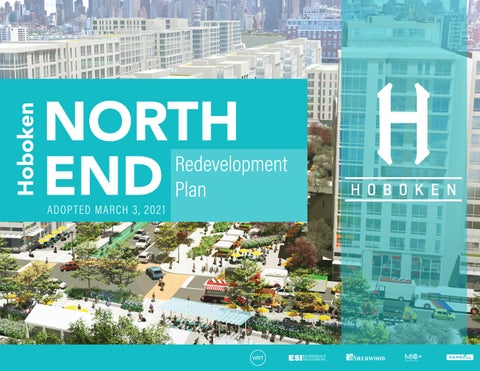
Create a flipbook