




Senior Editors
Nandita Kumar
Catherine Leach
Editors
Reem Alshaban
Branna Sundy
Amineh Zakarneh
Samantha Zavala
Gigi Giangiobbe
Advisor
Prof. John McDonald
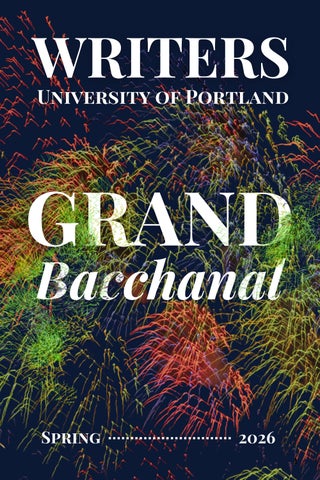
Cover Design
Catherine Leach
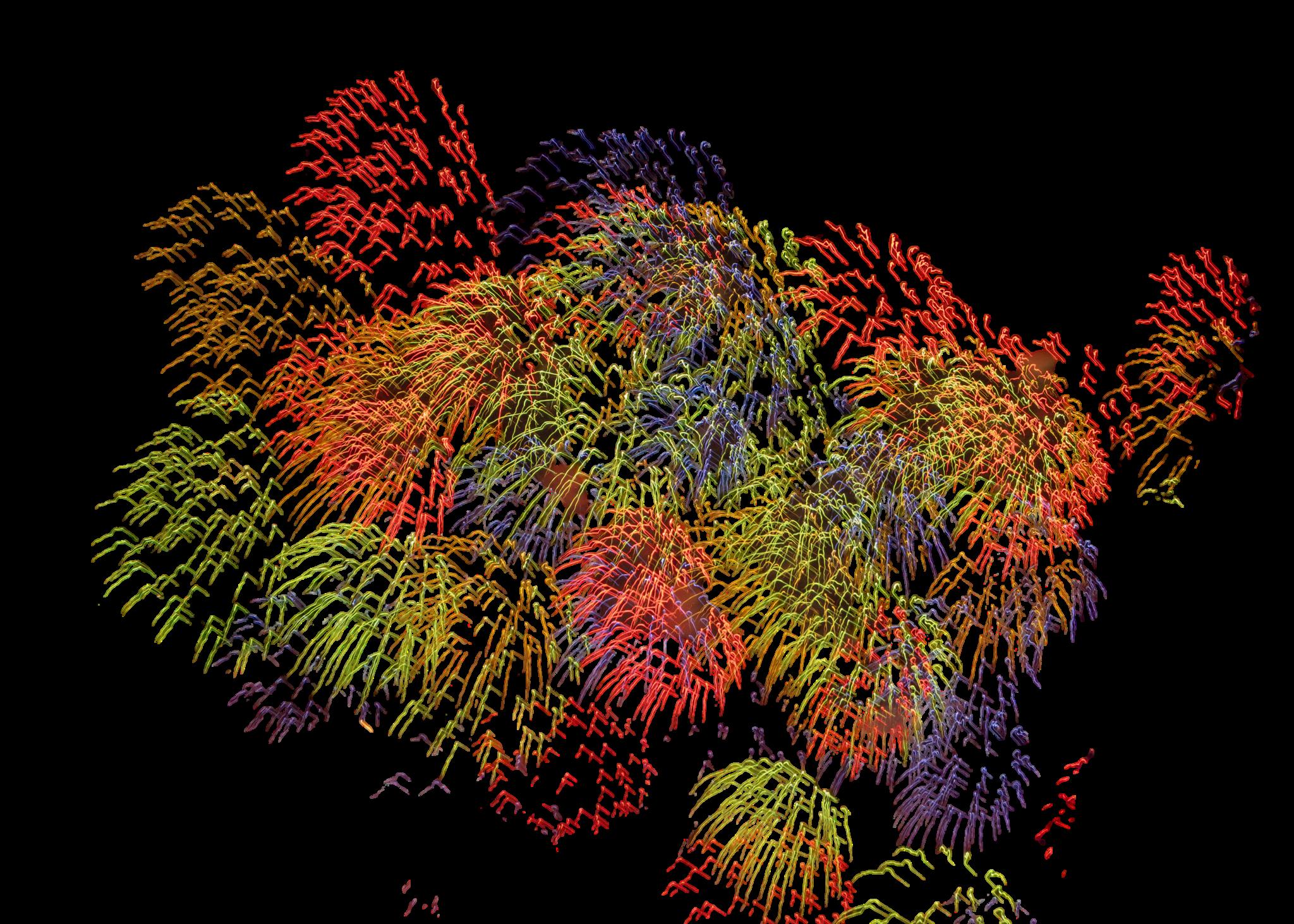
Cover Image
Arcellio Acosta
Writers Logo
Designed by Reece Smith
Writers Photo
Evan Guerra
Spring 2026
University of Portland
Master of Calamarca’s “Saint Agnes” and Mel .....
Bochner's "Thank You": An Ekphrastic Poem
Infinite Void ...............................................................
Is it loud in here? ......................................................
Shoes at the door ......................................................
Textile Goddess .........................................................
Thank you, Mel Bochner! .........................................
Belz ..............................................................................
Gigi Giangiobbe
Arcellio Acosta
Nandita Kumar
V Godoy
Miya Wilson
Catherine Leach
Catherine Leach
Charlie Platt
Warren Hall
Kortney Alviar
Miya Wilson
Thoughtless Chase ...................................................
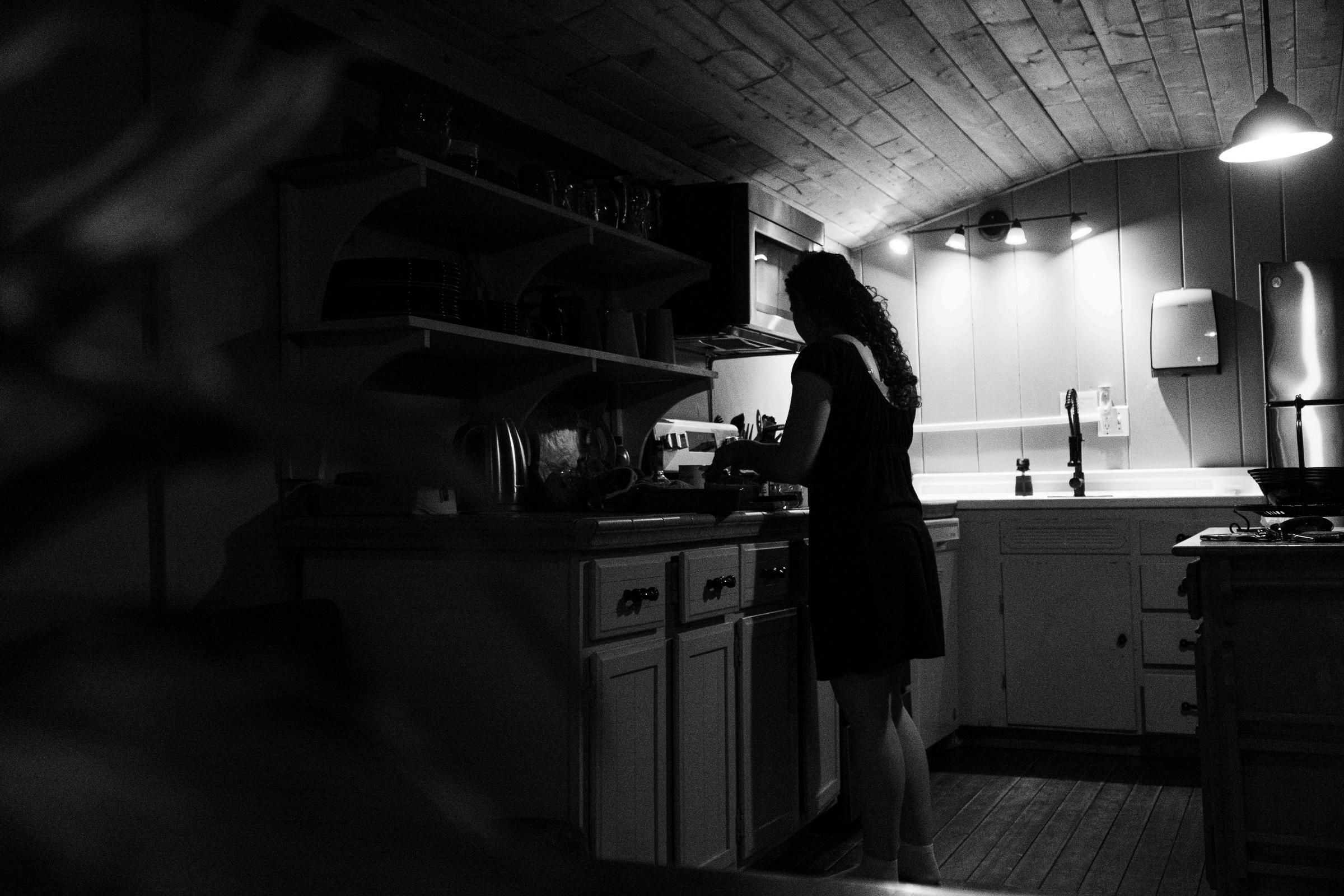
A Quiet Kitchen .........................................................
The Ritual ...................................................................
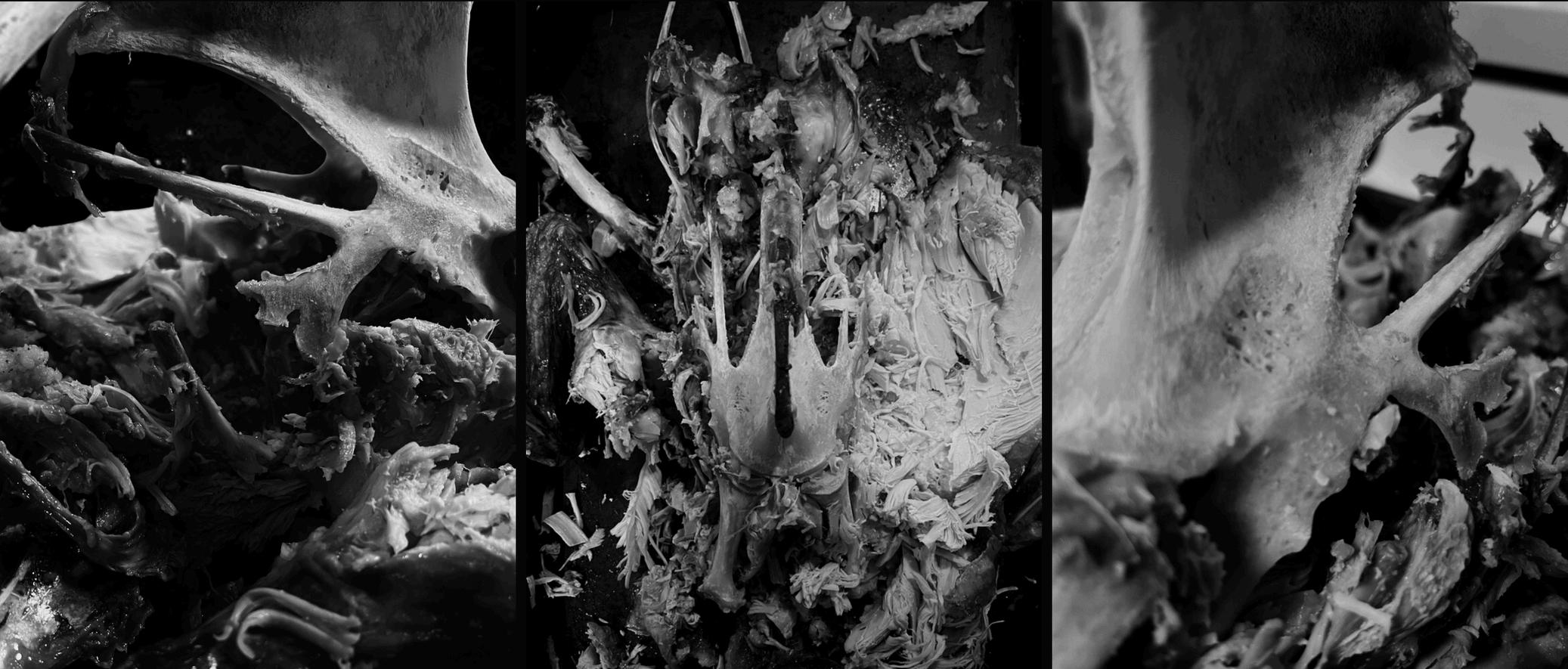
Ossuary Triptych ......................................................
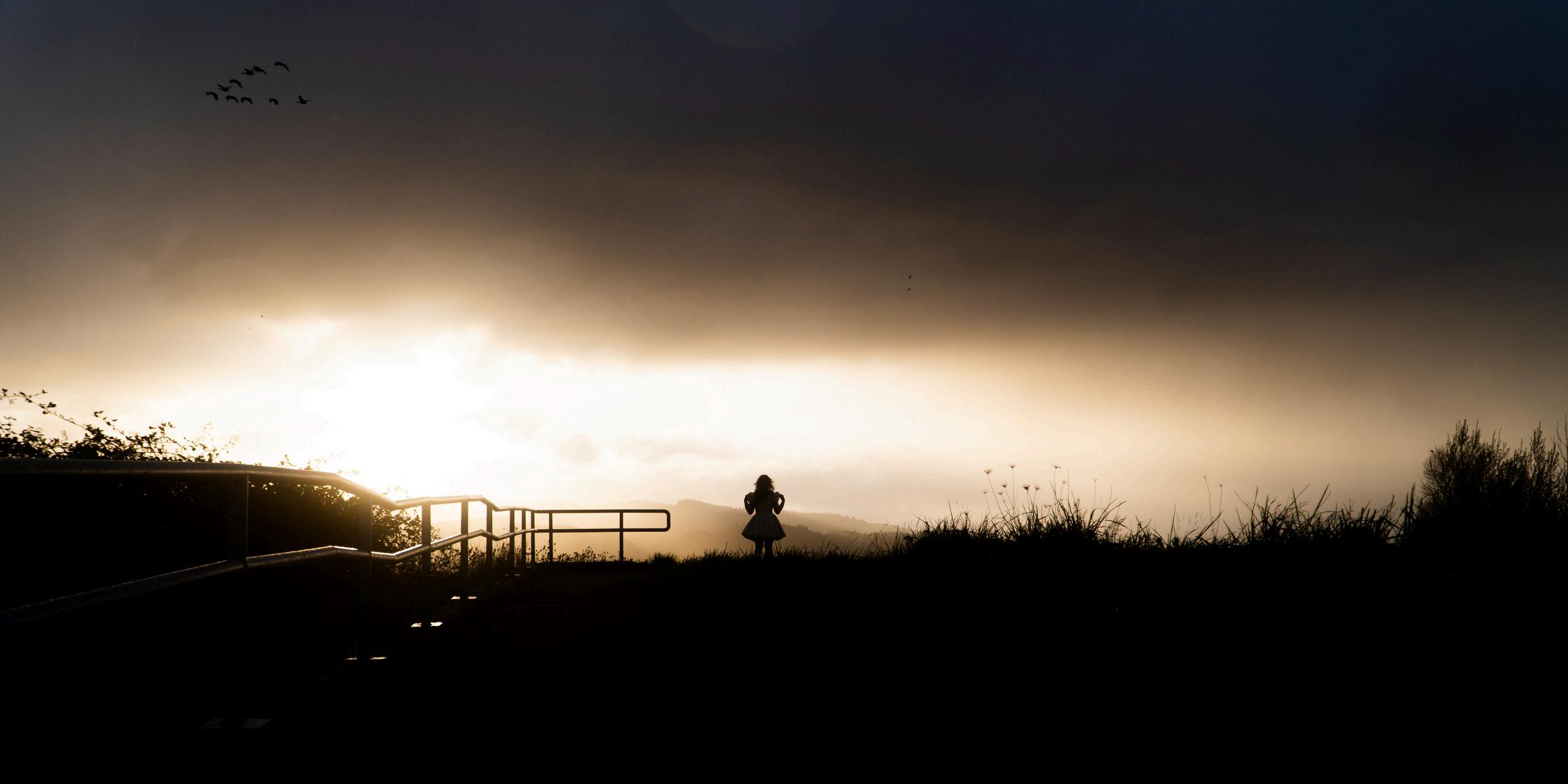
Grand Jeté, or a Study in Rapture ..........................
The Garden of Eden .................................................
Danse Rêve ................................................................
Serendipity Of The Fallen .......................................
Arachne ......................................................................
No Reservations (the banquet) ................................
The Price of Ecstasy .................................................
Gluttonous Pollinator ..............................................
Alec Ann Hilbert
Evan Guerra
Nicole Park
Catherine Leach
Sarah Valenzuela
Evan Guerra
Nicole Park
Parielle Shapard
Rieve
With spring comes renewal and abundance. Flowers unfurl, grass gathers dew, and moments of warmth begin to expand. We hope that this spring issue is able to instill that same sense of lightness in the reader.
Spring’s fullness and joviality prompted the theme of Grand Bacchanal– a symbol of resilience, joy, and revelry that appears not only after dark times, but during them. Grand Bacchanal is a celebration that holds mournfulness close to its heart. To some, Grand Bacchanal is about embracing spring’s happiness, and to others, a reflection on what came before. In Gigi Giangiobbe’s Infinite Void and Nicole Park’s The Ritual, the former is palpable. In Rieve Randall’s Arachne and Quin Hall’s An Appropriate Distance, the latter is felt just as strongly. Miya Wilson’s Thank you, Mel Bochner! seems to blend the two in a display of both symmetry and contrast Our contributors understood the emotion that comes with indulgence. Desperation, ecstasy, hope, and grief can all be seated at the table
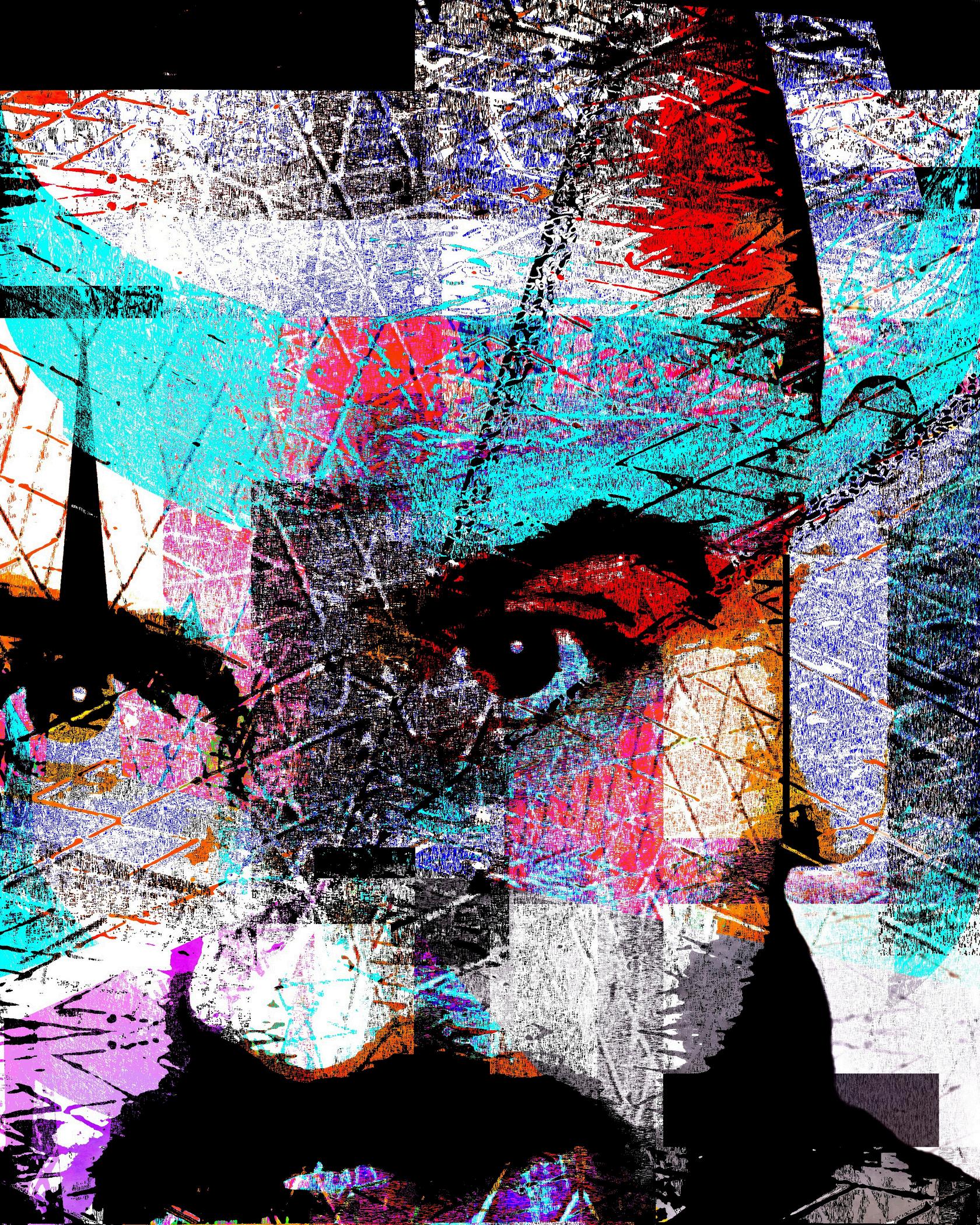
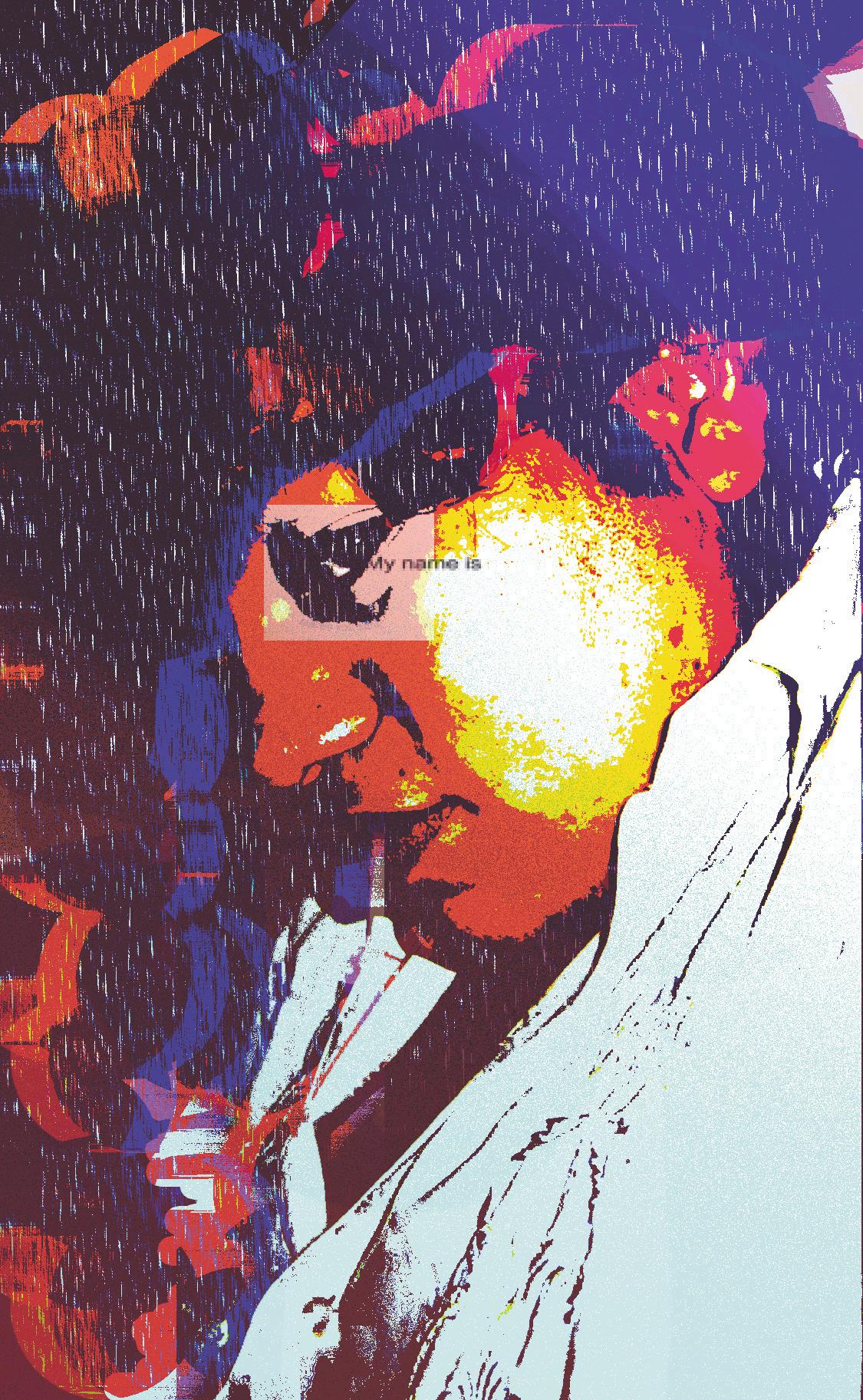
The cover of our magazine, Is it Loud in Here, by Arcellio Acosta, are the eyes of our issue It is the purest pictorial form of our theme, confident and warm in the night.
Your Bacchanal might take time. It’s hard to know when the curtain will rise, but know that it is coming. Our Editor’s Choice poem, Sanctified by Jonizza Lupi, is an earnest description of faith in God, and faith in time. Lupi finds holiness in decay. We must “trust the crush” and allow ourselves to be fermented, patient and slow, into something as jovial as wine.
What we love so much about our contributors, is their attention to detail. Whether it is the placement of lines in a poem to make something visually exquisite, or the author’s urges to “confess your pleasure with your teeth,” and their feeling of “the body forgetting its perimeter,” (hunt for all of these in this issue), our contributors know themselves, and through their deep personal reflections, they know us too.
With Grand Bacchanal, we hoped artists would consider the moments of celebration in their lives, the sweet seconds with new friends, the surprise connections, the guests who are a little too loud, and the feel of spring inching closer by the day. And our contributors did all of this and more. Our selected works are more than just emotions and experiences tied together, they are a call to live. Regardless of the theme, these submissions embody the richness of our student body, and the depth in which they feel. We hope you will join us in this issue, to reflect on the beauty of the coming season, and revel in the magnificent work of our contributors. Enjoy!
Nandita Kumar & Catherine Leach Writers 2025-2026 Senior Editors
"Shall we set about some revels?"
Jonizza Lupi
The sweetest wine begins as spoilage, grape skin splitting where the wasp has wept. My Lord, Jesus Christ knew, transformation needs surrender, water into wine, his miracle he kept. But look deeper at the vineyards, how the harvest asks the fruit to fall and break, to give up clinging to the summer vine, to trust the crush, the darkness, for grace's sake. What we call decay, He calls becoming. For the grapes ferment in barrels, patient and slow, while we who fear our own unmaking miss the only path to wholeness that we'll know. So let your careful sweetness bruise and soften, let fermentation do its holy work. His first miracle wasn't conjured purified, it taught: crushed grapes pour the wine He sanctified.

Jonizza Lupi
In the colonial painting, Agnes stands in her patterned dress, blue and gold and red cascading like a waterfall of devotion. She holds the lamb against her chest white, docile, already marked for slaughter. A cherub hovers above, presenting flowers she'll never touch. She's maybe thirteen, already promised to Christ, already refusing the prefect's son who wants to marry her, already knowing how this ends: the blade, the blood, the single irrevocable “no” that makes her holy. The lamb is her attribute and her future Agnes, the innocent led to sacrifice, the debt paid once with a body that believed in its own meaning.
Across the gallery, Bochner's words stack like bricks, like a wall built from the rubble of language. The letters corrode as you watch rust blooming through pink through purple through red, each repetition eating away at the one before it, gratitude devouring itself. He has killed it, slaughtered thank you on the altar of conceptual art, repeating the phrase until it is just texture, just the beautiful rot of words we've used to death. She owed everything once her virginity, her faith, her refusal to compromise, the clean decisive edge of martyrdom. We owe everything always thanks, thanks again, the unpayable debt of being alive among others, of receiving anything, of being seen at all. Her lamb knew what it was dying for. Our words have forgotten what they meant three repetitions ago. Both bleed now in their frames: her red the blood of
conviction, his red the blood of exhaustion. Both ask us to witness what's been destroyed and call it necessary, call it beautiful, call it the only way to say what can't be said that some debts complete us and some debts corrode us and we hang them both in museums because we can't tell the difference
Anymore.
Gigi Giangiobbe
Your waiting body detects her before you see her.
There is a sudden change in pressure in the crowded room, a bending of spacetime.
She scans the mass of people, overlooking you, handsome in the way her indifference makes you feel unwanted, beautiful in the way she can be so cold.
Follow the curved path of her, each of your atoms migrating toward her heat, your flesh searching for her center of gravity.
Finish the dregs of warm, amber liquor, acutely aware of the moment the liquid enters your tightened throat, the briefest of seconds when you stop breathing.
Force your eyes to look smoldering, confident, when she finally glances up and notices you.
You don’t know if the ache in your stomach is hunger for touch or thirst for something that numbs.
She ignores you, leaning against peeling wallpaper, soft around her hard edges.
You watch her fingers pluck strands of someone else's hair, a somber chord, a thrumming incessancy.
Find another bottle of liquor, pour two fingers of whisky, one for each finger you wish was inside of her.
Become a moon in her orbit, reflect her light off your dark gray surface so you appear a dazzling, brilliant white.
Lick the remnants of your glass, refracted light through liquid, continue to stare at the sun that is
You blink away solar flares, grab her arm and pull her across the room in a careless trajectory.
She squeezes your hand, baring her milky teeth, and you die and are reborn a thousand times at her. once.
Heaven is the wavelength of her voice fragmenting your darkness, fracturing your wildly beating heart.
Press your body into hers beneath the fleeting glint of light.
Walk into certain death, pray it’s over quickly.
The cohesion of your wet tongues, the adhesion of her red lipstick on your lips: proof that mouths seek their own universe.
Someone else shimmers across the room and distracted, she wipes her mouth, releasing you.
A collapse of breath where oxygen does not dare to go. Your lips grow cold and you have nowhere to put them; you have journeyed to the end of the universe.
Tip a bottle into your empty glass once more until it is whole; swallow it down, repeat.
Happiest when thawed and anesthetized, you float in space, spinning, never held together by your own gravity.
Flashes of light can be warning signals or a celebration.
V
Her radiance was beautiful until it burned you, her warmth a comfort until it snuffed you out.
Most things are like this, life-giving until they take life away, an ember before a house is on fire,
a sun before it detonates.
She is a nebula, accumulated from the deaths of stars–she absorbed your light and obscured everything around you.
Remember that in nature there are infinite forces, and energy is neither created nor destroyed. What you gave to her did not disappear, it changed form. You are not ashes, or smoke, or an eerie hush–you can be your own light, your own center of gravity–you can be your own sun.
Is it loud in here?
Arcellio D. Acosta Delreal
nandita Kumar
I’m hitting my feet against the back of the driver’s seat in a silver Toyota minivan. My dad is telling me to please stop; he can feel each kick. Considering this, I line both my feet up and push as hard as I can against the seat back. I want a reaction, or even better, an exclamation. I wait one second, two, but we’re pulling into the driveway now, and he’s too distracted to scold. He’s opening his door and then mine, tipping down the seat to let my sister out of the third row, and holding the hand of my gods as they unbuckle and shift on foot at a time out of the car.
The first sign of a non-American party are the shoes. Sandals and boots and heels that struggle for purchase over the front entrance. They look like they’re celebrating too, mixing and mingling while their owners dance, swapping stories and placing bets over who will be forgotten, mistook, taken to the wrong home by someone’s undiscerning father whose brown sandals look a lot like another fathers. My sister and parents kick their partygoers off outside the door, and my gods shuffle over to a bench, carefully unlacing, slipping off, and filing theirs neatly away from the foot path. The god on the right is wearing a crisp blue button down, slacks, and a winter jacket. Round glasses reach past his eyebrows and below his cheekbones. The one on the left well she is breathtaking. She wears green cloth
with golden trim; her hair gathered in a bun that hangs low, gold shimmering on her chest and wrists, and a powdery rosehip scent wafts behind. I stare for a while, the way she floats through a room, pats my sister's head, is welcomed and hugged and smelled by new faces. She’s mine, on loan for tonight, but always mine.
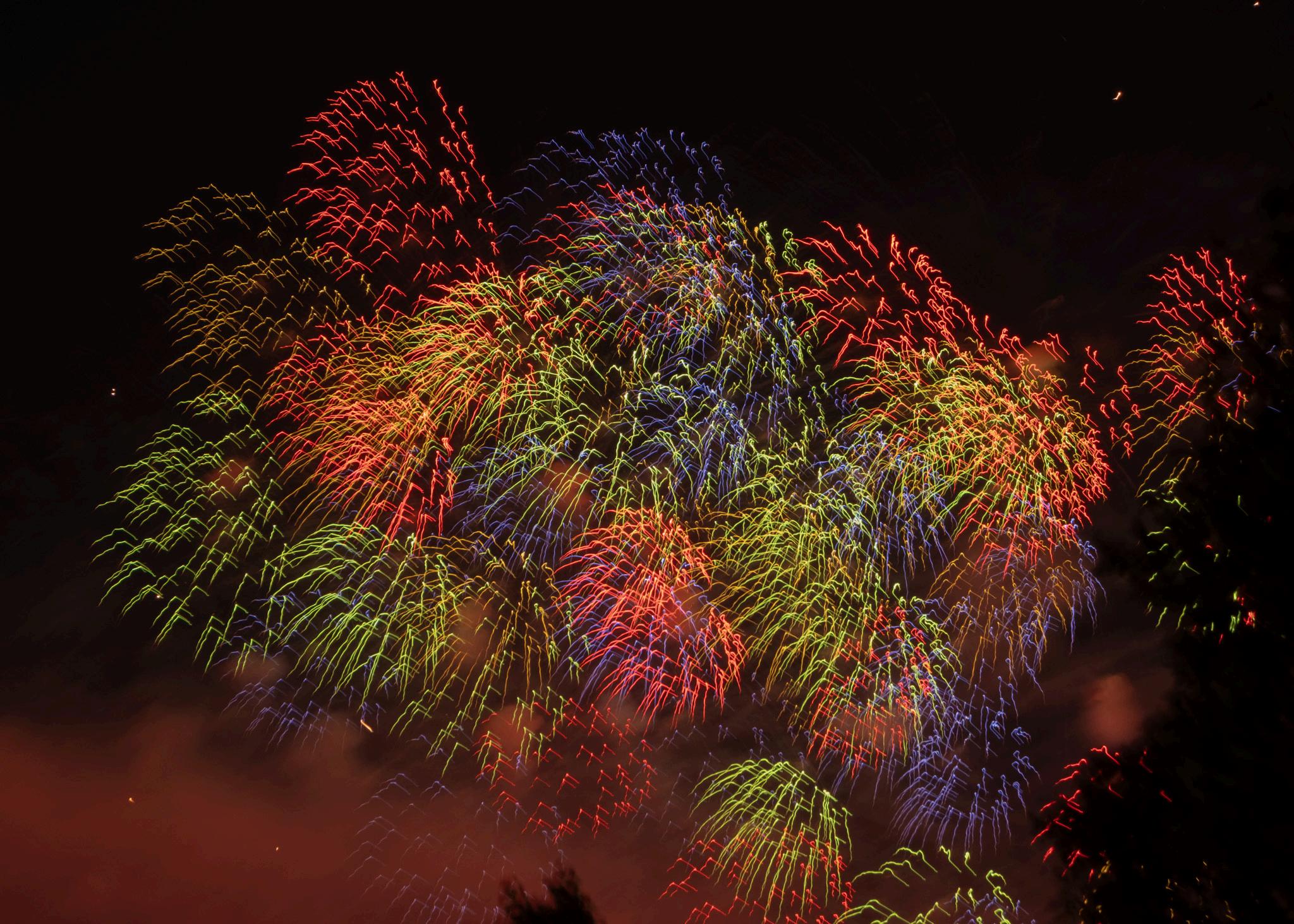
The door is opened, hello’s exchanged, and soon I dissolve into the folds of the celebration; trying to get someone’s fresh and sleepy baby to say my name, pretending princess or robber, or wild animal. Lurching into the kitchen for snacks, nipping at food on my parents' plates. I scan the crowd for them....and, oh, there! Sitting with the other gods, leaning into one another, exchanging a quiet smile. They speak softly; their mother tongues spill from the fountains of their lips. One that I haven’t seen before sits in the center of the group. She wears magenta and indigo, with silver mountain trees dotting the landscape of the cloth. Her nails and toes are pink too, and tight greywhite ringlets sprout from her head and frame her face. She is wearing spectacles like my gods are. Like all the gods, she watches everyone with keen amusement. She smiles at the adults bellowing along to the music, the siblings, whose gentle shoving turns into riotous wrestling, the dog, fighting for air in the towering ocean of smells. She watches me. She watches me like she knows where I’ll walk next, like she’s known for decades. She sees all of me, and through me. She sees my phases and my mind, my birth weight, and my final height. She loves me from across this room and in every room. She loves me in an aching, triumphant, eternal way.
V Godoy
Miya Wilson
Hey dad, it’s been a while, and I think I’m starting to miss you.
I’m getting married in a month, and I really want you to be there.
No worries if you can’t make it.
Your daughter,
Miya Hey Miya,
I wish I could make it, But I can’t get away from work.
You know I love you so much.
I’ll see you when I can.
Congratulations, daughter.
You’ll make a beautiful bride.
It’s been a while, and I think I’m starting to miss you!
I’m getting married in a month!
And I really want you to be there!
No worries if you can’t make it!
Your daughter, Miya! Hey Miya! I wish I could make it, but I can’t get away from work!
You know I love you so much!
I’ll see you when I can!
Congratulations, daughter!
You’ll make a beautiful bride! Dad!
Dad. Hey dad!
Catherine Leach
Catherine Leach
Balanced on his knee, my father told me stories. They were woven into grand odysseys– planes that flew through bright white clouds, explosions that painted the sky beautiful shades of orange and fiery red, like dragon’s breath in the heavens. He spoke of trees so tall he couldn’t see the sky, and the soft music the wind made as it danced through their boughs.
I grew to understand. Trees don’t sing, people do. It makes sense, that he thought it was the trees– people get shot, and then they don’t sing. The trees were all that was left.
I sighed. Dragons don’t exist, and neither did he– not how I imagined, anyway. He was a tortured, incomplete man with scars that could no longer be disguised as trophies.
I rolled my eyes, because it didn’t matter. It mattered very little. No, it didn’t matter at all. His story, as I knew it, had ended. I closed the door so I would not have to look at him and his empty sleeve, or hear his crackling breaths through the mouth he held slackly ajar, as if frozen in the frame of a warped film reel. I watched his gold tooth glint one last time as the door eclipsed its frame.
He didn’t matter. He doesn’t matter. I mattered. I matter. I do. I am. Yes. Yes, yes.
charlie platt
Quin Hall
It’s been cold this month.
Rather, it has been chilly for a while now.
I need something to keep me warm.
There is an appropriate distance from the fire.
Once, as a kid, I slipped into our fire pit. I sank to my ankles in burning dust. It took forever to heal those blisters.
Once, in the Army, the temperature dropped to almost zero. I huddled over a flame too small to provide warmth, and almost got frostbite.
There is an appropriate distance from you.
I certainly could remember the curve of your jaw, and the smell of your hair as you pressed it to me,
And the starry gaze of your eyes as you looked across Roxy Anne hill. Singed.
Should I instead remember the tightness of your lips as we spoke?
The flatness of your voice quieting my frantic protest? And the blank gaze of your eyes as you looked across me?
But that leaves me frigid. One cannot live like this.
So I maintain an appropriate distance within my thoughts.
But the “bandaged fool’s hand goes trembling back to the fire.”
Kortney Alviar
Mama told the girl she had no friends
Sgt said have a buddy for war
4 battle buddies the night she’s 22
Still she stumbled as they held closed the door
A birthday jewel, to him, from them
His name, his face still a blur
She did everything right, she was careful that night
The night they manned the door
Miya Wilson
Clothes don’t grow on trees, but leaves scatter all over, coloring – no, painting – the floor like pinwheels made up of elephant trunks and gunpowder with specks of crop dust and hair follicles. It is July – no, August – and the moon is playing tricks at the soles of our feet, laughing at our angst, crying at our comradery, screaming at the top of its lungs kill me, kill me, I don’t want to go to school in the morning, but the knocking at the door goes quiet as the spillage of my coffee seeps through my favorite sweater and now all of a sudden I can’t breathe. Someone told me once that shame – no, guilt– will be the bane of my existence if I choose to let it be and I laughed them off then, but now I am looking in a mirror and don’t recognize the reflection staring back at me. They painted over the blood stains and put a memorial up at central park. They made us forget about the gunshots that whizzed past our temples but remind us of that one incident twenty-something-years-ago every fucking day. He was a father – no, a good Christian– they say. He is a patriot – no, a God –with orange hair and red soldiers and atomic bombs. I can’t breathe again; someone please teach me how to breathe again. Someone told me once that retribution is best served on a patient platter. I didn’t believe that nonsense.
ALEC ANN HILBERT
Think of me when you drag
A finger down a lifeless body,
A body that’s as cold as my heart, At least in your view.
Think of me when the Kitchen knife dances with a piece Of boudain noir, sliced with care To make breakfast for you.
Think of me when I offer you Wine, a whole divine bottle, and Keep it safe for when the time Comes for us to share it.
Think of me when I bare My soul to you, when I give You a rare gift that you Don’t want.
Think of me or don’t.
I think you will.
Whether or not you do, I’ll stay thinking of you.
Evan Guerra
Nicole Park
It’s your first time. How splendid! How divine!
I’ll tell you how this goes.
There is a feast. There is a sacrifice. There is the ritual. There is the sacrament. There is no order.
Don’t be afraid, even though you might be tempted to. There is only indulgence here. There is no shame. There is just you, me, and these offerings to each other.
Do not abstain. Simply, devour.
The boy weeping at the altar is squeezing ripe figs and dates through his fingers. His mouth drips with gold and his eyes have gone winedark.
There is a girl here, she will offer you her ripcage as a stage. Accept. Trace her heart, hold it in your palm, notice how her canines are glistening in this moonlight.
We don’t speak much here. Here, you must learn to confess your pleasure with your teeth.
How should I describe this night to you? Beltane. Bacchnae. Reverie. Debauchery. Feast. But in the end, it’s all the same. It’s all the same.
There is the trouble of your name. Do you want to trade? Do you want a different one? Perhaps you’d like to be called mine.
Perhaps you’d like to learn how your name sounds in the shrieking of a thousand others as we chase you through these sentient trees.
It’s whatever you want. It’s however you’d like it.
You just have to ask.
II.
Now you’re confessing something, kneeling at the altar. I can hear your racing heart, I can feel your pulse thundering to the beat of the cosmos.
I’m watching you. You’re very good for your first time. It’s primal and delicious; the things we get to do once we leave this guilt behind. And there is such art to this disobedience, a reverie in the destruction you can do with your palms.
Now, your fingers are contorting around the ripeness of someone’s Adam's apple. You’ve never been so close to another person. You can feel where Eve had once kissed his throat.
You come to me next, tell me your stomach is ach-ing, telling me my fingers smell of cigarette smoke and you want to know what they taste like.
Cigarettes? I ask you.
You. You replied.
Now you’re getting it.
III.
The night goes on and on and it stretches in a million directions. The night is ours to dwell in. We dance, performing in the audience of the sky. Are you seeing space like I am now? Stacked on top of each other.
A million possibilities all at once.
Time is not linear. Time is ours to mold and feast on tonight. Bend it to your will like your back when my hand runs down your spine, counting vertebrae.
You keep asking me about the ritual. You keep wanting to see the sacrifice.
I tell you there is a rabbit. I tell you there is a wolf. Both have teeth. One is fast. The other, faster. You look at me. Your teeth are constellations against your dark smile. Which one am I? You ask me.
I don’t reply. I take your hands and push you against the altar. You’re staring at the sky. I’m staring at the soft spot between your collar bones.
My hands tremble, I lift these pomegranate stained fingers, your neck is turned to the side, watching people dance around the fire, the amber of the flames is casting golden hues on your throat. You look at me and you know. You’re the Eucharist. You ask me why.
Apotheosis. Cannibalism. That’s the ritual. I don’t know how to love in any other way.
You look at me right before it happens. Your fingers find my jaw and crack open my mouth. I show you what I’m made of. I’ve been trying to do this all night. You fall against me, breathless, saturated, bruised, and finally, mine.
Dawn is coming to chase us out of these woods. The ritual is almost over.
Your hands are still on my throat, my hands are in your ribcage. I’m pulling out scripture and tracing the verses down your arms.
There is spilled wine dried on our skin, soil on the bottoms of our feet, a sticky sweetness in the backs of our throats. I’m wearing your shirt, you’re wearing me.
The fire is nothing but embers, smoldering, waiting for new life.
You are something else entirely. I’ve become yours.
For my final act, I’ll pray to the deities that died and the realities we summoned tonight.
Sarah Valenzuela
The stage is not a floor but an altar marley stretched taut as skin, lights descending in white-hot squares like judgment.
We enter in lines, obedient as scripture, ankles crossed in fifth position a geometry so strict it borders on hysteria. The body loves its cage. The body loves the rule it can break. Somewhere, orchards rot in sweetness; grapes collapse into wine. Here, our tendons ferment. Rosin powders the air like incense. The choreographer speaks of abandon in counts of eight. Madness, rehearsed. Ecstasy, marked with tape. And yet
when the music unbuttons its collar, when strings begin their fevered argument, something unscripted leans forward inside the ribs.
A turn begins. It does not end.
The audience thinks it sees symmetry a ring of white tutus blooming and closing, petals disciplined into obedience. They do not see the interior weather: the pulse skidding against bone, the calf’s small scream in relevé.
En pointe
the body climbs onto two apostrophes, tiny curved blades, declaring possession: this pain is mine.
I have watched dancers shake backstage like saints before revelation. They laugh too loudly. They speak to no one. They fix their ribbons with the gravity of surgeons. The theatre inhales. Curtain.
We go out as offerings faces lacquered in serenity, arms curved in a promise of mercy. But the choreography asks for something else: tilted heads, eyes flung wide, a mouth that trembles on the edge of hymn.
There is a moment always in the adagio when time loosens its corset. The lift suspends. The orchestra holds a note like a held breath before prophecy. In that height the world goes thin. Gravity negotiates. The dancer’s back arches not toward the partner but toward a ceiling that could split open with light.
Religious ecstasy is only this: the body forgetting its perimeter.
We are told ballet is purity white swans, chastity, a kingdom of swan-lake obedience. But watch the eyes.
Watch the tremor in the wrists.
There is something pagan in the port de bras, something vine-like in the reach, as if the arms would rather twine than bless.
In rehearsal, we count
one-two-three-four-five-six-seven-eight until numbers lose their arithmetic and become chant.
One-two-three-four-five-six-seven-eight the floor a drum, the heart a second metronome refusing alignment. Call it ritual. Call it sanctioned delirium. Call it the old god of theatre borrowing our femurs for flutes.
I have seen a principal collapse after thirty-two fouettés not from failure but from the terror of almost-flight. Spins so fast the self blurs, face becoming mask, mask becoming myth. Applause is a rain of grapes, bursting.
We drink it. We pretend we are sober. But backstage, with makeup melting into salt, someone is weeping not from sadness, not from joy, but from having touched a brightness too large to carry home.
Ballet is theatre’s cleanest lie: that transcendence looks effortless. Under the tulle bruises. Under the smile a howl trimmed to lyric. Still, we return. Again the barre that wooden rail, monastic and patient. Again plié, as if bowing to an invisible orchard. Again the leap, a body flung upward in disciplined defiance.
Insanity is repeating a motion until it becomes sacred.
Ecstasy is discovering
the motion repeats you. And when the curtain falls heavy, red, indulgent the theatre does not close. It lingers in the bloodstream, a sweet fermentation, a low hum behind the sternum.
Tomorrow we will step back onto the altar.
Tomorrow we will lace the apostrophes tight. Tomorrow we will practice our beautiful, calculated madness.
Because somewhere between the fifth position and the fall, between the count and the collapse, there is a moment thin as silk, sharp as wine when the body believes it is more than bone, more than rehearsal, more than obedience. And that belief brief, blazing, theatrical is enough.

Nicole Park
There is a dream I keep having.
It’s you. It’s me. It’s a feast. It’s a chase.
I’m running with you, we’re being followed. I can’t hear anything but your laughter and thundering pulse. I should be afraid. But you’re laughing so loudly as you pull me along. I know we’re meant to be running but the fire chasing us feels so good.
You look back at me and your skin is moonburnt. The light of the crescent moon catches on your cheekbone. It’s simply divine.
God, you keep laughing.
Your mouth is split open. There is flesh stuck between your teeth. I believe it to be mine. I want it to be mine. I want to love you.
I want to love you like a sin, like a secret I cannot confess, like a storm I cannot survive without.
I want to worship all that you despise. To touch you as if my fingers can trace eternity in your veins, as if the pulse under my palm could stop the world from turning.
I try to memorize the fractures in your laughter, the shaking of your hands, the tremor in the way you look to the sky, praying to dead gods.
This curse is cannibalistic, this entire ritual is.
Now I’m wearing your spine around my neck, it taps against my collarbone and I’m remembering every twist of your side. Your teeth are lodged into the side of my neck and my head is thrown back in ecstasy.
These drunken gods of slaughter would be so proud of us, you tell me.
But I don’t care about Gods or rituals or rites. I care about your consumption. I care about your satiation. I care that by the time I wake up from this, you are full, your teeth are dripping, and your lungs heaving.
Every time this reverie comes to me, I only learn one thing. To love is to consume.
At the end of the dream, I hold your face and wipe away the sinew and blood. I give you a knife and tell you to carve your name into my heart.
When this high ends, when I return to the Earth, I want her to know who I belonged to.
Rieve Randall
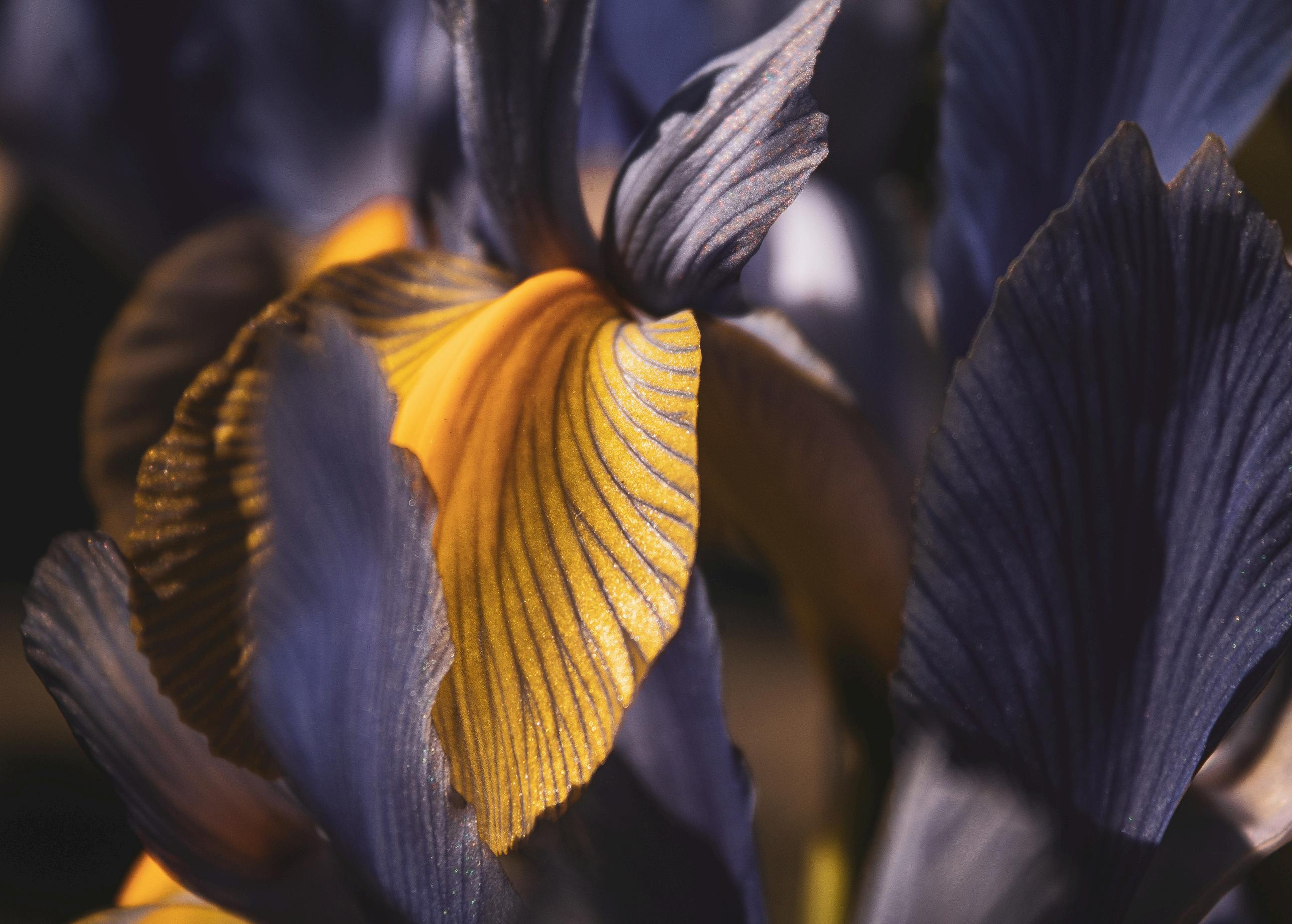
Grass is green here but only some dark damp shade of blades that barricade this Masquerade of Men. There lies a chapel, its walls of worn stone not yet crumbling down in vain like the men who stacked those heavy stones and crafted that stained glass which reflects the flaws of man. The glass, which tells a story of men long ago who praised and were praised and now live on to the spiders who creep up their walls, those broken walls, venerated by the crawlers of the night. When the sun doth shine upon the pane its wondrous array of blues and reds and yellows stream in and rest on empty pews. But, oh, the spiders. How they crawl upon those holy kneelings and curse the name of luxury. And so those soft colors from sun to pane to pew and to holy spider. She will spin her web from glass to wood and make her sacred masterpiece Amongst the absence of man, who prayed and sung and wept inside these walls atoning for their sin, colors burst onto their bowing backs blessed and broken, all the more likely. The spider will never kneel. She will crawl. Across her envy of the eight-legged and the fear of all that fly to fuel the searing venom that nature lets her kill. And so this murderous arachnid weaving unholy snares, on rotting crosses. And all that was venerated and all that was praised must now make due with her. Queen of human ruin.
Kaeden Souki
Gather ‘round, grab a seat
We’ll get some bread and wine and then it’s time for us to eat
My treat
Breaking bread, making sure the gang is fed
And family’s got a full plate
We’re feasting at a slow rate
Seeing to my own fate through the opaque is tough
Be patient y’all, there’s no need to rush
I know it’s slow but it’s worth it for the tiramisu
so hush but
In my dreams, I must hear screams like Mr. Waternoose
I’m ‘bout to feast with these Capulets and the Montagues
On the floor drinking from the same pot and taking off our shoes
Pour the tea, don’t spill it
That shit makes me ornery if you do I’ll have to hit you with the skillet
The world is broke and no amount of sorcery can fix it
So I forget it with a banquet and a doobie
As I make the name ‘Greatest’ equate to be the same as ‘Souki’
To be the million dollar man versus a handful of rupees …
I wish a dream that later they’ll kiss the ring
‘cause I’m a paper accumulator until I’m pissing green
Let me depict the scene: my chalice runneth over, with maybe rum and soda like on the hill with a hundred soldiers
Or a goblet of profit ‘till i’m weighted by the pockets
Sipping ‘till I’m word-slipping like Yoda, even if it’s toxic. I’m paradoxical a man of mystery with the monocle who emerge in victory even if it’s impossible
Man, I’ve never been prodigal
I’m prodigious, son
And loyal to the soil and them trees that give us cinnamon
And if I can’t trust you, I’ll be at your ant tussle with a minigun
You can trust me, son I’m one in a billion
Here we come
This time around, I really swear it
I’ll be simmering a mirepoix in 24 karat
Feel the fear of God and scare it still blare it through the speaker
Creator and creation both, but mostly just a creature
It’s fucked, but with the death of the teacher’s how the pupil grows
There’s plenty labor procedures the same time as the funeral Jail or freedom? Beginning or the end?
We die by ourselves even if we live it with a friend
So I got to seek within, find the spirit in this bag of flesh and hope that these lyrics will show I rap the best
I’m prideful ‘cause even a lion has to rest
I’ll live it giant until I draw my very last exacted breath
Jonizza Lupi
You knew the fruit was poison going down, the first time money pooled like honey, gold and thick and sweet, when hunger turned to greed. They warned you: taste it once, you're lost. You bit. And oh, the flesh was perfect. Plenty poured like wine into your waiting mouth, your hands, your life grown soft with excess, drunk on more. You bit again. You chased the high, another deal, another sum, the numbers climbing, climbing, never enough. Each taste demanding more to feel the same electric pull, that rush beneath your skin. You bit again. And yes, you're ruined now.
And yes, you're ruined now.
A simple life: small pleasures, the slow accumulation of enough. You can't go back. The fruit remembers you. It calls your name. You answer, knowing what it costs: yourself, the you before the wanting, before the need. Would you undo it if you could? You taste the poison fruit. Your mouth still waters. The price of ecstasy is wanting more.
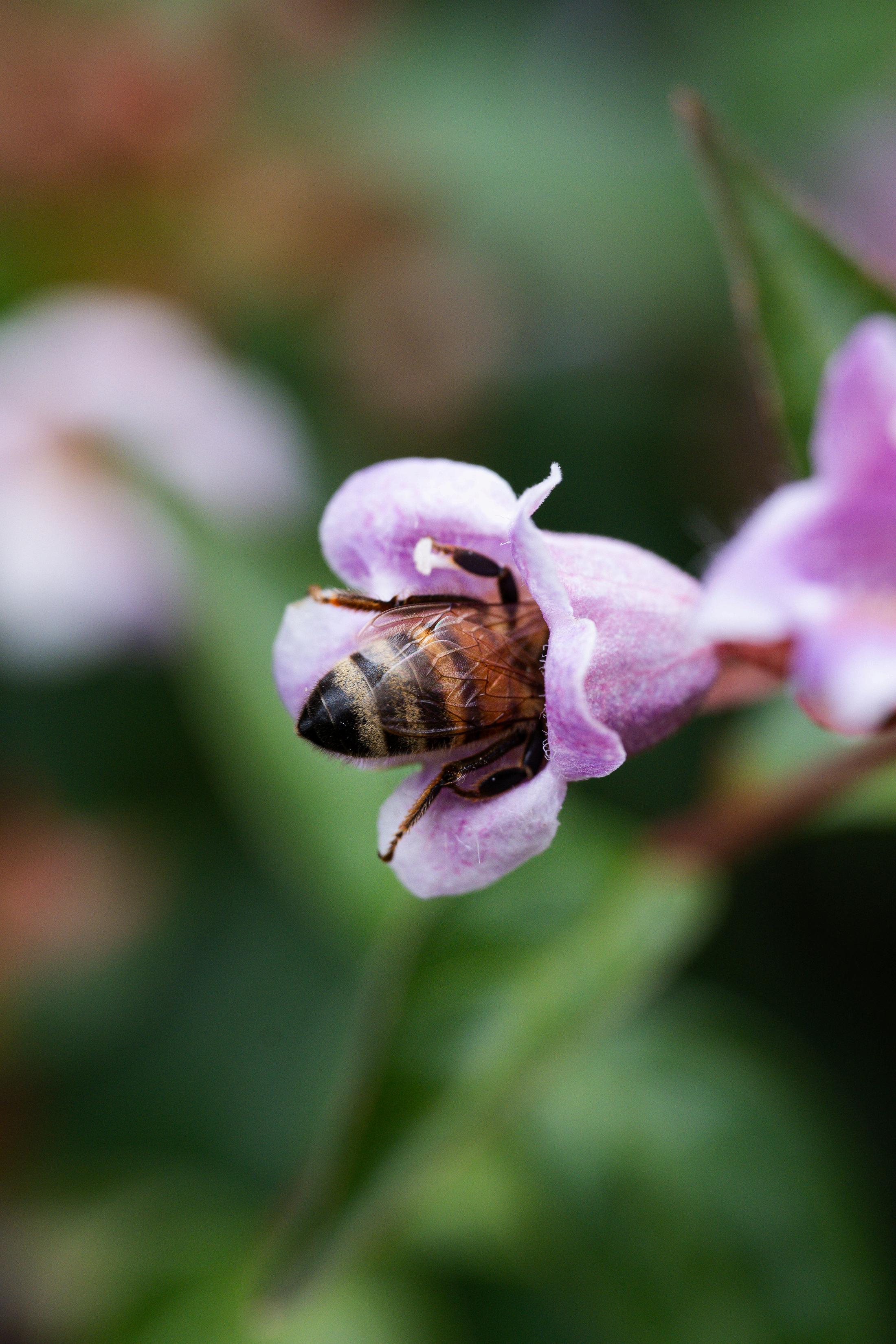
Sarah Valenzeula
I recognized love late which is to say precisely when it hurt. The car moving without me, the road doing its pale ribboning, my hands locked on the wheel, as if prayer required pressure. The thought arrived whole you elsewhere, your mouth busy, my attention unfaithful by nature, and my chest answered before my mind could object. That was the signal flare. Not joy. Not hope.
Recognition the mind blowing to what the body already knew.
Later, I lay beneath another man, his weight earnest, his desire well-placed and practiced devotion as theatre. Kisses delivered on cue.
Skin believing it hand arrived where it was supposed to be. Inside me, a liturgy performed correctly and without faith.
Because when the eyes closed always You entered. No costume. No shame in it. You replaced him the way a remembered melody replaces silence, the way truth edits the scene.
I learned then how little the body cares for intention.
How vision outvotes morality. You said once as if testing the acoustics
I think I’m in love with you.
Think: the verb that leaves room for retreat.
Love: Spoken softly enough to deny later. I received it like communion took it whole, said nothing, returned to my seat. Insecurity taught me manners. It taught me how to admire from the aisle, how to praise another woman’s ease without cracking my voice. Now you are with her my friend
good, kind, unafraid to take the role. She wears it well. Still glances happen. They are not accidents. They are signals passing beneath language, brief as a match struck inside a cathedral.
I feel them land, hot and gone, leaving smoke.
At my wedding yes you stood among the guests, already unsteady, already too bright. The room knew you before I did. Every vow bent sideways, trying not to look at you. You could have said it then. You could have stopped the play mid-line.
I would have dropped everything
veil, future, the careful architecture of staying and run.
Instead: applause.
Cake.
End scene.
Insanity is not chaos. It is repetition. The mind returning to the same blocked moment, the same unopened door, insisting the outcome might change.
Religious ecstasy works this way too belief sustained without evidence, without relief.
I keep you now as one keeps wine too strong to drink alone sealed, dangerous, magnificent.
A private festival of almost. No gods required. Only the knowledge unforgiveable, precise that love was mutual, and courage missed its cue.
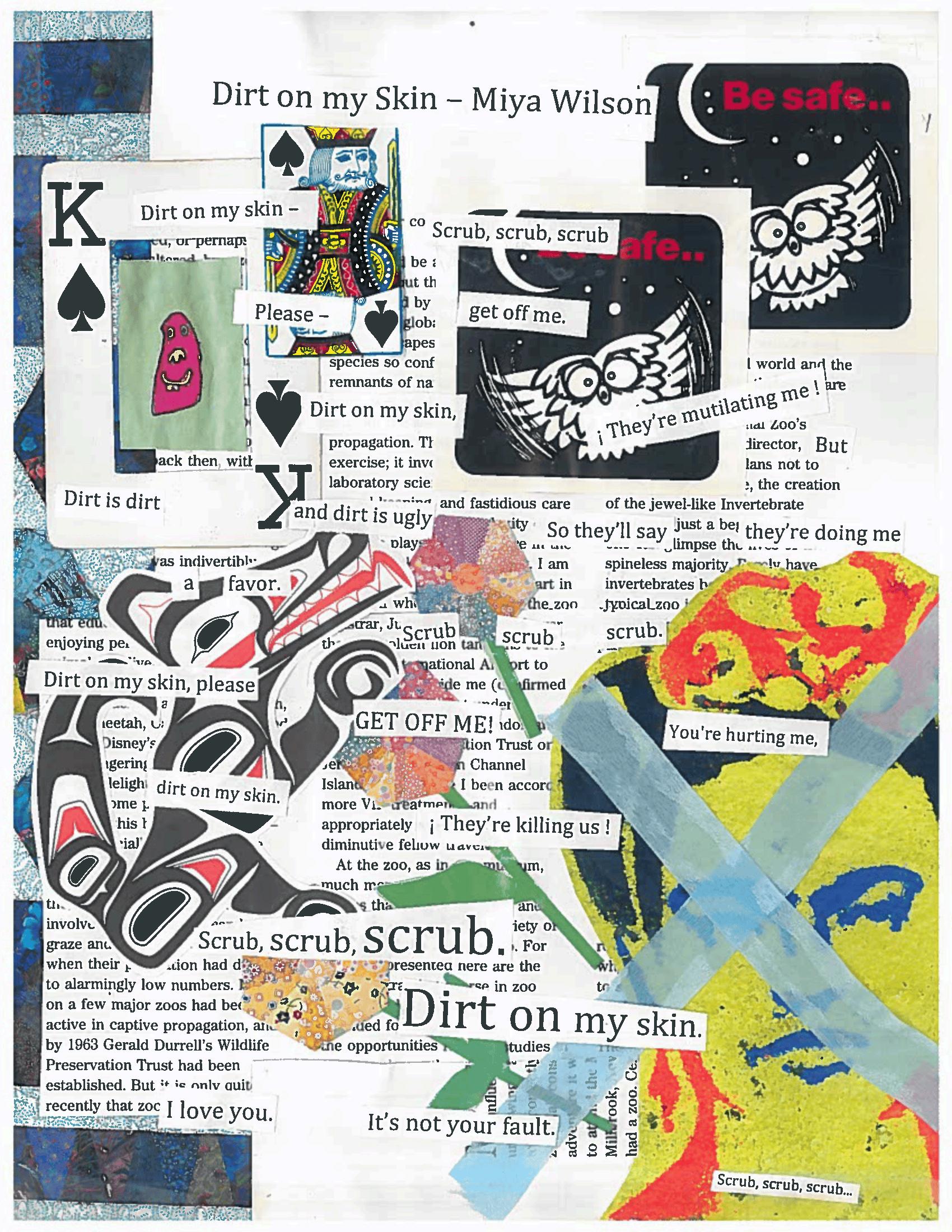
Dirt on My Skin
miya Wilson
Noah Marin
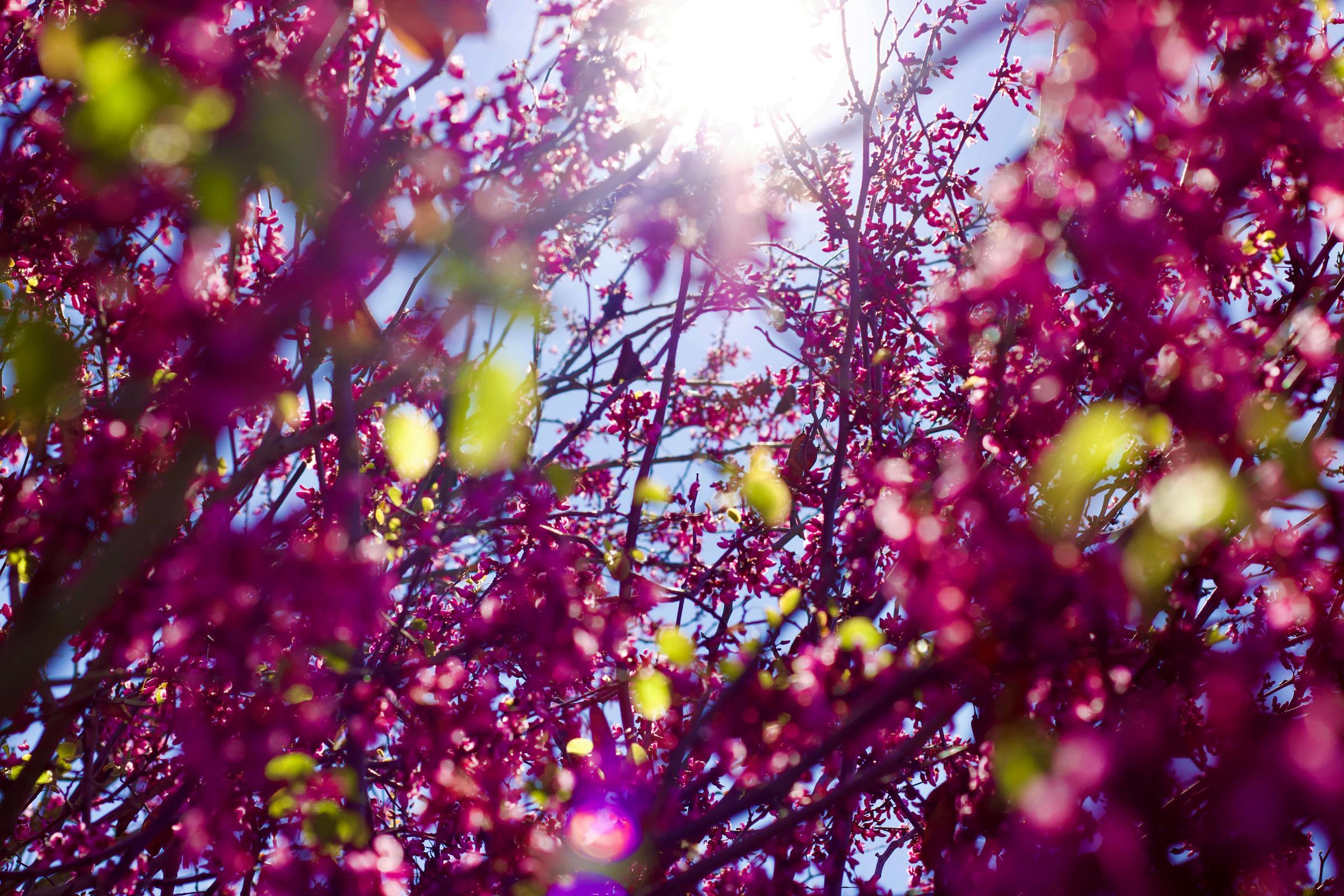
too
Reem alshaban
I.
I never thought I’d lose my breath
Laughing on a phone call with you,
Sitting on a swivel seat that creaks
A little too much for comfort. Too.
2 a.m. and we still kept going
Because I hadn’t realized you wanted No, wanted to stay on the line with me.
Laughs turned into sobs at your reassurance. Love.
I felt my spinning head hit the swivel seat.
I cried when you said that word, sandwiched Between “I” and “You”.
Only God knows how much I needed that. You.
I miss you more than I can say.
Your laugh, your affirmations, your voice.
Your hand reached through the screen
And I wish I held on a little longer.
miya wilson
My dad used to only paint in red. Red trees with red leaves. Red houses with red roofs. Red mothers with red babies.
Driving into a sea of autumn, splashes of yellow inhale the car, their hues painting my limbs as the rays of the sun pour into and through each leaf. Red. Red. Red. Where’s the rest of you?
He held my limp body for the rest of the night. In this pregnant darkness, head downward, I waited. I fail myself
by desiring cohesion –I project unity upon all that bewilders me.
Loneliness is a funny thing. I can’t tell if I am happy with him, or just happy to love someone. I didn’t know it then that it wasn’t even love that I was interested in, but my own suffering. The illusion has been shed. He up and left about twenty minutes ago, now.
How funny that I called it love and the whole time it was pain.
Every other Monday, we'd share breakfast.
I never wanted to come.
I fail myself, inextricably connected to both the pursuit of the common good, and protection –
one is dull at the wheel of her Ford, one is dying, but remembering a breakfast. Are you happy with yourself?
My dad used to only paint
In red until I bought him A bucket of blue paint. Blue. Blue. Blue.
Miya Wilson
10/15:
North bound to Seattle; the amber stained leaves replace the comfort of a hug, as they engulf the entirety of the road ahead of us. Poking through the windshield, their hues rust my jeans. The sun illuminates their tint.
The car is burnt orange – not painted but projected by the glow of the western larch foliage, like a lamp to a wall – once bare, now glorious; light has entered.
10/16:
A woman sits across the water, picking flowers, one by one, casting away the wilted ones, centering the fresh, assorting them to her liking. Once completed, she rises, just as a man from the end of the same trail began to walk in her direction. I quietly hoped that the two would meet on the staircase just ahead of them. But as the man neared it, the woman veered off to an unmarked trail, never acknowledging his presence.
10/17:
The roar of the city seems to grow louder every day as the Mariners continue their historic postseason run. Time feels infinite and fleeting all at once as I grow more settled.
Tonight is the last night. I think the sun could sense that, as it
lingered, holding off from setting, allowing me one last moment to grieve its glow over the waterfront.
10/18:
It is raining. Clear skies and autumn colors now grey as harsh rain drowns the highway, smearing red brake lights into the pavement like watercolor. My throat burns from the cigarette solemnly lit the night before – maybe for the couple that never was, maybe for my own melancholy.
Break comes to a brusque halt. Reality towers with open, uninviting arms.
South bound toward Portland; light has exited.
Rusted leaves ahead, Journeys left in quiet ache, Brake lights bleed in rain.
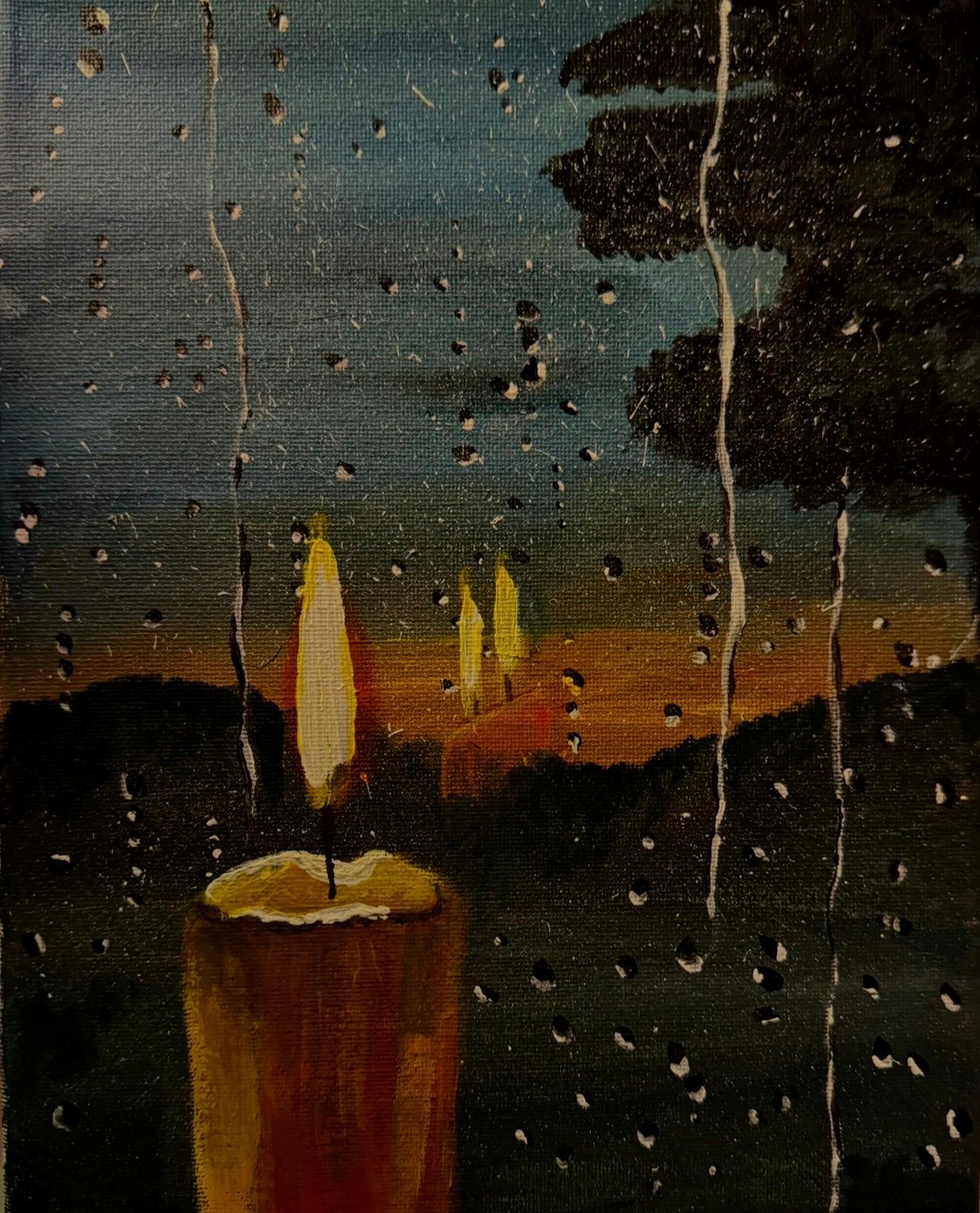
Dolores St. Jean
Wintertime. Cold breezes remind you that you have the capacity to feel. A Christmas market with no one to share it with. Solo dinner dates, debating how awkward it would be to pull out a Wilkie Collins book over a plate of pad thai, returning again and again to that one restaurant just to introduce some semblance of familiarity. Journaling because it feels like the thing one would do in a crappy coming-of-age movie, pretending not to feel so lonesome. Debating between grocery store lunch or nothing at all, because you have thirteen dollars. Beauty standards of Dutch women make them look two dimensional. Too many of the same big colorful scarves choking skinny necks. Locking your passport in the safe when you would do anything to be stuck. Reading the morning news to sad music because it's nearly impossible to cry now. An art exhibit of a man’s life’s work that he will never see. Blue-white-red, but it’s unamerican. Dinner with a man who yearns under well trimmed eyebrows. Uncomfortable shoes with too many miles tucked into the worn-out tread. Museums filled with the work of dead hands while warm hands take photos with cold metal boxes. Bitter realizations on the sober mind. Let me grow wings, says Radiohead. And asking yourself if you really needed to spend a thousand dollars just to remember that you are unhappy.
Miya Wilson (she/her) [mee·uh, wihl·suhn], proper noun:
1. Creative Director 2. Principal Investigator 3. Casual Writer
Jonizza Lupi (she/her), [juh·nee·zuh], proper noun:
1. woman of God 2. an avid reader; 3. rain and Spotify lover.
KortneyAlviar (she/her), [kort·ney], noun:
1. Marine veteran 2. from three different states 3. a renaissance woman at heart.
Noah R. Marin (he/him), [NOH·uh ar muh·RIN], noun:
1. Poet/Writer, 2. Nature lover, 3. Soft-hearted storyteller navigating love, family, and quiet moments with intention.
Nicole (Nikki) Park (she/her), [nik·khol (nih kee) pah·rk], proper noun:
1. Merlin (of the Clark Library Service Desk) 2. stuck in a dimension with time, currently in search of others 3. Katabasis planned for next Spring, there’s a spot open if you’d like to come
Souki Kismet (he/him), [soo·key kiz·met], proper noun:
1. The best emcee at UP, 2. Culinarian, curator, and connoisseur of sport, 3. An intellectual simpleton
Sarah Valenzuela (she/her), [sare·uh vah·len·zwah·lah], proper noun:
1. reformed theater kid; 2. cherry tomato enthusiast; 3. speaks less German than she thinks she does. See definition for ‘middle child’.
Rowan Lowery (he/him), [row·an low·wer·y], proper noun:
1. Arts Administration student and musician; 2. Freelance photographer- catch him snapping pics on campus; 3. Seeker of adventure and haver of fun.
Arcellio D. Acosta DelReal (he/him), [ar·sell·e·oh dee. uh·cost·uh dell·ri·all], proper noun:
1. obsessed with green; 2. far too into music with choreography; 3. multilingual. See definition for ‘little guy’.
Reem Alshaban (she/her), [ree·m all·shuh·bahn], proper noun: See definition for ‘Editor’.
Alec Ann Hilbert (he/him), [a·lik ann hill·bur·t], proper noun: 1. A believer in hedonism, 2. Finds the beauty in what others call ugly, 3. One half of another. See also definition for ‘macabre.’
Quin Hall (he/him), [kwin hall], noun:
1. Nixon reincarnate, 2. 500 Days of Summer fan, 3. Amateur cracked kettle rhythm tapper.
Dolores St. Jean (she/her), [duh·lawr·iss saynt·jeen], proper noun: 1. Phobia of the last of the milk left at the bottom of a carton. 2. Living young before I’m old. 3. Callused hands.
V Godoy (they/them), [vee guh·doy], proper noun; 1. Daydreamer 2. Sardonic Starling 3. Always getting their derp on.
Evan Guerra (he/him) [eh·van geh·ra], proper noun: 1. truth seeker; 2. wannabe F1 driver; 3. semi-competent skier.
Rieve Randall (he/him), [ree·v ran·dull], proper noun: 1. watcher of squirrels; 2. short n’ sweet; 3. lover of the great outdoors. See also definition for ‘personable.
Gigi Giangiobbe (she/her), [jee·jee ji·ahn·ji·oh·beh], proper noun: See definition for ‘Editor’.
Charlie Platt (he/him), [ˈtʃɑrli, CH·ARE·LEE], proper noun: 1. If I keep learning things maybe one day I’ll actually be good at one of them 2. Met god, she’s green, 3. Used to be lactose intolerant but I got better.
Parielle Shapard (she/her), [pa·r·i·elle sha·pard], proper noun: 1. coffee shop enthusiast, 2. theatre major, 3. loves a good giggle.
Catherine Leach (she/her), [kah·thuh·rin lee·ch], proper noun: See definition for ‘Senior Editor’.
Nandita Kumar (she/her), [n·uhn·d·ee·t·ah kuu·maar], proper noun: See definition for ‘Senior Editor’.
Catherine Leach (she/her), [kah·thuh·rin lee·ch], proper noun:
1. bad at self-definition; 2. would love some of Reem’s snacks; 3. cat enthusiast. See also definition for ‘nerd.’
Nandita Kumar (she/her), [n·uhn·d·ee·t·ah kuu·maar], proper noun:
1. Kilgharrah (of the Clark Library Service Desk); 2. Always talking about her grandma; 3. is whooshing down the big metal slide in the Columbia Park annex right now if you’re free. Are you free?
Reem Alshaban (she/her), [ree·m all·shuh·bahn], proper noun:
1. a noisy mind in a quiet body, 2. the local romantic oddity, 3. will insist on sharing her snacks with you. See also definition for ‘yearning.’
Gigi Giangiobbe (she/her), [jee·jee ji·ahn·ji·oh·beh], proper noun:
1. has a very active amygdala; 2. hates homophobic lighting almost as much as homophobia; 3. enjoys obscure references that only 5-10% of people will understand. See also definition for 'only child’.
Branna Naughton-Sundy (she/they), [bran·nuh naw·tun sun·dee], proper noun:
1. level one halfling rogue; 2. circus freak with Orphean ideals and Sisyphean tendencies (see also: prodigal son); 3. a logistical nightmare
Amineh Zakarneh (she/her), [uh·mean·uh zuh·car·knee], proper noun:
1. invested in the female reproductive system 2. date lover, both romantic and fruit 3. currently powering up as summer inches closer... and closer...
Samantha Zavala (she/her), [sam], proper noun:
1. sweet treat lover; 2. dad joke connoisseur; 3. google sheets enthusiast
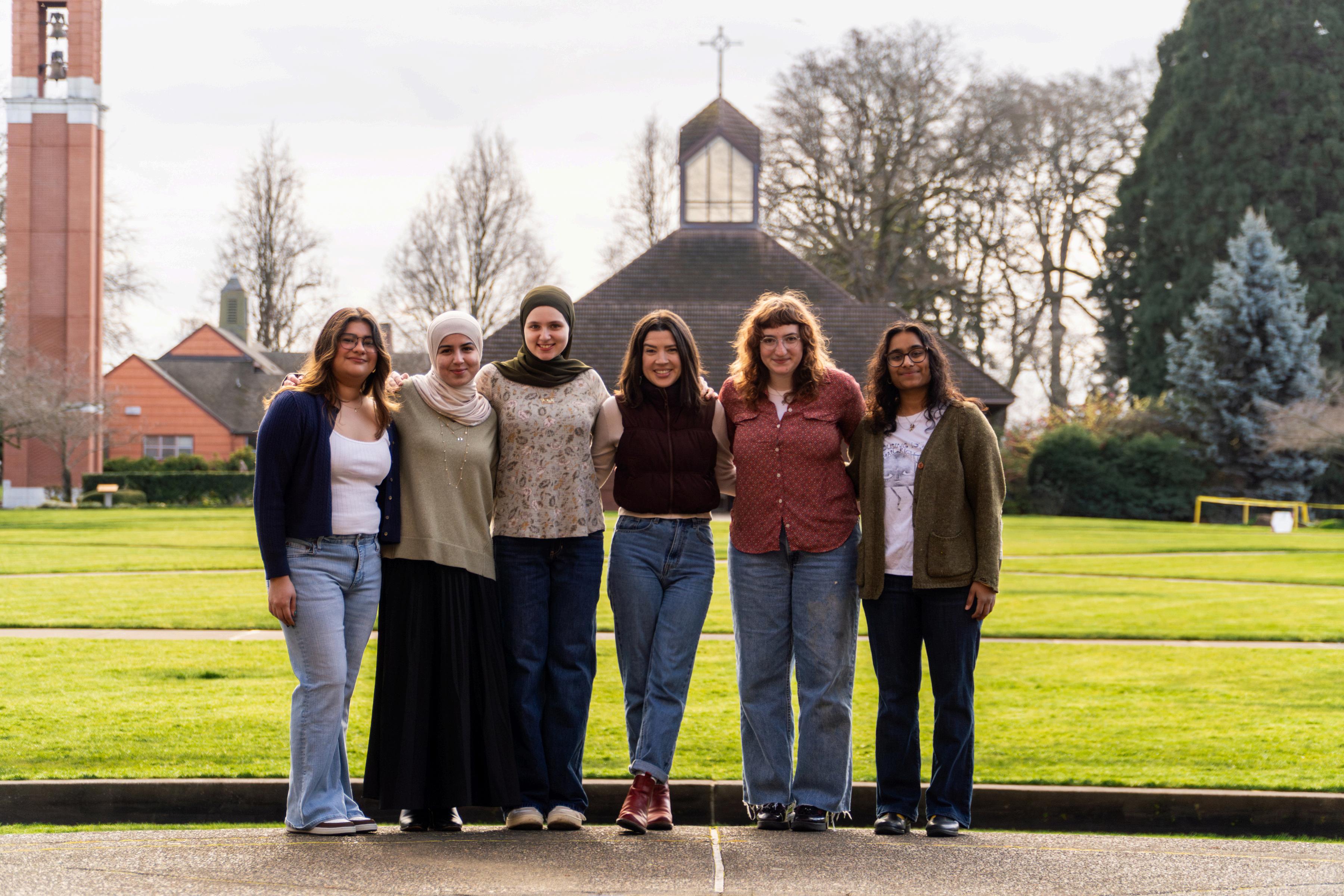
Writers is never a singular effort, and we are immensely grateful for the support of the following people:
Professor John McDonald, our trusty faculty advisor, for giving us constant encouragement while simultaneously allowing us the space to make and fix our own mistakes.
Our contributors, for their amazing poems, musings, and art pieces. Writers simply would not exist without you and is better because of you.
And, most emphatically, the Spring 2026 Writers Editorial Board, for their adaptability, creativity, passion, and patience.
Writers Magazine accepts submissions of original creative work by current students of the University of Portland. These works include but are not limited to short prose, poetry, short plays, photography, visual arts, and cartoons.
All submissions are evaluated by the editorial board. Submissions are kept anonymous throughout the evaluation process.