PACIFIC ISLANDS FISHERY NEWS
Newsletter of the Western Pacific Regional Fishery Management Council / Spring 2026

Newsletter of the Western Pacific Regional Fishery Management Council / Spring 2026
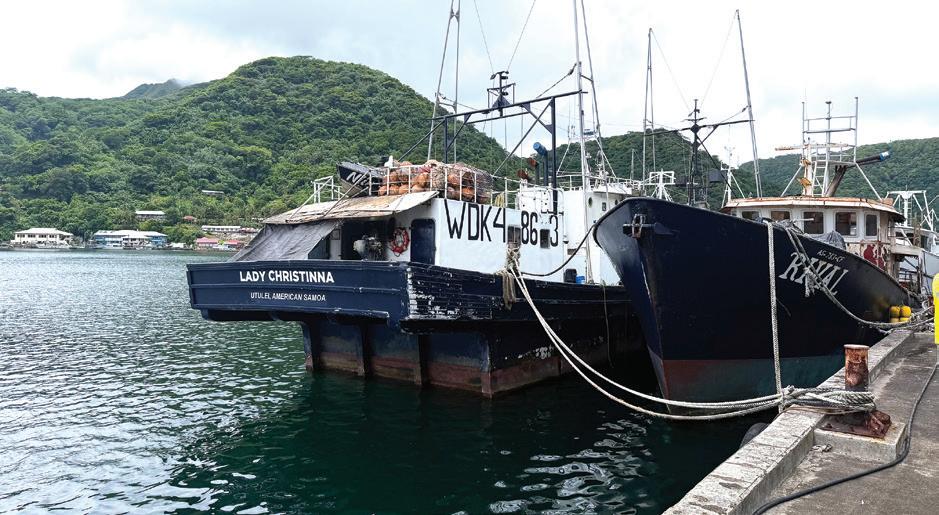
The American Samoa longline fishery has long been a cornerstone of the local economy and a critical geopolitical presence for the United States in the Pacific. Today, however, the fishery stands at a crossroads. Rising operating costs, low catch rates and historically low participation — only six active vessels in 2025 — have placed the fleet in a precarious economic position. Just a decade ago, the fleet had 18 active vessels.
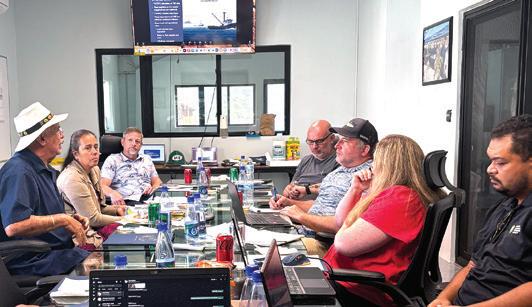
To address these compounding issues, the Western Pacific Regional Fishery Management Council launched a Longline Scenario Planning Project. This longrange planning effort uses a Strengths, Weaknesses, Opportunities and Threats (SWOT) analysis, along with scenario planning, to better understand current conditions, anticipate future changes and build longterm resilience. Council staff and project coordinators traveled to American Samoa in November 2025 and May 2026 to meet with members of the longline fishery, local fishery management agency staff, fishery vendors, the StarKist Samoa Cannery and other community members.
The project’s longterm vision is to foster a fishery that maintains a strong, competitive position in the regional tuna market while remaining rooted in the local community. The project identified four primary goals: ensuring a viable and profitable fishery, securing a competitive market position,
building stability and resilience, and fostering strong ties and support within American Samoa.
A Crucial Turning Point: South Pacific Albacore Allocations
A pivotal factor in the fleet's future is the upcoming allocation of South Pacific albacore catch limits. In December 2025, the Western Central Pacific Fisheries Commission (WCPFC) adopted a management procedure to establish catch controls for albacore south of 10˚S. As a result, a total allowable catch will be determined and then allocated among WCPFC members with fisheries that utilize albacore. In June 2026, delegations
PACIFIC ISLANDS
FISHERY NEWS
is published by the Western Pacific Regional Fishery Management Council
1164 Bishop St., Suite 1400 Honolulu, HI 96813
www.wpcouncil.org
Telephone: (808) 522-8220
Fax: (808) 522-8226 info@wpcouncil.org
CHAIR
Nathan Ilaoa—American Samoa
EXECUTIVE DIRECTOR
Kitty M. Simonds
All rights reserved.

Internal factors and attributes that contribute to the success of the fishery and/or provide a competitive advantage.
• What's working well?
• What are the fishery's unique characteristics or capabilities?
• What gives the fleet an edge over competitors?
Internal factors that limit the fleet's success and/or create a disadvantage compared to competitors.
• Where is the fishery struggling?
• What is lacking and/or holding the fishery back?
• Where are the key vulnerabilities for the fleet?
Dedicated to ecosystem-based fisheries management in the U.S. Pacific Islands.
from American Samoa and the United States will begin negotiating albacore allocations with WCPFC members, including American Samoa.
Securing a favorable allocation is essential for the American Samoa fleet to improve prices, hold its market share and rebuild to viable levels. The industry's goal is to restore the fleet to 15 18 active vessels, with each vessel harvesting approximately 150 metric tons (mt) annually. This would require a total allocation of 2,250 to 2,700 mt. However, this amount depends on how much catch is partitioned to fisheries that operate on the high seas versus within Pacific Island exclusive economic zones (EEZs). The Pacific Islands Forum Fisheries Agency has proposed a baseline catch split of 75% in EEZs and 25% on the high seas, with a minimum acceptable "red line" of 68% EEZ and 32% high seas.
Preliminary analyses show that the historical catch period used to calculate EEZ allocations will have the largest impact. Scenarios using longterm historical data — either the average catch from 2004 to 2023 or the "best of three years" from that period — would provide enough quota to meet the fleet's goal of 15 or more vessels. In contrast, allocations based on more recent 5 or 10 year averages (20142023 or 2019 2023) would reduce the fleet’s potential catch to under 1,200 metric tons, severely threatening rebuilding goals.
External factors, trends, or market developments that can be leveraged to improve operations or gain a competitive advantage.
• What external factors present opportunities for the fishery?
• What trends work in the fleet's favor?
• How might emerging efforts be leveraged?
External factors out of the fleet's control that could negatively impact operations.
• What external headwinds does the fleet face?
• What could go wrong?
• What market, economic or political trends are we unprepared for?
Despite current economic challenges, the scenario planning project identified several trends and opportunities that could help the fleet become more profitable. The American Samoa longline fleet holds Marine Stewardship Council (MSC) certification and produces highquality albacore for the StarKist cannery. The industry could build on consumer interest in transparency by supporting countryoforigin labeling, a distinct U.S.caught label, or tariff structures that recognize and support U.S.harvested albacore.
Efforts by the Department of Marine and Wildlife Resources and the American Samoa Department of Commerce’s Seafood Academy are also underway to develop stronger local supply chains for secondary catch. Expanding the local market, along with training and capacitybuilding programs, could help address the current shortage of local captains and crew.
Discussions are also ongoing about establishing a permanent U.S. Coast Guard presence in Pago Pago. This development could spur significant investments in local maritime infrastructure, including shipping docks and the shipyard, while strengthening enforcement against foreign vessels.
Another opportunity is expanding the fleet’s ability to fish in more waters within the U.S.
EEZ around American Samoa. The fleet fishes exclusively within these waters and does not have direct high seas access. The Council is working to remove fishing prohibitions 12 50 nautical miles seaward of the Rose Atoll Marine National Monument. This action would open valuable fishing grounds within the already limited footprint of the fishery and provide relief from intense high seas competition.
To achieve its vision, the industry must also prepare for significant external threats. American Samoa and other U.S. fisheries face an uneven playing field against heavily subsidized Chinese and Taiwanese vessels. These foreign fleets have lower operating costs, are not held to the same stringent sustainability requirements, and regularly flood the cannery with secondarycatch albacore, suppressing the prices paid to local U.S. fishermen.
The StarKist Samoa Cannery is the sole buyer for the American Samoa fleet's albacore. A closure or significant shift in the cannery's business model would be an existential threat to the longline fleet. While shipping fish in containers to other
markets may be possible in the future, the fleet’s current low harvest volumes and high shipping costs make this option unfeasible for now.
The fishery also depends on the broader tuna economy in American Samoa, including port calls by U.S.flagged purse seine vessels. Some of these vessels are now delivering catch to ports in Mexico and South America instead of Pago Pago. Each lost port call removes about $400,000 in local purchasing, which reduces shoreside services and drives up maintenance and supply costs for the remaining longline vessels.
Deep sea mining proposals in waters around American Samoa and the Cook Islands have raised concerns about sedimentation affecting albacore distribution. Climate change adds further uncertainty, potentially forcing the fleet to adjust where and how it fishes.
Misperceptions also remain about competition between the longline fleet and local smallboat fisheries. One important strategy moving forward is to shift the narrative from competition to collaboration by helping the public understand how all local fisheries contribute to American Samoa's food security and economy.
2026 will be a crucial year for the American Samoa longline fishery. The Council’s Scenario Planning Project is helping identify strategies to improve the fleet’s resilience, with a final report expected by the end of the year. At the same time, WCPFC negotiations may help American Samoa secure a stronger stake in the South Pacific albacore resource and strengthen the fishery’s role in the local economy.
For more information on this and other Inflation Reduction Act projects, visit www.wpcouncil.org/ira-projects
1 Navigating the Future: A Strategic Outlook for the American Samoa Longline Fishery
4 206th Council Meeting Highlights, March 24-26, 2026
6 Beyond the Milestones: 50 Years of Pacific Fisheries Stewardship
8 International Workshop Charts New Dialogue on Culture and Sustainable Use of Sea Turtles
10 Revitalizing Hawai‘i’s Bottomfish Fishery for Local Seafood Security
12 MREP WP Workshop Strengthens Regional Ties and Empowers Local Voices
13 Strengthening Fisheries Management Through Regulatory Review
14 Deadly Super Typhoon Devastates the Northern Mariana Islands
15 Preliminary Findings on Bluefin Trevally Suggest Larger Fish in Northern Mariana Islands
16 American Samoa AP Expands Community Outreach and Education Efforts
17 Congressional Corner
17 New Outreach Resources
18 Council Family Updates
19 2026 Council Calendar
20 Upcoming Events
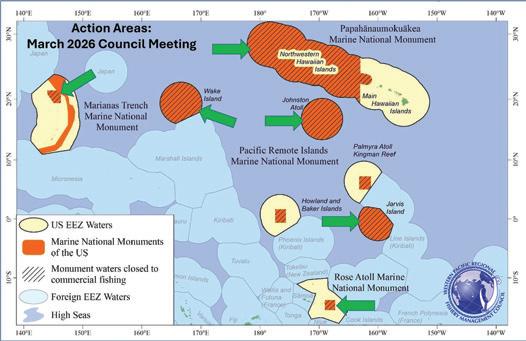
After hearing approximately 70 written and oral public comments at its 206th meeting, the Western Pacific Regional Fishery Management Council took final action to restore commercial fishing in portions of the Pacific Islands Heritage, Rose Atoll, Marianas Trench and Papahānaumokuākea Marine National Monuments.
“This is not about removing monument protections — it’s about restoring sustainable fishing in limited areas under fishery regulations the Council has developed over decades,” said Council Executive Director Kitty Simonds. “Those regulations were built to balance access and conservation, and that remains the Council’s guiding principle under the MagnusonStevens Act.”
For the Pacific Islands Heritage Marine National Monument, the Council recommended removing commercial fishing prohibitions from 50 to 200 nautical miles seaward of Jarvis and Wake Islands, and Johnston Atoll. Waters from 0 to 50 nautical miles would remain unchanged. The Council also asked the National Marine Fisheries Service (NMFS) to develop a research plan for prioritized electronic monitoring review and observer coverage for trips or sets operating in the area as electronic monitoring is fully phased into the Hawai‘i and American Samoa longline fleets.
“In 2009, a large part of American Samoa’s EEZ was closed without consultation, and our people have carried that loss ever since,” said Council Chair Nathan Ilaoa. “This action does not remove the monument; it supports local fishermen, the cannery and the small businesses that depend on a viable fishing economy.”
“This is not a fight between community and commerce or between local values and outside interests, because the fami
lies who own and operate these longline vessels are American Samoans,” said Council member Edgar Feliciano. “Opening these waters is not a silver bullet, but it can give a struggling fishery just enough room to survive under some of the most stringent regulations in the Pacific.”
The Council also recommended restoring commercial fishing in other monument areas: 12 to 50 nautical miles at Muliava, Rose Atoll; 0 to 50 nautical miles in the Marianas Trench Islands Unit; and 3 to 200 nautical miles in Papahānaumokuākea for bottom fish and pelagic fisheries only. In Papahānaumokuākea, the 0 to 3 nautical mile closure for all commercial fisheries and the prohibition on longline fishing shoreward of 50 nautical miles would remain in place.
If approved, fishing in these areas would continue to operate under existing permit, reporting, gear restriction, area closure, catch limit and protected species requirements.
“If we don’t support our commercial fisheries, we will continue to eat fish from foreign countries,” said Guam Council member Chelsa Muña. “They are not subject to the same regulatory regimes as U.S. fishers.”
Public comments reflected both support and opposition, with supporters citing
food security and fishing access, and opponents raising concerns about protected species, ecosystem impacts and cultural resources.
“We opposed the monument from the beginning, but our people were given many promises about tourism and new opportunities that never came,” said CNMI Council member Sylvan Igisomar. “Nearly 20 years later, our economy is still struggling, and it is unfair that Pacific communities continue to carry this burden while receiving so little in return from resources that are the lifeblood of our islands. Monuments and sanctuaries are born out of emotions. The MSA bottomup management based on scientific assessments.”
In an August 2025 letter to U.S. Commerce Secretary Howard Lutnick regarding Rose Atoll Marine National Monument, American Samoa Gov. Pulaali‘i Pula said, “This strategic adjustment will provide essential relief and opportunity for American Samoa’s longline fleet, ensuring their continued viability and bolstering the tuna industry that drives our local economy.” David Sakoda, representing the State of Hawai‘i, read into the record Gov. Josh Green’s letter urging the Administration “to stand firm in upholding the full protections for Papahānaumokuākea and the Pacific Islands Heritage Marine
The Council’s recommendations for the Pacific Islands Heritage Marine National Monument will be transmitted to NMFS for consideration through the federal process. Recommendations for Rose Atoll, Marianas Trench and Papahānaumokuākea would be transmitted for followup Presidential action to Executive Order 14276, “Restoring American Seafood Competitiveness.” Restoring commercial fishing in Papahānaumokuākea would require an additional step to address National Marine Sanctuary fishing rules.
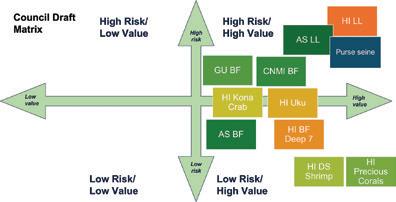
NMFS prioritization matrix showing the Council's draft placement of Western Pacific fish stocks and complexes on the agency's risk value scale. Legend: HI=Hawai‘i; AS=American Samoa; GU=Guam; CNMI=Commonwealth of the Northern Mariana Islands; LL=longline; BF=bottomfish; DS=deep-sea
The Council advanced followup work on federal fisheries science and management priorities and reaffirmed its seafood Executive Order recommendations from September 2025.
NMFS is developing a prioritization framework to narrow the scope of federal fisheries science and management in response to reduced funding. The framework weighs the value of, and risks to, more than 500 stocks nationally, defining value primarily in monetary terms and treating social and other considerations as secondary.
Council members said that approach does not reflect the role of fisheries in Pacific Island communities, where cultural importance, food security and community continuity can outweigh market value. The Council directed its Scientific and Statistical Committee to develop a mechanism to help determine and quantify cultural value for use in prioritization decisions.
“Reduced funding does not eliminate the Council’s responsibility to manage fisheries in the region,” said Ilaoa. “We are different — we don’t have vast amounts of farmland or Costco, we depend on fisheries, we have to make sure it doesn’t downgrade our fisheries. Cultural value may be difficult to quantify, but it must be part of the decisionmaking process.”
Smallscale fisheries such as bottomfish and Kona crab may appear limited by national economic standards, but they play an outsized role in food security and culture. Evaluating fisheries
only by dollar value could make it harder for Western Pacific fisheries to compete for federal science and management funding.
The Council also reviewed its recommendations under Executive Order 14276 and decided not to make changes. Removing commercial fishing prohibitions in Pacific Island monuments remains the Council’s highest priority. A close second is revising burdensome regulations.
“The current closure has been costly and inefficient, burdening the longline fleet that supplies our StarKist cannery,” Ilaoa said. “Our fleet is critical to American Samoa’s economy and to maintain MSC certification needed to support contracts serving the military and school lunch programs across the nation.”
Major outcomes from the February 2026 shark workshop highlighted ongoing concerns about shark depredation across the region. Participants agreed that better data collection and reporting is critical. Information on lost gear and fishing time, and continued collaboration with fishermen to test and improve deterrent technologies are among the top priorities.
Electronic monitoring (EM) uses camera systems to monitor longline fisheries while reducing the burden of carrying human observers.
The Council reviewed guidelines for vessel monitoring plans (VMPs), which are vesselspecific plans required for boats using EM systems. The VMPs include contact information, malfunction contingencies and catch handling requirements while at sea.
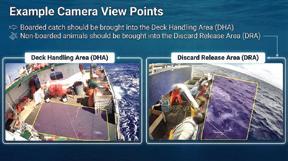
In June 2025, the Council recommended full EM implementation in the Hawai‘i and American Samoa longline fisheries, with a primary focus on protected species and bycatch monitoring. The Council endorsed the guidelines to help ensure the program operates efficiently. The Council recommended continued training for vessel owners, operators and crew on VMP requirements and to consider some of the cultural differences, including diverse languages spoken. The Council, with NMFS and the Pacific States Marine Fisheries Commission, held multiple forums from November 2025 to February 2026 to gather fishing industry feedback on EM and VMPs. In that time, 40 50 crew members, captains and vessel managers were trained. At these forums, vessel owners and operators expressed preference for EM rather than having to accommodate human observers while at sea. Ilaoa said, “It is good we are able to reduce burden on crews and meet monitoring needs. Having the VMPs specific to each vessel in our region is the way to go.”
In
the end, sustainability is not about the fish, it is about the people who depend on them.”
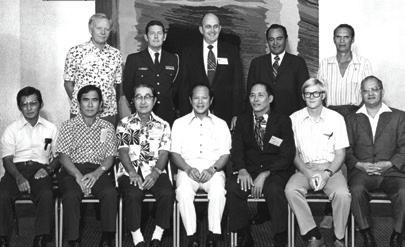
1976 group photo of the Western Pacific Regional Fishery Management Council includes (front row, from left) Isaac Ikehara, Frank Goto, Michio Takata, Wadsworth Yee, Frank Aguon, Richard Waas, Paul Bordallo; (back row, from left) Peter Fithian, John Caffrey, Floyd Anders, Lealaifuaneva Peter Reid Jr. and Louis Agard.
As skies across the United States light up red, white and blue this summer to celebrate the nation’s 250 anniversary, we should light an extra firework to celebrate 50 years of the MagnusonStevens Fishery Conservation and Management Act (MSA). This landmark legislation serves as an example to the world of how to manage fisheries sustainably for the betterment of the nation.
Since its establishment under the MSA, the Western Pacific Regional Fishery Management Council has helped shape a regional management system across Hawai‘i, American Samoa, Guam, the Commonwealth of the Northern Mariana Islands (CNMI) and the Pacific Remote Island Areas. This system links marine conservation with food security, cultural continuity and local livelihoods. The milestones the Council has reached over the past halfcentury tell a story larger than just regulations and fishery plans.
For Pacific Islanders, sustainable fisheries are not an abstract policy goal. They support local seafood production, family businesses, traditional practices and community identity. Over the past five decades, the Council has advanced measures to conserve marine resources, reduce protected species interactions, strengthen fishery monitoring and recognize the role of Indigenous and local knowledge in responsible management.
In bottomfish fisheries, the Council’s early actions showed that sustainability begins with preventing harm before it becomes irreversible. The 1986 Bottomfish and Seamount Groundfish Fishery Management Plan (FMP) prohibited destructive fishing gear and techniques, including trawl nets, bottomset gillnets, explosives and poisons. Two years later, an amendment established the nation’s first limitedentry program for bottomfish fishing within the U.S. exclusive economic zone around the Northwestern Hawaiian Islands. These actions helped define a Pacific approach to management: protect habitat, manage effort and keep fisheries available for future generations.
In pelagic fisheries, the Council helped bring highly migratory tuna species into the federal management system in 1990 and supported the scientific foundation needed for management through the Pelagic Fisheries Research Program at the University of Hawai‘i. The Hawai‘i longline fishery then became a model for modern fishery management, with permits, reporting requirements, limited entry, vessel monitoring and spatial protections developed in the early 1990s. For island communities, pelagic management is also economic policy. In American Samoa, Pago Pago remains one of the top U.S. fishing ports by value and volume, and the local tuna industry is the territory’s largest private employer.

Kitty M. Simonds, the Council's fourth executive director, has served since 1982.
Photo: Paul Callaghan.
Protected species milestones demonstrate how conservation and fishing can advance together. The Hawai‘i longline fishery established seabird mitigation measures that reduced interactions by more than 90%, with additional measures such as sidesetting and tori lines developed over time. Sea turtle mitigation measures similarly reduced interactions by nearly 90%, and later gear modifications in the American Samoa longline fishery were designed to reduce interactions with green sea turtles. These successes were not simply compliance achievements; they helped keep domestic fisheries operating while reducing impacts to seabirds, sea turtles and other protected species.
Swordfish fishery temporary closure
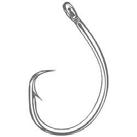
Large circle hooks & fish bait required in swordfish fishery


The Council also helped move U.S. fisheries toward ecosystembased management. The 2001 Coral Reef Ecosystem FMP was the first ecosystem plan for fisheries in the nation. In 2009, the Council restructured its FMPs into placebased Fishery Ecosystem Plans (FEPs) for Hawai‘i, the Marianas, American Samoa and the Pacific Remote Island Areas, along with a Pacific Pelagic FEP. This approach better reflects island realities, where fisheries, habitats, communities and culture are connected.
Perhaps the most meaningful milestones are those that recognize Pacific Islanders not just as stakeholders, but as stewards. The Sustainable Fisheries Act of 1996 amended the MSA to recognize traditional Indigenous fishing practices and create pathways for eligible Native communities in American Samoa, Guam, Hawai‘i and the CNMI to participate more fully in Councilmanaged fisheries. It also authorized the Western Pacific Community Development Program and Community Demonstration Project
Program. The Council later supported Puwalu gatherings of lawai‘a (fishing) and mahi‘ai (farming) practitioners in Hawai‘i and communitybased planning efforts such as the Malesso CommunityBased Resource Management Plan in Guam.
Taken together, these milestones show how federal fisheries management can protect marine resources while supporting the island communities whose food systems, economies and traditions are tied to them. As Council member Edgar Feliciano of American Samoa said, “In the end, sustainability is not about the fish, it is about the people who depend on them.”
For the next 50 years, the challenge will be to build on this foundation: maintaining conservation gains while strengthening the seafood economy, supporting coastal communities and ensuring that Pacific Islanders continue to have a voice in the future of their fisheries, from sea to shining sea.
See the Western Pacific Council’s milestones poster at: https://tinyurl.com/ WPFMCMilestones
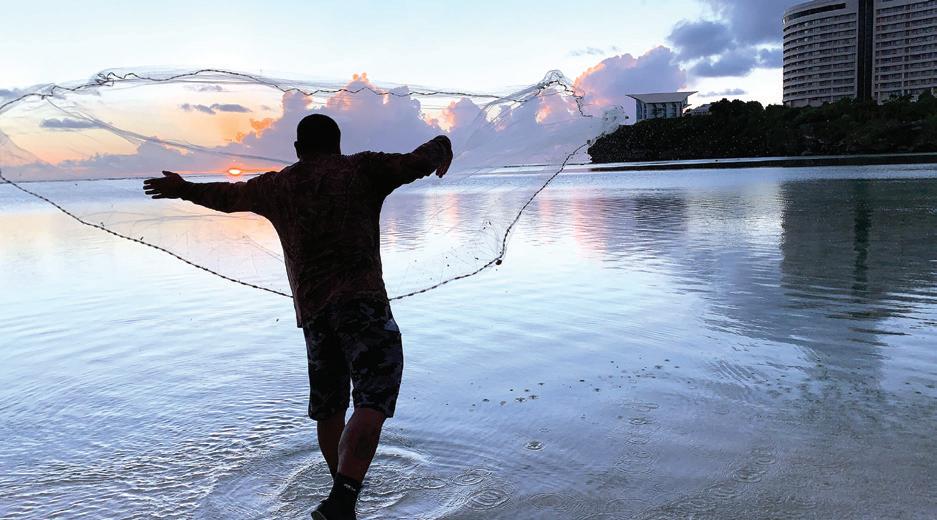
For many Pacific Island communities, green sea turtles are more than a protected species. They are part of ceremony, identity, family teaching and a way of life that many say has been interrupted for generations. In the United States, the listing of green sea turtles under the Endangered Species Act (ESA) in 1978 put a halt to all turtle use, with no exceptions for traditional or cultural practices. In the half century since, the notake protection approach to sea turtle conservation became the global standard in what seemed to be a race against time to save sea turtles from extinction.
In reality, the notake approach did not completely stop use from occurring. In many places where harvest was prohibited, take continued to some degree, undocumented and unmanaged, and at times criminalizing practices that were carried out for hundreds or thousands of years. While some countries continued to allow harvest within their jurisdictions, they became the minority over time, and their role in conservation often went unrecognized. The focus on protection also meant that expertise and knowledge for managing use in a sustainable manner never fully developed, unlike in wildlife or fisheries management.
Now, as green sea turtle populations show promising signs of recovery, and with green sea turtles downlisted from “Endangered” to “Least Concern” under the International Union for Conservation of Nature (IUCN) Red List last year, the dialogue is shifting toward a conversation many island leaders say is long overdue. That conversation asks what recovery could mean not only for conservation, but also for the possible return of cultural stewardship and sustainable use in the Western Pacific and many other parts of the world.
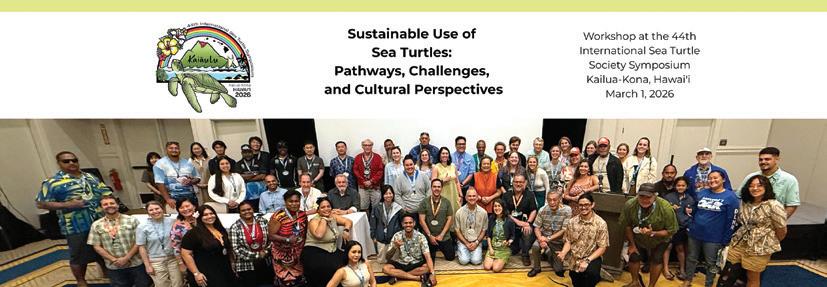
That shift was evident at the 44th International Sea Turtle Society Symposium convened in early March 2026 in KailuaKona, Hawai‘i. Held for the first time in the Pacific Islands, the symposium featured indigenous Pacific Islander perspectives
on sea turtles and conservation during the opening plenary session. Another plenary session tackled the theme “Surviving to Thriving: Evolving the Ethos of Turtle Conservation.”
Against that backdrop, the Western Pacific Regional Fishery Management Council coorganized an international workshop, Sustainable Use of Sea Turtles: Pathways, Challenges, and Cultural Perspectives. More than 100 participants from 21 countries and territories gathered to examine how sea turtle use is managed where harvest still occurs, what systems are working and what lessons may help make sustainable use viable.
Although the U.S. Pacific Islands still face policy and legal barriers to restoring sea turtle use, the workshop created an opportunity to connect Pacific Islanders with people from around the world who have maintained turtle use practices. It also gave international participants an opportunity to hear directly from Pacific Islanders about their experiences and challenges.
The workshop featured case studies from Australia, Costa Rica, Guatemala, Hawai‘i, Japan, Nicaragua, Venezuela and the Turks and Caicos Islands, as well as crocodilian management examples that serve as interesting analogs for longstanding traditions of sustainable use. Examples ranged from traditionally managed indigenous harvest to highly regulated artisanal fisheries.
The workshop highlighted that conservation and use can coexist, and that populations can rebound while use continues. Case studies also demonstrated that use can be a positive tool for conservation when species provide tangible benefits that are biologically, ecologically, socially and economically sustainable. Success hinges on adapting management systems to local contexts and cocreating policies with impacted communities to strengthen stewardship. Aligning policies across local, national and international levels was also identified as a key step.
At its 206th meeting in March 2026, the Council received a report on workshop outcomes and reaffirmed its commitment to work with federal and territorial agencies to continue exploring avenues for the sustainable take of green sea turtles in the region. The Council, along with U.S. Pacific Islanders, have sought to restore culturally important sea turtle harvest since take was prohibited in 1978.
Council member Chelsa Muña, Guam Dept. of Agriculture director, commended the progress made through the work shop. “It aligns with past Council comments about incorporating cultural take and traditional knowledge into some form of communitybased management," said Muña. “Rather than villainizing culture, there could be incorporation of that community into some form of management of the population.”
and international levels provide legal protection to green sea turtles in the region.
At the state and territorial level, Hawai‘i, Guam, the CNMI and American Samoa each have endangered species protections that mirror federal ESA protections. Species listed as threatened or endangered under the ESA are therefore also protected under local laws.
The workshop highlighted that conservation and use can coexist, and that populations can rebound while use continues.
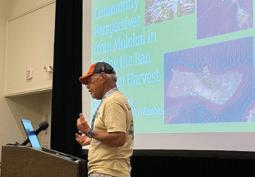
CNMI Dept. of Lands and Natural Resources Secretary and Council member Sylvan Igisomar said the discussion is ultimately about what communities stand to lose when cultural practices are left dormant for too long. “When a cultural practice is lost, it’s gone forever,” Igisomar said. “My children will never have my childhood.”
Today, three overlapping layers of laws at the state/territorial, federal
At the federal level, the Hawai‘i popu lation of green sea turtles is listed under the ESA as threatened, while populations nesting in the CNMI, Guam and American Samoa were uplisted to endangered in 2016. Species listed as endangered automatically receive the ESA’s full protections, while species listed as threatened may allow tailored protections through what is commonly known as a “4(d) rule.” In practice, however, the federal government has applied most of the same take prohibitions to both threatened and endangered sea turtle populations.
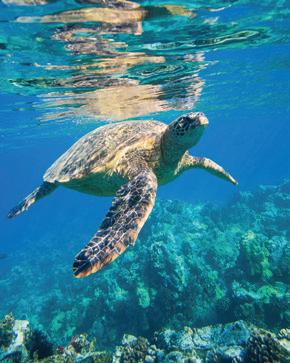
territorial and federal mechanisms allow it, or seek a change to the IAC. As part of the commitment made at the 206th meeting, the Council continues to engage with federal representatives to explore pathways for allowing limited take while still meeting U.S. obligations under the IAC.
At the international level, the United States is a signatory to the InterAmerican Convention for the Protection and Conservation of Sea Turtles (IAC). The convention requires parties to prohibit intentional use of sea turtles, with a narrow exception “to satisfy economic subsistence needs of traditional communities.” In ratifying the treaty, the United States relied on ESA protections to satisfy its IAC obligations.
Restoring traditional use practices would require alignment across all three levels.
At the local level, state and territorial laws would need to be updated to allow some form of traditional use, along with management plans to ensure sustainability. At the federal level, an ESA 4(d) rule that allows managed harvest under a state or territorial plan could be explored if populations cannot be delisted in the near term. Populations currently listed as endangered would first need to be downlisted to threatened before an ESA 4(d) rule could be considered.
We may no longer be in a race against time to save green sea turtles from extinction. Instead, we are now racing against time to preserve the traditional knowledge, practices, skills and cultural ties that the people of the U.S. Pacific Islands had with sea turtles before they disappear. Navigating the overlapping legal frameworks will be challenging and will require collaboration among communities, scientists and managers to chart a path forward for the next 50 years. The workshop held in Kona started an international dialogue of how to ensure that turtle use can coexist with conservation. It’s time we started the dialogue locally too, before it’s too late.
Additional Resources:
Video recordings for the Pacific Islands and Surviving to Thriving Plenary sessions at the 44th International Sea Turtle Society Symposium can be viewed online: www.internationalseaturtlesociety. org/symposia/event-videos
The report and videos from the sustainable use workshop will be posted on the Council website at a later date.
See the Council’s Protected Species web page for more information: www.wpcouncil.org/protected-species/ communities
What changed in the market and demand for bottomfish after the pandemic? Why haven’t imports resumed? And what opportunity does this create for Hawai‘i’s local seafood economy?
Together, the MHI and NWHI once formed the foundation of a unified local bottomfish economy. The MHI supported community, retail and regional consumption, while the NWHI supplied larger, highvalue fish important to tourismbased restaurants and premium seafood markets. Each area generated roughly half of bottomfish revenue.
Beginning in 1988, the Western Pacific Regional Fishery Management Council managed the NWHI fishery by limiting vessel participation. By 1999, 17 permitted vessels were allowed in two limitedentry zones — seven in the northern Ho‘omalu Zone and 10 in the Mau Zone — with strict qualifying criteria. The MHI fishery remained open access.
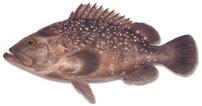
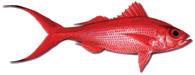
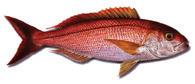
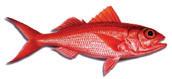
For generations, the Hawai‘i bottomfish fishery has supported local seafood markets, fishing communities, restaurants and cultural traditions. The fishery is composed of deepwater snappers, groupers and jacks that includes the deepseven bottomfish complex: onaga, ‘ōpakapaka, ehu, gindai, lehi, kalekale and hapu‘upu‘u.
Historically, the fishery operated across the entire Hawaiian Archipelago, from Hawai‘i Island in the main Hawaiian Islands (MHI) to Kure Atoll, or Mokupāpapa, in the Northwestern Hawaiian Islands (NWHI). The fishery has operated in various forms since 1913, adapting as fishing techniques evolved. Trailer boats remain common in the MHI, while vessels up to 60 feet once operated in the NWHI. The basic vertical hookandline handline method has changed little, targeting prized bottomfish in deep waters from roughly 300 to 900 feet. Today, fishermen commonly use mechanical line haulers with weighted terminal rigs of seven to 12 baited circle hooks and chum bags.
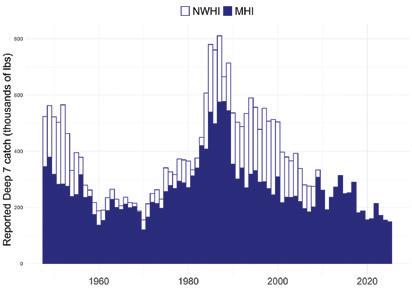
Source: Hawai‘i Division of Aquatic Resources.
Over the past 30 years, management decisions reshaped the fishery and the market that depended on it. In 1998, the State implemented 19 Bottomfish Restricted Fishing Areas intended to protect spawning grounds. Although those areas were later reopened, the closures removed productive traditional grounds for many years and displaced smallboat fishermen to less productive areas.
Although bottomfish stocks have been managed through catch limits, trip reporting and other measures, regulations continued to tighten amid uncertainty in the available data. Beginning in 2007, total allowable catch (TAC) limits and seasonal closures added more pressure to a fishery already affected by BRFA restrictions. The Council established a September to August fishing year to help keep the fishery open during the holiday season, when red bottomfish is highly prized. Over the next five years, the MHI fishery closed once the fleet reached its TAC, in the early to midspring months.
At the same time, federal policy changes created growing uncertainty in the NWHI. Executive Order 13178 established the NWHI Coral Reef Ecosystem Reserve in 2000, followed by the 2006 designation of Papahānaumokuākea Marine National Monument (PMNM). Between 2001 and 2005, nonrenewal of Ho‘omalu and Mau permits reduced participation through attrition. By 2010, all commercial bottomfishing in the NWHI had ended.
The closure removed roughly half of Hawai‘i’s local bottomfish supply and revenue and eliminated the premium fresh product that supported many highend restaurants, seafood buyers and fishing families. Combined with MHI closures and import competition, this opened the door for imported bottomfish to take hold in Hawai‘i’s markets and restaurants.
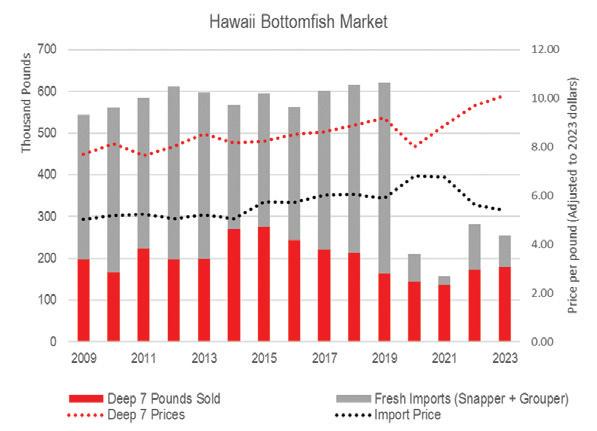
With MHI restrictions and seasonal closures occurring as the NWHI fishery withered through attrition, Hawai‘i’s seafood market became increasingly dependent on imports. Annual domestic landings declined from a high of around 1 million pounds in the late 1990s to less than 300,000 pounds by the time the NWHI fishery fully closed in 2010. Imports helped stabilize supply but shifted value away from local fishermen and weakened the connection between Hawai‘i’s seafood economy and its fishing communities.
By 2020, the NWHI bottomfish fishery had been closed for more than 10 years, and the MHI deepseven ACL had risen to nearly 500,000 pounds. But the COVID19 pandemic exposed the fragility of relying on imported seafood. Air transportation was disrupted, hotels and restaurants closed, and markets changed almost overnight. Even after tourism resumed, imported bottomfish did not return to earlier levels.
Source: Hawai‘i Division of Aquatic Resources.
That raises important questions: What changed in the market and demand for bottomfish after the pandemic? Why haven’t imports resumed? And what opportunity does this create for Hawai‘i’s local seafood economy?
An informal survey of Hawai‘i restaurants featuring local seafood found that fresh fish menu items now center largely on local pelagic species — ‘ahi, marlin, mahimahi, monchong and opah — along with aquaculture salmon, kampachi and imported hamachi. Several chefs said they would pay a dollar more for fresh local bottomfish over imported bottomfish.
There is now a strong opportunity to revitalize Hawai‘i’s bottomfish economy and support local seafood security. Because the MHI fishery is not reaching its maximum ACL, an additional 300,000 pounds of fresh bottomfish could be landed from the MHI fishery given its healthy status. Reopening the NWHI bottomfish fishery could potentially contribute another 500,000 pounds annually. Using the recent average deepseven price of $10.11 per pound,1 the additional 800,000 pounds could represent roughly $8.1 million in dockside value if fully sold. That value would circulate through Hawai‘i’s fishing families, seafood dealers, restaurants, retailers and consumers instead of leaving the state through imports.
The question now is not whether Hawai‘i values bottomfish. The market has already shown that chefs, consumers and fishing communities do. The question is whether Hawai‘i can rebuild a reliable local supply under sciencebased management, restore opportunity to fishermen and reconnect local seafood to local plates.
Revitalizing the bottomfish fishery is not about returning to the past. It is about using today’s stock assessments, catch limits, reporting systems and market realities to build a stronger future. More local bottomfish would support food security, reduce dependence on imports, strengthen fishing communities and keep the value of Hawai‘i seafood in Hawai‘i.
Reference
¹Average price per pound for deep-seven bottomfish in 2022-2023, as reported by NMFS.
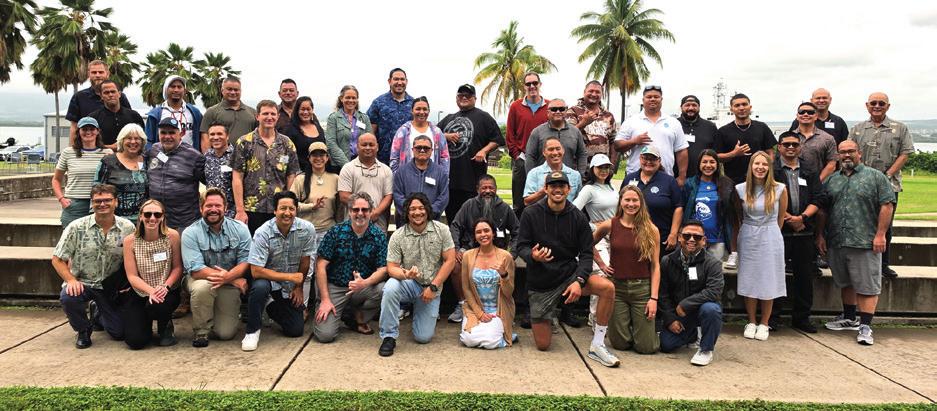
The second annual Marine Resource Education Program (MREP) Western Pacific Fishery Science and Management Workshop returned to Honolulu from April 10 16, 2026, building on the success of its inaugural year. This year’s cohort brought together 26 fishers and community leaders from Hawai‘i, American Samoa, Guam and the Commonwealth of the Northern Mariana Islands (CNMI). By creating space outside the formal regulatory environment, the workshop encouraged open dialogue and practical exchange among fishers, community leaders, scientists and managers throughout the region.
knowledge and relationships needed to engage effectively in science and regional fishery management.
MREP, originally founded by fishermen in Maine in 2001, is a nationally recognized training program facilitated by the Gulf of Maine Research Institute (GMRI).
The week featured handson learning, interactive skillbuilding sessions, gear demonstrations, a visit to the NOAA Pacific Islands Fisheries Science Center and dedicated “talk story” time within and among island communities. Through these activities, participants explored regional fishing practices, learned how field data are used to assess population dynamics and stock health, and identified ways fishers can help shape solutions in modern fisheries management.
Above: MREP Western Pacific participants and presenters gather at the NOAA Inouye Regional Center on Ford Island, Honolulu, HI, April 13, 2026. Photo: GMRI.
science and management — to be “part of the solution,” as one participant put it. Others shared, "Especially coming from a fisheriesdependent community, it's important to learn the different things involved in fisheries management.” Another simply said, "I suggest that everyone takes MREP, 100%."
The 2026 workshop was supported by more than 50 moderators, presenters, staff and partners from the Western Pacific Regional Fishery Management Council, NOAA and other regional organizations, who contributed their expertise throughout the week.
MREP, originally founded by fishermen in Maine in 2001, is a nationally recog nized training program facilitated by the Gulf of Maine Research Institute (GMRI). The program is designed to empower those who depend on fisheries by demystifying the "nuts and bolts" of fisheries science and the federal management process. In a neutral setting, participants move beyond complex acronyms to gain the tools,
A major theme of the 2026 workshop was the power of connection. Participants expressed gratitude for both the education they received, and the relationships built among participants. The week also helped foster new mentormentee relationships among fishers, supporting the continued sharing of knowledge across generations.
"At every talk story session, we got to learn from each other across island areas,” shared one participant. For many, the program was an eyeopener; several fishers said they had not previously realized there were avenues for their voices to be heard in federal processes. Another participant noted, "I feel more confident because I can understand more of the process and how to get involved."
Feedback from participants underscored MREP’s impact on their confidence to use their voices effectively in federal fisheries
The success of this second annual session reinforces MREP’s role as a cornerstone of capacity building in the Western Pacific. Planning is underway for the 2027 workshop, scheduled for late February or early March 2027. Dates will be finalized and announced in summer 2026, so stay tuned. For more information, including fishery science presentations and application details, visit https://mrep.gmri.org/ alumni/wpac-materials.
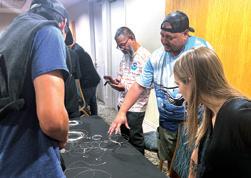
Out on the water, change doesn’t wait. Fish shift with warming currents, weather patterns grow less predictable, and new pressures—from markets to management—reshape how fisheries operate. The question facing managers today isn’t whether change is happening, it’s whether the regulations can keep up.
Good regulations are not static, as they must evolve alongside the ecosystems and communities they are meant to serve.
That’s exactly what the Western Pacific Regional Fishery Management Council set out to answer through its current Regulatory Review project. At its core, the project takes a deep dive into the complex web of rules governing fisheries across Hawaiʻi, American Samoa, Guam and the Commonwealth of the Northern Mariana Islands. Federal regulations, state and territorial laws, and the Council’s Fishery Ecosystem Plans all play a role, but they don’t always fit together neatly. This first phase of the review lays the groundwork by mapping out that regulatory landscape and asking a critical question: is the system working as intended?
Early results tell a familiar story of complexity and opportunity. An initial review of the regulatory system found that fisheries in the region are managed through a multilayered system that can sometimes be fragmented. Differences in terminology, reporting requirements and permitting structures across jurisdictions can create confusion not only for managers, but also for fishermen simply trying to comply with existing rules. More importantly, the analysis revealed vulnerabilities in how we collect and use data. Fisheries management depends heavily on local monitoring programs, and when those systems are inconsistent or interrupted, it can limit the ability to respond quickly and effectively.
Then there’s the issue of adaptability. Many existing regulations were designed for a more stable environment. Today, with shifting fish stocks, climatedriven changes and evolving fisheries, the system doesn’t always have the builtin flexibility to respond in real time. To evaluate this, the project “stresstested” the system using scenarios like sudden stock shifts, spikes in protected species interactions and major climate events. In several cases, existing rules showed signs of being too rigid or disconnected from the data needed for timely action.
This is where regulatory review becomes more than just an academic exercise. Good regulations are not static, as they must evolve alongside the ecosystems and communities they are meant to serve. Without periodic review, even wellintentioned rules can become outdated, inconsistent or ineffective.
In the Pacific, where fisheries are deeply tied to culture, food security and local economies, the stakes are especially high. Misaligned or overly complex regulations can create barriers to participation, reduce compliance and ultimately weaken both management and community trust.
Regulatory review offers a path forward. By identifying gaps, simplifying inconsistencies and building adaptive tools like clearer reporting systems or climateresponsive management triggers, the Council can modernize its approach while staying grounded in local knowledge and needs.
This initial analysis is just the beginning. In 2026, the Council has contracted with Lynker and The Parnin Group to bring in fishermen, community members and local partners to help refine the findings and shape solutions. Meetings with the community were held in Saipan, Guam, American Samoa and Hawai‘i. While there is continued interest in adjusting the way common rules, such as annual catch limits and permitting requirements, are applied to fisheries, the strongest feedback was the need for more education and resources to help fishermen better engage in the management process that governs them.
Together, we will work toward a system that is more efficient, better aligned and more resilient to whatever the future brings. Because in a changing ocean, fisheries management is strongest when rules can adapt to changing conditions while continuing to reflect the needs of the resources and the fishermen who depend on them.
Stay up to date on this and other Inflation Reduction Act projects at: www.wpcouncil.org/ira-projects
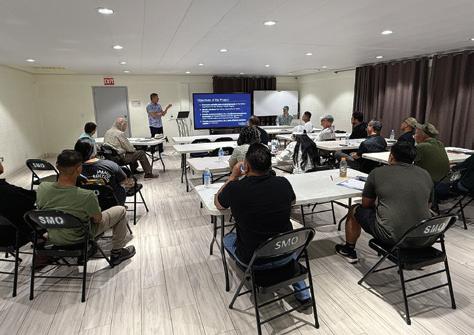
Brett Wiedoff of The Parnin Group leads a Regulatory Review community meeting at the Sinajaña Village Community Center in Guam, March 17, 2026. Fishermen and community members were invited to share their experiences and concerns about federal fisheries rules, laws and regulations. Photo courtesy of Lynker.

For more than two days in April 2026, the people of Saipan and Tinian endured the roar of Super Typhoon Sinlaku as the massive storm stalled over the Northern Mariana Islands, tearing through communities, infrastructure and the local fishing fleet.
Sinlaku, the strongest tropical cyclone to form in the Northern Hemisphere in April since 2021 and the strongest storm worldwide in 2026, stretched more than 450 miles across. It lingered over Tinian and Saipan for more than 57 hours, bringing sustained winds near 150 miles per hour and gusts exceeding 185 miles per hour.
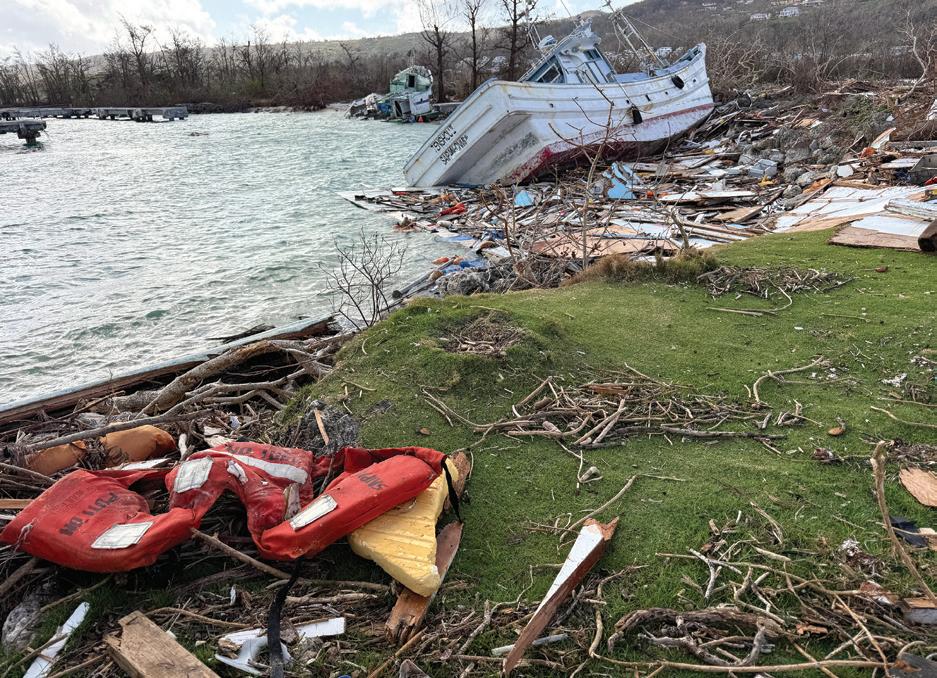
The damage was severe. Homes, businesses, schools, power lines, trees and roads were battered across the islands. Many vessels were damaged or sunk, some beyond repair, leaving lasting impacts on the smallboat fishery. With electricity out across much of the area, fish stored in freezers thawed and spoiled. Fresh local fish was scarce until seas calmed and a few boaters were able to return to the water, but the fishers and markets are still struggling.
Sinlaku was deadly across Micronesia and the Mariana Islands. After sweeping through Chuuk, the storm left nine people dead, more than 7,000 homes destroyed and approximately 13,000 residents displaced. In Guam, the typhoon was linked to two indirect deaths and six additional fatalities after a 145foot U.S.registered dry cargo vessel capsized near the Northern Islands. Altogether, at least 17 lives were lost across the region.
Initially forecast to pass south of Guam, Sinlaku unexpectedly veered north and made landfall on Saipan, where the eye passed directly over southern portions of the island. More than 43,000 residents across the Mariana Islands were left without electricity and water. As many as 1,000 concrete and wooden power poles were toppled, countless trees were uprooted and homes and businesses were heavily damaged or destroyed. Nearly two weeks later, hundreds of Saipan residents remained in emergency shelters because their homes were no longer habitable. Others slept in vehicles or tents while long lines formed daily for gasoline, food and drinking water.
Guam avoided the catastrophic damage seen on Saipan and Tinian but still felt Sinlaku’s force. Powerful surf and storm surge flooded sections of Marine Corps Drive, damaged water infrastructure and scattered sand and debris across roadways. Several homes and businesses were damaged, and power outages persisted for days before restoration crews brought the island close to full recovery. Relief efforts mobilized quickly. Federal agencies, nonprofit organizations and community groups coordinated shipments of water and emergency supplies. The U.S. military, led by Joint Region Marianas, supported debris removal, logistics, transportation and recovery operations. The Guam Power Authority sent nearly 50 crew members and more than a dozen trucks and vehicles to assist the Commonwealth Utilities Corporation with power restoration.
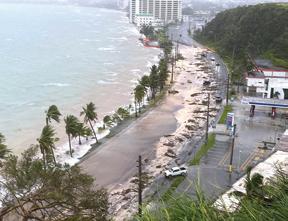
Council CNMI Advisory Panel member Cecilio Raiukuilipiy made 10 supply trips from Saipan to Tinian in one day, carrying urgently needed provisions, including pet food, to residents isolated by storm damage. Guam Division of Aquatic and Wild life Resources staff, together with Council Guam Advisory Panel members and their families, organized donations of mosquito coils, portable stoves, butane fuel canisters, canned food, batteries, tarps, paper goods and other relief items for Council family members.
The Mariana Islands sit in the heart of “Typhoon Alley” and have faced repeated strikes from powerful Western Pacific storms. Since 2015, major storms affecting the region have included Super Typhoon Soudelor (August 2015), Typhoon Mangkhut (September 2018), Super Typhoon Yutu (October 2018), Typhoon Hagibis (October 2019), Typhoon Surigae (April 2021), Typhoon Mawar (May 2023), Typhoon Bolaven (October 2023) and now Super Typhoon Sinlaku.
Although Guam and Rota have largely recovered, rebuilding on Saipan and Tinian is expected to continue for months. Through the devastation, the people of the Mariana Islands have shown the resilience and pride for which they are known. American and CNMI flags fly from vehicles and homes as residents embrace the phrase “Marianas Strong”—a rallying cry strengthened through unity, perseverance and community support.
Left: Marine Corps Drive along the Guam coastline is swamped by storm waves and sand. Photo: Maite Resident. Right: CNMI Advisory Panel member Cecilio Raiukuilipiy signals 10 roundtrips from Saipan to Tinian carrying relief supplies in April 2026. Photos: Felix Reyes. Background photo: Saipan’s Smiling Cove Marina, which provides berthing for commercial vessels, was damaged by Super Typhoon Sinlaku. Photo: Laurina Sebaklim.
Reef fish in the Northern Mariana Islands (NMI) may grow larger, and potentially older, than those in the southern end of the archipelago in Guam, according to preliminary research presented at the 8th Marianas Islands Coastal Conference in March 2026.
Erin Reed of the University of Hawai'i Cooperative Institute for Marine and Atmospheric Research and NOAA Pacific Islands Fisheries Science Center (PIFSC) presented the findings, with coauthors Brett Taylor, University of Guam Sea Grant, and Eric Cruz, PIFSC. The study focuses on the life history of tarakitu, or bluefin trevally (Caranx melampygus), a key reef predator important to nearshore ecosystems and local fisheries.
Vendors noted that consumer preferences tend to favor fish with higher fat content, and that reef fish from the Northern Islands, while generally larger, are often perceived as leaner and firmer in texture.
The research compares tarakitu data from Guam with samples from the remote, uninhabited islands north of Saipan, includ ing Anatahan, Sarigan, Guguan, Alamagan, Pagan, Agrigan, Asuncion, Maug and Uracas. Analysis showed that tarakitu sampled in the NMI were about 8 centimeters larger on average than those sampled from Guam.
That size difference may point to reduced fishing pressure, different habitat conditions or more natural population structures in the Northern Islands. Guam’s fishing activity is relatively well documented, while data from the Northern Islands comes from fisheriesindependent surveys the National Marine Fisheries Service conducted between 2014 and 2019.
The findings matter for fishery managers because size, age, growth and mortality are key inputs for stock assessments and management decisions under the MagnusonStevens Fishery Conservation and Management Act. If tarakitu grow differently in Guam and the NMI, the Western Pacific Regional Fishery Management Council may need to account for those differences when evaluating stock status, setting annual catch limits or deciding whether data from the two areas should be combined in future assessments.
The results also showed that male tarakitu were larger on average, suggesting possible sexspecific growth patterns. Researchers also found that Guam biological samples closely aligned with Guam catch data, indicating that the biological data are representative of the fishery. Together, these findings help show how fishing pressure, geography and biology may shape reef fish populations differently within the same archipelago.
The study also provides useful context for local fisheries and markets. Fish markets in Saipan have expressed limited
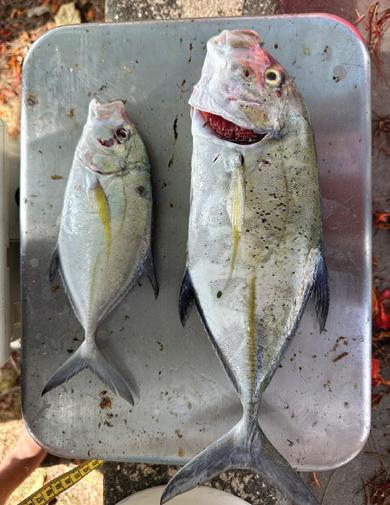
CNMI Division of Fish and Wildlife staff measure tarakitu (bluefin trevally) of different sizes during biological sampling in the Mariana Islands. Comparing fish sizes helps researchers better understand growth patterns that inform reef fish assessments and management.
Photo: Angela Dela Cruz.
demand for a broader range of reef fish harvested by divers from the NMI. Vendors noted that consumer preferences tend to favor fish with higher fat content, and that reef fish from the Northern Islands, while generally larger, are often perceived as leaner and firmer in texture.
Despite those market preferences, divers can efficiently harvest reef fish at shallow depths in the Northern Islands. When markets are available, that access may increase catch volume and improve the economic return of fishing trips.
Researchers are working to develop regionspecific and sexspecific life history parameters and to evaluate whether combining datasets from Guam and the NMI is scientifically appropriate for management use. The results remain preliminary and are based on lengthfrequency data. Ongoing work includes estimating fish ages by examining otoliths, or ear bones, and further evaluating growth and mortality relationships.
A completed study is expected in late 2026 or early 2027.
The Western Pacific Regional Fishery Management Council’s American Samoa Advisory Panel (AP) is strengthening its role in fisheries education, outreach and public engagement across the territory as part of the Council’s broader efforts to connect island communities with the federal fisheries management process.
The Council’s APs provide local perspectives and recommendations on fishery issues throughout the Western Pacific Region. Members serve fouryear terms and represent fishing, community, government and other local interests. The current American Samoa AP members (www.wpcouncil. org/about-us/advisory-groups/advisory-panel) are serving from 2023 through 2026 and help ensure that the Council remains informed about fisheries issues, concerns and priorities in the territory.
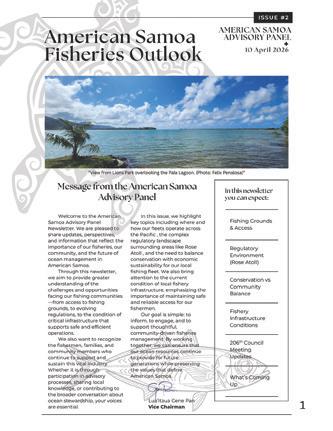
As public discussions about fisheries management, ocean access, conservation and infrastructure continue to grow, the American Samoa AP has refocused its action plan on improving community understanding of key issues and increasing opportunities for local participation. Its priorities include developing plainlanguage informational handouts, sharing updates through newsletters and social media, and supporting communication among fishermen, agencies and community members.
In April 2026, the AP released the second issue of its newsletter, American Samoa Fisheries Outlook , on its Facebook
page (@684Fisheries) and the Council website. The issue highlighted several topics important to the territory, including fishing grounds and fleet access across the Western and Central Pacific. One article explained the challenges faced by American Samoa’s fishing fleet as vessels travel long distances to produc tive tuna fishing areas while operating under extensive inter national and federal regulations.
The newsletter also examined the layered regulatory environment surrounding Rose Atoll Marine National Monument. It described how monument and sanctuary authorities interact with MagnusonStevens Act fishery management measures, including the American Samoa Large Vessel Prohibited Area, to shape fishing access, conservation requirements and governance in the territory. The discussion emphasized the need to balance conservation objectives with the economic, food security and cultural needs of American Samoa’s fishing communities.
Another article focused on fisheries infrastructure concerns, such as deteriorating floating docks and damaged boat ramps in Pago Pago and Fagasa. These conditions continue to create challenges for fishermen, harbor users and coastal communities that depend on safe and reliable access to the water.
In addition, the issue summarized outcomes from the 206th Council meeting held in Honolulu in March 2026. Topics included Council recommendations related to monument fishing access, electronic monitoring in the American Samoa longline fishery, shark depredation and broader discussions on incorporating cultural values into federal fisheries management decisions.
Through these products, the American Samoa AP is helping translate complex fisheries issues into information that is locally relevant, culturally grounded and and easier for the public to follow. These efforts support the Council’s ongoing outreach and public participation goals by encouraging more community members to engage in meetings, workshops and advisory processes that shape the future of fisheries and marine resources in American Samoa.
Moving forward, the AP plans to continue developing materials that strengthen communication among fishermen, local communities, agencies and regional partners. Effective fisheries management in American Samoa depends on this collaboration and on ensuring that local voices remain part of regional decisionmaking.
The Council will be soliciting for AP members in all island areas for the 20272030 term this summer. See the Council Family Updates section on page 18 for more details.


This year marks the 50th anniversary of the MagnusonStevens Fishery Conservation and Management Act (MSA), landmark legislation that guides fisheries management in the United States. Recognizing the MSA’s impact on the sustainable management of the nation’s fishery resources, the 119th Congress introduced a Concurrent Resolution (H.Con.Res.85) celebrating the anniversary. In keeping with the spirit of the MSA, Congress has also worked to pass bills for continuing the work of Senators Magnuson and Stevens.
Among the bills passed since the last update is Senator Sullivan’s [RAK] “Fighting Foreign Illegal Seafood Harvests (FISH) Act of 2025” (S. 688), which combats illegal, unreported and unregulated (IUU) fishing at its sources. The bill aims to counter IUU fishing and its links to forced labor, human trafficking and other maritime threats by identifying IUU vessels and enforcing sanctions on violators. The bill currently awaits action in the House of Representatives.
The House also passed Rep. Begich’s [RAK] “Captain Accursio ‘Gus’ Sanfilippo Young Fishermen’s Development Act” (H.R. 3692), which reauthorizes the Young Fishermen’s Development Act. The original act provides a grant program that supports local and regional training, education, outreach and technical assistance initiatives for young fishers. This bill would extend the act until 2031. The bill is named for Sanfilippo, captain of the F/V Lily Jean, which sank off Cape Cod, MA, earlier this year.
Other bills continue to move forward, including the “ESA Amendments Act of 2025” (H.R. 1897) introduced by Rep. Westerman [RAR]. The bill would, among other things, optimize conservation through resource prioritization and create transparency and accountability in recovering listed species. The Senate is also working on the “Supporting the Health of Aquatic systems through Research Knowledge and Enhanced Dialogue (SHARKED) Act of 2025” (S. 2314), introduced by Sen. Scott [RFL]. This bill would require the U.S. Department of Commerce to establish a task force to address shark depredation, coordinate shark research and recommend management strategies. The House passed a similar bill (H.R. 207) earlier this year.
In rethinking how the fishing industry is viewed, Sen. Murkowski [RAK] and Sen. King [IME] introduced the “American Seafood Competitiveness Act (S. 4236).” This bill would treat fisheries the same as farming by amending the Consolidated Farm and Rural Development Act to include commercial fishing and fish processing as eligible activities under USDA programs. It would also provide fishers and fish processors with credit and loan eligibility afforded to farmers and include wildcaught fish and shellfish in USDA programs. This would help ensure greater access to, and support from, the federal government for the fishing industry.
As Congress moves forward, the decisions made in Washington D.C. will be felt on the water by our Pacific Island communities, so it is important to stay aware of what is happening. For a list of some of the current bills in Congress that affect fisheries in the region, visit www.wpcouncil.org/ legislative-congressional. For the most current information on any of the legislation, visit www.congress.gov
The Council Coordination Committee’s Communications Workgroup developed national outreach products to recognize the 50th anniversary of the MagnusonStevens Fishery Conservation and Management Act on April 13, 2026. The materials highlight the diversity of U.S. fisheries and connect key management milestones from the past 50 years to the MSA and the regional fishery management council system.
National products include a 50th anniversary logo, a shared webpage at www.fisherycouncils.org/50thanniversary featuring an interactive timeline, photo gallery and links to regional resources, and a press release. Additional materials are planned for later this year, including a handout that will showcase the value of the council system, explain the management process and highlight accomplishments from the past five decades.
Western Pacific regional outreach products will also continue to be developed and shared throughout 2026. These include a documentary, commemorative booklet and Western Pacific fisheries infographic. The WP Council plans to promote the anniversary through Fishers Forums, fishing tournaments, classroom outreach and social media.
At its 206th meeting, the Council appointed Andrew Kang, Guam Division of Aquatic and Wildlife Resources, to the Pelagic Plan Team.
Council Advisor Supports Maui Wahine
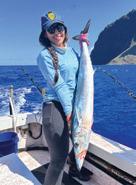
Council Hawai‘i Advisory Panel member Amanda Padilla helped share fisheries education and outreach materials at the 2026 Maui Spring Wahine Fishing Tournament award banquet April 26, following the April 25 fishing event. The tournament brought together 20 boats for a com munityfocused event celebrating women in fishing and opportunities to share knowledge on the water and at the dock. The educational table included interactive information from the Council and other local fishery management agencies and sustainability organizations. Padilla also participated in the tournament aboard F/V Ho‘olana with her sister, Sarina Basheva, landing a 19pound ono.

Judith Guthertz, a past Council member who served as Council chair and Guam vice chair, will become the next president of Guam Community College following a unanimous vote by the GCC Board of Trustees. Guthertz brings decades of leadership in education and public service, including roles at the University of Guam, the Guam Education Board and the Guam Legislature. The board announced her selection May 11, 2026, from a field of 11 candidates following GCC’s presidential search.
On April 23, 2026, the Western Pacific Regional Fishery Management Council lost one of its early members from American Samoa. Alo Dr. Paul Stevenson served on the Council from 1983 to 1998, including as chair (1992) and vice chair (1990 91, 1993, 199798). He recommended the formation of a Standing Committee on Fishing Rights of Indigenous People and was a strong advocate for fisheries management grounded in island cultures, knowledge and communities.

Alo’s distinguished career began in education as a science teacher at Fagaitua High School before he rose to deputy director of education. He later held management roles in the energy and natural resources sector and founded several local businesses. Bestowed the Alo chiefly title in his home village of Fagasa in 1996, he later served as Eastern District Governor from 2013 to 2016 and 2017 to 2020. Alo first entered the Senate in 2009, served a second term from 2021 to 2024, and was serving his third term as Senator for Fagasa in the 39th Legislature at the time of his passing. He also contributed to numerous boards and commissions.
Alo often described chiefly titles, land boundaries and village rules as the fabric of Samoan culture, emphasizing that outside ideas must be embedded in local culture to succeed. His leadership extended to Samoan heritage as captain of Fagasa’s Fealofani Samoa II fautasi, which won the 2000 Centennial Flag Day regatta. He is survived by his wife of 60 years, Sharon, their four daughters, one son and nine grandchildren.
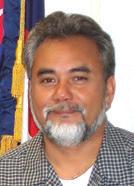
It is with deep sadness that the Council shares the passing of former Council Chair Manuel P. Dueñas II. A leader in the Guam fishing community for decades, Manny was a man of exceptional character, unwavering integrity and a lifelong dedication to the people and fisheries of Guam.
Manny's life was defined by service and leadership. After joining the Army following his graduation from Father Dueñas Memorial School, he taught at Guam Community College before taking over the Guam Fishermen's Cooperative Association as its president and manager, and even served as deputy director of the Guam Department of Agriculture. A staunch advocate for fishing and community, Manny held meetings at the GFCA to ensure fishermen were aware of the issues and had a voice in the fishery science and management occurring in Guam and the region. His opposition to local, national and regional fishery issues such as marine preserves, marine national monuments and international quotas earned him the respect of fishermen near and far.
As Council chair, Manny fought for the "brown people" (indigenous) of the Pacific Islands, often delivering impassioned pleas to NOAA to provide opportunities for them to continue practicing their culture. As he put it, "We don't want our culture to be preserved like pickles in a jar; we want to perpetuate our culture through practice." While known for his passionate monologues during Council and other public meetings, Manny also worked hard behind the scenes to ensure fishermen's voices were heard at every level – so much so that he was known
and beloved by even the highestranking fisheries officials. Manny wasn't just a leader, he was a servant to his community. Generous to a fault, he would always provide fish, expecting nothing in return and often at his own expense. He would also host the Council and staff, and even NMFS staff, when they were in town for meetings, putting out his infamous BBQ, complete with red rice, kelaguen, and Guam "poki." His humility and generosity, along with his staunch advocacy and love for Guam, left a lasting mark on the Council and the region.
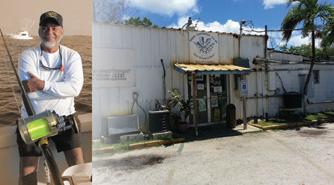
“At the end of the day,” Manny's presence will be deeply missed. The impact of his work to keep Guam fishing forever, and the strength of his character to do the right thing for fishermen despite the unpopularity of the decision, will continue to inspire us. We extend our heartfelt condolences to his family, friends and everyone whose life was touched by his remarkable journey.
The Council will solicit applications this summer for membership on its regional Advisory Panels for the 20272030 term.
Advisory Panel members provide local perspectives on fisheries and marine resource issues and serve as a bridge between fishing communities, fishery managers and scientists. Applicants may include fishermen, members of fisheryrelated industries, representatives of marine or fishery organizations and interested members of the public. Members are selected based on their fishing or fisheryrelated experience, involvement in marine issues, willing ness to participate in fisheries management and ability to review materials and attend meetings.
The Council’s four regional Advisory Panels represent American Samoa, the Mariana Archipelago CNMI, the Mariana Archipelago Guam, and the Hawai‘i Archipelago and Pacific Remote Island Areas. Members serve fouryear terms beginning Jan. 1, 2027. Positions are voluntary, though members may be reimbursed for meetingrelated expenses and receive a small stipend.
Applications will be available on the Council website at www. wpcouncil.org in late June 2026 and accepted through late August. The Council expects to select members in September and notify applicants by early October.
Questions? Contact Zach Yamada at (808) 5228227 or Zach. Yamada@wpcouncil.org
Check the Council website for in-person and remote public participation options for meetings hosted by the Council.
JUNE
2 4
160th Scientific & Statistical Committee (SSC) meeting
4
Fishing Industry Advisory Committee meeting
4
American Samoa (AS) Fishery Ecosystem Plan Advisory Panel meeting
5
AS Regional Ecosystem Advisory Committee meeting
8
Executive & Budget Standing Committee meeting
9
Fishery Data Collection & Research Committee meeting
911
207th Council meeting, Pago Pago, AS
30 July 3 12th Conference of the Parties to the InterAmerican Convention for the Protection and Conservation of Sea Turtles, Lima, Peru*
JULY
13 14
22nd Regular Session of the Western and Central Pacific Fisheries Commission (WCPFC) Northern Committee, Nagasaki, Japan*
20 21
34th General Advisory Committee to the U.S. Section to the InterAmerican Tropical Tuna Commission, and 19th Scientific Advisory Subcommittee to the General Advisory Committee*
AUGUST
1119
22nd Regular Session of the WCPFC Scientific Committee, Apia, Samoa*
SEPTEMBER
8 10
161st SSC meeting
14 18
208th Council meeting, Mariana Islands (tent.) 23 29
WCPFC 22nd Technical and Compliance Committee Meeting, Pohnpei, Federated States of Micronesia*
2730
79th Pacific States Marine Fisheries Commission Annual Meeting, KailuaKona, HI*
*Meeting not hosted by the WP Council.
The 160th Scientific & Statistical Committee (SSC) meeting will be held June 2 4, 2026, at the Council office, 1164 Bishop St., Ste. 1400, Honolulu, HI. The meeting will be in a hybrid format, with inperson participation available for SSC members and the public, or remote participation via Webex: https://tinyurl. com/160SSCMtg.
Major agenda items include: American Samoa (AS) bottomfish management unit species (BMUS) stock assessment; HI shark tagging project report; Noncommercial uku and deepseven bottomfish fisheries research updates; Alignment of science and management priorities; Magnuson Stevens Reauthorization Act (MSRA) research priorities; SSC special projects; 2025 Stock Assessment and Fishery Evaluation (SAFE) Reports; Johnston Atoll spillover and reopening effects evaluation; Pelagic false killer whale abundance estimate update; Electronic monitoring (EM) implementation update; and Pelagic research updates.
The 207th meeting of the Western Pacific Regional Fishery Management Council will be held June 911, 2026, at the Tauese P.F. Sunia Ocean Center, Utulei, AS. The meeting will be in a hybrid format, with inperson participation available for Council members and the public, or remote participation via Webex: https://tinyurl. com/207CouncilMtg.
Major agenda items include: 20272030 main Hawaiian Islands Kona crab annual catch limit specifications (final action); Western and Central Pacific Fisheries Commission South Pacific albacore allocation options; Bigeye tuna management procedure workshop; Trade issues affecting WP fisheries; EM implementation update; AS BMUS stock assessment; AS Fishery Management Plan; AS Fish Flow report; Deepsea mining updates; 2025 SAFE Report modules; and Council Inflation
Reduction Act project updates.
For more information on the virtual meeting connections, and complete agendas and meeting documents, go to www.wpcouncil.org/meetings-calendars.
Summary of Action Items at the June 2026 Council Meeting
The Council will consider and may take action on the issues summarized below.
The Council will consider initial action on multiyear harvest limits and accountability measures for MHI Kona crab for fishing years 2027–2030. The best scientific information available is the 2019 benchmark stock assessment, with catch projections through 2026. Based on that assessment, the maximum sustainable yield was estimated at 73,609 pounds and the overfishing limit at 33,989 pounds.
Under consideration are options that would:
• Take no action and not specify harvest limits.
• Specify an ACL of 30,802 pounds and an annual catch target (ACT) of 25,491 pounds, equal to the 2023–2026 values.
• Specify an ACL of 30,802 pounds and an ACT of 28,324 pounds, with an ACT higher than the 2023–2026 level.
Summary of Potential Action Items at the June 2026 Council Meeting
The Council will receive updates from the Bureau of Ocean Energy Management and NOAA on proposed deepsea mineral mining activities in the Pacific. BOEM will brief the Council on potential commercial leasing offshore American Samoa and the Mariana Archipelago, following requests for information that generated significant
public comment on environmental impacts, affected communities and the need for baseline data. NOAA will provide an overview of deep seabed mining activities proposed in the ClarionClipperton Zone beyond the U.S. exclusive economic zone, including the consultation process with regional fishery management councils. The Council may provide comments and recommendations on proposed mineral mining activities in the region.
The Council will review allocation scenarios for South Pacific albacore to support the American Samoa longline fishery in upcoming Western and Central Pacific Fisheries Commission negotiations. The WCPFC adopted a South Pacific albacore management procedure in December 2025 that calls for catch controls and reductions south of 10°S to improve economic conditions for fisheries targeting the stock. The Council may recommend preferred allocation options, including how catch could be divided between exclusive economic zones and the high seas within the affected management area, to form positions at WCPFC meetings in 2026.
Tauese P.F. Sunia Ocean Center, Utulei, AS June 9, 2026
6 p.m. to 8:30 p.m. (SST)
Join us for a fun, family friendly evening celebrating fishing, science and our local community! Learn how fisheries data support sustainable fishing, informed management and the future of fishing in American Samoa.