
Mother-Daughter Team Helps
Community Garden be Accessible to All
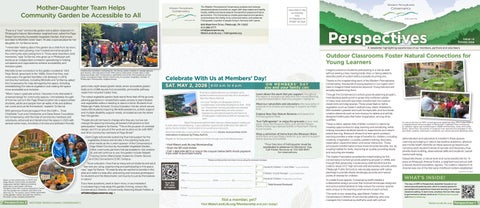
There is a “new” community garden and outdoor classroom in Pittsburgh’s historic Manchester neighborhood, called the Page Street Community Accessible Vegetable Garden, that is near and dear to Michelle Jones' heart. It’s also a special place for her daughter, Dr. Tyi-Sanna Jones.
“I remember hearing about this garden as a child from my mom, what things were growing, how it looked and what people in the community were eating from it. Those were important, fond memories,” says Tyi-Sanna, who grew up in Pittsburgh and works as an independent contractor specializing in helping companies and organizations achieve accessibility and inclusion goals.
Michelle Jones' connection to the garden, located at 1323 Page Street, goes back to the 1980s. Since that time, over many years, the garden had fallen into disrepair. In 2019, community members, including Michelle and Tyi-Sanna, asked the Conservancy for help reimagining the space, including reestablishing the natural vegetation and making the space more accessible and inclusive.
“When I was in graduate school, became more interested in universal design for community spaces. I immediately thought of how we can turn the Page Street location into a space where students, adults and people from all walks of life and abilities can come and just be themselves,” explains Tyi-Sanna.
With generous financial support from the Edith L. Trees
Charitable Trust and Christopher and Dana Reeve Foundation, the Conservancy, with the help of community members and volunteers, enhanced and transformed the space in 2023 with several native trees, hundreds of shrubs and pollinator-friendly
800 Waterfront Drive, Pittsburgh, PA 15222
412-288-2777
info@paconserve.org
WaterLandLife.org Fallingwater.org

Celebrate With Us at Members’ Day!
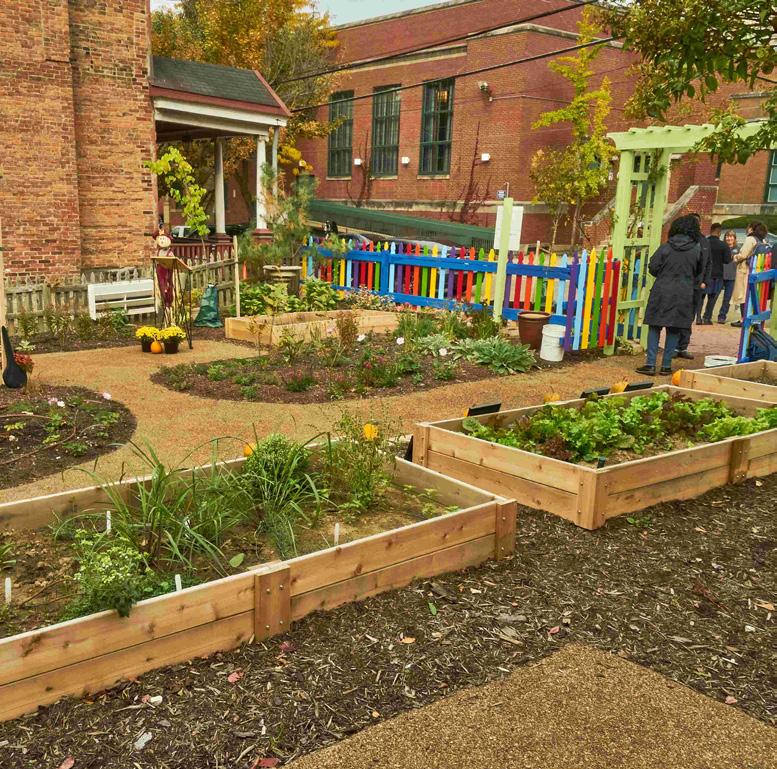
perennials, eight raised garden beds, seven accessible garden beds and a 2,080-square-foot accessible, permeable pathway made from recycled rubber tires.
The raised vegetable garden beds stand three feet off the ground, allowing gardeners in wheelchairs easier access to plant flowers and vegetables without needing to stand or bend. Students from Pittsburgh Public Schools’ Conroy Education Center, which serves nearly 200 students requiring life-skills assistance, autistic support and multiple disability support needs, is located across the street from the garden.
“People should not have to change who they are, but we can change the space by removing all barriers that prevent or limit participation,” explains Tyi-Sanna. “This is the purpose of universal design, and I’m so proud of the work we’ve done so far with WPC and other community members at Page Street.”
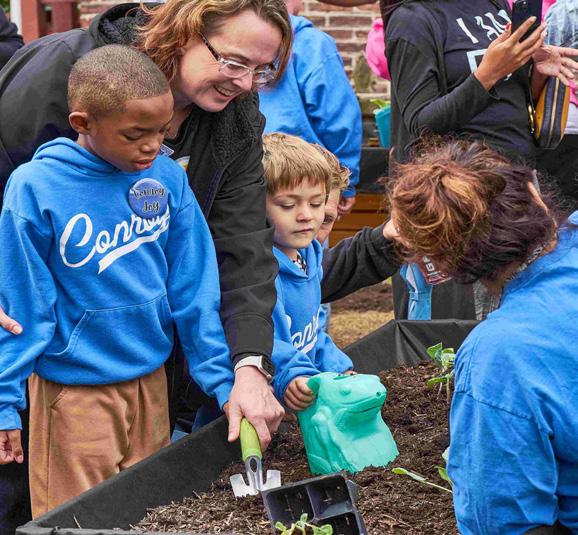
Giant Eagle will provide sustaining financial support for the vegetables, flowers and shrubs in the planting beds and other needs as the current sponsor of the Conservancy’s Page Street Community Accessible Vegetable Garden. Other community partners that participated in the creation of, and will continue to use, the garden include Bidwell Training Center, Manchester Academic Charter School and City Connections CCAC Campus.
“As an educator, I love that so many school students and adult learners are using, experiencing and participating in this space now,” says Tyi-Sanna. “It’s exactly why we wanted to transform this area and make it a beautiful, welcoming and inclusive greenspace for students and the Manchester community to just be themselves in nature.”
If you have questions, want to learn more, or are interested in volunteering to help keep this garden thriving, contact the Conservancy’s Director of Community Greening Marah Fielden at mfielden@paconserve.org
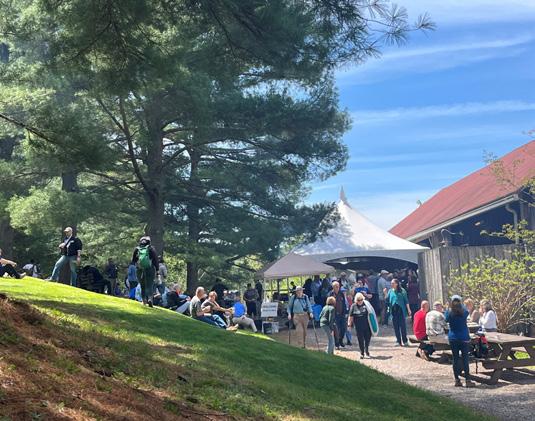
To show our appreciation to our members, we’re excited to welcome you to a full day of fun at beautiful Bear Run Nature Reserve!
Join us at The Barn at Fallingwater and for a complimentary continental breakfast from 8:30 10:30 a.m. Choose from morning and afternoon activities like naturalist-guided hikes and other outdoor experiences, educational sessions and free tours of Fallingwater, celebrating its 90th anniversary this year!
Meet Conservancy staff and learn how your valued support is being put to work at the Annual Meeting. Enjoy a delicious catered lunch buffet at the Barn ($24 for adults, free for children 10 and under) or join us with your own lunch.
Spend the whole day, or just a portion. Activities are free, but you must purchase lunch reservations in advance by Friday, April 24.
Register for the day and/or purchase lunch online through one of the following ways:
• Visit WaterLandLife.org/MembersDay
• Scan the QR code below
ON MEMBERS' DAY you and your family can:
*Your free tour of Fallingwater must be scheduled in advance for Members’ Day. Call Visitor Services at 724-329-8501 for reservations. SAT. MAY 2, 2026
• Call 1-866-564-6972 or return the coupon below (with check payment if you wish to purchase lunch).

Scan this QR code to register
Explore Bear Run Nature Reserve and beyond on themed guided hikes.

Outdoor Classrooms Foster Natural Connections for
Young Learners
Imagine preschool students participating in a nature walk without seeing a tree, hearing birds chirp, or being asked to describe parts of a plant without actually touching one.
Thanks to the longstanding work of the Western Pennsylvania Conservancy, thousands of young learners in our region don’t have to imagine these scenarios anymore. Young learners are actually experiencing them.
Learn about the work that you support throughout the region in educational talks and the Annual Meeting, a special presentation featuring program highlights.
Meet our naturalists and educators who specialize in subjects from botany and geology to organic architecture.
Tour Fallingwater* or enjoy the grounds at your own pace. Shop the Museum Store and visit the Speyer Gallery featuring a special exhibit of Kaufmann Family home movies.
Please cut this portion and return it to us using the enclosed envelope.
and join

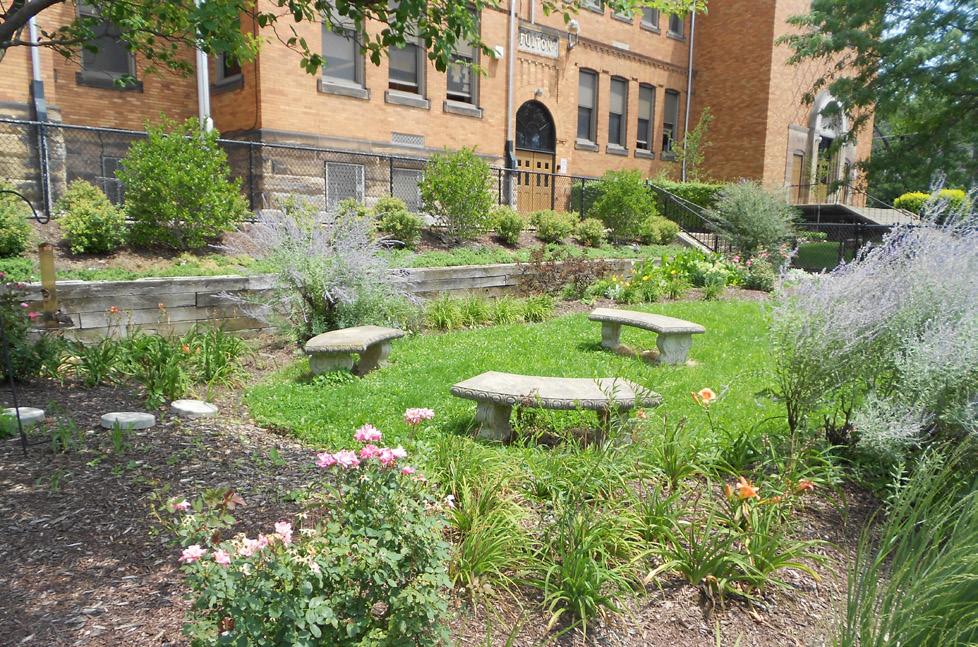
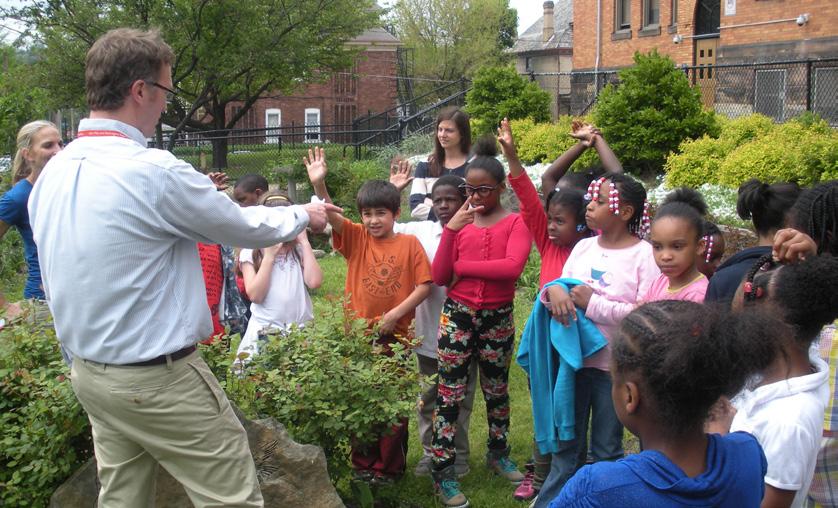
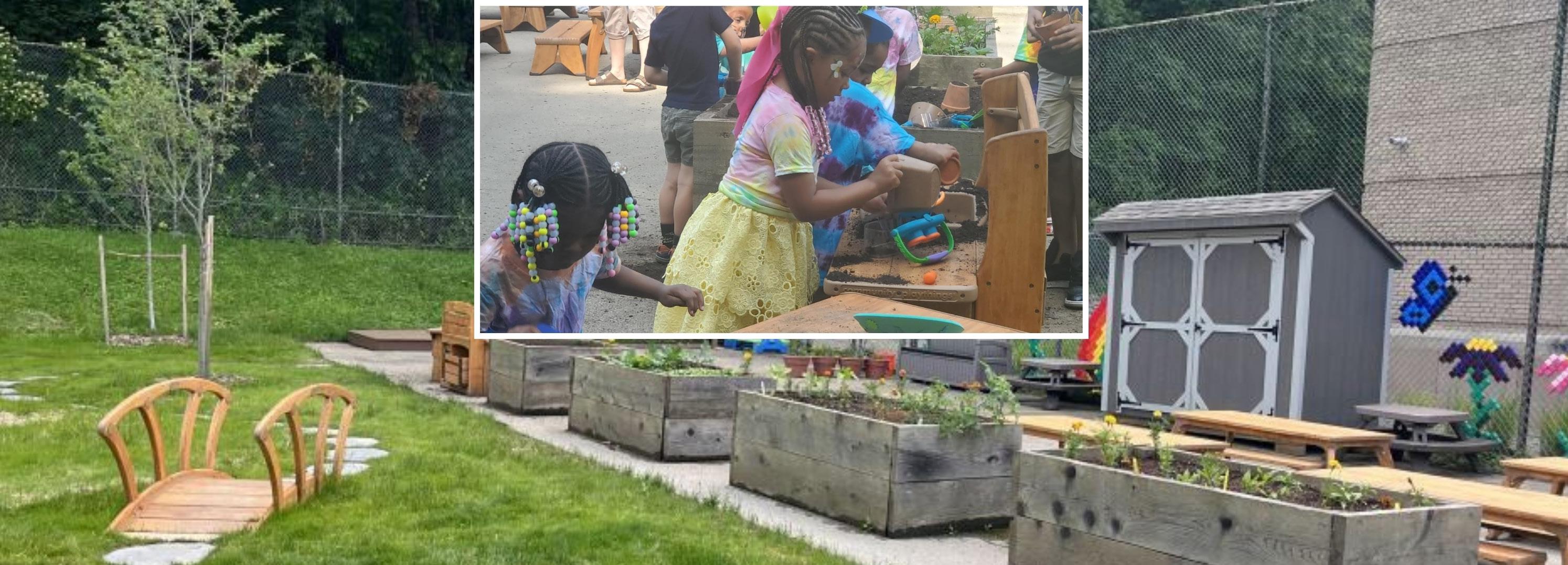
Through the Conservancy’s school grounds greening program, hard blacktop parking lots or grass-only surfaces outside of many local schools have been transformed into outdoor classrooms and play spaces. These areas feature native vegetation such as Eastern redbud trees, black chokeberry, little bluestem grasses and bush honeysuckle, and functional, creative elements such as tree stumps for tables and artfully designed birdhouses that foster imagination, among other qualities.
Shop a selection of items from the Museum Store at the Barn and purchase plants for your yard to support native species and wildlife.

These outdoor spaces help children connect to nature by creating opportunities for play, learning and socializing, while helping educators facilitate hands-on experiences and naturebased learning. Research shows that time spent outdoors learning provides a wide range of benefits for children, including creativity, imagination, curiosity, problem-solving, discovery, observation, experimentation and social interaction. These schoolyard transformations have environmental benefits, too, by creating habitat for birds, improving air quality, providing shade and reducing stormwater.
The Grable Foundation provided the initial funding for the Conservancy’s school grounds greening program in 2008, and through that generosity, Conservancy staff transformed the outdoor areas of 57 high schools and elementary schools within Pittsburgh Public Schools to natural play spaces with native plantings to provide shade, landscape accents and natural points of interest for children.
To create those spaces, Conservancy staff initiated a collaborative design process that involved landscape designers and school administrators to help ensure the outdoor spaces were unique to the learning environment of each school.
This work is very rewarding, says Marah Fielden, the Conservancy’s director of community greening, who now manages the Conservancy staff who work with school
administrators and educators to transform these spaces. Learning and playing in nature has positive academic, physical and mental health benefits–so these spaces go beyond just nurturing each student’s sense of wonder and discovery–they provide team-building, observational skills and students’ overall mental well-being.
Cassandra Brown, a nature lover and nurse practitioner for 15 years at Pittsburgh Arsenal PreK-5, a neighborhood school with a diverse student population, agrees. The outdoor classroom at Arsenal was one of the first early childhood centers established

A newsletter highlighting experiences of our members, partners and volunteers
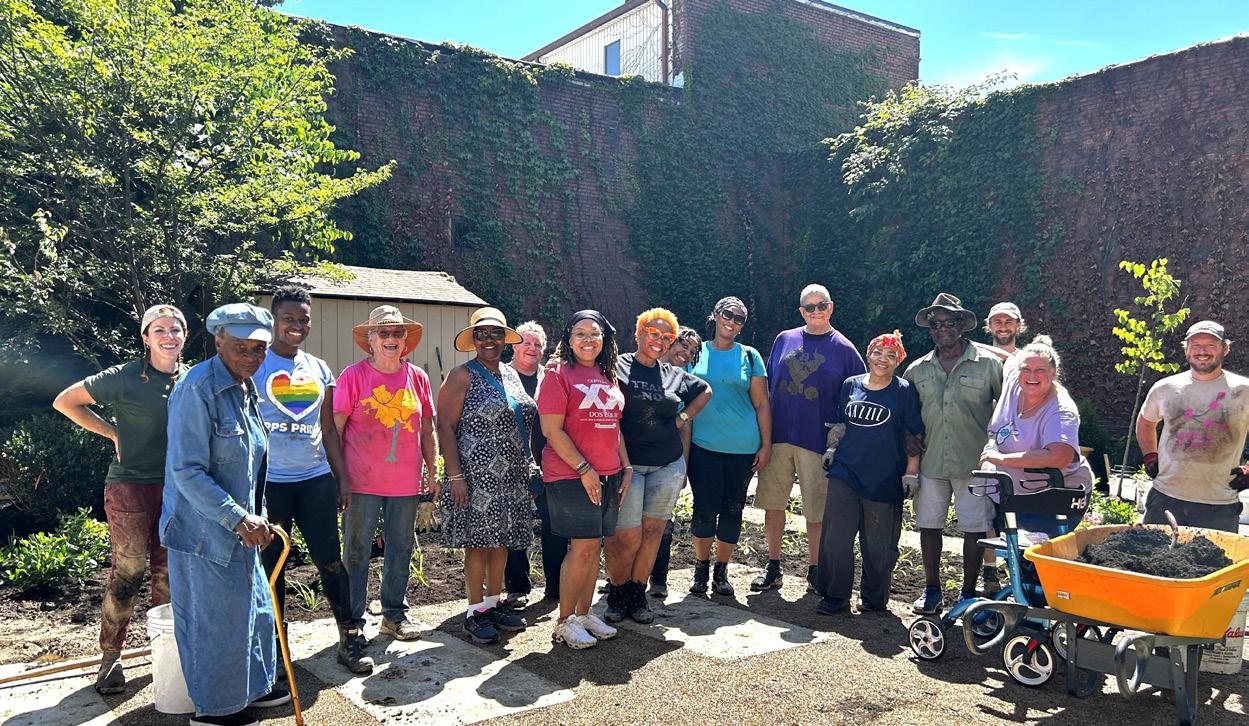
Community members, including Dr. Tyi-Sanna Jones (middle in orange glasses and shorts), and educators from PPS Conroy Education Center take a welldeserved break with Conservancy staff after one of the first plantings at the newly reimagined Page Street Community Accessible Vegetable Garden in Pittsburgh’s Manchester neighborhood.
with funding from the Grable Foundation.
“Outdoor classrooms encourage physical activity, promote overall fitness, and provide physical health benefits, too, such as providing natural light exposure, improving motor skills, and increasing bone-density development,” says Cassandra. “We place an emphasis on developing the ‘whole child’ at Pittsburgh Public Schools, and our wonderful outdoor classroom has a direct impact on all areas of growth during a critical time in brain development.”
In 2012, the Conservancy began partnering with the PNC Foundation to add 13 natural play spaces at PPS’ Early Childhood Centers through the foundation’s PNC Grow Up Great® initiative. At those centers, such as Crescent, Sunnyside and Linden, Conservancy staff worked with early childhood administrators to select locations and create the outdoor spaces based on curriculum needs. Beyond their educational value, these greenspaces contribute to neighborhood revitalization and also
offer opportunities for community engagement.
In celebration of the 20th anniversary of PNC Grow Up Great® in 2024, the foundation provided additional funding for outdoor classroom features and initiatives, including support for Conservancy staff to evaluate and improve the infrastructure at previously installed sites. In addition to the funding support, for years, PNC staff have volunteered to plant trees and flowers in the spaces.
“The Conservancy is grateful for the funding from many local foundations that have supported the Conservancy's school grounds greening work over nearly two decades. Their support provides tangible and enriching educational benefits in natural and engaging surroundings for local students,” says Julie Holmes, the Conservancy’s senior director of development.
To learn more about the Conservancy’s school grounds greening efforts and work, contact Marah at mfielden@paconserve.org."
A Breath of Fresh Air
As a first grader at Laurel Valley Elementary in 1999, Brett Marabito represented the student body on the committee for a new playground, a concrete oval eventually dubbed “The Cheese.”
Twenty-three years later, the school’s secretary and principal submitted a proposal to the Western Pennsylvania Conservancy to transform the underused space into an outdoor classroom through WPC’s School Grounds Greening program.
In 2024, Brett returned to LVE as its new principal and found the concrete “Cheese” replaced by a tree-lined greenspace complete with flowers and tables for play and discovery. “I was pleasantly surprised to learn would be caring for flowers,” he says with a laugh. Even more exciting? The students learn in ways he didn’t experience at school. “This outdoor classroom gives kids an appreciation for something they might not be exposed to at home.”

BRIDGING THE GAP Between Outdoor Spaces and Educator Support
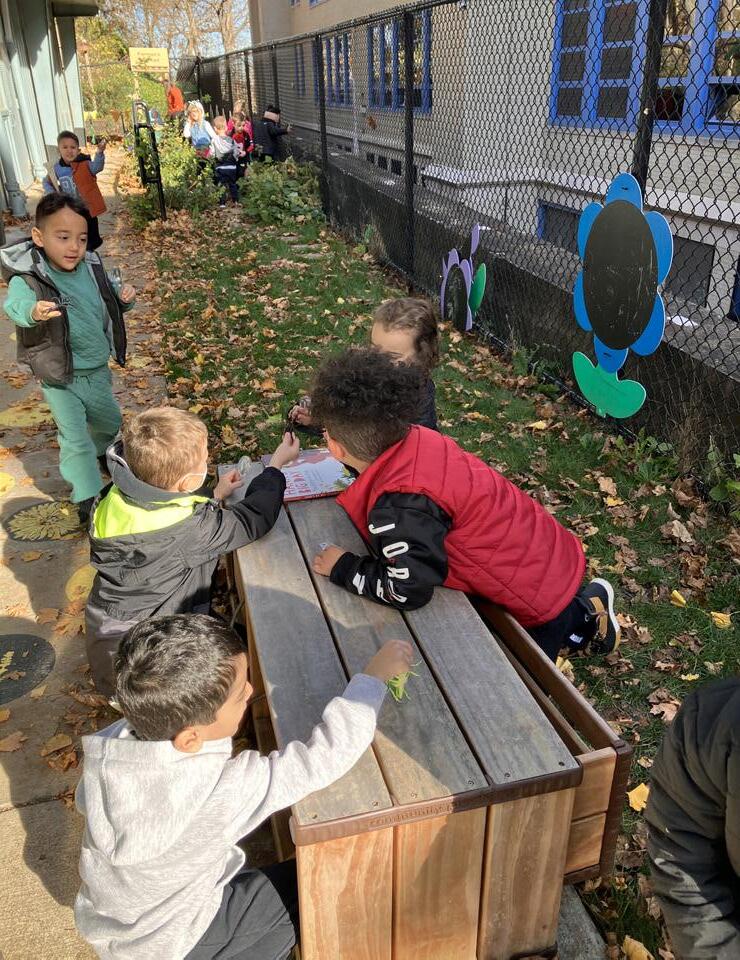
Features such as stepping stone paths, learning tables and digging pits filled with soil make various outdoor spaces unique and special. Cathy Gerdich, an MASD PreK Counts teacher, says the space at McKeesport Elementary “allows our students to experience the classroom beyond its four walls.”
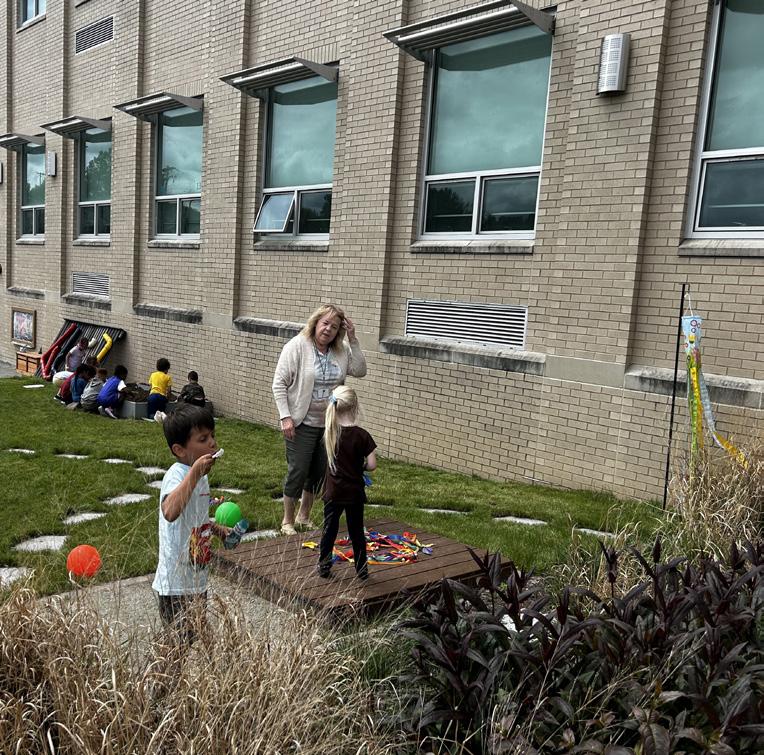
Ligonier Valley School District in Westmoreland County, home to LVE, is one of three districts in the region outside of Pittsburgh Public Schools that have partnered with WPC to create natural greenspaces for students to learn outdoors. The Laurel Valley greening project received funding from the Richard King Mellon Foundation. Butler Area School District in Butler County incorporated an outdoor learning area at McQuistion Elementary in 2018.
McKeesport Area School District in Allegheny County did the same at McKeesport Elementary in 2024 with funding from the Mary Hillman Jennings Foundation.
At all the schools, WPC staff remain available to answer questions and support staff to care for plantings.
McKeesport’s PreK teachers worked with WPC on the design process, and families filled out surveys to indicate their wants and needs, including space for dramatic and sensory play and fine and gross motor experiences. “The students make dirt castles. They found a worm and loved it,” Cathy recalls. “We looked at it under a hand lens and many held it, even the ones that were scared at first.”
Cathy notes that children who otherwise might not get outdoor opportunities gain appreciation for nature through studentled, experiential play. “It’s good for their minds, bodies and wellbeing.”
Brett agrees. “There’s a difference in students’ energy and attention. It’s a legitimate breath of fresh air.”
At Laurel Valley, students learn the difference between conifers and deciduous trees by examining trees planted by WPC. They study pollination and butterfly metamorphosis in a garden planted by WPC.
Students even set up “storefronts” in the outdoor classroom area. “When the dandelions pop up, they say ‘Mr. Marabito, visit our flower shop!’ It’s a space for imaginative free play and learning,” Brett says.
“We’re surrounded by some of the most beautiful nature around,” he marvels, “and our outdoor classroom is the epicenter.”
Those lesson plans align with Pennsylvania state education standards.
Similar to indoor learning spaces, outdoor classrooms must be intentionally designed to engage the senses, inspire creativity, foster independence and build literacy among young learners. From where native plants are installed to where benches or pavers are placed, every detail matters when the Conservancy creates its outdoor classrooms and greenspaces.
Since 2008, that intentional focus has helped ensure that thousands of students gained critical cognitive, social and problem-solving skills from the more than 70 outdoor classrooms and greenspaces created through the Conservancy's school grounds greening program. These outdoor classrooms are designed creatively, with significant teacher and student input and are available for use soon after installation. Over the years, however, Conservancy staff observed that while the outdoor greenspaces at Pittsburgh Public Schools Early Childhood Centers were positively embraced and celebrated, the centers’ outdoor spaces were not regularly used.
Kelly Flynn, the Conservancy’s education and special projects coordinator and a former teacher, worked with Danielle Forchette, the Conservancy’s educational engagement specialist at the time, to assess why educators were not using the spaces year-round and to find strategies to change that practice.
“It has been an eye-opening, yet rewarding journey of learning what we can do better to help teachers,” says Kelly. “Although we engaged school leadership staff in the design and implementation process of the outdoor classrooms, educators still needed more direction, resources and support to understand what was in the spaces and to fully use them for lesson planning and education outcomes.”
As a result, Danielle and Kelly led a survey and assessment process that sought input from a cohort of eight PPS early childhood educators. Through several sessions designed to gain their feedback, the educators shared ideas, observations and inspiration, and recommended activities and strategies to integrate nature-based lesson plans into the outdoor classrooms.
Made possible through funding from the Mary Hillman Jennings Foundation and the Jack Buncher Foundation, their ideas and feedback inspired a guide that maps the schoolyear curriculum unit themes, such as language arts, literacy, dramatic play and gross motor skills, to show how those learning modules can be achieved in the outdoor classroom setting.
The educator-inspired guide, says Kimberly Russo Joseph, executive director of PPS’s early childhood education programs, is available to all early childhood educators and provides clear guidance on how to better use the outdoor spaces, which can be powerful extensions of the indoor classroom instruction.
“Preschool-aged students are very curious, so outdoor classrooms provide a natural space for them to learn more about their surroundings. When there are different types of plants and trees in a garden, for example, students can touch, smell and observe nature all around them, which are critical lessons at this age,” says Kimberly.
The Conservancy plans to continue its intentional focus on helping educators, administrators and other partners to maximize outdoor learning, ultimately improving educational outcomes while fostering a lifelong appreciation for nature.
WANT TO GREEN YOUR SCHOOL?
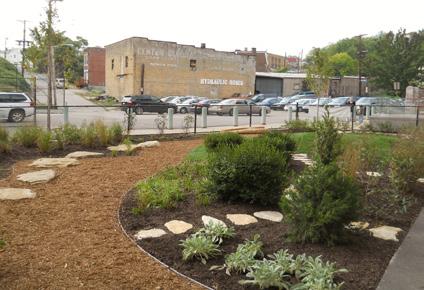
Conservancy staff frequently receive inquiries from educators or school administrators about greening their school grounds. They’re pleased that our work has inspired so much interest, but would like to share the following "to-dos" before undertaking a school grounds greening project!
• Consider an underutilized, open space adjacent to your school for implementation.
• Gain support from your school board, administrators and facilities staff for project implementation.
• Assist the Conservancy in engaging teachers, students and their families in a collaborative design process and programming of the new greenspace.
• Embrace a willingness and ability to collaborate on fundraising with the Conservancy (most school greening projects start at $75,000).
• Have eager and enthusiastic young learners willing to explore their new space!
Contact us at 412-288-2777 or mfielden@paconserve.org for more details and information.
SCAN TO WATCH
a webinar about the
of our school grounds greening work.


“NATURE SCHOOL” NURTURES ENVIRONMENTAL PROTECTORS
Outfit a four-year-old with paper butterfly wings, then set him loose in a schoolyard filled with flowers. Suddenly, he is a butterfly. With continued interaction with nature, one day he might become a protector of the environment.
Since 2011, the Western Pennsylvania Conservancy has transformed 13 underused outdoor play spaces across 12 Pittsburgh Public Schools grounds into “living classrooms” where teachers introduce early childhood students to the natural world. But WPC doesn’t just plant flowers, install play stations and walk away. Collaboration between WPC, PPS and the Pittsburgh Parks Conservancy brings the spaces to life with engaging, structured lessons.
WPC works with PPC’s education staff to bring its “Nature School” program into PPS’s early childhood school greenspaces.
At four schools, PPC staff conducts seasonal sessions that incorporate activity stations, crafts, music and more–including experiences such as being a butterfly.
Jen Schnakenberg, PPC’s assistant director of education, says activities include encouraging students to use their hands to explore a bin of soil, or providing opportunities to observe animals such as hawks and Madagascar hissing cockroaches.
Jen says PPC staff modeled the program after one they’d used at Crescent Early Childhood Center since 2018, and talked with PPS teachers about how to build structure and routine into the lessons. “We discuss why nature-based instruction is important for kids’ cognitive development, emotional health and selfregulation.” They built a professional development session to support social emotional learning using nature-based materials.
Along with being ideal locations to highlight PPC’s Nature School initiative, the schoolyard transformations align with PPS’s sustainability and equity goals.
“They convert pavement and underused green areas into outdoor classrooms that increase tree canopy and biodiversity
while supporting student wellness and environmental learning,” says Sanjeeb Manandhar, PPS environmental/sustainability manager and a WPC board member. “For many students, these spaces provide their first meaningful connection to nature, an experience that can spark curiosity, care and a sense of responsibility for the environment.”
WPC oversees a collaborative design process that includes the landscape designer, PPS facility staff, teachers, students and caregivers. “Safety, educational value, maintenance and how children will use the space all factor into the planning,” Sanjeeb says.” The result is outdoor spaces designed not just for play, but for teaching, learning and inspiration.”

“For many students, these spaces provide their
first meaningful connection to nature.”
With support from PNC’s Grow Up Great program, WPC staff offers PPS educators resources for environmental lessons, imaginative play and active learning. This helps the teachers use the spaces effectively and ensure the sites’ long-term care and sustainability. WPC staff helps train staff and teachers and maintains long-term partnerships to keep the spaces healthy and educational for students.
“By bringing together design, education and sustainability,” Sanjeeb says, “WPC’s program is helping cultivate environmental stewardship and shape the next generation of environmental leaders.”
importance
Photo caption: Students enjoy learning through play in the outdoor classroom at McKeesport Elementary, which features a stage, nature walking path, dig pit, chalkboard and learning tables.
- Sanjeeb Manandhar, Pittsburgh Public Schools