
Please Bees
WPC community gardens and greenspace staff created a plan for the Clairton garden, complete with pollinator-friendly plants such as anise hyssop, echinacea, blackeyed Susan and more. In the inset, a butterfly enjoys nectar from blazing star.

When Charlie Spence decided to convert part of WPC’s community flower garden in his native Clairton to a pollinator-friendly bed for bees and butterflies, he wasn’t sure it would grow. “The garden is three blocks from the mill in a polluted community,” he says, “and the seedlings were the tiniest, most fragile looking things.” On a warm May day in 2021, Charlie, the garden’s volunteer steward since 2012, and other dedicated volunteers planted them.
By summer’s end, he was stunned. “It grew beautifully! The section was alive with bees of several varieties, tiny ones, large ones. You could hear them! The anise hyssop was moving with bees.”
Butterflies also enjoy the pollen, but not just insects benefit, Charlie notes. “After Christmas, I saw goldfinches feeding off the dried seeds.”
An avid home gardener, Charlie admits that a pollinator garden can sometimes look wild, but says a benefit, in addition to providing food for pollinators and shelter for insects and small wildlife, is that it requires little maintenance. “We just have to pull some weeds every now and then.”
WPC has been transitioning sections of some of its 130 community flower gardens to pollinator-friendly beds. “In 2022, we

added native pollinating species to 28 gardens and converted the Grant Street and First Avenue garden in downtown Pittsburgh to all native perennials with new educational signage,” says Art Demeo, WPC’s director of community greenspace services. “As we plan for the future of the gardens, environmental stewardship will be a focus.” That includes adding native perennial beds to all the gardens and redesigning some gardens with a focus on pollinator habitat.
Setting up a pollinator garden initially costs more, but yields savings in the long run because once plants are planted and established, there is no need to purchase more plants. And pollinator gardens can be designed to suit any landscape aesthetic, from wild to formal, while offering environmental benefits, says Lori Kofalt, WPC’s community gardens and greenspace services coordinator who designs the gardens. “Pollinator-friendly plantings will attract bees and butterflies, provide songbirds with seeds and offer cover for wildlife. The stems of native plants can host beneficial insects, and spent seedheads left over the winter create interest when the garden is not in bloom.”
Charlie says although the Clairton garden brightens up the city street, the pollinator bed, located in the back, is not immediately obvious to passersby. “But the bees know!” And that’s the most important thing.
The Western Pennsylvania Conservancy protects and restores exceptional places to provide our region with clean waters and healthy forests, wildlife and natural areas for the benefit of present and future generations. The Conservancy creates green spaces and gardens, contributing to the vitality of our cities and towns, and preserves Fallingwater, a symbol of people living in harmony with nature.
800 Waterfront Drive, Pittsburgh, PA 15222
412-288-2777


info@paconserve.org
WaterLandLife.org Fallingwater.org
Perspectives
A newsletter highlighting experiences of our members, partners and volunteers
If You Plant It, They (Pollinators) Will Come
The American bumblebee’s fuzzy, black-and-yellow exterior was once a familiar sight on open prairies, grasslands and urban areas across many states, including Pennsylvania. Within the past two decades, though, these pollinators of flowering plants have declined by nearly 90 percent. (See pages 2-3 to learn more about research by our science team to understand Pennsylvania’s bees in rare habitats.)
The plant species-dependent monarch butterfly, with its iconic large orange and black wings, is also in jeopardy of extinction. During their spring migration from Mexico, monarchs search for milkweed plants on which to lay their eggs.

Part of Western Pennsylvania is along their northern migration path and is a summer breeding area for this and other pollinators,
Register
Bring family and friends and join us at The Barn at Fallingwater at Bear Run Nature Reserve for WPC’s Members’ Day and Annual Meeting It’s a day full of fun that includes a complimentary continental breakfast from 8-10:30 a.m., a choice of hikes at the reserve, information sessions, children’s activities and free tours of Fallingwater (schedule your tour upon arrival).
Meet our staff and learn how your valued support is being put to work at the Annual Meeting, then enjoy an optional catered lunch buffet at the Barn ($21 for adults, free for children 10 and under) or bring your own lunch.
Attend the entire day, or just a portion. Activities are free, but you must purchase lunch reservations in advance by Friday, April 28 Register for the day and/or purchase lunch online at WaterLandLife.org/MembersDay2023, scan the QR code below, call 1-866-564-6972 or return the coupon below (with check payment if you wish to purchase lunch)
On Members' Day,
you and your family can:
MAY 6, 2023 8 a.m. to 4 p.m. Total Number Attending

• Hear from staff about recent accomplishments and work in progress at the Conservancy.


• Enjoy nature by choosing from a variety of morning and afternoon hikes and other activities.

• Sign up for free tours of Fallingwater and shop a selection from the Museum Store.
Pollinators—animals that move pollen and cause plants to fruit or seed—are essential to biodiversity, our natural ecosystem and the economy. Most flowering plants rely on pollinators such as bees, butterflies, moths and birds to bloom. Pollinators also help crops, including tomatoes, blueberries and apples, reproduce and thrive. According to the U.S. Department of Agriculture, pollinators contribute an estimated $24 billion annually to the U.S. economy.
Unfortunately, many pollinator species have been declining across North America in recent years due to invasive plants and insects, habitat loss, disease, insecticides and other factors. As a result, many pollinators face an uncertain future nationally and locally.
“This is a crisis facing our natural areas that threatens biodiversity. In keeping with our mission, the Conservancy wants to help nature thrive. We continue to make strategic decisions regarding how we plan our work across the organization to help many types of species, including pollinators,” says Cynthia Carrow, the Conservancy’s vice president of government and community relations, who oversees the Conservancy’s community gardens and greenspace program and conservation science work.
In 1978, our community flower garden program began to help beautify and brighten communities across the region with colorful flowering annuals and shrubs. “Our gardens have always served as important urban habitats and sources of food for pollinators. But over the past decade, we have been looking at ways to use more pollinator-friendly, native plants within these vital habitats,” she adds. (See page 5 to learn more about how a number of our community gardens are transitioning into hubs for both pollinators and stormwater capture.)
“This is a crisis facing our natural areas that threatens biodiversity. In keeping with our mission, the Conservancy wants to help nature thrive. We continue to make strategic decisions regarding how we plan our work across the organization to help many types of species, including pollinators.”
— Cynthia Carrow WPC Vice President of Government and Community Relationssays Andy Zadnik, director of land stewardship. He manages the Conservancy’s nature preserves and has helped restore former agricultural fields to native grasslands and meadows. “We have been doing more active restoration on our preserves over the past several years and I’m impressed with how quickly we’ve been able to transform open fields with warm-season grasses and native wildflowers, such as milkweed, on our preserves.” (Learn more on pages 3-4.)
Elderberry, viburnum, redbud, mulberry and basswood are native and pollinator-friendly trees that are often planted by Conservancy
(continued on page 2)
WHAT 'S INSIDE
This issue of WPC’s Perspectives Newsletter focuses on the work the Conservancy is doing to help support pollinator species and pollinator habitats across the region. To learn more, volunteer, find out other ways to get involved or donate, email us at info@paconserve.org or visit WaterLandLife.org
Issue 7 Spring 2023
A monarch butterfly caterpillar sits on a butterfly weed, a type of milkweed, at WPC’s Toms Run Nature Reserve in Allegheny County.
Perspectives 1 WaterLandLife.org NON-PROFIT ORG US POSTAGE PAID PITTSBURGH, PA PERMIT NO 2504
isback ! J o ni !su
Members’D
Name Address City
E-mail Phone Adults
State Zip
& Children - Bringing own lunch Adults & Children over 10 - Lunch Buffet ($21)
Children under 10 - Lunch Buffet (Free)
Total Amount Enclosed
today for our favorite day of the year!
Perspectives 5 WESTERN PENNSYLVANIA CONSERVANCY
Please cut this portion and return it to us using the enclosed envelope. Scan this QR code to register $ # # # #
staff near rivers and streams to help filter out nutrients before they enter the waterways. Alysha Trexler, a WPC watershed project manager, says the perfect riparian buffer would ideally “have a blend of native trees, shrubs and perennials that benefit water quality and create habitat for pollinators by way of food and shelter.”
Fallingwater welcomes visitors and pollinators alike!
Pollinator-friendly and native garden phlox, blue wood aster, and eastern redbud are among the plantings at the Visitor Center parking lot. The lot also includes bioswales to capture stormwater runoff, and the colorful plants within them attract pollinators. Bumblebees pollinate the native rhododendron that is found throughout Fallingwater’s forested landscape.
Fallingwater Senior Director of Operations Mike Kuzemchak notes that the natural landscape attracts many species of pollinators, but his team also makes strategic and needed management decisions on the types of native plants we add to the landscape. “Across the Conservancy, we have been working for many years to make open areas, fields, riparian areas, gardens and meadows healthier and more resilient habitats for all types of wildlife, including for pollinators.”
“Bees of the Barrens” Surveys Yield Surprises


Mark Lethaby’s interest in wildlife species tends toward the coldblooded and scaly. He can estimate how many species of snakes you might encounter at Presque Isle State Park in Erie, if you really want to know. But as curator of the Natural History Museum at Tom Ridge Environmental Center (TREC), Mark says he needs to familiarize himself with all of Presque Isle’s species. So when he heard about the Bees of the Barrens project, he took the opportunity to learn more about our tiny buzzing buddies.
Bees of the Barrens was a 10-state project from 2020 through 2022 to identify relationships between the management of rare barrens habitats and the unique bee communities the habitats support, explains Betsy Leppo, invertebrate zoologist with WPC’s Pennsylvania Natural Heritage Program (PNHP). Barrens are typically open habitats with dry, sandy soils and scattered trees, with an understory of grasses, shrubs and forbs, which are flowering, nongrassy, herbaceous plants that are not woody. PNHP staff participated in the project, and TREC was one of several partner organizations.
The final data is still being processed, but results from surveys done in 2020 and 2021 are causing a “buzz”
• Out of 437 bee species known to be in PA, 157 species were found in these surveys.
• First-time ever for bee species at the county and state level:
• 113 new counties where certain bee species had not been documented before
• Five bee species documented for the first time in PA
• Four species that had not been seen in PA in 50 years were rediscovered
• One bee species previously only known from a single specimen collected in Massachusetts was found in Pennsylvania.

“There were more colors and sizes of bees than expected,” Mark says. “Some transects were open sand habitat with a few flowers, and some were more vegetated. One might expect more bees along the vegetated sites, but that was not necessarily the case.”
At this shale barren above Sideling Hill Creek in Fulton County, the main nectar source for bees during May is Appalachian
Participating organizations documented the distribution of wild bees and their plant communities in barrens across four sites in Pennsylvania: Michaux State Forest in Cumberland County, Presque Isle State Park, Sideling Hill Creek Conservation Area (a Conservancy preserve) in Bedford County and Scotia Barrens in Centre County. “The project provides data for when we do species assessments for the State Wildlife Action Plan,” says Betsy. “Species meeting the criteria will be identified as Species of Greatest Conservation Need and will go in the report, with recommendations to guide species conservation and management.”
Assisted by a few volunteers, one morning once a month from May through September on Presque Isle, Mark placed 12 blue, yellow and white bowls filled with soapy water along each of four transects, which formed a line through the habitat. The bees, attracted to the colors, fell into the water. The next morning, Mark collected the bees, recording the weather, collection times and plants in bloom. More bees were collected using a net. Bees from at all sites were sent to the U.S. Geological Survey Native Bee Inventory and Monitoring Lab in Maryland for assessment.
Betsy concurs. “There aren’t just honeybees and bumblebees. There are tiny iridescent bees, bees that nest in the ground,” she says. “Some are specialists that can’t survive without access to a certain plant. Some are kleptoparasites that can sneak their eggs into other bees’ nests, and their young steal food intended for the host’s offspring.” She adds that many habitats beyond barrens, such as forests, wetlands, meadows and suburban yards, are important for bees.
BEE-FRIENDLY TIPS FOR LANDOWNERS

Plant different flowers to bloom in masses throughout seasons, to help bees find a food source.
Keep a "messy" yard for stem nesters. In other words, don't remove all the plants after fall. Even in winter, plant stems host bee or other insect larvae. Leave some bare or sandy soil for bees that nest in the ground.
Old Fields Have New Purpose with Pollinator Habitat

Conservancy-owned preserves consist of 14,000 acres of forests, wild areas, rivers, streams and open fields where plants, animals and humans can thrive. Some of the open areas on our preserves were former agricultural fields that now have degraded and eroded soils, and provide poor wildlife habitat.
“We always knew we wanted to restore those areas to be more beneficial to the environment and create open meadows with native grasses and wildflowers,” says Andy Zadnik, director of land stewardship at the Conservancy.
The native perennials not only offer a valuable nutrition source for pollinators, they, along with the warm season grasses, help improve soil quality, provide shelter, filter nutrients and build resiliency against climate change and invasive species.
The Conservancy has enrolled land on some preserves in the Conservation Reserve Enhancement Program (CREP) administered by the U.S. Department of Agriculture, which provides funding to private landowners and organizations to help address specific conservation needs.


fand get a list of pollinator-friendly plant species or consider these tips from Carolyn to help you get started.

“Thanks to CREP funding, we transitioned former farmland at Bear Run Nature Reserve into 43 acres of wildflower meadows where goldenrod, purple coneflower, marsh blazing star and butterfly weed are just some of the species that now fill the landscape,” explains Andy.
Size doesn’t matter because any project, large or small, can create high-quality, foraging habitat for bees and other pollinators.
Site preparation is important. A year before planting, we used repetitive tilling, which disturbed and aerated the soil in our former hay field.
He notes that the first plantings at Bear Run in 2009 helped staff assess which pollinator-friendly species thrived and how to replicate transitioning other areas on our preserves into pollinator habitats.
TIPS FOR CREATING A FLOURISHING POLLINATOR GARDEN OR MEADOW
Carefully select a meadow seed mix that contains plant families in continuous bloom from early spring through the fall. The longer plants are in bloom the better it is for pollinators!
Expect variety in a wildflower meadow as it is a changing dynamic landscape. Each year holds surprises! Have patience as many species in a wildflower meadow take two or more years to flourish. Create a walking trail to also enjoy the wildflowers, which are visually stunning at a distance but even more enticing and beautiful up close!
To date, a total of 24 additional acres have been enhanced at Bear Run, Toms Run Nature Reserve in Allegheny County, Plain Grove Fens Natural Area in Lawrence County, and Wolf Creek Narrows Natural Area and Miller Esker Natural Area, both in Butler County. This year, we’ll plant three-quarters of an acre of pollinator habitat at the Helen B. Katz Natural Area in Crawford County.
“We are lucky to have a quality supplier for native seed, Ernst Conservation Seeds in Meadville, whose ability to customize specialized seed mixes for our specific soils and topography at each preserve has been essential. Also we are very fortunate to have strong supporters of this work, including Conservancy member, board member and volunteer Carolyn Hendricks,” he adds.
In 2015, Carolyn and her husband Steve planted a showy mix from Ernst to create an eight-acre wildflower meadow on a former hayfield at their home in Bedford County located along a tributary of Sideling Hill Creek.
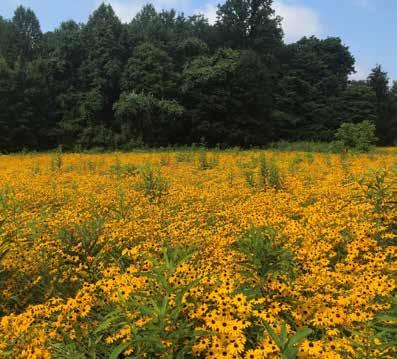

Carolyn was inspired to donate to help establish more pollinator habitats on Conservancy-owned preserves after seeing how well her own and the Bear Run fields transformed into pollinator habitats. Her donation in 2017 continues to make pollinators happy.
“When Andy mentioned that WPC planned to seed some small wildflower meadows on several sites with a custom mix from Ernst,” says Carolyn. “I immediately wanted to provide financial support for it, both for the sheer and ephemeral beauty of native and seeded wildflower meadows, and for the pollinators, birds and other wildlife that depend on this habitat.”
Creating a pollinator-friendly garden or meadow at home can be fun and rewarding! Scan the QR code to view a WPC webinar and get a list of pollinator-friendly plant species or consider these tips from Carolyn to help you get started.
• Size doesn’t matter because any project, large or small, can create high-quality, foraging habitat for bees and other pollinators.
• Site preparation is important. A year before planting, we used repetitive tilling, which disturbed and aerated the soil in our former hay field.
• Carefully select a meadow seed mix that contains plant families in continuous bloom from early spring through the fall. The longer plants are in bloom the better it is for pollinators!

• Expect variety in a wildflower meadow as it is a changing dynamic landscape. Each year holds surprises!
• Have patience as many species in a wildflower meadow take two or more years to flourish.
• Create a walking trail to enjoy the wildflowers, which are visually stunning at a distance but even more enticing and beautiful up close!
 phacelia.
A bee in the genus Augochlora nectaring on blue vervain.
phacelia.
A bee in the genus Augochlora nectaring on blue vervain.
Perspectives 4 WaterLandLife.org
Above: Found throughout the Fallingwater landscape, cardinal flower is pollinated by hummingbirds, butterflies and bees.
(continued from page 1)
Left: Did you know that in addition to bees and butterflies, pollinators include moths, wasps, flies, ants, beetles, birds and even some small mammals, including bats? Pollinators help approximately 80 percent of the world’s flowering plants to reproduce.
In 2015, Carolyn and Steve Hendricks planted a colorful, beautiful and pollinator-friendly eight-acre wildflower meadow on a former hayfield on their 77-acre property along a tributary of Sideling Hill Creek in Bedford County.
Perspectives 2 WESTERN PENNSYLVANIA CONSERVANCY
This open field at Bear Run Nature Reserve in Fayette County is now a pollinator-friendly meadow of black-eyed Susans and other native wildflowers.
Volunteers collect bees at Presque Isle State Park in Erie County.
An example of barrens habitat at Michaux State Forest in Cumberland County
on next page)
(continued
(continued on next page)