
THE STREETS - Woroni (vol 76, 2026, no 1)

Page 1


EDITORS OF WORONI

JOSEPH MANN Editor in Chief

WYNDHAM

KAAB QURESHI

ADRIANO DI MATTEO

KUBA MEIKLE

CONTRIBUTORS: Olivia Abraham, Ruben Afanasiev, Australian National University Students Association, Avery Benbow, Avalokita Bhatta, Lotus Dash-Hyland, Blair Doran, Daniel Galic, Chiara Hackney-Britt, Ashley Rose Hewitt, Scout Higgins, ANU Indigenous Culture Society, Dara Kaldor, Gerald Keaney, Chelsea March, Suriana Mamone, Elia Sharif, Tom Sorello, Avery Lam To, Tom Varga • WORONI TEAM (as of Jan 2026): Henry Carls, Yunfei Dong, Jess Heller, Macca Kay, Linh Pham, Kai Watanabe - THIS COULD BE YOU? (contact us at contact@woroni.com.au)

ANU Student Media would like to acknowledge the traditional custodians of the land on which Woroni operates, the Ngunnawal and Ngambri peoples. We pay our respects to elders past and present. Their land was forcibly stolen, and sovereignty was never ceded.

The name Woroni, which means “mouth”, was taken from the Wadi Wadi Nation without permission. Consultation with First Nations people recommend that Woroni continue to use the word, provided we acknowledge the theft, and continue to strive for better reconciliation in the future. Woroni aims to provide a platform for First Nations students to hold the University, its community and ourselves accountable.

It may sometimes feel as if the worst horrors of colonisation are past, as if they happened in a different, more brutal world than this one. But the same Australian Government that took Indigenous children from their families in the 1900s incarcerates children as young as ten years old today, the majority of whom are Indigenous. If we separate ourselves and our times from colonisation, we cannot properly acknowledge and work to amend its long-lasting impact.

This land always was, and always will be, Aboriginal land.

Deputy Editor in Chief
Managing Editor
ELEANOR
Art Editor
CYAN METCALF Content Editor
EN-MEI MIAO Communications Editor
News Editor
GRACE WILLIAMS Radio Editor
PARIS CHIA Television Editor
Photography by Minuthi Samarasingh (top) and Suriana Mamone (bottom)

From the Editors: MAKE THESE STREETS YOURS

If you’re starting at ANU this year from interstate: Welcome to Canberra!

If you’re coming back: Welcome back to another year in the ANU mines.

If you’re from Canberra like me: Goodberries?

Welcome to Woroni, the student newspaper of the Australian National University and the longest running independent publication in Canberra and on the unceded lands of the Ngambri and Ngunnawal peoples. I’m so pleased to be your Editor in Chief for the frst semester of our 76th year in print.

If the government’s stats are right, about twothirds of you come from somewhere that is not the great and free city of Canberra.

Our theme for this issue (our print issues are themed) is ‘The Streets’. For me, ‘The Streets’ is an opportunity to introduce a new batch of ANU students to ‘the streets’ I grew up on and ‘the streets’ where many of you will make your home for the at least the next one-to-fve years: the streets of Canberra.

Canberra is often portrayed as a boring civil servants’ town where out-of-touch bureaucrats in their 30s are doomed to socialise at lakeside run clubs while gossiping about their “FAS” (pronounced faz, like Freddy Fazbear, ie. their boss), pondering the penis owl, occasionally indulging in Kingsley’s Chicken, and reveling at (or, more likely, whingeing about) the Summernats car festival.

That portrayal is only partly true. You may already know of great Canberrans like Jackie Chan, Pattie Mills, YouTuber ‘MattKC’, Genesis Owusu, or the band Teen Jesus and the Jean Teasers, none of whom are “boring” public servants. But that, I assume, is about all most (any) of you would know.

In recent years, Woroni have sought to highlight the somewhat hidden undercurrent of Canberran culture. Last year, we celebrated our 75th anniversary with three band nights at local venues. Just last month, our radio team — who run weekly broadcasts and podcasts on our website — recorded a fantastic setlist of six local bands to distribute on campus and online for students to enjoy.

Of course, this issue is not merely my poor attempt at student-funded Canberran propaganda (though see our guide starting page 13 for more): students just like you have submitted writing, photography, and artworks which respond to ‘The Streets’ in a variety of ways. I wish to acknowledge here that ANU (especially residential halls), like Canberra itself, is unusually privileged compared to the rest of Australia; and on this point I strongly suggest my favourite of many terrifc contributions: ‘How To Kill The Street’ (page 35).

Some took it to mean living “on the streets” (ie. homelessness), others told stories of their own streets, streets they have recently visited, and streets which speak to them. Me and El’s cover and pull out photography spoke to street fashion. All of these contriburions, however they responded, have been fantastic contributions and I thank everyone who took time out of their summer breaks to submit their work. We could not ft them all in here and will be posting more to our website and social media soon.

Finally: some advice to those new here. If you do anything during your time at ANU: Make Canberra Yours Make something people will remember. Become the stories people will tell over dinner, the songs people will add to their playlist, or the art adorning the lounge room walls for decades to come. Canberra will (quietly) thank you for it.

Joseph Mann
Styled by @mouthrott on Instagram; Photography by Paris Chia. Beer: Heaps Normal

Free-to-Ride ANU Bus Launched, Trial to Run for 6 Months

The Australian National University will trial a free “ANU-Civic Loop Bus” for six months starting February 2026, aimed at improving connectivity between the campus and the broader ACT public transport network. The bus will run as a free service for all students, staf, and visitors to the ANU, operating approximately every 20 minutes from 7:30am to 7:30pm (excluding public holidays).

An ANU spokesperson told Woroni the service will be run by the Campus and Environment Division and will be free for ANU users. The spokesperson said the trial is intended to “assess demand” for a longer-term service while improving transport access for staf and students.

The trial forms part of the University’s broader transport demand management strategy, which seeks to reduce commuter emissions and promote sustainable transport options. According to the spokesperson, this includes introducing electric vehicle charging infrastructure, reviewing bike storage facilities, and improving public transport connections to campus.

The bus will have a wheelchair accessible entrance and will travel “around Acton campus, connecting to key campus locations with major transport interchanges in Civic, including Rimmer Street and the Alinga Street light rail stop.”

The announcement follows years of criticism and advocacy from staf and students after the removal of Transport Canberra’s Route 3 bus service, commonly known as the Daley Road Bus. The route previously connected Daley Road with Canberra City and Belconnen and was widely used by students, particularly those living in residential halls.

The service was withdrawn in 2019 due to broader timetable changes linked to the Light Rail launch and bus network reallocation. The ACT Government cited low demand as justifcation.

The withdrawal of Route 3 was highly unpopular on campus; especially with residential students who used

the service to get between residential halls, the O’Connor Shops, and the City. The move prompted two petitions to the territory parliament, one in 2023 promoted by then-ANUSA welfare ofcer Skye Predevac and one back in 2018 by the former postgraduate students association PARSA.

Responding to Predevac’s petition in 2023, transport minister Chris Steel told the parliament that TC could not restore the service at the time as it “would require 3-kilometre diversions” to existing routes.

In response to this news, Predevac told Woroni:

“This is a welcome move from the ANU that will help make campus a safer, more accessible and more afordable place to live.

“The demand for a revived Daley Road bus is clear: petitions for its return have racked up thousands of signatures and it flls a crucial transport gap for everyone who lives and works on ANU campus.

“This trial, and establishing a permanent service afterwards, are golden opportunities for the ANU to provide much-needed support for its students and staf.”

The removal of Route 3 in 2019 was followed by the loss of ANU’s internal Campus Traveller bus service in early 2020. The Campus Traveller previously transported students and staf between major campus locations, including libraries, parking stations, and more distant academic buildings such as the Crawford School.

Originally operated by Brian Kenyon and later managed by UniSafe, the service was withdrawn after a severe hailstorm damaged the minibuses used to operate the route. Its removal reduced transport options within campus, particularly for students travelling long distances across poorly lit areas at night or those with mobility needs. W

No More Pain at the Pay Station! ANU Halts Parking Hikes

The ANU will largely freeze parking fees in 2026, with most permits remaining at 2025 rates and resident student parking fees set to fall by 31 percent.

Under the 2026 schedule, non-resident student surface permits will remain at $3.88 per day. Resident student parking fees will decrease from $7.19 to $4.90 per day, with a single rate applied across all halls. ANU said the reduction aims to improve equity, as resident permits are limited by hall capacity and have historically been unevenly distributed.

According to an ANU spokesperson, the University sought to introduce greater consistency across parking permit categories, aligning the percentage diference between staf and student parking station permits with the existing diferential between staf and student surface permits.

Although student rates remain well above pre2025 levels, the freeze marks a signifcant policy shift and is widely seen as a concession to sustained advocacy by the ANU Students’ Association (ANUSA), the National Tertiary Education Union, and residential student bodies. The 2025 increases, justifed by the University through benchmarking against ACT Government and commercial rates, were widely criticised for overlooking students’ distinct fnancial realities.

ANUSA President Charley Ellwood described the freeze as a welcome acknowledgment of the cost-ofliving pressures facing students but cautioned that the University continues to rely heavily on parking as a revenue stream. Elwood told Woroni:

“The outrageous increases over recent years are a clear indication that the university views parking as another way to earn money and in doing so they are placing both students and staf under immense fnancial pressure. This disproportionately impacts regional students whose only method of travelling to university is by car.”

Ellwood also stated that ANUSA is continuing to provide individual support for students experiencing issues with parking, highlighting the eforts of

ANUSA’s legal team.

“ANUSA will continue to call out the university for the added and unnecessary fnancial strain that parking puts on this campus. If the university was serious about reducing the number of cars on campus or making the campus less vehicle-centric, they would be investing in better campus design and integrated, accessible, campus-wide public transport options.”

Staf parking permits will remain unchanged, with surface permits at $7.78 per day and parking station permits at $9.59 per day. Honorary staf, disabled permit holders, and motorbike users will continue to park free of charge, while visitor and conference parking rates will also remain unchanged.

The 2026 freeze follows widespread opposition to parking changes announced in October 2024, when ANU increased some fees by up to 510% without prior consultation. The 2025 increases, which saw some student permits rise from $512 to over $1,400 annually, were criticised for disproportionately afecting regional, rural, and remote students, disabled students, carers, and on-campus residents with limited transport options.

ANUSA’s “Park it!” campaign collected more than 2,000 signatures, calling on the University to reverse the increases and commit to consultation before future fee changes. While ANU has not reversed the 2025 hikes, the 2026 freeze represents the frst tangible concession since the controversy began.

Despite the rate freeze, core structural problems remain unaddressed. According to ANU’s internal fgures, the Acton campus has 5,467 parking spaces, of which only 3,046 are available to permit holders, PAYG users, and motorcycles. Demand continues to exceed supply, particularly for students living along Daley Road and at Burton and Garran Hall.

Promised infrastructure upgrades under the 2019 Acton Campus Master Plan — including expanded parking stations and new multi-storey facilities — have yet to materialise. No new parking capacity

has been added since the plan’s release, despite the removal of more than 160 surface spaces in 2023.

An ANU spokesperson said there are no major parking-specifc infrastructure upgrades planned in the short term, beyond the University’s existing rolling program of road and footpath improvements. The revised parking rates for student residents are not expected to afect parking availability. Instead, the Campus Environment Division will focus in 2026 on improving parking systems and customer service response times.

Students continue to report parking on surrounding streets and risking infringements, a situation compounded by ANU’s history of pursuing unpaid parking fnes through the ACT Magistrates Court.

The ANU has framed its parking model within a broader sustainability and transport demand

THE ANU BUS TRIAL ROUTE (service runs clockwise)

management strategy. According to the University, this includes eforts to reduce commuter emissions by expanding electric vehicle charging stations, reviewing bike storage facilities, and improving alternative transport options.

As part of this approach, ANU will commence a six-month trial campus bus service in February 2026. The free service will connect the Acton campus to broader ACT public transport routes, with staf and students to be informed ahead of its launch.

For students, the immediate fnancial relief ofered by the parking freeze is modest but symbolically signifcant.

In a campus climate defned by rising rents, transport costs, and institutional austerity, the 2026 parking decision stands as a reminder that sustained student advocacy can still prompt institutional change even in the face of steep fee increases. W

Harry Hartog Booksellers in Kambri closes permanently

The Kambri location of the Harry Hartog bookstore, the ANU’s primary bookstore since the opening of Kambri in 2019, has closed permanently.

As of December 8, a sign on the shop’s front says the store would reopen January 15. However, the shop’s ftout has been removed and a source told Woroni of a meeting where staf were told that the store would be closed due to “fnancial difculties”.

An employee at Harry Hartog’s head ofce confrmed to Woroni over the phone that it “would not reopen” but quickly directed our reporter to call the franchise’s Tuggeranong store before hanging up.

The source told Woroni that the announcement was “a complete shock to everyone” as they claim head ofce staf had, until now, been adamant that the store would reopen after the completion of maintenance works. The company did not confrm to staf how many job losses would result from the closure, but undertook to meet with those on permanent contracts.

The University told Woroni through a spokesperson that the bookstore’s lease was due to expire in 2030 and that they were “surprised” and “disappointed” to learn of the closure “late last week”. Like Harry Hartog’s staf, ANU were under the impression that the store would reopen as planned.

If you’re looking for a bookstore closer to campus: there are Dymocks and QBD Books locations in the city, and the Paperchain bookstore in Manuka. W

OPINION

A National Con? Is the NUS Worth It?

Pictured: Student Unity chants drown out Socialist Alternative speech in semi-viral video (via Instagram, @studentsforpalestineaus)

Last year, the very insular world of student politics went viral, albeit for a brief moment. A rare video clip emerged of some sort of shouting match between around a hundred students in a lecture hall. It’s very hard to tell exactly what is going on, but there is a lot of yelling.

This clip was taken on the foor of the 2025 National Union of Students’ (NUS) National Conference (NatCon). For those not in the know about the NUS, give my piece on the Woroni website (‘The NUS: A Helpful Guide’) a read. The video in question concerned a confict between Socialist Alternative and the Labor factions, both of whom blamed each other for the conference’s inability to reach quorum. The behaviour here is appalling: a mob of students yelling shame and pointing at other screaming students. The virality of the clip (boosted by Victorian Socialists Senate candidate Jordan van Lamb, amongst others) focused on one point: are these really our future leaders? Is this mob of jeering students the crop from which Ministers will one day be picked?

These are fair questions but today I want to focus on something else. This behaviour is subsidised by student dollars. $34 thousand of our student services and ameneties fees (SSAF) are sent to the NUS annually, and NatCon is the NUS’s largest event. I want to examine whether ANU students are getting a fair shake from the money they spend on the NUS.

What are we paying for?

The NUS acts as a mega-sized student advocacy group. With the majority of universities having their student unions afliated to the NUS, the NUS can act as a semiofcial spokesperson for tertiary students. The size of the NUS gives it the clout it needs to advocate for student policy where governments have blind spots, such as Sexual Assault and Sexual Harrassment (SASH) policy. This is a good idea!

To have students play a role in their own policymaking is important, and is arguably worth spending student money on. Perhaps the most notable win of the NUS in recent years is its involvement in the Albanese Government’s University Accords, where the NUS has claimed to have been infuential in the guaranteed 40% of SSAF allocated to student-controlled bodies and the creation of the National Student Ombudsman.

What are we actually getting?

This idealised version of the NUS is unfortunately impeded by numerous structural issues within the organisation. The efectiveness of the NUS in its role is hampered by three key issues: unprofessionalism, factionalism, and fnancial mismanagement. These issues all play into each other and decrease the reputation of the NUS that it desperately needs in order to act as an efective advocacy group.

Factionalism

Perhaps the biggest indictment of the NUS is that they are unable to properly run their own biggest conference. NatCon 2025, a conference meant to go for four days, this year went for only two. This was due to a protracted debacle around the allocation of NUS National Executive (NX) positions. Historically, negotiating an NX allocation without creating tensions among the various NUS factions required careful compromise. Given their combined size and infuence as agenda-setters, the Labor factions often had to allocate certain positions to other groups, including their long-standing rivals in Socialist Alternative (SAlt).

After running the numbers, this year the Labor factions cut a deal to lock SAlt out of any positions. This predictably caused SAlt to call foul and agitate for a SAlt member to be allocated the position of Education Ofcer. To force Labor’s hand, SAlt pulled its delegates on the frst day of NatCon. Conference rules dictate that NatCon can only go ahead if quorum is met, meaning that 50% +1 of votes must be physically on the foor. SAlt didn’t have the numbers to pull quorum by themselves — but as this interfactional drama played out, so too did intrafactional drama in Victoria.

The Victorian branch of Student Unity (Young Labor’s right faction), incensed at the alleged wrongs of at-thetime Student Unity national convenor and NUS General Secretary, Aidan O’Rourke, claimed O’Rourke had too often proxied (given) Unity votes to non-Unity factions, meddled in Victoria’s internal afairs, and signed up to political deals without factional approval. Vic Unity, unhappy with O’Rouke, sought to replace him and “purge” the NSW Unity branch, of which he was a member. Vic Unity was unhappy with this state of afairs, and did the mature thing by pulling quorum.

This led to the conference not starting. Delegates, despite having all travelled out to Ballarat for the sole purpose of attending the conference, were unable to negotiate a start to the conference until two days in. This led to around 50% of conference motions not being debated at NatCon.

This ridiculous and inane political confict is but one example of the continuously destabilising efect the factionalism of the NUS has on the organisation itself.

There is of course value to factionalism — this can be seen in the relatively efcient factions in the Federal Labor Party, who rarely cause a fuss like that seen at the NUS. Structuring discussions along ideological lines can be valuable, as disregarding the critical political issues afecting students today — such as university investments in weapons or the rising cost of higher education — would be imprudent. However, this is not the approach taken by the factions within the NUS. The factions are often headed by young powerbrokers who, fancying themselves the next Don Farrell, are more interested in victory over their factional rivals rather than leading real change for students.

In particular, SAlt appears more focused on advancing its own political agenda than on student interests, as the leaders of the quorum exert infuence and their antagonism toward the Labor factions (mutually reciprocated) undermines the NUS’s ability to efect substantive progress

The NUS would do well to take after SAlt and NLS darling Vladimir Lenin in instituting a temporary ban on factions to improve its efciency and reputation.

Professionalism (or a lack thereof)

One glance at the video should serve to demonstrate that delegates to NUS NatCon do not hold themselves to a very high professional standard. The video captured here is likely not the worst thing that goes on at NatCon; physical fghts, slurs, jeers, and a seemingly long-held tradition of eating motions to stop them from passing. The only reason these things are not caught on camera is that the frst motion passed at every NatCon is a ban on recording the conference; the only reason the quorum debarcle was able to be recorded was that NatCon hadn’t technically begun. This tradition of banning recording shows how delegates are aware of their appalling behaviour and seek to hide it. While all factions vote up the recording ban, one aspect of its purpose seems to be to protect the future careers of misbehaving Labor faction members, many of whom aspire to political careers.

The unprofessional behaviour extends into aspects of the conference itself. If it was not already clear from the quorum debacle that NUS delegates do not take NatCon seriously, the motions passed should show how delegates can treat NatCon like a joke. Procedural motions included a motion renaming the Business Committee to “Big Chungus” and requiring one delegate be only addressed as “Muf Muf”, amongst other joke motions.

A large number of motions also scored very highly on AI text detectors. The amount we spend on the NUS — approximately $34 thousand — should at the very least go toward motions written by the real humans in attendance at NatCon, but that is seemingly a hard ask. The NUS’s central purpose of student-led policymaking is greatly undermined if the said policy is based on the questionable pattern recognition of generative AI rather than lived student experience.

The party culture at the NUS also presents a problem for its reputation. Parties occur every night after the conference ends, where “Unity Punch” is fowing and the smell of blue-cherry-pineapple vapour abounds. While occasional alcohol consumption is understandable, drinking on a daily basis poses challenges for the functioning of the NUS Delegates often abandon their responsibility to be on conference foor due to their raging hangovers. This being a regular problem suggests that partying all night may erode their basic competencies.

Financial mismanagement

Value for money at the NUS is low. But it can get lower. The NUS has been consistently plagued by fnancial issues. NUS ofceholders are elected to their positions (many of which control fnances) by a ballot at NatCon. The vote to approve ofceholders is factional, which can cause issues in terms of merit. While many ofceholders are competent, some have placed factional allegiances above their duties as ofceholders.

The most recent fnancial scandal occurred in 2022, with 2021 NUS Secretary Param Mahal and 2020 NUS Secretary Samuel Roberts being embroiled in a fnancial scandal involving $9,500 that you can read about in Honi Soit. The fnancial issues within the NUS have a long history — way back in 2013, an independent audit found that decades old structural problems had caused large defcits in the NUS.

Considering the money wasted on the two days of nothing at NatCon amounted to around $85 thousand, it is fair to say that student politicians may not have the best handle on your money. The NUS operates on a budget of approximately $556k, with $170k allocated to NatCon and none devoted to maintaining its own website. This is a pretty good example of the priorities of the NUS.

What can we do instead?

There’s a tension between the NUS as it actually is and the NUS as it should be. So what is to be done? Many people involved with NUS who see the problems with the organisation but still believe in it wish to see it reformed. This approach is admirable, but misguided. The previously mentioned audit has noted that the roots of the issues with the NUS have existed since its inception and continue to worsen. At this point, it is better to see the NUS die and a new student advocacy group rise from its ashes — one that is less factional and more accountable and student focused.

Some would label this a blow to students, citing the NUS’s tangible wins in the university accords. I do not think this would occur. One of the problems with the NUS is that it is inefective under Liberal governments — the party that abolished mandatory student unionism and introduced the disastrous Job-ready Graduates policy is not inclined to listen to students, let alone students primarily from Young Labor.

The NUS can only efectively advocate for changes in government policy under a Labor government. But if the NUS is largely populated with Young Labor students, why are students paying for Labor students to tell the Labor Party their policy ideas anyway? If you are the type of person to spend four days out in regional Victoria to go to a political conference, you can surely go to, say, an Education Working

Illustrations by Eleanor Wyndham

OPINION

The Politics of Distraction

Fire engines are constantly driving through our thoughts Ruben Afanasiev

Group within the Labor Party itself. Let the Labor students who are passionate about education policy advocate for it themselves or let the ALP create its own NUS-like structure for Labor students. Student-oriented policymaking can continue under such a structure, while student unions have more cash to spend on their own students.

To let the NUS die, ANUSA would have to disafliate from the NUS. ANUSA has disafliated from the NUS before. There is an entrenched opposition to disafliation, with Young Labor and SAlt ready to stack ANUSA meetings to ensure they can continue their domination of the NUS.

When you’re walking down the street and a fre engine shoots past with sirens blaring and lights fashing, it immediately occupies the thoughts of any who hear and see it. Whatever you were looking at before — a dog trotting along on a leash, a piece of street art, some guy’s weird t-shirt, the menu of a restaurant — is sidelined and your eyes are drawn instantly to the source of the commotion. People crane their heads out of their windows to see where it’s going, drivers slow down to rubberneck, conversations halt in their tracks. Even after the truck has sped of down the street, there’s often a moment of wondering what sort of situation it’s headed towards. Whatever the details, it interrupts the fow of the street and causes peoples’ focus to shift to the truck driving past.

The modern political climate is full of fre engines. Politicians, infuencers or random anonymous accounts constantly post infammatory statements or real, cherrypicked or fake videos in order to direct peoples’ attention towards or away from a particular topic. It is not just in our social media feeds, but in speeches, legislation and general political discourse. There is no better example of this behaviour than the 47th President of the United States of America.

Donald Trump seems to send a fre truck screaming through the streets of conversation every day — a tweet about NATO being a greater threat to America than China, a claim to Greenland, an AI-generated video of a UScontrolled Gaza — all of these create disruption, distraction,

Students should get value for money, and the NUS is ripping them of. We should not stand for it. W

Blair Doran is a former general representative at ANUSA, representing “Serve for ANUSA” in 2025.

chaos. People stop talking about the Epstein Files or the cost of living because they are constantly bombarded with absurd posts. It’s gotten to the point that every morning, the world braces themselves to see what Trump has said this time, who he’s pissed of, who today’s enemy is.

This kind of distraction serves an obvious short-term goal: it diverts attention from a particular thing in a particular moment. Why focus on ICE agents murdering US citizens in the streets, or Trump’s clear and numerous ties to a renowned child sex trafcker, when you can instead focus on the veterans that Trump has just ofended with a nonsensical claim. Or threats of strikes on Iran. Or even war with Europe!

Every time there is something that doesn’t refect well on him, whether within his own borders or further afeld, Trump can pull from his arse a distraction, invariably in the form of an insult, threat or some pissing contest. If nothing else, he’s very good at that.

But this constant noise also serves a subtler, long-term goal. One fre engine is distracting, sure, but it’s even harder to have a conversation with someone while standing next to an ongoing disruption in the street, like a trafc jam. The prolonged noise and distraction coming from all angles and with no respite doesn’t just break the fow of conversation, it makes you want to leave the roadside entirely, to retreat indoors where it’s quieter and you can hear yourself think.

That is the long-term goal of this behaviour by Trump (and those like him, he’s far from unique in this): to make

people want to disengage entirely. To make people retreat inside, away from the noise, and therefore become entirely unaware of what is happening in the outside world. By bombarding everyone, everywhere, every day with bullshit, it means that anyone wanting to stay informed has to fght their way through that bullshit in order to do so, a timeconsuming and frankly exhausting process.

This trafc jam of fre engines is designed to drive us to apathy. People are busy. Our lives are full enough as it is, so to spend all our spare time and energy wading through the mire of nonsense in order to fnd a shred of information is not an appealing activity. People stop caring about what’s going on in the world. None of it seems to make sense, and it all seems too much to keep up with.

But as loud and insuferable as it can be, it is very important that we do not let this strategy win. If the average person clocks out and doesn’t pay attention to what’s happening in the world, then people in power will do as they please, and things will only continue to get worse. Apathy is

FOREIGN (ie. TASMANIAN) CORRESPONDENT

the greatest ally of the fascist, so we must be informed and connected in order to prevent the infuence of these ideas from spreading and strengthening.

Deliberately consume reliable, consciously-created media. Don’t let an algorithm tell you what you should be hearing and seeing. Think about what you are, and are not, being shown. And for the love of life don’t let your brain be turned to jelly by constant, algorithmically-driven shortform content or AI generated slop.

The street can be loud, but it’s where you live. It’s where you go about your life, and it’s where the people around you go about theirs. Just as you shouldn’t lock yourself in your house and ignore what’s happening outside your window, you shouldn’t lock yourself out from the world either. Stay informed, stay aware, stay active. If you’re angry or scared, channel that anger and fear into something positive. What happens on the street is a result of how the people walking along it act. W

The Tasmanian Stadium Debate

Chelsea March

Views expressed in this article do not refect the view of the author’s employers or associations.

Someone once asked me if Tasmania had a golden age. If we did, it certainly isn’t now. In classic fashion, the backs of cars going 40 kilometres over the speed limit down the Huon Highway are littered with ‘yes’ or ‘no’ stickers. This is quite common in the Tasmanian political sphere; we love ‘yes’ or ‘no’ debates. A few years ago, it was the University Campus moving. A few years before that, the cable car. Both were ‘nos’. But the Stadium, it seems, will be a ‘yes’. It has passed the parliament, and work will begin.

But why doesn’t this Tasmanian Correspondent think that the stadium will usher in a golden age?

That answer requires context. The smell of Tasmania in the morning is indescribable. The scent of old-growth trees and the cold mountain air are sweet and fresh. Wherever I looked as a child, there were big, rough-edged, snow-capped mountains. The sea is navy blue some days and our forests are thick with trees and undergrowth made from delicate ferns whose patterns look like lace. Every small town has a bakery that serves homemade chutneys and sourdoughs, perfected by people who wake up every morning at 4am, dress in thick wool clothes knitted with intricate patterns and begin to prepare sweets and treats for their small wood and brick house

towns. Every house has a vegetable garden, they grow pumpkins and zucchini to present proudly on their kitchen tables, and the longest line I have ever seen in Hobart was for the mid-year Botanical Gardens tomato seedling sale. Tasmania is a beautiful place.

But some Tasmanians see our big ravines and deep wide lakes and cannot look beyond their own nose. Big boots men with old Tasmanian names and businesses that destroy our natural wonders. They focus on what the land can give them, not what they can give it. Government money in Tasmania goes to subsidising industries like zinc works and salmon farms, industries that insist that they only let of steam from their factories, even though on the days that ‘steam’ foats down the river, the sweetness of the air is replaced by a muggy hotness. Industries that insist the antibiotic sludge that comes of the fsh pens isn’t killing species in world heritage zones. If I took one shell from these zones, I would be fned, but if a foreign-owned business that doesn’t pay taxes endlessly dumps waste into it, they are given an extra subsidy. The men in suits say it’s all in the name of jobs, but Tasmanians are paying for those wages with the future of our state, with the blood of this ecological suicide shielded behind green-washed logos.

As the money bleeds, the forestry industry cuts down ancient forests and politicians shake the hands

ESSENTIALSERVICESTASMANIA

of AFL executives. They all do what small-minded people love to do: distract. And what a bloody good distraction football is. Proponents speak in the language of state pride and the dream of destroying a mainland team. To me, that is just pathetic. I want to beat the mainland on literacy rates, environmental stewardship and medical outcomes for our most vulnerable. These are things Tasmanians care about. But these things are far too complicated for our government, so let’s kick a ball instead.

The truth that rips me up inside is this: Tasmania did have a golden age. Every historical site ofers ghost tours to tourists, but it’s our lost ambition that’s haunting me. All that incest, and we couldn’t manage to keep the genes of the brave entrepreneurs who built dams in the dead of winter and slammed railway lines into the rough and rocky countryside. The grand sandstone masterpieces of central Hobart now house uninspired people looking to the top for guidance that does not seem to be coming. We are missing our pride. The pride that led everyone to name their cottages after their family name, because they planned on staying for generations. The pride that led every small town to decorate its town hall with carvings and pillars. That pride never came from football; that’s a Mainland thing.

Tasmania doesn’t need the mainland; we have Tasmanians. But we stopped trying to honour our legacy. The legacy of the frst female member of the House of Representatives, Enid Lyons, who did speaking tours and supported her community through the Great Depression. The legacy of the palawa people, who survived a genocide and continue to defantly fght for place and community. The legacy of young people who care for our historical sites and environment, because they see themselves refected back in its beauty.

But why am I telling you about Tasmania in an ANU publication? A lot of you are going into government, law, or politics, so I want to bring a warning.

by Joseph Mann

Firstly, never rest on your laurels. Tasmania has a proud history, but we stopped writing it. The pride of being Tasmanian becomes emptier by the day, and the state focuses on what was done a hundred years ago as opposed to what to do now.

Secondly, the great mission of government is to be one step ahead, to make industries bow to the people they represent. That requires courage, but more importantly, it requires integrity in the face of under-the-table cheques. Thirdly, we all need to hold the government to a higher standard. They are taking our taxes, our democratic mandate, our trust. They need to live up to it. Otherwise, you get our situation. The Tasmanian government is like the 30-year-old still living at home, insisting he isn’t as grown up as the other states, and he needs a little more time with mummy before he can ft into his big boy boots. This bleeds into the next government, who can think small as well because that is the standard. Do not underestimate how destructive this mindset can be. Governments with no vision still need something to fll the day, so they rip up the tram tracks on the waterfront, wring the public services of their money and tear down heritage buildings. They insist they are eliminating inefciencies when they are actually ruining the work of the more inspired before them.

The Tasmanian Government can build its stadium and fre its public servants and run our environment into the polluted ground. They can ignore it when we spill onto the streets. But what they are losing, that they may never get back, are the thousands of young people who no longer trust our leaders. The young people who feel less and less connected to the welcome home message when the plane touches down at the overcrowded shed some call Hobart Airport. These are the people flled with that Tasmanian ambition, ready to hit the feld of politics, science, engineering and law, but driven away because the government would prefer to have an AFL team now than a future for Tasmanians. W

The idea of a non-autonomous Indigenous Cultural Society (ICS) came about last year within ANUSA’s Indigenous Department. The Indigenous Department has supported Aboriginal and Torres Strait Islander students at ANU for years, delivering services, social events and an autonomous space for Indigenous people. Although the Department is autonomous (providing services exclusively by and for the Indigenous community), we recognised that a campus environment that appreciates Indgenous people and our culture is key to our wellbeing at uni. A greater understanding of Indigenous culture can ground any student, foreign or domestic, in a city where most of us have come from elsewhere.

For this reason we have invited ANU to learn with us in the Indigenous Cultural Society. The ICS presents a unique opportunity for students of all backgrounds to embrace the original culture of this country, the oldest in the world, and our rich traditions — music, art, harvest, dance, language and more.

Scan the QR code on this page to learn more, and sign up for our Inaugural General Meeting (IGM) on the 4th of March.

Welcome to

“Why did you move to Canberra? It’s so boring!” — says everyone in your life[, probably].

Woroni has compiled a list of non-boring activities, events, and food spots for you to try.

The full article (and more recommendations!) can be found on our website (woroni.com.au)!

Flip to the next page

FOOD

Kita Kafe

A 50 minute bus ride from campus — but trust us, it’s worth it. When Canberra goes to sleep at 6pm, this place is just getting started. Kita is an Indonesian inspired, family-owned overnight cafe that operates from 6pm to 6am and serves a variety of Indonesian inspired food and drinks.

Wombat Rank: 8/10 | $-$$

Polish Club

Located only 15 minutes from ANU Campus, the Polish Club serves traditional Polish food in a quaint building. The cherry beer is excellent, even if you are not a beer person.

Wombat Rank: 7/10 | $$

Kingsley’s Chicken

This is THE Canberra restaurant. This franchise is a Canberra-only fried chicken joint located all around Canberra and offers soul food with no gimmicks, just chicken, chips, and a killer gravy. This is the type of food you crave after a long day of class; cheap, flling, and delicious. The Belconnen store is quite accessible from campus, only a 20-minute bus ride away.

Wombat Rank: 9/10 | $

Yarralumla Pide House:

Tired of the small portions and boring taste of the kebabs on campus and in Civic? Visit Canberra’s most iconic kebab restaurant, located in the heart of Yarralumla and known for its massive portions, amazing taste and low prices. It’s roughly a 40 minute bus ride from campus, or a 30 minute bike.

Wombat Rank: 10/10 MUST TRY | $-$$

Okami

Okami is an all-you-can-eat Japanese place that offers a wide range of dishes from sushi to yakitori to soba (and dessert)! It’s the perfect spot for celebrations or when you need one meal to last you the whole day. If you go at lunch, you can get access to their buffet menu for just $20 pp, and if you want to go at night it will be around $44 pp.

Okami has 2 locations, one in Mawson and the other in Braddon which will be the better choice for students living on campus as it is just a short walk away.

Wombat Rank: 9/10 | $$

SIGHTSEEING

Australian Parliament House

Free tours are available to explore the iconic architecture, chambers, and art collection.

Make sure to see the Lego Parliament and go to the roof for a view!

Wombat Ranking: 8/10 | Free

Australian War Memorial

Australia’s national memorial to the sacrifce of war. A profoundly moving museum, shrine, and archive.

Wombat Ranking 9/10 | Free Museum of Australian Democracy at Old Parliament House (MoAD)

National Gallery of Australia

The national art museum, housing an immense collection of Australian, Indigenous, Asian, and international art.

Wombat Ranking: 8/10 | Free

National Portrait Gallery of Australia

Considered by some to be better than the National Gallery, the Portrait Gallery houses paintings and photographs of leading fgures in Australian life.

Wombat Ranking: 9/10 | Free National Museum of Australia

The visiting and temporary exhibitions are often worth visiting and are a short walk from ANU campus.

Wombat Ranking: 7/10 | Free

Showcasing the history of Australian democracy and the former Parliament, MoAD is a wonderful visit for anyone interested in politics, history, or Canberra. The tours are highly recommended.

Wombat Ranking 9/10 | Free High Court of Australia

Visitors can view the impressive courtrooms and watch a case being argued live. Highly recommended for law students.

Wombat Ranking: 7/10 | Free

National Library of Australia

Can’t fnd a book? The NLA will have a copy! A popular study spot beside the lake.

Wombat Ranking: 7/10 | Free Canberra Museum and Art Gallery

Canberra’s public museum and art gallery, focusing on Canberran social history, visual arts, and local culture.

Wombat Ranking: 7/10 | Free National Film and Sound Archive

On ANU campus! A beautiful Art Deco building with a colourful history. The permanent exhibition is small, but temporary exhibitions are usually good.

Wombat Ranking: 7/10 | Free

SHOPPING OUTDOORS

Canberra Garms

A second-hand gem run by local kids who actually know what’s in style. Expect bold fnds, designer and trendy clothes with prices that won’t destroy your wallet. This shop is located on Lonsdale Street in Braddon, just a short 20-minute walk away.

Wombat Ranking: 8/10

Canberra Outlet Centre

Although a half hour bus trip away from campus, you can grab some excellent deals at the Canberra Outlet. Recommended for postexam retail therapy.

Wombat Ranking: 9/10

Black Mountain

The home of Telstra Tower, with viewing platforms along the nature trial to the summit with a nice view of the city.

A short drive, ride, or walk from ANU campus.

Wombat Ranking: 8/10 | Free

National Botanic Gardens

The National Botanic Gardens features beuatiful displays of fora from around Australia. Also features a café, Pollen, with fantastic mountainside views.

Wombat Ranking: 9/10 | Free

FESTIVALS AND EVENTS

National Multicultural Festival (February)

Most unfortunately, Multiculti this year occurred before this magazine was published. However, we strongly recommend you attend it in 2027 if you’re in Canberra. It’s fun, busy, and tasty.

Wombat Ranking: 10/10

Enlighten (27 February – 9 March)

See the Parliamentary Triangle lit up, with beautiful displays on each evening. Woroni recommends visiting MoAD during this period, as they always put on exciting activities for the festival.

Wombat Ranking: 9/10

Balloon Spectacular (14 – 22 March)

If you are willing to brave the early morning wakeup, seeing the balloons fre up and foat like scattered petals across the wide, sunlit sky is a beautiful sight!

Wombat Ranking: 7/10

Skyfire (14 March)

Head down to Lake Burley Griffn for a freworks display synchronised to music broadcast on the radio.

Wombat Ranking: 7/10

Floriade (September – October)

The national fower festival with impressive foral arrangements. The watering of the frst tulips is a sure sign that Spring has well and truly sprung.

Wombat Ranking: 7/10

Canberra Writers Festival (October)

Listen to your favourite writers and political commentators discuss literature and current events! We hope the Canberra Writers Festival does not follow the same fate as its cousin in Adelaide!

Wombat Ranking: 7/10

WORONI’S GUIDE TO THE ANU

Field Notes on Becoming a University Student

Cyan Metcalf

Listen. The madness has you now. You’re IN it. Not in the brochure, not in the parental fantasy — IN Ngunnawal and Ngambri land. IN Canberra. Welcome to the long, strange bender of becoming.

ON NAVIGATING THIS MAELSTROM

The university communicates in a wild sort of bureaucratic kabuki. They food your inbox with urgent missives. Unfortunately, there is some critical knowledge buried in the word-salad. Orientation events. Campus tours. Market Days. Mentor programs. Do not go in blind. This place is a brutalist labyrinth designed on a benzedrine binge. Find your buildings before the frst day. Wander. Get lost on purpose. Knowing where you are in the physical plane is the only anchor when the mental one starts to slip. You can navigate a crisis of the soul far better if you already know the way to the late-night pharmacy.

ON THE SACRED ART OF SCROUNGING

O-Week runs on freebies. This is an unshakeable law of nature.

They will dangle trinkets before you like talismans. Tote bags. Pens. Stress balls. Stickers. Energy drinks. TAKE THEM. This is not consumerism; it’s primal, it’s huntergatherer. These are your trophies, proof that you are now a university student. Also, it’s the most fnancially prudent thing you’ll do all semester. Textbooks are expensive. It’s simple praxis, baby.

ON SOCIETIES & THE CULT OF THE WILD

They’ve got you thinking this is all about the degree. A transaction. Credits in, diploma out. IT’S A LIE.

The real juice, the real joy, is in the societies. Go to Market Day. It’s a sweaty, beautiful zoo of hope and niche obsession. Join because it scares you a little. Join because it feels frivolous. Join because it gives your week a shape. A sport. A publication. A cultural society. A board game club. A solar car team. Why not?

This is where you’ll fnd your tribe of beautiful mutants. I found mine in dingy rooms arguing about Russian literature and Formula One at 2AM. It was more formative than any lecture. Some of the most important people in your life will come from places you joined on a whim.

ON THE SOCIAL PRESSURE COOKER

There’s a myth they sell you, a Dionysian fantasy: O-Week as a non-stop carnival of connection. A hormonal, capitalist fantasy. You must be everywhere, know everyone, drink everything, sufer the hazing. BULLSHIT. AGENT PROVOCATEUR BULLSHIT.

It can be a beautiful chaos. It can also be a grinding assault on the mind and body. The university contains all the world’s beauties and all its poisons — misogyny, racism, predation. Your consent is your sovereignty. You are allowed to leave early. You are allowed to stay home. You are allowed to change your mind. The right people, the real people, will still be there tomorrow, making toast and talking about the weird dream they had last night.

ON CANBERRA’S COLD AIR

You should learn the city beyond the campus. Climb Mount Ainslie as the sun bleeds out. Watch the geometry of this strange city soften into a purple haze. Jazz bars. Fine dining. Cofee joints. Libraries. Sit alone in the Botanic Gardens and absorb the molten sun until the only sound is the shiver of leaves, and you’ll feel it — that spacious, humming stillness where the noise in your head fnally settles. Not all meaning is found in crowds. Some of it arrives alone, with a bad cofee and a good book and the terrifying, beautiful realisation that you are free — actually free — to decide what matters. Learn where you feel most like yourself. Go there often.

ON MAINTENANCE OF THE SOUL-MACHINE

You will fray. It’s not a matter of if you’ll burn out but when. The readings will pile up — dense, joyless tracts written in the alien language of academia. You will sit in lectures feeling like an imposter, a fraud. Everyone else will seem to grasp things you don’t.

They don’t. They’re just better at the nod.

You need something that is just yours. For Kerouac, it was the road. For me, it’s the clank and stink of the gym. For you, it might be journaling in a stolen carrel, sketching in the park, running until your lungs burn, or just sitting perfectly still. This is not “self-care” as marketed. This is war against burnout. You are a machine of fesh and electricity, and you require maintenance. You cannot think with an empty tank.

ON THE ART OF THE GLORIOUS FAILURE

You will not fnish all the readings. You will bomb a tutorial. You may bomb an exam. You will write a 4AM essay that is a masterpiece of incoherence. You will outgrow a friendship

WORONI’S GUIDE TO THE WELFARE STATE

in a single semester. You will fall in love with an idea, or a person, that breaks you open.

Let it happen.

You will not be the same person at the end of frst year. THAT IS THE POINT. Be earnest. Be recklessly curious. Ask the stupid question. Email the intimidating tutor. Sit in the front row. Greet the angel next to you.

And then, sometimes, let go. Close the book. Walk away. The world will not end.

NOW, GO

Here’s the fnal dispatch. Drink water. Call your mother. Be kind to the barista. Read everything you can get your hands on. Talk to the lonely-looking person; they hold universes. Steal moments of joy with both hands. Forgive yourself. You are a mess of potential. Now jump into the beautiful, terrible, glorious confusion of it all. The noise, the silence, the sheer, staggering possibility.

You’ve got this. Even when—especially when—you’re certain you don’t. W

“In Australia my voice identifes me”

For many, moving to Canberra means having to partially or fully support yourself fnancially.

To help students navigate the mess that is the Australian welfare system, Woroni has compiled information about Centrelink support for students based on personal experience and information on the Services Australia website at time of printing.

The jargon

Services Australia/Centrelink: the government bodies that administer the Australian welfare system.

Assessment: what Centrelink takes into account when determining whether you will receive a payment. All welfare in Australia is “means tested”, meaning only people with certain incomes or in certain circumstances will receive a payment.

Independence: whether or not your parent’s income is assessed or not.

Please note that this is not ofcial advice and Woroni cannot guarantee that you will receive a payment.

We wish you all the best with applying, and hope that you will not have to spend too long on hold.

Low Income Health Card

(You’re probably eligible for this!)

Eligibility Most students over 19 years old

Independence Once you’re 19

Income Under ~$40,000 a year

Assets/Savings Not directly assessed, but some may be “deemed” at a low rate

Age Any

Applying Only income earned over the last 6 weeks is assessed when applying.

Keeping the payment: No ongoing reporting is required. The card expires after 12 months, but you can renew it.

Benefts

» ANU’s “Basic Needs Supports”, which include $200 cash in hand each semester and a free ANU Sport membership

» Discounts on your utility bills

» Free public transport during of-peak periods and weekends

» A $200 ACT government subsidy on prescription glasses

» Cheaper PBS prescriptions

» Higher chance of bulk billing at GP or specialist

» Access to the free ACT Adult Dental Program (expect a long waitlist, but you can get $52 emergency appointments)

» Free ambulances

» Discounts on ACT rego and driver license fees

» Discounted stamps and free document certifcation at Australia Post

» Concession rates and discounts at a variety of other services - you should always ask/check if a business or organisation (e.g. your gym) has concession rates

Tertiary Access Payment

Eligibility

Relatively easy if you are regional Family home

In a rural or inner/outer regional area as defned by the ABS. ANU must be at least 90 minutes away from your family home location by public transport

Education Completed year 12 and be in your frst year of uni

Age Be 22 or younger

Parental income Under $250,000 (unless you’re independent due to extreme circumstances) Benefts

» Inner regional—one-of $3,000 lump sum

» Outer regional and remote—one-of $3,000 lump sum in Sem 1, $2,000 in Sem 2

Youth Allowance and related Eligibility

Be a student under 24 years old who is studying fulltime.

Payment

» Up to around $900/fortnight

» Youth Allowance (up to $677.20/fortnight)

» Rent Assistance (up to $215.40/fortnight)

» Other payments, e.g. Energy Supplement Deductions

» Parental income - 20c reduced payment for every dollar your combined parental income is over $66,722 (NB: If your maximum payment is $900/ fortnight, this means you are still eligible for Youth Allowance with a combined parental income of around $140k, but you will receive a pitiful amount)

» Personal income - depending on your payment amount, you can earn up to $1,697.17 per fortnight before your payment reduces to $0

If deductions are greater than the payment, you are not eligible for the payment Dependent or independent

If you’re 21 or younger, you are dependent unless you are in a legally recognised relationship, have worked enough in the 18 months since graduating year 12, or if it is unreasonable for you to live at home due to extreme circumstances. If you are dependent, your parental income is assessed in determining Youth Allowance. If you are over 22, you are independent.

This sucks: Yes. The system is terrible on purpose to prevent students from accessing the payment. The NUS has been lobbying to lower the age of independence for many years, but without any success.

Maintaining payment

You must report your income every fortnight. If your payment reduces to $0 for six weeks consecutively or if your base deductions are greater than your base payments your Allowance will be cancelled. This can occur if, for example, your rent reduces, meaning your Rent Assistance goes down and therefore the whole payment is reduced to $0.

$

Benefts

• Fortnightly payments (subject to means testing)

• If you are regional: Relocation Scholarship ($5k in frst year, $3k in second+third year, $1.5k after that)

• Low Income Health Care Card

• Access to Student Start-up Loan

ABSTUDY

Eligibility: An Aboriginal or Torres Strait Islander full-time student.

Similar to Youth Allowance, but with some additional fexibility. We would recommend contacting the ANUSA Indigenous Department or the Tjabal Indigenous Higher Education Centre for advice.

Other support

There are other Centrelink payments we have not discussed in this guide, e.g. Austudy (payment for mature-age students), the Disability Support Payment, and DVA payments.

ANUSA runs the Union Pantry and Student Bites provide free food on a frst in best dressed basis. ANUSA’s BKSS also ofers free breakfasts and sometimes free lunches. ANUSA and the ANU have emergency support grants available for periods of hardship. For more information on these services, visit anusa.com.au W

SERVICES AND REPRESENTATION ON CAMPUS

STUPOL101: ANUSA and Student Politics Explained

What would you do with $3,806,059.57? From the 22nd to the 25th of September you can decide. The ANU Students’ Association (ANUSA) yearly budget is just shy of 4 million dollars. That is your money. It comes from the Student Service and Amenities Fee (SSAF), the $182.50 you pay (or put on HECS) each semester.

For many students, student politics — also known as stupol — is a nebulous tangle of afairs. Stupol hacks strike up their clown band for a couple of months at the end of the year, before the voted victors retreat into the unknown once more, only emerging to drop events, occasional changes and new initiatives.

Whether you are an undergraduate, postgraduate or HDR student, ANUSA is meant to represent you, so how does it do that?

Functions

ANUSA has three core functions: Services, advocacy, and social.

ANUSA’s largest non-salary expenditure is the wide variety of services it ofers to students. In order of expenditure, they are clubs funding, student grants, autonomous departments, the Brian Kenyon Student Space, and the Student Extra-curricular Engagement Fund. The union also runs programs like the (new) food pantry and Student Bites, which uses leftover food from catered halls to provide students with a free lunch. ANUSA also employs lawyers and student assistance staf, who can help with everything from visa applications to academic appeals. Importantly, ANUSA’s programs, e.g. the Emergency Grants, are administered by independent professional staf, not the elected students.

ANUSA is also fun! ANU’s hundreds of student

clubs receive over $220,000 from ANUSA each year. Additionally, ANUSA spends over $70,000 on O-Week and Bush Week. There are also smaller events for postgraduate students, including Shut Up and Write, Unwind @ Badger, and Cofee Club.

ANUSA is the union for all students, no matter if you are a frst-year or fnishing your third PhD, its representatives are meant to advocate on your behalf. We’ll now explain each of the many ANUSA positions and who to contact with your qualms.

ANUSA roles and what they do

In the election form, you will fnd a sequence of roles for which you must vote for a candidate. This section summarises the ANUSA webpage, Your Representatives.

The ANUSA President (currently Charley Ellwood) represents and advocates for the student voice on the University Council and other ANU committees. They are ANUSA’s ofcial spokesperson and communicate ANUSA activity and University changes.

The Vice President (currently Stella Serrao-Smith) works closely with the President, but also coordinates student appeals, manages internal matters, and runs the BKSS.

The Education Ofcer (currently Aurora Neumann) is in charge of ANUSA’s Higher Education Policy, including tertiary education campaigns and reports on student-related matters like housing, cost of living, youth allowance, and HECS-HELP.

Similarly, the Welfare Ofcer (currently Leila Clarke) is responsible for advocating for and managing services and initiatives to improve student welfare. The Welfare Ofcer works with Student Assistance Ofces — an employed, unelected role — to consolidate reports on issues such as housing, food and fnancial security, and access to related services, and work toward improving these.

The General Secretary, aka the Gen Sec (currently Malakai King), administers ANUSA, organising and chairing ANUSA meetings (including Student Representative Council, Education Council, and general meetings). Feel free to contact the Gen Sec with your questions about ANUSA proceedings.

ANUSA’s Treasurer (currently Eloisa Belmar Osborn) monitors the fnancial aspects of ANUSA in conjunction with ANUSA’s Financial Controller, another employed, unelectaed role. The Treasurer is responsible for ensuring the union’s responsible and appropriate spending and getting ANUSA’s fnances professionally audited.

The Clubs Ofcer (currently Dylan Rafel Adams) oversees activities such as O-Week, Bush Week, ANUSA BBQs, and other events. They also oversee the ANUSA clubs program, monitoring and approving grants, and managing the clubs funding pool.

ANUSA has Academic Representatives for undergraduate, postgraduate and HDR students respectively, who provide assistance to college representatives and handle issues regarding education, welfare and other aspects of student experience.

College Representatives engage with students in their colleges on relevant academic issues and represent them on the College Engagement Committee, as well as at College Representative Council meetings.

General Representatives, also known as gen reps, liaise between ANUSA and the general student body for any issues brought up. They help to implement the initiatives and events hosted by the portfolios. Gen reps hold the executive accountable through to the Student Representative Council.

The NUS is the National Union of Students, which represents all tertiary students in Australia. In December each year, the NUS hosts NatCon, a national conference for which ANUSA sends six delegates. These delegates are elected in the annual ANUSA elections.

Department Ofcers manage policy and advocate for seven areas and student groups: BIPOC, Indigenous, International Students, Queer*, Women, Parents and Carers, Disabilities and Environment. They are in charge of the autonomous collectives for each of these areas, hosting events and initiatives, and advocating for the area that they represent. All students are permitted to vote for Environment Ofcer,

Finally, students elect an undergraduate and postgraduate member on ANU Council (currentyl Charley Ellwood and Bruce Pan). These people get to sit on the committee that manages the entire University and have signifcant infuence. Especially in light of recent events, it is crucial that student voices are well represented on Council.

Now that you know who ANUSA are, what ANUSA does and how it operates, what do you think that $3,806,059.57 should be spent on? W

TO THE STREETS: From Sydney, With Love

Dearest Sydney,

You will never be justifed. You are the ultimate conundrum. You have the moral ambiguity of a Year 11 dating a Year 9. You are deeply detached but it’s in this suave, nomadic way that makes you popular in hostels and situationships but not in therapy. You are yearning to be seen but can never truly be known. You are the guy on Hinge who describes his type as “girls with a little bit of the ‘tism”.

You are fscally conservative, socially liberal, emotionally stunted, but my god, do you mog. You are the fnancial capital of Oceania. Where coastline meets concrete suburbia. Where you will fnd vaping teenagers, methed-up middle aged Eshays, and cafeinated corporate millennials all on the same bus line. But beyond a shared reliance on stimulants and Central Station, these passenger paths will never be divulged again, and you are solely to blame.

You are a heated ball of tension that your subjects must roll up after another day spent residing in your miserable company. You are Sisyphus and the boulder, and you probably have syphilis — not that you would ever get tested anyway. You have kaleidoscope eyes, glossy skin, and ears that ring with tinnitus from all that hard techno you pretend to enjoy.

Your drunk feed is a mixed doner kebab with a Fanta to wash it all down. Fucking Fanta of all drinks you absolute fuckhead!

You are a shit dancer but move with an OOMF that no one else could replicate. You love Thailand for all the wrong reasons and hate America for all the right reasons. If you were an occupation, you would be a real estate agent — grubby, gritty but nevertheless you are good fucking chat. We aren’t friends, but you will always be a familiar presence, and I know you will fnd your redemption one day. W

Legal Aid ACT—and its specialist youth service, the Youth Law Centre helps people who need legal advice.

We are a free and confdential service. We provide free legal information and initial one-off advice no matter what your income is. If you are eligible, we can also provide ongoing legal advice and representation. For ongoing legal assistance, you will need to apply for a grant of legal aid.

We help with lots of legal problems, not just criminal charges. We can help with things like:

• Debt

• Driving and traffc fnes

• Child protection

• Family law

• Family violence and personal protection

• Issues with police

• NDIS appeals

• Renting issues

• Refugee visa applications

• Sexual assault

• Work rights

If we aren’t best placed to help you, we can refer you to other legal and non-legal supports who can help you.

You can get our help by Calling our Helpline at 1300 654 314 Monday to Thursdays - 8.30am to 7pm, Fridays 8.30am to 5pm

Walking into reception at 2 Allsop Street, Canberra Monday to Friday – 8.30am to 5pm

PERSONAL ESSAY

Pure Bliss Forever

Sunset Sentimentality and Other Privileges

Scout Higgins

WINNER OF THE 2025 WORONI CREATIVE PRIZE, PERSONAL ESSAY CATEGORY

Childhood was a blurry spotlight that fashed and shone a light over me and then just as suddenly fashed of and left me on this strange other shore.

When I was 8 or 9 I let my childhood best friend spit in my eyes so that I could see the fairies too. I wonder what I see that others don’t, with my fairy seeing powers. I wonder if she sees the same things too, even though we are strangers now.

How did we change each other?

I attend a reading, have to, for my ‘New German Literature’ seminar and sit towards the back of the crowd with sweat on the back of my neck. I feel 16 again. Taking notes. Sweating in my school shirt, nervous my desk mate will notice the smell. Everyone here complains about the heat, it only makes me nostalgic. Makes me miss rooms I’ll never be in again: childhood bedrooms and my primary school library, lying on top of the covers in the smallest bedroom at our house on Goodwin Street, light through the pine trees creaking across the wall, checking my phone until it’s time to leave for work. The heat here doesn’t feel real.

The author remarks it was always her goal to read at this particular reading, when she once was a student and helped to organise the events. We were all students once. Still are.

I smile at my Dozentin who marks my attendance and stands in line with me afterwards for a signature. She

praises me for the question I asked the author and makes small talk about the long journey back. A long journey for a short semester. She doesn’t notice that I still feel shaky, I’m trying to feel brave, I’m trying to feel loud in German.

Für Scout, Alles liebe

Mascha U Freiburg, 23.06.2025

After the reading I ride home with the breathless feeling I often get riding bike paths I know well at sunset. I think it’s the knowing well feeling that gets me - I know myself well here. The paths are familiar. I have more memories of riding this route than I can count now. Riding to Marla’s, riding along the river, riding up and down this path.

Most of my time last year was spent on diferent bike paths, thousands of kilometres away, on a blue and white, second hand road bike, fxed up by a neighbour who buys, sells, swaps, barters and trades bikes and lawnmowers out of his garage. For sixty bucks and a few quick pumps of the tires, half of my waking life was spent swinging around the city, from home, to work, to uni, to a friend’s house for dinner and back to the pub. I watched the seasons change and myself with it on the bike paths. Late at night, after work, in the deepest corners of

winter a fog settled over the boundary lines of Turner, O’Connor and Lyneham. The red light of the cranes and construction sites on Northbourne Avenue bled scarlet over everything. For two weeks I swam through blood to get home.

The same breathlessness followed me home. Two intersecting networks of bike paths are overlain on my palms like tattoos, I can’t wash either of.

As I cross over the Eisenbahnbrücke (for a moment the word fails me in English – the railway bridge) with its three divided currents; the left lane of trafc, the river, the right lane of trafc, I pull hard on the brakes. I u-turn, make my way down to the banks and sit in the feld, in the tall grass by the river. The sky is pastel and full of summer.

I listen to a song on repeat that asks for ‘pure bliss forever’.

On the ride I played a game. I feel too serious for my own good yet I’m always playing games. I ride as close to the fence line as possible, where arms of overgrown weeds reach out and stretch themselves to me. I weave my arms in and out, up and down, around their embrace; I get caught, a thorn catches my thumb, a tiny prick, I imagine that it’s asking me to stay.

I watch a bee fumble through the long grass and tiny bugs spin around themselves, a dizzy cloud.

Pure bliss forever.

Illustration by Eleanor Wyndham

Before the reading I scrolled through headlines and instagram infographics. With the same breathlessness as now:

It’s an absolute sheer necessity to cry. It’s an absolute inability.

It’s a pressure in my chest when I feel like the beauty of life is tangible, touchable, sitting in my hands. It’s a pressure in my chest not understanding how I can exist so closely to beauty whilst others are currently living in hell on earth. How is it fair?

The bee fumbles towards me, hovers between my eyes for a moment. An attempt at hypnosis? I follow its quick wings back and forth, feel dizzy. A part of me believes that I’m still seeing fairies, that the magic never faded, the spit never left my eyes and I don’t want to blink, in case the fantasy disappears. I don’t want to stand up. I want to stay still forever. If I never stand up, the moment, the beauty will never end. Time is passing and I need it to stop. I need it laid in concrete.

In the airport a few months back I wrote down the names of everyone I have ever met. Tried to at the very least. I turned the page and wrote out the beginnings of a manifesto:

Write the most important things by hand

Create a reason for everything

I fnished there. Maybe boarding was called. I am not sure where my manifesto is heading but I do know that my diary is fuller, heavier with all the most important things and that in my life there is always reason (and a rhythm to it too).

I’m trying to fnish this manifesto. I’m trying to uphold it. I wrote this out by hand frst. I’m looking for lessons.

I sit in the feld and try to hide inside the bliss, inside memory, inside the unreality that my life feels like. I try to place everyone I have ever met into neat categories: understand how and why we crossed paths. Understand how and why we still travel the same roads. Or not.

I change the song. Change the tune. The vibe. The feeling. It’s a song by a band whose gig I went to last November on the weekend where half of Canberra danced the weekend away at Strawberry Fields and I lay on the couch whilewhilst it rained. The weekend that the puzzle pieces fell into place and the honesty I had been looking for in winter fnally revealed and resolved itself in a shouting match over the phone with my dad. I sat on a stool in the back corner of the crowd and watched the show through a mirror that faced the stage. It was still storming outside. An hour earlier I’d been submerged in deep water, paralysed on the leather couch we found for free on Facebook marketplace about that time the year before. In the crowd I came unstuck again and surfaced, looking around wondering where I’d been for so long. Wondering how long it would take for this new reality of mine to take shape, change and transform.

My foot has fallen asleep underneath me. It’s dark. The clouds are touched by the last streaks of gold and move westwards away from me. I fumble up the Wiese, with my no feeling feet. I ride home. Check my mailbox though I already know it’s empty. I read through old words, things I’ve written when pure bliss felt forever away. I let nostalgia dictate me. Find a poem that reminds me of the never ending spiral of experience that is life. A poem written around about this time last year. A poem written when I didn’t believe in the conviction of change:

It is winter, or almost so.

It is darker, and darkening.

In the light of the streetlamp out the window that pierces gently through the pines,

I kneel, hands and knees to the foor.

I am head bent in prayer.

It is the time of year in which I discover an endless list of new questionings.

The future unfolds itself into a tight spiral that curls inwards and then outwards then down into myself.

Chest afre, afame, what will my days look like when I’m greying?

For now they comprise of winter’s dark, the streetlamp, of prayer, of blisters on my heels, of the itch for something new, of red wine and white, of the catching of my pant legs on the turning gears of the bike, of resolute joy, resolute grief.

Sum of all parts and partly nothing.

I impart upon myself new wisdoms, hand me downs from spirit guides and universal truths.

On this day, on this evening, it is summer and decidedly so. The future still unfolds itself into a tight spiral. What will my days look like in a month? In a year? In twenty? For now, it’s the privilege to sit in a feld at dusk in a summer’s city that is not my own. To look for words that do not hide, to learn to fnd words for the struggle and the resolute grief. For now, it’s the not knowing of which bike path I’m riding. Where it will take me. For now, it’s feeling the heavy weight of time passing and standing on this strange other shore, looking back. It’s pure bliss forever. W

THE STORIES OF ORDINARY SIGHTS

Throughout my life I have always fought for the window seat on every fight I have ever taken. I have always been willing to forgo the convenience of not having to scramble over my other long sufering family members in seats 34B and 34C whenever I need to use the bathroom in exchange for being able to spend as much time as possible gazing out the window, even when that view is just endless ocean.

Something about the allure of watching the world go by is endlessly captivating, intriguing and yet calming. I have an ever-lingering fear that maybe, if I look away for just a few minutes, I might miss something beautiful.

While reading the prompt for this issue, I was reminded of this attitude. Of noticing little things, and focusing on the quirks, the stories, the visual poetry and the splendour of merely taking a moment to one’s surroundings. With this in mind, I ventured out into the streets of Sydney’s CBD with my camera, and spent a few hours walking, photographing seemingly inconsequential scenes, and trying to appreciate a greater meaning in the ordinaries of everyday vistas.

[1] Vampire

One of the most striking street scenes in Sydney plays out in Darling Harbour at the Australian National Maritime Museum, where, among the luxury catamarans, parked ferries and docked tour boats lurks a uniquely dark presence. Shrouded in slate lies a machine built with a thirst for blood. Vampire. Equipped with sixteen guns, fve torpedo tubes, anti submarine mortars and surface-to-air missiles, HMAS Vampire now lays to rest as a museum ship, where children, grandparents and school excursions now stride the decks once roamed by valiant seamen on their imperial duties. Now, the most colourful objects adorning Vampire’s drab coat are lines of yellow safety tape and orange life-saving rings, a stark contrast to her previous life. The machine that was once crafted to kill must now pay courtesy to those who wish to live safely. The Vampire sleeps, never to draw blood again.

[2] One Way

One of the great pains of driving in the city centre of Sydney is the pervasiveness of one-way streets, lanes and alleys. To this day, I have avoided ever driving directly into the city out of fear, relying instead on the navigation expertise of the humble bus driver to traverse the maze of a gridless urban delta. I’ve never met the bus driver. I have no idea what their name may be, how old they are, how many children they have, if any, or if the worst tragedy imaginable happened to them yesterday. And yet, their labour has completely changed my day.

The notable lack of a grid system in the organisation of Sydney is in fact a much-needed contrast from the regularities of a nine-to-fve. The awkward, untidy and cluttered essence of Sydney city streets lends itself towards a desire to explore, to ‘go beyond’ and to discover more. A one-way street is merely an invite to stroll down a lane of seemingly insignifcant purpose, and in doing so, breaking up the uniformity of the ofce lifestyle. In many ways, a lane with a single direction refects the irreversible nature of discovering oneself, but also one’s environment.

The streets beckon, and the many shall answer.

[3] Soap Box

Of all the regular scapes in the city streets, perhaps none is more vibrant and colourful as Town Hall. Every Friday afternoon, the regular crowd rolls in: the Jesus loves you crowd, the “free Assange” crowd, the Iranian monarchists, the Falun Gong, the buskers and the TikTok livestreamers. It’s quite the spectacle. This day, however, was diferent. In defance of the state government’s ordered moratorium on protests, a few hundred-odd brave souls gathered outside Town Hall to express their grievances. They were joined, however, by a plethora of police ofcers, camera operators and news crews, all keen to observe.

No arrests were made, and yet the media spectacle remains well-fed. The seeds are sown for outrage, as a regular sight becomes a culture war fashpoint. The cameraman flms the police, not the protestors, not the signs, not the message. It didn’t really matter what the protests were for, just that they occurred. [3]

[4] Breathe

I always take time to notice the signage on the tops of buildings, and this one was particularly outstanding. breathe is a software company with a one star on Google reviews, so given their apparent lacklustre performance in making products people enjoy using, their sign may as well serve a diferent purpose. In fact, I think that it serves a much more symbolic purpose. Perched atop a George Street building overlooking Town Hall, it reminds the masses below to take a moment. To stop. To relax. And to breathe. A momentary hiatus from the stresses of work, activism and social performance at the centre of the city’s cultural forum.

An End Note

These four scenes are just small excerpts from a few hours roaming the city. There are many other stories to be told, and many other viewpoints to be shared. When one looks carefully, there is brilliance in every sight on every street. Visual metaphors, meaning, tales, irony, magnifcence, and the true exploration of the ordinary. If you, like me, are a true devotee to the window seat, then I simply implore you to take a day out to wonder around your city. Bring a camera, or maybe a diary, or just nothing at all. Go and listen to the songs of the streets, and gaze at the intricacies of the everyday urban experience. There is so much beauty merely waiting for a beholder. W

Angelique Hudson (@a.m.hudson) for Woroni
Styling by Eleanor Wyndham
Photography by Joseph Mann

How To Kill The Street

The frst time I ever hopped a fence was at my public school on a Sunday afternoon with my friends. It was matte-black, twice my height, with speared protrusions atop each barred rod. Me and my friends piled up bins on each side and helped each other clamber over so we could play among the rusted slides and chipped-paint monkey-bars which burnt stovehot in the summer. They’d put up the fences because people kept doing throw-ups on the school building, and I suppose it was cheaper than bufers. Much of my life has been defned by what’s cheaper.

The percentage of low-SES students at ANU is 4 percent. When I was young, I used to think that rich was having your own bedroom; I used to think it was when you could buy clothes without holes and not worry about leaving the lights on whenever you left a room. Rich meant you had a blow-up pool for the summer and you could run the air-conditioner as long as you’d like, meant not huddling on warped foorboards around the one heater in the house because Mum couldn’t aford another one. My frst encounter with the genuinely rich was at a party up at CSIRO—I was talking to a girl and her friend came over—‘Has she told you that she has a private helicopter and her family owns a ski resort?’ She hadn’t.

ANU was not my frst brush with class diferences. I wore clothes that were one size too big or too small with faded colours and I was resentful that others had their own blazers while mine were hired. My mum held me small birthday parties each year that we couldn’t aford and I had to smile when she got me a plastic trinket for the seventh time because I knew she tried her best. They always smelt of thrift must. I knew we were poor; there was no avoiding it. We went to food banks and ate whatever was on special and never had any snacks within their use-by-date. There’s a certain sense of self that’s eroded by poverty; a sense in which you hate gifts, despise celebrations because they cost money, hate spending money on yourself, hate wanting things, hate desire, because

each time you do the shoestrings on the budget get pulled tauter. And to hell with buying shoestrings— wait for the soles to fall out.

But I suppose I should speak on the streets.

‘The streets’ is a nebulous term, generally connoted with visions of urban poverty, violence and trauma. I don’t think I should speak on the ‘streets’—I never pushed drugs. I never killed anybody, and while I had opportunities, I never participated in gangs or gang violence. But I did a lot it’s connoted with, so I’ll speak on what I know.

I frst held a spray-can throwing up on the back of an industrial building two blocks down from my house. Before that I skateboarded vacant lots next to four-lane highways with headphones blasting whatever hip-hop I was into at the time. I hopped fences and broke into abandoned buildings for cheap shots of adrenaline and ran from seccies whenever they happened to notice. One wonders what drives people to it. Nietzschean ressentiment, perhaps—or as Girard would put it, mimetic-envy-turned-rage.

If I had to put it in cleaner terms it’s this: the world treated me like shit and I resented it. Emotional intelligence is scant in the streets, but it’s a good place to put rage. I knew I was dispossessed, I knew I was diferent from everyone else with their new consoles and clean clothes and fresh phones and whatever fad toys caught their eye on television and that diference compounds. All I had in my chest was faming absences and fares fring in an empty gut.

The best way to put the appeal of the streets is that you can avoid being at home, it’s very cheap, and you can lash out. When you are dispossessed you are invisible—ever looked in the eye of a homeless person? Nobody does.

All the hate I held was a wildfre of diference that burnt what it could fnd. When you don’t matter and you’ve never mattered, the streets equalize; a place where nobody cares what you look like or how you speak because we’re in the same place—the gutter, with the other discarded ofal, and we knew we were scum. I loved the streets because it’s where I belonged. I loved the streets because I lived my whole life in the muck. Throw-ups in high places, getting all city, fipping of cops, running from seccies—I loved it because it gave me a spark of the power I lived in subjugation of. I loved the streets because there was no invisible etiquette, no class-gated hobbies, no ways of being that were ‘wrong’ and thank fucking god— nobody skied. Every time I did it because it made me feel I had impact.

When I came to ANU, my mum told me to cut all that shit out before I got arrested and fucked my life up. If I didn’t I’d probably be on the wrong side of the bars by now. I hung up all the shit I used to do (but kept the cans and markers) and mostly stopped doing it (well, at least stopped taking undue risks). I went for the cheapest room in the cheapest accommodation I could fnd and could still barely aford it. ANU’s got an invisible curriculum that’s not aforded to those who need to work every day to make rent; the events, the parties, the conferences—time is money, and at ANU, most have both. Without this curriculum you might as well go to any other university. When I came to ANU I ate my trauma; every day I vomited it up so others could inspect the bile and toss me pennies. I think what hit me hardest about this place is people have all this time and money and do nothing with it.

A lot of people here talk a lot about the streets, and the urban poor. What to do with them, how disgusting they are, how much they pity them, how

hard it must be for them, advocating on behalf of them, whatever. To me this seems more like intraclass virtue signalling to prove ones’ moral worth— most poor people I’ve met don’t give a fuck because they’ve more pressing things to worry about. This seems more like a confict rich people create because they don’t have anything better to do. I’d rather have one extra guy in the soup kitchen than twenty people complaining about how discussing the streets from a position of privilege is inappropriate, because in one scenario an extra mouth gets fed.

Hell, I’ve got privilege myself—there were defnitely poorer bastards than me out there. If you want to hear the streets, go outside and put a mic to the concrete—you’ll hear the eight-lane highway and the domestic from the shithole down the street—nobody’s saying, ‘please don’t advocate for me’. Besides, everyone knows the best way for a poor person to make it is by exploiting other poor people, whether by pushing drugs or by selling out to a consultancy or neoliberal think tank.

In honesty, fuck the streets. In retrospect I fucking hated the streets and when I was young I hated every rich prep-looking motherfucker in a suit who put me there. Every politician, every prim and properspeaking policymaker, every person who claimed they knew what was best, every other rich person who complained about ‘not speaking with privilege’ but still couldn’t wrap presents at the local church’s Christmas charity drive, I hated all of them, their hypocrisy, lip-fapping and speaking on how it was best for business or that nobody wanted to work or ‘think of the economic cost!’ or how any of this was justifable, that it was okay to waste money on the frivolous while even a single soul starved in the street or that the rich ‘earning’ their position justifed others’ destitution, that the social ‘contract’ was work or starve and die. These days I don’t—nobody can choose where they’re born, and it’s a systemic issue anyway. But I hated the streets and I hated the world and that venom ventriculated every pore, every cell, every torn cloth tangled on barbed wire and every speck of paint stubbornly stuck under my fngernails—a hate borne of dispossession, of obnubilation, of helplessness, of broken windows, sirens and blue-red fashing lights happening every other week and every cacophony of domestic disturbances that made up the streets’ buzzing anxiety sitting in the back of my head and rendered my life fuzzy static, the screeching of parking lot burn-outs and the ambient violence, I hated all of it, all of it, but I could never do anything but sit and wait for quiet to come.

Kill the streets. Everyone’s dead there anyway. W

ESSAY

Impressions of Nagasaki

Everything is slightly crooked… serenely so

Light radiates from the port and central part of the city and crawls up the dark hills that cocoon the city on either side. The streetlamps, the four storey buildings with small windows, the cars, that bridge, those structures near the port, all cast their light into the sky and let it fow into the ocean, creating a breathtaking spectacle from above.

I notice it eventually. Everything in Nagasaki is ever so slightly crooked, but in a way where the city is aware of this, proud of it, stable and content in its crookedness. A cramped staircase leading from the street into the second foor of a building is at an angle so slight that you subconsciously sense it before maybe eventually noticing it. Little footpaths crowded with parked bicycles and motorbikes adopt sudden bends. And they might actually be very narrow roads, but you won’t be sure until you realise a vehicle has materialised and is coming in your general direction. Even when a straight road is feasible, it is made angular anyway. A small car park is shoved into an unorthodoxly-shaped space between buildings and by some miracle more cars are parked than should be possible, though I’m uncertain about how they would get out without scraping paint of on a jutting, angular wall or the car in front.

Traditional wooden buildings are squeezed in close and narrow with concrete ones like they’re on a bookcase, yet still they don’t quite sit fush with one another. Charming little shops seduce you to come inside. The scent of oil and something frying and miso soup drifts through curtains painted with kanji, around red lanterns and tight corners to linger in an alley where cats look cute and then begin fghting.

Pedestrian crossings gently guide you straight onto another footpath-road. Buses burst from around bends and you have to hope they see you waiting in the two seconds they have between the corner and the bus stop. Vending machines are terraced on the side of the road and glow neon in the evenings. Wires tangle overhead. But still the city is so serene and everything works like clockwork.

A gateway to the world

It was in Nagasaki that Portuguese missionaries landed, and it was Nagasaki that remained the only port open to Dutch and Chinese merchants in the Tokugawa period, when Japan locked out any foreign infuence. Even then, foreigners were confned to certain areas of the city. The Dutch were restricted to Dejima, an island that looks vastly diferent from the streets around it and presents buildings of a hybrid Western-Japanese design—rooms covered in tatami but furnished with Western-style tables and cabinets. Chinatown once was warehouses, now it glimmers in an abundance of overhead wires, fuorescent signs, bright shopfronts and four gilded gates. And the avenue between gates is a road, by the way, not strictly a footpath.

Tinges of European infuence are clear in window designs, in balconies on the side of narrow buildings and in the elegant lampposts crowned with golden bulbs that line the roads. Crucifxes are visible on the skyline, a nod to the city’s historical relationship with Christianity, introduced to Japan by Jesuit missionary Saint Francis Xavier. Take the right nondescript staircases and you arrive at a hill where 26 people, both Japanese and foreign, were crucifed during the Tokugawa period when Christianity was forbidden.

Take a diferent path up yet another hill, lined with shopfronts and greenery, and you arrive at the oldest church in Japan, the place where, after the ban was lifted, people came forward and revealed that they had been practicing their faith underground for around 250 years. Every street in Nagasaki is infused with history, if you care to learn.

Am I stepping on bones?

If you weren’t already aware of the atomic bombing, you wouldn’t know upon walking through most of the city that it looked unimaginably diferent 80 years ago.

But there are hints everywhere that make it impossible to forget, even if Nagasaki has well and truly risen from the ashes. A church has the head of a statue of the Virgin Mary, blackened and damaged by the heat of the bomb. What little was left of a cathedral stands in the park.

When survivor testimonies in the museum tell you that victims of the bomb, desperate for some relief from the heat and their burns, staggered to the canals for water, you cannot look at them the same as you walk over the small bridges that link one street to the next. Other survivors recalled stepping on bones as they searched desperately for family members in the aftermath.

As you walk down a street or stand in a particular spot, sometimes the uncomfortable thought crosses your mind—what did it look like here?

They aren’t pleasant thoughts to entertain, but it feels even more wrong to brush those thoughts aside. Every street in Nagasaki is the way it is today because of the bombing. That shouldn’t be forgotten.

It is impossible to resist a staircase

Despite the horror, Nagasaki is infnitely endearing.

From the old green and cream coloured trams that rattle up and down parallel to the port, to the old-timey taxis, to the narrow footpaths (these ones actually are footpaths) that are stitched onto the sides of hills, ringed in slightly-rusted metal railings and harbouring fower pots in front of gates on the sides.

You might fnd such a staircase just to the side of the main thoroughfares, or they might be a ten minute walk away, nestled in suburbia. Here, houses are more spaced out than the buildings in the city centre.

If those buildings are like books on a bookcase, these ones are volumes plopped down at random angles on the hill. It isn’t so far from the part of the city where trafc is constant, but here the quiet is palpable, and the dusk makes it eerie. Up and up and up, always more staircases. Climbing a staircase is a must, it might just give you a view of the tram tracks or an interesting side street sequestering a wonderful restaurant, or lead you to a shrine nestled amongst the houses.

Near this shrine there might just be a cable car that takes you up and up and up, right to the top of the mountain. When night falls, there will be the most beautiful view of the glowing streets of Nagasaki, the ones that twist and turn up the mountains, the ones that fow down into the port and out into the world.

It’s well worth a visit. W

SHORT STORY

The Alternative Dr. Londey

A hypothetical reminisce Gerald Keaney

Fresh out of school and me mates and me hit The Australian National University (ANU). Mainly the ANU Bar actually, Canberra’s punk pub of the time (circa 1985). We was also scrounging around, including periods on the dole. Along with myself, two or three of us “took” Classics. At the time there was a young lecturer in Classics, one Dr. Londey.

Classics took him. His love for the study of Antiquity oozed out of every pore of his ill-clad and slightly neglected body. Sad to relate, his position was an early casualty of cuts and militarization.

One day Dr. Londey was lecturing me on Xenophon. The next I was shocked to meet him in the rock n’ roll ofce in Civic. Really, the shock was testament to my own naivety.

Over the years I have thought about Dr. Londey.

At that time there were fun cofee shops about, including a couple on campus. It might even have been possible to gain barista glory with mention of Thucydides et al. Given the economics of the era, you could do rent and food and still have some reasonable pocket money on about ffteen hours work a week. You’d need to ride a bike, lose the car. OP shop clothes are better anyways. Dumpster. Big unused yards were everywhere. If you grew some food and or were up for less legal means, you’d do OK.

All things being equal, you’d probably have to know how to share accommodation. This is admittedly an art. The art is called “game theory.”

Other assets could potentially reduce even that ffteen hours. Again, depending on consumption. Tool ownership is a good one. For bike repair, for instance. Some handyperson books/resources might also be good. Getting the snip might be a thing if Dr.Londey was straight and not exclusively attracted to more mature women.

At that time, as an ANU lecturer Dr. Londey would be doing at least twenty hours a week on teaching and meetings etc. So Dr. Londey would be saving fve hours or more, even if that meant less Bugs Bunny. Living near campus would have been good to

save on a library subscription. Renting near campus was not prohibitively expensive back then. He would have had nil problemo accessing journals and books. At the time, the ANU was open to the public.

So he could keep publishing in Classics, doing what he loved, and living a green healthy life.

All things considered, Dr. Londey probably didn’t do this. He probs got a job in the “pubes” as we used to say. “Public Service Limited” to quote a Canberra band name of the time. These jobs were relatively easy to get in Canberra back then. Likely Dr. Londey realised that the 15 hour gig meant no O/S trips, no (additional) home ownership, no car, and no stadium rock concerts as were becoming a thing. Boo bloody hoo to the lot of it if you ask me! But I am not Dr.Londey.

Perhaps Londey badly wanted some or all of that, or other stuf not on the list. Maybe he had a medical condition that would eventually require expensive treatment. Dr. Londey may already have been, or wanted to be, a father. If he wanted kids to send to a private school, he would, ceteris parabis, have defo needed to fy a desk somewhere.

Dr. Londey is a certain person from a certain time. Seems a long time ago now. It’s about 40 years in fact. This does not stop me thinking of him. Usually I wonder how his life might have gone versus how it did go.

It’s true its a diferent world now. In some ways that makes the Alternative all the more viable. Overproduction has flled the streets with unwanted goods. The internet ofers home repair vlogs. It ofers pirate sites where you can get Classics books and articles. Along with free music and more.

Of course we should fght bad workplace treatment such as unfair dismissal. As well, The Alternative Dr. Londey would in some ways have been in a better position to do just that. More time, less to loose.

He could have occasionally ridden down to the Staf Centre on the peninsula. There he may have

met Doug Kelly, Professor in Classics. They may have talked Cicero. They may have plotted against ANU admin. All by the open freplaces in the various rambling rooms on the ground foor.

By the way, The Staf Centre was a pub geared to ANU staf. It was down near my family’s old place by that gigantic artifcial lake. The Staf Centre is permanently closed now. Even in those days it had comparatively limited opening hours. Another potential place of part time employ for The Alternative Dr. Londey.

Pull some pigs ears then head by bike to the Menzies Library up the road. This gently rustling, sparselypersonned library was open until 10pm back then. In spring, as he got near that library, the cherry blossoms avenuing the Arts School would have been under patchy darkness. Seemingly forevermore.

The Kellys were friends of my family. Seem to recall that Doug was on the conservative side. Sorry if I am wrong about this Doug. If I am right, that just means that there could have been an Alternative Professor Kelly as well. W

On Easter Sunday, Ava and I Go Walking

On Easter Sunday, Ava and I go walking. First ‘round the wetlands, where the blood moon is hanging low and has smeared itself across the waters. Then up the bike paths, cross the big road, and loop around the shops. I buy a coke with the spare change in my jeans pocket. Ava would buy a drink but she quit the job where we met, and is in debt to her sister for a cofee. Outside the light has turned, a hazy purple to a crisp blue. There is still a mist to the world beyond us though. We are wrapped up in a fne silk shroud, a hessian cloth, and inside this cocoon our words bounce of stone, echo back to each other. We walk back towards the big road and bike paths. Sit on the swings by the wetlands.

I’m telling Ava about my last day living at college. Sitting by the BBQs, I could smell the grease from someone else’s dinner. My hair was wet, my room was packed up, the whole four square metres of it smelt like orange all purpose cleaner. It made me feel sick. I ate cold noodles I’d cooked up the night before. They were better hot but it was a perfect summer’s day and the thought of standing by the microwaves made me feel sicker. It was a beautiful day.

I’m telling Ava about this beautiful day and how sitting there in the sun I was in the foulest of moods I’d ever had. I couldn’t stand it there. Not a day, not a minute longer. I was in agony. The birdshit on the picnic tables, the voices of people from the basketball courts down the road, the feeling that maybe someone was watching down on me from the windows above. That terrible, awful, horrendous feeling; stuck under a glass jar.

I’m telling her this to make the both of us feel a little better about our swinging emotions.

She tells me a story about her childhood. About catching a spider under a diferent kind of glass jar. The spider had big eyes, round and black, soul searching. It looked deep into her. She just couldn’t let such a creature go, not when it understood her so well. She fell asleep with her body turned to the jar

sitting on her bedside table. When she woke up, those big eyes didn’t look back.

Looking back on it, she tells me, “it’s the frst time I realised that death was real.”

It is funny to spend this day with Ava, a woman of many transformations, many resurrections, many graces. I’ve never been to church but I like the language and today walking round and round suburbia there is holiness in a month barrelling into autumn and soon winter.

We get cold sitting motionless on the swings yet we walk away with mozzie bites. So we keep onwards. Over the bridge, back down towards the concrete drains that crisscross all over the innernorth.

When I was 16 I wrote a poem about the blood moon on Easter Sunday. Glowing, less like a lamp and more like a cigarette butt. As Ava rolls her dart and smokes it gently by the crook of my arm, I try to recall the verse. A rolling motion down a mountain road, a radio buzz and a wandering spirit (of Jesus?).

“Do you think that’s an abandoned school?” She asks me, peering through the wire fence and the overgrown weeds.

“Probably. Looks like it.”

There’s grafti on the red brick wall, slashes of colour and a name in a font, in symbols, a language unfamiliar to us. A cubby house with a fallen roof and mildew walls. It’s a depressing sight, worse though are the windows of the motel that look over onto it. Even from here we can see the yellow stains on the white curtains hanging in the window. I wonder who is in the room behind them, the sticky light that shines out from the cracks.

As we round the corner, we each take a photo of the perfect symmetry of the sign, the driveway, the rooms down the drive. It’s a motel from a mid-western 70’s Hollywood fever dream. It’s so out of place we’re forced to keep moving into this

surrealist dream night.

We’re taking long considered strides up the footpath, a purposeful gait that moves us forward into the evening and further into conversation. It’s properly dark now and underneath Ava’s green cap I can’t see her face. As we walk I keep my head turned towards her, and just the shine of her eyes reach me when the streetlights bend and bounce across the shiny, rain slicked road. A week of rain has left us longing for shattered sunlight breaking over the frst fallen leaves.

We’re recounting frsts. A frst kiss on the platform of the train station on her way home from school. A sandy encounter with an Italian boy at a beach party. A frst joint smoked in my best friend’s backyard, convincingly acting that I believed the house had turned into a doll’s house and that we were discovering for the frst time the giant’s hand playing with us, directing our fates. Losing my virginity to an F-list reality TV star on someone else’s sagging couch.

First loves, frst days of school, frst parties. Story for story, one for one. A plaiting and entangling of separate childhoods and coming-of-ages’, into the one.

We’ve turned the corner and approach the shops where I buy the second best banh mi in the city on hungover Saturdays. It’s dead quiet. A total stillness falls over us. I realise the time. It’s nearly nine. I should be studying for an exam. I’m about to say this to Ava when she points.

“What’s that?”

I follow her arm, from sleeve, to elbow, to wrist, to tarnished silver ring, to chipped purple painted fngernail, to the gutter, to shivering grey mass.

It’s a pigeon. With its neck bent back, crooked in every wrong way.

“Is it dead?” Ava asks.

It twitches, futters, I can see its eyes open and beak heaving.

No. It’s not dead. Far from dead. But it won’t see the morning either. It’s a long night ahead. Lying here on the road. Electric white light sky and the sound of cars. Dry mouth and the taste of blood. Bent into itself. Any and every action, reduced to the seizing of muscles.

When Ava looks at me I can see she knows it too.

“I think we’re going to have to kill it.” I tell her this with a sludgy dread in my throat.

“Put it out of its misery?”

I’m nodding and we’re both wringing our hands.

“How should we do it?”

“I don’t know. Do you think we could get a car to run over it?” “Who’s going to pull over to kill a pigeon?”

I look at my shoes. Steel capped work boots. The idea of stepping on this poor creature’s head is too sickening to bear.

“We need a stone or something…”

In this desolate alley, in the back corner of leafy suburbia, we are faced with the ultimate task. In this alley we become God.

Across the road a dark house stands empty, a for lease sign in its rocky front garden.

“Look, over there, there’s heaps of rocks.” I’m pointing and Ava nods with a frm fnality.

In the front garden we crouch and dig out stones. All sandstone, I feel as if I am eight years old, looking for rocks to grind down into a fne powder and mix with water - diferent coloured paste-y paints to streak the playground with. Here is one, heavy and gritty, jagged sky-side up, smooth earth-side down. This could kill a bird.

Holding a side each we crab walk sideways back across the road. This stone is heavy. When we fnally reach our poor friend, we place the stone in the gutter and rest our arms. My hands come away dirty and ashy.

“Fuck Ava I’m not sure I can do this.”

She looks at me. And I know we must.

As we fnally drop the stone and it lands with a thud, a crack and a roll onto the road, there is a similar kind of breaking in the both of us and we know it. We can see it in each other and know it to be true. I’ve never had a friendship quite like this.

The pigeon shakes, one wing futtering upwards, stretching up to a sky it can’t touch. Is still. Eye and beak open. A blank silence. Dead.

A P-plater streaks in a silver ute blur past us. It is the only break in sound. We stand, a few feet apart, over the body, glass jar encasing us.

We walk back, a little more quiet than before, but talking all the same. I’m talking about a dream I had, a dream about running from an erupting volcano and towards a bright pink sunset. I am a shivering branch. Ava is a twisting wind. We are the turning point from summer into autumn. Gentle reminders that everything must die. Everything must die. W

Cracks in the streets let gas arise, A stream of white to not love nor despise, Eight million shrug the sight and dare, Trust in the fumes, even I have no care.

Cracks in the Street

Avery Benbow

Cracks in the streets, cracks as I walk, Walk down the streets, You’ll hear the talk, The talk of Spanish, English, Urdu, Home amidst the mass there’s much to do.

Step over the cracks, keep to the side, Who knows what following them would fnd?

Sun through the risers, lift Your eyes, Look up, look up, towards the skies, The skies that meet the horizon far, Towers far above where these cracks are.

But inspecting the cracks a tunnel appears, Send this subterranean the homeless, the tempest-tost that all fear,

Blood of the city and blood of the man, Innocence made illness for his country’s hidden plan, Look away, look away, move along, move along, Only one of You and he’s too far gone.

A Christmas cold welcomes Your body from outside in,

The passport in my pocket a stronger shield than Your winter coat. Snow is pushed of the streets but ice seeps into cracks and drives the concrete apart, Big enough to swallow a whole city, a whole nation, a whole world. Let Your hands hoard the only prayer they form –Make my fsts strong enough to fght back.

Echoes of innocence jingle through the park with My breath held as little feet take little leaps over cracks and You hear her ocean voice, Give me your tired, your poor, Your huddled masses are yearning to breathe free, The promise of Lady Liberty. Her waves of hope crack beyond the shores while preschoolers get arrested.

You follow as I chase the cracks, begging why? Looking up for any reason from Him in the sky, Home turned hatred as the cracks spread and grow, An ocean of tears cornered as magma rises from below.

Instead of the absent Savior, Man’s buildings walk on water, But the house that the cracks lead You and I to rests on grass, Virgin columns ascend above the soiled muck of these city streets, Not like the brazen giant of Greek fame, The green lawn stained red by a lost promised land.

Drunken dreams for better roam lost through the counted streets, Meeting the knives that stab and guns that shoot from the cracks. Until Whitney beckons from the Inn still standing, Covenant made real by the sharing of love and popcorn, A pilgrimage spirited by Samaritan eyes along the way, Amongst the many heartbreaks are many reasons to stay. W

POETRY

When you are safe in an uncertain world

I lay today under a willow-like tree by the Carillon, a bell tower designed by a brutalist. A gift from the United Kingdom that screeches every half hour like prey being born into the mouth of a beast.

The sun shone through lazy vines, tracing nature over my face, my bare feet. The wind carried thousands of cotton-covered seedlings snowing under the late spring sun, collecting at the edge of the water like sea foam.

The sky, fercely blue, was a burning iris of some god looking at trouble elsewhere, far of in the distance.

I am in a strange dream, I thought. And rolled my body heavy-with-sun over, vines caressing my hair as a mother.

I am in a strange dream.

Illustrations by Eleanor Wyndham

POETRY

Hunger

Lotus Das-Hyland

A slick and slimy pearl, an edamame, an oil spill in my throat shining purple-brown. I’m gnawing to be fed, to be sick clean and smooth. Skin cleaving open on deep-charcoal asphalt, a wound much like a mouth, salivating at the thought of release.

All at once it contorts me a tidal wave in bile, I picture it yellow wondering if to hold my diary might render it quelled. Me, like a spring-fresh rabbit, quivering as the dew pinpricks my tail, and you like a bruise, an overripe plum, warping into the wardrobe slow-motion, in reverse. When the day collapses, I’ll be clawing through the bin, searching for a silver-grey fbula, humming, wet, or a rotten eyelash, or a spinal disc still dancing in light.

I saw you in gold, verdant, magenta. Willow tree, autumn, camellia, your smile escaping your teeth. I saw you in turquoise and in blinding-bright white. Wide-eyed, waxy, reaching out to present your crimson supernova, still beating, bleeding, throbbing, luminous.

I beg you splintering, neck-snapping, cold, I’d embrace an electric fence for you. Suddenly everything is navy blue, and like a moss-heavy shipwreck, we’re corroded.

When I close my eyes, you’re still cherry-blossom pink, twirling and weaving through places to which we can’t go back.

Only twice in a lifetime I’ve prayed.

SHORT STORY

Memoir of a Street Urchin

Let me tell you of an antipodean Olivia Twist who reckoned with the prowling streets of innerwestern Sydney. From Enfeld Park to Edgeclif centre, a Dickensian street urchin’s story of adversity, resolve and fnally emancipation to the civilised side of the harbour. I am the urchin, and this is my story.

It begins with scenes from a proletariat childhood. It might sound rather mild, I daresay pleasant, but do not be fooled. I almost was.

I was raised in various apartments between Croydon Park and Campsie. My favourite days were when my parents took me to the Campsie Shopping Centre Kmart where they might be cajoled into buying me a toy, and maybe after a Breadtop cream bun. It was always leafy and sunny outside, dim inside the home. The foyer had this old musty carpet smell that strangely I quite liked.

Down the street from my primary school, there was this big house with green tinted windows, built in that curious 2000s medieval revival style with the funky turrets and I thought that if I ever became wildly successful I would live in that house.

I went to a local public primary school just in Croydon Park, and enjoyed playing girls vs boys tips, loved watching My Place and rued the days when I left my hat at home and had to sit in the shade. I remember comparing with classmates the ages of our parents, and I was very gleeful that my mother was about the youngest, tied with my friend Liana, our mothers having us around the ages of 23. My brother and I were always at before school care and the very last children to leave after school care at 6 in the evening, helping pack up.

My parents were public servants, unfortunately. My mum’s ofce was in Parramatta and my dad often deployed overseas.

Club football eclipsed all else, and my memories of most childhood weekends are embossed with the raucous laughter of soccer mums huddled over lattes, screaming at other people’s children.

Everyone almost exclusively wore athleisure and Guess bags, and discussed last night’s Bachelor episode. I despised going to the city, it was far and dull. Life existed in a small inner western alcove, at its most adventurous detouring for a Balmoral beach day or temple visit in Lidcombe.

After public school, I was soon thrown into a local Catholic highschool. It was an ethnic majority school of conservative Christians where Maronite Catholics told me not to say the Lord’s name in vain every time I dared say ‘Oh my God’. Perhaps the only new thing was a degree of fnancial independence, I got 10 dollars pocket money for a Chatime on the way home. I was going up in the world.

The world spun comfortably and indiferently in Croydon Park, and not a day might have passed since I was born or many decades before that. Everything was all terribly and smugly middle class in that happy somewhat mind-numbing way. There was no west or south or north or east, no good suburb or bad suburb, and of course no concept of identity in the place I lived. Home was a roof, and everything else just was.

Then one morning I was brutally assailed by class consciousness; I went for a scholarship test at Ascham school.

The scales fell from my eyes and I opened them to streams of sunlight falling gently on manicured lawns, tennis courts and lacy vines that grew along the history building’s columns. Beautiful rolling hills stretched out to the edge of the sky, and the ocean sparkled some distance below. It all looked straight out of a Daphne Du Maurier novel, everything doused in this ephemeral golden light. Could it be that life might in fact ofer something more than just green-tinted windows?

It was with the advent of my Ascham schooling that places began to compartmentalise quite violently. Lines drew themselves, suburbs began to form, and places I contented to just exist in now accumulated mantles that I soon learnt, I too adorned.

The frst 3 questions my classmates would ask me was:

a) where did you go to school before b) what do your parents do, and c) where do you live.

Unable to recognise my answer to a), bored with b), and also puzzled with c), I was quickly processed and ambivalently understood to be of little interest. I might have worn the same uniform, but I was not cut from the same cloth. I was from the ‘West’, and I didn’t even know it.

Boys were far less tactful. At a prefect afternoon tea, two friends and I were in conversation with a Riverview boy. After explaining to us his family’s genealogy and illustrious education, his mum was an Old Girl, he demanded to know where we all lived. My friend jumped in before I could speak, dismissively answering ‘oh she’s from the West’. Aghast, he then lost all interest in talking to me, only addressing my friends. On another occasion, a witty Cranbrook boy joked about my ‘slumming it out in the west’.

Girls were more subtle, it was pejoratively bemoaning about how far I lived, though I am only half an hour from school. Implicitly; why do you have to live there? Some inquisitive classmates would even open up google maps and ask me to point out Croydon Park. One classmate excitedly shared that she too is from Western Sydney – from Russell Lea! Always glad to have a comrade ‘round these parts.

Now that I was in the ‘East’, adaptation meant a new education; Sheaf wednesdays, Totti’s, Venroy Lounge skirts, Bondi Sands, House music, Races, Cranbrook Boys, Scots Boys, blah blah blah the whole sordid, spectacular shebang. I felt like Nick Carroway in New York. A mesmirised faneur, both appalled and entranced yet unequivocally swept away.

Pretty soon, I too began to buy $10 dollar mango smoothies from Edgeclif cafe. I dabbled in a morning acai. I hemmed my tunics dangerously short and wore a children’s size 10 skort. I bought a pastel Frank Green, the frst at school with a turquoise base and pink lid. I discovered Brandy Melville, and my life has never been the same since. The more I consumed, the more I became. A sense of belonging could be bought, but certainly at no small expense.

Yet I never could fully wash myself of this exotic aspect that both intrigued and repelled the precocious private school lot. I was the civilised savage – caught between two worlds, 10km and a mini cooper dealership apart. In spirit, I felt no diferent from

any other teenage girl. I liked the same things, ate the same things, breathed the same air. Physically though, I was duly reminded of my diferences, sometimes even celebrated for it. My friends and I won the ‘most multicultural friendgroup’ award at the year 12 fnal assembly.

It was quite a revelation to learn I was from some seedy underbelly. After all there was a pet grooming salon down the street, but you really do learn something new everyday in the East.

I am extremely grateful to my new education for showing me the full breadth of life and expanding a young urchin’s horizons. Before, I knew only Country Road soccer mums, now I know linen loungewear yummy mummies. I knew of Asian groceries with plastic streamers for a door. Now, I know Harris Farms Market.

Moving from Ascham to Bruce – there’s a sight never seen before – I am grateful to continue to be a part of this fascinating, brave new world. School pass frm in hand, it is a pleasure to mingle with likeminded individuals of similar culture and school fee range.

I was lucky enough to get out, but not everyone is. I hope someday that I can make Senior Counsel and sponsor a Marickville Davina Copperfeld so she too may be overcharged in Double Bay. I’m not alone in this sacred mission; just the other day, a young Burgmann lad ofered my Beacon Hill friend the opportunity to see ‘how the other half lives’ on his yacht. The spirit of Eastern generosity continues to blaze passionately.

The streets are rough, rougher than I thought. I remember being a content child, I felt loved, belly full and slept to the sound of a neighbour tinkering on the piano. My neighbourhood felt communal and warm, people always shared a laugh in hallways and porches. I never felt unsafe, or lesser. The world was divided not by haves and have nots but by virgins and nonvirgins. I was loud and prideful, and I thought the only victims were mine. I might almost be tempted to say everything was really quite normal, and that my otherisation later in life may have been the result of insular regional cultures that bred ignorance and class-based contempt.

But then again, I never did get to ski in St Moritz so I guess you could say the streets killed me after all. W

SHORT STORY

How to Meet a City

How do you begin to meet a city?

Do you meet it with your skin? skin that doesn’t recognise the sudden change in temperature, that finches as the cold rushes from the tip of the nose through your spine when you extend your hand without thinking?

Do you meet it with your eyes? eyes that land on everything familiar from Google searches, only to realise the colours are richer here, deeper, and the details refuse to adjust for your sight?

Do you meet it with your tongue? one that knows the language, but stumbles, fumbles, tries too hard to imitate the accent and gets embarrassed at itself halfway through the sentence? Not yet.

You don’t meet the city just yet. First, you scan it.

You scan for wonder and for traces of home, for Asian grocery stores that stock the masalas you didn’t realise you’d miss this much, for faces with your skin tone, for earnest how’re you doings! from strangers which perhaps will be the only kind words you’d have heard the whole week.

You confuse the city for home, and home for something that remains unchanged. You let the unfamiliarity sting. A little. A lot.

You shed a few dozen tears.

You grieve home while trying to build one; frst in your head, then in the small room that you must share with others.

You seek busy streets and unnecessary roundabouts, their chaos reminding you that confusion can feel comforting

when it all that reminds you where you came from. And then, slowly, the meeting begins.

The frst meeting is with the sky. You notice the cotton-candy clouds and let yourself search for animal shapes the way you did in childhood.

You feel a brief guilt! as if you’re allowing joy here to overwrite joy therebut then you fnd another shape, and another.

And just like those clouds, you learn to let grief pass through you without pushing it away.

Next comes the tongue againthis time rolling Hi! How’re you doing! with ease, not minding Vegemite, not being scandalised when someone mentions wearing thongs! The ears adjust.

Then comes the classroom.

You meet a professor who listens earnestly, who teaches you that knowledge can be embodied, not just delivered.

She changes the way you think, and quietly, the way you stand in the world.

You meet friends who don’t ask you to be okay. They hug you when your grandmother dies and you cannot go home to see her. They hold space when your voice breaks mid-sentence, and somehow, their warm embrace will wash of all the fatigue. This is how you meet a city. Not all at once.

Not without grief.

Not without mistakes.

You meet it by letting it teach you.

You meet it by becoming someone who fnds patterns between the two worlds, someone who makes peace with herself, someone who knows she doesn’t need to forget where she came from. Most importantly,

You meet the city by allowing yourself grace, joy and friendship. W

Illustration by Avery Lam To

UPDATES FROM ANUSA: YOUR STUDENT UNION ON CAMPUS

Welcome from the ANUSA President Charley Ellwood

Hey everyone—my name is Charley and I am your ANUSA President for 2026. If you’re returning back to campus for another year, welcome back! If this is your first year at the university—welcome to what will no doubt be some of the most important years of your life. In my unbiased opinion, the ANU is a pretty special place with an incredible community..

So what actually is ANUSA? ANUSA—the ANU Students Association–is your independent student union on campus. We are run by students who are elected each year and provide a range of completely free services for ANU Students including a legal clinic, student assistance team, a union pantry, and a range of financial assistance grants. We also manage the ANU student societies and run a huge calendar of events for both O-Week and Bush Week.

Most importantly, we are your advocates on campus who tackle the issues that matter. We are in the rooms fighting for your education and ensuring that the university continues to be fundamentally a public good, where students are given the opportunity to learn and to think critically about the world around them.

Student unions are the most important fighting voice for students and whether you get involved by running for a position or use our services throughout your time as a student, I hope that ANUSA makes your time at ANU better.

Unless you were living under a rock for the past 12 months, you would have seen that last year at the ANU was… interesting.

Amidst a budget crisis and a reported $250 million deficit, Renew ANU became one of, if not the largest cost-cutting schemes in the university’s history. Thousands of courses were cut, hundreds of staff lost their jobs, and many of the systems and services of our university changed for the worse. We lost academics who had been here for decades, and a healthy stream of public scrutiny rightly challenged the ANU’s reputation of being one of Australia’s leading universities. What happened at the university last year was not normal practice, or just “restructuring”. It was a clear example of a university

and a sector that is under serious threat. It was scary, and every student has the right to feel angry about it.

The impact of Renew ANU was one of the main reasons why I decided to run for President. At times like these, student unions can be the driving force behind making a genuine impact on how our university operates. ANUSA representatives are in these rooms fighting for you and will continue to do so. We are all here at ANUSA because we believe that students deserve a collective voice and deserve to feel supported throughout their time here at ANU.

Now more than ever, we need students who care. We need students who are curious, ask questions, and challenge ideas. After all, that’s exactly what you are here for. On behalf of ANUSA, I hope your start to the year is an exciting one! At any time throughout your degree, if you need support or want to get involved in making the ANU the best place it can possibly be— come and see us at our offices in Di Riddell (upstairs above LAB!)

My door is always open and I’m always keen to chat to people about how we can support them so don’t hesitate to get in contact at sa.president@anu.edu.au

Much love,

Charley

ANU Indigenous Department

Who are we?

The ANU Indigenous Department is the peak representative and advocacy body for all Aboriginal and Torres Strait Islander Students at the ANU. The department provides services and advocates for a sense of purpose, cultural pride, the exchange of ideas between Indigenous students and the sharing of information between our mob and the wider ANU community.

All Aboriginal and Torres Strait Islander students at the ANU are automatically members of the department!

How to get involved!

The department runs activities and events throughout the year including fortnightly coffee catchups and department meetings. Department meetings are held at the Tjabal Indigenous Higher Education Centre and provide an important opportunity for First Nations students at the ANU to come together, discuss upcoming events, changes to the department’s constitution, vote for the department’s executive at the end-of-year AGM and above all else socialise and get to know your fellow mob.

Keep an eye on our socials for upcoming events! There’s usually something happening every week and events run by the department are aimed to be autonomous (unless stated otherwise) and culturally safe for mob!

Key people and contacts!

The Indigenous Department Executive are the key people to go to for information about the department and upcoming events.

Our 2026 Executive: Tom Hughes (Indigenous Officer), Noah Smith (Deputy), Ella McAvoy (Secretary), Anneliese Joy & Leah Troy (Treasurers), Zak O’Hara (Social Officer). YOU could become First-Year Officer!

To contact the Officer, Deputy Officer and Secretary please email: sa.indigenous@anu.edu.au; To contact all other executive members please email: anuindigenousdepartment@gmail.com

We can also be found on Instagram @anuindigdept and on facebook.com/anuindigenousdepartment

Tjabal Indigenous Higher Education Centre

The Indigenous Department works alongside the Tjabal Indigenous Higher Education Centre. Tjabal provides services and support for Aboriginal and Torres Strait Islander students, including pathway programs and tutoring services. The Tjabal Centre is a meeting base available for all Indigenous students, as well as after opening hours. To get card access, please email tjabal.centre@anu.edu.au or the Indigenous Officer.

BIPOC Department

The ANU BIPOC Department is a student-led, autonomous collective dedicated to supporting and advocating for all students who identify as Black, Indigenous, and/or People of Colour, during their time at the ANU. The Department’s social events foster inclusivity and community, and our advocacy campaigns increase awareness and education.

We aim to amplify BIPOC voices, address systemic challenges, and empower students to thrive both academically and socially. Our work centres on education, connection and advocacy to build a more just and equitable campus community.

What we do?

The BIPOC Department hosts various events throughout the year to promote advocacy and social outcomes. Our recurring social events include our “Chai & Chats” coffee catchups at Lab, and our weekly autonomous collective meetings every Wednesday 5pm at BIPOC Base.

We also host two major social events in the year: our Semester 1 Party, and our annual BIPOC x Indigenous Ball in Semester 2

On the advocacy front, our department runs several campaigns within a year, such as hosting educational panels, pushing for policy outcomes, and publishing our BIPOC Zine. Our advocacy culminates in our Racism Report, a regularly updated publication that conducts research into the experiences of BIPOC students on campus, and presents findings and recommendations to the ANU for combatting discrimination. The 4th Edition of the Racism Report is available to read on our socials, website and there are hard copies in BIPOC Base.Where to find us?

BIPOC Base is our autonomous safe space for BIPOC students. It is located on the corner of the Haydon Allen building, on the side facing the Lowitja O’Donoghue Cultural Centre. BIPOC Base is your perfect study spot and designated chillout location. You can apply for 24/7 swipe card access via the form on our website.

What’s on in O-week?

We’ve got a jam-packed O-Week planned, with events scheduled every day! Check out our socials to see our O-Week Calendar, or come say hello to us at Uni Ave on Market Day on Wednesday to find out more! We’d love to see you this O-Week.

Get involved!

Come join our amazing team to help us plan future events, advocate for important causes, and make the ANU a safer place for BIPOC Students!

The following positions on the BIPOC Executive are open:

• Black African Students Collective (BASC) Representative

• Postgrad Representative

• Web Designer

• First Year Representative

Apply via the links in our social media or website: linktr.ee/ANUBIPOC

Get in touch!

Feel free to contact our BIPOC Officer, Anenya, if you have any questions, concerns, or if you have witnessed or experienced an incident of racism. You can contact the BIPOC Officer at sa.bipoc@anu.edu.au or if you’d like to have an in-person chat, feel free to pop in to BIPOC Base during Officer hours, on Wednesdays from 4:00pm – 5:00pm. All of our links and contacts are on our Linktree site: linktr.ee/ANUBIPOC

International Students’ Department

The International Students’ Department (ISD) is the peak representative and advocacy body for international students at ANU. Studying in a new country can be exciting, overwhelming, and so many other things in between, and ISD exists to support international students through every stage of that journey, ensuring they feel represented, supported, and truly at home on campus.

As a department of ANUSA, ISD advocates for the academic, welfare, and social interests of international students across the University. We work closely with ANUSA, the University, and external parties to make sure international student voices are meaningfully included in decision-making spaces.

Alongside advocacy, ISD is focused on building a strong and connected community. Throughout the year, we host a diverse range of social, cultural, and educational events, including parties, cultural celebrations, and practical workshops on financial literacy, employability, and navigating life in Australia. All of our events are designed to be welcoming, inclusive, and to meaningfully enrich both your social and professional lives while at university.

Most importantly, ISD is a place to belong. Whether you’re missing home, feeling unsure about university life, or simply looking to meet new people, our team is always happy to chat, listen, and offer support.

If you’d like to get involved with the department, keep an eye on our socials; we recruit General Representatives at the start of each semester. We’re also always looking for volunteers to help out at our events, so feel free to shoot us a message or come have a chat with us at any of our events.

You’ll get multiple chances to meet us and speak to us throughout the O-Week (see our social media). No matter where you’re from or how long you’ve been at ANU, ISD is here for you, and we can’t wait to welcome you in 2026.

Get in touch with us

Email: sa.international@anu.edu.au

Facebook and Instagram: @anuisd

Environment Collective

The Earth or an Education? The choice we shouldn’t have to make.

Why do you go to uni? I go to uni because I want to have a good time while my liver works and I believe that it’s going to allow me to figure out what I really want to do with my life. Most see uni as important for gaining valuable skills for careers. What unites all our motivations though, is believing that it has some use to us in the future. You might even call it an investment

With the specter of climate change haunting our lives since the day we were born and likely until the day we die, the importance of an education that allows us to respond, to the issues that come with living on a boiling planet is more important than ever before.

For better or worse, a tertiary education is now a paramount necessity to make the change needed to solve our species’ existential threats. Whether that be through the physical sciences and mathematics that are necessary to create the technological solutions we need, or through the arts and social sciences that will change our modes of production, everyone has a role to play.

But there is an unfortunate barrier in the way: by paying your course fees, by learning at the ANU, you and I make sure that fossil fuel giants stay afloat.

The ANU has the largest university investment portfolio in Australia with at least $1.4 billion tied up in stocks, money markets and infrastructure investments. This money pile is not without rules. The Socially Responsible Investment Policy (SRI), implemented in 2013, limits the types of investments the ANU can make. Its central doctrine is vague in that it aims to ‘promote social good’ and ‘minimise social harm’.

In 2014, the ANU Council interpreted the policy by divesting its shares in Santos, and several resource companies. At the time, this was a nation-leading step, prompting outrage from the Prime Minister and sparking university divestment campaigns across the country.

12 years later, the policy remains largely unchanged. Where the ANU once led, it lags. Through our investigations, we’ve found that the university still maintains at least $78 million invested in fossil fuels. $38 million of which lies in just two fossil fuel giants: Woodside and BHP. The other rest are in companies that the ANU admits breach its weak policies. Where most other universities have divested from fossil fuels completely, we remain stuck in the past.

So what can we do? How can we make sure we get the education needed to solve the climate crisis without contributing to it? We must decarbonise our degrees. We must make the ANU divest. The Enviro Collective are working hard to push the ANU Council to update its SRI policy. But we can’t do it without pressure and activism.

Join the campaign to be the change!

ANU Queer* Department

The ANU Queer* Department represents and advocates for all LGBTQIASB+ students at ANU. All queer students are automatically members of the Department. Here’s how you can get involved:

O-Week Events

The Department runs a wide range of O-Week events for our community each year. Mix and mingle at Queer* Speedfriending, or get a free drink on us at Queer* Coffee! Members are also encouraged to come along to our events with ANUSA, University of Canberra Queer Club, and other Departments.

Follow us on Facebook, Instagram, or Discord to be the first to get the details.

Get Involved & Access Support

Autonomous Space: Visit our autonomous student space – the Queer* Space – in the Copland Building for relaxing, making friends, studying, or having a cup of tea between classes. Check out our website for more info and to request access..

Meetings & Events: Join our fortnightly collective meetings or attend our regular social events including coffee catchups, reading groups and our annual Queer* Ball: the biggest night on the Queer* social calendar!

Gender-Affirming Gear: We offer free genderaffirming gear (binders, bra inserts, packing gear, and tucking underwear) to support trans and genderdiverse students.

Advocacy & Creative Projects: Depending on capacity, we lead key initiatives including:

• Queerphobia Reports collecting students’ experiences of Queerphobia at ANU, providing key findings and recommendations to the University.

• Queer* Zine: Our zine for queer students to share their creative works with the community.

Stay Connected: Follow us on socials for updates. Our email is sa.queer@anu.edu.au. All links are on our website: www.anuqueerdept.org.

Women’s* Department

If you identify as a woman, non-binary, trans, genderdiverse, or intersex student at the ANU, we want to start by saying: Welcome! You are already a cherished part of the Women’s* Department. We are here to represent you, to listen to you, and support you!

Main Functions

Our main functions include advocacy on intersectional feminist issues, providing support and services (like our birth control subsidy), and creating spaces for community through regular events. At the core of everything we do are the principles of inclusivity and intersectionality. We believe that feminism is for everyone. Our work is about honouring these intersections and dismantling overlapping systems of oppression. We believe that no one is left behind when we advocate for a feminism that holds space for everyone’s unique story.

Whether you’re ready to be loud about the feminist issues you’re passionate about, or you’re just

beginning to explore what feminism means to you, you have a place at our department. If you’re simply looking for a kind, welcoming community to call your own, form connections and have some fun along the way, we’re here for that, too! Our feminism is built on the belief that everyone belongs. We strive to create a safe environment where you can learn at your own pace, find genuine connection, and join others to act on the issues that affect our lives, both here at the ANU and beyond.

Come join us!

Come check out our Feminist Consciousness Raising (FCR) sessions, held every Wednesday at 5:00 PM. These are low-pressure, autonomous discussions about all sorts of topics through a feminist lens. You don’t need to be an expert to join the conversation; FCR is for everyone, regardless of your knowledge level. Plus, we always have plenty of snacks to share!

Beyond FCR, we host regular events like crafts, book clubs, and film screenings to help you unwind and find your people. And, for those who want to see how the magic happens behind the scenes, you’re always welcome at our fortnightly collective meetings on Mondays at 6pm. It’s a great way to get involved in our ongoing campaigns and help shape our future activities.

We also want to provide support. Our birth control subsidy helps reduce financial barriers to healthcare, and we maintain The Rose Room; an autonomous space where you can study, nap, or just be yourself without the noise of the rest of the university. Inside, you’ll find a library of feminist literature, tea and free essentials like menstrual products and condoms. It’s a little corner of campus designed with your comfort and safety in mind. To get card access, just fill out the form in our Instagram bio!

Follow and contact us

Find us on Instagram (@anu.womens.department) or Facebook. Reach out to our Women’s Officer, Katie Jakab, at sa.womens@anu.edu.au

LRSJ Protest Hub is a research, community legal education and legal observer initiative based within the Law Reform and Social Justice (LRSJ) program at the Australian National University Law School. LRSJ Protest Hub was formed in response to the lack of a legal observer network in the ACT region and the rise of restrictive protest legislation across Australian jurisdictions. Our team is currently seeking volunteers to assist with legal observing.

A legal observer’s role is to ofer independent accountability checks on police and security powers. At protests, we do this by recording interactions between police/security personnel and protesters, typically through taking photos and videos. If an altercation or arrest happens, our role is to provide credible

documentation. Our physical identifable presence can often serve as a deterrent for police brutality or abuse because of the risk of being recorded while doing so.

Importantly, legal observers are not police liaisons, safety marshals or participants of the protest. Legal observing is a great way to contribute to keeping our community safe.

For more info and to get in touch, please contact us at lrsjprotesthub@protonmail.com or fnd us on Instagram @lrsjprotesthub.

Illustration by Nathan Ashley

MULTILINGUE / FOTOGRAFIA

Il Forum: Il mio Ricordo Sbiadito

[Italian: The Forum - My Faded Memory] Testo e fotografe di Adriano Di Matteo e Olivia Abraham

Quando ero un bambino, sono cresciuto in giro a Leichhardt, un sobborgo antico a Sydney che è la casa dei molti immigrati Italiani d’Italia. Tutta la mia vita, ho conosciuto questa città attraverso la sua gente e la sua cultura.

As a child, I grew up around Leichhardt, a historic suburb of Sydney that is home to many Italian immigrants. My entire life, I’ve known this town through its people and its culture.

Qualche volta, ritorno a Leichhardt con i miei genitori per prendere un caffè al Bar Italia. Però, recentemente sono tornato da vedere se qualcosa è cambiato.

Sometimes I return to Leichhardt with my parents for a coffee at Bar Italia. However, I recently returned to see if anything has changed.

Illustrazioni di Joseph Mann

In particolare, la mia memoria di Leichhardt è costruita sul forum Italiano. Mi ricordo una grande piazza piena di centinaia di persone, tanti negozi e ristoranti, un posto per la famiglia e per i turisti. Ma quello è solo una memoria, qualcosa a cui davvero non posso credere. Dico questo perché sembra come la mia mente sta mentendo a me, come un sogno.

In particular, my memory of Leichhardt is built on the Italian forum. I remember a large square flled with hundreds of people, many shops and restaurants, a place for family and tourists. But that’s just a memory, something I truly can’t believe. I say this because it feels like my mind is lying to me, like a dream.

Oggi, sembra che il forum sia una memoria di una memoria. La verità è questo, non c’è nessuno qui. Statue di Alighieri e maglie da calcio dipingono un quadro del passato, un tempo passato senza nessuno qui a sostituirlo. Spero che un giorno, mi siederò qui un martedì sera con un piatto, farò strada tra la folla e dovrò alzare la voce perché i suoni delle famiglie attutiscono la mia.

Today, the forum seems like a memory of a memory. The truth is, there’s no one here. Statues of Alighieri and soccer jerseys paint a picture of the past, a time gone by with no one here to replace it. I hope that one day, I’ll sit here on a Tuesday evening with a plate of food, push my way through the crowd, and have to raise my voice because the sounds of family members drown out mine. W

ESSAY

Standing in the spaces

In a seeming blink of an eye, I have marked my ffth year since coming to Canberra.

This past half-decade has been coloured by the predominant feelings of restlessness and rootlessness, as I fitter between one space and the next. But recently, I’ve found myself taking pause, stepping beyond the rhythms of daily life to survey myself within my surroundings, as if from above. In these interludes, I fnd myself wondering, with an equal mix of confusion and awe, at how I ever got here.

* * *

When I cast my mind back to my frst year in this city, I can’t help but marvel at my naiveté. I did not know much about Canberra beyond hazy memories of our year six excursion — Questacon freeze-dried food, Katy Perry through our earbuds, a man named Cyril who toured us around the High Court while aficted with a violent bout of sneezing. I recall driving into this city where I was to spend my foreseeable future for the frst time in 2021, the reality of what this would entail not yet having dawned on me.

The orderliness of the streets surprised me, as did the quietude, the spaciousness.

This was a world away from where I grew up — on Bidjigal Land, in Hurstville, an ethnoburb in Sydney’s south. The streets of my childhood were flled with noise: cars honking, aunties chatting in Cantonese, the occasional melancholic erhu melody by an uncle perched in front of the station. Childhood familiarity was the Asian grocers where my dad would buy long-distance phone cards; bakeries with displays

laden with sponge cakes, pineapple buns and egg tarts; tutoring centres where we languished for hours in poorly ventilated rooms, training for whichever standardised test came next.

This ethnoburb was a result of a patchwork of overlapping migratory networks. Waves of migrants from Hong Kong in the early 1990s and post2000 arrivals from mainland China saw Hurstville become the suburb with the highest urban Chinese concentration in Australia, with 47 percent reporting Chinese ancestry in the 2021 Census. But ethnoburbs are not only characterised by ethnicity, but also middle-classness. The hyper-selective nature of Australia’s migration system ensured that immigrants who settled in these ethnoburbs were highly skilled, education-focused and aspirational.

The ethnoburb gave us the resources to realise aspirations for social mobility and to approach adjacency to Whiteness. With our parents’ economic, social and linguistic statuses often devalued after migration, these aspirations had to be carried out intergenerationally. Standardised education was the path that would most reliably ensure our access into the mainstream, and so they invested heavily.

‘Ethnic capital’, as Lee and Zhou term, was transmitted through community grapevines which schools ranked best, which tutoring centre was the most rigorous, which combination of courses guaranteed the best ATAR. Through these networks, parents also learned about the importance of a ‘wellrounded’ education, and so we were also sent to learn piano, violin and ballet in approximation of ‘taste’,

an imitation of what we imagined to be upper-class whiteness.

In this way, we internalised and confrmed the positive ‘model minority’ myth. Our achievements were a source of pride but also worked to reafrm our fattening. In a 2019 interview, Ocean Vuong speaks about the “two stereotypes of Asian American talent”: the “math whiz’s” skills are either genetic or the result of inhumane parenting, while the “musical prodigy” is always in service of Eurocentric music.

“To be an Asian American of talent”, Vuong says, “is to be merely a fne-tuned instrument in service of somebody else.”

The overlappings of race, racialisation, class, migration, language and religion meant that privilege and marginality intersected in my life in various ways. My parents took on a belief in the moral superiority of a private Christian education, and ethnoburb networks helped them register me for a scholarship test for an all-girls Anglican school, where I completed most of my education.

This marked the beginning of a life lived in halves. Each space I found myself in was laden with expectations, which required me to adopt diferent values, languages and personas. In my predominantly white school, I learned to change my accent and behaviour; at church and with my family, I was obedient and flial.

The struggle to reconcile these halves into a whole — or my inability to, as psychoanalyst Philip Bromberg terms, ‘stand in these spaces’ and hold conficting experiences of myself without splitting was undergirded by race. David Eng and Shinhee Han’s (2019) theory of racial dissociation articulates the difculty that racialised outsiders face in reconciling how we are positioned with how we see ourselves, particularly in a ‘colourblind’ society where discourses of multiculturalism and diversity deny us the language to articulate our experiences of racism and racialisation.

Racial dissociation marked my childhood. I internalised white supremacy and my ‘model minority’ positioning, striving for excellence to escape invisibility while attempting to become as ‘white’ as possible so that I could gain acceptability. I developed

what W.E.B, Du Bois terms ‘double consciousness’, and began to see myself primarily through others’ eyes.

This shaped a profound ambivalence towards my ethnoburb. The streets in which I grew up were as familiar as the palm of my hand, and I was aware of my indebtedness to this place which had shaped me. Yet this familiarity felt sufocating and the comfort proved fragile, shattered by an outpouring of racist violence during the pandemic. * * *

Canberra, to me, was a clean slate. I was excited by how queer and progressive the city was and looked forward to fnding new ways of belonging.

But what I did not anticipate was the alienation. As Patrick Cheng puts it, queer diasporic Asians experience multiple fragmentation as they negotiate which ‘part’ of themself is operative in any given context. In Canberra, I felt untethered in a sea of whiteness, no longer anchored by the networks that had raised me and which ultimately enabled my departure. In fnally leaving my ethnoburb, I found myself quietly longing for it.

I quickly came to feel that everybody else in this city seemed to know something that I did not. What enabled them to speak with such confdence on issues of foreign policy a mere two weeks into our frst-year introduction to International Relations course? What was the mysterious source of their self-assuredness, and why could I not access this within myself?

It took me some time before I realised that their upbringings took a much diferent shape to mine. These were children of diplomats, journalists, university professors, and they inhabited worlds incomprehensible to me. Around their dinner tables, they debated issues of immigration, First Nations rights and security policy; otherwise art, literature and philosophy. Dinner conversations in my house, if we were to eat together, were quiet, efcient afairs, with always more work to be done, dishes to handwash, piano to be practiced.

“If to look back is tinted with the honeyed cinematography of nostalgia,” Cathy Park Hong (2015) writes, “to look sideways at childhood is

tainted with the sicklier haze of envy.” I began to look at my ethnoburb sideways, with a slight resentment.

I longed to carry myself with a similar ease; to engage in conversation with nuance and tact; to prove my worthiness of belonging in this world. I adapted my behaviour, taking on a certain vocabulary and efect. I tried to become more knowledgeable on world afairs and applied to jobs which others deemed prestigious. My private school education prepared me well, and my eforts to translate myself into legibility paid of. I found myself within spaces I never could have imagined and accessed a proximity to power I did not know possible.

Upon each return to the habitus of my childhood, I felt the distance grow greater. My ethnoburb existed outside of the mainstream eye apart from the occasional photo-op by a local politician to accompany a writeup on multiculturalism, while Canberra was the heart of political power. Moving between the two was highly disorientating.

I sought ways to translate between these worlds and stumbled upon the feld of Chinese diaspora studies. I felt relief in having the vocabulary to articulate my experiences and became motivated to fll the many ‘gaps’ within the literature. I believed if I could articulate my community’s history, experiences and struggles to the white gaze, it would raise our visibility and translate into greater representation.

It was only years later did I fully recognise the futility of this appeal.

Ghassan Hage argues that Australian multiculturalism is structured around a fantasy where White people see themselves as masters of a national space, in which the racial other is a mere object to be managed. Migrant cultures exist to enrich the dominant white culture in a manner and to an extent deemed acceptable by white ‘national managers’. We can display our food, dress and dance in multicultural festivals and harmony day celebrations, but when we become too loud or visible, we are silenced, often violently.

This violence is foremostly inficted upon Blak bodies through genocide and ongoing erasure, and Brown and Muslim bodies through targeted policing and surveillance. But for East Asians racialised as

the model minority and ofered closer proximity to whiteness, our silencing is less visible, for it is often highly internalised.

Growing up, I believed that if I remained quiet and agreeable, I could earn my acceptance into the white mainstream. Though my racial consciousness developed in Canberra, I still found myself struggling to speak. This gap between awareness and action became a source of deep frustration.

When tutors painted Chinese Australians as a security threat, I was aware of the white solipsism clouding their perception, which worked to fatten and dehumanise my community. When my coworkers debated what they thought to be the ‘right number’ of migrants Australia should accept, I realised that they unquestionably believed themselves to be gamemasters of the chessboard of the nation and saw myself as a piece to be moved.

But the confgurations of power in these white, male-dominated spaces prevented me from speaking. Aware that my race and gender marked me as other and that my age and education diminished my perspective as lesser, I chose more indirect ways to report these incidents.

Day by day, I left parts of myself behind to enter these spaces which conditioned my presence upon silence and assimilation. Eventually, the psychic toll of this shrinking became too much to bear.

* * *

Throughout these years in Canberra, I have sought as many opportunities as possible to leave. I’ve had the privilege of studying in Singapore, Malaysia and China, places where I have found immense freedom, comfort and belonging. I’m most grateful to have met other queer Asians who grew up in all corners of the world, through which I’ve come to see the expansive possibilities of diasporic Asian identity.

I now recognise my ability to ‘stand in the spaces’ and navigate between identities and worlds as a source of power. I’m starting to see my diasporic and queer identities, which have marked me marginal, as signs not of a lack, but a multiplicity.

Instead of striving to bring myself closer to Whiteness, a process which necessitates self-deceit and erasure, I’m increasingly curious about what would happen if we rejected this centre and instead, expanded outwards.

What worlds exist beyond the margins?

In becoming interested in this question over the past year, I have found clarity within the work of Black, Indigenous and diasporic feminist and queer writers. I am indebted to their wisdom and direction in envisioning and building new, loving worlds beyond Whiteness.

In seeing Whiteness for what it really is — a fragile identity built on violent Blak erasure — I’ve decided to let go of my attachment to it. By no longer vying for legibility or acceptance within white worlds, and by redirecting this energy into my own community and to align with other communities of colour, I have accessed a newfound wholeness.

* * *

Moving between the streets of my childhood and my current life in Canberra no longer feels so disorientating. I realise that my upbringing in the ethnoburb allowed me to grow within a space beyond Whiteness, for which I feel immensely grateful for and inspired by. As Bianca Mabute-Louie writes: “The ethnoburb fourishes because it doesn’t assimilate […] it is a communal endeavour, one that requires everybody’s imagination and care.”

I’m energised by the possibility of building similar communities here in Canberra. Like the ethnoburb, we can construct our own belonging through care and imagination, creating spaces within this sea of whiteness. Because, as Sara Ahmed writes, “once we fnd each other, so much else becomes possible.”

As we head into the Year of the Fire Horse, one that foretells rapid transformation, may we honour the spaces that have shaped us, as we imagine and build new ecosystems of belonging, to one another.W

Across

1 Ofcial emblem of the US Marine Corps, abbr.

4 ‘Emily _____’ (Netfix series)

11 Kissing on a park bench, e.g.

14 Platform for ‘Super Mario Bros.’

15 Segundo mes

16 *[49 Across] Revue (sketch comedy show)

17 ‘I laugh’, Fr.

18 Municipality whose principal city is Oakland

19 Before, to a poet

20 ____LaRosa, artist of ‘I’m yours’

22 Local ball of plasma

23 “Give me a with this, would you?”

24 *Named after the 16th prime minister of Australia

26 Fruit or bird

28 50 percent of

29 Copy

31 “How delightful!”

35 Guarantee

38 Investigates, as a PI

39 Required ID for clubs to be afliated at 49 Across

Crossword by John Waters

41 *Named after a previous academic at 49 Across

43 Long fsh

44 “___diva!!” (Absolutely)

46 Location in Wamburun Hall

48 Mirage’s depiction

49 College in Canberra

50 First part of the magic word, perhaps

53 Con

55 *Named after the 12th prime minister of Australia

58 Item found in 69 Across

61 ...--...

63 Delight of Lumière

64 Location of the radius

65 Intervenes

67 Yes, to 2 Down

68 Article of clothing or golf accessory

69 What the starred clues (16 Across, 24 Across, 41 Across, 55 Across, and 7 Down) are each an example of

70 Gives the go-ahead

71 “Sweetums...”

72 Children’s stationery company

73 32 Down, to its owner

Down

1 Accumulate more wealth for

2 Professional Japanese entertainer

3 “The criminal was accompanied by two unknown

4 ‘____ Pretty’, 2018 flm starring Amy Schumer

5 Lachie co-captain of the Brisbane Lions

6 Broadcaster of ‘Sesame Street’

7 *[49 Across] Revue (sketch comedy show)

8 Express intense disapproval

9 Resident of Mashhad

10 Milk alternative

11 It can be guilty or innocent

12 “Dagnabbit!”

13 Wowed

21 More than buddies

23 Utterance of Dopey, amidst others

25 Necessity for knitting

27 Timothee Chalamet or Gene Wilder, at times

30 Nutty pie

32 Chancellor of 49 Across’ kangaroo, hypothetically

33 Exclamation of surprise in the American Midwest

34 Hip hop record company based in Atlanta

36 Utterance in 69 Across, perhaps

37 Location of The World archipelago

38 Subject of study in 41 Across, abbr.

39 Classical music group based in South Australia

40 Scarf or snake

42 Reproductive cell

45 Board game of diplomacy

47 Lay waste to

49 Single-celled organism

51 What you might do to a failed exam

52 Help with

54 Not even a mouse, on the night before Christmas

56 Active internet youth, perhaps

57 “What’s ____? ___business!”

58 Washing receptacle

59 Can be double stufed

60 Augury

62 Agile

65 High school in Brisbane, abbr.

66 ___ Paolo, Brazil

MORONI CLARIFICATION

For updates about the angel ‘Moroni’, consult the hit musical, ‘The Book of Mormon’

CLOSE THE BOOKS!

University to save millions after swapping journal subscriptions for ChatGPT LLM account

EXCLUSIVE REPORT BY

Budget cuts arising out of Renew ANU have seen departments around the ANU looking for new and innovative solutions to long-term problems.

In one corner of the University, librarians have found a new solution to extortionate subscription fees for journal subscriptions from publishers like Elsevier, LexisNexis, and Taylor and Francis. The ANU Library has announced that it will swap many subscriptions for a subscription to ChatGPT.

Instead of searching the library catalogue for real articles, students will simply type in the subject of the papers they are looking for and the library will generate properly formatted research articles for students to cite in their assignments.

University Librarian Holly Ottabuchs told Moroni that the plan could save the university millions of dollars a year and denied that students would get a lesser experience from lack of access to scholarly resources.

“OpenAI has probably stolen all of the actual journals anyway, this is just libraries and archives getting with the times”, Dr Ottabuchs said.

Asked whether the move could reduce the quality of student work, the librarian asked, “Have any of you actually read the journal articles you cite when writing your polsci essay the night before it is due… Do you think lecturers ever check your citations!?” M

WAKE UP FENNER!

Early riser embraces “nuisance” tradition

In an exclusive interview with Moroni, a Fenner Hall resident has revealed their love of “Wake Up Fenner” yells at 1am.

The controversial shouts have long been a source of angst for Fenner residents, with students encouraged to report instances of the call to ANU Security. However, it now appears that not all Fenner residents share this view.

“I’ve really been trying to wake up bright and early. For years I’ve struggled with waking up in the morning, but now every Friday I’m up at the crack of dawn courtesy of drunkards,” the resident told Moroni.

Daley Road halls have celebrated this as a victory, with one John’s resident telling this masthead “I’ve always known I was doing them a favour”, shortly before passing out on the Mooseheads dance foor. More to come… M

Literacy rate drop forces bookstore to close

The Harry Hartog bookstore in Kambri closed over the break as newly-released Australian Bureau of Statistics survey data revealed that the ANU campus has a lower literacy rate than the state of Tasmania.

We were unable to read the Tasmanian Government’s reply to our request for comment, apart from one bit which said “bloody mainlanders” M

“Why

has no one thought of this?”: Firstyear IR student solves Greenland crisis

ANU has affrmed its reputation for astute political analysis and international relations research, with even frst-year undergraduate students solving policy crises that had stumped diplomats and experts.

In his POLS1006 tutorial, Samar T Panse revealed his plan to solve the dispute between US president Donald Trump and the government of Denmark over Greenland. His detailed plan was contained in a position paper for an in-class simulated negotiation assignment worth 15% of his grade.

Classmates were foored by its brilliance: “This guy could solve anything”, a student whose friend was in the tutorial told Moroni. Even faculty were impressed, “We need to Send - Him - In!”, the millenial tutor told Moroni while obnoxiously clapping in between each syllable.

Neither the White House, Danish Embassy, nor ANU replied to Moroni’s request for comment. We fear the carrier pigeon got distracted.M

“We have to WHAT ! ??”

Private school alumni shocked by lack of butlers in residential halls

A whistleblower has shown Moroni hundreds of emails complaining about the state of housekeeping from frstyears who attended private schools.

The entitled pricks students complained about having to brush their own teeth, do clothes washing, and actually having to study. It also appears that without a maid at hand, students are struggling with ironing, with some switching to “no-wrinkle” shirts.

One Bruce Hall resident noted, “Back at [REDACTED], the butler would come around with a mid-morning refreshment of caviar, creme fraiche, and blini. Now after fnishing my so-called meal, which does not even include a speck of gold leaf, I have to return the plate myself! This is simply outrageous.”

At least three students have got their parents, who they say are “very high up”, to complain to hall management, who have summarily dismissed the complaints and told residents to “grow up”. M

Turn static files into dynamic content formats.
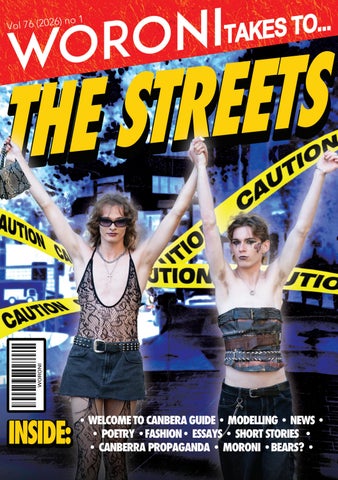
Create a flipbook
THE STREETS - Woroni (vol 76, 2026, no 1) by Woroni - Issuu