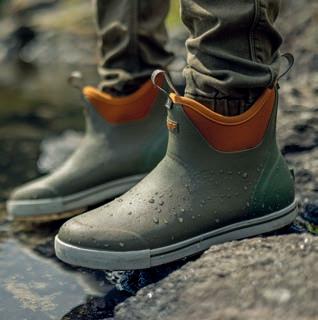
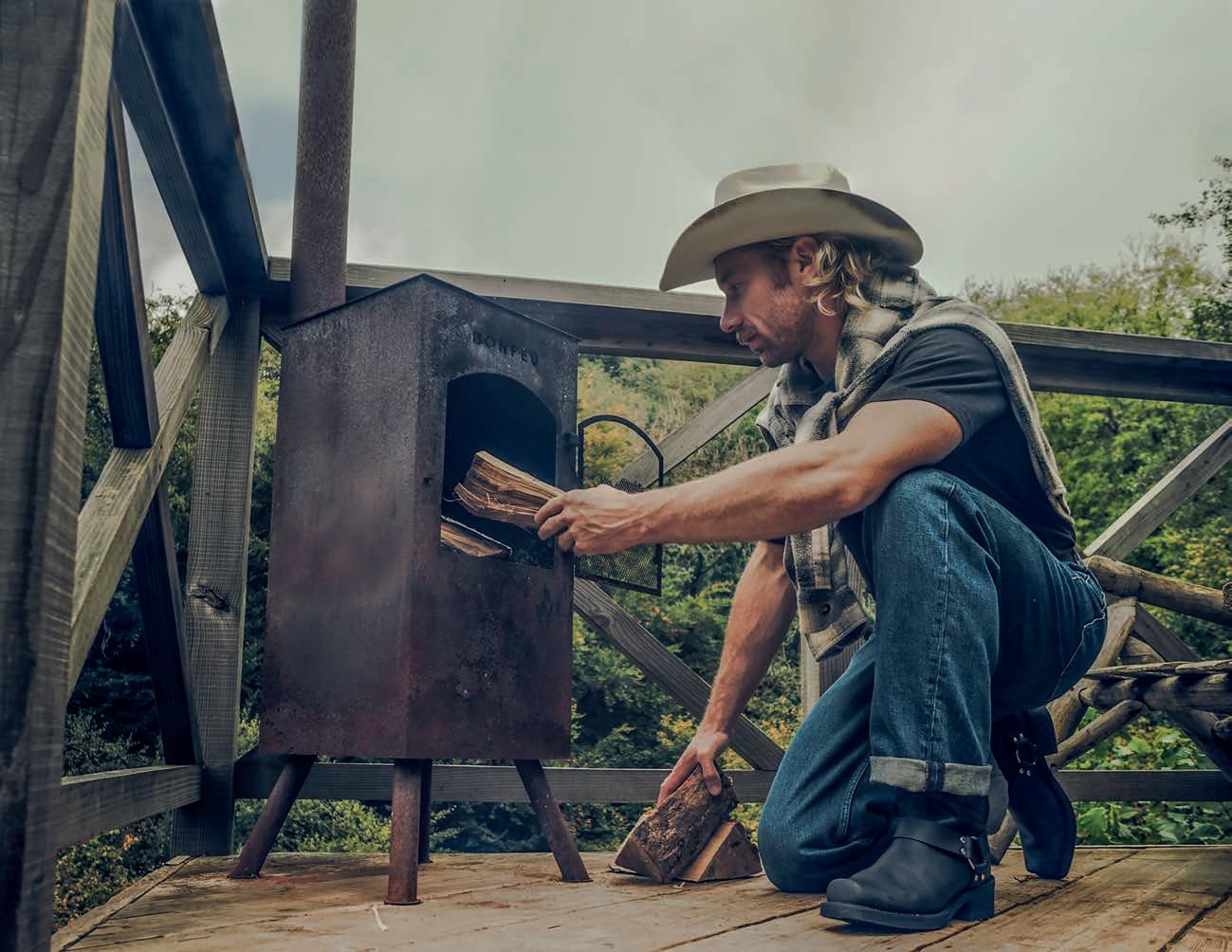
Boot brand Durango received a boost from the recent Beyoncé-driven Western trend. And in a time of tariff tensions, its parent group, Rocky Brands, has benefited from having retained its own in-house manufacturing operations.
CREDIT: ROCKY BRANDS
Editor
Stephen Tierney
Deputy editor
Clare Grainger
Consultant editor
David Buirski
Contributors
Penny Leese
Sergio Dulio
Stuart Cleaver
Design
Tim Button
Global sales manager
Mat Abbott
Accounts
Lisa Fabian-Smith
Subscriptions manager
John Collins
Publisher & CEO
Simon Yarwood
02 Global News
Highlights from around the world of footwear. For news on shoes every day, go to footwearbiz.com, the best news website in the business.
04 Footprints
People making an impact on the industry: designers, industry leaders and famous footwear lovers.
06 Industry & Innovation
Details of innovations from suppliers and service providers across the globe.
08 Backtrack
Headlines from footwearbiz.com, summing up the most recent developments in the global footwear sector.
MATERIALS, MANUFACTURING & INNOVATION
10 Eyes on AI
The 2025 UITIC Congress in Shanghai was a vibrant event, but in the technical presentations there was a definite focus on one subject: artificial intelligence (AI).
14 High-quality and eco-friendly
Inescop’s recent involvement in the Sustainable Yak Leather (SYL) project in Mongolia highlighted that a transition to more responsible production can bring social and economic benefits as well as environmental ones.
17 Peak performance
Explorer Hugo Turner recently completed a Himalayan ascent wearing special boots, replicas of the leather footwear that pioneer mountaineer George Mallory wore 100 years ago.
Insoles and midsoles from Blumaka put foam waste to good use while improving performance by stopping feet from sliding inside the shoe.
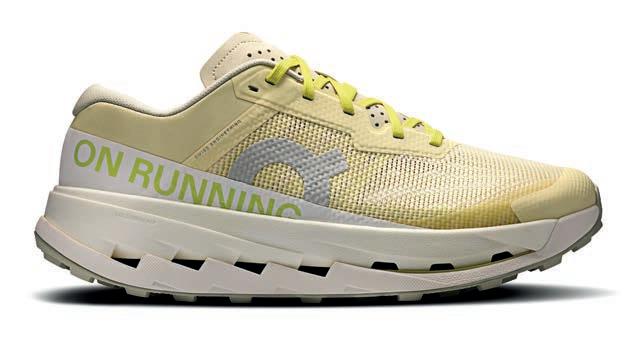
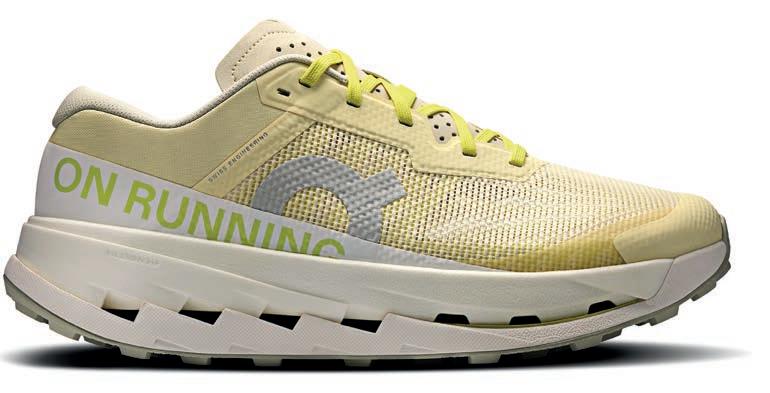
24 On top Athletic footwear brand On wants to use innovation to reach what it calls the pinnacle of the premium market.
28 Home advantage
A policy of keeping at least some of its production in group-owned factories has allowed Rocky Brands to mitigate the impact of tariffs on its business.
30 The complete set
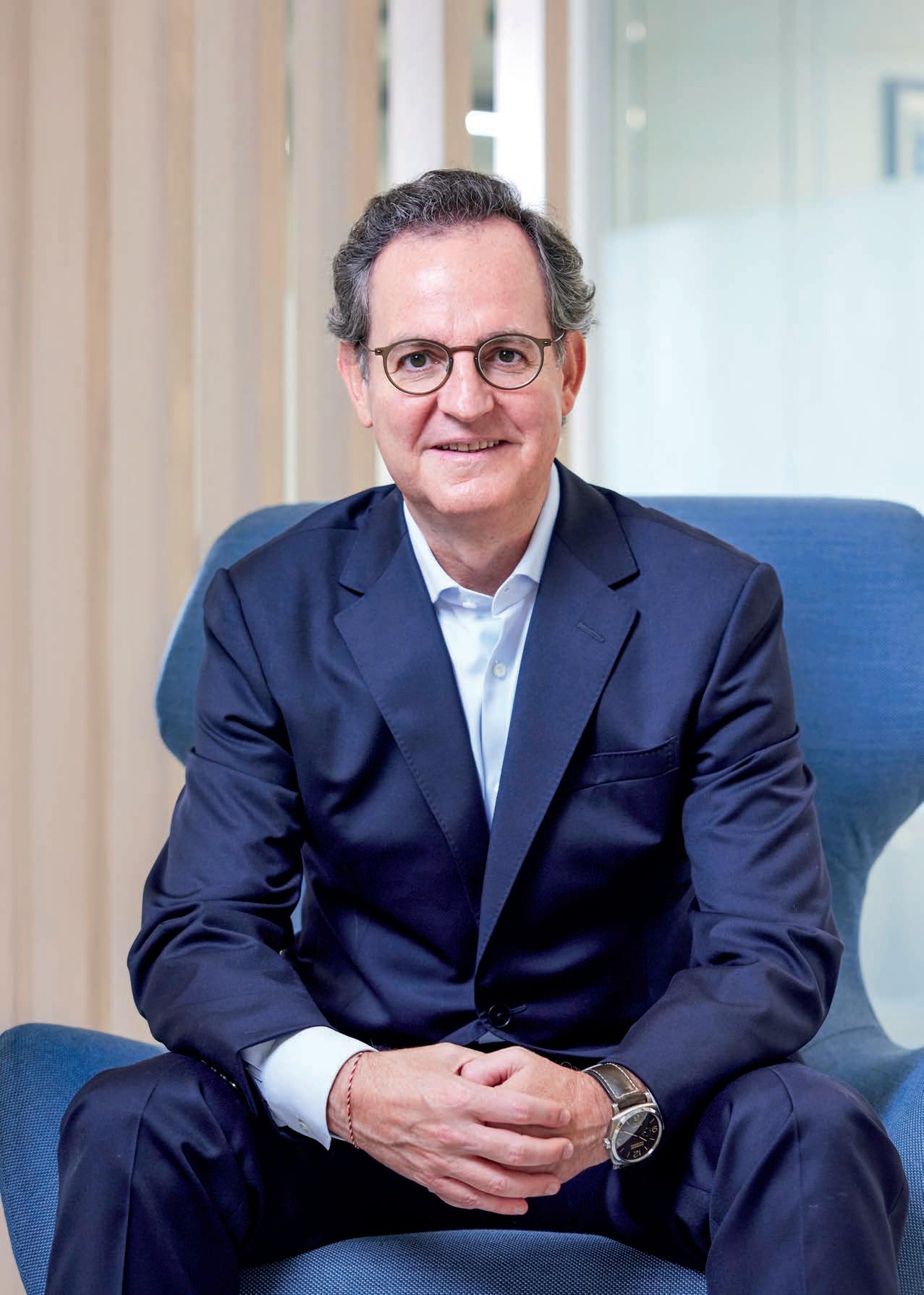
Following its acquisition of footwear components suppliers Texon and Rhenoflex in 2022, Coats Group has now brought performance insoles developer OrthoLite into its footwear portfolio. Group CEO, David Paja, explains the strategy behind these moves. 20 Inside track
ADVERTISER’S INDEX
Global sales: Mat Abbott T (+44) 151 3637600 E matthew@worldtrades.co.uk
India: S Sankaran E indianleather@yahoo.com
Pakistan: Abdul Rab Siddiqi E arsidiqi@yahoo.com
World Trades Publishing 2026
Contributions: The editor welcomes news items, articles and photographs for consideration and possible publication but no responsibility can be accepted for the loss or non-publication of such material. Opinions expressed by individual contributors do not necessarily reflect the view of the editor or publisher. Whilst every effort is made to ensure accuracy in reproduction, no responsibility can be accepted for the technical content or for claims made by manufacturers for product performance that are published. Publication in Footwearbiz cannot be construed as an endorsement for a claim or product by the publisher.
Footwearbiz (ISSN 2976-9809) is published 4 times per year by World Trades Publishing, The Old Stone House, Teeton, Northampton NN6 8LH, UK. Price UK £90, ROW £150 per year (four issues). Credit cards will be charged in GB Pounds converted at the daily bank rate. Your credit card company may charge you for this service. Graphic origination by WTP. Print by Bishops Printers, Walton Road, Portsmouth, Hampshire PO6 1TR, England. All rights reserved. ISSN 0894-3079.
World Trades Publishing 2026
All rights
Global news
UK Fashion retail group Next has acquired the Russell & Bromley brand and three of its stores. For almost 150 years, Russell & Bromley has been a prestigious footwear and accessories brand. At the time of the sale of these assets it had 36 stores in the UK and Ireland and nine concessions. A family-run firm, Russell & Bromley found itself unable to turn its business around from recent financial difficulties and put itself into the hands of external administrators.
Portugal Portuguese footwear exports rose 1.8% in volume and 0.8% in value in 2025, reaching 68 million pairs and €1.7 billion, APICCAPS has reported. Growth was driven mainly by European markets, which increased by 3.3% to €1.4 billion, while exports to the US fell 12.3% to €84 million. The association noted that Portugal outperformed major competitors, including Italy, Spain, China, Turkey, and Brazil, despite a challenging global trade environment.
Italy A programme called Assomac Around the World led to a total of 25 Italian leather and footwear machinery manufacturers traveling to Chennai to take part in the 2026 edition of the India International Leather Fair (IILF) in February. Italy’s national pavilion at IILF occupied 280 square-metres.
Representative body Assomac said the event had given Italian technology providers a good opportunity to connect to buyers in a market it regards as being of great importance.
Germany Footwear brand Birkenstock has said it will open 140 new own-brand stores between now and the end of 2028. At the end of 2025, own-brand stores numbered 97. In a presentation to market analysts at the end of January, the Germany-based company stated that more than half its new stores will be in Asia. Including stores run by partners, this would take the total number of Birkenstock stores in Asia to more than 400. Its most recent full-year results showed revenues of €2.1 billion for the 12 months to the end of September 2025. It said it expects this figure to increase to more than €2.3 billion in this financial year.
Switzerland Specialist Switzerland-based distribution group Orbico has signed a new partnership agreement with Authentic Brands to develop a European expansion plan for footwear brand Dockers. Authentic announced its intention to acquire Dockers from Levi Strauss & Co in May 2025.
“Partnering with Orbico allows us to bring Dockers to a key market while maintaining the brand’s heritage,” said Authentic’s president for lifestyle in Europe, Henry Stupp.
UAE Athletic shoe retailer Footasylum has partnered Apparel Group to expand across the Gulf region, with 40 stores set to open in the next five years. Headquartered in Dubai, Apparel Group operates more than 2,500 stores and manages a portfolio of 85 international brands across 14 countries. Footasylum reported revenues of £349.5 million for the 12 months ending January 25, 2025, almost 10% higher than the previous year.
Turkey A four-strong delegation from Turkey travelled to Porto Alegre at the end of January to attend the Inspiramais exhibition for the first time. Led by the president of the Turkish Footwear Industrialists’ Association, Berke Icten, the group confirmed to Footwearbiz that the shoe sector in Turkey is serious about sourcing increased volumes of leather from Brazil. Mr Icten said Turkey currently has the capacity to produce 550 million pairs of shoes and other footwear per year. His calculation for 2025 is that manufacturers were operating at 80% of capacity and produced around 450 million pairs.
Colombia The 2026 edition of the International Footwear & Leather Show (IFLS) took place in Bogotá from February 3-6. Organisers said there were 400 exhibitors and more than 10,000 visitors at the event. They described IFLS as having “fundamental importance” as a commercial platform for footwear, leather and leathergoods in Colombia and across the entire region.
Mexico This will be a year of centenary celebrations for the Cámara de la Industria del Calzado del Estado de Guanajuato (CICEG), the main industry body in Mexico’s main footwear-producing state. At the start of this year, CICEG said it was celebrating its 100-year legacy: its predecessor organisation, the Union of Shoemakers in the city of León, was formed in 1926. The history of artisan footwear manufacturing in Guanajuato, and in León in particular, goes back far longer. But CICEG said the events of 1926 marked the beginnings of “an organised shoe industry” in the region.
Brazil The latest edition of the Inspiramais materials exhibition opened in Porto Alegre on January 27, running for two days. Billed as one of Latin America’s most important events for footwear materials, this edition had on display samples for manufacturers to use in their collections for the first half of 2027. Exhibitors included 15 leather manufacturers, who displayed leather articles for footwear, as well as for furniture and accessories.
India The 2026 edition of the India International Leather Fair (IILF) opened in Chennai on February 1, and closed February 3. Exhibitor participation was slightly lower than in 2025. Co-organiser the India Trade Promotion Organisation (ITPO) said 362 domestic exhibitors and 66 overseas participants were in attendance, compared with around 450 domestic exhibitors and a similar number of international participants last year. Recently announced free trade agreements with the UK and the EU were welcomed as significant opportunities by both the ITPO and the Council for Leather Exports (CLE).
China Chinese sportswear group Anta has bought a 29% stake in Puma for €1.5 billion from Groupe Artémis, the investment company of the French billionaire Pinault family. The deal makes it the largest shareholder – but it does not intend to make a takeover bid. It is however a significant step in Anta Sports’ globalisation strategy, “enhancing its reach, recognition and competitiveness in the global sporting goods market”, it said. Ding Shizhong, chairman of Anta, said the Chinese group looked forward to supporting Puma’s “ongoing revival”.
Taiwan Outsource footwear manufacturing group Yue Yuen has reported revenues of just over $6 billion for the first nine months of 2025. This is down by 1% compared to the same period last year. From January to September 2025, Yue Yuen’s production of outdoor and athletic shoes, the main part of the group’s business, brought in $3.3 billion. This is an increase of 1.8% year on year. Yue Yuen said it remained optimistic about the long-term prospects of the sports industry and about its role as a strategic supplier to leading international brands.
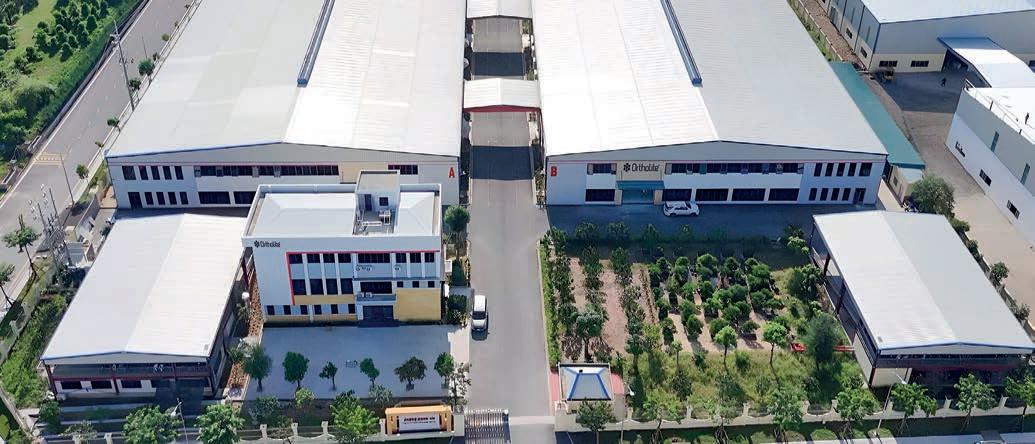
Vietnam OrthoLite has opened a new manufacturing site in Ninh Binh Province in north Vietnam. The development strengthens the group’s plan to localise its full product creation process and expand support for regional and global footwear brands. Country manager Michael Hsu said the site will help OrthoLite shorten lead times, raise supply chain resilience and maintain global quality standards across all foam formulations.
Malaysia Hong Kong-based sports group Xtep, which owns K-Swiss and Palladium along with flagship brand Xtep, has announced a joint venture with Malaysian distributor Bonia to jointly develop the Malaysian market. The move marks a shift from a single exclusive distributor model to a multi-channel structure, aligning a broader strategy for south-east Asia. Under the new arrangement, former exclusive partner VGO will become a non-exclusive distributor but will remain a key partner.
Footprints
Industry pioneer Tom Schneider has died
Founder and executive chairman of leather manufacturing group ISA TanTec, Thomas Schneider, has died. The company has announced that he had died in his country of birth, Germany, on January 18 from complications following a car accident. He was 70 years old.
Tom Schneider completed the leather manufacturing course at the famous Lederinstitut Geberschule in Reutlingen in the early 1980s. His work in the industry soon took him away from Germany, with a spell in tanneries in Australia before a move to China in 1988.
He described himself as a serial entrepreneur and, by 1993, he was ready to launch his own leather manufacturing company, ISA TanTec. In the course of the next 30 years, he grew ISA TanTec into a group with five production plants: one in China, two in Vietnam, one in the US and one in Italy.
As early as 2004, he recognised that it was imperative to reduce the consumption of energy, water and chemicals in leather manufacturing so as to reduce the environmental impact of leather. He used the name LITE (low impact on the environment) to describe the collections that ISA Tan Tec brought to market.
His pioneering attitude came to the fore again in 2020 when he decided to start making a new range of 100% bio-based materials, launching a new division called Creation Of Sustainable Materials (COSM).
At the time, he told World Leather: “We are not saying that this is an alternative to leather. No. Absolutely not. I don’t want to have an alternative to leather. I want to have an alternative to plastic, the vegan materials, the polyurethane stuff. It’s not replacing leather. It’s not our target to cannibalise our product but to offer customers additional products, ones that have a good story behind them and are available from a supplier that brands have worked with for 20 years already.”
Nike announces leadership changes
Athletic footwear company Nike has announced a series of leadership changes. CEO, Elliott Hill, said “having geography general managers at the table” is helping the company to “move faster”.
Nike’s vice-president of Europe, Carl Grebert, is retiring and will be replaced by César García. Mr Grebert has worked at Nike since 1997. For his part, Mr García has also clocked up many years at the brand, joining 25 years ago.
Elsewhere, Angela Dong, who leads the business in China, is to leave Nike at the end of March. She will be replaced by Cathy Sparks, another 25-year Nike veteran, who started as a store athlete at Niketown in Portland and has gone on to lead teams across every geography.
Cristin Campbell, currently vice-president for the Nike brand in Asia Pacific and Latin America, is to become an interim vice-president of the brand and part of its senior leadership team.
New CFO for On
Athletic footwear and apparel brand On has announced that Frank Sluis will become its chief financial officer. He will join the Zurich-based company on May 1. On’s chief executive, Martin Hoffmann, has been fulfilling the chief finance officer role as well. He began working in the finance role in 2013, continued to do so on becoming co-chief executive at the start of 2021, and has continued to serve in both roles since taking over as sole chief executive in July 2025.
Creative directors depart…
The creative director of Mallorca-based footwear brand Camper, Achilles Ion Gabriel, is to leave the role after six years. His final collection for Camper will be for the spring-summer 2027 fashion season. In 2023, the designer launched an own-named ready-to-wear label. Reports from Spain suggest a group of people already working in creative roles at Camper, will take on Mr Gabriel’s responsibilities.
…and arrive
Outdoor brand Salomon has announced the appointment of a new creative director in its team, Heikki Salonen. The Finnish designer will drive the evolution of the high-performance brand towards a mountain lifestyle label and will be in charge of creating a cohesive narrative across all the brand’s product categories. Mr Salonen has held similar positions at Diesel and MM6, a label of French fashion house Maison Margiela.
Puma appointment
Sports footwear and apparel company Puma has announced Nadia Kokni as vice president global brand marketing, from the start of this year. Ms Kokni joins the company’s global leadership team and reports to chief brand officer Maria Valdes. She will oversee global brand marketing strategy, creative direction, and integrated marketing and communications.
First non-family CEO for Pikolinos
Footwear and leather manufacturing group Pikolinos has announced Francisco Sánchez as its new chief executive, a departure from the group’s family-run structure.
The company produces footwear in the area around Elche and also runs its own leather finishing company, Pies Cuadrados. Its shoes sell in 60 countries around the world. It runs 20 own-brand stores and has more than 8,000 points of sale in total.
Founder, Juan Perán, launched Pikolinos in 1984 and ran the company until 2016, when he handed over the reins to his children. His son, Juan Manuel Perán, took over as chief executive, while his daughters, Rosana and Carolina, also assumed leadership roles. Rosana Perán was elected president of CEC, the European footwear industry confederation, in 2023.
At the start of 2026, after posting record results for three consecutive years, Pikolinos announced that it was entering a new stage of development, with Francisco Sánchez as the first person outside the Perán family to lead it.
Mr Sánchez is an engineer by trade but has a track record in business transformation, with many of the projects he has worked on having links to the leathergoods sector.
On taking up his new position, he said: “Leading a business these days is about much more than results. It is about building organisations that have meaning, that are centred on people and on the sustainability of both the business and its surroundings.”
Record imports cause concern for Abicalçados
Brazilian footwear industry body Abicalçados has said footwear imports into the country in January reached a record level of almost 4.5 million pairs, an increase of 34.3% compared to the same month last year.
In January, 1.5 million pairs came into Brazil from Vietnam, 1.25 million pairs from China and 996,000 pairs from Indonesia.
Abicalçados said this came on the back of a record volume of footwear imports into Brazil in 2025. In the course of last year, a total of 43.2 million pairs came into the country, up by 22.5% year on year.
Executive president of Abicalçados, Haroldo Ferreira, said the record volume of footwear imports for January, on the back of a record year in 2025, was a source of worry for the domestic footwear sector. He pointed out that this was happening in the context of a slow-down in demand for footwear in Brazil.
“The increase of footwear coming into Brazil, especially products that are very low in price, is causing great concern. This is to the detriment of domestic production, which reduced last year by 2.2%.”
This figure puts domestic production at around 910 million pairs, of which 103.9 pairs went for export.
OrthoLite promotes Marty Greenwald
Insole materials manufacturer OrthoLite has announced that Marty Greenwald has been promoted to the position of vice president of sales.
In the role, he will be responsible for global sales strategy and key account management as the company continues to expand its presence as an insole partner to more than 550 footwear brands worldwide.
Mr Greenwald joined OrthoLite in 2018 and most recently served as global sales director. During that time, he played a key role in strengthening relationships with athletic, outdoor and lifestyle footwear brands and supporting the wider adoption of OrthoLite comfort and performance technologies across multiple categories. He brings more than 30 years of sales and management experience in the footwear and sporting goods industries.
In his new position, Mr Greenwald will lead OrthoLite’s global sales teams and work closely with marketing and product development functions. His remit will include supporting brand partners on innovation, speed to market and sustainability initiatives.
Brand reignition
Sports group Under Armour has reported revenues of just under $3.8 billion for the first nine months of its current fiscal year, the period ending December 31, 2025. This represents a fall of 4.7% compared to the same period a year earlier. Founder and chief executive, Kevin Plank, said the third quarter had been “the most challenging phase of our business reset”. He added that he was encouraged by progress in “reigniting brand momentum”.
CEO steps down
David Pujolar stepped down as CEO of Footasylum in mid-February, following a year of record revenue of £349.5m. Parent group Aurelius has named Stephan Rahmede as interim CEO while a permanent successor is sought. Under Mr Pujolar, the retailer strengthened partnerships with major brands including Nike, adidas and New Balance. Footasylum plans to focus on e-commerce and digital expansion over the next 12 months, building on recent store upgrades since Aurelius acquired the company in 2022.
Brand lives on
Fashion retail group Next has acquired the Russell & Bromley brand and three of its stores. For almost 150 years, Russell & Bromley has been a prestigious UK footwear and accessories brand. London-based administration company Interpath said Next had acquired the brand, three selected stores and a proportion of the company’s stock through a pre-pack insolvency process. The future of the other 33 stores and nine concessions that Russell & Bromley ran remains uncertain. A member of the shoe company’s founding family, Andrew Bromley, said: “Following a strategic review with external advisers, we have taken the difficult decision to sell the Russell & Bromley brand. This is the best route to secure the future for the brand, and we would like to thank our staff, suppliers, partners and customers for their support throughout our history.”
Industry & Innovation
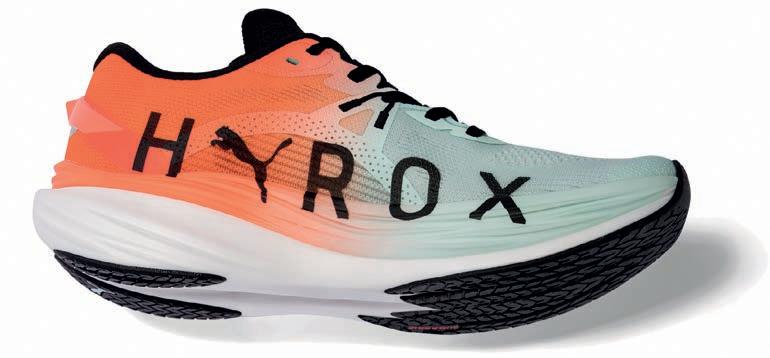
The Deviate NITRO 3 shoe, developed by Puma as part of a dedicated Hyrox collection.
CREDIT: PUMA
Training stands apart
Sports group Puma has created a new business unit for training. It will be based at corporate headquarters in Herzogenaurach, Germany. Until now, training had been grouped together with running.
Chief brand officer, María José Valdés, said training had become an increasingly important category for Puma. By creating a separate business unit for training, she said the company would be able to “sharpen our focus and be closer to key partners”.
It has recruited Marwin Hoffmann from rival group adidas to head up the new business unit.
Puma is an official partner of Hyrox training events.
Covestro opens TPU plant in Zhuhai
Polymer manufacturer Covestro has begun production at its new thermoplastic polyurethane (TPU) plant in Zhuhai, South China. The first phase of the facility is expected to produce around 30,000 tons annually, supplying industries including footwear, automotive, and electronics.
The Zhuhai site is planned in three phases and will reach an annual production capacity of 120,000 tons once fully completed in the 2030s, which would make it Covestro’s largest TPU plant globally.
The facility is supported by a regional R&D centre in Changhua and an application development hub in Guangzhou, enabling closer technical support and application testing for customers in the region.
The site produces TPU under Covestro’s “CQ” designation, which incorporates at least 25 percent alternative, non-fossil raw materials. This allows footwear manufacturers to incorporate more sustainable materials into their products while maintaining performance standards.
Circular PU midsoles
US chemicals supplier Huntsman has partnered with safety shoe manufacturer Steitz Secura to create a polyurethane (PU) midsole system designed to increase the circularity in safety footwear.
The Daltoped system allows recycled PU scrap to be reused in new midsoles without changing existing processes or affecting performance. Industrial-scale trials confirmed durability, comfort and safety remain on par with virgin materials.
Wolfgang Burkhard, head of PUR at Steitz Secura, said the company now produces midsoles with up to 30% recycled PU. Alex Stepuk, business development circularity manager at Huntsman, added that the approach offers a scalable way to recover and repurpose PU, supporting demand for sustainable, high-performance footwear.
Successful LCA exercise for Cirql
OrthoLite’s footwear foam technology brand Cirql has completed lifecycle assessment (LCA) reports for its rTPU30 and rTPU50 to thermoplastic polyurethane (TPU) products. It worked with specialist, footwear-specific environmental platform Carbonfact to compile the reports. Highlights from the LCAs include a 39% reduction in total carbon footprint for rTPU50 compared to virgin TPU.
OrthoLite is part of the Coats Footwear group.
Administrators will try to secure a fresh start for Sympatex
Membrane technology developer Sympatex has gone into administration. A court in Munich appointed Axel Bierbach of law firm Müller-Heydenreich Bierbach & Kollegen as administrator for the business at a hearing in late January. Economic pressures forced Sympatex to apply for the help of the courts on January 22. During the administration process, all of the company’s activities will continue and all 70 members of staff will continue to be paid, at least until the end of March.
New factory for Onitsuka Tiger
Japanese sports group ASICS has announced a new, dedicated production facility for its Onitsuka Tiger brand. The factory opened at the start of the year; the group held a formal opening ceremony for it on January 15. Onitsuka Tiger launched in 1949, specialising in basketball shoes. It became part of the ASICS group in 1977. It said the new facility integrates “the entire lifecycle of creation”, from material development to design and production, with everything under one roof.
Natural Fiber Welding restarts production
After pausing operations in autumn 2025, Natural Fiber Welding (NFW) has restarted production and secured a strategic investment from Provest Equity Partners and CTW Venture
US innovation hub in the works for ASICS
Japan-based athletic footwear and apparel group ASICS is to develop a new research hub in the US.
It will work with the University of Michigan to set up the ASICS Institute of Sports Science America. This will involve a joint research programme at the university’s campus in Ann Arbor.
There will be a dedicated sports lab on campus, which, the partners have said, will serve as “a hub for advanced research in biomechanics, exercise physiology, AI-driven design, and bioengineering”.
ASICS is committing $25 million to the project, which it said was part of a wider commitment to “human-centric science”. The company said its vision is grounded in a deep understanding of the human body and movement, leveraging advanced materials and structural design to maximise human potential through sport.
It has also said consistently that it wants the insights it gains to benefit people everywhere, not just elite athletes.
Allbirds chooses Modern Meadow
Footwear brand Allbirds has introduced a collection made with Innovera, a material made from plant-based proteins, biopolymers and recycled nylon 6 from end-of-life tires.
The material by US biotechnology company Modern Meadow is finished in conventional tanneries using the same treatment and dyeing processes as leather. It has been used in automotive interiors, wallets and handbags but this is the first time it has been made into shoes.
Award for Primeasia
Leather manufacturer Primeasia has received the Courage Award at the 2026 adidas Sourcing Sustainability Supplier Summit, held in China.
The award recognises the company’s work on finding recycling solutions for hazardous sludge waste, a long-standing challenge for the leather sector, particularly in relation to chromium-containing wastewater sludge.
Primeasia said that tackling this issue is central to its commitment to achieve zero waste to landfill at its tanneries by 2040. The project was led by PAC team leader Alfie Huang, whose team explored options for diverting the waste stream from landfill.
Following this work, the tannery group has partnered with a local Chinese company that will convert the sludge into thermal energy.
Leather’s flower power on show at Inspiramais
Materials event Inspiramais closed in Porto Alegre on January 28. There were 16 leather manufacturers in total among the 150 exhibitors. Organisers said 8,000 fashion professionals attended over the two days of the show.
Designer Walter Rodrigues delivered a preview of the leather articles that will go into products in the second half of 2027. Mr Rodrigues consults on trends for Brazil’s national representative body for footwear components manufacturers, Assintecal.
One of the themes he highlighted was the importance of floral finishes. He said this floral theme had been in evidence in recent collections that some of the biggest names in fashion had presented, including Valentino, Dries van Noten, Balenciaga, Chloé and Jonathan Anderson’s early work for Dior.
The expertise of Brazilian tanners in leather finishing meant many articles echoing Walter Rodrigues’s floral ideas were on show at Inspiramais. He said the tanners’ work on preparing brightly coloured embossed finishes was “absolutely sensational”.
An extra element was that some of the fish leather in collections from companies including Arte da Pele presented the scales on the skin like petals on a flower.
Partners. The funding will support global expansion of its low-carbon materials platform, including Piant, a naturally cured performance rubber outsole, and Mirum, an all-natural, plastic-free material for footwear and fashion applications.
Proprietary lacing system helps Aku win Prowinter award
High-end outdoor footwear brand Aku has won one of the awards at the 2026 Prowinter exhibition in Bolzano in northern Italy, which took place in January. Aku won in a category called Winter Expert Footwear for its Aurai DFS EVO GTX model. This category is for technical footwear intended for winter mountaineering professionals. The boot uses the proprietary DFS Dual Fit System, Aku’s lacing system technology that allows for easy fit adjustment. The brand says this allows wearers to have “control and precision in use in highly difficult mountaineering conditions”.
New version of Evolution Pro continues adidas-Humanrace ties
Musician and fashion entrepreneur Pharrell Williams has joined forces with adidas to continue ties between his Humanrace brand and athletic footwear. Mr Williams launched Humanrace in 2020 as a skincare and wellness brand. Its first footwear tie-up was with adidas to produce a special edition of the Samba shoe in 2023. Versions of the Adizero shoe followed in 2025. Now, adidas and Humanrace have combined to bring to market a new version of the Evolution Pro shoe.
Scarpa applies circular leather use in Mojito Re-Shoes
Specialist ski and outdoor footwear group Scarpa has introduced a revised version of its Mojito footwear model incorporating recycled leather, developed within the LIFE Re-Shoes initiative, co-funded by the European Union’s LIFE Programme. The model has been produced using eco-design approaches aimed at supporting circular material use and recyclability. Sciarada Industria Conciaria carried out hydrolysis of used leather and reused the resulting liquid in the retanning of new leather, demonstrating circular leather use in the project.
Backtrack
13 February 2026
Polygiene releases financial results for 2025
11 February 2026
ZDHC compiles Chemical Watchlist
10 February 2026
HDSL appoints new chief executive
09 February 2026
Hong Kong seminar to address data transparency
06 February 2026
Brooks reports rapid gains in China and EMEA
Wool-nylon blend among Payen’s novelties
05 February 2026
Revenues down at Capri Holdings
03 February 2026
European TCLF partners report progress
02 February 2026
‘Quality growth’ sets adidas up for record revenues in 2025
27 January 2026
Relief considered for India’s footwear sector
22 January 2026
Footwear: China exported more than 8 billion in the first 11 months of 2025
PFAS elimination project complete, Vaude says
20 January 2026
Winning start for new Coco Gauff collection
16 January 2026
Riva Schuh and Gardabags: New sourcing model emerging
15 January 2026
Adidas creates first American football shoe designed for speed
Grenson gains golden glow
14 January 2026
JD Sports launches AI one-click shopping
12 January 2026
Most gym-goers are wearing the wrong footwear, adidas claims
09 January 2026
RTFKT finds a new owner
Footwearbiz’s publishing cycle and limitations on space make it impossible for us to run more than a carefully selected sample of news from across the industry. However, we publish hundreds more stories on www.footwearbiz.com. The site is updated every day with news from every continent and every part of the industry, making footwearbiz.com one of the most comprehensive archives of news anywhere on the web for the global footwear industry.
We list below just a few of the headlines that have appeared on the site in recent weeks — www.footwearbiz.com allows you to read the news items you may have missed.
08 January 2026
Marubeni acquires Gola owner Jacobson Group
Strong leather presence at Inspiramais
07 January 2026
Italian footwear sector shows signs of stabilisation, says Assocalzaturifici
06 January 2026
Beijing opening for Dior celebrates LVMH’s ties to China
APICCAPS sets out plea for conscious consumption
05 January 2026
Cole Haan updates court sneaker
Argentina event at Expo Riva Schuh
02 January 2026
EUDR delay confirmed
First-half sales for Nike up slightly, despite China fall
19 December 2025
Falls in leather footwear imports continue in China
18 December 2025
A first move into footwear for OMM Prada responds to backlash with Kolhapuri collaboration
17 December 2025
Portugal’s tanneries boost footwear supply
Opportunities for ISA as alternative materials start-ups struggle
16 December 2025
ASICS will be an official partner at the 2026 Asia Para Games
Sustainability leadership strengthened at Keen
15 December 2025
Oberalp names new general manager for its Dynafit brand
FESI elects new president
12 December 2025
Argentineans and Vietnamese pledge greater cooperation
Country manager appointment for OrthoLite
11 December 2025
Surplus leather event open to all this year
Nike’s ‘Techleather’ naming will conflict with leather labelling laws
10 December 2025
Caleres concentrates on unlocking value in Weitzman
Addition to BASF’s portfolio for low-VOC foam solutions
09 December 2025
Outdoor and sports e-commerce worth more than $50 billion in China
08 December 2025
NNormal teams up with Gore-Tex
AAFA asks for 16 more years for US-Mexico-Canada agreement
05 December 2025
Home wins for New Balance
Moda in Pelle set for majority acquisition by GlobalTech
04 December 2025
The North Face introduces Leather Pack range
03 December 2025
Major new Puma store opens on Oxford Street, London
Nike restructures senior leadership team
UITIC Congress bets on AI
The International Union of Shoe Industry Technicians (UITIC) holds an international congress every two years. The most recent of these took place in Shanghai in the autumn of 2025. This was the twenty-second international congress in the organisation’s history.
UITIC president, Sergio Dulio, said that more than half of the papers that industry professionals submitted for consideration for the programme in Shanghai addressed the use of artificial intelligence (AI) in the design and production of footwear. His belief is that “mature and exciting projects” using AI are coming into the global footwear industry now. “This is a breakthrough,” he added. He explains that presenting and sharing ideas on this and other subjects led to “an intense few days in Shanghai”.
In keeping with UITIC traditions, the congress began with two days of visits to institutions and companies. “This is not about tourism,” Mr Dulio makes clear. “These visits are a vital part of the programme. They are an effective way of learning about the local industry, seeing how companies are organised, and seeing the technologies they are choosing to use in their manufacturing processes.”
Twelve
A strong focus on AI at the congress made for an intense few days in Shanghai.
ALL CREDITS: UITIC
out of 16 technical
presentations at the 2025 UITIC Congress in Shanghai had a focus on artificial intelligence (AI).
Organisations that hosted UITIC delegates during this round of visits included the Shanghai Art and Design Academy, safety footwear specialists Shima Technology Group and Saina, materials developer Huafon, and athletic footwear brand Do-win. The UITIC president describes these companies as “a brilliant selection”, put together with the help of colleagues at the China Leather Industry Association (CLIA). Together, they represented the “realities of the industry” well, he insists.
Keynote contributions
The conference component of the event followed, beginning with formal speeches to welcome delegates to Shanghai from Sergio Dulio, as well as from the president of CLIA, Li Yuzhong, and from one
of the leather and footwear industry in China’s most eminent figures, Professor Bi Shi. There were two keynote speeches, the first from another well known industry figure, Nicoline van Enter, founder of innovation platform Footwearology. She spoke about the move “from shoes to systems” and AI-driven workflows, which she believes will apply in the construction of next-generation footwear. “Nicoline is a visionary and an innovator in the field of footwear,” Mr Dulio said. “Her presentations are always very inspiring, and this one was no exception.”
A second keynote speech came from Liu Wei, representing athletic footwear and apparel brand Li Ning. He spoke about the contribution that technological innovation can make to sustainable development. This provided a clear explanation of Li Ning’s efforts, starting years ago, to put sustainability at the core of its business, Sergio Dulio stated. Sustainability is no longer a goal for the company, but something “deeply rooted in its processes”, he explains.
Material concerns
The conference programme at the UITIC congress included a total of 16 technical presentations. The UITIC president explained that selecting these 16 was a difficult task because the scientific committee for the event had around 80 proposals to choose from. “It’s not that this was an overwhelming number,” he continued. “We have had higher numbers of proposals at other UITIC congresses in the past. But the level, the quality of the proposals we received for this most recent event was very high. The committee had a very tough time selecting the 16 best ones to be presented on stage.”
“ If a system can understand your intentions, it can provide you with a detailed design and a 3D model to help translate those intentions into a future pair of shoes. ”
SERGIO DULIO
The presentations that secured selection divided neatly into four sections. The first, focusing on materials and product innovation, covered AI-driven design, alternative materials and, “quite intriguingly, and brilliantly presented [by Pedro Duarte at Portuguese industry research body CTCP]”, according to the UITIC president, the reuse of waste from leather production in footwear applications using additive manufacturing technologies.
Still learning
A second set of technical presentations focused on sustainability and competitiveness, focusing on traceability, product durability, and strategies for disassembly. On this last point, Mr Dulio points out that disassembly is a subject that has come up before at UITIC events. “We are used to assembling shoes,” he says. “We are still learning how to disassemble them.”
In this session, Sabrina Frontini of Italian certification body ICEC set out to reclaim the term “eco-leather” for the leather industry. With so many synthetic material developers misusing the term leather in their product descriptions, Ms Frontini told delegates that “eco-
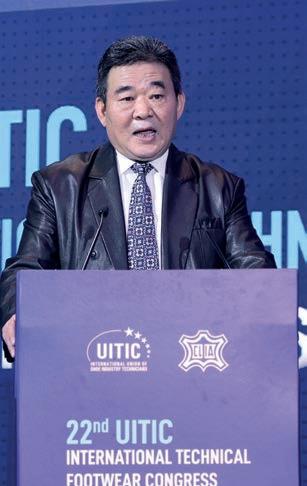
UITIC president, Sergio Dulio, at the UITIC Congress in Shanghai in 2025.
One of the keynote speakers at the event, Nicoline van Enter, whom Sergio Dulio describes as “a visionary”.
President of host organisation the China Leather Industry Association, Li Yuzhong.
leather” is real leather produced with a low environmental impact. Footwear companies should use this, she said, and have their material choices certified by bodies such as ICEC “to avoid greenwashing”.
A third round focused on smart manufacturing, much of it empowered by AI. Case studies labelled as “successful industrial stories” made up the full complement of technical presentations at the UITIC Congress. An additional 24 high-value proposals went on display in the event’s Poster Showcase section.
Data challenge
Just before the close, seven representatives from different parts of the footwear industry took part in a panel discussion, chaired by Sergio Dulio, with ‘The Power of AI for the Footwear Business’ as the overarching theme. One of the panel members, the general manager of Spanish footwear research and testing organisation Inescop, Dr Eduardo Calabuig, says one of the key points to come out of the discussion related to data. “There is a data challenge,” he says. “In the footwear industry we still have too many manual processes. We have to collect all the data we need and organise it in the best way possible. Research centres have a key role here. We have to help companies digitalise their processes. We have to be more than a knowledge provider. We have to be enablers of technology for the footwear industry and move from isolated systems to eco-systems, with everything connected.” He insists AI will be critical in achieving this.
In all this, there are, potentially, important advantages for designers in particular, Sergio Dulio insists. “Designers can tell the system, in a clear manner, about their intentions,” he says. “If a system can understand your intentions, it can provide you with a detailed design and a 3D model to help translate those intentions into a future pair of shoes. I think this is the real breakthrough.”
But humans must continue to play a role. He describes AI as “a kind of nervous system”, relying on data in the same way as the brain relies on
blood. But he insists that processes need to continue to have humans in the loop. “In all these areas, a human presence is fundamental, ,” he makes clear. “With AI, you need to have a guard-rail. It has to be guided in a certain direction. It also requires a licence to drive it, just as in driving a car. You need a licence to show that you can drive your car without causing any harm to your health or to the safety of others.”
Night life
On the social side, UITIC held its own gala after the first full day of the conference, but Sergio Dulio also pays tribute to the warm hospitality UITIC delegates received from their Chinese hosts the night before. Congress attendees received an invitation to join CLIA members at another gala dinner, marking the host organisation’s own annual general meeting, giving the international footwear contingent the chance to spend time with more than 500 leather and footwear industry professionals from all parts of China.
At UITIC’s own special evening event, which took place on board a boat on the Huangpu River, the organisation presented lifetime
achievement awards to four industry figures. People receiving honours on this occasion included Miguel Fluxà, chief executive of Mallorca-based footwear brand, Camper, although Mr Fluxà was unable to attend. Chinese academic Professor Gong Taishen from Shaanxi University of Science and Technology received the UITIC scientific award. Technical awards went to Andrea Favazzi, who manages the technical department of Italian industry body Assomac, and to Chinese technologist Chen Guoxue, a master artisan who runs the Shanghai Guoxue Shoe Last Company. “The awards are important,” Sergio Dulio insists. “This is a way of celebrating the contributions that people make to business and technology.”
There was also time for UITIC delegates to visit the 2025 All China Leather Exhibition and the inaugural edition of a new finished products exhibition, the Moda China International Shoes, Bags and Apparel Fashion Fair. These events, organised by CLIA and its partners, were taking place in Shanghai at the same time. “This contributed to the richness and completeness of our event,” Sergio Dulio stated.
General manager of Inescop, Dr Eduardo Calabuig, taking part in the closing panel discussion at the UITIC Congress.
Director of leather sector certification institute ICEC, Sabrina Frontini, used her platform at the 2025 UITIC Congress to reclaim the term ‘eco-leather’ for the leather industry.
In Mongolia, yaks commonly go to slaughter after several seasons of milk and fibre production, which means the hides often bear natural life marks such as scratches or scars. ALL CREDITS: SUSTAINABLE YAK LEATHER PROJECT/INESCOP
Sustainable leather in transition
Esperanza Almodóvar, Project Manager, Inescop
Sustainability goals can encourage technological innovation, which in turn can facilitate greater transparency and efficiency across supply chains. A recent example that Inescop has been involved in was the Sustainable Yak Leather (SYL) project, which focused on sustainable raw materials and sustainable production of yak leather in Mongolia.
Yak hides are part of the bovine raw material supply chain, but they show considerable natural variation linked to breed, age, sex and season. In Mongolia, yaks are commonly slaughtered at at least five years of age, after several seasons of milk and fibre production. This means hides often bear natural life marks such as scratches or scars. Processed as full-grain leather, these features do not compromise performance; they contribute to a distinctive appearance and patina.
Compared to domestic cattle, yaks are typically smaller and stockier. Their hides are heavy and robust for their size, averaging around 20 kilos, or roughly 6.5% of carcass weight, with thickness varying across the hide and between animals. Older animals and males generally yield thicker material. Another feature is that the long-haired skirt around the belly area requires careful handling in beamhouse operations. Internally, the papillary and reticular fibre layers, along with the orientation of fibres, influence cutting yield and the performance of finished leather.
The leather industry is entering a period of change, shaped by regulatory pressure, market expectations and technological developments. Projects that link sustainability to practical applications can provide valuable insights. One recent initiative that has done just this was the Sustainable Yak Leather (SYL) project in Mongolia, to which Spanish research institute Inescop contributed as a technical partner.
Seasonality and geography also affect quality. Slaughter is concentrated between October and December, with preservation often achieved through chilling or natural freezing, aided by Mongolia’s low winter temperatures. For the SYL project, hides were sourced from four provinces with significant yak populations: Arkhangai, Bayankhongor, Khövsgöl and Övörkhangai.
The SYL project encouraged a move away from heavily pigmented, coated finishes, helping leather manufacturers bring the natural characteristics of yak leather to the fore. The project has helped position vegetable-tanned yak leather as a high-quality, eco-friendly material.
Tanneries and process development within SYL
The SYL project worked with the Mongolian Vegetable Tanned Yak Leather Cluster, bringing together tanneries and other stakeholders to strengthen the value chain from raw hide handling through to tanning, finishing and finished goods production. The participating tanneries were Ikh Ergelt, Buligaar, Buural Gol, Yarmag, Ikh Zam Trans, Mon Ireedui, Mongol Shevro and Arildii, among others. The project combined hands-on technical assistance with structured training, aiming to improve the quality of the raw material, boost efficiency and help companies meet international market expectations. Technical improvements focused on three areas. Beamhouse operations were improved through better process control and chemical systems such as Easy White Tan and Zeology-based solutions. Easy White Tan, first introduced by Clariant in 2010, is a process based on Granofin Easy F-90, an organic compound free from metal, aldehyde, formaldehyde and phenol. Zeology is a concept that Smit & Zoon launched in 2020. This technology is based on the mineral zeolite and is also heavy metal- and aldehyde-free.
Vegetable tanning and subsequent processing steps were refined to align with sustainability objectives; and finishing operations shifted towards lower-energy, lower-emission approaches. SYL encouraged a move away from heavily pigmented, coated finishes. It helped leather manufacturers to allow the natural characteristics of yak leather to remain visible in the finished product, while reducing chemical usage at the same time.
Project impact
The SYL project delivered tangible results across multiple levels of the value chain. Local tanneries adopted cleaner, more energy-efficient production methods and improved waste management. Over 200 individuals were trained in occupational safety, pre- and peri-slaughter operations, raw-material quality, chemical risk management and sustainable tanning and finishing techniques.
“ Responsible production is not only possible but also economically and socially advantageous. ”
Traceability systems were developed, and guidance on meeting international market requirements helped position vegetable-tanned yak leather as a high-quality, eco-friendly material. The project also engaged with local authorities and institutions to encourage uptake of sustainable practices and integrate them into national development strategies.
By combining technical innovation, capacity building, community engagement and international cooperation, SYL demonstrated that the shift toward sustainability is not only necessary but also economically and socially viable. The project illustrates that sustainability can be a competitive advantage. Sustainable practice can also provide a replicable model for transformation when diverse stakeholders unite around a shared vision.
Conclusion
Responsibly sourced and processed leather will continue to hold a place as a high-value, durable material with cultural and technical significance. Projects such as SYL show that sustainability can be achieved through practical improvements in sourcing, processing and skills development without compromising performance or quality. They illustrate that the transition to more responsible production is not only possible but also economically and socially advantageous.
Transformation in the leather industry is already under way, and its long-term success will depend on collaboration across the value chain and on embedding sustainability into the core of business strategy. Leather’s continued relevance will rely on our ability to balance environmental responsibility, technical excellence and market demand, ensuring that sustainability is not treated as an add-on but as a defining feature of the material’s value.
ALL CREDITS: CROCKETT & JONES
A tale of t wo summits
When George Mallory and Andrew Irvine tragically disappeared on the Northeast Ridge of Mount Everest in 1924, so too did the story of their ascent and truth about whether they had successfully reached the top. Thirty years later, Sir Edmund Hillary and Sherpa Tenzing Norgay instead took the prestigious title as the first people to have reached the summit of the world’s highest mountain.
With this mystery in mind, last autumn identical twins Ross and Hugo Turner carried out an unusual ascent of Mera Peak in the Himalayas. They completed the climb of 6,476 metres on Nepal’s highest trekking mountain, eating the same food in the same quantities at the same time, but wearing completely different footwear and clothing.
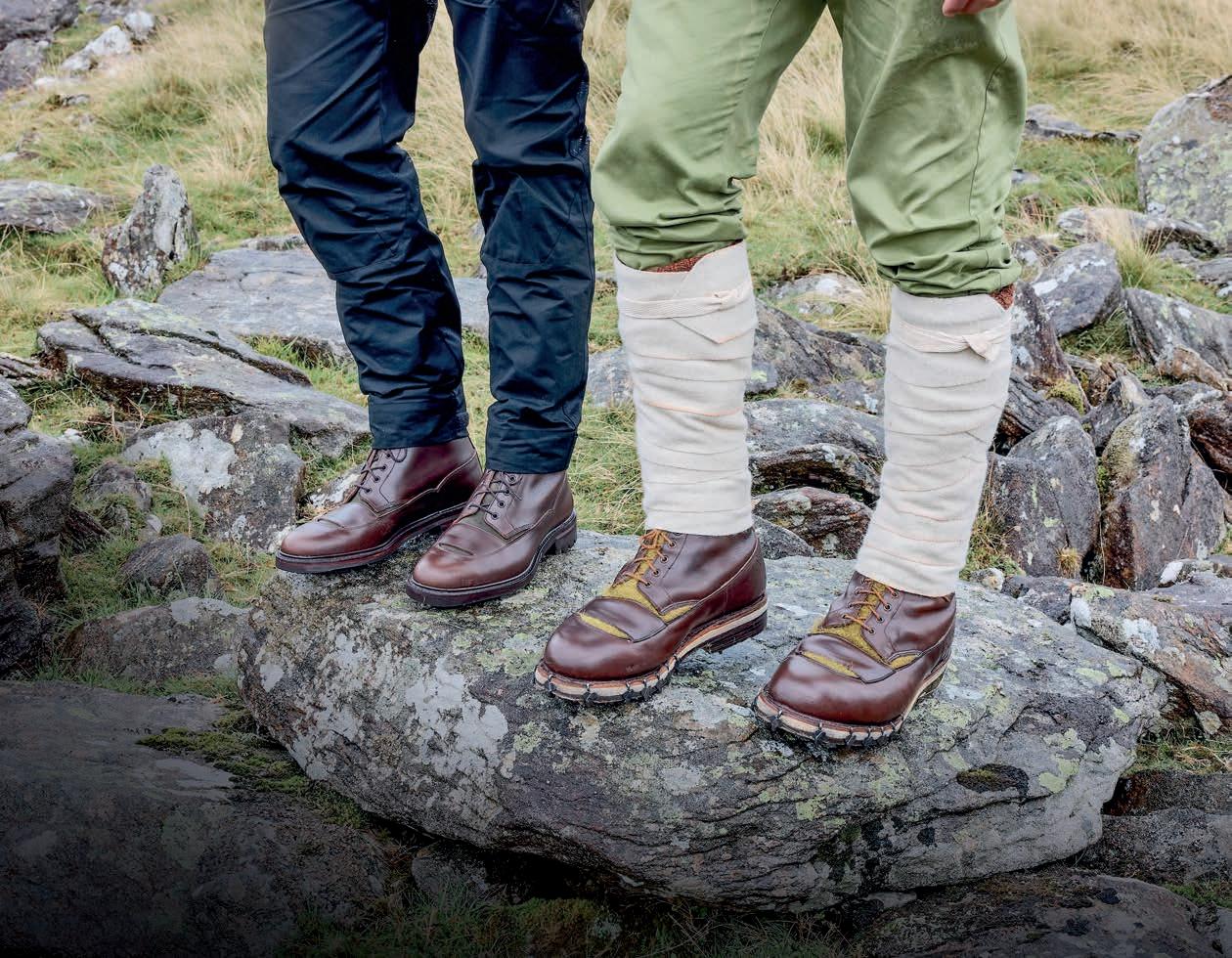
One twin, Ross Turner, had up-to-date kit from mountaineering brand Montane and footwear from Mammut. The other, Hugo, was equipped with meticulously designed replica clothing and equipment from the Everest expedition in 1924, including handstitched wool garments from Devold of Norway and custom-made replicas of Mallory’s boots. The aim was to see how Mallory’s kit compared with today’s; whether it was feasible they made the summit with the gear they had, and how much difference modern kit and technology makes in terms of the body’s capabilities, stress or comfort.
Identical twins climbed Mera Peak wearing two eras of mountaineering kit: one in cuttingedge technical apparel, the other in a meticulous replica of George Mallory’s 1924 gear. Crockett & Jones stepped up to the task of recreating the 100-year-old boot.
Shoemaker’s dream
Recreated by the British shoemaker Crockett & Jones, the boots took nearly two years to research and build, with around 40 craftsmen and women involved in the process. The metalwork, felts and leathers were as close to the original as possible, and the Northamptonshire-based footwear maker worked closely with local suppliers and engineers to reproduce the hardware by hand.
Crockett & Jones had already been making shoes in Northampton for 50 years by the time Mallory attempted the summit. The family-run Goodyear
Alongside the replica Mallory boot (right), the Everest boot was put to the test on Mount Snowdon in North Wales.
welted specialist was tasked with making boots for Ernest Shackleton’s 1914 Endurance expedition to the Antarctic – and still makes shoes following the same handmade practices, ensuring high quality and durability are sewn into each shoe. However, finding authentic materials and designs for the Mallory shoe was challenging, particularly creating new patterns and bespoke lasts that were made to fit Hugo’s feet wearing three pairs of woollen socks.
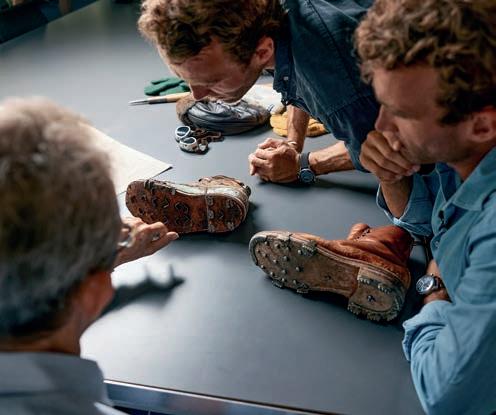
The project began with several trips to the Royal Geographical Society in London, where Mallory’s one remaining boot is kept (his body was sadly only discovered in 1999). A boot belonging to Andrew Irvine was found in 2024. Yurt felt, the main insulation, sourced from Lancashire, sits between the outer leather and the lining leather. Lasting and welting the boot was the hardest part, with a 1cm midsole of pressed wool adding to the challenge.
Crockett & Jones’ managing director Jonathan Jones admits to having a “boyhood obsession” with early Everest exploration, making the commission “a dream” as a bootmaker of 40 years. “The boot left us speechless,” he says. “There is no doubt in my mind that no one could have made such an accurate replica without the multiple inspections we were permitted of the original boot. Remarkable.”
Data crunching
The Turner twins have worked with the University of Portsmouth’s Extreme Environments Laboratory, which studies the limits of human endurance in harsh conditions, to test the historical equipment’s possible effect on decisionmaking and how this compared with modern kit. Initial testing highlighted the difference between the thermal performance of the replica boots and layering
system of George Mallory's kit and the modern system: the older kit meant Ross’s skin readings showed an average lower temperature of 2 or 3°C.
Hugo pointed out that a difference of 2 or 3 degrees for traditionally made boots and clothes using only natural materials was impressive given the huge amount of research and development that has gone into the synthetic, modern equivalent. He pointed out that he was wearing seven layers on the top half of his body and four on the bottom half, compared with much fewer for his twin. On the expedition, sensor-enabled patches collected physiological data every five minutes. The twins also tested cognitive performance, cortisol levels (associated with stress), dexterity and clothing durability.
Mallory’s shadow
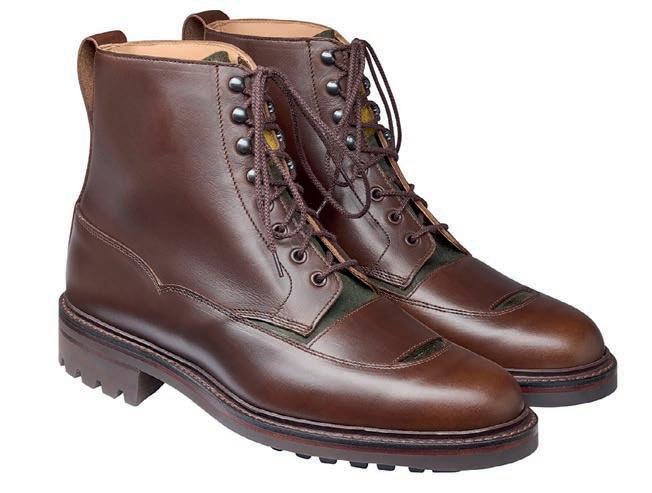
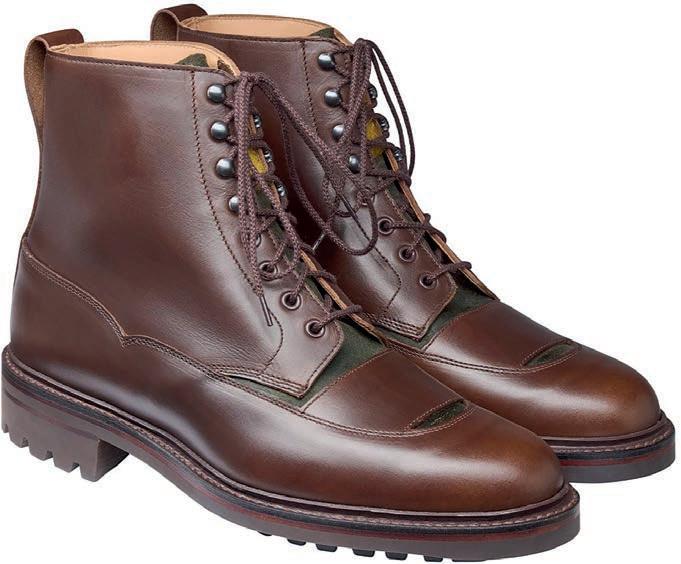
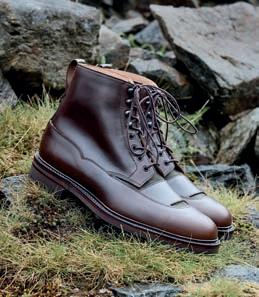
Crockett & Jones has now created a consumer-friendly version of the Mallory boot, called Everest. It retails at £695 and is made using the same waterproof side leather, has a half-bellows tongue and a waterproof feather-lined membrane to minimise the chances of water permeating through the welt area. To link the boots, the bootmaker also included a yurt felt layer in between the outer leather and the tongue lining, visible through a clear window. It is finished with a commandocleated rubber sole.
The university is still working through all the data, with the full results to be published soon. “This expedition has been one of the most enjoyable we’ve ever done, partly because of the people of Nepal and the team we had, but also the fact we have identified some fascinating neverbefore-seen insights and performance data from Mallory’s clothing,” says Ross Turner. And returning to the “epically exciting question” of whether Mallory could have reached the summit of Everest in 1924? With the level of performance that his footwear and clothing achieved, both brothers agree that he “probably could have”.
The new Everest boot is a ‘consumer friendly’ version, offering the history and backstory –but with more comfort.
The Turner twins and Jonathan Jones compare the original Mallory boot with the replica.
Once upon a tree, 1854.
Back then we bet everything on chestnut –because even then we felt that nature already held the best formula. Nobody spoke of sustainability, yet leather tanned with its extract became a classic.
Today our plant extracts – chestnut, quebracho, tara –and our signature tanning agents for Ecotan® and Olivenleder® deliver exactly the feel, colour and performance your spec sheet demands, from rugged sole leather to luxurious automotive nappa and refined leather goods. And this portfolio continues to evolve with developments such as light-coloured chestnut extracts and bisphenol-free tanning solutions.
When the job is done, we close the loop: production residues return to the soil as certified organic fertiliser, letting new forests and fields breathe –proof that natural high-performance leather gives back more than it takes.
proudly natural
Which leather idea can we bring to life for you?
Send your brief to our BU Leather Manager China Daniele Biolo – dbiolo@silvateam.com and take the next step with us at APLF Hong Kong Stand No. 1B-B30 | 12–14 March 2026.
Get a first glimpse of what we’ll be sharing at APLF: www.silvateam.com/aplf
Live at our booth
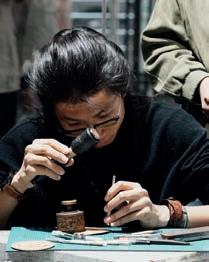
Meet leatherworker Mai Junran and experience vegetable-tanned leather in the making – with the option to receive your own custom-fitted leather insoles.
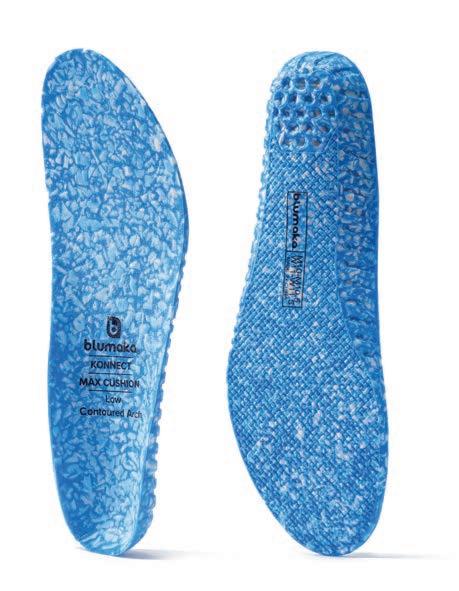
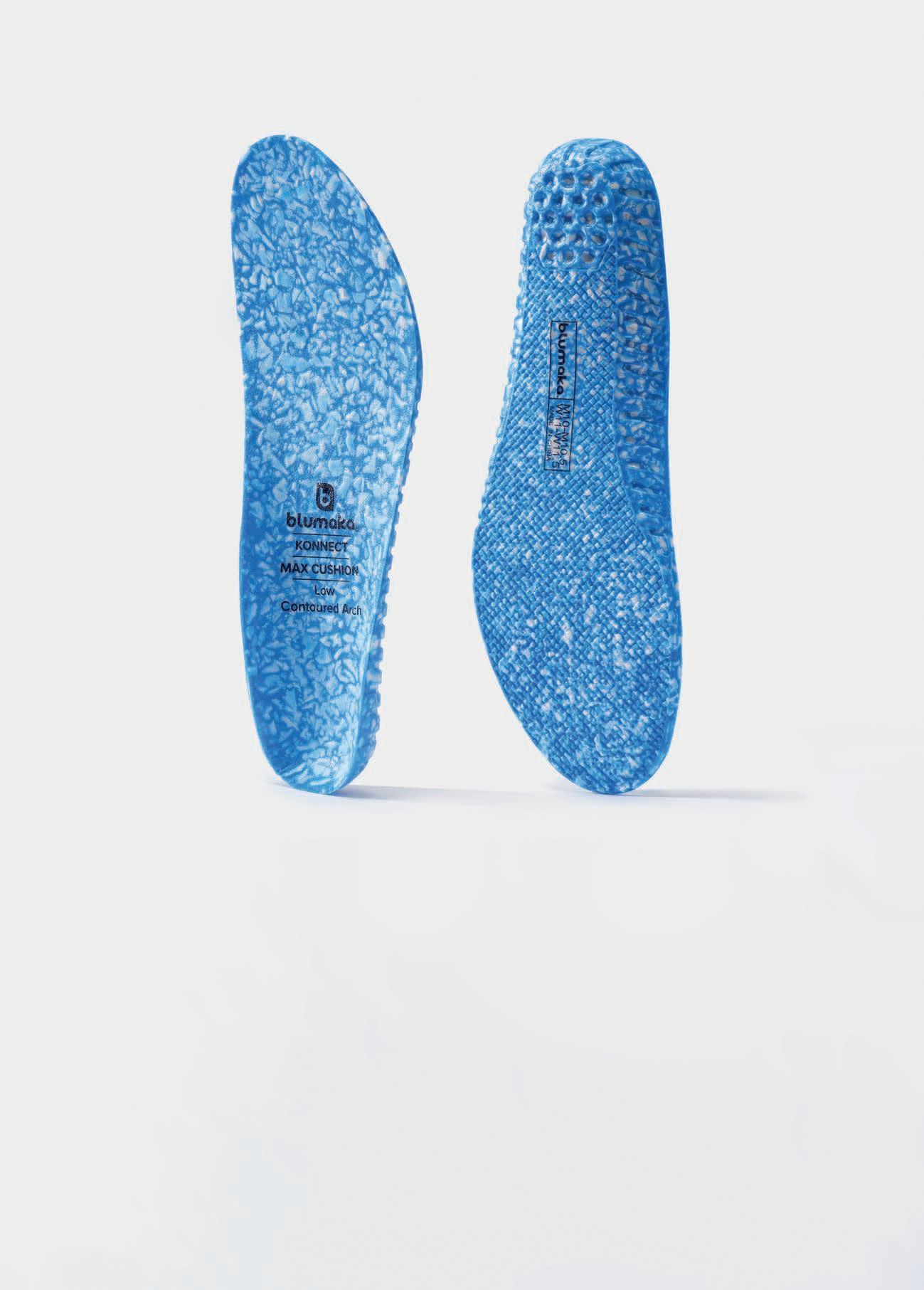
High-friction insole surfaces increase grip between the foot and the insole, reducing internal foot movement.
CREDIT: BLUMAKA
Reclaiming a lost material
Chronic injury can be career ending for many athletes, and US national team lacrosse player
Trevor Baptiste thought turf toe was a pain that would mar his entire professional life. When the foot slides inside the shoe, particularly during turf sports, the big toe (metatarsophalangeal or MTP) joint can sprain or bruise due to the upward bending. Baptiste had tried shoes a size too small, but the constant jamming of his feet made the injury worse. Being introduced to Blumaka’s insoles with their propriety non-slip technology was a “turning point”, he says. “The non-slip changed how secure I feel in my shoes.”
But the company didn’t start out on a mission to tackle foot comfort and injury – its first mission was to tackle waste. Co-founder Stuart Jenkins has seen many developments during his decades-long career in the footwear industry through previous roles, such as senior vice-president of innovation at Deckers Brands and
Made with 85% recycled product, Blumaka’s insoles and midsoles can help footwear brands find a use for foam waste while boosting comfort and durability. Anti-slip technology and carbon plates are taking performance to an extra level.
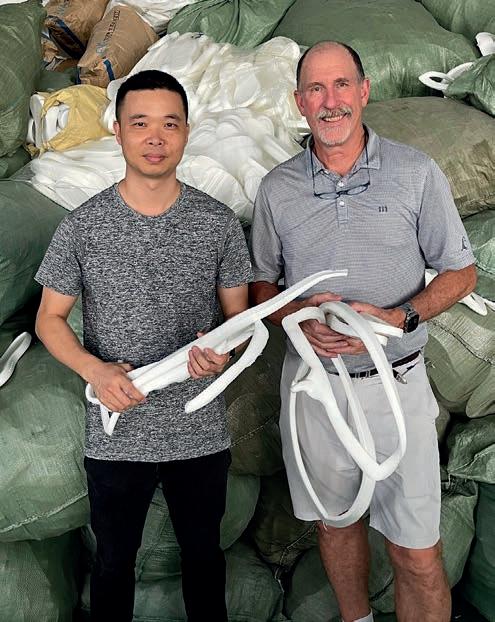
CEO at Shoes for Crews. During visits to shoe factories in Asia, he was always struck by the vast amount of leftover foam heading for landfill or incineration: enough to make 5 billion insoles or 2.5 billion midsoles per year, according to some estimates. This high-quality material was going to waste. In 2019, he teamed up with
Joe Skaja, who led the team that created the Nike Air sole, and manufacturing expert Chantal Herry to create a new product stream, at a new solar-powered factory in China and a new use for this material.
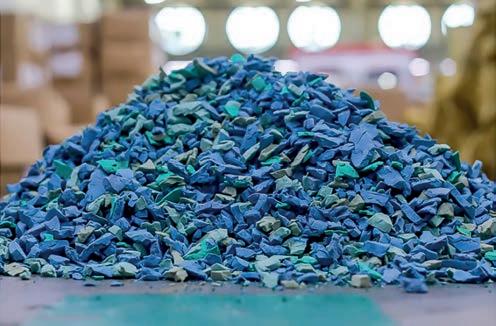
Over three years, and working with companies such as Huntsman, they developed the process. Waste foam is ground into granulated particles and mixed with PU to create the midsole unit. A special TPU film is then used, creating insoles and midsoles with 85% recycled content. In theory, the recycled materials could include any foam that can be chopped up: EVA, PU, biofoam, Bloom, ETPU, Poron, TPE-E, TPU, Styrofoam, silicone or neoprene.
Adding a high percentage of recycled material is often associated with a lower-performing product, but it is exactly these flecks of foam that make the material so comfortable, marketing manager Charley Hoffman tells Footwearbiz. Rather than a straight EVU foam, the ground-up pieces create air bubbles, which increase comfort and durability. “When you encase little pellets of foam in a film, it becomes stronger, because when one of these little cushion units fails, the next one picks up the slack,” he says, noting Skaja had been instrumental in this discovery in the 1990s.
But converting big brands to the recycled foam was not going to be as easy as first imagined, even with the team’s strong footwear connections. They faced resistance against switching suppliers and a hesitance towards new manufacturing techniques, even if it could be proven to have a lower environmental impact, with the manufacturing process using no silicone and far less water than conventional foam-making. The company sought a new avenue: direct to consumer.
Running circuit
Jenkins, a dedicated runner who once trialled for the Olympics, was unhappy about spending thousands of dollars on shoes and insoles as they wore out. Shoe manufacturers often prioritise the more marketable midsole technology, outsole and the upper, he says, while the insole receives less design and engineering attention. “The dirty little secret of most running shoes is that they go flat or lose their cushioning in about 200 miles. When I was training 100 miles a week for the Olympic trials
marathon, I needed a new pair of shoes every two weeks,” he says. “That was until I invented the Blumaka insole.”
This insight meant the first market to really adopt Blumaka were trail runners. Runners face unpredictable terrain and sudden shifts in movement, and a foot that slides even slightly in the shoe can cost stability and increase injury risk. The team attended running events and speciality retailers, promoting the non-slip benefits and durability: tests showed the insoles were good for 1,000 miles. Next, sports where foot stability is paramount: baseball, American football, pickleball and lacrosse. An independent study of more than 200 professional athletes revealed 80% improved their start/stop speed, 90% ran faster and 80% reported improved lower-body stability from the knee down. Blumaka says tens of thousands of athletes now choose the insoles.
Trainers’ end
Addressing waste, lowering the carbon footprint and making durable products are key sustainability tenets in the footwear industry, but recycling post-consumer shoes has always been difficult. The complexity of shoes – with their multitude of materials and glues, plus shipping the waste around the world to facilities with the right capabilities, inceased the carbon footprint and negated the environmental benefits. However, companies such as Fast Feet Grinded in the Netherlands and Sneaker Impact in Miami can grind shoes down to granules of rubber, EVA foam, TPU foam, PU foam and textiles, ready to be supplied to other sectors. Blumaka believes US manufacturing of the insoles could work, with enough
Athlete Trevor Baptise says the insoles have reduced his ‘turf toe’ pain. CREDIT: BLUMAKA
Foam that was once sent to landfill is ground down to form the basis of new insoles and midsoles, as well as components for Fleks Footwear. CREDIT: BLUMAKA
“ Waste foam isn’t a problem, it’s an opportunity. ”
STUART JENKINS, BLUMAKA
orders in the region of 15,000 per month. “We can take Sneaker Impact’s foam and, using our process, turn old running shoes into new shoes or components,” says Hoffman. “Right here, there's a solution.”
The new shoes he mentions include sister company Fleks Footwear. When Jenkins told former Deckers colleague Leah Larson about the plan to create the foam, she immediately saw its potential for flip flops and slides. “What better material to use for beach sandals than a material that protects the ocean by diverting plastic from the waste stream?” she says. At the end of last year, the shoes received a huge credibility boost: Oprah Winfrey included the San Ysidro Slide on her ‘favourite things’ list.
Brand take-up
Brand adoption is growing. Alongside pickleball brand Daps, baseball-focused SQAIRZ, running specialist Run Rabbit and safety footwear brand SR Max, Allbirds last September launched a Remix collection using Blumaka midsoles, and was the first footwear brand to use Circ’s textile-to-textile recycled materials derived from polycotton waste. Last summer, Blumaka released the Carbon Elite, built around Carbitex’s GearFlex G3 carbon fibre plate. This plate flexes naturally as you run but stiffens throughout the gait cycle, which stops over-rotation of the MTP joint but still enables natural running – a development to address turf toe and which is now being used by the National Football Leage (NFL). “So much time is spent on the outsoles of shoes, making sure you’re not sliding on a football field or your cleat doesn't slip in the turf or the grass, but every time an athlete cuts or changes direction, their foot slides inside their shoe,” adds Hoffman. “Grip socks are a big thing, but they don’t really
solve the problem. There’s nothing else in the market like our non-slip technology.”
Next in the portfolio will be another insole with an integrated carbon plate – this time a more rigid one, again aimed at the NFL. Blumaka is also aiming to grow its sports partnerships – with tests showing promising results for golfers, for example – as well as retailers, with the product available on its website, sports retailers and Amazon. “We don’t recycle trash, we reclaim the most advanced foam ever made and improve upon it,” says Jenkins. “Our process shows that waste foam isn’t a problem, it’s an opportunity.”
Stuart Jenkins and partners have created a use for foam leftovers.
CREDIT: BLUMAKA
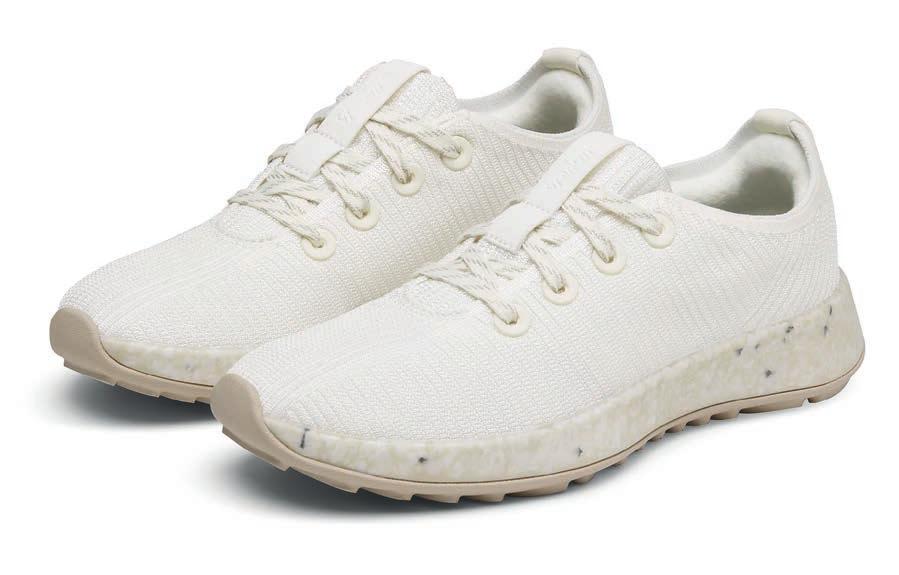
Allbirds’ Remix styles give second life to manufacturing waste by transforming blended textile waste and foam scraps into new shoes
CREDIT: ALLBIRDS
‘Premium’ as a superpower
All successful companies need to have a vision.
Swiss athletic footwear brand On describes its vision in a straightforward enough way, although that does not mean its ambitions will be easy to achieve. It wants to be the most premium sportswear brand in the world.
Chief executive, Martin Hoffmann, who has called On’s premium status the brand’s superpower, accepts that even understanding exactly what this means is difficult. “Premium is something brands can talk about at length,” he says, “but, ultimately, it is something that you experience as a customer. It is an emotion that we all, as customers, can have towards a brand.” For customers to perceive any brand as premium means they desire that brand’s products, he suggests. Once they have acquired those products, they might feel this boosts their (the customers’) identity, and that this is something worth paying a premium for. “Our task is to curate this feeling with the customer,” Mr Hoffmann explains.
Set apart
Inevitably, a question comes to mind as to how you “curate this feeling”. Clearly, you cannot do it by offering what the mass-market offers, only at a difficult-to-justify higher price. You have to set yourself apart from the mass-market, the On chief executive insists.
“There is a lot of competition in the mass-market,” he adds. “And, in any case, Switzerland is not good at building mass-market brands. We have to chart our own path, and not just fish in the same pond as everyone else. On has to do this by growing brand awareness and by bringing to market products that customers will find exciting, leading with innovation.”
Athletic shoe brand On aims to put itself at the pinnacle of the premium market, and stay there. It is innovation that will drive this ambition.
Born into running
There are stand-out examples of bringing innovation to market in recent running shoes that the brand has developed. Mr Hoffmann makes no apology for this focus on the company’s core segment. “We were born into running and we want to stay relevant in running,” he says. “We still have an aspiration to be the leader in running.”
He talks about the company’s Cloud shoes almost as though the various ranges were businesses in their own right. There are Cloudmonster, Cloudultra, Cloudsurfer and Cloudrunner collections; they are, to use his phrase “amazing franchises”. There will be updates in at least two categories of Cloud in the course of 2026.
The age of superfoams
One forthcoming product that exemplifies the Swiss company’s commitment to innovation is the Cloudsurfer3. Production of this shoe combines the LightSpray technology that the company introduced in 2024, plus a proprietary cushioning system called CloudTec, and a new proprietary superfoam called Surreal. On’s claim is that using CloudTec and Surreal results in a “significantly greater” impact absorption than the foam alone can deliver.
On says it was “born into running” and is intent on remaining relevant among running enthusiasts.
“We are seeing a lot of innovation around foams,” Mr Hoffmann explains, “and being able to combine the foam we have developed with our engineering ability is to bring CloudTec into the age of superfoams.”
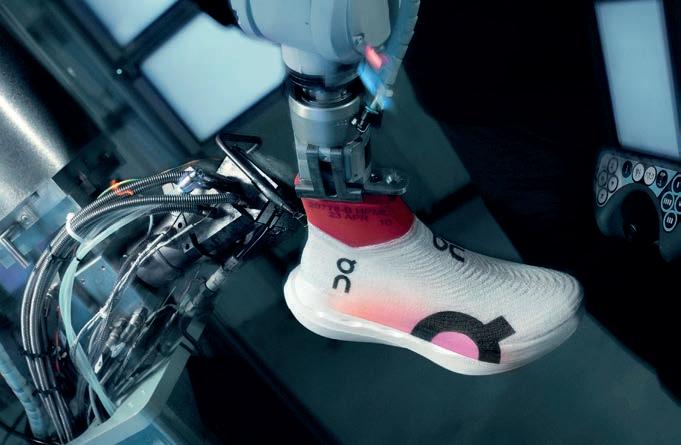
For its part, LightSpray is revolutionising the way the company makes its products, he continues. It involves using a robotic arm to spin the upper of a shoe in a single step. The company is now preparing to launch LightSpraymade shoes that the chief executive says will be “relevant to everyday runners”, as well as to high-level athletes. These will be available in March.
Visibility through apparel
But running is only one part of the On business. There is what he calls “massive growth” in products for training, especially in collections for women aged between 18 and 35. And the brand is aiming to expand in tennis, which is appropriate as it names Roger Federer as one of its “co-entrepreneurs”. The 20-time Grand Slam champion first invested in On in 2019. The company is also excited about growth in the popularity of its apparel collections and here, too, tennis is becoming increasingly important. “Tennis is our fastest growing apparel segment,” Martin Hoffmann says. “Tennis makes apparel extremely visible, on court and off.”
The sports it finds most attractive are those that lie at the intersection of performance and lifestyle, he explains His view is that the lines between performance and lifestyle are now blurring, with some sports apparel
‘PREMIUM’
On chief executive and chief finance officer, Martin Hoffmann.
becoming high fashion and people moving seamlessly from sports activity and exercise to other aspects of their lives. On has an opportunity to stand out, he insists, because of the “design DNA and innovation DNA” that it has. In apparel this will mean high levels of functionality and comfort, but with “much more styling” than other brands.
A different kind of profit warning
Martin Hoffmann is also the chief finance officer of On. The company went public in 2021 with its shares trading not on the SIX Swiss Exchange in its home city of Zurich, but in New York. He has overseen a doubling of revenues in the past three years. In the final quarter of its current financial year, it expects fullyear revenues of almost 3 billion Swiss francs (around $3.75 billion), growth of 34% year on year. The world of finance is also impressed by its projection that profit margins will increase by more than 60% in this financial year.
Mr Hoffmann plays this down. Investors are important, but he says he is wary of pushing margin-growth too far. If you have high margins it can be an indication of strong growth. Alternatively, high margins can also mean that a company has run out of ideas and no longer knows what to spend its money on. “We still have a lot of ideas and a lot of big dreams,” Mr Hoffmann says. “Our philosophy is to increase our margins steadily, to keep doing the right things, to keep investing in the brand and in our team, and to continue to be a growth company.”
Another superpower
Ongoing investment in product quality and innovation are crucial to any company seeking to do this. Otherwise, he warns, customers, at some point, will “see through it” and question why a brand is asking them to pay a premium, while delivering the same quality as the massmarket. “A high gross-profit margin can be risky,” he insists. “You have to find the right balance.”
Investment in people is also of great importance and this, in his opinion, is something that the footwear industry as a whole often
underestimates. Strong financial results and successful products are the result of the people a company has brought on board; other assets help, but it is people who make the magic work. On hired 600 people in 2025; it received a total of 200,000 applications for these positions. At the time of writing, it gives the very precise total of its employees as 4,286. Martin Hoffmann is happy that the company is attracting talent, calling this “another superpower”.
Automation push
The company’s success in growing revenues and margins in the current financial year has come at a time of widespread tariff tensions and what observers refer to as “the politicisation of trade”, and even as “the weaponisation of supply chains”. Mr Hoffmann says On has tried to absorb much of the tariff pain so far, and has been able to do so without reducing its ability to invest in the
LightSpray technology in action. Martin Hoffmann says the performance footwear sector is “seriously lagging behind in automation”.
business and in innovation. If this particular cloud has a silver lining, Mr Hoffmann suggests that the tariffs may have encouraged many brands to invest in automating production. Much as he values human talent, he believes this to be a good thing. Automation is an important tool for addressing costs and he says the whole performance footwear sector must push towards greater automation. “Our industry is seriously lagging behind when it comes to automation,” he says. “This does not necessarily mean shifting manufacturing closer to target markets. It will just make us more independent in the face of all kinds of impacts. We cannot rely on manual labour being cheap enough to continue running the old business model.”
A 2025 version of the Cloudultra running shoe. On will bring two new Cloud designs to market in 2026.
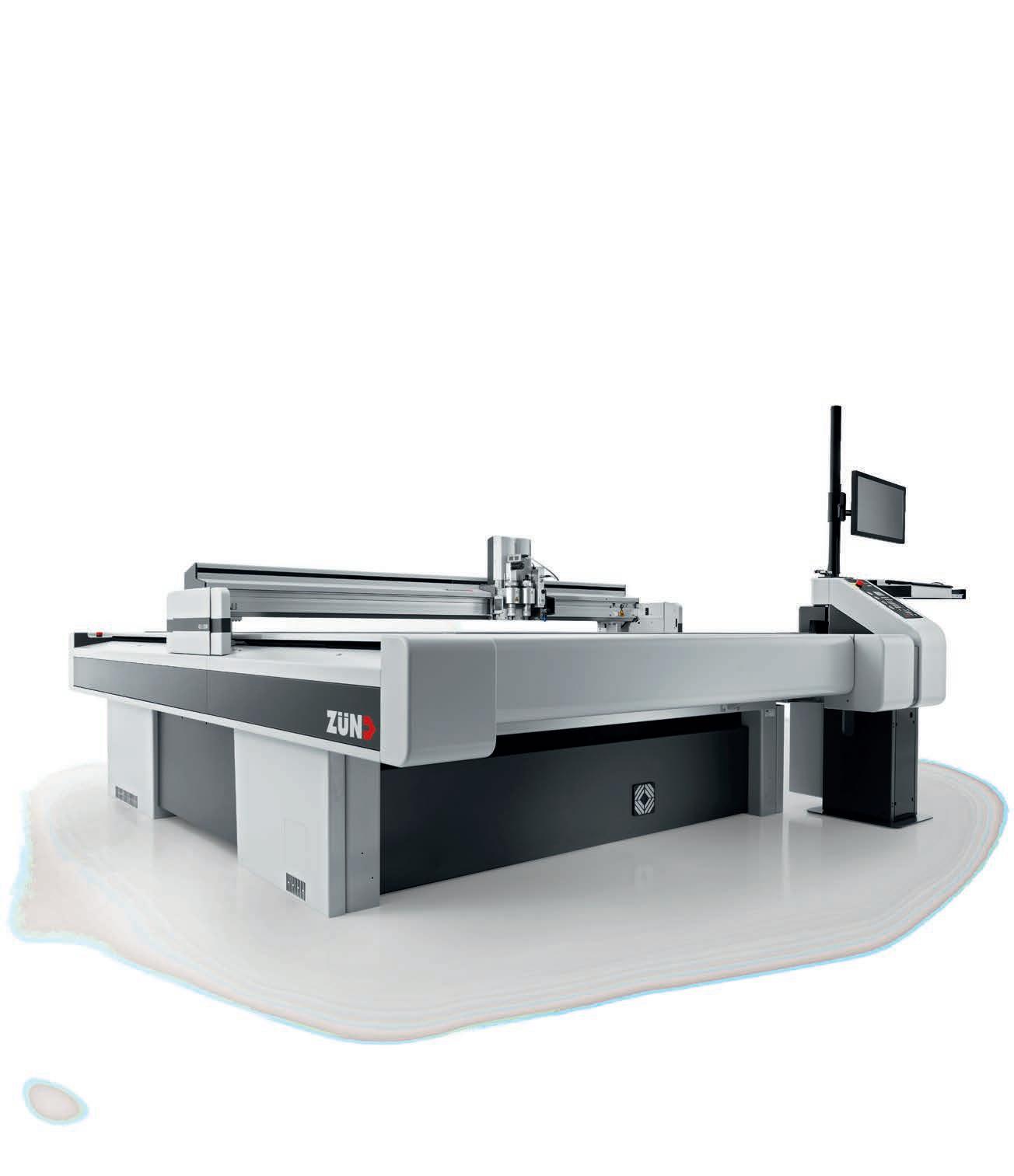
• Turn-key systems for leather cutting
• Powerful nesting for maximum material yield
• Highest level of productivity
• Individually configurable
www.zund.com
Own-factory advantages
In the hard-to-predict business world of the mid2020s, keeping some manufacturing in house has paid dividends for footwear group Rocky Brands. Its long-established, closer-to-home supply chain links are helping it work its way through the tariff turmoil. In the first nine months of 2025, the group brought in revenues of $342.25 million, an increase of just over 5% compared to the same period a year earlier.
Price increases helped, chief executive, Jason Brooks, acknowledges. He accepts that the group’s retail partners were always going to be less than enthusiastic about these changes, but he insists they understood the reasons behind them. “The good thing is that everybody had to deal with this [the tariffs],” he continues. “Retailers were able to take the price increases and we have seen our consumers navigate the situation too.”
Percentage gains
Producing uppers in Rocky Brands’ home country, the US, moving them to be “bottomed and soled” at its own factory in the Dominican Republic and shipping finished product back into the US from there is not tariff-free. The US’s Dominican Republic-Central America free
As the whole business world tries to find ways to navigate tariffs and turmoil, footwear group Rocky Brands says its policy of keeping at least some production in house has brought benefits.
trade agreement (CAFTA-DR) remains in effect, but tariffs apply in this case because some of the materials and components that the factory on the Caribbean island uses come from much further afield. At the time of writing, this footwear carries a tariff of 10%.
In comparison, Rocky Brands also has its own factory in China. Product from there coming into the US in the early part of 2026, with base tariffs and countryspecific additional tariffs, carries a total tariff burden of around 40%. Work boots, of the kind Rocky Brands specialises in, coming into the US from Vietnam currently carry a total tariff of around 50%.
Durango boots became popular during the recent Beyonce-inspired Western style craze.
ALL CREDITS: ROCKY BRANDS
Bite the bullet
Chief finance and chief operating officer, Tom Robertson, makes an interesting observation on the effect of this on the group’s activity in China. Lower production costs in Vietnam have brought brands round to sourcing from there in recent years, even though many of the raw materials supplying factories in Vietnam still come from China. If equal or even higher tariffs are going to apply to footwear shipped from Vietnam, Mr Robertson argues that it can make sense just to keep manufacturing of some products in China.
If tariffs are a bullet you have to bite anyway, you may as well take advantage of the shorter supply chain China offers. It may have helped that with many companies “trying to get out of China”, the prices partners there were offering were better; they now have more capacity. “This has made China more competitive,” he insists.
Different way of thinking
He calculates that the full impact of tariffs on Rocky Brands in 2025 will come out at around $20 million. With the time it takes for inventory to work its way through and appear on the balance sheet, he says it will probably be the second half of 2026 before the group sees the full benefit of the adjustments it has put in place to address the impact of the tariff situation on the business. When that benefit does shine through, he believes the group’s gross margins will be greater than they were pre-tariffs. Leveraging to a greater extent than before the group’s inhouse manufacturing facilities has been the main change. Like tariffs or not, Jason Brooks says they pushed the company to “think a little bit differently”, especially when it comes to how it manufactures its footwear. “I don’t know how many of our peers have manufacturing capabilities like ours, or if any of them have,” he goes on. Increasing output at its factory in Puerto Rico is another example. Puerto Rico is an unincorporated territory of the US; shoes and boots from there qualify as US-made, Mr Brooks points out. As a result, he says Rocky Brands will be able to start producing a totally US-made version of its Muck brand’s Chore boot in the early part of 2026. The Chore is a waterproof work boot, particularly suited to farmers and others who spend a large part of their day in muddy fields.
Outdoor appeal
The group has five different active, consumer-facing brands (Rocky, Durango, Georgia Boot, Muck Boot and Xtratuf) and its product range is varied. Its outdoor products include neoprene rubber boots (long and ankleheight) from Xtratuf. Many of these started out as footwear for fishing, but Jason Brooks claims that some of the styles have now become “a little bit of a fashion product, but still very functional”. Some Xtratuf boots now have fleece lining and have become popular for coldweather wear in places that are far from any ocean, including Colorado and Wyoming.
Muck is a brand that made something of a comeback in 2025. To use the chief executive’s phrase, the group “saw this brand explode” in 2022 and 2023. Immediately after that, though, there was a slow period because
retailers were “over-inventoried”. Last year was better and he says he is excited about where the brand is going in 2026.
With Rocky, Georgia and Durango, he says it mainly depends on the season and the mood of the times. Western boots such as the Bronco and the Original Ride have been popular, helping to meet the surge in demand for cowboy-themed products that singer Beyoncé brought about in 2024 with the release of her Cowboy Carter album. This album generated 76 million streams on Spotify on the day of its release.
Fashion editor of the New York Times, Vanessa Friedman, said Beyoncé had made Western aesthetics “the look of the moment”. Echoing this, Mr Brooks says: “Western was hot, although it seems to have calmed down now a little bit.” Products such as the BearClaw and Blizzard Stalker boots are popular in the hunting season, he adds, while work boots are “steady business”. This category is performing strongly for the simple reason that the products work well. “Our products are like tools,” the chief executive says. “People need them to go to work. Yes, we introduce new shoes every year and try to broaden our offering. But we have products that have been in the line for 35 years; the same outsole, the same leather, everything is the same. They are there because our customers use them.”
Muck Boots, for workers in wet and muddy environments.
Combined capabilities
Coats has previously talked about its acquisition of OrthoLite as a development that will help it become a super-supplier of footwear components. What is a super-supplier?
It's all about being a more value-added partner for our customers. Coats has always worked hard to be a world-leading, trusted tier-two supplier to the footwear and apparel industries. Now, with OrthoLite, we’re leaning into our combined capabilities in textile engineering, polymer science, colour management and sustainability to co-create new solutions for even more of the shoe. Our supplychain scale is also a big value-add. Our strong financial foundation means we are able to invest for the long term, ensuring we have the capacity, capabilities and consistent global footprint our customers need, even in the face of changing market conditions. We like to think of ourselves as a co-pilot for our customers, supporting them from the ideation phase all the way through to commercialisation, with an eye on growth, quality and consistency.
What are the particular qualities or advantages that each of the three footwear components suppliers you have acquired in the last few years bring to Coats?
Each of the three adds a distinct capability, and together they create a comprehensive, value-added partner for our customers. OrthoLite strengthens our offering as a premium insole brand with longstanding relationships with leading athletic and outdoor footwear brands. It also brings a comfort system expertise that complements many of our existing materials and components, alongside its sustainable materials platform, Cirql. Rhenoflex enhances our structural components and our overall innovation process. Next-generation technologies such as Rhenoprint, which reduces waste and improves efficiency and precision, are also important. Texon adds scale and depth to our structural materials portfolio, reinforcing fit, form and durability with revolutionary woven materials.
What would your response be to any footwear brand or manufacturer that might be concerned that your acquisition of Texon, Rhenoflex and now OrthoLite could make the sector too dependent on Coats Footwear?
First, I would underscore that our focus remains on adding value for our customers and being the best possible tier-two manufacturing partner to the apparel and footwear industries. We want to help shape the future of apparel and footwear through innovation, sustainability and digital technology platforms that help our customers compete. We are very passionate
Coats Group completed the acquisition of performance insoles developer OrthoLite in October 2025. This followed its acquisition of two other prominent footwear component suppliers, Texon and Rhenoflex, in 2022. After the OrthoLite deal concluded, Coats reorganised its business into two divisions, one for footwear and the other for apparel. Here, group CEO, David Paja, explains the strategy behind these moves.
about this. Secondly, I would remind brands and manufacturers that the footwear materials and components industries are, and will remain, highly competitive. There are multiple vendors and choices across every category. At the same time, our industry is very fragmented and scale is needed in order to invest in the innovation, global industrial footprint and digital technologies that the industry requires. While we build on the combined capabilities, we intend to manage OrthoLite as a stand-alone business within Coats, meaning no change in service, teams, or solutions for OrthoLite customers.
What will Coats do to make sure innovations and new ideas keep flowing from the components companies it has acquired?
Our approach to integration is to preserve what makes each business distinct and successful, while looking for opportunities to accelerate innovation and unlock agility at scale. For example, while OrthoLite remains a stand-alone business within Coats, we are already creating opportunities to bring different teams together, actively creating spaces for sharing ideas. We are focused on building a culture of creativity and collaboration without disrupting day-to-day service. We will also invest in ‘back-end’ platforms such as our ShopCoats digital platform. Operational planning tools and other ‘factory of the future’ initiatives to help free up teams to focus on solving customer problems will also be part of our focus. This will create the foundation and infrastructure to scale up innovations with more agility and consistency.
Group CEO of Coats, David Paja.
CREDIT: COATS GROUP
From the point of view of developing new ideas in insoles, heel counters, toe puffs, lining materials and so on, what are the advantages and disadvantages of being part of a large group rather than a relatively small company?
There are many. First, while our company may be big, we purposefully keep our teams feeling ‘small’. This means our people can build close partnerships with customers and offer a service that feels as attentive as a smaller company. We understand our customers and look to co-create solutions for them. OrthoLite, in particular, is great at this. Then, when you zoom out, there are so many benefits Our innovation capabilities span multiple components and categories; this gives us industry-leading expertise and the ability to innovate across more parts of the shoe. It also allows us to support our customers much earlier in the design process. Our global footprint and scale are also important. We know how to simplify complex supply chains. And we can offer customers stability in the markets where they need it, when they need it. We also have technology platforms designed to make everything easier for our customers, from design to development, to sample ordering and tracking. We are continuously investing here to be fit for the future. Finally, an important benefit is our approach to sustainability. We have a rigorous net-zero roadmap, dedicated water and waste reduction efforts, and are committed to transitioning to sustainable materials. We support our customers and partners in meeting their own sustainability goals.
What are your early impressions of footwear manufacturing (in general) as an industry? What surprises have there been for you, compared to other manufacturing and engineering sectors that you have worked in?
As someone who has spent more than three decades leading transformation and growth in sectors as diverse as automotive, aerospace and industrial electronics, I have found footwear manufacturing to be both familiar and refreshingly unique. What stands out most is the pace of product development given the consumer-driven nature of the industry. In footwear, the product cycles are much shorter, and success is often determined by how
quickly you can translate new ideas and real insights into products that excite consumers and meet their expectations for performance and sustainability. The complexity of global operations is something I have managed across multiple countries and continents, and I see clear parallels in footwear too. Supply chains are intricate, and the ability to deliver quality and consistency at scale is critical. However, what is different here is the level of collaboration required between brands, suppliers and manufacturers to bring new concepts to market rapidly and securely. The pace at which sustainability expectations are evolving in the footwear industry is also striking. Brands and consumers are looking for real, measurable progress, and I see our net-zero roadmap and investments in recycled and renewable materials as important ways we can support our partners in meeting these expectations.
OrthoLite’s new facilities in north Vietnam.
CREDIT: ORTHOLITE/COATS FOOTWEAR
Woven material developed by Texon, one of the footwear component suppliers Coats has acquired in the last few years.
CREDIT: COATS GROUP
Footwearbiz
All you need to know to assist you in the global footwear market. (4 issues per year)
Footwearbiz (Digital) £100 per year
Footwearbiz Premium (Print) £140 per year
World Leather
The world’s leading magazine for the leather industry. (6 issues per year)
World Leather & £270 per year
Leatherbiz (Digital)
World Leather (Print) £300 per year & Leatherbiz
Sportstextiles
The international technical trade magazine for innovative and responsible materials. (2 issues per year)
Sportstextiles (Digital) £100 per year
Sportstextiles Premium (Print) £120 per year
Inside Denim
Keep up to date with denim developments from raw material to finished product with in-depth coverage of advances at fibre and fabric level. (2 issues per year)
Websites
Designed to provide up-to-the-minute news and market intelligence.
WHAT IT MEANS TO BE GREEN
At Stanbee, we’ve built our name on innovation. Green innovation. We make it our mission to produce the lightest, thinnest, strongest, most resilient structural footwear materials in the industry. And we do it while cutting our reliance on raw materials—thus protecting the environment from unnecessary waste.
For example, all of our Nitro products are injected with a foaming system that displaces raw virgin materials, thereby reducing weight and improving performance.
Also, Nitro Force, our lightest, firmest heel counters, are made from at least 85% PET-recycled plastic bottles. Each pair of these counters reuses the recycled content of two one-time use PET water bottles. That helps offset the 500 billion plastic bottles tossed into the global waste stream every year at a rate of one million bottles per minute.
Now we’re offering three new Nitro products: Nitro Flex for unparalleled flexibility in a heel counter; Nitro Vulc for exceptional fit and comfort in vulcanized footwear; and Nitro Sport for high-performance toe boxes that are lighter, softer and more resilient—with increased recycled content.
All of these products are available in a zero-waste, net-product, closed-loop system.
So speak to your Stanbee representative today—or visit www.stanbee.com. Not only will you boost your product’s performance, you’ll be protecting the planet. That’s what it means to be green.