THE GLOBAL KITCHEN
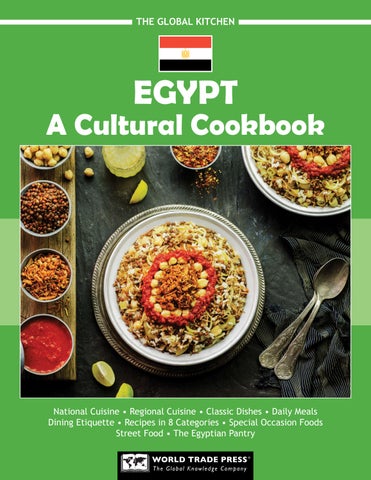
EGYPT
A Cultural Cookbook
National Cuisine • Regional Cuisine • Classic Dishes • Daily Meals Dining Etiquette • Recipes in 8 Categories • Special Occasion Foods Street Food • The Egyptian Pantry
Recipes in The Global Kitchen series are provided for informational and cultural purposes only. Results may vary due to differences in ingredients, equipment, and individual cooking experience. Always follow safe food-handling practices and exercise caution with sharp utensils and hot surfaces. Check all ingredients for potential allergens before use. World Trade Press has not independently tested every recipe and assumes no responsibility for the outcome, safety, or accuracy of any recipe or information presented.
Copyright © 2026 by World Trade Press Publisher: Edward G. Hinkelman Editors: Brielle Burt, Felicia Topp, Kasey Myers, Emily Padgett Series Designer: Kristie Wolgamott Production Designer: Michael Warner Cover Image: Dina Saeed/Shutterstock No part of this publication may be reproduced, stored in a retrieval system, or transmitted in any form or by any means, electronic, mechanical, photocopying, recording, scanning, or otherwise, except as permitted under Section 107 or 108 of the 1976 United States Copyright Act, without the prior written permission of the Publisher. For information about permission to reproduce selections from this report, please contact Permissions: permissions@worldtradepress.com For information about special discounts for bulk purchases, please contact Sales: sales@worldtradepress.com
ISBN: 978-1-60780-997-5 www.TheGlobalKitchen.com www.worldtradepress.com World Trade Press, 616 E. Eighth St., Ste. 7, Traverse City, MI 49686
THE GLOBAL KITCHEN
EGYPT
A Cultural Cookbook
Gen S. DuMonde
TABLE OF CONTENTS National Cuisine ........................................ 8
The Egyptian Pantry .................................334
Regional Cuisine ....................................... 10
a. Bell Pepper ....................................336
Classic Dishes .......................................... 13
b. Cheese .........................................337
Daily Meals ............................................. 16
c. Chickpea .......................................338
Dining Etiquette ....................................... 18
d. Coriander ......................................339
Special Occasion Foods .............................. 20
e. Cumin ..........................................340
Street Food ............................................ 25
f. Date ............................................341
Did You Know? ......................................... 30
g. Dill ..............................................342
Coffee Culture ......................................... 36
h. Eggplant........................................343
Tea Culture............................................. 38
i. Fava Bean ......................................344
National Beers ......................................... 40
j. Garlic ...........................................346
National Liquor(s) ..................................... 42
k. Grape ...........................................347
Mixed Drinks ........................................... 45
l. Honey...........................................348
Appetizer Recipes ..................................... 46
m. Lemon ..........................................349
Soup Recipes ........................................... 82
n. Lentil ...........................................350
Salad Recipes .........................................106
o. Mint .............................................351
Bread Recipes ........................................130
p. Nut ..............................................352
Main Course Recipes .................................157
q. Nut ..............................................353
Side Dish Recipes ....................................199
r.
Dessert Recipes.......................................244
s. Olive Oil ........................................356
Snack Recipes.........................................279
t. Onion ...........................................357
Okra ............................................355
u. Parsley .........................................358 v. Tahini ...........................................360 w. Tomato .........................................361 x. Wheat ..........................................362 y. Zucchini ........................................363
LIST OF RECIPES Aish Baladi (Pita) ......................................... 132
Koushari (Lentils, Pasta, and Rice) .................... 176
Aish Fino (Soft White Bread Rolls) ..................... 134
Labneh (Yogurt Cheese Spread)..........................68
Aish Merahrah (Flatbread) .............................. 136
Lamb Kebabs.............................................. 178
Aish Shamsi (Sun Bread) ................................ 138
Lemon and Garlic Potato Salad ........................ 119
Aish Shamy (White Pita Bread)......................... 140
Lentil Ful Medames (Stewed Fava Beans and Lentils) ...94
Baba Ghanoush (Eggplant Spread).......................48
Macarona bil Béchamel ................................. 180
Baklawa (Baklava) ....................................... 246
Mahlab (Nigella Flatbread) ............................. 148
Balah el Sham (Levantine Fritters) .................... 248
Mahshi (Stuffed Vegetable Stew) ........................96
Bamia (Okra and Meat Stew) .............................84
Meshabek (Funnel Cake) ................................ 264
Basbousa (Semolina Cake) .............................. 250
Michoteta (Salad with Cheese) ..........................70
Batata Beshame (Sweet Potato Béchamel Casserole) ... 252
Mihallabiya (Milk Pudding).............................. 266
Bataw (Barley Flatbread) ............................... 142 Bedingan Mekhalel (Marinated Eggplant) ..............50 Besarah (Fava Bean Dip) ..................................52 Boksomat (Breadsticks) ................................. 144 Bouzat Haleeb (Ice Cream) ............................. 254 Eggah (Omelet with Herbs) ...............................54 Fasolia (Green Bean Stew) ...............................86 Fasulya Beeda Barda (White Bean Salad) ............ 110 Fattah...................................................... 164 Fattoush (Toasted Pita Salad) .......................... 112 Feteer Meshaltet (Layered Pastry) .................... 146 Ful Medames (Stewed Fava Beans) ......................56 Ful Nabed (Fava Bean Soup) .............................58 Ful Salata (Bean Salad) ................................. 114 Gebna Makleyah (Fried Cheese) .........................60
Molokhia (Jute-Leaf Stew) ................................98 Om Ali (Bread Pudding) ................................. 268 Qatayef (Stuffed Mini Pancakes)....................... 270 Qoras (Anise, Fennel and Buttermilk Buns) .......... 150 Roast Lamb................................................ 186 Roz bel Laban (Rice Pudding) .......................... 272 Roz bil Shareya (Rice with Vermicelli) ................ 230 Sahlab (Milk Pudding) ................................... 274 Salata Baladi (Tomato Salad) ........................... 123 Salatat Tahina (Tahini Salad) .............................72 Salatet Bangar (Beet Salad) ............................ 124 Salatet Zabadi bel Khiar (Cucumber Yogurt)...........74 Shakshouka (Eggs Poached in Tomato Sauce) ........ 188 Shawarma ................................................. 190
Goulash bil Lahma el Farma (Savory Phyllo Meat Pie) ...62
Shorbat Adas (Lentil Soup) ............................. 100
Halabesa (Chickpea Soup) ................................90
Shorbat Adas bil Dajaj (Red Lentil Soup with Chicken) .. 102
Hamam Mahshi (Stuffed Pigeon) ....................... 168
Shorbat Kolkas (Taro Soup) ............................. 104
Hawawshi (Meat Pie) .................................... 304
Shoreek (Sweet Bread Rolls) ........................... 152
Hummus (Chickpea Spread) ..............................64
Simit (Sesame Seed Ring Bread) ....................... 154
Kahk (Shortbread Cookies) ............................. 258
Ta’amiya (Falafel) .........................................76
Kahk Bi Loz (Almond Bracelets) ....................... 260
Tarb (Minced Meat in Caul Fat) ........................ 192
Kawarea (Cow’s Feet Stew) ..............................92
Torly (Layered Meat and Vegetable Casserole) ...... 194
Khoshaf (Fruit Compote)................................ 263
Torshi Baladi (Pickled Vegetables).......................78
Kibda Eskandarani (Alexandrian Liver Salad) ........ 116
Warak Enab (Stuffed Grape Leaves) ....................80
Kofta (Meatballs) ...........................................66
Zalabya (Doughnut Hole) ............................... 276
FOREWORD Welcome! This cookbook offers a structured and research-informed exploration of Egyptian cuisine, drawing on more than 30 years of culinary documentation and cultural study. Developed from our reference database, home cooks, chefs, and food historians. It is not a narrative of personal experience but rather a contextualized account of how Egyptian food has evolved and what it reveals about the country’s diverse cultural foundations. Egyptian cuisine is among the world’s oldest, with roots stretching back to the time of the pharaohs. Ancient Egyptians cultivated wheat, barley, lentils, onions, and dates, creating a foundation of bread, beer, and stews that remain essential to the national diet. Over centuries, the country’s position at the crossroads of Africa, Ottoman rulers, and later European powers all introduced new ingredients and techniques, from olive oil and blending indigenous traditions with the legacies of conquest, trade, and migration. itizes cultural and historical context alongside method. From ful medames and koshari to molokhia, stuffed pigeon, and basbousa, each entry is positioned within its broader narrative—whether rooted in ancient agriculture, Islamic and Ottoman heritage, Mediterranean trade routes, or contemporary reinterpretations shaped by urbanization and globalization. As with all books in this series, the tone is informational rather than anecdotal. The goal is to offer readers a practical yet culturally grounded understanding of Egyptian cuisine—not only what is eaten, but how and why. In doing so, the collection illuminates a national food identity that is ancient yet continually evolving. It geography, history, and enduring relationship between food and community.
TABLE OF CONTENTS
7
NATIONAL CUISINE Cultural Favorites Filled turnovers called hawawshi are another favorite of Alexandria’s and Cairo’s street food scene. Made with minced lamb or beef seasoned with parsley, pepper, chile pepper, and onions baked into dough, hawawshi is a working-class staple. One interesting recipe considered the national dish is kushari. Dating to the mid-1800s, it is an amalgam created by Egyptian soldiers who traveled in India and Europe encountering regional cuisines. Made with rice, lentils, macaroni, and spiced tomato sauce, kushari is seasoned with Egyptian spices and eaten hot or cold, garnished with chickpeas, crispy onions, garlic juice, and hot sauce. Cheese making in Egypt dates to ancient times, with varieties found in tombs from 3000 BCE. Today, soft white cheeses such as domiati and areesh are common, along with the hard, salty rumi. Cheese appears at breakfast and in many savory pastries. Tea is the national drink, most often black and sweetened. Two styles dominate: shai bil na’na’, black tea infused with fresh mint, and saiidi tea, a stronger brew steeped longer and heavily sweetened. Other popular beverages include cinnamon tea, ginger tea, and karkadeh, a bright red hibiscus infusion served hot or cold. The classic baked dessert om Ali—literally “Ali’s mother”—is made from layers of pastry or croissants soaked in sweetened milk and baked with nuts, raisins, coconut, and sugar until golden and bubbling.
TABLE OF CONTENTS
A man sells bamia in Luxor.
9
REGIONAL CUISINE Upper Egypt: Traditional and Spicy The cuisine of Upper Egypt (southern Egypt) is spicier and more robust than in the North, featuring a greater use of both dried and fresh chiles. A traditional dish from this region is hamam mahshi, which consists of pigeon stuffed with freekeh or rice and herbs, then roasted or grilled. Upper Egypt also makes prominent use of dates and date syrup in both extensive date palm groves. Ta’ameya, the southern version of falafel made from fava beans, is another regional specialty, often served in pita with pickled vegetables.
Ta’ameya is the Egyptian version of falafel.
The cuisine of the Sinai Peninsula is shaped by the nomadic Bedouin tribes, focusing on simplicity and sustainability. A common Bedouin dish is fatta, layers of rice and bread soaked in broth, mixed with grilled meat and garnished with garlic yogurt and crispy onions. The availability of herbs and spices such as cardamom, which is gahwa, highlights the traditional lifestyle and culinary practices that have been preserved over centuries. Egyptian cuisine is a vibrant mix of the country’s rich past and its dynamic present, offering an array of dishes
meals of the Sinai Peninsula, Egyptian food provides a delicious insight into the cultural mosaic that is Egypt. the Egyptian people themselves.
TABLE OF CONTENTS
11
CLASSIC DISHES Tomato Salad – Chopped tomato, onion, cucumber, mint, parsley, and lemon juice create a light salad that complements almost any meal.
MAIN DISHES
Koushari – A popular street food, this layered mixture of rice, lentils, chickpeas, and pasta is topped with spiced tomato sauce and crispy fried onions. Torly – A home-style stew combining meat and seasonal vegetables, torly is baked or simmered until
SIDE DISHES
Ful Medames
Falafel – Known locally as ta‘amiya, these fried patties made from puréed chickpeas or fava beans are served with pita bread, lettuce, tomatoes, and tahini sauce. Ful Medames – A staple of Egyptian cuisine, this dish of slow-cooked fava beans is typically seasoned with garlic, lemon juice, and olive oil and eaten for breakfast or as a light meal.
Beef Kofta
Bamia – Okra stewed with tomato, onion, and spices forms the basis of this rustic casserole served alongside meat or rice. Beef Kofta – Seasoned ground beef is shaped into
Hamam Mahshi (Stuffed Pigeon) – Pigeons bred for the table are stuffed with rice and herbs and then grilled or roasted, yielding one of Egypt’s most prized delicacies.
producing one of Egypt’s favorite accompaniments to
Ful – Simply boiled and buttered or mashed with olive oil and lemon, beans are eaten daily across Egypt in countless variations.
Koushari
14
TABLE OF CONTENTS
DINING ETIQUETTE Table Etiquette In Egypt, meals are often shared communally, and eating with the right hand is customary. When utensils are used, both hands may come into play, but food taken directly from a shared dish or by hand should always be handled with the right hand. It is polite to wash one’s hands before and after eating. Many foods—particularly dips, stews, and salads—are eaten with pieces of baladi bread, which serves as a scoop. Showing the soles of one’s shoes or pointing feet toward others is considered impolite, but there is no need to keep the feet tucked under the table.
In Egypt, the right hand is customarily used for eating or holding utensils.
Dishes are typically placed in the center of the table for everyone to share. Guests are encouraged to try every item and to accept second helpings when offered. Finishing the food on one’s plate is appreciated, as wasting food can be seen as disrespectful to the host.
Social Dimension of Dining Egyptian hospitality is warm and generous. Guests are greeted with tea, ahwa (coffee), or juice upon arrival and are often invited to stay and converse after the meal. Bringing thoughtful gesture of thanks. Seating and serving customs emphasize respect for elders and honored guests, who
Communal dishes are served in the middle of the table.
18
TABLE OF CONTENTS
honored position is at the head of the table. While traditional gender separations or hierarchical serving orders may persist in some rural or conservative settings, they are not standard in most Egyptian homes today.
SPECIAL OCCASION FOODS BIRTHDAYS friends, and food. Traditional dishes such as kebabs, kofta (minced meat rolls or balls), and various rice dishes are common. Sweets, including baklawa (laybasbousa (a semolina cake soaked in syrup), also are served, and birthday cakes are an essential part of the celebration, often decorated with bright colors and candles. The food at Egyptian birthdays emphasizes sharing and indulgence, with meals designed to celebrate life’s milestones and bring loved ones together.
Cultural and Regional Festivals
SHAM EL-NESSIM
Sham El-Nessim is an ancient Egyptian festival marking the beginning of spring, celebrated on the Monday after Easter. The traditional meal for Sham El-Nessim includes fesikh eggs, and fresh spring onions. The festival also includes bread and green lettuce as symbols of renewal and the holiday, with families gathering outdoors for picnics and meals that celebrate the changing season.
MAWLID AL-NABI Taking place on the 12th day of the third month of the Islamic calendar, Mawlid al-Nabi celebrates the birthday of the Prophet Muhammad and is marked with prayers, processions, and special meals. Traditional sweets such as halawa (a confection made from sesame seed paste and sugar) and malban (a chewy candy made with rose water) are commonly enjoyed during the celebration. Savory dishes such as koshari and fattah (toasted pita topped with rice, meat, and a garlic sauce) also are prepared. The food during of the holiday and the joy of community gatherings.
22
TABLE OF CONTENTS
STREET FOOD Sweet Treats
QATAYEF
BASBOUSA
Basbousa, also known as harissa, is a sweet, semolinabased cake soaked in a sugary syrup and often topped with almonds or coconut. Other variations might include adding yogurt to the batter for extra moisblossom water. Typically cut into diamond shapes or squares, basbousa is a favorite dessert sold by street vendors and bakeries, especially during Ramadan.
Qatayef with sweet cheese, nuts, and/or cream before being fried or baked and drizzled with syrup. Variations might include adding cinnamon or shredded coconut to the batter or using different toppings such as Nutella. Qatayef is a special treat, particularly during Ramadan, and is widely available at street vendors.
ZALABIA
KONAFA
Konafa is a pastry made from thin, shredded phyllo nuts, cream, or cheese. Variations might include using Konafa is a traditional dessert, particularly popular during Ramadan and sold at street stalls and markets.
Zalabia, also known as loukoumades, are small, deepfried dough balls soaked in sugar syrup or honey and sometimes sprinkled with powdered sugar. Variations might include adding sesame seeds or dusting them with cinnamon-sugar. Zalabia is a popular street snack, especially in the evenings and during festivals.
TABLE OF CONTENTS
27
DID YOU KNOW? Ancient Roots
Pickled veggies are often made at home and can be found on the table at almost every meal, adding a tangy, crunchy contrast to main dishes. This tradition food preservation.
Important Bird
Molokhiya, a green leafy vegetable also known as Jew’s mallow, was considered a royal dish in ancient Egypt. Believed to have medicinal properties and used to treat various ailments, it is traditionally cooked coriander. While molokhiya is enjoyed throughout Egypt, its dria, it is typically served with rabbit, while in Cairo, it might be prepared with chicken or beef. Each region adds its unique twist, such as different spices or cooking techniques.
Food Preservation
Pigeon, known as hamam, is a delicacy in Egyptian cuisine, often served stuffed with rice or freekeh (green wheat). Pigeon farms are common in Egypt, and the birds are considered a symbol of fertility and prosperity. The practice of consuming pigeon dates back to ancient Egypt, where they were bred for both food hamam mahshi (stuffed pigeon) is a dish reserved for special occasions and celebrations.
Pickling is a common preservation method in Egyptian cuisine, with a wide variety of vegetables, such as cucumbers, carrots, and turnips, being pickled and served as side dishes. One of the most unique pickled items is torshi, which includes pickled lemons. TABLE OF CONTENTS
31
COFFEE CULTURE How It’s Enjoyed Coffee is a deeply social ritual in Egypt. It is typically enjoyed in traditional cafés, known as ahawi, where men gather to drink coffee or tea, smoke shisha and play board games such as backgammon. Coffee also is offered to guests at home, particularly during special occasions, condolences, and important meetings. While many Egyptians consume tea more frequently in daily life, coffee holds symbolic weight as a sign of respect and hospitality. In recent years, modern coffeeshops have emerged in the cities of Cairo and Alexandria, especially among youth and professionals, offering a fusion of Western and Middle Eastern styles.
Locals at an Ahawi (café) in Cairo.
Interesting Facts • The term qahwa, now used across the Arab world for both coffee and coffeehouses, originated in Yemen and became widespread via Egypt. • Turkish or Levantine styles. • In cultural and religious settings, coffee may be served during mourning ceremonies as a gesture of solemn respect. • ahawi as central meeting places for social and political discourse. • Despite the rise of Western cafés, Egypt’s traditional ahawi remain vibrant, especially in the areas of Khan el-Khalili and Islamic Cairo.
TABLE OF CONTENTS
37
FUL NABED (FAVA BEAN SOUP)
Prep Time: 15 minutes Recipe Servings: 4
Cook Time: 35 minutes
Total Time: 50 minutes
Dietary Considerations: Vegetarian, Vegan, Gluten Free, Dairy Free, Kosher, Halal
This fava bean soup is a lighter, brothy relative of ful medames, prepared throughout Egypt during cooler seasons and during Coptic fasting periods. The name ful nabed refers to fava beans simmered in broth with
meal.
58
TABLE OF CONTENTS
APPETIZERS
BAMIA
(OKRA AND MEAT STEW)
Prep Time: 20 minutes
Cook Time: 1 hour 45 minutes
Recipe Servings: 6
Total Time: 2 hours 5 minutes
Dietary Considerations: Gluten Free, Kosher, Halal
This hearty stew is one of Egypt’s most enduring comfort foods, prepared in homes and restaurants across the country. The name bamia simply means “okra” in Arabic, and in Egypt it most often refers to a tomato-based
meals and festive gatherings. Its tangy tomato sauce, tender okra, and slow-cooked meat embody the essence of Egyptian home cooking.
84
TABLE OF CONTENTS
SOUPS
BABA GHANOUSH (EGGPLANT SPREAD)
Prep Time: 20 minutes Rest Time: 30 minutes Cook Time: 45 minutes Total Time: 1 hour 35 minutes Recipe Servings: 6
Dietary Considerations: Vegetarian, Vegan, Gluten Free, Dairy Free, Kosher, Halal
Baba ghanoush is an eggplant dip with deep roots across the eastern Mediterranean, including Egypt, where it commonly appears as part of a mezze mented in rigorous test kitchen and newspaper methods. The Egyptian table often treats baba ghanoush as a cool, savory counterpoint to rich meats and breads, served with a drizzle of olive oil and herbs. The method
108
TABLE OF CONTENTS
SALADS
AISH FINO
(SOFT WHITE BREAD ROLLS)
Prep Time: 15 minutes Rest Time: 2 hours 15 minutes Cook Time: 25 minutes Total Time: 2 hours 55 minutes Recipe Servings: 10 rolls
Dietary Considerations: Vegetarian, Kosher, Halal
is an Egyptian bread whose name comes from the Italian word describing its light and tender texture. The bread developed during the early 20th century, when European baking traditions entered Egypt’s urban bakeries. It became an accessible, locally adapted form of soft white roll, served alongside breakfast foods such as cheese, eggs, or ful medames. Unlike coarse, whole-grain aish baladi dard feature of Egyptian bakeries and home kitchens, bridging imported technique and local tradition.
134
TABLE OF CONTENTS
BREADS
KAWAREA
(COW’S FEET STEW)
Prep Time: 30 minutes
Rest Time: 30 minutes
Recipe Servings: 6
Cook Time: 3 hours
Total Time: 4 hours
Dietary Considerations: Gluten Free, Dairy Free, Halal
Kawarea (cow’s feet stew) is one of Egypt’s most traditional celebratory dishes, prized for its gelatin-rich broth and its reputation for restoring energy. It is especially common during holidays and large family gatherings, where it is served alongside rice or molokhia. The dish has deep roots in rural and urban kitchens alike,
kawarea carries a strong sense of nostalgia, symbolizing generosity, warmth, and home comfort in Egyptian culture.
170
TABLE OF CONTENTS
MAIN COURSES
BABA GHANOUSH (EGGPLANT SPREAD)
Prep Time: 20 minutes Rest Time: 30 minutes Cook Time: 45 minutes Total Time: 1 hour 35 minutes Recipe Servings: 6
Dietary Considerations: Vegetarian, Vegan, Gluten Free, Dairy Free, Kosher, Halal
Baba ghanoush is an eggplant dip with deep roots across the eastern Mediterranean, including Egypt, where it commonly appears as part of a mezze mented in rigorous test kitchen and newspaper methods. The Egyptian table often treats baba ghanoush as a cool, savory counterpoint to rich meats and breads, served with a drizzle of olive oil and herbs. The method
202
TABLE OF CONTENTS
SIDE DISHES
SALATET BANGAR (BEET SALAD)
Prep Time: 20 minutes Recipe Servings: 6
Rest Time: 15 minutes
Cook Time: 50 minutes
Total Time: 1 hour 25 minutes
Dietary Considerations: Vegetarian, Vegan, Gluten Free, Dairy Free, Kosher, Halal
Among Egypt’s simplest yet most striking salads, salatet bangar showcases the natural sweetness and color of beets balanced by the brightness of vinegar and the warmth of cumin. The dish often appears alongside grilled meats, , or lentil dishes, where its acidity cuts through heavier textures. In both home kitchens and restaurant mezze platters, it provides a vivid splash of color and contrast. Many families prepare it
with bold, uncomplicated seasonings.
236
TABLE OF CONTENTS
SIDE DISHES
MESHABEK (FUNNEL CAKE)
Prep Time: 20 minutes
Rest Time: 1 hour
Recipe Servings: 8–10
Cook Time: 20 minutes
Total Time: 1 hour 40 minutes
Dietary Considerations: Vegetarian, Vegan, Dairy Free, Kosher, Halal
Commonly sold by Egyptian street vendors and sweet shops, meshabek is a fried dessert made from a ferwoven” or “tangled,” refers to the twisted spiral shape formed as the batter fries. The dessert shares origins with similar Levantine and South Asian confections but has developed its own distinct Egyptian identity. It is most often prepared during Ramadan and festive occasions. The cooled syrup gives meshabek its crisp, glossy texture and characteristic sweetness.
264
TABLE OF CONTENTS
DESSERTS
FETEER MESHALTET (LAYERED PASTRY)
Prep Time: 35 minutes
Rest Time: 1 hour
Recipe Servings: 8
Cook Time: 15 minutes
Total Time: 1 hour 50 minutes
Dietary Considerations: Vegetarian, Kosher, Halal
Crisp on the outside and tender within, feteer meshaltet is one of Egypt’s oldest and most emblematic pastries. The dish consists of multiple paper-thin dough layers brushed generously with ghee, folded, and baked at feteer meshaltet evolved into a symbol of hospitality served to guests and at celebrations. Rural bakeries still produce it on wide metal larity lies in the craftsmanship of its layers and the balance of simplicity and indulgence in every bite.
296
SNACKS
MIHALLABIYA (MILK PUDDING)
Prep Time: 10 minutes
Rest Time: 2 hours
Recipe Servings: 4
Cook Time: 25 minutes
Total Time: 2 hours 35 minutes
Dietary Considerations: Vegetarian, Gluten Free, Kosher, Halal
Long regarded as one of Egypt’s oldest and simplest desserts, mihallabiya is a milk pudding thickened with ground rice and scented with rose water. Its origins trace to early Islamic cookery, likely introduced to Egypt during the Umayyad period and later adapted across North Africa and the Levant. The dessert is prized for with chopped nuts, it remains a staple at family gatherings and festive meals. Egyptian versions typically use ground rice instead of cornstarch, preserving its historical preparation method.
320
SNACKS
BELL PEPPER Preparations Although they are botanically fruits, bell peppers are used as vegetables in culinary preparations. Bell peppers are used fresh as a snack, in salads, and as a garnish. They are cooked when used in soups, stews, sauces, meat dishes, and vegetable dishes, and they can be preserved in salt and oil.
Season
Red, orange, and yellow bell peppers are harvested in late summer and early fall.
Did You Know? •
•
Description Bell peppers are the fruit of a cultivar group of the species Capsicum annuum and members of the nightshade family. They are plump and hollow, with an interior ribbing of white membrane and seeds. The bell pepper is the only member of the Capsicum genus that does not produce capsaicin, the chemical that gives other peppers a burning quality.
The word pepper comes from the Greek word pipari, which referred to pungent black peppercorns originating in India. It is thought that Christopher Columbus gave this name to the Capsicum genus for its spicy characteristics, and the name stuck to bell peppers, even though they are not spicy.
Origin The bell pepper originated in Central and South America.
Varieties Common varieties are bright red, orange, yellow, or green, while less common varieties are lavender, deep purple, white, or brown.
Red, orange, and yellow bell peppers are sweet and texture. Green and purple peppers are slightly bitter, as are the interior membrane and seeds of all bell peppers.
Bell peppers—particularly the red, orange, and yellow varieties—are an excellent source of vitamin C, as well as a good source of pyridoxine, vitamin A, folate, molybdenum, and vitamin E. Bell peppers also contain
336
TABLE OF CONTENTS
THE EGYPTIAN PANTRY
ABOUT WORLD TRADE PRESS World Trade Press is a publishing and information products company specializing in country-based information company’s mission is to strengthen mutual understanding across cultures by lowering the information barriers that prevent individuals and organizations from succeeding in the international arena. World Trade Press clients include academic and public libraries, universities, global businesses, government agencies, global logistics
Databases World Trade Press has developed and maintains more than a dozen large-scale online databases of country and city information covering business, culture, food, import/export, local living, and travel for 174 world countries and 201 world cities.
Physical Books, Atlases, and Maps World Trade Press has published multiple editions of more than 100 physical reference books, country business guides, books for international trade and logistics, world atlases for travel and logistics, and world and country wall maps.
Professional Reports and E-Books World Trade Press has developed and maintains more than two dozen professional-level country e-reports and e-books for each of 174 countries. These products cover topics such as business culture, cost of living, demographics, education, environment, holidays and festivals, government, money and banking, music, quality of life, religion, security, social indicators, and more.
Contributors All World Trade Press products—from our databases and e-content reports to our physical books, maps, and atlases—are created through the collaboration of a dedicated internal staff of researchers, writers, editors, and cartographers and more than 100 external subject-matter experts to create world-class security, and travel. To view a partial list of contributors to titles in The Global Kitchen series, go to TheGlobalKitchen.com/World-Trade-Press. Learn more about World Trade Press and its products at www.WorldTradePress.com.
Enjoyed this cookbook? For more recipes, updates, and global food inspiration, follow The Global Kitchen on Facebook and BlueSky.
Social Links: Facebook - www.facebook.com/wtpglobalkitchen
Check out all the titles in The Global Kitchen series, including:
616 E. Eighth Street, Suite 7 Traverse City, MI 49686 USA 366
www.TheGlobalKitchen.com