THE GLOBAL KITCHEN
COLOMBIA
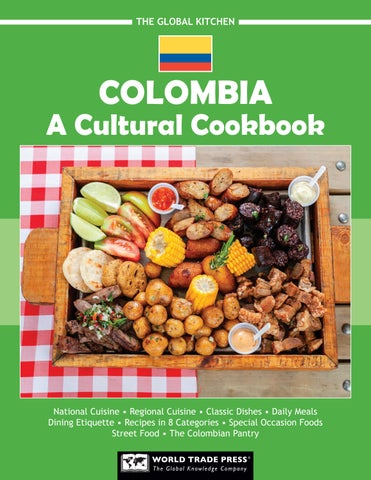
A Cultural Cookbook
National Cuisine • Regional Cuisine • Classic Dishes • Daily Meals Dining Etiquette • Recipes in 8 Categories • Special Occasion Foods Street Food • The Colombian Pantry
Recipes in The Global Kitchen series are provided for informational and cultural purposes only. Results may vary due to differences in ingredients, equipment, and individual cooking experience. Always follow safe food-handling practices and exercise caution with sharp utensils and hot surfaces. Check all ingredients for potential allergens before use. World Trade Press has not independently tested every recipe and assumes no responsibility for the outcome, safety, or accuracy of any recipe or information presented.
Copyright © 2026 by World Trade Press Publisher: Edward G. Hinkelman Editors: Brielle Burt, Felicia Topp, Kasey Myers, Emily Padgett Series Designer: Kristie Wolgamott Production Designer: Michael Warner Cover Image: Jhonfoto/Shutterstock No part of this publication may be reproduced, stored in a retrieval system, or transmitted in any form or by any means, electronic, mechanical, photocopying, recording, scanning, or otherwise, except as permitted under Section 107 or 108 of the 1976 United States Copyright Act, without the prior written permission of the Publisher. For information about permission to reproduce selections from this report, please contact Permissions: permissions@worldtradepress.com For information about special discounts for bulk purchases, please contact Sales: sales@worldtradepress.com
ISBN: 978-1-60780-041-5 www.TheGlobalKitchen.com www.worldtradepress.com World Trade Press, 616 E. Eighth St., Ste. 7, Traverse City, MI 49686
THE GLOBAL KITCHEN
COLOMBIA
A Cultural Cookbook
Gen S. DuMonde
TABLE OF CONTENTS National Cuisine ........................................ 8
The Colombian Pantry ...............................326
Regional Cuisine ....................................... 11
a. Achiote (Annatto) ............................328
Classic Dishes .......................................... 15
b. Avocado ........................................329
Daily Meals ............................................. 18
c. Bean ............................................330
Dining Etiquette ....................................... 20
d. Beef.............................................332
Special Occasion Foods .............................. 23
e. Bell Pepper ....................................333
Street Food ............................................ 26
f. Cassava .........................................334
Did You Know? ......................................... 30
g. Cheese .........................................335
Coffee Culture......................................... 34
h. Chicken.........................................336
Tea Culture............................................. 36
i. Cilantro ........................................337
National Beers ......................................... 38
j. Coconut ........................................338
National Liquor(s) ..................................... 40
k. Cornmeal ......................................339
Mixed Drinks ........................................... 43
l. Cumin ..........................................340
Appetizer Recipes ..................................... 46
m. Egg ..............................................341
Soup Recipes ........................................... 80
n. Fish .............................................342
Salad Recipes .........................................108
o. Garlic ...........................................344
Bread Recipes ........................................130
p. Lime ............................................345
Main Course Recipes .................................153
q. Milk .............................................347
Side Dish Recipes ....................................205
r.
Dessert Recipes.......................................242
s. Paprika .........................................349
Snack Recipes.........................................275
t. Plantain ........................................350
Onion ...........................................348
u. Pork .............................................351 v. Potato ..........................................352 w. Sugar ...........................................354 x. Tomato .........................................357
LIST OF RECIPES Aborrajados (Plantain and Cheese Fritters) .......................48
Enyucado (Cassava-Coconut Cake).............................. 255
Achiras del Huila (Achira Cheese Biscuits) .......................50
Flan de Coco (Coconut Custard) .................................. 256
Aguacate Relleno de Salmón (Fish and Avocado Salad) ........52
Frijoles Antioqueños (Bean Stew) ..................................92
Ajiaco (Chicken and Potato Soup) .................................82
Hojuelas (Crisps) .................................................... 259
Almojábana (Cheese Curd Roll) .................................. 134
Langosta con Arroz con Coco (Lobster with Coconut Rice) ..... 178
Arepa de Huevo (Egg-Stuffed Corn Cake) ........................54
Lechona (Stuffed Roast Pork) ..................................... 180
Arepas (Cornmeal Patties) ...........................................56
Mantecada (Butter Cornbread) .................................... 137
Arequipe (Milk Caramel) ........................................... 244
Mazamorra Chiquita (Corn and Vegetable Soup) ................94
Arroz Atollado (Sticky Rice Stew) ................................ 158
Mogolla (Sweet Bread Rolls) ...................................... 138
Arroz con Frijolito de Cabecita Negra (Rice with Black-eyed Peas) ................................ 212
Morcilla (Blood Sausage) ............................................74
Arroz con Leche (Rice Pudding) .................................. 245 Arroz con Pollo (Rice with Chicken) .............................. 160 Bandeja Paisa (Plated Meal) ....................................... 162 Bistec a Caballo (Steak with Fried Egg) ......................... 164 Bocadillo con Queso (Guava Paste with Cheese) ................58 Bollo de Mazorca con Queso (Sweet Corn Rolls with Cheese) ........................... 214
Mote de Queso (Yam and Cheese Soup) ..........................96 Natilla (Christmas Custard) ....................................... 260 Obleas con Arequipe (Wafers with Caramelized Filling) ....... 262 Pan Aliñado (Enriched Buns) ...................................... 140 Pan Campesino (Peasant Bread).................................. 142 Pan de Queso (Cheese Bread) .................................... 144 Pan Trenza (Braided Bread) ....................................... 146
Buñuelos (Fried Doughballs) ...................................... 136
Pandebono (Cheese Rolls) ........................................ 148
Caldo de Costilla (Beef Rib Soup) ..................................84
Papa Salada (Salted Potatoes) .................................... 236
Carimañolas (Fried Stuffed Cassava Rolls) .......................60
Papas Criollas Fritas (Fried Andean Potatoes) .................. 237
Cazuela de Mariscos (Seafood Stew)...............................86
Papas Rellenas (Stuffed Potatoes) ..................................76
Ceviche .................................................................62
Pastel de Tres Leches (Tres Leches Cake) ...................... 264
Changua (Milk and Egg Soup) .......................................89
Patacones (Fried Green Plantains) .................................79
Chicharrones (Crispy Fried Pork) ...................................64
Pescado Frito (Fried Fish) ......................................... 188
Chuleta Valluna (Breaded Pork Cutlet) .......................... 170 Chuyaco (Orange Salad) .............................................66
Pescado Guisado con Leche de Coco (Fish Stew with Coconut Milk) ................................98
Cocadas (Coconut Balls) ........................................... 250
Plátanos Calados (Sweet Plantains) .............................. 239
Croquetas de Yuca (Cassava Croquettes) .........................68
Postre de Natas (Milk Pudding) ................................... 268
Cuchuco de Trigo (Wheat and Pork Soup) ........................90
Puchero Santafereño (Meat and Vegetable Stew) ............. 100
Cuy (Guinea Pig) ................................................... 175 Deditos de Queso (Fried Cheese Sticks) ..........................70
Roscón de Bocadillo o Guayaba (Guava Paste-Stuffed Bread) ............................... 150
Empanadas (Meat Pies) ..............................................72
Sancocho de Gallina (Chicken and Vegetable Soup) .......... 102
Ensalada de Aguacate y Tomate (Avocado Tomato Salad) .... 114
Sobrebarriga Bogotana (Slow-Cooked Flank Steak) ........... 194
Ensalada de Arroz (Rice Salad) ................................... 116
Sobrebarriga en Salsa Criolla (Flank Steak with Salsa) ....... 196
Ensalada de Frijoles Negros y Blancos (Black and White Bean Salad) ............................. 118
Sopa de Mondongo (Tripe Stew) .................................. 104 Sopa de Patacón (Plantain Soup) ................................. 106
Ensalada de Frutas (Fruit Salad) .................................. 120
Tamales ............................................................... 202
Ensalada de Repollo y Zanahoria (Cabbage and Carrot Slaw) 122 Ensalada de Zanahoria y Remolacha (Carrot and Beet Salad) 124
Tomates Rellenos de Atún (Tomatoes Stuffed with Tuna Salad) ....................... 128
Ensalada Rusa (Russian Potato Salad) ........................... 126
Torta Negra (Black Holiday Cake) ............................... 272
FOREWORD Welcome! This cookbook offers a structured and research-informed exploration of Colombian cuisine, grounded in more than 30 years of culinary documentation and cultural study. Developed from our reference database, the collection integrates historical research, regional contributions, and Àrsthand insights from Colombian home cooks, chefs, and food historians. It is not a personal narrative but a contextualized examination of how Colombian food has developed and what it reveals about the country’s diverse cultural and geographic landscape. Colombian cuisine is often associated with arepas and coffee, yet its roots are far broader and more intricate. Long before European arrival, Indigenous groups such as the Muisca, Quimbaya, and Tairona cultivated maize, cassava, plantains, and beans—foundations that remain central to everyday cooking. The Spanish brought new ingredients and livestock, while African communities introduced culinary methods and Áavor proÀles that reshaped the coastal and riverine diets. Later inÁuences from Arab, Caribbean, and European immigrants added further depth, creating a rich tapestry where regional identities—from the highland Andes to the Caribbean coast and Amazon basin—express themselves through distinct dishes, ingredients, and techniques. This volume reÁects that layered evolution. Recipes are organized to highlight both historical and cultural context alongside preparation. From bandeja paisa and ajiaco to sancocho, empanadas, and arroz con coco, each dish is positioned within its broader narrative—whether rooted in pre-Colombian agriculture, colonial trade, enslaved labor traditions, or modern reinterpretations of national favorites. As with all books in this series, the tone is factual rather than personal. The aim is to provide readers with a practical yet culturally grounded understanding of Colombian cuisine—not only what is eaten, but how and why. In doing so, the collection reveals a national food identity deÀned by biodiversity, regional pride, and the enduring belief that food is a vital expression of family, history, and belonging. It stands as both a record of culinary heritage and a reference for the ongoing dialogue that shapes Colombia’s vibrant and evolving gastronomy.
TABLE OF CONTENTS
REGIONAL CUISINE Caribbean Coast: Afro-Caribbean Flavors The Caribbean coast reÁects strong Afro-Caribbean traditions along with later Middle Eastern inÁuences in cities including Barranquilla and Cartagena. Seafood plays a central role, with dishes such as sancocho de pescado—a broth of Àsh, plantains and root vegetables—and pargo rojo frito, or fried red snapper. A signature accompaniment is arroz con coco, made by reducing coconut milk until it browns into titoté before adding rice. Street foods such as arepa de huevo and patacones remain everyday staples, while fruits such as mango, pineapple, and papaya appear in both savory and sweet preparations. The region’s cooking emphasizes coconut, seafood, herbs, and the use of tropical fruits.
Along the country’s Caribbean coast, tropical fruits such as papaya, pineapple, and mango are common ingredients.
PaFiÀF Coast: The Bounty of the Ocean Colombia’s PaciÀc coast is home to some of the country’s most distinctive Afro-Colombian culinary traditions. Dishes such as encocado—Àsh or shellÀsh stewed in coconut milk with regional herbs such as chiyangua and chirarán—reÁect the region’s deep connection to the ocean. Ceviches here often use cooked shrimp, piangua (mangrove cockles), or crab rather than the raw Àsh style more common elsewhere. Smoked Àsh, plantains, and coconut-based broths appear frequently, as do ingredients such as chontaduro and borojó. The region’s cuisine highlights fresh seafood, aromatic herbs and slowcooked preparations rooted in ancestral practices.
Encocado
Orinoquía/Llanos Region: Land of the Plains The Eastern Plains of Colombia, stretching through Meta, Vichada, and Casanare, are deÀned by cattle ranching and open-Àre cooking. The region’s emblematic dish is ternera a la llanera or mamona, in which young beef is seasoned lightly and cooked on vertical stakes around a wood Àre. Other staples include hallacas (Llanos-style tamales), pan de arroz made from rice Áour and cheese, and fresh corn preparations such as arepas de maíz pelado. River Àsh and game also play important roles in local diets. Meals here emphasize simplicity, wood-Àre techniques, and the Áavors of high-quality meats.
TABLE OF CONTENTS
Cattle Ranch in Medellín, Antioquia
CLASSIC DISHES MAIN DISHES
SIDE DISHES
Bandeja Paisa
Bandeja Paisa – Known regionally as bandeja de arriero or bandeja montañera, this substantial platter brings together a variety of hearty foods traditional to Antioquia in northwestern Colombia. Langosta con Arroz con Coco – Coastal cooks often serve grilled seafood, particularly lobster, alongside rice simmered in fresh coconut milk seasoned with sugar and salt. Pescado Guisado con Leche de Coco – In this dish, Àsh is slowly stewed in coconut milk until tender and aromatic.
Arepas
Arepas – Arepas are sweet corn fritters offered as a traditional snack, commonly served with farmer’s cheese and occasionally stuffed with cheese, fried pork rinds, beef, or eggs. Frijoles Antioqueños – This Antioquian bean dish combines cranberry beans with chopped bacon, green plantains, tomatoes, onions, and garlic.
Sobrebarriga Bogotana Pandebono
Sobrebarriga Bogotana – Sobrebarriga Bogotana is prepared by marinating Áank steak, simmering it in dark beer, rolling it in breadcrumbs, baking it, and slicing it before serving.
Pandebono – Pandebono is a cheese bread made with corn and yucca Áours and is especially associated with the Valle del Cauca region.
TABLE OF CONTENTS
DAILY MEALS Dinner Dinner is generally lighter than lunch, though customs vary by region. Many households prepare simple dishes such as eggs, arepas, or small plates of rice and meat. In some areas, particularly the interior highlands, families may serve onces, an evening snack or light meal taken with hot chocolate, coffee, or agua de panela. More substantial dinners are common in coastal regions, where fried foods, soups, and seafood are eaten later in the day. Dinner is often the lightest meal of the day, consisting of an arepa and cheese with a hot drink.
Drinks and Desserts Fresh fruit juices—often made from guava, passion fruit, soursop, lulo, or mango—are integral to daily meals. Hot drinks such as coffee, agua de panela, and hot chocolate are also widely consumed. Colombian desserts include arroz con leche, brevas con arequipe (cooked Àgs stuffed with dulce de leche), and cuajada con melao (curdled milk cheese with a caramel syrup), all of which reÁect the country’s long-standing use of dairy products and cane sugar syrups. Regional sweet preparations, especially those using tropical fruits and panela, are central to Colombian culinary identity. Freshly squeezed fruit juices are popular in Colombia.
TABLE OF CONTENTS
DINING ETIQUETTE Social Dimensions of Dining Meals play an important social role in Colombia, particularly lunch, which remains the most substantial meal of the day. In urban areas, lunch breaks tend to be shorter than in the past, but many people still pause work or school activities to share a meal with colleagues, friends, or family. Business breakfasts and lunches are common, and business dinners—while less frequent than midday meetings—are a regular part of professional hospitality in major cities.
Lunch is the meal where Colombians come together to spend time with friends and family.
It is polite to leave a small amount of food on the plate when finished.
Respect for elders inÁuences seating and serving order, with the oldest person often served Àrst. Guests usually wait for the host to indicate where they should sit and typically begin eating only after the host offers a phrase such as buen provecho (´enjoy the mealµ). Courses generally arrive in stages, and diners are encouraged to taste all the dishes offered. It is polite to leave a small amount of food on the plate when Ànished, signaling that the meal was satisfying. Guests frequently arrive a bit later than the stated time for social dinners, but leaving the table early or rising before the host is considered impolite.
TABLE OF CONTENTS
SPECIAL OCCASION FOODS WEDDINGS Weddings in Colombia are joyous occasions Àlled with food that reÁects the regional diversity of the country. A typical wedding feast might include lechona (roasted pig stuffed with rice, peas, and spices), chorizo sausage, and carimañolas (fried yucca fritters Àlled with cheese or meat). Traditional dishes such as bandeja paisa—a large platter of a variety of ingredients such as beans, rice, plantains, and meats—and arepas, grilled corn cakes Àlled with savory ingredients such as cheese or meat, are commonly served as well. Wedding cakes, often made with fruits and nuts, are central to the celebration.
Cultural and Regional Festivals BARRANQUILLA CARNIVAL
The Barranquilla Carnival is a four-day festival in Barranquilla, Colombia that celebrates Colombian culture and is one of the world’s largest carnivals. Recognized by UNESCO as a Masterpiece of the Oral and Intangible Heritage of Humanity, the occasion is celebrated with vibrant parades, music, and dance, and occurs prior to the fasting season of Lent. The food served reÁects the coastal Áavors of the Caribbean, with dishes such as arroz con coco (coconut rice), patacones (fried plantains), and mojarra— whole fried Àsh that is typically served with rice and plantains. Fritanga (assorted fried and grilled meats including offal) is a popular street food during the carnival, as are hot dogs piled high with assorted toppings— including pineapple sauce and crumbled potato chips—called perro caliente. Favored drinks include pineapple chicha, made with cooked rice and pineapple peels blended with sugar and served on ice. Sweets include desserts made with arequipe (caramelized milk) while sliced mangoes sprinkled with salt are also a popular snack.
CARNAVAL DE NEGROS Y BLANCOS (Black and White Carnival) Carnaval de Negros y Blancos is a Colombian festival that celebrates the region’s cultural heritage and ethnic diversity. It takes place annually in Pasto, Colombia, from January 2–7, and is considered one of the country’s most symbolic festivals, highlighting the blending of indigenous and African cultures. Featured local dishes include cuy asado (roasted guinea pig) and locro de papas, a potato soup that includes cheese, onions, garlic, spices. TABLE OF CONTENTS
STREET FOOD OBLEAS
Sweet Treats CHURROS
Colombian churros are fried dough pastries that are typically extruded into spirals or sticks and dusted with sugar. Some vendors offer Àllings such as arequipe (caramelized milk spread) or guava paste. Churros are common at fairs, parks, and busy street corners and reÁect culinary traditions brought from Spain and adapted locally.
Obleas consist of two thin wafers Àlled with arequipe (Colombian caramel) and sometimes additional ingredients such as fruit jams, shredded cheese, or coconut. They are often made to order and sold near parks, plazas, and schools. Obleas have European roots but are Àrmly established in contemporary Colombian street food culture.
RASPAO
BUÑUELOS
Buñuelos are round, fried dough balls traditionally made with cassava starch and soft, salty cheese. They are crisp on the outside and tender inside. Although especially associated with Christmas, buñuelos are sold year-round in bakeries and by street vendors and are often enjoyed as a snack rather than as a dessert.
Raspao is a shaved-ice treat common in coastal regions, typically prepared with Áavored syrups and fruit. Cholado, a specialty of Valle del Cauca, combines shaved ice with chopped fruit, fruit juice, condensed milk, and toppings such as coconut or ice cream. Both are popular warm-weather snacks sold from street carts and market stalls.
TABLE OF CONTENTS
DID YOU KNOW? Big Breakfast
Food InÁuences
The bandeja paisa is Colombia’s national dish. Consisting of steak, sausages, pork rinds, ground beef, beans, a fried egg, plantains and an arepa (fried dough patty), the dish was generally what farmers ate before a long day in the Àelds.
Colombian cuisine varies signiÀcantly from region to region, inÁuenced by the diverse geography and cultural heritage, including Andean, Caribbean, Amazonian, and PaciÀc coastal inÁuences. The country’s food is known for its use of fresh herbs, spices, and vegetables, and its emphasis on stews and soups.
Unripe and Ready
Traditional Tamales
In Colombia, unripe mangoes are a very popular street food, served doused with lime, salt, and pepper.
Colombian tamales are unique and vary by region. They are often wrapped in plantain leaves and can include ingredients such as rice, peas, and various meats.
TABLE OF CONTENTS
TEA CULTURE History Colombia is coffee country through and through, but tea is starting to trend upwards due to its health beneÀts. Tea consumption was introduced during the colonial era, but commercial tea cultivation did not begin until the mid-20th century, when the Colombian government sought to diversify agriculture after World War II. Tea plantations were established in the 1950s, particularly in Valle del Cauca, where the climate proved suitable for growing Camellia sinensis. Today, most Colombian tea is produced in the Andes Mountains near the city of La Cumbre, where Hacienda Himalaya (Bitaco Tea) remains the country’s primary commercial tea estate.
Both green and black tea are produced in Colombia.
Cultivation Both green and black teas are produced in Colombia, as well as a variety of herbal teas. Most of the country’s tea is produced high in the Andes Mountains, near the country’s western coast. Because Colombia is located on the equator where the temperature is stable year-round, the climate is well suited to growing tea. Production, however, remains limited in scale, with La Cumbre serving as the main center of orthodox tea cultivation.
Popular Varieties Green tea and black tea are enjoyed in Colombia, though tea consumption is far lower than that of coffee or herbal infusions. Like many people in South American countries, Colombians like their tea very sweet, so honey and sugar are common when enjoying tea. Herbal tea is also common as a medicinal tool, as is tea made with the coca leaf. In fact, Colombia is one of only few countries where coca tea is legal (the leaf is also the basis for cocaine). Herbal ´ag itasµ—including chamomile, spearmint, and lemon balm—are often consumed more frequently than traditional tea.
Colombia’s climate is well suited to growing tea.
TABLE OF CONTENTS
ACHIRAS DEL HUILA (ACHIRA CHEESE BISCUITS)
Prep Time: 20 minutes Recipe Servings: 10
Rest Time: 15 minutes
Cook Time: 25 minutes
Total Time: 1 hour
Dietary Considerations: Vegetarian, Gluten Free, Kosher, Halal
Achiras del huila are traditional Colombian biscuits made with starch from the achira plant, which has been cultivated in the Andean region since pre-Hispanic times. Indigenous communities valued the rhizomes of Canna edulis for their cooking properties long before wheat was introduced. During the colonial period, local starches were combined with dairy products, giving rise to the modern form of these biscuits. Regional bakers in Huila reÀned the recipe into the crisp, delicate cylinders known today. Their continued popularity reÁects both artisanal techniques and the enduring presence of native crops in Colombian cuisine.
TABLE OF CONTENTS
APPETIZERS
CAZUELA DE MARISCOS (SEAFOOD STEW)
Prep Time: 30 minutes
Cook Time: 35 minutes
Recipe Servings: 6
Total Time: 1 hour 5 minutes
Dietary Considerations: Gluten Free
Cazuela de mariscos is one of Colombia’s most popular coastal dishes, originating from the Caribbean regions of Cartagena, Barranquilla, and Santa Marta. This rich seafood stew reÁects the region’s deep connection to the sea and the inÁuence of Spanish, African, and Indigenous culinary traditions. The dish combines shrimp, Àsh, clams, squid, and other shellÀsh in a coconut milk and cream-based broth, Áavored with garlic, onion, and peppers. It is often served in earthenware bowls, which retain heat and enhance the stew’s luxurious texture. Known for its balance of tropical richness and briny depth, cazuela de mariscos has become a national symbol of coastal hospitality and abundance.
TABLE OF CONTENTS
SOUPS
SOPA DE MONDONGO (TRIPE STEW)
Prep Time: 30 minutes Recipe Servings: 8
Cook Time: 2 hours 30 minutes
Total Time: 3 hours
Dietary Considerations: Gluten Free, Dairy Free, Kosher, Halal
One of Colombia’s most traditional soups, sopa de mondongo is a hearty dish made from beef or pork tripe simmered slowly with root vegetables, plantains, and cabbage. Though variations exist across the country, it is most commonly served in Antioquia, Valle del Cauca, and the Caribbean region. The dish reÁects a blend of Spanish and Indigenous culinary traditions, using every part of the animal and pairing it with tropical vegetables. Its long simmering time ensures tender tripe and a rich, Áavorful broth. Many cooks Ànish it with fresh cilantro just before serving to brighten the dish.
TABLE OF CONTENTS
SOUPS
TOMATES RELLENOS DE ATÚN (TOMATOES STUFFED WITH TUNA SALAD)
Prep Time: 20 minutes Recipe Servings: 6
Rest Time: 30 minutes
Total Time: 50 minutes
Dietary Considerations: Gluten Free, Dairy Free, Kosher, Halal
Tomates rellenos de atún is a popular Colombian dish of ripe tomatoes hollowed out and Àlled with a seasoned tuna salad, served chilled or at room temperature. The dish combines the freshness of Colombian tomatoes with the convenience of canned tuna, reÁecting the adaptation of accessible ingredients in everyday cooking. Frequently served as an appetizer or light side, it appears on lunch menus and casual gatherings across Colombia. The preparation emphasizes color and ease: Àrm tomatoes, creamy tuna-mayonnaise Àlling, and optional mix-ins like peas, corn, or carrots for texture. Its versatility and bright presentation make it common in Colombian home kitchens and social events.
TABLE OF CONTENTS
SALADS
ARROZ ATOLLADO (STICKY RICE STEW)
Prep Time: 30 minutes Recipe Servings: 6
Cook Time: 1 hour
Total Time: 1 hour 30 minutes
Dietary Considerations: Gluten Free, Dairy Free
Arroz atollado is a traditional rice stew from southwestern Colombia, especially associated with Cali and the Valle del Cauca region. Its characteristic sticky texture reÁects Indigenous cooking techniques adapted over centuries of cultural interaction. The incorporation of pork, smoked meats, and longaniza links the dish to Spanish colonial foodways while maintaining a distinct regional identity. Historically, arroz atollado became a communal dish prepared for large gatherings and celebrations in rural and urban settings. Today, it remains one of the most emblematic dishes of Valle del Cauca, prepared for holidays, festivals and family gatherings.
TABLE OF CONTENTS
MAIN COURSES
PESCADO GUISADO CON LECHE DE COCO (FISH STEW WITH COCONUT MILK)
Prep Time: 15 minutes
Rest Time: 10 minutes
Recipe Servings: 4
Cook Time: 20 minutes
Total Time: 45 minutes
Dietary Considerations: Gluten Free, Dairy Free, Kosher, Halal
Common along Colombia’s PaciÀc and Caribbean coasts, pescado guisado con leche de coco is a fragrant Àsh stew simmered in rich coconut milk. The dish reÁects the inÁuence of Afro-Colombian coastal cooking, blending indigenous ingredients with Spanish technique. Traditionally prepared with red snapper or sea bass, it balances the sweetness of coconut milk with chile heat, citrus brightness and fresh cilantro. It is most often served over white rice. In many coastal households, it also appears alongside patacones to create a complete meal.
TABLE OF CONTENTS
MAIN COURSES
ENSALADA RUSA (RUSSIAN POTATO SALAD)
Prep Time: 25 minutes Rest Time: 50 minutes Cook Time: 25 minutes Total Time: 1 hour 40 minutes Recipe Servings: 6
Dietary Considerations: Vegetarian, Gluten Free, Dairy Free, Kosher, Halal
Known throughout Colombia, ensalada rusa is a colorful cold potato salad adapted from the Russian Olivier salad that spread across Latin America during the early 20th century. In Colombia, it is a staple at festive gatherings and holiday meals, served alongside roasted meats, fried Àsh, or rice dishes. The local version typically features diced potatoes, carrots, peas, and sometimes beets, all bound with mayonnaise and brightened by vinegar or lime juice. While each region adds its own touches—such as apples on the Caribbean coast or hardboiled eggs in Antioquia—the salad’s creamy texture and pastel hues remain consistent nationwide. Its enduring presence on Colombian tables reÁects the country’s ability to adopt foreign dishes and reshape them into expressions of local taste and tradition.
TABLE OF CONTENTS
SIDE DISHES
ROSCÓN DE BOCADILLO O GUAYABA (GUAVA PASTE-STUFFED BREAD)
Prep Time: 25 minutes Rest Time: 1 hour 30 minutes Cook Time: 25 minutes Total Time: 2 hours 20 minutes Recipe Servings: 8
Dietary Considerations: Vegetarian, Kosher, Halal
Roscón is a traditional Colombian sweet bread ring typically enjoyed with afternoon coffee or hot chocolate. It is often Àlled with guava paste (bocadillo) or sweet cream cheese, reÁecting the country’s love for pairing fruit preserves with rich dairy Áavors. The bread’s soft, buttery crumb and golden crust are reminiscent of Spanish and French baking inÁuences, adapted over centuries into Colombian bakery culture. Found in panaderías across the country, roscones are especially common during holidays and family gatherings, symbolizing celebration and warmth. Their characteristic ring shape and fragrant aroma make them one of Colombia’s most recognizable and nostalgic pastries.
TABLE OF CONTENTS
DESSERTS
COCADAS
(COCONUT BALLS)
Prep Time: 10 minutes Rest Time: 30 minutes Cook Time: 35 minutes Total Time: 1 hour 15 minutes Recipe Servings: 12–15 candies
Dietary Considerations: Vegetarian, Gluten Free, Kosher, Halal
Street vendors along Colombia’s Caribbean coast have sold cocadas for generations, carrying trays of the chewy coconut sweets through towns and markets. The confection combines grated coconut, sugar, and milk, cooked slowly until the mixture thickens and turns glossy. Its origins trace to the blending of African and Spanish sweet-making traditions during the colonial period, when sugar and coconut were abundant coastal products. The candy remains a staple of festivals and seaside towns in departments such as Atlántico, Bolívar, and Magdalena. It continues to represent Colombia’s coastal identity and the country’s enduring tradition of handcrafted sweets.
SNACKS
PAPAS RELLENAS (STUFFED POTATOES)
Prep Time: 45 minutes
Rest Time: 30 minutes
Recipe Servings: 8
Cook Time: 1 hour
Total Time: 2 hours 15 minutes
Dietary Considerations: Dairy Free, Kosher, Halal
Papa rellena is a stuffed and fried potato preparation that, while shared across several Latin American countries, has become a Àrmly established part of Colombian home cooking and street food. In Colombia, papas rellenas are eaten as a breakfast item, an afternoon snack, or a casual appetizer, especially from neighborhood fritter stands and small cafps. The dish typically combines a seasoned beef Àlling with rice and hardboiled egg encased in mashed potato, and then coated and deep-fried until crisp. Sources from both the Andean interior and coastal regions present similar structures, with regional variations in seasoning and accompaniments such as ají. As a result, Colombian papa rellena functions as a familiar, portable example of everyday comfort food that links home kitchens and street vendors across the country.
SNACKS
EGG Preparations Eggs are one of the most versatile ingredients in the kitchen. They are a common breakfast food in Western countries and can be scrambled, fried, boiled, pickled, poached, or formed into omelets. Eggs also are popular at other meals, including in deviled eggs, egg salad, quiche, frittata, and tortillas. They are a key congealing ingredient in baked goods, such as cookies, cakes, pies, breads, lasagnas, and pastas, and are used as a thickener in custards such as crème br lpe and Áan.
Bird eggs, which are the most commonly eaten, have a thin outer shell, a white or albumen, and a yolk (vitellus). The color and pattern of the eggshell depends on the species of bird; it can range from white to brown, blue, green, and/or speckled.
Egg cholesterol and lecithin act as emulsiÀers; therefore, egg yolks are used to combine oil- and water-based substances in mayonnaise, hollandaise sauce, salad dressings, and ice cream. Egg whites can be whipped to a Áuffy, light texture and are a key ingredient in mousses, meringues, and soufÁps.
Origin
Season
Humans have been eating bird eggs since earliest prehistory. Chickens were probably domesticated as early as 7500 BCE in India and Southeast Asia.
Did You Know?
Description
Varieties Chicken eggs are the most commonly eaten around the world. White Leghorns and their hybrids are often used for commercial egg production. Duck, goose, quail, gull, and ostrich eggs are less common, and they are considered to be delicacies in various parts of the world. Guineafowl eggs are common in many African countries, particularly in the spring.
Eggs are available year-round.
•
It’s nearly impossible to crack an egg by squeezing it in one’s hand, particularly when squeezing it on the top and bottom. This is due to the egg’s unique shape, which distributes pressure throughout the entire shell and can resist tremendous pressure even though it is constructed of fragile material. Eggs are susceptible to uneven pressure though, making it possible for a tiny chick to peck its way out of the shell relatively easily.
Flavor ProÀle Eggs have a mild Áavor, with the white being virtually Áavorless and the yolk having a rich, creamy quality. Overcooked eggs have a distinct taste of sulfur, however. Eggs are generally soft and silky in texture and often take on the Áavor of other ingredients.
Nutrient ProÀle Eggs are an excellent source of choline, vitamin B12, riboÁavin, pantothenic acid, sulfur, and phosphorus. They are high in cholesterol. They also are good sources of vitamin A, vitamin D, folate, and zinc. Eggs contain moderate amounts of iron and pyridoxine. TABLE OF CONTENTS
THE COLOMBIAN PANTRY
ABOUT WORLD TRADE PRESS World Trade Press is a publishing and information products company specializing in country-based information in the Àelds of culture, business, food, language, local living, logistics, and travel. In business since 1993, the company’s mission is to strengthen mutual understanding across cultures by lowering the information barriers that prevent individuals and organizations from succeeding in the international arena. World Trade Press clients include academic and public libraries, universities, global businesses, government agencies, global logistics Àrms, diplomats, business travelers, tourists, and individuals with a passion for understanding the world.
Databases World Trade Press has developed and maintains more than a dozen large-scale online databases of country and city information covering business, culture, food, import/export, local living, and travel for 174 world countries and 201 world cities.
Physical Books, Atlases, and Maps World Trade Press has published multiple editions of more than 100 physical reference books, country business guides, books for international trade and logistics, world atlases for travel and logistics, and world and country wall maps.
Professional Reports and E-Books World Trade Press has developed and maintains more than two dozen professional-level country e-reports and e-books for each of 174 countries. These products cover topics such as business culture, cost of living, demographics, education, environment, holidays and festivals, government, money and banking, music, quality of life, religion, security, social indicators, and more.
Contributors All World Trade Press products—from our databases and e-content reports to our physical books, maps, and atlases—are created through the collaboration of a dedicated internal staff of researchers, writers, editors, and cartographers and more than 100 external subject-matter experts to create world-class content in the Àelds of culture, business, communications, food, international trade, language, logistics, security, and travel. To view a partial list of contributors to titles in The Global Kitchen series, go to TheGlobalKitchen.com/world-trade-press. Learn more about World Trade Press and its products at www.WorldTradePress.com.
Enjoyed this cookbook? Please leave us an Amazon review. Reviews help other readers Ànd our books. For more recipes, updates, and global food inspiration, follow The Global Kitchen on Facebook and BlueSky.
Social Links: Facebook - www.facebook.com/wtpglobalkitchen Blue Sky - bsky.app/proÀle/theglobalkitchen.bsky.social
Check out all the titles in The Global Kitchen series, including:
616 E. Eighth Street, Suite 7 Traverse City, MI 49686 USA www.TheGlobalKitchen.com