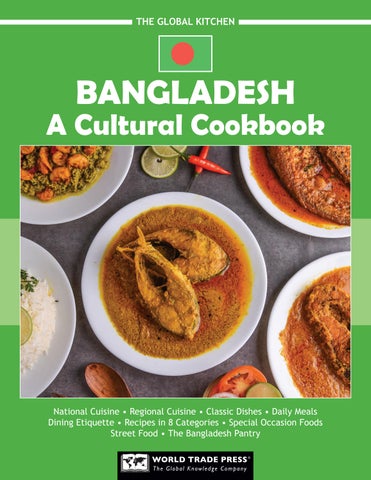
A Cultural Cookbook
National Cuisine • Regional Cuisine • Classic Dishes • Daily Meals
Dining Etiquette • Recipes in 8 Categories • Special Occasion Foods Street Food • The Bangladesh Pantry
Recipes in The Global Kitchen series are provided for informational and cultural purposes only. Results may vary due to differences in ingredients, equipment, and individual cooking experience. Always follow safe food-handling practices and exercise caution with sharp utensils and hot surfaces. Check all ingredients for potential allergens before use. World Trade Press has not independently tested every recipe and assumes no responsibility for the outcome, safety, or accuracy of any recipe or information presented.
Copyright © 2026 by World Trade Press
Publisher: Edward G. Hinkelman
Editors: Brielle Burt, Felicia Topp, Kasey Myers, Emily Padgett
Series Designer: Kristie Wolgamott
Production Designer: Michael Warner
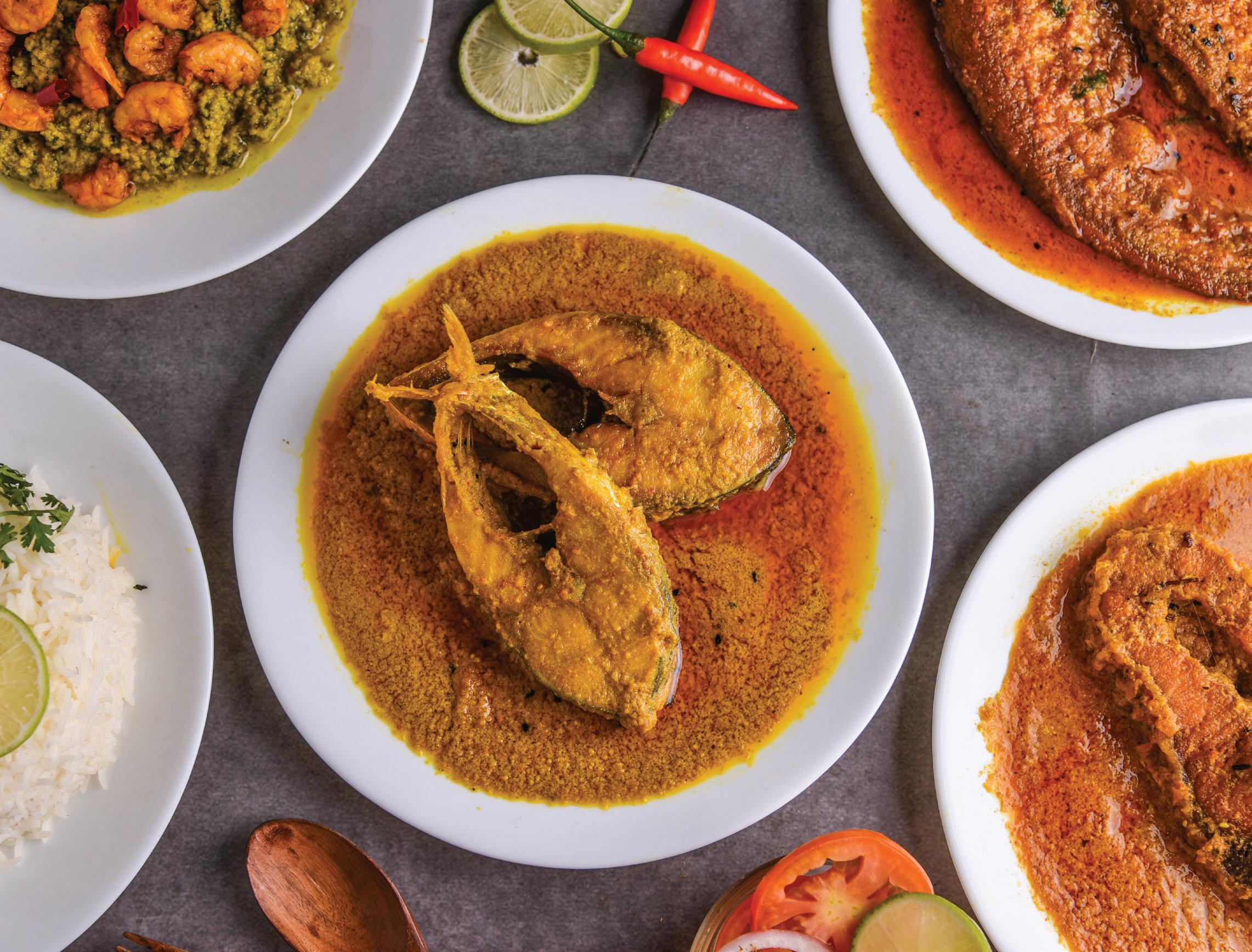
Cover Image: Riya Sarkar/Shutterstock
No part of this publication may be reproduced, stored in a retrieval system, or transmitted in any form or by any means, electronic, mechanical, photocopying, recording, scanning, or otherwise, except as permitted under Section 107 or 108 of the 1976 United States Copyright Act, without the prior written permission of the Publisher.
For information about permission to reproduce selections from this report, please contact Permissions: permissions@worldtradepress.com
For information about special discounts for bulk purchases, please contact Sales: sales@worldtradepress.com
ISBN: 978-1-60780-040-8
www.TheGlobalKitchen.com www.worldtradepress.com
World Trade Press, 616 E. Eighth St., Ste. 7, Traverse City, MI 49686

BANGLADESH A Cultural Cookbook
Gen S. DuMonde
LIST OF RECIPES
Aamer Tok Dal (Green Mango Lentil Soup) .............64
Aloo Bhorta (Mashed Potatoes) ........................176
Aloo Chop (Mashed Potato Fritters) .....................42
Aloo Ghati (Potato Stew) .................................66
Atta Roti (Whole Wheat Flatbread) ...................105
Bakarkhani (Flaky Flatbread) ..........................106
Bangla Salad (Tomato Cucumber Salad) ................87
Begun Bhaja (Fried Eggplant) ............................44
Begun Diye Machher Jhol (Fish and Eggplant Curry) .........................130
Beguni (Battered Fried Eggplant) .......................46
Bengali Pulao (Bengali Pilaf) .............................88
Bhindi Bhaji (Fried Okra) ...............................184
Bhutta Bhorta (Mashed Corn) ..........................185
Biryani .....................................................134
Biye Barir (Roast Chicken) ..............................136
Chaler Payesh (Rice Pudding) ..........................215
Chana Chaat (Chickpea Salad) ...........................90
Chapati (Unleavened Flatbread) ......................108
Chingri Malai Curry (Shrimp Curry) ....................138
Chitoi Pitha (Rice Bread) ...............................111
Chomchom (Sweet Milk Dumplings) ...................216
Chotpoti (Sweet and Sour Chickpeas) ..................92
Dal Puri (Lentil-Stuffed Flatbread) ......................48
Dal Salad (Lentil Salad) ...................................94
Dim Bhuna (Egg Curry with Fried Onions) ............140
Dim Chop (Egg Croquettes) ...............................50
Dim Seddho Makha (Egg Salad) ..........................95
Doi Chira (Sweet Flat Rice) .............................143
Dum Kebab (Steamed Minced Meat Kebab) ............52
Fuchka (Potatoes in Crispy Shells).......................54
Gosht Shorba (Beef Soup).................................68
Haddi Shorba (Beef Bone Soup) .........................70
Haleem (Grain and Meat Stew) ..........................72
Ilish Maach (Pan-Fried Hilsa) ...........................150
Jalebi (Fried Pastries) ...................................218
Jaynagarer Moa (Puffed Rice and Molasses Balls) ...221
Jeera Aloo (Cumin Potatoes) ...........................191
Kacha Aam Salad (Raw Mango Salad) ...................97
Kaju Badam Salad (Chicken Cashew Salad) ............98
Khejur–ṭentul Chatni (Date-Tamarind Chutney) .....193
Khichdi (Rice and Lentils) ..............................151
Laccha Pyaaz (Onion Salad) ............................101
Laddu (Sweet Sesame Balls) ............................222
Luchi (Puffed Fried Bread) .............................114
Machher Dopiaza (Fish with Onions) ..................152
Makai Paneer (Farmers Cheese Curry) ................154
Mangshor Kalia (Meat Kalia) ............................156
Masoor Dal (Red Lentil Dal)...............................74
Mishti Doi (Sweet Yogurt) ...............................224
Murgh Korma (Chicken Korma) .........................158
Murgh Shorba (Chicken Soup) ............................76
Naan .......................................................116
Nihari (Beef Shank Stew) .................................78
Onion Roti .................................................118
Palong Shaaker Ghonto (Spinach Medley) ............200
Panta Bhat (Fermented Rice) ..........................165
Paratha (Layered Flatbread) ...........................120
Patishapta Pitha (Stuffed Rice Crêpes) ...............226
Phulkopi Bhaja (Crispy Cauli ower) .....................56
Piyaju (Lentil and Onion Fritters) .......................58
Rasgulla (Syrup-Filled Ball) .............................228
Rasmalai (Sweet Milk Dumplings) .....................230
Rezala (Creamy Meat Curry) ...........................166
Sandesh (Milk Sweet) ....................................232
Shaaker Ghonto (Mixed Vegetable Curry) ............168
Shahi Tukra (Bread Pudding) ...........................234
Sheermal (Saffron Flatbread) ..........................122
Shemai (Sweet Vermicelli Pudding) ...................235
Shorshe Ilish (Mustard Hilsa) ...........................170
Singaras (Mini Samosas) ...................................60
Subzi ka Shorba (Curried Vegetable and Split Pea Soup)........................................80
Suji Halwa (Semolina Pudding) ........................237
Tomato Bhorta (Tomato Soup) ...........................82
Tomato Chutney ..........................................210
FOREWORD
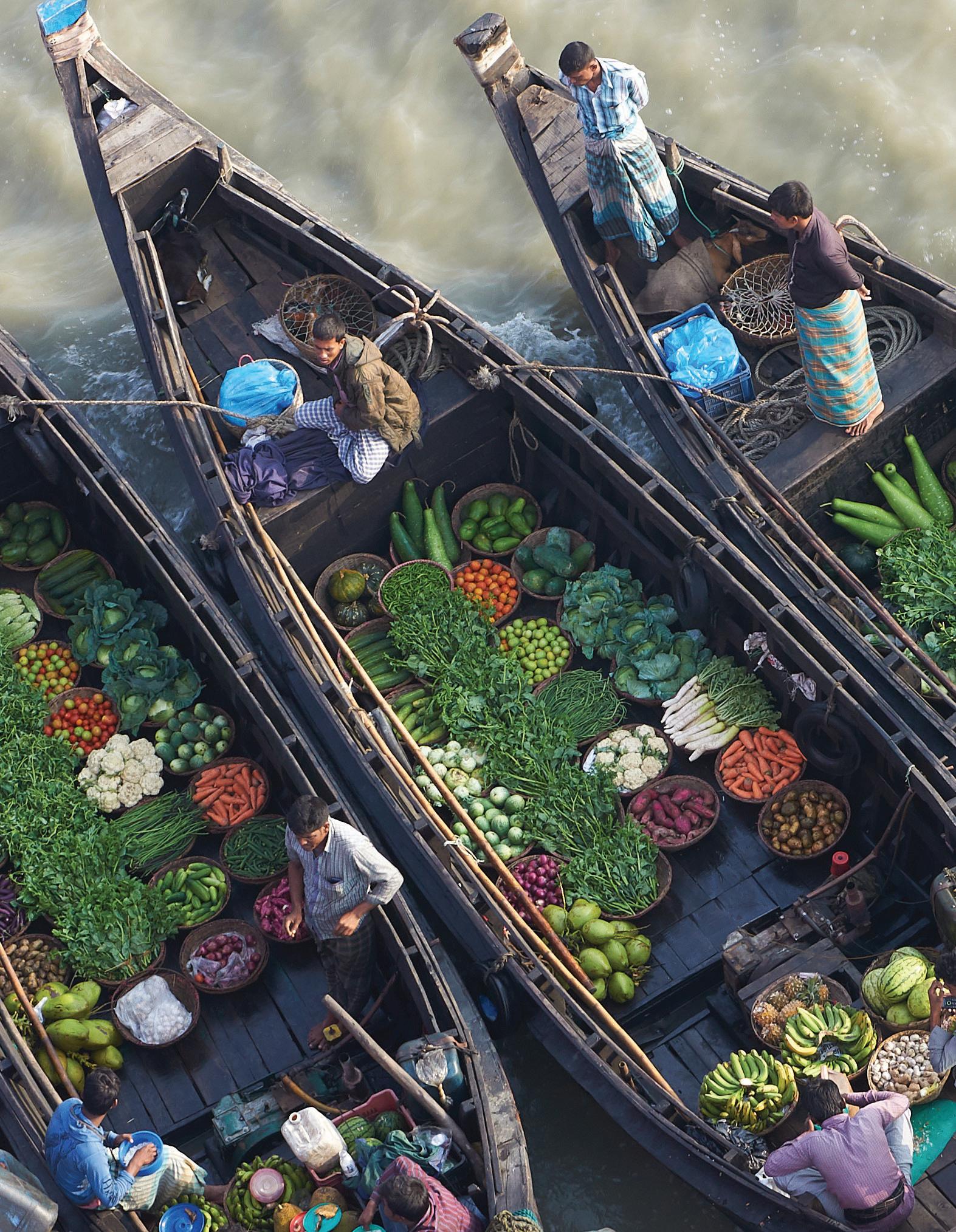
Welcome! This cookbook presents a structured and research-informed exploration of Bangladeshi cuisine, grounded in more than 30 years of culinary documentation and cultural study. Developed from our reference database, it brings together historical sources, regional perspectives, and rsthand accounts from Bangladeshi home cooks, chefs, and food historians. It is not a personal memoir but a contextualized account of how Bangladeshi food has evolved and what it reveals about the nation’s cultural and geographic diversity.
Bangladeshi cuisine is often associated with rice and sh summarized in the saying machh-e-bhat-e-Bangali (a Bengali is made of sh and rice) but its culinary roots reach far deeper. Ancient agrarian traditions centered on rice, lentils, mustard, and freshwater sh long predate recorded history. Over centuries, regional kingdoms, Mughal rule, and British colonialism all left distinct imprints on local foodways, introducing techniques such as dum cooking (slow cooking in a sealed pot over low heat), breads like paratha, and the widespread use of aromatic spices. The cuisine also absorbed in uences from Persia, Central Asia, and the wider Bay of Bengal trade routes, resulting in a mosaic of avors where biryani, pitha (stuffed rice our treats), bhorta (seasoned sh or vegetable mash), and sweets such as roshogolla and chomchom coexist within a shared yet regionally nuanced food culture.
This volume re ects that evolution. Recipes are organized to emphasize both historical and cultural context alongside preparation. From hilsa curry and khichuri to bhuna, shorshe ilish, and mishti doi, each dish is placed within its broader narrative whether tied to monsoon agriculture, Mughal re nement, colonial adaptation, or modern urban reinterpretation.
As with all books in this series, the approach is analytical rather than anecdotal. The goal is to offer readers a practical yet culturally grounded understanding of Bangladeshi cuisine not only what is eaten, but how and why. In doing so, the collection illuminates a national food identity shaped by riverine abundance, seasonal rhythms, and a deep connection between food, family, and festivity. It serves as both a record of heritage and a reference for ongoing culinary dialogue in a country where food remains central to community, celebration, and identity.
NATIONAL CUISINE
Traditional Practices and Daily Meals
Dairy products are used regularly in Bangladeshi cooking, though they are more common in sweets and as accompaniments than as main dishes. Yogurt is used for marinating meats, eaten plain or lightly seasoned, and incorporated into desserts. Sweetened yogurt known as mishti doi is one of the most recognizable dairy-based sweets, alongside a wide range of milk confections prepared for festivals and family occasions.
Most Bangladeshis eat three meals a day, with patterns shaped by work schedules and seasonality. Breakfast often includes rice-based foods such as muri (puffed rice), chira ( attened rice), or khoi (popped rice), sometimes eaten with milk, yogurt, or fruit. Lunch is typically the main meal and centers on steamed rice served with lentils, vegetables, sh, or mashed preparations known as bhorta. Dinner may be similar in structure to lunch, with variation depending on household and occasion, and formal multi-dish meals are usually reserved for gatherings and celebrations.
Tea is the most widely consumed beverage in Bangladesh, usually prepared strong and served with sugar or milk. Sugarcane juice and coconut water are popular seasonal drinks, and yogurt-based beverages such as lassi are also consumed, particularly in warmer months. Together, these foods and drinks re ect a cuisine shaped by geography, agriculture, and long-established patterns of daily life.
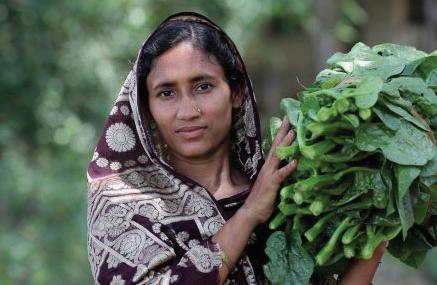
Leafy greens, known as shaak , are widely used in Bengali cooking and are typically sautéed lightly with oil and minimal spices.
CLASSIC DISHES
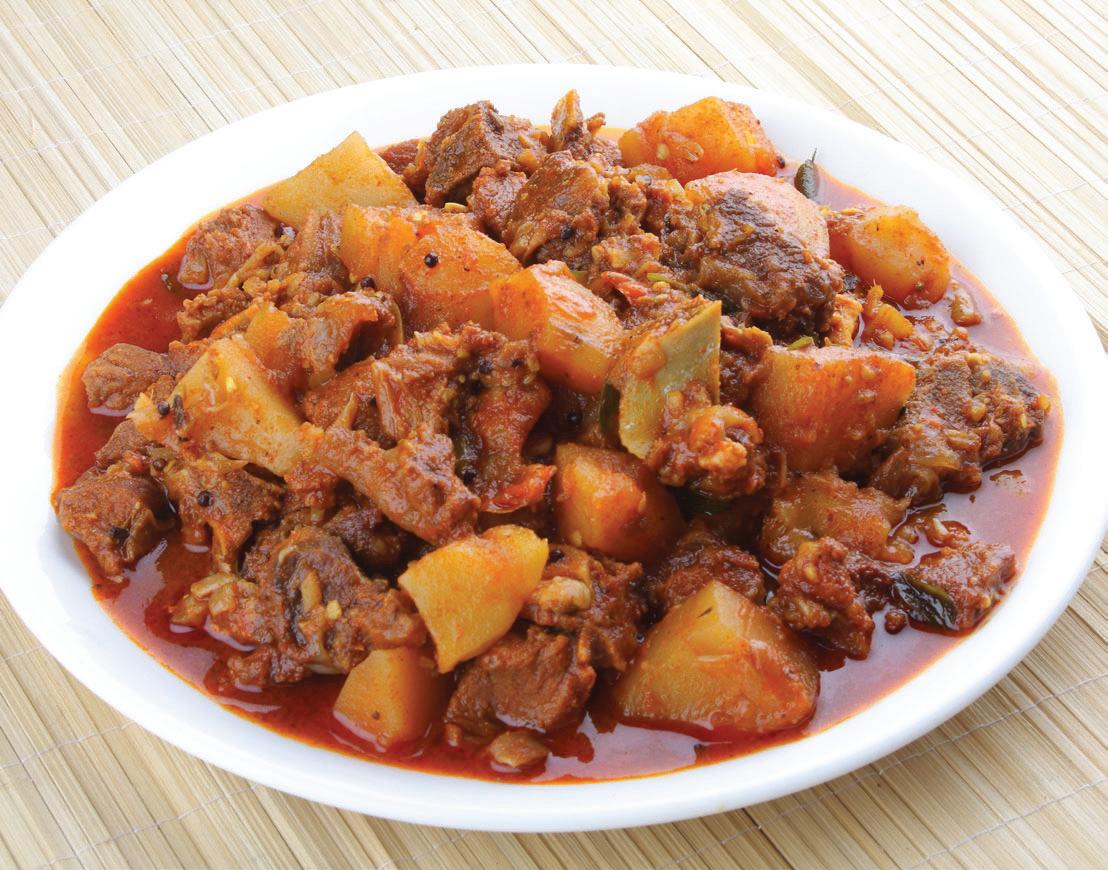
Meat Kalia – Rich and intensely avored, this curry features meat simmered in a dark, heavily seasoned gravy.
SIDE DISHES
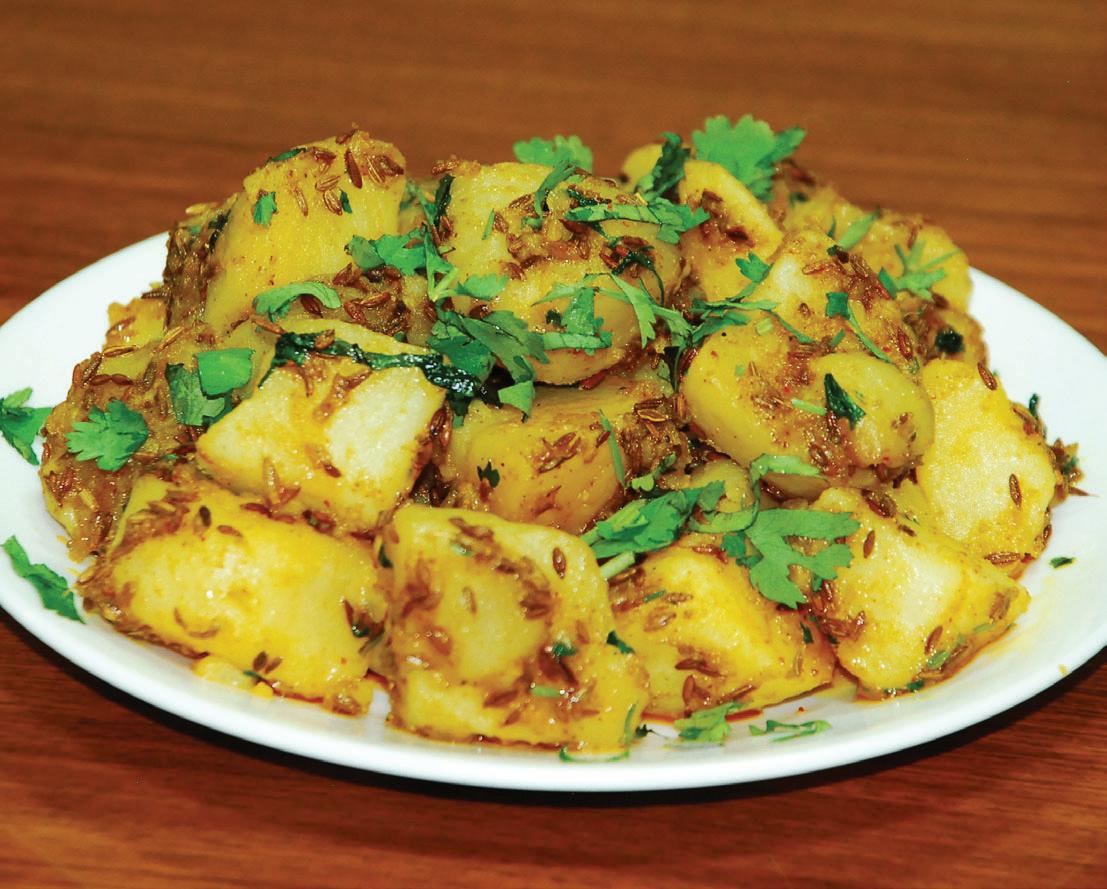
Jeera Aloo – Prepared without sauce, these potatoes are cooked with cumin and spices in a style locally described as dry.
Saak-er Ghanto – This mixed vegetable dish is spiced but cooked down until no gravy remains, resulting in a dense, dry preparation.
DESSERTS
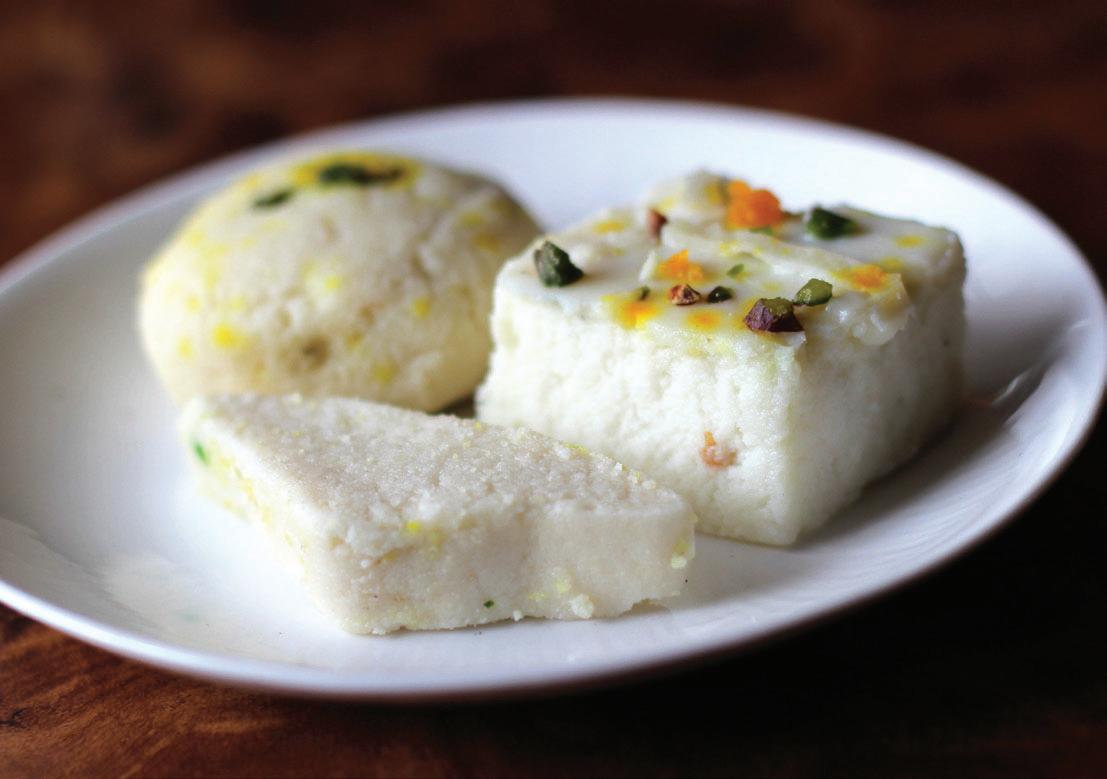
Sandesh – Made from sweetened fresh cheese, this fudge-like sweet is sometimes lightly avored with spices or aromatic extracts.
Shemai – In this dessert, very ne pasta thickens milk into a pudding that is noticeably less sweet than many other regional desserts.
BEVERAGES
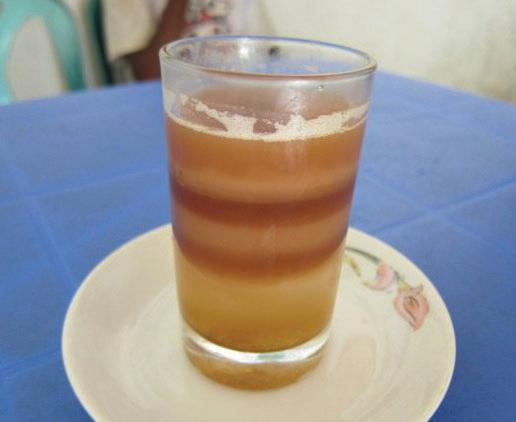
Tea – Throughout the day, black tea boiled with milk and sugar is commonly enjoyed at breakfast, with snacks, and during social visits.
Sandesh Meat Kalia
Jeera Aloo
DAILY MEALS
Dinner
Dinner frequently mirrors lunch in structure but may involve smaller portions or fewer dishes, especially if much of the cooking was done earlier in the day. Rice usually remains the base, paired with dal, vegetables, sh, or eggs, with fresh cooking focused on a single main item. Contrary to some assumptions, dinner is not always lighter than lunch, though it is often more restrained. Sweet dishes are not typically a nightly feature, appearing more often on weekends or during celebrations. When rice cooked in milk is served, it is more accurately described as payesh and is generally reserved for special occasions rather than everyday dinners.
Snacks
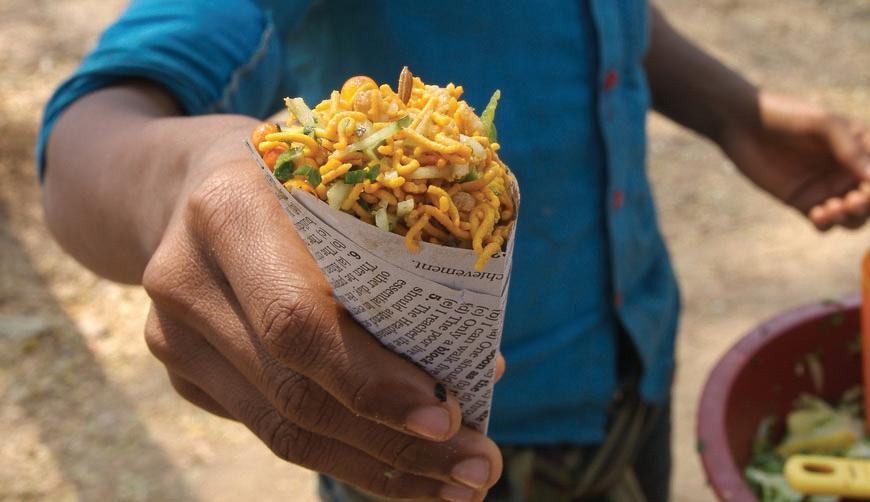
Snacking is a major part of daily life, especially in towns and cities where street food is widely available. Fried and savory items such as kebabs, samosas, pakoras, and stuffed bread rolls are commonly eaten between meals or as quick refreshments. One of the most recognizable street foods is phuchka, a crisp, hollow shell lled with spiced potato or chickpeas and served with tangy, spiced water, enjoyed particularly in social settings. At home, snacks may be simpler leftovers, fruit, or small savory bites while the street-food culture provides affordable and convenient options throughout the day.
Desserts
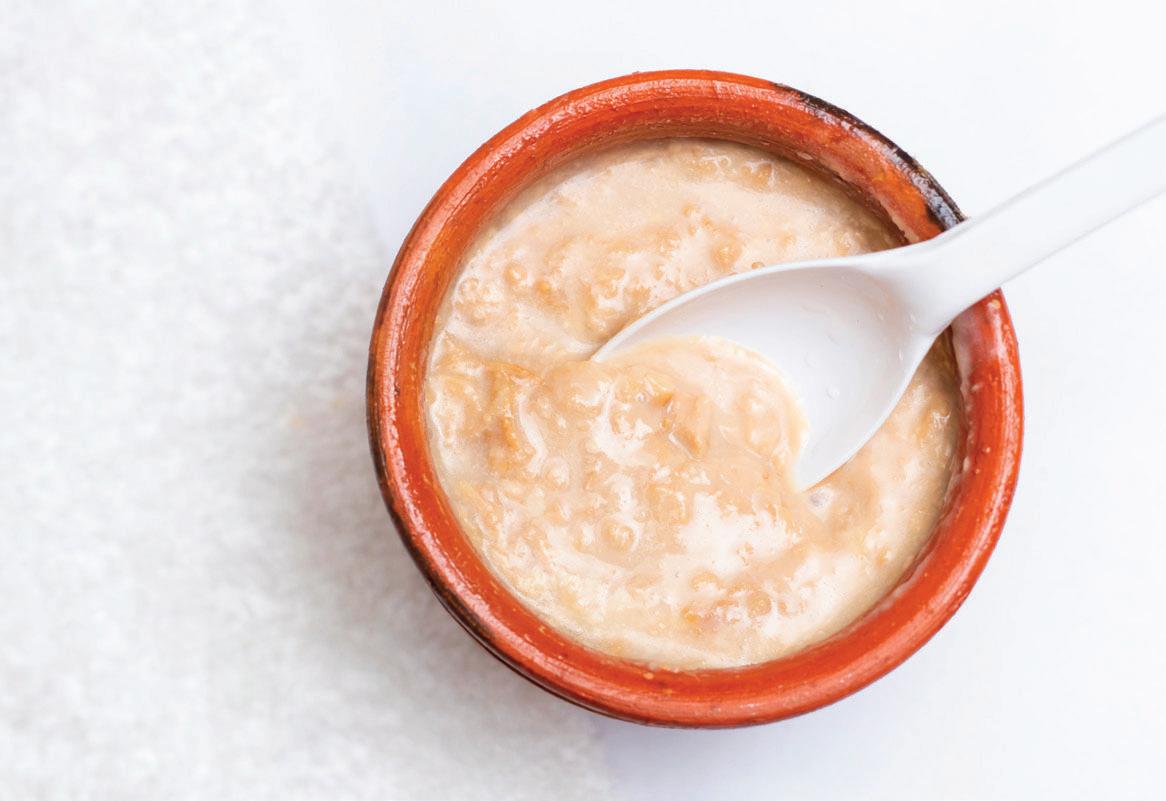
Desserts in Bangladesh are closely tied to celebration and hospitality rather than everyday meals. While chutney often sweet and tart is usually eaten alongside a meal, sweets proper are more commonly enjoyed during festivals, family gatherings, or when guests visit. The country has a strong tradition of confectionery, particularly milk-based sweets collectively known as mishti, which include a wide range of fresh-cheese and yogurt preparations such as doi. Rice-based cakes and sweets made from rice our also play an important role, especially in rural areas and seasonal festivals. Dessert choices often re ect agricultural cycles, with dairy and fruit in uencing what is prepared at different times of year.
Chutney is often served at the end of a meal.
Mishti doi is a traditional sweet yogurt dessert originating from the Bogra District in Bangladesh.
There are a number of street snacks in Bangladeshi towns.
DINING ETIQUETTE
Table Etiquette
Dining practices in Bangladesh re ect a blend of tradition, religion, and household custom, with considerable variation depending on setting and formality. Many people eat with their hands, and requesting utensils is generally acceptable, especially for guests or in urban households. Washing hands before and after a meal is customary, and the right hand is typically used when eating or serving food. Meals may be served family-style or individually, depending on the household and occasion, and diners are generally mindful of shared dishes and serving order. Care is often taken when eating sh, as small bones are common, and these are usually set aside on a separate plate or at the edge of one’s own plate.
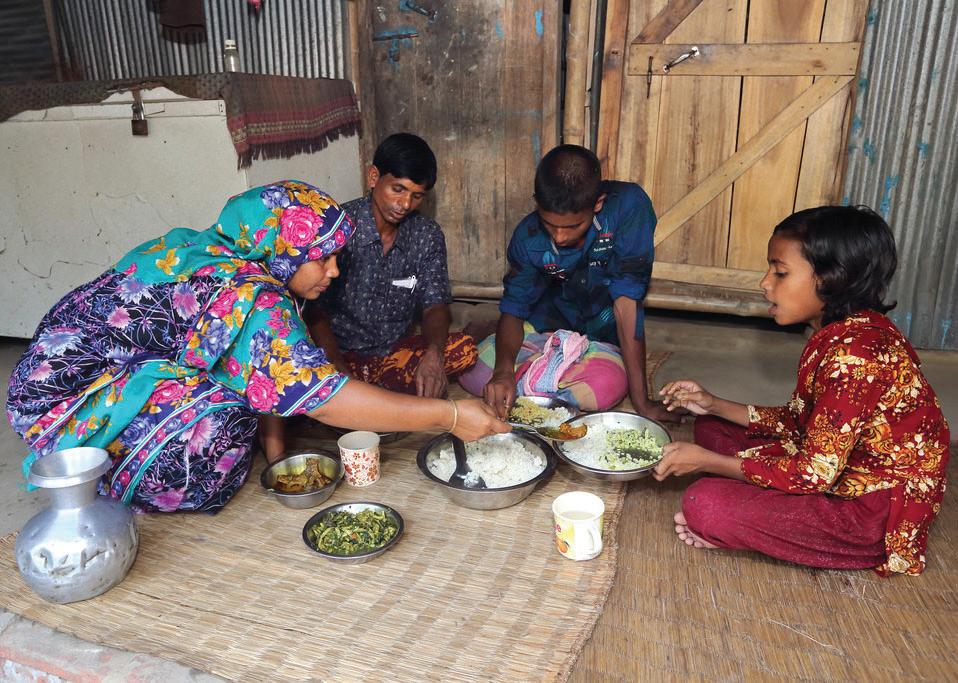
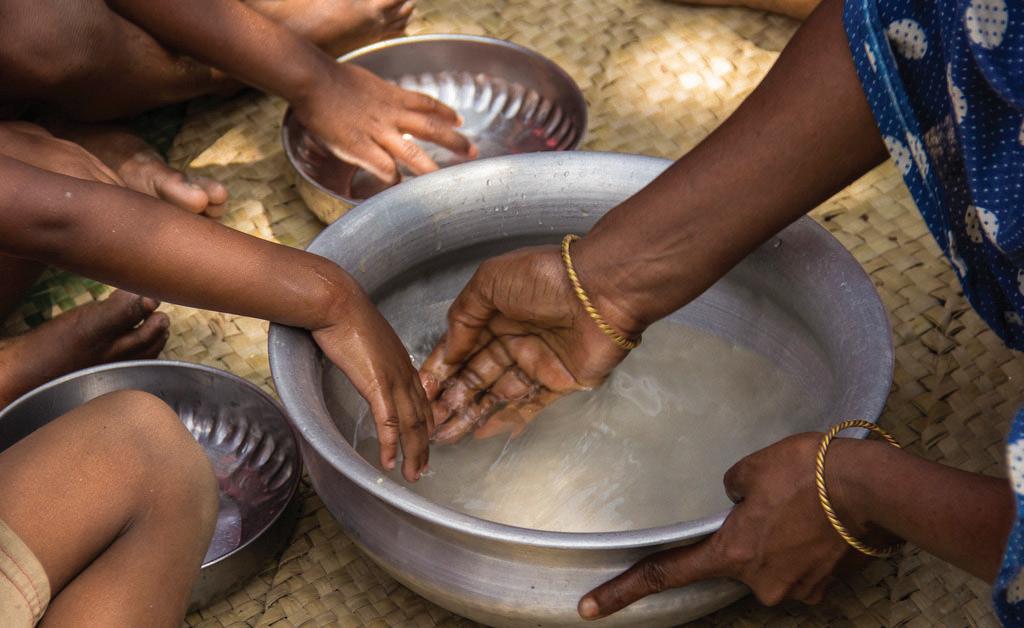
Religious and cultural practices in uence dining arrangements in some households, including seating order and, in more conservative settings, separate eating spaces for men and women. Hospitality places a strong emphasis on comfort and respect, and relaxed behavior at the table is common in informal settings. Gestures such as wiping ngers or hands after a meal are shaped by context and familiarity, with expectations adjusting according to whether the meal is casual or formal.
When invited to a Bangladeshi home, it is polite to bring a small gift such as sweets or fruit, with attention paid to dietary preferences and restrictions. Pork is generally avoided as a gift, and alcohol is approached cautiously, as attitudes toward drinking vary widely across communities. Guests are not expected to navigate these nuances perfectly, but attentiveness and modesty are appreciated.
Food is generally served in communal dishes.
It is important to wash one’s hands before and after a meal.
SPECIAL OCCASION FOODS
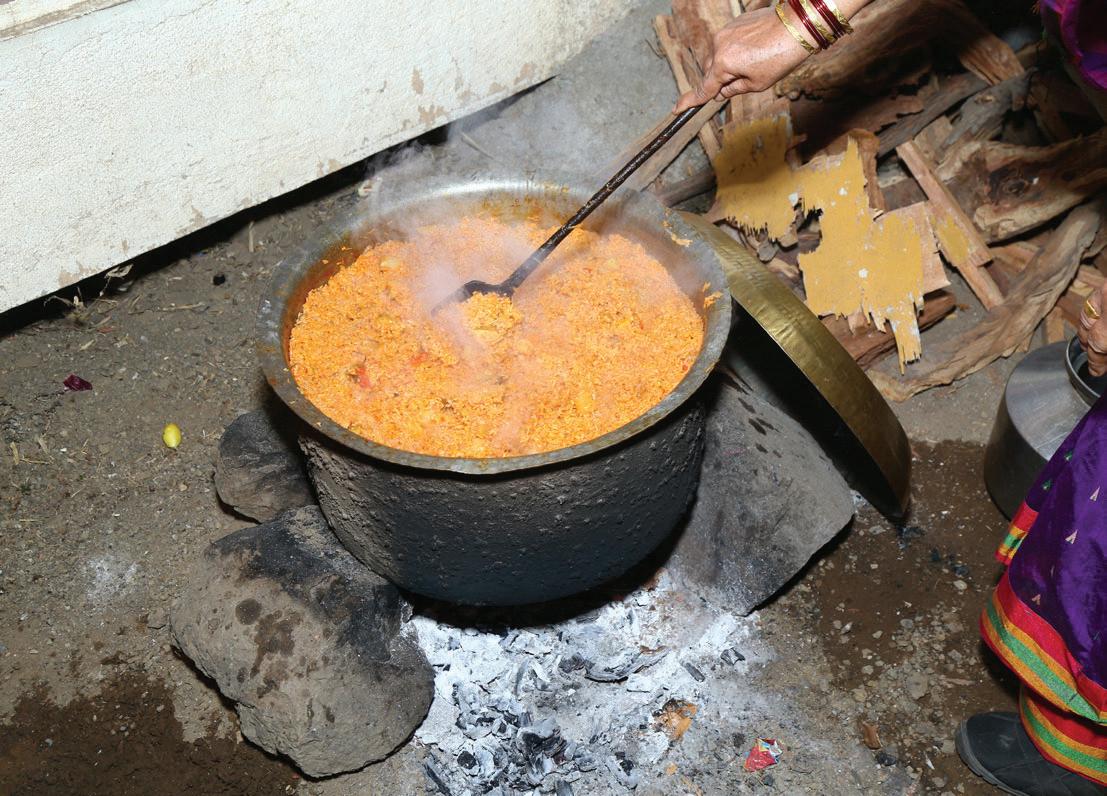
POHELA BOISHAKH (Bengali New Year)
Pohela Boishakh, celebrated on April 14, marks the beginning of the Bengali New Year and is observed with music, processions, and festive meals. Foods associated with the day highlight ideas of renewal and continuity, often featuring rice-based dishes and sh. Panta bhat, fried ilish maach, and mustard- avored vegetable bharta are commonly referenced in celebrations, particularly in public and symbolic settings. Sweets such as pitha (traditional rice cakes made in many regional styles) are also enjoyed, re ecting seasonal traditions and hopes for prosperity in the year ahead.
DURGA PUJA
Durga Puja is one of the most signi cant Hindu festivals in Bangladesh and is observed through worship, cultural events, and shared meals. Food prepared for the occasion often emphasizes vegetarian cooking, particularly for ritual offerings and community meals. Dishes such as khichdi (rice and lentils cooked together into a soft, savory dish), mixed vegetable preparations like labra, and offerings known as bhog (foods presented to the goddess before being shared) are central to the celebrations. Sweets including sandesh (fresh cheese confections) and rasgulla (cheese dumplings soaked in syrup) are exchanged among family and friends, reinforcing devotion and hospitality.
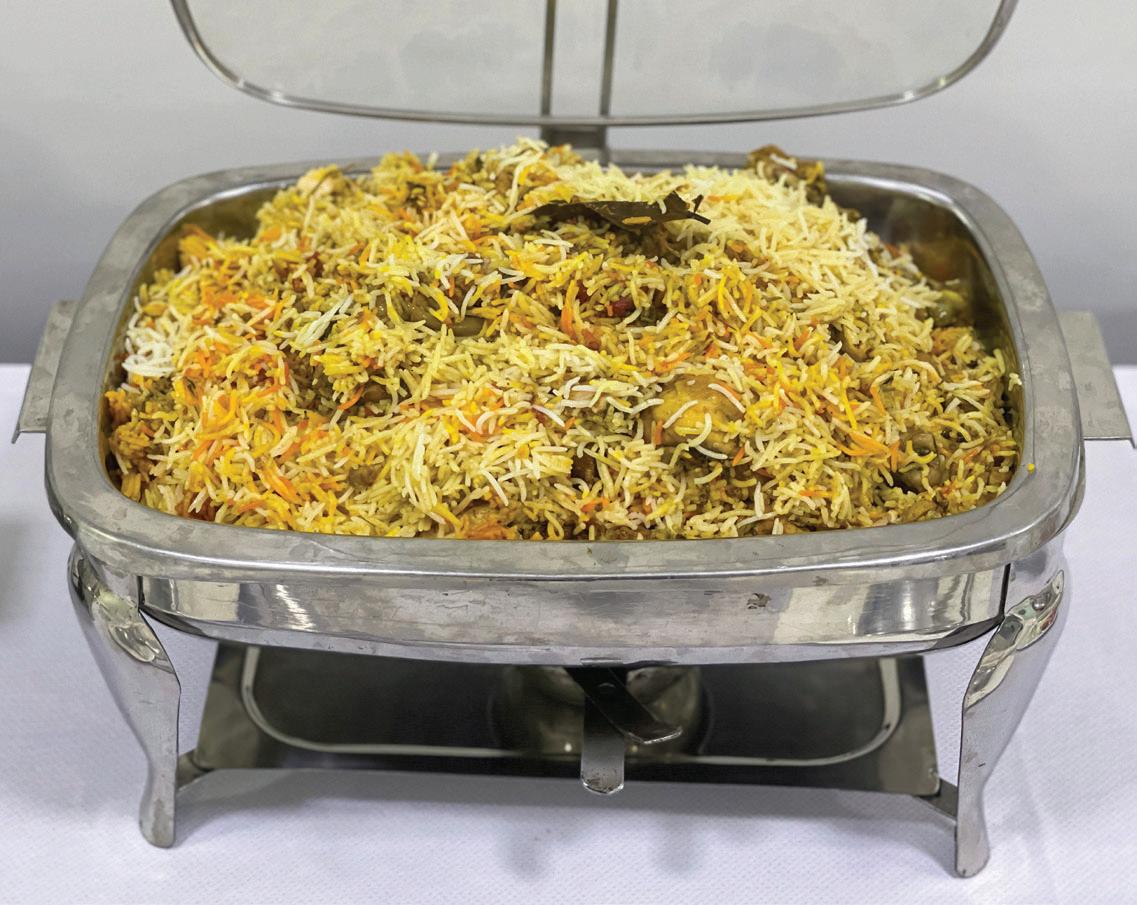
Life Milestones and Personal Celebrations WEDDINGS
Bangladeshi weddings are elaborate social events in which food plays a central and highly visible role. Wedding feasts often include fragrant rice dishes, rich meat curries, and specialty preparations such as rezala (a mildly spiced, yogurt-based meat curry). Biryani (spiced rice cooked with meat and aromatics) is frequently featured as a centerpiece dish, prepared for large numbers of guests. Meals may be served in courses or as composed plates, followed by desserts such as mishti doi (sweetened yogurt) and rasmalai (cheese patties soaked in sweetened milk). The wedding meal symbolizes abundance, festivity, and the union of families.
STREET FOOD
JHAL MURI
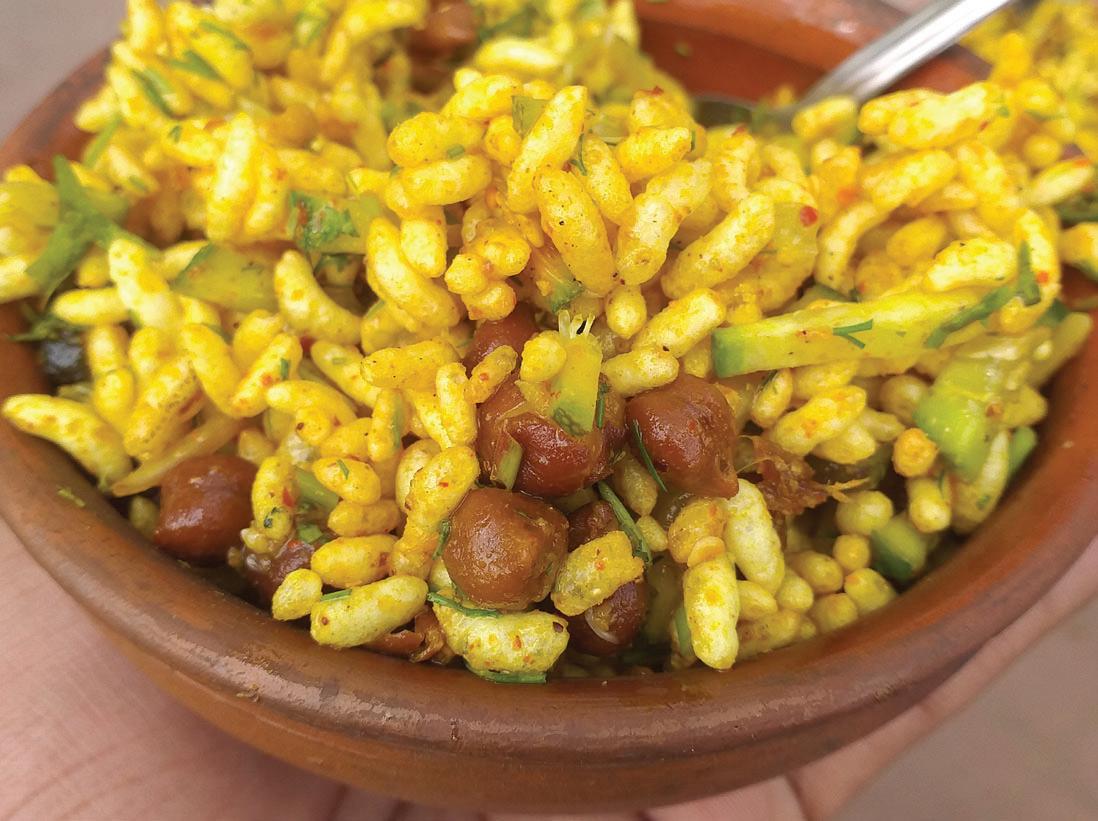
Jhal muri is a spiced puffed rice snack mixed on the spot with mustard oil, green chiles, onions, and a blend of spices. Vendors typically prepare it to order, tossing the ingredients together rapidly before serving. It is commonly sold at busy intersections, train stations, and markets, and is valued for its strong avor and light, crunchy texture.
SINGARA
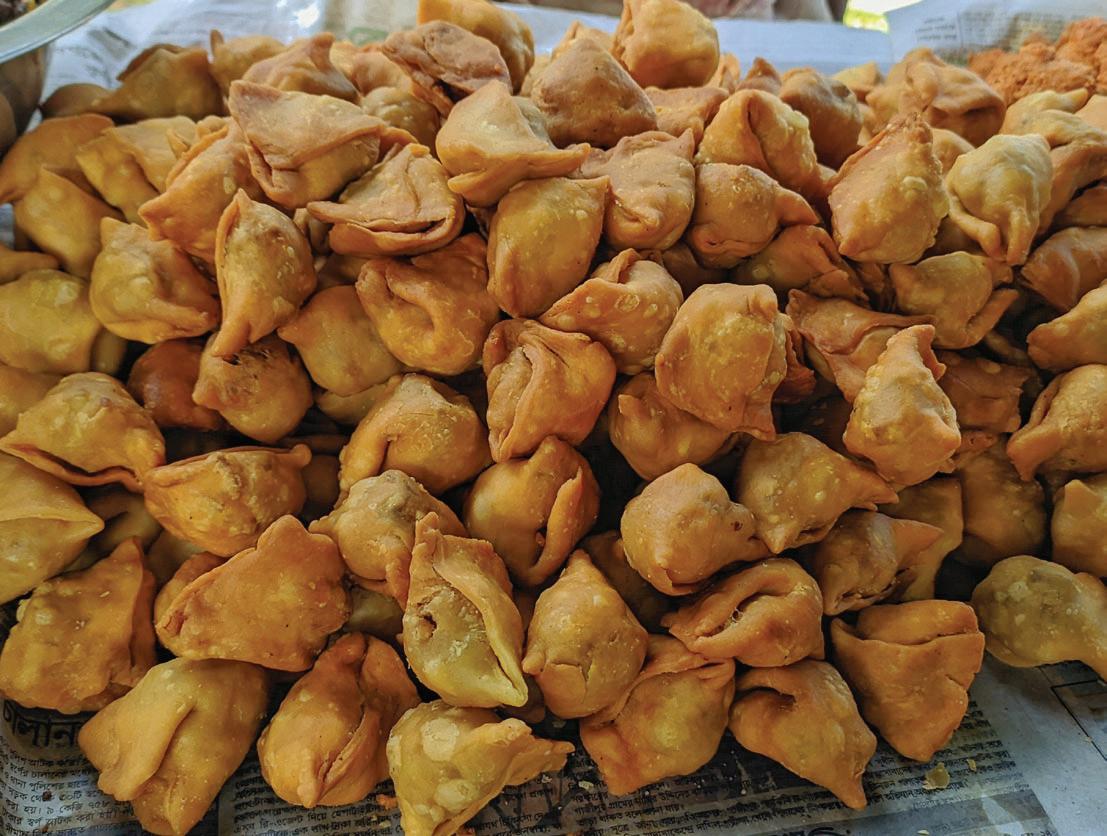
Singara is a small, deep-fried pastry lled with spiced potatoes and other vegetables. Sold widely in the mornings and afternoons, it is a staple snack at street stalls and small shops. Though similar in appearance to samosas, singara has its own distinctive seasoning and is rmly embedded in everyday Bangladeshi snacking habits.
Sweet Treats MISHTI DOI
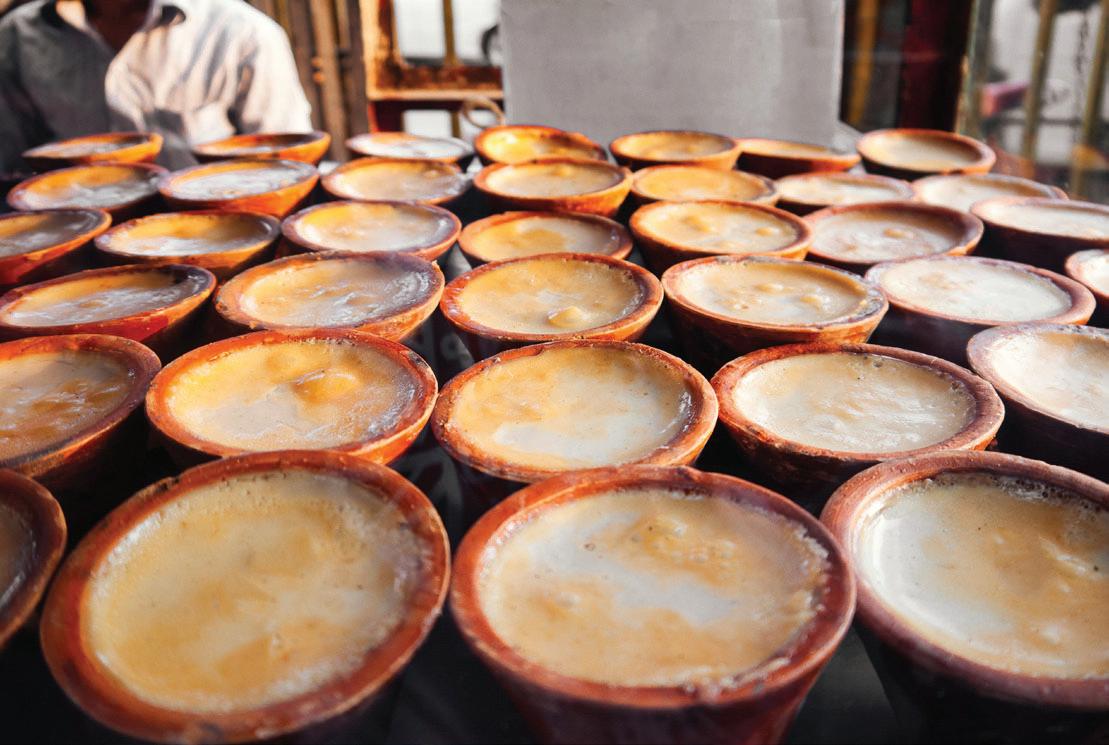
Mishti doi is a sweetened yogurt made by slowly fermenting milk with sugar or jaggery. While most closely associated with sweet shops, it is also commonly purchased and eaten as a takeaway treat. Traditionally set in clay pots, it is especially associated with certain regions and is enjoyed year-round.
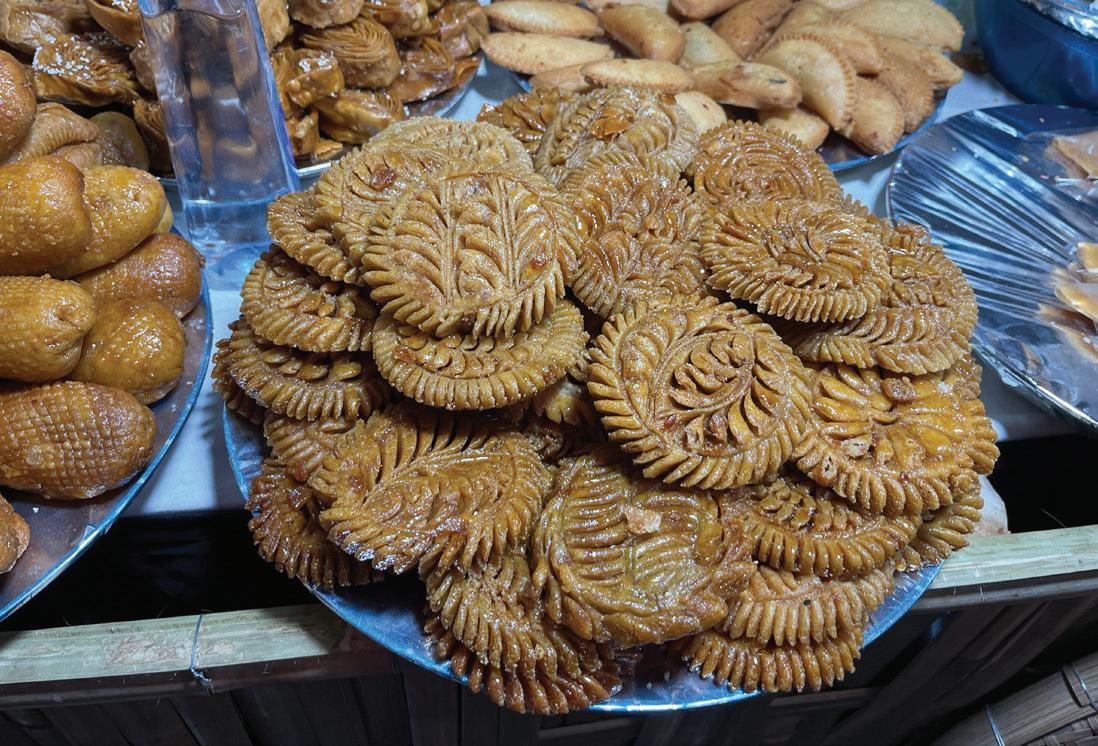
PITHA
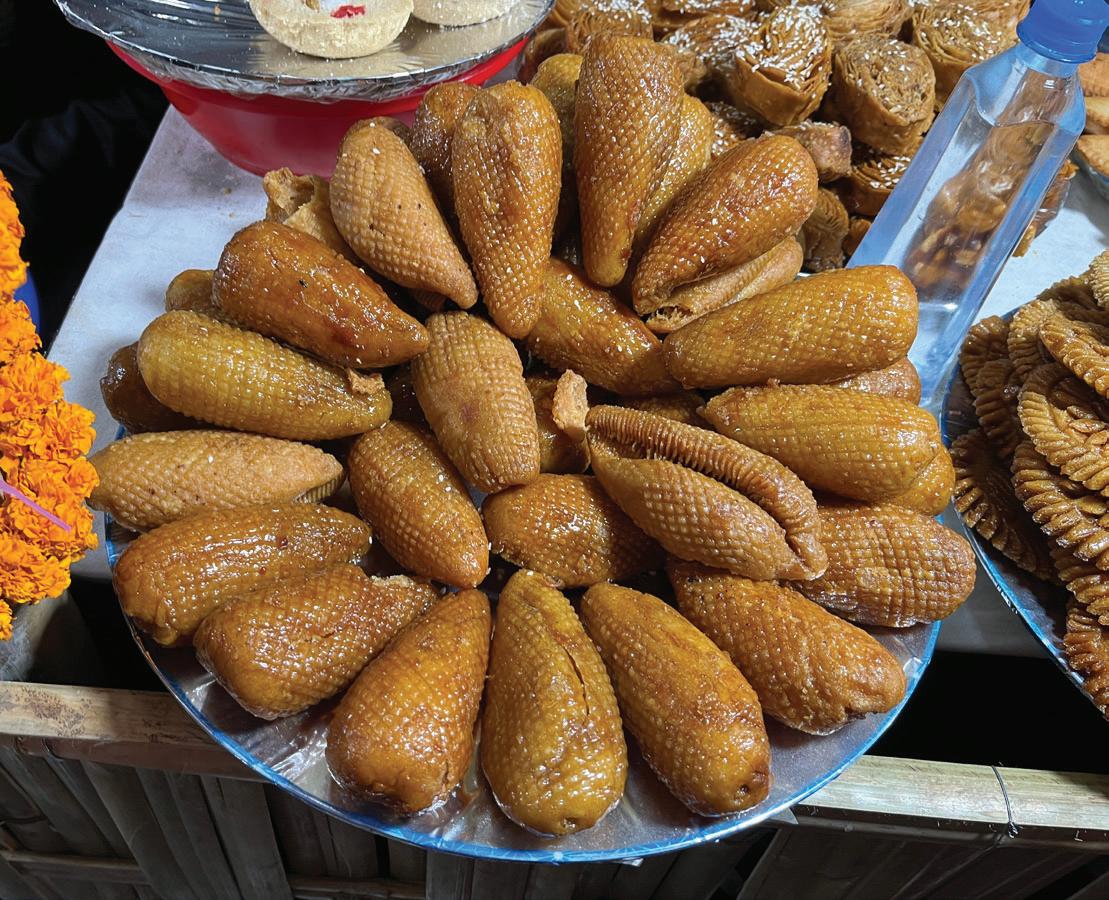
Pitha refers to a broad category of traditional ricebased cakes that appear in many forms, both sweet and savory. These are especially common during the winter months and are sold at seasonal markets and roadside stalls, particularly outside major cities. Pitha may be steamed, fried, or griddled, and llings often include coconut and jaggery.
DID YOU KNOW?
Waste Not, Want Not
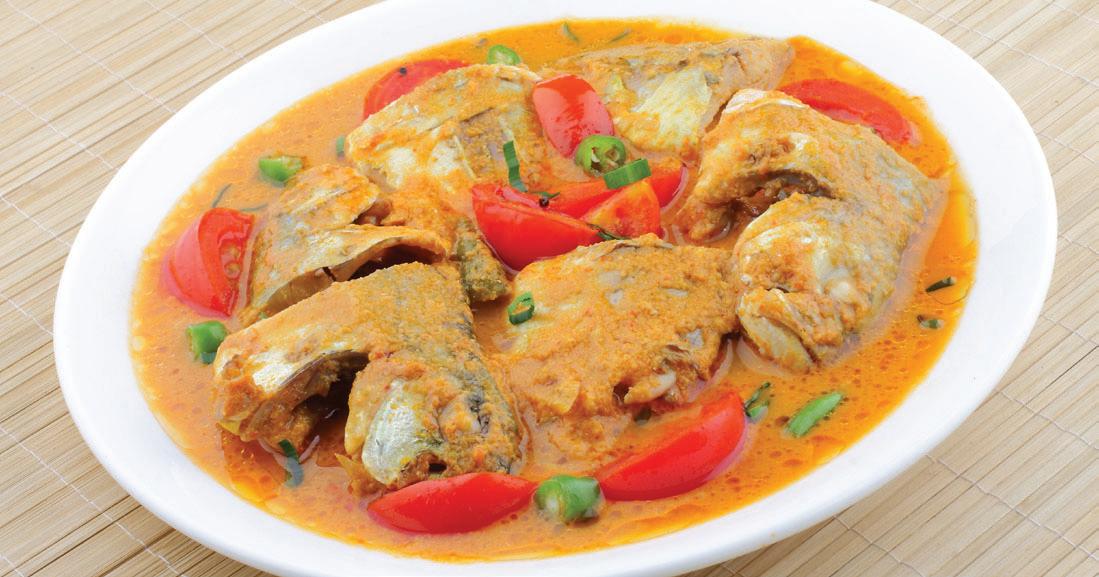
In Bangladeshi cooking, using every part of an ingredient is both practical and valued, and sh heads are considered especially prized. Dishes such as macher matha diye moong dal combine sh heads with lentils or vegetables to produce rich, deeply avored meals.
This approach re ects a no-waste philosophy rooted in everyday cooking rather than luxury. Fish head dishes showcase both resourcefulness and culinary appreciation, reinforcing the central role of sh in the Bangladeshi diet.
On the Go
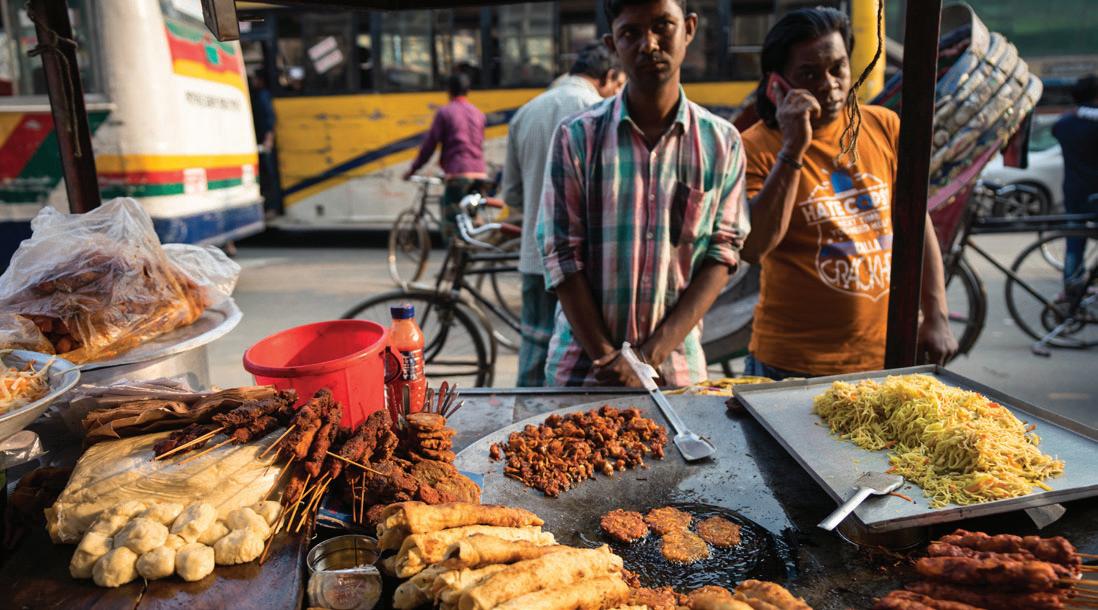
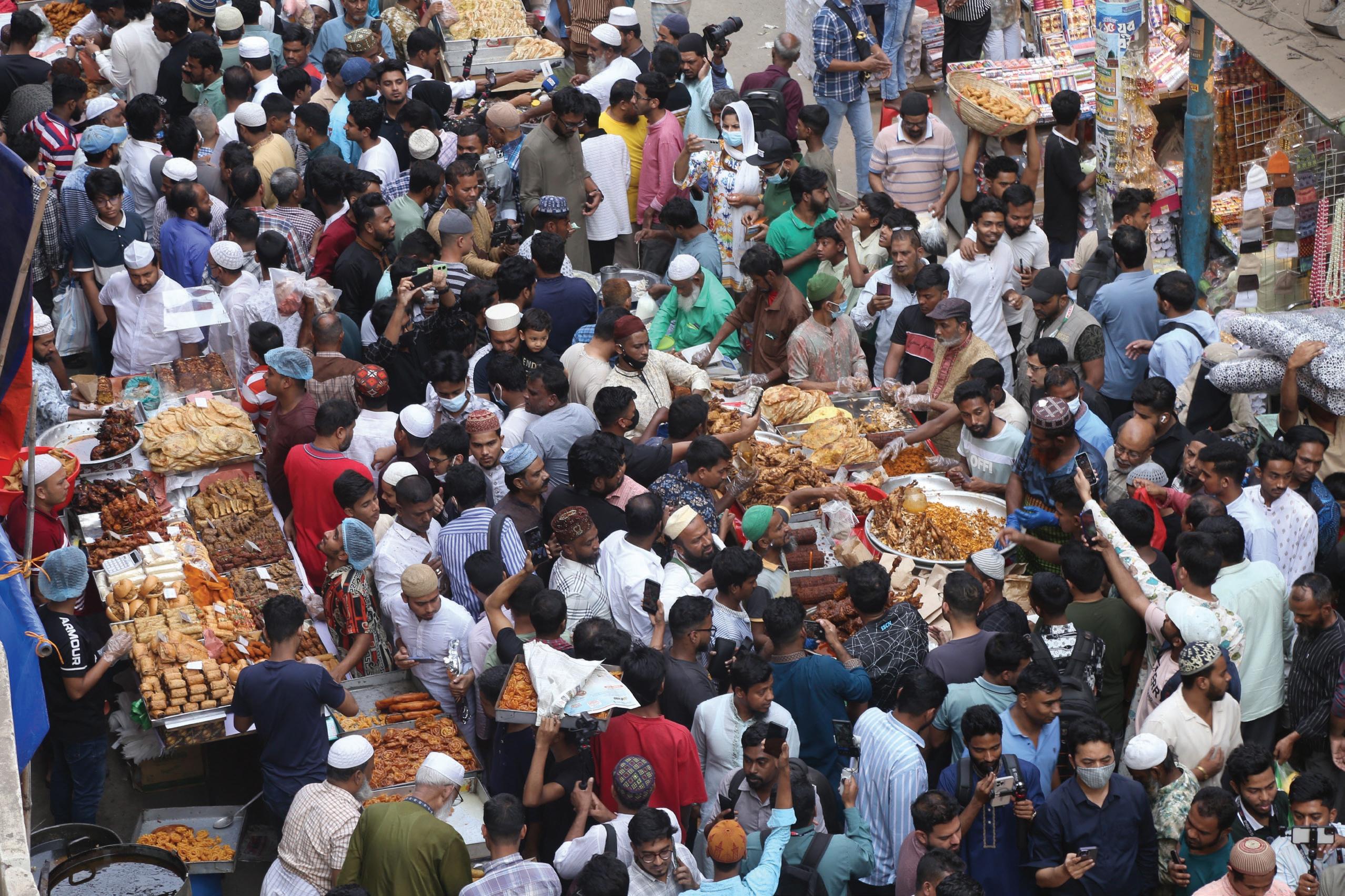
Street food is woven into daily life in Bangladesh, offering quick, avorful options throughout the day. Vendors sell snacks from roadside carts, markets, and busy intersections, feeding commuters, students, and shoppers alike.
Popular items such as fuchka, jhal muri, and chotpoti are often eaten while standing or shared among friends. Each vendor brings subtle variations, making street food a constantly evolving expression of local taste and personality.
Harvest Celebration
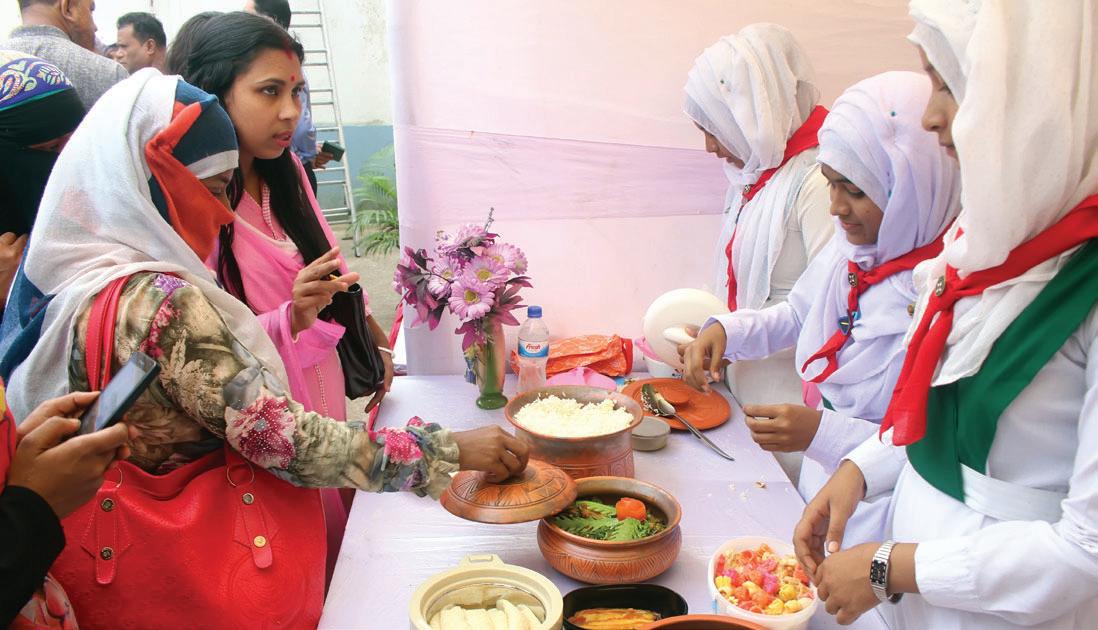
Nabanna is a traditional harvest celebration centered on newly gathered rice. Observed mainly in agricultural communities, it marks the completion of the rice harvest and expresses gratitude for the land.
Foods prepared with fresh rice take center stage, symbolizing abundance and renewal. Communal meals, cultural performances, and seasonal dishes reinforce the close relationship between food, farming, and community life.
Sweet Tooth
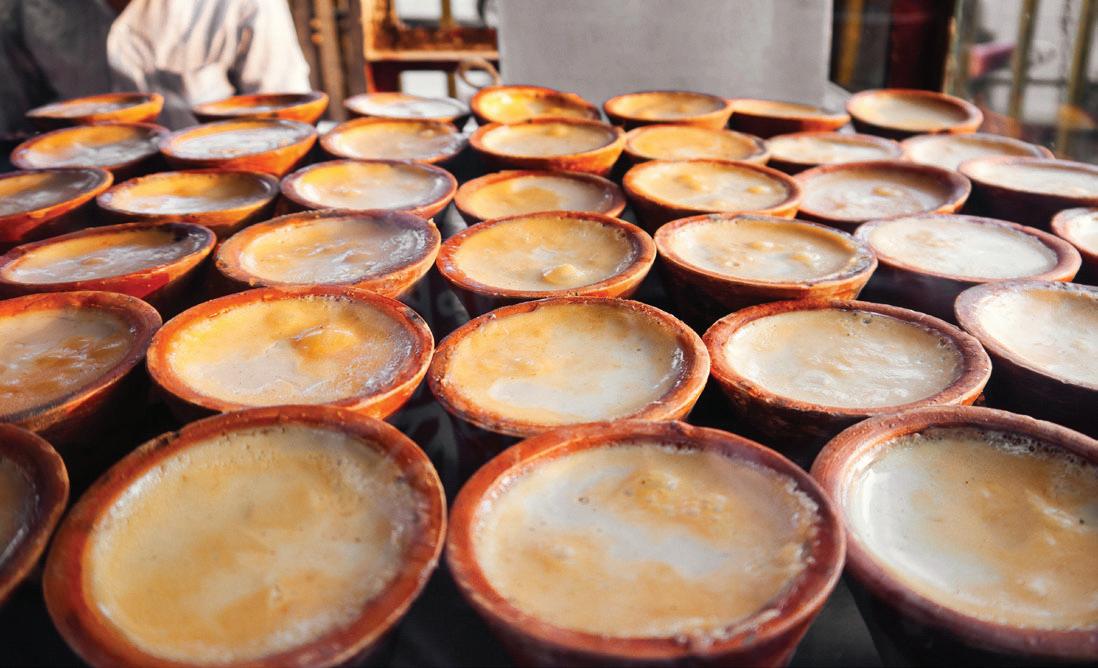
Sweets occupy an important place in Bangladeshi food culture, closely tied to hospitality, celebration, and ritual. Milk-based confections such as roshogolla, chomchom, and mishti doi are especially popular.
Sweet shops, known as mishtir dokan, are common landmarks in towns and cities. The care and skill involved in making these sweets re ect generations of confectionery tradition and a shared love of indulgence.
COFFEE CULTURE
History
Coffee has a relatively recent and evolving presence in Bangladesh, especially when viewed alongside the country’s long-established tea culture. During the colonial period, tea became deeply embedded in daily life, while coffee remained peripheral and largely con ned to limited social circles. Over time, exposure through travel, education, and international exchange gradually introduced coffee to urban populations. From the late 20th century onward, cafés began to appear in major cities, and coffee increasingly became part of student life, professional environments, and informal social gatherings. Today, coffee occupies a growing but still secondary place in Bangladeshi food culture, coexisting alongside the far more pervasive tradition of tea.
Cultivation
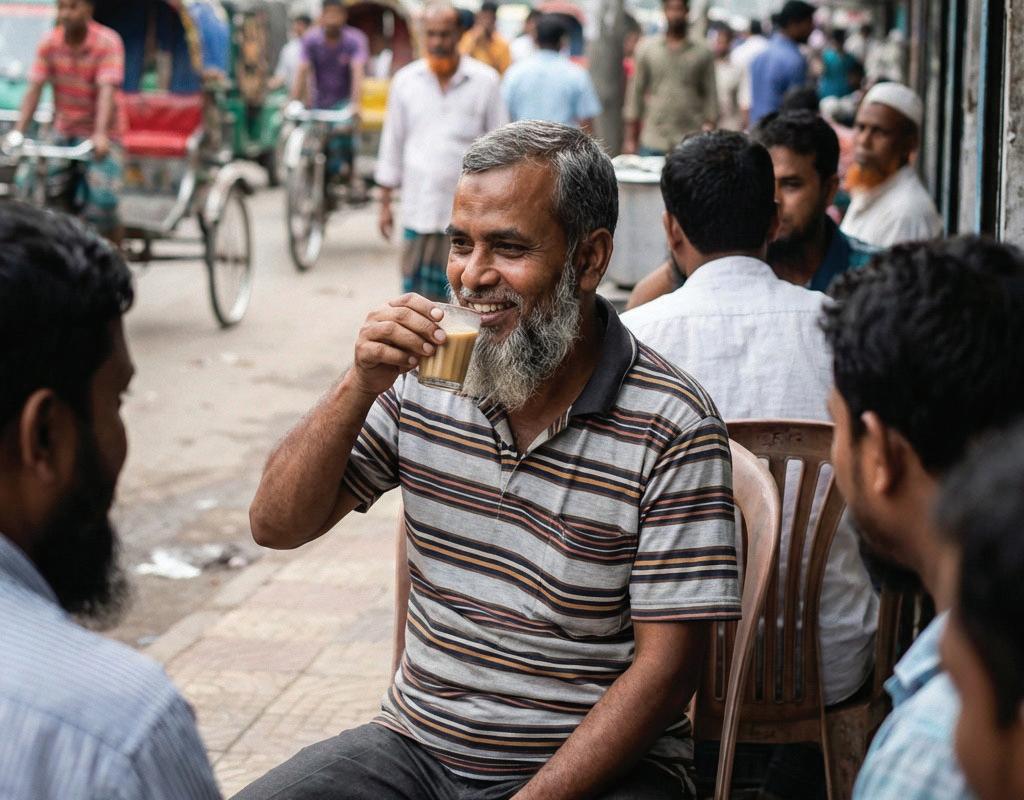
In recent years, Bangladesh has explored small-scale coffee cultivation as an agricultural experiment, particularly in parts of the Chittagong Hill Tracts, including Bandarban, Rangamati, and Khagrachari. These areas offer climatic conditions that allow coffee plants to be grown on a limited basis, and pilot projects supported by government agencies and non-governmental organizations have encouraged farmers to test coffee as a supplementary crop. While domestic production remains modest, these efforts re ect broader interest in diversifying agriculture. At present, most coffee consumed in Bangladesh continues to be imported from established producing countries.
Popular Varieties
Instant coffee remains the most familiar form of coffee for many Bangladeshis, valued for its convenience and ease of preparation. Brands such as Nescafé and Bru are commonly found in homes, of ces, and small shops. In urban cafés, espressobased drinks including cappuccinos, lattes, and Americanos have become standard offerings, particularly among younger customers. Many cafés also serve iced and blended coffee drinks suited to the warm climate, while more specialized styles appear in select locations catering to niche audiences.
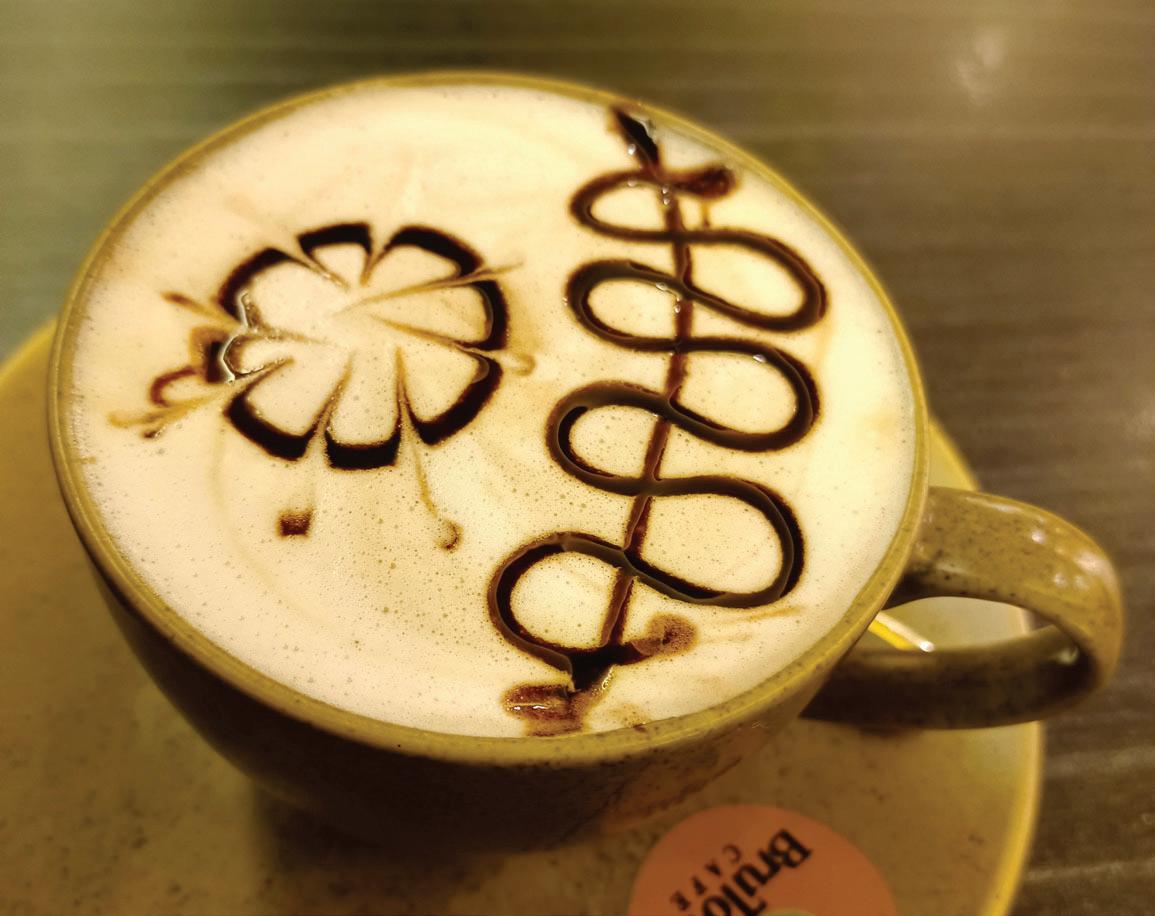
Coffee occupies a growing place in Bangladeshi food culture.
Latte Art In Dhaka
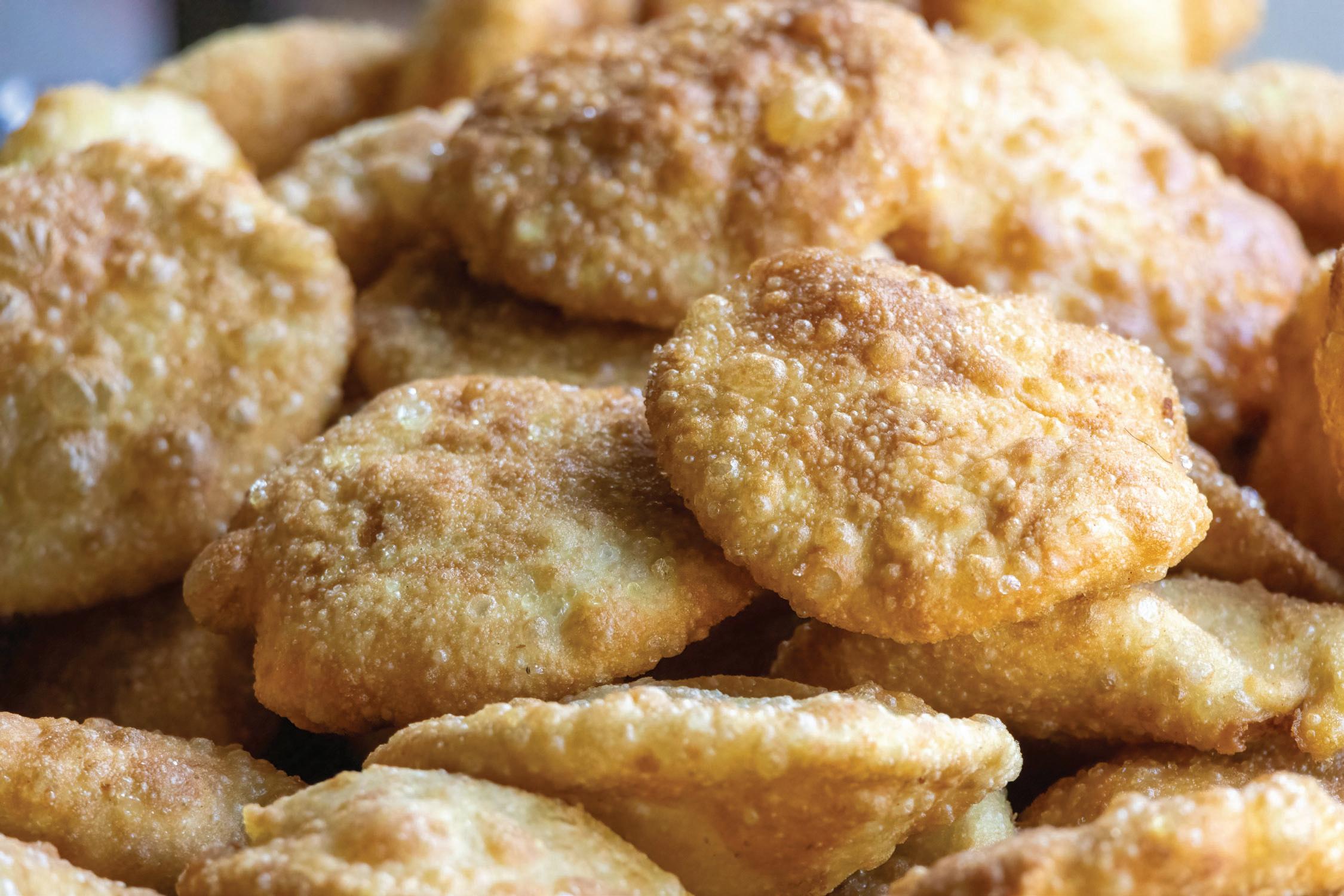
DAL PURI
(LENTIL-STUFFED FLATBREAD)
Prep Time: 45 minutes
Recipe Servings: 6
Rest Time: 30 minutes Cook Time: 45 minutes
Total Time: 2 hours
Dietary Considerations: Vegetarian, Vegan, Dairy Free, Kosher, Halal
Dal puri is a popular Bangladeshi fried atbread lled with spiced lentils and enjoyed as a snack, street food, or accompaniment to festive meals. Its roots lie in rural home cooking, where lentils were stretched into hearty dishes that could feed many with modest ingredients. The dish is especially common during celebrations and family gatherings, often served alongside pickles, chutneys, or light curries. Although versions exist across South Asia, the Bangladeshi preparation favors a dry, well-seasoned lling encased in a thin, crisp dough. The contrast between the crunchy exterior and the savory lentil center de nes its enduring appeal.
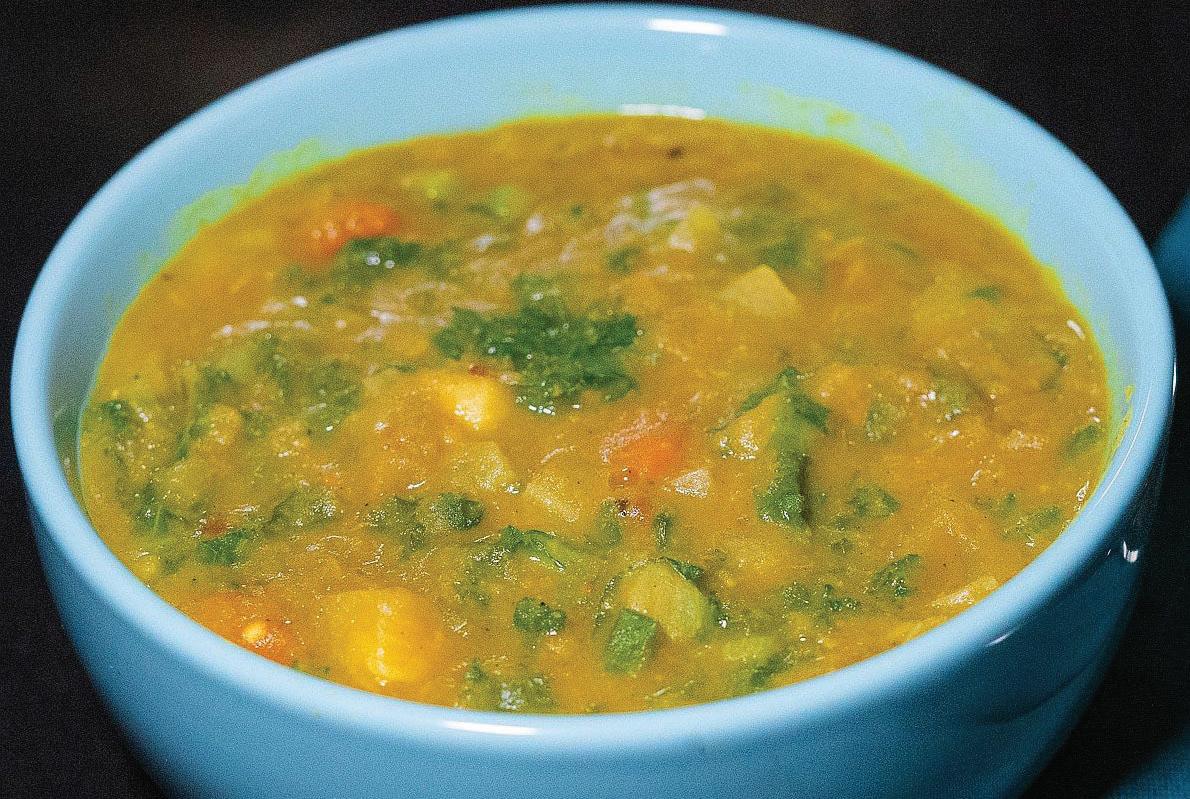
SUBZI KA SHORBA
(CURRIED VEGETABLE AND SPLIT PEA SOUP)
Prep Time: 10 minutes
Recipe Servings: 4
Cook Time: 15 minutes Total Time: 25 minutes
Dietary Considerations: Vegetarian, Gluten Free, Kosher, Halal
Warming vegetable soups occupy a modest but recognizable place in Bangladeshi and broader South Asian Muslim dining, particularly in urban and restaurant settings. Within this tradition, subzi ka shorba refers to a lightly spiced vegetable-based soup whose name re ects Urdu culinary terminology rather than indigenous Bangla naming. The dish emphasizes nourishment and balance, drawing on vegetables and pulses to produce a broth that is lling without heaviness. Its presence in Bangladesh is best understood as part of Mughal-inuenced and North Indian–derived menu repertoires rather than long-established rural home cooking. Served alongside rice, atbreads, or other simple starches, subzi ka shorba functions as a gentle, sustaining course rather than a centerpiece dish.
DAL PURI
(LENTIL-STUFFED FLATBREAD)
Prep Time: 45 minutes
Recipe Servings: 6
Rest Time: 30 minutes Cook Time: 45 minutes Total Time: 2 hours
Dietary Considerations: Vegetarian, Vegan, Dairy Free, Kosher, Halal
Dal puri is a popular Bangladeshi fried atbread lled with spiced lentils and enjoyed as a snack, street food, or accompaniment to festive meals. Its roots lie in rural home cooking, where lentils were stretched into hearty dishes that could feed many with modest ingredients. The dish is especially common during celebrations and family gatherings, often served alongside pickles, chutneys, or light curries. Although versions exist across South Asia, the Bangladeshi preparation favors a dry, well-seasoned lling encased in a thin, crisp dough. The contrast between the crunchy exterior and the savory lentil center de nes its enduring appeal.
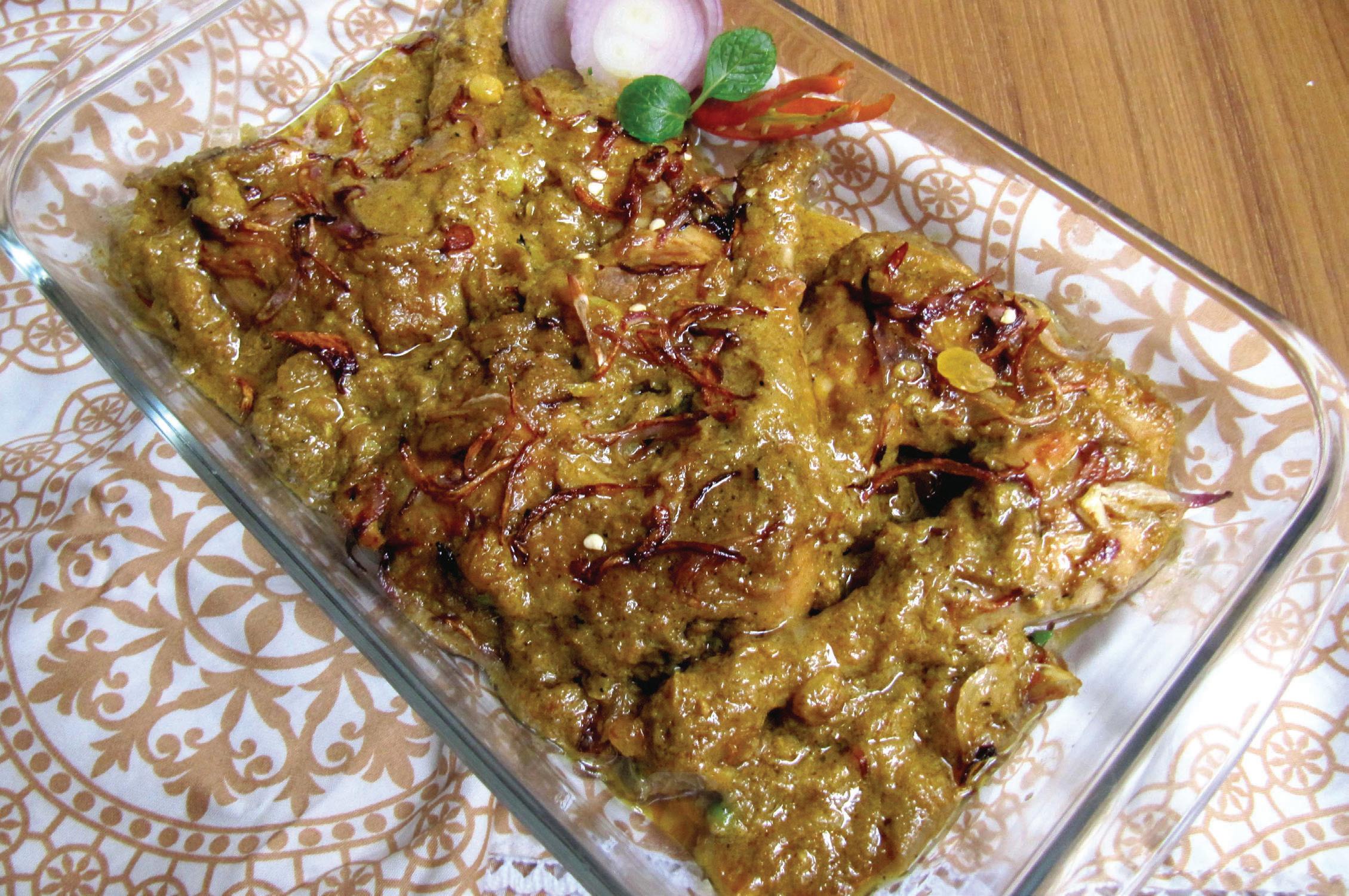
BIYE BARIR (ROAST
CHICKEN)
Prep Time: 15 minutes
Rest Time: 1 hour
Recipe Servings: 8
Cook Time: 45 minutes
Total Time: 2 hours
Dietary Considerations: Gluten Free, Halal
In Bangladesh, wedding feasts are inseparable from the fragrant chicken roast known as biye barir roast, literally wedding-house roast. Rooted in Mughal court cookery, the preparation emphasizes luxuriant seasoning yogurt, ghee, and ground nuts enrich warm spices to create a celebratory depth and sheen. Historically, chicken was a festival protein rather than an everyday staple, which reinforced the dish’s association with special occasions. At banquets it is most often paired with aromatic pulao (or morog pulao) and tempered by borhani, a spiced yogurt drink. Today biye barir roast remains a marker of hospitality and status, signaling abundance and careful, time-honored technique at life’s milestone gatherings.
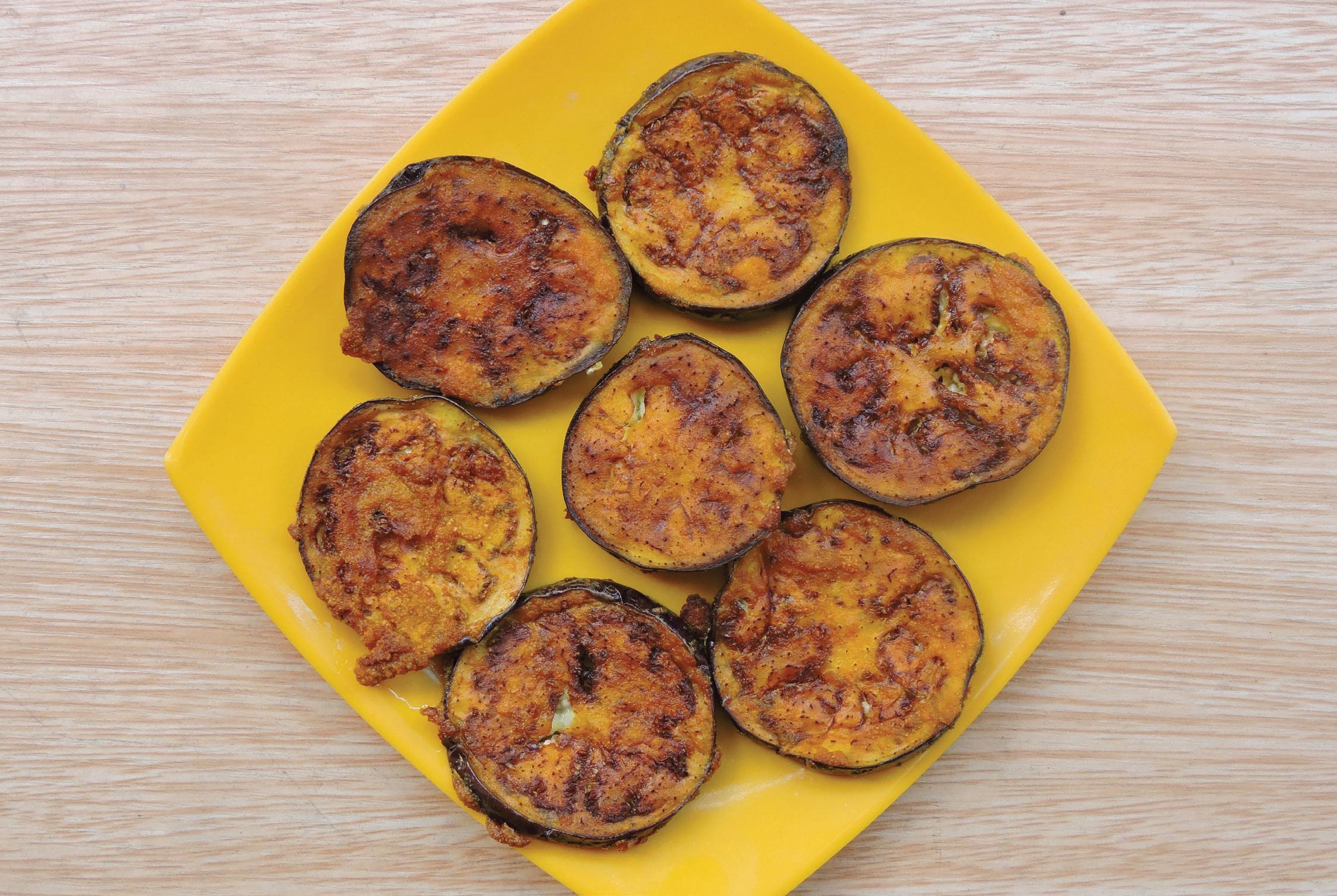
BEGUN BHAJA (FRIED
EGGPLANT)
Prep Time: 10 minutes Rest Time: 1 hour Cook Time: 15 minutes Total Time: 1 hour 25 minutes
Recipe Servings: 4 Dietary Considerations: Vegetarian, Vegan, Gluten Free, Dairy Free, Kosher, Halal
Begun bhaja thin slices of eggplant fried until bronzed and tender serves as a common side or snack across Bengal, including Bangladesh. It appears in everyday meals with rice and lentils and also on festive menus, where its crisp edges and soft center offer welcome contrast. Home cooks prize it for economy and speed, a dish that turns a single vegetable into something richly satisfying. In many households, a brief salting and spicing period before frying is traditional, a practice tied to both avor and long-held ideas about turmeric’s bene ts. The result is a staple that re ects the region’s preference for simple techniques that elevate local produce.
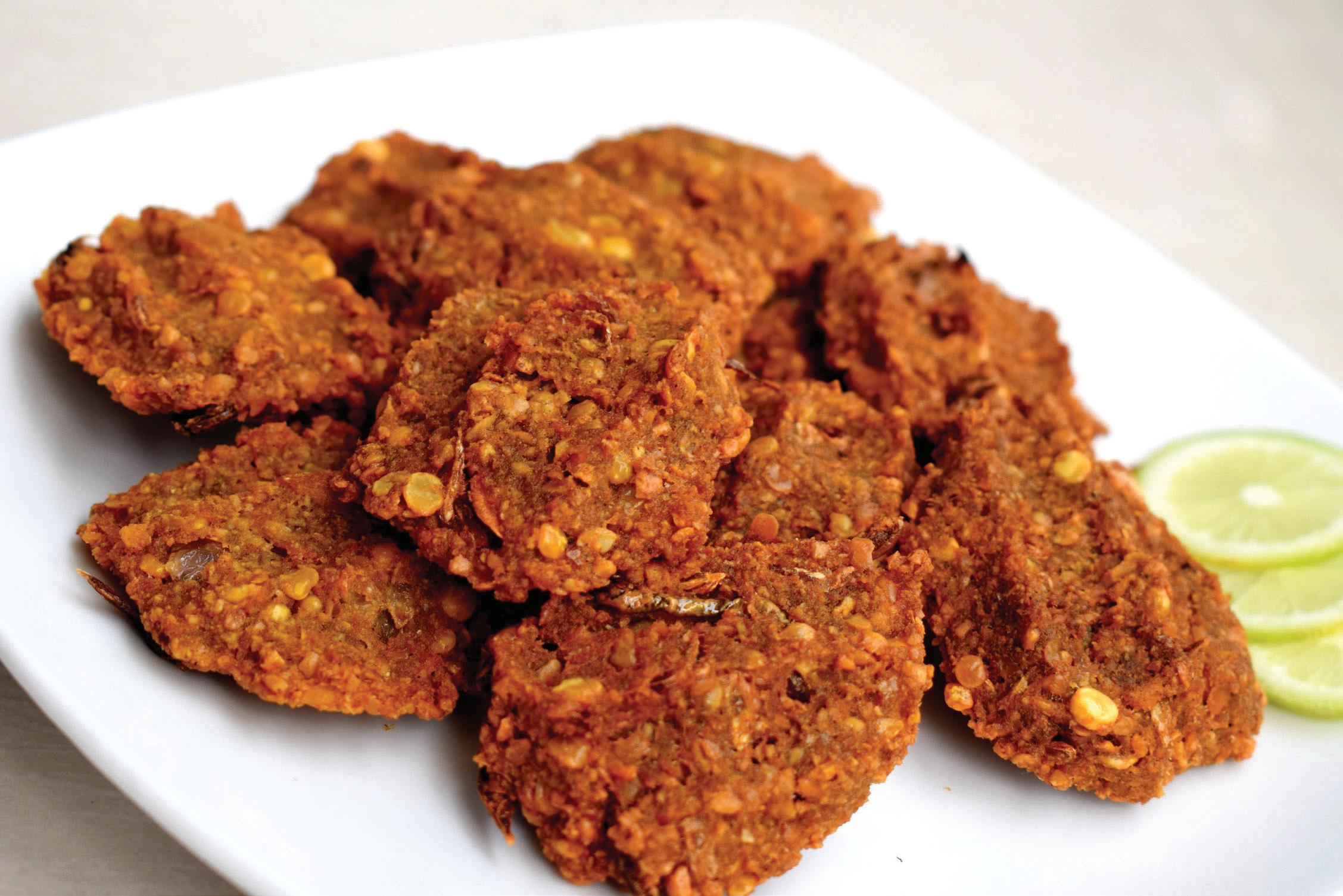
PIYAJU
(LENTIL AND ONION FRITTERS)
Prep Time:
Recipe Servings: 4 Dietary Considerations: Vegetarian, Vegan, Gluten Free, Dairy Free, Kosher, Halal
Piyaju is a beloved Bangladeshi lentil fritter, known for its crispy texture and rich, savory avor. Made primarily from masoor dal (red lentils) that are soaked and ground into a coarse paste, the batter is mixed with nely chopped onions, green chile pepper, garlic, ginger, and spices including turmeric and cumin, then deep-fried until golden-brown and crunchy. Piyaju is especially popular during Ramadan, often served as part of the traditional ifṭār (breaking of the fast) meal, alongside other snacks such as beguni (fried eggplant) and dates. These crispy lentil fritters are enjoyed on their own or dipped in chutneys for added avor. Loved for their hearty, spiced taste, piyaju remains a staple street food and homemade snack in Bangladeshi cuisine.
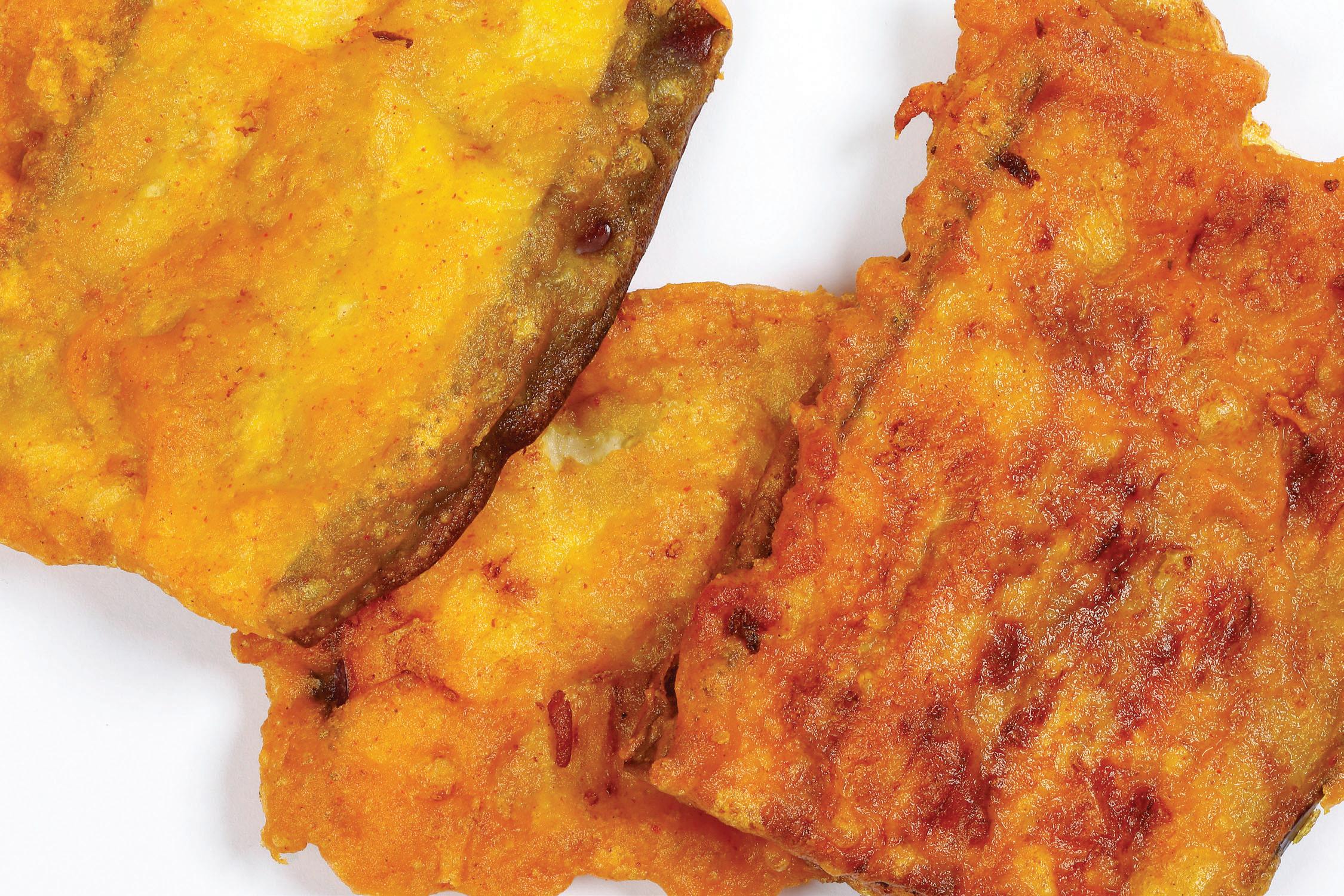
BEGUNI
(BATTERED FRIED EGGPLANT)
Prep Time: 15 minutes Rest Time: 10 minutes Cook Time: 20 minutes Total Time: 45 minutes
Recipe Servings: 4 Dietary Considerations: Vegetarian, Vegan, Gluten Free, Dairy Free, Kosher, Halal
Often associated with Ramadan evenings and neighborhood tea stalls, beguni is one of Bangladesh’s most recognizable fritters. The dish re ects the country’s long tradition of vegetable-based snacks prepared quickly and served hot, usually alongside muri or puffed rice. While similar fritters appear across South Asia, the Bangladeshi version is distinct in its restrained spicing and crisp, light coating. It is valued not for heaviness but for balance, allowing the eggplant itself to remain soft and prominent beneath the batter. Beguni is most commonly eaten fresh from the oil, when contrast between the crunchy exterior and tender interior is at its peak.
PIYAJU
(LENTIL AND ONION FRITTERS)
Prep Time: 10 minutes Rest Time: 2 hours Cook Time: 20 minutes Total Time: 2 hours 30 minutes
Recipe Servings: 4 Dietary Considerations: Vegetarian, Vegan, Gluten Free, Dairy Free, Kosher, Halal
Piyaju is a beloved Bangladeshi lentil fritter, known for its crispy texture and rich, savory avor. Made primarily from masoor dal (red lentils) that are soaked and ground into a coarse paste, the batter is mixed with nely chopped onions, green chile pepper, garlic, ginger, and spices including turmeric and cumin, then deep-fried until golden-brown and crunchy. Piyaju is especially popular during Ramadan, often served as part of the traditional ifṭār (breaking of the fast) meal, alongside other snacks such as beguni (fried eggplant) and dates. These crispy lentil fritters are enjoyed on their own or dipped in chutneys for added avor. Loved for their hearty, spiced taste, piyaju remains a staple street food and homemade snack in Bangladeshi cuisine.
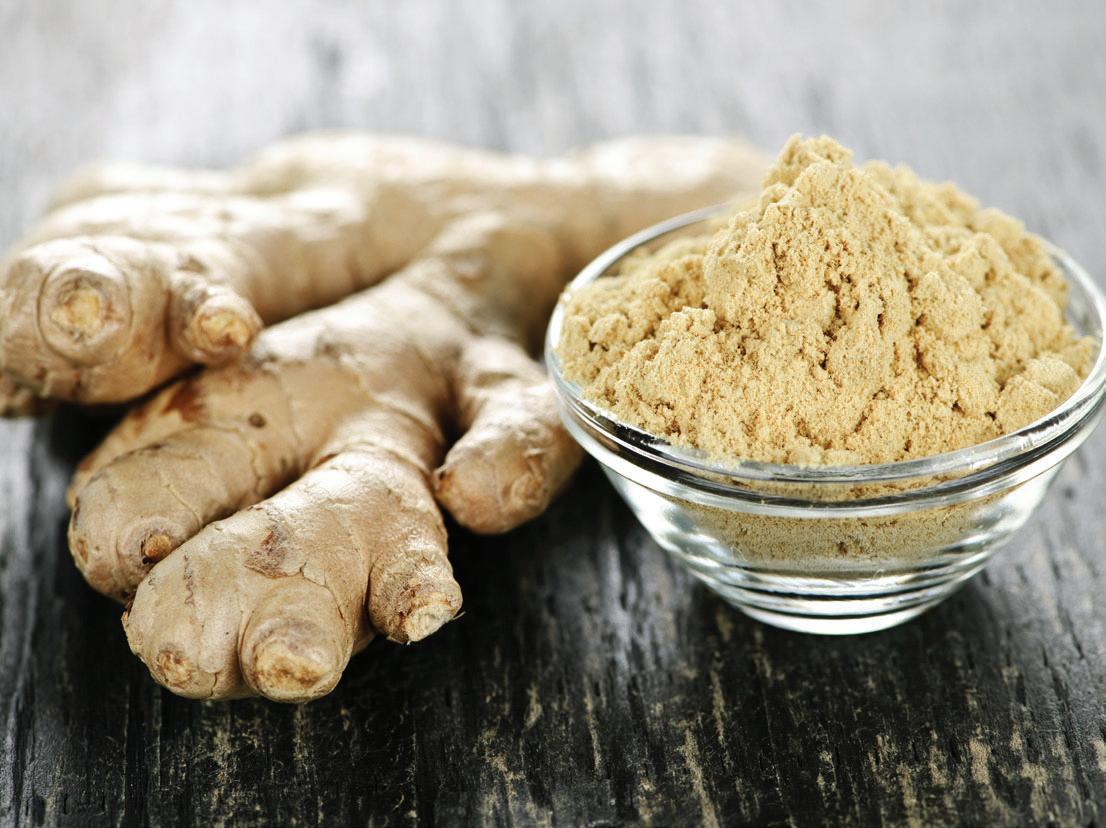
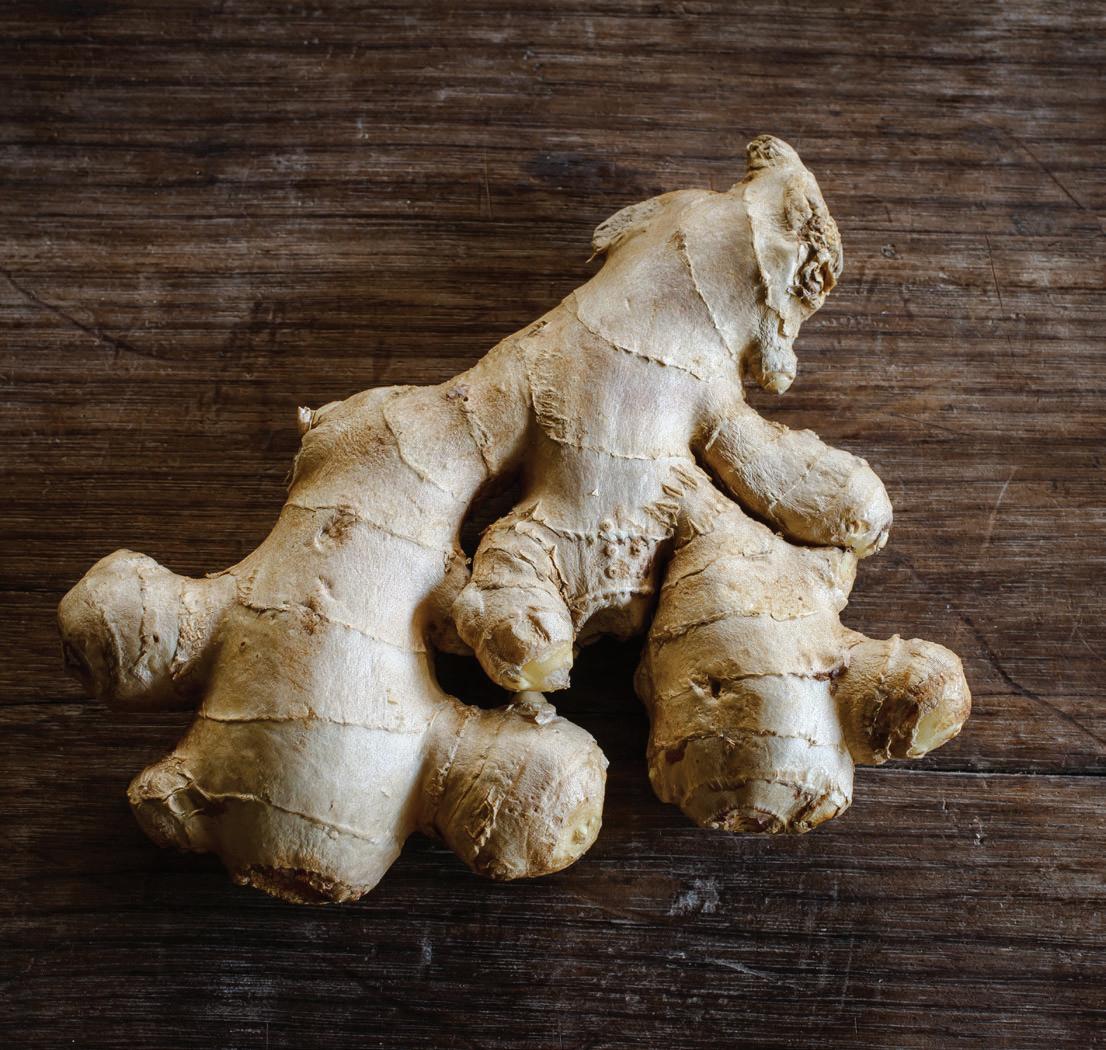
GINGER
Description
Ginger is the rhizome of the owering plant Zinigiber of cinale.
Origin
Ginger is native to the Indian subcontinent and was mentioned in the writings of ancient India, China, and the Middle East. By 100 CE, the Romans had acquired ginger through the spice trade, and in the 16th century, Spanish colonizers introduced ginger in the West Indies and in Central and South America, where it became an important export crop.
Varieties
Ginger varieties are usually named after their region of cultivation, the most common of which are China, Assam, Maran, Himachal, Nadia, and Rio de Janeiro.
Flavor Pro le
Ginger has a pungent and hot avor that hits the sinuses strongly.
Nutrient Pro le
Ginger contains trace levels of magnesium, manganese, copper, iron, pyridoxine, and vitamin C. It is rich in essential oils, including gingerol, shogaol, farnesene, and zingerone.
Preparations
Ginger is an important seasoning common in Indian, Chinese, Korean, Japanese, and Vietnamese cuisines. It is used in marinades and soups and as an addition
to a variety of meat, vegetable, and seafood dishes. Ginger is a main component of kimchi and is popularly pickled in vinegar or sherry and served alongside sushi as a palate cleanser. The root can be candied, and it provides a bright spiciness to ginger snaps. Ginger beer is a non-alcoholic soda avored with the root’s juice. Ginger also is commonly infused in wine and other alcohols.
Season
Ground ginger and ginger root are available year-round. It is harvested after the foliage dies in the fall and winter, although new plants are typically left to grow for a year or more to attain suf cient size.
Did You Know?
• The largest producers of ginger are India, with more than 30 percent of the world’s supply, followed by China, Nepal, Indonesia, and Nigeria.
• In 1928, a woman in Scotland received a nasty surprise when she ordered a ginger beer ice cream oat and discovered a snake decomposing in the ginger beer’s opaque glass bottle. The woman sued the manufacturer for damages related to subsequent health issues. The 1932 case Donaghue v. Stevenson ruled in favor of the woman, establishing a new class of legal liability and the modern concept of criminal negligence.
ABOUT WORLD TRADE PRESS
World Trade Press is a publishing and information products company specializing in country-based information in the elds of culture, business, food, language, local living, logistics, and travel. In business since 1993, the company’s mission is to strengthen mutual understanding across cultures by lowering the information barriers that prevent individuals and organizations from succeeding in the international arena. World Trade Press clients include academic and public libraries, universities, global businesses, government agencies, global logistics rms, diplomats, business travelers, tourists, and individuals with a passion for understanding the world.
Databases
World Trade Press has developed and maintains more than a dozen large-scale online databases of country and city information covering business, culture, food, import/export, local living, and travel for 174 world countries and 201 world cities.
Physical Books, Atlases, and Maps
World Trade Press has published multiple editions of more than 100 physical reference books, country business guides, books for international trade and logistics, world atlases for travel and logistics, and world and country wall maps.
Professional Reports and E-Books
World Trade Press has developed and maintains more than two dozen professional-level country e-reports and e-books for each of 174 countries. These products cover topics such as business culture, cost of living, demographics, education, environment, holidays and festivals, government, money and banking, music, quality of life, religion, security, social indicators, and more.
Contributors
All World Trade Press products from our databases and e-content reports to our physical books, maps, and atlases are created through the collaboration of a dedicated internal staff of researchers, writers, editors, and cartographers and more than 100 external subject-matter experts to create world-class content in the elds of culture, business, communications, food, international trade, language, logistics, security, and travel. To view a partial list of contributors to titles in The Global Kitchen series, go to TheGlobalKitchen.com/world-trade-press.
Learn more about World Trade Press and its products at www.WorldTradePress.com.
Enjoyed this cookbook?
Please leave us an Amazon review. Reviews help other readers nd our books. For more recipes, updates, and global food inspiration, follow The Global Kitchen on Facebook and BlueSky.
Social Links:
Facebook - www.facebook.com/wtpglobalkitchen
Blue Sky - bsky.app/pro le/theglobalkitchen.bsky.social
Check