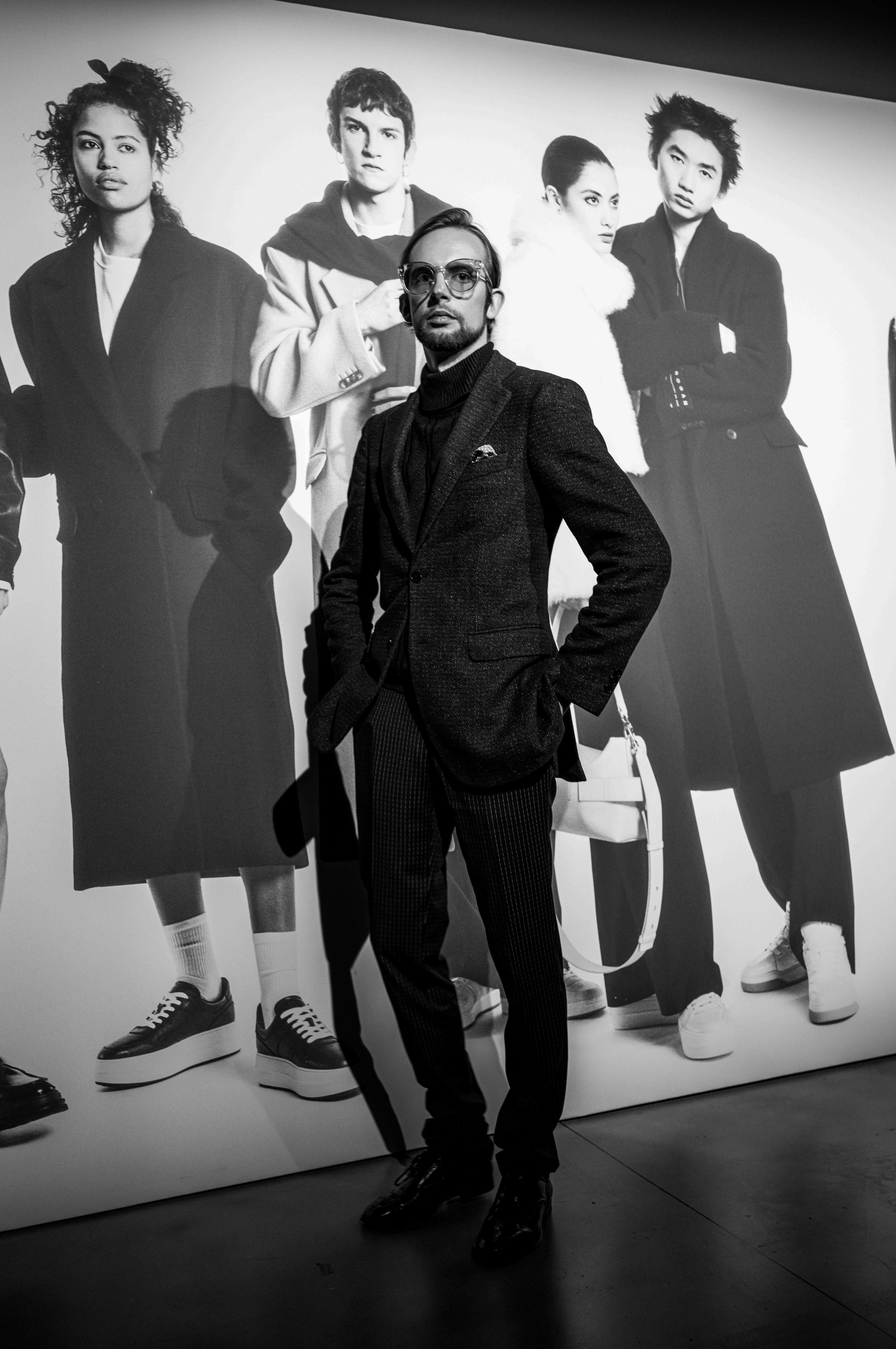
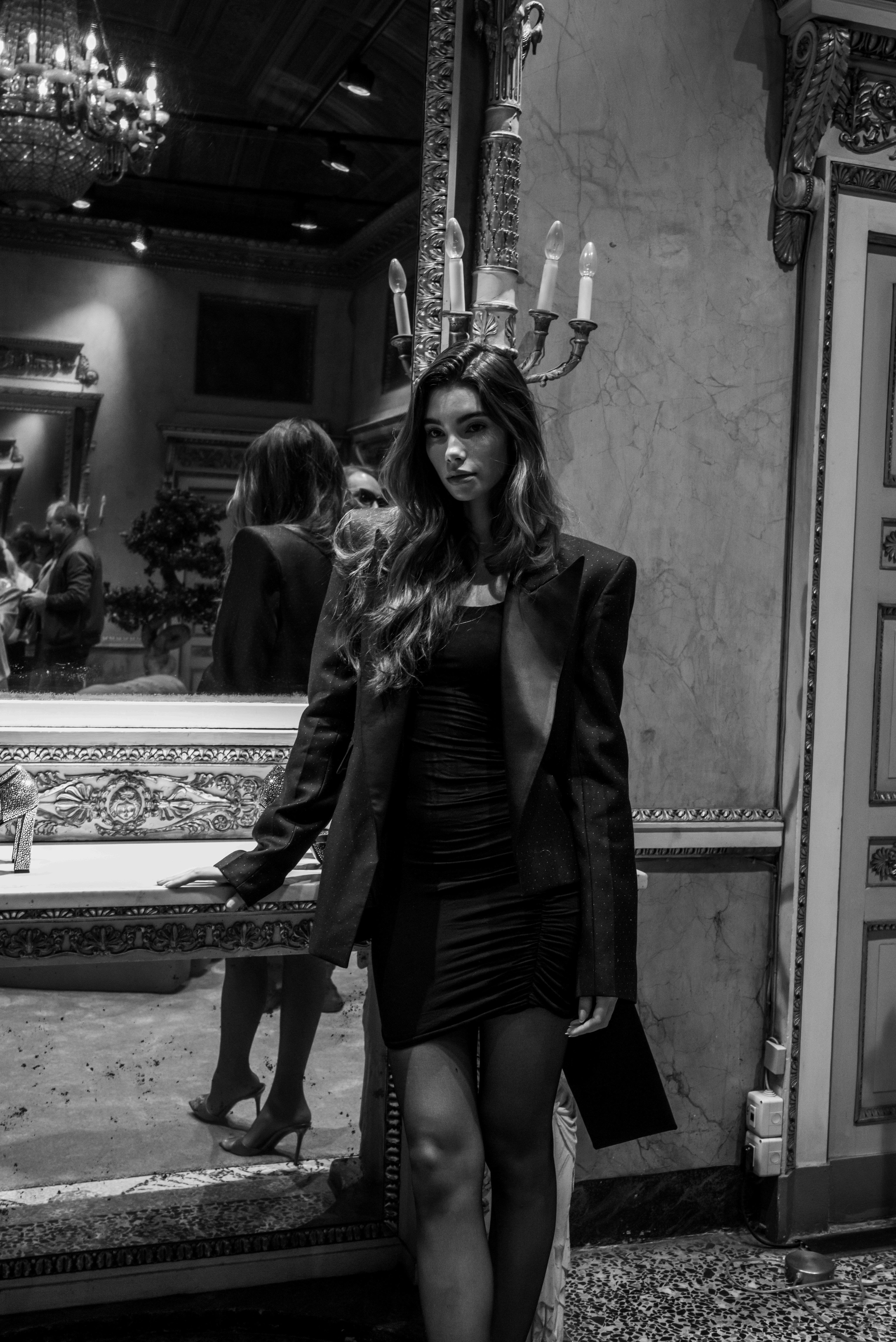
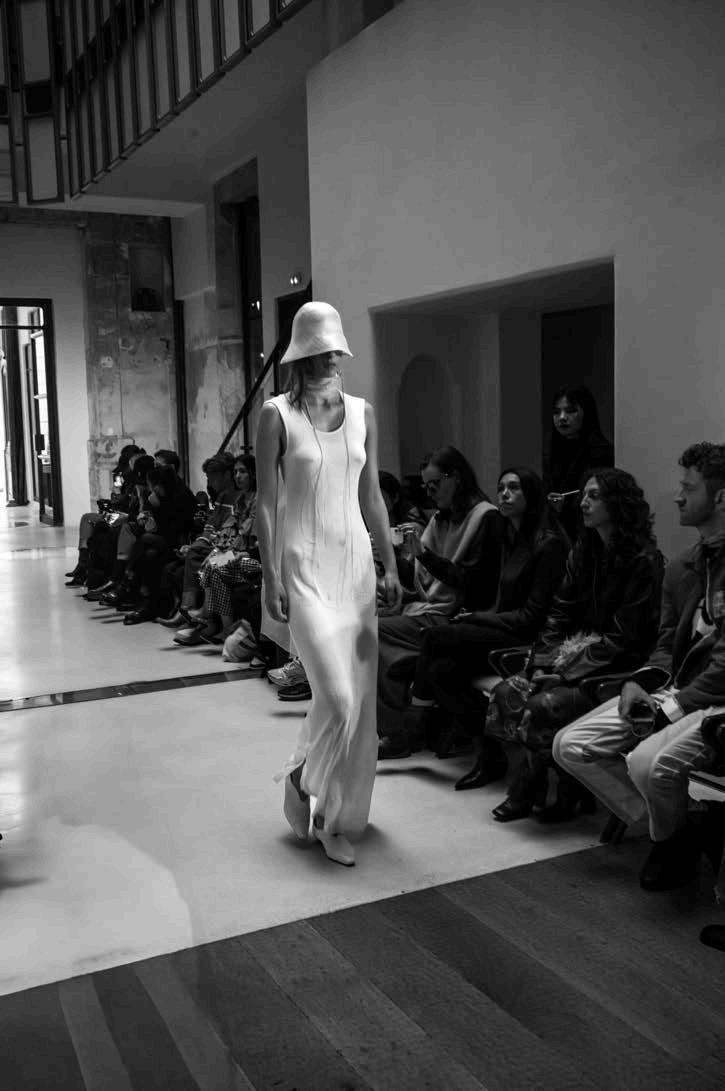
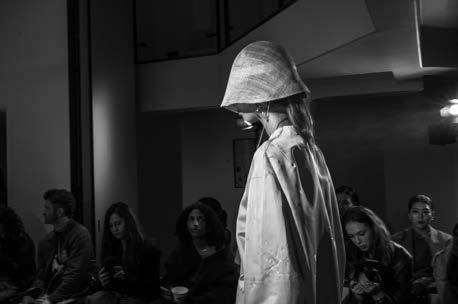
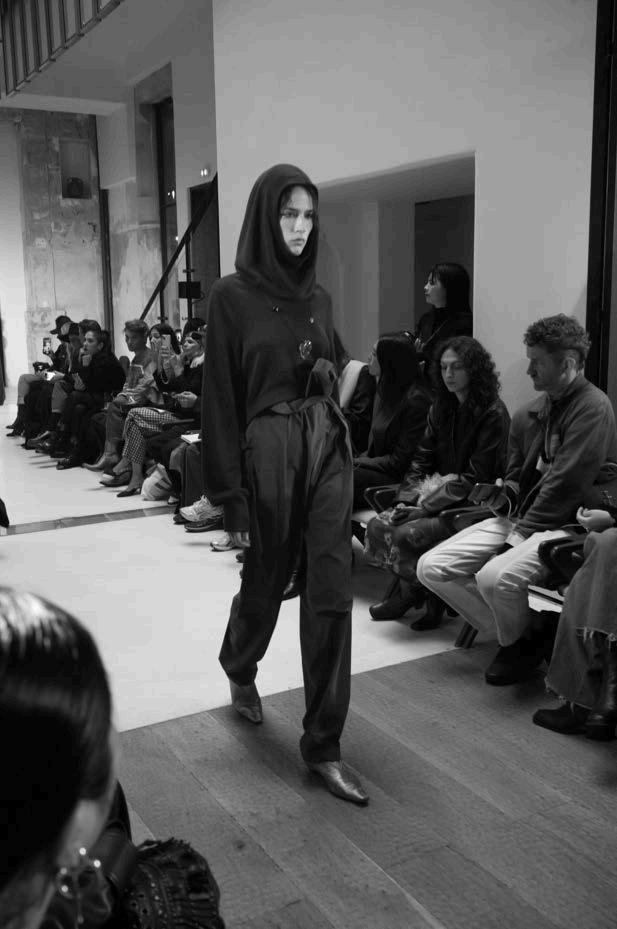
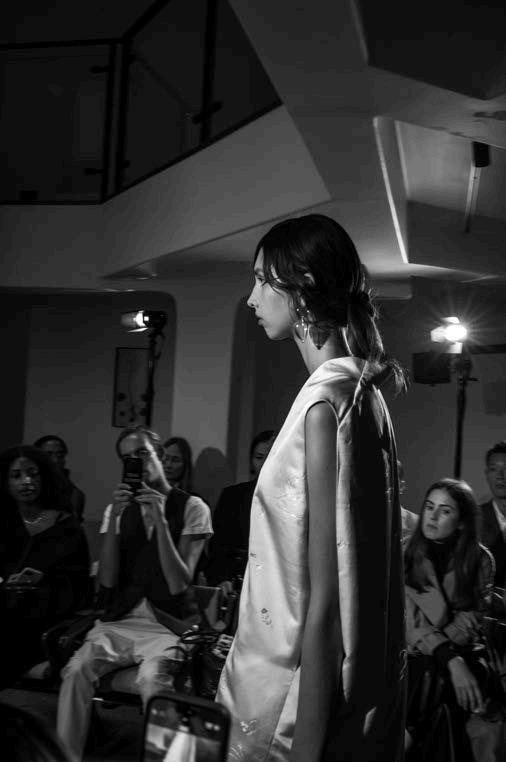
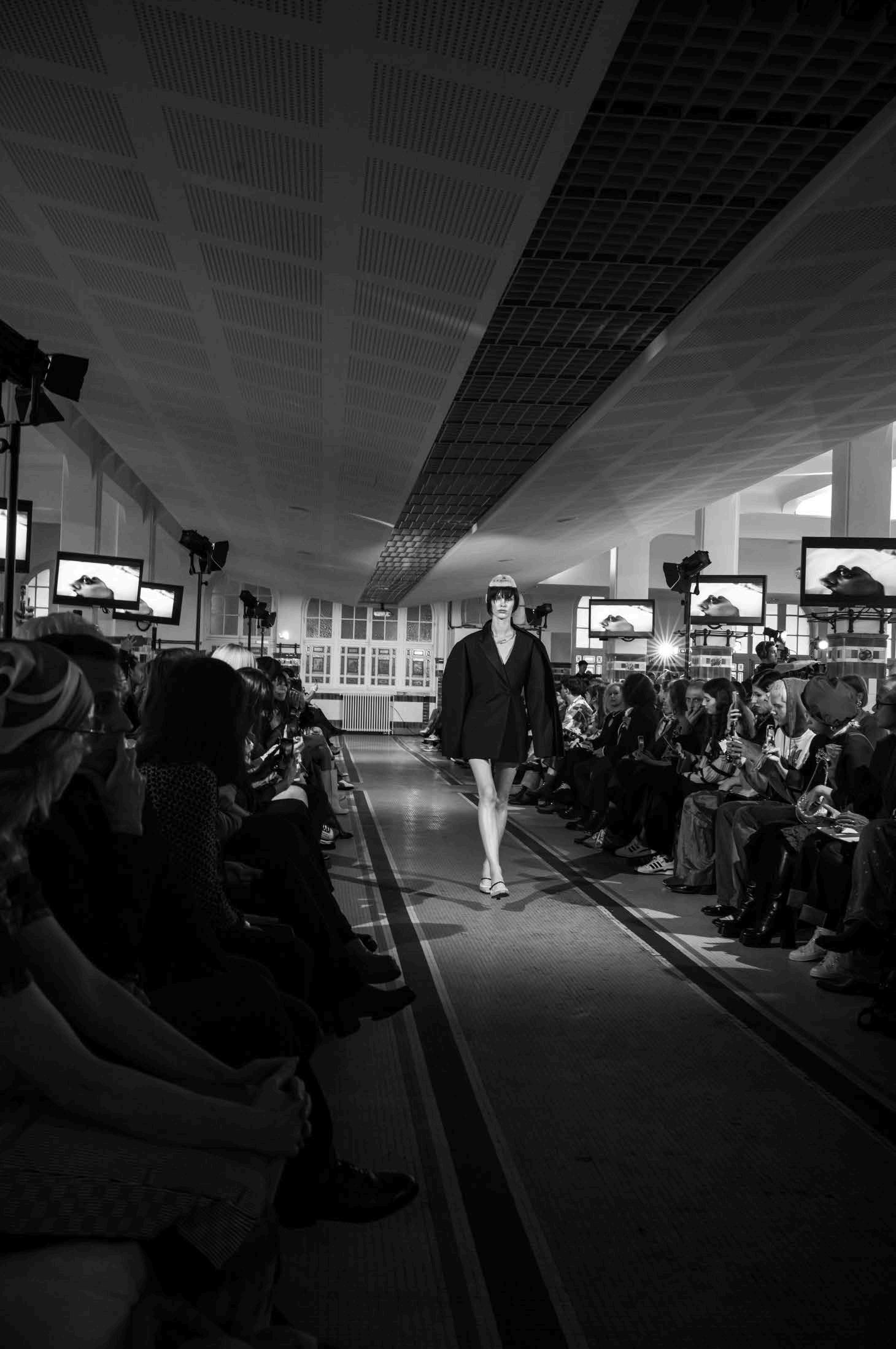
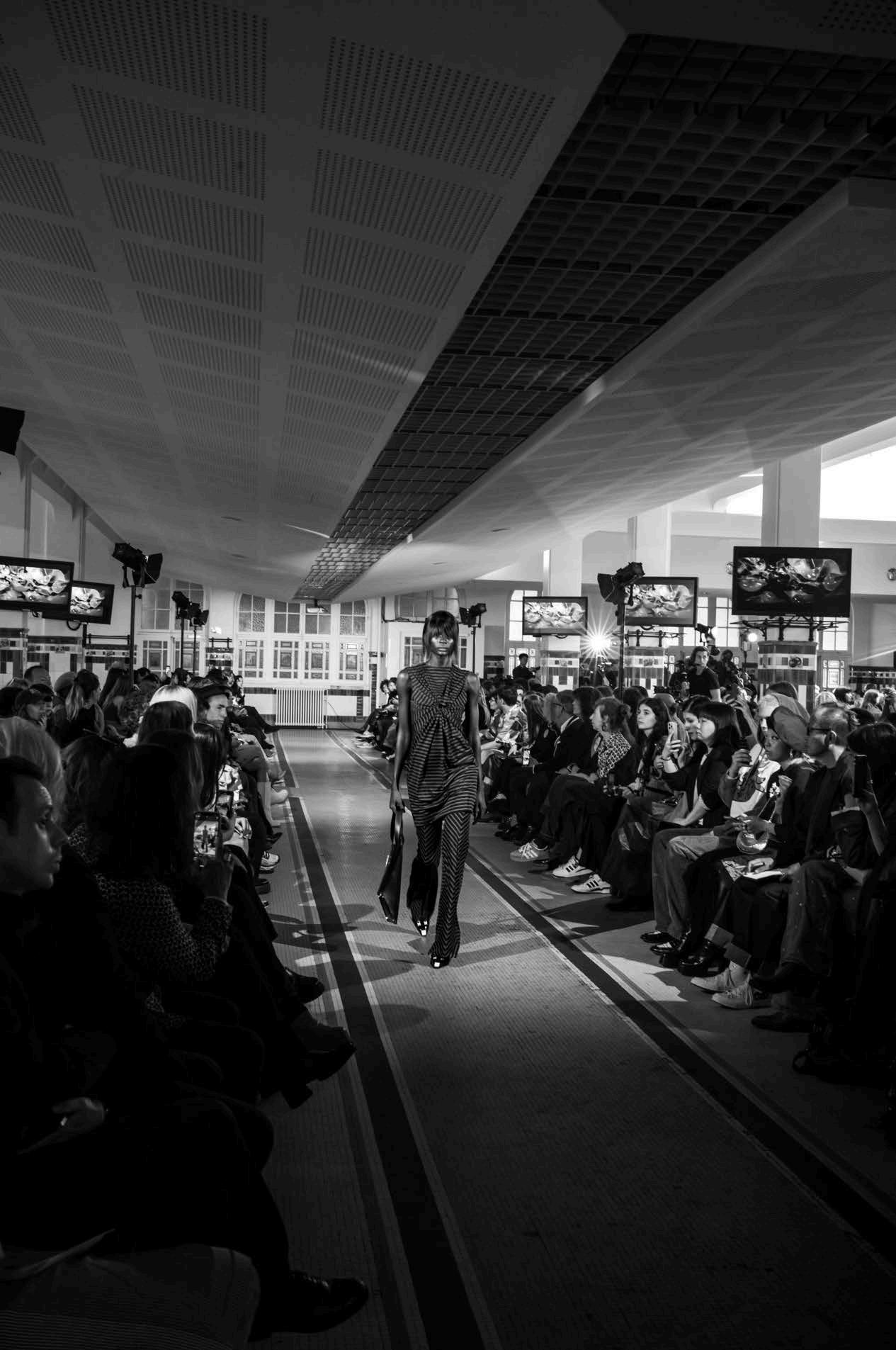
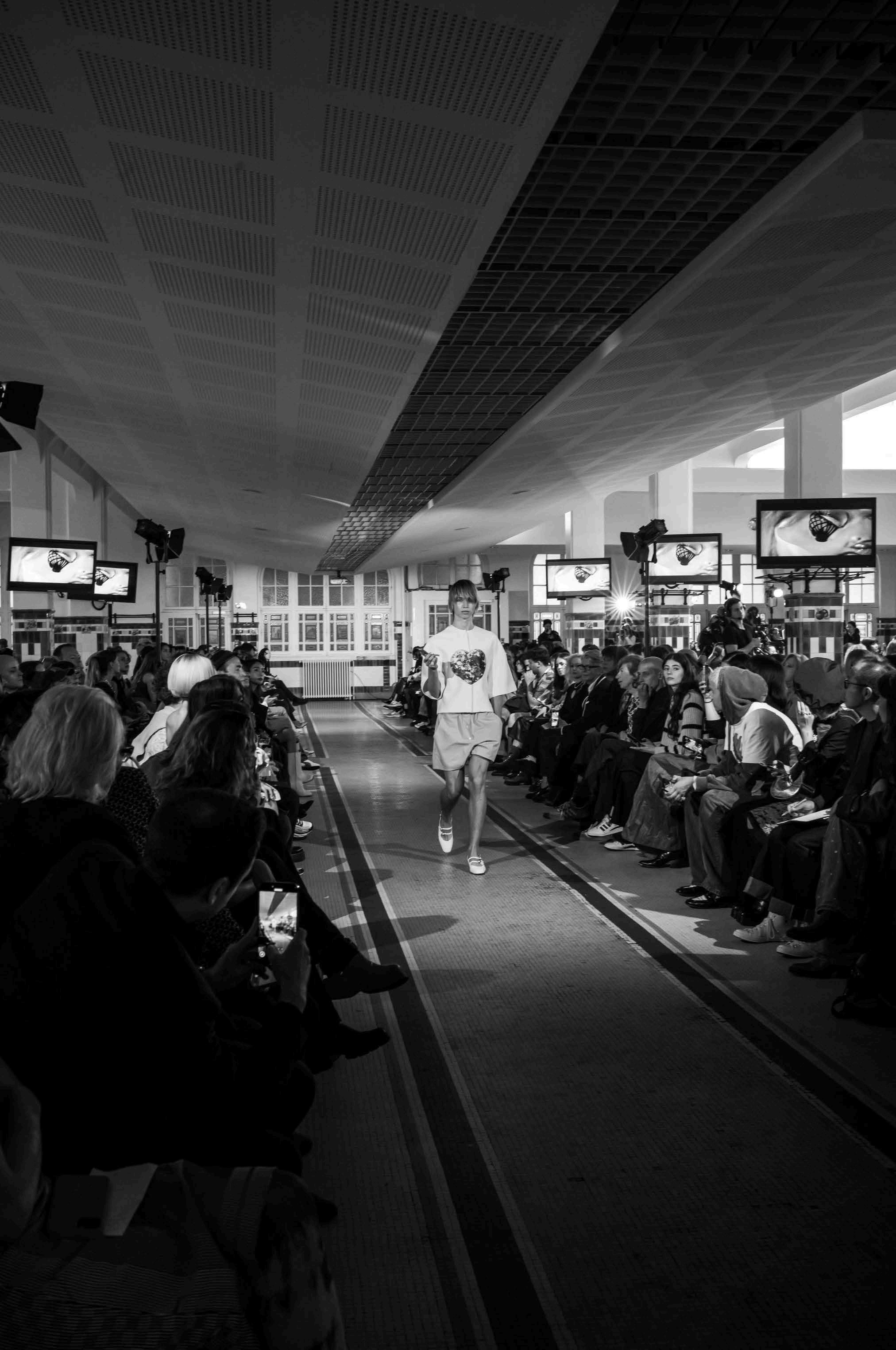
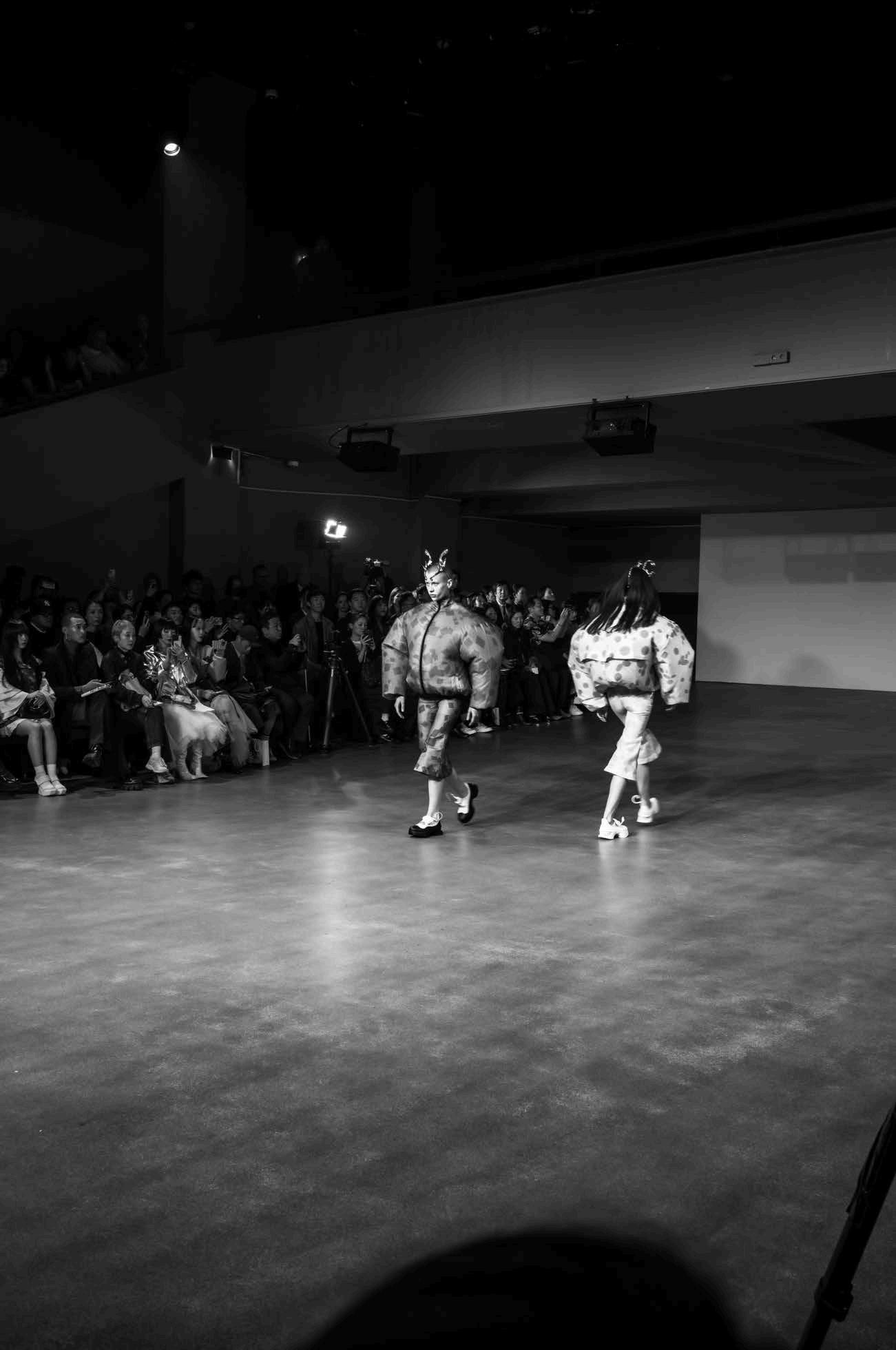
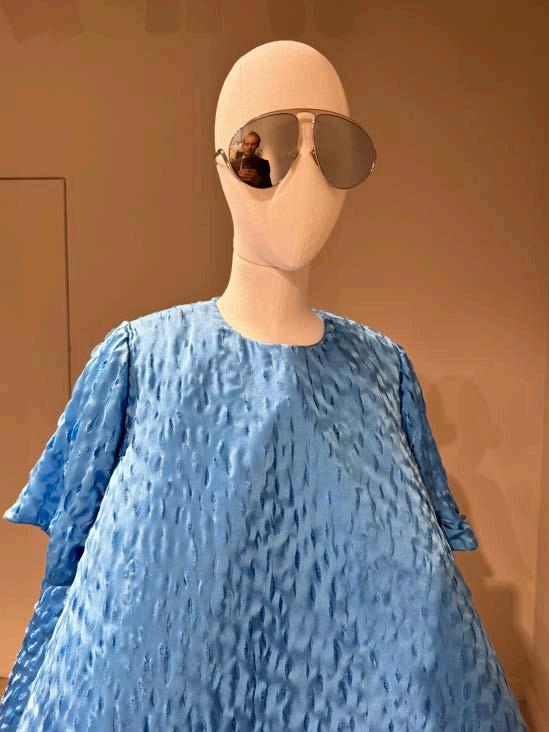
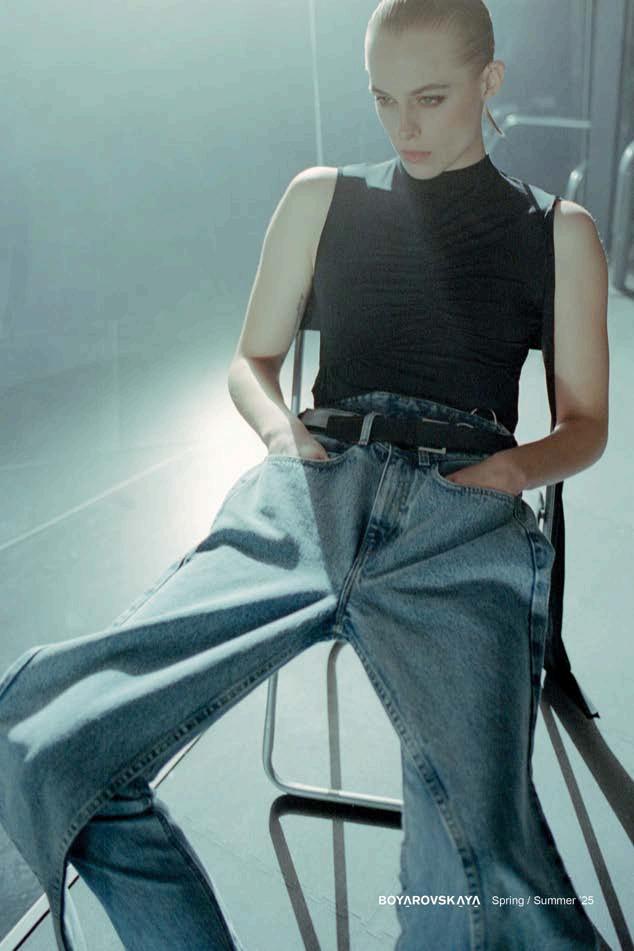
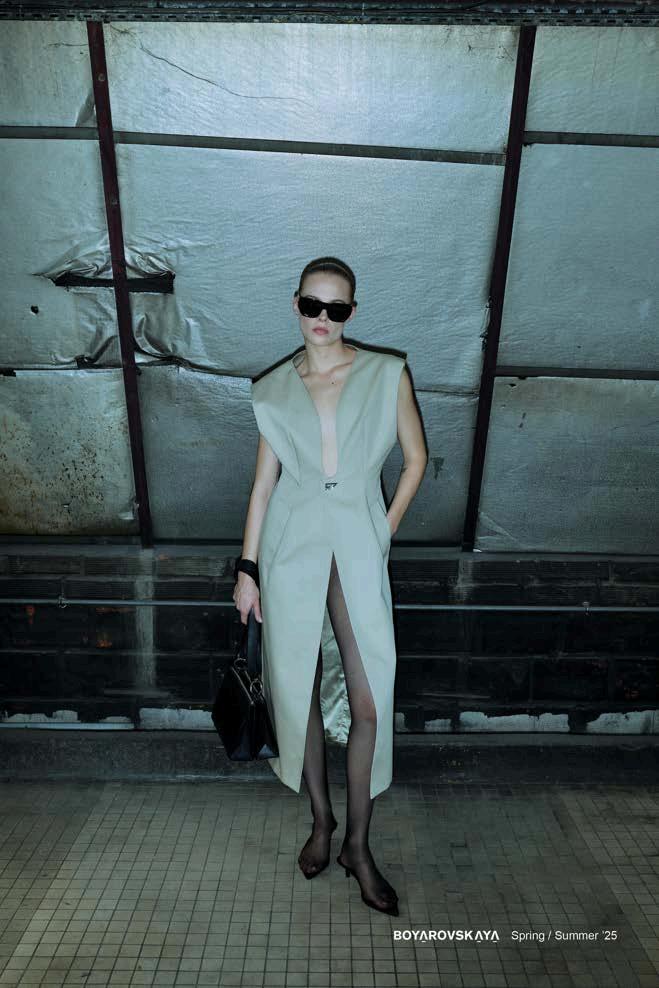
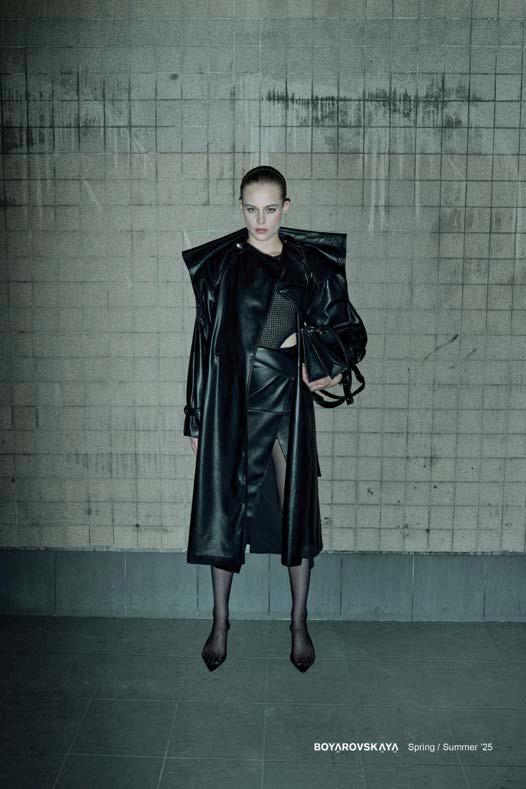
C o n c e p t b y J e s s e S c o t t i n c o n j u n c t i o n w i t h E l y s i u m C o c k t a i l C l u b
J e s s e S c o t t
E D I T O R - I N - C H I E F ,
D I R E C T O R O F D E S I G N
L e r o y V e l a s q u e z
D I R E C T O R O F P H O T O G R A P H Y
D i a n a H u k
C O N T R I B U T O R
V i k t o r K o z a k
C O N T R I B U T O R
J a m e s S u l l i v a n
C O N T R I B U T O R
A n a s t a s i a V o r o n t s o v a
C O N T R I B U T O R
“ E v e r y t h i n g t e n d s t o m a k e u s b e l i e v e t h a t t h e r e e x i s t s
a c e r t a i n p o i n t o f t h e m i n d a t w h i c h l i f e a n d d e a t h ,
t h e r e a l a n d t h e i m a g i n e d , p a s t a n d f u t u r e , t h e
c o m m u n i c a b l e a n d t h e i n c o m m u n i c a b l e , h i g h a n d l o w ,
c e a s e t o b e p e r c e i v e d a s c o n t r a d i c t i o n s . ”
- A n d r é B r e t o n
TLetter from the Editor
his past fall, while attending my first Tashkent Fashion Week, I was struck by a quote from Martyn Roberts, the founder of UK-based Fashion Scout
Roberts, who specializes in bringing talented designers from emerging markets to a broad international audience, said “ we ’ re looking for people with stories to tell ” He doubtless found many such individuals at Tashkent Fashion Week, as rising stars from Kazakhstan and Uzbekistan dramatically took the runway to cast a spotlight on Central Asia’s burgeoning fashion scene For example, Azukar Moreno reinterpreted traditional Uzbek ikat for a contemporary audience while Dark’N’Core brought an edgy Berlin sensibility to the steppes for the first time But Roberts’ words have import extending while beyond their specific context. As the “big four” fashion weeks become increasingly international with regards to both talent and audiences, exciting new stories await with every day and show.
Fittingly, storytelling was a major theme for Elysium’s writers this season as they dove into the (at times dark) fairy tale that was Paris Fashion Week Spring/Summer 2025
Within these pages, you’ll discover how Daniel Roseberry is writing a revolutionary new chapter in the Schiaparelli legacy and how Nicholas Ghèsquiere is beginning his second decade at Louis Vuitton with a Renaissance romance You’ll learn about how Mame Kuroguchi’s journey into her Japanese heritage has informed her elegantly minimalist aesthetic - and how Alphonse Maitrepiere wove a deeply personal tale of childhood nostalgia into his fifth-ever collection. You’ll also take an in-depth look at RVNG Couture, discovering how our cover star Coco Rocha became the muse for a classical couture collection designed for the modern woman.
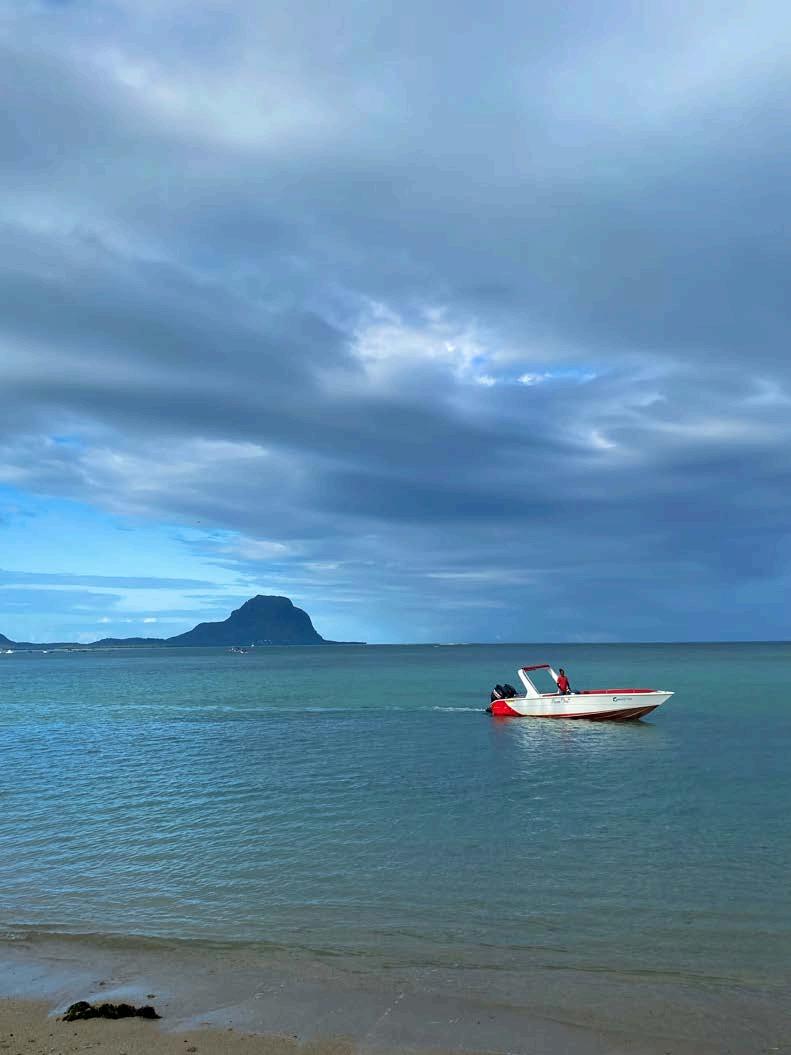
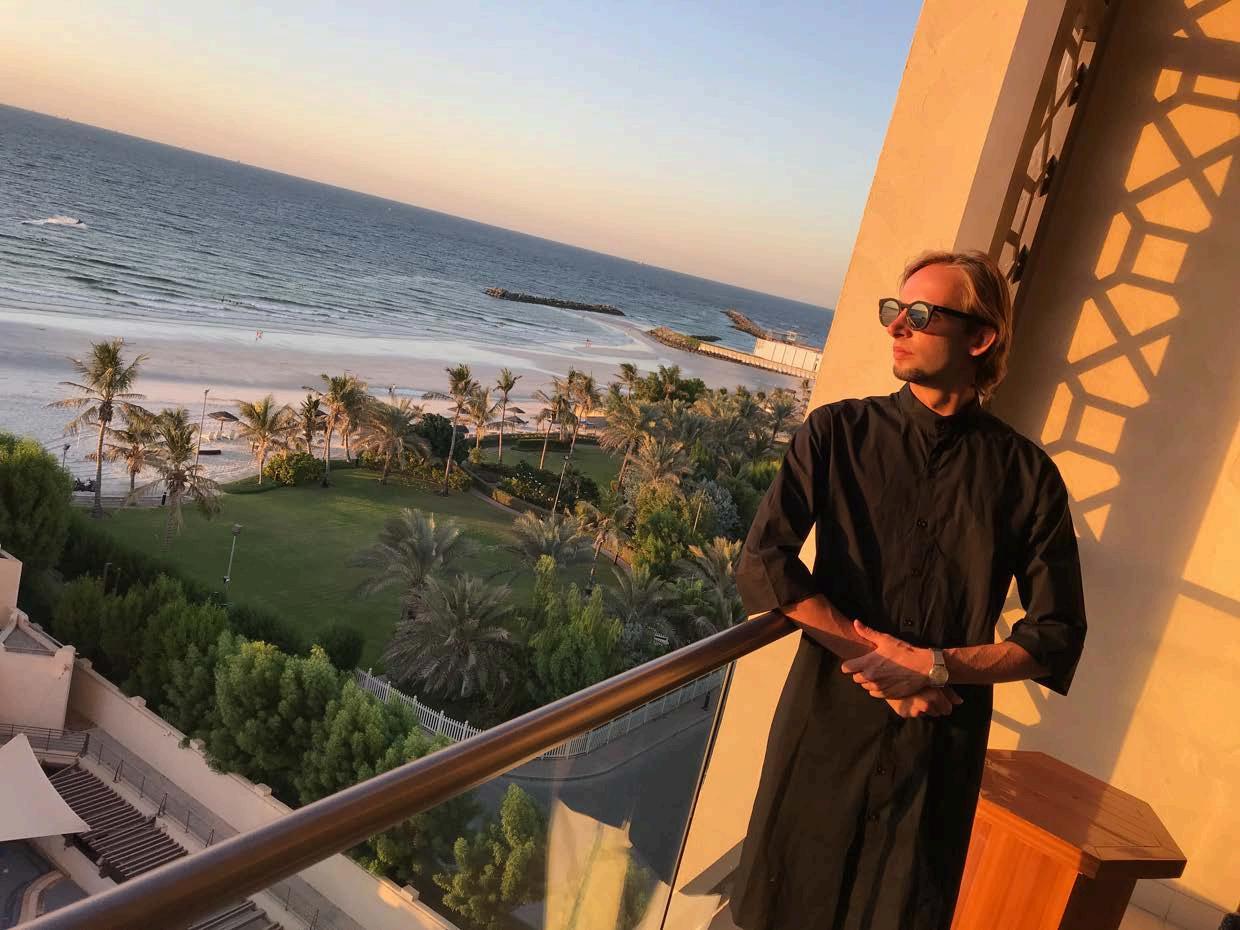
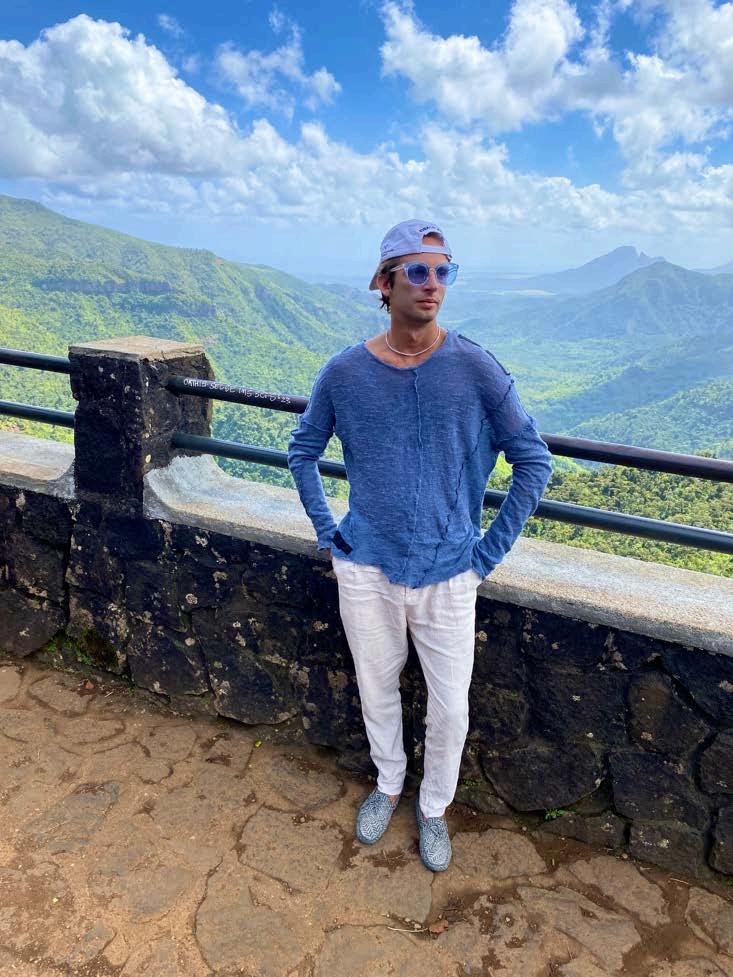
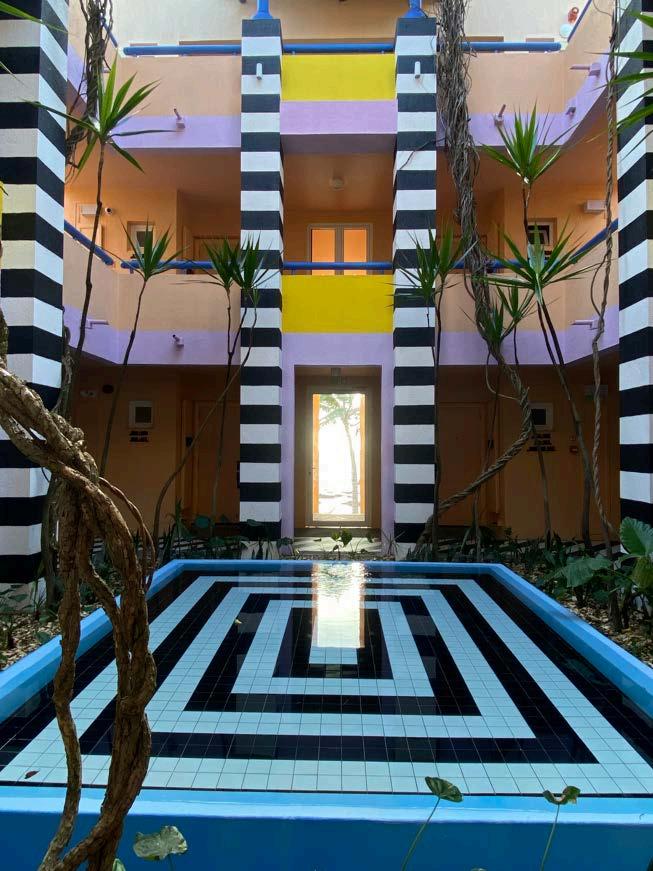
As the depth of winter hit Europe, many of us are dreaming of writing our own travel fantasies
That’s why we also have features on two of the year ’ s hottest destinations - Mauritius and Japan
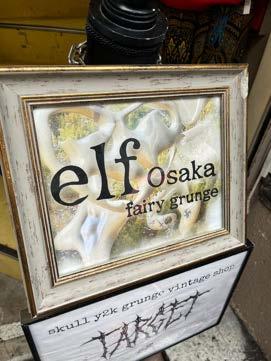
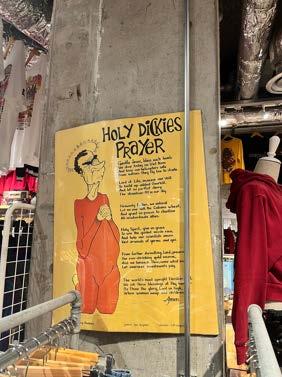
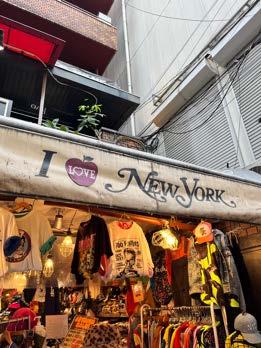
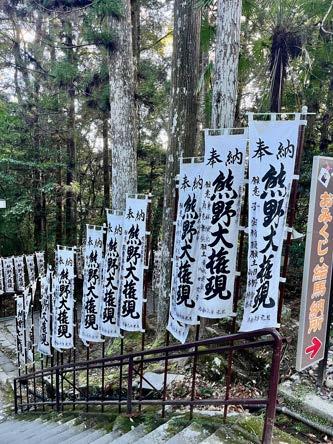
You’ll read stories from my eye-opening retreat to the “Pearl of Indian Ocean” while our writer James Sullivan leads us on a voyage of unexpected cultural discovery through an enclave of Osaka
Best wishes to end 2024! May amazing new stories await in the new year
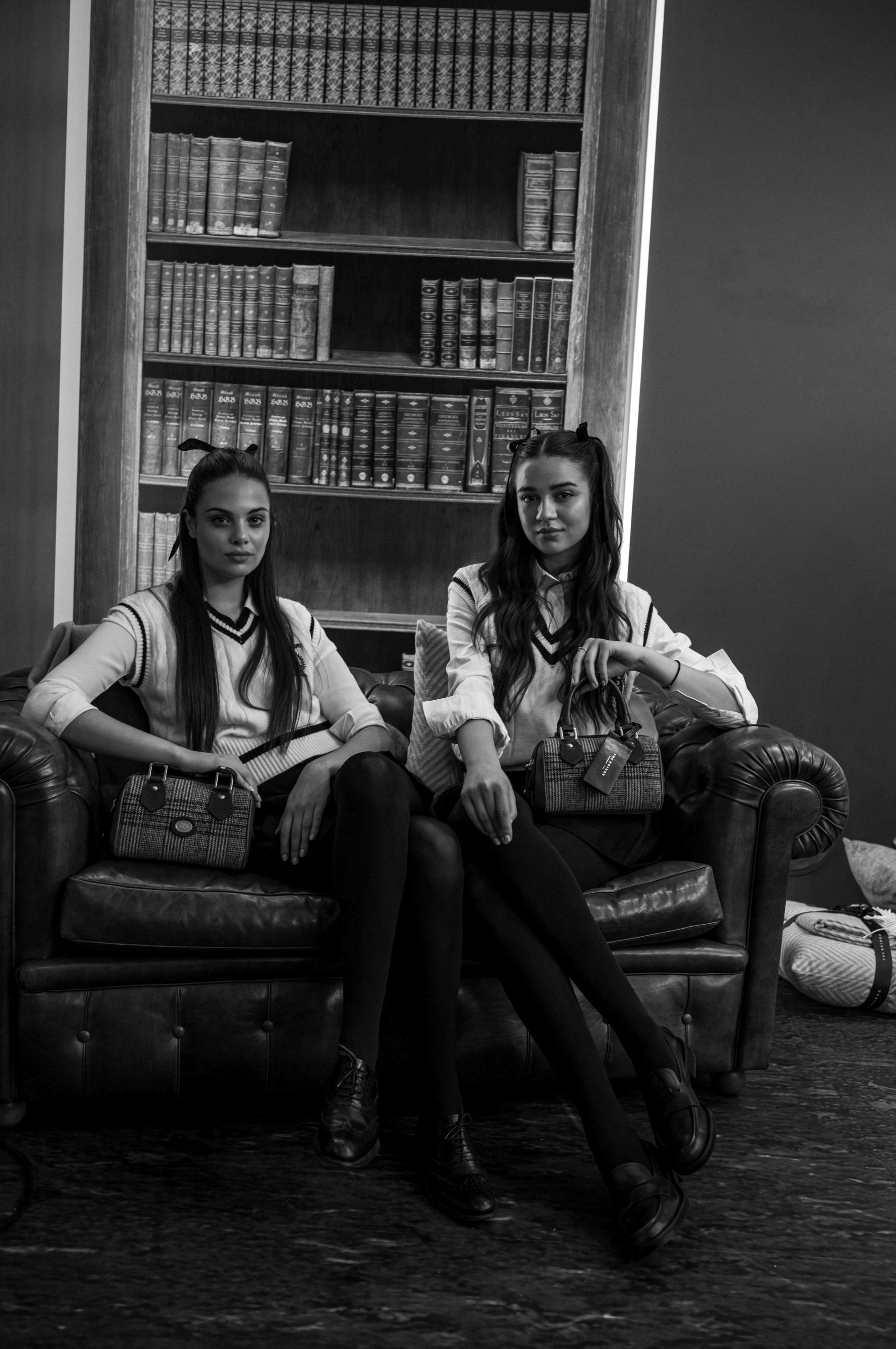
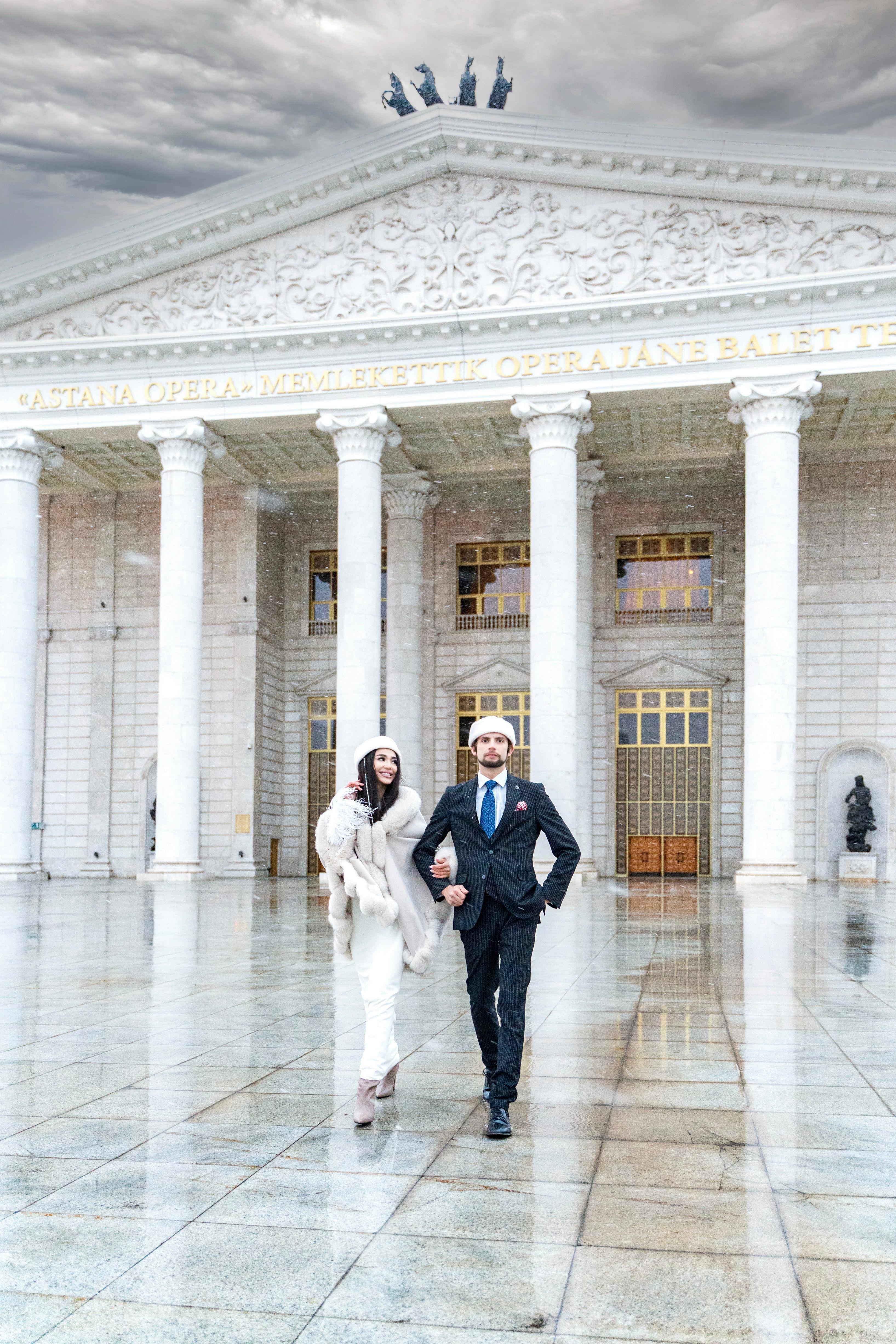
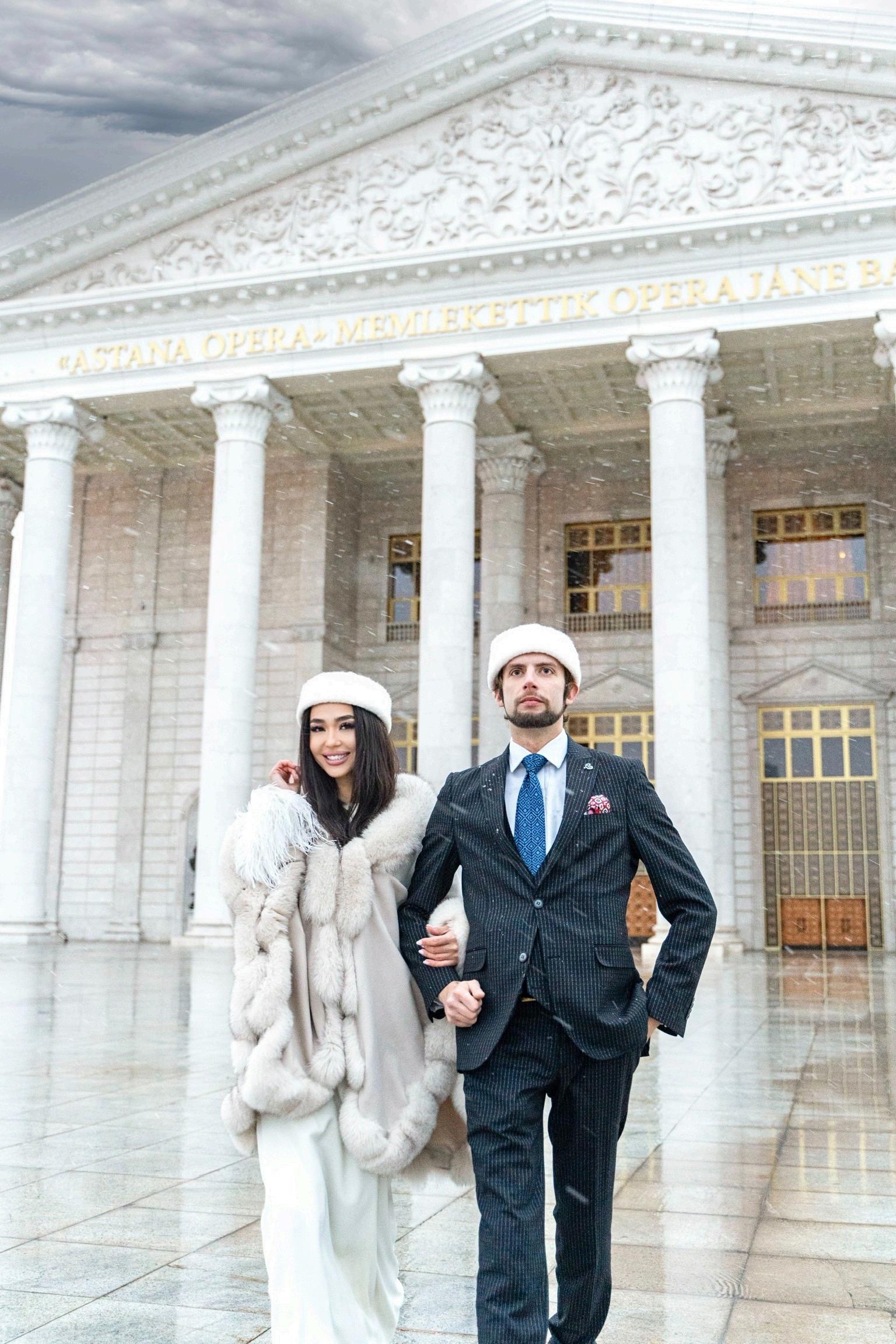
Photo: Aizhan Aimenova
Talent: Jesse Scott & Gigi Zhuldyz-Zhuman Shot in Astana, Kazakhstan
from novels to cocktails, the places and creations that captured our imagination this season
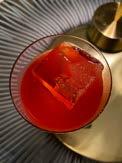
Tayer & Elementary, London, UK: A unique concept bar located in the mixology hotbed of Shoreditch, Tayer & Elementary offers two distinct experiences for visitors. Tayer is a limited-seat produce-driven cocktail bar, while Elementary is a less formal space that relentlessly innovates with the classics. All experiences here should start with the One Sip Martini at Elementary - a simple yet perfectly balanced concoction of vodka, martini ambrato, sherry, and a blue-cheese stuffed olive. Another highlight is the Vetiver Negroni, an unusual tequila and mezcal based tipple that balances sharp, rich, and smoky sensibilities. But I’d recommend making most of your choices from the seasonal menu, a concept overplayed in restaurants but underplayed in cocktail bars. The crowd here is a diverse mix of Londoners and visitors while no-nonesense bartenders blend a New York attitude with British charm.
The Order: Rhubarb Royale: Francinet-remy champagne, rhubarb
Bar Oldenhof, Amsterdam, Netherlands: In a city where hipster pretension and being cool for the sake of being cool are sadly the defining features of the cocktail scene (we cannot recommend, for example, famous spots The Flying Dutchmen and Pulitzer’s Bar), Bar Oldenhof is a refreshing change. Blending old-world sophistication with a convivial local atmosphere, with options to sit canal-side or in the cozy wood-and-velvet ensconced interior, Bar Oldenhof is a dream for a summer aperitivo or a long winter evening. The bar is undoubtedly at its best when playing with cocktails that are “dark, brooding, and boozy.” The current theatre menu (inspired by a wide variety of classic movies and divided by different genres) deserves an Oscar for its thriller section. Riffing off films like The Godfather and Scarface, it allows the bartenders to display their excellent fatwashing abilities (think brown butter and peanut butter) while incorporating marginally fruity ingredients such as plum bitters for balance.
The Order: You Talkin’ to Me: Dried fig infused calvados, Cocchi di Torino vermouth, luxardo maraschino, plum bitters OR An Offer You Can’t Refuse: Brown butter fatwashed Michter’s, seasame infused Campari, and cocchi di torino vermouth
The Hot List
COCKTAIL BARS
Sip & Guzzle, New York, USA: Perhaps the best cocktail bar in New York at the moment, two-level Sip & Guzzle is a true revelation. A cocktail purists’ bar, with an energetic terrace for casual drinks and an elegant oh-so-serious basement perfect for impressing important clients or embarking on an all-night mixology journey. it boasts technical precision and impeccable service reminiscent of London or Tokyo. After all, it’s the sister of iconic Japanbased SG Club. (the food menu has an izakaya influence and it’s not uncommon to see drinks with components like Japanese whisky, sushi vinegar, sake, and wasabi). Luxury ingredients dominate, with unexpected savoury flavours beautifully integrated across the cocktail selection.
The Order: Clarified mango martini or Wagyu Old Fashioned (with peanut butter and wagyu fat)
Vesta Fiori Chiari, Milano, Italy: The first contemporary chic cocktail bar in Brera, Vesta Fiori Chiari is a refined refuge for the young and beautiful to escape the touristic streets nearby. The cocktail list is extensive and creative, with citrus and herbaceous flavours dominating. And this isn’t the VFC’s team only location...their Portofino outpost (located on Paraggi Spiaggia in collaboration with Dolce & Gabanna) is perhaps the best place for aperitivo on the Ligurian Riviera.
The Order: Negroni del golfo: Portofino Gin, Martini Riserva Bitter, Noilly Prat, lemon & basil
Vesta Fiori Chiari, Portofino
Sip & Guzzle, New York
HOTELS & RESORTS
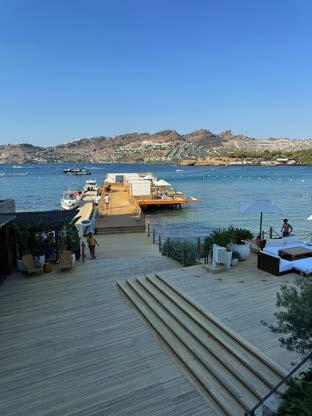
The EDITION, Bodrum, Turkey: Bodrum remains the most rapidly growing luxury destination on the Mediterranean, with an astounding number of new luxury residences and hotels opening every season. A game that used to be dominated by Mandarin and Macakizi is now as diverse as the peninsula’s clientele. Properties such as Six Senses Kaplankaya (2018) cater to wellness-oriented guests while options such as Royal Maxx and Mykonos-born Scorpios (opened this season) are perfect for the international party set who schedule vacations around the capital-S “Scene” (and have likely posted a Keinemusik cloud this year). However, the Edition Bodrum tops them all. The closest ultra-luxury hotel to Yalikavak Marina, the social locus for the peninsula’s elite, it combines its convenient location with supreme seclusion and swoon-worthy villas. The atmosphere combines the best of two worlds, balancing the unmatched professionalism of a Ritz-Carlton or Four Seasons with the too-cool-for-you swagger of a design hotel or W-style brand.
The amenity options here are simply unmatched. The beach, infinity pool, and various cabana areas are sleek and discreet. Meanwhile, the casual daytime restaurant Morena offers a playful yet sophisticated atmosphere to enjoy great cocktails, healthy lunches, and made-in-house Turkish ice creams (Raki & Roll and Turkish Coffee are our favorites). A stay here is not complete without a dinner at newly Michelin-starred Kitchen, which offers modern interpretations of traditional Turkish cuisine through carefully-constructed tasting menus that use only the freshest local produce. Kitchen is notable for being the best service experience I’ve had all year; attentive and warm without being intrusive, each member of the staff went above and beyond to enhance my dinner and share the stories of their local cuisine. Each dish was personally presented and explained by a different chef.
Le Meridien City Centre, Manama, Bahrain: One of the best properties in Bahrain, with an impressive price-toquality ratio in a country where hotels are notoriously expensive, Le Meridien was the perfect home base for a trip to Manama this year. Located next to the City Centre Mall, a locus of social life in the capital, and within a twentyminute drive of most sites and attractions, Le Meridien is the destination of choice for business and leisure guests from across the Gulf States. The property boasts sweeping views, with expansive modern bedrooms and luxurious bath amenities. The large pool and well-appointed fitness club are daily essentials, while dining options include one of Manama’s most popular Friday lunches and elite mezze and Arabian breakfast plates from the room service menu. This editor was particularly pleased when the kitchen, knowing my proclivities for spicy food, set up a running supply of fresh red chilies to my room.
Canopy by Hilton London City, London, UK: Reinterpreting the Hilton name with modern sensibility, Canopy is an ever-trending brand within the umbrella portfolio. The architecturally impressive London City property is well-located between Shoreditch and the Tower of London area, Rooms are sleek and airy. with distinctive contemporary design features, the gym has an excellent selection of equipment, and the rooftop bar is a social hot spot with commanding views of the Gherkin and East London skyline.
The Goring, London, England
The Canopy, London
Le Meridien, Manama
The EDITION, Bodrum
the new social season brought new global
anthems and niche releases...here’s what we’ve had on repeat this autumn
August: Who Loves the Sun, Jo.Ke, Nu: We’ve entered a new and more sophisticated era of summer/tropical house, and this song might be the gold standard. A 2020's Sexual Healing, you can play it on thirty consecutive Med beach days and it will still never get old.
September: Band4Band, Central Cee, Lil Baby: After years of mumble rap dominating the English language hiphop scene, a new wave of more brash Brits are taking over. Band4Band, with an explosive opening reminiscent of Kendrick’s Humble, is an addictive track that helped power this editor through ultramarathon training.
October: I Adore You, HUGEL, Topic, Arash, Daecolm: It is impossible to recall this past fashion month without thinking of this seductive synth. Of the same ilk of the Keinemusik and Loofy songs that owned the summer, it’s a top ten clubbing song for 2024.
November: Last Night, Rivo: As soon as I heard this song I knew it would be a classic. Likely still on the upswing, with an irresistible “feels so good to be bad” attitude, it’s the latest in a parade of Rivo hits. Honourable mention to Francis Mercier’s Strangers.
Progressive House: Vorozhyla, Korolova, Rokston, Monokate, Go_A: The queen of progressive house pays homage to her Ukrainian roots with this shiver-inducing remix of a song by Nizhyn-born Monokate. The music video, which mashes up clips of Korolova on the decks with her passionately dancing under a rainstorm, has an addictive energy that perfectly matches the DJ.
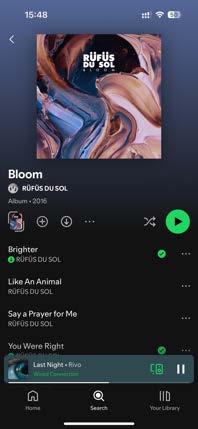
Deep House: Innerbloom, Rüfüs Du Sol: If Vorozhyla will fill you with fire, Innerbloom will put you in a serene trance. A song for sunsets and long nights under the stars.
Russian: ГЛАМУР, Artem Shivolets & Wipo : Initially a TikTok song, the rather unsophisticated yet impossibly catchy and all-around vibe-y ГЛАМУР is one of the few Russian songs that has crossed over to English-speaking audiences. An unofficial anthem for walking down the red carpet during Fashion Month Spring/Summer 2025.
German: Bauch Beine Po, Shirin David: Blast this hot girl bop when you roll out of bed or are headed to the gym and you’re guaranteed to have a good day. Shirin David is having a moment right now; check out more of her stuff if you like German music or the INSTASAMKA vibe.
Country Pick: Way Too Drunk, Dasha: Currently on her first headline tour, appropriately entitled Dashville USA, Dasha has been unstoppable this year. The deluxe version of What Happens Now recently dropped, and has a lyrical sophistication that recalls a slightly younger Taylor Swift. Way Too Drunk conjures a poignant set of imagery--at once romanticized and authentic--that evokes nostalgia for “hot mess memories” of our early 20's. ‘Need a champagne fix till I figure me out...”
Throwback Pick: Can’t Get You Out of My Head, Kylie Minogue: The disco days of the 80's and 90's have returned with a vengeance these past few years. Could the early 2000's be next? The resurgence of this song on both friends’ playlists and in clubs implies so - shout-out to Birds Bodrum for making it a dinner show performance staple.
Lana Pick: Tough, Lana Del Rey, Quavo: Pop? Rap? Is that a country twang I hear? Tough is a bit of a genre-bender (in the vein of Old Town Road) but it is quite simply an automatic hit. I’d love to hear more Lana/Quavo collabs, or a return to the Lana/A$AP Rocky sound, in the future.
Fireside Pick: Diving, Art School Girlfriend: Welsh born Art School Girlfriend has been by far my favourite Indie rock artist recently. The opening hook “back seat baby, are you ready for another one?” sets the tone for an introspective and melancholic song that seems to find peace in delirium.
THE READING LIST
Dirt: Adventures of a Chef in Training, Bill Buford: Part memoir, part love letter to country and family, and part anthropological and sociological survey of France’s cradle of cuisine (with plenty of self-deprecating humor), Bill Buford’s Dirt is a must-read for any culinary history aficionado. Buford’s story is an unlikely one. Happily married in New York, with two small children and an established career as a chef, he decided to move his family to Lyon, France for what turned into a multi-year largely unpaid culinary apprenticeship at establishments ranging from one-man bakeries to Michelin caliber restaurants. Buford’s experiences (which amounted to an epic “study abroad for adults”) are testament to the value of relentless curiosity and “learning for the sake of learning.” Ego in check, Buford embraced a wholly new language and way of life while starting from the bottom in a city where non-native Lyonnaise in the culinary industry are heavily doubted if not outright dismissed. (Case in point: even the famous twoMichelin starred chef Daniel Boulud, who was born and raised near Lyon, found that he was not taken seriously when he returned to the city and attempted to launch a new venture following twenty years). At once journalist, student, and chef, Buford pulls back the curtain to the kitchen in the birthplace of Nouvelle Cuisine (in many ways still the gold standard of fine dining today). He shares his interactions with the titan Paul Bocuse, the immense pressures and downright abuse that is inherent to the most sought-after jobs, and behind-the-scenes tales of the unsung heroes who produce Lyonnaise delicacies on the Rhône’s rich farmland. Along the way, Buford even attends a prestigious culinary academy, where he learns the secrets and intensely regimented rules of modern French cooking. (This is a dream book of tips and tricks for those aspiring to improve their own kitchen skills). And finally, he conducts a rigorous study of regional culinary history, telling riveting tales of the iconic chefs, bitter rivalries, and unique creations, that built Lyon’s remarkable legacy. Buford’s writing is not perfect...and his vexatious and rather incomprehensible obsession with proving that French cuisine grew out of Italian cuisine (spoiler alert, he fails) is a distraction. But the book is still an educational and highly entertaining masterpiece that’s impossible to put down.
Burke’s Law: A Life in Hockey, Brian Burke: Brian Burke has long been known as one of hockey’s toughest no-nonesense figures. Born in Providence, Rhode Island, and scrapping his way into Division I college hockey under the guidance of Lou Lamoriello, Burke fought for everything he got during his playing career. With a Calder Cup under his belt, he retired from pro hockey to go to Harvard Law, becoming an NHL player agent after graduation. He would go on to spend time as GM for the Hartford Whalers, Vancouver Canucks, Toronto Maple Leafs, Anaheim Ducks, and Calgary Flames, most famously for younger generations winning Anaheim’s only Stanley Cup in 2007. This Anaheim squad had a beautifully constructed roster, with the veteran expertise of Chris Pronger and Scott Niedermayer on the back end contrasted by the Flying Finn Teemu Selanne and hungry youngsters Corey Perry and Ryan Getzlaf up front. They were also TOUGH all-around, a Burke trademark that was a pre-requisite to play on any team he built. That said, Burke the person is well-spoken, fair, and humble. He has also been a proud spokesperson for women’s hockey and gay players. This candid and beautifully written memoir sees Burke share his philosophies on hockey and life, the formative personal moments that shaped them, and his emotions throughout what has been a truly epic career. A must for any hockey fan (and following his wild 22-23 season with the Pittsburgh Penguins and new appointment as Executive Director of the Professional Women’s Hockey League Player Association, we’re already hoping for a sequel).
The Getaway, Ross Armstrong: Seven guests, each with secrets to hide. One private island. A tremendously wealthy man who is mysteriously killed in the middle of the festivities. This classic whodunnit is every bit as bad yet addictive as it sounds, and can be recommended to anyone who enjoyed Nine Perfect Strangers and needs a beach read.
Dead to Her, Sarah Pinborough: Set amidst the seductive heat of a Savannah, Georgia summer, Dead to Her is a slightly disturbing page-turner that will keep readers on their toes until the climax. The plot centers around Marcie Maddox, who recently became the second (and much younger) wife of business tycoon Jason. Gossip is constantly flying in this tight-knit Southern community, and when Jason’s boss brings a new wife Keisha back from Britain, whose mannerisms and looks most definitely don’t blend with the “traditional set,” drama is bound to occur. Keisha quickly develops flirtationships with both Marcie and Jason....which threaten to turn into something much more. Meanwhile, boardroom manipulations destabilize the bedrock of Savannah’s business scene, with Jason and his boss at the center of everything. And then there’s a voodoo subplot. Dead to Her is many things, but boring is not one of them. And if you can get past the somewhat unlikable characters to the end, there are surprises in store.
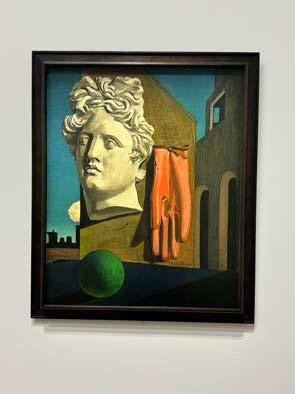
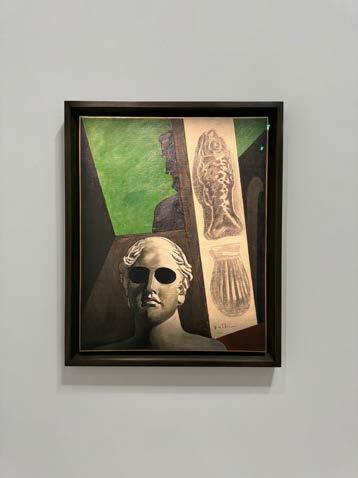
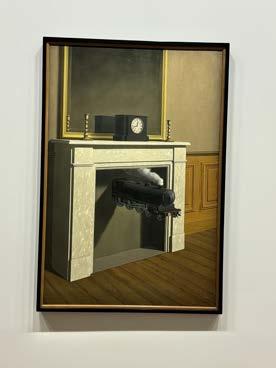
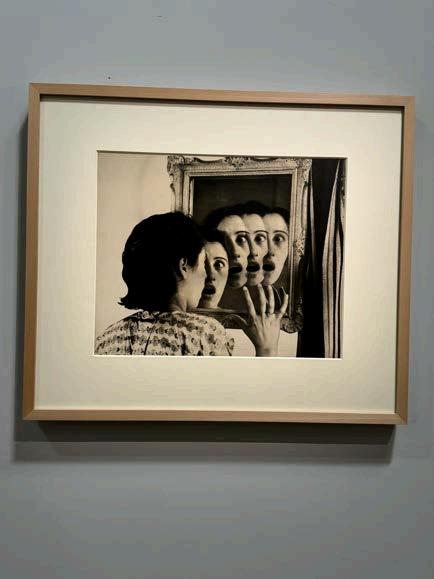
Surréalisme Exhibition at Centre Pompidou, Paris, France: The most comprehensive exhibition on surrealism ever, this beautifully curated project takes visitors on a labyrinthine journey from Andre Breton’s Surrealist Manifesto (written in 1924) until today. Surrealism in the broad public knowledge, even for those who love art, is often limited to Magritte, Dali, and Giorgio von Chirico. This exhibition should change the way you view the movement forever, illustrating its broad global and temporal scope, contextualizing it against figures who espoused similar philosophies in other spheres (e.g Lewis Carroll), and, even for the most well-versed, facilitating the discovery of seldomdiscussed but deeply talented artists. Pride of place is given to female surrealists, including Leonora Carrington, Ithell Colquhoun, and Dora Maar. The nuanced relationship between politics, art, and mysticism is intimately explored, with emphasis given to the symbol of the minotaur during the rise of fascism and the concept of “poets turning into clarivoyants” (as established when di Chirico painted a portrait of Guillaume Apollinanire with a target mark in the spot he would be injured by shrapnel two years later).
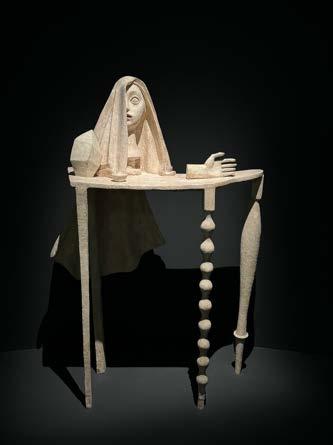
Exhibition treasures include Alberto Giaccometti’s sculpture “Table,” Magritte’s “Time Transfixed” (which features a train exploding through a fireplace), and Dali’s “Lobster Phone.” (several favourite pieces shown on next page). The show is also a unique opportunity to see the original copy of Breton’s Surrealist Manifesto, on loan from the National Library of France, which has been isolated in a spacious room accompanied by a multimedia screening. In the words of Breton: “Let us not lose sight of the fact that the idea of Surrealism aims quite simply at the total recovery of our psychic force by a means which is nothing other than the dizzying descent into ourselves, the systematic illumination of hidden places and the progressive darkening of other places, the perpetual excursion into the midst of forbidden territory, and that there is no real danger of its activities coming to an end so long as man still manages to distinguish an animal from a flame or a stone.” Visitors to this exhibition are encouraged to take a similar approach, emptying their minds of the stresses of daily life and suspending disbelief to enter a journey of selfdiscovery...where dreams meet reality. Allow at least three hours to properly work through everything. As Surréalisme is located on the top floor of the Centre Pompidou, I’d recommend going with friends and ending the experience with sunset drinks and discussion at the gorgeous rooftop bar on site.
ART & CULTURE
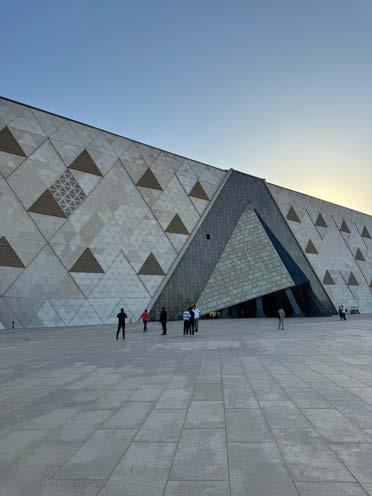
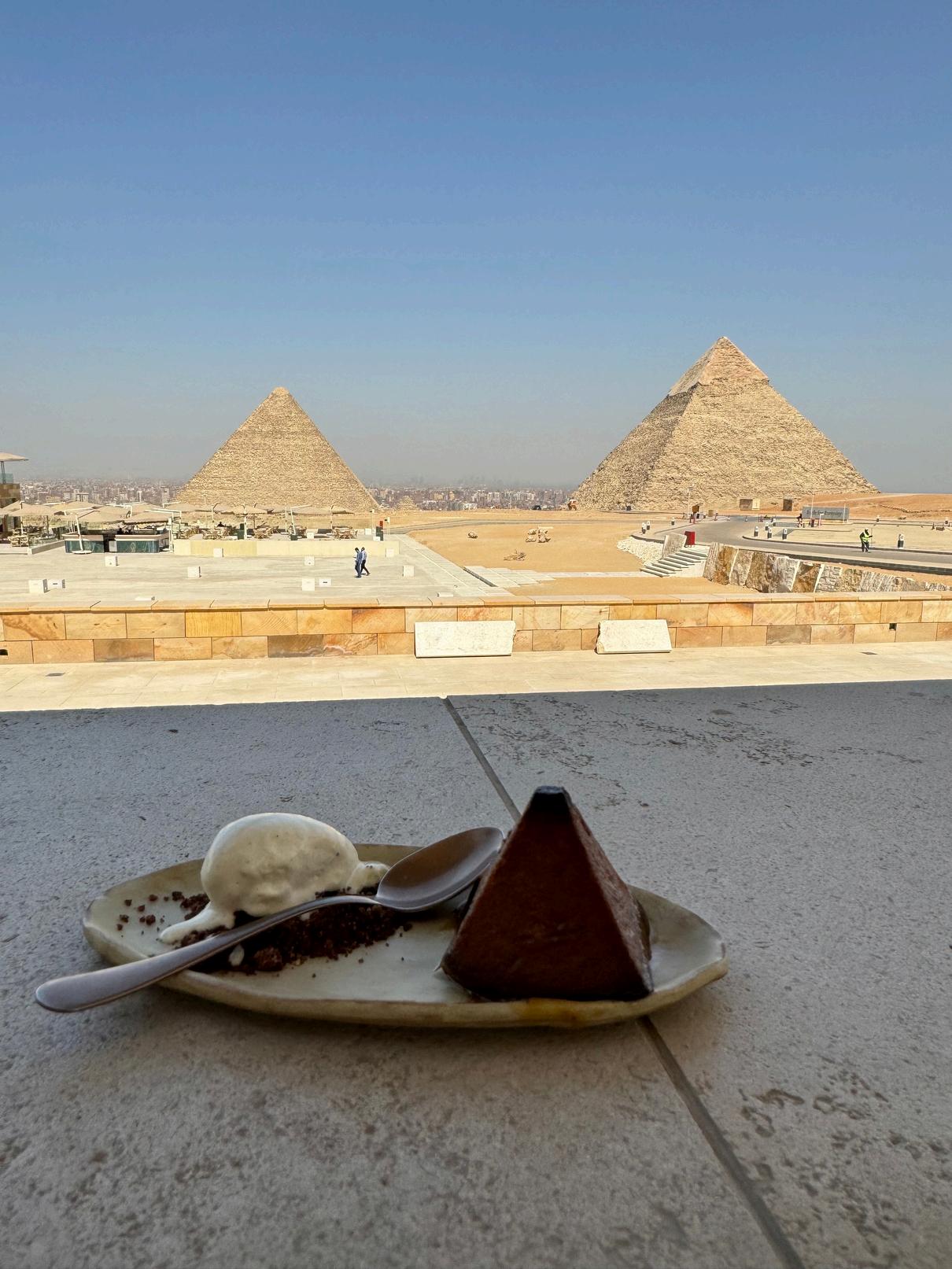
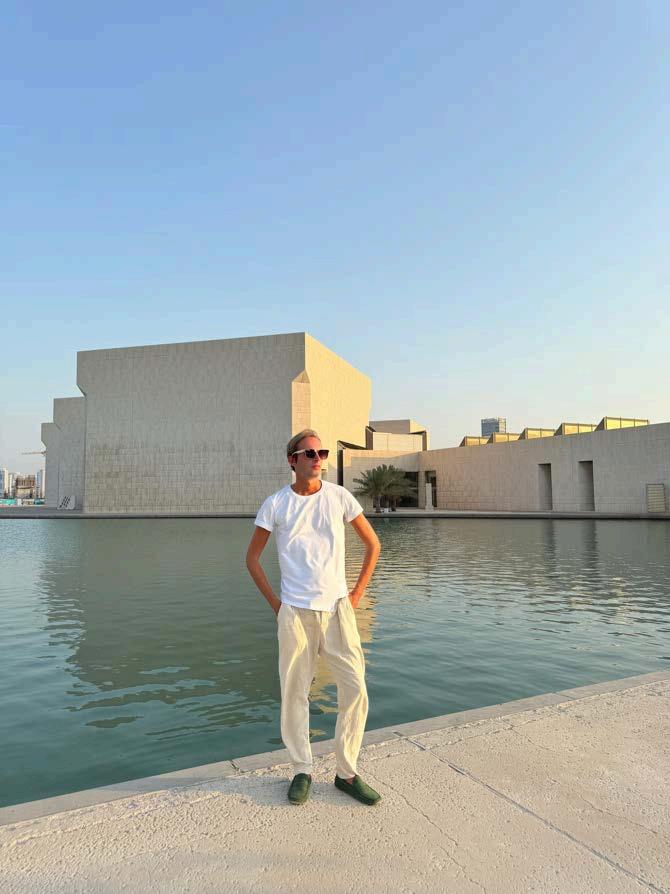
Bahrain National Museum, Manama, Bahrain: Bahrain set the tone for the future of hte Gulf on June 2, 1932 when it became the first nation in the region to discover oil. It was also the first nation in the region to construct a national museum, Inaugurated by Amir H.H. Shaikh Isa Bin Salman Al-Khalifa in December 1988, and designed by Krohn and Hartvig Rasmussen, the museum was the vanguard of the Middle East’s grand architectural boom that has since included I.M. Pei’s Islamic Art Museum, Jean Nouvel’s Louvre Abu Dhabi, and of course the brand new Grand Egyptian Museum in Cairo. The expansive museum, located next to a modern opera house with beautiful sunset views, offers a comprehensive journey through both Bahrain’s rich and complex history and its cultural traditions. This year saw a special exhibition entitled “Half a Century of Art.” Exhibiting one Bahraini piece from each year since 1972, it displayed the vast depth and breadth of talent in the nation and also honoured those that made a concentrated effort to nurture an artistic movement there.
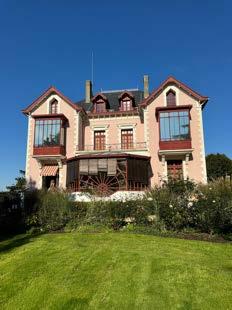
Musée Christian Dior, Granville, France: An essential fashion pilgrimage for anyone in the industry, this museum offers both a window into the legendary designer’s childhood and a beautifully curated retrospective on his career and legacy. The museum preserves Dior’s humble yet wellappointed childhood home, including many architectural and artistic components that were deeply influential in his work (such as the Japanese art in the foyer). There is also an discerningly chosen selection of pieces explaining the progression of his first collections after he founded his house in 1947. Be sure to explore the exquisite gardens with views over the Atlantic.
Musée Christian Dior
Bahrain National Museum
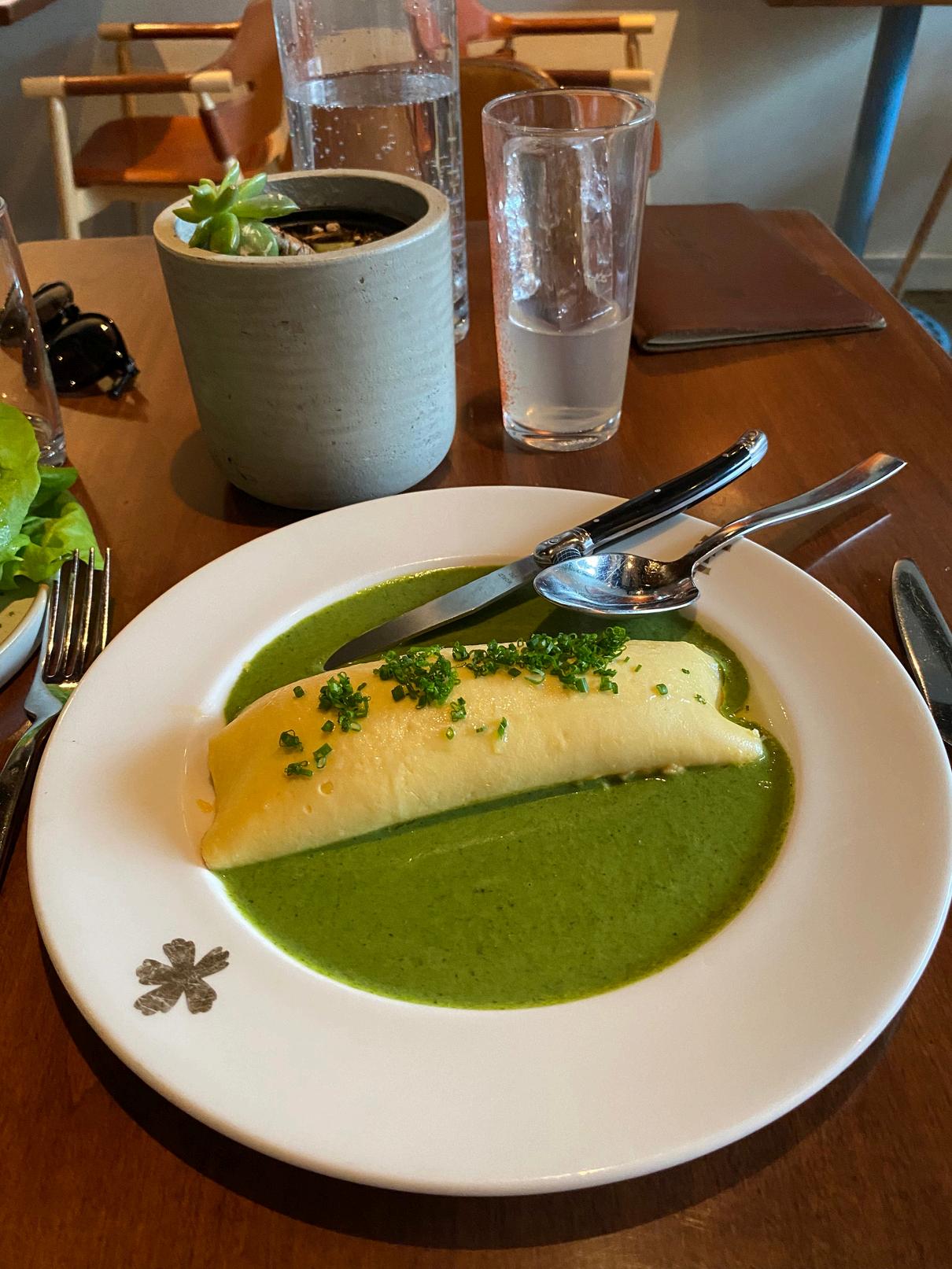
Bahraini Breakfast Set, Emmawash, Manama, Bahrain: Start the morning like a sheikh with a full spread of local breakfast delicacies in the heart of the Bab al Bahrain souq complete with balaleet (sweet vermicelli with an omelette), ful mesdames, nikhee, a lamb skillet, and of course amazing olives, honey, and cheese
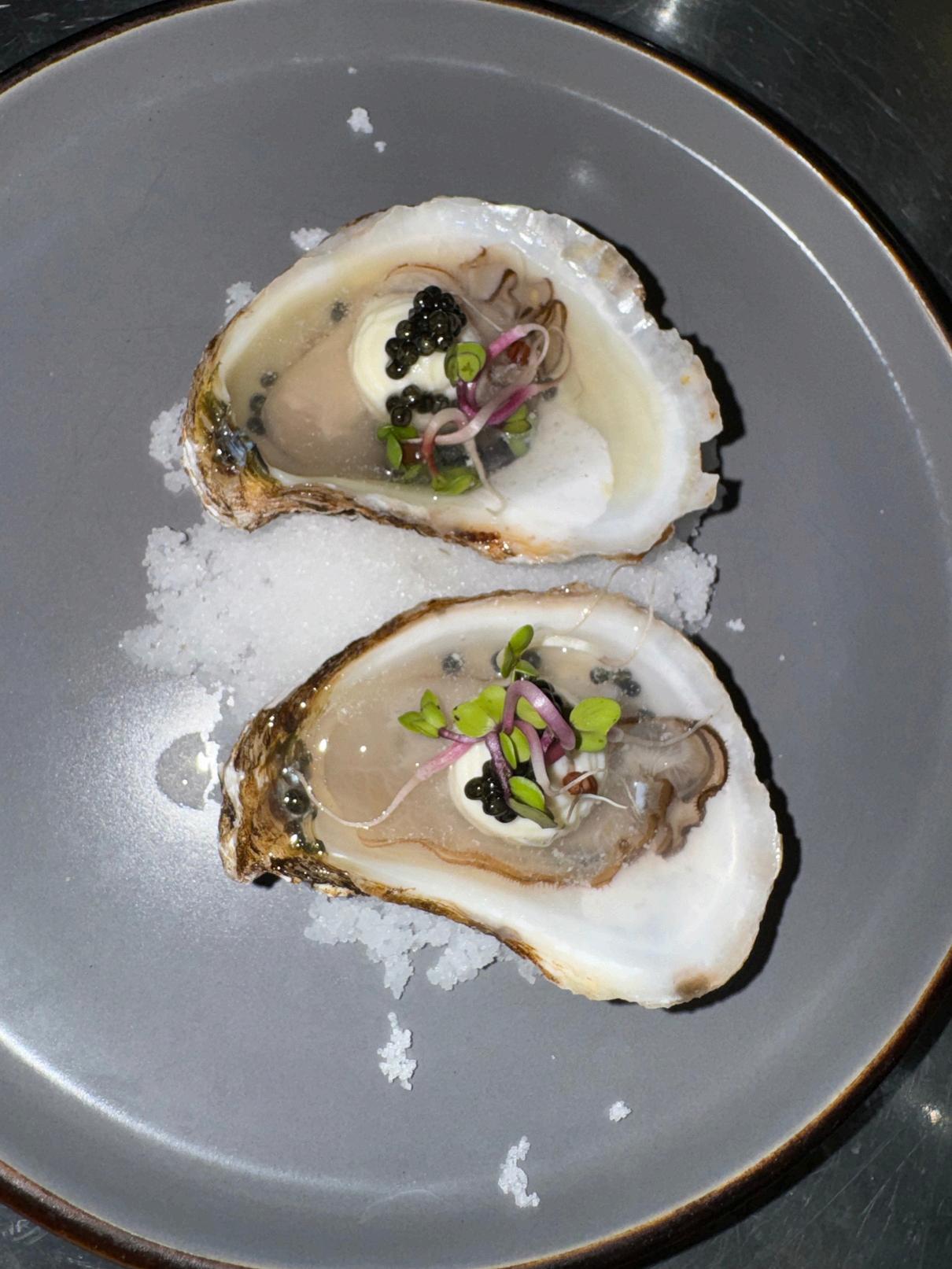
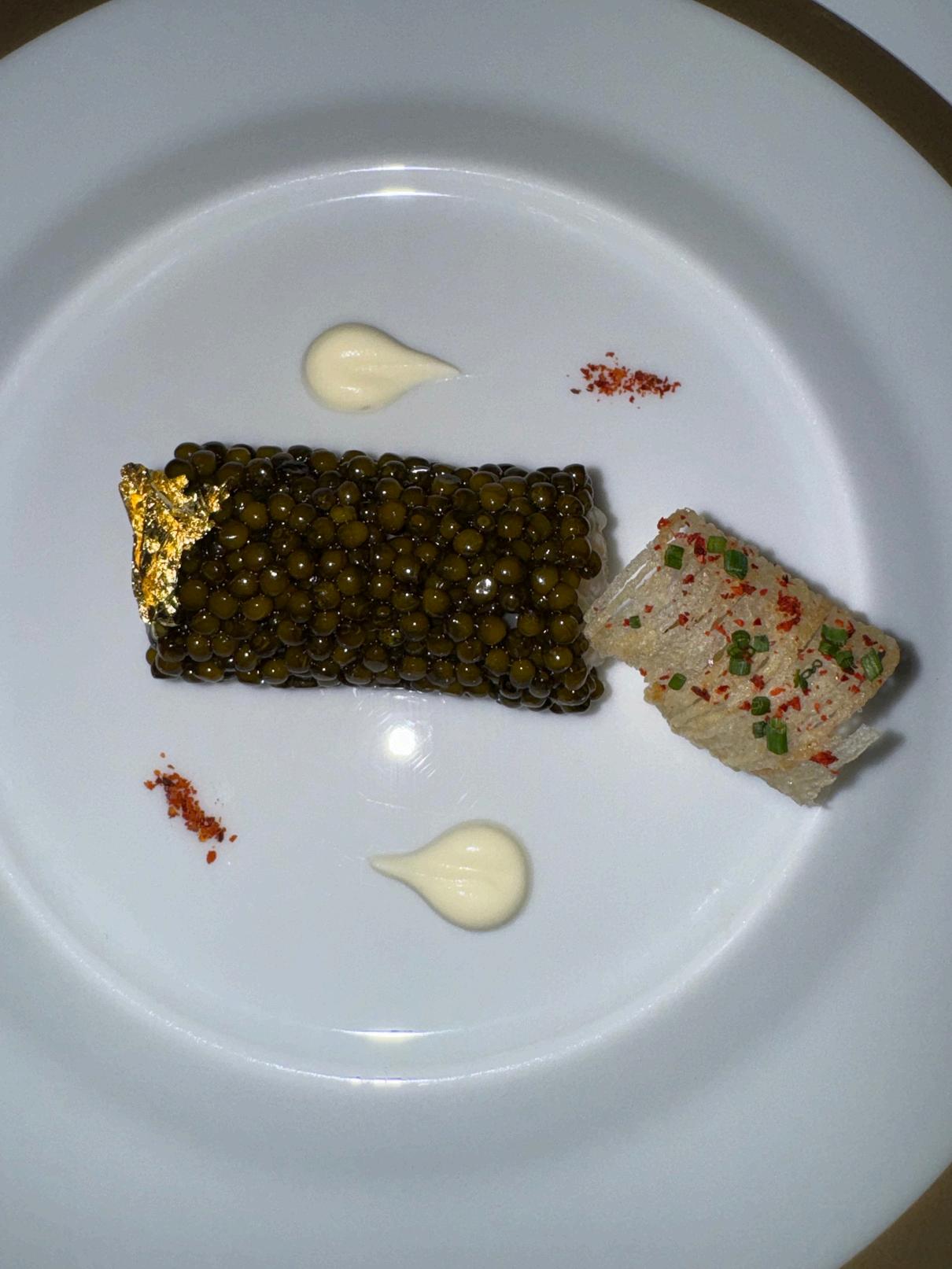
Caviar and Oysters, Untitled, Calgary, Canada: Exactly what it sounds like, and perfectly balanced with cream and a little bit of citrus Presented in a bed of salt, these are musthaves for an appetizer or cocktail accompaniment The caviar toast, which combiens red and black caviar, is also excellent
Beef Carpaccio with Tonnato Sauce, Birds, Bodrum, Turkey: Combining the finest luxury ingredients with, for this author anyway, the most indulgent comfort food flavors, this starter is topped with red caviar and a generous amount of truffles Yet the authenticity of the Italian vitello tonnato style sauce is not compromised
Sushi with Scallops & Foie Gras, Pinskiy, Bodrum, Turkey: Another Moscow outpost in Bodrum, Pinskiy is to lunch on the peninsula what Birds is to dinner The sumptuous textures and rich umami flavours of this dish are a dream combination, and unlike with other foie gras sushi I’ve seen recently, have Japanese authenticity
Seared Wagyu Sushi, Sakhalin, Bodrum, Turkey: A strip of raw wagyu served nigiri style and lightly seared tableside for a touch of smoky flavour? Divine Leave it to Moscow’s White Rabbit Family to invent this now petition for it to be offered at all sushi spots
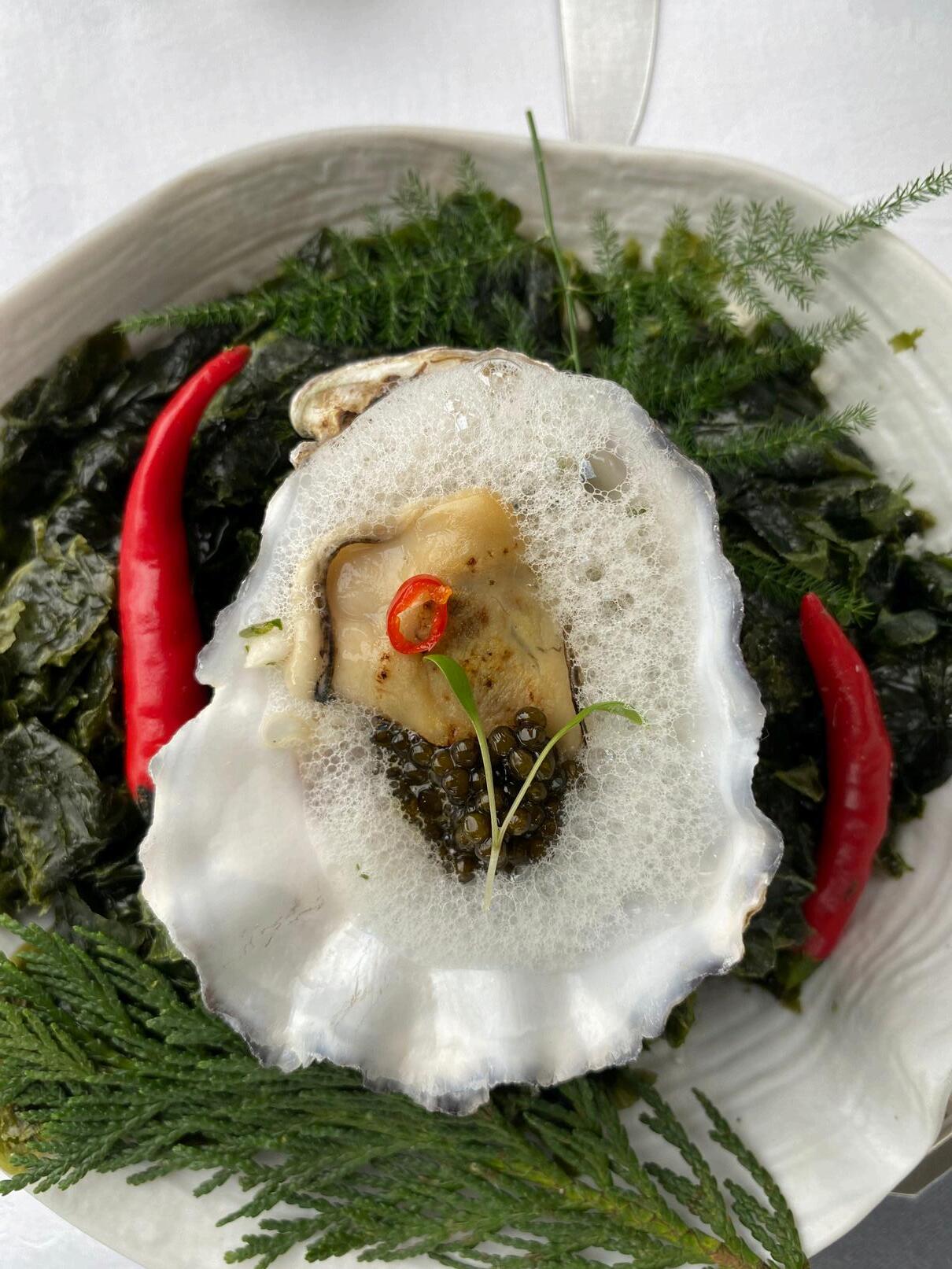
Oysters, Au P’tit Marayeur, Granville, France: We traded out champagne on silver trays for oysters on plastic platters during a post-fashion week getaway in this charming Normandy town And we were rewarded with the best oysters (and accompanying vinaigrette) we ’ ve ever had Eel with Balsamic Pearls and Smoky Pine Nuts, Sirmione, Italy: Lakeside La Rucola, with its delightfully attentive service and custom plateware used for every dish served, offers a must-have tasting menu experience if in Lake Garda. Amidst a menu that also includes amberjack with watermelon and macadamia nuts and sturgeon with purple cauliflower and egg cream, this combination of tangy, sweet, and smoky stood out most
Egg Yolk with Caviar & Broth, Iyo, Milano, Italy: The most iconic dish at Milano’s only Michelin-starred Japanese restaurant, this satisfyingly presented dish achieves brilliance with simplicity, balance, and ingredient sourcing
Choucroute du Mer, Restaurant du Port, Granville, France: A local speciality, choucorute du mer combines a variety of fresh seafood with potatoes, white wine, and a delightful cream sauce Perfect for chilly nights on the sea
Veal Sweetbreads with Uni and Coffee Bearnaise, Verso Capitaneo, Milano, Italy: This season was all about umami And this dish was the most indulgent of all as the exquisitely cooked sweetbreads melted in the mouth with the creamy uni and a kick of bitter caffeine from the perfectly proportioned béarnaise Verso was opened above Galliera Vittoria Emmanuele by a brother team with ten years of experience at Enrico Bartolini; they are revolutionizing Milanese dining with an open-kitchen concept that showcases clinical precison with humility
Pigeon with Port and Strawberries, Verso Capitaneo, Milano, Italy: One of the top three pigeons I’ve had (and it’s one of my favourite meals, so that’s saying a lot) Verso changes their pigeon recipe with every season and this one hit all the right notes of fresh, sweet, and “ game-y ”
Cornish Lamb in Beetroot Sauce, Humo, London: Aged 33 days to achieve the maximum “tender quotient,” this lamb is then cooked over a wood fire and served with onion chutney, chioggia, and cedar It’s the headline dish from a truly elite restaurant that prepares dishes using exclusively natural fire
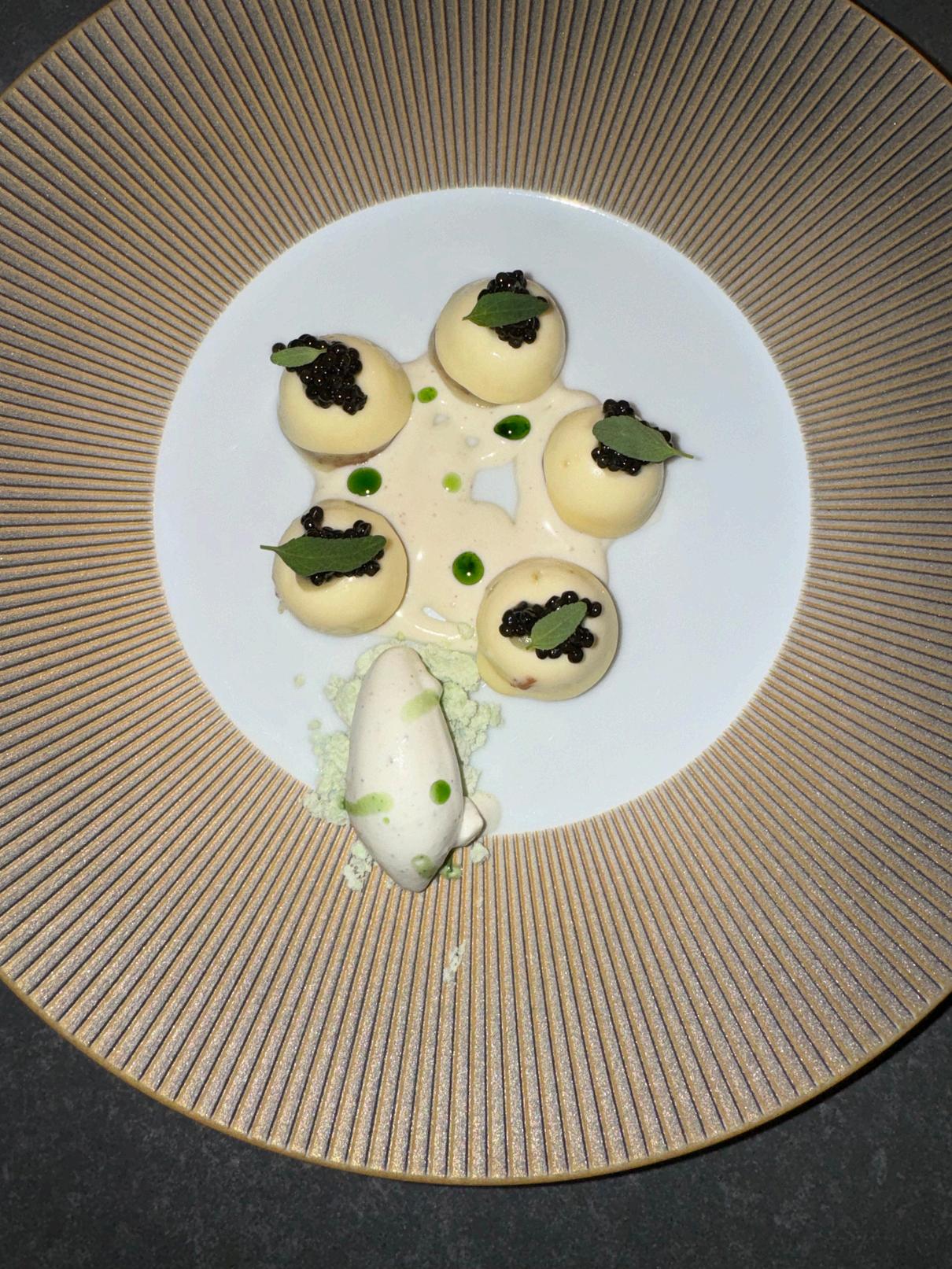
Creamy Milk with Black Caviar, Pistachio Ice Cream, and Radish, Verso Capitaneo, Milano, Italy: Caviar features heavily on the menu (including the dessert list) at Verso A masterpiece of texture, this dish balances salty and sweet, snappy and smooth
Peaches, Raspberry, Rose, and White Chocolate, La Rucola, Sirmione, Italy: Floral, rich, and refreshing, this is our favourite dessert of the season.
Turkish coffee Ice Cream, the EDITION, Bodrum, Turkey: The EDITION makes a series of custom ice creams with local flavours; this one, along with last year ’ s Raki & Roll, is to die for
Verso Capitaneo
Want your favourite destination, song, or book on the Elysium Hot List? Know anywhere we should hear about?
Connect with us on Instagram at @worldofelysium
Or get in touch at elysiumcocktailclub@gmail.com
You could be featured in the next edition of Elysium magazine!
Destination
RUNWAY HERMÈS
WORDS: Anastasia Vorontsova
PHOTOS: Courtesy of Hermès
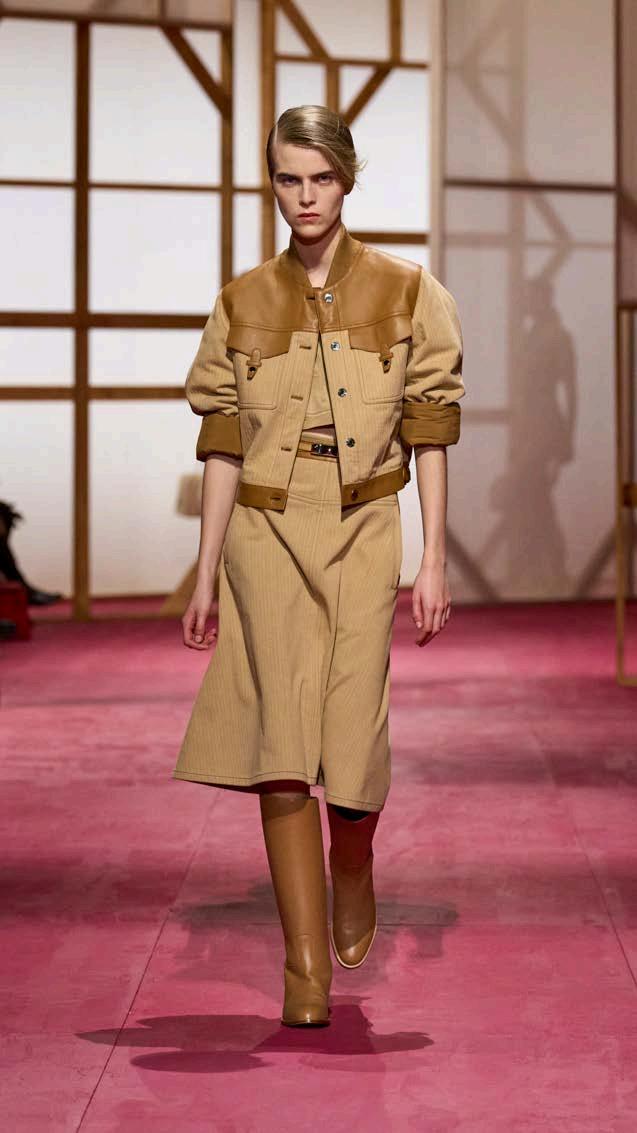
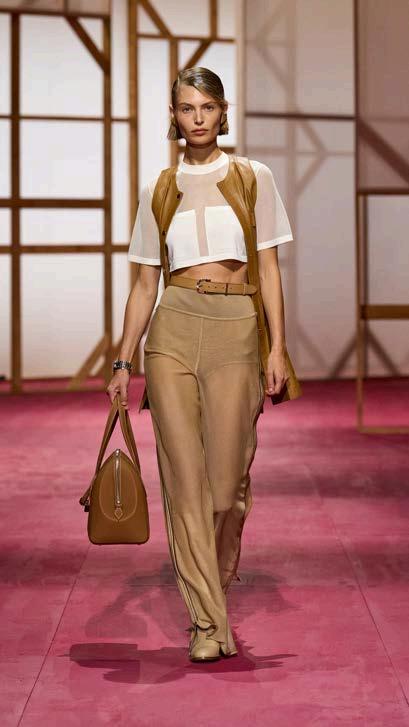
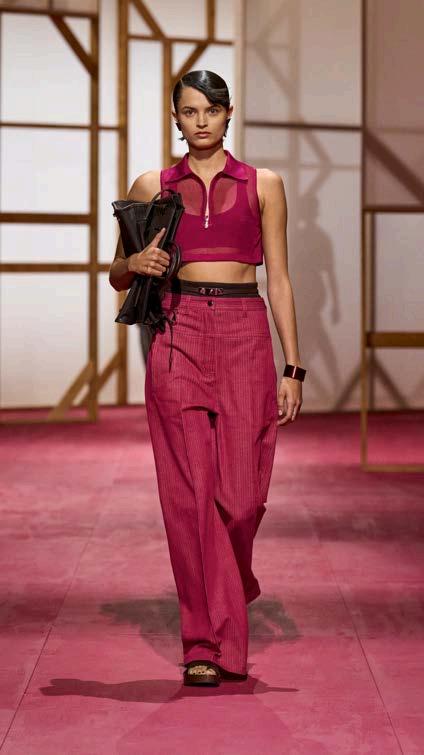
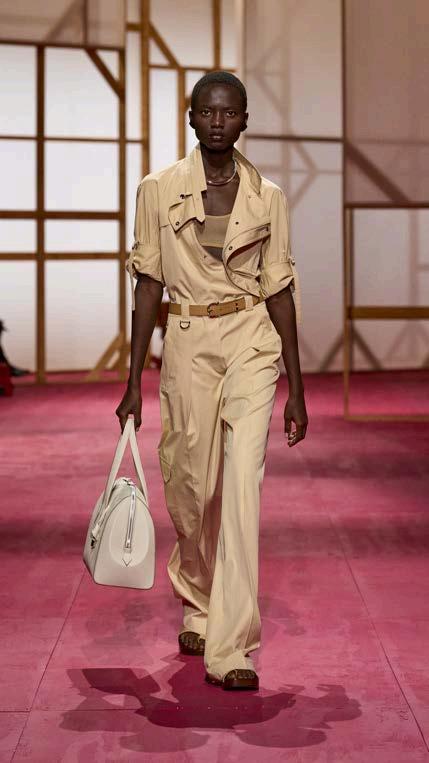
Hermès' Spring/Summer 2025 collection, which was unveiled during Paris Fashion Week, was a tasteful fusion of contemporary femininity and traditional craftsmanship. The maison continues its delicate balancing act of preserving its heritage while embracing subtle evolutions under the creative direction of Nadège Vanhée, who has been in her position for over a decade. This season, Vanhée demonstrated that the Hermès woman is as self-assured as she is adaptable with a collection that offered a novel interpretation of quiet luxury.
The atelier itself served as inspiration for Hermès' introspective approach this season. The studio, which is tucked away just northeast of Paris, is the brand's creative sanctuary and a place where innovation and tradition coexist. The collection's themes - the tension between practicality and elegance, the interplay between inner confidence and external sensualityreflect the thoughtful introspection that takes place there.
Vanhée continues reinventing luxury as a subdued statement that is earned through skill and purpose rather than bought or demanded. The SS25 collection embodies the essence of the contemporary Hermès woman - a fusion of sensuality, practicality, and classic appeal—with pieces that combine sophistication and functionality.
Recent Hermès collections have featured sharp semi-masculine silhouettes.
By comparison, the Spring/Summer 25 offering embraces a softer more fluid definition of femininity. Bralettes and crop tops go well with skirts that lengthen the silhouette; many of these skirts have adjustable zippers that can be manipulated as suits the wearer's mood. This modularity gives the clothes a fun yet functional touch. Sheer materials also take center stage, showing up in safari-inspired shirts with translucent panels and cropped polos worn over bra tops. With just the right amount of opacity to strike a balance between sensuality and sophistication, these designs pique curiosity.
This season the maison's iconic silk scarves are reimagined as clothing, with the delicate fabric showing up on a romper in a chestnut color with classic block-print designs. While pushing Hermès' iconic elements into new creative realms, this reinterpretation pays homage to the brand's heritage.
The adaptability of the Hermès S/S25 collection is what makes it so alluring. Vanhée imagines a woman who can move fluidly between roles and situations, whether it's a more formal evening event or a breezy summertime outing. It's a wardrobe for the woman who defies categorization based on style. Oversized pockets and adjustable zippers are examples of utility features that add functionality without compromising the iconic Parisian je ne sais quoi. Contrasting textures and silhouettes are used to further explore this dichotomy: floaty mesh fabrics blend with structured leather outerwear, and chestnut and pink accents break up neutral colour schemes.
And of course, the collection exemplifies the craftsmanship for which Hermès is known. Intricate elements like stitching, embroidery, and inset panels enhance the designs of leather pieces, which are both sculptural and wearable. Vanhée's comprehension of Hermès' DNA is evident in her ability to uphold such a high standard of quality while implementing subtle yet significant updates.
It would be impossible to discuss a Hermès collection without mentioning its renowned bags. The Birkin à l'Envers, a disassembled version of the recognizable Birkin that displays its interior craftsmanship through an inside-out design, is this season's highlight. The Mini Kelly Pampilles and the horsehair and calfskin-woven Cabas Tressage are two other noteworthy designs. Hermès' commitment to fusing creativity and utility is embodied in these designs.
In conclusion, Hermès’ Spring/Summer 2024 collection is a testament to Nadège Vanhée's ability to transform a legendary brand without losing sight of its essential identity. Re-interpreting trends through the prism of classic luxury rather than simply following them, Vanhée added to the story of the Hermès woman with a grounded sensuality. Hermès SS25 demonstrates that understated confidence and fine craftsmanship will always outlast the ephemeral nature of fashion trends, whether it is through the deconstructed Birkin or a delicate silk romper.
RUNWAY
RVNG COUTURE
WORDS: JESSE SCOTT
PHOTOS: LEROY VELASQUEZ
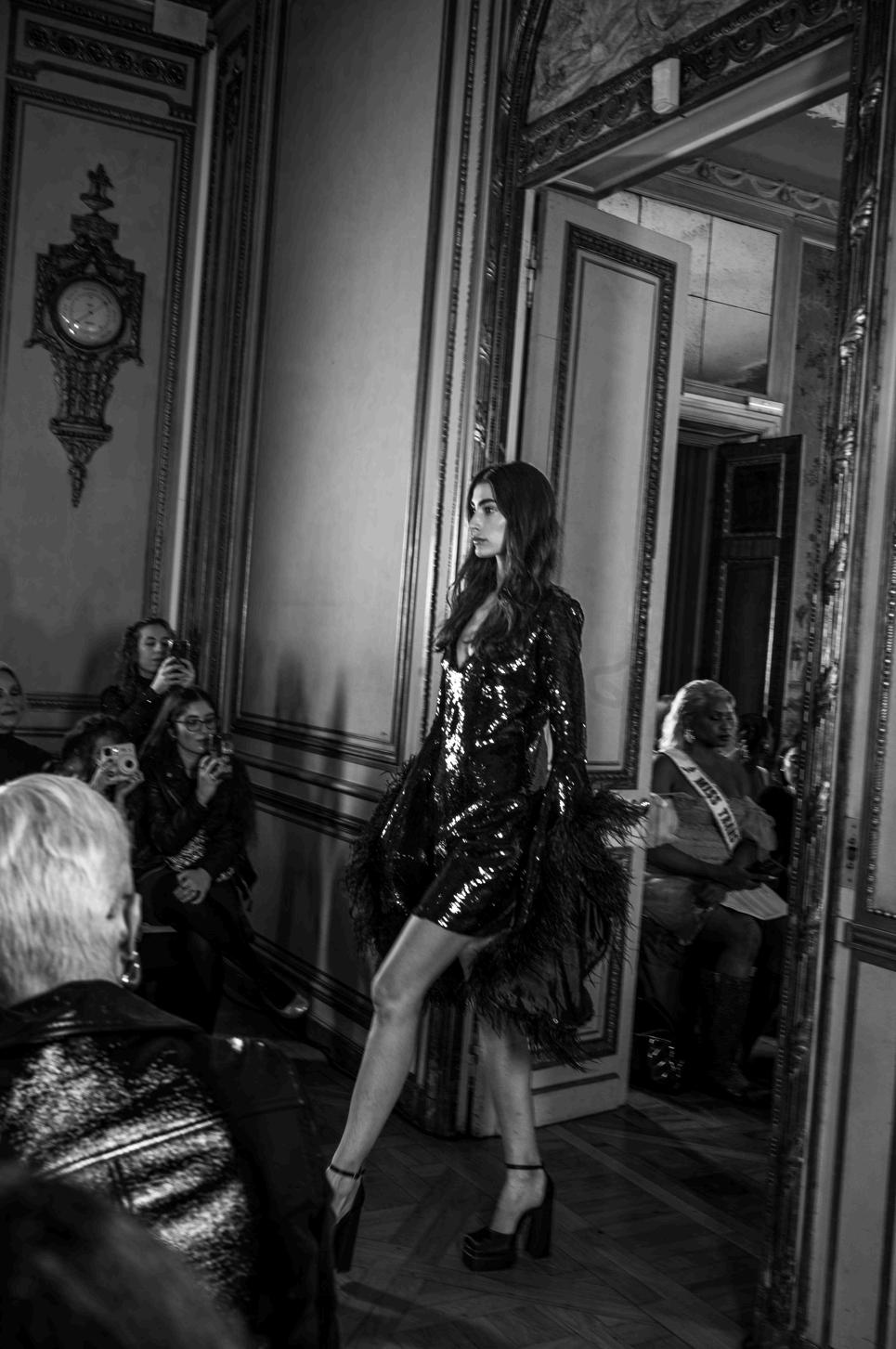
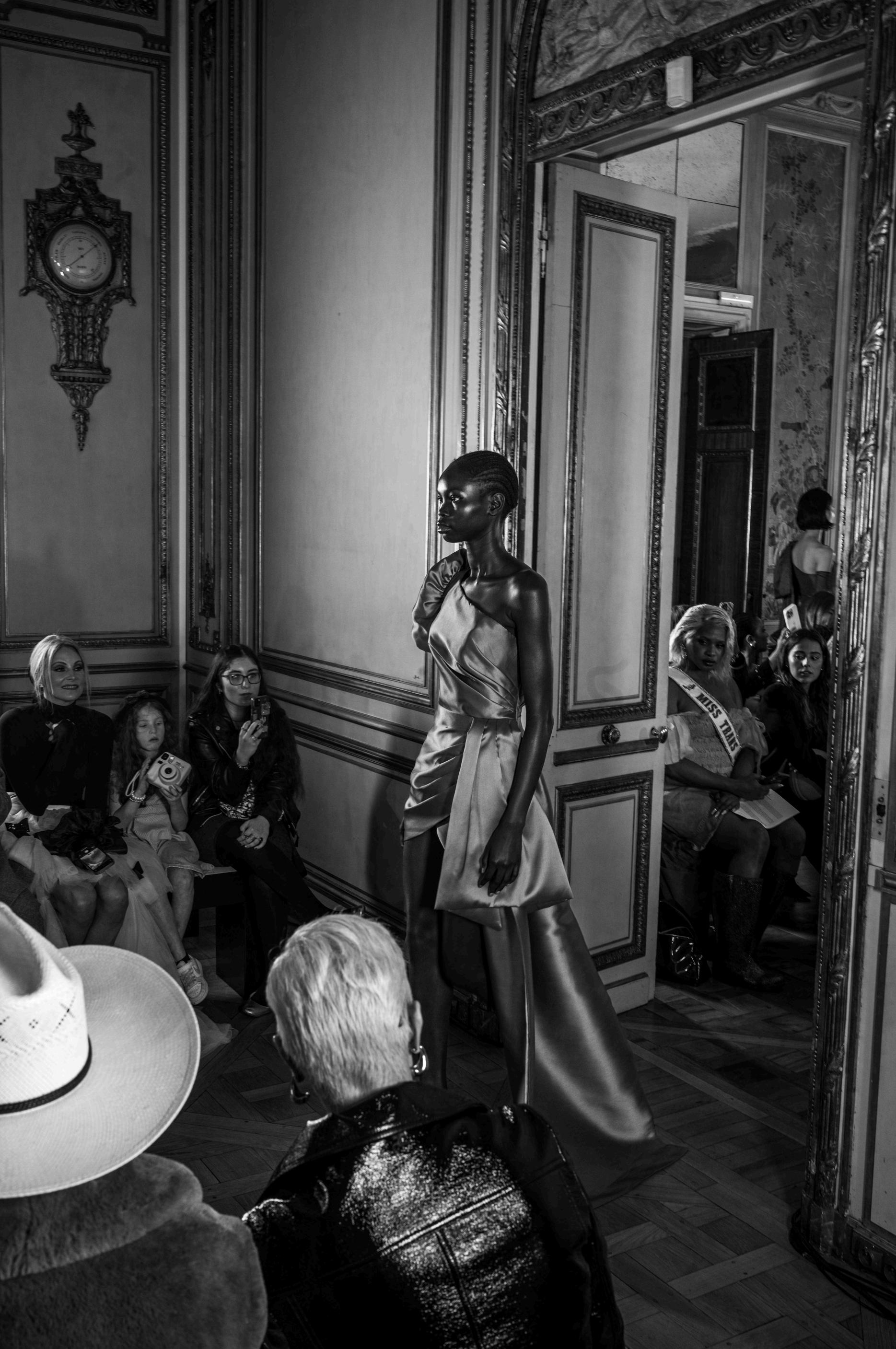
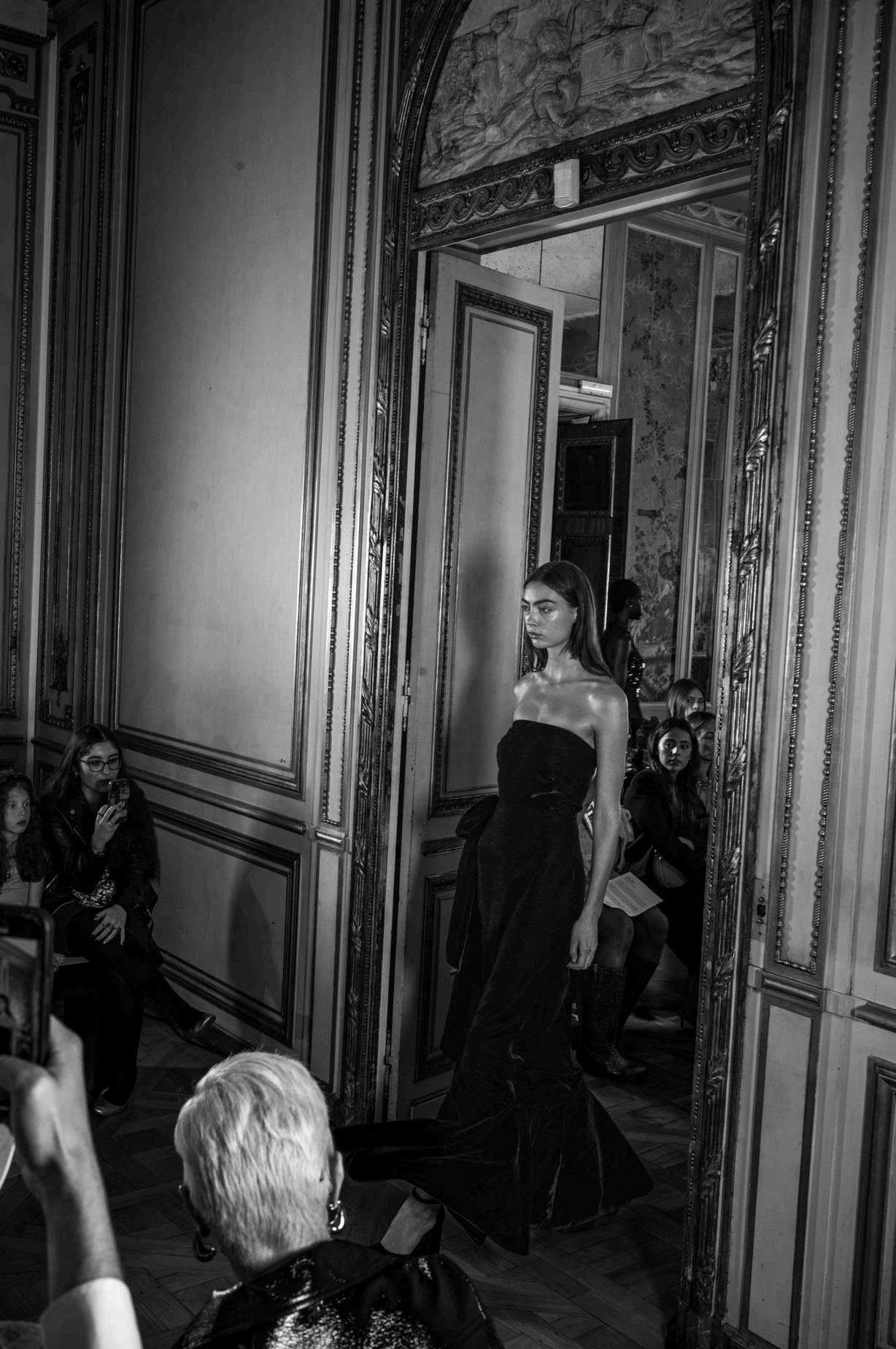
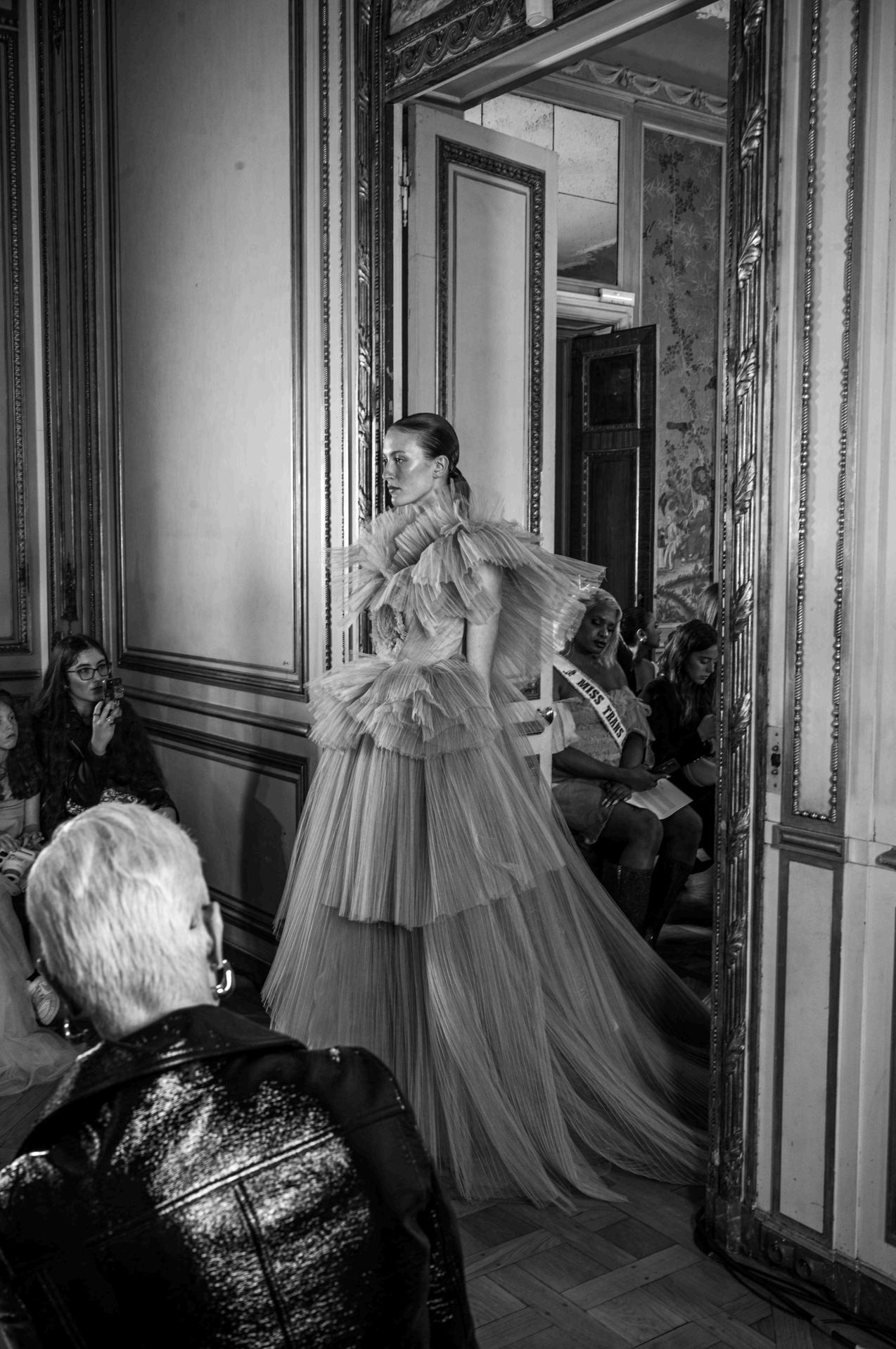
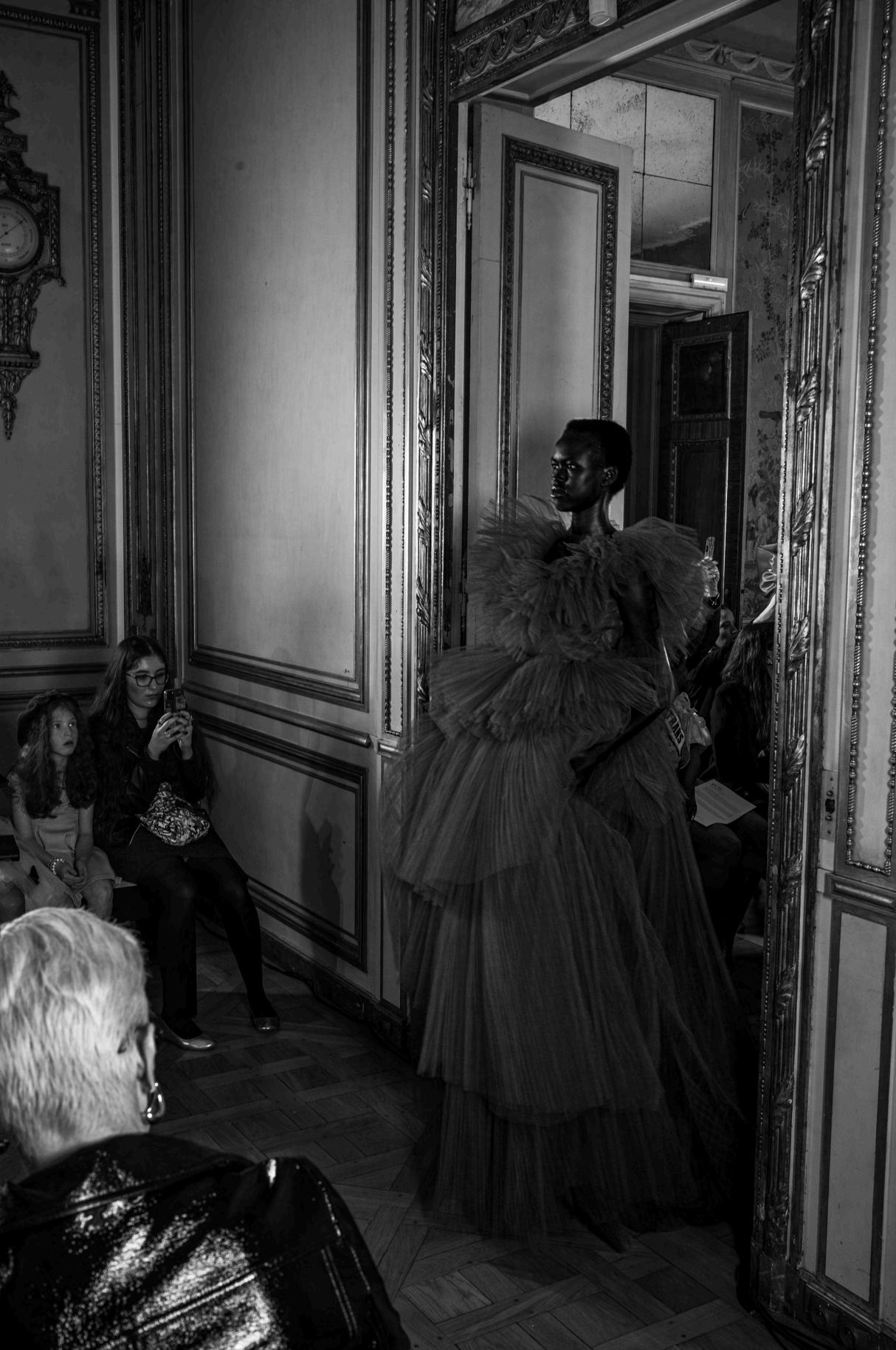
Making her inaugural Paris Fashion Week appearance, charismatic designer Jordan Stewart pulled no punches in presenting a dramatic collection that reflected both fiery ambition and feminine introspection. Founder of RVNG Couture, perhaps the biggest Canadian brand to emerge on the French fashion stage, Stewart combines effortless sophistication with elegant interpretations of practicality in vibrant designs that embody modern feminine life. She describes the brand as “for women, by a woman, with the aim to dress people from all horizons, ages and origins for the moments they need to feel powerful and invincible at.” RVNG is a celebration of irrepressible feminine power: as Stewart says “the pieces show a fight against invisibility and a will to win… we are here and we affirm it.”
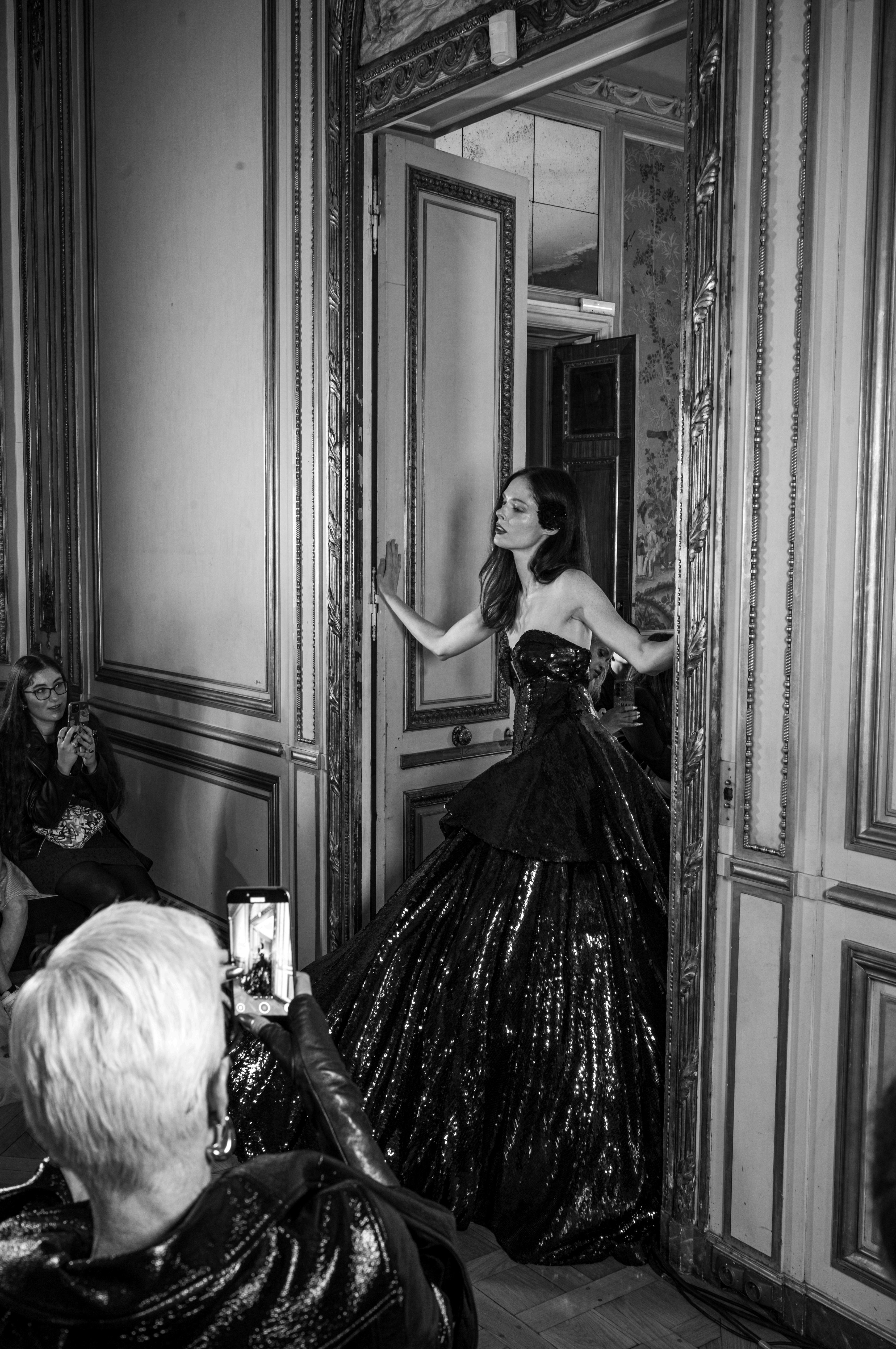
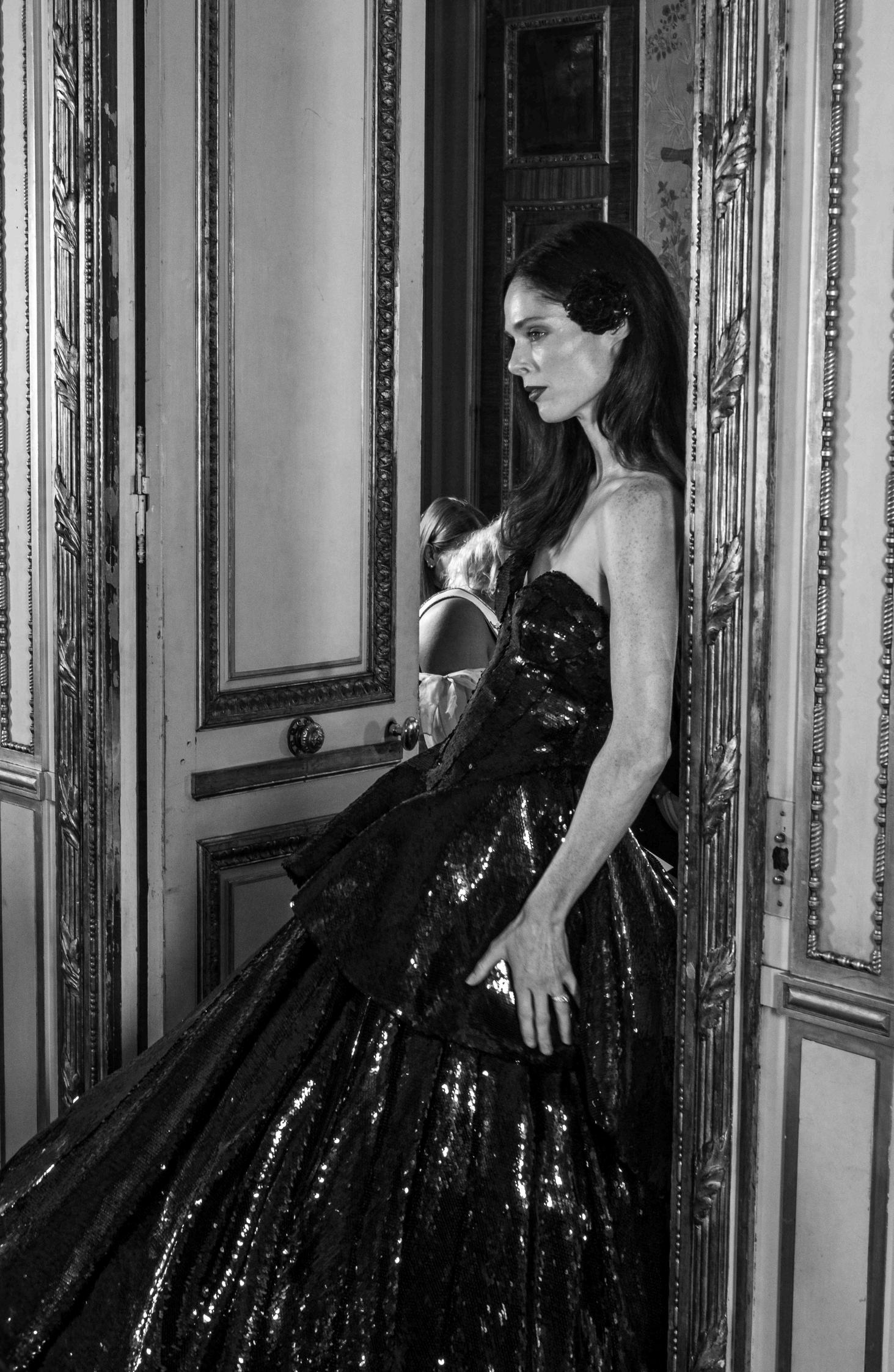
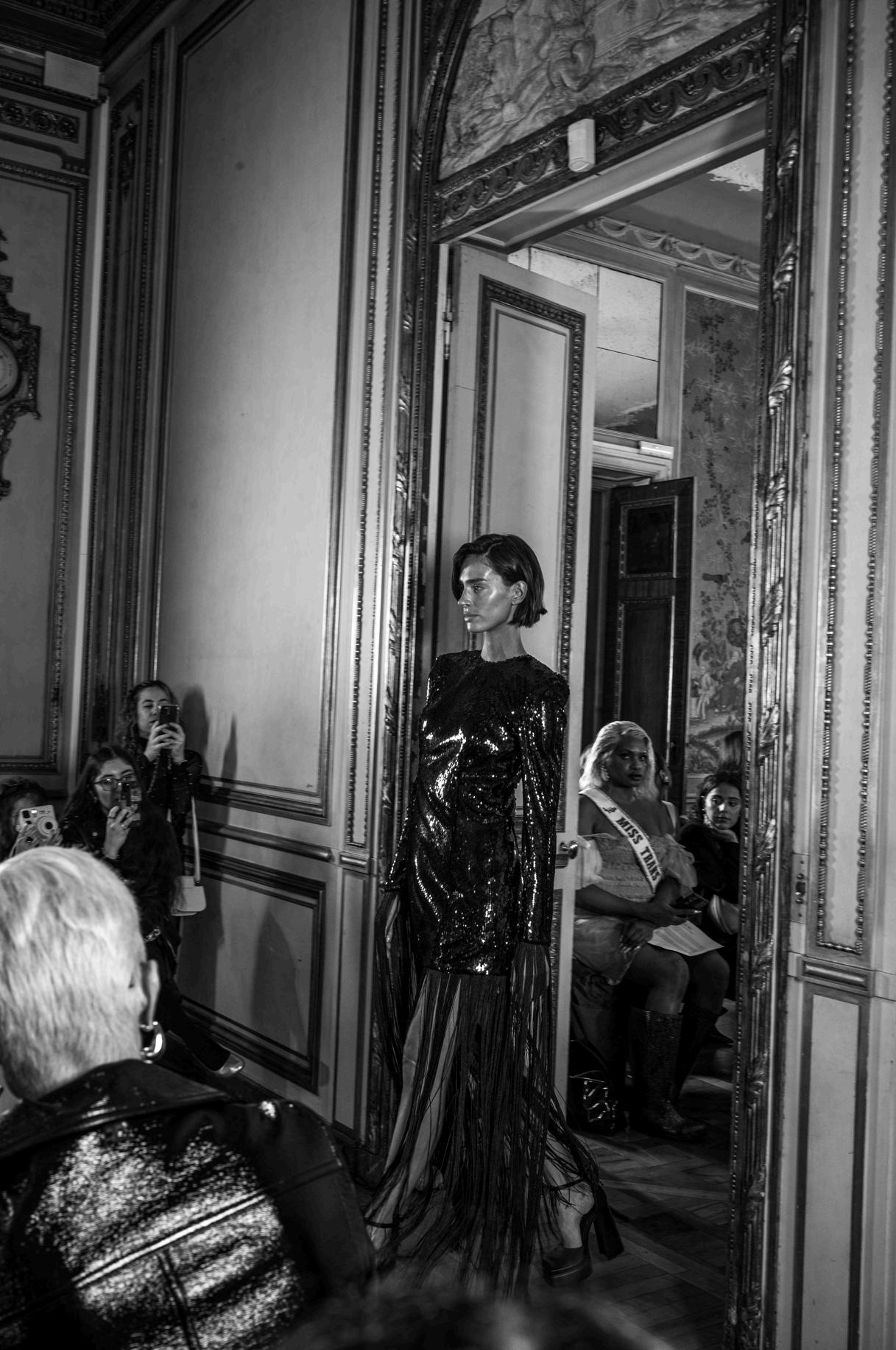
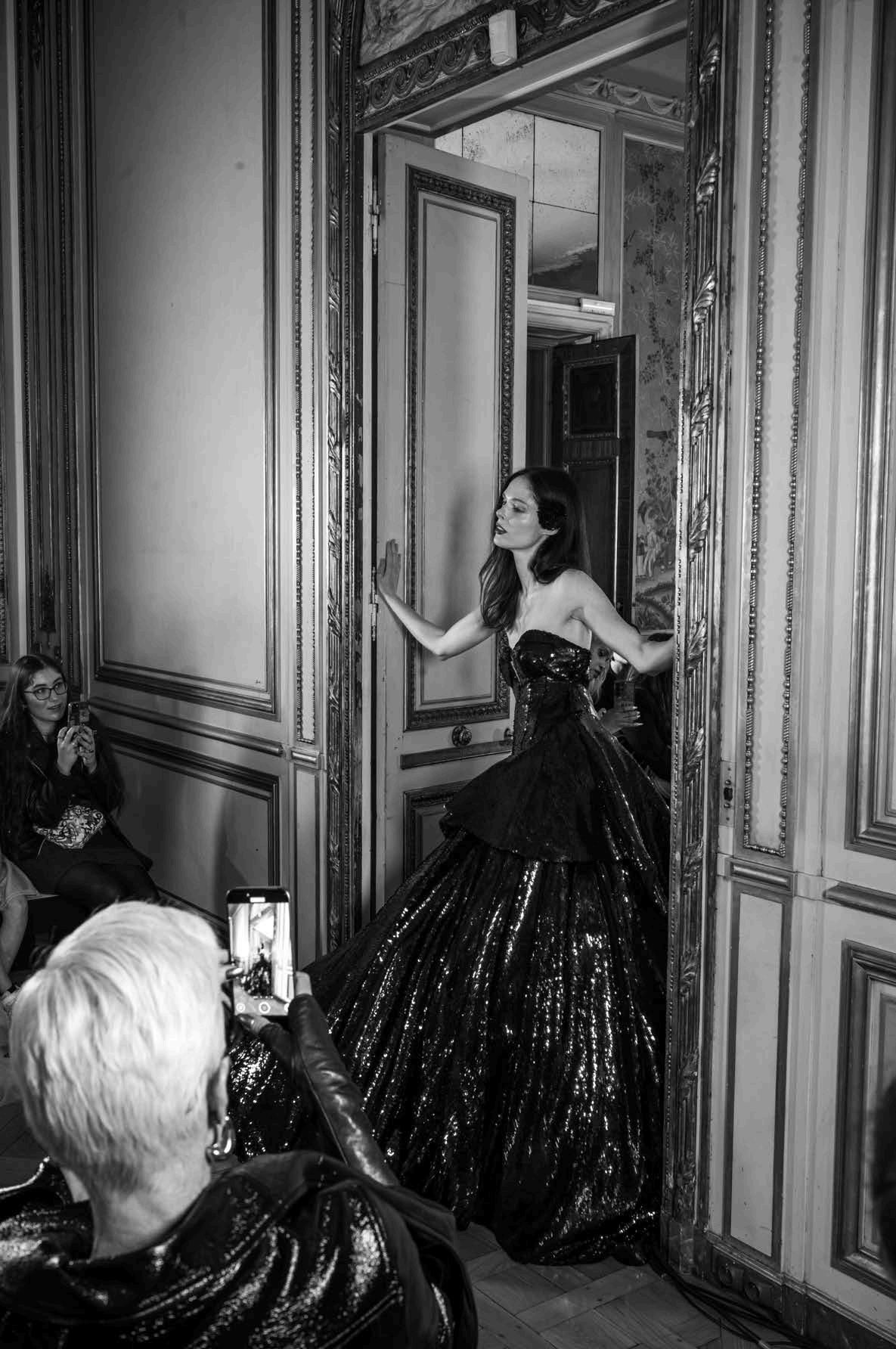
The biggest headline of the day was the show-closing walk of Coco Rocha, the most iconic Canadian supermodel. Known as the “Queen of Pose,” Rocha did not disappoint. Sweeping down the runway of the painfully glamourous Hotel Bismarck with the grace and feminine ferocity of a black swan, she stopped midwalk to lean against a gilded doorway with a “dare-me” expression on her face. The drama of the walk matched that of the dress, a voluminous black number that billowed outside the bounds of the runway. Ensconced in delicate silver threads, it both beckoned and threatened - the epitome of classical couture. Rocha’s inclusion in the show was highly fitting. She was both the face of the collection and Stewart’s muse in creating it.
Of Rocha, the designer said that she perfectly “corroborates her workingwoman-mom ambition.”
Prior to Rocha’s spotlight-seizing finale, Stewart beautifully balanced feminine subtlety with high drama throughout the show. Inspired by “breath” and titled “Exhale,” the collection opened with a series of butter yellow, calming grey, and luscious lavender that put the starstudded audience in a mood for serenity and introspection. Intensity slowly increased, as fiery red, deadly black, and dense patterns reflected the ebb and flow of love in all of its transformative glory and trauma.
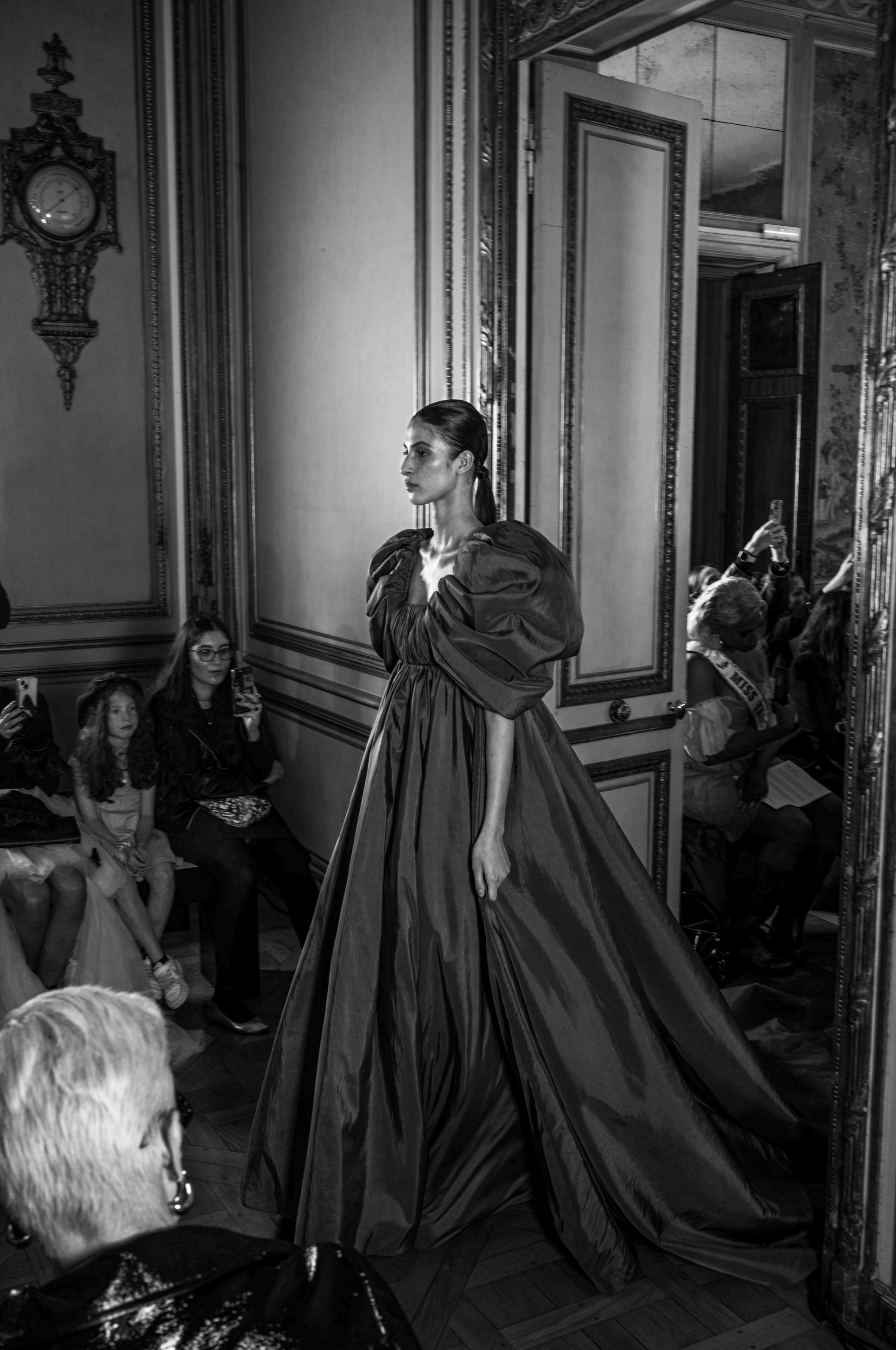
Stewart exhibited a surprising variety of silhouettes. A royal purple dress with ballooning sleeves and an expansive train seemed to have emerged directly from a 19th century ball. Just two looks previously, a seemingly simple floral gown with exquisite embroidery recalled an idealized version of one of Manet’s or Renoir’s Impressionist garden parties. Then again, this look could have time-traveled from the original set of Jean Dauberval’s legendary ballet La Fille Mal Gardee, which debuted before the court of Louis XVI in 1789 and sees the protagonist get treated to a luxurious (if ill-fated) countryside picnic lunch. For contemporary sensibility, Stewart offered a strapless crimson sheath (with a bow on the back for extra glamour) and a black dress with oversized white collar that reflected the resurgent Victorian trend.
It was a chaotic scene outside, as the elaborately dressed VIP guests rushed into the Hotel Bismarck under umbrellas. Yet even the weather could not put a damper on spirits inside the stately venue; we were transported into a modern fairy tale that left us dreaming of the next grand ball.
The RVNG show took place on a miserably rainy Day Three of Paris Fashion Week.
RUNWAY MAME KUROGUCHI
WORDS: VIKTOR KOZAK & JESSE SCOTT
PHOTOS: LEROY VELASQUEZ
Sentiments on Kuroguchi
Words: Victor Kozak
Mame Kurogouchi’s Spring/Summer 2025 collection is a delicate walk between worlds - where heritage and innovation don’t collide, but gently coexist. This collection felt like a conversation between past and present whispered softly through fabric. It wasn’t just a presentation of clothes, but a meditation on the essence of Japanese craftsmanship and how it can be reimagined for a global, modern context.
There’s something uniquely powerful about the subtlety in Kurogouchi's work. The pieces weren’t loud and flashy yet commanded attention with a quiet elegance that made you stop and think. The layered fabrics, woven in techniques like kasuri and shiboriboth deeply rooted in Japanese history - felt as though they were telling a story that only the wearer could truly understand. The muted shades of indigo, w evoked memories of a calm, almost timeless landscape. And Kurogouchi’s mix of traditional modern tailoring— like a sheer dress paired with structured pants—reminded me that fashion is a constant conversation between what was and what could be.
Then there were the details, sartorial moments that can easily be overlooked but are so critical in transforming a collection from good to unforgettable. The accessories— such as the wagasa umbrella-inspired bags—were playful nods to specific aspects of Japanese culture reinterpreted in such a fresh way that they stood out as pieces of art in themselves.
Were they traditional? Yes. Were they innovative? Absolutely.
What stood out most was how Mame Kurogouchi addressed sustainability; she proved that “conscious fashion” doesn’t have to come at the cost of luxury or beauty. The use of deadstock fabrics and eco-friendly dyes didn’t just make sense from an ethical standpoint; they enhanced the beauty of the garments. The designs felt pure and thoughtful, and were marked by an undeniable respect for the materials.
Mame Kurogouchi’s Spring/Summer 2025 collection wasn’t just about clothes. It was a reminder that fashion can tell a story - not only through the visual, but through the way it moves, feels, and even its impact on the world around us. In a sea of noise, Kurogouchi created a space where simplicity could speak volumes. Isn’t that the kind of design we should be looking for?
The Science of Kuroguchi
Words: Jesse Scott
As originally appearing in Rain
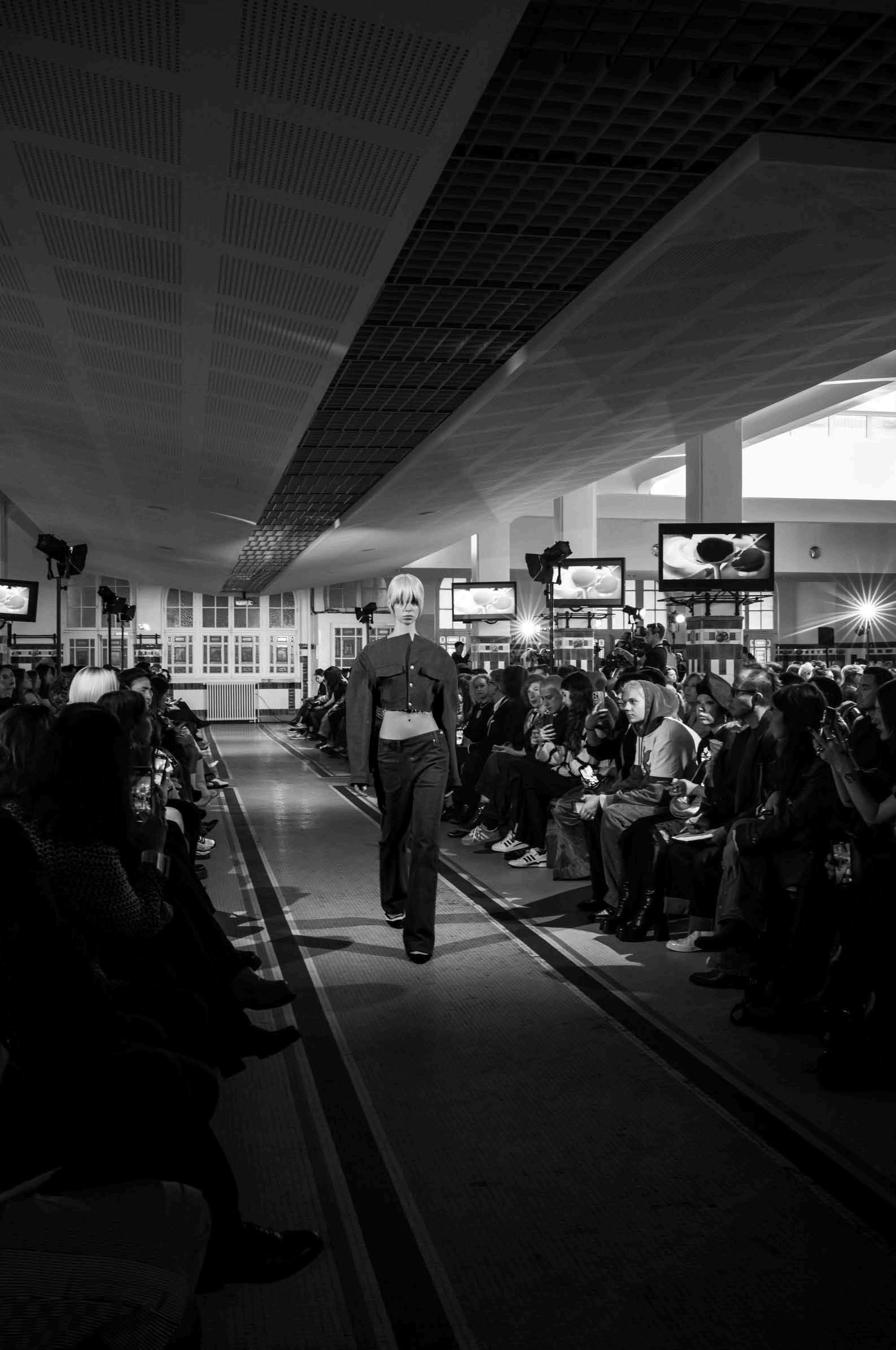
Entitled “Katachi,” the Japanese word for “form,” the collection was rooted in the fundamental shapes of found objects - for example, pebbles, seashells, factory supplies, and ancient vases and lacquerware. Effortlessly elegant in a way that belies the near-scientific methodology used to formulate them, the resulting silhouettes were graceful, exquisitely draped, and defined by the soothing sense of serenity that is a Kuroguchi signature. Most were monochrome, with patterns sparingly but effectively used to represent Japanese landscapes and recall specific motifs such as the autumn grasses often depicted on Gifu paper lanterns (Look 10). Kuroguchi closed the show with a delicate all-white dress that demonstrated her mastery in pleating and was spectacular in its minimalism (Look 38). Folding down over the model’s bust with the ribbed curves of a discovered seashell, the deceptively structured dress slowly floated down the runway with the ethereal qualities of the Gifu lanterns. Like the lanterns, it brought a radiant light to a hushed space, and, an excellent metaphor for the entire collection, illustrated Kuroguchi’s emphasis on simplicity and impeccable attention to detail.
The genesis of this Spring/Summer 2025 collection came incidentally while Kuroguchi was crafting a collection for 2024. Kuroguchi, who takes a painstaking and tactile approach to her work, created pottery while conceptualizing this 2024 offering.
Inspired by her experience with the challenges of shaping clay, she took a personal interest in “form” and completed an in-depth study of the 1978 book “Nihon no Karachi” (Shapes in Japan). “Nihon no Karachi,” which explains the cultural gravitas and spiritual essence of traditional Japanese shapes, in turn led Kuroguchi to reconsider the significance of both the everyday objects she encounters and historical artifacts that are part of the Japanese artistic lexicon.
Collecting functional items, art pieces, and natural objects alike, with a conceptual focus on silhouette rather then detail, Kuroguchi then photographed all of her newly acquired pieces and blacked them out in a notebook to create minimalist sketches. These sketches became the basis for the forms of Spring/Summer 2025, the models drifting down the runway like stately figures depicted on black-glazed Greek amphorae (Look 4). With materials ranging from taffeta to twill to recycled polyester as a canvas, Kuroguchi sculpted substantive silhouettes that somehow seemed as ephemeral as they were voluminous. This was elevated everyday clothing, for a modern artistic milieu or nobility of a different age.
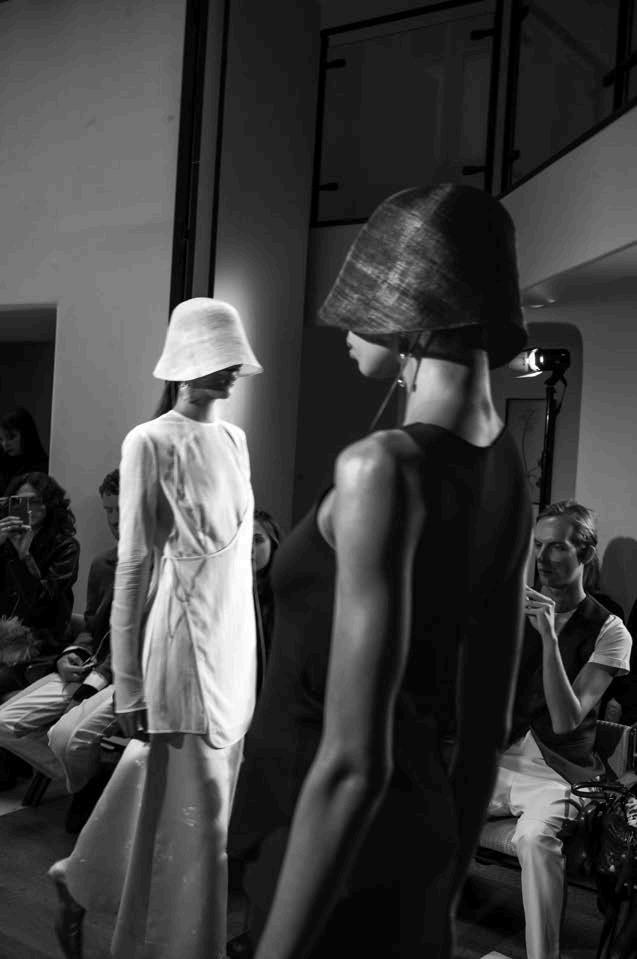
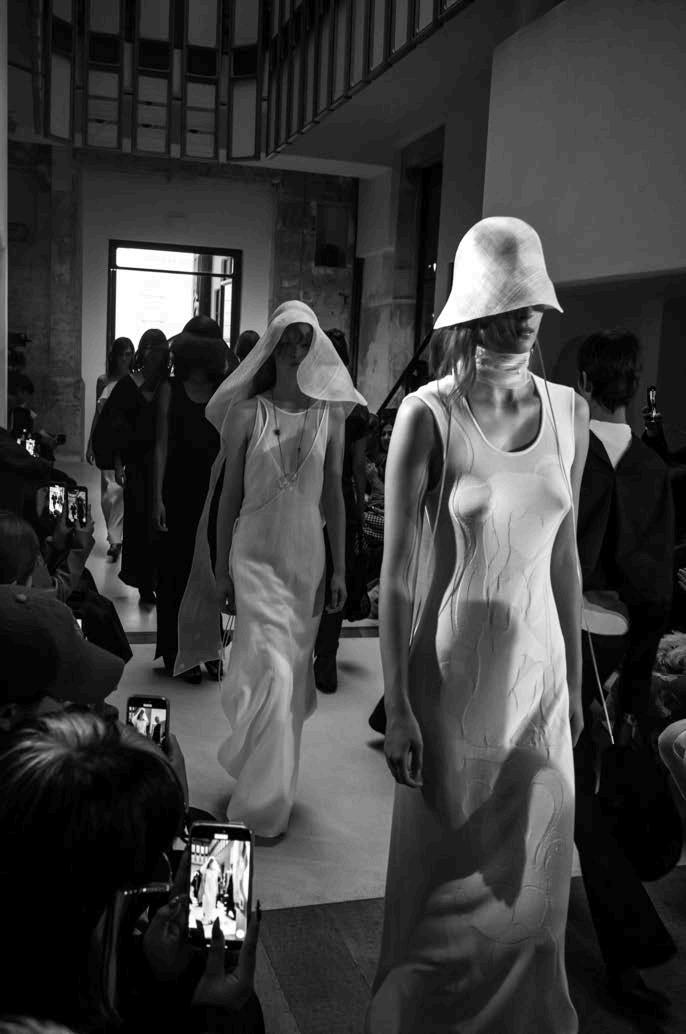
This season saw Kuroguchi collaborate with Japanese brand ENTWURFEIN to create a series of dramatic monochrome hats that ranged from sophisticated versions of the bucket silhouette to massive sculpted pieces that folded over the models’ faces like blossoming flowers. The hats, generally obscuring the models’ eyes, explored the power and grace of anonymity.
RUNWAY MAITREPIERRE
WORDS: VIKTOR KOZAK PHOTOS: LEROY VELASQUEZ
“Have you ever seen a 3D computer model walking the runway?” This is how I would describe the second day of Paris Fashion Week and Maitrepierre's fifth runway show. Founder and designer Alphonse Maitrepierre delighted attendees by taking them into a world defined by nostalgic gaming technologies, surrealist craftsmanship, and bright blurred colours. Was the statement show an intense look into the designer’s past? Perhaps. Was it a watershed moment? Definitely. Regardless of being a new name in the fashion arena, Alphonse Maitrepierre has managed to bring together fine craftsmanship, technical expertise, and authentic ideas, which are so much lacking in today’s world.
We may easily understand the foundation of Maitrepierre's skill if we go further into his background. After graduating from Brussels-based visual arts and fashion school La Cambre in 2016, Maitrepierre worked as an assistant stylist for Jean Paul Gaultier in his haute couture studio and as a part-time costume designer for Chanel and Acne studios. In 2018, he established his own label "Maitrepierre", which debuted with a spectacular and surrealist collection during the A/W 2019/2020 season. Since then, all collections have been made exclusively in Parisian ateliers and are synonymous with what a true artisanal couture is.
Returning to the present – “Let's Play”! Fittingly, this was the name of the collection, which drew significant inspiration from the gaming industry and swiftly transitioned towards AI technologies.
On one hand, it featured retro hues and futuristic 60s aesthetics, with reinterpretations of now-dated devices. On the other hand, it embraced the present with AI tools, showcased through projections throughout the venue.
As Alphonse Maitrepierre said in one of his interviews: "For this fifth anniversary, the idea was to go back to the roots…I've been exploring the ‘nerd' universe since the very first season and I wanted to talk about the gamer character in whom I recognize myself a little."
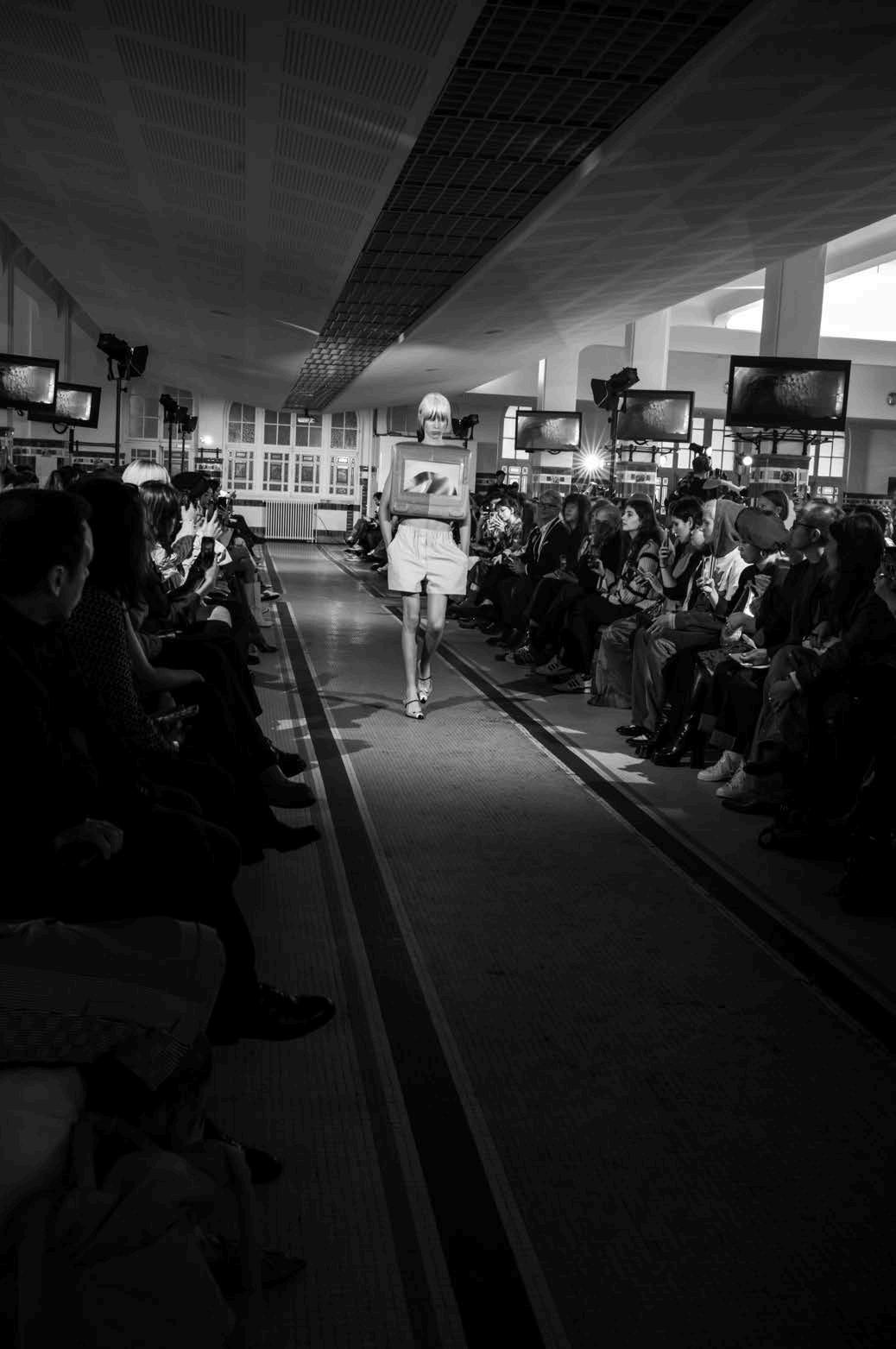
This desire to recall his past work and to weave a portion of his identity into the collection's aesthetic can be clearly traced from the first outfit to walk the runway. The dramatic computer look mentioned earlier opened the show. The chance to craft a shirt out of the iMac G3 screen - a computer that was initially introduced in 1998 and is regarded as legendary in the tech industry - was made feasible by the partnership with New York-based artist Gracelee Lawrence, whose work only uses discarded genetically modified maize.
Spectacular? Without a doubt. This look evoked conflicting emotions in the soul of each spectator, or at least in mine - the feeling of being carefree and nostalgic danced with the allure of something new and unknown. Perhaps due to this sentiment, this central piece was my favourite from the very beginning.
As the looks progressed down the runway, they revealed even more surprises. The devil is in the details, and so is the genius of this collection. The sculptural necklaces, crafted using high jewelry techniques, and the conceptual 3D-printed bracelets and manchettes by Raphael Everdeen, who also draws inspiration from the gaming world, were standout features. The latter pieces resembled futuristic joysticks that appeared to melt over the arm, resting peacefully after an intense gaming session. Another particularly memorable piece was the necklace presented in Look 22. It recalled tree branches delicately covered in gold, but instead of flowers reminiscent of spring, the branches sprouted keys from a computer keyboard in various colors. This intricate design highlighted the potential for symbiosis between nature and technology, symbolizing a harmonious coexistence of the organic and the digital.
The futuristic ambience of the show was further accentuated by the inclusion of flip phones, a nostalgic nod to the early days of mobile technology. These devices, once symbols of cutting-edge innovation, now serve as a bridge between the past and the present, evoking memories of a time when technological advancements were rapidly transforming our lives.
My attention was also caught by something often overlooked on the runway – the shoes. Maitrepierre's second successful collaboration with Carel led to a series of shoes made in a fun and intricate way. With their vibrant hues and playful designs, they stood out as a delightful contrast to the more sophisticated elements of the collection. The references to pigeons and mice, creatures often associated with urban environments and childhood stories, brought a sense of innocence and charm to an otherwise serious offering. Was this intentional? Perhaps - at Maitrepierre nothing is a result of coincidence.
Maitrepierre has established itself as a brand to look for during the fashion week, and a brand to look up to for all the other maisons. This small "laboratory," as Alphonse himself describes it, has evolved into a house that painstakingly adheres to sustainability and ecological impact goals. For example, 100% of this season’s pieces were made from deadstock, waste, or certified materials. Look 20 in particular highlighted the brand’s long-standing ambition to achieve neutrality objectives. Praiseworthy? Undoubtedly.
What’s next for Maitrepierre?
Nobody knows for sure, but as Alphonse himself stated "I would like Maitrepierre to still be here, and I would like the brand to continue to make you dream. I would like this little laboratory to take off quickly and for me to be able to continue season after season to create new stories...to succeed in getting people out of this daily life which can sometimes be a little gloomy.”
Making a “dream-worthy” aesthetic is a great task to undertake…and it is even more difficult to consistently maintain it through an entire show. Yet the playful yet sophisticated elements of the collection, showcasing Alphonse Maitrepierre's visionary approach, kept us watching attentively and hoping for more.
“THERE ARE TWO WORDS THAT CHARACTERISE MAITREPIERRE: OLD-FASHIONED AND GEEK.” ALPHONSE MAITREPIERRE
FASHION MEETS THE FUTURE (AGAIN)
WORDS: DIANA HUK
PHOTOS: LEROY VELASQUEZ
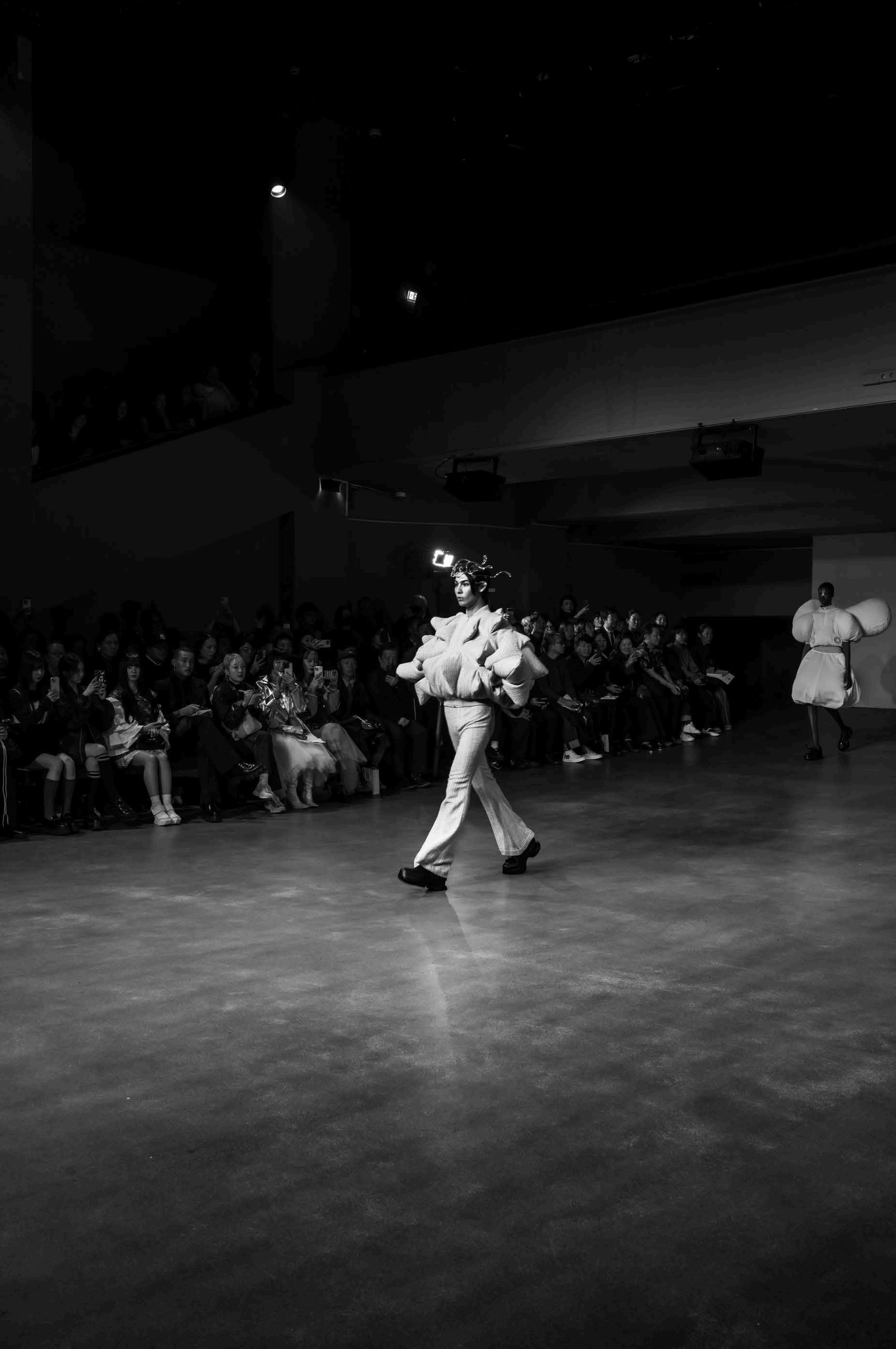
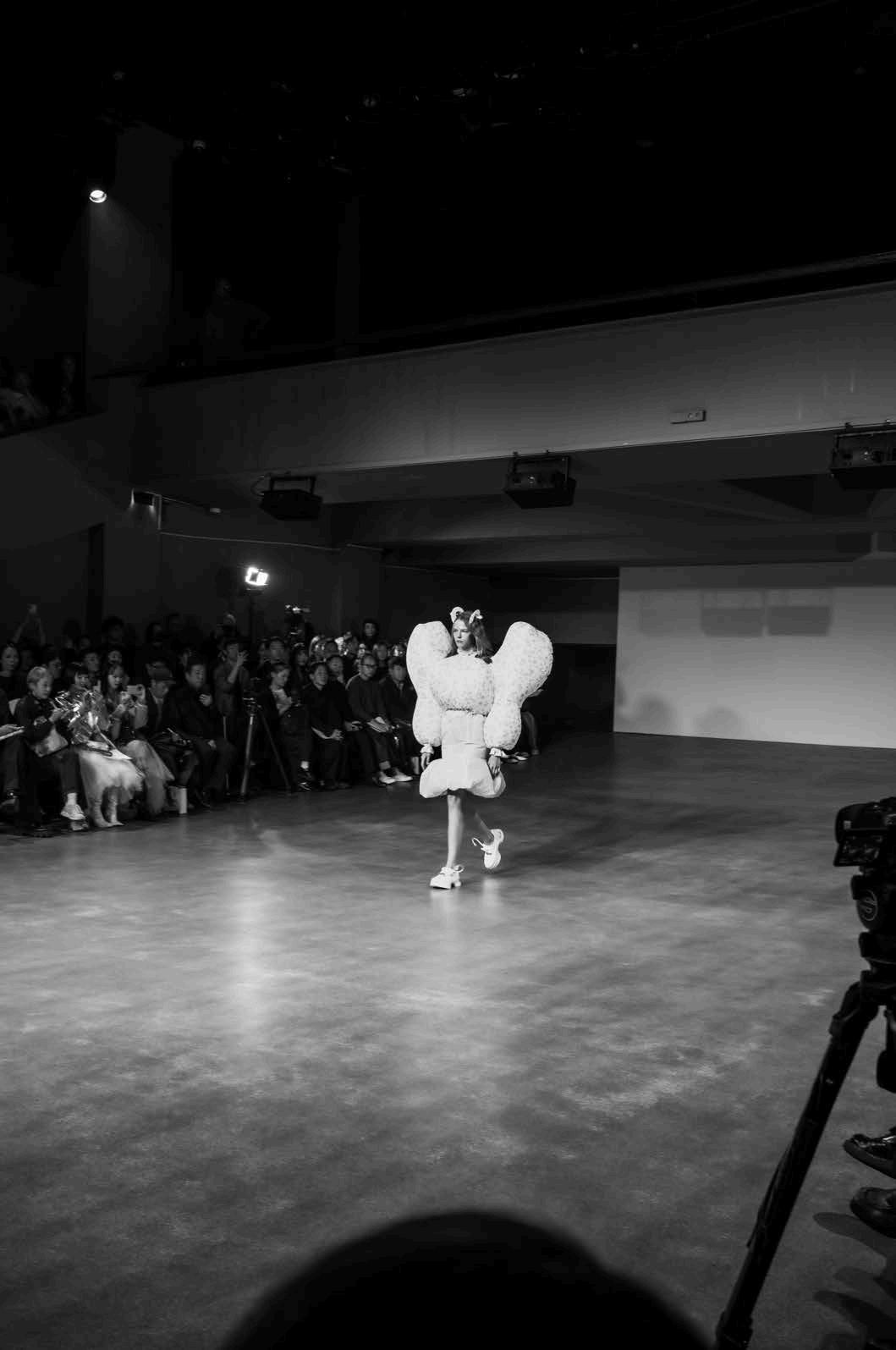
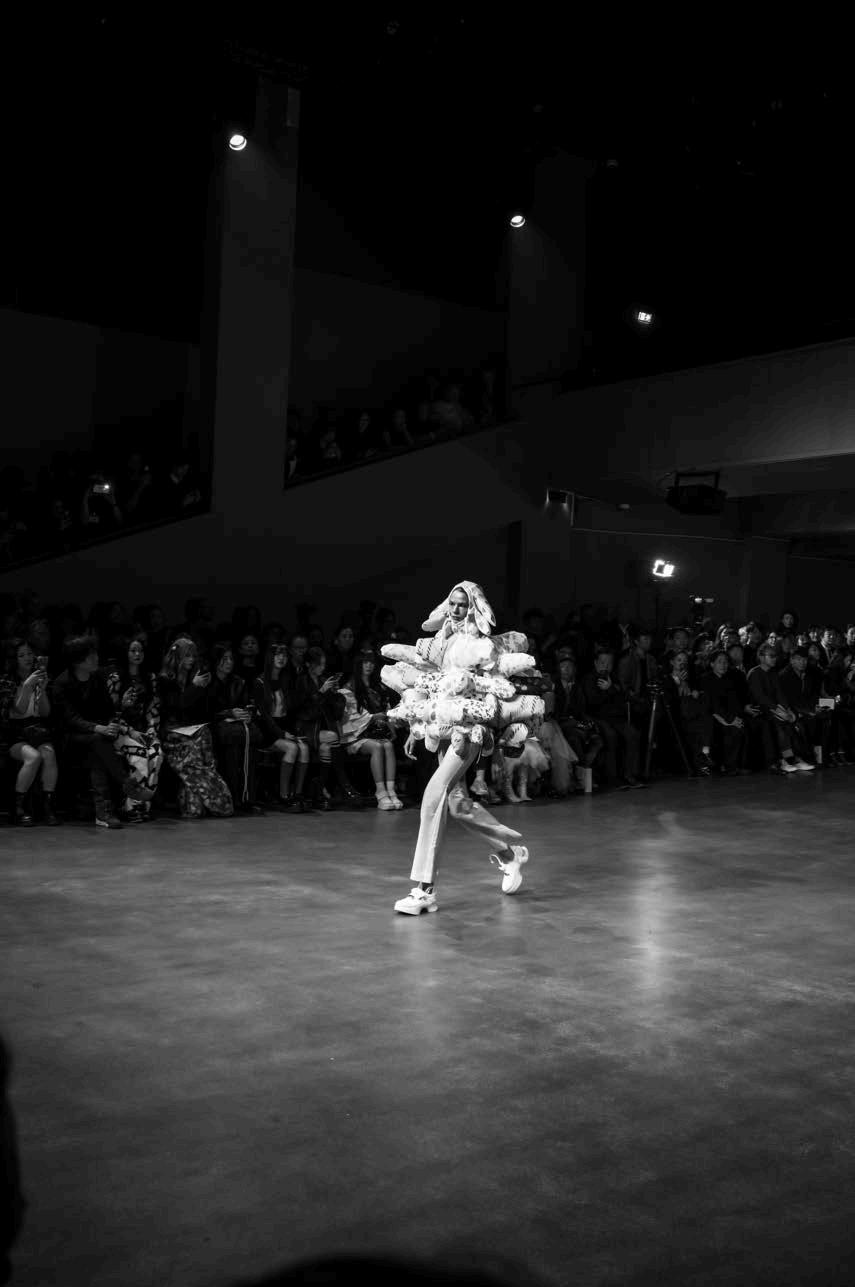
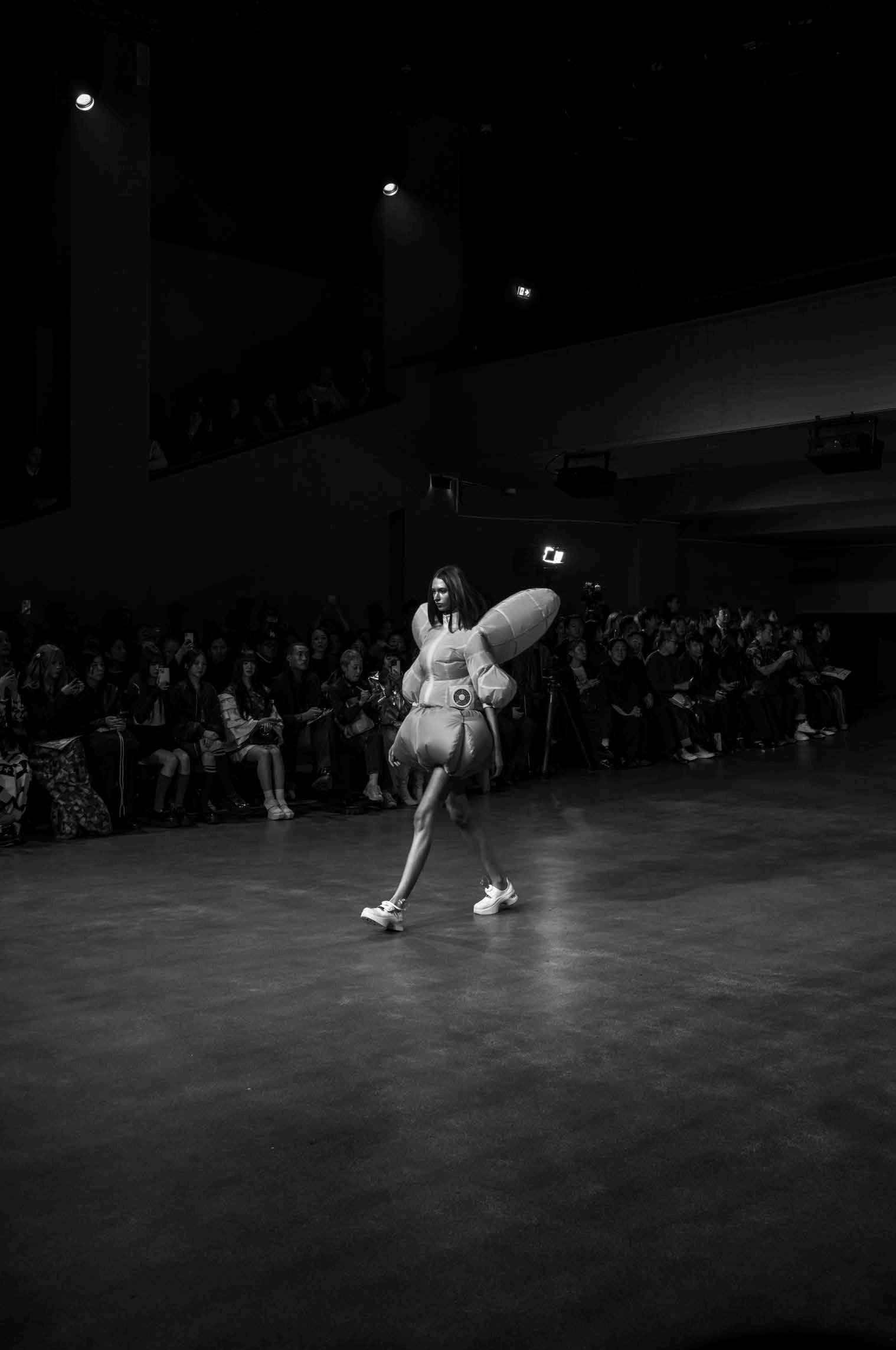
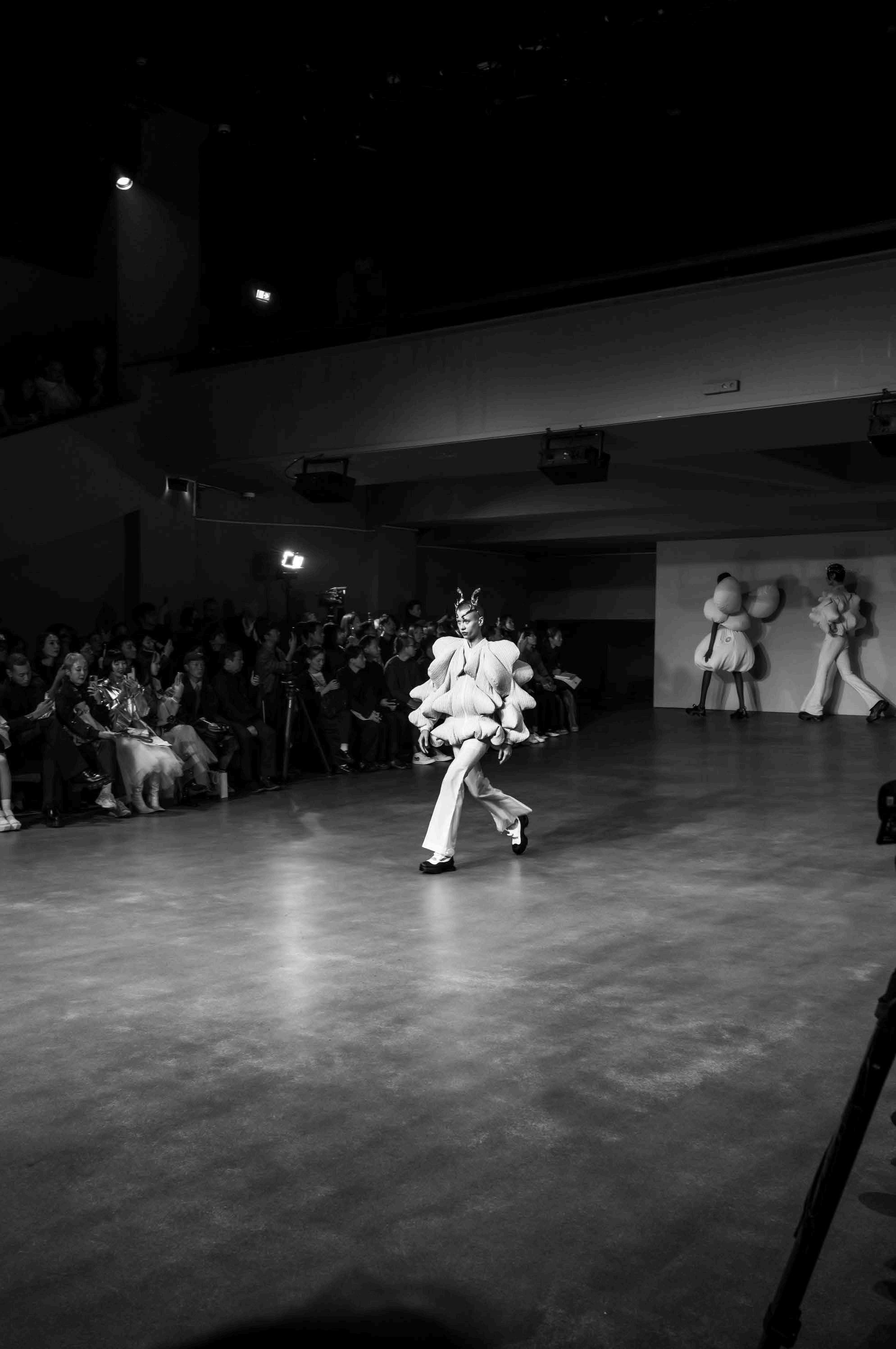
Volume can be fun: that was the message Anrealage delivered during its Spring/Summer 2025 show at Paris Fashion Week. Known for its pioneering synthesis of fashion and technology, the brand - guided by Kunihiko Morinaga - once again pushed the boundaries of wearable art. This season, Anrealage’s collection, entitled Wind, proposed a playful yet profound take on inflatable clothing that blended futuristic innovation with a serene retro-inspired aesthetic.
Magically Transforming Garments
Imagine garments that transform before your eyes: sleek forms suddenly expanding into voluminous, sculptural shapes with the press of a button. That is precisely what Morinaga showcased, using the ideas of movement and air as the essence of the collection. The secret behind this transformation? KUCHOFUKU, a Japanese technology that incorporates special fans to inflate the garments and is as practical as it is captivating.
The idea of clothing that inflates, contracts, and shape-shifts feels like stepping into a playground where Morinaga is the architect, redefining how fashion interacts with the wearer. Tops and dresses with sharp, inflated shoulders became instant crowd-pleasers, embodying the brand's mission to merge creativity with functionality. “Wind,” as a theme, was not only represented metaphorically but was literally infused into the designs. For a moment, the audience could imagine themselves wearing pieces that carried the breeze—a sensory experience that brought a futuristic whimsy to the runway.
Morinaga has long been at the forefront of fashion’s relationship with technology, and this collection solidified his place as an innovator. The integration of KUCHOFUKU fans within the garments represents the convergence of art and engineering to create a cooling sartorial solution for people in hot summer climates. Morinaga’s ability to instantly transform a silhouette not only demonstrates technological prowess but also reflects the adaptability required in contemporary life. Additionally, Morinaga’s commitment to sustainability shone through in his use of Kyocera’s FOREARTH inkjet printing technology, a water-free process that aligns with Anrealage’s eco-conscious values.
By combining groundbreaking design with responsible production methods, Anrealage reinforces that fashion’s future lies at the intersection of creativity, functionality, and sustainability.
A Vision of Playful Elegance
What sets Anrealage apart is its ability to experiment while still maintaining an air of elegance. The Spring/Summer 2025 collection was no exception, featuring capri pants and voluminous jackets that evoked nostalgic charm and retro sensibility while remaining distinctly modern. The garments balanced practicality and artistry, suggesting that fashion doesn’t have to choose between the two—it can be both.
This season’s colour palette played a critical role in reinforcing the collection’s ethereal and calming atmosphere. Soft-toned hues of light blue, green, and pink evoked serenity, mirroring the soothing effects of wind on the mind and body. The collection’s use of prints - dots, flowers, and clean geometric linesadded depth and texture to the garments while reinforcing the calming energy of the overall presentation. Through designs that were both visually striking and emotionally grounding, Morinaga wove a vision of clarity and peace amidst an increasingly chaotic world. In a paradigm that seems almost oxymoronic, Anrealage offered guests a comforting equilibrium even as it pushed boundaries.
Wind: A Metaphor for the Present Moment
Beyond the playful experimentation, Wind carries a deeper message. Wind, like life, is fleeting and dynamic - it moves through space, altering our perceptions and connecting us to the present. This theme was perfectly encapsulated by the way garments seemed to evolve in real-time, inviting the audience to reflect on the beauty of impermanence and adaptability. The collection also demonstrated how fashion can embody moments. Inflatable elements - sharp shoulders, voluminous skirts, and ballooning sleeves - encouraged a sense of spontaneity.
The fact that these transformations could occur on the go reinforced the idea that clothing, like life itself, can be ever-changing, fluid, and full of surprise.
A Playground of Imagination
There’s something inherently joyful about Anrealage’s approach to fashion. That joy was palpable throughout the Spring/Summer 2025 collection.
The runway was less of a showcase and more of a playground for the imagination. Garments resembling the wind socks, beach balls, and inflatables we associate with summer holidays offered a playful take on functionality, showing that fashion can still be fun even when it tackles serious innovation. At a difficult flashpoint that sees many designers taking themselves extremely seriously, this collection brought a breath of fresh air - both literally and metaphorically - to Paris Fashion Week.
With its inflatable designs, calming pastel palette, and seamless integration of technology, Wind is more than a collection - it’s a statement. It challenges us to rethink the purpose of clothing and to see garments as adaptable and dynamic extensions of ourselves. Morinaga has once again reminded us that fashion is not just about what we wear but how it makes us feel and how it interacts with the world around us. Whether through a sharp inflatable shoulder or a ballooning dress, Anrealage proves that the future of fashion is as exciting as the wind itself - unpredictable, ever-changing, and full of wonder.
LUIS DE JAVIER
I, for one, feel nostalgic for the 1990’s. Perhaps the most recent golden era in fashion, and the last before the social media age, it saw the meteoric rise and pinnacle of the supermodel, the advent of spectacular show production, and the emergence of unapologetically brash designers such as Tom Ford who would go on to define the industry.
It was an era for those who fearlessly seized the moment, were uncompromisingly themselves, and embraced an intoxicating hedonism in self-expression in direct contrast to the self-conscious “demure” element that defines so much of fashion in 2024.
WORDS: JESSE SCOTT
PHOTOS: LEROY VELASQUEZ
RUNWAY
The return of the supermodel-focused Victoria’s Secret show this October symbolized something of a paradigm shift. If fashion moves in thirty-year cycles, and if the disco remixes dominating modern nightlife are any indication, we may soon see a return to 90’s glamour. And leading the charge, like a ferocious bull exploding into the ring, is Luis de Javier. The Spanish designer already dominated London, New York, and LA during a brief three years at his eponymous brand, Now, de Javier brought his fierce passion, raw sexuality, and unapologetic swagger to the bright lights of Paris Fashion Week for his Spring/Summer 2025 show. He could not have been more successful.
Perched on the precipice of violence, De Javier’s designs ricocheted between a devil-may-care attitude and a devil-dominates-world attitude…in a way that left no one in attendance indifferent. The show was announced in all-caps on Instagram: “WE ARE GIVING BIRTH IN 24 HOURS.” It was a promotion that beautifully epitomized the spirit of the collection, although if De Javier was giving birth to a new era of fashion, a ruthless destructive force, or a femme fatale leaving a trail of broken lives in her wake (perhaps it was all three) was unclear.
De Javier is a showman - seemingly unintentionally so. Yet the most impressive part about his Parisian spectacle was not the high drama but instead the historic sartorial vocabulary that he harnessed to create it.
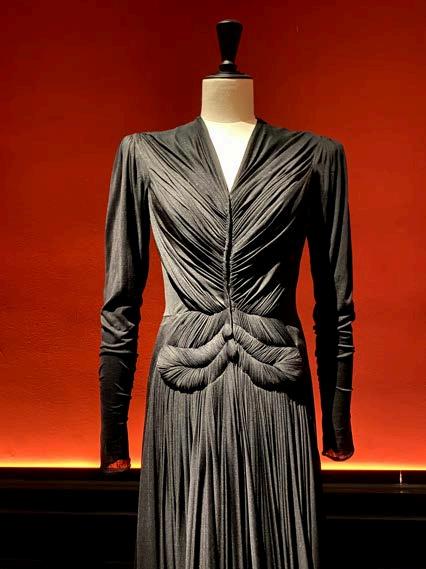
Like a mad artistic genius in the throes of aesthetic rapture, de Javier alluded to such diverse titans as Christian Dior, Madame Grès, Yves Saint Laurent, Cristobal Balenciaga, and Alexander McQueen in broad impassioned brushstrokes. He is a man who creates revolutionary pieces because of his profound historical knowledge, not in spite of it. In the vein of Picasso’s iconic quote “learn the rules like a pro, so you can break them like an artist,” he has converted his fashion fluency into unapologetic rebellion, effectively re-interpreting the work of the masters into something that remains distinctly individual. “By blending these influences, I’ve created a collection that not only respects the grandeur of my inspirations but also embraces the evolution of my own creative identity,” de Javier explained.
Constant throughout it all, whether through specific references to Cristobal Balenciaga or an underlying surrealist sensibility of which Salvador Dali would have approved, was an ode to de Javier’s Spanish heritage. The Matador aesthetic was omnipresent, often interpreted in feminine and sexual ways that both complemented and contrasted their original inspiration. One fiercely structured jacket featured delicate rosettes hand-embroidered in Seville. Meanwhile, an elegant lace corset was ingeniously crafted in the shape of a bull’s head. Like Dali and the Surrealists before him, de Javier played with multi-layered metaphors in constructing his sweeping narrative. The most dramatic pieces in the collection were the iconic horn dresses.
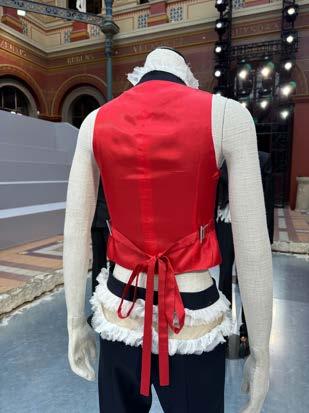
Made famous by Julia Fox on the runway three seasons ago, and now the signature de Javier motif, they are possessed of a mythical essence with unexpectedly versatile import. Appearing in five variations this season, horned looks effortlessly veered between sex symbol, sci-fi, urban chic, and Greek goddess depending on material, cut, and accessories. One personal favourite was a top with lace cut-outs (again mirroring the shape of a bull’s head) and horns that projected from the chest in a form reminiscent of Gaultier’s cone bras. Alexander McQueen’s bumster returned to the fashion spotlight this season when it was re-interpreted by Sean McGirr in the form of a delicate mesh panel that hinted at more than it revealed. De Javier, meanwhile, created the bumster’s sexiest rendition yet through exaggerated cuts that made both McQueen’s and McGirr’s versions look prudish by comparison. Demonstrating a mastery of diverse styles, de Javier cropped shorts, a transparent lace skirt, and baggy black shorts well below the waist, then suspended thongs from the models’ hips like seductive harnesses. Taking both the sartorial sophistication and unapologetic sexiness of this style to their logical conclusions, he heralded a new era of fashion that combines respect for tradition with the modern swagger required to stand out in today’s complex landscape. And it was not the only irreverently ingenious way that de Javier incorporated lingerie into his collection. A thong and lingerie-style garters were seamlessly synthesized with a cropped Matador jacket adorned with regal militarystyle epaulets.
Elsewhere lingerie was paired with such diverse aesthetics as a voluminous near-angelic coat, a white lace turtleneck so dramatically draped it appeared bridal, and a ball gown worthy of a contemporary princess.
A discussion of de Javier’s collection would be incomplete without mentioning the striking headwear, made possible through a surprising yet successful collaboration with Nike. This season saw an unprecedented number of partnerships between global sportswear brands and high fashion labels (think Avavav x Adidas in Milan and Ujoh x Reebok in Paris). Against this context, the de Javier x Nike pairing felt particularly bold… and it was a home run. Amidst a series of dramatic yet discerningly designed headpieces that recalled everything from feathered fans to vintage lampshades to black veils, my favourite accessory was a matadorstyle Nike hat.
Paired with a ferocious black fur coat, deadly black gloves, and floral garters, it was the finishing touch on an ensemble with a distinct and intoxicating Kate-Moss-gone-Berlin sensibility. While it was officially “Look 8,” it was in many ways the flagship of this collection. Sexual, cocky, and dangerous, it encapsulated the make-no-apologies attitude of 90’s high fashion and the take-noprisoners attitude permeating all of de Javier’s work.
Intentionally or not, it seemed metaphorical that the show was staged in the quasi-brutalist Espace Niemeyer, home of the French communist party.
A new revolution is here, the exquisite danger it brings painfully palpable. Luis de Javier, like a charging bull leaving a scorched-earth trail behind him, is on a mission. And this collection made it clear: he can travel as far through the fashion stratosphere as he is willing to go.
“I SOUGHT TO HONOUR BOTH THE ESSENCE OF PARISIAN HAUTE COUTURE AND THE LEGACY OF SPANISH DESIGNERS WHO HAVE SHAPED ITS HISTORY.”
LUIS DE JAVIER ON HIS SPRING/SUMMER 2025 COLLECTION
DRESS BY MADAME GRÈS, ONE OF DE JAVIER’S MANY INFLUENCES
MAISON YOSHIKI’S PARISIAN MOMENT
WORDS: DIANA HUK
PHOTOS COURTESY OF MAISON YOSHIKI
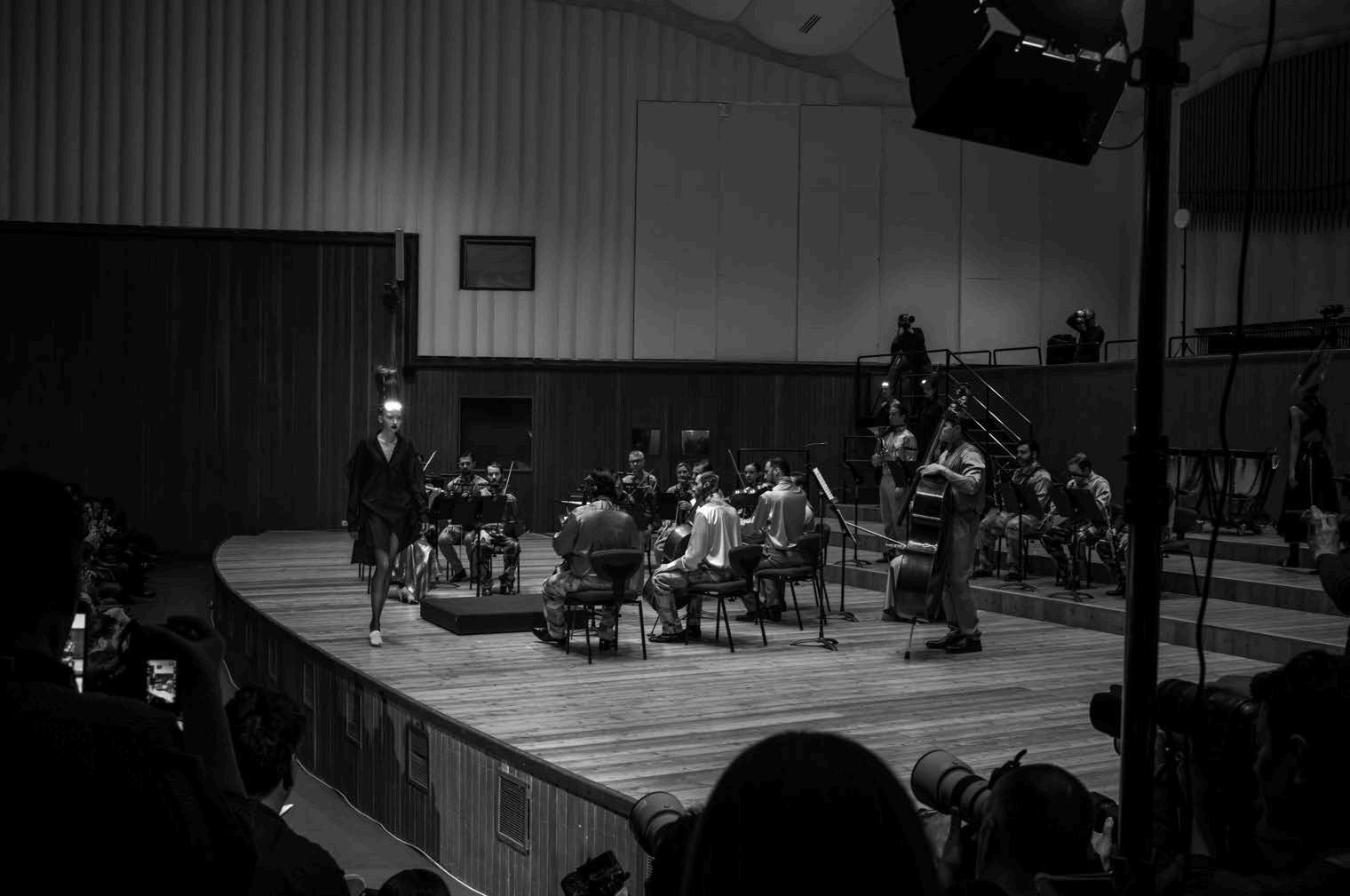
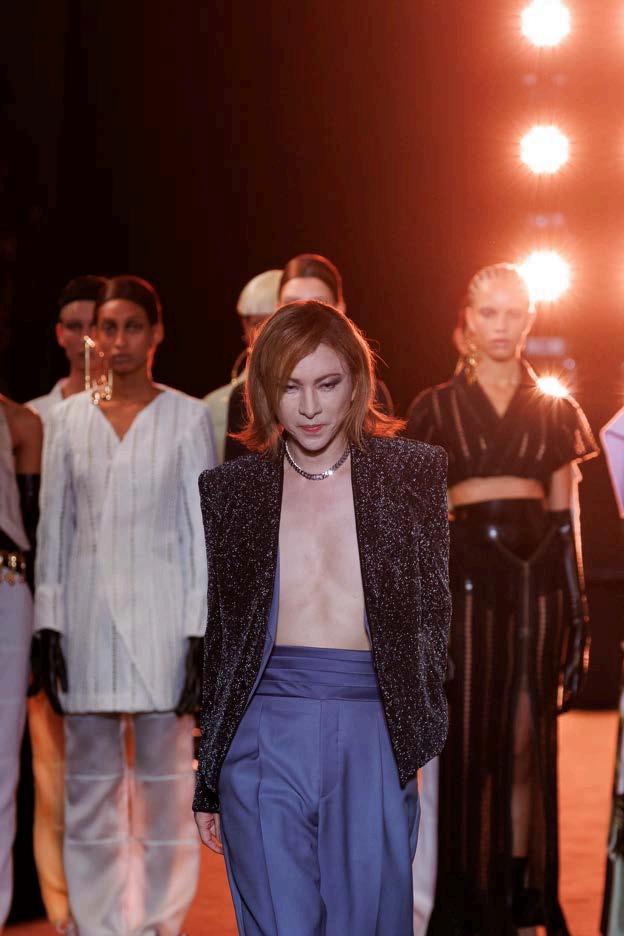
In a mesmerizing fusion of music and fashion, Maison Yoshiki's flirtatious Spring/Summer 2025 collection redefined the boundaries of creative expression. The maison’s sophomore show, held at the iconic Palais de Chaillot during Paris Fashion Week, was a masterclass in marrying sound and style. Every note complimented every stitch. Yoshiki, the creative director and legendary Japanese rockstar, performed live, wove his signature melodies into the very fabric of the evening. And the audience, a mix of fashion connoisseurs and Yoshiki's loyal fans, watched in awe as models strutted down the runway in designs that encapsulated glamour, edge, and innovation.
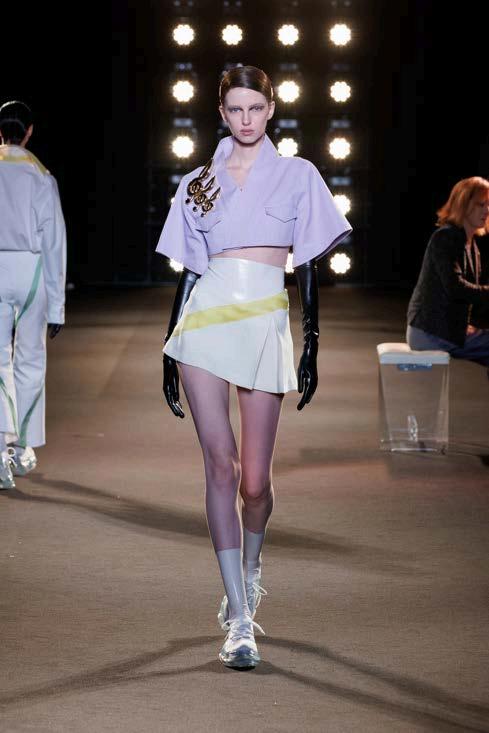
From the moment the first chords echoed through the grand hall, it was clear that this collection was about more than clothing; it was about storytelling. The opening ensemble set the tone: a crisp white set featuring a mini skirt and a longsleeved top, adorned with a subtle musical note on the shoulder. This delicate detail hinted at the universal truth that music accompanies life’s most memorable moments. Yoshiki translated this sentiment seamlessly into his designs, crafting pieces that flowed as timelessly as a classic melody.
True to the DNA of his first collection, Maison Yoshiki stayed faithful to its signature black, grounding the collection in elegance and mystery. However, the Spring/Summer 2025 collection introduced an array of complementary hues - soft whites, pastel yellows, and hints of gold - to create a harmonious balance.
The fabrics told their own story, with luxury French textiles like double silk organza, iridescent tweed blends, and delicate lace forming the backbone of the collection. These choices lent a tactile richness that was both contemporary and deeply rooted in tradition.
The collection celebrated asymmetry as a form of liberation. By playing with shapes and forms, Maison Yoshiki encouraged wearers to embrace the unexpected and find strength in individuality. Long pieces were contrasted with short ones - a mini skirt paired with a flowing, longsleeved top, or a crop top juxtaposed against a dramatic, floor-length skirt. This interplay of proportions evoked the yin and yang of fashion, a reminder that opposites can coexist beautifully.
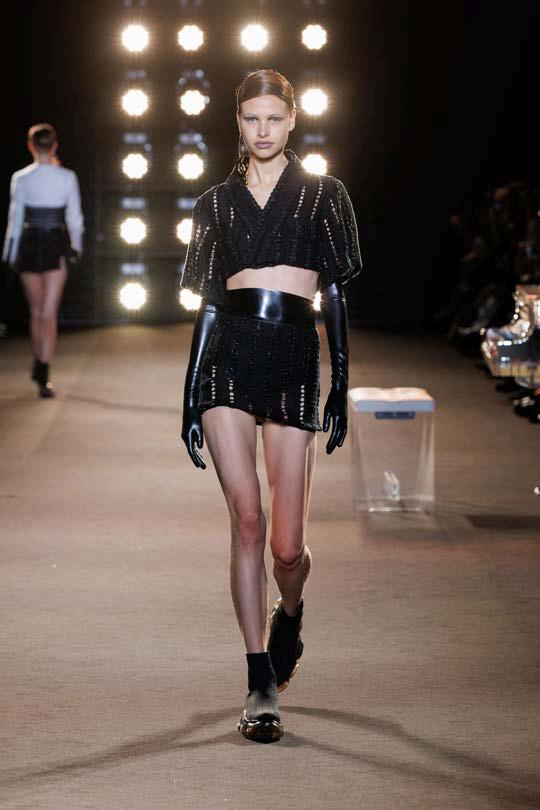
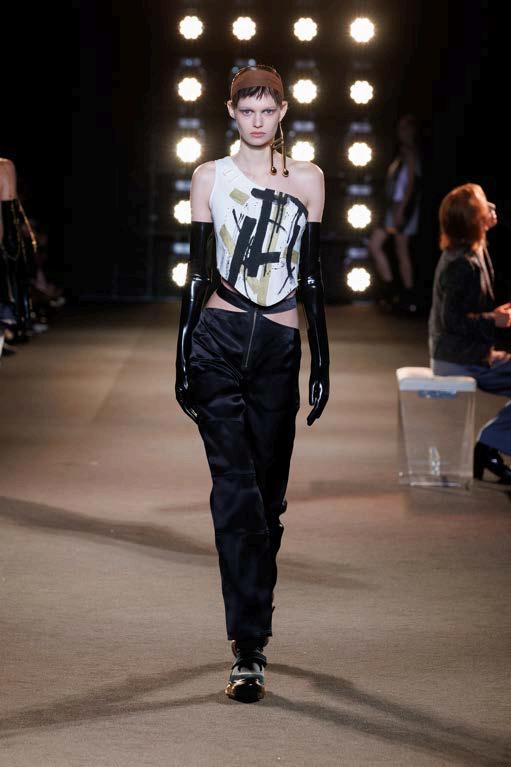
One standout piece was a knitted jacket set, a design not typically associated with the rockstar aesthetic. Yet, in Yoshiki’s hands, it became a symbol of genderless power—soft yet commanding, understated yet unforgettable. Gloves, a daring accessory paired unexpectedly with chic sneakers, also showcased the brand's commitment to breaking conventions. This juxtaposition of high and low, formal and casual, encapsulated the Maison Yoshiki ethos: fashion should empower and surprise.
No Maison Yoshiki collection would be complete without a nod to Yoshiki’s Japanese heritage. The Spring/Summer 2025 lineup featured kimono-inspired designs reimagined for a global audience.
From kimono dresses to kimono tops paired with sleek, modern separates, these pieces were a testament to the timelessness of this traditional garment. Yoshiki’s ability to honor his roots while pushing the boundaries of contemporary fashion was on full display, offering a vision of crosscultural creativity that felt fresh and relevant.
As models such as Paris Jackson and Grace Johnson graced the runway, Yoshiki’s live piano performance provided a transcendent backdrop. His music - sometimes haunting, sometimes triumphant - seemed to echo the collection’s themes of contrast and harmony. The Palais de Chaillot, with its breathtaking views of the Eiffel Tower, added an extra layer of magic to the evening. Guests were visibly moved, their attention captivated not only on the runway but on the emotional resonance of the event.
Maison Yoshiki’s Spring/Summer 2025 collection is a testament to the transformative power of creativity. By blending music, fashion, and heritage, Yoshiki has created a label that is as dynamic as it is thoughtful. Each piece, from the kimono-inspired designs to the daring accessories, tells a story of empowerment and elegance.
As the final model left the runway and Yoshiki’s music reached its crescendo, the audience was left with a singular impression: Maison Yoshiki is not just a fashion brand. It is an experience, a movement, and a celebration of all that is beautiful and bold in the world.
WORDS: Diana Huk
PHOTOS: Courtesy of Ujoh
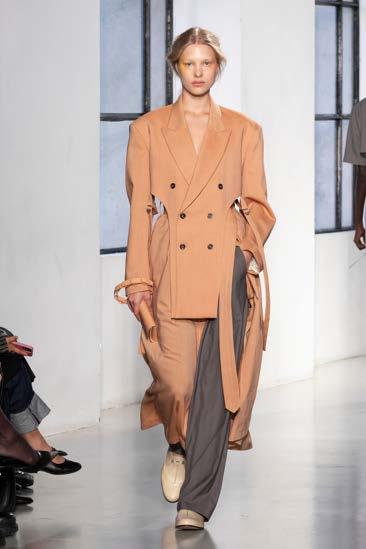
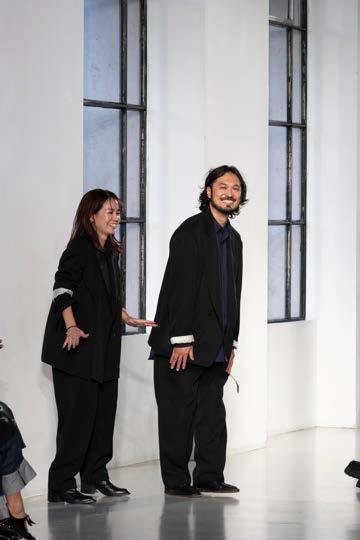
Few brands capture the intersection of innovation and practicality as seamlessly as Ujoh. With his Spring/Summer 2025 collection, designer Mitsuru Nishizaki once again demonstrated his mastery of tailoring and his ability to push the boundaries of conventional design. This season Ujoh delivered a collection that moves with the rhythm of life, embodying fluidity, creativity, and functionality.
The collection’s standout feature is its tailoring. Every garment seemed to move effortlessly, echoing the natural cadence of daily life. Nishizaki’s background as a pattern cutter for Y's and Yohji Yamamoto shone through in the precise yet playful cuts. The garments felt alive, adapting to the wearer’s movements and embodying a philosophy where clothing is not static but dynamic—a true reflection of the now
Beige tones served as the cornerstone of this collection, exuding a sense of calm and understated elegance. Paired with slate grey and subtle accents, this minimalist palette underscored Ujoh’s commitment to practicality and versatility, making the designs suitable for a variety of occasions. Wide trousers and skirts with deep slits offered ease of movement, while tailored jackets were contoured to the body’s lines, striking a balance between form and function. These pieces projected a quiet confidence, reminding us that clothing should not only look good but also serve the needs of the wearer.
Nishizaki’s innovative cutting techniques are a hallmark of the collection. Playful and imaginative, they challenge traditional notions of garment construction. Scarves that were, in fact, sleeves created a playful optical illusion. Sheer fabrics also played a pivotal role, adding an element of elegance and flirtation. Paired with more voluminous materials, the sheer elements created a harmonious contrast, showcasing Ujoh’s ability to balance softness and strength. This juxtaposition speaks to the brand’s overarching philosophy: to find a symbiosis and unassuming between life’s contrasts.
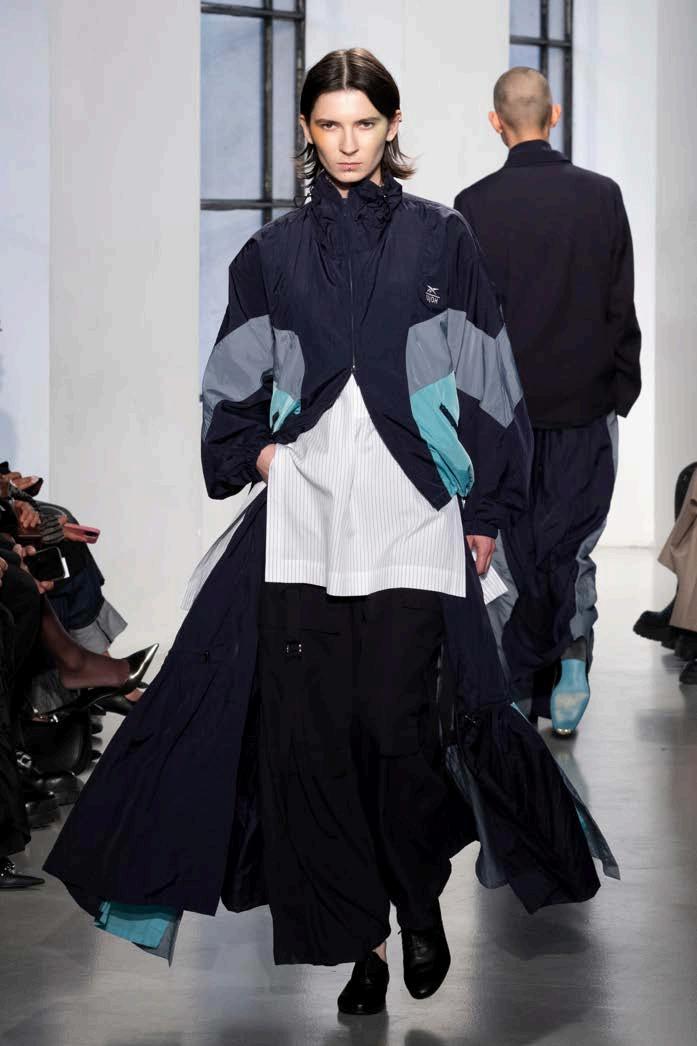
A highlight of this season is Ujoh’s collaboration with Reebok, blending the brand’s signature tailoring with sportswear elements. Known for previous partnerships with Maison Margiela and Victoria Beckham, Reebok brings its functional expertise to the table. The collaboration featured lightweight, water-repellent nylon pieces that incorporate Ujoh’s three-dimensional pattern-making and drawcord details. These garments, set to launch in early 2025, seamlessly merge activewear sensibility with a high-fashion aesthetic, reflecting the modern individual’s dynamic lifestyle.
This collection reaffirmed Ujoh’s position as a leader in contemporary fashion, where elegance meets practicality with a distinctive Japanese sensibility. The innovative tailoring, calming colour palette, and unexpected collaboration, makes Nishizaki’s latest offering a versatile highlight of the Spring/Summer 2025 season.
SCHIAPARELLI:
DANIEL ROSEBERRY DAZZLES WITH COUTURE-STYLE “FUTURE VINTAGE” COLLECTION
WORDS: JESSE SCOTT
PHOTOS: LEROY
VELASQUEZ
Daniel Roseberry is a magician. We’ve always known that. But the Plano, Texas-born designer managed to outdo himself for Spring/Summer 2025, designing a magnificent “future vintage” Schiaparelli collection that dazzled with every detail.
The collection was, in its essence, couture. An undisputed tour de force that incorporated nearincomprehensible layers of creativity and complexity into every piece, it attained a level of excellence across fifty looks that most designers could only dream of achieving across twenty. Yet it also felt effortless, possessed of a singularly Roseberry savoir faire that sees contemporary silhouettes integrated with historical references by a self-assured touch that never feels forced.
Part of what makes Roseberry special is his ability to attain tremendous precision without looking like he’s trying to attain tremendous precision; each piece is first and foremost a work of art that tells its own story while comprising one cohesive chapter of the season’s larger narrative. At a flashpoint where minimalism and maximalism reign supreme, with many designers aiming for shock value through editorial looks and others sculpting severe pieces that seem oxymoronically aggressive through their rigorous emphasis on restraint, Roseberry refreshingly encapsulates an old-school elegance that Elsa herself would doubtless appreciate. From bags to dresses, every Roseberry piece possesses grace and traditional beauty - but they are by no means conservative or lacking in creativity.
Like Elsa with shocking pink and Yves Saint Laurent with his Scandal collection, Roseberry is launching a revolution with looks that surprise and ultimately delight. And he has done so in a manner that both honors the past of the iconic Schiaparelli brand and leaves his own indelible legacy on it. Roseberry’s career posits a new path forward for designers at historic houses.
Somewhere in between celebrity designers like Alessandro Michele, who has essentially become Valentino by supplanting his bold personal taste on the brand, and creative directors that trot out similar silhouettes to their predecessors season after season, Roseberry is becoming an icon while remaining within the bounds of the preexisting Schiaparelli verse.
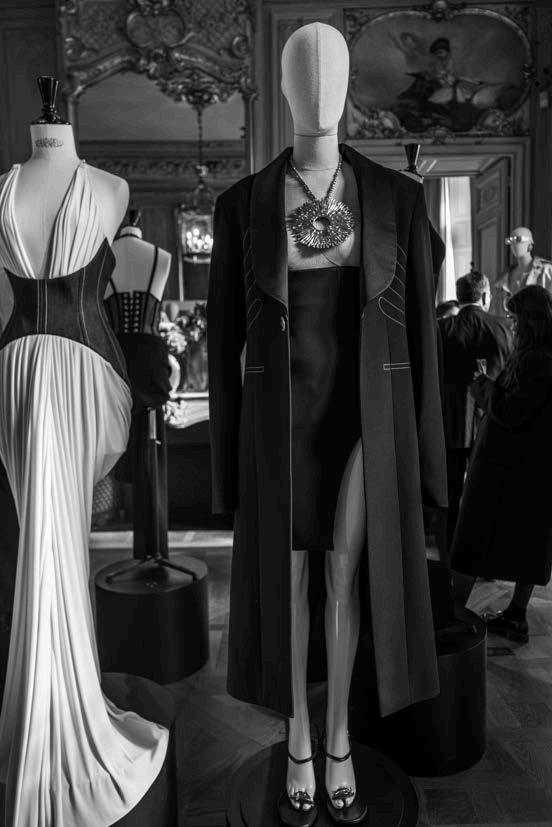
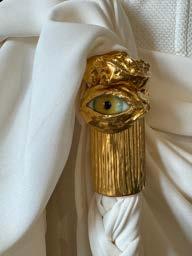
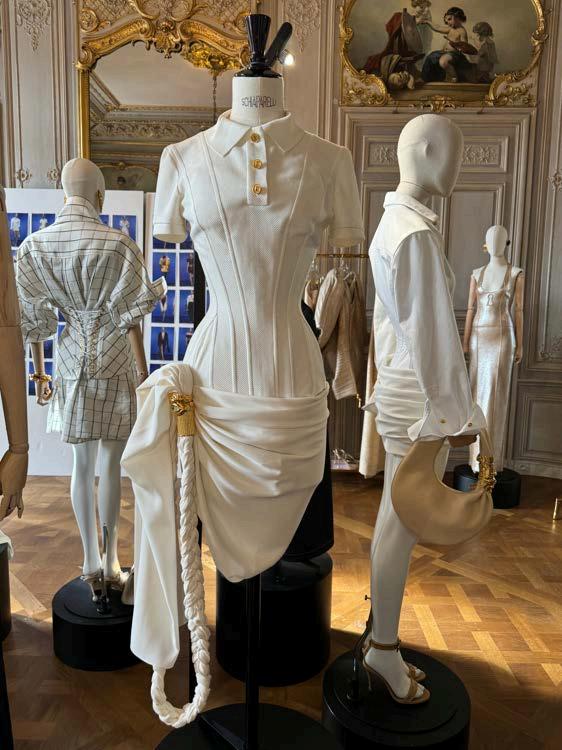
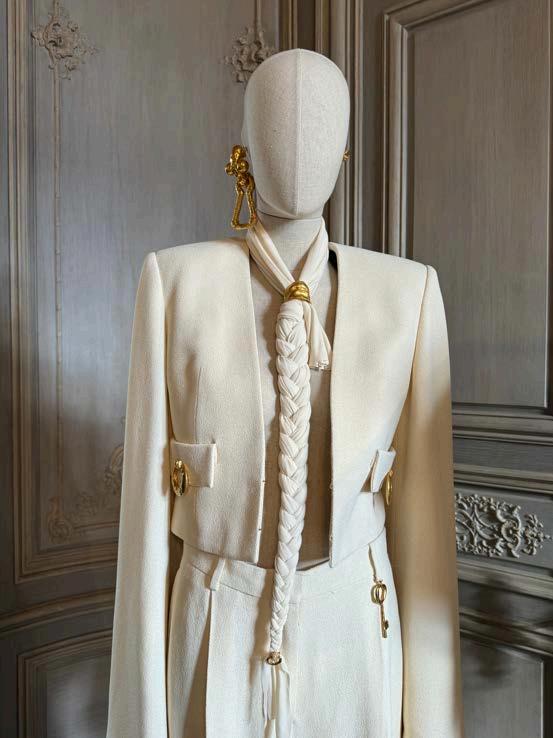
Take the surrealist trompe d’oeil touches that starred on both the dresses and accessories of the Spring/Summer 2025 offering. A personal favourite look was a jersey polo bodysuit that merged American prep with French glamour and uniquely Schiaparellian whimsy. The ecru skirt culminated in a long braid that resembled the velvet ropes outside elite Parisian nightclubs. Capped by a surrealist silver clasp ensconced with one of the signature Schiaparelli eyes, the braid stood as one of the most memorable touches in any collection this season. The look was completed with playfully mismatched earrings; a nipple on one side and a large rhinestone hoop with a tooth and pearl on the other.
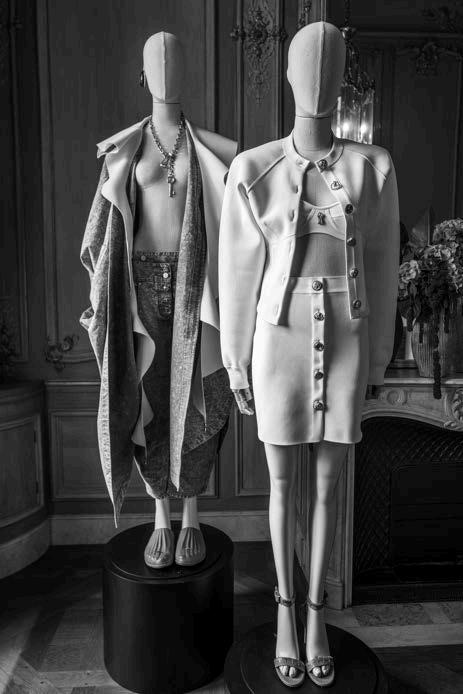
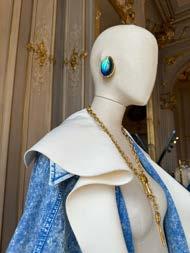
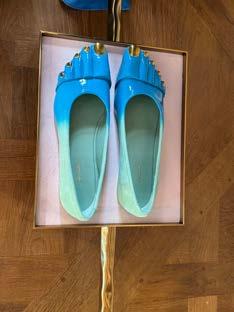
Roseberry embraced the highly popular fake denim aesthetic in a way distinctly his own. His interpretation felt far more couture than casual, as an oversized cape dress of faded blue cotton dramatically swept down the runway with flared batwing sleeves. The look was a fine exemplar of many Schiaparelli motifs, most notably the measuring tape embroidery on the dress and the keyhole on a covetous gold chain. It also saw Roseberry introduce a rhinestone toe ring, an instant classic that is sure to become one of the maison’s signatures.
One of the show’s most spectacular looks was one of its most simple - and was anchored in actual denim. Modelled by Kendall Jenner, it paired a wool jersey tank bodysuit with dramatically cut raw denim trousers that dipped like a U below the hips. A wholly unique silhouette, it showcased Roseberry’s mastery of making the ordinary extraordinary through simple alterations.
So too did a deceptively complex blue and white striped jacket/trousers combo; buttoned by a “lock and key,” the jacket winked at an oversized baguette bag notable for a series of four golden bangles that could be rotated to create the image of a face.
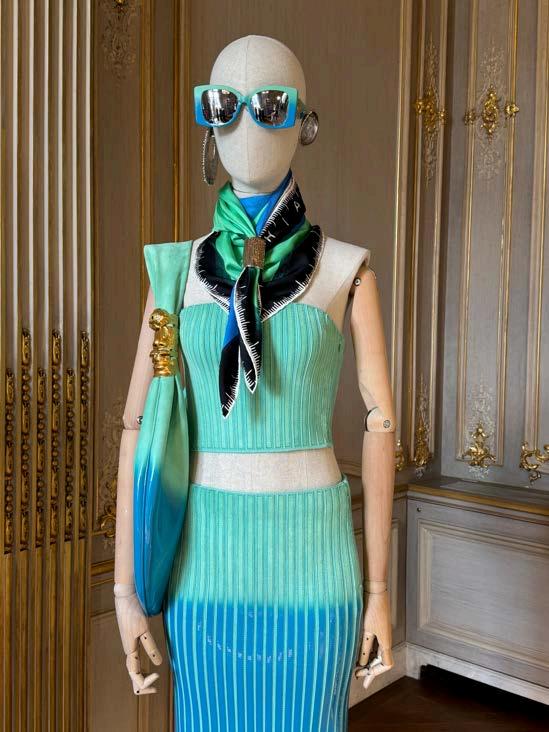
While Roseberry has typically preferred classic colours and did again this season, his discerning use of vibrant shades created some collection highlights. Walking through the resee, worthy of a two-hour time block due to the many details to marvel up in person, my colleagues and I were immediately struck by a knit dress in turquoise and a stunning seldom-used sea foam green. Upon close examination, the skirt was revealed to have dual textures, with shellacked turquoise fabric effortlessly fading into suede sea foam green.
It was a revolutionary and distinctively Roseberry technique, invisible to the untrained eye and characteristic of his Schiaparelli-verse in which everything is not quite what it seems. Paired with a matching strapless top of viscose and leather, molded slippers in brown leather (which recalled scuba flippers and incorporated the rhinestone toe ring), and my favourite sunglasses of the season (which mirrored the colour gradient on the skirt), the piece anchored a dream look for Mediterranean summer 2025.
Closing the show were a trio of looks that contained the most definitively haute couture pieces in a collection so intricate it seemed to be cosplaying as ready-to-wear. Covered in thousands of handpainted sequins in floral motifs, no two the same, the tulle tops and dresses were an indulgent celebration of feminine flare. Paired with a massive curved-effect gold metal choker, they were the perfect culmination of a breathtaking collection.
Two colleagues had the pleasure of conversing with Daniel Roseberry at a client event later on during Paris Fashion Week; both were deeply impressed by his humility, quiet energy, and soft-spoken manner. Roseberry, having just celebrated five years at Schiaparelli, is at the absolute pinnacle of the fashion industry. He’s the gold standard in the ultra-cutthroat world of ultra-luxury houses, but he remains supremely driven and is poised for even greater success. Each season seems to get better than the last, and here at Elysium we’re already counting down the days until he launches his Fall/Winter 25/26 offering.
LOUIS VUITTON:
NICHOLAS GHESQUIÈRE BLENDS HISTORY & FUTURE
TO BEGIN SECOND DECADE AT LV
WORDS; DIANA HUK
PHOTOS: JESSE SCOTT
Louis Vuitton has always been a brand synonymous with luxury, fine craftsmanship, and timeless design. Over 150 years old, the maison has remained a global icon by honouring its rich heritage while staying in the vanguard of modern innovation. On October 1st, 2024, the creative director of womenswear, Nicolas Ghesquière, brought this legacy to life with the unveiling of Louis Vuitton’s Spring/Summer 2025 collection. Held in the heart of Paris at the Cour Carré, the show was a celebration of the brand's history and an invitation to its future.
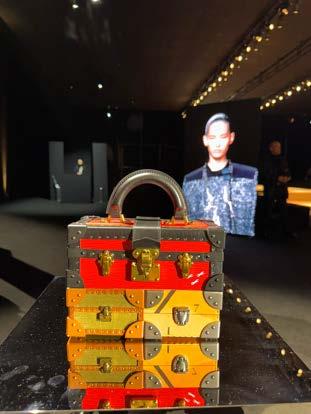
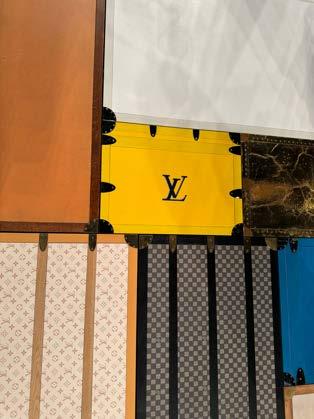
The setting for the show was a visual masterpiece in itself. The Cour Carré was centred by a monumental installation of trunks, symbolizing the foundation upon which Louis Vuitton was built. The mesmerizing structure was not merely decorative; it served as a runway of epic proportions. It also was an important reminder of the maison’s beginnings as a luxury luggage company, bridging a storied past with the present. This carefully curated stage set the tone for a collection that married history, innovation, and Nicolas Ghesquière’s unique creative vision.
Storytelling Through Fashion
Nicolas Ghesquière’s ability to tell stories through fashion has solidified his reputation as one of the most influential designers of our time. For the Spring/Summer 2025 collection, his narrative was both bold and intricate, weaving together themes of strength, resilience, and transformation. The collection invited the audience on a journey where traditional motifs met futuristic sensibilities, resulting in a lineup that felt both timeless and ahead of its time.
The designs showcased a meticulous attention to structure and movement. Models walked the runway in ensembles that featured geometric and sculptural forms, exuding a sense of fluidity and confidence.
One of the standout looks was a mini trapezoidal dress paired with single-legged trousers - a bold, asymmetrical design that encapsulated the futuristic edge of the collection. Juxtaposing this avant-garde aesthetic were voluminous jackets with dramatic balloon sleeves and cinched waists, reminiscent of Renaissance doublets. These historic silhouettes were paired with contemporary elements like sleek biker shorts, exemplifying Ghesquière’s talent for blending past and present. The interplay of these contrasting elements created a dynamic tension that defined the collection.
A Palette of Power
While most spring/summer collections lean towards lighter, more pastel tones, Ghesquière opted for a darker and richer colour palette. Deep tones of black, navy, and burgundy dominated the collection, symbolizing strength and resilience in the face of uncertainty. These forceful shades reflected a powerful message: Louis Vuitton women are unafraid to embrace their boldness and take on whatever lies ahead.
Geometric patterns and sharp lines ran consistently through the designs. In many ways, the collection used geometry not just as an aesthetic tool but as a metaphor for precision and clarity - qualities that define Louis Vuitton’s approach to craftsmanship.
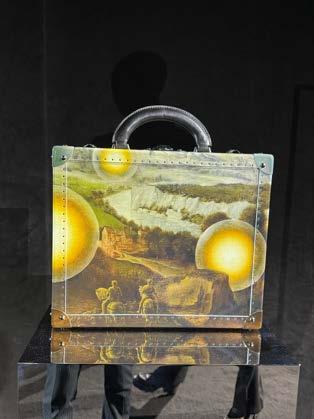
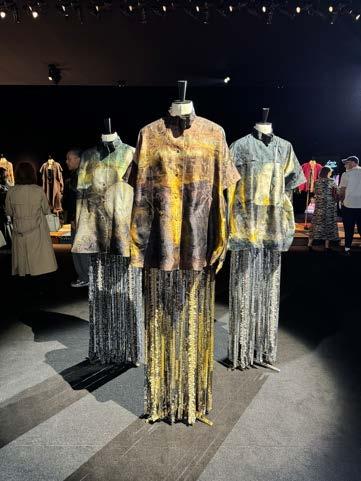
A major highlight of the collection was the use of prints inspired by Paris-based conceptual artist Laurent Grasso. Known for exploring themes of time, space, and perception, Grasso’s work, which uses scientifically accurate Renaissance techniques to depict anachronistic imagery, lent an intellectual dimension to the collection. Dresses and shirts adorned with intricate Renaissance-style prints became wearable pieces of art, adding depth to the visual narrative. These prints underscored Ghesquière’s ability to integrate high art into his designs, elevating the collection beyond fashion into the realm of cultural commentary.
The Artistic Touch of Laurent Grasso
Accessories: Bold and Versatile
Accessories played a critical role in completing this season’s story. The iconic Louis Vuitton trunks, a hallmark of the brand’s history, were reimagined as luxurious miniature bags. One standout piece was a gold-plated mini trunk bag, perfect for exclusive evening events. Another unique design was the “van-bag,” a playful yet functional piece ideal for carrying refreshing essentials on a warm spring day. Meanwhile, collection’s jewelry was highlighted oversized statement pieces that embraced both opulence and practicality. Chunky necklaces, earrings, and bracelets featured historical motifs and intricate details, tying into the collection’s Renaissance aesthetic. Despite their massive size, the pieces were lightweight, allowing women to effortlessly make a bold statement.
Ghesquière introduced a number of avant-garde shoe deesigns, including sculptural geometric heels that echoed the collection’s architectural themes. For those seeking a more classic look, strappy multi-coloured gladiator-style sandals offered a timeless yet trend-aware option.
A Celebration of Heritage and Vision
As Nicholas Ghesquiere enters his second decade at Louis Vuitton, his Spring/Summer 2025 collection offered a perfect encapsulation of his creative ethos. By creating a dialogue between historical references and futuristic designs, the collection reminded audiences of the maison’s storied history, its unwavering commitment to innovation, and the limitless possibilities that lie ahead.
As the models made their final walk, framed by the monumental trunk installation and the iconic Parisian skyline, one thing was abundantly clear: Louis Vuitton is not just a brand - it is an evolving legacy. With its bold silhouettes, intricate prints, and innovative accessories, the Spring/Summer 2025 collection was was a testament to the enduring power of storytelling.
MCQUEEN’S REBIRTH:
SEAN MCGIRR FINDS HIS STRIDE WITH TRIUMPHANT SOPHOMORE
COLLECTION
WORDS &
PHOTOS:
Jesse Scott
Sean McGirr, the 36-year-old Dublin-born designer tapped to lead one of Britain’s most iconic houses following Sarah Burton’s iconic 26-year run there, had something to prove when he launched his inaugural collection for Fall/Winter 24/25. Relatively unknown to the fashion world, despite a close working relationship with Jonathan Anderson and stints at Dries van Noten and Burberry, he seemed an unlikely choice for a brand that has only even been led by its founder and his in-house-trained heir apparent. And, as McGirr’s discordant series of looks paraded down the runway last March (“staggered” would be a more appropriate word for the final piece, a non-commercial behemothic dress of blue steel), the doubters were vindicated. Vogue Singapore generously described the show as a “stable debut, sans cohesion.”
McGirr clearly had the creative chops to succeed at McQueen; however, his “spaghetti-at-thewall” approach left us wondering what exactly his vision for the brand, if any, was. Amidst haphazard references to Lee and Burton, McQueen channeled John Chamberlain (the American “crushed cars” sculptor), nodded to Alfred Hitchock, and, through inexplicable red leopard print pieces, envisioned a satirically gaudy version of Simonetta Ravizza. The critics were loud, and in an era of fashion musical chairs that sees luxury brands rotate through creative directors at a frenetic rate, one couldn’t help but wonder how long the leash was.
McGirr provided us with a resounding answer in his sophomore season: he is here to stay. Under tremendous pressure, he designed a triumphant collection that illustrated both a profound understanding of the McQueen tradition and a distinct personal identity to add to the house’s legacy. Sure-handed and supremely selfconfident, with a progression of looks that cannot be described as anything but cohesive, he seized the moment and his future.
Walking through the re-see, one felt a palpable sense of elation from all in attendance; this was destined to be a watershed moment in McQueen’s history one way or another, and as long-time supporters of the house, we could collectively exhale.
The collection began with a series of impeccably tailored looks that symbolized a new sense of calm in McGirr’s designs while also creating a sense of continuity with Sarah Burton’s final seasons as creative director (think her Victorianinspired swan song). A series of lace ruffles added a delicate touch to structured looks, recalling the powerful femininity that Burton always encapsulated. Afterwards, McGirr found a succinct way to synthesize his own heritage and influences with those of McQueen.
The collection was in many ways a tribute to Sean’s Irish origins and Lee’s A/W 1994 “Banshee” show (his third show). Somewhat ominous, somewhat chaotic, and undoubtedly alluring, the original “Banshee” was a celebration of McQueen’s Scottish background. The mythical banshee is also a major figure in Irish folklore–and thus a perfect vehicle for connecting McQueen and McGirr. “It’s something powerful and real…something that can be seen as a guiding force,” McGirr told the press.
True to the spirit of the “lady of the swamp,” models floated down the runway in taffeta and lace. One of the most spectacular dresses was comprised of 130 meters of silk chiffon so richly layered it appeared to be shearling. McGirr established last season that he loves to play with volume; this was a masterpiece that saw him renew that focus with elevated sophistication and complexity. It was immediately followed by a pair of ferocious asymmetrical jackets; scaled with thousands of golden rivets, buttons, and what appeared to be bullet casings, they served as glamorous armour that bridged the surreal with the industrial.
Equally memorable was the final look, a redcarpet ready crystalline silhouette that seemed to be covered with glistening droplets of water as it proceeded down the runway. Haunting and mystical, it was a true coup de grace, demonstrating an intricate attention to detail and commitment to narrative that left attendees tantalized as to McGirr’s next move.
Contemporary twists on iconic pieces mingled harmoniously with new signatures throughout the collection. McGirr brought back the bumster, perhaps the most famous and “scandalous” piece from McQueen’s first collection, in a new sophisticated form. By stretching a strip of sheer fabric over the waist, bordered by feminine ruffles, McGirr modestly winked at immodesty in a way distinctly his own. Elsewhere in the collection, he introduced a minimalist T-bar buckle that danced across shoes and bags. Easily recognizable and irrefutably aligned with contemporary trends, it could easily become a new leitmotif synonymous with modern McQueen.
Also synonymous with the modern McQueen are consistently memorable shoes. While last season’s “hoof” boots were a magnet for viral fame and industry criticism, this season’s options were stellar across the board. Exaggeratedly oversized platform oxfords were possessed of an irreverant elegance while rugged boots with an oversized tongue captured the particular grunge integral to McQueen’s DNA. My personal favourite was a pair of white heels featuring an elaborate bouquet of 216 leather feathers. Perhaps the best metaphor for McGirr’s precision in designing this collection, they were intricate, grand, deceptively complex, and accomplished exactly what they were intended to.
Patience is a virtue, even in a mercurial fashion industry that seems to shift every week. McGirr rewarded McQueen’s this season, signaling to the world that the 30-year-old house is at the beginning of a long new chapter that could prove to be just as memorable and spectacular as Burton’s or Lee’s.
It is rare to find a designer (with Daniel Roseberry at Schiaparelli being the gold standard) that can both beautifully honour a brand’s legacy while leaving their own indelible legacy. McGirr has demonstrated the potential to do just that, and we wait with baited breath for the next step in his story.
RADICAL REDUCTION:
JONATHAN ANDERSON RE-INVENTS MINIMALISM FOR LOEWE
WORDS & PHOTOS: Jesse Scott
Presented in an all-white space, with a bird sculpture by Tracy Emin serving as the only decor, Jonathan Anderson’s Spring/Summer 2024/25 collection for Loewe appeared poised to be a celebration of the “quiet luxury minimalism” that has dominated the fashion sphere of late. But in typical Anderson style, everything was more complex, and with many more layers of metaphor, than first meets the eye.
Spring/Summer 2025 saw Anderson invent a wholly new nuanced version of minimalism in which simple silhouettes were transformed by daring patterns and unexpected volume. Several dresses flounced down the runway while others ethereally drifted. Meanwhile, teeshirts merged playful prints with intricate craftsmanship and shoes swerved between masculinity and femininity to draw immediate attention.
Anderson is celebrating the ten-year anniversary of his revolutionizing Loewe, and while there was nothing self-aggrandizing about this collection it was most definitely a reflection on the past. The most spectacular pieces featured likenesses of composers such as Bach, Chopin, and Mozart or references to artists like Van Gogh and Manet. No, these were not classical prints on dresses; rather, they were delicately-designed imagery on tee-shirts made of feathers.
This editor took a double-take upon seeing one such feather tee-shirt adorned with the print of a roaring motorcycle. But soon it all made sense. The motorcycle stands as a symbol for how Anderson seamlessly synthesizes audacity with femininity, all within the bounds of a simple silhouette that blazes a new trail while simultaneously defying the ostentatious devices omnipresent within modern fashion.
Anderson did not wholly ignore expectations for aristocratic high fashion in his poignantly rebellious Spring/Summer 2025 collection. Instead, he winked at them in an elegantly irreverent way, proposing dramatic hoop dresses in delicate semi-sheer fabrics and toying with stereotypically feminine prints in unexpected combinations. A major highlight of the collection was the footwear, as the models walked not in heels but in a rich variety of sneakers, oxfords, and loafers that expressed classical sensibility with modern personality. The sneakers with suede details and loafers in a daring blends of green and pink expressed the traditions of both masculine durability and feminine flare; they are ideal options for contemporary women pursuing highpressure careers while keeping a full calendar of desirable social obligations.
This Loewe collection did not necessarily teach us anything new about Jonathan Anderson. However, it did continue to emphasize his particular talent of bringing versatile couture-level craftsmanship to a ready-to-wear audience…and doing so without compromising his personal values or overcommercializing potentially iconic pieces. In many ways, Anderson is defined by his maximalism of minimalism; he risks over-simplification to thoroughly explore the essence of a form or material. In a 2020 interview with Harper’s Bazaar Singapore, Anderson said of his “home” collection: “it was really about stripping down— each ‘flavour’ has its standalone scent; it’s like going back to the roots of the make, the craft and the smell.” This season saw Andreson strip down to both his and Loewe’s sartorial basis…and the effect was spectacular. An instant classic for new-wave sophisticates who romanticize the arts of the old world, the Loewe Spring/Summer 2024/25 collection is a swoon-worthy tribute to the glamour of the past and the deceptive complexity of modern simplicity.
BOYAROVSKAYA
WORDS: ANASTASIA VORONTSOVA
PHOTOS: COURTESY OF BOYAROVSKAYA
Boyarovskaya's Spring/Summer 2025 collection, which combined urban grit elements with dark sophistication, was a celebration of contrasts amid the grandeur of Paris Fashion Week. The brand's creative force and cofounder, Maria Boyarovskaya, has always walked the fine line between polished and raw, but this season she took that contrast to thrilling new heights. The outcome? A collection that appeals to contemporary aesthetics by fusing high-concept fashion with functionality for a world that is always changing.
Boyarovskaya S/S 2025, which is based on the concept of "urban sophistication," takes inspiration from the vibrant energy of city life. The collection's aesthetic, which contrasts bold skyscrapers and soft morning light, busy streets and tranquil parks, reflects the conflict between structure and fluidity.
Maria Boyarovskaya, who transitioned from industrial design to fashion, let her architectural sensibilities show in clothing that feels sculptural but still wearable. The runway presentation was simple but powerful, with stark lighting and an industrial staircase highlighting the garments' organic textures and architectural lines. A colour scheme dominated by beige, gray, off-white, and of course black clothed the collection in urban austerity, while splashes of colour, particularly the olive green, broke up any monotony and imbued a hint of summer.
This collection's distinctive feature is its exaggerated yet tasteful proportions.
The runway was dominated by oversized blazers with asymmetrical lapels, which were complemented by slim, high-waisted pants that lengthened the silhouettes. A story of architectural daring was woven through cropped tops, dresses with unexpected cut-outs, and disassembled trench coats. Among the most striking looks was a perfectly tailored bodysuit accentuated by a leather skirt with a dramatic side cut and massive yet elegant high heel boots.
Contemporary uniform for the urban nomad, the look perfectly embodied Boyarovskaya's ability to strike a balance between structure and grace.
Boyarovskaya has always experimented with texture, and in Spring/Summer 2025 she did so even more.
Pleating and ruching were combined in a striking olive-green dress to create movement that was both intricate and effortless. Soft knits layered over organic skirts gave the collection a tactile depth that encourages wearers to experiment with fashion both physically and visually. And Boyarovskaya’s exploration of sustainability deepened through the use of ecofriendly textiles like recycled silk, organic cotton blends, and cuttingedge plant-based leather substitutes.
Models walked assertively, their movements balancing the fluidity and structure of the designs. Notably, this collection proposed only two accessories.. In harmony with the brand’s overall “cool girl” feel, Boyarovskaya offered just the most iconic of necessities for an urban diva: statement black sunglasses and a small black clutch. The designer’s vision? Freeing women from the wight of excess and demonstrating that true style needs no embellishment. This is a collection for the cosmopolitan and independent: imagine fearless businesswomen strolling through Paris or innovative trailblazers going to New York gallery openings.
And despite their grounding in urban geometry, the looks are surprisingly versatile: for example, the structured long blazer could effortlessly go from a workday to an evening meal and the asymmetrical olive dress is ideal for a Summer soirée in the Mediterranean.
Looking Ahead: Boyarovskaya's Future
Boyarovskaya puts itself at the forefront of contemporary luxury with this collection. Its dedication to sustainability and unwavering emphasis on innovation indicate that the brand is prepared to shape the direction of modern fashion.
Boyarovskaya's trajectory is expected to inspire both up-and-coming designers and established houses as the industry places a greater emphasis on ethical practices and looks to urban minimalism for inspiration.
Boyarovskaya Spring/Summer 2025 serves as a reminder that such minimalism need not be quiet. A perfect tribute to the modern cosmopolitan woman, the collection celebrates the tension between simplicity and audacity through bold silhouettes, textured fabrics, and a visionary ethos.
MAURITIUS
PEARL OF THE INDIAN OCEAN
WORDS: JESSE SCOTT
Mauritius: the pearl of the Indian Ocean. Mark Twain allegedly said:
“Mauritius was made first, and then heaven...and heaven was copied after Mauritius.” Twain visited the island in the late 1890’s. A century later it become a beloved hideaway for European royals; Prince William chose Mauritius for his gap year destination while Princess Stephanie of Monaco purchased property there and returns year after year. Recent seasons have been more difficult for the island, which developed an air of faded grandeur in the early 2000’s as society (and social media) flocked to the sexy private islands and contemporary overwater bungalows of nearby archipelagos Seychelles and the Maldives. Covid did not help. Mauritius maintained self-isolation or testing requirements until July 1, 2022, a massive blow to the largely touristdependent local economy.
Now, however, the island is undergoing its great Renaissance. A wave of fatally chic hotels has quietly opened in the past decade and as travel has returned with a vengeance the world has taken notice. Mauritius has a property for every type of luxury traveler, running the full spectrum from hyper-local and eco-friendly (SALT of Palmar) to contemporary “too-cool-for-you” (LUX Grand Baie) and discreet honeymoon escape (Four Seasons Resort at Anahita). Upon arriving at your chosen resort, you’ll inevitably be tempted to lounge by azure waters all vacation, sipping exquisitely presented rum cocktails (rum, introduced to Mauritius by the French in the days of Napoleon, is the national spirit) and enjoying some of the most flavorful octopus carpaccio you’ll ever try. But you should allow just as much time for adventures around the island, which is as rich in culture as it is in biodiversity and embraces visitors with the same warmth as the equatorial sun.
I arrived in Mauritius following a 23hour flight, brief layover in Dubai included. But the cool morning breeze in my hair (I visited in August, which with its 15 degree winter nights is sweater weather by Mauritian standards) quickly rejuvenated me during the winding coastal drive to my hotel. Any remaining post-flight funk was eliminated upon check-in, when I was offered a cleansing ginger drink and guided through a personal beachfront meditation session. This experience is complimentary for all guests at SALT of Palmar, a wholly unique adults-only boutique hotel within the Marriott Bonvoy portfolio. Eco-conscious, health conscious, and chic but unassuming, recently-opened SALT emphasizes community (both local and among visitors) with a distinctly Mauritian sensibility. Guests are welcomed as friends with the aim of establishing a personal relationship based on cultural exchange rather than a transactional relationship based on consumption.
While waiting for my room to be prepared, I browsed through a wellcurated set of coffee table books in the hotel’s cheerful library space (each room is also stocked with a selection of gorgeous locally-focused reads). One of them discussed the concept of EUDAIMONIA. Coined by Aristotle in Nicomachean Ethics, eudaimonia describes a philosophy by which seeking happiness should be the principal aim of human existence. It’s a twin of hedonism, but also hedonism’s fundamental opposite. To Aristotle, happiness through eudaimonia is achieved through a farsighted and purposeful pursuit of virtue, growth, and excellence that benefits both oneself and others. The ultimate sensorial pleasures, he posited, are not sought for pleasure’s sake alone.
The pursuit of pleasure through travel has always been one of the main ways I decompress and recharge. For past generations, travel has often been viewed through a lens of hyper-consumption: an opportunity to indulge in unadulterated hedonism before returning to routine. However, aided by global phenomena such as COVID, climate change concerns, and the advent of the digital nomad, this is rapidly changing. For myself, and many I know, travel is an opportunity to expand one’s worldview: to grow, learn, form meaningful connections, and enjoy life in a sustainable way.
40
Eudaimonia is deeply aligned with my own travel philosophy, which is directed at combatting a stressful world dominated by consumption,
That’s why I chose SALT of Palmar as home for my Mauritius retreat: it celebrates the pursuit of pleasure in a holistic and responsible manner and with a distinct sense of place. The openconcept hotel was designed by Camille Walala, of post-modernist London fame, in collaboration with local design studio JFA. Inspired by the island’s vibrant natural colour palette and the bright paint with which local villagers decorate their houses, Walala allows guests to enjoy the blue skies, green fields, golden sunsets, and aquamarine waters of Mauritius even when within the hotel. Each room is furnished with a handwoven beach bag (made of sustainable plastic) that guests can use by the pool or on adventures to some of Mauritius’s remote beaches.
The dinner menu contains a Mauritius map showing where each locally-sourced ingredient come from and even shares the stories of the individuals who produce them. And breakfast comes with health shots from the island’s fruits and herbs, honey fresh off the comb, peanut butter that you grind yourself, and buttery French croissants for the perfect morning indulgence. I almost never eat breakfast but treated it as essential here; after all, I would get up at 6:30 AM most mornings for guided yoga sessions on the hotel’s beachfront. Yoga, partially due to the large Indian influence in Mauritius, is a massive part of local culture. Our instructor passionately shared its history on the island while leading guests through the different poses; he also introduced me to Mauritian meditation culture. On mornings when yoga wasn’t offered, I would go for a sunrise walk along the beach to Palmar for sessions at the community’s small meditation center.
Upon their arrival at SALT, guests are given a house-written guidebook covering each part of the deceptively large island. It’s the perfect starting point for a bespoke exploration of Mauritius, with little-known options fitting individual interests rather than a general tourist track. I love both history and hiking; thus a perfect starting point was La Morne Brabant, a mountain on the remote southwestern edge of the island that has been named a UNESCO World Heritage Site.
La Morne, in addition to offering the best panorama of the island from its rocky wind-swept peak, offers a window into both Mauritius’s tragic past and the vibrant multiculturalism that defines it today. Since the Portuguese arrived on the island in the early 1500’s it was traded back and forth between several colonial empires, with the French taking over in 1715 and ultimately leaving the greatest cultural impact.
Today almost all Mauritians speak Creole, and although English is the official national language, French is more likely to be used at home. France developed the sugar production industry, long the heart of the island’s economy, and introduced many of the spices and fruits that now shape its cuisine. Unfortunately, with sugar production came rampant slavery, which was not abolished until 1835 under British rule. A settlement of runaway slaves was established at Morne Brabant, an ideal place to evade capture due to its relative inaccessibility from Mauritius’s center and inhospitable jungle conditions. Upon slavery’s abolition a British police expedition braved the trek to the mountain to tell the community it could come out from hiding. Tragically, thinking they were about to be captured, the former slaves climbed the 556-metre mountain and committed mass suicide by leaping into the ocean.
Having scrambled to the peak of the mountain myself, I was deeply moved by the sacred power of the site. It was a moment of profound introspection, humility, and cultural discovery in a beautiful location – exactly what travel should be.
About 30 kilometers northeast of La Morne Brabant, in the Chamarel area, lie several other memorable natural landmarks. The most striking was the Seven-Colored Earth, a more vibrant if much smaller version of the Peruvian rainbow mountain that may have been taking over your Instagram feed recently. Mauritius is a volcanic island which has seen several eruptions over the past three million years. One such eruption formed lava dunes which, when combined with iron and aluminum oxide, became a rainbow of colors ranging from bright violet to green to burnt orange. Minutes away from the Seven Coloured Earth is the 100 meter Chamarel waterfall, itself a beautiful sight but more notable for the window into Mauritius’s remarkable biodiversity that the surrounding trails provides. Mauritius is haven to a number of unique birds, many of which, like the resplendent pink pigeon and the Mauritian kestrel falcon, face extinction. Their plight is a legacy of colonial times, when the island’s iconic dodo bird went extinct due to hunting and many others disappeared due to habitat destruction.
From the jungle to the sea, Mauritius’s oceans are also home to a colorful array of life. Prince William wrote a ten-thousand word dissertation on the coral reefs here, which frame a massive lagoon next to the island. Pollution and rising sea temperatures have greatly diminished the reefs since then, but they still hold a cornucopia of treasures. I spent several days diving in crystalline waters off the west coast of the island with the charismatic Ben Cadet and his team from Dive Passion.
A French native who pioneered scuba diving in Mauritius, Ben led groups with guests ranging from German engineers to Irish honeymooners during my stay. Strong winds and inclement weather produced excellent conditions for drift diving and we saw a plethora of tropical fish and rays as we were swept past the coral. I plan on returning to Mauritius between October and April for “shark season.”
The Shark Cathedral and Round Island (a 20 km. boat journey north of the island) offer outstanding opportunities to see tiger, bull, and even whale sharks, sometimes up to 30 a dive.
Meanwhile, the Black River coast (on the west of the island near the capital Port Louis) is home to an abundance of dolphins that I had the opportunity to snorkel with. Snorkeling with the dolphins is only permitted for two hours a day to minimize environmental disturbance. Wellregulated, the popular activity illustrates how Mauritius promotes sustainable tourism. My snorkeling excursion was followed by a Mauritian barbecue on a nearby beach. Mauritian food is flavourful and vibrant; the island’s bounty of spices star in tangy curries, spicy biryani, and fish rougaille.
About 70% of Mauritius’s population is of Indian origin and thus Indian cuisine (of course with an emphasis on sea food) is the biggest influence on the island’s cooking. At Green Island Beach, a small restaurant in Trou d’eau Douce, I fell in love with a succulent crab soup and a fiery octopus curry. I returned day after day for lunches on their cozy patio, the staff testing my spice tolerance with each visit. All was washed down with shots of homemade infused rum. A tropical answer to nastoiki (the infused vodka shots popular in Eastern Europe), Mauritian infused rum comes in flavours ranging from vanilla to lemon to ginger. Mauritius has a rich history of rum (there were 130 distilleries here by 1830 alone), and today the industry is dominated by a mix of historic and modern houses. My favourite brands were Mauritian Dodo (I loved their velvety dark rums), Goodwill (the most popular among locals) Labourdonnais, and Chamerel. The latter two brands were founded this century and represent an exciting new wave of Mauritian distillers—one that coincides with the global cocktail movement.
SALT has one of the most creative cocktail programs on the island, mostly gin or rum-focused with a local flavor. My go-to was the “Star of the Show,” an alcoholic version of alouda, which is a creamy milk, basil, and agar agar beverage only available in Mauritius.
Mauritius also has a burgeoning wine industry. Takamaka wine (made from lychee) is produced by several houses around the island. It’s typically a dessert wine, but I fell in love with some crisp off-dry blends with mellow acidity and well-balanced coconut and tropical fruit notes. Takamaka is surprisingly versatile, and with a similar flavor profile to a spirited Riesling or Gewurtztraminer, it’s a perfect pairing for Mauritius’s spicy seafood stews and curries.
I enjoyed it with several meals at SALT: for example prawn curry with eggplant, mango, and farathas and a seafood claypot with Sichuan pepper. Chinese flavours are common in Mauritius; many people immigrated here from Guangdong in the late 1800’s and re-interpreted their traditional cuisine with Mauritian ingredients. Sweet and sour fish with capsicum, pineapple, and local chilis? Divine.
To learn more about Mauritian food, I went straight to the source: the Flacq Market. Held Wednesday and Saturday in the island’s interior, and touted by locals as the highest-quality and least touristic option, it is an overwhelming array of the freshest vegetables and
fruit, heaps of fragrant spices, and even local handicrafts. In addition to locating some of the hottest chilis I’ve ever sampled, I took the opportunity to try Indian-inspired streetfood. My favourite was the everday Mauritian staple dholl puri (a flatbread with yellow split peas, turmeric, and cumin). Other highlights were chilisalted pineapple, which I often make at home, chickpea chili cakes (which look like falafel balls), and haleem (a hearty slow-cooked lamb stew).
Nearby the Flacq market is the Plantation Vanille Julien d’Hotman, a working vanilla farm which offers tours. Vanilla is indigenous to Mauritius but went extinct due to cyclones in the late 1800’s
A true labour of love, Julien d’Hotman has a team of around twelve employees that check each vanilla plant by hand each morning (vanilla flowers only open for one day each year and must be manually pollinated). The diligent work continues after the pods are picked. Pods are boiled at 75 degrees and then dried in the sun for two hours a day for two weeks before being left to ferment. St. Julien’s produces about 300 kg of vanilla a year in total, a relatively small amount but still enough for widespread distribution in Mauritius. The plantation also produces a number of exotic fruit jams, which I was generously offered hot from the pot as they were being made.
No trip to Mauritius is complete without a visit to Grand Bassin. The holiest site on the island, which is predominantly Hindu but also has a sizable Islamic population, Grand Bassin has a series of small temples encircling a picturesque lake. Over half a million Mauritians make a pilgrimage here every March, many spending days walking from their homes. My guide regaled me with stories of visiting with his family; even for those who drive, it can be a 24hour journey due to traffic. But it’s an inspiring and unifying event; from carpooling to giving employees the day off to passing out food for those walking, most everyone takes action to assist the pilgrims. Mauritius is an excellent example of different religions living in harmony. From Muslims to Christians to Hindus, everyone I spoke to indicated there was no tension between the groups.
Authentic, vibrant, and diverse, Mauritius is defined by a certain harmony and radiance that made me fall in love. Whatever the secret to happiness may be, people have found it here. And whether you visit to relax, explore, learn, or taste, the island can make an indelible impact that will keep you returning again and again.
VIEWS THROUGH THE LOOKING GLASS: AN AMERICAN IN OSAKA
WORDS: JAMES SULLIVAN
Ameriaka-Mura (literally “America Village” and colloquially known as AmeMura), is a neighbourhood crammed between the upscale shopping district of Shinsaibashi and the drunken debauchery of Domtonburi in Japan’s thirdlargest city of Osaka. As the name implies, the youth who gather here are drawn to Western clothes, food, and music, united by an irreverent attitude towards authority and conformity. What follows are some of the sights and sounds I experienced here as an American living in Japan.
Through the Looking Glass
Light rain fell from a slate-grey sky as I climbed out of the Yotsubashi Station. My feet moved over crumpled band flyers, soaked coupons for SoapLand (yes, that is exactly what you think it is), and 2 for 1 drink deals. The mere presence of trash in the streets eventually registered itself as strange; Japan is a notoriously clean country, and its cities are monuments to cleanliness. While AmeMura still made New York or Boston seem like something out of a film about The Plague, I could understand why it had a reputation for grit and grime.
Exotic Imported Beer
As I weaved my way through streets that wound themselves about dense buildings like tedious arguments, I decided to begin with lunch before diving into any of the many stores I had passed. As an American in “America Town,” I naturally decided on a lunch of ramen, gyoza, and Asahi beer. I beckoned the waiter over to place my order in Japanese. He smiled and asked, in heavily stilted English, “American or or” he paused searching for the name of another foreign land. Before he could rediscover the dreaded E-word, I cut in and assured him, “America-jin. (American).” He beamed brighter and asked me to wait a moment. When he returned with my ramen and gyoza, he presented me with what to him must have seemed an exotic import: a can of Budweiser.
“For you, free!” he said happily as he left me to my meal. The total cost of the ramen, gyoza, and expotic imported beer came out to 800 yen, or $5.27/ 4.84 euros. I slurped happily while the unshaven Japanese man to my left read a pornographic manga and sipped on his domestic beer.
This is Amerika Mura
John Milton named the capital of Hell “Pandæmonium,” or “place of all demons.” The word has since come to be associated with locations of great chaos, tempestuous currents of culture, and other loud, disorganizing places. As I began to explore the hundreds of stores within this five or six by five or six block neighborhood, I learned a new appreciation for pandæmonium.
AmeMura is a shopping district that values density. Storefronts open out onto the streets, eschewing doors and privacy. Vast quantities of cacophonous colors pour out of overburdened shelving units, hawking more sweaters, tshirts, sneakers, and baggy military fatigues per square inch than I had ever seen. One store selling bucket hats and explicit anime-styled shirts blasted NWA’s “Straight Out of Compton,” while its neighbor “Volcan and Aphrodite,” which sells what can only be described as science fiction bondage inspired clothing, blared Avicii. Terrified of the latter store, I opted to try my luck with the heavily pierced twenty-somethings rocking out to Ice T.
They introduced themselves and after some salutations in Japanese, they switched to English, clearly excited by the opportunity to practice it with a foreigner. Immediately, they began asking about what music is popular in America currently. As one constitutionally incapable of liking any music that is deemed “popular,” I struggled to answer beyond Charli XCX (this was the height of Brat Summer after all) and Chappell Roan.
“Do you like hip-hop,” they asked, in excellent English.
“It’s not my favorite,” I replied slowly. “I prefer rock and punk, actually.”
They eyed my outfit of Comme de Garçons, unfaded slim fit blue jeans, and Converse, eventually coming to the conclusion that clearly I was not in the know about hip-hop.
“Can you even really be American if you don’t listen to hiphop?” one muttered to himself in Japanese.
I shrugged and replied, “ ”
Despite my failing their Americanness test (the only test I’ve failed since a spelling exam in 1st grade), we exchanged Line (the go-to Japanese messaging app) with loose plans to maybe hang out later.
Ascent to the Fairy Court
Later, I came across a store sign that demanded further investigation. It read, in English, “Elf Osaka” and in smaller text below “Fairy Grunge.” The sign stood outside a relatively non-descript five-level beige building.
A handful of other signs in Japanese stood near it, but it was not entirely clear, without the aforementioned sign, that this was a place of business instead of an apartment building. I took a deep breath, armed myself with the limited Japanese related to fairies, grunge, and Osaka that I knew, and propelled by insane curiosity, climbed the stairs into the building.
Within it I discovered a self-sustaining biome separate, though related, to the pandaemonium outside. The first floor seemed like some sort of new age medicinal store. Naturally wary of crystals and incense, I moved to the second, which appeared to sell clothes specifically for John Mayer and John Mayer impersonators.
On the third floor, black lights illuminated a row of dildos and bongs. The proprietor, a male-presenting individual with short pink hair and pierced areolas (which I know because he wore a mesh top and nothing underneath it) regarded me warily. Perched on the entryway to the store, I felt somewhat compelled to at least peruse the wares. My decision was made even easier by the sound of loud footsteps coming down the stairs, and afraid of blocking the extremely narrow descent to the ground floor, I stepped inside.
The clothes for sale were roughly analogous to what one could have bought at Spencer’s at any mall during the late 90’s and early 2000’s. Feeling painfully out of place, my eyes alighted on something I felt I could discuss in Japanese: a row of plastic action figures from the popular Japanese television show “Utramon.” I pointed them out and the owner seemed somewhat surprised to see them, as though they had been left there years ago by a forgetful child. I explained how I was born in Japan, and one of my very first toys ever had been a set of utramon action figures similar to these. A smile crept across his face as he recounted similar stories of playing with action figures with his father.
“Is your family from around here? Are they in Osaka?” I asked.
His face became suddenly disrupted like a clear pond shattered by a hastily thrown stone.
“No, not from here. We don’t speak much anymore.”
Sensing our conversation had come to an end, I apologized for taking up his time (a perfunctory part of any Japanese conversation) and thanked him for the conversation. He handed me a can of beer by way of thanks and bowed as I continued skyward, still searching for the Fairy atelier.
On the fifth floor, I found two doors, one leading to Elf Osaka. I opened the door into a three meter by three meter space. Two and a half of the walls were covered in rows of black clothes, and in the remaining wall space stood a small desk and cash register, behind which sat a beautiful woman dressed in all black. The curtains were drawn over the windows and several candles flicked uncomfortably close to what appeared to be highly flammable faux leather jackets. If this was the fairy court, I clearly had found myself in the Unseelie Fae’s domain.
I watched a brief flash of concern ripple through the proprietor’s eyes as she feared needing to speak English, or else communicate with yet another foreigner with minimal Japanese. However as I began to explain how I had seen the sign for her store below, she beamed from behind a black face mask adorned with black lace.
She stood up from behind the desk and floated towards me. Despite wearing what had to be three-inch sole heavy black leather boots she made not a single noise. She showed me her favorite pieces, all of them black, all of them laced. She tried to explain her fashion, but we quickly realized I lacked the necessary vocabulary. I pulled out my phone and Google Sensei told me what she described is known as “jirai-kei,” or “landmine fashion.” Essentially, these are cute-looking outfits like skirts and dresses with lace and frills, but with a sharper edge. I admitted that I rarely wore black, but then steered the conversation towards music, and my own love of highly ethereal “witchcore” and “fairycore” musicians. We exchanged contact information and she urged me to visit her neighbour’s store for men’s clothing.
Her neighbor was another twenty-something mirrored reflection of the Fairy Queen, with dyed blond hair, pink tips, a white face mask and dress (with copious amounts of lace), white combat boots, and to finish the ensemble, white fairy wings and a massive golden crucifix around her neck. It seems the fairies have finally found Jesus.
She smiled and we talked in Japanese. She guessed, quickly, that I was an English teacher in Japan. She then launched, unbidden, into a series of stories about her American English teacher from her childhood. “He was a very nice man. He always had a game for the end of class. We always enjoyed English class.”
“Do you speak any English? Would you like to practice?” I offered.
She just laughed and shook her head, “ ”
Old Mates
Well-worn by my sortie into the realm of the countercultural, I decided to return to my Irish roots by seeking out a pub in which to wear out the increasing rain and contemplate my next move. I found a small, well-lit restaurant on a side street, open on one side to the elements but with a real fire that provided a counterbalance to the wet, cold, blue breeze from the street. After a drink, another foreigner entered and sat down next to me. We got to talking and he explained he was from Australia visiting his sister, a dancer at Universal Studio Osaka’s Harry Potter World. We killed a few more drinks, switching between beer and whisky waiting for her to arrive.
When she arrived, her brother introduced us. I reached my hand out, “Jamie.”
“Yes, nice to meet you,” she replied. An momentary awkward pause manifested until we realized, simultaneously, that we shared the same name and spelling.
The brother laughed, “I was hoping that would happen. Right, old mate, where to next?”
Osaka Style Pizza
I sent messages to the folks I had met that day: the hip hoppers who doubted my authenticity as an American, and the two women from the Unseelie Court. One of the hiphoppers mentioned a friend who worked at a local brewery/pizzeria. The idea of beer and pizza proving the most powerful galvanizing ideology since “liberté, égalité, fraternité;” we agreed to meet there. The Western contingent, now including two Aussies, the sister’s Ukrainian boyfriend, and an American with an asterisk arrived to a full-fledged party. The Japanese contingent had arrived earlier and seemed to have already had a drink or two. We joined and eagerly awaited our craft beer and pizza.
When the pizza came, the four Caucasions dug in. “Well, how is it?” asked the friend of the owner.
Four sets of eyes locked in on me and I became aware that, for whatever reason, my opinion mattered a great deal. I then bit into the most decisively B/B+ pizza I have ever tasted in my life.
“ ” I exclaimed.
A cheer went up from the other side of the restaurant because the owner had just poured a sake bomb, and relieved that the American* had given his approval, my four Japanese acquaintances dug in.
Possibly Modern Geisha
I will admit that I am not totally certain how this group of eight divergent souls, united in pizza, arrived at a brightly lit but raucous bar. We were quickly ushered to a large booth in the back. Indescribably attractive male and female servers carried bottles of champagne, vodka, and whisky with complimentary sparklers affixed to them. Within moments of being seated, these entirely too attractive employees joined us and began asking us about our lives, our drink preferences, and all manner of other preferences. With my Japanese ability fading by the drink, I pointed towards the table across the barrier from us, where I had spotted a long-time family friend, the good widow Veuve Clicquot.
The angel speaking to me sighed that one bottle couldn’t possibly be enough for all of us. As a gentleman, I suggested the problem proposed could be solved by an additional bottle. Our unearthly enablers laughed in delight, departed, and returned with two bottles and enough glasses for everyone. We laughed and sang karaoke. I managed to mostly stumble my way through a popular anime song to the praise of the native speakers around us.
When they returned with the bill, I understood the grave mistake my “chivalry” had inflicted on me, for this was not the five-dollar lunch I had eaten earlier in the day. After forking over the necessary organs to cover the cost of the drinks, we left. We were over poured, over served, and over charged, but we left feeling overjoyed. I knew at this point I had truly stepped through Alice’s Looking Glass into another world, and all things considered, the champagne was still cheaper than a plane ticket.
Staring Back Through the Looking Glass
Japan is just like every other country, which is to say it is a country of contrasts. I choose to end this digressionary tale by explaining that I, prior to arriving in Japan, imagined it as a world totally different from America. And while artists of divergent brilliance, like Rei Kawakubo and Yohji Yamamoto, and the late Issey Miyake may exist, for many the image of Japan may be the tens of millions of black suit clad businessmen that choke the arteries of train stations and turn the gears that crank the Japanese economy forward.
When my new friends joked that I wasn’t American for not liking hip-hop, I realized they had fallen into the same trap as I had: an idea of a monolithic cultural identity defined by the music you consume and the clothes you wear.
Places like AmeMura and Tokyo’s Shibuya may be the outliers in their embrace and acceptance of divergence, but are every bit as “Western” as those suit-wearing office workers. What united all of the people I met was their desire to be different, to carve out their own niche, curate their own secret garden. Words, like clothes, are simply labels. It is we who inscribe their meaning like beautiful black lace along a black face mask.
“I AM A STRANGER IN A STRANGE LAND WATCHING DIFFERENT PEOPLE REENACT THE SAME STORIES AGAIN AND AGAIN COMPLETELY DIFFERENTLY.”