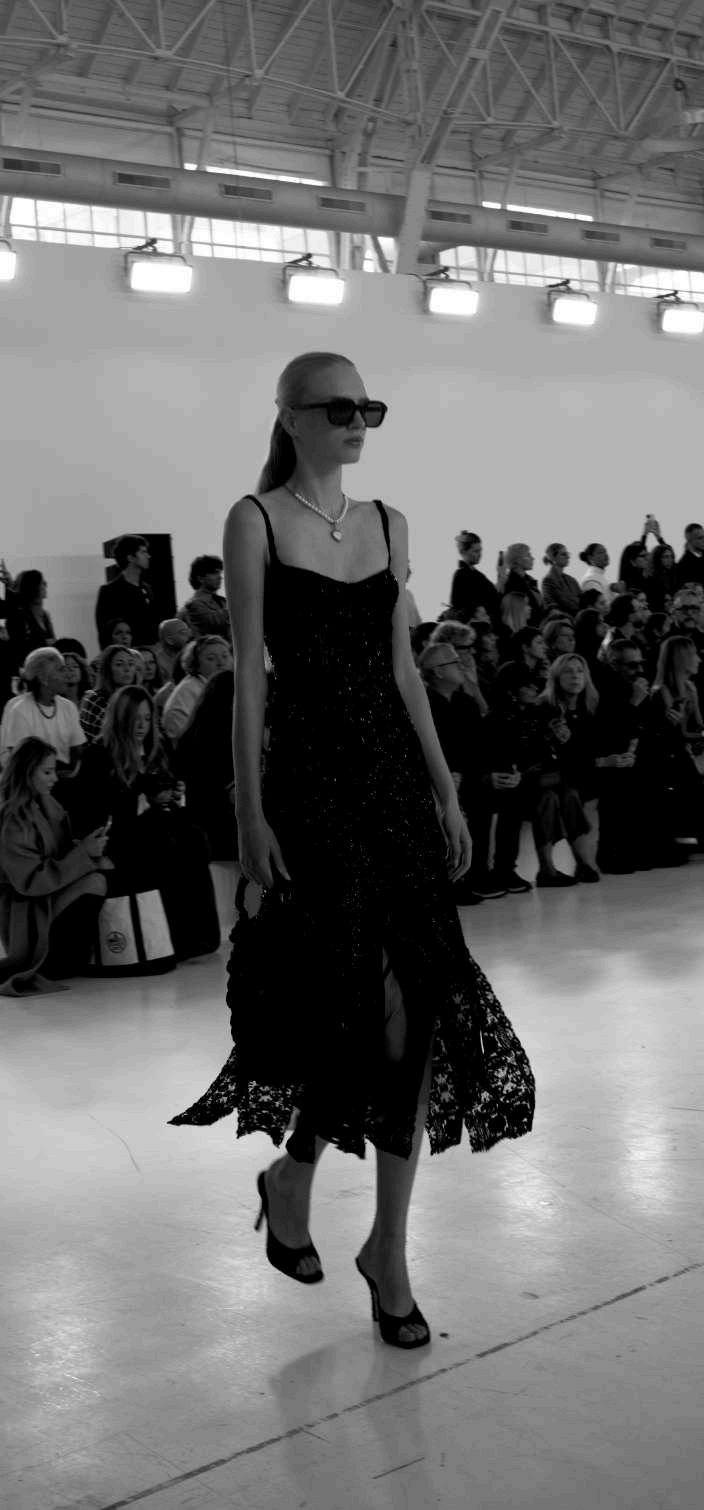
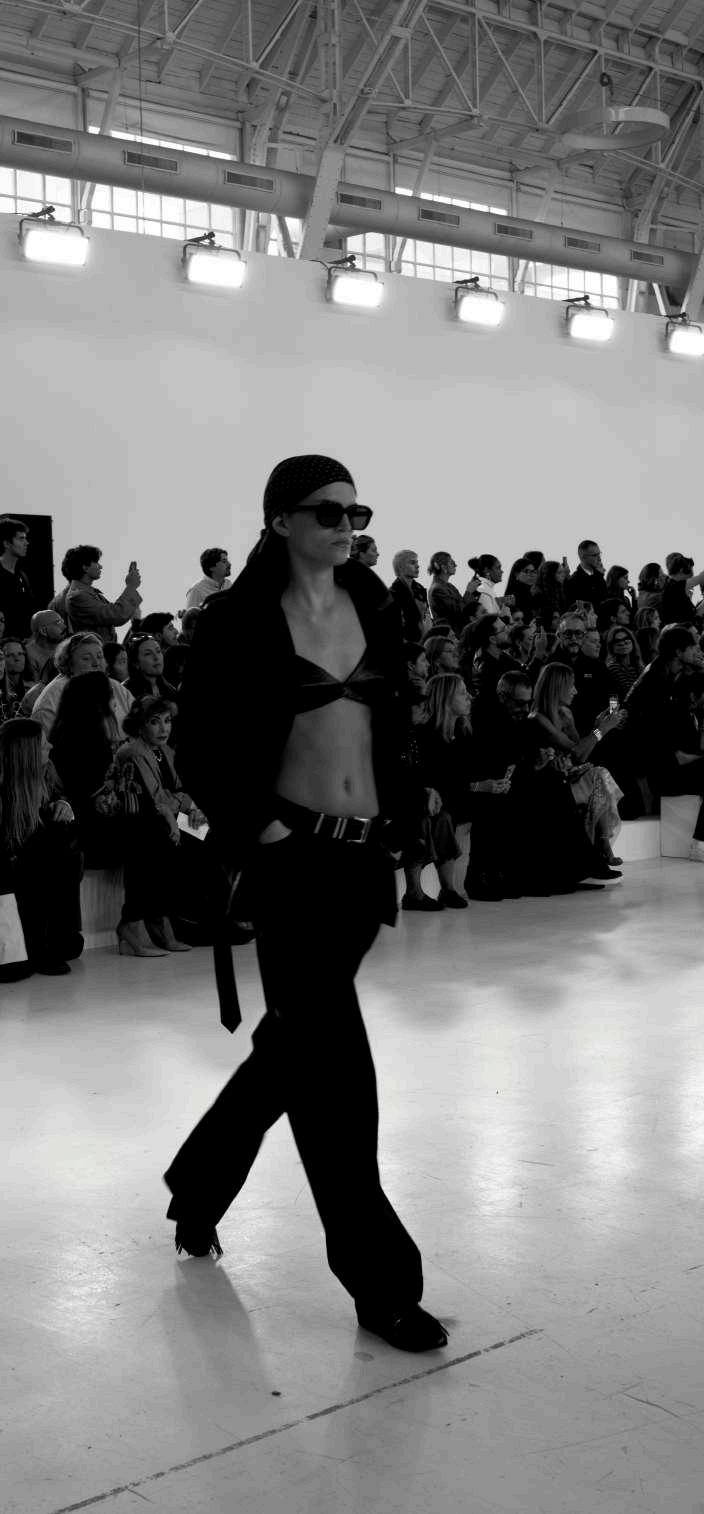
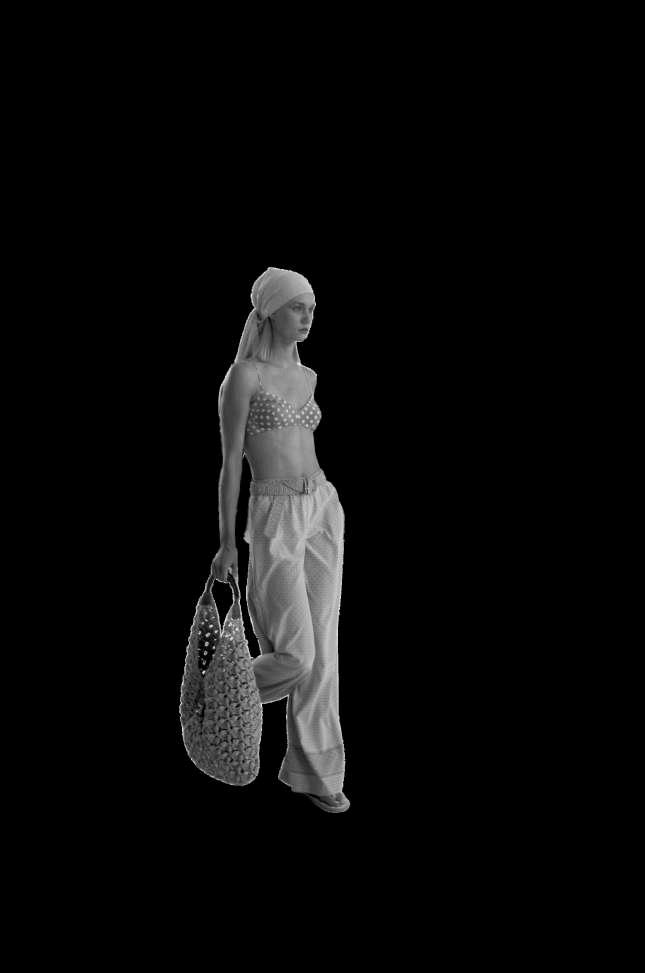
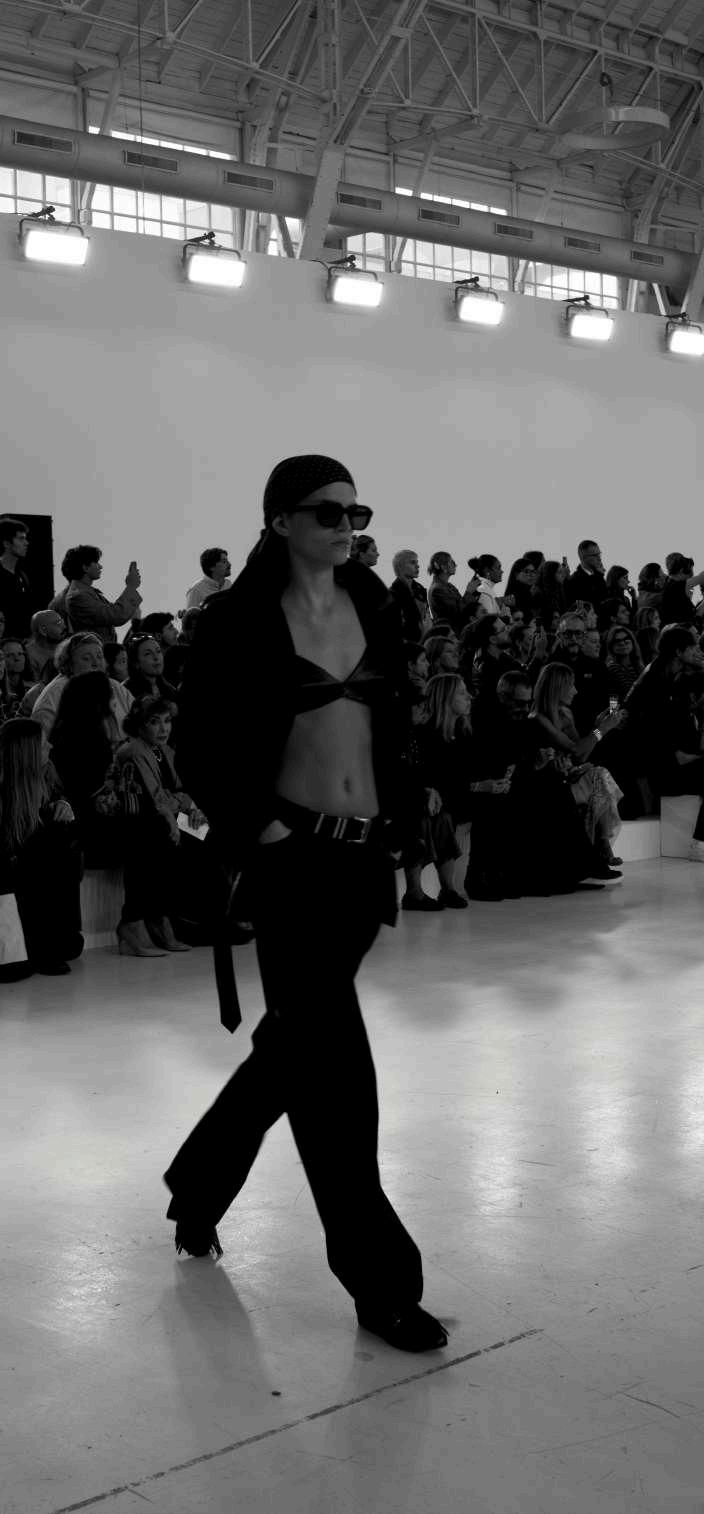
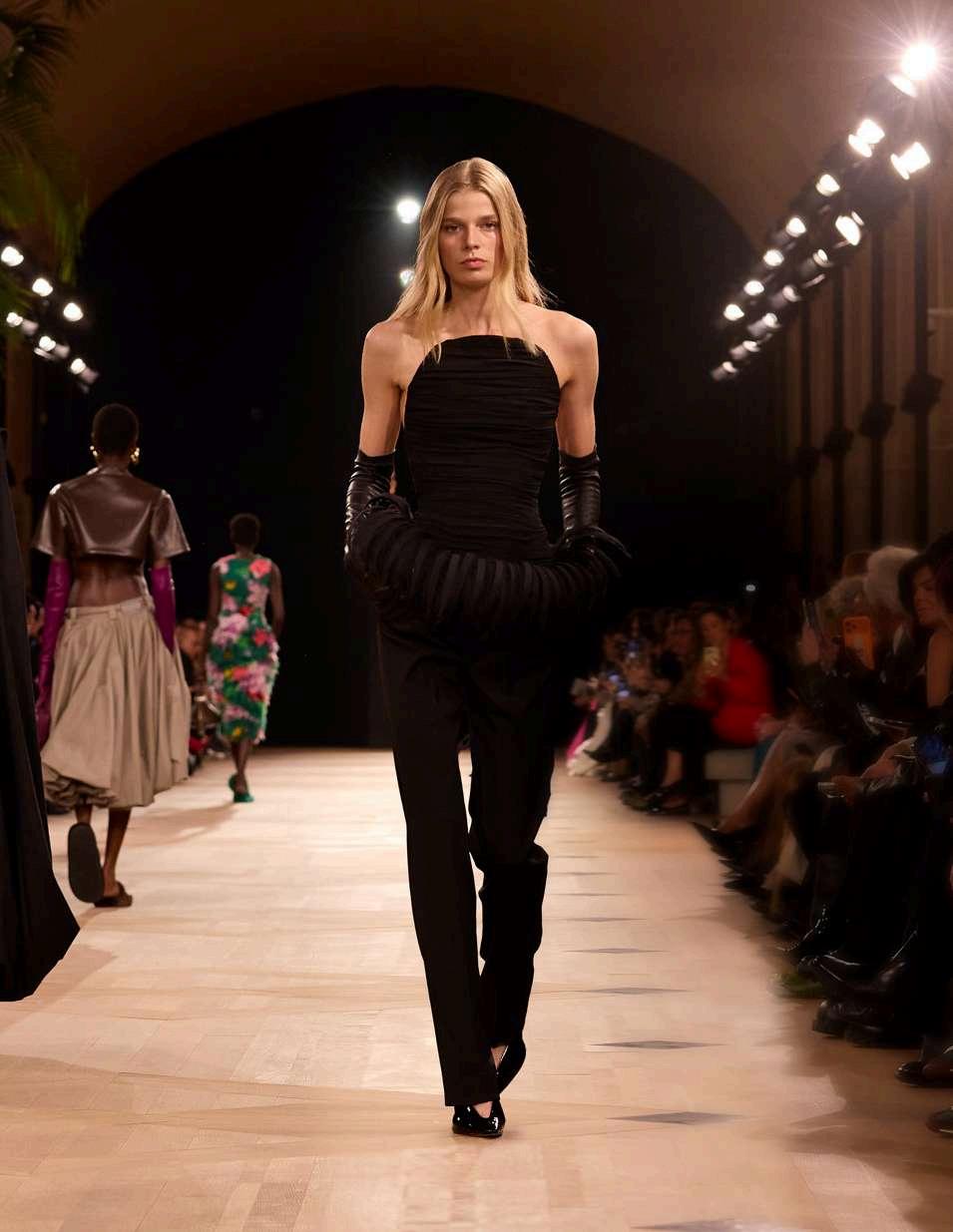
TABLE OF CONTENTS
Georges Hobeika
All-Access
Gauchere
Schiaparelli
Maitrepierre
Ermanno Scervino
Tom Ford
Ujoh
Mugler
Balenciaga
G E O R G E S
H O B E I K A
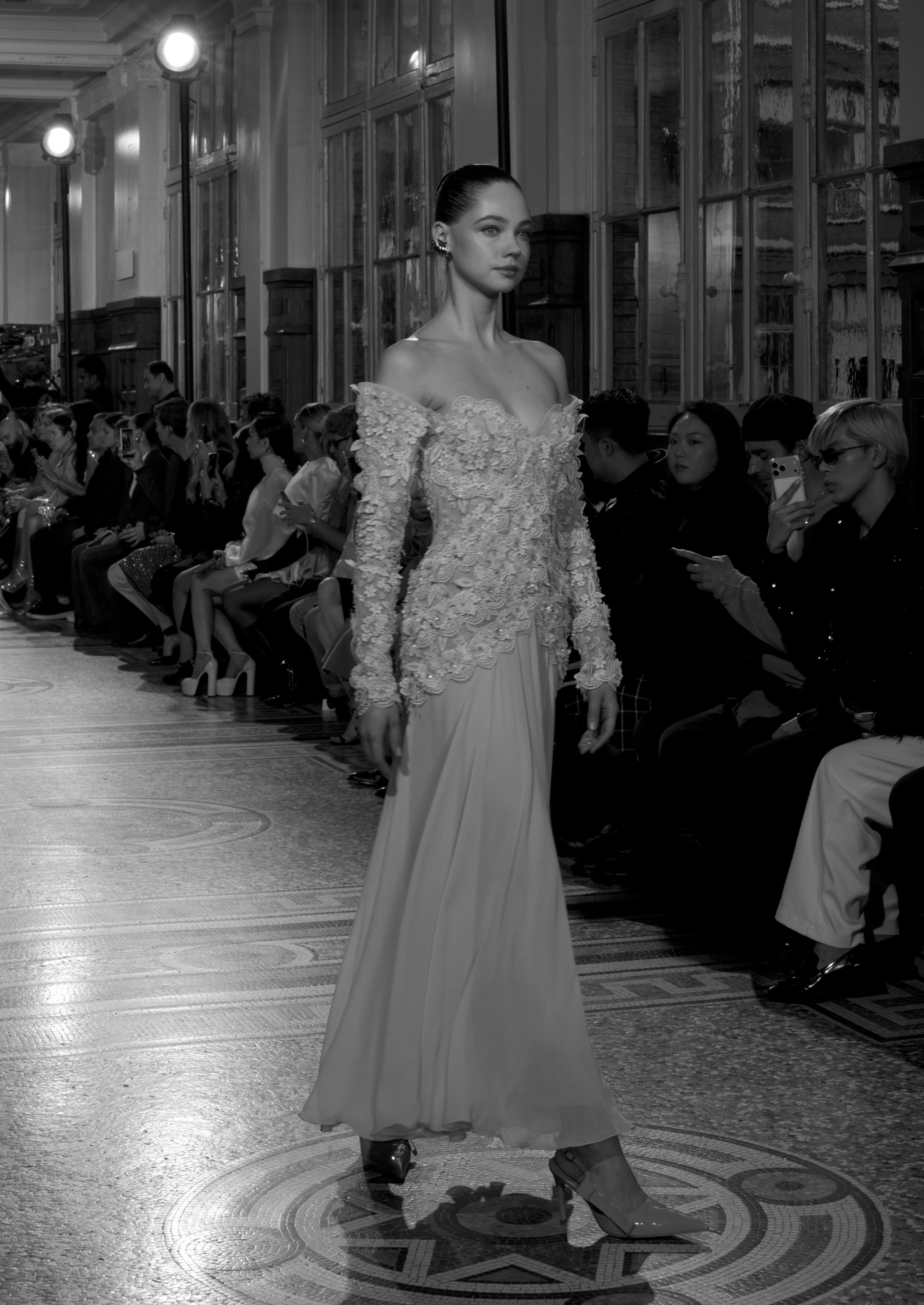
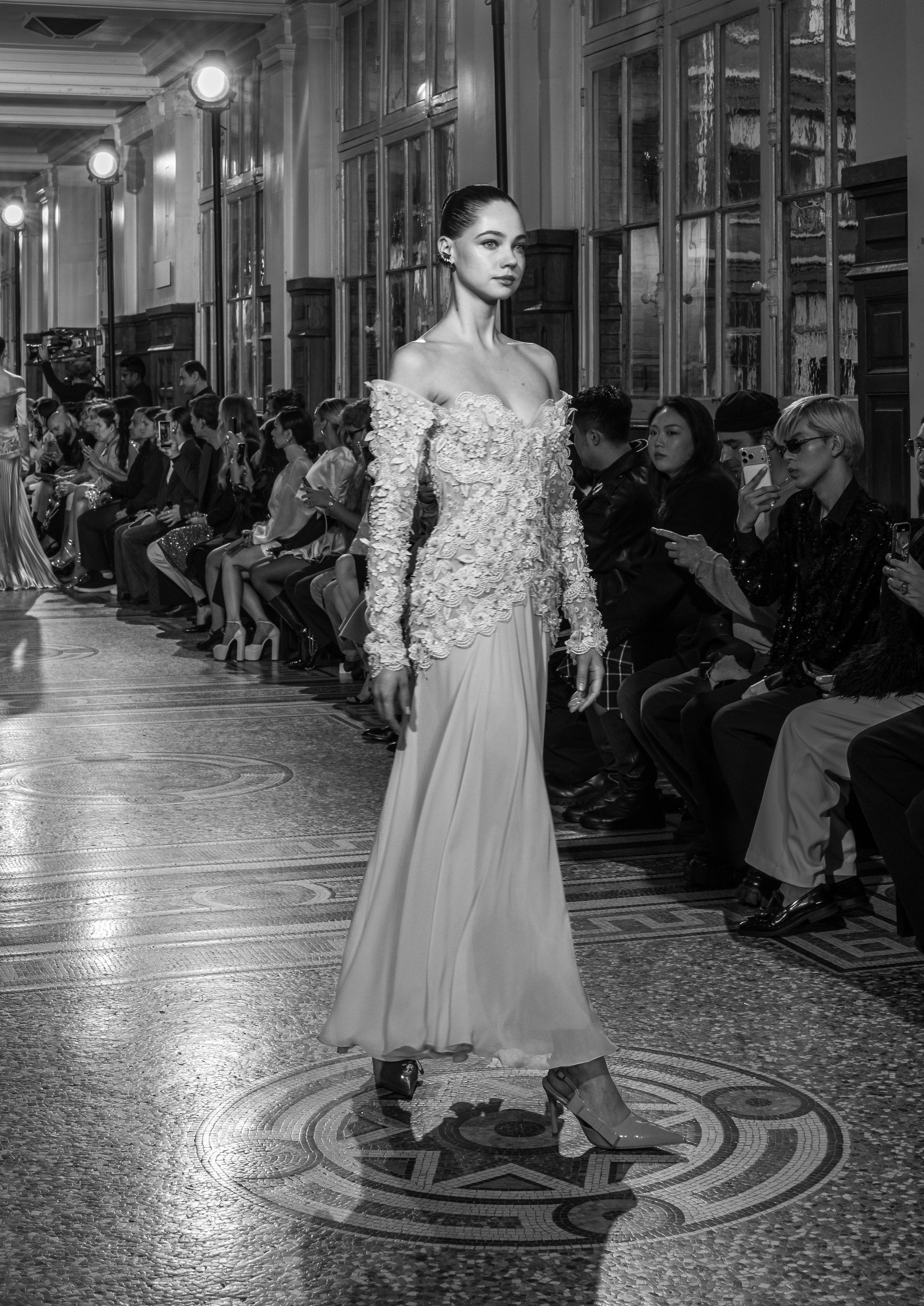
2025 was a triumphant year, if profoundly bittersweet, year for Georges and Jad Hobeika. The fatherson team at the helm of the 30-yearold eponymous house began the calendar in one of the most heartbreaking ways possible, as Georges’ mother Marie had just passed away. “Marie was the heart and foundation of the House, infusing it with unwavering energy and wisdom passed through generations,” Georges told the press at the time Indeed, the House would likely have never been founded without her; she taught Georges to sew when he was a boy and instilled in him the profound love of craftsmanship that he in turn passed down to his son Jad.
Devastated by Marie’s passing, the designers considered not even presenting a S/S 2025 couture collection before deciding that the best way to honour their loved one was with an uplifting sartorial journey through grief, contemplation, and peace Designed in only a month, the ambitious yet meticulously crafted 56look opus wove a celestial tribute that began with the image of a grieving widow, continued with shimmering baroque-style looks, oscillated through radiant colours including a breathtaking sapphire mermaid sheath, and closed with a bridal look that drifted away like a dream.
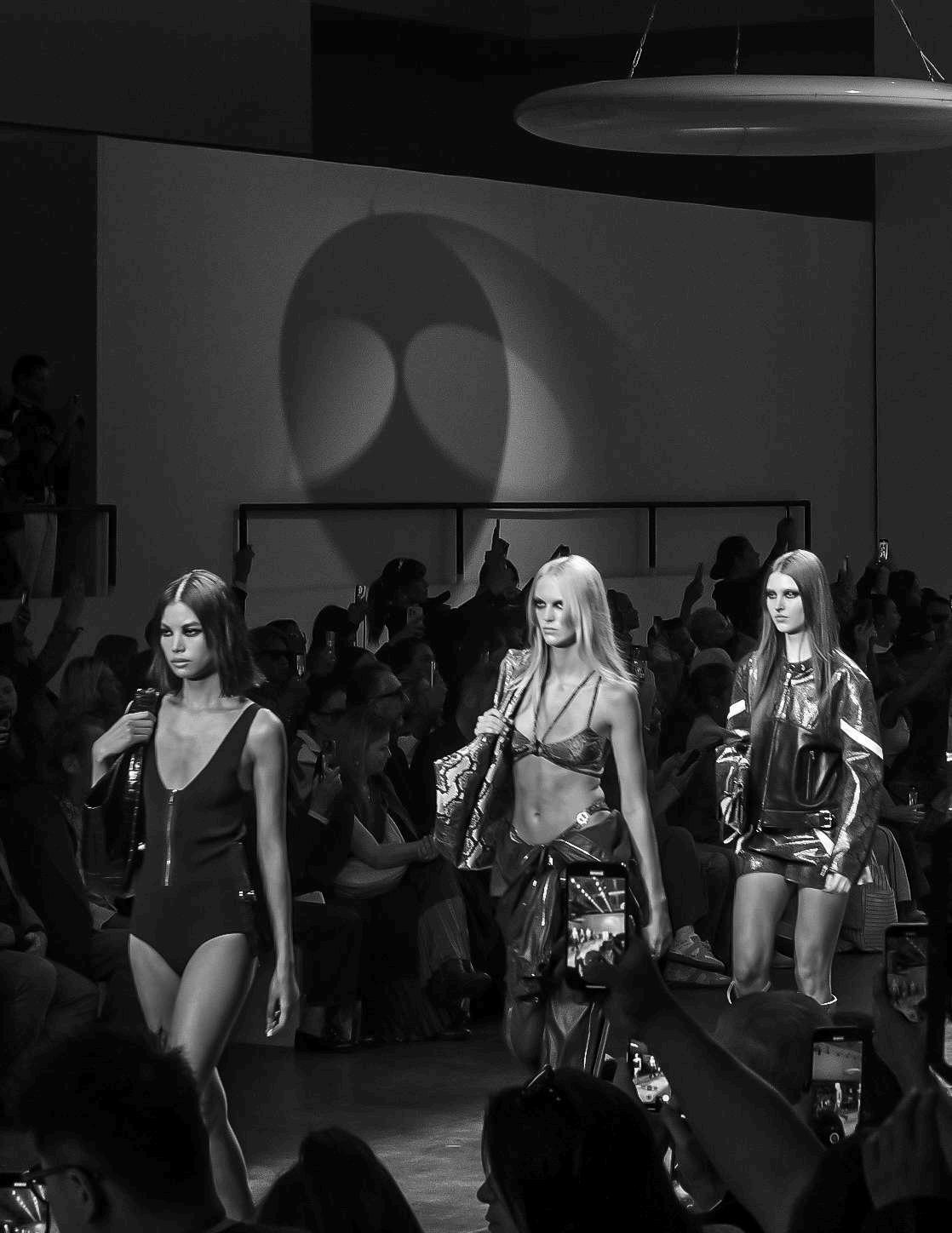
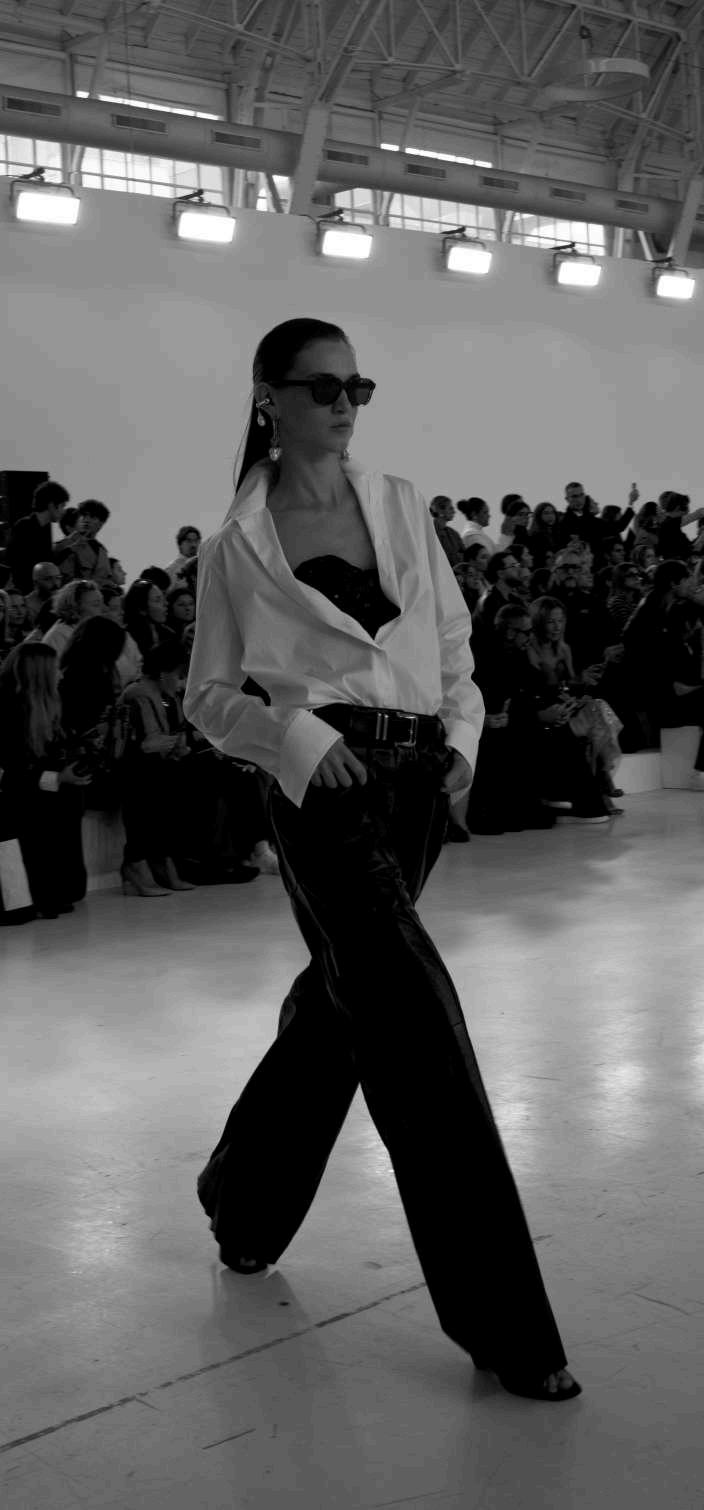
Just a month later, the Hobeikas followed up on this tour de force with a powerful ready-to-wear collection that had its proverbial finger firmly on the pulse of a groundbreaking and achingly glamorous fashion season 90’s glamour came roaring back for Fall/Winter 25
Haider Ackermann’s inaugural collection for Tom Ford, Alessandro’s Michele’s “red room” debut for Valentino, and the meteoric resurgence of fur drew much of the headlines and acclaim. But for me, one of the top five collections of the seasons was the Hobeikas’: a symphony in fur, leather, and silk, it inspired comparisons to Ackermann’s work and introduced distinctive looks like high-waisted belts for men and a python jacket with a pearl-encrusted skirt Meanwhile, the F/W 25 couture collection was a 40’s fairy tale, with victory roll hairstyles highlighting timeless looks restrained in colour but opulent in jewels and embroidery.
That timeless sensibility carried over into the Hobeikas’ fourth and final collection of the year. If Georges and Jad dedicated Couture Spring/Summer 26 to the woman who taught them their love of craftsmanship, Ready-toWear Spring/Summer 26 was dedicated to craftsmanship itself “The industry tells us we must constantly desire something new,” they told the press “But in our studio, creation is never rushed Our hands draw, layer, and shape with intention, refining until each piece feels complete What matters is not the dictate of seasons or trends, but the craftsmanship that transforms fabric into elegance, the savoir-faire that allows each detail to breathe.”
Love and care for every part of the creation process is ingrained in the Hobeikas’ souls. The result, in a season dedicated to deconstructing construction, was a collection that soothed in the middle of fashion week chaos and dazzled with an effortless sophistication that will never go out of style
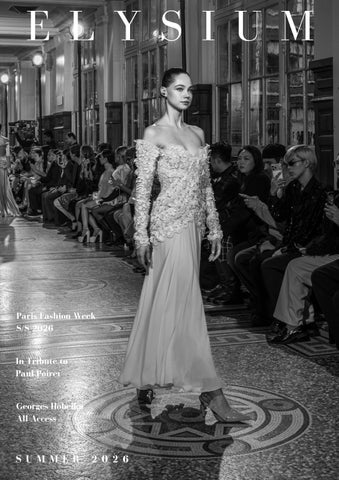
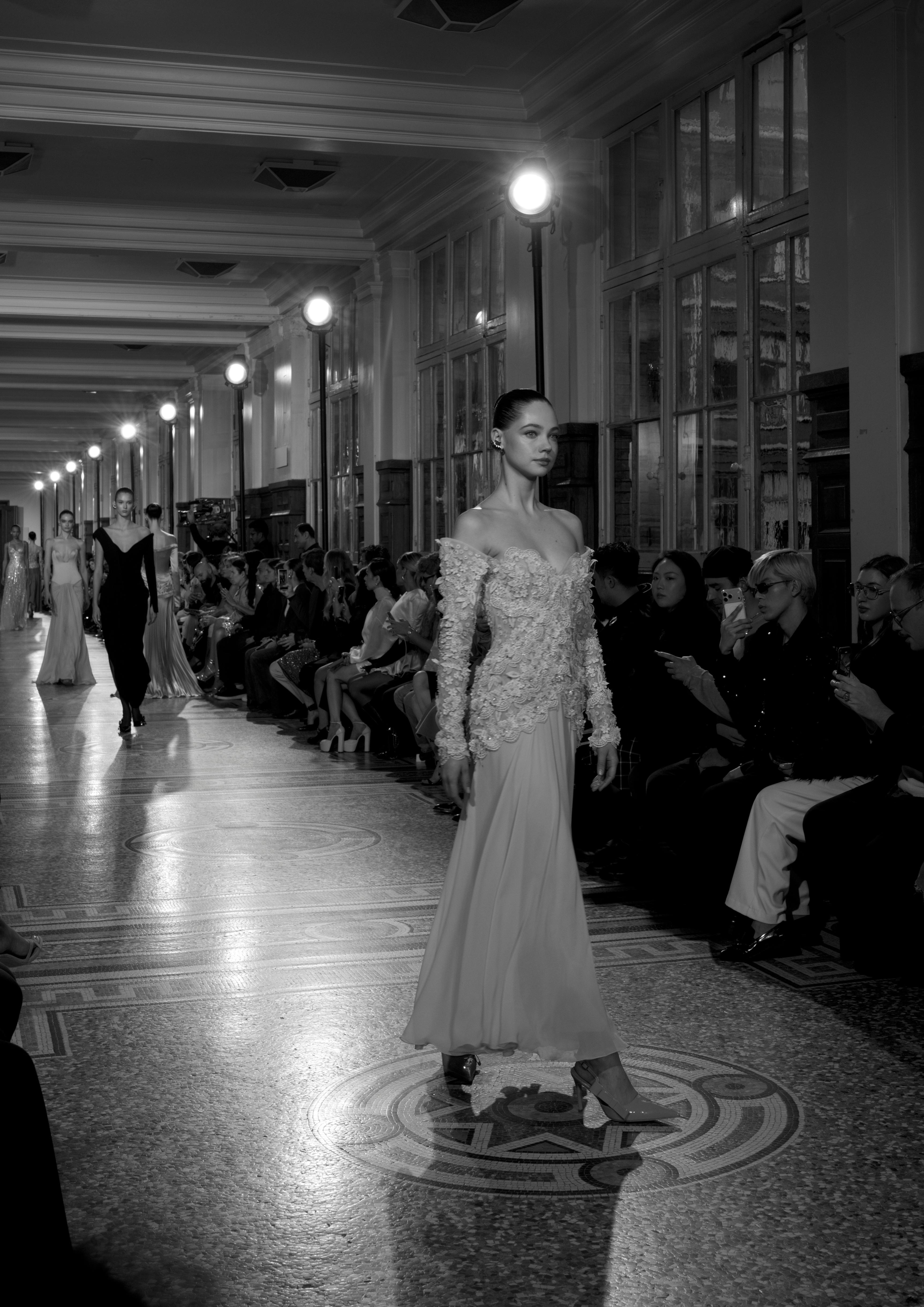
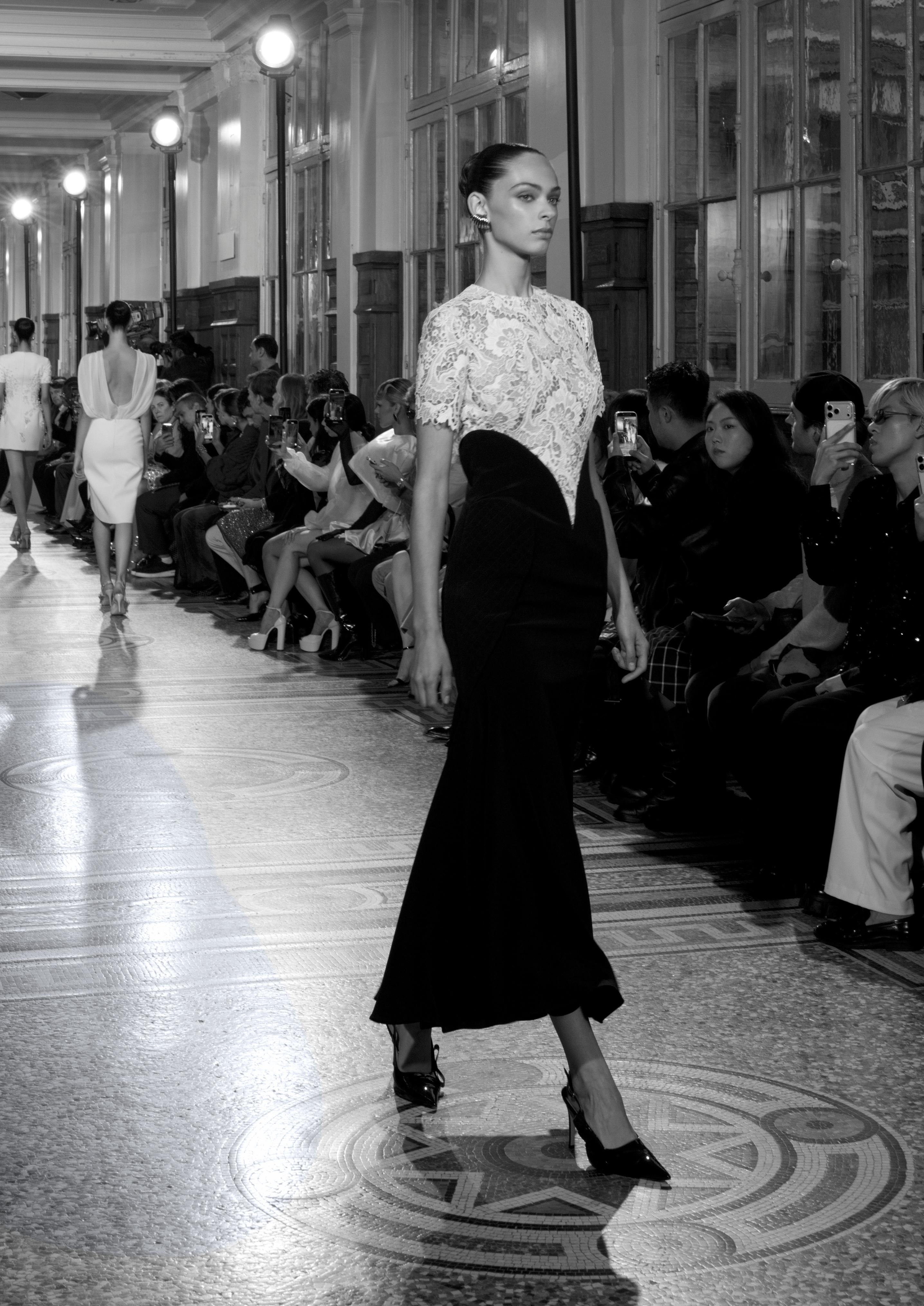
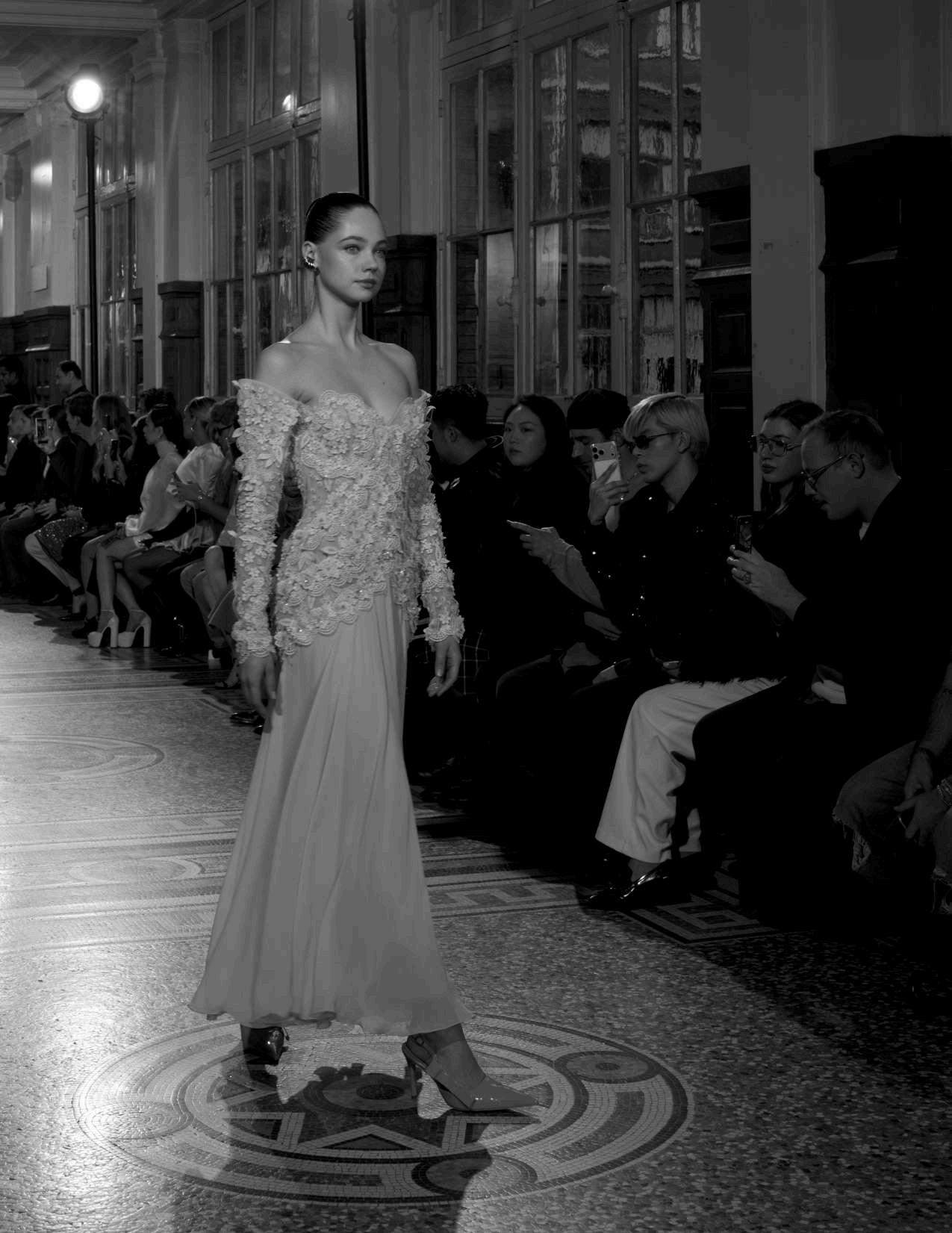
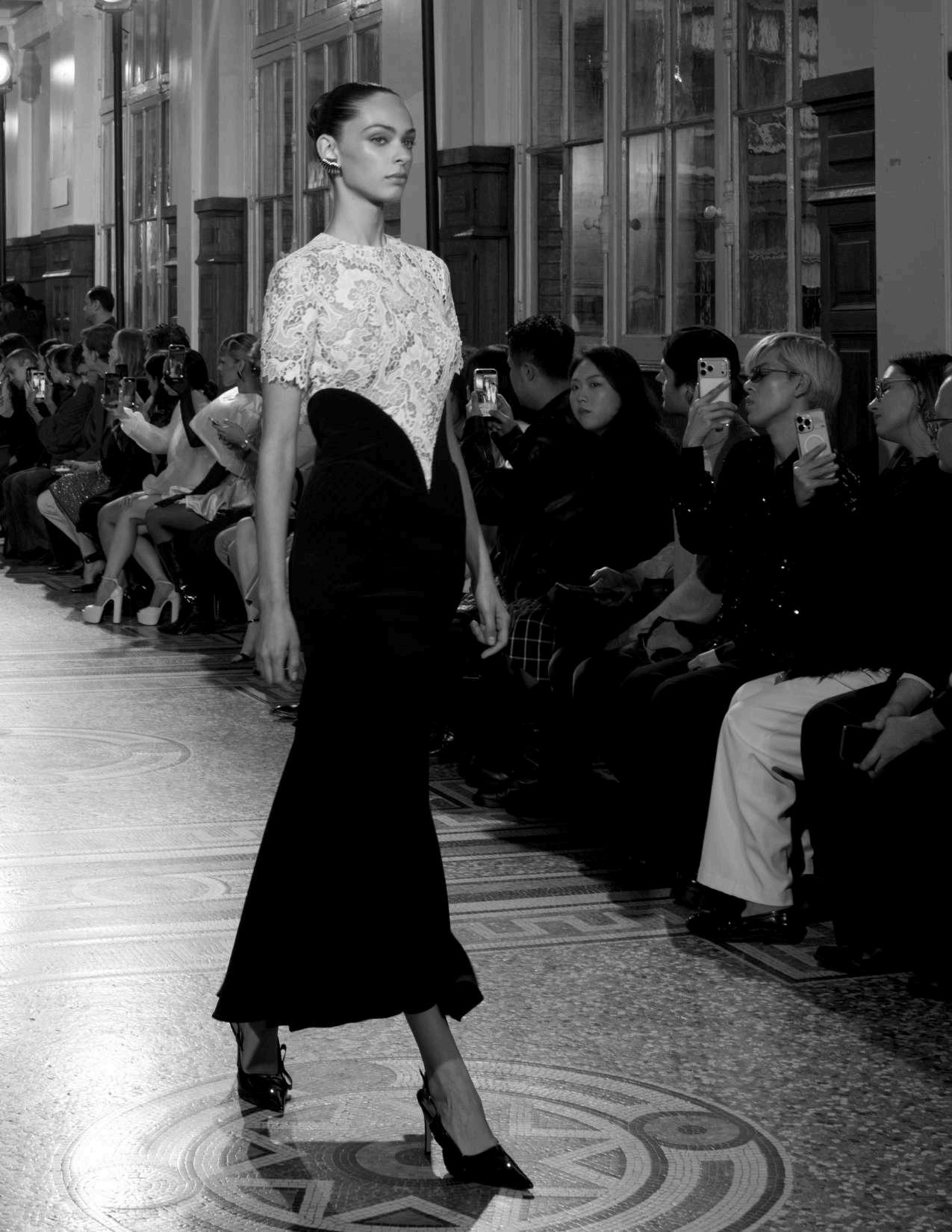
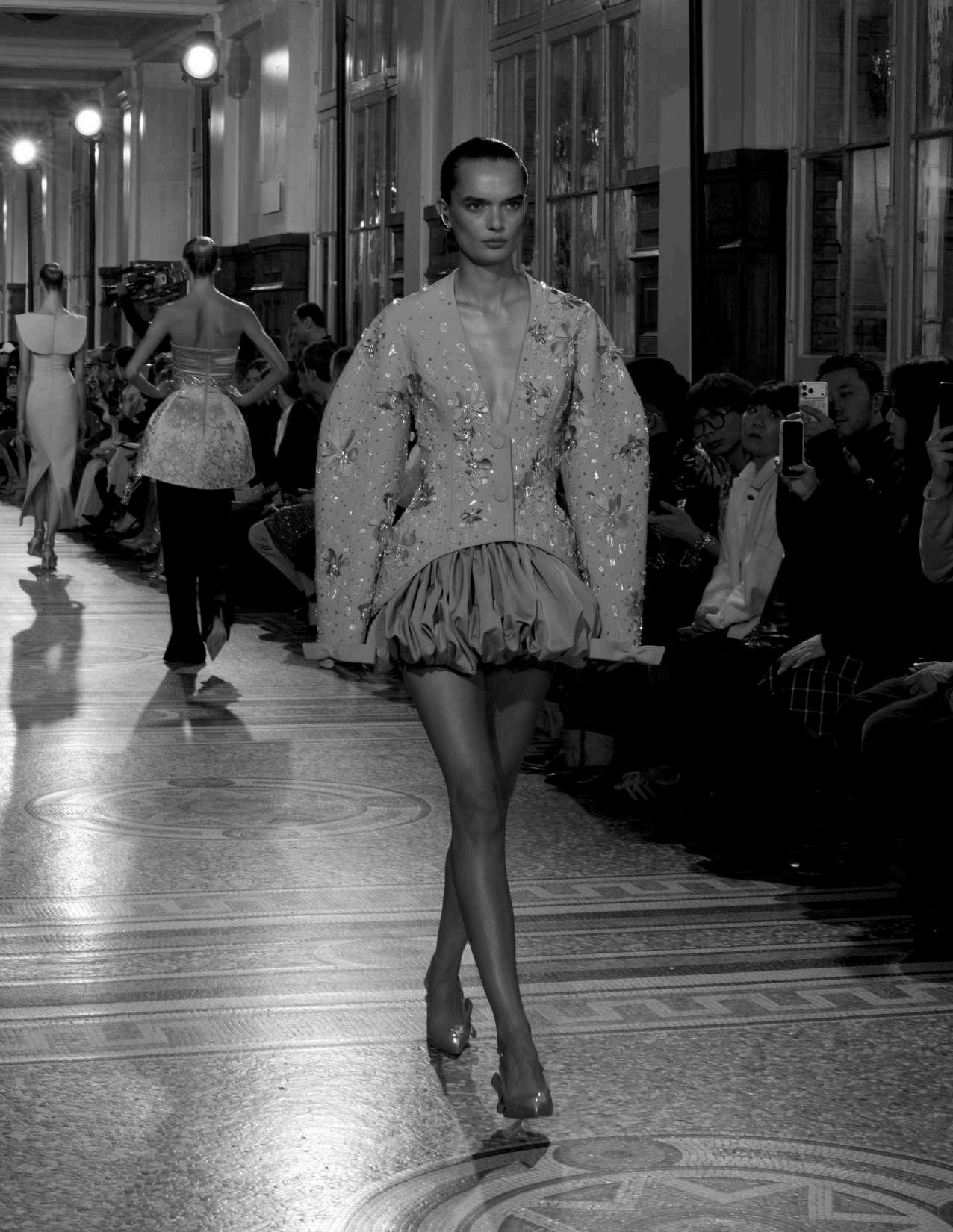
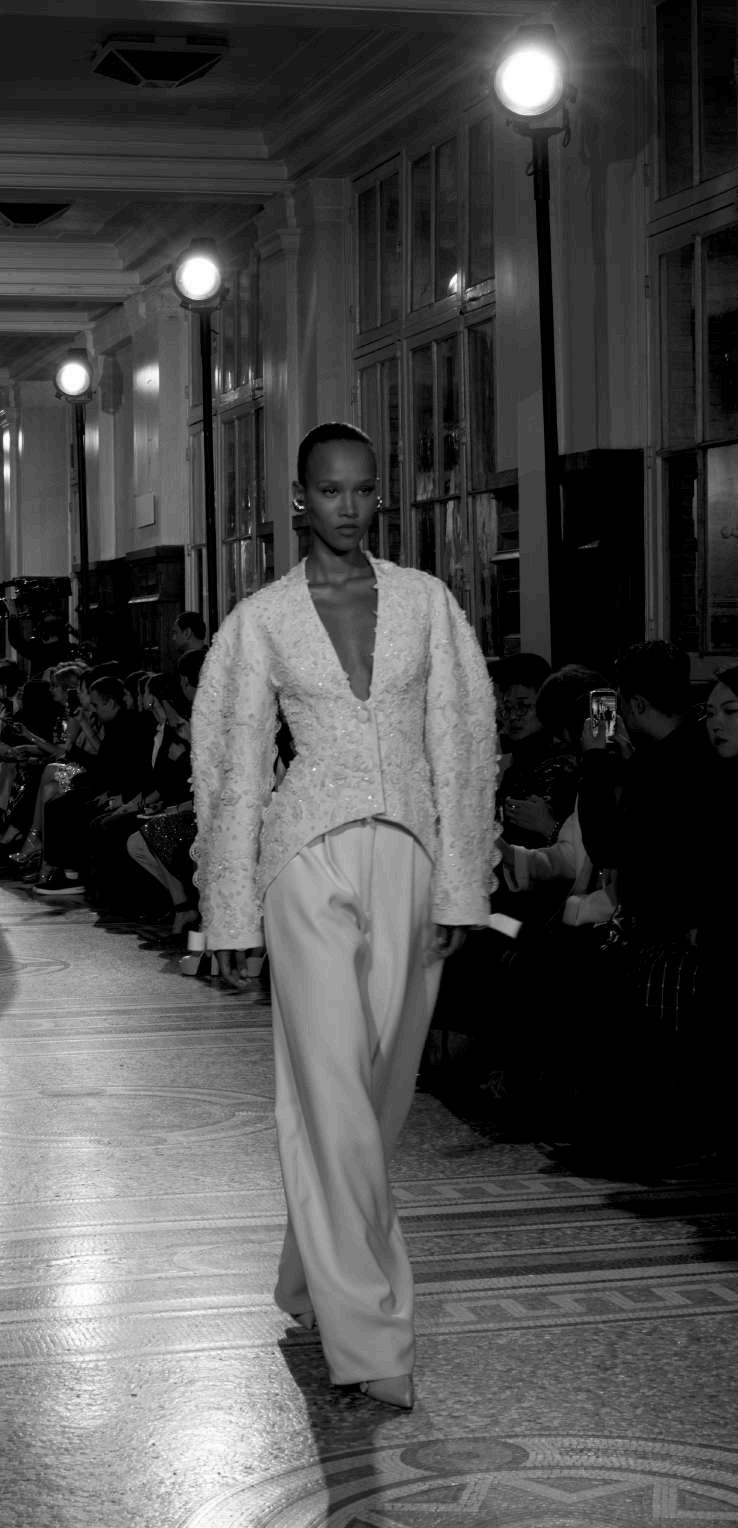
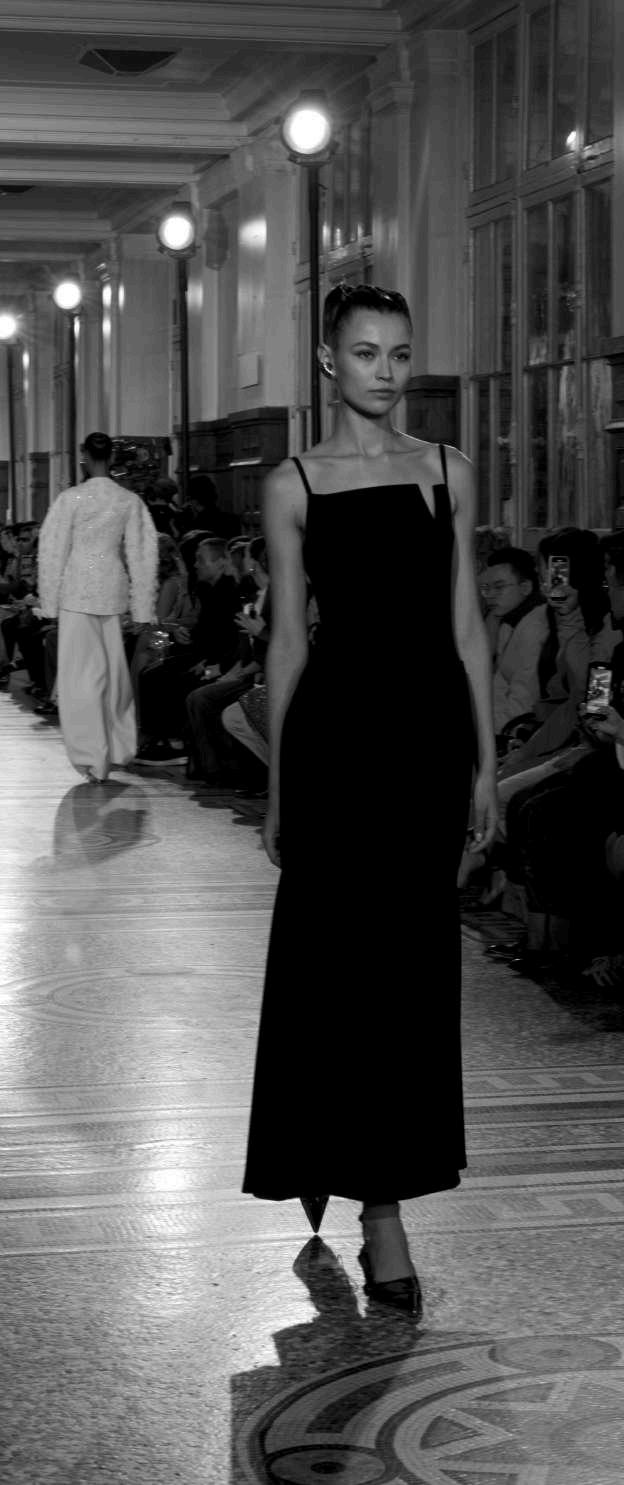
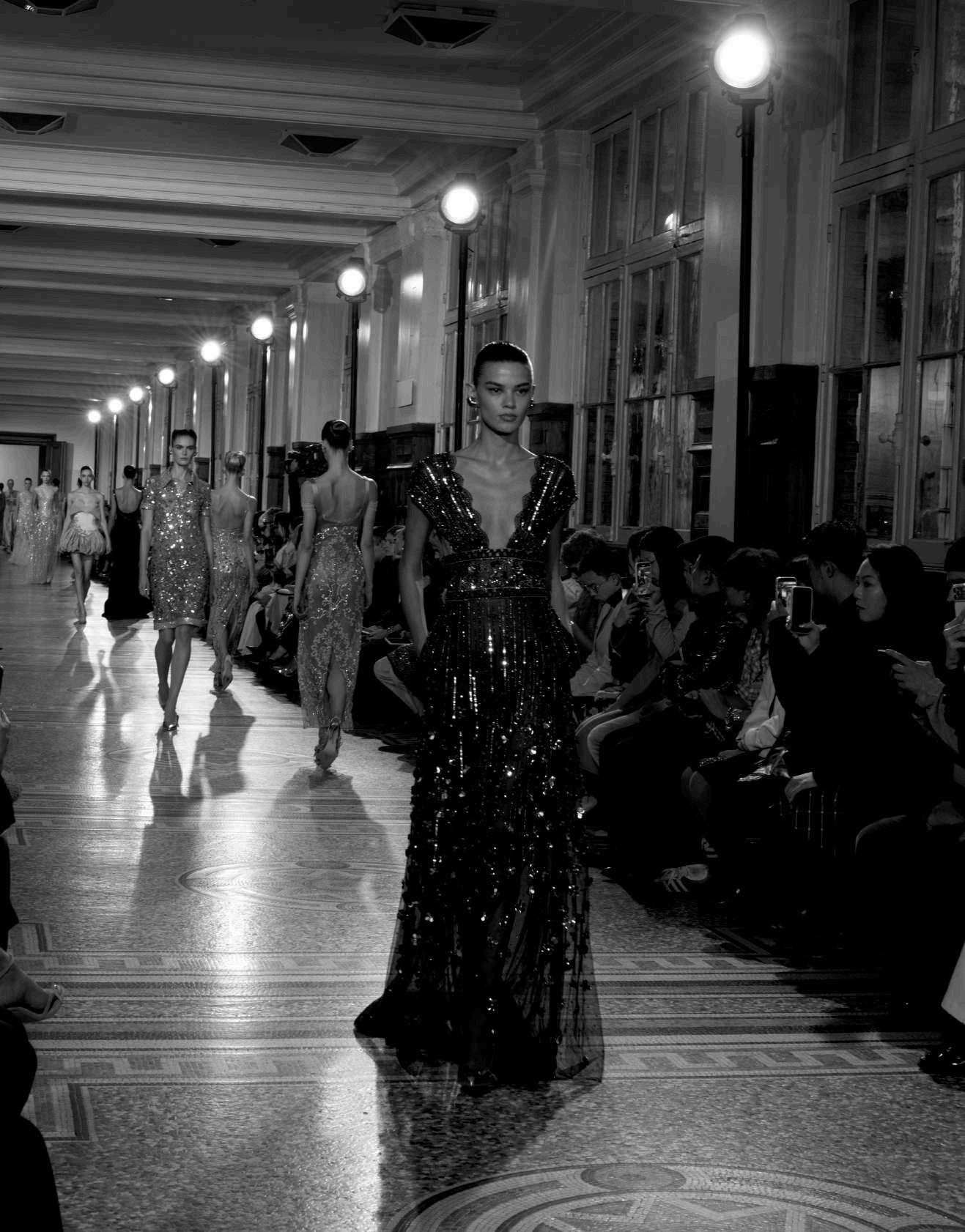
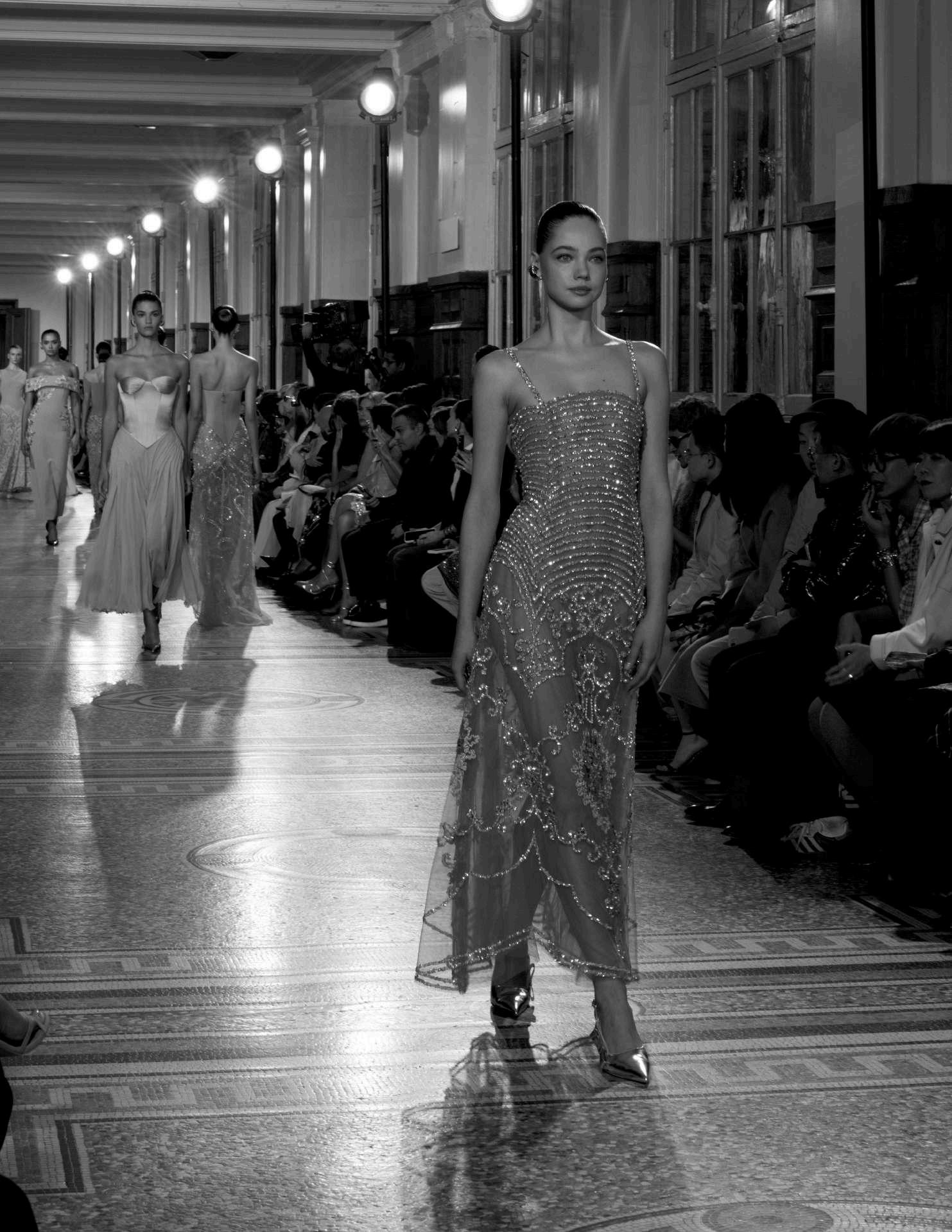
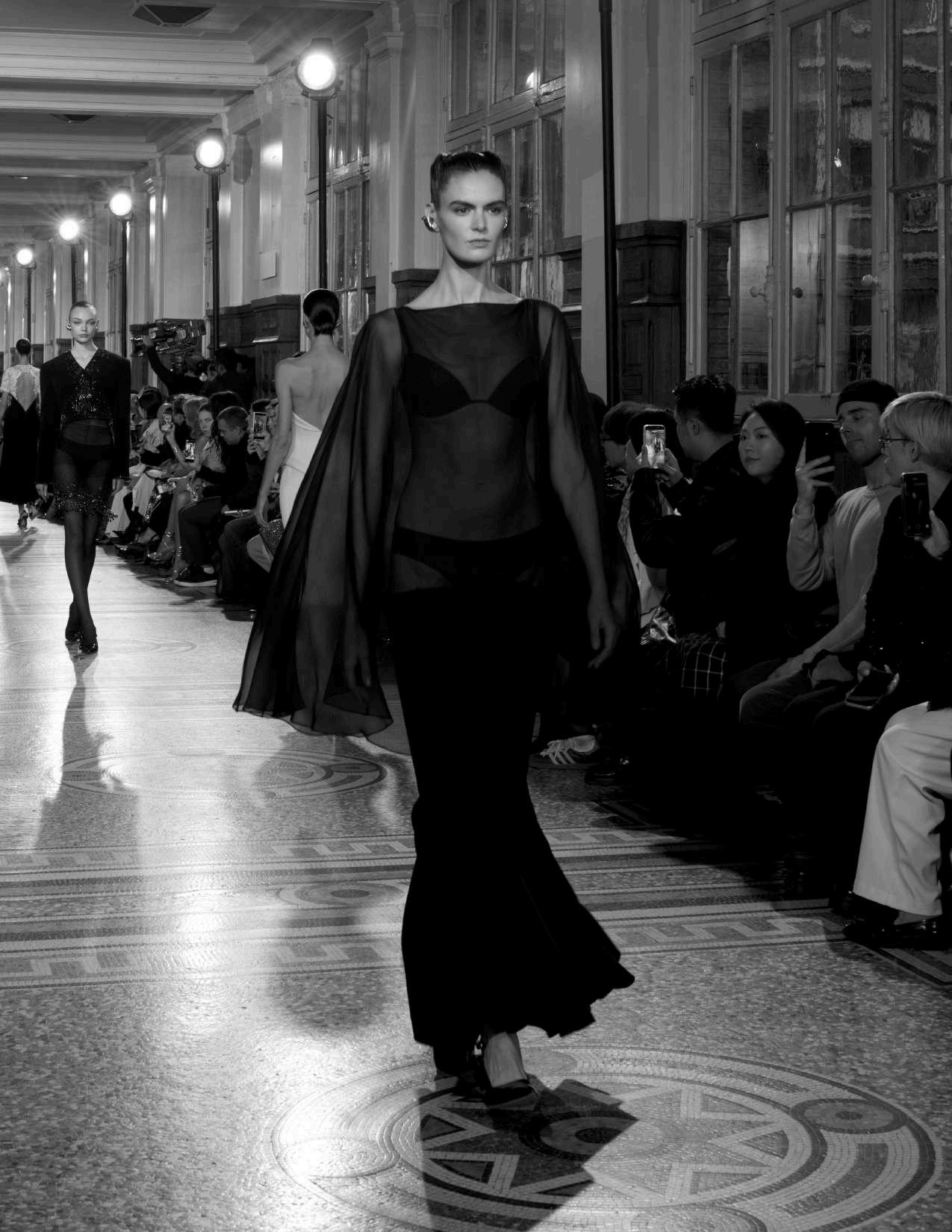
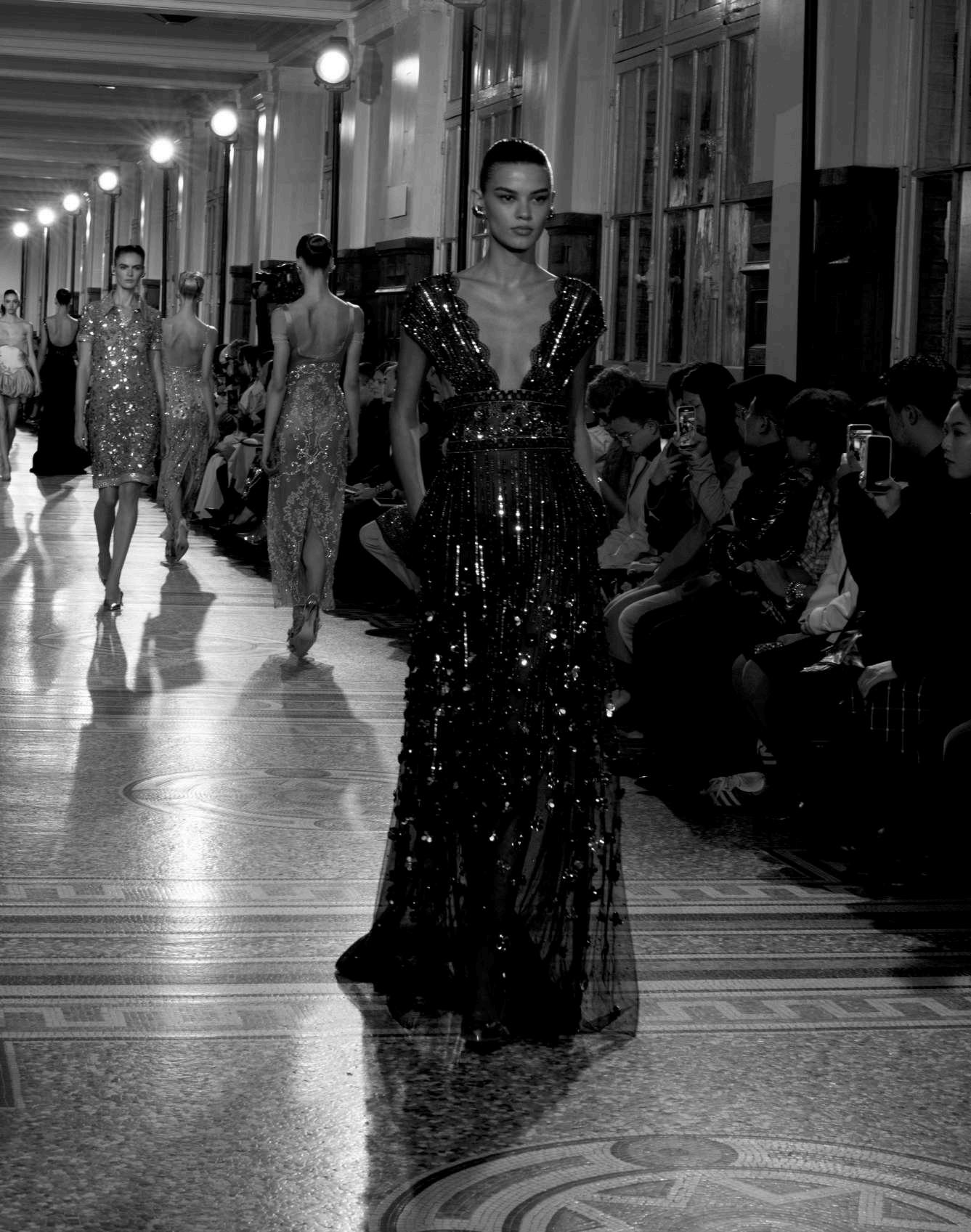
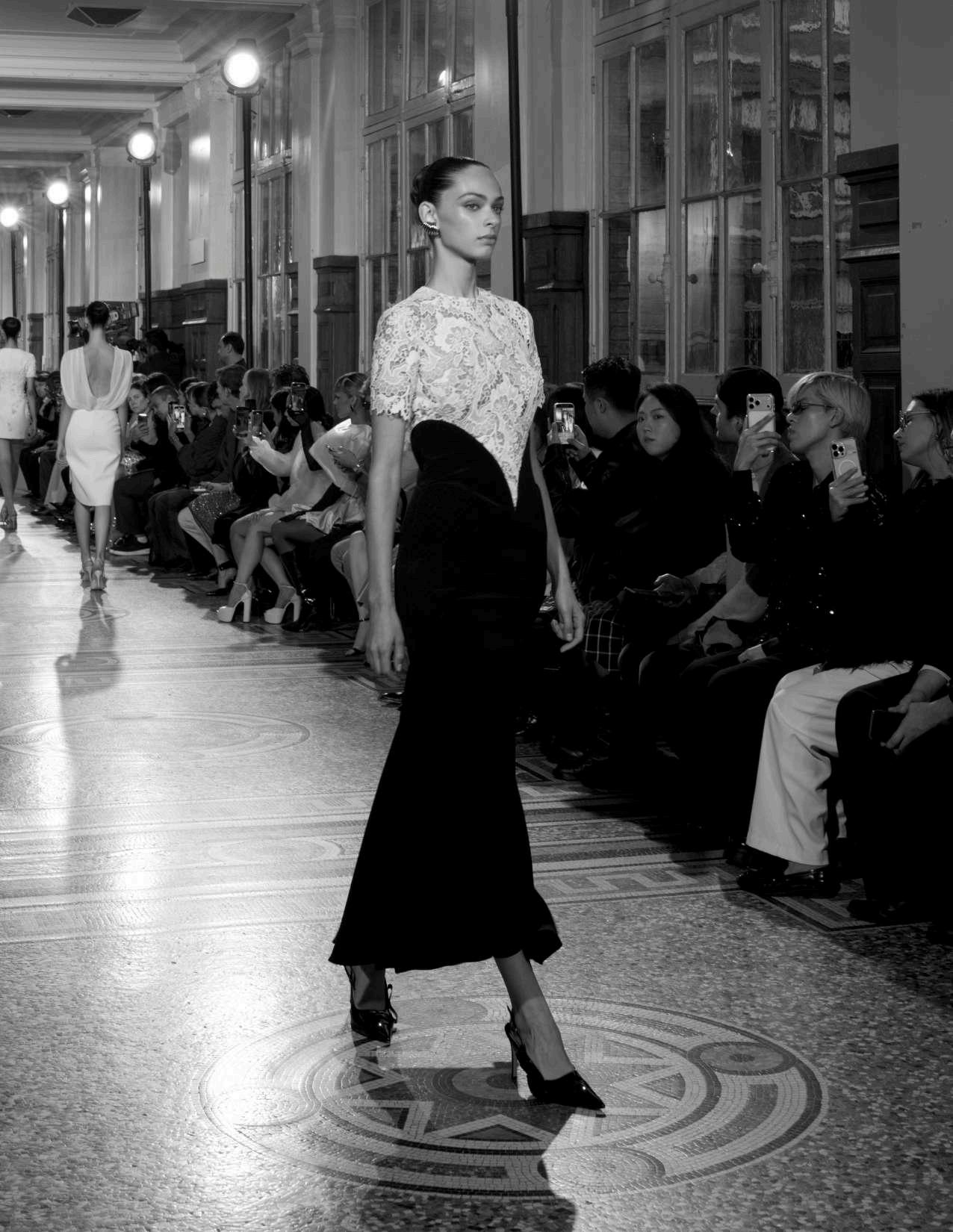
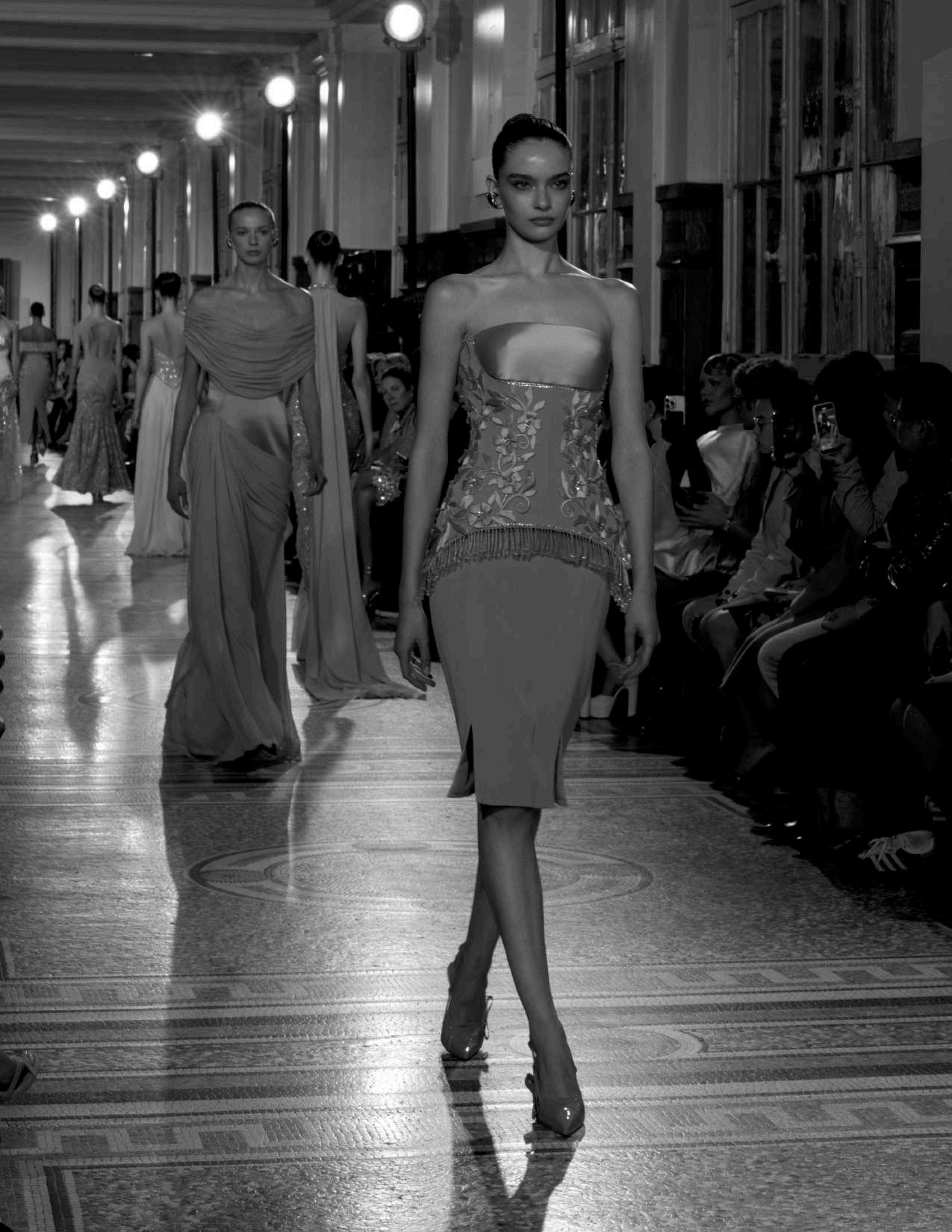
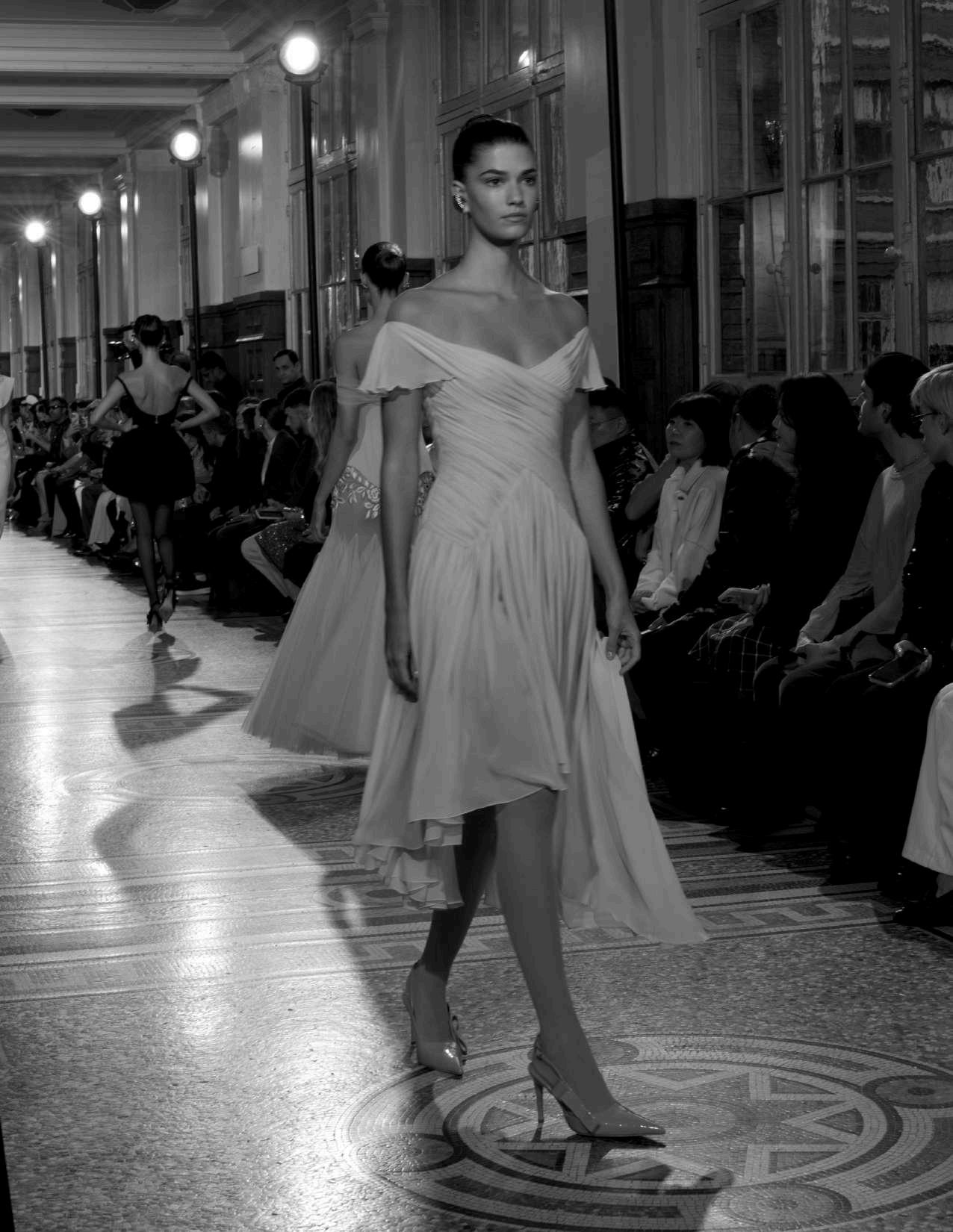
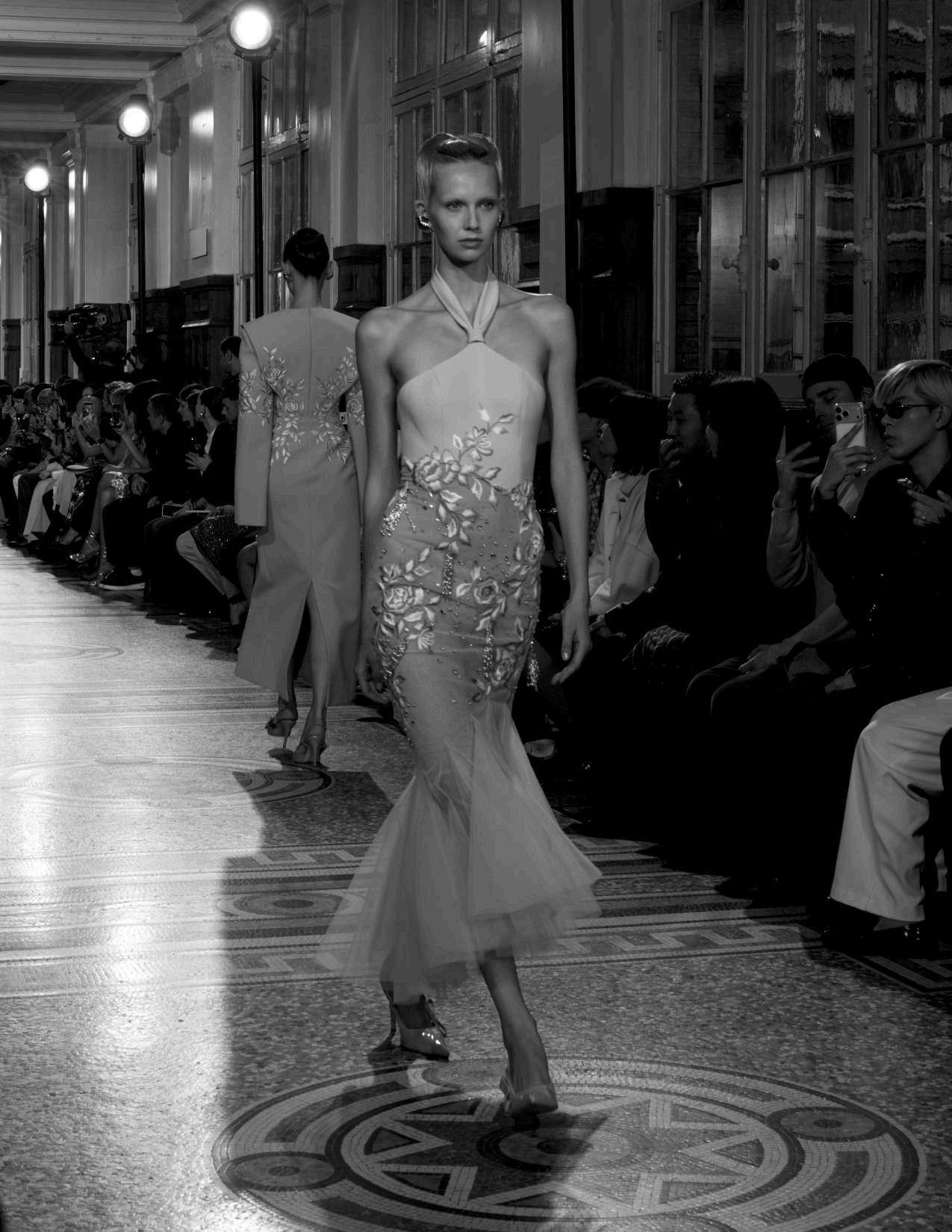
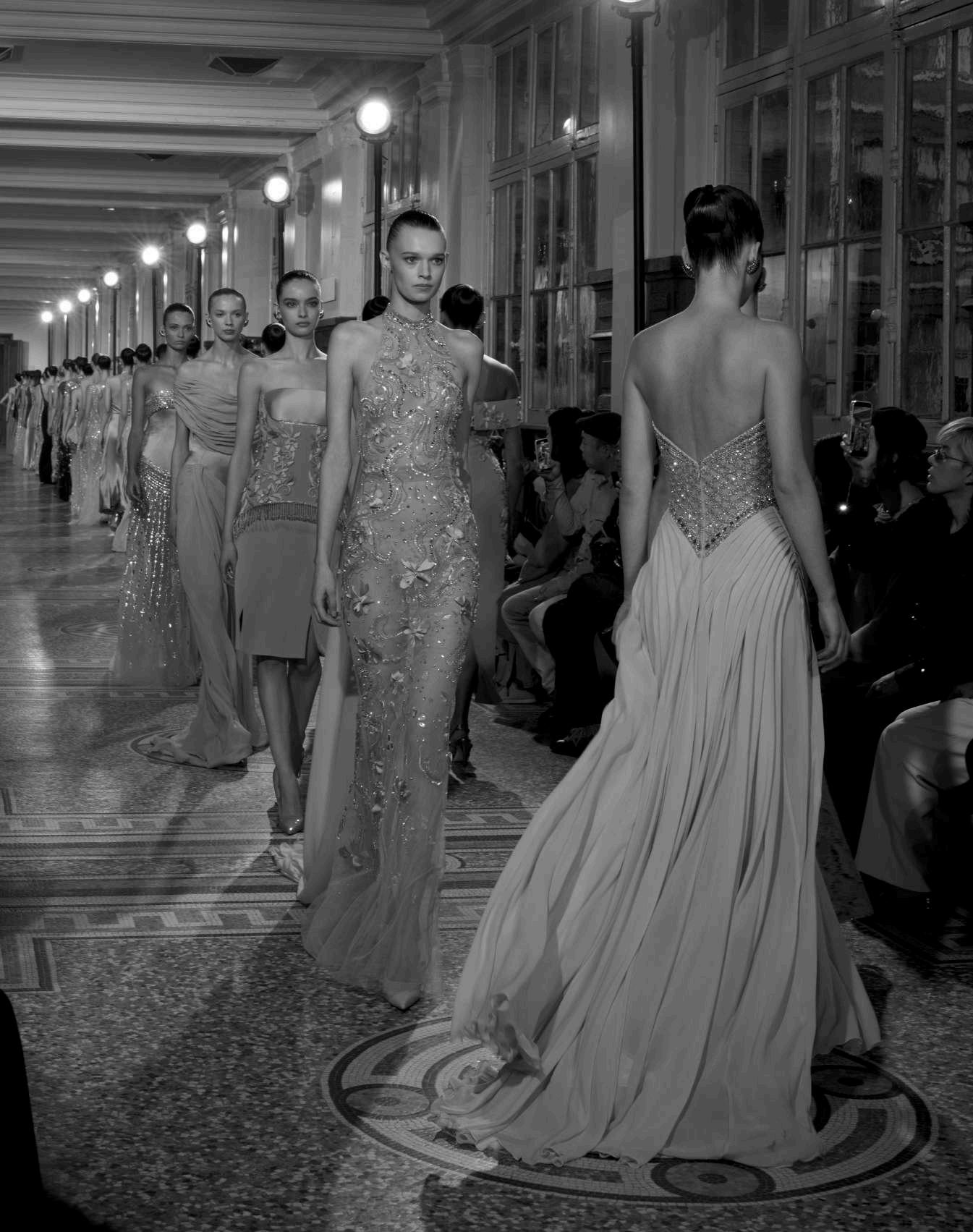
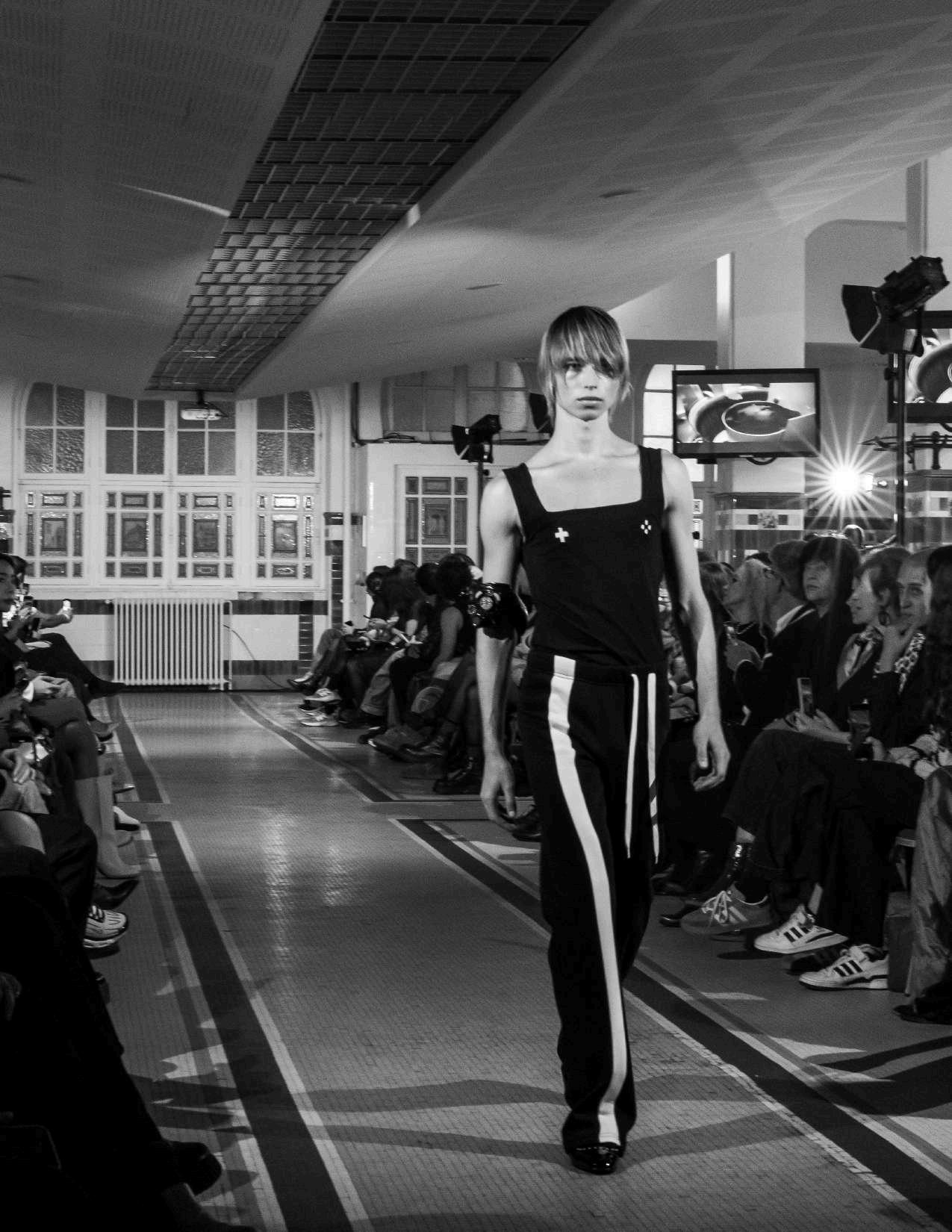
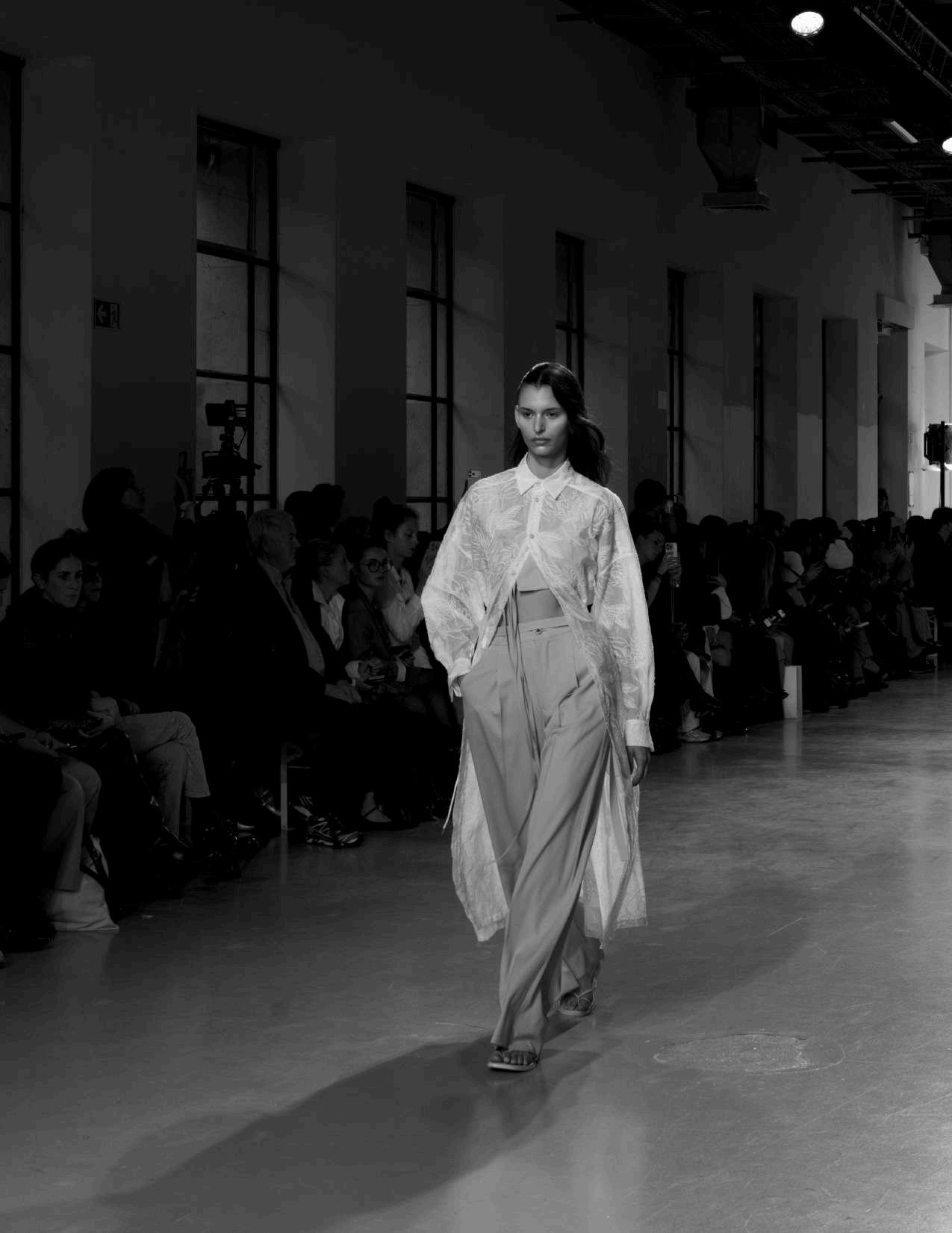
Held in the grand Musée des Arts and Métiers, with its exceptionally long runway spaces, the show was possessed of a certain old world gravitas and grandeur. It whispered, in the seductive self-assured tone of generational wealth, rather than yelled. The slicked-backed victory roll hairstyle returned and sharply structured silhouettes were possessed of a particular feminine ferocity. Yet all was swathed in delicate refinement, with vanilla white, caramelized beige, raspberry pink, and periwinkle anchoring a luxurious colour palette
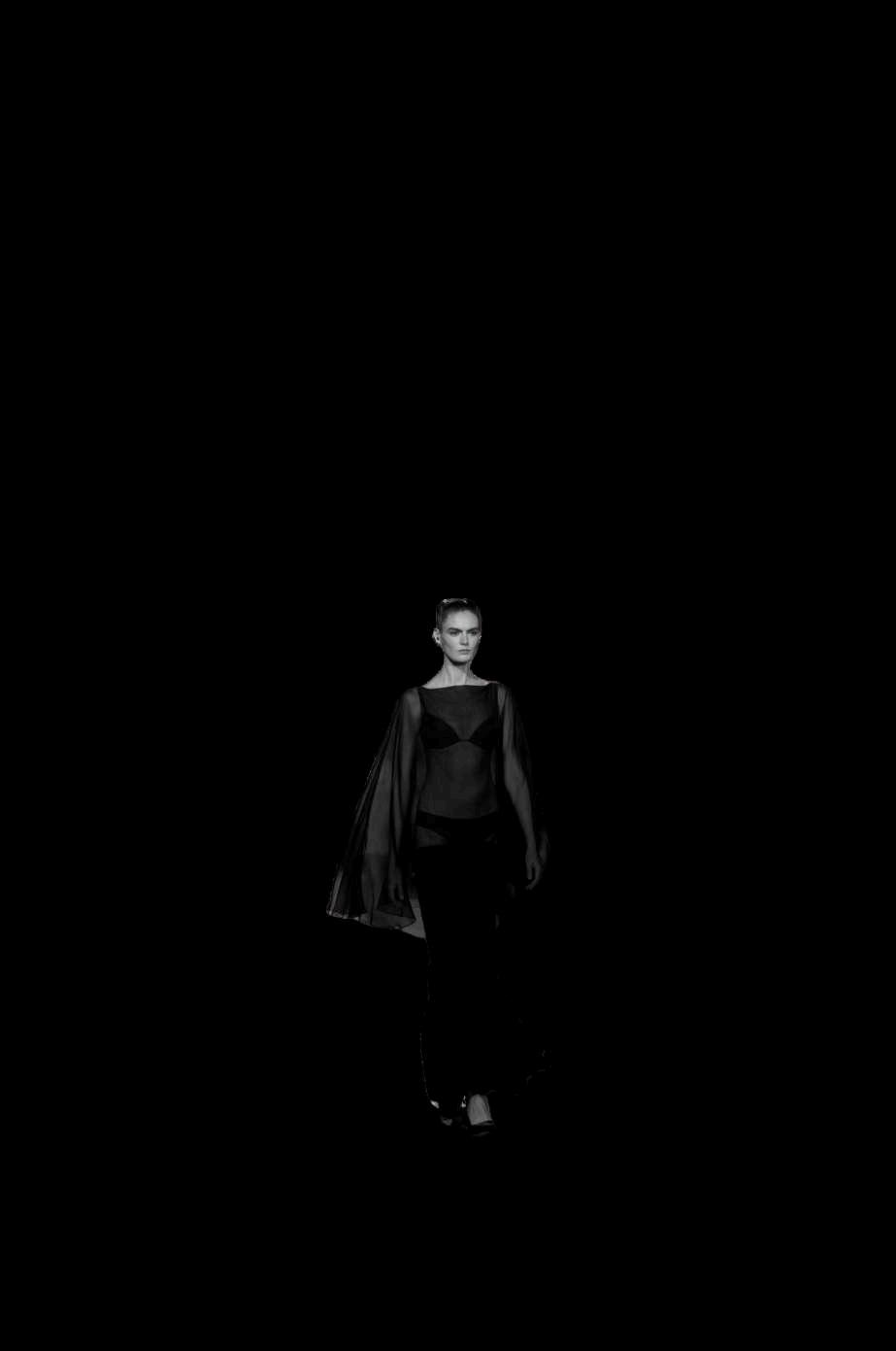
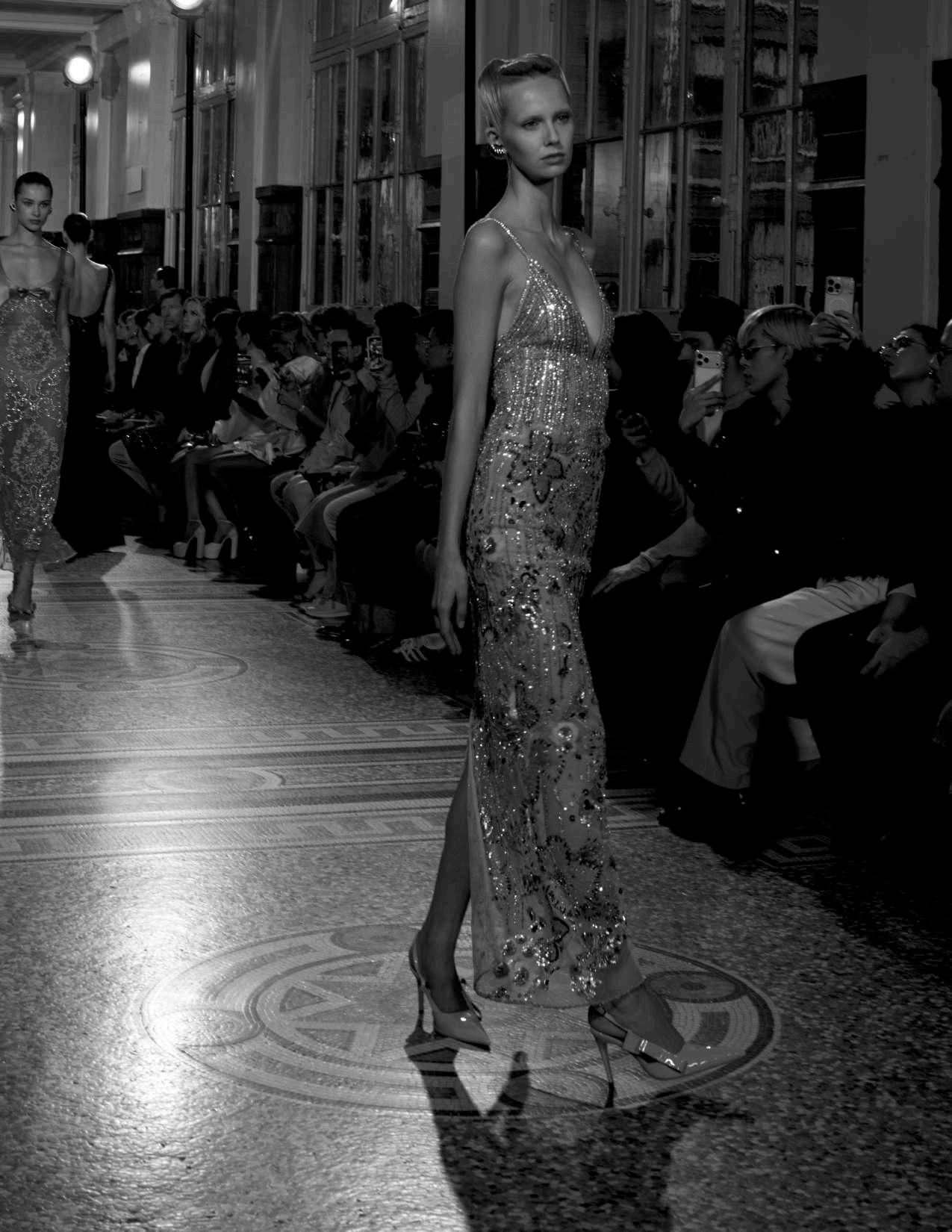
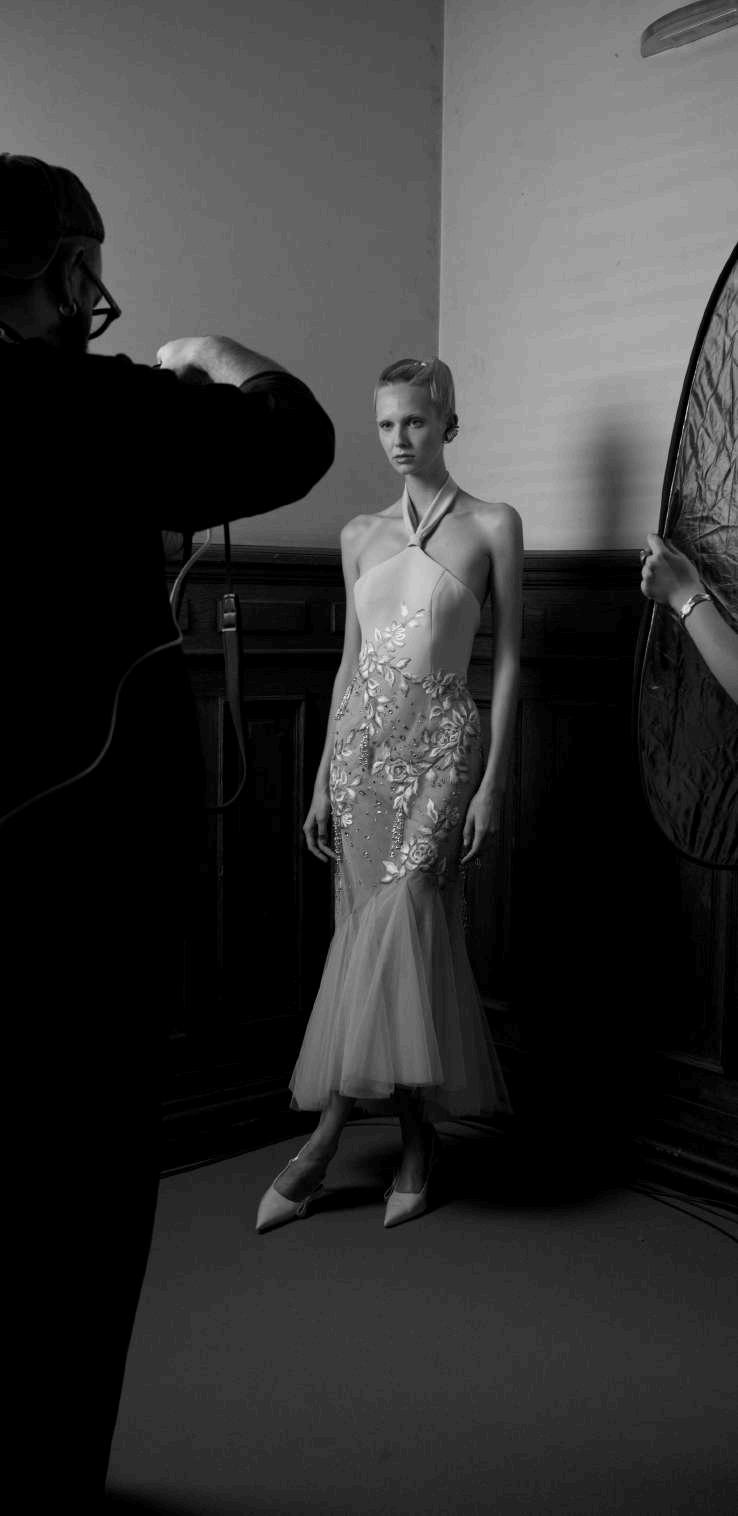
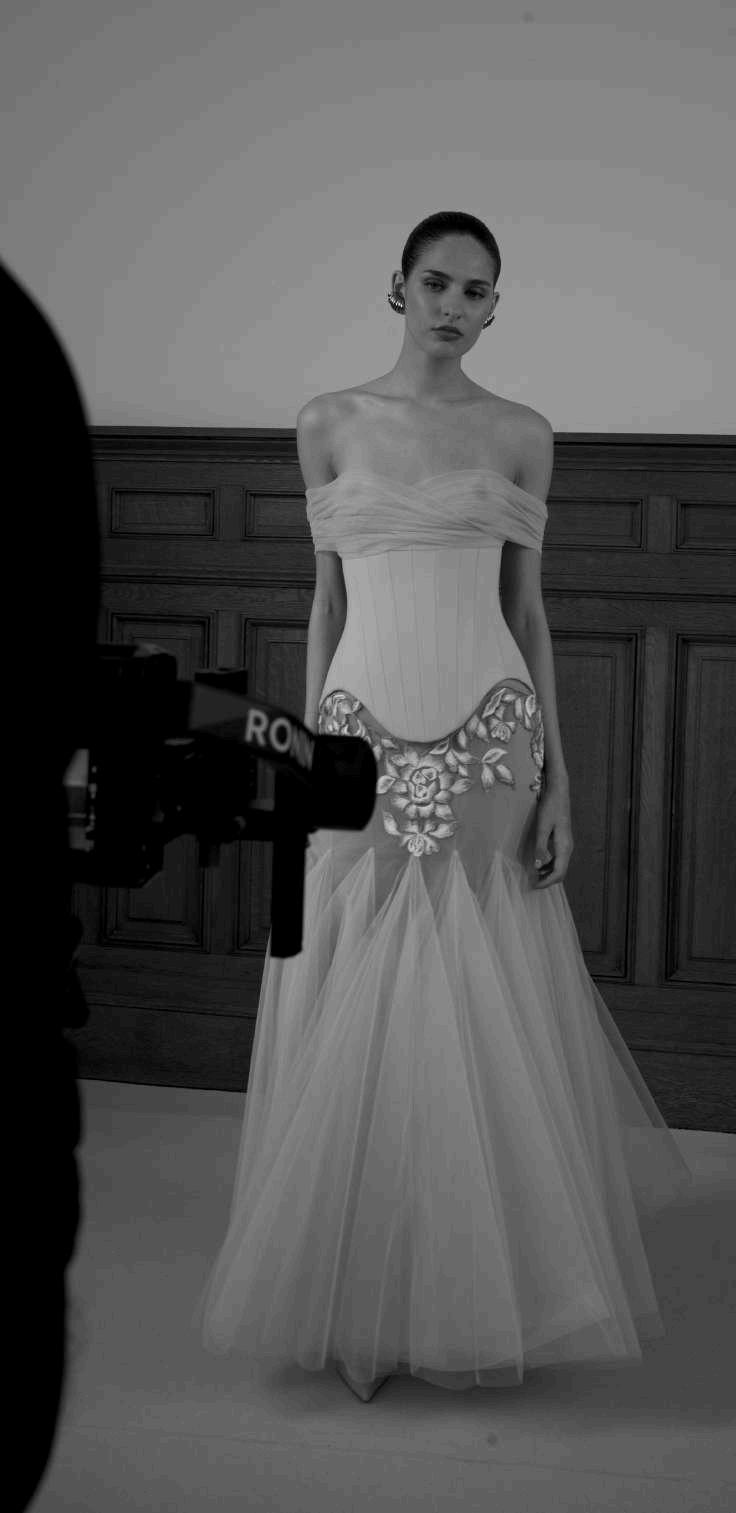
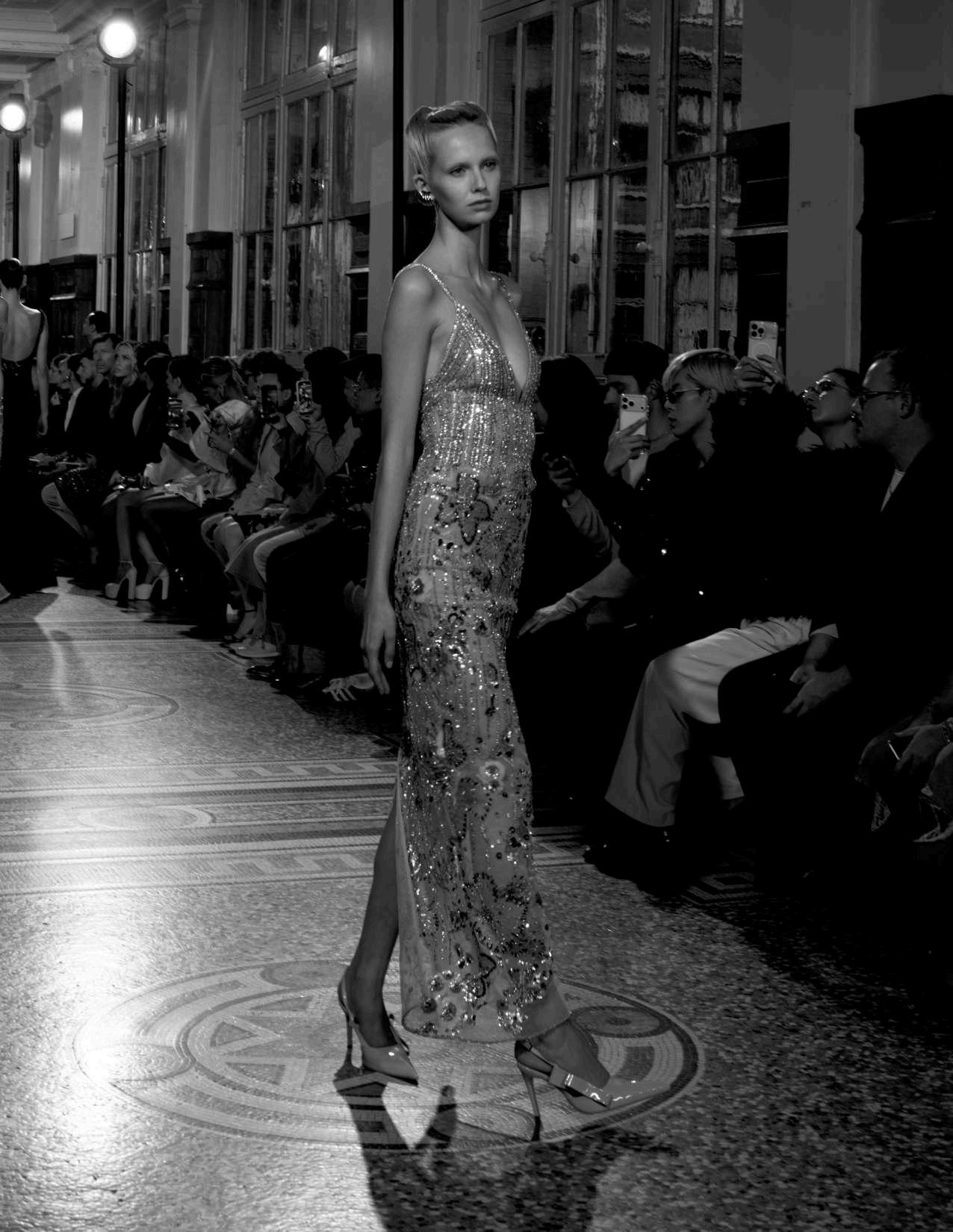
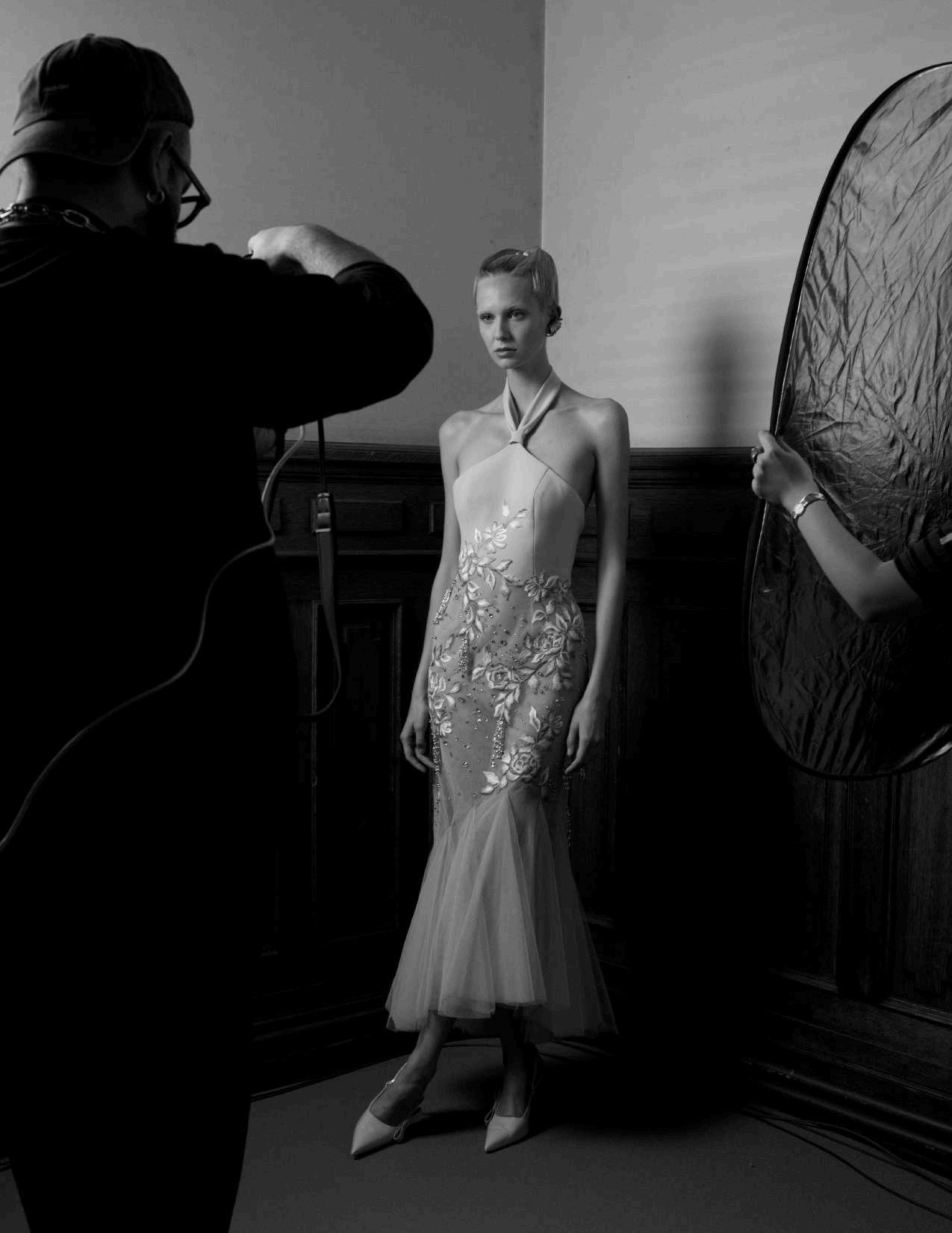
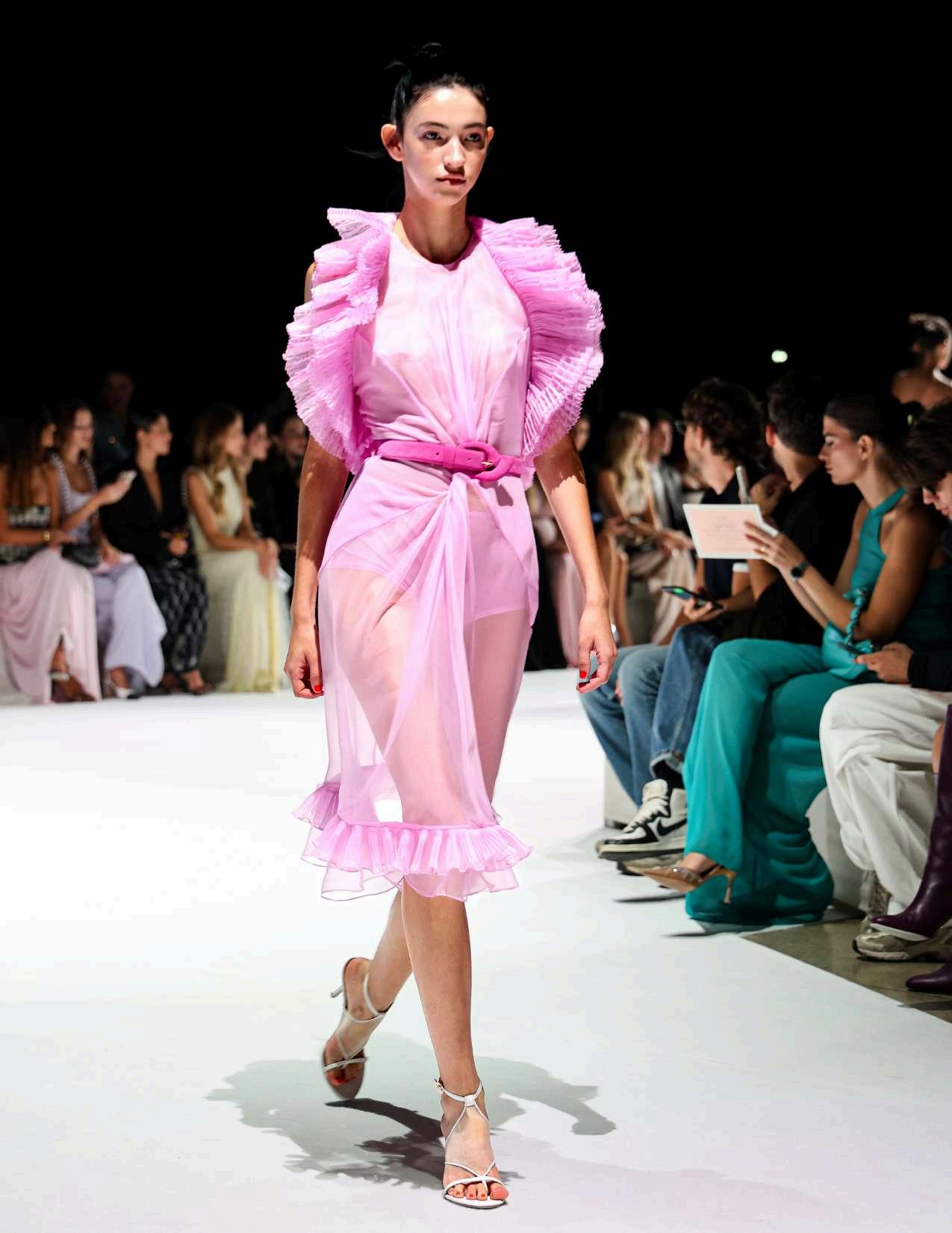
Sheer, frequently yet discerningly used, highlighted many of the season’s best pieces My personal favourite look was a sensual semisheer mermaid dress that combined corsetry with intricately embroidered details and balletstyle skirt pleating. Similarly impressive was a sparkling sheer proposal, adorned with gracefully cascading silver jewels, in continuation a narrative that has been developed for several seasons. And as the collection reached its crescendo, the jewels returned on a series of dazzling periwinkle pieces that were dramatic in silhouette but restrained in mood Romantic, melancholic, and above all elegant, they seemed an excellent metaphor for the house’s 2025
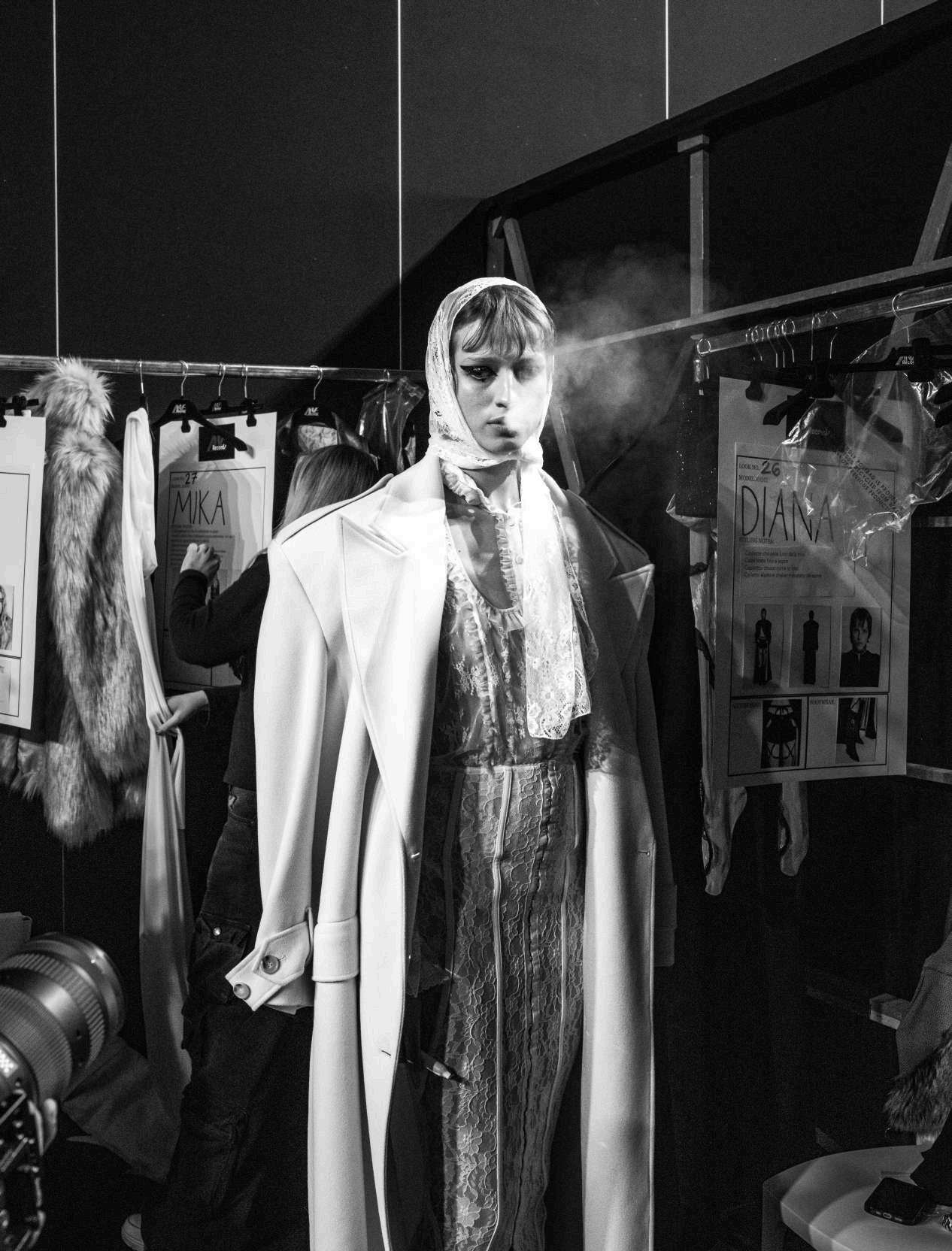
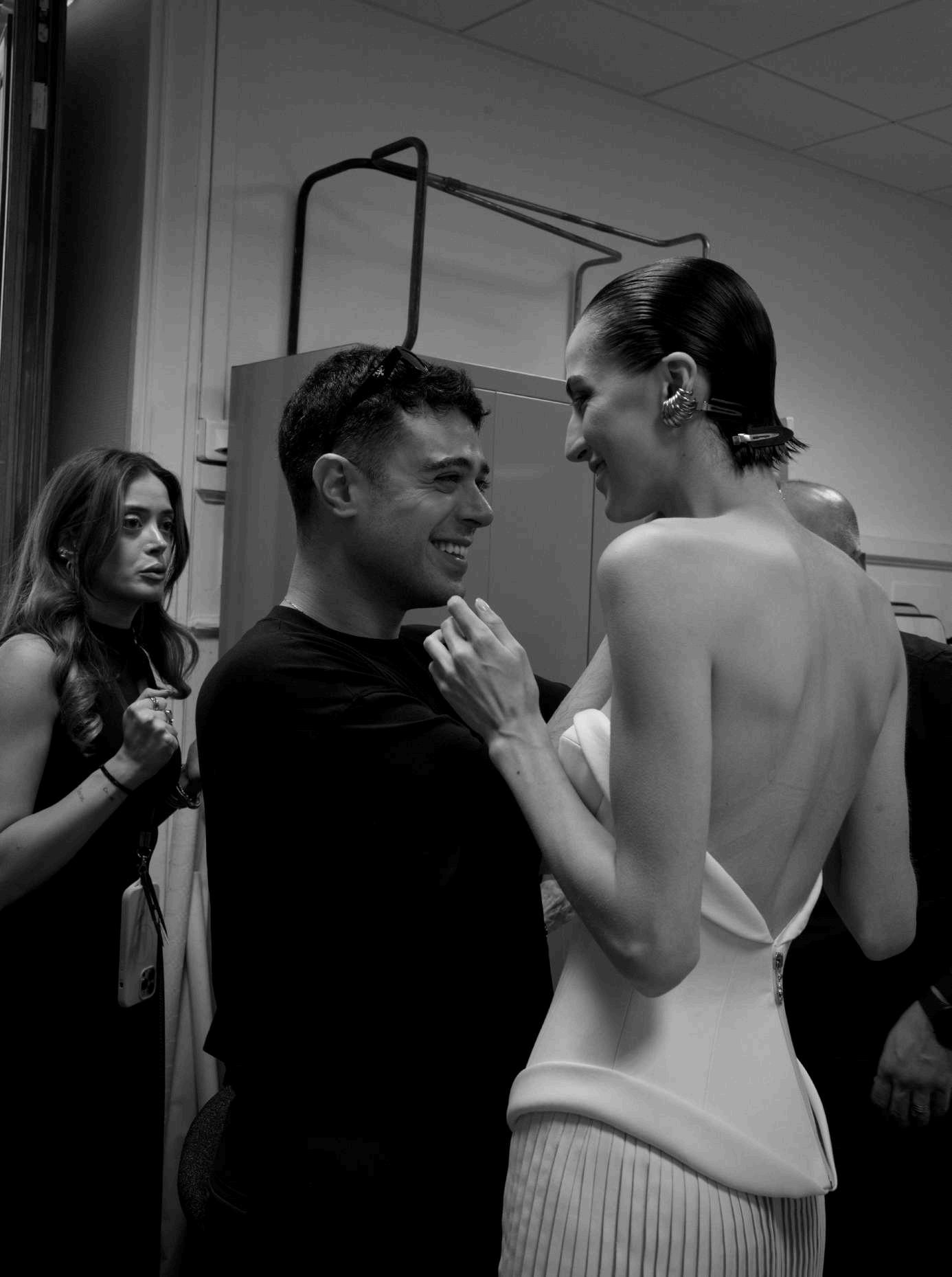
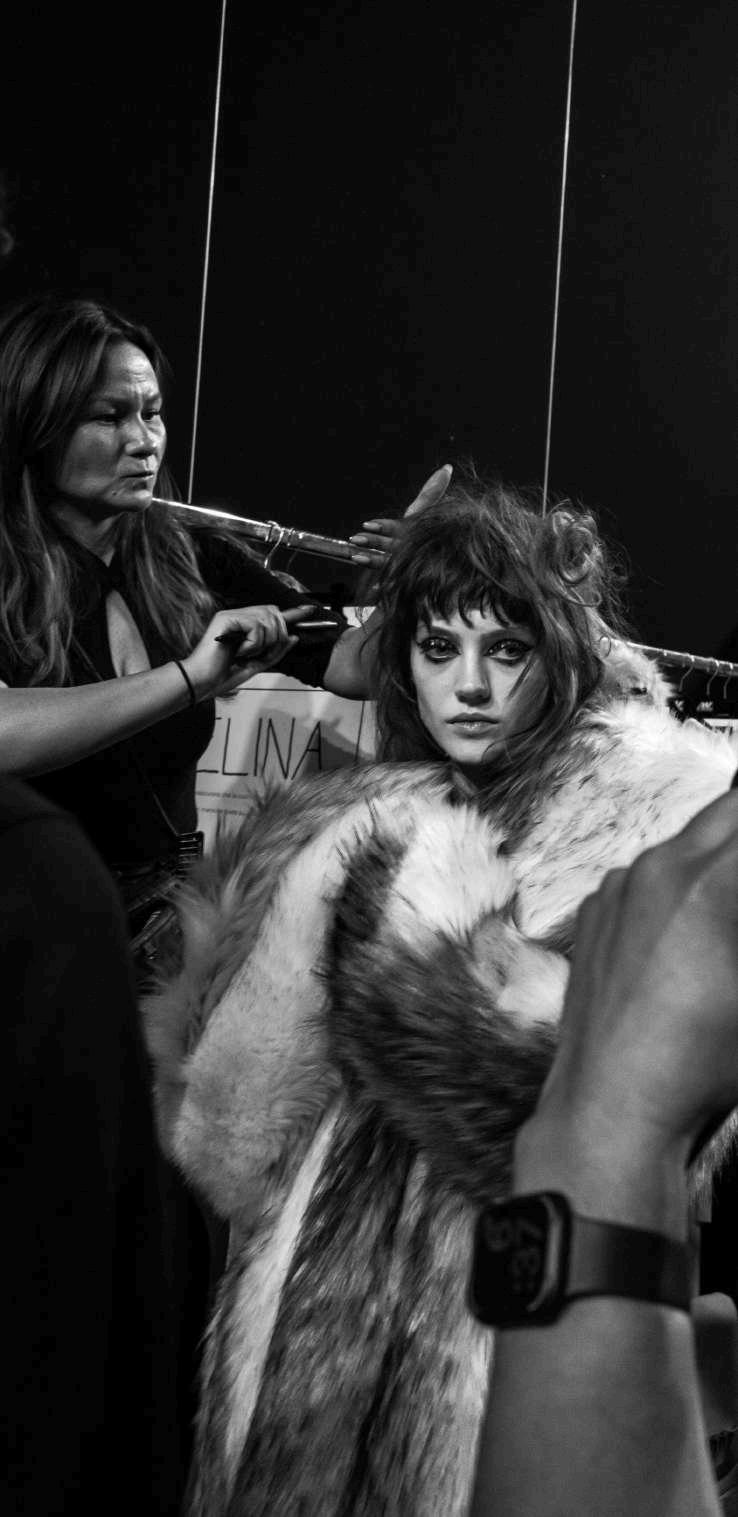
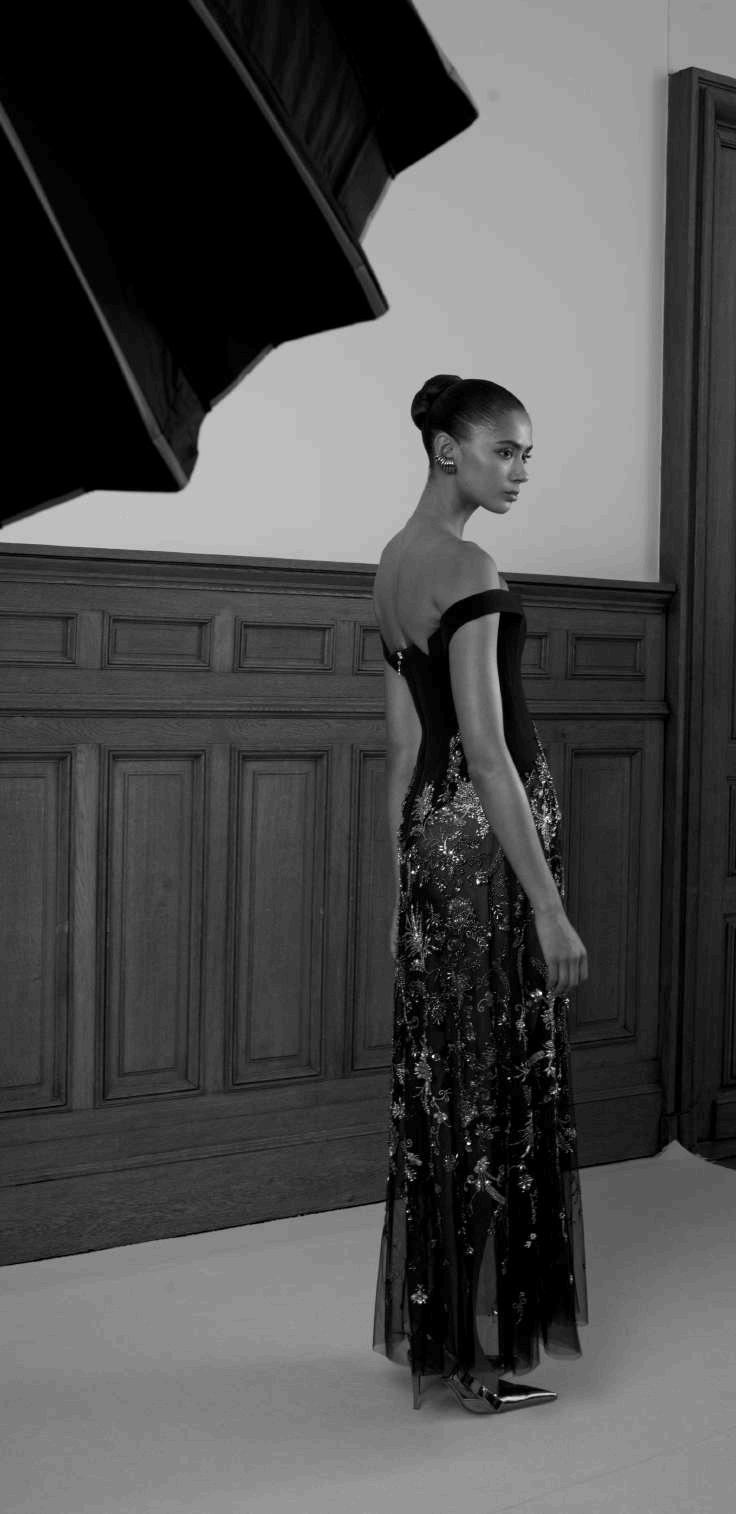
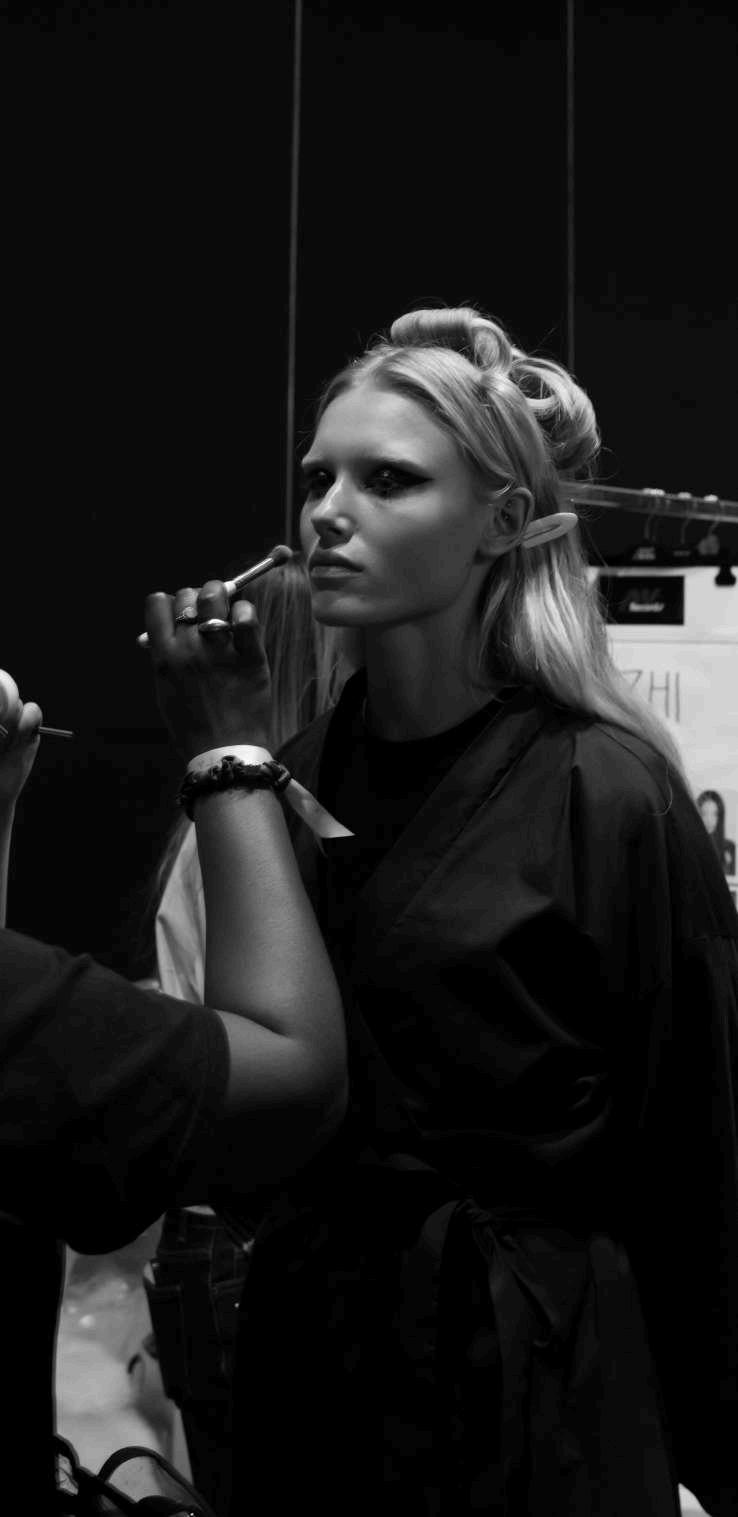
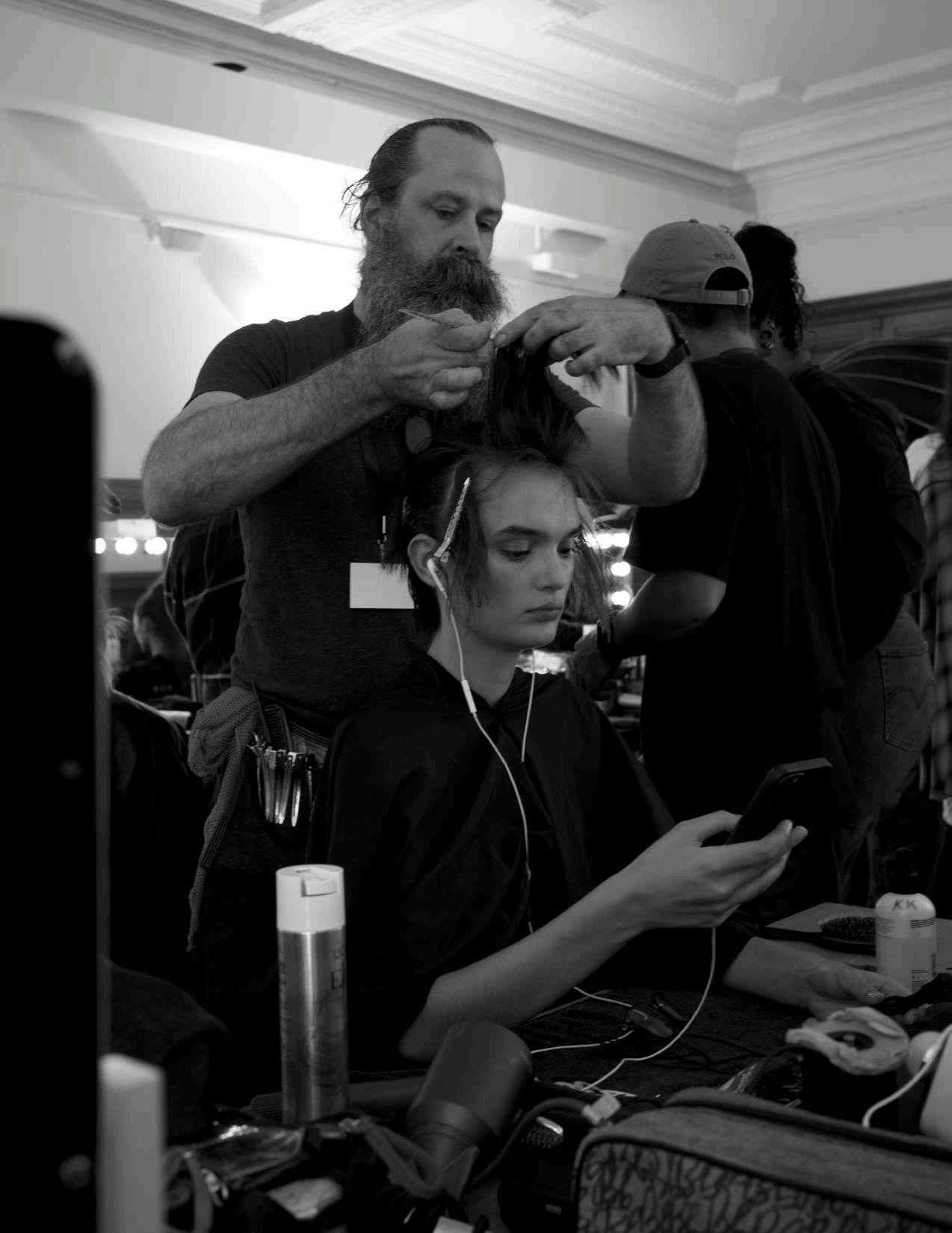
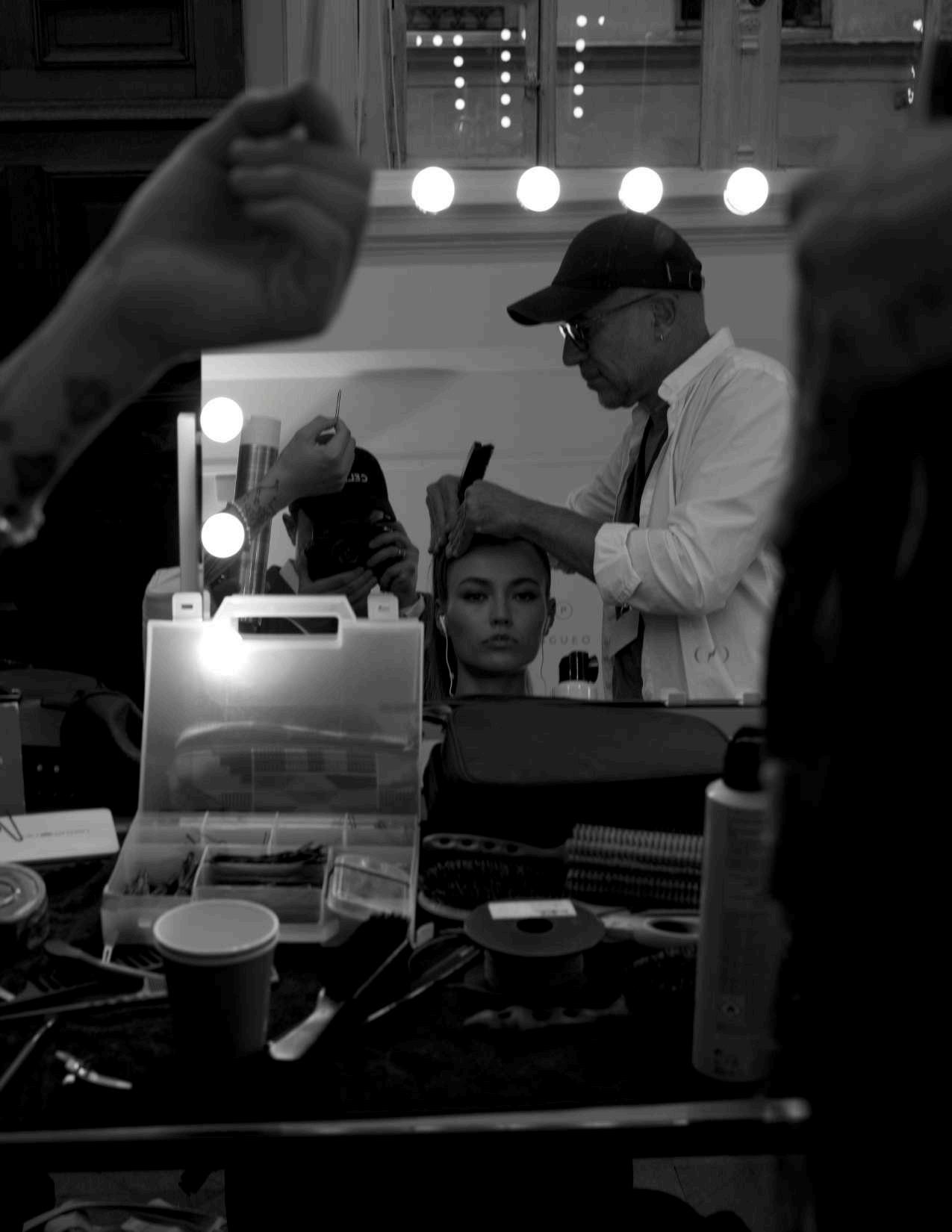
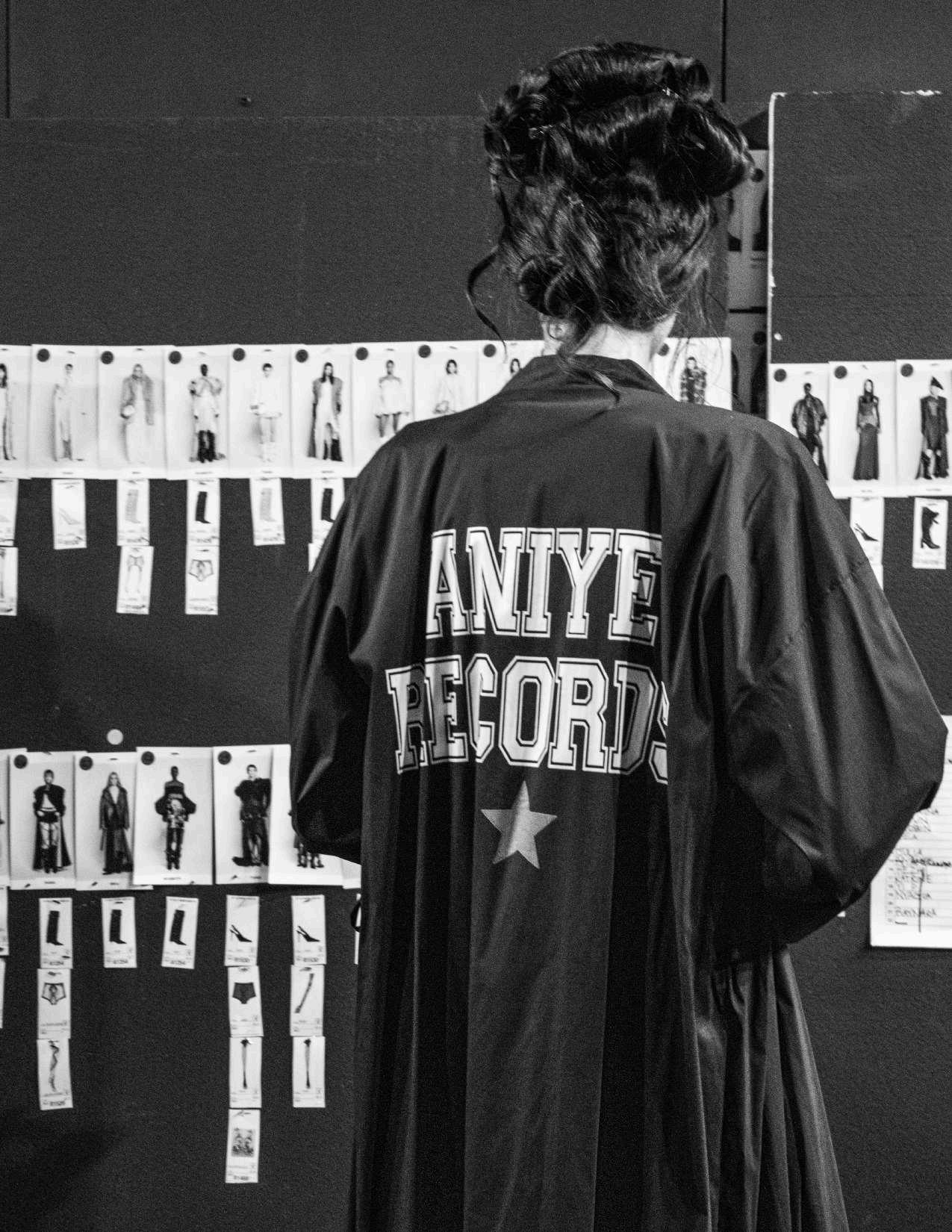
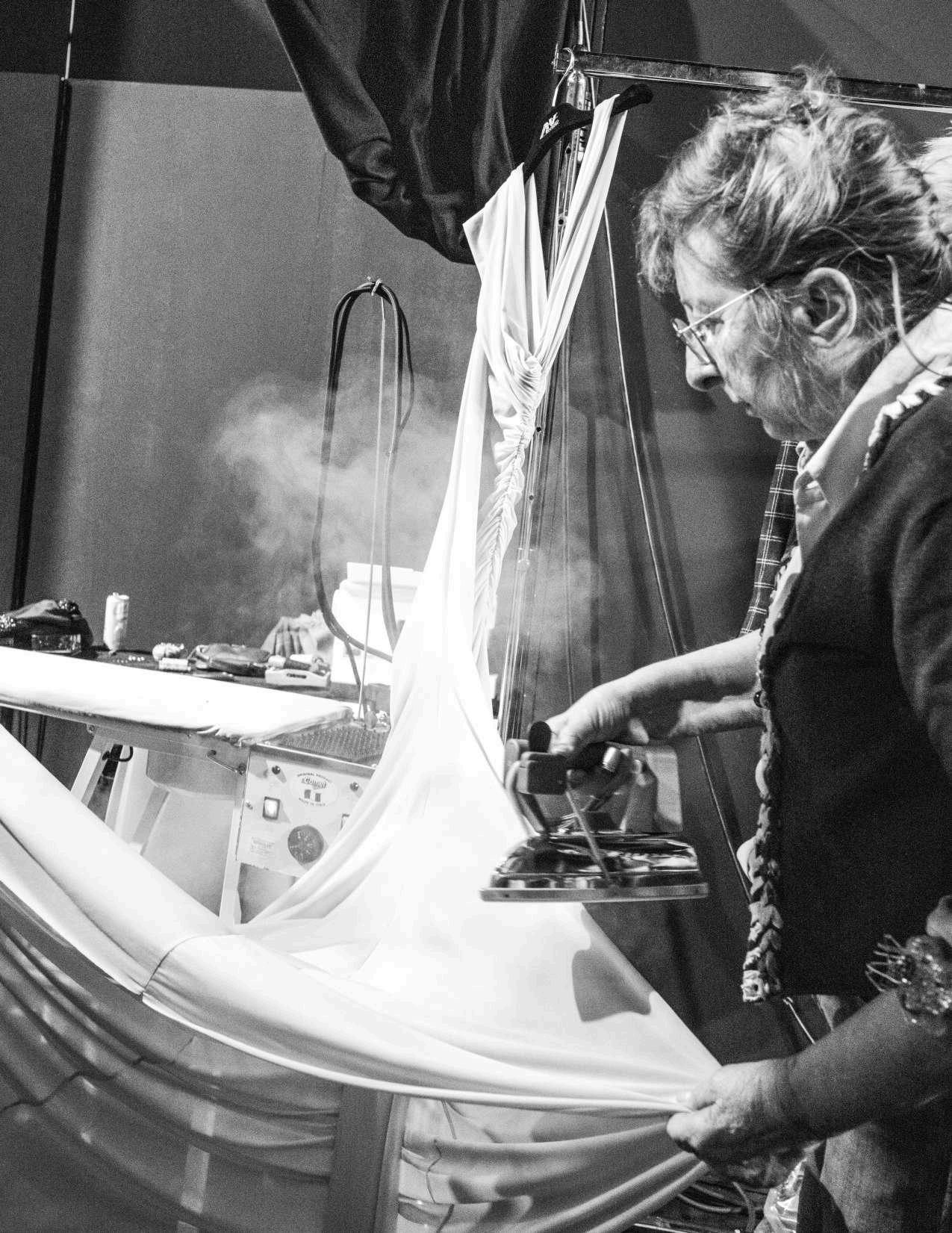
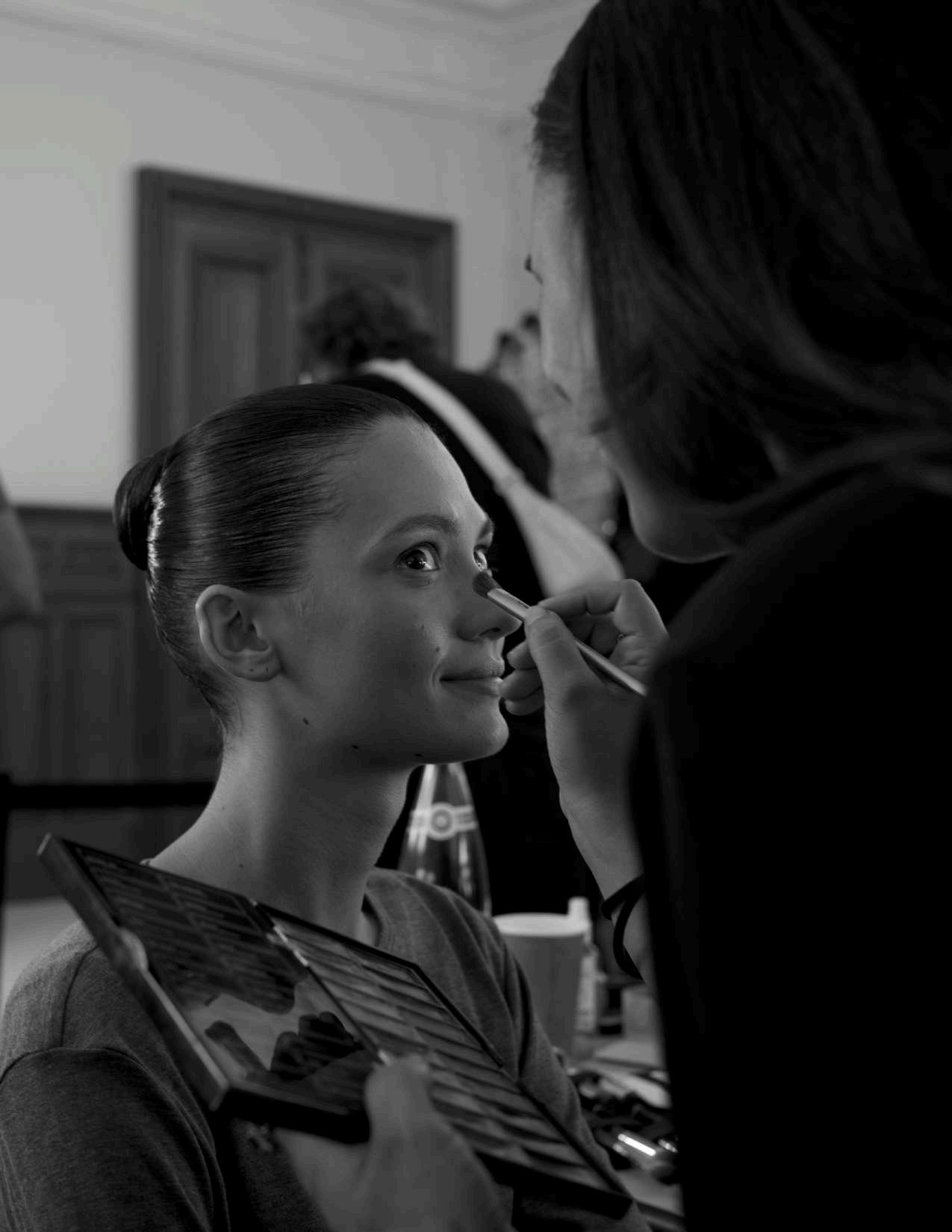
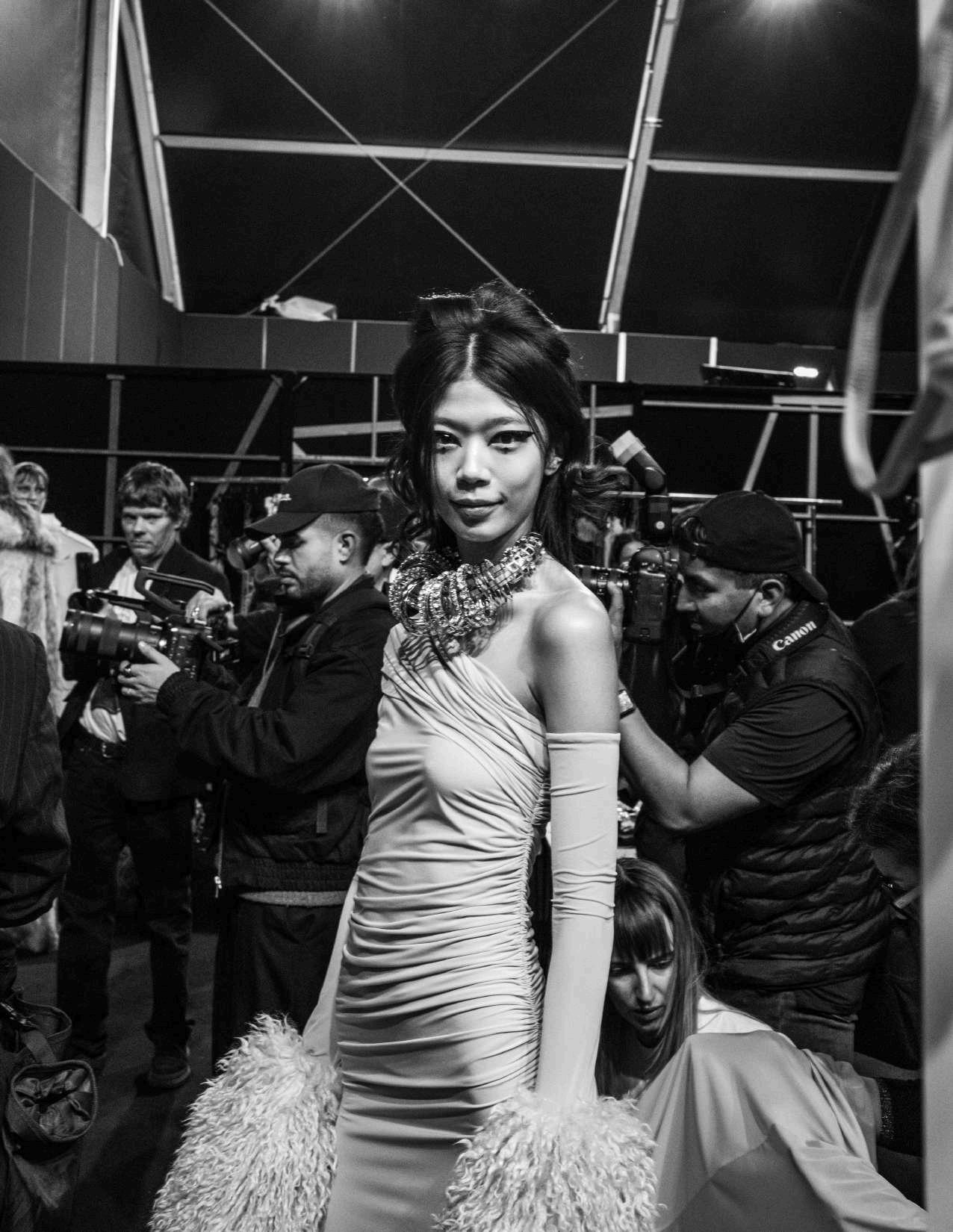
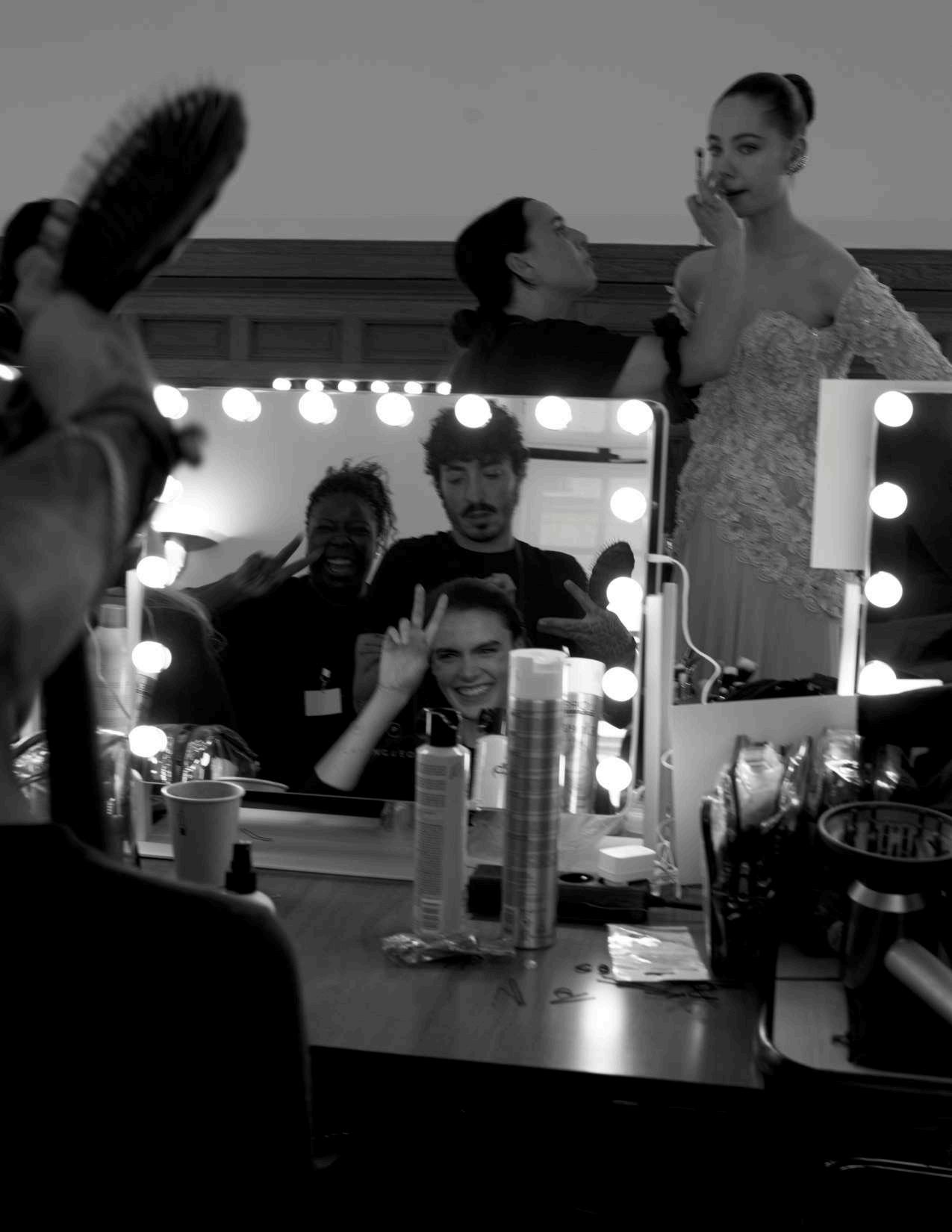
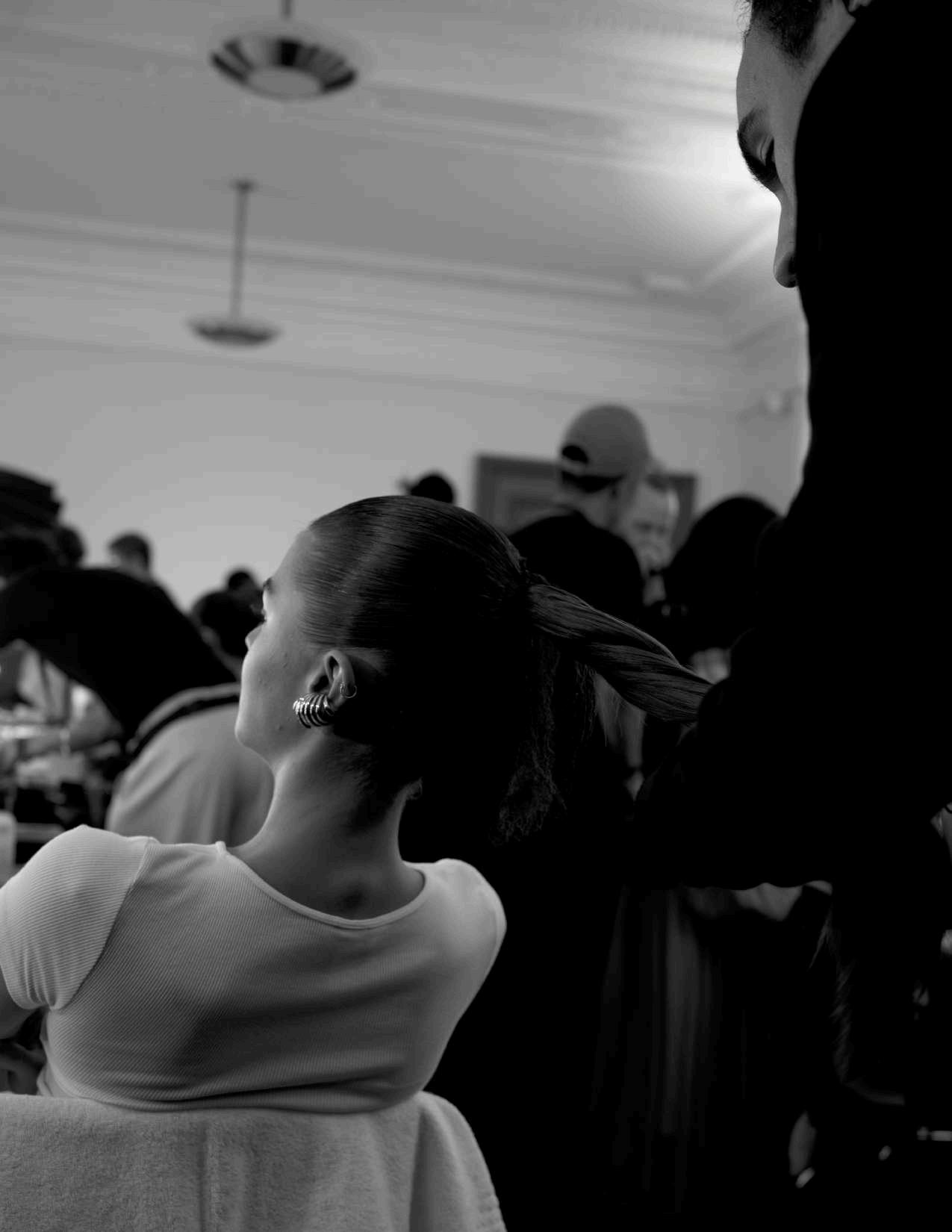
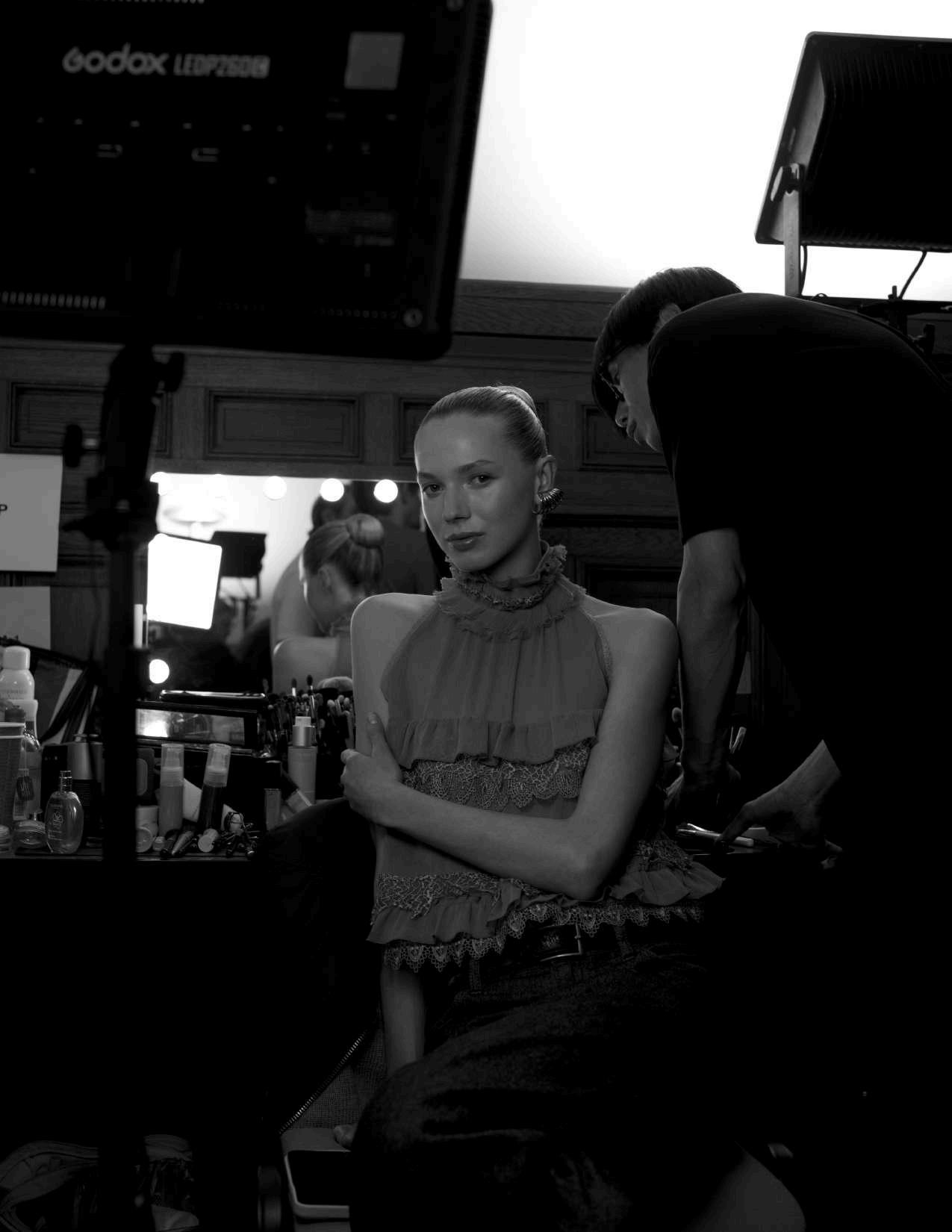
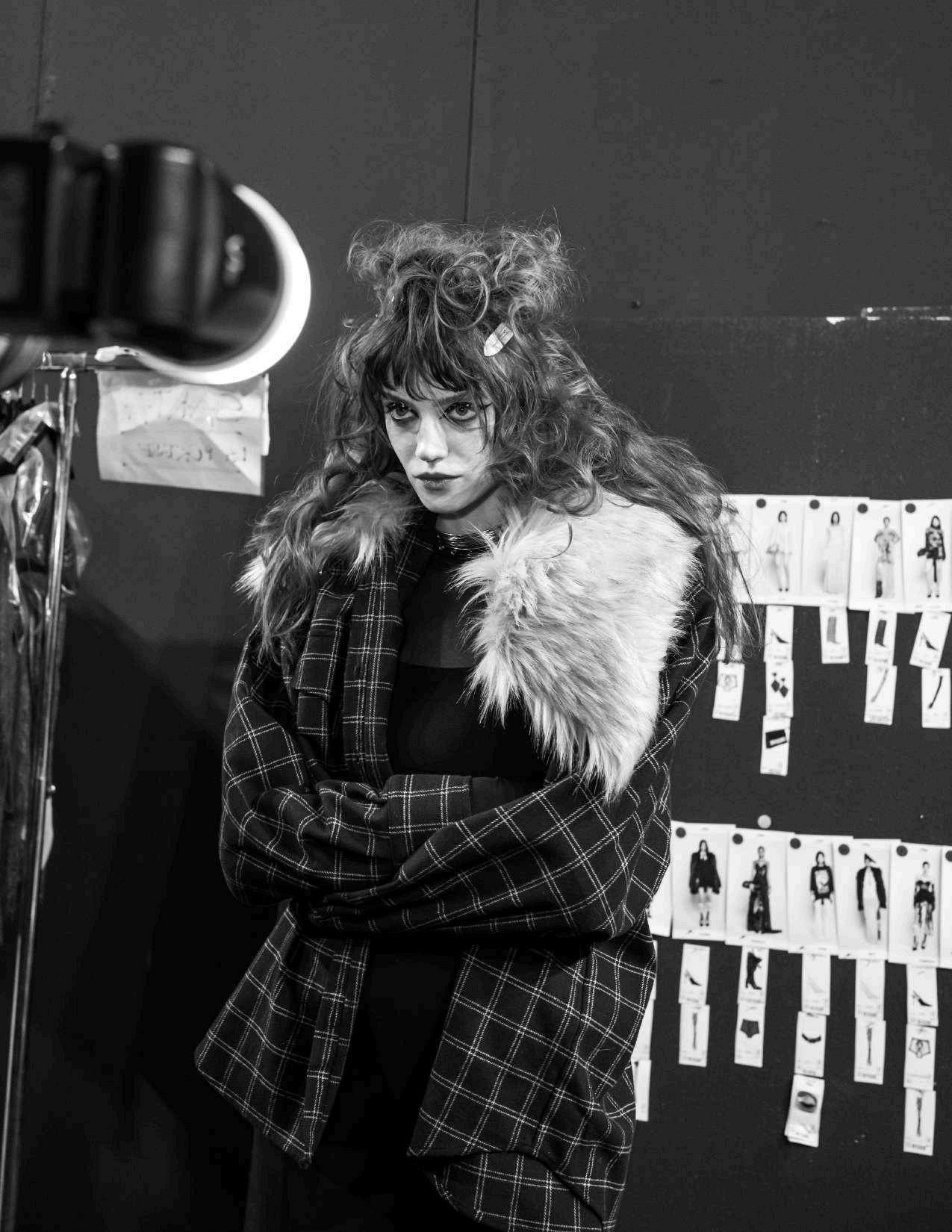
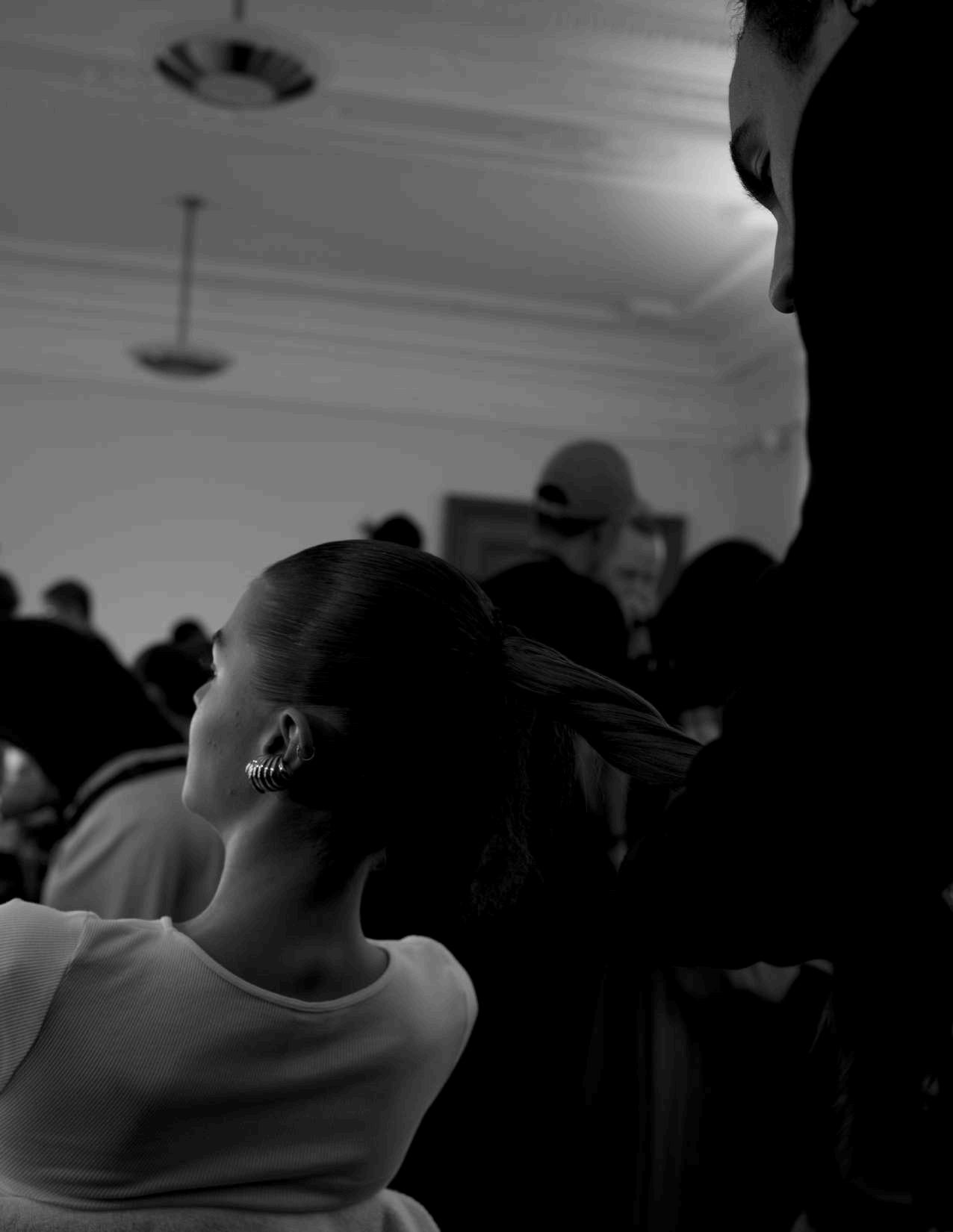
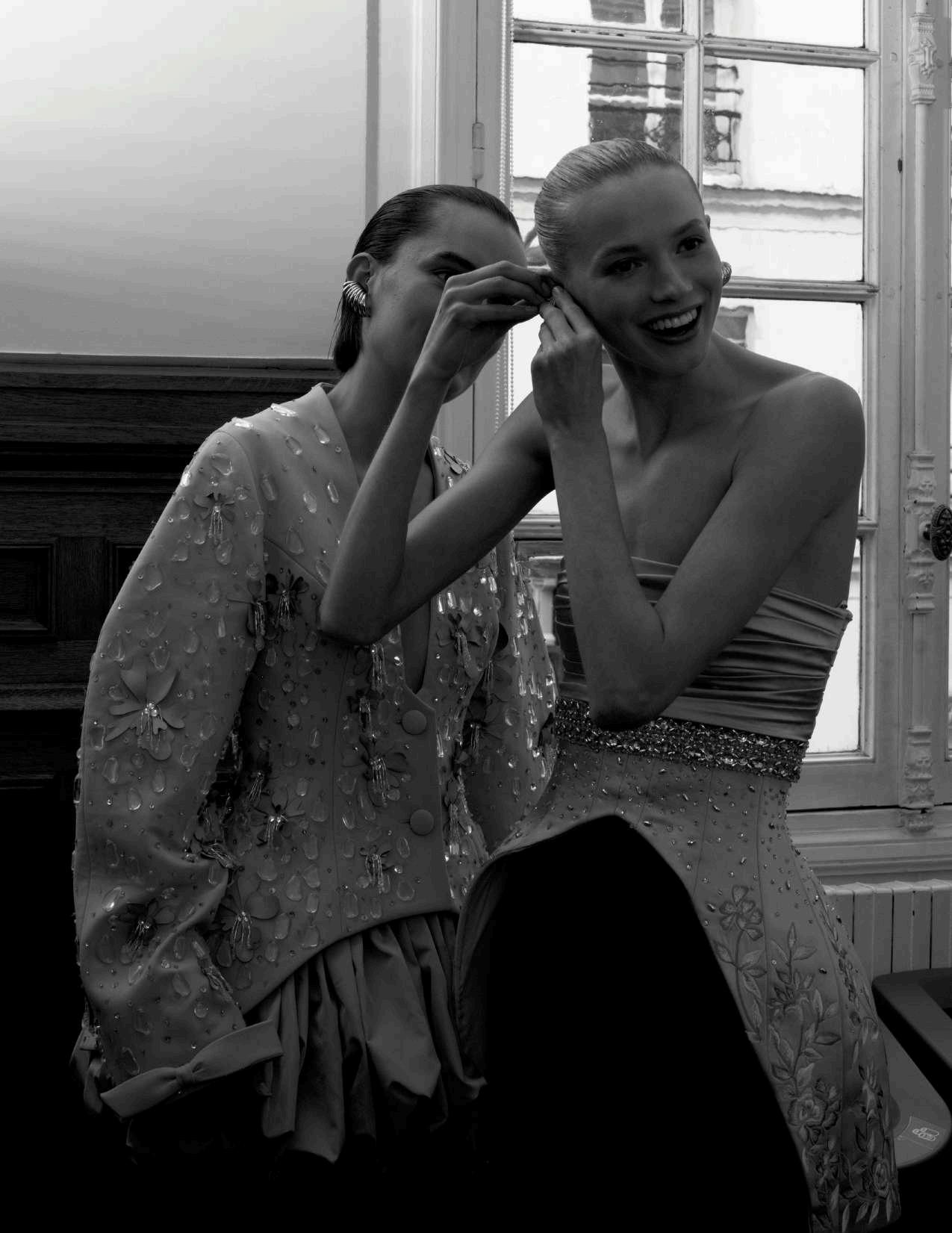
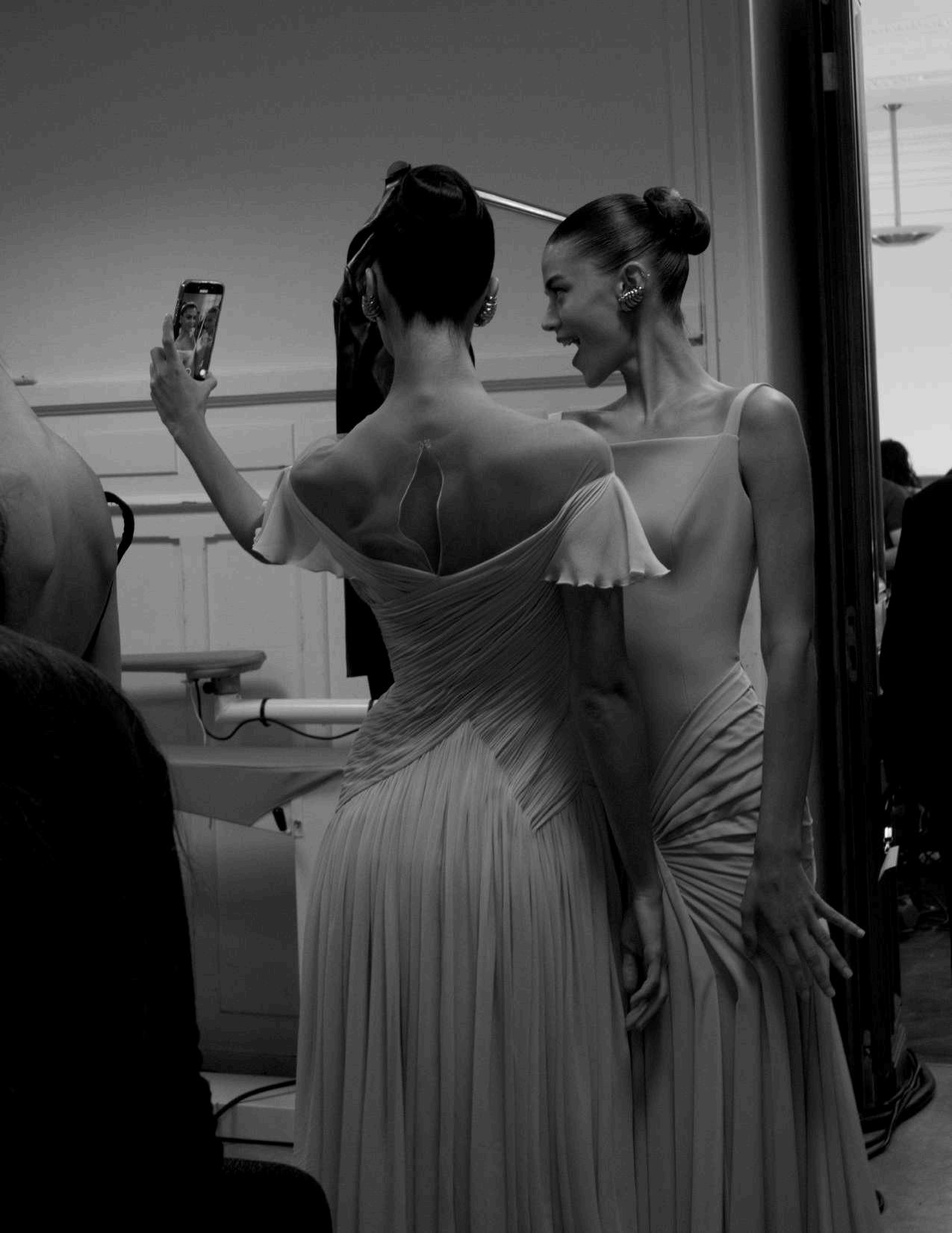
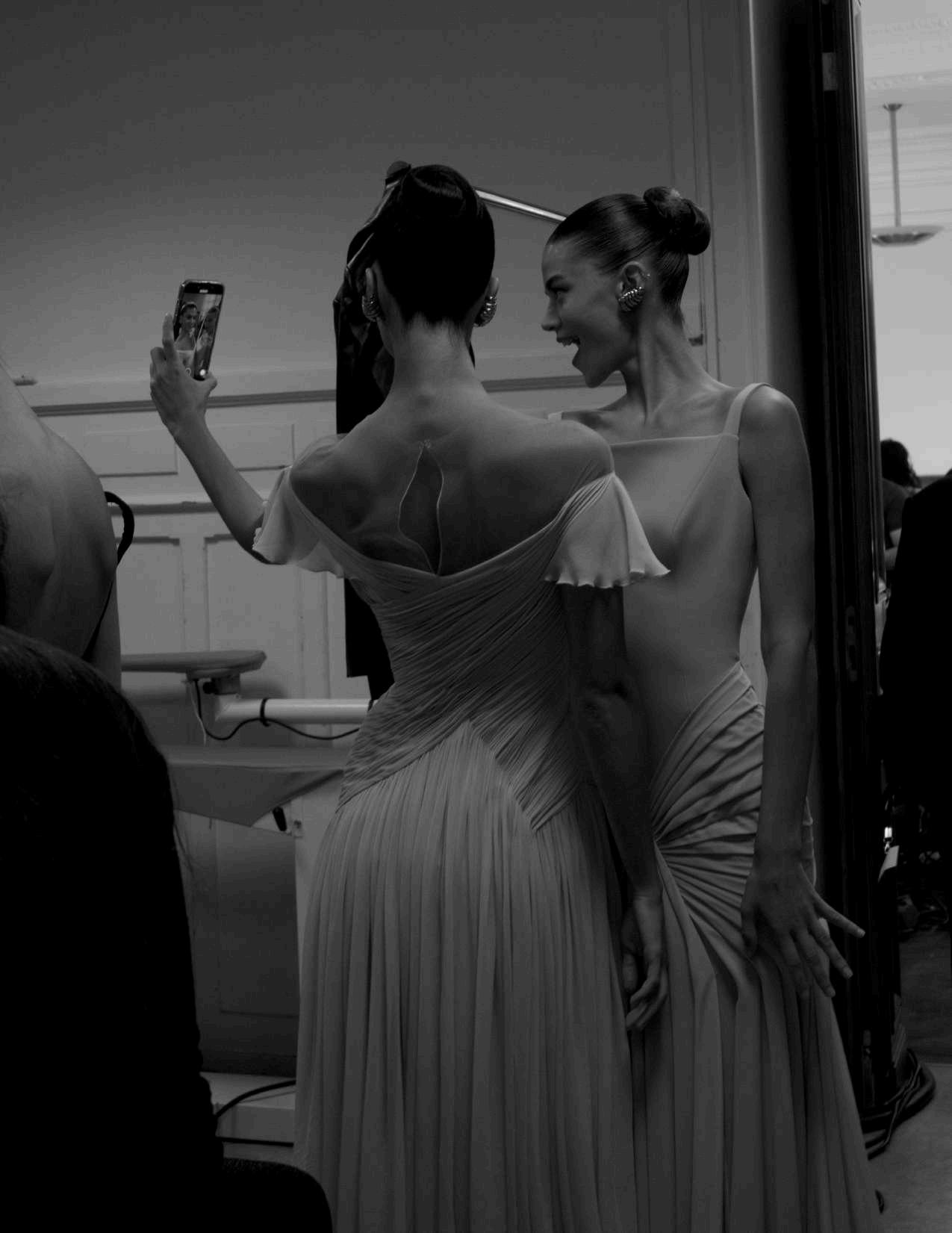
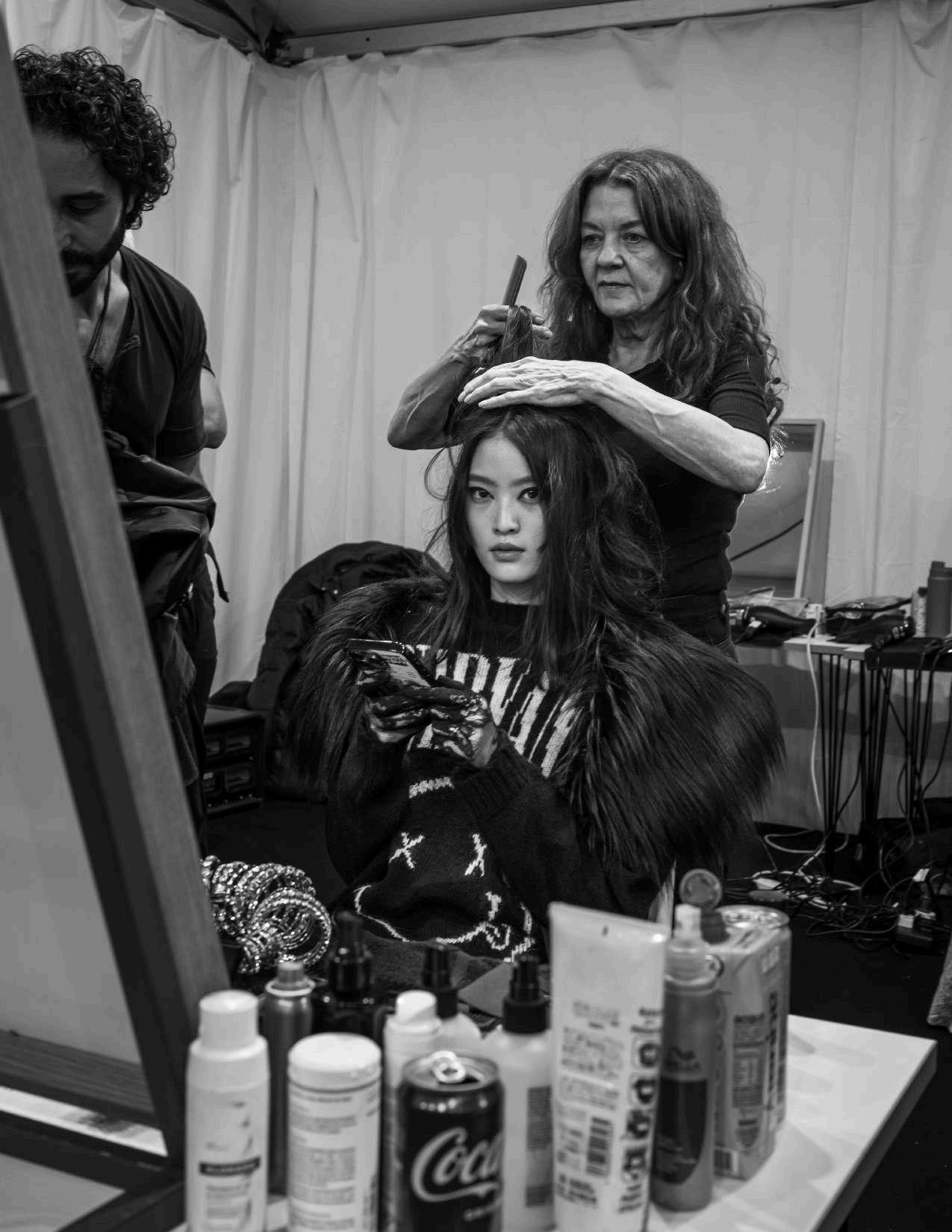
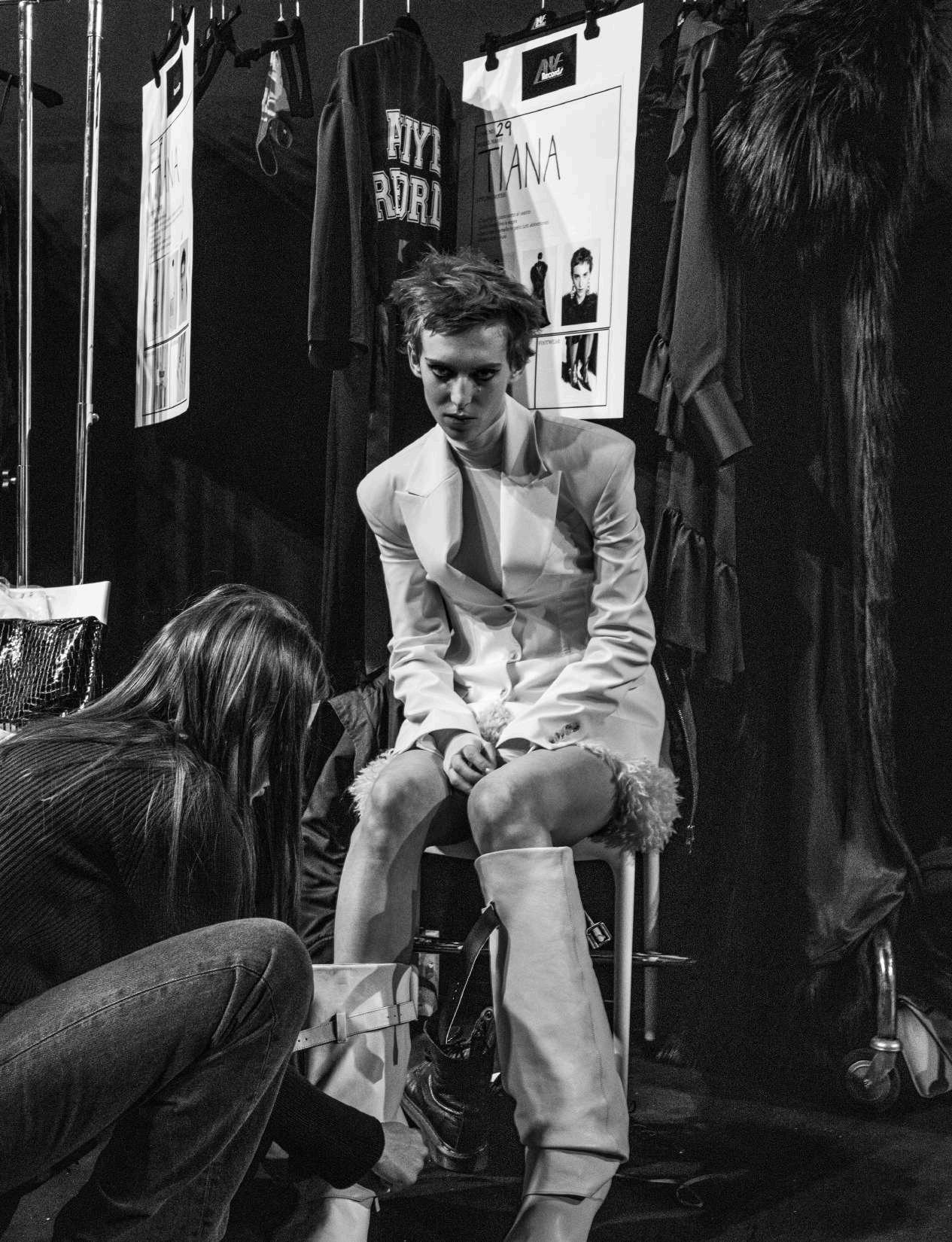
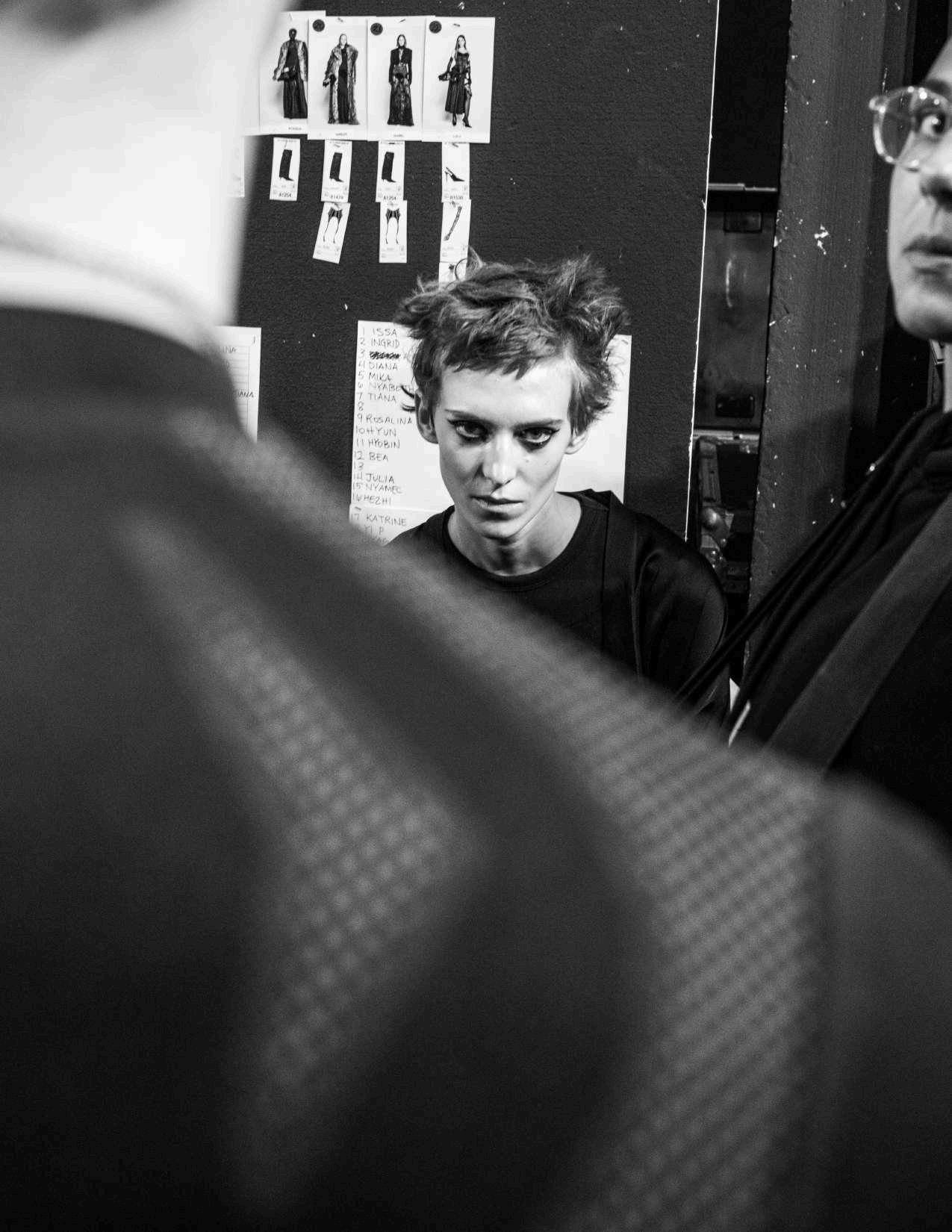
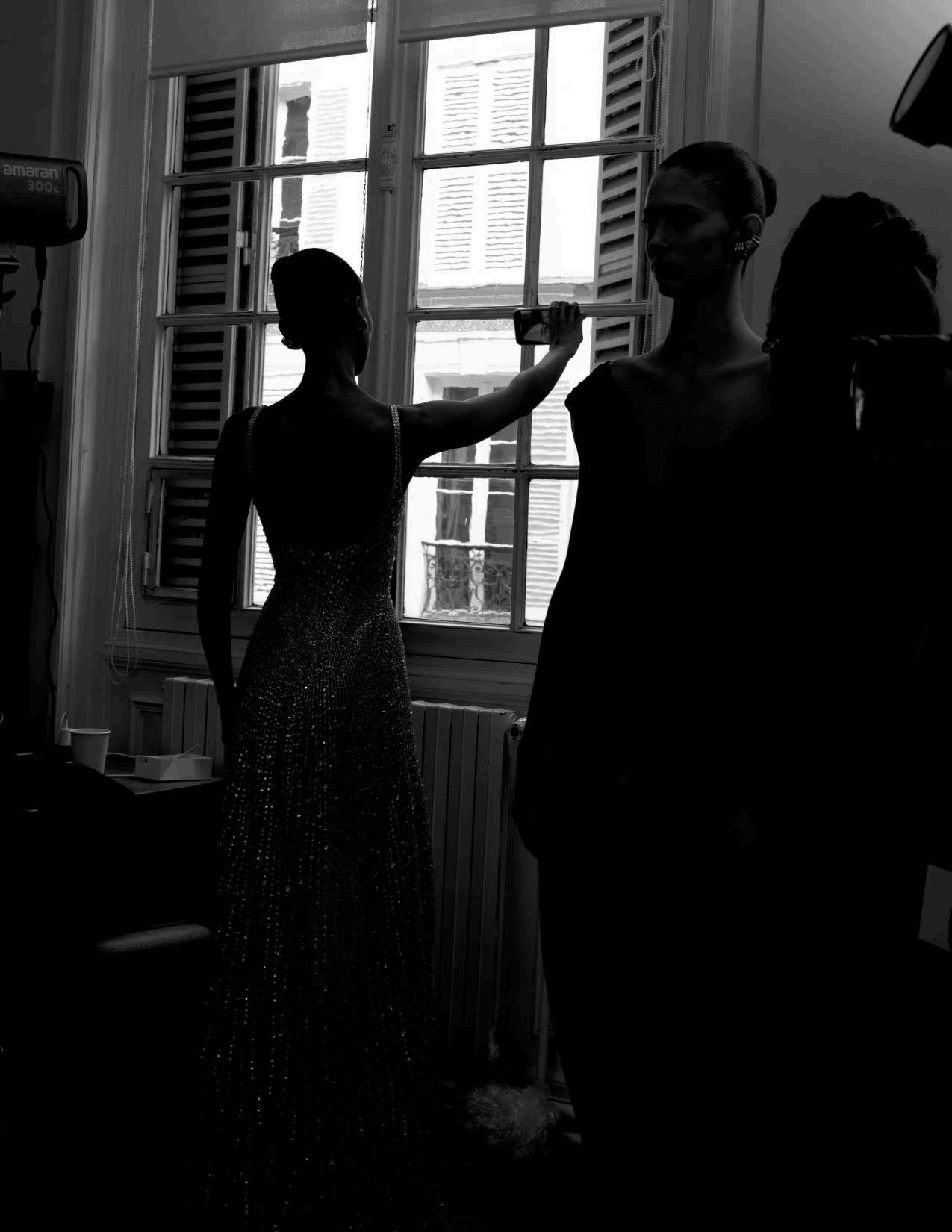
Backstage for almost two hours before the show, our photography director Leroy Velasquez commented on the excellent organization of preparations and the high spirits of the entire team. The Hobeikas clearly treat their show production with the same passion and attention to detail that they do their dresses, the result an oasis of calm amidst a week and setting that is normally anethama to the concept. Every aspect of the house is a labour of love, even in times of adversity. Testament to the importance of resilience, tradition, family, and above all fine craftsmanship, Georges Hobeika Spring/Summer 26 is the crown jewel in a remarkable story And there are many more chapters to be written
M A I T R E P I E R R E
Many designers thrive on subtleties and narratives that unravel across seasons. Others prefer to follow their intuitions of the moment and weave sartorial stories that, sequentially, barely connect. Last season, Maitrepierre was video-game couture, streaming AI-generated tapes throughout the show and incorporating technology ranging from flip phones to a shirt that was literally Apple’s iMac G3 in wearable form However, this season’s effort, enriched by art and dry intellect, could not have resonated further from the chronically online At the Musée des Arts Décoratifs in Paris, Alphonso Maitrepierre told the inspirationally tragic tale of fashion’s own Elvis Presley.
His muse: Paul Poiret. The early1900s icon became known as the “King of Fashion,” or simply “La Magnifique,” to his French confrères. Arousing controversy at first for his anti-petticoat and anti-corsetry designs, the designer redefined womenswear through orientalist aesthetics and a distaste for modernism that was anything but discreet Even so, irony followed close behind, with Poiret remembered as both the last great orientalist and one of modern fashion’s earliest pioneers. His story was one of rags to riches to rags, if you will, inspiring a generation of figures from Coco Chanel to Jean Paul Gaultier before ending in poverty under the care of longtime friend and fashion icon Elsa Schiaparelli The designer’s rapid rise and equally climactic fall resulted from postwar fashion favoring rationality over eccentricity
Still, Maitrepierre’s “En plein cœur” depicted the better part of Poiret’s Parisian-American dream, reinforcing a legendary legacy that too few are familiar with today.
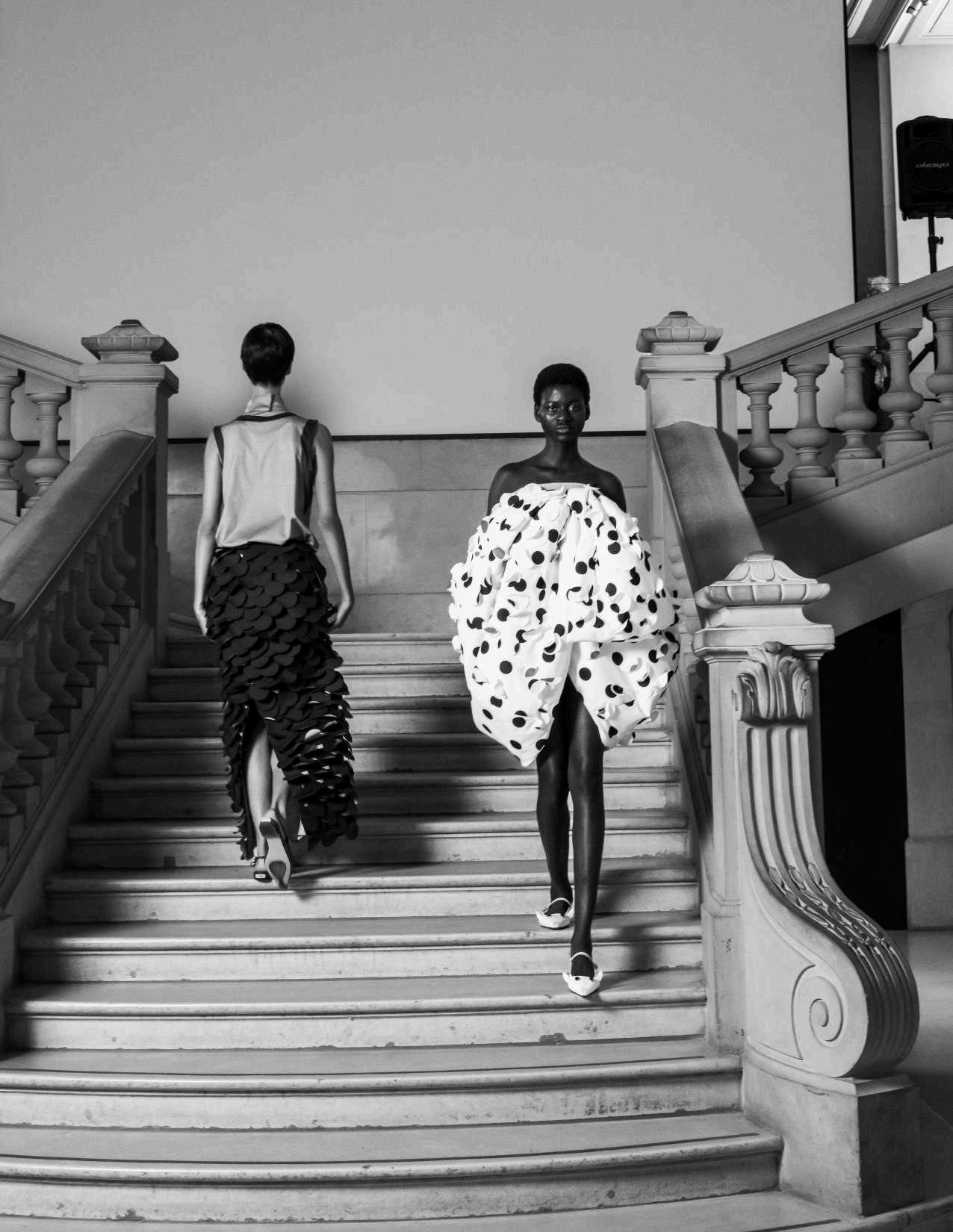
As the first model descended a grand staircase, the look appeared as though Poiret himself had shot an arrow of approval directly through it Referencing a Paul Iribe original, the silhouette was that of a slender, darkhaired woman draped in black and green in a sleeveless, tunic-style dress An asymmetric panel cascaded from the model’s left shoulder, part sculptural half-cape, part folded cuirass, offering little protection for the drawing beneath. A literal citation could be found in discreet print at the base of the look: en plein cœur, along with a second line just below reading robe du soir, du Paul Poiret (Evening dress of Paul Poiret). In another context, it may have felt heavyhanded, but here it was entirely earned To be fair, what isn’t poetic when written in French?
The trousers that followed were classic Paul: Feng Shui–inspired Zouave pants with an ivory, orientalist sheen and a fluid taper cropped neatly at the ankle.
The fifth look was ostrich-like, erupting as a pile of purple, from lilac to plum, and topped by a large turtleneck collar reminiscent of an Elizabethan-era ruff with an opulence that once signaled aristocratic status and wealth. The poncho-esque look was cropped much higher than the floor-length opening frocks, cutting just above the thigh and requiring caution on a windy day
In many looks, leftover ombré fringe landed on models’ heads as neo–rocker-chic flow, courtesy of a continued collaboration with Carole Douard and Shu Uemura Art of Hair. From there, the runway featured puffy cylindrical handbags, retrofuturistic 3D-printed eyewear, sultan trousers rendered in street-style denim, full-body prismatic snakeskin, and a particularly memorable ensemble of a light blue tuxedo tank, dark purple sequin-like appliqué skirt, and neon green choker that made the seemingly paradoxical surprisingly fashionable
Still, the real fun arrived in a series of matte and glossy sandals, bio-sourced and fresh in from Italy. Carel was at the helm, ensuring whimsy didn’t stop at the hemline. What began as a basic slingback flat suddenly sprouted pointy ears, gemstone eyes, and a color-coordinated nose. If “elsewhere” truly was the conceptual meeting place for Alphonso’s designs and Paul’s spirit, as the show notes suggest, then footwear was the gateway to that other world Childhood, if anything, has taught us that these gateways to fantasy are rarely grand They hide behind an en pointe army twirling toward the Land of Sweets or a trapdoor leading to a parallel home where rodents perform circus acts, dinners are Michelinstarred, and parents are perfect, except for the buttons where eyes should be. If the reference remains elusive, I’ll be blunt: Maitrepierre’s magical footwear this season was mice Unconventional? Perhaps, but irreverent in the most inviting sense
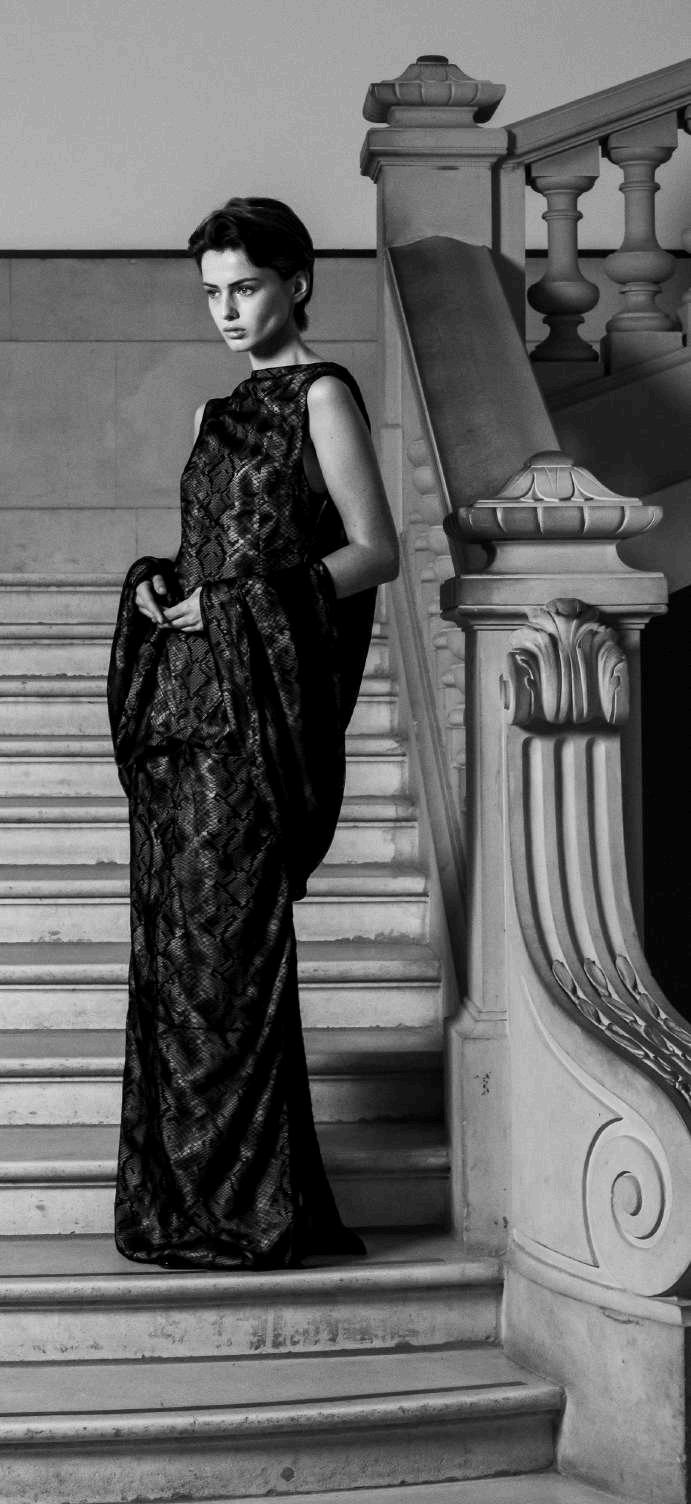
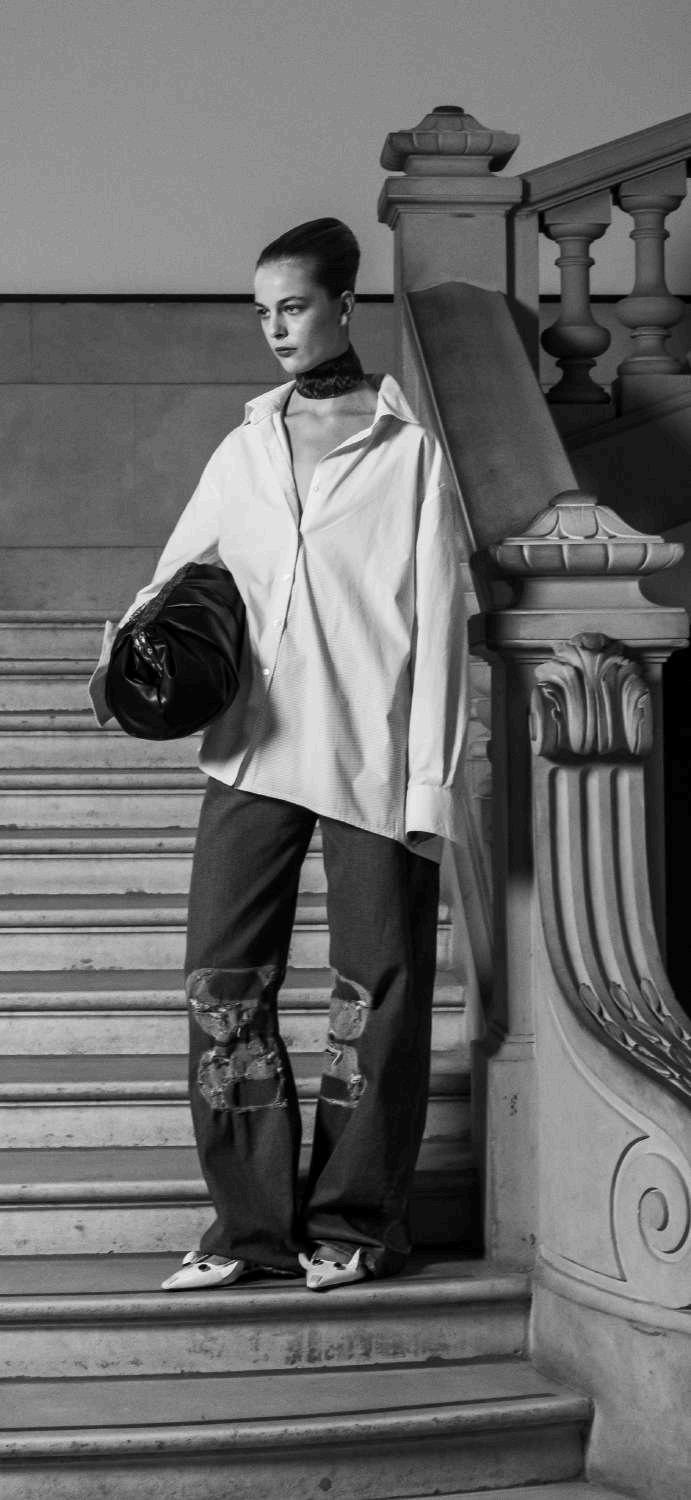
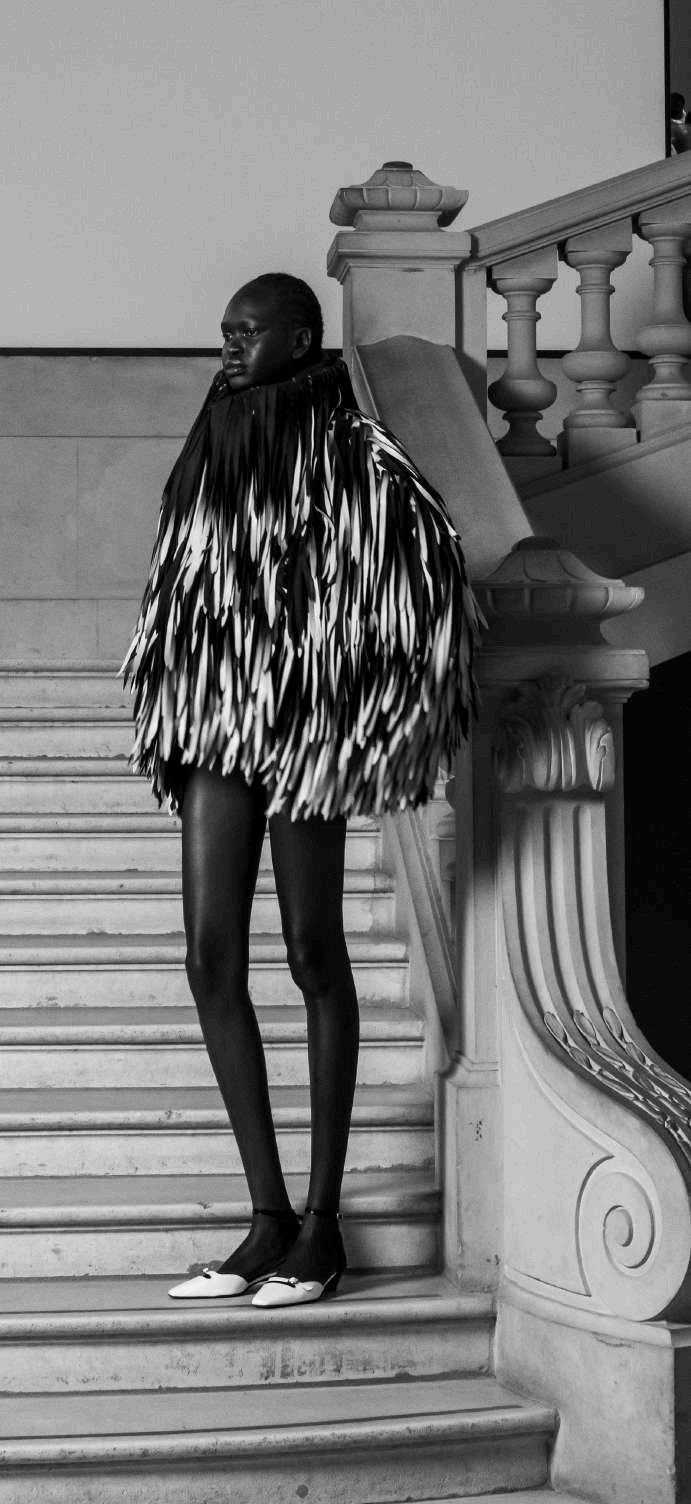
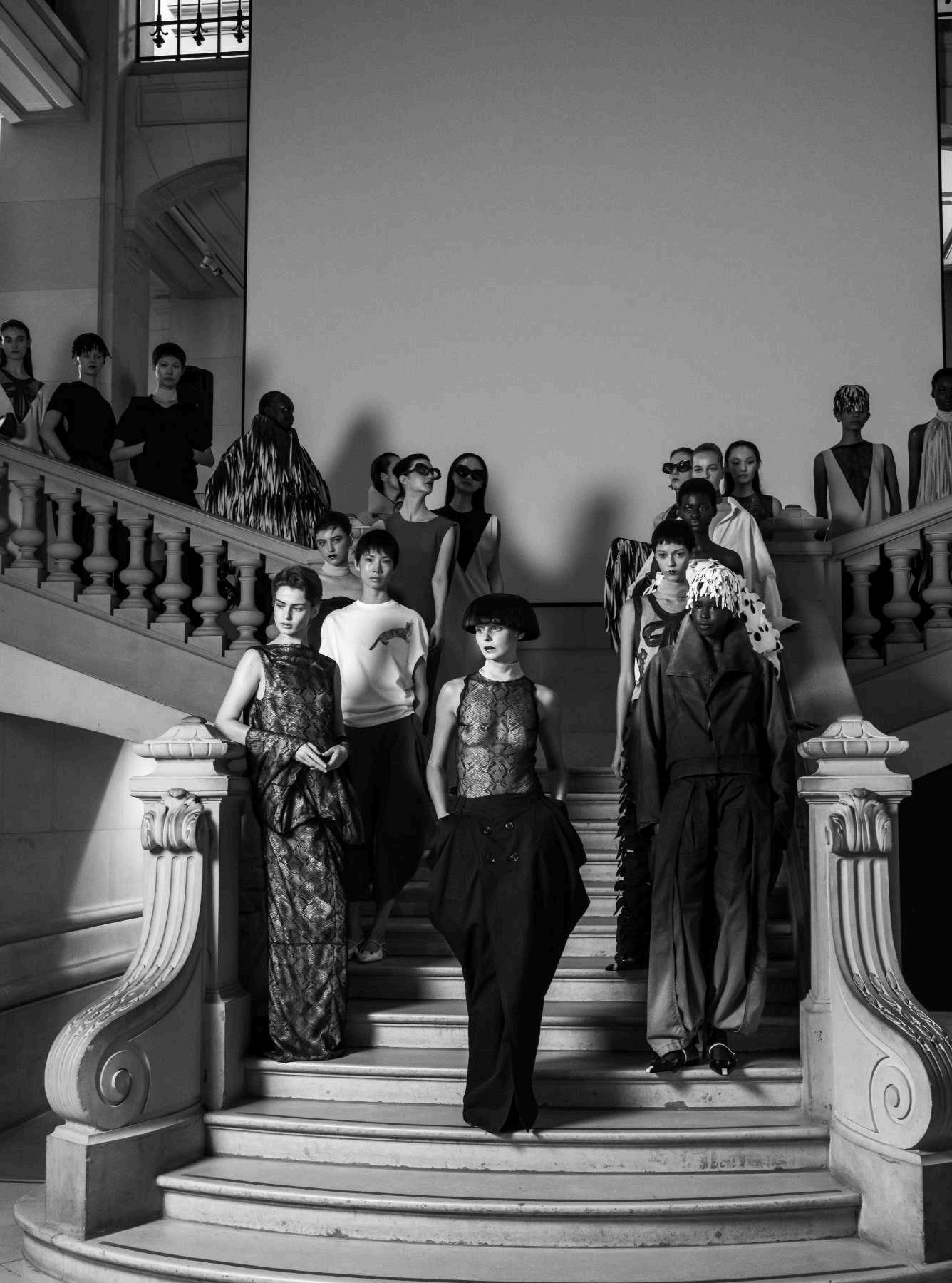
When lucky enough to work in a creative field, each day breeds someone else’s five minutes of fame, overnight sensations that rarely linger and are quickly filed as yesterday’s news Still, Alphonso Maitrepierre didn’t recall Poiret simply to gild his golden days He pillaged and resurrected the designer’s best work to revive a current day often starved of wonder As Poiret once freed women from suffocating fabric, Maitrepierre frees us, if only for a moment, from the suffocation of the world
From the cascading, fairytale staircase down which models slowly descended to the traces of play embedded in each look, he imagined a place where magical worlds are found in dusty wardrobes and imagination doesn’t expire with age. The collection read as a private joke for adults, the kind we missed in cartoons growing up, only understanding once we were too old to enjoy them. In twenty years, vintage girls will still hunt for the Prada kitten heel, but it’s the unsung mouse slipper, still full of reverie and perhaps missing one gemstone eye, that will stir a knowing grin and remind us that life was never meant to be that serious.
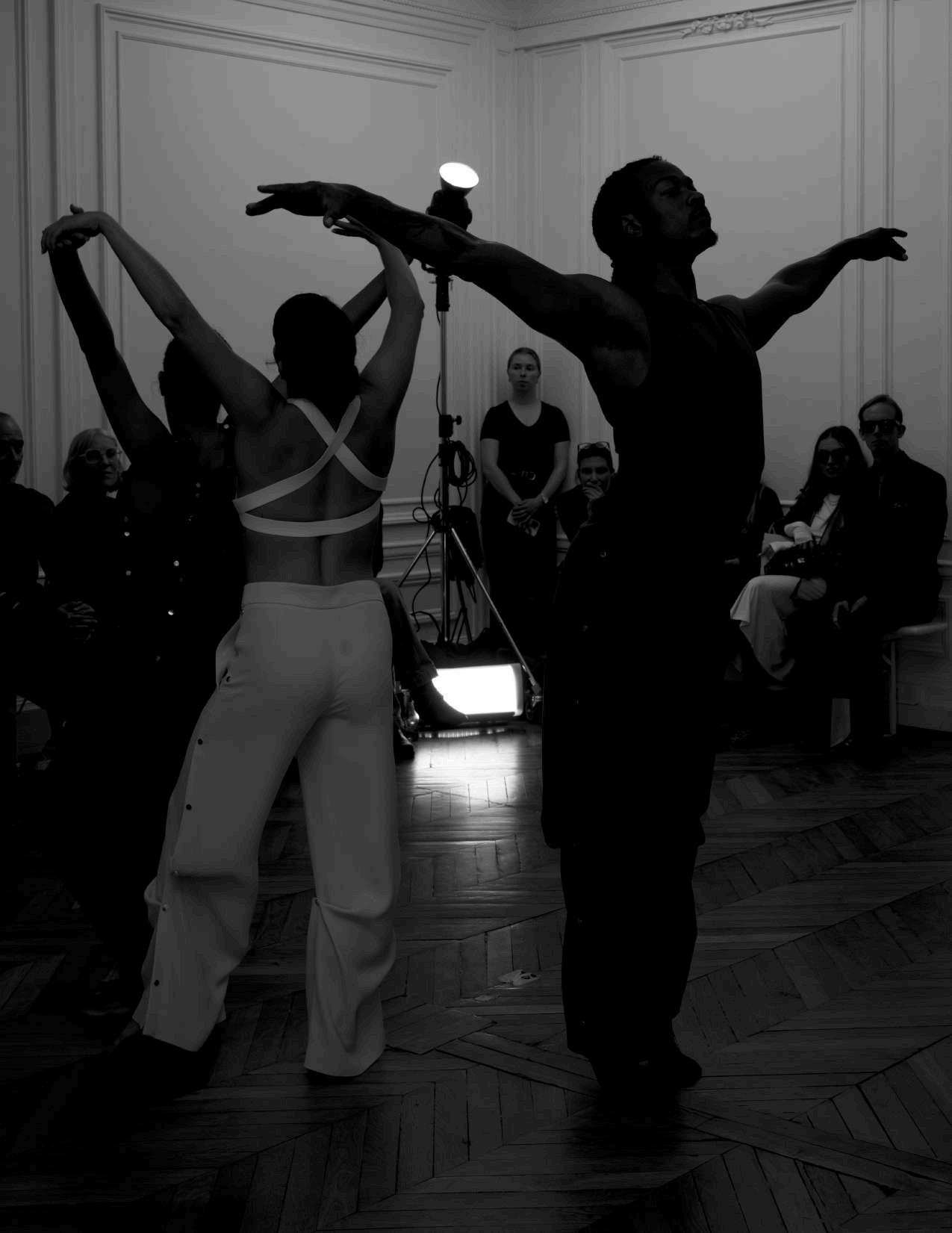
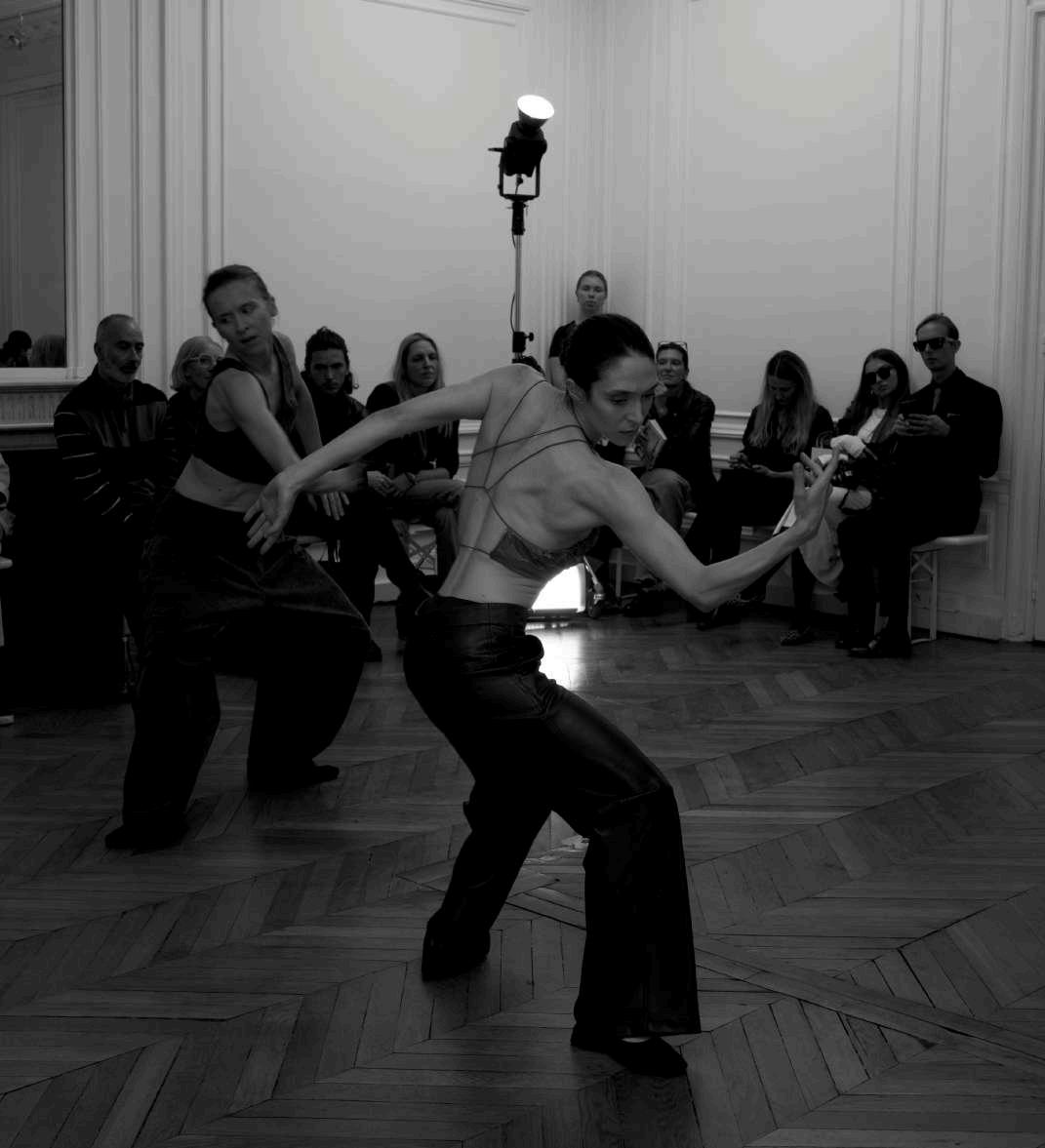
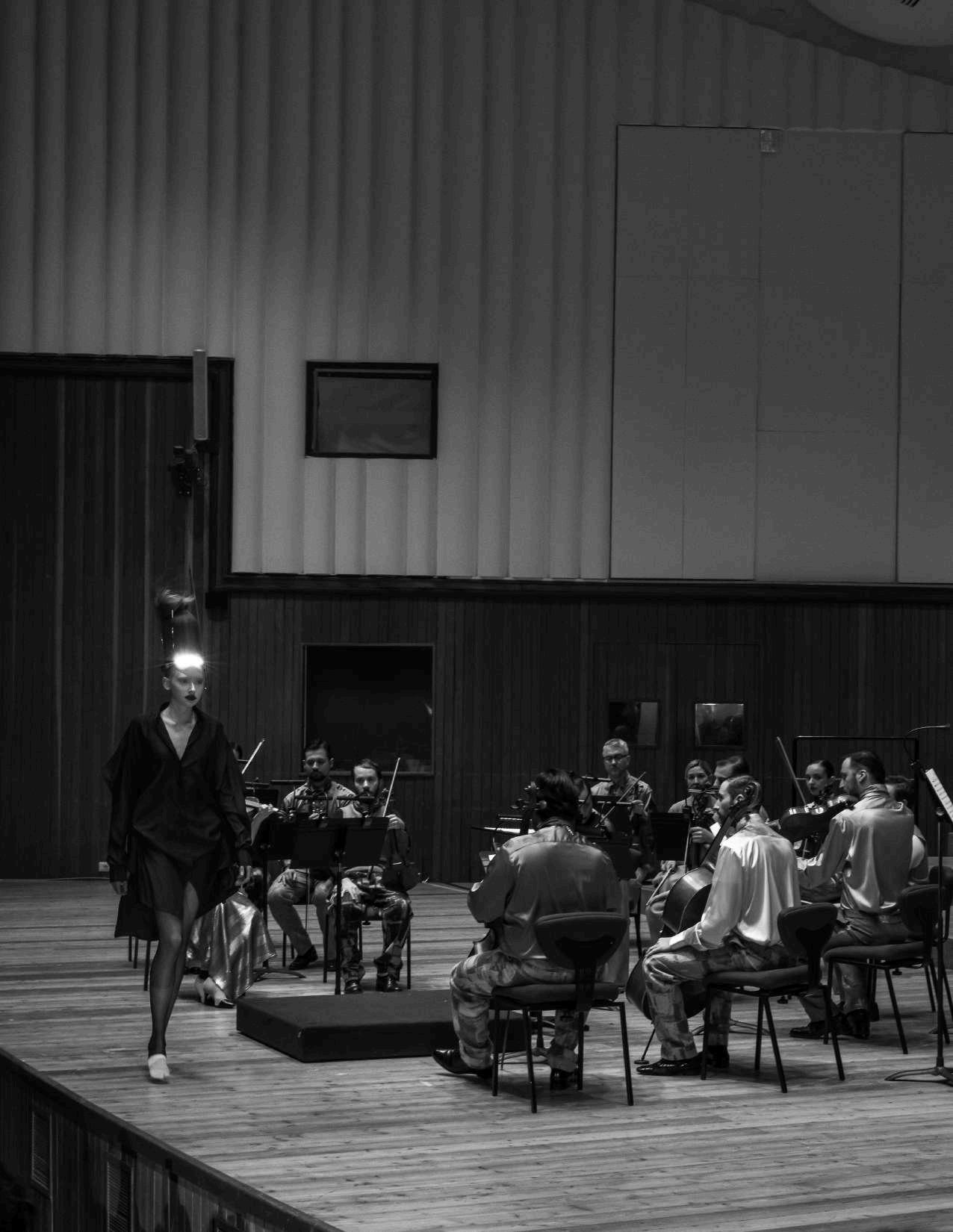
Stepping away from the runway once again, MarinChristine Statz shaped the season by putting on her own personal ballet The Gauchere show wasn’t just a glance at the staples we’ll need come spring, but an experience with pliés in lieu of runway strides and port de bras replacing the walk’s familiar, mundane sway. Gauchère’s Haussmannian showroom transformed into a contemporary studio, welcoming natural light that warmed its softly panelled walls and oak flooring. The Louvre, oft painted as the pinnacle of romance or an art enthusiast’s dream heist, sat alongside the famed Tuileries Gardens just a stone’s throw away, their proximity inherently elevating the scene
Resting at the midpoint of history’s greatest art and nature’s innate serenity, the show merged multiple longstanding artistic impulses, situating MarinChristine’s ballet as a sartorial thesis on dissolving the boundary between fashion and its living inspirations
Nevertheless, achieving fashion that mimics live art requires more than a good designer and a bit of change; it demands perspective from those who embody it. Circling within the same high-fashion solar system, Marin-Christine and Benjamin Millepied were not joining forces for the first time.
Beginning his career as a dancer with the New York City Ballet, the French choreographer gained acclaim for his work on the ballet sequences in the 2010 psychological thriller Black Swan, later dabbling in short-film direction and, now, fashion Accompanying the performance was a number by another of Millepied’s longtime collaborators, David Lang’s 2003 solo-piano composition, This Was Written by Hand The piece served the dancers with instrumental restraint and embodied MarinChristine’s concept through unspoken motion and melancholic sound. The collection did not seek reaction, but rather urged us to notice the human form not as spectacle, but as structure - not defined by garments, but extended through them. Rigidity became fluid through form, intimate moments resonated as universal, and static energy found purpose in motion.
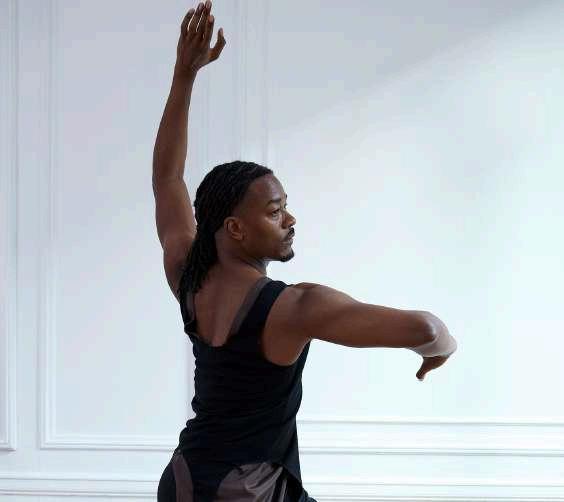
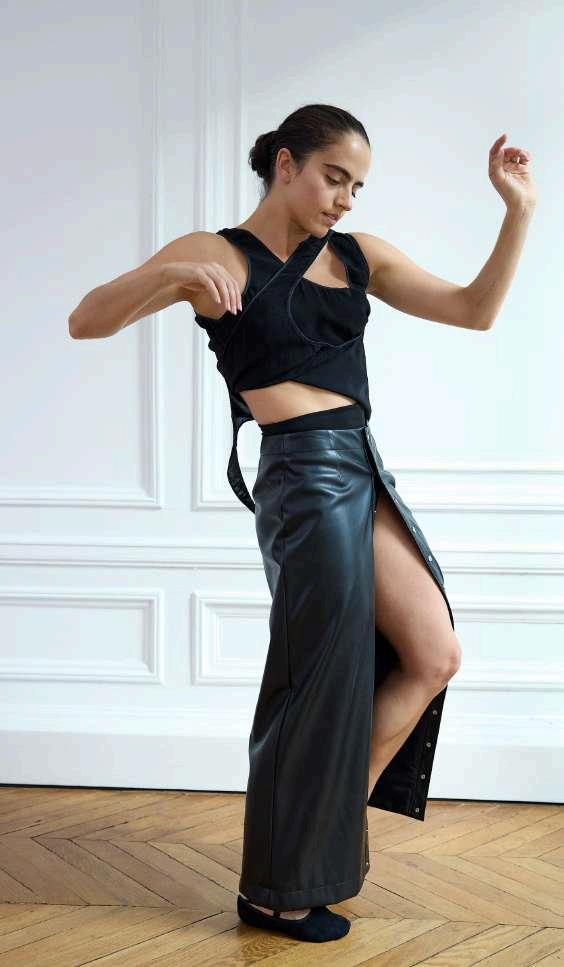
A series of five dancers, four female and one male, appeared as sculptures come alive, deconstructing 15 looks in repetitions that shifted from duo to trio and solo to collective Since debuting in Paris in 2017, the brand’s color palette has seldom strayed from its routine neutrality: browns, grays, blacks, and whites, with only occasional ventures into yellow, blue, or orange. Rendering repetition as consistency, the quiet palette recurs each season without feeling redundant. In the opening looks, a floor-length faux leather skirt accommodated motion by unfastening where fabric met gracefully contorted limbs and paired with a twistedjersey shirt that foreshadowed a series of sculptural bratops that, while intriguing, are likely your worst nightmare when dressing in a rush.
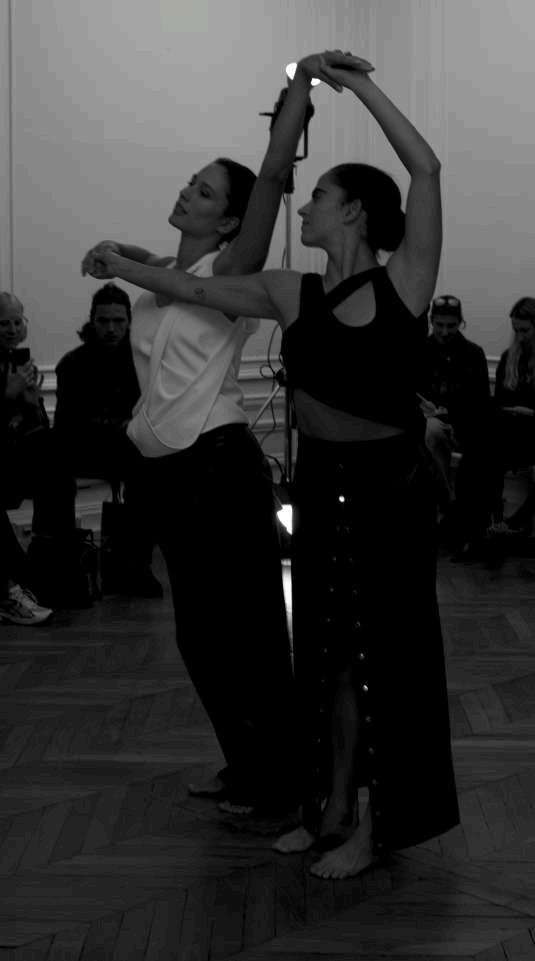
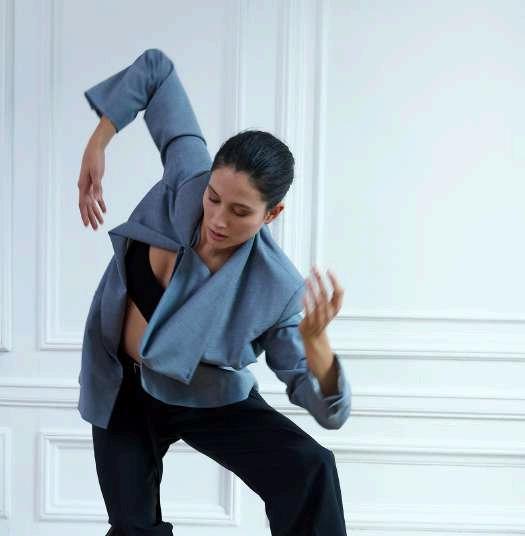
The entr’acte introduced jackets in light summer wool and cooler blue hues, defining the season’s play in color One look washed steel-blue across a silkviscose garment, draping a dark-haired model captured in stills from the show in a somewhat flamingo-like stance One knee, sharply bent and hovering perpendicular to the ground, mirrored a right arm extended backward overhead, grounded only by her planted foot and closely held left arm. It was the kind of posture with a 23-letter name a yoga instructor might suggest if you’re “familiar,” then ask you to hold for a relaxing count of eternity. Despite the strain, the garment held its own, waterlike and forgiving within her movement, it was sure not to complicate an already demanding choreography.
The remaining looks traded dominant leathers and nylons for an encore of silk-viscose crepe, framing a journey from structured motion to softer flow In the finale, snaps became a focal point, popping open at any moment where movement got carried away, swiftly accommodating as many uncomfortable shapes as the dancers could muster. Although we may say a silent prayer that the pantsing epidemic of 2015 is entirely dead and gone, outside of this unserious worry, there can really be no downside to a summer wardrobe that adapts to your every whim. After all, what better way to eliminate your fear of faux leather pants on a hot summer night than for them to simply unsnap so rising calf sweat can catch the breeze?
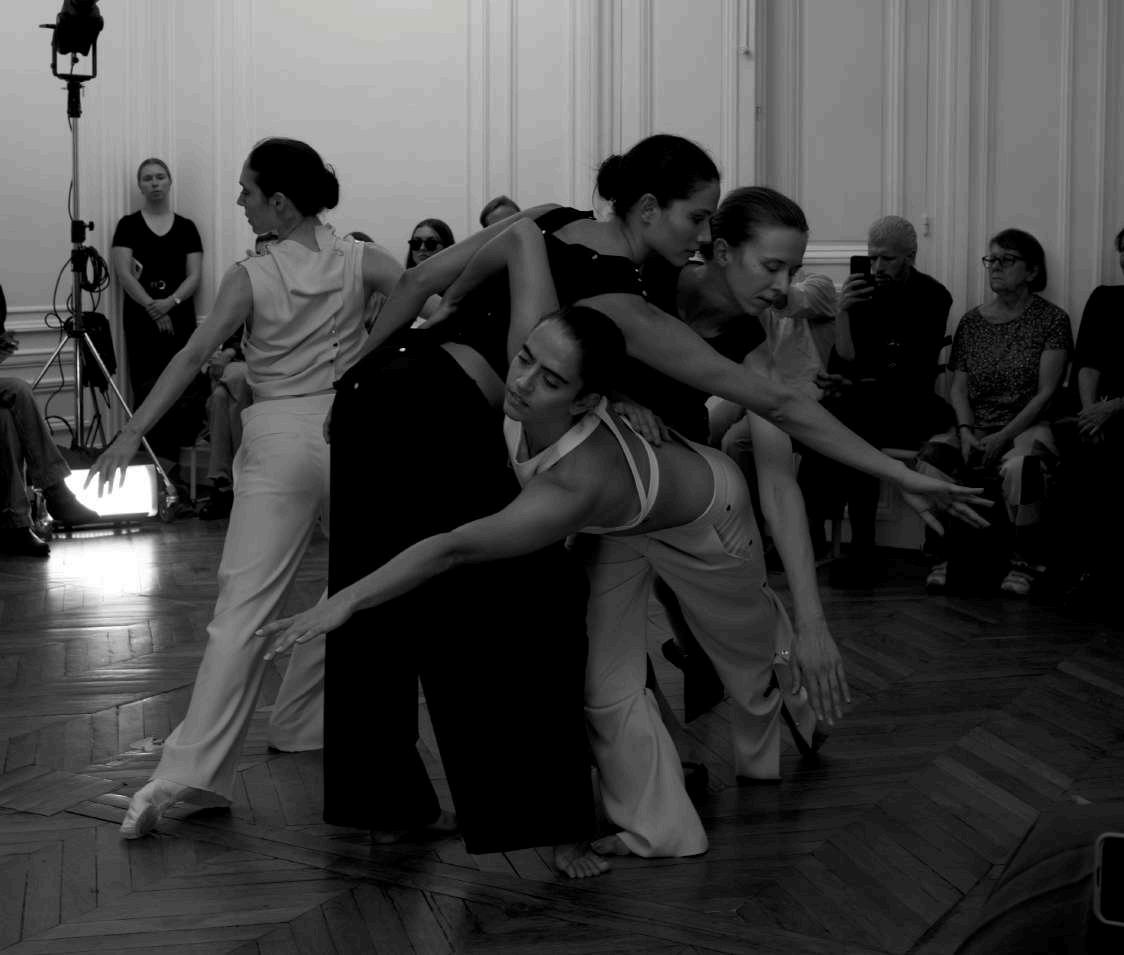
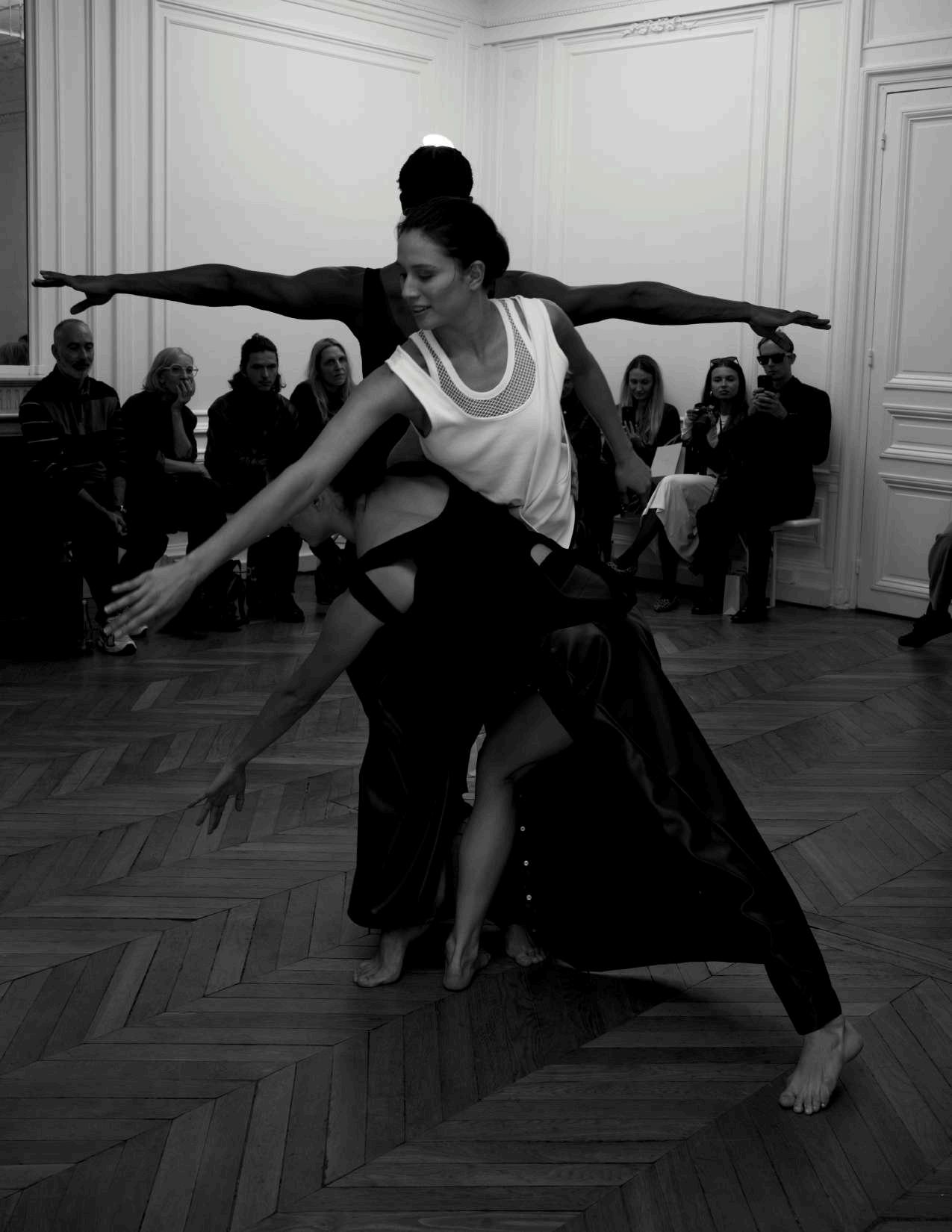
This season, Gauchere unified three creative universes, dance, music, and fashion. They all spoke separately while performing as one. The looks, though compelling on their own, were not spectacles of individual genius, but rather key instruments within an experiential ensemble. While runway shows have shaped the brand’s past five years, intentionally stepping away from catwalk codes is anything but foreign. Following her Spring/Summer 2021 runway show, the soft-spoken designer reflected on her goals for the wearer “I really want to create for and empower women to uplift women,” she explained, describing her clothes as a uniform for everyday life as smoother, more organic, and grounded in confidence found within the subtleties of the everyday
It was a priority she emphasized would remain true across collections past, present, and future. This ethos gave us the chance to reflect on why we rotate the same three going out tops or designate a lucky tie for job interviews, even when we still can’t land a job. Perhaps it’s the unspoken fear that our real lives can’t mimic the one we imagined for nice things: expensive perfumes worn once a year or red bottoms that have yet to set foot outside. What good is a signature scent no one recognizes, or a shoe kept pristine until you’ve already arrived? Statz’s message is to let luxuries be lived in, not just put on display, and with clean tailoring, minimal fabric, and exceptional versatility, it was delivered to wearers, with all of their nuances, loud and clear
E R M A N N O
S C E R V I N O
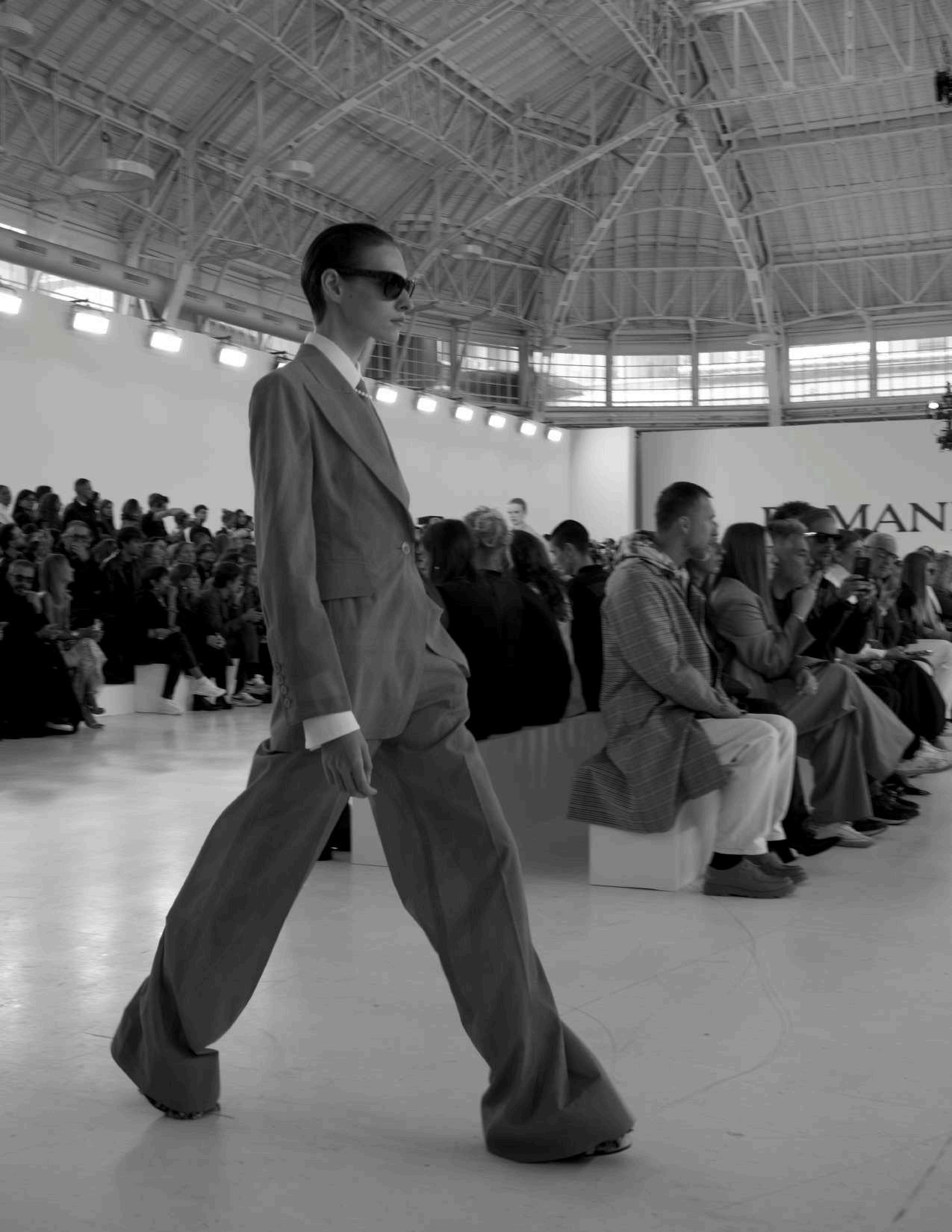
A mid-morning show on Milano’s Via Piranesi harnessed the dichotomy of light vs dark and iridescence against shadow. The stark white room, decorated only with Ermanno’s name typed in bold block letters across the back wall, was emblematic of this season’s statement that empty spaces can be as powerful as those fully occupied
Let’s take a step back In an early interview Scervino ironically foreshadowed his own success “I always wanted to be a designer ” he stated “Even as a child, I dreamt that I would one day dress the most beautiful women in the world.” Born as native Milanese, Scervino is no stranger to the glamourous life or the clothes that accompany it. Each year, with memories of childhood summers in Forte di Marmi and winters in Cortina d’Ampezzo in mind, Ermanno dresses a new woman with the same inherent code: well-informed, refined, and diligently shaped by travel, good food, and curated company
This season, Scervino clothed the genteel woman for her unrelatable everyday life Her ventures might bring her to the Blue Grotto in Anacapri or to balconies overlooking Positano, yet such tourist death traps rarely see her return. Instead, she prefers equally picturesque spots like Pantelleria, constantly revisiting those that resonate without superficiality. To be plain, she’s the kind of woman you want to hate. Taking Dominique Sanda as her icon since birth and housing a bare face that could put peak Veruschka out of work, she’s the shadow of our insecurities inhabiting the light of our desires
Her preferred colour palette consists partially of saturated blues and warm sand tans, echoing beaches where she may have gone skinny-dipping. Yet it also incorporates sun-faded sky tones and citrus orange shades mimicking the sunsets from terrace that saw her sunbathe on midsummer afternoons.
After closing last spring with a series of dramatic black ensembles, Scervino instead used darkness as this season’s hook The opening black trench sat loosely tied at the models waist revealing just enough of the sheer top underneath to let eyes, and imaginations, wander momentarily Its plainness prompted a search for detail found resting near the model’s décolletage. A silver heart locket on a single-strand pearl chain lodged comfortably into the dip of her collarbone, an elegant reminder of the pearl as symbol of classic femininity in the 1950’s.
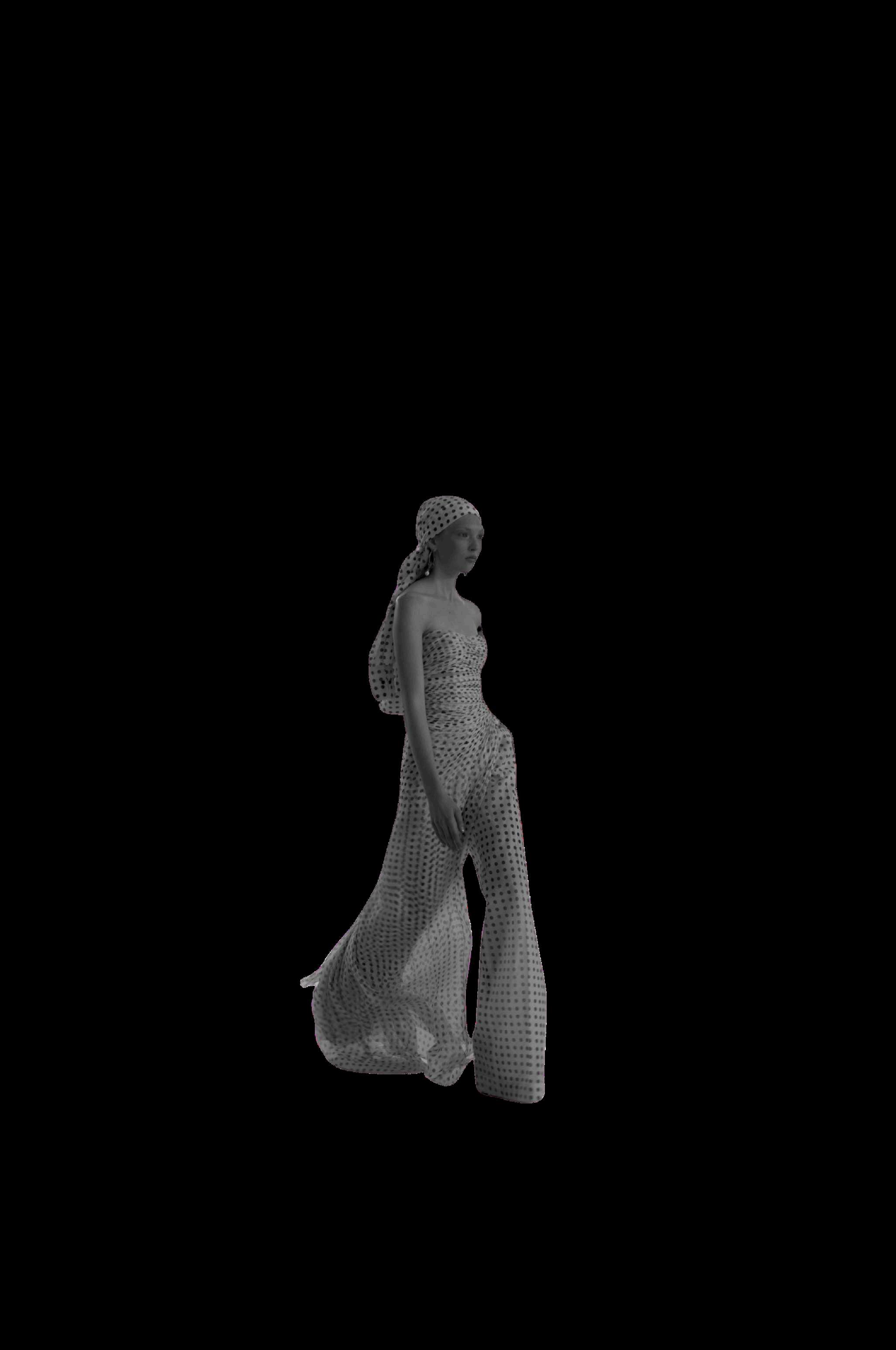
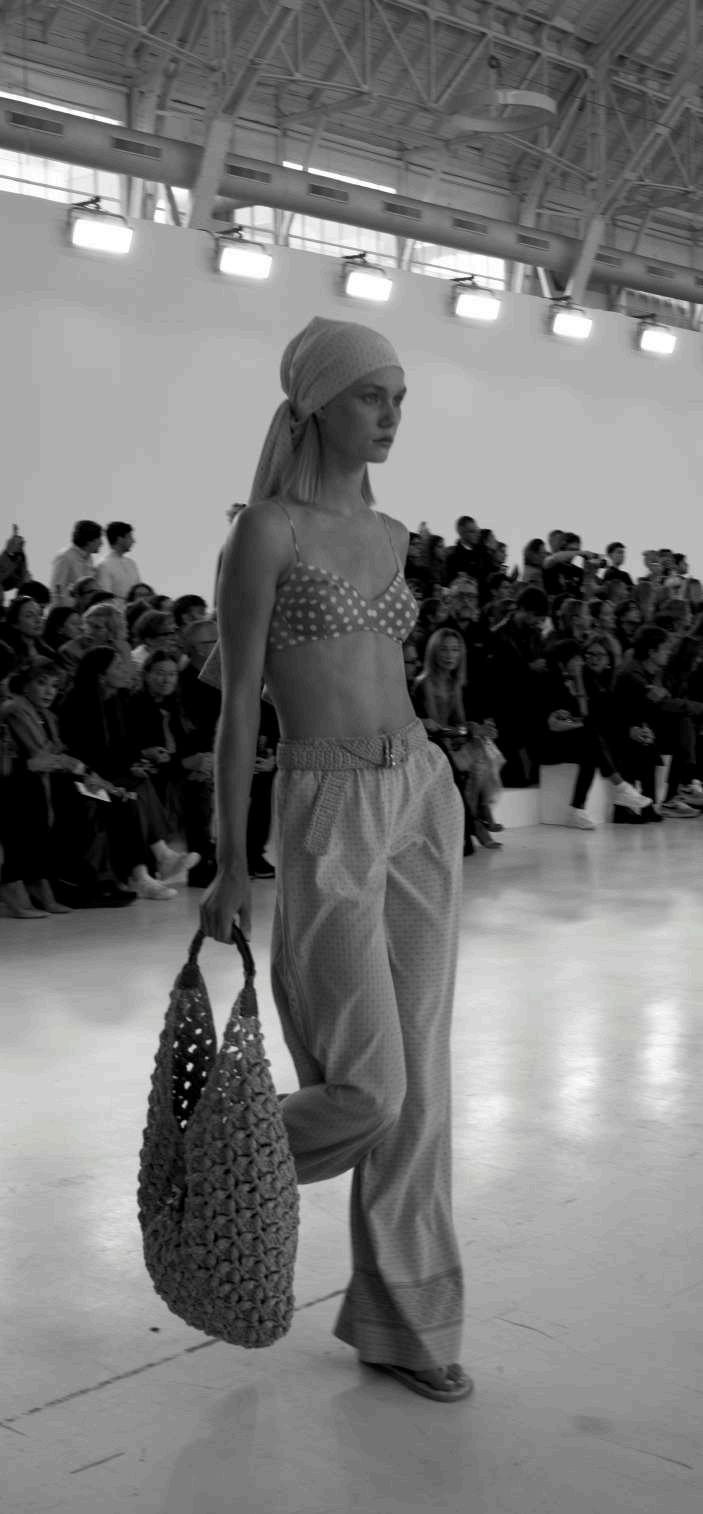
Another nod to this golden decade came in one of the most recurring patterns of the last century: polka dots Decorating lapels, pants, and even entire looks, the pattern made clear that it has officially made yet another comeback
But there was more to the collection than a frenzy of recycled 1950’s motifs. Spaghetti straps, large bejeweled belts, and wrap skirts layered over pants dipped their toes in the 2000s, while recurring geometric motifs provided further proof of our woman’s identity as a mediterranean nomad, appearing as softened ceramics you can wear
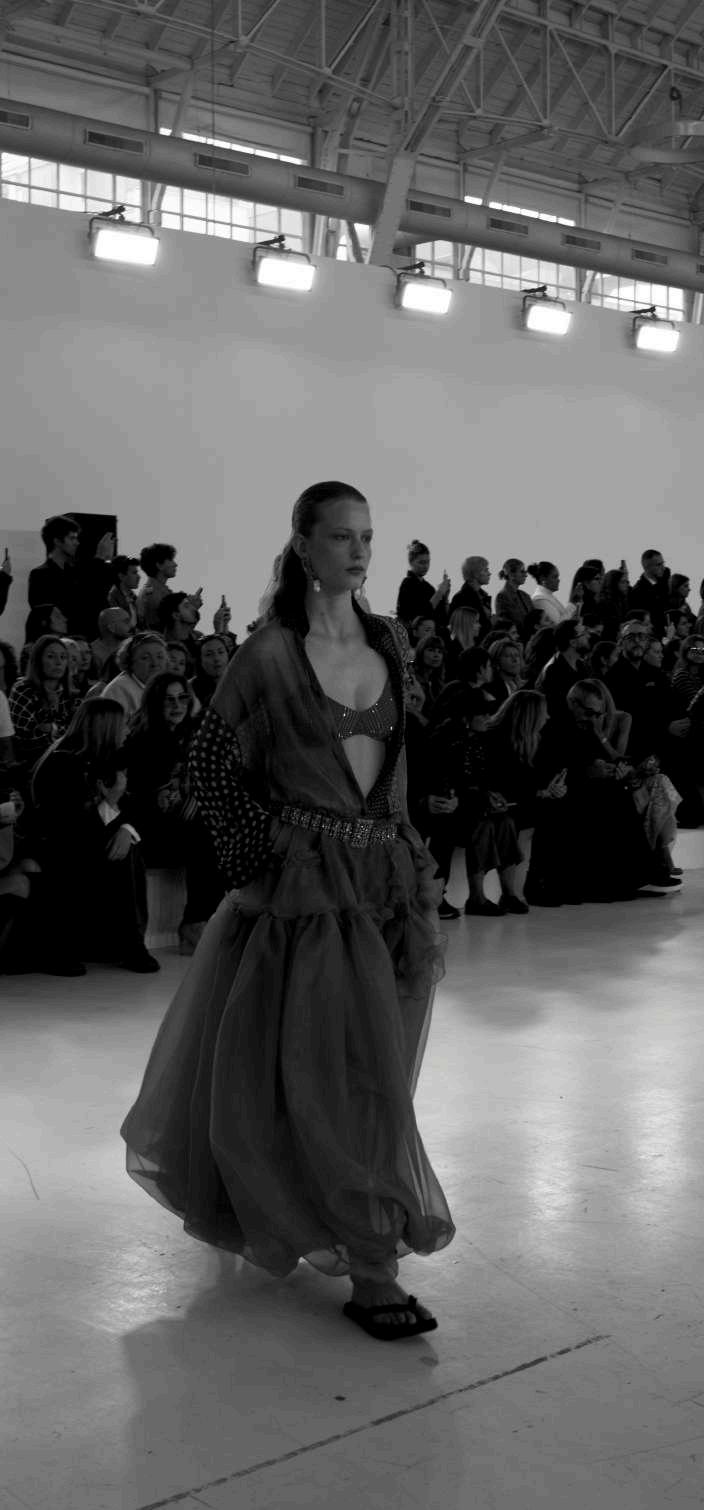
Look 10 became a melting pot of Scervino’s ideas, as a tri-pattern blouse was left unbuttoned over a slate-gray bralette that shimmered futuristically beneath. Chiffon was layered as a bubble skirt anchored by a bejeweled belt that screamed Y2K and a single pearl earring that dangled as the lone piece of jewelry.
Look 18 was a personal favourite in both tailoring and persona Sporting a gauzy white button-down tucked loosely into sleek nappa skirt, the uniform was that of a Milanese sciura (a fashionable and affluent older woman) made modern She may have traded her usual kitten heel for a summer wedge but huge handcrafted sunnies and a staple leather bag remained true to our Milanese woman’s iconic code. For the less rigid rule followers, Look 24, a sandy white monochromatic ensemble down to the lacey tan socks, recalled a day at the beach or perhaps a slumber party in its sand The model wore a simplistic silk dress, decorated only by decals along the top and bottom hem Slouched low around her wrists, a crochet cover served little true purpose apart from the texture that tied perfectly to the beach bag clutched tightly in her right hand.
Compared to last spring, where looks carried the spirit of 1960s/1970s rebellion, this year merged two decades that couldn’t appear to be less compatible. However, Scervino once again transcended expectation, merging 50’s class with 90’s nostalgia, in a way only he could achieve with such ease Knits did remain omnipresent, as did Scervino’s trademark bralettes (recalling images of Mia Wallace and Brad Pitt)
Chiiffon stayed airy even when tailored unconventionally and supple nappa was pleated and irregularly shaped without losing its original sheen, signaling once again that even through transformation, the designer remains committed to timelessness and an elegance that transcends technology’s nuances. After the show Scervino explained, “This collection was born from the desire to let go of a more constructed approach and embrace an essential simplicity,”
Embrace it he certainly did While we can’t predict what remote island or opulent villa will capture the affection of our imagined Dominique/Veruschka muse, one thing is for sure. Whether she’s tucked away in St. Tropez or sailing off the coast of Bodrum, a pair of fringed sandals, iconic crochet cover up, and a handbag woven in bamboo cane will be the style code every tourist is desperate to copy Yet the secret isn’t in the clothes themselves, but rather in the one wearing them
S C H I A P A R E L L I :
D A N I E L R O S E B E R R Y ’ S D A N C E I N T H E D A R K
WORDS: JESSE SCOTT
B&W: LEROY VELASQUEZ
COLOUR: COURTESY OF HOUSE
Fashion imitates art, art imitates fashion, and Daniel Roseberry continues to bring the two spheres together in a way that redefines ready-to-wear while transcending time and suspending disbelief
Inspired by the lost art of the museum experience, he meticulously crafted a Spring/Summer 2026 collection with the precision of a sculptor and the impassioned strokes of a painter (possibly mad, in the best way) in the throes of inspiration.
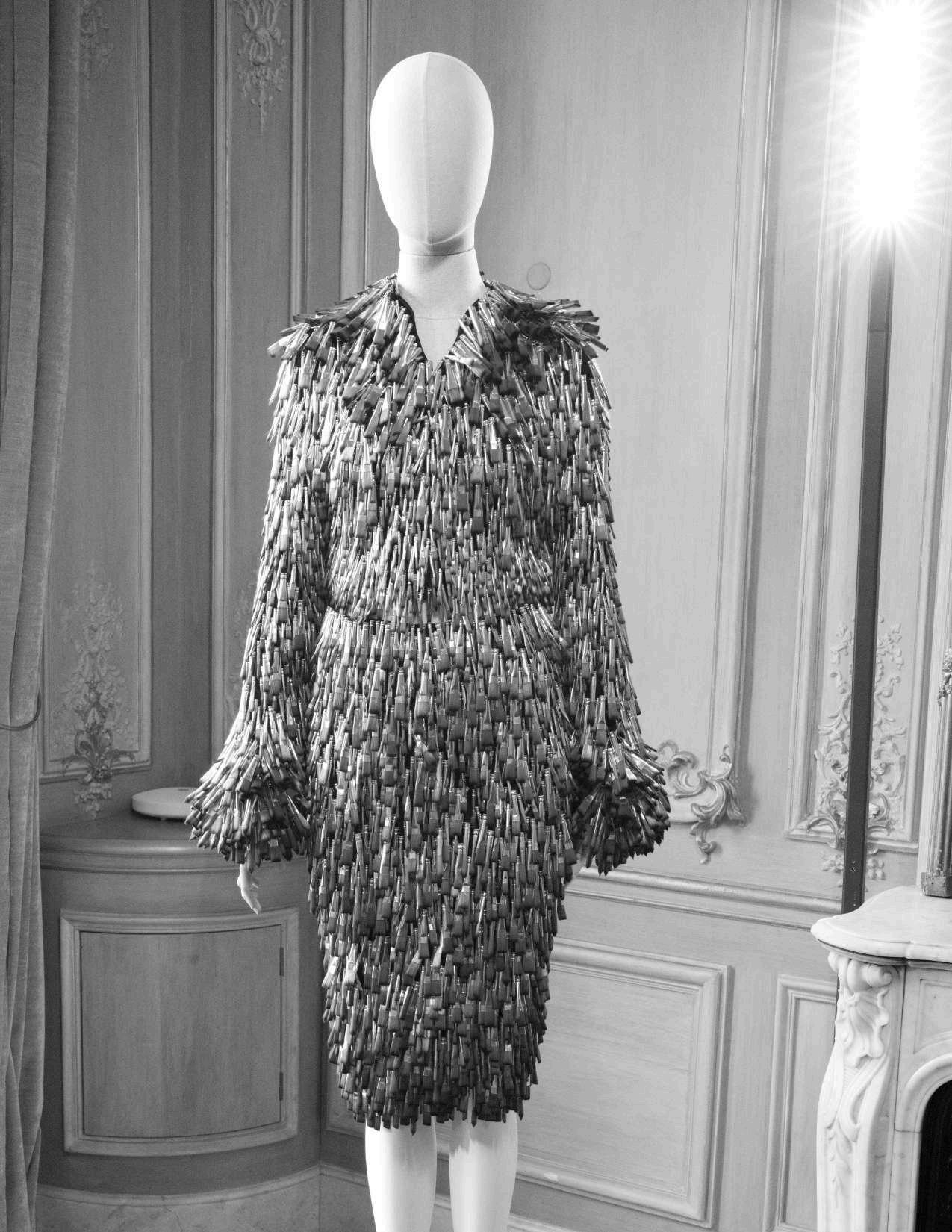
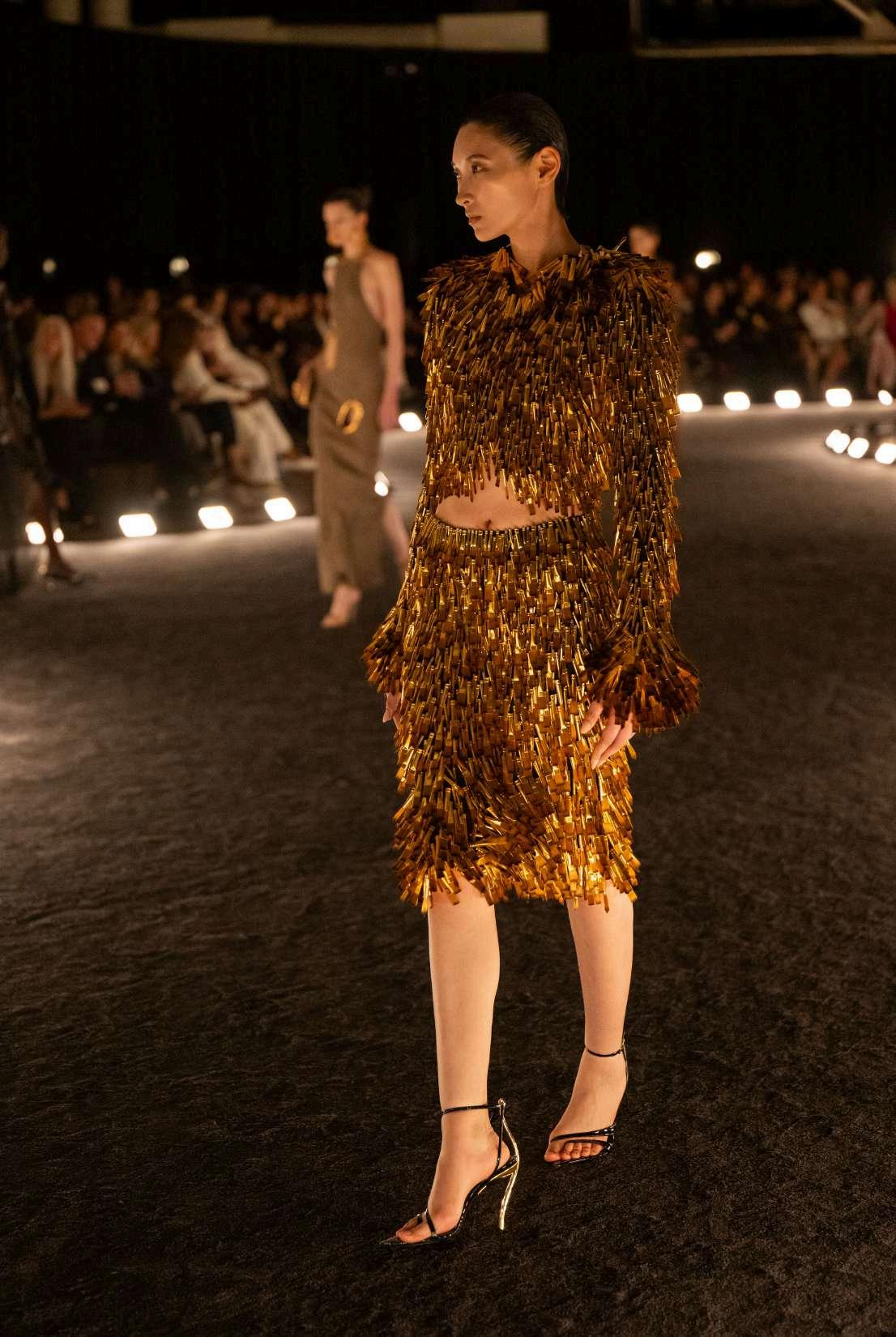
One dress was composed of over 6,000 miniature golden paintbrushes. Even seasoned fashion critics seemed in awe, but for Roseberry, and for those who have followed his career so closely that the surreal has become commonplace, it was just another day at the office
I’ve said time and time again over the past few years that a Roseberry RTW collection is executed with a degree of precision and imagination that most designers, including many on the official Haute Couture calendar, could only dream of achieving in their couture offerings. The Plano, Texasborn virtuoso is aware of this paradigm, and indeed has even experienced discomfort with it.
He told the press this season that when his ready-to-wear was first compared with couture, he “did not know what to make of the comment, which always sounded like criticism somehow, as if making ready-to-wear that yearned to be as extraordinary and thoughtful as couture, was really a liability.” But that discomfort is now gone. Roseberry has been at the pinnacle of Parisian fashion for several years, and, while ever humble, he has grown into the role.
Spring/Summer 2026 saw him curate a collection with more conviction than ever before, fully embracing his own sartorial artistry, seducing us into a surrealist dream, and asking the rhetorical questions: “Who doesn’t want to participate in a fantasy made easy for daily life? Why can’t fashion - even everyday fashion - be art?” We live in a world saturated with motivational speakers and quotes, and in the wake of “soft” and “clean girl” trends, our Instagram feeds are often full of creators telling us to “romanticize our ordinary lives.” Roseberry has achieved the reverse: he is making our ordinary lives a romance, and dressing us as its modern heroines
Spring/Summer 2026 was entitled “Dance in the Dark ” The show was a cinematic experience, but also an intimate one emerging from a place of deep introspection Roseberry presented his collection at the Centre Pompidou, in the same gallery that hosted the acclaimed Constantin Brancusi exhibition last year, in an attempt to remove guests from the quick gratification-based and social media-fuelled frenzy that typifies the modern runway experience.
He views our phones as a “slophouse of cheap thrills ” And, in a strategy that embodies the “Schiaparelli-ness” of “Schiaparelli,” he wanted the show to “feel like going to a museum: equal parts inspirational, aspirational and reassuring.”
Attempting to distil the pure joy of “dancing alone at home after work”with no one watching and certainly no one recording - he designed for the aesthetically driven instead of the clout-chasing. Models sauntered down the softly lit runway with flawless poise and quiet purpose, wearing the classic colours that have defined quiet luxury but possessed of a savoir-faire suggestive of comfort and ease with the biggest stages And small details, all carefully considered and many not noticeable without viewing the pieces up close, left amongst the biggest impressions.
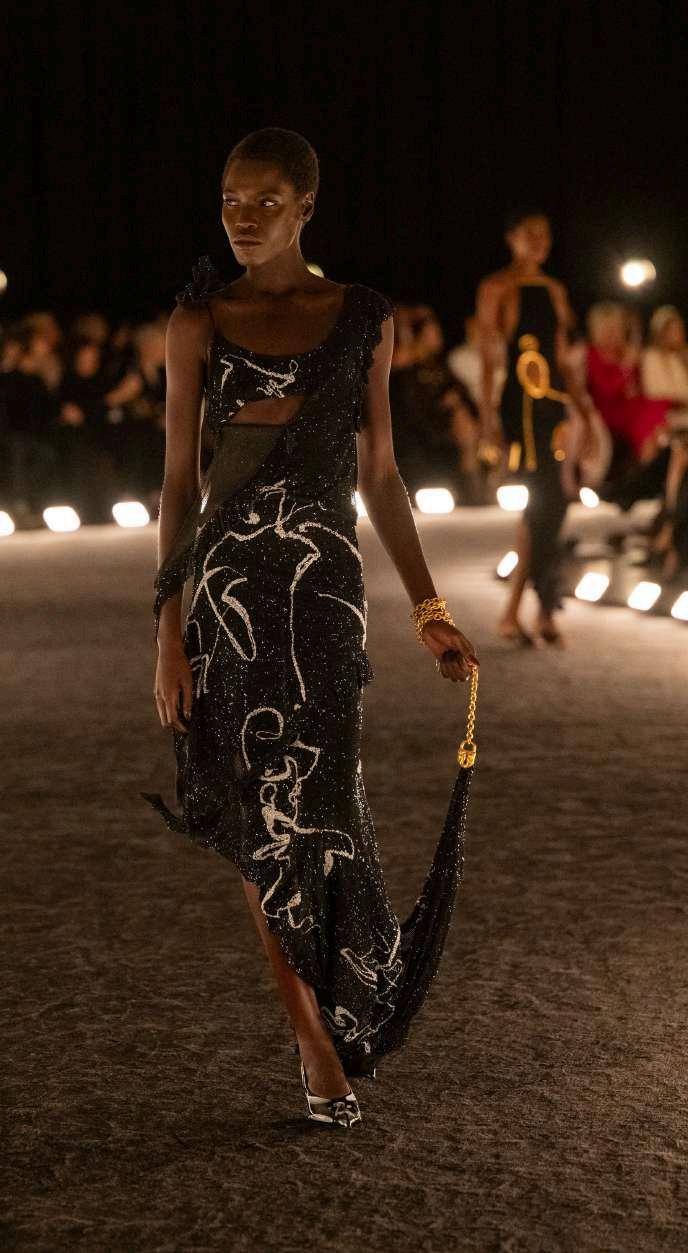
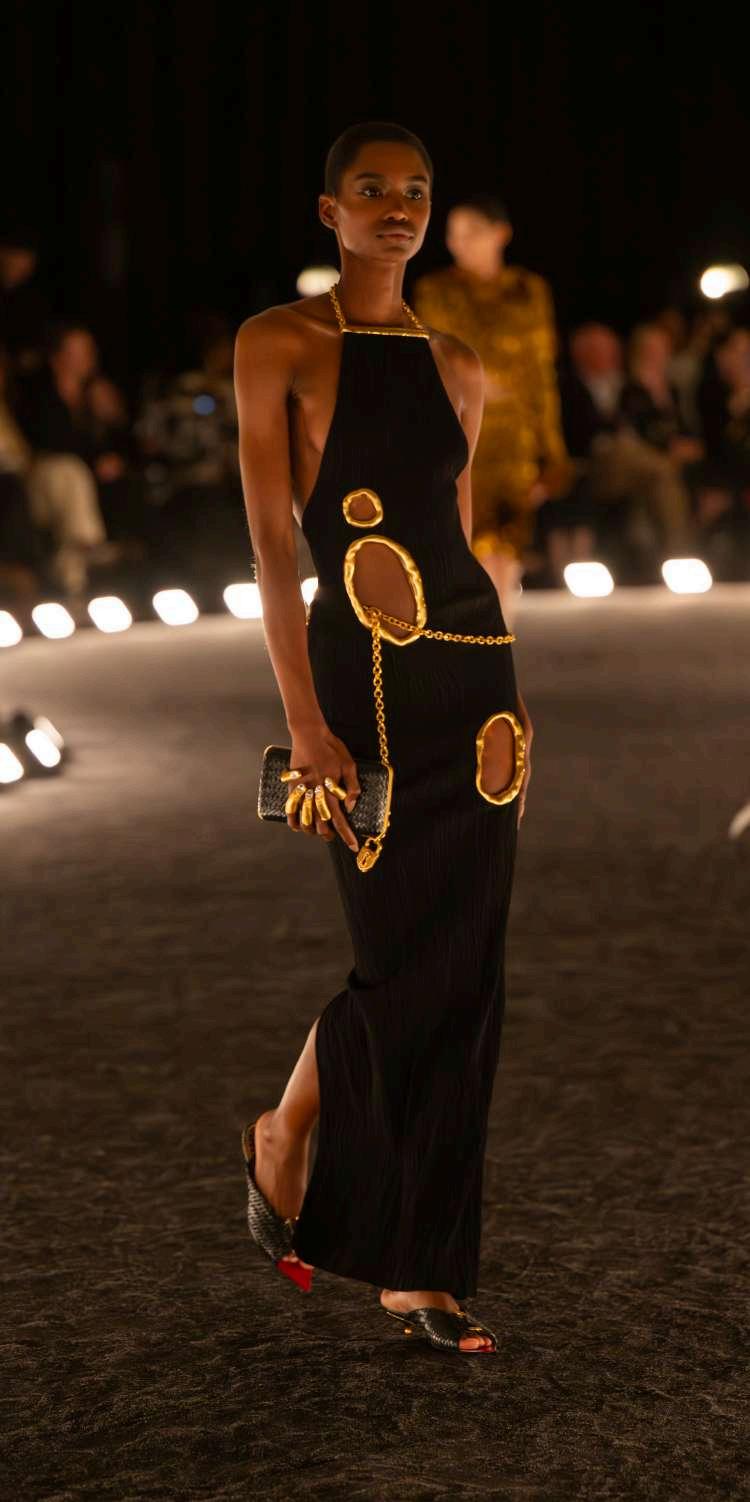
Yes, there was still drama, and the silhouettes were the protagonists. My personal favourite look, cleverly incorporating sheer and emblazoned with the iconic Schiaparelli signature, featured an extended gold chain so that the model could carry her own train It was immediately followed by a slinky black number with keyhole cutouts and a serpentine waist chain that allowed the model to physically connect her dress and handbag (in this case a clutch with trompe d’oeil fingers) I expect these ideas to inspire many brands, but never be perfectly replicated, in coming years.
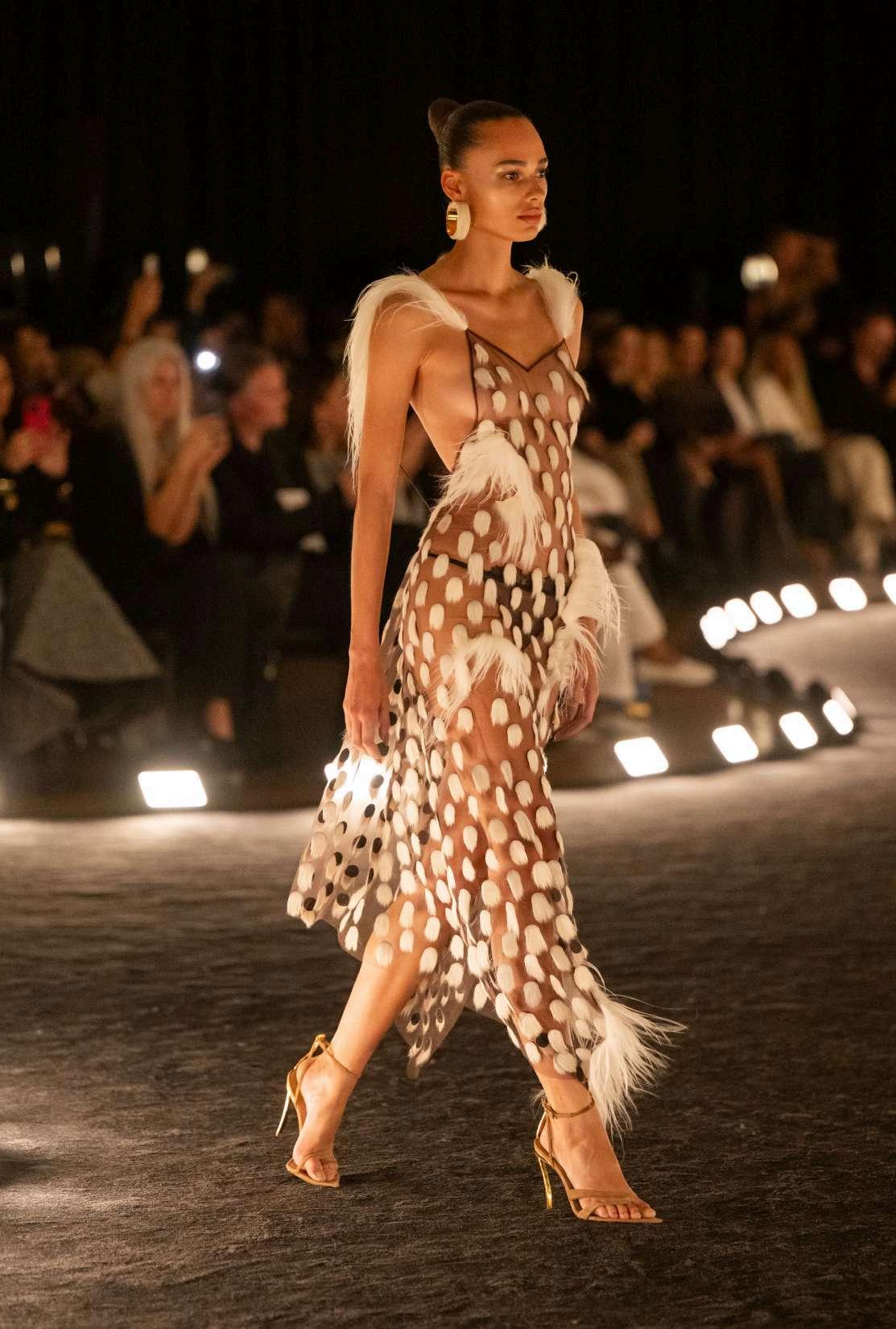
Sheer and skin starred. Kendall Jenner closed the show in a transparent tulle dress with goat hair black polka dots and an ingenious surrealist pair of gloves with deadly red nails.
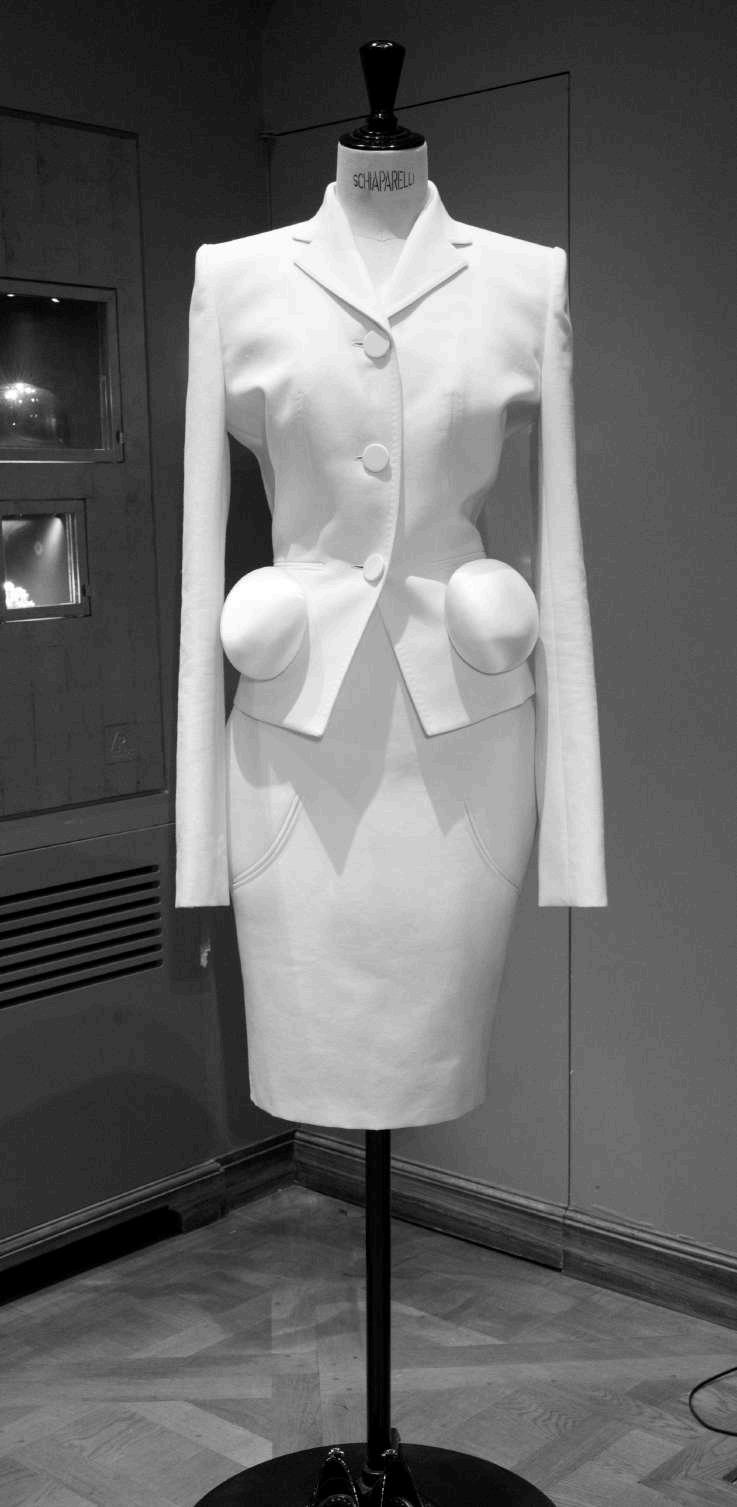
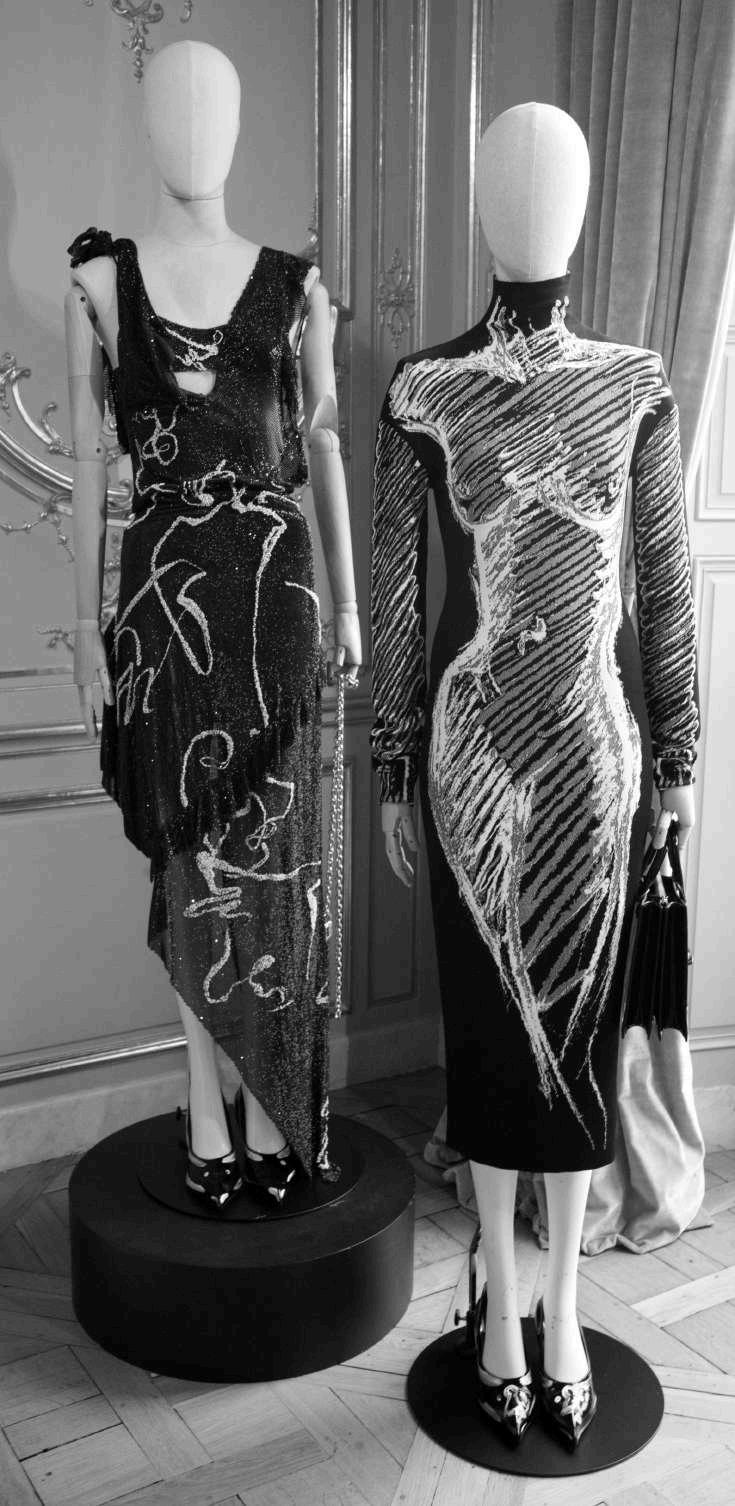
Top and skirt knits were covered in circular cutouts And the iconic Schiaparelli “Tear” dress, designed in 1938 in collaboration with Salvador Dali, was reinterpreted 87 years later in both black and white versions Notable for its vertiginous neckline and trompe l’oeil fabric shreds, it spoke to both surrealist fantasy and exquisite imperfection - for a worldly woman who has scars but has emerged from the fire even stronger.
Fall/Winter 2025 saw Gigi Hadid open the show in a ferocious black suit with massive shoulder epaulets made of fur Re-interpreting the men’s power suits of the early 90s with a a distinctly feminine flair (and a statement high-waisted belt instead of a trademark watch) it foreshadowed a series of powerful pieces that highlighted the interplay between gender archetypes. Sculptural silhouettes were used far more sparingly, but to great effect, for Spring/Summer 26. Memory satin ruffles and flounces added geometric volume to a white viscose knit cardigan and a red viscose knit respectively. And elaborate evening gowns in iridescent silver and deadly red were enhanced by voluminous ruffles extending from the shoulder like the petals of a flower
Roseberry told guests that Schiaparelli RTW has always existed at the “crossroads of commercial potential and creative catharsis.” The accessories lean more towards the commercial side of that matrix, but not at the sacrifice of creativity. Equal parts, playful, glamorous, and practical, the aforementioned twitch with trompe d’oeil fingers is sure to be a massive market success.
Meanwhile, rattan bags with surrealist face details represent something of a new frontier for Schiaparelli and could become everyday essentials for those who wish to distil the spirit of their gala looks for Monaco into more casual daytime ensembles for Cap d’Ail. Hand-woven white leather derby boots synthesized Texan swagger with Parisian charm And dangling Minoan earrings were the most covetous pieces of jewelry
Schiaparelli Spring/Summer 2026 was a love letter to fashion in its purest form - and to the clients who bring the house’s designs to life. It was a guiding light (indeed one dress was anchored by a necklace of illuminated salt crystals) in a time of global turmoil and online brainrot. And it was authentically, uninhibitedly Roseberry. “All creative people can do is cling to what feels right to you - to us,” he told guests. “All we can do is make clothes that make the wearer feel the freedom and ecstasy we want to free ourselves - on stage for a brief moment, unashamed, dancing in the dark ” A Roseberry dress is the dress you envision yourself wearing on that utterly ordinary yet magical nightthat at the time may slip away as one of many but that later you realize was among the best of your life.
That’s among the highest compliments I could pay a designer. Yves Saint Laurent famously said of Elsa: “she was like a comet lighting up the night sky of Paris - intent on domination ” Schiaparelli Decades later, her maison is back in the cosmos And it’s Roseberry, playing by his own rules, who is blazing the trail
T O M F O R D : T R I B U T E T O D E S I R E
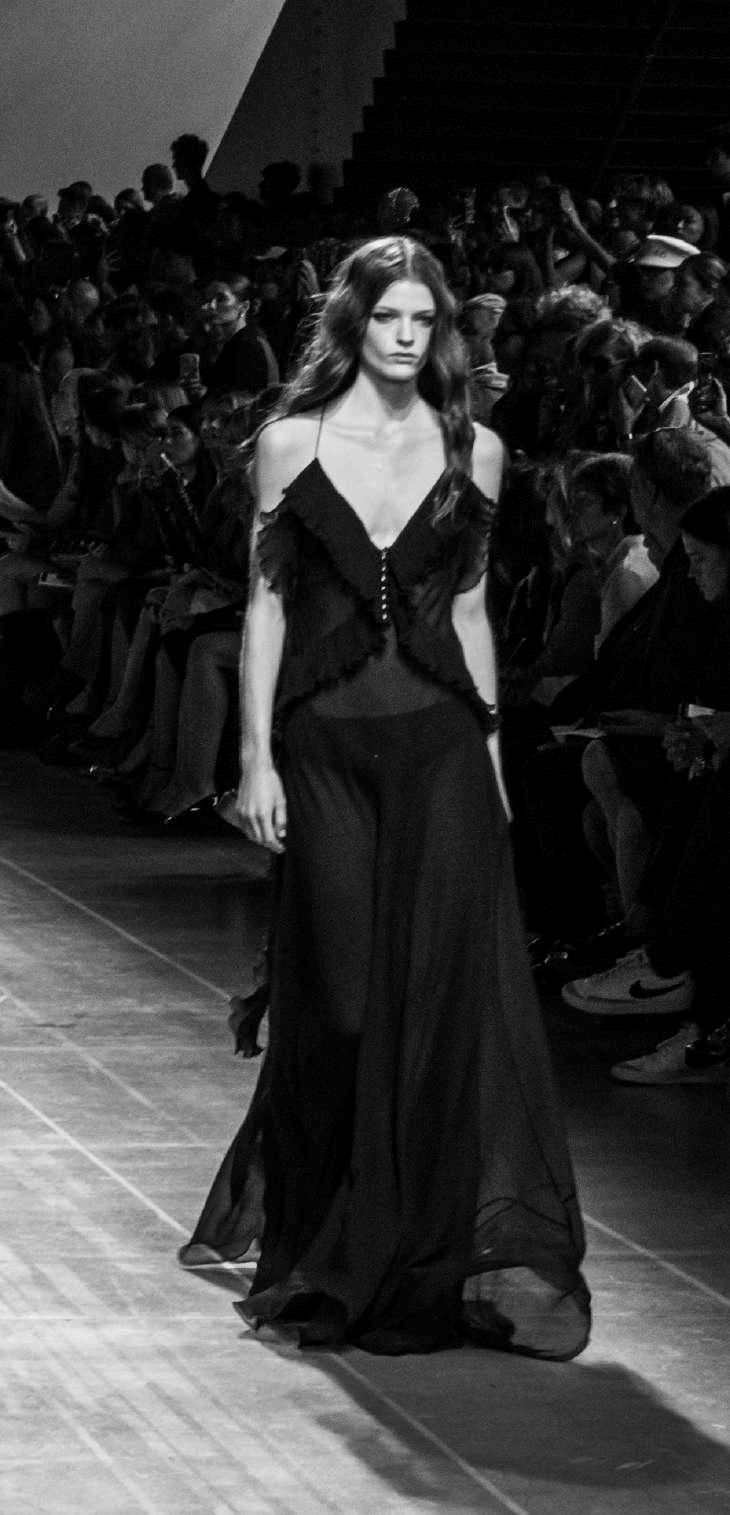
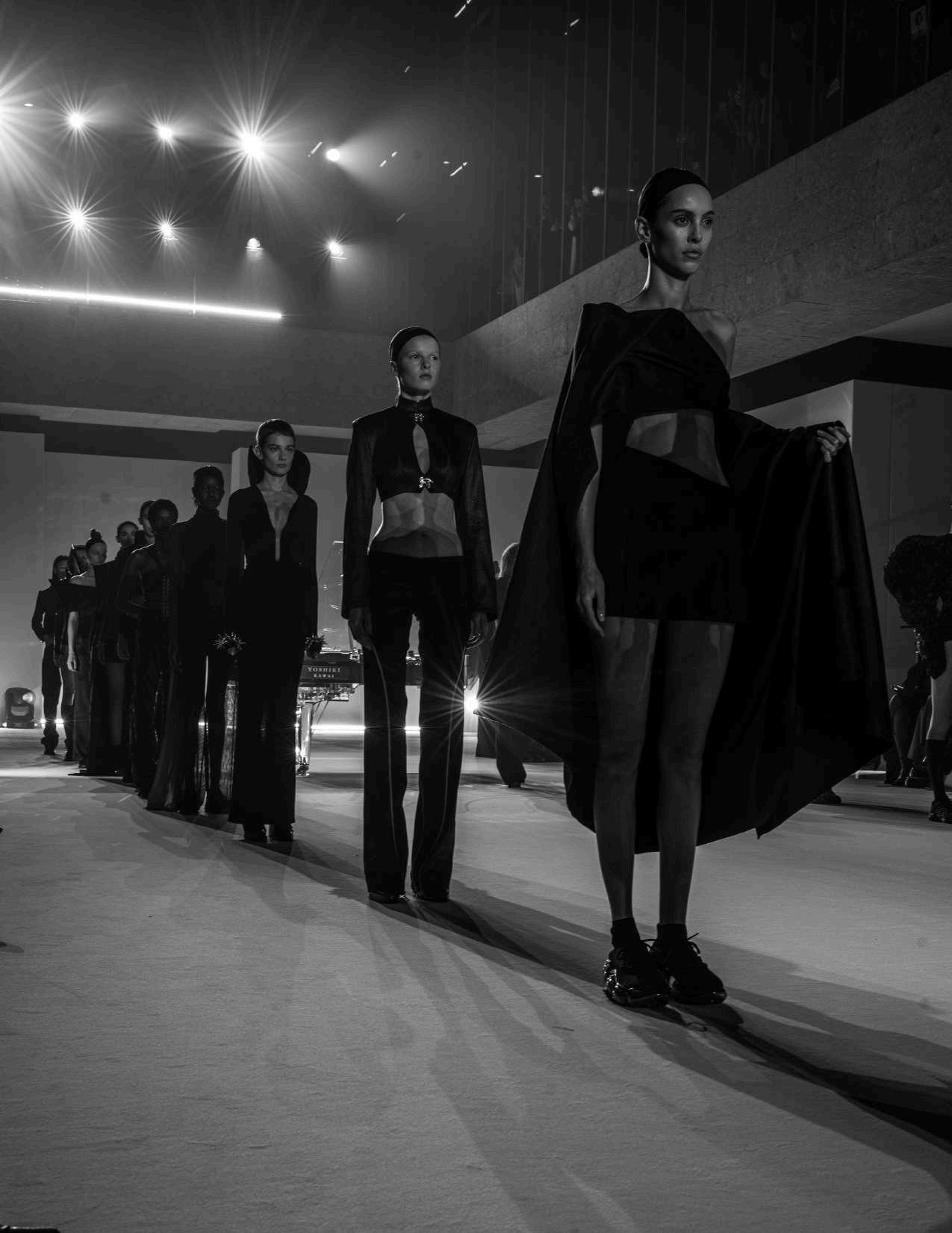
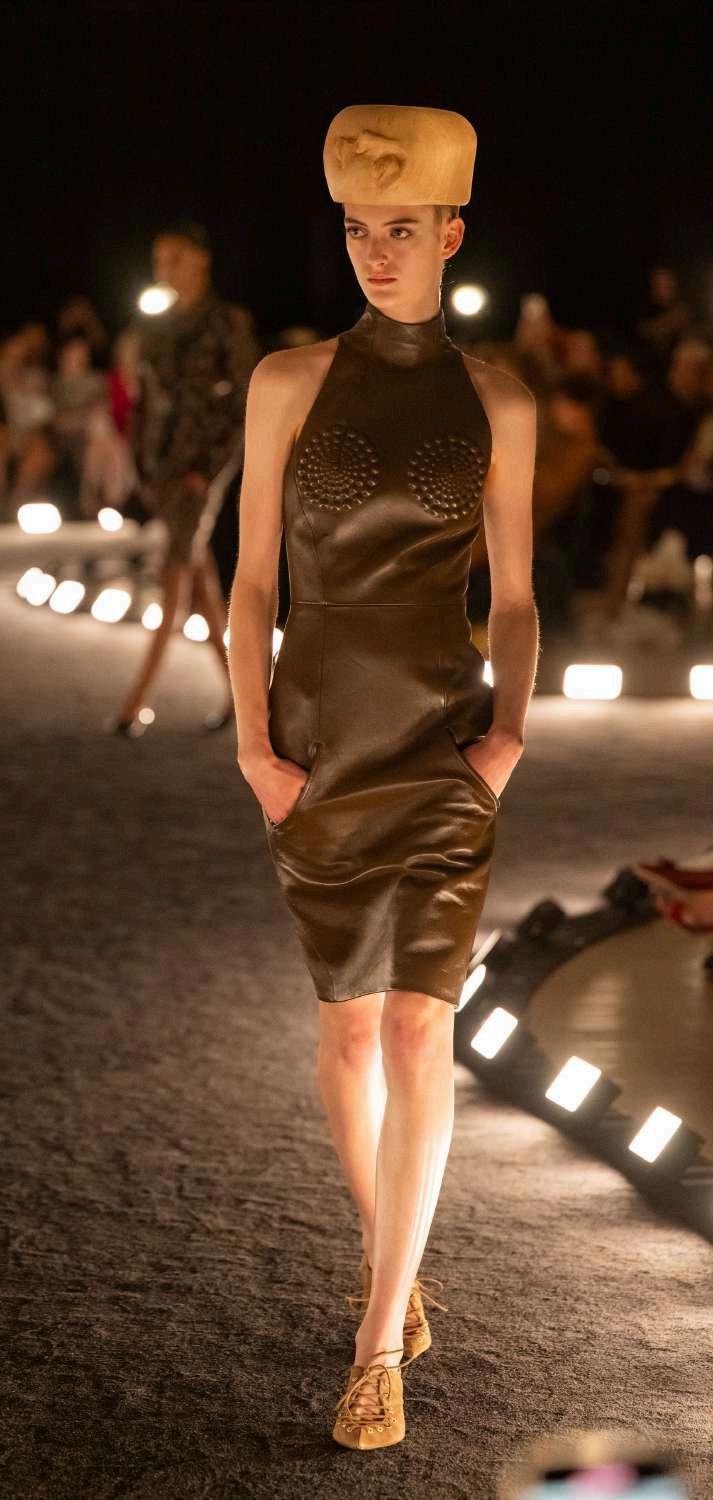
Haider Ackermann’s debut for Tom Ford was a show I will remember for a long, long time Proclaiming about Ford: “He is nightlife, I am the morning after,” Ackermann welcomed an highly exclusive guest list into a seductively lit space to launch a collection with the impeccable tailoring and rockstar attitude that first made his predecessor famous. At a time when fashion was becoming dangerously defanged, Ackermann dared to dream. The result: an unapologetically glamorous wardrobe for modern starboys, supermodels, and dealmakers. Ackermann Fall/Winter 2025 signaled not only a new era for the 20-year-old house but a seismic shift for fashion as a whole: clean girl was replaced with curated chaos, the lure of accessibility with the thrill of aspiration, and the tentative hope of pleasing everyone with a powerful drive to streamline a vision for a core client base
Thus expectations were extremely high for Spring/Summer 2026, and Ackermann did not disappoint. A tribute to desire, presented in a midnight blue room that exuded an allconsuming sensuality, the collection brought together lace, leather, and lacquer in a sinful, and irresistible, symphony.
Seated in the front row were Kate Moss and Pamela Anderson, perhaps the two most iconic faces from the era that brought Ford to stardom and seems Ackermann’s modern muse Moss, in a sparkling vertiginous blazer that distilled the spirit of the house into a singular deadly piece, was the best-dressed at the show She watched intently as a series of looks for rebels with a cause and the power to achieve it sauntered down the runway - slowly, deliberately, and supremely self-assured.
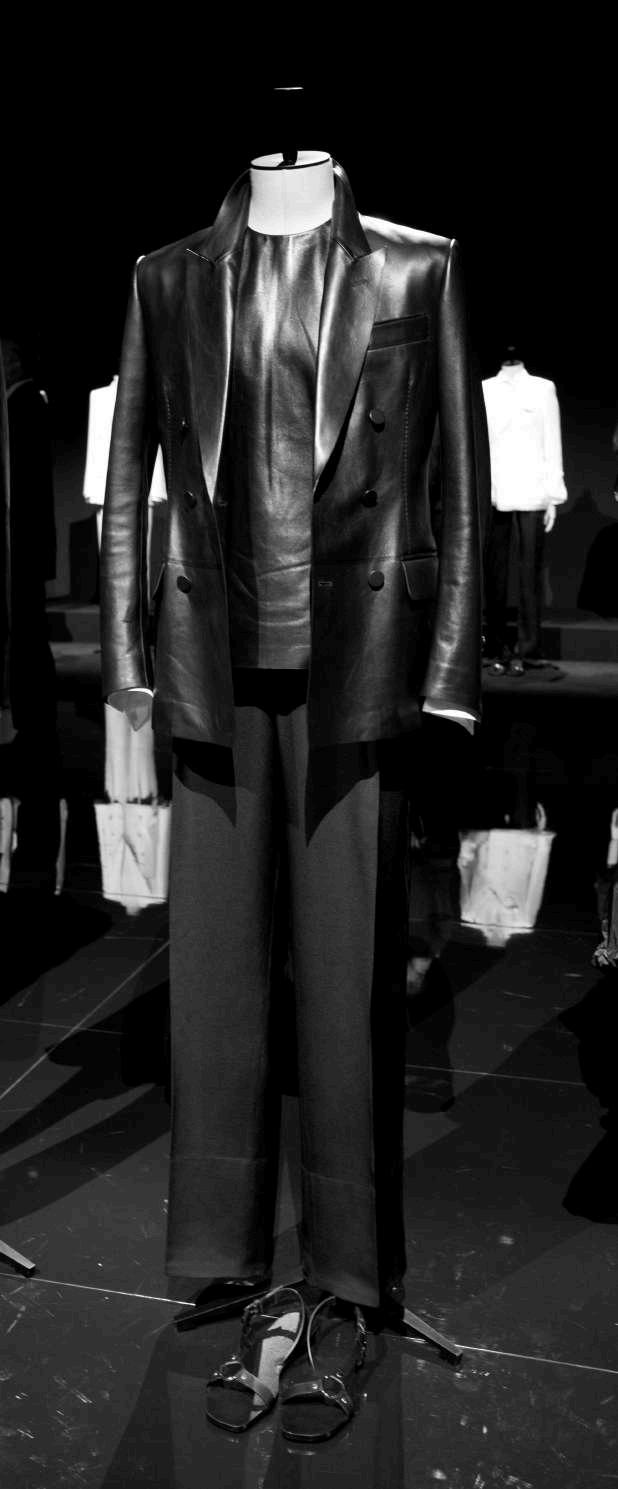
Leading the way was a menage of models in lacquer leather jackets of jet black, lime green, and sumptuous maroon. Sinuous conical collars, which would recur throughout the collection, balanced structure and sensuality; femininity and force. Later on, leather jackets in both the blazer and topcoat variety were irreverently paired with leather bralets: armour, although delightfully lightweight, for the next Bond girl. And the extensive corporation of sheer and lace details into leather ensembles added to the femme fatale effect
This urban edge was balanced by resplendent colours and opulent fabrics with an old-world sophistication Perhaps Ackermann’s most revolutionary move this season was the revival of the cummerbund, generally considered a relic of the past only brought out for the most formal of events. To put its cultural relevance among younger generations into perspective, I attended a strictly black tie wedding in Kitzbühel, Austria a month before the Ford show…and still was the only groomsman wearing a cummerbund. Yet Ackermann’s has seamlessly incorporated it into the contemporary sartorial lexicon. Eschewing traditional tux looks, he presented cummerbunds with casual sweaters, trousers, and even a cropped jacket - effectively serving as more restrained belts for those who prefer their accessories to whisper instead of scream
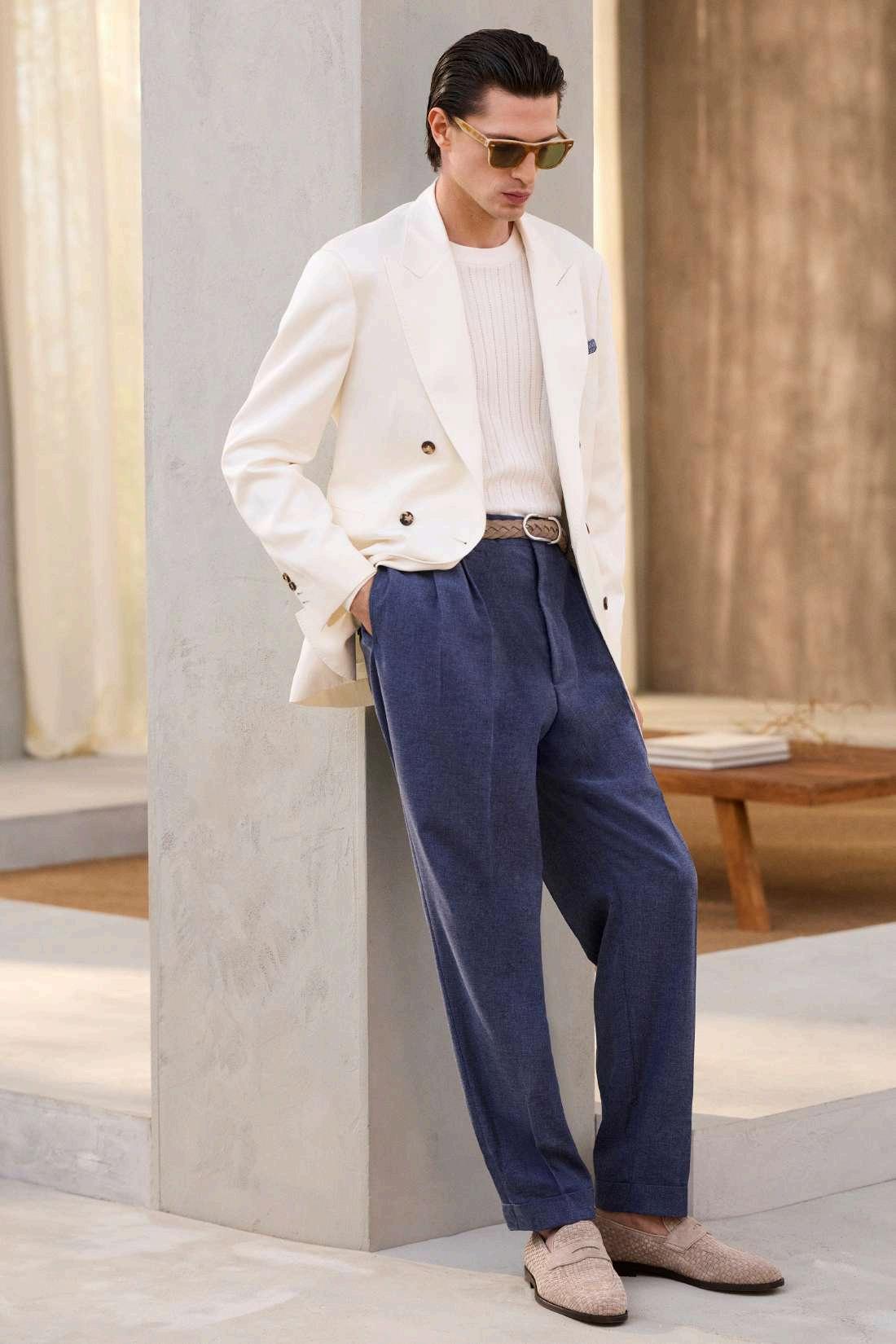
There was no shortage of swoon-worthy suits and blazers. Ackermann has the best colour palette in fashion right now, and both his men’s and women’s looks dazzled in clean radiant tones. stel double-breasted suits were proposed in light green and peony pink: among the most distinctive formal pieces from the entire fashion month, they were a siren call for a summer of endless leisure split between the ports of the Mediterranean. Yet when paired with leather bralets, they also spoke to urban “starboy” sensibilities Meanwhile, bright blue pinstripe and polka dot double-breasted suits put a playful twist on the timeless power suit without sacrificing any authority or maturity
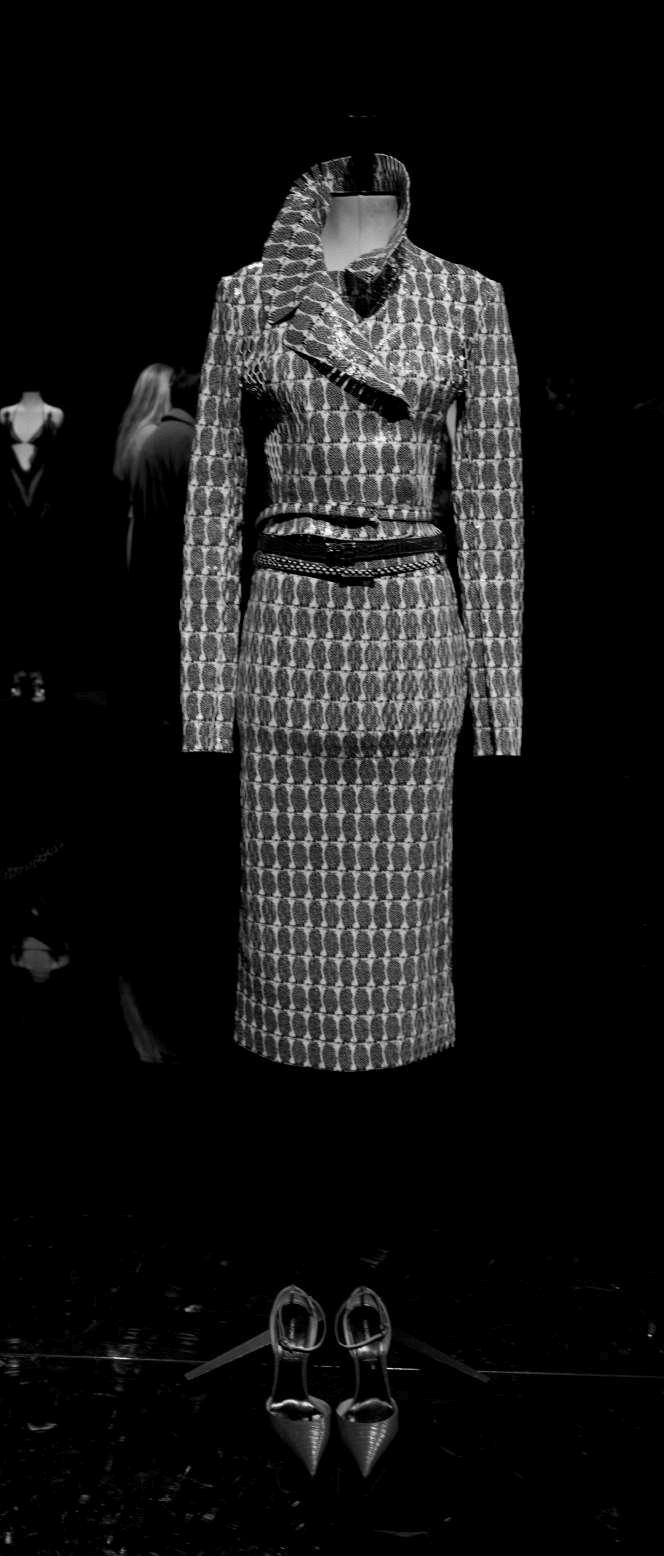
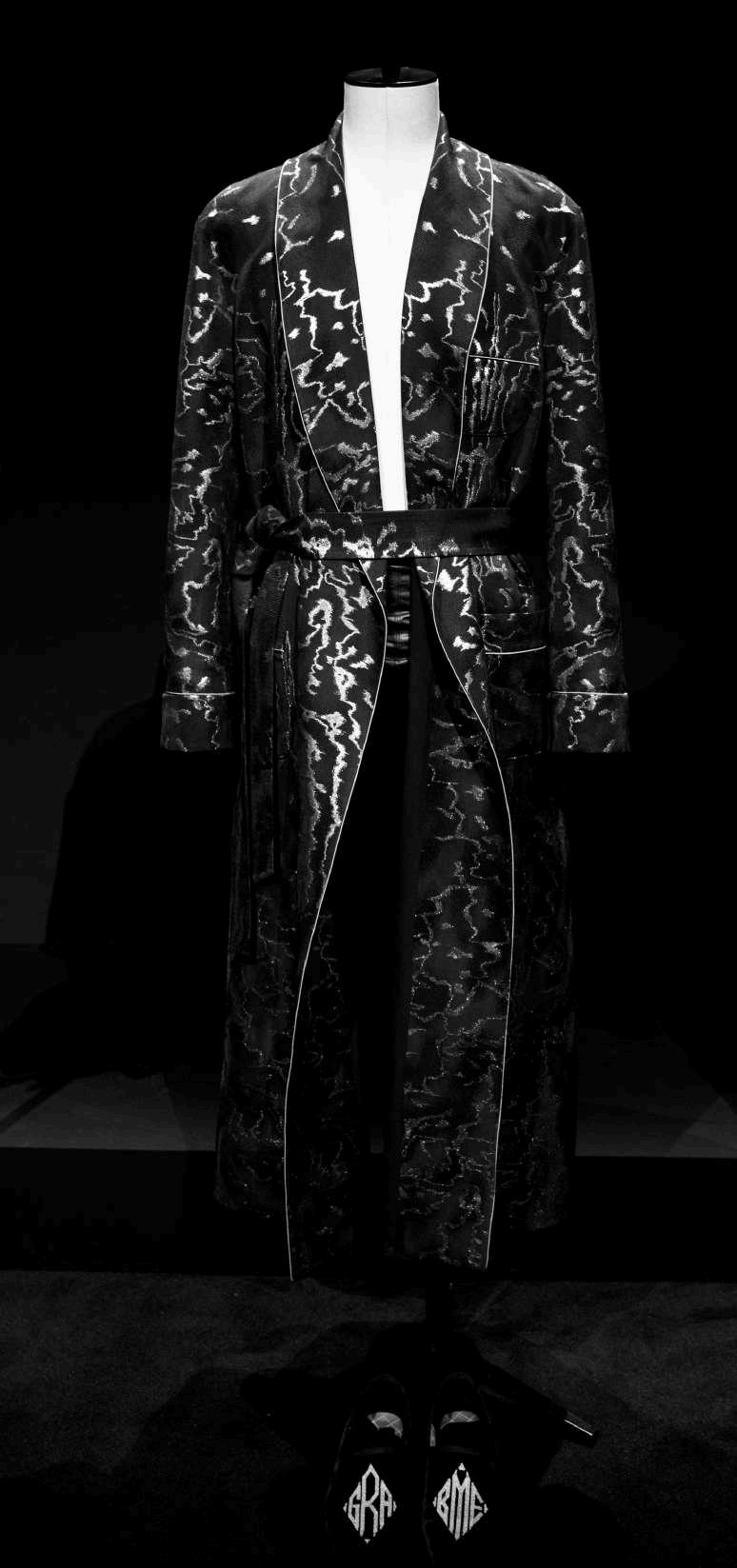
And a regal navy robe with exquisite detailing recalled the grandeur of the traditional Kazakh chapan. A formal look, one might presume? Potentially yes, but in Ackermann’s world it was worn open, shirtless, and with casual shorts. Add a pair of hastily thrown-on furry mules and you’ll be transported to a Dubai penthouse on “the morning after.” Its effortlessly glamorous if irrepressibly chaotic wearer has just stumbled to his incessantly ringing intercom hair askew and half-empty Dom bottle in hand, blinking after a fitful three hours of sleep There are still people sprawled across his pool chairs from the afters the night before But in the meantime, a new group of friends has arrived, impeccably dressed if in various states of dishevelment, to rally the soldiers for another day of champagne brunch
There were thematic elements of trompe d’oeil to this collection. Ackermann made masterful material choices; while luxurious velvet jackets and commanding leather jackets starred, each piece was almost shockingly lightweight to the touch. In a season that saw many established brands present collections that leaned far more Fall/Winter than Spring/Summer, and propose ensembles that would be downright unwearable in even temperate summer heat, Ackermann wove a texturally rich symphony that was still irreproachably practical
Describing the collection, Ackermann spoke of “gestures that reveal and attract, fragilities that win over, and the emergence of hints of something dark underneath: skin that flashed through slits or appears through lace, a metal ring on a pair of sandals, a leather bra that peeks a boo.” He may be the “morning after” but he is a morning after that revels in the night that wasoscillating between euphoria and melancholy and luring us back under lacquer-toned lights to keep dancing - and keep surrendering to desire.
M U G L E R :
S T A R D U S T A P H R O D I T E
WORDS: JESSE SCOTT
PHOTOS: LEROY VELASQUEZ
Miguel Castro Freitas’s inaugural collection for Thierry Mugler was transcendent. In a season that saw the most creative director debuts at major houses in recent memory (if not of alltime), Freitas’s arrival at Mugler flew under the radar But while figures such as Jonathan Anderson at Dior and Mathieu Blazy at Chanel stole all of the headlines, Freitas quietly launched one of the top five collections of Paris Fashion Week In terms of both vision and construction, his Spring/Summer 2026 offering surpassed those of many heavyweight names. And it put Mugler firmly back in the conversation as one of the can’t-miss shows each season.
Who exactly is Freitas? The Portuguese designer, born near Lisboa in the town of Santerém, is new to the spotlight but has as impressive of a pedigree as you’ll find Having graduated from Central Saint Martin’s in 2004, he cut his teeth at (takes a deep breath) John Galliano’s Dior, Stefano Pilati’s Yves Saint Laurent, and Alber Elbaz’s Lanvin He then returned to Dior, now headed by Raf Simons, to lead the tailoring department through an era in which the house was known for its sophisticated silhouettes. Finally, he spent a two-year stint leading womenswear at Dries van Noten before taking the creative director role at Sportmax from 2021-2024.
Freitas, like Mugler himself, used to be a dancer. The love of romance and indulgence of fantasy have been essential to the House of Mugler since its foundation, and in his first collection at the helm, Freitas demonstrated that they are also in his DNA
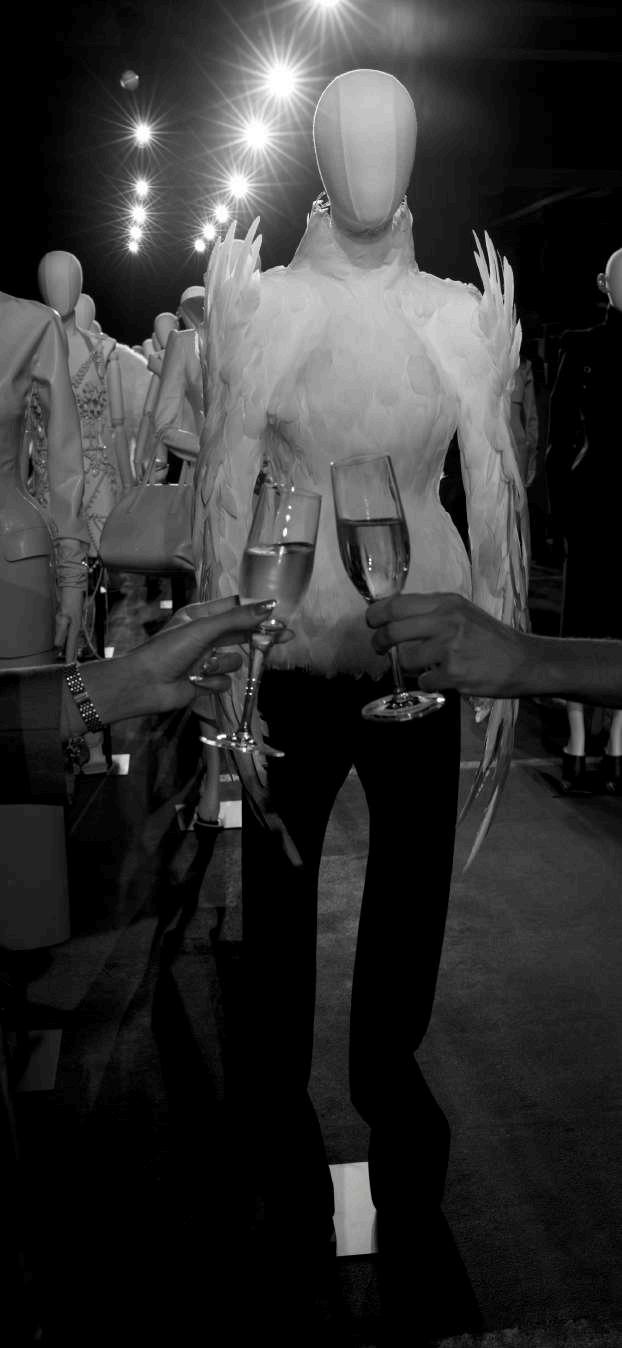
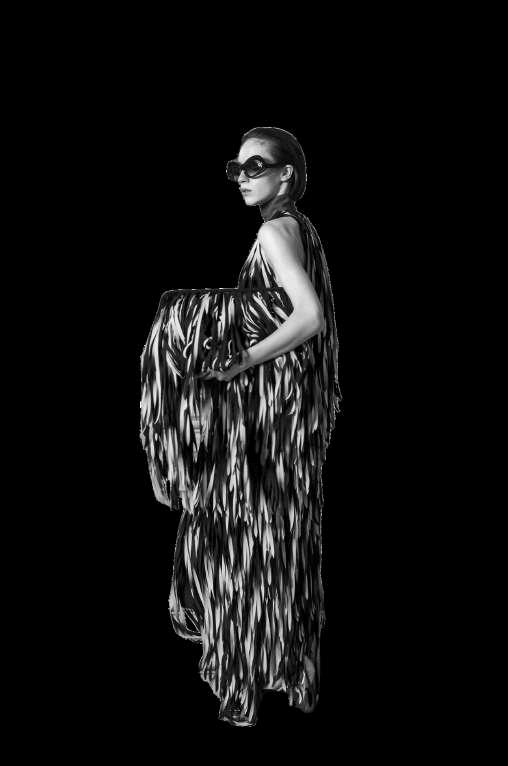
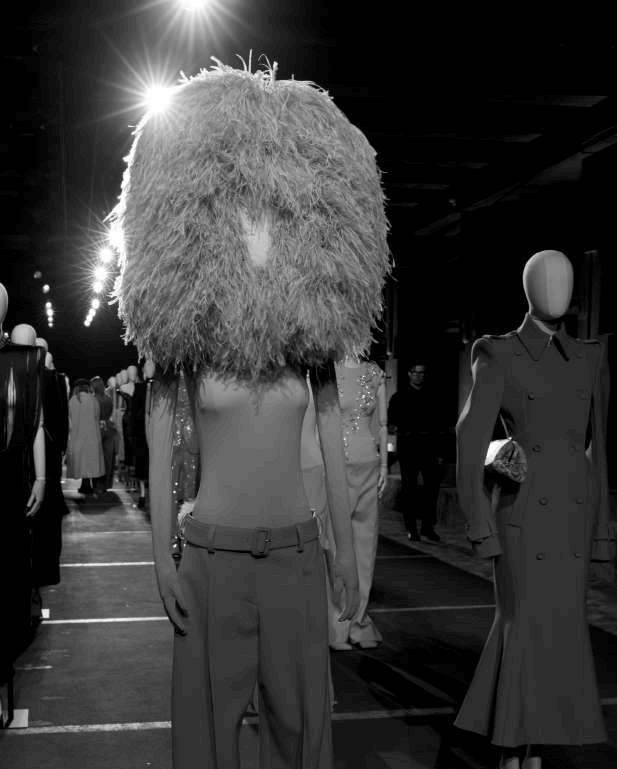
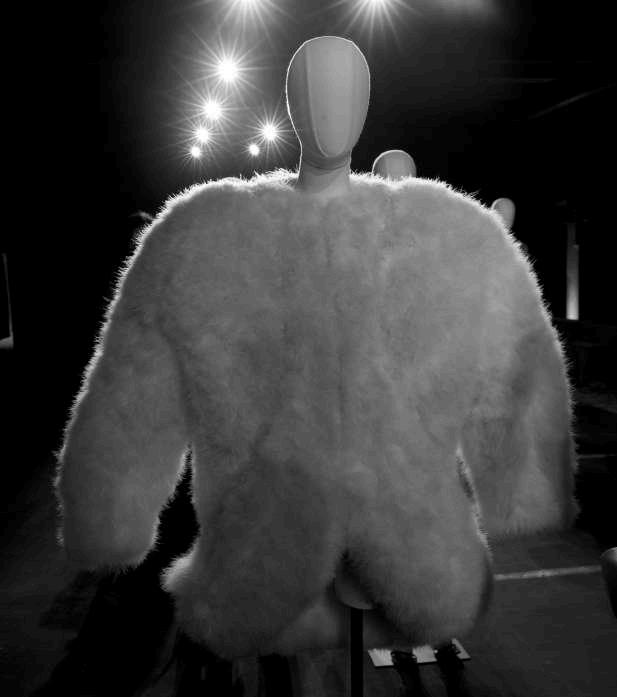
Entitled “Stardust Aphrodite,” the collection distilled the dualities of “goddesses and cinematic temptresses into forms that provoke and transcend.” Like the sirens of the Odyssey, Mugler lured guests spellbound into his world, one that he described as “glamour re-awakened: a disruptive, captivating force ” Gasps were elicited by a shimmering dramatically cut feather bodice, with “wings” instead of arms, that seemed to have emerged straight from a fairy tale A feather skirt, resplendent with the yellows and purples of a bird of paradise, shortly followed Voluminous fringes danced on both headpieces and skirt flounces, delightfully frivolous in contrast to the discipline of the sharply tailored pieces they were paired with. And a massive fur dress, its lower half cut in an inverted V as if being worn upside down, floated down the runway like an idyllic dream that one grasps at in the final seconds before waking.
As the final bow was being taken, however, the spectacle of the show was the last thing on my mind Mugler Spring/Summer 2026 was a longoverdue tour de force collection by a designer demonstrating his technical precision and impeccable attention to detail under fashion’s biggest spotlight for the first time The tailoring was exquisite throughout, with hourglass shapes quickly emerging as a Freitas hallmark The colour palette primarily consisted of camel, beige, and stone, establishing a dominant undercurrent of timeless elegance amidst touches of fantastical flare. And the sharp silhouettes of dress trousers hinted at a contemporary balance between business and pleasure.
Stardust Aphrodite is but the first part in a trilogy; as several designers have done lately, Freitas is unfolding his narrative for Mugler over several successive seasons We await the next chapter with bated breath And we expect Freitas to be a household name by the time this epic reaches its conclusion
In the Palais de Tokyo, perched above the Seine, Ujoh offered relief during a summer of record-breaking temperatures around the globe. Despite the venue’s proximity to the city’s famed waterway, Mitsuru Nishizaki’s Spring/Summer 2026 collection was a journey not to the river, but to the sea. “The sea, for me, is gentle memories family memories,” Mitsuru explained in an interview this season “I have two children together with my wife, and when we go to the sea, we make good memories that we take back to our life and work I have tried to transcribe those memories into the collection.”
Those memories became illuminated by an iridescent bright blue that transformed the concrete runway into a glistening, water-like mirage, coolly countering the summer heat the clothes were prepared for. From airy textiles to subtle marine tones, looks came to life like love letters, moving from the lap of the sea to the simplicity of urban living in the Neon City Channeling Japan’s hottest day and most stifling humidity, the collection taunted our desire to undress while creating full coverage that was ingeniously light. It did not surrender to the overpowering summer, but rather built a sanctuary within it.
Known for his modus operandi of deconstructed office-wear and geometric cutting techniques, Nishizaki’s square and diamond cutouts, along with gently frayed fabric strips, minimize off-cuts and allow for total use of the fabric to create pieces that are both eyecatching and ecofriendly
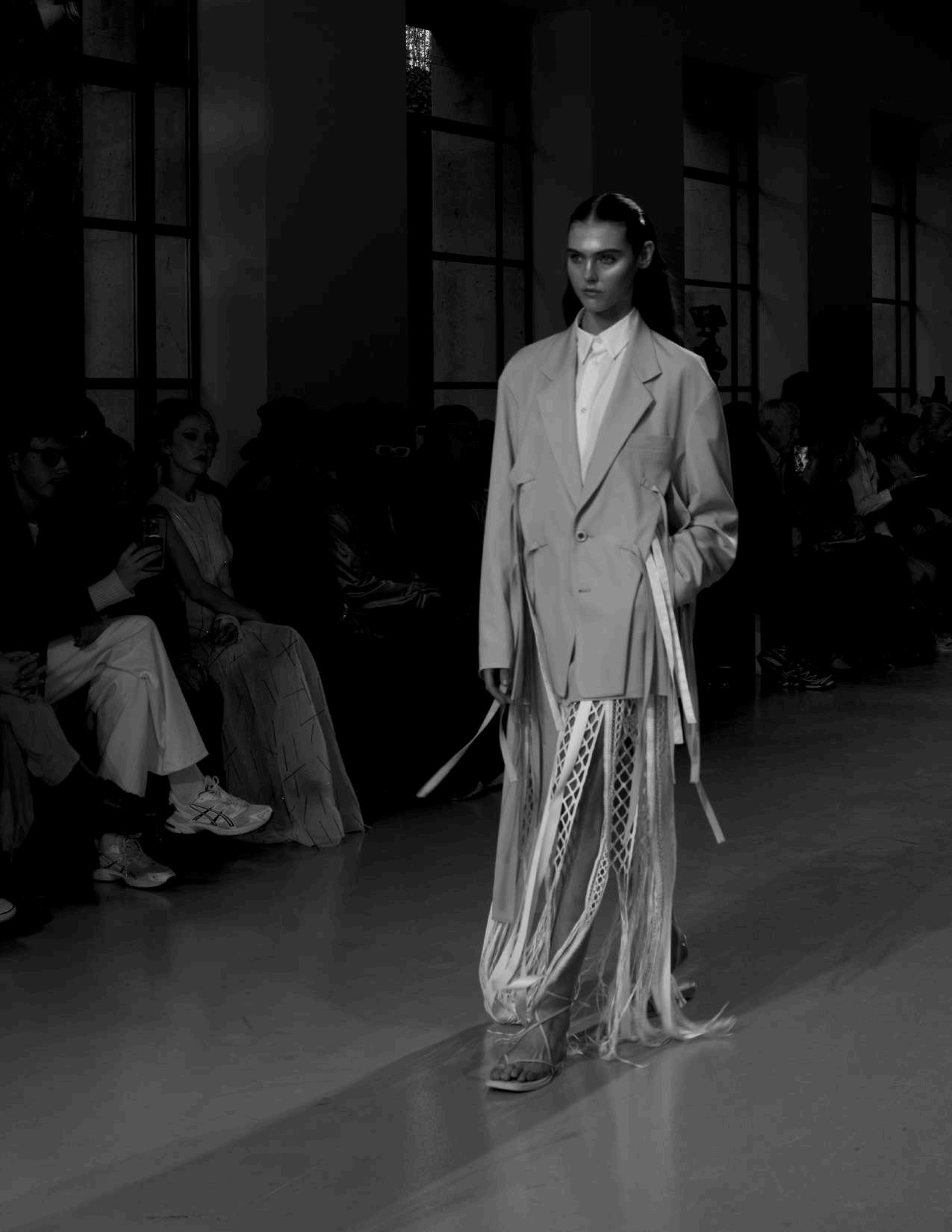
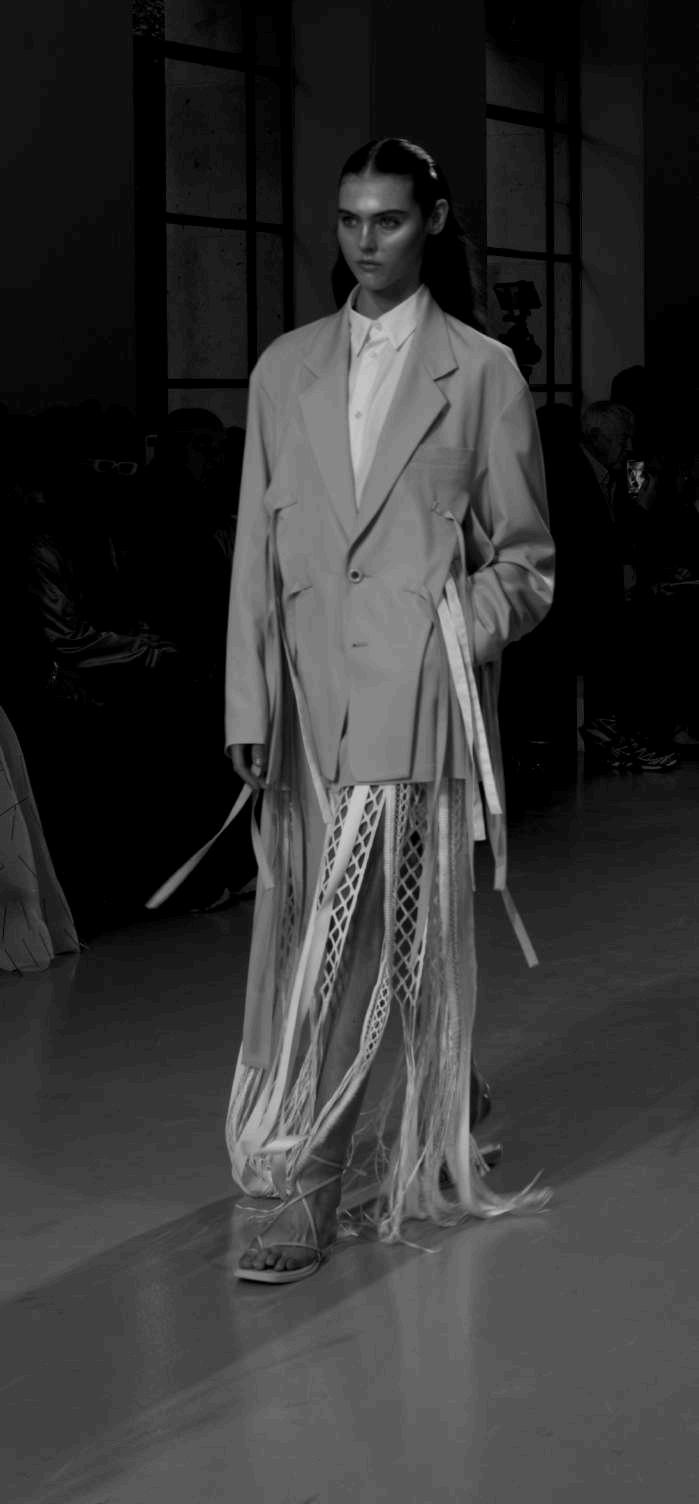
The opening look offered a sneak peek at this method, along with several of the collection’s focal points. Dresses reimagined fishing net as lace, while skirt–trouser hybrids were an instruction manual in utility and breeze. A suit jacket spliced at the sides or with streamers attached where pockets typically sit reimagined officewear as slightly out of whack, although many women remain in desperate hope that one day womenswear will include pockets
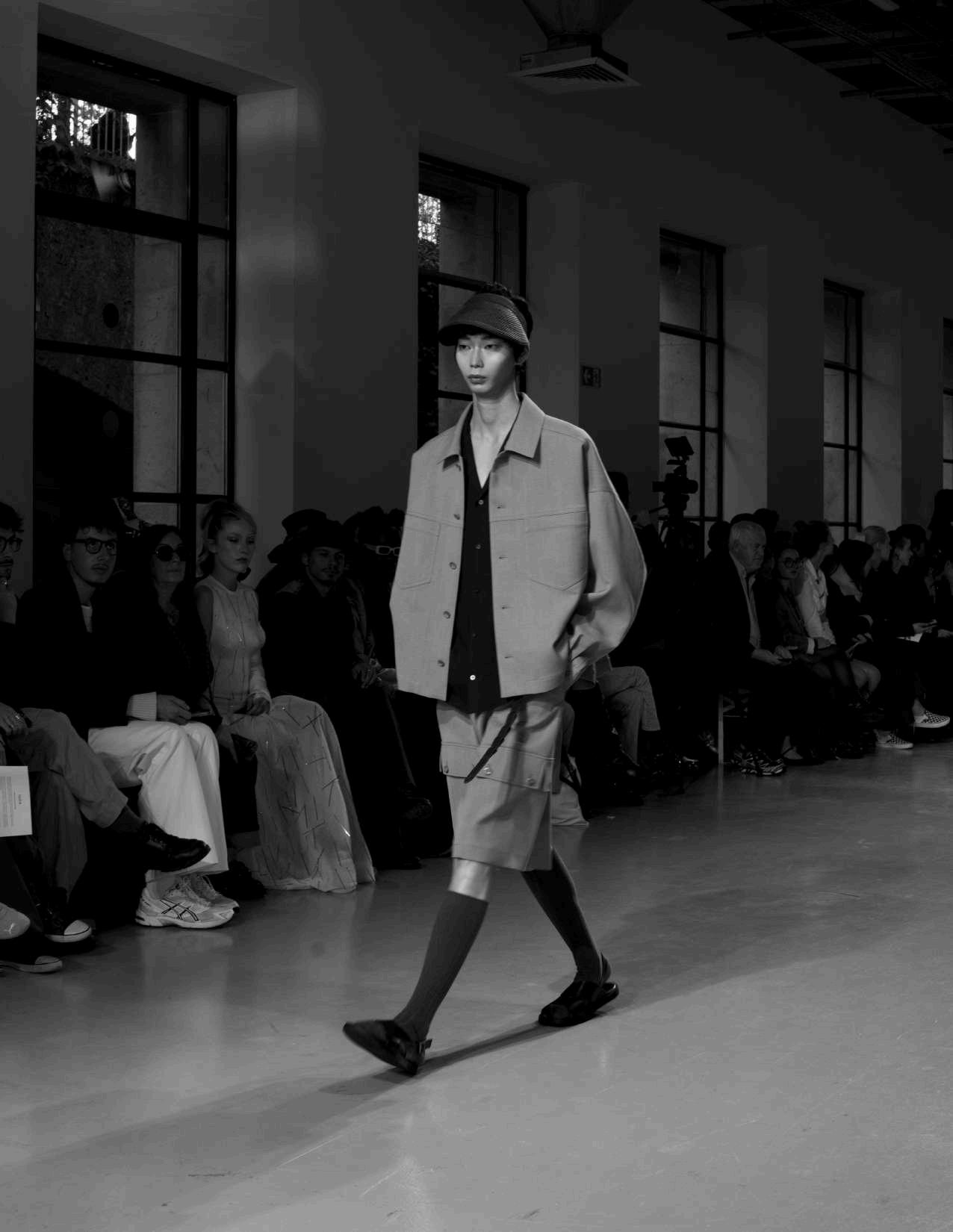
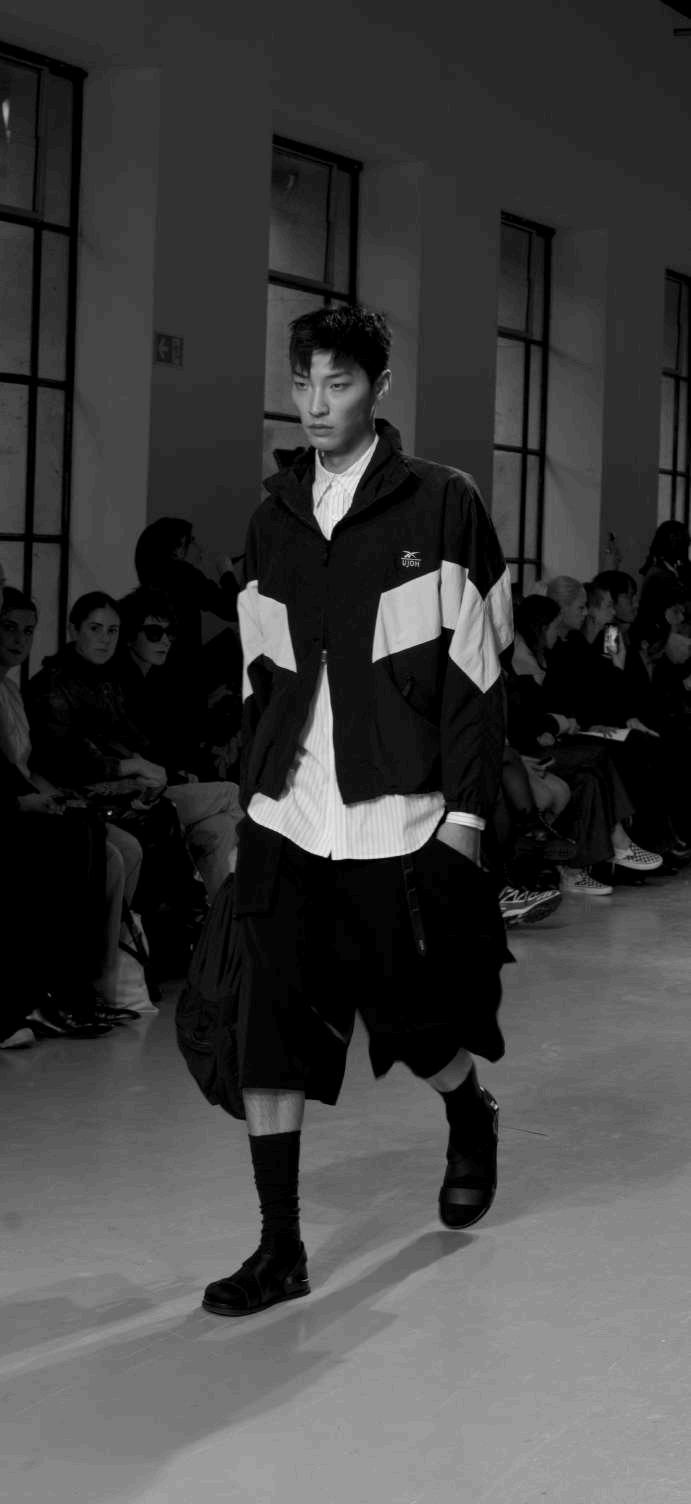
Still, Nishizaki remained true to his avant-garde style tailoring and sharpcut lines, his signature written in the beige and white shades he loves. The first 10 looks were suitable for overpriced drinks in the Lost in Translation bar or an elevator pitch in the OMY (Otemachi–Marunouchi–Yurakucho) simple, urban, and most importantly, airy. From there, we witnessed the brand’s second Reebok collab unfold in vintage sky blue, sunshine yellow, and warm chamoisee tan Look 16 showcased knee-length tan Bermuda shorts, their deep dualbutton pockets seemingly unfilled, not packing artificial flies and wading in knee-deep waters A brown knit visor became a lynchpin for the look, shielding the face from mid-summer sun while leaving the scalp to fend for itself. Look 19 followed with a pinstripe shirt, its exaggerated lapels calling to a summer adrift in the Aegean beneath an earthy gabardine jacket and sandy brown trousers once folded at the waist, as no true sailor has time for belts Finally, a sister look followed: an ankle-length frock formed in the same soil brown, with plastron-inspired buttons that fastened just slightly off-center
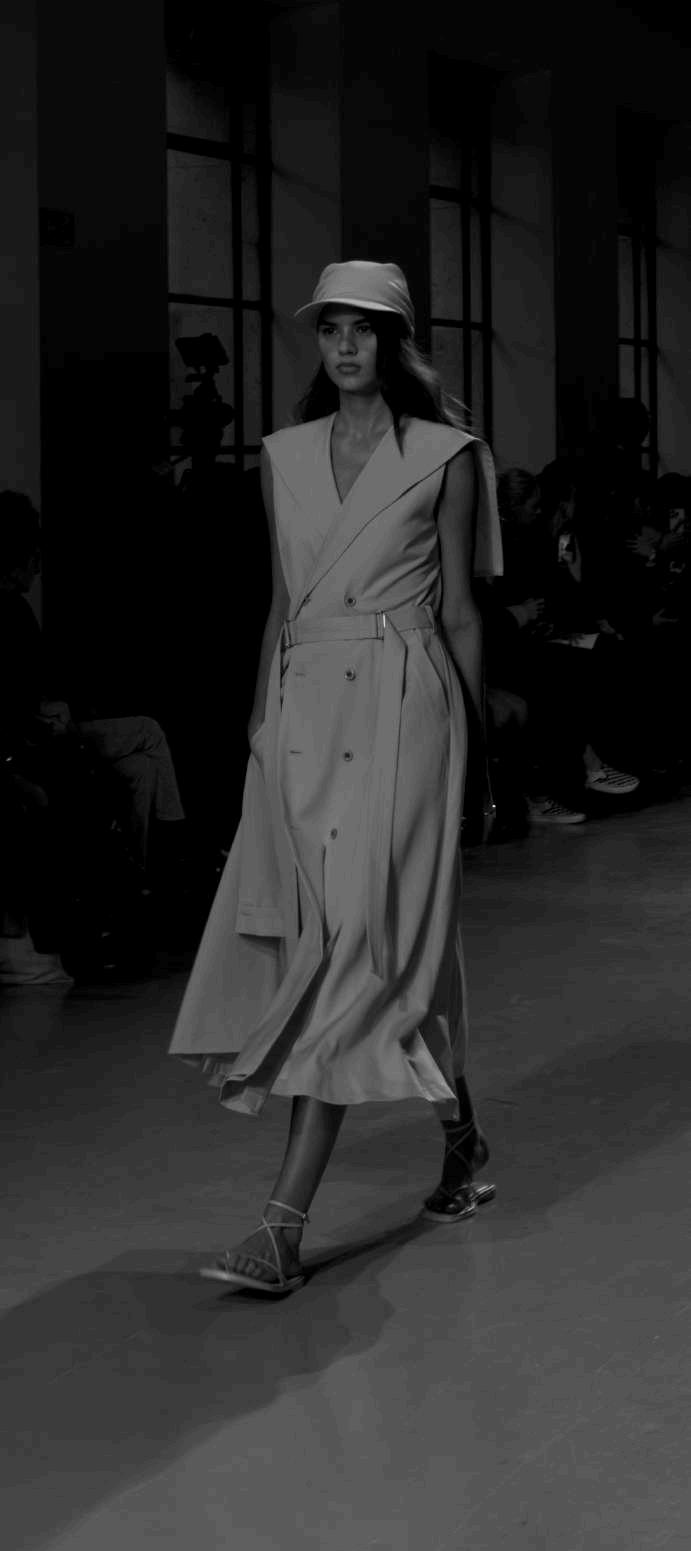
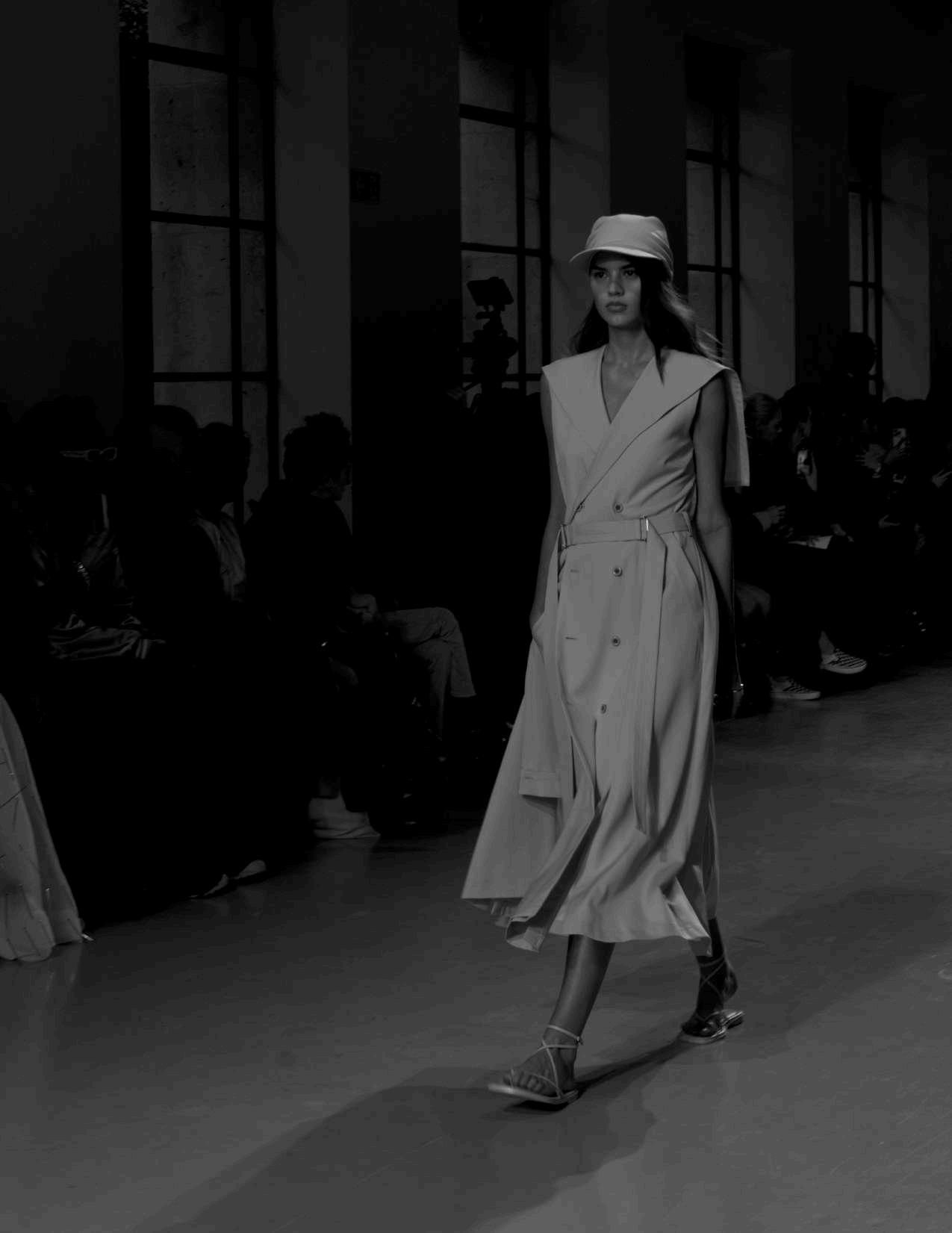
A modular scarf-cap rectified the burnt scalp from before, and coordination with a weatherproof drawstring satchel spoke to the women who love a matching set. The looks could walk the streets of Tokyo without question, but seemed eager to ditch the city for an impromptu camping trip.
From here, Ujoh sailed from sand dunes to sandy beaches for a twolook vacation on the European coast circa 1950 Head to toe in blue and white stripes, Looks 22 and 23 blended with the iconic Capri-blue canopies of the Venice Lido, recalling retro swimwear their wearers had no intention of getting wet. Instead, they sit seaside, nursing their third mojito at 11 a.m. and laughing at jokes only the higher tax bracket would find funny. Silver jewelry cuffs, bangles, and rings were luminous, reflecting the glint of sunrays on clear water and the minute joys sun-tanned skin and cold beverages The journey to this scenic archive, though brief, reminded us that Nishizaki’s pulse remained seaside no matter when or where his looks are worn
For the remainder of the collection (Looks 25–47), dusky black, brown, and navy ensembles dominated until a singular color, labeled as Nishizaki’s signature hue this season, emerged. Poised between deep navy and lilac grey, the blue imagined water in different shifts throughout the day and flooded what had been a radically Japanese trilogy of black, white, and beige ensembles
As a Paris Fashion Week mainstay, the designer has built a brand rooted in the Japanese philosophies of wabisabi and ma, finding beauty in imperfection and in the power of negative space. He connects to the longstanding love affair between Japan and France, the two nations forever envious of the other’s cuisines and sharing an admiration for Paris’ architecture and Japan’s spirituality as flattery that borders fetish The tension between idealizing what you don’t have instead of appreciating what you do is a place Nishizaki explored this season, perhaps unknowingly
It’s a way of life that values restraint over noise, and simplicity that is increasingly resonant now. The early 2000s sought “inner peace” through yoga retreats and peace symbols rooted in India, while today finds a similar longing that has turned its gaze toward Japan. Take the sudden scarcity in matcha and spike in solo trips to Tokyo as proof of an existential search, less about the place than relief Concluding the show with a modest bow, Nishizaki quietly became the summer escape from our own skin, creating a cool capsule closet that makes his wearers feel seen.
B A L E N C I A G A
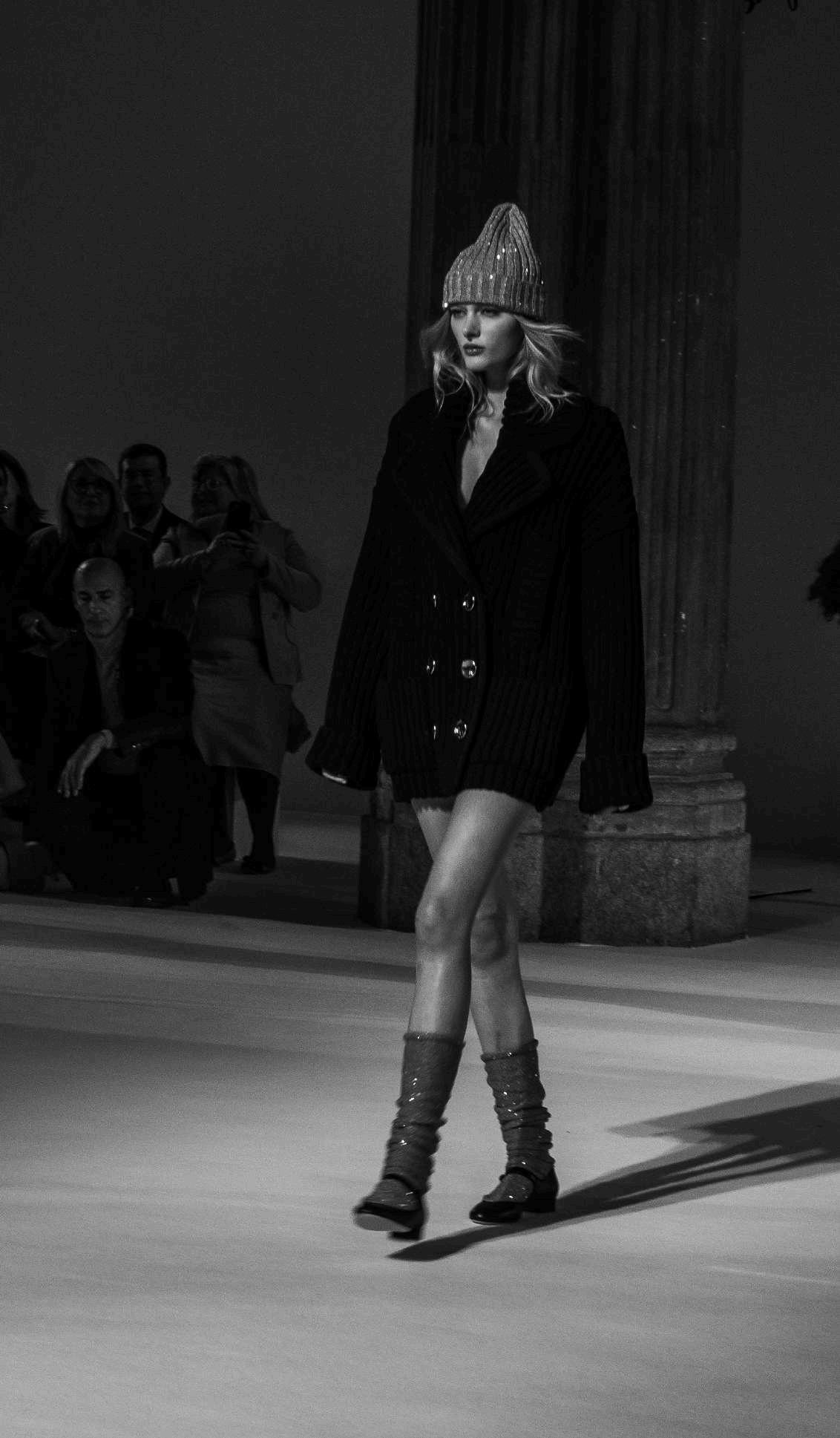
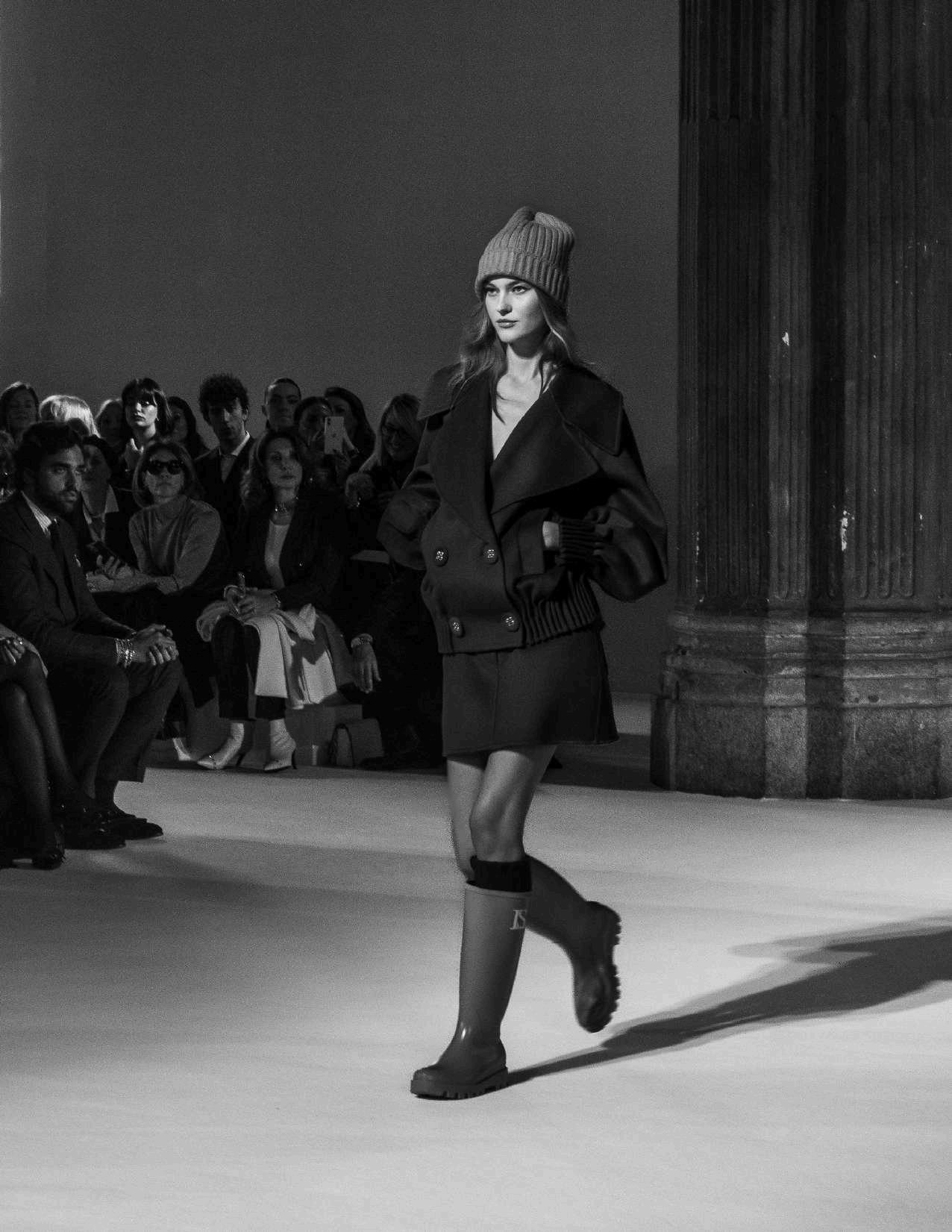
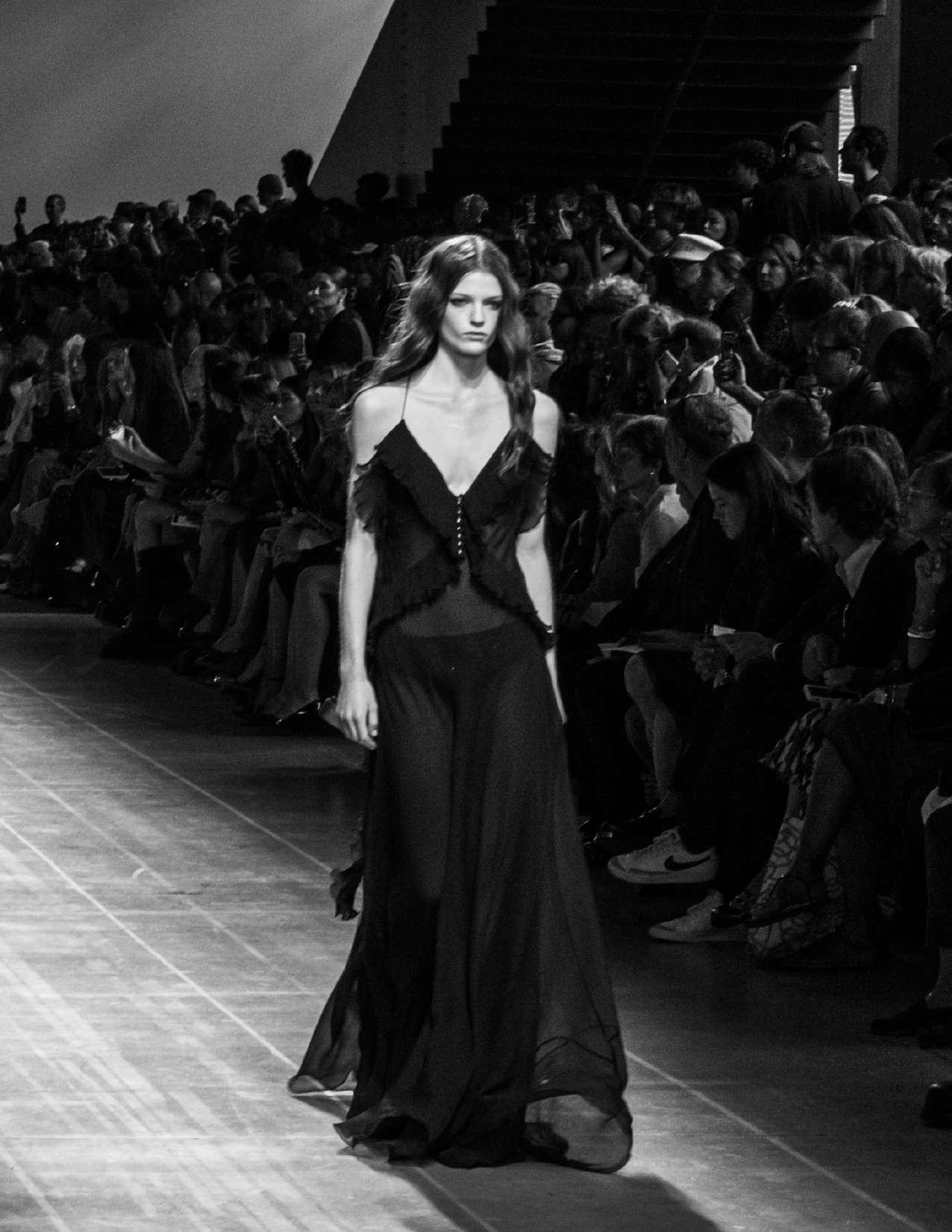
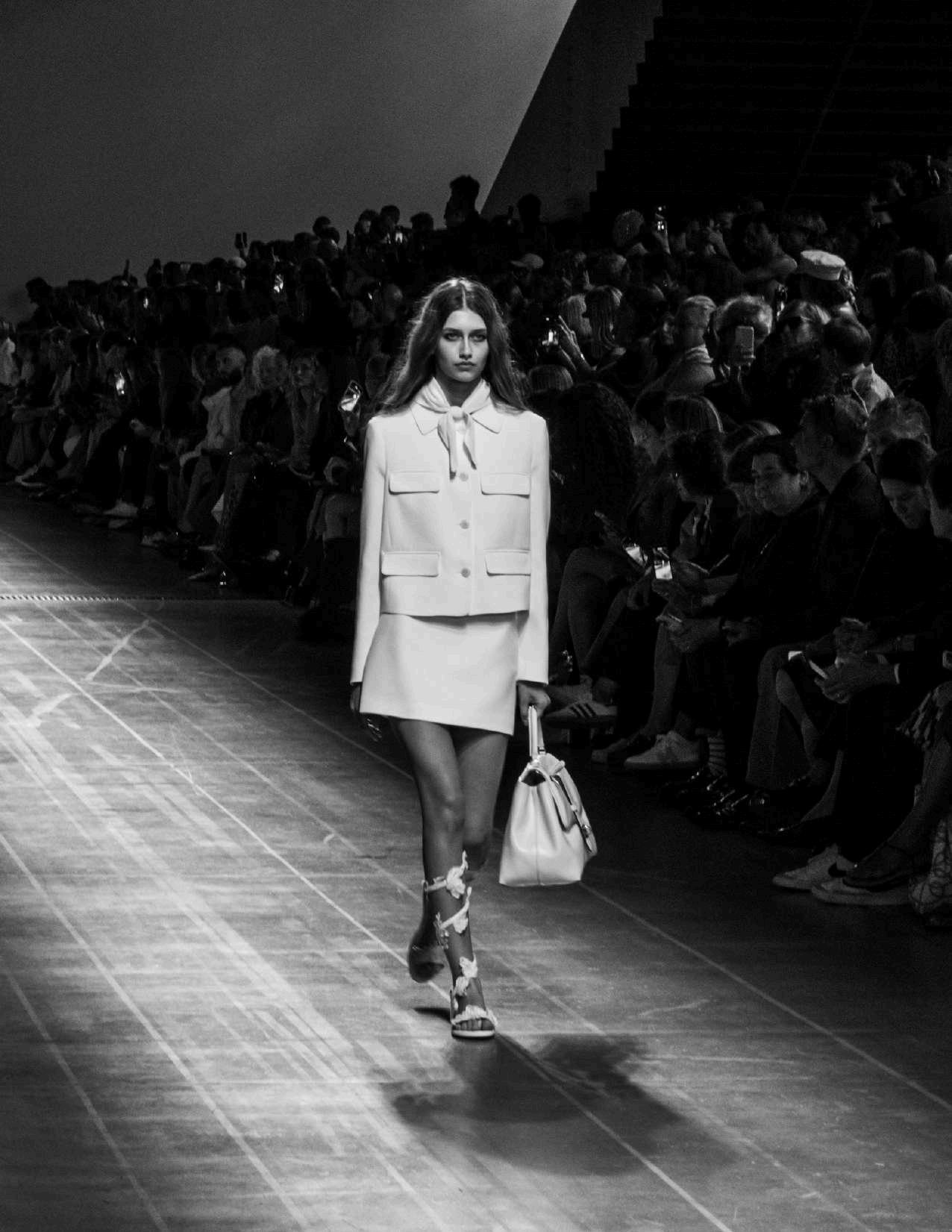
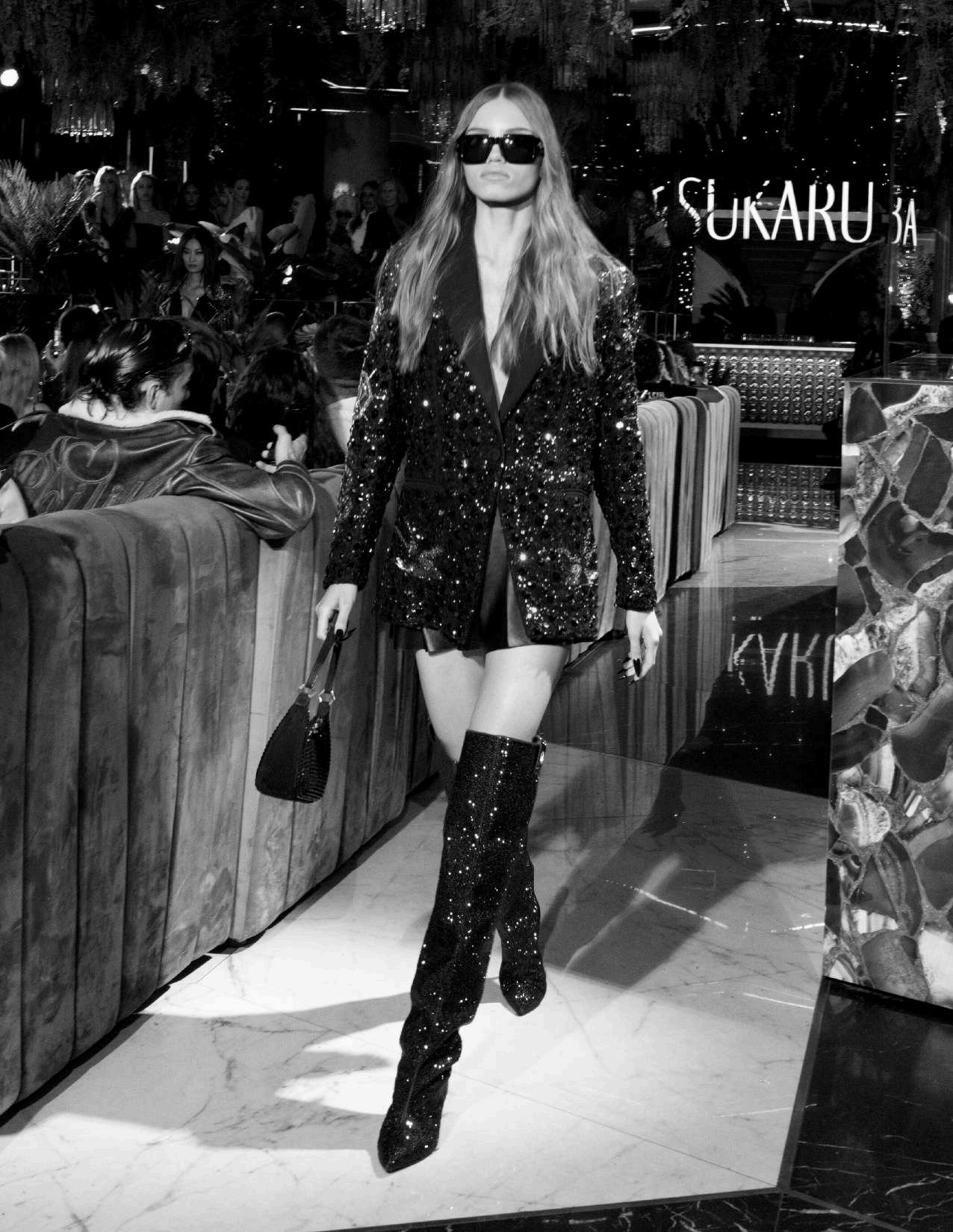
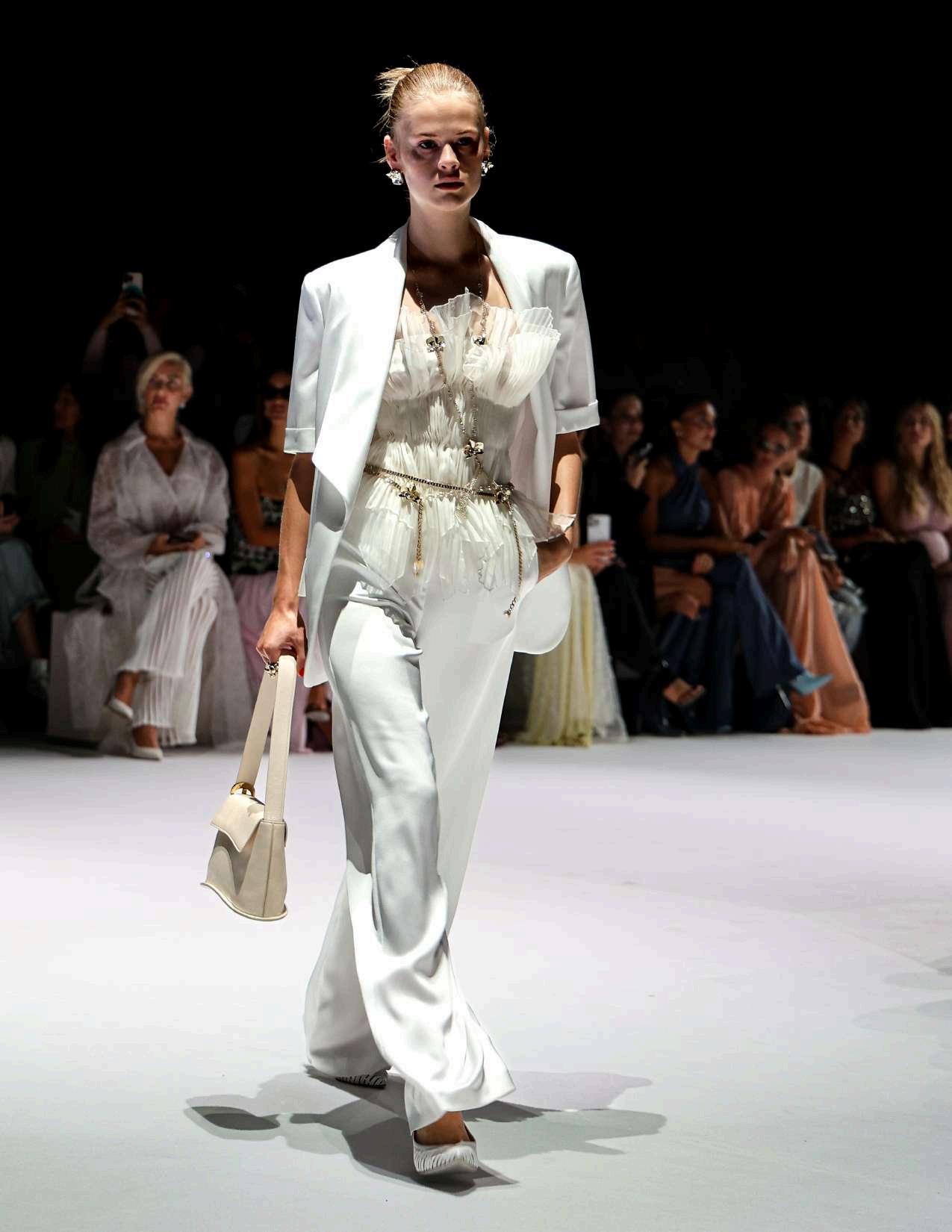
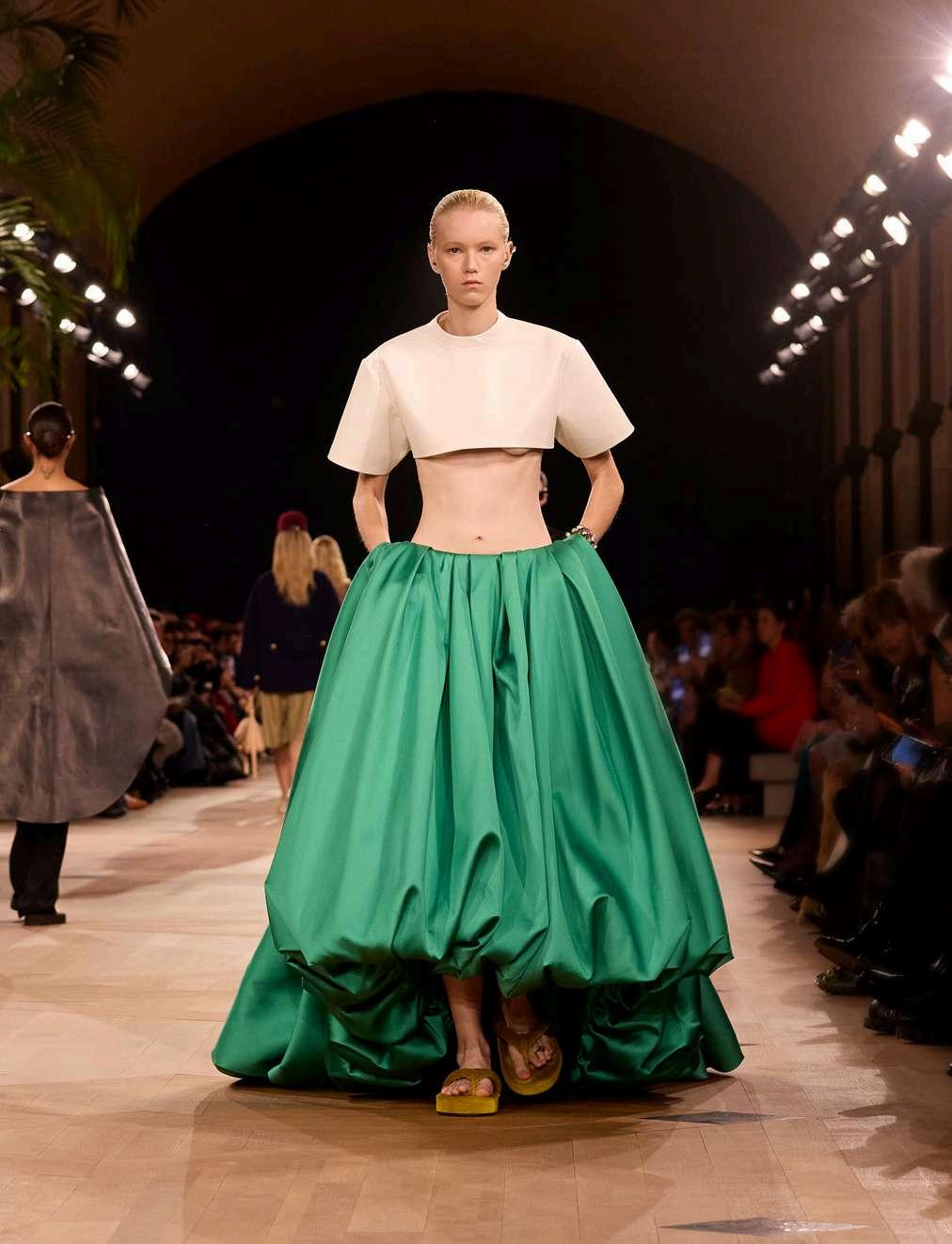
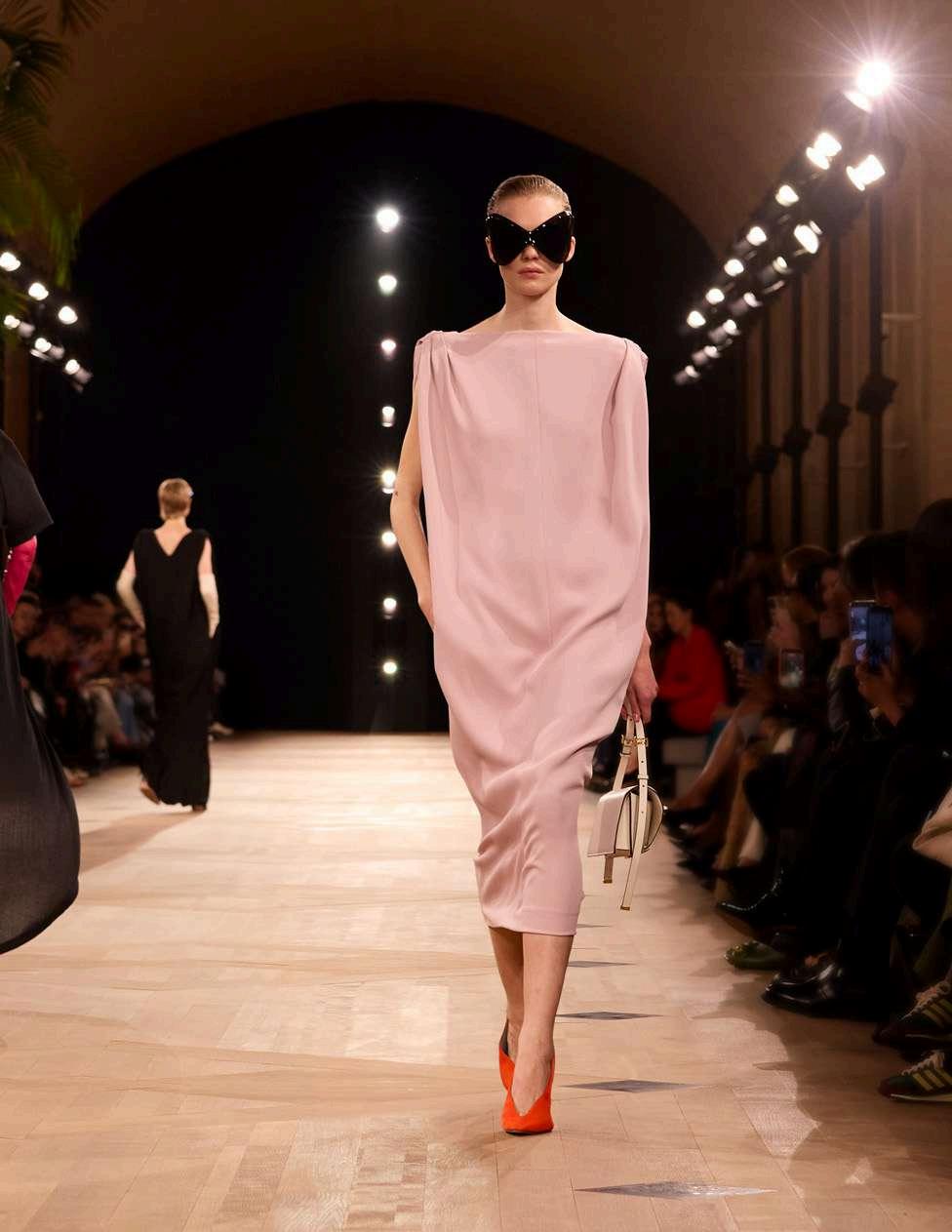
A resurrected Parisian salon at 40 Rue de Sévres, within Balenciaga’s headquarters, became Pierpaolo Piccioli’s playground for Spring/Summer 2026 and a fresh future for the house. Scented heavily with the Maison’s “Getaria” fragrance, proof Piccioli considered more than just our eyes,.the space nodded to Cristóbal Balenciaga’s Spanish birthplace And remaining in Paris yet rooted elsewhere, the collection held a soft tension between the maison’s origin and the city that has become its second home a tension the new director fully embraces Surely aware of the Denma-sized elephant in the room, The Heartbeat emerged as a confident recalibration of the past without becoming bound by homage. Admitting it would be silly to ignore those who came before him, Piccioli nodded to his predecessors, including those most recent, without being bound by them. A personal letter released along with the show notes revealed the designer’s indifference to headlines or the incessant hum of editors searching for subtext
“This collection comes from a place of love and connection,” he explained “It is as much mine as it is of those who lived it with me, in every way. Every heart beats differently. In commonality lies individuality: what defines us also connects us, what is universal in presence becomes personal in expression.” In other words, it is not motion or stillness, fabric or form, in their solitude, but the space between, that is the very tie that binds.
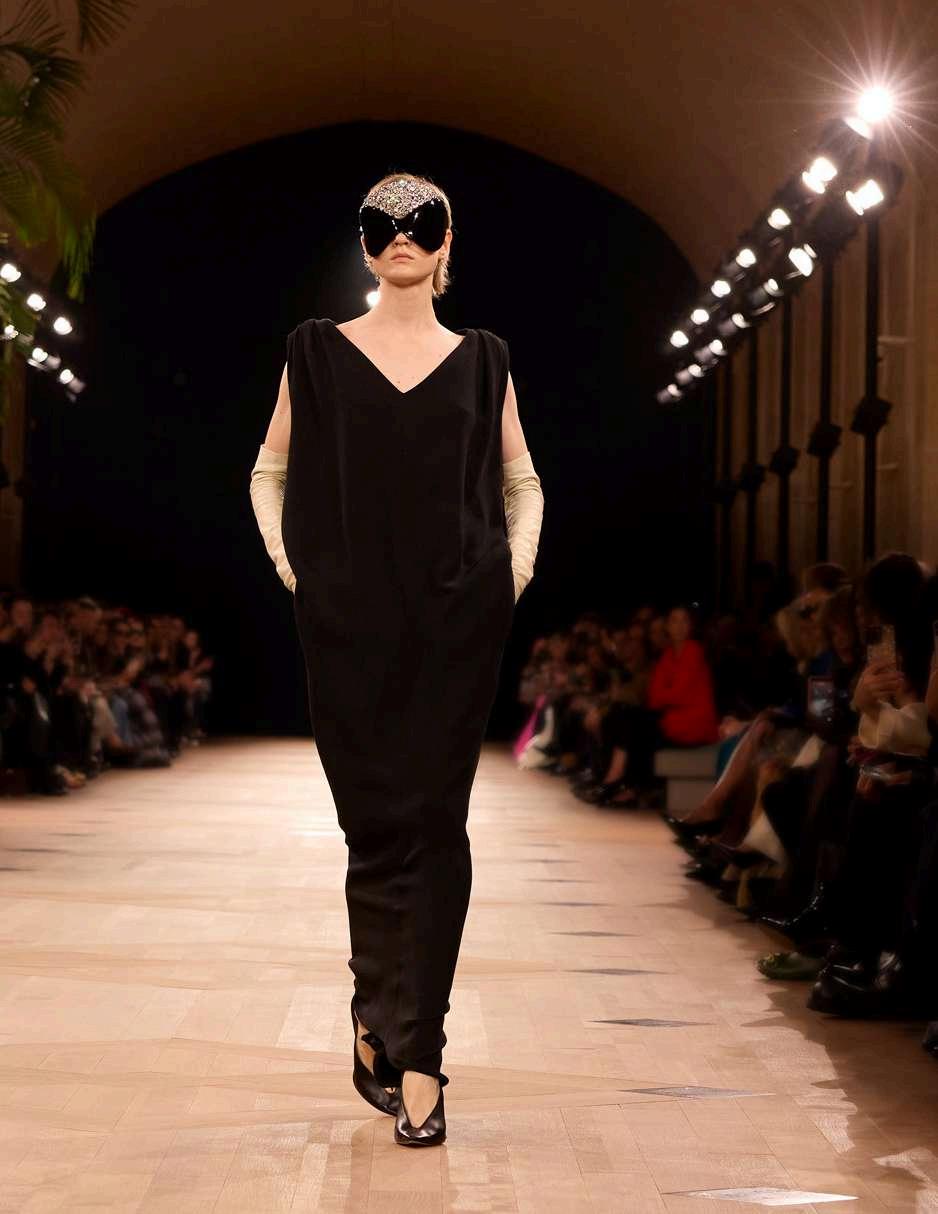
To open the show, Piccioli revived Cristóbal’s ’57 Sack dress, which stirred pure intrigue as it sashayed into the present day beneath undeniably Denma ultra-sized sunnies
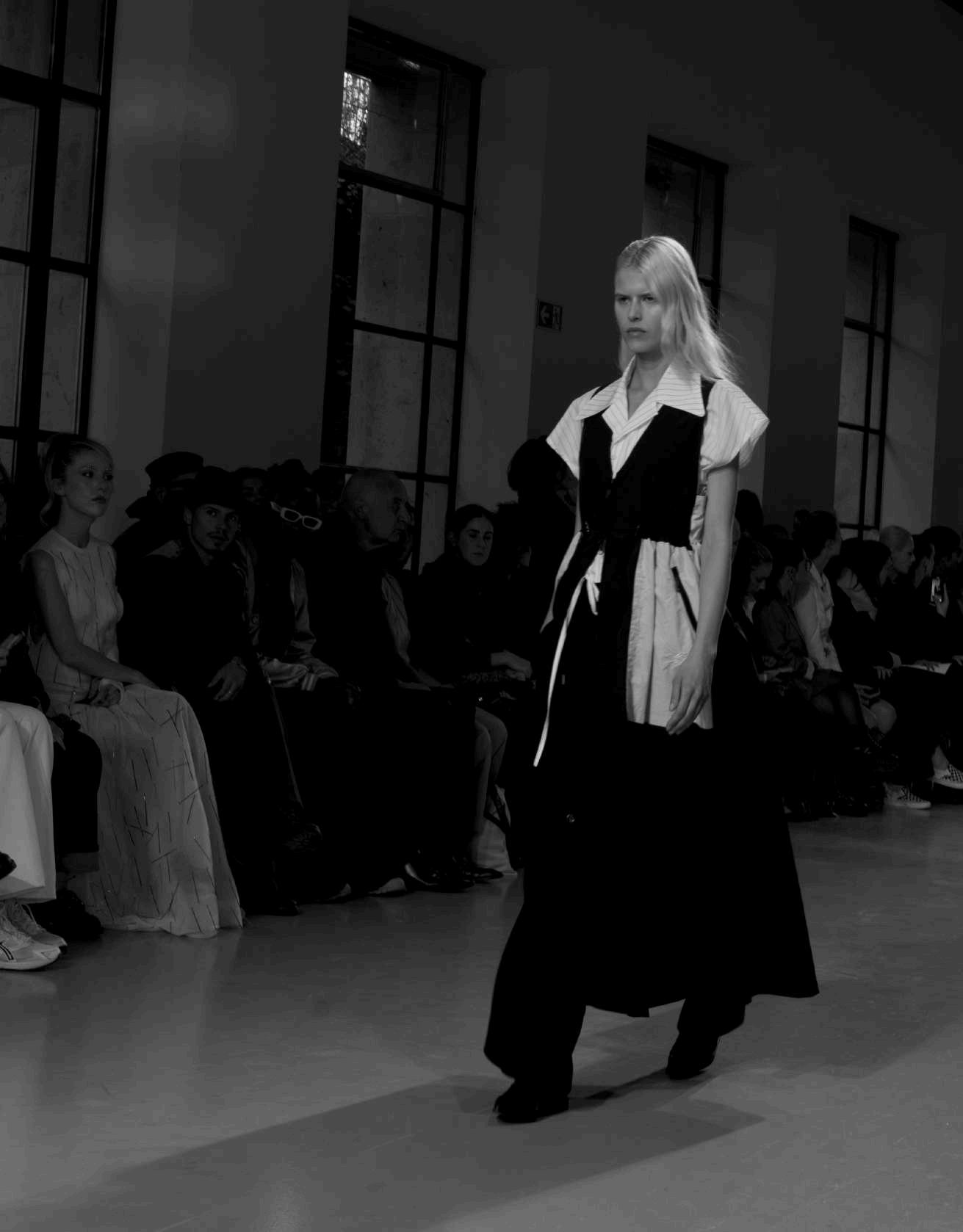
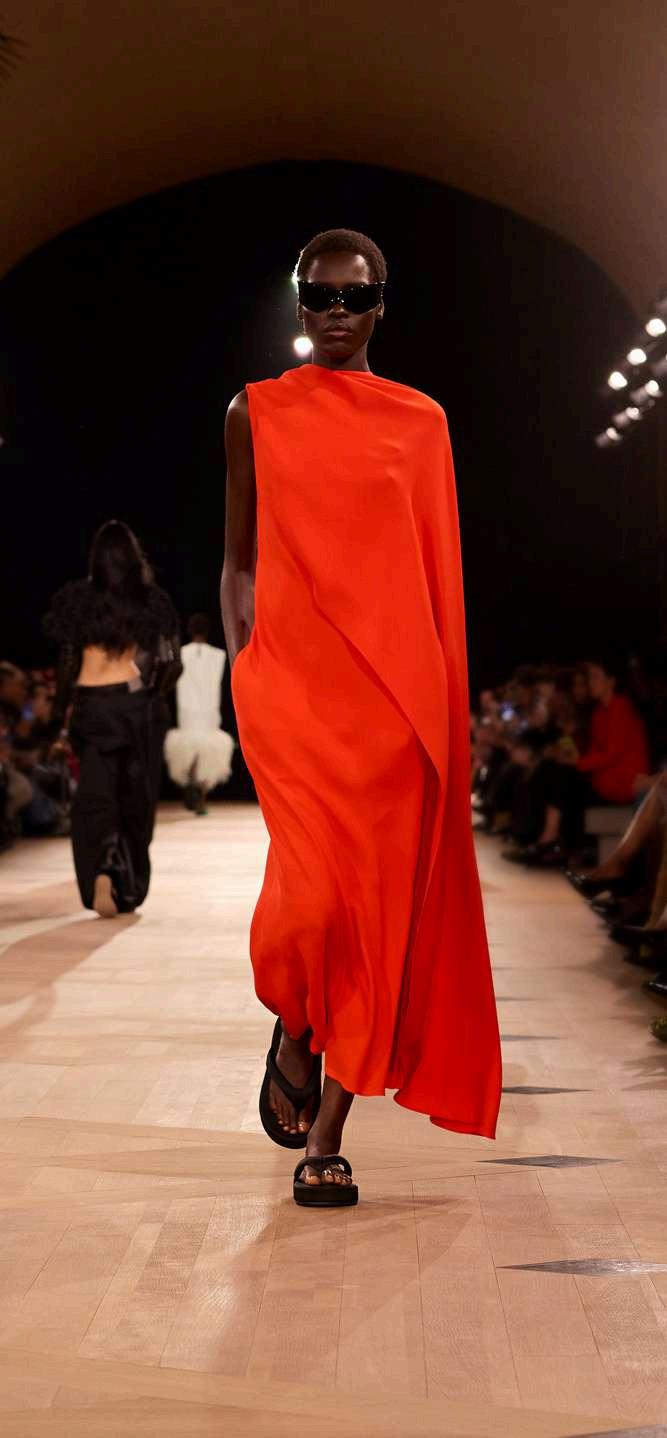
Several looks built the core of Piccioli’s third dimension, where Cristóbal’s architecture, found in cocoon coats and modular tailoring, met Denma’s attitude through torsos stripped fully bare or cinched by wrap-style leather tops and necklines that plunged from exaggerated shoulders which slightly resembled cat ears. Though many looks retained a similar drape to that of the first frock and relied heavily on black and white, a lemon-yellow ponchostyle shawl and skirt with self-fabric petals tickled the nose of reforming fundamentals while a poofy magenta party dress went all business with coattails trailing at the back
Jewelry itself was scarce an occasional chunky piece topping a look but other accessories were in no short supply. Instead, gloves had Holly Golightly clinking glasses with Kim Kardashian, offering every color from regal eggshell satin to unapologetic hot pink, while skinny belts on tapered chinos looked almost corporate enough to land an office job in fashion, at least Shoulder bags and totes came firm and pre-slouched, with extra-long straps or suede fringe, alongside a motorcycle bag straight from the Nicolas Ghesquière era
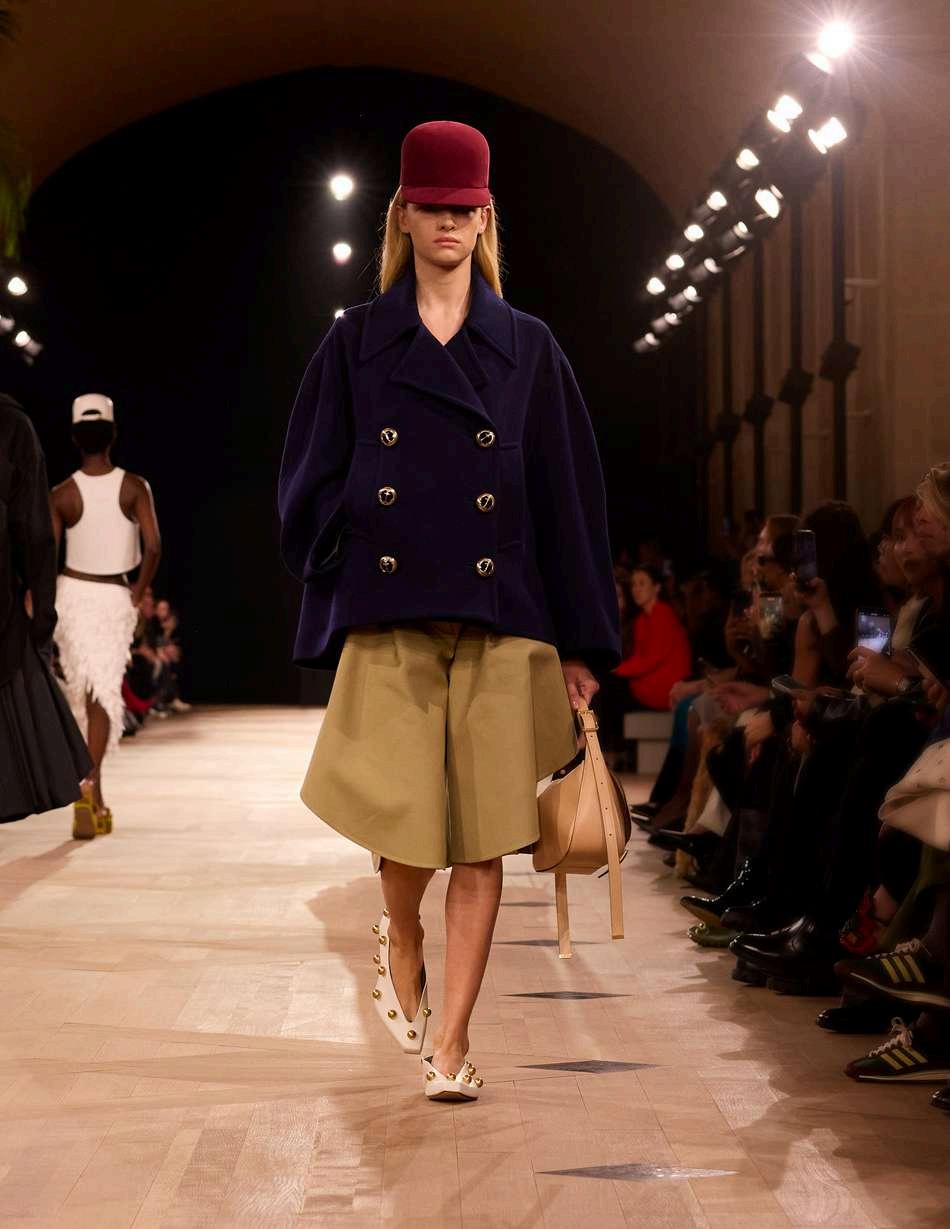
Still, the showstopper was not found in a cherry-red cropped tee or doublebreasted navy pea coat, but in a fabric redesigned. The house’s iconic gazar fabric, formed as a double-faced construction of taffeta and satin, was softened by an additional weft blending silk and wool. An interpretation of something voluminous yet slightly rigid, it allowed fluidity to define a full form
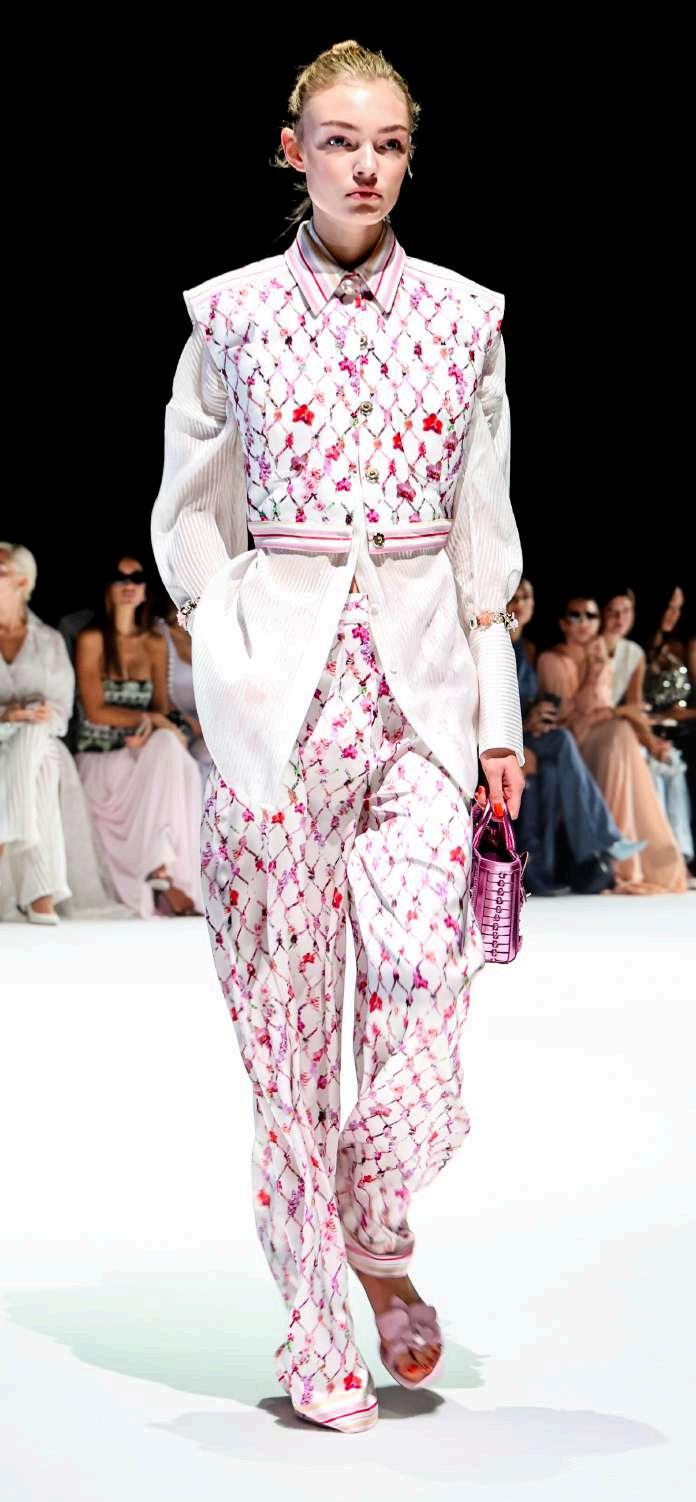
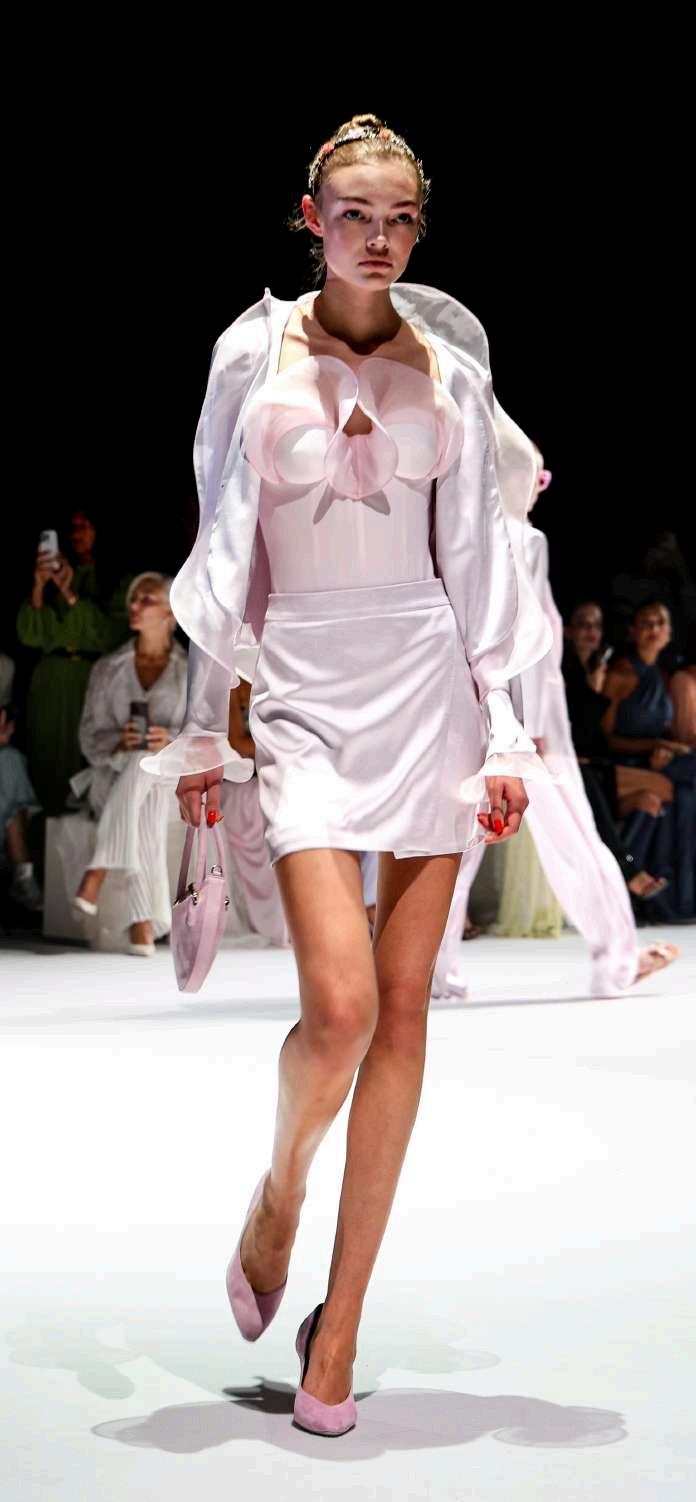
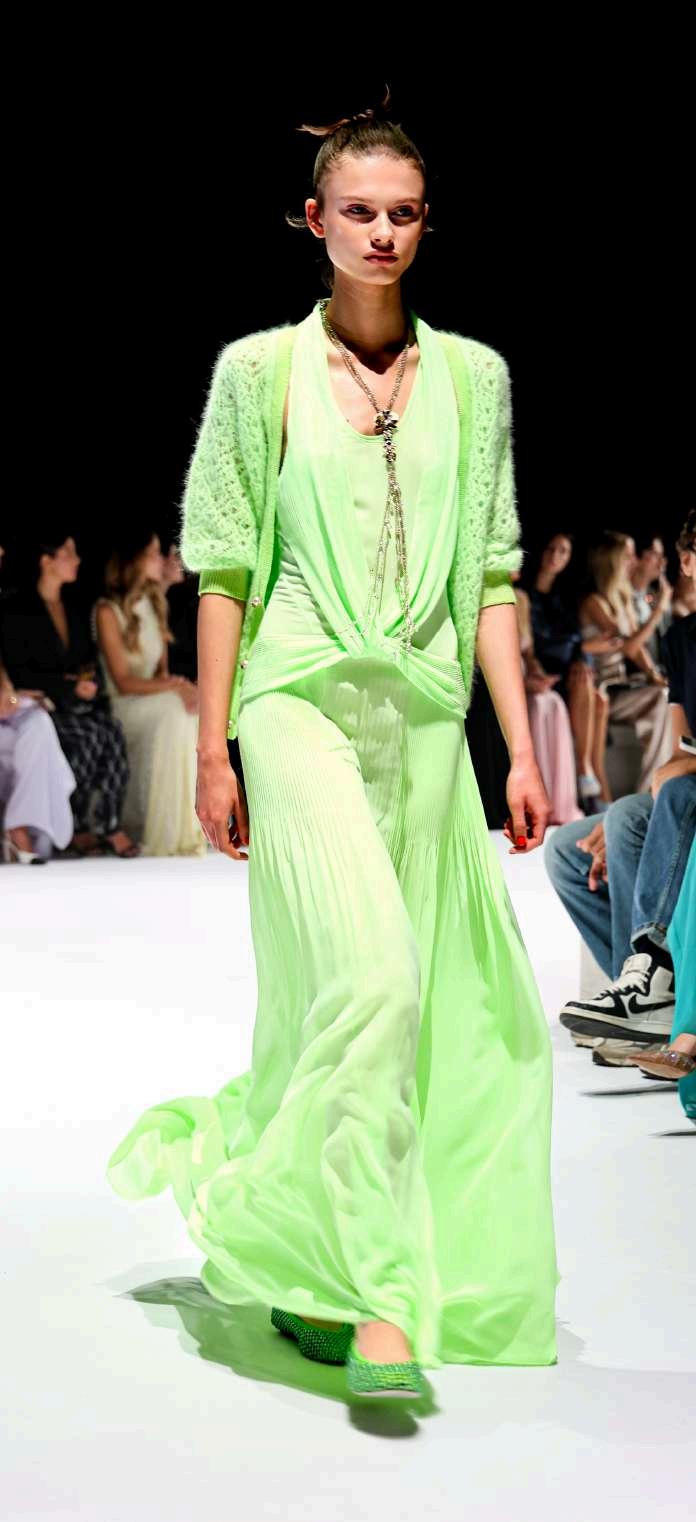
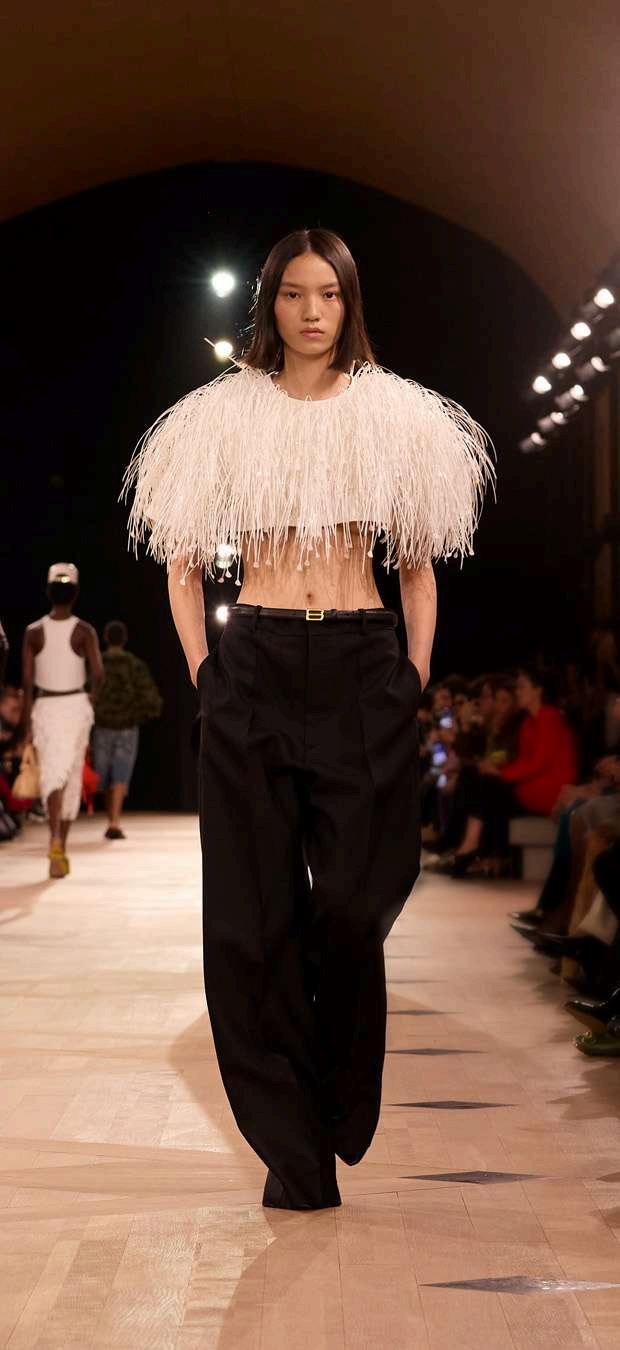
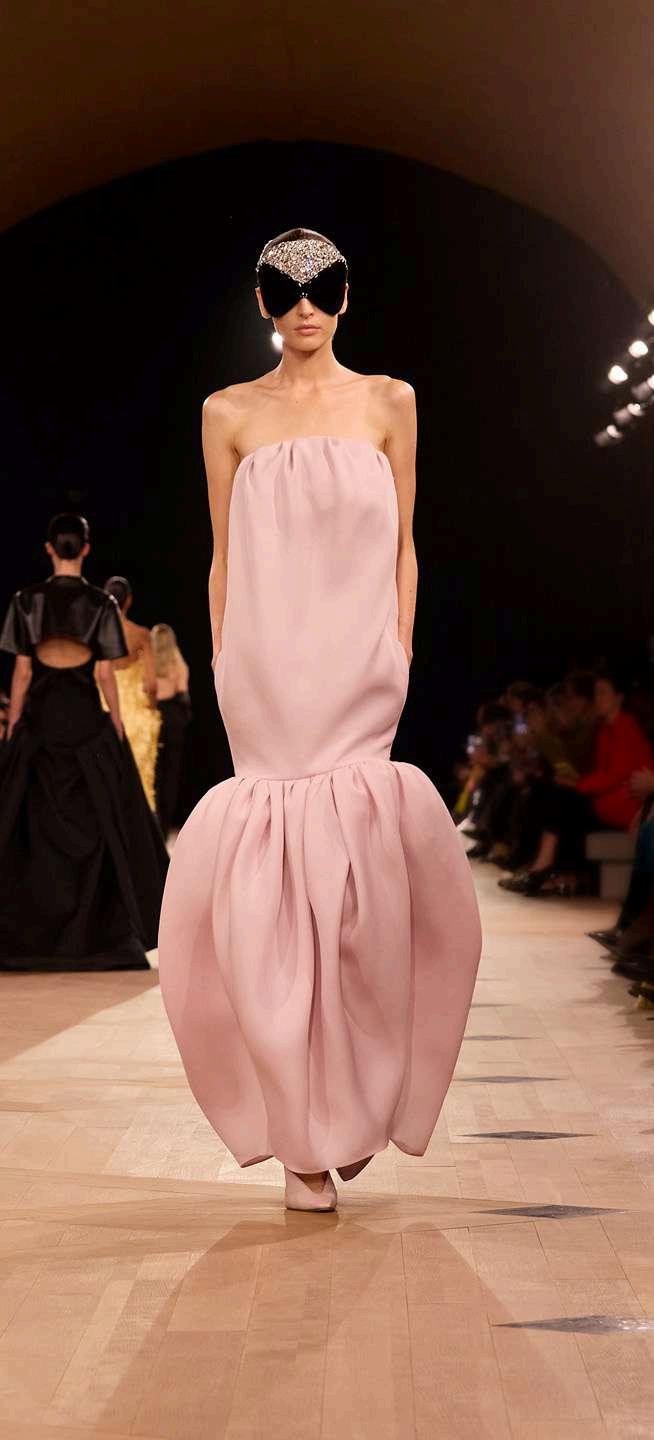
An interpretation of something voluminous yet slightly rigid, it allowed fluidity to define a full form. A behindthe-scenes “making-of” video released shortly after the show offered a sneak peek at the fabric being manufactured and an inside scoop on the brand’s bookmarked design. It was the strapless, tubular gown of Look 53 that earned this distinction The blush pink fabric gathered just barely at the chest and ballooned at the knee, solid enough to hold its form yet gentle enough for air to cause it to ripple Piccioli has long enjoyed eveningwear, although these looks felt almost extraterrestrial Fitted best for the six-foot and slender, they are here for when high heels make their first moon landing or when modern techno queens such as Kasia walk Fashion Week.
The past decade has built Balenciaga girls who stomp the streets of Soho, recognizable by head-to-toe black leather and a serious RBF. They’re rebellious youngest siblings, late to family functions, almost begging for “Is this what young people are wearing these days?” comments from anyone over sixty Who knows what she’s really like under the alien-like shades and oversized puffer, but attitude alone keeps curiosity alive? Still, even Balenciaga girls don’t remain eighteen and invincible forever, and even streetwear doesn’t go unchanged. This season, Balenciaga realizes her in a different form perhaps a little older, still sharp, but now she smiles and gives a knowing nod to the teen girl carrying a city bag circa 2001. You can’t ignore Denma’s ten-year tenure, pioneering the couture-streetwear we have come to love. And while it would be bold to call it retired, Piccioli’s woman proves that maturity isn’t a death sentence for edge, but maybe a new way to wear it