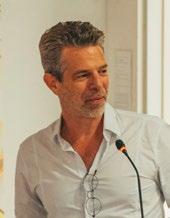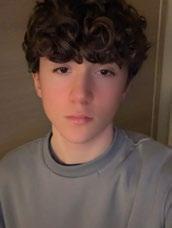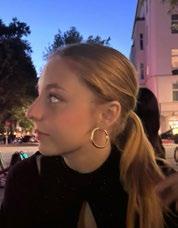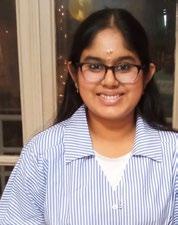
We are now, as Grade 12 students, coming to an end of the IBDP program and let me tell you, it was anything but a walk in the park. I still remember the first classes of my chosen SL and HL subjects, shocked by how much content we had to cover and just as frightened about having to remember it all for the final exams two years later. Looking back at it now, I can confidently say that it could have definitely been worse.
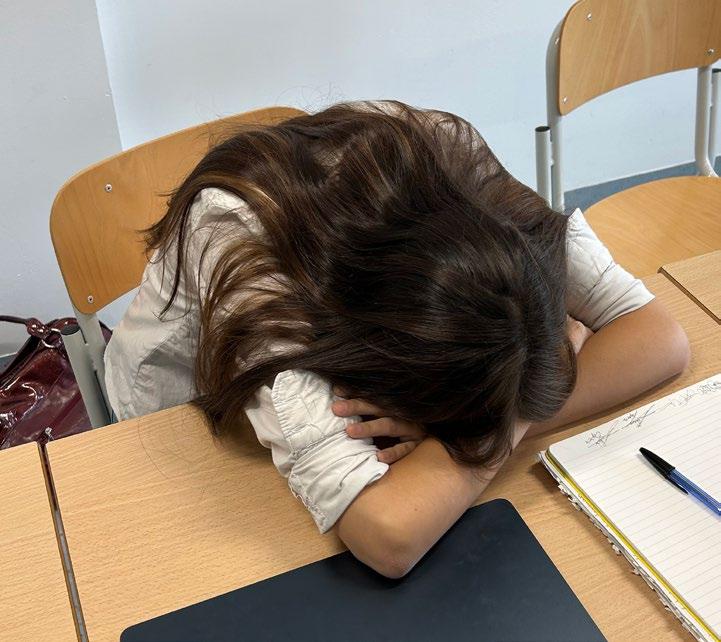
When I started the IB, I thought I was going to be able to ace all my classes with the bare minimum effort. Little did I know that the grading gets much stricter in DP and my usual low to medium effort that landed me good grades in MYP was no longer going to hold up for DP. Nobody truly prepares you for that. DP definitely requires more of your time and effort and now, especially in DP2, I get why the past years’ DP2 students were crashing out in the hallways.
by Marta Settanni
change, the added stress from this program certainly does not help, but the skill set acquired from it most definitely will.
The thing about DP2 is that everything comes all at once and you have to be ready for it. I’ve finished my Extended Essay and Internal Assessments and I still would not be able to explain how to do it to someone else, which I think summarizes the whole IBDP experience for most of us. In a time where your life is already all over the place, chaotic and undergoing
IB has taught me to be more resilient and determined because even when everything seemed like it was too much, this program taught me that I was more than capable of making my way through it. Aside from teaching me these valuable skills, it has also taught me how to do everything even more last minute and still make it work most of the time, how to manage my stress without having an identity crisis, chopping all my hair off and dying it a bright red color (although I did end up doing that either way) and most of all, helped me master the skill of complaining but still getting all of my work done. In all seriousness now, the only advice I could possibly give to next year Grade 12 students and upcoming IBDP students in general is the following:
• Do your best to respect deadlines to avoid having months worth of work piling up or even worse, having to pull an all nighter to write your entire TOK essay the night before submission (speaking unfortunately from experience)
• As hypocritical as that might sound, as I have made it through IBDP being a D1 procrastinator, for your own sake, minimize procrastination as much as possible as everything will be 10 times easier and you’ll stop balding and getting white hairs by the age of 17
• Don’t hesitate to ask a teacher to repeat a concept you did not quite catch as they are there for you, to explain and teach you these things and I can tell you that asking is 100% better than arriving the night before the exam not knowing what a topic is about because you were too scared to ask
• Although you might not believe me, you have the potential to overcome anything, in school and in life, so do not take your-
self and your capabilities for granted. When things feel out of reach, that means you’re on the right track to achievement because success comes from discomfort
• Remember, although IB is a demanding program, you cannot forget to take care of your mental and physical health. Do things you enjoy, nourish your body with balanced and fulfilling meals and at least attempt to get your 8 hours of sleep, because these are the foundations to feel your best and perform just as good
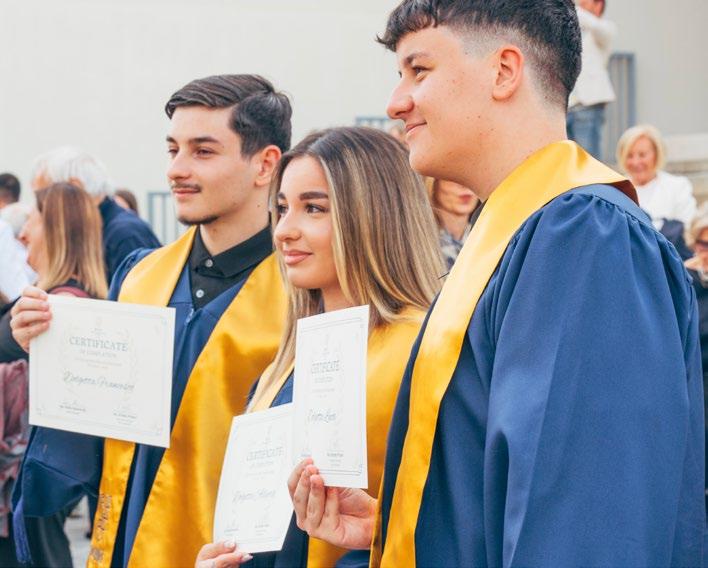
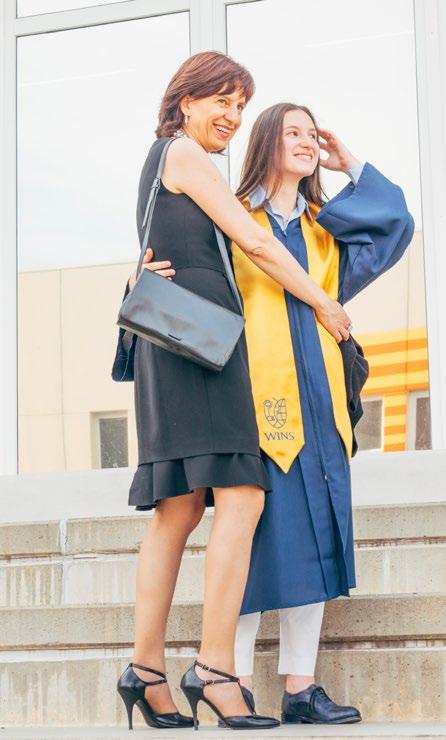
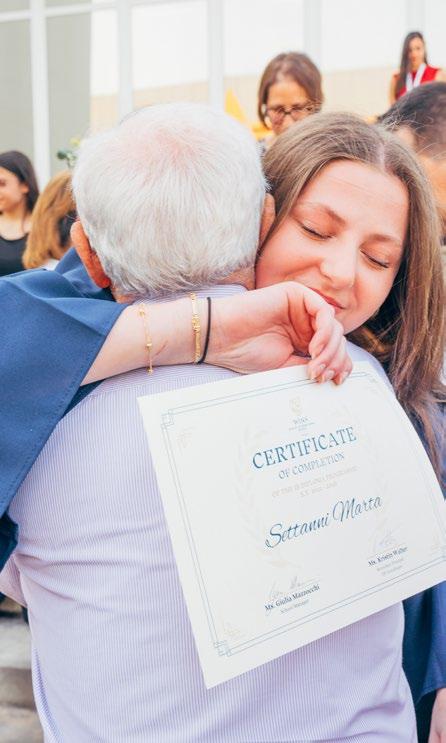
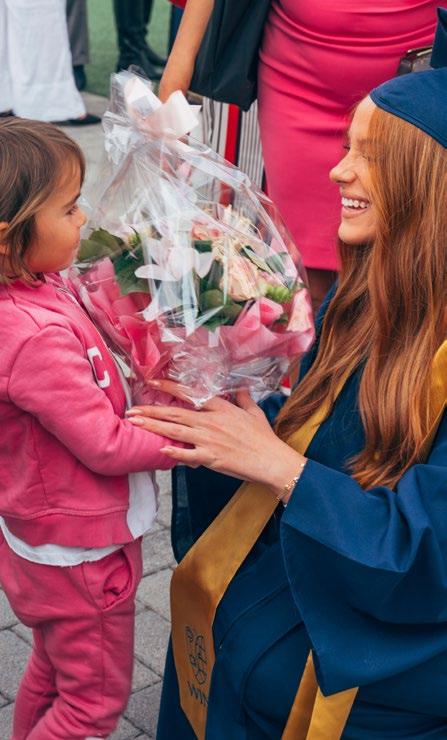
To conclude, all I can say is that IBDP was yet an up and down journey, one of the many that comprise our lives. As I am about to graduate, I came to the realization that IBDP is more than just an academic program. It is an experience that shaped the way I am, for good or for bad, that just depends on perspective.
by Vittoria Marchesi
There is no lying about it—these two years of IB DP have been the most exhausting time of my life. In the midst of preparing so many IA’s, writing the Extended and TOK essays, finishing CAS projects and keeping up with classroom studies for the May exams, I thought I would never find a moment of peace. That was until the first day of grade 12.
I came back from summer vacation exhausted and ready to shed many more tears over studies. Then I went to the art lab and met my new Visual Arts teacher, Mrs. Krasner. I can say with confidence that she was one of the best teachers I encountered at this school. In this last year, she has helped me look at art in a way I hadn’t for a long time—not as an assignment to complete for a numerical grade, but rather as a personal and emotional process of trapping what you feel inside on canvas and creating something original that you can view, look back on, and be proud of. At first, I was clueless about the final exams and my own potential for art. Mrs. Krasner made me realize that with guidance and hard work, I can create whatever I want. She recognized that I have a good eye for color and blending acrylics, something I never truly noticed, and this gave me the confidence to continue experimenting and to create works, even when I didn’t see the beauty in them myself.
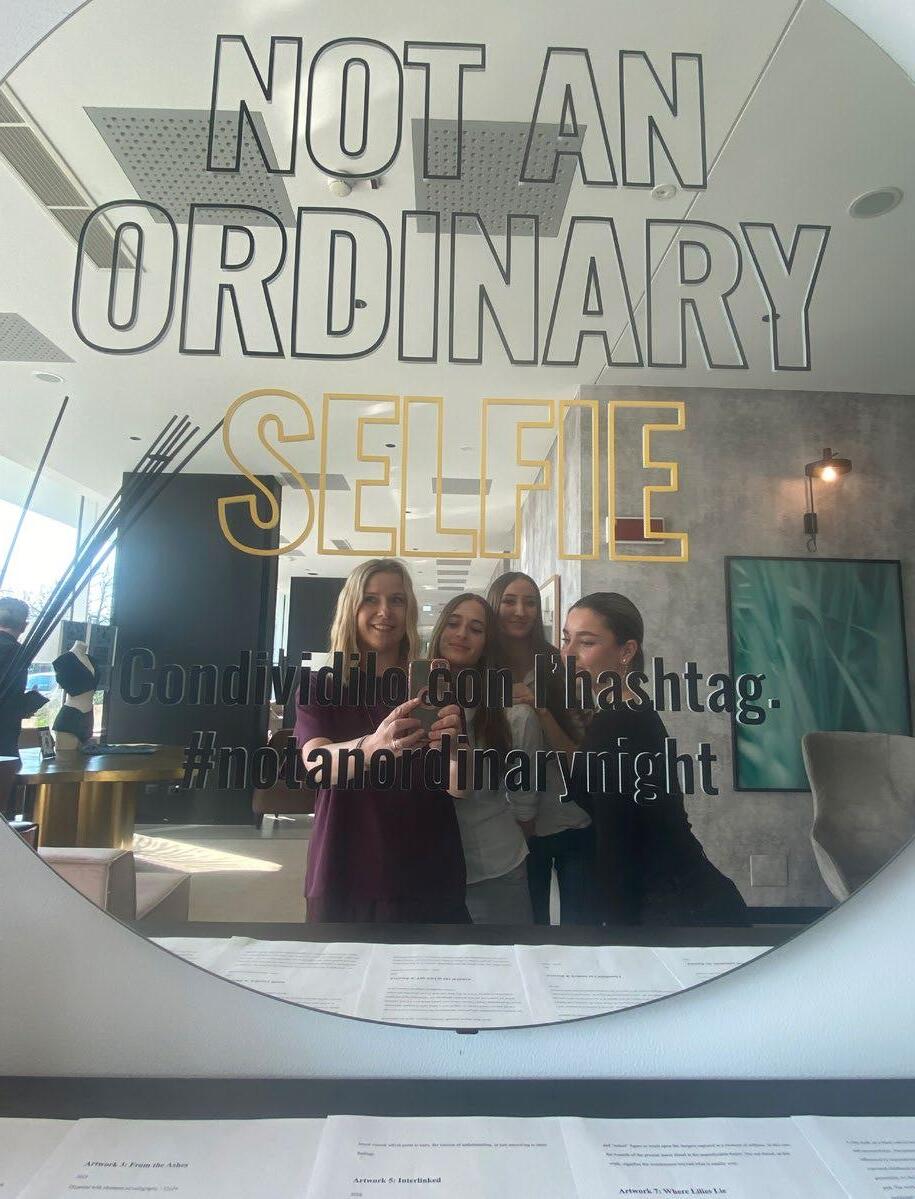
ing material while we all got busy and painted.
On behalf of all my classmates, I’d like to give a big thank you to Mrs. Krasner as she made the art room a safe place where we all felt comfortable to be ourselves, not a classroom governed by strict rules where no distractions or talking is allowed. Instead, the lab was a creative and therapeutic space, a mixture of the pleasure to express ourselves, to create positive memories, and a peaceful environment to work not only on art, but everything else we needed to do. It was so calming there that we never wanted to leave the class and would come even during our free periods!
Completing my exams for Visual Arts was a difficult, but also fun and rewarding, especially the exhibition. Mrs. Krasner helped me in constructing and developing my project and helped all my classmates through the stress of presenting our personal works to so many people. The exhibition capped a year that was filled with many difficulties but also beautiful memories, like the moments we all laughed in the art lab over dumb jokes or the help we received in perfecting our works, through pointers and shar-
So thank you to my art teacher for giving us an incredible year, treating us like adults, and trusting me in my process of creating my final works when I myself wasn’t so sure. Thank you for the peaceful environment and escape from the stress of exams that waited for us outside the art lab. If I could take Visual Arts all over again, I would, as it stabilized and relieved me from all the troubles I thought I would never get through.
Critics say that reading is a dying art and kids today don’t have the capacity to appreciate great literature. Maybe part of that is true, but I believe nothing has changed with kids and literature. If the book is good, kids will read it. What makes a work of literature good?
In English Language and Literature, we recently read the theatrical play by American playwright Tennessee Williams—“Streetcar named Desire”. It is a well-known play that focuses on the life of two sisters, Blanche and Stella, and Stella’s violent husband Stanley Kowalski. The premise goes like this: Blanche moves in with her sister and we know right away that she is distraught, suffering with personal problems such as the loss of her family home. However, there is a mystery to Blanche’s troubles. Stanley has suspicions about her and makes it his goal to find out why Blanche, an aging Southern Belle, has run away.
Throughout the play there is a conflict between Stanley and Blanche. They are completely opposed: he is primitive, she is cultured; he is domineering, she is alluring; he is cruel and direct, she is tender and deceitful. Soon, Stanley uncovers the rumours about Blanche’s past. Blanche remains her proper and spoiled self as she takes long baths and layers lies upon lies to cover up secrets too painful to reveal. Stanley, the classic chauvinist, is
by Serena Luchetta
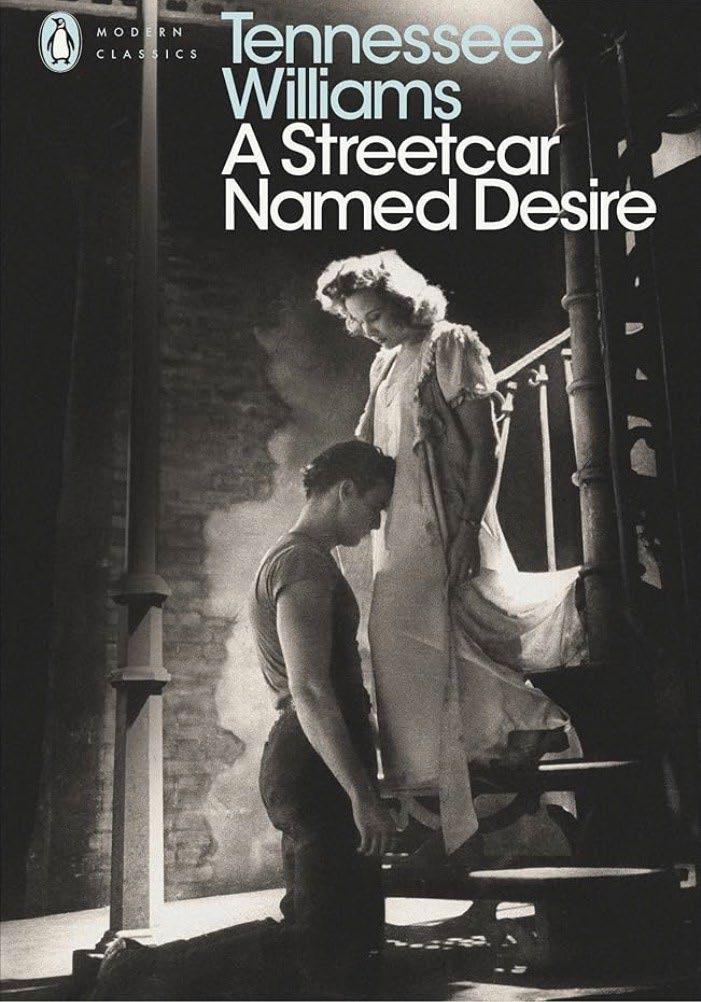
headstrong on trying to control his wife and get rid of his sister-in-law. To complicate things, Blanche seduces Stanley’s best friend, Mitch. It seems the two will marry and solve the loneliness haunting both of them. However, in a twist of events, Stanley reveals the truth behind all the rumours regarding “Dame Blanche”. The result is a chilling climax in which Blanche lays motionless on the floor and recites the famous line, “Whoever you are, I have always depended on the kindness of strangers.”
As a former theatre student, I really enjoyed reading this drama. It was a great text to study because of the “war of the sexes” theme and the archetypical
characters of Stanley Kowalski and Blanche Duboise. The play remains relevant today due to its commentary on women’s place in society and their dependence on men, often to their own detriment. In the play, Stanley holds power over Stella and Blanche, as a magnetic and masculine figure who shouts out his wife’s name like a beast, and holds all the cards over Blanche’s fate. As he memorably claims, “I am the king in this house and don’t you forget it!”
Blanche is the only reasonable character to appreciate. She is melodramatic, irritating, superior and vain, but on the other hand her troubles were all caused by trauma that leads to her rapid mental deterioration. Readers sympathize with Blanche as a sensitive soul, lost in the cruel and hard world. I began hating Stanley more as he made Blanche the victim of his personal crusade. Stella was a frustrating character due her passive acceptance of Stanley’s violent outbursts. But she also represents the voicelessness of women and wives at this time, and so she is another victim. Timeless theme? Unfortunately, I think so.
Overall, this play portrays complex relationships and the complexity of trauma, while being dramatic, sad, and full of suspense. It was, in my opinion, a great play that remains to this day. See, kids can read!
by Marina Rosalli

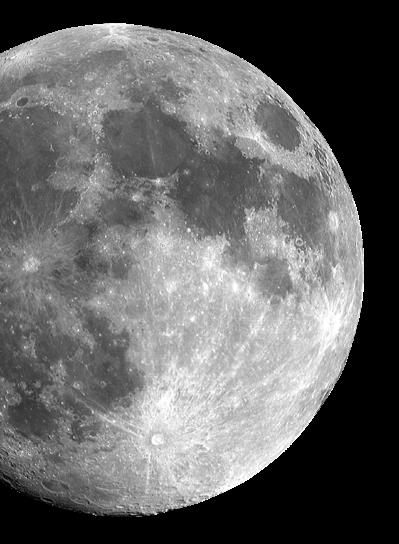
The world is awful. The world is much better. Both statements are true at the same time. The world is awful and we constantly receive headlines about it; about a world of division, crisis and conflict. However, it seems to me that we have forgotten how inspiring and meaningful the world can be. Yes, the world is much better. The problem is that when we surround ourselves with negative news, it creates the illusion that humanity has stopped progressing all together. This is, as Hans Rosling calls it in his book Factfulness, a phenomenon known as the “negativity instinct”. Because of this it would be beneficial to pay more attention to the good news of the world. In fact, here’s today’s good news: humans have returned to the moon after over 50 years!
On April 1st, a spacecraft launched to the sky and disappeared beyond the clouds, as millions watched from earth below, following a 10-day journey around the moon and back in a figure-eight path through space. Artemis II was the first crewed flight of NASA’s Artemis program that travelled to the moon since its first mission (Apollo 17) in 1972. Just pause and reflect on this. Humans have returned to the moon after over 50 years! We are constantly witnessing history and bearing its legacy, and we forget how important this is for humanity as a whole.
Interestingly, Artemis II followed a carefully calculated path around the moon using the natural gravitation-
al pull of both the earth and moon, meaning that if something went wrong the spacecraft could still loop around the moon and return to earth without the need of major engine power. However, what makes Artemis II so fascinating is not just the technology behind it, but everything else that it represents. Space exploration has always been a mirror of the best side of humanity, that is, curiosity, courage, innovation and unity. This mission, unlike Apollo 17 that was fuelled by the Cold War tensions, represents international cooperation to travel beyond earth’s orbit to revolutionise space travel, making it symbolic culturally as much as it is scientifically.
Nevertheless, I think that the most compelling fact is that all of us, in a way, were part of this mission like one big crew, or as pilot Victor Glover described it, “We’re all one people.” And that couldn’t be more true, because once you’re in space, borders disappear and there are no countries or politics. There is just one planet carrying the weight of humanity, and capturing such landscape within a single glance is a heavy but beautiful sight. Perhaps this is why missions like Artemis II matter so much. They remind us that despite negativity, humans are still surrounded by greatness, and we don’t have to read the news to know this. We can just look up at the moon and know that its distance of 384,400 km from earth suddenly feels nonexistent, because we’ve never been closer to it than we are right now.
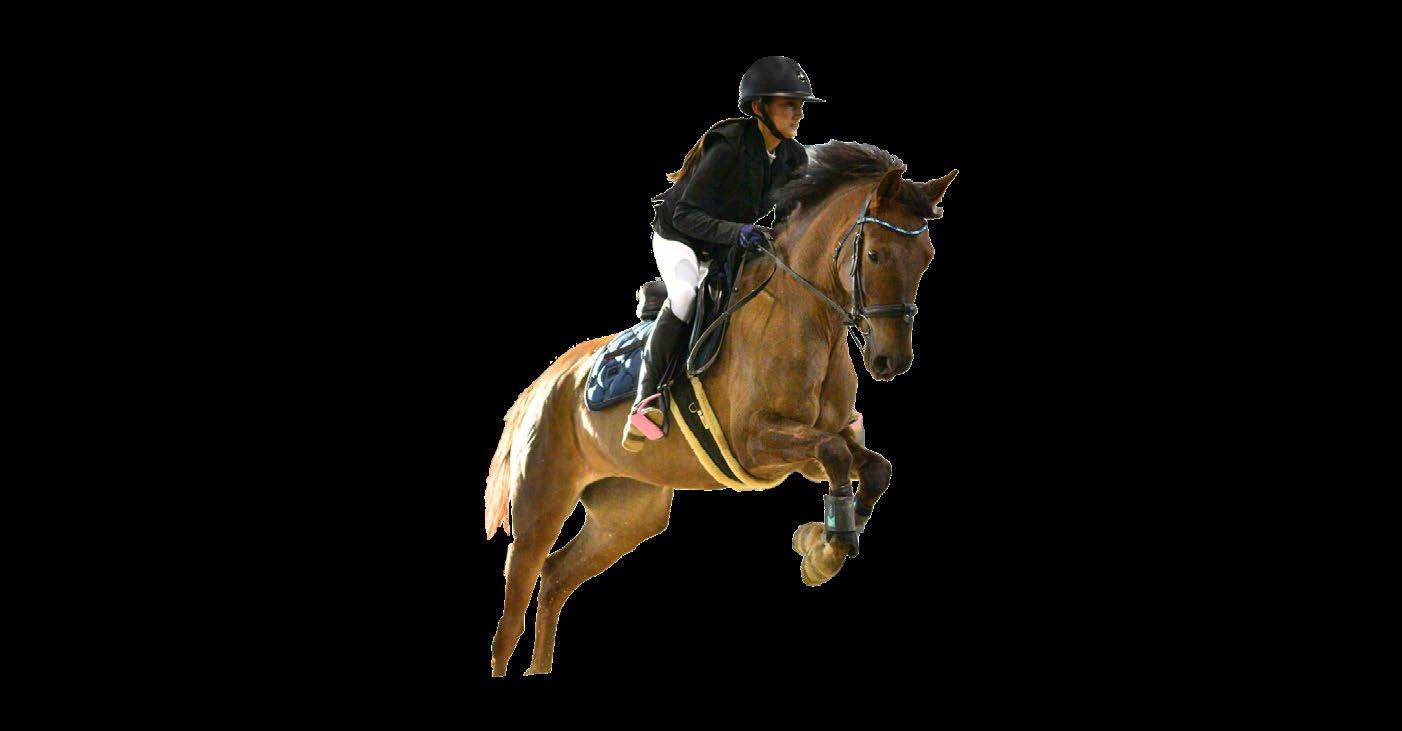
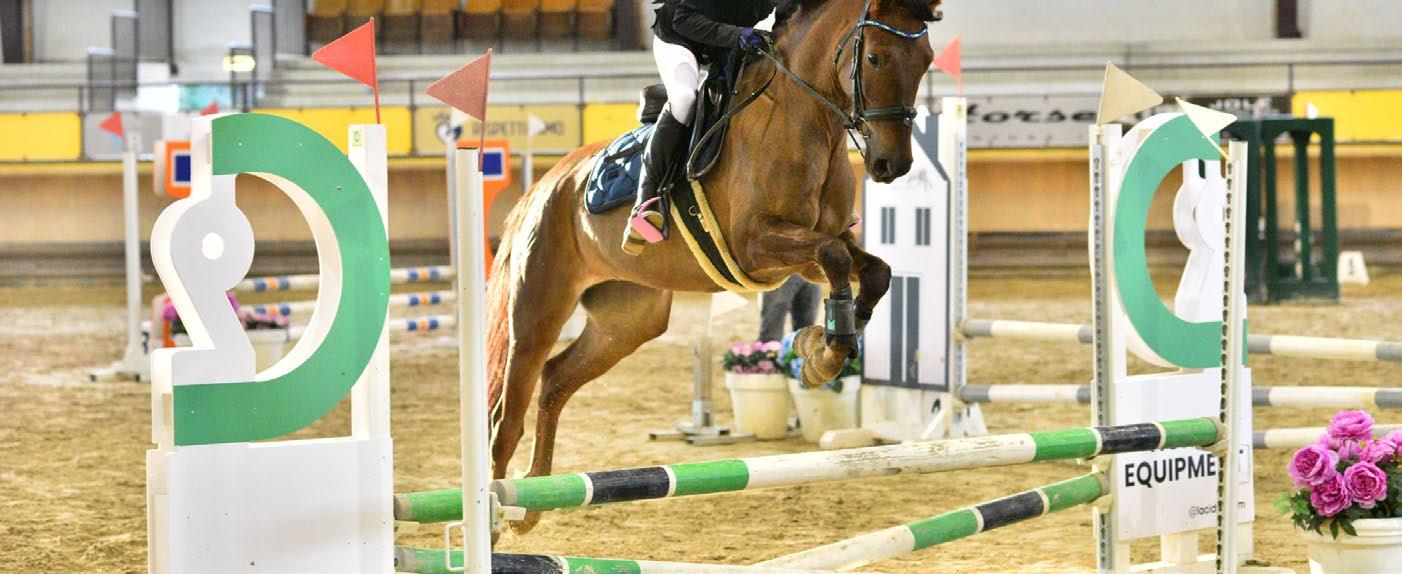
Horse riding has been one of the most important parts of my life for the past 5 years. I started riding at the end of 2021 in Amsterdam after my friends suggested we all try it and ride together, but it quickly became something much more serious. Now it’s changed into something that I could see myself doing in the future. Today, I train six days a week, with four riding days and two days focused on groundwork and letting my horse relax in the field. Alongside school, I also compete in showjumping competitions around twice a month.
In October 2024, my parents bought me my first horse, Bambi. She is a 5-year-old mare, and working with her has completely changed my perspective on the sport. Progress takes time, consistency and patience. I’ve had her for almost 2 years now and we have made a lot of progress, but the relationship is far from perfect. Some days training
goes well, and some days it can be frustrating. Horse riding is not just about results, it’s about trust and understanding.
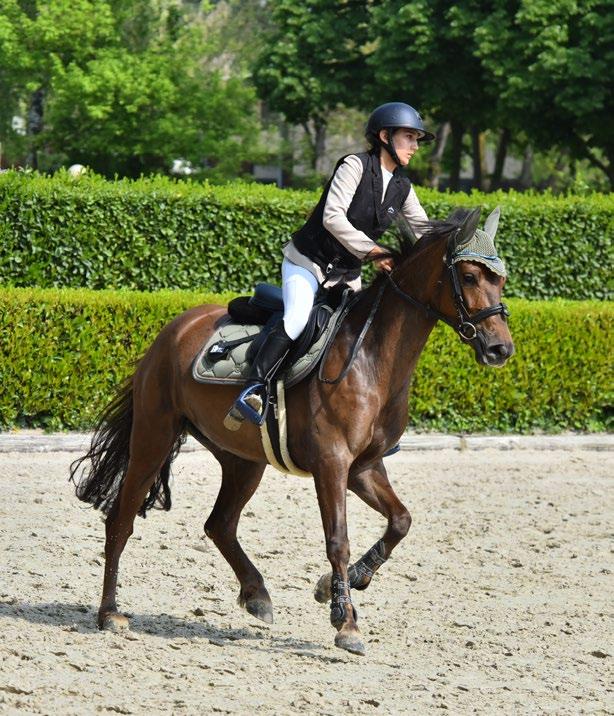
A few months after buying Bambi, my family and I moved from Amsterdam to Torino. Continuing the sport while adapting to a new country was challenging, especially
by Georgia Kraij
because horse riding requires a lot of commitment outside of training itself. Balancing the time I spend with my horse and academics is not always easy, but it has taught me discipline and responsibility from a young age.
In 2025, I bought my second horse, Nina, with the goal of competing at higher levels in showjumping. However, she had some breathing issues which we got surgery for, but she didn’t enjoy being ridden or worked, so those plans changed and she will now have a foal instead. Experiences like this are part of working with horses and have taught me that not everything goes according to plan. Looking back, I think horse riding has shaped not only my daily life, but also my mindset and my future. It has taught me patience, consistency and the importance of trust, both in sport and outside of it.
by Lakshmi Deivanai Sundaram

be amongst those competitors.
Luckily, my team and I had a secret weapon to fight against our anxiety: our team name, “The Sigma Squad”, which our teacher created without our knowledge. We laughed about this throughout the competition. Every time I got stressed, I would just remind myself of being grateful for participating in this competition and think of our group name. It lightened our moods, helping me particularly to hold myself together.
We officially started with the individual round. Supervisors went around the hall handing out the
the answers and kept myself com posed for the rest of the day.
We received a small break during which we discussed our results. Once the break ended, we had the group rounds before which the supervisors clarified the rules. We had 25 questions in total and our team strategized and split them up amongst ourselves. Despite the fact that I received the easiest questions, I was still stressed. I continuously asked my teammates to double-check my work and they supported me without getting impatient. This helped all of us cooperate and work together smoothly.
who also enjoy math.
In the end, our team did not win the top trophy, but the day was still a huge success for me. When they distributed our certificates, I felt very proud. I realized that I am stronger and more capable than I thought. I want to say a big thank you to my parents, my teachers, and my friends. Without their support, I would not have had the courage to participate. Math is about finding the right answers, but I learned that the most important thing is showing up and trying your best.
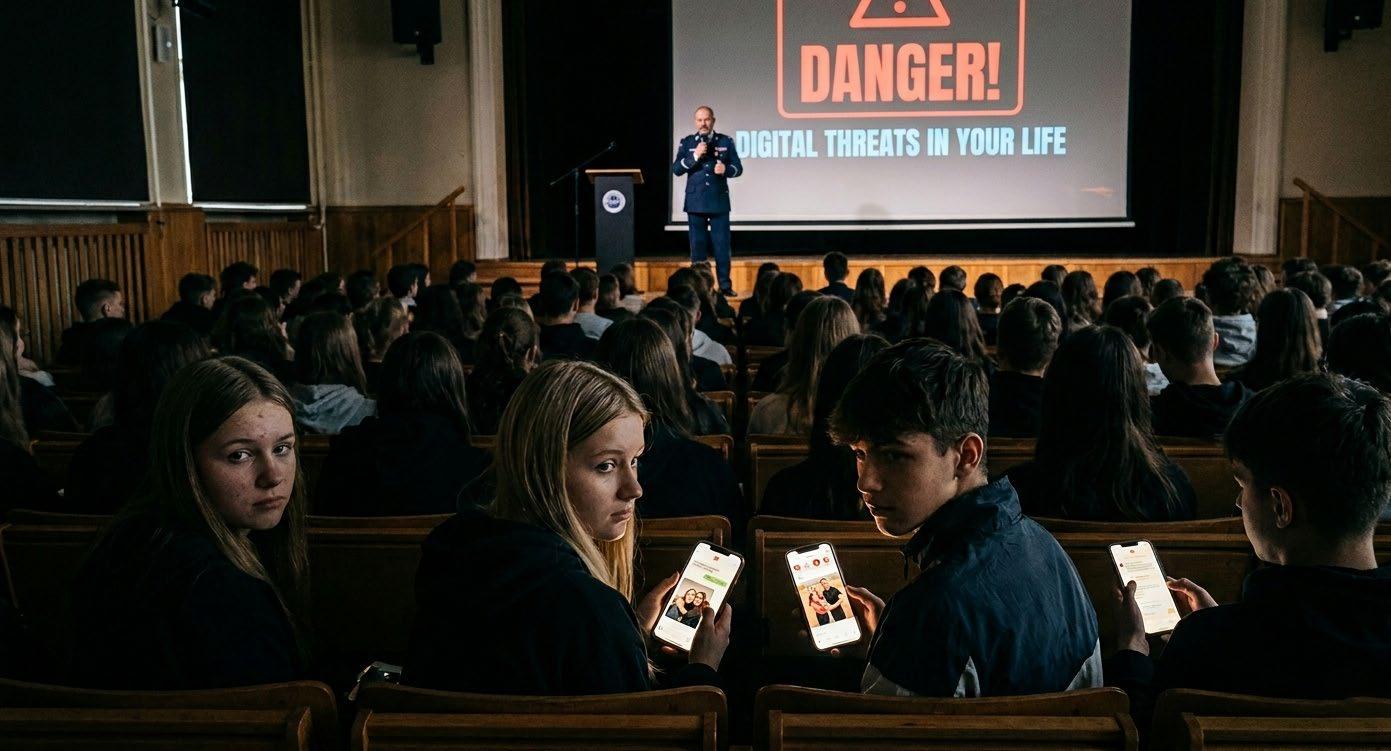
By the time the assembly began, students knew roughly what to expect. Not specifically, of course. But there is a collective understanding that any event introduced as important and educational will involve at least one powerpoint slide about life choices, one slightly uncomfortable silence, and an esteemed adult attempting to translate teenage reality into legally acceptable language.
by Giorgia Garavelli
This particular assembly, however, sounded more interesting than usual. The theme was presented as legal awareness and self-protection: basically, understanding the consequences of reckless behavior, recognising risks and learning how the law intersects with situations that teenagers increasingly encounter both online and offline. In principle, a relevant idea. Adolescence today exists in an environment where private conversations can become permanent screenshots, relationships become digital archives, and social mistakes circulate faster than can be processed emotionally. A conversation on this delicate topic could genuinely offer students something practical. And to some extent, it did.
The speaker was experienced, direct, and convinced of the importance of prevention, as a 45 year old male cop. The assembly touched on undeniably serious topics: digital privacy, consent, alcohol, drugs, and such. These are not trivial subjects, and perhaps that is why the atmosphere was so interesting to observe. What stood out most was not what was said, but rather the tone surrounding it. The discussion seemed built on the assumption that the best educational strategy is anticipation through fear. Dramatizing consequences first and hoping understanding naturally follows.
A good example was the short film that centred around a girl sending an intimate image to someone she trusted. Predictably, the image spreads. Predictably, the situation escalates. Predictably, the audience watches the consequences unfold in the heavy silence that only school assemblies can produce. The message itself was understandable. Digital permanence is real. Trust online is fragile. Private material can become public in seconds. These are important things to discuss openly, especially considering how naturally online interaction now overlaps with emotional relationships. Still, the framing of the situation felt revealing.
The conversation focused almost entirely on danger, exposure, and irreversible consequences, while the emotional reality behind these situations remained absent. There was little discussion about why people trust each other in the first place, or how online communication increasingly blurs intimacy, validation, pressure, and vulnerability together. Instead, the image itself represented the central problem.
This creates an interesting paradox. Human history is hardly unfamiliar with representations of intimacy. Entire museums are filled with nude paintings and sculp-
tures considered cultural masterpieces. Michelangelo sculpted “David” completely nude during the Renaissance and the result is accepted as one of the highest achievements of art, calmly admired by crowds every year. Botticelli’s “Birth of Venus” centres around the exposed female body emerging from the sea and hangs in one of the most celebrated galleries in our country. Yet when the same themes enter modern digital spaces, the tone changes from reflection to alarm.
Of course, there is a difference between art and digital exposure. No one would seriously argue otherwise. But there is also a difference between educating students realistically and frightening them abstractly. The assembly was effective at presenting consequences for reckless behavior; it was less interested in exploring the emotional complexity that usually precedes those consequences.
The same dynamic appeared during the discussions surrounding substances. Again, the legal perspective made sense. The speaker’s role was to highlight illegal behaviour, yet some of the examples felt intentionally absolute, almost cinematic in their construction. At one point, while discussing cannabis, the audience was asked wheth-
er they would trust a pilot who smoked a joint. It is an effective rhetorical image. No one would answer “yes” to that question. At the same time, examples like these simplify reality into extremes. They leave little room for context or proportion.
In countries like Italy, for example, alcohol has historically occupied a different social role than in countries where prohibition until adulthood produces more fascination than moderation. A 16 year old drinking wine at a family dinner occupies an accepted cultural category, separate from the dramatic scenarios often associated with substance abuse.
Perhaps this is what made some of the assembly feel distant from the audience it was addressing. Teenagers are generally aware that risk exists. What they respond to less naturally is when every conversation about risk becomes framed exclusively through worst-case outcomes.
The section regarding consent created a similarly curious atmos-
phere. Consent is, obviously, fundamental. By sixteen or seventeen, most students already understand the literal concept. The more difficult conversations at our age concern emotional ambiguity, pressure, communication, insecurity, intoxication, and empathy. In other words, not simply whether consent exists, but how human relationships become complicated around it.
Those discussions are far less comfortable, admittedly. They also fit less neatly into school assemblies. And perhaps that is the broader point. Complexity is difficult to communicate publicly because complexity risks interpretation. Clear warnings feel safer than nuanced conversations. Yet reality remains nuanced anyway.
The interesting thing about the assembly was not that it discussed controversial themes. Schools should discuss them more often. It was that the discussion revealed a gap between how adults imagine teenage life and how teenagers actually experience it. Students are rarely shocked by the exist-
ence of substances, sexuality, online exposure, or social pressure. These things already exist within our daily environments. What students often lack is not awareness, but spaces where those realities can be discussed without immediately transforming into cautionary theatre.
Within the safe space of our school magazine, I am proposing a slightly different approach. Alongside legal perspectives, schools could involve psychologists, digital culture experts, or younger speakers capable of addressing these themes in a way that feels less alarmist and more bonding. Not because consequences should be minimised, but because understanding usually survives longer than fear.
After all, teenagers are generally more willing to listen when they feel they are being spoken to honestly rather than strategically. And sometimes, listening to certain assemblies, one gets the strange impression that many adults barely remember being teenagers at all.


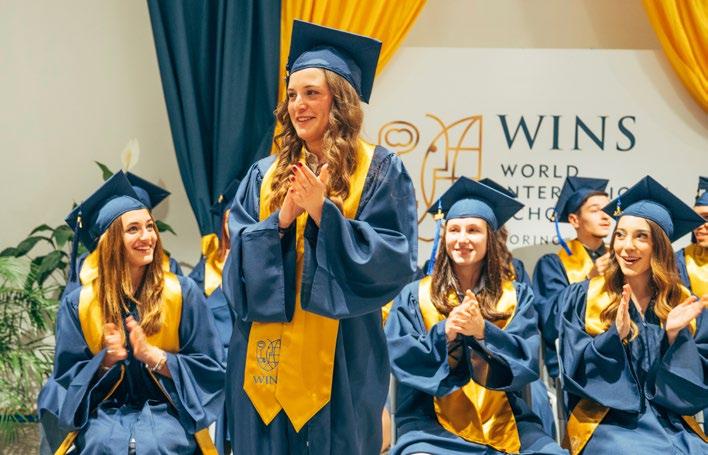
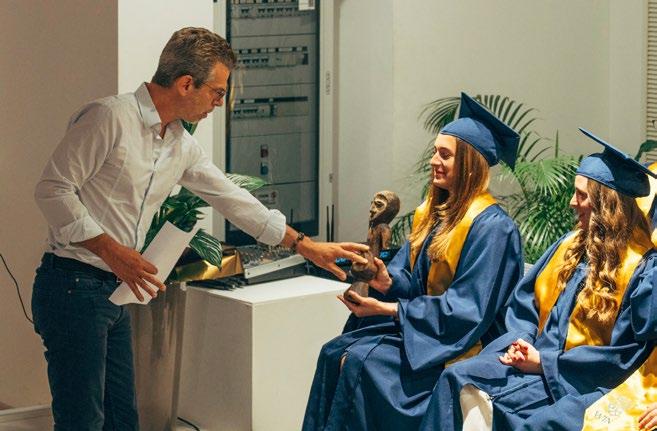
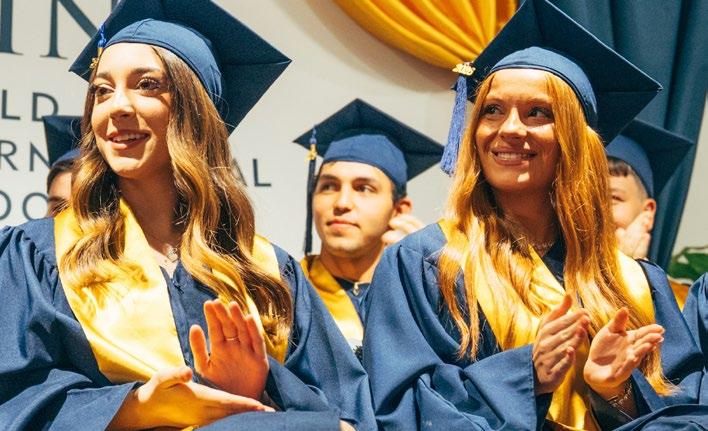
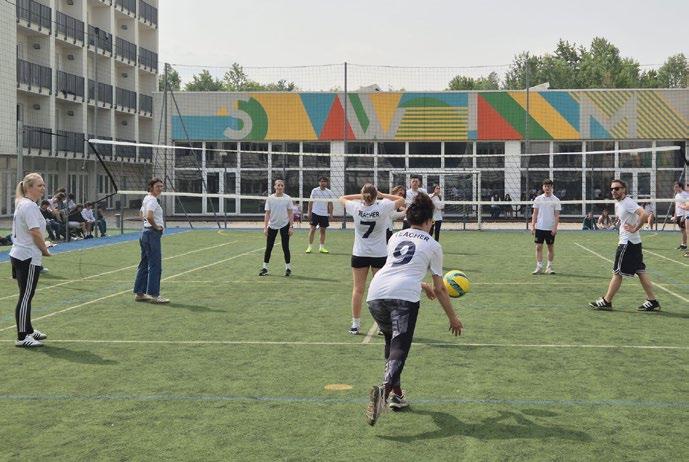
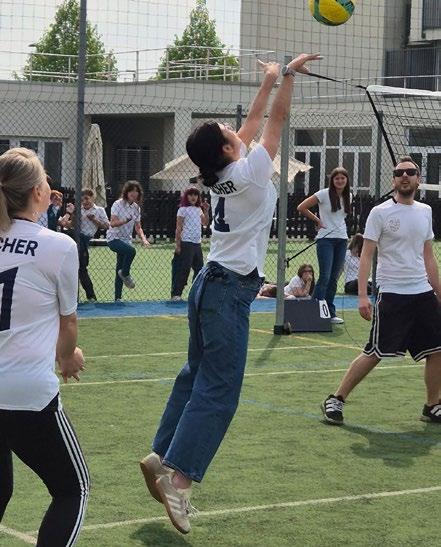
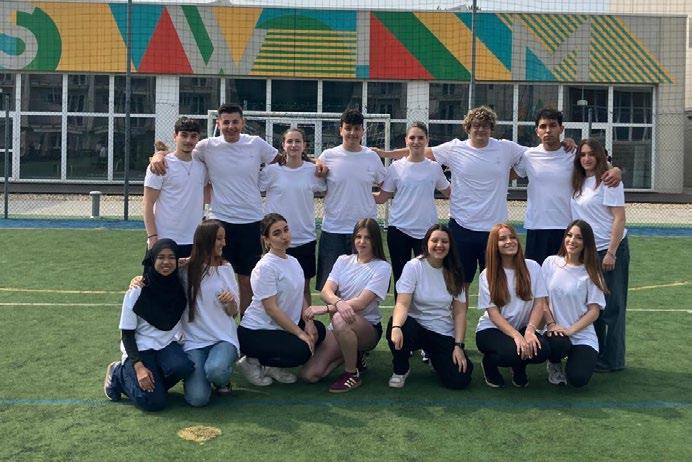

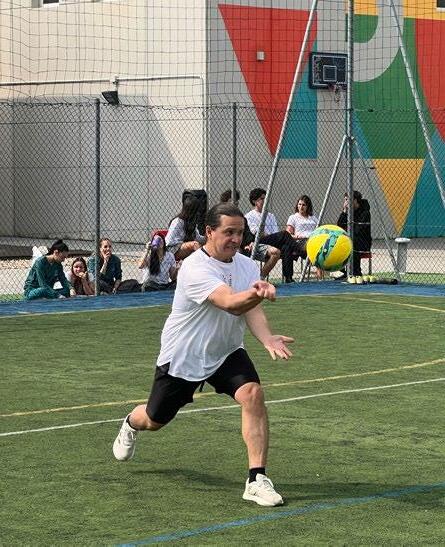
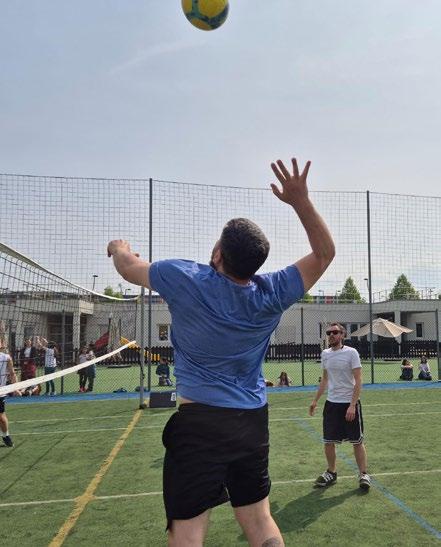
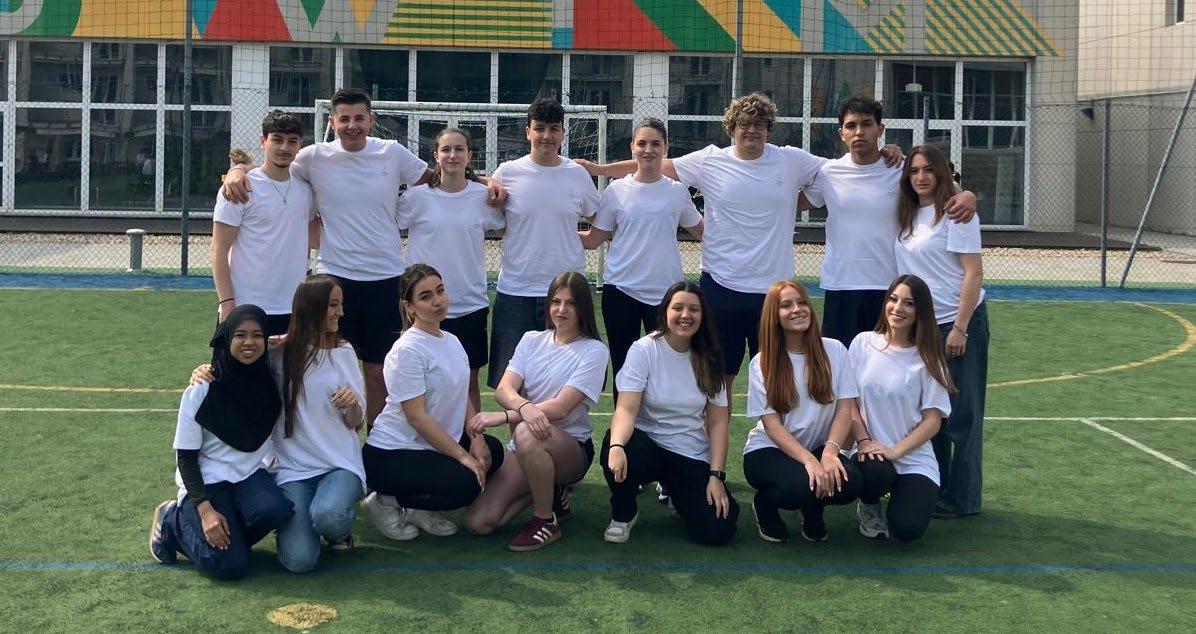

by Ivy Marocco
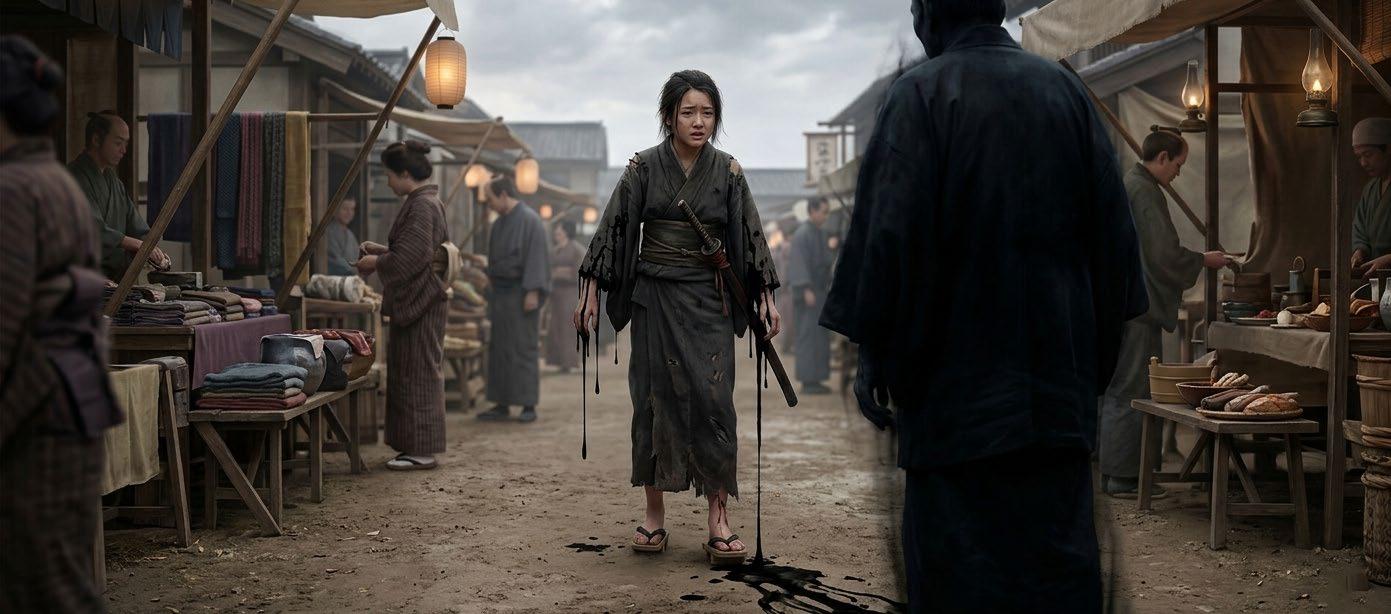
It was March 1913, or at least I thought it was. I just knew that I was somewhere obscure. The only thing I could remember was my name, Kasumi, and my age, 14. I was walking slowly but felt a sudden pang on my right ankle. I looked down but couldn’t see anything. Then I took another two steps and started limping. I heard a noise; it sounded like water dripping.
“Hello?” I said, “is anyone there?” No reply.
I took deep breaths to not panic, until I felt something slightly heavy on my hip. I touched it and it was a scabbard, no sword in it, just empty. When I looked in front of me, something changed. There was a dim light, so I followed it. It was a figure: a woman. I tilted my head slightly. She looked familiar. She had a smile on her face, a warm one. My eyes widened: Could she be my mother? I thought. So, I walked closer to her and tried to hug her but the second I closed my eyes, she disappeared and was replaced by a void. A strong gush of wind blew across my face and instinctively I covered my eyes and fell to the ground.
When I opened them, I was on a street. People around me kept walking and minding their own business. There was a market and people were exchanging goods with money. There was quite a bit of commotion and the loud noises were making me dizzy. I looked down at myself: my ankle was still hurting and I still had the scabbard. It was made of leather and was soft at my touch. I slowly got up and felt something drip on my arm. I looked around and it seemed like…ink? Yes, black ink. Honestly, I didn’t care about how I looked, I just wanted to go home, wherever that was.
I walked closer to the market but saw an old man approaching a child. She was alone and backing away from him. I knew I had to help her. I walked over as fast as I could and said, “Hey, you there!” The man turned around and as soon as he did my body froze. An overwhelmingly sad and dark presence hit me. It was as if all my life memories were passing by, just to be stolen by a monster.
The creature’s face was a caricature of a man even though he looked normal from behind. The ink on my clothes started to
spread over my whole body. My knees were about to give in.
“I’m your shadow,” he simply said.
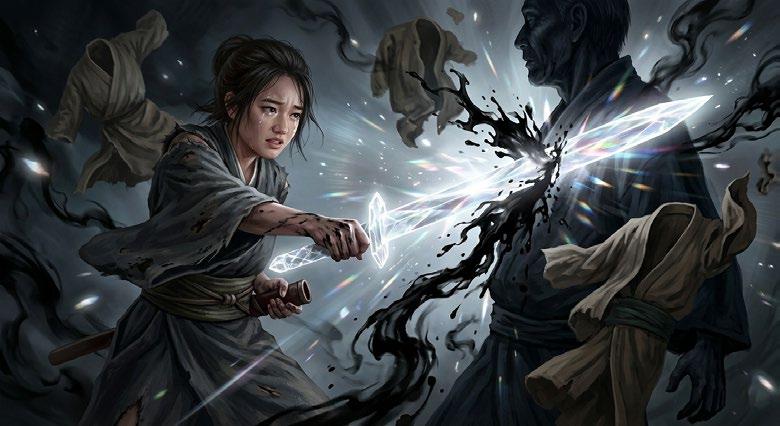
He walked closer to me and held my face with his hands. They felt like death. Without thinking I put my hand in the scabbard and to my huge surprise I felt something metallic come out of it. I closed my eyes and stabbed the man straight in his chest. Then he vanished. All that was left were his clothes. And the child? Even she was gone. I breathed a sigh of relief and when I looked down to my hand, I saw a shiny crystal sword. I tried to touch it with my other hand but, it too disappeared.
I looked around and no one had noticed me. The ink was gone too but I knew I wasn’t safe anymore. I had to recuperate and eat something. I felt exhausted and my ankle still hurt. I stood up once again and limped towards the outskirts of the town. I still couldn’t fully process what had happened in the past minutes. Who was that and why don’t I remember anything? And the worst part was that I was completely alone.
Finally, I reached a quieter place,
a shrine hidden behind cherry blossoms. A soft wind caressed my face, completely different from the wind I experienced before. It was the perfect place to rest. I sat on the steps and looked at the sky. I took a deep breath and for the first time I relaxed a bit. I think the fight had taken a a toll on me. I laid down and closed my eyes. Eventually I fell asleep.
When I woke up, I heard someone tap my shoulder.
“Are you okay?”
“WHO ARE YOU, DON’T KILL ME I’M INNOCENT I SWEAR…. oh,” I said once I saw it was a boy my age. “Uhm, I won’t…?”
“I just asked if you were okay. I thought you fainted.”
“No, I’m fine,” I replied.
He had red hair and a scar on his forehead. His eyes were a deep shade of brown. He had a small bag in his hands.
“It’s food,” he said. “Want some?”
“Yes please,” I replied. I didn’t even realize that I was starving.
We sat on the steps and started eating.
“Why are you eating like that?” he asked.
“Why won’t you shut your mouth?” I shot back.
“Okay, geez calm down.”
“I am calm,” I said while munching on some rice. “So what’s your name?” I asked.
“Rekka,” he replied calmly.
“I’m Kasumi.”
He didn’t say anything, so I turned around and saw him stare ahead.
“Rekka? Are you there?”
Suddenly he started to glitch.
“Can you hear me?”
Behind him, a tree started to glitch too. I looked around. Everything was glitching, including myself!
It’s not real, I heard a voice saying. Tears welled up in my eyes. I tried to take the sword but it wouldn’t appear. It’s all someone else’s imagination. Everything was fading quickly. That’s when I realized what the voice meant. You’re not real, it said. You’re not real…
I looked up to the sky, a few seconds before it too was about to fade completely.
“TO THE PERSON READING THIS, TO WHOEVER INVENTED ME, DON’T CLOSE THE FILE! I’M SCARED OF THE DARK.”

World International School of Torino strives to be the new frontier in international education. Our mission is to create a safe and respectful learning environment to support each child in the development of their individual talents by fostering critical thinking from an early age. The truly mul-
ticultural context of our school with its cutting-edge technology and the high standards of its academic programs nurture the intellectual growth of our students helping them to become open-minded, principled, and inquiring citizens of the world.
A small body of determined spirits fired by an unquenchable faith in their Mission can alter the course of history - Mahatma Gandhi