WORLD GASTROENTEROLOGY NEWS
www.worldgastroenterology.org
Official e-newsletter of the World Gastroenterology Organisation VOL. 31, ISSUE 3
SEPTEMBER 2026
In this issue
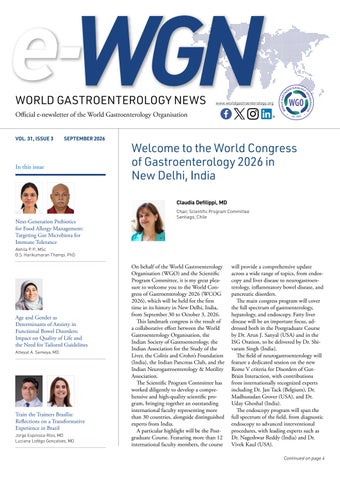
Welcome to the World Congress of Gastroenterology 2026 in New Delhi, India Claudia Defilippi, MD
Next-Generation Prebiotics for Food Allergy Management: Targeting Gut Microbiota for Immune Tolerance
Chair, Scientific Program Committee Santiago, Chile
Akhila P. P., MSc B.S. Harikumaran Thampi, PhD
Age and Gender as Determinants of Anxiety in Functional Bowel Disorders: Impact on Quality of Life and the Need for Tailored Guidelines Atteyat A. Semeya, MD
Train the Trainers Brasília: Reflections on a Transformative Experience in Brazil Jorge Espinoza-Ríos, MD Luciana Lofêgo Gonçalves, MD
On behalf of the World Gastroenterology Organisation (WGO) and the Scientific Program Committee, it is my great pleasure to welcome you to the World Congress of Gastroenterology 2026 (WCOG 2026), which will be held for the first time in its history in New Delhi, India, from September 30 to October 3, 2026. This landmark congress is the result of a collaborative effort between the World Gastroenterology Organisation, the Indian Society of Gastroenterology, the Indian Association for the Study of the Liver, the Colitis and Crohn’s Foundation (India), the Indian Pancreas Club, and the Indian Neurogastroenterology & Motility Association. The Scientific Program Committee has worked diligently to develop a comprehensive and high-quality scientific program, bringing together an outstanding international faculty representing more than 30 countries, alongside distinguished experts from India. A particular highlight will be the Postgraduate Course. Featuring more than 12 international faculty members, the course
will provide a comprehensive update across a wide range of topics, from endoscopy and liver disease to neurogastroenterology, inflammatory bowel disease, and pancreatic disorders. The main congress program will cover the full spectrum of gastroenterology, hepatology, and endoscopy. Fatty liver disease will be an important focus, addressed both in the Postgraduate Course by Dr. Arun J. Sanyal (USA) and in the ISG Oration, to be delivered by Dr. Shivaram Singh (India). The field of neurogastroenterology will feature a dedicated session on the new Rome V criteria for Disorders of GutBrain Interaction, with contributions from internationally recognized experts including Dr. Jan Tack (Belgium), Dr. Madhusudan Grover (USA), and Dr. Uday Ghoshal (India). The endoscopy program will span the full spectrum of the field, from diagnostic endoscopy to advanced interventional procedures, with leading experts such as Dr. Nageshwar Reddy (India) and Dr. Vivek Kaul (USA). Continued on page 4
WORLD GASTROENTEROLOGY NEWS
2
SEPTEMBER 2026
Contents | Cover | Editorial | Expert Point of View | WGO International Meetings | WGO News | Calendar of Events
VOL. 31, ISSUE 3 Editors
Welcome to the World Congress of Gastroenterology 2026 in New Delhi, India
1
Claudia Defilippi, MD
Nancy Fanous, MD, PhD Consultant of Gastroenterology, Hepatology & Endoscopy Police Authority Hospitals Cairo, Egypt
Editorial
Dao Viet Hang, MD, PhD
Expert Point of View
Director, Endoscopy Center, Hanoi Medical University Hospital (HMUH) Senior Researcher, Institute of Gastroenterology and Hepatology (IGH) Hanoi, Vietnam
Next-Generation Prebiotics for Food Allergy Management: Targeting Gut Microbiota for Immune Tolerance
Managing Editors Lizzie Murphy Art Production Carrie Jebe Editorial Office WGO Executive Secretariat 555 East Wells Street, Suite 1100 Milwaukee, WI 53202 USA info@worldgastroenterology.org
Letter from the Editors
5
Nancy Fanous, MD, PhD Dao Viet Hang, MD, PhD
6
Akhila P. P., MSc B.S. Harikumaran Thampi, PhD
The Young Endoscopist’s Back: Practical Ergonomics to Prevent Career-Long Injury
10
Radu-Alexandru Fărcaș, MD, PhD Georgiana Gîlcă-Blanariu, MD, PhD
Age and Gender as Determinants of Anxiety in Functional Bowel Disorders: Impact on Quality of Life and the Need for Tailored Guidelines
13
Atteyat A. Semeya, MD
Green Endoscopy in Resource-Limited Settings: Lessons from a Tertiary Care Center in Pakistan
16
Asma Asghar, FCPS (Med), FCPS (Gastro), FRCP (Edin), FRCPI, ESEGH (UK)
https://www.facebook.com/WorldGastroOrg
https://twitter.com/WorldGastroOrg
https://www.instagram.com/worldgastroorg/ https://www.linkedin.com/company/world-gastroenterology-organisation-wgo-wgo-foundation
www.worldgastroenterology.org
©2026 World Gastroenterology Organisation. No part of this publication may be reproduced, stored in a retrieval system, or transmitted in any form without the prior permission of the copyright owner.
WORLD GASTROENTEROLOGY NEWS
3
SEPTEMBER 2026
Contents | Cover | Editorial | Expert Point of View | WGO International Meetings | WGO News | Calendar of Events
WGO International Meetings Recognition of 2026 Award Recipients
18
WGO News Train the Trainers Brasília: Reflections on a Transformative Experience in Brazil
20
Jorge Espinoza-Ríos, MD Luciana Lofêgo Gonçalves, MD
Renowned Keynote Speaker Dr. Roberto Canessa to Present at TTT Montevideo
22
LIVERCON IX Concluded: A Landmark Leap for Community Hepatology
23
Pradip Bhaumik, MD, PhD
Riga Brings Together Five Societies— and Two Health Systems—for World Digestive Health Day 2026
e-WGN Submission Portal
27
Please note that the Co-Editors of e-WGN may make edits and changes to your article. For more information, please email info@ worldgastroenterology.org.
Polish Society of Gastroenterology
Calendar of Events Calendar of Events
Article Instructions To find more information on article and author instructions, visit our e-WGN submission portal! This portal contains all necessary instructions to help you complete your e-WGN contribution and allows you to submit all information in one place. There are many ways to contribute to our newsletter! Expert Point of View, meeting promotions and summaries, testimonials and more are all welcome inside of e-WGN! Explore our submission portal at:
26
Aleksejs Derovs, MD, PhD, FEBGH
In Memoriam: Prof. Eugeniusz Butruk
Interested in writing for e-WGN? Submit your article today! WGO is accepting article submissions for upcoming issues of e-WGN. Articles reach a global audience and are disseminated through WGO’s mailing list and social media platforms.
28
Donate Now
©2026 World Gastroenterology Organisation. No part of this publication may be reproduced, stored in a retrieval system, or transmitted in any form without the prior permission of the copyright owner.
WORLD GASTROENTEROLOGY NEWS
4
SEPTEMBER 2026
Contents | Cover | Editorial | Expert Point of View | WGO International Meetings | WGO News | Calendar of Events
Colorectal cancer will also receive special attention in a dedicated session. Dr. Finlay Macrae (Australia) will deliver the prestigious Henry L. Bockus Lecture, addressing the important and increasingly recognized issue of The Global Rise in Early-Onset Colorectal Cancer. The program will also include educational sessions such as a Train the Trainers workshop, an Artificial Intelligence session considering its emerging role in clinical practice, and the 4th WGO Women in GI Symposium, which will highlight leadership opportunities for women in gastroen-
terology and feature the presentation of the WGO Trailblazer Award for Excellence in Medicine. We are also especially honored to welcome Dr. Barry James Marshall (Australia), Nobel Laureate, who will share his experience and insights on the challenges of conducting research and pursuing scientific discovery. The congress will showcase more than 1,100 research abstracts, highlighting the latest advances in gastroenterology, hepatology, and endoscopy. Beyond the scientific program, WCOG 2026 will offer gastroen-
terologists from around the world a chance to meet, exchange ideas, and strengthen professional networks. India’s rich heritage, vibrant culture, and world-renowned cuisine will provide an exceptional setting for this truly global gathering. We look forward to welcoming you to New Delhi for WCOG 2026! Claudia Defilippi, MD Co-Chair, Scientific Program Committee Santiago, Chile
WORLD GASTROENTEROLOGY NEWS
5
SEPTEMBER 2026
Contents | Cover | Editorial | Expert Point of View | WGO International Meetings | WGO News | Calendar of Events
Letter from the Editors Nancy Fanous, MD, PhD Consultant of Gastroenterology, Hepatology & Endoscopy Police Authority Hospitals Cairo, Egypt
Dao Viet Hang, MD, PhD Director, Endoscopy Center, Hanoi Medical University Hospital (HMUH) Senior Researcher, Institute of Gastroenterology and Hepatology (IGH) Hanoi, Vietnam
Dear Colleagues, Welcome to the September issue of e-WGN. In this issue, we explore how evolving science, clinical innovation, and community leadership are reshaping gastroenterology worldwide. Our Expert Point of View (EPOV) features dive into three critical areas redefining modern practice: The prevalence of food allergies rapidly rises across developed nations, and modulating the gut microbiota through prebiotic dietary interventions offers a promising therapeutic pathway. Prof. Harikumaran Thampi and Dr. Akhila highlight how the use of prebiotics—such as human milk oligosaccharides (HMOs), galacto-oligosaccharides (GOS), and novel grains like Sanwa rice selectively stimulate beneficial bacteria like Bifidobacterium and Lactobacillus, strengthen intestinal barrier integrity, and promote immune tolerance against rising food allergy rates. Addressing nearly 40% of the global population living with functional bowel disorders, Dr. Atteyat Semeya challenges our rigid, “one-size-fitsall” guidelines. She calls for sex- and
age-stratified clinical approaches that account for distinct gut-brain interactions, visceral sensitivity, and hormonal influences across a patient’s lifespan. Dr. Asma Asghar shares a compelling model from Pakistan, where financial constraints led to strict, safe reprocessing protocols for selective endoscopic accessories reuse, multipurpose tool selection, and waste segregation. Their unit cut procurement costs by a third while significantly reducing waste, proving that resourcelimited settings can pioneer practical, high-standard “green endoscopy.” Beyond our featured perspectives, we celebrate global education and member society initiatives: More success stories from the Train the Trainers program! Testimonials about the advanced TTT course in Brasília came from Prof. Jorge Espinoza-Ríos from Peru & Prof. Luciana Lofêgo from Brazil. They described their experience as a genuinely transformative experience that reinforced the fundamental truth: forming true leaders in gastroenterology requires far more than technical and scientific mastery. By developing
key skills in medical leadership, emotional intelligence, strategic planning, effective communication, and conflict resolution, participants return home equipped to inspire the next generation of gastroenterologists. To news from WGO member societies, Prof. Pradip Bhaumik reports that the Hepatitis Foundation of Tripura successfully concluded LIVERCON IX under the official motto: “Healthy Liver, Healthy Community, Healthy World.” The foundation adopted the introduction of “Community Hepatology” to shift liver care from reactive hospital treatments to proactive, community-based prevention, built on the successful “Tripura Model”—which has already vaccinated over 37% of the state’s population against Hepatitis B. In celebration of World Digestive Health Day in Riga, Prof. Aleksejs Derovs reported that the Digestive Disease Society Latvia brought together over 130 human and veterinary healthcare professionals to tackle chronic diarrhea through a unified “One Health” approach. Centered on the theme “Chronic Diarrhea: Don’t Flush the Signs Away,” the conference explored how this often-overlooked symptom serves as an early red flag for complex conditions, from foodborne Salmonella to ulcerative colitis and systemic disease. We cordially invite you to share your recent publications, success stories, society news, and activities, as well as your experience with WGO courses and committees with e-WGN. Follow WGO social media pages for updates! Sincerely, Dr. Nancy Fanous, Egypt Dr. Dao Viet Hang, Vietnam
WORLD GASTROENTEROLOGY NEWS
6
SEPTEMBER 2026
Contents | Cover | Editorial | Expert Point of View | WGO International Meetings | WGO News | Calendar of Events
Next-Generation Prebiotics for Food Allergy Management: Targeting Gut Microbiota for Immune Tolerance Akhila P. P., MSc Research Scholar, Biochemistry Department of Life Science University of Calicut Kerala, India
B.S. Harikumaran Thampi, PhD Professor, Biochemistry Department of Life Science University of Calicut Kerala, India
Abstract: Diet, genetics, and environment play a critical role in food allergies development which are rapidly increasing in developed countries. Modulating gut microbiota as a novel dietary approach capable of preventing food allergies is increasingly becoming of interest. If you get enough prebiotics (non-digestible fibers that stimulate the growth of beneficial gut bacteria) through diet this can help to boost immune tolerance and reduce allergic responses according to research. Many alternative therapies, human milk oligosaccharides (HMOs), galacto-oligosaccharides (GOS), and a novel source like Sanwa rice have been used in the food allergic state. They contribute to immune modulation via their capacity to induce the production of short-chain fatty acids (SCFAs) and improving gut-intestinal barrier integrity. Humans’ trials as well as several animal models demonstrate a beneficial effect of prebiotics on the severity of food allergy and these results suggest that
they could be an attractive therapeutic target for the future. Keywords: prebiotics, gut microbiota, food allergy treatment, novel prebiotics, prebiotics mechanisms Introduction Microbiomes are significant components of the human body containing a
vast array of microorganisms. The human gut microbiota is a large community specializing in microorganisms that have immense implications on health and disease. It affects metabolism, fights pathogens, and regulates the immune system. There is mounting evidence supporting gut microbial dysbiosis as an important contributor, particularly amongst children, to the development of food allergy and intolerance syndromes. About 5–10% of people in developed countries have food allergies, which are intimately associated with microbiota disruption and leaky gut leading to immune dysregulation. However, diet, medication, and environmental context to which children are exposed to can also influence gut microbiome composition, raising the necessity for dietary interventions such as prebiotics that may reset the dysbiosis and promote an immune tolerance switch.1, 2 Diet plays a major influence in
WORLD GASTROENTEROLOGY NEWS
7
SEPTEMBER 2026
Contents | Cover | Editorial | Expert Point of View | WGO International Meetings | WGO News | Calendar of Events
altering the gut flora. Consumption of some types of food modifies the composition of intestinal microbe communities by boosting the abundance of bacteria. The chance of developing some diseases can be lowered by including better dietary alternatives in regular meals.3 Prebiotics are non-digestible dietary ingredients that target the composition and activity of the gut microbiota in a functional way. Their capacity allows selectively provided growth and activities of beneficial bacteria in the gut ecosystem, mainly Bifidobacterium and Lactobacillus species, which has been associated with regulation of local mucosal immune function and prevention of allergic diseases.4, 5 This review examines recent developments in the use of prebiotics for food allergy treatment, focusing on their mechanisms of action, clinical evidence, and insights from animal models. Gut Microbiota and Immune Tolerance The gut microbiota is important for the development of the immune system, especially in relation to the establishment of oral tolerance—a phenomenon where the immune system tolerates food antigens without resulting in an allergic reaction. There are a few big mechanisms that contribute to immune tolerance mediated by the gut microbiota, including: 1. Regulatory T Cells (Tregs) Some gut bacteria, such as Bifidobacterium and Clostridia, drive the expansion of Tregs that are involved in suppressing excessive immune responses and promoting tolerance to food antigens. 2. Short Chain Fatty Acids (SCFAs) Fermentation of dietary fibers by beneficial bacteria results in the production of SCFAs like butyrate, acetate, and propionate. SCFAs improve the integrity of the intestinal barrier, tone down
immune cells, and are anti-inflammatory. 3. Immune System Development Microbes exposure early in life shape immunity. Perturbations in the early microbiome (e.g. antibiotic use or c-section birth) has been linked to subsequent food allergy protection. Here, we consider the location effects of these two potential factors as well as their combined effect on food allergies.6, 7 Dysbiosis and the Emergence of Food Allergies Multiple studies have shown differences between the gut microbiota compositions of healthy individuals and those with food allergies. Dysbiosis involves the following: • Reduced microbial diversity Individuals engineered to develop allergic responses tended to have lower overall gut microbial diversity in association with reduced functional maturation of the immune system. • Imbalance between bacteria Food allergy sufferers have a reduced abundance of beneficial bacteria, particularly Bifidobacterium and Lactobacillus, and an increase in harmful bacteria like Escherichia coli as well as Clostridium difficile. These imbalances create a so-called leaky gut, or increased intestinal permeability, through which allergens pass causing allergy related symptoms.8, 9 Prebiotics Prebiotics are non-digestible dietary fibers that stimulate the growth of beneficial bacteria. Prebiotics work as food for good gut bacteria, boosting their growth and activity in the colon and improving overall gut health. Compounds such as insulin, fruit-oligosaccharides, manna-oligosaccharides, and resistant starch are prebiotic dietary fibers that are not
digested in the upper gastrointestinal tract but selectively stimulate good gut microbes to help digestion. They provide a variety of health benefits by modifying the microbiome, including gut health maintenance, increased calcium absorption, cancer prevention, and immune system enhancement. Prebiotics also enhance gut mucosal integrity and lipid metabolism, potentially replacing antibiotics in animals. In addition, they have the ability to reduce diet-related disorders and improve food product quality. Undigested dietary items that enter the colon are selectively fermented by beneficial bacteria such as bifidobacteria and lactobacilli, promoting a healthy intestinal flora. The increased demand for prebiotics has resulted in their inclusion into functional foods.4, 5, 10
Mechanism of Action Prebiotics will help to promote immune tolerance and reducing allergic responses, by acting on the gut microbiota via different mechanisms, including: 1. Stimulation of beneficial aspects Prebiotics specifically stimulate the growth of some specific bacteria flora, such as Lactobacillus and Bifidobacterium that modulate immunity and maintain gut barrier integrity. 2. Production of SCFAs Prebiotics (e.g. inulin, fructooligosaccharides) are fermented by gut bacteria to generate SCFAs that promote anti-inflammatory effects, reduces inflammation, and enhances gut mucosal integrity and immune tolerance. 3. Modulation of immune responses Prebiotics, particularly more insoluble fibers, stimulate the production of cytokines and immunoglobulins to modulate immune responses, thus making individuals better able to tolerate any food antigens.
WORLD GASTROENTEROLOGY NEWS
8
SEPTEMBER 2026
Contents | Cover | Editorial | Expert Point of View | WGO International Meetings | WGO News | Calendar of Events
Prebiotic Type
Source
Mechanism of Action
Reported Benefits
Human Milk Oligosaccharides (HMOs)
Human Milk
Enhances microbial diversity, supports Treg induction
Reduces cow’s milk allergy symptoms
Galacto-oligosaccharides (GOS)
Dairy Products
Increases Bifidobacterium, SCFA production
Improves immune tolerance
Fructo-oligosaccharides (FOS)
Plants (Chicory, Onions)
SCFA production, gut barrier reinforcement
Reduces food allergy symptoms
Beta-glucans
Oats, Mushrooms
Immunomodulation, SCFA production
Investigated for food allergy mitigation
Xylo-oligosaccharides (XOS)
Plant Fibers
Promotes Bifidobacterium, improves gut integrity
Reduces allergy risk
Polydextrose
Synthetic
Enhances microbial richness, reduces inflammation
Potential in allergy management
Pectin-derived Oligosaccharides
Fruit Cell Walls
Supports Faecalibacterium growth, anti-inflammatory effects
Reduces inflammation
Resistant Dextrin
Processed Fiber
Enhances microbial diversity, lowers proinflammatory markers
Allergy prevention potential
Algal-derived Polysaccharides
Seaweed
Stimulates beneficial bacteria, modulates immunity
Investigated for therapeutic applications
4. Competing with pathogens Prebiotics help in inhibiting the growth of pathogenic bacteria by creating an environment favorable for beneficial bacteria to grow, and beneficial species effectively outcompete pathogenic species for resources to the colonization sites. Additionally, by altering the gut flora, they may improve the effectiveness of cancer therapies like chemotherapy.4, 10–13 The role of traditional prebiotics in managing food allergies is gaining attention due to their potential to modulate gut microbiota and enhance immune tolerance. Research indicates that prebiotics, such as galactic-oligosaccharides (GOS) and insulin, can significantly influence the gut microbiome, promoting beneficial bacterial strains that may reduce the risk of food allergies in offspring when administered during pregnancy. Prebiotics are helpful, but their effects can differ depending on the makeup of each person’s gut microbiota, indicating the necessity for individualized methods when using them.14–16
Novel Prebiotics for Allergy Management New prebiotics with potential effect on management of food allergies have been described in a recent study. Human Milk Oligosaccharides (HMOs) HMOs, which are naturally contained in breast milk, encourage the growth of healthy gut bacteria and help children build their immune systems. Clinical research indicate that HMOs may lessen allergy responses by increasing gut bacteria diversity and immunological function.17 Beta-glucans Derived from oats, mushrooms, and yeast, beta-glucans contain prebiotic properties that promote SCFA generation and improve immunological responses. Their effect in relieving food allergy symptoms is being investigated.18 Xylo-oligosaccharides (XOS) Known for their significant bifidogenic qualities, XOS increase gut microbial diversity and may lower the risk of food allergies by improving gut health.19
Polydextrose A second case in functionalized glucose polymer not only shows prebiotic potential (an effect on microbiota richness and SCFA production) but also some effectiveness in reducing allergic reactions.20 Oligosaccharides derived from Pectin This type of oligosaccharide is obtained from the cell walls of fruits and helps in sustaining beneficial bacteria like Faecalibacterium prausnitzii, which is known for its anti-inflammatory characteristics.21 Resistant Dextrin A type of prebiotic that has been shown to increase subjects gut microbiota diversity as well as decreased pro-inflammatory markers in clinical studies, making it an interesting compound for allergy prevention.22 Algal prebiotics (Fucoidans and Laminarins) Seaweed derived polysaccharides are able to selectively stimulate certain beneficial bacteria strains such as bifidobacteria and can also modulate immune response, making them a potential therapeutic approach for food allergy.23
WORLD GASTROENTEROLOGY NEWS
9
SEPTEMBER 2026
Contents | Cover | Editorial | Expert Point of View | WGO International Meetings | WGO News | Calendar of Events
Clinical Evidence for Prebiotics in Food Allergy Treatment Several clinical trials have been done to determine the effectiveness of new prebiotics in treating food allergies. Below are some significant findings: 1. Human Milk Oligosaccharides (HMO’s) in Cow’s Milk Allergy (CMA) Infants with cow’s milk allergy (CMA) who received HMOsupplemented formula had less allergic symptoms and lower levels of cow’s milk-specific IGE. HMO promoted the growth of Bifidobacterium species, which improved gut microbial diversity and immunological tolerance.24 2. Galacto-Oligosaccharides (GOS) in allergy prevention Early-life supplementation with Galacto-Oligosaccharides (GOS) can prevent food allergies, according to a study of newborns. GOS increased gut microbial composition by raising Bifidobacterium numbers, which aid immune modulation and reduces inflammation.25 3. Fructo-Oligosaccharides (FOS) in multiple food allergies FOS, which is often present in plants such as chicory and onions, has been studied for its potential involvement in controlling numerous food allergies. In one study, children with numerous food allergies who took FOS supplements had improved gut barrier function, fewer allergy symptoms, and greater tolerance to allergens.26 4. Synbiotic Strategies The fusion of prebiotics and probiotics (synbiotics) has unveiled promising prospects in animal research, revealing enhanced
immune acceptance and diminished allergy manifestations when employing GOS alongside select bacterial varieties.27 Preclinical Research Provides Insights into Animal Models Animal models have offered useful information about the potential of prebiotics in food allergy treatment. In a wheat gluten allergy mouse model, prebiotics produced from Sanwa rice’s
non-digestible fractions (NDF) were found to increase the growth of Faecalibacterium prausnitzii, a bacterium associated with anti-inflammatory properties.28 Supplementing with Kylo-Oligosaccharides (LOS) in an albumin-sensitized Murine model reduced allergic symptoms, including lower IGE levels. It also increased the abundance of beneficial bacteria, particularly Akkermansia muciniphila, which has been linked to improved gut barrier function and immune tolerance.29 Arabinogalactans, or plant-derived
polysaccharides, were evaluated in a Murine model for peanut allergy. Mice treated with arabinogalactans produced more SCFA and had an increase in good gut bacteria including Lactobacillus and Bifidobacterium.30 These animal models provide important insights into how prebiotics can be utilized to alter the gut and lessen allergy symptoms, with potential therapeutic applications in human food allergies. Conclusion The use of prebiotics in food allergy treatment is a unique and promising strategy to altering gut microbiota and improving immunity. Clinical trials and preclinical research have demonstrated that new prebiotics, including HMOs, GOS, and Sanwa rice-derived prebiotics can successfully reduce allergic responses and enhance gut health. New research indicates that prebiotics can be engineered to produce immune tolerance to particular allergens, such as peanuts. What’s more promising in this sense is the research conducted this year, wherein gut microflora modulation could have a beneficial effect on allaying allergic reactions to specific food triggers, offering a novel approach to targeted prebiotic therapies. References Readers may access the full list of references here.
WORLD GASTROENTEROLOGY NEWS
10
SEPTEMBER 2026
Contents | Cover | Editorial | Expert Point of View | WGO International Meetings | WGO News | Calendar of Events
The Young Endoscopist’s Back: Practical Ergonomics to Prevent Career-Long Injury Radu-Alexandru Fărcaș, MD, PhD Department of Internal Medicine Maimonides Medical Center Brooklyn, New York, USA
Georgiana Gîlcă-Blanariu, MD, PhD Grigore T. Popa University of Medicine and Pharmacy Gastroenterology Department Sf Spiridon Country Clinical Emergency Hospital Iasi, Romania
Key message: Ergonomics should be regarded not as an optional wellness consideration, but as a core competency in endoscopic practice. A ten-second room check, a lighter grip, and early use of team-assisted maneuvers can prevent thousands of repeated high-risk movements over a career. Why This Matters Endoscopy is taught as a cognitive and technical discipline: recognize pathology, reach the caecum, inspect carefully, resect safely, and manage complications. Yet every procedure is also a prolonged physical task involving sustained standing, repetitive thumb and wrist motion, pinch force, shoulder elevation, trunk rotation, and intense visual concentration. These exposures accumulate quietly. By the time pain changes an endoscopist’s practice, the injurious pattern may have been repeated for years. The scale of the problem is substantial. An earlier systematic review found endoscopy-related musculoskeletal pain or injury in 39%–89% of surveyed endoscopists, including back
pain in 15%–57% and neck pain in 9%–46%.1 A 2025 meta-analysis of 30 studies and 7,646 endoscopists estimated a pooled career-long prevalence of 62.5%; the hand, lower back, thumb, and neck were the most frequently affected sites.1, 2 The consequences extend beyond discomfort: treatment, physiotherapy, sick leave, reduced procedural volume.
and impaired leisure activity are all reported.2, 3 Young gastroenterologists should not assume that injury is a late-career problem. In a national survey of 168 gastroenterology fellows, 54.8% reported an endoscopy-related injury, most often involving the thumb, hand or fingers, and wrist.4 The practical implication is clear: prevention should begin during the first months of training, before speed, force, and nonneutral posture become automatic. Treat Ergonomics as Part of the Procedure The 2023 American Society for Gastrointestinal Endoscopy (ASGE) guideline supports formal ergonomics education, neutral monitor and table positioning, microbreaks and macrobreaks, antifatigue mats, and selected ancillary devices.5 The certainty of evidence is limited because many studies are observational and rely on self-report. However, these interventions are
WORLD GASTROENTEROLOGY NEWS
11
SEPTEMBER 2026
Contents | Cover | Editorial | Expert Point of View | WGO International Meetings | WGO News | Calendar of Events
inexpensive, low risk, and biologically plausible. More importantly, ergonomics is teachable: simulation-based training has improved measured posture and reduced injury-risk scores during clinical colonoscopy, while systematic review evidence suggests that educational interventions improve ergonomic knowledge and behavior.6, 7 Ergonomic Practices to Implement 1. Set the room before touching the scope. The monitor should come to the endoscopist, not the endoscopist’s neck to the monitor. Place the primary screen directly in front of you, with the center of the image slightly below eye level. ASGE guidance cites a preferred viewing angle approximately 15–25° below the horizontal line of sight.5 A monitor positioned laterally or too high encourages repeated cervical rotation, chin elevation, and trunk twisting. Make this a non-negotiable pre-procedure habit. Before insertion, stand where you intend to work and look naturally ahead. If you must rotate your neck, extend your chin, or lean around another team member, move the screen. The anesthesia workspace, nursing access, and monitor position should be planned together; a well-designed room should not force one professional to work safely at another’s expense. 2. Adjust the bed for your body. Bed height influences the shoulders, elbows, wrists, and lumbar spine. A useful starting point is to keep the endoscope control body around elbow height or up to 10 cm below it.5, 8 A bed that is too high elevates the shoulders and abducts the arms; one that is too low promotes forward flexion and leaning. Do not accept the height inherited from the previous case
Table 1. Pre-Endoscopy Ergonomic Checklist The ten-second pre-scope pause Monitor directly in front? Image slightly below eye level? Bed near elbow height? Shoulders relaxed and elbows close? Before insertion, confirm: Can I stand close without leaning? Do I have room to move my feet? Is the team ready to reposition or apply pressure? Am I holding the scope with minimum necessary force?
or previous endoscopist. Re-adjust before every procedure and after major patient repositioning. 3. Move your feet and do not torque your back. Colonoscopy easily creates an asymmetric posture: the left hand is fixed on the control head, the right hand torques the shaft, and the trunk drifts towards the bed. Stand close enough to avoid reaching, maintain a balanced stance, and reposition your feet as the direction of force changes. Pivot from the hips and feet rather than rotating through a fixed lumbar spine. Most importantly, do not treat every loop as a personal strength test. Use withdrawal and reduction, change the patient’s position, ask for targeted abdominal pressure, and consider water-assisted or other low-force techniques according to local practice. Good colonoscopy is not defined by how much torque the operator can generate. It is defined by effective, controlled force applied through the safest available strategy. 4. Protect the hands and thumbs. The endoscope control head was not designed around the biomechanics of every hand. Repeated dial manipulation, sustained pinch, non-neutral wrist posture, and high grip force contribute to thumb,
wrist, forearm, and nerve injury.8, 9 Use the lightest grip that preserves control. Relax the left thumb and fingers whenever a maneuver ends; avoid keeping the control dials clamped between actions. Keep the wrists as neutral as possible, bring the instrument towards the body rather than reaching, and use the right hand to support and steer the shaft rather than relying on a prolonged static pinch. Trainees often tighten their grip during difficult passages because anxiety is translated into muscle force. A useful self-check is: ‘Can I soften my hands without losing control?’ If the answer is yes, do so immediately. Precision usually improves when unnecessary tension falls. 5. Use microbreaks as procedural maintenance. Microbreaks are not lost productivity. They are brief interruptions of sustained loading. Between cases, or during a safe pause in a prolonged therapeutic procedure, 30–60 seconds can be used for cervical retraction, scapular setting, wrist and thumb mobility, lumbar extension, and calf activation. Longer lists should also include scheduled microbreaks when feasible.5 The aim is not an elaborate workout in the endoscopy unit; it is to prevent one posture from becoming continuous exposure. Supportive, stable footwear and an appropriately cleaned antifatigue mat may reduce lower-limb and back discomfort during long standing lists.5 Mats should have bevelled edges and be positioned so that they do not create a trip or infection-control problem. 6. Make ergonomics a team behavior. The individual endoscopist cannot compensate indefinitely for
WORLD GASTROENTEROLOGY NEWS
12
SEPTEMBER 2026
Contents | Cover | Editorial | Expert Point of View | WGO International Meetings | WGO News | Calendar of Events
a poorly designed unit. Teams should normalize adjustment of monitors and beds, early patient repositioning, effective abdominal pressure, and brief recovery pauses. Procedure rooms should accommodate operators of different heights, including trainees who may be substantially shorter or taller than their supervisors. Equipment purchasing should consider handle size, shaft forces, monitor mobility, and room layout, not only image quality. Supervisors also shape behavior. When a trainer praises rapid completion but ignores a fellow’s elevated shoulder, twisted neck, or white-knuckle grip, the hidden curriculum favors injury. A better teaching language is specific and immediate: ‘Lower the bed,’ ‘square your hips to the monitor,’ ‘step rather than twist,’ or ‘release your thumb between dial movements.’ When Pain Appears, Respond Early Pain should not be accepted as proof of commitment or procedural volume. Persistent symptoms, nocturnal pain, weakness, numbness, loss of dexterity, or reduced range of motion deserve early occupational-health, physiotherapy, or medical assessment. In a small real-world intervention, physicaltherapist observation of endoscopists followed by an individualized wellness plan led to improvement or resolution at 63% of reported pain sites.10 The study was small and uncontrolled, but it illustrates an important principle: generic advice may miss the specific posture, mobility restriction, or room constraint driving an individual’s symptoms. Early reporting also allows the unit to identify system problems. Several clinicians developing similar neck pain may indicate a monitor-placement issue; recurrent thumb symptoms may reflect instrument-hand
mismatch or excessive list intensity. Ergonomic injury is therefore both an individual health concern and a quality-improvement signal. Conclusion Endoscopy-related injury is not an unavoidable badge of honor. It usually develops through small, repeated mismatches between the operator, the instrument, the room, and the workload. Young gastroenterologists have a unique opportunity to build safer motor patterns before harmful habits become efficient habits. Small, cost-free changes can make a big difference: adjust the monitor and bed every time; stand close, move the feet, and use the team; hold the scope lightly; take brief recovery pauses. Last but not least, seek help when symptoms begin, not when they threaten procedural ability. Safe endoscopy means both safe for the patient and safe for the endoscopist. Protecting the operator’s body is not separate from quality; it is what makes a lifetime of high-quality endoscopy possible. References 1. Yung DE, Banfi T, Ciuti G, Arezzo A, Dario P, Koulaouzidis A. Musculoskeletal injuries in gastrointestinal endoscopists: a systematic review. Expert Rev Gastroenterol Hepatol. 2017;11(10):939–947. doi:10.1080/17474124.2017.13 56225. 2. Oliveira R, Roseira J, Estevinho MM, et al. Endoscopy-related musculoskeletal injuries: a systematic review and meta-analysis on prevalence, risk factors and prevention. United European Gastroenterol J. 2025;13(6):1012–1030. doi:10.1002/ueg2.70042. 3. Sturm N, Leukert J, Perkhofer L, et al. The impact of endoscopic activity on musculoskeletal disorders of high-volume endoscopists in Germany. Sci Rep.
2022;12(1):8538. doi:10.1038/ s41598-022-12400-4. 4. Pawa S, Martindale SL, Gaidos JJK, et al. Endoscopy-related injury among gastroenterology trainees. Endosc Int Open. 2022;10(8):E1095–E1104. doi:10.1055/a-1869-9202. 5. Pawa S, Kwon RS, Fishman DS, et al. American Society for Gastrointestinal Endoscopy guideline on the role of ergonomics for prevention of endoscopyrelated injury: summary and recommendations. Gastrointest Endosc. 2023;98(4):482–491. doi:10.1016/j.gie.2023.05.056. 6. Khan R, Scaffidi MA, Satchwell J, et al. Impact of a simulation-based ergonomics training curriculum on work-related musculoskeletal injury risk in colonoscopy. Gastrointest Endosc. 2020;92(5):1070– 1080.e3. doi:10.1016/j. gie.2020.03.3754. 7. Scaffidi MA, Gimpaya N, Fecso AB, et al. Educational interventions to improve ergonomics in gastrointestinal endoscopy: a systematic review. Endosc Int Open. 2022;10(9):E1322–E1327. doi:10.1055/a-1897-4835. 8. Shergill AK, McQuaid KR, Rempel D. Ergonomics and GI endoscopy. Gastrointest Endosc. 2009;70(1):145–153. doi:10.1016/j.gie.2008.12.235. 9. Ridtitid W, Coté GA, Leung W, et al. Prevalence and risk factors for musculoskeletal injuries related to endoscopy. Gastrointest Endosc. 2015;81(2):294–302.e4. doi:10.1016/j.gie.2014.06.036. 10. Markwell SA, Garman KS, Vance IL, Patel A, Teitelman M. Individualized ergonomic wellness approach for the practicing gastroenterologist (with video). Gastrointest Endosc. 2021;94(2):248– 259.e2. doi:10.1016/j. gie.2021.01.045.
WORLD GASTROENTEROLOGY NEWS
13
SEPTEMBER 2026
Contents | Cover | Editorial | Expert Point of View | WGO International Meetings | WGO News | Calendar of Events
Age and Gender as Determinants of Anxiety in Functional Bowel Disorders: Impact on Quality of Life and the Need for Tailored Guidelines Atteyat A. Semeya, MD Consultant of Hepatogastroenterology Benha Teaching Hospital Benha, Egypt
Introduction Functional bowel disorders (FBDs)— including irritable bowel syndrome (IBS), functional dyspepsia, functional constipation, and functional diarrhea—affect up to 40% of the global population and account for a substantial proportion of gastroenterological consultations worldwide.1 A well-established but frequently underappreciated aspect of these conditions is their bidirectional relationship with anxiety disorders, which occur in 30–60% of affected patients.2 What remains poorly addressed in current clinical practice—and conspicuously absent from existing
guidelines—is the extent to which age and gender shape this comorbidity. Both biological sex and age act as powerful modulators of gut-brain axis function, visceral sensitivity, and psychopathological vulnerability. This expert opinion summarizes the current evidence, highlights the impact on health-related quality of life (HRQoL), and argues that the field urgently requires sex- and age-stratified clinical recommendations.
Gender Differences in FBDRelated Anxiety Women are diagnosed with IBS at approximately twice the rate of men, and comorbid anxiety disorders follow a similar pattern: prevalence approaches 50–65% in female FBD patients compared with 20–35% in males.3 This disparity is not merely a reflection of greater healthcare-seeking behavior—it has a robust neurobiological basis. Estrogen and progesterone exert significant modulatory effects on serotonergic neurotransmission and hypothalamic-pituitary-adrenal (HPA) axis reactivity, two systems central to both gut motility and anxiety regulation. Women demonstrate greater amygdalar reactivity to visceral stimuli and heightened interoceptive sensitivity compared with men.4 Hormonal transitions—particularly the perimenopausal period—are associated with peak comorbidity burden, as estrogen withdrawal amplifies both
WORLD GASTROENTEROLOGY NEWS
14
SEPTEMBER 2026
Contents | Cover | Editorial | Expert Point of View | WGO International Meetings | WGO News | Calendar of Events
Table 1. Age-Stratified Clinical Characteristics of FBD-Anxiety Comorbidity Age Group
Anxiety Profile
Key Drivers
Clinical Considerations
Children & Adolescents
Separation anxiety; health anxiety; school refusal
Early-life stress; pubertal hormones; parental anxiety
Family-systemic therapy; age-appropriate screening tools (SCARED)
Working-Age Adults (18–60)
GAD; panic disorder; health anxiety
Occupational stress; hormonal cycles; caregiver burden
CBT; antidepressants; gut-directed hypnotherapy
Perimenopausal Women
Heightened GAD; somatic amplification
Estrogen withdrawal; HPA dysregulation
Hormonal context-aware management; vigilance for comorbid depression
Older Adults (>60)
Somatic equivalents; health monitoring; sleep disturbance
Multimorbidity; social isolation; polypharmacy
Geriatric-adjusted dosing; GAI screening; fall-risk assessment
GAD = generalized anxiety disorder; CBT = cognitive behavioral therapy; SCARED = Screen for Child Anxiety-Related Emotional Disorders; GAI = Geriatric Anxiety Inventory.
visceral symptoms and anxiety. In men, the clinical picture is often obscured by sociocultural expectations of emotional stoicism, leading to systematic underreporting of anxiety symptoms and diagnostic delay. Emerging evidence suggests that hypogonadism in aging men may unmask anxiety presentations more commonly associated with female FBD patients, blurring traditional sexbased symptom boundaries. Transgender and gender-diverse individuals represent a significantly understudied population in this context. The elevated baseline prevalence of anxiety disorders in this group, combined with the physiological effects of gender-affirming hormone therapy on gut-brain signaling, warrants dedicated clinical attention and research investment. Age-Related Vulnerability Across the Lifespan The intersection of FBDs and anxiety is not static across the lifespan. Table 1 summarizes the key clinical characteristics across age groups. In children and adolescents, FBDs—particularly functional abdominal pain—are intimately linked to state and trait anxiety. Longitudinal data confirm that childhood anxiety predicts adult IBS, establishing a developmental trajectory that demands early identification and intervention.5 Female adolescents bear a dispropor-
tionate burden post-menarche, with FBD-anxiety comorbidity escalating sharply after pubertal onset. Older adults with FBDs represent an especially underserved group. Anxiety in this population frequently presents as somatic equivalents—excessive health monitoring, fatigue, and insomnia—rather than the cognitive and affective features emphasized in DSM-5 criteria. This atypical presentation leads to systematic underdiagnosis. Compounding this, pharmacological management is complicated by polypharmacy, altered drug metabolism, and heightened sensitivity to adverse effects of antidepressants including fall risk and QTc prolongation. Impact on Health-Related Quality of Life The co-occurrence of anxiety in FBD patients does not simply add to symptom burden—it multiplies it. Systematic reviews consistently demonstrate that anxiety comorbidity reduces both disease-specific quality of life (IBS-QoL, FDDQL) and generic HRQoL (SF-36, EQ-5D) to a greater extent than either condition alone.6 Work productivity loss and healthcare utilization are substantially amplified. The HRQoL profile differs meaningfully by demographic group. Women with comorbid FBDs and anxiety report disproportionate impairment in emotional function-
ing, social participation, and sexual health—domains frequently omitted from routine clinical assessments. Adolescent patients suffer academic underperformance and peer relationship disruption. Older adults experience the most severe overall HRQoL decrements, with loss of independence and heightened risk of depression, frailty, and social withdrawal. These demographic disparities underscore the inadequacy of a single HRQoL measurement approach across all FBD-anxiety patients. Clinicians should select patient-reported outcome measures appropriate to the patient’s age and sex and should explicitly inquire about domains— such as sexual health and occupational functioning—that standard instruments may not capture. Gaps in Current Guidelines and the Case for Stratified Recommendations A review of major guidelines—from the American College of Gastroenterology (ACG), the Rome Foundation, and the European Society of Neurogastroenterology and Motility (ESNM)—reveals a largely undifferentiated approach to psychiatric comorbidity in FBDs.7 Where anxiety is acknowledged, it typically serves as a modifier of symptom severity rather than an independent diagnostic and therapeutic target. Crucially, existing guidelines
WORLD GASTROENTEROLOGY NEWS
15
SEPTEMBER 2026
Contents | Cover | Editorial | Expert Point of View | WGO International Meetings | WGO News | Calendar of Events
contain no sex-stratified recommendations for screening intervals, pharmacological choices, or psychological intervention modalities. Age-related adjustments are confined to broad pediatric-adult distinctions, with no specific guidance for adolescents, perimenopausal women, or older adults. This demographic agnosticism is scientifically untenable given the evidence reviewed above and likely contributes to suboptimal patient outcomes at scale. Recommended Practice Improvements • Mandatory integration of validated, age-appropriate anxiety screening into FBD diagnostic workup (GAD-7 for adults; SCARED for children; Geriatric Anxiety Inventory for older adults). • Sex-stratified pharmacological guidance—particularly for antidepressant use—accounting for estrogen-mediated CYP450 enzyme variability and geriatric pharmacokinetic adjustments. • Recognition of perimenopausal status as a high-risk period requiring proactive anxiety assessment in women with FBDs. • Gender-sensitive communication strategies to reduce underreporting in male and gender-nonconforming patients. • Development of demographically specific patient-reported outcome measures for the FBD-anxiety comorbidity.
Conclusion Age and gender are not peripheral variables in the clinical landscape of FBD-associated anxiety—they are central determinants of disease expression, treatment response, and quality of life impact. The current one-sizefits-all approach embedded in existing guidelines is inconsistent with a growing body of mechanistic, epidemiological, and clinical evidence. We call upon professional gastroenterological and psychiatric societies to prioritize the development of sexand age-stratified recommendations for screening, pharmacotherapy, and psychological management in FBD patients with anxiety comorbidity. Such an approach represents both a scientific imperative and a commitment to equitable, patient-centered care. References 1. Drossman DA. Functional Gastrointestinal Disorders: History, Pathophysiology, Clinical Features, and Rome IV. Gastroenterology. 2016;150(6):1262–1279. 2. Fond G, Loundou A, Hamdani N, et al. Anxiety and depression comorbidities in irritable bowel syndrome (IBS): a systematic review and meta-analysis. Eur Arch Psychiatry Clin Neurosci. 2014;264(8):651–660. 3. Whitehead WE, Palsson O, Jones KR. Systematic review of the comorbidity of irritable bowel syndrome with other disorders. Gas-
troenterology. 2002;122(4):1140– 1156. 4. Mayer EA, Labus JS, Tillisch K, Cole SW, Baldi P. Towards a systems view of IBS. Nat Rev Gastroenterol Hepatol. 2015;12(10):592–605. 5. Shelby GD, Shirkey KC, Sherman AL, et al. Functional abdominal pain in childhood and long-term vulnerability to anxiety disorders. Pediatrics. 2013;132(3):475–482. 6. Ballou S, Keefer L. Psychological interventions for irritable bowel syndrome and inflammatory bowel diseases. Clin Transl Gastroenterol. 2017;8(1):e214. 7. Lacy BE, Mearin F, Chang L, et al. Bowel Disorders. Gastroenterology. 2016;150(6):1393–1407. 8. Heitkemper MM, Jarrett ME. Pattern of gastrointestinal and somatic symptoms across the menstrual cycle. Gastroenterology. 1992;102(2):505–513. 9. Simrén M, Törnblom H, Palsson OS, et al. Visceral hypersensitivity is associated with GI symptom severity in functional GI disorders. Gut. 2018;67(2):255–262. 10. Keefer L, Palsson OS, Pandolfino JE. Best Practice Update: Incorporating Psychogastroenterology into Management of Digestive Disorders. Gastroenterology. 2018;154(5):1249–1257.
WORLD GASTROENTEROLOGY NEWS
16
SEPTEMBER 2026
Contents | Cover | Editorial | Expert Point of View | WGO International Meetings | WGO News | Calendar of Events
Green Endoscopy in Resource-Limited Settings: Lessons from a Tertiary Care Center in Pakistan Asma Asghar, FCPS (Med), FCPS (Gastro), FRCP (Edin), FRCPI, ESEGH (UK) Consultant, Medicine and Gastroenterology Combined Military Hospital, Peshawar Peshawar, Pakistan
Introduction The environmental impact of medical practice is rapidly being appreciated by health care systems around the world. Endoscopy units face the burden of procedures that require numerous accessories and equipment in addition to specialized skills. As a result, a significant amount of waste, including disposable accessories, disinfectants, containers, and packaging materials, is generated. High-income countries where the principle of single use has long been practiced vigorously are now considering the importance of green endoscopy and turning to look for measures to reduce waste output. Meanwhile, low and middleincome countries that face significant financial constraints are already re-using many accessories due to non-affordability. Though their efforts are unintentional, they align with principles of environmental sustainability. Our endoscopy unit in a tertiary care hospital in Pakistan is an example of how we can contribute to environmentally sound endoscopy by meticulous resource utilization, safe reuse of accessories, and efficient workflow.
The Environmental Impact of Endoscopy Endoscopic accessories are utilized in procedures in high-income countries on a single use basis. These include biopsy forceps, snares, injection needles, sphincterotomes, guide wire, biliary stone extraction balloons, and CRE balloons. This is meant to prevent
cross-infection and contamination. Studies from developed countries suggest that almost 0.5 to 2kg of waste is produced as a result of each procedure.1, 2 On the other hand, countries and set ups with resource limitation have adopted strategies to reuse certain accessories after sterilization in view of financial issues and high
cost of accessories. In our setup, we are reusing biopsy forceps, snares, sphincterotomes, needle knives, guide wires, and biliary stone extraction balloons. This cuts down overall cost incurred on procurement and allows us to accommodate more procedures while also reducing the waste generated.3 Endoscopic Practice in Resource-Limited Settings Our endoscopy unit is an example of a resource-limited setup with moderate to high volume of procedures. Our unit performs diagnostic as well as therapeutic procedures, including upper gastrointestinal endoscopies, colonoscopies, and endoscopic retrograde cholangiopancreatography. Due to financial constraints, practices are tailored to maintain essential services while curtailing the cost of accessories use. This ultimately leads to a decline in waste generation, which has both an economic and environmental benefit. Reprocessing and Safe Use of Accessories Selected accessories are reused after proper processing and disinfection. All accessories intended to be reused are subjected to manual brushing, flushing followed by high level sterilization, and disinfection according to institution guidelines. All accessories intended to be used again are visually inspected prior to procedure for possible damage and fitness for reuse. Strict adherence to infection control measures ensures patient safety,
WORLD GASTROENTEROLOGY NEWS
17
SEPTEMBER 2026
Contents | Cover | Editorial | Expert Point of View | WGO International Meetings | WGO News | Calendar of Events
Practice
Description
Environmental benefit
Controlled reuse of accessories
High level disinfection practices are employed for reuse of selected accessories.
Reduces equipment cost and medical waste.
Efficient and responsible use of accessories
Endoscopic accessories are opened just prior to their practical use in planned procedure.
Prevents unnecessary use and disposal of accessories.
Optimized reprocessing workflow
Scheduling procedures in a way to give optimal disinfection time in between procedure and repeated disinfectant preparation.
Curtails chemical and water consumption.
Staff training
Regular training of endoscopy team on reprocessing, disinfection, and waste management.
Waste segregation
Efficient separation of waste into various categories.
Reduces hazardous waste volume.
readmission with infection, and limits unnecessary disposal of accessories and waste generation. In our practical experience, reuse of accessories after proper disinfection can cut down the cost of procurement by one-third.
fected by efficient segregation of waste according to its nature. Clear labelling of waste as general, infectious, or recyclable not only facilitates efficient waste management but also reduces environmental impact.5
Efficient Use of Endoscopic Supplies It is critically important to plan a procedure ahead and exactly assess what accessories and instruments are likely to be used. Accessories should only be opened just prior to their use. Use of multipurpose devices is preferred. For example, instead of using fixed-diameter biliary stone extraction balloon during ERCP, use of variable-diameter balloon can cut down the cost and environmental impact significantly. Similarly, during endoscopy for haemostasis in upper GI bleeding, using an injector-snare combo is preferable to using the snare and injector separately.
Conclusion Endoscopy is an extremely important procedure not only for the diagnosis and evaluation of many gastrointestinal issues but also for the treatment of a wide array of gastrointestinal, hepatobiliary, and pancreatic disorders. At the same time, it leads to the generation of huge amounts of waste with significant environmental impact. These accessories are quite costly and put financial burden on healthcare system as well. Making strategies for efficient and safe reuse of accessories can lead to economic benefit. Experience from resource-limited settings demonstrate that economic and environmental benefit can be achieved through practical measures like controlled reuse of accessories, efficient workflow, staff training, and proper waste segregation. Such endoscopy units may be unintentionally practicing the most sustainable form of healthcare and offering valuable lessons for global movement toward environmentally responsible endoscopy.
Staff Awareness and Training All members of an endoscopy unit should be well-aware of the importance of sustainable endoscopic practice. They must be trained in disinfection and sterilization of equipment and accessories. In our endoscopy unit, training sessions are regularly conducted for team members in reprocessing techniques, responsible use of accessories, and waste disposal.4, 5 Waste Segregation Volume of medical waste is also af-
References 1. Namburar S, von Renteln D, Damianos J, et al. Estimating the environmental impact of disposable endoscopic equipment and endo-
scopes. Gut 2022;71:1326–31. 2. Singh N, Ogunseitan OA, Tang Y. Medical waste: Current challenges and future opportunities for sustainable management. Crit Rev Environ Sci Technol 2022;52:2000–22. 3. Welsch L, Friedrich-Rust M, Tal A, Haider N, Kim S, Schneider M, Schmitt L, Wittersheim L, Schmitt S, Heide A, Heilani M, Zeuzem S, Eickhoff A, Michael FA. Cutting waste in endoscopy: a multicentre observational study in the German healthcare system. Gut. 2025 Nov 10;74(12):1989-1994. doi: 10.1136/gutjnl-2024-333401. PMID: 40473397; PMCID: PMC12703317. 4. Shah NJ, Aloysius MM, Loganathan P, Nikumbh T, Perisetti A, Goyal H. Green endoscopy: A review of strategies for sustainable practice. World J Gastrointest Endosc. 2025 Oct 16;17(10):109148. doi: 10.4253/wjge.v17.i10.109148. PMID: 41181533; PMCID: PMC12576656. 5. de Latour R, Crockett SD, Palchaudhuri S, Skole KS, Agrawal D, Hernandez LV, von Renteln D, Shimpi RA, Collins J, Pohl H. Practical steps to green your endoscopy unit: appropriate management of endoscopic waste. Gastrointestinal endoscopy. 2025 Apr;101(4):745-50.
18
SEPTEMBER 2026
WORLD GASTROENTEROLOGY NEWS
Contents | Cover | Editorial | Expert Point of View | WGO International Meetings | WGO News | Calendar of Events
Recognition of 2026 Award Recipients WGO is thrilled to announce its 2026 award recipients. This year’s awardees represent some of the world’s leading voices in gastroenterology who are making a remarkable impact. We look forward to recognizing their career-defining achievements throughout the World Congress of Gastroenterology 2026 in New Delhi, India.
Masters of the WGO Award The Masters of the WGO Award is the highest honor the World Gastroenterology Organisation (WGO) can bestow on a member. It is granted only to those individuals who have provided outstanding dedication to the mission of WGO and achieved distinction in areas such as scholarly research, teaching, and service to WGO and the community at large.
The award was created to recognize these contributions and, by this recognition, provide incentive, encouragement, and guidance for others to significantly contribute to their fields. The Masters of the WGO Award is a capstone career award and is given in conjunction with each World Congress of Gastroenterology. To date, 57 individuals from around the world have received this high honor. View past and present recipients here.
Congratulations to the 2026 Masters of the
PROFESSOR
Abdelmounem Eltayeib Abdo, MWGO Sudan
WGO
PROFESSOR
PROFESSOR
PROFESSOR
Ronnie Fass, MWGO
Guilherme Macedo, MWGO
Alejandro Piscoya, MWGO
USA
Portugal
Peru
PROFESSOR
PROFESSOR
Grażyna Maria Rydzewska, MWGO
Fayez Sandouk, MWGO
Poland
Syria
PROFESSOR
Shiv Kumar Sarin, MWGO India
PROFESSOR
Kentaro Sugano, MWGO Japan
WORLD GASTROENTEROLOGY NEWS
19
SEPTEMBER 2026
Contents | Cover | Editorial | Expert Point of View | WGO International Meetings | WGO News | Calendar of Events
Henry L. Bockus Medal and Lecture A Bockus Lecture is Congratulations to the 2026 delivered during each World Congress of Henry L. Bockus Gastroenterology by Lecturer a gastroenterologist who, in the opinion of the WGO Governing Council, has made a distinguished contribution to the clinical PROFESSOR Finlay Macrae practice, science and/or Australia teaching of gastroenterology. This year’s recipient, Prof. Finlay Macrae, is a leading international authority on the early detection and prevention of colorectal cancer. He is the Australian lead for the CaPP randomized controlled trials investigating aspirin in Lynch syndrome, butyrylated starch in familial adenomatous polyposis, and dietary interventions in patients with colorectal adenomas. Prof. Macrae will deliver his lecture on Thursday, 1 October at WCOG 2026.
Trailblazer Award for Excellence in Medicine First awarded in 2025 to WGO’s first female president, Prof. Naima Lahbabi-Amrani, MWGO, the Trailblazer Award for Excellence in Medicine recognizes an outstanding woman or women in medicine who have demonstrated exceptional leadership, innovation, and impact in advancing healthcare, education, research, mentorship, or advocacy. Trailblazers are defined by their courage to challenge the status quo, their commitment to improving patient care and health systems, and their dedication to mentoring and uplifting others—particularly women and underrepresented groups in medicine. A trailblazer not only shatters
Georges Brohée Medal and Lecture A Brohée Lecture is delivCongratulations to the 2026 ered during each World Congress of GastroenGeorges Brohée terology to commemoLecturer rate Georges Brohée, the founder of the first International Association of Gastroenterology. The Brohée Lecturer is chosen by the WGO GovernPROFESSOR Usha Dutta ing Council from either India the host country or the respective region. This year’s recipient, Prof. Usha Dutta, is an internationally recognized gastroenterologist, clinician-scientist, and academic leader with three decades of experience in advanced gastroenterology, therapeutic endoscopy, translational research, and postgraduate medical education. Her research focuses on gallbladder cancer, gallstone disease, inflammatory bowel disease, the gut microbiome, and intestinal barrier dysfunction. Prof. Dutta will deliver her lecture on Friday, 2 October at WCOG 2026.
barriers but also redefines what is possible for women in medicine. The award celebrates both professional excellence and transformative influence, highlighting women whose work extends beyond personal achievement to create lasting change. This year’s eight recipients are not only leaders in their field, but are also paving new paths for future generations of women in medicine. The recipients will be recognized with this distinct honor during the WCOG 2026 WGO Women in GI Symposium on 2 October.
Congratulations to the 2026
Trailblazer Award for Excellence in Medicine
PROFESSOR
Maisam Akroush | Jordan
PROFESSOR
Usha Dutta | India
PROFESSOR
Harmeet Malhi | USA
PROFESSOR
Siew C. Ng | Hong Kong
Awardees
PROFESSOR
Nonthalee Pausawasdi | Thailand
PROFESSOR
Akram Pourshams | Iran
PROFESSOR
Mashiko Setshedi | South Africa
PROFESSOR
Debbie Shawcross | UK
WORLD GASTROENTEROLOGY NEWS
SEPTEMBER 2026
Contents | Cover | Editorial | Expert Point of View | WGO International Meetings | WGO News | Calendar of Events
Train the Trainers Brasília: Reflections on a Transformative Experience in Brazil Jorge Espinoza-Ríos, MD Division of Gastroenterology and Motility Disorders, Clinica San Felipe Professor of Medicine, Universidad Peruana Cayetano Heredia Lima, Peru
Participating in the Advanced Train the Trainers program in Brasília was a profoundly transformative experience, both professionally and, above all, personally. These were two intense days of plenary lectures, workshop sessions, and small-group activities, during which I had the opportunity to strengthen competencies that go far beyond clinical knowledge, including: leadership in medicine, teamwork, strategic planning, effective communication, diversity, equity and inclusion, emotional intelligence, and time management, among others. This program confirmed something we as gastroenterologists tend to underestimate, which is that the formation of true leaders in our specialty is not achieved through technical and scientific mastery alone. It also requires human and management skills that allow us to teach more effectively, navigate conflict, prevent professional burnout, and ensure patient-centered care. I would like to express my most sincere gratitude to the World Gastroenterology Organisation and the Train the Trainers program for believing in education as a pillar of our specialty, and for sustaining and expanding this program. Special recognition goes to all our faculty, who generously shared their time, expertise, and human warmth in every session and group activity. Their teaching and dedication went far beyond the academic, and their lessons will leave a lasting mark on each of the participants who came from different parts of the world, including Brazil, Mozambique, Portugal, Peru, and Uruguay. I leave the Advanced TTT in Brasilia not only with new tools and strategies, but also with new friendships and the certainty that quality medical education in Latin America and around the world is moving in the right direction.
20
WORLD GASTROENTEROLOGY NEWS
21
SEPTEMBER 2026
Contents | Cover | Editorial | Expert Point of View | WGO International Meetings | WGO News | Calendar of Events
Train the Trainers Brasília: Reflections on a Transformative Experience in Brazil (continued) Luciana Lofêgo Gonçalves, MD Gastroenterologist and Hepatologist Professor of Gastroenterology, Federal University of Espírito Santo (UFES) Head of the Gastroenterology Unit, Cassiano Antonio Moraes University Hospital (HUCAM-UFES) Vitória, Espírito Santo, Brazil
Participating in the WGO Train the Trainers (TTT) program in Brasília was a truly enriching experience and an important milestone in both my personal and professional journey. The program provided much more than new knowledge; it offered a valuable opportunity to reflect on my role as a physician, university professor, mentor, and educator. Throughout the program, the sessions on leadership, communication, conflict resolution, teamwork, time management, and personal development provided practical tools that I will carry into both my professional practice and personal life. One of the most meaningful lessons was the reminder that being an educator goes far beyond transmitting scientific knowledge; it also means inspiring others, encouraging critical thinking, fostering collaboration, and creating an environment where people can learn and grow. I was particularly impressed by the excellence and dedication of the faculty. Their generosity in sharing knowledge and experiences, together with the interactive and engaging approach of the sessions, created an inspiring learning environment. Equally valuable was the opportunity to exchange experiences with colleagues from different parts of world and professional realities. The welcoming and collaborative atmosphere made the experience even more memorable. I returned from Brasília feeling renewed, inspired, and even more committed to my responsibility as an educator. I intend to incorporate what I learned into my work with medical students, residents, and colleagues, and, most importantly, to fulfill one of the central purposes of the TTT Program: to multiply knowledge. For me, this is the greatest legacy of the Train the Trainers program: the learning does not end when the course is over. It continues through every person we teach, mentor, and inspire and ultimately reaches the patients we care for.
This is the greatest legacy of the Train the Trainers program: the learning does not end when the course is over.
WORLD GASTROENTEROLOGY NEWS
22
SEPTEMBER 2026
Contents | Cover | Editorial | Expert Point of View | WGO International Meetings | WGO News | Calendar of Events
Renowned Keynote Speaker Dr. Roberto Canessa to Present at TTT Montevideo
WGO is honored to welcome Dr. Roberto Canessa, a highly esteemed Uruguayan pediatric cardiologist and motivational speaker, to its TTT Montevideo anniversary courses. Dr. Canessa was 19 years old in 1972 when, facing altitudes exceeding 5,000 meters and temperatures as low as -30°C, he trekked across the Andes Mountains alongside his teammate Fernando Parrado. They sought rescue for the 14 other rugby players who remained at the wreckage site of the plane crash in the southern Andes at an altitude of 3,500 meters. The experience became an important part of Dr. Canessa’s life and his career in medicine. He went on to become a pediatric cardiologist and later wrote about his experience in I Had to Survive: How a Plane Crash in the Andes Inspired My Calling to Save Lives. In the book, he reflects on the events that shaped his life and his approach to medicine and helping others. Dr. Canessa’s commitment to
medicine is complemented by a distinguished academic and professional career, including three National Prizes in Medicine. His academic credentials underpin the professional advisory services he provides to some of the world’s most prestigious universities and companies, many of which have engaged and continue to engage his services. Today, Dr. Canessa continues to inspire audiences around the world as
a keynote speaker, sharing his experiences and exploring themes of motivation, teamwork, overcoming adversity, and embracing change. “I had to survive at 19 so I could help others with their own "mountains" so that they could also have a chance.” Witness Dr. Canessa’s inspiring story of survival and triumph by registering here for TTT Montevideo.
“I had to survive at 19 so I could help others with their own “mountains” so that they could also have a chance.”
WORLD GASTROENTEROLOGY NEWS
23
SEPTEMBER 2026
Contents | Cover | Editorial | Expert Point of View | WGO International Meetings | WGO News | Calendar of Events
LIVERCON IX Concluded: A Landmark Leap for Community Hepatology Pradip Bhaumik, MD, PhD Organizing Chairperson, 9th LIVERCON 2026, Member, Media and Community Engagement (MACE) Committee, World Gastroenterology Organisation Founder, President, and Honorary Director, Hepatitis Foundation of Tripura Professor and Head, Department of Medicine, Agartala Government Medical College Agartala, Tripura, India
Distinguished medical faculty, organizing committee members, and public health delegates at the concluding session of the 9th LIVERCON, KLS Auditorium, AGMC (28 June 2026).
Executive Summary & Abstract The human liver, historically revered as the seat of vitality and courage, serves as the primary metabolic laboratory of the body. The liver silently performs more than 500 vital functions that sustain human life. Across India, liver diseases are increasing rapidly because of viral hepatitis, obesity, diabetes, alcohol misuse, and drug addiction. Unless preventive strategies reach ordinary people, hospitals alone will never be able to control this growing epidemic. In Tripura, this biological truth ignited a public health crusade. What
began in 2002 as a localized effort by dedicated citizens to combat Hepatitis B through Awareness, Immunization, and Diagnosis (AID) has transformed into a globally recognized community health movement. The Hepatitis Foundation of Tripura (HFT) successfully concluded its flagship academic conference, LIVERCON IX, on June 27 and 28, 2026, at the KLS Auditorium, Agartala Government Medical College. Emphasizing the core theme, “Hepatology at Crossroad: Clinics to Community,” the summit formally established a strategic blueprint for
population-level preventive liver care. The campaign against hepatitis has evolved into one of India’s most unique models of community-based liver disease prevention. The Ninth Liver Conference (LIVERCON 9), marked another milestone by introducing the concept of Community Hepatology and adopting the historic Agartala Declaration. Conference Highlights The two-day scientific event brought together approximately 400 clinicians, postgraduate medical students, and healthcare advocates from across India.
WORLD GASTROENTEROLOGY NEWS
24
SEPTEMBER 2026
Contents | Cover | Editorial | Expert Point of View | WGO International Meetings | WGO News | Calendar of Events
Inaugration program of Livercon 9: Attended by Shri Kiran Gitte, Health Secretary, Govt. of Tripura; Shri Saju Vaheed, MD, National Health Mission; Dr. Y. K. Chawla, Padmashree awardee, Veteran Hepatologist, India; Dr. Majumdar, Principal, AGMc; Dr. Arindam Datta, Principal, TMC; Dr. Pradip Bhaumik, Director, HFT; Dr. P. K. Datta, Organizing Secretary; Dr. N. L. Bhaumik, President, HFT.
Key Event Details • Inauguration: Formally inaugurated by renowned hepatologist and former Director of PGIMER Chandigarh, Padma Shri Dr. Y.K. Chawla. • Guests of Honor: Attended by Tripura Health Secretary Kiran Gitte, IAS (Chief Guest); National Health Mission (NHM) Mission Director Saju Vaheed A.; AGMC Principal Dr. Tapan Majumdar; and TMC Principal Dr. Arindam Dutta. • Academic Grid: Featured 13 comprehensive academic sessions evaluating the diagnostics and management protocols of 35 complex liver disorders. • Prestigious Accolade: The coveted HFT Oration Award was conferred upon Dr. S.P. Mishra, a distinguished specialist from Motilal Nehru Medical College, Pragraj, Uttar Pradesh, India. The Evolutionary Path: HFT and LIVERCON Milestone Timeline • July 28, 2002: Foundation of HFT by a heterogeneous group of physicians, educators, journalists, and social workers to dismantle public stigma and myths surrounding jaundice and viral hepatitis. • The Vaccination Drive: Launched massive community-driven Hep-
atitis B immunization programs. To date, over 14 lakh individuals (exceeding 37% of Tripura’s total population) have been vaccinated, cementing “The Tripura Model” as an exemplary standard for public health. • 2011 (LIVERCON I): Inception of the conference with the visionary mandate of bridging “Clinics to Community.” • 2013–2025 (Editions II to VIII): Expanded academic dimensions to encompass viral hepatitis, fatty liver disease, liver transplantation, metabolic syndromes, and co-infections, drawing active participation from international delegates, particularly from Bangladesh, Japan, and Nepal. The Critical National Warning: “The Liver Capital” During the 2026 proceedings, leading national faculties issued a stark warning: India is on the verge of becoming the “Liver Disease Capital” of the world if current epidemiological trends continue unabated. Driven by a reported 141% spike in liver disease incidence nationwide, the panel classified these disorders as critical public health threats rather than isolated medical conditions.
Core Pathological Drivers Identified • Metabolic Dysfunction-Associated Steatotic Liver Disease (MASLD / NAFLD). • Rising trends in obesity, type-2 diabetes, and the heavy intake of ultra-processed foods. • Alcohol-related liver injuries and substance abuse. • Intravenous drug use fueling blood-borne pathogen transmission. The “Triple-H” Challenge & Public Health Advocacy Tripura faces an escalating challenge due to a surge in injecting drug usage among vulnerable youth populations. This has accelerated a convergence of three blood-borne viral infections, designated as the Triple-H Infection: 1. Human Immunodeficiency Virus (HIV) 2. Hepatitis B Virus (HBV) 3. Hepatitis C Virus (HCV) Left unchecked, this convergence exponentially increases the population risk for liver cirrhosis, hepatic failure, and hepatocellular carcinoma (liver cancer). Policy Resolution HFT strongly advocates for an integrated Triple Elimination Strategy.
WORLD GASTROENTEROLOGY NEWS
25
SEPTEMBER 2026
Contents | Cover | Editorial | Expert Point of View | WGO International Meetings | WGO News | Calendar of Events
The foundation calls for a definitive programmatic convergence of two primary national initiatives at the grassroots level: the National Viral Hepatitis Control Program (NVHCP) and the National AIDS Control Program (NACP). Community Hepatology: A New Public Health Paradigm One of the most important outcomes of LIVERCON 9 was the formal articulation of Community Hepatology, a concept developed through the work of the Hepatitis Foundation of Tripura over more than two decades. Traditional hepatology focuses primarily on diagnosing and treating liver diseases in hospitals. Community Hepatology shifts the focus upstream—to prevention, education, early detection, and community engagement. It recognizes that liver disease is shaped not only by viruses and biology but also by lifestyle, addiction, nutrition, poverty, unsafe healthcare practices, and social determinants of health. Under this approach, schools, workplaces, community volunteers, digital health technologies and local health workers become as important as hospitals in protecting liver health. The Agartala Declaration on Community Hepatology The defining milestone of LIVERCON IX was the preparation and resolution of the “Agartala Declaration,” establishing a definitive roadmap for public health integration. COMMUNITY HEPATOLOGY Combines Clinical Hepatology + Behavioral Science + Epidemiology + Grassroots Population Interventions
Core Principle: Liver health originates in the local community ecosystem, not within tertiary hospitals.
Strategic Objectives of the Framework • Shift to Proactive Care: Moving from hospital-centric, reactive treatments to community-led preventive screening and risk mapping. • Digital Integration: Designing digital surveillance systems, AIdriven healthcare initiatives, and comprehensive community liver health registries. • The Swastya Sevak Network: Enhancing the deployment of community health volunteers (Health Champions) to standardize “Science at the Doorstep.” • Tele-hepatology • Digital surveillance • AI-supported screening • Addiction prevention • Translational research • Operational research • Stronger public participation The declaration envisions a transition from treatment-centered hepatology to prevention-centered liver health. Media Engagement & Social Outreach LIVERCON IX generated extensive multi-channel coverage across regional print, electronic, digital, and social media platforms. • Pre-Conference Campaigns: Positioned Agartala as the leading hub for hepatology advancements in Northeast India. • Social Campaigns: HFT utilized structured digital streaming, online faculty introductions, and public service announcements to extend clinical parameters directly to the civilian population. • Postgraduate Case Mentorship: Structured clinical masterclasses allowed younger generation trainees to present intricate case reviews directly to national stalwarts.
Conclusion & Vision As LIVERCON IX concluded, the mission of the Hepatitis Foundation of Tripura reaffirmed that clinical science achieves its highest societal value when democratized. By addressing metabolic transitions, alcoholism, the “Triple-H” viral threat, and substance addiction simultaneously, the Tripura Model offers a scalable framework for resource-limited settings worldwide. LIVERCON 9 demonstrated that the future of hepatology extends far beyond specialized hospitals. Preventing liver disease requires partnerships between clinicians, public health professionals, educators, community volunteers, and policymakers. The experience of the Hepatitis Foundation of Tripura suggests that meaningful public health innovation can emerge from regional initiatives when scientific excellence is combined with community participation. Whether Community Hepatology evolves into an internationally recognised discipline remains to be seen. However, the ideas presented through the Agartala Declaration have opened an important conversation about how liver health can move from hospitals into homes, schools and communities. Official Motto: “Healthy Liver, Healthy Community, Healthy World”
WORLD GASTROENTEROLOGY NEWS
26
SEPTEMBER 2026
Contents | Cover | Editorial | Expert Point of View | WGO International Meetings | WGO News | Calendar of Events
Riga Brings Together Five Societies— and Two Health Systems—for World Digestive Health Day 2026 Aleksejs Derovs, MD, PhD, FEBGH Associate Professor of Gastroenterology Rīga Stradiņš University Education Committee Member, World Gastroenterology Organisation Rīga, Lativa
On 9 June, the Digestive Disease Society Latvia marked World Digestive Health Day and World Microbiome Day with a joint scientific conference at the Radisson Blu Daugava Hotel in Riga, bringing together more than 130 healthcare professionals. The meeting was co-organized with the Latvian Association of Gastroenterologists, the Latvian Rural Family Doctors’ Association, the Latvian Association of Infectologists and Hepatologists, and, notably, the Latvian Veterinary Association. That last partnership was not symbolic. This year’s WDHD theme, “Chronic Diarrhea: Don’t Flush the Signs Away,” opened a natural route into the One Health conversation. A session on Salmonella transmission through the food chain stood alongside presentations on how often chronic diarrhea remains in primary care, and how complex the diagnostic pathway can become behind what may initially look like a simple symptom. Taken together, these perspectives showed how easily an important clinical signal can be lost before it ever reaches a gastroenterologist. The rest of the program may, at first glance, have seemed broader than the day’s theme—but the speakers consistently brought the discus-
sion back to digestive symptoms as early warning signs. Ulcerative colitis management in everyday practice was framed around diarrhea as a diagnostic red flag rather than a background complaint. Obesity, viewed through the endoscopist’s lens, was linked to gut motility and its downstream effects. Digestive health “read through the skin” closed the loop between systemic disease and visible clinical signs — again reminding participants that chronic diarrhea is often a marker clinicians notice too late, or not at all. The State-of-the-Art lecture was delivered by Prof. Ronnie Fass (USA), an internationally recognized expert in neurogastroenterology and esophageal disease. His participation underlined the ambition of the meeting: to place Latvian gastroenterology in active dialogue with international expertise, while keeping the discussion grounded in the realities of local clinical practice. For a country of Latvia’s size, bringing five professional societies— medical and veterinary alike—into one room is more than a successful afternoon program. It is a small but meaningful institutional step. The One Health dialogue started in Riga is intended to continue.
A full audience at the WDHD and World Microbiome Day meeting in Rīga.
Prof. Ronnie Fass delivered the State-of-the-Art Lecture, brining an international perspective to the program.
Exchange of perspectives with Prof. Ronnie Fass.
Medical and veterinary professionals joined the discussion under the One Health concept.
WORLD GASTROENTEROLOGY NEWS
27
SEPTEMBER 2026
Contents | Cover | Editorial | Expert Point of View | WGO International Meetings | WGO News | Calendar of Events
In Memoriam: Prof. Eugeniusz Butruk Polish Society of Gastroenterology Poland
On the night of Saturday, 1 August 2026, Professor Eugeniusz Butruk, MD, PhD — an outstanding gastroenterologist and one of the most distinguished builders of Polish gastroenterology — passed away. He served for many years as Head of the Department of Gastroenterology at CMKP (Medical Centre of Postgraduate Education) and of the Department of Oncological Gastroenterology at the National Institute of Oncology. Professor Butruk left a lasting mark on the discipline. As one of the world’s pioneers, he introduced colonoscopy and endoscopic polypectomy into clinical practice as early as the 1970s. Building on this expertise, in 2000 he initiated Poland’s national Colorectal Cancer Screening Programme, which he led for many years and which, to this day, continues to save the lives of thousands of Poles. Under his leadership, the Department of Gastroenterology at CMKP became an internationally recognised centre — the only one in Poland accredited by the European Board of Gastroenterology. He trained generations of physicians, many of whom went on to hold key positions in national and international scientific societies and medical journal editorial boards. His involvement in the work of the European Society of Gastroenterology and Endoscopy, and his contribution to the Maastricht guidelines on
Helicobacter pylori, had a significant impact on the development of gastroenterology across Europe. After 1989, he was the sole representative of postcommunist Europe on that society’s board. On his initiative, together with Prof. Peter Malfertheiner of Magdeburg, he helped launch the annual West–East Gastroenterology Bridging Meeting, still held today, bringing together promising young clinicians and leading European gastroenterologists from both sides of Europe. In 1990 he founded, and served as President of, the Polish Foundation of Gastroenterology, the organiser of the highly regarded Warsaw Gastroenterology Meetings, attended on average by around a thousand participants. He was for many years National Consultant in Gastroenterology,
a member of numerous scientific councils and committees, and author of more than 200 scientific publications. He considered his greatest achievement to be building the team with which he created a department regarded as a leading centre in Poland. He also served as Deputy Director of CMKP, Deputy Chair of the Pathophysiology Committee of the Polish Academy of Sciences, and a member of several national scientific and academic bodies, including the Central Commission for Academic Degrees and Titles. He sat on the editorial boards of several international journals, including Gut, Endoscopy, and Digestive Endoscopy, and was an honorary member of the Slovak and Hungarian Societies of Gastroenterology. The Polish Foundation of Gastroenterology, which he created chiefly to support gastroenterological education and young physicians — and where he himself treated patients for many years — was especially close to his heart. It is now led by Dr. Bronisnaw Kotowski. The passing of Professor Butruk is an immense loss for Polish medicine and for our Society. He will be remembered as an outstanding scientist, a respected clinician, and a mentor to generations of gastroenterologists.
WORLD GASTROENTEROLOGY NEWS
28
SEPTEMBER 2026
Contents | Cover | Editorial | Expert Point of View | WGO International Meetings | WGO News | Calendar of Events
Calendar of Events Please check the WGO Meetings and Events Calendar for the latest updates.
WGO RELATED EVENTS World Congress of Gastroenterology 2026 When: September 30, 2026 – October 3, 2026 Location: India International Convention & Expo Centre Address: New Delhi, India Organizers: World Gastroenterology Organisation and Indian Society of Gastroenterology Website: https://www.worldgastroenterology.org/meetings/world-congressof-gastroenterology Train the Trainers Montevideo When: November 1, 2026 – November 2, 2026 Location: Hyatt Centric Montevideo Address: Montevideo, Uruguay Organizers: World Gastroenterology Organisation Website: https://www.worldgastroenterology.org/education-and-training/ train-the-trainers/upcoming-workshops
CALENDAR OF EVENTS Indonesian Digestive Disease Week (IDDW) 2026 When: September 30, 2026 – October 4, 2026 Location: Jakarta Country: Indonesia Organizer: Indonesian Society of Gastroenterology Website: https://pbpgigastro.com/ ACG 2026 When: October 9, 2026 – October 14, 2026 Location: Nashville, Tennessee Country: United States Organizer: ACG Website: https://acgmeetings.gi.org/ UEG Week 2026 When: October 17, 2026 – October 20, 2026 Location: Barcelona Country: Spain Organizer: UEG Website: https://ueg.eu/week JDDW 2026 When: November 5, 2026 – November 7, 2026 Location: Kobe Country: Japan Organizer: Organization of JDDW Website: https://www.jddw.jp
Federation of Neurogastroenterology and Motility Meeting When: November 5, 2026 – November 7, 2026 Location: Grand Hyatt Convention Center Address: Bogota, Colombia Organizers: FNM and the Sociedad Latinoamericana de Neurogastroenterología Website: https://fnm2026meeting. com/ The Liver Meeting 2026 When: November 5, 2026 - November 9, 2026 Location: Denver, Colorado Country: United States Organizer: AASLD Website: www.aasld.org NZSG-NZgNC Annual Scientific Meeting 2026 When: November 18, 2026 – November 20, 2026 Location: Christchurch Country: New Zealand Organizers: New Zealand Society of Gastroenterology and NZNO Gastroenterology Nurses' College Website: https://www.gastroconference.co.nz/
WGO Member Societies Submit Your Event Are you a WGO Member Society wanting to share your event with WGO readers? Visit https://www.worldgastroenterology.org/forms/submit-event. php to submit your event for publication in WGO’s website conference calendar as well as the quarterly e-WGN calendar of events! Denotes meetings WGO will be exhibiting at.
WORLD GASTROENTEROLOGY NEWS
29
SEPTEMBER 2026
Contents | Cover | Editorial | Expert Point of View | WGO International Meetings | WGO News | Calendar of Events
SBAD 2026 When: November 19, 2026 – November 21, 2026 Location: Fortaleza, Ceara Country: Brazil Organizers: Federação Brasileira de Gastroenterologia, Sociedade Brasileira de Endoscopia e Endoscopia Digestiva, and the Colégio Brasileiro de Cirurgia Digestiva Website: https://www.sbad.com.br/
APDW 2026 When: November 24, 2026 – November 28, 2026 Location: Manila Country: Philippines Organizer: APDW Federation, Philippine Society of Gastroenterology, Philippine Society of Digestive Endoscopy, and Hepatology Society of the Philippines Website: https://www.apdw2026manila.com
19 th Gastroenterology Educational and Discussion Days When: November 26, 2026 – November 28, 2026 Location: Hotel Thermal Address: Carlsbad, Czech Republic Organizer: Czech Gastroenterology Society Website: www.gastrodny.cz
Denotes meetings WGO will be exhibiting at.
WORLD GASTROENTEROLOGY NEWS
SEPTEMBER 2026
www.biocodexmicrobiotainstitute.com/pro:
an international hub of knowledge dedicated to microbiota! Biocodex Microbiota Institute is an international scientific institution that aims to foster health through spreading knowledge about the human microbiota. To do so, the Institute addresses both healthcare professionals and the general public to raise their awareness about the central role of this still little-known organ of the body. It is designed to provide you with reliable, updated, and adapted content. It is also designed to reflect the dynamism and innovation of the human microbiota.
Available in 7 languages (English, French, Spanish, Russian, Polish, Turkish, and Portuguese), this online international hub provides Healthcare Professional with the latest scientific news and data about microbiota including the Institute’s exclusive content such as Microbiota magazine, thematic folders, continuing medical education (CME) courses and interviews with experts. Check them out!
Navigate through this hub of knowledge: www.biocodexmicrobiotainstitute.com/pro
30