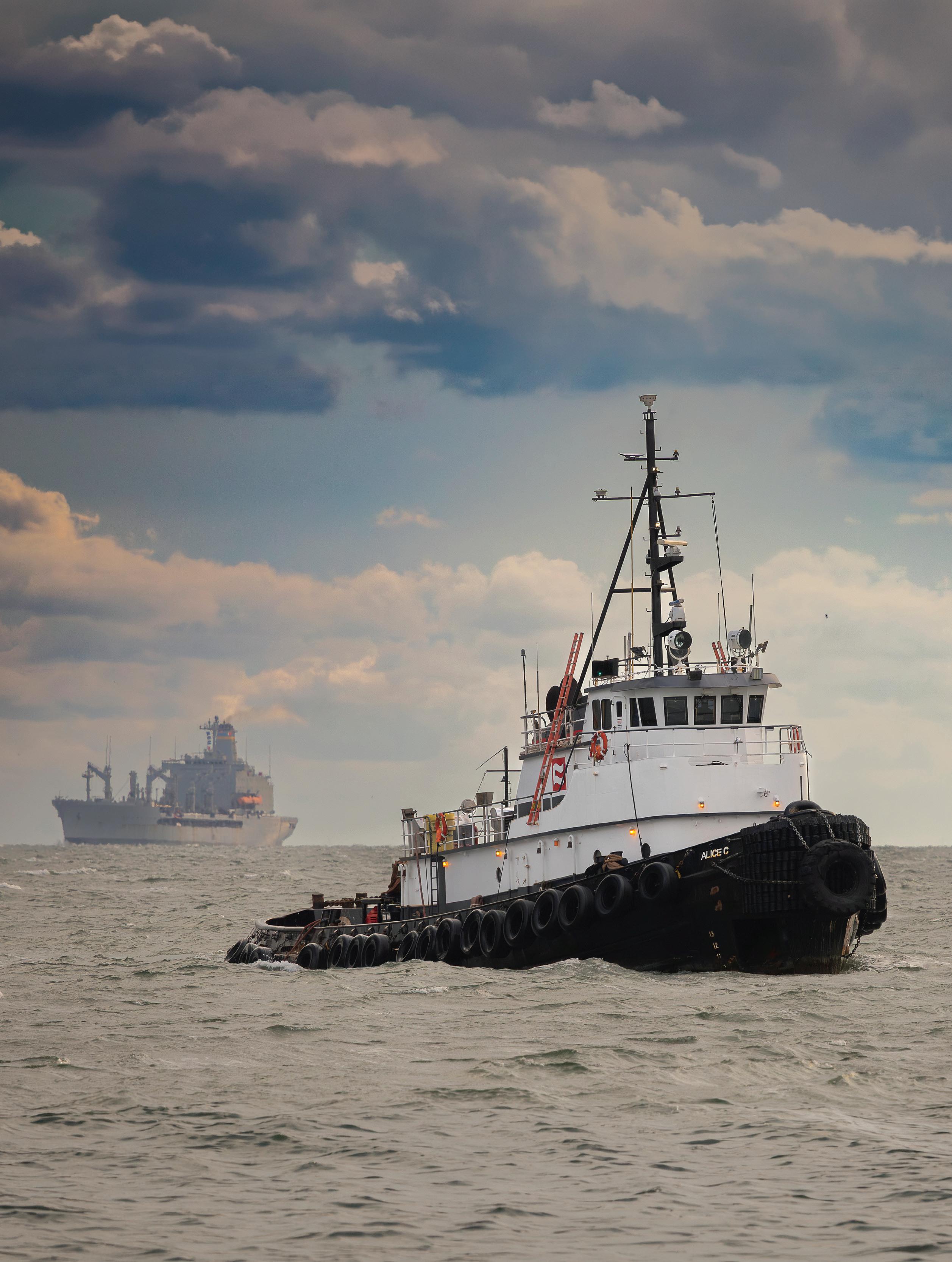












White House lays plan for maritime renaissance.




14 Focus: Digging In Innovation, ef ciency, dynamic environment shape future of dredging industry.
18 Cover Story: Blueprint
Trump’s Maritime Action plan is here. Now what?
24 Vessel Report: Dredges
Newbuilds come in many shapes and sizes.
44 Final Word: Capt. Stephen Carmel
One-on-one with the U.S. Maritime Administrator.
On the Ways
Poseidon Jackup takes modular barges to new heights • New ferry joins Gulf Islands eet • Rozema nalizing spill-response boom boats for Alyeska Pipeline Co. • Master Boat launches second Maritime Partners tugboat • Saronic’s rst Marauder USV launched • Bay Towing orders escort tug from Sterling Shipyard • Gulf Craft builds ferry for U.S. Virgin Islands • Blakeley BoatWorks delivers tugboat to Crescent Towing • C&C hands over third towboat to Canal Barge.
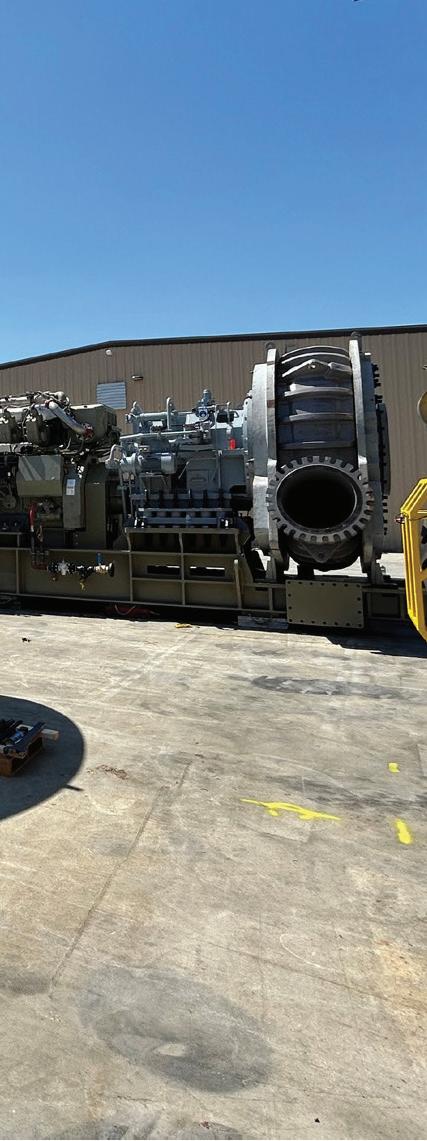
WorkBoat’s annual directory of marine diesel engines.
42 Get With It
Ports invest in equipment to improve ef ciency, cut emissions.
4 Nor’easter: Northeast states sue Trump administration.
4 On the Water: A re waiting to happen.
5 Credentialing Insight: AB sea-time reductions are here to stay.
5 Insurance Watch: Total and constructive total loss.

6 Legal Talk: Your vessel may be held liable if drunk passengers come to grief
6 Health, Safety, and Environment: The human element of thermal runaway challenges.


Eric Haun, Executive
Editor ehaun@divcom.com
The Trump administration’s Maritime Action Plan (MAP) is, by nearly all accounts, what the domestic maritime industry has been waiting for. It is a comprehensive strategy to reverse decades of decline, rebuild American shipbuilding capacity, grow the mariner pool, and restore U.S. maritime dominance. While many questions remain, especially around policy implementation and funding, the industry, by and large, came together to praise a moment of optimism for a sector that doesn’t get many wins of this magnitude.
Then came the Jones Act waivers. First a 60-day measure in March — supposedly issued to ease fuel price pressure tied to the con ict in Iran, according to the White House — then stretched another 90 days through a waiver extension, making it the longest Jones Act waiver in the law’s history.
Analysts predicted that the move would have negligible impact on prices

at the pump. They were right. National average gasoline prices have risen since the waiver was issued, not fallen. Meanwhile, U.S.- ag vessels have been available for nearly all of the waiver voyages completed so far, making the emergency rationale hard to justify.
So what have the waivers accomplished? Foreign operators have moved into domestic energy trade routes that Jones Act operators have served well for decades. In addition, a maritime investment platform reportedly paused a planned $1 billion capital raise tied to U.S. maritime projects, putting more than $2.6 billion in active shipyard contracts at risk.
This can’t be the desired outcome for an administration that, just months ago, was calling for hundreds of billions in new maritime investment.
Debate around the Jones Act is nothing new. The problem I see now is a lack of coherence. The MAP calls for growing the U.S.- agged eet, strengthening the shipbuilding industrial base, and sending a clear signal to investors and workers that America is serious about its maritime future. The waivers send a different message: that American vessels can be sidelined when politically convenient and that the commitment to domestic maritime has an asterisk attached.
The U.S. maritime industry is accustomed to mixed messages from Washington. But it’s worth asking loudly and directly how a policy that has failed on its own terms, while undermining the very sector the administration pledged to revitalize, continues to be extended. The hardworking members of the American maritime industry deserve a better answer than the one they’ve gotten so far.


EXECUTIVE EDITOR: Eric Haun / ehaun@divcom.com
SENIOR EDITOR: Frank McCormack / fmccormack@divcom.com
SENIOR ASSOCIATE EDITORS: Ben Hayden / bhayden@divcom.com Kirk Moore / kmoore@divcom.com
CONTENT PROJECT MANAGER: Carley Milligan / cmilligan@divcom.com
CONTRIBUTING WRITERS:
Tim Akpinar • Jonathan Barnes
• Capt. Alan Bernstein • Stephen Blakely
• Dan Bookham • G. Allen Brooks
• Bruce Buls • Denielle Christensen
• Capt. Eric Colby • Michael Crowley
• Jerry Fraser • Nate Gilman • Pamela Glass • Capt. Arnie Hammerman
• Ken Hocke • Craig Hooper • Joel Milton
• Steve Mosco • Peter Ong
• Richard Paine Jr. • Chris Richmond
DIGITAL & PRINT PROJECT MANAGER: Doug Stewart / dstewart@divcom.com
ADVERTISING ACCOUNT EXECUTIVES: Kristin Luke / kluke@divcom.com
Krista Randall / krandall@divcom.com
Danielle Walters / dwalters@divcom.com
ADVERTISING COORDINATOR: Wendy Jalbert / wjalbert@divcom.com
Producers of the International WorkBoat Show and Pacific Marine Expo
Vice President: Wes Doane, wdoane@divcom.com
Publishing offices: 2 Portland Sq., Suite 200, Portland, ME 04101 Tel 207-842-5608 | Fax 207-842-5609
Subscriptions: cs@e-circ.net / 978-671-0444 Mon–Fri, 10 a.m.–4 p.m. ET
Lubriplate is committed to providing you with the right lubrication for your vessel and other equipment affected by (VGP) Vessel General Permit regulations. Designed specifically for use in harsh marine conditions, these high performance, Environmentally Acceptable Lubricants (EAL)s deliver all the performance and protection you need, while maintaining compliance with regulations protecting the environment.

ATB BIOBASED EP-2 GREASE
• This versatile grease meets U.S. EPA Vessel General Permit (VGP) requirements.
• Passes U.S. EPA Static Sheen Test 1617 and U.S. EPA Acute Toxicity Test LC-50.
• ECO-Friendly and Ultimately Biodegradable (Pw1) Base Fluid – 75.2%.
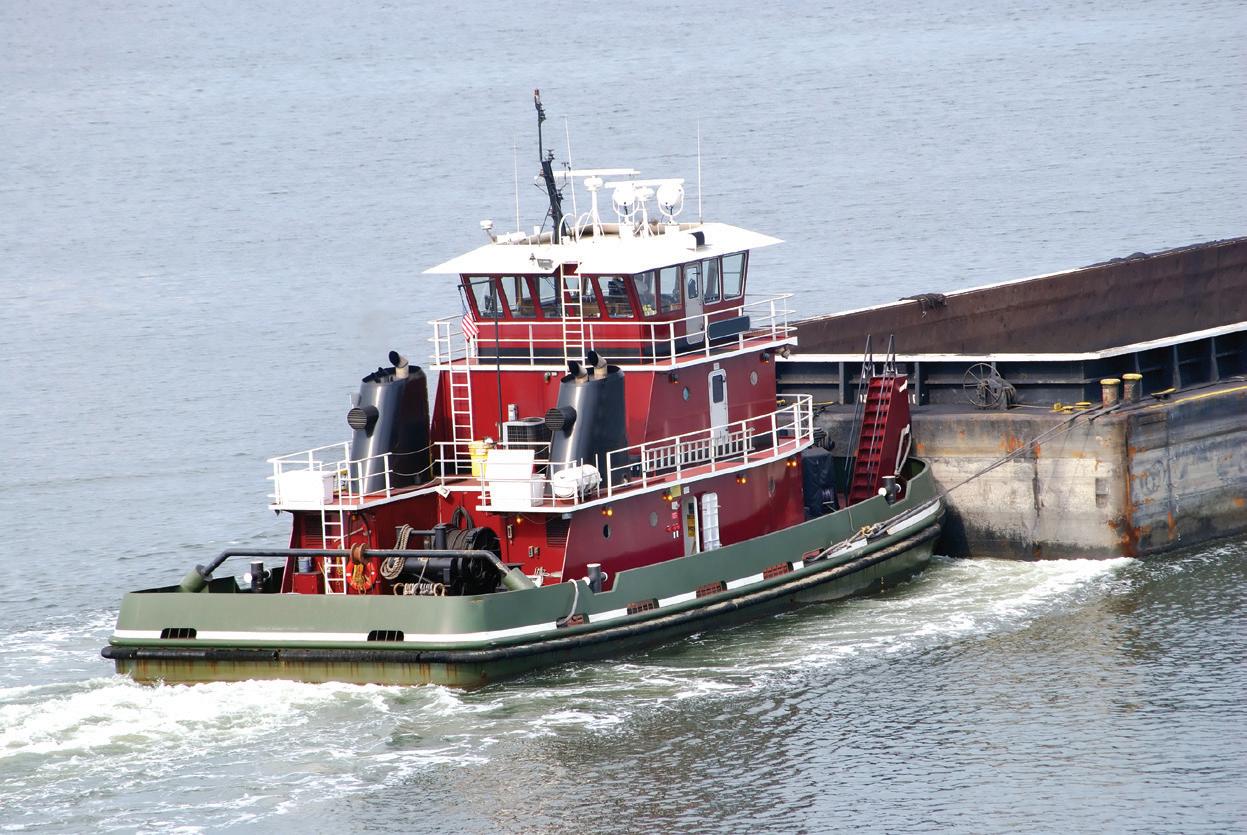
• Designed for use on Articulated Tug Barge (ATB) notch interface, coupler ram and drive screws, above deck equipment, rudder shafts, wire rope, port equipment, cranes, barges and oil platforms.
• These fluids meet U.S. EPA Vessel General Permit (VGP) requirements.
• High-performance, synthetic polyalkylene glycol (PAG)-based formula.
• Non-Sheening – Does not cause a sheen or discoloration on the surface of the water or adjoining shorelines.
• Provides long service life and operating reliability, lower maintenance costs, and reduced overall downtime.
• Excellent anti-wear performance - rated as anti-wear (AW) fluids according to ASTM D7043 testing and FZG testing.
• High flash and fire points provide safety in high temperature applications.
• All season performance – high viscosity indices and low pour points.
• ECO-Friendly and Readily biodegradable according to OECD 301F.
• “Practically Non-Toxic” to fish and other aquatic wildlife according to the U.S. Fish and Wildlife Service hazard classification.

COMPLIANCE STATEMENT LUBRIPLATE ATB BIOBASED EP-2
and BIO-SYNXTREME HF SERIES HYDRAULIC FLUIDS are Environmentally Acceptable Lubricants (EAL)s according to the definitions and requirements of the US EPA 2013 Vessel General Permit, as described in VGP Section 2.2.9

Newark, NJ 07105 / Toledo, OH 43605 / 800-733-4755 To learn more visit us at: www.lubriplate.com


BY KIRK MOORE

Senior Editor Kirk Moore, with over 30 years of experience, joined WorkBoat in 2015.
He has won multiple awards for his marine, environmental, and military reporting. He can be reached at kmoore@divcom.com
Seven Northeast states sued the Trump administration to stop its deal to pay offshore wind developer TotalEnergies nearly $1 billion to cancel two projects and walk away from all offshore wind development in the U.S.
The terminated Attentive Energy project, located 47 miles offshore in the New York Bight, would have powered up to 1.3 million homes in New York and New Jersey, according to the lawsuit led by New York State officials.
Faced with the Trump administration’s hostility toward renewable energy, France-based TotalEnergies opted in March to accept a proposal to surrender its wind leases, valued at $795 million, and invest the refunded capital in U.S. oil, gas, and LNG projects.
TotalEnergies chairman and CEO Patrick Pouyanné pointedly cast his company’s lot with the Trump administration in a joint March 23 public statement with Interior officials. “Considering that the development of offshore wind projects is not in the country’s interest, we have decided to renounce offshore wind development in the United States, in exchange for the reimbursement of the lease fees,” Pouyanné said.
BY JOEL MILTON
Joel Milton
works on towing vessels. He can be reached at joelmilton@yahoo.com.
Whenregular disposable or rechargeable batteries (alkaline, nickel-cadmium, or nickel-metal hydride) go bad and leak, you get a mess of variable severity and maybe a ruined device. If it happens, it’s obvious and, for the most part, not particularly hazardous. Of course, you don’t want to get the caustic residue on your skin or in your eyes, but basic safety precautions and common sense will protect you. You could say it’s perfectly normal for these batteries to leak.
Lithium batteries, while highly efficient and long lasting, hence their popularity, can and do leak, and what comes out of them is far more dangerous than anything we’ve dealt with before. But it isn’t normal, per se. Quality batteries left in a device — but otherwise not abused — shouldn’t leak
Northeast states, including New York, New Jersey, Connecticut, Maine, Massachusetts, Rhode Island, and Vermont, had been at the forefront of developing wind power projects, both during the Biden administration and Trump’s first term.
“This pay-not-to-play scheme pressuring a foreign company to forgo planned offshore wind projects in America in favor of gas and oil drilling is an outrageous abuse of taxpayer dollars that hurts our ability to meet our energy needs, create good jobs, and help secure American energy independence while reducing emissions,” New York Gov. Kathy Hochul said June 2 in announcing the lawsuit filed in federal court.
The states’ lawsuit is the latest salvo in ongoing courtroom battles over the Trump administration’s attempts to cancel previously permitted projects. Five projects off the East Coast have survived. With TotalEnergies, the administration shifted its approach, moving toward buying out leaseholders whose projects have further to go before construction can begin.
Wind power advocates who had hoped for a strong pushback applauded the states’ court action.
“For more than a year, offshore wind has faced an unprecedented and unrelenting campaign of political interference despite billions in private investment, state commitments, and court rulings,” said Liz Burdock, executive director and CEO of the wind power advocacy group Oceantic Network. “These continued attacks on offshore wind are not just an assault on a single industry — they are an attack on American workers, energy affordability, national security, and the states’ right to shape their own energy future.”
simply because they’re old. There usually must be some other cause.
At the top of the list are cheap batteries with poor design and/or manufacturing quality control. If the components aren’t high quality and properly assembled, or the sealing process wasn’t done carefully, you have built-in weak points that can easily fail. You’re starting out in a hole with these. Don’t do it. The quality mandate applies to chargers as well.
Next is physical damage. A dropped or roughly handled battery with visible damage to the casing likely has internal damage too, and that internal damage can lead to a leak.
Overheating is another way to simultaneously shorten battery lifespan while increasing the chances of a leak. Improper use or storage can cause overheating, and often the charger itself can be a source of overheating, damage, and fire risk.
Lithium batteries are, in short, highly flammable by nature. Anything that causes them to leak also raises the chances of a chain of chemical reactions leading to thermal runaway — and then fire.
If they do catch fire, the blaze may be nearly impossible to extinguish.
AB sea time reductions are here to stay
BY NATE GILMAN
Nate
Gilman, president of MM-SEAS USCG Licensing Software, uses
his hawsepiping experience to support mariners and workforce development. Connect on LinkedIn.
For years, the United States required more sea time to earn an Able Seafarer (AB) endorsement than the rest of the world for the equivalent credential. Three years was required for AB-Unlimited, whereas the International Standards of Training, Certification, and Watchkeeping for Able SeafarerDeck calls for roughly 540 days. Congress corrected that, and the correction is now permanent federal law.
The Coast Guard Authorization Act of 2025, signed Dec. 18, 2025, amended the three sections of Title 46 that govern AB sea-service requirements. AB-U went from three years to 18 months. AB-Limited went from 18 months to 12 months. ABSpecial went from 12 months to six months.
These reductions had been in effect since December 2023 under Section 3534(j) of the fiscal year 2024 National Defense Authorization Act, but they were set to expire after three years, pending confirmation of no impact to safety or standards. Con-
BY CHRIS RICHMOND

Chris Richmond is a licensed mariner and marine insurance agent with Allen Insurance and Financial. He can be reached at crichmond@allenif.com or 800-439-4311.
If your vessel suffers catastrophic damage, your insurance company may declare a constructive total loss depending on the cost and scope of repairs. This differs from an actual total loss and is based on established case law. And let’s not forget Sue and Labor, which provides additional coverage for your claim regardless of whether it is a total or constructive loss.
A total loss (or actual total loss) occurs when a vessel is completely destroyed. A vessel smashed to bits against rocks, destroyed by fire, or sunk in water too deep to allow recovery are all examples. When a covered total loss occurs, the owner will receive the full stated hull coverage amount on your policy. The deductible does not apply in a total loss.
A constructive total loss occurs when a vessel has suffered severe damage that, while potentially salvageable,
gress locked them into permanent statute nearly a year early.
The AB endorsement is one of the gateways into the professional mariner workforce. It’s the credential that gets a deckhand onto a towing vessel, a tanker, or a Military Sealift Command ship. The U.S. was asking its mariners to accumulate more sea time than the rest of the world before they could qualify. Now it is not.
The alignment is clean. AB-U now requires 540 days. The STCW AS-D endorsement also requires 540 days. Same sea time, same credential level, national and international in sync.
The Coast Guard got ahead of this. CG-Merchant Mariner Credential Policy Letter 04-24, issued Oct. 8, 2024, allows sea service toward the Rating Forming Part of a Navigational Watch and AS-D to accrue concurrently with service toward the national AB endorsement. That policy letter is the reason the reduced requirements work for mariners who need both the national and international endorsements.
Now that Congress has made the AB reductions permanent, one step remains. Policy Letter 04-24 still references Section 3534(j), the temporary provision, and still carries a Dec. 22, 2026, expiration date. The National Maritime Center’s current AS-D checklist still reads: “Use Only for Applications processed between 22 December 2023 and 22 December 2026.”
The Coast Guard already has the model. CG-MMC Policy Letter 01-24 extended the MMC renewal grace period and included the language: “This policy letter is effective immediately and will remain in effect indefinitely.”
would cost more to repair than the insured value. Examples include a fire that is extinguished but leaves severe smoke damage to the interior, water damage to mechanical and electrical systems, or structural damage to a wooden vessel’s frames and planks. There can be some negotiation with the adjusters. The vessel owner may find a shipyard that can complete the repair for less than the insurance company’s estimate, effectively canceling out the constructive total loss. If that happens, a satisfactory survey at the completion of repairs will be required for the insurance company to remain on the account. If the claim truly is a constructive total loss, you have the option to buy back the damaged vessel from the insurance company at a negotiated price, though the cost of repairs would then fall entirely on the owner.
A sue-and-labor clause provides additional coverage regardless of whether the loss is constructive, actual, or partial. This includes hiring mechanics to pickle an engine, renting shore storage to keep gear dry and secure, and making emergency repairs to prevent further damage. These expenses are not only covered, but your policy requires you to take reasonable steps to minimize further loss.
When a severe claim occurs, be prepared to receive a settlement for less than the cost of replacing your vessel with a new one. Talk to your agent to make sure you understand and are comfortable with what your coverage actually provides.
BY TIM AKPINAR

Tim Akpinar, based in Little Neck, N.Y., is a maritime attorney and former marine engineer. He can be reached at t.akpinar@verizon.net or 718-224-9824.
Several recent high-profile cases have involved passengers injured or killed aboard cruise ships where alcohol was a factor.
Tour and dinner cruise vessels are naturally in a far different league from 200,000-ton cruise ships offering unlimited drink packages. However, the legal issues that arise in these settings apply to any vessel serving alcohol to guests, whether it’s aboard a sightseeing boat on San Francisco Bay or a casino barge that never leaves its dock on the Mississippi River.
In one recent case, a Florida federal court awarded $300,000 to a passenger who fell down a flight of stairs after being served 14 tequila shots. The accident occurred in January 2024 aboard the Carnival Radiance
In a tragic case from December 2024, a passenger
BY RICHARD PAINE JR.
Richard Paine Jr. is a licensed mariner and certified maritime safety auditor with more than 25 years of maritime industry experience. He can be reached at rjpainejr@gmail.com.
Safety risks are constantly evolving and reshaping how operators manage the safety of their people and equipment. One growing concern that has impacted society but not yet fully integrated into maritime practice involves lithium-ion batteries and thermal runaway. While hybrid and fully electric vessels are being outfitted with large energy-storage systems that have commercial-grade mitigation procedures and safeguards, another thermal runaway risk has yet to come to the forefront of industry safety. That risk is the human element.
No matter what sector of the maritime industry, people remain central, vessel crew, passengers, and contractors alike. Today, almost every person who boards a vessel carries a lithium-ion battery in some form. It’s simply part of working, commuting, and traveling. Batteries power
became agitated after getting lost trying to find his cabin. He died in the custody of crew members who used various measures to restrain him, including tackling and administering a sedative. He had been served 33 drinks aboard the Navigator of the Seas. His family is suing the cruise line.
Such cases are not new. For as long as alcohol has been served aboard vessels or at bars, injured claimants have sued. Regardless of vessel size, the underlying legal theory in these cases usually centers on negligence: a passenger exhibited visible signs of intoxication, such as slurred speech or difficulty standing, yet staff continued to serve alcohol. That negligence, the argument goes, caused the accident.
What is the takeaway for vessel operators? Train staff to be vigilant for signs of intoxication. Implement policies that support the bartender who checks IDs and monitors drink counts, without fear of passenger complaints. Many operations now use surveillance systems which can cut both ways. A guest might argue, “I was visibly drunk and you kept serving me.” The operator might counter, “You looked perfectly sober walking out of our lounge.”
The relationship between alcohol and ships goes back centuries, to a time when rum was used to sanitize drinking water on long voyages. Today, that relationship has become considerably more complex.
smartphones, tablets, portable chargers, e-cigarettes, and laptops. They have also expanded into e-bikes, scooters, and vehicles, all of which touch daily transportation and infrastructure. Any of these lithium-ion batteries has the potential to overheat and enter thermal runaway, causing fire, explosions, and catastrophic consequences.
So, what should operators do? The aviation industry has already begun shifting its approach to mitigating inflight lithium-ion battery fires. Airlines have updated their pre-departure safety briefings, and it’s now common for passengers to hear instructions on what to do if a battery overheats and where to stow high-risk devices during the flight. Flight crews are also receiving training on recognizing the early signs of thermal runaway and are equipped with special containment bags and kits. The U.S. aviation industry reports roughly 100 thermal runaway incidents per year, a number that is trending upward.
While each industry is regulated differently and assesses its own risks independently, maritime operators have good reason to examine their own exposure and ensure their fleet is prepared for an emergency. In most cases, operators won’t know the condition of every battery that comes aboard. They won’t know its age, its origin, or whether the person carrying it understands the dangers of overheating. But the one thing they should know is that lithium-ion thermal runaway is a real and daily safety risk.
Don’t let the human element be the gap in your safety program.








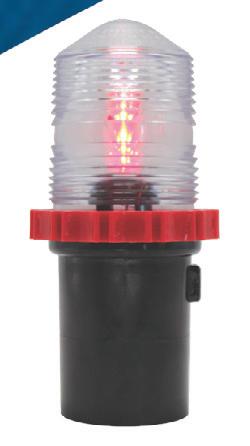


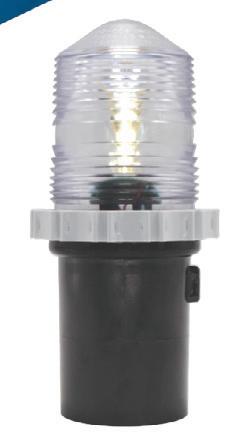

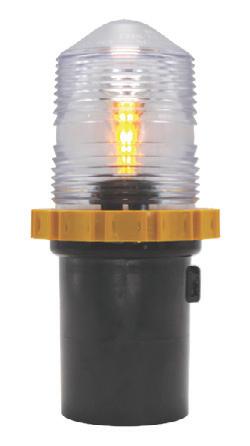


Meets 2 mile requirement for marking of dredge pipelines
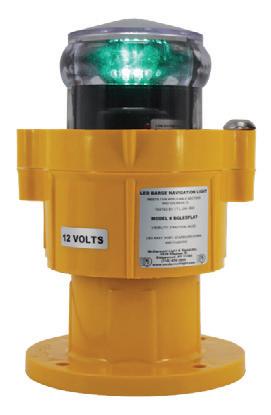



Permanent mount LED lighting for bridges, docks, and barges










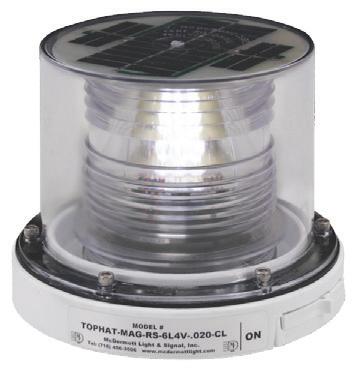
1 to 3 mile visibility for aids to navigation and applications such as buoys, docks, barges, and temporary lighting



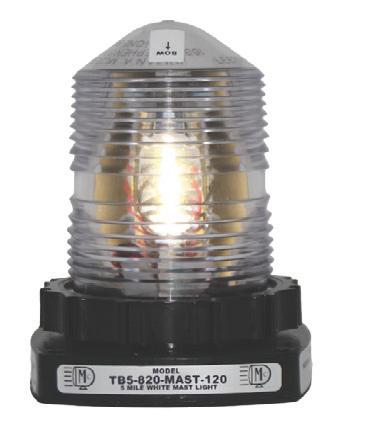





Navigation Lights










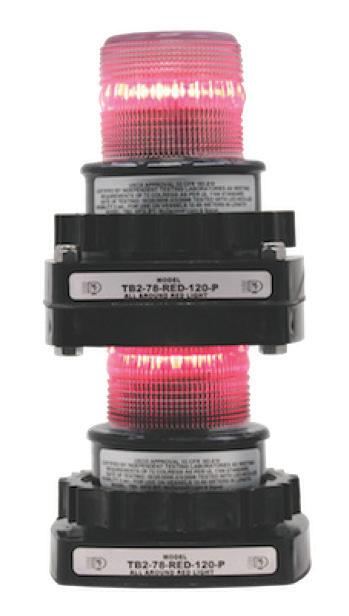






For vessels greater or less than 50 meters Certified to meet UL 1104 and Subchapter M



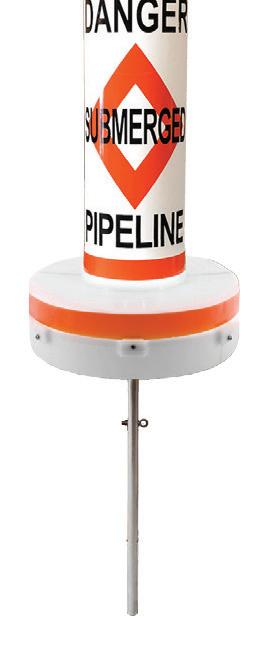


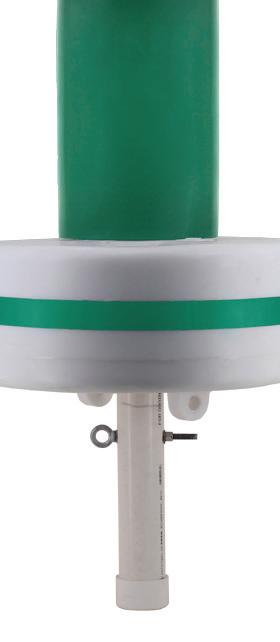

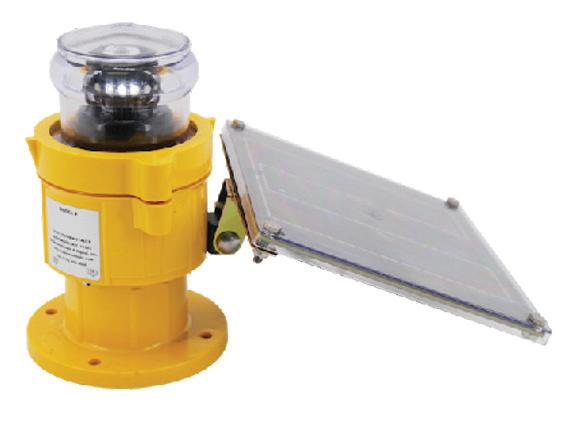
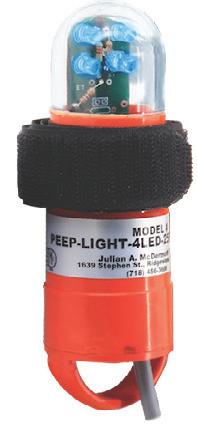
*Available with or without lighting* Solar

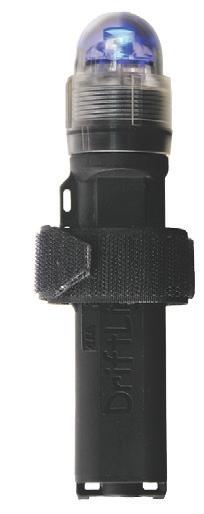






Solar or battery powered barge navigation lights for unmanned barges per UL1104 Regulatory Buoys
Available for all applications







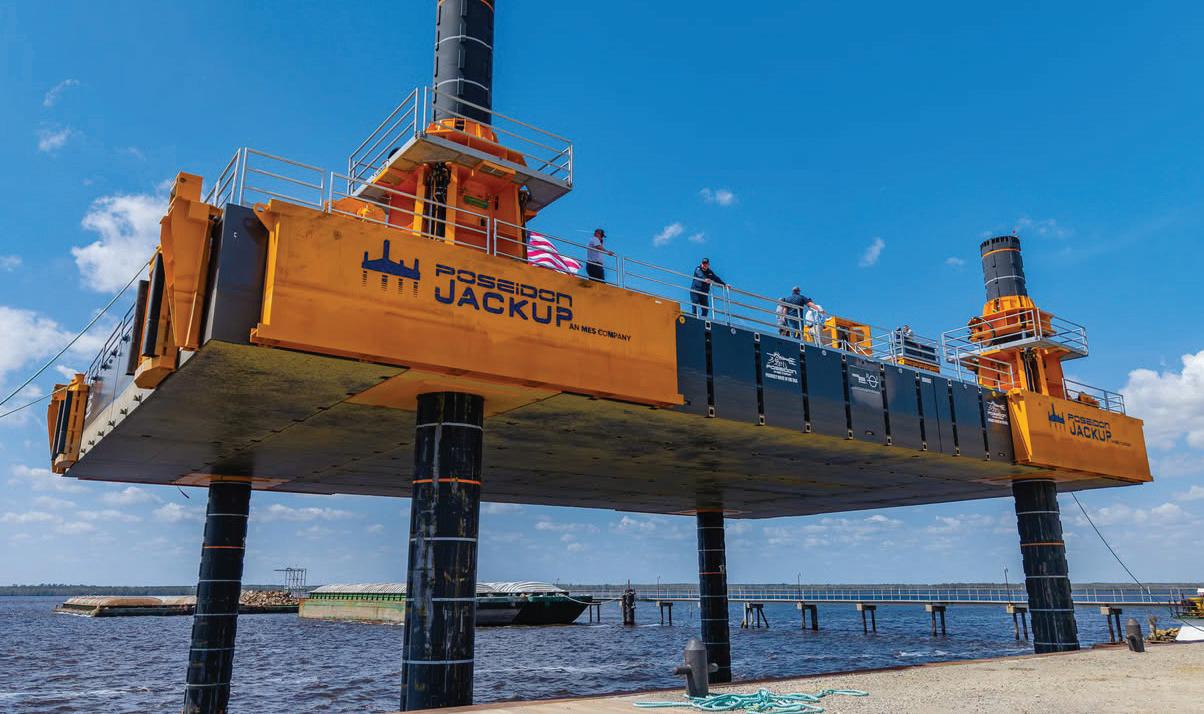
WhenJeff Emch was hired at Poseidon Barge Corp., Berne, Ind., in 2009, he was the rst degreed naval architect to join the organization. The owner, Donnie Fain, couldn’t tell him soon enough that the rst project he wanted Emch to work on was a sectional jack-up barge.
Fast forward to April 2026 and the collaborative effort known as Poseidon Jackup introduced the MES-C7, a 100'x60' self-elevating barge platform that can work in water depths exceeding 100’ and can carry a 440-ton deck load elevated by four over-sized hydraulic cylinders can lift the combined and loaded platform at a rate of 8" per minute.
“We had an impromptu christening ceremony where [Fain] brought three of his closest friends and a champagne bottle or two,” said Emch when the rst MES-C7 was launched, a moment that was years in the making. “He grabbed me and our operations director, and we had our own personal moment of re ection.”
Poseidon Jackup was born from a collaboration between Poseidon Barge, a builder of sectional barges in Berne,
Ind., and Combi oat Systems BV, a Dutch rm known for modular, oating, and self-elevating barges that wanted to make inroads in the North American market. Combi oat and Poseidon Barge formed a joint venture backed by Marine Equipment Solutions (MES), Seattle, a parent company of Poseidon Barge, Rasmussen Equipment Co., Seattle, Portadam, Williamstown, N.J., Paci c Gulf Wire Rope, Belle Chasse, La., and Humco Marine Products Inc., St. Louis.
Poseidon Jackup launched in September 2025 with the aim to introduce purpose-built, Jones Act-compliant jackup barge systems designed for the North American market. For international accreditation, the platforms are RINAclassed.
“This jack-up application is the rst of its kind,” said Emch. “While other sectional barge manufacturers in the United States have self-elevating systems, their capacities are not even half.”
The MES-C7 achieves its lifting capacity by integrating the legs into the internal structure rather than mounting them externally. “It’s de nitely a key
component,” Emch said of the legs. “Another key component is the design of the legs themselves.”
The steel legs each measure 48" in diameter with a 1½" wall thickness. Weighing more than 50 tons apiece, each leg is assembled from two 63' sections to reach its full 126' length.
The legs extend through the body of the steel platform, each supported by four hydraulic cylinders operating at more than 3,500 psi. From an elevated, climate-controlled central command station, all legs can be operated simultaneously and platform systems can be monitored. For redundancy, each leg also has manual controls at its four jacking tower locations on deck, and a secondary hydraulic power circuit is kept on standby. All four corners of the platform are tted with heavy-duty fenders, bitts, fairleads, and hydraulic mooring winches. An anchor boat typically runs out the lines and sets the grounding tackle, often with the assistance of a pushboat or a tugboat.
The platform will be leased for applications including precision long-term pile driving, waterfront construction, seawall and shoreline maintenance, bridge work, cable laying, offshore wind, and cable and communications infrastructure.
Jody Jordan, MES national sales director, couldn’t share lease rates due to non-disclosure agreements. “The rates are well in line of liftboats and crews or other single hull jack-up platforms,” said Jordan. “A huge bene t is in the fact that the jack-up, once elevated, is equal to working on land versus oating platforms. This lets customers avoid derating their cranes and work faster.”
The process begins with Poseidon Jackup engineers working alongside clients and their geotechnical teams to evaluate seabed soil properties at the proposed project location, con rming the site can support the platform and planned operations. Because the platform is modular, it can be transported by road in 33 truckloads. That modularity also allows deployment in inland rivers, lakes, reservoirs, and locations inaccessible to larger single-hull platforms.
When the platform sections arrive at a site, they are loaded into the water and assembled by a crew from MES in about a week. “There’s a distinct order and procedure to ensure the platform goes together as it should,” Emch said. “The assembly procedure is well-documented and can be accomplished with the same basic equipment that a standard oating sectional barge would require, with the addition of a manlift to assist with spud leg installation.”
Once assembled, cranes lift the leg sections and lower them into the structurally reinforced jacking towers integrated within the hull. Legs are installed diagonally in sequence to distribute weight evenly and prevent misalignment from list or trim. With the platform fully assembled and commissioned, it’s ready for a jacking captain. “We highly recommend a certi ed jacking captain,” Jordan said. “That person may be there for 15 to 30 days, depending on the mobility
needs of the site and how frequent the lift and positioning is needed.”
For around-the-clock coverage, MES recommends two captains working rotating 12-hour shifts, using cameras and sensors to continuously monitor the platform’s position and instrumentation from the control house.
Looking ahead, MES plans to develop the MES-C9, a taller platform with a 1,200-ton deck load capacity, expanding a lineup that already includes the MESC7 and MES-C5. All platforms are built at the company’s factory in Berne, where 111 of MES’s 254 staff members make up the Poseidon Jackup production team.
The MES-C7 made an immediate impression. After seeing the platform for the rst time, a vice president at a major U.S. construction company told Jordan, “You have signi cantly outpaced your competition with this.”
Jordan re ected on what that response

has meant for the company: “It drew attention not only to the Poseidon Jackup, but to everything else that MES has to offer. Our customers are becoming more reliant upon our skill set as a partner to who they are rather than just a supplier for what they need.”
— Eric Colby
TheManatee Belle, the third in a ferry eet operating out of Bradenton, Fla., began operations April 11. Twice as large as the two existing pontoon ferries operated by Manatee County, the $2.86 million vessel was acquired “to meet the growing demand for multimodal transportation between downtown Bradenton and Anna Maria Island,” according to county of cials.
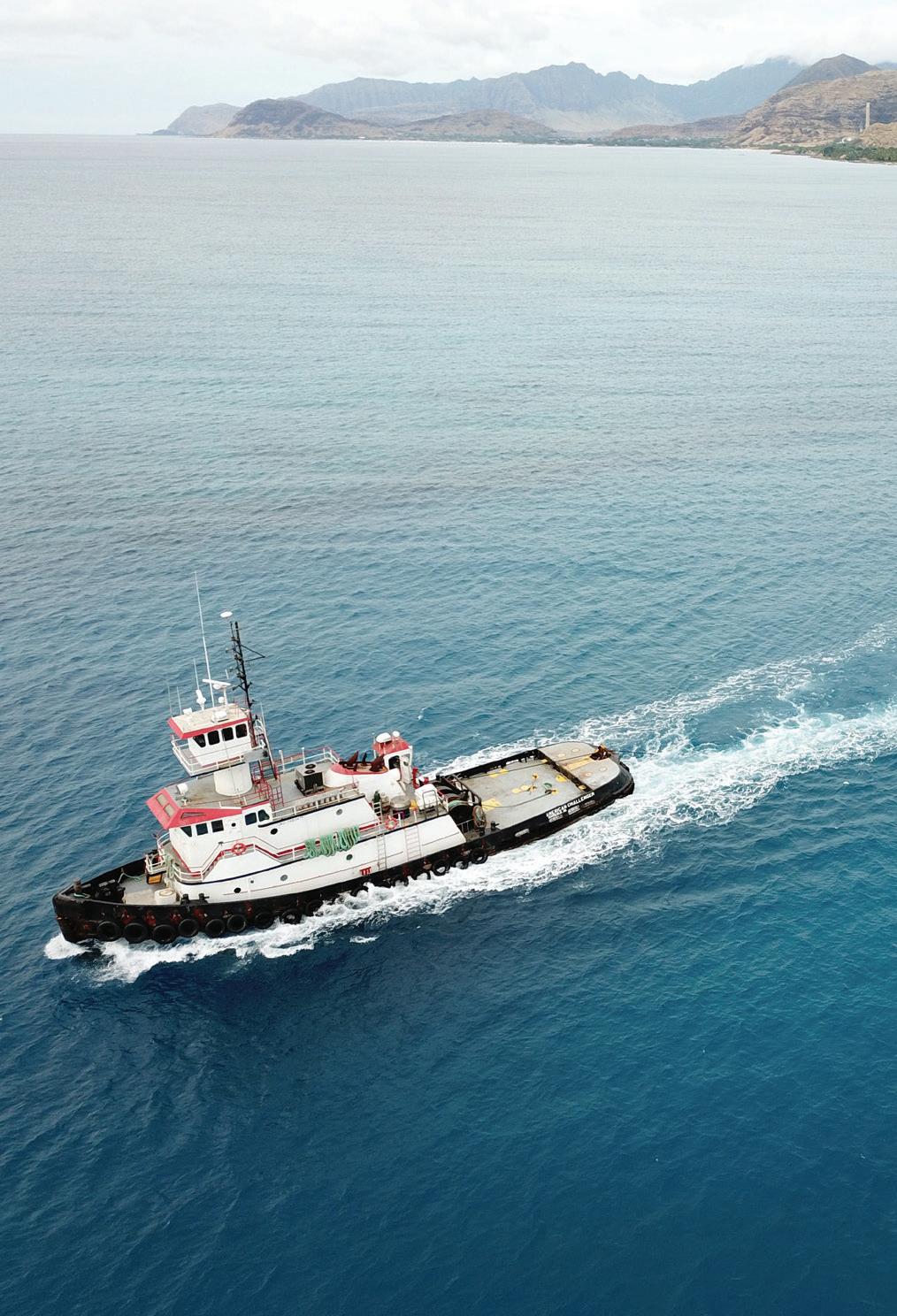









































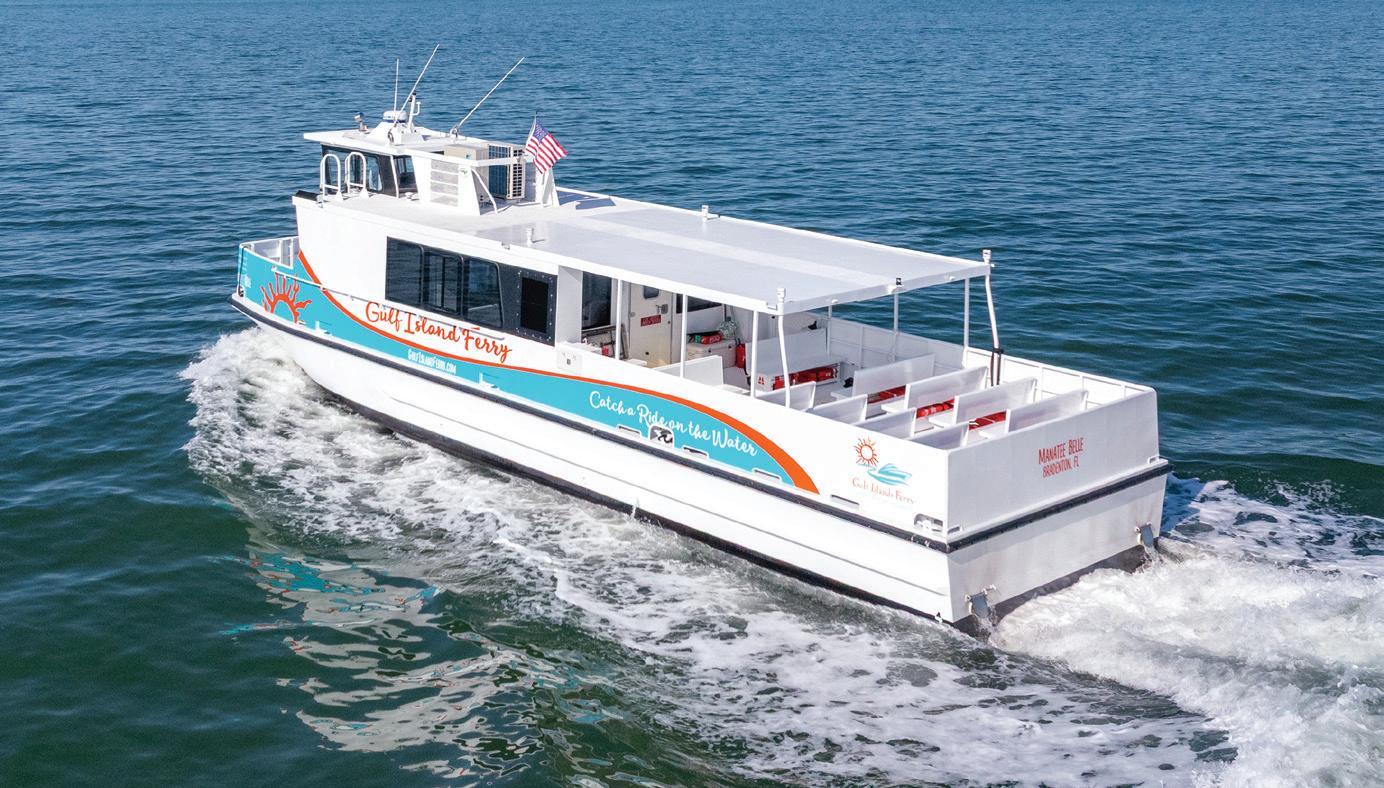
Built by Breaux Brothers Enterprises, New Iberia, La., the 60'x16'6" aluminum ferry carries up to 93 passengers in a climate-controlled cabin or on an exterior deck. The boat is powered by a pair of Cummins X15 diesels that each produce 630 hp at 2,100 rpm through ZF 510-1 A gears.
The new boat was fully funded by the local 6% tourist development tax levied on motel, resort and vacation rental accommodations, both along Anna Maria’s seven miles of coastline and the inland communities, according to county of cials.
Now in its third year of operations, the county’s Gulf Island Ferry service caried 55,000 passengers in 2025, helping to reduce local traf c volumes by almost 23,000 cars, according to county of cials. The Manatee Belle is a major addition to the existing eet of two 49-passenger catamarans, the Miss Anna Maria and Downtown Duchess
At 100,000 lbs. displacement, the Manatee Belle is a big step up from the two 30,000 lbs. cats with outboard engines.
“The Manatee Belle is the logical next step for the Gulf Islands Ferry, a larger vessel with indoor seating able to handle more adverse weather conditions,” Tal Siddique, chairman of the Manatee County Board of Commissioners, said in an April statement. “The addition of this boat provides ease to both our residents and visitors that continues to enhance multimodal transportation in our com-
munity.”
“It’s what we need to take the water ferry operation to a new level,” Elliott Falcione, executive director of the Bradenton Area Convention and Visitors Bureau, told the Anna Maria Islander The larger vessel will improve scheduling and reduce weather-related delays.
The ferry features onboard Wi-Fi access and a wheelchair-accessible ramp and designated seating areas that adhere to Americans with Disabilities Act standards.
The ferry service from the Bradenton downtown Riverwalk Pier takes about 35 minutes to the Bradenton Beach Historic Bridge Street Pier across the Manatee River through the Intracoastal Waterway.
County of cials look to expansion with more stops at the Anna Maria City Pier, Coquina Beach and Cortez in the
future.
The new vessel service is included on the updated county schedule from 7:30 a.m. through 7:30 p.m., to the Historic Bridge Street Pier; Anna Maria Island service starts at 9 a.m. and runs through 9 p.m. — Kirk Moore
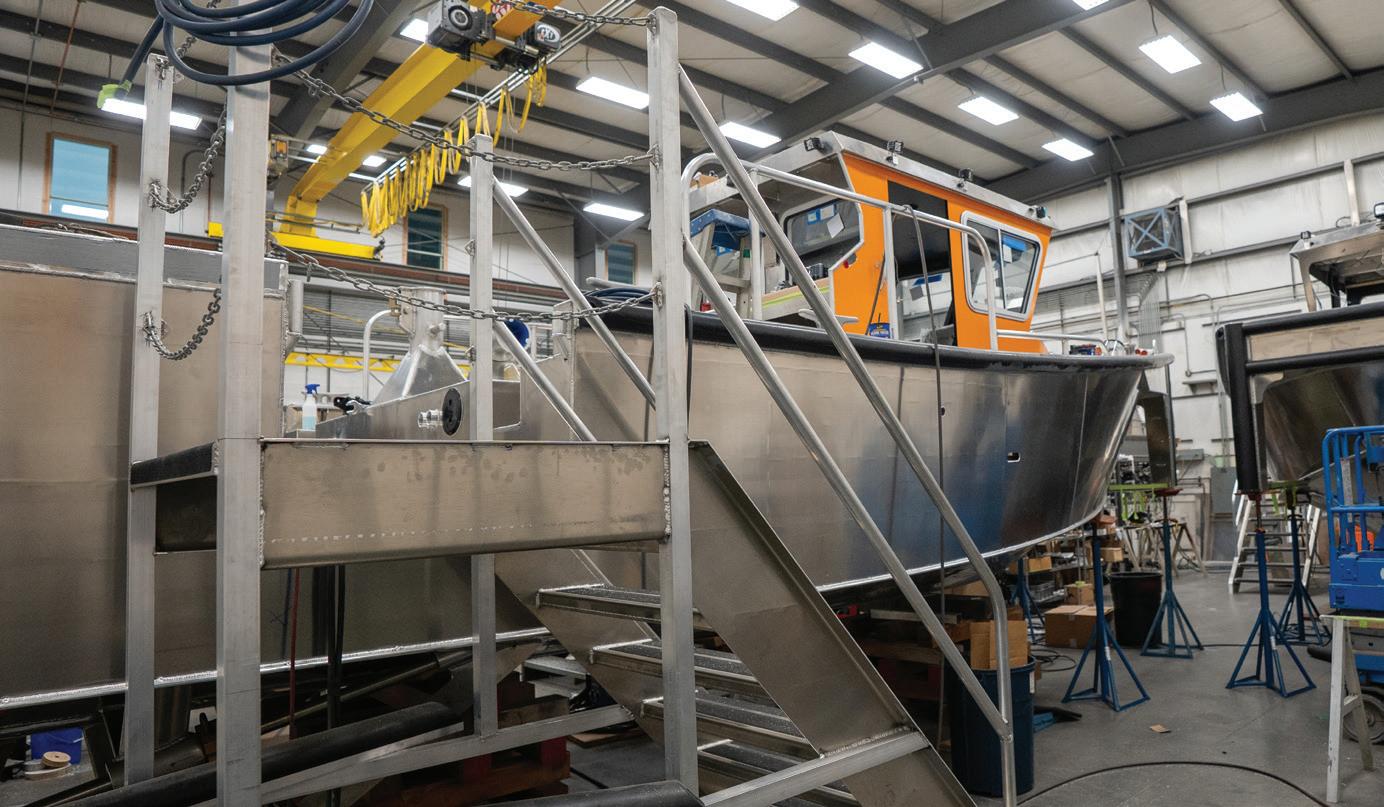
Rozema Boat Works, Mount Vernon, Wash., is wrapping up construction on two new 31' boom boats for Alyeska Pipeline Service Co.’s spill response eet in Valdez, Alaska, continuing a long-standing relationship between the builder and terminal operator.
The aluminum vessels are the latest boom boats built by Rozema for the service company. According to Alyeska’s emergency preparedness and response director Mike Day, the newbuilds were designed around decades of operational experience at the Valdez Marine Terminal and in Prince William Sound.
“These two newbuilds are sisterships of vessels that Rozema built for Alyeska 25 years ago; the new vessels incorporate modern equipment and con guration improvements identi ed over years of operating the originals,” Day said.
The boats are used daily as part of Alyeska’s oil spill response operations



When the work never stops, your engines can’t either. That’s why commercial operators choose Cummins engines. Built for long days, heavy loads, tight schedules, and zero tolerance for downtime, our engines are designed for longevity. With proven low‑maintenance requirements and no midlife overhaul, you save both time and money. Every component is engineered for uncompromising durability, every system tuned for maximum uptime, and every engine backed by a support network that understands the stakes.
From tugs and push boats to service and transport vessels, our diesel platforms deliver the torque, fuel efficiency, and reliability that keep your fleet moving forward.
Choose Cummins. Don’t compromise.









surrounding tanker loading activities at the Valdez terminal. Alyeska said the vessels deploy and maintain containment boom around tankers loading crude oil at the facility 24 hours a day throughout the year.
“Twenty-four hours a day, every day, these vessels deploy and maintain containment boom around tankers that load oil at the Valdez Marine Terminal,” Day said. “They were built for towing thousands of feet of heavy boom during the winter in high seas and winds that are encountered here in Valdez.”
Rozema Vice President Tim Kolb said the boats are purpose-built work platforms designed speci cally for Valdez spill response operations and the demanding conditions in Prince William Sound.
“In Valdez, when all the ships come in to pick up oil…all of the ships have to be wrapped up in a boom,” Kolb said. Kolb said the vessels see constant use maintaining and maneuvering containment systems around tankers.
“They get a ton of hours on them,” he said. “They spend most of their time maneuvering, towing boom, and working in the inner harbor. And they’re not high speed. I mean, they get up and go, but mostly they just spend their life towing boom.”
In addition to towing containment boom, the vessels support a range of spill response operations, including anchor handling, oil skimmer support, containment boom maintenance, and boom in ation using integrated hydraulic systems.



Master Boat Builders, Coden, Ala., has launched Titan, the second of eight harbor tugs under construction for New Orleans-based Maritime Partners. Measuring 88'x43'x16'6" with a 19'6" draft, the vessel is based on the Robert Allan Ltd. RApport 2700-MP design and is intended for ship-assist, escort, and towing operations. The tug delivers more than 90 metric tons of bollard pull. The vessel is powered by twin Caterpillar 3516E main engines supplied by Thompson Marine. Each engine is rated at 3,500 hp at 1,800 rpm under Caterpillar’s intermittentduty D rating. Propulsion is provided through Steerprop azimuthing drives supplied by Karl Senner LLC, fitted with 3,000-mm fixed-pitch, 4-bladed stainless-steel propellers. Saronic, Austin, Texas, launched its first Marauder medium unmanned
“These vessels use onboard systems for anchor handling, oil skimmer operation, and containment boom maintenance and in ation,” Day said.
The new vessels were also designed with a low pro le to address one of the more specialized operational requirements at the Valdez Marine Terminal.
“They’re also built with a low pro le to work under the Valdez Marine Terminal loading dock’s personnel catwalks during all stages of the tide and sea state,” Day said.
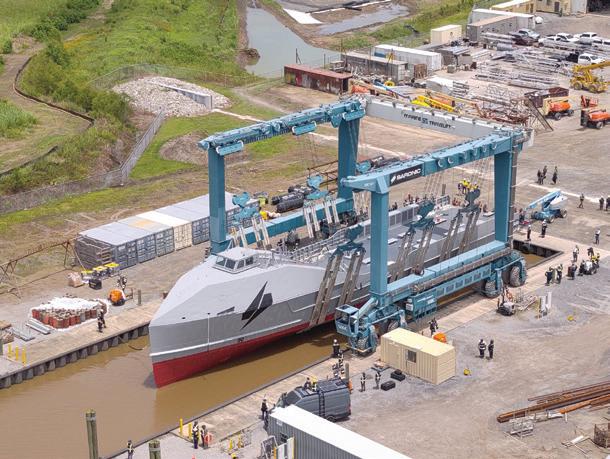
surface vessel, marking the start of on-water trials for the autonomous naval vessel. The vessel moved from initial design to launch in less than a year at its Franklin, La., shipyard, where the company integrates vessel design, manufacturing, and autonomy development. The aluminumhulled vessel has a top speed of more than 25 knots and a range of up to 5,400 nautical miles, Saronic said. The vessel can carry payloads of up to 150 metric tons and is configured

“All fabricated in house,” Kolb said, speaking to the vessel’s deck equipment, which includes a lifting A-frame, davit, hydraulic washdown system, hydraulic blower, capstan and tow post, and push knees for boom-handling operations.
Once completed, the boats will make the trip north aboard barges operated by Sitka, Alaska-based Samson Tug & Barge.

a subsidiary of BioMicrobics, Inc. Longest Lasting, Best Performing MSD’s PERIOD!
www.SciencoFAST.com solutions@sciencofast.com

The boats measure 31'x13' molded dimensions, with overall dimensions of 34'x13'8". The vessels draw 48", while air draft is kept below 115" to maintain clearance beneath the terminal catwalk structures.





Propulsion comes from twin Cummins QSB6.7-SW diesel engines rated at 305 hp each at 2,600 rpm. The vessels carry 225 gals. of fuel and are designed for crews of four.
Scheduled for delivery this summer, the two newbuilds will join another 14 Rozema-built vessels already operating in Alyeska’s spill response eet. Alyeska said the contract was awarded through a competitive bidding process.


made in the U.S. .
— Ben Hayden
to accommodate up to four 40’ ISO containers or eight 20’ ISO containers.
Bay Towing, Houston, has contracted Sterling Shipyard LLC, Port Neches, Texas, to construct a new escort tugboat for operations in the Sabine-Neches Waterway. Measuring 98'6"’x42'7" with a 19'6"’ draft, the newbuild will be a Robert Allan Ltd.-designed Z-Tech 30-85 azimuth-stern-drive tug that incorporates design elements from Robert Allan’s RAstar series. The hull form features sponsons added to enhance escort capability over the earlier Z-Tech 30-80 class. Propulsion will come from a pair of Caterpillar 3516-E HD Tier 4 EPA-compliant diesels driving two Schottel SRP510FP azimuth drives. The tug’s 7,000-hp plant is rated to produce more than 93 tons of bollard pull.
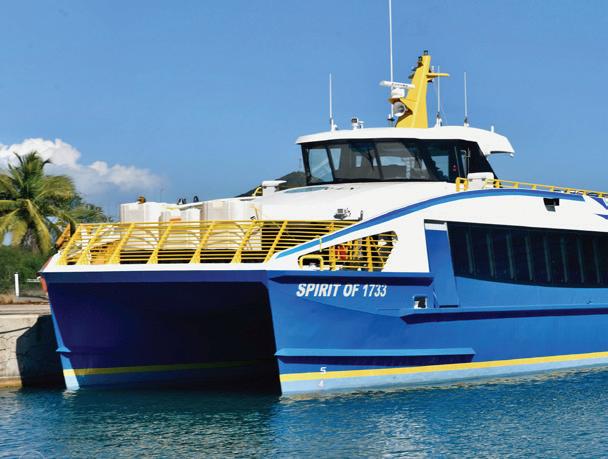
A new 104'4"x28' passenger ferry has entered service in the U.S. Virgin Islands, operating between Red Hook on St. Thomas and Cruz Bay on St. John. Designed by Incat Crowther, Sydney, Australia, and named Spirit of 1733 after a historic slave rebellion on St. John, the vessel was built by Gulf Craft LLC, Franklin, La., for the U.S. Virgin Islands Department of Public Works. The aluminum catamaran is designed to carry up to 300 passengers at service speeds of 28 knots and is powered by twin Caterpillar C32 EPA Tier 4 main engines rated at 1,200 hp each. The propulsion package also includes Twin Disc MGX-6620 gearboxes and fixed-pitch propellers.
Two Caterpillar C4.4 generators provide auxiliary power.
Crescent Towing Co., New Orleans, has added a new vessel to its ship-assist operations on the Lower Mississippi River. The 6,000-hp Z-drive tugboat Kentucky , which measures 92'x38' and has a 19' draft, was designed by Crowley Engineering Services and built at Blakeley BoatWorks , Mobile, Ala. Blakeley BoatWorks and Crescent Towing are both part of The Cooper Group Ltd., Mobile. The vessel, powered by twin Caterpillar 3516E Tier 4 engines that drive Kongsberg 255 fixed-pitch Z-drives, is the second 6,000-hp tugboat that Blakeley has built for Crescent Towing.
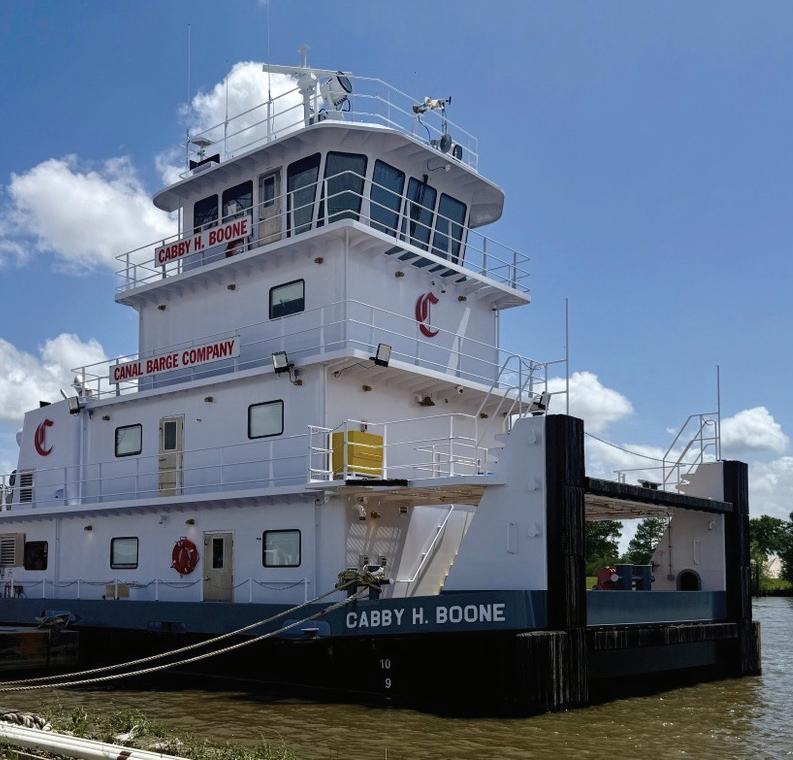
C&C Marine and Repair, Belle Chasse, La., has delivered the Cabby H. Boone, the third in a series of four newbuild inland pushboats for Canal Barge Co., New Orleans. The 87'x33'8"x11'3" twin-screw boat was designed by C&C’s in-house engineering team. It is powered by two EPA Tier 4 Mitsubishi S12R main engines (each rated 1,260 hp at 1,600 rpm) supplied by Laborde Products and is equipped with two Laborde Products generators at 99kW each. The propulsion system includes Reintjes WAF 665 reduction gears provided by Karl Senner LLC. Steering, alarm, and monitoring systems were supplied by Eagle Control Systems Inc.
By Frank McCormack, Senior Editor
Anyone in the maritime industry knows the challenge of being unseen yet indispensable. Fuel, food, furniture, fabricated goods — most everything that makes day-to-day life possible — depends on waterborne transport at some point in its journey. And yet ports and waterways are largely out of sight.
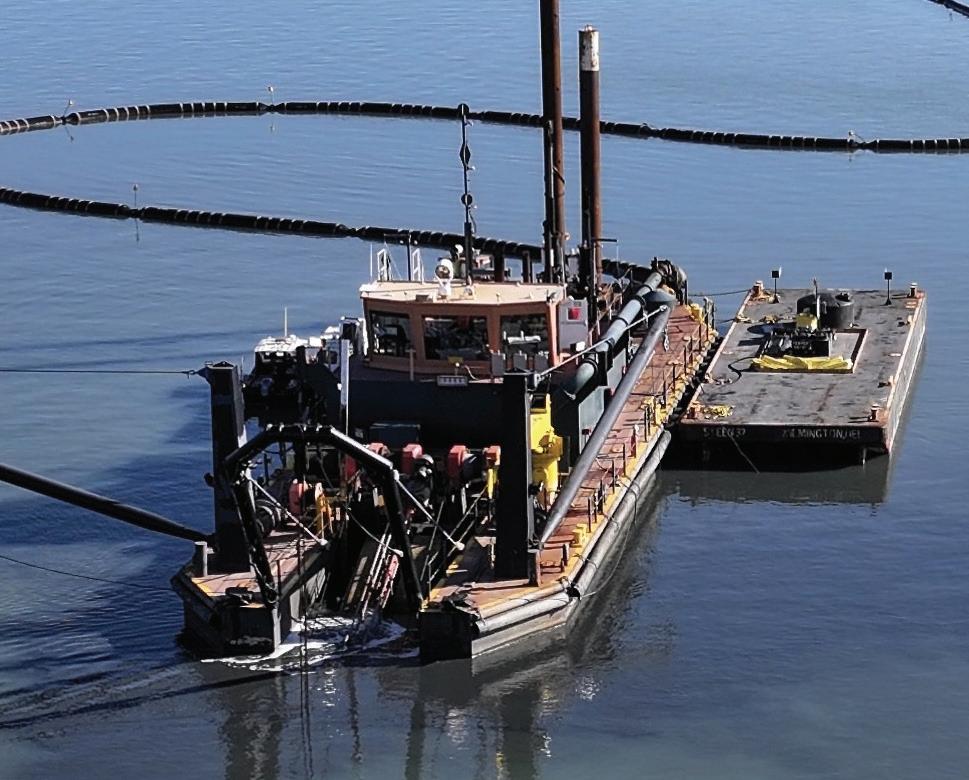
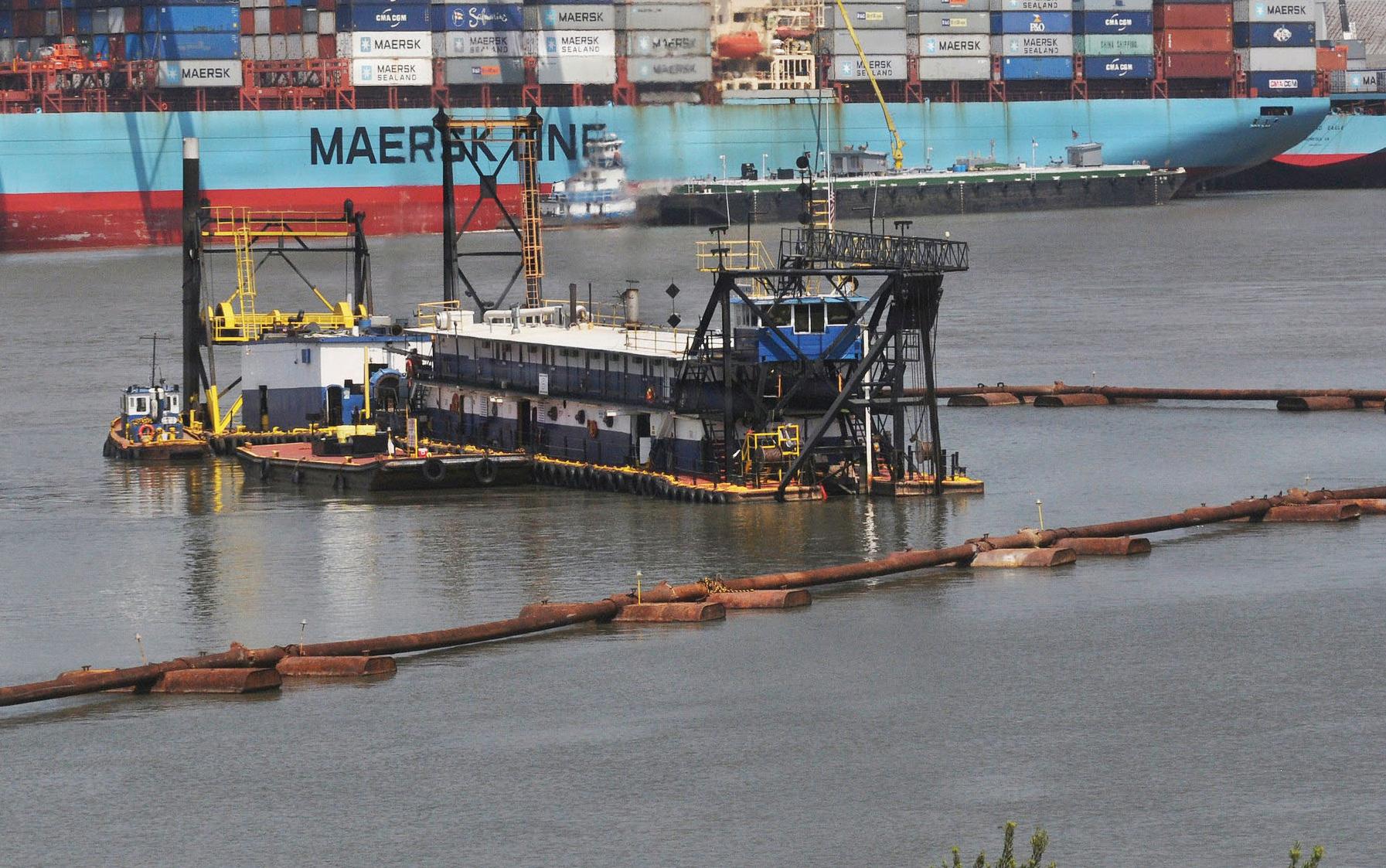
Harder for the public to see — yet just as essential — are the dredging contractors that maintain the channels and harbors vessels depend on and the shorelines people enjoy.
“Dredging is foundational to the nation’s maritime system,” said Erica Janocha, dredging program manager for the U.S. Army Corps of Engineers. “Federal navigation channels enable the movement of commerce, support ports
and harbors, provide access for military and national security missions, and sustain the marine transportation system that the broader maritime industry depends on.”
With the Corps of Engineers serving as the largest contracting body for dredging in the United States, funding and policy trends with the Corps are important factors affecting the commercial dredge eet. Most recently, the Corps’ “Building Infrastructure, Not Paperwork” initiative has put ef ciency, both in pricing and delivering projects, rmly in focus.
“For the dredging program, this involves speci c, targeted initiatives, such as ‘Smarter Contracting’ and ‘Expanding Dredging Capacity,’” Janocha said. “This means centralizing dredge

contract handling to negotiate from a position of strength and improving environmental processes like mitigation banking and expanding environmental windows to increase dredge availability and ensure waterways remain open at a lower cost.”
Janocha said the result of those tactics will look different depending on the type of work. For maintenance dredging, the goal of centralized contracting and more exible environmental windows would be to “improve predictability, workload planning, and procurement ef ciency,” she said. For newwork dredging, initiatives like requiring designs to be at least 35% complete and using simulators to develop project execution plans hopefully would “enhance safety, reduce risk, and save millions in future maintenance costs,” she said.
“The overall objective is to deliver the federal dredging mission more efciently to support navigation reliability, commerce, and national security,” Janocha said.
William P. Doyle, CEO and executive director of the Dredging Contractors of America (DCA), said the dredging industry is keenly aware of what Adam Telle, assistant secretary of the Army
for Civil Works, hopes to accomplish with the “Building Infrastructure, Not Paperwork” initiative.
“He is clearly demanding productivity, accountability, and measurable performance,” Doyle said.
In terms of physical infrastructure, that focused approach likely has already had an impact on Corps projects, as with the cancelation of the Chickamauga Lock chamber contract on the Tennessee River.
“My understanding is that the Corps canceled the Chickamauga Lock chamber contract because it determined the contractor was falling behind schedule, struggling with quality control, and not meeting critical project management obligations,” Doyle said. “[The Corps] ultimately said it lost confidence in the contractor’s ability to deliver the work and made the decision to protect taxpayer dollars and keep a nationally important waterways project on track.
“On the dredging side,” Doyle added, “I think everyone is paying attention.”
Doyle said people in the dredging industry understand the expectation for performance and execution, but some aspects are out of a contractor’s control.
“This past winter, for example, portions of the Delaware River, the C&D Canal, and parts of the Chesapeake Bay froze over,” Doyle said. “That is an infrequent event in the Mid-Atlantic, but when it happens, dredging contractors have to become very creative with
“Dredging is foundational to the nation’s maritime system.”
— Erica Janocha, dredging program manager, U.S. Army Corps of Engineers
scheduling, equipment deployment, and sequencing to keep projects moving.”
Regarding environmental windows, Doyle said more flexibility would be welcomed.
“In some areas of the South Atlantic Division, contractors are effectively limited to roughly 60 days of dredging per year because ‘recommended’ environmental windows are being treated as rigid requirements,” Doyle said. “These constraints really are ridiculous. They create enormous inefficiencies, drive up costs, compress schedules, and reduce the ability to respond to navigation needs in a practical way.
“The encouraging part,” he said, “is that we are actively working with Assistant Secretary Telle and with Timothy Pett, assistant secretary of Commerce for oceans and atmosphere, to develop a more modern, science-based approach that allows for additional dredging days where the best available data supports it.”
Doyle said implementing the “Building Infrastructure, Not Paperwork” initiative ought to mean more than just “move faster.” Rather, it should involve
“removing unnecessary process burdens while still maintaining environmental stewardship and accountability,” he said.
And while Doyle and Janocha both acknowledged areas for improving efficiency and driving down costs, they also alluded to huge dredging projects over the past decade and strong federal appropriations that have driven a wave of commercial newbuilds and the forthcoming Corps dredge Donnelly
“The U.S. dredging industry is absolutely in a significant fleet renewal and modernization cycle, and I believe that trend will continue,” Doyle said.
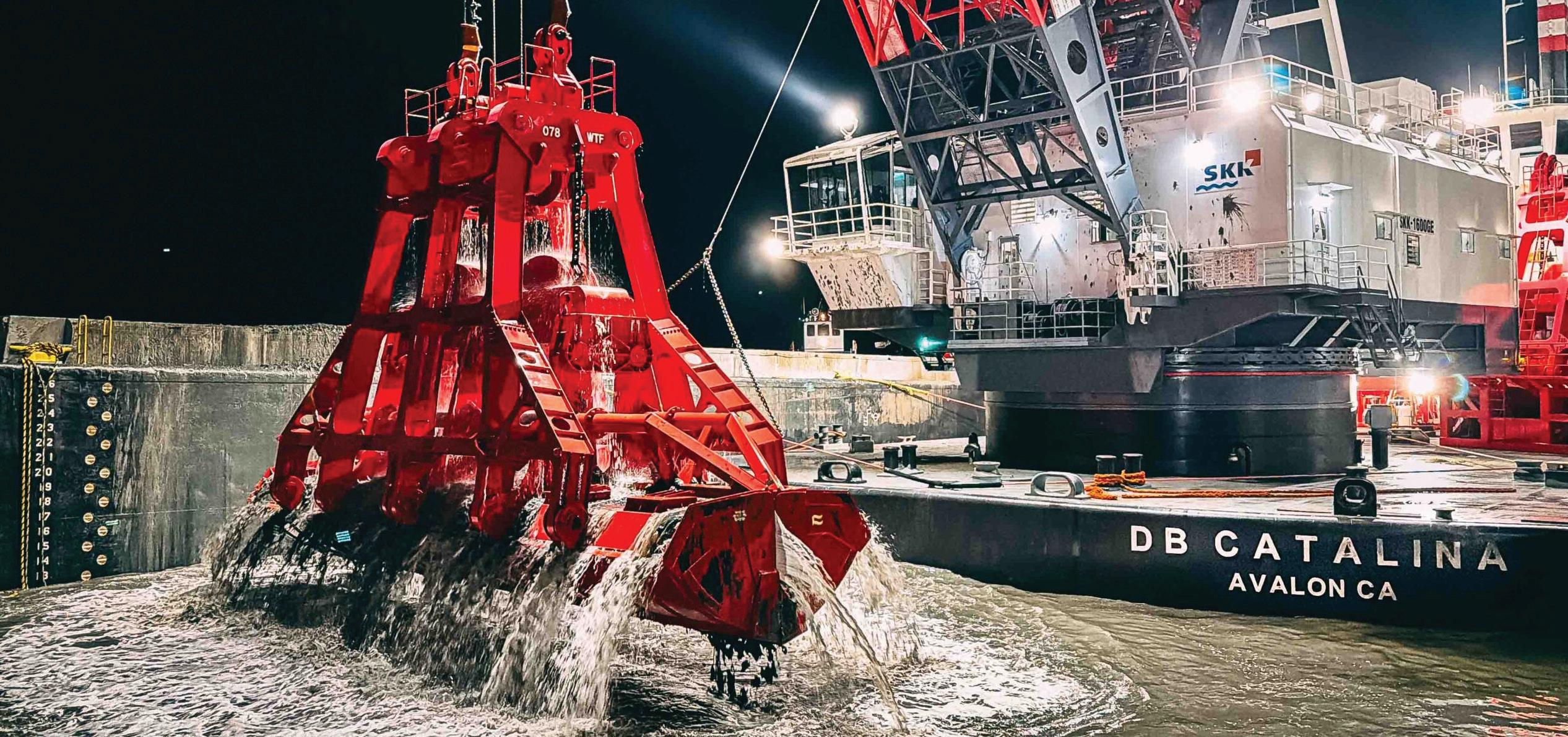
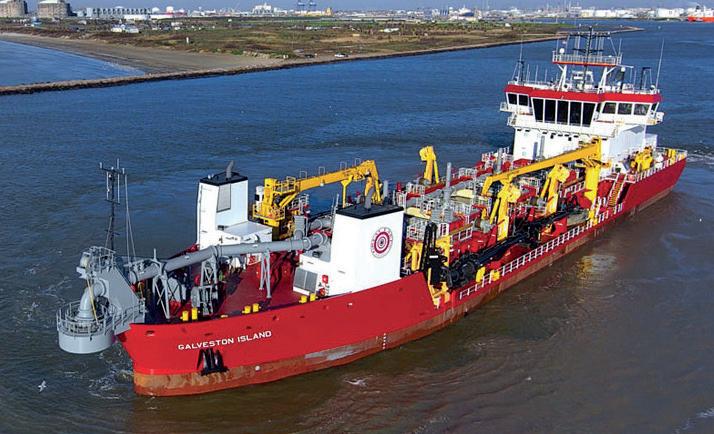
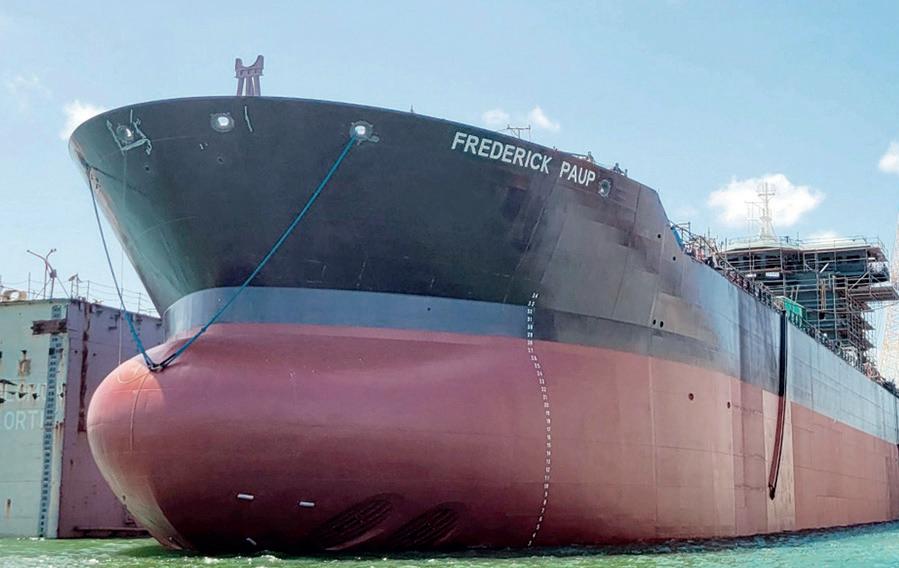
Just in the past year, Manson Construction Co., Seattle, and Great Lakes Dredge and Dock Co. LLC, Houston, have both christened new hopper dredges: the Frederick Paup, built by Seatrium AmFELS, Brownsville, Texas; and the Amelia Island, built by Conrad Shipyard, Morgan City, La., respectively. Late last year, Curtin Maritime Corp., Long Beach, Calif., took delivery of a huge mechanical clamshell dredge, the DB Catalina, built by LAD Services Inc., Morgan City.
“Most recently, The Dutra Group, [San Rafael, Calif.,] cut steel at Eastern Shipbuilding Group [Panama City, Fla.,] for a new, approximately 10,000-cubic-yard hopper dredge, which is another major signal that owners see long-term demand and opportunity in the market,” Doyle said. “A big part of this is simply keeping the fleet modern, efficient, and competitive.”
Demand signals play a big role in future asset investment as well, and the trend of late has been largely positive.
“FY 2024 was historic funding,” said Michael Gerhardt, vice president of external affairs at Muddy Water Dredging LP, Orange, Texas, and author of The U.S. Dredge Report, an annual, comprehensive breakdown of dredge contracts and projects throughout the country. “It was the best year on record, and before that, FY 2023 was the best year on record.”
And while fiscal year 2025 saw about a 25% decrease in total federal dredging awards compared to FY 2024, the $1.8 billion in federal funding for dredg-
ing in 2025 was still within 2% of the seven-year average.
“It came down because there was a reduction in new work contracts, deepening contracts, but the maintenance market remained strong,” Gerhardt said.
Congressional factors also affected the Corps’ dredging portfolio in 2025.
“In FY 2025, [the Corps] operated under a full-year continuing resolution and did not receive a traditional work plan,” Janocha said. “That affected certain funding and limited the Corps’ ability to advance some work. The yearto-year comparison also re ects the natural variability in the dredging program, as new construction and deepening projects are cyclical. This can result in periods of signi cant new work followed by years more heavily weighted toward maintenance dredging.”
Despite those variations, the market outlook remains healthy, Doyle said.
“Ports continue expanding for larger vessels, coastal restoration work is growing, and there is increasing recognition on Capitol Hill and with the White House that navigation infrastructure is directly tied to economic growth, national security, energy exports, and supply chain resilience,” Doyle said. “That gives companies con dence to continue investing in modern dredging assets and support equipment.”
And while those macro factors — harbor deepening projects, federal policy, and congressional spending —
“The U.S. dredging industry is absolutely in a signi cant eet renewal and modernization cycle, and I believe that trend will continue.”
— William P. Doyle, CEO and executive director, Dredging Contractors of America
plot the course for the dredging industry in a broad sense, safety programs, technology, and product innovations continue to shape day-to-day operations in a big way.
Devon Carlock, vice president of safety and government affairs for Cottrell Contracting Corp., Chesapeake, Va., and president of the Council for Dredging & Marine Construction Safety (CDMCS), praised member companies for communication and collaboration that drive safety throughout the industry.
“It’s that collaboration between our organization, and we share that with everyone,” Carlock said, speaking of the council’s safety resources. “Member or not, you can go on the website and get the information.”
Carlock also mentioned vibrationresistant housing impact guns, the availability of electrolyte supplements, composite work boots, and oil-guard

leather gloves as items that make work environments safer for dredge crews.
Crewmembers prefer leather gloves, Carlock said, particularly when working with heavy equipment and impact guns, because the leather reduces vibrations.
“The problem is, when the gloves would get wet, the leather would swell, and you’d basically have a fairly expensive glove that was unusable,” he said.
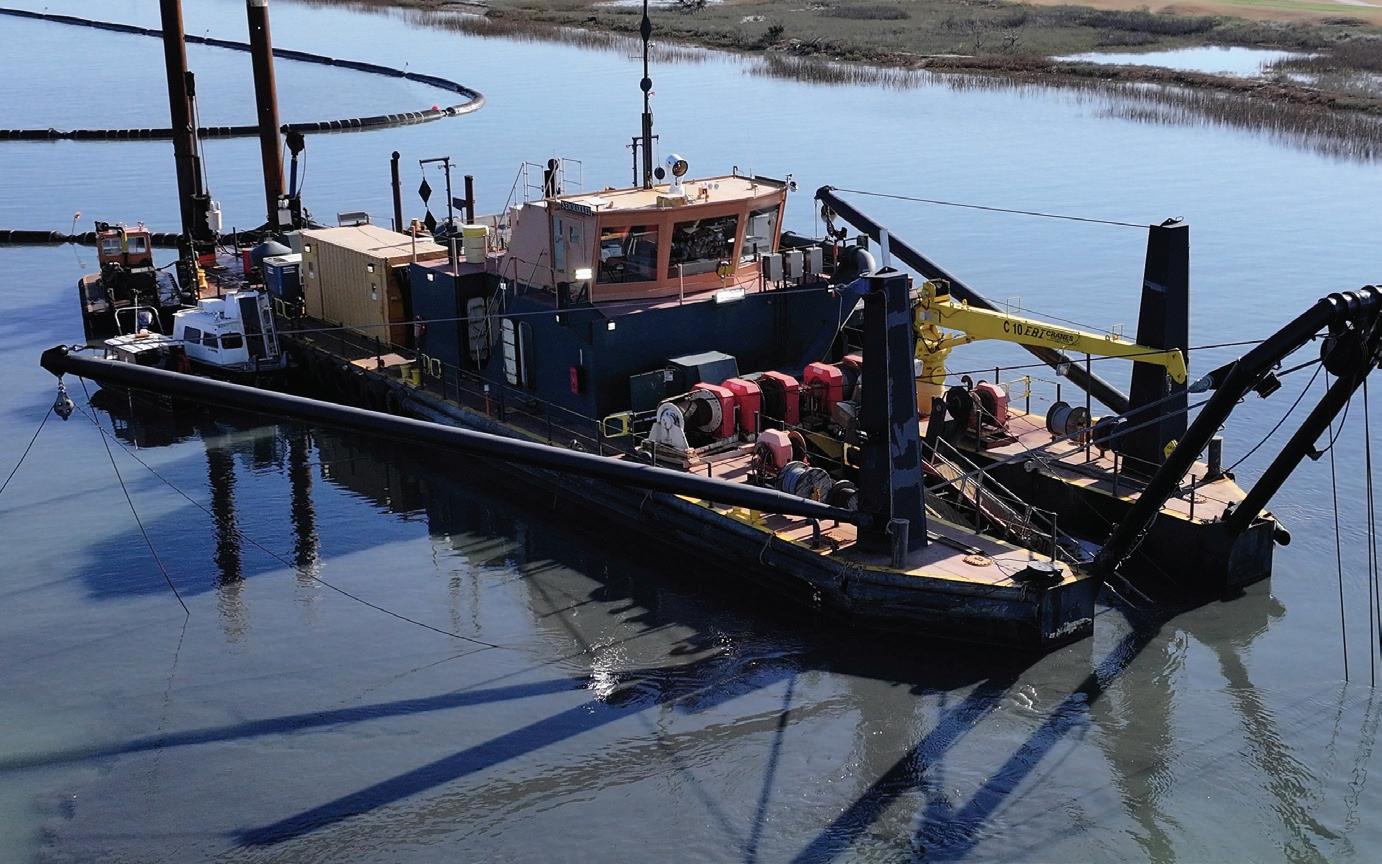
CDMCS worked with HexArmor, Grand Rapids, Mich., which developed oil-guard leather gloves that are both waterproof and provide vibration reduction essential for assembly pipelines and other dredge work.
“Of course, there’s a glove for every job,” said Carlock, who then mentioned gloves that offer various levels of cut protection.
Gloves, vibration reduction for power tools, monitoring electrolytes, lighter work boots — all are issues addressed and solutions identi ed through CDMCS discussions.
“I think out of everything that sharing of information is so critical,” Carlock said. “That’s really been the pivotal achievement of our organization and different communities speaking to each other.”
Carlock highlighted locating, surveying, and marking underwater utilities as an important issue from a safety standpoint for crews and for avoiding utility disruptions. Depth and location of utility pipelines are both dynamic. While company A might have a dredging contract and survey utilities in one year, company B might get that contract the following year, and there’s no standard for sharing that information. Carlock said that’s a top issue for discussions between the dredging industry and the Corps.
Whether marking underwater utilities, securing beaches, or employing the best equipment for building and laying dredge pipelines, it all comes back to safety, Carlock noted.
“It’s not all about the amount of sand or mud you’re putting on a hill or taking out of the channel,” he said. “It’s about making sure that everybody goes home safe and can see their families.”














































































The definitive resource for the U.S. Federal Dredging Market


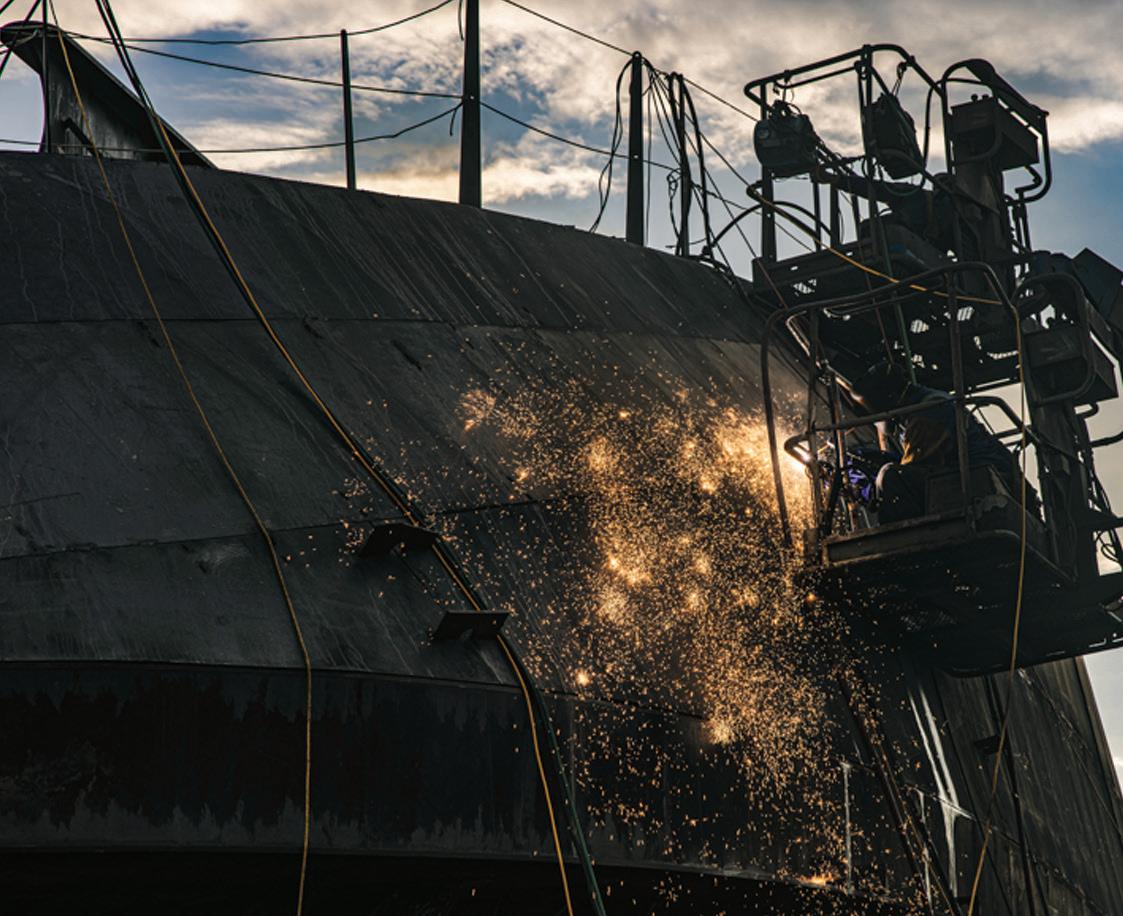

By Stephen Blakely, Contributor
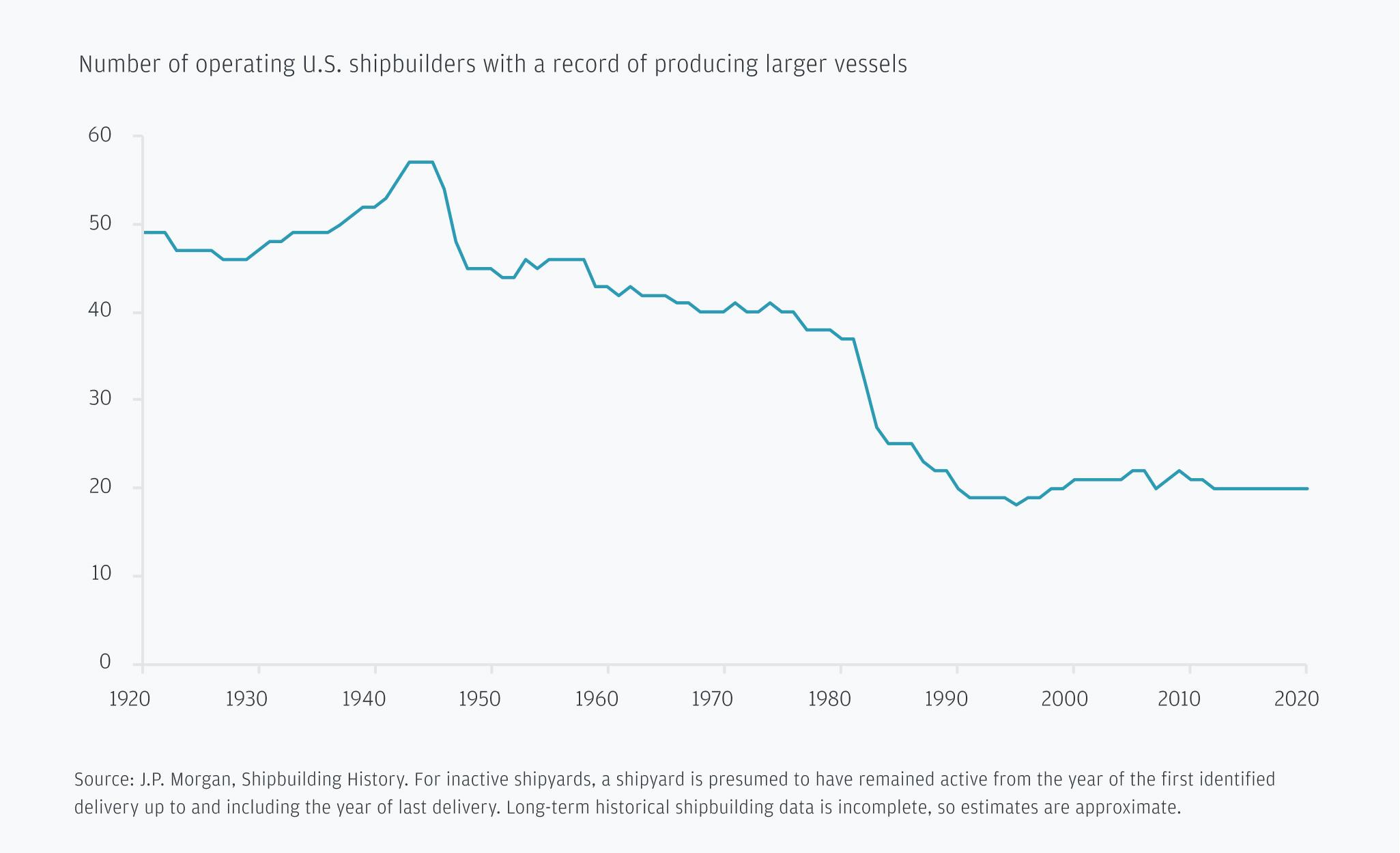
Several months after President Trump unveiled his Maritime Action Plan (MAP) to revive U.S. shipbuilding, the proposal is starting to show quiet signs of life. Various players, both inside the administration and on Capitol Hill, are working behind the scenes to resolve differences between the White House and Congress and build a uni ed legislative strategy for moving forward.
While the entire proposal is unlikely to be enacted this year, congressional staff and industry leaders say its broad bipartisan support provides hope that some parts of it may pass before the November elections. If not, it is certain to carry over into 2027.
The most concrete legislative action so far was a joint hearing on the issue held April 22 by two of the House committees that have jurisdiction over the complex issue.
Besides highlighting the need for “Revitalizing Shipbuilding and the Maritime Industrial Base,” as the hearing was titled, witnesses quickly focused on well-known challenges such as
huge cost overruns, long delays, and industrial problems that have plagued American shipbuilding for decades.
The Trump administration’s MAP proposal, released in February, lays out a comprehensive strategy to revive the ailing U.S. shipbuilding industry and restore the nation’s maritime industrial capacity to meet national security and economic objectives. The strategy is organized around four pillars: Rebuilding U.S. shipbuilding capacity and capabilities, reforming workforce education and training, protecting the maritime industrial base, and supporting national security and industrial resilience.
The MAP proposal is based on a similar sweeping plan introduced earlier in the House and Senate known as the SHIPS (Shipbuilding and Harbor Infrastructure for Prosperity and Security) Act.
The goals of the SHIPS Act, sponsors said in a press release, are to “ensure national oversight and consistent funding for the maritime industry, enhance the competitiveness of U.S.agged vessels, rebuild the U.S. shipyard base, and expand efforts to recruit, train, and retain skilled mariners and shipyard

While both the White House and congressional maritime proposals are closely aligned, the MAP includes various proposed executive agency deregulatory steps, some of which could be enacted without congressional action.
and Mark Kelly, D-Ariz.
“I’ve never seen so much energy on shipbuilding before,” said Garrett Rice, president of Master Boat Builders Inc., Coden, Ala. “We couldn’t be more excited about MAP.”
Master Boat Builders is a private shipyard that has built hundreds of tugboats since 1979 and now is also building modules to support the construction of larger naval ships.
“As far as funding, in truth, I don’t see that happening this year,” Rice said. “Congress has a hard time voting on anything, but you see a lot of support on both sides of the aisle, and that’s what’s going to drive it forward. Industry is working together to help the legislators prioritize this.”
Rice said both the MAP and SHIPS Act proposals are good, not just for the industry, but for the country as a whole.
“It’s building ways to create both cargo and ships,” he said. “By increasing capacity, it gives us an avenue to new business. If the work is there, the yards will respond.”
involved, those ongoing negotiations are complex and time-consuming.
Once those differences are resolved, it is expected that amendments will be drafted to replace existing bills with new language incorporating the final compromises. Once that takes place, both chambers of Congress could take up the measure quickly. Still, challenges remain, particularly considering recent political gridlock, the upcoming November elections, and a shrinking congressional calendar.
“If the SHIPS Act doesn’t move before the [congressional] August recess,” one Capitol Hill staffer said, “it’s unlikely to pass this year.”
Despite the current partisan political environment in Washington, the SHIPS Act has attracted a wide array of Republican and Democratic cosponsors in both chambers of Congress, reflecting the growing awareness of the crisis facing the U.S. maritime industry and its economic and national security implications. Its lead sponsors in the Reps. John Garamendi, D-Calif., and Trent Kelly, R-Miss., and Sens. Todd Young, R-Ind.,
WorkBoat interviews indicate there is a lot of closed-door discussion underway involving industry representatives, congressional staff, and executive agency officials who are seeking to reconcile technical and policy differences between the MAP and SHIPS Act proposals. Given the very wide range of issues and numerous federal agencies
A major question is how Congress will come up with the huge amount of money needed for such a massive overhaul of U.S. maritime policy and huge expansion of the shipping fleet and workforce. The Pentagon is facing billions of dollars in unbudgeted costs for the war with Iran at a time when recent tax cuts are already deepening recordsetting federal deficits.
For now, no overall cost estimate exists for all the expenses that the MAP or SHIPS Act proposal would entail.
The MAP envisions “hundreds of billions of dollars in new investments” to build ships in America funded through a mix of mechanisms, mainly a new Maritime Security Trust Fund financed by universal entry charges on foreign-built workers.”
vessels, as well as a proposed new landport maintenance tax. A cargo fee of 1 cent per kilogram would yield an estimated $66 billion over 10 years, while a fee of 25 cents per kilogram would yield close to $1.5 trillion, according to the document.
As with import tariffs, experts say, such new fees could be passed on to consumers, fueling inflation.
The White House released a cost estimate for the 2026 Maritime Action Plan of roughly $45 billion to $55 billion over 10 years, mainly for shipbuilding subsidies and loan guarantees, port and shipyard infrastructure grants, workforce development, and procurement incentives.
On Capitol Hill, the nonpartisan Congressional Budget Office (CBO) is required to produce a cost estimate for authorizing legislation once a congressional committee has formally approved the bill and sent it to the full House or Senate for consideration.
Even though that hasn’t happened yet (the SHIPS legislation has been referred to 12 committees in the House), Congress could ultimately pass a maritime package without waiting for a CBO “score” (as its estimates are called) or a realistic idea of how much it is likely to cost.
For all the enthusiasm about the administration’s attention to shipbuilding, the April 22 hearing on the Maritime Action Plan provided a reality check about the many intractable issues that have long hamstrung American shipping.
The hearing was jointly sponsored by two panels of the House Armed Services Committee, as well as the House Transportation and Infrastructure Subcommittee on Coast Guard and Maritime Transportation. Among those testifying was Stephen Carmel, administrator of the U.S. Maritime Administration, who said that the ultimate cause of American shipbuilding problems is a lack of sufficient cargo.

“Rebuilding American maritime power requires restoring cargo to its role as the organizing principle of the system,” he said.
Federal subsidies to shipyards are not enough by themselves to revive the U.S. shipbuilding industry unless there is adequate cargo to ship, he said.
“Cargo demand enables vessel deployment,” Carmel said. “Without sustained cargo flows, vessels do not operate, regardless of fleet size or nominal capacity.”
Carmel noted that the U.S.-flag fleet engaged in international trade consists of only about 80 privately owned vessels, carrying less than 1% of U.S. international trade by volume. He added that the U.S. accounts for less than 1% of global commercial shipbuilding output, while China’s share exceeds 55% and is growing. Maritime transportation, he noted, moves approximately 80% of U.S. trade by volume and roughly 60% by value, yet U.S.-flag vessels play almost no role in that carriage.
“The U.S. is a major maritime trading nation without corresponding control over maritime transport capacity,” he said. “These indicators describe a system that is not just underperforming but disconnected from the economic activity it is intended to support.”
Shelby Oakley is a director in the Government Accountability Office (GAO), which has conducted numerous investigations into troubled federal shipbuilding projects and has made over 100 recommended improvements.
“Navy and Coast Guard shipbuilding programs have consistently fallen short of expectations over the last two decades,” she said. “Collectively, they are billions of dollars over cost and years behind schedule.”
Recent examples she cited are the Coast Guard’s $20 billion Offshore Patrol Cutter program, years overdue with no ships delivered and two cutters canceled, and partial termination of the Navy’s Constellation-class frigate.
Oakley said there is no singular solution to the Navy and Coast Guard’s ship construction problems. However, she predicted the services could “significantly improve results” if they had better portfolio management practices, better design discipline and practices (such as finishing the design before starting construction), and better management of the industrial base.
Eric Labs, senior naval analyst for the Congressional Budget Office, noted that the Navy and the shipbuilding industrial base have had the resources in recent years to expand the Navy’s fleet but have been unable to deliver ships on time.
Build times are getting significantly longer, he said. The shipbuilding industry took five to six years to build destroyers and submarines in the 2000s but now need nine to 10 years. The biggest aircraft carriers used to take seven to eight years to build, but they now take































The Maritime Administration (Marad) presented the White House’s FY 2027 budget priorities for federal maritime programs at a congressional hearing on June 3, saying it supports the president’s “unprecedented advocacy” for rebuilding the maritime sector.
“The maritime industry is currently experiencing a historic resurgence, driven by President Trump’s unprecedented advocacy for the sector,” Marad Administrator Stephen Carmel told the House Transportation subcommittee on Coast Guard and Maritime Transportation.
“This commitment was solidified by the signing of Executive Order 14269, Restoring America's Maritime Dominance, which precipitated the development of the Maritime Action Plan,” Carmel said. “This strategic roadmap serves as the definitive blueprint for rejuvenating the Maritime Industrial Base and ensuring the nation’s long-term competitive edge at sea.”
The request, which is in the early stages of review by Congress, would authorize $2.6 billion to support an array of maritime programs, including grants for small shipyards and ports, training at state and federal maritime academies, maintaining fleets of vessels to transport U.S. military supplies during war and emergencies, and developing new initiatives to revitalize the nation’s merchant fleet and the shipbuilding industry through a new $1.4 billion Maritime Security Trust Fund that has not yet been created.
But the proposal ran into stiff criticism from the panel’s Democrats, who complained that the budget numbers look generous and inflated because they rely on money coming in from a trust fund that has not yet been approved by Congress. “There’s $1.4 billion for a trust fund without providing any details of how it will operate or how it will be funded in the future,” said Rep. Rick Larsen, D-Wash.
“The proposal looks like an increase in funding [for maritime programs] but only if the new trust fund is cre-
10 to 11 years.
Labs said the CBO estimates that Trump’s proposed Golden Fleet could ease pressure in some shipbuilding areas, such as frigate construction, but increase it in others, such as large surface combat ships, specifically the proposed Trump-class guided-missile battleship.
If the Navy proceeds with buying the envisioned 15 to 20 Trump battleships, he said, it may have to forgo the 28 DD(X) future destroyers the service had planned to build from 2032 to 2054 to
ated,” added Rep. Salud Carbajal, D-Calif. “Otherwise, there is a significant decrease in funding for key programs, like the port infrastructure development program, and zero funding for the maritime environmental and technical assistance program, the cable security program, and the National Defense Reserve Fleet recapitalization. It shows a lack of prioritization by this administration.”
Democrats also turned the discussion into a referendum against what they called the “disastrous” decision by the president to issue a temporary, 150-day waiver of the Jones Act, which requires that all goods shipped between two U.S. ports be carried by U.S-built, owned, and crewed vessels.
The administration had said that allowing foreign ships to deliver oil and natural gas between U.S. ports would help ease escalating gasoline prices.
The move has done little to ease gas prices while drawing backlash from the domestic maritime industry.
Carbajal questioned whether the administration’s support for the industry was sincere.
“Unfortunately, it’s unclear whether this administration supports the maritime industry or not,” he said. “Despite having issued the Maritime Action Plan to grow the domestic maritime industry, President Trump has levied the strongest attack against the domestic maritime industry ever. The unjustified waiver of the Jones Act is the opposite of what needs to be done to grow the industry and strengthen our defense and national security.”
Carbajal and others said the waiver is crippling the industry by shifting business away from U.S. vessels to foreign ships from rivals such as China and has not resulted in a drop in gas prices.
“If we allow this to continue, we will become completely reliant on foreign ships owned and crewed by foreign companies for our economic security,” the congressman said. “American ships crewed by American mariners should be carrying American commerce.” — Pamela Glass
replace Arleigh Burke-class destroyers.
Compounding these issues are some apparently conflicting policies by the Trump administration.
For instance, Trump’s unilaterally imposed tariffs on foreign steel have also had the effect of raising the price of domestically produced steel.
Also, South Korea, the world’s second-largest shipbuilder after China, has been seen as the irreplaceable mentor, partner and investor to help modernize and revive American shipbuilding.
However, U.S.-South Korean relations were seriously strained following an Immigration and Customs Enforcement (ICE) raid last year on the $4.3 billion Hyundai electric car battery factory in Georgia.
More than 300 South Korean workers were arrested and deported in the largest-ever single ICE enforcement action, shutting down the plant, causing a major diplomatic dispute and threatening future foreign investment in the United States.


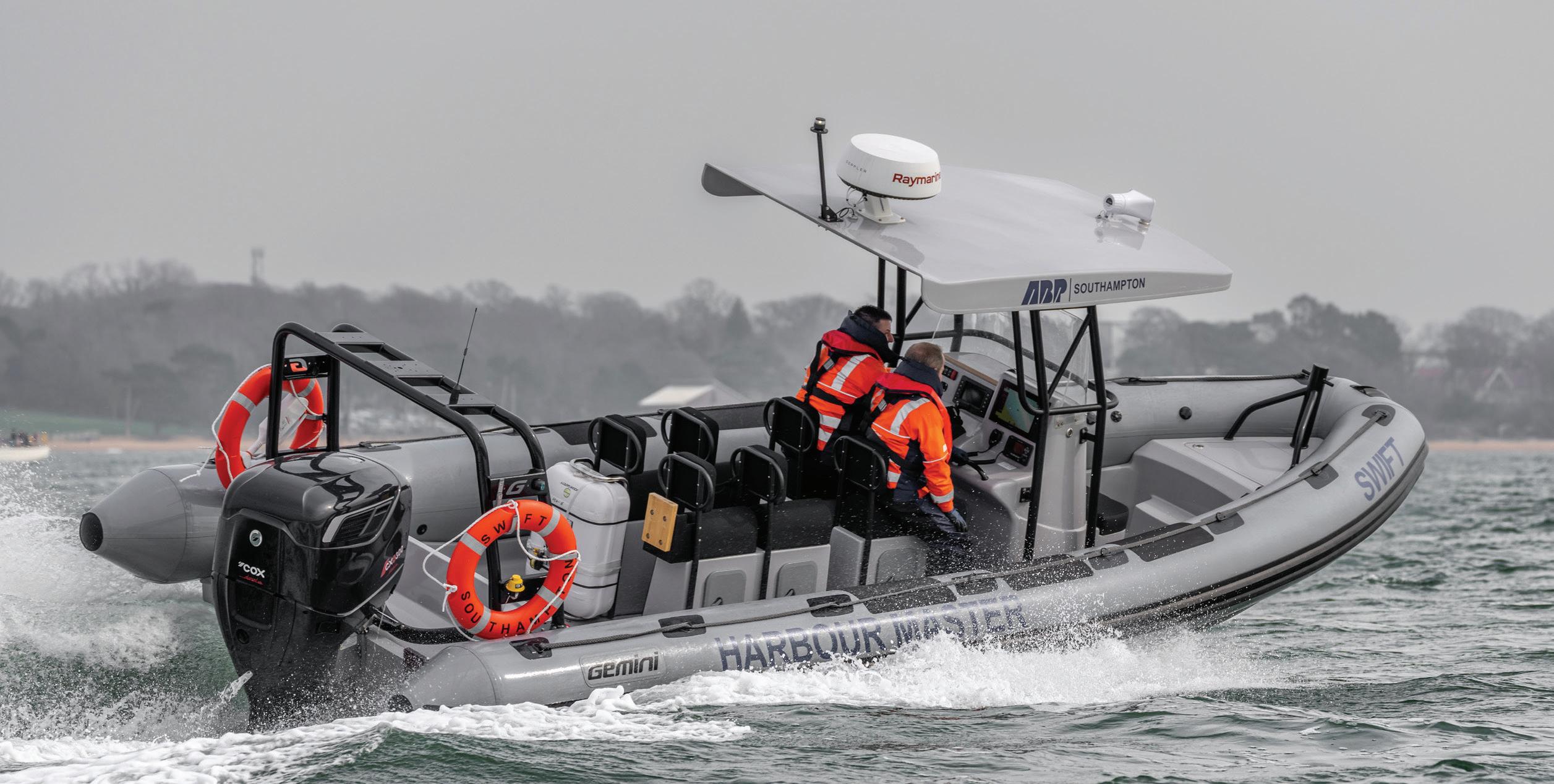
• 30% more fuel savings
• Less Down Time (service intervals every 250 hours vs gas engines at every 100 hours)
• High Torque ( 707 ft/ lb for 300 hp & 780 ft/lb for 350 hp
• Reduced Emissions (EPA Tier III),
The World’s Most Fuel Efficient Diesel Outboard
TECHNICAL SPECIFICATION
Unprecedented fuel savings and exceptional lifespan:
300hp gasoline outboard: 98 L/h (26 USG/h)
400hp gasoline outboard: 140 L/h (37 USG/h)
The Cox Marine 300: 72 L/h (19 USG/h)
The Cox Marine 350: 87 L/h (23 USG/h)



By Capt. Eric Colby, Contributor
Dredge operators in the U.S. have expanded their eets with a more diverse equipment offering, giving them the ability to take on different types of jobs. They’re replacing old equipment with new, more ef cient technologies and even using processes that allow them to access and operate equipment remotely.
“The basic dredge hasn’t changed in a long time,” said Bill Wetta, senior vice president of product development and chief technology of cer at DSC Dredge LLC, Reserve, La. “The big trend is less people or no people on the equipment.
“I’ve got a thousand dredges that I can run from my phone,” Wetta added. “We can troubleshoot, operate, help with placement all from our phone.”
In 2025, the North American dredging industry, comprised of Jones Act-quali ed operators, continued to be a competitive market. U.S.-owned companies executed $1.8 billion in federal dredging projects, according to The U.S. Dredge Report.
While 2024 featured major deepening and widening projects in Norfolk, Va., Brazos Island and Sabine Pass in Texas, and Mobile, Ala., nancial year 2025 marked a transition, the report noted. Instead of fewer large-scale channel expansions,
the industry’s core of maintenance dredging held steady, providing safer movement of commerce on U.S. waterways.
Additionally, demand surged for beach renourishment, ood control, and wetland creation projects to combat climate change impacts. Many U.S. Army Corps of Engineers projects incorporate bene cial use, funneling dredged sand to rebuild shorelines, with 74% of projects recycling materials. Additionally, environmental dredging — the specialized removal of contaminated sediments from rivers and lakes — is a signi cant and growing sector across the U.S. and Canada
“With 56 companies awarded work, the Jones Act framework is fostering real competition that delivers value to taxpayers while maintaining a robust domestic industrial base,” said William Doyle, CEO of the Dredging Contractors of America (DCA). “That same eet is essential to our national and economic security, keeping America’s military installations and port gateways open, reliable, and resilient.”
According to The U.S. Dredge Report, hopper and dustpan dredges accounted for 34% of all work, representing contracts totaling $608.5 million. While this segment declined from FY 2024’s peak, it remained consistent with long-term averages. Each job averaged three bidders, and the report said the com-
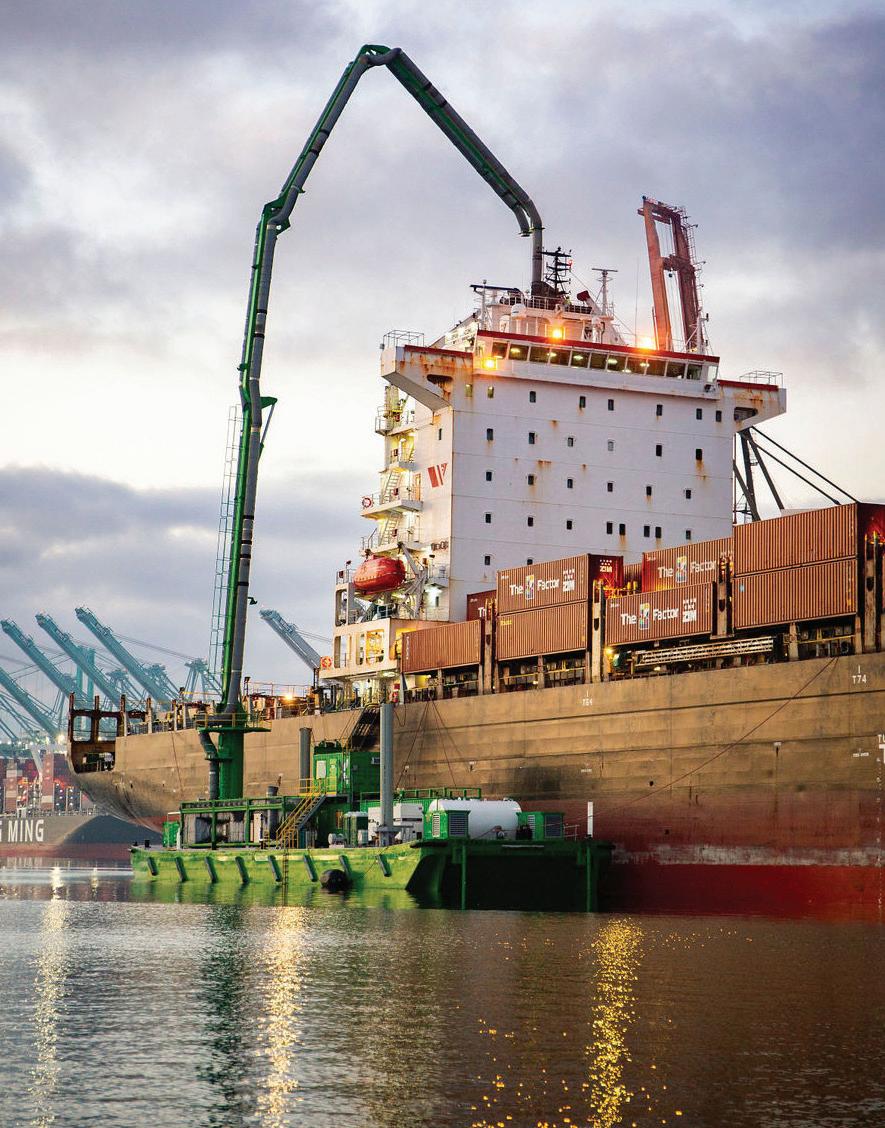
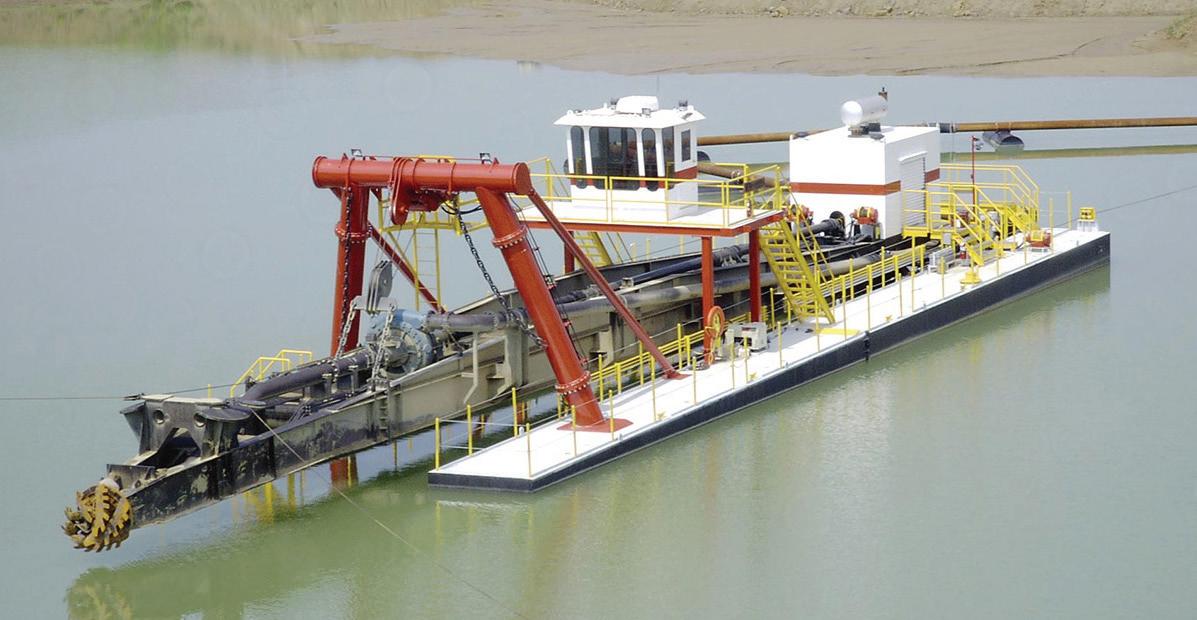
DSC’s Marlin Class dredge reaches depths to 96' via its underwater pump system and high-torque cutter drive.

petitive environment resulted in $773 million in savings to the federal government, an average savings of 26% per project. Some 63% of projects awarded were below the government’s estimate, and 68 of those were more than 10% below the estimate.
Doyle noted that the results underscore that the Jones Act gives small businesses a chance to stay competitive, with $294.6 million of 2025 dredging work awarded to small businesses across 135 projects.
In 2025, a pair of noteworthy, large dredge projects started at Eastern Shipbuilding Group Inc. (ESG), Panama City, Fla. The company began work on two hopper dredges, one for the Dutra Group, San Rafael, Calif., and another for the U.S. Army Corps of Engineers.
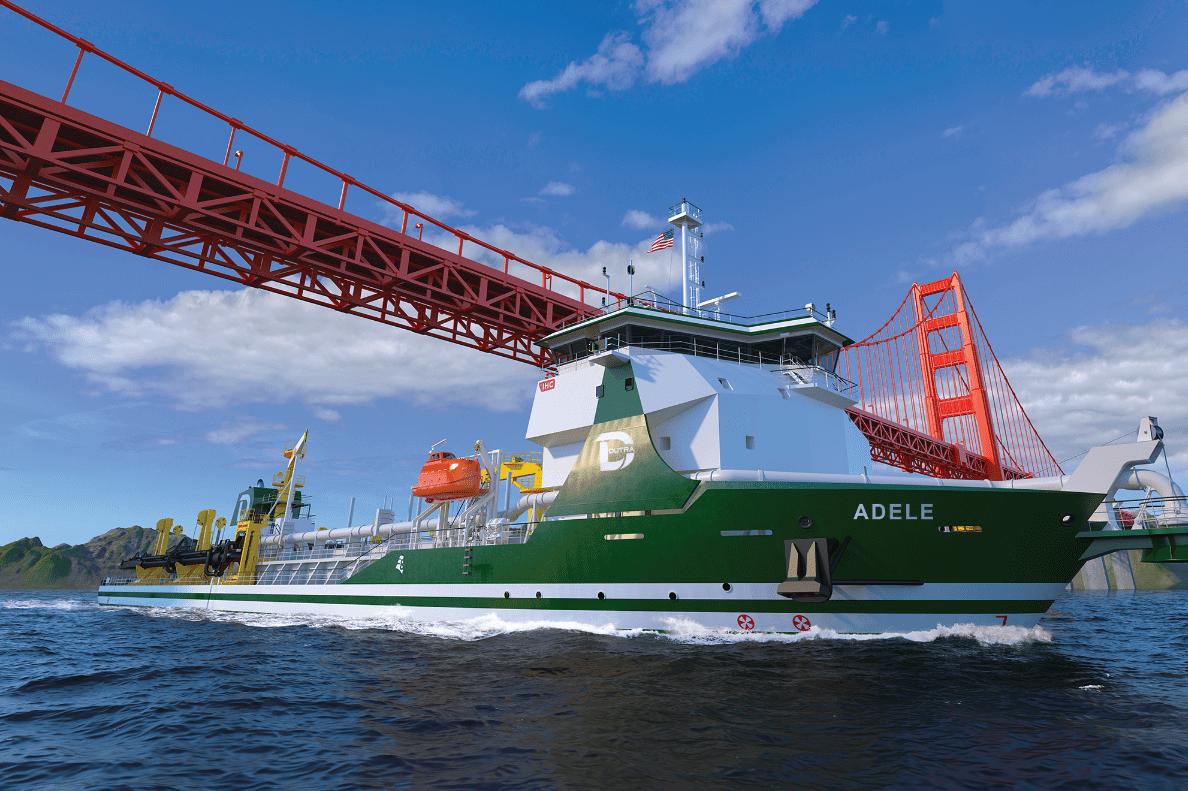
The dredge Adele is a 10,464-cu.-yd. trailing suction hopper dredge named in honor of Adele Coelho, mother of Bill T. Dutra, Dutra Group’s founder and chairman.
Adele is a 347'x79'6"x37' twin-screw vessel based on the Beagle Mk2 design from Royal IHC, Kinderdijk, the Netherlands. The hopper has a V-shaped cross-section with bottom doors that facilitate offloading dredged material. She also has a bow connection for more efficient material pump-off. The hull has a bulbous bow that helps reduce drag and improve fuel efficiency.
Accommodations and the pilothouse are forward, with the latter equipped with separate consoles for navigation and dredging. The wheelhouse is designed for the helmsman and dredge master to have clear views of their operations. The ship has a single engine room with the dredge pumps in a dedicated compartment. They are driven by the main diesel engines through a gear reduction. Total power for Adele is 13,290 hp. Upon delivery, Adele will join Dutra’s 9,870-cu.yd. hopper dredge Stuyvesant, which has been in service since 1981. The company also owns clamshell and cutter suction dredges.
Eastern has also partnered with the Corps for a new medium-class hopper dredge, the Donnelly. The 320'x72'x28'
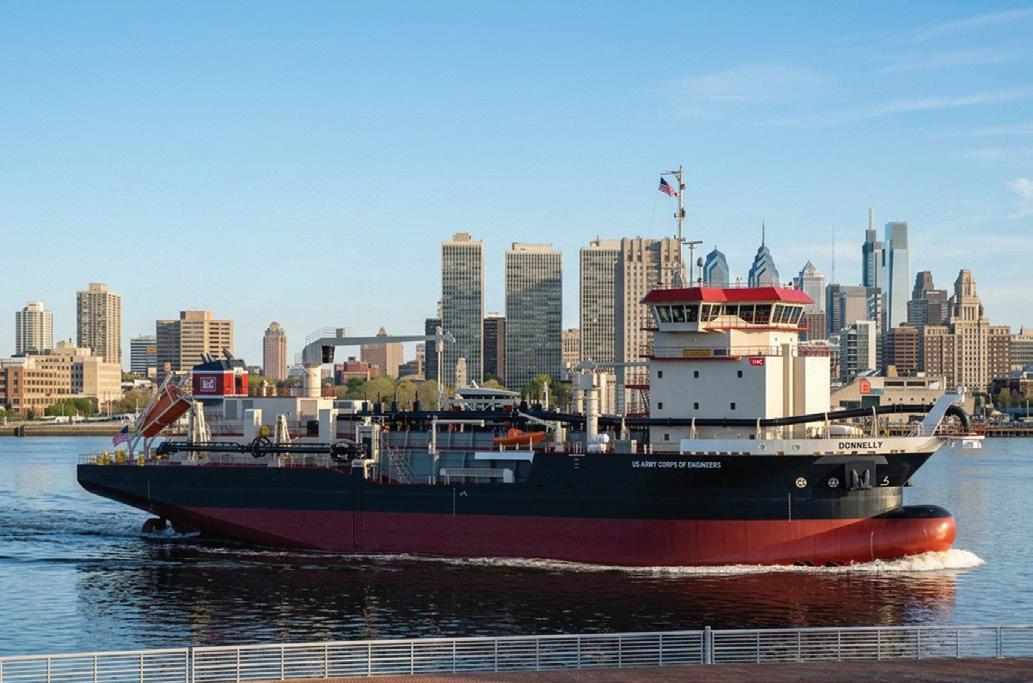
trailing suction hopper dredge has been under construction since April 2025.
Expected for delivery in 2027, the Donnelly will replace the 57-year-old 318.9'x73.9'x32.9' McFarland, one of four oceangoing hopper dredges owned and operated by the Corps. The dredge will support the Corps’ navigation mission of maintaining federal channels and waterways that underpin U.S. commerce and national security. The vessel is scheduled to enter service in the federal fiscal year 2028.
Ray Donnelly, the vessel’s namesake, was the former chief of resource management for the Corps’ Philadelphia District. He retired in 2020 after a 44-year career spanning the U.S. Navy and the Corps. An ESG press release noted that Donnelly played a key role in analyzing the Corps’ hopper dredge fleet and evaluating recapitalization needs, as well as overseeing financial management of the McFarland
Donnelly’s draft will range from 11'3" when light to 25'6" fully loaded. The vessel will carry up to 6,000 cu. yds. of dredged material and operate at depths of up to 65' using twin trailing suction pipes. Accommodations will be provided for a crew of 26, with an endurance of about 18 days.
Diesel-electric propulsion will consist of one 3,150-hp Wabtec 12V250MDC engine and two 2,250-hp Wabtec 8L250MDC engines. Power will be delivered to two Schottel SRP 460 L-drives fitted with 98.4" fixed-pitch, 4-bladed stainless steel propellers, each driven by 1,800-kW electric motors. The vessel will feature two 375-kW Schottel STT 1 tunnel thrusters forward equipped with 49" fixed-pitch impellers. The vessel is expected to make about 12 knots with the hopper empty and 10 knots when fully loaded. Ship’s service power will include a Cummins QSB7-DM emergency generator rated at 120 kW.
The steel hull will be longitudinally stiffened and built to ABS class for unrestricted service under the society’s 2023 Rules for Building and Classing Marine Vessels, including notation for hopper dredgers and advanced control and automation systems.
The dredging plant will include two trailing suction pipes

By Ben Hayden, Sr. Associate Editor
This is WorkBoat’s annual Diesel Directory, a single resource for vessel owners, operators, and builders to reference engine speci cations and manufacturer listings quickly and reliably.
If last year’s edition captured an industry visibly in ux, 2026 offers a steadier read. In 2025, operators were pulled in multiple directions: hybrid con gurations, emissions-reduction technologies, alternative fuels, and new power setups to meet shifting regulatory demands. This year, that exploration continues, but diesel’s foundational role is more clearly de ned.
“The market for marine diesel

engines in 2026 remains strong for us,” said Zack Melancon, marine sales manager at Louisiana CAT. “We’ve seen certain sectors continue to look at newer technologies for vessel power solutions such as electri cation and hybrid systems, but diesel engines aren’t disappearing anytime soon. Our customers still rely heavily on diesel engines to power their vessels because overall, diesels still offer the best energy density and reliability for heavyduty marine applications.
“Some of the challenges our customers continue to face are stricter emissions and regulatory requirements, increased fuel costs, labor shortages, and supply chain pressures," Melancon noted. “For some, this has resulted in

price increases and lengthened delivery schedules, which has put a pause on both newbuilds and repowers.”
Where new equipment isn’t feasible, operators are extending maintenance intervals, pursuing emissions upgrades, and using remote monitoring on existing vessels
“The market is fundamentally strong with a portion in a transitional phase to nontraditional power solutions,” Melancon said. “But diesel engines still remain the backbone of the current demand for vessel power and we expect that to continue to be the case at least for the next few years.”
Whether repowering or building new, this guide covers the options powering the 2026 U.S. commercial eet.






























Ph: 713-329-2207
10203 Sam Houston Park Dr., Houston, TX 77064 www.cat.com/marine C7.1
• ALL HORSEPOWER RANGES ARE NOT LISTED. FOR MORE OPTIONS, CONTACT YOUR
Ph: 800-DIESELS
4500 Leeds Ave. • Suite 301 • Charleston, SC 29405 www.cumminsengines.com • E-mail: marine.communications@cummins.com
Ph:
4500 Leeds Ave., Suite 301 • Charleston, SC 29405 www.cumminsengines.com • E-mail: marine.communications@cummins.com
ELECtRiC EnGinES 60 hz FixED SPEED RAtinGS
Ph: 516-822-3483/3484 • Fax: 516-822-3485 350 Broadway, Suite 302. • Jericho, NY 11753 www.dhtd.co.jp
6DKM-26E
Ph: 800-JDENGINE • Fax: 319-292-5075 3801 W. Ridgeway Ave. • Waterloo, IA 50704 www.deere.com/marine
RANGES ARE NOT LISTED. FOR MORE OPTIONS, CONTACT
Ph: 708-387-6398 • Fax: 708-387-5845 9301 W. 55th St. • La Grange, IL 60525 progressrail.com/powerproducts • E-mail: grwest@progressrail.com
EMD 710 SERIES
Ph: 800-856-9639 • Fax: 586-268-9320 35418 Mound Road • Sterling Heights, MI 48310 www.fnmmarinenorthamerica.com
Peter Emerson, Sales Manager Ph: 833-458-1378
Distributors: MSHS (MSHS.com) 500 Diller Ave. Stauffer Diesel (staufferdiesel.com)
New Holland, PA 17557 ADR Power Systems (adrpowersystems.com) fpt-na@fptindustrial.com Madsen Power Systems (madsenpower.com) fptindustrial.com Klassen Diesel (klassendiesel.com
N67
LIGHTS, INC.) 4420 14th Ave NW • Seattle, WA 98107 www.northern-lights.com
Ph: 954-960-6744 • Fax: 954-946-9098 591 S.W. 13th Terrace • Pompano Beach, FL 33069-3520 www.man-mec.com • E-mail: jmilbert@man-mec.com
ALL HORSEPOWER RANGES ARE NOT LISTED. FOR MORE OPTIONS, CONTACT YOUR LOCAL
Ph: 630-268-0750 • Fax: 630-268-9293 Two Pierce Place • 11th Floor • Itasca, IL 60143 www.mitsubishi-engine.com
S6B3-Y2MPTK
Société Internationale des Moteurs Baudouin Technoparc du Brégadan 13260 Cassis, France Ph: +33 488 688 500 • www.baudouin.com
6W105M
FOR
Ph: 248-560-8000 • Fax: 248-560-8001 39525 Mackenzie Drive, Novi, MI 48377 www.mtu-solutions.com • E-mail: jeff.sherman@ps.rolls-royce.com
INSTALLATION PURPOSES. CONSULT INSTALLATION DRAWINGS.
Ph: 210-403-0007 • Fax: 210-403-0211 121 Interpark Blvd. • Suite 1002 • San Antonio, TX 78216 www.scaniausa.com • E-mail: na.contact@scaniausainc.com
Ph: 850-784-7933
2310 S. Hwy. 77, Ste. 110, #338 • Lynn Haven, FL 32444 www.steyr-motors.com USA/NORTH AMERICA DISTRIBUTORS
Laborde Products, Covington, LA, Ph: 985-892-0107 Boatswain’s Locker, Costa Mesa, CA, Ph: 949-642-6800
Ph: 757-436-2800 • Fax: 757-436-5150 1300 Volvo Penta Dr. • Chesapeake, VA 23320 www.volvopenta.com
Contact: Patrick Webb • Ph: 251-222-0020 • E-mail: patrick.webb@wabtec.com 30 Isabella Street • Pittsburgh, PA 15212-USA
Ph: 770-877-9894 • Fax: 770-877-9009 101 International Parkway • Adairsville, GA 30103 www.yanmarmarine.com
3JH40
*Due to space constraints, not all engine models are included. See your
By Steve Mosco, Contributor
U.S. ports and terminal operators are investing in equipment and technologies that modernize operations and slash emissions. The projects come as U.S. ports face a broader equipment investment need. A May survey from the National Association of Waterfront Employers (NAWE), a trade association, found that 25 senior port
and terminal executives estimate U.S. ports will need $6.7 billion in cargo-handling equipment investment over the next ve years. The total includes $2.74 billion for new ship-to-shore crane purchases, $2.4 billion for large yard cargo-handling equipment and additional ship-to-shore cranes, $917 million for rail-mounted large yard cargo-handling equipment, and $790 million for repairs to existing cranes and cargo-handling equipment.
“These ndings underscore the scale and urgency of the investment challenge facing U.S. ports,” NAWE President Carl Bentzel said in the survey announcement. “Modern cargo handling equipment is essential to ensuring terminal productivity, supply chain resilience, and the ability of U.S. ports to compete with international gateways.”
The investment push is also being shaped by federal infrastructure programs and changing power needs across port operations. Another trade group, the American Association of Port Authorities (AAPA), which represents public port authorities across the U.S., said those programs remain part of the port modernization picture.
“America’s ports are modernizing in innovative ways to improve the ef cient ow of cargo as volumes continue to grow,” said Sang Yi, AAPA president and CEO. “The federal government recognizes the importance of investing in our ports through key infrastructure grant programs like the Port Infrastructure Development Program, and AAPA continues to support its members’ use of various forms of energy to properly power port operations that serve the global community.”
Associated Terminals, Convent, La., has added two CBG 500 E cranes manufactured by Liebherr Maritime Cranes and mounted on 250'x72' crane barges built by LAD Services, Morgan City, La.
The cranes are the rst of their kind operating in the region, according to Associated Terminals.
“The Lower Mississippi River is one of the most important trade corridors in North America, and our customers continue to demand greater ef ciency, exibility, and reliability,” said Zeljko Franks, COO at Associated Terminals. “The decision to invest in [these] cranes was driven by our commitment to improving cargo-handling performance while positioning our operations for the future.”
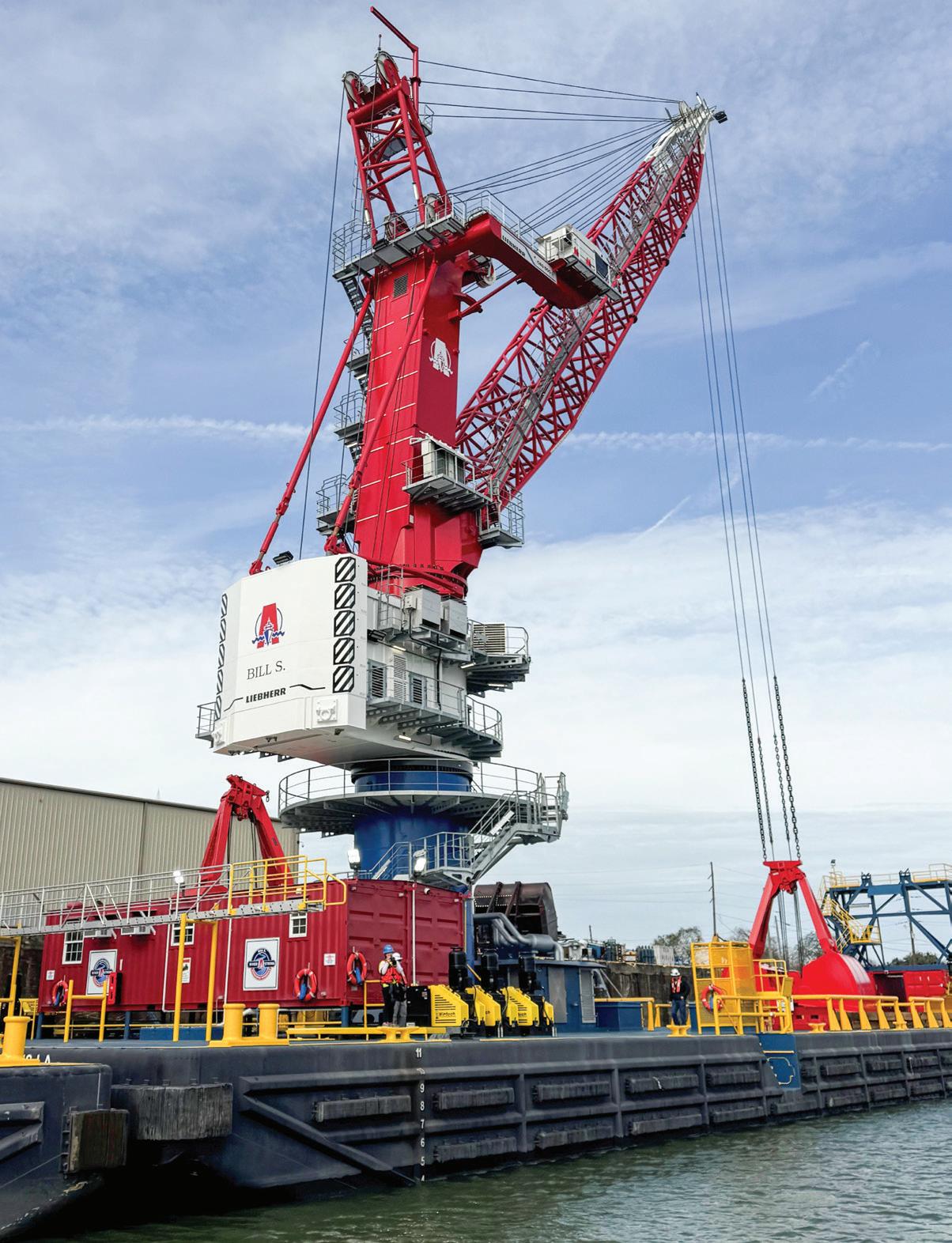
Associated Terminals said the crane-barge platform will support mobile handling of bulk and breakbulk commodities, including grain, fertilizer, aggregates, steel products, and project cargo across the Lower Mississippi and Gulf Coast region.
The company worked with Liebherr and other
project partners throughout the design process, Franks said.
“Rather than purchasing an off-theshelf solution, we helped develop a system specifically designed for the demands of Mississippi River cargo operations,” he said. “From cargo-handling requirements and power management to maintenance access and long-term reliability, our team played an active role in ensuring the equipment would meet the needs of our customers and workforce for decades to come.”
The crane-barge configuration allows Associated Terminals to bring highcapacity cargo-handling equipment to customer locations while maintaining throughput and reliability, Franks said. The cranes’ controls, lifting capacity and reach support faster loading and unloading while helping the company maintain safety standards.
For customers, Franks said, the investment is aimed at improving productivity, increasing operational flexibility and reducing vessel turnaround times.
Curtis Blank, director of maintenance and engineering at Associated Terminals, said, “We expect the biggest gains in cargo throughput, vessel turnaround, energy efficiency, and equipment reliability. The cranes are capable of very high handling rates, allowing us to move more cargo in less time and improve overall vessel productivity.”
The cranes incorporate Liebherr’s LiCaTronic energy recovery system and battery-supported power management. The systems help reduce fuel consumption and optimize power usage while also enhancing diagnostics and monitoring capabilities that can help the company manage equipment performance and reduce downtime, Blank said.
Some companies are focusing on emissions from vessels already in service. STAX Engineering, Long Beach, Calif., uses barge-based, emissions-capture systems that pull alongside ships at berth and connect to their exhaust pipes.
The company says the system captures exhaust directly from the ship’s stack, funnels it into the barge and filters
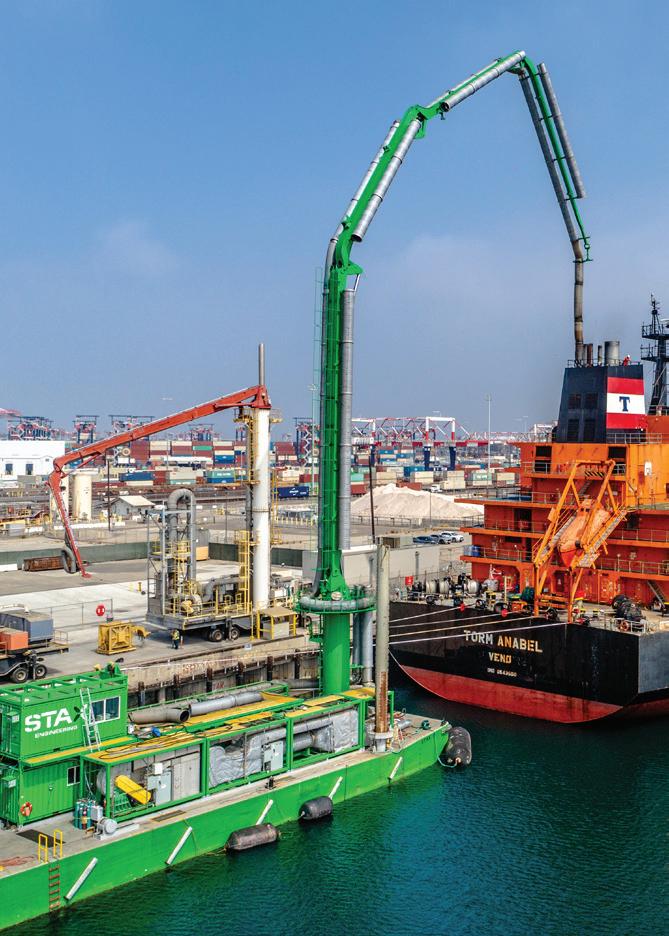
out 99% of particulate matter and 95% of nitrogen oxides before releasing treated gas. According to STAX, cargo and crew operations can continue while the vessel remains in its assigned berth.
“STAX Engineering is an emissions capture and control company that gives ports and vessel operators a way to cut harmful at-berth pollutants from today’s fleet without waiting on costly ship retrofits, full electrification, or major grid upgrades,” said Mike Walker, CEO of STAX Engineering. “As air-quality rules tighten, we’re addressing the hardest part of the problem: how to clean up vessels that are already in service and still have decades of life left.”
Walker said the technology helps where shore power is not available or practical. He also pointed to tankers and other vessels that often cannot plug in safely.
“Ports need a mix of solutions — shore power, cleaner fuels, and emissions capture — to decarbonize in a realistic way,” Walker said. “Electrification is critical, but it’s expensive, grid-dependent, and not feasible for every vessel type or berth configuration. Emissions capture fills those gaps by reducing pollution from existing fleets at the source, delivering immediate air quality benefits while longer-term infrastructure scales.”
STAX barges can serve containerships, auto carriers, and tankers from nearly any angle and do not require ship modifications or changes to port infrastructure. The company operates eight barges, has treated more than 2,400 vessels over more than 42,000 service hours, and has captured more than 330 tons of pollutants.
STAX is operating across California, including the ports of Los Angeles and Long Beach, and is in discussions with shippers and ports in other U.S. regions and abroad, Walker said.
“Over the next decade, we see emissions capture becoming a standard part of how ports bring existing vessels into compliance quickly, while shore power and new fuels scale up,” he said. “It’s the lever that can deliver measurable health benefits for neighboring communities now, instead of asking them to wait years for major infrastructure projects to be finished.”
Federal funding is supporting port equipment projects. In October 2024, the Port of Cleveland in Ohio was awarded $94.26 million through the U.S. Environmental Protection Agency’s Clean Ports Program for its Cleveland Harbor Electrification Initiative. The funding is expected to replace 13 pieces of cargo-handling equipment, replace two older-generation diesel tugboats, add electric vehicle charging equipment, and install a battery energy storage system with solar and shore power.
The port is working with Logistec USA Inc., Houston, The Great Lakes Towing Co., Cleveland, and Cleveland Public Power on the project. The multiphase initiative is expected to reduce port-related carbon emissions by 40% and improve efficiency by 2028.
The project also includes community outreach and workforce development. The port said it plans to work with Davis Aerospace and Maritime High School in Cleveland on internships and workforce training programs involving Clean Ports-installed equipment, including zero-emission mobile equipment and renewable energy systems.
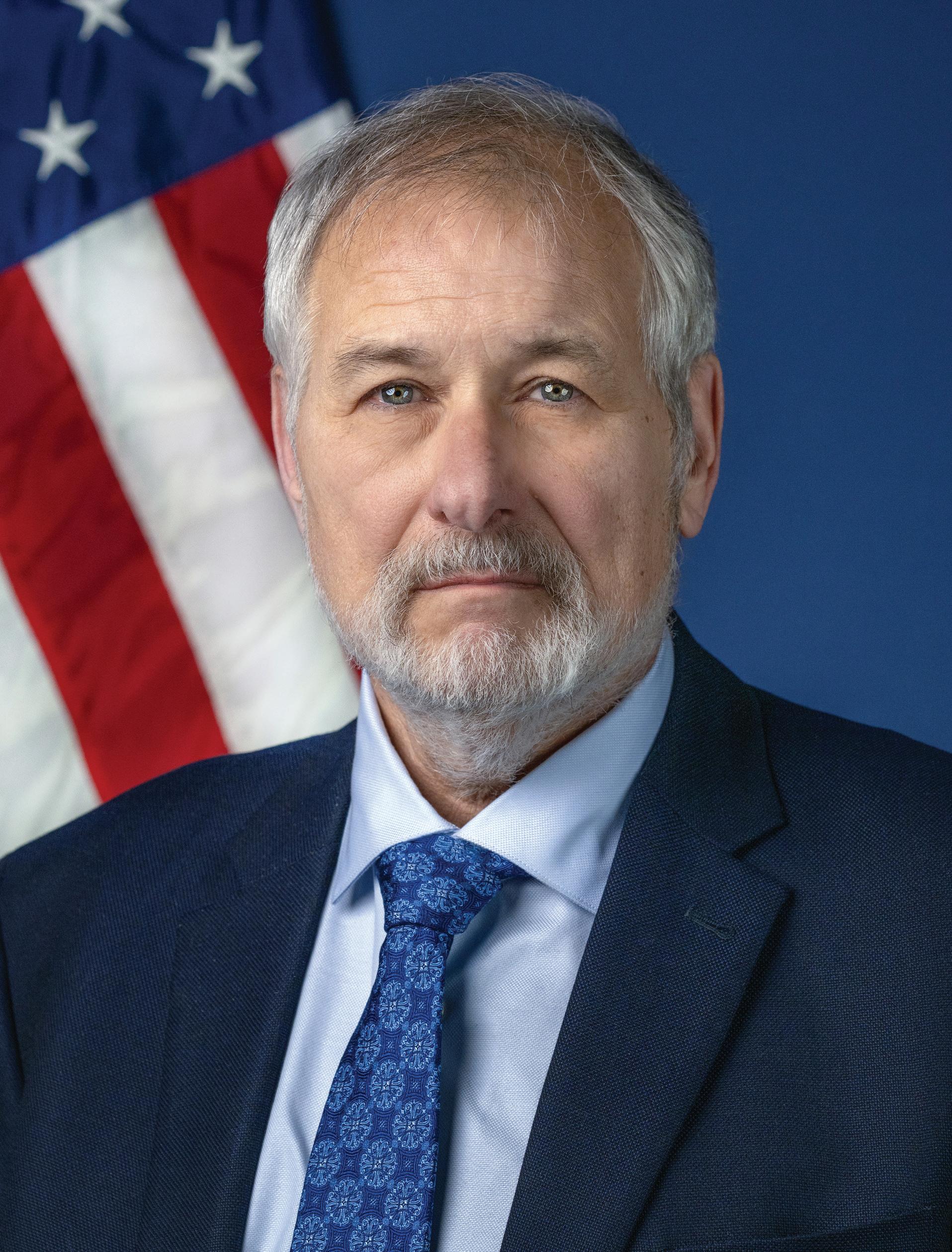
You spent decades in the industry, both at sea and ashore, before taking the helm at Marad. How does that industry perspective shape the way you are approaching the role?
The easy answer is that I didn’t need to be convinced this industry is important. I lived it. It’s been my whole life, and I believe in it passionately. I walked through the door without needing a deep brie ng on what maritime is or why it matters, which I think is different from some past administrators who came from outside the industry.
I also have a personal relationship and a genuine level of trust with the CEOs of most of the major shipping companies. When people come in and describe the problems they’re dealing with, those are issues I’ve lived myself. I don’t just understand them quickly, I often come to those conversations already armed with ideas on how to x them.

By Eric Haun, Executive Editor
WorkBoat sat down with Capt. Stephen Carmel, Administrator of the Maritime Administration (Marad) at the U.S. Department of Transportation, to discuss a rare moment of political momentum for American maritime. A career mariner and former shipping executive, Carmel brings an operator’s perspective to one of Washington’s most consequential maritime posts in decades. He lays out what the Maritime Action Plan (MAP) means for the entire maritime ecosystem — from inland waterways to deepsea shipping — and makes the case that rebuilding America’s maritime industry is both necessary and achievable.
One of the biggest challenges for anyone in a leadership position is making sure the people around you tell you what you need to hear, not what you want to hear. Because I’ve known so many in this industry for so long, and we trust each other, I’m con dent they won’t hesitate to give it to me straight.
By any measure, with the Maritime Action Plan, bipartisan support for the SHIPS Act, and renewed industry engagement, this feels like a signi cant in ection point. How would you describe this moment, and what do you see as the single greatest opportunity it presents?
You’re right. This is a moment I’ve been waiting for my whole career. We nally have an administration that understands how important the maritime
industry is, both to the economic vitality and to the national security of this country. Our challenge now is to not squander it. We need to make change that endures — change that puts the industry back on the right trajectory.
Our industry started to fall apart well over a century ago. The Lynch Commission in 1878 was, I believe, the first formal inquiry into why the merchant marine was declining. We’ve had commissions and studies and cycles ever since but have never managed to produce lasting solutions. I believe we have the opportunity to do that now.
And the broader point that needs to be made to the American public is this: Maritime is part of every American’s life. Every time a truck pulls up to a store, that truck connected to a ship somewhere. Every time a farmer’s crop gets exported or a factory makes something sold overseas, it’s likely moving on the inland waterways to a port before it leaves the country. We are part of the entire conveyor of commerce, and we haven’t done a particularly good job of connecting those dots — inland and deepsea together. This is an extraordinary time to make that case.
The Maritime Action Plan tasks Marad with being the federal government’s primary execution arm for restoring
maritime dominance. What does that mean in concrete terms for the commercial maritime industry, especially the workboat community?
In the past, Marad was often viewed as a passive organization — essentially a grant-dispensing office. We need to be much more than that. We need to be an active participant in shaping the direction the industry is going.
I’ll be direct. The inland waterways and Great Lakes have not gotten the attention they deserve. That changes. For those operators, the MAP means,
among other things, ensuring that port development infrastructure grants, Title XI financing, and small shipyard grants are accessible and actually get used. It also means having a different conversation about labor. The workforce pipeline for the inland waterways is not the same as it is for deepsea. That conversation had never really been had at the federal level before we got here. It was always about academies, and that’s simply not where inland waterways mariners come from.
We’re also going to take a systemsoriented view of grant applications. It won’t just be about whether a project works in isolation. It’s going to be about how it works together with the rest of the maritime system to produce a bigger whole.
Most of the MAP is focused on the bluewater fleet and ocean shipping.
Can you speak to how that trickles down and impacts coastal and inland operators?
It’s not 100% focused on bluewater. I want to be clear about that. The MAP focuses significantly on shipbuilding, and that doesn’t mean only big ships. Small shipyards building tugs and barges are a vital part of the maritime ecosystem, and we need to continue to support them. Port development and small shipyard grants remain an important part of the agenda.
But to your broader question, what I’ve said many times is that we have a system here, and you simply cannot separate the parts. There’s no such thing as focusing on deepwater and ignoring the inland waterways, or vice versa. When we apply resources to the deepwater sector, the inland waterways benefit because tugs and barges are moving the commodities we’re going to export. As we expand shipbuilding generally, even for deepsea vessels, we’re going to use the inland waterways to move raw materials. The sys-
tem has to be able to support all of its own parts. Expanding any one piece of it ultimately lifts the rest.
The MAP aims to reverse the fact that the U.S. currently builds less than 1% of the world’s commercial fleet. What is a realistic timeline for meaningful movement on that number, and what are the biggest chokepoints?
The biggest chokepoint, truthfully, is cargo. It does no good to think about building ships unless we have something for them to do. We currently carry less than 1% of our own international trade under the U.S. flag. Until we fix that, we’re not going to build ships for international trade. Expanding access to cargo is the foundational prerequisite.
After that, in terms of building for international trade, we frankly don’t have the shipyards capable of doing it. The largest containership we’ve ever built here were the Matson vessels — around 3,500 TEU. Those are feeders. The idea that we could build a 22,000- or 23,000-TEU containership today is not realistic. We don’t have yards capable of it, and we don’t have a domestic supply chain for the critical components — deepsea main engines, for instance. None of the major engine manufacturers produce here, because the throughput hasn’t existed to justify the investment.
So the sequencing is this: First, we generate sustainable cargo demand, initially through re-flags. Concurrently, we begin addressing the shipbuilding industry itself, which likely means some greenfield yards — at least two that can actually build the ships our nation’s commerce requires. We also cannot forget the ship repair industry. The fleet needs maintenance, and right now we don’t have yards with the capacity or scheduling reliability to handle that work. And we have to
develop a workforce across all of this without cannibalizing the small shipyard labor base that keeps the workboat community running. That would be a serious mistake.
This is a 10-year project, at minimum, to get to where we need to be. But we have to start somewhere, sometime. And I believe fervently that we can do it. We are absolutely capable of building a competitive shipbuilding industry and a competitive U.S.-flag merchant marine when the government does what it does best, which is ensure Americans are competing on a level playing field.
The MAP calls for expanding the Title XI federal ship financing program by broadening eligibility and cutting red tape. What types of vessels or operators does Marad most want to see take advantage of that program?
Whoever wants to contribute to the maritime industry. It’s not Marad’s job to pick winners or favorites. We want to help everyone who wants to build workboats or ships here.
That said, the Title XI program itself has a lot of work to be done. We have an initiative underway to transform it from what it is now — a bureaucratically clunky, relatively modest loan guarantee program — into a true maritime financing tool. Personally, I’d love to see it applied to things like building ship-to-shore gantry cranes domestically. I want it accessible to the workforce community, the Great Lakes community, the inland waterways — everyone.
We’re also in the process of automating the entire application experience. We’re close to a beta test on an online system that is far easier to navigate, requires far less legal help to complete, and produces answers much more quickly. The goal is simple. We
want people to use this program, and we don’t want the application process itself to be the obstacle.
Many shipyards as well as towboat, tugboat, and ferry operators are struggling to find and retain qualified workers. What workforce initiatives do you see as most promising for these sectors specifically?
The inland waterways community gets its labor through very different avenues than the deepsea sector, and we have to account for that. Deepsea folks tend to recruit through academies. That’s generally not where inland waterways mariners come from.
We’re developing a program specifically focused on inland waterways labor recruitment. One initiative we’re rolling out is a video aimed at high school guidance counselors — something that can help them direct students toward maritime as a legitimate, well-paying career path that most of them have simply never considered. We need to reach these kids before they make career decisions. We have to get out of the idea that academy pipelines are the only way to develop people for this industry.
At
your confirmation hearing, you said, “We
will not be the generation that stood on the sidelines and
passively watched our noble industry die.” What would success look like to you personally
at the end of your tenure,
and what metric are you watching
most closely?
Success comes in two forms for me: strategic and tactical.
Strategically, success means we have changed the narrative, that maritime is now a prominent part of conversations about trade negotiations and national infrastructure. That the average American has some idea of what this industry does and why it matters. That’s a win in itself.
On the tactical side, I’m watching the amount of cargo moving on U.S.-flag assets. Whether that’s growth on the inland waterways, the Great Lakes, or the share of our foreign commerce we’re carrying, that number needs to be trending in the right direction. It won’t happen overnight, but we need to see the trajectory moving. Once the cargo trend is moving, we’ll look at whether we’re actually starting to build ships — and eventually whether we’re building ships not just for the domestic trade, but for export too. The Koreans don’t just build ships for the Korean flag. We need to get our shipbuilding industry there.
And I’d add one more metric that doesn’t get enough attention: data. International commerce in data and digital services is a critical component of trade. We don’t have cable repair ships or cable layers. We need to rebuild that entire section of the industry as well.
Is there anything you’d like to add for our readers?
Just this: Our maritime industry is a system. We all have to have each other’s backs. Too often, the industry has been stovepiped and put at odds with itself. We can’t afford that. We survive or fail together.
I reject the notion that we’re too far behind, or that this is too hard, or that it’s impossible. America has rebuilt its maritime industry before, and we’re going to do it again. I’m proud to have been offered the opportunity to be part of it. And we are going to succeed.
This interview has been edited for length and clarity.























Continued from page 25
with gantries, dragheads fitted with hydraulically actuated visors and turtle exclusion devices, and two electrically driven high-efficiency dredge pumps (Type HRCS 156-33-65) with 25.6" suction diameter and 13.8" sphere passage. A Plumigator anti-turbidity overflow system will be used to reduce environmental impact during operations. An IHC Mission Master automated dredge system and integrated control and monitoring system will manage dredging functions, supported by a full navigation and communications package also supplied by Royal IHC.
The portable dredge market is a key contributor to continued growth in the industry. For instance, Ellicott Dredge Enterprises LLC, Baltimore, has three portable dredge brands: Ellicott, Mud Cat, and IMS. Philip Grove, director of business development at the parent corporation, said the company is experiencing growth across its Ellicott cutter suction dredges as well as Mud Cat and IMS auger units. “Despite constant supply chain disruptions and international trade volatility, the market for portable dredges is booming,” he said.
For efficiency, Ellicott integrated operations at two shipbuilding locations. The company has its own engineering department to develop proprietary and patented dredge components. They are supported by fabrication and machine shops.
To stay current, the company uses emission-compliant diesel engines and modern “digital dredging” features including GPS-guided precision, remote monitoring and real-time data diagnostics.
While companies like Ellicott, VMI Inc., Cushing, Okla., and SRS Crisafulli Inc., West Glendive, Mont., build for stock, DSC Dredge builds to order. Wetta, who is an owner at the company, said DSC’s niche is dredging equipment with a pipeline diameter ranging from 8" to 24".
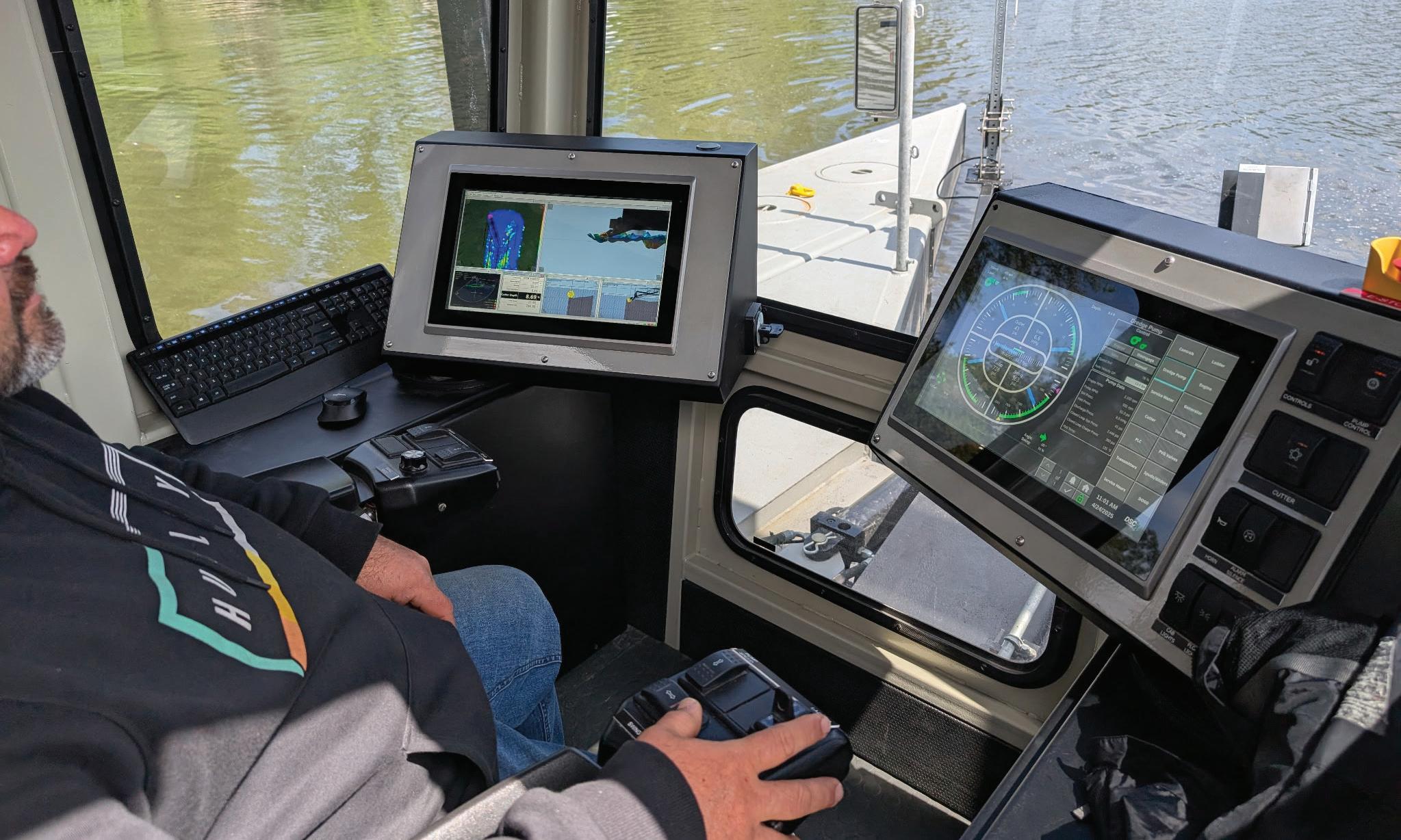
“Most everything we do is portable and can come apart and go over the road,” Wetta said. “When you consider that a truck carrying a portable dredge can run 55 mph and a barge typically goes about 6 to 10 mph, that’s a big savings in time and efficiency.”
When it can pull electricity from marina docks or another source in a yard, DSC runs dredges off the power grid to reduce direct emissions. DSC built a 24” dredge for a client that can run off its own diesel genset or off plugin power.
The company is also looking at natural gas and LNG as potential fuel options.
Advances have also been achieved in both the precision guidance of dredging
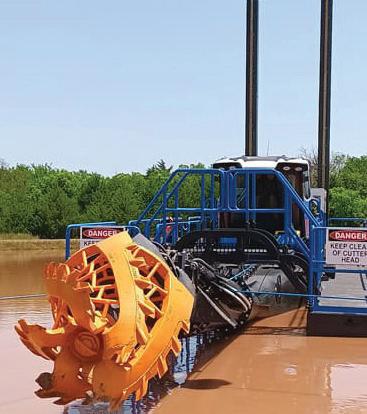
equipment and the capacity for realtime operational visibility.
“The big technology on those pieces of equipment is multi-beam sonar where you can see the material ahead of it and the material behind it, and you can tell what you’re removing and the rate you’re removing it,” said Wetta. “Ours are run with buttons and a chair and sometimes by voice.”
Satellite-based communications have given companies the ability to remotely access equipment virtually anywhere in the world.
“As soon as we get outside of cellular service, Starlink is our go-to,” Wetta said. “We can troubleshoot, operate, and help with placement all from our phone.”
On any piece of equipment it sells, DSC is offering Starlink free for a year, after which the annual cost is less than $2,000 per year to have the service available.
VMI recently introduced its Titan 8 and 10 cutter suction dredges, which are built with a modular design and can be held in place with anchors or spuds. Optional available equipment includes a suction valve and density meters. Both models range from a maximum depth of 20' to 51'3". The Titan 8 has a dry weight of 5,385 lbs. to 82,665 lbs., while the Titan 10 checks in at 56,380 lbs. to 87,810 lbs. Power choices from Caterpillar, John Deere, and Cummins range from 375 hp to 536 hp.

Deck
Welding
Welder




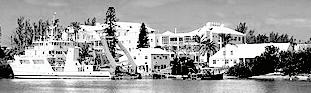














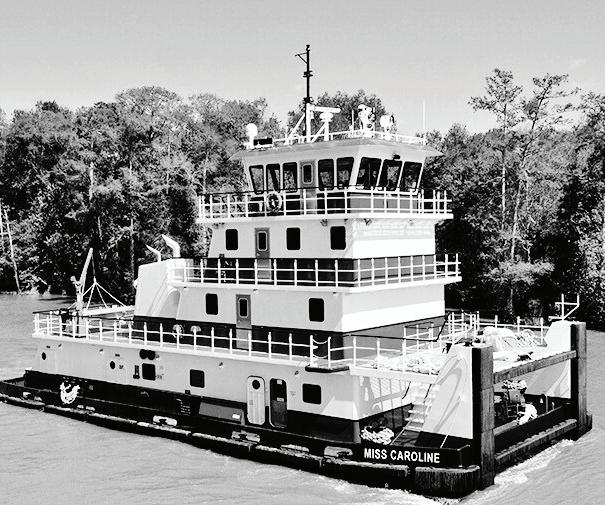



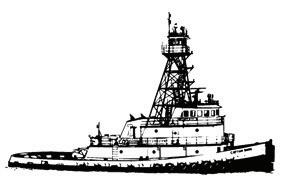









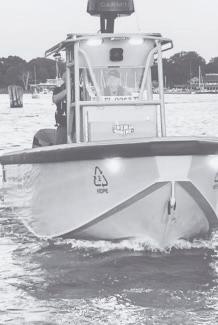




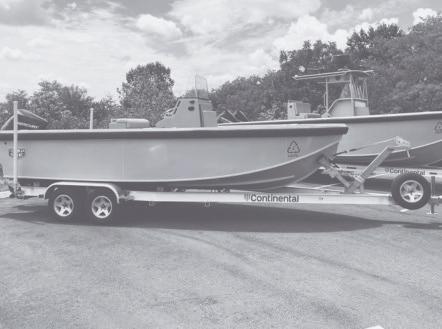
General knowledge in Joiner Systems & Outfitting. Proficient with AutoCAD™ versions 2022 and newer and MS OfficeTM products
Experience with NAVISTM, RhinoTM, and CadmaticTM. Familiarity with SOLAS, ABS, GL-DNV, HAB requirements, ASTM standards, and USCG Regulations desired.


General knowledge in various Marine disciplines is a plus (Structural , HVAC, & Electrical)






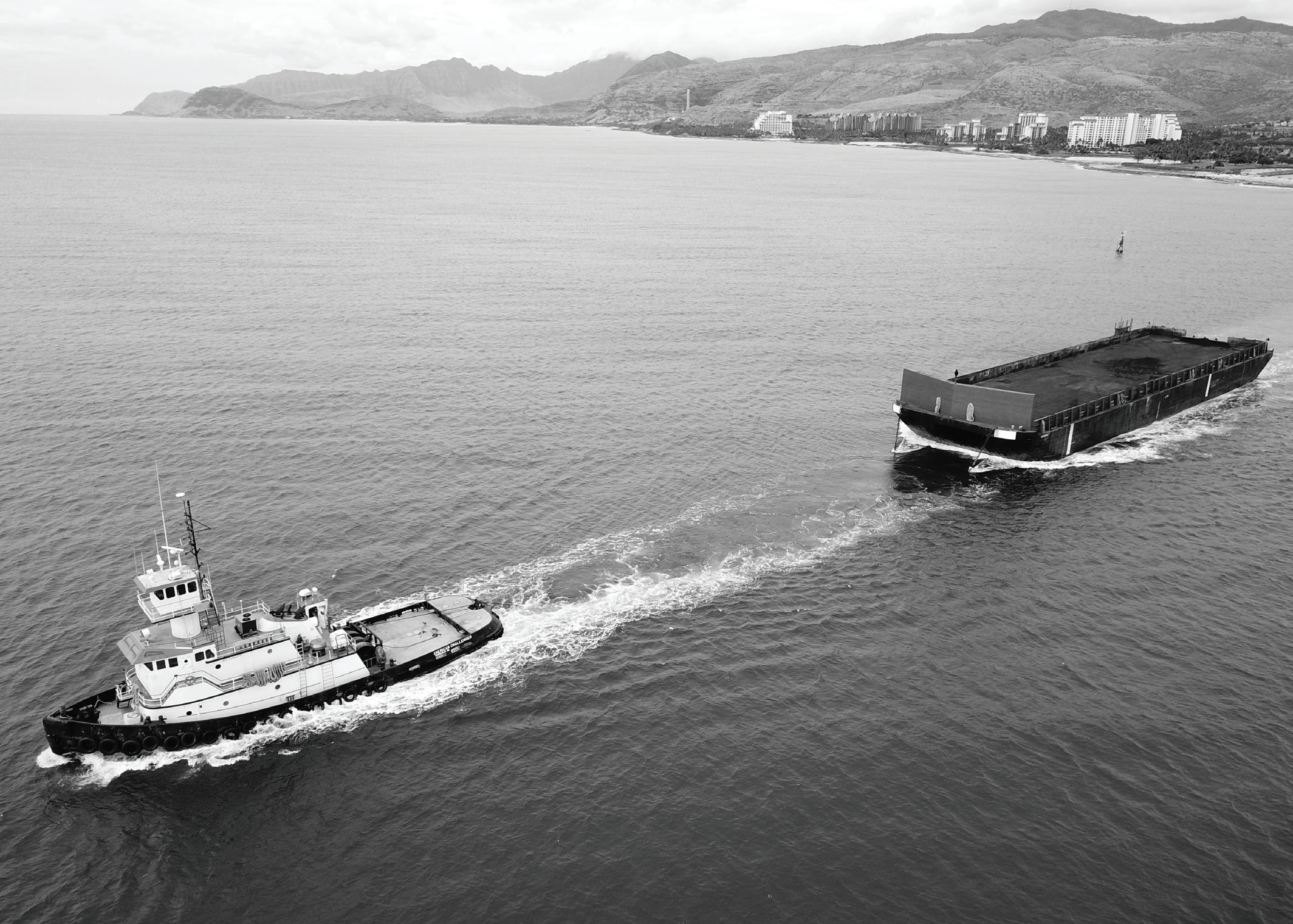









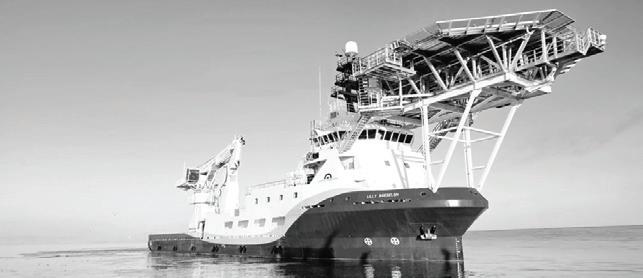




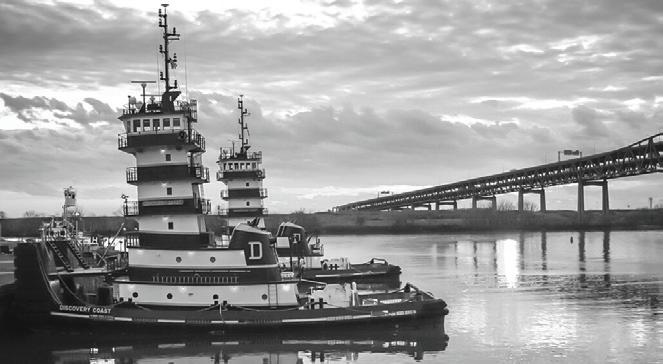
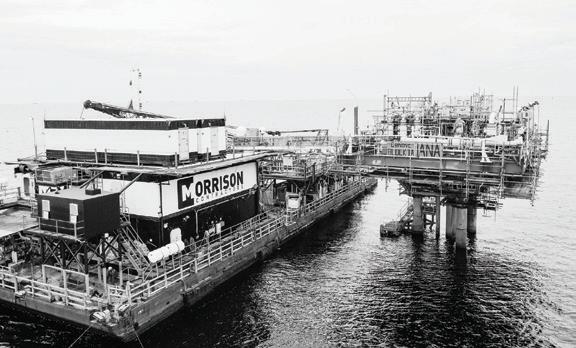















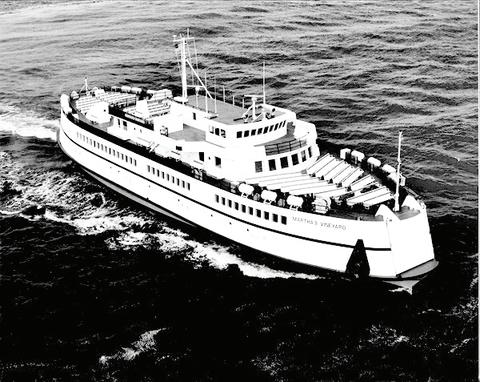

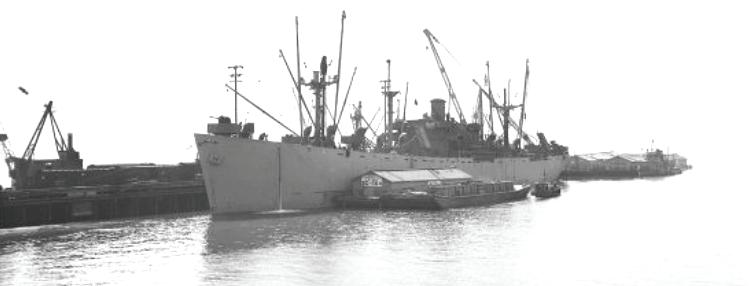






•
•
•
•




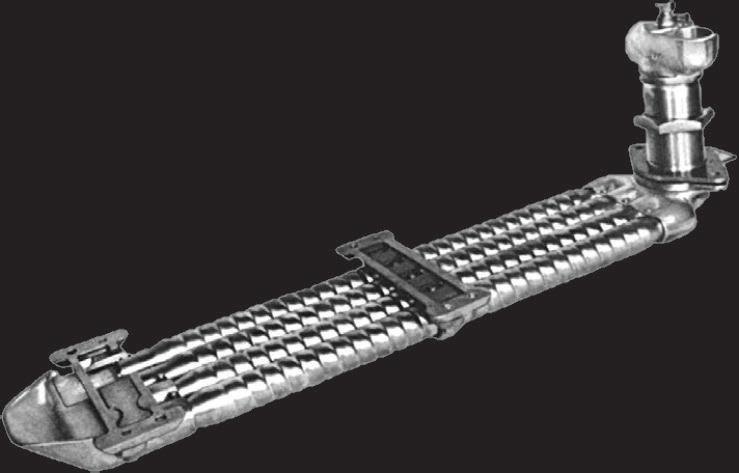






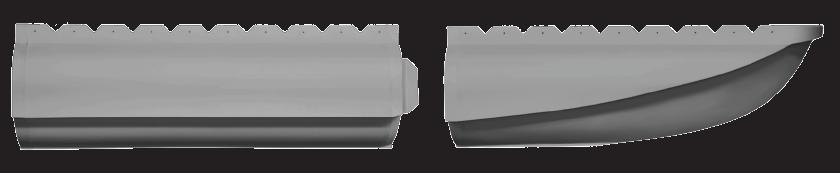


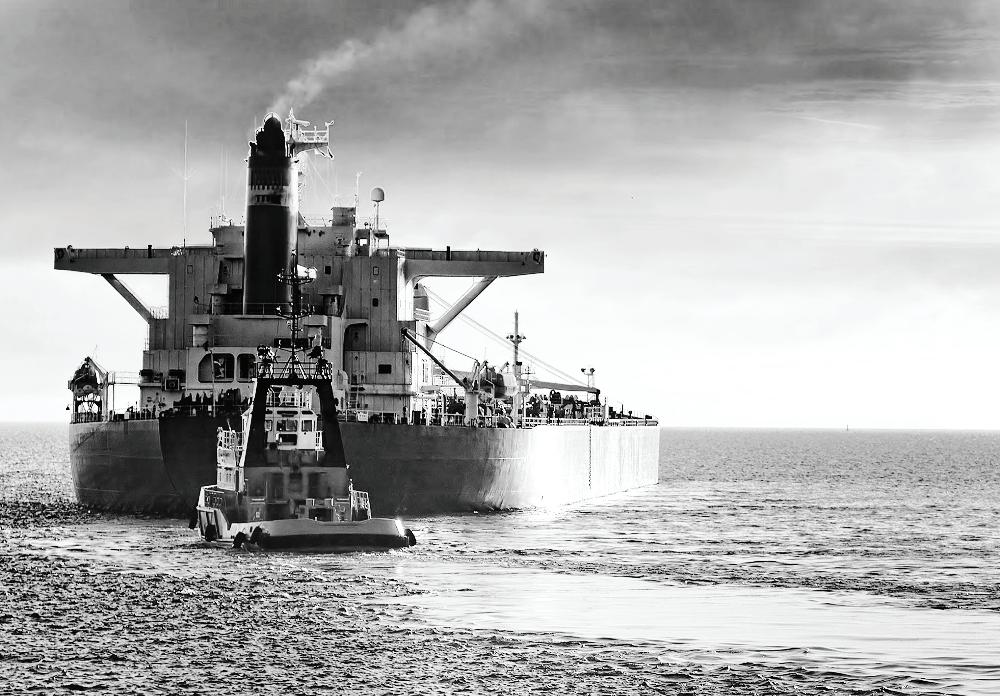

























Karl Senner, LLC is proud to equip this 12,000 hp booster barge for Callan Marine Ltd. with two REINTJES RDGL 630 gearboxes.
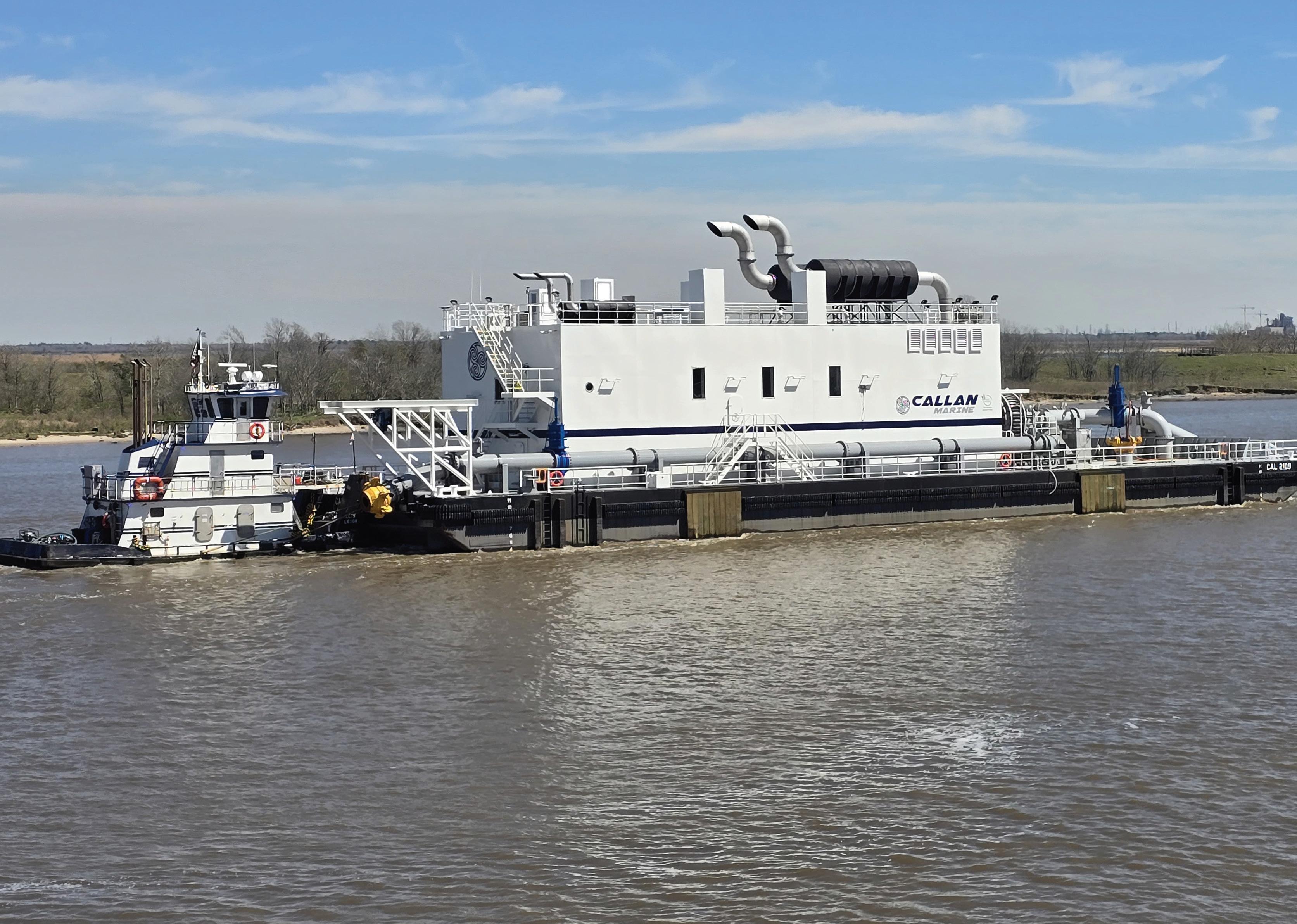


Each gearbox is driven by a 6,000 hp WABTEC diesel engine and allows for direct mounting of the dredge pump to the gear.
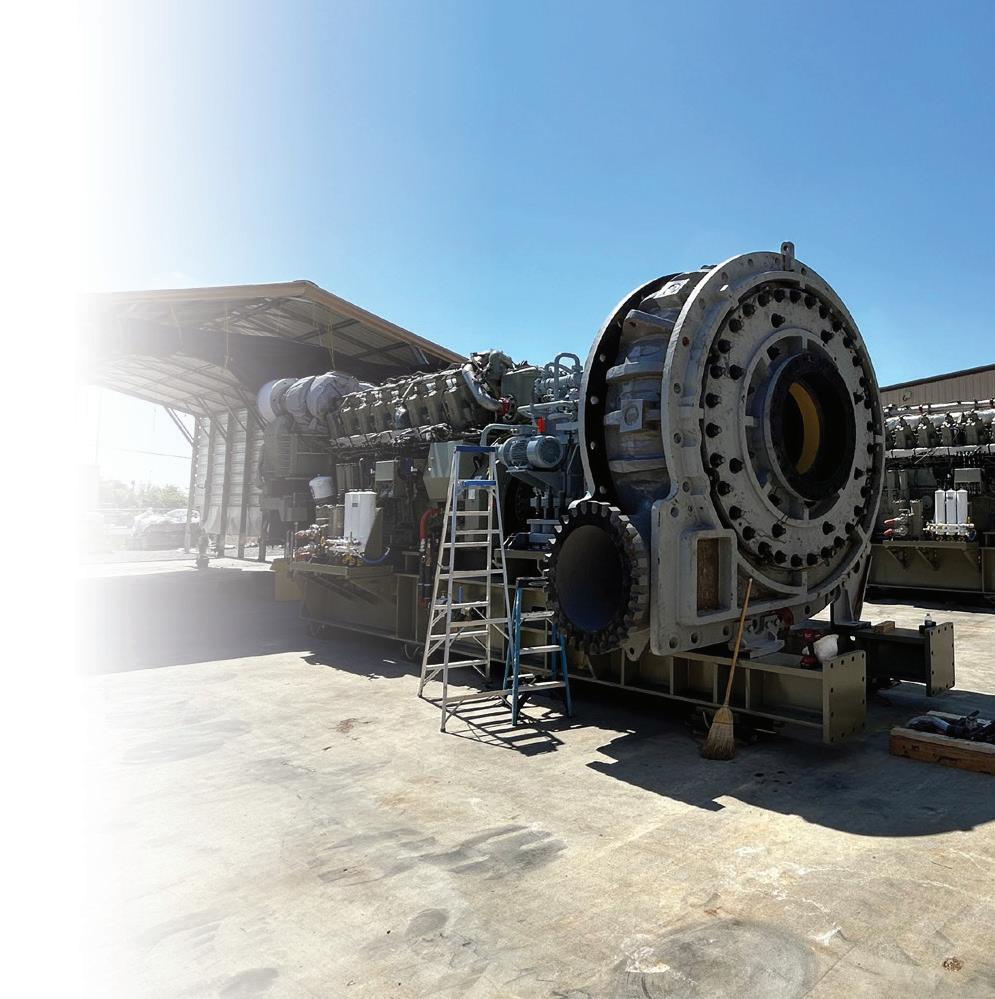
Each gearbox is engineered for the demanding environment of dredge pump operation. The close-coupled pump arrangement and integrated thrust bearing also provide a compact installation.

+1 (504) 469-4000