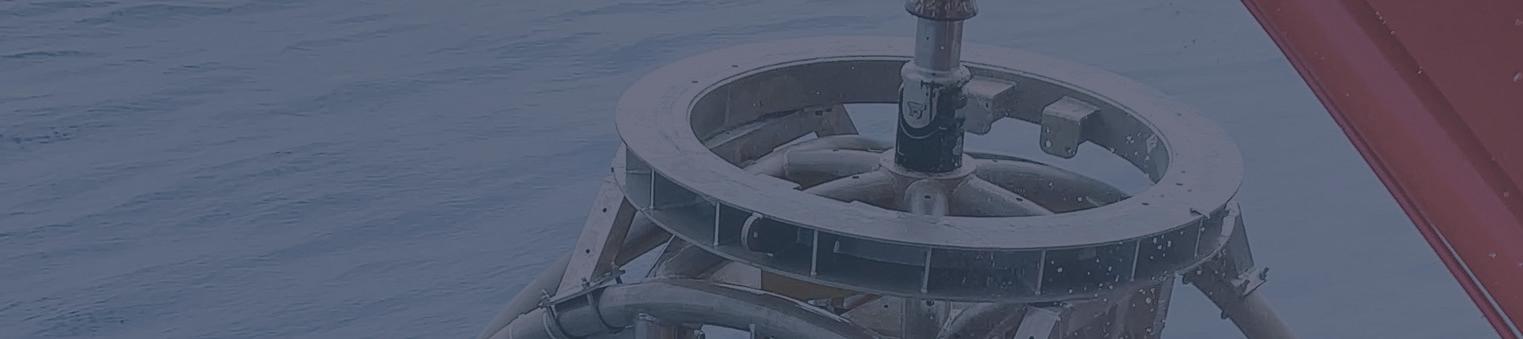








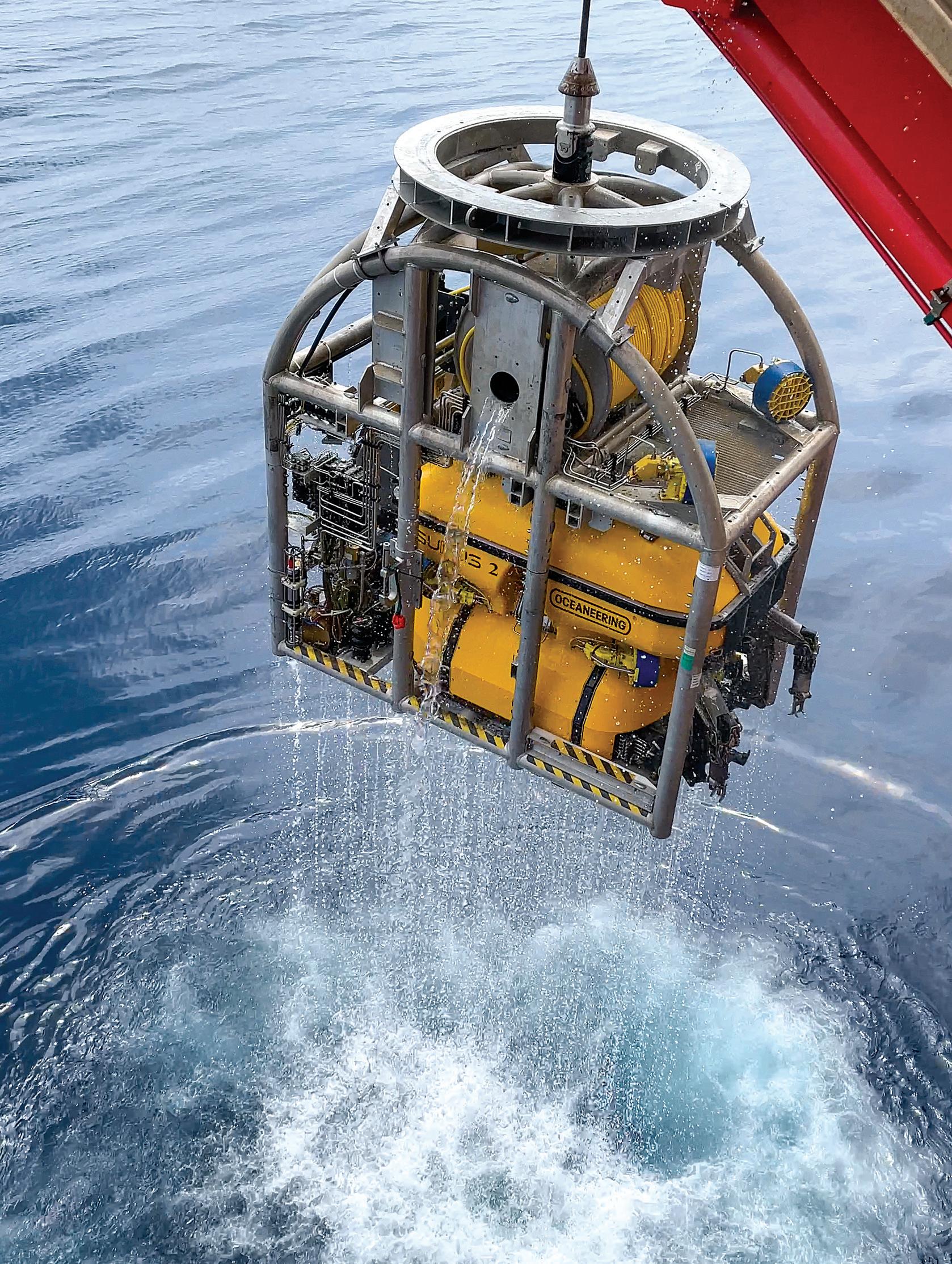
Deep-diving robots streamline offshore energy operations.
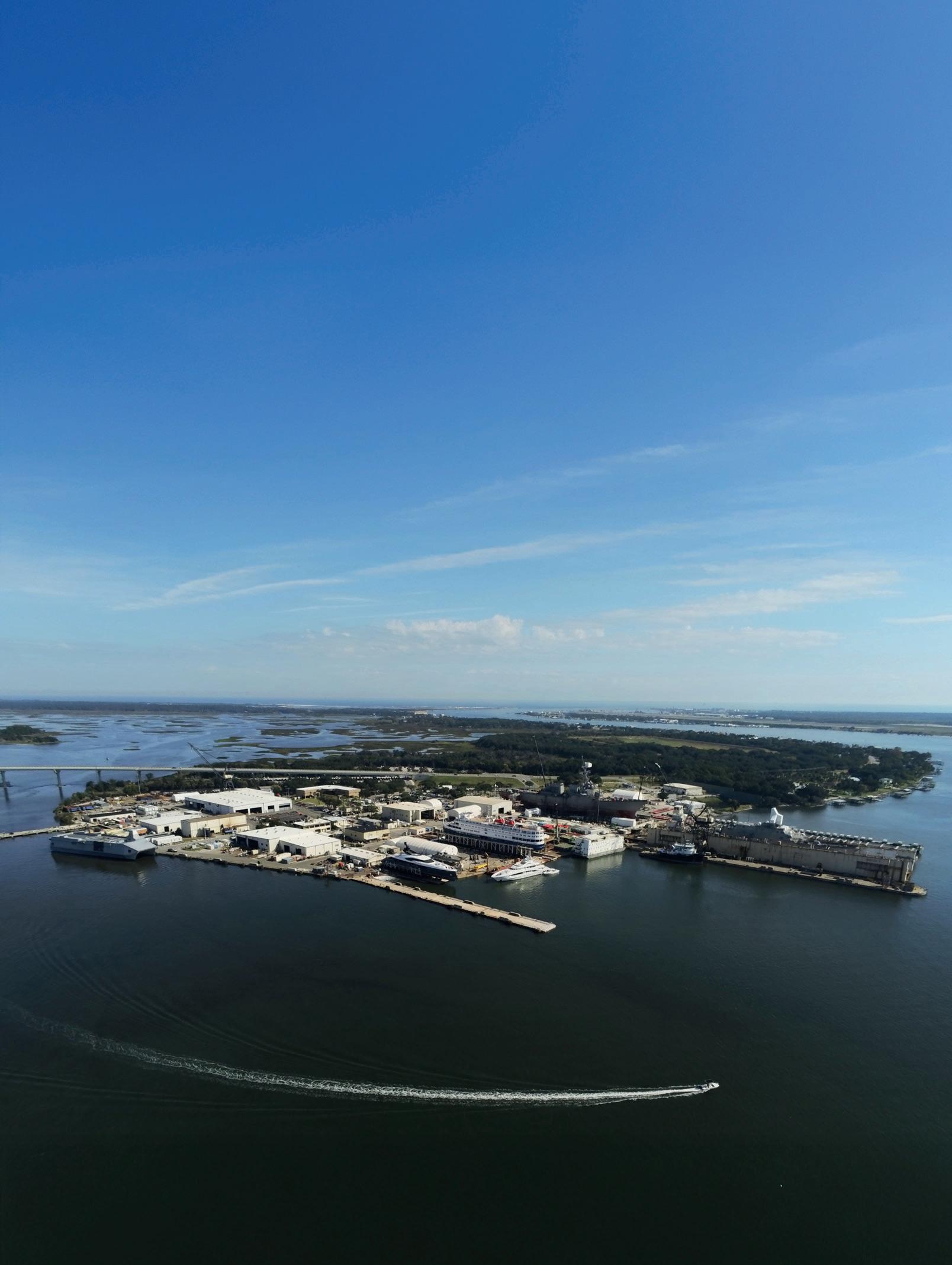









12 Focus: Meeting of the Minds
Pilot associations gather to formalize alliance efforts.
16 Cover Story: Digital Seabed
Subsea robotics and data platforms streamline offshore ops.
20 Vessel Report: Fleet Building
The U.S. military continues to order new patrol boats.
28 In Business: SAFE Boats Intl.
Employee-owned boatbuilder puts people rst.
32 Final Word: Jennifer Carpenter
An update on the state of the tug and barge industry.
8 On the Ways
Record-setting hopper dredge delivered • North River delivers Army Corps crew boat • Coast Guard and Navy nd common ground • Houston Pilots take delivery of award-winning launch • Switch Maritime plans second hydrogen fast ferry • Harbor Docking & Towing orders four hybrid tugs • Navy oceanographic survey ship christened • All American to build second boat for Phillips Cruises • Keel laid for Dutra’s new hopper dredge • Navy landing craft begins sea trials.
26 Staying in Touch
Workboat comms evolve to 21st century levels.
4 On the Water: The case for knobs and buttons.
4 Energy Level: Offshore drilling consolidation re ects industry challenges.
5 Legal Talk: What does ‘navigable waters’ mean?
5 Inland Insider: Is the Coast Guard ready to regulate autonomous vessels?
6 Health, Safety, and Environment: Avoid potential training pitfalls.
7 All Hands: Are we losing the next generation by being too vague?

Eric
Haun,
Executive Editor ehaun@divcom.com
Aquestion I routinely ask when conducting interviews is: what is the greatest challenge you face? Nine times out of 10, the answer has something to do with workforce. Companies across the U.S. maritime industry — from vessel operations to shipbuilding — are all dealing with similar issues.
What does the industry need to do to recruit, hire, train, and retain the talent it desperately needs? Given the nation’s plan to scale this industry at pace — backed by the February arrival of the Trump administration’s longawaited Maritime Action Plan — these challenges will only become more pronounced. Not enough people are entering the maritime industry to meet current demand, let alone the ambitious growth targets ahead. We are going to need more naval architects, more shipbuilders, more mariners, and more personnel across the sprawling maritime supply chains — and fast.

I have used this space before to address the need for industry visibility. I still believe too many in the maritime industry prefer to remain in the shadows, and I urge more to step up and share their stories (reach out; the WorkBoat team is eager to help). If young people gain exposure to the maritime world, they can envision careers in a eld ripe with opportunity, and the industry will be better positioned to grow through future generations.
An organization was recently formed to support this mission. According to its website, WaveWorks Alliance “inspires and empowers individuals of all ages, backgrounds, and abilities to pursue ful lling careers in the marine trades and ocean-related industries.” The nonpro t also collaborates with stakeholders at every level to amplify workforce development and training programs, share best practices, and identify replicable strategies for efcient implementation.
This month, the group’s founder, Denielle Christensen, penned a piece for our new “All Hands” workforce column. Her message is spot-on: employers looking to attract young talent need to be clearer in outlining pathways for growth. The opportunities are abundant, but clarity and visibility are not always present.
Ships will not build themselves, and neither will the pipeline of people who build, operate, and service them. Achieving the industry’s growth targets will take a team effort, and all hands are needed.
EXECUTIVE EDITOR: Eric Haun / ehaun@divcom.com
SENIOR ASSOCIATE EDITORS: Ben Hayden / bhayden@divcom.com Kirk Moore / kmoore@divcom.com
CONTRIBUTING WRITERS: Tim Akpinar • Jonathan Barnes • Capt. Alan Bernstein • Stephen Blakely • Dan Bookham • G. Allen Brooks • Bruce Buls • Denielle Christensen • Capt. Eric Colby • Michael Crowley • Jerry Fraser • Nate Gilman • Pamela Glass • Capt. Arnie Hammerman • Ken Hocke • Craig Hooper • Joel Milton • Peter Ong • Richard Paine Jr. • Chris Richmond
DIGITAL & PRINT PROJECT MANAGER: Doug Stewart / dstewart@divcom.com
ADVERTISING ACCOUNT EXECUTIVES: Mike Cohen / mcohen@divcom.com Kristin Luke / kluke@divcom.com
Krista Randall / krandall@divcom.com Danielle Walters / dwalters@divcom.com
ADVERTISING COORDINATOR: Wendy Jalbert / wjalbert@divcom.com
Producers of the International WorkBoat Show and Pacific Marine Expo
Vice President: Wes Doane, wdoane@divcom.com
Publishing offices: 2 Portland Sq., Suite 200, Portland, ME 04101 Tel 207-842-5608 | Fax 207-842-5609
Subscriptions: cs@e-circ.net / 978-671-0444 Mon–Fri, 10 a.m.–4 p.m. ET

www.workboat.com






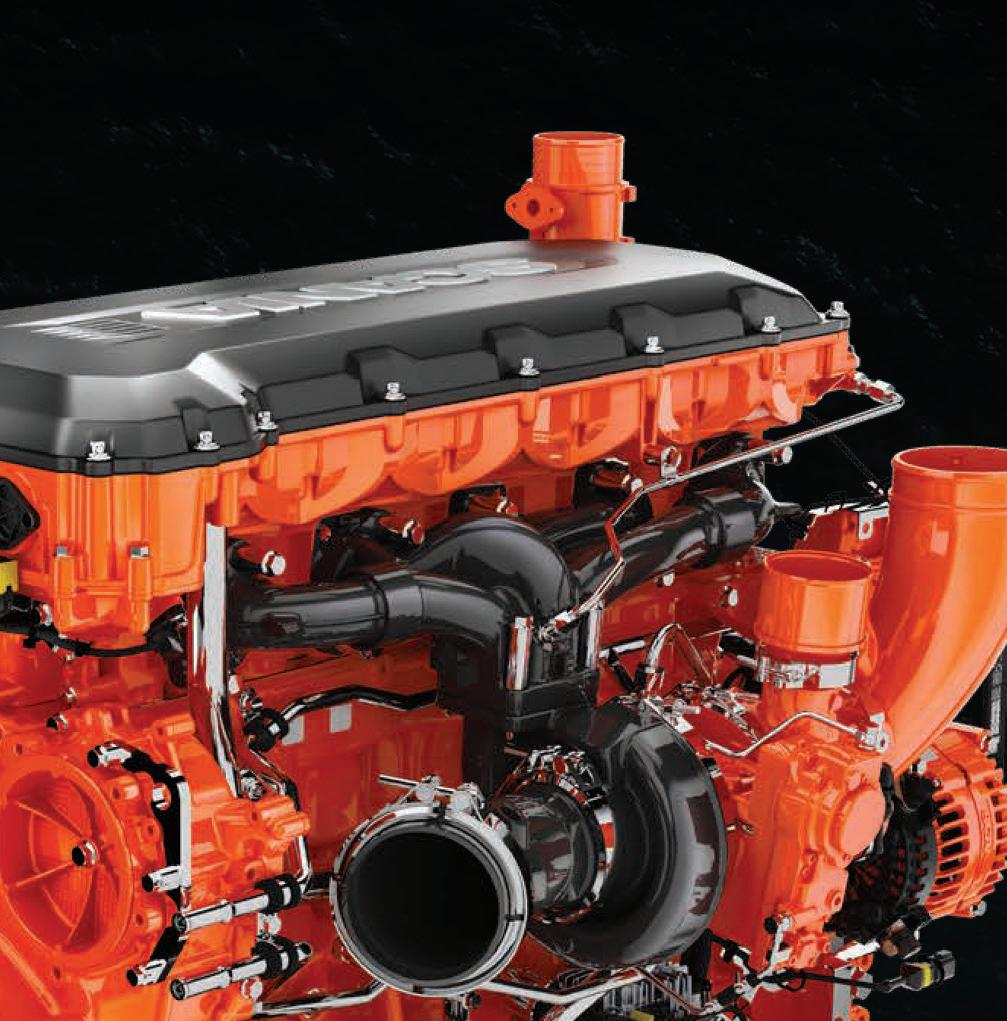
Scania’s most advanced marine engine platform yet. Designed to meet the performance and demands of modern patrol vessels.


BY JOEL MILTON
Joel
Milton works
on towing vessels. He can be reached at joelmilton@yahoo.com.
After the windows, the design and layout of controls and equipment at each operating station — upper pilothouse, lower pilothouse, and doghouse — are the most important considerations for maximizing operator performance. Get this wrong, and you undercut the people actually running the vessel.
The criticality of thoughtful design cannot be overemphasized. Each instance of unnecessary compromise, corner-cutting, or hasty decision compounds the others. Combined, they significantly degrade an operator’s situational awareness and ability to pilot the vessel safely.
There should be a special place in hell for the creators of menu-driven user interfaces for the most critical and frequently
BY G. ALLEN BROOKS
G. Allen Brooks is an energy analyst. In his over 50-year career in energy and investment, he has served as an energy security analyst, oil service company manager, and a member of the board of directors for several oilfield service companies.
In February, Transocean Ltd. announced the acquisition of Valaris Ltd. for $5.8 billion. The deal marks a new chapter in the offshore drilling industry. Soon, only two U.S. publicly owned offshore drilling contractors will remain: Transocean and Noble Corp.
The news was not a complete surprise, as the challenges of operating in the international offshore drilling market force companies to seek scale and operating efficiencies.
Valaris had an interesting history, full of high-profile and often colorful industry executives. I had the good fortune of knowing and learning from many of them. I actually worked for one of Valaris’s building blocks in its formative days and for one of the industry’s great leaders. Seeing Valaris enter the next chapter of its history is somewhat sad but understandable, as the demands of international drilling and the need to deal with massive state-owned and independent international oil companies are realities of the business today.
Here is a brief history for those unfamiliar with Valaris. The roots of the company go back to 1975, when John Blocker, a senior oil services executive with Dresser Industries, left Dresser and purchased Choya Energy, a six-rig
adjusted radar controls: gain, tune, sea clutter, rain clutter, variable range markers, electronic bearing lines, and parallel indexing. Add target acquisition and deletion for an ARPA (automatic radar plotting aid) unit. In pilotage waters, this is a serious problem. Particularly aboard vessels with solo operators, including tugboats and other small vessels, menu-driven controls can be incredibly distracting, aggravating, stress-inducing, and counterproductive to navigational safety. Operators are literally fighting with the very equipment meant to improve safety. We need knobs and buttons, thoughtfully laid out.
Communications are vital to navigational safety. Awkwardly placed radios with difficult basic controls don’t help. Master and slave units don't always play nice. Cheap antennas with cheap coax cable installed haphazardly in random locations often bleed all over each other every time a mike is keyed. Imagine having to constantly adjust volume and squelch up and down on three or four radios just to talk because if you don’t, the feedback sounds like Jimi Hendrix playing the Star-Spangled Banner at Woodstock. That is reality.
We’ve all heard it hundreds of times: safety first. Stay safe out there. Keep it safe. We all need support and help to do that.
land driller based in Alice, Texas. The name was changed to Blocker Energy, and the company became public in 1980. Not long after, the downturn in oil prices and the overleveraged balance sheets of drillers and oil service companies led to many bankruptcies across the industry.
In 1983, Blocker Energy avoided bankruptcy by restructuring its debt, giving the banks 64% ownership of the new company in exchange for forgiving $240 million in debt. The six-rig company expanded to 24 rigs by 1984.
The banks sold their ownership interest to Fort Worth investor Richard Rainwater. He had previously been the financial guru for the Sid Richardson family money, left by the Texas multimillionaire oilman. Rainwater took control of Blocker Energy and installed Carl Thorne, a former senior executive of Sedco (Southeast Drilling Co.), the Dallasbased international drilling company founded and run by Bill Clements and his son, Gill. Sedco had earlier been sold to Schlumberger Ltd.
In 1987, Blocker Energy was renamed Ensco (Energy Service Co.), and the company moved its headquarters from Houston to Dallas in 1990. I joined Ensco that year, working with Cris Gaut, CFO, and Thorne. During the next several years, Ensco pursued the purchase of Penrod Drilling, owned by the Hunt brothers, children of wildcatter H.L. Hunt.
In 2010, ENSCO moved to London, and the following year, it purchased Pride International, another drilling company with an interesting history. Founded in 1966, it was acquired by DeKalb Corp. in 1978 and was spun out as a public company a decade later. It acquired the largest driller in Argentina, and a French land and offshore driller,
Forasol-Foramer. It spun off its land-drilling operations, purchased 12 rigs from Noble Corp. in 1997, and purchased Marine Drilling in 2001. In 2009, Pride spun off Seahawk Drilling, which had a fleet of 20 jackup rigs.
In 2017, ENSCO acquired Atwood Oceanics for $860 million. John Atwood founded the company in 1968, and it began operations in 1970.
In 2019, ENSCO and Rowan Drilling merged and cre-
Unmanned and autonomous vessels: Is the Coast Guard ready to regulate?
BY PAMELA GLASS
ated Valaris. Rowan was known for its long-time CEO, Bob Palmer, a giant in the offshore drilling industry. The merged company was able to pre-arrange a bankruptcy in 2020 and emerged as a strong company the following year.
Now the next chapter is unfolding. For those of us with long histories in the offshore drilling industry, we understand how significant the Valaris/Transocean merger is.
Pamela Glass is the Washington, D.C., correspondent for WorkBoat. She reports on the congressional committees and federal agencies that affect the maritime industry, including the Coast Guard, Marad, and Army Corps of Engineers.
The rapid development of autonomous technology and robotics in the maritime industry has Congress wondering if the Coast Guard is keeping pace as both a user and regulator of these innovations.
House lawmakers called top agency administrators to a briefing on Capitol Hill to review Coast Guard plans to create a regulatory framework for the safe operation of these emerging technologies, which are expected to transform the shipping industry, from inland barges to ocean container ships. They also wanted to know how the Coast Guard was using these technologies in its own operations.
Some lawmakers said regulatory efforts were too slow to emerge and that the Coast Guard lacked the expertise to leverage these technologies in its own operations. But at a December hearing before the House Transportation subcommittee on the Coast Guard and Maritime Transportation, officials said progress was being made on the complex task of overseeing this emerging industry.
Rear Adm. David C. Barata, deputy commandant for operations policy and assistant commandant for intelligence, said autonomous ship innovations are developing quickly and have the potential to improve maritime safety, remove crews from hazardous situations, reduce human error, and address the persistent mariner labor shortage.
But he said that as new technologies using artificial intelligence and autonomous and remote-controlled vessels expand, there will be more chances of conflict and safety risks with conventional vessels and other waterway users. This will pose challenges for industry and federal and international regulators to make sure these innovations are being used safely.
Barata said the Coast Guard continues to work with industry and government partners to oversee safe deployment of new technologies and is running pilot programs to
this end.
The admiral also cautioned that since unmanned and remotely controlled vessels operate with advanced computing and communication technology, they are vulnerable to cybersecurity risks. As a result, the Coast Guard must balance “the need to encourage innovation with its duty to prevent nefarious use of these technologies through appropriate levels of oversight and regulation.”
Another complication is that existing Coast Guard regulations for commercial maritime operations are based on vessels being operated by onboard mariners and must be carefully updated to address uncrewed operations.
Barata explained that the service is currently evaluating the safety and feasibility of new technologies in the domestic industry and is working internationally to set up voluntary guidelines for the safe and secure operation of autonomous and remote cargo ship operations.
The Coast Guard is also looking at the safe introduction of alternative fuels for vessels, such as liquefied natural gas, and at the development of infrastructure to support these alternative fuels. “The Coast Guard will continue to engage with the industry to establish novel fuel system approvals, taking into consideration appropriate safeguards that ensure the safety and security of the marine transportation system,” he said.
The admiral said late last year that Congress approved a healthy budget for the Coast Guard to advance the use of these new technologies in their operations, especially to interdict drug smugglers.
The service has also launched a strategic plan, called Force Design 2028, aimed at deploying new technologies such as autonomous surface vessels and robotic aircraft to counter maritime threats, and created a Robotics and Unmanned System Office to oversee acquiring and using autonomous and unmanned systems in all missions and domains. The Coast Guard already operates three types of unmanned aircraft — short, medium, and long range — that are used in drug interdiction, fisheries enforcement, port inspections, and aids to navigation, as well as 300 drones, the admiral said.
A recent report by the National Academy of Sciences concluded that there is “significant opportunity” for the Coast Guard to use autonomous technologies for surveillance, search and tracking, and uncrewed vehicles to deliver equipment and supplies and conduct post-storm surveys and hazard mapping.
BY TIM AKPINAR
Tim Akpinar, based in Little Neck, N.Y., is a maritime attorney and former marine engineer. He can be reached at t.akpinar@verizon.net or 718-224-9824.
Arecent federal court case examined the meaning of the term “navigable waters.” It involved a senior deckhand who was injured in August 2024 while working on a 100' passenger vessel on Lake Coeur d’Alene, in Idaho. He suffered a crushed shoulder and broken ribs during docking. He said that the captain put the vessel into gear without looking where he (the deckhand) was.
The deckhand sued in federal court under the Jones Act for personal injuries and maintenance and cure (living expenses and medical expenses, respectively). The vessel interests were successful in showing that Lake Coeur d’Alene does not qualify as “navigable waters.” As such, the federal court could not hear the case. An activity or accident must occur on “navigable waters” for a federal court to have admiralty jurisdiction over the matter
BY RICHARD PAINE JR.
Richard Paine Jr. is a licensed mariner and certified maritime safety auditor with more than 25 years of maritime industry experience. He can be reached at rjpainejr@gmail.com.
In-house employee training programs are commonplace in today’s maritime industry. These programs use a variety of tools and techniques to deliver necessary training. One popular approach is “train-the-trainer” programs, in which inhouse trainers maintain their primary and supervisory duties while conducting additional training for other employees. Most of the training material requires the in-house trainer to be trained by the company before training others.
On the surface, these programs seem like a simple and costeffective approach. Through my experience, however, I have seen pitfalls and mistakes that can limit their success.
Here are three potential pitfalls and how to avoid them: Be selective when choosing trainers: Make sure your trainer has the right personality to deliver quality. Not all mariners are good trainers. Some of the best boat handlers have the worst bedside manner, so it’s especially important to iden-
Let’s take a closer look at what this means. Under Title 33 of the Code of Federal Regulations, navigable waters are “those waters that are subject to the ebb and flow of the tide and/or are presently used, or have been used in the past, or may be susceptible for use to transport interstate or foreign commerce.” Case law from the 19th century also touches this issue, holding that “a waterway is navigable provided that it is used or susceptible of being used as an artery of commerce.” The Daniel Ball, 77 U.S. 557 (1870).
The court’s reasoning here was that Lake Coeur d’Alene is situated fully within the state of Idaho. It flows north into the Spokane River, which flows west into Washington state. However, before the Spokane River reaches the state line, boat traffic is impeded by the Post Falls Dam. That’s a deal-breaker for the definition.
So, this test for “navigable waters” is about being able to travel to various other parts of the country from your body of water… not about whether someone calls your body of water a “lake” or a “river.” After all, the Great Lakes are also called lakes, yet they are considered navigable waters. The difference is that they are open to the St. Lawrence Seaway and ultimately, the Atlantic Ocean, thus making them “navigable.”
tify the right representatives of the company’s training goals. Make sure your trainers are competent and willing participants. If you mandate that all supervisors perform the training, be aware that you’re putting trust in all of those trainers to conduct the training properly, precisely, and to the level the company requires.
Ensure proper knowledge: Make sure your trainers are confident in the material they’re asked to teach. Certain vessel training is tied directly to vessel safety and boat drills, which is standard duty of the position and outside the scope of some train-the-trainer programs. In some cases, your trainers may be asked to provide subject matter outside their expertise. This can be tricky, so recognize the limits of your trainers. It’s not fair to expect them to become experts on material they may have only recently learned themselves.
Design incentives carefully: Make sure incentive programs are not the main purpose for participation but instead a way to recognize trainers for their efforts (and sometimes frustration) in providing the material thoroughly and comprehensively. Additional training duties should have incentives tied to them, but design incentive programs based on results, not just the number of employees trained or topics covered. Training incentive programs should be part of a larger incentive program tied to long-term success.
Remember, training and teaching are not for everyone. We often speak of how complacency kills when discussing safety. That same concern applies to training, so monitor your trainthe-trainer program closely. Individual trainers may have a larger impact on your company’s success than you realize.
Are we losing the next generation by being too vague?
BY DENIELLE CHRISTENSEN
Denielle Christensen is founder, executive director, and CEO of WaveWorks Alliance, a national nonprofit dedicated to expanding access to careers in the ocean economy
Foryears, employers have leaned on a familiar promise, “Work hard, and you will grow here.” This once inspired loyalty. Today, it often inspires doubt.
Gen Z and Gen Alpha are not motivated by open-ended assurances. They want clarity and structure. They want commitments in writing, timelines, skills, expectations, and wage progression they can trust and refer back to. This is not entitlement; it is stability. These generations have grown up through economic whiplash and industries that change overnight. Vague promises feel like risk, not opportunity. What young workers want is consistency. They want to know what the rst 90 days look like. They want to see the skills expected at six months and one year. They want to understand how pay increases are tied to those benchmarks. And they
want employers to stop talking about opportunity in abstract terms and actually publish the pathway.
The problem is not that pathways do not exist. Many industry employers have them, but they are rarely documented, shared consistently, or applied uniformly. When expectations vary by supervisor or shift, new entrants see unpredictability, and trust erodes. Parts of the industry, especially structured apprenticeship programs, have made real progress documenting competencies and establishing step-based progression. Skilled trades provide strong examples of clear wage steps and training plans. But clarity still varies widely, and young workers notice. When one employer publishes the path and another relies on general assurances, candidates choose the one that shows its plan. Meanwhile, other sectors, including healthcare and hospitality, have moved toward transparent advancement charts with de ned timelines and wage progression, and they are outpacing ocean economy sectors.
The solution is straightforward: put it in print and stay committed to it. Document the rst year of employment, and beyond if you can. De ne the skills required for each step. Link those steps to pay. And ensure every supervisor uses the same tools, checklists, and competency matrices so every new hire has the same experience. Transparency is not just good communication; it is a retention strategy.





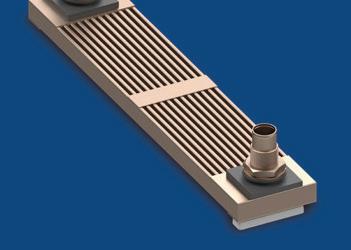
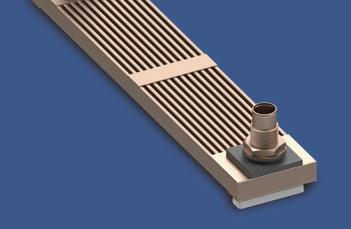
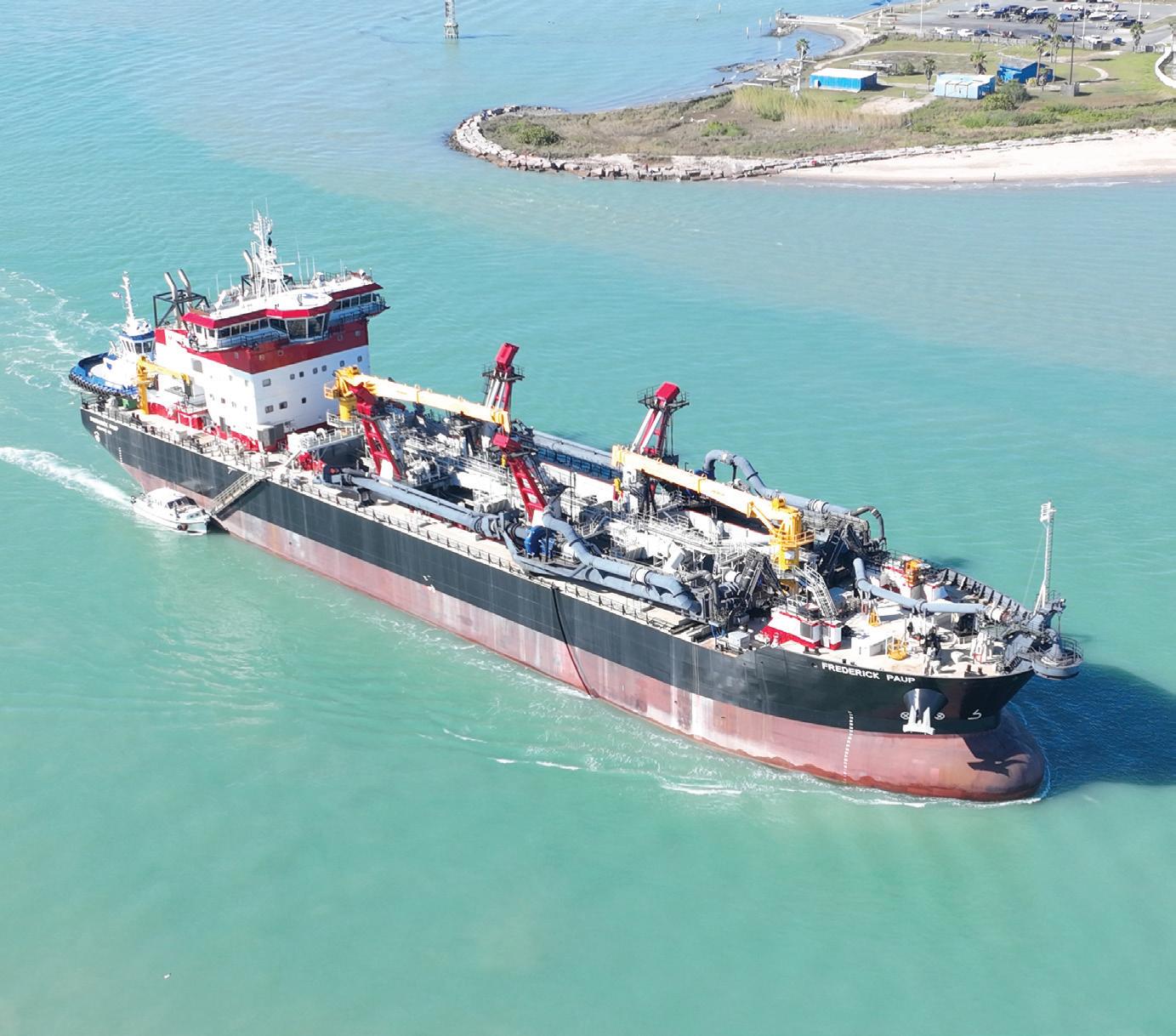
Seatrium AmFELS, Brownsville, Texas, has delivered the Frederick Paup, the largest selfpropelled trailing suction hopper dredge built in the United States, to Manson Construction Co., Seattle.
The new vessel continues a streak of signi cant recapitalization within the U.S. dredging market as contractors build new dredges to remain competitive. “It’s a really exciting time, and you can see it in bids with the U.S. Army Corps of Engineers that there’s a lot of erce competition out there,” said Manson Chairman of the Board Frederick Paup, the dredge’s namesake. “We’re
Act-compliant newbuild surpasses Manson’s 13,500-cu.-yd. Glenn Edwards — built by Alabama Shipyard, Mobile, Ala., in 2006 — as the largest self-propelled hopper dredge ever constructed in the U.S. “We built the new big dog,” Paup said.
There are much larger dredges operating internationally — including the world’s largest, Cristobal Colon and Leiv Eiriksson, with capacities exceeding 60,000 cu. yds. — but a dredge of that size could not feasibly be built for U.S. operations.
“The U.S. market is unique compared to the international market because you

excited to compete.”
Designed by Manson in partnership with Hockema Group Inc., Seattle, the Frederick Paup measures 420'x81' with a 28'6" draft and hopper capacity of more than 15,025 cu. yds. The Jones
have a lot of waterways, channels, and rivers where you don’t have that much room,” Paup said. “At a certain point, if the dredge is too big, then you can’t turn around anymore.”
Triple Schottel RudderPropellers
type
510 L FP azimuthing stern drives and twin Brunvoll bowthrusters allow the Frederick Paup to rotate 360° in tight areas. “We can turn around on our own axis,” Paup said.
The vessel boasts approximately 25,000 hp. It is powered by three Tier 4 Wabtec 16V250MDC diesel-electric main engines and two 12V250MDC gensets, also from Wabtec. “[Dieselelectric power] makes the vessel more fuel ef cient,” Paup said. “Our cost per cubic yard of material dredged for fuel is dramatically lower than it would have been [with conventional diesel].”
In addition, the Frederick Paup is the rst dredge in the Manson eet to have in-hull pumps instead of less ef cient bow-mounted boosters. “We believe the Frederick will be every bit as productive as all of our competitors’ dredges out there on beach projects,” Paup said.
The ABS -classed dredge features dynamic positioning, integrated dredging systems, and power management systems. It features a suite of Furuno electronics, including radar, FE-800 depth sounders, FA-170 AIS, GP-170 GPS, and Inmarsat-C Mobile Earth Station FELCOM18 GMDSS, as well as Simrad AP70 MK2 autopilot control.
Ordered in 2020, the Frederick Paup was originally scheduled for delivery in 2023, but the project faced signi cant delays as the shipbuilder grappled with other large Jones Act builds, including a pair of LNG-powered containerships and the rst U.S.-built wind turbine installation vessel. The delivery marks Seatrium’s last from the Brownsville shipyard, which was sold to Karpowership, Istanbul, in September 2025.
The Frederick Paup’s rst assignment was maintenance dredging near Mobile, Ala., to ensure access for deep-draft vessels. In March, the dredge moved to Pensacola, Fla., for beach work. The vessel will next reposition to the Mississippi River for additional maintenance dredging.
“She’s already doing her rst pumpout job. She’s already done maintenance dredging,” Paup said. “She’s already addressing America’s navigation issues.”
— Eric Haun
North River Boats, Roseburg, Ore., recently delivered the 44'x14' aluminum crew transfer vessel Bishop to the U.S. Army Corps of Engineers Vicksburg District to support operations of the hopper dredge Jadwin on the Mississippi River.
Certified under U.S. Coast Guard Subchapter T, the vessel can carry 28 passengers plus two crew and will ferry personnel and supplies between shore and the dredge during operations. The new boat replaces previous crew-transfer arrangements that relied on contracted vessels with limited availability.
“Previous crew transfer arrangements relied on contracted vessels that offered limited availability and reduced operational flexibility,” said Paul Richards, plant section chief in the River Operations Division for the Vicksburg District. “Previous boats were generally contractually restricted to 12-hour service windows, while the dredge Jadwin operates continuously on a 24-hour schedule.”
That mismatch created logistical challenges for crew changes and supply transfers, particularly during peak dredging operations. According to Richards, the dedicated vessel ensures around-the-clock support aligned with the dredge’s operational tempo.
The passenger capacity was also selected to accommodate full crew rotations. “The 28-passenger plus 2-crew certification was specifically designed to meet the maximum anticipated crew rotation requirements of the dredge Jadwin,” Richards said, allowing entire shift changes to be completed in a single trip.
Richards noted Mississippi River conditions heavily influenced the design. The aluminum vessel features a shallow-draft hull capable of handling strong currents, floating debris, and fluctuating water levels. The configuration allows the boat to land along unim-
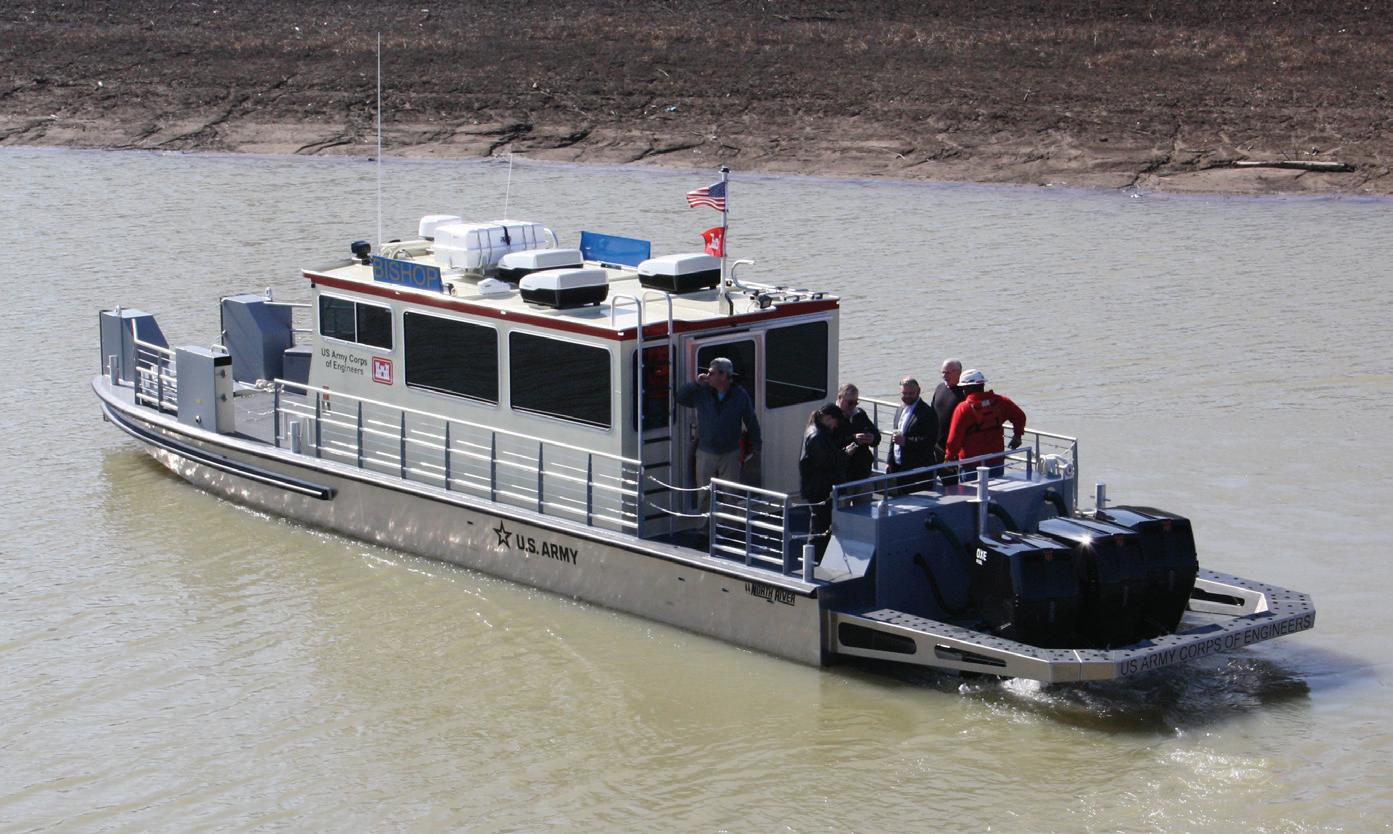
proved riverbanks and operate close to the dredge during personnel transfers.
Richards said the triple 300-hp OXE diesel outboard engine configuration was selected for redundancy and maneuverability during close-quarters operations alongside the dredge.
“Outboards allow for more straightforward maintenance and faster replacement in the event of mechanical failure,” he said. “The triple-engine setup provides propulsion redundancy and enhanced maneuverability, which is critical during personnel transfers and supply deliveries.”
The vessel also carries a 12.5-kW Phasor generator to power three roof-mounted air-conditioning units and onboard electronics, including a full Garmin navigation suite. With a 400-gal. fuel capacity, the boat has an estimated operational range of about 150 miles depending on load, river conditions, and operating speed. “Refueling intervals will vary based on mission tempo and usage patterns; however, fuel planning will be integrated with dredging operations to ensure uninterrupted availability and operational readiness,” Richards said.
During active dredging, the vessel will support Jadwin’s 24-hour operational cycle. Typical duties include transporting crews during shift rotations, making grocery and supply runs, and supporting hydrographic survey
work ahead of dredging operations. The boat will also remain available for standby or emergency-response roles when needed.
The new vessel is expected to significantly improve logistical efficiency for the dredge, whose crews live aboard for extended deployments.
“As a floating work community, the dredge Jadwin is equipped with its own galley, laundry, and living quarters,” Richards said. “Assigning operational control and maintenance responsibility to personnel associated directly with Jadwin reduces reliance on external contractors and improves responsiveness.”
Although the vessel was built specifically to support Jadwin, “outside of dredging season, the vessel could be deployed on a limited basis for support to other projects, contingent upon availability and mission priorities,” he said. — Ben Hayden
Traditionally, when a military branch orders a boat, it specifies what it wants, the manufacturer meets said specifications, and that’s where the buck stops. The boat is built and equipped the
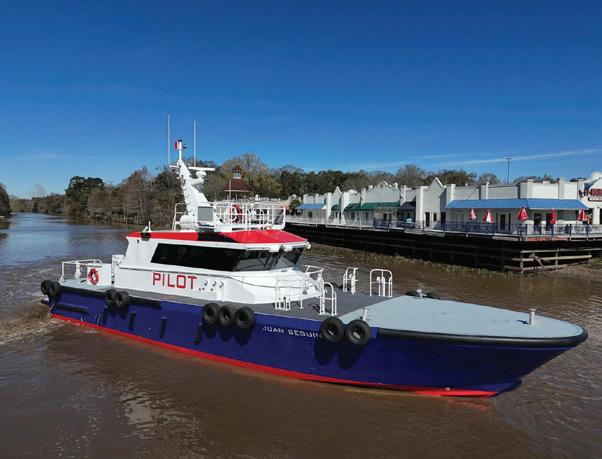
The Houston Pilots on Feb. 26 took delivery of Juan Seguin, its second high-speed launch built by Breaux’s Bay Craft, Loreauville, La., completing the twin-boat series that earned Boat of the Year honors at the 2025 International WorkBoat Show. Each 80'x21' launch features three MAN D2862 LE438 EPA Tier 4 engines, each rated at 1,200 hp. The engines are paired with Twin Disc MGX-5204 SC gears and HamiltonJet HTX47 waterjets.
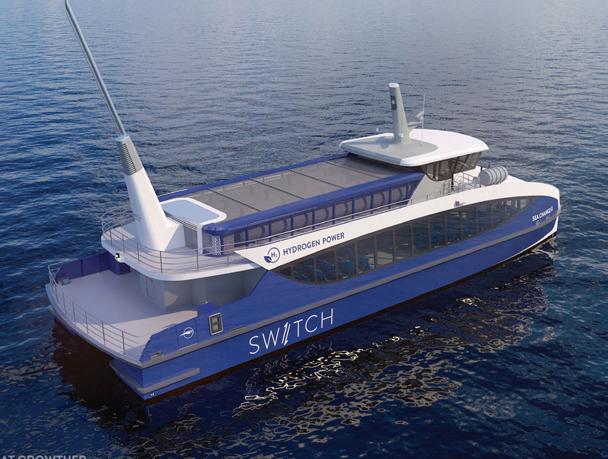
Switch Maritime LLC, Jackson, Wy., and Incat Crowther, Sydney, are developing a hydrogen fuel cell-electric fast ferry for New York waters. The 93'6"x29'6" aluminum catamaran will carry up to 150 passengers at a cruising speed of 25 knots. The ferry will have 720 kg of stored, compressed hydrogen capacity, providing a full day of operational range. Incat Crowther is working with Switch on the detailed development, design, and regulatory approval process, while Switch is advancing project development activities beyond vessel design. The partners have not selected a builder.
Harbor Docking & Towing, Lake Charles, La., has ordered four hybrid ship-docking tugboats from C&C Marine and Repair, Belle Chasse, La.
The 92'x40' RApport 2800-H vessel designed by Robert Allan Ltd., Vancouver, British Columbia, will deliver 88 metric tons of bollard pull ahead. The propulsion system features a pair of Cummins QSK60-M diesel engines rated at 2,700 hp at 1,800 rpm, coupled with a pair of 800-hp electric motors. The engines are connected to a pair of Kongsberg US255S FP Twin Input Z-drive units.
same way for the life of the contract.
In a new collaboration involving the Navy, Coast Guard, and manufacturer Silver Ships Inc., Theodore, Ala., the two military branches ordered a boat, the Naval Special Warfare Surface Sup-
All American Marine, Bellingham, Wash., is building a second high-speed passenger vessel for Phillips Cruises & Tours, Anchorage, Alaska. The 84.5'x30.7' boat will operate in Prince William Sound and be homeported in Whittier, Alaska. The vessel was developed by Teknicraft Design and features a semidisplacement catamaran hull. The propulsion package includes four MJP 350X waterjets powered by four Scania DI16 082M engines, each rated at 800 hp. The vessel will be constructed to Subchapter T standards and carry up to 150 passengers.
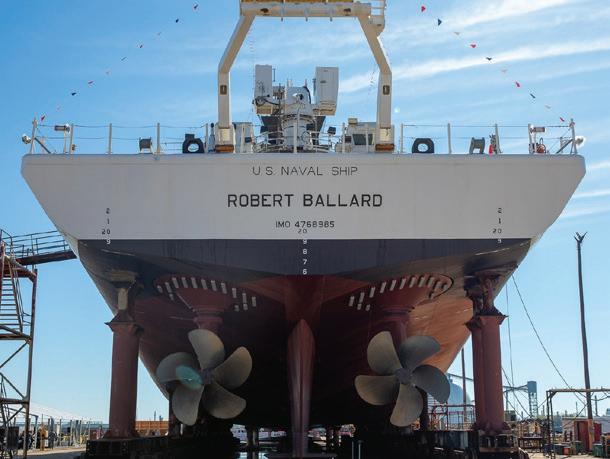
A christening ceremony for the Pathfinder-class oceanographic survey ship USNS Robert Ballard (T-AGS 67) was held at Bollinger Mississippi Shipbuilding, Pascagoula, Miss., on Feb. 28. Scheduled for delivery in December, the 350'x58' vessel will be operated by Military Sealift Command to gather acoustical, biological, physical, and geophysical survey data for the U.S. military. It features diesel-electric propulsion with four main diesel generator sets. Two Siemens Energy 1DK11221NY08-0NA2 generators are each coupled with an EMD 8-710G7CT3 16-cylinder diesel engine rated at 3,600 hp at 900 rpm. Two 1,440-kW KATO 8P7-2600 generators are each coupled with an EMD L8-710G7C 8-cylinder diesel engine rated at 1,800 hp.
A keel-laying ceremony was held March 3 for the 10,464-cu.-yd. trailing suction hopper dredge Adele being constructed by Eastern Shipbuilding Group Inc., Panama City, Fla. Scheduled delivery to The Dutra Group, San Rafael, Calif., in late 2028, the 347'x79'6" twin screw dredge is based on the Beagle Mk2 design from Royal IHC, Kinderdijk, the Netherlands.
The first landing craft utility vessel (LCU) constructed by Austal USA, Mobile, Ala., for the U.S. Navy, LCU 1710, began builder’s sea trials on Feb. 2. Launched in August 2025, the 139'x31' vessel is the first in a series of up to 12 landing craft under construction at Austal USA under a Navy contract awarded in 2023.
port Craft (NSW SSC), which comes in five variants in 8-meter (about 26') and 11-meter (about 36') sizes. One version is specifically for the Coast Guard: the Special Purpose Craft, Law Enforcement-second generation (SPC-LE2).
The contract allows for making upgrades when newer updates of the vessel are required.
“They did something interesting and clever,” said Shawn Lobree, director of federal programs at Silver Ships. “All
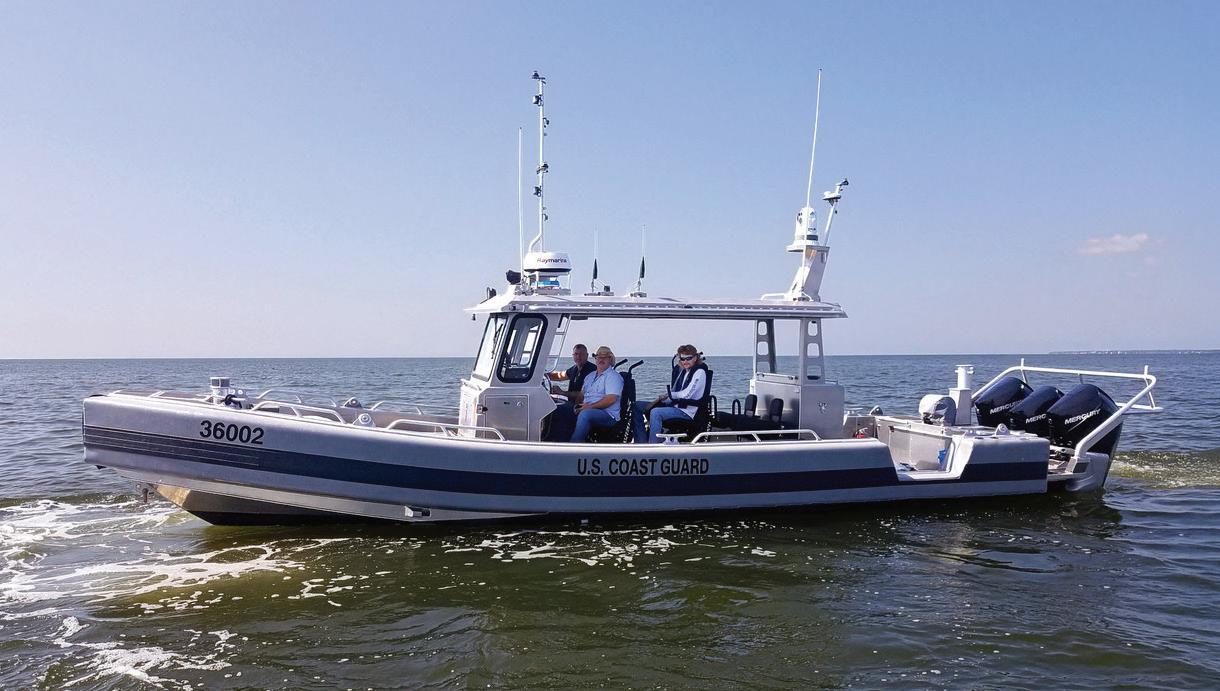
boat manufacturers will build a certain boat to a specification and get it in service. Then the operators and maintainers go to work operating the boat, maintaining the boat, and no matter who builds the boat, no matter how good it is, everyone always has ideas of the way the boat handles or the way the console is laid out.
“They say, for example, ‘We’d really like to make some changes. We’d like to move the throttle position; we’d like to change the angle of this display to make it easier for the guy in the back to see.’ They have ideas to improve the boats,” said Lobree.
The Navy and Coast Guard worded the contract for the NSW SSC and SPCLE2 so that each agency could change the boat within reason after initial models were in service. “We built four boats for the Coast Guard in the first year. They evaluated them at four different stations with lots of different crews, operating them, having maintainers working on the boats, and they came up with, ‘Here’s what we’d like to do to change the boat, to make it even better, to better suit our needs and our mission.’”
Silver Ships received the changes through the Navy’s technical oversight team. “We went back and made those design changes, made sure the customers were happy and approved them,” said Lobree. “We went and incorporated those Coast Guard changes, so we call those the ‘Year Two Boat for the SPC-
LE2.’ The Navy also made some design changes to their variant boats, which have been incorporated into the newer hulls.”
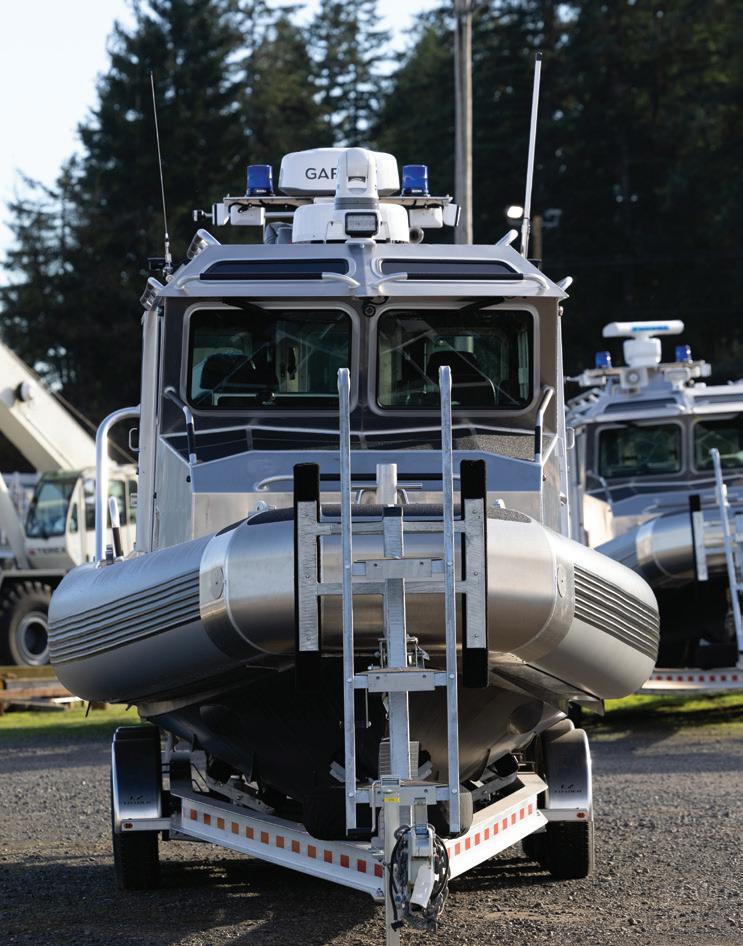
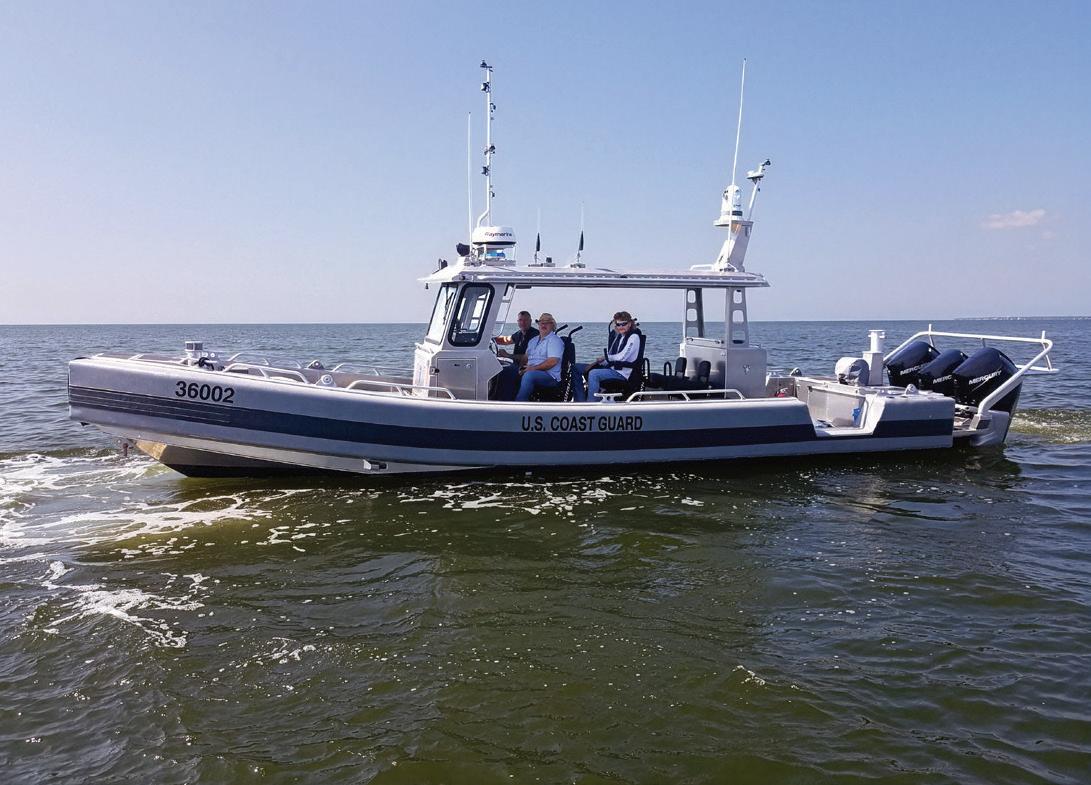
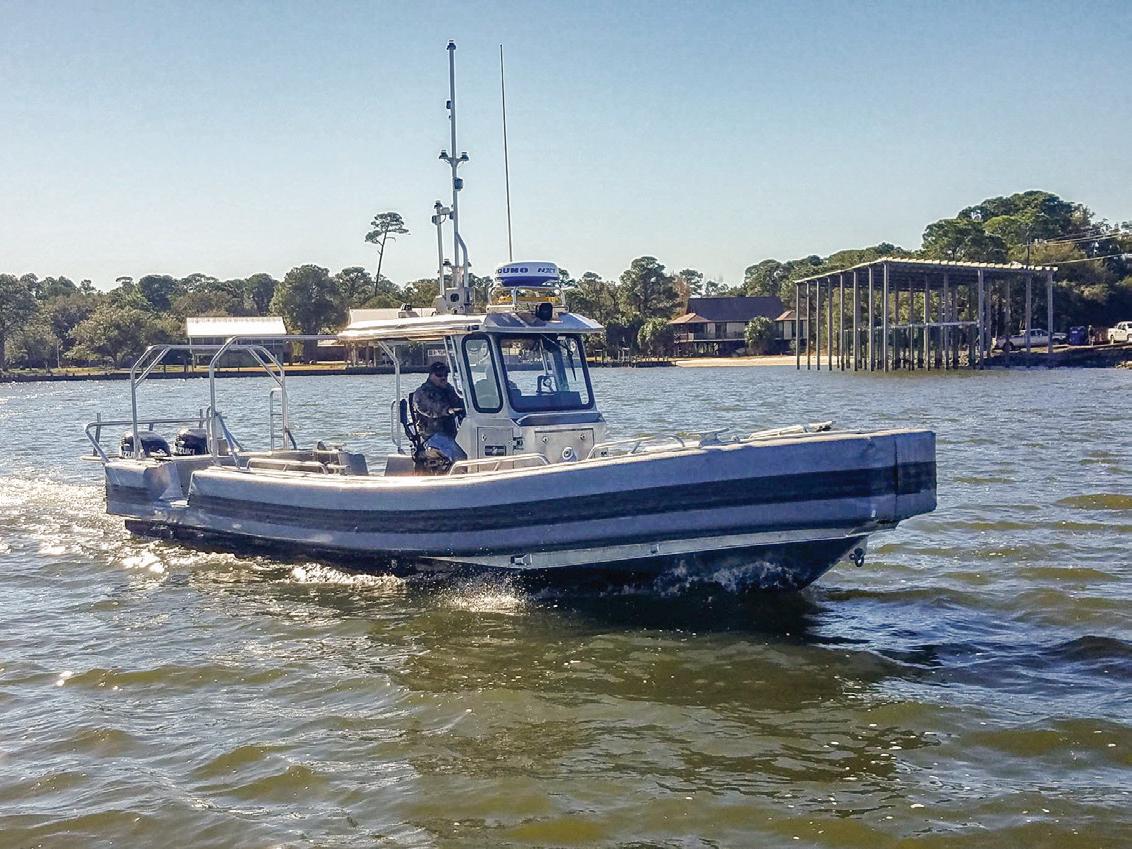
The SPC-LE2 is an 11-meter rigid hull inflatable boat that is a variant of Silver Ships’ Ambar series. The first boat was delivered in 2023 to Coast Guard Station Miami Beach and there are nine SPC-LE2s in operation currently. The Coast Guard has ordered 41 more and Silver Ships is building them at a rate of about one per month.
The Coast Guard version of the SPC-LE2 is an 11-meter center-console powered by triple 300-hp Mercury Verado outboards. It’s used primarily for high-speed patrol and law enforcement. Per the contract, the Navy can choose between an 8-meter or 11-meter boat in either a center-console or cabin layout. The 11-meter and 8-meter Navy versions are powered by twin 250-hp Suzuki outboards. All the boats have conventional V-hull designs.
“The Coast Guard is using it as what I like to call ‘a fighting boat,’” said Lobree. “It’s a special-purpose lawenforcement interceptor.
The Coast Guard boat is built more robustly with a heavier-duty outboard bracket on the transom because it achieves a top speed exceeding 50 knots and is expected to run those speeds in less-than-ideal conditions. Silver Ships also had to beef up the structure that supports the boat’s T-top because it was
stretched to provide shade to all six crewmembers while underway.
“We manufacture all the aluminum parts with the exception of the cleats at our yard in Alabama,” said Lobree. “The cleats are forged and we don’t run a forge operation.”
The boat has a machine gun mounted in the bow with weapon and ammunition storage in onboard custom lockers.
The Navy is using its boats for SEAL swimmer and dive training, as well as support missions like picking up parachutists. The Navy boats are kept on trailers and launched when needed. The Coast Guard boats stay in the water to keep them available on short notice. To repel corrosion, they are painted with the same antifouling coatings as the agency’s larger, oceangoing vessels.
Crews on both boats ride on Shockwave shock-mitigating seats that have rifle mounts integrated into the frame. For communication, the crew’s tactical helmets have the loud-hailer and radio integrated into them and the radio communications can be encrypted. The crew communication system is supplied by Invisio Communications. Because its mission does not require encrypted radios, the Navy uses a Standard Horizon marine VHF radio system and the David Clark crew communications system.
The Navy uses a Furuno navigation suite with radar and a multifunction display, while the Coast Guard selected a similarly equipped array of Raymarine equipment.
Shifting and throttling are controlled digitally with standard Mercury and Suzuki systems, while steering pairs components provided by the engine manufacturers with a Dometic SeaStar power-assist setup.
Because it has three engines and more extensive electronics, the Coast Guard version of the SPC-LE2 costs about $100,000 more than the Navy model. Lobree said Silver Ships is proud of the boat’s performance and reliability. “There has been a strong spirit of collaboration and teamwork between the government and boatbuilder on the project,” he said. — Eric Colby

By Ben Hayden, Senior Associate Editor
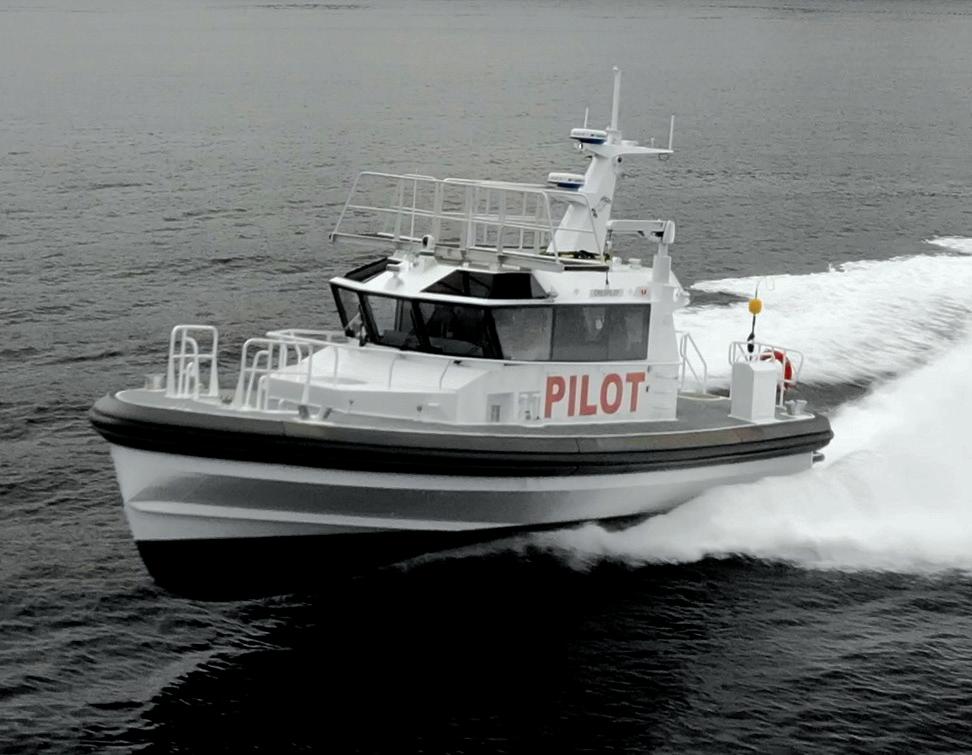
Pilot associations from across the country gathered in New Orleans for a meeting hosted by the Crescent River Port Pilots Association, aiming to formalize what participants described as a long-needed support network for engineers and crews who maintain and operate pilot boats.
Despite the associations’ sharing common operational challenges, their work is divided by region, eliminating direct competition and allowing for collaboration.
Eric Dupree, chief engineer and Pilottown station manager for Crescent River Port Pilots, opened the meeting with an alliance objective, intended “to ensure the safety of state pilots, crew and equipment through maintenance and ef ciency of all pilot vessels.”
Engineers, operators, and representatives from 15 different associations discussed forming a national alliance focused on pilot-boat maintenance, operational reliability, safety, and technical sup-
port. Participants emphasized that while pilot associations operate independently in their respective ports, they face many of the same pressures, including increasingly complex vessel systems, limited downtime between ship movements, workforce constraints, and growing regulatory requirements.
Dupree noted that interest in the alliance has grown faster than anticipated, prompting discussions on how to structure the group in a way that distributes responsibility, avoids overburdening a small number of participants, and ensures sustained momentum.
“It looks like the membership here is growing a lot faster than we thought, which is a little scary,” he said. “What I’d like to do is get established, see if we can’t get some sort of an of cial… membership… I’m looking for any suggestions on how we can get help from you guys to move the thing forward as a group.”
Much of the discussion centered on two recurring challenges for pilot-boat engineers: access to technical support and time to maintain vessels properly. As vessel schedules tighten and ships move faster through ports, engineers are often required to respond to mechanical issues with little margin for delay. When one pilot boat goes out of service, others frequently follow, compounding operational strain.
“If you’re in this room, you know when a boat goes down, what happens next?” Dupree questioned.
“The next one breaks,” various members of the group responded simultaneously.
Dupree stated: “An engineer needs support from his association. We need support from our vendors… We need support from our boat operators to run vessels how we know they should be run,” he said.
Without proper operations, “they can break it faster than we can x it. You need time to x things. You need time to get to training. You need time between ships, as these ships are getting faster, it’s getting less and less for repairs and preventative maintenance.”
Participants noted that engineers increasingly rely on vendors, boat operators, and association leadership to ensure vessels are operated correctly and maintained ef ciently. Improper operation can accelerate wear and lead to avoidable failures, while limited access to training and troubleshooting resources can extend downtime.
The meeting highlighted how shared expertise across associations can signi cantly reduce maintenance time and costs. Engineers with deep experience in speci c systems, including engines, electrical systems, emissions controls,
“An engineer needs support from his association. We need support from our vendors… We need support from our boat operators to run vessels how we know they should be run.”
— Eric Dupree, Crescent River Port Pilots Association
and corrosion mitigation, can provide guidance to peers facing similar issues. Participants said direct communication among engineers can often resolve problems more quickly than extended troubleshooting or trial-and-error part replacement.
In the three months since the meeting, pilot associations have already







initiated cross-training efforts on the Atlantic Coast, including coordinated man-overboard drills, to improve rescue preparedness and standardize response procedures across different pilot stations.
Attendees discussed how pilot boats have become more complex, with










modern propulsion systems, electronic controls, emissions equipment, and networked steering systems replacing older mechanical components. While these technologies improve performance and compliance, they also require new skill sets and training.
Some engineers acknowledged that adapting to newer systems can be










challenging, particularly for those accustomed to traditional mechanical controls. The alliance aims to help bridge that gap by connecting engineers who have already operated newer systems with those encountering them for the rst time.
Several examples shared during the meeting illustrated how informal collaboration has already delivered tangible bene ts. In one case, a pilot association temporarily lost access to both of its vessels due to maintenance issues and received assistance from another association that provided operational support until repairs were completed. In another instance, an association helped source hard-to- nd components for a specialized re-suppression system, allowing a sidelined pilot boat to return to service months before parts were scheduled to arrive.
Participants said these experiences
demonstrate the practical value of maintaining open lines of communication and shared inventories of equipment, vendors, and technical expertise. They also noted that operational failures at one pilot association can affect public perception of pilotage nationwide, reinforcing the importance of mutual support.
“Bad publicity for one association is bad publicity for all of us,” Dupree said.
The group discussed expanding use of a shared technical database that catalogs pilot boats, propulsion systems, and major equipment across participating associations. The database allows engineers to identify which associations operate similar systems and quickly connect with peers who have relevant experience.
Station visits providing opportunities to compare maintenance programs, safety procedures, training practices, and record-keeping systems were also identi ed as a long-term goal. Several


engineers highlighted the bene ts of electronic maintenance management systems, noting improvements in scheduling, compliance tracking, and breakdown prevention.
Attendees said the rapid growth of interest in the alliance re ects recognition that pilot-boat engineers face similar challenges nationwide and bene t from collective problem-solving. Many described the effort as overdue, noting that comparable support structures exist in other maritime sectors.
The meeting concluded with a shared commitment to continue developing the alliance. Organizers said additional pilot associations are expected to join ahead of the next American Pilots Association convention, with the long-term goal of establishing a durable national network that supports the safety, reliability, and ef ciency of pilot-boat operations across U.S. ports.





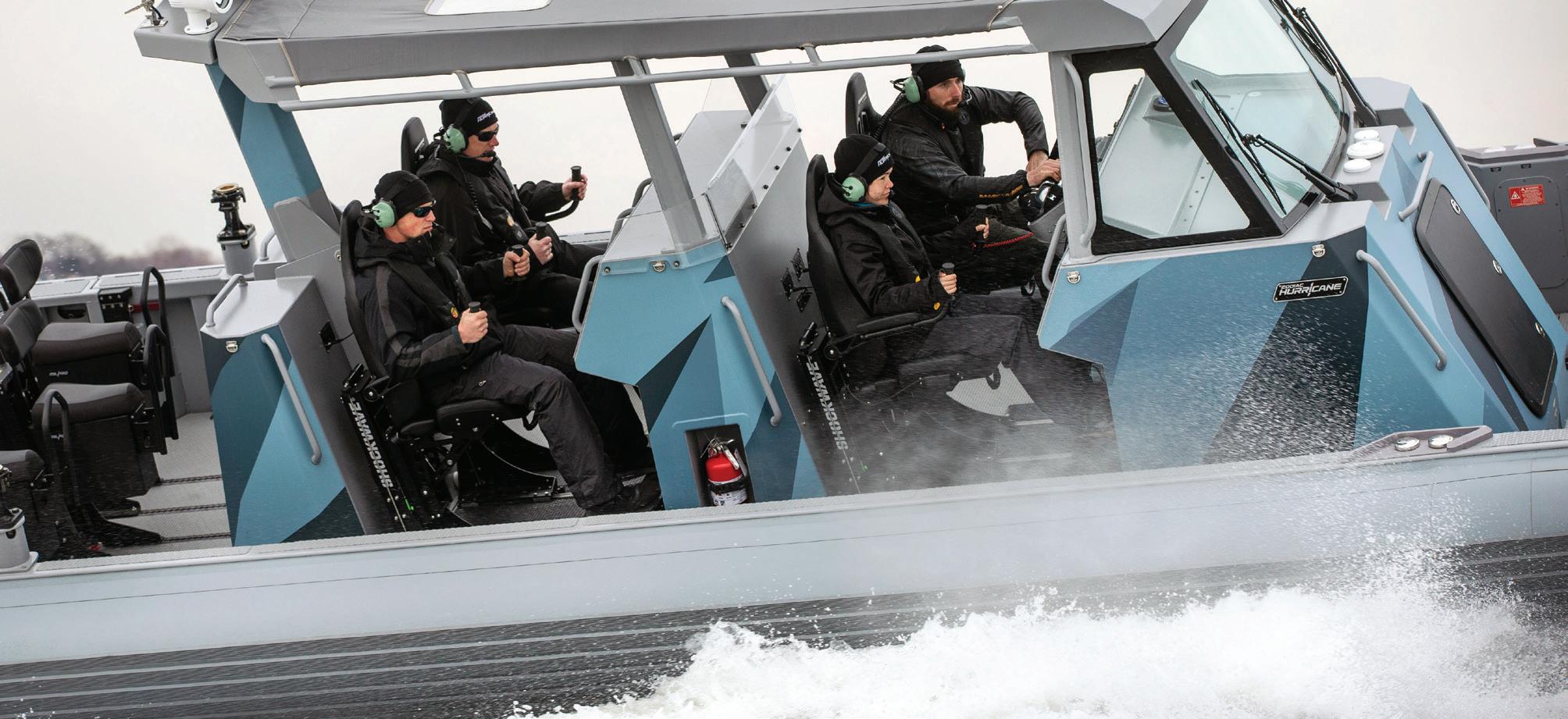
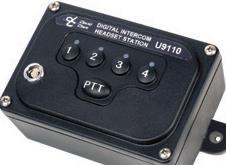
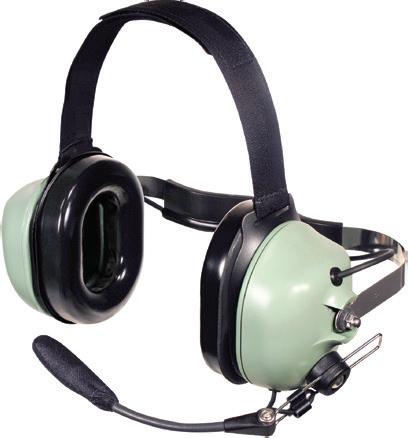
High wind noise, roaring engines, pounding through rough water, salt and spray - it’s no wonder patrol boat crews often have to yell repeatedly to be heard. And the margin for miscommunication runs high.
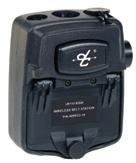
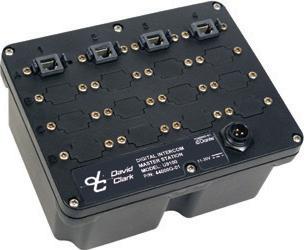
David Clark Marine Headset Systems offer clear communication and rugged reliability in the harshest marine environments, while enhancing the safety and situational awareness of crew members on board fast-attack patrol boats, offshore service vessels, fire/rescue craft, tug and tow boats and other workboat vessels.
Call 800-900-3434 (508-751-5800 Outside the USA) to arrange a system demo or visit www.davidclark.com for more information.





Ben Hayden, Senior Associate Editor


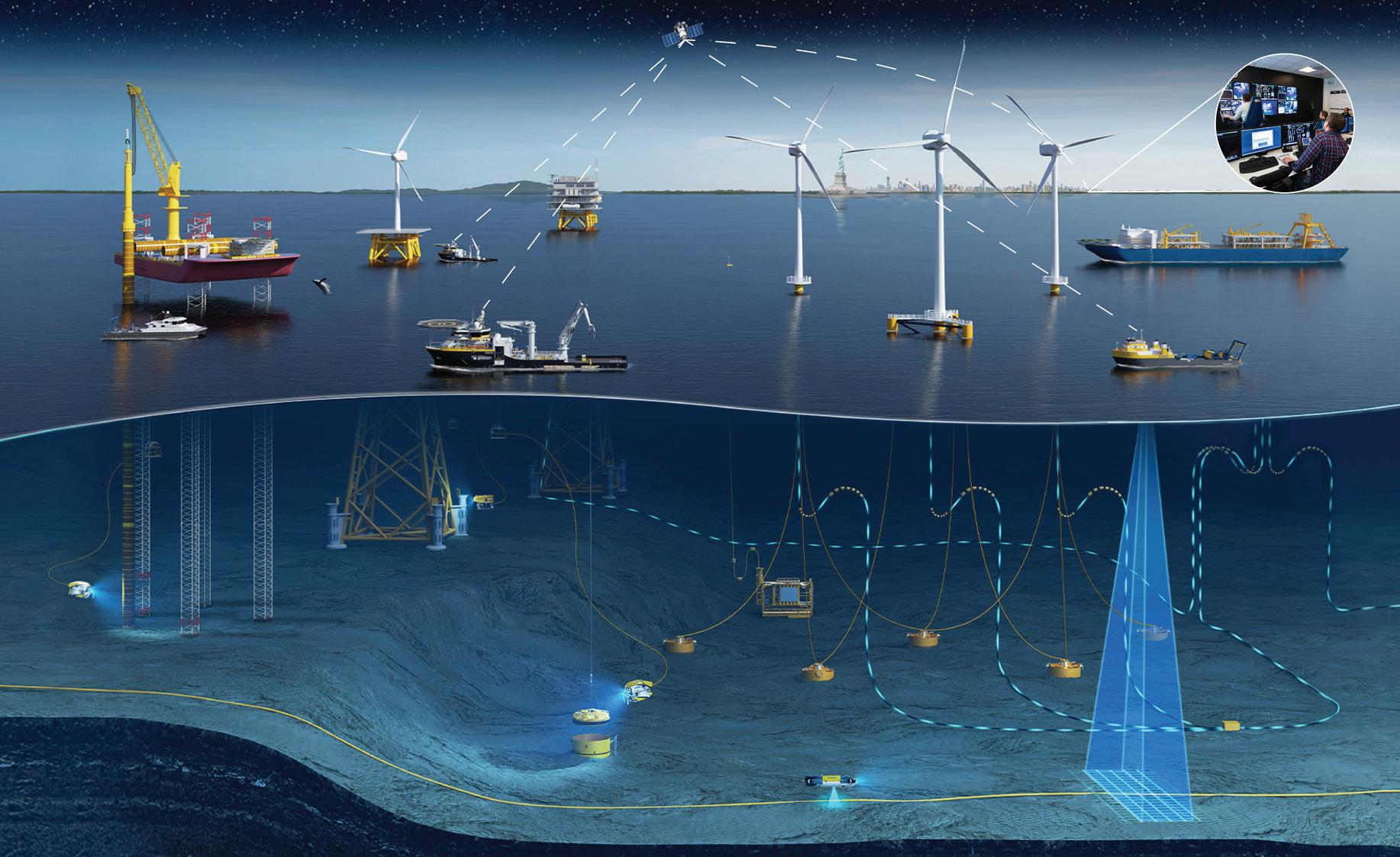
As offshore energy infrastructure expands and ages, operators are under increasing pressure to monitor pipelines, cables, and seabed assets more ef ciently. Advances in subsea robotics, autonomous vehicles, and digital data platforms are beginning to reshape how offshore inspection, maintenance, and survey work is conducted.
Across the oil and gas sector in the Gulf and emerging offshore wind regions, companies are investing in systems that reduce vessel days, limit personnel offshore, and accelerate the ow of subsea data from the seabed to decision-makers.
For Houston-based Oceaneering International, that transformation is centered on three technological themes.
“When we’re talking about subsea, there are three key themes we are working on, which we see will become very prominent in the next 10 years,” said Nikunj Patel, Oceaneering’s vice president of engineering and operations. “They are already very important… and
those are what we call remote operations, autonomy, and residency.”
Together, those trends point toward a future where subsea robotic systems operate longer, gather more data, and increasingly work with fewer personnel offshore.
One of the most immediate changes in subsea operations is the rise of remote piloting for underwater vehicles. Traditional remotely operated vehicle (ROV) operations require pilots and technicians stationed onboard offshore support vessels. Today, thanks to improved satellite communications and subsea connectivity, many of those roles can be transitioned to shore.
“So when we’re talking about remote offshore operations, a simple example in Norway, almost 60% of the piloting work we do, we do from onshore,” Patel said.
miles away.
According to Patel, remote ROV operations unlock several key advantages. “Cost is de nitely an advantage for the customer. But the critical one is from the carbon footprint point of view… and safety,” he said, noting that offshore personnel reductions also lower exposure to harsh offshore environments while minimizing travel and vessel mobilization costs.
Connectivity has historically limited remote operations in some regions, but that barrier is gradually disappearing.
“Norway is very mature. The reason is the connectivity offshore is really good,” Patel said. “Some of the regions, they are spotty because the satellite communication is the weak link. But that’s changing also with Starlink and some of the other technology availability.”

In these scenarios, ROVs operate thousands of feet below the surface while pilots control them from of ces
The second major shift is autonomy. While most offshore tasks still involve a human operator, certain repeatable in-
spection tasks can now be performed autonomously.
“I think we are still quite [a ways] away from full autonomy,” Patel said. “But simple operations like pipeline inspection, that’s very much fully automated right now.”
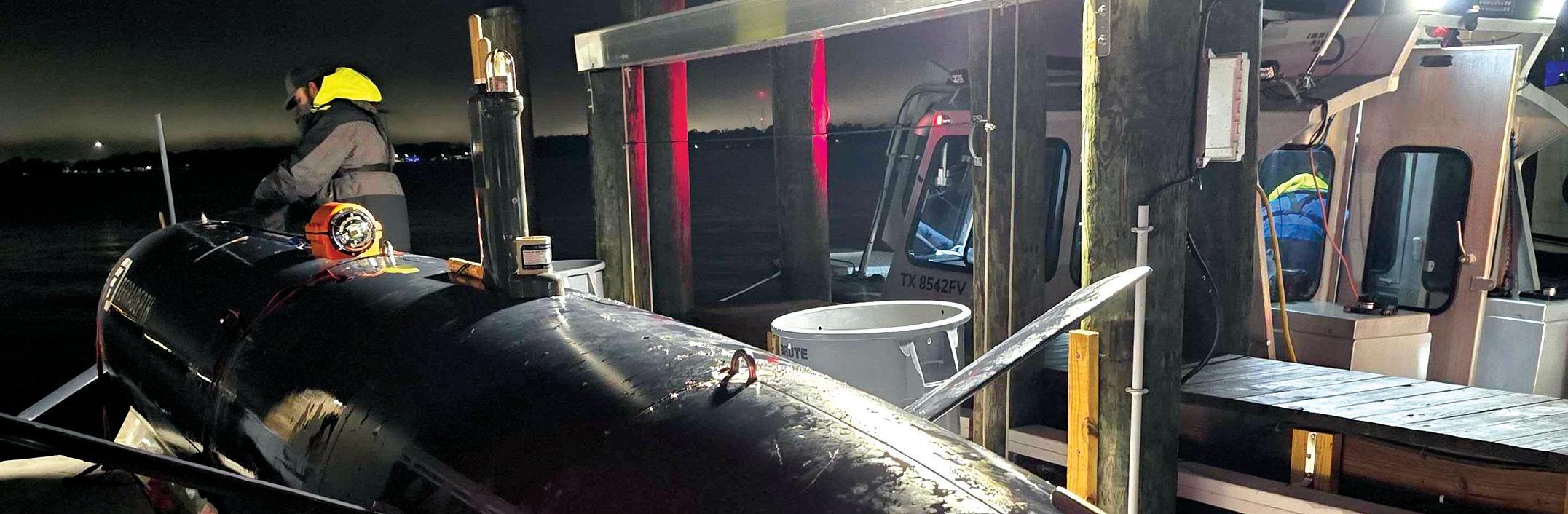
Oceaneering has spent nearly a decade developing a tetherless autonomous underwater vehicle (AUV) that can be programmed to inspect long pipeline corridors without direct human control.
“We have a platform called Freedom, where you can just launch that. ‘Okay, go to this location, follow this 16-inch pipe, go 60 miles, capture all the data, and come back,’” Patel said. “Very much we can do it right now.”
Automation is also being integrated into traditional work-class ROVs through pilot-assist functions designed to handle repetitive tasks.
“It’s similar to driving a Tesla or any modern car,” Patel said. “Still, a human has to drive, but you can just follow the lane.”
Another emerging development is subsea residency, which entails designing robotic systems capable of remaining underwater for extended periods. Historically, ROV and AUV operations have followed a cycle of deployment, recovery, and maintenance.
“We used to call retrieve and repair,” Patel said. “Use for eight hours, recover, repair, deploy again.”
New and future systems are being designed to remain subsea for months or even years, Patel said. “We already have capabilities where we can charge them subsea,” he explained. “We already have capabilities where we can communicate with them subsea.”
Oceaneering’s recently introduced Momentum electric work-class ROV re ects that shift toward longer subsea endurance. “We can work subsea for 30 days without retrieving,” Patel said. “Where traditional hydraulic ROV, you have to retrieve every other day to do routine maintenance.”
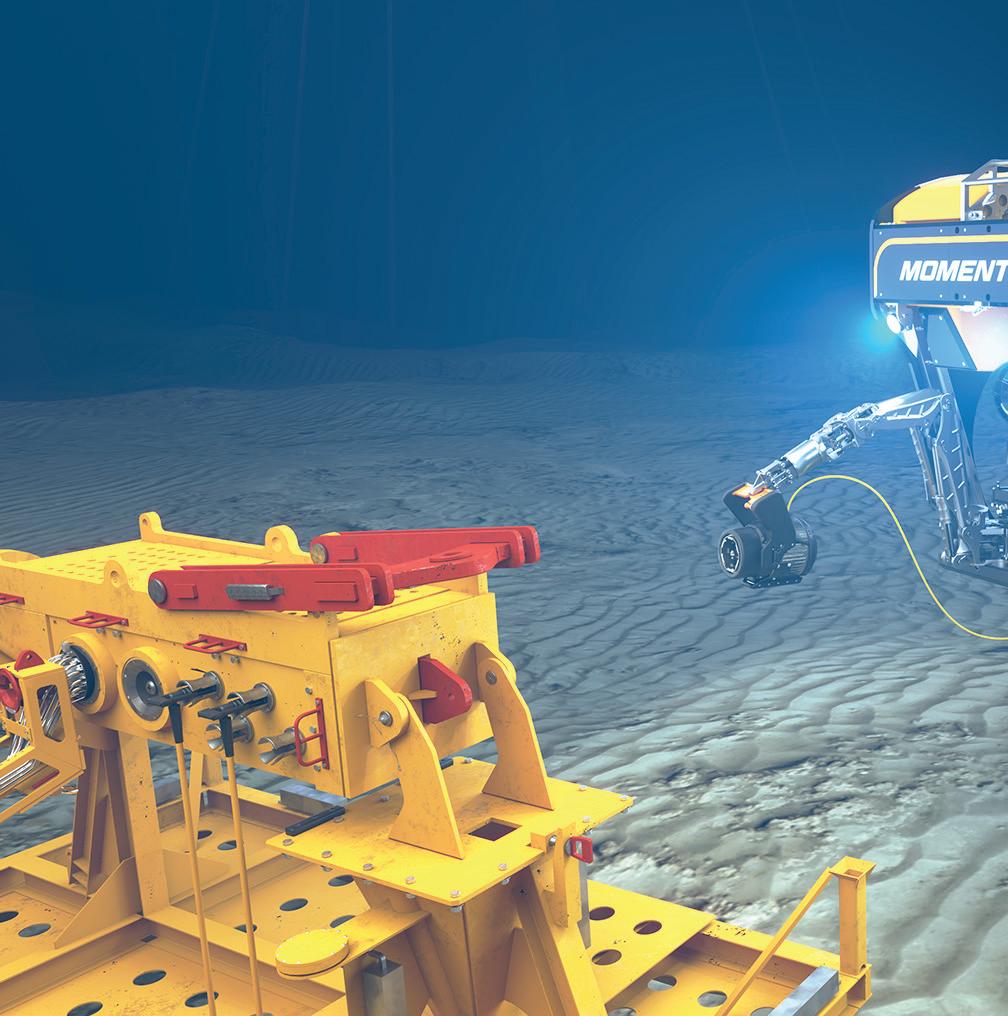
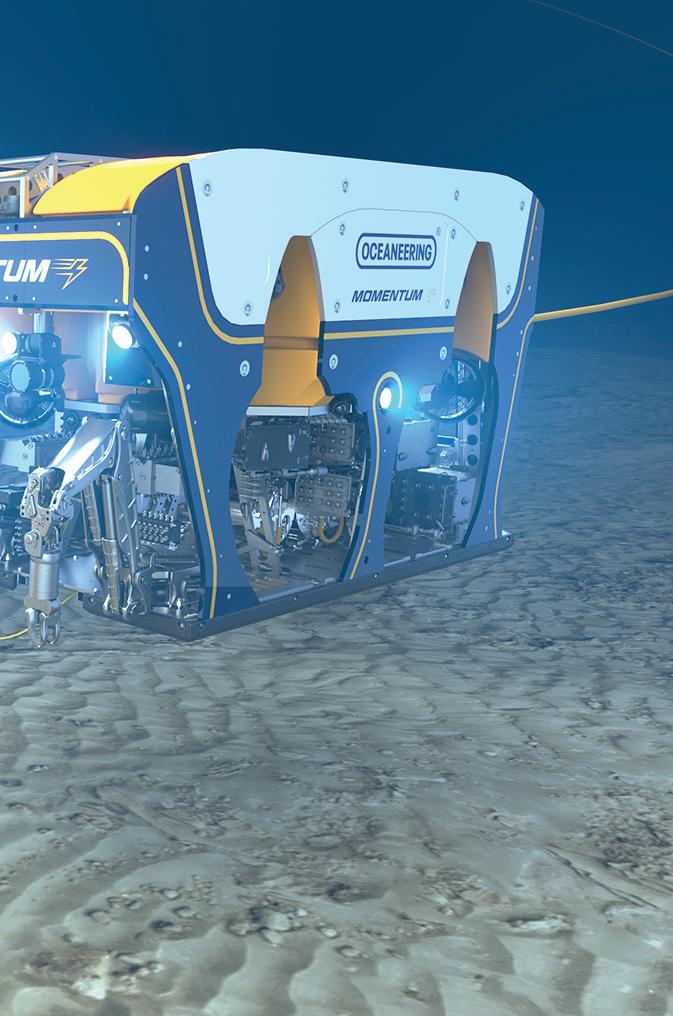
Oceaneering’s Momentum all-electric work-class ROV, unveiled in March, can deploy for 30 days at a time.
Autonomous vehicles are also enabling new operational models offshore. Instead of dedicating an entire vessel to a single installation or inspection task, operators can run multiple subsea operations simultaneously.
“Normally nowadays you have a vessel… doing some repair work or doing some installation work,” Patel said. “Right now, that whole vessel is just focused on doing one installation.”
With autonomous systems operating alongside those vessels, additional inspection work can take place at the same time. “We do a scenario where the same vessel is also launching the Freedom,” he said. “When the vessel is involved doing the installation work, Freedom is doing all the other pipeline inspection… simultaneously.”
Oceaneering has already begun deploying this approach in offshore projects in West Africa, where autonomous vehicles conduct pipeline inspections while installation vessels complete other tasks nearby.
“I think what we see is parallel operations with the same assets will become very prominent,” Patel said.
Wider use of digitally connected subsea robots is generating larger
volumes of inspection data, creating a new challenge: how to use that data most effectively. Patel said the technical capabilities now exist to collect, process, and analyze massive datasets, but industry practices have not fully evolved to support those capabilities.
“The biggest gap in industry right now is not technology,” he said. “It’s a terms and condition between customers and vendors. And what that means is legacy oil and gas terms and conditions are not changed with the change in technology.”
Oceaneering has “terabytes and terabytes of data,” Patel said. “We have it. We store for the customer. We cannot use it.”
Because the data collected during offshore inspections typically belongs to the operator, contractors often cannot use those datasets to train analytics models or improve digital tools.
Even many operator engineers recognize the inef ciency. Patel noted that discussions are ongoing across the offshore energy sector about how contractors might responsibly use operational datasets while protecting customer intellectual property.
“There’s an active topic in this industry right now… what is the best way to write those terms and conditions?” Patel said. “And it’s not an Oceaneering struggle… This is the true industry-wide problem.”
One way the industry is beginning to extract more value from inspection data is through digital visualization and asset modeling. Rather than focusing solely on individual inspection reports, companies are increasingly building detailed three-dimensional models of subsea infrastructure.
“Normally, we don’t use the [phrase] ‘digital twin,’ because it means a lot of different things for different people,” Patel said. “But in short… we can map everything in a 3D environment, and we can do inspection based on those mappings.”
Oceaneering’s integrity management and digital solutions group is working with customers to develop these capabilities through its collaboration with Aberdeen, Scotland-based Global Design Innovation (GDi).
The agreement allows Oceaneering to provide customers with digital solutions that support remote inspection, digital asset management, and operational support services designed to improve safety, data quality, and cost efficiency.
The partnership builds on GDi’s Vision 3D visualization software, which Oceaneering has expanded with a subsea inspection module called Vision Subsea. It presents engineering-grade point-cloud data generated during ROV
operations, giving engineers a measurable, contextual view of subsea asset integrity.
The system allows engineers to identify anomalies, perform dimensional checks, and plan interventions using spatially accurate inspection data rather than relying on fragmented drawings or video footage lacking scale.
Delivered as a cloud application, the platform allows integrity, inspection, and planning teams to collaborate remotely while reducing the need for repeat vessel mobilizations. The visualization tools also allow operators to monitor structural changes over time.
“So, let’s say you have a jumper [transporting oil, gas, or injection fluids between two subsea components], and the seabed changes over the year,” Patel said. “If we have a 3D model of that jumper… we can see how that jumper behaves over the life of the 10 years.”
With that information, engineers can evaluate whether structural components are experiencing loads beyond their original design parameters. “We can calculate back on [whether] the jumper is seeing any additional loads [beyond] what it was designed to,” Patel said.
Autonomous inspection systems such as the Freedom AUV help enable that approach by collecting large volumes of spatial data — point clouds — more efficiently. “Capturing those images
and 3D point cloud becomes very costeffective,” Patel said. “You don’t have to send the vessel every time to do so, which [saves] hundreds and thousands of dollars a day.”
Terradepth is another company that has set out to help tackle subsea data management challenges. The Austin, Texas-based company is developing software infrastructure designed to centralize and organize survey and inspection data inside energy companies.
The company is positioning its Absolute Ocean (AO) software not as a standalone data portal, but as the core system of record powering what company officials describe as an “ocean operating system,” which connects data collection, data infrastructure, and operational applications into a unified environment for offshore operators.
“We’re not just a place to access data,” said Brian Butler, vice president of offshore energy at Terradepth. “We’re a lifecycle workflow solution. We’re compressing the time between collecting data and making a decision.”
The AO platform ingests bathymetric and subsea datasets from multiple sources, including Terradepth’s own long-range diesel-electric AUV, thirdparty contractors, operator-owned vehicles, and public datasets such as NOAA surveys, and centralizes them into a single enterprise system.
For offshore oil and gas operations, where subsea infrastructure is both mission-critical and proprietary, that enterprise positioning is key.
Rather than serving as a public-access data marketplace, AO is structured to warehouse operator-owned survey data, automate processing, enable visualization, and facilitate secure collaboration across departments.
The goal is to collapse what has historically been a fragmented workflow. In years past, survey data was often stored on external drives, processed in isolated systems, and shared through static reports or PDFs. In some cases, organizations have repeated surveys simply because prior datasets could not
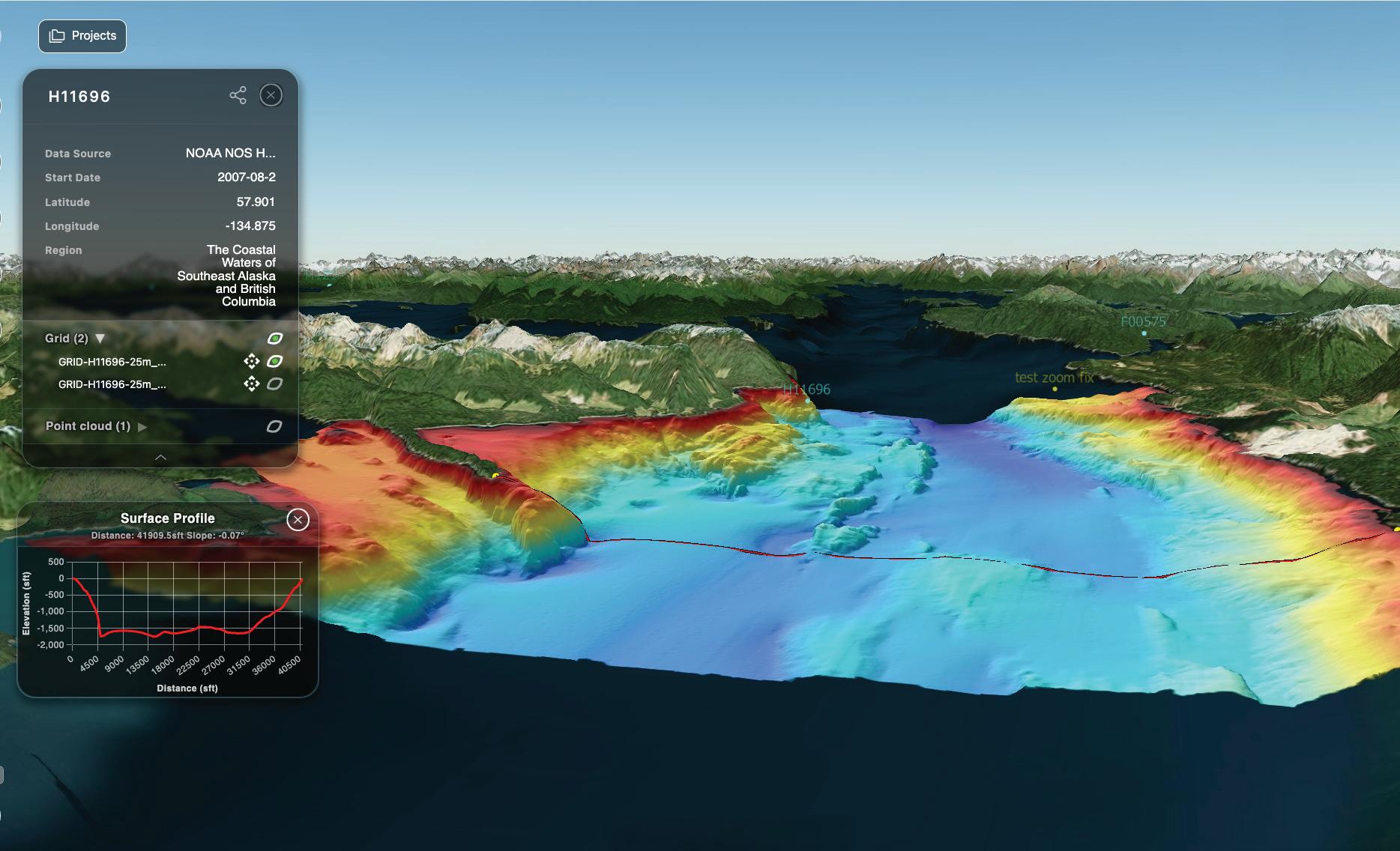
cloud-native subsea data platform streamlines storage, visualization, and analysis in real time.
be located or accessed efficiently.
“One of our clients told us they would re-contract a survey because they couldn’t find the previous one,” Butler said. “That’s the level of inefficiency we’re helping eliminate.”
In offshore energy, time at sea directly correlates to cost. Large survey vessels with professional crews, multiweek mobilizations, and delayed onshore data processing can drive project expenses quickly into six figures per day.
Terradepth’s model aims to reduce that burden. Its long-range AUVs can be port-launched or supported by a smaller support vessel, depending on mission scope. That reduces vessel size requirements, crew count, and overall days at sea. Surveys that might traditionally require three weeks can, in some cases, be completed in roughly one, Butler noted.
The company’s flagship vehicle is designed around a modular, openarchitecture payload system capable of supporting multiple survey-grade sensor packages. These can include side-scan sonar, multibeam systems, sub-bottom profilers, magnetometers, and environmental monitoring packages. Payload configurations can be tailored to project requirements, allowing operators to optimize for resolution, depth, endurance, and data objectives without changing the
“We’re compressing the time between collecting data and making a decision.”
— Brian Butler, vice president of offshore energy at Terradepth
underlying vehicle platform, a company spokesperson said.
Because the vehicle uses a dieselelectric hybrid architecture rather than relying solely on battery power, Terradepth said it can manage onboard power budgets more flexibly while delivering longer range and endurance at a lower operating cost compared with battery-only systems. The approach allows operators to extend mission duration and sensor usage while maintaining survey-grade performance.
The time savings extend beyond data collection. Automated processing built into the AO workflow allows data to be processed while the vehicle remains in the field, rather than waiting until the mission concludes. Engineers and hydrographers can review results remotely from shore, collaborating in near real time without deploying additional personnel offshore.
The operational impact of that approach was tested recently when a major offshore oil and gas operator
reported a potential pipeline anomaly. Time was the primary constraint.
Instead of launching a prolonged conventional survey campaign, Terradepth deployed a rapid-response team supported by an autonomous surface vessel to execute a targeted multibeam water-column survey directly over the pipeline corridor. Rather than surveying broad swaths of seabed, the team concentrated data acquisition in the area of interest.
Survey results were delivered through AO, allowing facilities and integrity managers to review investigation-grade data almost immediately instead of waiting through conventional reporting cycles. According to Terradepth, compressing the collection-to-delivery timeline from weeks to days saved roughly $100,000 per day in vessel and logistics costs while providing decision-ready insight to stakeholders.
As offshore infrastructure grows more complex, operators are increasingly shifting away from episodic surveys toward continuous monitoring of subsea assets.
Autonomous robotics, long-duration subsea vehicles, and centralized data platforms are enabling a more persistent view of the ocean floor.
Digital systems allow engineers to track seabed changes over time, monitoring pipeline exposure, sediment migration, or cable movement without repeating entire survey campaigns.
For companies managing global portfolios of offshore infrastructure, the operational impact can be substantial.
“The more people using the platform, the more operational efficiencies you gain,” Butler said. “It makes the day-to-day life easier for users, but it also impacts the bottom line.”
Combined with advances in robotics and digital asset management, subsea inspection is moving toward a future where offshore infrastructure can be monitored continuously and managed increasingly from shore.
“The future will be different,” Patel said.
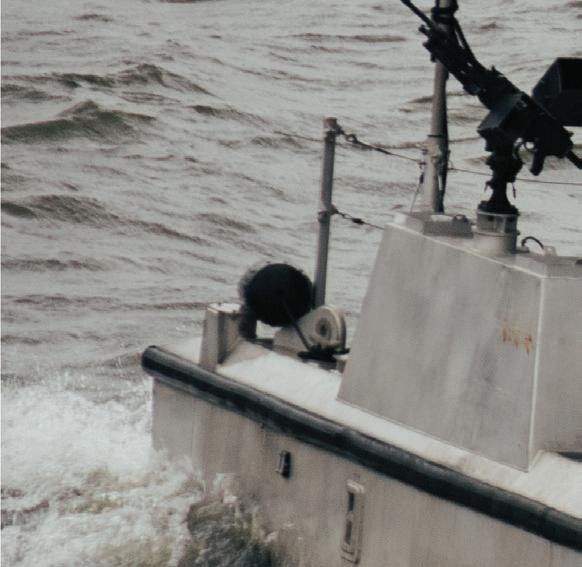
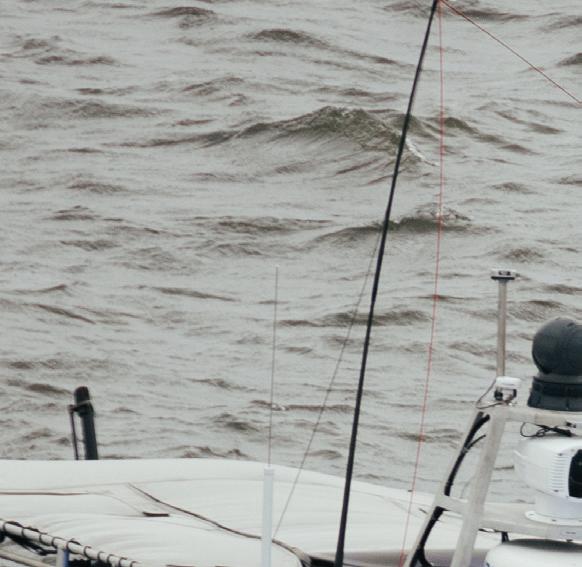
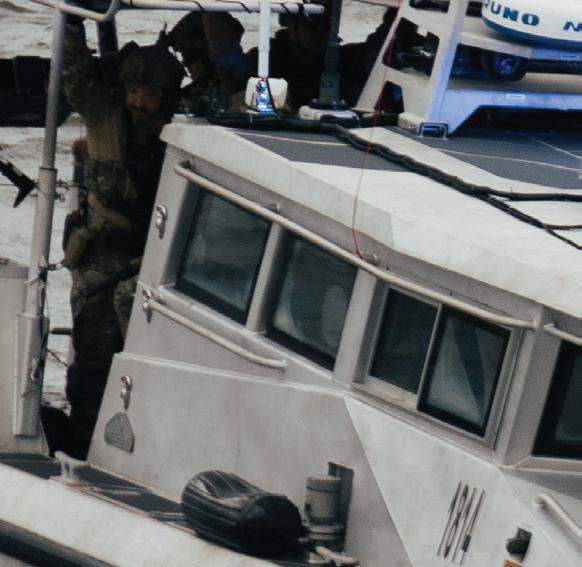
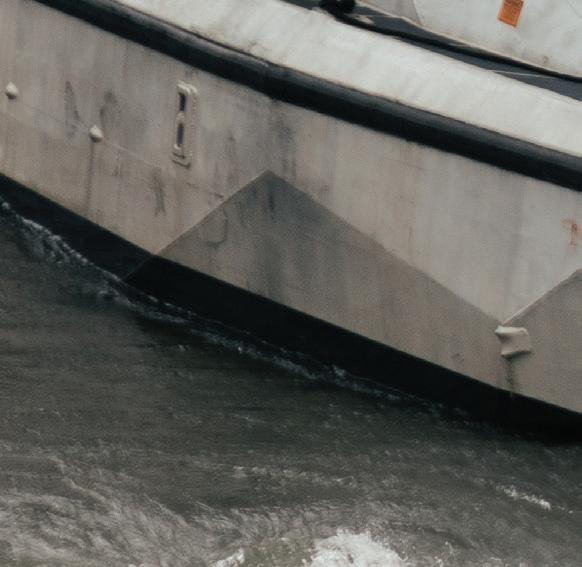

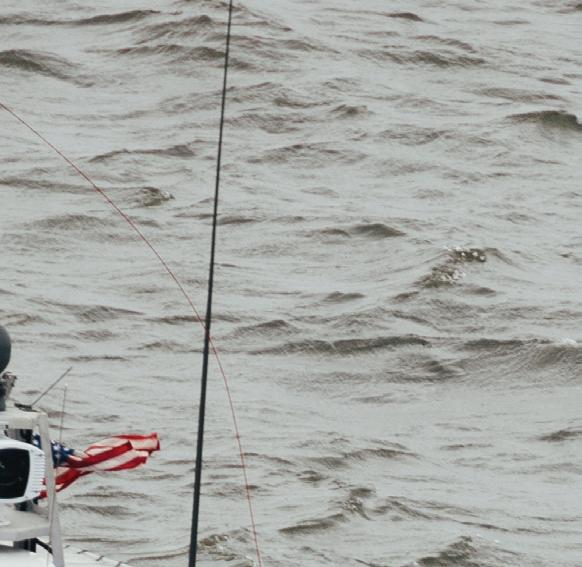
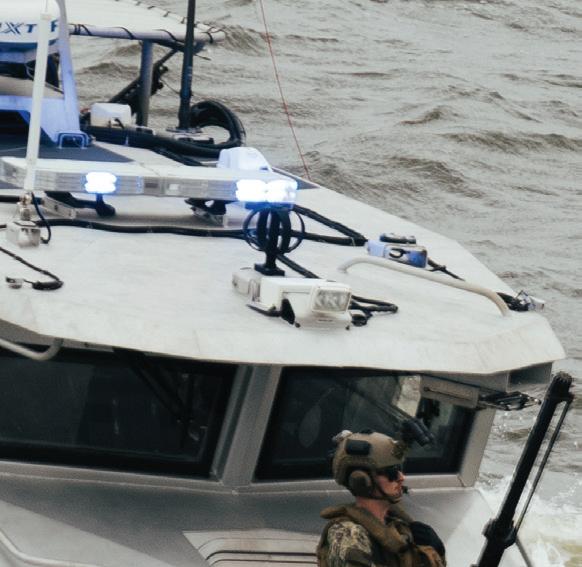
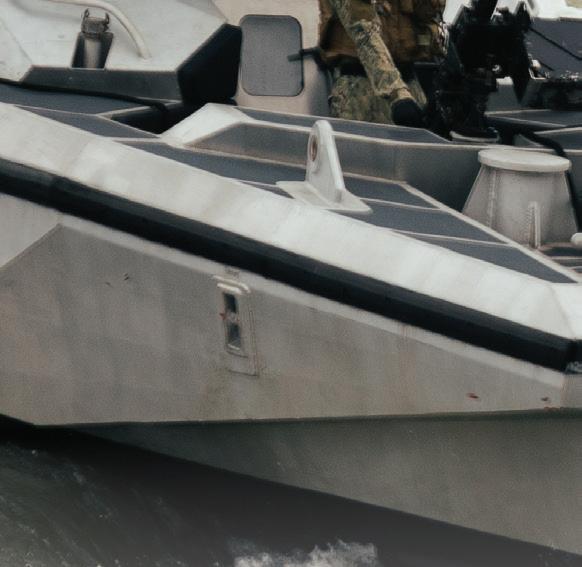
PA U.S. Navy Metal Shark Defiant-class 40' patrol boat conducts offensive maneuvers during a river demo event as part of Navy Marine Corps 250 in Philadelphia, Oct. 12, 2025.
The U.S. military continues to order new boats.
By Peter Ong, Contributor
atrol boats, ubiquitous and often sent into action, will not disappear from the U.S. maritime forces anytime soon. In fact, several types are being built and elded in quantities.
The Coast Guard, for example, was awarded $25 billion by the One Big Beautiful Bill and will build a substantial number of vessels, including patrol boats.


WorkBoat. “Their size and capabilities allow for persistent presence and quick deployment in the U.S. maritime domain, making them indispensable for safeguarding ports, enforcing maritime law, and protecting critical infrastructure.”
“Patrol boats are essential to the Coast Guard’s mission because they provide agility, rapid response, and access to shallow or constrained waterways that larger warships cannot reach.”
— U.S.Coast Guard
“Patrol boats are essential to the Coast Guard’s mission because they provide agility, rapid response, and access to shallow or constrained waterways that larger warships cannot reach,” a Coast Guard spokesperson told
Patrol boats can be “more cost-effective for many coastal and nearshore missions,” the spokesperson added, noting that they are often deployed for visit, board, and search-and-seizure duties, as well as port and coastal security, counter-narcotics and migrant interdiction, search and rescue, environmental protection, defense readi-
ness, and support to Defense Department operations.
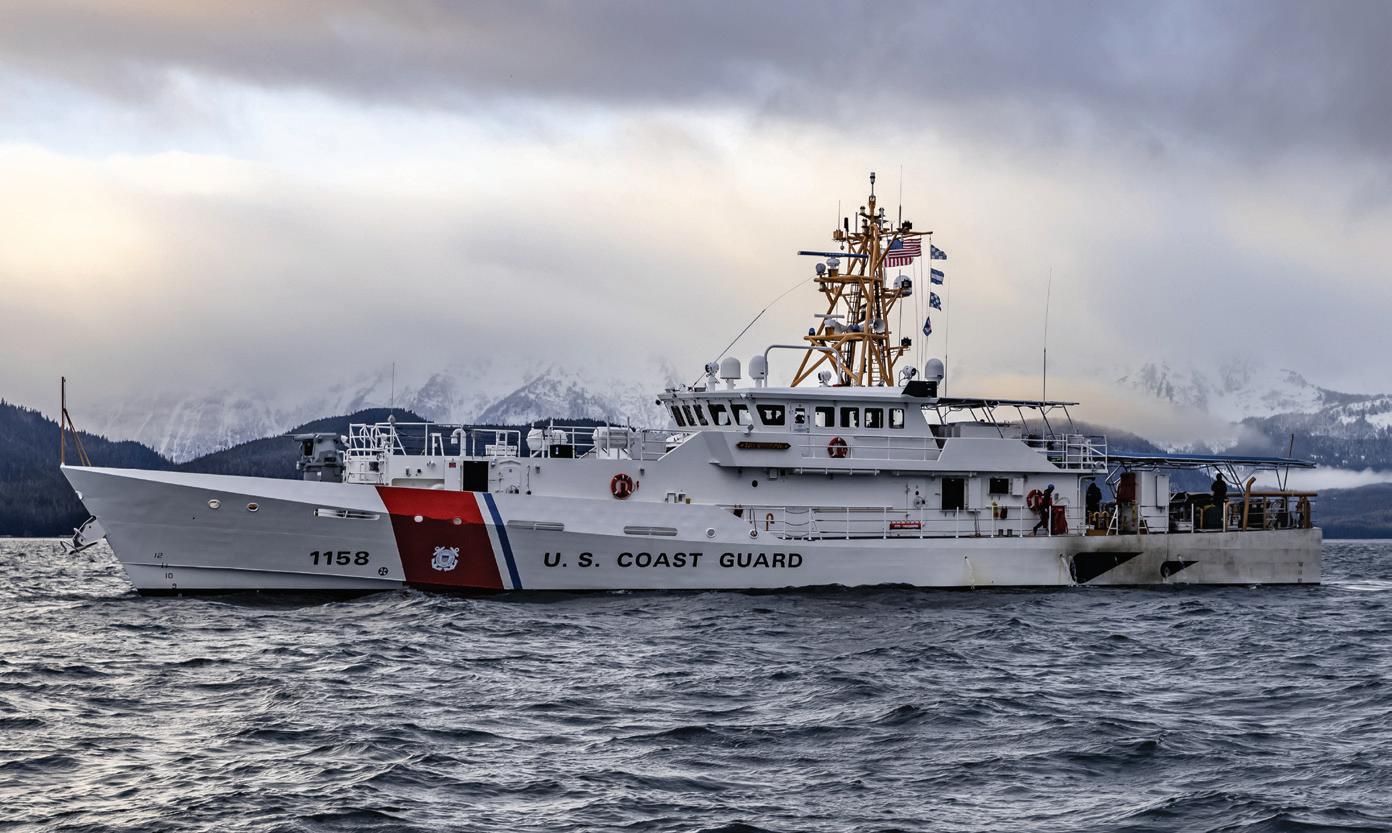
The “patrol boat” being built for the Coast Guard is the Sentinel-class Fast Response Cutter (FRC), a 154' ship that replaces the 1980s-era, 123' Island-class patrol boats, the spokesperson said.
The FRC sails with four of cers and 20 crew at more than 28 knots. It has a 25' beam, a 9'6" draft, and a 353-LT displacement with an endurance of ve days or 2,500 nautical miles. Main propulsion comes from twin MTU 20V4000 M93L diesel engines, each producing 2,900 hp.
FRCs are armed with one bowmounted Mark 38 Mod 2 25-mm autocannon and four crew-served mounts for .50-cal. M2HB heavy machine guns, although a Mark 19 40-mm automatic grenade launcher replaces one .50-cal. gun for FRCs sailing in the Persian Gulf due to the higher threat level.
At an average cost of $65 million per
ship, the FRCs are being built by Bollinger Shipyards, Lockport, La., based on the Stan 4708 patrol vessel design from the Netherlands-based Damen Shipyards Group. In 2008, Bollinger was tapped to build prototype FRCs, the

rst of which entered service in 2012. To date, 77 FRCs have been ordered, with 62 delivered as of February.
“The Sentinel-class Fast Response Cutters replace aging Island-class [patrol] boats and introduce advanced










technology, improved crew accommodations, and enhanced mission capability,” said the Coast Guard spokesperson, who added, “Key lessons [over the past patrol boats] include the value of modular design for upgrades, improved crew habitability, and the need for advanced sensors and interoperability with other agencies.”



In January, the Coast Guard awarded four contracts totaling about $3.6 million to Birdon America Inc., Denver; Metal Shark Boats, Jeanerette, La.; Inventech Marine Solutions, Bremerton, Wash.; and SAFE Boats International, Bremerton, for Response Boat-Small (RB-S) demonstrator boats. Each
company will deliver one demonstrator boat within three months. The boats will measure from 29' to 37' and will be powered by twin outboards producing up to 600 hp.

a subsidiary of BioMicrobics, Inc. Longest Lasting, Best Performing MSD’s PERIOD!
www.SciencoFAST.com solutions@sciencofast.com




The boats will help the Coast Guard develop and validate performance requirements, assess industry capabilities, and gather marketplace information. Data collected from operating the boats will guide future acquisition decisions, the agency said. The Coast Guard’s RB-S boats support missions including drug interdiction, migrant interdiction, search and rescue, law enforcement, living marine resources protection, defense readiness, aids to navigation, and ports, waterways, and coastal security operations.


roudl made in the U S


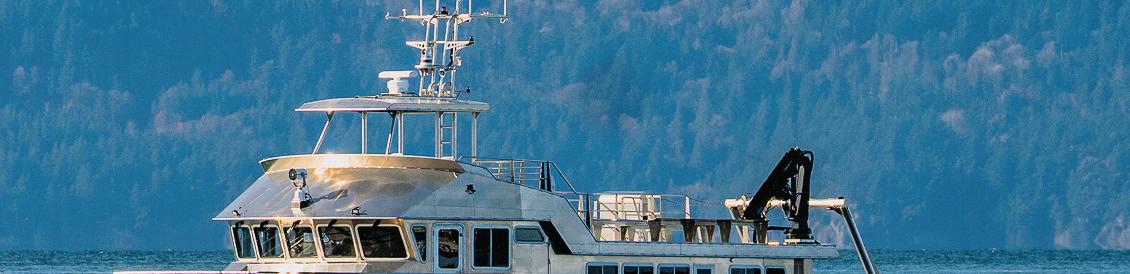
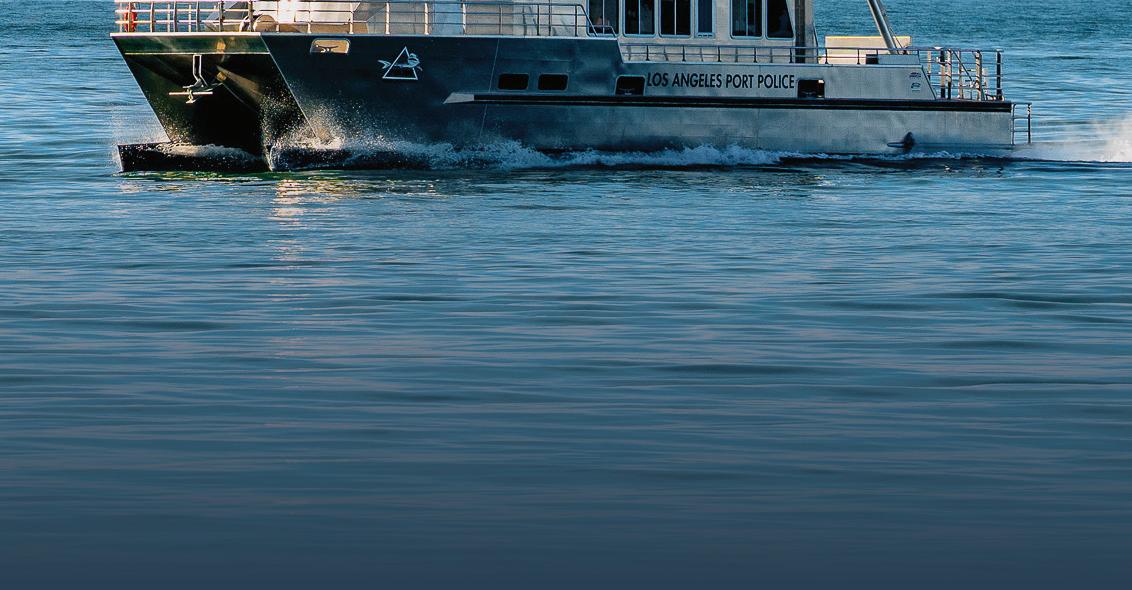
From harbor security and rapid response to demanding law enforcement operations, this patrol vessel built for the Los Angeles Port Police, showcases the proven performance of every vessel we build. Built for speed, stability, and reliability, it’s why operators across North America trust All American Marine, no matter the mission.
The Coast Guard says it does not have plans to acquire unmanned patrol boats. However, it has conducted pilot programs and demonstrations using unmanned surface vessels, the spokesperson said.
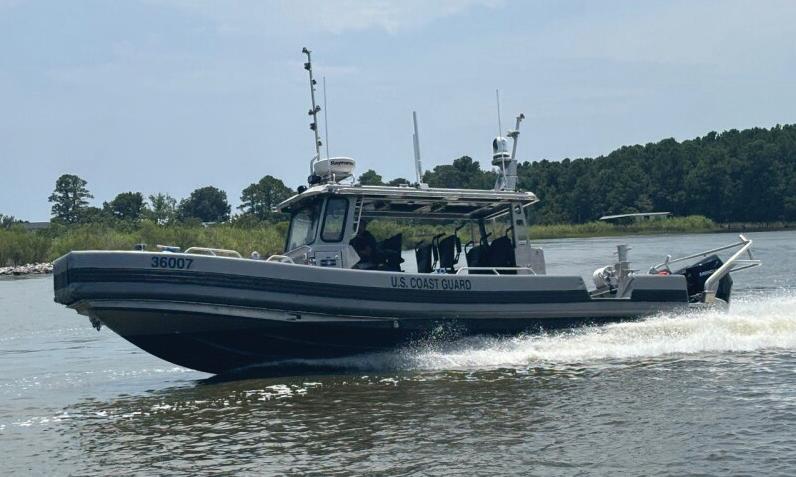
Silver Ships Inc., Theodore, Ala., is building the aluminum 36' SPC-LE2 response boat for the Coast Guard and Naval Special Warfare Command. The order book sits at 110 between the two service branches.
The boat has a 10' beam and is capable speeds in excess of 50 knots using three 300-hp Mercury Verado outboards. It has a “[partially] enclosed [armored] cabin for missions demanding enhanced crew protection, climate control, or extended at-sea operations,” said Shawn Lobree, director of federal programs at Silver Ships.
Two weapons stations, fore and aft, can accommodate 7.62-mm M240 or .50-cal. M2HB machine guns. The SPCLE2 comes equipped with marine radios, Furuno radar and navigation system with two NAVNET 3D displays, L3 Harris automatic identi cation system, Gentex LVIS digital intercom system, Motorola 5000 digital mobile radio, and a Teledyne FLIR thermal imager.
According to the builder, the boat has a service life of 20 to 40 years, depending on maintenance practices.
The Huck BobTail® R delivers the same vibration-resistant, maintenance-free strength you expect from Huck—now with a twist: it's fully removable.
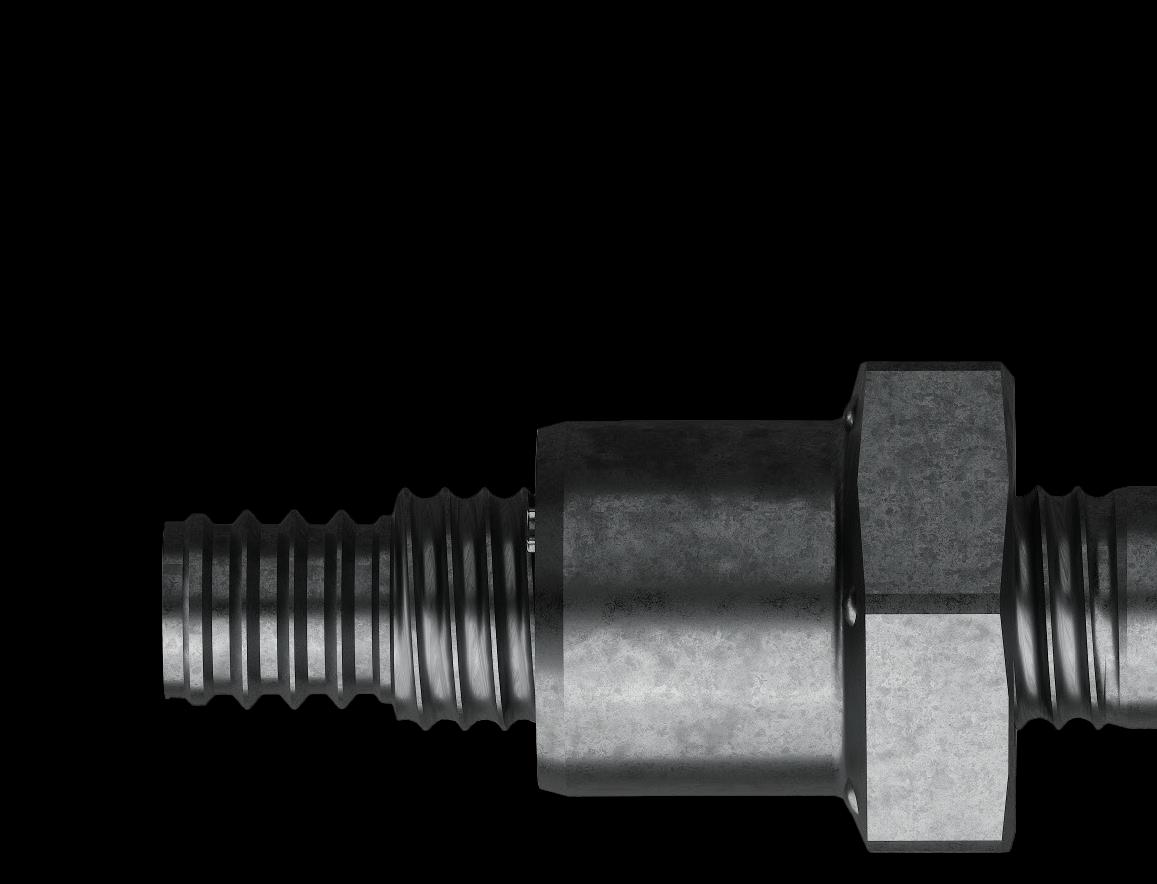

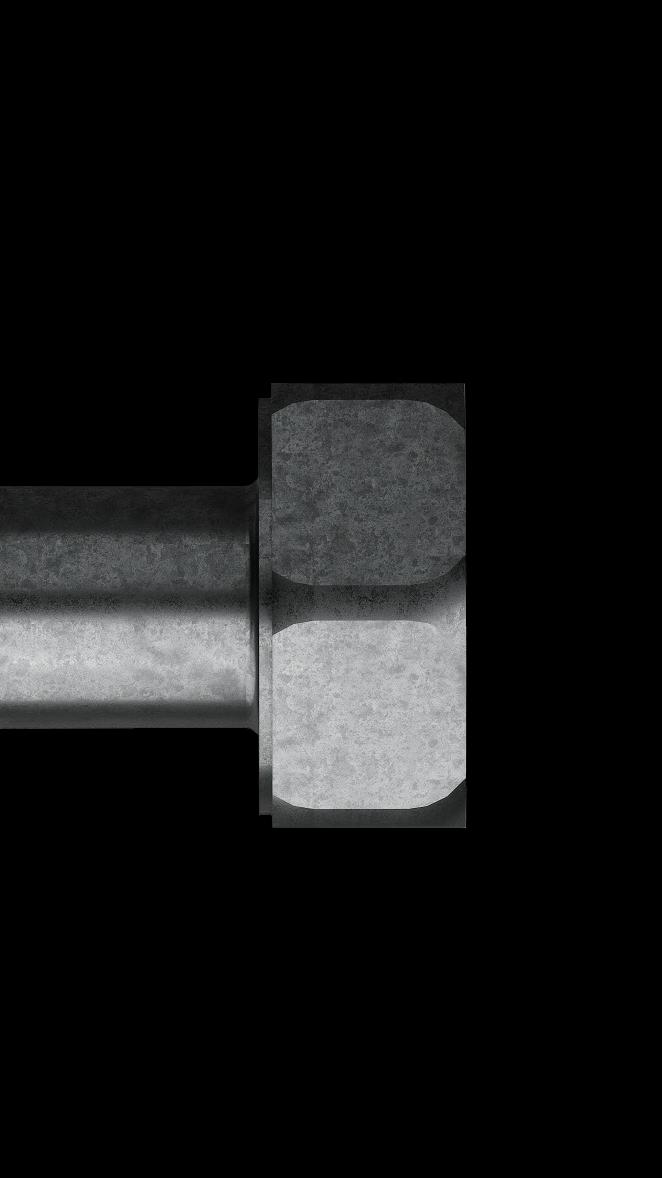
Built for heavy-duty applications that demand both staying power and future serviceability, the BobTail® R is your no-weld, no-loosen solution that’s easy to install and just as easy to take apart. No heat. No sparks. No nonsense.
+ Vibration-resistant, maintenance-free joint
+ Easy removal with standard torque-type tooling
+ Installs in seconds—no re-torquing, no retightening
See how the BobTail® R can power your next build. Visit hfindustrial.com
MetalCraft Marine US Inc., Watertown, N.Y., is building several variants of “force protection” patrol boats, which are deployed at military bases around the world to protect U.S. fleets from small boat attacks, said Bob Clark, the boatbuilder’s contracts manager.
“We are building 20 of [them] for the U.S. Navy Force Protection Program in a different [enclosed] cabin layout, 47 in a 27-foot size,” Clark said.
“Available in sizes ranging from 7 meters through 12 meters, every boat comes with MetalCraft’s standard 10-year hull warranty. After a test and
evaluation phase, the U.S. Navy has awarded MetalCraft a 67-boat, five-year contract for Force Protection Small (FPS 8 meters) and Force Protection Large (FPL 12 meters) patrol boats. Propulsion for these boats is a mix of Honda, Mercury, and Yamaha outboards.
“This program started as a result of the terrible USS Cole incident, where many servicemen lost their lives in Yemen. The large version is intended for offshore bases where sea states can be much higher, such as Guam and Diego Garcia,” Clark said.
Under a separate contract awarded in
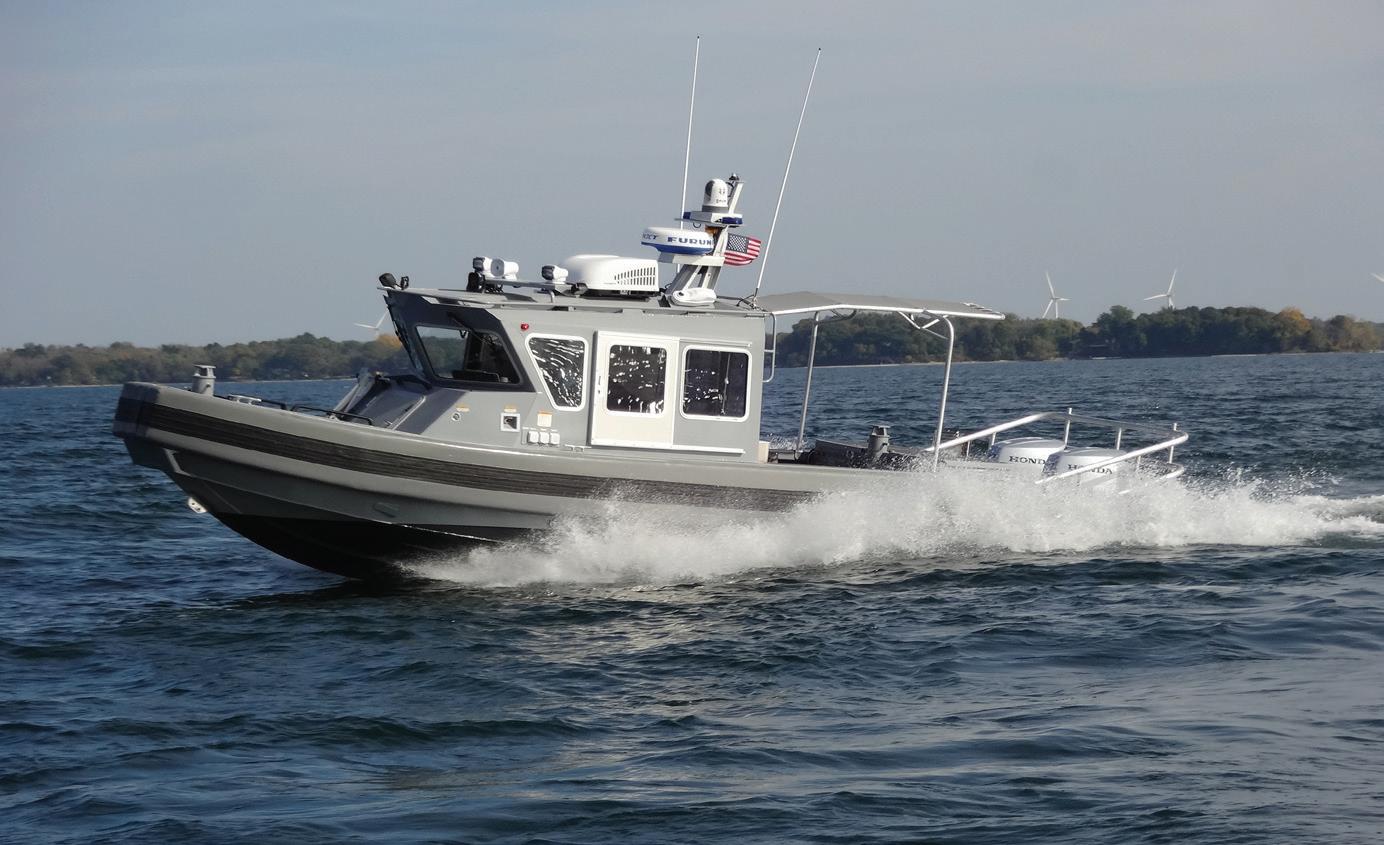
2023, MetalCraft is building 17 Long Range Interceptor IIIs for the Coast Guard. Specifications state that the Long-Range Interceptor III has “bow and stern machine gun posts and port and starboard positions are available with ammo storage. Full cabin with roll-up aft side curtains and aft wall curtains, large sliding side doors, multiple ingress/egress points, headroom of 6'10". The aft crew/gunner positions can provide return fire seated at a 135-degree arc and kneeling on the side deck 180 degrees of fire both port and starboard.”
Clark said the boats are designed to provide a soft, dry, and safe ride.
“Operators regularly tell us they don’t like to be wet or cold and being jolted by waves,” he said. “[The operators’] job is to do the dangerous work. Our job is to provide the correct and best tools”.
The Defiant-class 40' patrol boat, or “40PB,” from Metal Shark is a weldedaluminum monohull with an enclosed armored pilothouse that has a crew of five sailors. It is capable of speeds of 35-40 knots using twin Cummins QSB 6.7 diesel inboard engines, paired with Twin Disc MG-5065SC transmissions to HamiltonJet HTX30 waterjets, according to the builder.
Armament consists of six weapon stations and a stabilized, remotely operated bow gun mount for a choice of .50-cal. M2HB heavy or 7.62-mm medium machine guns or miniguns, or Mark 19 40-mm automatic grenade launchers; it has no autocannons fitted. Its stern ramp can launch and recover a combat rubber raiding craft.
Government records show that Metal Shark was awarded the 40PB Flight 1 contract in 2017. In May 2024, Metal Shark and ReconCraft, Clackamas, Ore., were awarded seven-year indefinite delivery/indefinite quantity Flight 2 contracts worth up to $290 million to produce up to 73 of the 40PBs for Naval Expeditionary Combat Command. Under the deal, Metal Shark also supplies the spare parts, training, technical support, and engineering expertise.

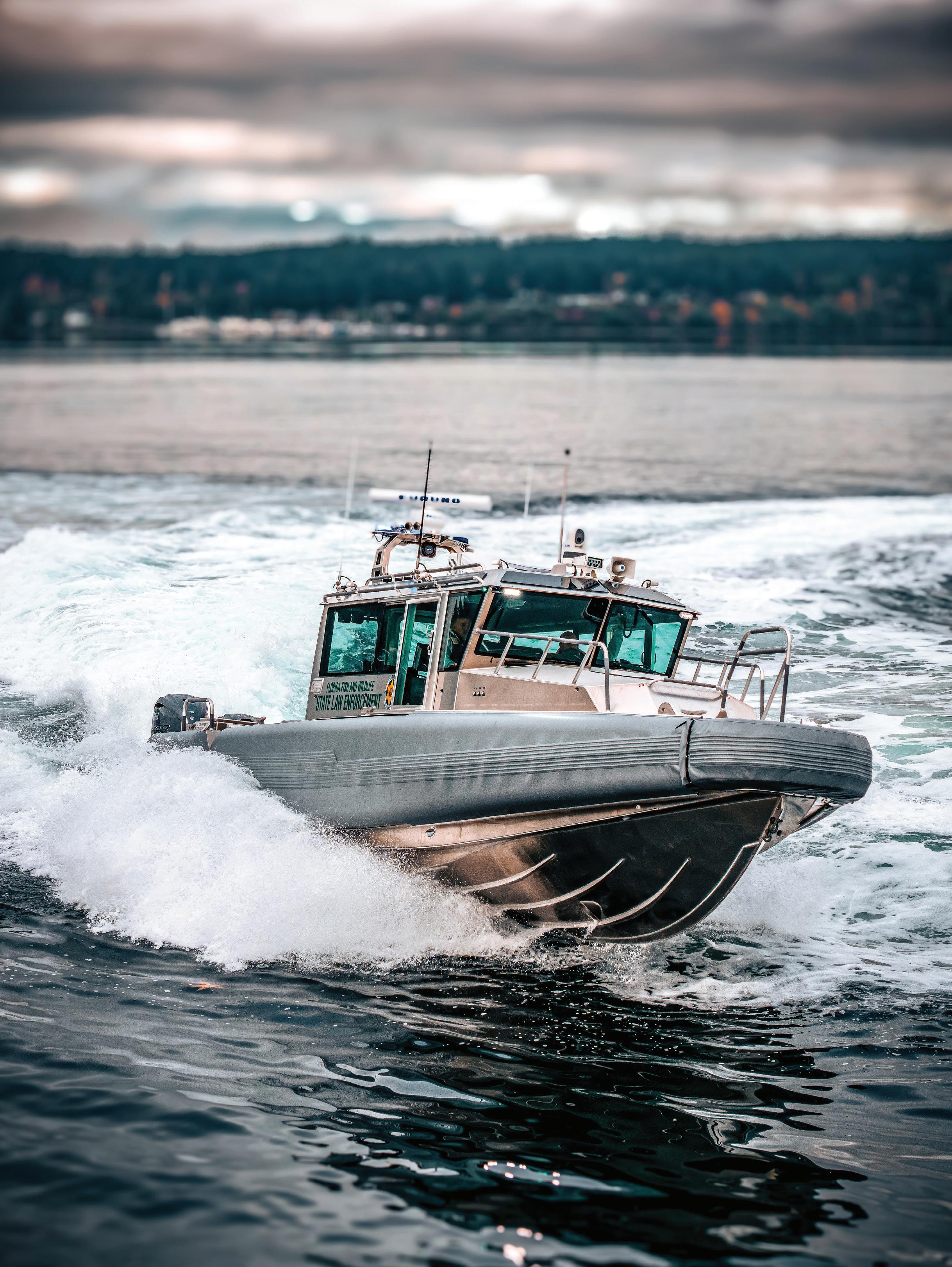
The SAFE 41 Full Cabin is engineered for extended offshore operations, combining all-weather protection with long-haul comfort to keep crews effective for hours at sea. Built on SAFE Boats’ proven aluminum hull, it delivers exceptional maneuverability, responsive handling, and the speed required to cover distance efficiently.


By Capt. Eric Colby, Contributor
from a smartphone. Marine VHF radio is still the preferred way to communicate between commercial vessels and to send out mayday calls, but satellites have changed the way mariners stay connected with the world and with their families when at sea.
When Chris Sullivan served in the U.S. Coast Guard, he spent two years underway in the Bering Sea off Alaska. The crew got its news updates about a week or two later than the rest of the country, and they didn’t speak to their families for weeks at a time.
“Now you can’t talk about [onboard communications] and not say Starlink,” said Sullivan, who now holds the title of head of sales, marketing, and
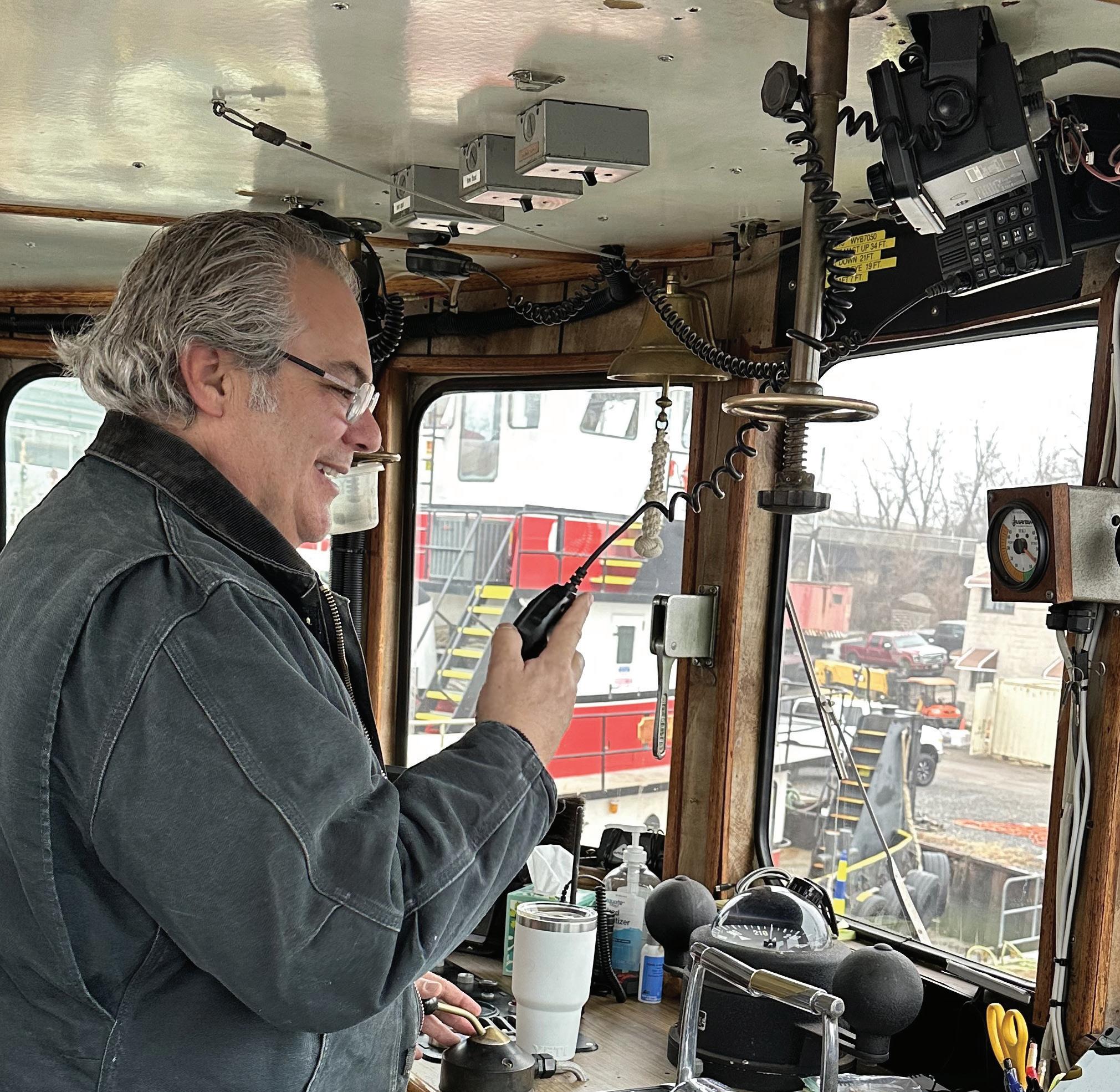
strategic partnerships at Navtronics, an electronics dealer in York, Maine. “It checks every box. Instead of needing to have a high-frequency radio antenna and another one for TV, it’s one antenna coming down to a server.”
Starlink is the satellite-based communications system launched by SpaceX. It employs more than 9,300 low-earth-orbit (LEO) satellites that let users around the world access the internet and make voice and video calls
“Eight to 10 years ago, you would have killed to have this performance,” said Sullivan. A captain on a workboat can dedicate a certain amount of bandwidth to each crewmember, and it’s up to each individual to manage that between calling home, sur ng online, or playing video games in their off time. A deckhand can log in and use voice-overIP to call his family on his cell phone.
Starlink also enhances safety because crews can access up-to-date weather data from multiple sources. “You can look in real time if a storm front is coming,” said Sullivan. “You can monitor it in real time now.”
Starlink Maritime business rates start at $2,325 per month with a hardware cost of $12,999 for 50GB Global Priority service. Prices will most likely come down with competition. Amazon is working on its own network, and China’s national network, Guowang, is a government-backed 13,000-satellite LEO constellation aimed at providing global broadband coverage to challenge Starlink. It’s expected to have at least half the satellites launched by 2032.
Inmarsat’s NexusWave delivers high-speed connectivity to vessels, offering unlimited data, global coverage, and what the company calls “secure by design” infrastructure. The company integrates multiple high-speed networks in real time, including Global Xpress (GX) Ka-band, LEO, and coastal LTE service with an additional layer of Lband for resiliency.
NexusWave supports expanding Internet of Things (networked objects and devices) deployments and realtime monitoring to remote IT management, and it has an upgrade path to the ViaSat-3 satellite network. Unlimited data plans are available, and business, operational, and crew traf c are separated to maximize performance and minimize risk. Inmarsat provides
24/7 technical support and access to self-service portals with dashboards for real-time viewing of connection status, data usage, and vessel locations.
At the International WorkBoat Show in December, KVH Industries introduced its CommBox Edge Core router and network bandwidth manager. It is used to manage Starlink, Eutelsat OneWeb, VSAT, and cellular services for vessels and integrates Wi-Fi supporting external networks and onboard mesh connectivity.
How do we secure it?’ Before, speeds were so slow that you didn’t have to worry about the crew trying to use gaming systems or streaming because it was so slow. Now it works awlessly.”
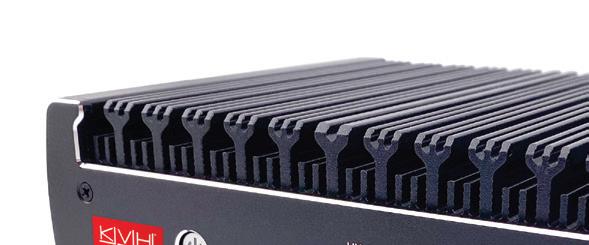
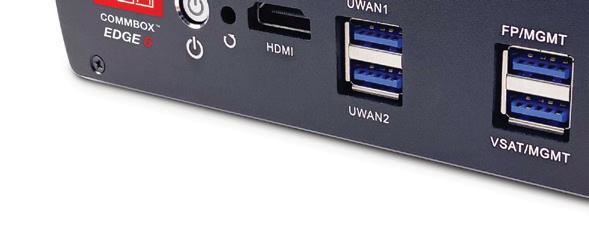
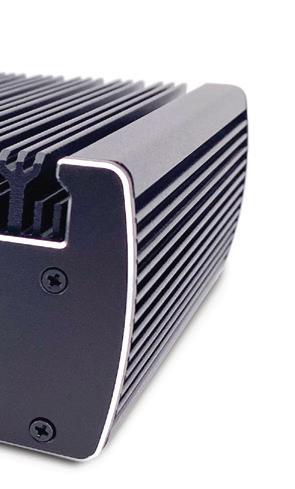
KVH is bringing features of its CommBox Edge 6 to the Core to allow workboat operators to have a secure resource for employing multiple communications networks and replace more basic routers often provided with satcom products. CommBox Edge Core has an integrated router that manages onboard wide area networks, including Starlink, VSAT, OneWeb, 5G/LTE cellular, and more.
The new unit has Wi-Fi 6 and an access point controller to support multiple networks, plus a high-gain Wi-Fi bridge to external networks. It has IP and userbased data usage tracking and alerts, zero-touch installation, out-of-the-box operation, and a mobile app. Security features include a built-in rewall, identity access management, and license options for secure cloud connectivity. CommBox Edge Core can be purchased on its own or as part of KVH’s Starlink/ CommBox Edge Core Performance Kit.
“Right now, we have fast internet speeds with OneWeb and Starlink. It’s now, ‘How do they control it and pump the brakes a little bit,’” said Robert Blackman, senior manager, service business development at KVH. “I feel like the conversation shifted from just communications to, ‘How do we control it?
KVH has more than 1,100 customers on the CommBox products, and the system can tell a vessel operator where people are going online, the traf c being used. The top culprits are Facebook, Instagram, YouTube, and TikTok. Blackman said CommBox Edge Core is an entry-level system that gives vessel operators the ability to manage bandwidth on board. The company sells it with Starlink, but customers can add OneWeb, VSAT, cellular, L-band, or whatever network they need. KVH can create multiple pro les to separate vessel business from crew use, putting business on Starlink and crew online time on OneWeb. “We can have numerous proles,” said Blackman. “All the comms are being used, and they’re used ef ciently. One of the most bene cial features for so many customers is that they can see the consumption on a per-user, per-device level.”
For commercial and workboat business, Blackman sees CommBox Edge Core used on vessels like tugs, barges, and similarly sized boats with less than 10 crewmembers and one or two networks on board. CommBox Edge 6 would be used on larger vessels using multiple networks. It has more processing capability and can handle more data. Wi-Fi is built into the CommBox Edge Core while Edge 6 works with a separate router. That brings in the need for more network
security, like an intrusion prevention system.
Unlike computers, hard drives, and other storage devices, the CommBox Edge Core has no fans or moving parts, so there’s no risk of dust or moisture intrusion. KVH also provides the unit with instructions for myriad mounting locations. Pricing for the CommBox Edge Core starts at $349.
Even with all the satellite technology, when communication is critical between vessels or a captain and emergency responders, rules mandate that workboats and other commercial vessels have marine VHF radios at the helm.
In the commercial marine world, Standard Horizon has the most market share. Other key players in the VHF segment include ICOM, Uniden, and Cobra. These companies don’t make marine VHF antennas. Best known names for this important piece of hardware include Shakespeare, Digital, and GloMex
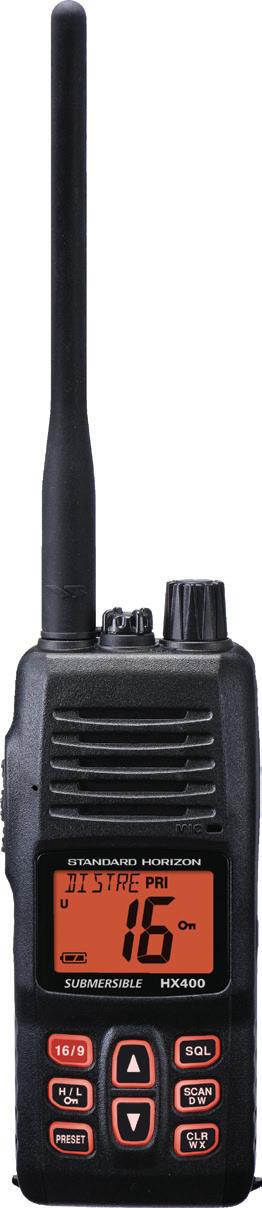
“The commercial side of our business is far greater in terms of units sold,” said Jason Bentley, president of Yaesu East, the parent company of Standard Horizon. He estimates that 70% of Standard Horizon’s commercial units are made up of the GX600 xed mount and HX400 and HX400IS handhelds.
All marine VHF radios for any vessel that goes 10 miles offshore must have the Automatic Identi cation System. Most ships have a standalone AIS transponder. Standard Horizon units have an AIS-receive function that can interface with a NMEA 2000 network.
Bentley said that commercial clients look for VHF radios with redundant GPS, AIS-receive, and other built-in functions. Handhelds need to be shock resistant. “They value a rugged product,” Bentley said of the handhelds. “It’s going to get abused. It’s going to get dropped. They want it to last.”
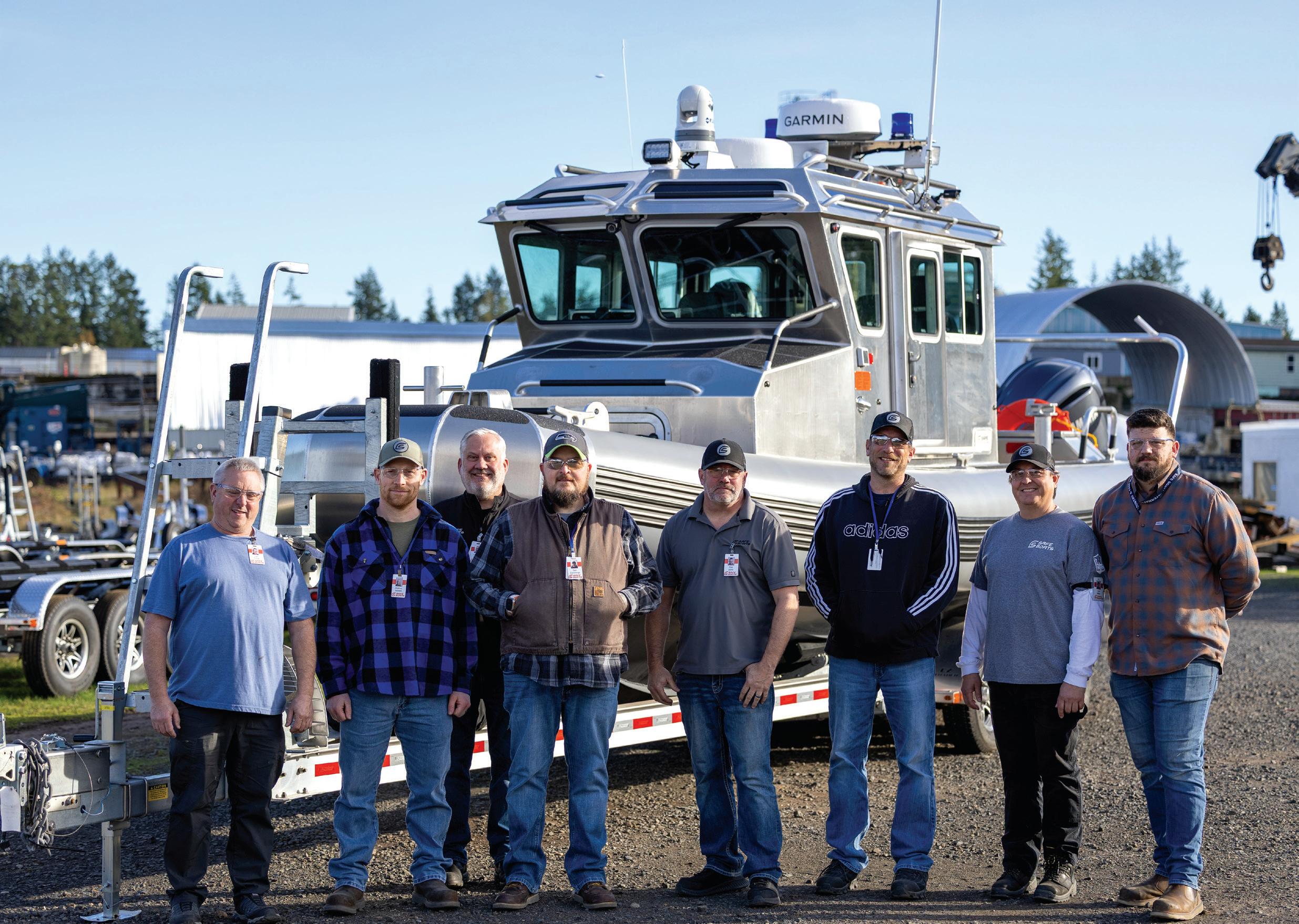

By Eric Haun, Executive Editor

n 2023, boatbuilder SAFE Boats International, Bremerton, Wash., became 100% employee owned. For founder Scott Peterson, the transition was something he’d pursued for nearly 20 years: making sure the people who built the company got to share in what was created.
“See, I don’t have kids,” said Peterson, who now serves as SAFE Boats’ chairman of board. “What do you do with something you build?”
Peterson spoke of the many long-tenured employees who helped to grow the business. “Let’s make them part of it. This can’t be about an individual. It has to be about a community, and that’s the only way you become sustainable.”
Founded in 1996, SAFE Boats International built its reputation on heavy-gauge aluminum, high-performance watercraft for government customers. What started as a company lling a gap in durable patrol boats for agencies like the Coast Guard and Navy has evolved into a builder delivering vessels to federal, state, local, and international customers.
The company now operates production facilities in Bremerton and Tacoma, Wash., employing more than 300 team members. Its backlog stands at more than 100 vessels — the highest in company history.
In the wake of the Sept. 11, 2001, attacks, the Coast Guard issued an urgent operational requirement to protect 361 U.S.
ports, awarding SAFE Boats a contract for 100 response boats — then called Response Boat Homeland Security. That eet preceded what became the 25' Defender-class Response Boat-Small Generation 1 program, which SAFE Boats won in competition.
“That’s what really put us on the map, building eets of boats for the Coast Guard,” said Rob Goley, chief revenue ofcer and one of four leaders in the company’s collaborative leadership model. “Since then, we really have a strong mix of what we consider program opportunities or program builds, and then focusing on our state, local, and international customers.”
Major programs over the past three decades include the 38' Riverine patrol boat for the Navy, the 24.75' Over-the-Horizon Gen 4 interceptor and the 41' Coastal Interceptor Vessel programs for Customs and Border Protection (CBP), and the ongoing 85' Mark VI patrol boat program for the Navy.
The Mark VI program encountered a setback in 2025 when a stop-work order temporarily halted production at the Tacoma facility. Recent Mark VI boats were being built for Ukraine, and the order was part of the Trump administration’s broader crackdown on foreign assistance programs.
The SAFE Boats team responded by relocating a portion of small boat production from Bremerton to Tacoma, building ve
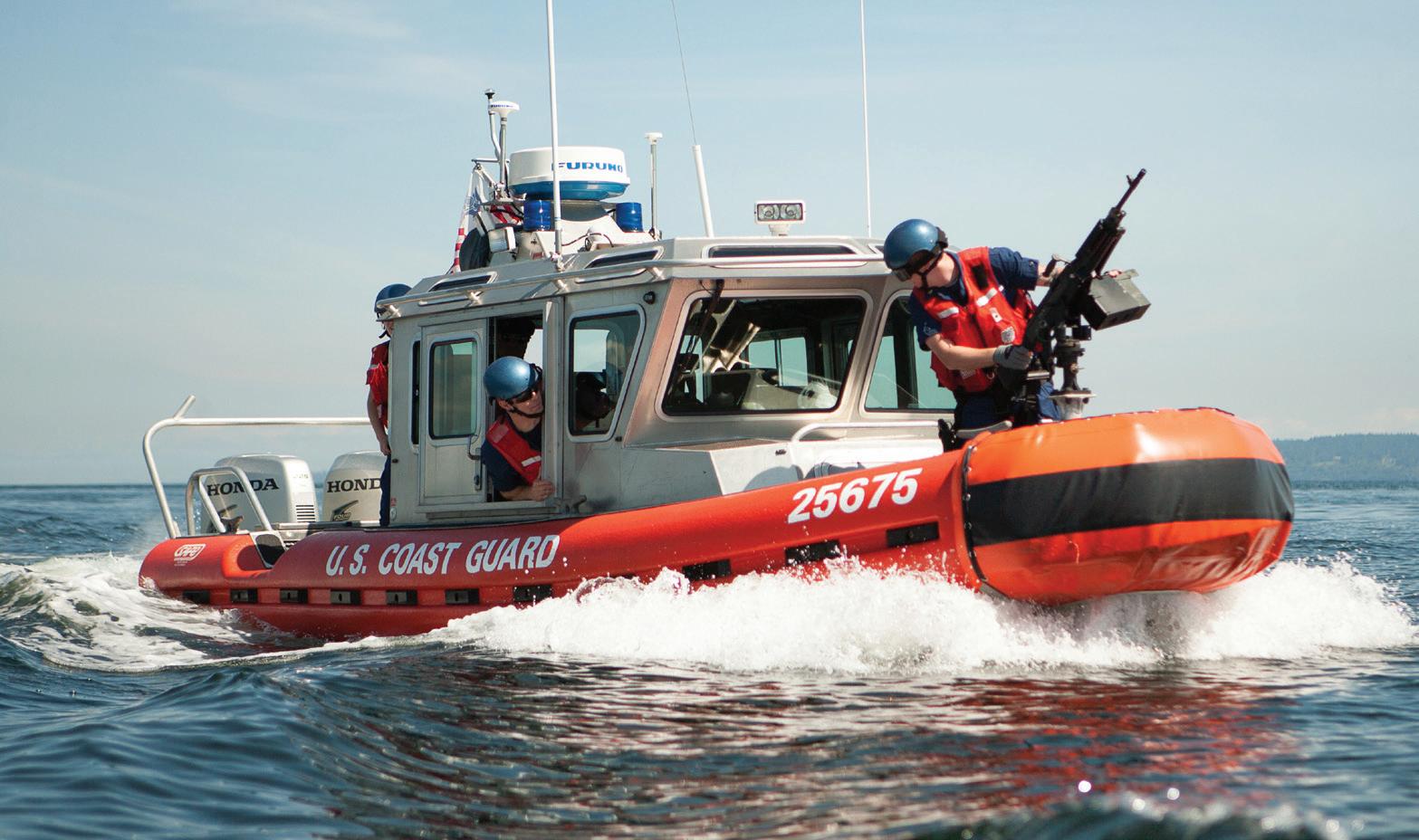
boats in just over 30 days to maintain momentum.
“This team was not impacted by it,” said Christer Bradley, chief operations of cer. “One of the reasons is because of our backlog. We were able to move boats here. This facility was thought of as large boat production. It’s not. It’s another production facility. We can build boats from 23 to 85-plus feet, and that’s the plan.”
SAFE Boats doesn’t build stock. Every boat is built to order, and every vessel on the production oor carries the customer’s name and destination.
“Every boat on the oor has a purpose,” Goley said. “The team that’s working on that boat, they really, truly want to understand the purpose of that boat. They want to know the customer. They know that’s not just a hunk of metal. It’s not just a boat going out for a joyride. It is going out there to potentially save lives, protect property, and most importantly, bring those crews home. They take that to heart.”
SAFE Boats serves federal agencies, including the Coast Guard, Navy, and CBP, along with state and local law enforcement, harbormasters, and international customers. The company also builds specialized platforms for applications ranging from re suppression
to hydrographic survey.
Geopolitical activity drives demand. Goley pointed to the Indo-Paci c, Europe, the Middle East, and, more recently, Venezuela and other parts of South America as regions where governments need capable patrol boats to combat transnational organized crime, drug smuggling, and other threats.
“Those are things we’ve been doing — providing boats for the Coast Guard, the Navy, and our international partners — for 30 years,” Goley said.
The company has also watched the autonomous vessel market evolve. Early efforts focused on converting existing
boats to unmanned operation. Now, Goley said, autonomous technology is often the prime requirement, with the boat simply serving as a mode of transportation.
“Us being boatbuilders, it’s a different type of business,” he said. “If it’s completely unmanned and autonomous, there’s no human interaction. We put a lot of effort into designing our boats to protect humans.”
While SAFE Boats remains engaged in the autonomous space, the company’s focus stays on crewed vessels. “We still believe that there will be humans on boats for a very, very long time,” Goley said. “That’s what we focus on. That’s what we do really well, and we’re going to keep doing that.”
In December, SAFE Boats CEO Richard Schwarz transitioned into a consulting and advisory role, and the company implemented a collaborative leadership model with four co-equal executives: Goley as chief revenue ofcer, Bradley as chief operations of cer, Cindy Vean as chief people of cer, and Tom Gumpert as chief nancial of cer. Each leader has a de ned focus area but operates under uni ed company goals.
“What the collaborative model allows us to do is, it’s not just one single decision point anymore,” Goley said. “While we operate under a uni ed organization in terms of goals, objectives, and vision, we can make decisions faster for our team and ultimately for our customers.”
The structure requires constant communication — weekly meetings, daily coordination via email and messaging, and a standing rule that any of the four leaders will make themselves available when needed.
“We all are very like-minded,” Goley said. “We spend a lot of time talking about our uni ed goals for the company, and we agree on them.”
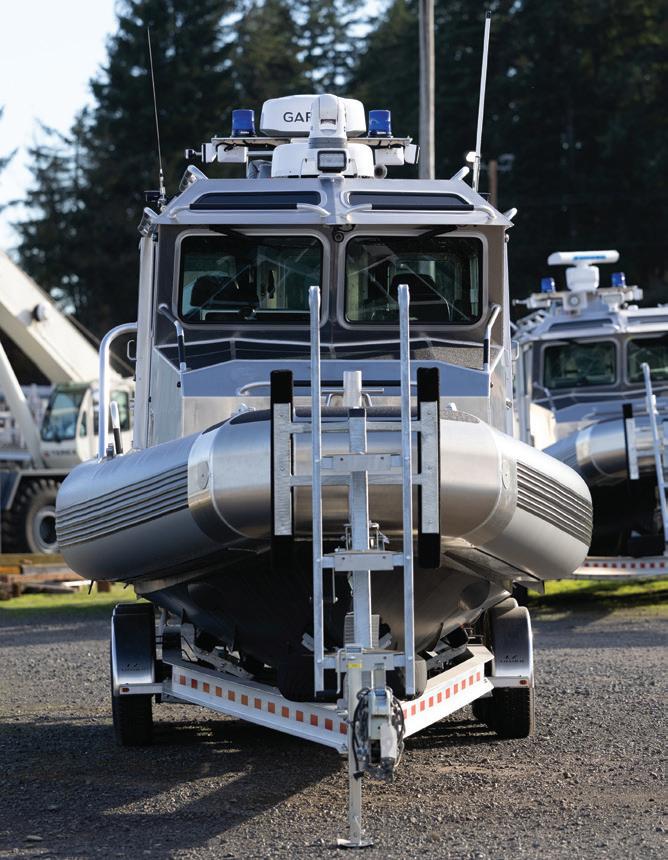


SAFE Boats’ priorities for 2026 include implementing a new enterprise resource planning system to improve efciency across operations. The company is also expanding its in-house training programs, particularly for aluminum
welding — a skillset in short supply.
“We’re pretty picky on skills and welders speci cally,” Goley said. “What we’re also looking at is more attitude instead of necessarily aptitude. If you’ve got the right attitude, we can train you to be a welder.”
The company has created a professional development program that covers both technical skills and leadership training. Bradley said SAFE Boats has capacity to add up to 36 new team members.
Workforce remains a persistent challenge. “We’ve got jobs. We just need that workforce,” Goley said, adding that investments in robotic welding and automation don’t make economic sense for a builder producing custom vessels in relatively small quantities.
Another challenge: inconsistent demand signals from the federal government. “If they want industry to invest, we need to have the con dence that the
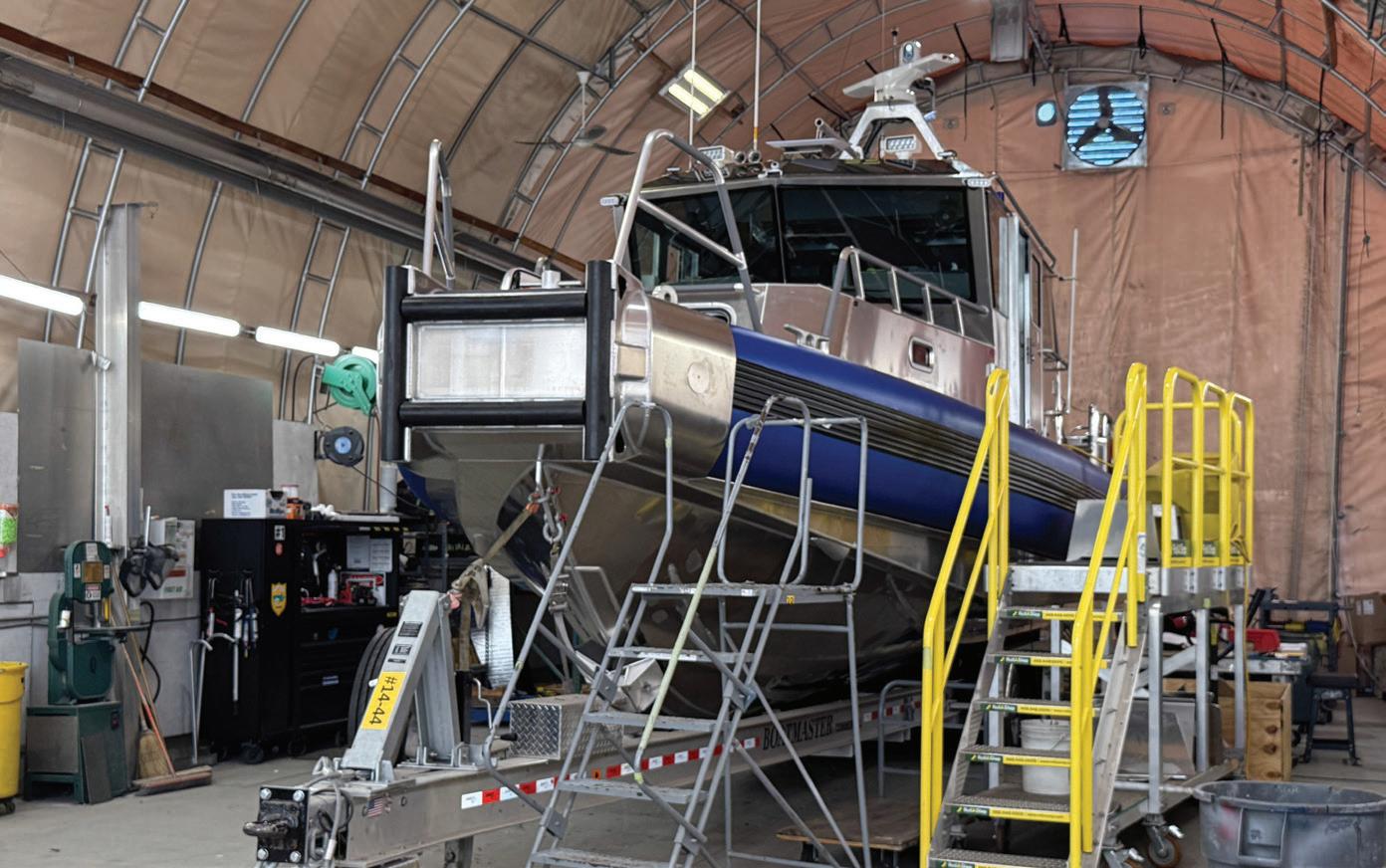
business is going to be there,” Goley said, pointing to course corrections and program changes that make long-term capital investments dif cult to justify.
Still, Goley said he’s encouraged by efforts, including the Navy’s Maritime Industrial Base program and the Coast
Continued on page 34


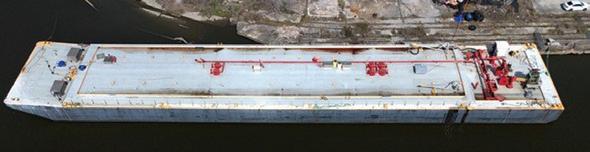


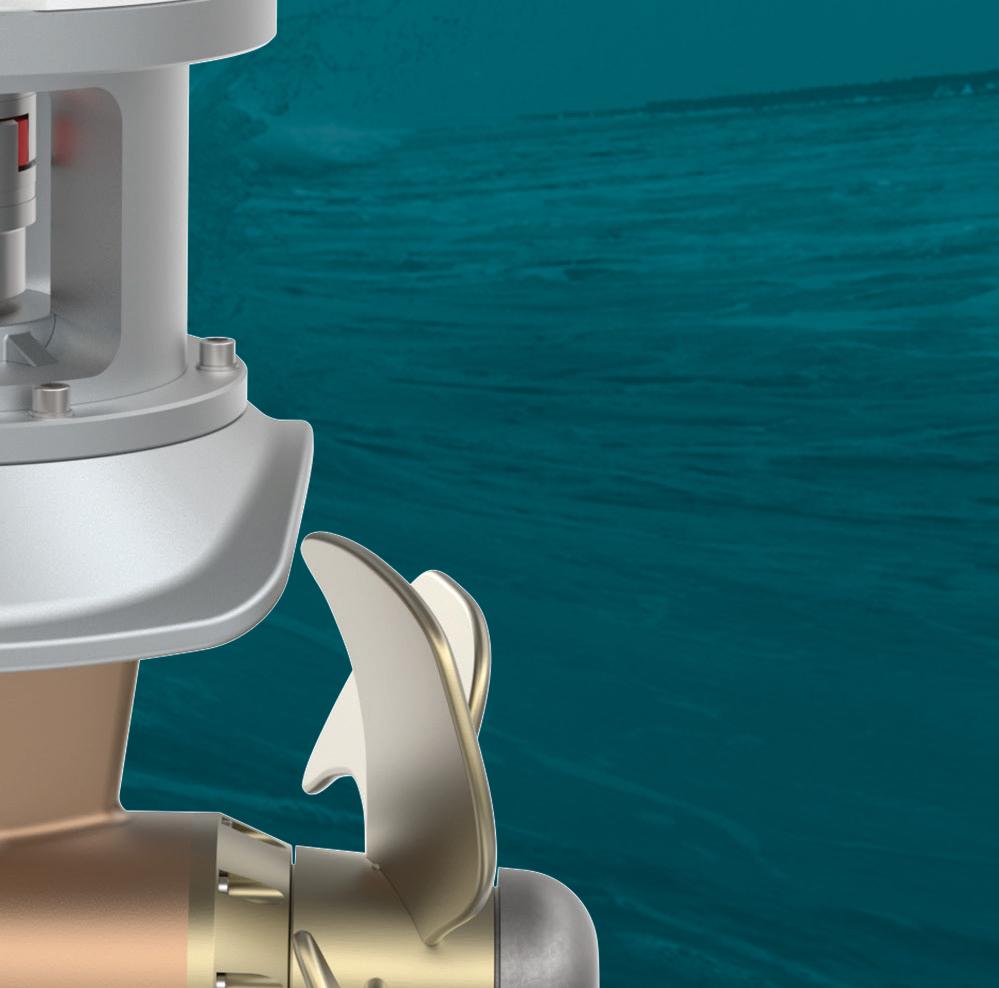
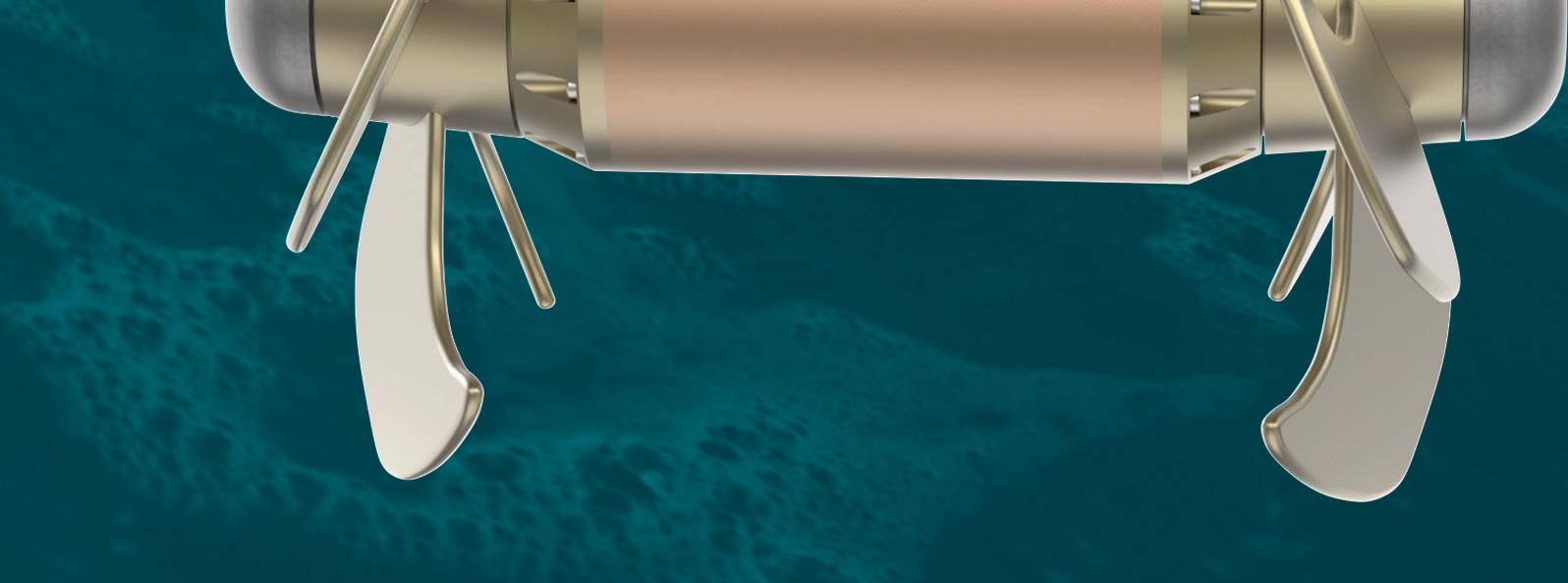








By Ben Hayden, Senior Associate Editor
WorkBoat spoke with Jennifer Carpenter, president and CEO of the American Waterways Operators, about the state of the tugboat, towboat, and barge industry, including workforce challenges, regulatory priorities, and collaboration with the Coast Guard. Carpenter also outlined AWO’s advocacy work in Washington and what success would look like for the organization in the year ahead. This interview has been edited for length and clarity.
What operational challenges are your members facing right now?
There is so much that is uncertain in the world, whether we’re talking geo -
politics or weather. And so we’re really trying to focus on what we can be really good at, no matter what else is going on out there.
And I’d highlight three things there. One is Coast Guard service delivery, where the rubber meets the road… This is an area we’re going to be really
focused on this year, working with the Coast Guard to make sure that we’re working as well as we can together so that vessel turnaround time for inspections is efficient, so that the credentialing process does not result in mariners losing work or not being able to crew a vessel. Really trying to improve that service delivery.
Similarly, working with the [U.S. Army] Corps of Engineers and the Coast Guard to collaborate as we deal with the whole sequence of things that can happen throughout the year. We’ve had ice, we’re going to have high water, we’re going to have hurricanes, we’re going to have low water. So again, in the spirit of, we can’t control the weather, but we have a lot to say about how well we work together, how we learn lessons from past events.
And then the third thing I’ll mention is safety. That’s a thing we drive. Regardless of the conditions, regardless of the economy, we want to take care of the people. We want to take care of the environment. We want to take care of our assets.
I would say that there are areas for improvement that we see — just service delivery generally.
So, flexibility in inspection scheduling. It’s a dynamic operating environment, so being able to very nimbly shift paperwork from one unit to the next, reschedule, or take advantage of windows that come open to schedule vessel inspections, that’d be thing one.
Thing two: making sure that we are fully realizing the benefits of the towing safety management system [TSMS] option by refining the Coast Guard and TPO [third party organization] division of labor. We are still hearing too many examples — as far into Sub-M implementation as we are — of conflicting approaches to TPOs clearing deficiencies.
There’s an opportunity, I think, for
real improvement around Coast Guard oversight of TPOs — which is very important — in a way that is as seamless as possible to the vessel owner.
And then I think Coast Guard inspector training. The Coast Guard is in the midst of an expansion. There are a tremendous number of new folks, younger folks who did not come of age during the pendency of Subchapter M. They quite literally don’t know the history, the background, the point of the TSMS option, and how we got here.
And that’s not on them alone to know that. That is really on the system to make sure that they are being turned loose with the level of background and information that they need.
Implementation of the Coast Guard’s cybersecurity regulations is an area that we are working very hard to facilitate and streamline compliance for our members.
Candidly, we would have liked to see the Coast Guard make more thoroughgoing changes between the proposed rule stage and the nal rule stage to better re ect the fact that one size doesn’t t all.
The cyber-risk pro le of a small operator at an inland eet is different from a global shipping company with operations in the Middle East and South America and everywhere. We would have liked to see more tailoring there.
We were happy to see the Coast Guard recognize the role of alternative security programs as a compliance mechanism.
And so, we are working really hard with member subject matter experts to develop a cybersecurity annex to AWO’s ASP [alternative security program] with the goal of helping to do some of that tailoring ourselves.
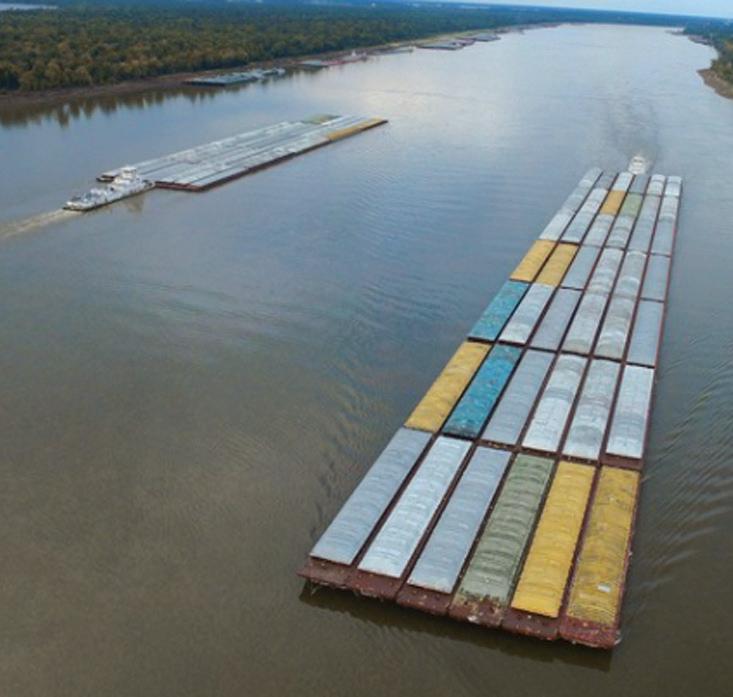
Strategically, we want to make sure that we are not only dealing with the challenges and taking advantage of the opportunities that are right in front of our face now, but also that we’re positioning our industry for durable success.
We are working very hard continually to build and strengthen relationships, bipartisan relationships on the Hill.
But similarly, defending, advancing, spreading the gospel of the Jones Act. It is the foundation of our industry. It is the foundation of every job that our members provide to American men and women. It is the foundation of every dollar that they invest in American vessels. We can take nothing for granted with respect to the Jones Act. We need to be constantly telling that story.
is AWO
Partnership is just so key. We’ve got our Coast Guard AWO quality partnership for safety and environmental
protection, which has now been going strong for 31 years.
And that continues to be an extremely important vehicle for getting together with the Coast Guard in a non-regulatory way to say, how do we look at what the trends are telling us, get ahead of anything that looks problematic, and jump on it before it causes harm to people or the environment or property?
If we got to the end of 2026 with bipartisan consensus around the importance of the Jones Act, and if the centrality of the Jones Act was growing and growing. If we had continued to build and strengthen our list of champions and supporters in Congress across all sides of the aisle. If we’d seen tangible improvements in Coast Guard service delivery, and if we had strong collaboration across all the seasons, high water, hurricane, low water. That would be a good year.
Continued from page 30
Guard’s Tiger Team initiatives. “I think it’s still going to take maybe another year or so to actually see something tangible,” he said.
Reaching the 30-year mark is a signicant milestone in any sector, let alone in boatbuilding, where companies tend to fall off due to founder retirement or succession challenges.
For SAFE Boats, the Employee Stock Ownership Plan (ESOP) structure provides continuity. An ESOP is a taxadvantaged retirement plan that allows employees to become company owners without purchasing shares directly.
Peterson saw employee ownership as a way to preserve what they built while rewarding the team that made it possible. “Our founder and some of our senior board members saw that over time, the

company’s done so well for them personally and professionally, and they really wanted to give back to the team,” Goley said. “An ESOP was the perfect way to do it.”
The structure also changes how employees think about their work. “Instead of just being an employee or a number, they’re an employee/owner,” Goley said. ‘They own a share of SAFE Boats, and it changes the way you think about coming to work every day.”
Tom Norton, a member of SAFE Boats’ board of directors and former director of CBP Air and Marine Operations, said he walks the production oor regularly, asking team members two questions: What drew you to SAFE Boats, and do you feel content or is there something you’d like to see changed?
“I probably talked to 40 people this morning, and with the exception of one person, every single one of them, the rst thing out of their mouth was
‘people,’” Norton said. “That’s pretty remarkable.”
Norton described Peterson’s character in straightforward terms: “You’re sitting with a guy that has more character and honor and integrity than anyone I know in the boat business.”
For Peterson, people, not nancials, must always be at the heart of the business. “As soon as you lose focus on that, things will start to erode,” he said. “That’s what this organization is about. It’s about the community. It’s about everybody out there, and now they’re all shareholders.”
Looking ahead, the company’s formula for success remains unchanged. “It’s very simple for us,” Goley said. “Success is taking care of our customer and taking care of our people. At the end of the day, if we focus on those two things, everything else will fall in place. That’s been our success for the last 30 years, and we look for it for the next 30 years.”

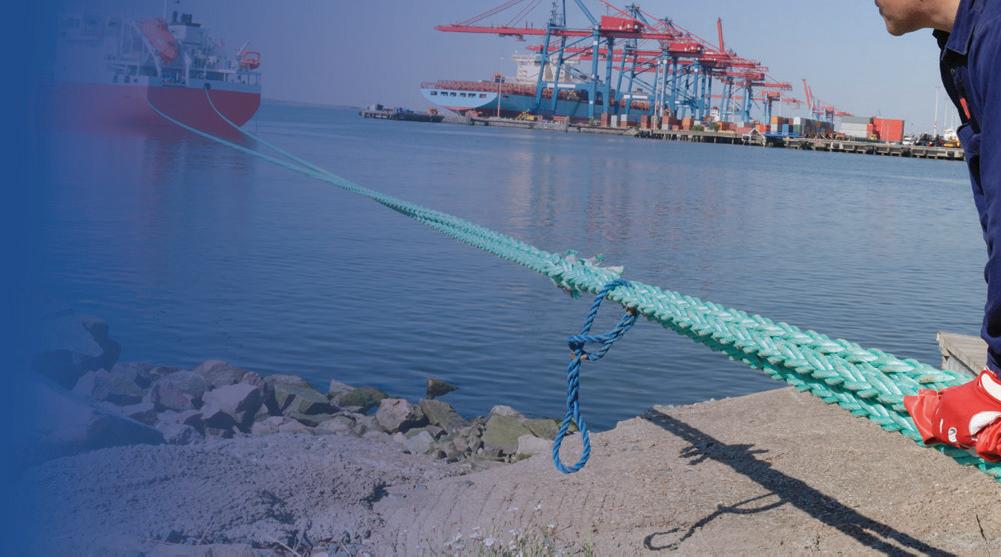






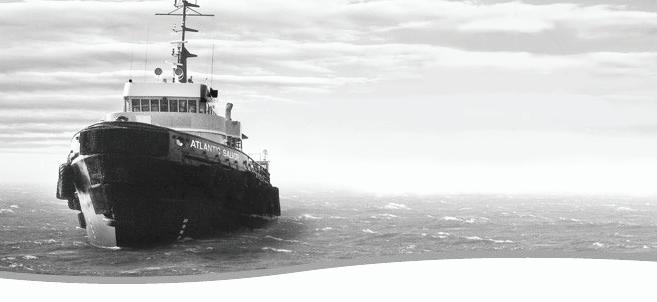












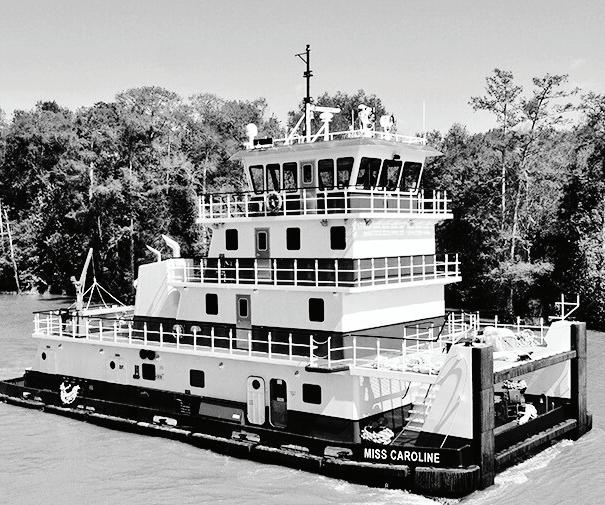




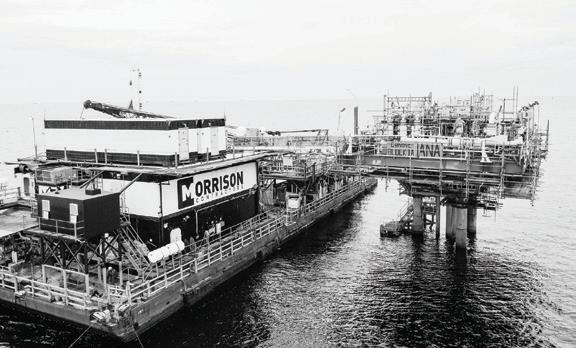




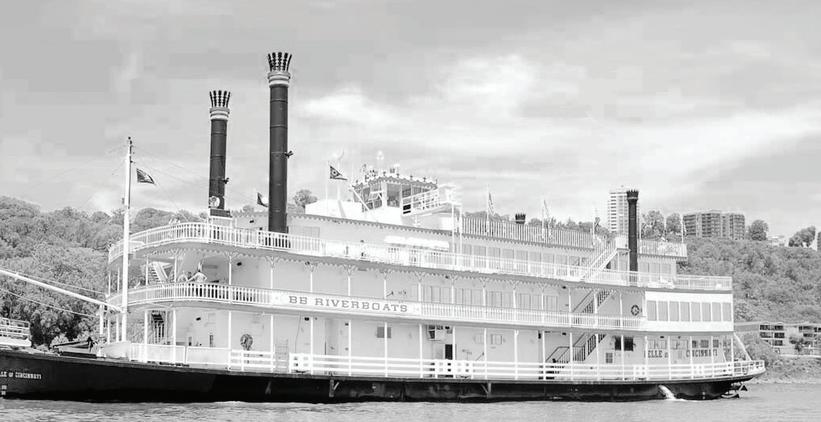














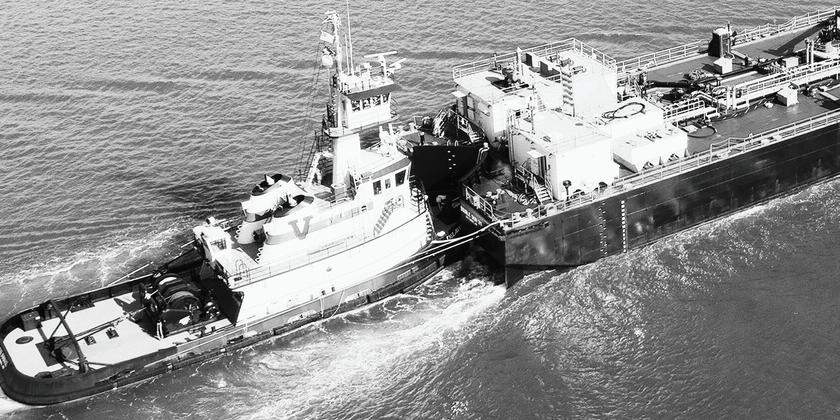



Need To Fill All positions aboard DP2 Construction Support Vessel
• MASTER STCW II/2 Master 3000 Tons and Unlimited DP Certificate
• CHIEF MATE STCW II/2 Chief Mate 3000 Tons and Unlimited DP Certificate
• MATE STCW/OICNW II/1 and Unlimited DP Certificate
• CHIEF ENGINEER STCW IIl/2 CE 3000KW/ 4000HP
• ASSISTANT ENGINEER STCW lll / 1 OlCEW
• DECK FOREMAN 3+ Yrs experience in deck supervisory role
• BOSUN STCW II/4, II/5, VI/2, VI/6
AB Unlimited
• ABLE SEAFARER DECK STCW II/5, STCW II/4
AB Unlimited
• ABLE SEAFARER ENGINE STCW ll/5 , STCW II/4 Oiler/Motorman
• CRANE OPERATOR API Operator License Knuckle Boom
• Wiper OS License
• OS/RIGGER Qualified Rigger API RP2D or Equivalent
• COOK Food Safety Certificate
• GALLEY HAND Food Safety Certificate
• ELECTRICIAN Minimum 5 Yrs Mechanical/ Electrical Experience on all Vessel Types (DP2 & Conventional)
• CONSTRUCTION SUPERINTENDENT –5 + Yrs Industry Experience – Current Offshore Certifications
• ROV SUPERVISOR 5+Yrs Industry Experience with 360+ Days In Senior Pilot Tech Role and Current Certifications
• ROV PILOT TECH 150 hours Piloting Experience/180+ Days Offshore as Pilot with Current Certifications
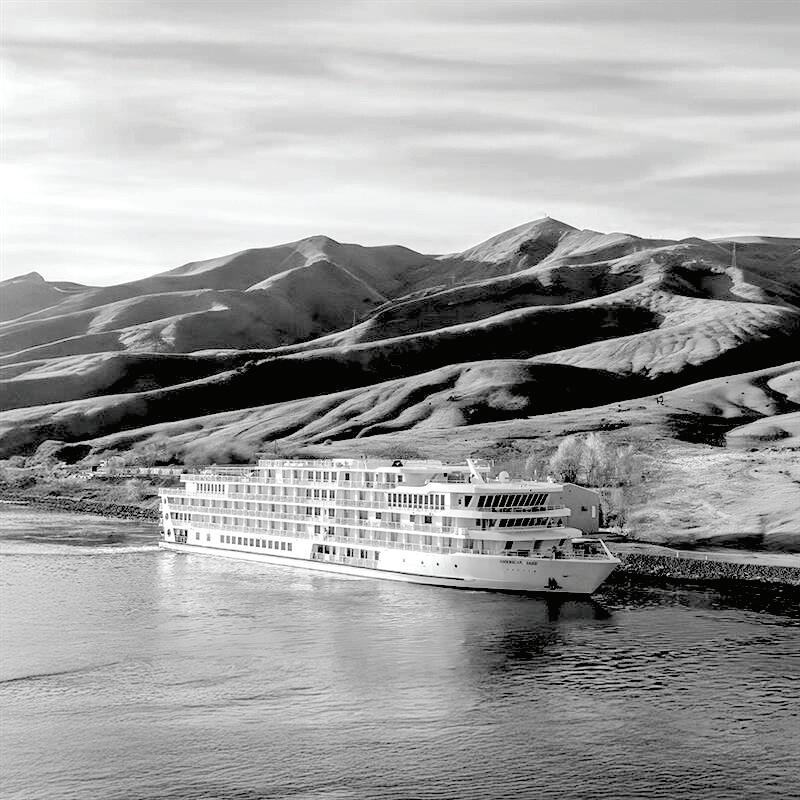

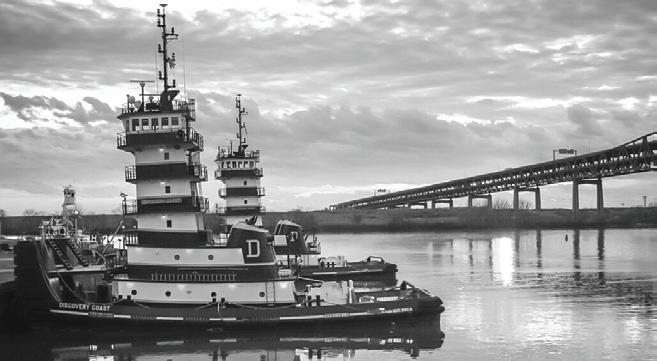
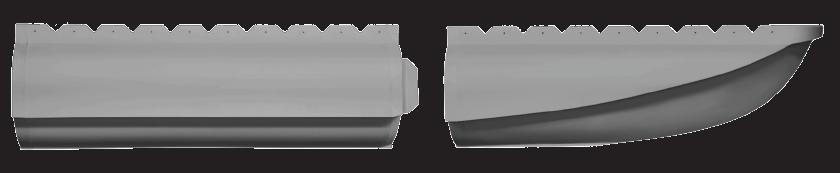
Uses: Pontoon boats, house boats, workboats replace old steel or aluminum pontoons
Heavy Duty: Molded from sturdy, medium density polyethylene (MDPF) and filled with polyurethane foam for increased stability
Modular: Each bow, middle and stern modules are 10 ft. in length
Displacement at full submersion: Bow module supports gross weight of 3,100 lbs. and middle/stern each supports 4,200 lbs.






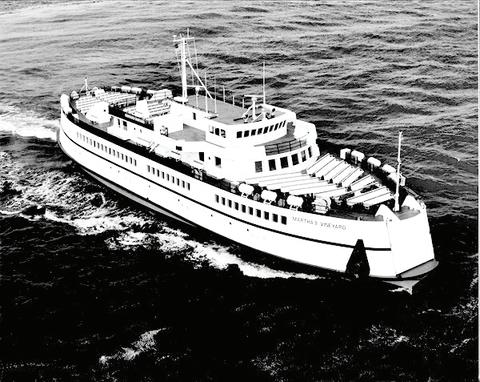








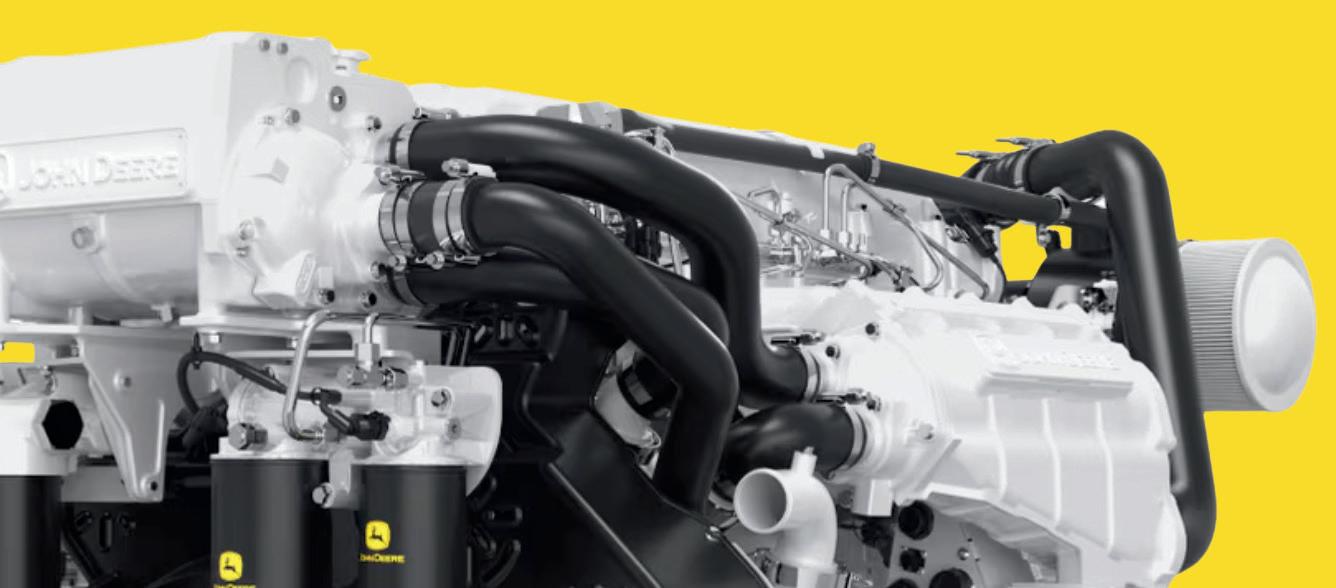
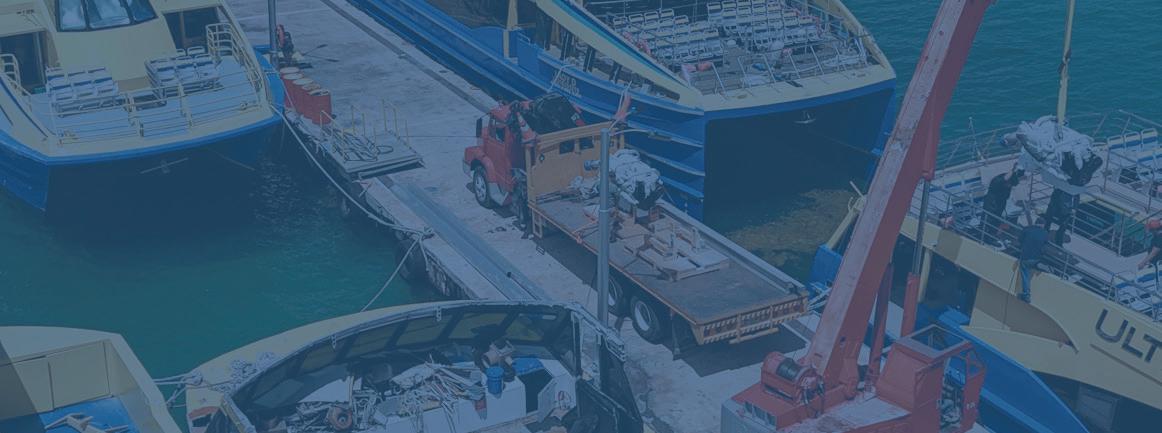
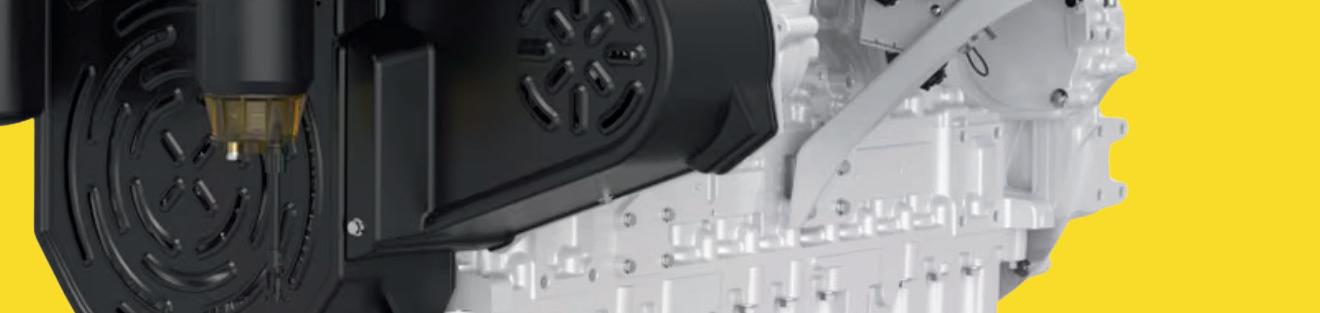







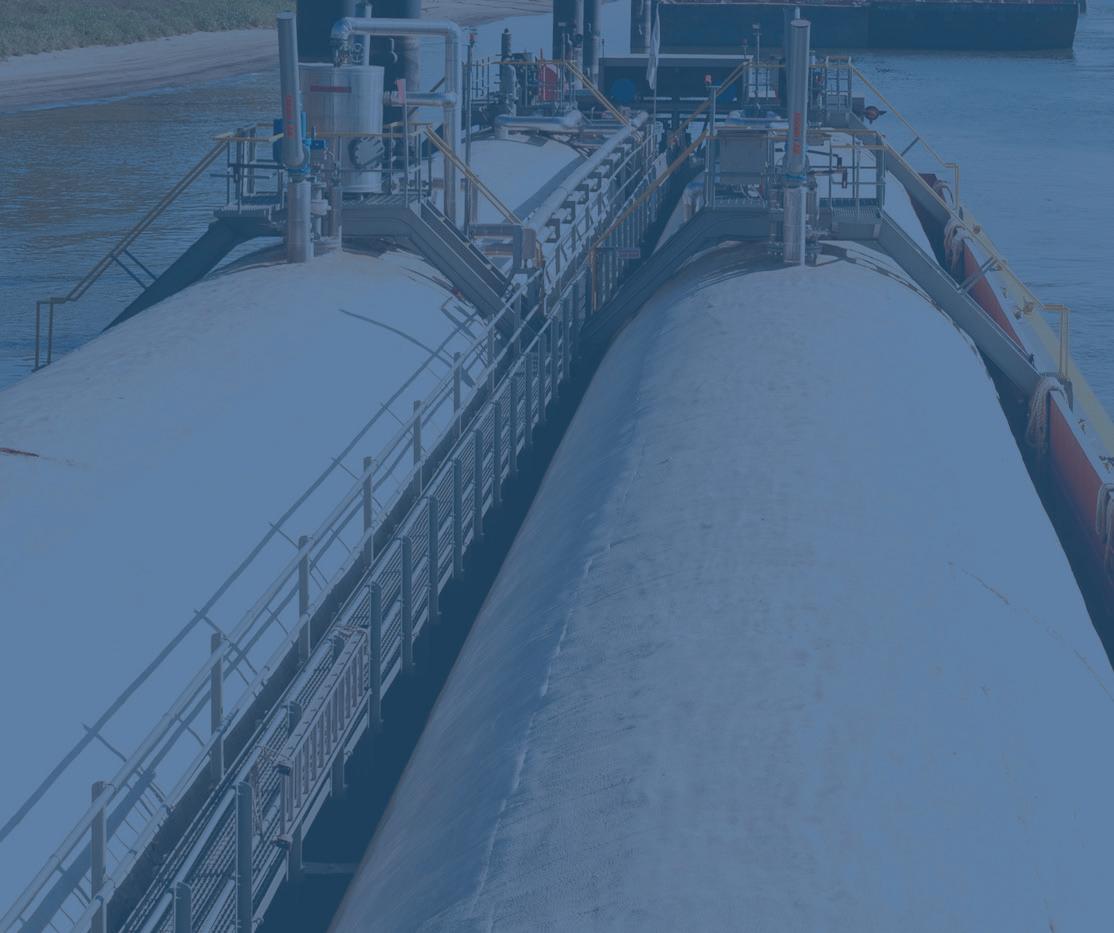





Blessey Marine has trusted the Karl S enner, LLC and the REINTJES family of gears for over 25 years. With hundreds of REINTJES gears in ser vice today, our business continues to reliable and dependable ser vice from Karl S enner, LLC With RIENTJES and Karl S enner, LLC as our partners, we are confident that we will have many more years of operating success along America’s Inland Water ways.
- C la rk Todd , P r esiden t B lesse y M arine S e r vices Inc .

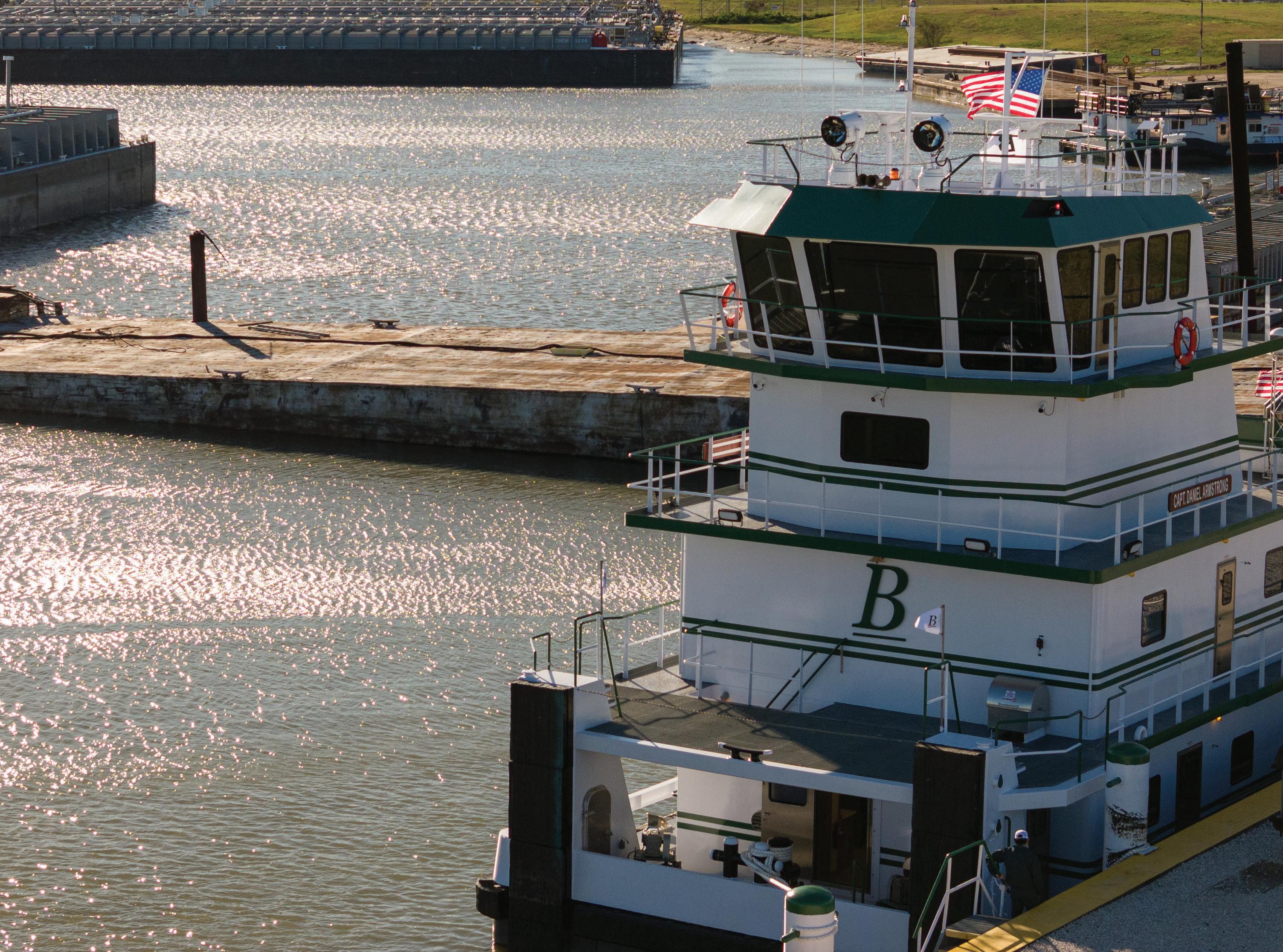
KARL SENNER, LLC IS PROUD TO EQUIP THE M/V CAPT. DANIEL ARMSTRONG WITH TWO REINTJES WAF 665 REVERSE REDUCTION GEARBOXES.
OWNER/OPERATOR: BLESSEY MARINE
BUILDER: VESSEL REPAIR INC