Generations of Grocers
Piggly Wiggly hometown stores





Piggly Wiggly hometown stores
By Shirley Bloomfield, CEO NTCA–The Rural Broadband Association
This column is different than the others I’ve written over the years, because it’s my last as CEO of NTCA. When I began working at NTCA nearly 40 years ago, “broadband” wasn’t a household word. “Universal service,” while a longtime national goal, was a concept more than a mission. And “rural America” was too often an afterthought in conversations about connectivity.
Over the course of my career, I have watched the industry transform and a movement grow, powered by NTCA’s small, community-based providers. These providers are determined to bring advanced broadband to the communities they call home, even in places where the maps say it couldn’t be done and the economics didn’t work. Every day they do the extraordinary, proving what is possible when community comes first.
I’ve been honored to witness that perseverance firsthand. I’ve seen providers work through the night after storms so families could reconnect with loved ones. Thanks to their hard work building Smart Rural Communities, students in small towns can access educational opportunities far beyond their county lines. Farmers, small businesses and entrepreneurs use their fiber connections to grow, compete and thrive—without leaving the places they love.
Broadband is about more than technology. It’s access to health care, education, safety and economic opportunities. It’s the ability to stay rooted while reaching outward. And at its core, it’s about people, the NTCA members who make connectivity possible and the customers they proudly serve.
When I reflect on my many years with NTCA, I think about all of the people who shaped not only my journey, but the story of rural America itself. The CEOs who started out on construction crews or at finance desks, the family-owned companies now in their fourth generations, co-op boards that hold community meetings in gymnasiums, NTCA staff who pour every ounce of passion into serving members and the federal partners who understand what makes rural broadband so special.
As I step into my next chapter, I do so with deep gratitude, for the providers who serve with heart, communities that refuse to settle for “just good enough” and Americans who know that high-quality connectivity is not a luxury, but a necessity.
Thank you for reminding me every day why this work matters.
NTCA–The Rural Broadband Association works to build a better broadband future for rural America, representing about 850 independent, family-owned and community-based telecommunications companies. The tenure of Shirley Bloomfield, named CEO in 2010, highlights a time of significant industry achievement.
Shirley Bloomfield joins NTCA
Congress passes the Telecommunications Act of 1996, codifying “universal service.”
Congress passes the American Recovery and Reinvestment Act, investing over $7 billion to expand high-speed internet access. NTCA ramps up advocacy efforts as the Federal Communications Commission unveils its National Broadband Plan.
USDA creates the ReConnect Loan and Grant Program.
Congress passes the Infrastructure Investment and Jobs Act, investing $65 billion into broadband.
NTCA members join the Keep Americans Connected Pledge to ensure Americans retain connectivity during the COVID-19 pandemic.
The Supreme Court rules the Universal Service Fund is constitutional, following lengthy defense by the FCC, NTCA and others.

Story by MELANIE JONES
People who take just one pill a day may find it easy to remember. Adding in a few supplements makes the process a little more complicated. It’s not hard to understand how individuals who take multiple prescriptions may need some help keeping up with it all.
It isn’t simply a matter of remembering to take the pills or administer the injection. Some medications need to be taken at certain times of the day, while others require multiple, precisely timed doses. Certain drugs should be taken before eating, other treatments are taken with a meal, and still others instruct patients to take them on a full stomach.
Managing medications correctly is vital to staying healthy and living life to the fullest. Fortunately, there are digital tools that can help. Many of these apps also allow users to keep track of their vital signs and make notes about changes they notice in their health. With all this information at hand, doctor appointments can go much more smoothly.
Several free apps are available that not only remind users when to take their medicine but also offer information on how different drugs interact, track symptoms and even prepare a report for doctors. One warning—because they are free, some apps ask permission to share your data with drug companies so they can research drug compliance and effectiveness.
The My Therapy app has attracted attention in the last year, including being featured on ABC and in Wired magazine. The app allows users to set reminders, log when they’ve taken medicine or skipped it and track weight, blood pressure, blood sugar and other health indicators.
In addition to tracking prescriptions, schedules and health indicators and warning about potential drug interactions, Medisafe users can name a “Medifriend,” someone who will be notified if a dose is
missed. Users can also keep tabs on their children’s or other dependents’ medication information separately from their own. When adding medications to their Medisafe profiles, users can specify the shape and color of the drug, helping them keep straight which pill or capsule is which.
For people who have multiple medications to take at different times of the day, Dosecast may be the best choice. The app assigns a sound to each medication, so users receive prescription-specific reminder notifications. It also keeps track of when it’s time to order refills. Like the other apps, Dosecast also allows users to track key health indicators.
All these apps are on Google Play or Apple’s App Store. They also can interact with the health apps built into phones to provide a better overall picture of your health.

JOHNNY
MCCLANAHAN President/CEO
In our area, we know that winter can bring bad storms. We are all raised to keep an eye on the forecast and prepare as much as possible.
But this year, in late January, the forecast turned especially ominous, and we were faced with a storm that was worse than bad. It was brutal.
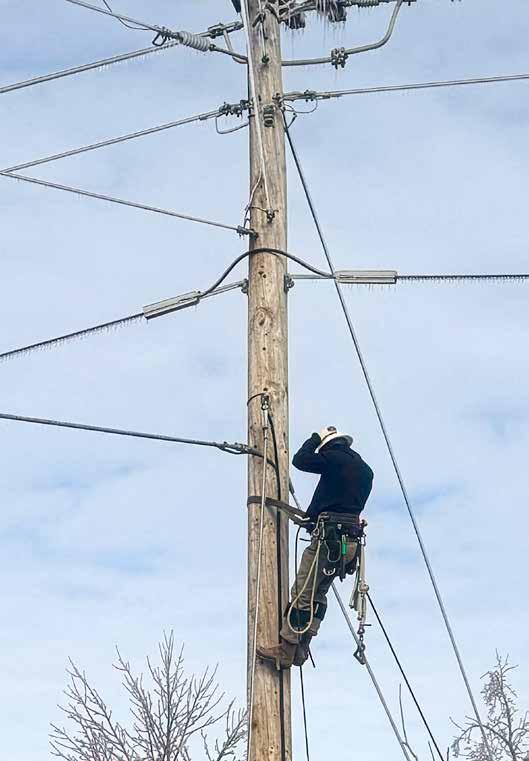
When the Winter Storm Fern took hold, freezing rain fell and ice formed on every surface. Trees cracked as they gave way to the unbearable load. Utility lines sagged, and poles snapped. Temperatures plummeted and roads were impassable.
As soon as conditions allowed, our crews were out there in the middle of it. In bone-chilling, single-digit cold, our folks bundled up to deal with the downed trees that were blocking the roads. We worked in conjunction with our electric partners. As they restored power, we were right behind them restoring our fiber service. I appreciate all the hard work and efforts of our dedicated employees in restoring service to our customers due to this severe ice storm.
We are so proud of the tireless efforts of our team as they worked for days and weeks to restore connection to our community. We care about our friends and neighbors and are grateful for their understanding and words of encouragement as we tackled this enormous recovery.
No matter how brutal winter may be, we are given the promise of spring. We know that cold, dark nights will be replaced with warmer, brighter days. The trees that were coated with ice will come to life with new growth. Winter Storm Fern will eventually become a memory that we recall and compare to the ’94 ice storm or the 2008 tornado.
And when that next storm comes, our NCTC team will be here, doing whatever it takes to restore your connection, just like we have for the past 75 years.
The North Central Connection is a bimonthly newsletter published by NCTC, © 2026. It is distributed without charge to all member/ owners of the cooperative.
North Central is a member-owned corporation dedicated to delivering advanced telecommunications technology to the people of Northern Middle Tennessee and Southern Kentucky, including Macon County, Tennessee, and Allen County, Kentucky. NCTC also serves portions of Sumner, Trousdale, Smith and Clay counties in Tennessee. Through a partnership with Warren RECC, NCTC provides high speed internet to portions of Butler, Grayson, Edmonson and Warren counties in Kentucky.
North Central 872 Highway 52 Bypass E. P.O. Box 70 Lafayette, TN 37083
Telephone: 615-666-2151 nctc.com
Randy Harston
Chairman of the Board
Scottsville Exchange East
Kevin Dickerson
Vice Chairman of the Board
Defeated/Pleasant Shade Exchanges
Donnie Steen
Secretary/Treasurer
Lafayette Exchange East
Martha Bowser
Westmoreland Exchange
Jeff Flippin
Lafayette Exchange West
Chad Evitts
Hillsdale/Green Grove Exchanges
Chad Owens
Red Boiling Springs Exchange
Billy Clay Marsh
Scottsville Exchange West
Marcell Baker
Bethpage/Oak Grove Exchanges
Johnny McClanahan
President/CEO
Guy Holliman
General Counsel
Produced for North Central by:
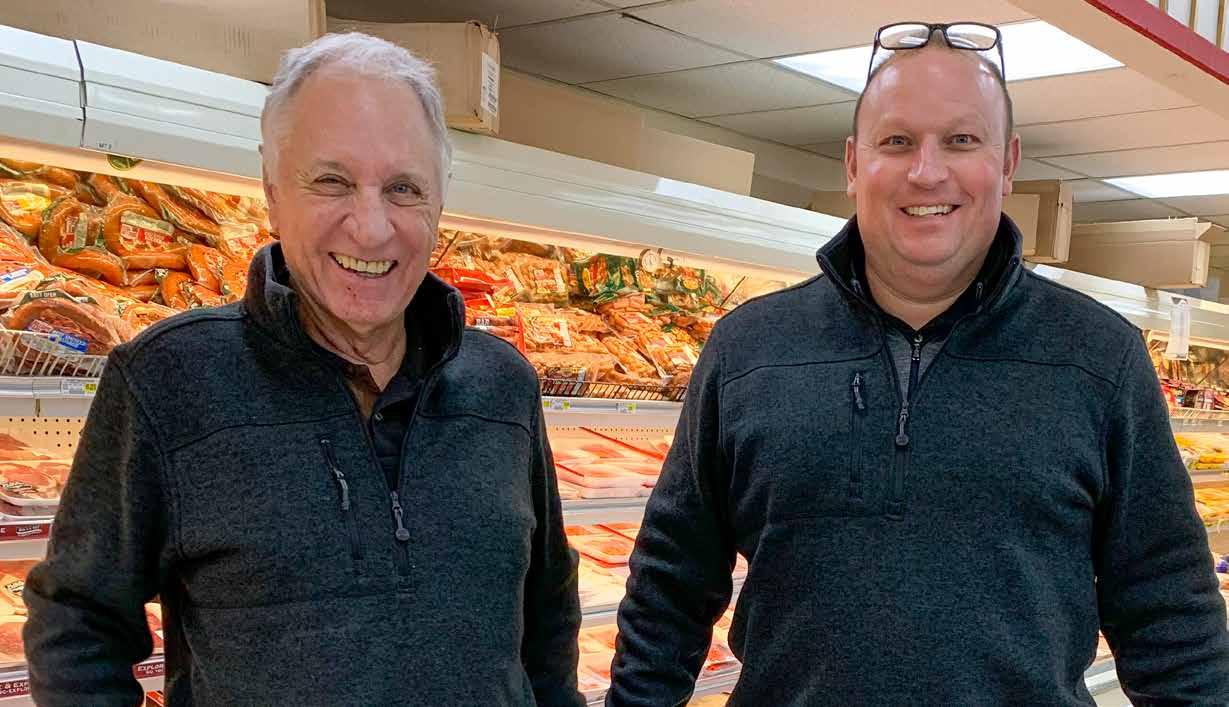
On the Cover: Mike Reese, left, and his son, Todd, carry on the Reese family tradition at the Piggly Wiggly locations in Lafayette and Hartsville.

See story Page 8.
North Central

Send us your pics that celebrate the best of nature.
Submit your photos now for the annual NCTC photo contest, and your image could be featured in NCTC’s 2027 calendar! NCTC is looking for the very best photos from local photographers, whether you’re a novice or an expert. It’s the quality that counts.
Show us your favorite vacation spot or stay close to home and capture the beauty of our area’s abundant nature and wildlife or even a cute pet. If it’s a location, or a moment in time that is special to you, we want to see it.
The deadline for submission is July 31. Email your photos to amy.phelps@nctcstaff.com. Be sure to include your name, phone number—or address if you don’t have a home phone—and where the photo was taken.
Remember these tips to make your photos shine:
• Lighting is important! Oftentimes, early mornings and overcast days can make for a great picture.
• Pick a focal point for best results.
• Keep the framing of the shot in mind.
• Make sure the background behind your focal point isn’t too cluttered, especially when taking portraits.

The NCTC Board of Directors and staff wish you a joyful Easter. Our business offices will be closed for Good Friday on April 3. Our help desk is always available at 270-622-2056.
Fast internet just got faster! Get smoother streaming, lag-free gaming and the speed you need for every device in your home. Plus, save $15 per month for a year. Already a customer at 2 Gig or higher? You’ll be upgraded automatically. Learn more at nctc.com.

Here are a few tips for dealing with dreaded robocalls:
• Add your number to the National Do Not Call Registry: donotcall.gov.
• Let calls from unknown numbers go to voicemail.
• If you accidentally answer a robocall, just hang up. Pushing other numbers or answering yes can cause an unauthorized charge.
• If the caller asks for anything involving a gift card, it’s very likely a scam.
• Report any scam calls to the Federal Communications Commission’ Consumer Complaint Center.

Story by LAURA MCGILL
Located in the foothills of the Blue Ridge Mountains with unique urban views and abundant natural hues, Greenville, South Carolina, offers plenty of ways to set your own pace. Enjoy a laced-up, fresh-air visit when you create your personal walking itinerary with choices for foodies, art lovers, sports fans, history buffs and nature enthusiasts.
Perfect for a stroll, the wide and welcoming sidewalks of Main Street invite
visitors to explore the local scene. Start at NOMA Square and fuel up with a hearty breakfast at Roost Free Range Kitchen. Then it’s time to start walking. Venture south to Falls Park on the Reedy to enjoy an urban waterfall. Get the best views from Liberty Bridge. Look up to appreciate the bridge’s unique single-suspension construction. Be sure to check the schedule for the Greenville Drive, the High-A affiliate of the Boston Red Sox. They play home games on Main Street’s Fluor Field, which is modeled after Boston’s famous
complete
With design and etiquette guidelines to safeguard children and those with mobility challenges, the Prisma Health Swamp Rabbit Trail provides 28 miles of natural beauty for all fitness levels. Take a casual walk, a jog or a bike ride to discover area parks, attractions, shops and eateries. Didn’t bring a bike? No problem. Greenville has several bike rental options.


Plan to spend several hours at Cleveland Park, home to the Greenville Zoo, Rock Quarry Falls and the Vietnam Veterans Memorial. Treat yourself to a scratchmade pastry and a craft coffee at Swamp Rabbit Cafe & Grocery, a popular spot along the trail.
Celebrate scientists, chefs, pitmasters and painters. On April 4, iMAGINE Upstate STEAM Festival spotlights science, technology, engineering, arts and math. Remember to grab extra napkins to savor the dishes at Southern
Roots: A BBQ Reunion on April 11. The culinary experiences continue April 16-19 at Spring Fest with a series of foodie events. Catch your breath and get ready for Artisphere, May 8-10, featuring the works of visual artists representing many different mediums.

strenuous hiking challenge.

Within an hour’s drive from downtown Greenville, enjoy the beauty of six more waterfalls. Easy views can be found at Wildcat Wayside Falls, a roadside pulloff. The middle portion of those falls is an easy hike, while the upper section calls
Greenville-area waterfalls are part of the Blue Ridge Escarpment, a geological feature where the Blue Ridge Mountains dramatically drop 2,000 feet to the Piedmont below. In total, the area is home to more than 50 waterfalls.
Plan your Greenville, South Carolina, trip at visitgreenvillesc.com or on Facebook @visitgreenvillesc.
Story by LAURA MCGILL
When Todd Reese talks about his family’s legacy in the grocery business, there’s excitement in his voice. As he traces the family tree back over four generations, it is clear he
sees the family’s Hartsville and Lafayette Piggly Wiggly stores as a continuation of a long-standing commitment to serve others.
From Todd’s great-grandmother, known as Granny Reese, making homemade
pies, salads, jams and jellies to sell in the Hartsville store, which opened in 1939, to his grandparents, Iris and Edwin Reese, running the office and training cashiers, most everyone in the family has pitched in over the years. Todd’s parents, Mike and Yvonne, worked side by side in the Lafayette store when it opened.
The list of family helpers also includes Todd’s great-aunt Ann, his uncle Dale, cousins Brian and Carlson, Todd’s sister,


Stacy, and her husband, Hal. “We’ve been in the grocery business our entire lives,” Todd says. “We have always had great help from our family when needed, keeping it a family tradition.”
Longtime locals may recall a time before the Piggly Wiggly name was on the stores in Hartsville and Lafayette. Todd’s great-grandfather, Bailey Reese, and his grandfather, Edwin, started the Hartsville store as Reese’s Food Store. They later changed the name to Reese’s Bestway for a while before rechristening the store as Reese’s Big Star.
The Big Star name was in place when the Lafayette store opened in 1974 and remained until the late 1980s when Todd’s father changed both stores to Piggly Wiggly. Todd credits the communities for their success. “We have had such loyal customers,” he says. “They have really stuck with us over the years.”
Todd’s own journey led him away from


the area for a while. From 1999 to 2016, he owned three stores in the Nashville area. In 2016, he returned to Lafayette and bought the store from his father. “Our bread and butter has always been Lafayette and Hartsville,” he says. “The customers, employees and former employees have always been so good to us. It is just like family.”
If it seems like Todd is always at the Lafayette store, he is. The same can be said about Mike at the Hartsville store. “We would not know what to do if we were not in the store every day,” Todd says. “When you first get in the business, you work every day, so you get used to it and it becomes a habit.”
The stores are open seven days a week, from 6 a.m. to 10 p.m., closing only on Christmas Day. That is a message that Todd stresses when interviewing potential new employees. He lets them know that availability and a desire to help customers are both very important. “If you can do those two things, usually we can train or help you get training for any job in the store,” he says. “We have been very lucky to have great employees in both Macon and Trousdale counties.”

Customer service remains a top priority for the Reese family. The meat department cuts meat every day and will custom cut for customers. The produce department receives shipments throughout the week and buys some local items during the summer months. “This is really what keeps most independent grocery stores in business,” Todd says. “You must have fresh-cut meat and fresh produce to stay in business.”
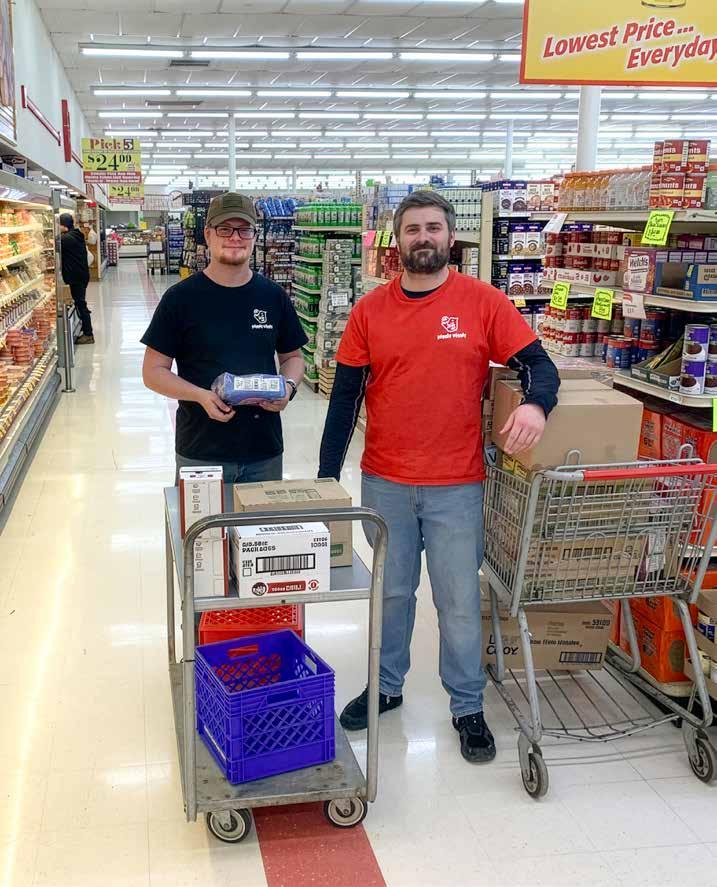
NCTC services at the stores are essential to how they do business, Todd says. In addition to phone service, which is still an important element, the stores rely on the internet and Wi-Fi to operate cash registers, track inventory and to run sales reports to learn which products are selling best.
“The one thing that has changed over the years is you can pretty much get any type of report, ordering information, schedules and sales information from your smartphone just like in all other businesses,” Todd says. “Instead of walking around the store carrying a large order book from a wholesaler, all the information is on your phone.”
As the Lafayette store enters its sixth decade of service, Todd reflects on the relationship with NCTC. “We could not operate without NCTC,” he says. “They have always been great partners and always provide excellent service. I can always call someone from NCTC, and they always have a solution!”


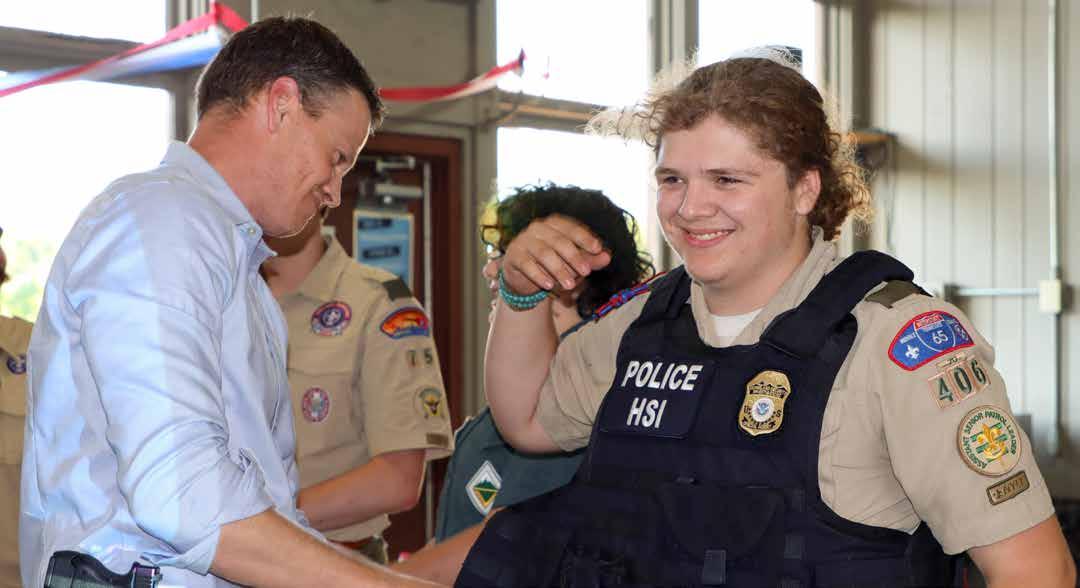
Dozens of Scouts attend a Department of Homeland Security event about online safety.

Story by DREW WOOLLEY
In his days as a Scout, Justin Williams was always drawn to outdoor skills. He excelled at building fires and tying knots. He struggled more with identifying plants, and, even today, he says he still hasn’t picked up the knack for it. But as he got older, the leadership skills he was learning every step of the way stood out to him.
“Those are all important skills, but the thing we’re really coaching is how to work within a team, be good citizens for the future and make good, ethical decisions,” he says. “I thought I was just having fun. But I was really learning a lot of leadership skills that have benefited me throughout my life.”
Today, as scout executive for Scouting America’s Palmetto Council in South Carolina and den leader for a group of second graders, Justin is amazed at the technology available to young children. There’s even technology that could have helped him identify plants as a Scout.
As a result, while Scouting America, formerly the Boy Scouts of America, still emphasizes the importance of getting outside and working with others, the organization is increasingly recognizing the need to meet kids where they are with technology.
Just last year, it introduced its first merit badges for cybersecurity and artificial intelligence. Others, like the Know2Protect badge, are specifically aimed at teaching Scouts about the importance of personal safety online.
“While we know there are a lot of benefits to technology, we also know that, unfortunately, there are people online who do not have our kids’ best interest at heart,” Justin says. “We need to help our kids recognize who is an ally, who is trying to do them harm and what to do when they encounter those types of people.”
For Scouting America’s Chief Safeguarding Officer Glen Pounder, that work starts with the adults around each Scout. His office in Irving, Texas, provides training for all Scout leaders around the threats kids may face online—from cyberbullying and body image issues to pornography and sexual exploitation.
“One of our key mottoes is be prepared for life. There’s no life these days without the online space,” he says. “Our new normal as an organization is we have to be comfortable always looking for what is next, particularly with technology. I think it’s about landing the message in a way that is not creating fear. That this is just part of preparing for life.”
Starting from kindergarten, Scouting America encourages parents of new Scouts to have their own conversations with their children about general safety practices. As kids earn their annual ranks, they must complete six core components, one of which is additional safety training. Starting in fourth grade, that training includes lessons on what information they should not give out in online settings.
In addition, Scouting America partnered with the Department of Homeland Security in 2024 to build an awareness campaign about the risks kids face online. Scouts and their families can join in-person training sessions and activities or online presentations to learn how to prevent and report online abuse, earning them an exclusive Know2Protect patch.
Glen’s hope is that more widespread awareness and training within Scouting America troops can even help protect kids who are not part of the program.
“There’s a ripple effect outside of scouting. Each Scout has
friends, siblings and other non-Scouts around them that they share things with,” he says. “So, if you’ve got a million trained Scouts out there it makes it much harder for anyone who’s thinking about abusing their position of trust to get away with it.”
While preventing these abuses from happening in the first place is the top priority, Glen emphasizes it is just as important for kids to feel comfortable speaking with an adult, whether it’s a parent or a Scout leader, if they do find themselves in one of these situations. If not, the outcome can be tragic.
Justin cites the example of an Eagle Scout in Spartanburg , South Carolina, in the last few years who took his own life. He had connected with someone online and shared compromising photos, only to have those photos used to exploit him.
“He didn’t think there was any other option, so he decided to take his own life,” Justin says. “When you think about the perfect kid, this is the kid that would come to mind. So, this isn’t something that only targets dysfunctional families. Criminals are getting smarter every day, and we just can’t take anything for granted.”
For Glen, that comes down to preparing kids for dangerous situations, trusting them to use the tools available to them and offering understanding if they find themselves in trouble.
“If we haven’t empowered these kids correctly, then the fear stays with them. We need to take that fear away,” he says. “Our focus is on prevention first. But then, if something happens, take a breath and then we’ll move forward. We know what to do, we’re going to get there. You’re not alone in this.”
Scouting America badges aren’t just for archery and pioneering anymore. Here are a few tech-savvy badges and patches today’s Scouts are collecting.
Cybersecurity Merit Badge
Introduces Scouts to various cyberthreats, including viruses, worms, social engineering and denial-of-service attacks. They learn to protect themselves with strong passwords, firewalls, antivirus software and encryption.
Artificial Intelligence Merit Badge

Helps Scouts explore what AI is, different types of AI and how to use it in everyday life. They are also challenged to discuss issues around data privacy, bias in AI systems and the ethics of this new technology.
Know2Protect Patch
Serves as a symbol of the Scout’s commitment to online safety and digital citizen ship through participation in the Department of Homeland Security’s Project iGuardian training. The training provides knowledge and skills to protect themselves against online abuse.


Story by LAURA MCGILL
Whether you grew up with the tradition of warm chocolate gravy atop a fresh-from-the-oven homemade biscuit or are just now discovering this breakfast treat, you’ll want to point your compass to Celina, Tennessee, on March 28 for the Chocolate Gravy Festival.
Like any good origin story, there isn’t one definitive answer for how chocolate gravy came to be. Certainly, the resourcefulness of Appalachian cooks working with limited ingredients played a big role in its creation. Other storylines point to a connection with European-style drinking chocolate and a method to thicken chocolate puddings.
The South has a long, proud tradition of taking homemade biscuits to a higher level with sweet and savory toppings such as sorghum, molasses, sawmill gravy and apple butter. So, when companies like Hershey’s began making cocoa widely available and affordable in the 1890s, it wasn’t long before Southern cooks found a new variation for topping those biscuits. “It makes sense that chocolate gravy would fit right in,” says Beverly Murphy, director of tourism for Clay County. “It is comforting, childfriendly and can be made from common pantry ingredients and farm-fresh milk.”
Around Celina and other Appalachian communities, a family’s chocolate gravy recipe is a closely guarded secret—one seldom written down but instead passed down through generations by
practice. Beverly recalls being taught how to make it by her grandparents when she was a little girl.
Recipes can vary from thick to thin and use different types of cocoa. Some are even gussied up with vanilla, cinnamon or coffee. If your family doesn’t have a treasured recipe, you can look in cookbooks dating back to the mid-20th century when chocolate gravy became a mainstay in church and community collections. Or, now with renewed interest from food bloggers and social media creators, an online search will result in several recipe options.
What does it take to create a festival from scratch? A hardworking team, endless dedication to the community and, of course, funding.
The Clay County Tourism Committee formed and set a goal to create a festival to draw people to Celina and to bolster the local economy. “We decided years ago to have a Chocolate Gravy Festival,” Beverly says. “When we first started talking about it, it brought out so many stories and childhood memories. We knew it was the right thing for Celina.” After all, the gravy is proudly served at local restaurants, school lunchrooms and kitchen tables.
To bring the event to life, the tourism committee turned to local and regional businesses, civic groups and families. Committee








Downtown Celina
Saturday, March 28, starting at 9 a.m.
For more information on the festival and year-round activities call 931-243-3338 or look online at visitclaycountytn.com and Facebook @Clay.County.TN.Chamber.
members raised $11,000 in sponsorships and received the help of many volunteers.
The result was an amazing success. The first Chocolate Gravy Festival drew an estimated crowd of 5,000 attendees to a closeknit town where the population is less than 1,500. Those who came were able to experience something nostalgic and fun. “It was like a mix of a food fair, a homecoming and a street festival,” Beverly says. “Many people told me it was their first visit to Celina. That’s a big win!”
In addition to the multiple versions of chocolate gravy to taste, attendees were treated to live music, vendors, demonstrations and kids’ activities. Proud cooks entered contests hoping to win top prizes for their chocolate gravy, chocolate pies and biscuits. A crowd favorite was the chocolate gravy-eating contest.
During the event and in the days to follow, social media posts from the tourism office and attendees showed the experience and the crowds and helped generate excitement for the 2026 festival.
Whether you come to revisit a fond childhood breakfast memory or for your first bite of a warm buttered biscuit covered with this magical concoction, Beverly says the hope is that the 2026 festival will be even better than last year’s inaugural celebration.
“We will be welcoming more vendors, and contestants will be serving up more varieties of chocolate gravy,” she says. “We learned from last year and will have a larger festival area downtown as well as more seating.” Other changes will include classic cars and motorcycles, Appalachian clogging and dance performances and an expanded kids’ area.



For many Americans, going to the grocery store can be stressful since prices don’t seem to be coming down. But we still want to have our cake and eat it too. So, it’s nice—and entirely possible—to treat ourselves to something sweet at the end of the meal without breaking the bank. There are some tricks to keep in mind to help you stay on budget while still satisfying your sweet tooth. For example, if a recipe calls for pecans, walnuts, a less expensive alternative, can be substituted. And use store brands whenever possible—a cost-saving practice that always saves pennies.

Food Editor Anne P. Braly is a native of Chattanooga, Tennessee.
1/2 cup butter 1 cup sugar
egg 1 teaspoon vanilla 1 1/2 cups mashed banana
1 1/2 cups flour
Preheat oven to 350 F.
teaspoon baking powder

teaspoon baking soda 1/2 teaspoon salt 1/4 cup baking cocoa powder 1 cup chocolate chips

Mix the butter, sugar, egg, vanilla and banana. Then add the flour, baking powder, baking soda and salt. Put half of the mixture into a separate bowl and add the cocoa powder.
Grease the bottom of a 9-by-13-inch pan and pour in the cocoa mixture. The mixture will be thick, just try and spread a thin layer across the bottom. It will rise and make a beautiful, thin bar. Use a smaller pan if you want a thicker bar, however, it will need to bake longer to get the middle done.
Spread the rest of the batter on top of the cocoa mixture. Sprinkle the top with as many or as few chocolate chips as you like.
Bake for about 30 minutes or until the top is browned and a toothpick comes out clean.
2 cups white sugar
1 cup butter, softened
2 eggs
1 cup sour cream
1 teaspoon vanilla extract
1 cup plus 10 tablespoons all-purpose flour
1 teaspoon baking powder
1/4 teaspoon salt
1 cup fresh or frozen blueberries
1/2 cup brown sugar
1/2 cup pecans
1 teaspoon ground cinnamon
1 tablespoon powdered sugar for dusting
Preheat the oven to 350 F. Grease and flour a 9-inch Bundt pan. Beat sugar and butter together in a large bowl with an electric mixer until light and fluffy. Add eggs, one at a time, beating well after each addition. Beat in sour cream and vanilla extract. In another bowl, combine flour, baking powder and salt. Stir into butter mixture until just blended. Fold in blueberries.

Spoon half of the batter into the prepared pan. Combine brown sugar, pecans and cinnamon in a small bowl. Sprinkle half of the mixture over the batter in the pan.
Spoon remaining batter on top, then sprinkle on remaining pecan mixture. Use a knife or thin spatula to swirl the mixture into the cake.

Bake until a toothpick inserted into the center comes out clean, about 1 hour to 1 hour 15 minutes. Let cake cool in the pan for 15 minutes before inverting. Invert carefully onto a serving plate. Dust with powdered sugar just before serving.

2 cups frozen pineapple chunks
4 ounces pineapple juice

2 scoops vanilla ice cream
Combine all ingredients in a blender and blend until smooth. If it’s too thick, add a bit more pineapple juice. Scoop into bowls and, if desired, garnish with additional chopped pineapple and a dollop of whipped cream. Serve immediately. Makes 3 servings.
1 prepared 9-inch pie shell, graham cracker or pastry crust, baked and cooled
1 8-ounce package cream cheese, softened 1/3 cup granulated sugar
1/2 teaspoon almond extract
1 cup whipped topping, thawed
4 cups fresh strawberries, washed, hulled and halved 1/2 cup semisweet chocolate chips
1 tablespoon shortening
Bake crust at 350 F for 15 minutes or until light golden brown. Cool completely.
In a large bowl, beat the softened cream cheese until it is fluffy. Gradually add the sugar and almond extract, beating until fully combined. Gently fold the whipped topping into the cream cheese mixture until smooth.
Spread the cream cheese mixture evenly into the cooled pie crust. Arrange the strawberry halves, cut side down or pointed side up, over the filling.
In a small, microwave-safe bowl, combine the chocolate chips and shortening. Microwave in 30-second intervals, stirring in between, until the chocolate is melted and smooth. Drizzle the melted chocolate over the top of the strawberries and cream filling.
Refrigerate the pie for at least 1-2 hours or until it is set and chilled before serving.