



By Shirley Bloomfield, CEO NTCA–The Rural Broadband Association
This column is different than the others I’ve written over the years, because it’s my last as CEO of NTCA. When I began working at NTCA nearly 40 years ago, “broadband” wasn’t a household word. “Universal service,” while a longtime national goal, was a concept more than a mission. And “rural America” was too often an afterthought in conversations about connectivity.
Over the course of my career, I have watched the industry transform and a movement grow, powered by NTCA’s small, community-based providers. These providers are determined to bring advanced broadband to the communities they call home, even in places where the maps say it couldn’t be done and the economics didn’t work. Every day they do the extraordinary, proving what is possible when community comes first.
I’ve been honored to witness that perseverance firsthand. I’ve seen providers work through the night after storms so families could reconnect with loved ones. Thanks to their hard work building Smart Rural Communities, students in small towns can access educational opportunities far beyond their county lines. Farmers, small businesses and entrepreneurs use their fiber connections to grow, compete and thrive—without leaving the places they love.
Broadband is about more than technology. It’s access to health care, education, safety and economic opportunities. It’s the ability to stay rooted while reaching outward. And at its core, it’s about people, the NTCA members who make connectivity possible and the customers they proudly serve.
When I reflect on my many years with NTCA, I think about all of the people who shaped not only my journey, but the story of rural America itself. The CEOs who started out on construction crews or at finance desks, the family-owned companies now in their fourth generations, co-op boards that hold community meetings in gymnasiums, NTCA staff who pour every ounce of passion into serving members and the federal partners who understand what makes rural broadband so special.
As I step into my next chapter, I do so with deep gratitude, for the providers who serve with heart, communities that refuse to settle for “just good enough” and Americans who know that high-quality connectivity is not a luxury, but a necessity.
Thank you for reminding me every day why this work matters.
NTCA–The Rural Broadband Association works to build a better broadband future for rural America, representing about 850 independent, family-owned and community-based telecommunications companies. The tenure of Shirley Bloomfield, named CEO in 2010, highlights a time of significant industry achievement.
Shirley Bloomfield joins NTCA
Congress passes the Telecommunications Act of 1996, codifying “universal service.”
Congress passes the American Recovery and Reinvestment Act, investing over $7 billion to expand high-speed internet access. NTCA ramps up advocacy efforts as the Federal Communications Commission unveils its National Broadband Plan.
USDA creates the ReConnect Loan and Grant Program.
Congress passes the Infrastructure Investment and Jobs Act, investing $65 billion into broadband.
NTCA members join the Keep Americans Connected Pledge to ensure Americans retain connectivity during the COVID-19 pandemic.
The Supreme Court rules the Universal Service Fund is constitutional, following lengthy defense by the FCC, NTCA and others.

Story by MELANIE JONES
People who take just one pill a day may find it easy to remember. Adding in a few supplements makes the process a little more complicated. It’s not hard to understand how individuals who take multiple prescriptions may need some help keeping up with it all.
It isn’t simply a matter of remembering to take the pills or administer the injection. Some medications need to be taken at certain times of the day, while others require multiple, precisely timed doses. Certain drugs should be taken before eating, other treatments are taken with a meal, and still others instruct patients to take them on a full stomach.
Managing medications correctly is vital to staying healthy and living life to the fullest. Fortunately, there are digital tools that can help. Many of these apps also allow users to keep track of their vital signs and make notes about changes they notice in their health. With all this information at hand, doctor appointments can go much more smoothly.
Several free apps are available that not only remind users when to take their medicine but also offer information on how different drugs interact, track symptoms and even prepare a report for doctors. One warning—because they are free, some apps ask permission to share your data with drug companies so they can research drug compliance and effectiveness.
The My Therapy app has attracted attention in the last year, including being featured on ABC and in Wired magazine. The app allows users to set reminders, log when they’ve taken medicine or skipped it and track weight, blood pressure, blood sugar and other health indicators.
In addition to tracking prescriptions, schedules and health indicators and warning about potential drug interactions, Medisafe users can name a “Medifriend,” someone who will be notified if a dose is
missed. Users can also keep tabs on their children’s or other dependents’ medication information separately from their own. When adding medications to their Medisafe profiles, users can specify the shape and color of the drug, helping them keep straight which pill or capsule is which.
For people who have multiple medications to take at different times of the day, Dosecast may be the best choice. The app assigns a sound to each medication, so users receive prescription-specific reminder notifications. It also keeps track of when it’s time to order refills. Like the other apps, Dosecast also allows users to track key health indicators.
All these apps are on Google Play or Apple’s App Store. They also can interact with the health apps built into phones to provide a better overall picture of your health.

Since 2019, this magazine has been one of the ways we have stayed connected with you. It has carried stories about our cooperative, shared updates on our work and highlighted the people and places that make this community what it is. A great deal of care went into every issue, and I want to begin by recognizing that effort and the role this publication has played. It has been a meaningful part of our history.

CHARLIE BORING CEO
Our fast, reliable internet service is woven into our daily lives. It supports local businesses as they manage orders and reach customers. It helps students complete assignments and adults pursue new skills. It makes telehealth visits possible and keeps families connected across long distances. It works quietly in the background, simply doing what it is supposed to do so life can move forward.
This magazine has served in a similar way, providing steady information and a sense of connection. Honoring that legacy is important. At the same time, being a cooperative means taking a clear-eyed look at how we use our resources. We are locally owned, guided by our members and focused on long-term reliability rather than short-term gains. Every expense matters, because every dollar comes from the people we serve.
After a thoughtful discussion, we have decided that this will be the final edition of this publication. It’s a difficult choice, but we believe it’s the correct one. This decision was not made lightly. It reflects our responsibility to be good stewards of cooperative resources and to invest where those dollars have the greatest benefit. Ending the magazine allows us to focus more on maintaining and improving service, expanding access where possible and planning for the future needs of this community.
While this publication is ending, our communication with you is not. We will continue to share news, updates and stories through other channels, including social media and direct communication when it matters most. These options allow us to be more timely, flexible and cost-conscious while still keeping you informed.
I am grateful to everyone who has read this magazine over the years and to those who helped create it. Your support makes this cooperative possible. Even as we turn this page, our purpose remains the same. We are committed to fairness, reliability and service rooted right here at home. We will continue to show up, stay accountable and work for the long-term strength of this community.
Connection is a bimonthly magazine published by BTC Fiber, ©2026. It is distributed without charge to all customers of the company.

is a member-owned cooperative dedicated to delivering advanced telecommunications technology to the people of Bledsoe and Sequatchie counties and portions of Van Buren, Rhea, Cumberland and Hamilton counties.
BTC Fiber P.O. Box 609 Pikeville, TN 37367
423-447-2121
423-949-2121
Email: customerservice@bledsoe.net btcfiber.com
BOARD OF DIRECTORS
John Lee Downey, President
James Condra, Vice President
Sandy Burnett, Secretary/Treasurer
Billy Joe Brown
Lamar Johnson
Marvin Price
Brian Reece
Produced for BTC Fiber by:
On the Cover: At Fort Bluff Camp, National Association of Christian Athletes tournaments give students a chance to compete in a variety of sports.

See story Page 8.

BTC Fiber offices will be closed on April 3 in observance of Good Friday.
BTC Fiber wishes all of our members and their families a happy and joyous Easter.

Spring is the time for lightning storms, and that means it’s time to make sure your modems and routers are safe.
To best protect your home from surges, unplug your modem and router during lightning storms. Otherwise, if lightning strikes a cable line, it can “fry” a modem, making it useless.
While surge protectors are helpful, they can’t provide complete protection in case of a close strike, so the best bet is to unplug devices until the weather clears.
Don’t get tricked by emails and text messages from scammers. BTC Fiber will never ask for your personal information or passwords by email or text message.
If you think you have received a message from BTC Fiber but are not sure, call us at 423-447-2121, or take a look at our website, bledsoe.net, to verify. Do not call the number in the suspicious email or click on any links.
It’s time to spring forward! Daylight saving time begins at 2 a.m. on Sunday, March 8. Don’t forget to set your clocks ahead one hour.
It’s also a great time to check the batteries in your smoke and carbon monoxide detectors.

Story by LAURA MCGILL
Located in the foothills of the Blue Ridge Mountains with unique urban views and abundant natural hues, Greenville, South Carolina, offers plenty of ways to set your own pace. Enjoy a laced-up, fresh-air visit when you create your personal walking itinerary with choices for foodies, art lovers, sports fans, history buffs and nature enthusiasts.
Perfect for a stroll, the wide and welcoming sidewalks of Main Street invite
visitors to explore the local scene. Start at NOMA Square and fuel up with a hearty breakfast at Roost Free Range Kitchen. Then it’s time to start walking. Venture south to Falls Park on the Reedy to enjoy an urban waterfall. Get the best views from Liberty Bridge. Look up to appreciate the bridge’s unique single-suspension construction. Be sure to check the schedule for the Greenville Drive, the High-A affiliate of the Boston Red Sox. They play home games on Main Street’s Fluor Field, which is modeled after Boston’s famous
complete
With design and etiquette guidelines to safeguard children and those with mobility challenges, the Prisma Health Swamp Rabbit Trail provides 28 miles of natural beauty for all fitness levels. Take a casual walk, a jog or a bike ride to discover area parks, attractions, shops and eateries. Didn’t bring a bike? No problem. Greenville has several bike rental options.


Plan to spend several hours at Cleveland Park, home to the Greenville Zoo, Rock Quarry Falls and the Vietnam Veterans Memorial. Treat yourself to a scratchmade pastry and a craft coffee at Swamp Rabbit Cafe & Grocery, a popular spot along the trail.
Celebrate scientists, chefs, pitmasters and painters. On April 4, iMAGINE Upstate STEAM Festival spotlights science, technology, engineering, arts and math. Remember to grab extra napkins to savor the dishes at Southern
Roots: A BBQ Reunion on April 11. The culinary experiences continue April 16-19 at Spring Fest with a series of foodie events. Catch your breath and get ready for Artisphere, May 8-10, featuring the works of visual artists representing many different mediums.

strenuous hiking challenge.

Within an hour’s drive from downtown Greenville, enjoy the beauty of six more waterfalls. Easy views can be found at Wildcat Wayside Falls, a roadside pulloff. The middle portion of those falls is an easy hike, while the upper section calls
Greenville-area waterfalls are part of the Blue Ridge Escarpment, a geological feature where the Blue Ridge Mountains dramatically drop 2,000 feet to the Piedmont below. In total, the area is home to more than 50 waterfalls.
Plan your Greenville, South Carolina, trip at visitgreenvillesc.com or on Facebook @visitgreenvillesc.
Story by MELANIE JONES
For 50 years, Fort Bluff Camp atop Dayton Mountain has hosted children, teens and adults who need a place to step back from the world for a little while and deepen their connection to their faith. In 1980, it also became a place where young athletes compete in a Christian environment.
We caught up with Leah Courtney, vice president of operations for Fort Bluff, to talk about the organization and its mission. Some answers have been edited for length.
Q: Who founded Fort Bluff Camp, and what was the original vision?
A: Fort Bluff Camp was founded in 1976 by a group who made up the original board of directors. Their vision was to create a place set apart where kids, youths, adults and teams could step away from the
distractions of everyday life and encounter God in a meaningful way.
Q: What is the goal of your ministry?
A: Our goal is to be a refuge for kids, youths and adults. A place where they can unplug from the chaos of life and focus on developing a deeper relationship with God. Through intentional programming, authentic community and gospel-centered environments, we strive to create space where lives are transformed and faith is strengthened.
Q: When did the camp start, and how has it changed over the years?
A: In 2026, we will celebrate our 50th anniversary. The National Association of Christian Athletes was founded in 1980. Over the last eight years, under the current

NACA board and administration, both organizations have experienced healthy and intentional growth. This includes significant facility upgrades, streamlined operations, leadership development and the expansion of a passionate and mission-driven team, all while remaining anchored to our original calling.
Q: Are Fort Bluff Camp and NACA under the same organization?
A: We are the National Association of Christian Athletes, doing business as Fort Bluff Camp. We are a unique organization with two distinct but deeply connected ministries operating on the same campus and united under one team.
Q: How many NACA events do you host each year?
A: Each season we host seven national tournaments, including volleyball, fall

soccer, cross-country, basketball, spring soccer, baseball and softball. In 2026, we are excited to add flag football to that lineup. In addition, we host regional events, typically four to eight events across the volleyball, cheer and basketball seasons.
Q: How many kids have attended Fort Bluff Camp over the years?
A: While we do not have an exact number, we estimate that more than 1 million people have attended Fort Bluff Camp and NACA events combined over the history of both organizations. That represents an incredible legacy of lives touched and stories changed through the gospel.
Q: How do retreats for adults work?
A: Our retreat program allows groups to rent our facilities and run their own events. Groups bring their own speakers and program content, while we provide lodging, meals, meeting spaces, activities and, during the summer season, lifeguards. We host a wide variety of retreats, including corporate retreats, family reunions, children’s camps, youth events, men’s and women’s events, school events, day events, football retreats and more. Each group experiences Fort Bluff in a way that best fits its unique needs.

Q: Is the atmosphere at NACA tournaments different from other tournaments?
A: NACA tournaments offer an atmosphere unlike any other. We serve Christian, private, parochial and homeschool teams from 12 to 15 states at most events. While teams compete at a high athletic level, the environment is rooted in sportsmanship, faith and character. Our tournaments provide a meaningful postseason opportunity where competition and Christian values go hand in hand.
Q: How has working at Fort Bluff and NACA blessed you personally?
A: Being part of the Fort Bluff and NACA team over the last eight years has truly changed my life. I have grown spiritually, personally and professionally in ways I never imagined possible, and I am deeply grateful for the people God has placed around me here. The leadership genuinely cares about every team member and intentionally focuses on developing leaders while challenging us to become the best version of ourselves.
fortbluff.com 423-775-0488
Find Fort Bluff Camp/NACA on Facebook and Instagram.
Throughout this journey, God has continually shown me His faithfulness. It is incredibly humbling to be part of a place that impacts the lives of kids and youth by providing a safe space to unplug, hear the gospel and grow in their relationship with Christ. Fort Bluff and NACA are more than just organizations to me—they are places where God is actively at work. Being part of this mission is an honor, and I am grateful to serve in a leadership role that is making an impact and shaping the next generation and beyond.


Dozens of Scouts attend a Department of Homeland Security event about online safety.

Story by DREW WOOLLEY
In his days as a Scout, Justin Williams was always drawn to outdoor skills. He excelled at building fires and tying knots. He struggled more with identifying plants, and, even today, he says he still hasn’t picked up the knack for it. But as he got older, the leadership skills he was learning every step of the way stood out to him.
“Those are all important skills, but the thing we’re really coaching is how to work within a team, be good citizens for the future and make good, ethical decisions,” he says. “I thought I was just having fun. But I was really learning a lot of leadership skills that have benefited me throughout my life.”
Today, as scout executive for Scouting America’s Palmetto Council in South Carolina and den leader for a group of second graders, Justin is amazed at the technology available to young children. There’s even technology that could have helped him identify plants as a Scout.
As a result, while Scouting America, formerly the Boy Scouts of America, still emphasizes the importance of getting outside and working with others, the organization is increasingly recognizing the need to meet kids where they are with technology.
Just last year, it introduced its first merit badges for cybersecurity and artificial intelligence. Others, like the Know2Protect badge, are specifically aimed at teaching Scouts about the importance of personal safety online.
“While we know there are a lot of benefits to technology, we also know that, unfortunately, there are people online who do not have our kids’ best interest at heart,” Justin says. “We need to help our kids recognize who is an ally, who is trying to do them harm and what to do when they encounter those types of people.”
For Scouting America’s Chief Safeguarding Officer Glen Pounder, that work starts with the adults around each Scout. His office in Irving, Texas, provides training for all Scout leaders around the threats kids may face online—from cyberbullying and body image issues to pornography and sexual exploitation.
“One of our key mottoes is be prepared for life. There’s no life these days without the online space,” he says. “Our new normal as an organization is we have to be comfortable always looking for what is next, particularly with technology. I think it’s about landing the message in a way that is not creating fear. That this is just part of preparing for life.”
Starting from kindergarten, Scouting America encourages parents of new Scouts to have their own conversations with their children about general safety practices. As kids earn their annual ranks, they must complete six core components, one of which is additional safety training. Starting in fourth grade, that training includes lessons on what information they should not give out in online settings.
In addition, Scouting America partnered with the Department of Homeland Security in 2024 to build an awareness campaign about the risks kids face online. Scouts and their families can join in-person training sessions and activities or online presentations to learn how to prevent and report online abuse, earning them an exclusive Know2Protect patch.
Glen’s hope is that more widespread awareness and training within Scouting America troops can even help protect kids who are not part of the program.
“There’s a ripple effect outside of scouting. Each Scout has
friends, siblings and other non-Scouts around them that they share things with,” he says. “So, if you’ve got a million trained Scouts out there it makes it much harder for anyone who’s thinking about abusing their position of trust to get away with it.”
While preventing these abuses from happening in the first place is the top priority, Glen emphasizes it is just as important for kids to feel comfortable speaking with an adult, whether it’s a parent or a Scout leader, if they do find themselves in one of these situations. If not, the outcome can be tragic.
Justin cites the example of an Eagle Scout in Spartanburg , South Carolina, in the last few years who took his own life. He had connected with someone online and shared compromising photos, only to have those photos used to exploit him.
“He didn’t think there was any other option, so he decided to take his own life,” Justin says. “When you think about the perfect kid, this is the kid that would come to mind. So, this isn’t something that only targets dysfunctional families. Criminals are getting smarter every day, and we just can’t take anything for granted.”
For Glen, that comes down to preparing kids for dangerous situations, trusting them to use the tools available to them and offering understanding if they find themselves in trouble.
“If we haven’t empowered these kids correctly, then the fear stays with them. We need to take that fear away,” he says. “Our focus is on prevention first. But then, if something happens, take a breath and then we’ll move forward. We know what to do, we’re going to get there. You’re not alone in this.”
Scouting America badges aren’t just for archery and pioneering anymore. Here are a few tech-savvy badges and patches today’s Scouts are collecting.
Cybersecurity Merit Badge
Introduces Scouts to various cyberthreats, including viruses, worms, social engineering and denial-of-service attacks. They learn to protect themselves with strong passwords, firewalls, antivirus software and encryption.
Artificial Intelligence Merit Badge

Helps Scouts explore what AI is, different types of AI and how to use it in everyday life. They are also challenged to discuss issues around data privacy, bias in AI systems and the ethics of this new technology.
Know2Protect Patch
Serves as a symbol of the Scout’s commitment to online safety and digital citizen ship through participation in the Department of Homeland Security’s Project iGuardian training. The training provides knowledge and skills to protect themselves against online abuse.


RUSS CAMP
Chief Information Officer/Chief
Information Security Officer
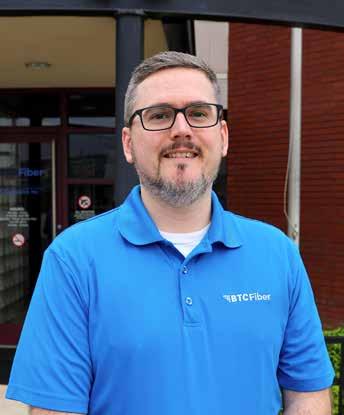
As leader of the department, Russ makes sure BTC has the most up-todate routers, switches and servers in its network to serve subscribers. “Equipment like would be seen at an Amazon or Microsoft data center,” he says.
No two days at BTC Fiber are the same. “I love the variety of technologies I get to work with and the people I get to work with,” Russ says. “Some days we are building the latest in internet technology, and other days we may be building a parade float for Dunlap or Pikeville. I’ve been involved in a lot of the Fourth of July floats in my 31 years here. It’s a great place to work, and we have the best customers in the world here in our community.”
Russ stays busy on the job, but when he’s not working, he has plenty to do. “I’m very involved in my church,” he says. He’s also a board member of the Sequatchie Valley Historical Association at Dunlap Coke Ovens Park and a charter member of the chamber of commerce in Dunlap.
Network Architect
In his five years at BTC Fiber, Walker has found plenty of his favorite type of work.
“I like problem-solving and puzzles, so network architecture and the intricacies of network protocols are right up my alley,” he says. “All of my favorite memories here at Bledsoe revolve around solving a particularly difficult problem or coming up with solutions to problems and executing that solution successfully, which I get to do all of the time here at BTC Fiber.”
Walker says he has a loving mother, father, sister, brother-in-law and two brilliant nieces.
Outside of work, he likes to tinker with electronics, build computers and research various upcoming technologies. “When I’m not doing that, I’m probably exploring around the area looking for the best winding roads on my Triumph T120 motorcycle,” he says.
Network Administrator
Webb, who has worked at BTC Fiber for five years, enjoys spending time with
“a great group of employees.” He also appreciates good food. “We have some great cooks when we have company potlucks,” he says.
Webb has good company even when he’s not at work. “I’m blessed that I have a lot of family close,” he says. “My parents, grandmother, aunt and uncle all live in the valley, and most of them within five minutes. I have a sister I am really close to who lives in Murfreesboro.”
When not at work, Webb enjoys looking out over the area he serves. “I spend a lot of time with my dog outside on my back porch enjoying my view of the valley,” he says. “When it gets colder out, I spend more time reading and playing video games with my buddies from college.”
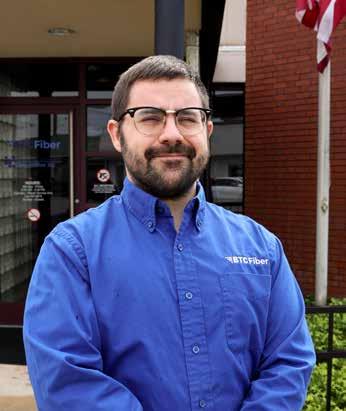
Network Administrator
Ryan joined BTC Fiber about a year ago, and he loves keeping the network running and solving problems as they come up. Outside of work, he spends time with family and working around his farm.






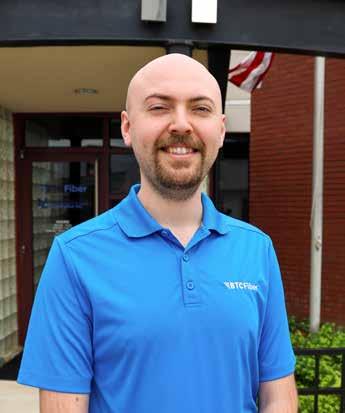



System Administrator
With nine years of service under his belt, Evan has been with BTC Fiber longer than many of his teammates.
“I enjoy assisting fellow co-workers with their tech needs or issues that may arise, working as a team to keep the infrastructure running smoothly and interacting and assisting with our co-op’s wonderful members,” he says.
Evan has one favorite work memory. “Once I was blessed with a batch of fresh cinnamon rolls,” he says. “This made my day, and I shared that joy with fellow coworkers.”
Evan says without all the support and love from his family, he wouldn’t be where he is today. When he’s not at work, he likes to spend time with “my wonderful wife” and little dog. He enjoys watching movies, visiting parks and, when able, playing video games. He generally has a techy home project going on and enjoys the final results. “We also hope to get back to hitting the trails and slinging mud,” he says.
System Administrator
Brody has worked to keep internal computer systems up and running smoothly during his four years at BTC
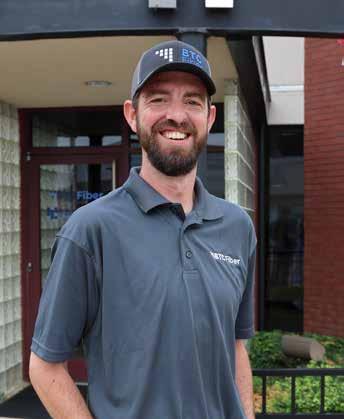

Fiber. “I am dedicated to monitoring system performance, promptly addressing any issues that arise and implementing solutions to optimize functionality and security,” he says.
He enjoys spending time with family and working outdoors.
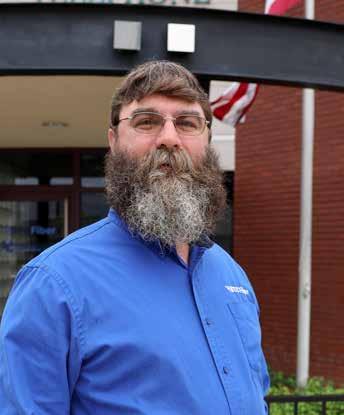
Communications Coordinator
Ethan has the longest tenure in his department, at 28 years with BTC Fiber.

“I get to promote the best things about not just BTC but our entire community and help with any and all efforts to make it all even better,” he says.
Married with two children, Ethan likes to spend time at church activities with family, and he stays busy with the family’s livestock operation.









For many Americans, going to the grocery store can be stressful since prices don’t seem to be coming down. But we still want to have our cake and eat it too. So, it’s nice—and entirely possible—to treat ourselves to something sweet at the end of the meal without breaking the bank. There are some tricks to keep in mind to help you stay on budget while still satisfying your sweet tooth. For example, if a recipe calls for pecans, walnuts, a less expensive alternative, can be substituted. And use store brands whenever possible—a cost-saving practice that always saves pennies.

Food Editor Anne P. Braly is a native of Chattanooga, Tennessee.
1/2 cup butter 1 cup sugar
egg 1 teaspoon vanilla 1 1/2 cups mashed banana
1 1/2 cups flour
Preheat oven to 350 F.
teaspoon baking powder

teaspoon baking soda 1/2 teaspoon salt 1/4 cup baking cocoa powder 1 cup chocolate chips

Mix the butter, sugar, egg, vanilla and banana. Then add the flour, baking powder, baking soda and salt. Put half of the mixture into a separate bowl and add the cocoa powder.
Grease the bottom of a 9-by-13-inch pan and pour in the cocoa mixture. The mixture will be thick, just try and spread a thin layer across the bottom. It will rise and make a beautiful, thin bar. Use a smaller pan if you want a thicker bar, however, it will need to bake longer to get the middle done.
Spread the rest of the batter on top of the cocoa mixture. Sprinkle the top with as many or as few chocolate chips as you like.
Bake for about 30 minutes or until the top is browned and a toothpick comes out clean.
2 cups white sugar
1 cup butter, softened
2 eggs
1 cup sour cream
1 teaspoon vanilla extract
1 cup plus 10 tablespoons all-purpose flour
1 teaspoon baking powder
1/4 teaspoon salt
1 cup fresh or frozen blueberries
1/2 cup brown sugar
1/2 cup pecans
1 teaspoon ground cinnamon
1 tablespoon powdered sugar for dusting
Preheat the oven to 350 F. Grease and flour a 9-inch Bundt pan. Beat sugar and butter together in a large bowl with an electric mixer until light and fluffy. Add eggs, one at a time, beating well after each addition. Beat in sour cream and vanilla extract. In another bowl, combine flour, baking powder and salt. Stir into butter mixture until just blended. Fold in blueberries.

Spoon half of the batter into the prepared pan. Combine brown sugar, pecans and cinnamon in a small bowl. Sprinkle half of the mixture over the batter in the pan.
Spoon remaining batter on top, then sprinkle on remaining pecan mixture. Use a knife or thin spatula to swirl the mixture into the cake.

Bake until a toothpick inserted into the center comes out clean, about 1 hour to 1 hour 15 minutes. Let cake cool in the pan for 15 minutes before inverting. Invert carefully onto a serving plate. Dust with powdered sugar just before serving.

2 cups frozen pineapple chunks
4 ounces pineapple juice

2 scoops vanilla ice cream
Combine all ingredients in a blender and blend until smooth. If it’s too thick, add a bit more pineapple juice. Scoop into bowls and, if desired, garnish with additional chopped pineapple and a dollop of whipped cream. Serve immediately. Makes 3 servings.
1 prepared 9-inch pie shell, graham cracker or pastry crust, baked and cooled
1 8-ounce package cream cheese, softened 1/3 cup granulated sugar
1/2 teaspoon almond extract
1 cup whipped topping, thawed
4 cups fresh strawberries, washed, hulled and halved 1/2 cup semisweet chocolate chips
1 tablespoon shortening
Bake crust at 350 F for 15 minutes or until light golden brown. Cool completely.
In a large bowl, beat the softened cream cheese until it is fluffy. Gradually add the sugar and almond extract, beating until fully combined. Gently fold the whipped topping into the cream cheese mixture until smooth.
Spread the cream cheese mixture evenly into the cooled pie crust. Arrange the strawberry halves, cut side down or pointed side up, over the filling.
In a small, microwave-safe bowl, combine the chocolate chips and shortening. Microwave in 30-second intervals, stirring in between, until the chocolate is melted and smooth. Drizzle the melted chocolate over the top of the strawberries and cream filling.
Refrigerate the pie for at least 1-2 hours or until it is set and chilled before serving.