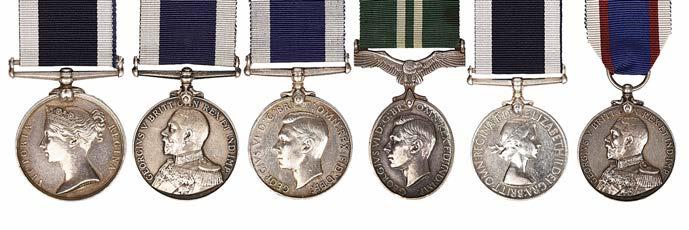
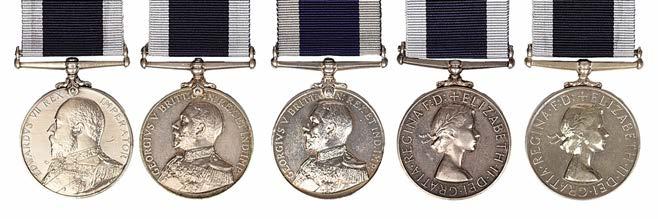
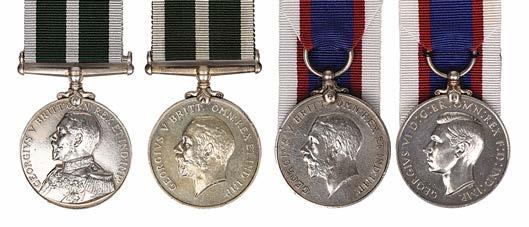
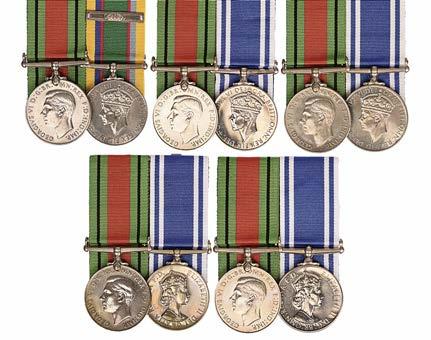
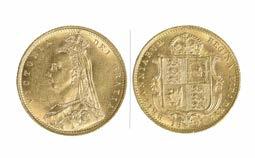
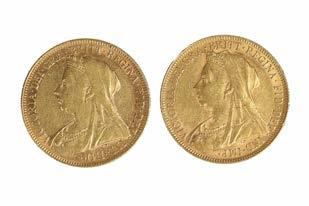
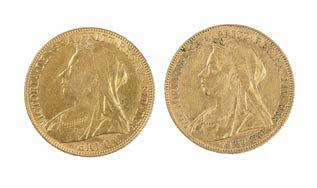
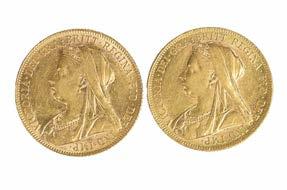
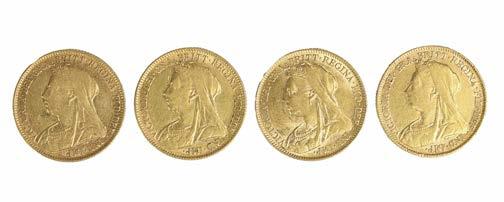
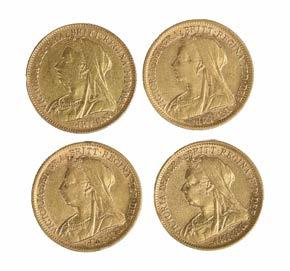
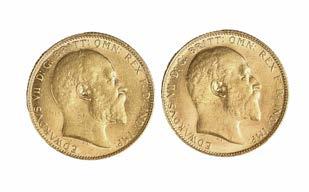
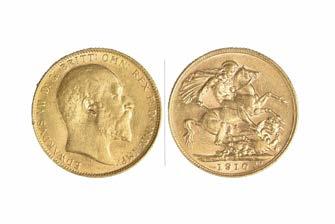
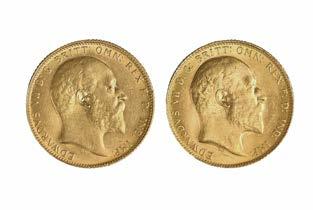
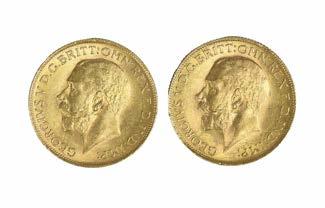
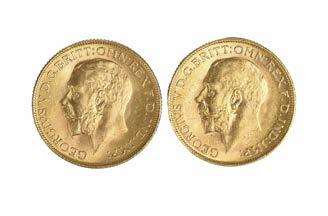
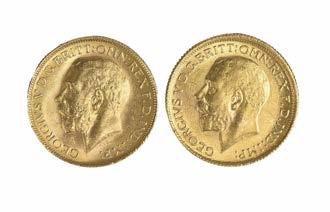
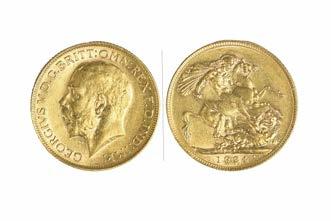
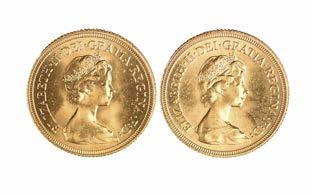
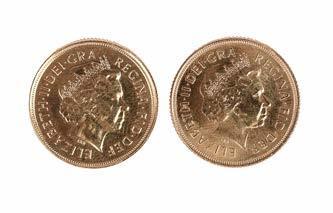
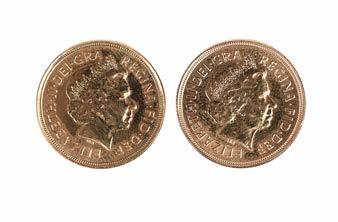
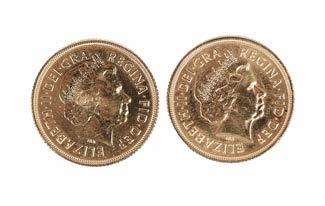
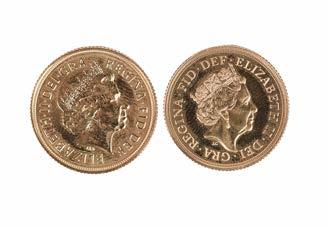
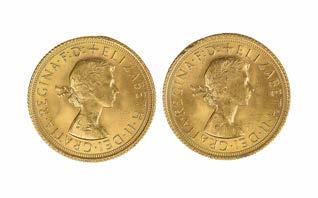
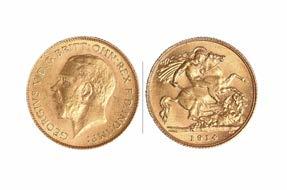
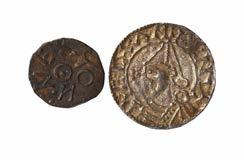
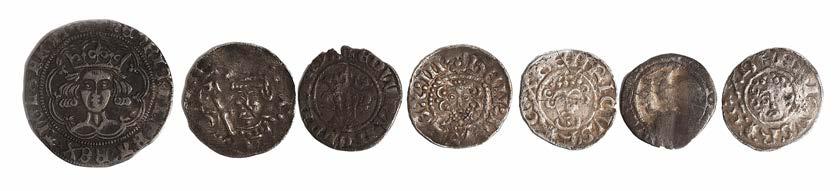
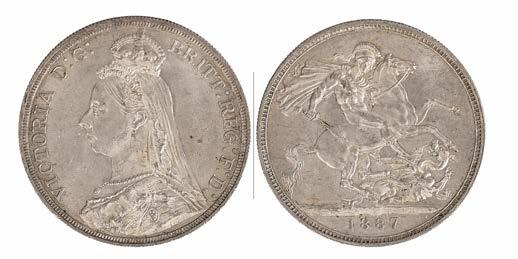
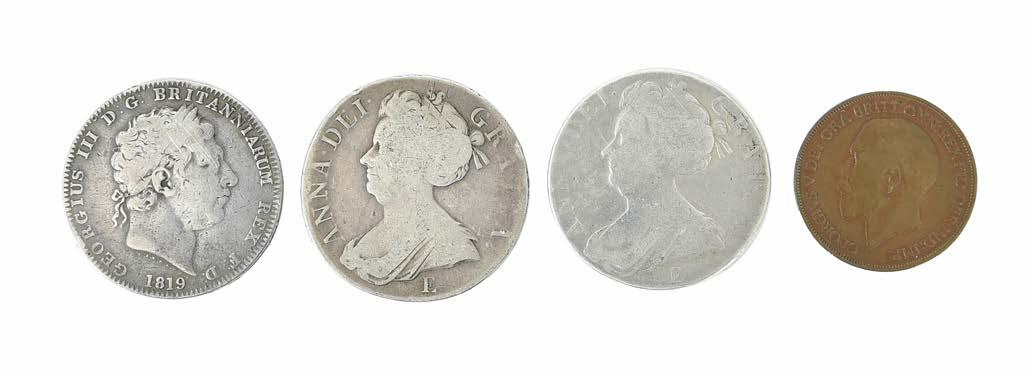
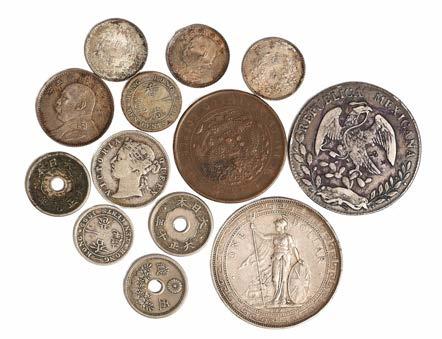
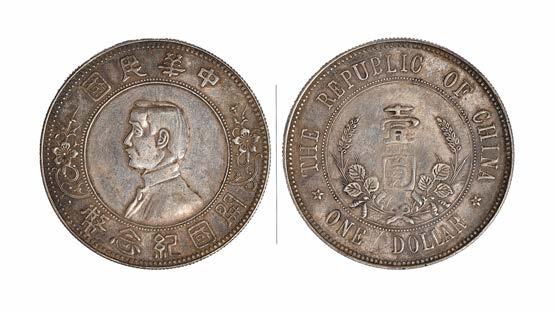
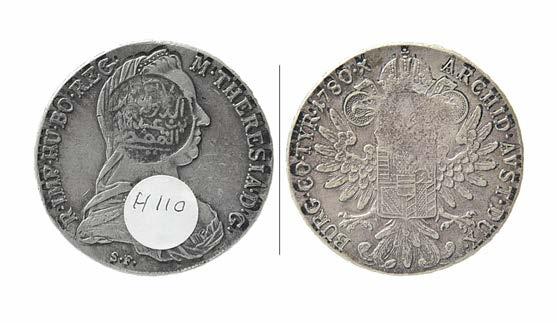
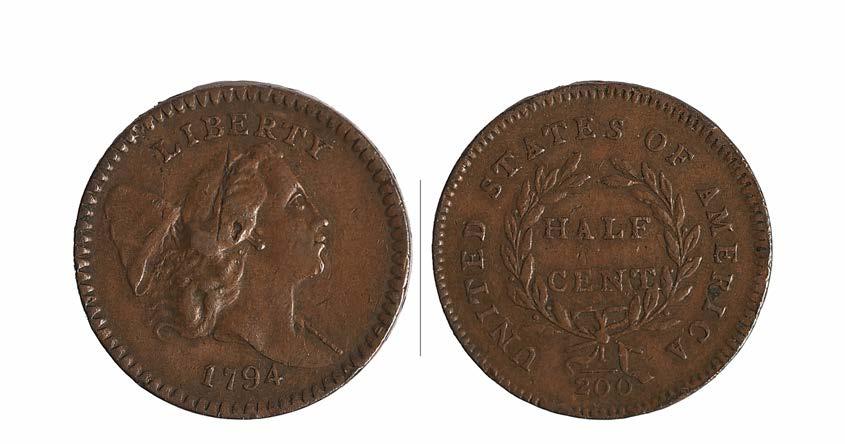
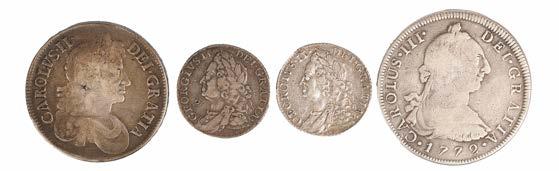
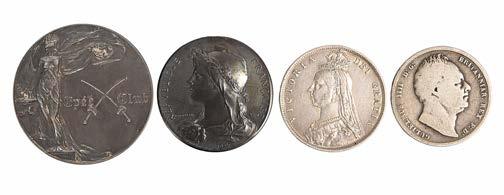
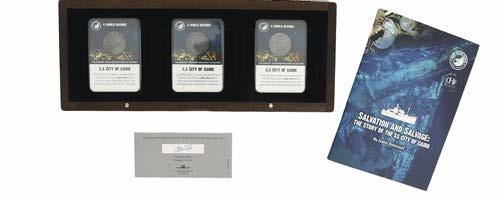
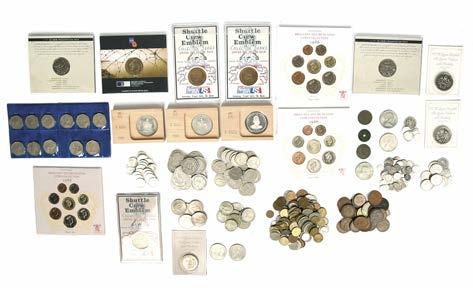
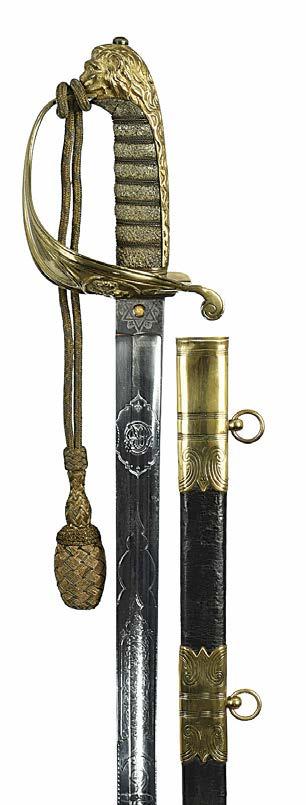
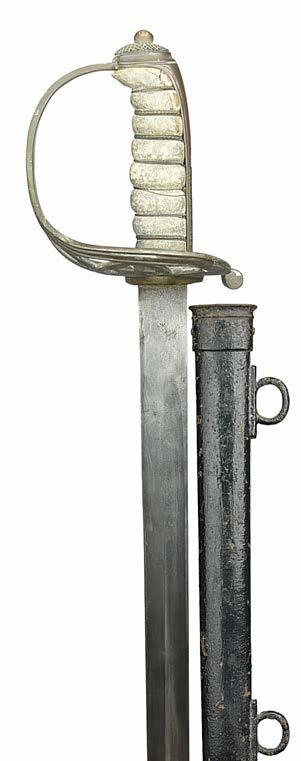
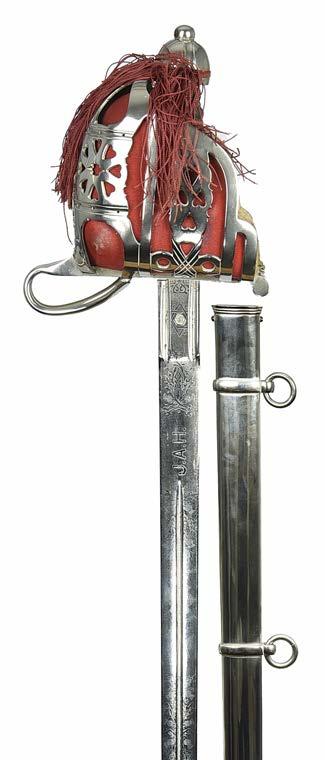
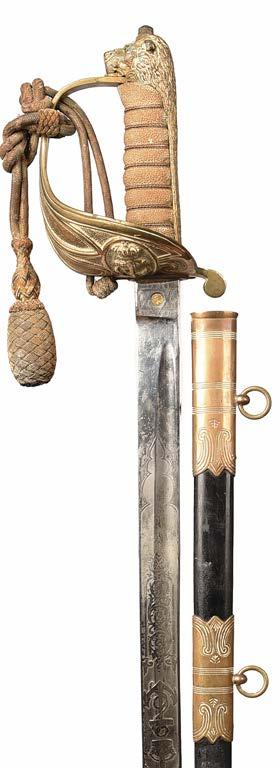
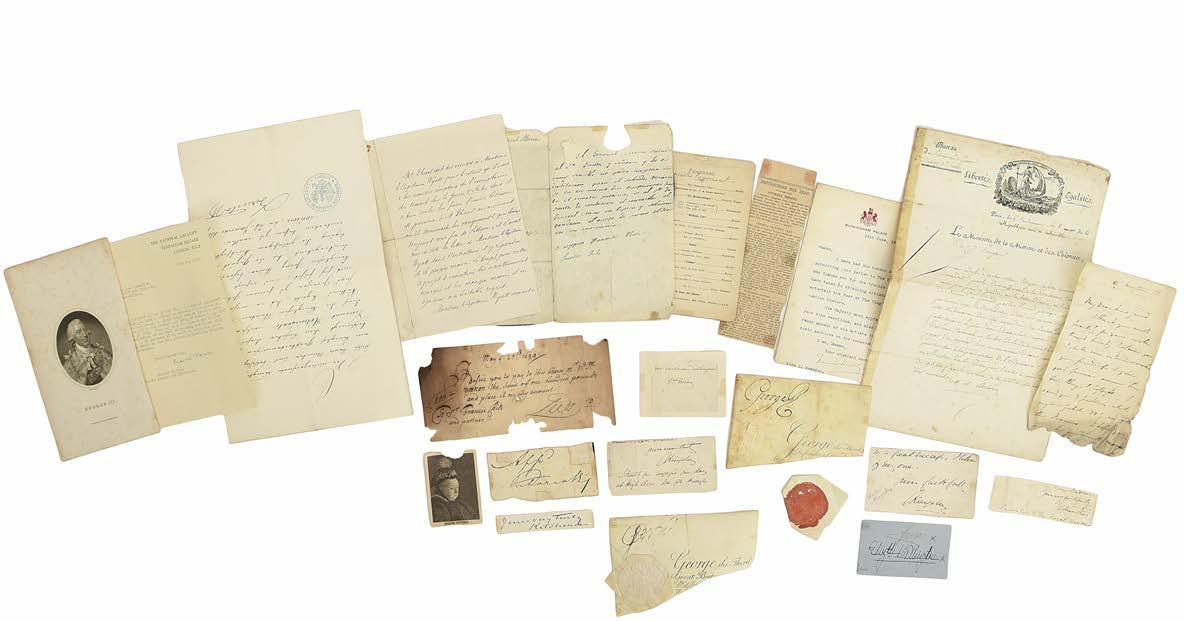
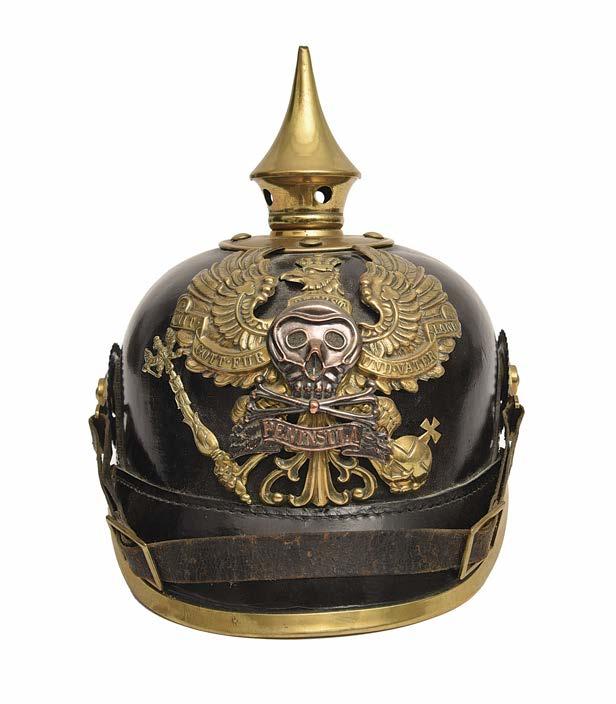
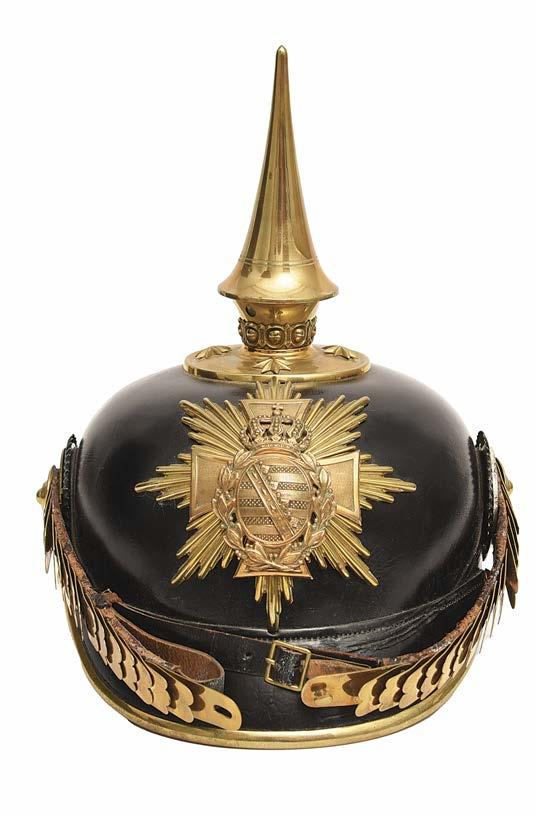
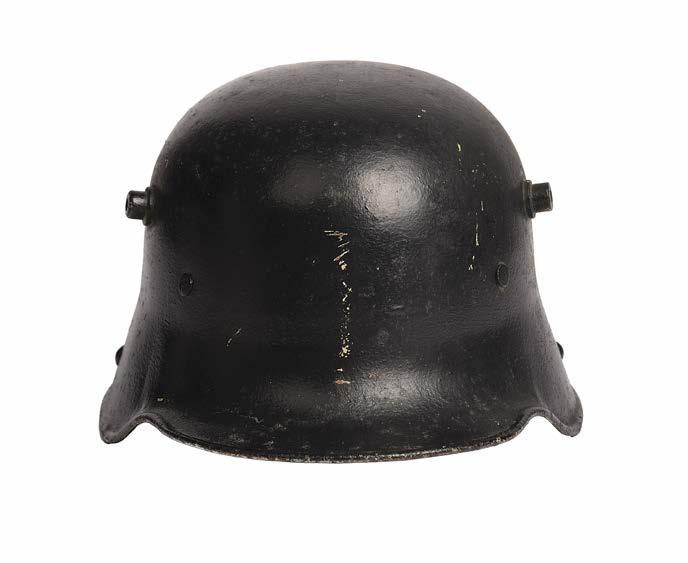
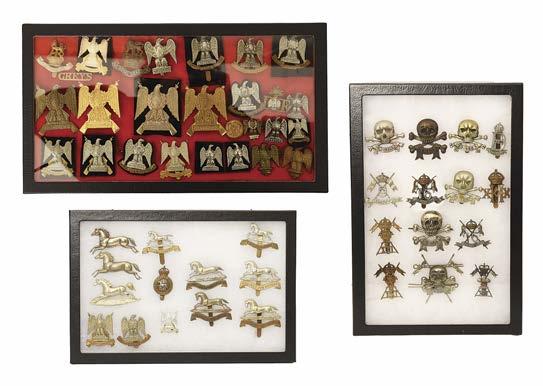
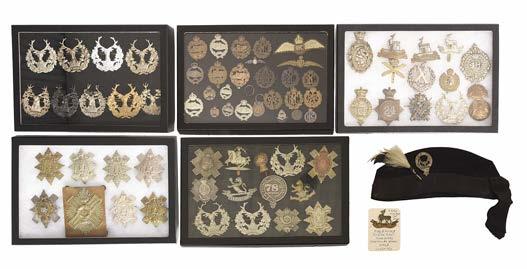
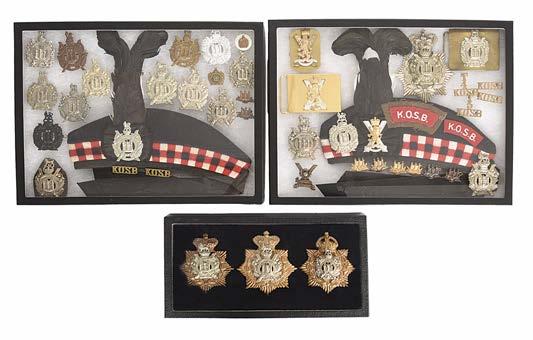
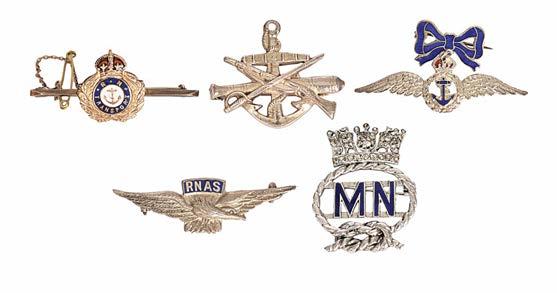
2nd Treasures from Kirtling TowersThe Property of Lord & Lady Fairhaven
8th Fine Jewellery
14th & 15th Silver & Objects of Vertu
AUGUST
20th Arts of Africa, Oceania and the Americas
SEPTEMBER
8th Old Masters, British & European Paintings
23rd Design
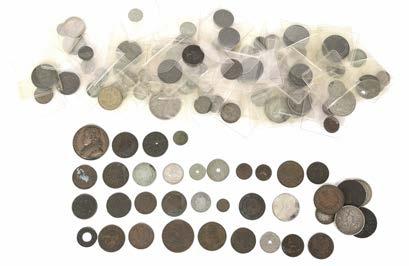
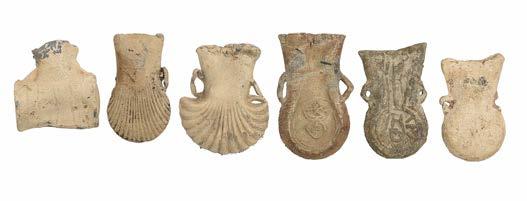
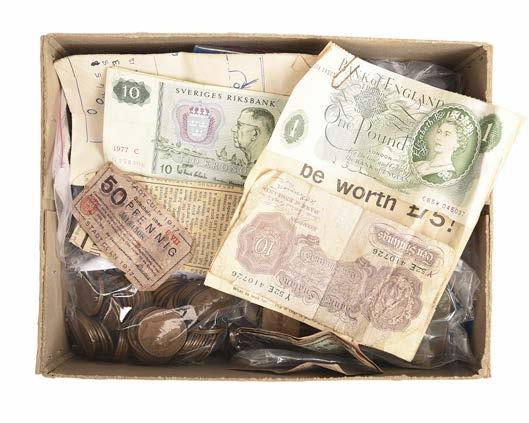
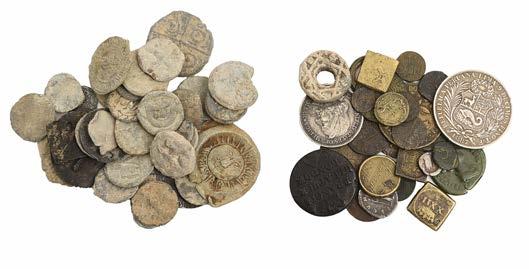
MEDALS & COINS, ARMS & MILITARIA
WEDNESDAY 10TH JUNE 2026
10.00AM
AT OUR CITY CENTRE SALEROOMS, SP1 3SU
VIEWING AT OUR CITY CENTRE SALEROOMS, SP1 3SU
Saturday 6th June 10.00am – 1.00pm
Monday 8th June 10.00am – 4.00pm
Tuesday 9th June 10.00am – 4.00pm
Ned Cowell 01722 341469 nc@woolleys.live
Zoe Smith 01722 446955 zs@woolleys.live
Annabelle Hunt Photographer
BUYER’S PREMIUM
Each lot is subject to a Buyer’s Premium of 27% (+VAT) on the first £20,000 of the hammer price. reducing to 26% (+VAT) up to £500,000, and 20% (+VAT) thereafter.
CONDITION OF LOTS
Buyers are advised to obtain a full condition report prior to bidding, as descriptions do not necessarily list all faults.
COLLECTION OF LOTS BY APPOINTMENT
Collection is from our City Centre Saleroom until Friday 12th June, and thereafter from our warehouse, Unit 1B, Castle Gate Business Park, Old Sarum, Salisbury, SP4 6QX. Please instruct carriers accordingly and note, the warehouse is closed over weekends. Please call 01722 446950 or 01722 424500 prior to collection to ensure the items are ready
All accounts to be settled prior to collection
EXPORT AND CITES LICENCES
Some lots will require export or CITES licences in order to leave the UK or Europe, please refer to the department for guidance.
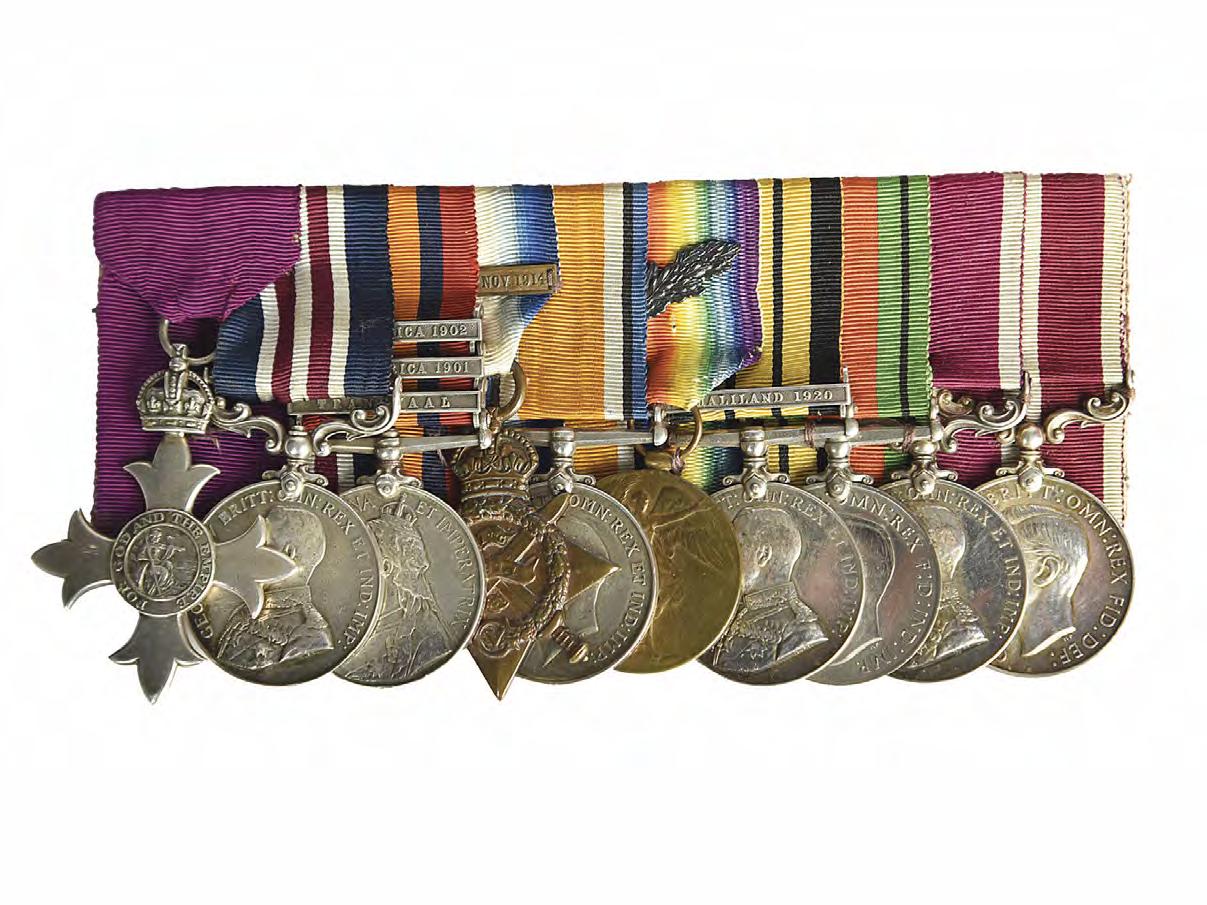
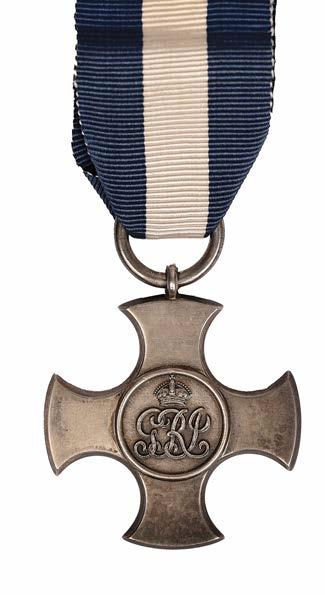
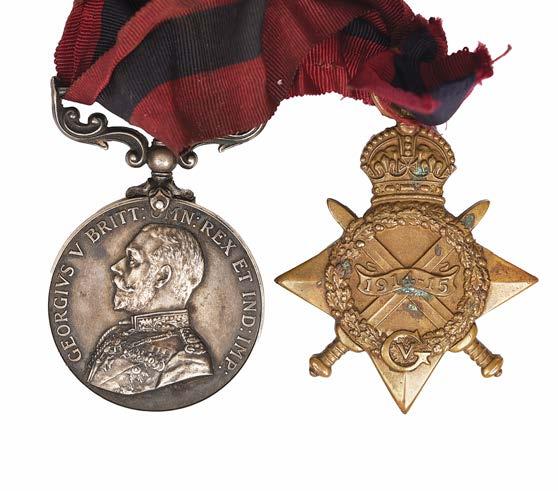
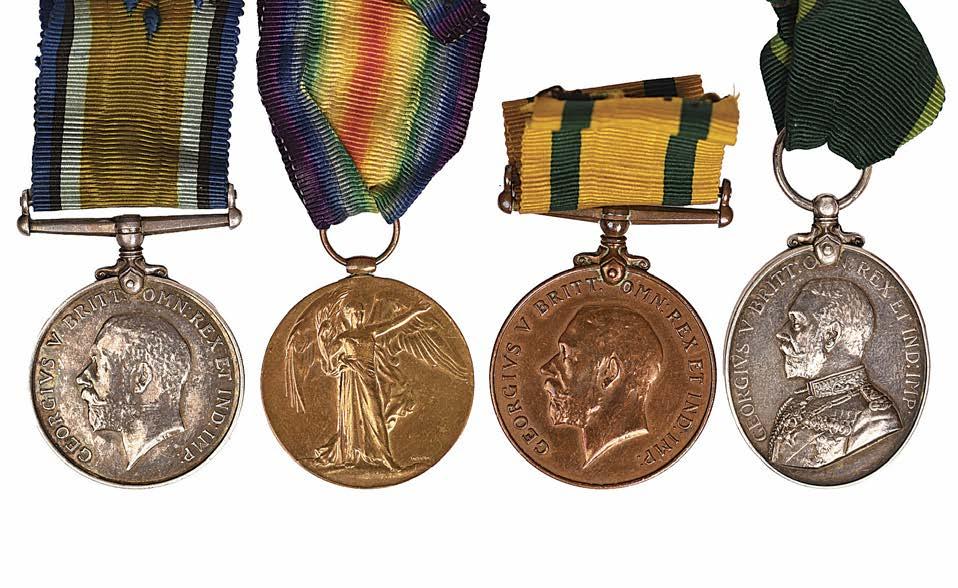
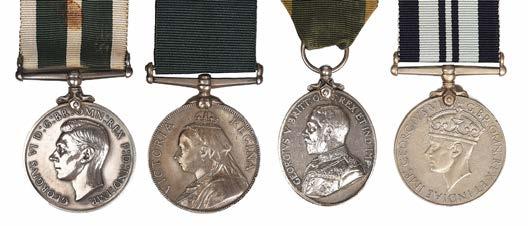
A Distinguished Service Cross, George V, hallmarked for Garrard & Co. Ltd., London 1917, nearly extremely fine.
£500700
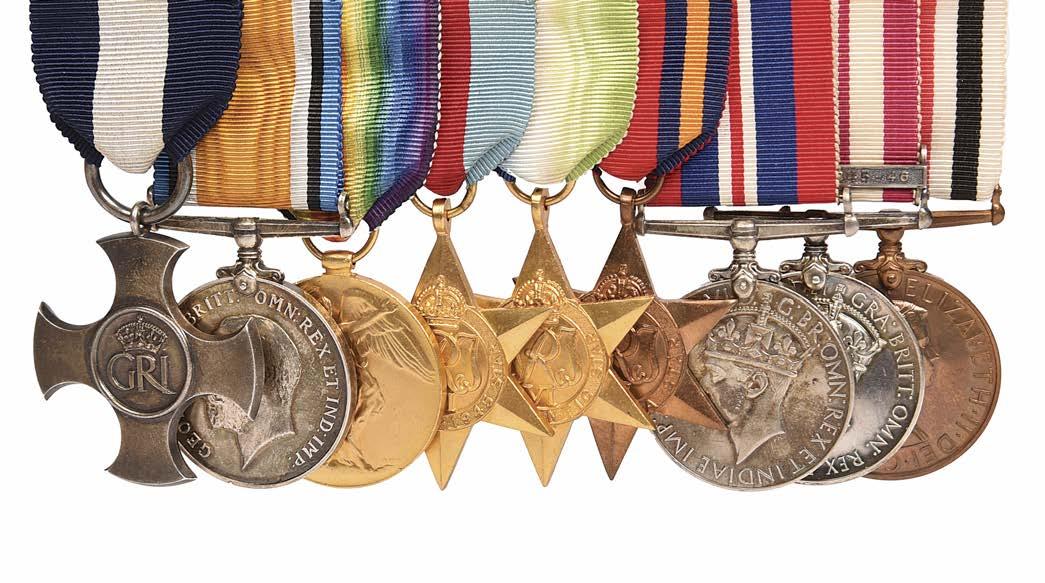
The D.S.C. group of nine medals to Commander Gerald Joel Scott, Royal Navy: Distinguished Service Cross, George VI, reverse engraved ‘COMMANDER G. J. SCOTT. R.N. JUNE’ and dated 1943, Garrard London 1942; British War Medal 191420 and Victory Medal (MID. G. J. SCOTT. R.N.); 193945 Star; Atlantic Star; Burma Star; War Medal 193945; Naval General Service Medal 190962, George VI, clasp: S.E. Asia 194546 (CDR. G. J. SCOTT. D.S.C. R.N.); Special Constabulary Long Service Medal, Elizabeth II (GERALD J. SCOTT); mounted for wearing, the first two campaign stars brighter in colour than the last, all good very fine. [9]; together with a mounted group of dress miniature medals, corresponding in every respect except that the last medal is a George VI issue.
Notes: D.S.C. London Gazette: 02/06/1943
Gerald Joel Scott was born on the 27th of April 1899 and entered the Royal Navy on the 5th of February 1917. His first ship, in which he served as Midshipman, was H.M.S. King George V. He was put on the retired list in the interwar years, but returned to service for the Second World War. His D.S.C. was awarded for service in H.M.S. Port Quebec, a minelayer involved in establishing the Northern Barrage. He was later posted to the Far East. After the war, he returned to work in the family jewellery business, becoming a prominent member of the British Jewellers’ Association.
£8001,200
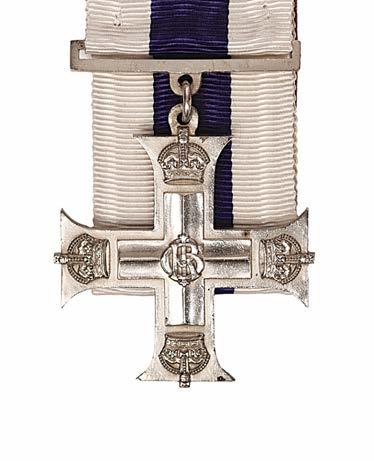
A Military Cross attributable to Lieutenant Samuel Hart, Royal Artillery, George V, reverse with contemporary private engraving in serif capitals “MILITARY CROSS AWARDED TO SAMUEL HART 3RD BATTLE YPRES 1917”, good very fine or better.
Provenance: Ex. London Medal Company 2012
Notes: The engraving corresponds to T/Lieutenant Hart, R.A., whose Military Cross was announced in the London Gazettes of 26th September 1917 and 9th January 1918 (citation).
“For conspicuous gallantry and devotion to duty as Brigade Signaller. When the communications had been cut by hostile shell fire and the brigade signallers were unable to get along the line to repair it, he called for a volunteer, and with his aid laid a new line across the shelled area, thus reestablishing communications. This gallant action saved a critical situation, as this line was the only means of communication available for a considerable time. His coolness and courage under fire has on all occasions afforded a splendid example to the brigade signallers.”
£500700
4
A D.C.M. part group of two medals to Armament Staff Sergeant Frederick W. Bowes, Army Ordnance Corps: Distinguished Conduct Medal, George V (553 AMT: S. SJT: F. W. BOWES. A.O.C.), nearly extremely fine with some lustre; 191415 Star (T.553 AMT. S. SJT. F. W. BOWES. A.O.C.), some verdigris, otherwise about very fine. [2]
Notes: D.C.M. London Gazettes: 01/01/1917 and 13/02/1917
Frederick Bowes entered France on the 3rd of June 1915. He was awarded the D.C.M. for service while attached to 19th Siege Battery R.G.A.:
“For conspicuous devotion to duty. He has performed consistent good work throughout in keeping the guns of the battery in working order, and has at all times set a splendid example.”
The timings of the Gazettes suggest that this award was for the Battle of the Somme.
£250350
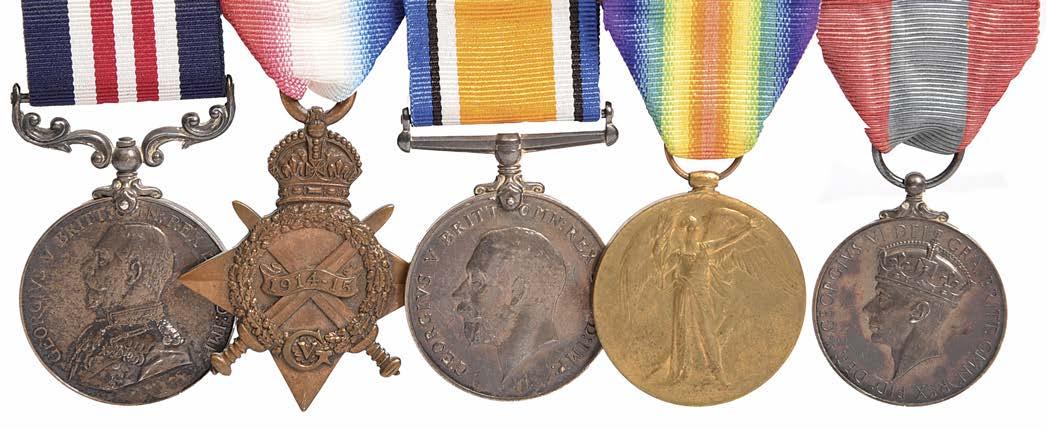
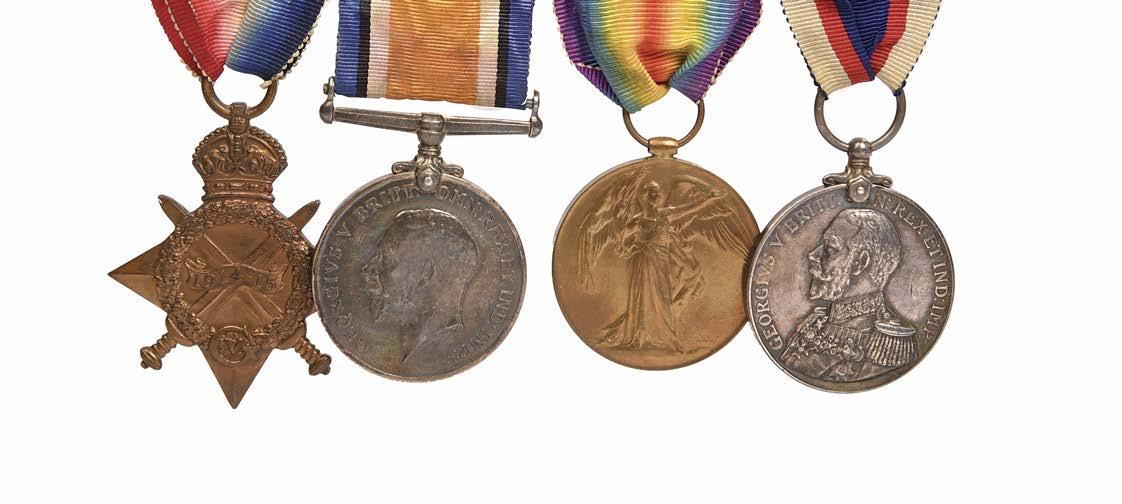
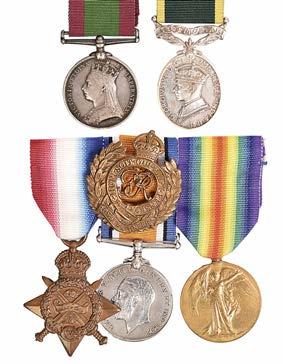
A Great War M.M. group of five medals to Acting Corporal Archibald McLean, Royal Engineers: Military Medal, George V (1080 L. CPL A. MCLEAN. 2/3 LOND: F. CO: R.E. T.F.); 191415 Star (1080. LCPL. A. MC LEAN, R.E.); British War Medal 191420 and Victory Medal (1080 A. CPL. A. MC LEAN. R.E.); Imperial Service Medal, George VI (ARCHIBALD MCLEAN, M.M.); display mounted, extremely fine or nearly so, the silver medals toned. [5]
Notes: M.M. London Gazette: 03/06/1916
Archibald McLean entered France on the 22nd June 1915, and his unit joined the 47th Division, with which it served throughout the war, on the 25th. His Military Medal was announced in the first M.M. Gazette of the war. The 2/3 London Field Company T.F. (which became the 520th Field Company Territorial in February 1917) is notable for having manned the line as Infantry at Vimy Ridge in May 1916, and at Bazentin Le Petit Somme in March 1918 during the German Spring Offensive.
£250350
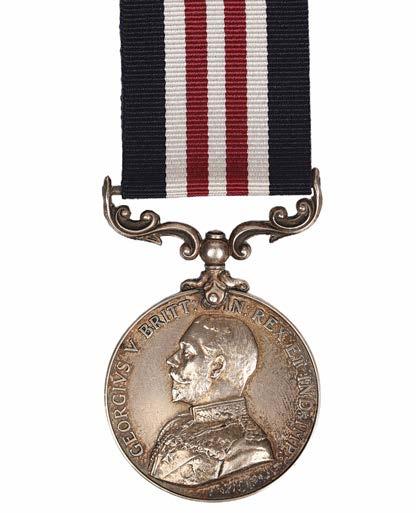
A Military Medal to Sergeant (later C.Q.M.S.) Charles W. Foster, Royal Engineers, George V (44666 SJT: C. W. FOSTER. 17/D.S. COY R.E.), very fine or better
Notes: M.M.: London Gazette 09/07/1917
Charles Foster disembarked in France on the 19th of July 1915. He was mentioned in a despatch of Sir Douglas Haig of the 9th of April 1917 (L.G. 18/05/1917), and his M.M. was gazetted under the heading “for bravery in the field”. He was discharged in June 1919, having attained the rank of Company Quartermaster Sergeant.
£250350
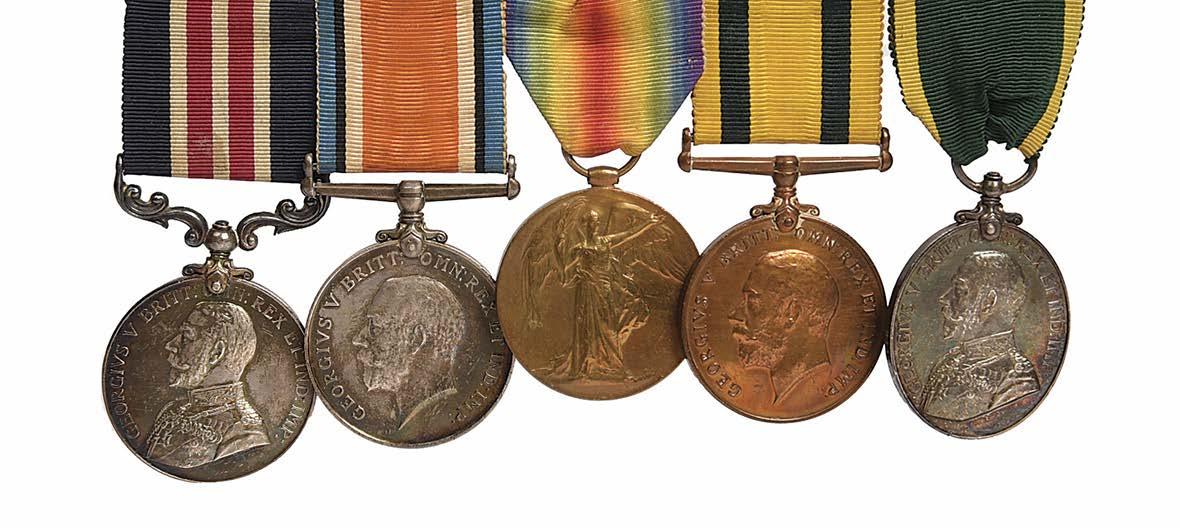
The Great War Mesopotamia M.M. group of five medals to Private Charles Godfrey Day, Royal West Surrey Regiment and East Surrey Regiment: Military Medal, George V (243274 PTE C. G. DAY. 1/5 THE QUEEN’S R.T.F.); British War Medal 191420 and Victory Medal (1312 PTE. C. G. DAY. E. SURR. R.); Territorial Force War Medal (1312 PTE. C. G. DAY. E. SURR. R.); Territorial Force Efficiency Medal, George V (243274 PTE C. G. DAY. M.M. 4/THE QUEEN’S R.); mounted for wearing, nearly extremely fine. [5]
Notes: M.M. London Gazette: 04/02/1917
£300400
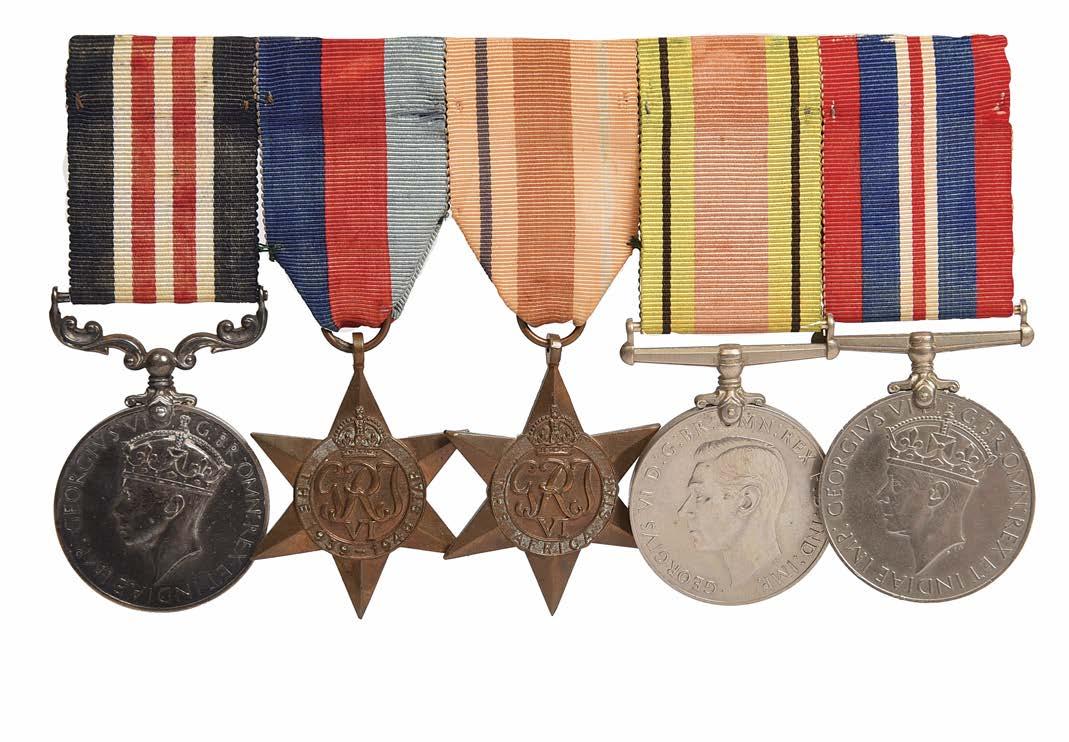
The Second World War B.E.F. M.M. group of five medals to 2nd Lieutenant (former Lance Sergeant) Wilmer George Watson, Royal Artillery: Military Medal, George V (903746 L/SJT. W. G. WATSON. R.A.); 193945 Star, Africa Star, Defence Medal, War Medal 193945, all unnamed as issued; mounted for wearing, all at least good very fine, the first toned. [5]
Notes: M.M. London Gazette 20/12/1940.
Wilmer Watson was recommended for the Military Medal for service as an Observation Post Assistant in the 99th Field Regiment Royal Artillery a TA unit which fought in Belgium and France for gallantry and devotion to duty
“..he carried out his duties under fire most efficiently and set a fine example to all..”
Following the evacuation of the BEF from France, Watson was commissioned and posted to North Africa.
£500700
9
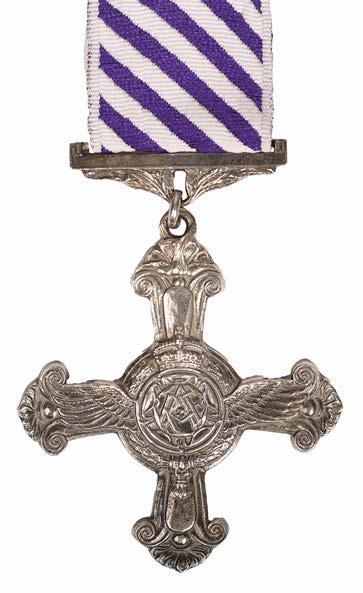
A Distinguished Flying Cross, George V, unnamed as issued, very fine.
£8001,200
not to scale
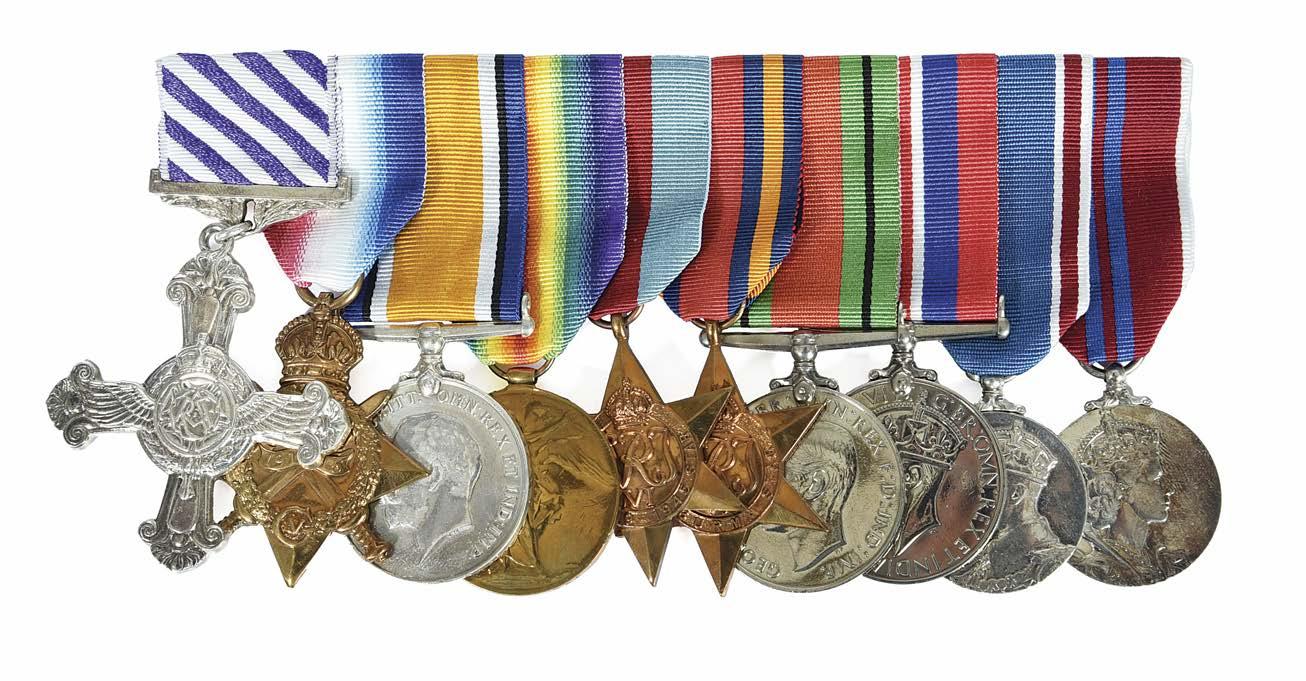
The Great War D.F.C. group of ten medals to Air Commodore Allan Robert Churchman, R.A.F., C.B., D.F.C. D.L.: Distinguished Flying Cross, George V, reverse privately engraved in serif capitals “ALLAN ROBERT CHURCHMAN CAPT RAF / AWARDED JUNE 11TH 1918 / PRESENTED JULY 24TH 1919 / BY H.M. KING GEORGE V”, good very fine; 191415 Star (F. 2916, A. R. CHURCHMAN, A. M. 1, R.N.A.S.), very fine; British War Medal 191820 and Victory Medal (CAPT. A. R. CHURCHMAN. R.A.F.), edge bruising, contact marks and some smoothing, near very fine; 193945 Star, Burma Star, Defence Medal, War Medal 193945, unnamed as issued, nearly extremely fine; Coronation Medal 1937, unnamed as issued, about very fine; Coronation Medal 1953, unnamed as issued, good very fine; later mounted for wearing. [10]
Notes: C.B. (not offered here) London Gazette: 01/01/1959
D.F.C. London Gazette: 02/07/1918 and 03/08/1918
Allan Churchman, having served in the rates of Petty Officer Mechanic (RN) and Air Mechanic (RNAS), in 1915, transferred to the Army as an Officer Cadet on the 15th of June 1916 and was commissioned 2nd Lt. in the North Devon Hussars on the 19th December. In June 1917 he was appointed Flying Officer in the Royal Flying Corps and went on to serve in 10 Squadron RFC. He attended the 1st Army Artillery School in August of the year and he was awarded the DFC for aerial artillery observation, with the following citation:
“Within the past month this officer has been successful in rendering very valuable services in directing our artillery fire on enemy positions. Owing to his skill and judgement on many occasions concentration of our fire was brought on enemy batteries with such precision that great damage was effected.”
This was one of the first awards of the newly created D.F.C., and was in fact the result of an M.C. recommendation, of which a copy is offered with this lot. It gives details of seven operations in which the receipient’s courage and professionalism resulted in great damage to enemy positions. Churchman held various posts in the interwar years, and was posted to India in 1942. In August 1944 he became AOC RAF Northern Ireland.
Offered with copy research and a reprint of a uniform portrait photograph.
£2,0002,500
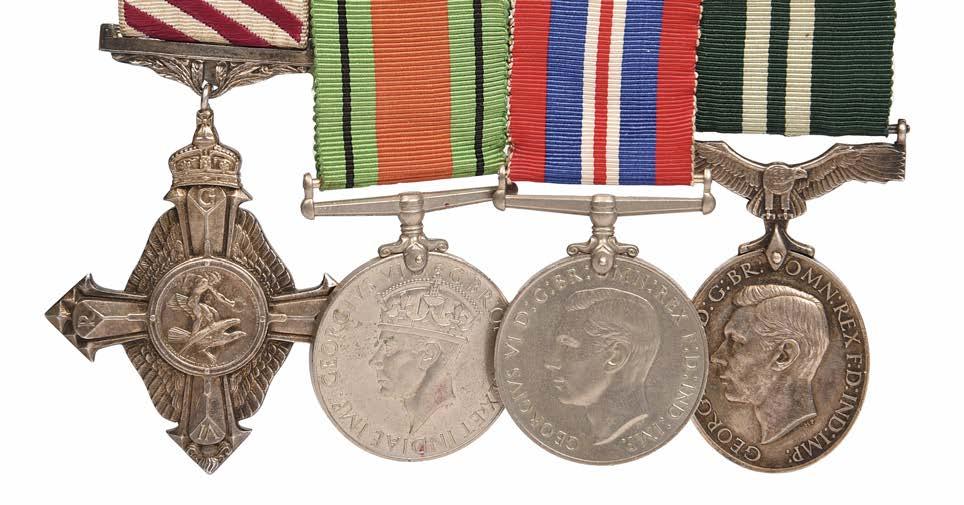
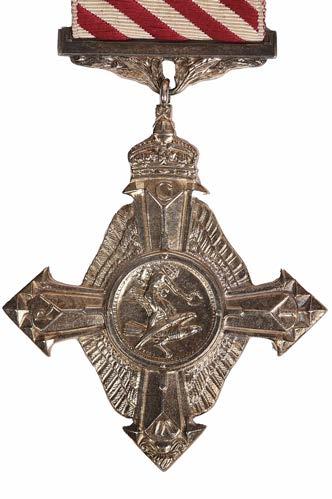
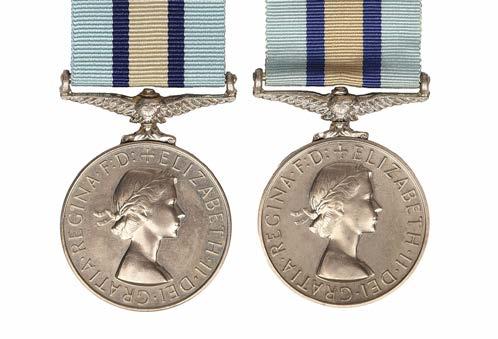
The Second World War A.F.C. group of four medals to Flight Lieutenant R. McCarthy, Royal Air Force Volunteer Reserve: Air Force Cross, George VI, reverse officially dated 1943; Defence Medal and War Medal 193945, unnamed as issued; Air Efficiency Award, George VI (FLT. LT. R. McCARTHY. R.A.F.V.R.); mounted for wearing and together with a second award bar for the AEA on a loose piece of ribbon, nearly extremely fine. [4]
Notes: A.F.C. London Gazette: 31/08/1943
£1,0001,500
An Air Force Cross, George VI, reverse officially dated 1944, in Royal Mint case of issue, extremely fine.
£8001,200
13
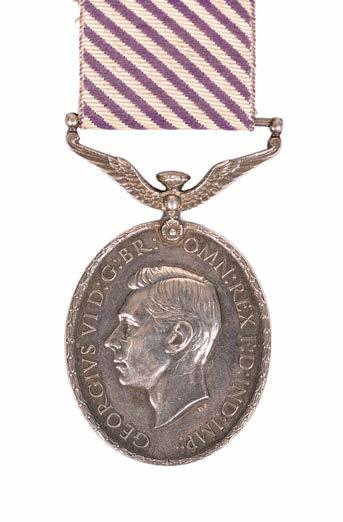
The Distinguished Flying Medal to Sergeant Eric Arthur Fawns Gibb, R.A.F. Volunteer Reserve, George VI (751333 SGT. E. A. F. GIBB. R.A.F.), nearly extremely fine; in an associated case and together with fabric insignia comprising two Observer’s wings and a Sergeant’s stripes.
Notes: D.F.M. London Gazette: 23/09/1941
Eric Gibb served as an Observer, and at the time of the recommendation for his D.F.M. he had carried out 33 sorties with No 35 Squadron (Bomber Command). His commanding officer described him as “.....an observer of outstanding ability possessed of a high order of courage [who had] contributed in a marked way to successes achieved.”. The Station Commander of R.A.F. LintononOuse further commented, “His operational work has been a splendid example to the observers of his Squadron”
During a daylight formation attack on Kiel on the 30th June 1941, Gibb was slightly wounded, but forbore to report it to his Captain and “continued his duties until base safely reached”. He was killed on the 22nd December 1941 when Halifax L9522 crashed on a transit flight near the LincolnshireLeicestershire border.
£1,0001,500
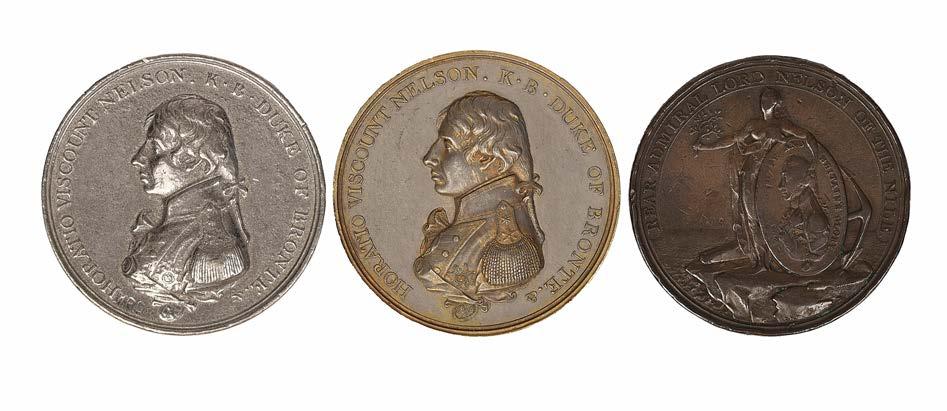
Matthew Boulton’s Medal for the Battle of Trafalgar 1805, white metal with some gilding, good very fine; together with Alexander Davison’s Medal for the Battle of the Nile 1798, copper, much bruising and wear, fine or a little better; and a cast copy of Boulton’s medal, by WRL. [3]
£300500
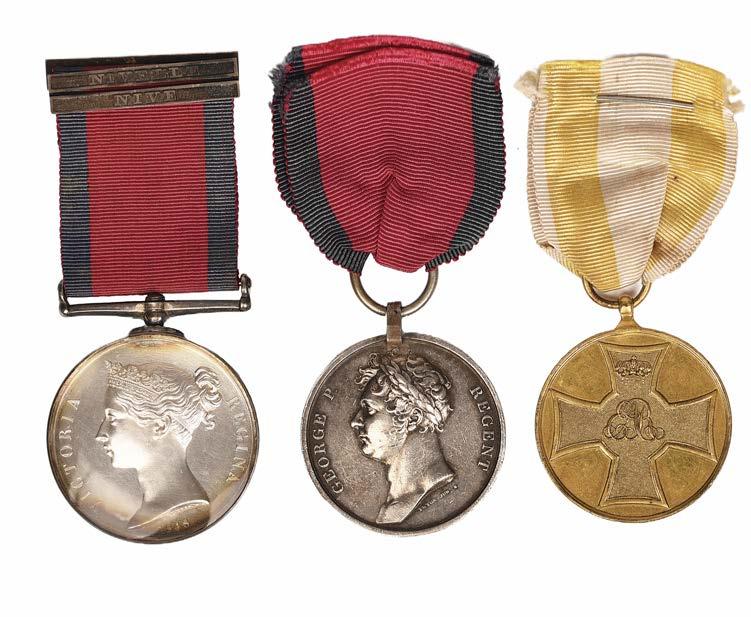
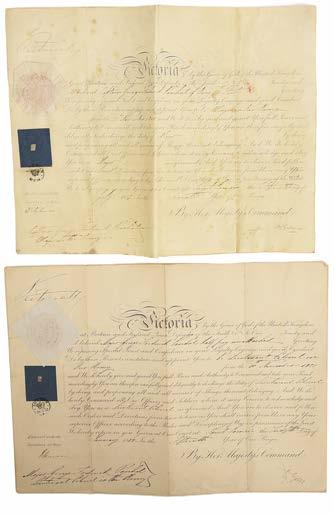
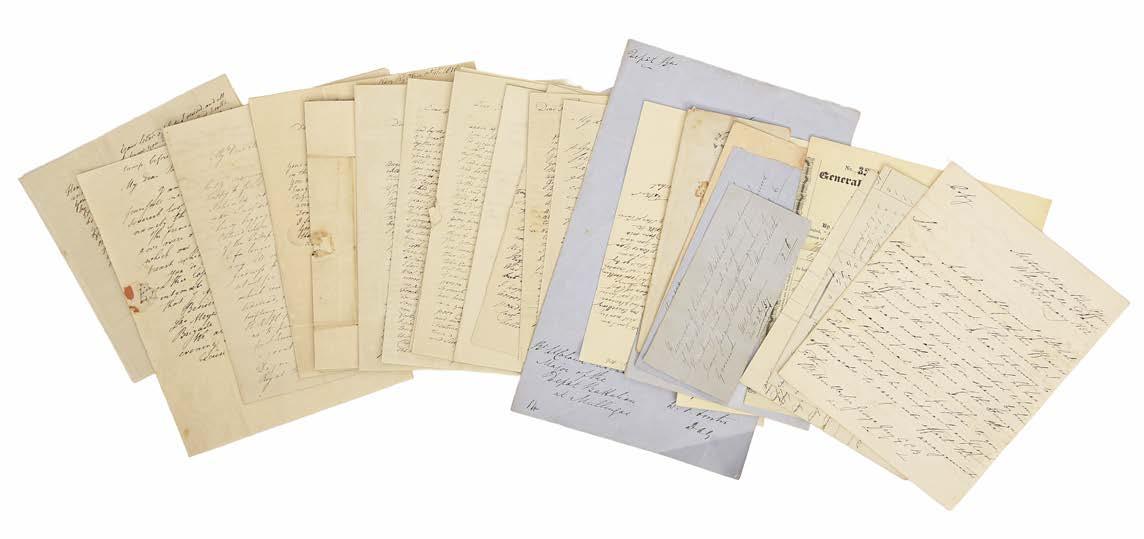
The interesting composite Peninsular and Waterloo group of three medals to Lieutenant George Frederick Paschal, 2nd Line Battalion King’s German Legion: Military General Service 17931814, glazed specimen, fitted with straight suspension and continental type vertical pin, 2 tailor’s copy clasps: Nive, Nivelle, the frame engraved ‘LIEUT FREDERICK PASCHAL, 2ND LINE BATT. K.G.L.’, extremely fine; Waterloo 1815 (LIEUT. G.F. PASCHAL, 2ND LINE BATT. K.G.L.), officially impressed but with engraved regimental number (possibly corrected), contact marks, very fine or better; Hanover: Medal for Volunteers in the King’s German Legion 180315, gilt bronze, unnamed as issued, good very fine or better; together with dress miniatures for the Waterloo and the Hanoverian medal; also offered with a collection of correspondence providing many interesting details of this officer’s career.
Notes: Entitlement to the two British Medals is confirmed on the roll, and though the third cannot be confirmed it might be assumed to be correct. It would appear that at one time the recipient or his family held the three original medals and a duplicate set comprised of privately named specimens, which have at some point been incorrectly combined. An internet search will reveal a similar group in private hands, also attributed to this officer, in which the Waterloo and the Hanoverian medals are glazed, leading to the supposition that not only the Waterloo, but also the Hanoverian medal in this group is the original.
Later LieutColonel 70th Foot. Also served command of auxiliary police for the Great Exhibition of 1851 and during the unrest that followed the passing of the Common Lodging Houses Act of 1851.
£1,5002,000
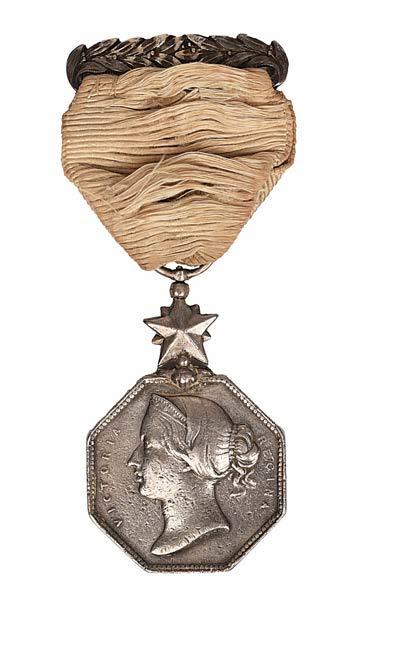
An Arctic Medal 181855, contemporary private engraving (THOS GREEN), contemporary ribbon with a laurel design top bar by T. B. Bailey of Coventry, contact marks, wear and pitting, good fine.
Notes: A Thomas Green served as Able Seaman in the 1818 voyage of the Alexander, to discover the NorthWest Passage. According to Poulsom & Myres ‘No Medal issued’.
£1,0001,500 17
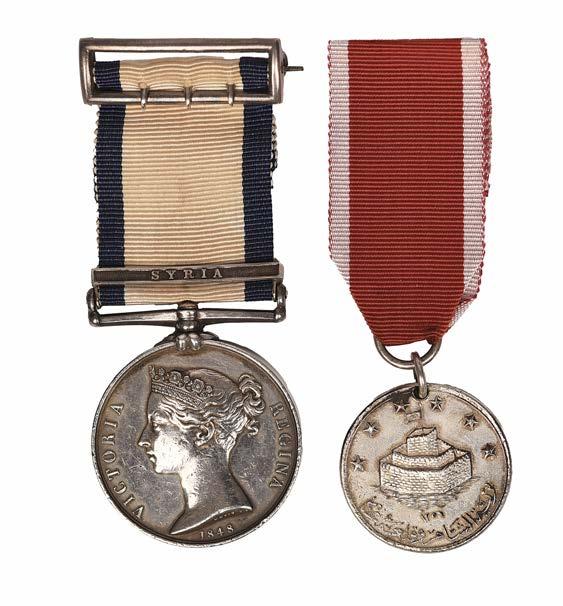
Two medals named or attributed to John Augustus Hugh Boyd, Mate (later Lieutenant), Royal Navy: Naval General Service Medal 17931840, clasp: Syria (JOHN A.H. BOYD, MATE.), buckle type ribbon brooch by E & E Emanuel, The Hard, Portsea, very fine; Turkish St Jean D’Acre medal, silveredcopper, near very fine. [2]
Notes: The recipient entered the Navy in 1832, passing his examination 12th June 1839, and serving as Mate on the Mediterranean station, including in HMS Castor under Captain Edward Collier. He served with shore parties during the actions on the coast of Syria in 1840, and a “..Boyd, mate...” is mentioned in a letter of Captain Collier as having taken part in the fixing of an Ottoman flag to the ramparts of Caiffa following a bombardment. A Lieutenant from 28th May 1845, he subsequently served in the Coast Guard, and in 1847 Lloyds recorded his “gallantry....in saving the lives of the Master and Crew of the Eliza Liddle”. Brig Eliza Liddle was taking coal from Cardiff to London when she was driven on shore and wrecked at Mothecombe, Devon, November 1847.
18
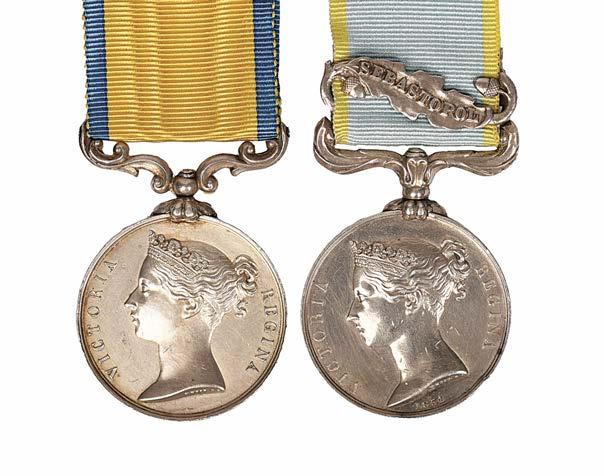
A Baltic Medal 185455, unnamed as issued, extremely fine; together with a Crimea Medal 185456, clasp: Sebastopol, unnamed as issued, nearly extremely fine. [2]
£300400
Sources: O’Byrne’s Naval Biographical Dictionary; The London Gazette, 1840 p. 2601; “Diary of a Salcombe Lady”, Salcome Gazette, 1927 (reproduced at www.salcombemuseum.org.uk)
£1,0001,500
19
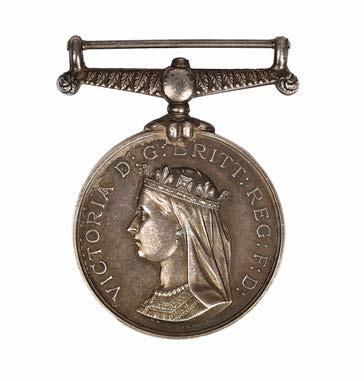
A New Zealand Medal to Deputy Assistant Commissary General George James Neill, Commissariat Staff, undated reverse (D.A.C GENL G. J. NEILL, COMMIST. DEPART), officially impressed, extremely fine or nearly so and toned.
Notes: Deputy Assistant Commissary General from the 4th of July 1860. Employed in the field in New Zealand during the period 186066.
£300400
20
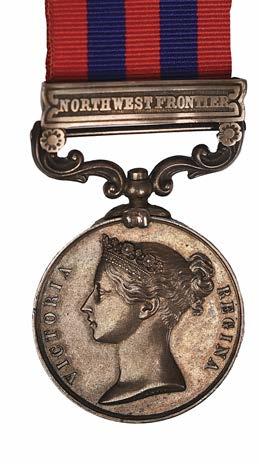
An India Medal 184995 to Private John Smith, 3rd Battalion Rifle Brigade, clasp: Northwest Frontier (1435 PTE J. SMITH. 3 BN RIF. BDE), impressed in serif capitals, extremely fine and attractively toned.
Notes: Private Smith served in the expedition of Brevet Colonel A. F. Macdonnell, C.B., against Sultan Muhammed Khan, who had attacked the fort at Shabkadar, in the winter of 186364. He died at Nowshera, where there was a British cantonment, on the 25th of May 1865. £100150
21
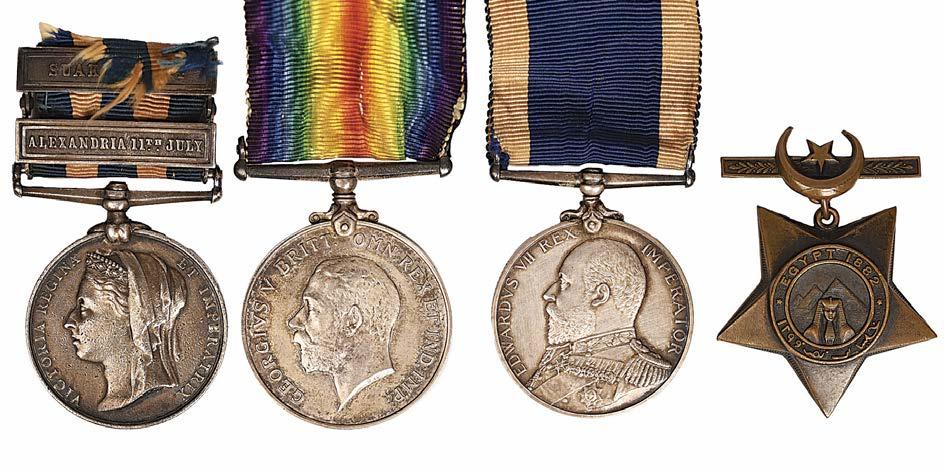
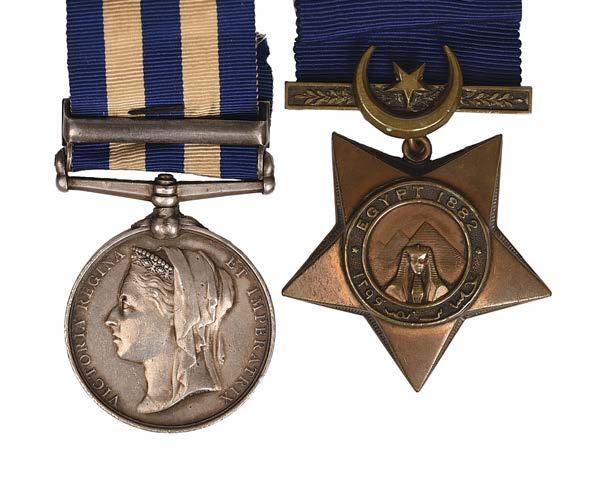
Four medals to Petty Officer Second Class Thomas Robinson, Royal Navy: Egypt and Sudan 188289, dated reverse, 2 clasps: Alexandria 11th July, Suakin 1884 (T. ROBINSON. BOY 1.CL HMS “ALEXANDRA”), engraved in serif capitals, edge bruising and contact marks to faces, otherwise very fine; British War Medal 191420 (113078 T. ROBINSON. P.O. 2 R.N.), good very fine or better; Royal Naval Long Service and Good Conduct, Edward VII (THOS. ROBINSON. CD. BOATN., H.M. COAST GUARD.), good very fine; Khedive’s Star, 1882 obverse, unnamed as issued, very fine. [2]
Notes: Thomas Robinson was born in April 1865 in Dawson Grove, Cavan & Monaghan, Ireland. He entered the Royal Navy in 1880 as Boy 2nd Class in H.M.S. Impregnable. He served as Boy 1st Class in H.M.S. Alexandra for the Bombardment of Alexandria in July 1882, and was made Ordinary Seaman in 1884. He was in H.M.S. Carysfort for the Suakin operation of FebruaryMarch 1884. He served in various Coastguard Stations from 1893 to 1904, and joined the Royal Fleet Reserve in 1905. He reentered the Navy in 1914 and served ashore during the Great War, before the conclusion of his service in February 1919.
£200300
22
A pair to Private J Wells, York and Lancaster Regiment: Egypt and Sudan Medal 188289, dated reverse, clasp: TelElKebir (141 PTE.. J. WELLS. 2/ YORK & LANC R.), engraved in serif capitals, typical edge bruising, otherwise very fine; Khedive’s Star, 1882 obverse, reverse privately impressed ‘141’ and ‘Y&L’, very fine. [2]
£150250 23
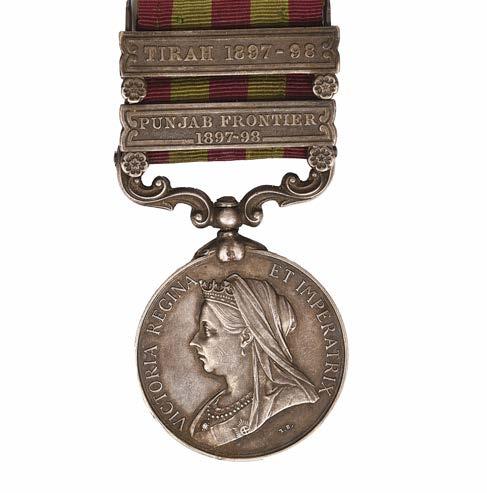
An India General Service Medal 18951902 to Private E. Bennett, 1st Battalion Dorsetshire Regiment, first type, 2 clasps: Punjab Frontier 189798, Tirah 189798 (3525 Pte E. Bennett 1st Bn Dorset Regt), engraved in cursive script, good very fine and toned £100150
24
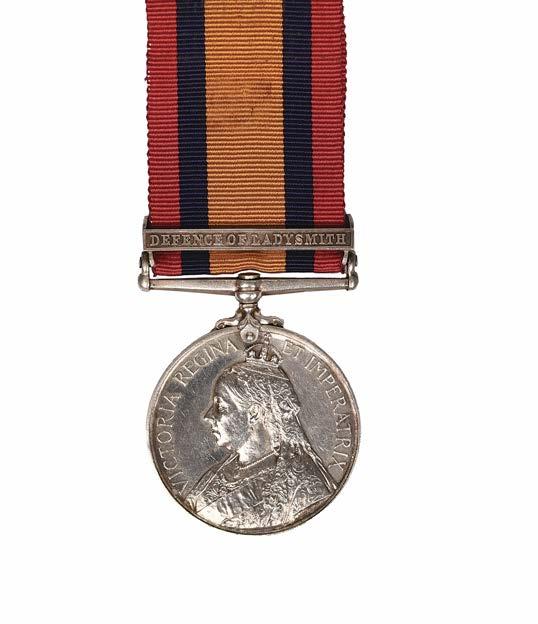
A Queen’s South Africa Medal 18991902 to Private M. Forsyth, Gordon Highlanders, second type, clasp: Defence of Ladysmith (5942 PTE M. FORSYTH, GORDON HIGHRS:), good very fine or better
£150250
25
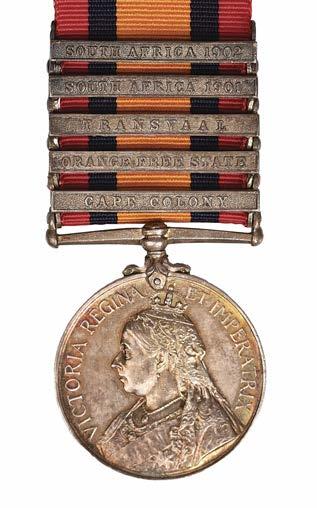
A Queen’s South Africa Medal to Private W. McLean, 1st Battalion Cameron Highlanders, second type, 5 clasps: Cape Colony, Orange Free State, Transvaal, South Africa 1901, South Africa 1902 (4888 PTE W. MCLEAN. CAM’N HIGHRS:), impressed in plain capitals, extremely fine or nearly so with some toning.
£80120
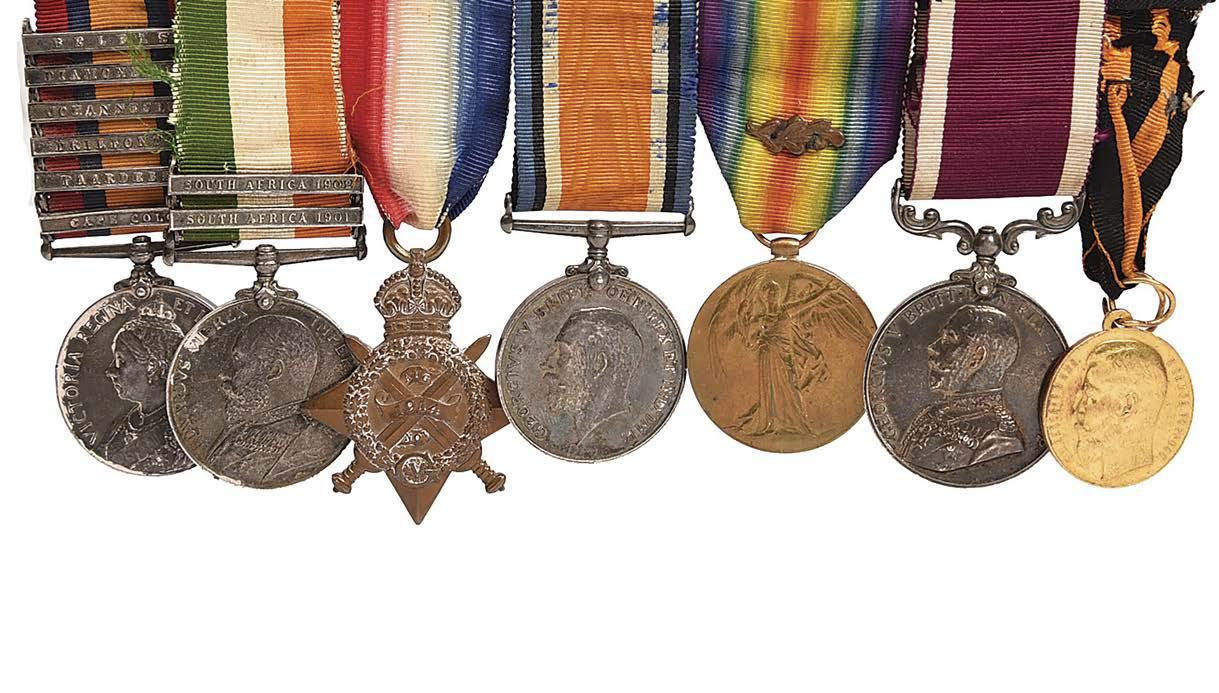
Seven medals to Warrant Officer 2nd Class Harold Powell, Royal Engineers: Queen’s South Africa 18991902, first type (b), 6 clasps: Cape Colony, Paardeberg, Driefontein, Johannesburg, Diamond Hill, Belfast (28918. Sapr. H. POWELL. R.E.), officially engraved; King’s South Africa, both dated clasps (28918 SAPR H. POWELL. R.E.); 1914 Star (28918 SJT H. POWELL. R.E.); British War Medal 191420 and Victory Medal, the latter with a dress miniature Mention in Despatches emblem fixed to the ribbon (28918 W.O. CL. 2 H. POWELL. R.E.); Army Long Service and Good Conduct, George V (28918 CPL H. POWELL. R.E.); Russia: Medal of St George for Bravery, 2nd Class, gold, numbered 2829 (28918 SGT. H. POWELL. R.E.), impressed in serif capitals; mounted for wearing, all about very fine or nearly so. [7]
Notes: Harold Powell was born in Hayling, Hampshire, in 1875. A carpenter by trade, he attested for Short Service in the Royal Engineers at Gosport on the 28th of February 1895, aged 19 years. He served in South Africa with 1st Field Troop R.E., and in October 1902 he extended his service to 12 years. In November 1905 he reengaged to complete 21 years, and in January of the following year he married Lilian Rose (neé Harrison) in Christchurch. Powell was awarded the L.S.G.C. Medal with gratuity in 1913, and was sent to France on the 17th of August 1914, where he served with the 2nd Field Squadron R.E. He was mentioned in a despatch of Field Marshal Sir John French of the 31st of May 1915, in recognition of “gallant and distinguished service in the field”, and he received the Russian Medal of St George later that year (London Gazette 25/08/1915). He was discharged to the reserve in January 1919. £2,5003,000 not to scale
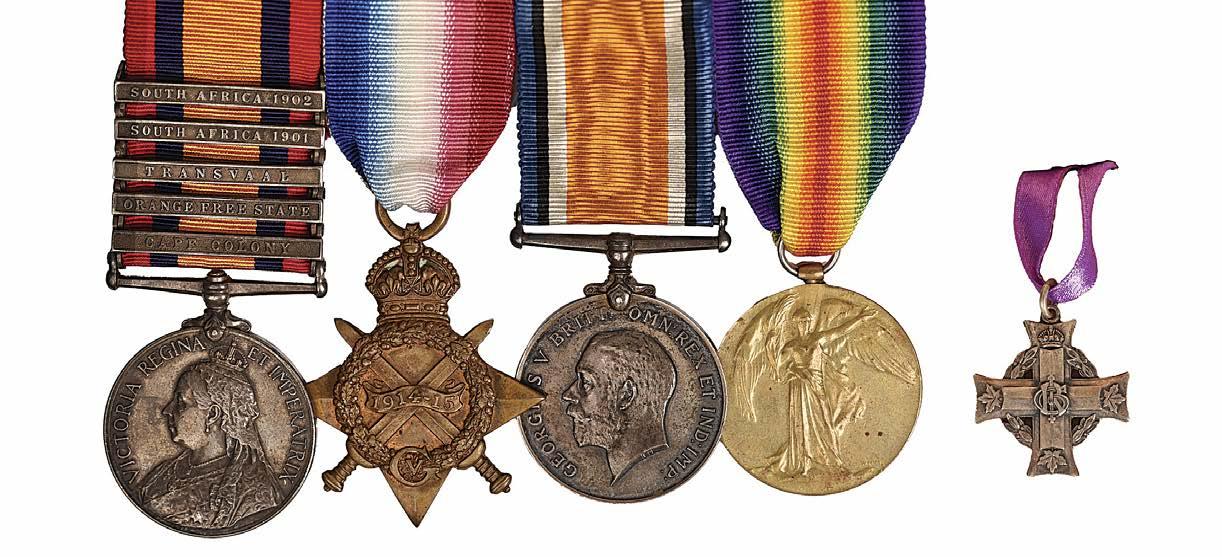
Three medals to Battle of The Somme fatal casualty Corporal Frank Wallis Smith, Canadian Infantry, late Imperial Yeomanry: Queen’s South Africa Medal, second type, 5 clasps: Cape Colony, Orange Free State, Transvaal, South Africa 1901, South Africa 1902 (28438 PTE F. W. SMITH. 92ND COY IMP: YEO:), very fine and toned; 191415 Star (422397 CPL F. W. SMITH. 8/CAN: INF:), very fine; British War Medal 191820 (422397 PTE. F. W. SMITH. 8CAN. INF.), good very fine and toned; together with the Canadian Memorial issued in commemoration of this man, George V (422397 Pte. F. W. SMITH), in case of issue, good very fine; medals later mounted for display with a Victory Medal (name erased). [4]
Notes: Frank Wallis Smith was born in London on the 21st of January 1879. He served for seven years in the South African Forces. He returned to the UK in 1905, before emigrating to Canada, where in December 1914 he attested for the Canadian Expeditionary Force in Winnipeg, Manitoba, joining the 8th Battalion (90th Winnipeg Rifles). Smith’s Battalion was part of the 2nd Canadian Brigade, 1st Canadian Division, which played a major role in the Battle of Thiepval Ridge during the Somme campaign of 1916. It was during this operation, on the 26th of September 1916, that Frank Smith was killed in action. He is buried at Courcelette British Cemetery. Offered with copy research.
£200300
28
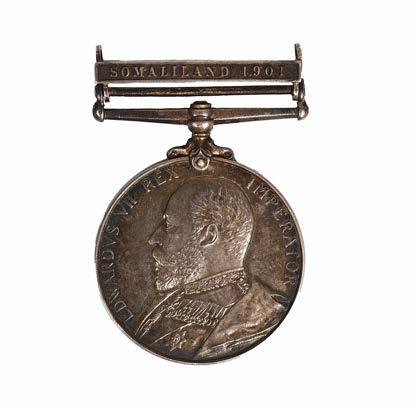
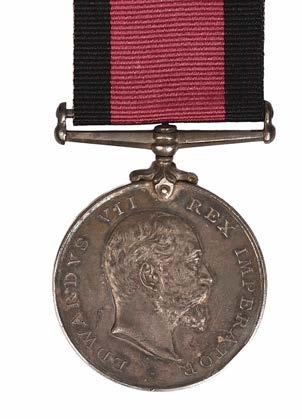
An Africa General Service Medal 18991956 to Sepoy Mabrook Syed, Local Somali Levies, Edward VII, clasp: Somaliland 1901 (SEPOY MABROOK SAYED. (SOUDANI) L.S.L.), nearly extremely fine and toned.
£150250
29
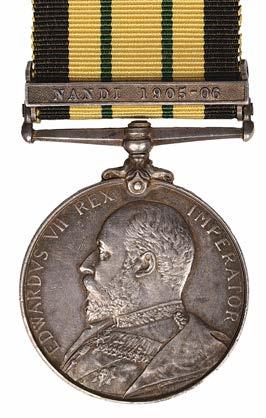
An Africa General Service Medal 18991956 to Sepoy Sham Singh, Indian Contingent 4th Battalion King’s African Rifles, Edward VII, clasp: Nandi 190506 (217 SEPOY SHAM SINGH. I.C. 4/K.A.R.), impressed in plain capitals, very fine and lightly toned.
£100150
30
A Natal Medal 1906 to Private E. McLean, Durban Militia Reserves, no clasp (PTE: E. MC. LEAN, DURBAN MIL: RES:), impressed in plain capitals, good very fine and toned.
£100150
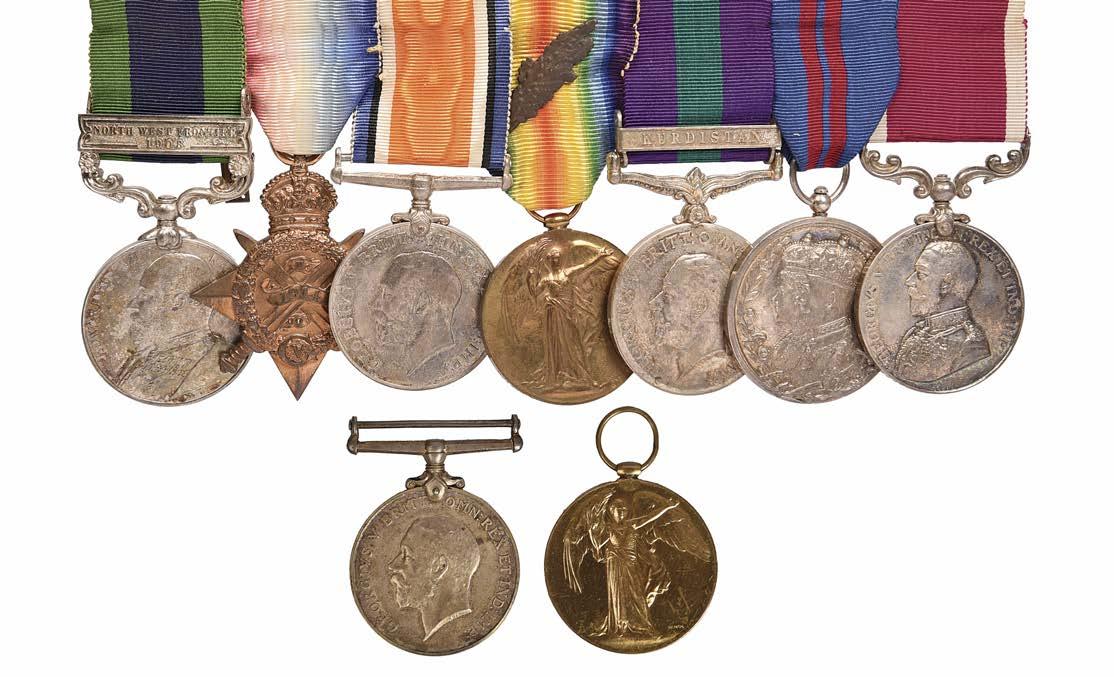
An interesting composite family medal collection, comprising a mounted group: India General Service Medal 190835, Edward VII, clasp: North West Frontier 1908 (Sergt S. Helliwell S&T Corps), engraved in cursive script; 1914 Star and clasp (S. SRGT. HELLIWELL, S.&T. CORPS.); British War Medal 191420 and Victory Medal (D1438 SJT. S. HELLIWELL. 1D. GDS.); General Service Medal 191862, George V, clasp: Kurdistan (SUB. CONDR. H. C. HELLIWELL. S.&T. CORPS.), impressed in plain capitals; Delhi Durbar Medal 1911, silver (SERGT. S. HELLIWELL. S&T. CORPS), privately machine engraved in plain capitals*; Army Long Service and Good Conduct Medal, George V (SUBCONDR. S. HELLIWELL, S&T. C.), mounted for wearing, good very fine and better; together with a British War Medal 191420 and Victory Medal (S. CONDR. S. HELLIWELL, S&T. C.), extremely fine and nearly so. [7+2]
Notes: SubConductor S. Hewell is confirmed on the rolls for his campaign medals, and he served in the Great War in France from the 14th of October 1914, and subsequently in Mesopotamia and Palestine. Meanwhile, Sergeant Seth Helliwell, 1st Dragoon Guards, qualified for the BWM and Victory Medal only, and later an H. C. Helliwell is confirmed on the roll for the GSM 191862 with clasp for Kurdistan. It is assumed that these men were siblings and that S. Helliwell of the S&T corps had personal reasons for incorporating his brothers’ medals in his mounted group and keeping his own Great War pair unmounted. * Entitlement to the Delhi Durbar Medal 1911 cannot be confirmed for any of these men. £300400
Four medals to Corporal Bertram George Beck, Royal Marine Light Infantry and Royal Fleet Reserve: 191415 Star (PO. 16565, PTE. B. G. BECK. R.M.L.I.); British War Medal 191420 and Victory Medal (PO. 16565, CPL. B. G. BECK. R.M.L.I.); R.F.R. Long Service and Good Conduct Medal (PO. 16565 (B. 1814) B. G. BECK. CPL. R.F.R.), mounted for wearing, very fine. [4]
Notes: Born in Fontmell Parva, Dorset, 02/12/1892. Enlisted at Southampton on the 28/10/1912. Promoted Corporal 11/10/1917. Enrolled in the R.F.R. 13/12/1919. Awarded the R.F.R. L.S.G.C. Medal 17/02/1928.
£100
150
33
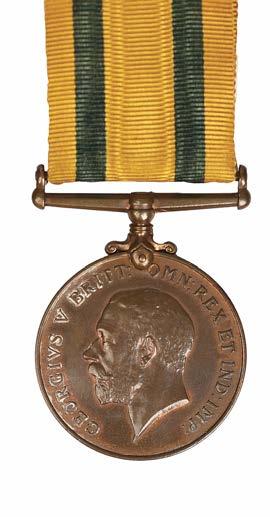
A Territorial Force War Medal to Acting Corporal Walter Frank Suter, Somerset Light Infantry, (2135 A. CPL. W. F. SUTER. SOM. L. I.), good very fine.
£150200
34
Four Medals to William John Freeborne, Dorsetshire Regiment (TF): British War Medal 191420 and Victory Medal (1095 PTE. W. J. FREEBORNE. DORSET. R.), very fine; Territorial Force War Medal (1095 PTE. W. J. FREEBORNE. DORSET. R.), good very fine; Territorial Force Efficiency Medal, George V (200113 PTE W. J. FREEBORN. 4DORSET. R.), official alteration to surname, good very fine or better. [4]
£150250
35
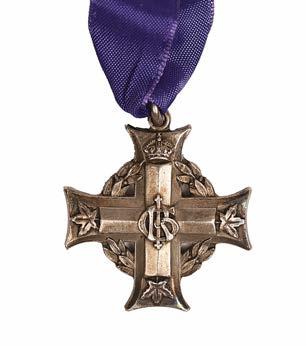
The Canadian Memorial Cross presented in commemoration of Lieutenant Alec John Kitto, Canadian Field Artillery, George V (LIEUT. A. J. KITTO.), hand engraved, very fine.
Notes: Alec John Kitto was born in Slough on the 31st of October 1880, and he was commissioned in the C.E.F. in May 1916. He served in France with the 3rd Trench Mortar Battery, 3rd Canadian Division. On the 16th of September 1916, during a Canadian advance, he was shot through the heart by a German sniper who had concealed himself in a shell hole within the Canadian lines.
£100150
36
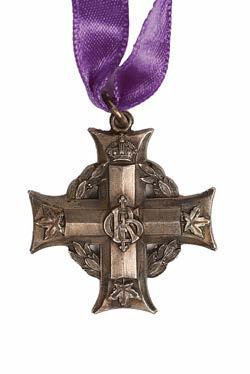
The Canadian Memorial Cross presented in commemoration of Private Frederick William Taylor, 5th Canadian Mounted Rifles, George V (114641 Pte. F. W. TAYLOR.), machine engraved, very fine.
Notes: Frederick Taylor was born at Greenwich, England, on the 15th of May 1889. He attested for the C.E.F. at Saskatoon on the 26th of December 1914 and served in France. He was killed in action on the 2nd of June 1916, and is buried at the Ypres Memorial.
£70100
37
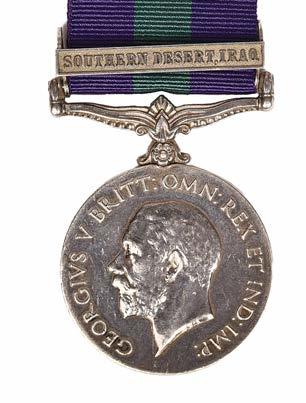
A General Service Medal 191862 to Corporal L. J. Bailey, Royal Air Force, George V, first type, clasp: Southern Desert Iraq (358777. CPL. L. J. BAILEY. R.A.F.), a little edge bruising but very fine and lightly toned.
£400600
38
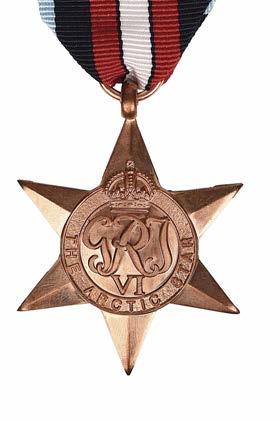
An Arctic Star, unnamed as issued, nearly extremely fine.
£300400
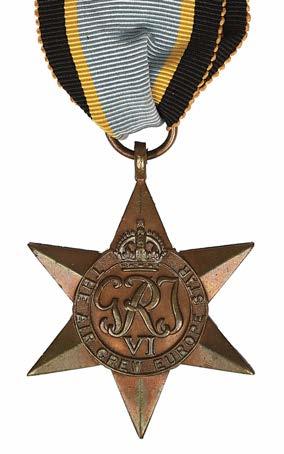
An Air Crew Europe Star, unnamed as issued, very fine.
300 40
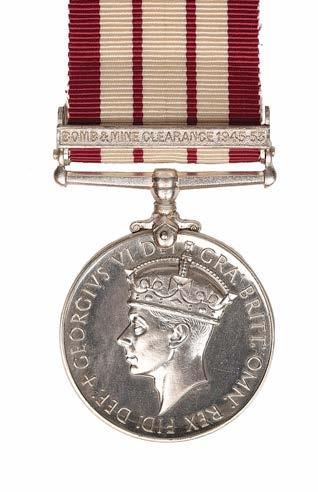
A Naval General Service Medal 190962, George VI (FID DEF), unnamed specimen, clasp: Bomb and Mine Clearance 194553, extremely fine.
£200300
41
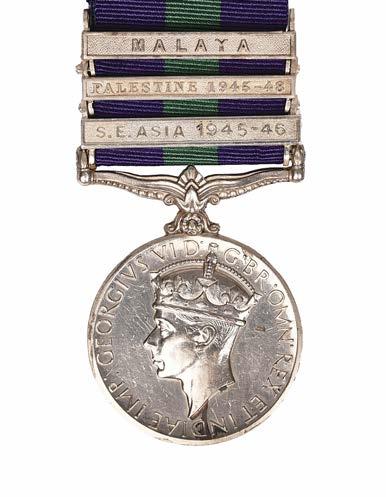
A General Service Medal 191862 to LanceCorporal D. F. Alder, Royal Signals, George VI, Indiae Imp., 3 clasps: S.E. Asia 194546, Palestine 194548, Malaya (6216720 L. CPL. D. F. ALDER. R. SIGS.), good very fine.
£80120
42
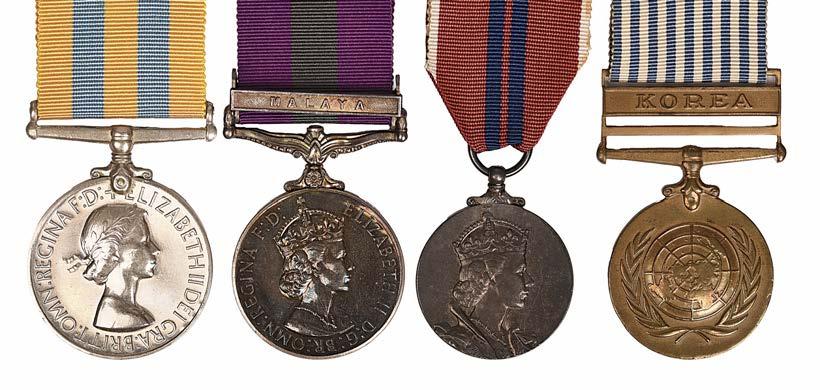
A Korean War and Malayan Emergency group of four medals to Fusilier N. McLean, Royal Scots Fusiliers: Korea Medal 195053, first type (22288910 FUS. N. MC LEAN. R.S.F.); General Service Medal 191862, fifth type, clasp: Malaya (22288910 FUS. N. MC LEAN. R.S.F.); Coronation Medal 1953, unnamed as issued; United Nations Korea Medal, unnamed as issued; all very fine or better [4]
Notes: The Royal Scots Fusiliers did not serve in Korea as a unit, and it is supposed that the recipient fought there on attachment to another regiment, possibly the King’s Own Scottish Borderers.
£250350
43
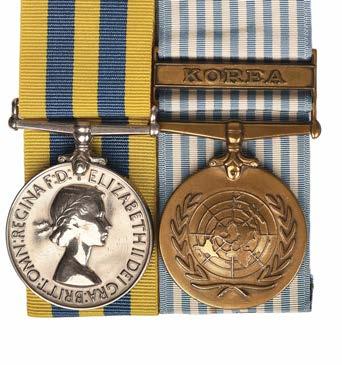
A Korean War pair to Private R. Legard, Duke of Wellington’s Regiment: Korea Medal 195053, first type (22527131 PTE. R. LEGARD. D.W.R.), official alteration to service number very fine; United Nations Korea Service Medal 195054, unnamed as issued, very fine; later display mounted. [2]
Notes: 1st Battalion the Duke of Wellington’s Regiment served in Korea, earning the battle honour ‘The Hook 1953’ for their hardwon victory at the Third Battle of the Hook.
£120180
44
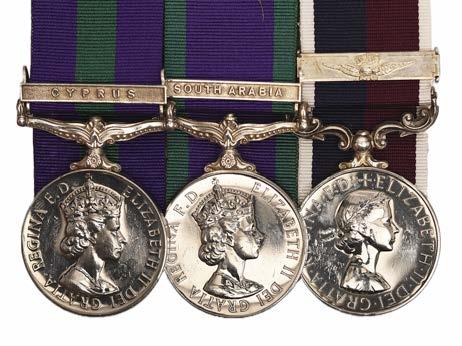
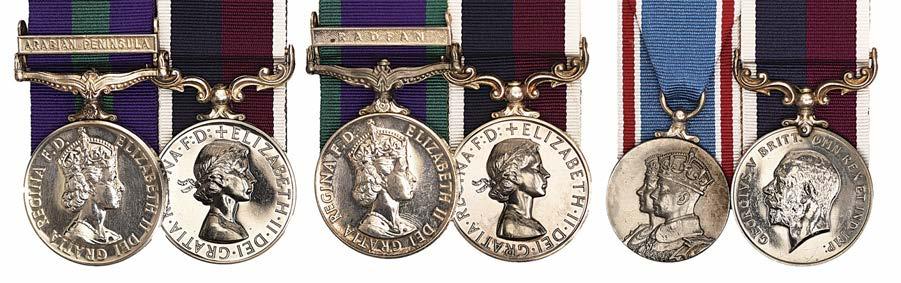
Three medals to Sergeant A. R. Bunch, Royal Air Force: General Service 191862, Elizabeth II, clasp: Cyprus (4042910 CPL. A. R. BUNCH. R.A.F.), machine engraved; General Service 19622007, clasp: South Arabia (V4042910 CPL. A. R. BUNCH R.A.F.), impressed; R.A.F. Long Service and Good Conduct, one bar (4042910 SGT. A. R. BUNCH.), impressed, mounted for display, good very fine. [3]
£250350
45
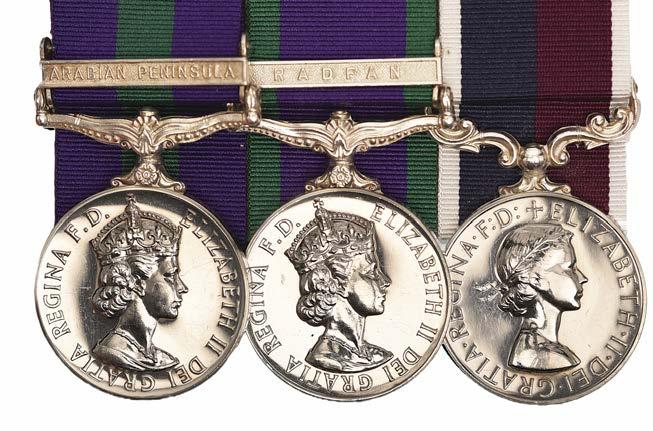
Three medals to Junior Technician R. J. Hopkins, R.A.F.: General Service 191862, Elizabeth II, Dei Gratia, clasp: Arabian Peninsula (4030961 JNR. TECH. R. J. HOPKINS. R.A.F.), machine engraved; General Service 19622007, clasp: Radfan (4030961 JNR. TECH. R. J .HOPKINS, R.A.F.), impressed; R.A.F. Long Service and Good Conduct, Elizabeth II (430961 JNR. TECH. R. J. HOPKINS. R.A.F.), machine engraved; mounted for display, good very fine. [3]
£200300
46
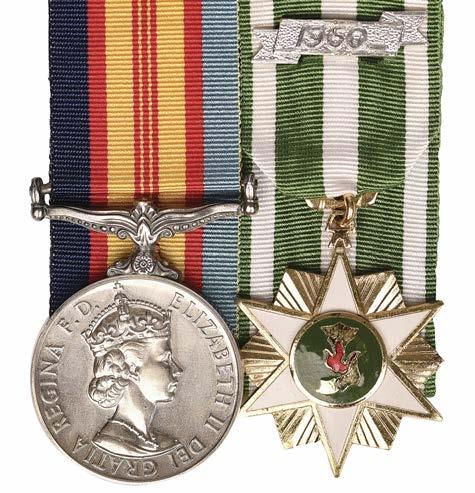
A Vietnam pair of medals to Staff Sergeant David Malcolm Allan, The Royal Australian Regiment: Vietnam Medal 196473 (311428 D. M. ALLEN [sic]); South Vietnam Campaign Medal 196473, clasp: 1960 (311428 D. M. ALLAN), engraved lower reverse; mounted for display, extremely fine or nearly so. [2]
Notes: David Allan was born in Salisbury, UK, on the 2nd of August 1938. He emigrated to Australia in 1962, and he served in the 4th and 6th Battalions of the Royal Australian Regiment between the 21st of May 1968 and the 17th of May 1970.
£250350
47
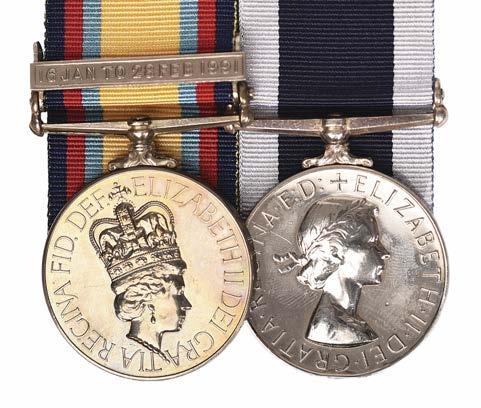
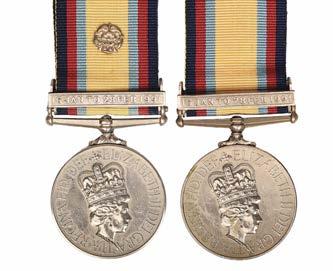
Two medals to M. J. Peel, Royal Navy and British Aerospace Ltd.: Gulf Medal 199091, clasp: 16 Jan to 28 Feb 1991 (MR M J PEEL BAE), extremely fine; Royal Navy Long Service and Good Conduct Medal, Elizabeth II (POSA M J PEEL D079809F HMS NEPTUNE), nearly extremely fine. [2]
£150200
48
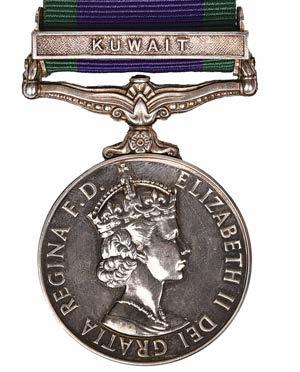
A General Service Medal 19622007 to Fusilier N. E. Butler, Royal Regiment of Fusiliers, clasp: Kuwait (24872402 FUS N E BUTLER RRF), impressed, extremely fine.
£200300
49
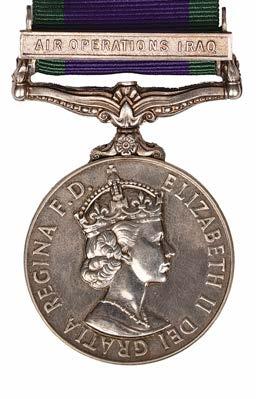
A General Service Medal 19622007 to Senior Aircraftman N. O L. Marquiss, Royal Air Force, clasp: Air Operations Iraq (SAC N O L MARQUISS (J8438161) RAF), impressed, extremely fine
£250350
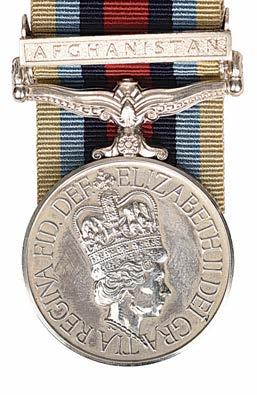
An Operational Service Medal 2000, Afghanistan, clasp: Afghanistan (MR W MITCHELL), laser engraved, scarce with clasp to a civilian, extremely fine.
£200300
51
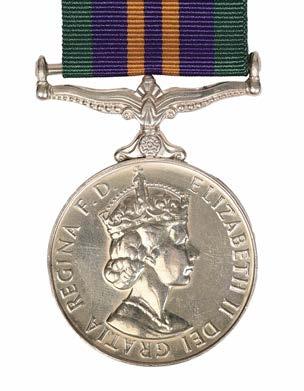
An Accumulated Campaign Service Medal 2011 to Sergeant L. E. Perkins, Queen’s Lancashire Regiment, (24050180. SGT. L. E. PERKINS. Q.L.R.), laser engraved, hairline scratches to obverse, nearly extremely fine.
£150200
52
Three medals (assorted): Crimea 185456, no clasp (JN. WENSLEY. ORD. HMS. BELLEROPHON.), engraved in serif capitals, patchy toning, about very fine; Royal Naval Long Service and Good Conduct, Victoria (GEO. WM HY NEILL, SGT 10TH CO R.M.L.I.), very fine; Russian: Medal of St George for Bravery, 4th Class, silver, reverse numbered 1272821, good very fine. [3]
£200300
53
A small collection of medals, comprising: Afghanistan 187880, no clasp (32,B/55. PTE. J. MORRISSEY, 1/12TH REGT.), good very fine and toned; a Great War Trio: 1914 Star (25645 DVR: J. MORRISSEY. R.E.), British War Medal and Victory Medal (25645 DVR. J. MORRISSEY. R.E.), mounted for wearing on modern ribbons and with a Royal Engineers cap badge, very fine; and an Efficiency Medal, Territorial (D/1425 RFN. G. L. FULLER. L.I.R.), about extremely fine. [5]
Notes: With copy service record for the first man.
£200300
54
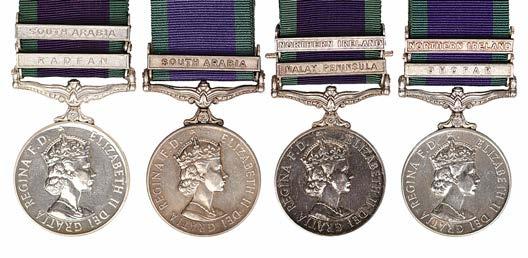
A collection of British campaign medals (10), to various recipients, comprising: Naval General Service 190962, clasp: Near East (P/JX. 862621 R. ABBOTT. A.B. R.N.), extremely fine and toned; King’s South Africa, both dated clasps (2161 PTE E. WEBBER. LIVERPOOL REGT), nearly extremely fine and toned; 191415 Star (1694. PTE. H. MC LEAN. A. & S. HIGHRS.), good very fine; British War Medal 191420 (877986 PTE. N. J. MC LEAN. 85CAN. INF.), extremely fine; Mercantile Marine War Medal 191418 (RALPH P. RUMBOLD), very fine; Victory Medal (226428 PTE. J. MC LEAN. A. & S. H.), good very fine; India General Service 190835, third type, clasp: North West Frontier 193031 (2816834 PTE. D. MAC LEAN. SEAFORTH), edge nick, otherwise about extremely fine; India General Service 193639, clasp: North West Frontier 193637 (6352 SEPOY SALG RAM, 117 DOGRA R.), nearly extremely fine; General Service 191862, third type, clasp: Palestine 194548 (19084805 SIGMN. R. MCLEAN. R. SIGS.), edge bruising, very fine; General Service 19622007, 2 clasps: Borneo, South Arabia (23746515 PTE. A. MC LEAN. A &SH.), extremely fine and toned. [10] £250350
56
A quantity of First and Second World War campaign medals, including: a 191415 Star (21756 SJT. W. H. CLARKE, NORTH’ N R.), a Great War pair (40749 PTE. H. E. ANNITT. R. WAR. R.), a Victory Medal (5221 PTE. T. J. DEADMAN. MANCH. R.), a Pacific Star, a Burma Star, an India Service Medal 193945, a copy of the Air Crew Europe Star, and other items. [15] £80120
A small collection of medals to interesting Naval recipients, comprising: a 191415 Star to Able Seaman Gordon Alexander Samuel Goodfellow, who served in H.M.S. Lion at the Battle of Jutland (J. 3671, G. A. S. GOODFELLOW, A.B, R.N.), near very fine; a 191415 Star to Stoker 1st Class Robert Brown, who died with Lord Kitchener and all hands in the sinking of H.M.S. Hampshire (K. 24050. R. BROWN. STO. 1. , R.N.), very fine; and a pair to John Thomas, Merchant Navy: British War Medal 191420 and Mercantile Marine War Medal (JOHN THOMAS), ribbons reversed, very fine. [4]
Notes: H.M.S. Lion was the flagship of ViceAdmiral David Beatty at the Battle of Jutland, MayJune 1916, where she was hotly engaged and suffered considerable damage. Goodfellow served in her from January 1915 until the end of the war. There appear to have been fourteen men named John Thomas who were entitled to this pair of medals, of whom five lost their lives during the war. £150250
57
An assortment of medals, including: a 191415 Star trio (M. 7867, A. W. WREN, E. A. 4, R.N. / M.7867 A. W. WREN. E.A.3 R.N.), very fine; another 191415 Star trio (718 GNR. C. RULE, R.F.A. / 718 BMBR. C. RULE. R.A.), very fine or better; a Great War pair (M2099552 PTE. T. THRELFALL. A.S.C.), later mounted for wear, very fine; various Second World War campaign stars, unnamed as issued; a copy of a Victoria Cross; and other items. [qty]
£200300
54
58
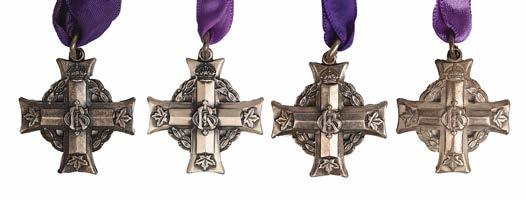
Canadian Memorial Crosses (4), George V: i) (LIEUT. C. F. HEWITT), hand engraved, near very fine; ii) (434067 Spr. J. B. GOULD); iii) (733918 Pte. C. R. RAY); iv) (A34354 Pte. J. G. STARK); all mechanically engraved unless otherwise stated, about very fine. [4]
Notes: Lieutenant Clarence Frederick Hewitt, Canadian Army Dental Corps, died of typhoid 16/03/1917. Private Ray, 25th Battalion Canadian Infantry, died on service 07/07/1917.
£250350
59
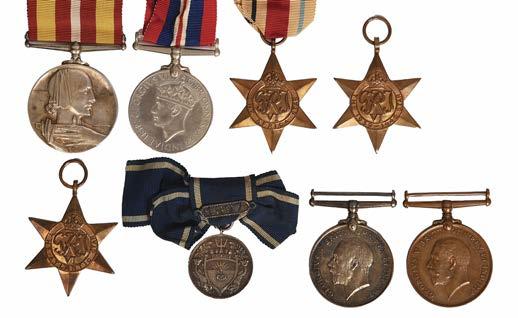
A collection of medals to female recipients, comprising: a pair: British War Medal 191420, Mercantile Marine War Medal (ANNIE HADDON), with original envelopes and folded ribbons, extremely fine; Voluntary Medical Service Medal (BESSIE ABBOTT.), about extremely fine; four: 193945 Star, Atlantic Star, Africa Star, War Medal 193945 (SISTER I. M. RISDON), privately engraved in plain capitals, good very fine; and an Institution of Naval Architects silver medal on bow ribbon with 1897 clasp, some rim dents, otherwise extremely fine. [8]
Notes: Annie Eliza Haddon was born in Southampton in January 1874, and remained a resident of the city until she died in 1969. The daughter of Frederick Haddon, a Mariner who appears to have died or departed when she was young, Annie lived as a teenager with her aunt and cousins, one of whom was a ship’s steward. She followed the same vocation and worked as a Stewardess for the London and South Western Railway Company, which ran crosschannel ferry services from Southampton, before, during, and after the Great War.
Sister I. M. Risdon served in the Q.A.I.M.N.S. Reserve from 1941. It would appear that she was also entitled to the Italy Star, a ribbon for which appears among her medals.
£300400
60
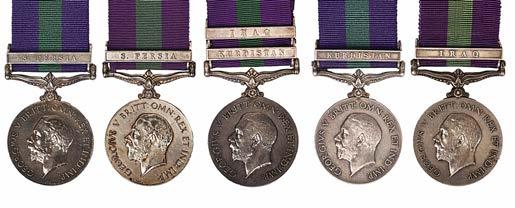
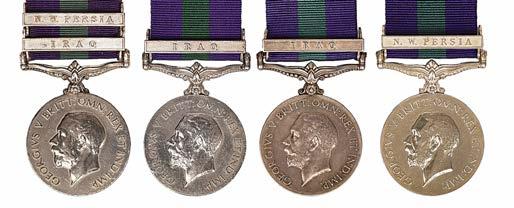
General Service Medals 191862 (5), George V, first type: i) clasp: S. Persia (951 SEPOY S A MODEE. 81PIONEERS.), good very fine; ii) clasp: S. Persia (1415 SEPOY VENKETAN. 81PIONEERS.), near very fine; iii) 2 clasps: Kurdistan, Iraq (153 SEPOY LABHA. 52SIKHS.), good very fine; iv) clasp: Kurdistan (3049 SEPOY AHMAD KHAN. 316PUNJAB R.), v) clasp: Iraq (2047 SOWAR IMAN ALI KHAN. 27LIGHT CAV), very fine. [5]
£200300
61
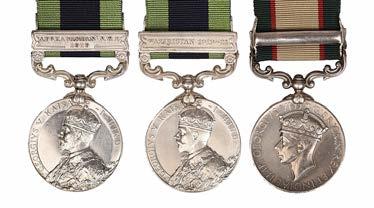
Three campaign medals: i) India General Service 190835, clasp: Afghanistan N.W.F. 1919 (265765 PTE. W. R. LAWRENCE. R. W. KENTR.), very fine; ii) India General Service 190835, clasp: Waziristan 191921 (265621 PTE. C. W. HIGGINSON, 26 R. SUSS. R.), naming bruised, otherwise very fine; iii) India General Service 193639, clasp: North West Frontier 193637 (14302 SEPOY AJAIB SINGH, 211 SIKH R.), nearly extremely fine. [3]
£150250
62
General Service Medals 191862 (4), George V, first type: i) 2 clasps: Iraq, N. W. Persia (33839 PTE. J. A. SWAIN. R. IR. FUS.); ii) clasp: Iraq (200385 PTE. G. CROWE. R.A.M.C.); iii) clasp: Iraq (46163 PTE, G, STEPHENSON, RIF, BRIG,); iv) clasp: N. W. Persia (4737591 PTE, S, FINN, Y. & L, R,); all very
fine or better [4]
£250350
£120180 58
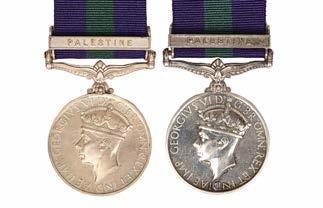
General Service Medals 191862 (2), George VI, Indiae Imp: i) clasp: Palestine (58269 32. SGLN. A. PASK. R. SIGNALS.), impressed, nearly extremely fine; ii) clasp: Palestine (530685. A.C.2. R. MURDOCK. R.A.F.), engraved in plain capitals, contact marks to edge in area of unit, otherwise about very fine. [2]
64
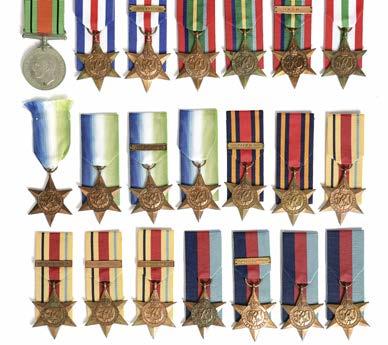
A collection of Second World War campaign awards, comprising: 193945 Star, Bomber Command bar; 193945 Star, no bar (3); Atlantic Star, France and Germany bar; Atlantic Star, no bar (3); Africa Star, 8th Army bar; Africa Star, 1st Army bar; Africa Star, North Africa 194243 bar; Africa Star, no bar; Pacific Star, Burma bar; Pacific Star, no bar (2); Burma Star, Pacific bar; Burma Star, no bar; Italy Star; France and Germany Star, Atlantic bar; France and Germany Star, no bar; Defence Medal; all unnamed as issued, the ribbons and bars mounted for display, very fine and better. [21]
£200300
66
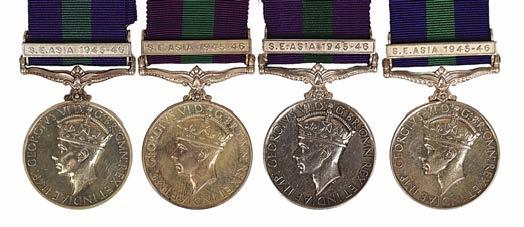
General Service Medals 191862 (4), George VI, Indiae Imp, clasp: S. E. Asia 194546: (14986567 GNR. E. A. B. STORER. R.A.), (14963835 L/CPL. R. CUSS. R. LINCOLNS.), (3334877 SEP. GURCHARAN SINGH, 58 PUNJAB. R.), (9897 SEP. RAM LAL, 4 BN. , DOGRA R.), good very fine or a little better. [4]
£200300
68
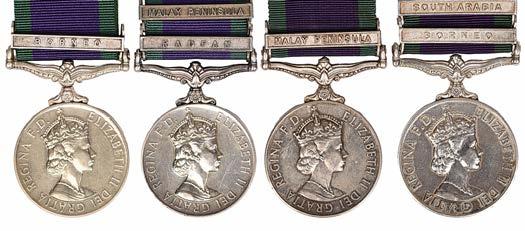
General Service Medals 19622007 (4), i) clasp: Borneo (071018 R. L. CARTER. E.M.I. R.N.), extremely fine; ii) 2 clasps: Radfan, Malay Peninsula (071135 J. N. MORRELL. ORD. SEA. R.N.), second clasp loose on ribbon, extremely fine or nearly so; iii) clasp: Malay Peninsula (053389 J. T. BENN. A.B. R.N.), good very fine; iv) 3 clasps: Borneo, South Arabia, Northern Ireland (RM.23264 K. R. BRICKNELL. MNE. R.M.), last two clasps secured by unofficial rods, good very fine or better [4]
£400500
65
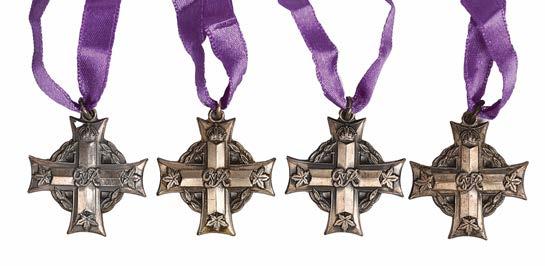
Canadian Memorial Crosses (4), George VI: i) (CAPTAIN G. C. VANART); ii) (126144 SGT. T. PHILLIPS); iii) (65796 PTE. W. POWNEY); iv) (B.115366 PTE. R. A. SAWYER); good very fine or better [4]
Notes: Captain Guy Carlton Vanart served in the Great War with the Canadian Army Medical Corps and died in May 1953. Sergeant Thomas Phillips attested for the C.E.F. in 1915 and died in 1952. Private William Powney attested in Montreal 03/11/1914 and was subject to military discipline on various occasions for being absent without leave and for stealing from a fellow soldier, before suffering gunshot wounds to the chest, hand and thigh in October 1918. Private Robert Arthur Sawyer served in the Second World War with the R.C.A.M.C. before being discharged unfit and dying of chronic nephritis in Toronto in 1950.
£250350
67
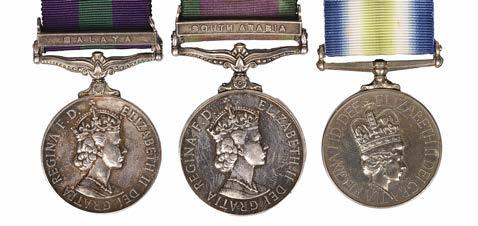
Three Medals: General Service 191862, sixth type, clasp: Malaya (23427956 PTE. M. LUMB. R.A.P.C.), good very fine; General Service 19622007, clasp: South Arabia (A1946236 SAC. S. J. JACKSON R.A.F.), very fine; South Atlantic 1982, with rosette (D. J. HUGHES), engraved in plain capitals, good very fine or better [3]
£400500
69
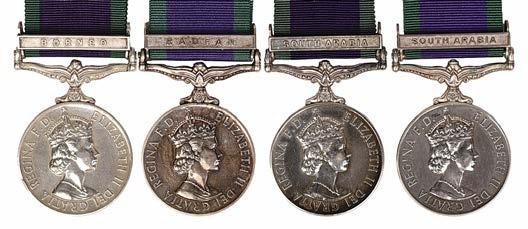
General Service Medals 19622007 (4), i) clasp: Borneo (24015949 GNR. J. N. DALTON. RA.), dent to obverse rim at 8 o’clock, very fine; ii) clasp: Radfan (23910312 CPL. R. A. BROWN. R. SIGS.), extremely fine with irregular toning; iii) clasp: South Arabia (24102440 GNR. J. STANWAY. RA.), nearly extremely fine; iv) clasp: South Arabia (23919710 PTE. A. A. SPENCER. RAOC.), extremely fine. [4]
£200300
70
General Service Medals 19622007 (4), i) 2 clasps: Radfan, South Arabia (1940641 CPL. J. D. WILKES. R.A.F.), extremely fine; ii) clasp: South Arabia (F4099709 CPL. W. R. VANCE. R.A.F.), extremely fine or nearly so; iii) 2 clasps: Malay Peninsula, Northern Ireland (S 4247104 SAC. A. D. STEEL. R.A.F.), clasps joined with an unofficial rod, nearly extremely fine; iv) 2 clasps: Dhofar, Northern Ireland (S8090589 LAC M T GREEN RAF) clasps joined with an unofficial rod, extremely fine. [4]
£250350
72
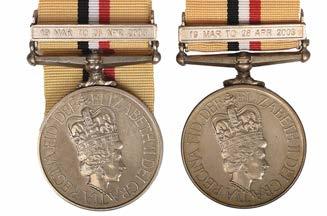
Iraq Medals 2003 (2): i) clasp: 19 Mar to 26 Apr 2003 (25110699 SPR D BRYDON RE), laser engraved, extremely fine; ii) clasp: 19 Mar to 26 Apr 2003 (25079081 PTE M P HOBBS RLC), laser engraved, extremely fine. [2]
£200300
74
£400500 not
71
Gulf Medals 199091 (2): i) clasp: 16 Jan 28 Feb 1991 (24851690 PTE W W SAVOURY RAOC), extremely fine or nearly so; ii) clasp: 16 Jan 28 Feb 1991 (SG I A GAVRILESCU SP. MIL. CHR. 100), good very fine, the last to a member of the Romanian Hospital Service and therefore scarce*. [2]
Notes: *Special Military Charter 100 was a Romanian medical deployment of 363 medics and 21 soldiers which aided coalition forces during Operation Granby.
£250350
73
A collection of Long Service Medals, comprising: Royal Naval Long Service and Good Conduct, Victoria, narrow suspender (WM. HARTLAND, QR MR, H.M.S. GANGES), impressed, nearly extremely fine; another, George V (308627. ARTHUR RANDEL, S.P.O. H.M.S. SOUTHAMPTON.), contact marks to edge, near very fine; another, George VI (JX. 144337R. PATTISON. C.Y.S. H.M.S. GANGES.), edge bruising and contact marks, near very fine; another, Elizabeth I (MX56261. R. C. YOUNG. SHPT. ART. 1. H.M.S. CHAMELEON.), minor edge bruising, good very fine; Royal Fleet Reserve Long Service and Good Conduct, George V (SS 104597 DEV. B. 4182 G. W. WASPE. S.P.O. R.F.R.), light edge bruising, very fine; and an Air Efficiency Award, George VI (FLT. LT. P. A. SIMPSON. R.A.F.V.R.), edge bruising, good very fine. [6]
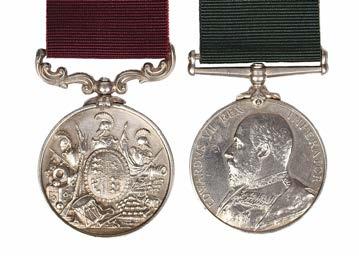
An Army Long Service and Good Conduct Medal to Bugler Major Thomas Ryder, Sussex Militia (ex. 10th Hussars), Victoria, swivelling suspension (1650. BUGLER MAJOR THOS RYDER, SUSSEX MIL.), nearly extremely fine; together with a Volunteer Long Service Medal, Edward VII (1447 PTE J. ROGERS. 1ST V. B. WORCESTER: REGT), good very fine or better [2]
Notes: Thomas Ryder was born in Brighthelmstone (Brighton) in Sussex. He enlisted in the 10th Hussars on the 18th of November 1817 at the age of 13 years and 10 months, and was discharged on the 21st of October 1847. His total service was reckoned at 25 years and 260 days, including 1 year and 3 months in Portugal. He settled in Arundel and joined the Sussex Militia. £300400
75
Royal Naval Long Service and Good Conduct Medals (5): i) Edward VII (H. J. RUSTON, ARMR., H.MS. VULCAN.), sometime cleaned, good very fine or better; ii) George V, second type (270263. S. E. GARSIDE, C.E.R.A. 2CL. H.M.S. TYNE.), nearly extremely fine; iii) George V, second type (358598. J. T. P. HARDY, OFF. STD. 1CL. H.M.S. CÆSAR), some edge bruising, good very fine or better; iv) Elizabeth II, third type (JX.865300 L. M. KIRBY. P.O. H.M.S. EXCELLENT.), obverse smoothed, reverse much better; v) Elizabeth II, third type (MX.893886 B. VEITCH. A/P. O. R. EL. H.M.S. PHOENIX.), good very fine and toned. [5]
£250350
Seagoing Long Service and Good Conduct Medals (4): Royal Naval Reserve L.S.G.C. (2): i) George V, second type (4719 D.. A. .F W. KOOK. SMN. R.N.R.), good very fine; ii) George V, fifth type (5365 D A. VASS. SMN. R.N.R.), nearly extremely fine; Royal Fleet Reserve L.S.G.C. (2): i) George V, fifth type (SS. 11359 (CH. B.19680) W. H. TOWNSEND. A.B. R.F.R.), edge bruising and nick to obverse rim at 10 o’clock, otherwise nearly extremely fine; ii) George VI, fourth type, unnamed, nearly extremely fine. [4] £100150
78
Five medals pairs each comprising the Defence Medal and a Long Service Medal, vis.: i) Cadet Forces Medal, one bar (FG. OFF. G. TAYLOR. R.A.F.V.R. (T)); ii) Police L.S.G.C., George VI (INSPR. WILLIAM G. FINCHAM); iii) Police L.S.G.C., George VI (CONST. CHARLES W. STEVENS); iv) Police L.S.G.C., Elizabeth II (INSPR. JOHN NIGHTINGALE); v Police L.S.G.C., Elizabeth II (SERGT. ALEXANDER W. BROOKER); each pair mounted for display, extremely fine or nearly so. [10] £250350
77
A small collection of medals (4), various recipients, comprising: Royal Naval Reserve Long Service and Good Conduct, George VI (7575 C. G. MACLEAN, L.S. R.N.R.), very fine; Volunteer Long Service, Victoria (CORPL J. MCLEAN, 2ND V.B. PRINCE OF WALES’ VOLS SO. LANC. REGT), engraved in serif capitals, good very fine and lightly toned; Territorial Efficiency (2205941 SPR. J. MCLEAN. R.E.), about very fine; India Service 193945, unnamed as issued, good very fine. [4]
£150200
79
Royal Observer Corps Medals (2), Elizabeth II, Dei Gratia: (OBSERVER N MCLAUCHLIN), (OBSERVER D C MERRIMAN), about extremely fine. [2] £200250
80
Three Royal Air Force Long Service and Good Conduct Medal pairs: i) G.S.M. 191862 with Arabian Peninsula clasp (2263472 CPL. TECH. R. W. A. PITTMAN. R.A.F), R.A.F. L.S.G.C. (S2263472 SGT. R. W. A. PITTMAN. R.A.F.), both machine engraved; ii) G.S.M. 19622007 with Radfan clasp (4036401 CPL. J. T. REARDON. R.A.F.), R.A.F. L.S.G.C. (M4036401 CPL. J. T. REARDON. R.A.F.), the first impressed and the second machine engraved; Coronation 1937, R.A.F. L.S.G.C. George V (402215 F/SGT. S. FRETWELL. R.A.F.); each pair mounted for display, extremely fine or nearly so. [6]
£300400
81
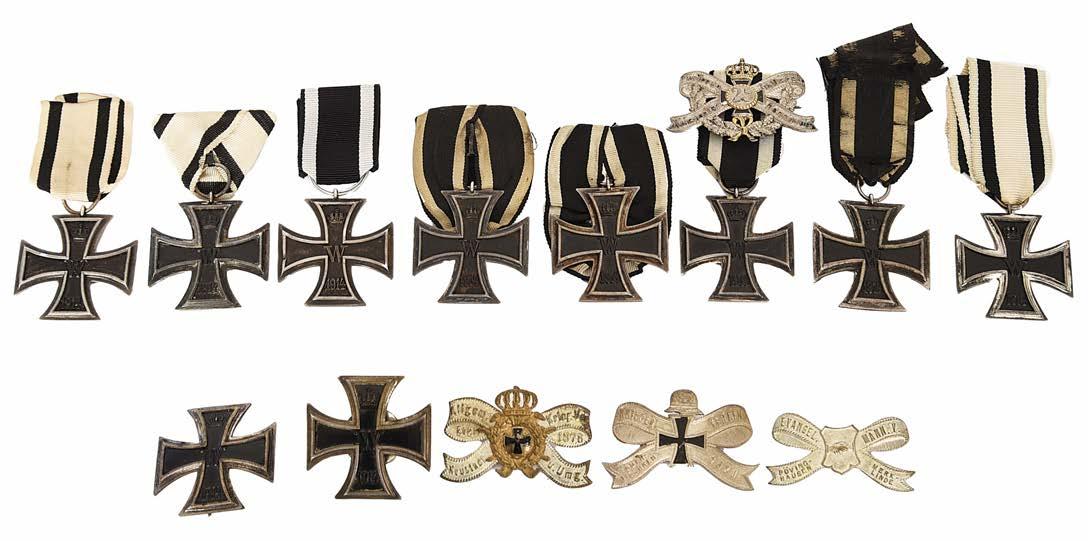
A collection of Imperial German Iron Crosses, comprising: a Great War 1st class cross with pin back, another with screw back fitting and nonmagnetic centre, eight Great War 2nd class crosses; together with four veteran’s association badges. [14]
£300400
82
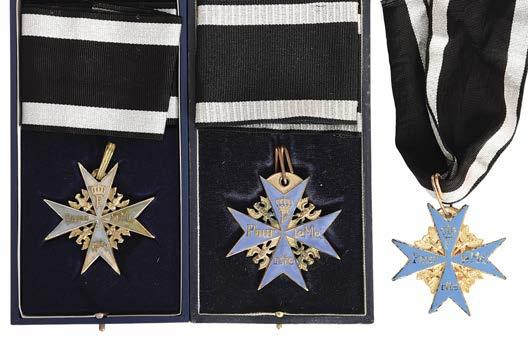
Prussia: Pour Le Mérite, neck badge, silver and enamel, in a modern fitted case, much wear and fading to enamel, fine; another, being a tailor’s copy, in silveredcopper and enamel but marked ‘925’ to the suspension bracket, in a fitted case, about very fine; and a base metal copy, fair to fine. [3]
£300400
83
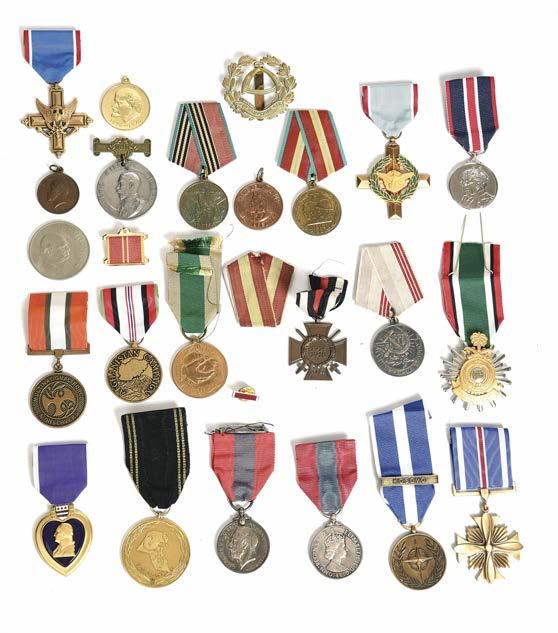
An international collection of medals, including: United Kingdom: Imperial Service Medal, George V (CHARLES WILLIAM AVENT.), good very fine or better; another, Elizabeth II (CECIL CHARLES AVENT), nearly extremely fine; United States of America: Purple Heart, Distinguished Service Cross (Army), Air Force Cross, Distinguished Flying Cross; Germany: Cross of Honour for the Great War 191418 (Hindenburg Cross); U.S.S.R.: Veteran of Labour Medal, Armed Forces 70 Year Jubilee Medal; Saudi Arabia: Medal for the Liberation of Kuwait; and other items. [qty]
£350450
enlargement enlargement
84
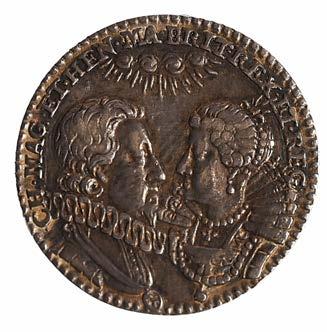
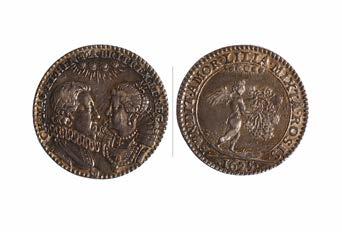
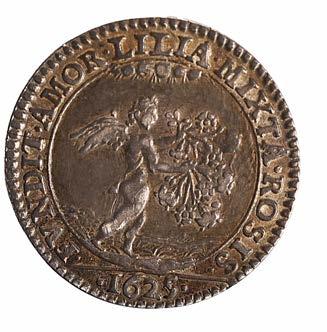
Marriage of Charles I to Henrietta Maria 1625, a cast silver medal by P. Regnier, facing busts, rev. Cupid with roses and lilies, ‘FVNDIT. AMOR. LILIA. MIXTA. ROSIS.’, 23 mm (E 105A), very fine and toned.
£150200
85
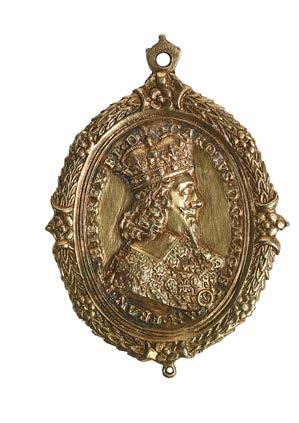
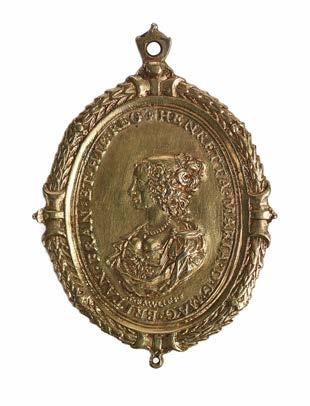
Charles I and Henrietta Maria, Royalist badge, a cast and chased silvergilt oval badge by Thomas Rawlins, crowned and draped bust of the King right with titles around, rev. bust of the Queen left with titles and ‘T, RAWLINS’ below truncation, raised wreath border to each side, integral lugs at top and bottom, 59 x 41.5 mm (including lugs), 21.83 g (E 166a), extremely fine.
£1,0001,500
86
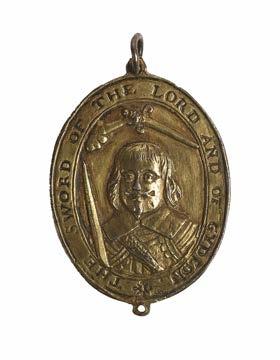
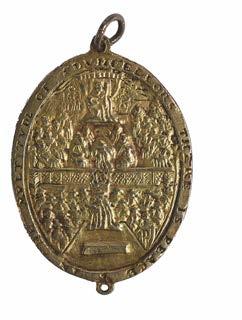
Robert Devereaux 3rd Earl of Essex, Military Reward 1642, a cast and chased silvergilt badge, oval, facing bust in armour below raised arm holding sword, ‘THE SWORD OF THE LORD AND OF GIDEON’, rev. the two houses of parliament with King and speaker, ‘IN THE MULTITUDE OF COUNCELLORS THERE IS PEACE’, integral lugs top and bottom, loose suspension ring, 44.7 x 31 mm (including lugs), 11.28 g (E 140 variant), gilding rubbed on nose, otherwise good very fine.
£1,0001,500
87
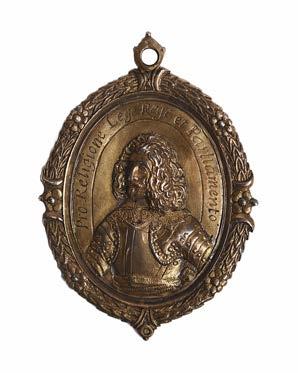
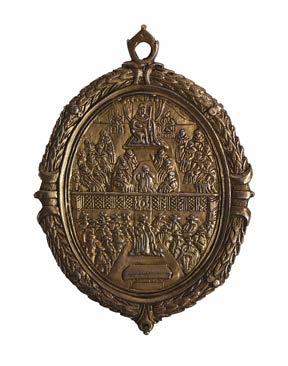
Edward Montague 2nd Earl of Manchester, Military Reward 1643, a cast and chased silvergilt badge, oval, halflength portrait in armour quartering left, ‘Pro Religione Lege Rege et Parliamento’, rev. the two houses of parliament with the King and speaker, raised wreath border to each side, integral suspension lug at top, 53 x 37 mm (including lug), 18.15 g (E 143B), light wear but about extremely fine.
£1,5002,000
not to scale
88
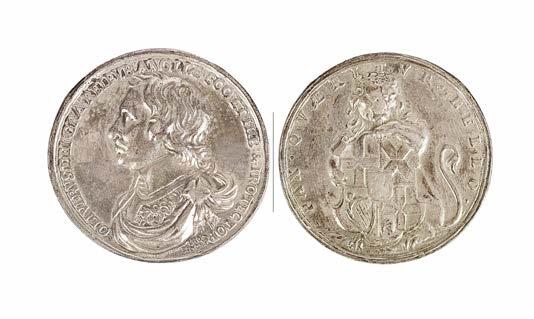
Oliver Cromwell, Lord Protector 1653, a cast silver medal by Thomas Simon, armoured and draped bust of Cromwell left, rev. a lion displaying arms, PAX QUÆRITUR BELLO, 37 mm (E 188B), smoothing to lion’s face, otherwise about very fine.
£150250
89
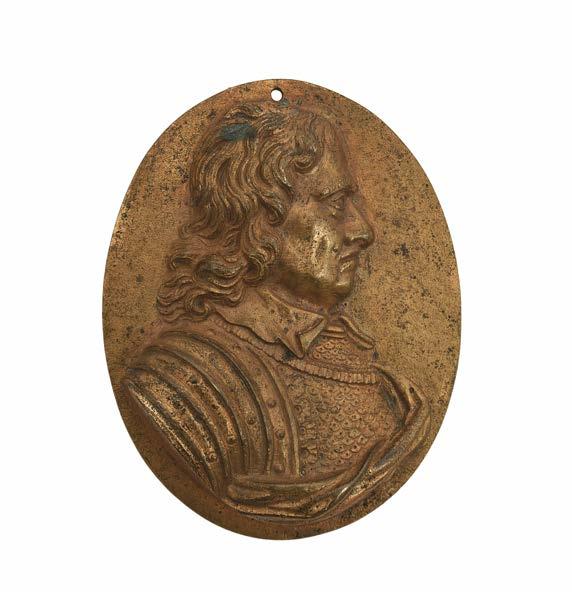
Oliver Cromwell, an oval uniface cast bronze plaque, armoured and draped bust of Cromwell right in high relief, 127 x 99 mm.
£150200
90
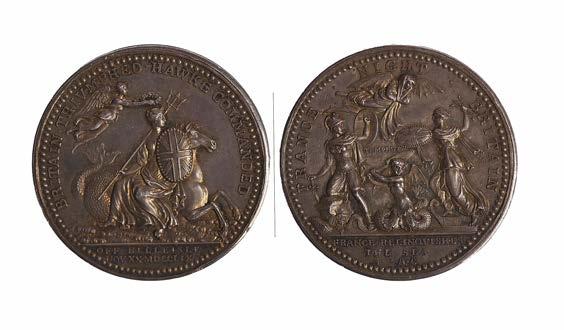
George II, The Battle of Quiberon Bay (Bellisle) 1759: a silver medal, 40 mm, Britannia seated on a hippocampus, armed with trident and shield and crowned by winged Victory, ‘BRITAIN TRIUMPHED. HAWKE COMMANDED’; rev. France, protected by Night and Tempest, flees before an advancing Britain, ex. ‘FRANCE RELINQUISHES THE SEA’, by James Kirk for the Society of Arts and Commerce (E 676), extremely fine and toned.
£300500
91
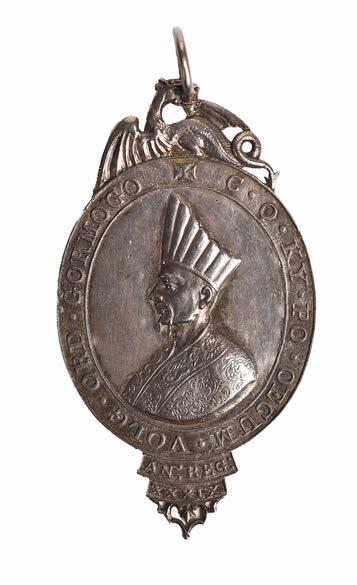
Gormogon Society, a cast and chased silver oval badge, 18th century, bust of a Chinese man in a tall headdress left, ‘C. Q. KY. PO. OECUM. VOLG. ORD. GORGOMO’ to the border, ‘AN: REG: XXXIX’ to projecting tablets terminating in an openwork detail below, integral suspension bracket in the form of a dragon with loose suspension ring, rev. a sunin splendour, ‘UNIVERSUS. SPLENDOR. UNIVERSA. BENEVOLENTIA.’, ‘AN: INST 8799’ below, 77 x 44 mm, about extremely fine.
£500700
92
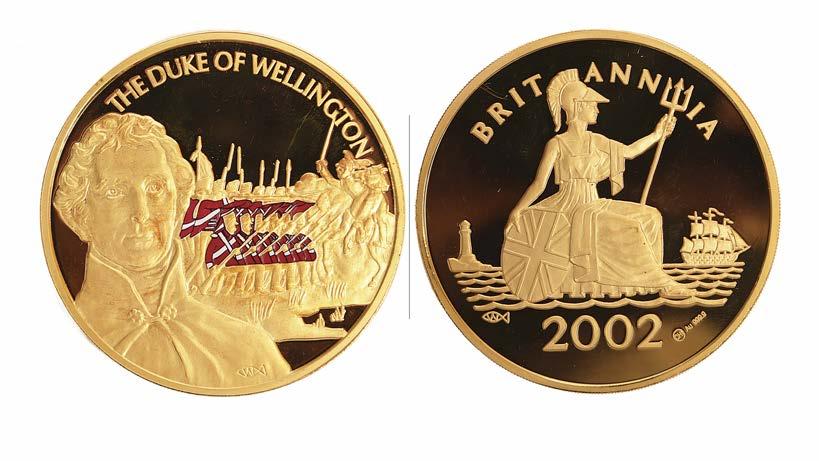
The 1st Duke of Wellington, 150th anniversary 22 carat gold memorial medal, 2002, 65 mm, bust of The Duke with a line of soldiers beyond, rev. Britannia seated, cased with Westminster Collection Ltd. certificate, 141 g (5 ounces).
£10,00012,000
93
94 not to scale 93
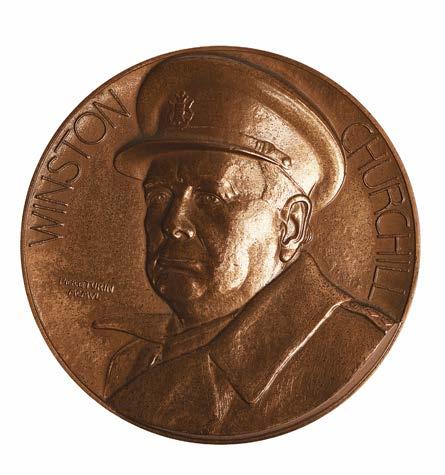
Sir Winston Churchill, a bronze medal by Pierre Turin, 68 mm, uniformed bust of Churchill quartering left, rev. arms and French text in four lines, in card case of issue, extremely fine.
£4060
94
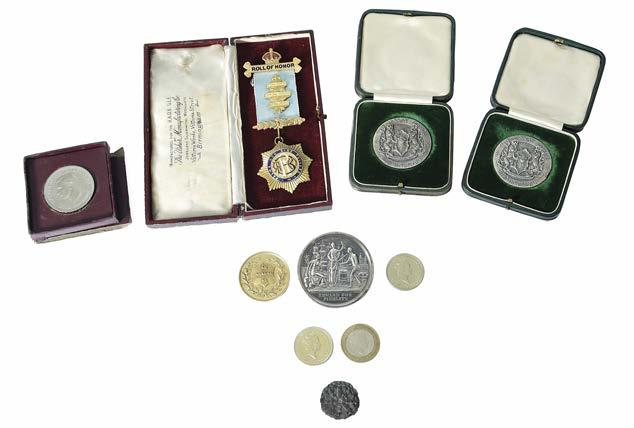
A small collection of medals and coins, including: The London Society for the Protection of the Metal Trade, a silver medal by William Turnpenny, 57 mm, dockside scene with the allegorical figure of Justice and a seated female holding a caduceus and greeting a tradesman, ex. ‘REWARD FOR FIDELITY’, rev. text in seven lines within a wreath, edge engraved ‘TO GEO. MAJOR . 2. DEC. 1828. FOR DETECTING ISAAC FRYETT. IN ROBBING MR. COLWELL’, some bruising and wear but good very fine; together with a family pair of Birmingham Assay Office silver long service medals (George Chance 18781903 and John Chance 189419), 44 mm, in fitted case; and other items. [qty]
Notes: At the Old Bailey, on the 11th of September 1828, Isaac Fryett was tried on the charge of having stolen various tools and other metalware from his master, an ironmonger named Edward Colwell, the previous month. George Major, evidently also an employee of Mr Colwell’s, appears only once in the court records, when he states that he had placed identifying marks on some of the stolen items. Fryett was convicted and sentenced to transportation for fourteen years.
£150250
COINS
THE CONCLUDING PART OF THE WINTERBOURNE COLLECTION
95
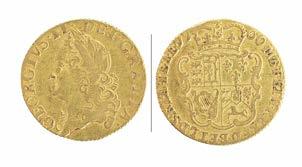
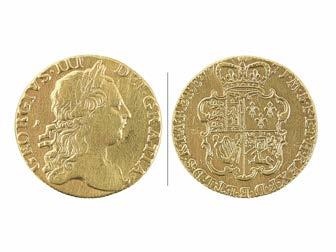
George II, gold halfguinea, 1760, old head, rev. shield of arms (S 3685), about very fine.
£250350
96
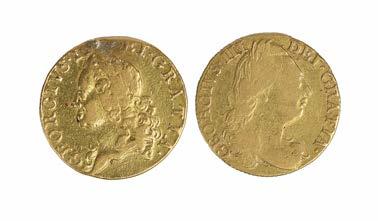
George II, gold guinea, 1759 (S 3680), suspension removed leaving edge damage and solder traces, otherwise fine; and George III, gold guinea, 1786 (S 3728), near fine, reverse a little better. [2]
£1,1001,400
97
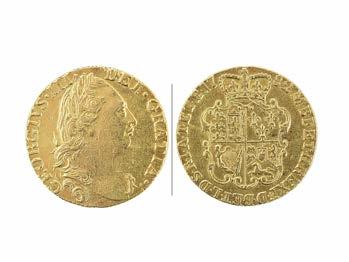
George III, gold guinea, 1771, third (young) head (S 3727), good fine.
£550650
98
George III, gold guinea, 1782, fourth head (S 3728), very fine.
£550650
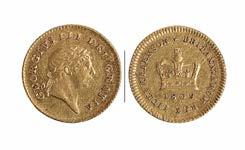
99
George III, gold thirdguinea, 1809, second head (S 3740), very fine.
£250350
101
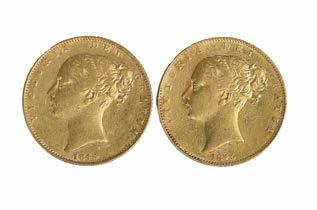
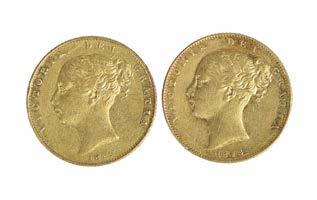
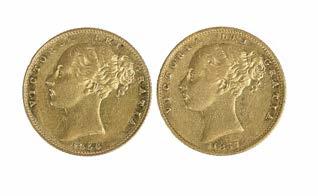
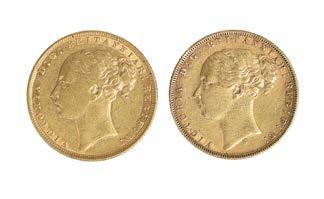
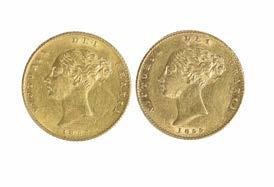
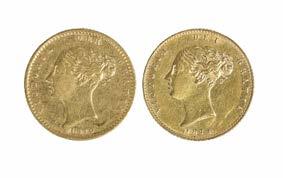
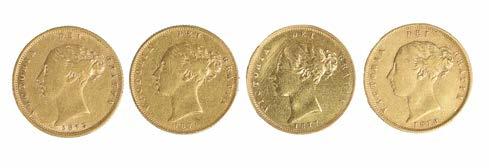
Victoria, gold sovereigns (2), 1844,1845 (S 3852), near very fine, reverses better. [2]
£1,1001,400
100
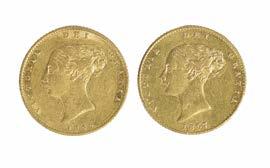
Victoria, gold sovereigns (2), 1842, closed 2; 1843, Arabic 1 (S 3852), near very fine, reverses better. [2]
£1,1001,400
102
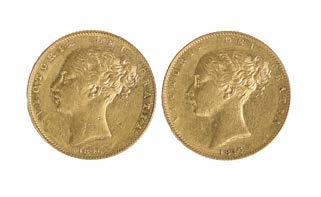
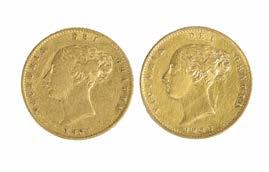
Victoria, gold sovereigns (2), 1846,1847 (S 3852), very fine, reverses better [2]
£1,1001,400
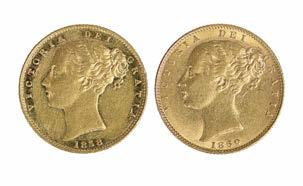
103
Victoria, gold sovereigns (2), 1848, 1849, second (large) head (S 3852C), very fine or better, reverses better. [2]
£1,1001,400
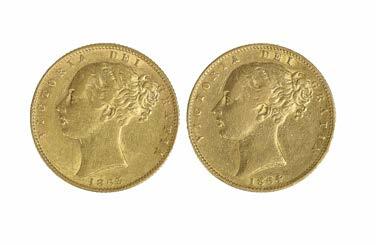
105
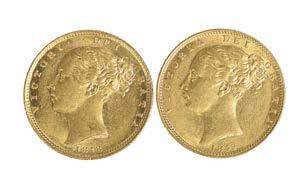
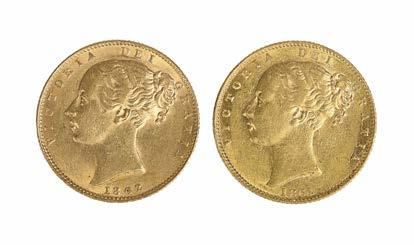
Victoria, gold sovereigns (2), 1852, 1853, second (large) head, Arabic numerals (S 3852C), good very fine. [2]
£1,1001,400
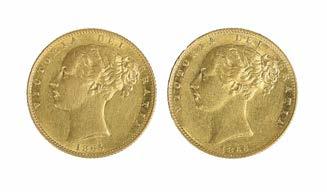
107
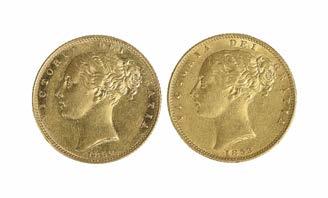
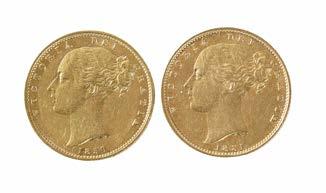
Victoria, gold sovereigns (2), 1856, 1857, second (large) head, WW incuse (S 3852D), very fine and nearly so. [2]
£1,1001,400
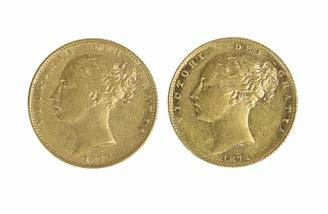
109
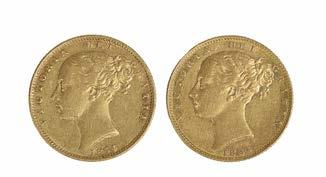
Victoria, gold sovereigns (2), 1861, 1862, second (large) head, WW incuse (S 3852D), near very fine and very fine. [2]
£1,1001,400
104
Victoria, gold sovereigns (2), 1850, 1851, second (large) head, Arabic numerals (S 3852C), good very fine. [2]
£1,1001,400
106
Victoria, gold sovereigns (2), 1854 second (large) head (S 3852C), near very fine; 1855, WW incuse on truncation (S 3852D), very fine. [2]
£1,1001,400
108
Victoria, gold sovereigns (2), 1858, 1860, second (large) head, WW incuse (S 3852D), very fine. [2]
£1,1001,400
110
Victoria, gold sovereigns (2), 1863, second (large) head, WW incuse (S 3852D), very fine; 1864, die number 103 (S 3853). near very fine. [2]
£1,1001,400
111
Victoria, gold sovereigns (2), 1865, 1866 second (large) head, WW incuse, die numbers 12 and 69 (S 3853). about very fine. [2]
£1,1001,400
113
Victoria, gold sovereigns (2), 1870, 1871 second (large) head, WW in relief on truncation, die numbers 123 and 12 (S 3853B), near very fine and nearly extremely fine. [2]
£1,1001,400
115
Victoria, gold sovereigns (2), Sydney mint, 1872, 1883 (S 3855 and 3855B), very fine and nearly extremely fine. [2]
£1,1001,400
117
Victoria, gold sovereigns (2), 1876, 1878, first young head, rev. St George (S 3856A), good fine or a little better. [2]
£1,1001,400
112
Victoria, gold sovereigns (2), 1868, 1869 second (large) head, WW incuse, die numbers 33 and 40 (S 3853). about very fine. [2]
£1,1001,400
114
Victoria, gold sovereign,1873, second (large) head, WW in relief on truncation, die number 11 (S 3853B), mounting damage in front of bust, otherwise fine
£550650
116
Victoria, gold sovereigns (2), 1872, 1873, first young head, rev. St George (S 3856A), good fine or a little better. [2]
£1,1001,400
118
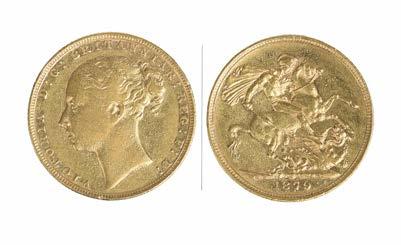
Victoria, gold sovereign, 1879, first young head, rev. St George (S 3856A), good fine and rare.
£8001,200
119
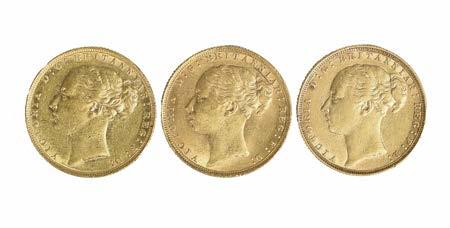
Victoria, gold sovereigns (3), 1880, rev. St George, horse with long tail 1884 (S 3856A), good fine; 1884,1885 rev. horse with short tail (S 3856F), very fine and nearly so. [3]
£1,6001,800
121
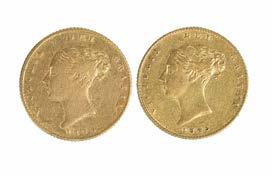
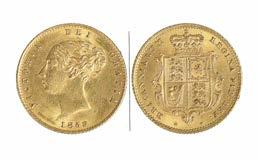
Victoria, gold halfsovereigns (2), 1838, 1843 (S 3859), good fine and near very fine. [2]
£550650
120
Victoria, gold sovereigns (2), Melbourne mint, 1882, 1886 (S 3857A, 3857C), good very fine and good fine. [2]
£1,1001,400
122
Victoria, gold halfsovereign, 1842 (S 3859), near very fine.
£350450
123
Victoria, gold halfsovereign, 1848 (S 3859), about very fine.
£350450
124
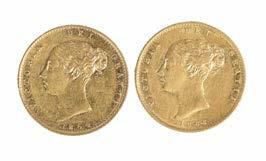
Victoria, gold halfsovereigns (2), 1849, 1851 (S 3859), very fine. [2]
£550650
125
Victoria, gold halfsovereigns (2), 1853, 1855 (S 3859), the first with scratches to the head, otherwise both about very fine. [2]
£550650
126
Victoria, gold halfsovereigns (2), 1856, 1857 (S 3859), the second with scratches to the hair, otherwise both about very fine. [2]
£550650
127
Victoria, gold half sovereign, 1859, second young head (S 3859A), light contact marks but about extremely fine.
£350450
128
Victoria, gold halfsovereigns (2), 1861, 1863 (S 3859A), good fine and near very fine. [2]
£550650
130
Victoria, gold halfsovereigns (2), 1870, 1871, die numbers 1 and 41 (S 3860), about very fine. [2]
£550650
132
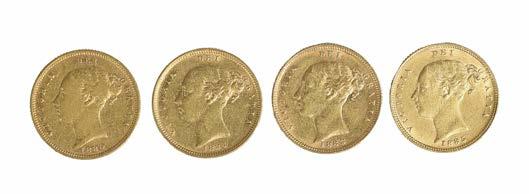
Victoria, gold halfsovereigns (4), 1880, die number 129 (S 3860F), good fine; 1883, 1884, 1885 (S 3861), near very fine, reverses better [4]
Victoria, gold halfsovereigns (2), 1864, 1866, die numbers 31 and 34 (S 3860), near very fine. [2]
£550650
131
Victoria, gold halfsovereigns (4), 1873, 1876, die numbers 183 and 73 (S 3860D), fine and a little better; 1877, 1878, die numbers indistinct (S 3860E), fine or a little better [4]
£1,1001,400
133
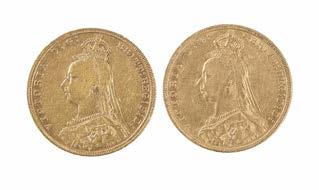
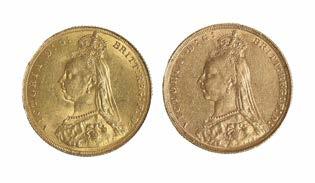
Victoria, gold sovereigns (2), 1887, Jubilee bust (S 3866), good very fine, 1888, repositioned legend, (S 3866B), good fine. [2]
£1,1001,400
135
Victoria, gold sovereigns (2), 1891, 1892, Jubilee bust, repositioned legend, rev. horse with longer tail (S 3866C), good very fine and near very fine. [2]
£1,1001,400
136
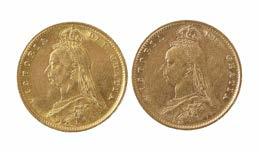
Victoria, gold halfsovereigns (2), 1887, Jubilee bust with normal initials, rev. high shield (S 3869), very fine; 1890, rev. lower shield (S 3869B), very fine. [2]
£550650
137
Victoria, gold halfsovereign, 1891, Jubilee bust without initials, rev. lower shield (S 3869D), good very fine, reverse better.
£250350
139
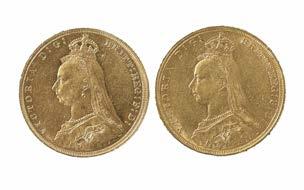
Victoria, gold sovereigns (2), 1893, 1894, veiled bust (S 3874), fine and near very fine. [2]
£1,1001,400
138
Victoria, gold halfsovereigns (2), 1892, 1893, Jubilee bust without initials, rev. lower shield (S 3869D), about very fine, reverses a little better. [2]
£550650
140
Victoria, gold sovereigns (2), 1895, veiled bust (S 3874), good fine; 1896, Melbourne Mint (S 3875), very fine. [2]
£1,1001,400
141
Victoria, gold sovereigns (2), 1898, 1899, veiled bust (S 3874), fine, the reverse of the first much better. [2]
£1,1001,400
142
Victoria, gold sovereigns (2), 1900, 1901, veiled bust (S 3874), about very fine, reverses better. [2]
£1,1001,400
143
Victoria, gold halfsovereigns (4), 1894, 1895, 1896, 1897, veiled bust (S 3878), good fine and better. [4]
£1,1001,400
144
Victoria, gold halfsovereigns (4), 1898, 1899, 1900, 1901, veiled bust (S 3878), good fine. [4]
£1,1001,400
145
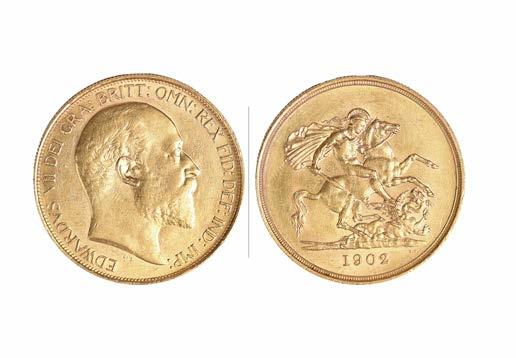
Edward VII, gold five pounds, 1902 (S 3965), some contact marks particularly to bust and obverse field, otherwise good very fine and reverse a little better.
£2,7003,300
146
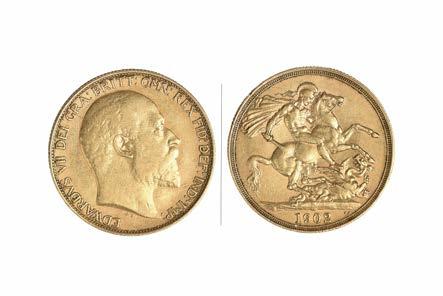
Edward VII, gold two pounds, 1902, (S 3967), very fine.
£1,1001,400
147
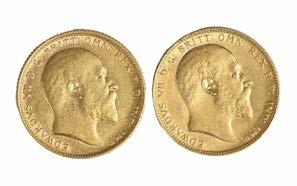
Edward VII, gold sovereigns (2), 1902 (S 3969), good fine or better; 1903, Perth Mint (S 3972), very fine. [2]
£1,1001,400
148
Edward VII, gold sovereigns (2), 1904, 1905 (S 3969), very fine and good very fine. [2]
£1,1001,400
149
Edward VII, gold sovereigns (2), 1906, 1907 (S 3969), good very fine, the second better [2]
£1,1001,400
151
Edward VII, gold sovereign, 1910 (S 3969), good very fine.
£550650
150
Edward VII, gold sovereigns (2), 1908, 1909 (S 3969), nearly extremely fine. [2]
£1,1001,400
152
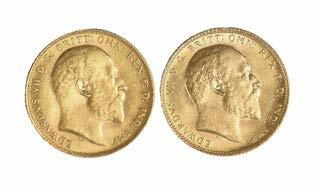
Edward VII, gold halfsovereigns (2), 1902, 1903, rev. no initials in exergue (S 3974), good fine and near very fine. [2]
£550650
154
Edward VII, gold halfsovereigns (3), 1906, 1907, 1908 rev. initials in exergue (S 3974B), very fine and nearly so. [3]
£8001,000
153
Edward VII, gold halfsovereigns (2), 1904, 1905, rev. initials in exergue (S 3974B), very fine and about extremely fine. [2]
£550650
155
Edward VII, gold halfsovereigns (3), 1908, 1909, 1910 rev. initials in exergue (S 3974B), good fine, extremely fine and fine. [3]
£8001,000
156
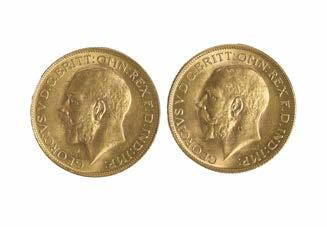
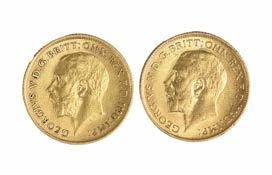
George V, gold sovereigns (2), 1911, 1912 (S 3996), good very fine. [2]
£1,1001,400
157
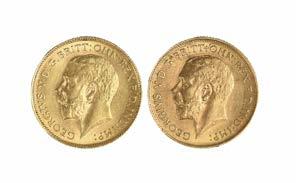
George V, gold sovereigns (2), 1913, 1914 (S 3996), extremely fine or nearly so. [2]
£1,1001,400
158
George V, gold sovereigns (2), 1915, 1925 (S 3996), good very fine. [2]
£1,1001,400
160
George V, gold sovereigns (2), 1916, 1917, Perth Mint (S 4001), nearly extremely fine. [2]
£1,1001,400
162
George V, gold sovereigns (2), 1921, 1922, Perth Mint (S 4001), nearly extremely fine. [2]
£1,1001,400
159
George V, gold sovereigns (2), 1918, Bombay Mint (S 3998), good very fine or better; 1923, Melbourne Mint (S 3999), good very fine. [2]
£1,1001,400
161
George V, gold sovereigns (2), 1919, 1920, Perth Mint (S 4001), very fine [2]
£1,1001,400
163
George V, gold sovereign, 1924 Perth Mint (S 4001), near very fine
£550650
164
George V, gold sovereigns (2), 1926, 1927, Pretoria Mint (S 4004), good very fine. [2]
£1,1001,400
165
George V, gold sovereigns (2), 1927, 1928, Pretoria Mint (S 4004), good very fine. [2]
£1,1001,400
166
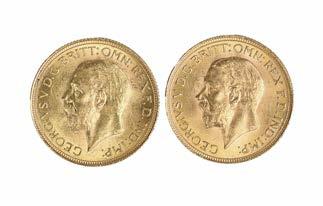
George V, gold sovereigns (2), 1929, 1930, Pretoria Mint (S 4004), about extremely fine. [2]
£1,1001,400
167
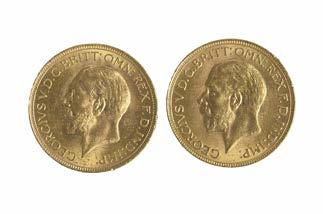
George V, gold sovereigns (2), 1931, 1932, Pretoria Mint (S 4004), about extremely fine. [2]
£1,1001,400
169
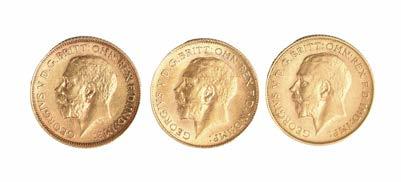
George V, gold halfsovereigns (2), 1913, 1914 (S 4006), nearly extremely fine. [2]
£550650
168
George V, gold halfsovereigns (2), 1911, 1912 (S 4006), good very fine. [2]
£550650
170
George V, gold halfsovereigns (3), 1915 (S 4006), very fine, 1915, Sydney Mint (S 4009), near very fine; 1926, Pretoria Mint (S 4010), near very fine. [3]
£8001,000
171
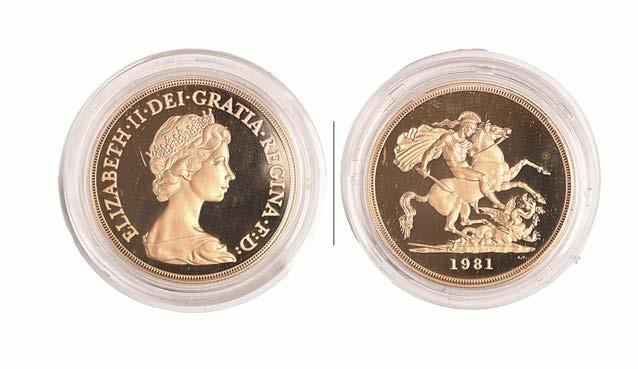
Elizabeth II, gold proof five pounds, 1981 (S 4201), in Royal Mint case of issue with certificate, as struck.
£2,7003,300
172
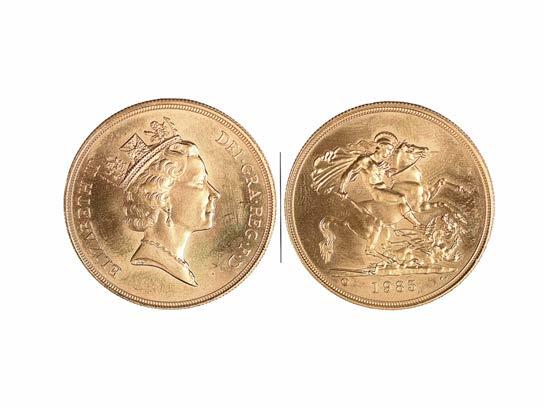
Elizabeth II, gold five pounds, 1985, U to left of date (S 4252), good extremely fine.
£2,7003,300
173
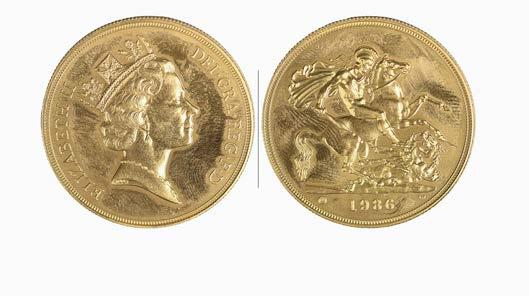
Elizabeth II, gold five pounds, 1986, U to left of date (S 4252), good extremely fine.
£2,7003,300
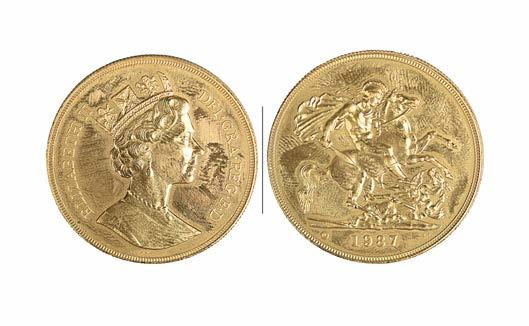
Elizabeth II, gold five pounds, 1987, uncouped portrait, rev. U to left of date (S 4253), good extremely fine.
£2,7003,300
175
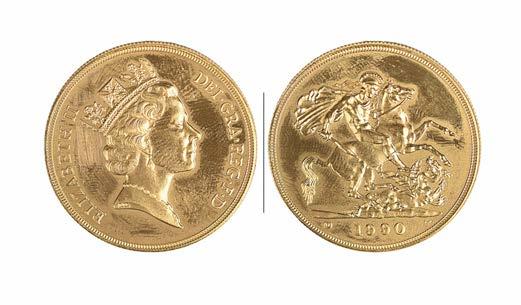
Elizabeth II, gold five pounds, 1990, U to left of date (S 4252), good extremely fine.
£2,7003,300
176
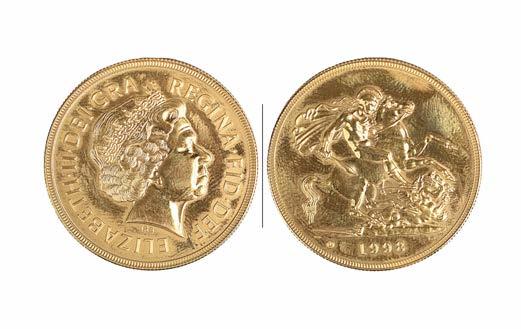
Elizabeth II, gold five pounds, 1998, RankBroadley portrait, rev. U to left of date (S 4410), as struck or nearly so.
£2,7003,300
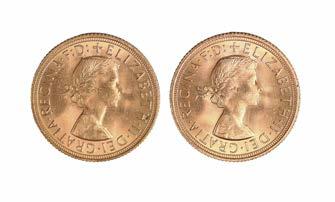
177
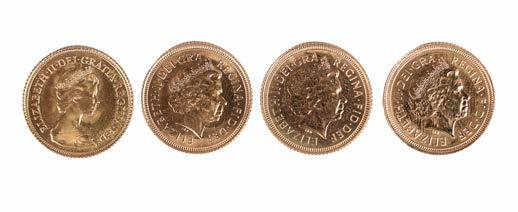
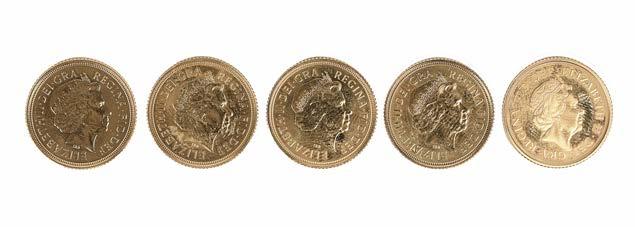
Elizabeth II, gold sovereigns (2), 1957, second issue (S 4124), about extremely fine; 1958 (S 4125), extremely fine. [2]
£1,1001,400
179
Elizabeth II, gold sovereigns (2), 1963, 1964, second issue (S 4125), extremely fine. [2]
£1,1001,400
181
Elizabeth II, gold sovereigns (2), 1967, 1968, second issue (S 4125), extremely fine. [2]
£1,1001,400
183
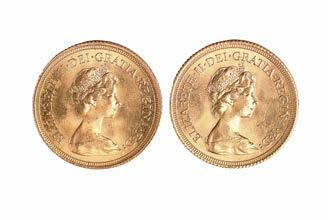
Elizabeth II, gold sovereigns (2), 1978, 1979 (S 4204), extremely fine. [2]
£1,1001,400
178
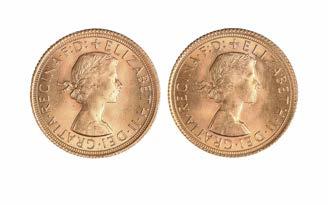
Elizabeth II, gold sovereigns (2), 1959, 1962, second issue (S 4125), extremely fine. [2]
£1,1001,400
180
Elizabeth II, gold sovereigns (2), 1965, 1966, second issue (S 4125), extremely fine. [2]
£1,1001,400
182
Elizabeth II, gold sovereigns (2), 1974, 1976 (S 4204), extremely fine. [2]
£1,1001,400
184
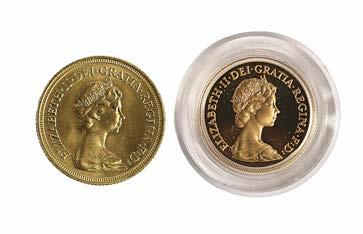
Elizabeth II, gold sovereigns (2), 1980, 1980 proof (S 4204), the second in case of issue, extremely fine and as struck. [2]
£1,1001,400
185
Elizabeth II, gold sovereigns (2), 1981, 1982 (S 4204), extremely fine. [2]
£1,1001,400
187
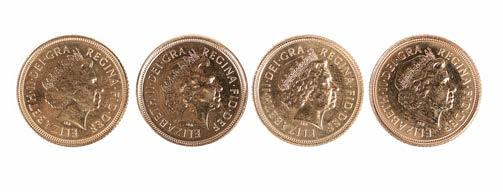
Elizabeth II, gold sovereigns (2), 2003, 2004 (S 4430), extremely fine. [2]
£1,1001,400
189
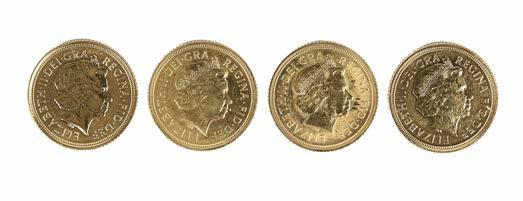
Elizabeth II, gold sovereigns (2), 2006, 2007 (S 4430), nearly extremely fine. [2]
£1,1001,400
186
Elizabeth II, gold sovereigns (2), 2000, 2001 (S 4430), extremely fine. [2]
£1,1001,400
188
Elizabeth II, gold sovereigns (2), 2002, rev. Shield of Arms (S 4431), good extremely fine; 2005. rev. T. Noad design (S 4432), extremely fine. [2]
£1,1001,400
191
Elizabeth II, gold sovereigns (2), 2010 (S 4433), extremely fine; 2012, rev. Paul Day design (S 4434), extremely fine. [2]
£1,1001,400
190
Elizabeth II, gold sovereigns (2), 2008, 2009 (S 4430, S4433), extremely fine. [2]
£1,1001,400
192
Elizabeth II, gold sovereigns (2), 2013, 2014 (S 4433), extremely fine. [2]
£1,1001,400
193
Elizabeth II, gold sovereigns (2), 2015 (S 4433), extremely fine; 2016, Jody Clark portrait (S 4435), extremely fine. [2]
£1,1001,400
194
Elizabeth II, gold halfsovereigns (4), 1982 (S 4205); 2000, 2001 (S 4440); 2002, rev. shield of arms (S 4441); all about extremely fine. [4]
£1,1001,400
195
Elizabeth II, gold halfsovereigns (4), 2003, 2004, 2006 (S 4440); 2005, rev. Timothy Noad design (S 4442); extremely fine. [4]
£1,1001,400
196
Elizabeth II, gold halfsovereigns (4), 2007, 2008 (S 4440); 2009, 2010 (S 4443); extremely fine. [4]
£1,1001,400
197
Elizabeth II, gold halfsovereigns (5), 2012 (S 4444); 2013, 2014, 2015, 2016, rev. BP in exergue as S 4440; extremely fine. [5]
£1,3001,600
198
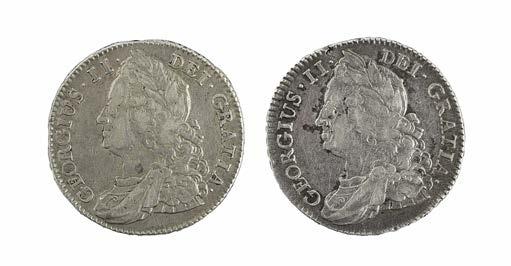
George II, silver halfcrowns (2), 1743, old bust, rev. roses in angles, edge DECIMO SEPTIMO, good fine or better; 1745, edge DECIMO NONO, flan flaw above bust impinging on edge, otherwise good fine, reverse better (S 3694); together with George II, silver shillings (2), 1739 and 1741, young bust, rev. roses in angles (S 3701), near very fine and good very fine or better. [4]
£300400
199
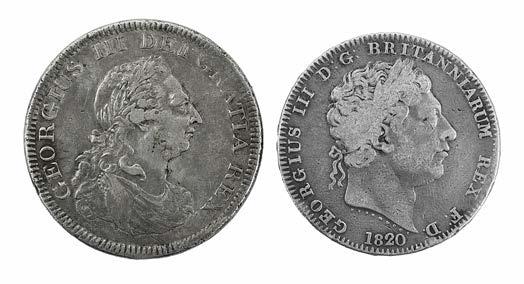
George III, silver dollar, 1804, Bank of England Issue (S 3768), fine or better; and silver crown, 1820, new coinage, edge LX (S 3787), fine. [2]
£150250
200
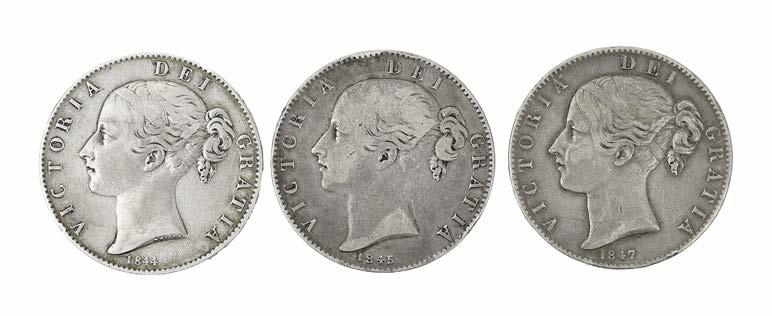
Victoria, silver crowns (3), 1844 (star stops), 1845 (cinquefoil stops), 1847 (S 3882), all fine or better; together with silver double florins (4), 1887, Roman I in date (S 3922), light surface marks but otherwise extremely fine and with some lustre; 1888, 1889, 1890, Arabic 1 in date (S 3923), good very fine, very fine and fine. [7]
£200300
202
201 part
200 part part
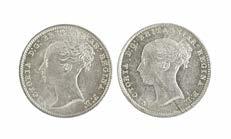
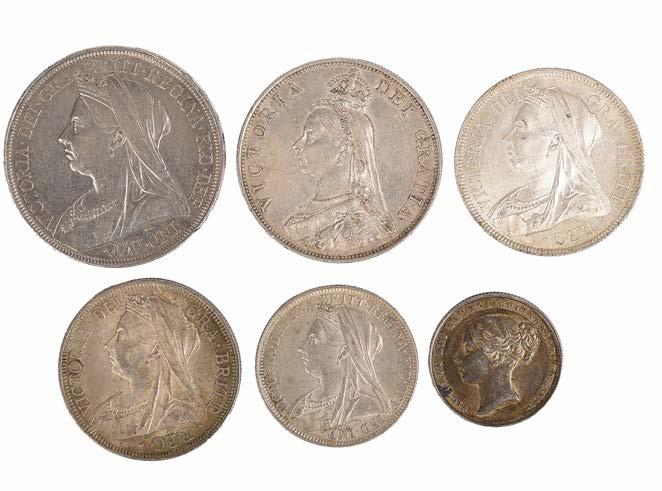
Victoria, silver threepence (5), 1854 and 1856, first young head (S 3914), the first with a dent in front of the nose, the other with light striations across the head, otherwise about extremely fine; 1860, 1863 and 1864, first young head variety (S 3914A), extremely fine or nearly so, the last two toned; together with silver three halfpence (2), 1843 and 1862 (S 3915), extremely fine and lightly toned. [7]
£300400
201
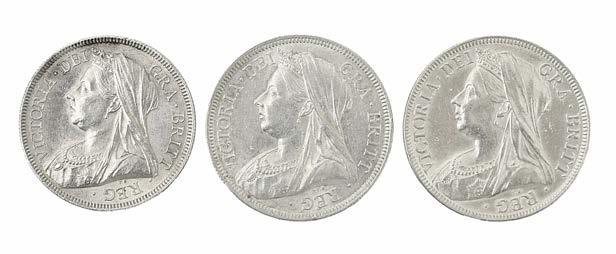
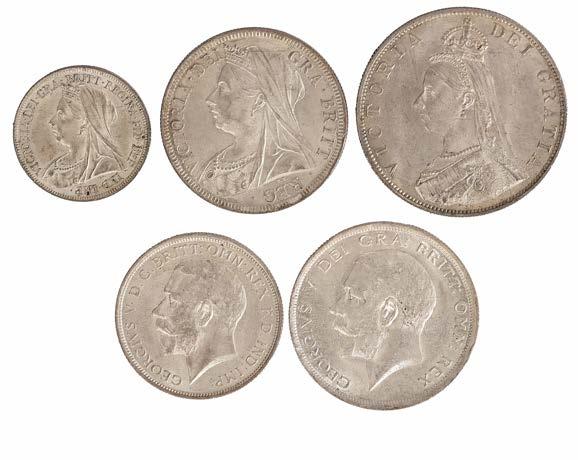
Victoria, silver half crowns (3), 18931895, veiled bust (S 3938), extremely fine or nearly so; together with silver half crowns (3), 18961898, veiled bust (S 3938), about extremely fine, the last extremely fine. [6]
£200300
203
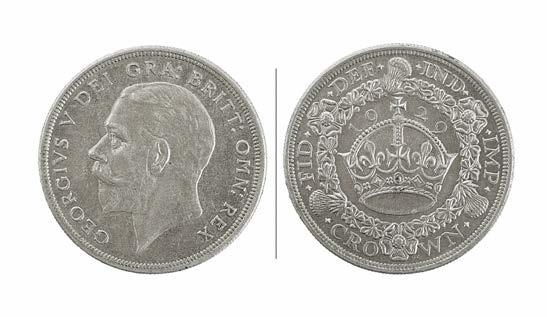
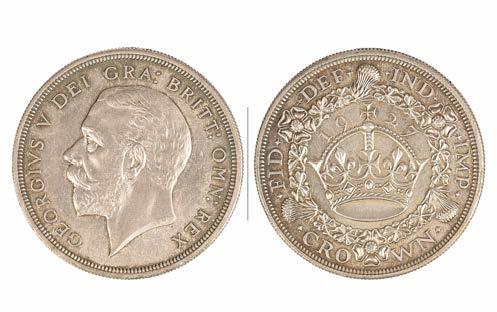
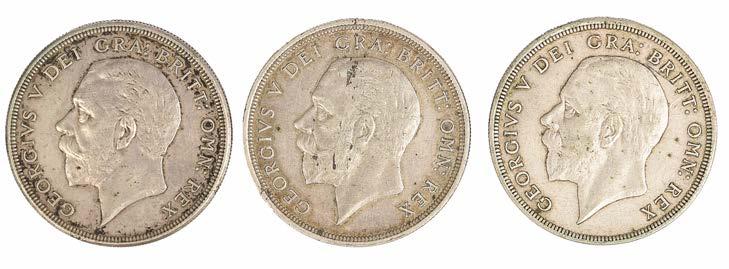
George V, crown, 1929, fourth coinage (S 4036), nearly extremely fine.
£100150
204
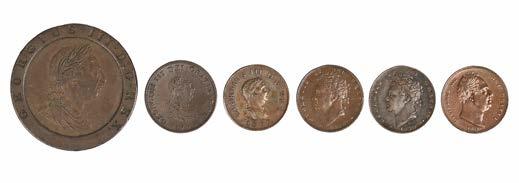
Hanoverian monarchs: a small quantity of copper coins, comprising: George III, twopence, 1797, Soho Mint (S 3776), at least very fine; farthing, 1799 (S 3778), good very fine or better; farthing, 1806, incuse dot on truncation (S 3782), about extremely fine; George IV, farthings (2), 1826, 1830, second issue (S 3825) very fine; William IV, farthing, 1834, rev. raised line on saltire (S 3848), nearly extremely fine. [6]
£300400
206
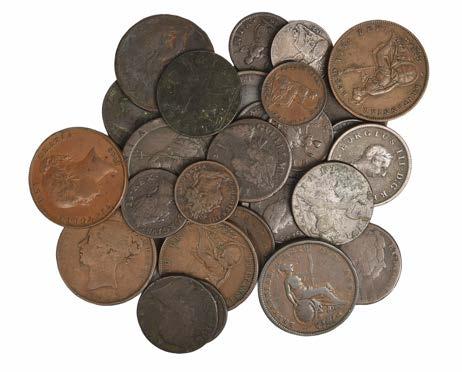
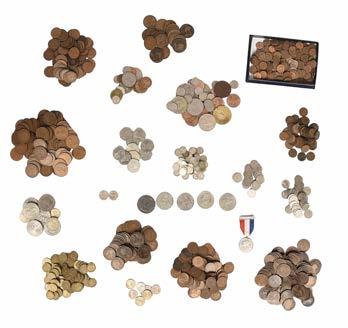
A small quantity of British copper coins, William and Mary to Victoria, various issues, grades from fair to near very fine. [qty]
£150250
208
205
not to scale not to scale not to scale not to scale not to scale
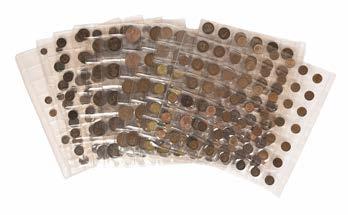
Victoria to Elizabeth II, a collection of bronze coins, mainly lower denominations, some in high grades. [qty]
£200300
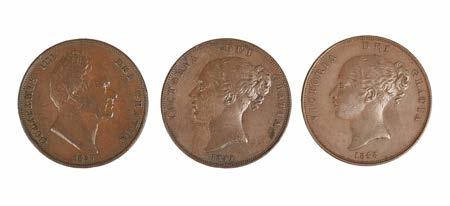
William IV, copper penny, 1837 (S 3845), about very fine; Victoria, copper pennies (2), 1841, rev. no colon after REG (S 3948), nearly extremely fine; 1848 (S 3948), about extremely fine. [3]
£300400
207
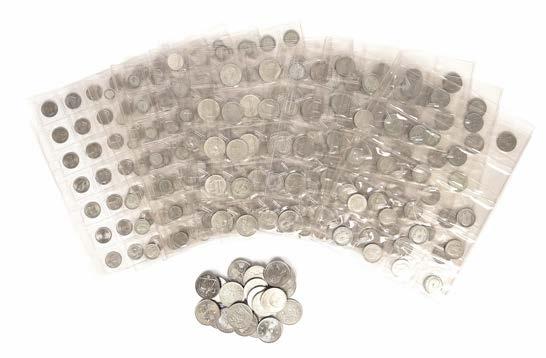
Victoria to Elizabeth II, a collection of silver and cupronickel coins, mainly low denominations, mainly in high grades. [qty]
£200300
209
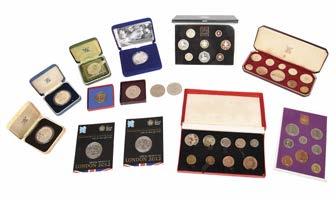
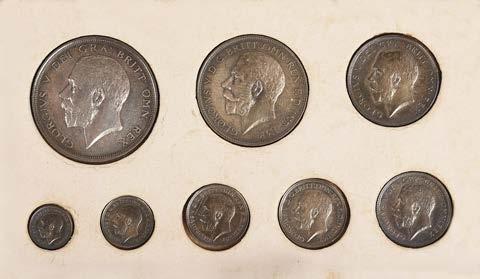
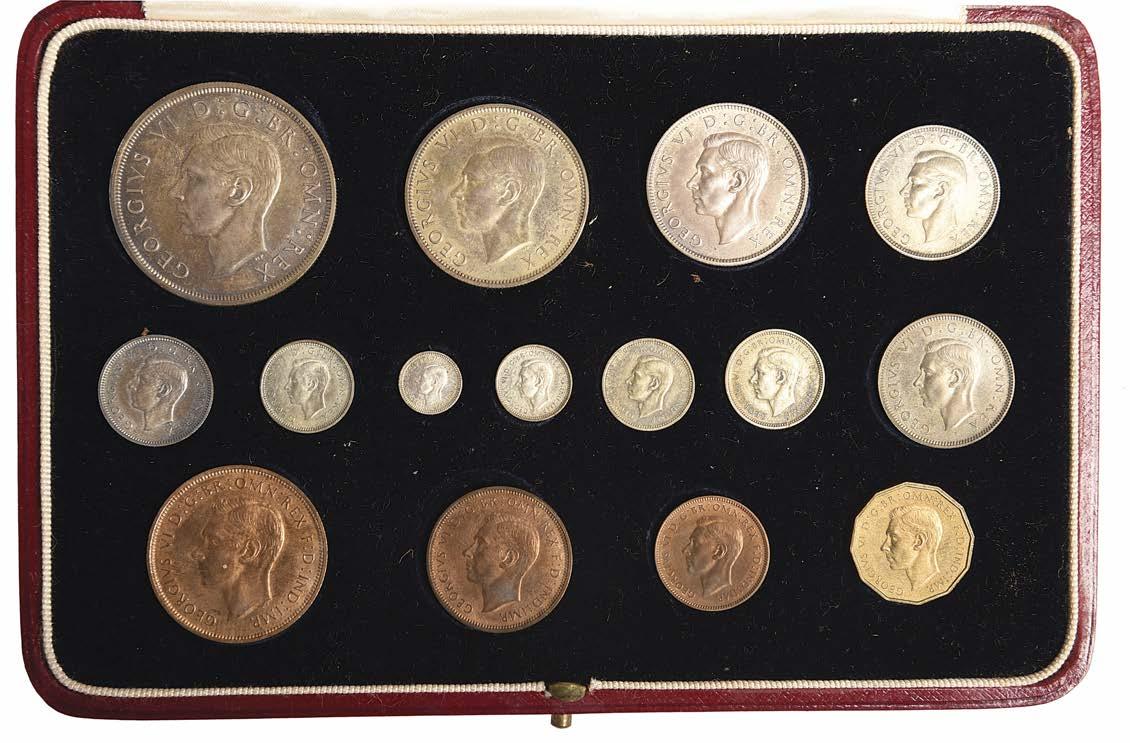
George V and Elizabeth II, a small collection of proof and specimen coinage, including: proof set 1950, nine coins, halfcrown to farthing, in card case of issue (S PS17), some discolouration (possibly mildew) otherwise about as struck; proof coin collection 1983, eight coins, pound to halfpenny, in case with certificate; silver proof crown, 1981, cased with certificate; and various similar items. [qty]
£150200
210
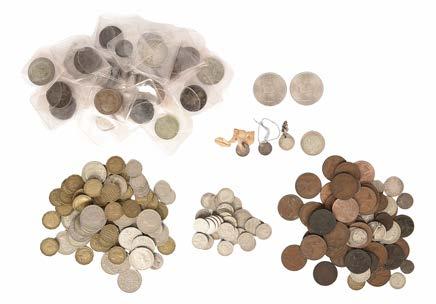
The balance of the Winterbourne Collection, including late predecimal issues, decimal coinage, commemorative crowns, souvenir medals, and other items. [qty]
£100150
211
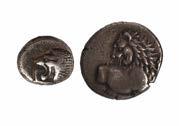
Ancient Greek coins (2): Corcyra, AR trihemiobol, 5th century BC, lion’s head left, rev. stellate pattern in incuse square, 1.19 g (Sear 1770 or similar), good fine, reverse better; Chersonese, AR hemidrachm, 400350 BC, forepart of lion looking back, rev. quadripartite incuse square with opposed quarters deeper, one containing a pellet and the other possibly a cup, 2.43 g (Sear 1602), very fine. [2]
£60100
VARIOUS PROPERTIES
212
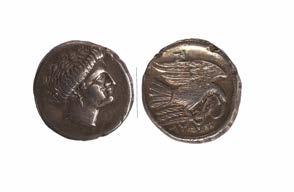
Ancient Greece Chalkis, AR drachm, 340294 BC, head of Hera with coiled hair right, rev. eagle with snake in talons and beak, 3.72 g (Sear 24812483), good very fine.
£80120
213
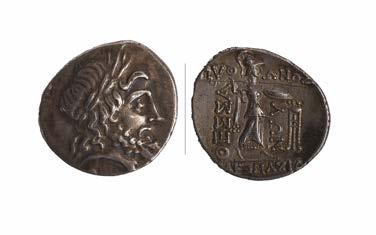
Ancient Greece Thessalian League, AR double victorianus, 196146 BC, head of Zeus right, rev. Athena Itonia advancing right with spear and shield, 6.14 g (Sear 22312233), good very fine.
£100150
enlargement
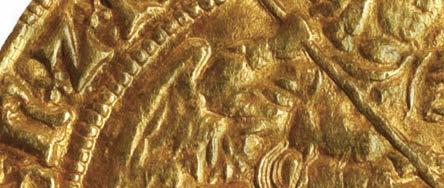
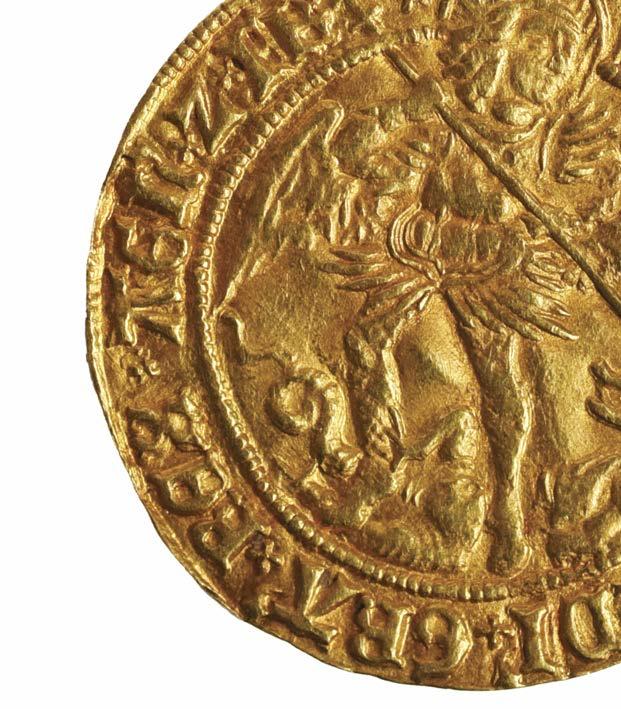
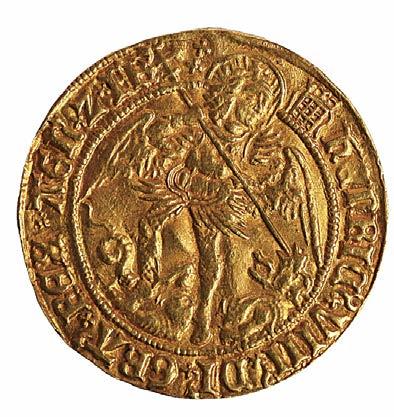
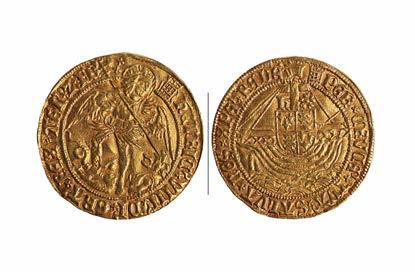
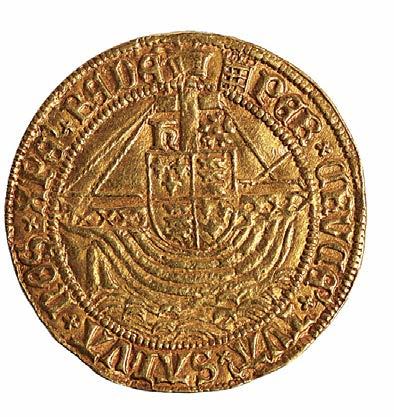
Henry VIII, gold angel, first coinage (150926), reverse H and rose, obverse mm. portcullis with chains, reverse mm. portcullis without chains, 5.1g (S 2265), very slight crease but good very fine.
£2,5003,000
enlargement
215
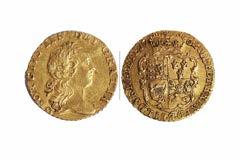
George III, gold quarterguinea, 1762 (S 3741), very fine.
£300400
216
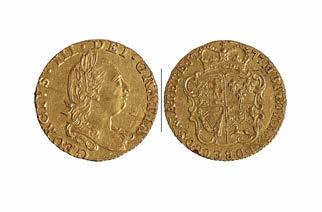
George III, gold halfguinea, 1777, fourth head, rev. crowned shield of arms (S 3734), extremely fine or nearly so.
£700900
217
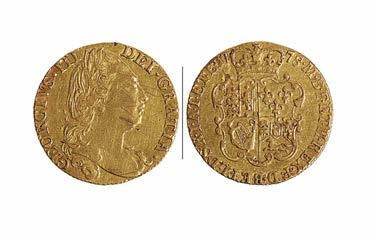
George III, gold guinea, 1778, fourth head (S 3728), adjustment marks to head, otherwise good very fine.
£1,2001,400
220
218
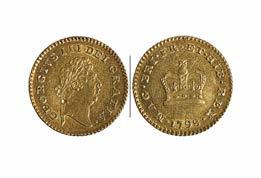
George III, gold thirdguinea, 1798, first head, rev. date in legend, die error to ‘98’ of date (S 3738), small dent to back of neck, otherwise good very fine or better
£400500
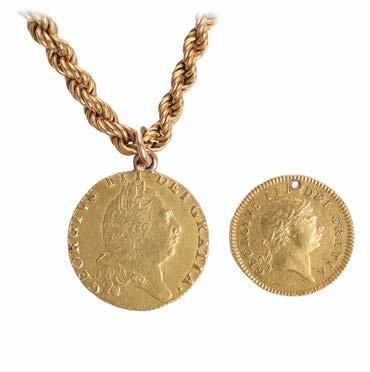
George III, gold guinea, 1799, with a 9carat gold fancylink chain to a soldered suspension ring (weight of chain 7.49 g); together with a gold halfguinea, 1804, pierced for suspension. [2]
£1,2001,400
219
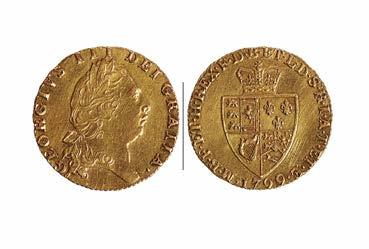
George III, gold guinea, 1799, ‘spade’ reverse (S 3729), good very fine, reverse better.
£1,2001,400
221
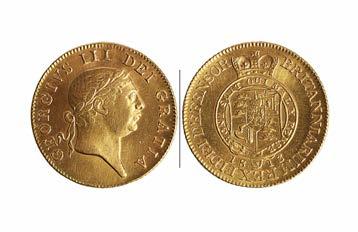
George III, gold guinea, 1813, ‘military’ type, sixth head, rev. shield in garter (S 3730), very fine, reverse better
£2,6003,000
222
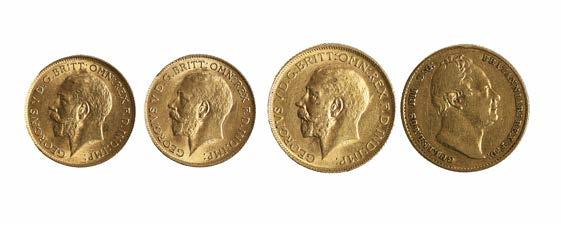
A small quantity of British gold coins, comprising: William IV, sovereign, 1832 (S 3829B), near very fine; George V, sovereign, 1914 (S 3996), good very fine; halfsovereigns (2), 1912, 1914 (S 4006), nearly extremely fine. [4]
£1,9002,200
224
Elizabeth II, gold sovereigns (2), 1967 (S 4125), some contact marking to busts and obverse fields, otherwise nearly extremely fine, reverses better. [2]
£1,2001,400
226
223
George V, gold halfsovereign, 1914, London (S 3996), nearly extremely fine.
£320380
225
England: Cnut (101635), silver penny, pointed helmet type (102430), 1.04g (S 1058), very fine; together with Northumbria: Æthelred II (841850), copper styca, rev. MONNE, 1.1g, very fine [2]
£200300
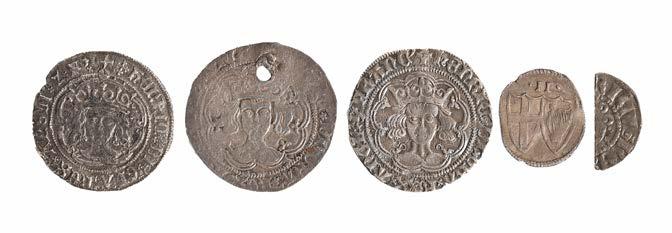
A collection of English Medieval silver coins, comprising: Henry II (115489), penny, crosscrosslet (Tealby) type, 1.25g (S 1337), fine or better; John (11991216), penny, short cross coinage, Winchester, rev. LUKAS ON WINC, 1.33g, near very fine; Henry III (121672), penny, short cross coinage, London, rev. possibly RAULF ON LUND, 1.36g, good fine or better; Henry III (111672), penny, long cross coinage, Canterbury, rev. NICOLE ON CANT, 1.22g, very fine or nearly so; Edward I (12721307), penny, London mint, star on breast, 1.22g, edge nicks, otherwise very fine; another penny, possibly Richard II (137799), obverse smoothed, much clipped; and Henry VI, groat, annulet issue (142230), London, rev. annulets in two quarters, 3.8g (S 1835), very fine. [7]
£400600
227
A small quantity of English silver coins, comprising: a cut halfpenny, possibly Henry III; Henry VI, groat, annulet issue (142230), Calais mint, annulets at neck, mm. pierced cross (S 1836), some clipping, about very fine; another groat, London mint, mm. cross patonce or fleury, clipped and pitted, fine; another groat, Calais mint, mm. erased, pierced for suspension and much worn; The Commonwealth (164960), halfgroat (S 3221), slightly creased and with edge damage, otherwise good fine. [5]
£100150
228
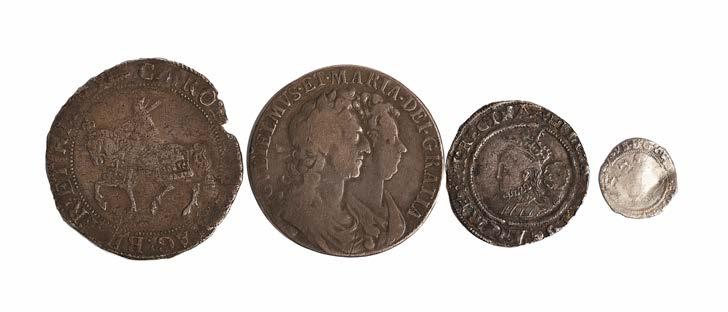
Elizabeth I, silver sixpence, 1563, small flan, small bust, rose and date, mm. crown (S 2561), fine; Charles I, silver crown, Tower mint under the King, mm. portcullis (163334), edge damage and pitting, about fine; silver penny, smoothed and buckled, at best fair; William and Mary, silver halfcrown,1689, first reverse, edge PRIMO (S 3434), fine. [4]
£200300
229
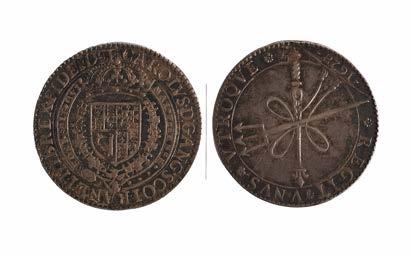
Charles I, silver pattern shilling (or medal), 1628, by Nicholas Briot, crowned shield surrounded by the collar and badge of the Order of the Thistle, all within a garter, rev. crossed sceptre and trident (E 112), very fine and toned.
£200300
231
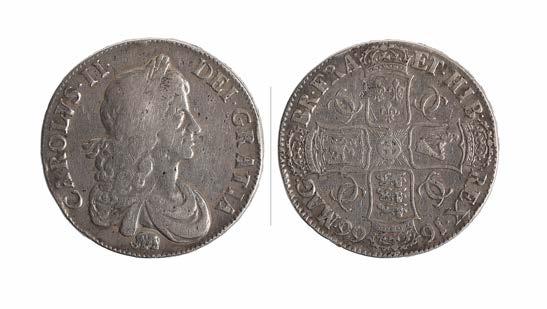
Charles II, silver crown, 1666, second bust, elephant below, edge XVIII (S 3356), at least fine, scarce.
£300500
230
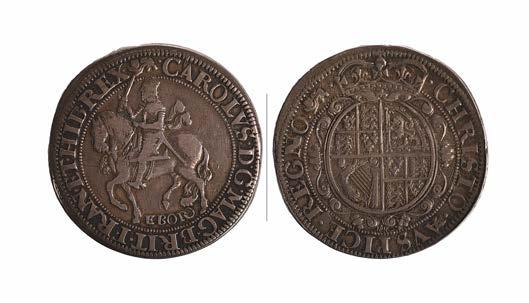
Charles I, silver halfcrown, provincial issues (164249), York mint, The King mounted left, horse’s tail between legs, ‘EBOR’ below, rev. crowned oval shield with lion skin garniture, no CR, mm. lion, 14.7 g (S 2869), good fine or a little better.
£250350
232
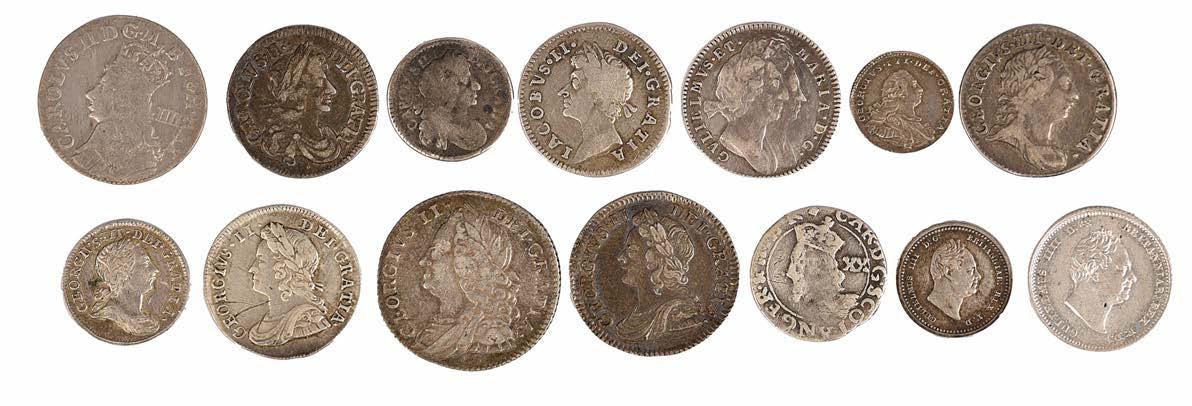
A collection of Stuart and Hanoverian maundy and small denomination silver coins, including: Charles II, undated fourpence (S 3383), near fine; threepence, 1679 (S 3386), very fine; William and Mary, threepence, 1692 (S 3442), near very fine; George III, penny, 1800 (S 3761), extremely fine and toned; William IV, groat, 1836 (S 3878), extremely fine or nearly so; twopence, 1834 (S 3843), nearly extremely fine; and other similar coins. [14]
£200300
233
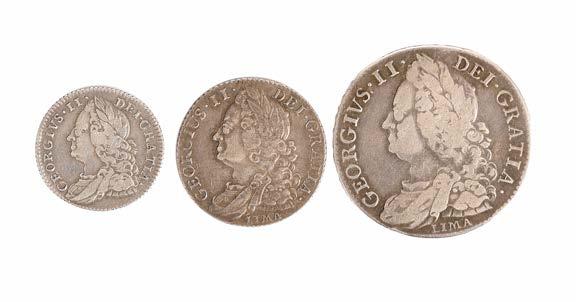
George II, silver halfcrown, 1746, LIMA, edge D. NONO (S 3695A), good fine; silver shilling, 1745, LIMA (S 3703), good very fine with some toning; silver sixpence, 1757 (S 3711), good fine or better [3]
£300400
233
231
232 not to scale
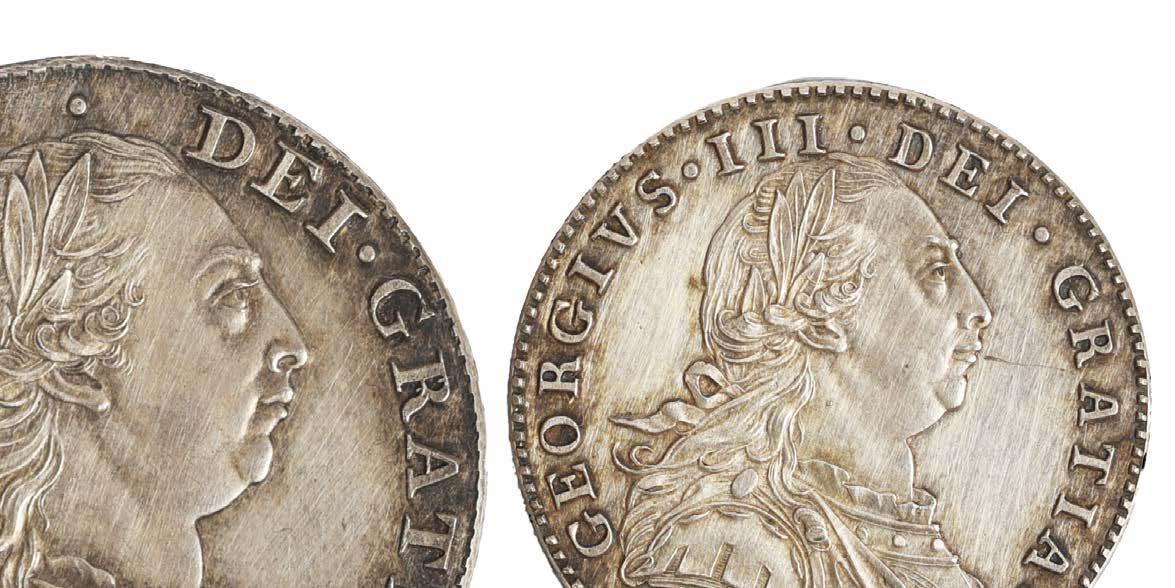
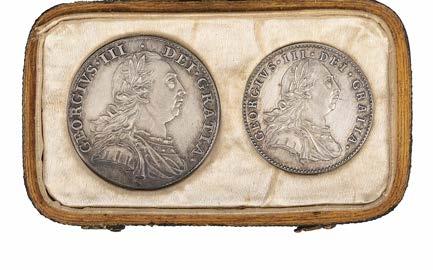
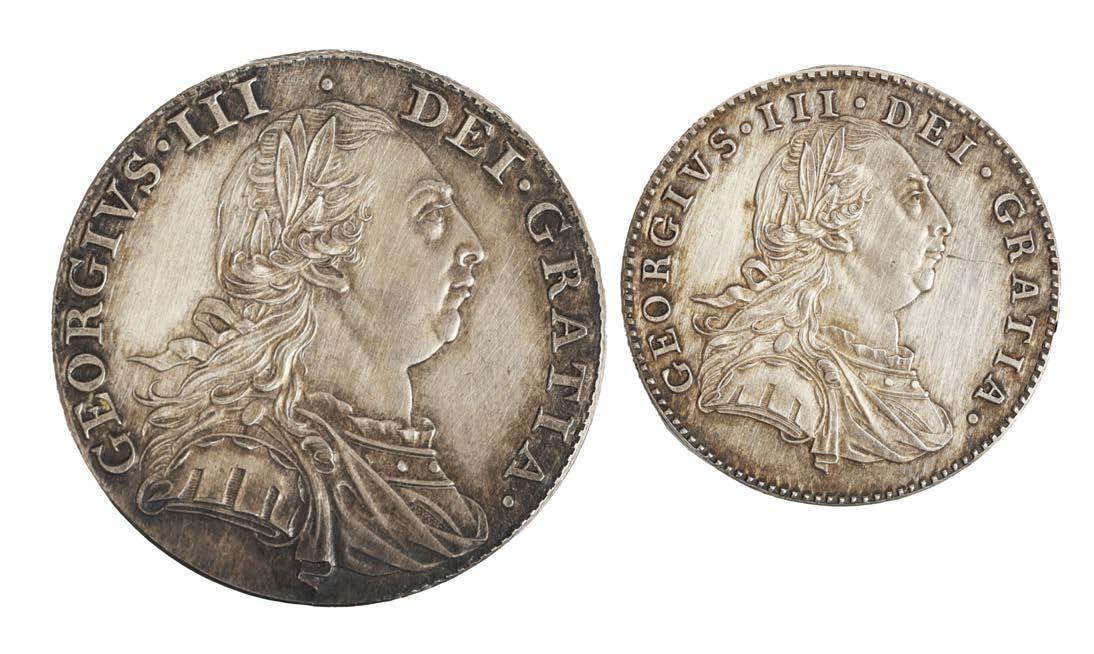
George III, silver proof coins (2): shilling, 1787 (S 3746), sixpence, 1787, semées of hearts, dotted borders and plain edges, cased together in a fitted shagreencovered case, good extremely fine and very scarce. [2]
£1,5002,000
235
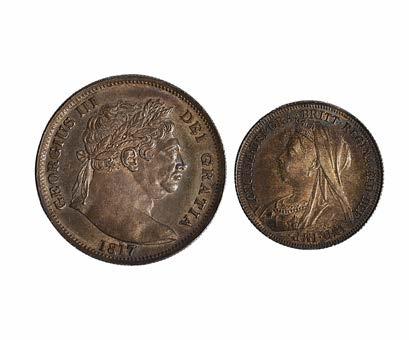
George III, silver halfcrown, 1817, large head (S 3788), about extremely fine and toned; together with: Victoria, silver shilling, 1900 (S 3940A), extremely fine and toned. [2]
£150250
236
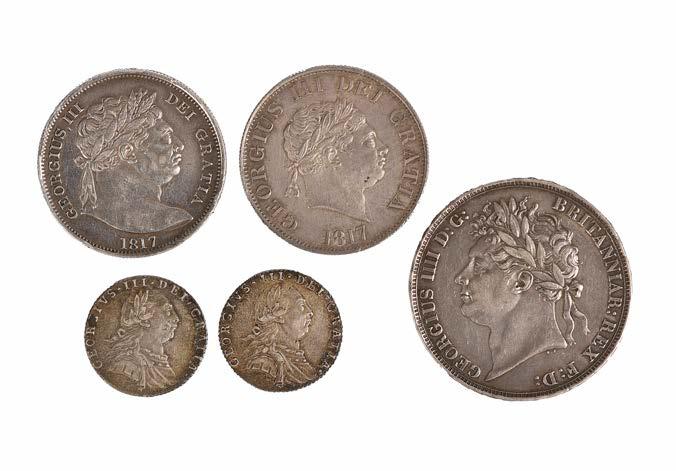
House of Hanover: a small collection of silver coins, comprising: George III, halfcrown, 1817, new coinage, large bust (S 3788), good very fine; halfcrown, 1817, small head (S 3789), nearly extremely fine; sixpence (2), 1787, one with and one without semée of hearts (S 3748, 3749), good very fine; George IV, crown, 1821, edge SECUNDO (S 3805), good very fine or better. [5]
237
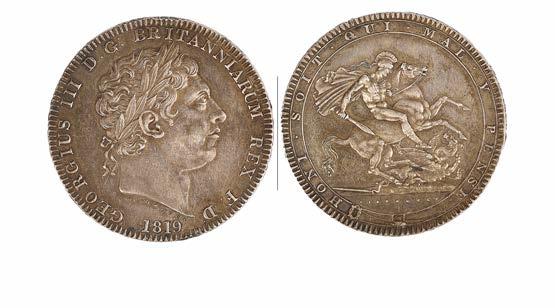
George III, silver crown, 1819, new coinage, edge LIX (S 3787), very light marks and wear, extremely fine and toned.
£200300
239
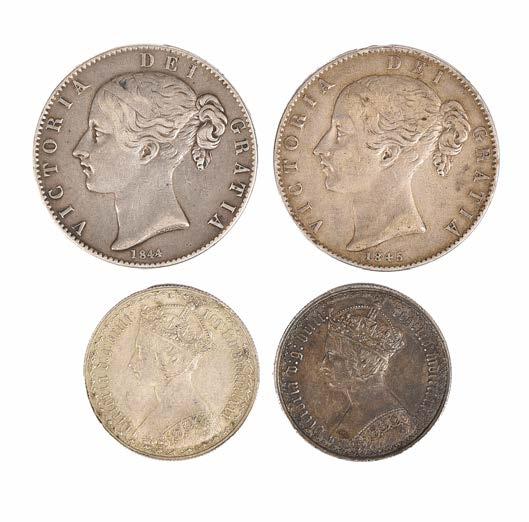
Victoria, a collection of four silver coins, comprising: Crowns (2), 1844 and 1845, cinquefoil stops on edge, (S 3882), near very fine; florin, 1853, ‘gothic’ type (S 3891), good very fine; florin, 1873, ‘gothic’ type (S 3893), good very fine and toned. [4]
£300400
£300400
not to scale
238
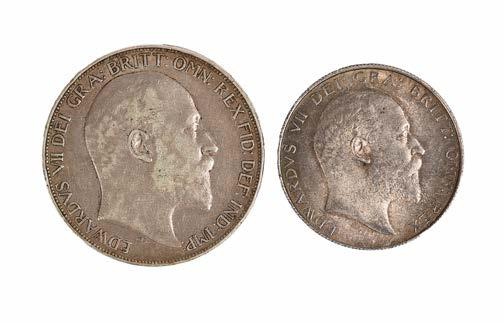
A small collection of British coins, including: George III, silver half crown, 1819, small head (S 3789), fine; William IV, silver halfcrown, 1836 (S 3834), near fine; Victoria, silver florin, 1849, ‘godless’ type (S 3890), near very fine; silver double florin, 1887, Jubilee bust, Roman I in date (S 3922), suspension post cut off flush at 12 o’clock, edge dented about 6 o’clock, otherwise near very fine, reverse good very fine; Edward VII, silver halfcrown, 1902 (S 3980), small gouge to nose, otherwise nearly extremely fine; George V, silver halfcrowns (2), 1918 (S 4011), better than good very fine; and various others, including silver and base metal issues. [qty]
£300500
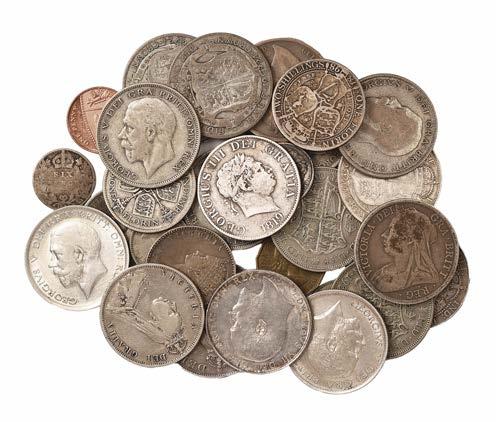
240
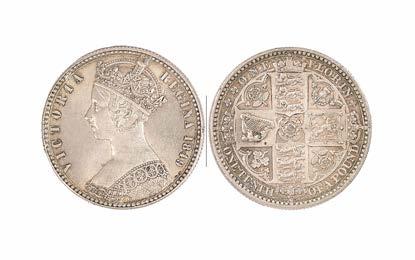
Victoria, silver florin, 1849, ‘Godless’ type, with initials (S 3890), nearly extremely fine.
£150200
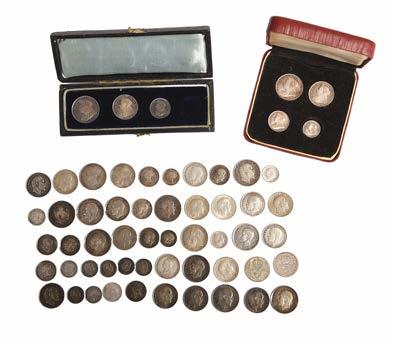
Victoria and later monarchs, a collection of maundy and small denomination silver coins, including: maundy set, 1875 fourpence to penny (S 2916), extremely fine; maundy set, 1896 (S 3943), in a later fitted case, patchy toning, extremely fine; part maundy set, 1898, fourpence to twopence, in fitted case of issue, about as struck and toned; threehalfpence, 1839 (S 3915), nearly extremely fine; five other Victorian maundy coins; Edward VII, threepence and penny, 1909 (S 3987, 3989), extremely fine and toned; fourpence and threepence (3), 1910 (S 3986, 3987), extremely fine and toned; and various other maundy oddments and small silver, many in high grades. [qty]
£300500
242
Victoria, silver crown, 1887, Jubilee bust (S 3921), light hairlining and surface marks, otherwise about extremely fine with some lustre.
£150250
243
British silver coins (5): Victoria, double florin, 1887, Jubilee bust, Roman I (S 3922), extremely fine; halfcrown, 1900, veiled bust (S 3938), extremely fine; shilling, 1900 (S 3940A), good very fine; George V, halfcrown, 1918 (S 4011), nearly extremely fine; florin, 1918 (S 4012), extremely fine or nearly so. [5]
£250350
244
Victoria, a small collection of silver coins, comprising: Crown, 1893, edge LVI (S 3937), good very fine; double florin, 1887, Arabic 1 (S 3923), good very fine or better; halfcrowns (2), 1893 and 1901 (S 3938), extremely fine or nearly so; florin, 1901 (S 3939), extremely fine or nearly so; shilling, 1858 (S 3902), nearly extremely fine. [6]
£250350
245
Edward VII, silver crown, 1902 (S 3978), near very fine; silver halfcrown, 1902 (S 3980), nearly extremely fine. [2]
£120180
not to scale
246
George V, silver proof set, 1911, eight coins, halfcrown to maundy halfpenny (S PS13), in fitted card case, halfcrown possibly lightly cleaned, otherwise about as struck and toned.
£400600
241 not to scale
247
George V, proof crown, 1927, fourth coinage (S 4036), extremely fine.
£150200
be
£250350
-
George VI, proof set, 1937, fifteen coins, crown to farthing, including maundy set (S PS16), in fitted maroon and giltblocked case of issue, some light mottling, otherwise about as struck.
£200300
249
[15]
248
George V, crowns (3), 1927, 1928, 1929 (S 4036), good very fine or better, good very fine - reverse
tter, very fine
reverse better. [3]
247
248
250
Ireland: James II, a small collection of civil war ‘Gunmoney’ coins: Crowns (3), 1690, much wear and pitting, fair or a little better; halfcrowns, large size (2), October 1689, February 1689 (S 6579E and 6579K), fine and good fine or better; shilling, small size. June 1690 (S 6582G), good fine. [6]
£100150
251
Anne, copper pattern farthing, 1714, draped bust, rev. Britannia (S 3625), good very fine and scarce.
£300400
253
252
George III, restrike proof farthing, 1799, bronzedcopper, edge centre grained (S 3779), die flaws, extremely fine.
£200300
Victoria, bronze pennies (5), 1862 (2), 6+G; 1880; 1881, 10+J; 1886 (S 3954), some discolouration from old plastic envelopes, otherwise extremely fine, some lustre. [5]
£300400
254
254
Four British coins: Ann, silver crowns (2), 1707, Edinburgh mint, E below bust, rev. postunion shields, edge SEXTO (S 3600), near fine; George III, silver crown, 1819, edge. LIX (S 3787), good fine; George V, bronze penny, 1919, King’s Norton Metal Company (S 4053), near very fine and scarce. [4]
£300400
255
Great Britain: assorted coins, mainly circulated late predecimal examples, half crowns and lower denominations, as well as three commemorative crowns, and other items. [qty]
£200300
256
Venezuela: a cased set of eighteen gold commemorative medals, ‘Caciques de Venezuela Siglo XVI’ (16th Century Indian Chief of Venezuela), each 14 mm with the head of an indigenous ruler, rev. crossed arrows and text, rulers including Urimare, Paramcay, Yaracuy and Murachi, total weight 26.38 g, .900 fine, in a fitted plushlined case, extremely fine or nearly so. [18]
£1,8002,200
257
Austrian Netherlands (United Belgian States), insurrection coinage, silver three florins (three guldens), 1790, rampant lion with sword and shield, rev. radial arrangement of shields (KM 50, Dav. 1285), rim holed for mounting at 12 and 6 o’clock, otherwise good very fine, toned; together with a small quantity of ancient coins, including: Rome Empire, Crispus (317326), AE4, bust left with shield and spear, rev. an altar with VOTIS XX in three lines, 2.69 g, very fine or better; Roman provincial coinage Egypt, Aurelian, tetradrachm, year 2 (272/3), Alexandria, bust right, rev. eagle with wreath in its beak, 10 g, good fine; a Byzantine silver coin, legend unclear; and other items. [qty]
£200300
258
Austria: Maria Theresa, silver thalers (14), 1780 SF, restrikes: Milan, struck c. 181528 (3) and c. 182141 (Hafner 36a and 39a), fine, fine, good very fine and near very fine; Günsburg, struck c. 178188 (Hafner 27 or variant), surface with dark residue, near very fine; Vienna, struck c. 179095 (Hafner 15a), edge damage 5 o’clock, otherwise at least very fine; c. 17951803 (4) (Hafner 19a), near very fine; c. 17951803 (2), rev. AVST.DVX (Hafner 20 and variant), good very fine or better and near very fine; c. 178188 (2) (Hafner 26 or variant), edge bruising, about very fine. [14]
£250350
259
Mexico: silver eight reales, 1889, San Luis Potosi (KM 377.12), good very fine
£100150
261
Republic of China, silver dollar (yuan), undated (1912), bust of Li Yüanhung quartering left (KM Y321), nearly extremely fine.
£200300
263
Portuguese colonies: countermarked coins (2): Azores & Mozambique, marks of a crown and ‘PM’ in a circle each struck twice to a Maria Theresa restrike thaler (Hafner 97 & 99), very fine; Mozambique, ‘PM in a circle struck twice to a Maria Theresa restrike thaler (Hafner 99), very fine or better; together with Portuguese Mozambique: countermarked coins (2), the first struck with ‘PM’ in a circle, the next with a crowned ‘PM’, the donor coins being Maria Theresa restrike thalers (Hafner 99, 100), very fine and good very fine; and Djibouti, a countermarked Maria Theresa restrike thaler, struck with a seal mark ‘Abd Latíf Má’a alFadah, bi Jíbútí’, and a second mark of ‘830’ (Hafner 102.2), good very fine. [5]
£250350
not to scale
260
A small collection of Far Eastern and associated coinages, including: British Colonies: Trade Dollar, 1897 (KM T5), good very fine; Mexico Chihuahua: silver eight reales, 1882, rev. chop marks at 12 and 9 o’clock (KM 377.2), about very fine; Republic of China: silver 20 cents (2 chiao), year 3, Yuan ShihKai (KM Y327), very fine; cent (1 chiao) (3), year 3 (KM Y326), very fine to nearly extremely fine; and other small denomination silver and base metal coins. [qty]
£150250
262
Republic of China, silver dollar (yuan), undated (1912), bust of SunYatSen left (KM Y319), very fine with some toning.
£100150
264
Qu’aiti: a countermarked Maria Theresa restrike thaler, struck with a circular mark incorporating text (Hafner 110), very fine; together with Nejd: two countermarked Maria Theresa restrike thalers, struck with bold character marks (Hafner 122 or variants); and another similar, Hedjaz & Nejd, struck with two marks (Hafner 125); fine or better; also with Hedjaz & Nejd: a countermarked Maria Theresa restrike thaler, struck with two character marks (Hafner 126), donor coin near fine, countermarks good very fine; and another similar coin, Hedjaz, struck with a bold character mark (Hafner 130), good fine. [6]
£300400
Notes: The provenance of countermarked Maria Theresa thalers is subject to academic uncertainty, and it is possible that countermarks are spurious.
265
United States of America: copper halfcent, 1794, Liberty cap type, normal head with flowing hair right, cap and pole behind, lettered edge (Cohen 1a), scratch to hair and some smoothing, hairline flaw behind head and into cap, otherwise about very fine.
£600800
266
not to scale not to scale
A collection of British token coinage, 17th, 18th and 19th centuries, including: Little Walton, John Goodeve, halfpenny, 1668, fine; Alresford, Jarvas Abin, halfpenny, 1666, George and Dragon, fine; Middlesex, Harrison, Hair Dressing, Bleeding & Tooth Drawing, farthing, 1797, very fine; Liverpool halfpenny, 1791, ship, rev. arms, good very fine with some lustre; Banbury, Wm Rusher, Hatter, halfpenny, near very fine; Cheltenham, John Bishop & Co., penny, 1812, rev. St Mary’s Church, at least very fine with some lustre; and various others. [qty]
£300500
267
A collection of British and Colonial token coinage, including: Newgate, copper halfpenny, 1794, very fine; halfpenny 1795, the Duke of York, rev. a ship, ‘The Wooden Walls of Old England’, very fine or nearly so; Pidcock’s Grand Menagerie, halfpenny, African Crowned Crane, fine; Province of Nova Scotia, penny token, 1832, near very fine; and other similar items. [qty]
£200300
enlargement
268 not to scale
269 not to scale
268
A collection of assorted coins, including: Rome: Trajan (98117 AD), silver denarius, head right, rev. emperor standing let, 2.93 g, near very fine; Constantine I (272337 AD), AE3, bust right, rev. emperor standing wearing radiate crown, 4.29 g, near very fine; AE3, rev. camp gate, 3.2 g, good fine; England: Edward I (12721307), silver penny, Lincoln (S 1427); numerous other small denomination Roman coins, and other items. [qty].
£150250
270
269
A small quantity of silver coins, comprising: Charles II, crown, 1673, edge V. QVINTO (S 3358), fine or a little better; George II, shillings (2), 1758 (S 3704), one very fine, the other with surface dents and letters scratched to the reverse, otherwise good fine; Mexico: Charles III, eight reales, 1772 FM, mm. and assayer facing rim (KM 106.1), fine or a little better. [4]
£200300
not to scale not to scale, part
A collection of coins and medals, including: William IV, silver halfcrown, 1836, WW in script on truncation (S 3834), fine; Victoria, silver halfcrown, 1887, Jubilee bust (S 3924), very fine; other late Victorian silver halfcrowns (2) and florins (2), low grades; a silver prize medal for fencing by Elkington & Co., ‘Epée Club’, 51 mm, reverse inscribed to Captain G Vander Byl 1913, extremely fine and toned; a French silver medal, 42 mm, bust of Marianne left by O. Roty, rev. text in five lines, extremely fine and toned; and a quantity of other coins and associated objects, including British late predecimal issues, 20th century overseas currency, and other items. [qty]
£300500
not to scale
272
A quantity of assorted coins, comprising: Venezuela, silver five bolivares (14), various dates from 19001936, 0.900 silver (Y 24.2), good fine to near very fine; silver two bolivares, 1945 (2), 1960 (8), 0.835 silver (Y 23a & Y A37), nearly extremely fine; silver bolivar, 1960 (17), 1965 (3), 0.835 silver (Y 37a), extremely fine or nearly so; silver twentyfive centimos, 1960 (73), 0.835 silver (Y 35a), nearly extremely fine; silver five ecus (3), 1990, 1991, 1995, in wooden presentation cases with certificates; United Kingdom: ‘Brilliant Uncirculated Coin Collection’, 1986 (3), in card cases; DDay commemorative crowns, 2004 (3), in presentation packs; U.S.A.: bronze Shuttle Crew Emblems, 1985 (3), in presentation packs; together with various other commemorative coins, and circulated currency of various nations. [qty]
£500700
271
S.S. City of Cairo: a set of three salvaged British Indian silver rupees: Victoria, 1900; Edward VII, 1906; George V, 1918; in plastic cases incorporating explanatory labels and presented in a fitted wooden box with accompanying certificate; offered with a booklet: ‘Salvation and Salvage, The Story of the SS City of Cairo’, by Justin Robinson.
Notes: S.S. City of Cairo was a British passenger steamer. She was torpedoed and sunk on the 6th of November 1942 by UBoat U68, with great loss of civilian life.
£150200
not to scale
273
An international assortment of coins, including: Essequibo & Demerary, George III, copper stiver, 1813 (KM 10), near very fine; Ionian Islands, George III, copper two oboli (2), 1819 (KM 33), one good fine, the other with heavy dents above the lion; British India, Victoria, silver half rupee, 1840 (KM 456.1), very fine; South Africa, silver 2 1/2 shillings, 1897 (KM 7), very fine; Prussia, William I, silver thaler, 1866 A (KM 494), near very fine; and coins of various other nations including France, Switzerland and the USA, mainly low denominations, low to middle grades. [qty]
£300400
274
A large collection of mainly British coins, including late Victorian bronze pennies, 20th century .500 silver and CuproNickel coins, late predecimal and decimal issues, some overseas currency, and a small quantity of bank notes. [qty]
£200300
275
A small collection of late medieval lead pilgrims’ ampullae, comprising: a bagshaped example with scallop shell moulding and a crowned mark to the reverse, another similar with a broad base, another with floral design and a crowned mark to a hatched ground, two more similar, and another modelled as a cylindrical flask with flower heads in relief to each end. [6]
£350450
277
A small collection of paper money, including: Belfast Banking Company Limited, ten pounds, 3rd December 1963, serial number A/N 5549, Williamson signature, very fine or better; Northern Bank Limited (Belfast), one pound (2), 1st January 1940, serial numbers NI/H 004182 and NI/H 004183, White signature, the first with light staining centre verso, otherwise about uncirculated; Bank of England, one pound, 194041 issue (ND), light blue and pink, serial number H74D 226633, Peppiatt, graffiti verso, otherwise very fine; one pound (2), 1948 issue (ND), green, serial numbers T80C 327487 and S60K 794662, Beale and O’Brien, the second with graffiti verso, otherwise very fine; other Bank of England issues; a quantity of German inflationary issues; and other notes; together with: Elizabeth II, specimen set, 1953, ten coins, crown to farthing, in fitted case of issue, extremely fine; silver piedfort twenty pence, 1982, cased with certificate, about as struck; and a 1981 Royal Wedding commemorative coin in card pack. [qty]
276
A varied collection of numismatic items, including: a Boy Bishop festival lead groat; various other lead tokens and impressions; a shieldshaped lead pilgrim’s badge; U.S.A.: Worlds Columbian Exposition 1893, a silver souvenir dollar, very fine; Spanish South America: a cob reale, 1786, fine; a small number of Roman coins; coin weights, a tavern token, and other items. [qty]
£300400
£200300
274 not to scale
EDGED WEAPONS
A Japanese sword (tachi), koto blade 24.75 in., hon-zukuri with hi to each side, midare hamon, ko-suriage nakago with two ana, mei to the omote and the ura (indistinct but possibly Bishu Osafune YukiKage and with a possible date of 1436), 19th century ceremonial tachi koshirae with silvered kara or fundo-gatatsuba having double arched tsuzuragane, tsuka bound in engraved copper bands with exposed same grip and fine menuki in the form of writhing dragons, copper mounted brass saya engraved with cranes in flight amid clouds and with obitori of braided copper wire bearing the kamon of the Minamoto clan.
£8001,200
279
A Japanese military sword (shingunto), blade 25.5 in. hon-zukuri, mumei and apparently nontraditionally produced, composite hilt incorporating a contemporary tsuba for the civilian market and fuchi and kashira of Burmese workmanship, wooden saya with leather field cover.
£200300
280
Saudi Arabia: a modern presentation sword (saif), slightly curved blade 30.25 in. with etched inscription, hilt and scabbard entirely covered with giltmetal filigree work and set with blue beads, in its fitted case with internal presentationinscribed plaque dated 1992 and making reference to a business arrangement.
£300400
281
A Yemeni dagger (jambiya), broad curved blade 7 in. with medial ridge, hilt of faux amber set with gold ornaments including discs representing Byzantine coins, leather scabbard with tooled decoration.
Provenance: Presented to the current owner’s father in a village in Yemen in 1963.
£150200
283
An 18th century German combination hunting sword and pistol, blade 22.75 in., doubleedged for the last 7 in., narrow back fuller, the forte etched with hunting scenes involving boar and a hare, acanthus engraved guard plate, the hilt incorporating a 40 bore flintlock pistol, round twostage barrel fitted to the right of the blade and with acanthus engraving to the breech, backstrap and lock also engraved with the former displaying a cartouche surmounted by a visored helmet, knuckle bow with engraved guard plate and fine dolphinhead detail, burr wood grip with carved doghead finial. Section 58(2) no licence required if possessed as a curiosity or ornament.
£1,6001,800
A Venetian baskethilted sword (schiavona), doubleedged blade 35.75 in., a short fuller to each side inscribed 'IM DOMNI', engraved marks of a running wolf, guard formed of flattened bars in a sweeping arrangement and with a thumb ring, guard swamped twice with Venetian arsenal mark of a winged lion 'in moleca', shieldshaped pommel with border engraving and applied starshaped ornament, rebound grip, 17th/18th century.
£1,0001,500
284
A Scottish baskethilted sword, 17th century doubleedged blade 33.5 in., multiply struck on both sides with the King’s Head mark of Johannes Wundes the Younger (16301685) and with the conventional inscription ‘ANDREA FARARA’; 18th century hilt formed of rectangularsection bars, shields and guard plates pierced with hearts, conical pommel, shagreencovered grip.
£1,0001,500
285
An 18thcentury Scottish baskethilted sword, doubleedged blade 32.5 in. of flattened hexagonalsection, iron guard formed of roundsection bars, the shields pierced with radial arrangements of hearts around central quatrefoils bordered above and below by shallow channels, knuckle and side guard plates also pierced with hearts, fluted conical pommel, cord and leatherbound grip.
£400600
A British 1796 pattern heavy cavalry trooper’s sword, spear point blade 34.25 in., with inspection stamp and the back marked for Osborne & Gunby, regulation hilt with disc guard and narrow lower langets, knuckle guard inscribed with ‘E’ over ‘20’, steel scabbard with leather cover.
£500800 287
French Model 1816 heavy cavalry trooper’s sword, straight deeplyfullered blade 38.75 in., back inscribed for Klingenthal 1822, brass hilt with scrolling side bars,
£300400 288
19th century British sword of the Yeomen Warders of the Tower, diamondsection blade 31.5 in., giltbrass hilt with large oval outer guard displaying the royal crest of a lion on a crown in relief to a seeded ground, the pommel displaying a crown to each side, copper wire bound grip.
£200300 289
Victorian
£200300
ffi
with personal monogram
A
steel scabbard.
A
A
1846 pattern Royal Navy o
cer’s sword, by Wilkinsons, etched blade
‘C.R.B.’, regulation gilt
brass hilt with lion’s mane covering back strap, giltbrass mounted leather scabbard, sword knot.
290
A Victorian Staff Sergeant’s sword, plain blade 32.75 in., brass ‘gothic’ hilt with VR cypher, the inner face of the back quillon impressed ‘5/09’ over ‘R.A.M.C.’ over ‘3WX. FA’ over ‘3’, steel scabbard with fixed suspension rings.
£150250
291
A George V Highland regiment officer’s sword, Wilkinson’s blade etched with the badge and title of the Black Watch and numbered 62156, regulation basket hilt of dismountable type, with steel dress scabbard and leathercovered undress scabbard; together with an associated interchangeable crosspiece*.
Notes: * Robson notes that the Black Watch did not adopt the interchangeable cross piece. Possibly a composite sword.
£300500
292
A British 1846 pattern Royal Navy officer’s sword with possible attribution to a decorated officer, etched blade, the back named to ‘ALISTAIR ANGUS MARTIN’, giltbrass hilt with fouled anchor to the cartouche, lion head pommel with mane extending the full length of the back strap, with sword knot and in its giltbrass mounted leather scabbard.
Notes: Alister Angus Martin of North Shields was an officer of the Royal Navy Reserve, multiply decorated for gallantry in mine sweepers in the Second World War. He was awarded the Distinguished Service Cross in the New Years Honours of 1941, a second award bar in December 1943 for mine sweeping in H.M.S. Rothsay as part of Operation Antidote, and a third award bar for service in the same ship during Operation Dragoon. He was furthermore awarded the Distinguished Service Order in 1945 for operations in Greek waters while attached to H.M.S. Fabius. The spelling of the first name on this sword is at variance with the spelling in most official references to this officer, but it agrees with the spelling in the London Gazette of the 7th of December 1943 in which his second D.S.O. was announced.
£300500
293
A British 1846 pattern Royal Navy officer’s sword, etched blade by Henry Wilkinson and numbered 44420, retailer’s name of Gieve Matthews and Seagrove, hilt with fouled anchor to the guard cartouch, lion head pommel with mane covering the full length of the back strap, retained in the scabbard by a spring clip, with later sword knot, hilt and scabbard fittings regilded.
£150250
A North European bollock dagger, tapering blade 10.25 in. with 4.5 in. back edge and medial ridge interrupted by three flattened sections; the sides incised with foliate decoration, the flat back with a face, a bird and the date ‘1692’, brass hilt with rondel type pommel and a copper band around the grip; partial black leather scabbard.
£200300
295
Argyll & Sutherland Highlanders: a silvermounted Victorian dress dirk, blade 11 in. with two fullers and a scalloped back, hilt of bog oak with basketweave carving and foilbacked crystal set to the pommel, scabbard accommodating a byknife and fork hilted en suite to the dirk, the two silver bands and the silver locket and chape richly embossed with writhing beasts and with the regimental emblems and motto ‘NE OBLIVISCARIS SANS
PEUR’, each part with assay marks for Edinburgh 1897, the locket named for R.& H.B. Kirkwood.
£7001,000
296
A small collection of European swords, comprising: a Caucasian sword (shashka), curving blade 31 in., silver niello hilt with hooked and cleft terminal; an early 19th century British light infantry officer’s sword, likely a regimental pattern; a late 18th century hunting sword with shell guard and shagreen grip; and three various smallswords. [6]
£300400
298
A small collection of edged weapons, comprising: a Scottish highland dress dirk, blade 13 in., each side with broad central fuller, narrow back fullers and a scalloped back edge, bog oak hilt with basket weave carving, fragmentary pommel; a Moro knife (barong), heavy leafshaped blade 16 in., polished wood hilt with long silver collar and elaborate flaring terminal; an Afghan fighting pick (lohar), rightangled blade on a turned metal stem with an elaborate white metal grip; a Victorian hunting knife by Joseph Rogers & Sons, heavy blade 9 in., German silver cross piece, stag horn grip (pommel missing), German silver mounted black leather scabbard, black leather frog; a Victorian knife in the style of a kard, by William Oates of Sheffield, hardstone grip; and a small jambiya, embossed brass scabbard. [6]
£300400
297
Wilkinson Sword: a Battle of Britain commemorative sword, doubleedged blade 33.5 in., one side etched with representations of air crew and ground personnel under the inscription ‘DEDICATED TO ‘THE FEW’ AND TO THE MANY WHO HELPED MAKE VICTORY POSSIBLE’, the other with a depiction of pilots scrambling to board their Spitfires; giltmetal crossguard in the form of an R.A.F. eagle, wooden twohanded grip, round pommel with wreath border and a portrait of Churchill to the centre; with wallmounting display board.
£120160
299
A British 1907 pattern bayonet, by Wilkinson, pommel unit marked for Ampleforth College Officer Training Corps (O.T.C. A.M.P.), steelmounted leather scabbard, leather frog; together with a U.S. M1 bayonet with shortened blade; and a SouthEast Asian knife with a flamboyant blade, wooden pistol grip, and a wooden scabbard with decorative cutmetal mounts. [3]
£100150
300
FIREARMS
A 22 bore continental flintlock pistol, twostage octagonaltoround barrel 7 in. and gilded with botanical embellishments at the breech and around the low foresight, shell engraving to the tang; the lock with angular pan and with a scene of a bird of prey and a rabbit by a tree incuse to the tail, foliate decorated cock; walnut fullstock with iron furniture including a wellshaped and engraved trigger guard and side plate and a butt cap with long spurs, the wood carved around the tang, trigger guard and tail pipe, wooden ram rod, probably French, 18th century. Section 58(2) no licence required if possessed as a curiosity or ornament.
£300400
301
An 18th century English brassbarrelled flintlock holster pistol, twostage barrel 8.5 in. with octagonal breech and swamped round forward stage, flat lock with stepped tail and lineengraved border inscribed ‘Jeffery’, swanneck cock, frizzen spring with roller bearing, doublebridle pan with engraved outer bridle, walnut full stock with flatsided grip and brass furniture, front and rear side nail cups of flower and shell form respectively, associated steel ram rod, provincial proof. Section 58(2) no licence required if possessed as a curiosity or ornament.
£300400
302
D. Walker: an 18th century Scottish 28 bore allsteel flintlock pistol, threestage barrel 7.5 in. with fluted breech section and slightly flared hexagonal muzzle, foliate scrolls engraved to the intervening round stage, border engraved lock inscribed 'D WALKER', ball trigger, steel stock with border and scroll engraving, the butt with scrolling 'ram's horn' extensions and accommodating a ballheaded pricker, oval white metal cartouches set to the grip and engraved on one side 'JE' and on the other with a pair of lovebirds, side plate with openwork scrolls and extending to form a belt hook with engraved and moulded decoration, ring turned steel ram rod (probably later). Section 58(2) no licence required if possessed as a curiosity or ornament.
Notes: Probably Daniel Walker of Dumbarton.
£3,0004,000
302A
Thomas Archer: a pair of English 56 bore flintlock pocket pistols in the 'Queen Anne' style, turnoff barrels 3.5 in., boxlocks in scroll and acanthus engraved roundsection frames inscribed 'T. ARCHER', raised pans, foliate engraved trigger guards with everted edges, hardwood grips inlaid with scrolling silver wire, silver grotesque mask butt caps, Ordnance private proof, c. 1790. Section 58(2) no licence required if possessed as a curiosity or ornament. [2]
Provenance: Purportedly from the Sir Arthur Chester Beatty collection.
Notes: Offered with a typed note stating that these pistols were presented, in 1946, to H.A. Titcombe, "by Sir A. Chester Beatty of Dublin". Alfred Chester Beatty (18751968) was an eminent collector and philanthropist and founder of the Chester Beatty Library in Dublin. Harold Abbot Titcomb was a mining engineer and businessman and an associate of Chester Beatty, who gave much assistance to Britain during the Second World War.
£7001,000
303
An English 18 bore percussion pistol retailed by Manton & Son, octagonal twist barrel 4.75 in., top flat inscribed ‘MANTON & SON. LONDON’, breakoff breech, acanthus engraving to breech and shell and acanthus engraving to tang, gold blowout plug, backaction lock with foliate engraving and inscribed ‘MANTON & SON’, walnut stock with engraved iron furniture and chequered grip, captive ram rod, Birmingham proof. Section 58(2) no licence required if possessed as a curiosity or ornament.
£250350
304
Joseph Egg & Sons: a pair of 38 bore percussion pocket pistols, sighted octagonal barrels 2.5 in., line engraved muzzles, top flats inscribed ‘JOSPEH EGG & SONS. 1. PICADILLY. LONDON’, platinum blowout plugs, acanthus engraved actions and side hammers, safety bolts, dropdown triggers, finely chequered walnut grips, engraved steel butt caps with traps, captive ram rods retained by spring clips to bottom ribs, London proof; offered with an associated brassbound mahogany box (unfitted). [3] Section 58(2) no licence required if possessed as a curiosity or ornament.
£7001,000
305
An English 110 bore ‘bootleg’ percussion pistol, turnoff barrel (possibly associated) 4.5 in., acanthus engraved action inscribed ‘WESTWOOD LONDON’, underhammer falling into an enclosed nipple well with vents, chequered walnut grip, Birmingham proof; together with an 85 bore percussion pocket pistol, turnoff barrel 3.5 in., brass boxlock with acanthus engraved and inscribed ‘RICHMOND’, flatsided butt, Birmingham proof. [2] Section 58(2) no licence required if possessed as a curiosity or ornament.
£150250
306
An English fiveshot ‘transitional’ percussion revolver, octagonal barrel 5 in. with cone foresight, top flat engraved with scrolls and inscribed ‘LONDON’, plain cylinder, bar hammer, engraved frame, chequered wooden grips, Birmingham proof. Section 58(2) no licence required if possessed as a curiosity or ornament.
£150250 307
An English sixshot ‘pepperbox’ percussion revolver, fluted cylinder 3 in., bar hammer, engraved frame inscribed ‘EGG’, wooden grip, Birmingham proof. Section 58(2) no licence required if possessed as a curiosity or ornament.
£150250
308
A 19th century English sixshot ‘pepperbox’ percussion revolver, fluted cylinder 3 in., bar hammer action engraved with foliate scrolls, Birmingham proof. Section 58(2) no licence required if possessed as a curiosity or ornament.
£150250
A 54 bore Bentley patent selfcocking fiveshot percussion revolver, serial number A422, octagonal barrel 7 in. with radiused and engraved muzzle, top flat inscribed for the retailer ‘HARKOM. EDINBURGH.’, underlug with Joseph Bentley’s patent screwrammer, opentopped frame engraved with acanthus scrolls and inscribed ‘Bentley’s Patent No A422’, engraved hammer with Joseph Bentley’s hammer nose safety catch, acanthus engraved grip frame with butt trap, chequered wooden grips, London proof; in a fitted and brassbound oak case with associated accessories comprising: double cavity bullet mould, cap tin, oil bottle, turnscrew, nipple key, powder flask, loading rod with worm (screwoff head absent). Section 58(2) no licence required if possessed as a curiosity or ornament.
Notes: Joseph Harkom traded in Edinburgh, 184075.
£1,5002,500
310
A scarce 120 bore Webley patent ‘Longspur’ sixshot percussion revolver, first model, serial number 222, octagonal barrel 3.75 in., engraved at the muzzle and with the topflat inscribed for the retailer ‘EDWIN LADMORE HEREFORD.’, lug on the right to receive the rammer (not present), cylinder with six numbered chambers and an engraved band to the leading edge, hinged frame with border and scroll engraving and inscribed to the left ‘JAMES WEBLEY PATENTEE’, arbor with squaresection centre, pinstop engaging with the nipple bays, long spoonshaped hammer spur, chequered wooden grip, steel butt cap with scroll engraved trap, Birmingham proof; in a fitted mahogany case with associated accessories comprising: bullet mould, cap tin, oil bottle, loading and cleaning rod with interchangeable heads over a concealed worm, powder flask, turnscrew and nipple key. Section 58(2) no licence required if possessed as a curiosity or ornament.
Notes: Edwin Ladmore traded in Widemarsh Street, Hereford, 184170.
This revolver is illustrated and described in Taylerson, Andrews & Frith, ‘The Revolver 18181856’, pp. 175 & 253.
£2,5003,500
311
A 102 bore Bentley patent selfcocking fiveshot percussion revolver, serial number A757, octagonal barrel 4.25 in. with radiused muzzle, top flat inscribed for the retailer ‘W. EGAN. BRADFORD.’, Colt type rammer with bulbous terminal incised with a reeded band, opentopped frame engraved with acanthus scrolls and inscribed ‘Patent. No A757’, engraved hammer with Joseph Bentley’s hammer nose safety stop, acanthus engraved grip frame, chequered wooden grips, Birmingham proof. Section 58(2) no licence required if possessed as a curiosity or ornament.
Notes: William Egan traded in Bradford, Yorkshire, 182957.
£400600
312
A fine 60 bore Webley patent ‘Longspur’ fiveshot percussion revolver, second model, serial number 573, octagonal barrel 4 in., top flat inscribed for the retailer ‘James Webb SALISBURY.’, cylinder with five numbered chambers, nipple partitions with shallow slots to accept the cylinder stop, hinged frame with lineengraved borders and inscribed to the left ‘JAMES WEBLEY PATENTEE’, Adams type rammer turning about the frame hinge pin, arbor with squaresection centre, long spoonshaped hammer spur, back strap inscribed ‘BY HER MAJESTY’S ROYAL LETTERS PATENT’, chequered walnut grip, lanyard ring, Birmingham proof. Section 58(2) no licence required if possessed as a curiosity or ornament.
Notes: James Webb traded in Salisbury, Wiltshire, 184767. This revolver is described in Taylerson, Andrews & Frith, ‘The Revolver 18181856’, pp. 253 & 254
£700900
313
Colt: a .36 London Model 1851 Navy sixshot percussion revolver, serial number 35572, octagonal barrel 7.5 in., ‘ADDRESS. COL: COLT. LONDON’ to the top flat, serial number repeated on barrel lug, frame, trigger guard and butt strap, London proof. Section 58(2) no licence required if possessed as a curiosity or ornament.
£500800
314
Waffenfabrik Steyr: an 8mm RothSteyr Model 1907 semiautomatic AustroHungarian cavalry service pistol, shrouded barrel 5.5 in., top flat inscribed ‘WAFFENFABRIK STEYR’, dovetailed foresight, back sight cut into the raised charger guide, knurled cocking piece, reeded wooden grips, grip frame with lanyard loop, grip roundel impressed ‘4 H’. Obsolete calibre. Section 58(2) no licence required if possessed as a curiosity or ornament.
£1,5002,000
315
An English flintlock blunderbuss, brass barrel 12 in, octagonal breech section with border engraving, flat lock engraved ‘Wheeler’, swannecked cock, roller bearing to frizzen spring, walnut halfstock (possibly reduced) with wellengraved brass furniture, sidemounted spring bayonet (possibly later), private ordnance proof marks. Section 58(2) no licence required if possessed as a curiosity or ornament.
£600800
316
A British .750 India Pattern flintlock service musket, barrel 39 in., Tower marked lock plate struck with a large crown and ‘Y.2’, ringnecked cock, stock and furniture in standard configuration, later ram rod, Birmingham proof. Section 58(2) no licence required if possessed as a curiosity or ornament. £500700
317
Harvey Walklate Mortimer: a .750 commercial India Pattern flintlock musket, key fastened barrel 39 in., struck with the mark of a sun and inscribed ‘LONDON’, border engraved bevelled lock plate inscribed ‘MORTIMER’ and with a crowned ‘2’, swannecked cock, stocked in standard India Pattern configuration except for the barrel fasteners, stock impressed ‘HWM’ over ‘JUN’ over ‘LA’ to the left of the barrel tang, escutcheon engraved with an elaborate ‘A’, butt plate tang engraved ‘10’, iron ram rod, London Company proof. Section 58(2) no licence required if possessed as a curiosity or ornament. £7001,000
318
A 14 bore continental flintlock carbine, smoothbored barrel 16 in., rubbed crowned mark over a ‘C’ to the breech, small brass foresight, key fasteners and breakoff breech, sighting groove in the top of the tang; bevelled lock with swannecked cock, stepped steel side plate with light border engraving, steel trigger guard with pineapple finial, steel butt plate with stepped tang; walnut fullstock carved with linenfold and shell decoration around the barrel tang, brass tipped wooden ram rod; 18th century. Section 58(2) no licence required if possessed as a curiosity or ornament.
£400600
319
An IndioArab matchlock musket, octagonal twist barrel 46 in., silver koftgari details at the muzzle and breech, seal mark, sprung serpentine and blade trigger, slender stock with bulbous hide wrapped butt pad. Section 58(2) no licence required if possessed as a curiosity or ornament.
£100150
320
An English 17 bore percussion sporting gun, twostage barrel 27.5 in., scrollengraved backaction lock, halfstock chequered at the wrist, wooden ram rod, Birmingham proof. Section 58(2) no licence required if possessed as a curiosity or ornament. £100150
321
R.S.A.F. Enfield: a .577 SniderEnfield Mk III threeband service rifle, steel barrel 36.5 in. with Ordnance proof and inspection marks to the breech, Enfield lock dated 1869, R. M. Enfield butt stamp, Baddeley barrel bands, steel jag head clearing rod. Section 58(2) no licence required if possessed as a curiosity or ornament.
Provenance: Ex. George Geear collection. Sold in these rooms 28/11/2024
£400600
322
Tula Arsenal: a deactivated 7.62x38mmR sevenshot Russian Nagant service revolver, serial number 1318, dated 1916, barrel 4.5 in., swingout ejection rod and loading gate, fourpart wooden grip, lanyard ring, in a leather holster of corresponding pattern, complete with recent EU deactivation certificate. Please note that UK law requires the buyer to inform the Home Office of possession of a deactivated firearm. Contact the auctioneer if guidance is required.
£250350
323
Deutsche WaffenundMunitionsfabriken: a deactivated 9x19mm Pistole Parabellum (P08 Luger) semiautomatic pistol, serial number 9590, dated 1917, barrel 4 in., detachable box magazine with wooden base plate, in a leather holster of corresponding design by Hans Römer and dated 1915, complete with recent EU deactivation certificate. Please note that UK law requires the buyer to inform the Home Office of possession of a deactivated firearm. Contact the auctioneer if guidance is required.
£600800
324
Walther: a deactivated 7.65mm Model 4 semiautomatic pistol, serial number 137375, seven slide serrations, dovetailed back sight, partially exposed trigger bar, in a leather holster of corresponding design, complete with recent EU deactivation certificate. Please note that UK law requires the buyer to inform the Home Office of possession of a deactivated firearm. Contact the auctioneer if guidance is required.
£150200
325
Deutsche WaffenundMunitionsfabriken: a deactivated 7.92x57mm German Gewehr98 Mauser boltaction rifle, serial number 581, dated 1915, barrel 29 in., lange visier back sight, extended 20 round magazine, unusual bolt dust cover, combined muzzle cover/foresight protector, serial number repeated on action, bolt and various other parts, stock fitted with an inscribed metal plate ‘THIS GERMAN RIFLE WITH BIG MAGAZINE WAS BROUGHT IN FROM NO MANS LAND IN FRONT OF SERRE IN AUTUMN OF 1916’, complete with recent EU deactivation certificate. Please note that UK law requires the buyer to inform the Home Office of possession of a deactivated firearm. Contact the auctioneer if guidance is required.
£400600
Winchester Repeating Arms Co.: a deactivated .32 WCF Model 1892 leveraction rifle, serial number 916962, round barrel 20 in., half stocked with short tube magazine, ladder back sight, saddle ring, complete with recent EU deactivation certificate. Please note that UK law requires the buyer to inform the Home Office of possession of a deactivated firearm. Contact the auctioneer if guidance is required.
£150250
327
£600800 326
AutoOrdnance Corporation: a deactivated .45 ACP U.S. Model 1928A1 Thompson submachine gun, serial number 339600, barrel with cooling fins and Cutts muzzle break, detachable box magazine, Lyman flipup adjustable back sight, detachable butt, complete with recent EU deactivation certificate. Please note that UK law requires the buyer to inform the Home Office of possession of a deactivated firearm. Contact the auctioneer if guidance is required.
328
W. W. Greener: a deactivated 9x19mm Lanchester submachine gun, serial number 55855, date marked for 1943, barrel shroud with bayonet lug and bar, detachable box magazine, simplified twoposition back sight, webbing sling, complete with recent EU deactivation certificate. Please note that UK law requires the buyer to inform the Home Office of possession of a deactivated firearm. Contact the auctioneer if guidance is required.
£400600
329
Webley & Scott: a good .22 Webley Mk 3 air rifle, serial number 33132, barrel 18 in. with back sight adjustable for elevation, underbarrel charging lever, rotating loading gate, walnut stock with white trademark disc set in the butt. Buyer must be 18 or over.
£100150
330
B.S.A.: a prewar .22 Lincoln Jefferies type air rifle, serial number S54561, barrel 19 in. with backsight adjustable for elevation, underbarrel charging lever with button release, rotating loading gate, threehole lock, semipistol grip butt stock with ‘BSA’ to the chequered panels. Buyer must be 18 or over.
£100150
331
B.S.A.: an early .177 Lincoln Jefferies patent air rifle, serial number 14856, barrel 19 in. with backsight adjustable for elevation, underbarrel charging lever with early type extension for the hand, rotary loading gate, cylinder inscribed ‘B.S.A. AIR RIFLE MADE BY THE BIRMINGHAM SMALL ARMS COMPANY LTD.’, walnut butt stock with piled rifles trade mark. Buyer must be 18 or over.
£120160
Ƒ
Sako: a scarce 7.62x54R Finnish M39 MosinNagant bolt action service rifle, serial number 254216, barrel 27 in., tangent/ladder backsight and foresight protected by ears, barrel with ‘SA’ mark and dated 1944, Russianmade action body of hexagonal type, stock with scarce ‘finger splint’ joint, bayonet bar on the upper band, Sako gearwheel mark stamped to the butt, complete with cleaning rod section, Birmingham nitro proof. Section 1 FAC or RFD required to purchase.
£8001,200
333
Westley Richards: a lightweight 16 bore ‘Gold Name’ boxlock ejector double sporting gun, serial number 9062, 28 in. browned damascus barrels choked approximately 1/4 and 1/2; hollow top rib engraved ‘WESTLEY RICHARDS . 178 NEW BOND ST, LONDON’, 2.5 in. chambers, modelC doll’s head, automatic safety, case colour hardened action with ‘WESTLEY RICHARDS.’ inlaid in gold to each side, the floor plate, trigger guard and top lever retaining much colour; chequered walnut straight hand stock, LOP approximately 14 7/8 in. including rubber pad; weight 5 lb 10 oz., 1997 London nitro reproof; in a lightweight leathercovered brassbound case with associated accessories including oil bottle and cleaning rod, later Conduit Street trade label. Section 2 SGC or RFD required to purchase.
£500600
Five shotguns: i) Franchi: a 12 bore semiautomatic sporting gun, serial number D93007, barrel 28 in. with vented top rib, 2 3/4 in. chamber, action body etched with game scenes, restricted magazine, pistolgrip stock; ii) Mossberg: a .410 pumpaction shotgun, serial number R917748, 24 in. barrel with vented top rib, 3 in. chamber, restricted magazine, pistolgrip stock with rubbered butt. iii) Westley Richards: a 12 bore sidelock nonejector double gun, serial number K727, twist barrels 30 in., ‘WESTLEY RICHARDS & CO LONDON’ inscribed to the hollow top rib, 2.5 in. chambers, back action locks with scroll engraving, chequered straight hand stock, Birmingham nitro proof; iv) a Spanish 12 bore nonejector double hammer gun, serial number 16543, barrels 30 in., 2.75 in. chambers, scroll engraved bar action sidelocks with rebounding hammers, chequered straight hand stock, length of pull 13.5 in., Spanish nitro proof (Eibar); v) an English 12 bore nonejector double hammer gun, serial number 22989, twist barrels 30 in., bar action side locks with rebounding hammers, chequered semipistol grip stock, length of pull 13.25 in., Birmingham black powder proof. [5]. Section 2 SGC or RFD required to purchase.
£300500
Ƒ 335
An Eley Brothers cartridge display board, reeded oak frame with trademarked glass enclosing a display of cartridges in a radial arrangement with others grouped around, including military and sporting rifle rounds such as the .303 and the .300 Holland & Holland Belted Magnum and various pistol and shotgun cartridges, 59 x 46.5 cm (frame). Rifle and pistol cartridges inert but shotgun cartridges of indeterminate status, hence a shotgun certificate or RFD is required to purchase this lot.
£450550
Ƒ 336
16 bore shotgun cartridges (475), various brands and loads including Eley Grand Prix No 7 shot. Section 2 SGC or RFD required to purchase.
£5070
337
Three Scottish powder flasks: the first in polished cow horn with wooden stopper and iron suspension ring, engraved ‘James Innes 1791’; another similar, engraved ‘IUAN McIVER 1740’ and ‘DOMINUS ILLUMINATIO MEA’; and another, engraved ‘SANDY MCNAB MY MASTER 1741’ and ‘SEMPER FIDALIS. [3]
£300400
338
Four horn powder flasks of the Percy Tenantry Volunteers, polished cow horn of natural shape, each with a brass base engraved with the crowned crescent of the Percy Tenantry, three with brass spouts closed by springretained measuring scoops and numbered 'C 12', 'C 48' and 'D 4'; the fourth with a similar but unnumbered spout (possibly a replacement, each approximately 33 cm (13 in.) long, circa 1800. [4]
Notes: The Percy Tenantry Volunteers were first raised in 1798 by Hugh Percy, 2nd Duke of Northumberland, and an artillery company was added in 1805. £7001,000
Four Percy Tenantry bagshaped powder flasks, the leathercovered bodies with horn powder level viewing windows, shuttered brass spouts engraved with the crescent of the Percy Tenantry. [4]
£300500
A 19th century powder horn, carved cowhorn body dated 'ANNO 1866', with silver and metalware mounts including a spout with a screw stopper and a base fitting with brightcut border; together with a polished horn flask with screw
lid serving as a powder measure, wooden base; possibly Scottish. [2] £200300
341
Four sporting powder flasks, with embossed bagshaped copper bodies and graduated brass spouts; together with an 11mm (Werndl Carbine) ‘Monenegrin’ Gassertype revolver, cutdown barrel, probably Belgianmade, with a bone grip. [5] Section 58(2) no licence required if possessed as a curiosity or ornament.
£150200
343
A small collection of shooting accessories, comprising: embossed copper powder flasks (4), a leather shot flask, adjustable brass powder measures with turned wood handles (5), and an Indian iron priming flask deeply curved and with a sprung shutter. [11]
£5070
345
A Second World War Russian sniper’s telescopic sight, numbered 32537, dated 1941, hammer and sickle mark, windage and elevation turrets, with claw mounts and bases (rear base possibly associated).
£70100
342
A Sykes patent copperbodied powder flask, with graduated brass spout; another similar, marked ‘Nimrod’; a leather shot flask; and a leather flint pouch with contents. [4]
£2030
344
A quantity of Rifle No 4 woodwork, comprising: six forestocks, six hand guards, and seven butts. [19]
£70100
346
Five Mauser carbine stocks, four with nose caps/bayonet bars, three with trigger guards/magazine wells, various other metal components besides. [5]
£70100
MILITARIA & DOCUMENTS
347
Jacobite Uprising of 1745: a fascinating collection of manuscripts, contemporary or early copies, comprising: i) “List of Bills, found by the grand Jury against Persons Excepted from the late Act of Grace or Indemnity”, prefaced verso “The Names of the Outlaw’d Rebells a Copy of that sent by General Churchill”, a numbered list of fortytwo names, most followed by brief details of their current situation, including: “1 James Farquarson of Balmurle”, “14 Arthur Gordon, of Carnousie........near Old Meldrum”, “25 Jams. Robertson of Blair’s Ferry.........3 miles above Blair in Atholl”, and “27 Sir Alexr. Bannerman of Elsick..........Dead long ago Aberdeen”.
ii) A duplicate of a requisition order for the Jacobite Forces: “I William Earl of Kilmarnock, Colonel of Horse Grenadiers of his Royal highness Charles Prince of Wales Regent. By his highness Special Command require you the Lord provost of Kelso to provide Billetts & provisions for 4000 foot & 1000 horse at Kelso & thereabout... “ and further “Kelso Novemr. the 4th 1745. 10 oclock before noon. Just now a party of the highland Gentlemen came to this place & delivered to me George Pringle Baily of Kelso the Princip.. order whereof the above in a just Copy. I accordingly Transmit you this Copy thereof. George Pringle”, prefaced verso “The Mock Prince’s Orders”.
iii) A numbered list of regiments prefaced verso “a Computation of the Forces of the Rebels”, four columns under the titles “Foot”, “Ridgmonts”, “Colnoll” and “Men”, above a paragraph enumerating miscellaneous personnel: “their are severll of volunters from other places which.......are Computed at 1000”, concluding with a description of “hors”: “Life guards & Ld Elcho / Kilmarnocks 160.....Ld Pitsligos hors 140... totol of hors & foot 7580”.
iv) “Argles Levie....Duke Daniel...A New Ballad..”, a song or poem in twelve verses, prefaced verso “Duke of Argles Levee [sic]”, beginning “With Other Honest Scotts one day / I waited on Argle / Than whom no better Patriot Breaths / In all our British Isle / Sing Muse that never sang before / How well we were Reviewd / and what he said, and else also / How Nobly we Behaved” and continuing in this vein.
v) An account or receipt for goods bought by “The Honble. Colonel Welsh” from “Jno Parsons”, and dated March 21st 1759, items including: 12 Table Spoons at 7lb 6s 2d and “1 Chast. milk Ewer” at 1lb 4s 6d, prefaced verso “M. Parsons bill for plate &c.” [5]
Provenance: The collection of the eminent soldier, historian, author and researcher Lieutenant Colonel Desmond Doyne Vigors.
Notes: Several of the persons listed in (i) “The Names of the Outlaw’d Rebells a Copy of that sent by General Churchill” are found in “Jacobites of Aberdeenshire and Banffshire in the FortyFive” by Alistair and Henrietta Tayler, pub. Milne & Hutchinson, Aberdeen 1928. £500700
GEORGE WYNDHAM (
1863-1913)
, SOLDIER, STATESMAN AND INTELLECTUAL
George Wyndham was born in August 1863, studied at Eton and Sandhurst, was commissioned in the Coldstream Guards in 1883, and fought in the Sudan (Medal with Suakin 1885 clasp). He entered politics in 1887 as the Private Secretary to Arthur Balfour, going on to serve as Conservative M.P. for Dover (18891913), Under Secretary of State for War (18981900) and Chief Secretary for Ireland (190005). He was a central figure in Irish affairs, and a member of the intellectual salon known as ‘The Souls’. Late in life Wyndham and his wife Sibell Mary, Countess Grosvenor, settled at Clouds House in Wiltshire, built for his father by the Arts and Crafts luminary Philip Speakman Webb. He died in Paris in June 1913, aged 49.
348
The Battles of the Modder River and Magersfontein, 2nd Anglo Boer War 1899: a sensational reaction to and firsthand account of these two battles in the hand of Major General (later Lieutenant General Sir) Reginald PoleCarew, in a letter to the Under Secretary for War George Wyndham, written in the aftermath of Magersfontein, in which the author calls for the dismissal of his superior Paul Methuen, 3rd Baron Methuen, offering excoriating criticism of his misguided leadership, giving details of his faulty intelligence gathering, and alleging treachery in the ranks of Rimmington’s Guides a British irregular cavalry unit; acknowledging as he does so the inflammatory nature of his comments and his misgivings about putting them in writing:
“Modder River 18.12.99
Private
My dear George ....I am going to write you a private note of what is very near my heart, but which is in my present position a difficult matter to ventilate.....Methuen is stark raving mad.....he has succeeded in maiming the [troops under his command]....I saw enough at our own fight for this place on Nov 28th to be quite sure the men would not stand another stain of that description....and I told him so....but in 24 hours he had argued himself into the certainty that he alone was right and everybody else must be wrong and now we are a beaten and demoralised crowd. It is the wickedest thing I have ever seen done.....until we get another commander I do not believe [the troops] will ever be the same as they were “Tommy” is no fool, and ...knows...that, solely owing to his own sturdy effort he has at great sacrifice of life, saved the G.O.C.’s bacon but there is a limit to this, as I told P.M. (Paul Methuen) after the fight for the Modder River. The fact is he is a weak conceited man.....he has no Brain he is without the power of reasoning....an accursed destiny caused him to take Rimmington to his bosom the latter is... a dashing leader of irregular horse [but] deficient in common sense on strategy whilst for the information with which he has been stuffing P.M. he is absolutely dependent on his men and they are a mixed crowd of devils [some] in the pay of the Dutch and some who are Dutch. At Modder River [Rimmington] told him the place was not held and.... he launched us gaily across an open plain into a hell of fire.... if my Brigade had not disobeyed orders we should not have forced the position... at Magersfontein [there was] a frightful loss to that splendid Highland Brigade [and we] have absolutely lost confidence in P.M.... what a marvellously mad and idiotic performance he treated us to...”
A discussion of the broader strategic position follows, and includes the claim that Methuen had, in the interval between the battles, rejected a request of Pole Carew’s to pursue an alternative initiative because “Rimmington’s man wished this time to make a certainty of the gold he had just missed earning the time before”. He later continues:
“. what I have told you about Rimmington’s men I cannot absolutely prove though I have no doubt whatever in my own mind We have [?] proof of the treachery of one of them at the fight on the Modder River and one has been missing since that fatal day at Maggersfontein [sic] and as they were not under fire he was not shot....Paul Methuen is not fit to command and there is not a soul in the force down to the drummer boy.... who would not tell you so.”
PoleCarew’s tone softens a little when he writes:
“I feel such a cad for writing like this, as P.M. is, as you know, an old friend” but he then returns to agitating for Methuen’s removal:
“How you are to get rid of him I don’t know if you can, you will confer an enormous blessing on the troops.”
The letter refers to a young man whom PoleCarew declined to take with him on campaign as a “Galloper” out of concern for his safety:
“It is the most dangerous war I have ever seen the devils [the Boers] are so cunning and such good shots was it not sad about poor dear old Willy he would stand up, you know, when others lay down, with the inevitable result.”
Autograph letter, bifolium, 21 x 26.9 mm (open), 24 pages.
Notes: The actions referred to in this letter took place early in the 2nd AngloBoer War as the British 1st Division under Lt. Gen. Lord Methuen advanced to the relief of the besieged town of Kimberley. After initial success at the Battles of Graspan and Belmont, the British encountered a Boer force at the Modder River on the 28th November 1899. The Boers had entrenched beyond open ground in order to exploit the flat trajectory of their 7x57mm ammunition, and their preparations included placing range markers in the ground that the British would have to cross to attack them. Methuen’s reconnaissance failed to alert him to the danger, as we see in the above quote. PoleCarew claims that the 9th Lancers and the British Mounted Infantry had, in fact, warned Methuen that “the enemy were swarming along the river bank like bees”, but that they were contradicted by Rimmington’s Guides, whose advice Methuen favoured. The British attack was consequently very costly and degenerated into a stalemate that was only broken when elements of PoleCarew’s 9th Brigade initiated an outflanking manoeuvre that ultimately caused the Boers to withdraw.
At Magersfontein, on the 11th of December, a greater number of Boers opposed the British in broadly similar circumstances, this time inflicting on them a serious defeat. Once again, faulty reconnaissance and Methuen’s misjudgement are deemed to have been major factors. The men of the Highland Brigade, referred to in this letter, moved up under cover of darkness but were unable to deploy into open order before coming under fire. They suffered heavy losses, including their commanding officer MajorGeneral Andrew Wauchope, killed by rifle fire at the start of the engagement. It is not clear that Wauchope was ever referred to as ‘Willy’ by his friends, but his fate seems remarkably similar to that of the ‘Willy’ lamented by PoleCarew
In spite of the author’s attempt to influence George Wyndham and the War Officer, Methuen would remain in position until wounded and captured on the 7th of March 1902.
£400600
George Wyndham and the Irish Devolution Crisis of 190405: a fascinating archive of autograph or initialled MS letters written to Wyndham on the occasion of his resignation as Chief Secretary for Ireland amid Unionist hostility aroused by reports proposing devolved government for Ireland, in which his involvement was suspected.
Correspondents include:
Lord Abercorn, a prominent reforming landowner, expresses sympathy and concern for Wyndham’s health, and writes: “I only wish that you had drawn [Under Secretary for Ireland Sir Anthony MacDonnell] with you in your resignation”
Winston Spencer Churchill, future Prime Minister, offers kindness and sage advice: “I do not think you will regret the step you have taken....the honest endeavours you have made for Ireland will be remembered & the Land Bill will be their monument....I do hope and trust you will not allow the vexations of the hour to darken your life.” Signed “Believe me always your sincere friend Winston Churchill.”
Sir Anthony MacDonnell, the aforementioned undersecretary, is upset at the situation but his main concern is for his own prospects, does not acknowledge his part in Wyndham’s misfortunes: “So far as I can tell at present my own situation is not altered....”, in its envelope with Dublin postmark.
Arthur James Balfour, Prime Minister, whom Wyndham had once served as Private Secretary, in a dictated letter, offers moral support and advice: “If I were you, I am disposed to think that I would make no statement for the present, but would forget Ireland altogether and devote myself to the much more important task of getting thoroughly fit.”, on 10 Downing Street letter head, signed in his own hand and in its envelope; accompanied by a telegram from Balfour advising Wyndham not to come to London or deal with business.
James Edward Hubert GascoyneCecil, 4th Marquess of Salisbury, Lord Privy Seal, laments Wyndham’s departure and predicts that the whole cabinet will soon be in opposition: “....it is only a question of a few months and you have just preceded us. And yet I know it must have been very distressing for you.”, signed “Yours ever S”
Henry PettyFitzmaurice, 5th Marquess of Lansdowne, Secretary of State for Foreign Affairs, regrets Wyndham’s resignation and assumes some responsibility for it: “My Dear George, your decision to leave us is a great blow to me. I have no doubt that you did not arrive at it without much reflection [but] I am losing in you a colleague to whom I was specially attached and who stood by me loyally [and I feel that] had it not been for me and my original recommendation of A.P. [MacDonnell] all this might never have happened.” Signed “Yours ever L”
The Right Honourable Richard Burdon Haldane, Liberal MP and soon to be Secretary of State for War in the new Liberal Government, worries about Wyndham’s health and offers the compliments of the opposing party on his performance in office: “It is with very real concern that I hear that you are knocked up with the worries of these days. We all think on our side that you did splendid work for Ireland....” on House of Commonsembossed paper, signed “R. B. Haldane”
Edward Frederick Lindley Wood, 1st Earl of Halifax, later one of the architects of appeasement, writes just prior to Wyndham’s resignation to offer his support: “Feby 25. 1905. My Dear George Wyndham, I really cannot help telling you how entirely [?] I think you have been in regard to all this business connected with Sir Anthony MacDonnell.... so many good wishes and...great hopes for your political future”, written from the Grand Hotel, Grasse, Alpes Maritimes, signed “Halifax”
Mary Constance Wyndham, Lady Elcho, George Windham’s elder sister, expresses her concern for him at length and with great emotion, and discusses his relationship with Balfour: “All yesterday I was plunged in sadness about you & I seemed to go to sleep bathed in sadness & woke up soaked in it...Arthur [Balfour] has I think been thinking of almost nothing but you all the week..”; “...if the Gov. did go out on this question of Home Rule...people would neither forgive nor forget & it seems most unfair that this, which you do not deserve, should be laid at your door...”, in two letters, the first unfinished and the second signed “your devoted sister Mary”. Lady Elcho’s letters provide a thorough analysis of the situation.
Together with numerous other letters giving a valuable insight into this chapter in the story of Irish independence, and including a large number of the autograph signatures of prominent personalities of the period. [Approx. 127]
Notes: Between late1902 and early1903, amid increasing tension between Irish landlords and their tenants and in the context of the escalating movement for Irish independence, a Land Conference was held at Mansion House, Dublin. Endorsed by George Wyndham, this initiative produced a significant measure of reconciliation between the contending parties. It paved the way for Wyndham’s Land Bill of 1903, which enabled the gradual transfer of property from landlords to tenants with the help of government subsidies. While generally hailed as a success, this proceeding was odious to hardline Irish nationalists, who felt that it was unduly favourable to the landlords, whom they believed should have been dispossessed immediately and by compulsion. A subsequent attempt was made by moderate nationalists, with the involvement of Sir Anthony MacDonnell, to pursue limited devolution of Irish government using the template provided by the Land Conference. This provoked the fury of both the hardline nationalists, who objected to the implied compromise, and of the powerful unionist faction in government, because this time a political separation was threatened rather than just a redistribution of land. This gave rise to the Devolution Crisis of 190405, and although the balance of responsibility may reasonably be settled on his subordinate MacDonnell, it was upon Wyndham that the greatest weight of opprobrium fell. Deeply dispirited and wishing to avoid damaging the government that he served, Wyndham resigned on the 12th of March 1905.
£500700
350
An important archive of autograph and initialled MS letters to George Wyndham written between 1891 and 1912, by various political and social personalities of the day, and on a range of subjects, including:
Winston Spencer Churchill, Liberal MP and future Prime Minister, three letters, 20th25th July 1905, agreeing to pair1 with Wyndham in a House of Commons vote, then withdrawing his agreement as he will be compelled by the political situation to attend the House of Commons: "My Dear George, I will pair with you from the 27th July till the end of the session for certain", signed "Yours ever, Winston"; "My dear George, I fear our plan for pairing must fall to the ground after last night's vote....nothing happens but the unexpected", signed "Yours ever Winston Churchill";
A.G.V. Peel, son of Robert Peel, 17th February 1891, congratulating Wyndham on a speech2, for himself and his father: "I had the pleasure of hearing our speech last night and I hope that I may be allowed to say how much I appreciated it. I should imagine that the occasion was particularly trying with a House, to begin with, more hostile than friendly.....my father thought so highly of your speech that he has asked me to congratulate you on his behalf.", on House of Commons Library embossed paper, signed "Sincerely yours A. G. V. Peel."
Austen Chamberlain, MP, halfbrother to Neville Chamberlain, two letters, October 1905, discussing a local election in Lincoln.
Reginald PoleCarew, 26th December 1905, asking Wyndham's advice on the subject of Women's Suffrage: "..I think women are better employed at home than on the hustings [?] at the same time it has always seemed odd to me that a well educated woman with a [?] stake in the country should be allowed no voice in its management while an ignorant beast of a man with a latch key has one."
Joseph Chamberlain, 15th January 1906, congratulating Wyndham on his General Election success amid a general Conservative loss: "Your election was a gleam of light amidst all the gloom of Saturday... from the first my opinion has been that Balfour should have fought on fiscal reform for all he was worth..", signed "Yours very truly J. Chamberlain"
Edward Marjoribanks, 2nd Baron Tweedmouth, First Lord of the Admiralty, 19th March 1908, discussing the installation of Thomas, 1st Earl Brassey, as Lord Warden of the Cinque Ports: "I am afraid April 21st Tuesday is very inconvenient for the Fleet to take any port in the function. Easter leave is a regular custom and it would be horribly unpopular either to give it up or to call the men and officers back in the middle of their leave.", on Admiralty letterhead, signed "Tweedmouth".
Winston Churchill, 11th August 1908, discussing a speech to be given in Dundee: "My dear George, I have to make a speech in Dundee on the 8th & 9th of October, but otherwise shall make no engagements in Scotland before the end of the year.", on Blenheim Palace letterhead, signed "Winston Churchill" and others, including Lord Castletown, the 3rd Lord Lansdowne, Sir M. Hicks Beach, Timothy Michael Healy.
Notes: 1) Pairing was an arrangement by which an MP who was unable to attend a vote might prevail upon a MP from an opposing party to abstain in order to maintain the voting balance.
2) It is not clear what this speech was about, but the Commons sitting of the 16th February 1891 included a discussion of Irish land reform.
£500700
A good collection of autographs, autograph letters and historical documents, including: Her Late Majesty Queen Victoria (18191901), her signature on a cutting; Elizabeth Wellington (18201904), wife of the 2nd Duke of Wellington, her signature on a cutting also bearing the signature of George, Duke of Cambridge, who commanded the 1st Infantry Division in the Crimean War and later became the C in C of the British Army; a letter signed by Albrecht Graf von Bernstorff as head of the Prussian Embassy in London, dated 25th January 1867 and bearing the stamp of the embassy; an early form of cheque drawn for £100 in favour of William Vernon, dated “May y. 25th 1694” and signed “Leeds P.” (possible the recently created Duke of Leeds, Thomas Osborne); King George III of the United Kingdom (17381820), his signature on the top left corner of a legal instrument possibly a commission; and other items [qty]
£200500
352
An enlisted man’s pickelhaube of the Prussian 92nd (Brunswick) infantry regiment, black leather with brass fittings, top spike on round base, brass Prussian Eagle helmet plate set with a silveredcopper skull and crossed bones with ‘PENINSULA’ title, leather liner.
£300500
353
A Saxon infantry officer’s pickelhaube, black leather with brass fittings, tall spike with beaded collar, spike base with raised rim and set with four stars, Saxon helmet plate, chin straps with brass scales, silk and leather liner.
£300500
354
An Imperial German Model 1916 ‘Stahlhelm’ combat helmet, steel bowl with flaring peak and neck guard, ventilator lugs, internal chin strap lugs, ‘ET64’ stamp indicating manufacture at Eisenhüttenwerke Thale, black painted finish.
£300500
355
A collection of British Cavalry headdress badges, representing regiments including: the Royal Scots Dragoon Guards, the 2nd Dragoons (Scots Greys), the 3rd (King’s Own) Hussars, the 17th Lancers, and others. [qty]
£200300
356
A good collection of British Military insignia, including: a brass shoulder belt plate of the 92nd Highlanders; glengarry badges of the Gordon Highlanders and the Black Watch; cap badges of the Artists Rifles, the Royal Flying Corps, and other regiments and units; and other items. [qty]
£300500
357
The King’s Own Scottish Borderers: a fine collection of insignia, including: three post1881 home service helmet plates two Victorian and one later giltbrass stars surmounted by white metal regimental badges; a volunteer battalion helmet plate, white metal; two glengarries with feather plumes; various glengarry badges, collar dogs, and other items. [qty]
£300400
358
A small collection of British Naval ‘sweetheart’ brooches, comprising: a silver example in the form of a fouled anchor crossed with a cannon, a sword and a rifle, S & W Ltd., Birmingham 1942; Royal Navy Transport, crowned badge set to a bar brooch, badge enamelled and stamped ‘9 CT’; Fleet Air Arm, pendant type, enamelled and stamped ‘STERLING SILVER’; Royal Naval Air Service, enamelled and stamped ‘STERLING SILVER’; Merchant Navy, pasteset and enamelled white metal. [5]
£120180
359
D
Day/Operation Neptune interest: two handdrawn charts: the first covering the English Channel between the Straights of Dover and Dartmouth/Les Sept Iles (including the area of the invasion beaches) showing radar stations on both sides and marked in red and green ink with their zones of coverage, marked “TRACING FROM CHARTS
F.0346, F.0347, F.0348 / D.C.P. WARD W.R.N.S. PORTSMOUTH JUNE 1944”, 107 x 97 cm; the second covering The Solent and Southampton Water and marked with the positions of landing craft and other vessels, entitled inter alia “KEY DIAGRAM (TRACING FROM CHART No 2045)” and “State at 1400 D 1”, partial label verso (“Commander Branson” ?) 73 x 57 cm. [2]
Notes: Operation Neptune was the official code name for what is today remembered as the Normandy Landings of June the 6th 1944. Neptune was the main offensive component of the overarching strategy named Operation Overlord. The Normandy Landings, which will have their 81st anniversary in the week of this auction, involved an immense logistical effort on the part of the Royal Navy. This lot offers the buyer an original relic of those momentous days, as well as a direct insight into the planning involved.
£500600 359
Group Captain Sir Douglas Bader, CBE, DSO & Bar, DFC & Bar, DL, FRAeS: the celebrated Second World War RAF flying Ace’s service issue ATP wristwatch, with silver dial, Arabic numerals and luminous markers, the 15 jewel manual wind movement signed Timor, the case with fixed bars and marked ‘A.T.P.’ under a broad arrow, numbered 68012; offered together with Bader’s RAF identity tag; a copy of a Bader biography: Paul Brickhill, ‘Reach for the Sky’; Andy Saunders, ‘Bader’s Last Flight’; Dilip Sarkar, ‘Bader’s Tangmere Spitfires, the untold story, 1941’; a Robert Taylor print ‘Spitfire’ signed in pencil by Bader and by Johnnie Johnson, another print ‘Duel of Eagles’ signed by Adolph Galland; a goldlettered mahogany sign commemorating the opening of a building by Bader: ‘THIS BUILDING WAS OPENED BY GROUP CAPT SIR DOUGLAS BADER C.B.E. D.S.O. D.F.C. IN COMPANY WITH OTHERS OF TANGMERE WING ON FRIDAY 20TH NOVEMBER 1981 IN THE INTERNATIONAL YEAR OF THE DISABLED’; and a quantity of associated photographs and ephemera. [qty]
Provenance: Sotheby’s. 13th April 1999
Watches of Knightsbridge, 12th July 2014, lot 54. Sold in these rooms, 20th November 2019, lot 451
Notes: Douglas Robert Steuart Bader became a double leg amputee following a plane crash in 1931. He nevertheless returned to active duty at the start of the Second World War and scored numerous kills before being made a prisoner of the Germans. While in captivity he made several escape attempts, in spite of his disability.
£3,0004,000
361
A large collection of Queen Mary Christmas 1914 gift tins, one with associated contents comprising cigarettes, tobacco, royal portraits and Christmas greeting card, the remainder empty. [34]
£350450
362
Antrim Royal Garrison Artillery: a presentation silverplated tankard, inscribed ‘PRESENTED BY LIEUT. F.G.P. COWAN TO THE OFFICERS
ANTRIM R.G.A. (M) June 1906’, all under a badge comprising the Red Hand of Ulster within a garter inscribed ‘ROYAL ANTRIM ARTILLERY’.
£5070
363
An interesting selection of militaria, including: ‘The King’s Own Scottish Borderers Plate’ display plate, by Spode, in fitted case, number 21 of 500; an R.A.F. Benevolent Fund aluminium ‘Victory’ hand bell, the heads of Churchill, Stalin and Roosevelt in relief to the sides, the handle with embossed ‘V’, inscription indicating that the material had been taken from downed enemy aircraft; three modern Highland dress dirks; various naval and military sword knots; the lock from a Starr Arms Cartridge Carbine; a large iron rowel spur, and two other spurs; and other items. [qty]
£150250
364
A collection of medal reference and military history books, including: Charles Dalton, ‘The Scots Army 16611688’; David H. Caldwell, ‘Scottish Weapons & Fortifications 11001800’; Jeremy Black, ‘Culloden and the ‘45’; Bernard Fergusson, ‘The Black Watch and the King’s Enemies’; Lummis & Wynn, ‘Honour the Light Brigade’; Davis Ascoli, ‘The Mons Star the British Expeditionary Force 1914’; Ernest W. Bell, ‘Soldiers Killed on the First Day of The Somme’; Stephen Thomas Previtera, ‘Prussian Blue a History of the Pour Le Mérite’; and other titles. [qty]
£100150
365
Unit Histories: a collection of regimental and other unit histories including: Alexander Somerville, ‘History of the British Legion and War in Spain’, London 1839, rebound in half calf; Major Richardson, K.S.F., ‘Movements of the British Legion’ &c. second edition, London 1837; Frederick P. Gibbon, ‘The 42st East Lancashire Division 19141918’; Stewart & Buchan, ‘The Fifteenth (Scottish) Division 19141919’; LieutenantColonel G. le M. Gretton, ‘The Campaigns and History of the Royal Irish Regiment from 1684 to 1902’; Laurie Magnus, ‘The West Riding Territorials in the Great War’; LieutenantColonel H. MoyseBartlett, ‘The King’s African Rifles’; Haywood and Clarke, ‘The History of the Royal West African Frontier Force’, Aldershot 1964; and other titles; together with a body of reference works concerning the King’s German Legion / Hanoverian & Brunswick Forces, including muster rolls and medals rolls, much being facsimile material in hard bindings, copies of MS. research, and microfilms.
Together with:
A collection of medal & casualty rolls and general military history material, including: ‘D.C.M. 191420 Artillery Citations’; Abbot, ‘Recipients of the Distinguished Conduct Medal 18551909’; ‘South African War Honours & Awards, 18991902’, G. R. Everson. ‘The South Africa 1853 Medal’; ‘Casualty Roll for the Crimea 18541856’, pub. Hayward London 1976; I. T. Tavender (comp.), ‘Casualty Roll for the Indian Mutiny 185759’; J. V. Webb, ‘The Abu Klea Medal Rolls’, London 1981; and various other rolls, together with: ‘The Reminiscences and Recollection of Captain Gronow’ and ‘The Last Reminiscences of Captain Gronow’, Surtees Society 1984; Various volumes of King’s Regulations and Military Law; Donald D. Howard, ‘Napoleonic Military History / A Bibliography’; and other titles. [qty]
£200400
366
A good selection of coin reference books, including: C. R. Josset, ‘Money in Britain’; Philip Grierson, ‘Numismatics’; Peter Mathias, ‘English Trade Tokens’; Jeremy Cheeks, ‘Monarchy, Money and Medals’; Edward Hawkins, ‘The Silver Coins of England’; Clara Semple, ‘A Silver Legend the Story of the Maria Theresa Thaler’; C. M. Rowe, ‘Salisbury’s Local Coinage’; and other titles. [27]
£100150
367
A collection of edged weapon and firearms reference books, including: May & Annis, ‘Swords for Sea Service’, two volumes; Brian Robson, ‘Swords of the British Army’; the Wallace Collection catalogue of European Arms & Armour, two volumes; George C. Neumann, ‘Swords & Blades of the American Revolution’; Charles E. Whitelaw, ‘Scottish Arms Makers’; Ewart Oakeshott, ‘European Weapons and Armour’; and other titles. [qty]
£200400
AUCTION INFORMATION
OPENING HOURS
City Centre Salerooms
Monday to Friday 9am – 5pm
Old Sarum Galleries
Monday to Friday 9am – 5pm
VIEWING
All our auctions are on view at least two days prior to the sale and details will be found in the relevant catalogues.
REGISTERING WITH US
All first time buyers need to register with us. To register, you will need to provide two forms of identification:
1. a passport or photographic driving licence
2. a utility bill or document showing your name and address
You can register in person or by contacting client services on 01722 424500 or emailing id@woolleys.live
You will be asked to show your documents or email copies.
PLEASE NOTE: Registering with our website, or any third party website, does not automatically register you to bid with us.
BIDDING AT AUCTION
See below for the different options for bidding. Please note that you may be asked to provide two forms of identification, even if you have bid with us before, in order that we are compliant with Money Laundering Regulations.
BIDDING IN THE ROOM
To bid at auction you will need a paddle number. This can be obtained from client services either during the view or on the day of the sale.
COMMISSION BIDDING
If you are unable to attend the sale, you may leave a commission bid. This will be executed on your behalf by the auctioneer who will purchase the lot as cheaply as possible, bearing in mind any reserve price and other bids.
Commission bids may be submitted in advance by email to bids@woolleys.live. Please ensure you have received email confirmation afterwards.
TELEPHONE BIDDING
It is usually possible to bid on the telephone by prior arrangement with client services.
BIDDING
Bidding is available free of charge for most of our auctions via bid.woolleys.live, enabling you to take part in the bidding from anywhere in the world, live as it happens.
BUYER’S PREMIUM
The Buyer shall pay the hammer price together with a Buyer's Premium thereon of 27% plus VAT at 20% (totalling 32.4% inclusive) on the first £20,000 of the hammer price and 26% plus VAT at 20% (31.2% inclusive) up to £500,000, and 20% plus VAT at 20% (24% inclusive) thereafter.
CONDITION REPORTS
The relevant department will be pleased to give condition reports on any lot, where practical. All weights and measures given in the catalogue should be regarded as approximate.
The colours printed in the catalogue are not necessarily true.
SALE RESULTS
These will be posted on our website shortly after the sale.
PACKING AND SHIPPING
Woolley & Wallis do not offer a packing and despatch service but the following are carriers in our area.
Alban Shipping +44 (0)1582 493099 info@albanshipping.co.uk www.albanshipping.co.uk
ZIXIS Fine Art Limited +44 (0)7873 981026 zixisfineart@163.com www.zixisfineart.co.uk
Please note that we cannot be held responsible for any damage or loss to items once they are in the hands of a carrier.
EXPORTING YOUR PROPERTY FROM THE UK
If you are exporting your property, import taxes, customs duties and other fees may apply at the country of destination. It is also your responsibility to ensure that your shipment can be lawfully imported to the destination country.
Please note that due to the withdrawal of the Retail Export Scheme by HMRC, we are unable to provide VAT refund documentation (C88) for handcarried exports.
In order to qualify for a VAT refund, your lots must be exported by a shipper and valid export documentation must be provided.
PAYMENT AND CLEARANCE
Payment is due immediately after the auction in pounds sterling. If you are a first time buyer we will need your name, address and bank details and will require funds to be cleared before purchases can be released. Please note that payment will only be accepted from the registered bidder.
The following methods of payment may be made:
Bacs, debit and credit cards
Wire transfers should be sent to:
Lloyds Bank plc, Blue Boar Row, Salisbury SP1 1DB.
Account no. 00957707
Sort code 309741
IBAN no. GB20LOYD30974100957707
BIC code LOYDGB21063
Debit and Credit cards: Visa, Mastercard, Amex or Union Pay.
Where practical, payment can be made and purchases collected during the auction.
We reserve the right to add storage charges to all lots not collected within 30 calendar days of the sale. This will include a handling fee of £20 (+ VAT) per consignment and a storage charge of £2 (+ VAT) per lot per day. No goods will be allowed to be collected until these charges have been paid.
LOT SYMBOLS
VAT
Lots marked with an dagger (†) are subject to VAT on the hammer price. Lots marked with an omega (Ω) have been temporarily imported from outside the EU and are subject to VAT at 5% on the hammer price and the buyer’s premium. In online catalogues, the Sales Tax % column indicates the rate of VAT on hammer price.
CITES REGULATIONS
Please note that lots marked λ may be subject to CITES Regulations when exported.
The CITES Regulations may be found at www.defra.gov.uk/ahvlaen/importsexports/cites/
ARTIST’S RESALE RIGHT / DROIT DE SUITE
Lots marked with a Φ symbol are potentially subject to a levy.
Droit de Suite is a royalty payable to a qualifying artist or the artist’s heirs each time a work is resold during the artist’s lifetime and up to a period of 70 years after the artist’s death.
Royalties are calculated on a sliding percentage scale based on the hammer price excluding the buyer’s premium. The royalty does not apply to lots selling below £1,000 and the maximum royalty payable on any single lot is £12,500.
Droit de Suite, which is not subject to VAT, will be added to the buyer’s purchase price and then passed on to the relevant collecting agency.
Royalties for Droit de Suite are as follows:
4% Up to £50,000
3% £50,000.01 200,000
1% £200,000.01 350,000
0.5% £350,000.01 500,000
0.25% In excess of £500,000
Up to a maximum levy of £12,500
FIREARMS
Lots marked Ƒ in the catalogue, or by any other means identified as controlled firearms, are subject to the UK firearms/shotgun licencing regime, and should only be viewed/purchased by individuals with appropriate licences. It is the responsibility of the bidders to ensure that they are legally authorised to acquire the lot that they are bidding for. In the event that such a lot is successfully bid for by an individual who is not authorised to possess it, that individual will be required to pay for it, but will not be allowed to take physical possession of it. The auctioneers will reoffer the lot on behalf of the buyer in a future auction; or may accept instructions to dispose of it by some other legal means, at their discretion.
VALUATIONS
Valuations are a core part of our business and are usually carried out by a senior specialist or directors. Accuracy, speed and above all confidentiality are paramount.
INSURANCE VALUATIONS
Written valuations for insurance can vary from a single item to a large estate. Before starting we discuss the various options available so that the valuation is specifically tailored to individual client’s needs.
For valuations of an entire house contents an itemised bound valuation is produced and can be accompanied by photographs when required. In addition to providing an inventory, written valuations can prevent painful arguments with a loss adjuster in the event of a claim.
Woolley & Wallis valuations are accepted by all leading insurance companies.
PROBATE VALUATIONS
We offer a speedy and professional service for executors and trustees and provide bound valuations for probate and duplicate copies when required. Since security is often a consideration, we can usually arrange for a house to be cleared and sent for auction, our Valuations Department ensures that executors are informed of which sales are involved and the results thereof.
We also carry out valuations for Family Division, Capital Gains Tax, and Private Treaty Sales.
Contact Jeremy Lamond +44 (0)1722 424502 | valuations@woolleys.live
FREE AUCTION VALUATIONS
Free verbal valuations of items for sale are available by appointment. Please email valuations@woolleys.live or call +44 (0)1722 424500
SPECIALIST DEPARTMENTS
Please dial +44 (0)1722 followed by the number listed below