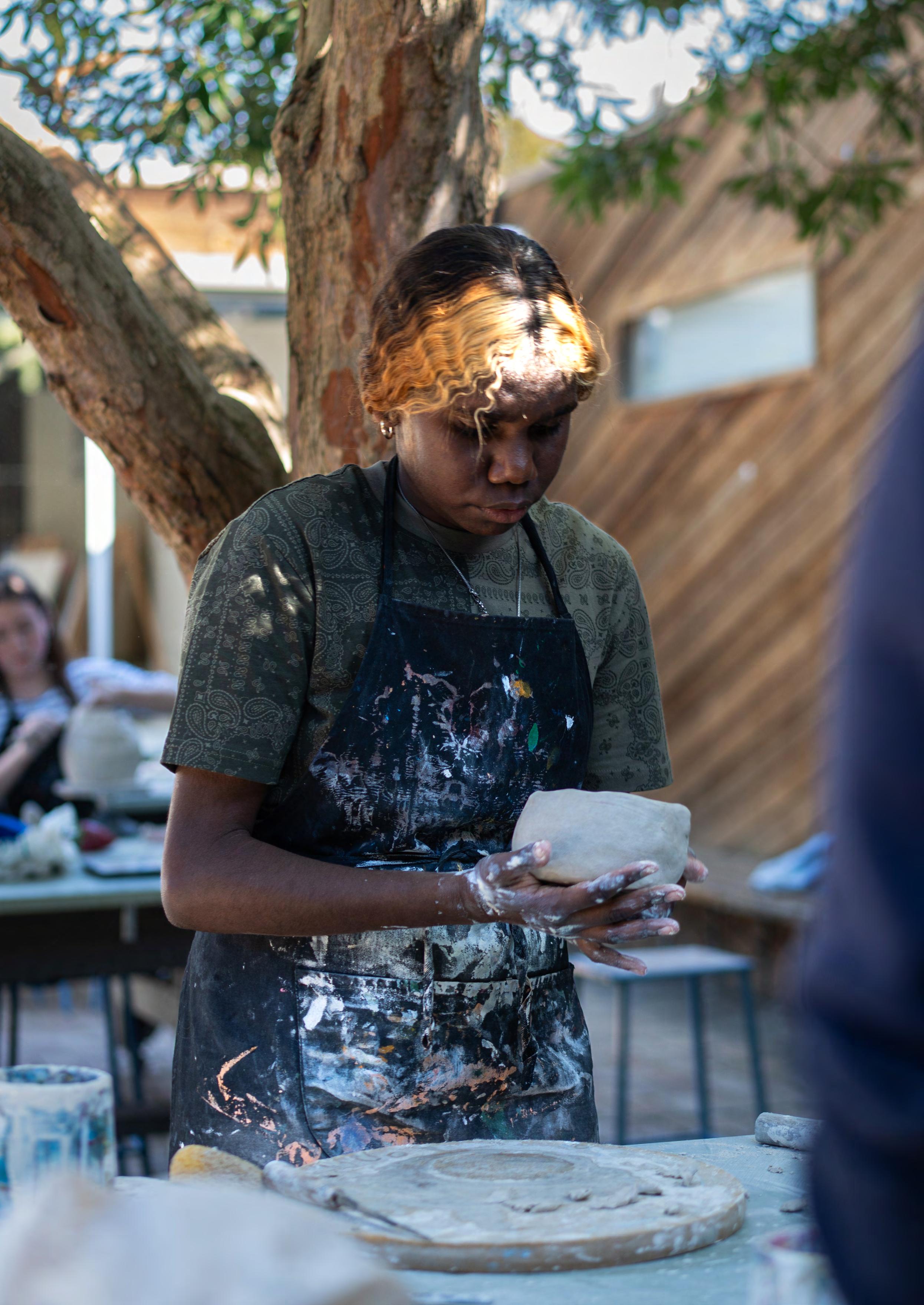
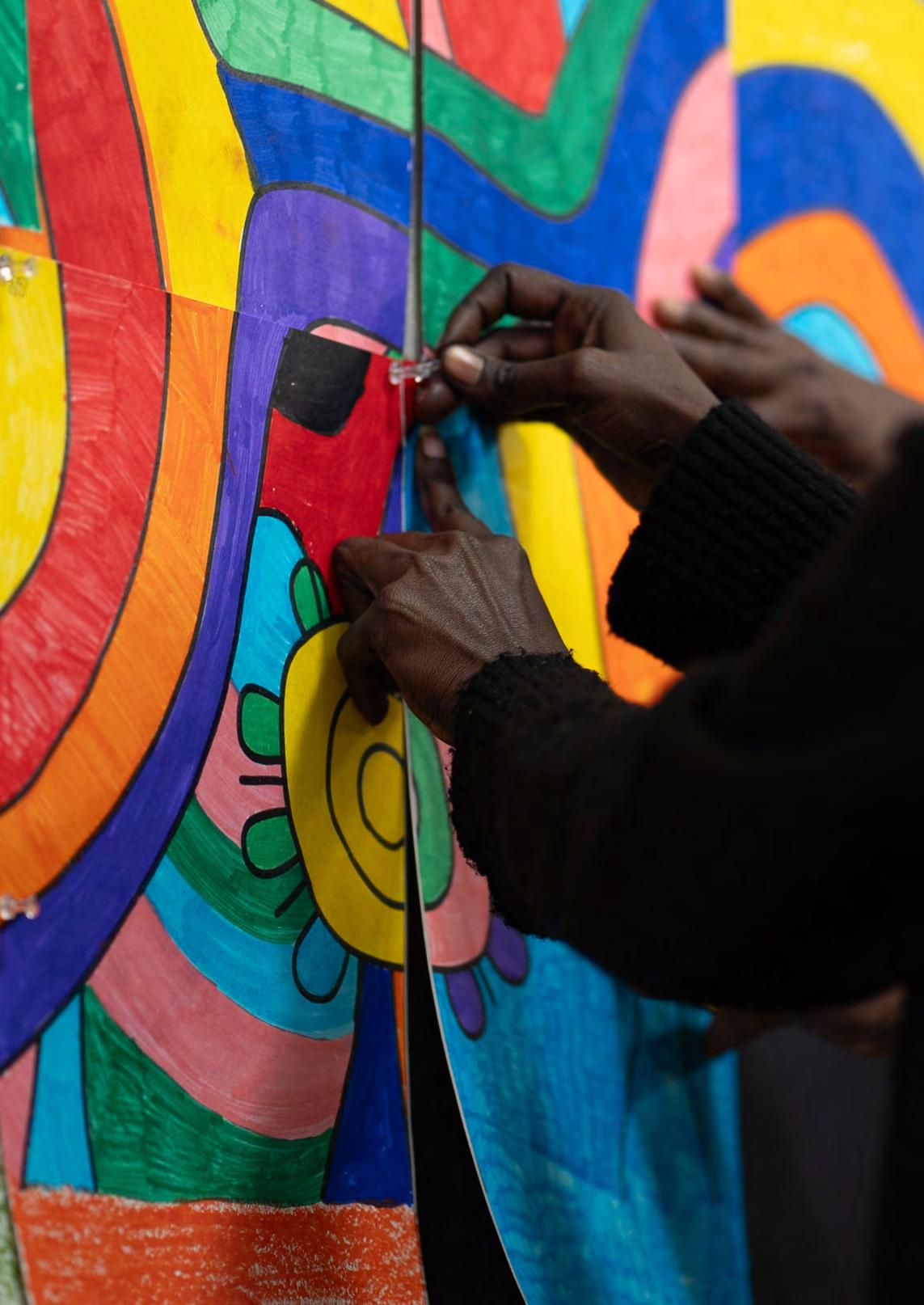
Welcome to Woodleigh School’s Reconciliation Action Plan. Woodleigh School is proud of its connection and relationship with Aboriginal and Torres Strait Islander Peoples. Woodleigh School is located on the estate of the Mayone Balug clan of the Bunurong/Boon Wurrung peoples.
The Bunurong/Boon wurrung, are First Nations Australians of the Kulin nation who occupy South-Central Victoria, Australia. They are custodians of the lands from the Werribee River to Wilsons Promontory.
For thousands of years, the Bunurong/ Boon Wurrung were actively involved in the Greater Kulin Nation and together walked this land. The history of the Bunurong/Boon Wurrung people dates back many thousands of years to a time when this land extended right out to the ocean. Port Phillip Bay was then a large flat plain where the Bunurong/Boon Wurrung hunted kangaroos and cultivated their yam daisy.
Before British settlement, they lived sustainably on the land, as all people of the Kulin nation.
The importance of this land and spiritual place lies deep within Aboriginal and Torres Strait Islander history and culture. Melbourne, and its outer regions, have always had a strong underlying First Nations history – often a hidden history.
Many of the descendants of the first people of Melbourne have played a major role in bringing about change. This traditional country now consists of the great multicultural city called Melbourne, where people from diverse cultural backgrounds live and where arts, culture and sports are appreciated.
Today, we can still feel the spirit of this country, its First Nations history and its spirit.
The spirit of Bunjil and his gift of generosity has influenced this land for thousands of years and continues to do so today.
According to tradition, the land has always been protected by the Creator Bunjil, who travels as an eagle, and by Waarn who protects the waterways and travels as a crow.
Bunjil taught the Bunurong/Boon Wurrung to always welcome guests, but always required that the Bunurong/Boon Wurrung ask all visitors to make two promises:
• Care for the land and waterways. Take only what you need.
• Care for bubups (children).
This commitment was made through the simple exchange of a small bough, dipped in the water.
The First Nations custodians of this land encourage everyone to nurture and care for the land – with love and respect, to protect the rivers, the creeks and the waterways. They are the blood of this land who observe the wisdom of Bunjil – to care for the children.
Woodleigh School’s Acknowledgement of Country
It is our privelege to reside on the lands of the Bunurong/Boon Wurrung Peoples. We pay our respects to their Elders past, present and future, and respect the continuing connection that Aboriginal and Torres Strait Islander peoples have to the land, sea, sky and waterways.
We acknowledge Aboriginal and Torres Strait Islander Peoples and nonIndigenous Australians who contribute to the education of all children in this country, as we live and learn together. As a school, we deeply connect to the wisdom of Bunjil and Waarn in our endeavours to protect all children from harm and respectfully care for the environment.
Woodleigh School is situated on the Mornington Peninsula, outer Melbourne. It is a place that encourages students to be adventurous with their learning. It affirms openness, independence, creativity, selfmotivation and initiative. A co-educational school, our three campuses, Minimbah, Penbank and the Senior Campus, provide
a unique educational setting where students discover and follow passions, grow in a culture of mutual respect, cultural freedom and inclusion. A dynamic learning community, we strive to develop independent, resilient, creative and compassionate individuals who can find personal success in life, while making a positive contribution to the communities in which they live.
Close in proximity, all three campuses provide spacious indoor and outdoor environments that foster innovation and dedication towards learning and wellbeing for self and others. Care has been taken in the development of all Woodleigh Campuses to ensure that the built environment does not overwhelm the surrounding natural environment that is unique and special to the school.
It is our pleasure to formally commit to reconciliation, by strenghening our relationships with Aboriginal and Torres Strait Islander peoples.
Principal’s Message
Our commitment to reconciliation and education for first
nations students
Woodleigh School is committed to Reconciliation and the development of authentic learning experiences that build an understanding and appreciation for Australia’s First Nations people and culture. For well over a decade, Woodleigh has worked to develop authentic relationships with the First Nations communities on the Mornington Peninsula, including a meaningful collaboration Willum Warrain, the First Nations meeting place in Hastings, Victoria. Our school is also actively involved in three remote communities in the Northern Territory; Ampilatwatja, Laynhapuy and Wugularr/Beswick.
At Woodleigh, we believe that it is essential for our young people and the broader community to build an understanding of our First Nations heritage and the critical place Aboriginal and Torres Strait Islander people hold in our society. Through open and respectful conversations and powerful immersive learning experiences, our community and
our children learn to understand and appreciate Australia’s First Nations people and culture.
We are committed to providing an environment that is free from discrimination. We work to offer opportunities for members of the Aboriginal and Torres Strait Islander community to share their culture and learn alongside other students at Woodleigh School in a genuine two-ways learning experience.
Woodleigh’s engagement and relationships with Aboriginal and Torres Strait Islander communities enrich the life of our school. The deep connections formed throughout our time sharing stories and culture have led to wonderful outcomes and transformational learning experiences. I am proud to be moving this commitment to the next level with the development of a Reconciliation Action Plan to guide our reconciliation efforts over the coming years.
Reconciliation Action Plan Team
David Baker Principal
Kutcha Edwards Cultural Advisor
Brian Walker Cultural Advisor – Woodleigh Parents
Maddy Bell Cultural Advisor – Past Student
Rodney Davies
Deputy Principal, Head of Minimbah Campus
Vivienne Wearne Deputy Principal, Head of Penbank Campus
Gareth Bolch
Deputy Principal, Community Connections and Administration
Richard Owens
Head of Teaching and Learning
Andrea Khoza
First Nations Programs Coordinator, Penbank Campus
Lisa Coxon First Nations Programs Coordinator, Minimbah Campus
Carey Saunders First Nations Programs Coordinator, Senior Campus
Adam Liddiard Director of Community Engagement
Vision for Reconciliation
At the heart of our endeavours is Reconciliation. We aim to confront the disparities between Aboriginal and Torres Strait Islander people and other Australians. Through our shared experiences, relationships and positive actions we will provide an environment where First Nations students can flourish.
Woodleigh School has committed to implement a Reconciliation Action Plan (RAP) to advance the
process of reconciliation between Aboriginal and Torres Strait Islander peoples, as First Nations people, and non-Indigenous Australians.
We are committed to students and the school community having the opportunity to build relationships and work towards making our country a better place for all peoples, especially Australia’s First Nations People. We share a deep desire to see growth for all.
Woodleigh’s 3 Rs Respect for Self, Respect for Others and Respect for the Environment.
These core values underpin all areas of learning.
David Baker – Principal
“We ought never to do for young people what they, with a struggle, could be expected to be doing for themselves.”
Michael Norman Principal of Woodleigh School, 1974–1980
Our Story
Woodleigh School incorporates First Nations perspectives into the life of the school at all year levels and throughout the school community.
We expect our children and youth to have an appreciation of Aboriginal and Torres Strait Islander peoples, the diversity of their cultures and to understand their deep connection to the land, water and skies of our continent and islands.
Our school achieves this goal through powerful learning opportunities and relationships that occur through our actions and exchange programs.
Observance of special times such as National Reconciliation Week enhances our understandings and commitment
to learn through relationship building while taking action to Close the Gap for First Nations Peoples. Whether at a school assembly or during general discussions, First Nations understandings, perspectives, their history, culture and challenges inform our work.
An Acknowledgement of Country is a regular feature of the school’s meetings and assemblies. Respect for the Environment and country provides the links to understanding our country’s 60,000 plus years of First Nations history and the effects of colonisation.
What we do
We take meaningful action to support, include and celebrate Aboriginal and Torres Strait Islander peoples across our school community.
Cultural Recognition and Respect
Acknowledging and honoring Aboriginal and Torres Strait Islander cultures and traditions:
• The Aboriginal and Torres Strait Islander flags are flown at the entry of all three campuses of the school
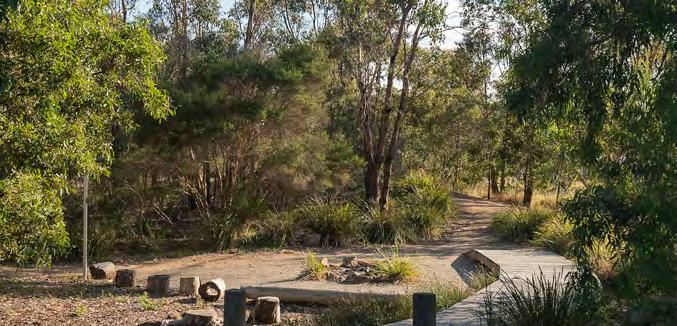
• Each campus has specific spiritual places where significant First Nations celebrations can be held
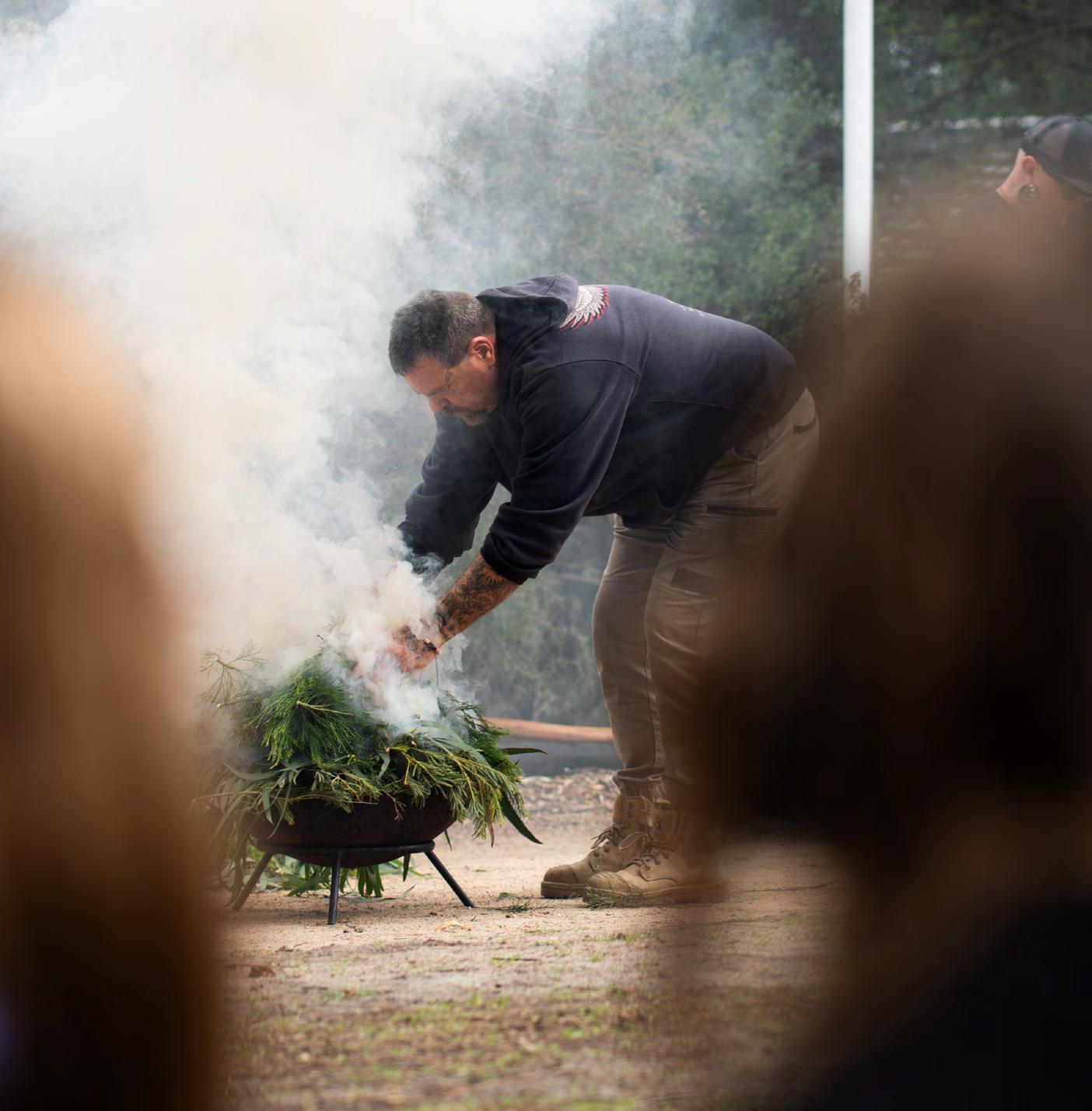
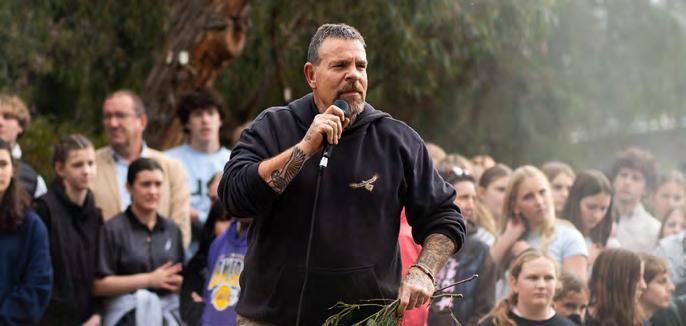
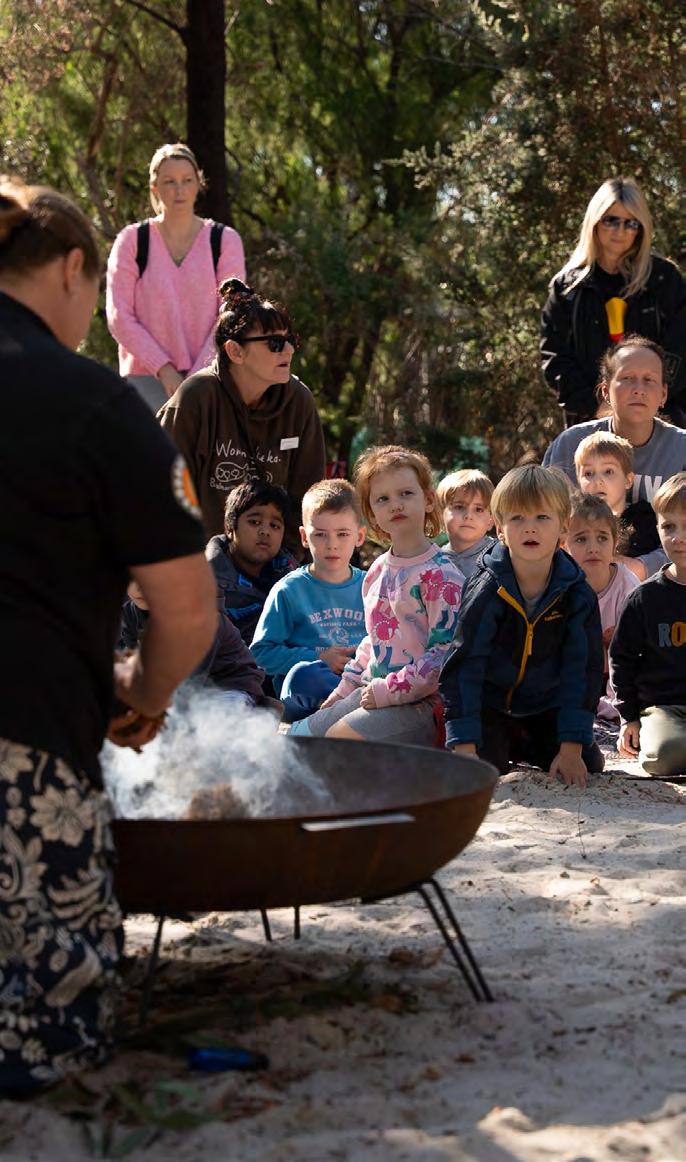
• Special ceremonies, events and festivals begin with a Welcome to Country and a Smoking Ceremony by the Bunurong Land Council
• An Acknowledgement of Country proceeds all school meetings and gatherings
• Respect and understand protocols
Staff Development and Leadership
Empowering staff and leadership to support reconciliation and cultural inclusion:
• Involve school leadership and inform the School Board
• Provide a diverse range of professional learning for all staff to include consultancy, options for staff exchanges and visits to partner schools and communities through school camps, volunteer work during holidays, collaborative planning
Community Engagement and Partnerships
Collaboration with First Nations communities, Elders, and organizations:
• There is regular involvement of local First Nations Elders and Aboriginal and Torres Strait Islander visitors
• Connect with Aboriginal and Torres Strait Islander organisations, associations, government bodies, universities and other schools
• Reconciliation Group Meetings involving students, alumni and interested friends
• Support students and past students to continue connections and relationships beyond the school
Student Support and Empowerment
Supporting and celebrating Aboriginal and Torres Strait Islander students:
• Support First Nations students through school partnerships, collaborations and exchanges
• Enrol Aboriginal and Torres Strait Islander students supported by the School’s Scholarship Fund and other funding such as Abstudy
• Value the contributions of our Aboriginal and Torres Strait Islander students and other visiting students
Education and Awareness
Building cultural competence and awareness across the school community:
• Events are held specifically for the purpose of promoting cultural awareness
• Observance and involvement in national events – National Sorry Day, National Reconciliation Week, NAIDOC Week, Close The Gap Day
• Consistent education and cultural awareness of the school community through publications, newsletters, social media, special events and more
• Embrace diversity and equity
• Support First Nation’s People’s student learning – in particular the attainment of Year 12 – focus on career pathways –work experience
• Provide opportunities for First Nations students to take on leadership roles
• Support the families of First Nations students
• Promote the successes of Aboriginal and Torres Strait Islander students through social media, newsletters, alumni and other publications (with consent)
Engagement with First Nations Peoples at Junior Campuses
Minimbah and Penbank are the junior campuses of Woodleigh School. Each campus has approximately 240 students from 3-Year-Old Pre-School to Year 6. Professional learning of staff is a high priority enabling staff and students the opportunity to learn through genuine engagement with First Nations Peoples at a remote and local level. Woodleigh’s 3Rs is a constant in our interactions and learning. The junior schools are proud to be affiliated with two distinctive communities – Willum Warrain and Wugularr.
Background
Woodleigh School’s, junior Campuses have a long history of recognising the importance of developing respectful and reciprocal relationships with Aboriginal and Torres Strait Islander peoples.
Coordinators of First Nations Studies have a strong commitment to recognising, celebrating and building knowledge about First Nations Culture.
Teaching and learning in this area was initially supported by cultural advisor, Peter Aldenhoven, and over time, has included the development of relationships and learning from a wide number of community members, Elders and First Nations consultants.
Rationale
First Nations perspectives at Woodleigh School’s Junior Campuses are based on a goal to develop ‘Cultural Competence’ in all students, commencing with our youngest 3-year-olds through to Year 6. This means developing a deep respect for all cultures within our community, including First People’s culture.
Cultural competence is:
‘...much more than awareness of cultural differences. It is the ability to understand, communicate with and effectively interact with people across cultures.
Cultural competence encompasses:
• being aware of one’s own world view
• developing positive attitudes towards cultural differences
• gaining knowledge of different cultural practices and world views
• developing skills for communication and interaction across cultures.’
– Early Years Learning Framework, p16
We believe that all stakeholders in our community are learners together. We support the learning of our students by building our own understandings and knowledge.
For this reason, learning experiences and cultural celebrations are carefully selected to provide learning opportunities for educators and families as well as for students.
Our approach begins with acknowledging the land on which we live, learn and play –the land of the Bunurong/Boon Wurrung Peoples. Explorations of Aboriginal and Torres Strait Islander culture begins with acquiring knowledge and understanding of local culture and are then expanded to learning about communities from all over Australia.
Implementation
Cultural Knowledge
At our Junior Campuses, there is a commitment to providing students with learning experiences, resources and artefacts that acknowledge the Aboriginal
and Torres Strait Islander culture that has flowed alongside and through Woodleigh School for more than 100 years.
Culturally safe spaces
Woodleigh demonstrates a culturally respectful and welcoming place for Aboriginal and Torres Strait Islander Peoples within office, classrooms and outdoor spaces.
Cultural Learning Opportunities
We engage all staff in cultural learning opportunities to increase understanding and appreciation of Aboriginal and Torres Strait Islander cultures, histories and achievements.
First Nations learning experiences are provided regularly across the whole school. This includes incursions, excursions and immersion learning experiences with Aboriginal and Torres Strait Islander community members.
Woodleigh embeds Aboriginal and Torres Strait Islander perspectives and culture throughout our early childhood and primary education curriculum and pedagogy. This includes the following:
• Acknowledgements to country are made, songs in local language are sung, First Nations stories are shared and a wide range of visiting First Nations artists and musicians support teachers in building a culture of recognition and respect.
• Local culture and stories are embedded in daily classroom practice. The children are often heard referring to the laws of Bunjil and using language that has been shared by local elders.
• Use of culturally diverse resources such as books, music, games, puzzles and resources.
• Visible respect for First Nations culture in all areas of our school including flags, maps, artwork and displays.
• Wherever possible, all projects and units of inquiry incorporate a First Nations lens.
Culturally respectful relationships
Woodleigh strives to build and sustain respectful relationships with Aboriginal and Torres Strait Islander communities and organisations.
• We recognise the importance of developing trust and ongoing connections, and work hard to engage with cultural groups such as: The Bunurong Land Council, Boon Wurrung Foundation, Baluk Arts, Djilpin Arts, Living Culture and Willum Warrain.
• We value the relationships and community connections that have been developed at Woodleigh and wherever possible, we strive to support and be involved in these associations, for example, hosting excursions for student visits from Laynhapuy, Ampilatwatja and Wugularr and supporting Woodleigh School celebrations.
Willum Warrain Aboriginal Association is a not-for-profit, charitable organisation in Hastings on the Mornington Peninsula. It is a vibrant and confident Aboriginal community, encouraging cultural strengthening, promoting health, and providing a safe gathering place for all community members,
Willum Warrain (‘home by the sea’) is the voice of Aboriginal and Torres Strait Islander people on the Mornington Peninsula. It is a gathering place where Aboriginal people come together to realize community aspirations and forge shared identity. The core strategic focus is cultural strengthening.
Woodleigh students from Pre-school to Year 12 visit Willum Warrain throughout the year. Culture is shared, stories are told as children immerse themselves in the natural setting of Willum Warrain. Children also participate in arts and bush foods activities while developing relationships with the community members.
Members of the Woodleigh School Community support Willum Warrain by participating in celebrations such as The Reconciliation Walk and Survival Day. Woodleigh School fundraising initiatives also support Willum Warrain endeavours from time to time. Involvement in celebrations is reciprocal with Willum Warrain attending Woodleigh School events such as Harmony Day and Perberkoong. Learn more at willumwarrain.org.au
Willum Warrain
Wugubank Wugularr+Penbank
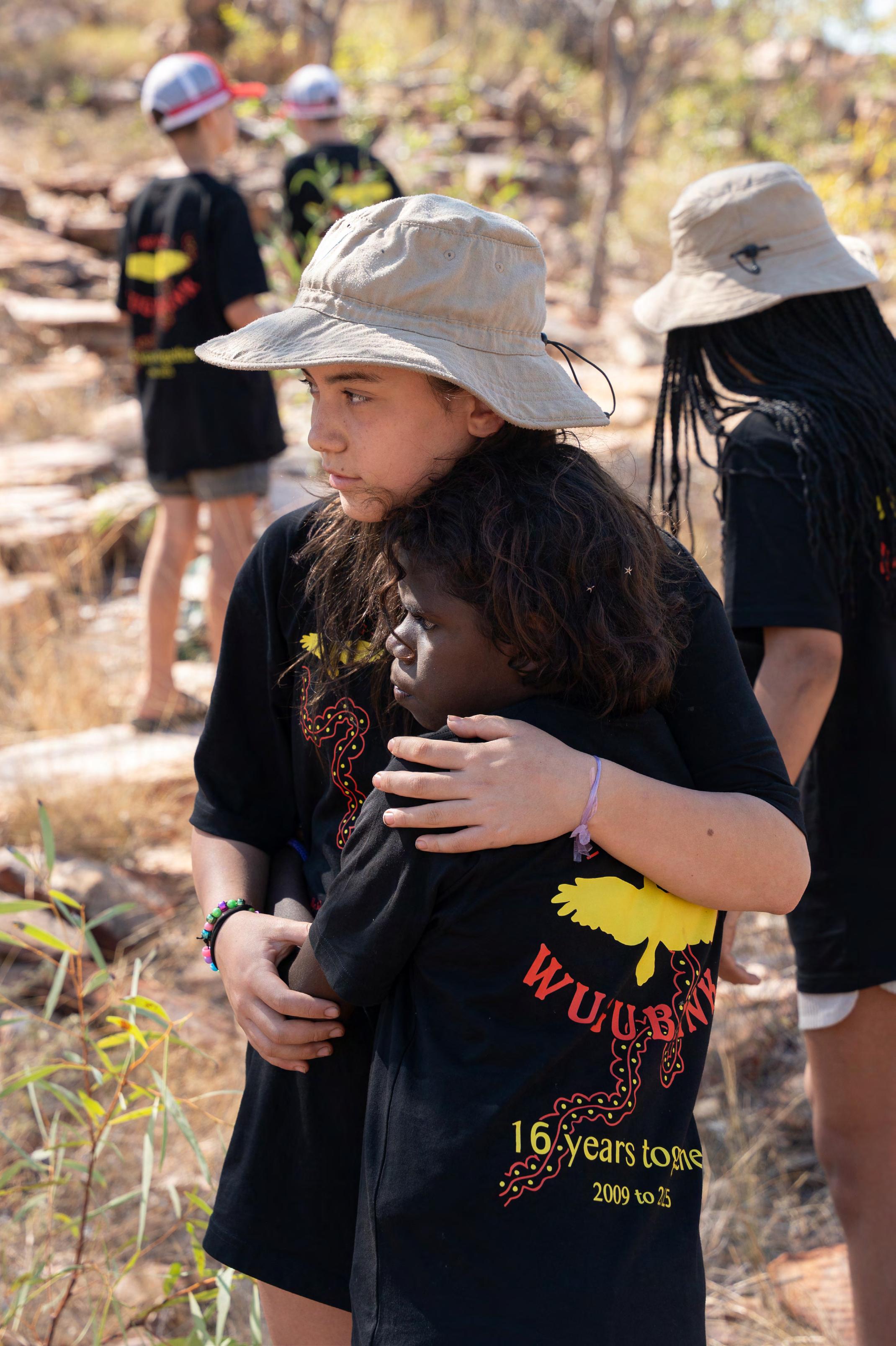
Wugubank is the title given to a collaboration involving the Penbank Campus of Woodleigh School, and Wugularr School, a remote school in the Northern Territory. Wugularr School, Beswick, is east of Katherine, NT. Both schools have been working together since September 2009.
Background
The Wugubank Collaboration began when a Penbank teacher took leave to work in the Northern Territory – Wugularr School was his post. During this period of leave, several Penbank teachers including the Head of Campus visited Wugularr School. Teachers worked in a voluntary capacity supporting Wugularr in areas of need such as Art and Library. Penbank teachers were generally at Wugularr for a week at a time. Two or three Penbank teachers would travel to Wugularr once a term or during term breaks around Easter, June and September.
Over time, strong and supportive relationships developed – Wugularr students enjoyed visits from the Penbank teachers and in August 2010, the first group of 16 students from Wugularr visited Penbank. Since then, visits by students have occurred annually – Wugularr students visiting Penbank during Cultural Diversity Week in March and Penbank students visiting Wugularr in August.
a doctor, that the son of a mine worker can become the head of a mine, that the child of a farm worker can become the president of a great nation.”
– Nelson Mandela
Rationale
Governments and many organisations have formulated policies and implemented strategies to improve opportunities for Aboriginal and Torres Strait Islander people. Some organisations such as the AFL have made a significant difference. A number of schools have formed collaborations to support remote schools.
The Wugubank collaboration supports the improvement of educational outcomes and opportunities for First Nations people. This collaboration is unique because it begins with children at a pre-school and primary school level. It is well documented that Early Childhood and the Primary Years of schooling play a major role in influencing and educating children for a successful life ahead. With a positive primary school experience, parents and children are more likely to value a secondary education and so forth.
“Education is the great engine to personal development. It is through education that the daughter of a peasant can become
The Wugubank collaboration provides educative and cultural experiences through relationship building, program planning and school visits. It is based on the premise that young children naturally interact with each other and are not unduly affected by barriers of culture or language. Children are generally free from prejudice and purely love to play and explore. In a school setting, and through structured and culturally appropriate learning experiences, the Wugubank Collaboration enables children to understand and influence each other about their world.
The Wugubank Collaboration aims to develop long term relationships over time, thus establishing trust, personal respect and connections with the view of broadening horizons for all.
The Wugubank Collaboration promotes the importance of education and reinforces that school is essential for all children and young people. This is enabled through the quality of experiences at a joint level. Wugubank ‘opens doors’ and promotes lifelong learning, cultural respect and empathy, and possibilities for future pathways.
Implementation
• The Penbank Head of Campus or delegate, in consultation with the NT Education Department, Wugularr Principal and School Council work in collaboration to co-ordinate the program of any school visit.
• Teachers from Penbank and Wugularr are encouraged to visit throughout the year. Regular contact enhances the relationship between the schools providing continuity, support and mentoring.
• Visits involve voluntary work, mentoring, opportunities for Wugubank planning and relationship building with the Beswick community.
• Students maintain communication via social media, phone and written correspondence.
• Annually, students visit the other. Students include Year 6 students from Penbank. Wugularr students can range in age from Year 4 to Year 8.
• Students are encouraged to participate in Wugubank from then onwards. The continuation of a student’s involvement is integral to building long-term relationships with the aim for Wugularr students to be motivated to remain at school during the secondary years. In 2018, students from the Senior Campus
returned to participate in a joint 6-day hike with Wugularr senior students.
• The selection of students is the joint responsibility of Wugularr and Penbank. Selected students consist of students who have participated in previous years and new students. The selection of students should be connected to educational improvement and opportunity.
• When each school group visits the other, all students and teachers of the host school are involved. This general involvement at a whole school level promotes the collaboration between the two schools throughout the broader school communities.
• Any Wugubank experience must promote the importance of education through respect, inclusivity and growth for all.
• Funding to Wugularr/Penbank or Wugubank planning is the responsibility of each school.
• Fundraising to support school visits is encouraged. A high priority is to achieve government funding.
• The safety and welfare of all students and staff is prioritised and fully considered prior to and during any visit. Penbank has been able to include a doctor on the team to date.
• Selection of teachers/adults involved in any school visit is similar to the selection of students. I.e. teachers who have participated in a Wugubank experience and another adult or two, new to the experience.
• The types of experiences are age appropriate and aligned with students’ interests such as: participation in general school work, hands on activities, particularly the Arts, recreational activities involving sport and the outdoors such as AFL football, cultural celebrations (school and community festivals) joint camps and ongoing communication.
• During any visit, an appropriate welcome and farewell is in place to acknowledge the importance of the friendship through the Wugubank Collaboration.
• Penbank, merged with Woodleigh School to commence the 2015 school year. Woodleigh School supports the collaboration providing a secondary school experience for secondary Wugularr students when they visit.
• A Wugularr student attended Woodleigh’s Senior Campus from Year 9 to Year 12 through a homestay arrangement.
Engagement with First Nations Peoples at Senior Campus
Woodleigh School Senior Campus recognises Aboriginal and Torres Strait Islander people as the first people of this nation. This recognition necessitates us to genuinely inquire and learn about our shared history and the land on which we all live. First Nations Education at Woodleigh’S Senior Campus is central to this enquiry.
Community Collaborations
Peter Aldenhoven, a Nughi man from Quandamooka, was the first Director of Indigenous Education at Woodleigh School’s Senior Campus. In 2007, Peter established a community partnership program. Since this time, we have nurtured a reciprocal exchange with the community of Ampilatwtaja in Central Australia, and communities in the Laynhapuy region in North East Arnhem Land.
First Nations Education
All Woodleigh School Senior Campus students are provided with a range of opportunities for cultural engagement with Aboriginal and Torres Strait Islander history. In addition to camps, activities and excursions, First Nations Education is explored in various areas of the curriculum.
A First Nations history and culture unit is taught at Year 9 in Humanities.
A Senior Campus Reconciliation Group also meets regularly each term. This group oversees key events, engages in various cultural excursions, and provides a time and a place for staff and students to talk. We discuss current issues that are important to us, often in response to guest speakers who have been invited to address the group.
Rationale
Community collaborations
Ampilatwatja and Laynhapuy
Community Collaboration Programs with the Alyawarre people of Ampilatwatja, and the Yolngu people of the Laynhapuy region, enable ongoing relationships to be created and maintained with the Woodleigh School Senior Campus students, staff and alumini.
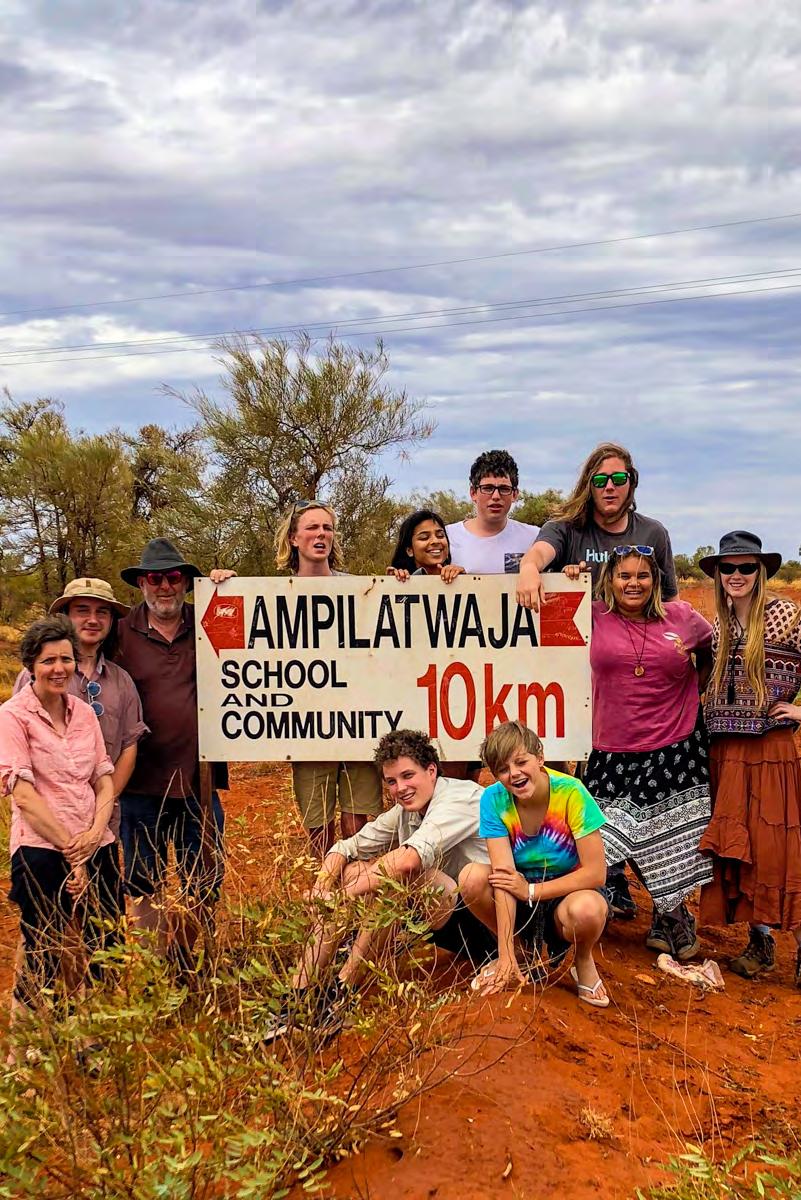
Students, elders and teachers from the Ampilatwatja community visit Woodleigh School Senior Campus annually in September. Woodleigh School students visit the community in December and are involved in all aspects of school life in Ampilatwatja. This collaboration is largely focused on engagement through education in a school setting. Woodleigh School students attend school with the Alyawarre students. When Ampilatwatja students visit Woodleigh School, they take part in activities and classes with our students at our senior and primary campuses. Excursions to the Mornington Peninsula and Melbourne provide further opportunities for students from both schools to build relationships. This crosscultural collaboration is enriching for all students and staff involved and is not outcome focused. The relationship is about enrichment, trust and respect.
Through contact with the Yirrikala Homelands Schools’ Network and local elders, Woodleigh School’s Senior Campus has fostered a relationship with the remote communities of Garrthalala, Dhalinybuy and Gan Gan. When Woodleigh Students visit Laynhapuy (formerly Miwatj) they are invited to immerse themselves in these communities. This immersion has provided students and staff with a rich understanding of Yolngu culture. Fundraising has enabled homeland community students to visit Woodleigh School’s Senior Campus every few years.
Both the Ampilatwatja and Laynhapuy Collaboration Programs provide both First Nations and other participants with a deeper understanding of Australian identity, culture and history. The key to their success is the ongoing connections and relationships that have been established over the last 12 years.
First Nations Education
Aboriginal and Torres Strait Islander histories and culture is a cross curricular priority at Woodleigh School. Acknowledging that this is a vast topic, spanning 65,000+ years of history and 500+ clan groups or nations, we are mindful of not falling into the trap of homogenising this area of education.
Our focus is to support Aboriginal and Torres Strait Islander students, as well as to provide platforms where students from all backgrounds can genuinely enquire and learn about our shared history and the land on which we all live.
We believe that embedding First Nations Education throughout our Senior Campus Curriculum is essential for all students. First Nations Education is taught through all areas of the Senior School curriculum.
The The Semester long First Nations Education Unit is compulsory for all Year 9 students through our Humanities program. Ongoing consultation with Aboriginal and Torres Strait Islander organisations, Elders, the Bunurong Land Council and Boon Wurrung Foundation supports this work.
The Woodleigh School Senior Campus Reconciliation Group provides additional opportunities for cultural engagement. Everyone is welcome. In addition to organising key calendar events (such as Reconciliation and NAIDOC week), the group brings staff and students together to discuss current political and social issues and to work towards Reconciliation in our school and our community.
Implementation
Community connections
• The Director of First Nations Education liaises with the Ampilatwtaja and Laynhapuy communities, overseeing the continuing reciprocal visits and associated programs.
• Fundraising is instigated through consultation with the wider Woodleigh School community, and has included initiatives such as The Beanie Festival and Little Bit Long Way Art Exhibition.
• It is expected that students and staff who wish to be involved in the community collaboration visits are committed to the Woodleigh School Senior Campus Reconciliation Group. A particular focus is also placed on acknowledging and honouring links to the communities. Aboriginal and Torres Strait Islander students and students who have been involved in the exchange program previously are prioritised in the selection process. Establishing and maintaining relationships provides the unique opportunity for ongoing rich cultural engagement. For this reason, students often return.
• Ongoing connection and relationships with these communities are maintained by the Director of First Nations Education. Students are encouraged and supported to continue relationships beyond the visits.
• The Bunurong Land Council are enlisted to provide a Welcome to Country ceremony when a community visits the Senior Campus.
• All staff and students who visit a remote community engage in cultural awareness workshops prior to their visit. Language, culture, protocol and history associated with the community that they are visiting is investigated.
First Nations Education
• The Director of Learning Strategy and Innovation has developed a Staff Learning Plan focusing on the following three areas:
– Support teachers to understand and embed Aboriginal and Torres Strait Islander Histories and Culture as a cross-curriculum priority.
– Ensure Aboriginal and Torres Islander Histories and Culture are incorporated in curriculum planning, development and evaluation processes.
– Support teachers to meaningfully engage with teaching and learning in relation to this cross-curricular priority through the staff evaluation and development system.
• Woodleigh School Senior Campus seeks guidance from, and liaises with, local First Nations organisations and the wider First Nations community.
Enrolment of Aboriginal and Torres Strait Islander Students at Woodleigh
Woodleigh School is privileged to be involved with Aboriginal and Torres Strait Islander communities across Australia and supports the enrolment of First Nations students at the school.
Currently, there are 10 First Nations students enrolled at Woodleigh. These students are from the local community. Eight students have graduated from Year 12 and are flourishing in their chosen fields.
First Nations Scholarships
In 2015, Peter Aldenhoven established a scholarship program for Aboriginal and Torres Strait Islander students to attend Woodleigh School’s Senior Campus.
The Scholarship Program was created to enable First Nations students to access a non-government education. These students and their families are an integral part of our campus community. Through consultation with First Nations educators and program providers, we strive to offer a Scholarship Program that is culturally inclusive. Nurturing the identity of our First Nations students and empowering them with links and contact to culture is critical.
Our First Nations Scholarships enable students to achieve through the many experiential and academic learning opportunities that comprise a Woodleigh education. Students are able to discover their inner strengths and explore new horizons as they re-imagine the possibilities for a desirable future for all. Scholarship students are also provided with a First Nations Education Program that runs parallel to the Woodleigh School Curriculum. This program aims to nurture and support cultural connection and identity. It is personalised. Where possible, student interests and needs direct this. Guest speakers, excursions to theatre and dance performances, art galleries, museums, universities, and areas of significance are scheduled. Contact with elders and other community members, as well as discussion forums, workshops, and regular visits to Willum Warrain, are central to the program.
Through Woodleigh’s First Nations Scholarships, we are proud to offer First Nations students an opportunity to study in a culturally rich environment where
personal skills and talents are discovered in pursuit of a future pathway.
In addition to school funding for First Nations students such as Abstudy (depending on a student’s home/ residential address), a Scholarship for First Nations students provides most of the financial assistance required to cover tuition fees, and other education expenses and are open to all First Nations students.
At Woodleigh, we honour and respect cultural diversity. First Nations Scholarships support First Nations students to achieve in an environment of shared understanding.
Woodleigh First Nations Scholarship Fund
Support for this fund will provide financial assistance to First Nations students. Scholarships support education expenses, other than tuition fees, enabling students to study in an environment of shared understanding.
Our First Nations Scholarship Fund will enable First Nations students to achieve through the many experiential and academic learning opportunities that comprise a Woodleigh education.
Educational Opportunities and Outcomes for First Nations Students
Two way or ‘both ways’ learning enables us to learn from each other. In recent times, the terms ‘two-way learning’ and ‘both ways learning’ have come to indicate the acceptance of a mixing of Western and First Nations knowledge.
The idea of teaching First Nations culture and language alongside Western disciplines was originally promoted during the 1980s. The ‘both ways’ approach was developed and articulated by First Nations teachers, most significantly, Mandawuy Yunupingu and Nalwarri Ngurruwutthun.
Harris (1990) defined two-way Aboriginal
schooling as: ‘a strategy to help make the matter of choice real in both worlds; to provide opportunity for Aboriginal identity to stay strong, though changing, and thus continue to be the source of inner strength and security necessary for dealing with the Western world.’ Harris argued that ‘Aboriginal people today are increasingly interested both in being empowered in terms of the Western world and in retaining or rebuilding Aboriginal identity as a primary identity’ (1990: 48) and that it is healthy for aspects of each domain to contribute to the other.
At Woodleigh, two-way learning is a key feature of our programs and interactions. It is where our two cultures meet; on Country, in each other’s schools, in the environment, classroom, community, and through the contribution of Australian curricula that has drawn upon knowledge from highly experienced First Nations practitioners from educational professions and community. The recent introduction of the International Baccalaureate, Primary Years and Middle Years Programmes, values collaborative planning, emphasising a more culturally diverse, respectful and inclusive approach. Enhancing curriculum initiatives and ideas, the IB will support the development of two-way learning with the aim to identify and remove barriers, supporting growth for all.
Ultimately, our positive, daily actions and involvement with our Aboriginal and Torres Strait Islander students and families will continue to develop knowledge and shared understanding through relationship building, respect and opportunities – the key themes of this RAP.
Artwork by Salwyn Farrel (Year 12, 2019) and Emily Bell (Year 12, 2020).
Looking Forward
Our Commitment
As a school, we commit to advancing the process of reconciliation. We commit to our students and the school engaging in a two-way relationship where there is growth for all. We commit to the communities, schools and organisations involved in our endeavours. We commit to respectfully empower First Nations students to grow and participate equitably in all areas with cultural pride. We commit to broadening horizons for all beyond school. We commit to truthfully educating our students and community about the history of Australia.
We are committed to taking action and feel proud to belong. We commit to:
• All school staff being trained in First Nations Cultural Awareness – this will be achieved through dedicated PL meetings conducted by approved First Nations Presenters/ Leaders across the 2022/2023 school year.
• Teaching First Nations histories and perspectives, including the true history of colonisation. This will involve all teachers, from 3-Year-Old Pre-School to Year 12 and achieved by integrating experiences, content and understandings within the school’s curriculum frameworks and experiential programs. 2022/2023.
• Developing broader community participation through cultural immersion opportunities and parent education. This will be achieved through the school’s events and participation in dedicated National Weeks, school partnerships and focus groups.
• Creating equitable opportunities that move us from awareness to action through mutual respect, listening, generosity of heart and mind, and optimism. This will be achieved through connections with the school’s collaborations, associations, community and the provision of scholarships, respecting that contexts and aspirations are not the same for all First Nations Peoples.
“At its heart, reconciliation is about strengthening relationships between Aboriginal and Torres Strait Islander peoples, for the benefit of all Australians. Reconciliation is an ongoing journey that reminds us that while generations of Australians have fought hard for meaningful change, future gains are likely to take just as much, if not more, effort.”