

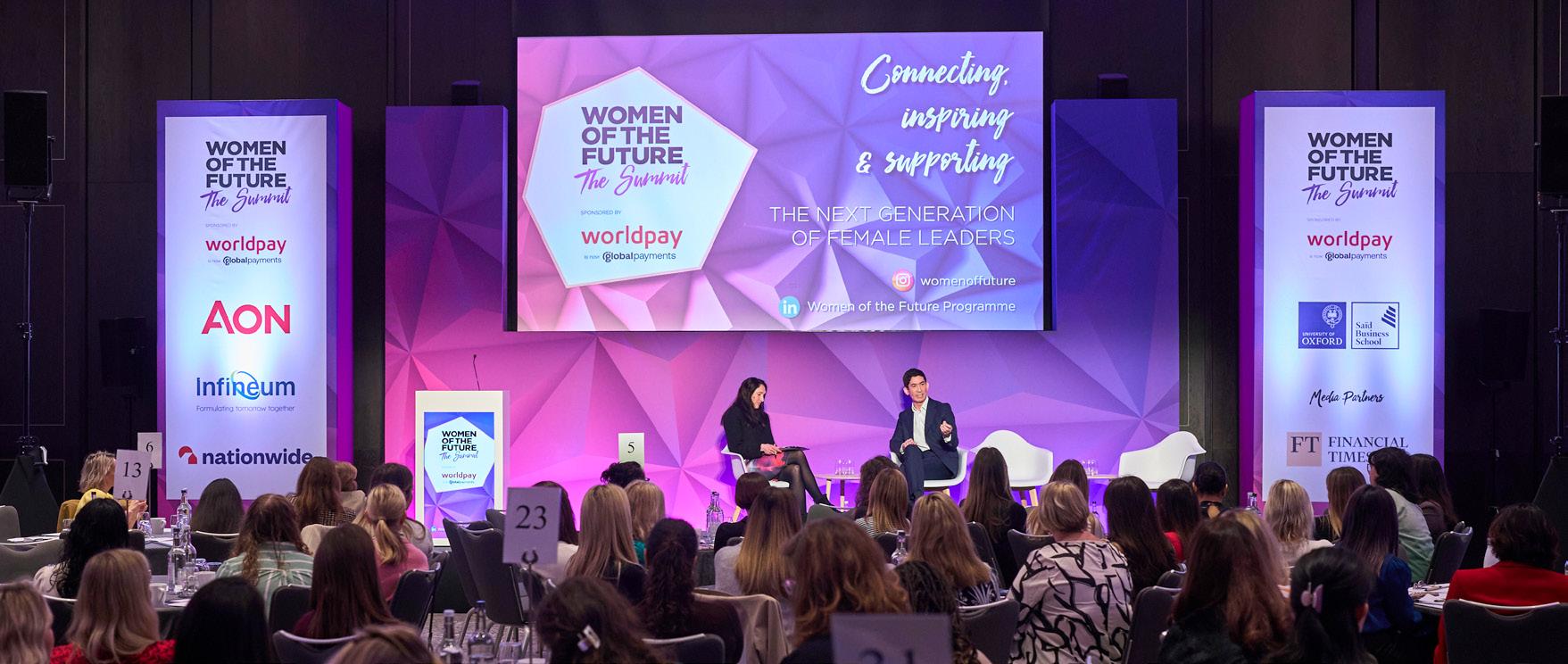
The Women of the Future Summit 2026 brought together individuals across diverse backgrounds and industries to explore what it truly means to lead with courage in an era of uncertainty.
Anchored in the theme Courageous Leadership, the day created an intentional pause for leaders to step back from the urgency of everyday work and engage with the deeper systemic changes shaping our world.
The Summit surfaces a critical shift in how leadership must be understood and practised in an era defined by uncertainty, fragmentation, and accelerating change.
Across keynote speeches, panel discussions, masterclasses, and lived narratives, three core patterns emerge:
Courage is behavioural Acting without certainty or emotional readiness
Courage is relational Grounded in responsibility to others, not individual advancement
Courage is systemic Requiring engagement with, and reform of, the structures that shape outcomes
Courage is no longer a personal trait or episodic act. It is a decision-making discipline, expressed through how leaders navigate ambiguity, sustain engagement, and act despite incomplete information.
Courage is operationalised in small, unseen decisions.


Nichole Viviani, Chief People, Culture and Change Officer of Global Payments, notes:

Courageous moments… are the small moments… when nobody’s watching.
Leadership is not defined by episodic, high-visibility acts, but by consistent microdecisions on whether to challenge, speak, or act. Culture becomes the cumulative output of these invisible choices, making courage a behavioural discipline embedded in daily practice rather than rhetoric.
A strategic pause is essential in periods of systemic disruption.

Jules Chappell OBE, CEO of Kokoro, positions the summit as an intervention:
This is a really intentional strategic pause… to properly think about these big, big changes.
As external change accelerates, leaders risk defaulting to constant execution. Without deliberate reflection, organisations react rather than shape outcomes. The ability to step back and interpret change becomes a core leadership capability.
Courageous leadership requires futures thinking in the absence of precedent.
Dex Hunter-Torricke, President and Founder of The Center for Tomorrow, identifies fragmentation of understanding as a key barrier to progress. Critical issues such as AI and geopolitical shifts remain siloed, preventing coordinated action. Courage requires both articulating a clear vision of success and democratising understanding of complex issues. Leaders must operate without reliable historical parallels, requiring imagination alongside execution discipline.
Courageous leadership must redefine work, value, and purpose beyond employment.

Dex reframes AI disruption away from job loss toward rethinking societal design:
We should have a plan… to liberate the human race from having to work simply to survive.
This challenges the assumption that work defines value. Leaders must instead design systems that expand human agency, prioritising creativity, learning, and contribution beyond traditional employment structures.
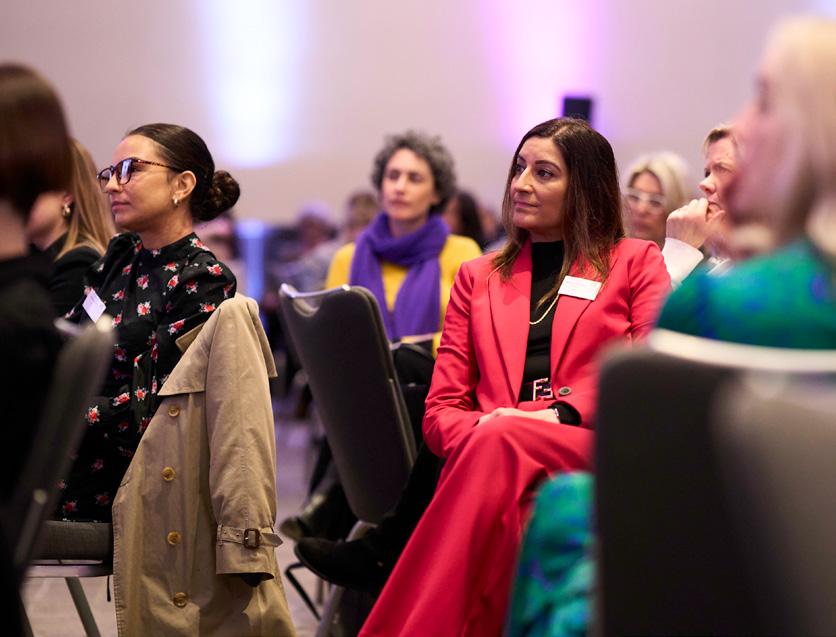

What small, everyday decisions am I making that shape my leadership?
Think about moments where you choose to speak up, challenge respectfully, give credit, or stay silent. These micro-decisions often define your leadership more than big moments.

How are we embedding courage into everyday behaviours, not just messaging?
Look at incentives, performance reviews, and leadership behaviours. What gets rewarded or ignored will ultimately define your culture.

Kim
Rowell Trustee and Board Member
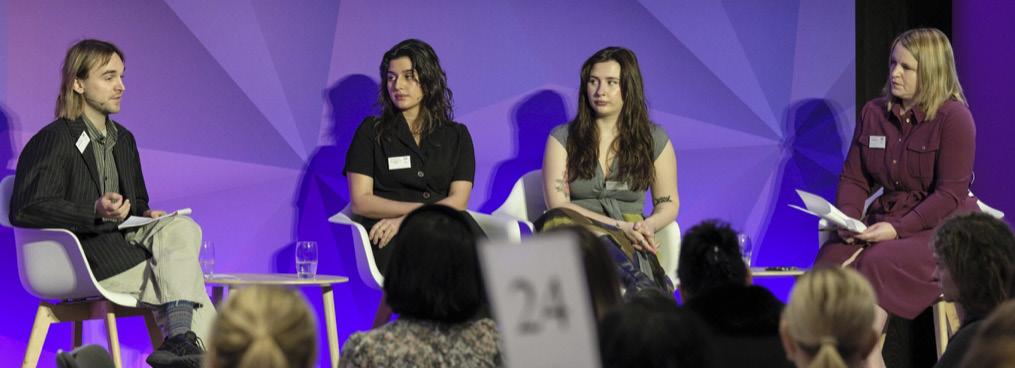
UN Women UK in conversation with:
Adam Hegedus General
Manager
Teach Us Consent


Dana Rentenaar Journalist and Peace Activist
Adele Zeynep Walton Journalist and
Founder
Logging Off Club
Courage is action despite fear.
Dana Rentenaar, Journalist and Peace Activist, states:
I don’t think I have courage. I do most things just scared. And I just do them.
Courage is not confidence, but action without emotional certainty. Leaders who wait for clarity delay impact in environments where timing matters more than perfection.
2
Holding competing truths is a core leadership capability.
Leadership is not about eliminating disagreement, but enabling constructive tension. In polarised environments, progress depends on engaging opposing views rather than simplifying them into binaries.
Systems, not individuals, determine the scale of harm.
The discussion highlights that systemic forces, not isolated actions, drive outcomes. Leadership must therefore focus on redesigning environments, not just correcting behaviour. Incremental interventions cannot offset systems that continuously reproduce harm.
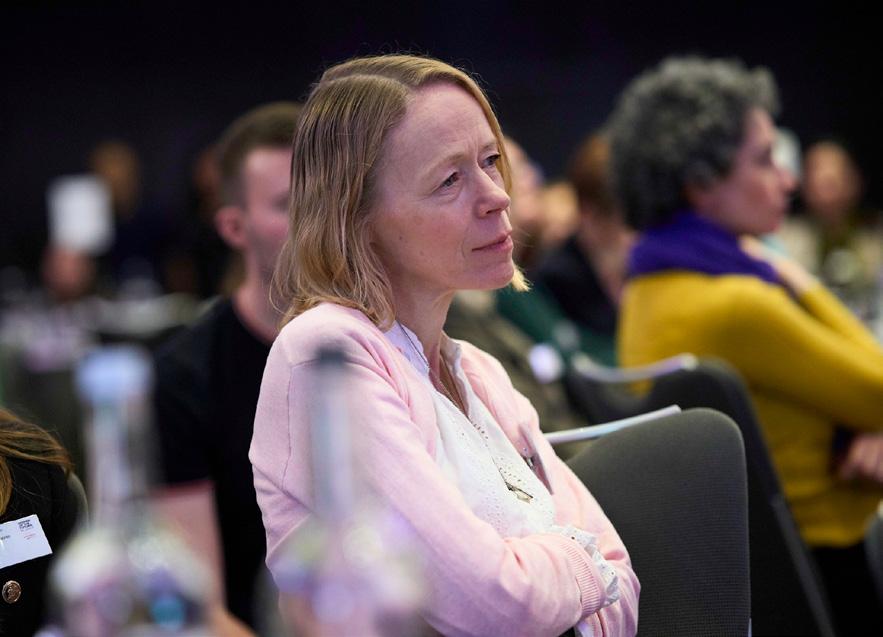
Where am I waiting for certainty before acting?
Identify one decision you’ve delayed due to fear or lack of clarity. What is the smallest next step you can take now?
Are we enabling constructive disagreement?
Observe meetings. Do people challenge ideas openly, or default to agreement? Psychological safety is visible in how dissent is handled.

Ideja Bajra, Founder, Edvance AI:
Your leadership, your empathy, your kindness… are the core.
AI adoption is constrained more by mindset than capability.
Adoption barriers are primarily psychological, not technical. Courage in AI adoption lies in engaging despite uncertainty, not mastering every tool.
The value of AI lies in human judgment, not tool mastery.
AI effectiveness depends on the quality of human input. Leaders who can ask better questions and apply context will outperform those focused solely on technical proficiency.
Leadership differentiation will increasingly be human, not technical.
As AI makes technical capability baseline, distinctly human skills become the point of leverage. Empathy, ethical reasoning, and relational intelligence define leadership effectiveness.
INDIVIDUAL
Am I avoiding AI due to perceived gaps?
Instead of mastery, start with one use case in your work. What repetitive task could AI support this week? ORGANISATIONAL
Are we building judgment alongside adoption?
Beyond tools, are teams trained on when not to use AI, ethical considerations, and decision-making frameworks?

Rob Stephenson, Speaker, Social Entrepreneur, and Wellbeing Advocate:
Energy is the currency of courageous leadership.
Leadership performance is constrained by energy, not capability.
The primary limiter of performance is sustainable cognitive, emotional, and physical capacity. This challenges traditional norms that equate leadership with endurance, particularly in volatile environments where depletion undermines decision-making.
Burnout reflects system design failures, not individual weakness.
High levels of stress are widespread, pointing to structural rather than personal shortcomings. Underperformance is often misdiagnosed as lack of ability when it signals depleted capacity. Courageous leadership requires addressing the conditions that drive burnout, not solely expecting individuals to absorb them.
Leadership accountability includes shaping energy cultures.
Leadership is also defined by the environments it creates. This places responsibility on leaders to design for psychological safety, recovery, and sustainable performance.
INDIVIDUAL
Am I managing my energy intentionally?
Track when you feel most and least effective during the day. What patterns show up, and what needs to change?
ORGANISATIONAL
Are we designing for sustainable performance?
Look at workload, meeting culture, and expectations. Are high performers rewarded with more work, or protected for longevity?

Kai Adams, Managing Partner, Green Park:
Learning velocity is much more important than static expertise.
Career transitions require identity shifts, not just role changes.
Transitions are fundamentally about redefining self, not simply moving between positions. Resistance often stems less from external barriers and more from the difficulty of letting go of established professional identities.
Careers are evolving from linear paths to adaptive portfolios.
Traditional upward trajectories are giving way to more fluid, non-linear models. Progress is increasingly defined by lateral movement, skill stacking, and the ability to navigate across functions and disciplines.
Learning velocity is the new measure of professional value.
As knowledge depreciates more quickly, static expertise becomes less reliable. Employers now prioritise adaptability. The ability to learn, unlearn, and reconfigure becomes the defining capability in a rapidly shifting environment.
INDIVIDUAL
What identity am I holding onto that may be limiting me?
Consider labels like “I’m not technical,” or “I’ve always done X.” Which of these assumptions may no longer serve you?
ORGANISATIONAL
Are we enabling non-linear career paths?
Review how success is defined. Are lateral moves and skill-building valued, or only upward progression?
Failure is a mechanism for progress.
Leadership in volatile environments requires normalising failure as part of the path, not something to be avoided.

As Tom Ilube CBE, Chair of the King’s Trust UK and Chair of LINK states:
Failure is the path… it is not possible to get to success without passing through failure.
Progress depends on iterative resilience, while confidence is often built through responsibility rather than certainty.
Clarity of purpose matters more than attachment to process or persona.
Effective leaders remain anchored to outcomes while adapting their approach. Tom captures this distinction:
I am very attached to the goal… I am not attached at all to the path.
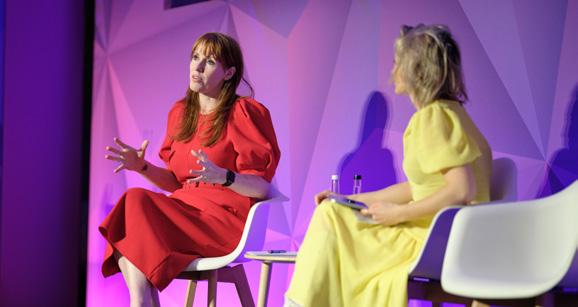
This is reinforced by The Rt. Hon. Angela Rayner, Member of Parliament for Ashton-upon Lyne, who emphasises authenticity as a source of strategic credibility. Together, this signals that leadership requires both directional clarity and personal alignment, not rigid adherence to predefined methods or archetypes.
Leadership authority is constructed through voice, narrative, and visibility.

Authority is no longer assumed. It is built through how leaders communicate and position themselves. For Angela, this also extends this as a responsibility:
You’ve got a voice… use it.
Leadership voice functions not only as self-expression, but as representation for others, particularly in environments where visibility remains uneven.
Courage involves reclaiming legitimacy and challenging structural bias.
Both speakers highlight that leadership barriers are not solely internal. Tom reframes imposter syndrome, and Angela underscores this with persistent inequities that women face. Courageous leadership therefore requires both internal conviction and external challenge of the systems that shape access, perception, and authority.
Impact is driven collectively through networks and mutual reinforcement.
Leadership effectiveness is increasingly networked rather than individual. Angela operationalises this through active support in “donutting.” In complex environments, progress depends on coordinated action, sponsorship, and deliberate reinforcement of others, not isolated achievement.
Am I more attached to my method or my outcome?
Reflect on a recent challenge. Were you resistant to changing approach, even when results weren’t working?
Do we create space for diverse voices to be heard?
Who speaks most in meetings? Who is interrupted or overlooked? Visibility often signals inclusion.


Louise Prashad, BCAv
Corporate Partnerships Manager,
Special Olympics GB and Founder, Second Chance Project in conversation with:
Shabnam Khan Dawran
BBC Journalist
BBC Pashto World Service in conversation with:


Vicki Treadell CMG, MVO
Vice Chair of the Women of the Future Programme and Former British Senior Diplomat
Ash Alexander-Cooper OBE
Former elite military unit commander and leadership and resilience expert
Courage is defined by what is built after disruption, not the disruption itself.
Across both Louise and Shabnam’s stories, hardship is the starting point, not the focus. Courage lies in intentional reconstruction, where leadership is shaped not by the crisis itself, but by the decisions that follow. It is expressed in what individuals choose to rebuild, reshape, and pursue in its aftermath.
Purpose emerges through adversity and is sustained through responsibility to others.
In both journeys, meaning is formed through lived experience and carried forward through service. Purpose becomes anchored in responsibility, whether giving voice to others or transforming personal loss into broader impact. Courageous leadership, therefore, is inherently relational, as it extends beyond self to those it serves.
Kindness and resilience are found in the collective.
Kindness is expressed through advocacy, protection, and commitment to others’ futures. Louise channels grief into platforms that support others, while Shabnam stands for the dignity and rights of others even under threat.
Resilience in turn, is not solely individual. It is enabled by support systems, relationships, and community. Leadership is sustained through this reciprocity, where individuals both draw from and contribute to the networks that allow them to continue leading under pressure.
How have my challenges shaped my purpose?
Identify one difficult experience. What perspective or strength did it develop that you now apply in your work?
Do we value lived experience in leadership?
Are leaders encouraged to share personal journeys, or expected to present only polished success?
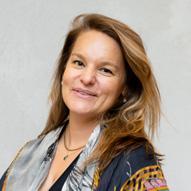
Nikki Briant Associate Partner, Oaklin and Tag Rugby World Champion
The session highlights a critical leadership discipline: effectiveness is not determined by over-functioning, but by how well they distribute ownership. Courageous leadership involves holding boundaries, asking better questions, and creating conditions where others can take responsibility. In practice, this means:
Protecting ownership by resisting the impulse to take on work prematurely.
Avoid defaulting to “let me take a look.” Instead, pause and clarify ownership before engaging. Ensure that problems remain with the appropriate individual or team to prevent bottlenecks and preserve accountability.
2 3
Using questions to build capability rather than provide solutions.
Shift from solving to guiding. Ask: What is the problem? Who owns it? What have you tried? This approach strengthens decision-making in others while maintaining leadership capacity.
Redefining kindness as enabling responsibility, not absorbing pressure.
Set clear boundaries even when it feels uncomfortable. Support others by helping them think and act, rather than taking over. This creates more sustainable performance across the team. 1
INDIVIDUAL
Where am I taking on responsibility that isn’t mine?
Notice when you say “I’ll fix it” or step in too quickly. What would happen if you asked a question instead?
Are we reinforcing ownership or dependency?
Do team members bring solutions, or only problems? This often reflects how leadership responds.

Elif Shafak British - Turkish Novelist, Political Scientist & Activist
in conversation with:

Sadiq Khan Mayor of London
The greatest leadership risk today is not anxiety, but apathy.
Elif Shafak, award-winning Novelist and Activist, warns:
If anxiety becomes apathy, it would be much more dangerous.
Anxiety signals engagement. Leadership requires sustaining care, not eliminating discomfort.
Connection must be intentional.
Through the concept of polycrisis, Elif challenges siloed thinking. Climate, gender, inequality, and conflict are intersectional issues.
Fragmentation requires deliberate effort to build bridges across issues and perspectives. Leadership must actively create coherence across increasingly complex systems.
Wisdom and empathy are leadership differentiators.
Elif draws a critical distinction:
There’s too much information, a little knowledge, and even less wisdom.
Speed and volume are not advantages if they erode depth. Leaders must actively resist the pressure to react constantly, and instead cultivate reflection, understanding, and emotional intelligence. 1 2 3
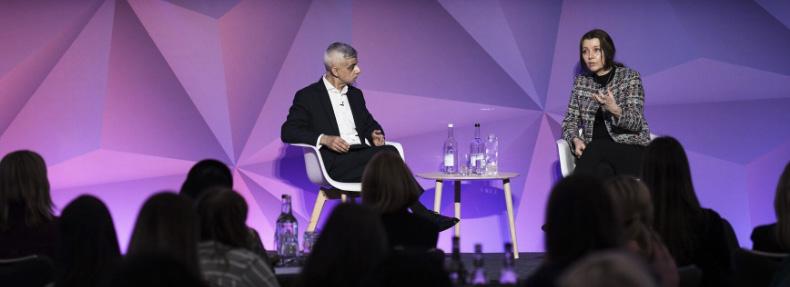
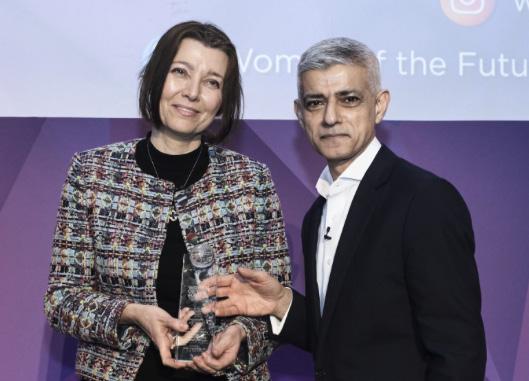

How am I creating space for reflection in a fast-paced environment?
When was the last time you paused to think deeply without reacting? What practices could help you do this regularly?
Are we intentionally building connection across silos?
Look at collaboration patterns. Are teams working in isolation, or are there deliberate opportunities for cross-functional dialogue?

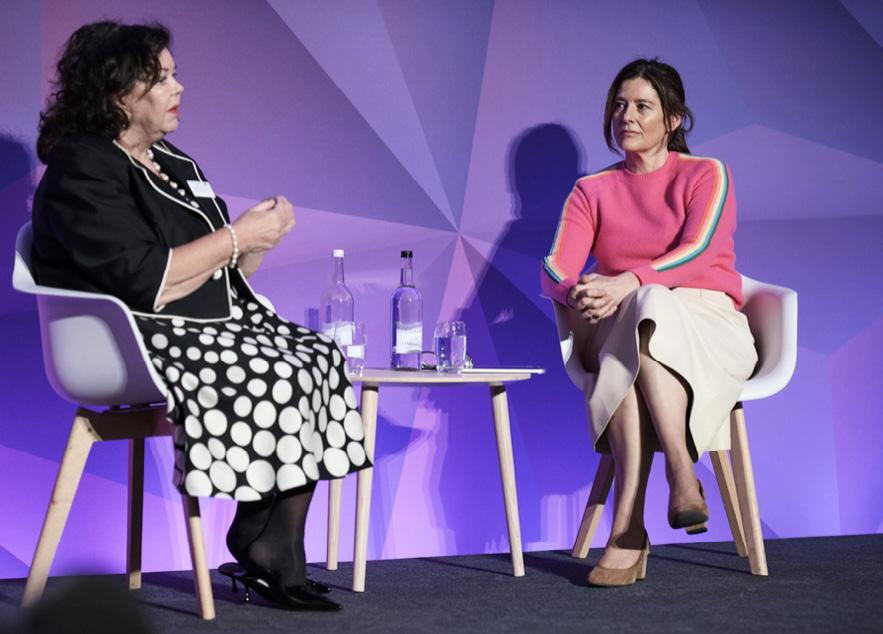
Miriam González Durántez
International Trade Lawyer & Founder, Inspiring Girls International
in conversation with:

Dame Karen Pierce DCMG, UK Special Envoy to the Western Balkans
The discussion reflects a broader erosion of the mechanisms that once enabled coordinated global action. While institutions, expertise, and frameworks still exist, their ability to respond to increasingly complex and interconnected challenges has weakened.
In this context, courageous leadership is no longer defined by vision alone, but by these calls to action:
Build mechanisms that convert intent into action at scale.
Miriam González Durántez, International Trade Lawyer and Founder of Inspiring Girls International, highlights that scaling impact remains the core challenge.
Leadership must design systems that translate vision into sustained outcomes.
Engage and reform imperfect systems rather than bypass them.
Global institutions remain necessary but increasingly strained. The leadership challenge is to work within these imperfect structures while pushing for reform.
Deliberately engage across difference to unlock progress.
Alignment alone does not drive change. Effective leadership requires intentional engagement across differing perspectives, designing spaces for constructive disagreement and expanding consensus beyond familiar circles. 1 2 3
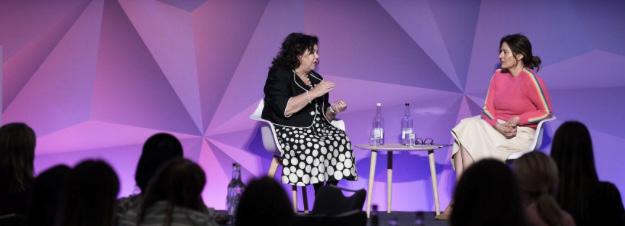
Where am I disengaging from complexity?
Identify an issue you’ve avoided because it feels too complex or political. What is one way to re-engage constructively?
Are we equipping leaders to work within imperfect systems?
Do we train leaders to navigate constraints, or expect ideal conditions before acting?
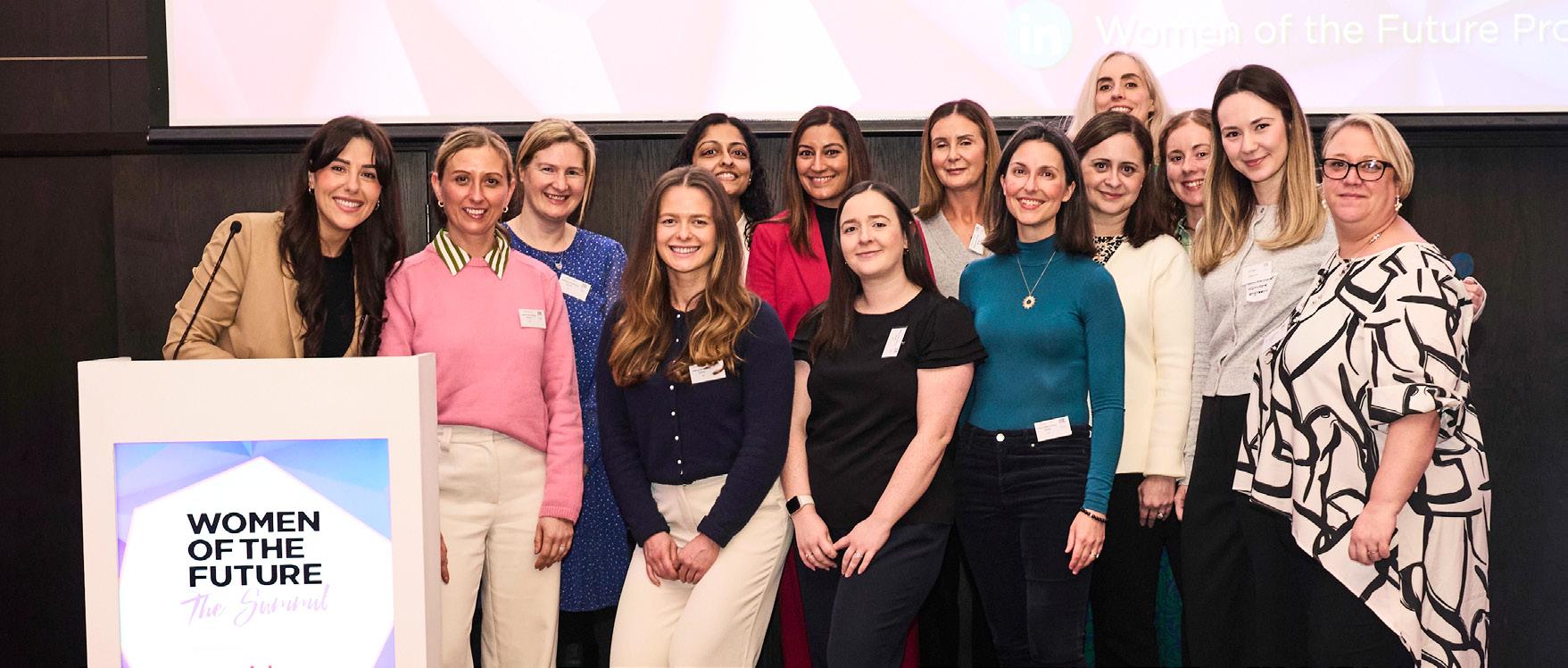
The Women of the Future Summit 2026 makes clear that leadership is undergoing a structural redefinition. In a world shaped by uncertainty, fragmentation, and accelerating change, courage is no longer expressed through isolated acts or individual authority. It is embedded in everyday decisions, sustained through relationships, and exercised through systems that enable collective action.
Ultimately, courageous leadership is the discipline to act despite ambiguity, to stay engaged despite discomfort, and to design systems that extend beyond individual influence and concentrated benefit. The challenge ahead is not simply to navigate change, but to deliberately imagine and shape what comes next with clarity of purpose and a sustained focus on collective progress.

Pinky Lilani CBE DL, Founder & Chair, Women of the Future Programme:
Progress has always been driven by those who dared to challenge expectations… and believed that change was not only possible, but necessary.