ABOUT THIS REPORT
In 2022, Women Moving Millions launched a Measurement, Evaluation, and Learning Program to better understand our impact on our community of members and the gender-lens philanthropy they practice. A key component is an annual survey. These systematic assessments help us to learn how our members’ giving practice is growing or shifting, determine where their priorities currently lie, and quantify our impact on their personal growth, philanthropic leadership, advocacy, and grantmaking.
Early surveys helped us to refine and validate WMM’s theory of change: to accelerate scalable and abundant gender-lens philanthropy among WMM members and the field so that we can realize our mission of catalyzing unprecedented resources for a gender-equal world. This year’s survey, conducted in January 2026 to evaluate members’ activities and priorities in 2025, explored how they “met the moment” in an unprecedented year.
METHODOLOGY
In partnership with ORS Impact, the firm that helped build our measurement and evaluation strategy and conducted our 2022 baseline assessment, WMM administered our fourth membership survey to all active members; 52% completed it in full, and an additional 17% provided partial responses. The survey responses were combined with information and data collected throughout the year. Together, these sources serve as a strong representation of the current state of the WMM community, and underlie the trends, narratives, and insights relayed in this report.
Our 400-strong membership has collectively committed over $1.5B to improve the lives of women and girls.
In 2025, the global landscape for gender equality shifted in profound and destabilizing ways. Across geographies, the erosion of democratic norms and coordinated attacks on gender and civil society created a more complex and constrained environment for philanthropy. Funding streams narrowed, needs intensified, and the organizations on the frontlines of advancing women’s rights faced increasing uncertainty. Against this backdrop, Women Moving Millions began the year with a clear hypothesis: its members would not retreat in the face of disruption, but were instead prepared to embrace risk, adapt their strategies, and move resources through new and more responsive approaches.
That hypothesis proved correct. In 2025 alone, members moved $214M to gender equality causes—increasing 2024 giving by a staggering $41M.
In a year when many grantees indicated that donors in the wider philanthropic space paused or pulled back—with the Center for Effective Philanthropy reporting that nearly 70% of nonprofits reported funding cuts from at least one source in 2025—WMM members moved forward with greater clarity and conviction. What emerged over the course of the year was not simply a set of substantial changes in giving, but a deeper story about how those changes came to be, the impact these gifts are having, and why this community responded differently than the broader philanthropic field.
WMM members are deeply integrated within the gender equality movement. Over years of sustained engagement through WMM programming, peer connection, and direct relationships with gender equality organizations and leaders, members have developed a profound understanding of their role not simply as donors but as philanthropic leaders within the movement itself.
This connection and commitment became more pronounced and more necessary than ever in 2025.
As organizations faced reductions in foreign aid budgets and domestic programs, WMM members leaned into trust-based practices and in many cases expanded support to cover core operations and urgent needs. When threats to gender equality mounted, members stayed close to their grantees, maintaining open lines of communication, listening to what leaders said they needed, and adjusting their giving practices accordingly. The result was philanthropy that moved with the moment: flexible, often unrestricted, and rooted in trust rather than transaction.
Members’ increased giving was not incidental; it was the result of sustained investment in building the knowledge, relationships, and confidence required to act decisively in uncertain times.
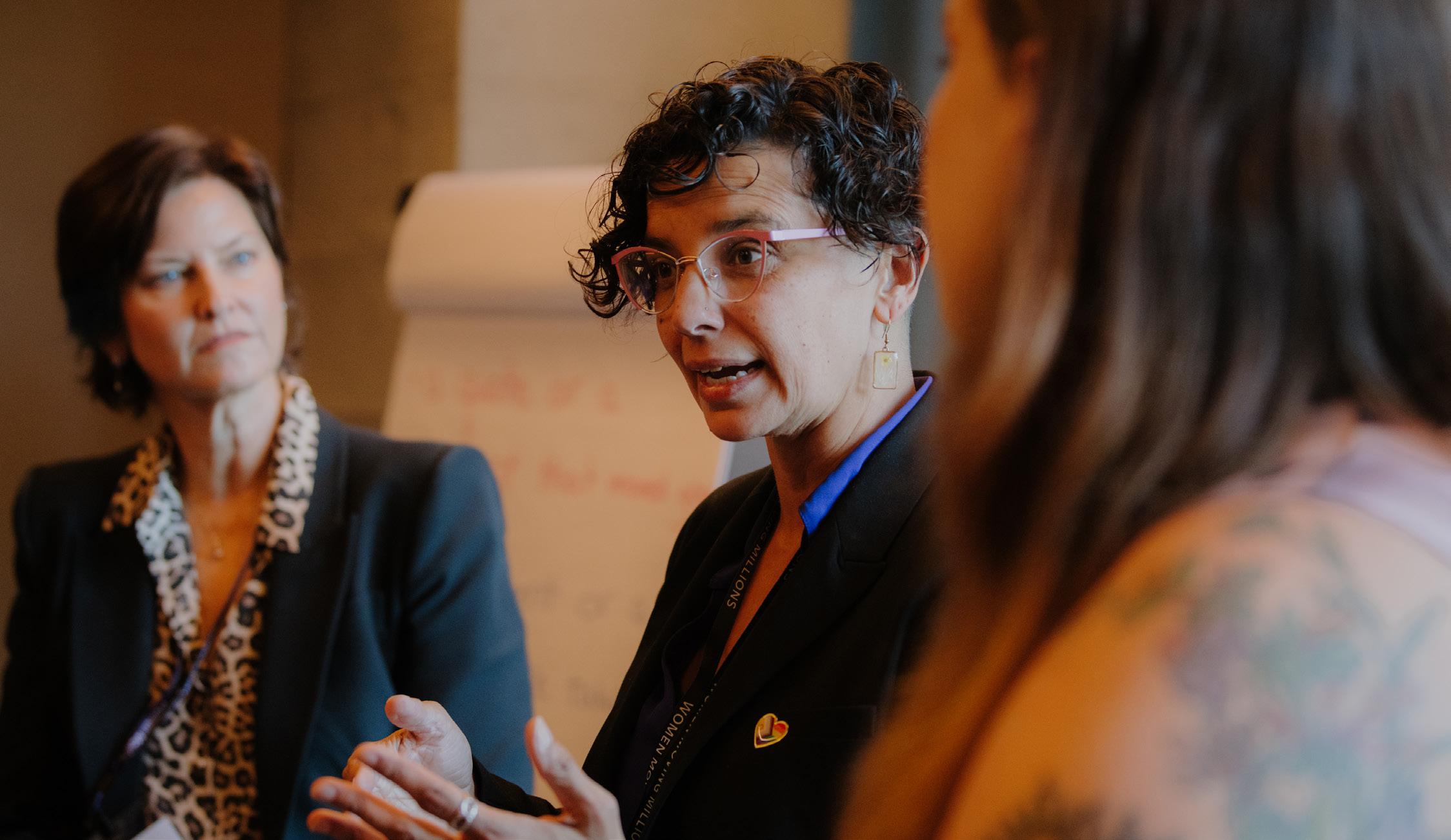
For nearly two decades, WMM has been a catalyst for collective action and has intentionally built a community grounded in trust, shared learning, and deep connection. In 2025, that foundation proved essential. As the external environment grew more volatile and gender-lens philanthropy became more complex, members turned to WMM for guidance on where their resources could have the greatest impact. Through curated programming, small cohort engagement, and direct connection with movement leaders and experts, members were able to make sense of these challenges together.
WMM functions not only as a network, but as enabling infrastructure for philanthropy that is faster, better informed, and more responsive to need.
The impact of WMM is in the community. It’s the trust and relationships built within WMM that inspire us to give and empower us to lead.
— JEN RISHER
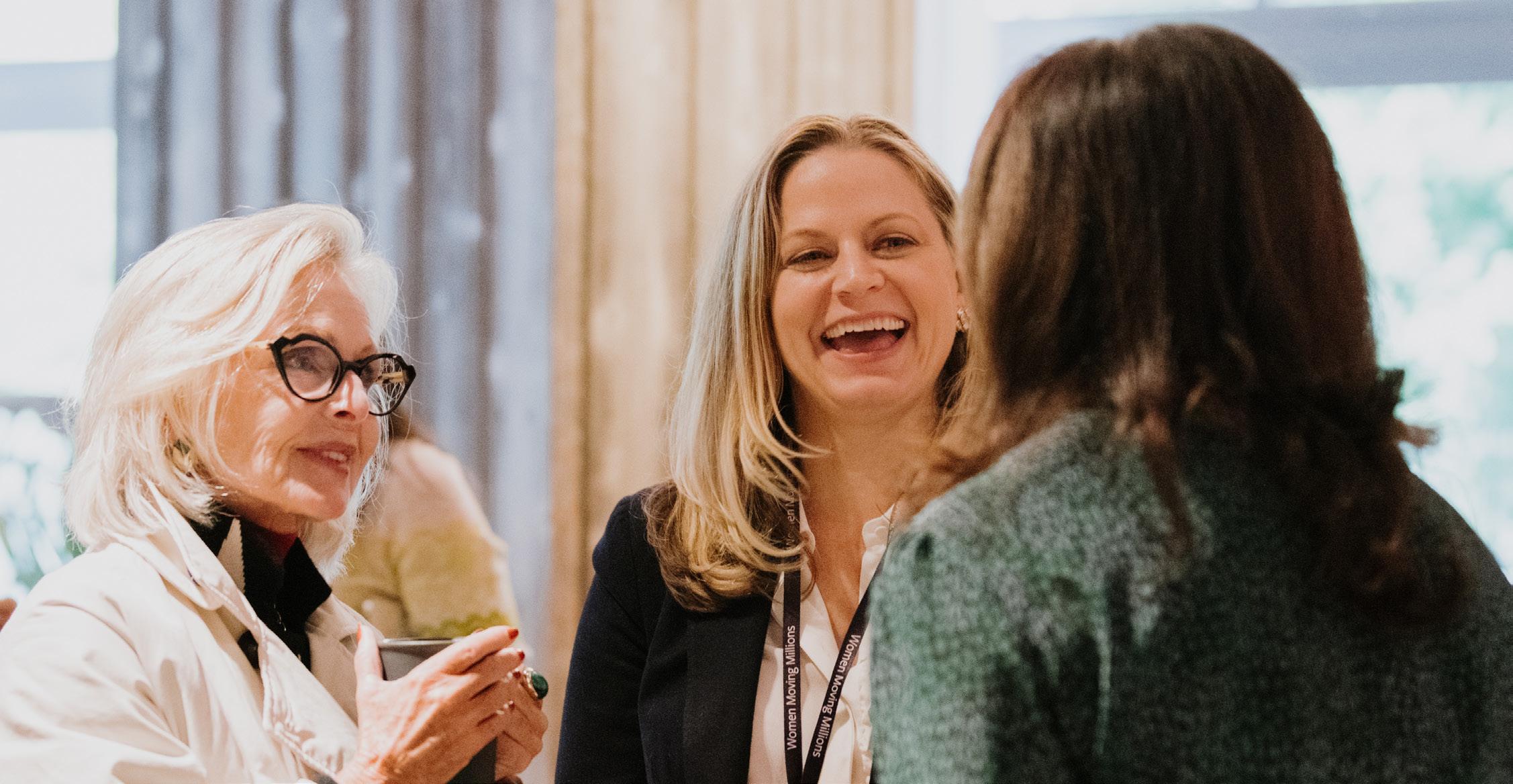
This pattern points to a critical dynamic: in moments of disruption, connection becomes a multiplier. The more complex the environment, the more members turned toward community, and the more that community enabled meaningful, coordinated action.
The result of this action is clear: Members significantly increased their financial commitment to gender equality. They continued to give—and give more—to both domestic and global causes, signaling a recognition of the interconnected nature of global gender equality challenges. They participated more deeply in gender lens investing and supported women-led companies. They expanded the focus areas of their giving to both address specific issues--including sexual and reproductive health and rights, gender-based violence, and economic inclusion--and strengthen the foundation for social change, from education to the arts. Several members highlighted how WMM supported them in learning about, or engaging more deeply in, new or different areas.
Across all of these changes, one conclusion is unmistakable: WMM members are not passive participants in the philanthropic ecosystem; they are active stewards of change who are willing to move resources with urgency, try new approaches, and engage deeply with the issues they care about.
KEY FINDINGS
ɦ In a year marked by instability and growing threats to gender equality and democracy, WMM members responded with deeper engagement rather than retreat—collectively moving $214 million to gender equality causes in 2025.
ɦ Median giving to gender equality rose 50% to $450K, and three-quarters of members adapted how they gave in response to the moment, increasing unrestricted and multi-year support.
ɦ Members deepened their connection to the broader gender equality movement by staying closer to grantees and supporting organizations through funding, advocacy, strategic partnership, and solidarity.
ɦ Community proved essential infrastructure for action. As philanthropy became more complex, 94% of members turned to WMM for information, collaboration, and support.
GIVING DIFFERENTLY
In 2025, members significantly increased their financial commitment to gender equality, marking a notable shift after several years of relatively consistent giving. The median size of members’ total contribution to gender equality rose to $450K, a 50% increase over the previous two years.
This growth reflects not only increased giving, but a recalibration in how members are thinking about the role their resources can play. Three-quarters reported changing how they gave in 2025, with many citing the current funding landscape and mounting threats to gender equality and democracy as key drivers. These dynamics influenced funding strategies and shaped decisions about where dollars were directed: among members who reported shifting their giving in 2025, 82% said the current funding landscape and/ or threats to gender equality and democracy influenced those changes.
77% of members reported changing how they gave in 2025, with many citing the current funding landscape and mounting threats to gender equality and democracy as key drivers.
Changes in scale were matched by changes in approach. Members adapted their giving —emphasizing flexibility, durability, and responsiveness—most often through increased unrestricted support and multi-year commitments. This illustrates a continued move toward trust-based philanthropy, where relationships and real-time understanding of need guide funding decisions.
These approaches were reflected in how members structured their largest gifts and in what they identified as their most meaningful contributions. While the median largest gift increased, most members did not concentrate their giving in a single grant; instead, they maintained a diversified, portfolio-based approach, distributing resources across multiple organizations—what we refer to as ecosystem philanthropy.
At the same time, what members identified as their most meaningful gifts points to something deeper than scale alone—these were often the contributions most closely aligned with the moment, where personal conviction, trust in grantees, and a desire to respond to real-time challenges converged into action.
Members also reported increasingly recognizing investing as a complementary pathway for impact that allows them to align more of their capital with their values. While still an emerging area of focus, there is growing attention to how investments can be deployed alongside philanthropy to advance gender equality, signaling an opportunity for deeper integration of financial strategies in the years ahead.
The median size of members’ total contribution to gender equality rose to $450K, a 50% increase over the previous two years.
FOCUS AREAS
Members adjusted where they focused their support, expanding across a wider range of issue areas while maintaining continuity in their core priorities. Across responses, a consistent theme was urgency, with members pointing to increased need, funding gaps, and the erosion of protections as reasons for sustaining or deepening their focus. As one member shared, “Everything feels urgent. And steady giving is critical.”
On average, members supported five different focus areas within their gender equality portfolios. For many, this breadth was shaped by deeper learning and exposure through WMM. Members described being introduced to new issues and opportunities through programming and peer exchange, with one noting that the community “nudged me to engage more deeply on certain issues,” and another sharing that WMM “introduced me to ideas and partners who are working on solving problems I didn’t know existed.”
Sexual and reproductive health and rights (SRHR) remained the most widely supported issue area, reflecting the urgency created by the rollback of women’s rights, with members describing a sharpened focus on autonomy and access. “[WMM] kept me focused on women’s reproductive health and rights,” one member shared, while another emphasized how increased awareness of threats to women’s autonomy propelled them to act more decisively. Beyond SRHR, the most commonly funded issues were economic inclusion and empowerment, followed by women’s health as well as education, with the latter described by some as foundational to long-term opportunity and agency.
As one member put it, “I feel strongly about educating and empowering women to understand their potential contributions to society as well as the power they can obtain through education.”
Members also expanded their giving into areas that reflect a broader view of the drivers of gender equality. Support for arts and culture, immigration and refugee assistance, and girls and adolescent rights all increased meaningfully. For some members, these shifts underscored growing concern about the social and political climate. “While these challenges have been apparent for a long time, the cutting of funds and the sheer hostility toward immigrants is especially urgent right now,” one member said. Arts and culture were seen as critical tools for storytelling and narrative change. “In such a divisive world, the arts offer belonging, connectivity and understanding,” one member noted, while another observed that “storytelling through arts and culture is an effective tool for engagement and advocacy.”
Other issue areas remained steady, including racial equity and justice, climate, and gender-based violence, suggesting sustained commitment rather than reactive shifts. Meanwhile, giving to political and civic engagement and democracy increased, underscoring that members understand the interconnected nature of democracy and gender equality. As one member put it, “Women’s rights disappear in an autocratic state.”
Women’s rights feel under threat with a particular urgency in this moment, and efforts to elevate women and girls in a hostile landscape are more important than ever.
— CAREY JONES
PERCENTAGE OF MEMBERS MAKING GRANTS TO FOCUS AREA IN 2025
SEXUAL AND REPRODUCTIVE HEALTH AND RIGHTS
ECONOMIC INCLUSION AND EMPOWERMENT
EDUCATION, STEAM, HIGHER EDUCATION
WOMEN’S HEALTH (BEYOND SRHR)
ARTS, MEDIA, AND CULTURE
GENDER-BASED VIOLENCE
GIRLS AND ADOLESCENT RIGHTS
RACIAL EQUITY AND JUSTICE
IMMIGRATION AND REFUGEE ASSISTANCE
CLIMATE
POLITICAL AND CIVIC ENGAGEMENT; DEMOCRACY
LGBTQ+ RIGHTS
GIVING DIFFERENTLY
INTERNATIONAL GIVING
Members also shifted how they directed their geographic giving in 2025. After several years of steady growth in international philanthropy—from 46% of members giving globally in 2022 to 75% in 2024—the share of members directing resources internationally declined modestly to 66%. This recalibration likely reflected the heightened urgency and concentration of crises in the United States, where many members chose to focus more of their resources in response to immediate domestic needs.
At the same time, overall international giving among those who remained engaged globally increased substantially. The median international gift rose to $106K, more than three times the 2024 median of $30.8K, and half of the members reported increasing their contributions, often dramatically. Thirty-five percent of members’ largest gifts went to internationally focused organizations, and more than half of those members identified those gifts as among the most meaningful they made all year.
Together, this points to a more concentrated and intentional approach to global philanthropy. Fewer members gave internationally, but those who did made deeper, more significant investments. Rather than signaling withdrawal, the data reflected a rebalancing, with members making increasingly deliberate decisions about where their global giving could have the greatest impact.
International giving also revealed distinct priorities. SRHR along with economic inclusion and empowerment were the top priority areas across all members, regardless of whether they gave internationally or domestically. Beyond these shared top two issues, international and domestic givers diverge: among international givers specifically, girls’ and adolescent rights and gender-based violence ranked third and fourth, while domestically, education ranked third, followed by women’s health beyond SRHR.
INTERNATIONAL GIVING PRACTICES
Members who gave internationally
Increase in median international giving from 2024
LARGEST AND MOST MEANINGFUL GIFTS
Themes of diversification, responsiveness, and intentionality were evident in how members approached their largest and most meaningful gifts.
The median largest individual gift increased to $115K, a 16% jump from the previous year, with 31% of members directing more than half of their gender equality giving through a single largest gift. The largest gift as a share of members’ total gender equality giving remained relatively unchanged, suggesting that as members’ top gifts grew, their overall giving expanded as well. In most cases, members’ largest gifts represented less than half of their total 2025 giving to gender equality, reinforcing a diversified, portfolio-based approach to philanthropy.
While 40% said their largest gift was their most meaningful, others emphasized impact, urgency, and personal connection. Many attributed their most meaningful gifts to supporting underfunded areas or organizations under threat, noting that their gifts were meaningful precisely because they addressed urgent gaps created by funding cuts or political pressure.
“It wasn’t transactional—it was partnership,” one member explained, capturing the relational and trust-based nature of these investments. Another member emphasized the power of proximity and connection, describing how “connecting face-to-face with the girls ...created the kind of human exchange that embodies my belief that change happens at the speed of relationships.” Members who frequently cited impact as the defining feature of meaningful giving pointed to a “deep knowledge of how [the gift] is used” and witnessing firsthand how programs shape lives and futures.
Others highlighted the importance of responding to underfunded or threatened areas, noting that their gifts were meaningful precisely because they addressed urgent gaps created by funding cuts or political pressure.
Across both largest and most meaningful gifts, members are clearly making more intentional decisions about where and how to deploy resources, guided by context, connection, and commitment to strengthening the gender equality ecosystem.
MEMBERS’ LARGEST GIFTS
$115K 16%↑
Median largest individual gift from 2024
62 %
Members who reported that the current landscape influenced who they gave to
GIVING DIFFERENTLY
POLITICAL GIVING AND ADVOCACY
Charitable giving remained the primary vehicle through which members advanced gender equality in 2025, even as some explored additional pathways for influence and impact. Just over one-third of members gave to 501(c)(4) organizations, though these contributions represented a small share of overall grantmaking and were significantly smaller than 501(c)(3) gifts.
For some, the current political climate prompted a greater openness to these approaches, particularly in response to threats to women’s rights, though this remained a complementary strategy rather than a central one.
Forty-two percent of members reported contributing to women or gender-expansive political candidates in 2025, which, while more common than c4 giving overall, declined in this off-election year. Members who did give emphasized the importance of representation and the role of women leaders in shaping more equitable policies.
36%
members who gave to 501(c)(4) organizations
42%
members who contributed to women or gender-expansive political candidates
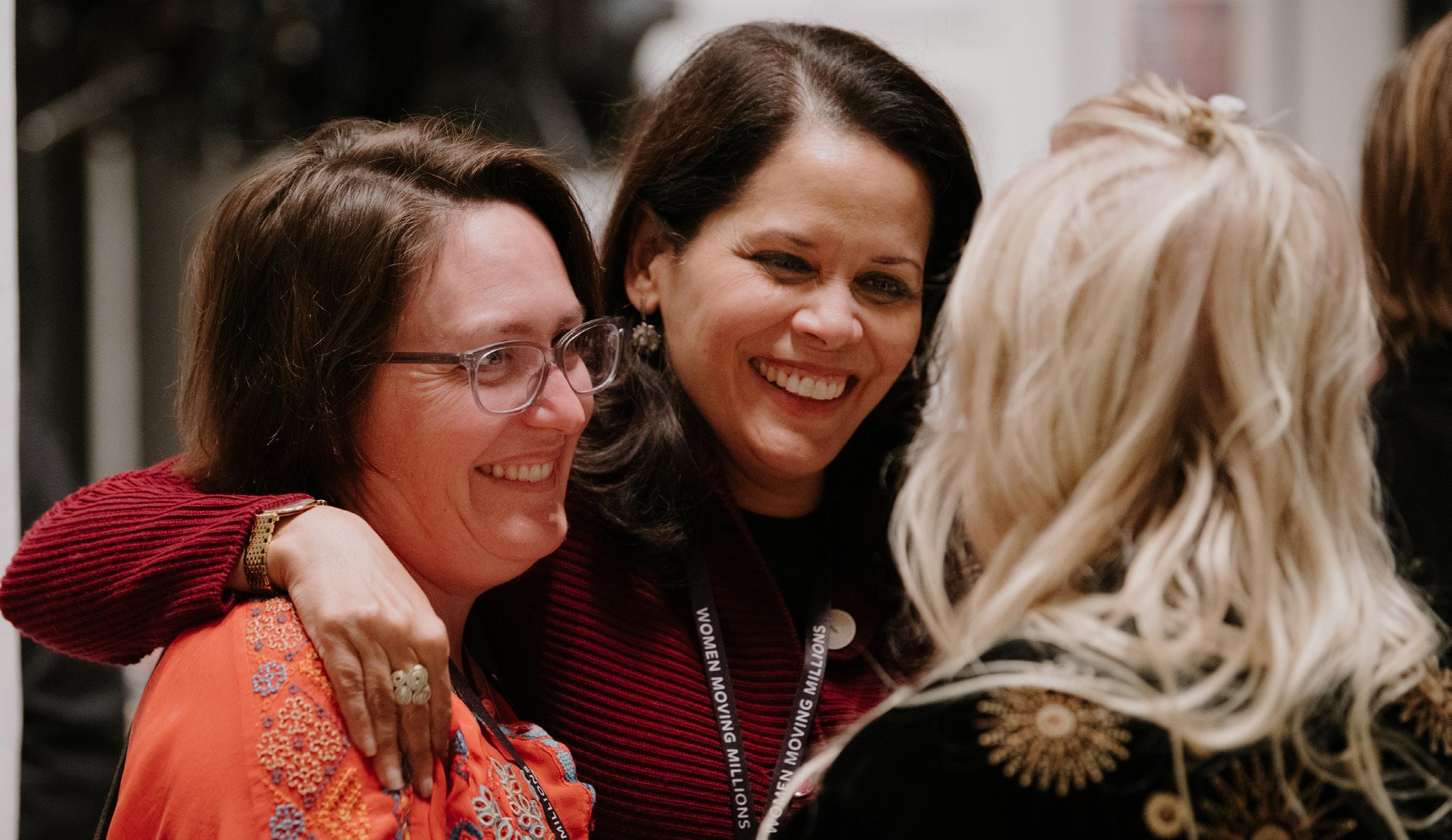
In these difficult times of backlash against women’s rights we all need a place to feel welcome, encouraged and inspired.
— STACEY KEARE
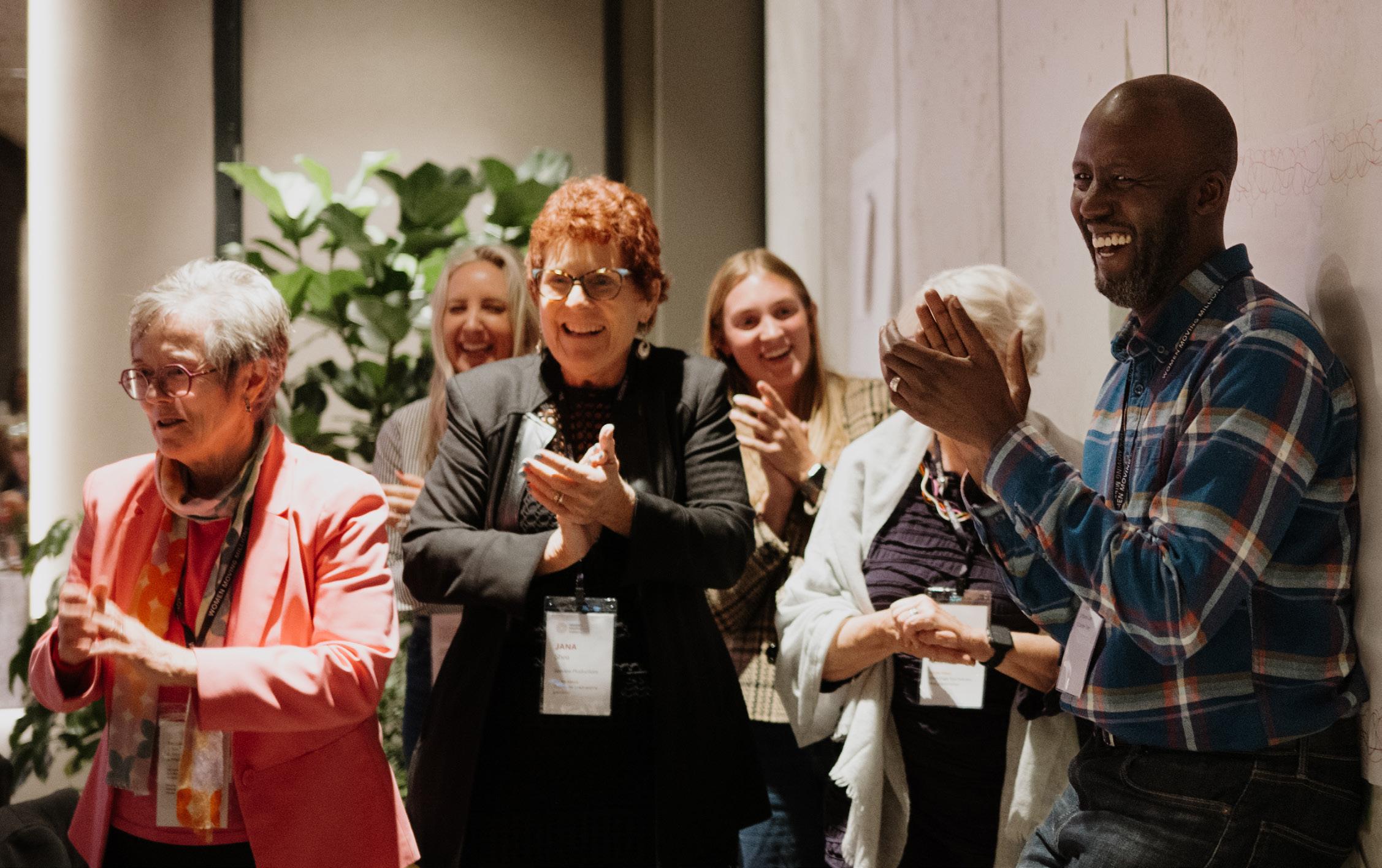
It makes social and financial sense to give women more money and more power.
— JEN RISHER
GENDER-LENS INVESTING
Members are increasingly exploring how to deploy capital through investing as another avenue for advancing gender equality. Forty-four percent of members engaged in gender-lens investing, totaling $41.2M with a median investment of $229K. Activity varied widely in scale, with investments mostly directed toward pooled fund vehicles (68%), and blended capital approaches (43%), with a focus on areas such as women’s health and economic inclusion.
Members often described their motivations in terms of both impact and opportunity, pointing to the persistent underinvestment in women-led ventures and the potential for strong financial and social returns. “Women drive higher returns and are more consistently values-based leaders than their male counterparts,” one member noted.
$41.2M
Together, these patterns suggest an expanding toolkit. While philanthropic giving remains at the core of their commitments to gender equality, members are increasingly considering how advocacy, political engagement, and investing can complement that work. This signals an evolution toward a more integrated approach, where multiple forms of capital are deployed in service of advancing gender equality over time.
The sections that follow further examine how WMM has built and sustained the conditions for giving and deepened members’ connections to the gender equality movement, and how this architecture has translated into strengthened community, and ultimately, action.
members engaged in gender-lens investing total gender-lens investment in 2025 44%
LEANING INTO COMMUNITY
Just as members shifted their philanthropic practices, they also transformed how they work with one another. An overwhelming majority of the membership reported drawing on the support WMM provided.
Ninety-four percent of members reported leaning into the community in some way, and 46% said that they had leaned in more than in previous years. Rather than acting in isolation, members are increasingly operating as part of a connected ecosystem—sharing knowledge, aligning strategies, and moving resources together. In a moment defined by urgency and fragmentation, this ability to collaborate with intention and speed is a critical lever for impact.
Members who were newer to gender-lens philanthropy or navigating heightened complexity were especially likely to turn to WMM as a resource, with 67% reporting they used the community to better understand the landscape and shape their response. Forty-seven percent of those navigating complexity reported leaning in more than in previous years.
What stands out is not only how many members engaged, but how they experienced that engagement. Those who leaned in more were much more likely to feel encouraged by WMM to sustain or increase their philanthropic commitment, draw strength, encouragement, or motivation from WMM to inform their philanthropy, and feel steadied or supported by WMM.
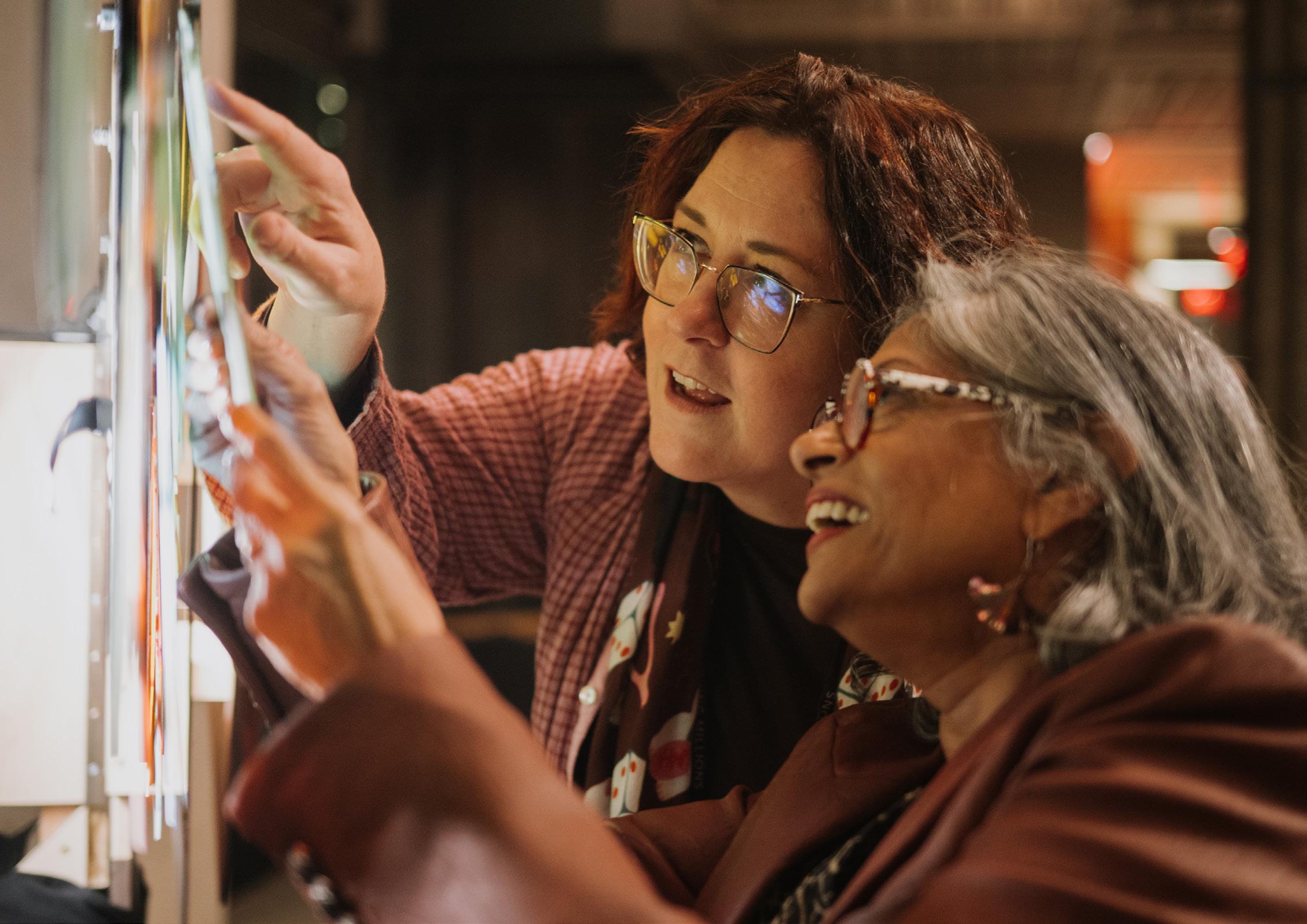
WMM offers a rare combination of trusted community, thoughtful leadership, and meaningful engagement. It’s a space where relationships form organically, learning is constant, and generosity—of time, ideas, and resources—feels both supported and impactful.
— MONIKA PAREKH
This is a defining feature of the WMM model: community as infrastructure. In moments of disruption, it proved to be an essential enabler for action, with WMM providing the grounding and the momentum members need to continue showing up, making decisions, and moving resources with intention.
94%
This kind of community does not emerge only in the moment it is needed; it is built, purposefully, over time. Like any movement, it requires sustained investment in relationships, learning, and shared purpose. WMM has cultivated this community over the long term, building a foundation that supports members to act, often in collaboration with each other, with clarity and confidence, when the stakes are highest. I have described WMM as so highly proactive, productive, professional, and multi-faceted. As a change agent inspiring and connecting change agents. The WMM ethos feels authentic and welcoming, yet clearly, confidently powerful, and inspires all members to lead as such.
— SUSAN BYRD
members who leaned into the community
2x
Draw strength, encouragement, or motivation from WMM to inform philanthropy
Feel encouraged by WMM to sustain or increase philanthropic commitment
Feel steadied or supported by WMM during a challenging year
WMM MEMBERS WHO INCREASED THEIR ENGAGEMENT WERE TWICE AS LIKELY TO:
LEANING INTO COMMUNITY
COLLABORATION
One of the hallmarks of the WMM community is collaboration, which continued to play a significant role this year. An overwhelming majority of members, 84%, reported collaborating with another WMM member and 45% of those did so more intentionally than in 2024. These collaborations most often took the form of sharing social capital, exchanging data and insights, supporting one another’s initiatives or partnering with another member on a project—practices that reinforce a culture of openness, trust, and collective problem-solving.
What is notable is how collaboration deepened in response to complexity. Members who reported navigating more demanding philanthropic decisions were more likely to engage with peers, share networks, and co-develop strategies, suggesting that uncertainty acted as a catalyst for connection rather than a barrier. Similarly, those giving at higher levels—more than $500k to gender equality in a year—tended to collaborate more extensively, mobilizing greater financial resources and activating relationships, mentorship, and pooled efforts to amplify impact.
My collaborative efforts have all been born out of conversations with the close relationships I’ve built with my Philanthropic Leadership Program and some of the other WMM members. Through a very active text string as well as reunions with my PLP this year, I’ve learned of opportunities that I’ve gone on to support.
— JEN RAININ
84%
members who collaborated with at least one other member
82%
members who participated in WMM programming
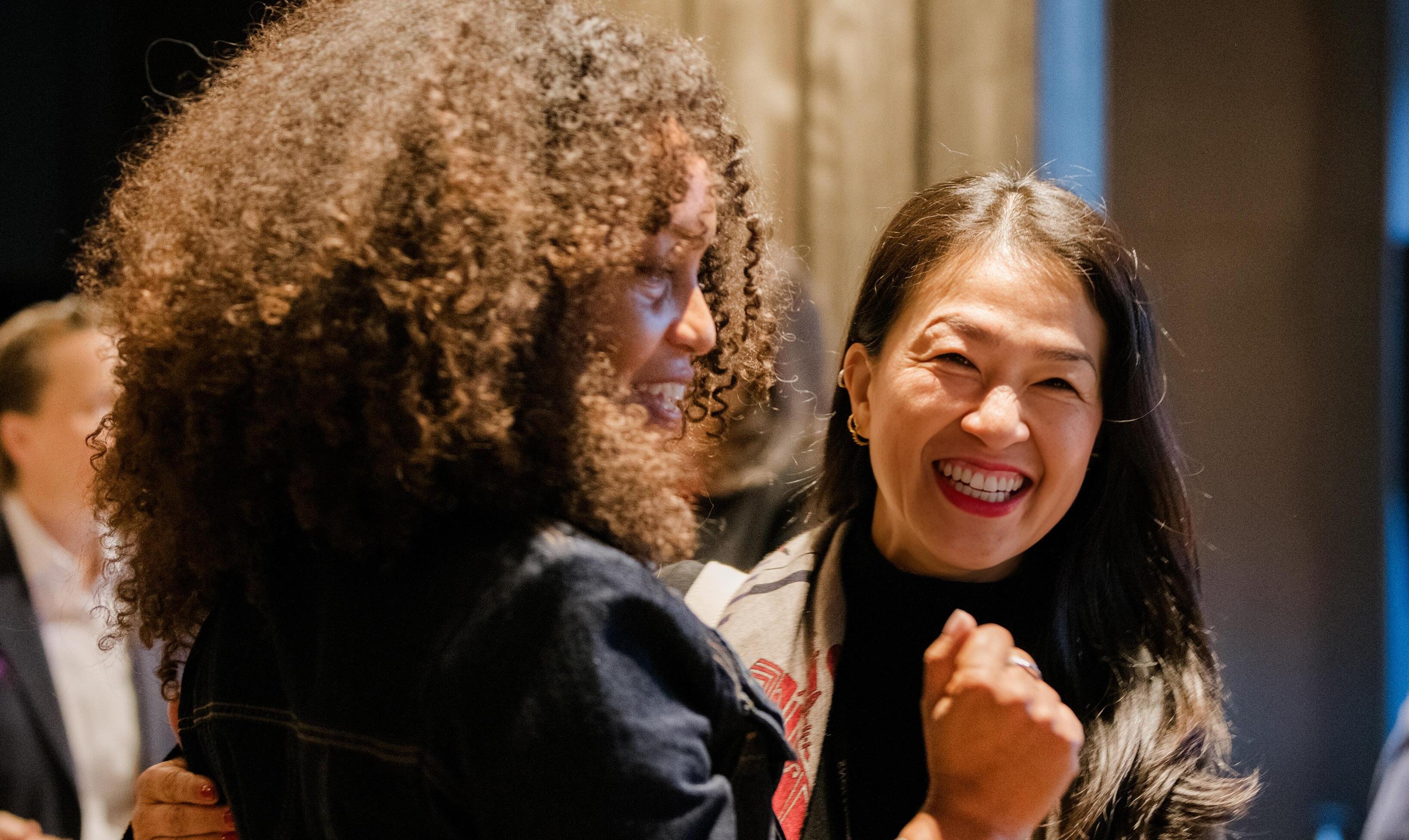
WMM has offered me a powerful platform for collective impact and meaningful connection—thus helping accelerate progress in gender equity together.
— ANU JAIN
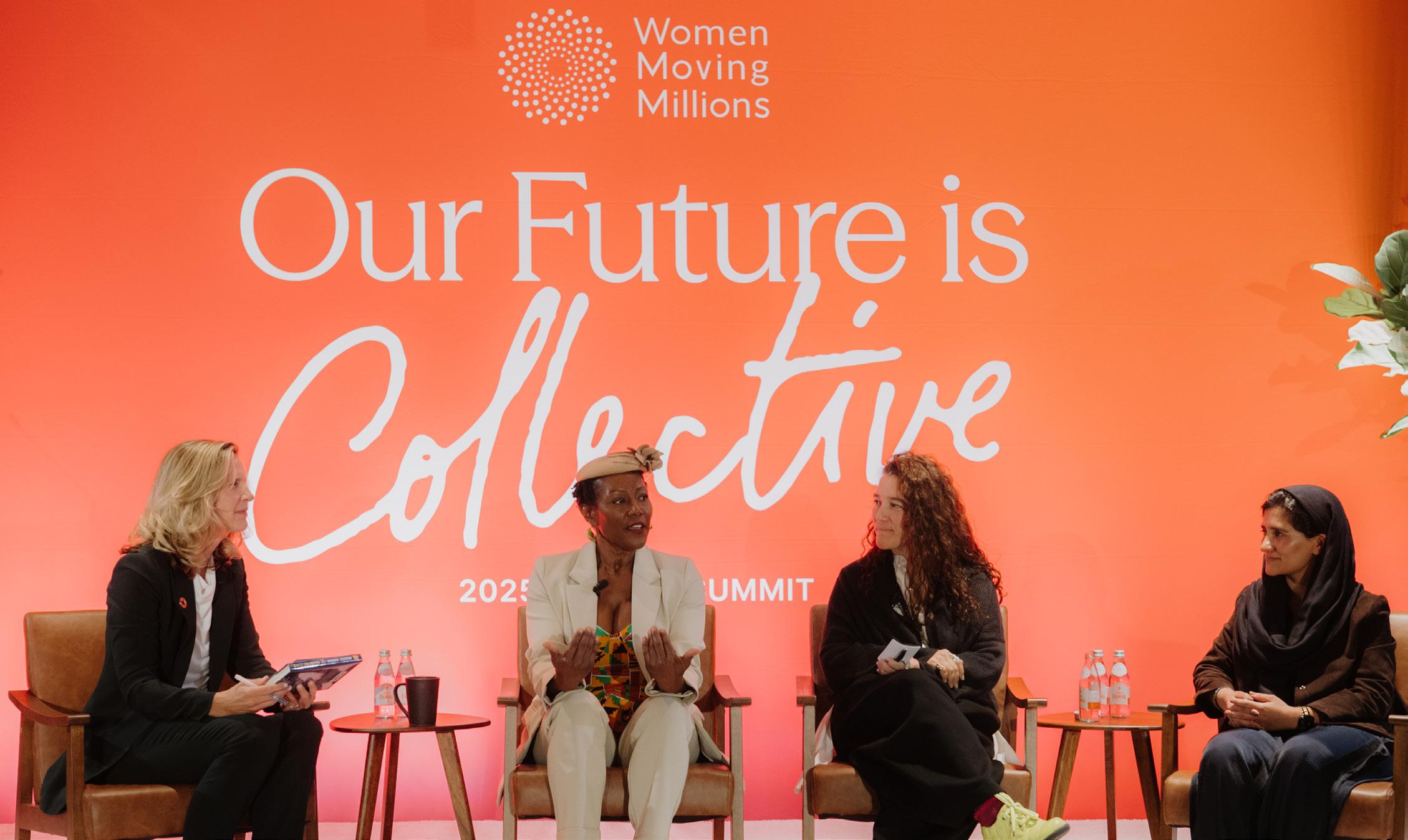
WMM’s role in facilitating this collaboration is central and by design. Programming brings members into community with one another and closer to the issues they seek to address, allowing them to build relationships, learn, and spark collaboration. Programs such as WMM’s signature Philanthropic Leadership Program (PLP), Member Day and Summit, and member affinity groups create intentional spaces where relationships can form and ideas can evolve into action. In 2025, 82% of members participated in WMM programming or community spaces as a way to stay engaged, informed, and grounded, with PLP, Summit, and member groups most frequently cited.
Members who leaned more deeply into the community were twice as likely to say that WMM helped steady them during the year, demonstrating the important role the organization plays as a learning environment and a support system, helping members build confidence and capability.
Equally important are the everyday connections and informal touchpoints, where WMM steadily builds the connective fabric of the community. Members frequently cited these touchpoints as the origin of their collaborations, the moments where shared interests were identified and trust was built.
Being a member of WMM is a wonderful feeling of collaboration, camaraderie and inclusion in an important and very necessary world changing mission of gender equality. Together we are unstoppable!
— ATHENA MARKS
DEEPENING CONNECTIONS TO THE GENDER EQUALITY MOVEMENT
As pressures intensified across the sector, members responded by drawing closer to the organizations and leaders navigating the consequences in real time. Increased engagement with the wider gender equality movement was especially pronounced among the 62% of members who felt that philanthropic giving—deciding where and who to give to—was becoming increasingly difficult in the current environment. Those who reported navigating this greater complexity were 2.5 times more likely to have deepened their engagement with organizations.
This intentional shift toward deeper engagement was shaped by a recognition that greater responsiveness and solidarity were especially urgent in 2025. This more personal, flexible, and relationship-driven approach had a tangible impact. “I intentionally made time to talk with organizations doing the work that I was interested in supporting and expanded my giving based on those conversations,” one member said. Another commented: “Showing up now, as corporate funders are pulling back out of fear, makes the difference between organizations surviving or failing.”
Many members described their financial and emotional support for organizations and staff as an expression of solidarity. “I gave more and introduced the organization to others. I think that the emotional support was as impactful as the dollars,” one member shared. Members showed up, stayed close, and made sure the people doing this work knew they were not alone. As one member put it, they became “more visible.” An overwhelming majority of members stepped up in this way, reinforcing a culture of trust.
This increased connection strengthened WMM members’ understanding of organizational needs and the wider movement, and signaled that giving was not simply a response to immediate challenges, but an investment in the future of the movement itself.
62% of members felt that philanthropic giving was becoming increasingly difficult in the current environment.
WMM is vital not only for our generation but for future generations. We are at a pivotal time globally and with women coming into money and so many rights being taken away. It is up to us to reshape things for a better future. Only working together will we see change.
— LISA SHIELDS
KEY FINDINGS ON GIVING 96% 70% 51% 55% 30%
members maintained or increased their giving
members filled urgent funding gaps
members supported grantees’ organizational resilience
members engaged more closely with their grantees
members engaged with grantees’ staff wellbeing
Notably, 57% of members extended their personal commitment and demonstrated leadership in what they had to offer, such as serving on a board, or multiple boards. This confidence in their ability to work effectively within the wider gender equality movement was also demonstrated by the fact that over half of WMM members felt able to stand up and publicly advocate for gender equality.
WMM played a critical role in unlocking these movement connections. Eighty-three percent of members cited the community as a key source of information and perspective, with programming, peer exchange, and curated communications helping them stay grounded in the realities facing the field. One member noted that, “we are inundated daily with information and inputs, but WMM’s focused messages and channels were meaningful in that I knew they provided the best information and best in class references.” Members also described WMM as providing clarity in an environment where information often felt overwhelming, driving more informed and timely responses to rapidly changing conditions.
83%
members who cited the WMM community as a key source of information and perspective
57%
As a longtime member, it’s been rewarding to witness the growth of gender focused philanthropy and the deep impact [WMM] is making on the global dialogue. Without a movement like WMM, I am sure we would not have the data nor the resources behind what needs to happen for a gender equal world.
— LIZ SHEEHAN
members who served in an organization leadership role or on at least one board
CONCLUSION AND RECOMMENDATIONS FOR THE FUTURE
This report reflects a community that responded to a period of instability with deeper engagement rather than retreat. Members increased their giving, strengthened their relationships with organizations and peers, and moved resources with greater urgency, flexibility, and intention. They expanded unrestricted and multi-year support, deepened collaboration, and stayed close to the leaders and organizations navigating rapidly shifting conditions on the ground. The findings also make something else clear: these responses were not spontaneous. They were made possible by years of investment in community, trust, learning, and shared purpose.
This insight carries implications well beyond WMM. In a philanthropic landscape increasingly shaped by volatility, polarization, and institutional retrenchment, this report suggests that strong, values-aligned donor communities can play an important role in sustaining long-term engagement and resilience. The findings point to the importance of creating environments where funders feel connected to one another, grounded in shared purpose, and informed by ongoing learning and proximity to the work itself. In moments of uncertainty, these kinds of communities can help donors move from concern to action with greater confidence and clarity.
The report also raises important questions for nonprofit organizations and movement leaders about how they engage and cultivate relationships with donors over time. The findings suggest that community-building is not separate from fundraising strategy, but increasingly central to it. In a time of fragmentation and division, organizations can more intentionally create spaces for connection, shared learning, and values alignment within their donor base.
Beyond convening people around issue areas, the goal is to cultivate communities where supporters feel invested in a broader collective purpose and connected to one another, not just to an institution. The power of thoughtfully curated learning communities emerged as a clear theme throughout the findings, helping donors deepen their understanding, sustain engagement, and respond more confidently in periods of instability.
The report reinforces WMM’s theory of change: fueled by a dynamic learning environment, community enables meaningful connection, builds acumen and confidence, and sparks action; that action, in turn, fuels collaboration, and collaboration drives transformational impact. Members who felt more connected to the community were more likely to increase their engagement with organizations, collaborate with peers, and sustain or grow their giving. Taken together, these findings suggest that proximity, trust, and shared learning strengthen individual philanthropy, and the resilience of the broader movement itself.
LESSONS FOR THE FIELD
ɦ Community is not ancillary to philanthropy. It is part of the infrastructure that sustains long-term engagement and action.
ɦ Trust-based relationships create more responsive philanthropy, especially during periods of instability.
ɦ Learning communities grounded in shared values can help donors navigate complexity with greater confidence and purpose.
ɦ Field-building requires more than funding individual organizations. It also requires investing in the connective tissue that strengthens collaboration, shared strategy, and collective resilience.
ɦ Creating the structures, networks, and shared sense of purpose capable of directing capital toward sustained, strategic impact is key to organizational sustainability.
There’s an urgency to act now and boldly. What are we waiting for?
— STASIA OBREMSKEY
These lessons become especially important in the context of the historic transfer of wealth to the next generation, with women expected to control roughly $34 trillion in financial assets by 2030. This represents one of the most significant opportunities in modern history to reshape the future of philanthropy and accelerate progress for women and girls.
The question, then, is no longer whether women will inherit wealth, but how that wealth will be activated, connected, and mobilized. The future resilience of the gender equality movement will increasingly depend on the ability to engage individual philanthropists alongside institutional and government funders, particularly at a time when public funding streams are becoming less stable and rights protections are under growing pressure globally.
This report affirms what we have always known: that building strong philanthropic communities is itself a form of movement-building. The challenge and opportunity ahead is not simply to move more money, but to create the structures, networks, and shared sense of purpose capable of directing that capital toward sustained, strategic impact. In a future likely to remain defined by uncertainty and rapid change, communities that cultivate trust, learning, solidarity, and action will prove essential to advancing gender equality at the scale this moment demands.