Issue 5 | September 2025
Inside...
ICIS: Chemical sector is at a crossroads
Clearer communication is key to success Industry must bridge the future skills gap
Issue 5 | September 2025
ICIS: Chemical sector is at a crossroads
Clearer communication is key to success Industry must bridge the future skills gap
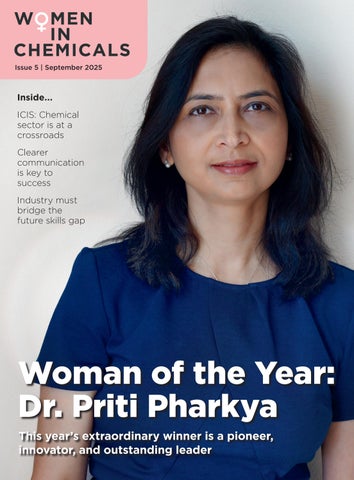
This year’s extraordinary winner is a pioneer, innovator, and outstanding leader
Throughout a challenging year for the chemicals industry, marked by significant global uncertainty, we’ve remained steadfast in our commitment to cultivating a strong, diverse workforce. Our people are at the heart of every innovation, every breakthrough, and every solution we deliver. By fostering an inclusive culture, we’re not only building resilience for today’s challenges but shaping a more sustainable and equitable future for the industry.
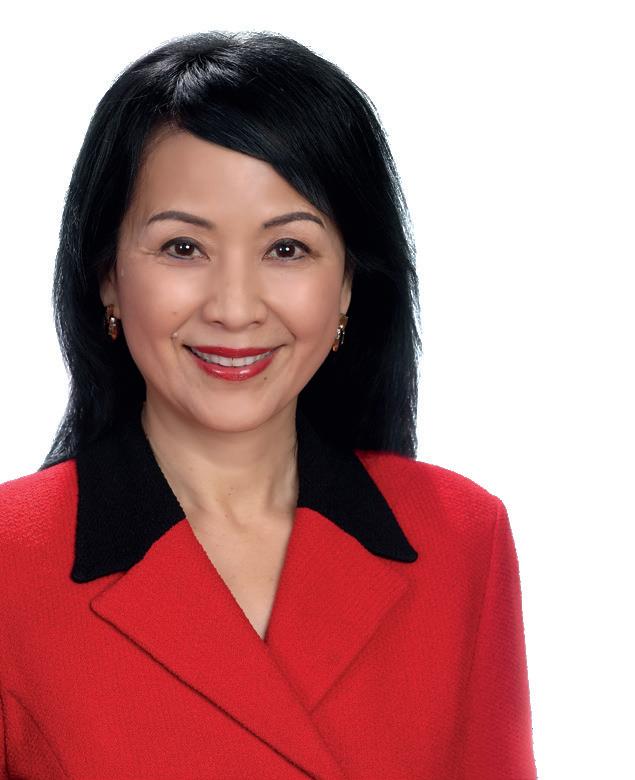
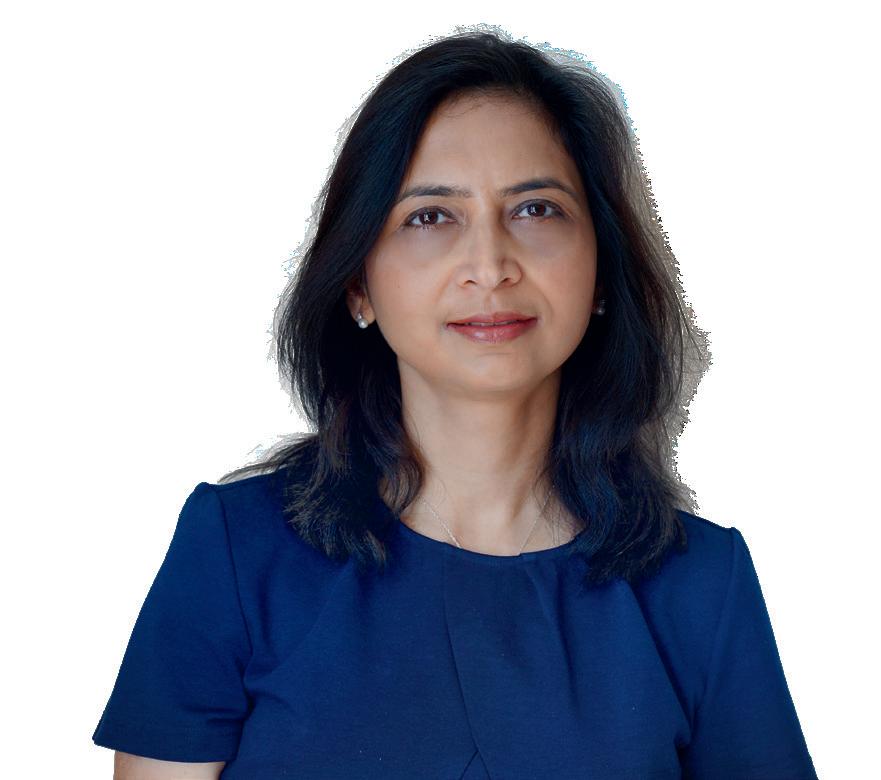
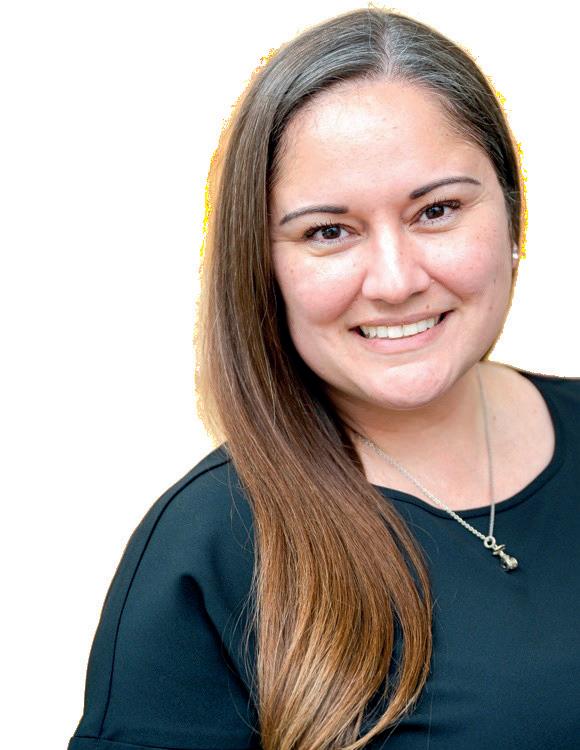

Congratulations to our outstanding finalists
18 Conference speaker: ICIS
Exploring the impact of geopolitical shifts and macroeconomic change
19 Conference speaker: Laura Boninsegni
The art of effective storytelling and communication
23 Recruiting top talent
Tough times for chemical recruitment
26 The benefits of mentorship
Both mentors and mentees can reap the rewards
28 Getting to know you…
Find out more about our members
30 Sponsor’s commentary Jungbunzlauer’s Christi Farr
Women in Chemicals
Incorporated of 447 Broadway, 2nd Floor #1475, New York, NY 10013, USA www.womeninchemicals.com/
Editorial
Andy Brice, Scribe Creative andy@scribe-creative.com
Design/Production
Louise Murrell, CLJ Creative louise.murrell@clj-creative.com
For advertising enquiries
Claire O’Leary Tel: +44 (0) 7828 830438 claire@porthmedia.co.uk



Istill remember the early beginnings of Women in Chemicals in 2021 – then known simply as the Women in Chemicals Networking Group. It started as a spreadsheet of interested women (myself included), randomly paired every week or two, to connect and network. It was informal, grassroots, and unlike anything else in our industry.
From those humble beginnings, we’ve grown into a vibrant, inspiring global community of over 5000 members and 17,000 LinkedIn followers. Now that’s truly like nothing else in our industry. After more than 30 years in this business, I often wonder why something like this didn’t happen sooner, and I’m grateful to our co-founders, Amelia Greene and Kylie Wittl, for turning a simple vision into a thriving reality for the women in our industry. Inspired by WIC’s mission and vision, I joined the Leadership Team in late 2022, first as Mentorship Program Chair and later as Programs Director in 2024.
This is our fifth magazine and our second conference, both exciting milestones for our organization. So, I’m honored (and slightly uncomfortable!) to be featured in this issue’s Director’s Cut. The truth is, I don’t like being in the spotlight. It doesn’t come naturally to me. So, when I say “honored,” what
I really mean is grateful, nervous, and stepping out of my comfort zone.
But if there’s one thing I’ve learned in my career, it’s that growth comes from stepping outside our comfort zones. And while it may look easy for some, it rarely is. If someone came to me, hesitant about doing something like this, I’d encourage them to go for it. It’s okay to feel uncomfortable, but do it anyway. Every time I’ve faced a fear, I’ve come out the other side stronger, prouder, and better for it. So here I am – being comfortable with the uncomfortable.
Why share this? Because that’s what Women in Chemicals is about: empowering women to take that step, to face the fear, to grow, and to be their authentic selves. I’ve seen this incredible community do exactly that – again and again. And if you’re reading this and feeling unsure about putting yourself out there or trying something new, I want you to know you’re not alone, and yes, you can do it.
People often ask me if the industry has changed since I started. I remember early in my career meeting another woman who remarked how rare it was to see a second woman in the room. I also remember the first meeting I ever attended that was entirely women – it felt groundbreaking. And, while it’s disheartening that we’re still making similar observations today, the truth is, we have made progress. There are more women in the industry now, more leadership opportunities, more advocacy, and far more dialogue. Mentorship and allyship are growing, and the momentum is
But we’re not done yet. There’s still work to be done. We need more women in the industry – and especially in leadership roles. But the progress we’ve made is something to be proud of. We are moving forward.
I’m incredibly proud of our Programs Team, who play such a vital role in building and sustaining that momentum. This dedicated, talented group of volunteers – each of whom also balances a full-time job – makes everything we do possible. From webinars and panels to Women of the Week (& Year!), mentorship, Careers in Chemicals, and our Book Club, this team brings passion, vision, and purpose to every initiative. Huge thanks to Claire McGahan, Jordan Riddle, Caroline Thomas, Alyssa Sweigart, Kasia Jankowska, and Sandeep Kaur. You truly make the magic happen.
But ultimately, it’s you – our members, our community – who are the heart of Women in Chemicals. Your feedback, your stories, and your ideas shape every program we offer. Countless volunteers from this community continue to mentor, speak, lead, and inspire others. You are the reason we exist.
Thank you for being part of this journey. You are the change agents. You are the momentum. Together we are transforming the industry.
Women in Chemicals was proud to join the Chemical Educational Foundation (CEF) on June 11 at its National Challenge Dinner and Award Ceremony in Houston, TX, to meet the finalists of the flagship STEM competition.
The team-based initiative is targeted at middle school students and encourages them to engage in real-world problem solving and build essential skills that will help them in their studies and future careers.
This year’s finalists were addressing the theme, “You Be the Solution –develop a sustainable solution to a local natural hazard that ensures community safety.”
Their innovative solutions included wildfire prevention, floodwater protection, sustainable energy storage, wastewater management, and water damage prevention – all critical
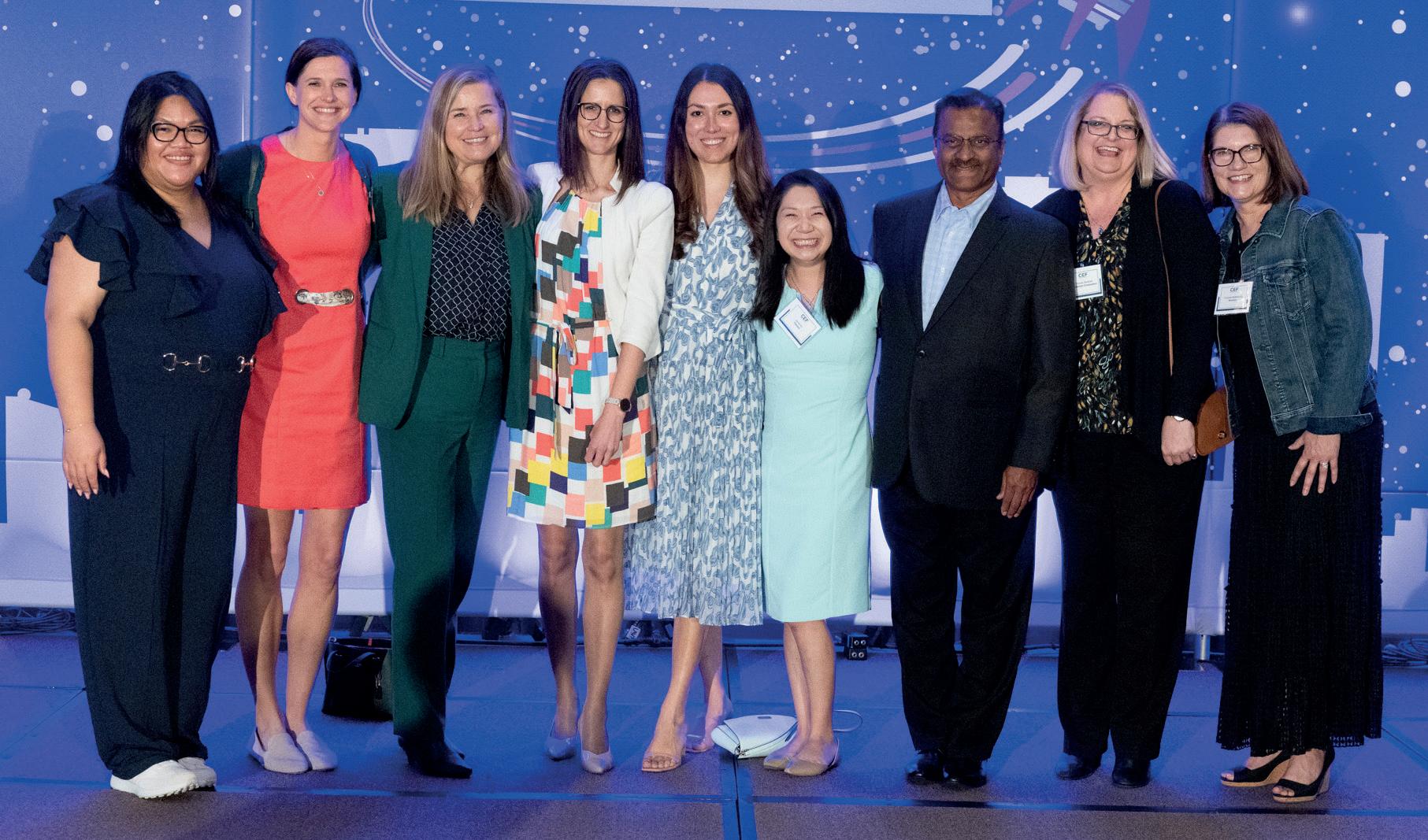
challenges that communities worldwide are facing today.
As sponsors of the Industry Appreciation Reception, Women in
Chemicals is committed to supporting initiatives that build inclusive pipelines and access for future innovators in STEM.
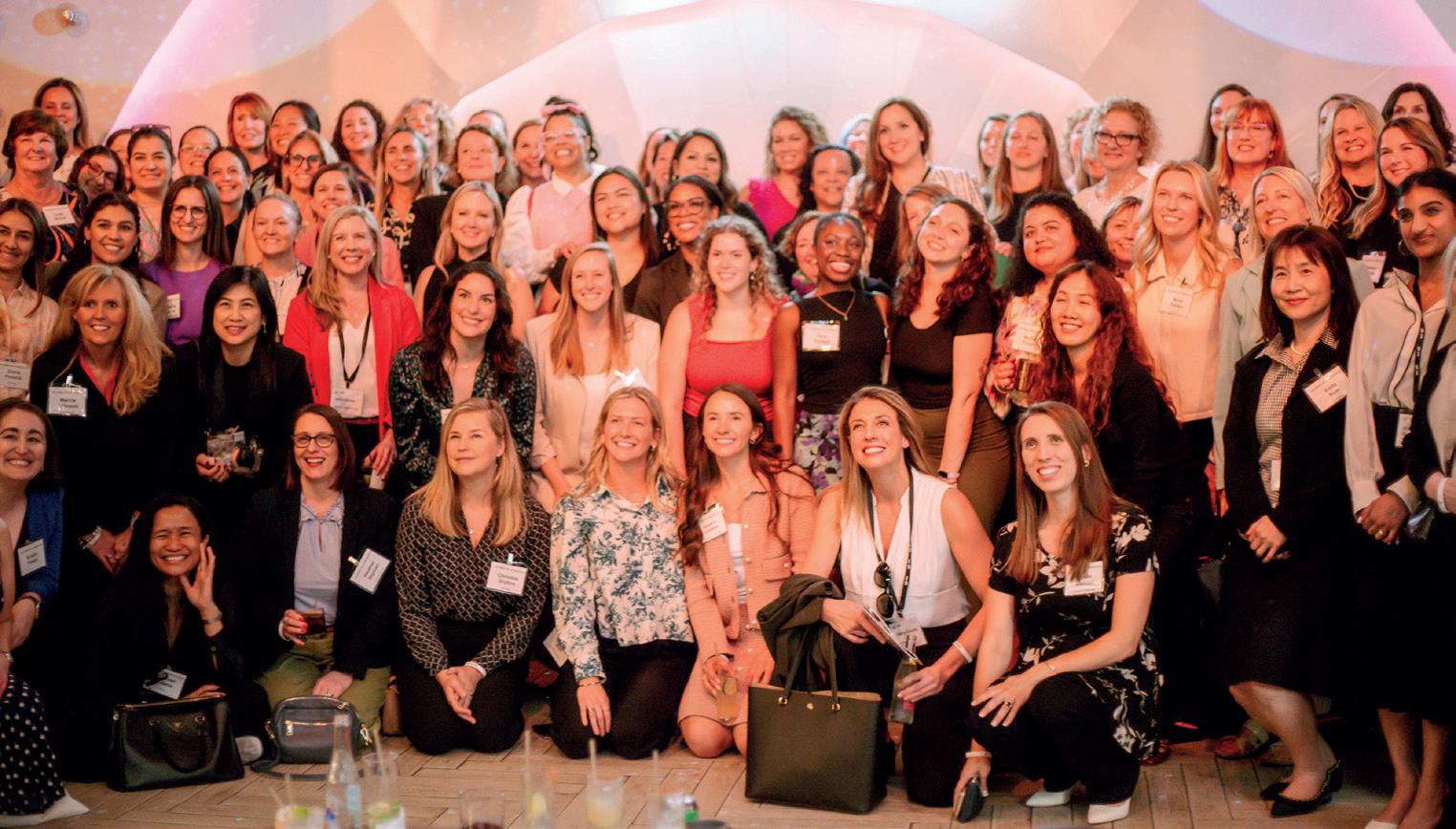
On March 24, 2025, WIC’s global community of women and allies reunited in San Antonio, TX, for an unforgettable evening at the fourth annual Women in Chemicals AFPM Cocktail Reception, hosted in partnership with Brenntag.
The packed event was truly unforgettable – with the attendance up 120 percent on the previous year!
A huge thank you to everyone who joined us to connect, collaborate, and celebrate our shared mission.
Kylie Wittl, WIC Co-Founder and Operations Director, has contributed an opinion article to CHEManager discussing the risks posed by cutting Diversity, Equity, and Inclusion (DE&I) initiatives in the chemical industry.
As economic pressures lead companies to scale back DE&I investments, the article highlights how these efforts are essential for fostering innovation, retaining talent, and maintaining competitiveness.
Studies show that DE&I positively impacts profitability, employee retention, and workforce productivity. Despite this, corporate DE&I funding is declining, posing risks to industry progress.
Women in Chemicals actively works to bridge this gap by providing mentorship, networking, and professional development resources for underrepresented groups.
“While for-profit organizations pare back these initiatives, we are actively working to fill this void of resources through initiatives that empower women and other underrepresented groups, foster collaboration, and drive meaningful change to the chemical industry,” Wittl said in the article.
Wittl emphasized that companies reducing DE&I investments may face long-term disadvantages, while those supporting organizations like WIC can strengthen their employee value proposition and industry leadership.
The article ultimately advocates for continued DE&I efforts to drive success and innovation in the evolving global chemical market.
To read the full article, visit https://www.chemanager-online. com/en/news/dei-cuts-whatsstake-chemical-industry Find out more...
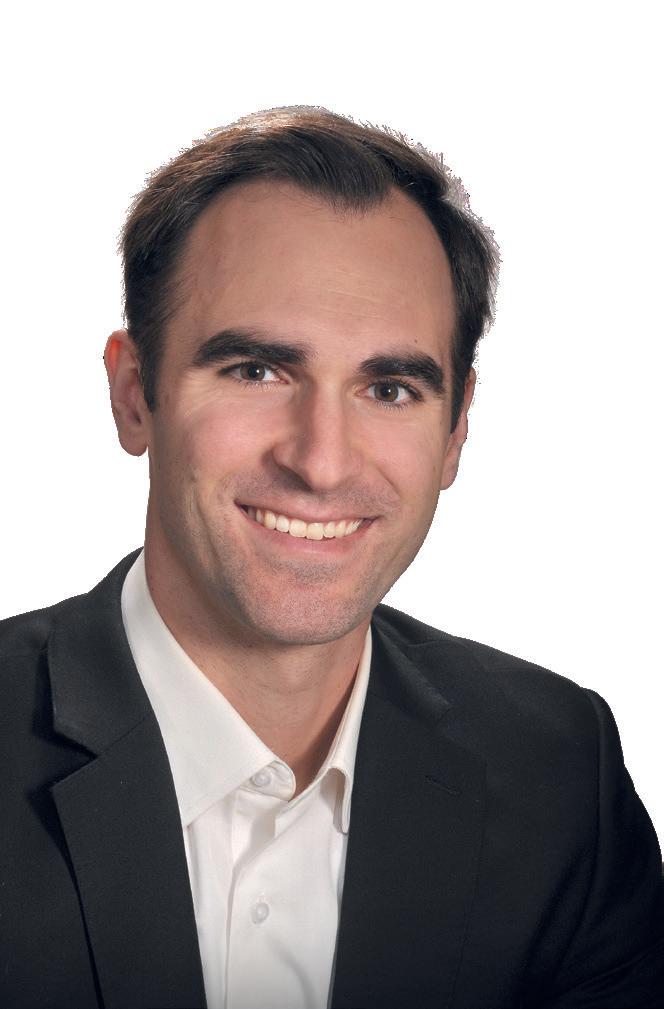
Tony Gazich, Global Supplier Manager – Polymers & Chemicals at 3M and Ally Advisory Board Member, Women in Chemicals
The year was 2017. I was a few years into my career as a sourcing professional at 3M company, managing spend with chemical distributors. It wasn’t a glamorous role – but it was foundational. I worked long hours, often as one of the last people in the office, chasing down supply disruptions, tracking strategy on my cubicle whiteboard, and learning the complexities of the truly global chemical industry.
That year, amid growing supply chain concerns tied to environmental regulations and labor conditions in China, I met a sales rep who stood out –not just because of her tenacity in a tough negotiation, but because she was different. Her name was Amelia Greene. Unlike most of my industry peers, she wasn’t just another experienced sales rep – she was a young, ambitious woman, determined to leave her mark on the industry. Over the next few years, we worked together through commercial engagements and connected over shared professional ambitions.
In 2021, I watched with admiration as Amelia and my former colleague Kylie Wittl co-founded Women in Chemicals, a global community built to empower women in the male-dominated chemicals industry. When I joined the Advisory Board as an ally, I was excited to support the mission, but I didn’t expect how much I would learn.
One of my most meaningful takeaways has been how intentional allyship works. It’s not about the title. It’s about consistent action: listening, sharing resources, empowering others, and showing up with purpose. Serving on the board has allowed me to do that – not just by lending time and resources, but by engaging directly in the work of connection and growth.
The experience has been strengthened by the people around the table –fellow board members from diverse backgrounds, including industry veterans, executives, and rising leaders. I’ve learned so much through our conversations, brainstorming sessions, and shared belief that making change in this industry requires us all.
Throughout my time on the board, I’ve helped support initiatives that build real momentum –mentorship programs, industry events, thought leadership forums, lunch & learns, and professional development sessions. I’ve also supported the organization through donations, grants, and hands-on involvement. Programs like Women of the Week and Woman of the Year are powerful reminders of how visibility can transform careers and culture. These efforts put a spotlight on talent, persistence, and the unique stories that often go untold.
I’m proud to have played a part in this work. It’s made me a better leader, a more thoughtful colleague, and a stronger ally. To Amelia, Kylie, and the entire Women in Chemicals community, thank you for your vision, your leadership, and the impact you continue to make.





Working in partnership with the Asia Petrochemical Industry Conference (APIC) and the Petrochemical Industry Club, Women in Chemicals hosted its first ever event in Asia Pacific in May. This major milestone included a reception attended by around 100 industry leaders, experts, and advocates committed to advancing gender diversity, leadership, and inclusion in the chemical industry.
An enlightening panel discussion, moderated by Amber Thichangthong, WIC’s Executive Director, also featured
some excellent speakers including Khunying Thongtip Ratanarat, member of the PEIT Foundation Board and independent consultant; Anusara Suthikulavet, President and CEO of UBE Thailand; Sandy Leong, Vice President Key Account APAC, Brenntag; and Malini Hariharan, Market Strategy Director at ICIS.
During the session, the panelists shared their insights on overcoming career challenges, balancing professional and personal responsibilities, and navigating cultural norms in the Asia-Pacific region.
Claire McGahan, WIC’s Programs Chair, joined the Truth in Beauty panel at the 15th Annual ICIS World Surfactants Conference in May 2025 to discuss the growing impact of misinformation on the surfactants sector.
McGahan, speaking alongside Jen Novakovich, Founder of The Eco Well; Dennis Abbeduto, Personal Care Business Manager at Colonial Chemical, Inc.; and Neil A. Burns, Managing Partner at Neil A. Burns LLC, explored how misinformation is affecting market perception, regulatory decisions, and innovation in surfactants.

To listen to a podcast recording of this discussion, visit: https:// www.theecowell. com/podcast/ truthinbeautysurfactantsedition
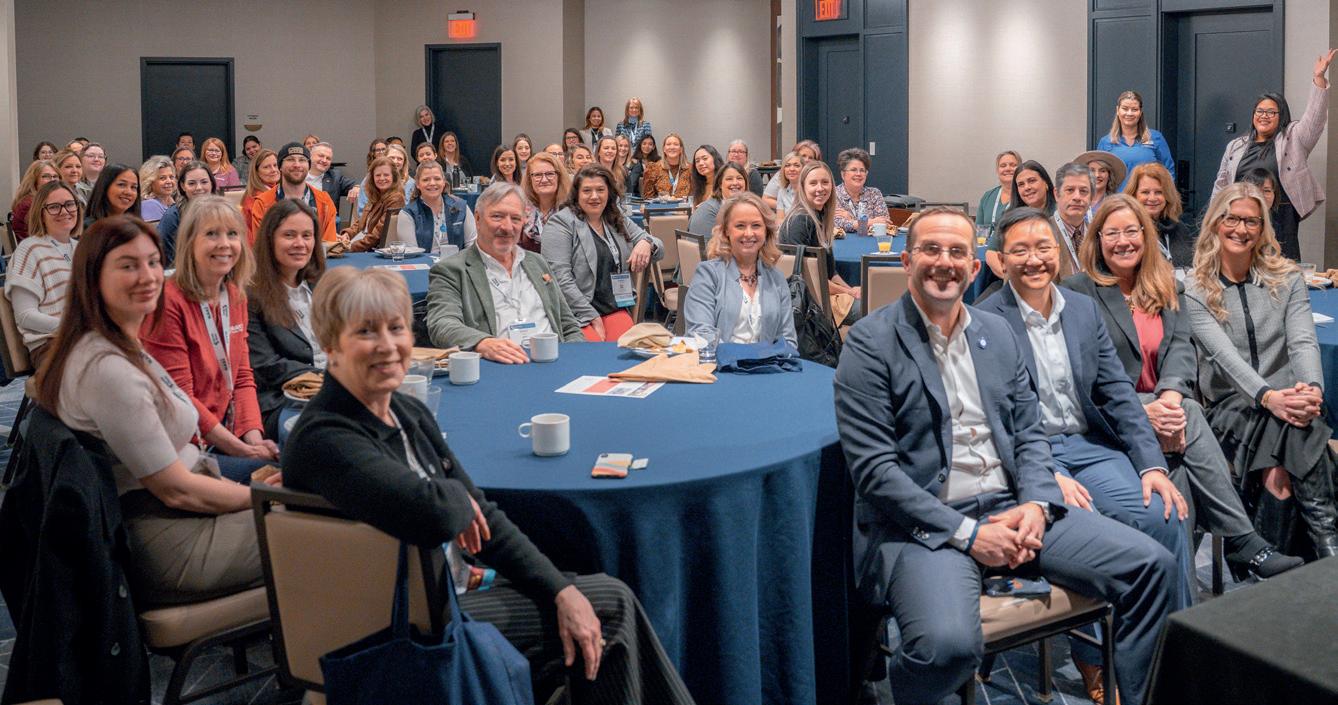
Working alongside the Society of Chemical Manufacturers & Affiliates (SOCMA), WIC brought together an inspiring panel of industry leaders for an exclusive discussion at the Women in Specialties’ Breakfast during February’s SOCMA Show.
Topics included career evolution, work-life harmony, and the power of allyship – and featured speakers including Michelle Pogosaew of Aether Industries, Waan Chulakham from Evonik, and Alan Dyke at FAR Chemical.
“It was an honor to moderate this panel,” said WIC Co-Founder Kylie Wittl. “Our speakers brought incredible energy and insights”
Jessica Quearry, Finance Chair, Women in Chemicals
My family has been involved in the chemical industry since 1939. While the women in my family actively supported their husbands and sons working at the family ventures in the first 60 or so years, it was not until the early 2000s that the first female member of our family took a more active role in driving the business forward. Now in 2025, my cousins, Kara and Stacy Moran, co-owners of Suffolk Sales and Service, serve as President and COO. The company is registered as a certified woman owned business, and I’m proud to serve alongside them as CFO. While we have a strong team amongst ourselves, our existing professional network of suppliers and customers is still predominately male.
Prior to joining the chemical industry in 2019 as CFO of Suffolk Sales and Service Corporation, I worked for a decade in the public accounting industry. In my previous company, there were several groups dedicated to women empowerment, supporting working mothers and mentorship. When I made the change to a smaller company in the chemical industry, I felt a void from the lack of those spaces. A few years in, I was lucky enough to have my cousin pass along the information for the Women in Chemicals virtual pairings. I was immediately excited to find this network of women in the industry. Fast forward to the summer of 2024, the position of Finance Chair for the leadership team of WIC came across my email, and I quickly expressed my

At the inaugural conference for WIC, it was enlightening to meet so many other women in the industry and feel the energy in the room. I left the conference for Women in Chemicals re-invigorated and with a greater sense of purpose. It was inspiring to meet so many strong, intelligent women in the industry with such diverse backgrounds and experience. At that point, I had already expressed my interest in the Finance Chair position, but the conference reinforced my desire to join the Leadership Team. I saw a unique opportunity to bring my accounting and finance skills to an organization that was doing such great things for empowering and supporting women. It was a win-win.
As a mother of two girls, seven and nine, I encourage them to find spaces to pursue their interests and develop their unique skills but also to find environments where they can learn from others and broaden their perspectives.
I’m grateful to say that Women in Chemicals has become one of those places for me: a community where the members can inspire one another and support each other through collaboration and shared experience. It’s been an exciting adventure thus far serving on the Leadership Team, and I’m looking forward to meeting more members of the WIC community as it continues to grow!
Amelia Greene and Caroline Thomas have been recognized by the Alliance for Chemical Distribution (ACD) as Experts of the Year. This prestigious recognition highlights their outstanding contributions to the chemical industry and their commitment to driving innovation, education, and strategic collaboration.
Greene, Director of Strategic Partnerships at Women in Chemicals, was honored for her impactful work in fostering industry relationships and
advancing opportunities for women in the chemical sector. Caroline Thomas, who serves as Education Chair, was also recognized for her dedication to knowledge sharing and professional development within the industry
"We are thrilled to see Amelia and Caroline receive this welldeserved recognition," said Amber Thichangthong, WIC’s Executive Director. "Their contributions have been instrumental in our mission to support and elevate women in the
chemical industry. This honor from ACD reinforces the impact they’ve made and will continue to make."
The ACD Experts of the Year distinction is awarded to professionals who have demonstrated exceptional expertise, leadership, and influence in the field of chemical distribution. This recognition further underscores the growing influence of women in the industry and the invaluable work being done by Women in Chemicals to support their advancement.
Women in Chemicals was honored its Co-Founders
Amelia Greene and Kylie Wittl were invited to speak at the LexisNexis Regional Sales Summit during the Women in Sales Breakfast on January 14, 2025, in Houston, TX.
The fireside chat brought together women and allies in sales from LexisNexis Risk Solution’s brands including ICIS, Cirium, and Brightmine to share experiences, strategies, and insights for overcoming challenges, building confidence, and achieving success in their careers.
In conversation with ICIS’s Jessica Hoover, Head of Regional Accounts, Greene and Wittl highlighted the intersection of imposter syndrome and personal branding.
They explored how crafting authentic personal brands can not only combat self-doubt but also enhance credibility, showcase unique strengths, and create lasting connections.
By preparing thoroughly, reframing negative thoughts, and practicing confidence-building techniques, they shared actionable ways to navigate imposter syndrome and show up as your best self.
If you would like a Women in Chemicals’ representative to speak at your event, email partnerships@ womeninchemicals.com.
Women in Chemicals has moved!
Effective immediately, our new mailing address is: Women in Chemicals, 447 Broadway, 2nd Floor #1475, New York, NY 10013.
We kindly ask our sponsors, partners, and community members to update their records and direct any future correspondence to this new address.
If you have any questions or queries, contact Amber Thichangthong, Executive Director, at amber@ womeninchemicals.com.
At Barentz, we deliver ingredient solutions that help our partners succeed.
We are proud to celebrate the talented women who are shaping the future of the chemicals industry, from innovators and problem solvers to inspiring leaders and mentors.
Their expertise, passion and leadership make a difference every day.
Discover how our teams of exceptional women are helping us create “Always a better solution” and how we can do it together. www.barentz-na.com
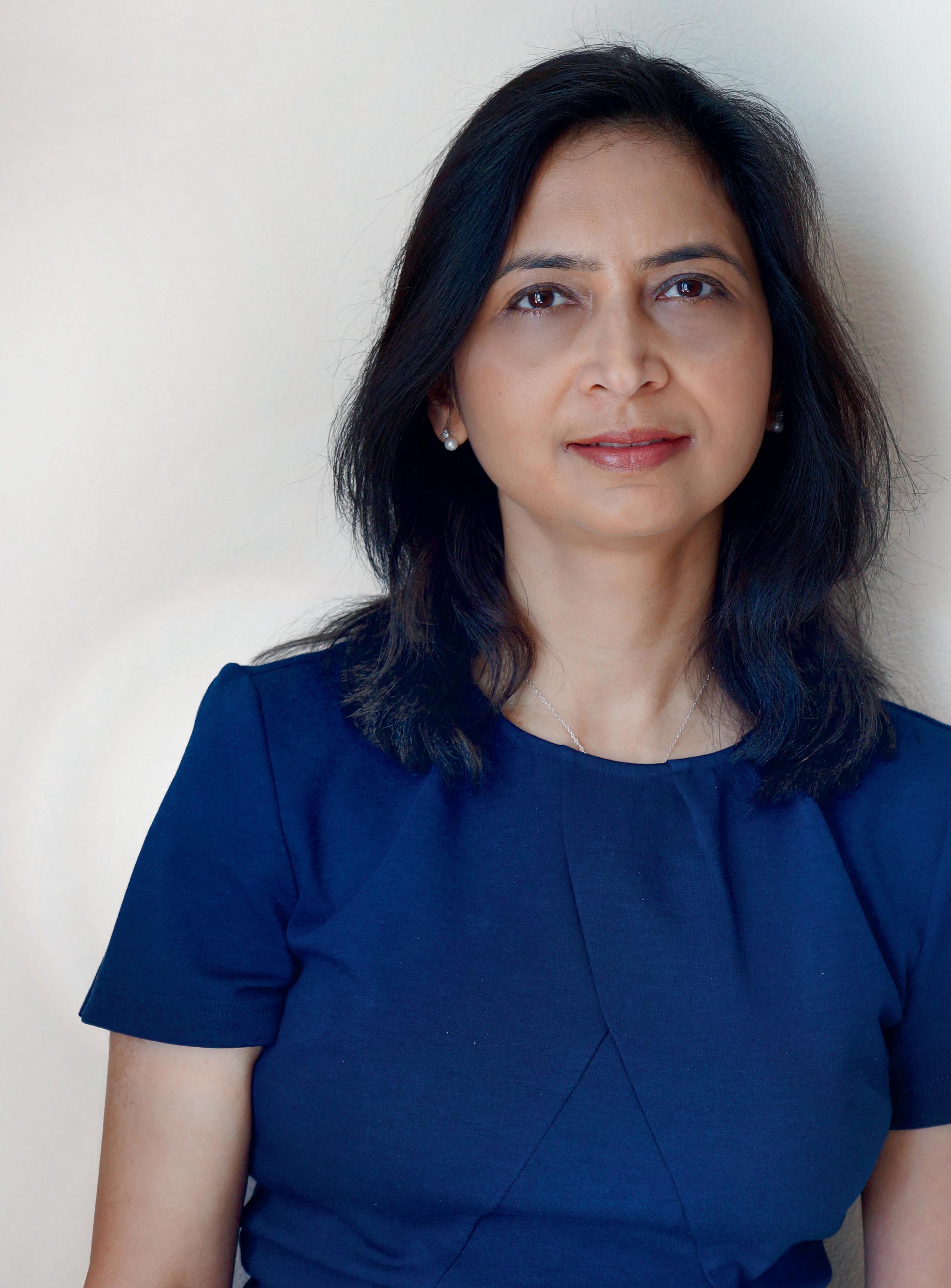
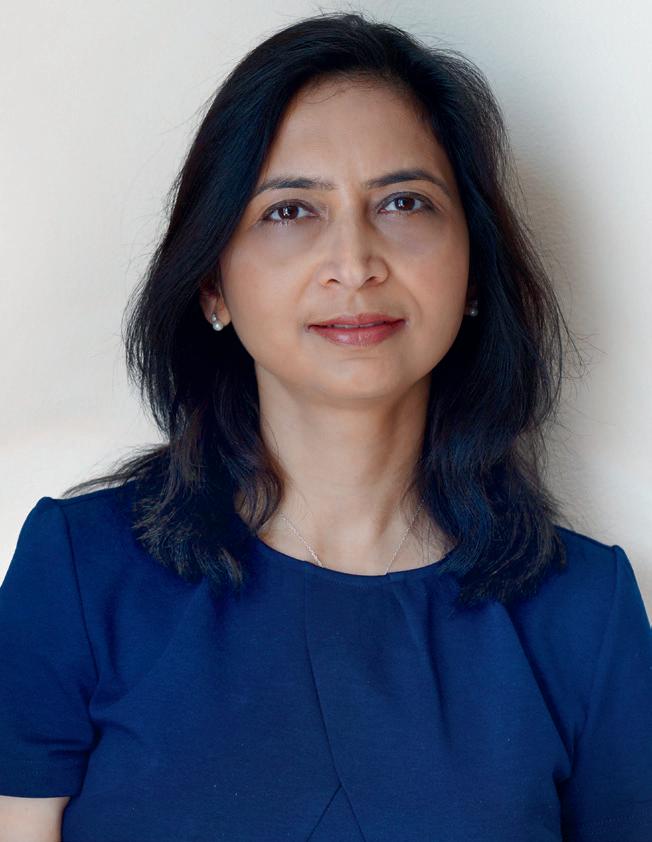
Dr. Priti Pharkya
Officer,
Asimple online search will tell you that Dr. Priti Pharkya is a pioneer in sustainability and industrial biotechnology. Pharkya has been named on over 50 patents covering metabolic engineering, biosynthetic chemical pathways, and feedstock utilization.
She was also a part of the team that went to Washington DC to receive the U.S. Environmental Protection Agency’s Presidential Green Chemistry award in 2011 for development of the 1,4-BDO bioprocess technology.
Pharkya has had a passion for science, mathematics, and the environment from a very young age. Her inquisitive nature instilled in her a desire to make the world a better place – exemplified by being a leading figure in the world of sustainable chemicals and guiding young professionals, both men and women, in their careers.
“I’ve been very lucky that I’ve had people supporting me – from my parents and my siblings, to my husband now,” she says. “I’ve also been fortunate to have mentors who have believed in me. Not only has that given me opportunities, but also the resolve to stand up for myself and for others when needed.”
Her father, a mechanical engineer by trade, was a true inspiration to
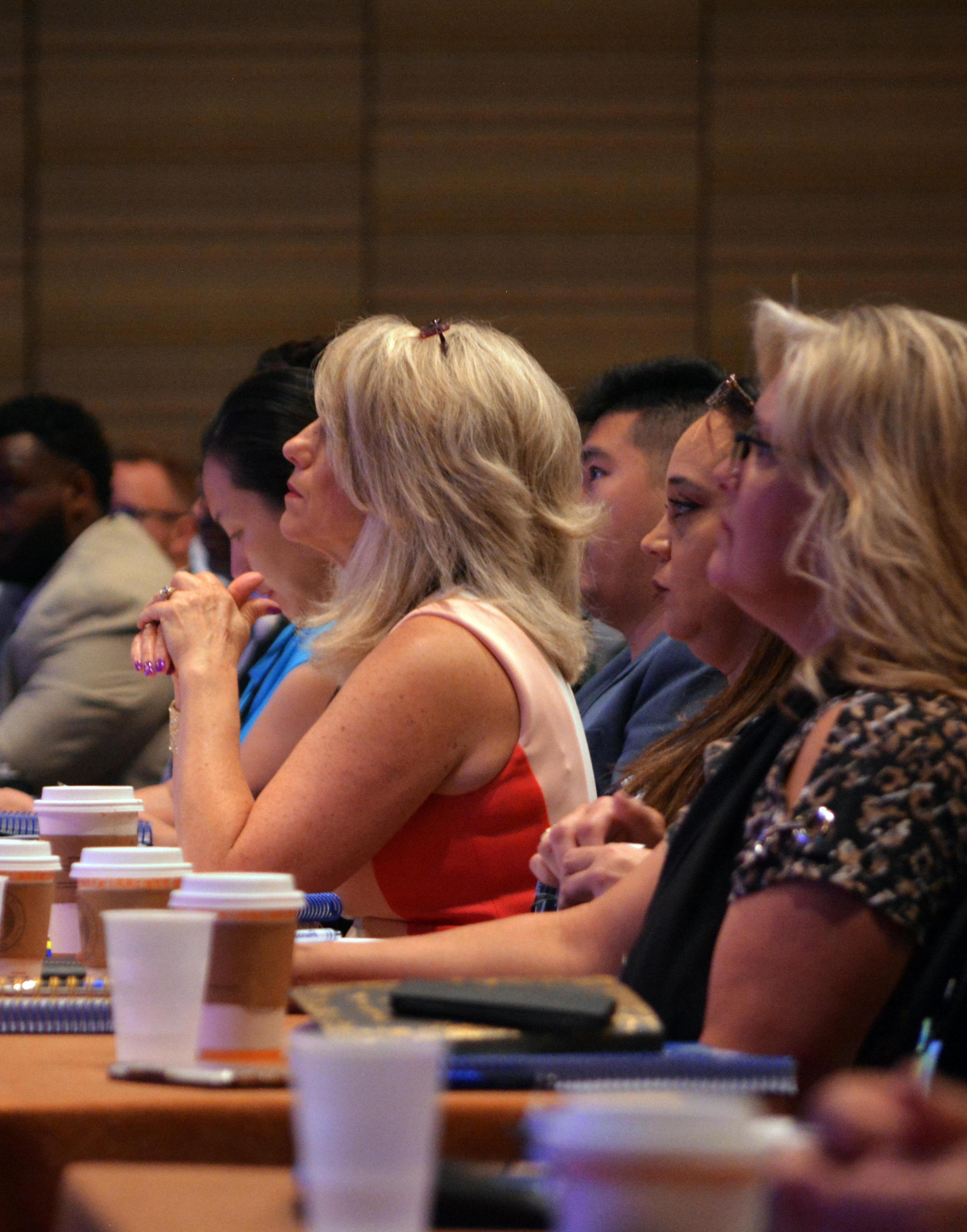
Now in its third year, the annual Woman of the Year Award celebrates another group of outstanding finalists who continue to set the benchmark and elevate others through their inspirational leadership. Andy Brice introduces this year’s contenders
her, she says. She remembers always being in awe of how he could take any malfunctioning machine, whether it was a household appliance or a car, and work out what was wrong with it.
“My mother always used to encourage us to read books about science and technology, and to figure out how things worked,” she says.
Her interest and enthusiasm for learning extended to her school life, where she credits her teachers with helping her excel in her studies.
“My favorite subjects at school were math and chemistry, and I was fortunate that I had some really good teachers,” she recalls. “When I was in the 10th grade, I took a nationwide test – the National Talent Search Exam. The exam is in three stages: the first is regional level, then national level, and then you have to appear for an interview. The top 750 students or so in the entire country are given scholarships throughout their academic career. I was one of them. That was a huge moment for me – a realization I had ability and stood out.”
After leaving school, Pharkya moved a few hours away from her home to Jaipur, India, to pursue an undergraduate degree in Chemical Engineering at the Malaviya National Institute of Technology.
“After that, I came to the U.S. to pursue my Ph.D. at Penn State University and developed a passion for metabolic engineering – something that requires you to understand both biology and chemistry that I’d always been drawn to,” she says. “When i graduated, I received an offer from Genomatica.”
Joining Genomatica in 2006 as a Research Scientist, she has spent the past 19 years progressing through varied roles, including Head of Innovation, Director of the Bioengineering Solutions Business Unit; and then Senior Vice


President, Ventures and Corporate Development.
She played a key role in forming Future Origins, a San Diegoheadquartered joint venture formed by Geno and leading Consumer Packaged Goods companies Unilever, L’Oreal, and Kao Corporation.
Launched in June 2022, the JV, Future Origins, is developing fermentationbased sustainable alternatives to critical ingredients used in everyday cosmetics, personal care, and cleaning products. The team is working towards the final investment decision for its first commercial-scale manufacturing plant and plans to start full-scale production by 2028-2029.
She now oversees and guides all commercial activities and is responsible for P&L and execution of the corporate strategy. In July 2025, she was promoted to Chief Business Officer.
Throughout her career, Pharkya has supported, encouraged, and mentored women in the chemical sector.
She is particularly proud of being one of the founding members of an employee-driven effort “to unearth the core values in the company that are used to this day”.
“Together with my colleagues, we recognized we didn’t have many women in senior leadership in our company at the time,” she says. “We wanted to see if we could start a grassroots effort, where we could help give training and mentorship to help others. Our CEO was very supportive of the idea, which led to something that then became organized and changed the working environment within the company.”
Her advice to young women embarking on a career in chemicals?
“Be bold in your dreams, be fearless, ask for help as needed, and stand up for yourself,” she says.
Elevate your brand with Women in Chemicals and reach thousands of key decision makers. The Women in Chemicals magazine is a print and digital publication with outstanding reach and readership.
Get in touch to discuss our range of opportunities to promote your products and services.
Contact: Claire O’Leary, Porth Media claire@porthmedia.co.uk
Tel: +44 (0) 7828 830438
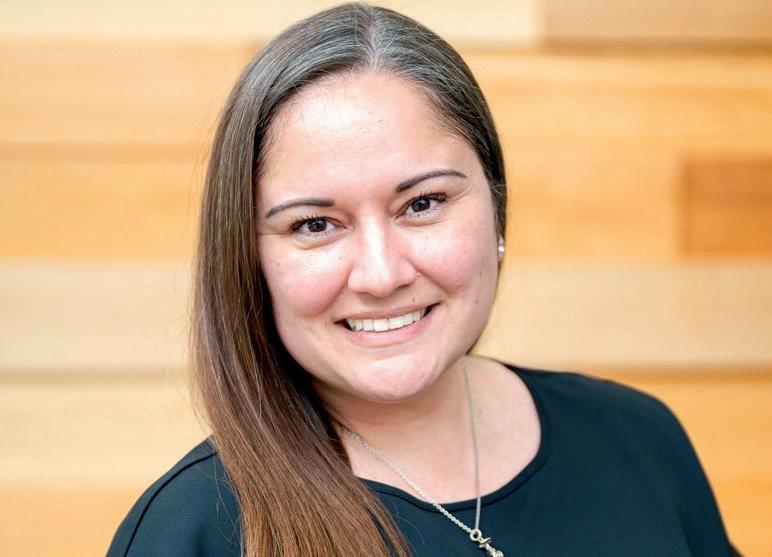
Stephanie Hajducek
It is never too late and nothing is impossible. This is the powerful message Stephanie Hajducek has been delivering to thousands of young women ever since she founded her nonprofit organization This One’s for the Gals (TOFTG) in January 2022.
A former Advisory Board member for Women in Chemicals, Hajducek is an advocate for representation, equity, and empowerment. Her story is the perfect example of persistence and hard work.
“At 24 years old, I found myself divorced with two little boys and I knew that I needed a career – something that was going to help me be able to provide as a single mother,” she says.
Trying to find her path, a friend suggested she take a course learning AutoCAD, the computer-aided design software used in industry by architects, designers, and engineers. After six weeks, she left with a certificate and a willingness to learn.
It was then she saw Bechtel, a construction firm in Houston, TX, was holding a job fair and she applied for an entry level role.
“A couple of interviews and a few weeks later, they called and offered me a job that changed my life. It opened my eyes to a world I had no clue existed.”
She learned the trade and honed her skills, but eventually felt the time was right to step up a level.
“I worked there for about 12 years. I progressed, just by working hard, but knew I wanted to get into a leadership position. If I wanted to do that, I needed to get a degree,” she says.
Hajducek went on to earn a bachelor’s degree in Industrial Engineering Technology from the University of Southern Mississippi at the age of 38 –all while working full time and raising her children.
TOFTG was born out of wanting to help others learn about career pathways from STEM to skilled trades.
She recalls attending a conference in Galveston that focused on precisely those types of industrial trade positions, and specifically roles for women in nontraditional jobs.
The event, called Power Women in Industry – with “Power” an acronym for Pipefitters, Operators, Welders, Electricians, and Riggers – enabled the high school girls in attendance to learn about these important industries and the many opportunities available to them.
It occurred to her that girls in her town may never have had the chance to hear about these types of careers.
“I decided to approach my manager at the time and ask if the company could sponsor our local high school to provide them with funding to make this field trip,” she says.
He agreed and Hajducek introduced herself to the school Principal. His positive response encouraged her to go further and soon she had other industry partners offering support to numerous schools in the county.
“I just kept going,” she says. “My initial thought was maybe to get 10 or 12 girls with a chaperone, load them in our company van, and just drive to Galveston to attend this event. But by the time I was done, I’d been able to give more than 200 girls the opportunity to go. The industry was saying ‘yes, we want girls to know we have a place for them in our workforce’.”
“We see so much generational poverty, especially in our small rural communities. Kids see their parents just getting by and making ends meet, thinking that’s the way their life is going to be. I wanted to show them that with a good career they could change that cycle.”
Today, TOFTG continues to grow from strength to strength and has introduced educational initiatives in elementary schools, hands-on workshops in middle schools, and even hosts its own fullscale Expo for high school girls.
From her first job at Bechtel, Hajducek has gone on to hold positions at Chevron Phillips Chemical Company, Puffer-Sweiven, Citgo, Steel Dynamics, The Chemours Company, Samson Controls, and Enbridge. She is currently working for Enbridge as a Project Specialist for Project YaREN, a proposed low-carbon blue ammonia production facility to be built within the Enbridge Ingleside Energy Center in Texas.
“I’m now working in community and stakeholder engagement,” she says. “Helping connect industry to the community is something that is near and dear to my heart, which is why I started my nonprofit work.”
“When I first started at Bechtel, I walked onto a project with about 150 people. In the group I was assigned to, I was one of only four women,” she says. “It was a real eye opener. It’s a male dominated field and I think that’s why a lot of women shy away from it. By sharing my story, my journey, and helping to create this community, it’s been helpful for women to see, ‘it’s not just me’.”
“But what I found, more often than not, was that the men in the room wanted to help. They were willing to teach me, mentor me, and see me
Lihong Yu
CEO and Chairwoman, PHT International, Inc.
Lihong Yu is an entrepreneur, innovator, and an inspiration to young women. Thanks to sheer determination and resilience, her journey has seen her lead a successful minority woman-owned business that fosters diversity and inclusion.
Pivoting from a career as an interpreter, and with just $5,000 seed money, her tenacity led to the launch of PHT International, Inc., a globally recognized Contract Research, Development, and Manufacturing Organization (CRDMO) with annual revenues totaling around $140 million.
Born in Ningbo, China and raised during the Chinese Cultural Revolution in the 1960s, she grew up in a man’s world where women did not have a voice and were seen as inferior.
“People said the chemical industry and the business world was for men. ‘It’s not for you’,” she says. “Why not, because I’m a woman?”
From an early age, she had a flair for business. “I remember I used to shop in the farmers’ market when I was six years old. I couldn’t even reach the guy to look at the product and give him the money –but I started negotiating the prices.”
She excelled at school and was always top of the class in math, physics, and chemistry. Seeing her potential, her parents urged her to go to medical college – but she decided to take her own path.
“My mum was a doctor, so she always wanted me to be a doctor too,” says Yu. “But instead of wanting to study medicine, I loved dancing, singing, and writing. I took control of my own fate when selecting college. I decided I wanted to be a diplomat and went to study at the Beijing Foreign Studies University.”
She would go on to earn bachelor’s degrees in English Literature and American Culture and Societies.
Upon graduating she became an interpreter and spent a year and a half working for the Minister of Foreign Trade and Economies.

A key turning point in her career, she says, came during a work trip to Lyon, France, when she had the courage and conviction to question something said by her superior. Their response was to remind her she was “only an interpreter”, and was supposed to use her mouth, not her brain.
“That was something that bothered me,” she remembers. “When you’re 22, a fresh graduate in your first big job, and are told you cannot use your brain, that’s when I realized this may be the wrong place for me. I had an outspoken character and that wouldn’t be tolerated.”
She was encouraged to choose another position elsewhere. On a positive note, the prestige associated with her role meant she had the pick of jobs, eventually deciding to move to China Chemical – now known as Sinochem.
“I thought working in chemicals would make my mum happy,” she reflects. “When I got there, I wanted to do something with pharmaceuticals, and they put me into the raw materials export department.”
“I was a good salesperson and was assigned to go with my boss to Los Angeles to set up a sales department for inorganic chemicals. I was working there for three and a half years, distributing and sourcing chemicals.”
It fueled a desire to set up her own business in the U.S. and in 1993, she decided to take the plunge.
Seeing how large chemical companies regularly sourced material from China,
she decided to follow a similar business model. Her company ethos would focus on her core values and beliefs: People, Honesty, and Trust – which together formed the acronym for her new company’s name, PHT.
Today, it is a leading CRDMO that supports life science innovators through its fully integrated capabilities.
Yu’s commitment to green chemistry and sustainable innovation has helped PHT pioneer more efficient, environmentally responsible manufacturing processes – contributing to safer, cost-effective chemical solutions worldwide. She has been honored with multiple business awards, including the 2024 Supplier of the Year Award from a top five global pharma company.
Headquartered in Charlotte, NC, the business now has a 250-strong team in locations across the globe, including Switzerland, Mexico, Japan, India, and China. She places great emphasis on wanting to inspire the next generation of women leaders in STEM, being a strong and supportive mentor, and providing equal opportunities within her business.
PHT boasts significantly above-average representation of women, including in leadership positions.
“As women, together we can still create solutions for our customer and do something outstanding,” she says.
What does being a finalist in the Women of the Year awards mean to her? “It really means a lot,” she says. “I want to show young girls you can dream.”
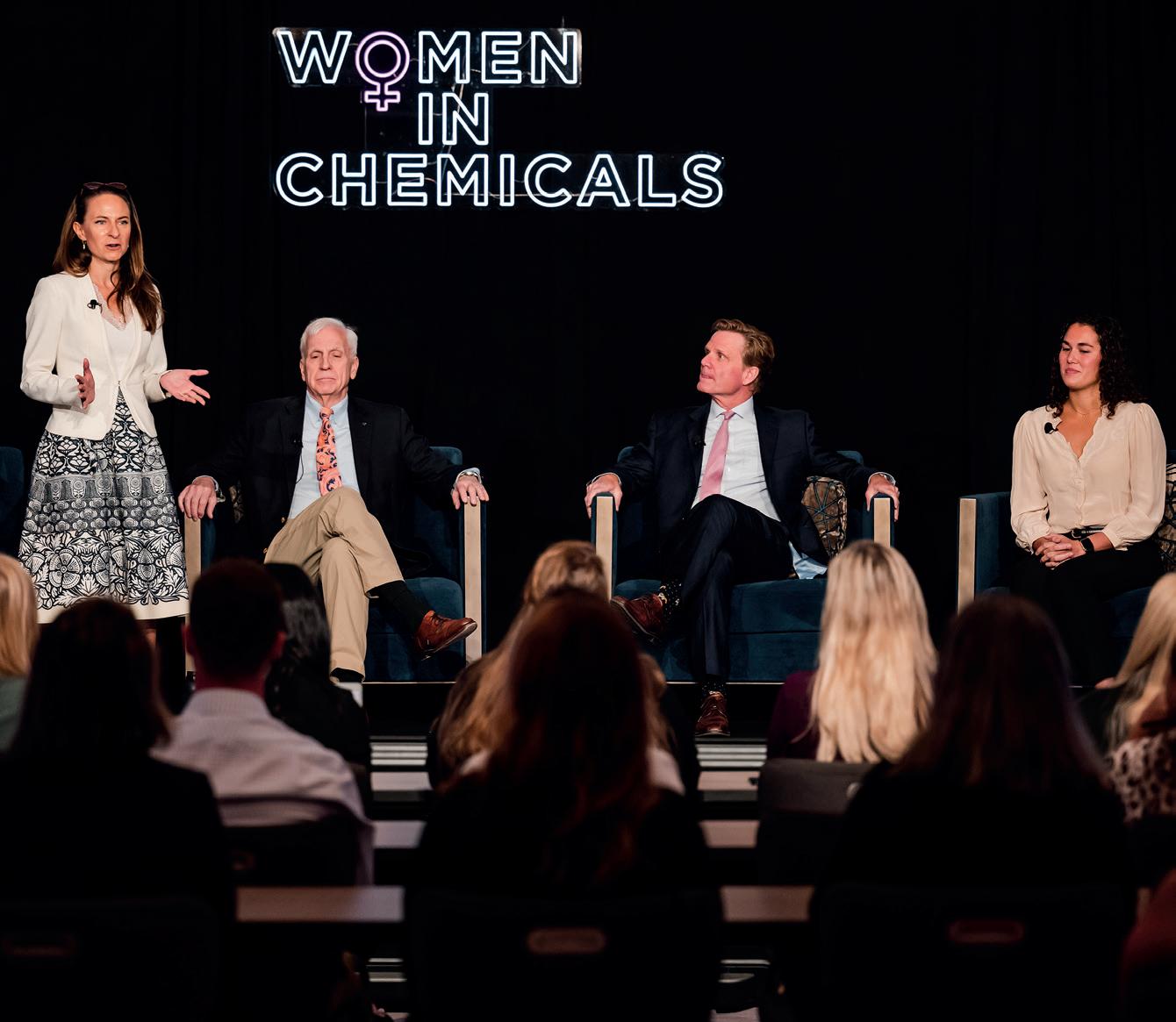
shines a spotlight on the chemical sector and explores the impact of geopolitical shifts and macroeconomic changes on the industry
The chemical industry stands at a critical juncture – vital to the global economy yet facing mounting pressure from multiple directions. As the sector navigates unprecedented times, companies are pushed to adapt quickly and make tough decisions, but they also have a unique opportunity to rethink their role in a changing world and tap into new sources of value.
Chemical value-chains are facing a range of headwinds that are putting formidable pressure on everything from strategy and investment to production and supply chains. First, a massive overcapacity was emerging primarily due to China’s pursuit of self-sufficiency.
Second, chemical demand growth has been tepid since around the middle of 2022. Third is, of course, the increasing pressure to accelerate the industry’s transformation toward greater circularity and lower carbon emissions.
This has created the perfect storm in the market leading to tough operating conditions, forcing companies to make difficult decisions. We have already seen a long list of higher-cost assets being shut down or scheduled to be permanently taken off-line. Such actions require extensive capital expenditures at a time when margins are already under pressure.
It is worth stating that margins were expected to be poor due to
the overcapacity. However, the weak demand has slowed both the industry’s pace of absorbing the new capacity as well the appetite to invest in newer technologies that could improve efficiencies.
While projected growth rates are
higher in the southern hemisphere, it will not drive an overall uplift as approximately 85 percent of the world’s population resides in the northern hemisphere. Accordingly, expect sluggish market conditions to persist and for the industry to look different when it emerges on the other side. These tough times will pass, as they have before, and are typical for any commodity, forcing companies to adjust.
Even though the chemical industry may be suffering, it remains an integral part of society. From clean water to housing, transportation to medicine, it underpins the infrastructure of our daily lives. Chemicals have powered innovation across healthcare, food
security, renewable energy, and more. Put simply, without chemicals, much of what we rely on every day would not exist. They are the invisible backbone of economies and key enablers of progress. And it is a pivotal time for the sector to shape its next chapter.
Despite geopolitical shifts and evolving global trade rules constantly reshaping the playing field, encouraging trends are propelling the industry’s sustainability momentum forward. While it is worth mentioning that the current difficult market conditions are likely to slow down efforts in regions with less regulatory pressures, policy frameworks are advancing, renewable energy is continuing to scale, and recycling systems are becoming more mature.
For example, ICIS projects that mechanical recycling of key plastics – polyethylene terephthalate (PET), polyethylene (PE), and polypropylene (PP) – will double by 2050 across North America, Northeast Asia, and Europe, increasing from 8 percent to 16 percent of total demand. Clean energy is set to play an ever-larger role in the global power mix. Meanwhile, lowcarbon feedstocks such as bio-based materials are gaining traction as credible alternatives to fossil-based inputs, and emerging technologies are continuing to progress.
A particularly transformative development is the rise of artificial intelligence (AI) and large language models (LLMs), which are redefining how companies approach decisionmaking. At ICIS, we are already seeing how AI-powered tools can help chemical businesses optimize their value-chains, enabling faster, smarter decisions across complex tradeoffs, like balancing profitability with decarbonization goals. When powered sustainably, AI innovation could unlock a new era of intelligent resource use, helping industries achieve more with less in a world of finite resources.
The path forward may be complex, but it is also full of opportunity. And we all individually have a role to play. Through the decisions we make each day, the innovations we champion, the commitments we uphold to drive green transformation, the ways we lead, how we engage in data-led dialogue and how we foster diversity and talent, each of us can help shape the future.
Soline Guérineau and Alex Lidback
Storytelling is one of the most powerful tools in persuasive communication, says
Boninsegni, Global Vice President
of
– and speaker at this
Storytelling is one of the ingredients that makes the difference between being a manager and being a leader. Leadership is less about having a perfectly engineered vision and more about telling a compelling story that convinces others to join you.
Becoming a good storyteller is a key development goal in any career, and I am honored and thrilled to have the chance to share what I have learned during my life about how a good story can have an incredible impact on organizations, teams, and individuals. So
now you might wonder: why is a finance executive speaking about storytelling at the WIC Conference this year? I can understand; it’s counterintuitive to think that an expert of numbers is also an expert of telling stories. Here is the secret: investors are interested in a strategic narrative, not in financials, and every time you are presenting to them, it is a great opportunity to let the company’s strategy, vision, and team shine while getting relevant support and wise feedback. So, finance people have to build compelling stories for the success of the entire organization.
Elevate your brand with Women in Chemicals and reach thousands of key decision makers.
The Women in Chemicals magazine is a print and digital publication with outstanding reach and readership.
Get in touch to discuss our range of advertising opportunities and LEAD THE WAY.
Neuroscientist Antonio Damasio proved how critical emotions are to decision making several years ago: he found that people who had damage in the amygdala (the area of the brain where emotions are generated) shared an inability to make decisions, even simple everyday ones. So, the golden rule to be an effective communicator is to involve the emotions of the audience. And guess what? Stories are one of the most powerful tools to stimulate emotions and empathy. When we hear a story, our brain gets activated, and our neurons fire in the same pattern as the speaker’s in a process known as “neural coupling,” and the result is that the story becomes our own experience.
Imagine how successful you can be if you can transfer ideas through a story! And this is the reason why you should invest time to cast your story whenever you are pitching an idea in the boardroom or to an investor, leading a team through a tough project or a change, or navigating negotiations with difficult partners and customers. Be clear with yourself on what is your goal, what you want your audience to support, to get engaged with, and then paint a vivid and specific picture that describes your challenge, objective, and purpose.
While you are creating an emotional

Laura Boninsegni
connection with your audience, it is important that you spark excitement for what you are proposing or introducing: remember that your energy determines the energy of the listeners, their engagement, and level of attention. In my personal experience, the key to keeping a high level of energy when presenting to others is to be genuine and authentic to yourself so that communication can be flawless. This approach will have two very positive consequences: it will create trust between you and your audience, and it will affirm you as a self-confident leader.
Only when the connection is created, data and details can be added to the discussion, but make sure that they are in harmony with the story that you’re telling! Introduce only the so-called “diagnostic information,” which is the information relevant for your audience’s
evaluation; don’t dilute your message introducing unnecessary details. I like a quote that one of my mentors gave me as feedback: “quality trumps quantity,” so stick to the argument, keep it simple, and… keep it short.
The whole aim of storytelling is to create excitement in your audience and to get people to join you, so if you have done a good job, a healthy discussion with your audience should be ignited. Part of the preparation is also to anticipate challenges and questions so that your story will be robust, even in front of them.
Finally, communicate action plans, next steps, and follow-ups to your audience: a good narrative with no end game gets nothing accomplished, while the whole scope of storytelling is to inspire actions and to put change in motion.
Unfortunately, you can have a very sound message, but if your delivery is faulty, you will have no impact and no influence: this is why storytelling is so important as a skill for leaders. Good leaders are able to connect with the audience as humans and are able to convey messages clearly and simply, persuading others to embrace their vision and journey.
Laura Boninsegni

Companies are focused on hiring for shortterm needs in a difficult business climate that is facing a future skills gap, with candidates seeking purposeful and flexible roles
Restructuring, staff reductions, and postponed investments have dominated chemical companies’ agendas in the past few years as they fight the consequences of geopolitical conflicts, macroeconomic pressures and, most recently, the imposition of tariffs imposed by U.S. President Donald Trump.
Recruitment into the chemical industry has subsequently been affected. “It’s a buyers’ market globally, especially in Europe, and hiring activity into chemicals is soft and has been for a good couple of years,” says Joseph Redfearn, Managing Director of Bramhall & Co, a specialist in recruiting for leadership positions in the global chemicals and ingredients chain.
“As a result, there are more highly qualified experienced candidates looking for leadership roles than there are vacancies and because of that, companies are being far more selective,” he says.
Redfearn notes that hiring is quite often tied to short-term critical needs rather than future growth planning.
Planning for the future is perhaps even more critical given the industry is facing a well-publicized “retirement cliff”. A significant loss of senior executives and expertise is expected in the coming years, with a reported lack of young and trained talent ready to step up.
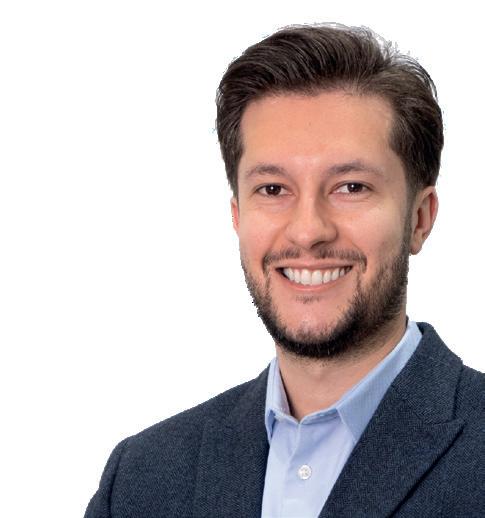
Matt Harman, Executive Consultant with Morgan Latif, an agency focused on recruiting leaders for the chemical industry, agrees there is a “real big gap” between those close to retirement and their “fresher” replacements, although he notes companies do have initiatives in place around future leadership and succession. “But they are almost stuck in an impossible situation because they know they have to do something to promote future leaders, and they also know they're about to lose a vast majority of their current leadership,” Harman says.
Redfearn points to a “real, missing middle”, essentially a lack of seasoned and experienced leaders in the 44-50 age bracket. In certain business areas – and in technical roles – he is seeing companies offering part-time positions
“I would say previously companies would select probably 80-85 percent on experience, and the rest on culture. Now it’s as much as 50:50”
Matt Harman Executive Consultant, Morgan Latif
to those who are due to retire, or mentorship and advisory roles that allow people to stay and continue bringing their experience to the leadership table.
Another trend, he continues, is companies are now trying to combine as many different functionalities and responsibilities into a single job title. “This makes it more difficult to make the right hire because we're looking for someone that has done a variety of different things rather than just what the job title suggests.”
Businesses are also placing much more importance on hiring someone who will fit in with company culture. This, says Harman, has been a big and dynamic shift in the past couple of years. “I would say previously companies would select probably 80-85 percent on experience, and the rest on culture. Now it’s as much as 50:50. We’ve seen some great people rejected who could definitely do the job.”
So, what are the key success factors for recruiting and retaining talent? A shorter, faster hiring process is one, says Harman, as well as a change in mindset on applicants’ previous tenure.
“Traditionally, hiring managers did not necessarily like candidates that had changed jobs every two or three years – that was a huge red flag. But that attitude has definitely shifted and companies – even more so in Europe than in the U.S. – now think it’s fine if they can get three or four years out of an employee who adds serious value to their business before they move on.”
Certainly, there is no longer an expectation, or wish, among candidates for a job for life. A healthy work-life balance, a flexible and/or hybrid workplace, and a clear and transparent career development path are all highly important factors for Millennials and Generation Z candidates seeking new employment.
“I think the companies that are successful in attracting and retaining



Elevate your brand with Women in Chemicals and reach thousands of key decision makers. The Women in Chemicals magazine is a print and digital publication with outstanding reach and readership.
Contact: Claire O’Leary, Porth Media claire@porthmedia.co.uk Tel: +44 (0) 7828 830438

“Companies that are successful in attracting and retaining talent are offering strong employee value propositions that go a lot further than just paying a good salary”
Joseph
Redfearn Managing Director, Bramhall
& Co

talent are offering strong employee value propositions that go a lot further than just paying a good salary. Candidates are looking for a holistic value proposition, flexibility, purposeful learning and development, inclusivity, and collaboration,” Redfearn says, adding that employers that can frame and prioritize environmental, social and governance (ESG) goals are attracting more engagement from early career candidates.
But he has noticed a growing disconnect between some companies’ publicly projected values and the reality of their culture, particularly during this challenging period for the chemical
industry. Redfearn states that the best strategy for attracting and retaining talent is to build and present an authentic culture that reflects what is promised.
“Those misalignments are pretty costly, especially when there is a soft job market and talent is available. Particularly, younger generations will not stay around when they feel disengaged, misled, and undervalued and, as a result, companies are seeing higher turnover than in the past,” he says.
Many chemical companies are also committed to doing more around diversity and inclusion, particularly when it comes to hiring women, although both Harman and Redfearn say more action
– and less lip service – is sorely needed, notably at leadership level.
From a geographic standpoint, Europe appears to be doing better than the U.S. with regards to employee benefits. For instance, says Harman, European companies will often add life insurance, medical care, and sometimes even equity to salary packages for people with three or five-years work experience, whereas in the U.S., less experience usually means fewer benefits.
Female workers in the U.S. also fare worse on benefits than their European counterparts, Redfearn adds. “Progress has been slower in the U.S. where three out of four women in the chemical industry report they lack equitable benefits, like paid maternity leave and childcare support. I think Europe generally is not friendly towards women in the industry, but it’s friendlier than the U.S.”
Cultural change among the chemical industry still has some way to go to become more attractive as a career for both women and the younger generation. Certainly, companies need to respond faster to evolving recruitment needs and provide more clarity around their policies if they are to access the talent that will be crucial for securing a sustainable and successful future.
Elaine Burridge
The benefits of mentorship have long been acknowledged in the corporate world, but until recently, the process was largely considered only really beneficial for professionals at the very early stages of their career. Mentorship is increasingly being acknowledged as just as valuable for the mentees as it is for their mentors.
This shift is something Women in Chemicals is actively embracing and incorporating into its own mentorship program, which launched in the first quarter of 2024. The initiative is currently working with its second group of candidates, with applications for its next round, Cohort 2026, opening in the final quarter of 2025.
“Our program is really unique, starting with the global reach, which means different cultures and a variety of types and sizes of companies within the industry,” says HR Diversity and Inclusion Manager Kasia Jankowska, who also chairs Women in Chemicals’ Mentorship Program. “Secondly, our program represents various functions.
The concept of mentorship has moved away from its traditionally hierarchical model and is increasingly seen as a two-way process, beneficial for the mentors and the mentees “When you prepare for your discussions with your mentee, it forces you to reflect on your own journey, on your own strategies to overcome challenges”
from commercial to technical to support, which also enriches the perspective and the insights we get.”
Another important element that makes the program stand out, adds Jankowska, is the variety of seniority of both the mentors and mentees in the program.
“In Cohort 25, we have many women in their mid-career, and they want to discuss what to do up next,” she says.
The safe space the program provides for women that are keen to explore various options for their career moves –especially vital in our traditionally maledominated sector – is another factor that really sets it aside.
“Not everyone wants to go vertically up the ladder,” says Bob Girton, private equity professional and Women in Chemicals’ advisory board member.
Sometimes, he adds, mentees would like support and guidance on how best to combine their professional duties with their family lives. Other times, they may not be entirely sure on their next career move and do not feel comfortable discussing this at their place of employment.

“The mentorship program gives women a space to ask someone who is not their employer those questions. And it's a two-way dialogue in a safe place,” adds Girton. “Who do I talk to that is aware it can be beneficial, but isn't putting me at risk as a first conversation?”
Jankowska echoes that sometimes women in the program like to explore possible changes in their career paths.
“We have a great example of one of our mentees from the last cohort who wanted to transition from her R&D function to sales. In situations like this, mentoring is a beautiful tool of support when it allows for a mentor working on the side you want to transition to,” says Jankowska.
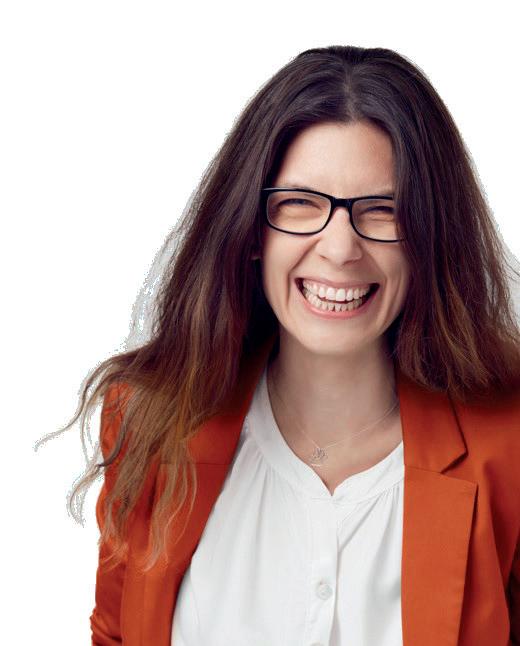
Kasia Jankowska Chair, Women in Chemicals’ Mentorship Program
In this case, the mentor not only guided her mentee but helped them secure a role by passing on a relevant job opening.
Besides being hugely beneficial for mentees, the process is an invaluable learning experience for mentors as well.
“I was really surprised when I became a mentor for the very first time that I gained from it too,” says Jankowska. “When you prepare for your discussions with your mentee, it forces you to reflect on your own journey, on your own strategies to overcome challenges.”
“It's really an opportunity to rethink and reflect, and maybe also modify anything in the way you act and behave,” she continues. “When you gain this other perspective from this other person, you learn from their experience as well.”
The experience is now also being enriched by the wide variety of participants being encouraged to join the mentorship program.
“Some 20 years ago when I was starting my career in HR and was reading about mentoring, it was only for high-level executives, a very limited group of people,” recalls Jankowska.
“Over the years, it’s absolutely evolved. It's become more diverse, inclusive, and much more accessible, not just in person
To find out more about Women in Chemicals’ Mentorship Program and how it is championing personal and professional development among members, visit the website at https://www.womeninchemicals. com/mentorship. Remember, applications for Cohort 2026 open in Q4, 2025.
“Both mentors and mentees are able to listen and reflect on the different perspectives from both a newcomer in the industry and someone in leadership”
Elizabeth Kincheloe
but now successfully via virtual and hybrid formats too.”
Girton also stresses the increasing involvement of mid-career professionals in the process – something that was lacking until recently.
“I think generally, there's a leadership gap. The middle management is in deficit,” he says.
He also notes the importance of having both female and male mentors as they will offer different perspectives.
“There’s been a positive push for diversity. I have a broader consumer base and I need to be more aware of the needs and expectations of my workforce,” he says. “I need a different group in the room around me.”
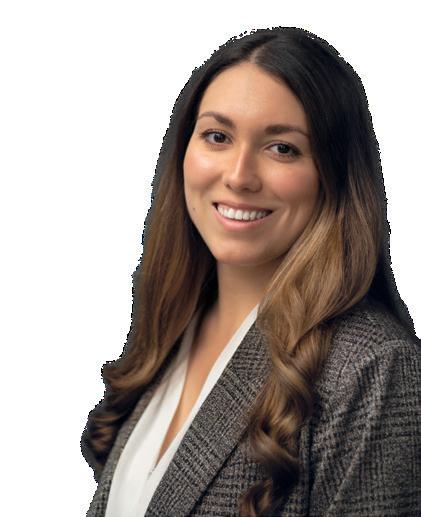
Elizabeth Kincheloe, Sales Account Executive at Highway Transport and a mentee in the mentorship program’s Cohort 2025, highlights the more prevalent role of women as mentors now that more of them hold senior positions.
“Mentorship has always been prevalent over the years, but for women in particular, the concept has changed with more females in leadership positions,” she says. “The increased interest to guide the next generations has led to incredible organizations such as Women in Chemicals.”
“From my perspective as a mentee, there are benefits for both sides. Both mentors and mentees are able to listen and reflect on the different perspectives from both a newcomer in the industry and someone in leadership.”
Kincheloe’s motivation to join the program was to get a clearer focus on her next career steps, as well as to become more involved with Women in Chemicals.
“The open sessions hosted by the mentorship program leaders are what make this program stand out,” she says.
“By providing additional discussions, this helps guide the relationship you are building with your mentor or mentee.”
The community the program helps build beyond the main mentor-mentee pairings is another positive example of how it is breaking away from the traditional mentorship model.
“I truly believe that with each mentee and mentor we have on the program, we actively influence how the industry is evolving. For example, across the globe with our three Cohorts, we now have 200 people who are part of our mentorship community,” says Jankowska.
Kincheloe also points to her growing network as a direct result of participating in the Women in Chemicals mentorship program.
“To have the time to reflect with other mentees is a great way to connect with other women in the program and grasp a better understanding of everyone's roles in the industry,” she says.
She has also noticed her growing confidence since joining the group.
“I struggled with advocating for myself as a professional,” she admits. “It is easy to think of all the things you could have done better, but what about all the great things you have achieved? My mentor helped me grow through active listening, providing her advice, and setting a target to help me succeed.”
“Sometimes all you need is another person to view things from another perspective,” she adds. “A mentorship relationship provides a sounding board to lean on when facing difficult decisions in the workplace. No matter where you are in your career, there’s always a benefit to being a mentor or mentee.”
Yana Palagacheva
What defining moments have shaped your career?
With over 25 years in trading and shipping ethanol, I held leadership roles including Managing Director, General Manager, and Board Director. I also served as President of an association for women in trading and shipping for six years. These experiences forced me to confront and overcome gender bias and fueled my passion for advancing women in these sectors.
Becoming a mother later in life while leading teams across highpressure industries also deepened my understanding of work-life integration. It taught me resilience and the importance of well-being for sustainable leadership.
Founding YAS Coaching in 2021 and recognizing a critical gap in coaching for women in the shipping and commodities sectors, I transitioned from corporate leadership to purposedriven entrepreneurship. Launching YAS Coaching was a defining pivot – grounded in a mission to empower women through leadership development and personal branding.
Which three people would you like to invite to dinner?
I’d first like to invite Dame Jacinda Ardern, former Prime Minister of New Zealand. I’ve always believed that being a woman in the workplace is tough, but holding this kind of position is even more difficult. She really did a fantastic job leading the country during the COVID-19 pandemic and although she later decided to step down, there is a lot we can learn from her.
I would also ask the late Ruth Bader Ginsburg, a lawyer and an associate justice of the U.S. Supreme Court, for her relentless advocacy for gender equality. She proved she could make it as a woman despite everybody doubting her.
Last is Alexandra David-Néel, a 19th century French writer and Buddhist spiritualist, for her pioneering spirit as an explorer, writer, and trailblazer who was far ahead of her time.
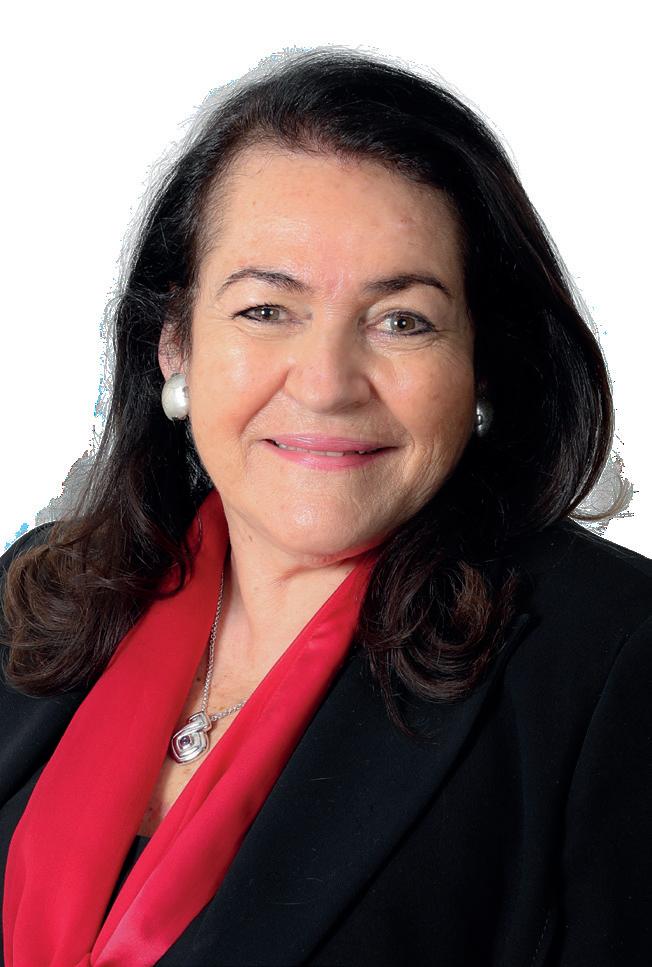
Yasmina Rauber is a certified coach and trainer and Founder of Yas Coaching, based out of Walchil, Switzerland. She provides corporate training and leadership coaching tailored for women executives and corporate teams in the shipping and commodities trading sectors.
Who has influenced you most?
My mother has been my greatest influence. As the first female President of the Foreign Press Association at the United Nations in Geneva, she showed me firsthand that women can lead and thrive on a global stage. Her courage and independence set the tone for my own journey. Later, in leadership roles within various associations, I met remarkable women such as Ruth Sandelosky (CEO of Kolmar) and Karin Orsel (CEO and Co-Founder MF Shipping, President of European Community Shipowners’ Association, and past President of the Women’s International Shipping & Trading Association). Their integrity, success, and generosity – always lifting others up without expecting anything in return – continue to inspire me and model the kind of leader I strive to be.
If you could change one thing in your career…
I would have spoken up sooner. Being the only woman in management and later on the Board, I struggled with impostor syndrome, often silencing my own voice. That experience now fuels my passion for helping others build confidence and communication skills through coaching –so they can speak up, step up, and own their space earlier than I did.
What do you enjoy most about being a member of Women in Chemicals?
I truly value the supportive and inclusive network that Women in Chemicals offers. It’s a space where growth, connection, and collaboration are encouraged through diverse programs. Serving on the Ambassador Program Committee is especially meaningful to me. I believe in giving back, and this role allows me to contribute to a community that aligns with my mission of empowering others.
In this series of articles, we ask a few questions to women in the chemical industry to reveal a little about them as a person, their personality, traits, and ambitions
What defining moments have shaped your career?
The most defining moment, I think, was my internship at LyondellBasell. I basically went to a career fair and ended up on an internship with them that introduced me to the chemical world. I realized I loved the company, the people, and the culture, and I stayed there for seven years.
Choosing to do something different and move to Third Coast was a huge and scary jump for me – LyondellBasell was like home; it was where I’d grown up as an intern and had all these different jobs and had grown the bulk of my network.
Now, having moved to Megaloid, this is essentially my first role where I’m focused on business development and sales, not just account management.
Which three people would you like to invite to dinner?
One would be my grandma. She passed away when I was really young, so I didn’t really get to know her as an adult. She was a modern Mexican woman. I’d love to be able to learn more from her.
The next would be Virginia Hall. She lost some of her leg during a horse-riding accident but still went on to be a spy during World War II!. In a time where women didn’t have a lot of opportunities, she created them for herself and really pushed the boundaries.
I’d also invite Lazaro Cardenas who served as Mexican President during the 1930s. He was one of the most progressive presidents in history, doing a lot for the workers and making Mexico more independent. Particularly in the current political environment, I’d love to pick his brain.
Who has influenced you most?
That would be my manager during my internship at Lyondell Basell, Anne-Marie Balthazar, for teaching me the ropes on how corporate America
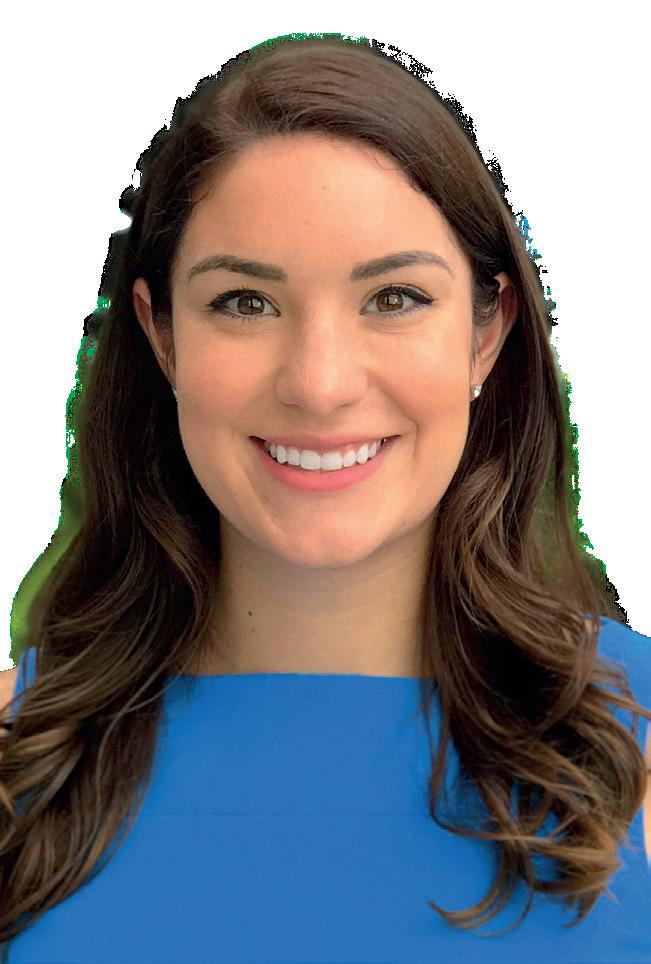
Alejandra Montes works in business development, sales and marketing at Megaloid Laboratories Ltd, a distributor and trader of industrial solvents and chemicals.
works. She showed me how to manage my career as a young woman, how to set myself apart as a leader, and to always push myself. I still try to meet with her at least once a month. Every step in my career so far, I’ve asked her for advice. She’s constantly pushing me to grow and be a better woman in general. Any life decision, I’m giving her a call to talk through the pros and cons. She’s a great mentor.
If you could change one thing in your career…
The only thing I’d maybe change is learning not to take everything so seriously. There have been a lot of tears shed over some decisions. I was always scared about change, but I now realize that everything will work out as long as you put in the effort and build those relationships. It will all be fine in the end. Take the chance!
What do you enjoy most about being a member of Women in Chemicals?
First of all, it’s a space where you meet women who are all in similar situations to you. This is a group of women who are encouraged to be leaders, continue to empower themselves, and learn from others. I love all the different programs you can join, like the Book Club where you read great books, develop ideas, and talk. In this industry you’re usually always surrounded by men. You get used to being the only woman in the room, so to have such a great network of women is great not only for myself personally but for the industry.
It’s nice to know that at most big events there’s going to be a happy hour or a get together where I’ll be able to meet with other women. I went to last year’s WIC Conference and literally thought, “Is this how men feel?”. I felt so comfortable, and able to talk to everyone. It was nice to be surrounded by people who were just like me.
By Andy Brice
My journey in the chemicals industry started in 2010, and it was clear from the beginning that I entered a male dominated field. Even so, I had absolutely no doubt that this was where I wanted to be. It’s interesting, constantly changing, demanding, and I find I learn something new every day. The one thing that may have been missing was the opportunity to meet and network with more women!
I have been lucky to have been a member of Women in Chemicals since the onset in 2021, and it’s been an amazing thing to witness the journey. This evolution from starting a networking group for women in the industry to a full-blown organization that supports women, provides educational resources for aspiring students, and offers a space for networking across industries is the kind of entrepreneurial spirit that truly inspires and makes you wonder how there had never been an organization like this before.
For me, I find the opportunity to meet the members in person the most




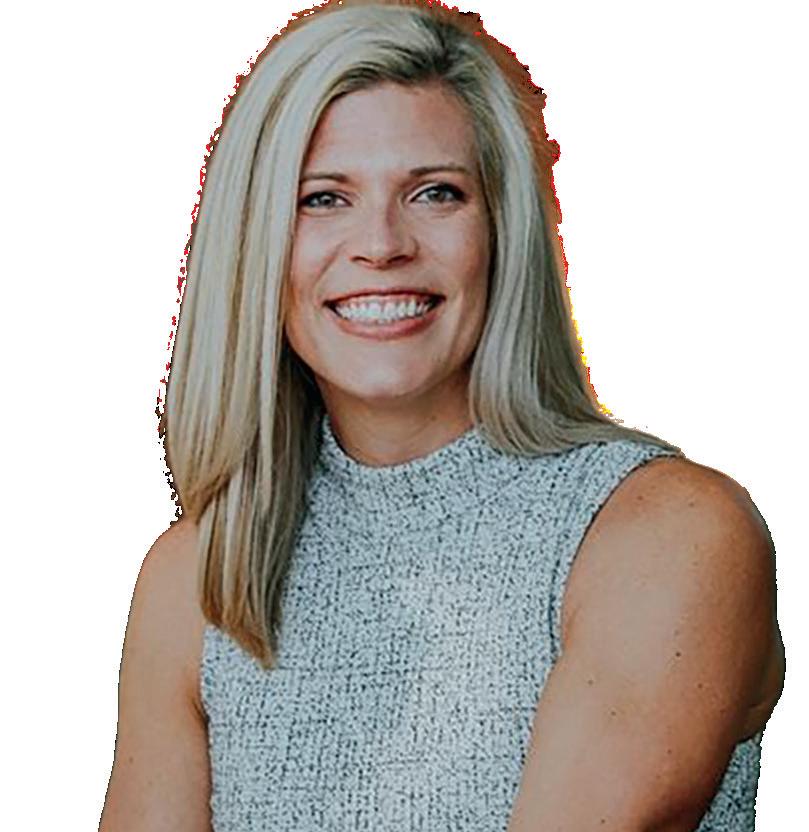
valuable. The events that WIC holds throughout the year at different trade shows offer the feeling of camaraderie and a sense of belonging. The 2024 Women in Chemicals Conference was the best conference I’ve attended. The panels offered so much insight, I was able to put so many faces to names, but more importantly, I felt like I was able to join talks that benefited me on a personal level, not only professionally.

The decision to support Women in Chemicals as a corporate sponsor mirrors the commitment to support our own employees and their professional journey. I believe that Jungbunzlauer has a deeply rooted belief that by supporting and empowering their employees, the organization will follow in that growth. I love that Women in Chemicals offers so many ways to grow and to get involved, but at the same time, does not apply pressure. For many of us, we have busy seasons in life and other times there are moments where we can get more involved. WIC offers that opportunity with flexibility.
I look forward to watching WIC evolve and feel happy knowing there are so many options now for women to meet others through this organization, to have that sense of belonging in the industry, and to always be met with big smiles, big brains and big hearts.







“Strength is built through adversity – and true leadership, especially for women in male-dominated industries, is defined by how you use that strength to open doors, break barriers, and empower others to rise, lead, and transform the future.”
As Vice Manager of Methyl Europe B.V., the European subsidiary of Methyl Group., I have the privilege of leading an all-female team in the global distribution of petrochemical products across Europe. Methyl Group is an ever-growing globally active chemical distribution company recognized for its worldwide reliability, customer-focused approach, and long-term partnerships. With an expansive global network and deep market expertise, Methyl Group has established itself as a trusted name and earned its position as a trusted leader in a constantly evolving industry.
In my role, I combine strategic vision with decisive execution, not only to drive growth, but to increase the visibility and impact of female leadership in the chemical sector. I deeply believe in the power of quiet, consistent leadership, rooted in values like perseverance, accountability, and purpose; values that drive both performance and culture within our team.
Adversity, in all its forms, has been a defining element in my personal and professional journey. In traditionally male-dominated industries like chemicals, overcoming bias and outdated expectations is a challenge many women still face. Add to that the volatility of global markets and shifting demands, and resilience becomes more than just a skill – it becomes a mindset.
But adversity isn’t always external. Sometimes, it’s closer to home. I’ve learned this firsthand through my own experience: balancing the demands of leadership while navigating the life-threatening illness and multiple heart surgeries of my firstborn child. This period redefined my understanding of resilience. It taught me how to lead and live with both strength and empathy –two qualities I now consider non-negotiable in how I approach business, leadership, and mentorship.
In today's world, where younger generations rightly prioritize work-life balance, I believe there’s power in honest leadership –leadership that acknowledges the real, human challenges we face while continuing to show up with purpose, integrity, and vision. This balance is not always easy, but it’s where true leadership is formed – and where the future of this industry must evolve.
One of my greatest passions is mentoring the next generation of women in chemicals. Through knowledge-sharing, empowerment, and visibility, I try to help create an industry where women not only succeed but shape the future.
Women bring vital strengths to the chemical industry: emotional intelligence, adaptability, resilience, collaborative thinking, a strong sense of responsibility toward people and planet and a natural ability to lead with impact. These qualities are essential for navigating today’s challenges and driving long-term growth. I strongly believe that increasing female representation at all organizational levels is essential to building a more innovative, inclusive, and sustainable industry.
My leadership is grounded in a strong commitment to sustainability, development, inclusive commercial strategy, and mentoring the next generation of women in chemicals. By fostering an inclusive and supportive environment, guided and inspired by the example set by our female CEO, I am proud to help shape a company and an industry that values long-term partnerships, embraces change, and champions diverse leadership, creating opportunities for women to thrive at every level. In the end, when faced with adversity, sometimes all one needs is a chance and the strength to take it. I consider it part of my duties to create both.

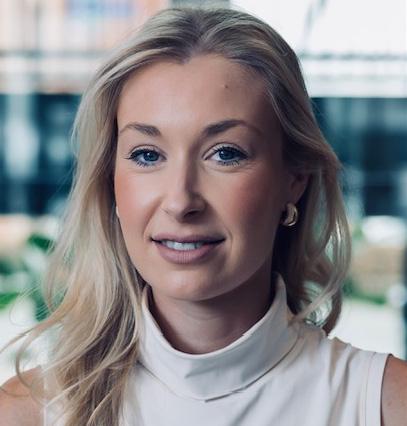
Contact: Jasmijn de Haan
Email: jasmijn.dehaan@methylcorp.com
Tel: +31 612 559 505
LinkedIn: Jasmijn de Haan
www.methyl.com.tw/en
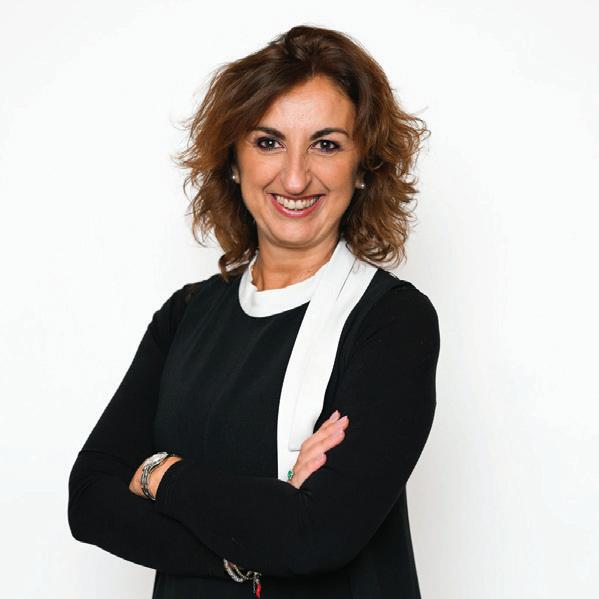

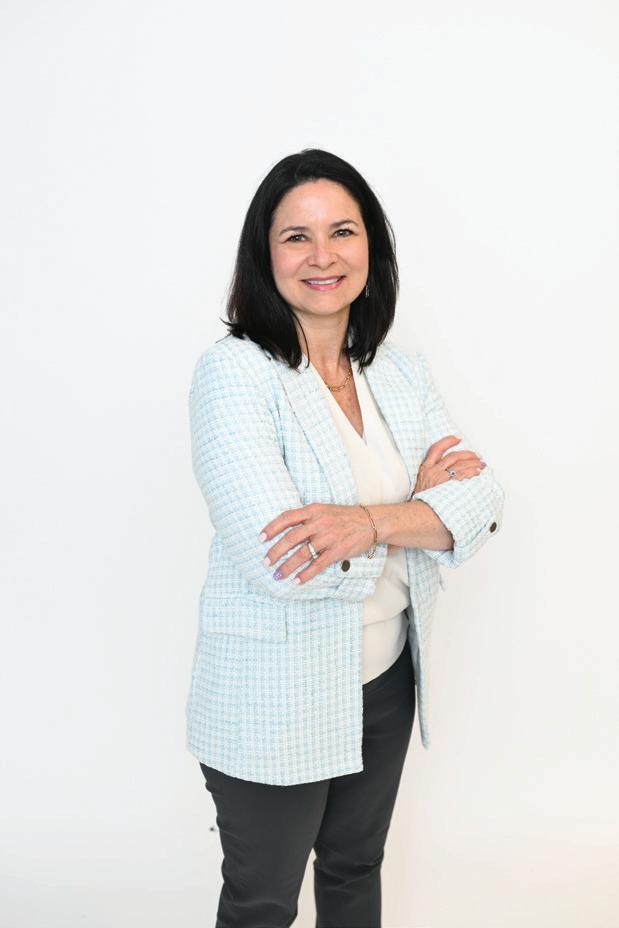

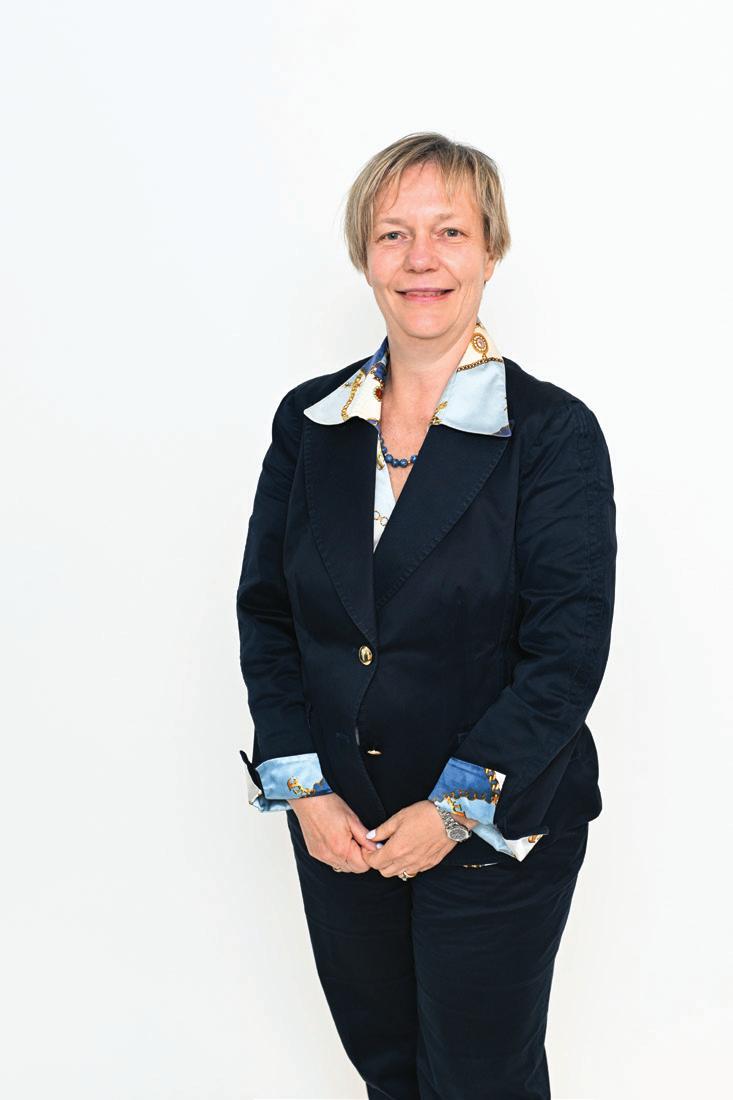

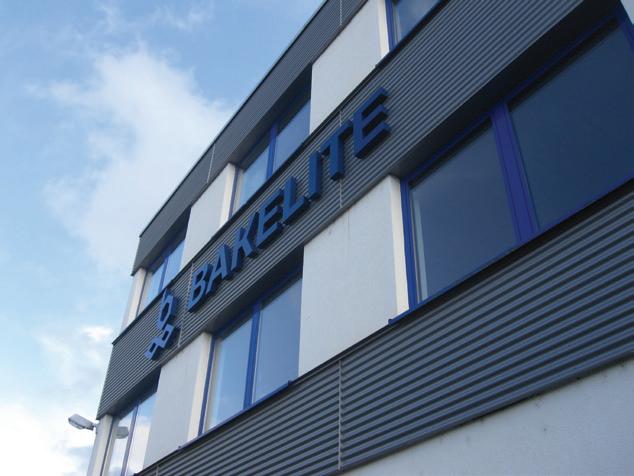
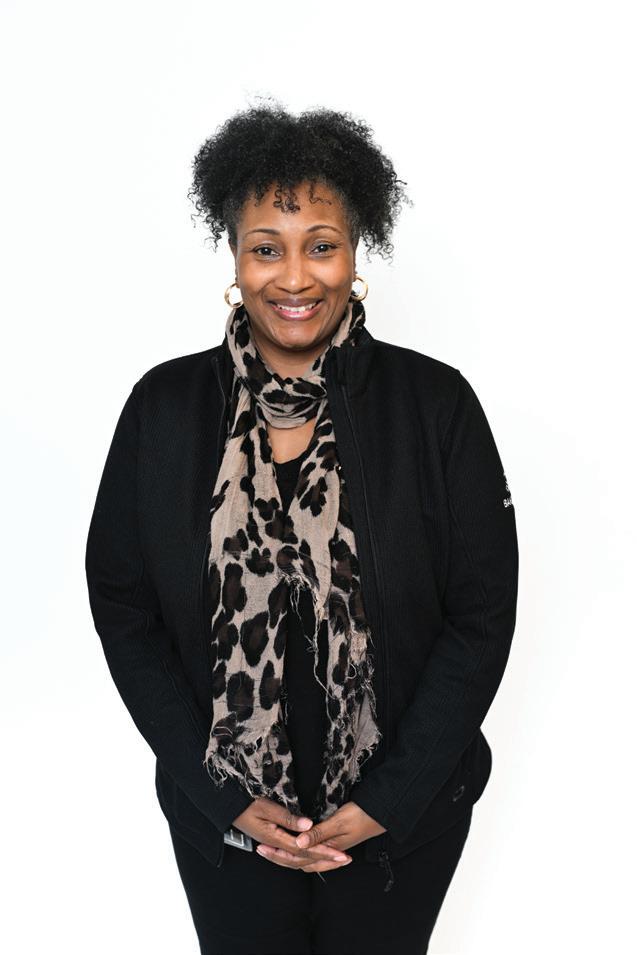

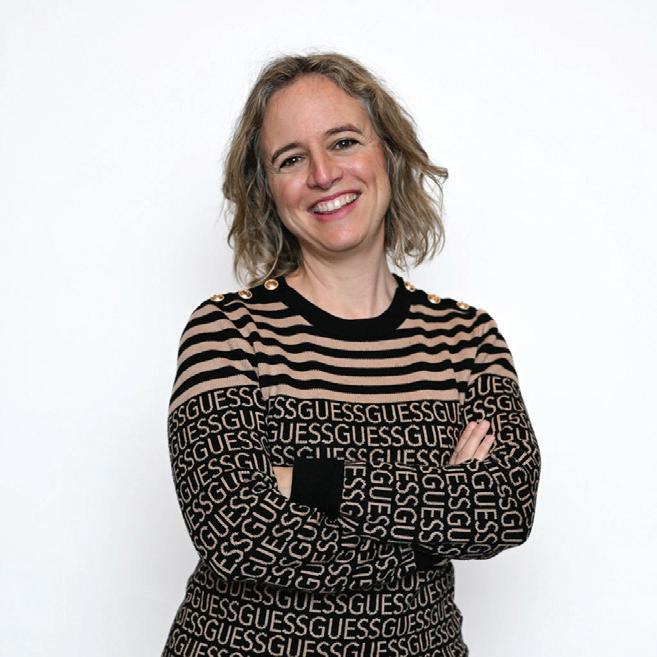
At Bakelite, we proudly recognize and celebrate the incredible contributions of women across the chemical industry.
Together, we’re shaping a more sustainable future through innovative chemistry and a commitment to progress. Our global team thrives on diversity, collaboration, and purpose, driven by the belief that science can make the world better for everyone.

We’re honored to support Women in Chemicals and to foster connection and growth through our Bakelite Women’s Network, a vibrant community where women are empowered to lead, inspire, and thrive.
Explore more about our mission and career opportunities at bakelite.com