PO Box 3000, Denville, NJ 07834-3000 Changes of address must be submitted in writing.
Where Women Create (USPS #000-310) is published quarterly by Women Create, LLC, 65 Redding Road, Box 985, Georgetown, CT 06829. Periodicals postage paid at Dover, NJ and at additional mailing offices.
Printed in Canada
Where Women Create® is a registered trademark of Women Create, LLC and may not be used without permission. No part of this publication may be reproduced without written permission from the publisher or Women Create, LLC. The information contained in this magazine is provided AS IS. Neither Women Create, LLC, nor the publisher, make any representation or warranty with respect to this magazine or the contents thereof and do hereby disclaim all express and implied warranties to the fullest extent permitted by law. Women Create, LLC and the publisher do not endorse any individuals, companies, products, services, or views featured or advertised in this magazine.
DURING the earliest days of Spring. There’s a quiet stirring in the air and a shift in the light that signals it’s time for something new to break the surface.
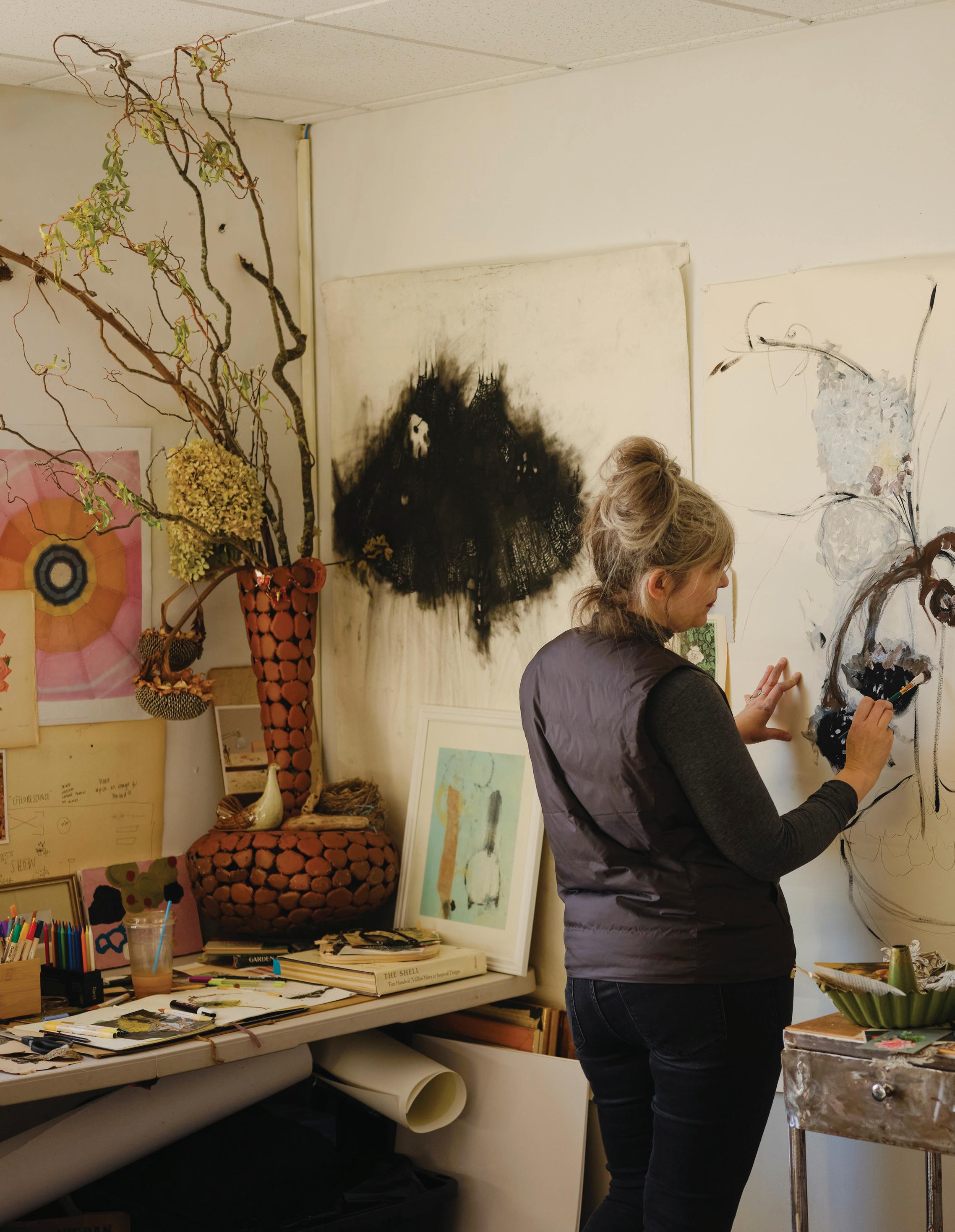
This issue of Where Women Create is dedicated to that very spirit of renewal. Within these pages, we step outside the traditional four walls of the studio to find women who create in harmony with nature. We visit Janine Gibbons, whose workspace is tucked under open skies along the western coast, and Lotta Jansdotter, whose Åland Island studio expands into her garden, a beautiful landscape that plays a leading role in her work. We also meet painters like Sucharita Sengupta Suri, whose brush is guided by flora and fauna, and artists Jeri Hauth and Tiffany Dixon, who draw inspiration from their memory gardens adjacent to their studios. Together, we explore wholeheartedly what happens when we let the outdoors in.
As the season shifts, so does the leadership of this magazine. It is with gratitude and excitement that I introduce myself as your new Editor-inChief. Stepping into this role is a “new beginning” in the truest sense… a place I never dreamed I would be, yet one that feels as natural as the turning of the seasons. I am also thrilled that Deborah L. Martin, whose vision has beautifully shaped our recent issues, will continue to share her wisdom and passion with us as our Editor-at-Large.
In this issue, I invite you to find your own “outdoors” whether that’s a literal garden, a new creative habit, or an unexpected life path. Something “outside” your norm. May these stories remind you that we are all constantly in a state of becoming, and that the most beautiful things often grow from the seeds we never expected to plant.
Welcome to Spring. Welcome to a new season, and to our new chapter.
From my creative corner to yours,
Susan Harold Editor-in-Chief
OUR NEW SHOP IS HERE!
From Her Hands to Your Home
Prepare to discover a curated collection of exquisite, hand-crafted creations! The Women Create Shop is launching this fall, bringing the incredible artistry highlighted in our magazines directly to you. Shop pieces from the dedicated artists we champion and bring their passion into your home. Visit www.womencreateshop.com for details.
PHOTOGRAPHY BY LAURA BRAVO MERTZ
SUCHARITA SENGUPTA SURI, P8
JERI HAUTH, P112
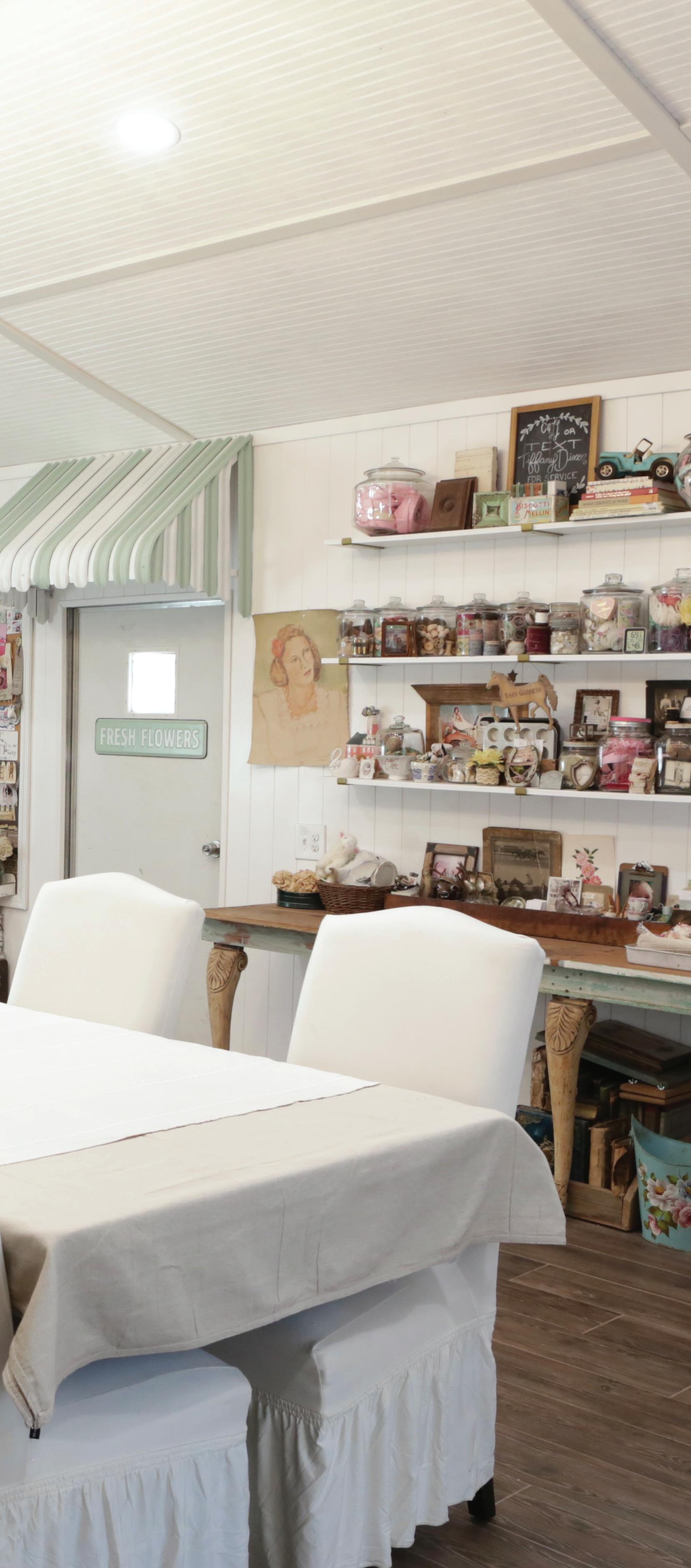
TIFFANY DIXON, P80
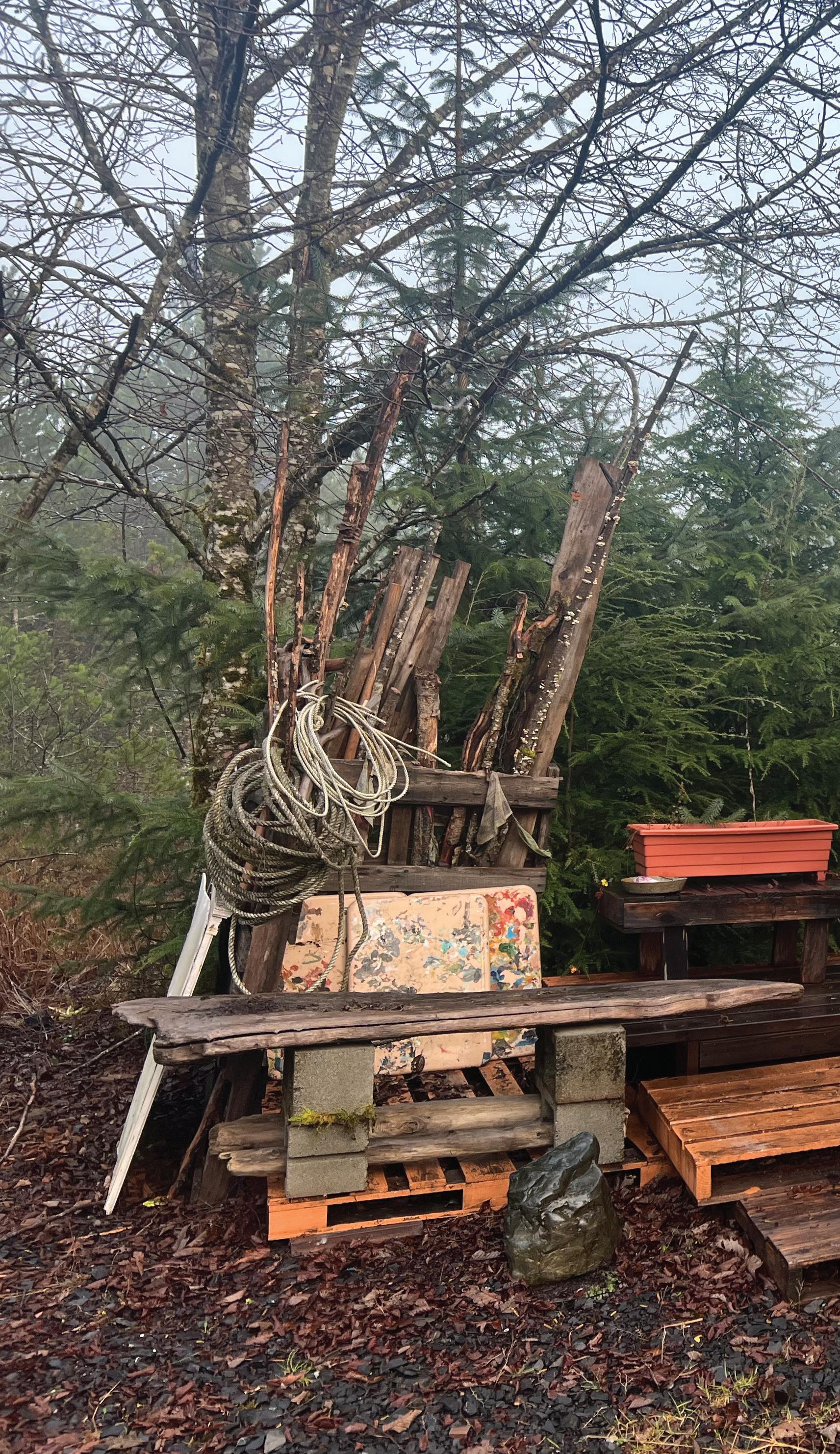
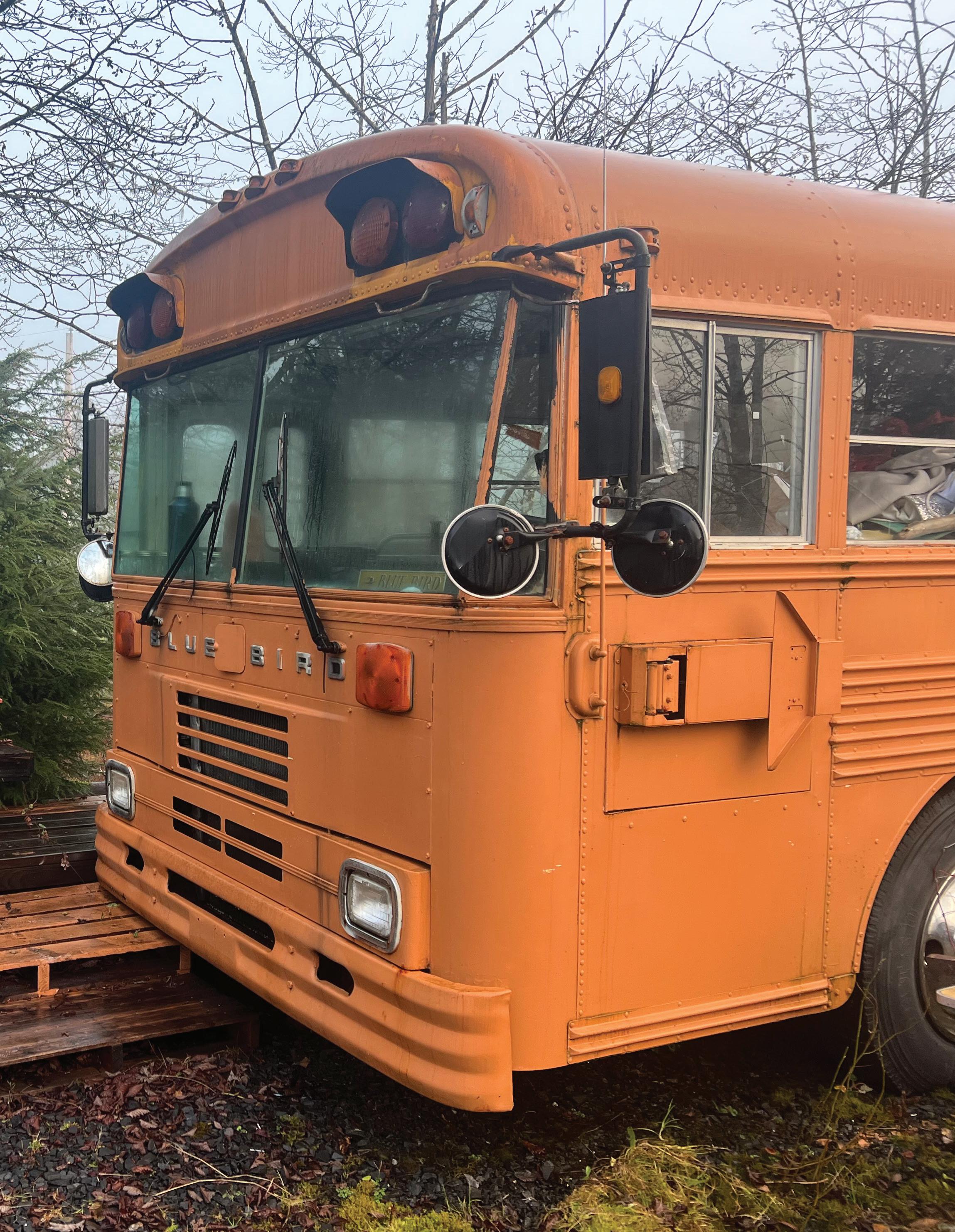
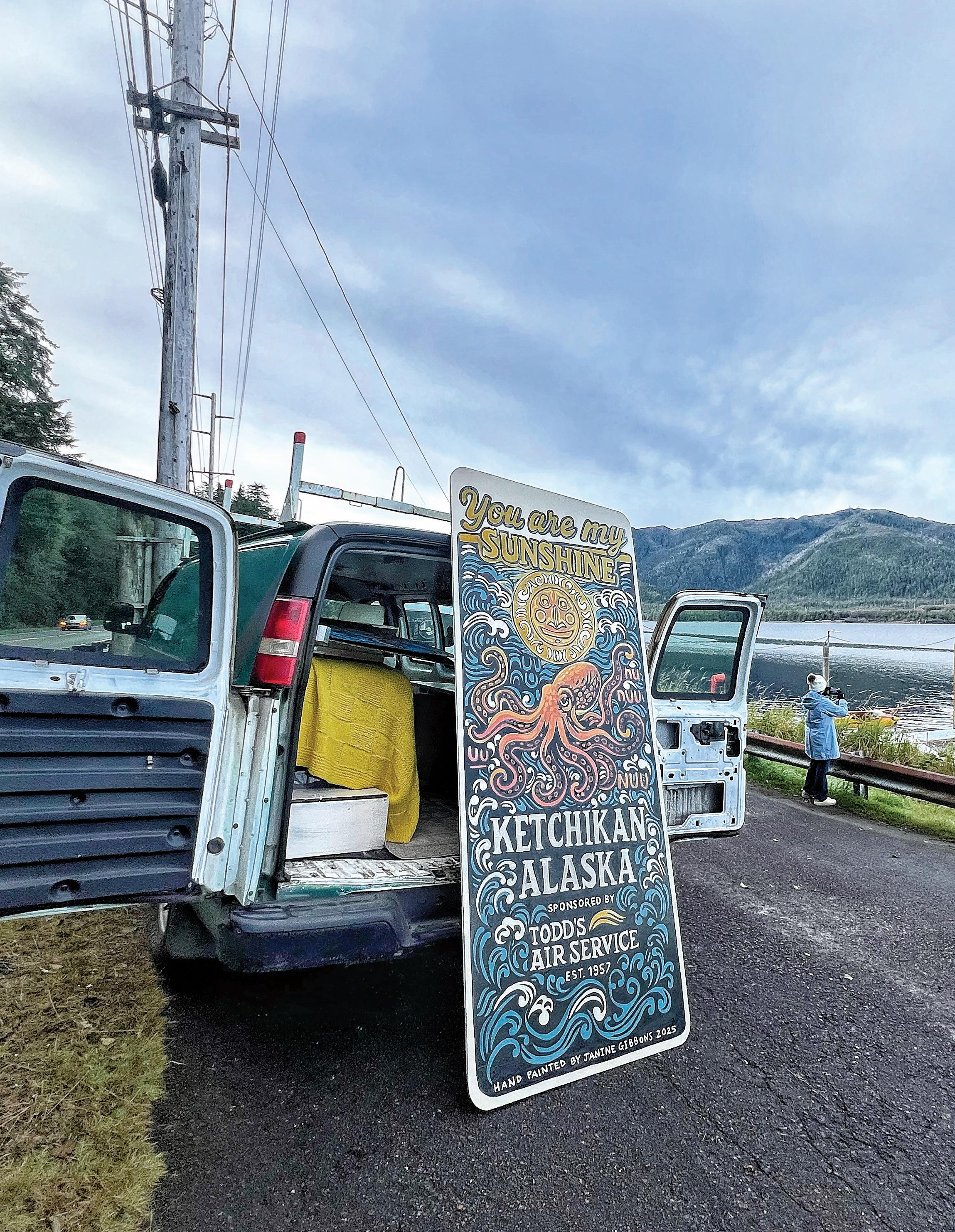
JANINE GIBBONS, P90
LOTTA JANSDOTTER, P64
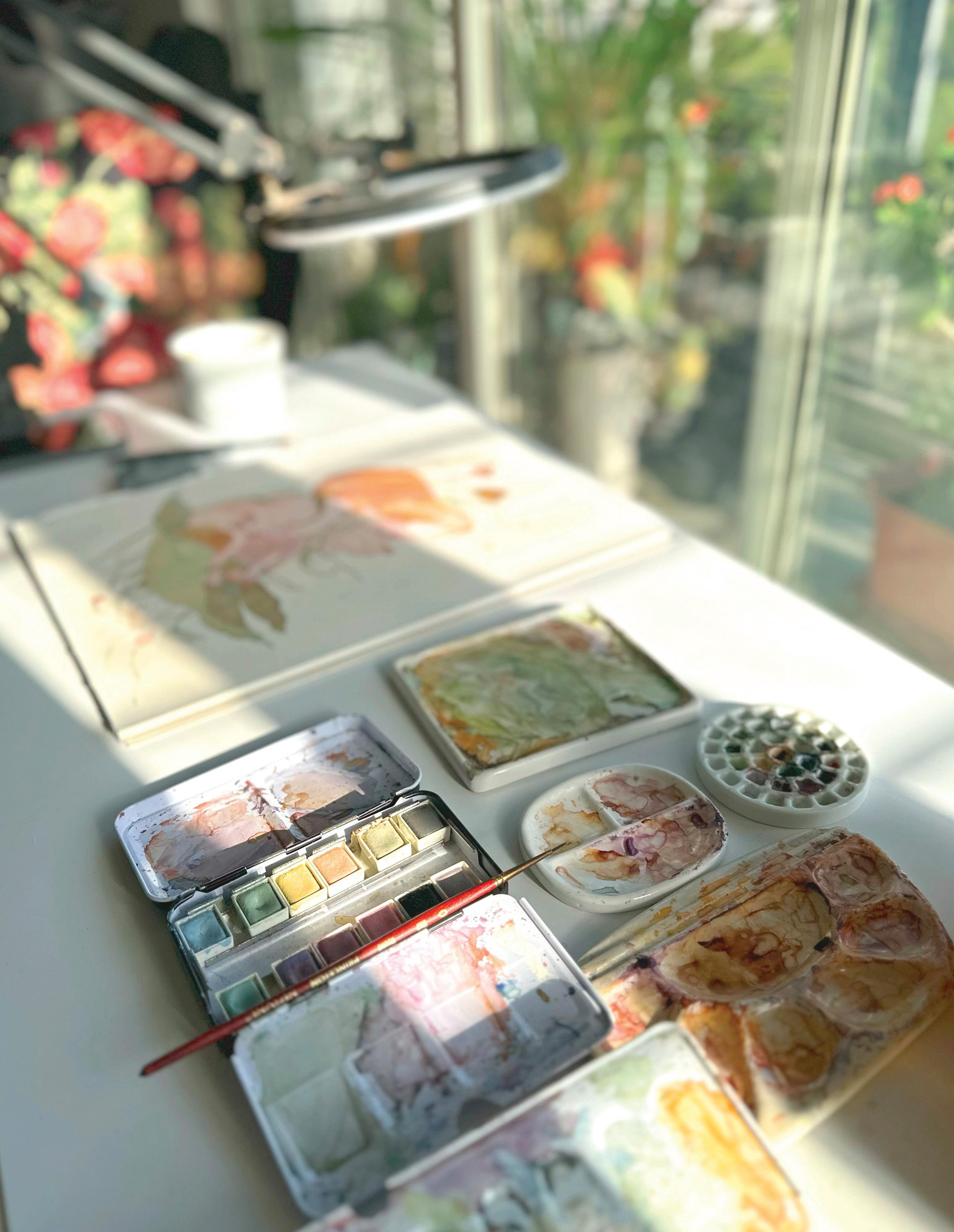
sucharita sengupta suri
Photography by Soumyyajiit Nandy
Curated by Sandra Evertson
SUCHARITA SENGUPTA
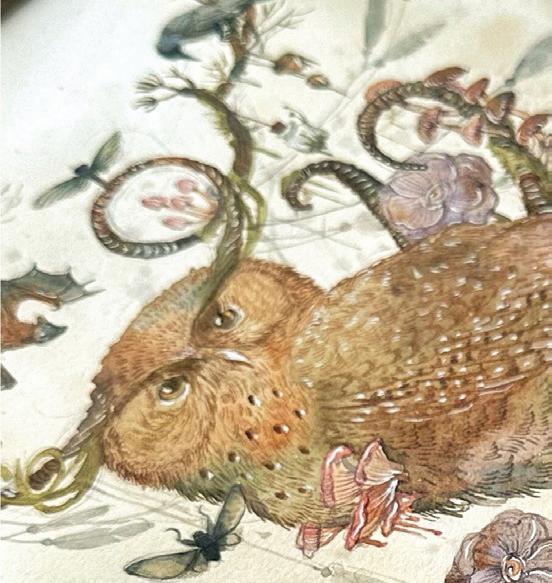
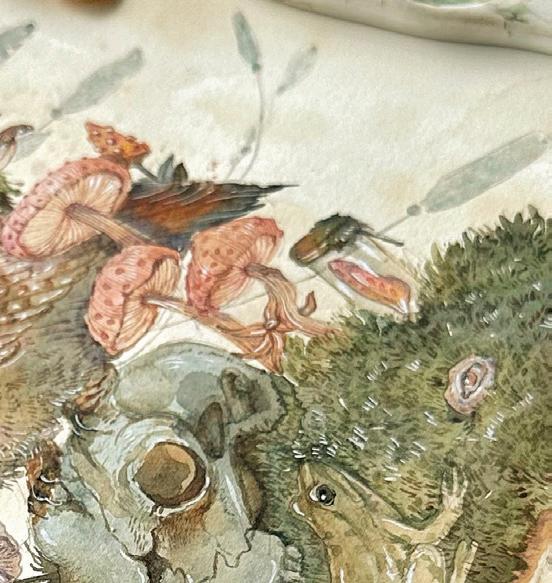
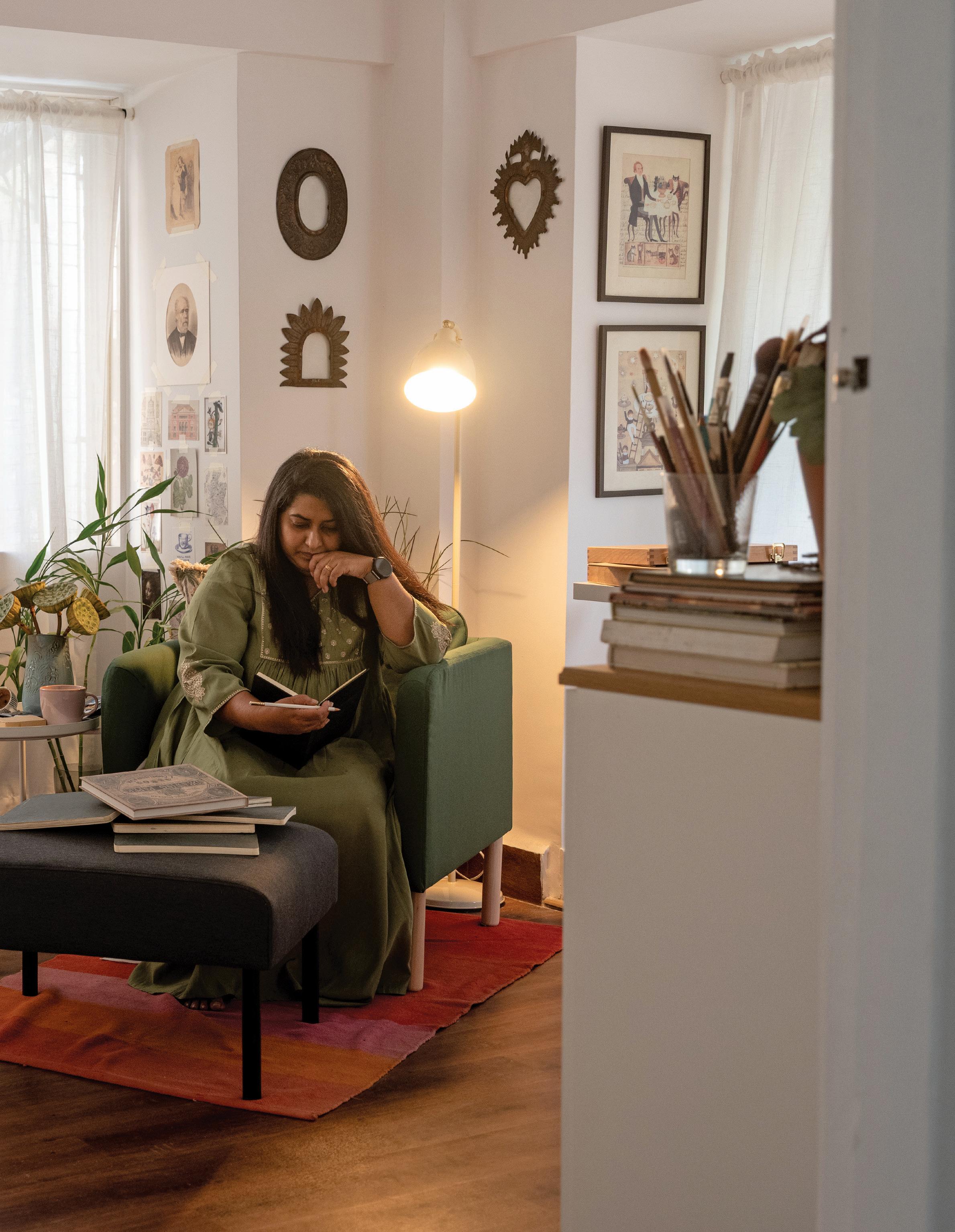
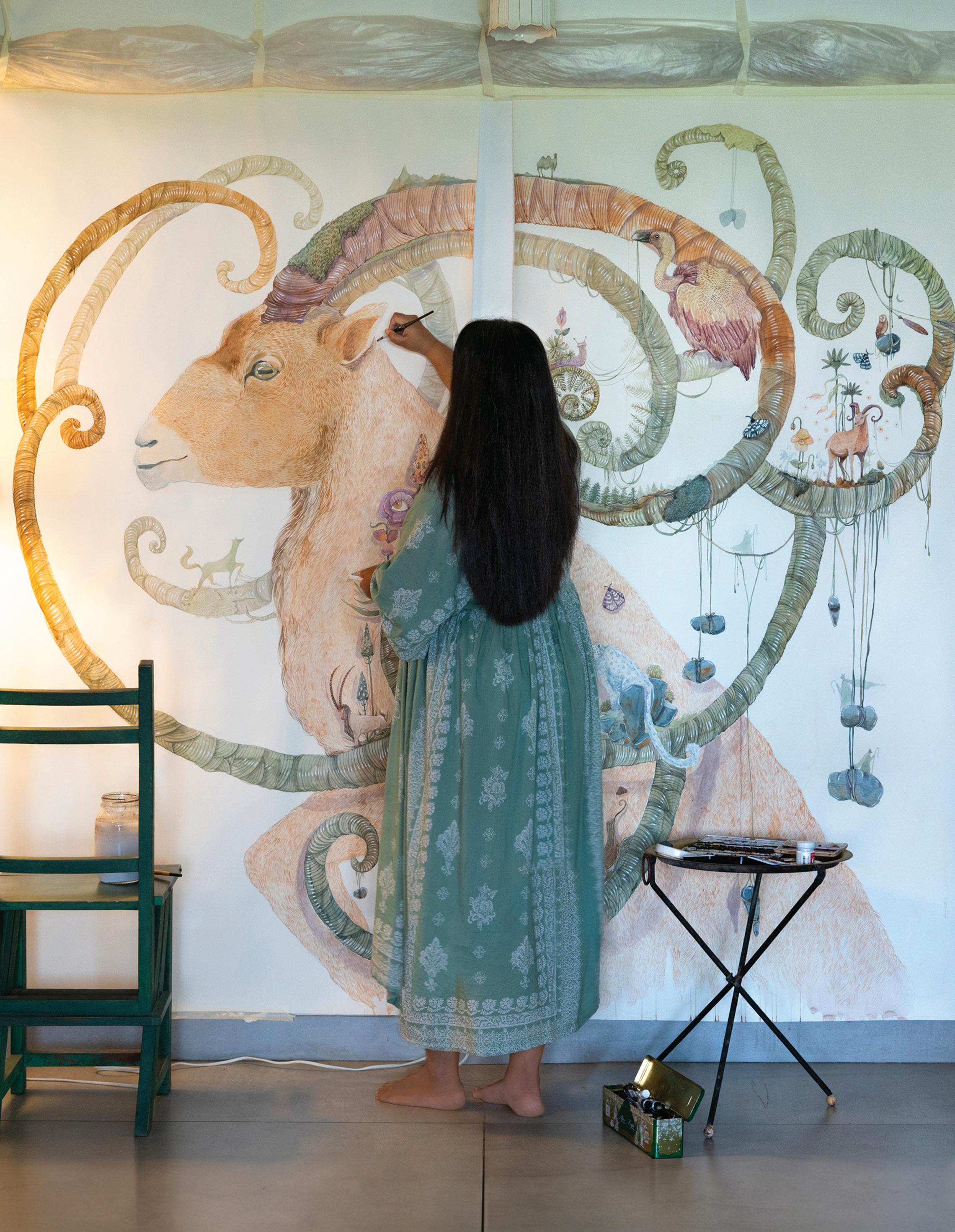
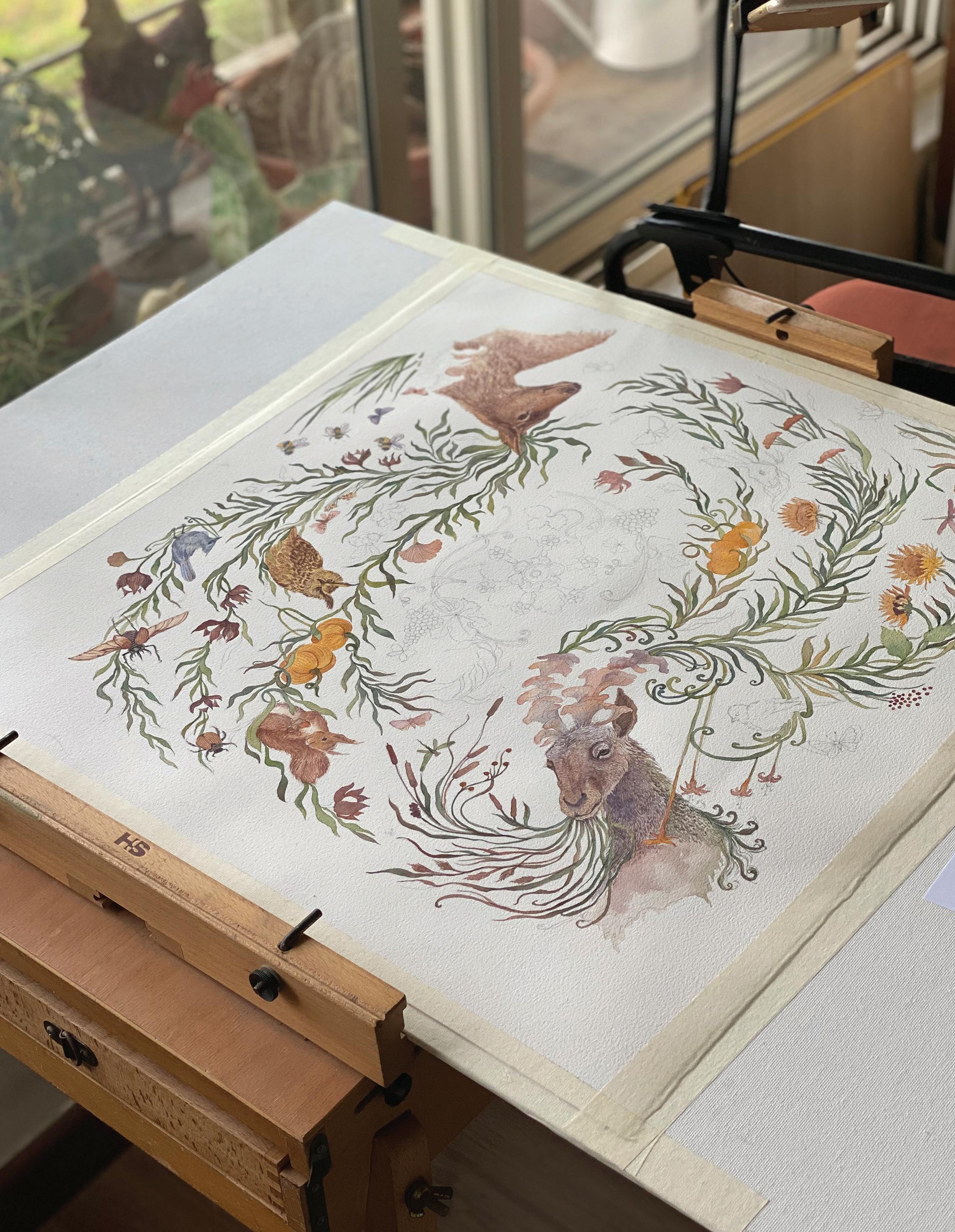
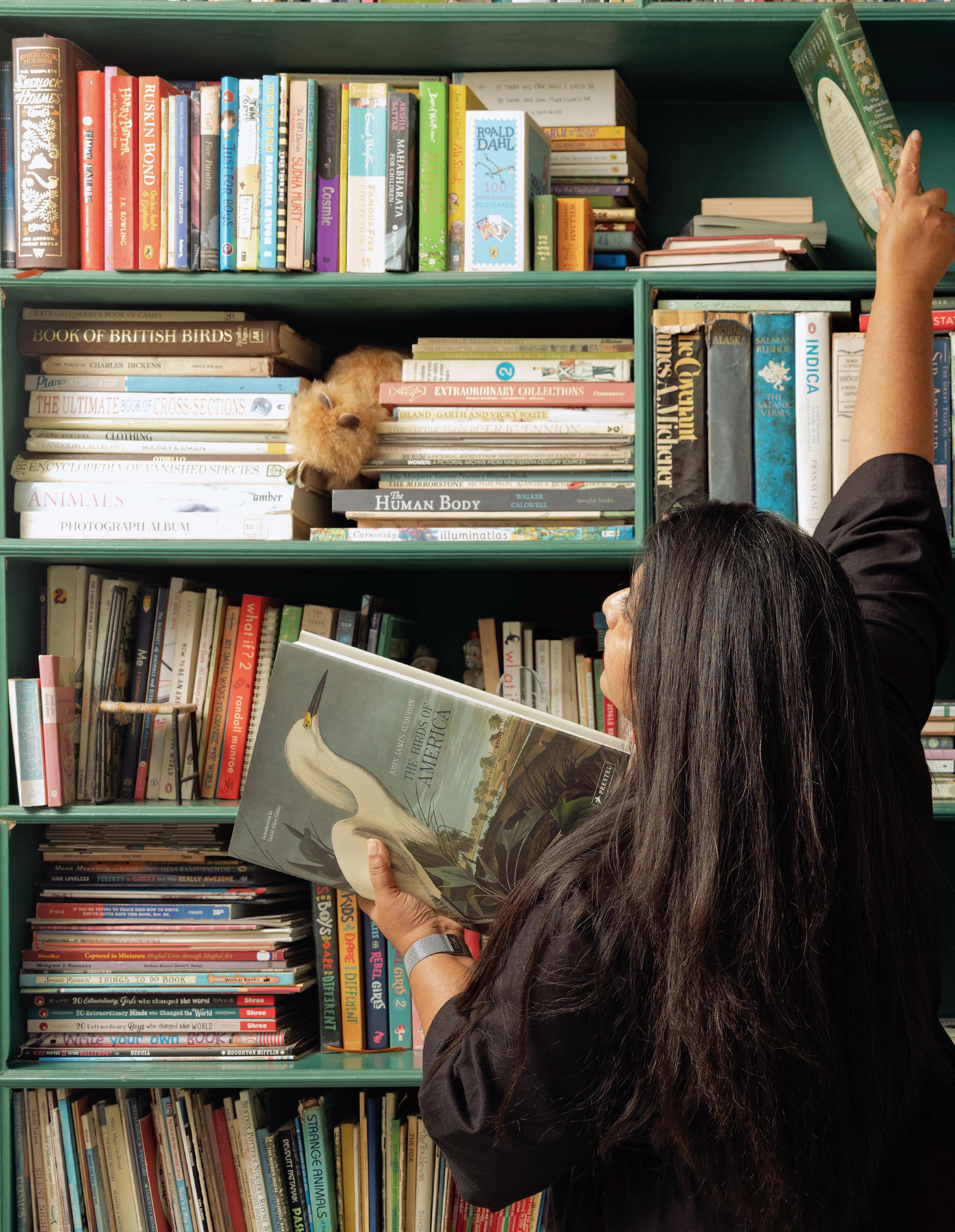
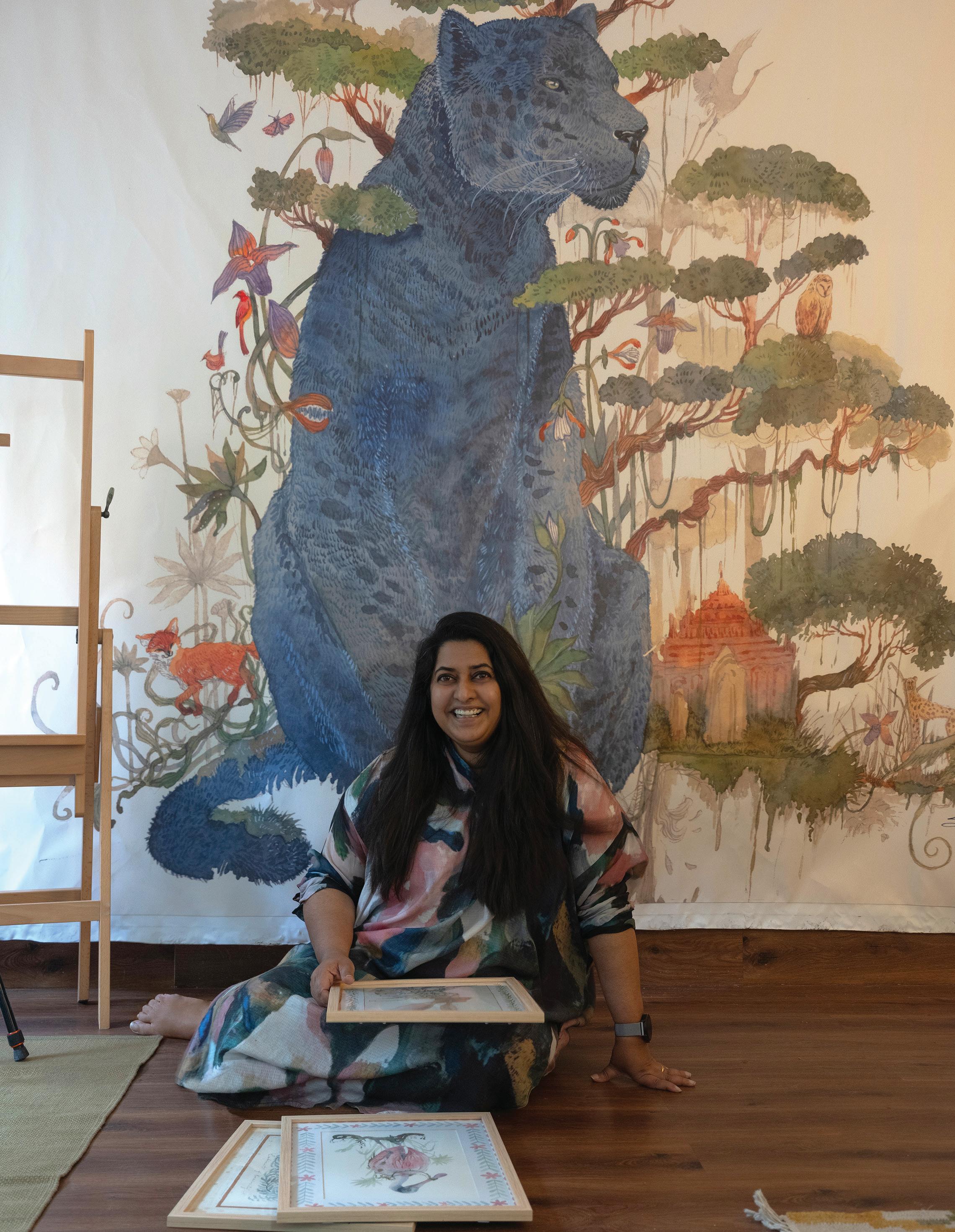
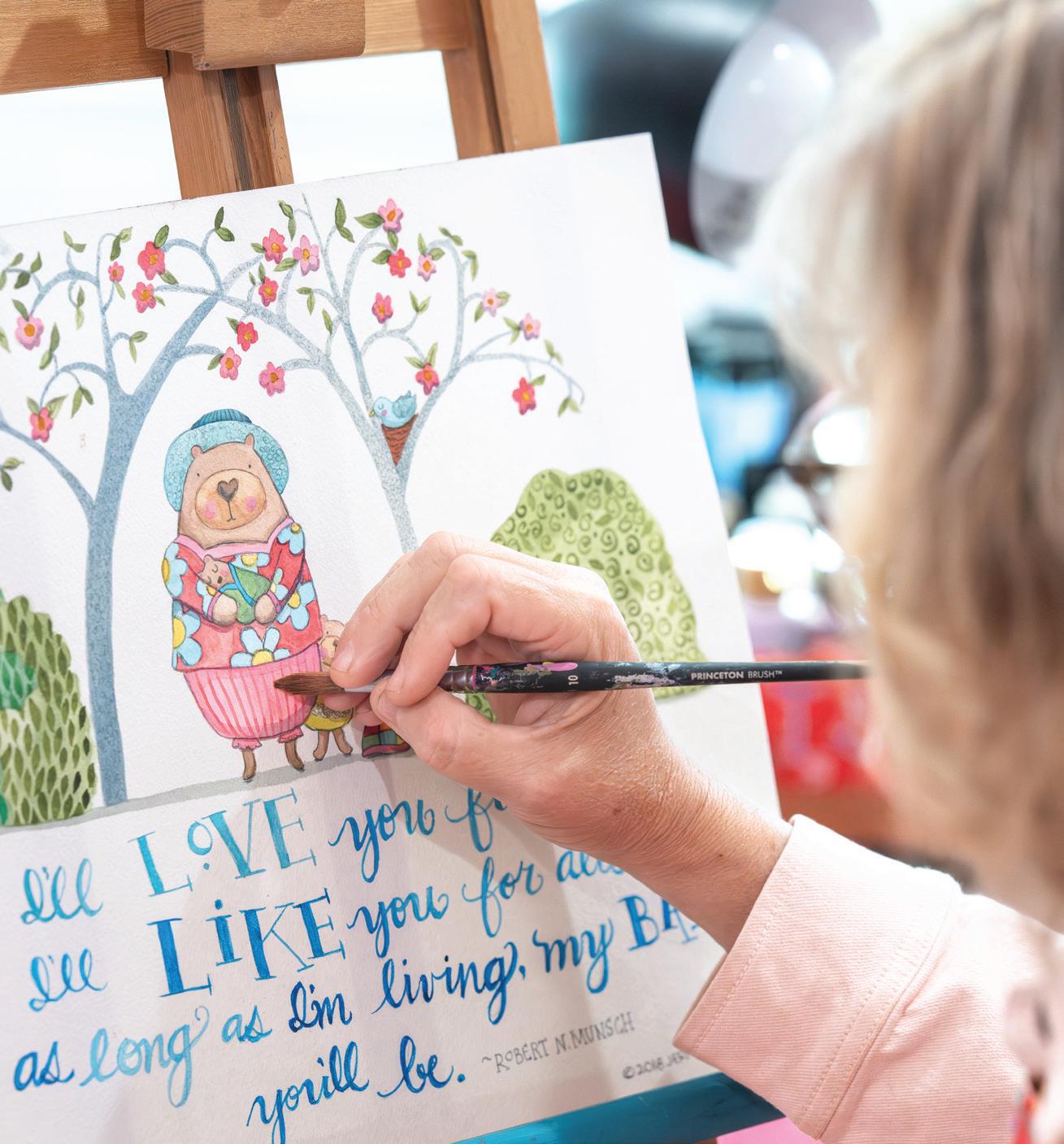
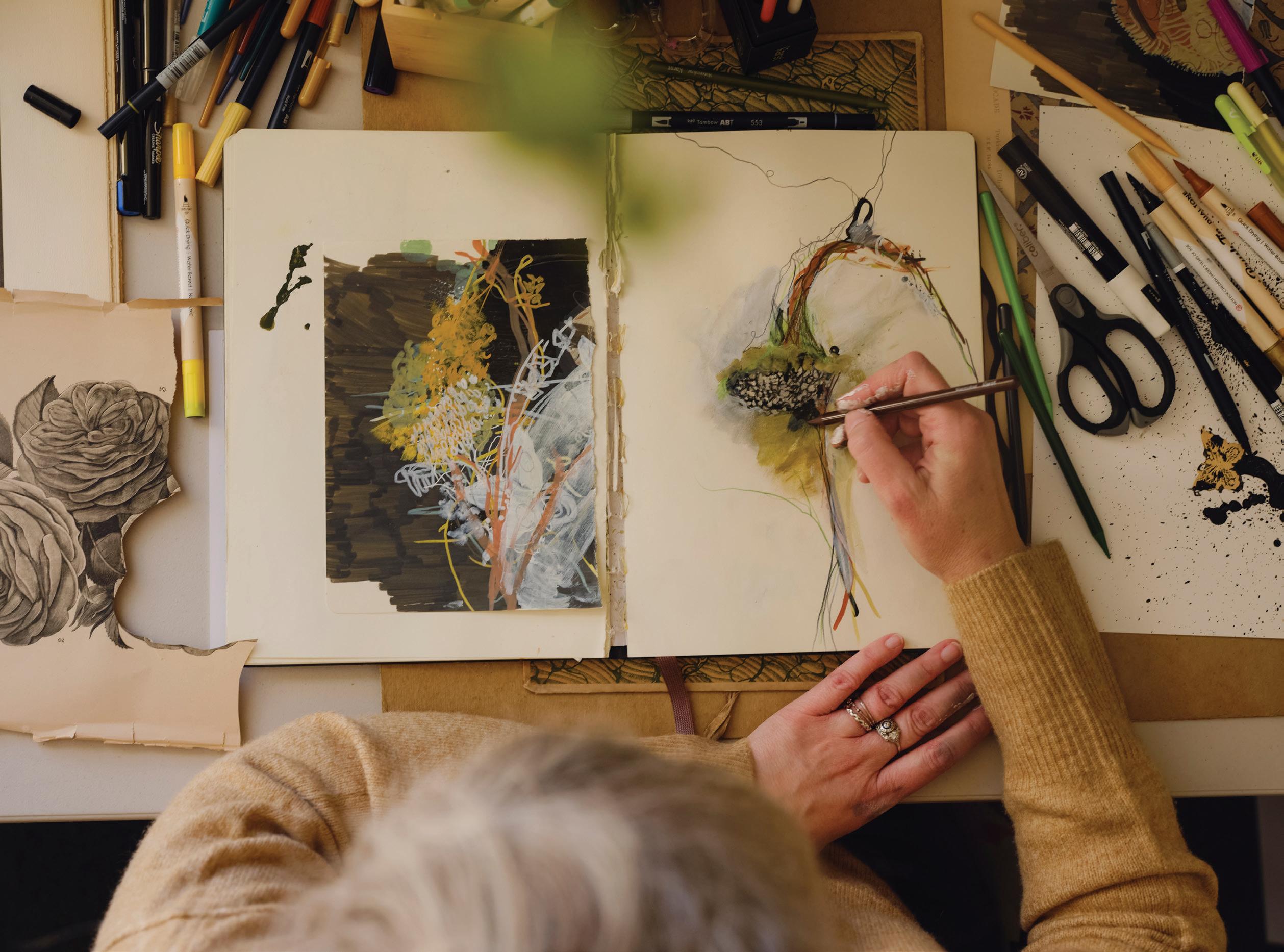
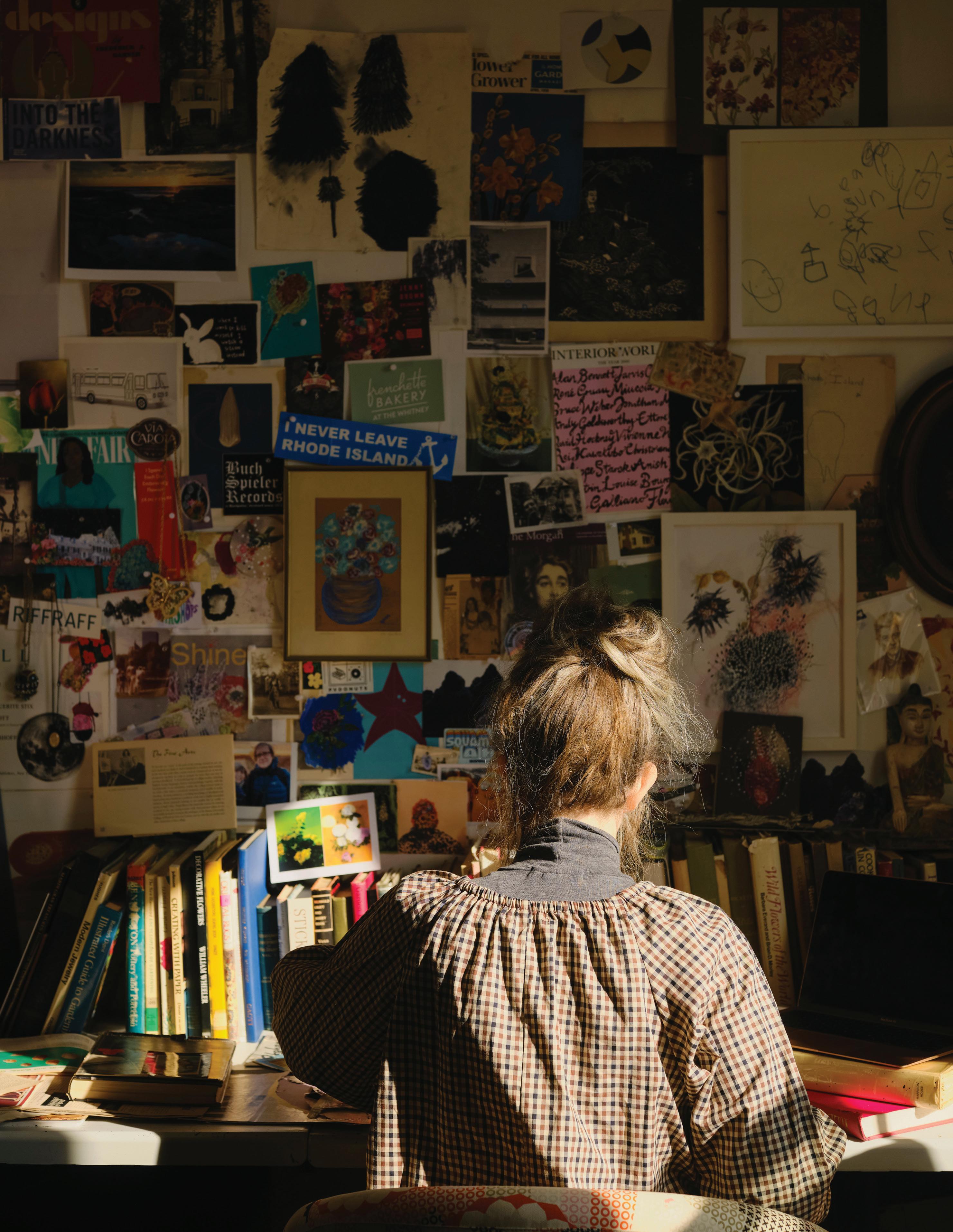
SURI is an artist and communication designer based in Mumbai. After two decades leading her design studio, she rediscovered painting during the stillness of lockdown, transforming a small bedroom corner into the birthplace of her full-time art career. Known for her whimsical natureinspired work, she now creates from her light-filled studio, exploring the magic where imagination, curiosity, and the natural world meet.
For the longest time, I believed that creativity needed ideal conditions, the right light, the right table, the right silence.
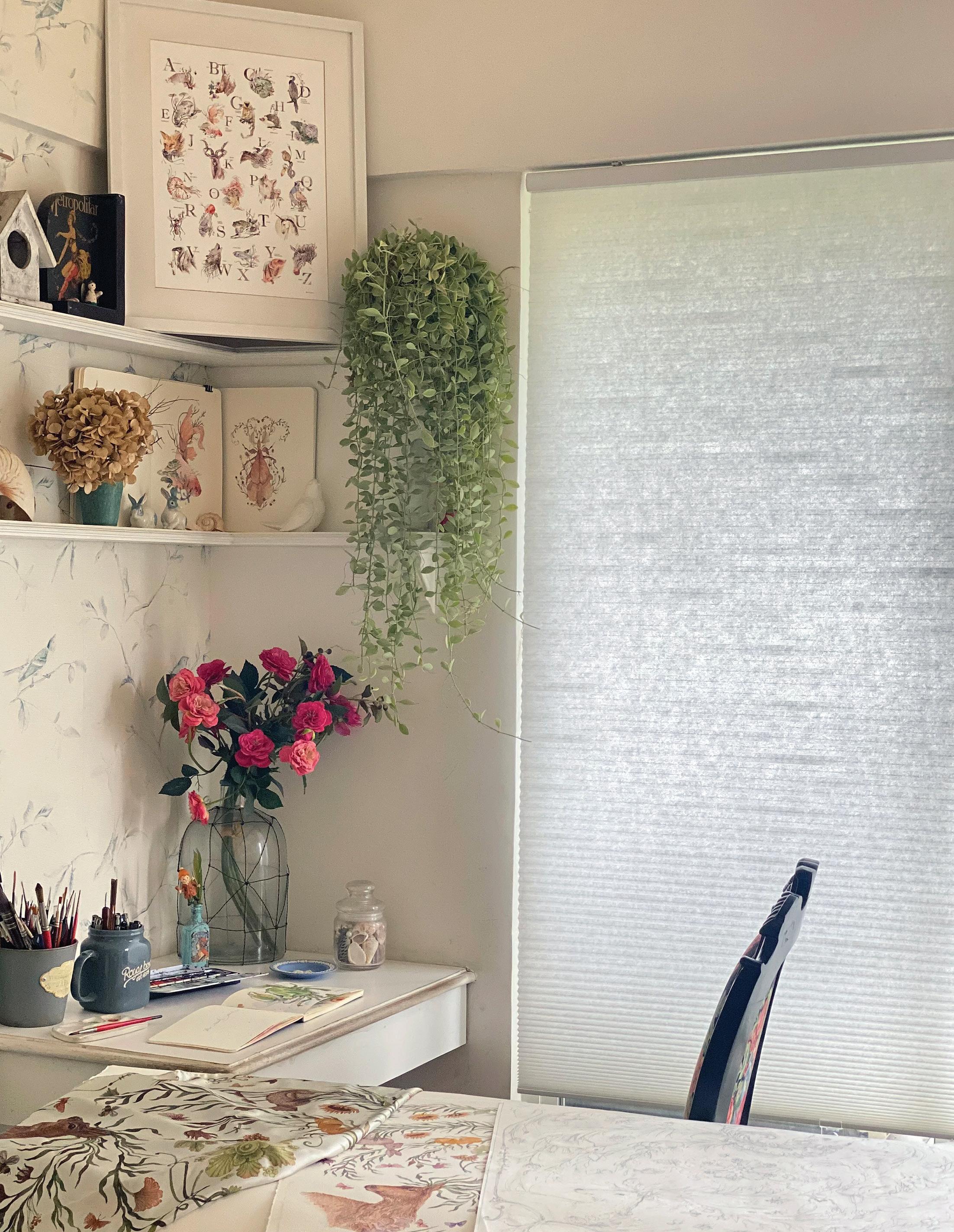
But in truth, it often begins in unlikely places. For me, it began in the corner of my bedroom during the stillness of lockdown—a desk by the window, a small jar of brushes, and a need to create something amidst the uncertainty.
At the time, I had spent two decades running a communication design studio in Mumbai. My days were filled with client calls, deadlines, and long hours of structured creativity. Design that served purpose and strategy. Painting was something I reserved for my sketchbook margins, a private dialogue I rarely shared. But when the world slowed down, I found myself reaching for my paints again, not with ambition, but with instinct. It was simply something I needed to do to stay grounded.
That small corner of my bedroom became a refuge, a sanctuary of water, pigment, and possibility. The soft hum of the ceiling fan, the light filtering through the blinds, the scent of wet paper—they all became part of the rhythm. I would often paint late into the night, long after my family had gone to sleep. The house was silent, and in that silence, I rediscovered a part of myself I had unknowingly set aside.
When my husband first suggested I take up a 100-day painting challenge, I remember laughing at the audacity of it.
I had always avoided painting animals, convinced I couldn’t do them justice. But something in me said, Why not? Every day, I painted one creature—from an aardvark to a zebra—letting whimsy lead the way. Soon, my desk was overflowing. Paintings spilled onto the floor, windowsills, and every available surface. It was messy and magical in equal measure.
That bedroom corner, humble as it was, became the birthplace of my full-time art career. I began sharing my work online—first tentatively, then with growing confidence. To
my surprise, people responded with warmth, curiosity, and connection. Commissions trickled in. Brands reached out. Galleries called. The small act of painting for myself had opened doors I hadn’t even known existed.
But with growth came the inevitable question: Where do I go from here? Quite literally, where do I paint next? As my canvases grew larger, my bedroom began to shrink. I moved my setup to the dining table, then to the living room, and then to the balcony, wherever the light felt right. Sometimes, I did not limit myself to indoors, and took my art wherever I could. My family became adept at navigating around drying paintings and jars of water. The scent of masking fluid and paper was as much a part of our home as the smell of morning chai.
PHOTO
Eac� shi�t in space mir�ored a shi�t in mindset.
When I worked from the dining table, my art began to feel more open, more visible. When I moved to a small alcove near our window, surrounded by plants and the sound of birds from the mangroves outside, my work grew gentler, rooted in observation. The changing light and season outside my window found their way into my paintings—the calls of hornbills, the rhythm of rain, the hush of twilight. My surroundings quietly guided the evolution of my art.
In truth, every space held a lesson. The bedroom taught me solitude. The dining table taught me resilience and flexibility. The window corner taught me wonder. And last month, when I finally stepped into a dedicated studio of my own—a bright, airy room not far from home—I realized that this journey through spaces was also a journey through self-belief.
Walking into the studio for the first time, I felt gratitude.
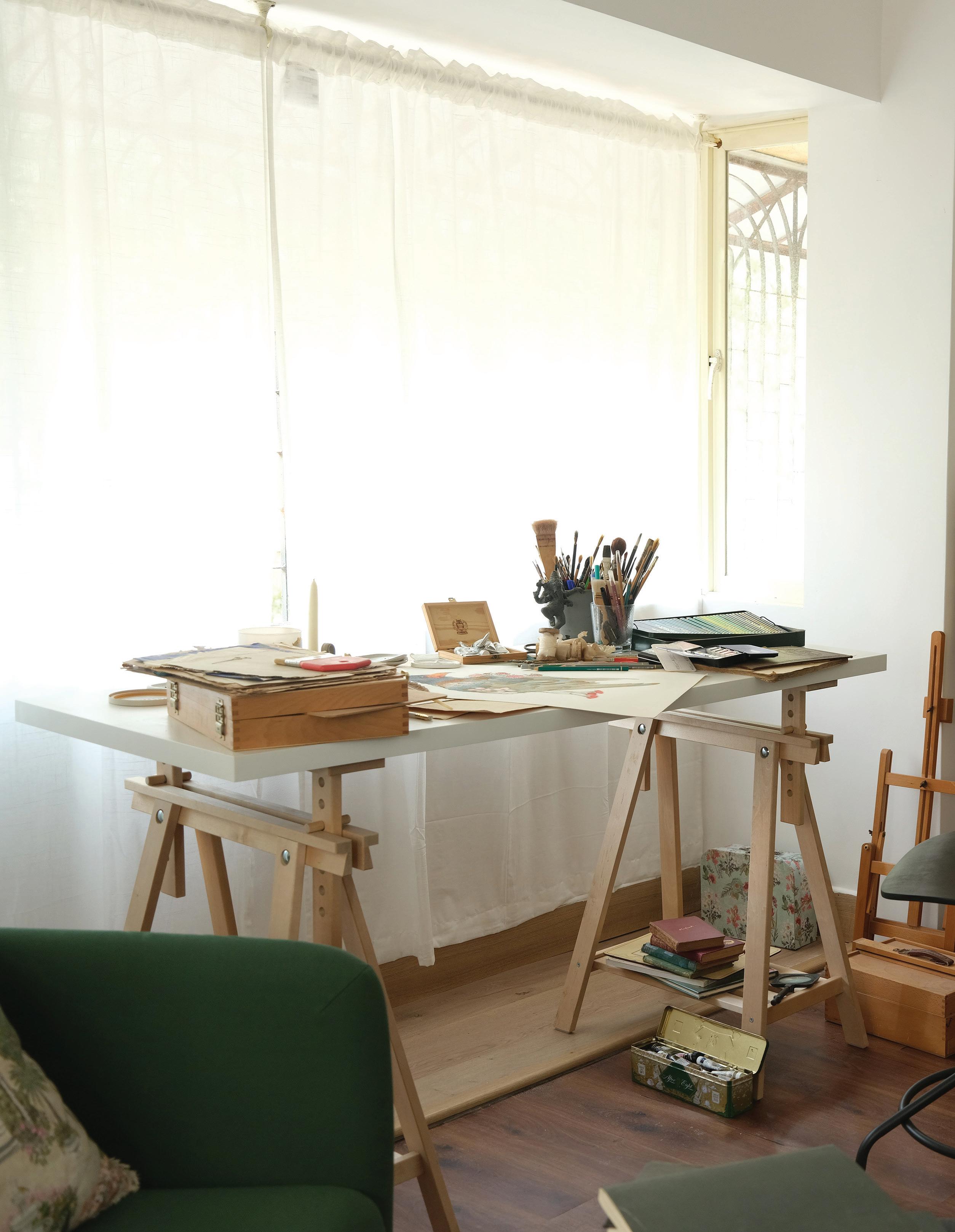
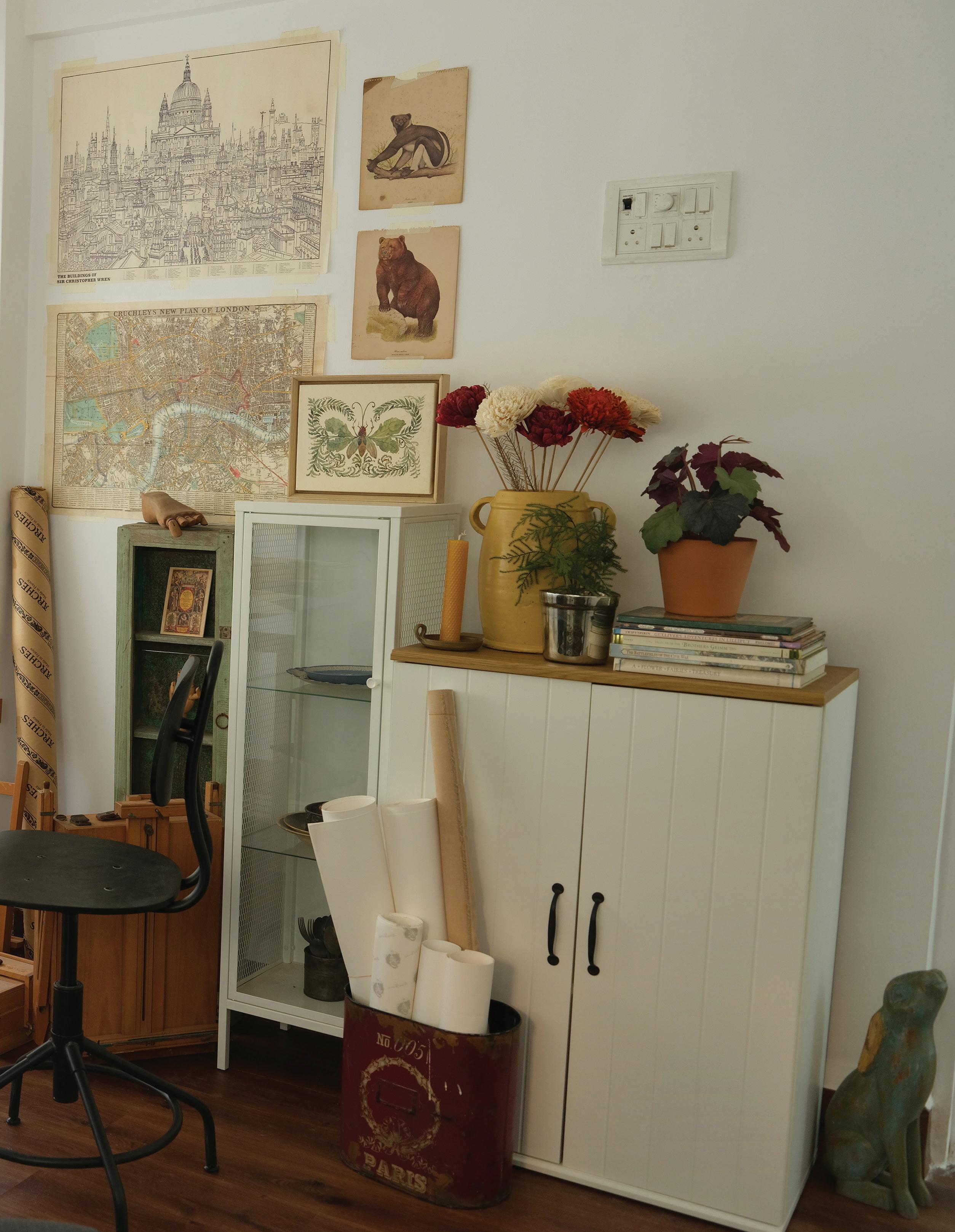
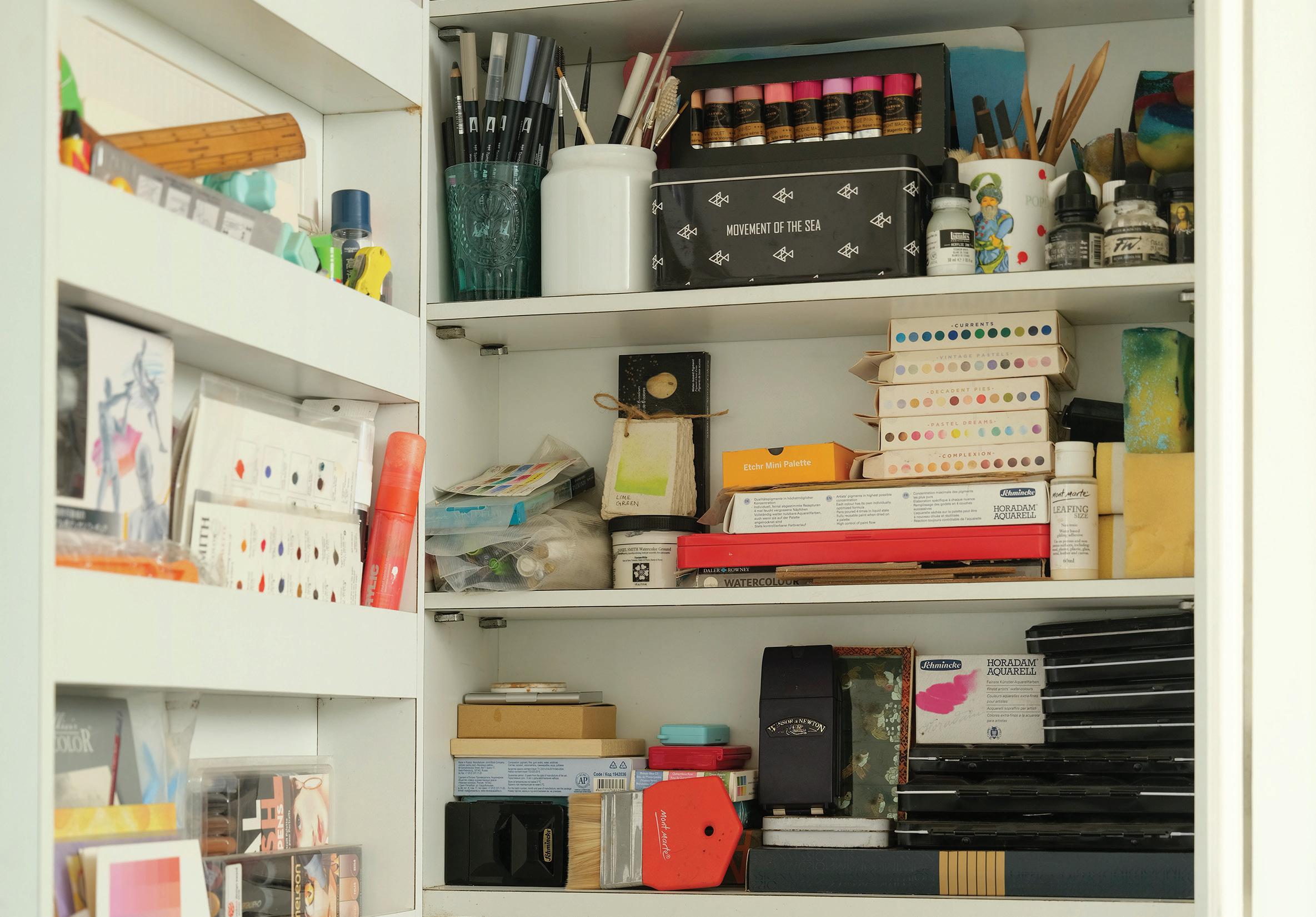
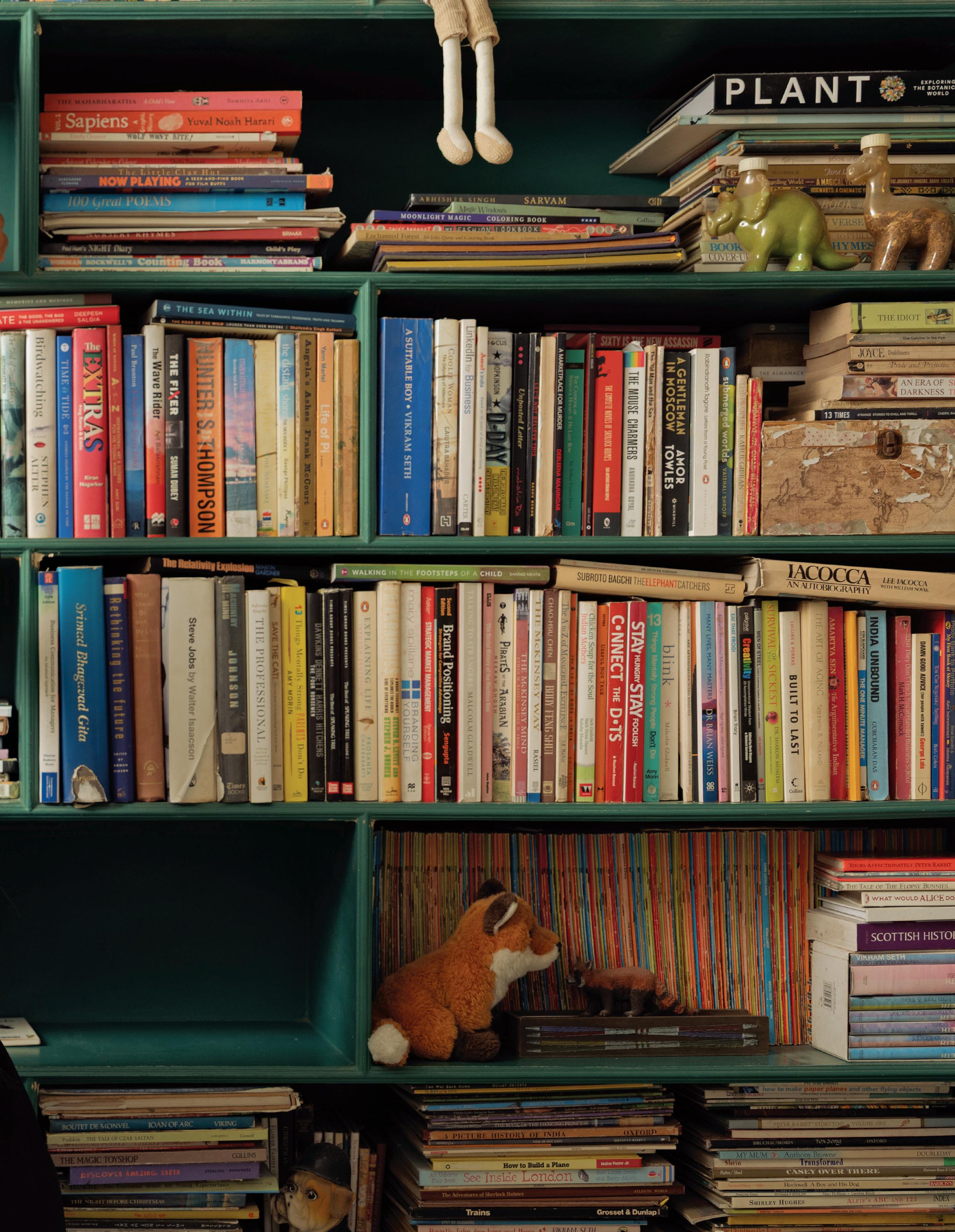
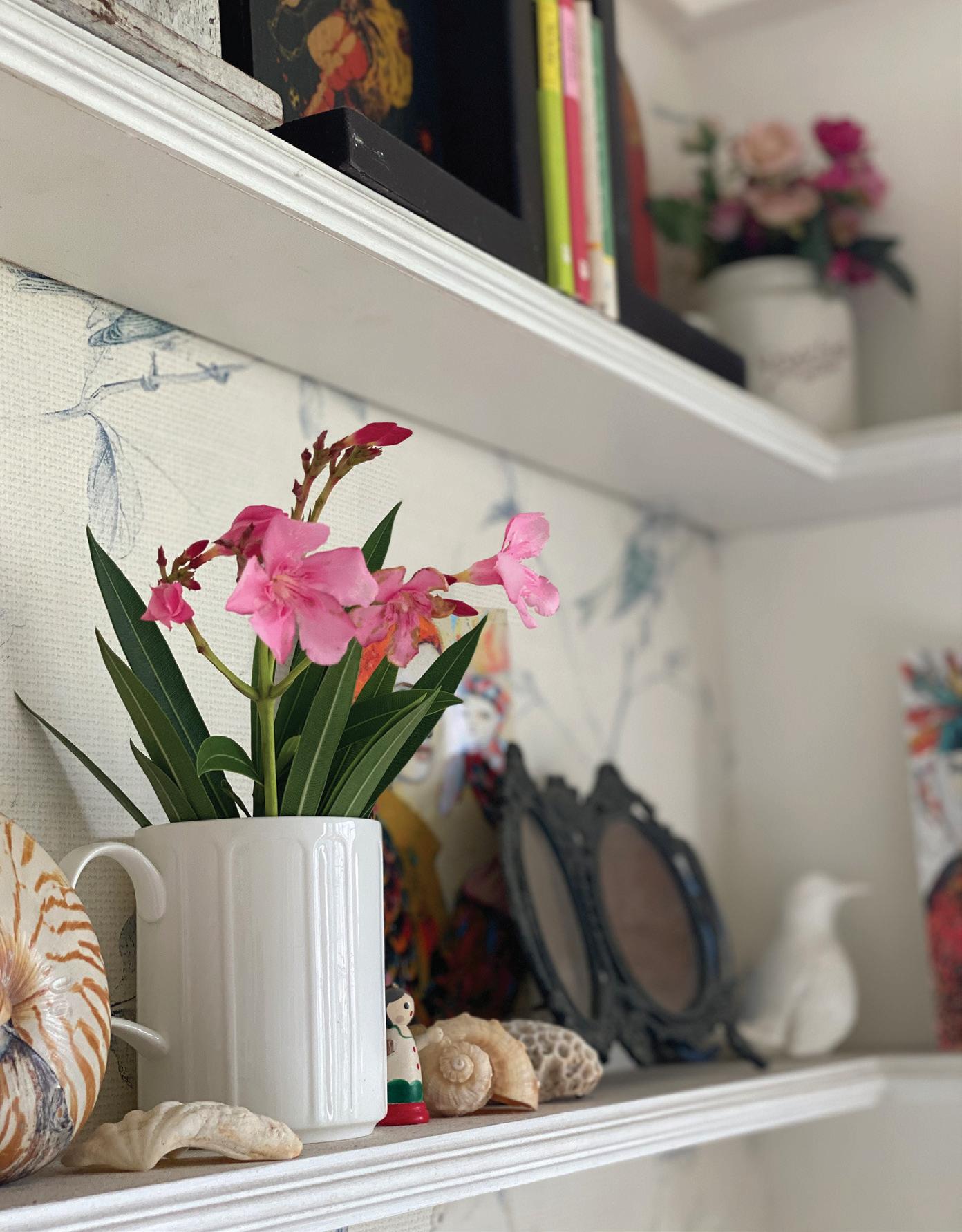
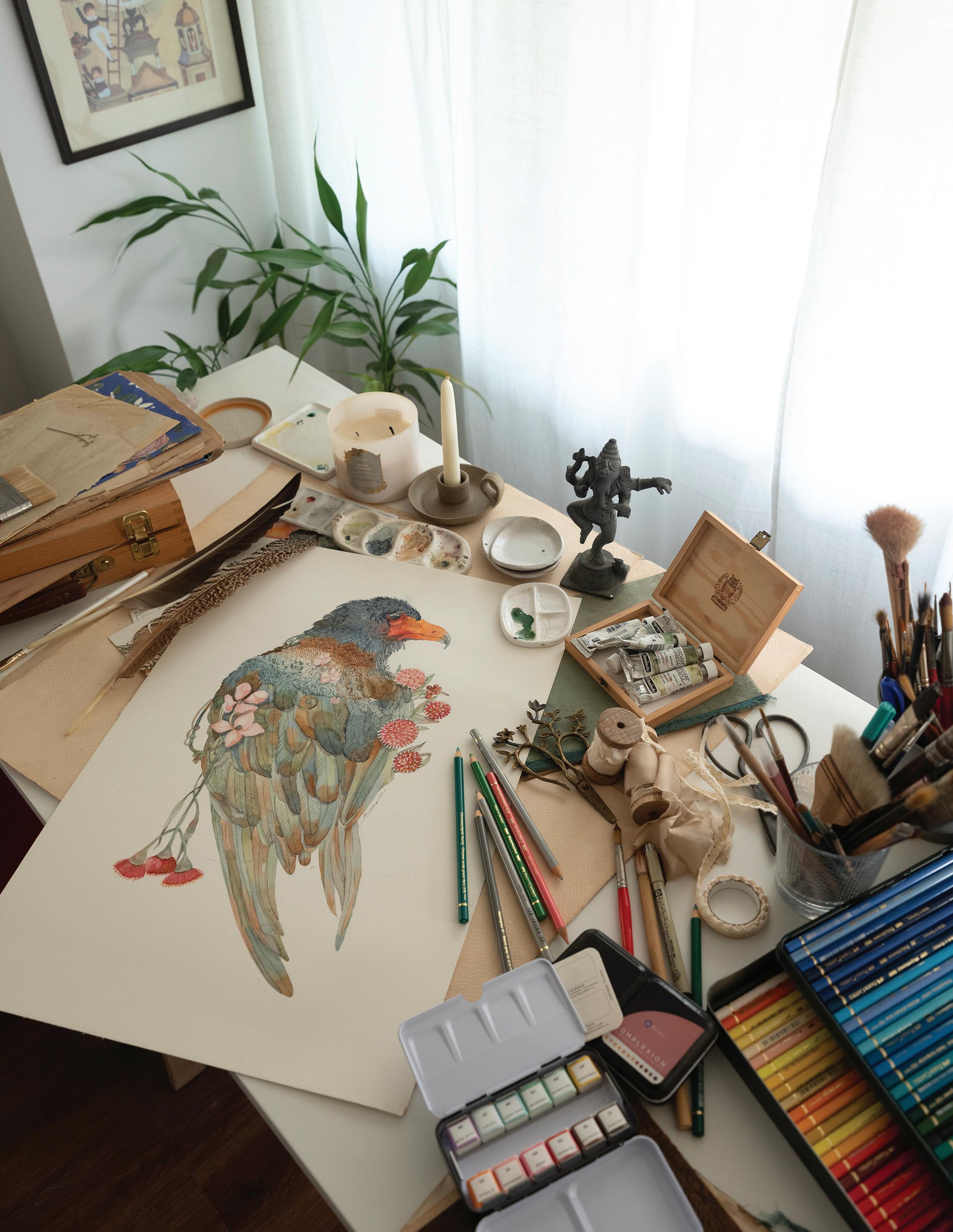
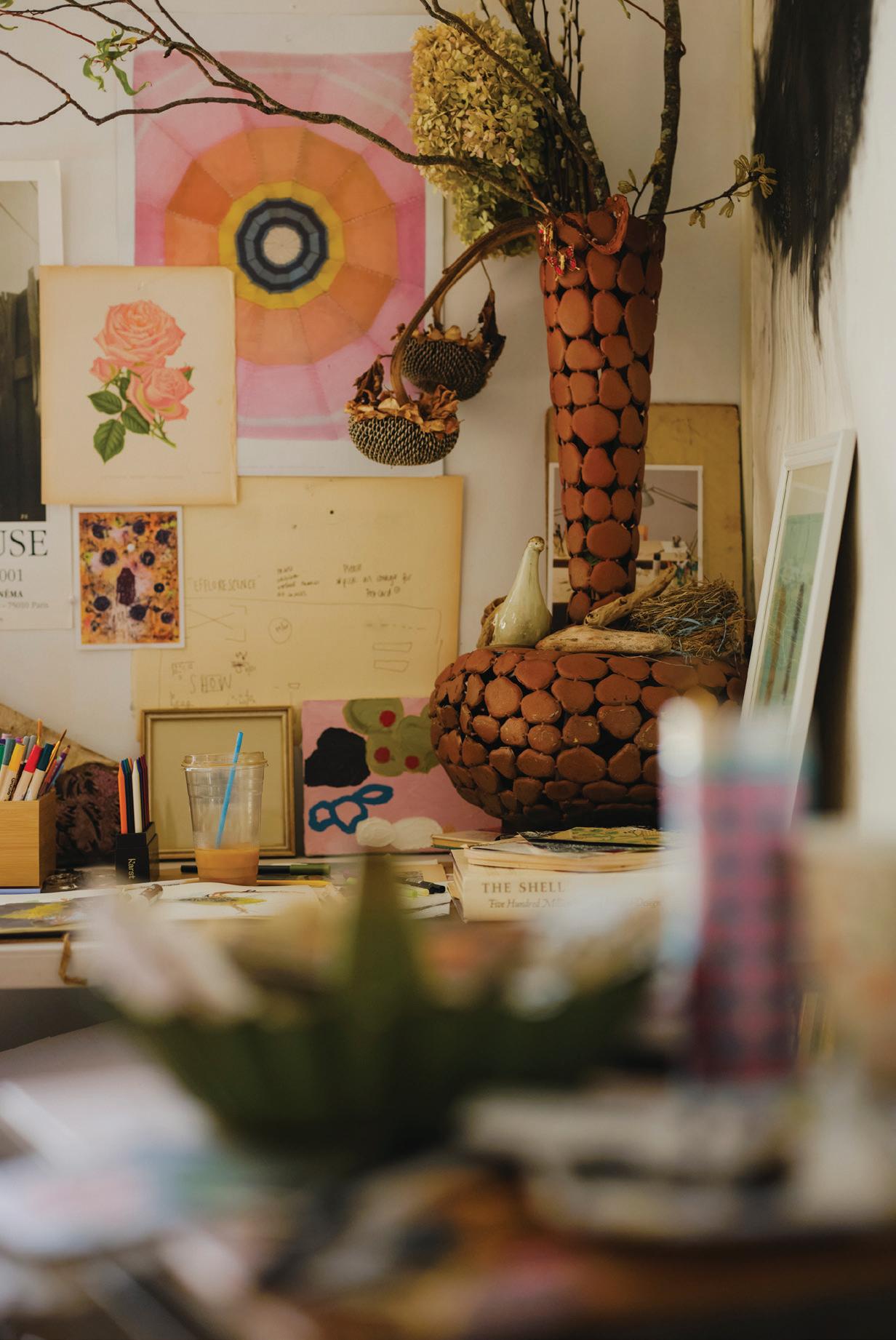
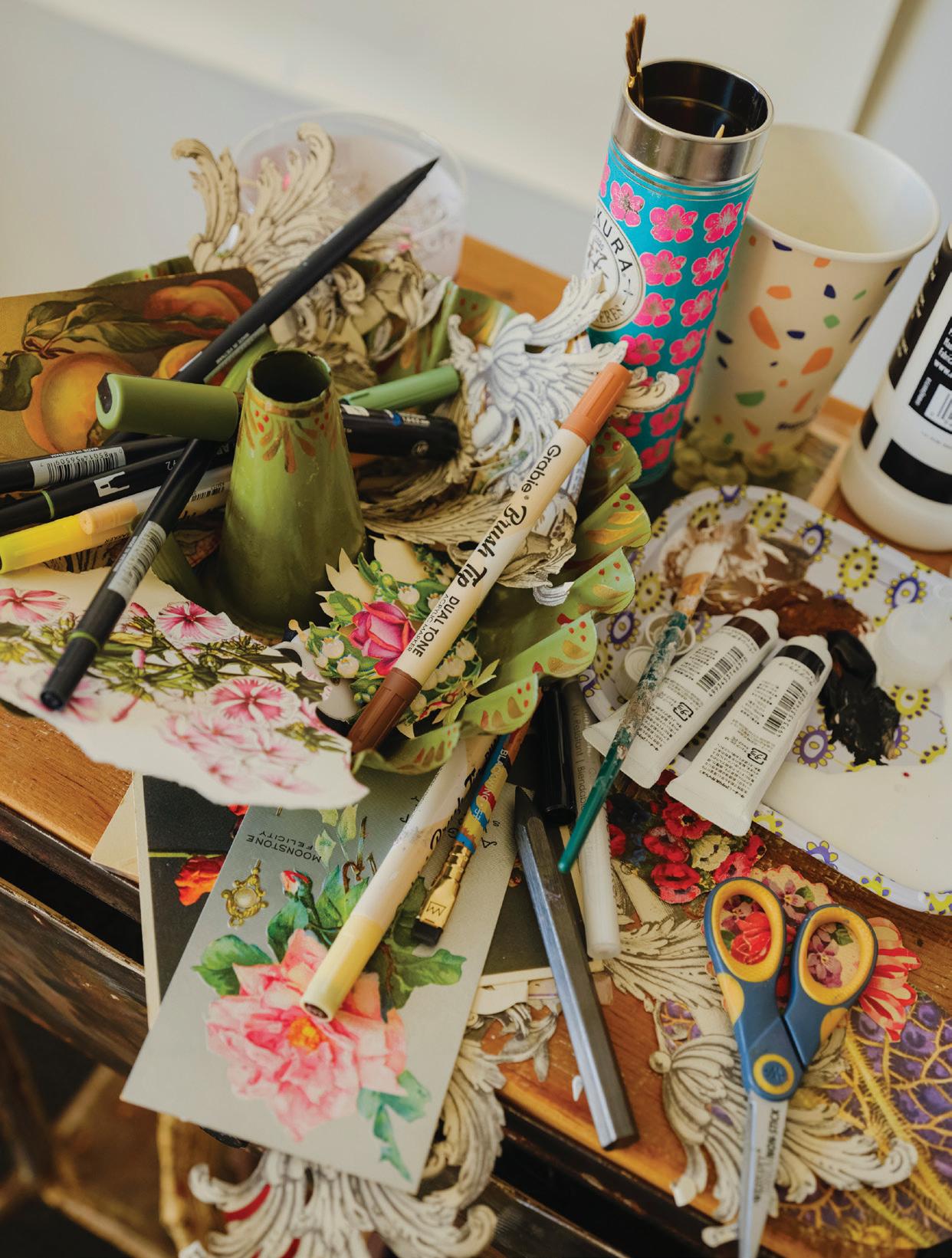
It wasn’t just about having four walls to paint in; it was about acknowledging how far I’d come since that first tentative brushstroke during lockdown. The studio is simple—white walls, large windows, and shelves filled with jars, feathers, and bits of nature that have found their way into my art. There’s usually a candle burning. Something woody or warm and a playlist that wanders. My brushes sit in mismatched mugs, my paints arranged in no particular order, and there’s always a square of dark chocolate nearby. It’s a space built not for perfection, but for presence.
Now, when I walk into this space, I remind myself of the truth that began it all: you don’t need the perfect setup to begin. You just need to start wherever you are, with whatever you have. The rest unfolds slowly, almost tenderly, over time.
In the studio, I often find myself thinking of that early version of me, the one who painted in the corner of her bedroom, unsure of where it might lead. I want to tell her that she was already where she needed to be. That every small effort was paving the path toward this very room.
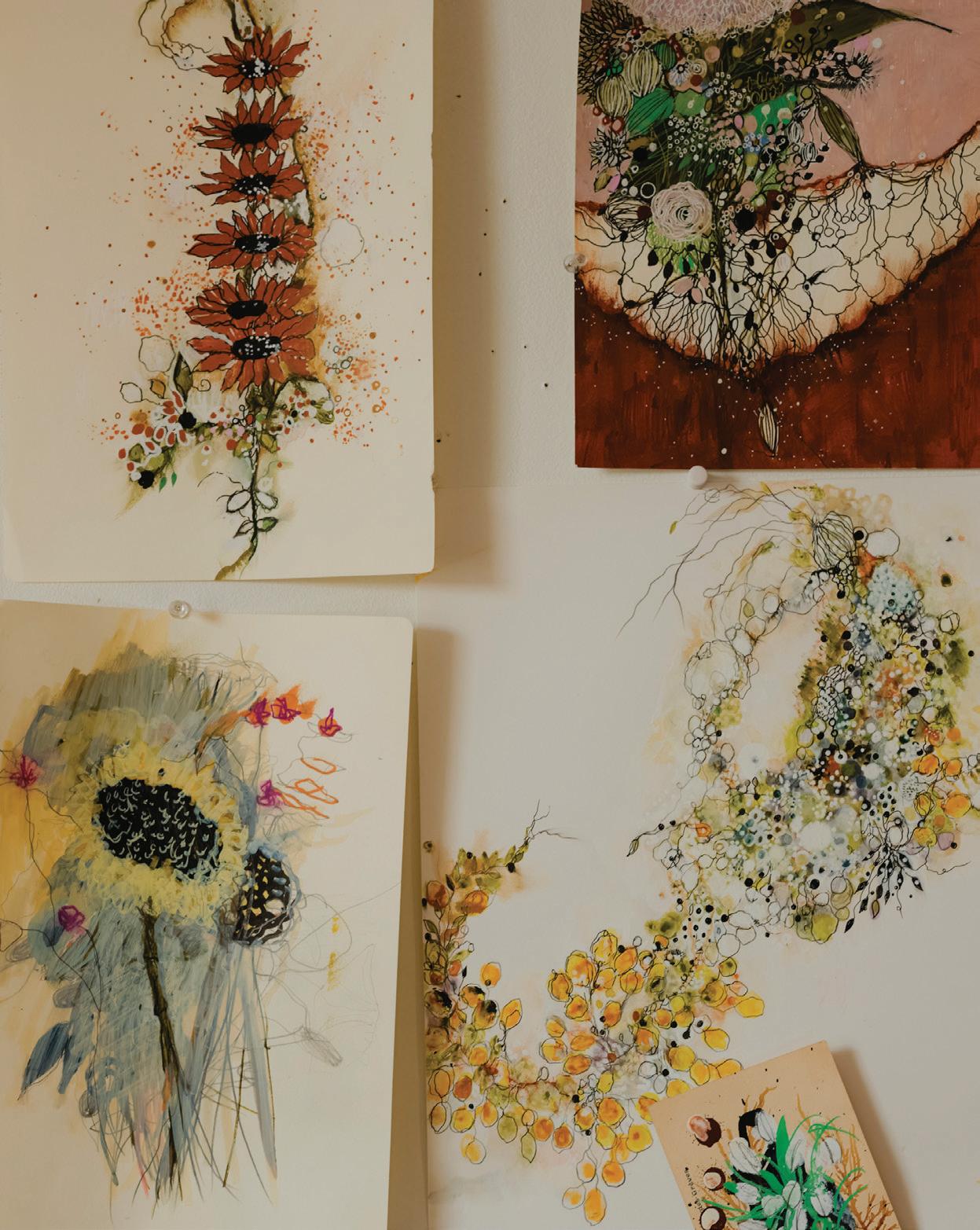
My art, much like my journey, continues to evolve. What began as whimsical animal portraits has grown into a body of work that explores the delicate balance between nature and imagination, flora that curl into feathers, beasts that bloom into flowers, and small fables that whisper through color and texture. My process remains intuitive and layered with curiosity, rooted in my lifelong fascination with the natural world. The studio has become a cabinet of curiosities in itself, filled with seed pods, coral fragments, feathers, and dried leaves that often find their way into my compositions.
Balancing my role� a� ar�ist, mo�he�, and creative director ha� taught me that structure can be freein�.
I time-block my days, I show up even when inspiration feels distant, and I remind myself that consistency is its own kind of magic. Talent may open the door, but it’s persistence that keeps you walking through it.
Sometimes, when it rains, my favorite kind of day, I light a candle and paint for hours without noticing time pass. Other days, I struggle to find rhythm, but I show up anyway. Because I’ve learned that creativity isn’t about waiting for perfect moments; it’s about building a home for your practice— wherever you are.
Looking around my studio now, in the gentle chaos, I feel a sense of arrival, but also of continuity. This is where I am, but not where I’ll end. The spaces may change, but the impulse remains the same: to create something honest, something that offers stillness and wonder in a noisy world.
And maybe that’s what where really means, not a single physical place, but a state of presence. The awareness that wherever you stand, whatever corner you begin from, can become sacred if you fill it with intention, curiosity, and heart.
More on Sucharita
www.sucharitas.world
Instagram: sucharitas
Pinterest: sucharitasuri
PHOTO BY AMIT ASHAR
WHERE Are They Now
Jennifer Lanne
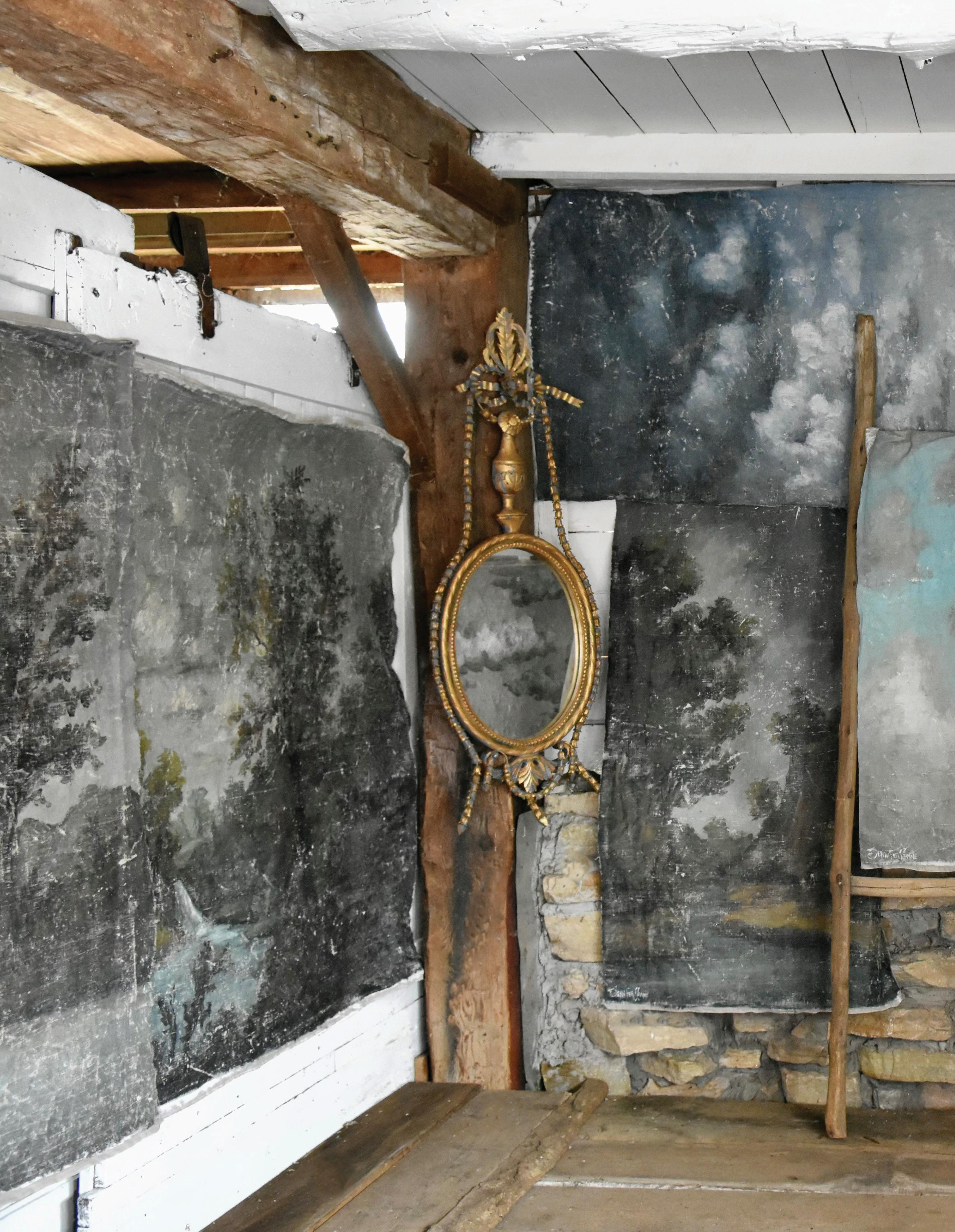
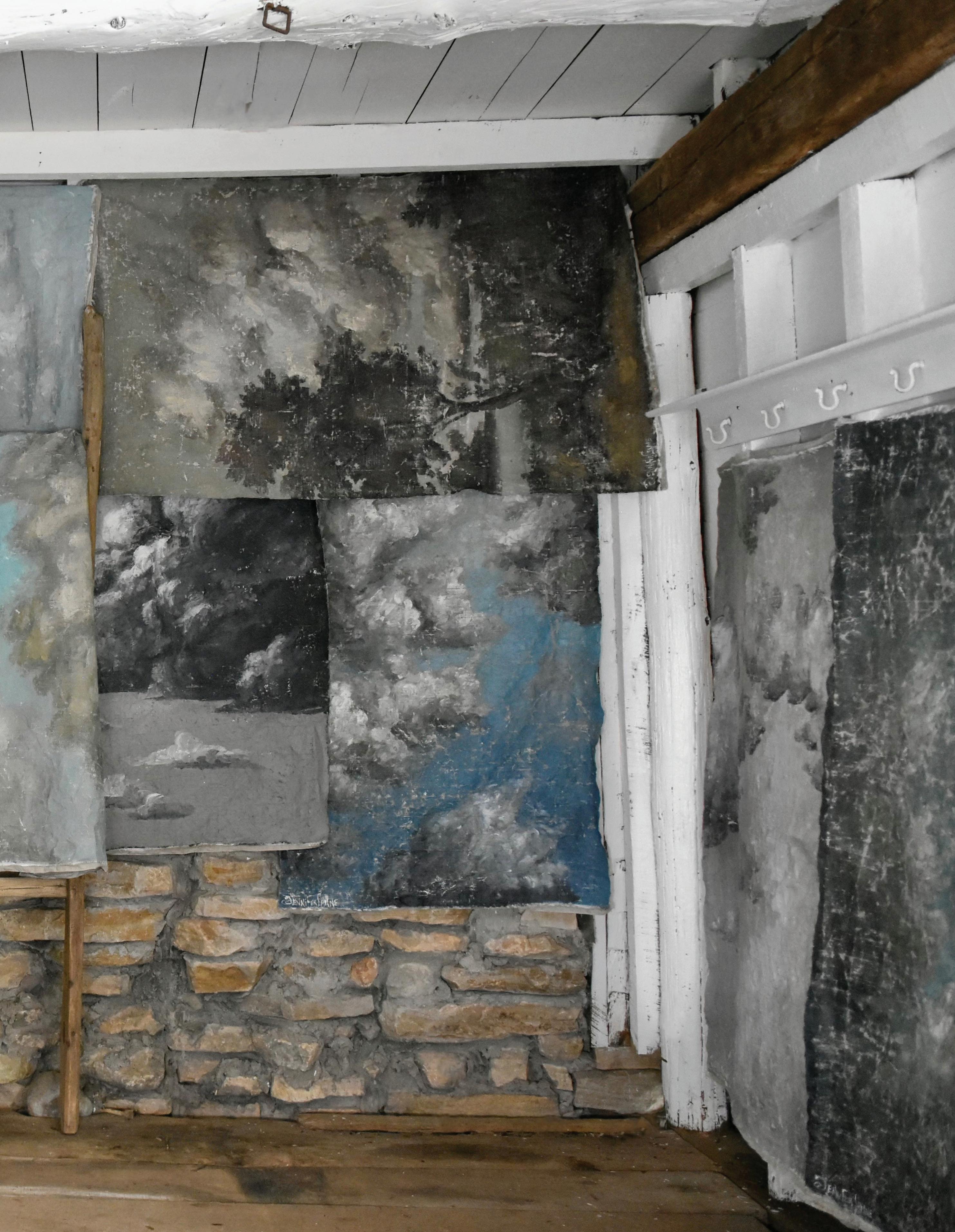
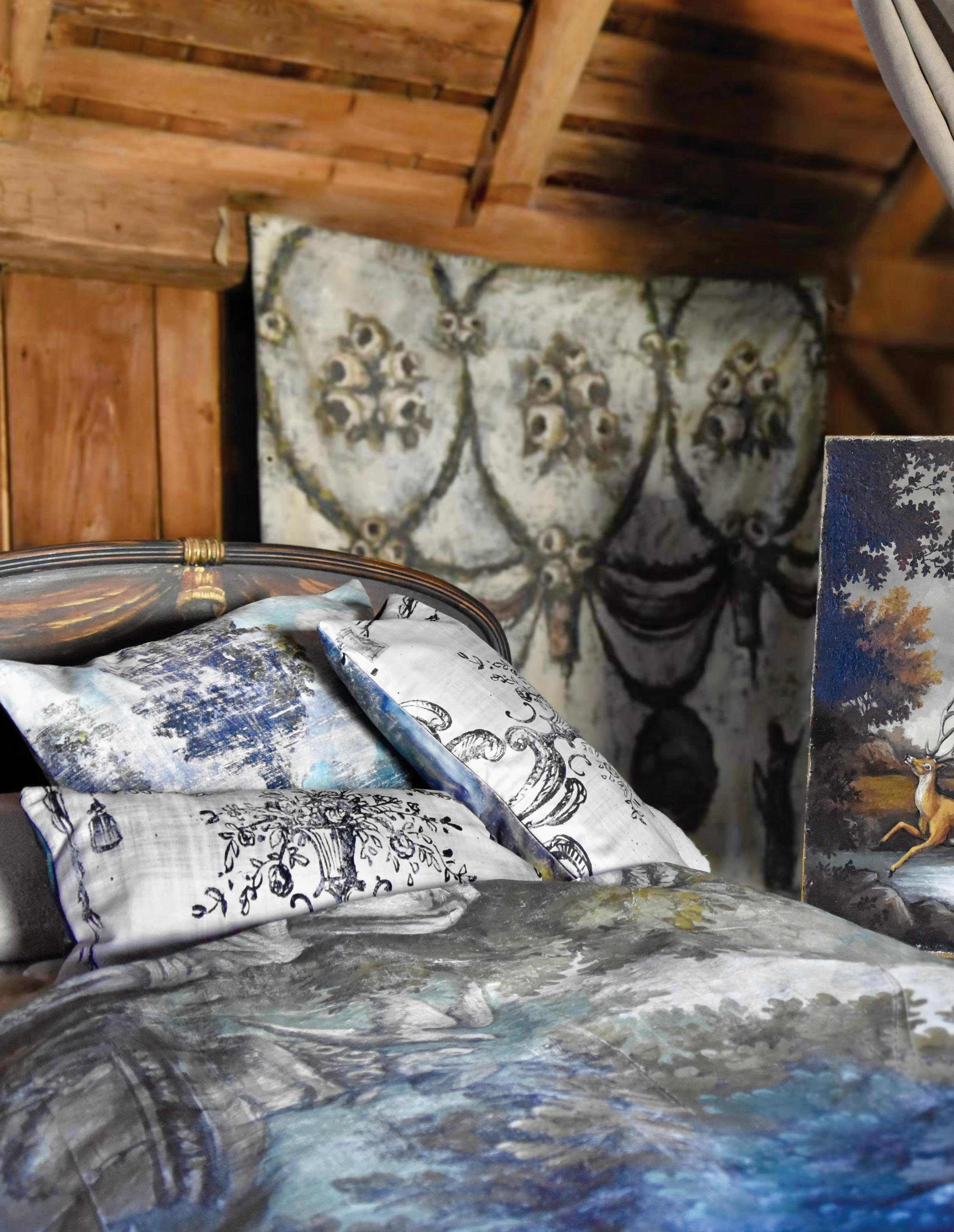
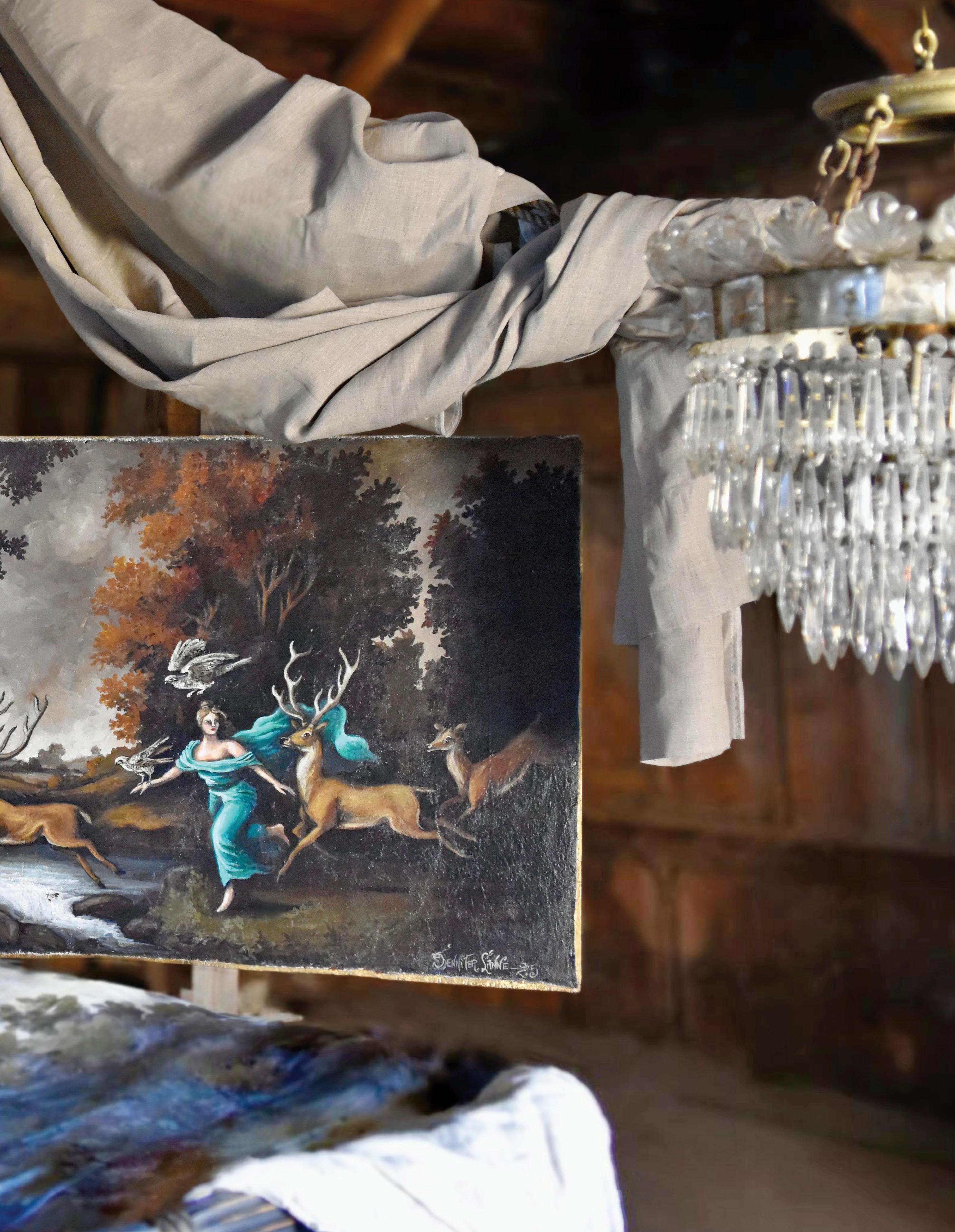
We first stepped inside Jennifer’s enchanting barn studio in our Fall 2021 issue of Where Women Create. Her space, much like the art it houses, is a testament to boundless creativity, continually evolving and inviting. When we recently reached out to catch up with Jennifer, we were delighted by the fresh inspiration blooming within its walls.
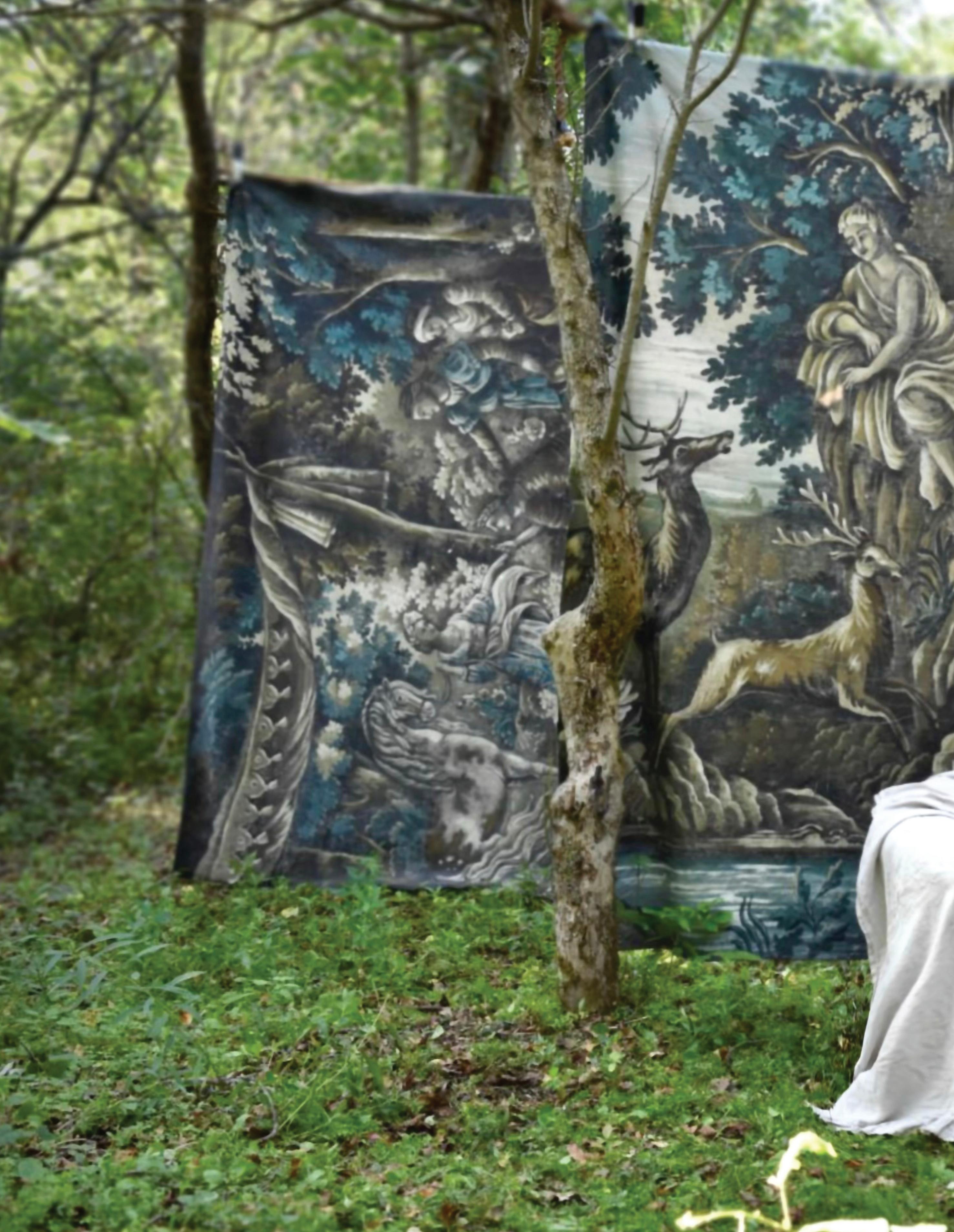
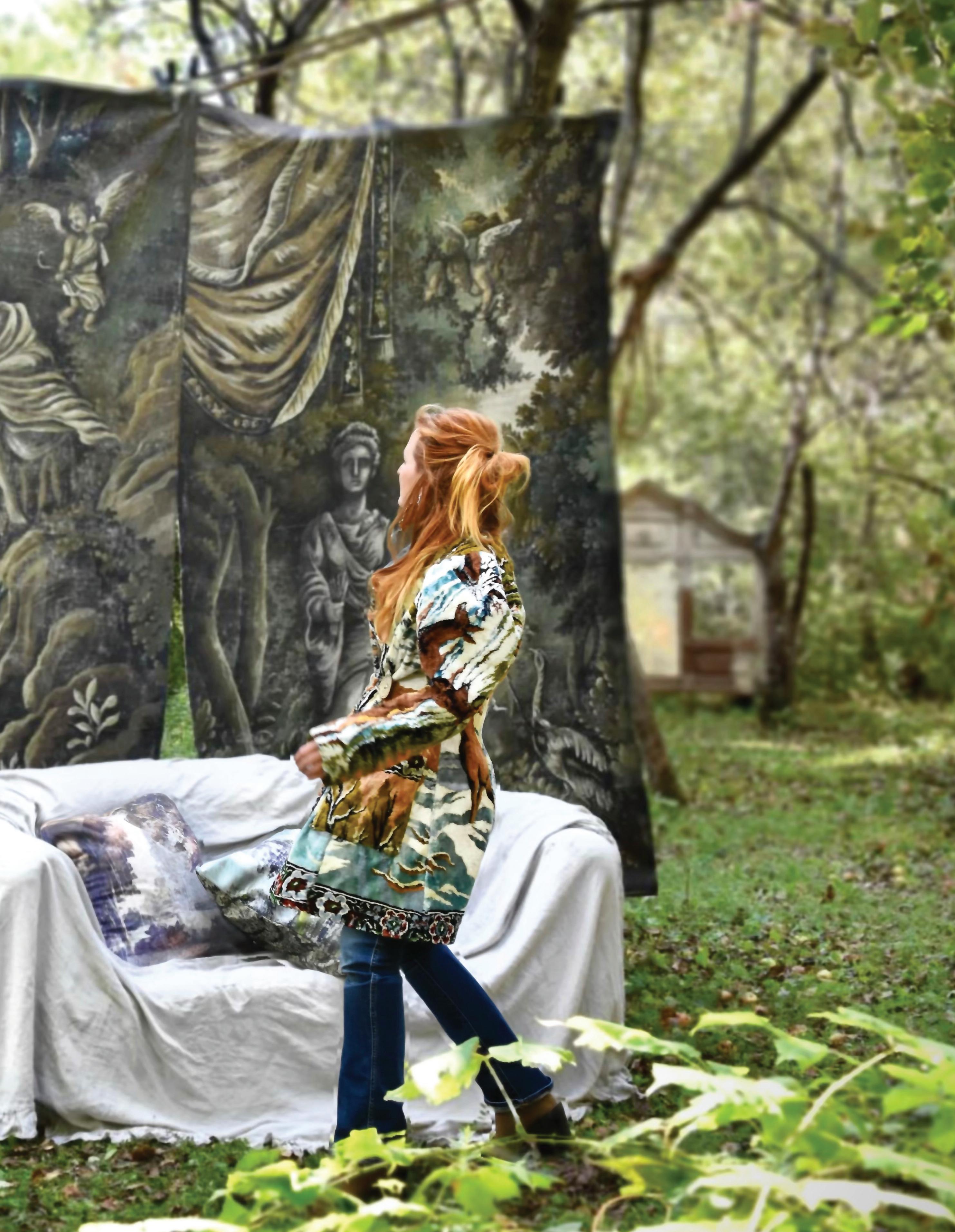
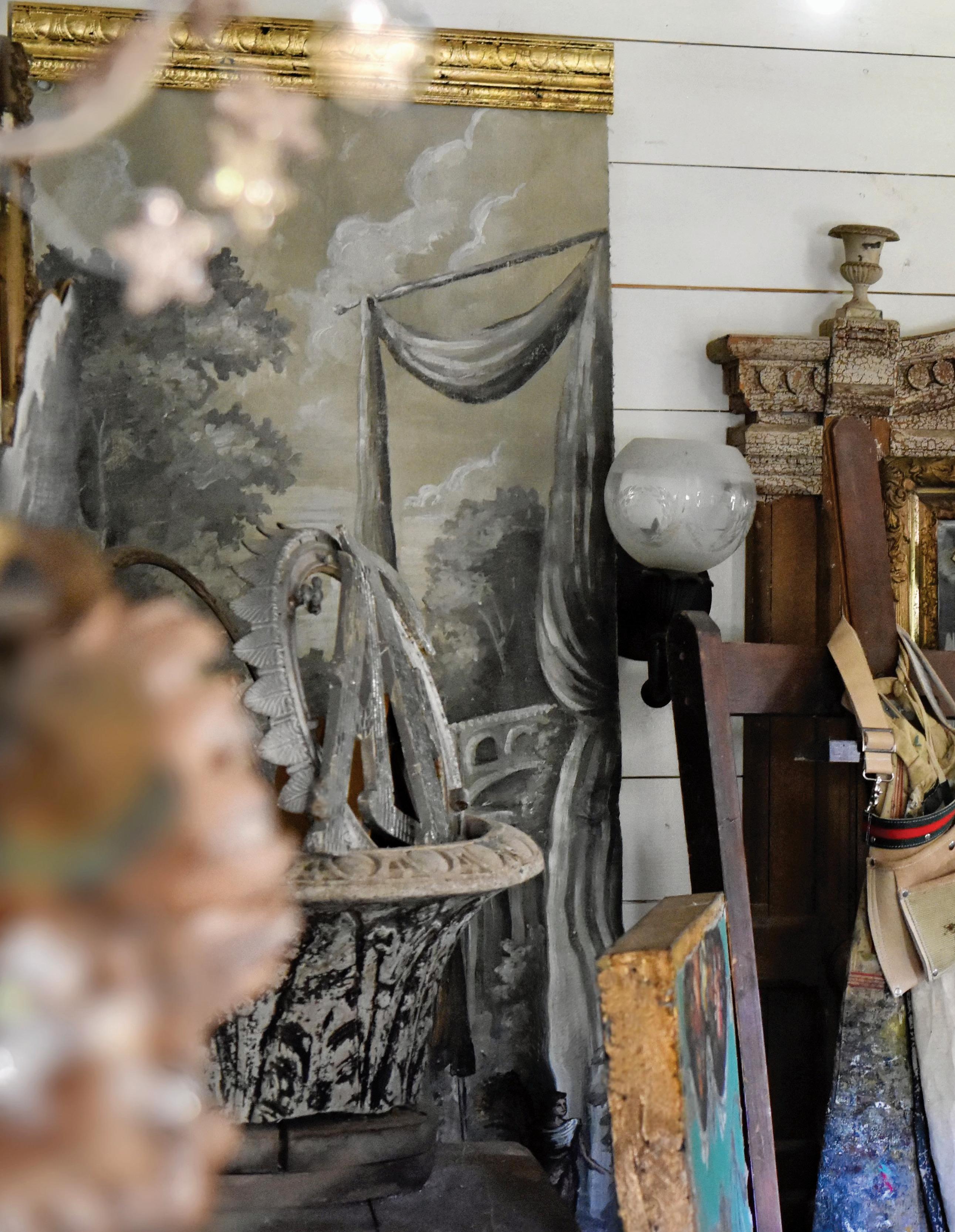
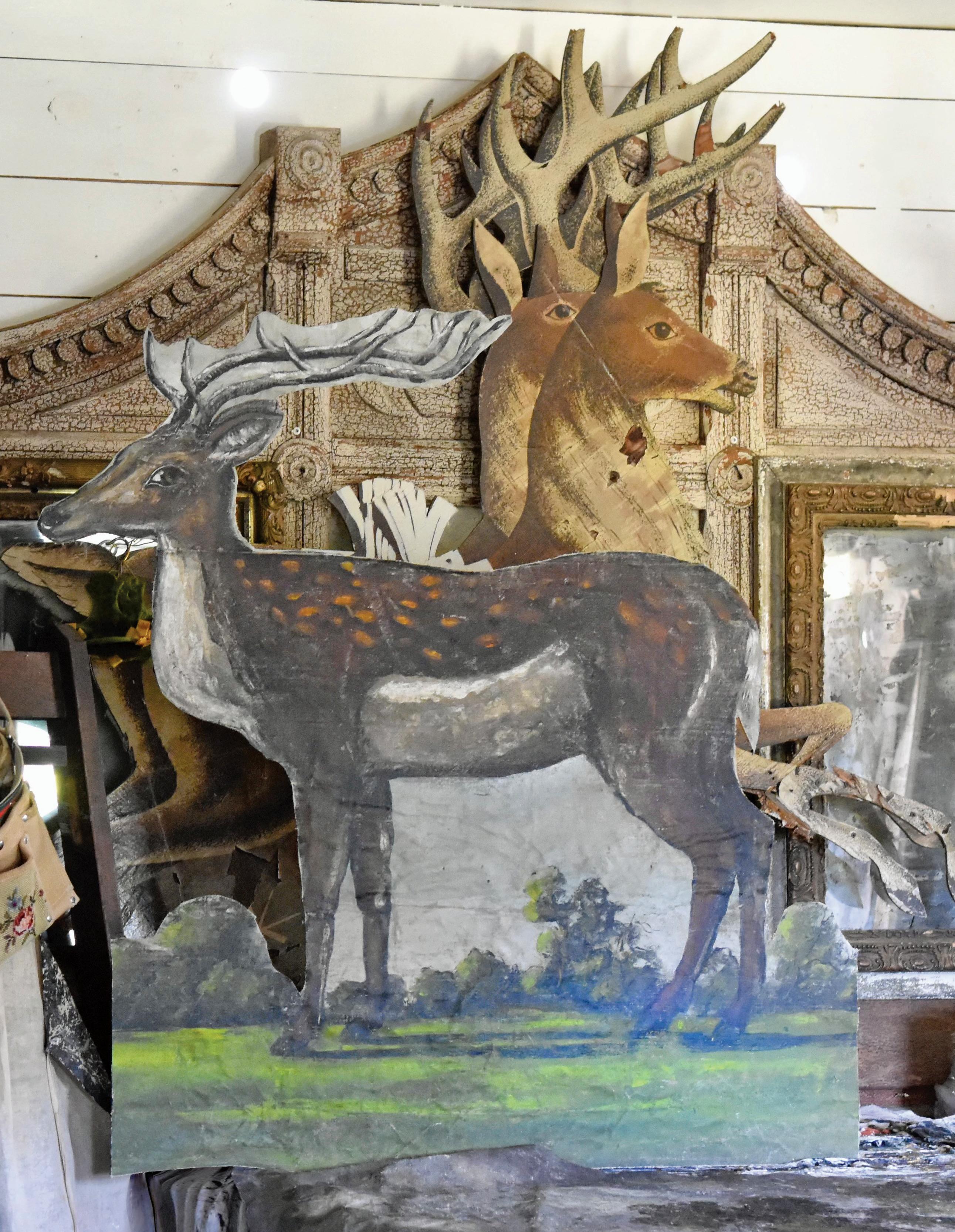
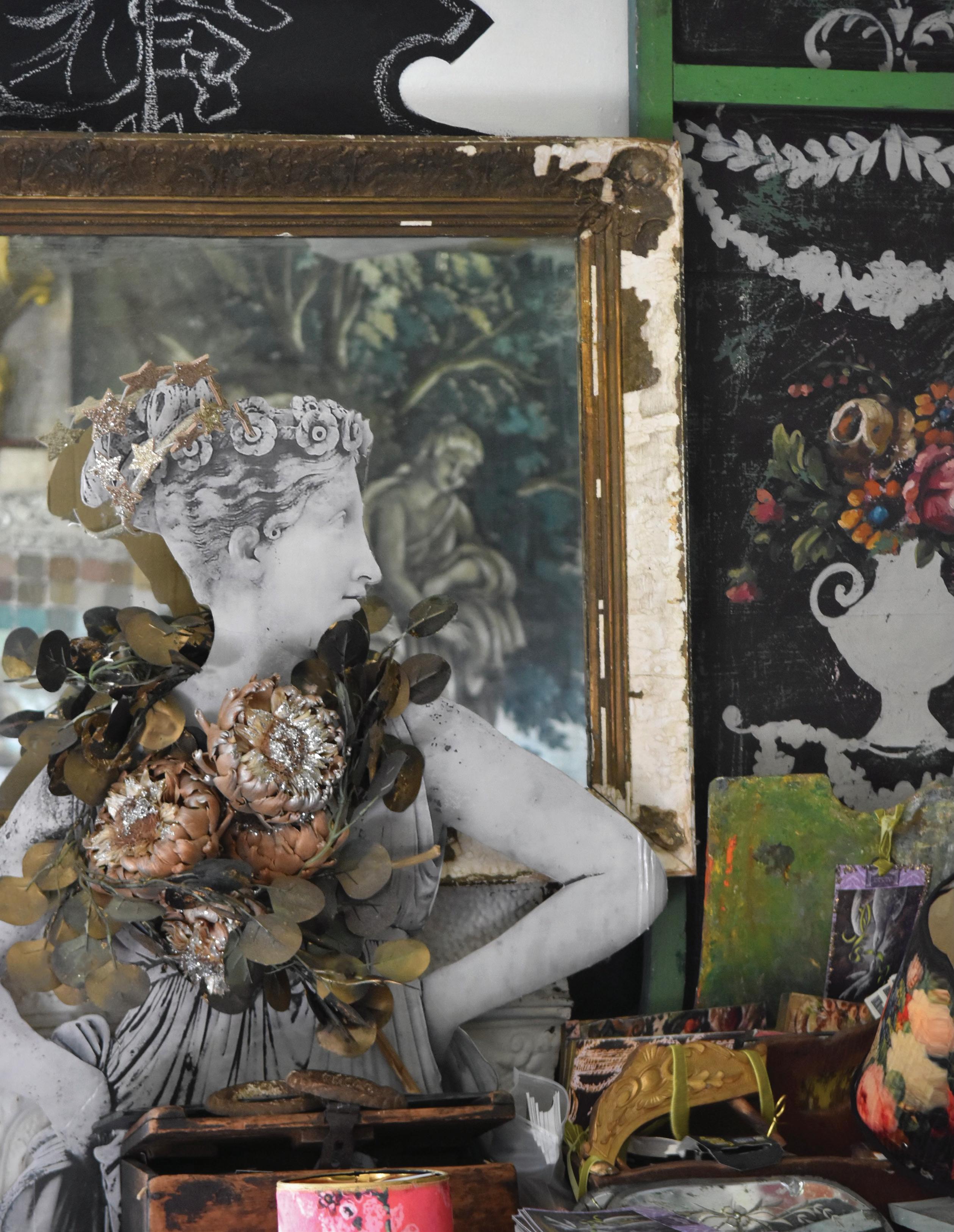
JENNIFER LANNE’s art captures the charm of heirloom sensibilities through evocative imagery. Her ephemeral vignettes showcase romantic decay, fashioned with large-scale painted backdrops, storied florals, heritageinspired landscapes, and exclusive home décor. Rich textures and muted palettes meld together in dreamscape pairings. Whether in the exterior world or the peripheries of her studio, Jennifer’s art and displays create delicate, yet dramatic glimpses into expressive, artfully-tattered nostalgia.
In the confines of my studio, I create in layers of color, character, and nostalgia. It unintentionally spills out into my attached barn, the exterior world: fields, woodlands, and found spaces, and then finds its way back in again, with new textures and stories.
My studio is located in upstate New York—a richly bucolic area, ripe with inspiration.
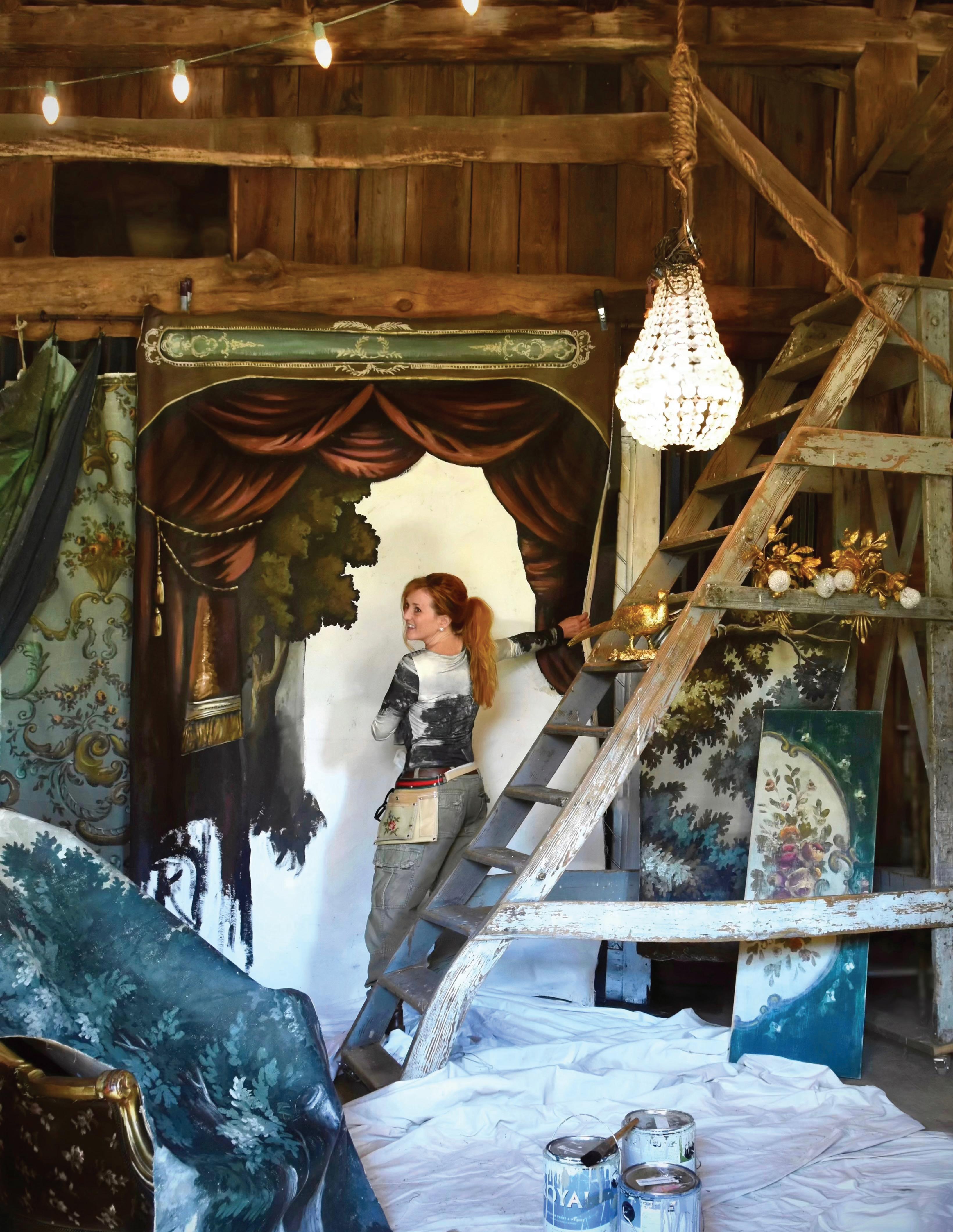
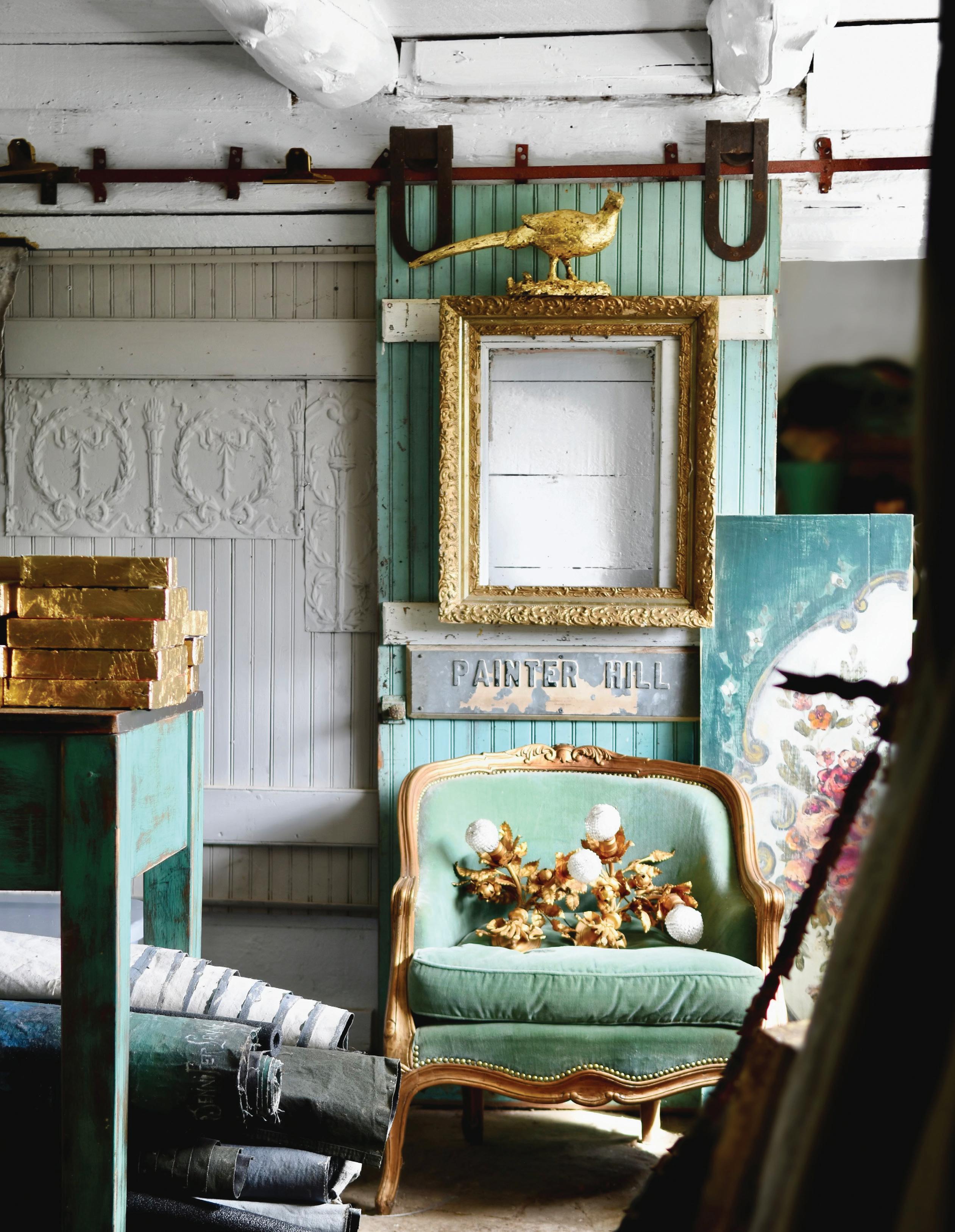
It’s housed in a centuries-old barn, thoughtfully segmented into different areas to suit my creative needs.
One section is a finished, heated room where I paint, allowing me to work comfortably even during the cold winter months. Other parts of the barn remain more utilitarian, storing tractors and hay.
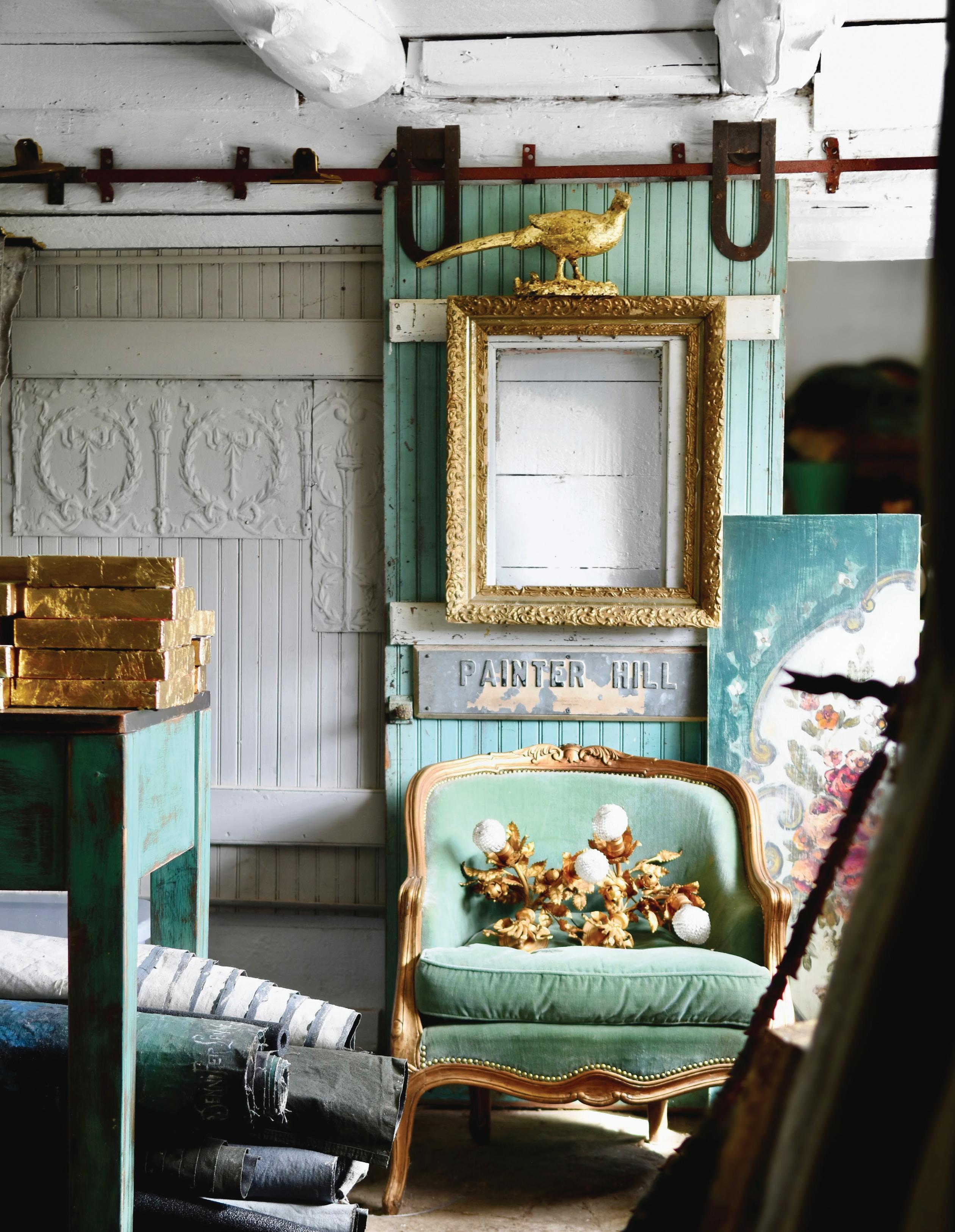
I love the challenge of transforming these raw, functional spaces into something more decadent and artful. The hand-hewn beams and lofty ceilings practically beg for art-filled follies and layered vignettes. I believe that’s a huge part of what sold us on this property—the many options the barn space would provide
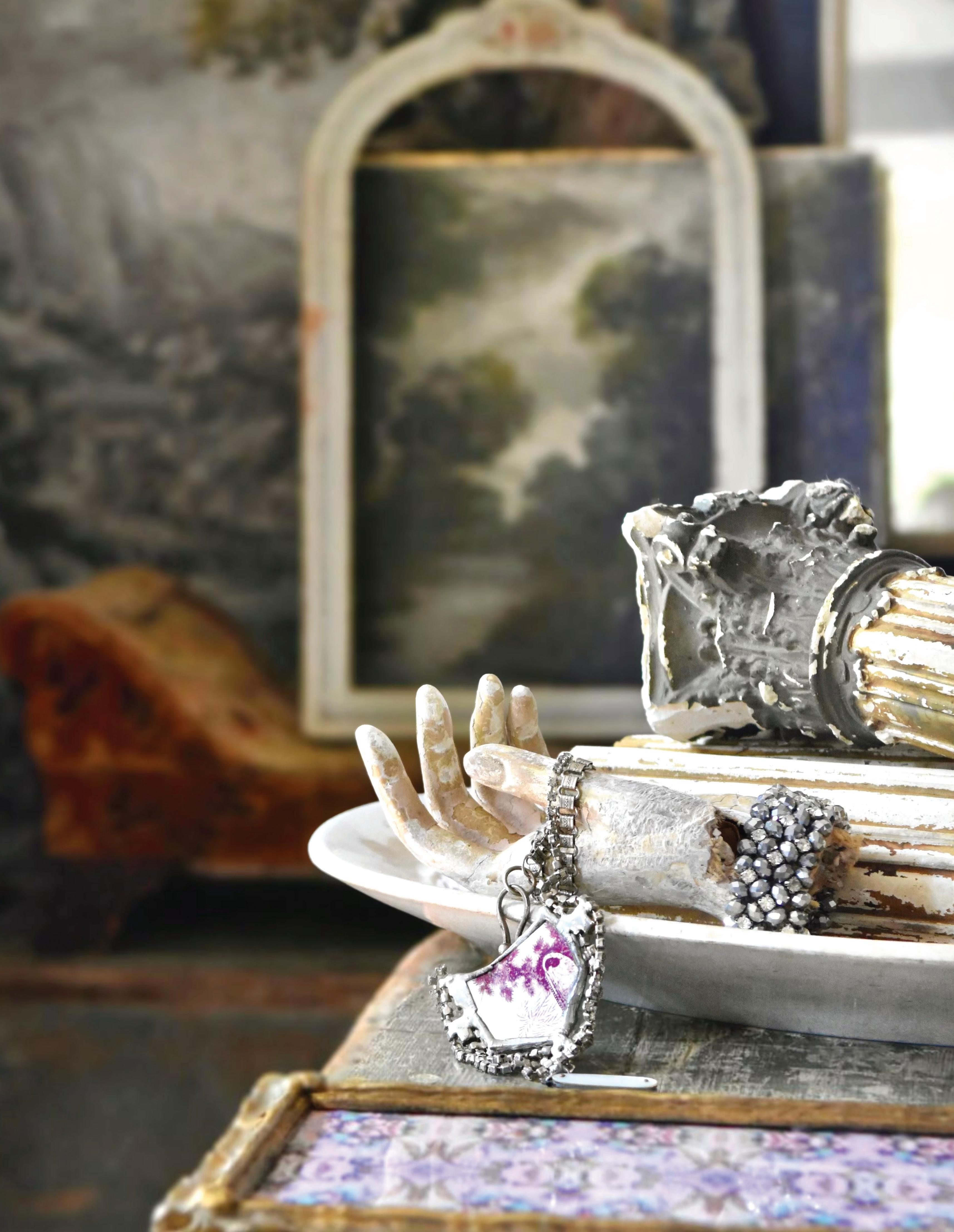
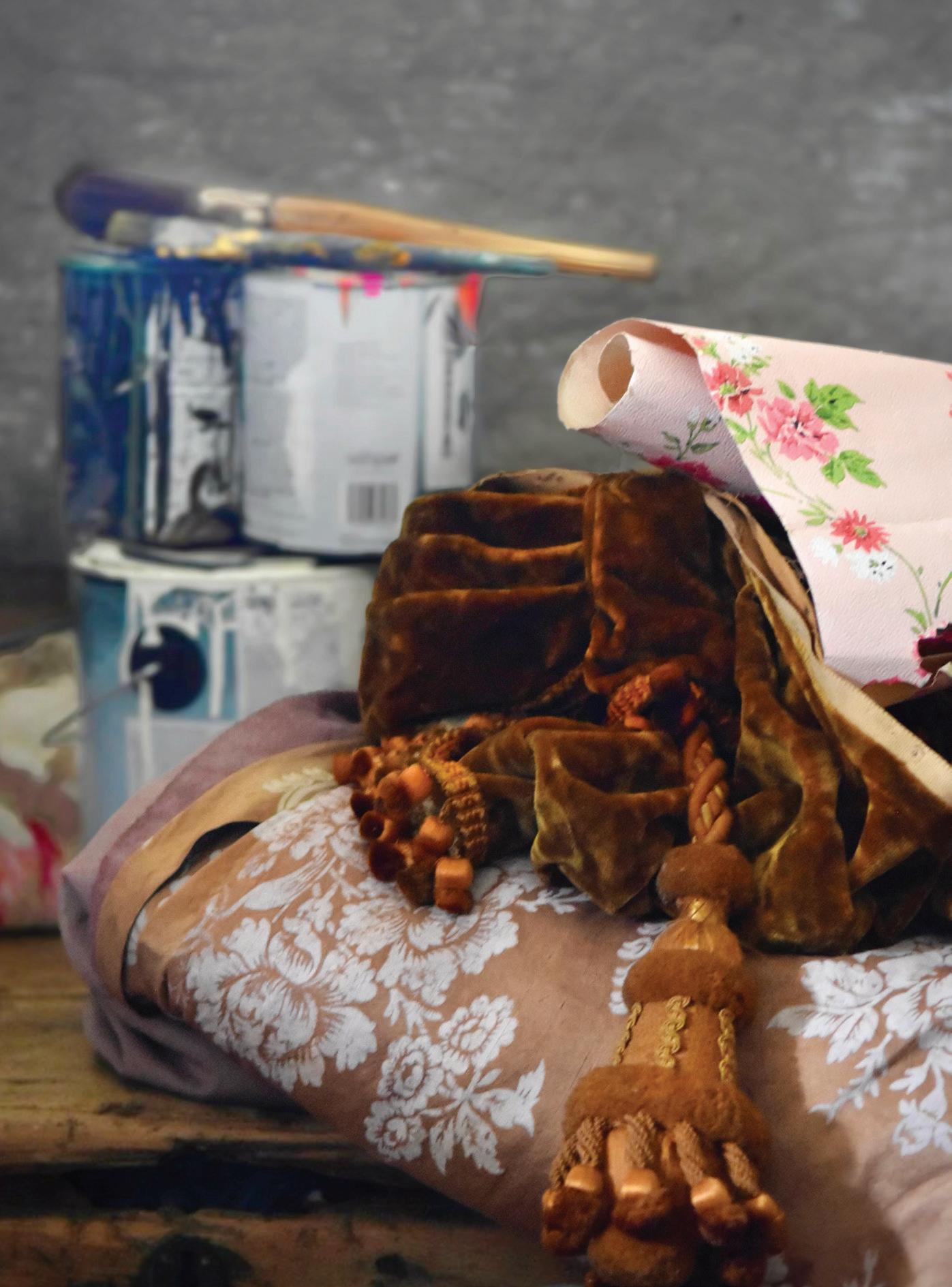
I’ve always been drawn to the collision of contrasts. Refined and gritty. Elegant and odd. There’s something so thrilling about combining a lavish gilded frame with peeling paint or pairing a plush velvet textile with raw linen. The tension creates a story—a scene. Those little vignettes help bring story to my art.
My studio is an evolving stage. Some days it’s a manic mess of paint, canvas, and piles of ideas waiting to be brought to life. Some days it feels like a storage room from a forgotten theater. Often, it becomes a still-life of old florals and farmhouse memoirs.
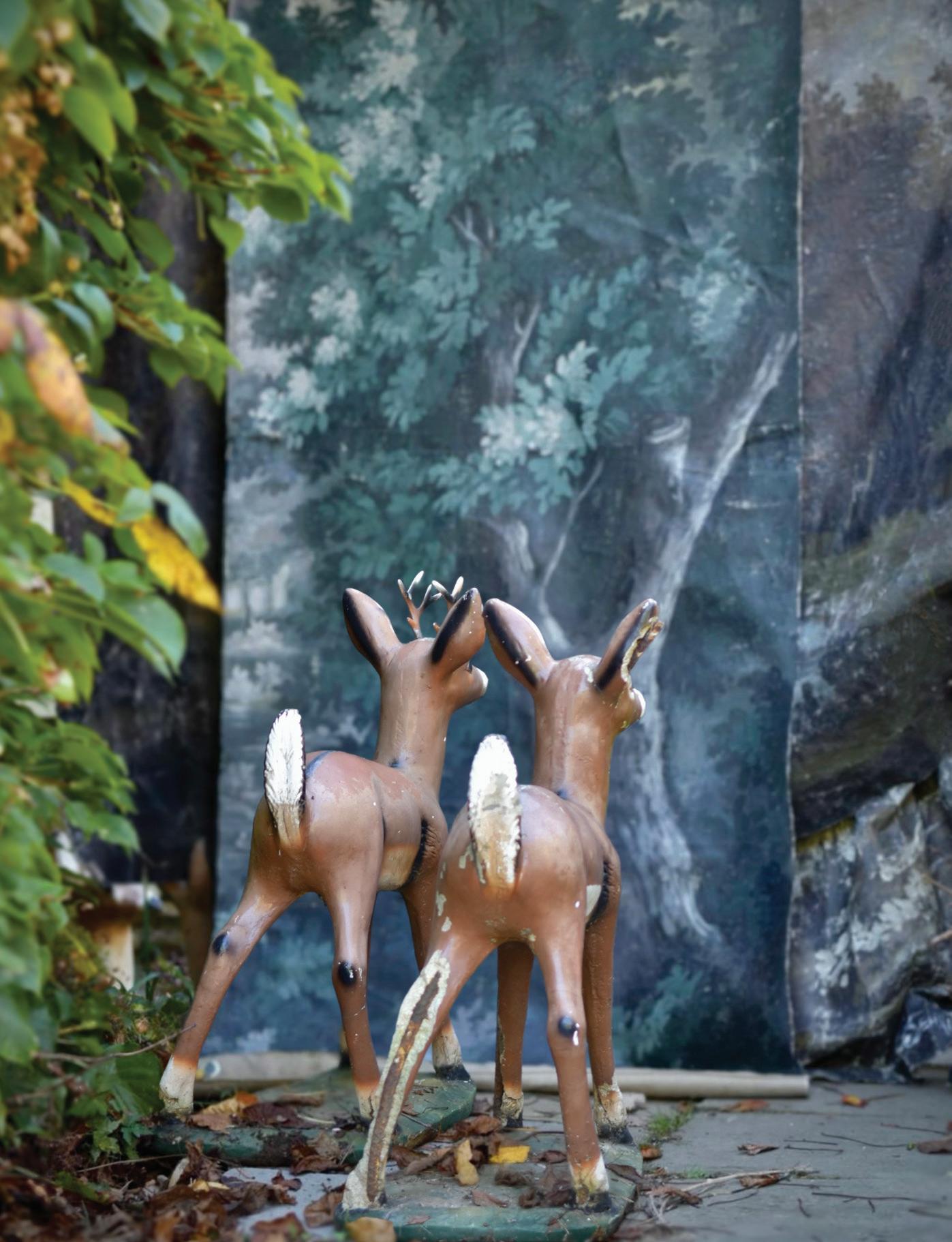
Props, some hand-painted, some old and chipped, velvets, and other bits of inspiration move about constantly like little actors acting as my muse.
I often begin my process not just with a blank canvas but with a mood. Sometimes it’s a color, other times inspiration from a piece of threadbare fabric or a vintage flea market find with amazing fade. Sometimes I depict things directly, other times they just serve as an idea buzzing in the background while I explore something a tad more abstract.
“Mystery is underrated, and understanding is overrated.”
— LARRY MCMURTRY
Large-scale pieces demand
a bit more attention, not just in detail but also spatially. I often work on them in small sections and fragments lying flat on a surface, which can make it challenging to see the painting as a whole. Other times, I work on them while they’re hanging up to see where to place composition. There is no rhyme or reason; just what works best in the moment.
Texture is my second language—whether it’s thick brushstrokes, frayed edges, or deconstructed finishes, it always tells a story of time and place. It’s a sense of history clinging to the present. In my opinion, a well-seasoned piece, rich with mad patina, always tells the best story. Gilding the unexpected—whether on objects or artwork—adds something classic and a little extra.
Ilike the idea of not thinking too much about painting. I rarely map anything out ahead of time. The knowing can feel restrictive—the mystery of where things are headed is part of the fun. The unknown ending allows me to paint on a lark. When not in the studio, I am out gathering ideas and vintage finds. I rarely search for
anything specific, just what catches my eye. A broken plaster piece, a peeling bit of wallpaper, a chipped vase, a disheveled chair—all add to the story. Sometimes I drag these finds along with artwork out in the barn, into a pasture, or even a stream, letting nature play a role. Light, trees, shadows, and the haze of the background all have a part in the performance.
The
fear of running out of ideas is ever-present. During days of feeling “stuck,” I tend to wander off outside into the landscape, hoping for a eureka moment to spur me on.
Sometimes it’s simply the quiet that gives way to inspiration. Nature has an ever-evolving ability. It changes and grows so rapidly, but it is unwavering in its message of part chaos, part curated beauty.
It’s important for me that life and art blur a little. I don’t want paintings to just hang on a wall, behaving themselves. I’d like them to feel part of a bigger story, a cropped version of something larger. A push between past and present.
It’s never about beauty in the traditional sense. I love the melancholy of pleasing decay, the drama of deep hues, the flawed and faded. All the things they have endured to achieve that perfect surface and color. Much like a life welllived, instead of sitting on a shelf never to have garnered a worn surface.
When I create vignettes, whether for photography, display, or just for myself, I’m never striving for perfection. It’s more of a vibe or feeling. It’s always about layers. It’s hard to put into words what makes something pleasing to the eye. It’s part composition, part an inner voice or feeling that it looks “done.”
Sometimes I think I was meant to live in a time when stage sets were hand-painted, framed in elaborate curtains, and backdrops were rolled down in big swathes of canvas. So instead, I create these little moments for myself.
I always hope to be able to reinvent. In large part for myself—as it’s so easy to get quite bored of oneself—but also an obligation to not be predictable. I hope to always be evolving, yet not know what that means. To look back over time and see progression. The mysteriousness of the unknown and unforeseeable.
More on Jennifer
www.jenniferlanne.com
Instagram: jenniferlanne.studio
Facebook: jenniferlanne
Pinterest: jenniferlanne
Scan here to follow Jennifer on Instagram.
TRISH MITCHELL
PHOTOGRAPHY BY CECELINA
CURATED BY SANDRA
TORNBERG
EVERTSON
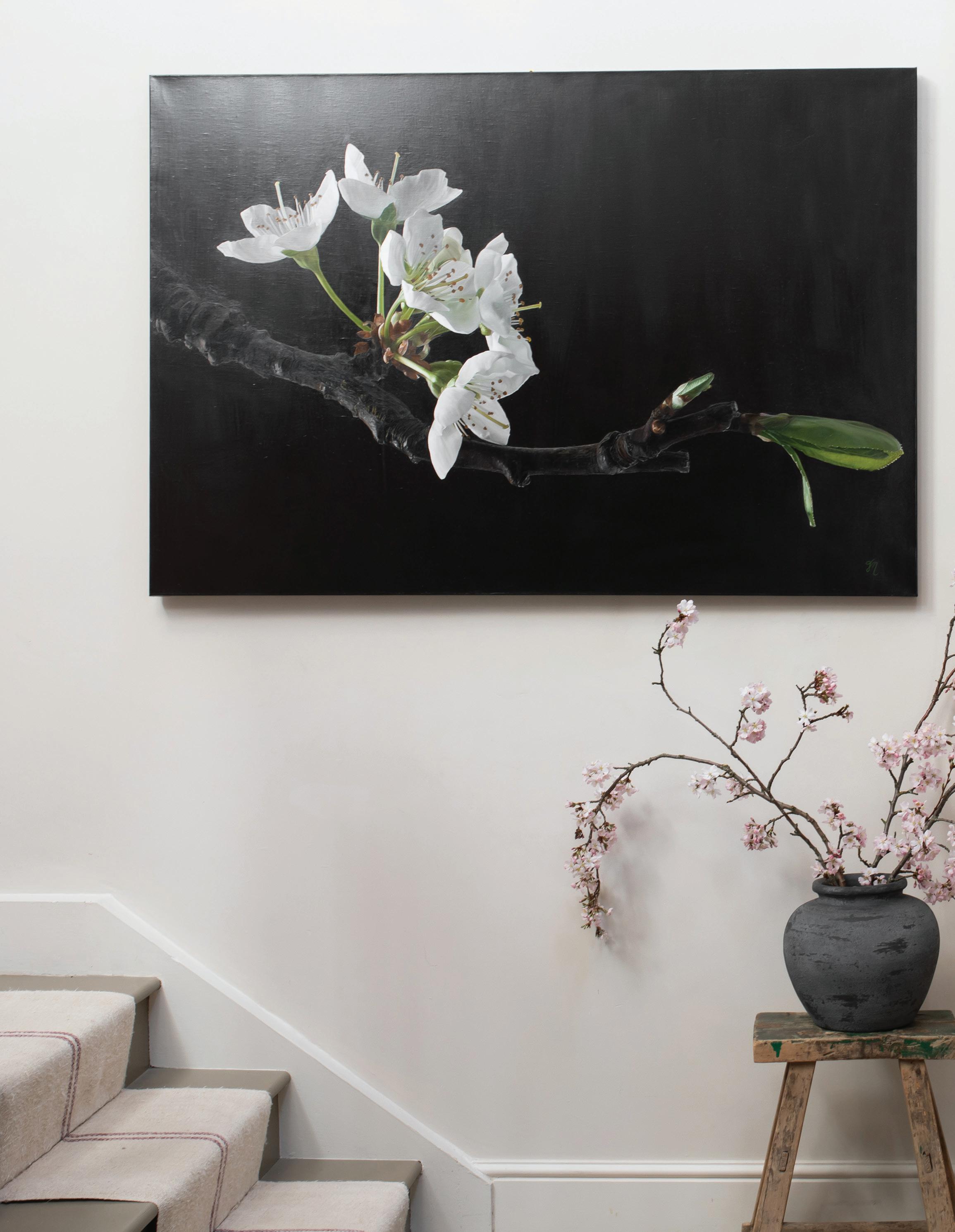
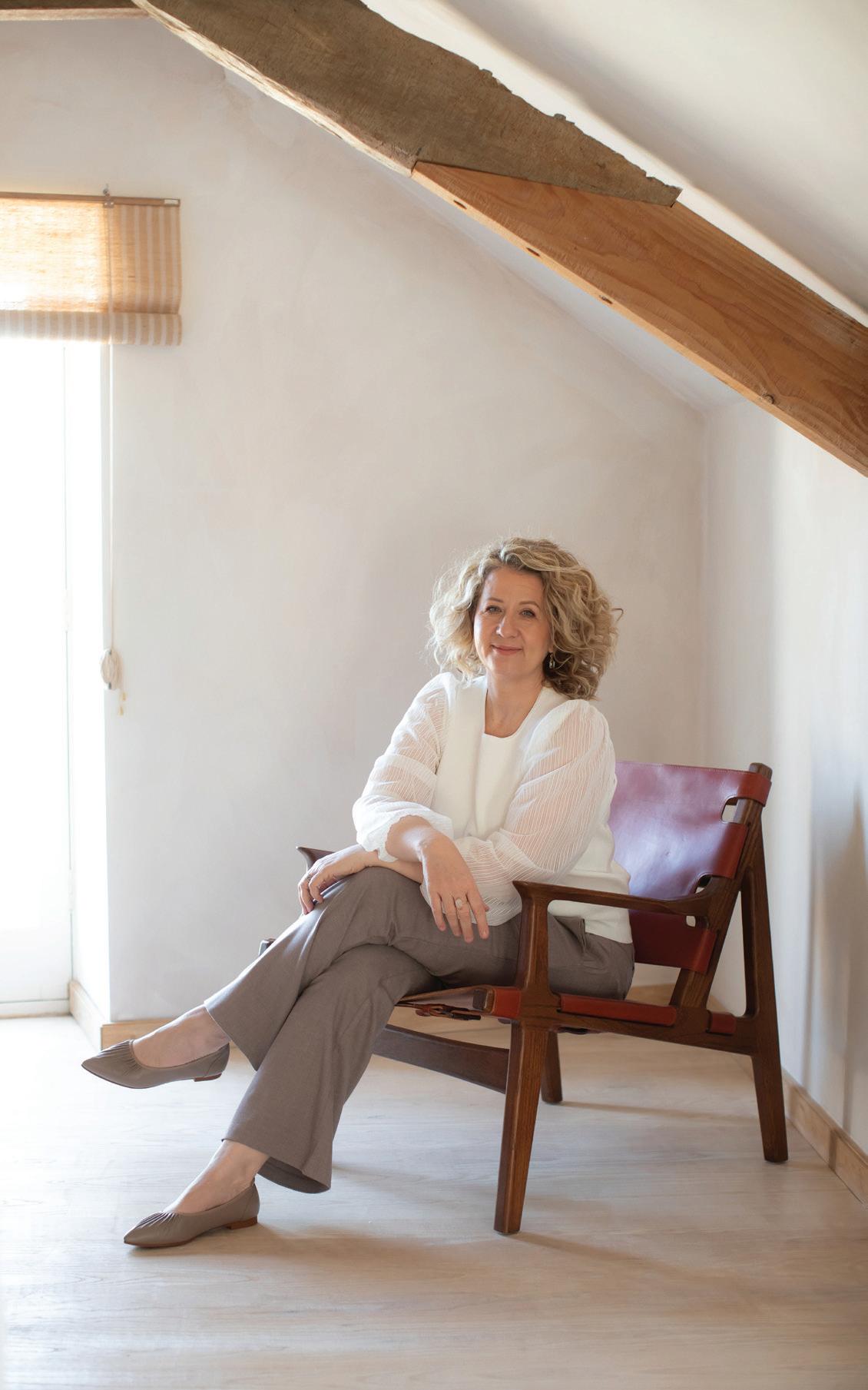
TRISH MITCHELL is a classical realist artist who recently relocated from Cape Town, South Africa, to a village in the southern Cotswolds, where the rhythm of the English countryside now shapes her illusionary oil paintings. Working from a temporary home studio while seeking a permanent space, she creates still lifes inspired by European craftsmanship, natural light, and the poetry of forms. Her practice is rooted in traditional techniques and a devotion to beauty.
IN LATE 2023,
my husband and I left Cape Town—the city where I raised my four children, built deep friendships, and developed the foundations of my artistic practice—and moved to the Cotswolds in the English countryside. It was not a decision made lightly. Cape Town is vibrant, emotionally rich, and profoundly beautiful, and my children remain its center. But beneath the surface of my life, there has always been another pull: a steady, almost ancestral draw toward England, a quiet tug that became impossible to ignore as my work grew in clarity and direction.
I am half English, a quarter Scottish, and a quarter Northern Italian. These threads have shaped my aesthetic instincts in ways I didn’t fully understand until I arrived here. From my British lineage came a sensitivity to atmosphere, quiet beauty, and the poetry of landscape. From my Scottish side: introspection, clarity, and emotional depth—a temperament suited to long hours in the studio. And from the Milanese heritage: refinement, craftsmanship, and precision. Layered over these influences is a lifelong reverence for Parisian elegance— not through heritage, but through decades of admiration for its restraint, ornamentation, and enduring sense of style.
England became the one place where these influences met with ease—and where my work immediately felt at home. The move felt less like a departure and more like a return to a landscape that matched the inner world of my practice.
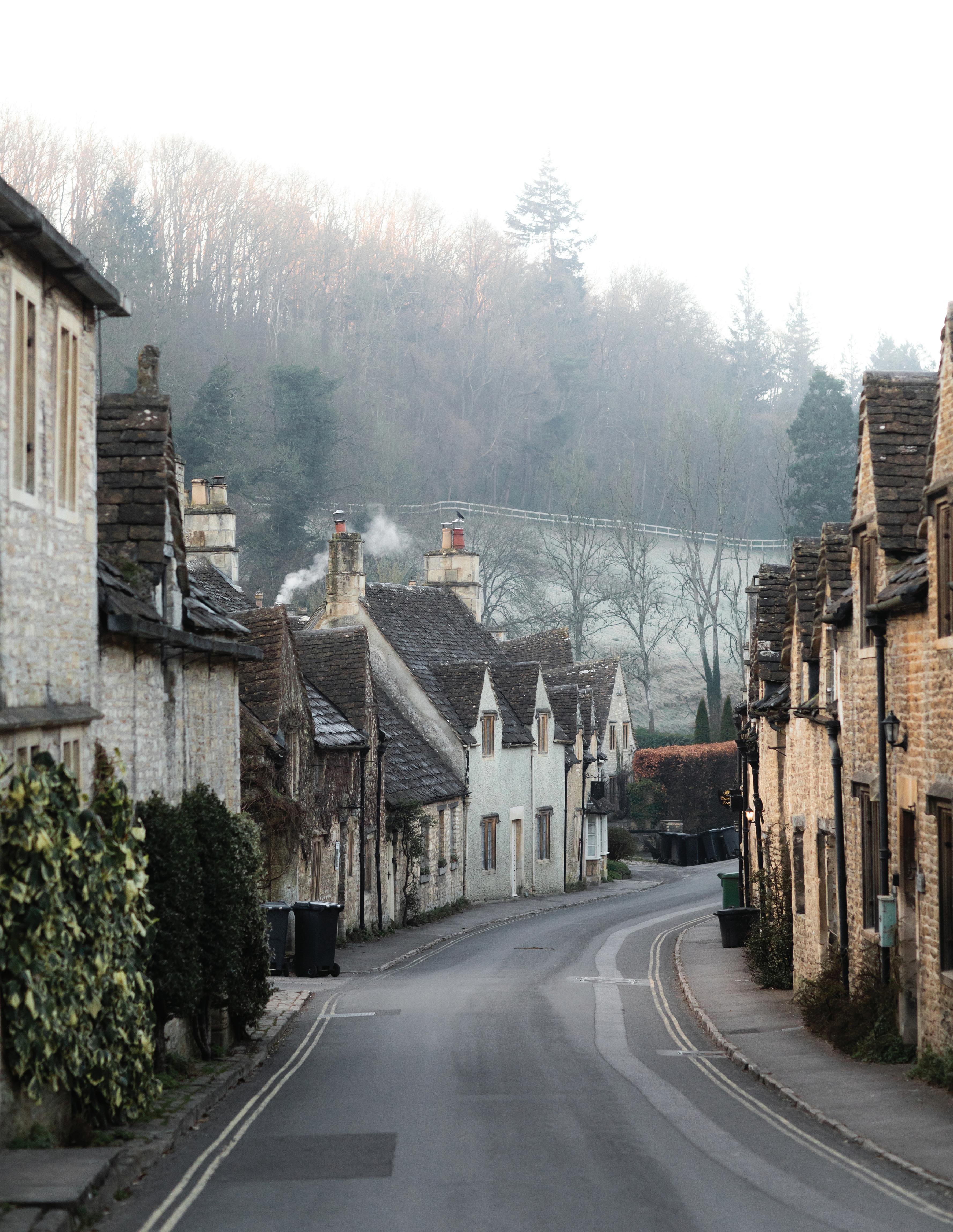
We settled in a small village in the southern Cotswolds, bordered by quiet fields and hedgerows. Behind our home is a meadow where cattle move slowly through the long grass in summer, and where the light softens into muted greens and grays in winter. The landscape has a gentleness that invites attention rather than demanding it. The subtle shifts in weather, color, and atmosphere create a sense of spaciousness that has become deeply nourishing. This environment—the color, the quiet, the slow-changing light—has become as integral to my practice as the room in which I paint, shaping not only what I create but how I move through each day.
BECAUSE Where Women Create is not only about the studio itself; it is about the place that holds the studio—the land, the air, the emotional weather of a life lived with intention.
My studio at the moment is a modest, luminous room in our home. It wasn’t designed for painting, but the light was right, and so it became my workspace. The walls are clean and white, the ceiling low, the proportions intimate—a room that quietly asks for focus. Though simple, it has become a sanctuary of sorts: a space where thought, observation, and craft converge. It provides exactly what classical realism requires: consistency, order, and an uninterrupted source of natural light.
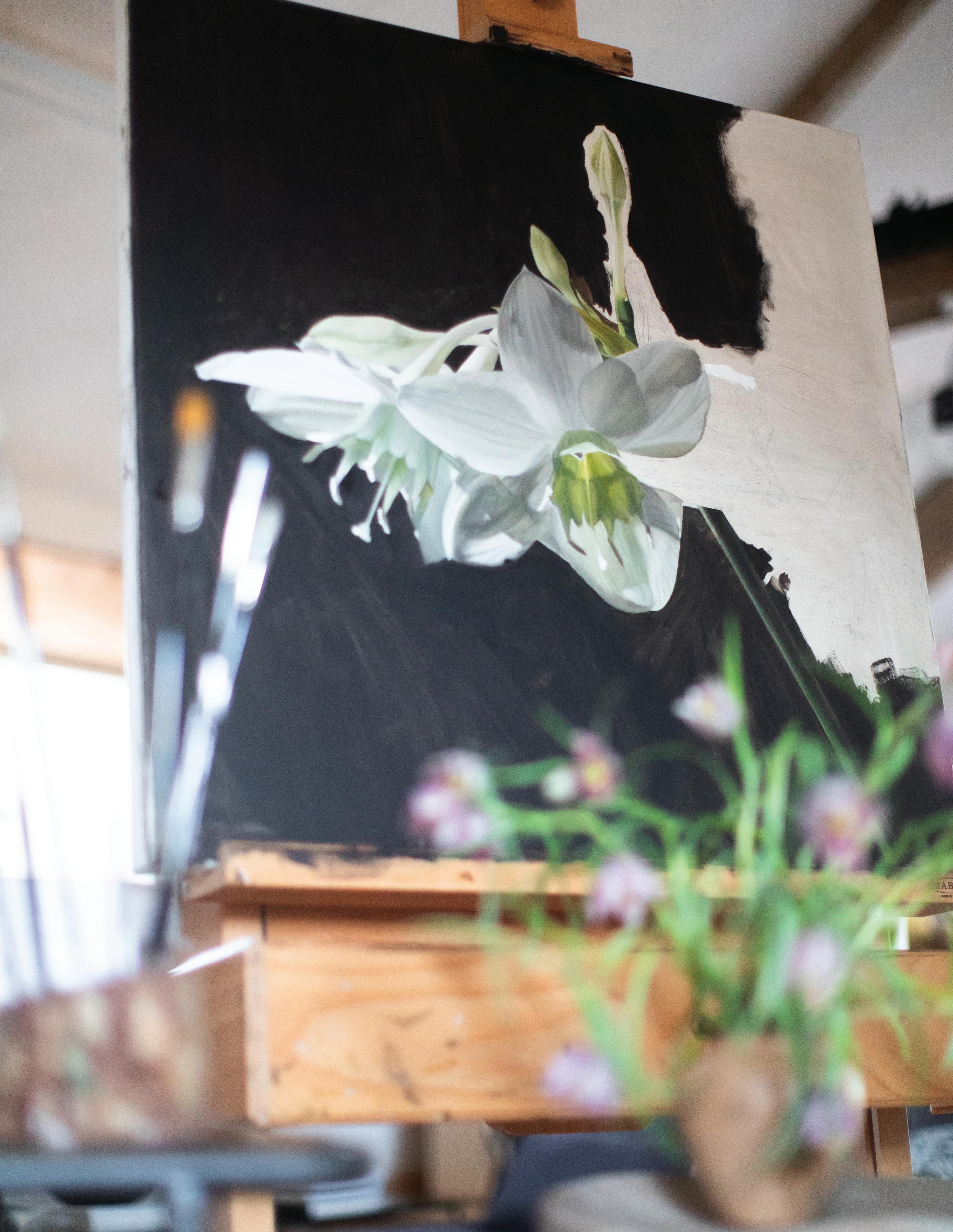
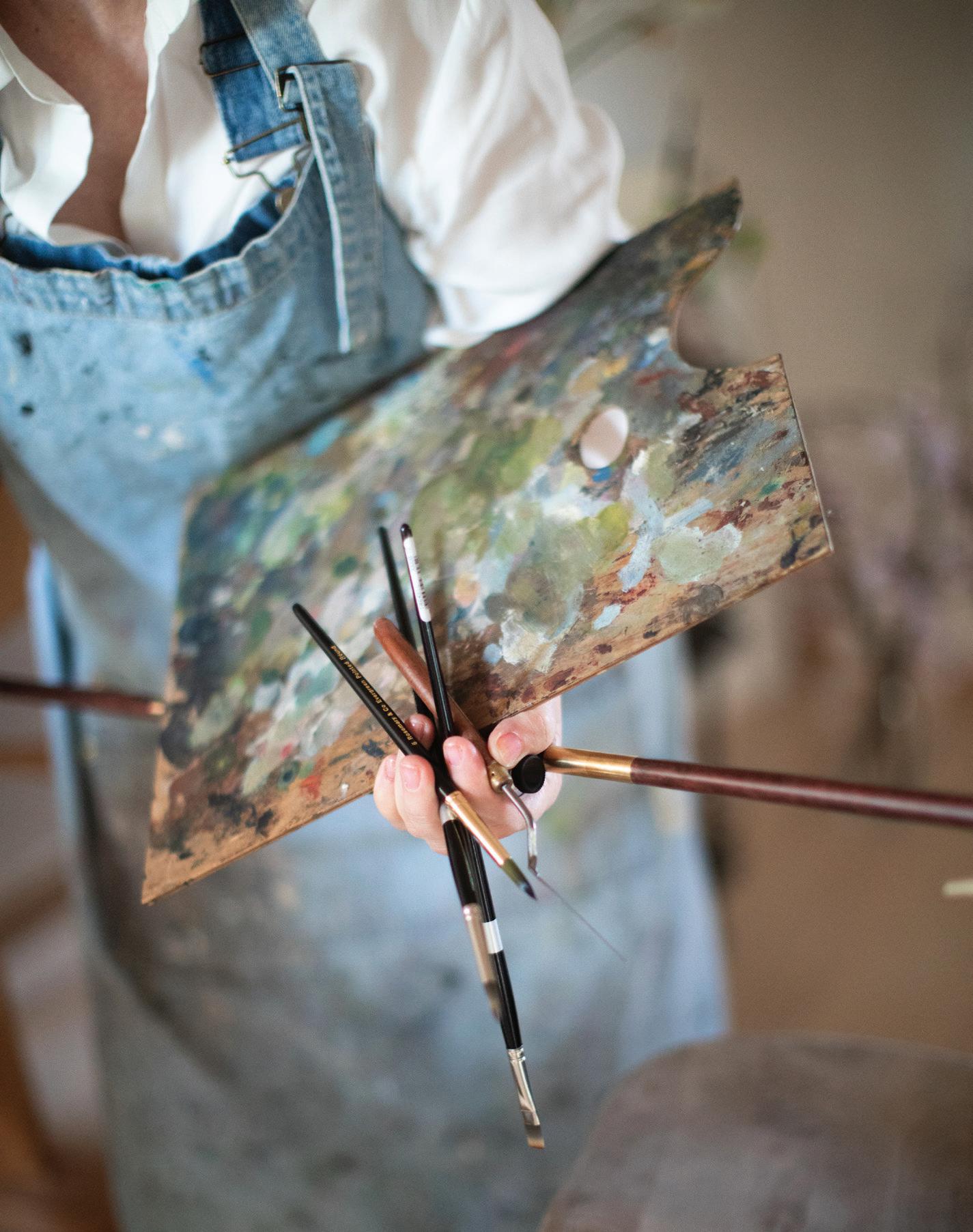
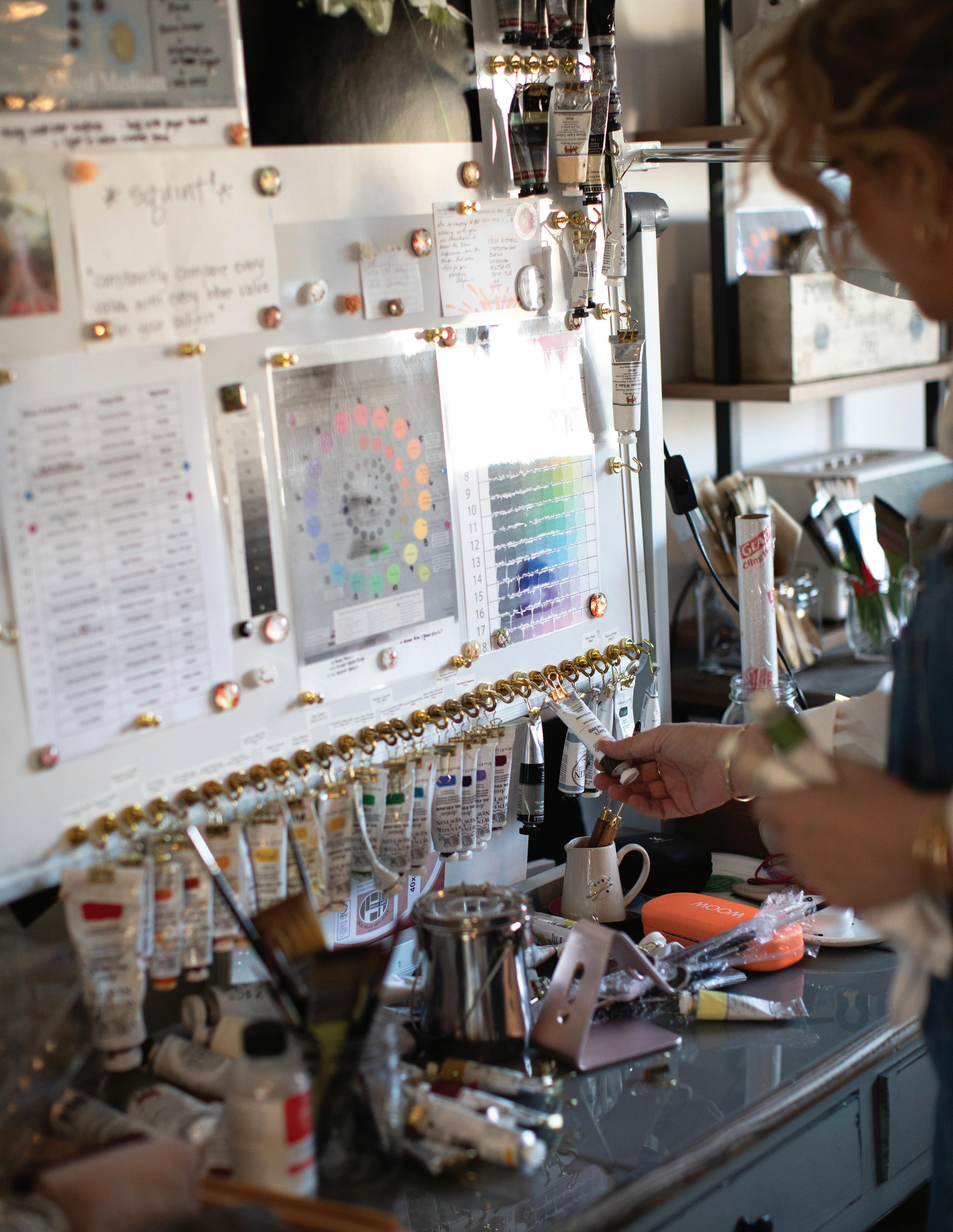
My easel is positioned opposite a northfacing window, where the softness of English daylight moves gradually through the day. My palette is laid out in the same sequence at the start of each painting day—a ritual that roots me in the lineage of the tradition I work within. On the shelves are objects that feed my compositions: small architectural fragments, dried wildflowers gathered on walks, and carved details reflecting the Milanese and Parisian influences that shape my artistic world. Along one wall, extra-fine Belgian linen canvases rest neatly, ready for future paintings.
“LET THE BEAUTY OF WHAT YOU LOVE BE WHAT YOU DO.” —RUMI
THIS IS WHERE
I spend long hours painting in silence, building thin layers of oil in glazes and shaping form through restraint and attention. It is the practical heart of my practice—quiet, functional, honest. The discipline of classical realism demands patience, and this room has become a container for that kind of slow, devotional work.
But it is the landscape around me that feeds my soul.
Each morning begins with a walk through the village with my two small dogs, Tiggy and Tuppence. We pass the ancient stone church, the hedgerows thrumming with life, and the meadow behind our garden. These simple, rhythmic walks have become part of my creative process. They attune my eye to the subtleties that define my work: the shift of shadow across a curved surface, the soft edge of a leaf, the way morning light sits on weathered stone. The countryside has woven itself into my paintings in ways I hadn’t anticipated—not as subject matter, but as mood, tone, and emotional undercurrent.
“HAVE NOTHING IN YOUR HOUSE THAT YOU DO NOT KNOW TO BE USEFUL, OR BELIEVE TO BE BEAUTIFUL.”
—WILLIAM MORRIS
SOME
of the images I’ve chosen to share show details of the small, luminous room where I work each day, while others were captured during a single styled shoot in a space I selected for its light and atmosphere—a chance to create, just for a day, the kind of studio I’m searching for as we establish ourselves in the Cotswolds. That day felt like stepping momentarily into the future: into a space that mirrored the elegance, quiet drama, and European sensibilities that underpin my artistic voice.
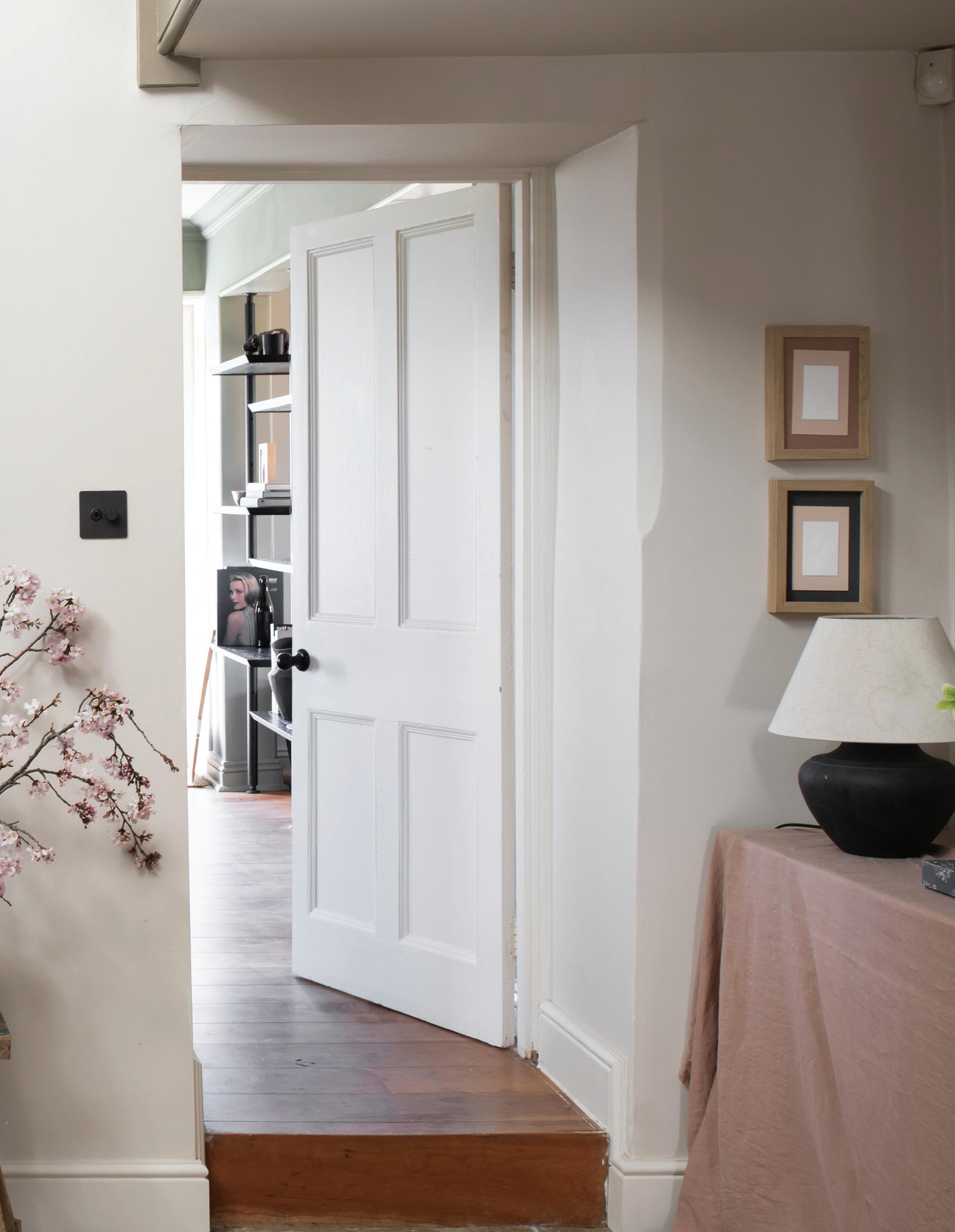
The styled location portrayed the world my work naturally belongs to: refined, Europeaninflected, classical yet modern, sitting somewhere between English authenticity, Milanese clarity, and Parisian elegance. These images are not aspirational fantasies. They are visual expressions of the space I am building toward—a larger, purpose-built studio with higher ceilings, more wall space, and the quality of light needed for the scale and precision of the work I’m stepping into. They hint at what is to come, offering a glimpse of the environment where my practice will eventually find its full expression.
I’VE been searching for that permanent studio for the past year. I imagine a place with tall windows, a sense of calm, and room for large canvases over a meter tall—a studio that allows the full expression of this new creative era. It will be a space that holds both the discipline of classical realism and the spaciousness this countryside has given me. I’m patient. The right space will reveal itself, as these things tend to, in its own time.
Until then, I work with devotion and gratitude in the space I do have, and I draw daily inspiration from the land around it. There is something quietly powerful about creating in a temporary space while holding a vision of the studio to come—a reminder that the work itself is the constant, regardless of the room that holds it.
The English countryside has become part of my practice: its softened light, muted palette, and quiet emotional weather. The slower rhythm of the village, the morning walks with my dogs, the hush of the meadow behind our home—these are the elements that shape the atmosphere of my paintings as much as any brush or pigment. They have given my work a new spaciousness, a deeper grounding, and a renewed sense of presence.
So, the story I’m sharing with Where Women Create is one of three environments: the intimate room where the work is made, the land that informs its emotional tone, and the studio space I am moving toward with intention.
All three are true.
All three are essential.
All three are where I create.
Denise DeGidio
PHOTOGRAPHY BY KATIE BERG
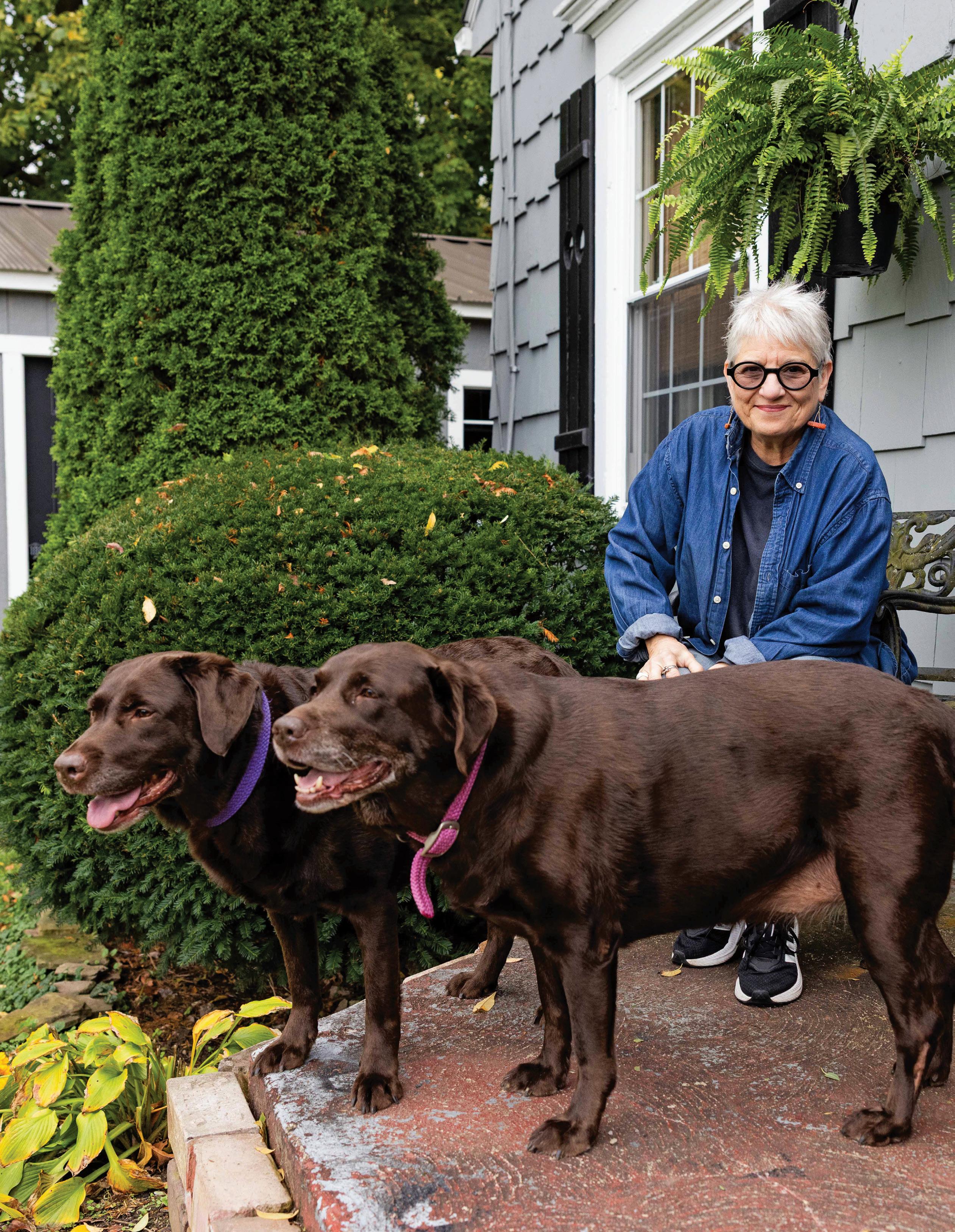
DENISE DEGIDIO is a fiber artist and instructor who lives on a quiet road in Northwestern Wisconsin. She has been mending, weaving, and dyeing with plants for decades and strives to design with intention and patience—her property, Lake Superior, and studio offering inspiration. Denise values a garment’s story, be it from one in her closet, a thrifted or vintage treasure, woven piece, or commissioned design, and enjoys adding to its story, sharing peace and love with every stitch created, shuttle passed, or repair made.
Ihave never been a conventional person. Or maker.
In the early 90s, when I majored in fibers, we still checked out books from the library, ordered supplies with handwritten forms, and graphic design was new and exciting–fibers was not the preferred medium to study. In fact, I was the last student to graduate from our state university with a concentration in fibers. Just after, the weaving and dye studios were turned into photography labs, and I felt a sadness about this shift.
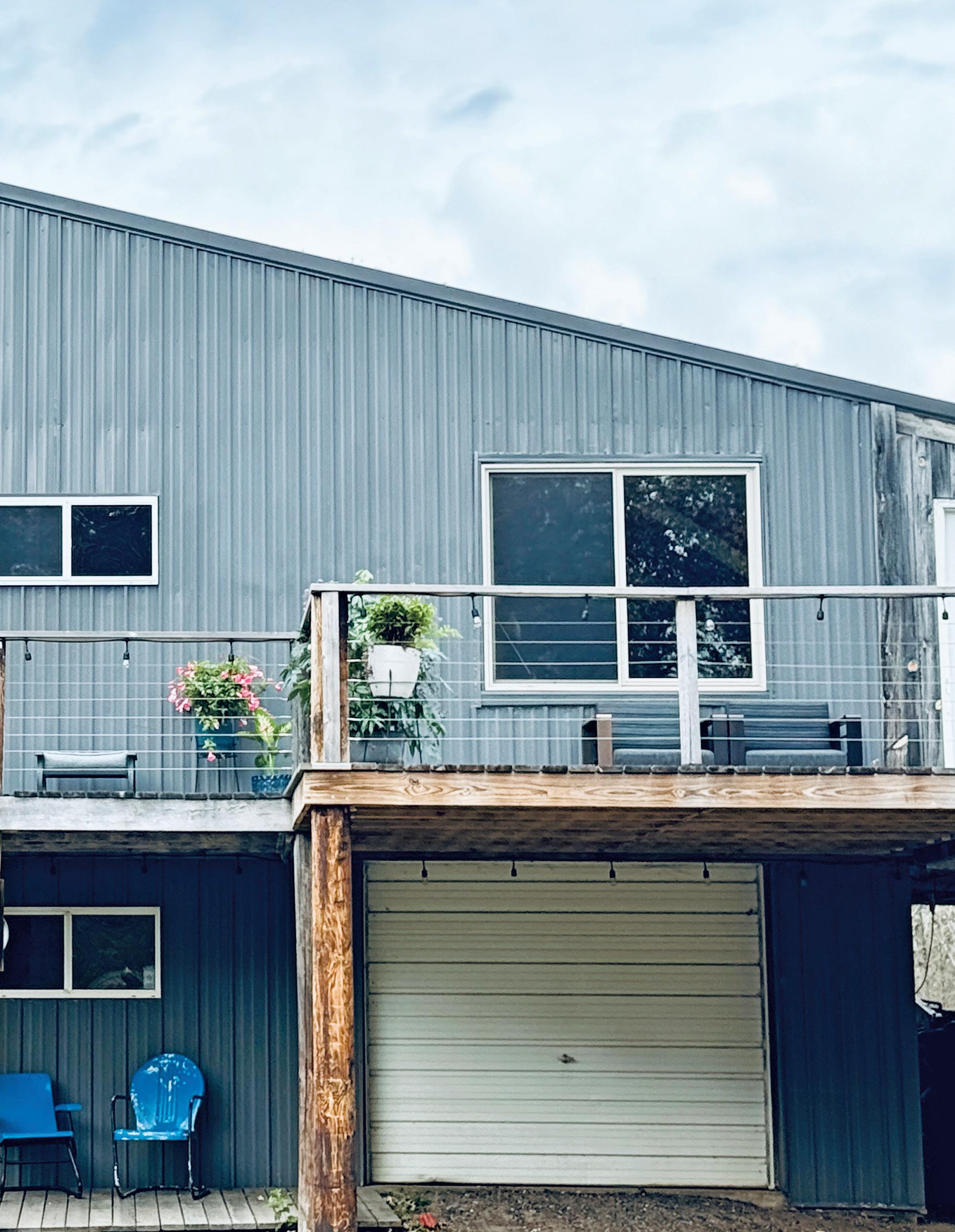
So, when my husband Tim and I decided to buy a pole shed on a quiet road to live in before the turn of the century, it was no surprise to me, or anyone else, that this would be the place we would choose to call home. We simply call it The Shed
Before we settled down in The Shed, we lived on the road for a couple of years after college, exploring as we drove across the U.S. and Canada. We found seasonal jobs when the money ran low
and continued our trek after obligations had been met–my hands working with yarn and thread in the passenger seat as the miles and seasons drifted by. Soon after, we lived on an island as caretakers, and I received my master’s degree in my forties.
Have I mentioned that I’ve lived an unconventional life?
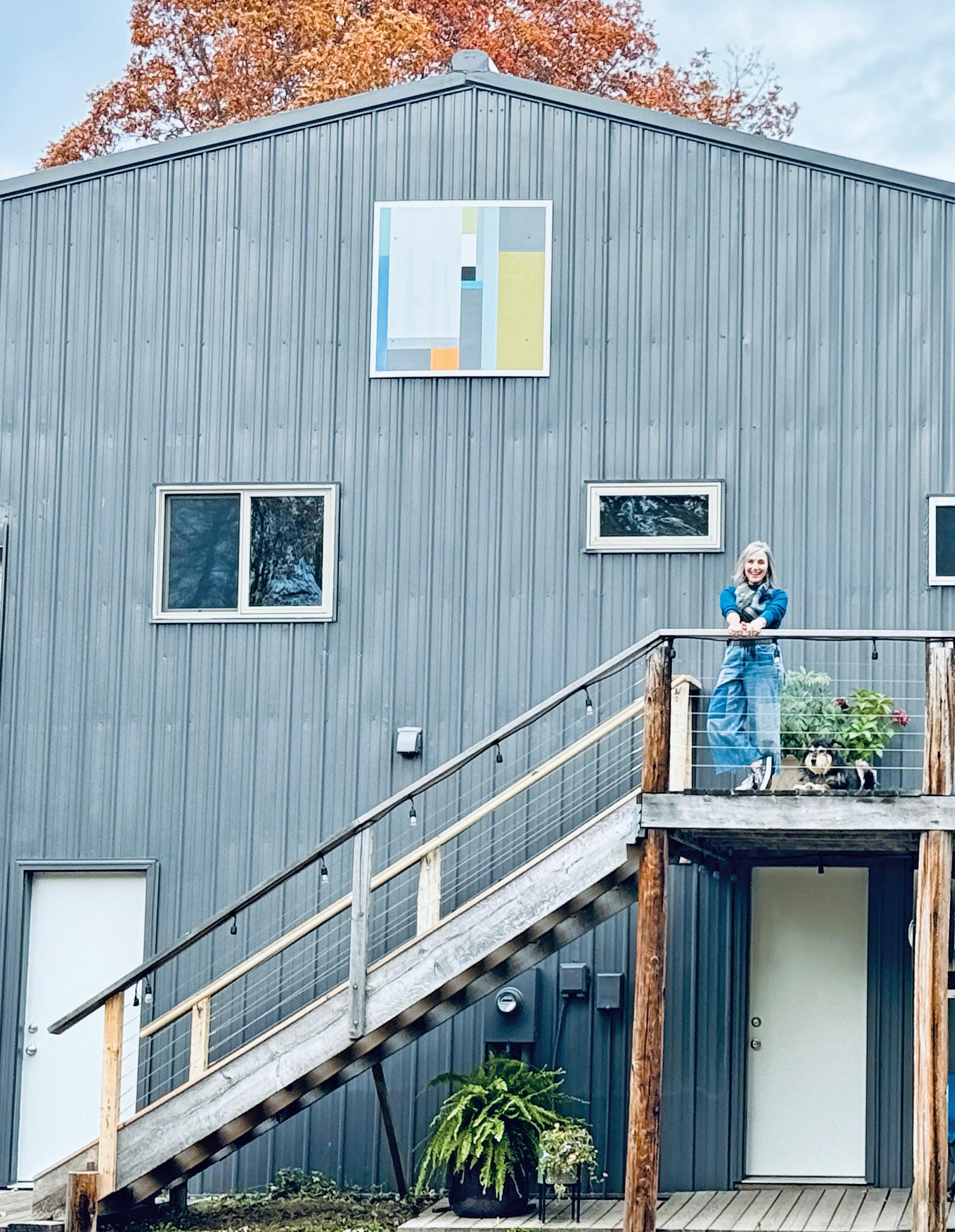
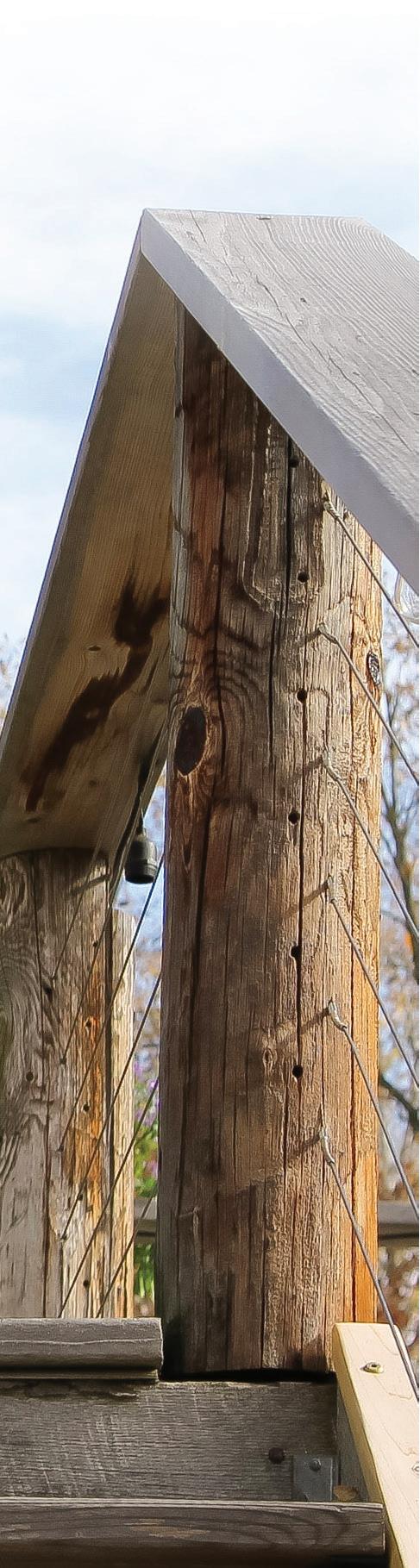
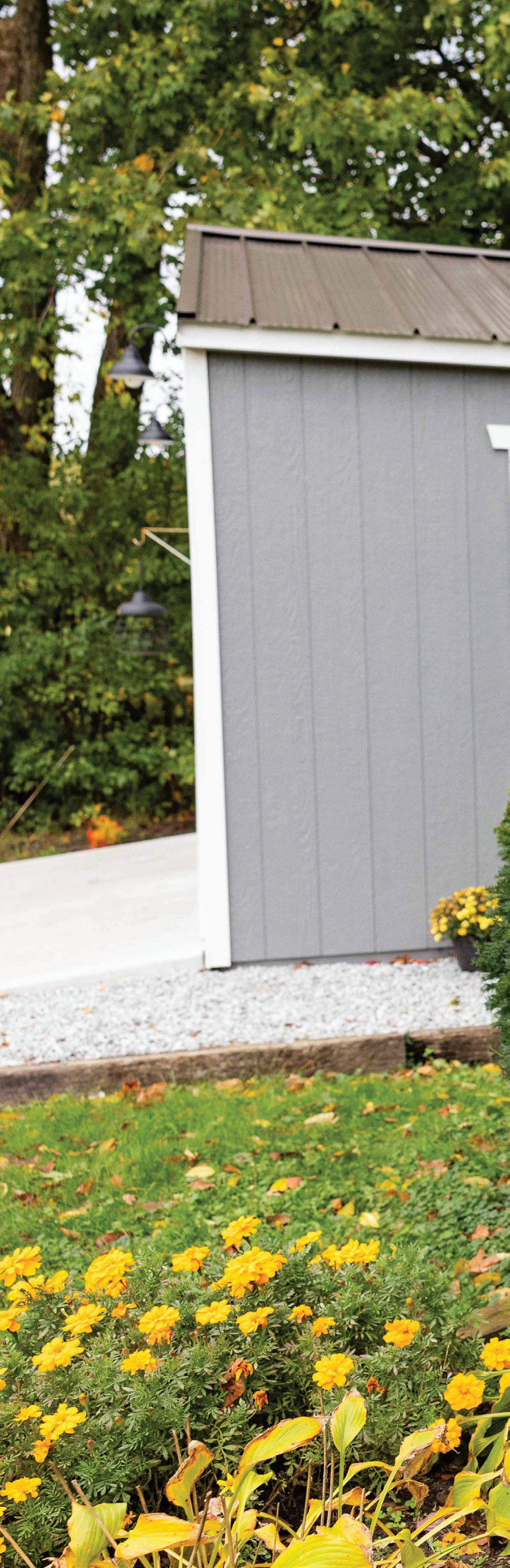
The Shed is large, 60-by-40 feet to be exact, and was built in 1992. Today, this style of home is known as “barndominium,” but at the time of our purchase, it was very rare, and our bank labeled it a “peculiar establishment”–language used in our paperwork which made me love it even more. It was an easy home for us to settle into with plenty of storage, a heated garage and workshop below, and open living space on the second floor. The exterior is the perfect shade of peppercorn, and I designed and made a modern barn quilt for its peak. For us, this home has been one of the best decisions we have made.
studio life
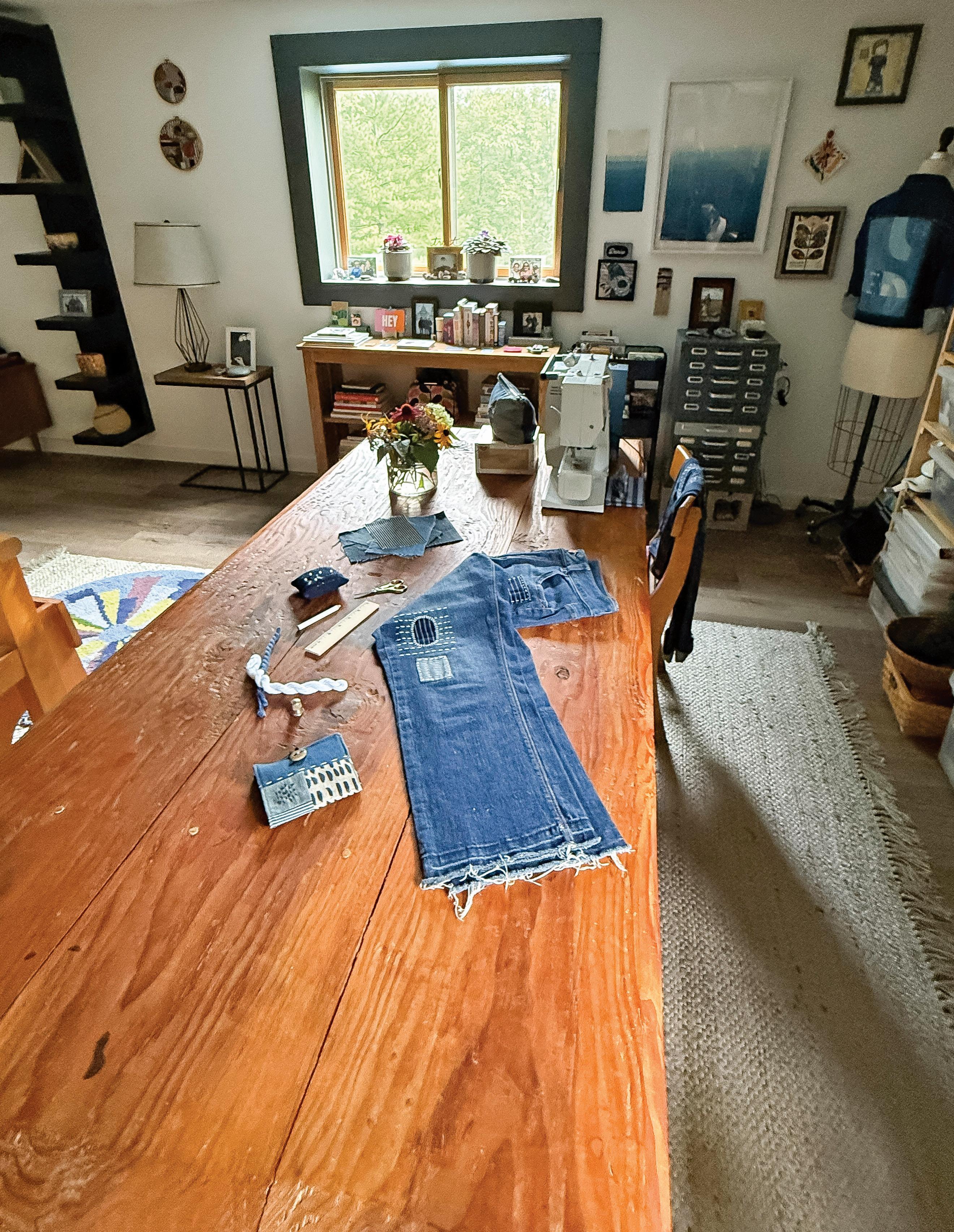
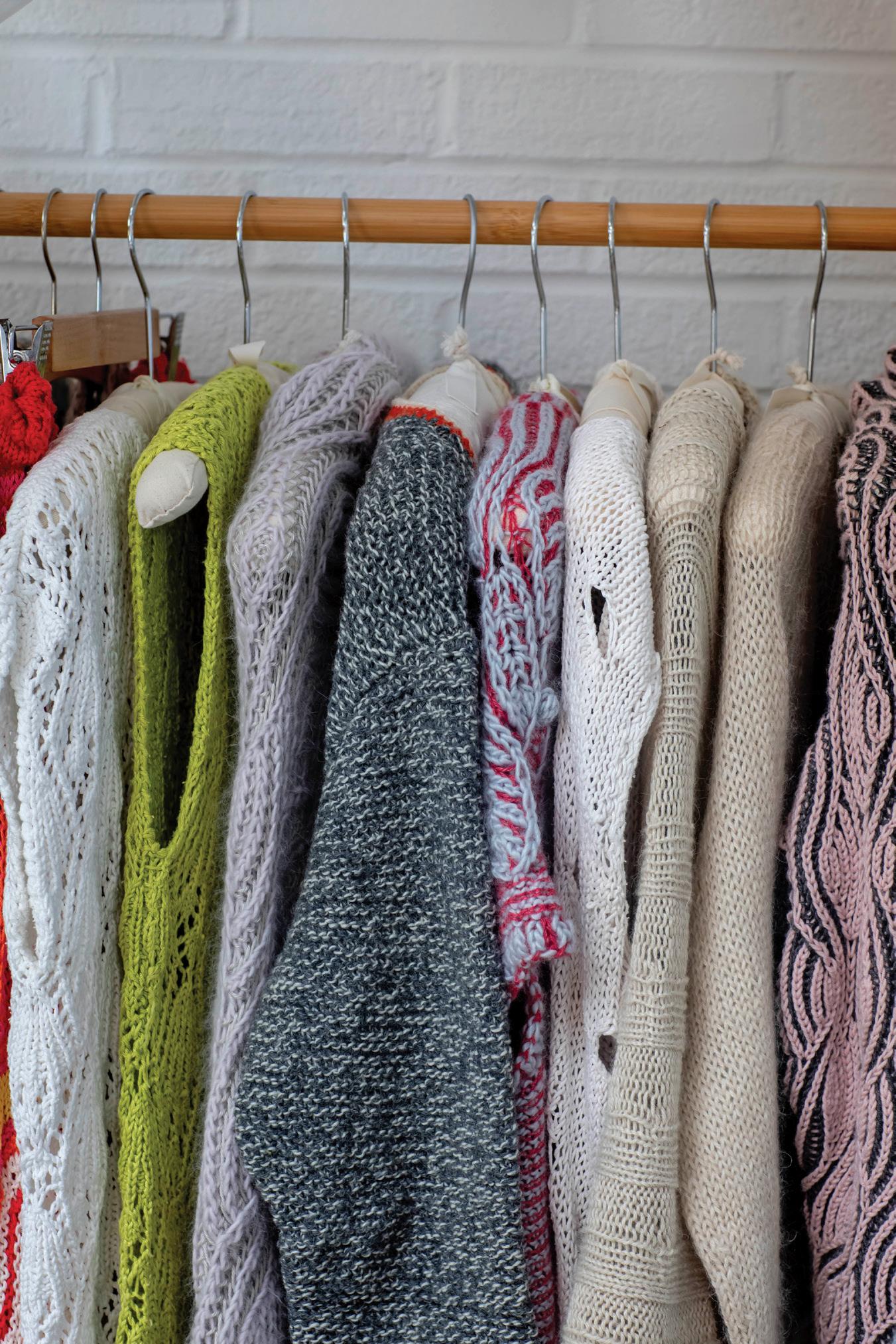
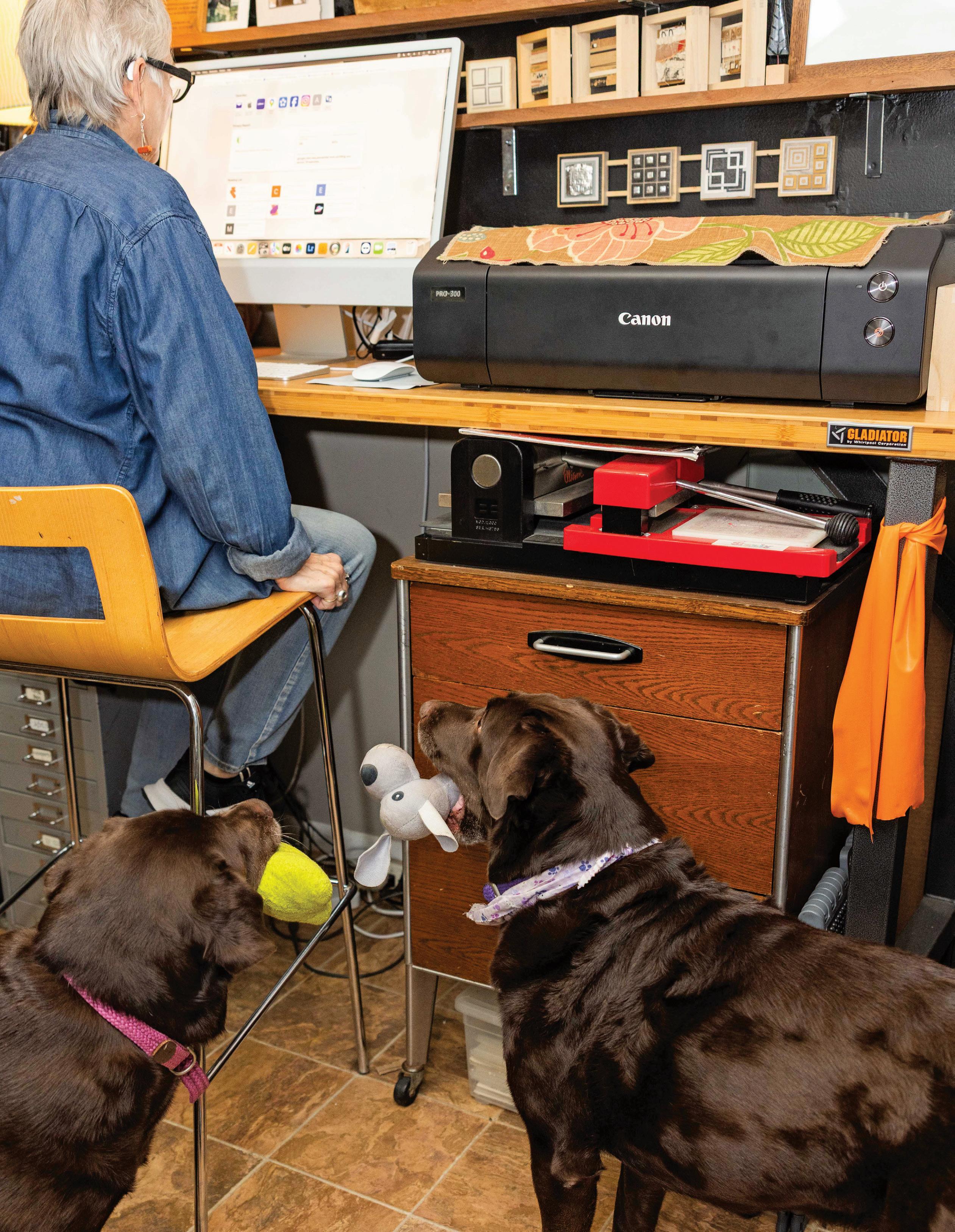
My studio is housed in the northeast corner and is patched together much like the clothes I mend, cowls I weave, and garments I redesign. Many items in it have been thrifted, gifted, or handmade, and I find this style unique, affordable, and eclectic. I enjoy those one-of-a-kind finds that come when you don’t always buy new, offering a sustainable way of living to help do a little something thoughtful for our planet.
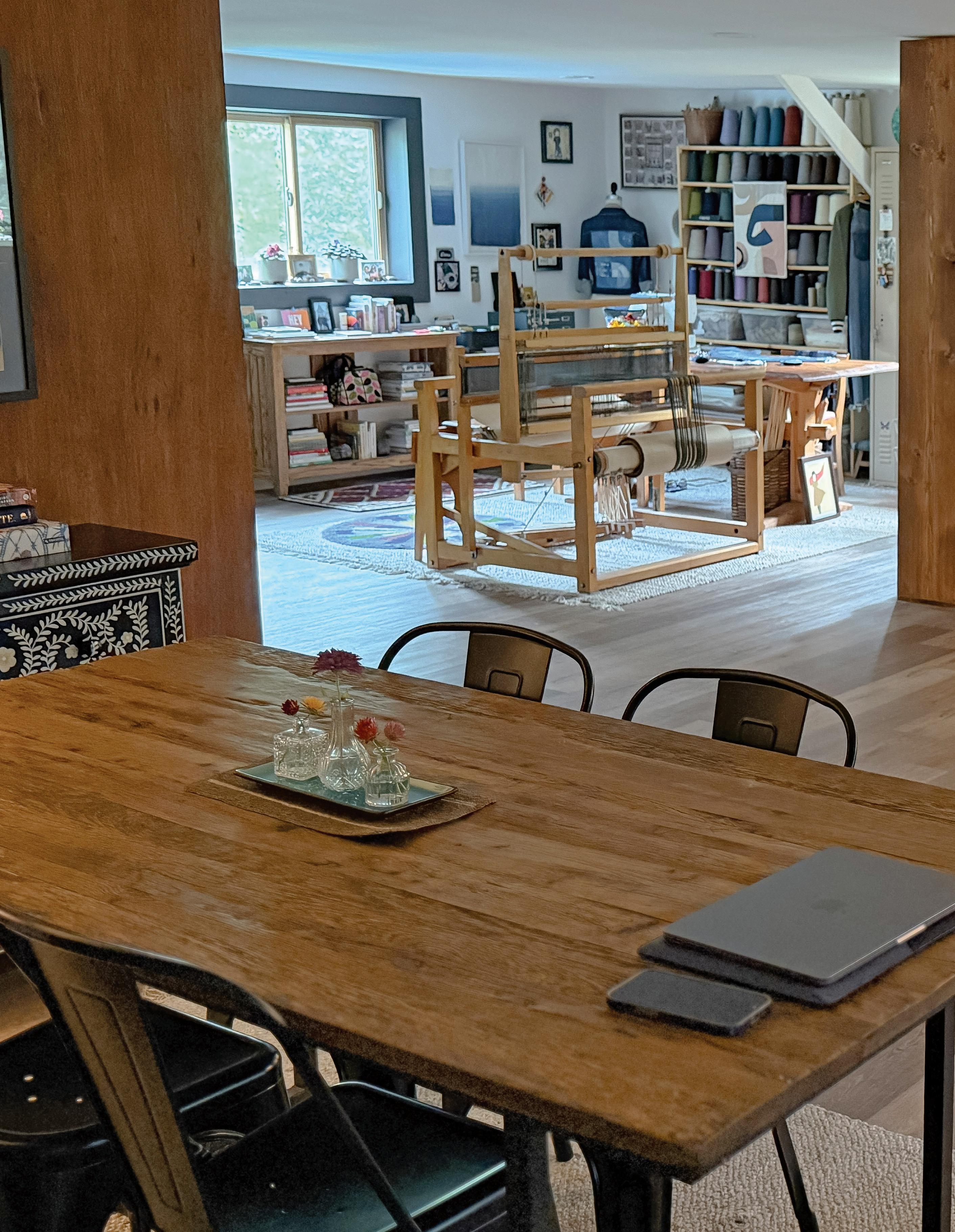
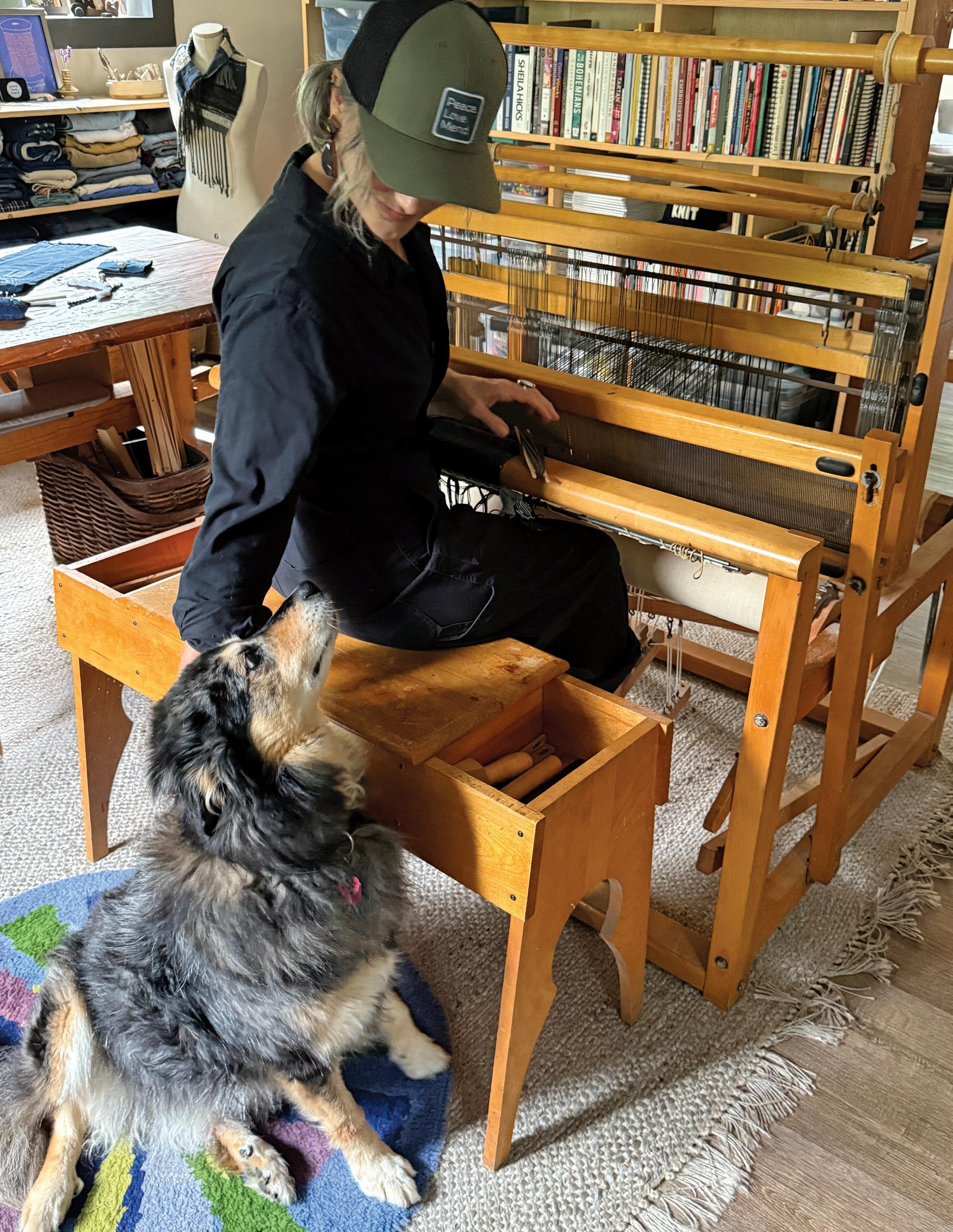
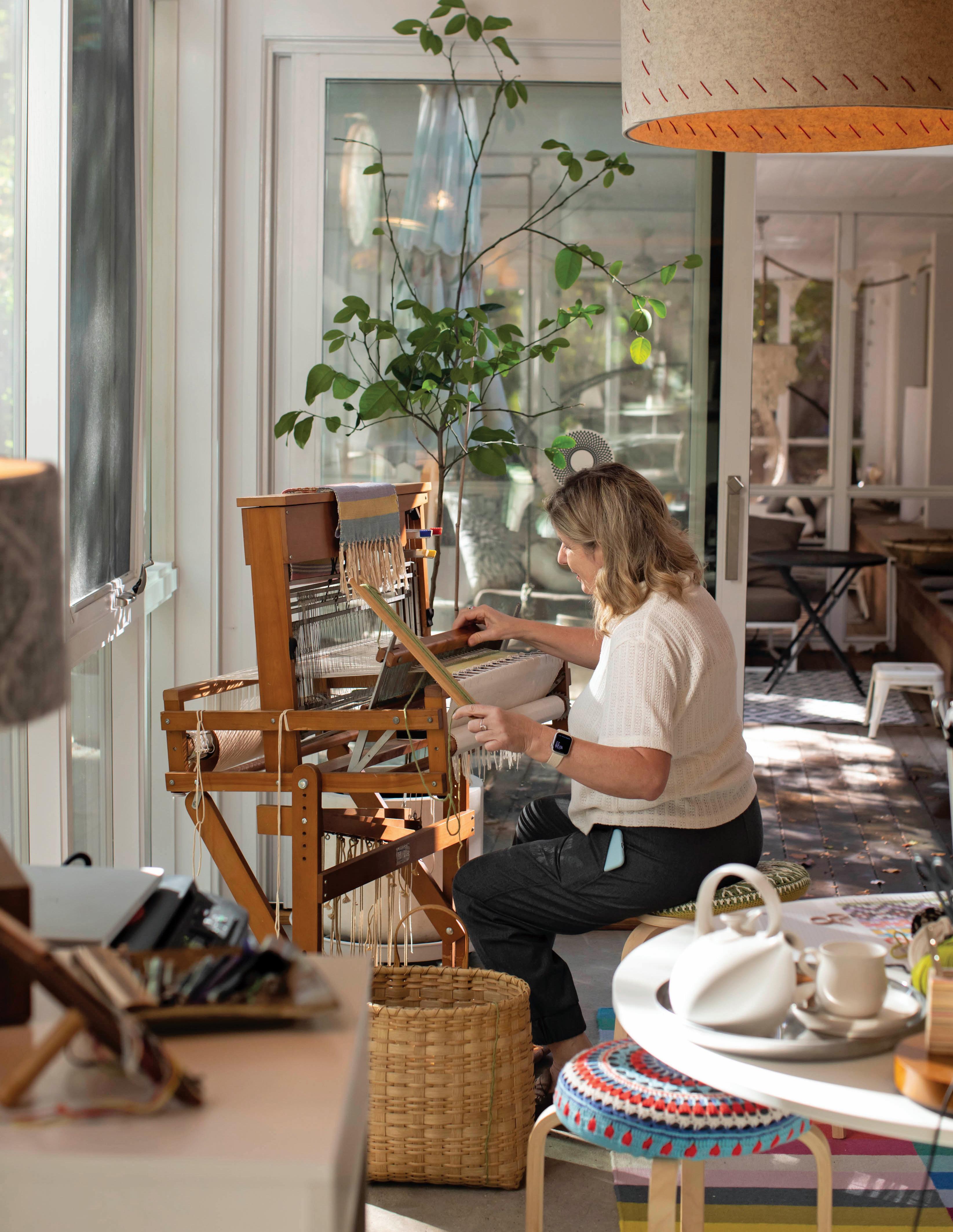
We live in an open space–one large room with wooden dividers that also act as shelves for our clothes and my studio, made to order by Tim. Here, I appreciate and welcome the little things, like when the morning sun shines bright through the window and casts shadows onto my loom.
my loom
My loom is a 1970s Leclerc beauty that sits at the inner edge of the studio–placed strategically to be seen from many angles of our living space–a work of art on her own! I was fortunate to purchase this loom, one I first learned to weave on, as an undergraduate student. She is well-loved and has been with me from the start. I dream up stories about those who learned to weave before me as I work and imagine the hundreds of hands that have warped, beat, and woven cloth for decades as I sit at her bench today–the scratches, scars, creaks, and marks remain.
Between the loom and eastern wall is my worktable, a hand-me-down that family members made using traditional methods decades ago–there is something very dear about this table; again, knicks and stains remain. My sewing machine sits on it to the north, and I find it’s a workspace that I can navigate well–it has a nice flow. Many garments, projects, and designs begin on this table, and, like my loom, it has stories that are a part of me.
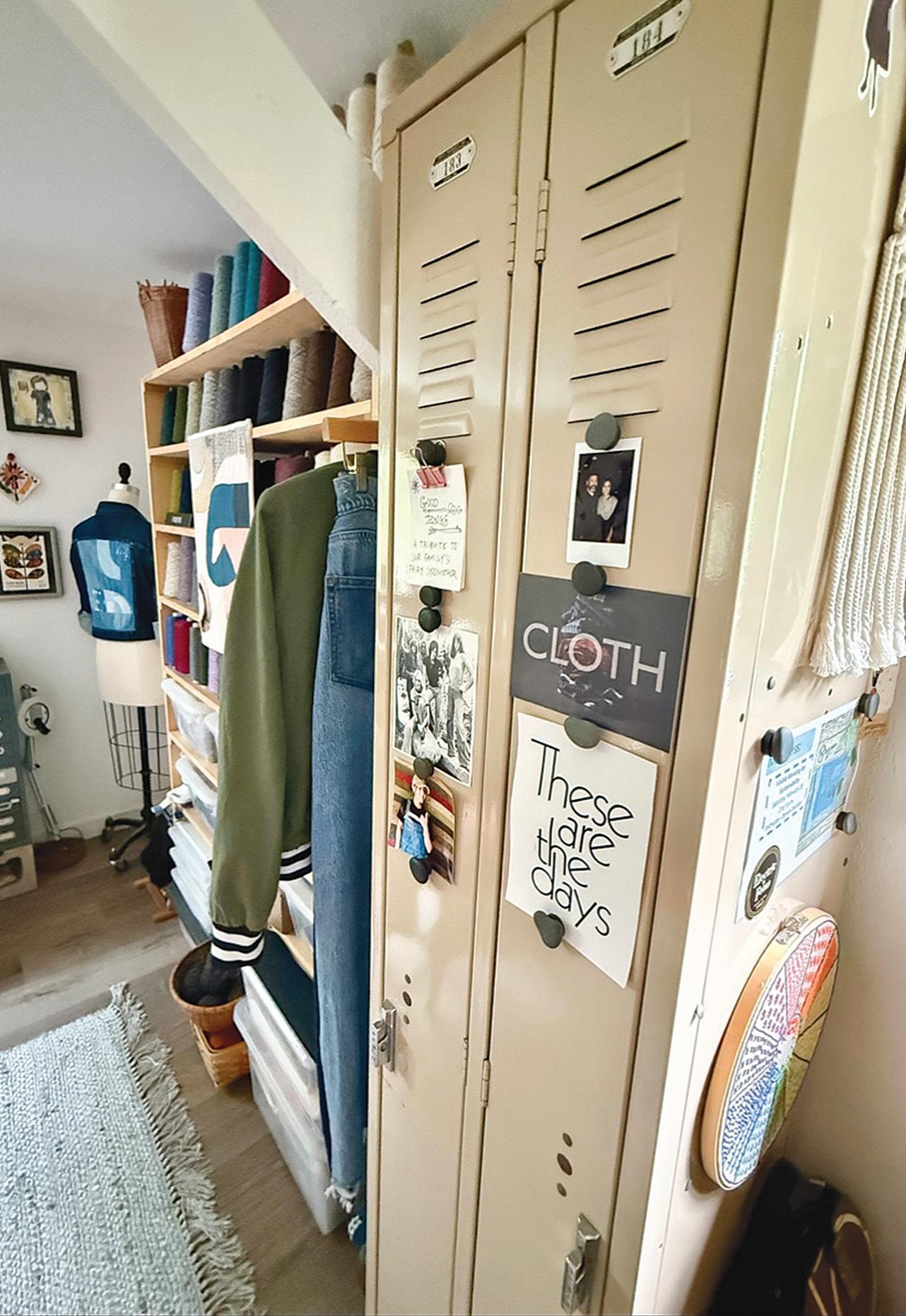
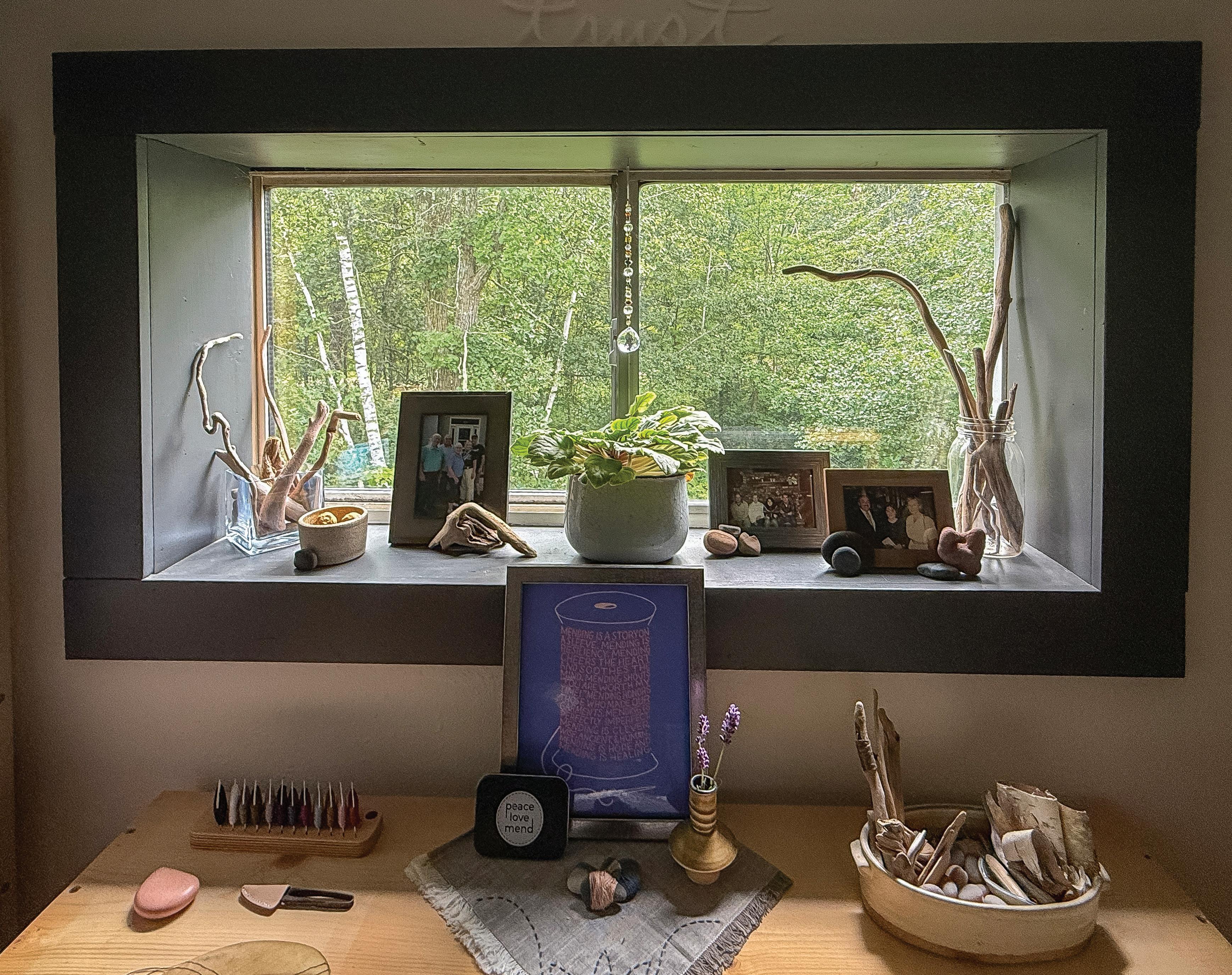
The handmade shelves are filled with books, yarn, instructional materials, and inspirational items. Living without closets, everything is in the open, so I do my best to keep it uncluttered and organized, and have found that clear totes help; lockers and metal slide cabinets, repurposed gems discarded from universities after upgrades, are perfect for hanging aprons, securing rolls of paper and cardboard for loomuse, binders, thread, notions, and more.
dog named blue
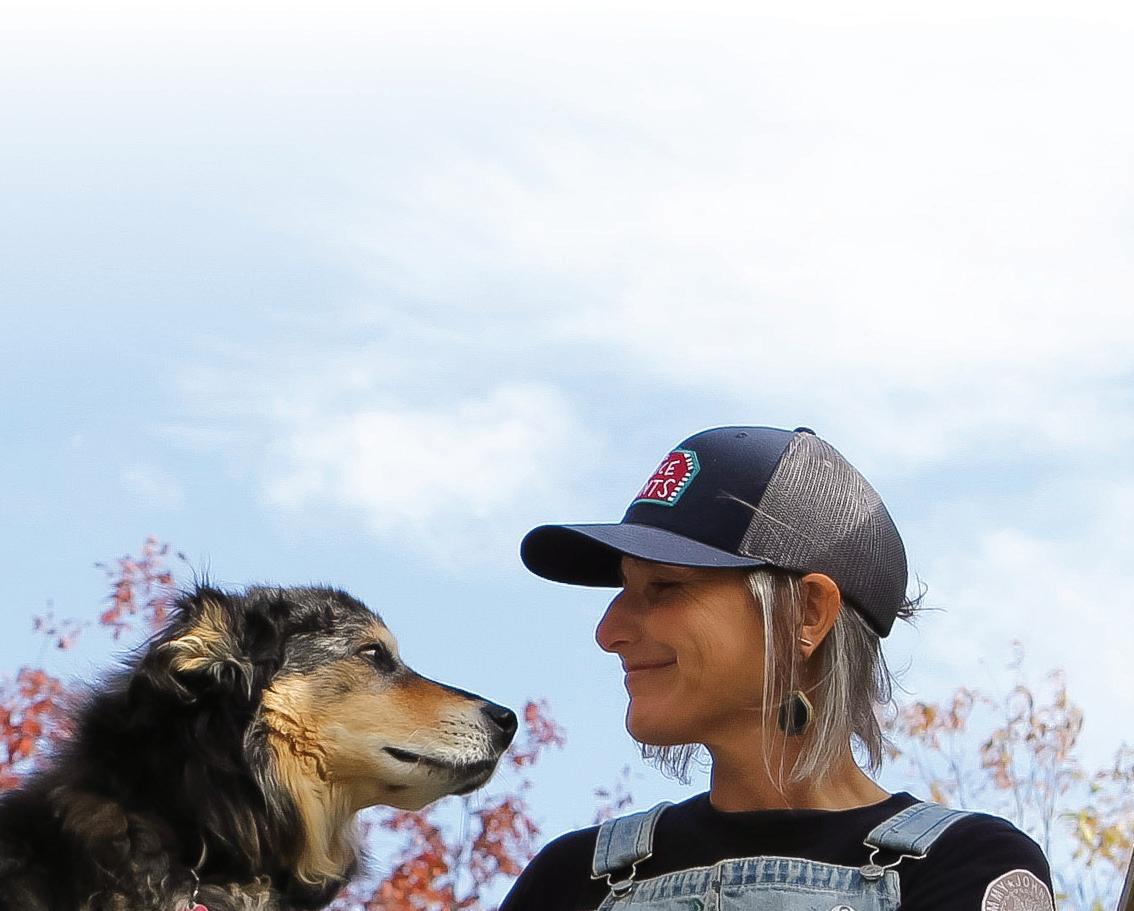
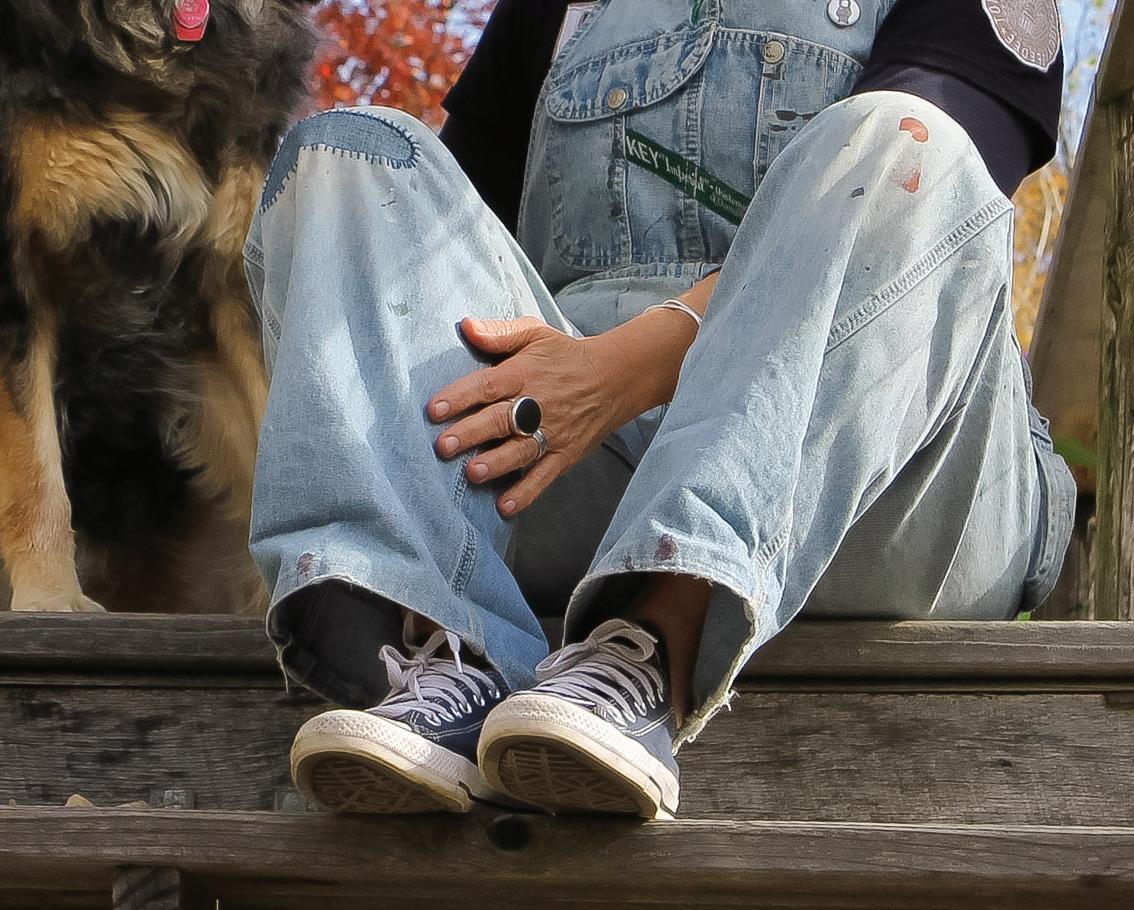
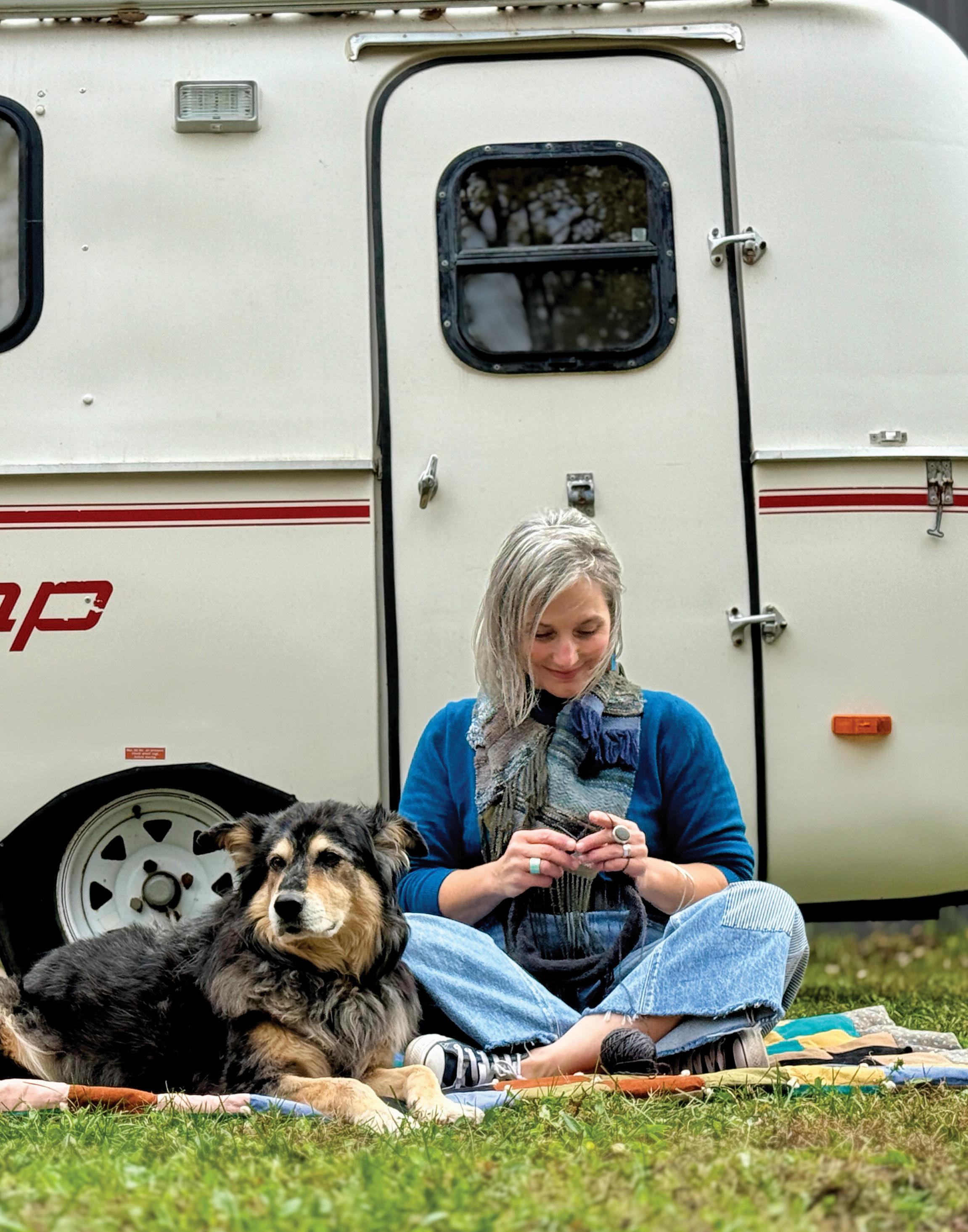
Blue is our beloved Aussie shepherd mix rescue who is patient, silly, and has been with us for over a decade. The Shed is the perfect place for him to enjoy quiet country living while taking walks, pulling me on my skis (we have been skijoring from the start), or basking in the sunshine. It is not uncommon to have Blue by my side as I work, be it in my studio or other areas of our shed. We hit the jackpot when Blue joined our team! PS. As you can see, Blue is very pretty.
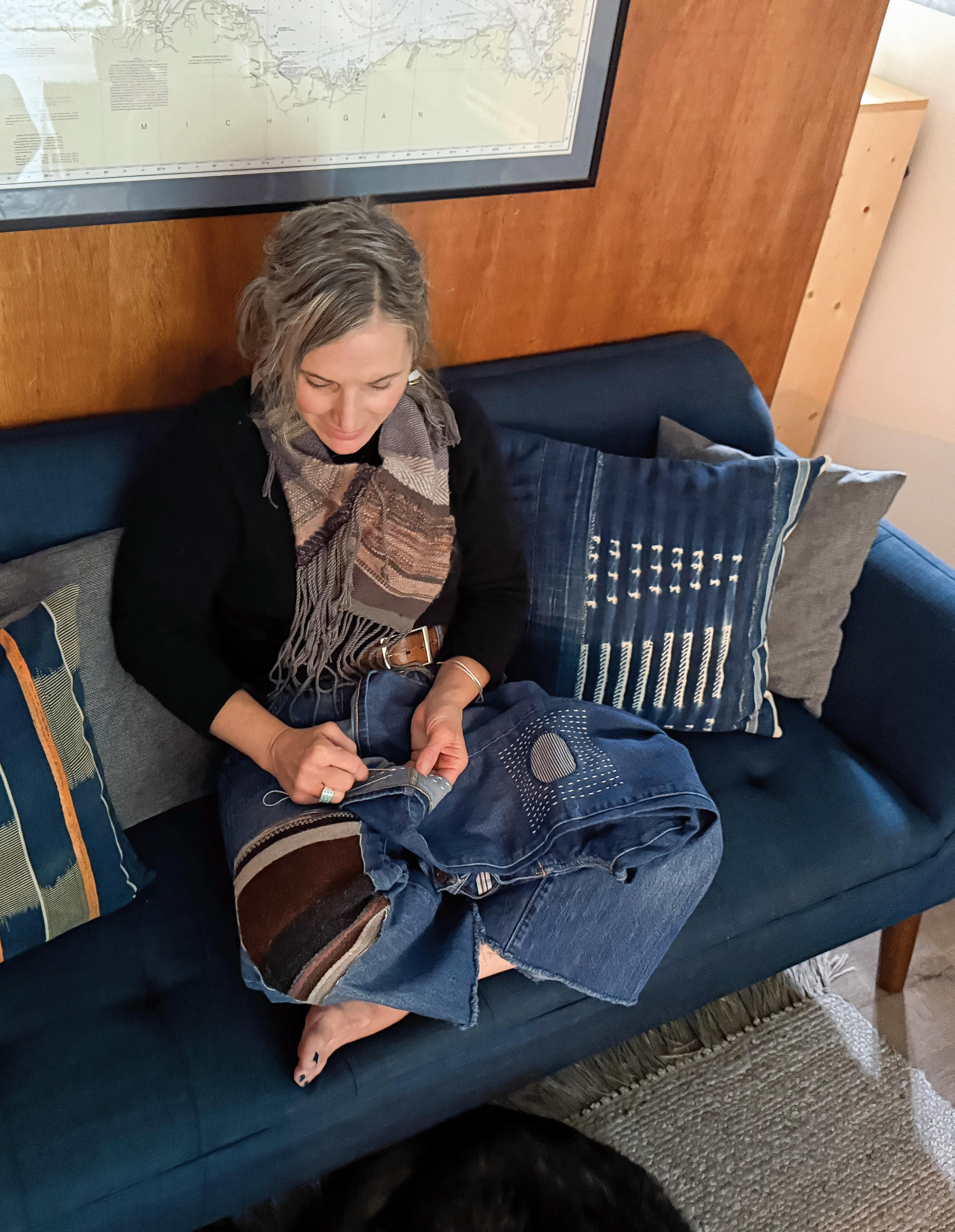
Most of my hand-stitch work happens in our living room, parallel to my studio on the other side of the divider.
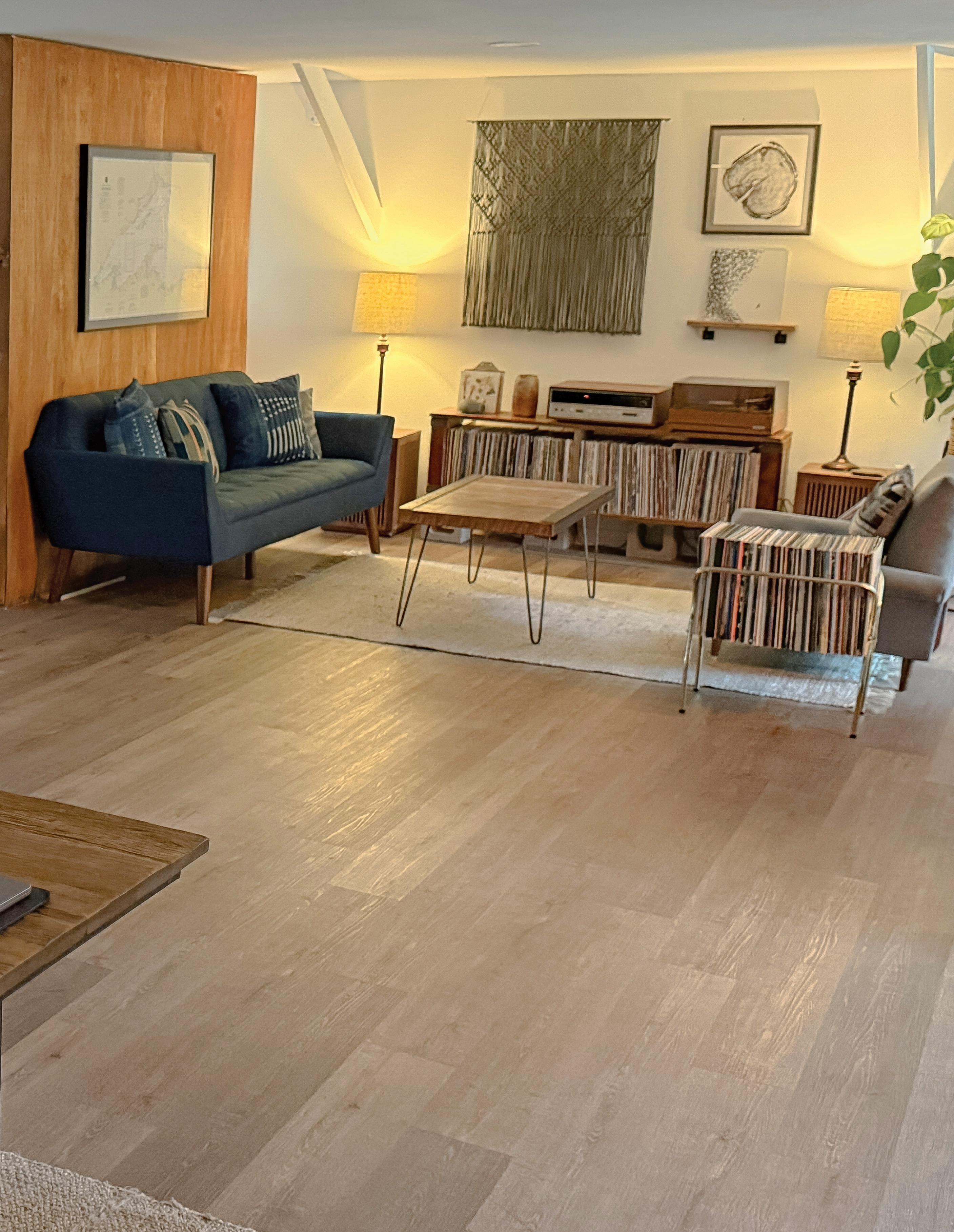
Here, I’m surrounded by our beloved turntable and records, along with a comfortable sofa and secondhand chair–covered with pillows made from vintage and woven fabrics. It is a place I write, read, and design when a table is not needed. I find that sitting cross-legged with fabric in my lap while listening to music is a lovely way to work.
Looking back over the time since I first began working with fiber, 35 years ago, I notice that my world has been a redesign from the start. I began patching and mending my clothes just before learning to weave, and
there was a decade after those early years that I learned to sew, self-taught, with a weekend zipper course or one-on-one lesson from a seamstress friend, to help become more experienced in my craft.
Eventually, I returned to college as a nontraditional student in my forties, after time living in Scotland, and noticed that each prior redesign offered insight to explore fiber and form in depth, while also finding a love for metalwork, adding a little hard edge from time to time. With a master’s degree earned, next came teaching, continued redesigning, and many more miles of gathering inspiration. Metal + Wool, the brand I design under, began just after graduation and seemed fitting to bind what I do into one name.
“A
LINE
is a DOT that went for a WALK.”
—PAUL KLEE
looking ahead
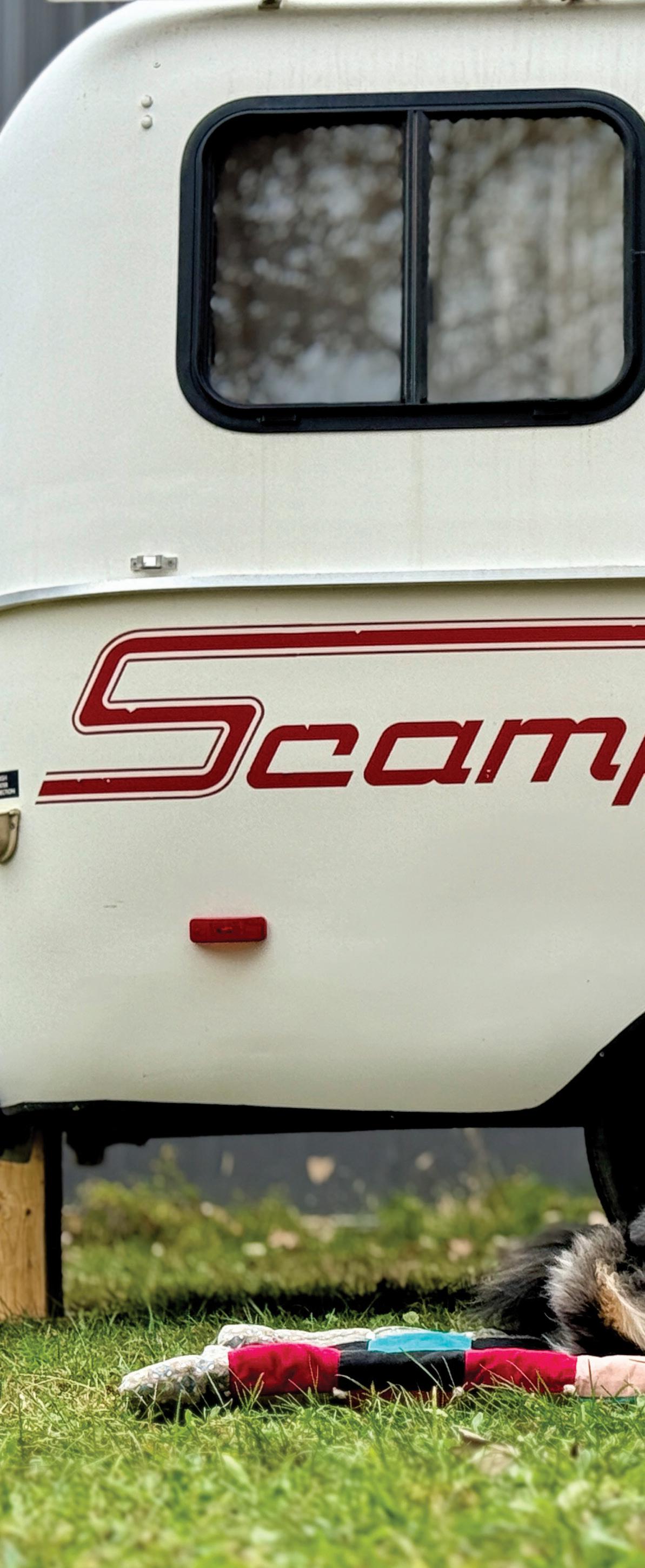
I recently purchased a 1989 Scamp, and it makes me smile that this is around the year I began mending my clothes, finding my way more deeply into a fiber-filled life. I have spent the past few months getting to know Blueberry Girl, her name, and I see a possible mobile studio space in my future–perhaps returning to the road one day. Time will tell.
As I look ahead, my mind focuses in as I walk our cherished property, drinking in the fresh air, keeping my secret dialogue with plant friends that return every spring; harvested throughout the seasons for dyeing, making tea, or adding beauty to my studio with a colorful floral bouquet. I also look to Lake Superior, gazing across the vast waters of our freshwater inland sea, a place that inspires me and calls me to her shores often, as it is just a short drive north to sit, stitch, and wait for inspiration to be revealed.
One thing is for certain: fiber will be my practice, hands finding rhythm with every needle threaded, shuttle passed, or redesign explored; following my unconventional heart, striving to continue this simple, creative life. Whether it be on a dead-end road in Northern Wisconsin with our dog named Blue, on the shores of Lake Superior, or by taking to the road with more miles to explore.
More on Denise www.metalandwool.com
Instagram: metalandwool
LOTTA JANSDOTTER
Photography by Maria Rosenlöf
LOTTA JANSDOTTER is a self-taught artist, designer, author, and teacher. She is known for her organic, simple, and timeless designs, and has been creating her iconic Scandinavian print patterns and motifs since 1996, when she introduced her home goods and hand-screened textiles. Lotta is the author of twelve creative lifestyle and travel books, and has collaborated with many retailers, furniture designers, museums, and makers all around the world.
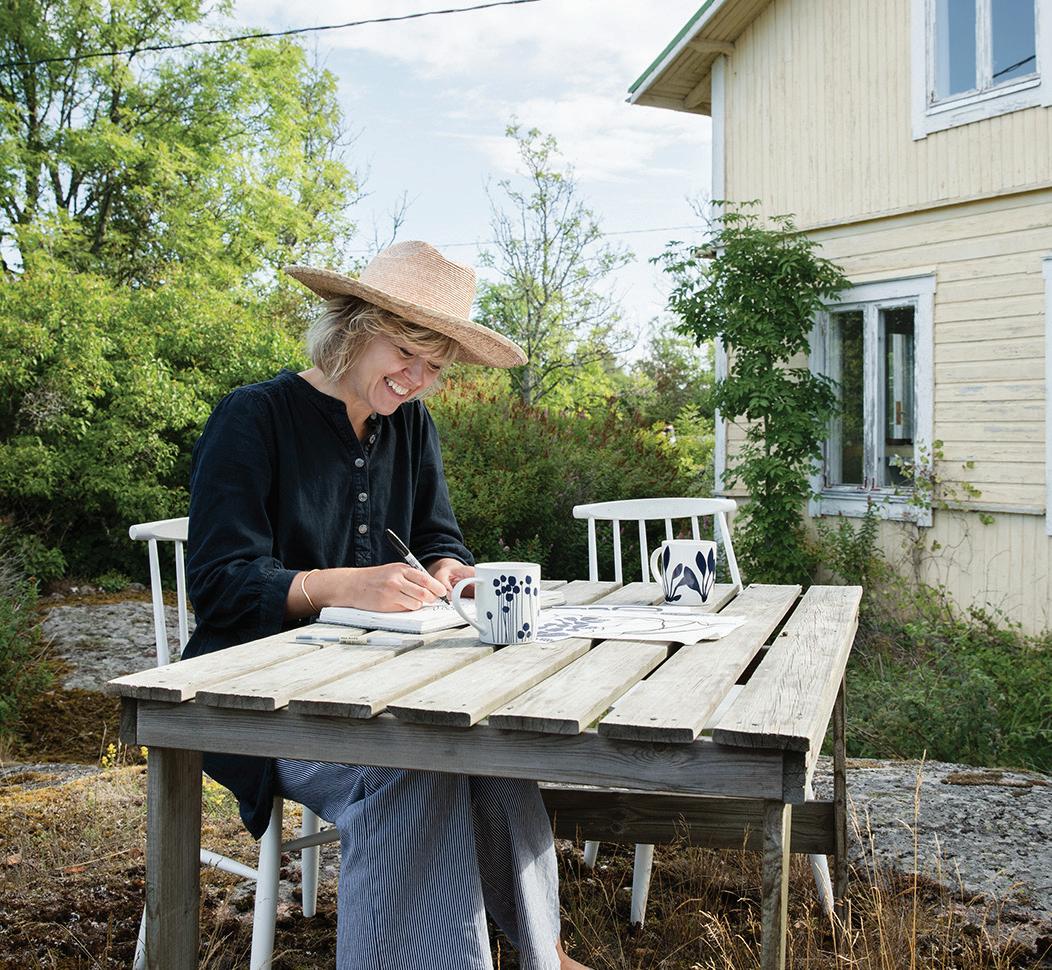
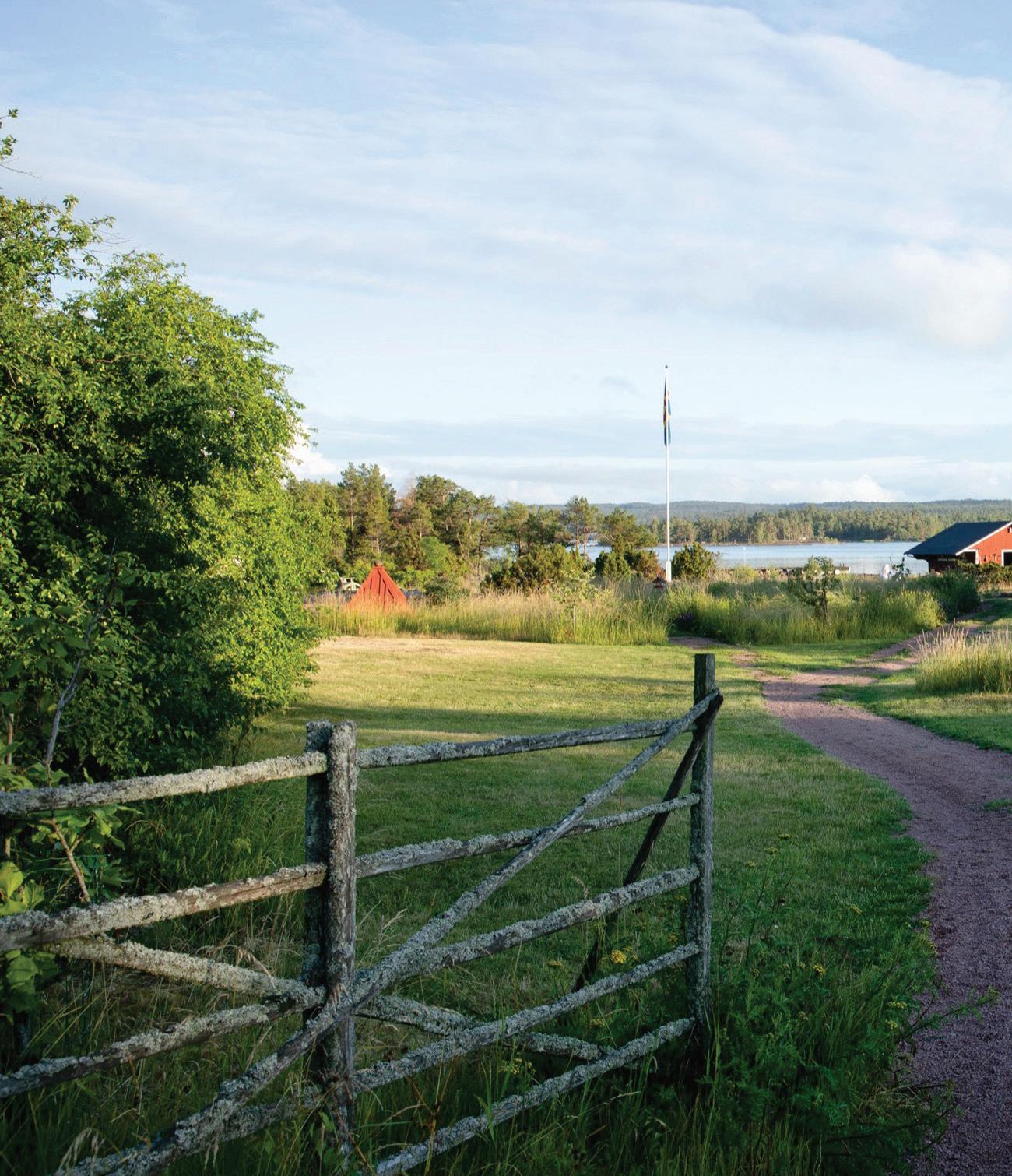
After 37 years in the U.S., she moved back to the Åland Islands, an archipelago located between Finland and Sweden, where she was born. Here she is much closer to the ocean and spends more time in nature, which is her biggest source of inspiration.
Creating is a very tactile and calming process for me—a journey I take with my materials— and often I have no idea where I’ll end up or what shapes, motifs, or colors will show up.
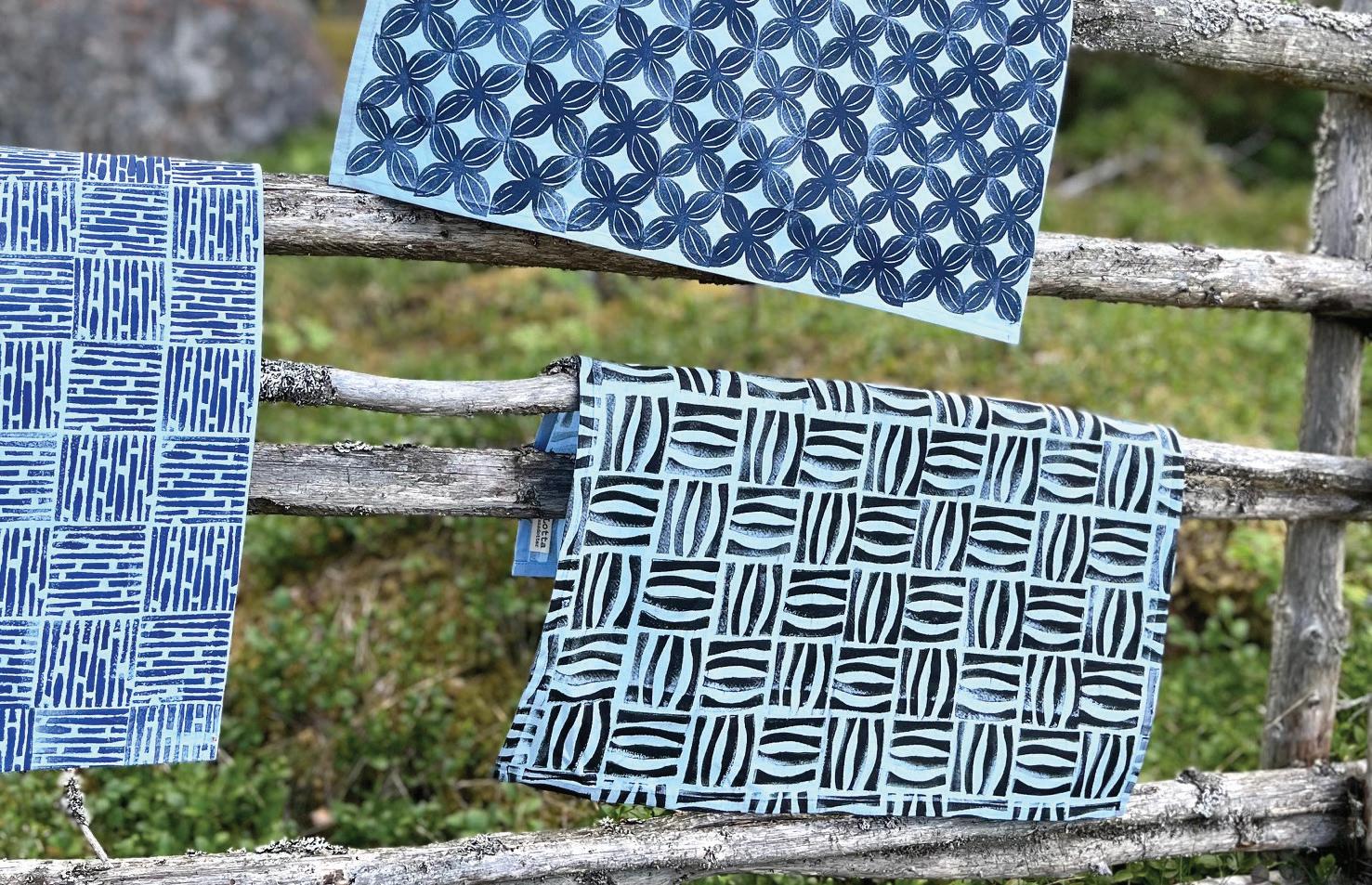
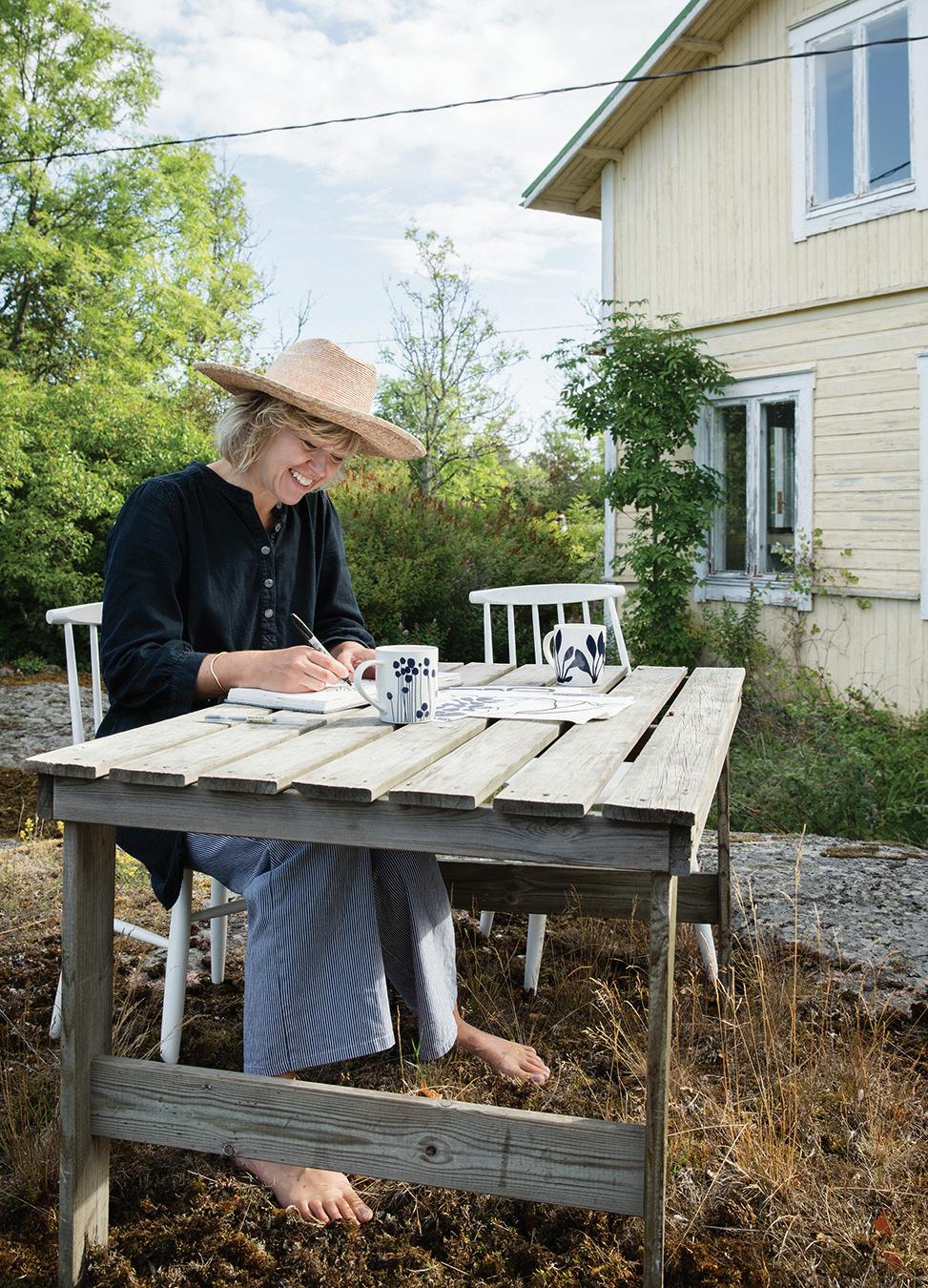
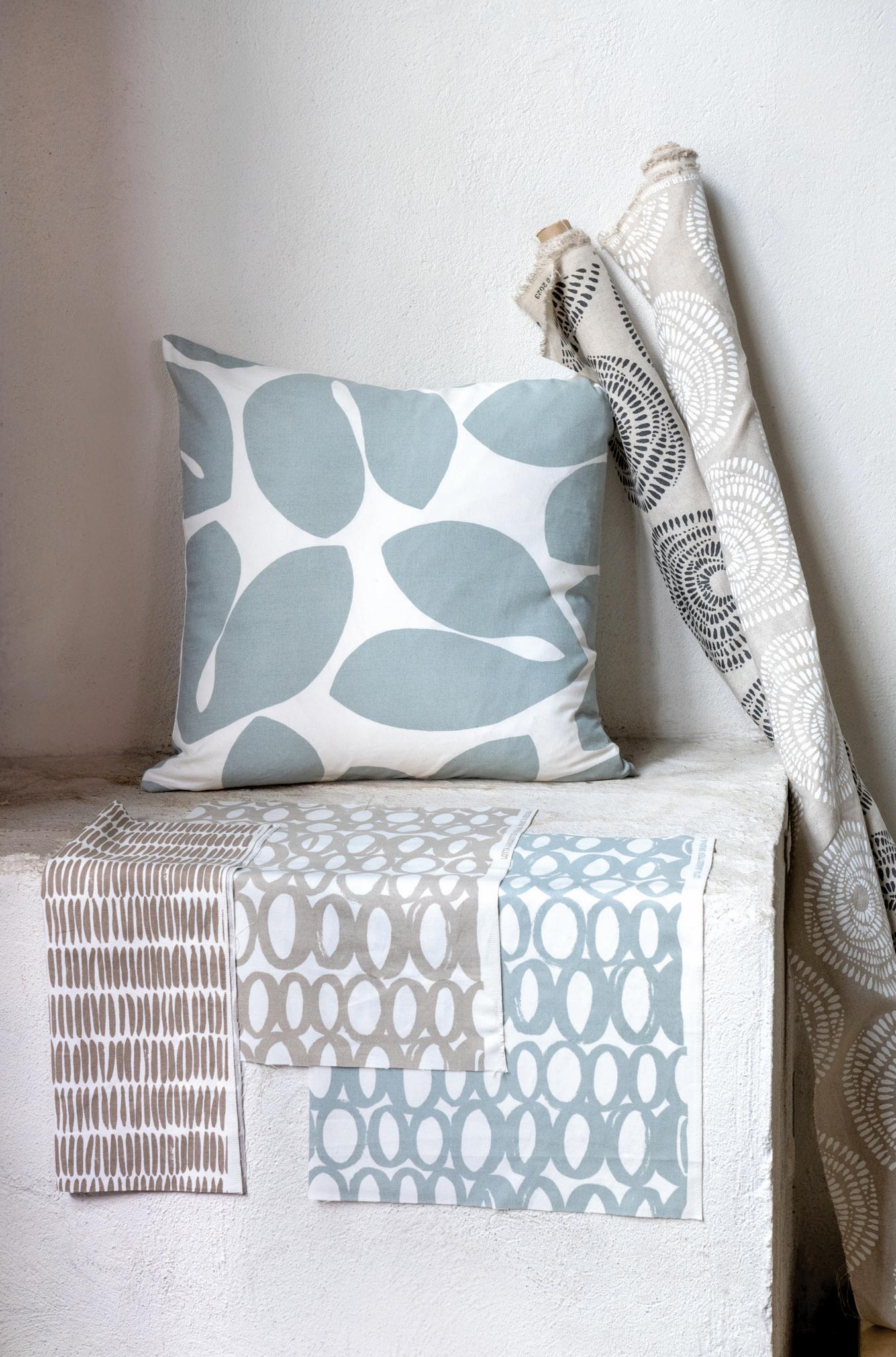
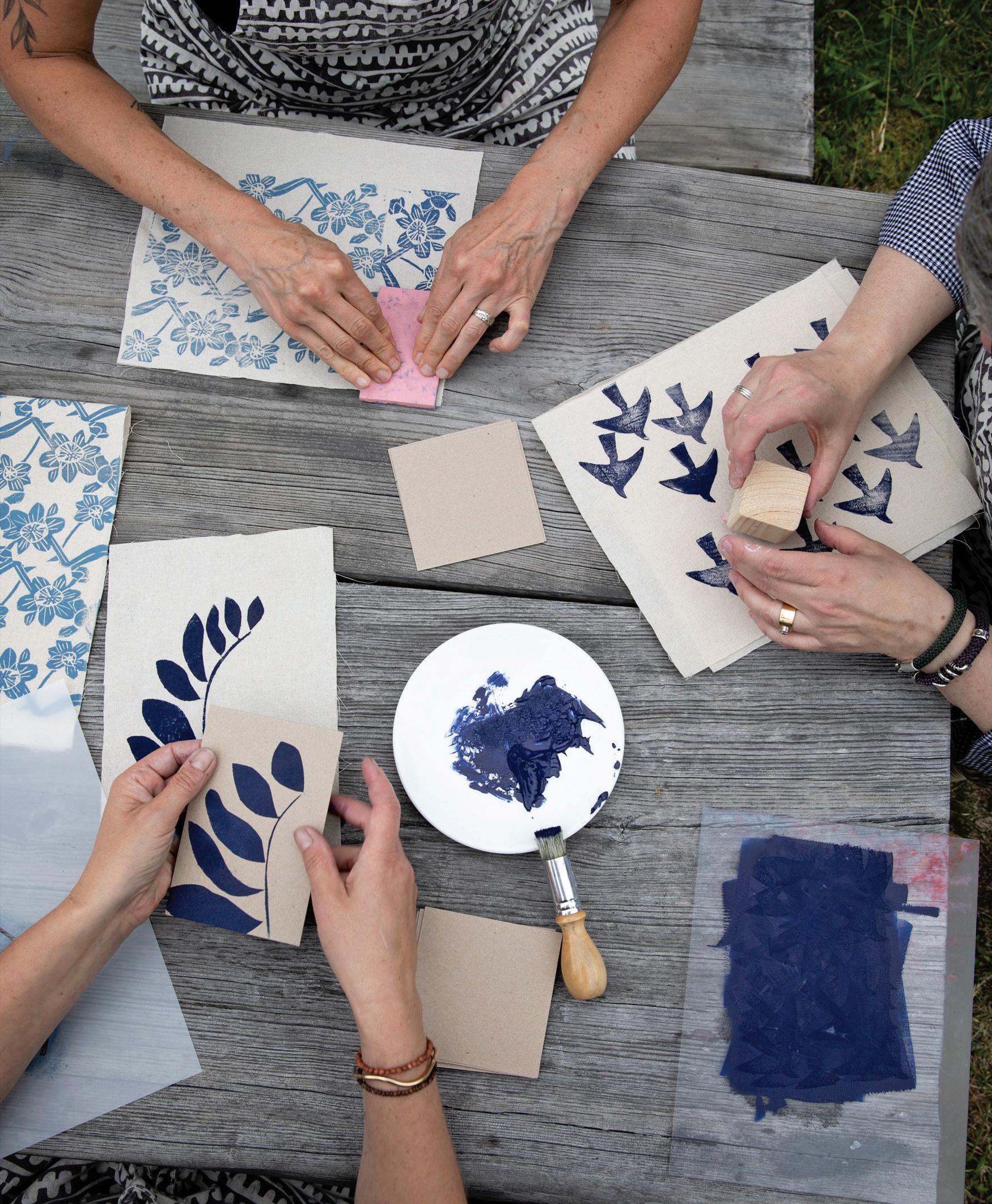
For three decades, my tools have stayed the same: I create all my artwork and designs by hand, I paint with India ink, and draw with simple black marker pens. I love getting inky fingers, touching crinkly papers, hearing the scissors when I cut out shapes in paper, and I really do not care if I get rubber cement all over me.
I stubbornly stay away from using a computer; it doesn’t feel good to work that way, it removes me from my sensory and grounding process that I have with real materials, and I am not in the least interested in trying AI. I so deeply value the feel of the human hand; it is so important—the imperfections, textures, and spontaneity. 100% handmade makes my work feel more genuine, authentic, and alive, and my process is essential to how I create and express myself.
For many years, I have been going home to the Åland Islands each summer, spending a few months connecting with nature. It has always been important to immerse myself in all that beauty and calm, to run barefoot on the cliffs, swim in the ocean with no waves, eat smoked fish, and sauna. I need long periods of time to truly slow down, to rest, and to give myself space and time to just simply be. My summers have always been important to refuel and restore my creativity and to find balance. And every summer, I am so fortunate that I am able to teach my yearly workshop & nature retreat on our own private island here in Åland, in this gorgeous archipelago. It is one of my most favorite things I get to do every year.
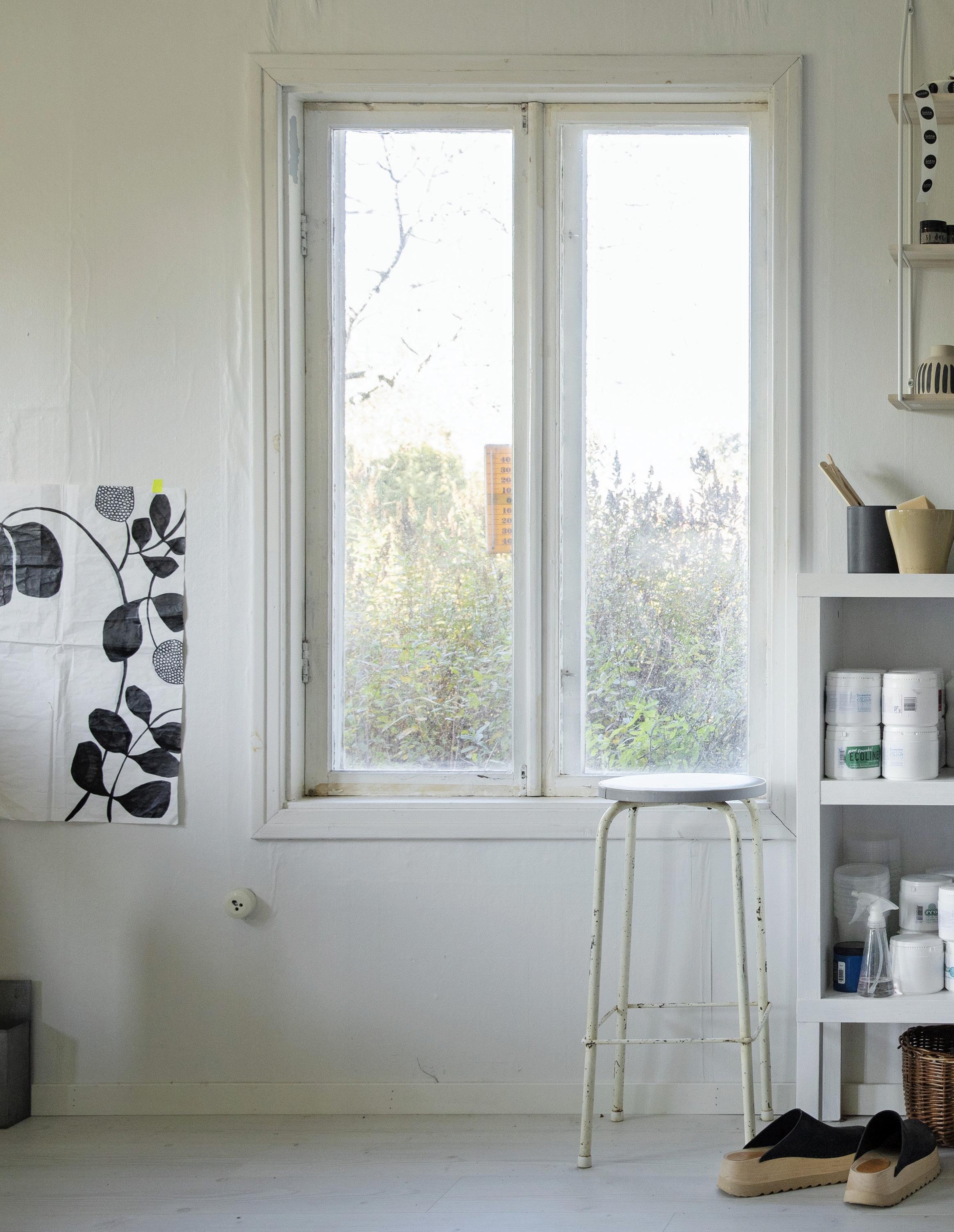
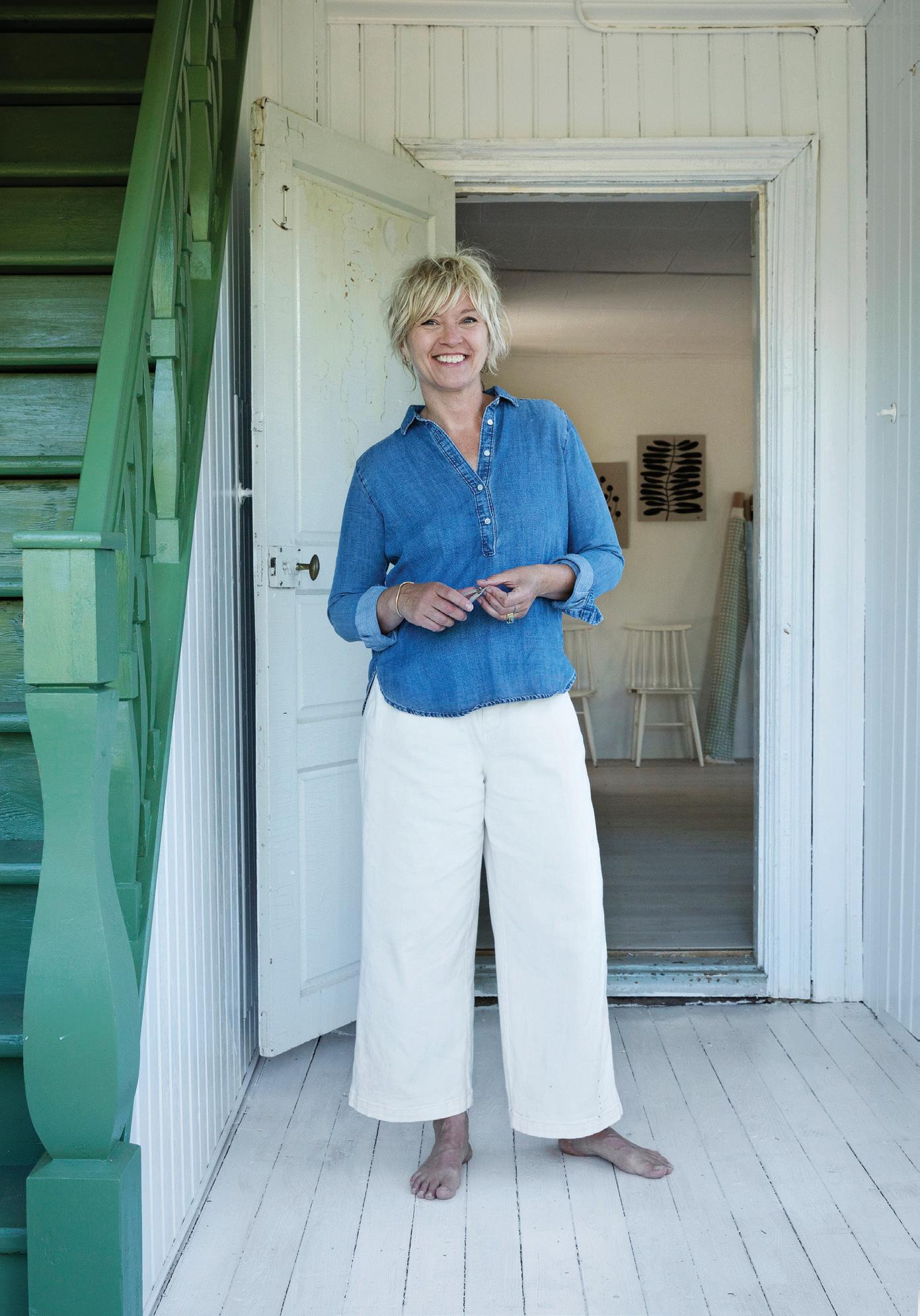
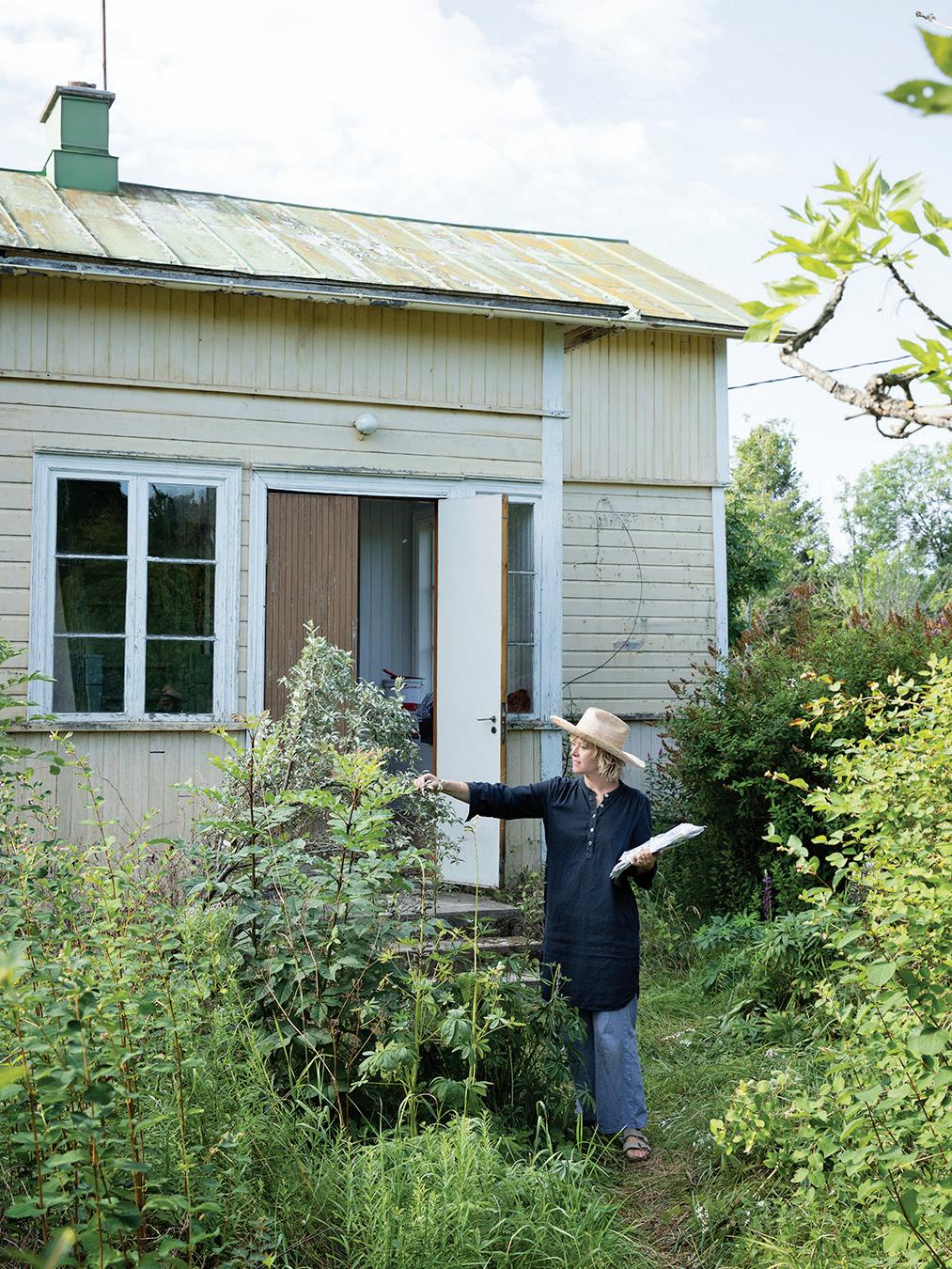
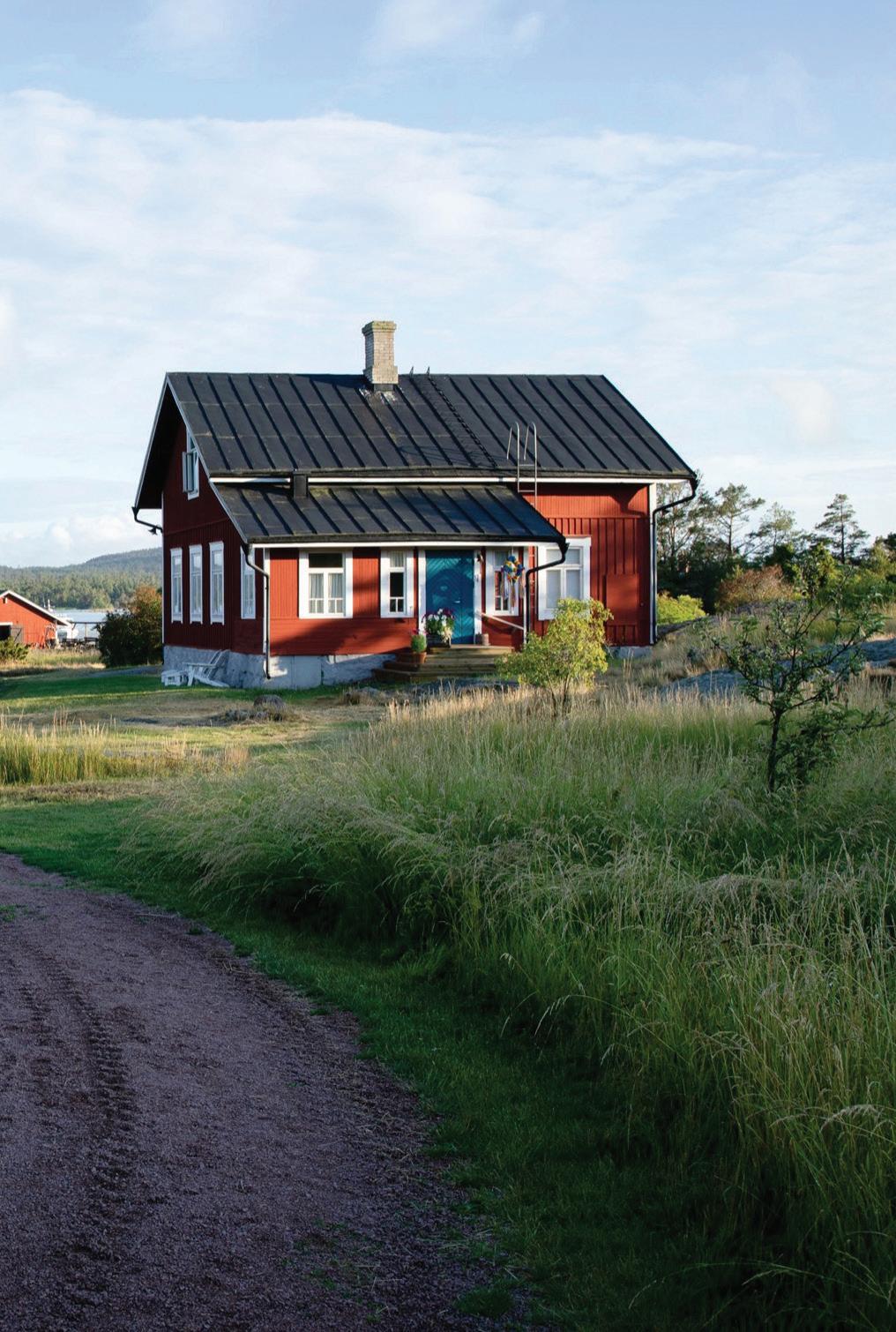
One summer, a few years ago, a neighbor told me about this little, old, abandoned house. Two sisters used to live there many years ago, and when they passed away, there was no one to take care of this house and it fell into complete ruin. Some doors did not open, some windows were cracked, and the house was, and still is, covered in peeling paint. All kinds of trees, bushes, and a crazy amount of wild lupines had taken over and surrounded this house entirely, just like a sleeping beauty house. It was such a tired old house, but it also had so much charm and very good energy inside. I was immediately smitten. I felt so much joy, warmth, and inspiration being in there, and I knew that this house needed to be my creative studio and atelier.
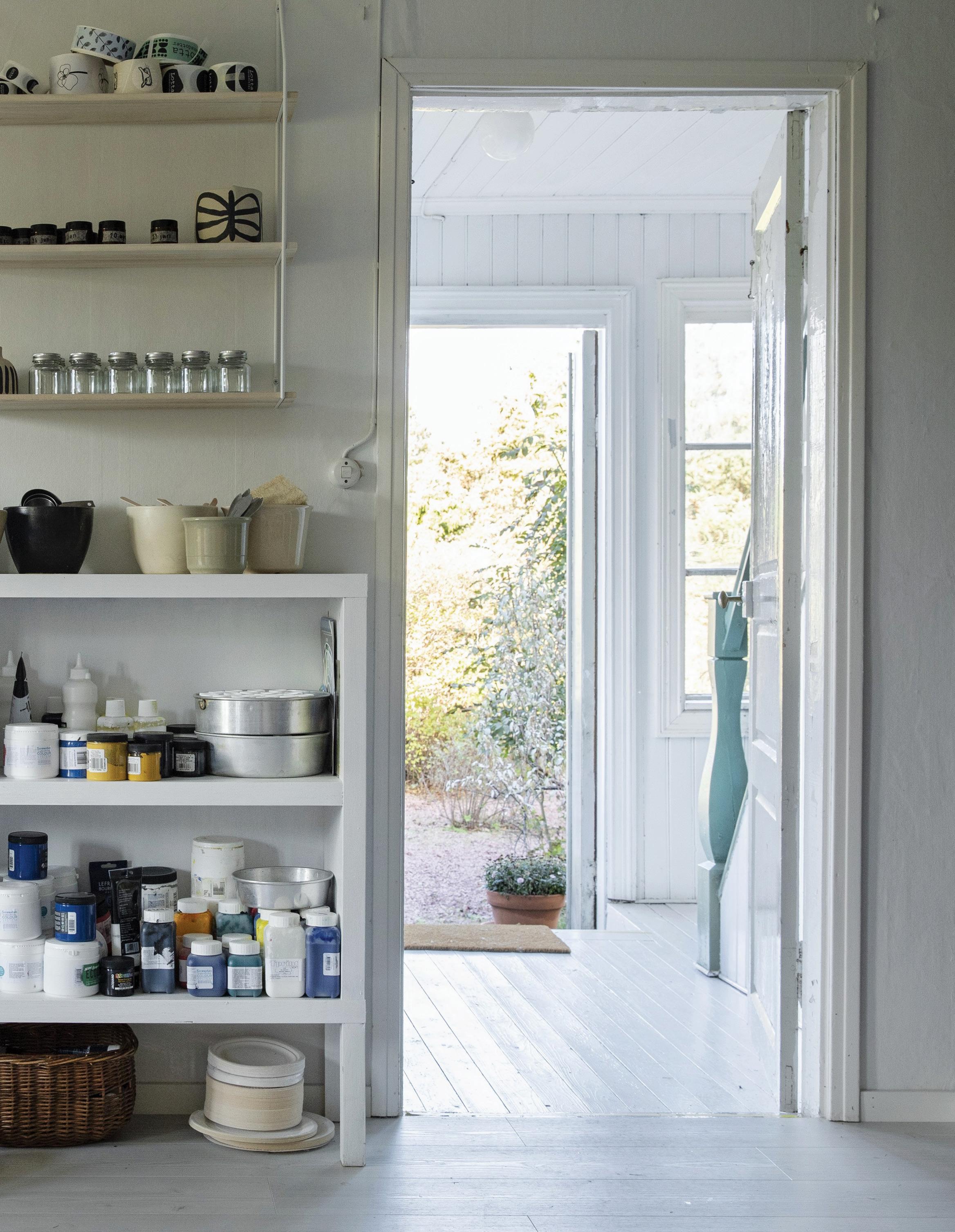
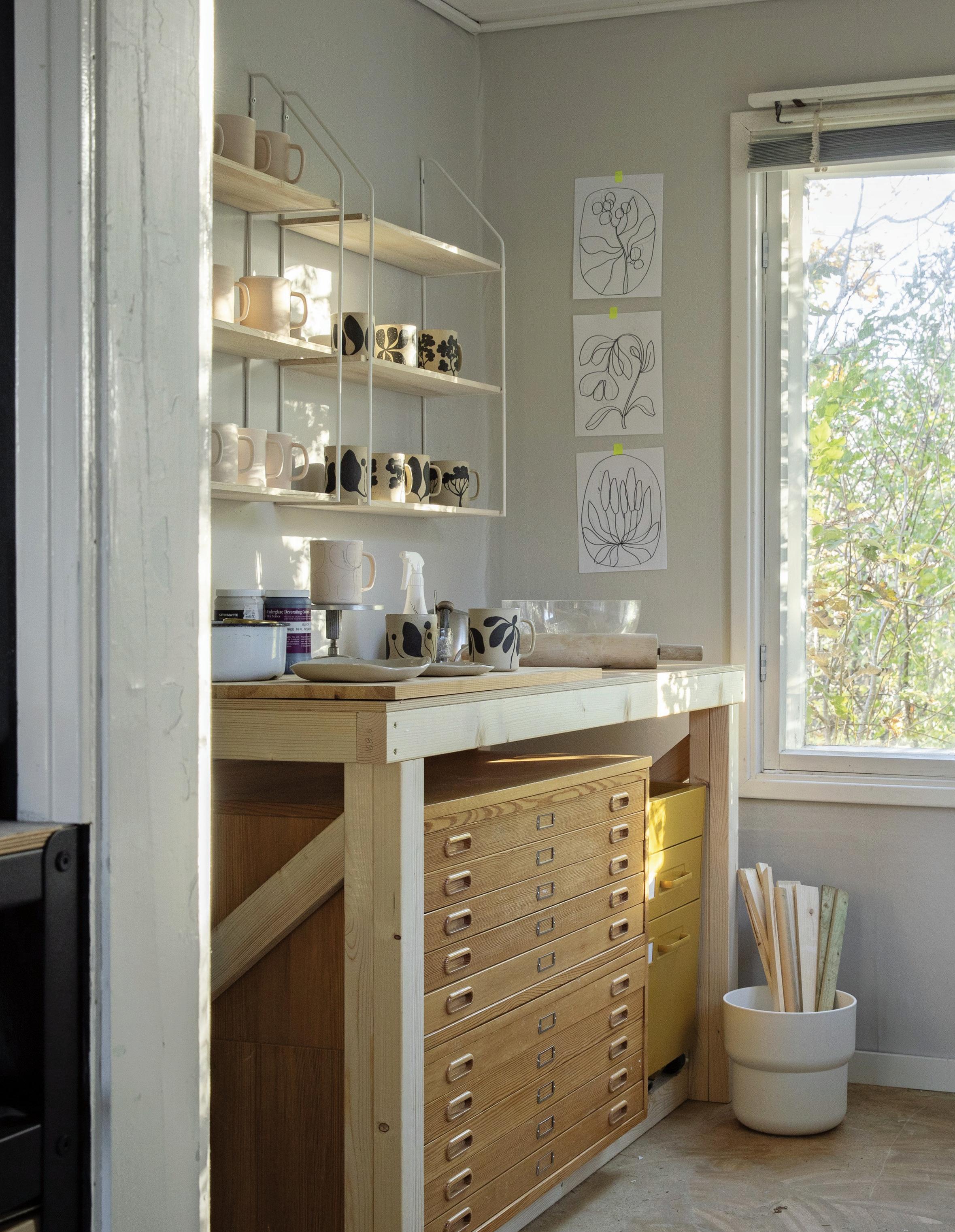
I was lucky to be able to rent it, and I happily spent a few summers slowly fixing it up with simple means, mostly using a great deal of wall paint and a wee bit of patience. I ripped up the worn-out linoleum flooring in one room to find wooden planks underneath, I painted over all the stained wallpaper and scuffed kitchen cabinets, I installed a new toilet, and found furniture at thrift stores. I also put in some new, white flooring in the living room to give it more light, and I invested in a new, sweet fridge that matched the 50s interiors perfectly. My husband built me sturdy wooden worktables, and my brother and nephew helped me repair some stairs and made sure that the water damage in the hallway was attended to.
Now, five years later, I can finally work in my lovely little playhouse all the time. I screen print on fabric and paper, draw new motifs, collage with handprinted papers, paint, and work with clay. I enjoy inviting friends here to make together. I look forward to opening up the doors for visitors, and I am planning some special and intimate workshops here starting in the summer of 2026. I also have a small shop in the house, in one of the sisters’ bedrooms. Here I sell my hand-printed fabrics, art prints, books, artwork, cushion covers, one-of-a-kinds, totes, and much more.
Each room in my house has its unique purpose and function. The living room is the largest of all rooms, and I have a few different worktables there that I can easily move to change the layout and to accommodate different activities. In the two bedrooms, there are two gorgeous old celadon colored wood fireplaces that can heat up the whole house.
The kitchen is where I have my slop sink for cleaning tools, but also where I will serve fika with homemade cookies when I have visitors. There is a second floor to this house, but I have not had proper time to fully attend to it. But I think there will be a sewing room and perhaps a nap room up there. One of my favorite spaces in the house is the vestibule; it has the best light, and the green staircase is rather marvelous. The vestibule will be my little gallery where I can invite other artists to share their work every summer and fall.
Recently, I set up my clay room in what used to be the other sister’s bedroom. I have been working with clay on and off since I was 10 years old, and I learned how to throw on the wheel in a community college in California 35 years ago. The last few years, I have been mostly drawn to hand building. I love making big platters and bowls that I hand paint, each one is unique in its shape and motif. I also enjoy collaborating with other ceramic artists. The special mugs that I paint are made by another artist here on Åland, and her name also happens to be Lotta.
“Life is to be lived. If you have to support yourself, you had bloody well better find some way that is going to be interesting. And you don’t do that by sitting around.”
—KATHARINE HEPBURN
For most of my 30-year career, I have been told that I really should focus on only one medium, not to confuse my customers and collectors. Well, I have never been able to do that ever, nor did I understand why I needed to do that. It is too rewarding and exciting to explore different techniques and materials. I love working with my hands and my brain in many different ways; each skill and technique informs and inspires the other.
I look forward to designing a new collection of cotton scarves, cushion covers, screen-printed posters, and trays this year. I am also designing a special brass necklace, which is a completely new process for me, and I am thrilled to start working on a new upcycled collection of textiles using beautiful tablecloths and curtains that I find in thrift stores here on Åland, with gorgeous colors and quality. They simply don’t make fabric like that anymore. I will stencil my designs on some of them, and others I will simply cut up into swatches and rearrange. My sister-in-law, who is a remarkable seamstress, will make sure they all come together nicely. I have also been collecting second-hand white porcelain pieces by Finnish companies like Iittala and Arabia, which I plan to add my own designs to. And then, when there is some time over, I am going to make and experiment with egg oil tempera paints to paint original art pieces for my galleries in the U.S.
My little house is going to continue to be filled with many different and new kinds of patterns, creative people, colors, materials, works of art, tools, and inspiration, and you are most VÄLKOMMEN to join me for a visit!
Åland Creative Workshop and Nature Retreats
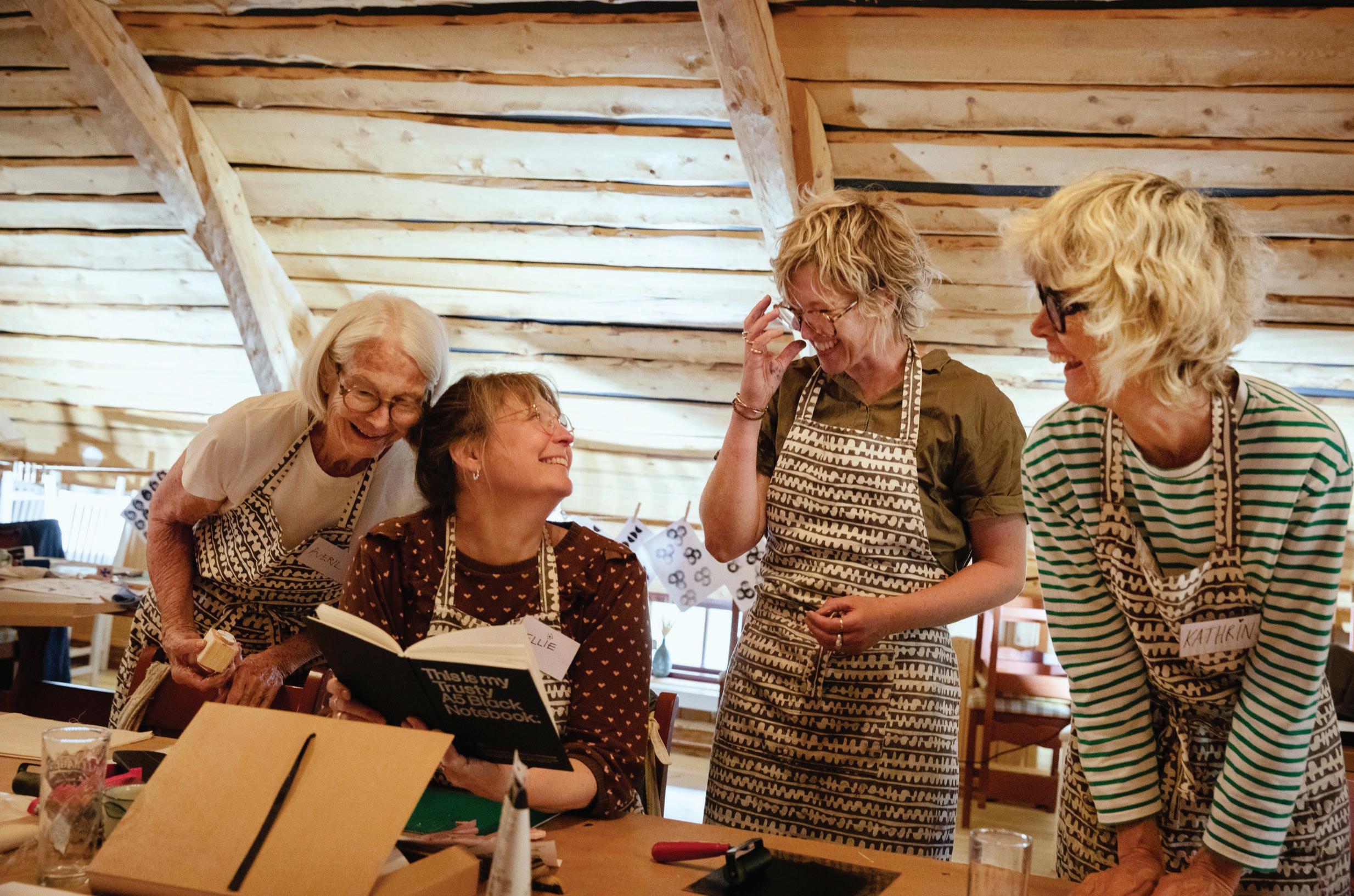
A few more words about the yearly retreat I host here at home on Åland every summer: We have our own private little island all to ourselves in this stunning archipelago. We will spend time in the big red barn exploring different techniques using watercolors, pens, and inks. We will create marks and motifs, stamp on paper, and stencil on fabric. I will share my approach and my simple printing techniques and demos, but most importantly, I will support you to explore and play.
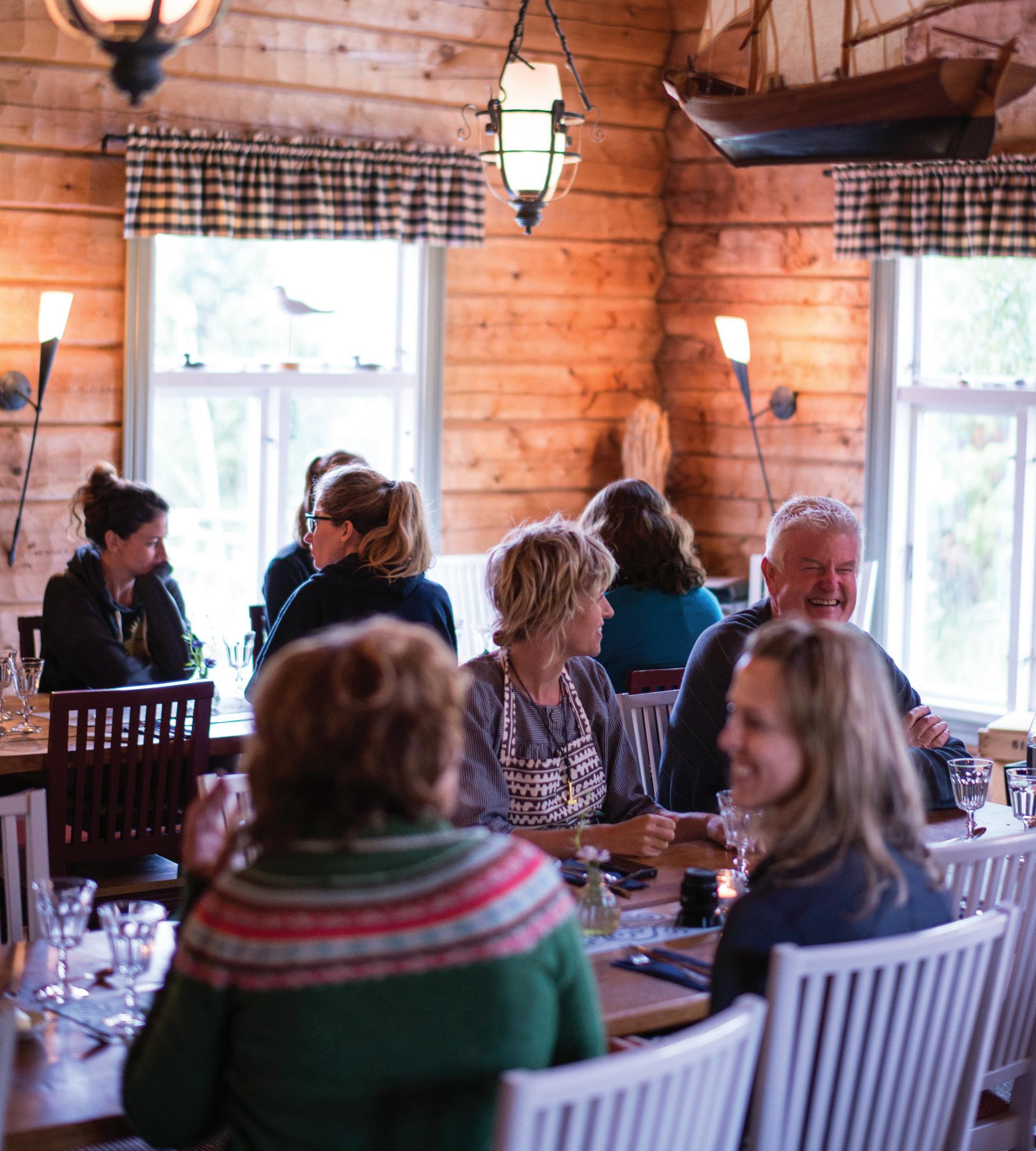
We will enjoy incredible meals that are prepared exclusively for us by the most talented and passionate chefs who only use fresh and local, and mostly organic ingredients, often grown on the little local farm. The food is truly amazing and a very big part of this experience.
A good part of our days will be spent in nature gathering colors, thoughts, and inspiration. I will take you on a journey that will connect you to the land and to the moment, encouraging you to be present in all the calm on the rocks, by the ocean. You have time to create, explore, swim in the brackish ocean, take saunas under the midnight sun, hike, kayak, make lovely things with your hands, and meet new, interesting, and creative friends from all over the world and simply “be” in this rather special and gorgeous part of the world.
This retreat celebrates the process rather than perfect results, and absolute beginners and seasoned artists are all welcome… no prior skills are necessary.
The WOMEN CREATE FOUNDATION drives significant, tangible change, empowering women creators by providing grants that fund projects, foster innovation, and transform creative visions into reality. We are delighted to celebrate our very first grant recipient, KYRA PERALTE Her TRAVELING DIARY project brought together a diverse group of women to openly share their personal struggles and triumphs, proving the powerful impact of collaboration.
Kyra Peralte
Photography by Amira Richardson
KYRA PERALTE is the founder of The Traveling Diary Community, a global storytelling initiative where women across 33 countries share slices of their lives through physical notebooks that travel from person to person. As a former tech startup founder, NFT creator, and indie game designer, Kyra discovered her true calling in creating spaces where women’s authentic voices are celebrated through the ancient art of handwritten storytelling and intimate community gatherings.
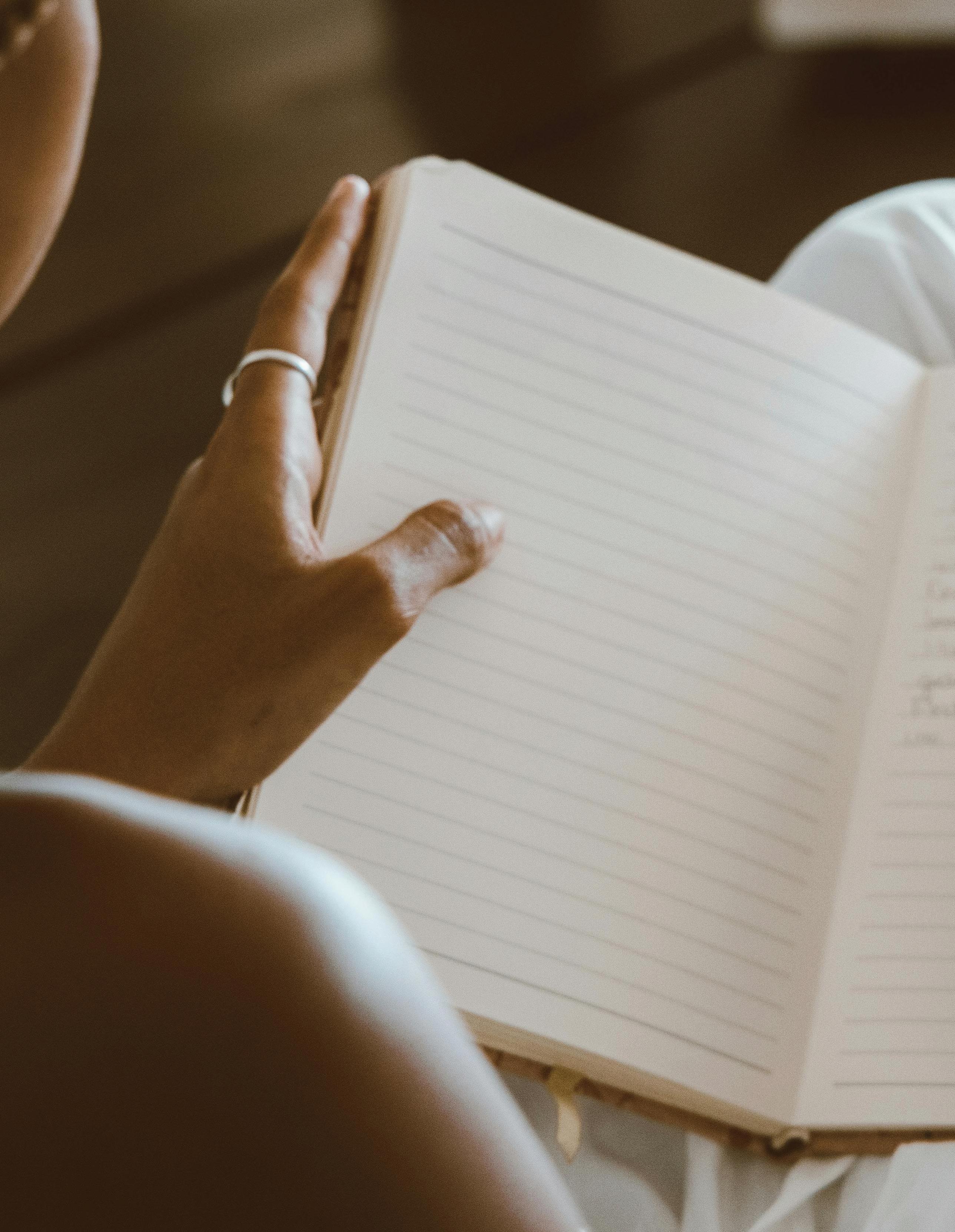
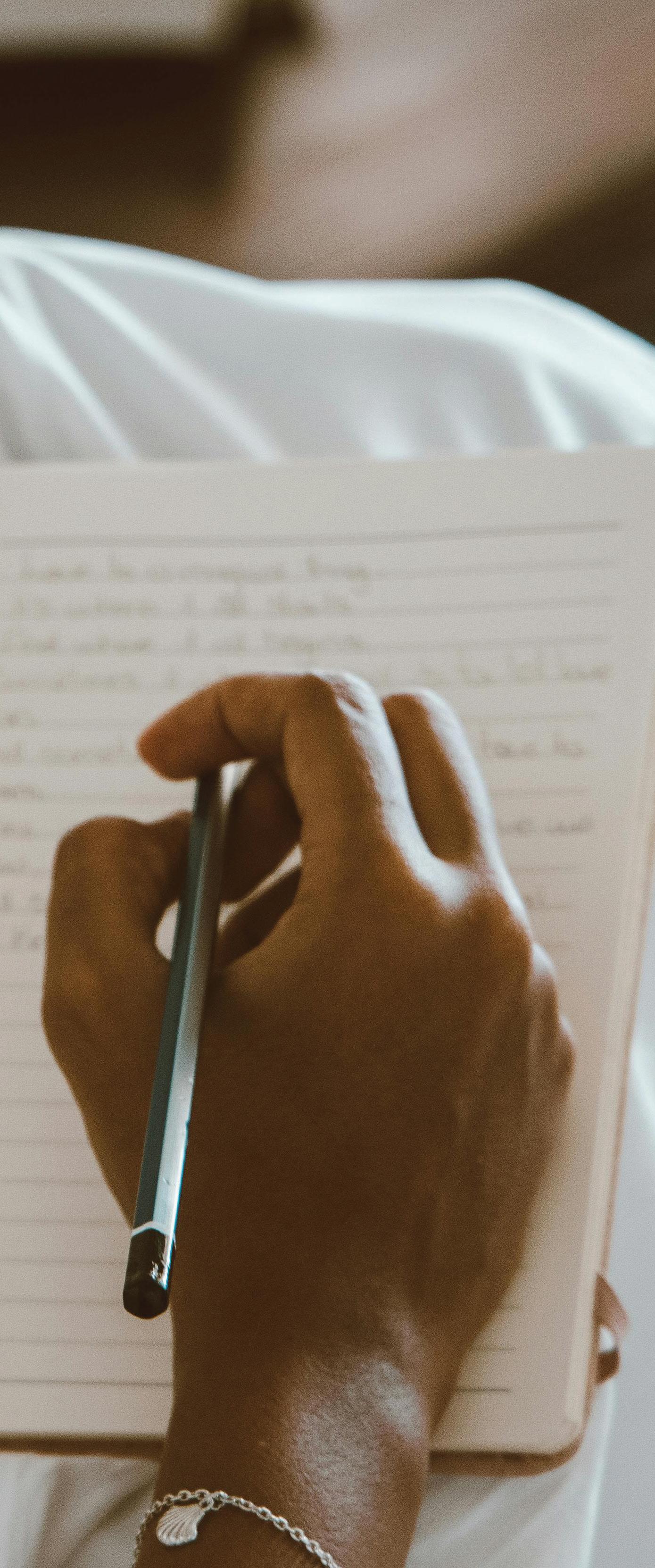
When the first traveling diary came back to me after months of circulating between strangers, I sat at my kitchen table and read it cover to cover in one sitting. Twelve women’s handwriting filled those pages—scratchedout words, spelling mistakes, doodles in the margins. This wasn’t the polished version any of us might post online. This was the truth of what it felt like to be alive right now, passed from stranger to stranger with radical trust. That notebook proved something I’d been suspecting for years: there is a hunger for spaces where we can simply be, without the pressure to perform.
My path to this realization wasn’t straightforward. I spent five years as a tech startup founder, building a real estate platform for first-time landlords. I learned to pitch, to network, to present the most polished version of my work at every opportunity. When we couldn’t secure our second funding round and wound down operations in 2020, I felt simultaneously relieved and lost. Relieved because the constant performance had exhausted me. Lost because I didn’t know who I was without the startup identity.
I explored blockchain technology, became an NFT creator, and launched indie mobile games. I was searching—not scrambling, but genuinely open to what might come next. What came was simpler than any technology platform I’d built: a notebook that would travel from woman to woman, collecting their unedited truths.
The Traveling Diary Community started with a wild idea that shouldn’t have worked. I wrote my raw, messy thoughts in a journal and mailed it to a stranger, asking her to read it, add her own truth, and pass it on. No spell check. No delete button. Just pen on paper, vulnerability passed forward.
Nearly 5 years later, those notebooks travel across thirty-three countries. Women from vastly different circumstances write their truths, photograph the pages, and mail the diary onward. When they return to me, I store them in archival boxes in Montclair, New Jersey—physical archives of how we actually lived during these years, not the Instagram version but the real one, complete with crossed-out words and honest struggles.
There’s one entry that crystallized why this work matters more than any technology platform I could have built.
Iwas reading pages that one participant had photographed before passing her notebook along. She wrote about sitting in an empty house, staring at bare walls. Her partner had just left—the kind of departure that fractures your sense of reality. She described the silence pressing against her, how she felt herself disappearing into it.
My entry on the previous pages described my own life: standing at my stove, surrounded by the beautiful chaos of family. Kids asking questions, dinner prep, the constant hum of people needing things. My noise contrasted completely with her silence. Her solitude with my crowded home. Her betrayal with my partnership.
Yet somehow, through those pages, we saw each other. She witnessed my chaos without envy. I witnessed her pain without pity. We were simply two women telling the truth about our lives, trusting that truth was enough.
This is what happens when you create space for radical authenticity. Women don’t need another platform to perform on. They need permission to be exactly where they are—messy, confused, joyful, broken, thriving, struggling, or all of those things at once.
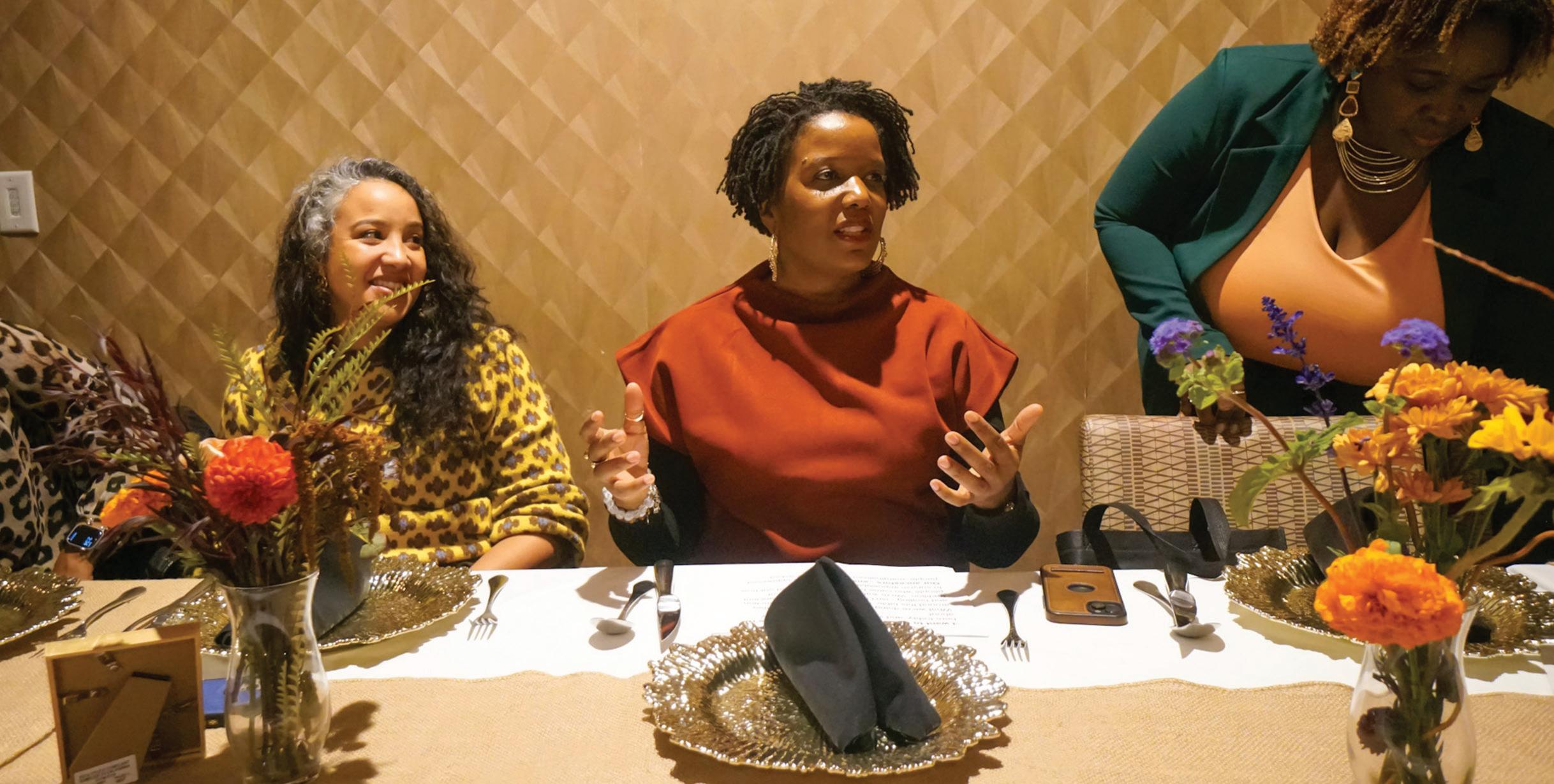
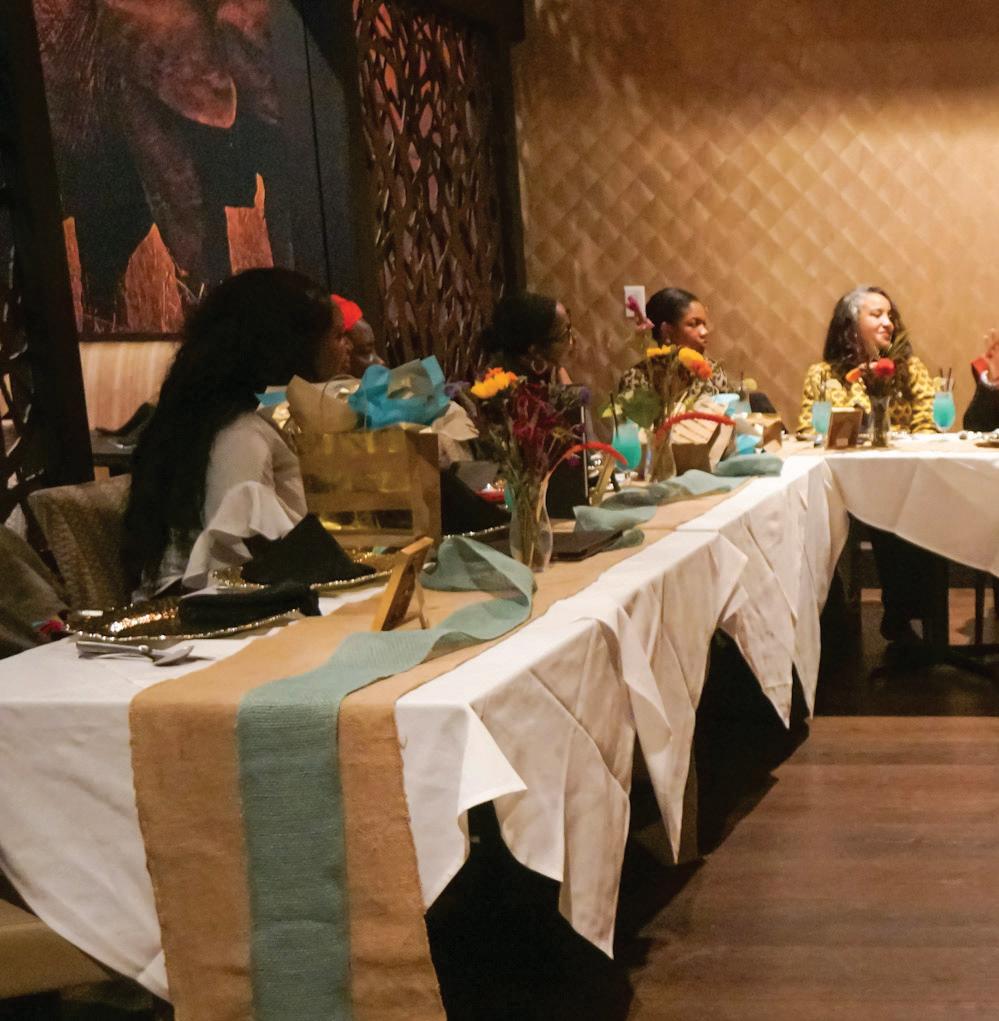
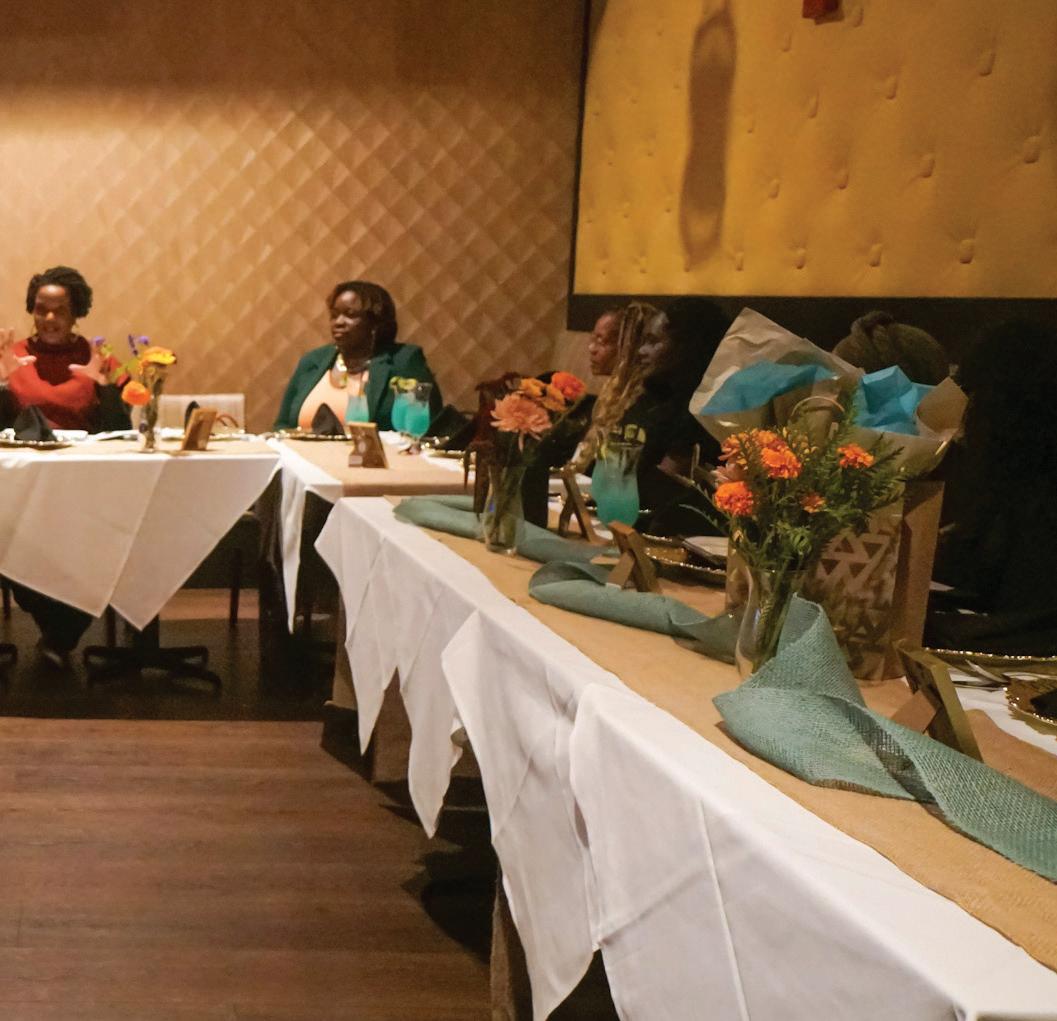
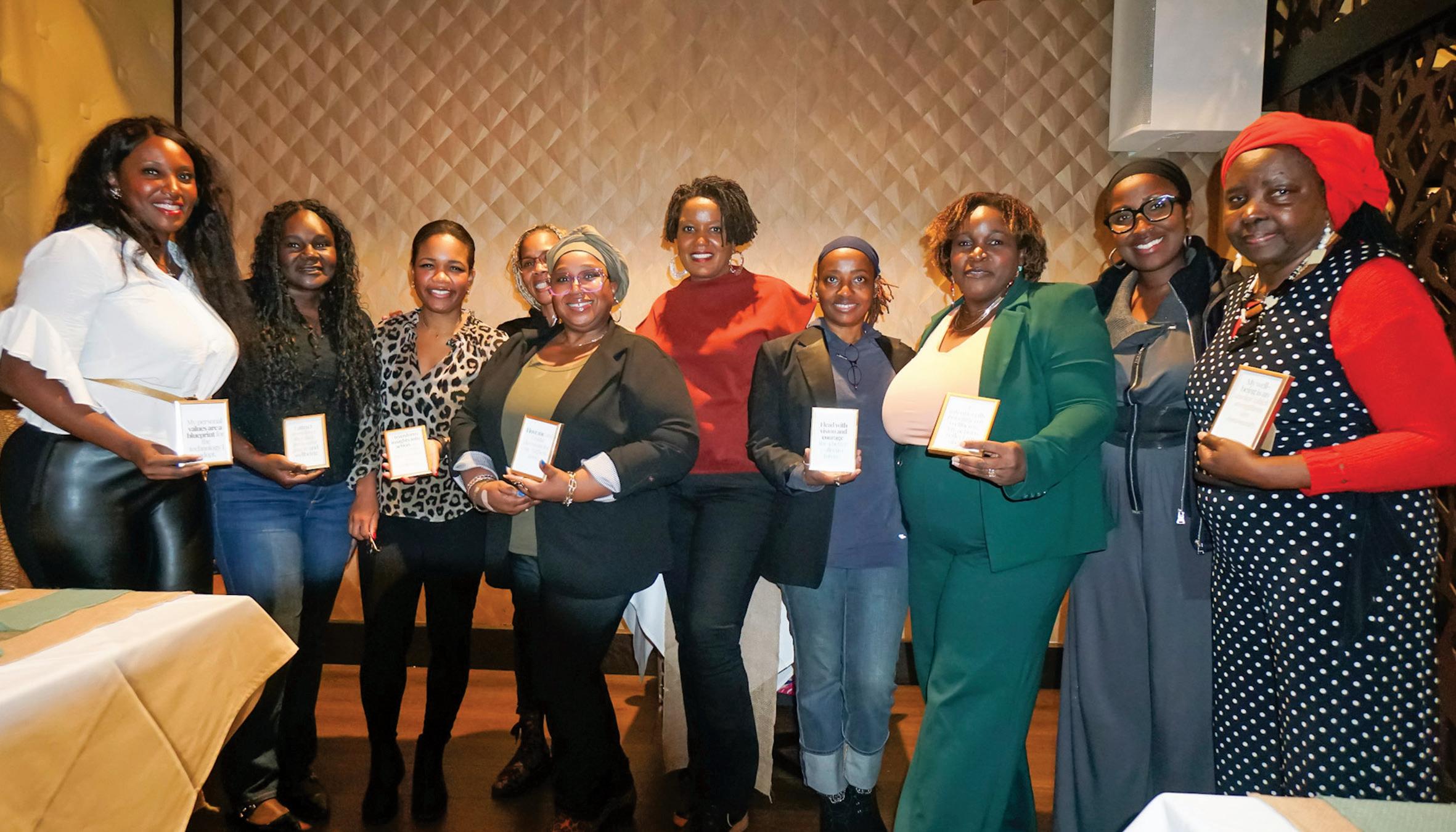
The Women Create Foundation grant allowed us to extend this ethos into a new kind of gathering—one centered on wellness and wisdom-sharing rather than our usual storytelling events. In November of 2025, we gathered 15 women at Swahili Village Restaurant in Newark for what we called our Wellness Brunch. Some were longtime community members who consistently show up for our storytelling events; others were discovering The Traveling Diary for the first time. Together, they created a space where real community could form—built in moments of honest witnessing and shared wisdom.
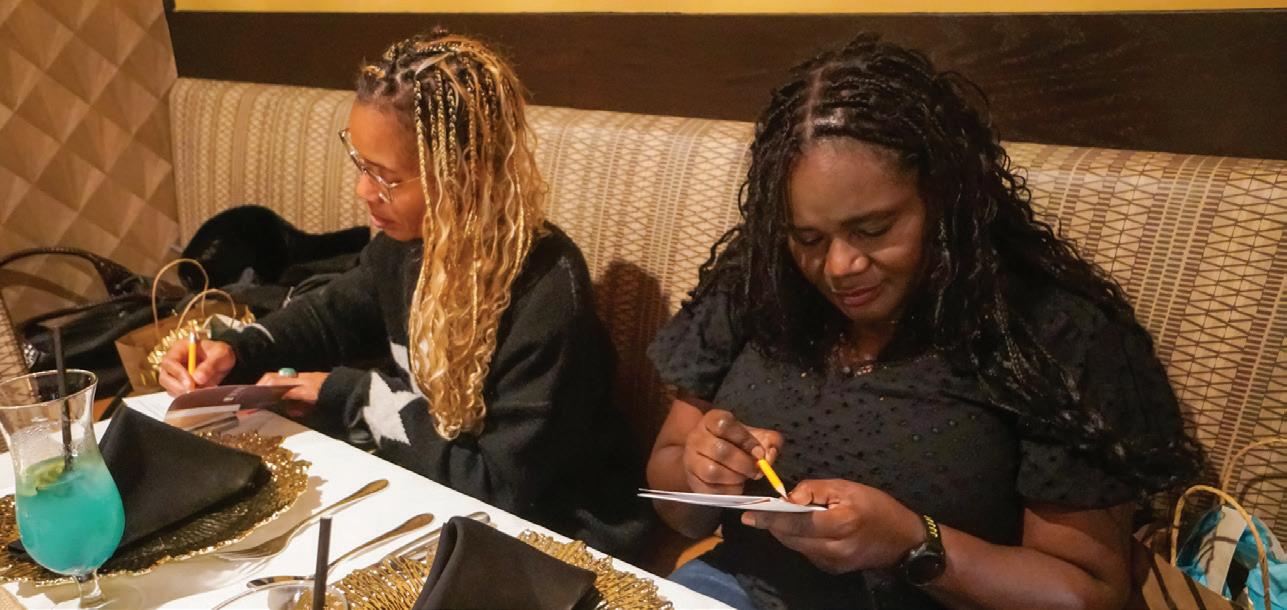
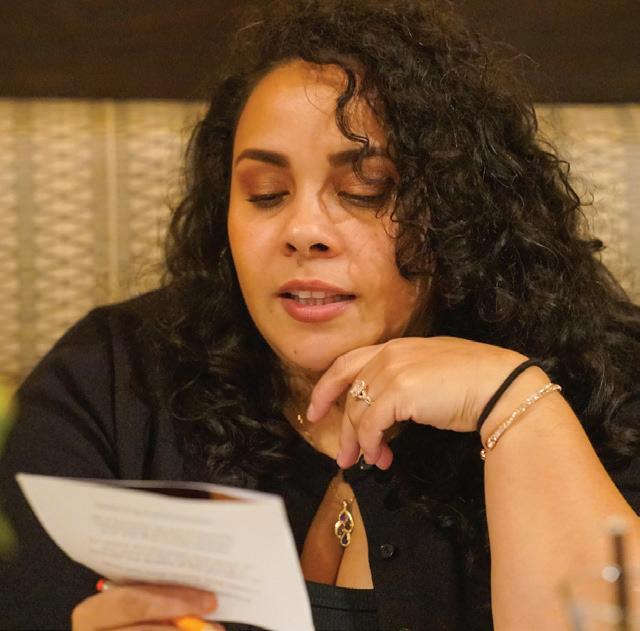
To maximize the grant’s impact, I asked attendees to cover their own meals so we could stretch funding across two events. The grant provided drinks, wellness gift bags, and most importantly, the space to gather. Julianne Jarvis, founder of Bluwm, an organization focused on wellbeing, led us through conversations about wellbeing dimensions and guided exercises where we identified our personal values. I facilitated our Circle of Sharing Wisdom, where women contributed hard-won insights from their lived experiences:
“If you fail to prepare, then you prepare to fail.”
“Take time to feel, be present with yourself.”
“Know your own value, be aware of mindsets in the room.”
“Be curious and follow your curiosity— you never know where it might lead.”
“Live by the 3 Cs: conviction, community, and commitment.”
“Know when to rest and care for yourself.”
Each phrase carried weight because it came from real struggle and discovery. This is what the traveling diaries do at scale—they create living archives of women’s wisdom, proof that whatever you’re facing, someone else has walked through it and survived to share what they learned.
The grant also secured Van Vleck House in Montclair for our next Traveling Diary Campfire on February 12, 2026, where we’ll gather to hear diary entries read aloud—stories that have literally traveled the world to reach us.
What I’ve learned through this journey is that connection doesn’t require complexity. It requires courage—the courage to write what’s true even when it doesn’t make you look good, and the courage to witness someone else’s truth without trying to fix it or compare it to your own. Every time a notebook goes out, I’m offering an invitation: stop performing, start trusting. Trust that your real life—not the highlight reel— is worth sharing. Trust that someone else needs to know they’re not alone in their walls or their stove, their silence or their noise.
That trust, passed from stranger to stranger across countries and continents, is how we find our way back to authentic connection. Not through performance, but through the sacred act of witnessing each other’s unedited lives.
DIXON Tiffany
Curated by Lori Siebert
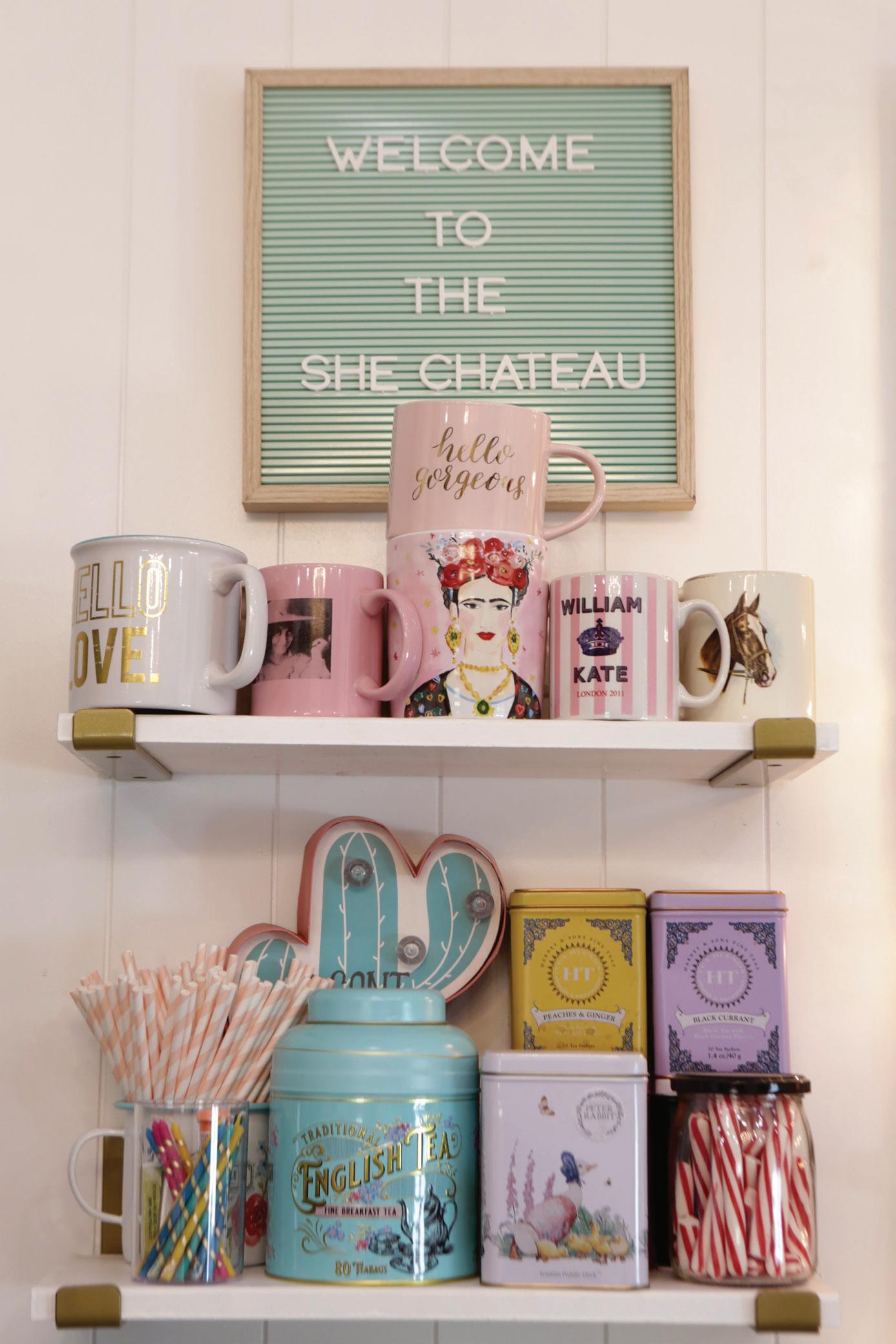
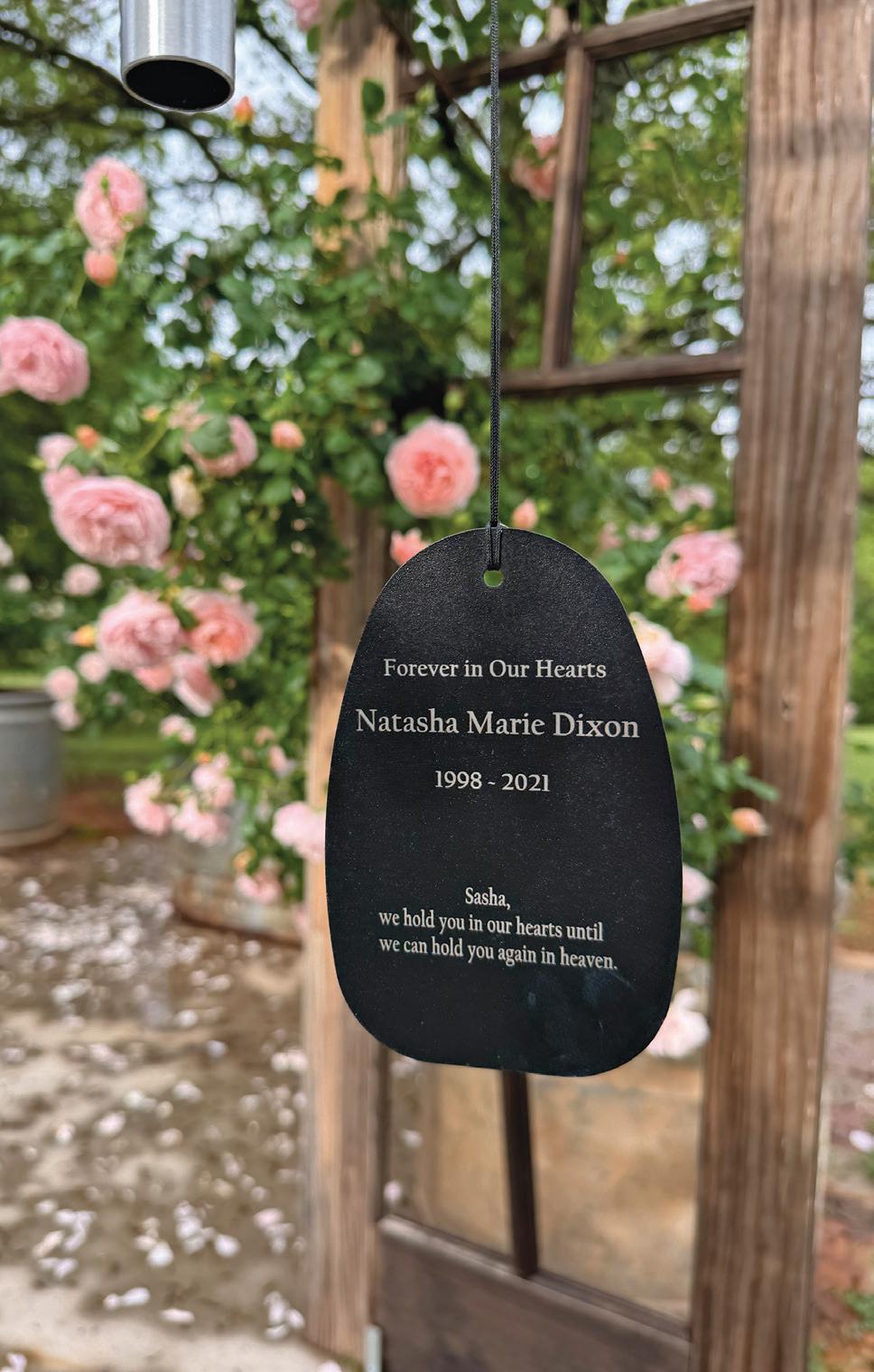
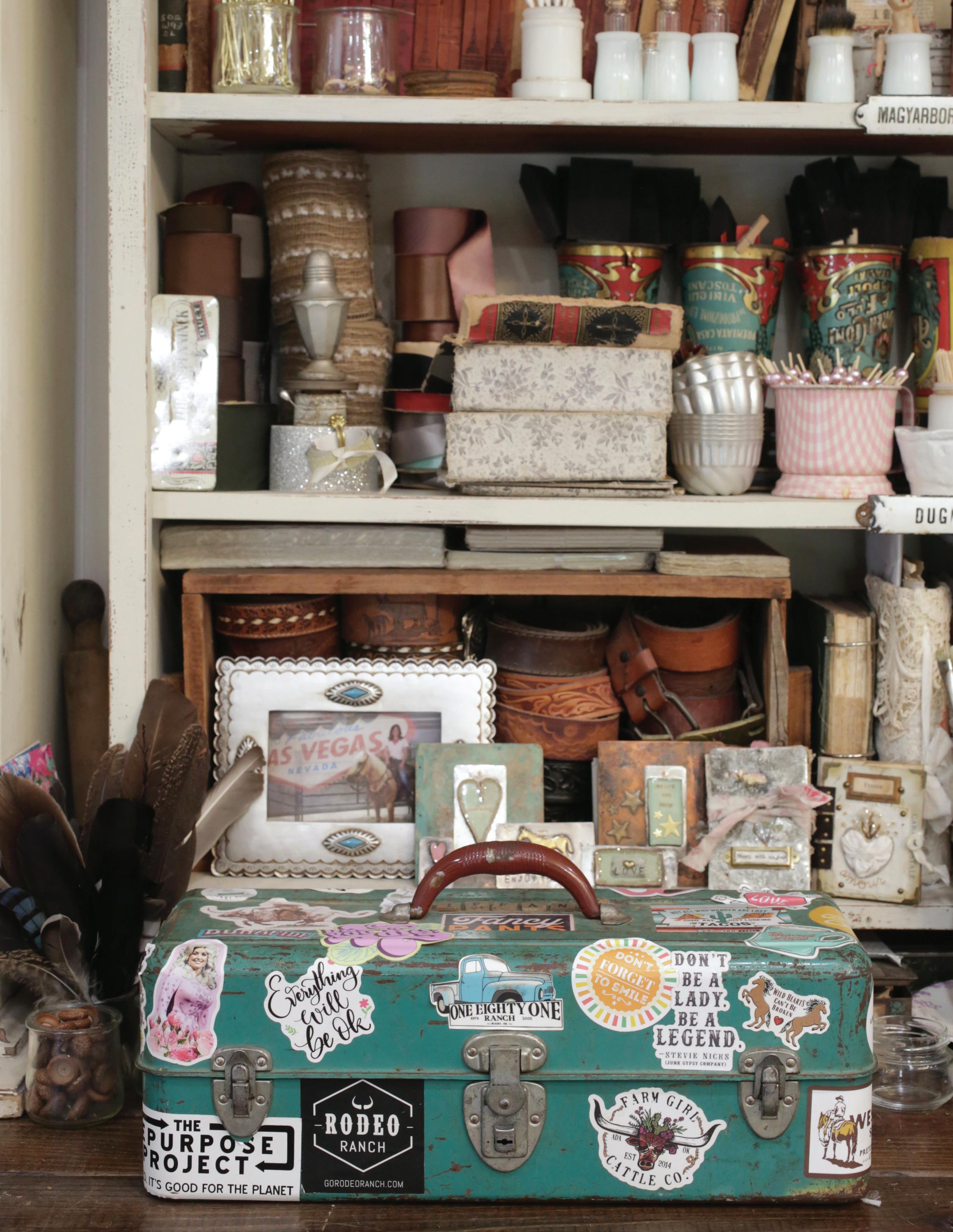
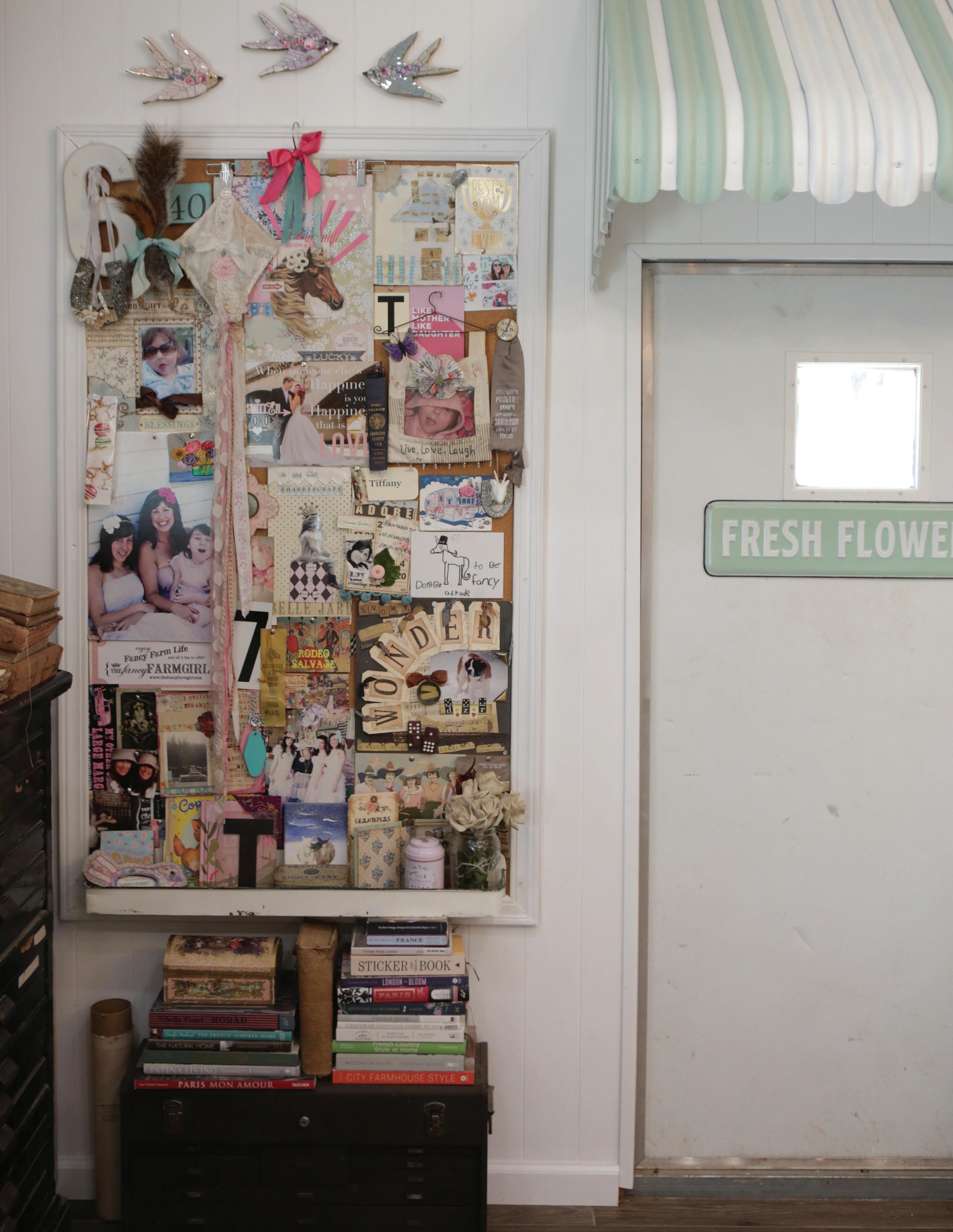
TIFFANY DIXON, also known to many as The Fancy Farmgirl, lives on a 70-acre ranch in Wellston, Oklahoma, where she owns and operates the creative space The She Chateau. She herself teaches art classes as well as hosts incredible guest artists. Her art reflects her passion for feminine beauty, love for all things vintage, and her obsession with growing David Austin roses. As well as an artist, Tiffany spent years as a professional commercial/editorial photographer and now enjoys owning The She Chateau and a local antique booth in her retirement from that career.
i’ve had many purposes in my life. A wife, mother, daughter, career woman, friend, and creative. However, my biggest calling
in life was to raise a miraculous child named Sasha.
Sasha’s life was not an easy one. Diagnosed with Rett syndrome at the age of 2, her complex medical and physical challenges were immense for her entire life. She needed a mom who was not only dedicated, but whose strength and resilience were unwavering and would be tested as much as Sasha’s would be.
My love for Sasha was immeasurable, as any mother’s love is. However, my relationship with Sasha must be explained more widely. Taking care of someone who was born from you and would essentially remain an infant for their entire life, made the relationship symbiotic. When Sasha passed at the age of 23, I literally felt as though I physically could not live without her. As if my heart died the same day hers stopped beating. She was so much a part of me, she was me.
True grief was not something I was prepared for. Raising a special needs child with a medically extreme fragility, you are quite aware of the fact that you are 99 percent sure they will depart this earth before you. So, you prepare yourself for that inevitability. Yet you simply cannot be prepared enough. I had retreated so far into my grief that I didn’t know how to come out of it.
One day, several months after Sasha’s passing, on a drive to the movies, I fell apart. My shattering heart pain still very evident, and tears streaming down my face, I asked my husband to turn around and take me home. I simply could not function, even to go to the
movies. My husband looked at my wet face and said, “I know what you need. You need to go to art camp. Call Terri (Brush) and see what classes are coming up; you need to go.”
It was a shocking idea for me. Not being able to call through my tears, I texted instead. Not seconds after my text went through, my phone rang and it was Terri.
Terri and I had been good friends for almost 15 years at that point and had worked together frequently before Sasha’s adult needs had become too much, and I was no longer able to work, even occasionally. Art and being creative had been on hold for me for several years at that point.
Terri went on to tell me that there was an art camp just a few weeks away and a few hours from me, and I was to come as her guest. An incredibly generous offer for a brokenhearted friend. I began to feel calmer as I talked to her and made plans to go, even though I was unsure if it was something I could handle. Yet at the same time, something in me began to feel lighter and not so heavy, just thinking about it.
Many have said “art heals,” and of this I am now a firm believer. Being at art camp with kindred spirits, creating and sharing life stories, helped me in a way even traditional therapy had not. It was an absolute divine orchestration from God himself to show me my path to healing through art, expression, and friendship.
The art I made that weekend was influenced by the photo of sweet Sasha I brought with me and placed on the table where I sat. Coming home from that event gave me an idea of how I wanted to try and move forward and heal. I wanted to make art and be creative again.
Travel the world, come home for love.
—variation of quote by Liz
Braswell
one of the many gifts Sasha’s life has given me is perspective. The kind you gain when you live with a child who truly has nothing
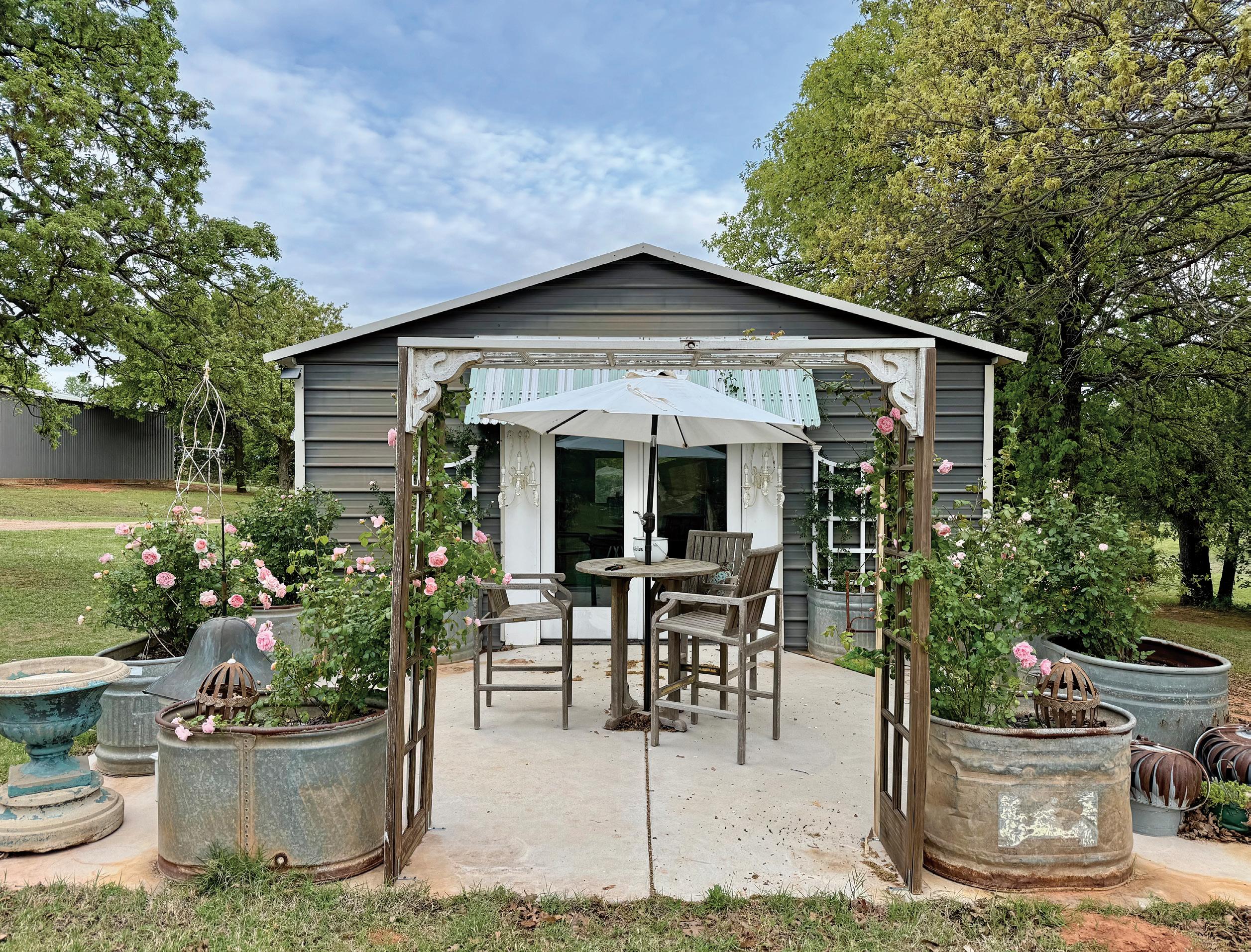
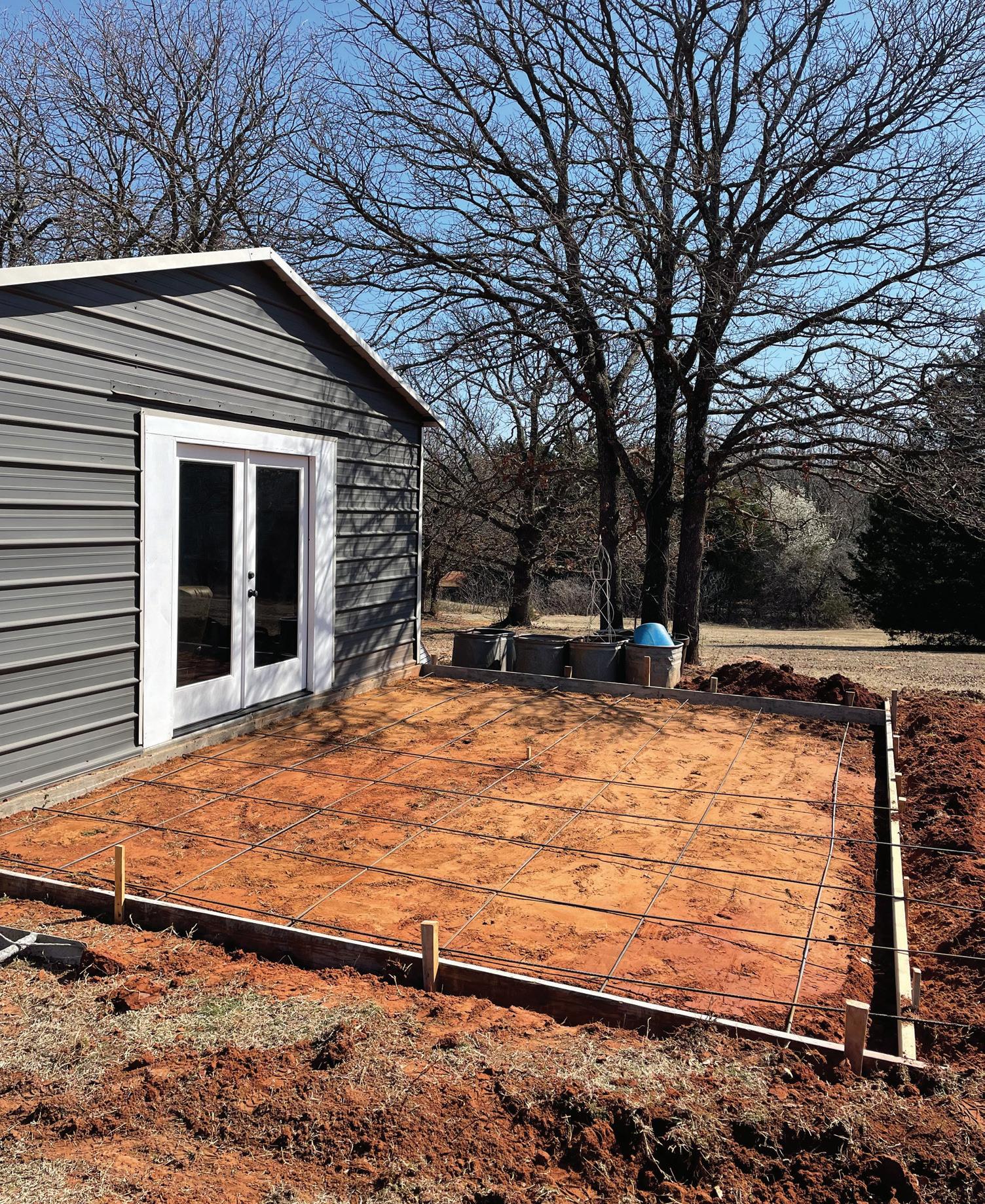
to live for, yet she could manage to wake up cheerful and have a smile on her face. It was a miraculous thing to witness, and it has brought my own life to a place that has taught me that no matter how tough the road may be, God’s got this. Sasha’s life, and mine, mean something. With my 50th birthday now on the horizon, I knew it was time to start living and finding happiness again. On our 70-acre property was a very dilapidated old lawn mower shed that had been housing all my art supplies from the past. It was a dump, a metal building with rotted wood doors, no real walls, electrical, etc. Truly just a shed. It was a literal representation of how my body felt in grief. A sad place.
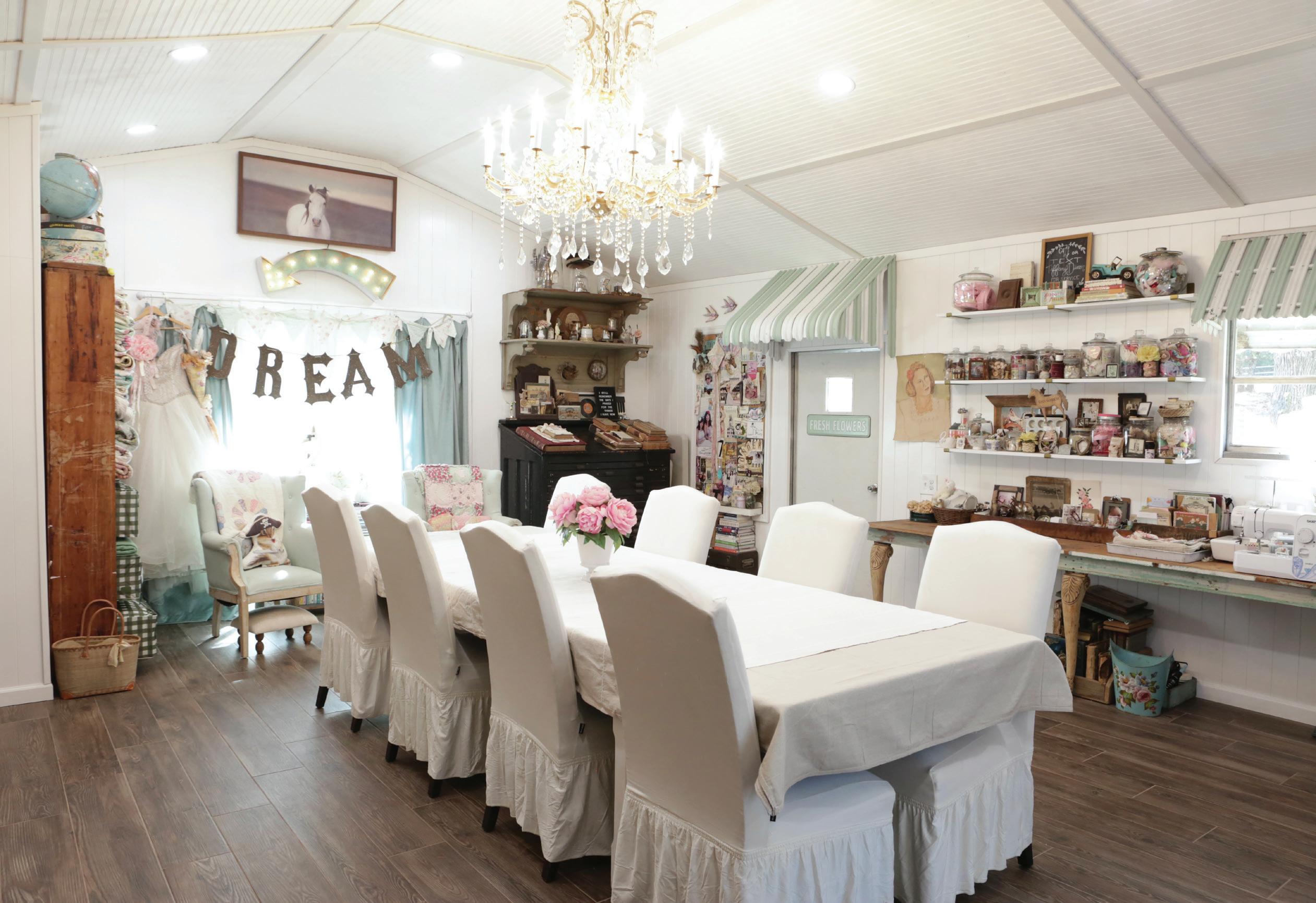
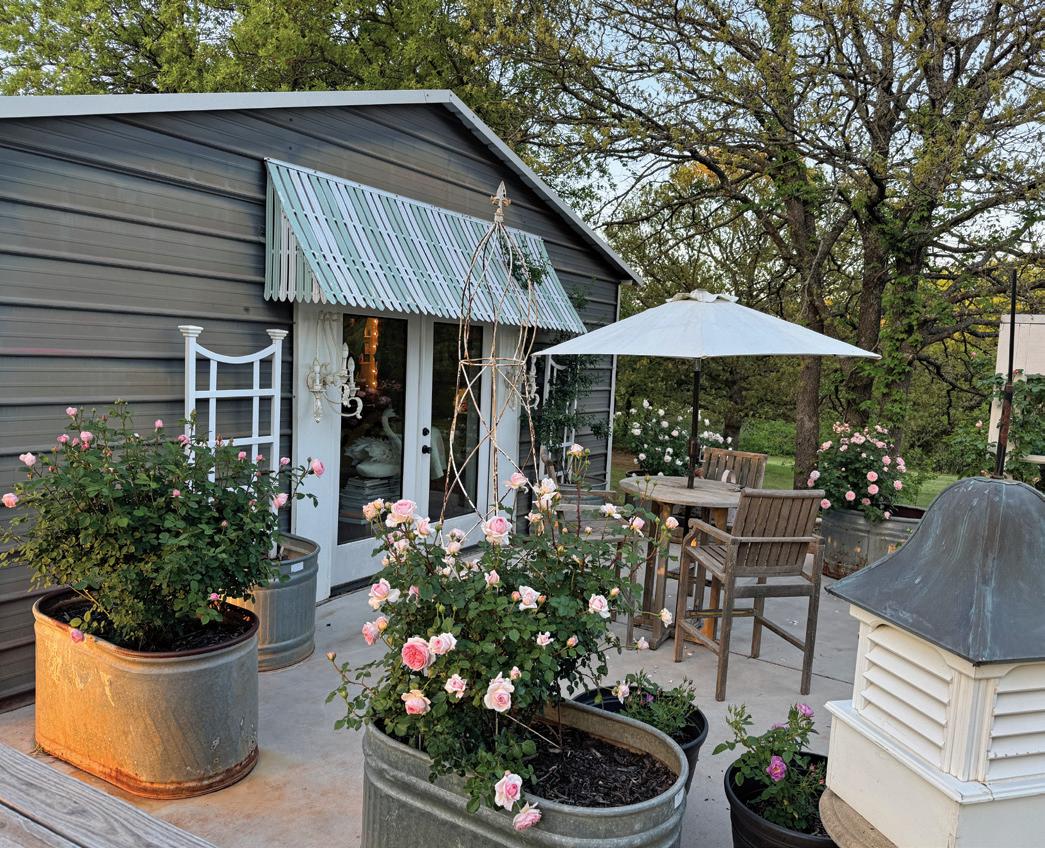
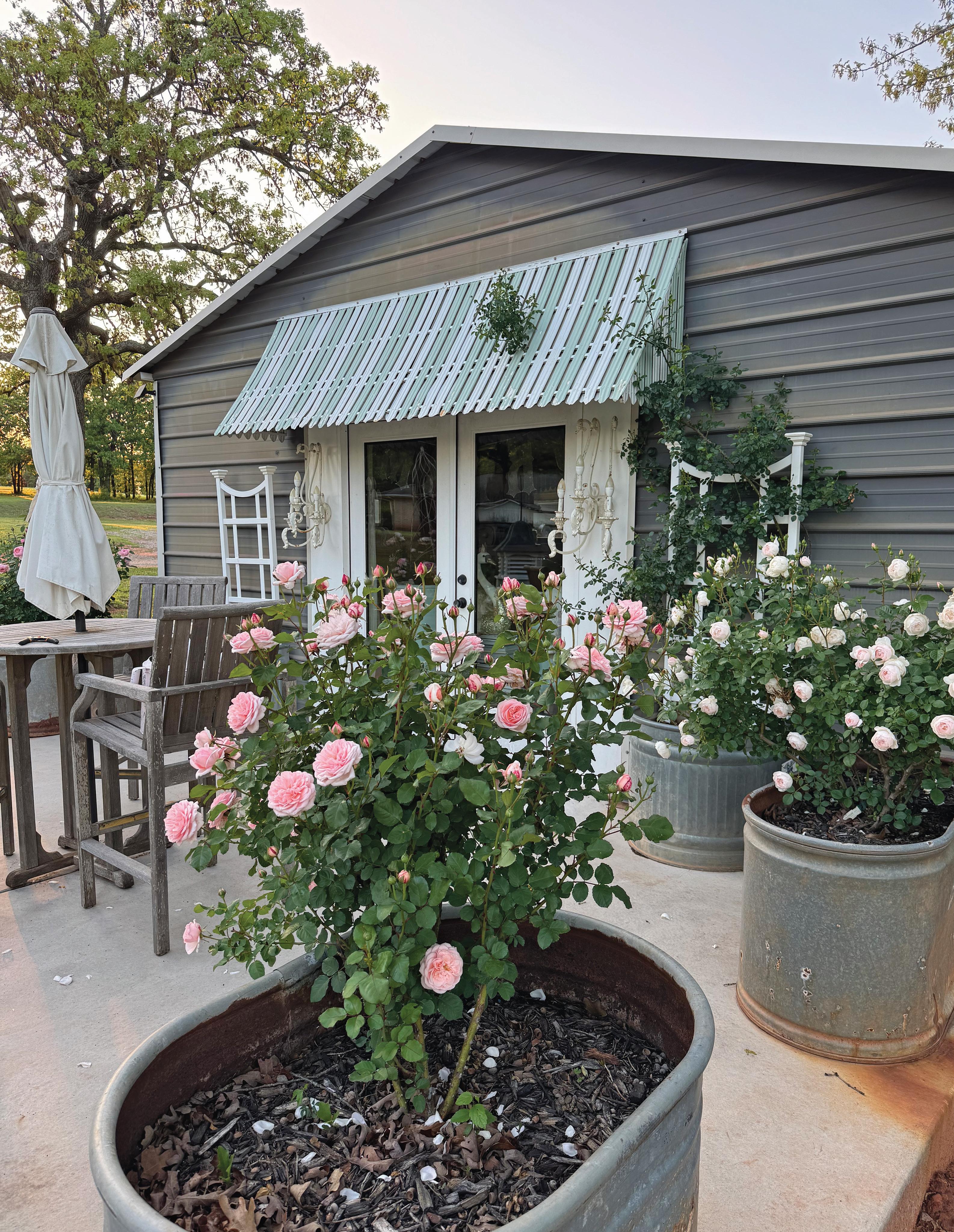
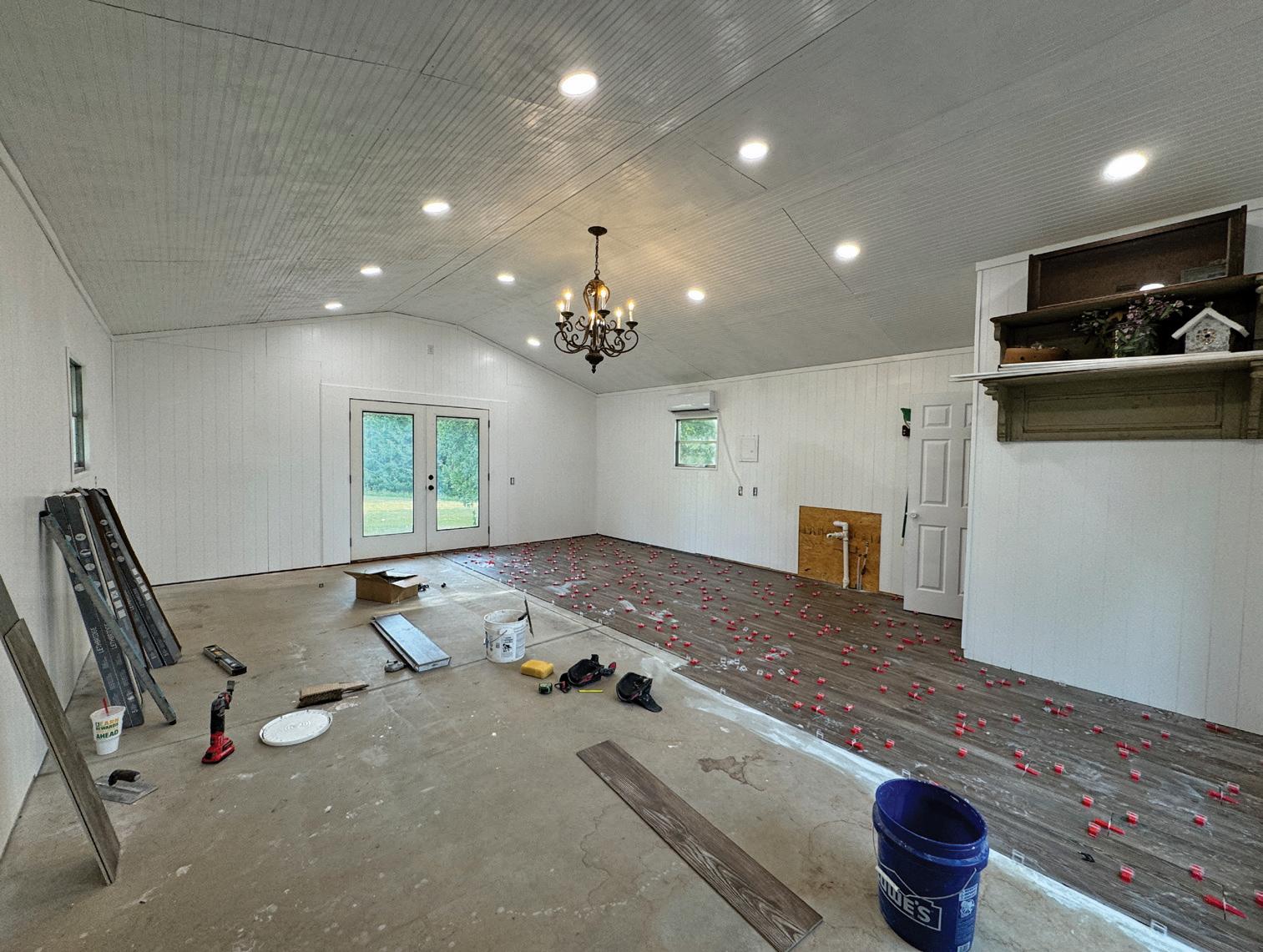
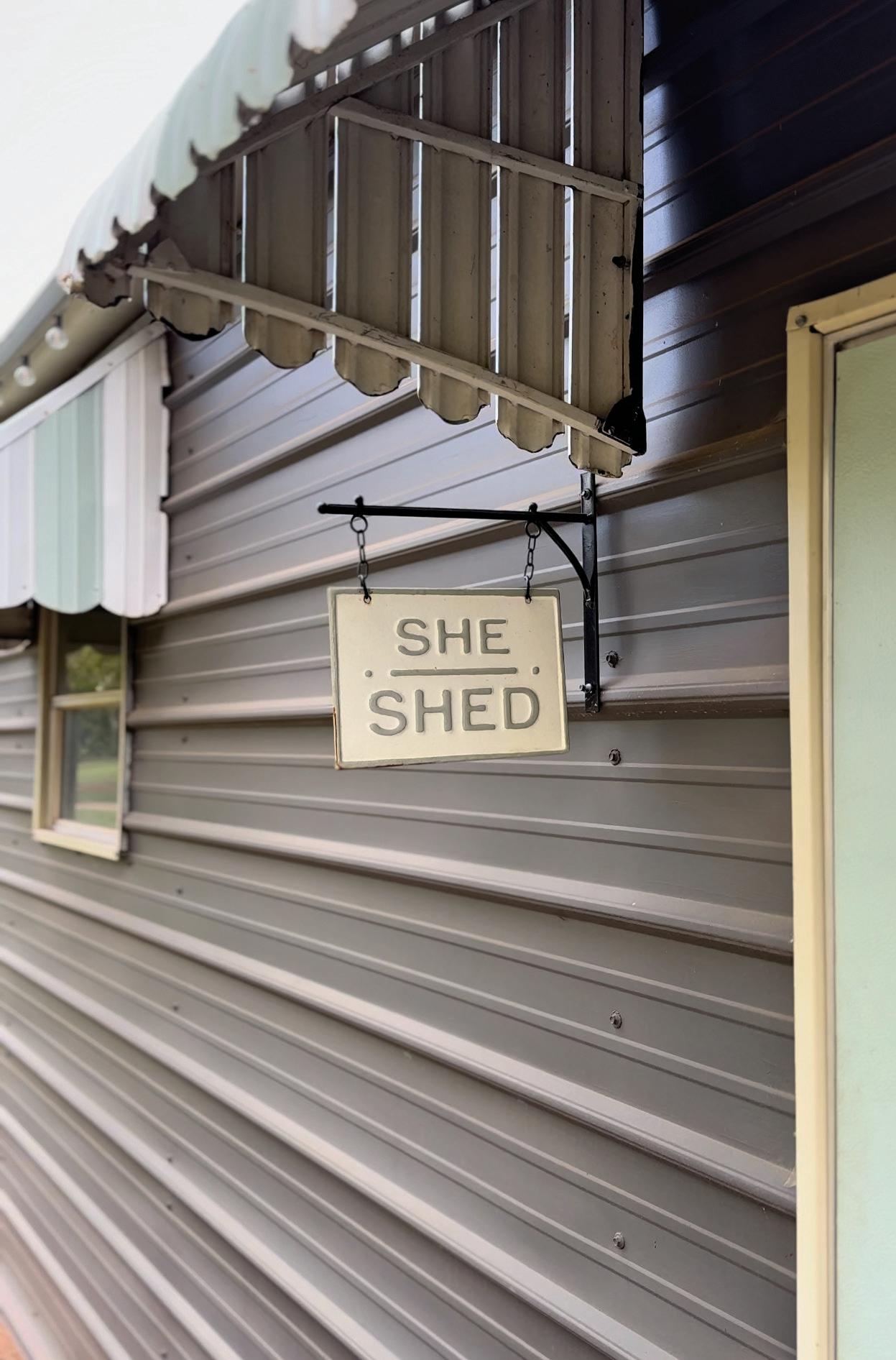
I told my husband about my idea to convert it into a real art space for me for my 50th birthday. I wanted to create a special rose garden outside of it and dedicate it to Sasha. I wanted to make it so beautiful that when I was there, my heart couldn’t possibly feel sadness. And so, the construction began. Restoring it made me feel like I was being restored at the same time. Building beauty from ashes. Building a space to help heal my trauma, grief, and put a smile on my face again. A large order indeed, yet completed successfully. So successful in fact, that the “small” reno turned into something so spectacular and glamorous that my husband and I joked it was so much more than a she shed, it was a “she chateau!” Right then, the name was coined.
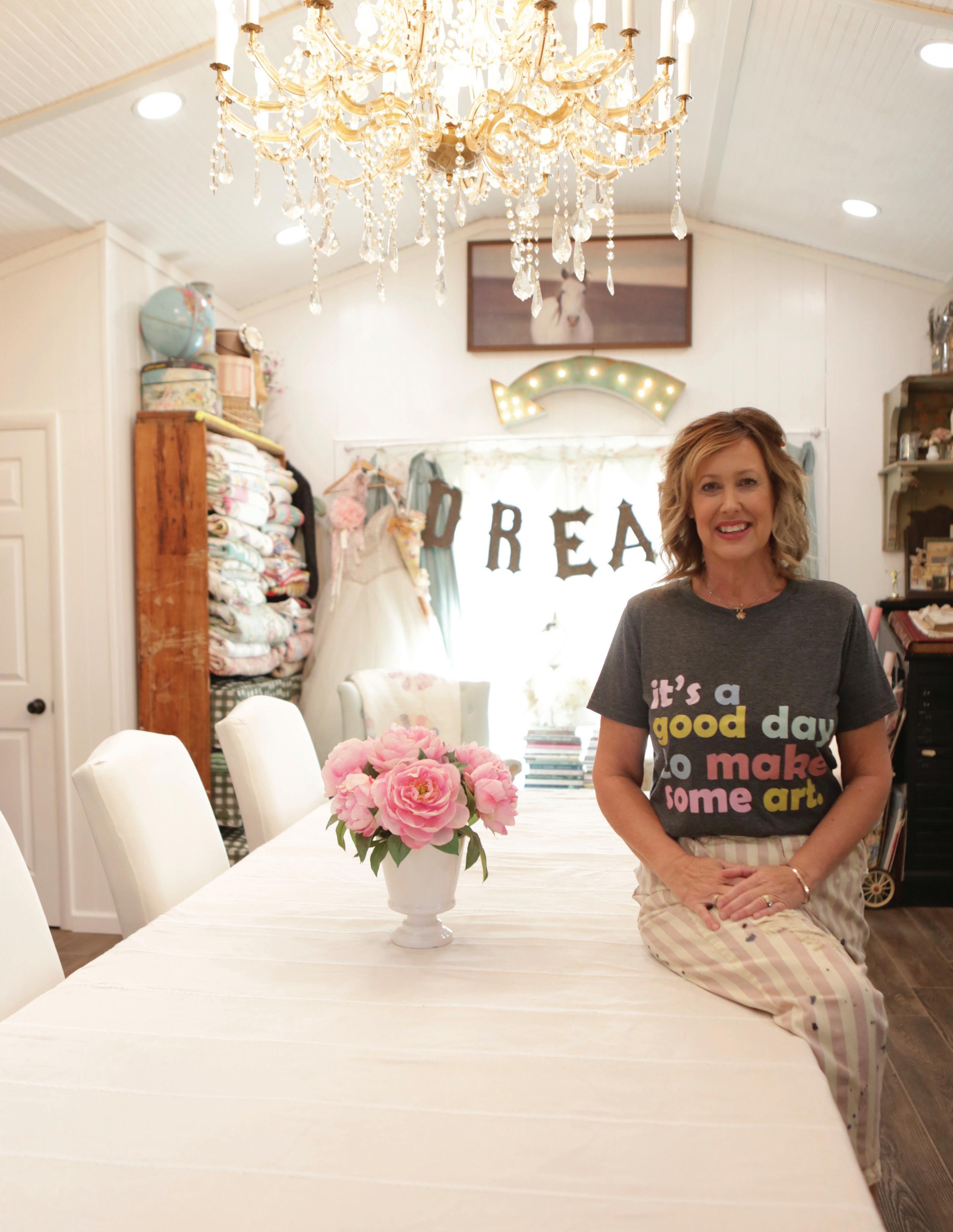
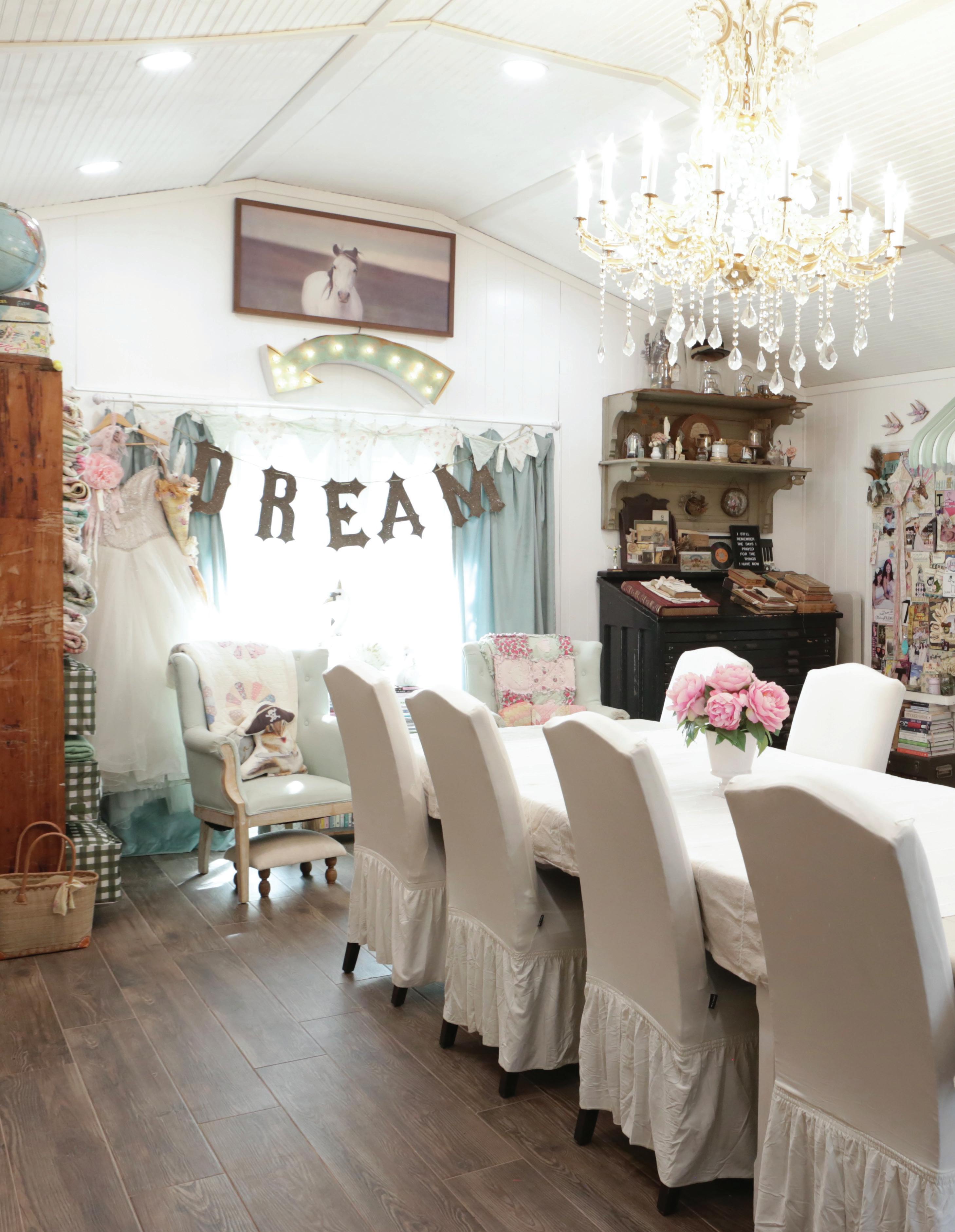
sporting a 24-light, 3-foot, incredibly heavy, sparkling vintage chandelier as her centerpiece,
a huge 12-foot table down the center, and an amazing rose garden on her exterior, it is clear to see it is much more than a shed now! It was also clear to see at that point that once again God had provided me a path forward. That this place that we had built was meant to be enjoyed by more than just me. Coming from an era of grief where I didn’t want to be around anyone, I now could not wait to invite people in. To share it with others. To create art together in a space too beautiful to let hearts be sad in its presence. And so, the She Chateau came into existence. Filled with the memory of my beautiful Sasha, a happy place where I now welcome all kinds of women, world-class instructors, kindred spirits, share with my darling granddaughter Hazel, and have all to myself too when I need it the most. Because sometimes, some things are more valuable than profit, and art, as we know, heals.
More on Tiffany Instagram: tiffany_kirchnerdixon and theshechateau
JANINE GIBBONS
CURATED BY SANDRA EVERTSON
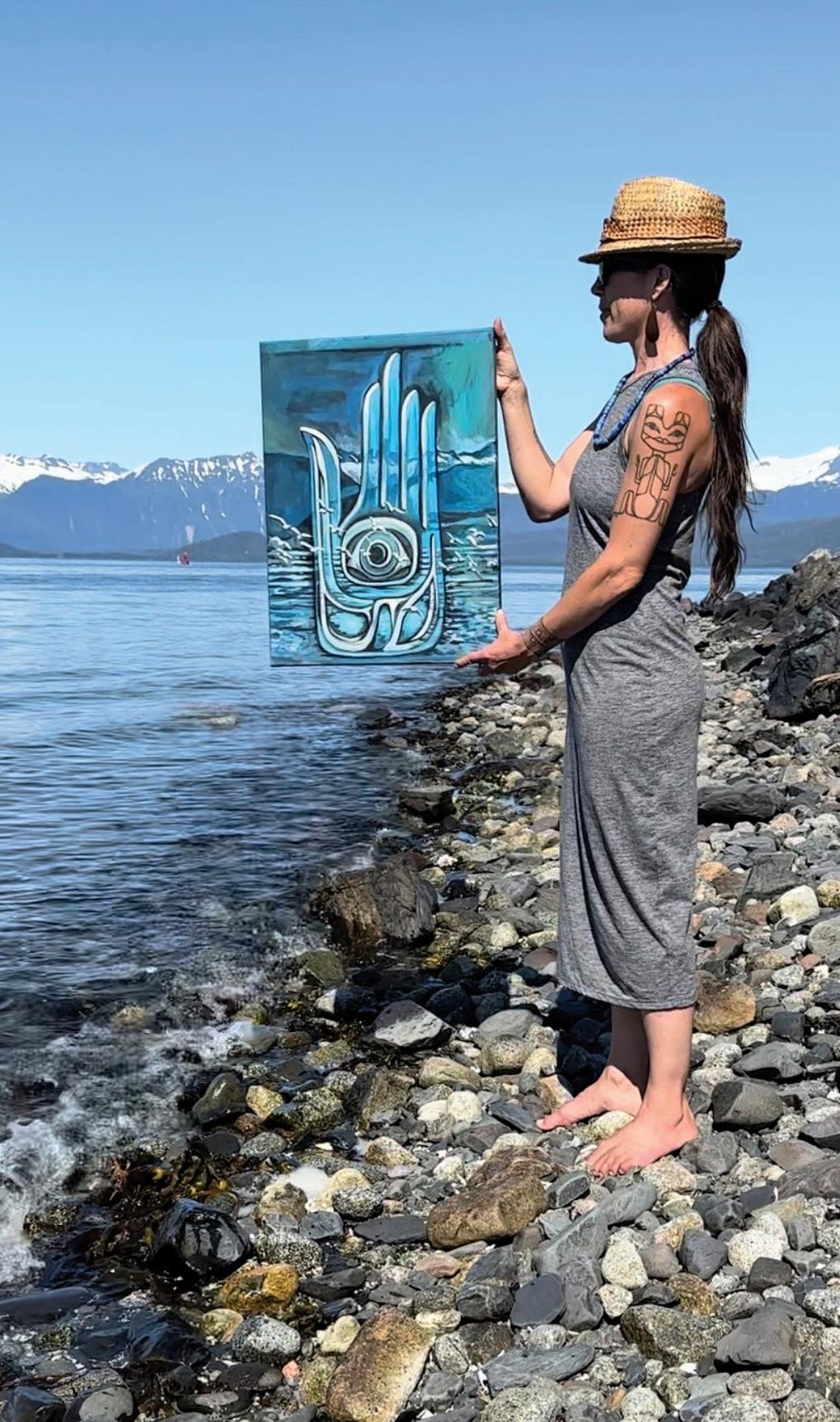
JANINE GIBBONS lives between Southeast Alaska, the Hawaiian Islands, and the Pacific Northwest. She comes from pilots, mariners, navigators, berry pickers, fishermen, and weavers.
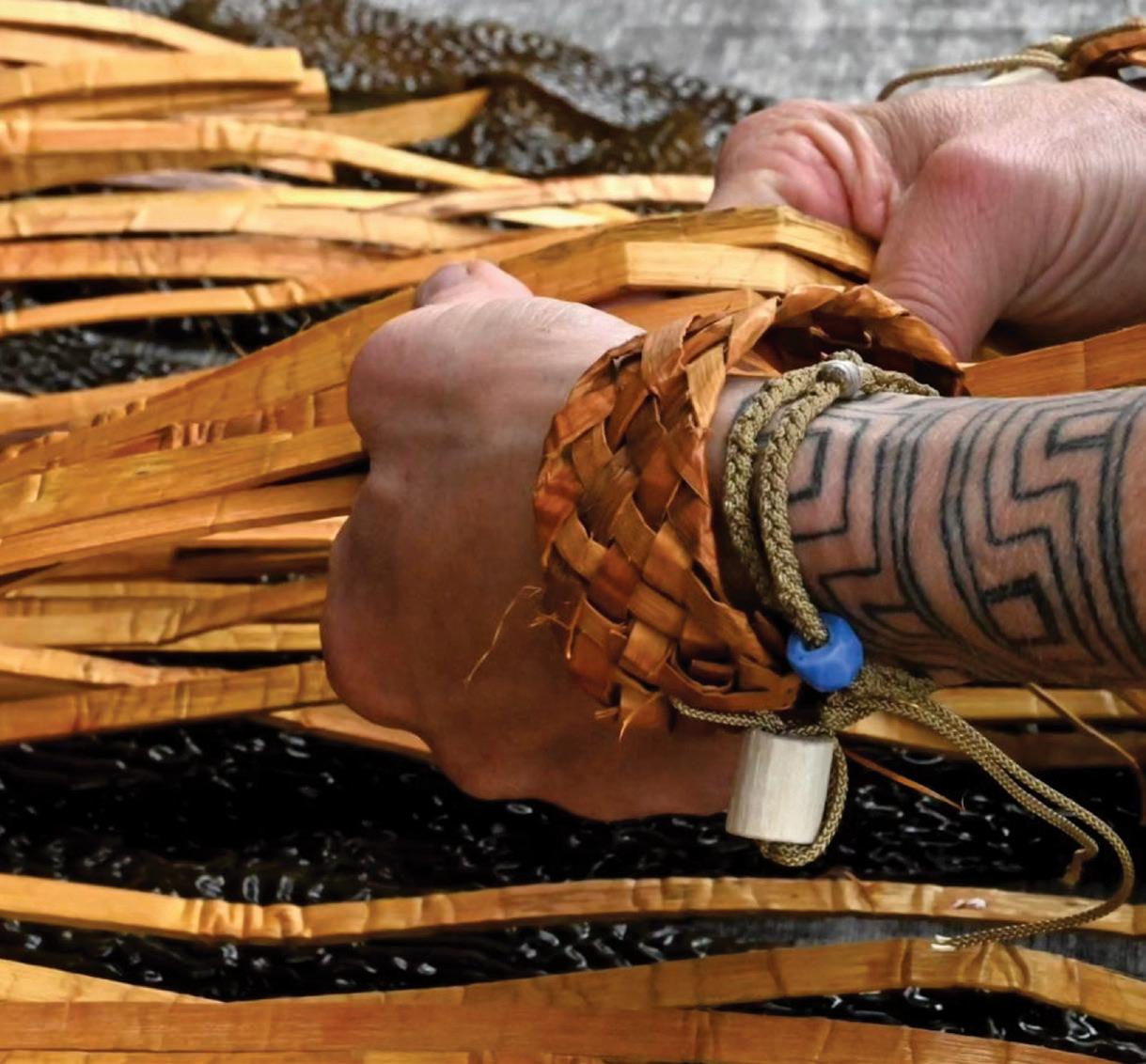
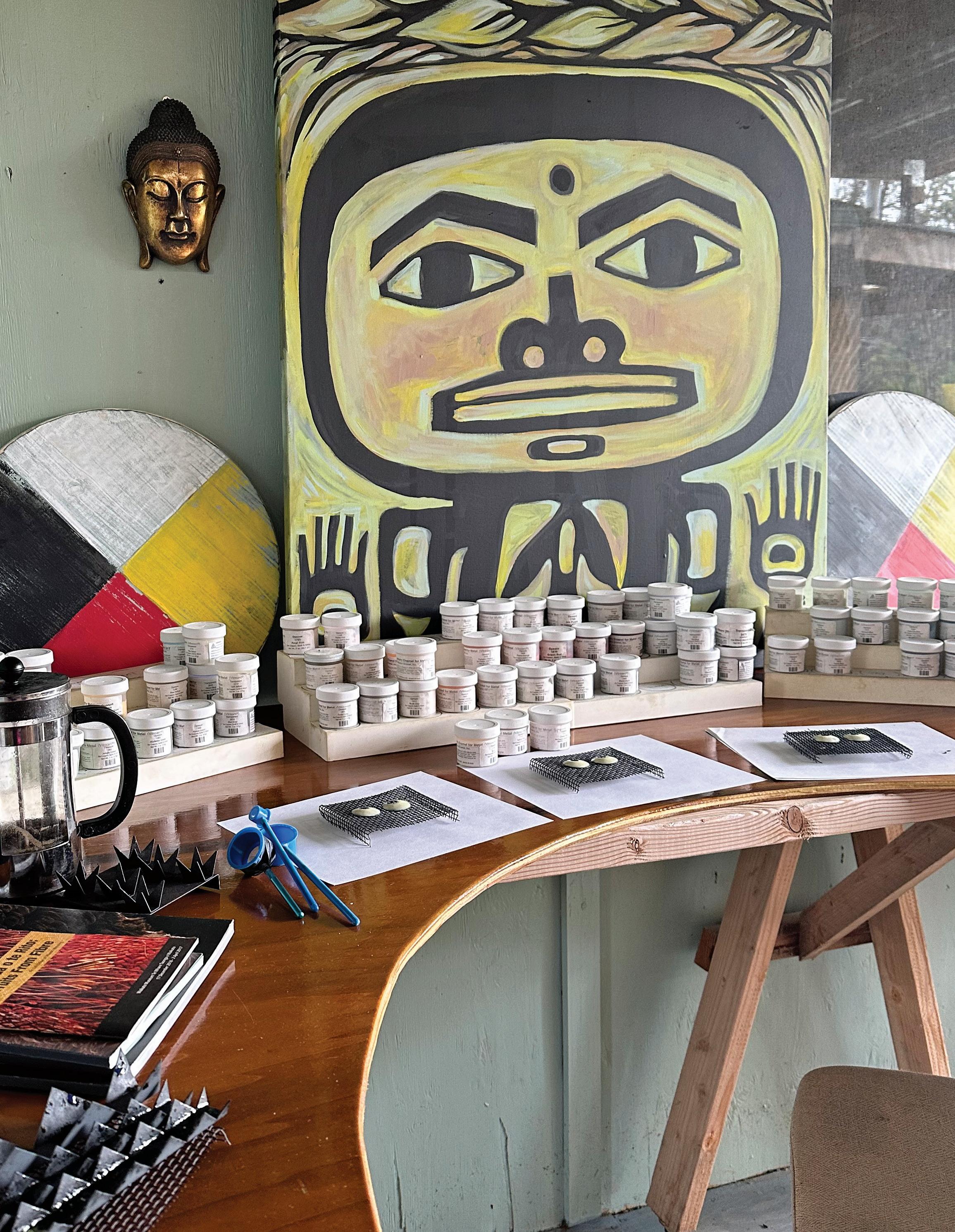
A Haida artist and storyteller with Finnish, Irish, Ukrainian, and Northern European heritage, she creates across cedar, copper, enamel, illustration, and land-based practices shaped by her years farming and traveling. Her work explores ancestral memory, canoe migrations, river and coastal histories, and the relationship between art and land.
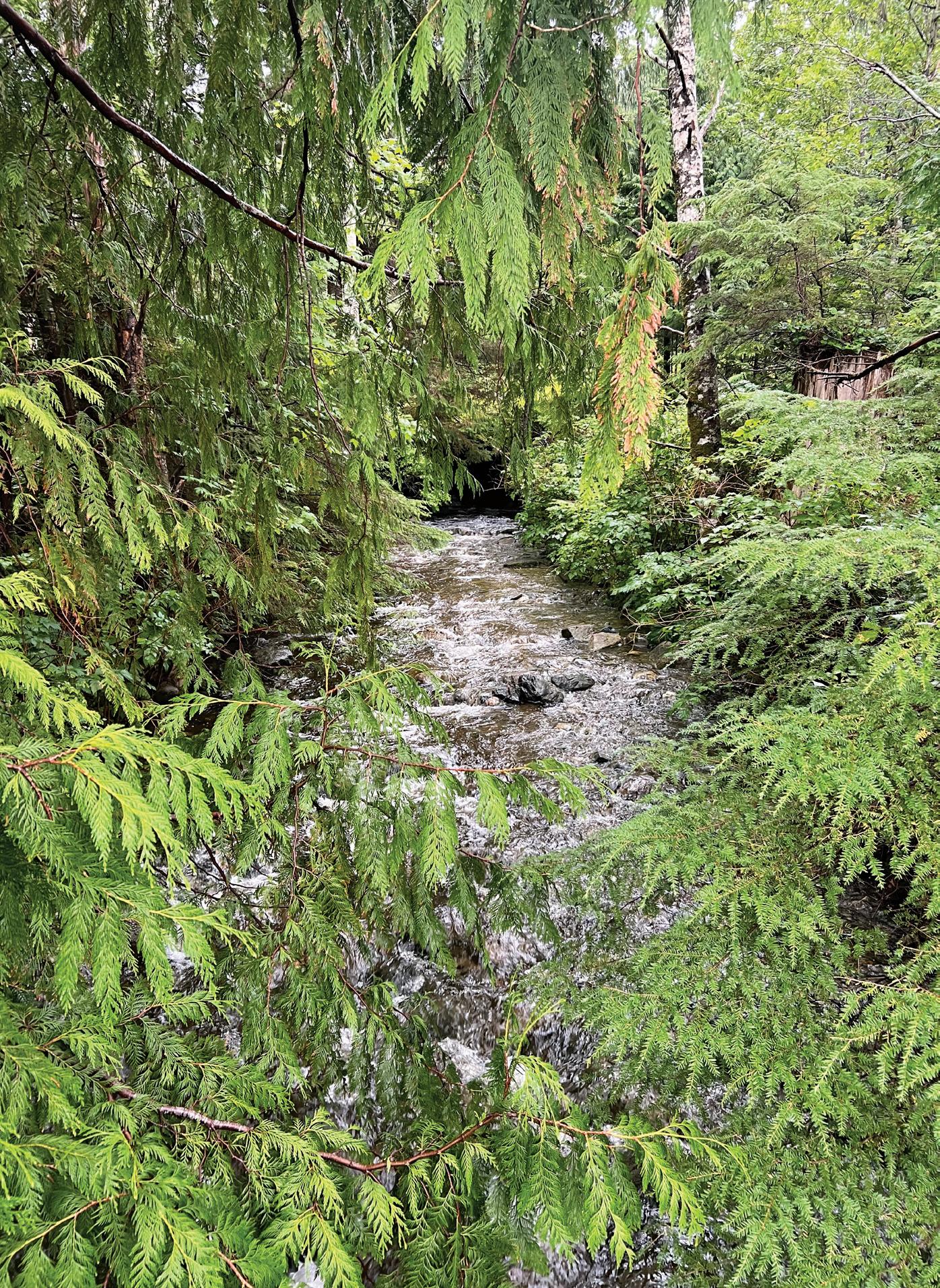
My studio has never been a single place. It is a pathway—a k’yuu—a ladder between worlds. I was born and raised in Southeast Alaska, a place defined by water, tide, salt, and cedar. Creativity happens on beaches, in forests, on docks, and in the tight corners of kitchen tables in fishing villages. Over the years, my studio has taken shape in many spaces: bright kitchens, rain-lit picnic tables, temporary rentals, borrowed rooms, ferry decks, roadside pullouts, and fields where the wind moves through tall grass.
Everything begins with the salmon.
Born in the cold, clear streams of Alaska, salmon dip into the vast Pacific, disappearing to where the water meets the sky in a long, shimmering embrace, and return years later to the exact waters of their birth. Their migration is both mystery and instruction. And the whales follow them—holding the same deep blue highways, guided by a map older than recorded time. Watching these migrations has shaped how I understand creativity itself; we leave, we gather, we transform, and we return home carrying nourishment for our communities and future generations still to come.
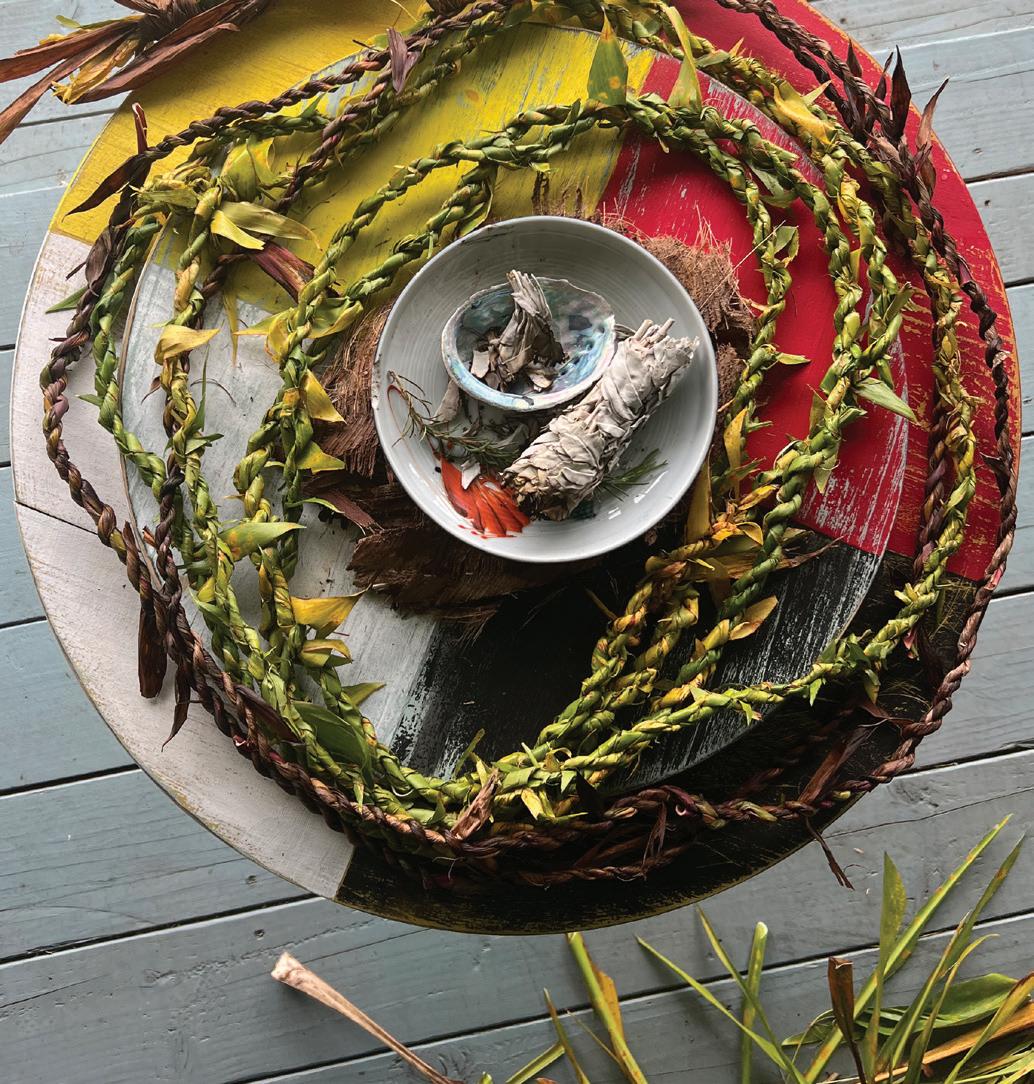
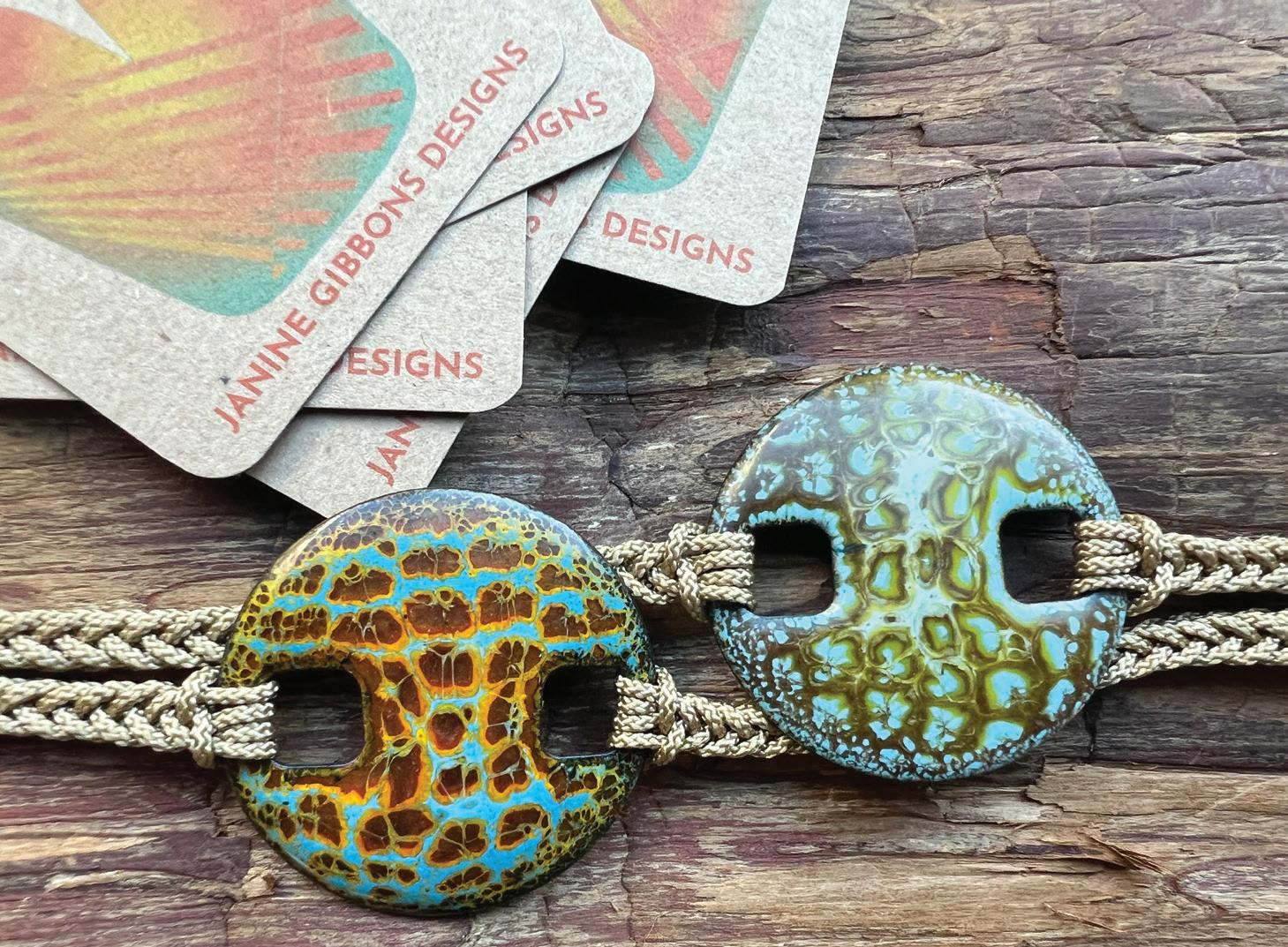
The cycle lives inside my salmon regalia, stitched from salmon, leather, copper, and Pacific memory. It lives in my illustrations, in the stories I write, in the materials I choose, and in the biomorphic patterns of my copper enamel jewelry—patterns that echo currents, tides, vertebrae, kelp forests, and the soft architecture of returning bodies. Salmon are more than a motif; they are one of my greatest teachers, shaping not only my regalia but the lines, symbols, and forms that move through everything I create.
PHOTO BY DANIELLE LOUISE
Farming became one of my unexpected teachers. Planting, tending, connecting, and harvesting taught me patience and rhythm, reminding me that creativity is cyclical. Like soil, it responds to presence and care.
These places—cedar forests in Haida Gwaii, volcanic slopes and ocean winds, long highways connecting remote communities—braid themselves through every piece I make. My studio is a circle, not a room.
My lineage made me an artist long before my first brushstrokes. My first drawings were of salmon and fishing boats, but I come from women who traveled by canoe, horse, foot, and steamship. Women who
gathered berries under the moon, who built futures they knew they would never see. For them, creativity was not decoration; it was survival. Every time I create, I am carrying their work forward. To create today is to continue their work.
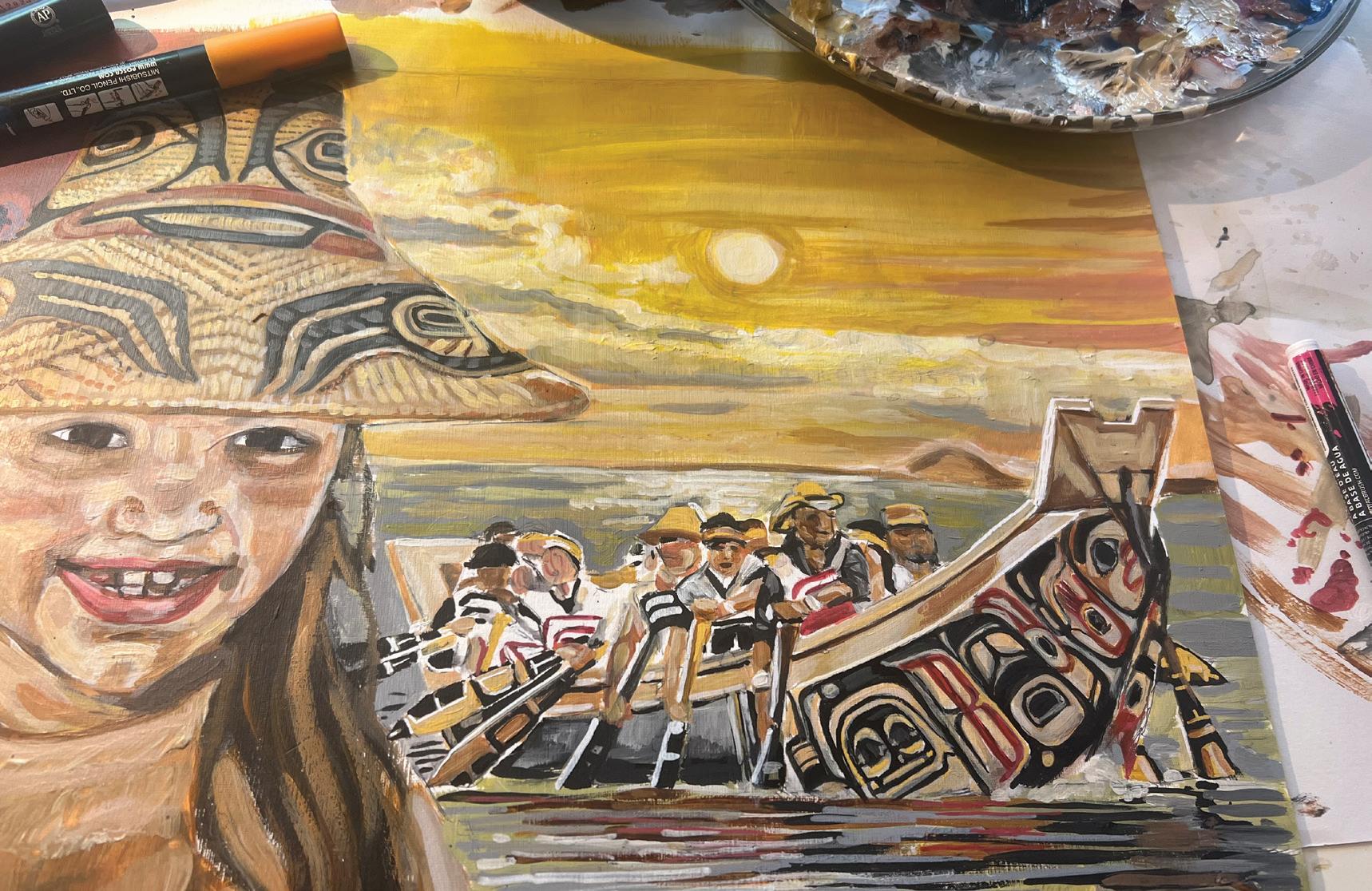
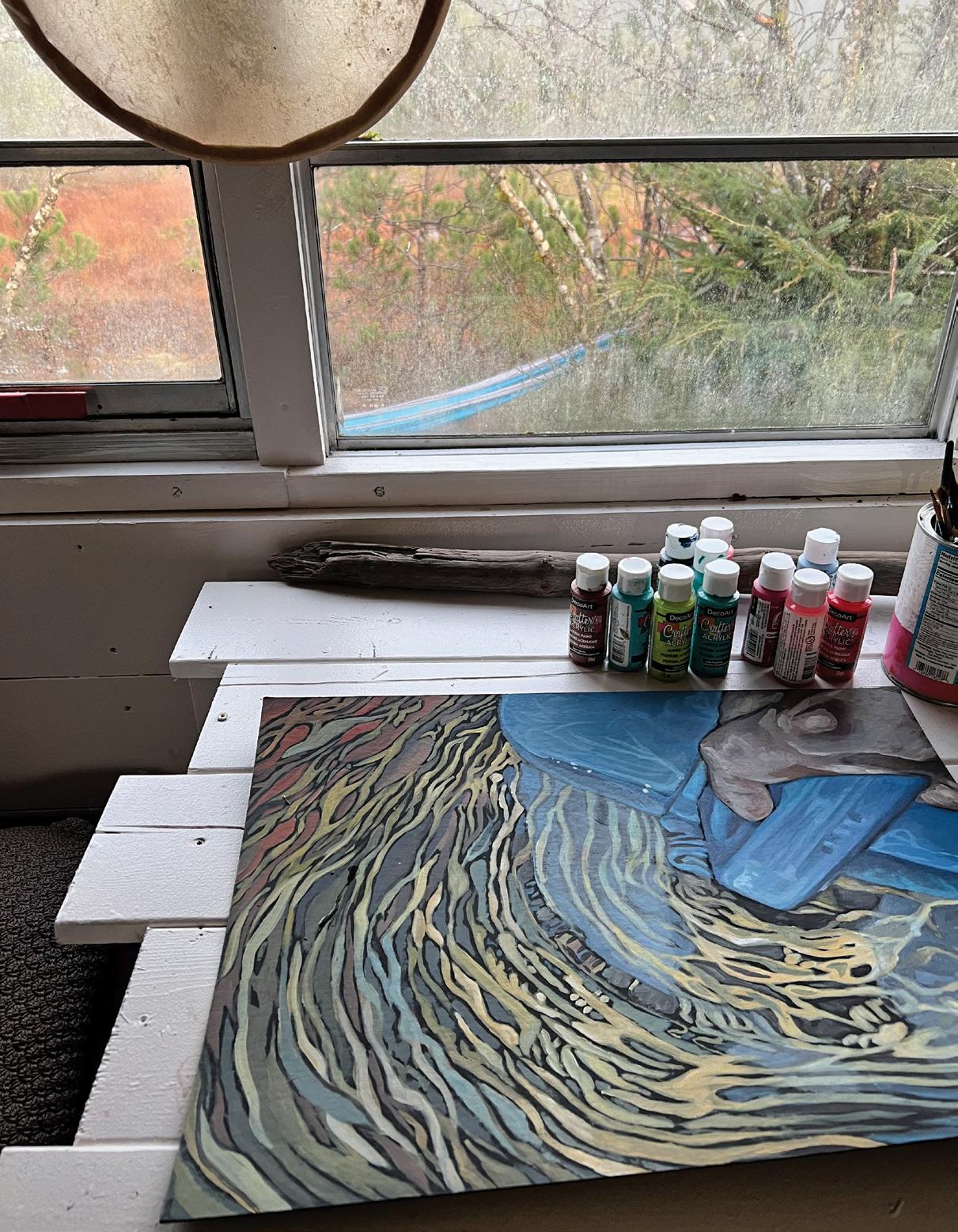
As both an author and illustrator, I move between word and image the way tides move between shorelines. Writing is my first carving—shaping story from breath, land, memory, and ancestral threads. My stories first appear as sketches: a line, a rhythm, a voice. When I am on the road, my illustrations begin in pen and ink. Ink reveals the bones of the story. Ink listens before it speaks. Once the linework finds its flow, I begin layering pigment, copper tones, and the deep blue of the Pacific.
Spruce root frog hat design painted by Charles Edenshaw and woven by Isabella Edenshaw; cover art from We Are Who We Are by Wab Kinew; canoe form line by artist Corey Bulpitt, carved by Tluu Xaada Naay; rippling water illustration from Returning to the Yakoun River by Sara Florence Davidson and Robert Davidson
My manuscripts—like my upcoming work tracing canoe routes from the Northwest Coast to Hawai’i and the return of the humpback whales—emerge from that place where land, memory, and material meet.
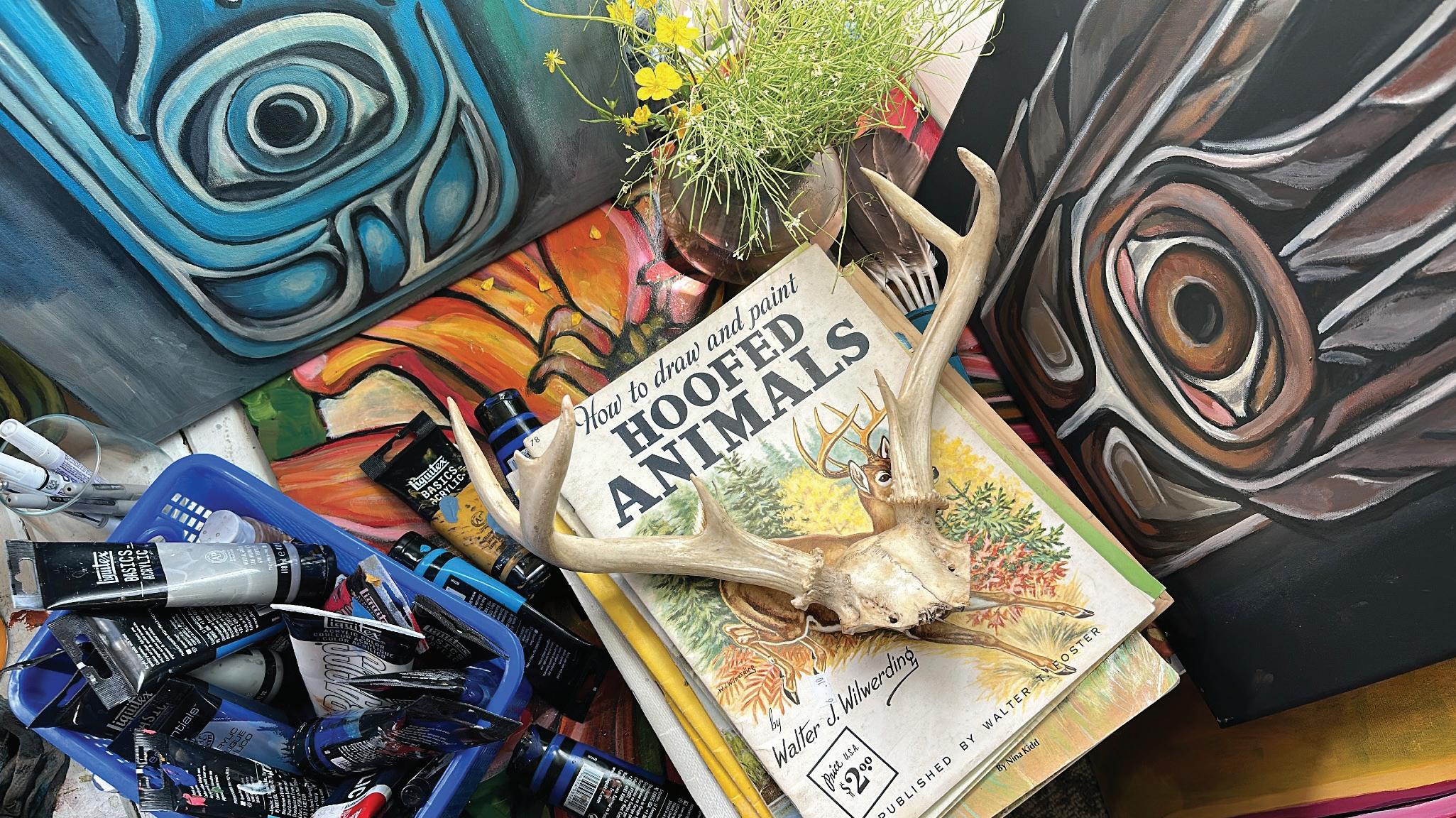
My creative practice is wide and rooted. I work across weaving, jewelry, block-print illustration, salmon leatherwork, mural painting, and fine-art portraiture. Copper remains one of my closest companions—warm, alive, resonant with ancient trade routes. Cedar holds ceremony, grounding, and belonging. Salmon leather and scales carry the migration of my homelands. My collaborations with master carvers and weavers from Haida Gwaii to Aotearoa are part of a wider revival of intertribal pathways—a reconnection across the Pacific that has always existed beneath the surface.
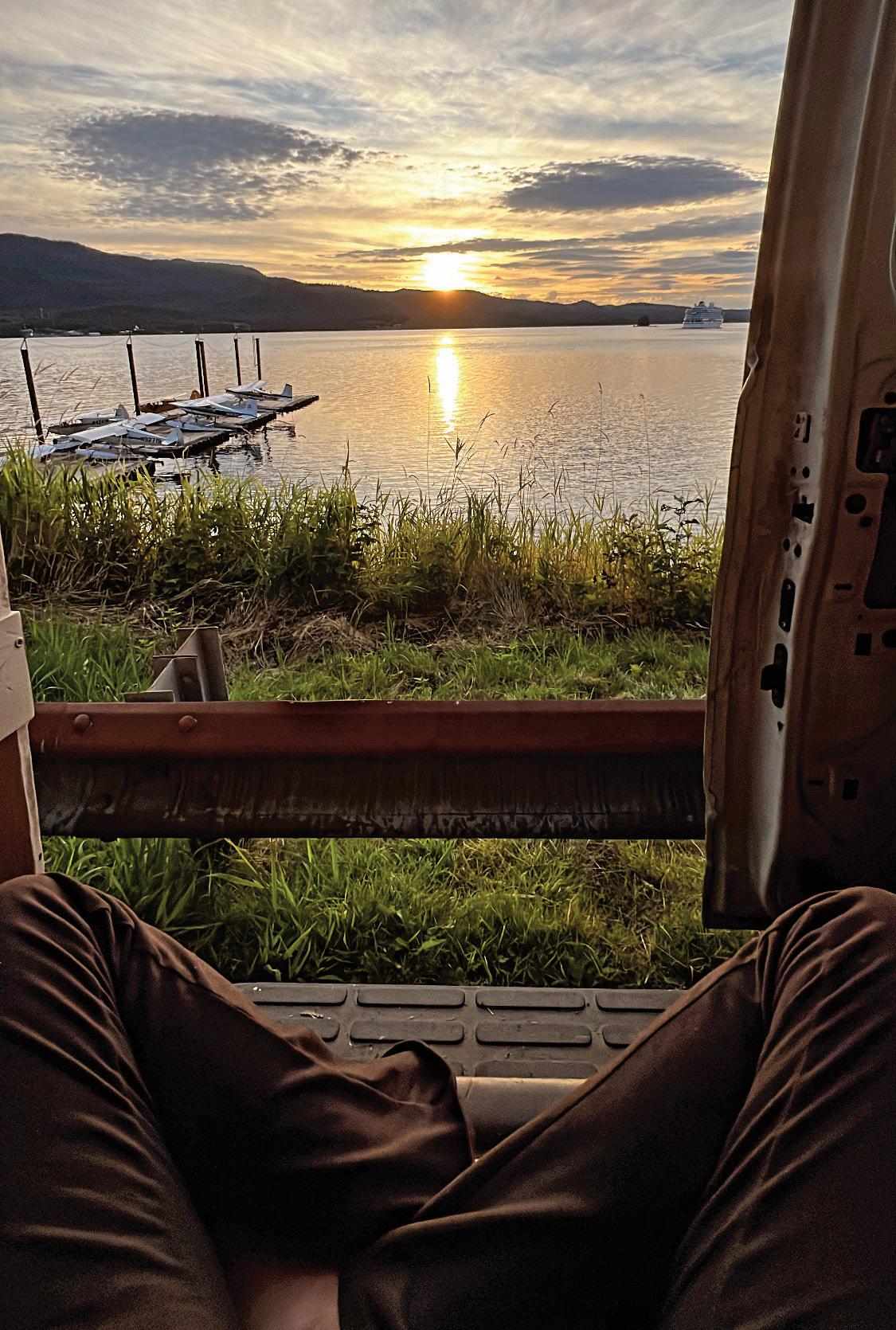
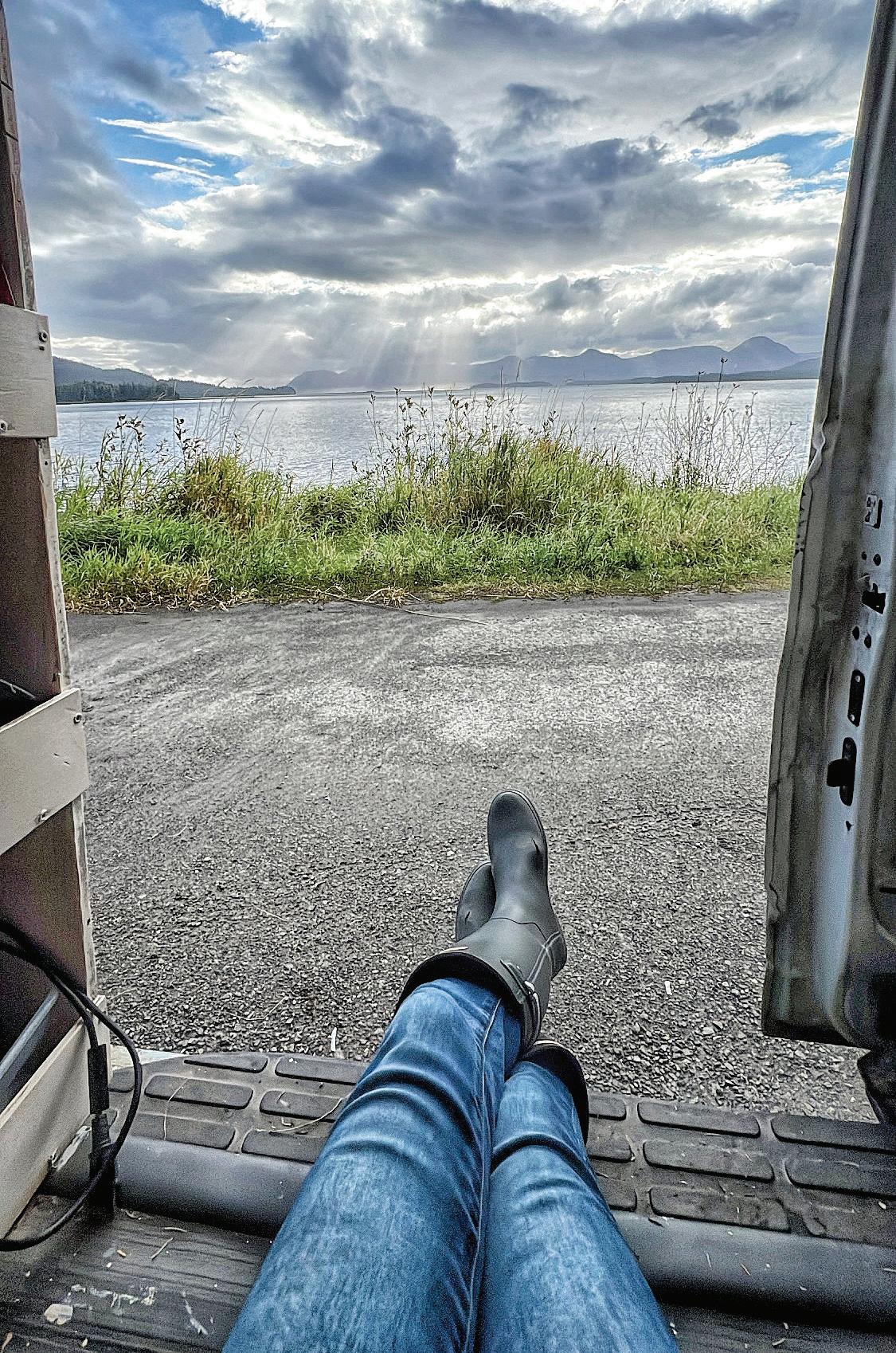
Today, my studio moves with me. I recently bought a green van that has already become its own creative being—a traveling studio filled with inks, cedar, copper sheets, sketchbooks, and the early pages of new stories. It will allow me to island-hop and car-camp between Southeast Alaska communities, return to Ketchikan for murals and exhibitions, and follow the migrations that continue to shape my work. Some studio hums with ravens chatting overhead and the smell of fish smoke drifting through an open window. Others sit quietly beside ancestral shorelines. And some wait in the van, ready for whatever path opens next. Endurance is its own teacher. I have lived enough seasons to understand that inspiration is only part of the work. The rest comes from the years that strip us to our essentials—years of rebuilding, grief,
exhaustion, and uncertainty. Each time a door closed, another opened. Work that once felt lost eventually revealed itself as part of the greater story.
My creative life is guided by clarity, sovereignty, and lineage. My roots span rivers, coastlines, mountains, volcanoes, farmlands, forests, and highways. Through all of this, my ancestors continue to push me forward—to see more, learn more, and imagine the vastness they once saw when they followed stars, currents, and coastlines.
All of my studios—fixed or mobile, urban or coastal, anchored or nomadic—are ceremonial places where the land speaks. They are where stories arrive through the ether, where water becomes ink, where Ancestors step forward and say, continue. They are the forest of my becoming.
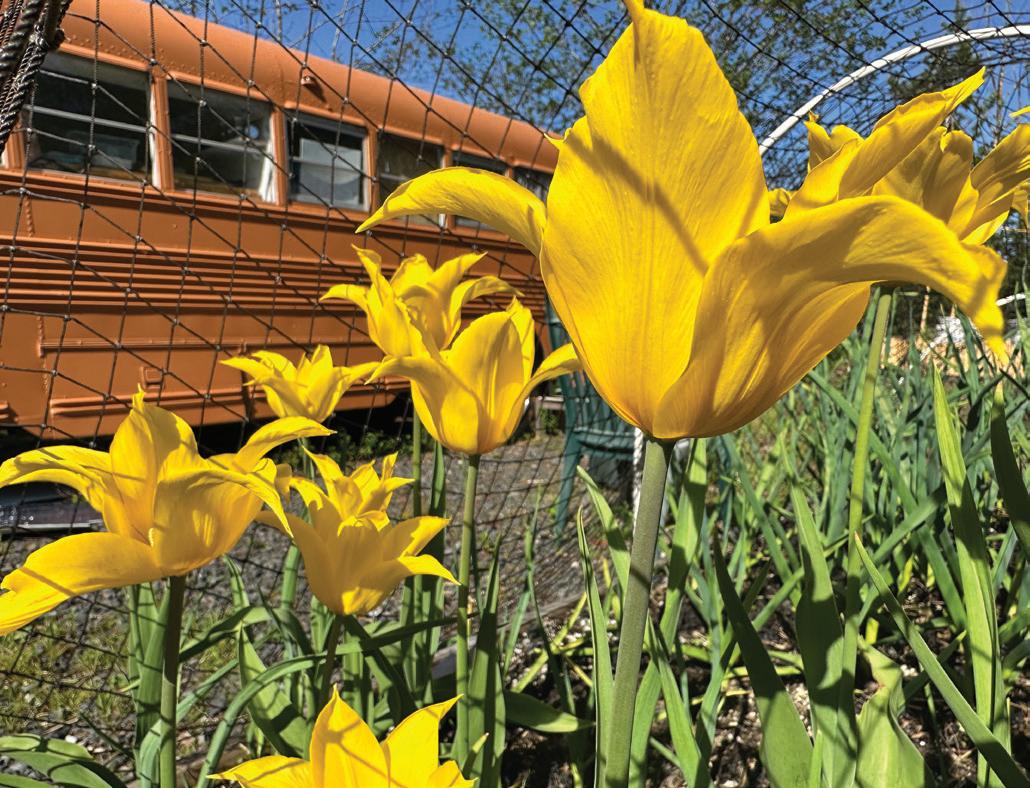
Every place I have created—from a school bus to a green van, from a quiet desk to a picnic table by the sea—is part of that forest. And like the salmon, I follow the route set before me; leaving, gathering, transforming, and always returning home.
Anja S. Caldwell
Photography by Mariah Miranda
ANJA (SEEHRICH-) CALDWELL is a German-born architect turned fiber artist and teacher. In her sunny studio nestled in the Carderock woods of Maryland, she teaches traditional handwork with contemporary pizzazz to both children and adults. From simple pompoms to intricate sweaters, this creative haven among the trees has served as a community hub for over a decade. Here, imagination thrives, skills grow, and two things are strictly off-limits—the banned G-words: Glue and Glitter
When I think of my mother’s father in Germany, I see an elegant man in a full suit—
vest and silk pocket scarf included—rain or shine, Monday to Monday. Whenever we visited him in his shop for custom-tailored gentlemen’s clothing, he would peek over his glasses, a measuring tape around his neck, and a pincushion hugging his wrist.
When I think of my German father’s mother, I picture her with some hand sewing or knitting in her lap. She was also a professional dressmaker. My sister and I adored the fancy dresses she made for our Barbies. She taught us our first knitting and crochet stitches, so when we started school in Germany—where handwork was still part of the curriculum—we already knew all the basics.
Handwork was a family affair. Knitting was my favorite. My mom crocheted, my little brother hand- and machine-sewed, and my sister later mastered the sewing machine as a seamstress and textile engineer.
In high school, my friends and I even got permission to knit in class. Keeping our hands busy allowed us to concentrate better. Even the teachers who first resisted changed their minds once they realized they, too, benefited from a quieter classroom.
Neurodivergence and ADHD were not yet common in pedagogical vocabulary, but looking back, I clearly see how helpful handwork was to many of us.
After high school, I started architecture school in Stuttgart. Later, with a Fulbright scholarship,
I earned my master’s degree at the University of Miami. There, I fell in love with my American husband, and in 1997, we eventually settled in Maryland.
Architecture is a busy profession with long hours. Add two little girls to that, and there was no time to knit. But then a friend showed me a felted—fulled—bag she had made. My children were older by then, and it was Debbie Szyfer who reignited my passion for knitting. Soon I was selling fulled bags with her, and eventually teaching handwork after school at my daughters’ school.
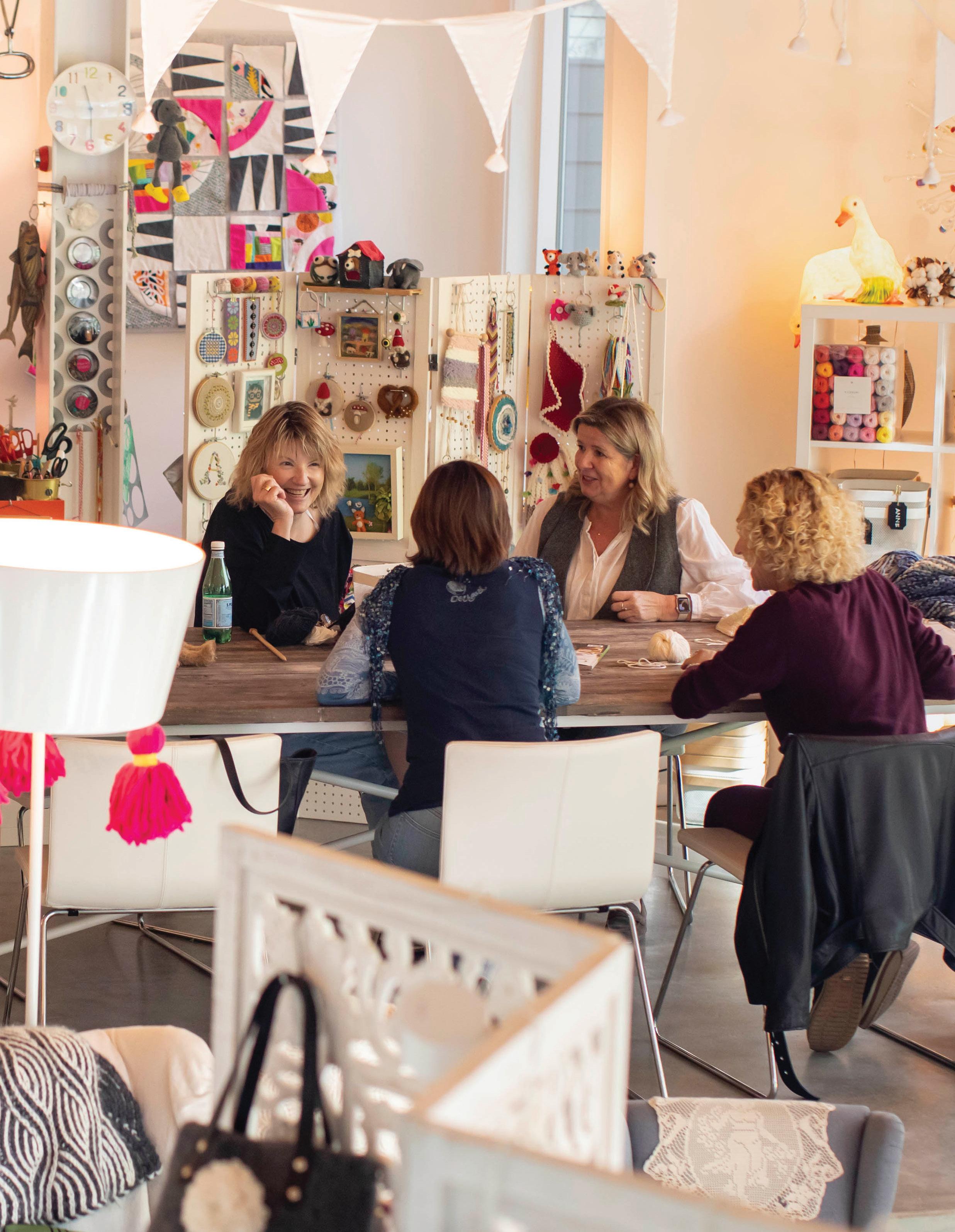
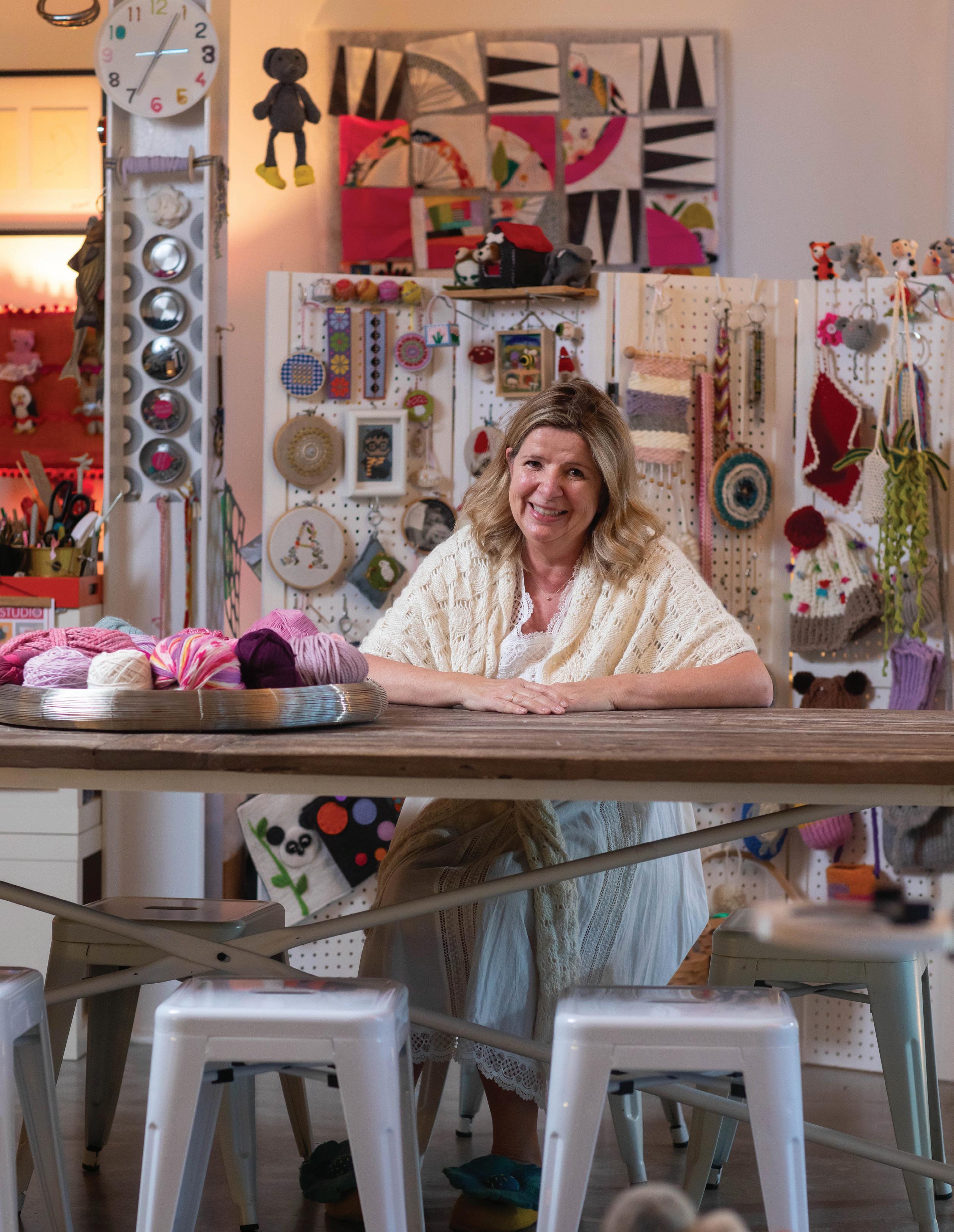
That led to teaching classes and summer camps at a community college. Finally, for my 50th birthday, I took the leap and opened the FiberArt.STUDIO in a small neighborhood mall. The studio’s motto then, as now, is Crafts with Conviviality
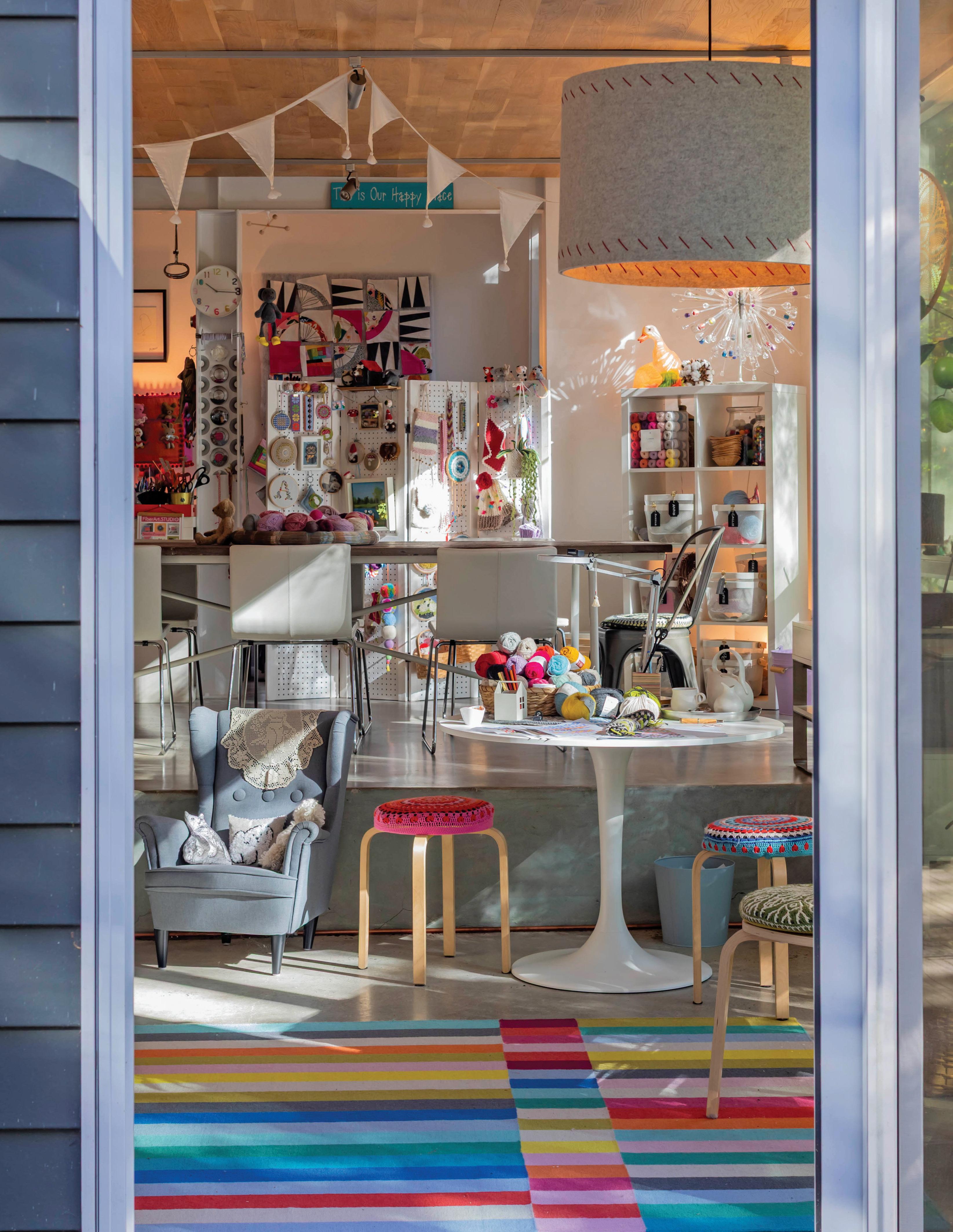
The colorful interior invited adults and children to gather and knit, crochet, weave, needle felt, embroider, sew, and talk. The studio in Potomac became a community hub and our happy place. “I feel like I’m in an episode of Mr. Rogers’ Neighborhood in here,” one parent said. I taught kids from age 5 and up after school, adults in the mornings, and weeklong summer camps. We made bunnies, bears, dolls, and many stuffed animals—from scratch. Also hats, scarves, sweaters, and lots and lots of pompoms. Within five years, I had designed an extensive curriculum and portfolio, with projects for all skill levels.
Then came March 2020. Like so many others, I closed the doors of my shop, thinking I would reopen soon.
I never did. Luckily, we had just built an addition to our house: a double-garage-sized open space with windows facing the woods—half for my home studio, and half for tinkering with my husband’s vintage car. As architects, our plan was to display the old-timer, inherited from his late father, in the house—just like in the cool architecture magazines.
But soon the studio took over both spaces. First, for assembling craft kits for my new online classes during the pandemic, and later to house the full studio. The car now lives under a “cozy” in the driveway, though a miniature version remains in the studio’s dollhouse—a tribute to my husband’s gracious “scooting over.”
Starting out as an architect, I never expected to love teaching so much,
but my clients and my own daughters taught me patience, diplomacy, and pedagogy. The enthusiasm my students bring to fiber arts invigorates me every day.
Quiet focus on handwork is so important for all of us. Today’s tunnel vision on math and reading skills in schools neglects the soft skills. I worry that good craftsmanship will go extinct if we do not teach our young to use their hands.
Glue and glitter are not allowed in my studio. My motto is: If we cannot sew it, we do not want it. The younger students especially enjoy filling in the “new ones” on Miss Anja’s two taboo G-words.
There is lots of laughter in here, but also sometimes tears—on days when school was particularly hard or a loved one fell ill. That built-up tension has a way of oozing into a fluffy yarn ball. That’s when my comfy chair and some cuddle time with the studio dog come into play. A cookie always helps, too.
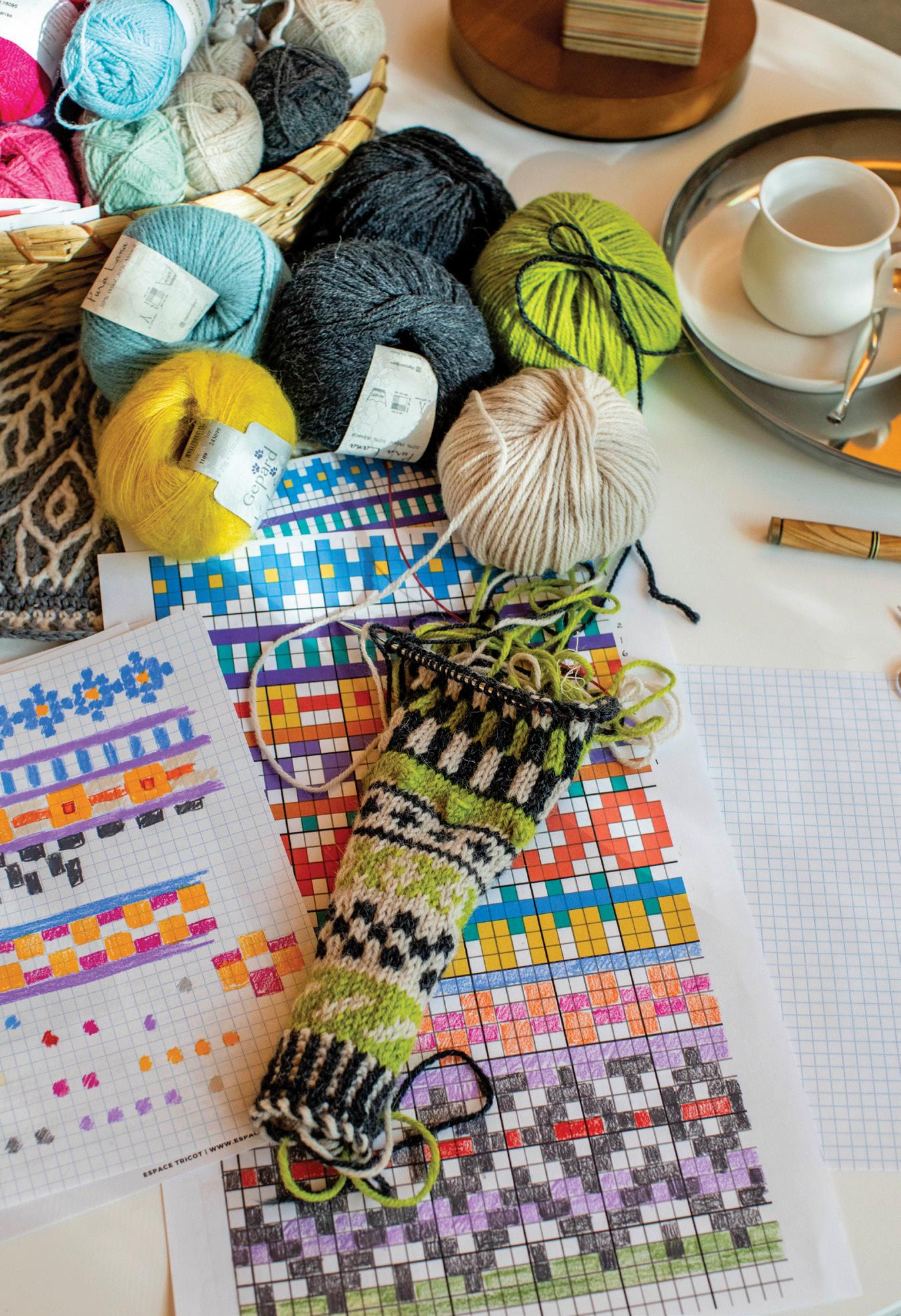
When I have time, I design knitwear, though many of my own designs are still waiting for their written patterns. Writing a good pattern entails many hours on a laptop, which puts me in a bad mood. In some of the photos, I am wearing my Autobahn Skirt, a pattern that four of my adult students test-knit. It is perfected and available on Ravelry.
My studio is also my own private happy place, so inviting a professional photographer felt a bit out of my comfort zone. But Mariah made me feel at ease and supported my idea of portraying myself as I really work—in a nightgown and slippers. On a typical morning, I wander downstairs with a cup of coffee; before I know it, it’s past noon, and even though I was supposed to work on taxes that day, I accidentally made a hat.
My next challenge is transitioning from architect, mother, and teacher to artist: creating something beautiful with deeper meaning, instead of “just” useful, practical, or cute. One of my first attempts at art made it into the Small Expressions Exhibit 2025 by the Handweavers Guild of America. Being accepted encouraged me to make more time for art, motivated by the Goethe quote on my studio wall:
“Die Kunst ist eine Vermittlerin des Unaussprechlichen”
TRANSLATION: “Art is a conveyor of the ineffable.”
—Johann Wolfgang von Goethe
I am close to having lived the same number of years in Germany and the U.S. Yet, like many immigrants, I sometimes struggle to find the right words to express myself in either language or culture. I feel that my art can do that for me.
I also see my studio—and everything in it, including the many wondrous people—as a Gesamtkunstwerk. The space is a reflection of me, as if you had turned me inside out.
And when my students also feel equally at home here, it feels magical.
I am so grateful to all of them for helping make my grandparents proud.
More on Anja
Facebook: fiberartstudiobethesda
Instagram: fiberart.studio
Ravelry Patterns: anja-caldwell
Jeri Hauth
PHOTOGRAPHY BY JAN WALSH
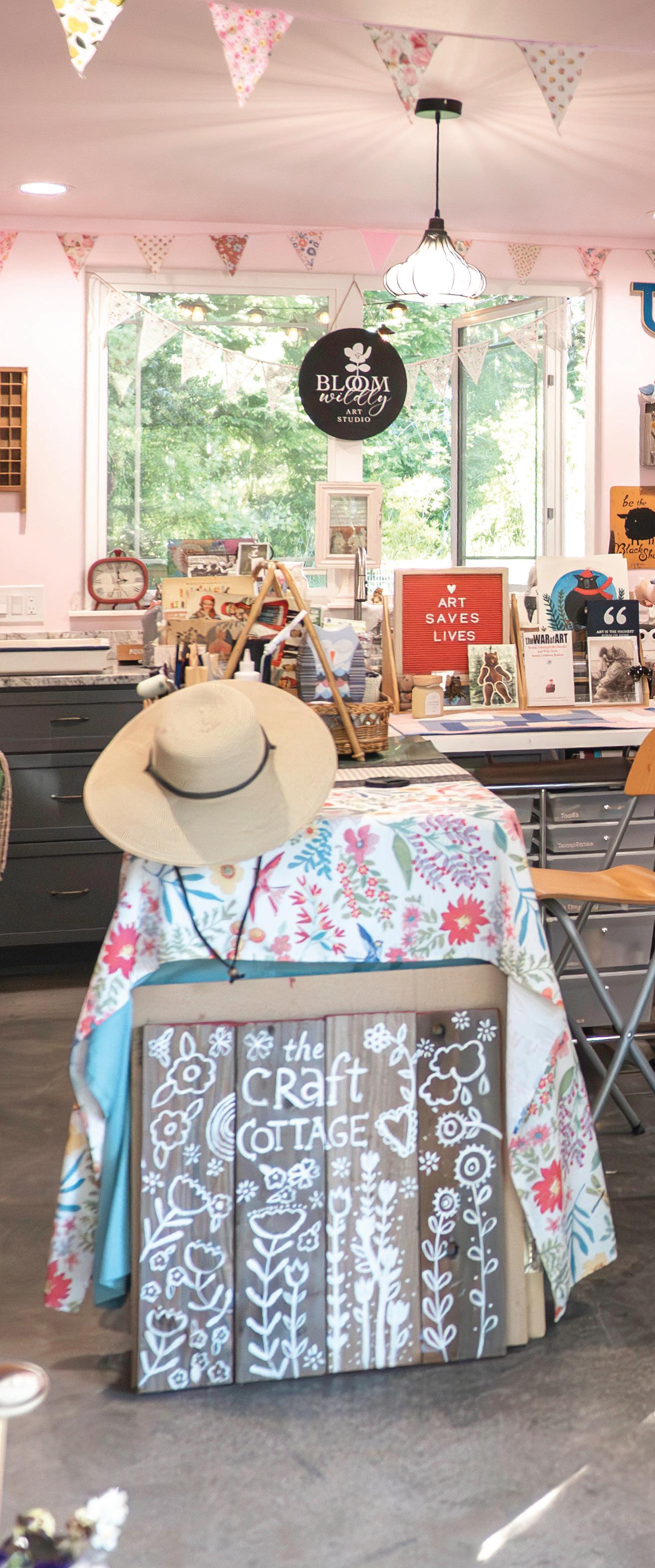
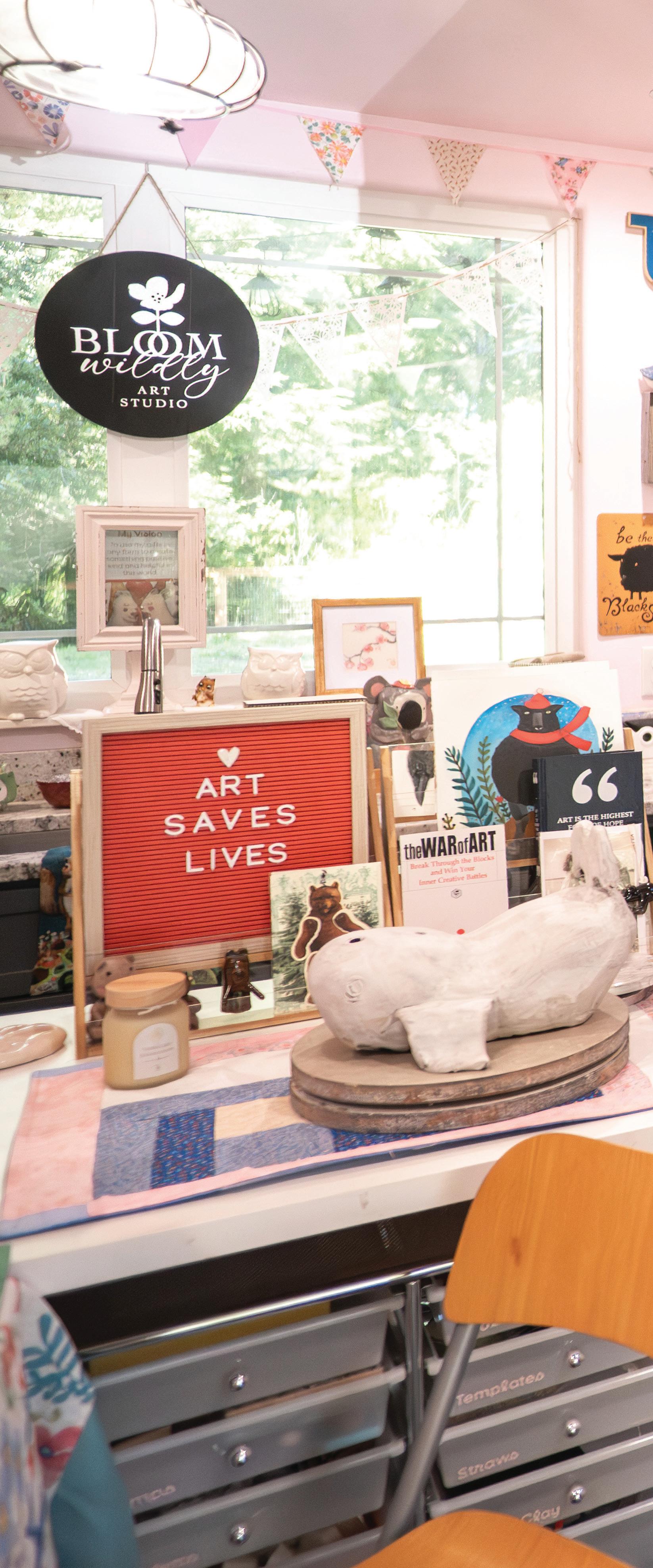
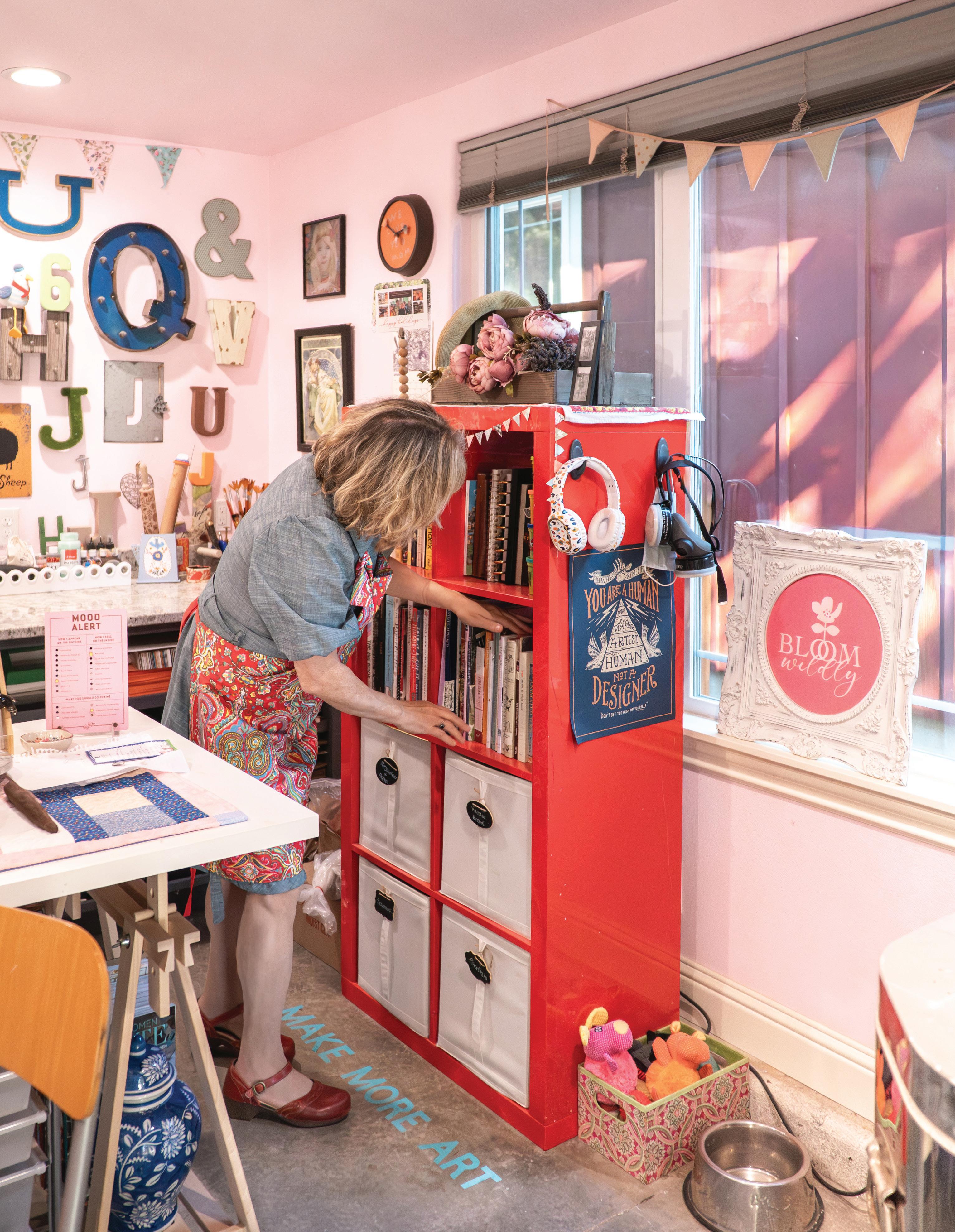
JERI HAUTH is a mixed-media artist and founder of Bloom Wildly Art Studio in Bandon, Oregon. She works in many mediums, including collage, mixed media, pottery, and illustration in a cottage studio filled with treasured memories and ocean breezes. After a career in corporate marketing, she returned to art full-time, crafting soulful, nature-infused work that celebrates joy, connection, and creativity. Her studio is both sanctuary and story, and it’s where past and present can bloom wildly together.
Nestled
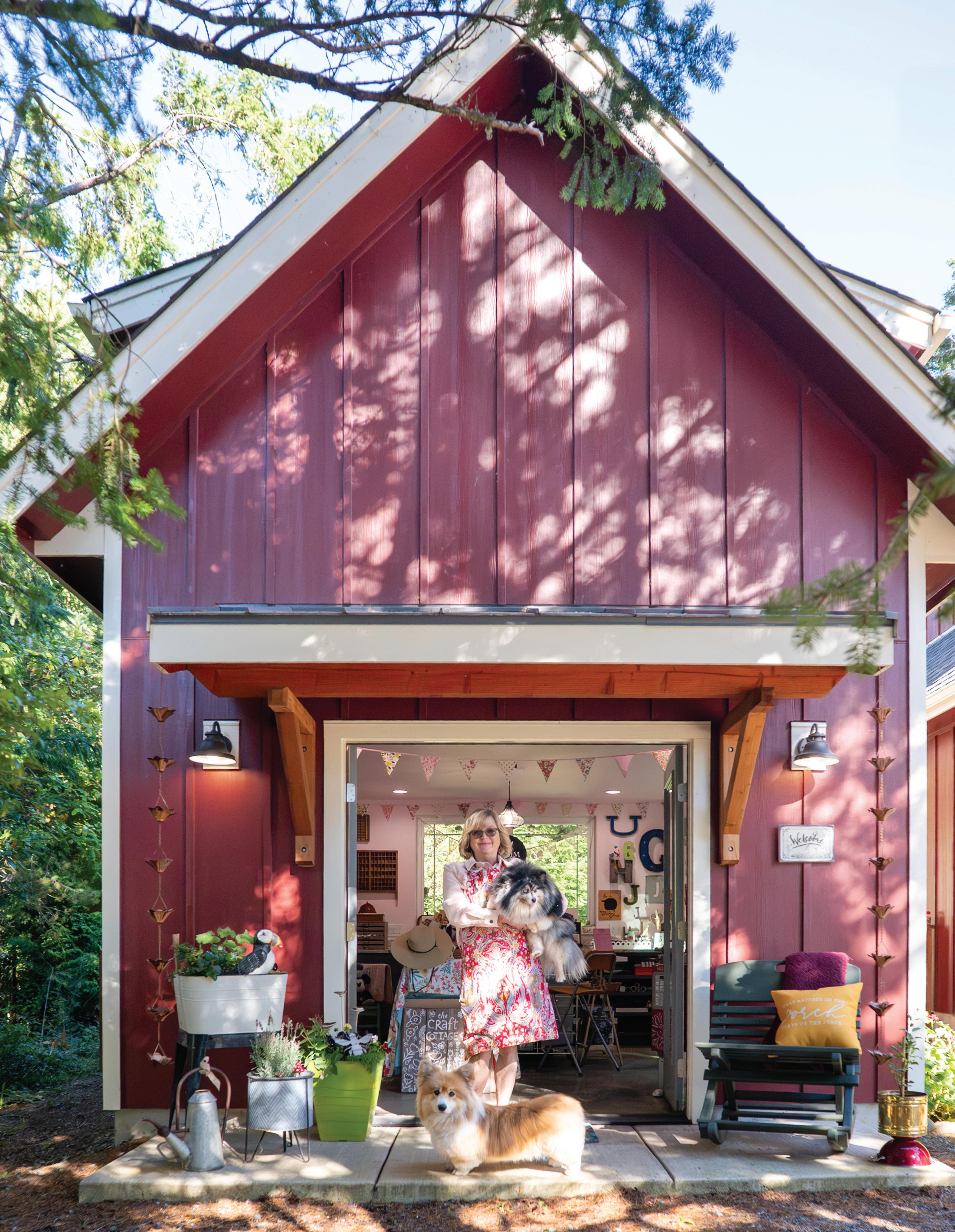
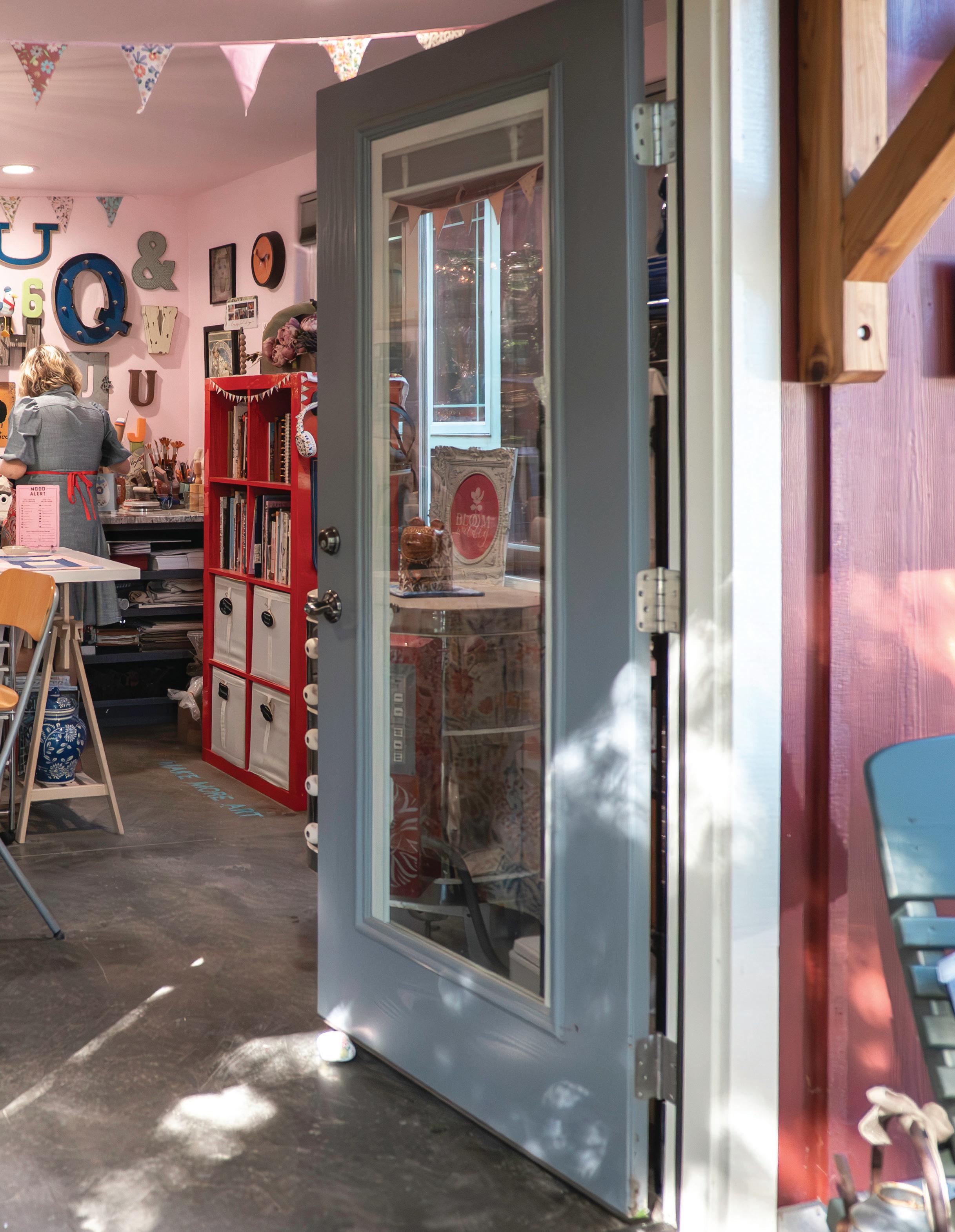
in the coastal town of Bandon, Oregon, my barn-red cottage stands as both a creative studio and soul space. With French doors that open wide to the salt air and ocean breeze, this space is more than a workspace—it’s the culmination of a lifelong dream. Built with love, labor, and the belief that creativity deserves a home of its own, Bloom Wildly is a sanctuary where memory and imagination meet.
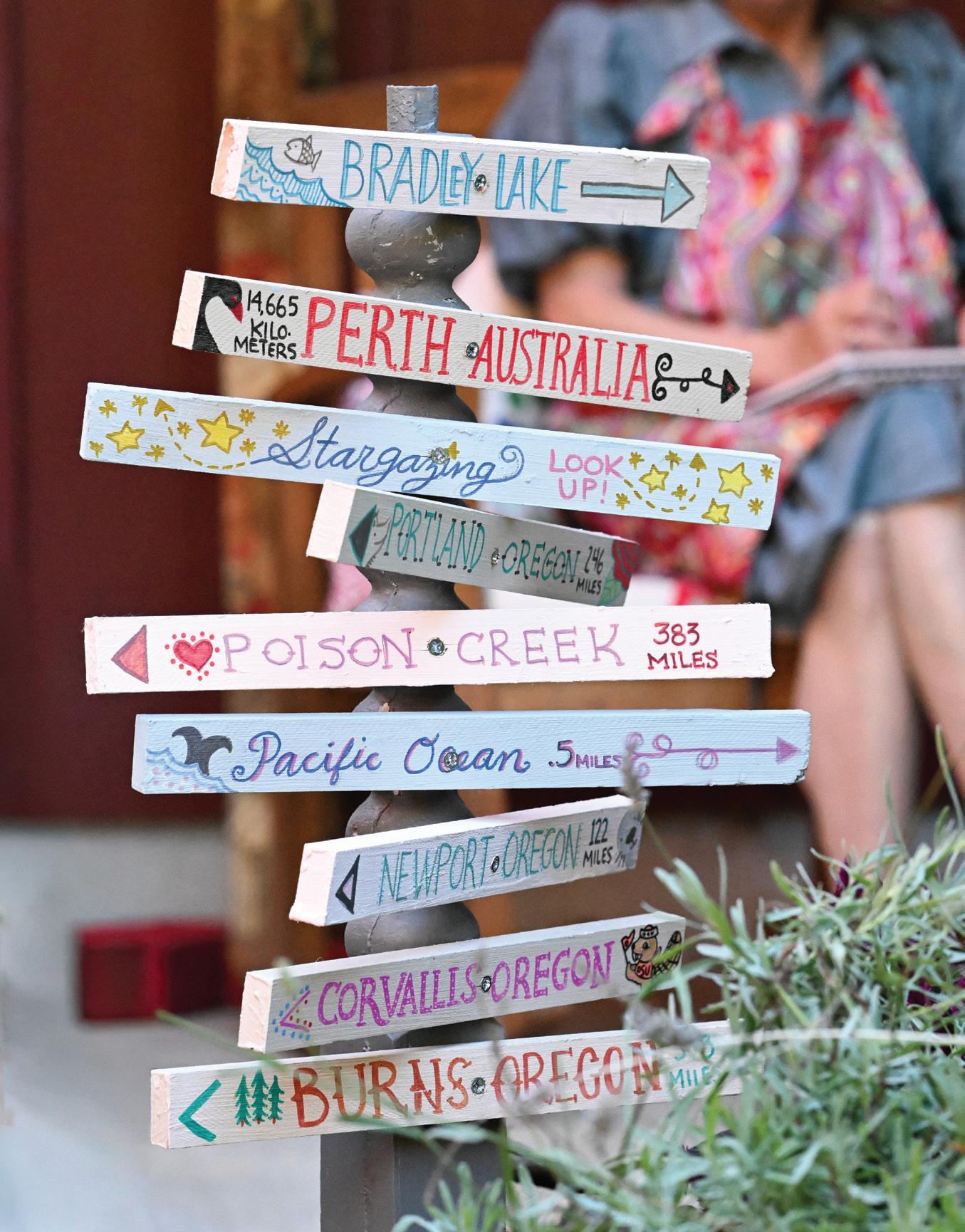
Inside, the studio is filled with inspiration: a curated collection of memory objects and tributes to the people and places that shaped me. A Girl Scout Brownie hat reminds me to keep childlike wonder alive. Art from Australia recalls visits with my husband to see our daughter in Perth, while a poster from Prague evokes a trip with my sister to explore our grandmother’s heritage. My childhood stuffed bunny, gifted on my first birthday, sits threadbare on my director’s chair like the Velveteen Rabbit. There are gifts from my sons, paintings by my mother, and trinkets from treasured friends—all woven into the fabric of this space.
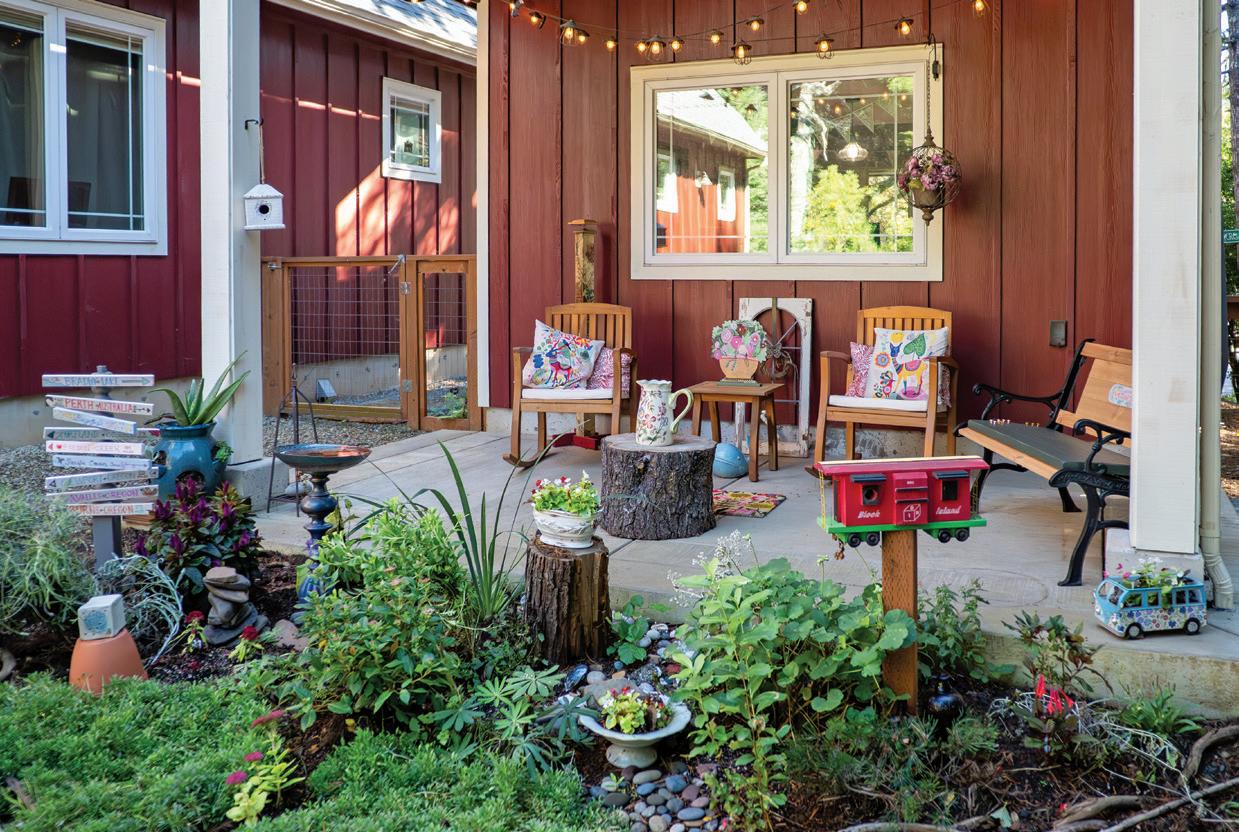
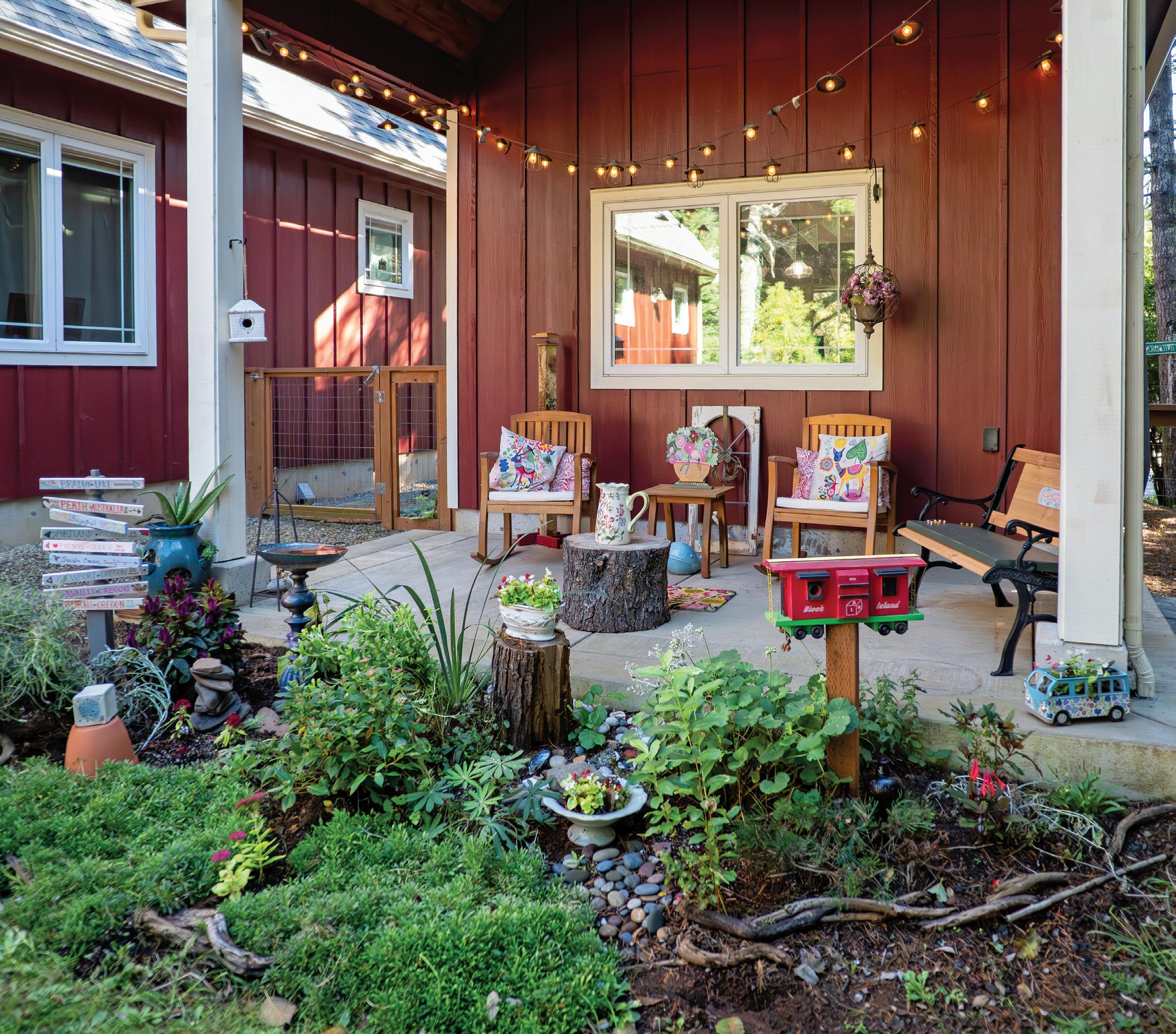
Outside, the covered back porch overlooks a memory garden, home to prayer rocks from riverbanks I walked with my father, vintage bottles from my grandmother’s home, hydrangeas for my mother-in-law, and a train caboose birdhouse, a nod to simple childhood days gone by. A giant cribbage board invites friendly games and fond memories of my grandfather. Birds and bees visit often, keeping the space alive and humming—a place I often seek solace and come to with my sketchpad for inspiration.
A Studio Designed for a “Serial Creator”
I like to call myself a “Serial Creator”—a title earned through years of exploring countless mediums and amassing a treasure trove of art supplies. To keep the creative chaos in check, I’ve shaped my studio into a space that balances inspiration with efficiency. The ground floor, lovingly dubbed the “Craft Cottage,” is a sanctuary for paper assemblage, upcycled furniture projects, sewing experiments, and, most recently, pottery.
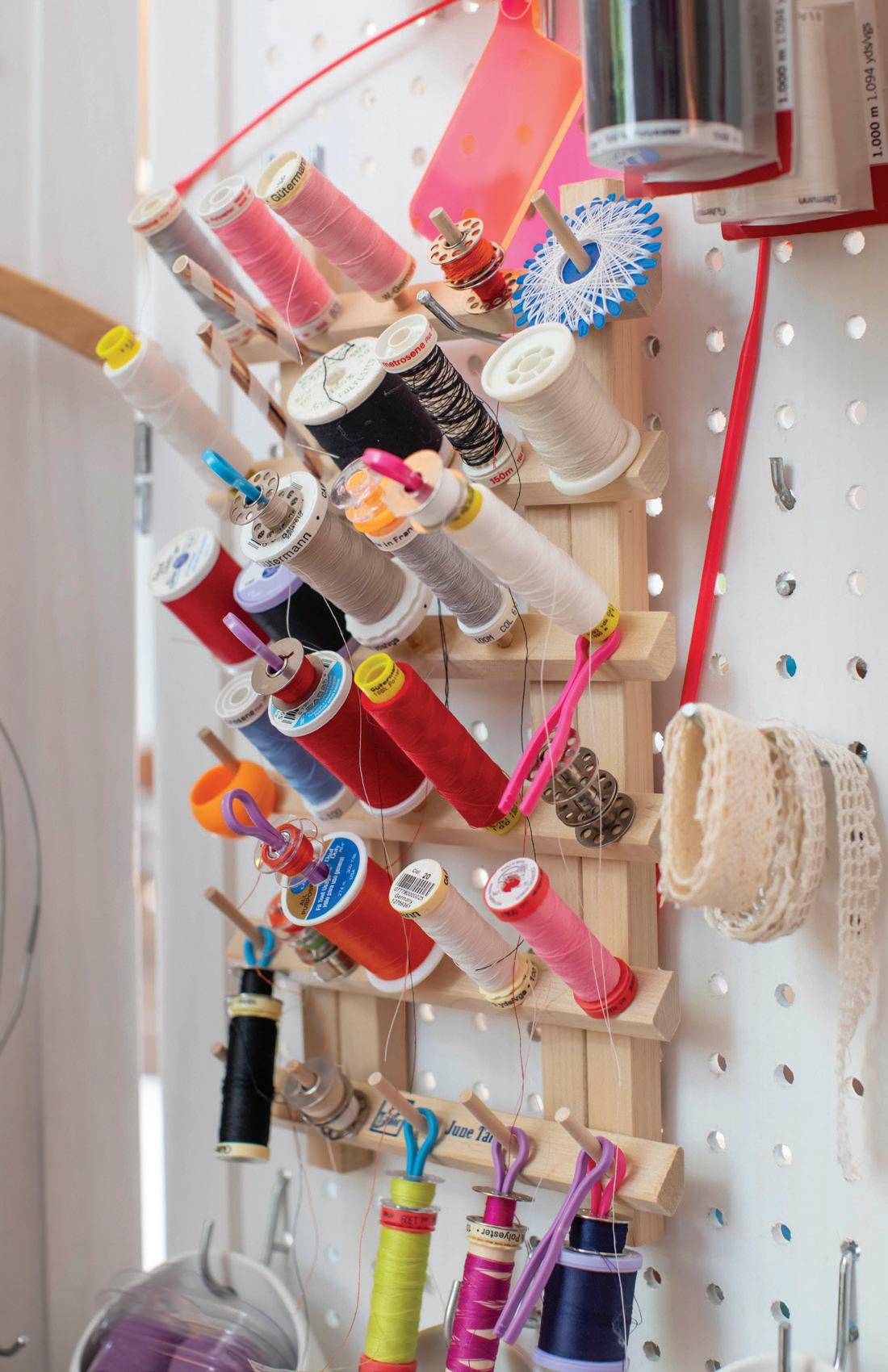
Each nook is dedicated to a different pursuit. I fashioned a portable paper art station from a vintage basket and filled it with favorite supplies, so I can follow inspiration wherever it leads. Nearby, a computer station—complete with printers and a scanner—anchors my digital art practice. The studio’s many windows invite fresh breezes to drift through, bathing the space in light and layers of color.
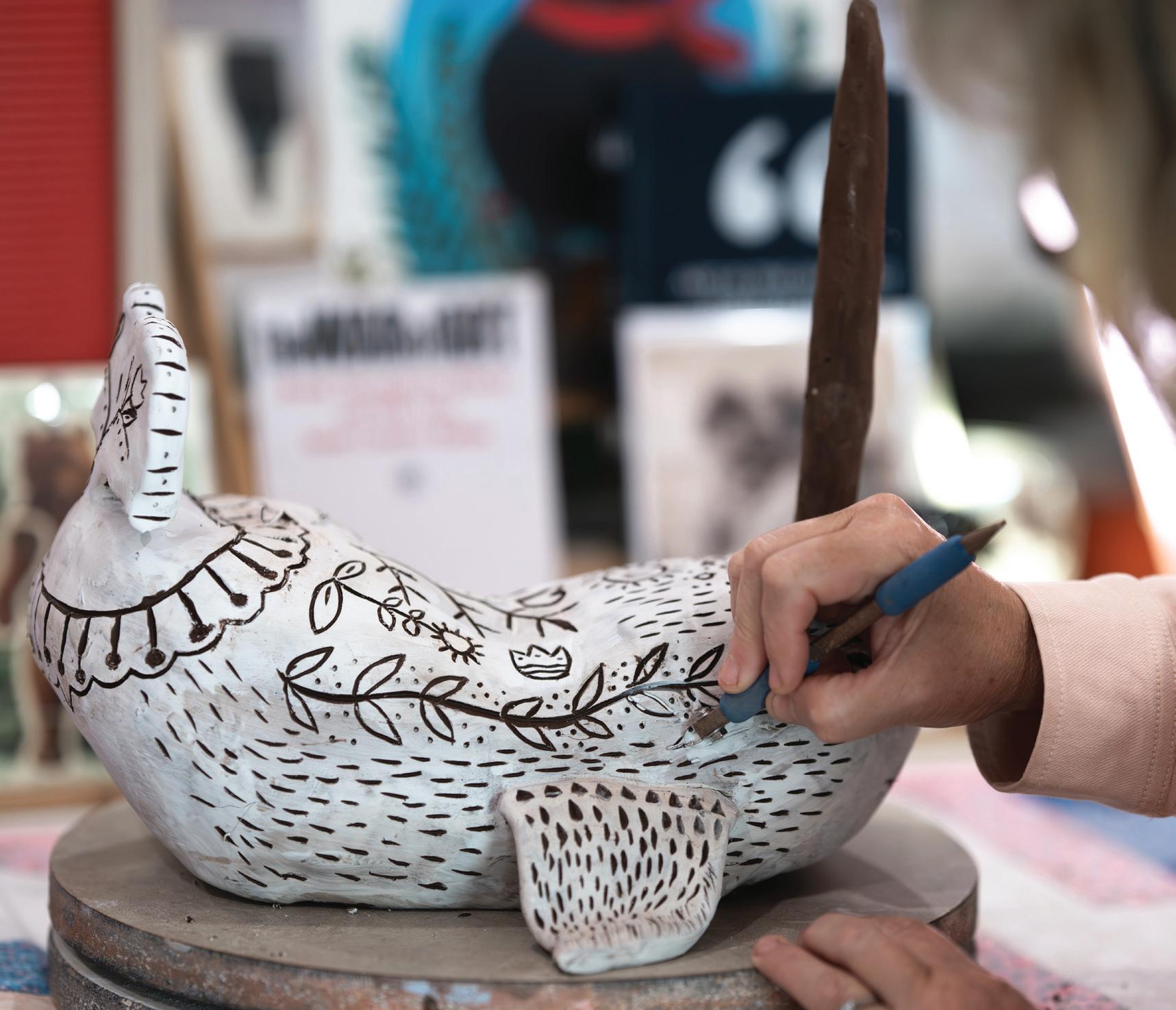
Pottery, my newest passion, takes up a generous portion of the space. I’ve carved out areas for handbuilding, sculpting, painting, and glazing. My kiln, “Ruby”—fiery and red—was added recently. I discovered pottery three years ago after moving to Bandon and joining a local art center. It not only introduced me to new friends but also sparked a fresh perspective in my creative journey, encouraging me to think in three dimensions.
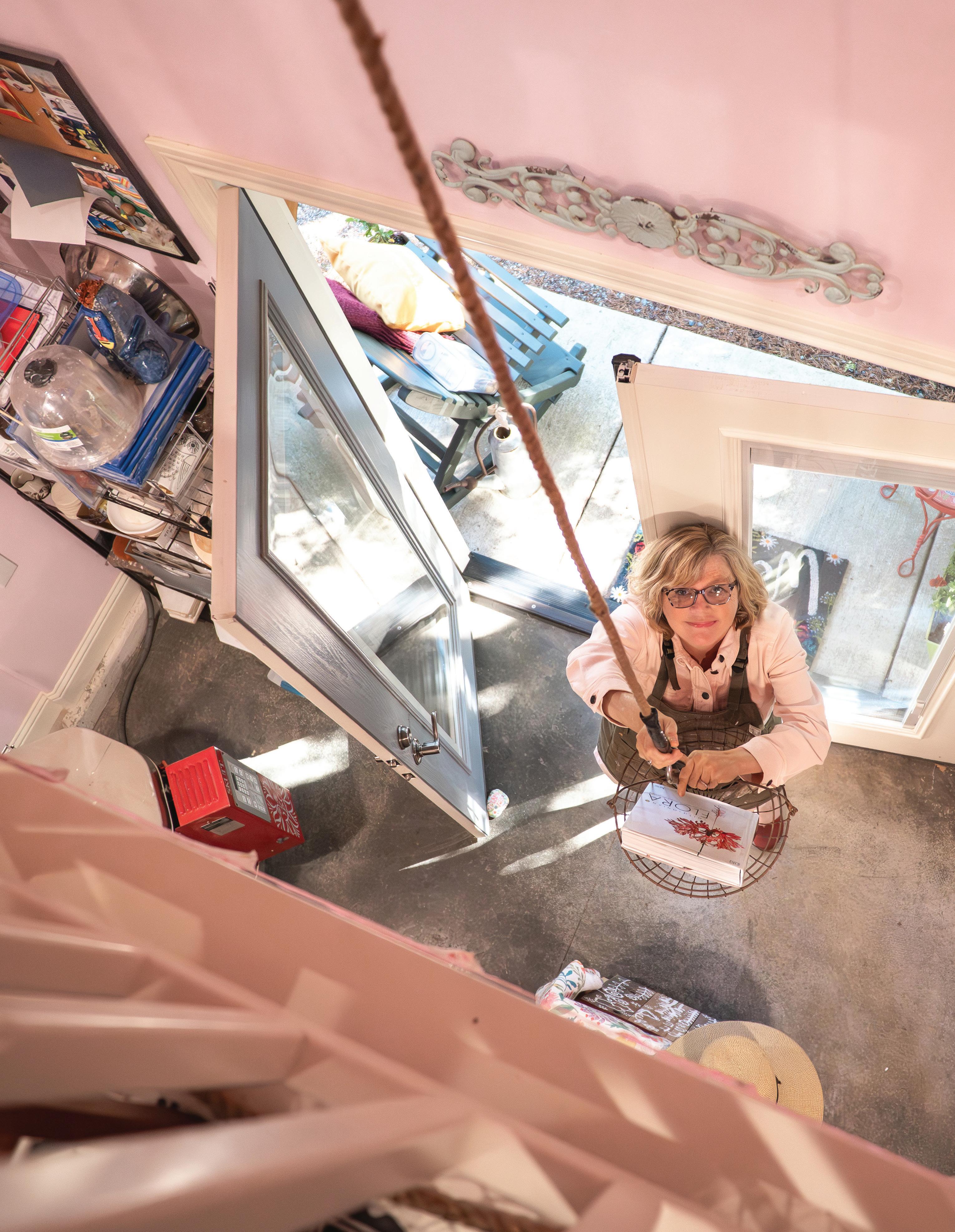
A loft ladder connects the downstairs to the upstairs “Creative Nest,” where I paint mixed-media florals and nature-infused illustrations. Concerned about me hauling art supplies up and down the steep loft stairs, my husband designed a clever lift system—an antique pulley, a sturdy basket, and heavy-duty rope—that now lets me ferry materials between stories with ease. I keep supplies easily accessible. Compartmentalizing my resources allows me to focus on creating rather than corralling, helping me overcome resistance and ensuring I pick up the pen, brush, or mouse.
Studio Companions
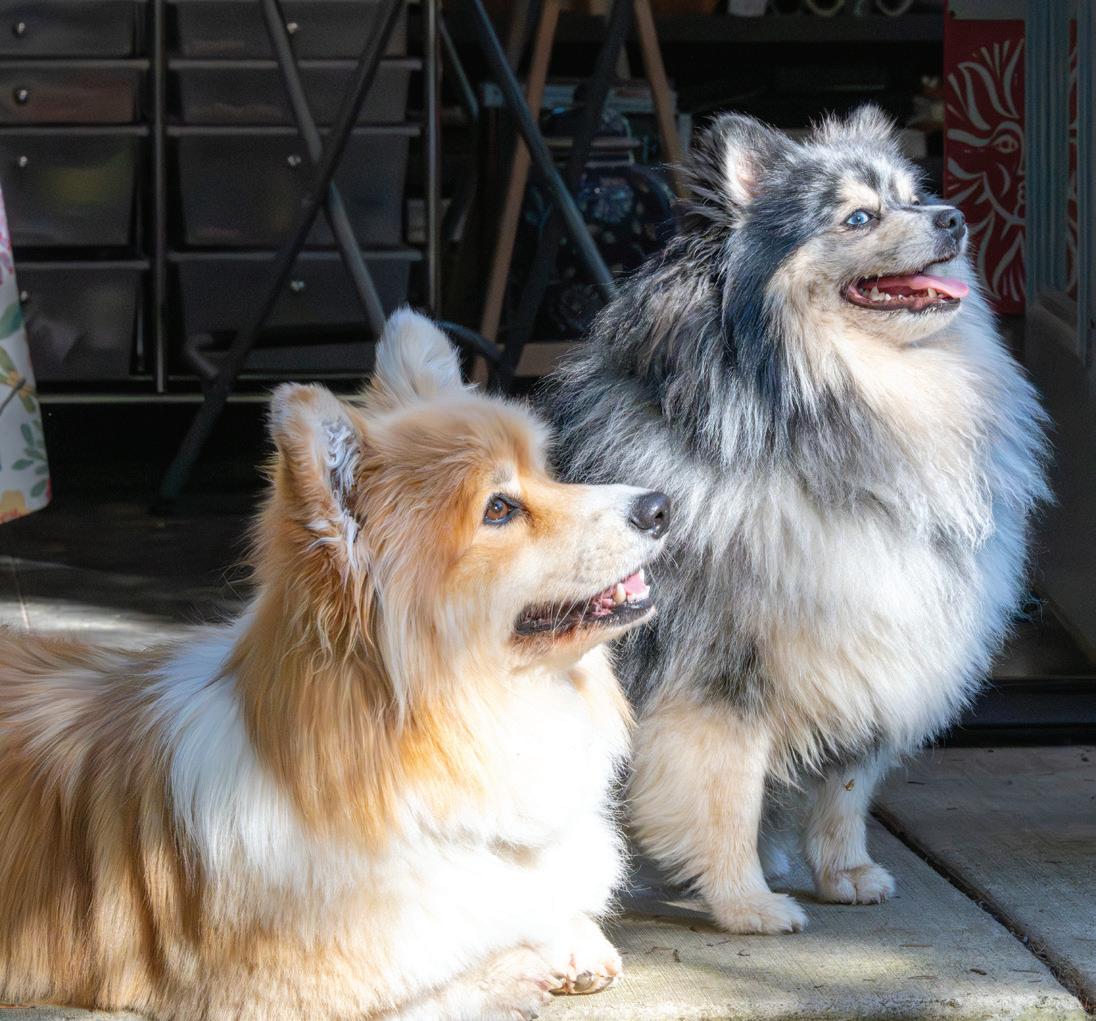
I have two studio “employees”: Cosmo and Kramer. My husband’s a die-hard Seinfeld fan—and I lost a bet. Their personalities couldn’t be more different. Cosmo, a purebred fluffball of a corgi, is slow, steady, and serene. Kramer, on the other hand, is a high-strung Pomeranian mix rescued from a puppy mill—nervous, needy, and delightfully chaotic. I adore them both. They’re loyal companions, daily inspiration, and occasional comic relief. They work for biscuits, walks, and the occasional head pat. Honestly? Best investment I’ve ever made.
Listening to the Muse
When I enter the studio, it feels almost sacred. I try to listen to what I’m being called to create. I’m deeply inspired by Steven Pressfield’s book The War of Art, which speaks to the muse and the constant battle against resistance. Some days, I’m drawn to clay. Other days, I paint wild, messy florals. Sometimes I dive into illustration or paper crafts. And on others, I sit behind the computer and am inspired to work on a graphic design project. My creative rhythm is flowing, ever-evolving, and deeply personal.
A Journey of Twists and Turns
My creative journey hasn’t followed a straight line—it’s been a mass of twists and turns. I was drawn to art from a young age, surrounded by painters, musicians, writers, and dreamers. My paternal grandmother, originally from the Czech Republic, had a bohemian style that continues to influence me. My father ran a painting business, and I spent countless hours mastering a brush while helping paint houses.
Art classes were my joy throughout school. In junior high, I met my best friend—also an artist—and together we hand-lettered the headlines of our entire yearbook, and have stayed connected through our love of art ever since. I married my high school sweetheart after he joined the U.S. Coast Guard, and we started a family. Amid cross-country transfers, I earned a degree in technical illustration.
My career path was unconventional. Believing an art career wasn’t sustainable, I pursued graphic design, working in print shops, and was eventually hired as a technical illustrator for a small physical security company. When the attacks on the Twin Towers happened on 9/11, the company was bought by General Electric, and I was promoted to a leadership role in corporate marketing and communications. I moved to work in market research for a short time, then bounced back to the security industry in the law enforcement sector. When the recession hit in 2008, the company was bought out, and I moved to healthcare. I always held leadership roles, poured my heart into my work, and built a career that was fulfilling—but demanding.
Rediscovering Art
Despite the demands of corporate life, I never stopped dreaming of making a living as an artist. While raising my children, I licensed illustrations for the rubber stamp market and contributed editorial art to several publications. But as my career evolved, time for art grew scarce. Still, I found moments to create. I was most comfortable coloring “inside the lines,” working in flat, two-dimensional formats. Then I discovered collage—and everything changed. I began collecting printed papers and experimenting with mixed media. When COVID hit, I felt creatively constrained. On a whim, I took an online art class that awakened a passion for free, messy, wildly organic art. It was liberating to create outside the lines. The thread that connects all of my work over the years is a deep reverence for nature and a desire to promote love and kindness.
A New Chapter
About a year ago, I was laid off after nearly 12 years in corporate marketing. It was a difficult transition, but ultimately a blessing. I now spend more time in the studio, creating new art and building my art business. I volunteer for causes I care about and have more time with the people I love most.
I see a future full of creative pursuits and hope to share my work more widely. Bloom Wildly isn’t just a studio—it’s a philosophy, a way of living with curiosity, color, and connection.
More on Jeri
www.bloom-wildly-art.com
Blog : www.bloom-wildly-art.com/blog
Instagram : bloomwildlyartist
Etsy : bloomwildlyart
Pinterest: bloomwildlyart
AN ARTIST
LIVES HERE
INSPIRATION EVERYWHERE with Lori Siebert
Tabby Booth
Photography by Imogen Rosemary
TABBY BOOTH is an artist and illustrator based in Cornwall, in the U.K. Renowned for a distinctive silhouette style, her work strikes a compelling balance between illustration and traditional folk art. Guided by a deep love of interiors, each piece is crafted with this in mind, woven with motifs of folklore, animals, and maritime history.
Mid-pandemic, she and her artist husband James Heslip (Hessy) decided to make the leap from their houseboat in London to a 70s bungalow by the sea. A decision that would transform their lives more than they could have imagined.
I’venever understood
those people who don’t want to move out of their parental home as adults. As lovely (and beautifully decorated) as mine was, the thing I was most excited about in life was to get my hands on a space to make my own.
Having rented several accommodations during my student years, my first property bought outright (unusually, at the age of 22), was a 35-foot narrowboat with my nowhusband Hessy. We met whilst at art college, and quickly made it our mission to live on the water. We bought The Long-Haired Eel as an empty shell, moored on the river Thames, and lovingly did her up, selling her a few years later to buy Lady Rose of Regents: a 70-foot widebeam barge with windows all around.
Despite the confined space of boat-living, there’s something very special about a tiny space to decorate. With only a small budget, but equally small surface areas, we could afford to buy good quality materials, like paint and tiles. You also don’t need to rely on large-scale furniture or objects to fill the space: it’s easy to create something instantly layered, cozy, and inviting.
After having our son Rudy on board on New Year’s Eve 2019, and managing boat life with a baby for a while, it was during the pandemic that we decided to make the move to land. Having always loved Cornwall, I looked online for many months before the perfect property became available: a 70s bungalow with wraparound garden and glorious views across rolling hills and down to the sea.
From LORI SIEBERT:
I am endlessly inspired by the world Tabby Booth creates… both in her artwork and within the walls of her home. Her aesthetic feels like stepping into a living storybook, where mythology, mysticism, and folk art blend richly together. The same bold, playful spirit that fuels her illustration and painterly work flows seamlessly into her interior spaces, creating rooms that feel both deeply personal and delightfully unexpected. You can sense her love of folk and outsider art in every vignette. Tabby’s home is not simply decorated; it is a beautifully curated reflection of her unique point of view… a place where color, character, and charm mingle beautifully. Seeing her space reminds me how powerful it is when an artist allows their environment to become an extension of their imagination.
She’s far from the prettiest house, but I’ve always said I’d rather be in the ugly house looking out onto beauty than the other way around! Initially, a vision of 70s horrors: textured ceilings, wallpaper, and grim carpets, there was a lot of work to be done. But a surprise lockdown the week of moving meant a much-needed few months of dedicated renovations, before the inevitable hordes of visitors started to arrive.
We have both always been drawn to strong, rich colors, and the boats had been no exception. However, I was keen to begin with a fresh start in this new abode, and we carefully painted everything immaculately white. This, however, lasted approximately 24 hours before I longed for color and ordered an array of tins in dark blues, greens, pinks, yellows, oranges, and reds. Wall color is usually as far as I go with planning a room—after that, it’s just working out what goes best where out of what you already have. I truly believe in buying things that bring you joy—then everything will always work together in the end.
It’s funny how you quickly fill a space, like a goldfish grows bigger to fill its tank. At first, having come from the boat, a four-bedroom house felt (quite rightly) like a vast empty space, scattered with the odd possession. But inevitably, with time, and the addition of a second child (our daughter Ziggy), it didn’t take long to change.
We are a total family of collectors: car boot sales are our favorite pastime, and it’s impossible to live next to the sea without amassing a variety of interesting stones, shells, and other treasures. We have an old print tray on the wall in nearly every room of the house: an absolute necessity for housing such things.
A few years after we moved down to Cornwall, we ended up accidentally opening an art gallery: Sailors Jail, and it completely changed our lives. Having run a children’s art school business for ten years, and giving up on our dreams of working as artists, suddenly we had a reason and platform to start creating again. It was so successful that we ended up selling our original business to focus on our own art and the gallery full time.
Initially, we both took it in turns to paint at the kitchen table each evening after the kids had gone to bed, but eventually converted the garage on the side of the house. Hessy built a wall down the middle: kindly giving me the front half with the sea view for my studio, and taking the back for his workshop. Having this space that was solely mine, to decorate and create within, has been one of the most transformative decisions of my life. It’s extremely impractical in a lot of ways: piles of soft furnishings and beautiful objects, but I also love that I can make decorating choices in there that would be disastrous in our family home full of kids and animals!
I had never thought about opening an art gallery until we did, but it immediately made so much sense, as I’ve always been such a curator. I love to collect and combine—with interiors, fashion, and life in general—mixing contrasting elements to create something new. Hessy and I have always had a passion for folk and outsider art: we love things with an illustrative style that have character, storytelling, and edge to them. For me, the interior’s non-negotiables are good rugs and good art. They’re the ideal things for adding layers of color and texture to a space. And, as you can imagine, my art collection has rather grown in the last few years since opening the gallery. One of the hardest parts of living on a boat is not having wall space, but I’m definitely making up for it now. I’m extremely impatient, and if I love something, I just have to get it up immediately. Sometimes this might be a huge original painting, or an illustrative print, or even just a postcard: it’s that mix that creates something truly interesting. At Sailors Jail, we’ve started an art revolution that makes collecting accessible for everyone, and places less emphasis on the traditional art world and what it stands for. You don’t have to spend thousands, or even hundreds. If you love something, and it gives you joy, then that’s value in itself.
“I think everything in life is art. What you do. How you dress. The way you love someone, and how you talk. Your smile and your personality. What you believe in, and all your dreams. The way you drink your tea. How you decorate your home. Or party. Your grocery list. The food you make. How your writing looks. And the way you feel. Life is art.”
—Helena Bonham Carter
My interior environment is the thing that has the biggest effect on my overall mood. It’s so important for me to be surrounded with rich colors, textures, objects, books, and art: it’s what feeds my soul. Sometimes that can be hard to balance with the natural detritus of family life—two kids, a cat, a rescue pigeon called Raisin, and all that comes with that—an eclectic home can very quickly turn to chaos. But when I look at our walls, our kids’ drawings haphazardly taped up wherever there’s space, I know that in 20 years, I’ll miss those things that make it home.
At some point, we will need to move: a larger place with land to fill with animals (Hessy) and walls to fill with art (me), but so far it’s been hard to find anything that comes close to what we have now.
Explore Tabby’s captivating home studio in our Winter issue of Where Women Create
More on Tabby www.tabbybooth.com www.sailorsjail.com/tabby-booth Instagram: tabby.booth.artist
Jenny Brown
Photography by Kate Foster & John Hesselbarth
Curated by s andra Evertson
hen I first decided in the early 1990s to follow in the footsteps of my eccentric grandmother Madeline (a painter and art teacher) and pursue a life in the visual arts, it seemed like a pretty straightforward career path. I’d first go
to art school, which would inevitably lead to the required (but I assumed somewhat glamorous) starving artist years in a large city. I’d have a loft studio full of interesting art and quirky visitors. With time, the art would become profitable, allowing for the word “starving” to be dropped from the occupation of “artist,” and the studio would evolve into a sophisticated laboratory of carefully curated whimsy. All of this wasn’t really
JENNY BROWN is a visual artist based in Providence, Rhode Island, whose primary mediums are drawing and collage. With a focus on ideas surrounding the most nostalgic, curious, and futuristic aspects of the natural world, Jenny asks her viewers to consider all the possible timelines and outcomes for her subjects. As a lifelong collector of antiques and paper ephemera, Jenny’s studio space is also a natural extension of both her work and creative practice. just wishful thinking on my part, but more my own naive assumption that my career as an artist would evolve down a linear path, and a studio space would naturally be a companion on that journey. The studio would be the safe haven that gave my selfordained title of “Fine Artist” the stamp of legitimacy. Instead, during those early years, I found that sometimes my “studio” was quite literally wherever I found myself to be. Meaning the “studio” was perhaps the sketchbook on my lap, a cafe table on my lunch break from my day job, or one wall in the bedroom of an apartment I shared with friends. These “studios” were often fleeting and changed daily, never allowing me to stage the creative hub I so longed for.
“Tell your own story, and you will be interEsting.”
—Louise Bourgeois
s a lifelong lover of paper ephemera and antiques (another passion I inherited from my grandmother), this also meant I had to find space to store all the treasures that I had collected over these years, too. In the time period between my undergraduate degree program and my MFA, I accumulated towers of boxes filled with keepsakes and materials for future artworks and interior decoration. They came from my adventures in big city dumpster diving, small town thrifting, European travels, and roadside tag sales. I had antique handmade scrapbooks, vintage jewelry and cabinet card photos, beautifully hand-painted tea tins, and elegant perfume bottles. I had dried sunflower pods, die-cut antique valentines, French enamel vases, and handcrafted pieces of lace and tatting. While I tried in earnest to find a way to keep all of these precious finds with me through multiple moves (including overseas at one point), the time came when they had to be packed away into random closet spaces and into room corners where the boxes “might” be able to double as side tables.
“Wow, you have a lot of stuff,” friends and even friends of friends would say as they kindly pointed to a section of attic space at their childhood home that had room for “one more box.” Some of those items never made it back to me for one reason or another, mostly because life gets crazy and seems to speed up as we get older and things change quickly. I remain forever grateful to the folks who were willing to take a chance on storing those treasures for me, also believing that one day I would have a space of my own in which to display them.
n 2018, after 10 years of using my kitchen table as my art studio while working a completely unrelated 9-to-5 job, I found myself in exactly the right place financially to rent a studio space of my very own. Located in the Olneyville neighborhood of Providence, my new studio was once someone’s office, complete with a 1960s drop ceiling and industrial-grade gray carpeting.
Despite its simple design that has none of the typical hallmarks of an art studio, it has been the creative haven I have always dreamed of since the moment that I walked through the door. It’s all mine in which to cover the walls, ceiling to floor, with every scrap of paper ephemera inspiration I’ve collected since
age 20. A place where I can build a giant still life with dried blossoms and the branch of a willow tree. Mine to display vintage teapots and antique flower paintings in chipped gold and silver painted frames. A place to leave my tables covered in clippings taken from old botanical encyclopedias and quilt pattern books. A space to make messy drawings of swirling seaweed that I hate and hide in between stacks of books until I’m ready to work on them again. A place to make big collages that I don’t tell anyone about if I don’t want to. A place where I can become mesmerized by a top-heavy mullein plant growing in the cracks of the sidewalk outside my window, so much so that I make them a regular part of the visual vocabulary in my work.
I think the very best thing about my studio is that it feels like I get to see the story of my life every time I walk into it. I revisit the places I’ve lived or visited and just dream of going to, and see the people I love or have lost or just wish I had gotten to meet. I see flashes of the art that inspires me, such as the work of Eva Hesse, Joan Snyder, Giorgio Morandi, and Rachel Ruysch. I see my favorite colors (right now green-gold, violet, sunflower yellow, and pink), pretty stains of my favorite food (coffee!), and my favorite books (antique flower illustrations). And since one of my goals as an artist is to create work that asks the viewer to consider the past, present, and future lives of my subject matter all at once, it seems only fitting that I ask myself to do the same thing.
“I was a late bloomer. But anyone who blooms at all, ev E r, is very lucky.”
—Sharon Olds
feel like my ever-growing, dense, and allencompassing wall displays give me the opportunity to reflect on where I started as an artist, where I am now with my work, and how I plan to evolve with my practice going forward. I know I can make my work anywhere, even on my kitchen table if that’s the only space I have available to me. I also know that having the space where I can be surrounded by my memories is one of the most inspiring ways to work, because it is a beautiful reminder of what brought me to this exact place in time. Most importantly, I know if the studio had to close up shop tomorrow, all of this creative energy comes with me, forever and always, in my heart and in my mind. In the sketchbooks balanced on my lap as I draw, and it lives on in the dusty boxes of collected treasures in attics far and wide that I’ll likely never make it back to.
Right now, having this unconventional corner of the world to myself is exactly what my art practice and my creative spirit need. I like to think that this little office from the 1960s came into her own when I moved in because she’s a late bloomer just like me. Our journeys may not have been linear, and our careers not typical, but if I know anything about us late bloomers, I know our paths crossed when it was truly meant to be. Now we get the chance to bring out the best in each other.
More on Jenny www.jennybrownart.com
Instagram: jennybrownart
Scan here to follow Jenny on Instagram.
Betty Lou, Mildred, & Deborah French
Photography by Mal McCrea
Deborah French is a mixed-media artist living in Ohio, working from her home studio shared with two chocolate labs: Betty Lou and Mildred. Her work includes collage, monoprinting, assemblages, a greeting card line called MUTT SHOTS, and her latest obsession: little wood scrap houses. Her challenge? Finding space for her many materials and projects—while avoiding tripping over her napping pups.
I was a cat person who fell in love and married a dog person.
From the start, I made it clear: we would never own a dog. Dogs were demanding, slobbering, dependent, and smelly creatures. Cats were independent, cleaned themselves, and didn’t need to be walked in the rain.
Then came Gary’s birthday. I wanted to surprise him with something he really wanted. So, in one selfless act, I presented him with a chocolate Lab puppy—and brought him to tears. That was, as they say, “the beginning of a beautiful friendship.”
Six months later, while walking Kona, Gary spotted a couple with two dogs and excitedly exclaimed, “Look, they have two dogs!” Soon after, so did we. Then the two became three, and finally, a booming dog daycare and boarding business.
My studio was upstairs in “The Dog House,” with plenty of room for any assortment of dogs— paying customers and, by now, our own four.
My “Mutt Shots” greeting card line began there, inspired by the idea to create cards for our clients, each featuring a photo of their dog’s mug with a silly caption from the dog’s point of view. It was a dream “job.”
Our next chapter was closing the business and, for me, moving back home to be closer to family. My dad eagerly began searching for a house as close as possible to his. He found a charming old bungalow-style home within walking distance of his own. We learned the
prior owner had been an artist herself and had built a small addition on the back of the house for her studio. Three large windows looked out to a huge fenced-in yard—perfect for our dogs. The back door even had a dog door. That clinched the deal. It was meant to be.
A few years later, I retired. This new freedom—where time holds no restrictions— let me spend hours completely immersed in exploring and creating new work. Now, the only interruptions occur when I’m eating, and our nine-year-old Betty Lou (named after my mom) and seven-year-old Mildred (after Gary’s grandma) suddenly appear on either side of me. Betty whines and Millie drools. Or, when Millie needs to go outside, but the back door is closed, she nudges the bells hanging from the doorknob to alert me that I’ve forgotten to open it. Betty needs reassurance—and a little coaxing—that she can still make it up the three steps into the kitchen.
The best interruption of all is simply having these lovely creatures I treasure hanging out with me, even when I trip over them.
More on Deborah Instagram: dfrenchstudio
marketplace \
Loving Alpaca
Sandra Velasco Jordan
In the misty highlands of the Andes, Sandra Velasco Jordan first encountered the gentle creatures that would one day become her life’s passion and purpose. From these childhood moments among Peru’s verdant mountains to establishing her acclaimed textile business in California, Jordan’s journey with alpacas weaves a story as rich and textured as the fabrics she creates.
The Art of the Studio
Women Create & Susan Harold
For over 16 years, Where Women Create and What Women Create magazines have been championing women and celebrating the power of their creativity. Now, with a dedicated following of makers and artists asking for more, we are thrilled to debut our first coffee table book, The Art of the Studio.
The Art of the Studio is a stunning exploration of the intimate and inspirational workspaces of over 70 artists. Dive into creative sanctuaries, homegrown studios, and ateliers influenced by the beauty of color, the tranquility of nature, and the power of light. Preorder your copy today.
Books & Events
h+h americas Festival and Expo
Festival—April 30, 2026 | Classes May 1–3, 2026
Expo—Classes May 5, 2026 | Exhibition May 6–8, 2026
Donald E. Stephens Convention Center Rosemont, Illinois
WHERE CREATIVE & BUSINESS MEET
If you make a living in crafts—whether you’re a retailer, e-commerce seller, educator, student, influencer, content creator, or professional maker—h+h americas is your industry home. From quilt shops to needlepoint studios, yarn stores to sewing educators, you’ll find inspiration, connect with your community, and experience over 330 educational sessions, networking opportunities, and special events—all under one roof.
Rebloom: Mind, Body, Spirit Retreat
May 4–7, Madison, Indiana
This year, we invite you to join us as we focus on reblooming every part of ourselves—mind, body, and spirit. Be part of the magic, the growth, and the joy of gathering together in the charming town of Madison. Enjoy a lineup of insightful and inspiring women speakers, attend creative sessions, and bond with a community that will become your cheerleaders. An experience that is certain to lift you up and send you away with actionable insights and goals.
Women Create’s Marketplace SHOP is now Online.
Here’s a sneak peek at some of our SHOP artisans
PAMELA MENNECHEY ARTWORKS
Azure Drift 18 × 24 Painting
MCREATIVEJ
Cyanotype Botanicals— Embroidery Kit
ELEMENTS
JILL SCHWARTZ
Pretty In Pink Hairpin
Set of 4
Vibrant shades of blue depict a serene ocean scene with gentle waves and a distant shoreline. The sky transitions from deep to lighter hues, indicating a calm atmosphere.
SPLASH FABRIC
100% UNCOATED cotton
fabric available by the ½ yard is perfect for quilting.
Stitch the perfect cyanotype botanicals with this DIY embroidery kit for beginners. This easy embroidery kit lets you recreate an age-old photographic process with a needle and thread.
A beautiful mix of pink tones featuring multiple vintage elements with a classic Elements Jill Schwartz look.
PAMELA MENNECHEY ARTWORKS
Feather Light Escape
8 × 10 Watercolor
A whimsical watercolor that imagines a tiny camper lifting off on a colorful bouquet of feather-shaped leaves.
Scan the QR code to shop handmade pieces by artists in our inspiring community or to learn how to become a vendor!
The Women Create Shop is HERE!
Are you interested in joining our dynamic new marketplace and sharing your creations with the world? From handmade goods to original artwork, our SHOP celebrates creativity, community, and the power of supporting small businesses. With visibility in front of over 500,000 consumers each month, this is a unique opportunity to grow your brand and reach a wider audience. We’re currently seeking passionate vendors to join us.
Whether you’re an experienced vendor or just starting out, this is your chance to share your work with a supportive audience.
Through the LENS
Our Contributing Photographers
Maria Rosenlöf Lotta Jansdotter
Maria Rosenlöf is a freelance photographer and video producer based in Stockholm, Sweden, and on the Åland Islands, Finland. With a background in photojournalism, Maria loves to work in a documentary style and often cooperates with designers, writers, and other artists. When she is not photographing, you’ll find Maria on a small sailing boat somewhere in the beautiful archipelago of the Åland Islands.
WEBSITE: www.mariarosenlof.com
INSTAGRAM: mariarosenlofphotography
Katie Berg Denise DeGidio
Katie Berg has been a photographer for over 20 years, capturing the joy, beauty, and creativity of everyday life. Her lifestyle work reflects a deep appreciation for simple, authentic moments—whether it’s light falling across a loom or laughter shared between friends. When she’s not behind the camera, Katie works as a registered nurse, a calling that deepens her empathy and love for human stories. Photography renews her spirit and reminds her that life is, indeed, beautiful.
WEBSITE: www.katiewilderphotography.com
Amira Richardson Kyra Peralte
Amira “HolidayThaShooter” Richardson is a Newark, New Jersey-based photographer specializing in capturing authentic moments at community gatherings and intimate events. With a keen eye for genuine human connection, her work focuses on documenting the unscripted beauty of people coming together. Her photography style emphasizes natural light and candid expressions, creating images that feel warm and true to the spirit of each gathering.
INSTAGRAM: holidaythashooter
Soumyyajiit Nandy
Sucharita Sengupta Suri
Soumyyajiit Nandy is a Bombaybased advertising photographer with 22 years of experience crafting striking, detail-driven visuals for agencies and global brands. Known for his refined eye, problem-solving on set, and ability to elevate any brief, he brings a seasoned blend of creativity and technical mastery to every project. When he’s not behind the camera, he’s in the kitchen—exploring flavors, cooking with passion, and letting his love for food inspire his artistry.
INSTAGRAM: soumyyajiitnandy
Kate Foster and John Hesselbarth Jenny Brown
Apparition is Kate Foster and John Hesselbarth, a husband-and-wife partnership that has been practicing and creating work together for well over a decade. Utilizing photography and videography, Apparition aims to seek out the extraordinary in the everyday; to explore the essence of each experience and to take the people, places, and events they encounter and tell their story in a way that transcends; to ultimately create work that is meaningful, resonant, and connective.
WEBSITE: www.see-apparition.com
INSTAGRAM: a.p.p.a.r.i.t.i.o.n
Danielle Louise Janine Gibbons
Since childhood, Danielle Louise has been interested in creating, drawing, painting, and photography. Continuing her artistic exploration through her youth eventually brought her to study fashion design and fine arts. The study of art brought a fresh new way of thinking to her life. Eventually narrowing her artistic vision, she started to educate herself about Haida art and culture. She currently resides in Haida Gwaii to continue her artistic evolution, apprenticing with master Haida artists.
WEBSITE: www.daniellelouise.ca
INSTAGRAM: __danielle_louise_
Cecelina Tornberg
Trish Mitchell
Photographer and filmmaker Cecelina Tornberg has established a global reputation for dramatic, storytelling imagery and her unrivalled mastery of light. She works extensively with discerning brands and entrepreneurs in the interiors, lifestyle, and hospitality sectors, and creates powerful portraits for entrepreneurs and professionals. Originally from Sweden, she has spent over a decade working and travelling internationally from her base in the south of England, bringing a Scandinavian aesthetic shaped by natural movement and light. This shoot was created in collaboration with Studio Theia and stylist Fiona Humberstone.
INSTAGRAM: cecelinatornberg
Mariah Miranda
Anja Caldwell
Mariah Miranda is a commercial lifestyle photographer based in D.C. and Los Angeles. She earned her BFA in photojournalism from the Corcoran School of Art & Design. Her work appears in the U.S. State Department, the Smithsonian, and publications including The Washington Post and The New York Times. Passionate about inclusion, sustainability, and ethical living, she uses a documentary, candid approach to foster connection, awareness, and vulnerability across all subjects.
Mal McCrea is a mixed-media artist, photographer, and nature-lover whose work honors the places and moments where life unfolds. Guided by storytelling and intuition, she creates images and art that invite viewers and subjects to linger, connect, feel, and see the world with renewed wonder. Through her professional photography services, she captures portraits, branding, and commercial imagery with the same depth and artistry that define her personal work.
Jan Walsh is a photographer based on the picturesque Oregon coast, where the dramatic light and natural beauty inspire her work. She specializes in candid, natural light photography, focusing on capturing the authentic spirit and unique story of her subjects. Her diverse portfolio showcases a passion for storytelling through images, including breathtaking wildlife and nature shots, intimate family portraits, soulful candid portraits, and dynamic event photography. As the artist’s sister, Jan brings a unique perspective that deepens the emotional connection behind each image.
WEBSITE: www.sailoralfieproductions.com
Imogen Rosemary
Tabby Booth
Imogen Rosemary is a photographer whose creative practice is rooted in storytelling. Whether capturing artists, fashion, or personal projects, she believes every subject carries a narrative worth sharing. Her work is guided by two enduring inspirations: warmth and nostalgia. For Imogen, these qualities make people and products timeless, transforming photographs into lasting memories. She approaches each shoot with intention, seeking to preserve emotion and connection that resonate long after the moment has passed.