PO Box 3000, Denville, NJ 07834-3000 Changes of address must be submitted in writing.
Where Women Create (USPS #000-310) is published quarterly by Women Create, LLC, 65 Redding Road, Box 985, Georgetown, CT 06829. Periodicals postage paid at Dover, NJ and at additional mailing offices.
Printed in Canada From
Where Women Create® is a registered trademark of Women Create, LLC and may not be used without permission. No part of this publication may be reproduced without written permission from the publisher or Women Create, LLC. The information contained in this magazine is provided AS IS. Neither Women Create, LLC, nor the publisher, make any representation or warranty with respect to this magazine or the contents thereof and do hereby disclaim all express and implied warranties to the fullest extent permitted by law. Women Create, LLC and the publisher do not endorse any individuals, companies, products, services, or views featured or advertised in this magazine.
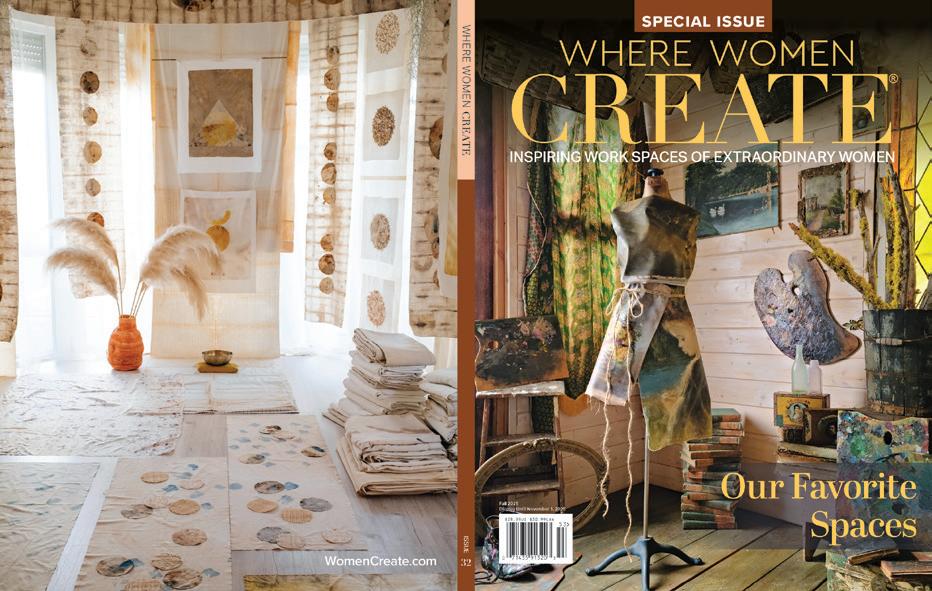
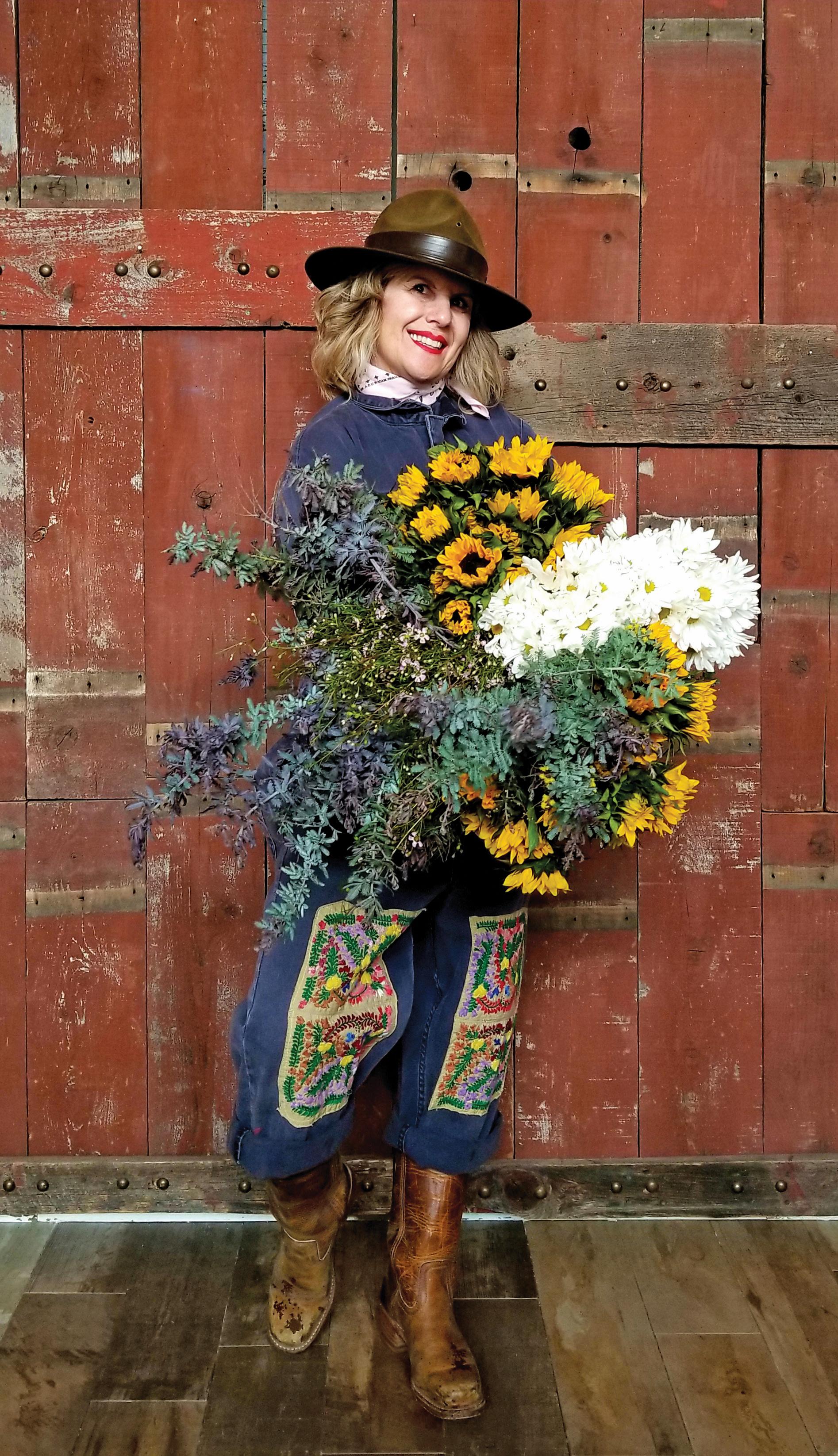
FRONT: Dawn Contreras BACK: Emma Cassi, photography by Bertrand Bosredon
WHEREIt Begins
THE WEIRD THING ABOUT BEING
a magazine editor is that the issue you are working on never corresponds with the weather outside your door. As I write this letter to you, our readers, about this beautiful, extra-large fall issue, it is 90 degrees and humid in the New York area. So, it’s especially nice to immerse myself in these cool, colorful, inspirational art spaces.
For this edition, we chose some of our favorite spaces from issues gone by, and are presenting them here with new photography and an update on the artists’ stories. It’s wonderful to revisit some of these spaces and see how they have evolved. I’ve spent many years looking at interiors in my career, and I never tire of seeing how people live and work. We also focused on some creative small spaces. Art can be made anywhere, and some of our artists in this issue prove that point. A repurposed dog run with a secret entrance, an outdoor porch, a tiny, sunny corner; creativity comes in many forms, and in many sizes. Our pages are also filled with creatives who are inspired by nature, including our three Danish artists who use the beauty of natural botanicals to create lush patterns on paper and textiles. I love seeing the patterns in the natural world recreated in art for the home. It brings the outdoors in, in a really special way.
As always, our artists surround themselves with inspiration, and I love looking at the layered and textured spaces that have evolved over time. Little collections, bits and pieces, ephemera acquired and curated with love and care, all these things inspire and delight. Our pages are little windows into the hearts and souls of people who spend their whole lives creating. I absolutely love peeping into those windows, and I hope you enjoy it too. Welcome to our favorite spaces!
DEBORAH L. MARTIN, EDITOR IN CHIEF
OUR NEW SHOP IS ALMOST HERE! From Her
Hands to Your Home
Prepare to discover a curated collection of exquisite, hand-crafted creations! The Women Create Shop is launching this fall, bringing the incredible artistry highlighted in our magazines directly to you. Shop pieces from the dedicated artists we champion and bring their passion into your home. Visit www.womencreateshop.com for details.
PHOTOGRAPH BY ALICE TEEPLE
LANGUAGE OF FLOWERS, P106
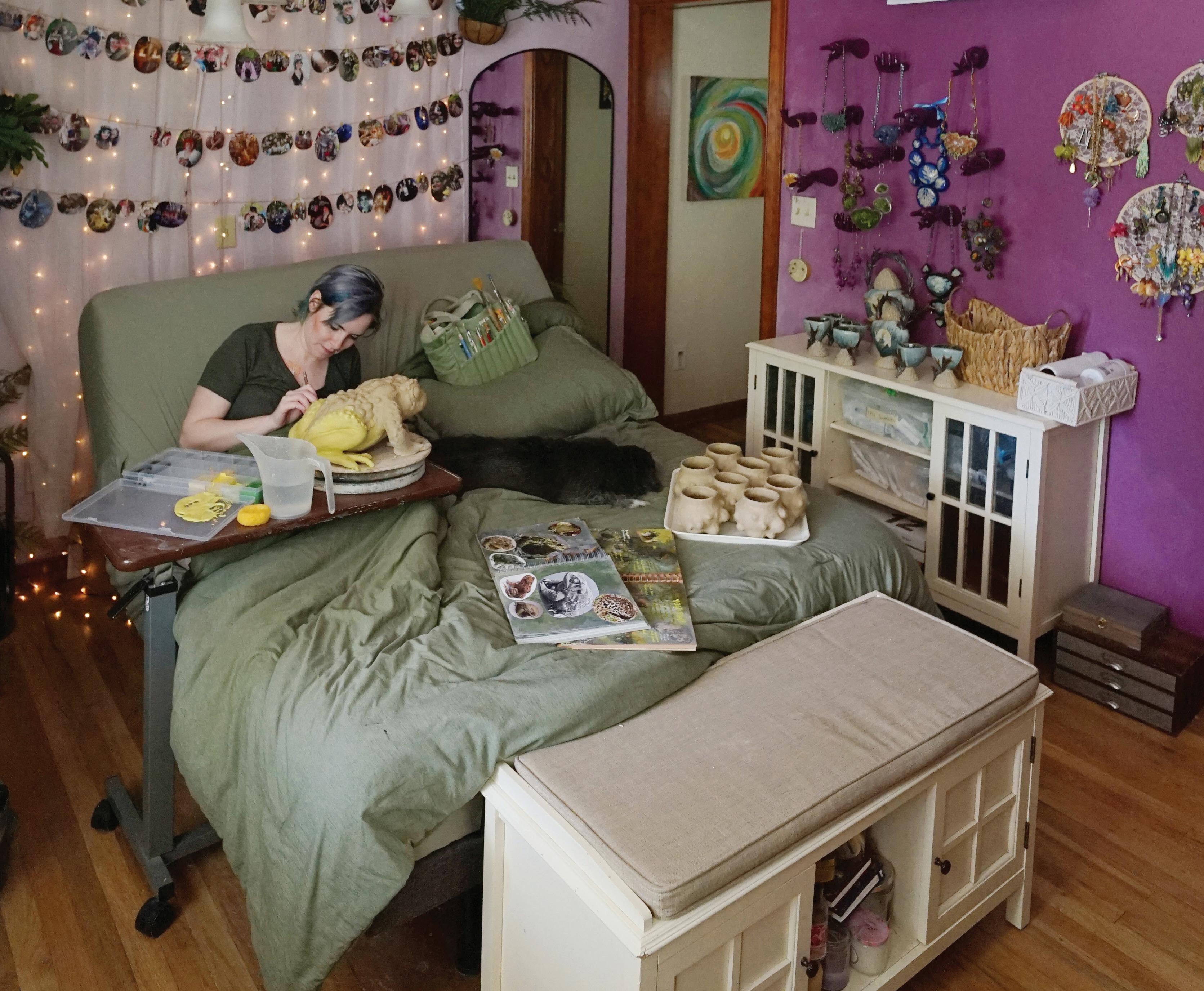
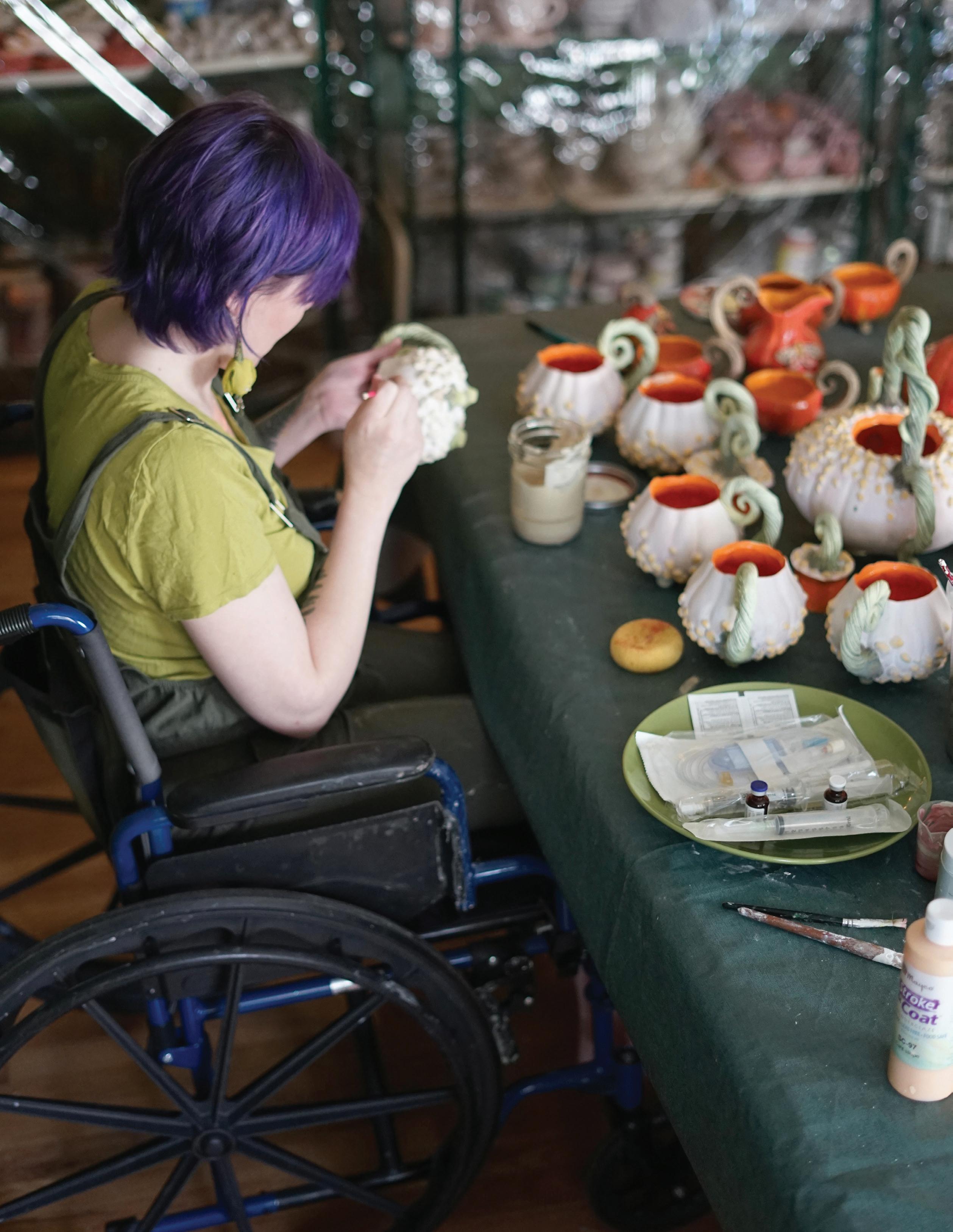
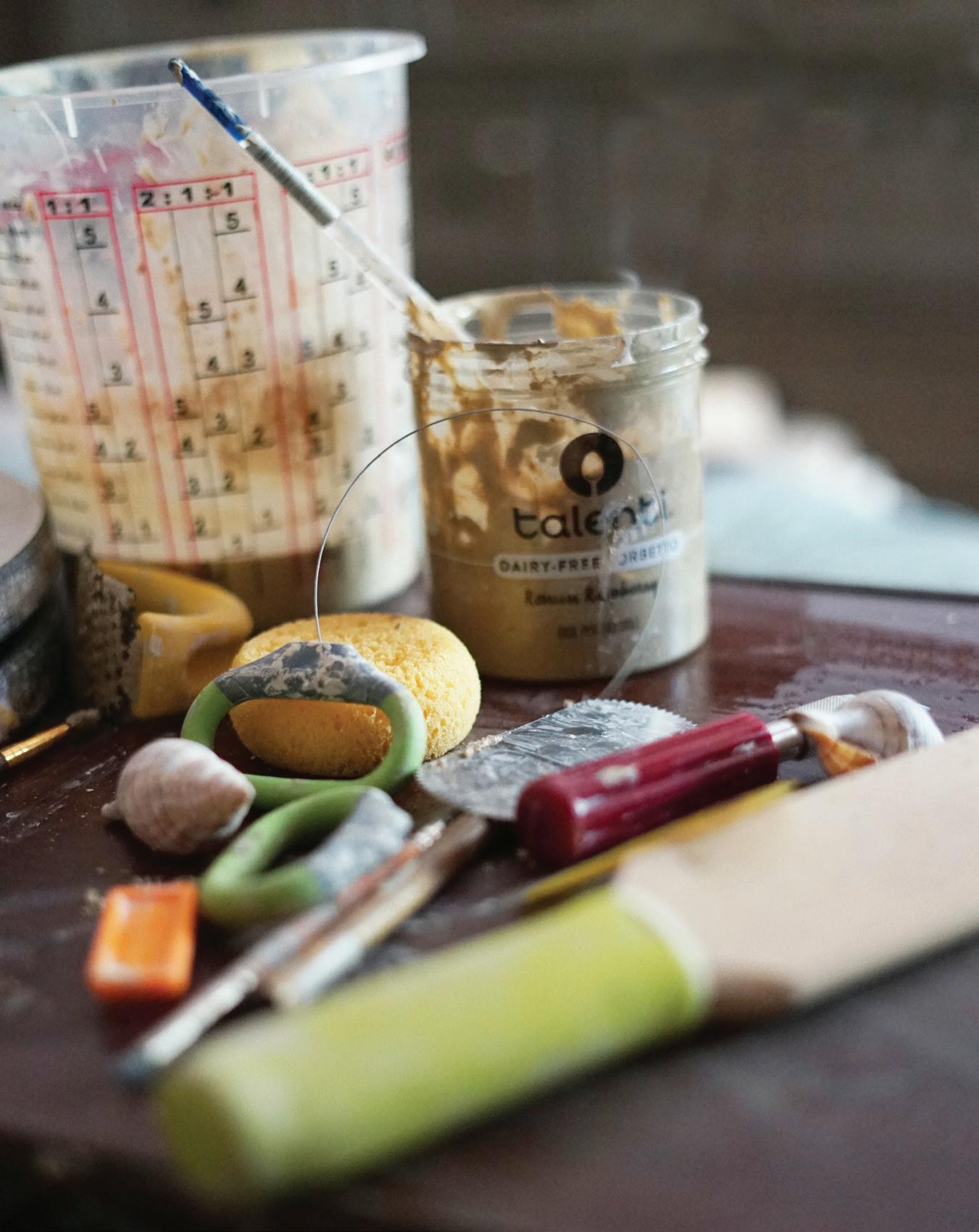
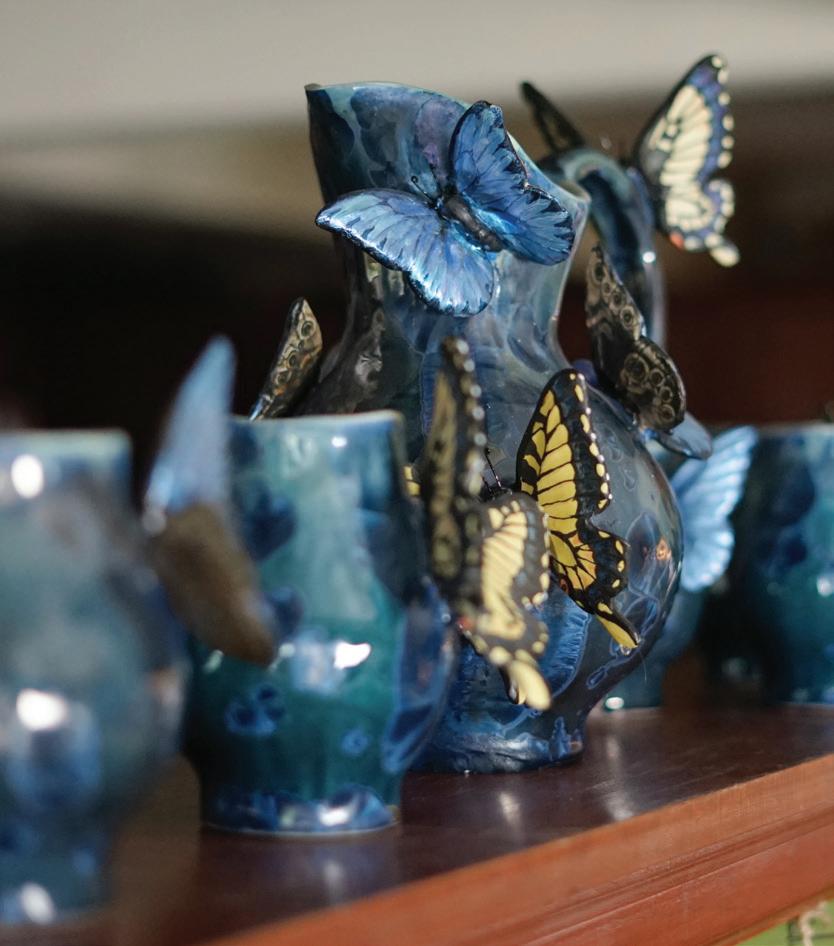
JEN PARRISH-HILL, P78
TRACY VERDUGO, P60
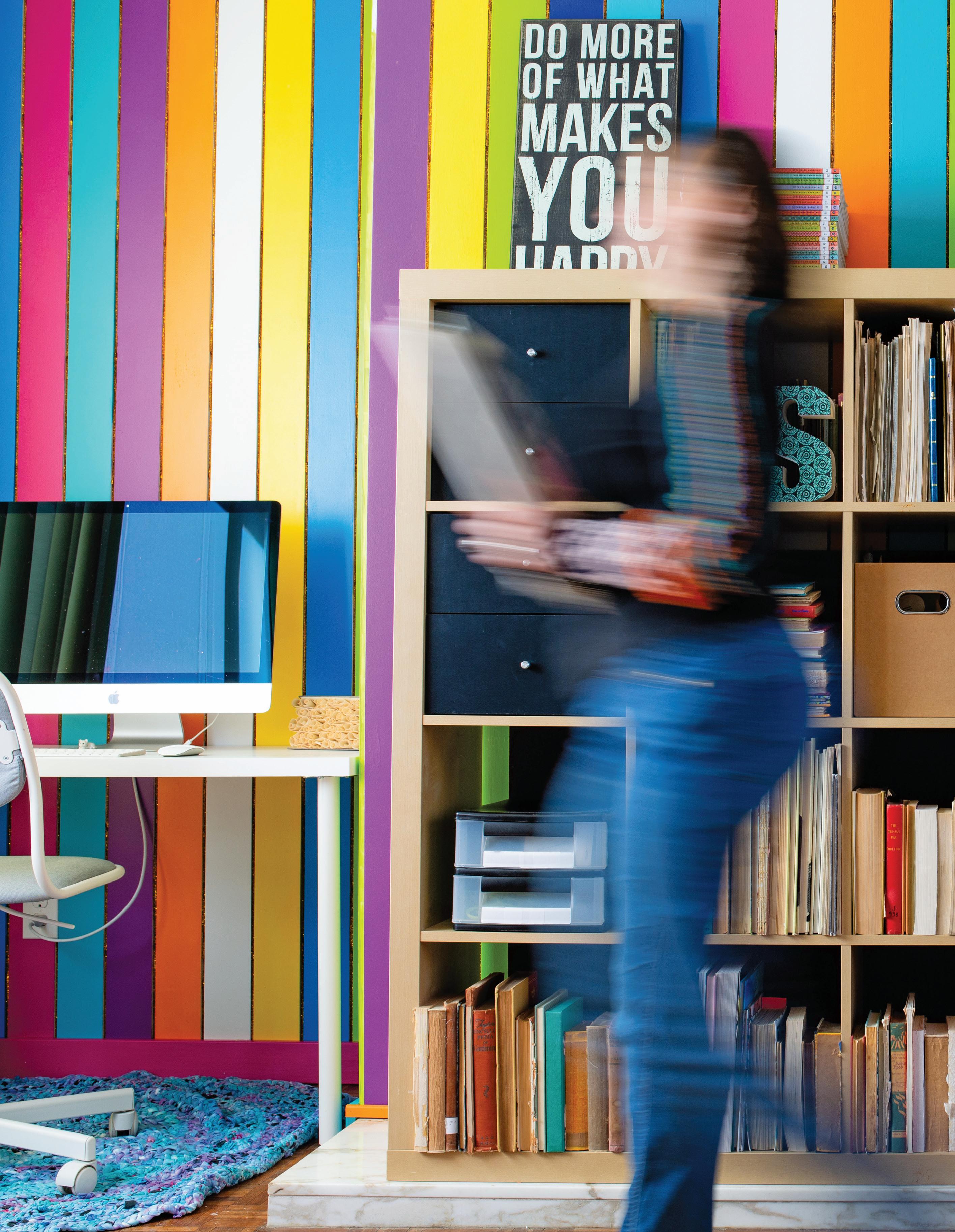
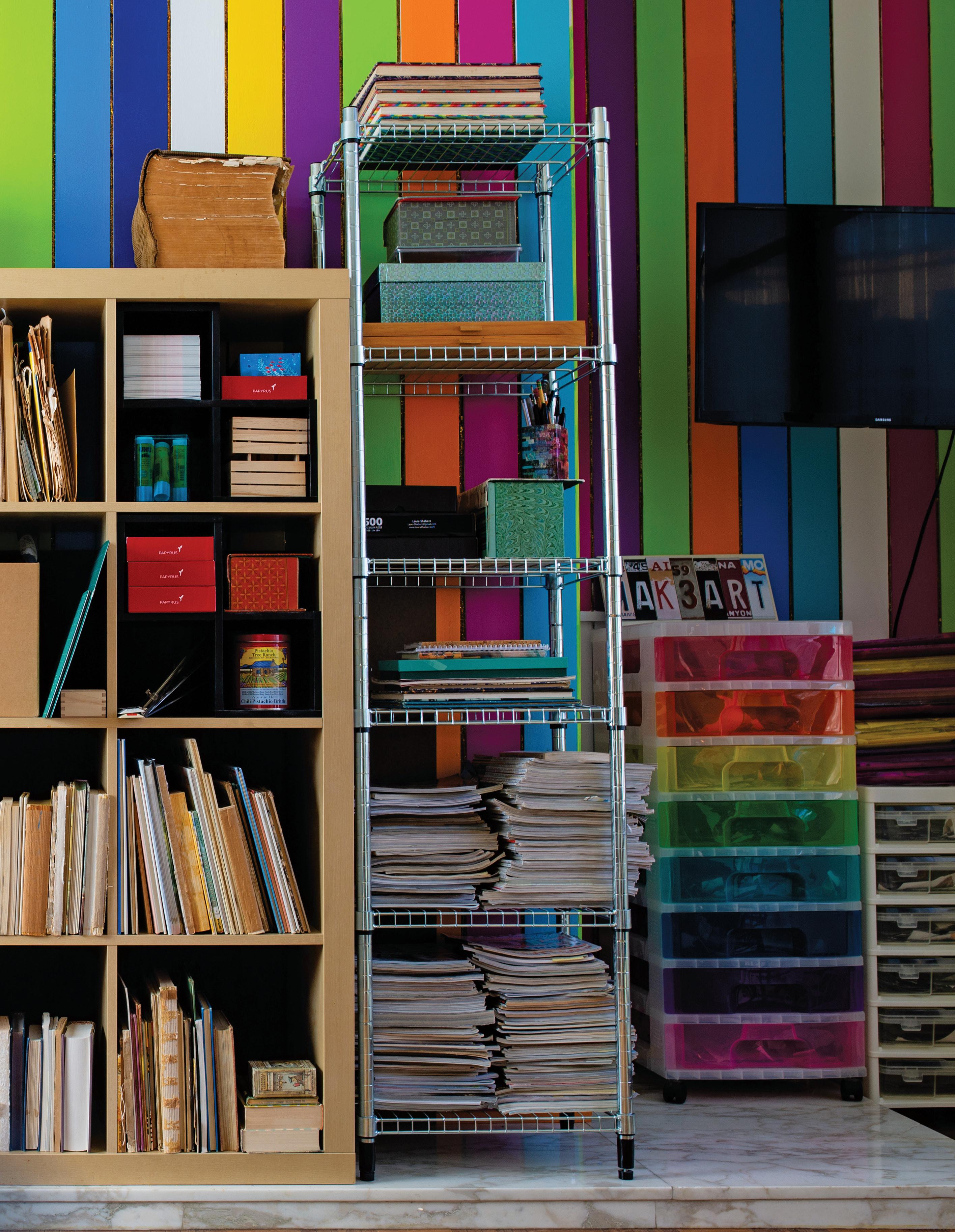
LAURA SHABAZZ, P166
ROBIN ZACHARY, P32
SMALL SPACES Where Creativity Knows No Bounds
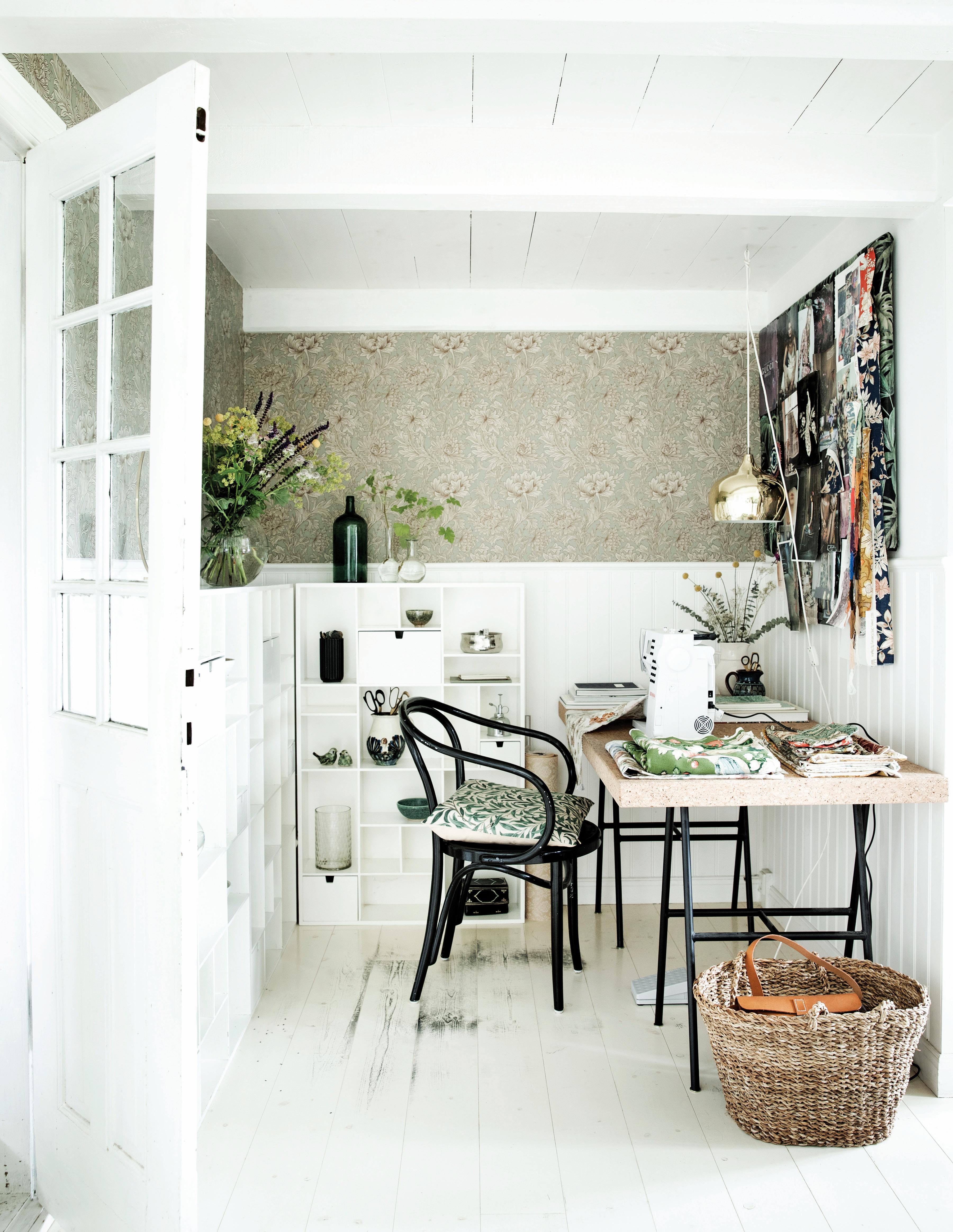
In the pages of Where Women Create, we often showcase dreamy studio spaces brimming with supplies, equipment, storage solutions, and massive workstations. But artistic spaces are as varied and imaginative as the art they produce, and limitations often spark incredible innovation.
From a repurposed sitting room and a reimagined dog run, to a compact corner and an airy outdoor porch, we’ll take you on a tour of small studio spaces where four artists flourish. These women celebrate the ingenuity and personal touches they bring to their creative havens. Their distinct environments inspire and shape the art produced within them, proving that true artistry thrives even within unconventional or limited footprints.
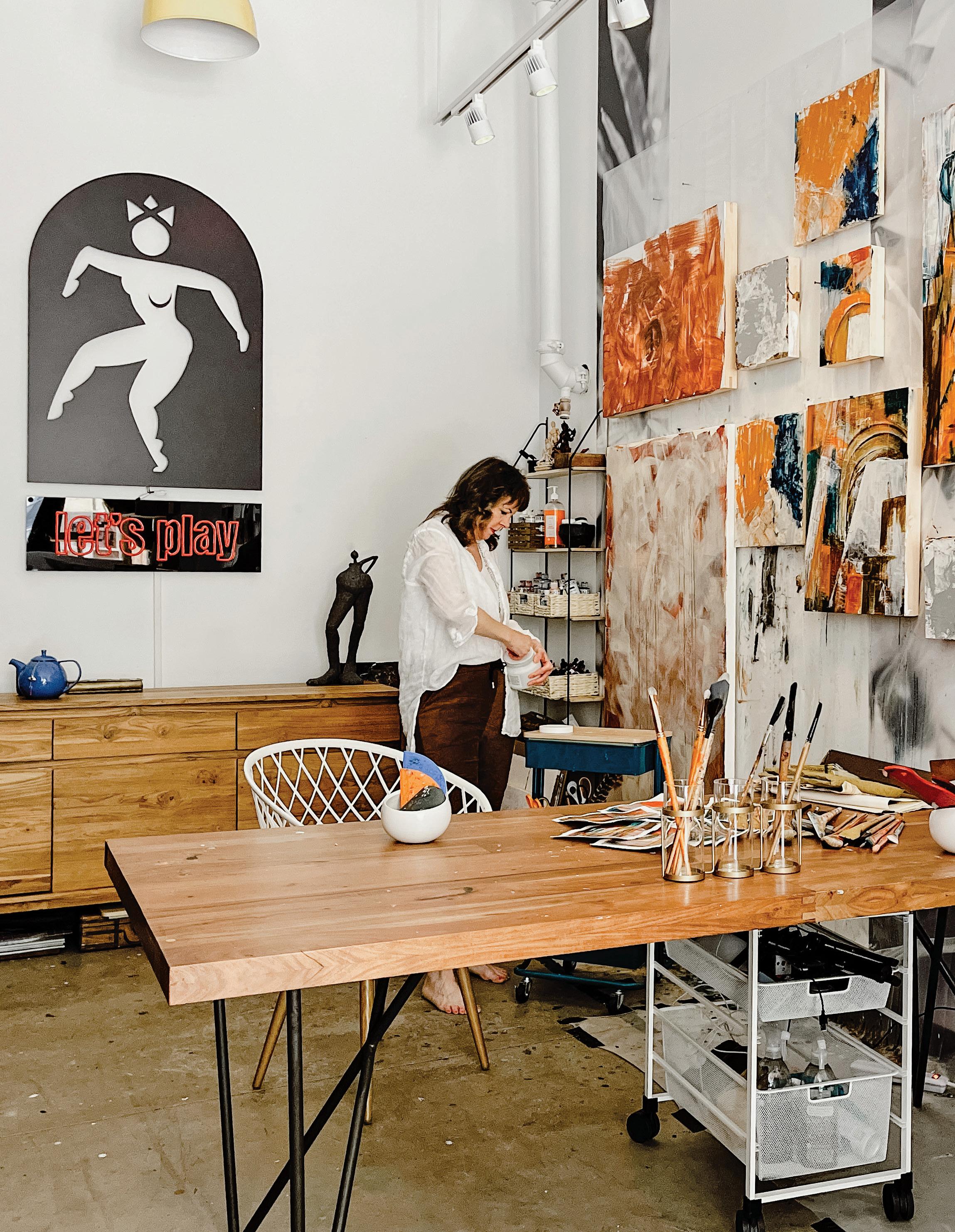
Curated by Lisa Haukom | Photography by Lisa Haukom
SMALL SPACES
Desha Peacock
DESHA PEACOCK is the author of Your Creative Workspace and Create the Style You Crave. A small business and lifeSTYLE coach, Desha supports creative women through intimate retreats and 1:1 business immersion experiences in both Mexico and in her hometown of Brattleboro, Vermont. She is also the co-host of the She DESIGNS Podcast, where she shares candid conversations that inspire visionary women to design businesses and lives they love.
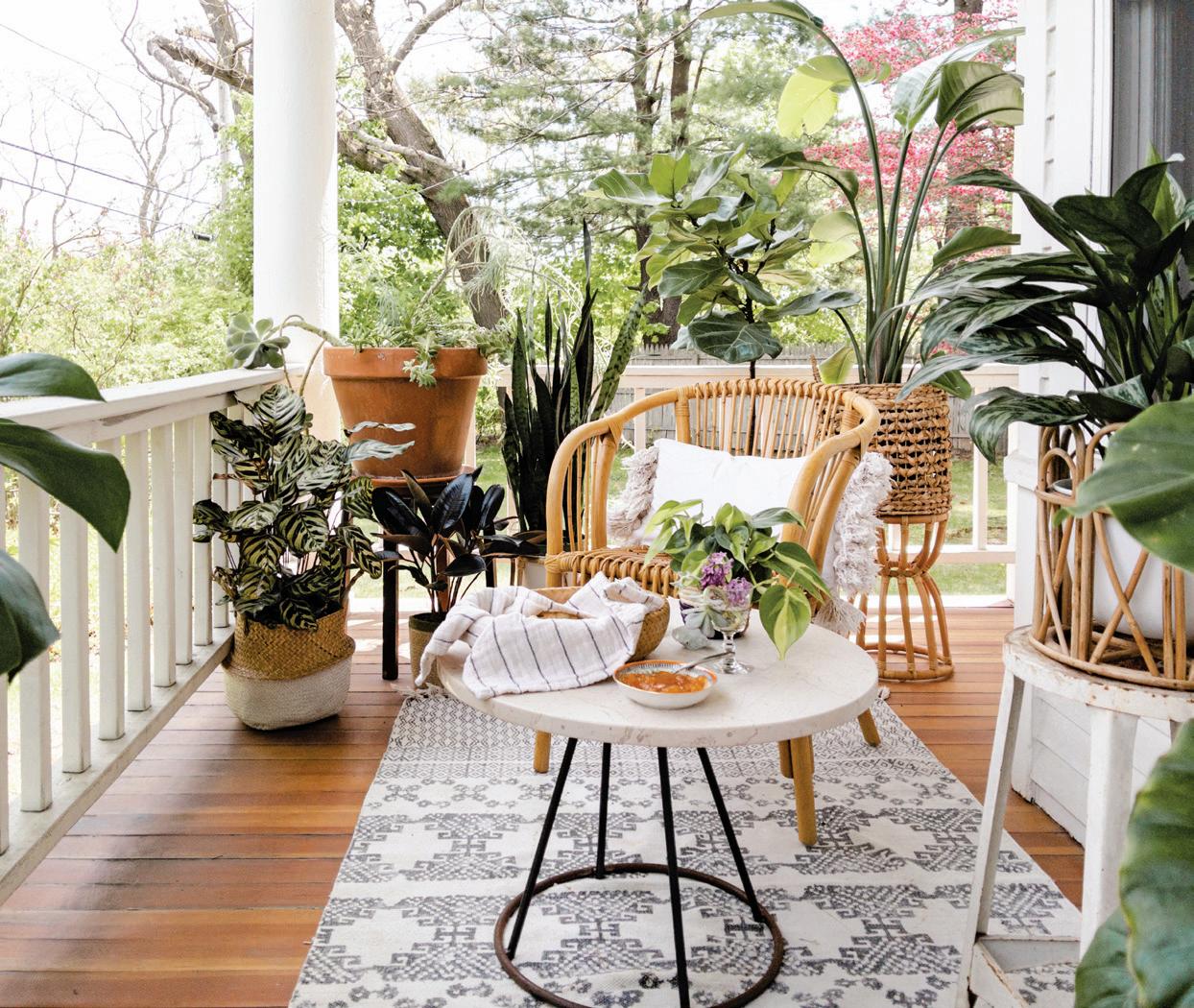
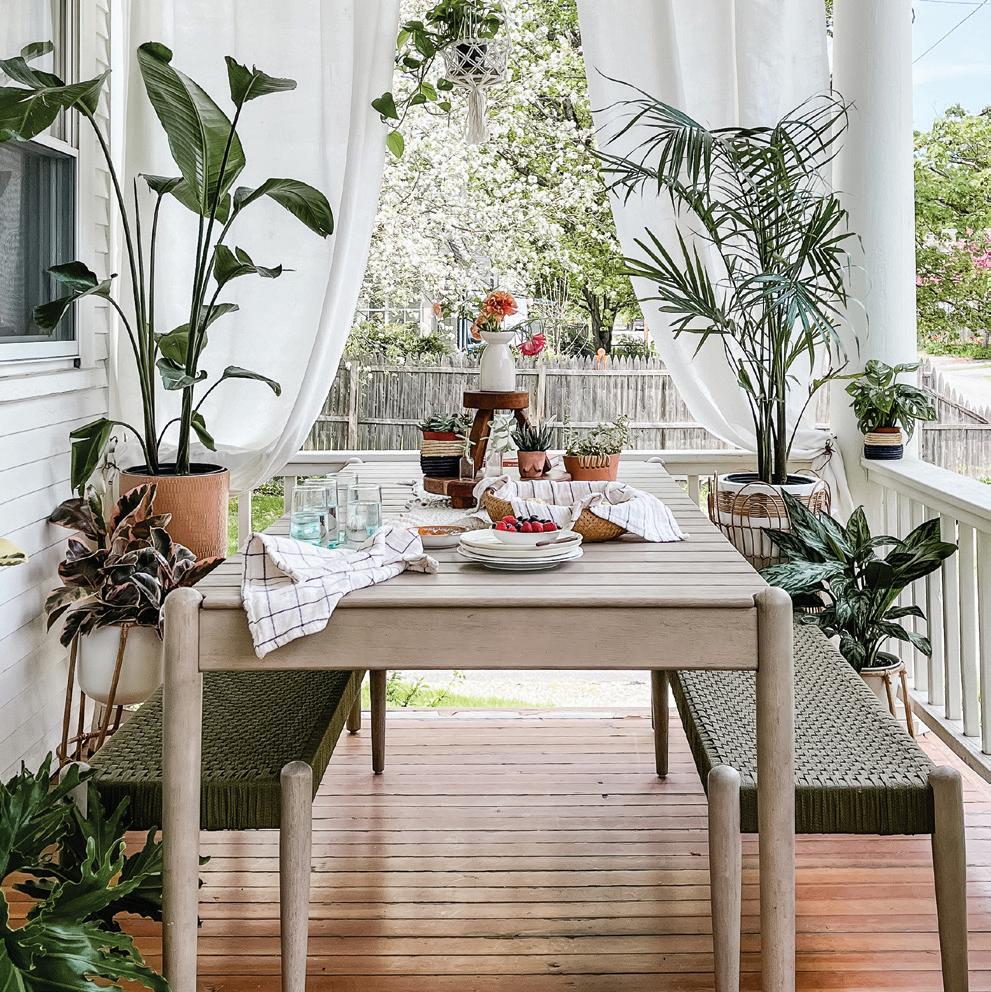
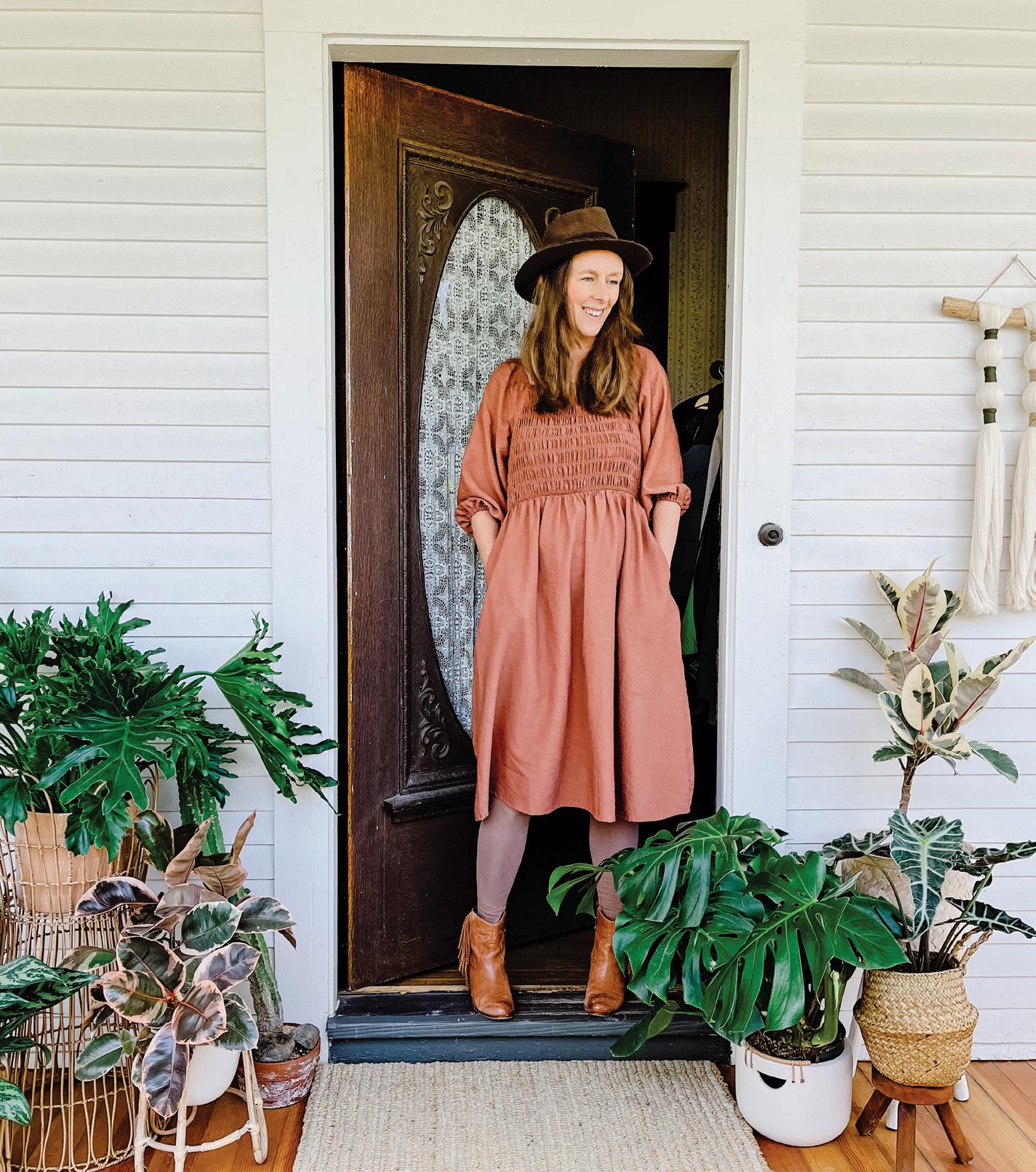
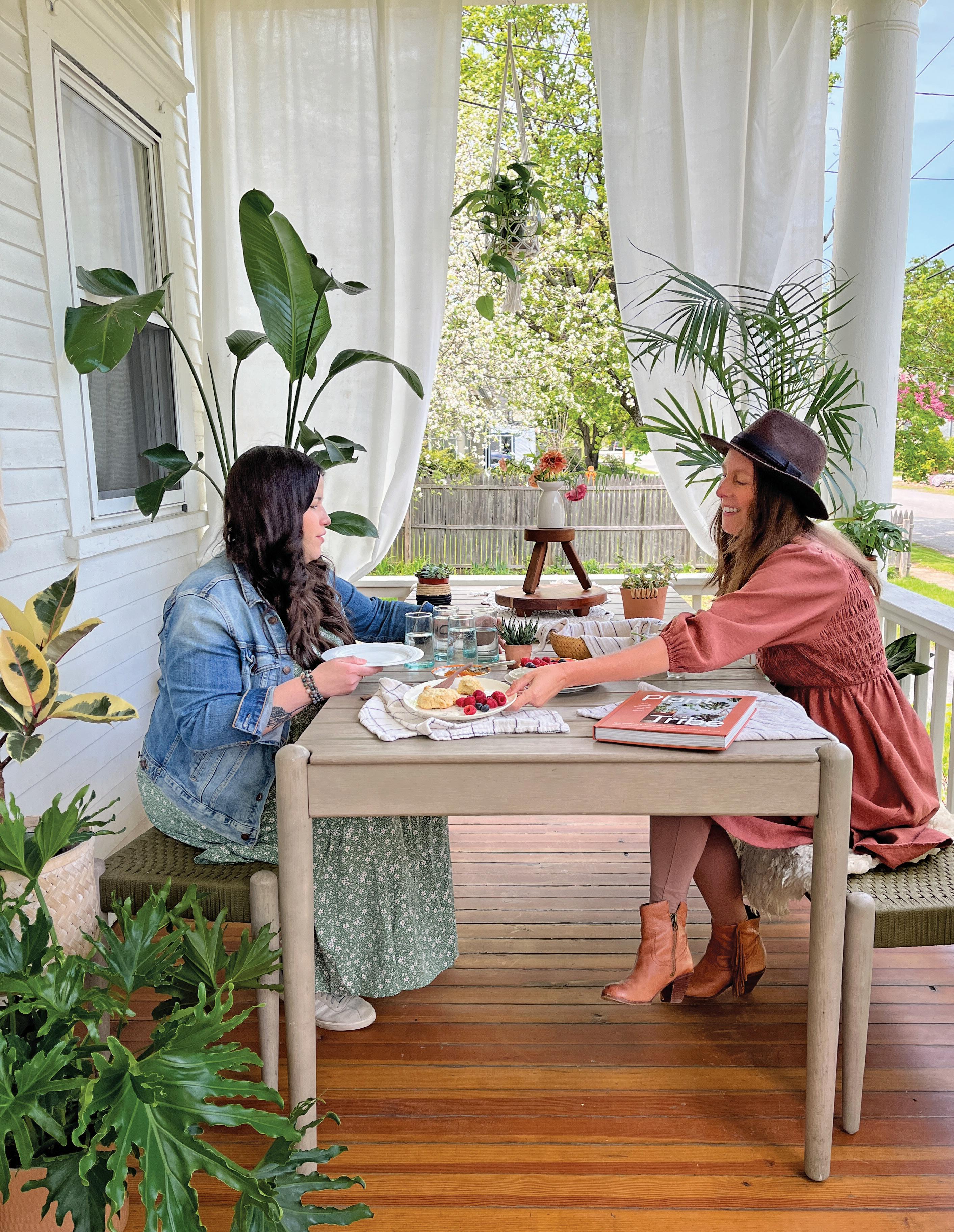
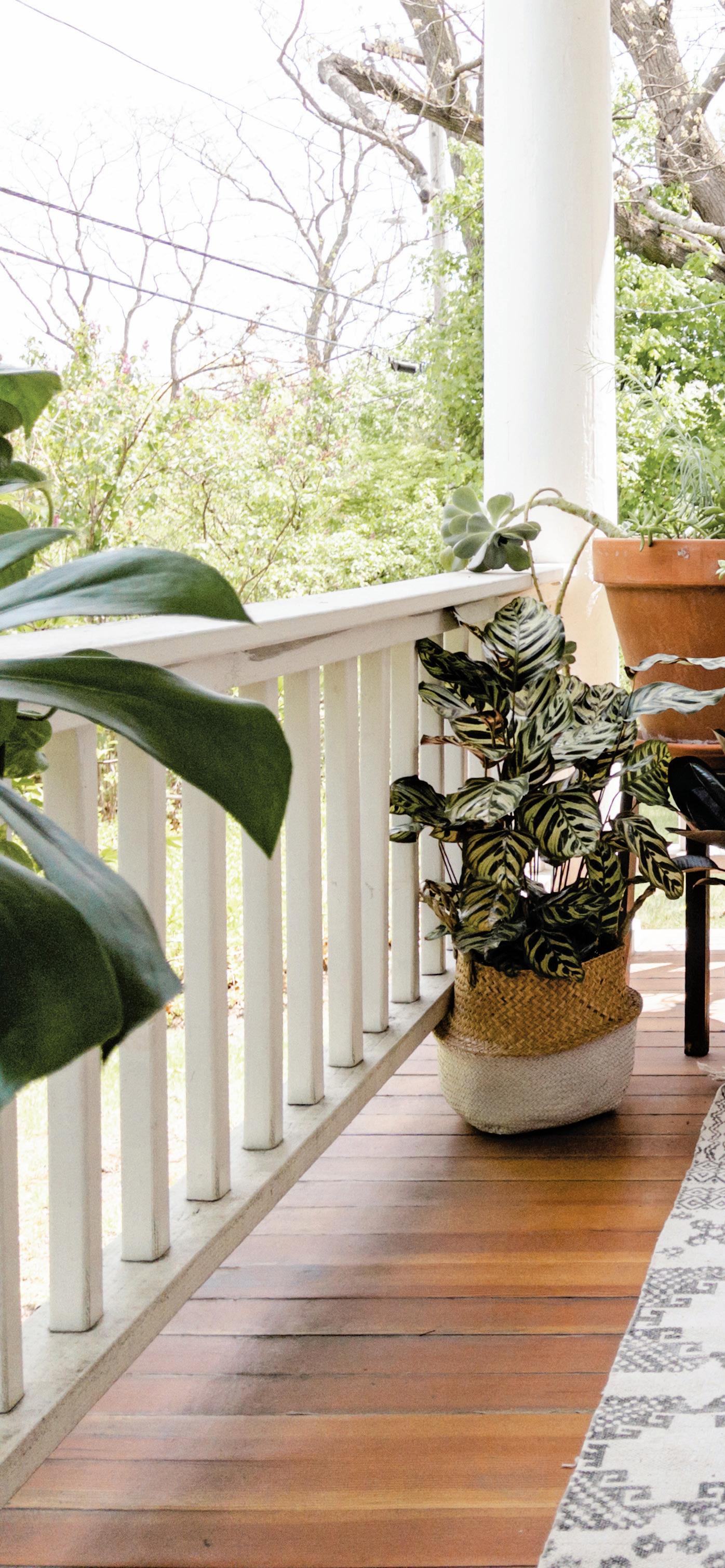
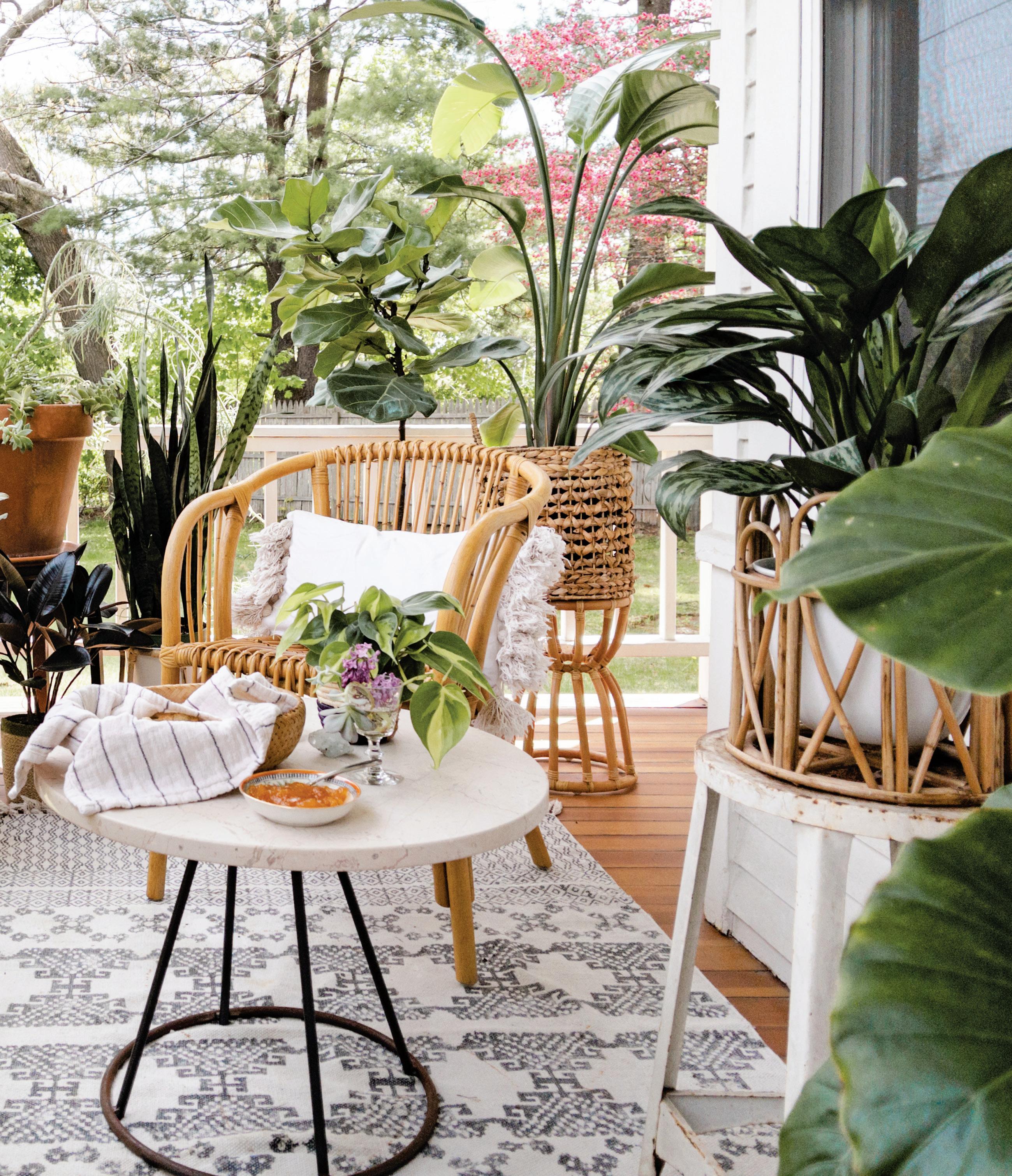
Ilive in Southern Vermont, where winters are long and summers are coveted. As the weather warms, these green mountains come alive with bursts of color and birdsong. To spend the most time possible outside during the short summer season, I created a front porch oasis that’s become one of my favorite creative workspaces.
Interior Designer: Christine Martin | Plant Stylist: Fransheska Alvarez-Nieves
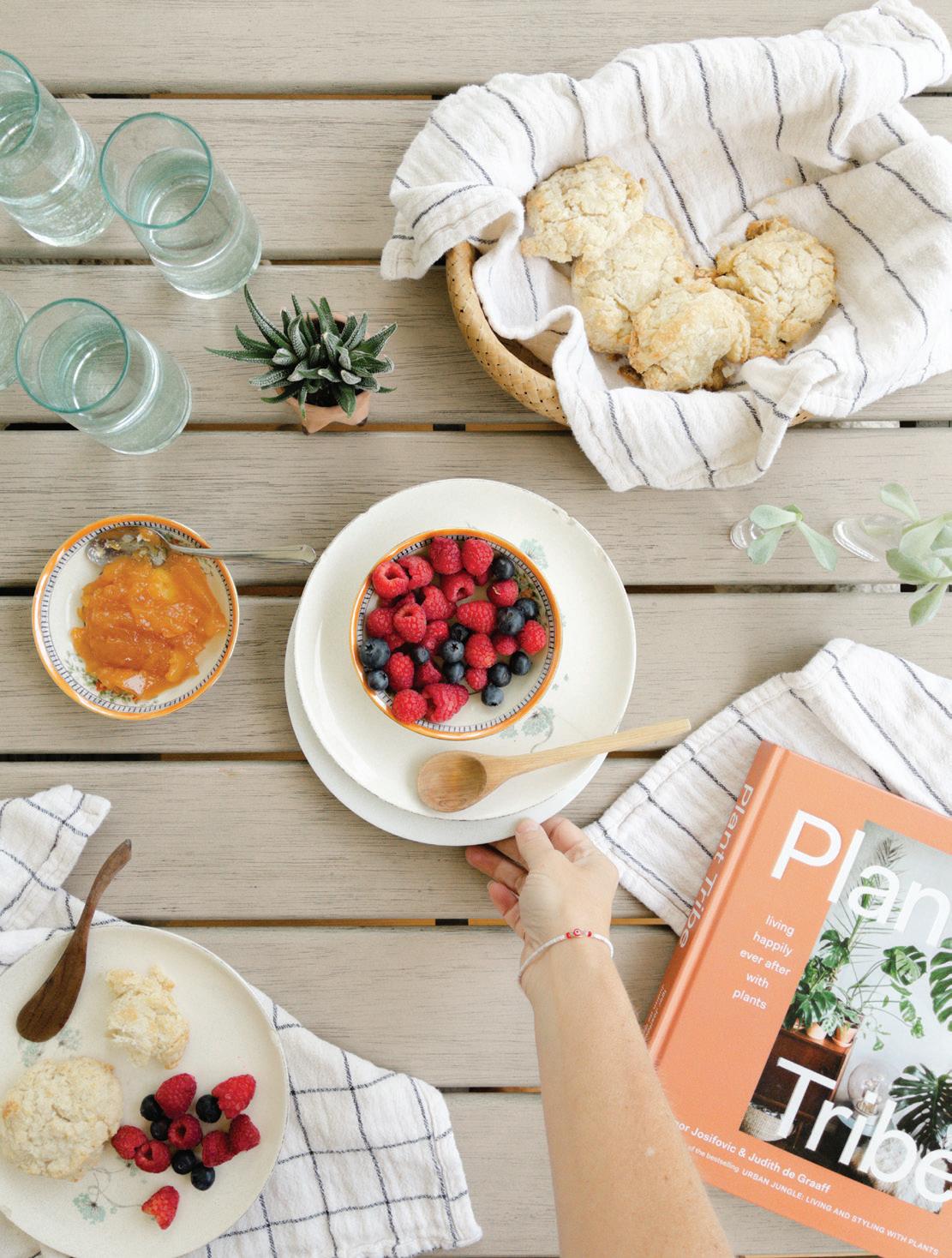
I’ve noticed that women (including myself!) are experiencing Zoom fatigue, and we just want to meet up somewhere lovely in person. So I started hosting “Biscuits + Biz Meet Ups” as a place for female business owners to gather on the porch. And yes, I do make homemade biscuits and peach jam!
I noticed that women were opening up during these gatherings, and that being outdoors, in a relaxed environment, allows for deeper conversations and inspired ideas to flow.
The front porch has really become the stage for creative breakthroughs! It inspired me to take it a step further and welcome clients to the Vermont 1:1 Retreat, a three-night escape designed to mix business and pleasure. We spend our time mapping out big ideas over morning coffee, taking breaks to walk the nearby trails, and circling back to the porch for goldenhour brainstorms.
Working outside in nature helps me and the women I work with slow down, tune in, and recharge the creativity that lives in each of us.
www.sweetspotstyle.com Instagram:
SMALL SPACES
Laure Brost Halliday
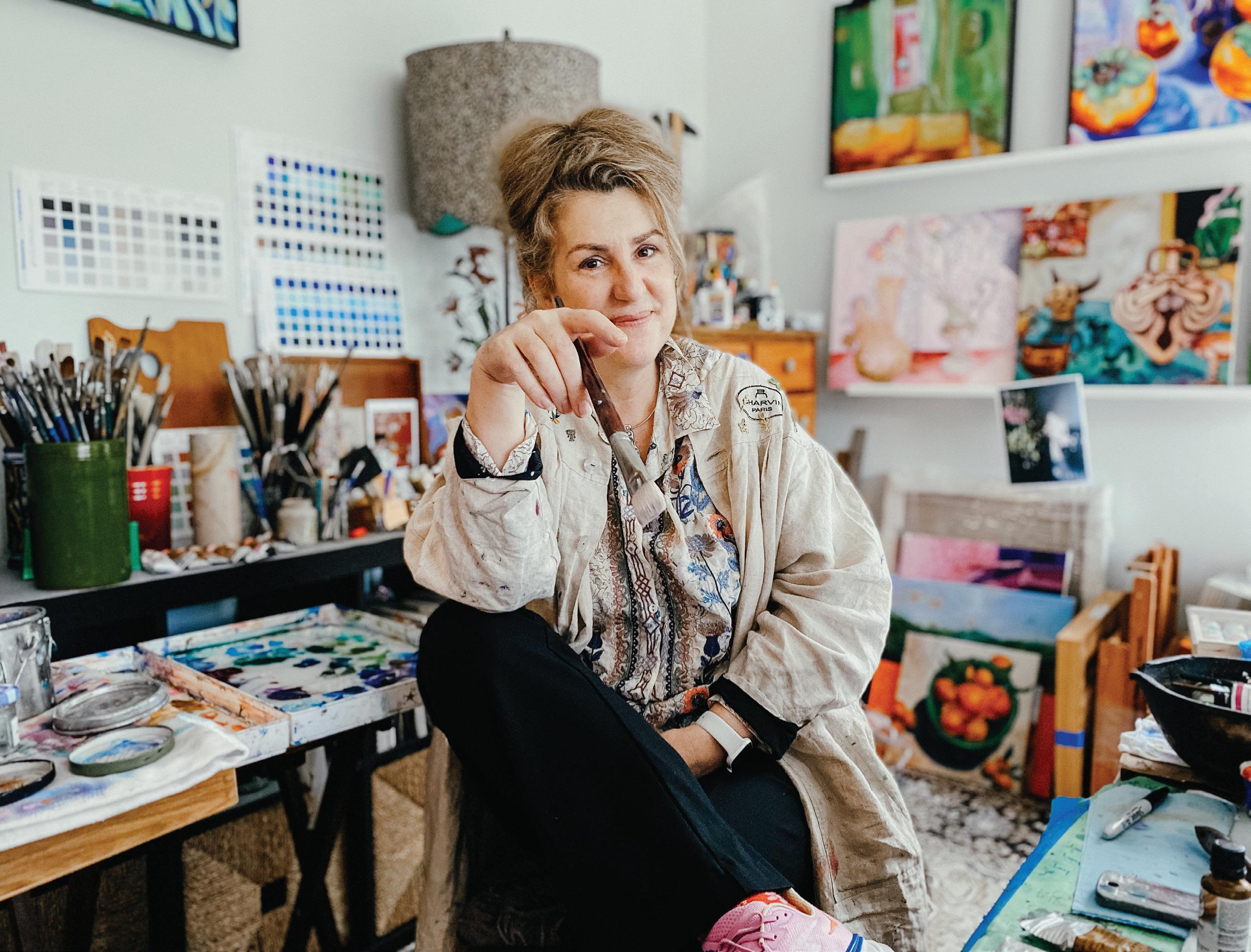
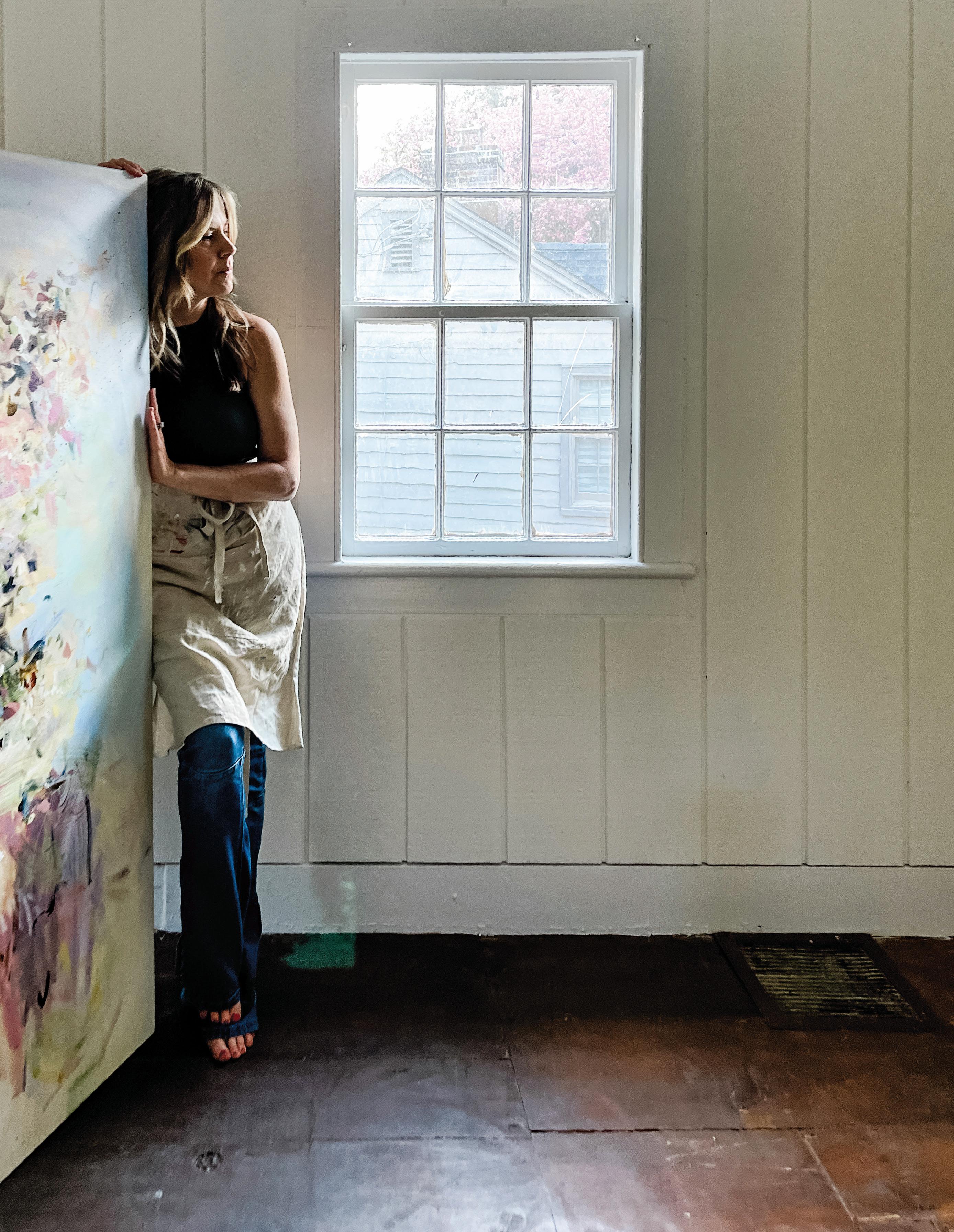
LAURE BROST HALLIDAY is a San Diego-based oil painter and color-chaser with a PhD in film theory. Laure turns everyday moments into shimmering, emotionally charged vignettes where light lingers and color says the thing words can’t. Out of her maximalist jewel-box studio, cinematic fragments bloom with joyful abandon on her color-saturated canvases. When not in the studio, Laure is chasing color through gardens, coastlines, and books, always looking for the next luminous pause.
Photography by Laure Brost Halliday
“You know, I have a head full of planets.”
—Madalena Santos Reinbolt
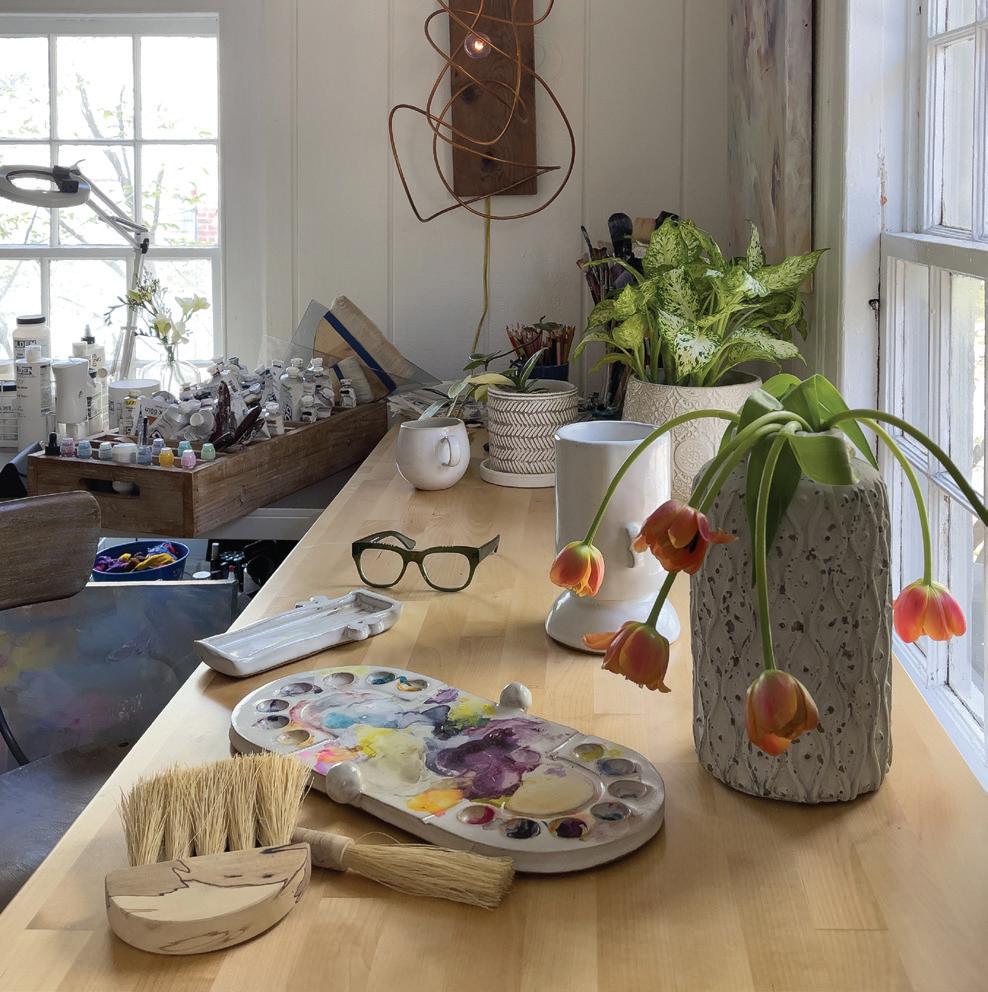
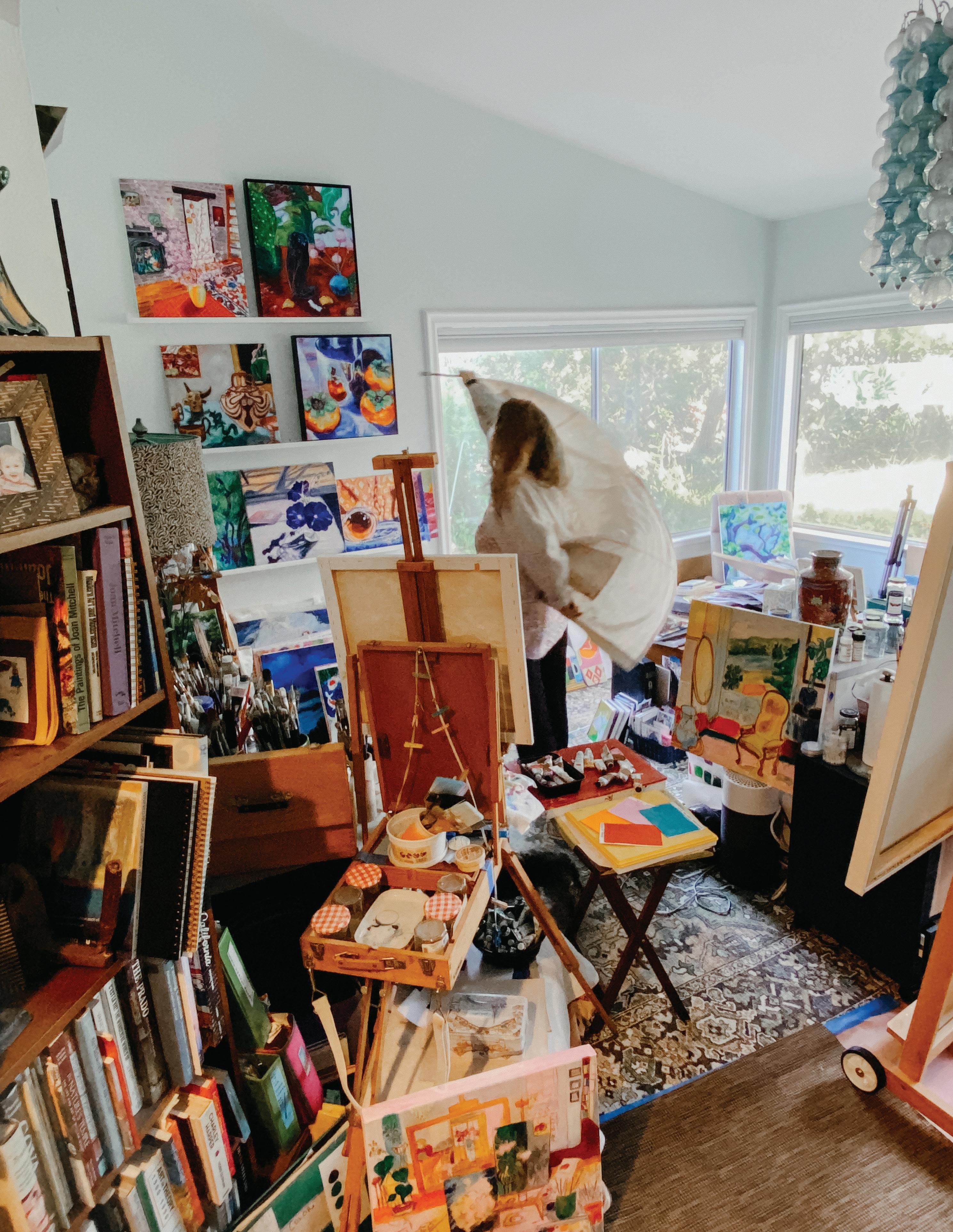
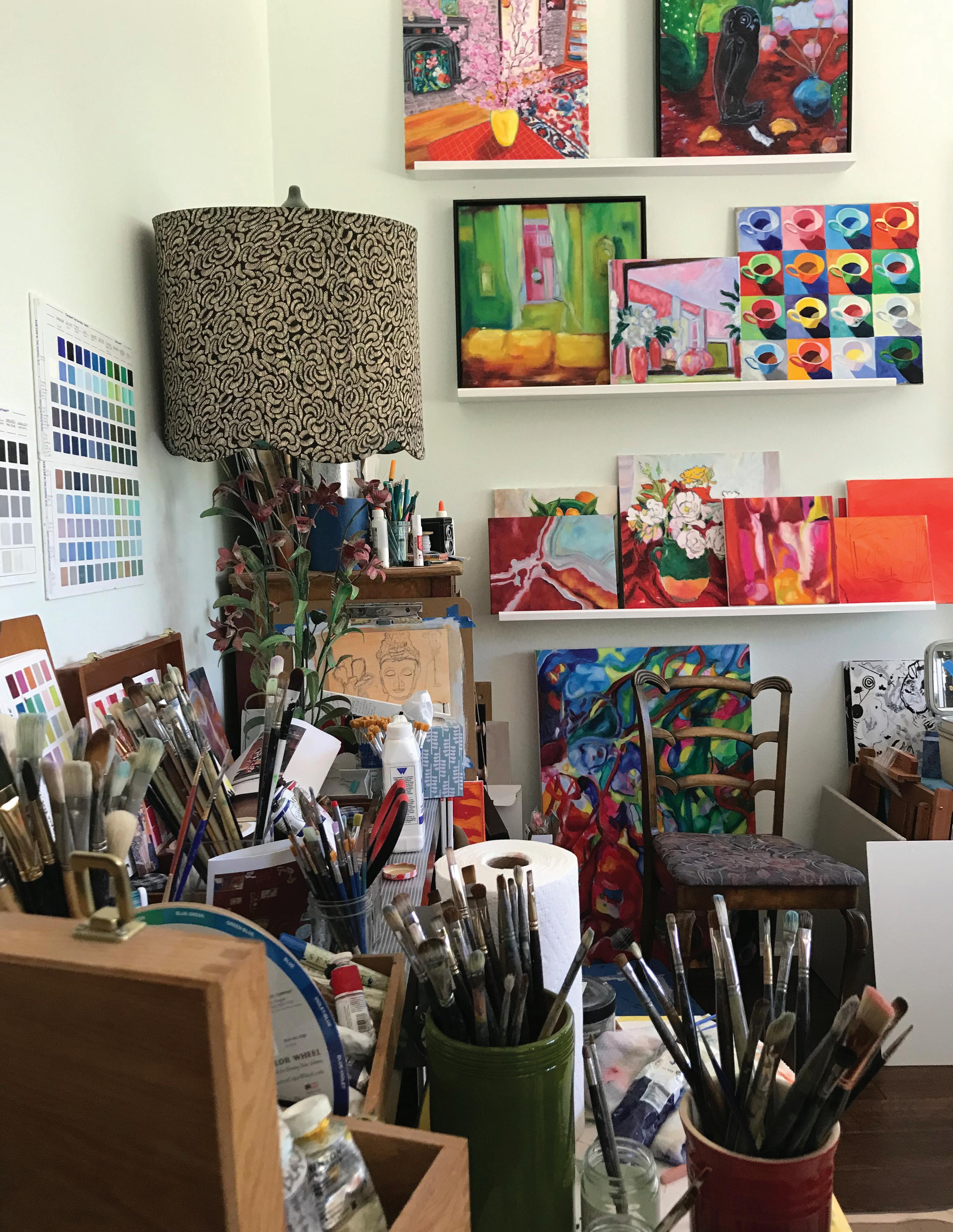
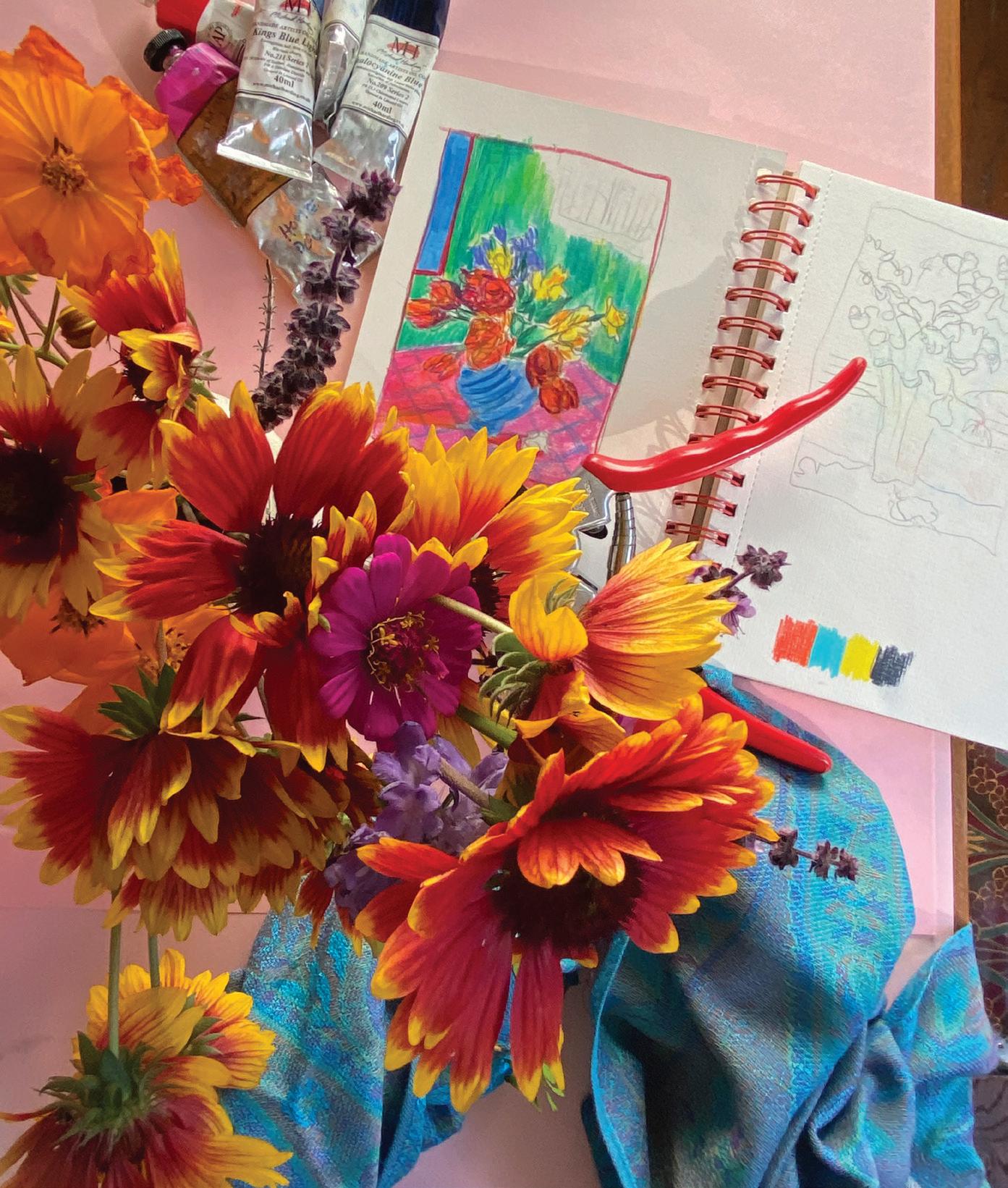
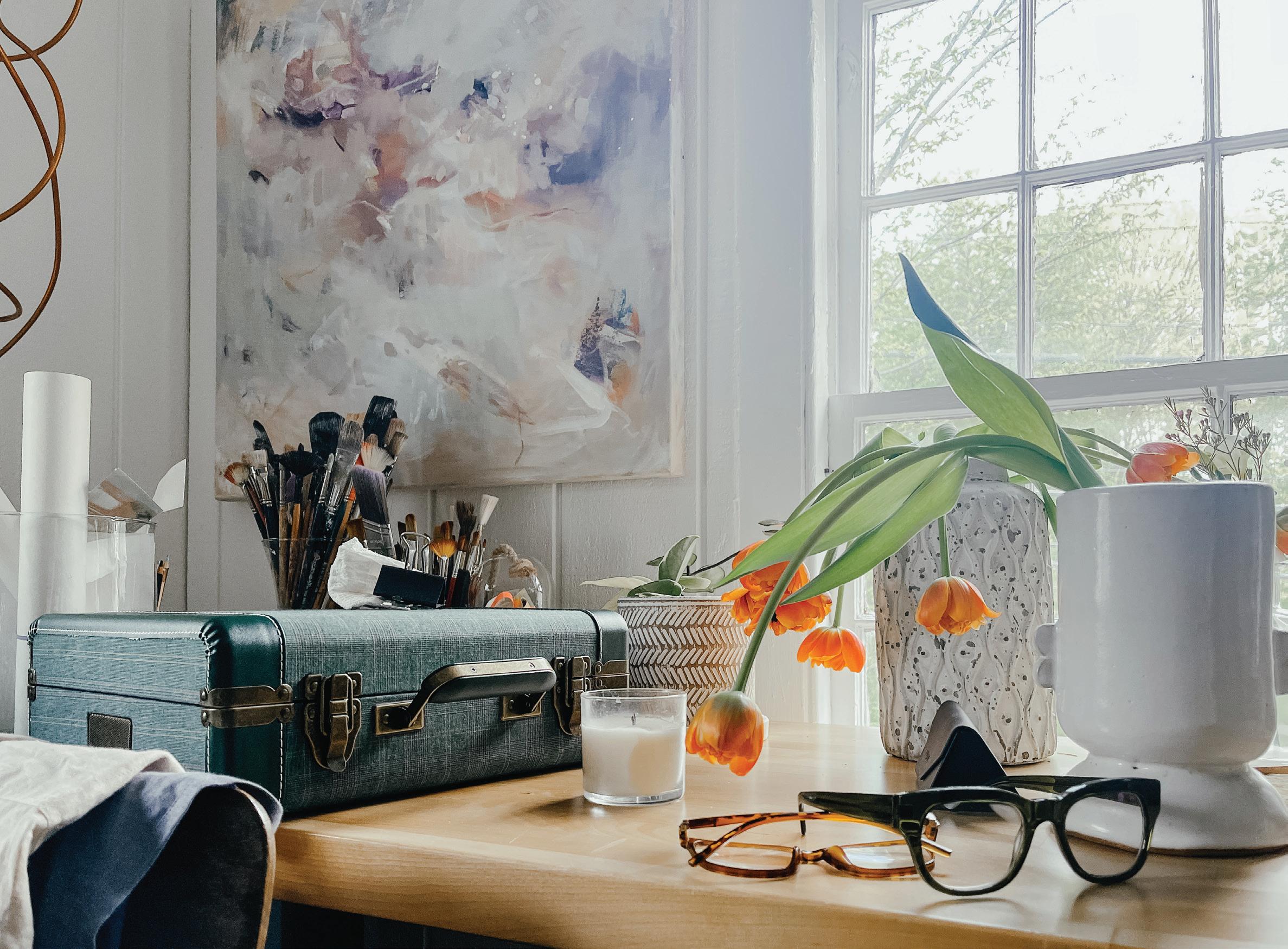
Iused to paint with tiny brushes on tiny canvases, tiptoeing around the toaster, trying not to take up too much space, not only physically, but artistically. Even when I had something to say, I kept it small. When I finally claimed the unused sitting room and started calling it my studio, something radical happened. At first, I was cautious; there were no doors, the room spilled into the hallway and dining space, so I’d pack everything away at night. But then I stopped tidying. I planted my easel in the middle of the room and let the chaos stay. I brought in bright scarves, vases, an avalanche of brushes and paints, and souvenirs from former lives. The space didn’t just hold my work, it mirrored me back to myself. A little wild, a little messy, full of color and stories and texture. It stopped being a room and started being an invitation.
This small, sunlit corner didn’t shrink my art; it made it inevitable. It dared me to get louder. I started reaching for bigger canvases, bolder colors, looser strokes. My paintings became cinematic and strange, beautiful and brave. I stopped trying to behave like the idea of an artist and became the artist I actually am: curious, maximalist, lit up from within. In a pristine white-walled studio, I might’ve stayed neat, stayed quiet, stayed small. But here? I stomp. I sing. I fling flower seeds out the window and paint like someone who knows what she sees is worth capturing. This space may be small, but the version of me that emerged from it is forever blooming.
SMALL SPACES
Tricia Caracappa
TRICIA CARACAPPA is a New York-based artist, lifelong creative, and abstract painter whose work is rooted in delight, movement, and gratitude. She grew up in her mother’s dance studio, studied art and physics, and left a career at a global financial firm to become an interior designer and artist. Now, she brings delight to life through her energetic abstract paintings and by guiding women to create beautiful, soul-filled spaces warmed with art. Tricia’s practice draws from the energies that surround her—nature, emotion, and everyday moments—expressing them through her art so that they can inspire us beyond today. Tricia serves on the board of the Katonah Museum Artists’ Association. Her work is widely collected and carries a distinct pulse—one of connection, light, and joy in motion. Tricia’s next solo show is this September at The Gallery at Yellow Studio in Cross River, New York.
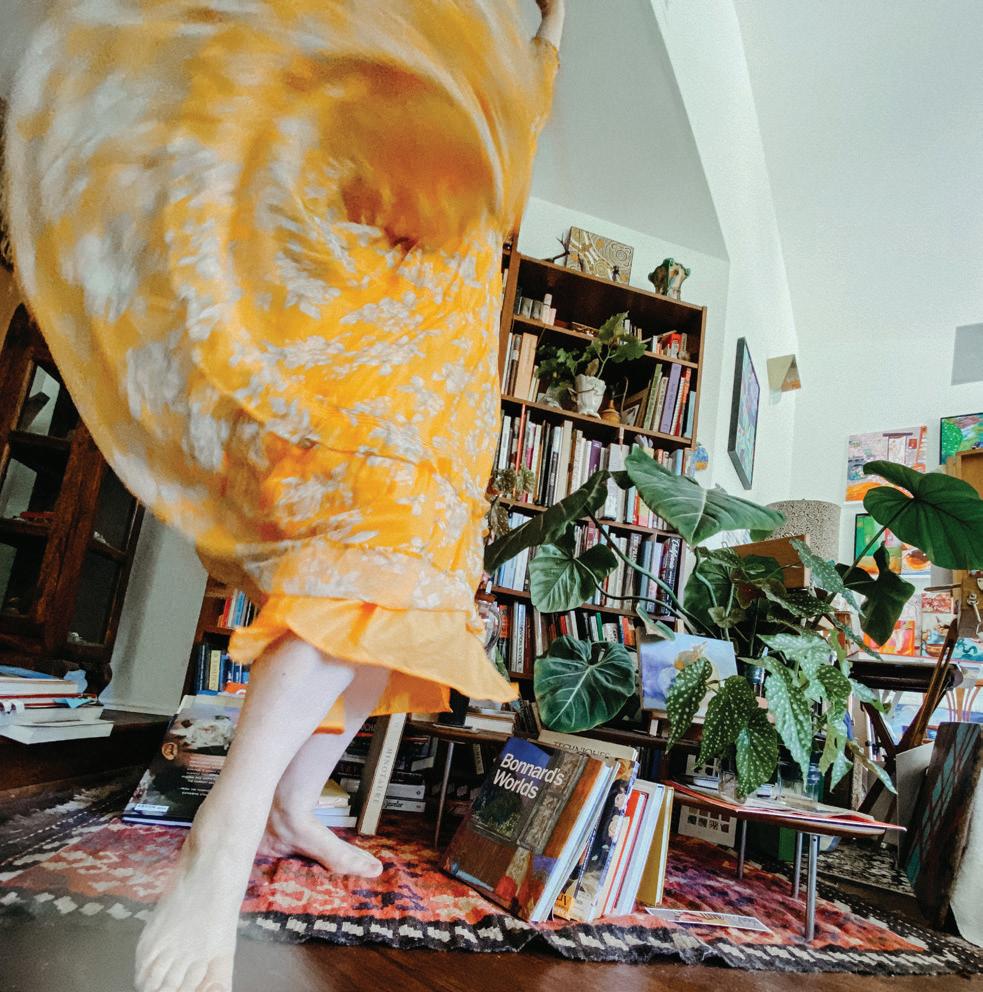
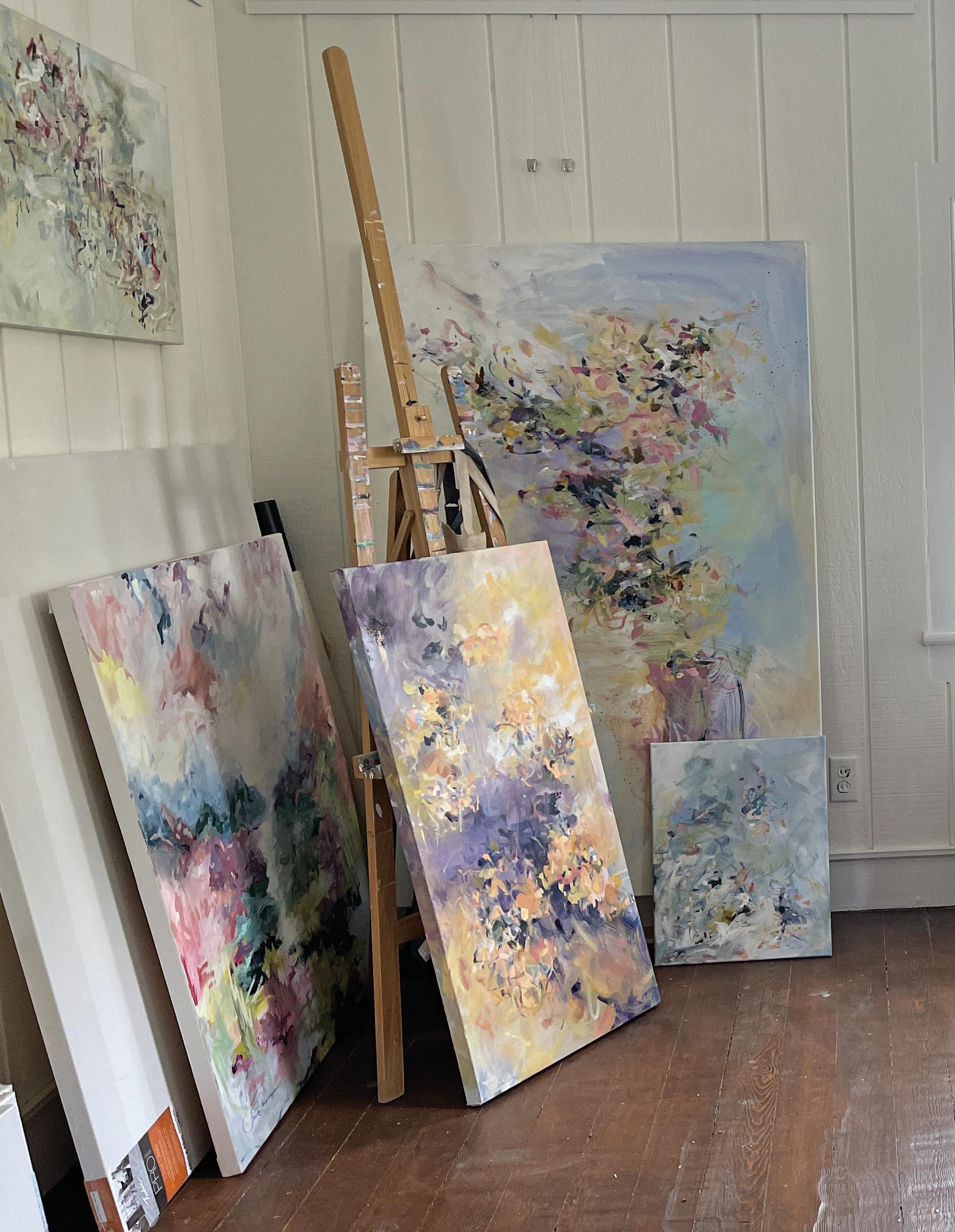
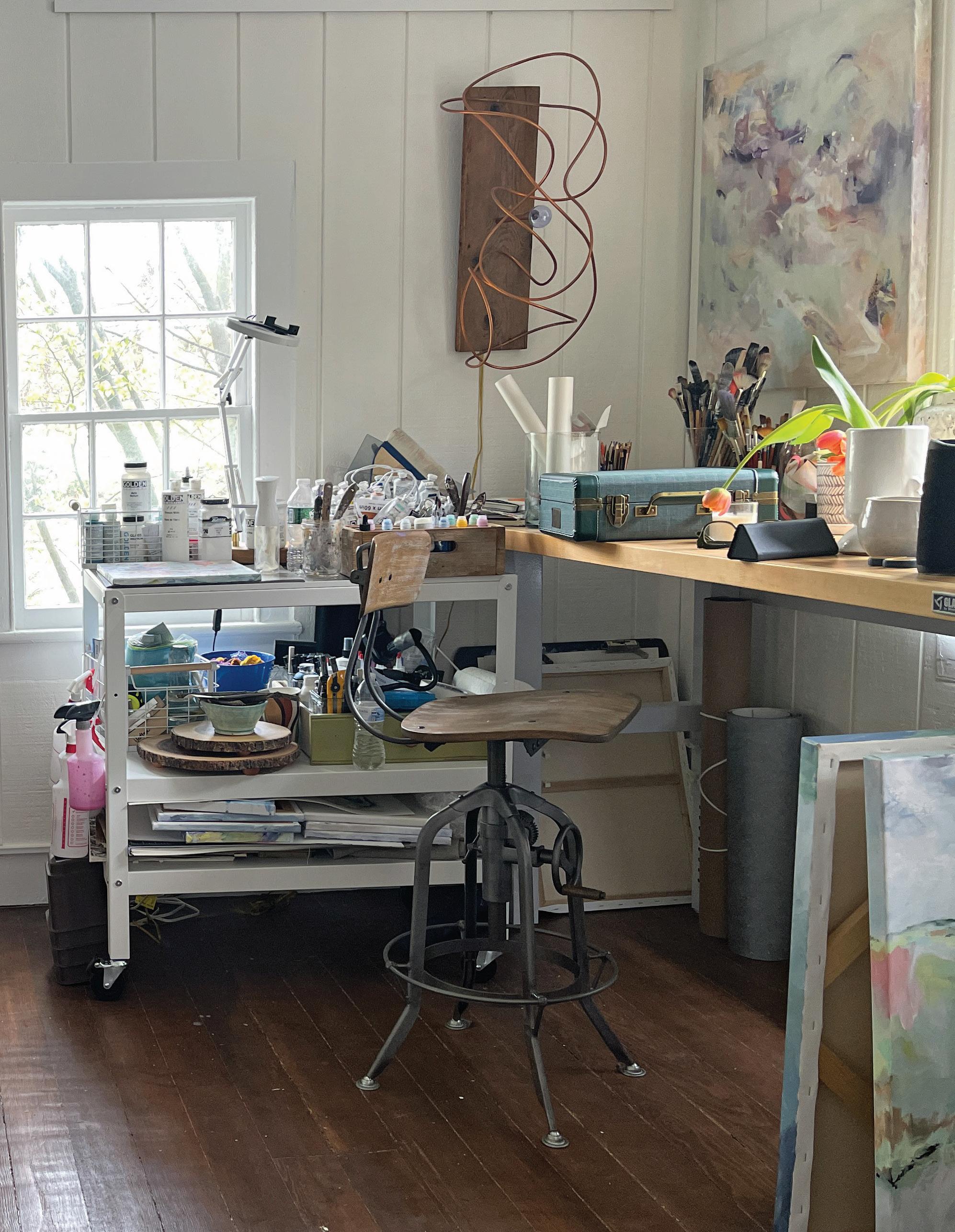
Freedom is not just found in wide open spaces. Sometimes it blooms in small, bright corner studios where the light knows how to linger. My studio is both intimate and open, tucked inside a 19th-century home— now part of Yellow Studio, an all-women’s collective for art, creativity, and community. It sits just above a gallery that radiates creative courage and features the work of local women artists. I grew up not far from where my studio is, passing the corner window countless times without ever imagining that one day, I would be inside creating art for collectors and solo shows. My studio doesn’t just hold my paintings, it’s filled with possibility and gratitude.
Every surface buzzes with energy—alive with layered brushstrokes, music, dancing, shared stories, and the sparks that fly when creative women work alongside one another. My paintings live in that moment, where colors
collide and the world tilts toward something new. I work on many pieces at a time—my brushes dance from canvas to canvas—some propped on the floor, others on my easel, and more still leaning against the wall. Even the slight imperfections of the building, like the uneven floorboards from the settled angles of an old house, occasionally add their own gesture to my work by gently suggesting the direction of my drips. My paint cart rolls with me, ensuring I have plenty of room for bursts of inspiration to dance as I paint. A small, wooden handcrafted stool, that’s older than I am, lifts me to reach my taller canvases and settles me to pause and consider a composition. And in that pause, I feel it—the swirl of delight that fills this place and boldly informs my art. My small, light-filled, corner studio is more than a place to paint—it’s a partner in my process that proves constraints don’t stifle creativity, they amplify it.
“There are no rules... that is how art is born, that is how breakthroughs happen. Go against the rules or ignore the rules, that is what invention is about.”
—Helen Frankenthaler
SMALL SPACES
Jenny Williamson
JENNY WILLIAMSON is the founder and chief creative officer of West Rose Design, a Reno/Tahoe, Nevada-based interior design studio elevating mountain and lake home environments. A master of merging beauty and function, Jenny is dedicated to thoughtful, client-driven designs grounded in distinctive furnishings, curated one-ofa-kind art, and meaningful accessories influenced by the travels she and her clients take. Her work is clever, charming, and beautifully bespoke. Off duty, Jenny spends as much time as possible with her family, paddle boarding on Tahoe’s stunning alpine waters in the summer, while snowboarding her favorite runs come winter.
My husband and I relocated from the Bay Area back to the Reno/ Tahoe area in 2017. At the time, we purchased a three-bedroom, two-bath home that seemed like a mansion compared to the smaller condos we had lived in. Laundry inside the house—woohoo—we were really living now! We had our primary bedroom and then we each had home offices (and a dual workout room for me) in the additional two rooms. Fast forward three years, two babies, and a puppy later, and our former 2040-square-foot mansion (wink wink) was all filled up. Our son and daughter each had their own bedroom, and there was no longer space for my desk or workout equipment.
My husband is the son of a contractor and very handy. He transformed a tool shed on our property into his “man cave,” so I knew he was capable of building me a space. I dreamt of my own sanctuary between midnight newborn feedings and hazy days with a baby and a two-year-old during the Covid lockdown.
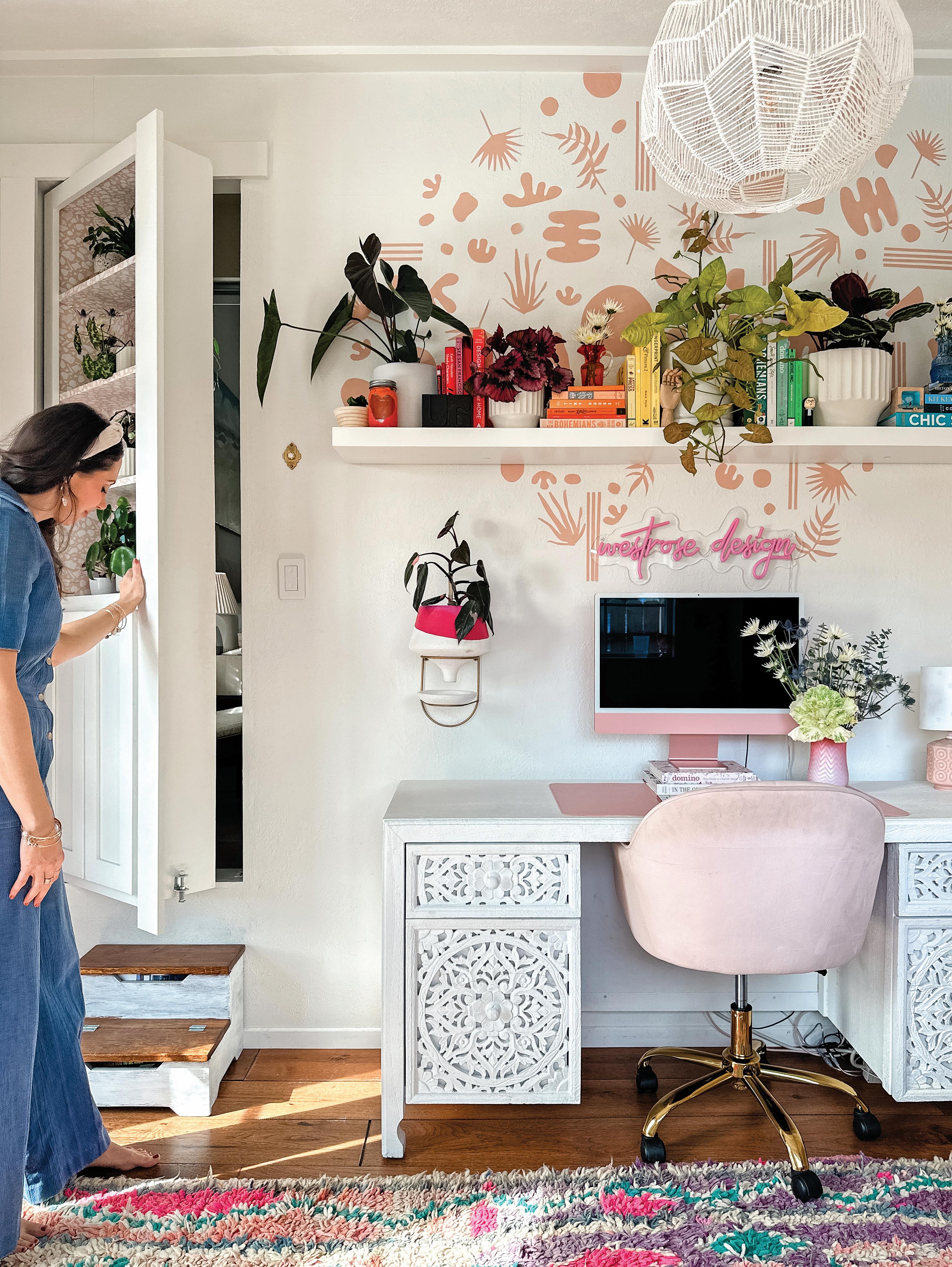
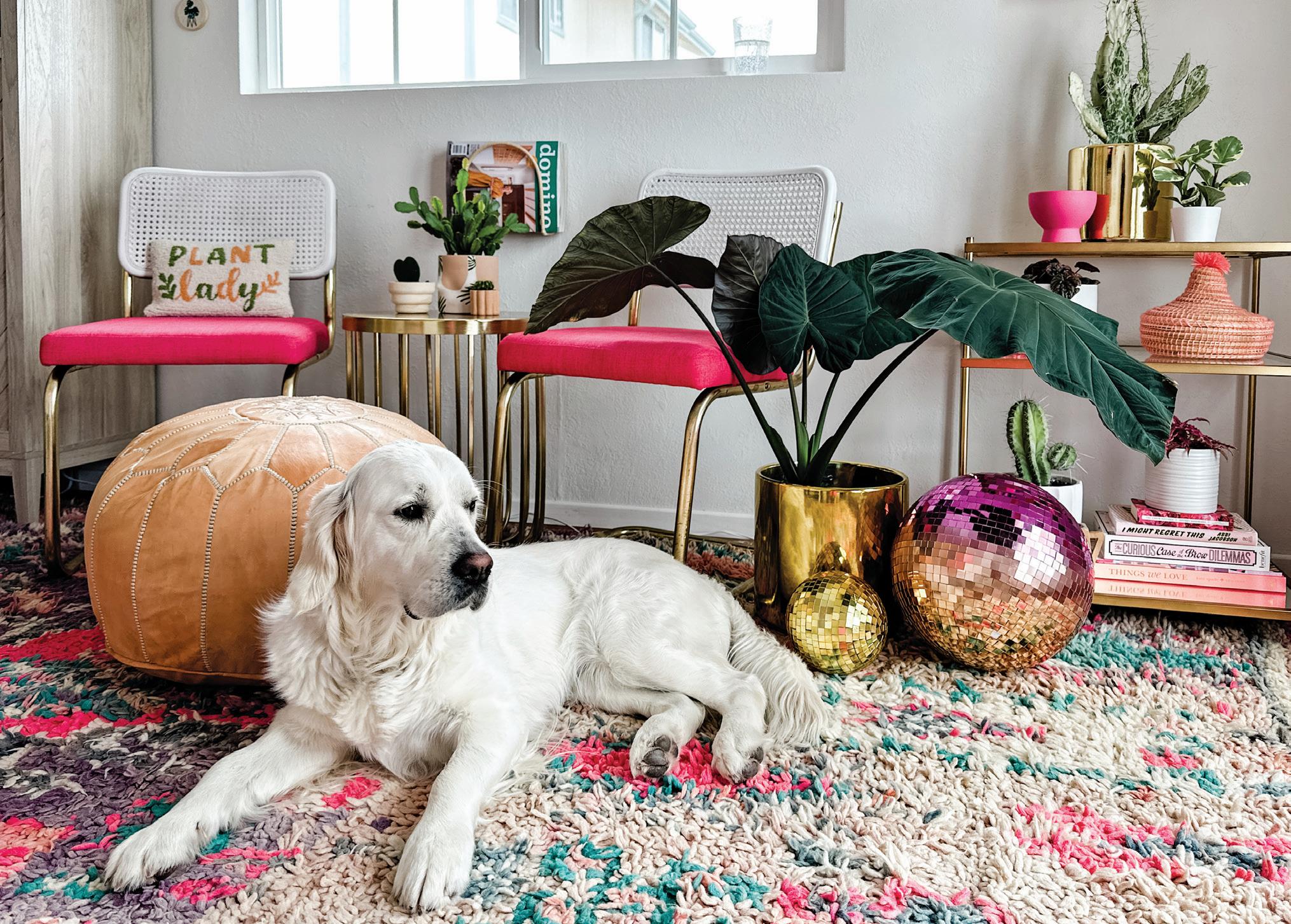
Enter my secret “she shed.” Hidden behind a clandestine bookshelf entrance that channels equal parts playfulness and privacy, my sunny space was formerly a dog run on the side of our house. Now it’s a reclaimed light-filled office where I work out on my Peloton bike by morning, design spaces for my interior design clients by day, and retreat to listen to records and unwind by night. With French doors to the outside, I have easy access to the backyard where my young children often play or can let our English crème golden retriever, Tessie (named after Tahoe Tessie—the legendary, serpent-like creature said to inhabit Lake Tahoe), outside to run around. I primarily use the hidden bookcase door for the quickest entry in and out of our home through a speakeasystyle passageway through the back of our primary bedroom closet.
My space is a reflection of my interior design work itself: warm, inventive, and full of character. Every inch is infused with personality and practicality, tailored for deep creative work while still feeling like a joyful hideaway. Balancing starting a business (interior design is a second career. I formerly worked as a graphic designer and visual merchandiser for a billiondollar beauty brand in San Francisco—a position that didn’t easily transition to moving back to my hometown of Reno), while raising babies has proved to be quite the challenge, but I’m incredibly grateful to have a reclaimed corner in my home to work, be creative, and retreat as needed.
More on Jenny
www.westrosedesign.com
Instagram: westrosedesign
Pinterest: westrosedesign
“Life might have its failures, but this was not it. The only true failure can come if you quit.”
—Andrea Beaty, from the children’s book, Rosie Revere, Engineer
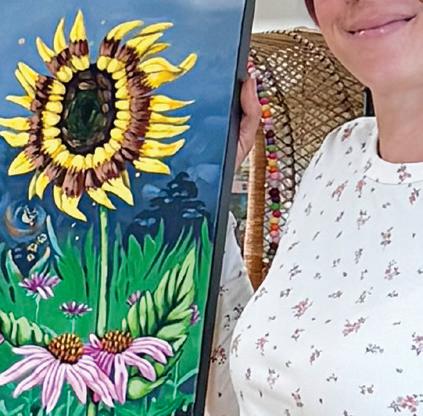
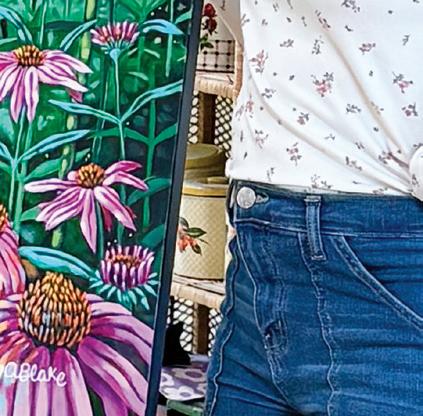
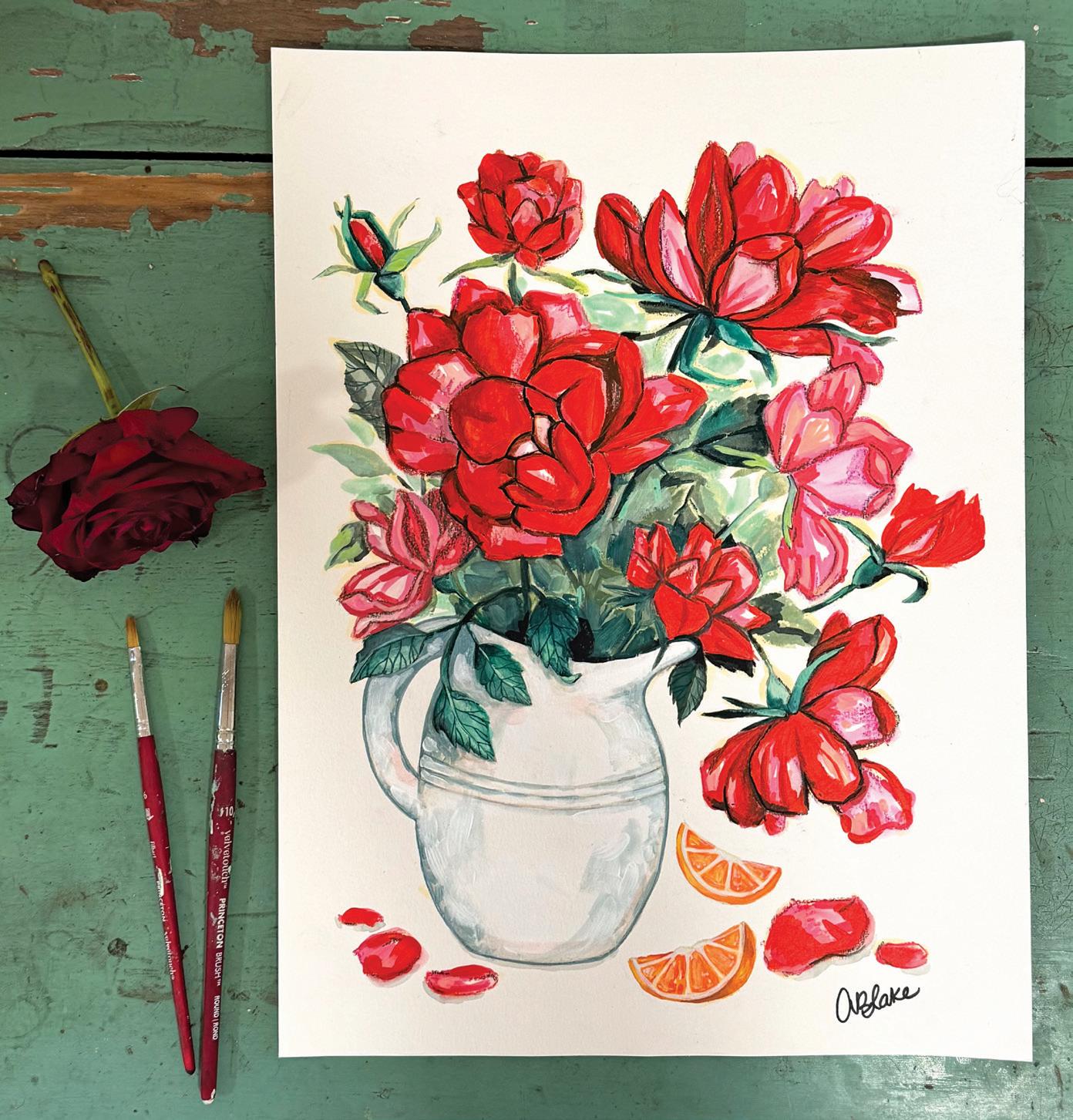
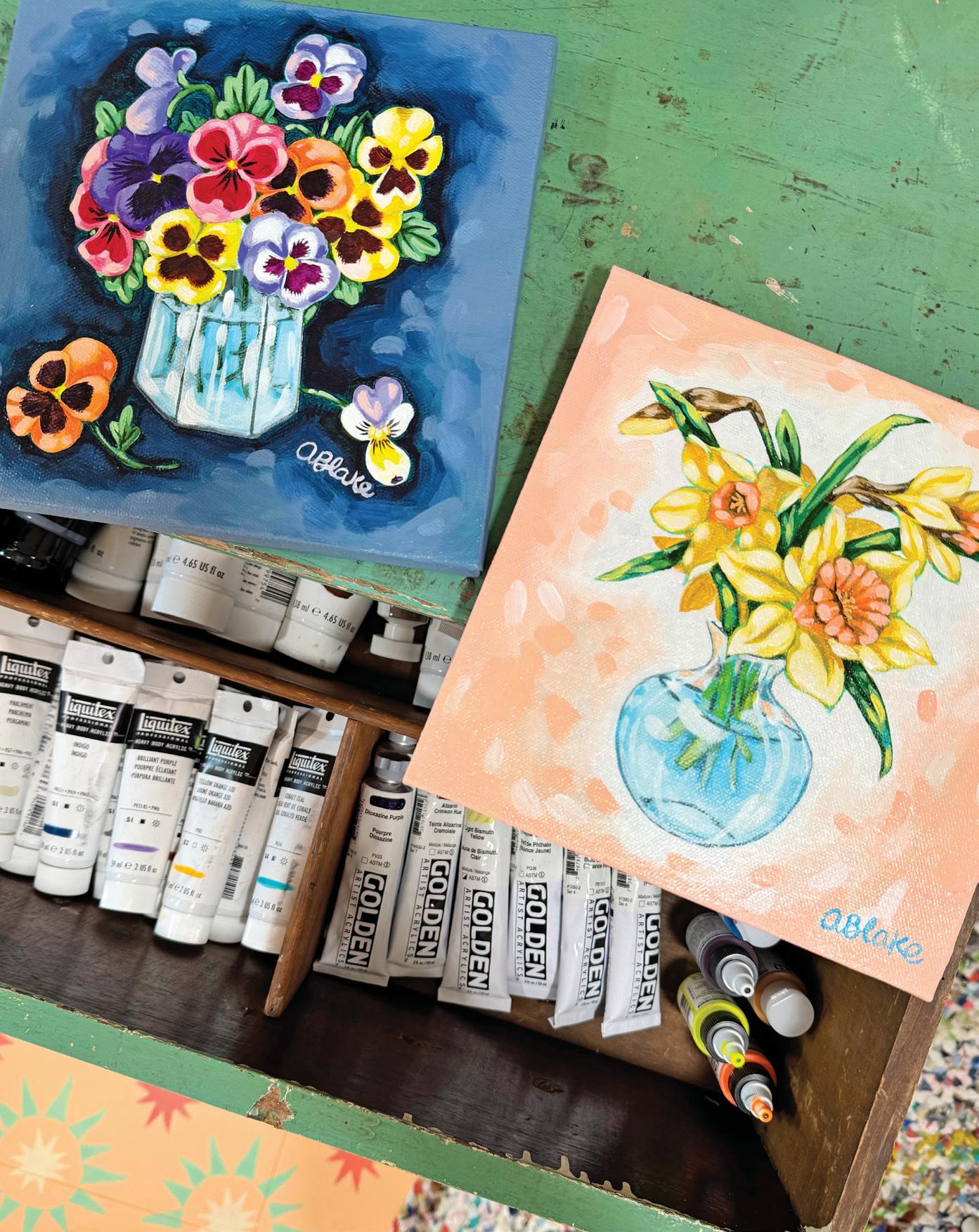
Ashlie Blake
ASHLIE BLAKE, a botanical artist located in the Hudson Valley, New York, who was previously published in Where Women Create, shares the opportunity she’s had to reimagine her workspace. From a small home studio to a larger space built on her home property in her barn, she shares the journey as well as her inspiration. A before-and-after piece, Ashlie shares her love for the natural world, how she started, and how far she has come.
Asa little girl,
I knew I was an artist, and looking back at it now, it feels like I was born with the desire to create. It felt right, and I never (not once) considered another path forward. With a sketchbook carried around like a lifeline, I spent time drawing from observation, but also things from my imagination. After college, I moved in with my now husband, worked a regular nine-to-five job to pay the bills, and still considered myself an artist even though it wasn’t something I could afford to do full time. In our little apartment, I painted in the corner of the living room, participated in art fairs, and shared my work wherever I found the opportunity to do so. A few years later, we married and moved into our first house… There we became a family, I quit my nine-tofive, and from the dining room table I made art. I still participated in art fairs, donated my work to good causes, showed my work publicly for the first time, and sold my paintings online.
Ten years and three kids later, we outgrew our home, and that’s when we found a beautiful old farm property complete with farmhouse and barn, which we now call home. In our farmhouse, I was able to have a room all to myself. A designated space for creativity, finally, a studio. It didn’t matter to me whether it was in our home, that it was small, or that I lacked quiet and privacy. It was mine, I was content, and it was then that I was able to really take myself seriously. While I worked, I watched the birds from my window, observed my gardens too, and enjoyed the companionship of our two cats who liked an artist at work. It was idyllic, I never imagined then that ten years down the road I would have the chance to work in a studio outside our home and with enough space to do laps in.
Inspiration finds me through nature, especially flowers. Always has, always will. There are many things that shape a person, but two very important things for me have been my ability to create and my deep passion for the natural world. For as long as I can remember, I was enamored by flowers, plants, and birds. I needed to know what each one was, their names, everything about them. Still do! These things enrich my life; they inspire and fulfill me in a way unlike anything else. I think it is only natural for an artist to paint and draw what
they love the most. At least that’s how it works for me anyway! An artist’s life is that of foraging through their day-to-day lives, plucking out what makes them feel a spark inside, and then transpiring that feeling into an image.
It’s important for my work to radiate joy. With its bright colors and imagery, all I want to do is create an image that lights someone’s heart up, but also a wall in their home. When I first started selling my work, it was really hard to send a piece out into the world, but now it feels like sharing a gift. I won’t say some pieces are a little hard to let go of, but knowing they’re making someone happy… that’s what does it for me. We need more happy in the world. It’s fun to think of myself as an ambassador of joy.
My husband and I began to discuss the topic of a better studio that we would build in our barn a few years ago. It would playfully come up in conversation… “Wouldn’t it be cool if someday we…?” not really making plans, but also not squashing down the possibility. I daydreamed about it, wondered what it would be like, and how it would benefit my career. During Covid, when the world shut down and my home studio became a respite from the troubles of the world, it was evident that I was starting to outgrow my space. When the world opened back up and I had the opportunity as an artist in residence at a friend’s farm, it was loud and clear, this was definitely the case. For the first time, my room felt too small. I needed more space for myself, my paintings, my supplies. And honestly, I just needed more surfaces to physically spread out and work on.
It was then that the playful topic of maybe building a studio in the barn became a must-do. The previous year, we had built my husband a space for his business in our barn. With that experience under our belt, we knew it was possible to do the same for me. I have to tell you I never thought this would happen, that I would have a legit art studio like I see other female creators have. It wasn’t the plan. Did I want it? Of course! Did I believe that it was in my cards? Hell no! Funny thing about life, though, you can’t predict most of it.
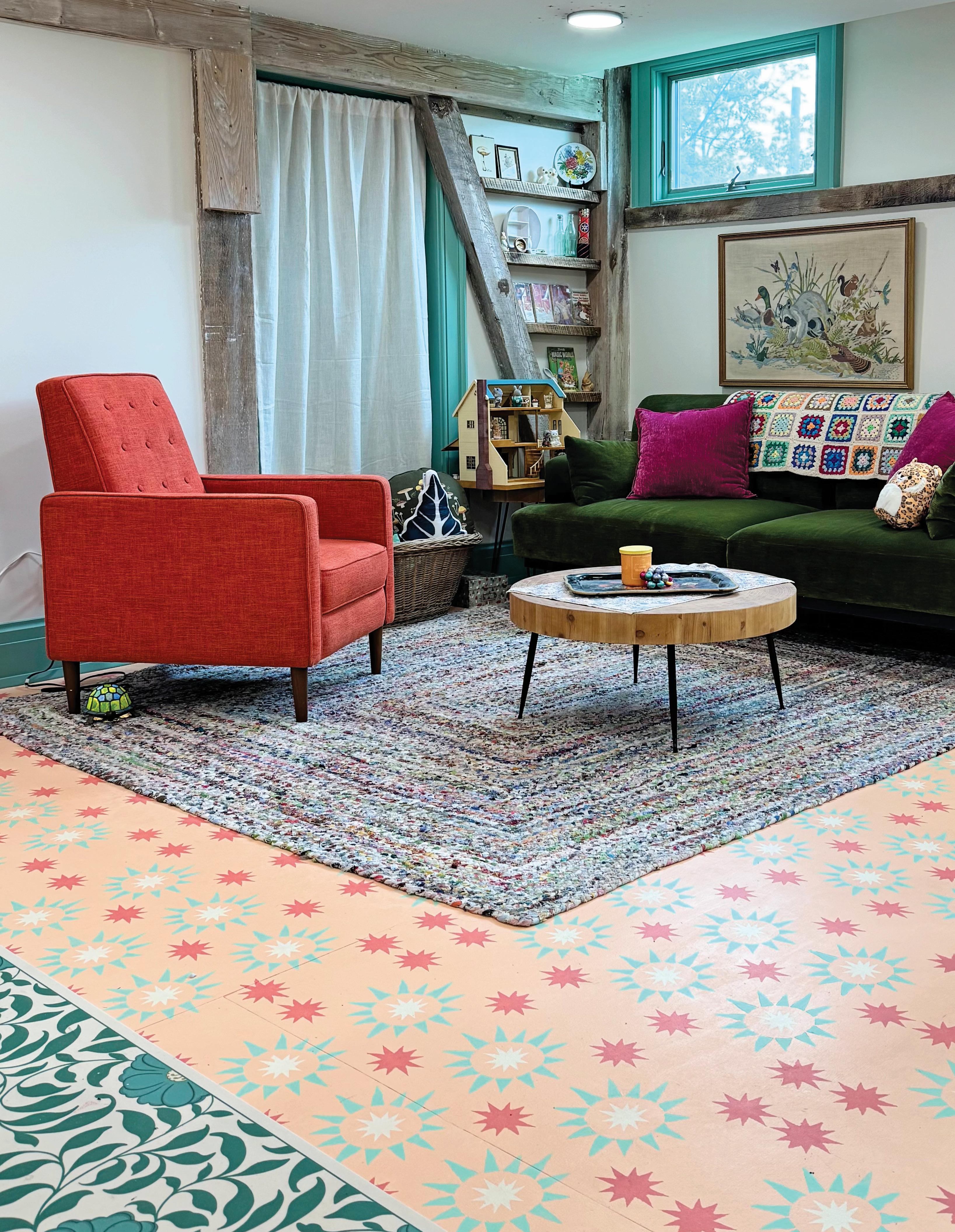
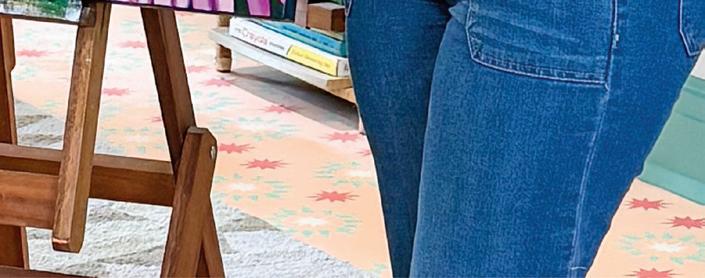
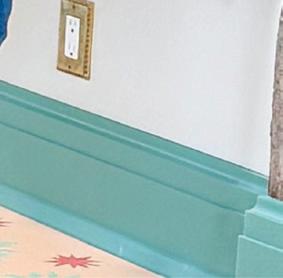
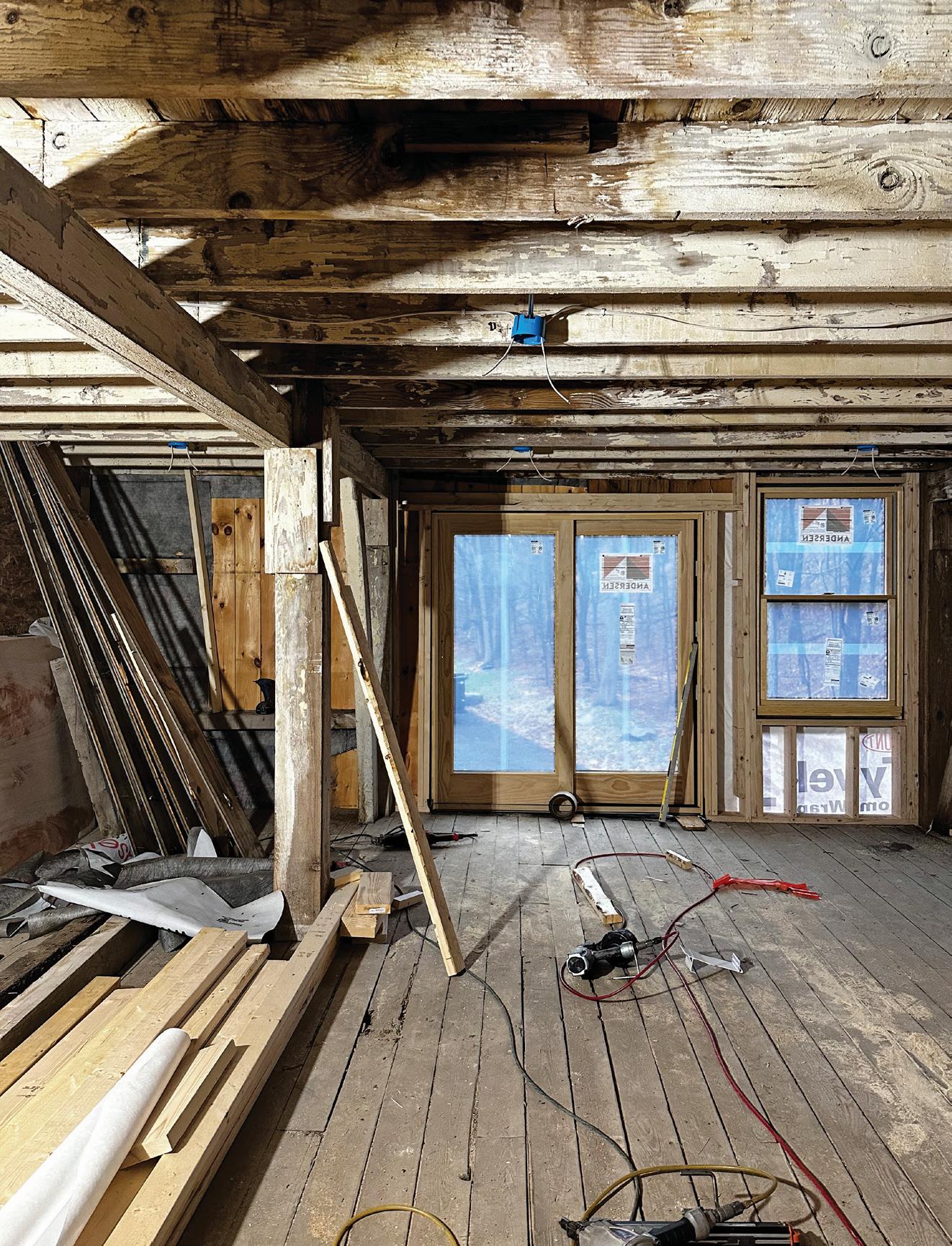
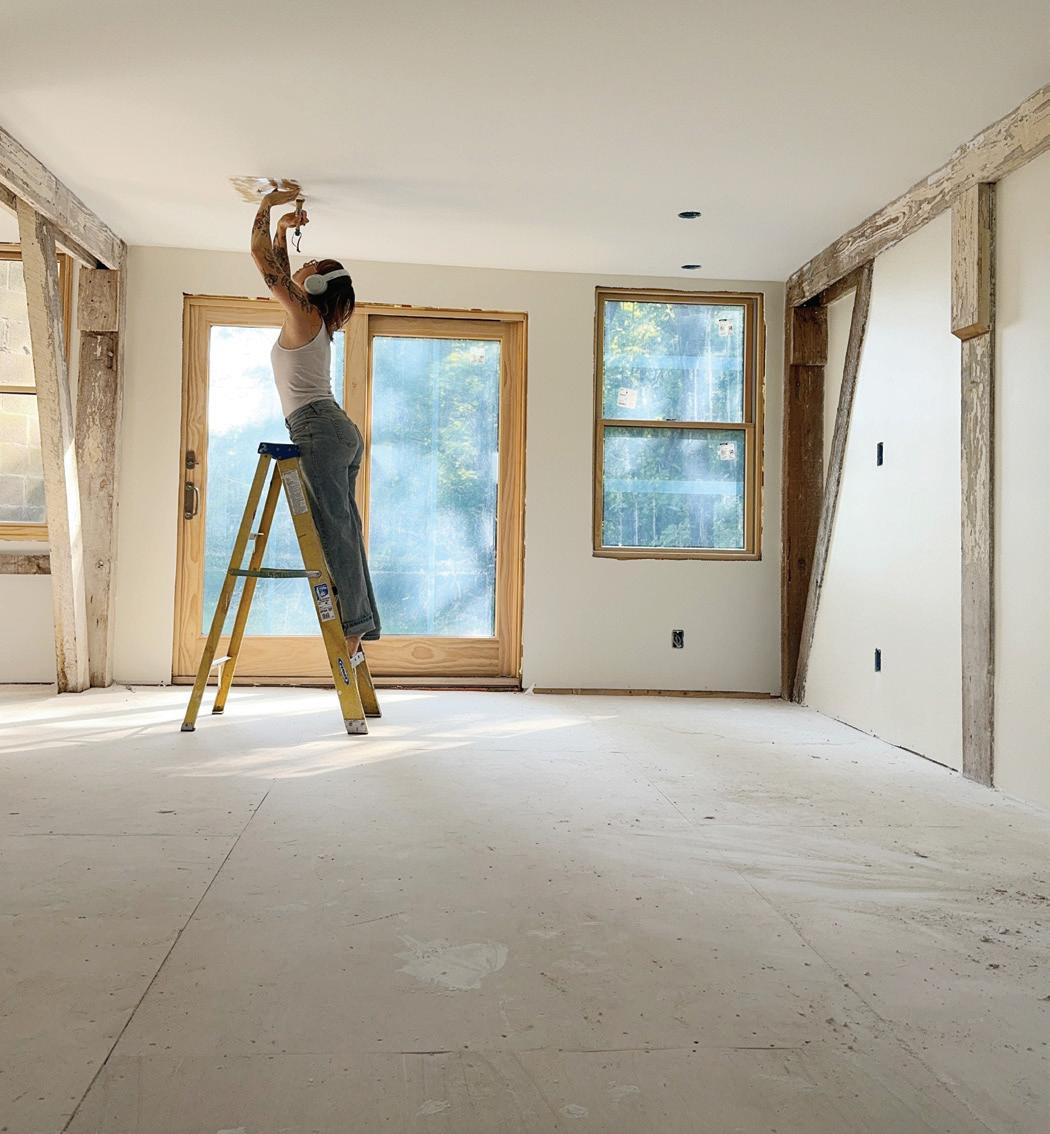
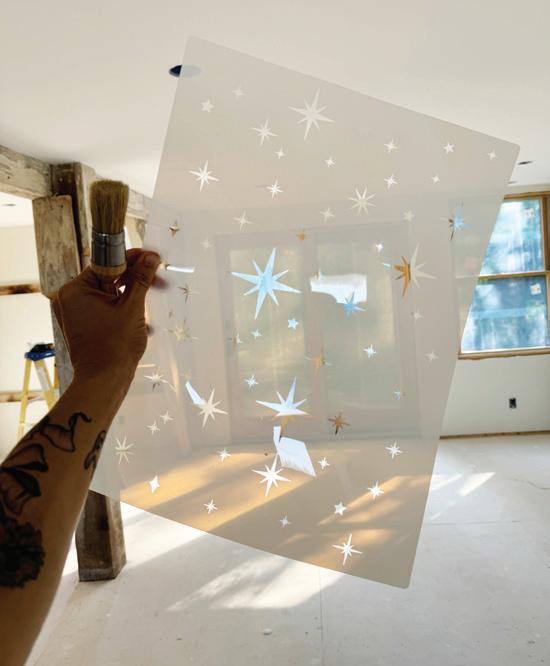
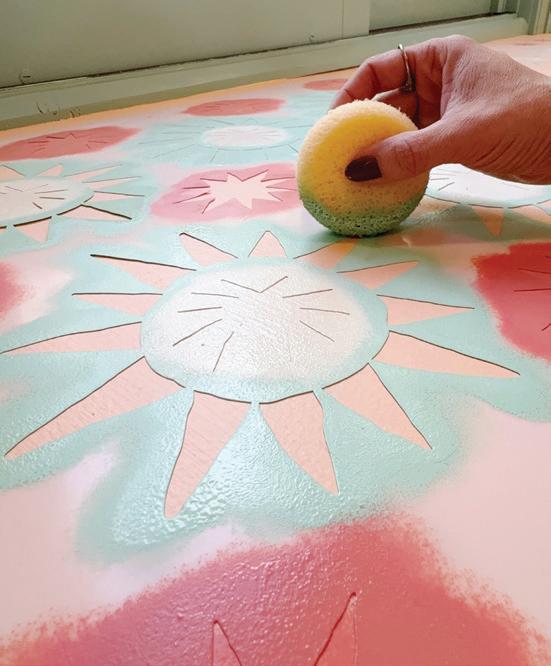
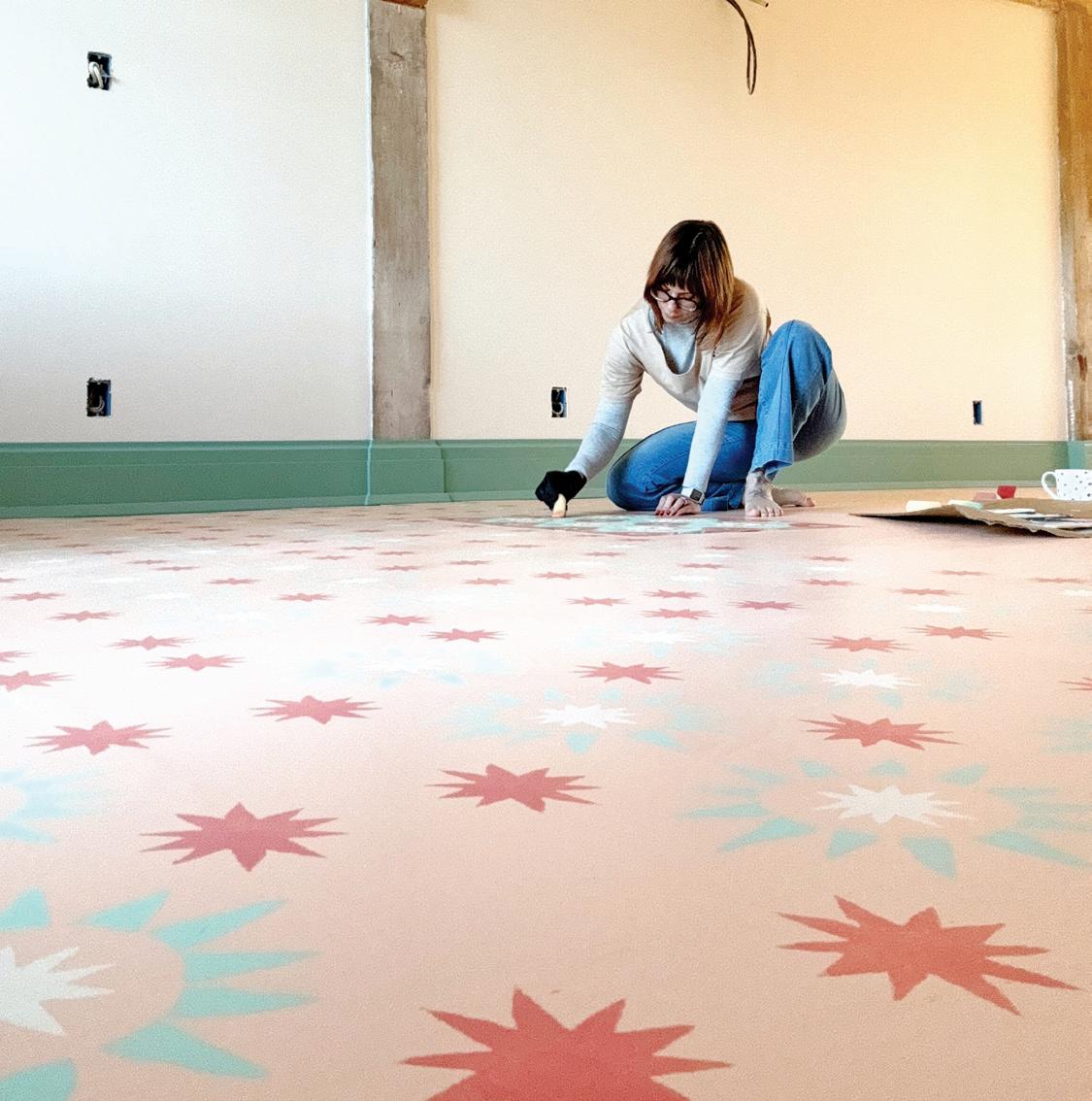
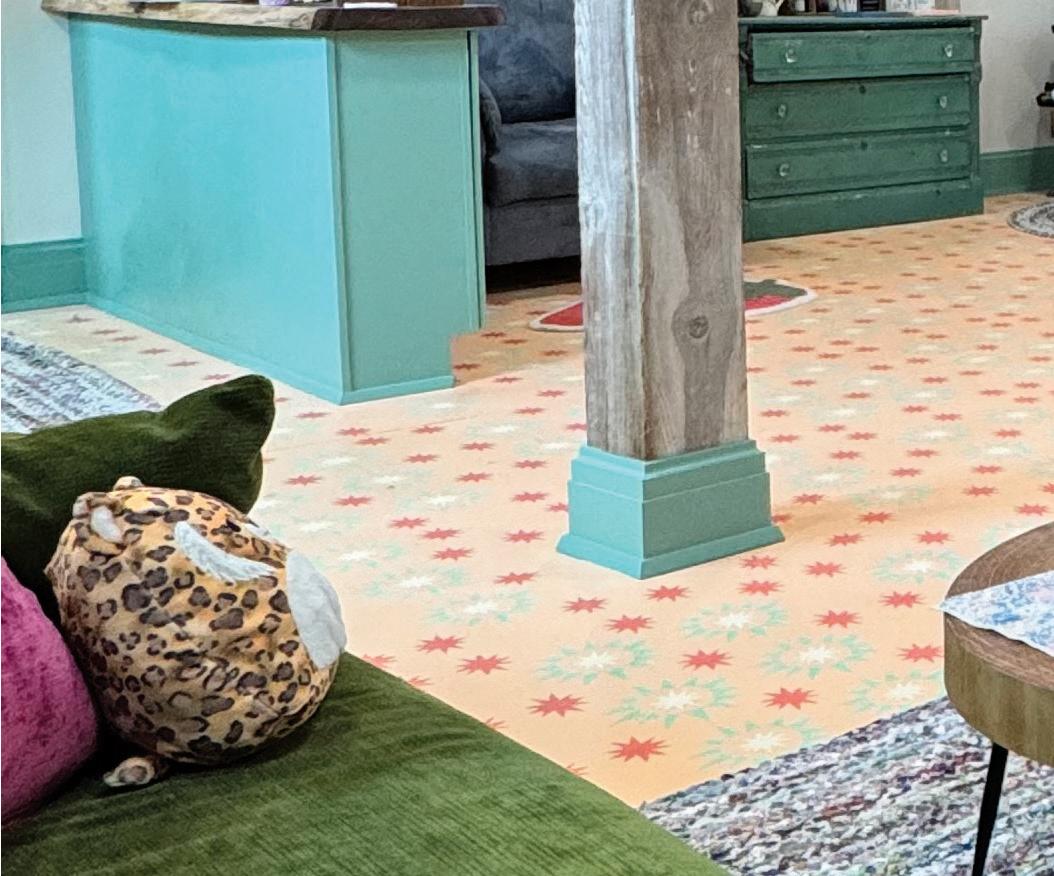
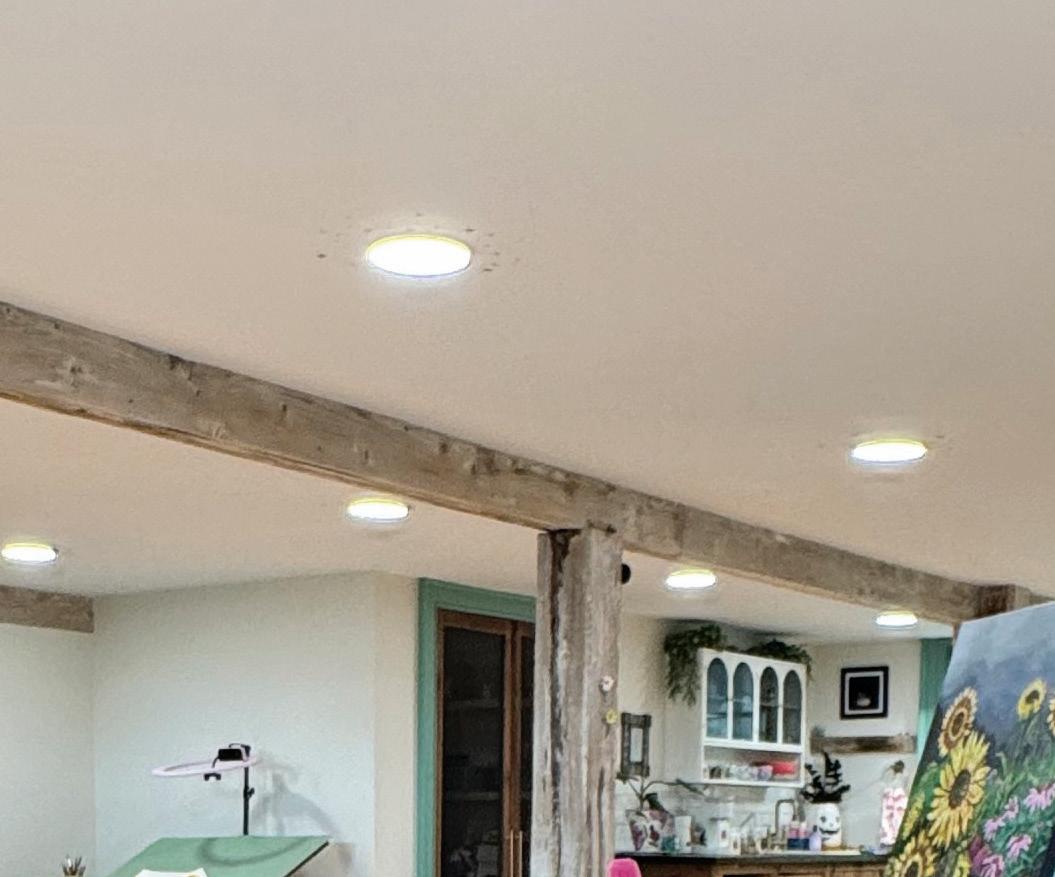
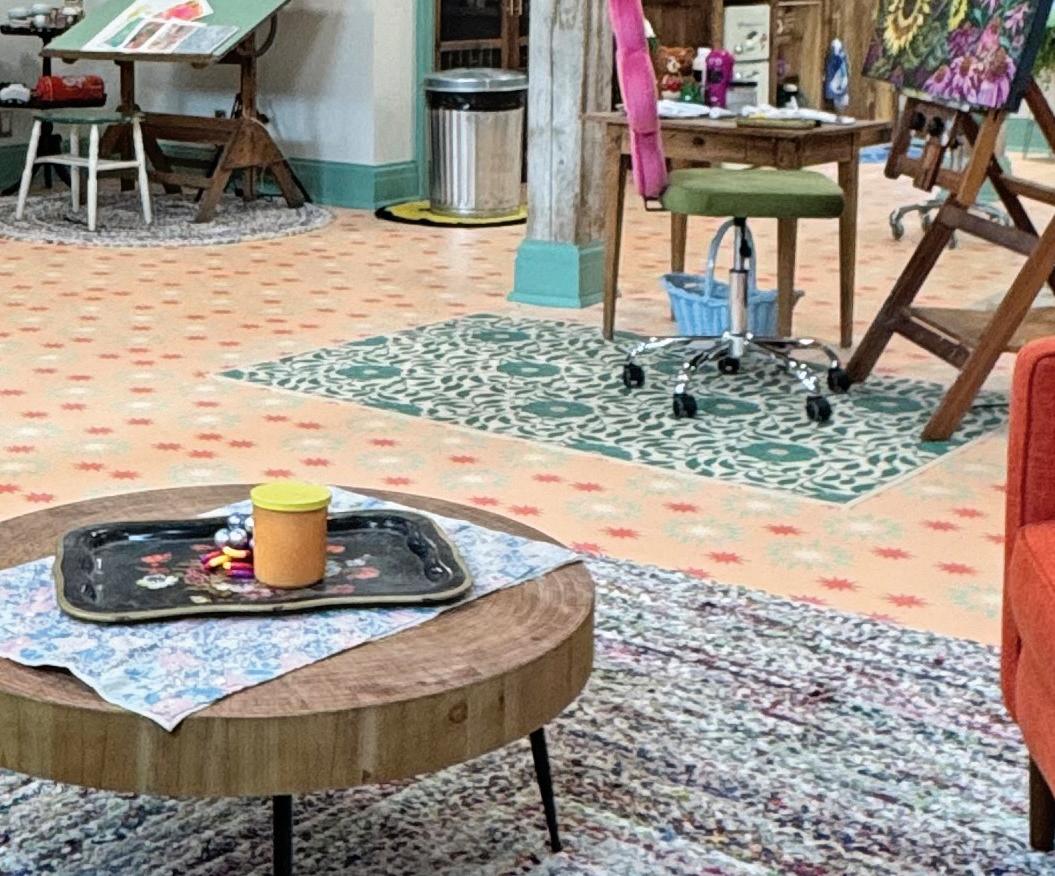
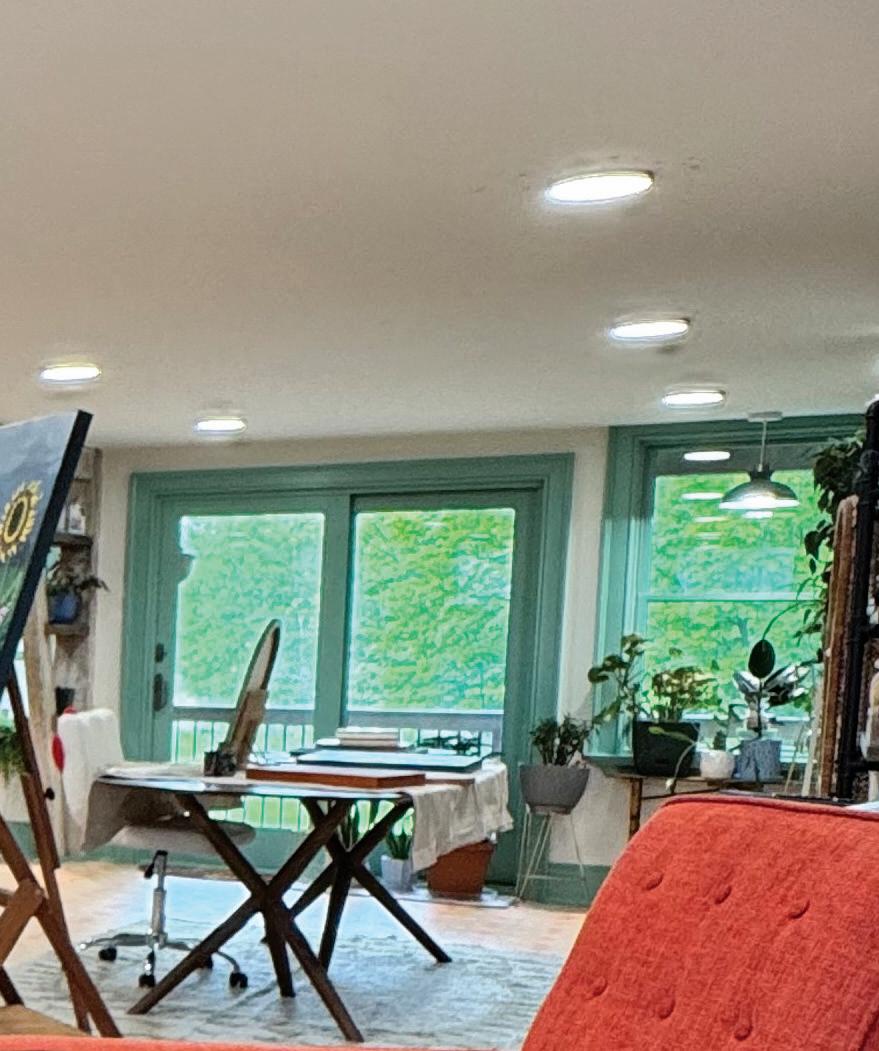
We surveyed the space, a raw and dirty barn area on the second floor, 23 feet wide by 34 feet long. Through a hundred years of dust, lots of stuff to throw away and move out, families upon families of spiders, holes in the floor, and light creeping in through the walls, I could envision the possibility ahead. We set quickly to clearing the space out on one of the hottest days of the year. I swept the floor, readying it for our contractor, and over the course of 6-8 months, we did what we could on our own to help keep costs down, but in the long run, I wholeheartedly give our contractor and his team all of the credit. They were incredible, and they literally made a dream come true. I was very much involved. We designed a small kitchenette, a spacious closet, a small outdoor balcony, and some great shelving. I chose offwhite walls, turquoise trim, and a coral floor, which I painstakingly hand-stenciled over the course of sixty hours or so.
Movingin was surreal, as I put everything into its place and made it feel like a little home away from home. I would unpack a little and paint a little. It was a nice back-and-forth process. You see, I had taken creative leave during construction. I wanted time not only to be present in the process but also to take some time mentally to really evaluate my artistic career. I felt like having this opportunity was an important one, and I wanted to go into it with a head full of ideas, but also a vision as to where I was headed. I felt a little guilty at first, but in time it felt good… and looking back, I can see now that artistic growth can still be had even when not actually producing any works of art. There is beauty in the thought process, the rumination, and the looking ahead and at oneself. By the time I moved into my studio, all the creative energy that had been bottling up was set ablaze, and I’ve been riding the wave ever since.
A typical studio day begins for me midmorning when I leave our house and make my way across the lawn. On the way, I visually take in my gardens, notice what’s bloomed overnight, and take pleasure in seeing the pheobe flycatcher that is currently building a nest in the barn. Through a door, I head upstairs. Excitement builds up as I walk down the hall. Just before you reach my door—an old wooden gem a neighbor gave me, painted the loveliest of turquoises—I take inventory of my seedlings that I am starting on a grow shelf in the hall. After, I cross the threshold over a mat that says “come as you are” (and I do). I have arrived, and I smile. Sometimes I water the plants, pause to look out my balcony doors for birds, and make some coffee before I get to it.
My easel, which I set up in the very center of the room, awaits, and I start squeezing paint from its tubes. I usually work ‘til lunch when my husband and I come together to eat. A perk of working just down the hall from one another, and one I don’t take for granted. After lunch, it’s back to work. Sometimes I listen to music while I work, sometimes I put on a show or movie, most of the time I just enjoy the silence of my space.
I’m not sure when the surreal feeling will wear off, or if it ever will. I kind of don’t want it to. I’m just that little girl with a love for flowers and drawing them who grew up. I am grateful, my heart is full, and I am happy.
More on Ashlie
Instagram: ashlieblakeart
Robin Zachary
PHOTOGRAPHY
BY LISA HAUKOM
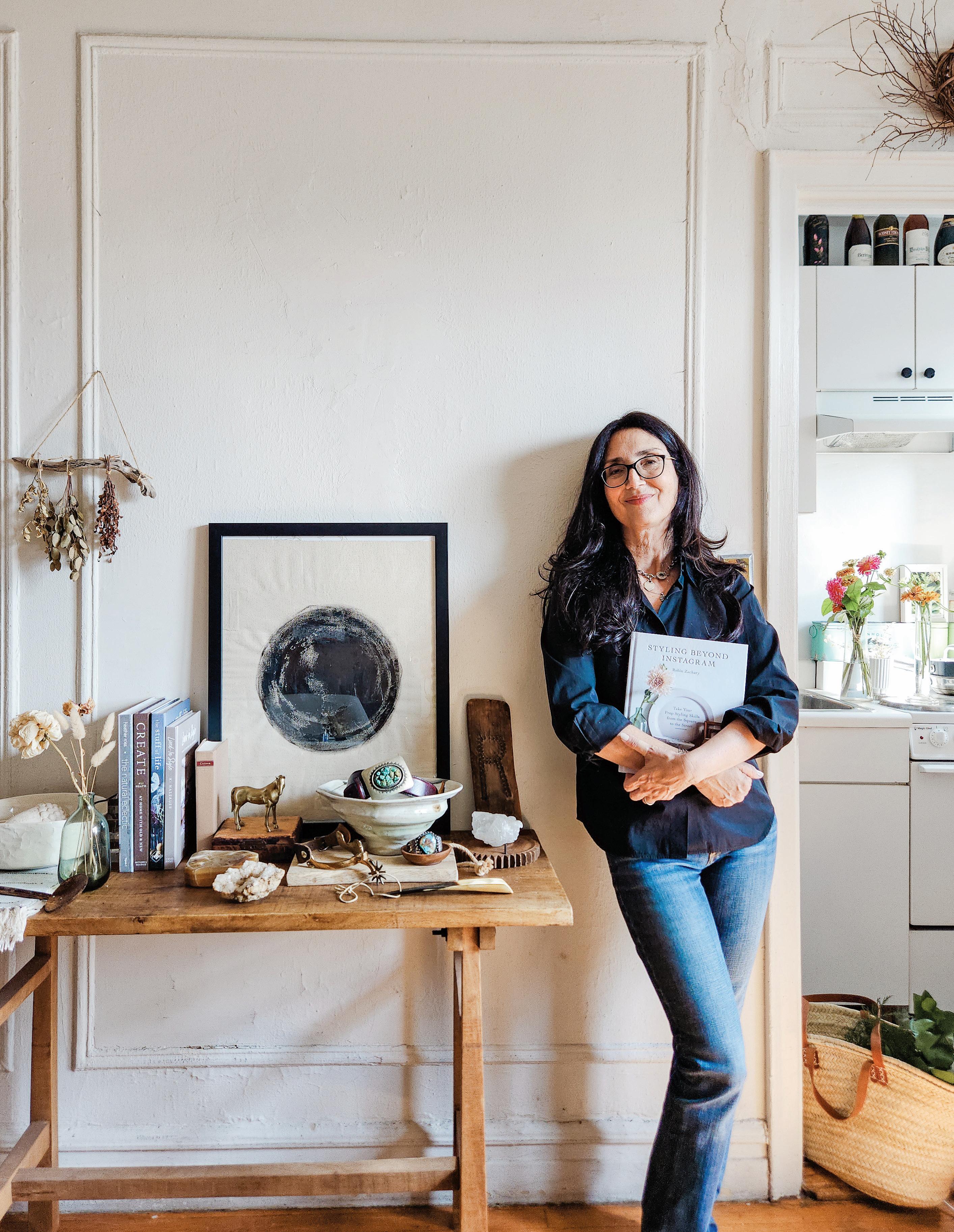
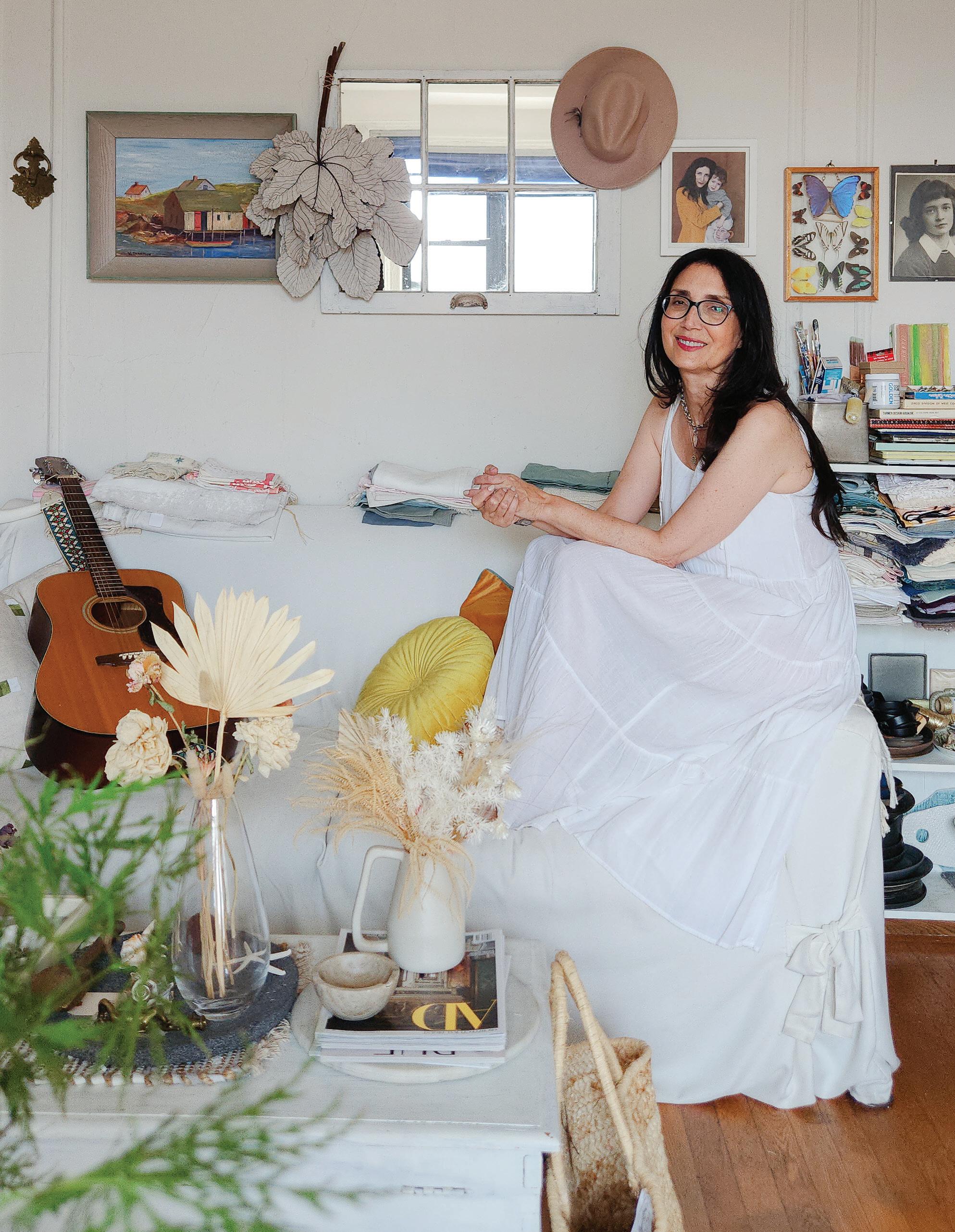
ROBIN ZACHARY is a multi-disciplinary artist, prop stylist, creative director, and educator. Her book, Styling Beyond Instagram, has been embraced globally as an essential guide to the business of prop styling. Her signature teaching program, THE PROP STYLING EXPERIENCE®, welcomes creatives from around the world into her warm and nurturing studio, engaging them in hands-on photo shoots that lead to creative self-discovery and the development of a distinct visual voice. She has been featured in Be er Homes & Gardens, The New York Times, Where Women Create, and on the local NYC news station, NY1. Her commercial clients range from famous corporate brands to national magazines.
A STUDIO WITH SOUL
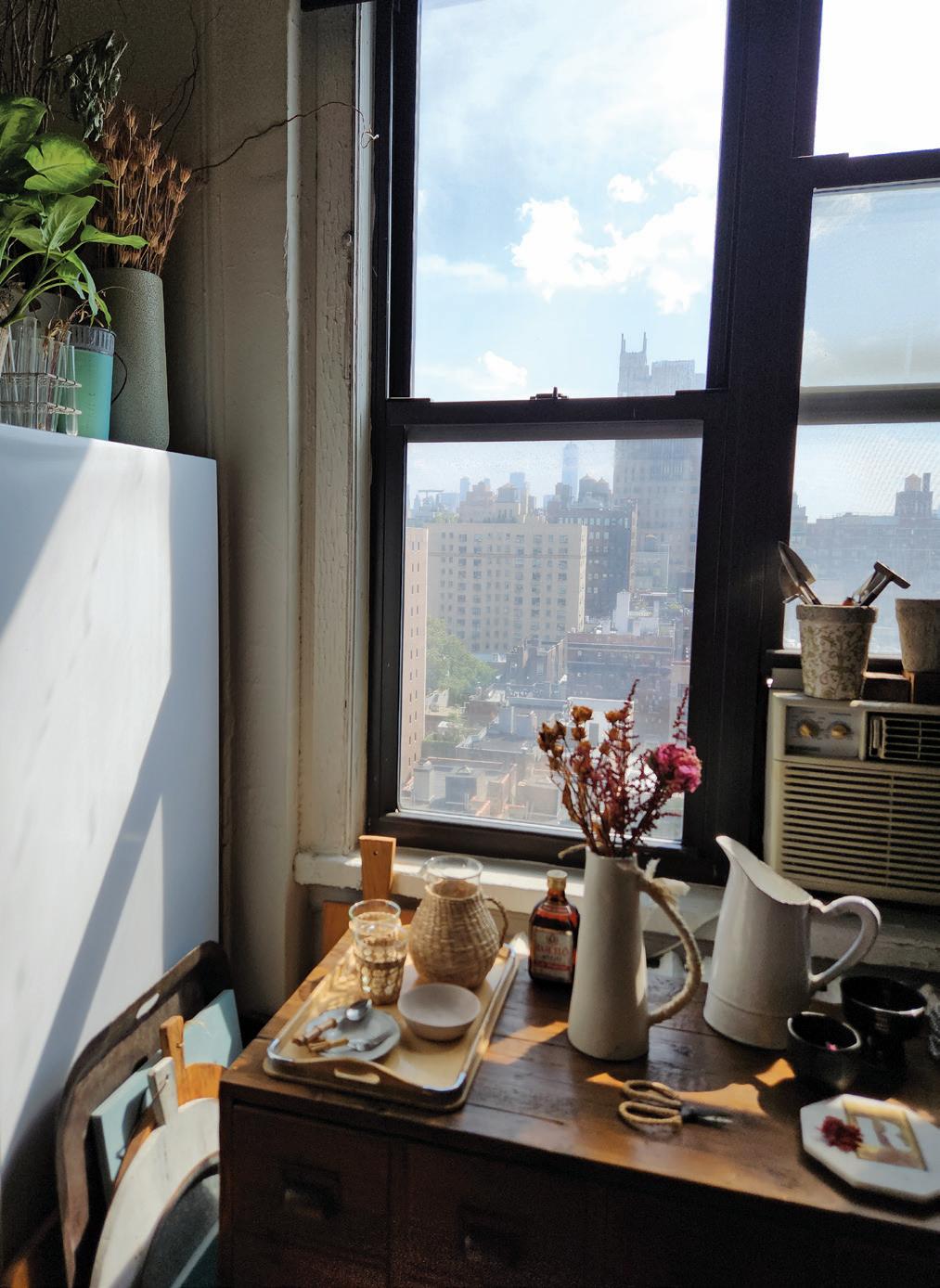
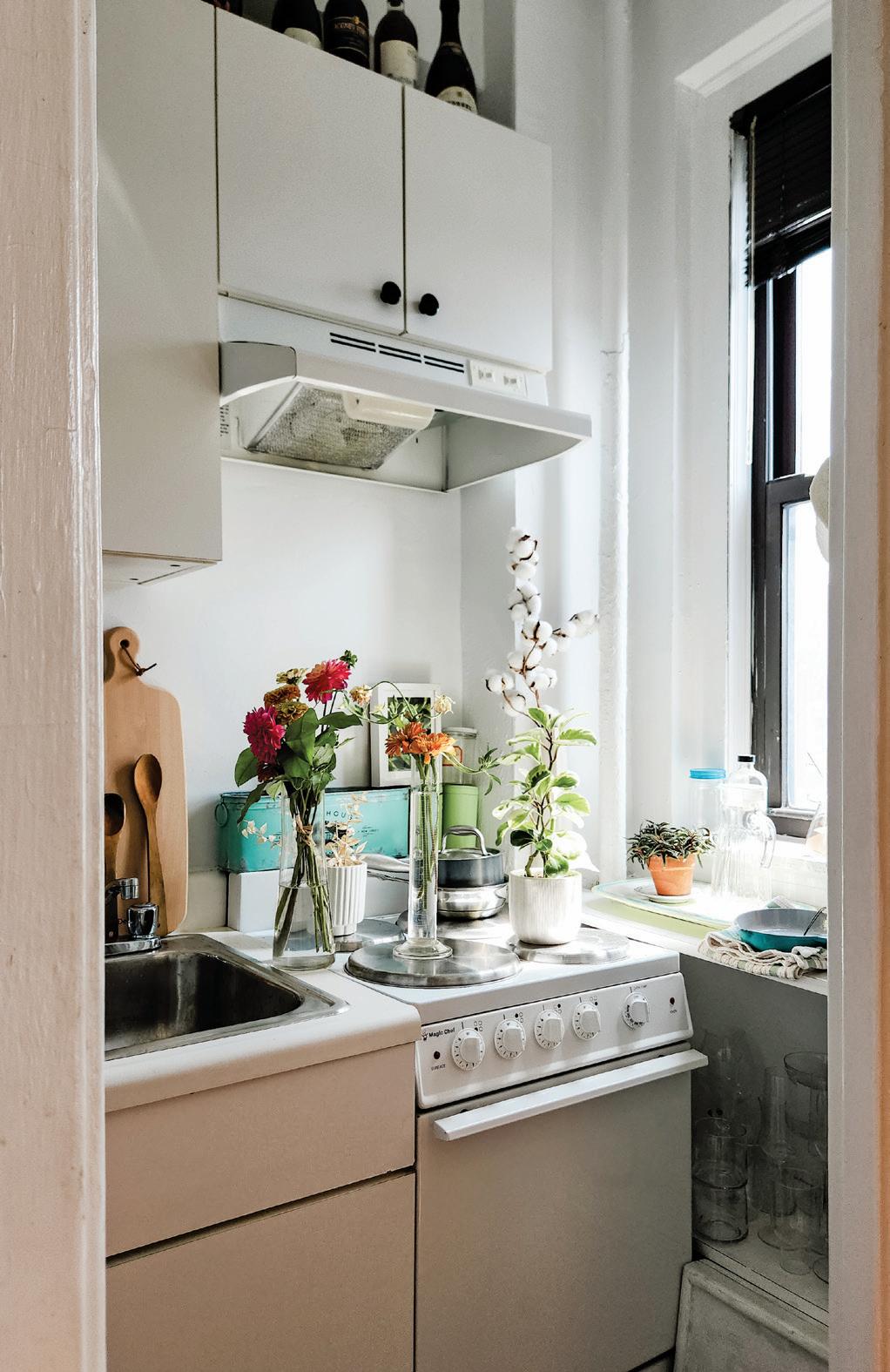
High above the bustling streets of Manhattan, nestled on the 14th floor of a prewar Art Deco building, sits my little gem of a studio. Once a hotel in the 1920s, the building still carries the charm of its past—complete with a tiny kitchen tucked into what was once a closet, bumpy walls with peeling paint and original molding, and time-worn hardwood floors. The bathroom features the original porcelain pedestal sink and a massive tub with antique hot and cold knobs. And it has a magnificent, unobstructed view of lower Manhattan. It’s imperfect, and that’s what makes it perfect.
There’s a kind of magic here. When I step inside, I am overcome with gratitude. This space holds the energy of everything I have built—my business, my art, and my purpose of creating beauty through photography and styling. I say, “I love you” out loud as if the place has a soul of its own. It gives back in kind, with light that dances through the windows, props that tell stories, and an atmosphere that invites exploration and creativity.
While I served as the creative director and home design editor for Bridal Guide Magazine, I was surrounded by beautiful flowers, cakes, wedding gowns, and housewares, and traveled to grand locations all over the world that hosted our photo shoots. After producing and directing shoots for many years, I realized that I wanted to switch gears and reinvent myself as a prop stylist and took the leap into freelancing and entrepreneurship. I was asked to teach at the Fashion Institute of Technology and instantly found my calling, teaching others to find their inner stylist and explore this art form, which has become so important today in every aspect where life meets business for both solo entrepreneurs and corporations. Visuals, no matter what your business may be, are the primary way to connect with your audience.
WHERE THE LIGHT FIRST HIT
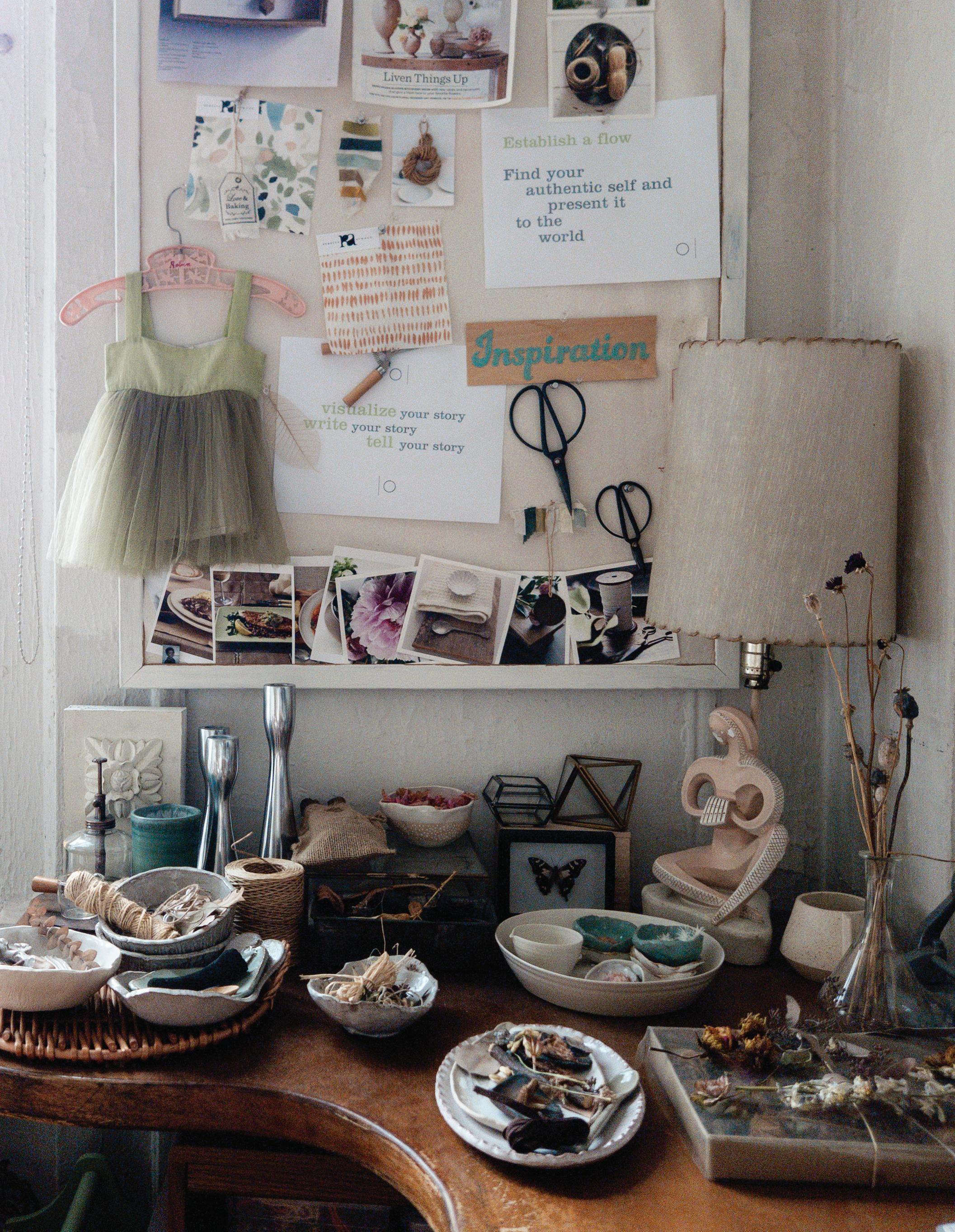
My journey began while I was still working at Bridal Guide. I noticed how the light in one corner of my studio streamed in all day, rain or shine. I began photographing shoes and books on the windowsill for early eBay listings, but things quickly evolved. I became obsessed with studying the interplay of light and shadow throughout the day and year, how it hits in various points around the room, and how light wraps around objects and gives them dimension. I started styling and photographing tiny vignettes of found objects—ribbons, shells, miniatures, each cohesive in color and theme— and crafted my natural, organic style. This was the first spark of what would become The Prop Styling Experience®
Then life shifted. I lost my mother, and soon after, my father eventually began his descent into dementia. As I cleared out two family homes—filled with generations of belongings—I unearthed heirlooms, memories, and stories. Those deeply personal treasures became the heart of my styling. What started as grief transformed into a new purpose: honoring those I loved by weaving their legacy into my creative work.
A PROP STYLIST’S PLAYGROUND
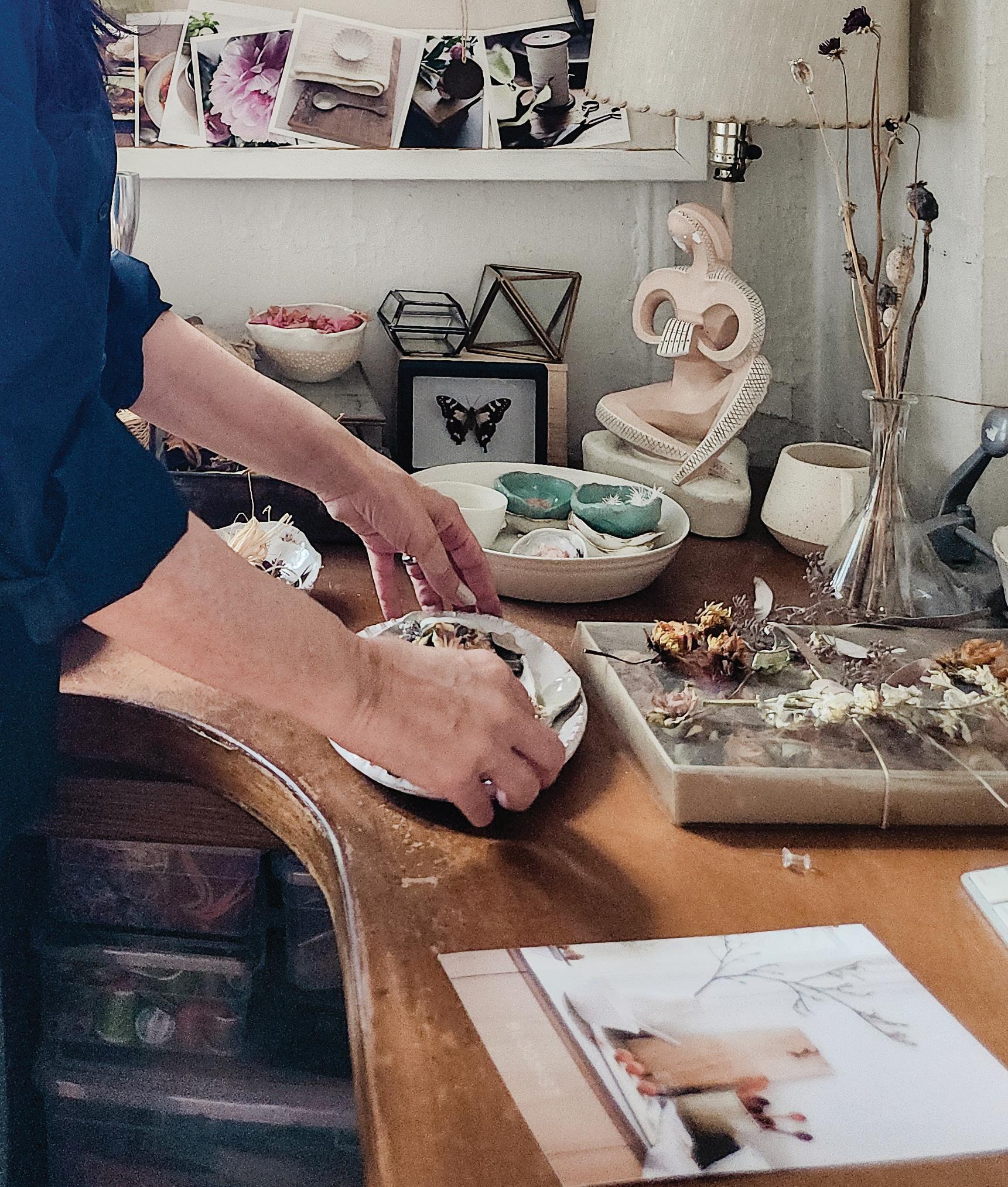
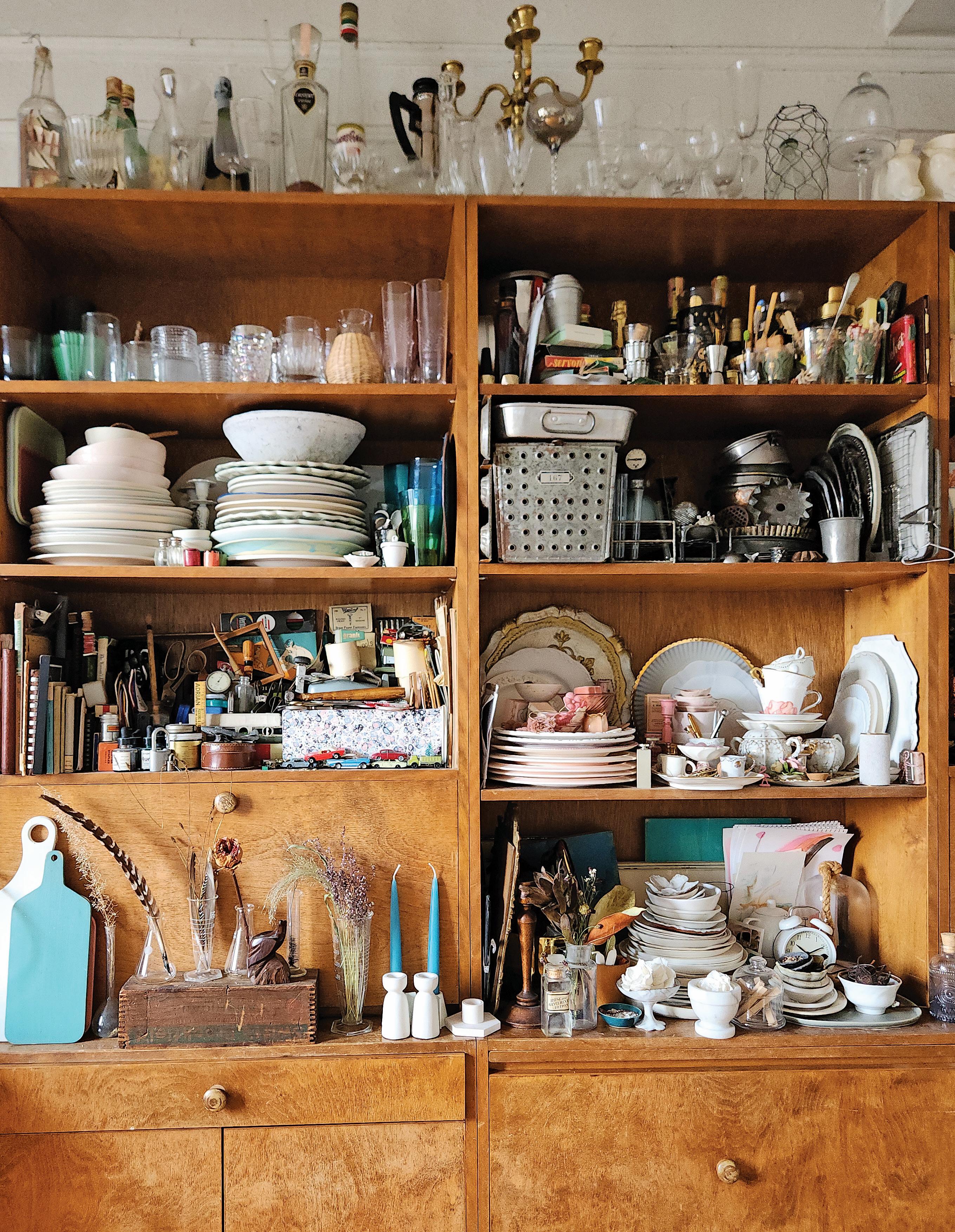
The studio is brimming with props—truly a candy store for the eyes. High shelves hold family treasures, collected finds, vintage glassware, and dishes meticulously organized by style and era. I’m particularly drawn to the romantic and the mid-century modern collections. You’ll see stacks of table linens, cutlery, organic matter, craft supplies, and an area of tile and canvas backdrops. Handmade ceramics, each one unique and expressive, are at the core of my aesthetic. Modern and vintage, neutral and colorful pieces live side by side comfortably in here.
This space isn’t just a studio for commercial work—it houses a fully immersive creative workshop. I have a keen eye for sourcing beautiful, functional items that add a spark to both commercial photo shoots and my own personal content for my Instagram account. The thrill of the hunt is the best part about my job. I’m especially passionate about working with brands that share my love for rustic, organic, and vintage elements. I only buy what speaks to me—special pieces that carry a story and a sense of wonder about where they’ve been and who once loved them.
A CREATIVE JOURNEY LIKE NO OTHER
I designed The Prop Styling Experience® as a one-of-akind, immersive workshop where creativity is nurtured and individuality is celebrated. It’s a laboratory tailored for entrepreneurs, content creators, designers, and artists in the food, beauty, jewelry, home décor, floral, vintage, and service businesses, and really anyone eager to explore visual storytelling. It’s exactly the kind of in-person, hands-on format I wish I had access to early in my career. I had a habit of signing up for self-paced classes online and never finishing them, so I vowed to make this a different kind of learning experience for my students.
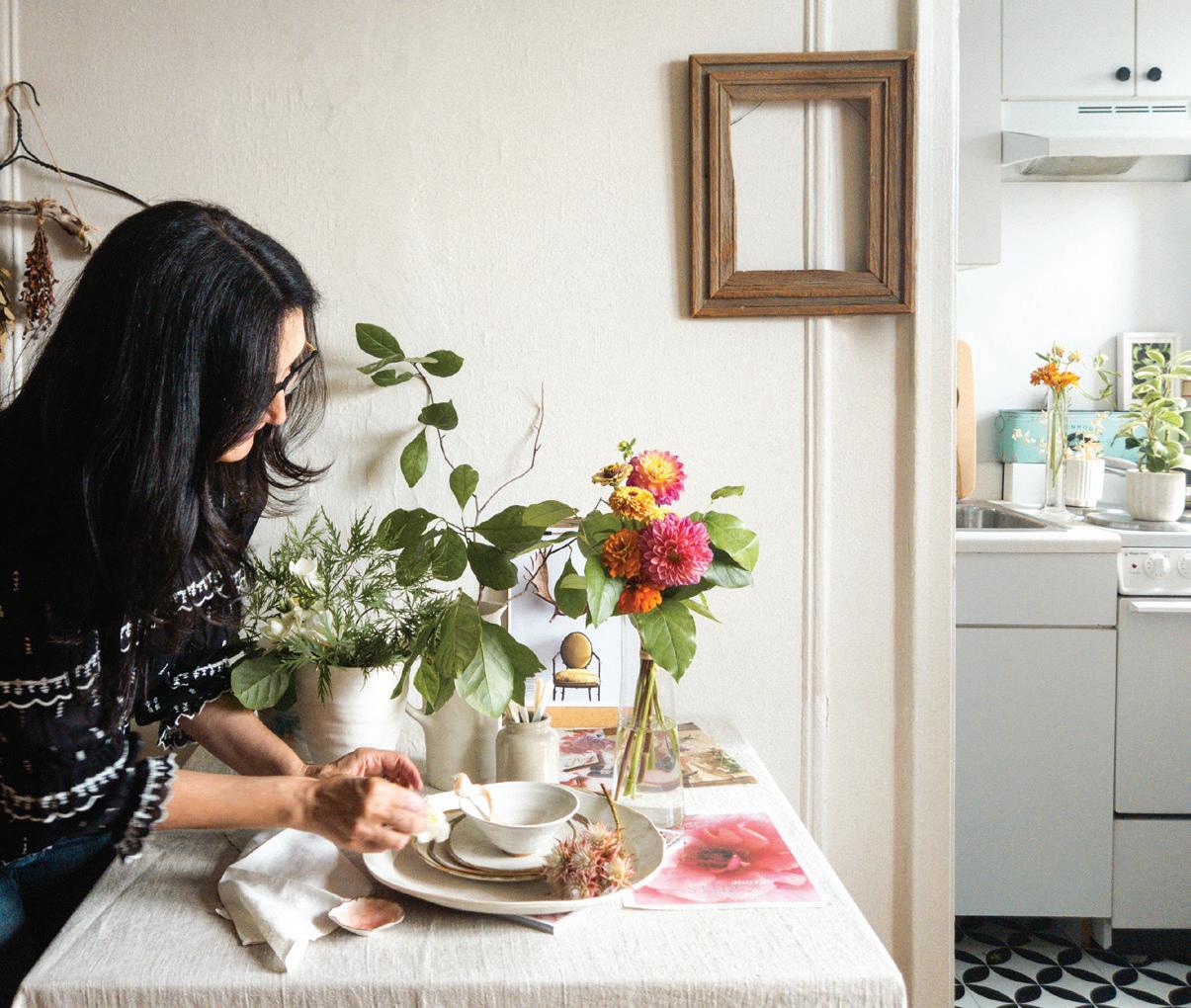
Each session is entirely bespoke. After learning each student’s background, goals, and aesthetic preferences, I take them through a series of creative exercises developed over my years of teaching and guide them through several photo shoots tailored just for them. There are no wrong ideas—only learning and evolution. I help students draw from their personal history, unique skills from previous jobs, and foster confidence. It’s important to me to make guests feel comfortable enough to experiment with the materials and take risks as we embark on a creative journey together. I make suggestions and demonstrate styling tricks and techniques. I often hear, “So that’s how you do that!” I encourage them to find their own voice and not to copy anyone else’s style.
One signature exercise is the Mixed Media Mood Board, in which students create tactile compositions of textures, fabrics, metal finishes, photos, and small props in a calculated amount of time. We use it as a springboard to a bigger shoot or home design project. My philosophy is that if you have a short amount of time, you learn to think on your feet and arrive at solutions more quickly. I believe the most powerful ideas emerge when we trust our gut and let go of perfection.
We also dive into the business of styling, whether they have or desire a career in food, floral design, home décor, or product design content creation. We go over what’s expected in each area for photographing to promote their work. Collectors and hobbyists are certainly welcome too. Students leave with skills in photocomposition, photo shoot planning, prop acquisition, and a roadmap for launching or pivoting their careers.
REACHING THE WORLD FROM MY STUDIO
When the pandemic hit, Zoom became a lifeline. I started offering live, remote prop styling classes, inviting students from all over the world into my studio. I was able to demonstrate right in my space, ideas for what they could create in their own homes. It was deeply fulfilling and a silver lining during a challenging time. The connections made through Instagram during these remote sessions introduced me to some lifelong friends who continue to inspire me.
STYLING BEYOND INSTAGRAM: THE BOOK
Fifteen years ago, who would have predicted that posting styled photos on social media would become the massive phenomenon that it is today? I wrote Styling Beyond Instagram to not only demystify the business side of commercial prop styling, but to show other creatives how their natural eye for arrangement can become a professional pursuit. Many students have come to me saying, “I found out about styling on Instagram. How can I turn this into a career?” This book is my answer, and I am proud to have it out in the world.
BUCKET LIST
I’m a firm believer in the power of writing your goals and dreams down—on a Post-it, in a journal—or saying them out loud. That’s how they begin to take shape. Writing and talking about your idea with friends and colleagues plants a seed in others’ minds. Publishing Styling Beyond Instagram had long been on my bucket list, and the dream became a reality when I casually shared the idea with a friend, who introduced me to her editor. I am forever grateful for that serendipitous meeting. You never know who will help you achieve your goals!
Looking ahead, I’m working on my next book—a compendium of styling projects—and dreaming of opening a curated home goods shop, either in here or online, filled with vintage treasures and artisan-made products, if I can bring myself to part with them.
Above all, I‘m excited to welcome more students to The Prop Styling Experience®, to share my space, and to guide others on a creative journey they will never forget!
HEATHER HANSON CREATES LARGE-SCALE PAINTINGS IN SAINT JOSEPH, MINNESOTA, WHERE SHE SHARES A STUDIO WITH HER DAUGHTER. A FORMER NAVY LINGUIST, BREAST CANCER SURVIVOR, AND MOTHER OF TRIPLET DAUGHTERS, HEATHER SPENT DECADES IN CORPORATE LEADERSHIP BEFORE RETURNING TO HER CREATIVE ROOTS. HER LAYERED, INTUITIVE WORKS EXPLORE MYTH, HEALING, AND THE DIVINE FEMININE—INVITING VIEWERS INTO THEIR OWN JOURNEY OF REMEMBRANCE, RECLAMATION, AND LIGHT.
MY STUDIO ON ARTFUL WAY DIDN’T BEGIN AS A STUDIO—NOT IN THE WAY IT BECAME ONE.
It was a storefront. A placeholder. Something I could wrap my hands around while the rest of my life unraveled and reassembled. I had just let go of the corporate title. My daughters—the triplets—had all gone off to college. The house was quiet. Too quiet. I was in a space between roles, between identities, between versions of myself.
But Embrace the Space Between had already found me. The name arrived in December 2019, back when I was still in corporate but beginning to hear the call of something else—something quieter, more soul-led. I didn’t yet know what form it would take. I just knew I was ready to find out. I told myself I might coach from there, run a little retail, keep things tidy. But the truth is, the space knew who I was before I did.
It was long and narrow with high ceilings and tall windows that caught the morning light. A single tree stood outside—one of the only in the district—and as its leaves turned gold, something in me quietly began to change.
Inside, I curated everything with care. Teak bookshelves lined the walls, filled with oracle
decks, journals, and sacred books. A marbletopped bar served as the checkout counter. In quiet corners, I placed birds, fairies, and mythic symbols—small invitations into the sacred. Gold velvet curtains hung from peacock-feathered holders, transforming the room into a cocoon. The space had its own presence. It invited stillness; becoming.
One day, a little girl stood quietly in the corner while her mother paid for a book. She looked up and whispered, “I like the way it feels here.” She was right. It felt alive.
Something in it awakened a deeper part of me I hadn’t fully acknowledged. Maybe it was the river’s rush. Or the stillness of the Blue Ridge. Or the rhythm of being surrounded by artists. I found myself walking through nearby galleries and quietly thinking… Why not me? I had the space. So why wouldn’t I listen to the call?
I didn’t land in that studio out of nowhere.
Before the paintings, there were other lives: Navy veteran; helicopter mechanic; Russian linguist; corporate executive; global vice president. Titles I believed defined success. But at what cost? My body, my spirit—both protesting. Breast cancer forced a reckoning.
When our triplets were born, Sean and I agreed: I would work; he would stay home. For nearly twenty years, I carried the weight of being the sole provider. When I finally left that world, I expected freedom. Instead, I felt guilt, like I’d let someone down.
I thought I’d consult. Build a business; stay relevant. Then Covid. Everything paused. And in the stillness, a question surfaced: If not that, then… what?
Beneath the striving was something truer: a pull toward color, texture, and story. I didn’t know it would become a full art practice. I just knew I couldn’t go back.
For a while, I still called it “the shop.”
The shelves were full. Coaching packages behind the scenes; SoulCollage on the walls; Curated inventory reflecting my years of transformational work with women and in corporate marketing. I lit candles, taught creativity, tried to generate income in all the ways I’d known before—through service and showing up in ways that felt familiar. But I wasn’t painting. Not really.
THE TRUTH? I DIDN’T THINK I COULD AFFORD TO. I’D ALWAYS BEEN THE BREADWINNER. EVEN after corporate, I kept trying to straddle both worlds. Be useful. Be enough. And yet… the art kept tugging.
I moved things around, cleared shelves, brought in paint supplies. The space shifted as I did. Music played; palettes formed. I listened. I started painting in the back. Just one piece. Then another. Tucked behind the shelves, the work emerged. One day, a customer said brightly, “You could host artists on your walls!” I smiled. But something in me stopped. Host artists? I protested—“But I’m the artist.”
Then my retail neighbor saw a portrait I’d painted. “My God,” she said. “That brushwork. Is that yours?” I nodded.
“This,” she said. “This is what you should be doing.”
That cracked something open. I brought in more work, signed up for art lessons, bought better brushes, closed the shop early to paint. Eventually, one wall became a full painting wall. The other, a gallery. I stopped calling it “the shop.” It had become something else. A studio. A sanctuary. A space that no longer asked me to sell transformation—but to live it.
Eventually, the rent at Artful Way became too much. I made the hard decision to leave and move into 310 Art, a shared gallery space. Practical, yes—but also transformative. It was there that I learned how to stand beside my work and say, “Yes. I made this.”
And then—just before Hurricane Helene—I felt it: a whisper. Take your work home. I didn’t question it. As the sky darkened, I packed every painting, brush, and piece of furniture into my car. I didn’t know why—I just knew I had to.
That was the last time I saw the gallery. That night, the flood came. 310 Art was submerged; everything was lost. Except my work. Every painting had made it out. Saved by intuition.
After that, everything changed. No water, no power, no safety net. We left North Carolina and moved into Sean’s father’s basement in Minnesota. It wasn’t glamorous, but it was safe.
STANDING BESIDE YOUR ARTWORK IS LIKE STANDING NAKED IN THE STREET, ASKING TO BE JUDGED.
At 310 Art, I had that moment again and again. “Yes, I made this”—no show, just presence.
One day, a customer fell in love with a piece. I lit up. Maybe I can make rent this month. Then he asked for a discount.
“I’m an artist,” I murmured, a bit desperately. “This is all I have.”
He smiled, shrugging. “It’s just business.”
But to me, it wasn’t.
That experience was part of my healing. I sold it. Paid rent. And carried that moment forward—not as shame, but as clarity.
My work isn’t a commodity. I’m not here to decorate a rental. I’m here to channel what comes through me—to honor the divine feminine in bold color, layered texture, and mythic form.
Now I watch my daughter MacKenna walk her own version of that path. She graduated from art school and creates beside me, unlearning the boxes they tried to put her in.
As artists, we are told to market, to bend, to shrink. But art doesn’t ask to be convenient. It asks to be honest. To commit. And I will never betray my calling again.
My work begins with a whisper—a stirring that something wants to come through. These aren’t decorations. They’re visual prayers. Portals of story and truth.
PHOTO BY HEATHER HANSON
I work large—four, five feet tall—because the energy demands it. I mix color palettes as ritual and let them lead. Music fills the studio—playlists matched to the myth or mood.
Sometimes I begin with words, written directly on the canvas. Sometimes collage forms the foundation. But always, color reflects our light. Texture reveals our depth. And myth carries the truth of our story, with compassion. The face almost always arrives first. She anchors the work. She is the story.
One of my most important pieces is The Light of Healing I had painted her large at first, full of presence. But as I layered elements into the background, they began taking over. Bit by bit, she disappeared, her face lost in the noise around her. I kept looking, wondering what was wrong. And then I saw it: I had let her be crowded out. It was easier to focus on everything else than to face her. To see her. To allow the hugeness—the light—of her to fully emerge.
So, I began again. Full-scale. Full presence. She became a mirror of what I was finally ready to claim in myself. Since then, I paint animals, archetypes, and fairy tales inspired by Women Who Run With the Wolves—mythic stories that speak to the wildness we’re here to remember.
“OUR DEEPEST FEAR IS NOT THAT WE ARE INADEQUATE. OUR DEEPEST FEAR IS THAT WE ARE POWERFUL BEYOND MEASURE. IT IS OUR LIGHT, NOT OUR DARKNESS THAT MOST FRIGHTENS US.”
—MARIANNE WILLIAMSON, A RETURN TO LOVE
When I get stuck, I dance—move until I return to myself. This isn’t a formula. It’s a conversation. I don’t paint to decorate a wall. I paint to open a heart.
I used to think a studio meant square footage; light; materials. Now I know it’s about presence. Today, I paint in a smaller space. Simple, peaceful—I share it with my daughter. We create. We heal. The rest of my family is out in the world—each of them living, creating, staying true to their values. Each of them is learning to remain whole in a world that wants us to forget. That’s what art is, too. A declaration; a devotion; a way of saying: I know who I am
We are given the gift of creation. And the invitation to use it, boldly and fearlessly. Wherever we say yes to that is the place where we create.
PHOTO BY
TAYLOR SMITH
Photography by Grace Smith
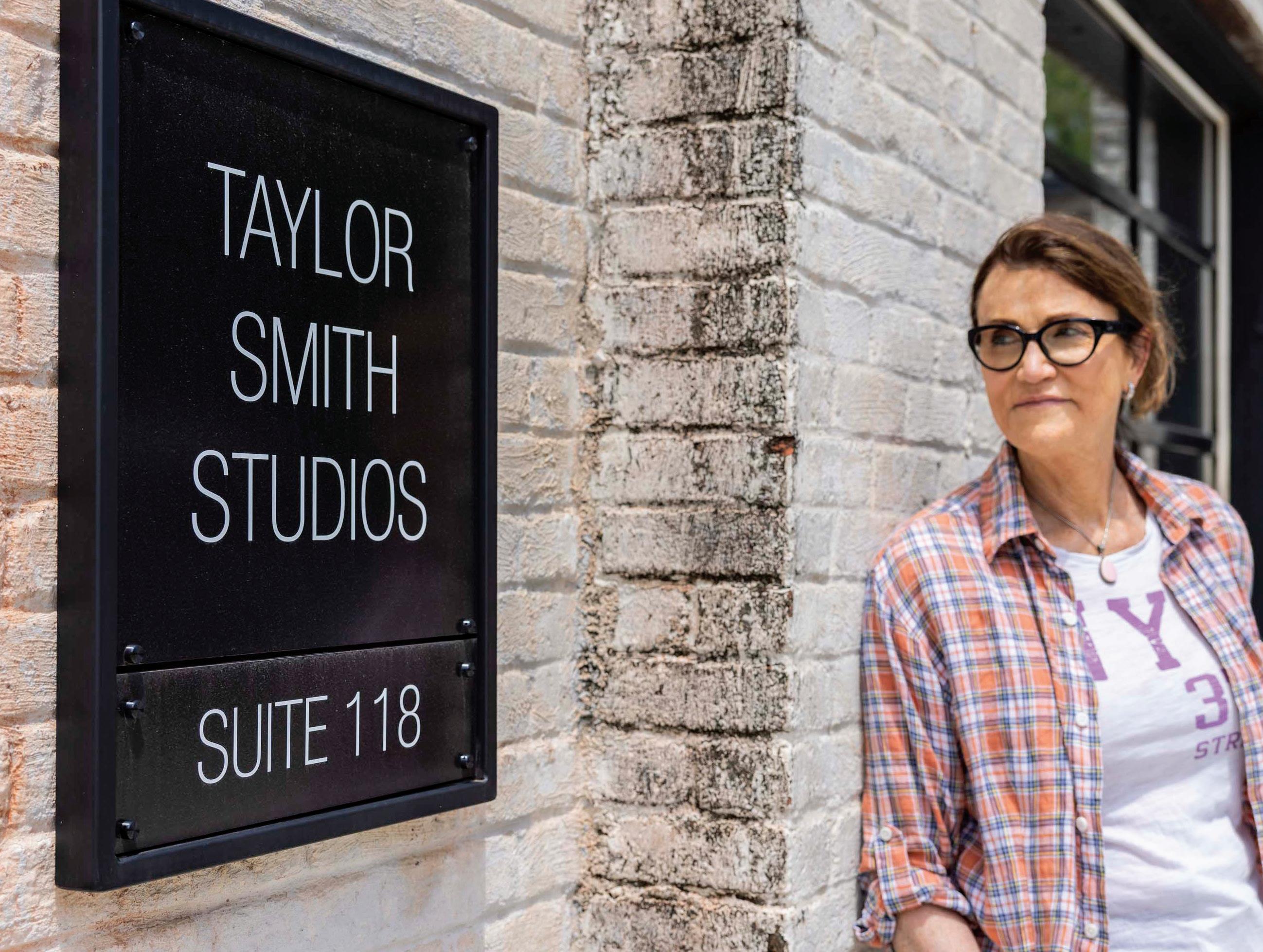
TAYLOR SMITH
is an Indianapolis-based multimedia artist whose work examines discarded technologies, popular culture, and memory using a wide variety of materials and mediums, including reclaimed silk screen frames, luxury brand and commercial packaging, 8mm film, street advertisements, reappropriated paintings, and, more recently, salvaged floppy disks. Throughout her many bodies of work, Smith recontextualizes evocative and recognizable imagery to explore social awareness and cultural memory through art-making.
As a contemporary pop artist, I’ve spent the past 25 years building a career rooted in memory, nostalgia, and reinvention.
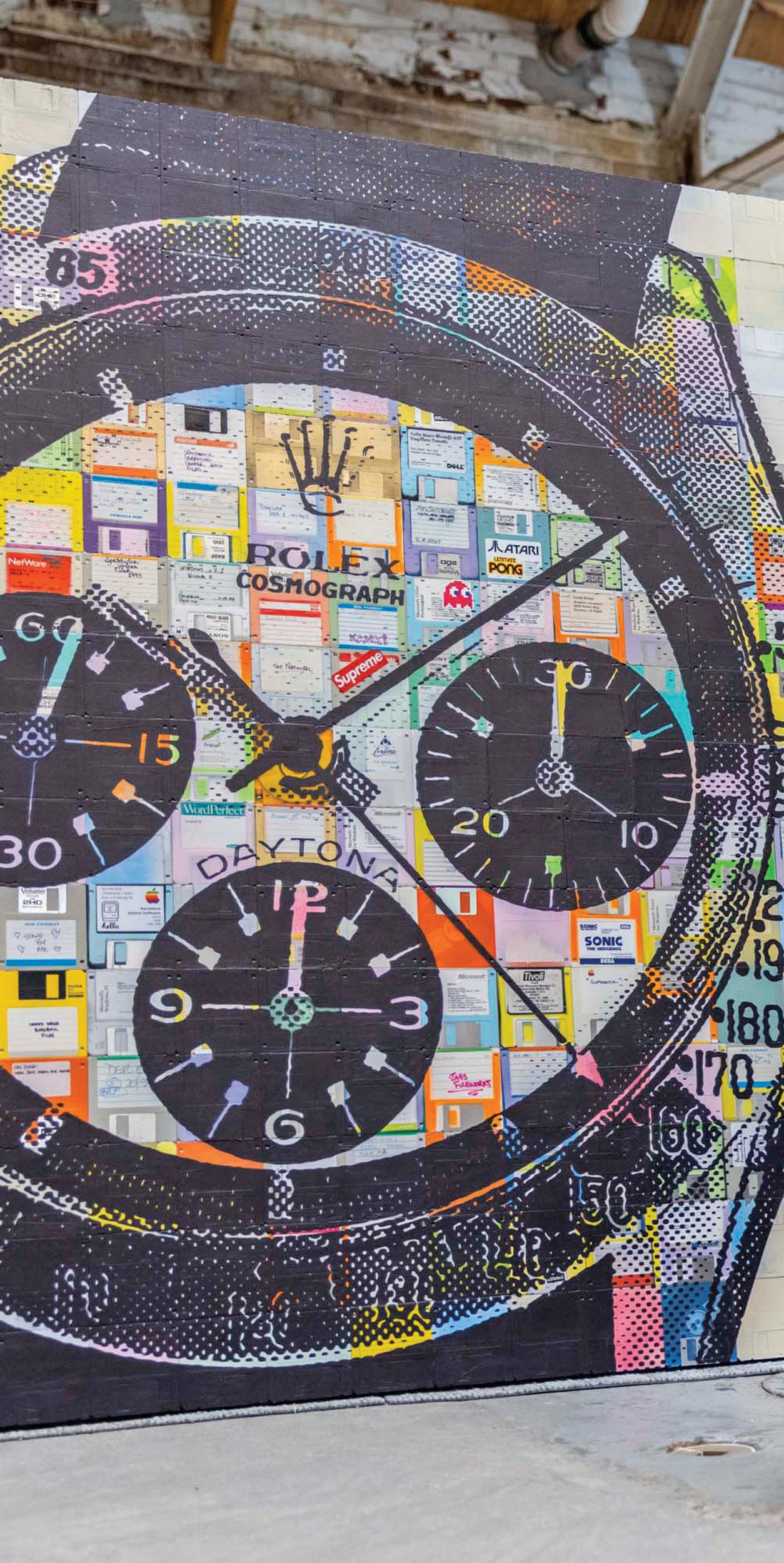
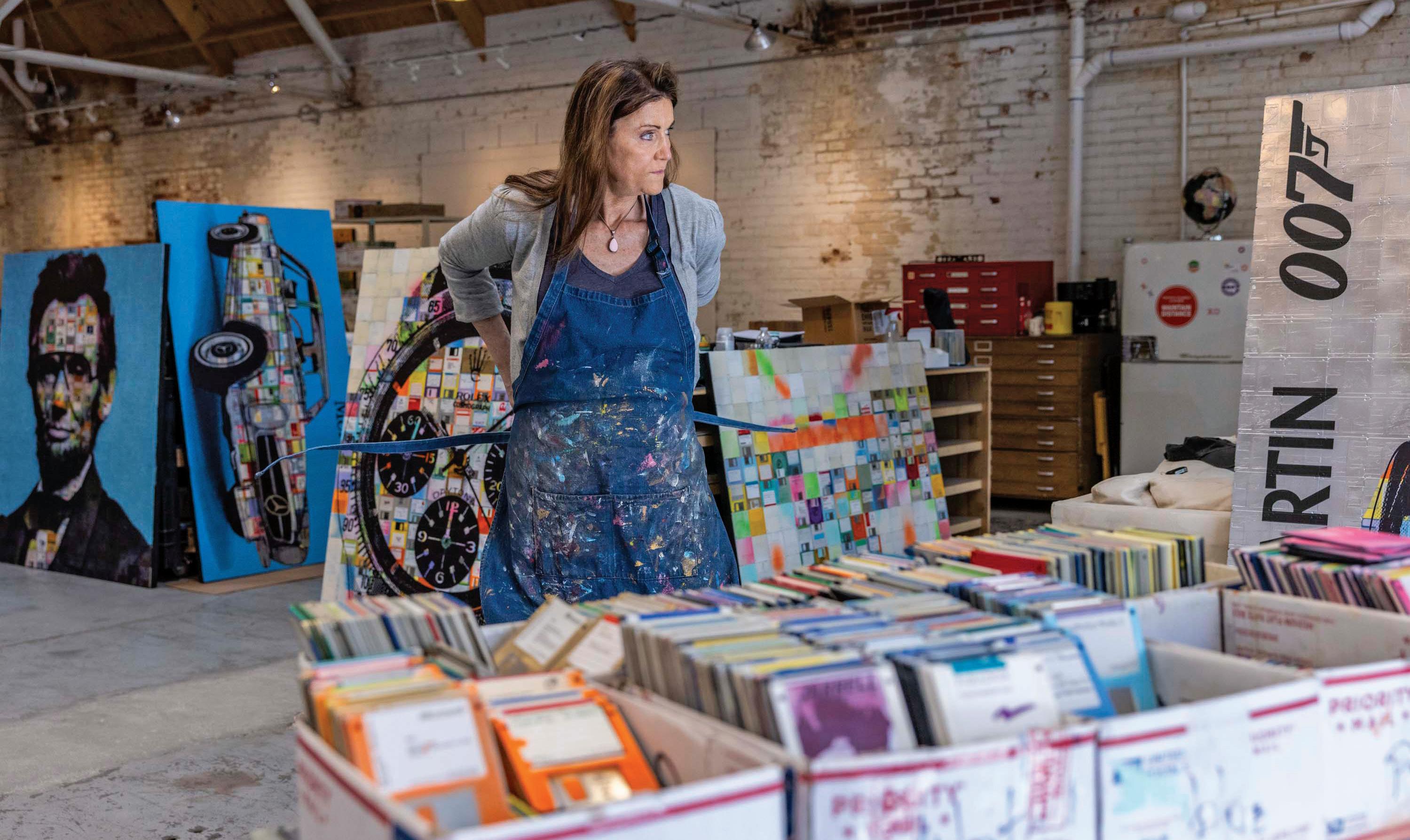
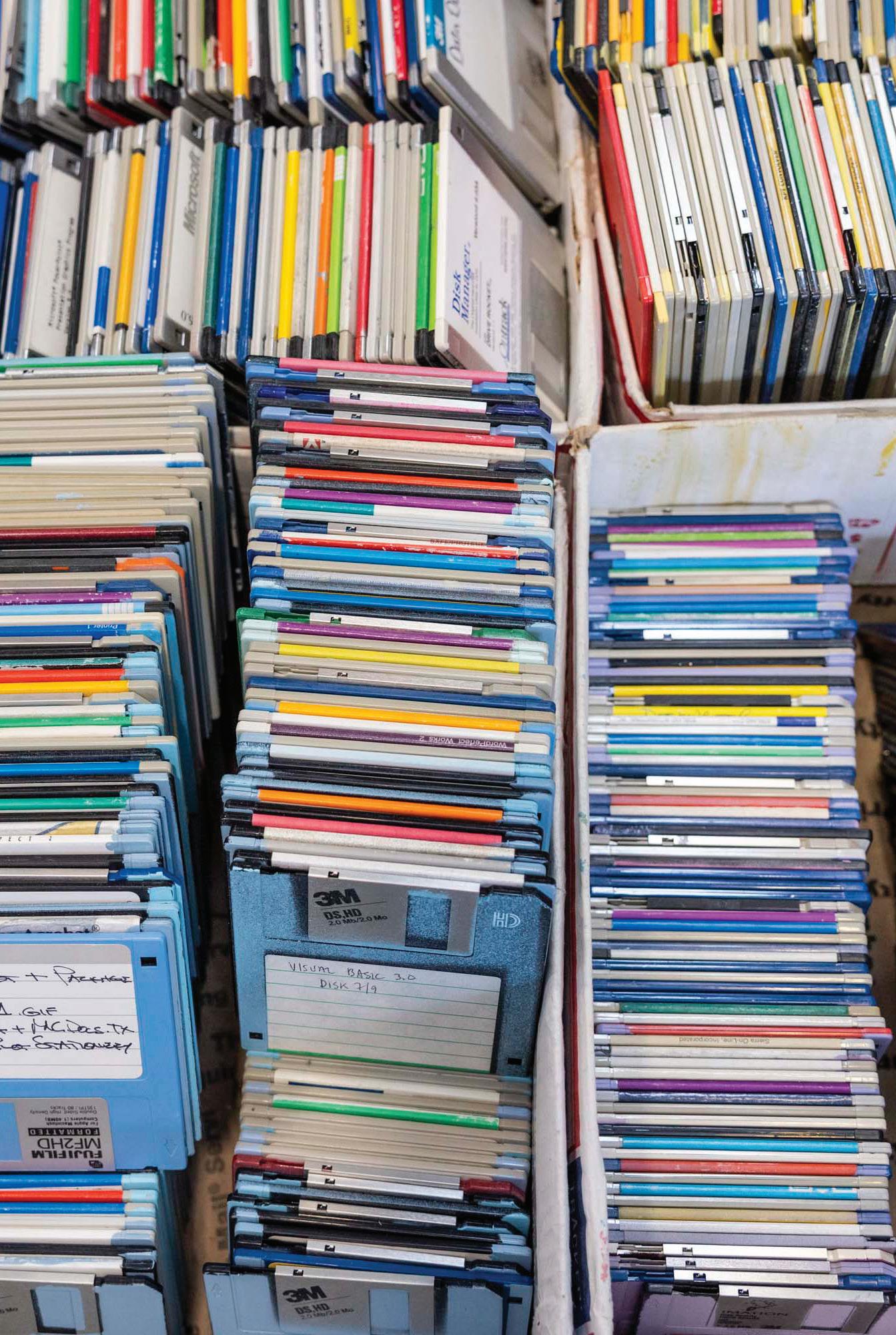
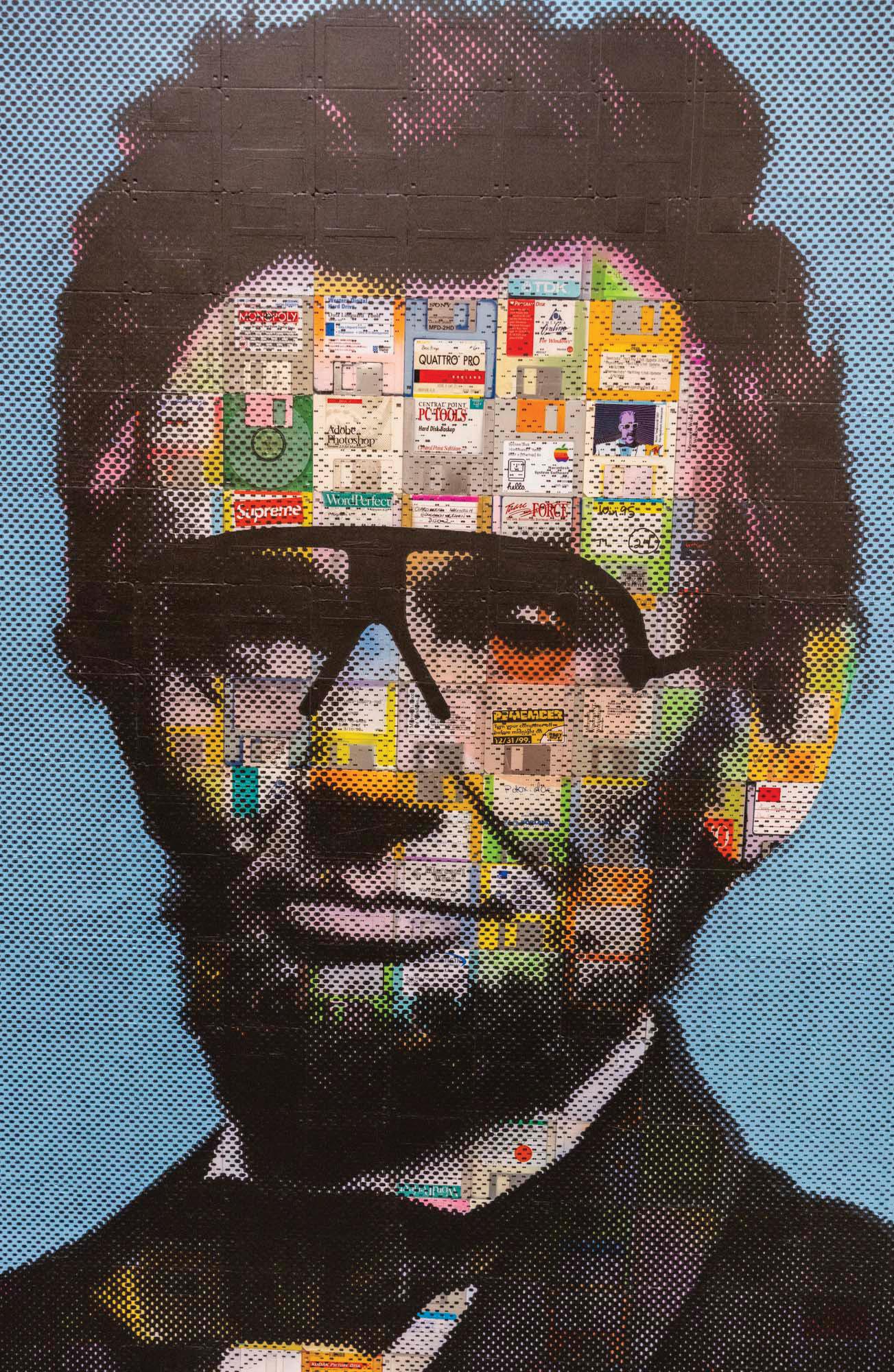
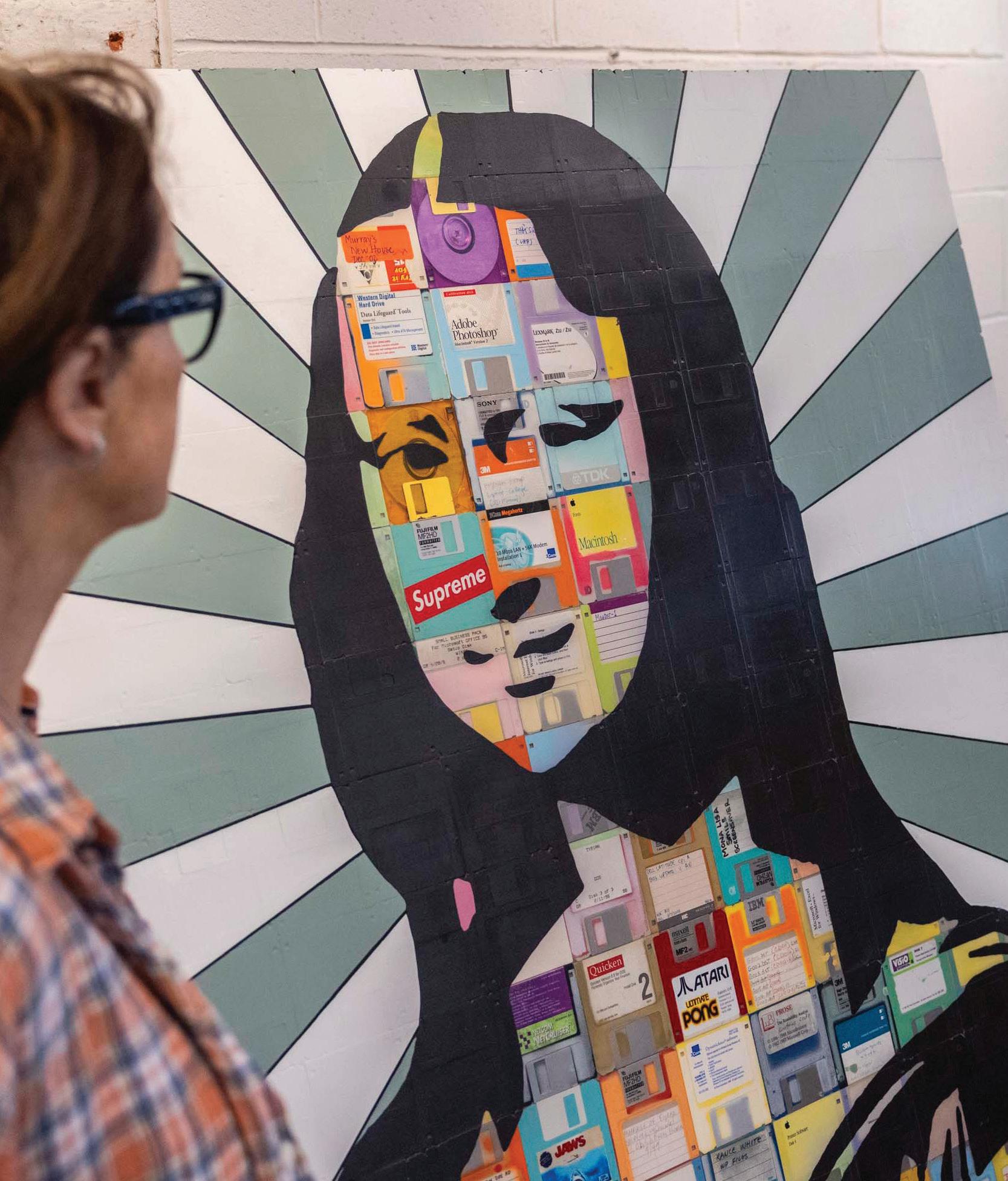
I create large-scale paintings and assemblages, often using discarded, obsolete technology—especially, and most recently, vintage floppy disks—as both medium and message. Through my work, I aim to preserve fragments of history, honoring forgotten stories and exploring how memory evolves over time.
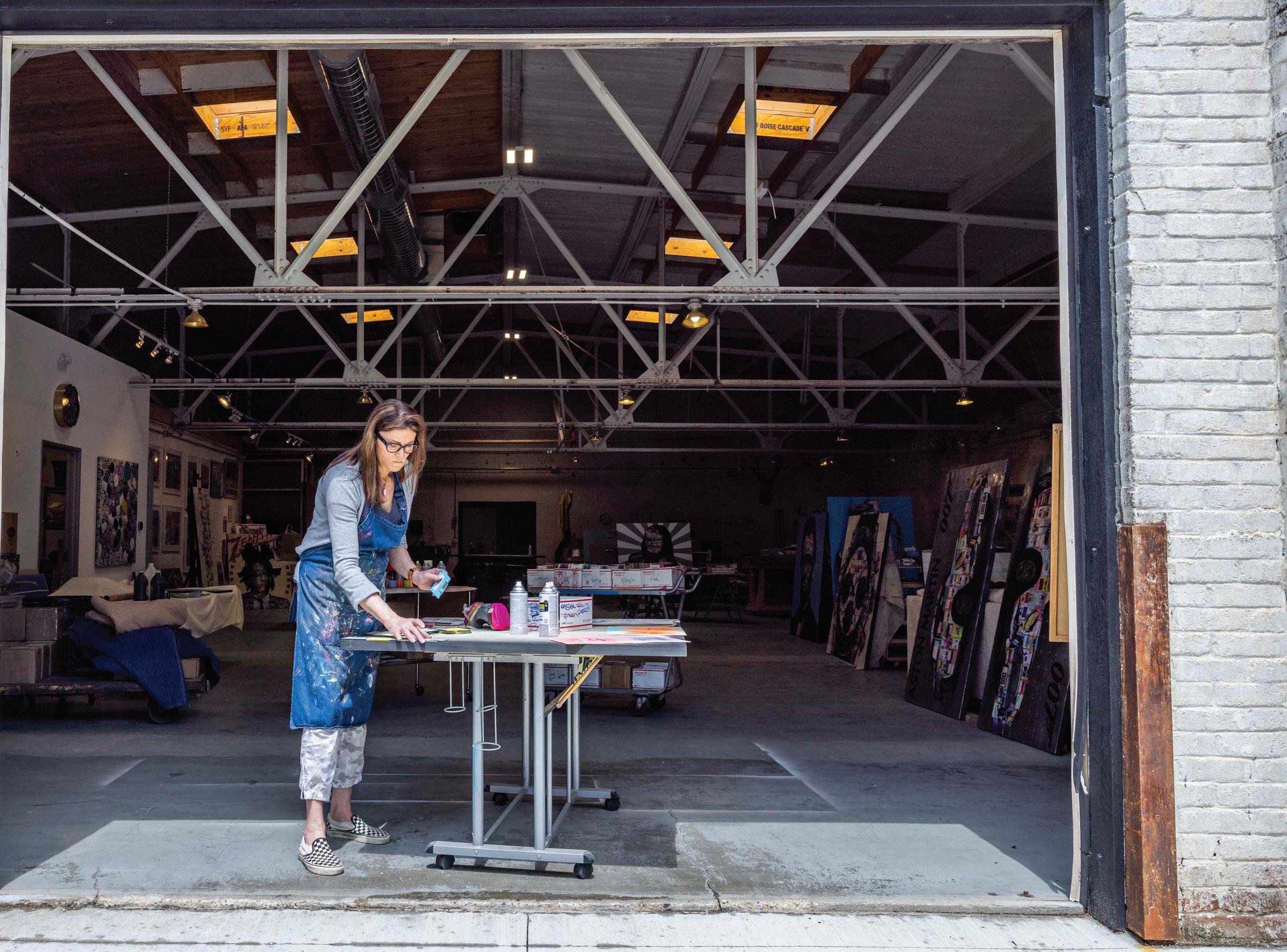
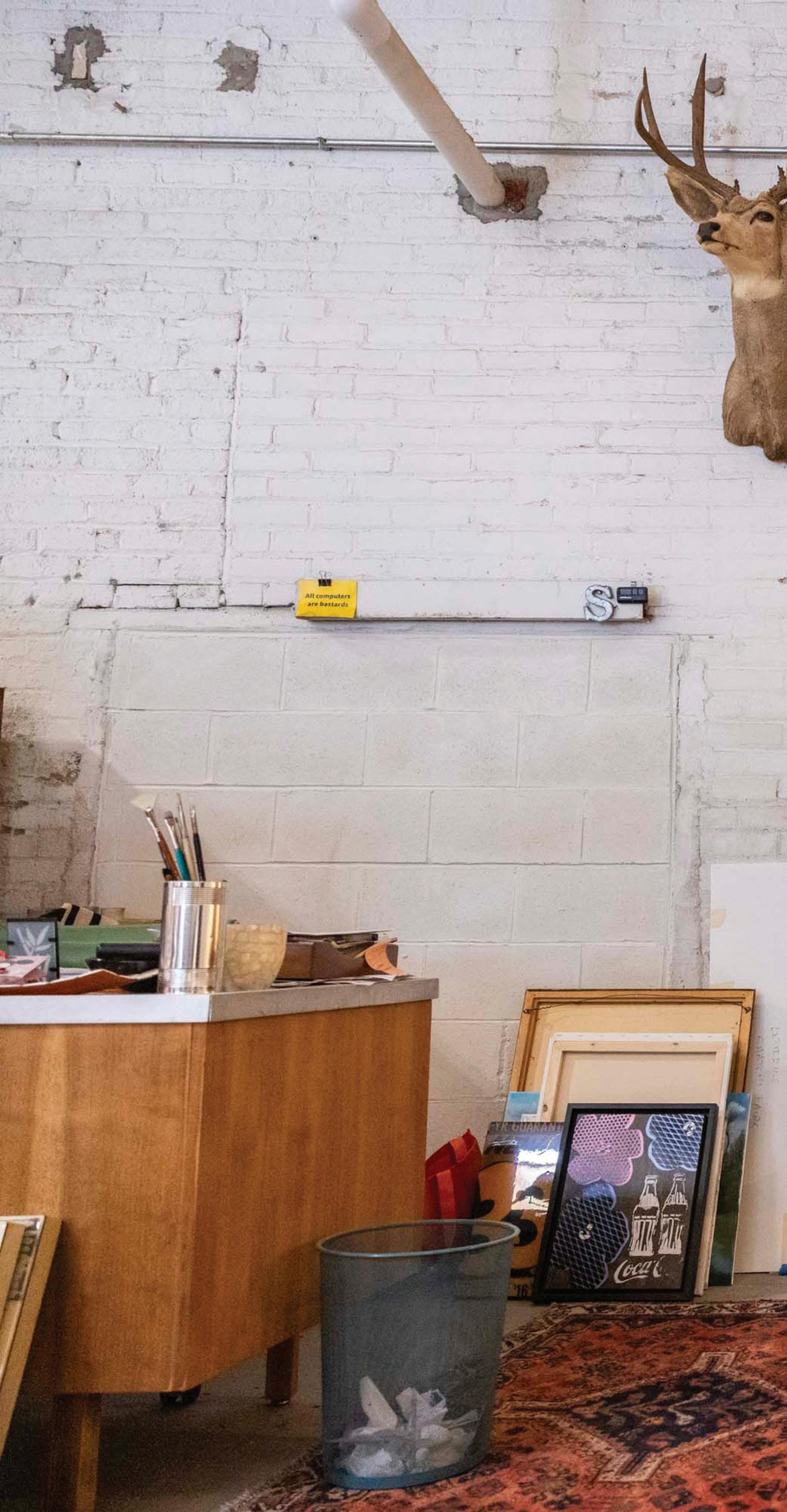
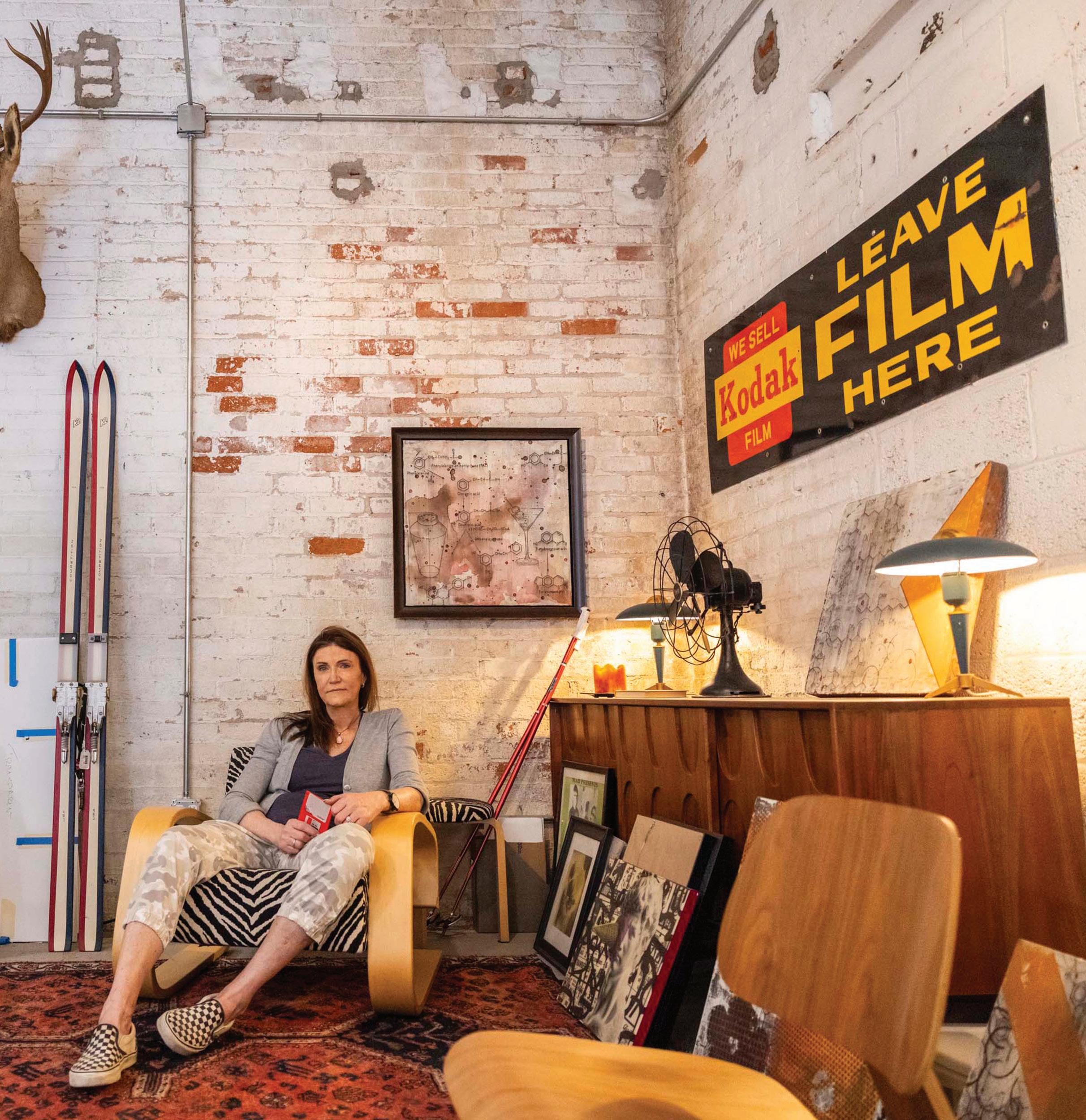
My journey has been anything but linear. In the early years, I worked wherever I could find a corner to paint, including cramped apartments and my own basements and garages. I dreamed of a real studio, a space with enough light, air, and freedom to create without limits. That dream kept me going through the hardest times, and after decades of persistence, it finally came true when I moved into a large historic race car factory over twenty years ago. Still not having quite the amount of space I wanted, I upgraded again several years ago, and today my studio is housed in the old loading dock of a historic brick building in Indianapolis, originally built as a dairy factory in 1901 by William H. Roberts & Sons, an Indianapolis company founded in 1877 specializing in delivery wagons (and later trucks) for goods like ice, bakery, and dairy products.
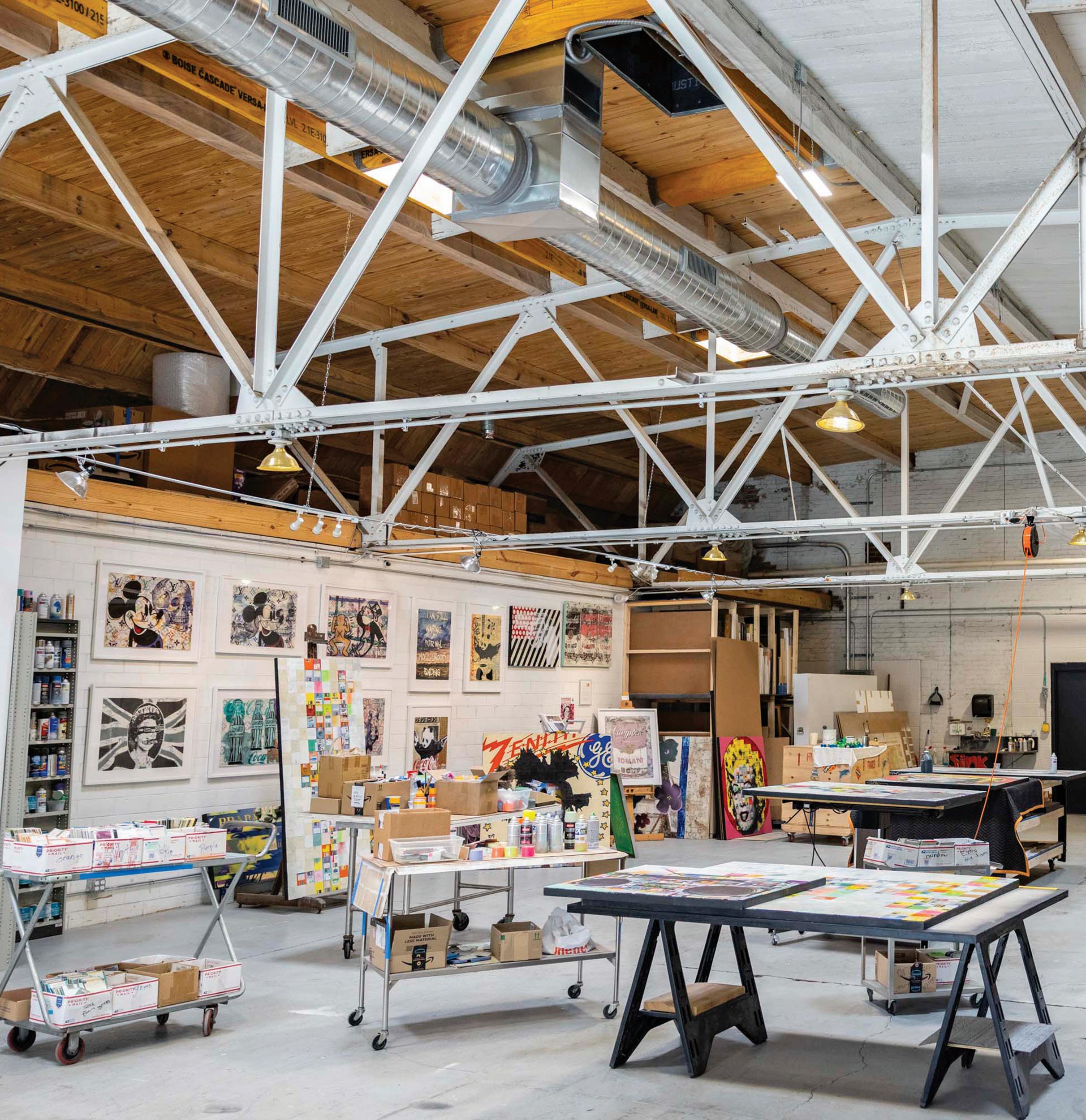
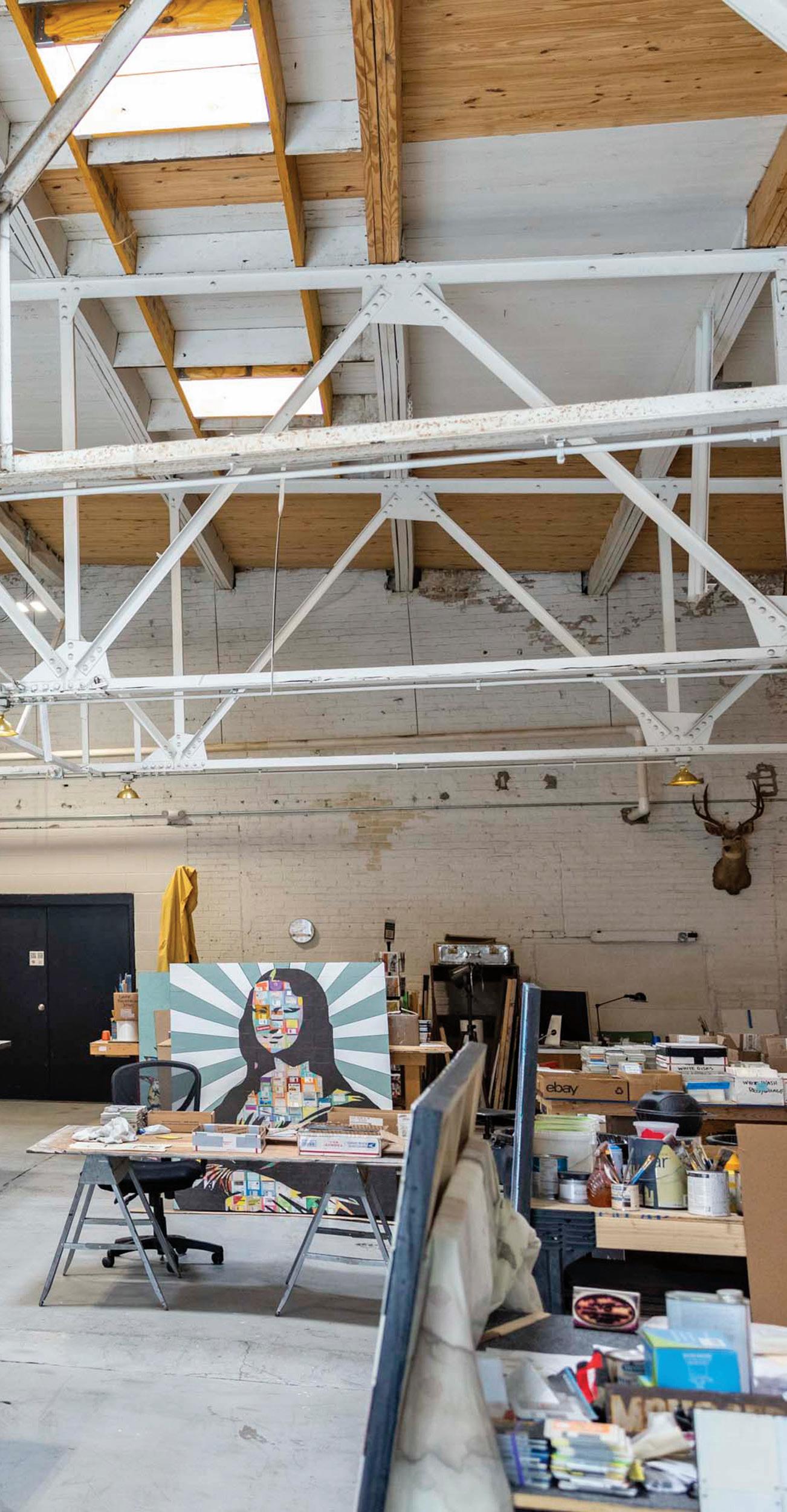
The buildings have since been renovated by the Milky Way Complex, reimagined as a modern hub for artists, entrepreneurs, and small businesses. My particular studio is wide open, reaching about 4,500 square feet with soaring 30-foot-high wooden barrel vault ceilings, crisscrossed by steel girders and dotted with skylights. A barrel vault ceiling is a form of architecture that resembles a barrel cut in half lengthwise, and my studio ceiling is a softer, more extruded form of this style. A large glass garage door opens to the outside, filling the studio with fresh air and natural light.
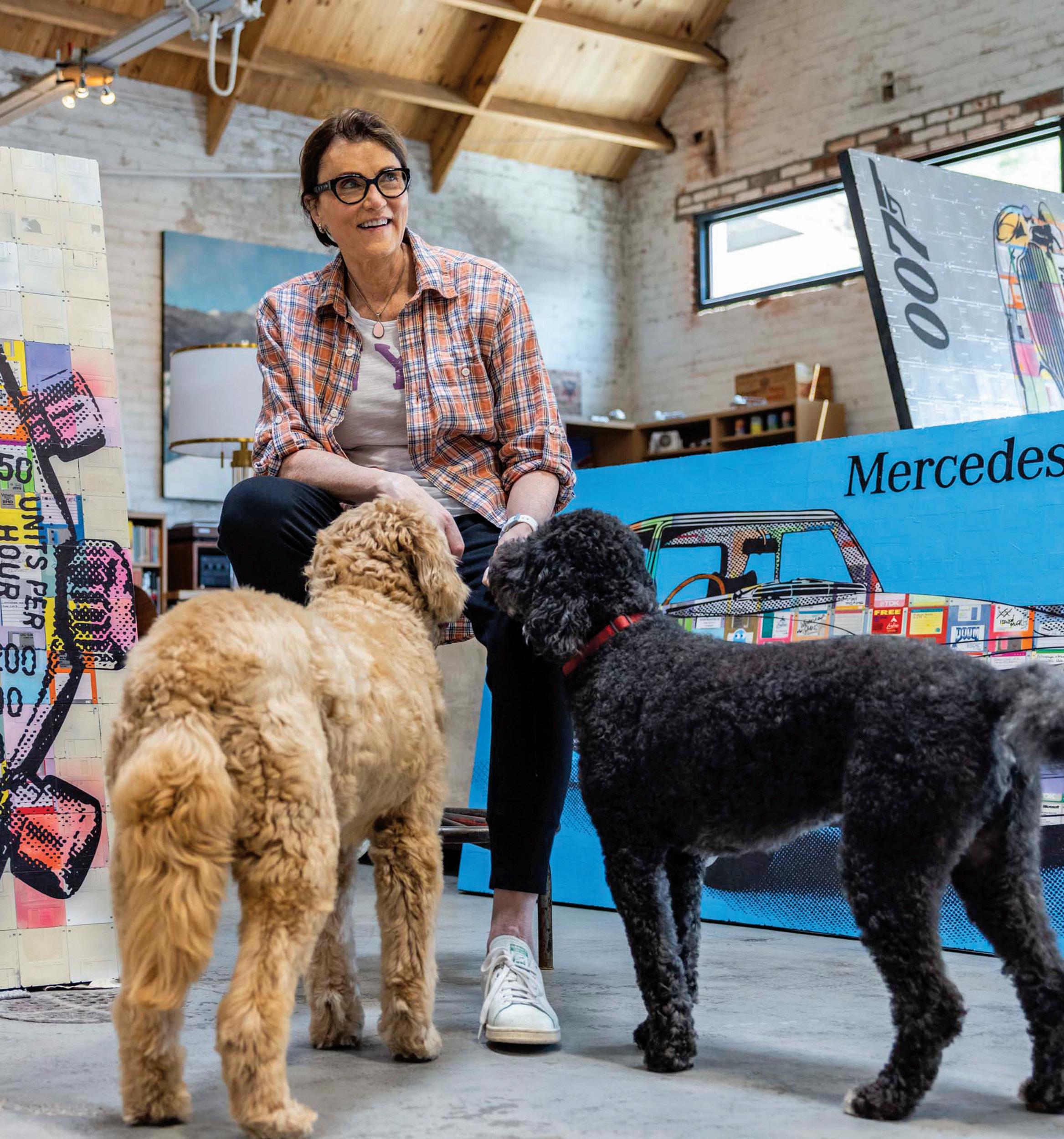
This space feels alive. My dogs, Fibonacci and Lorenzo, keep me company as I work. Friends and fellow artists often stop by, bringing their energy and ideas with them. It’s not unusual to find visitors wandering among the large works in progress, sipping coffee and talking about art, life, and everything in between. The openness of the studio allows me to host charitable fundraisers and open studio events, creating a space where art can connect communities and spark
dialogue. The studio is a dream realized, but it is also a testament to every late night, every financial risk, every leap of faith I took along the way. It reminds me daily that hard work, when paired with passion, can eventually carve a path to something extraordinary.
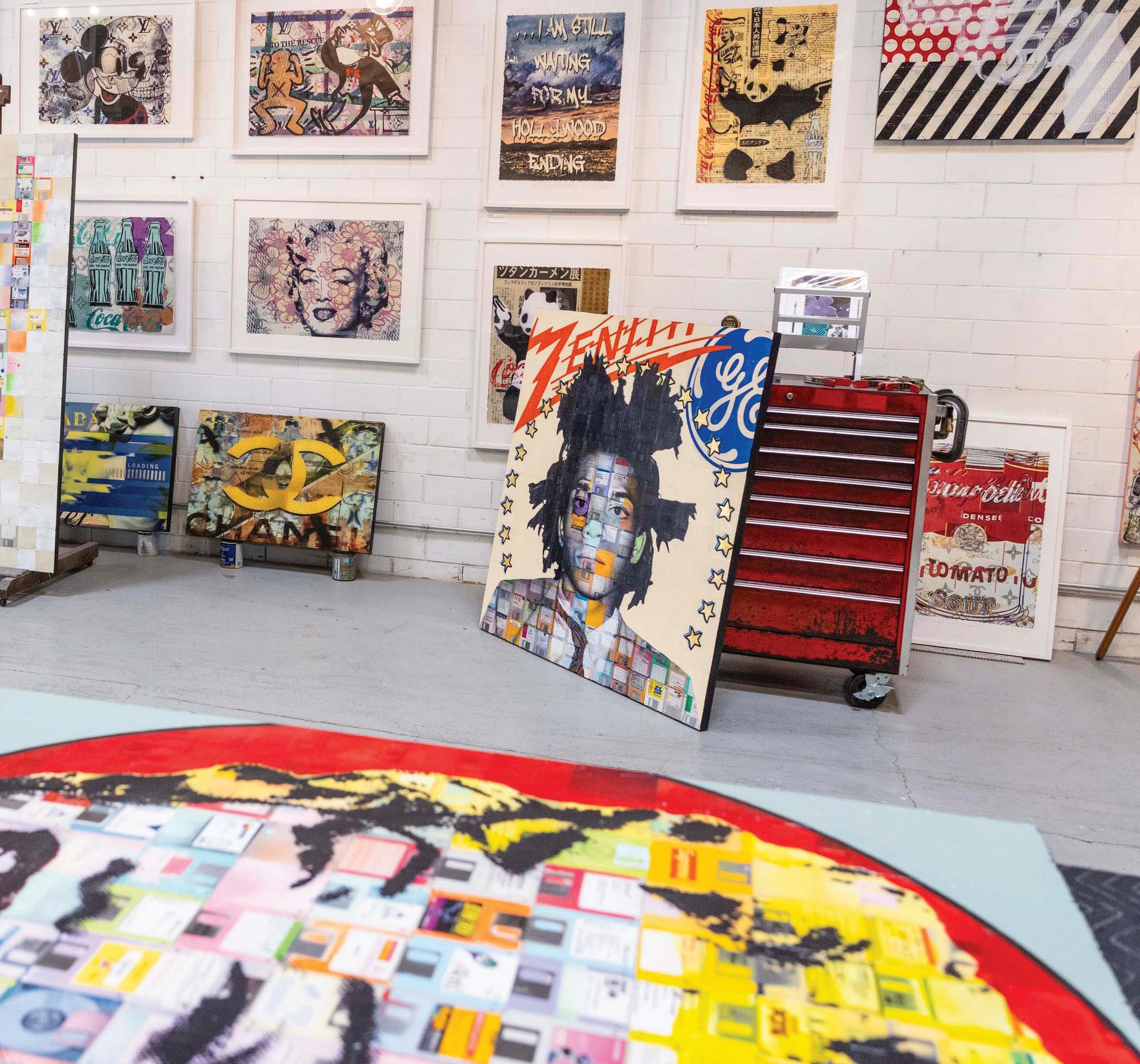
It retains much of its industrial soul—exposed brick walls, steel trusses, worn concrete floors, and ghost traces of old signage. I often think about the hands that once worked here—loading bottles of milk onto trucks at the very spot where my paintings now lean against the walls. That sense of time and human labor embedded in the space gives it a layered resonance, making it feel like I’m not just creating in a studio, but participating in a continuum of work, history, and transformation. The past is present in the walls, and I find that deeply grounding as I continue my own kind of production—less about sustenance in the literal sense, but certainly about nourishment of the imagination.
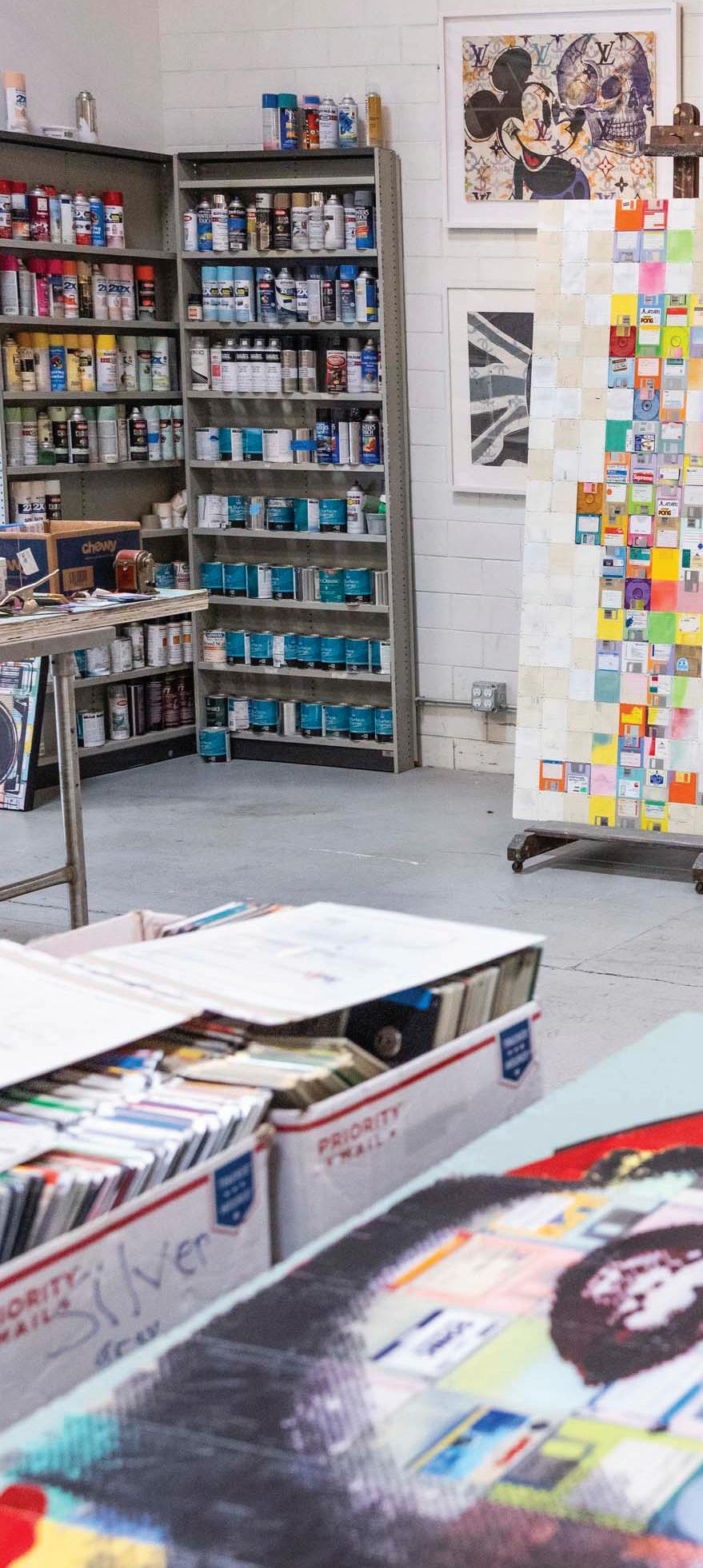
The physicality of my studio space is crucial because my works are often very large in scale, sometimes stretching 12 feet wide or larger. I need space, not just to create but to live inside the paintings as they develop. I often have multiple large paintings underway simultaneously, moving between them intuitively, letting the energy of one feed the energy of another. Working in a large, open industrial space like this is essential to how I create. Many of my artworks are built on heavy wooden panels and constructed from these obsolete technology materials, which require room to maneuver, lay out, and examine from a distance. The high ceilings and skylights bring in natural light that shifts across the day, animating the works in unexpected ways and helping me see new possibilities as I paint. The former loading dock, now converted into a dynamic workspace with a roll-up glass garage door, provides me not only with physical freedom but also a psychological one—an openness that encourages risk-taking, experimentation, and scale. It’s a space that supports the full spectrum of my artistic process, from quiet contemplation to the loud hum of creative energy.
“I’m still very sure that painting is one of the most basic human capacities, like dancing and singing, that make sense, that stay with us, as something human.”
—Gerhard Richter
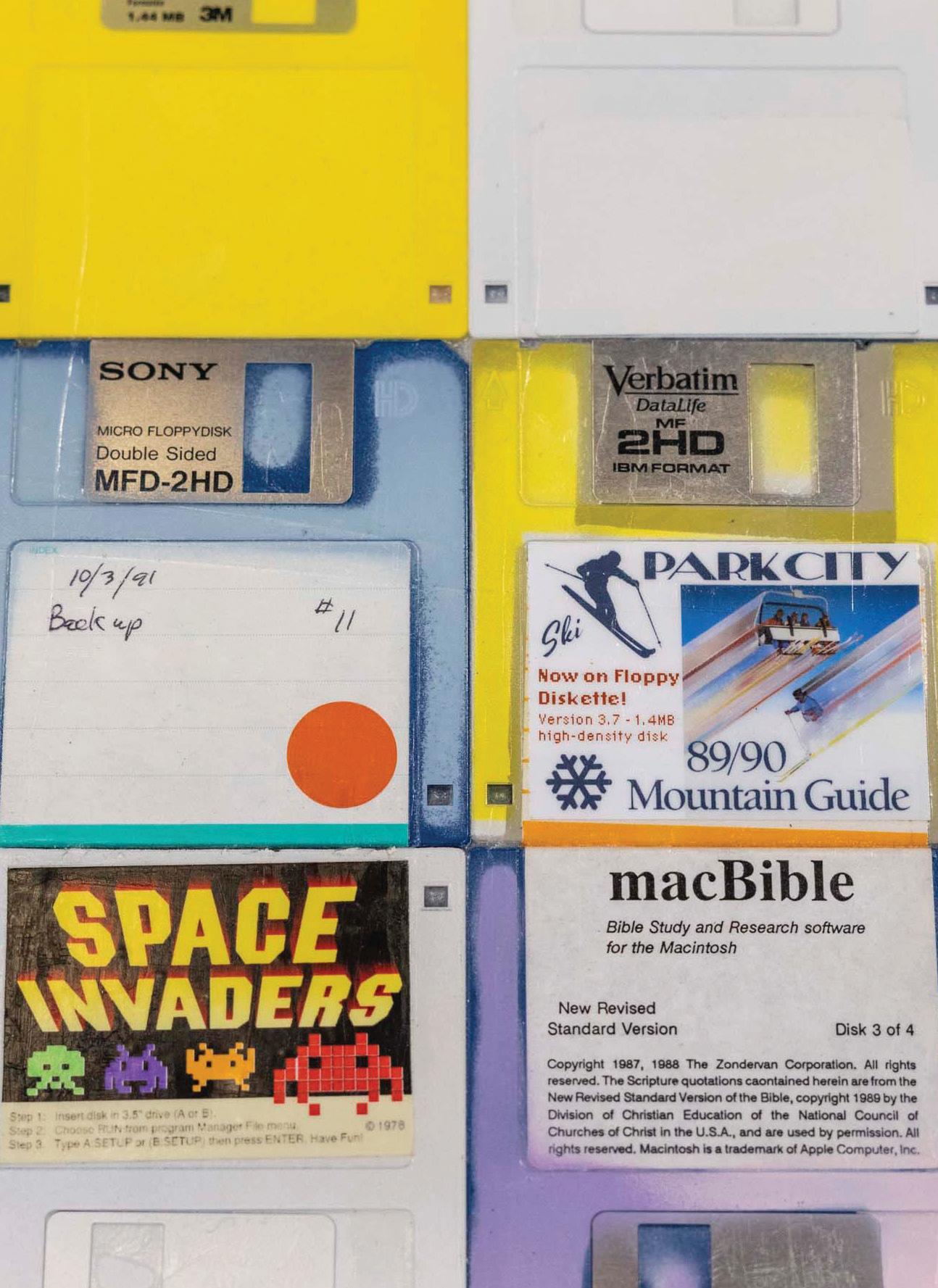
My preferred media are vintage computer floppy disks, relics of the early digital age. I am drawn to them because they embody both permanence and fragility. Each disk once held information considered vital to someone, but over time, they’ve become obsolete and forgotten. They now carry stories we can no longer access but that still exist, ghost-like, within them. Sometimes it’s obvious what the disk contains, like early video games such as Doom or PacMan, or labels indicating homework or family albums. Sometimes they’re more obtuse with handwritten notes that are more like personal memorabilia referencing people or things that no longer have any context. Whichever the case, they act as cultural markers. Using them as a foundation, I build portraits, images of renowned historical objects and familiar pop culture icons, layering contemporary imagery over a matrix of lost memory.
When I begin a painting, I usually have a subject idea in mind—an astronaut skier carving through space, a classic sports car gleaming with nostalgia, a Western cowboy icon mid-gallop—but the creative process is fluid. As I start laying down the disks, the features of the subject and the specific quirks of the materials themselves dictate the flow. Scratches, discolorations, labels, and scuffs on the disks suggest their own narratives, and I let those details guide me toward visual balance and storytelling depth. It’s a true collaboration between me and these abandoned objects of the past.
I work with both intention and openness. Some ideas arrive like lightning, a fully formed vision demanding to be made. Others germinate slowly, developing through sketches, color studies, or simply allowing my mind to wander during long walks. I keep notebooks filled with thumbnail ideas, but only the ones that continue to haunt me—the ones that refuse to be forgotten—move forward into full-scale works. I have learned to trust the difference between a fleeting spark and a lasting fire.
Good composition, for me, is about more than arrangement; it is about emotional resonance. A strong composition invites the viewer in and holds them there, creating a sense of movement and connection that feels inevitable yet surprising. It is a dance between balance and tension, complexity and simplicity, nostalgia and reinvention. I strive to create compositions that feel both familiar and unexpected, rooted in shared cultural memory but refreshed through new forms—much like the studio space itself.
Throughout my journey, I have been deeply influenced by a handful of artists whose work bridges innovation and emotion.
Richard Pettibone’s small-scale replicas taught me the power of reverence and reinterpretation. Sigmar Polke’s experimental layering of materials and imagery opened my mind to the possibilities of collision and contradiction. Wayne Thiebaud’s luscious depictions of everyday objects showed me the beauty in the ordinary, while Gerhard Richter’s oscillations between realism and abstraction revealed how fluid and subjective memory can be. Andy Warhol, of course, remains a towering figure in my imagination, a reminder that popular culture is both an artifact and art.
The heart of everything I create comes back to the idea of memory: how it fades, fractures, and yet somehow persists. My parents’ struggles with dementia and neurological illness profoundly shaped my view of the world, making me acutely aware of what is lost and what remains. Through my work, I attempt to capture fragments of experience before they vanish entirely, weaving them into a visual language that others can connect to, even if they do not know the specifics of the stories embedded within each disk.
This passion for preservation extends beyond just nostalgia. It is tied to my commitment to environmental stewardship. By upcycling materials that would otherwise contribute to landfills and microplastic pollution, I aim to give forgotten objects new life. Every floppy disk saved, every obsolete material reimagined, is a small act of resistance against a disposable culture.
Sometimes I reflect on just how far this journey has taken me from those early days when I wondered if I would ever have the space, the audience, or the means to make my art fully realized. Today, standing in this sun-drenched, expansive studio, watching the light move across a twelvefoot painting, I am filled with gratitude. Every setback, every sacrifice, every leap of faith was worth it to arrive at this place.
I envision creating even larger works, installations that invite viewers to step inside memory itself. I dream of collaborating with museums on exhibitions that explore the intersection of technology, nostalgia, and environmental consciousness. I hope to work with collectors and families to incorporate their histories into personalized artworks, making memory a living, evolving thing. I also dream of bringing my work to more places where mountain landscapes and vibrant, outdoorsy culture mirror so many of the things I love. It is the kind of environment where art—rooted in memory, environment, and reinvention—would thrive.
As an artist, I know that success is not a destination but a series of milestones, each one opening new questions, new possibilities. My studio may be filled with finished works, but in my mind, the real work is always beginning. Each new canvas, each new floppy disk, is a chance to ask: What is worth remembering? How can we honor the past while still moving boldly into the future?
That’s the question that keeps me painting. That’s the story I hope my art tells.
More on Taylor
www.abstractmodern.com
Instagram: taylorsmithstudio
Tracy Verdugo
Photography by Isabella Merletti and Santana Verdugo
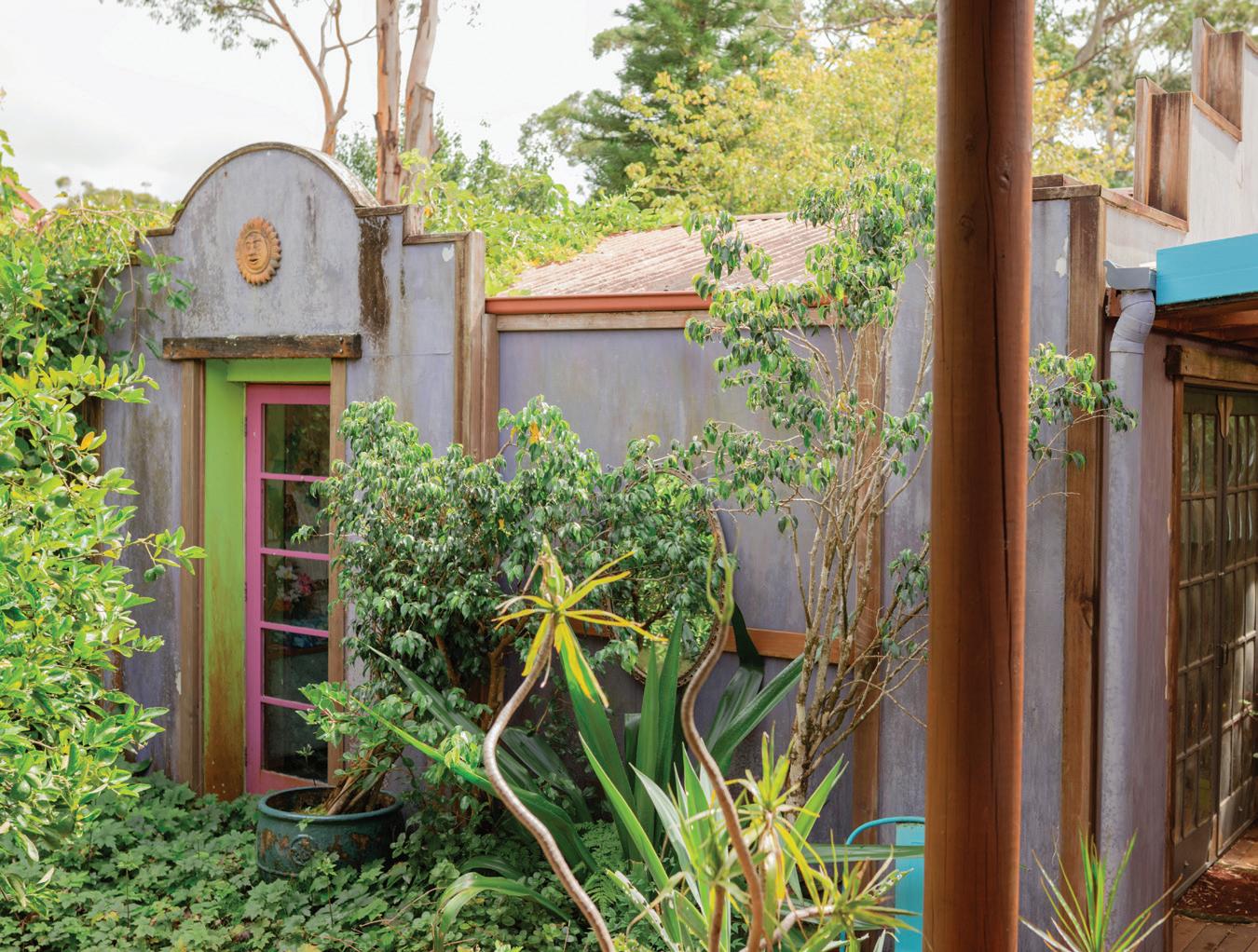
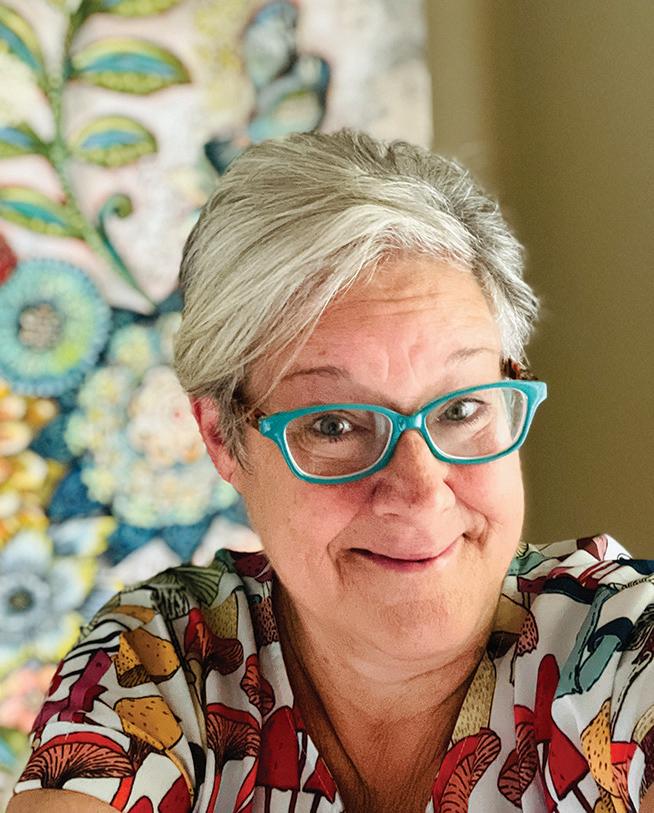
TRACY VERDUGO is an internationally recognized Australian artist, author, and retreat facilitator known for her vibrant, intuitive style and inspiring creative teachings. Based in the coastal haven of Jervis Bay, New South Wales, she shares a colorful life with her husband Marco, a musician, producer, and co-creator of their artsy adobe sanctuary. For over a decade, Tracy has led transformative art workshops and retreats across the globe, helping thousands reconnect with their creativity and inner wisdom. When she’s not painting or teaching, you’ll find her exploring nature, nurturing her plant collection, or dreaming up new adventures with Marco.
A Soulful Sanctuary by the Sea
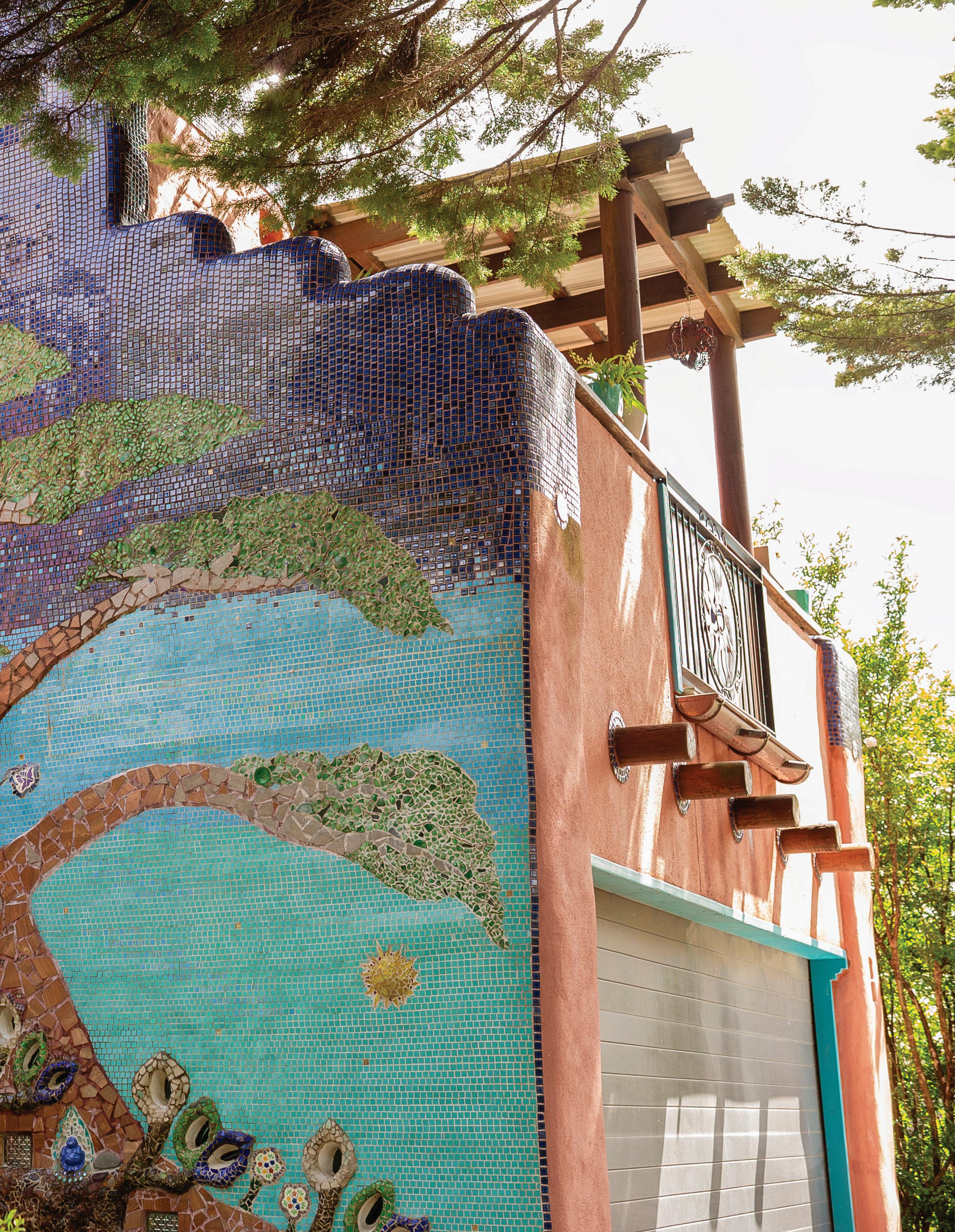
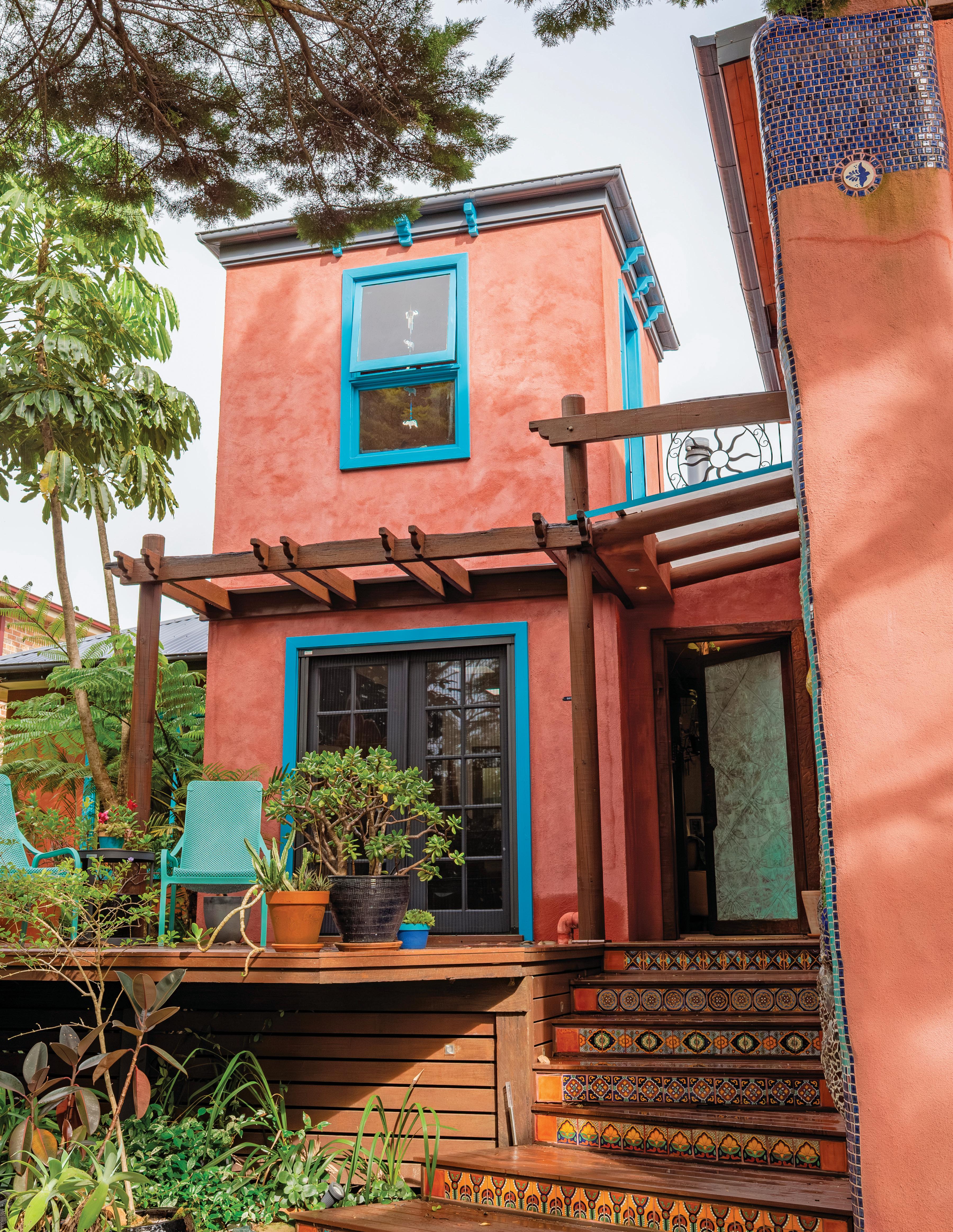
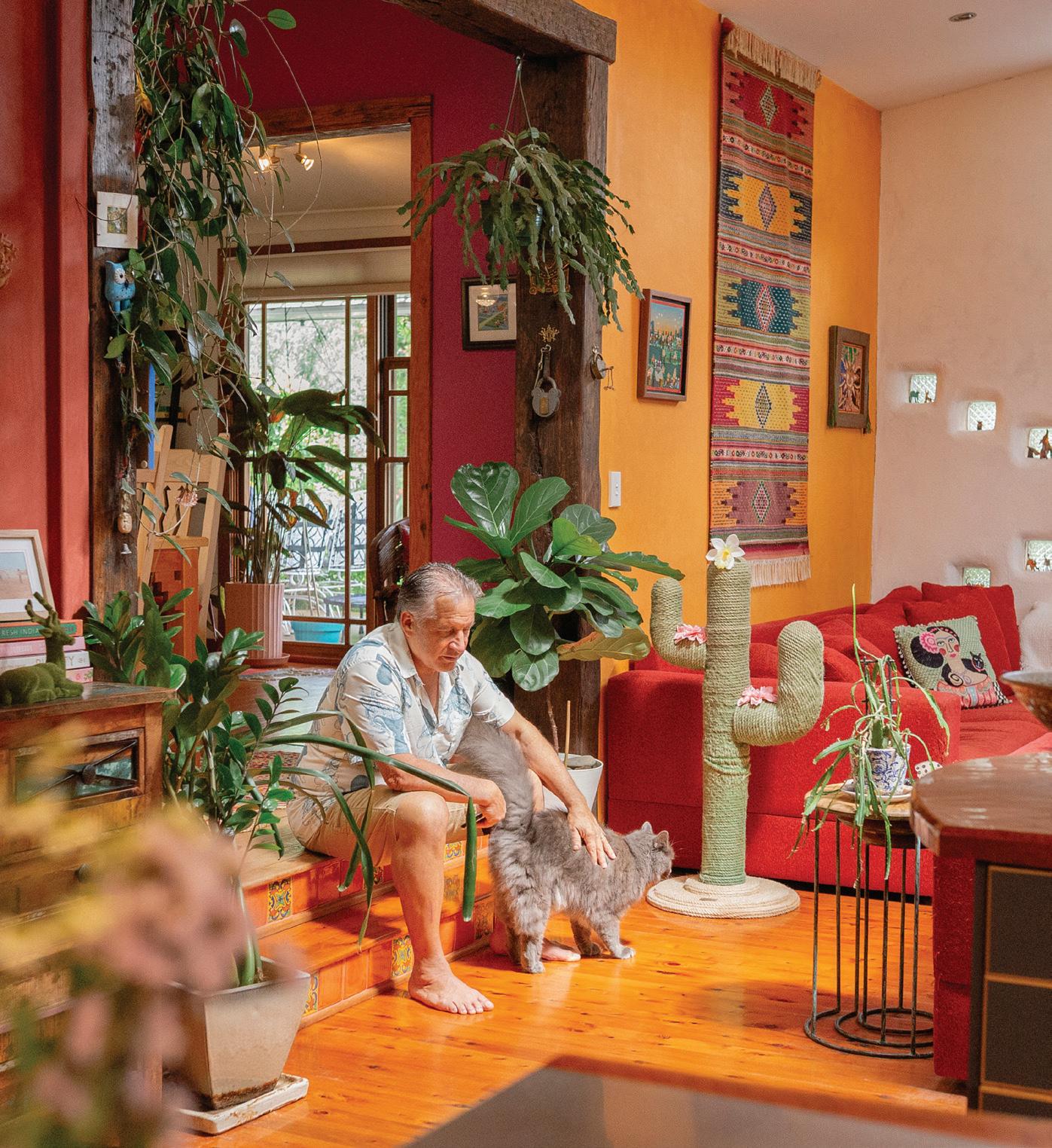
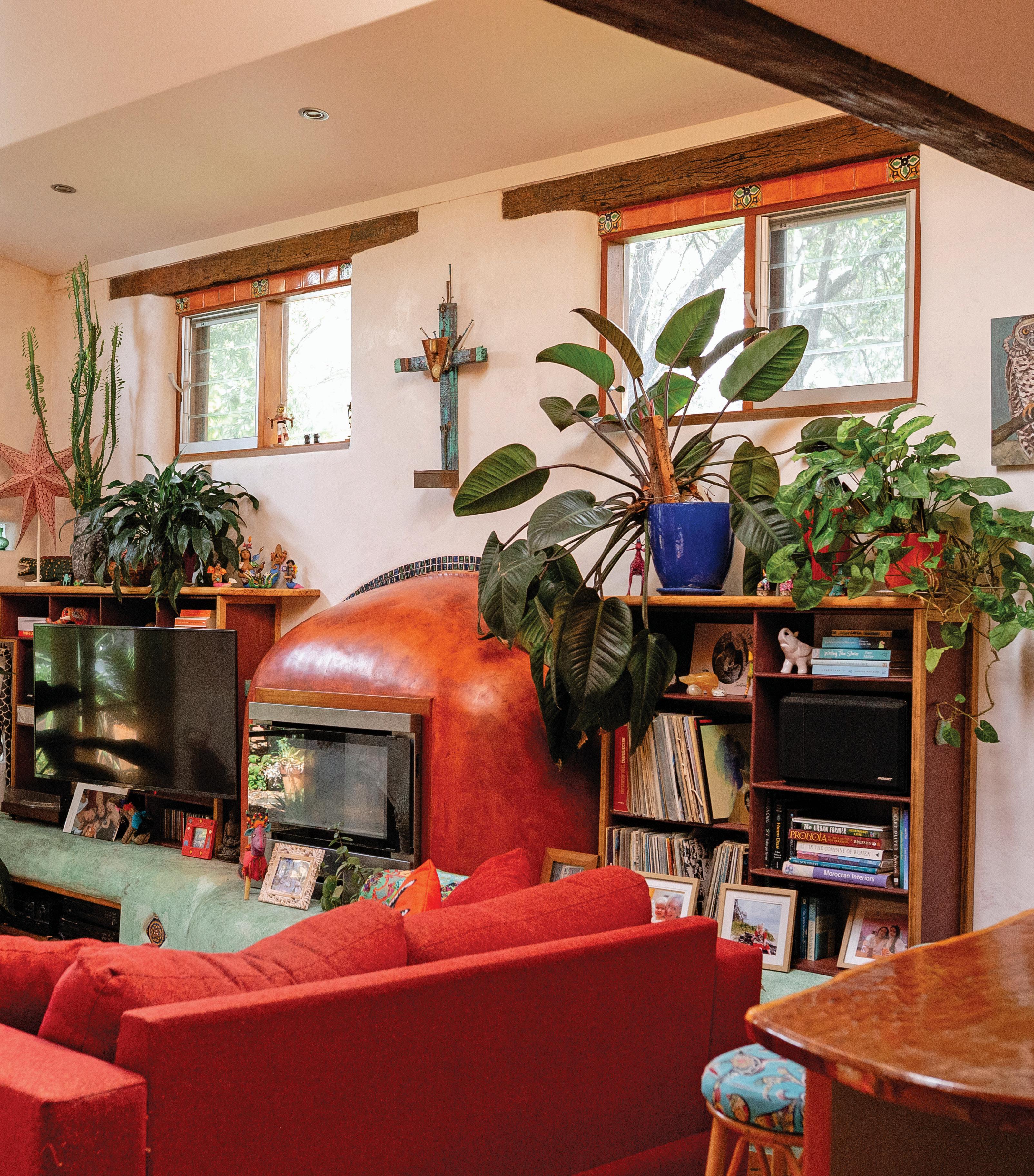
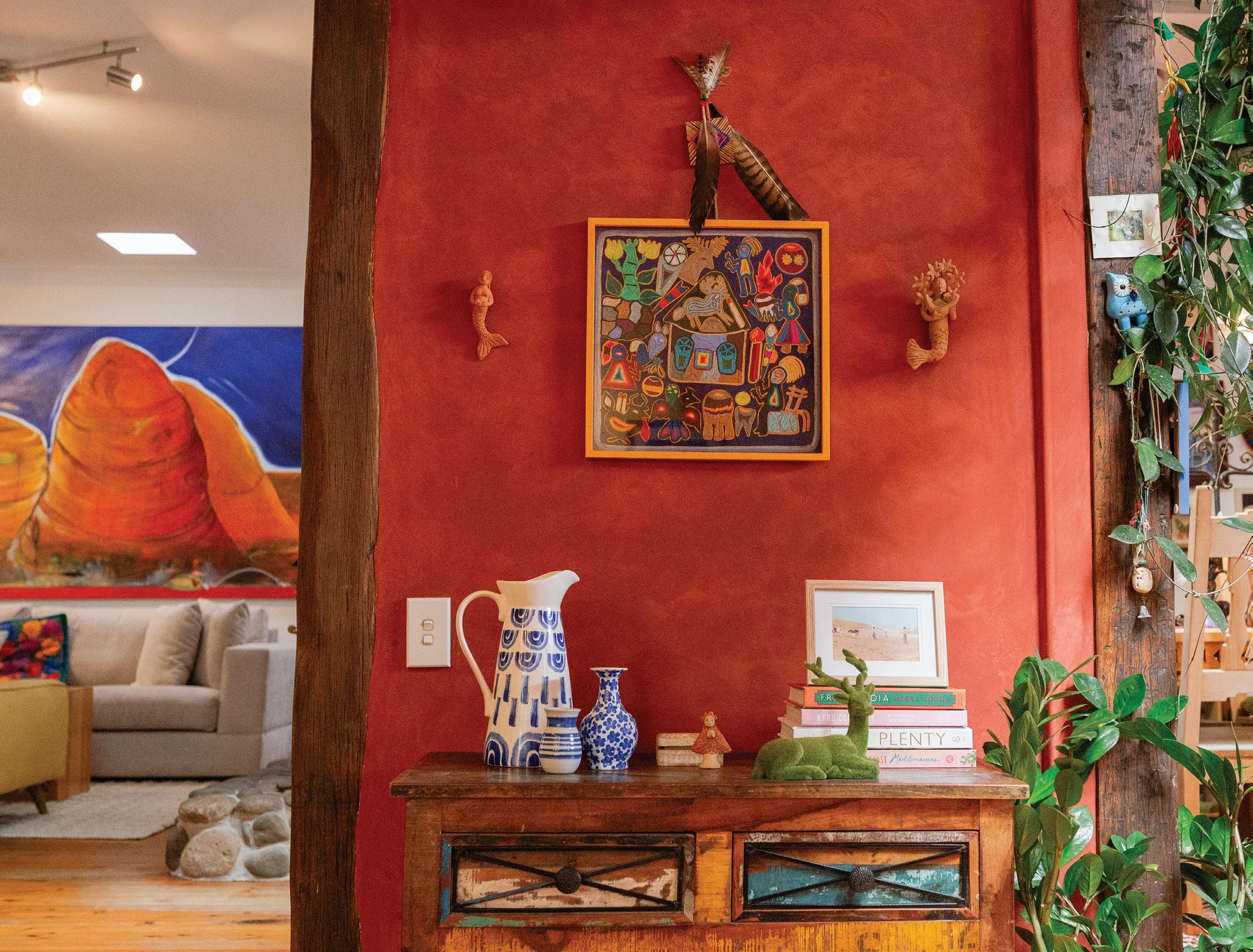
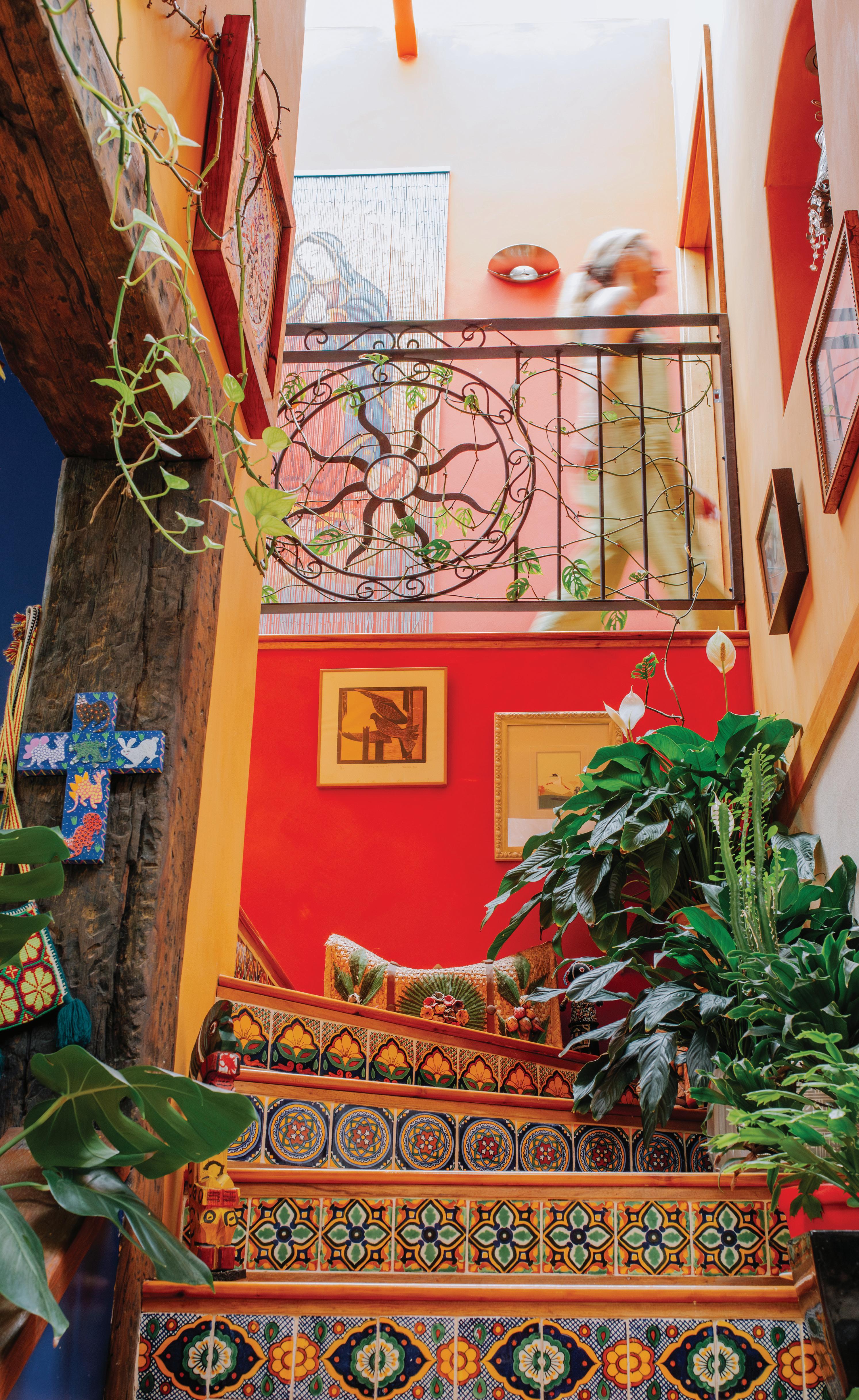
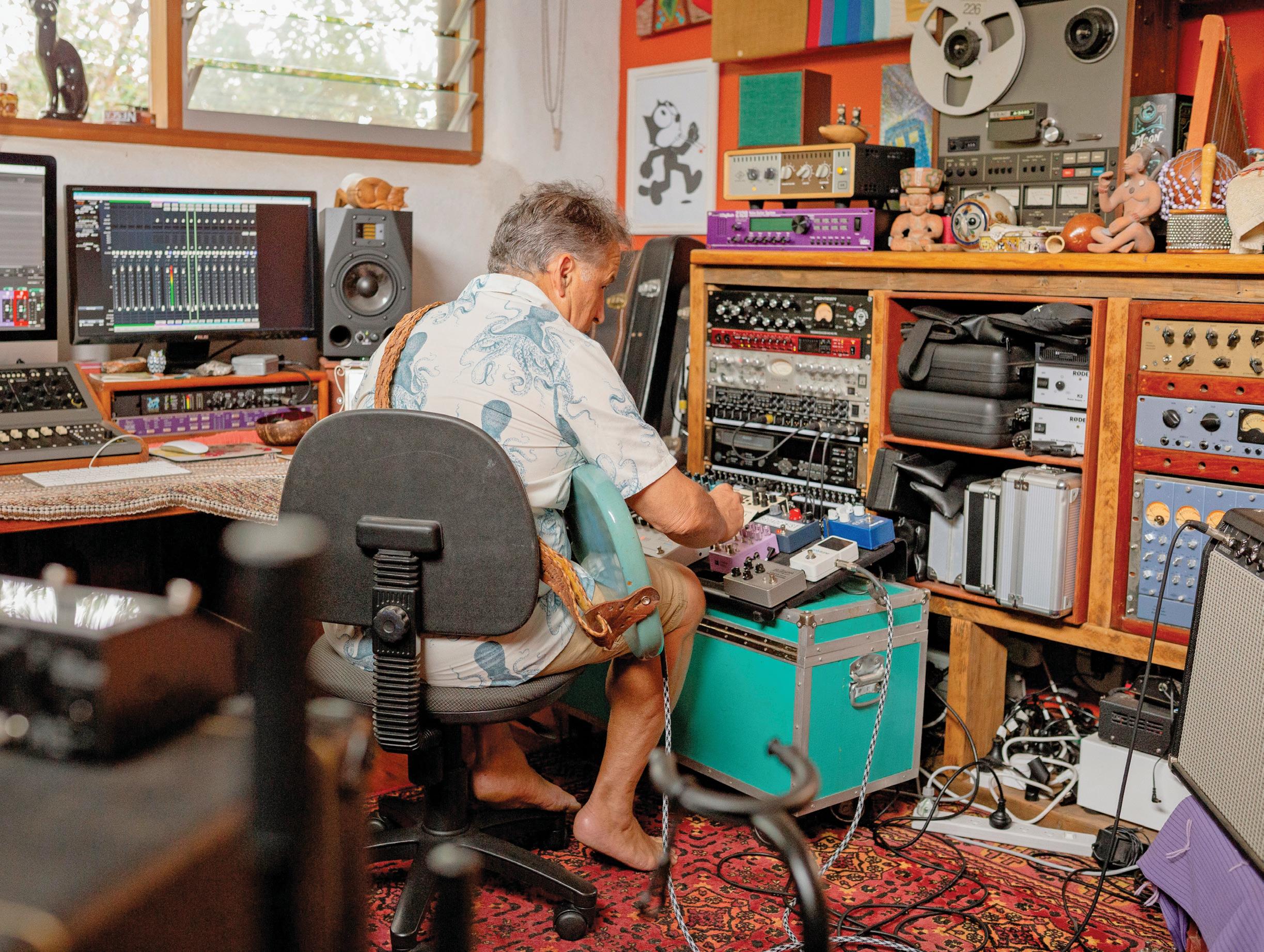
We moved into this house in Huskisson, NSW, in 1997 when our youngest daughter was just 9 weeks old and our eldest almost 4. Over the next 28 years, our ongoing renovation (with the largest transformation between 2006 and 2008) evolved our home from a modest fibro beach shack into an eclectic artist’s haven filled with mosaics, recycled treasures, and collectibles carrying soulful stories.
From LORI SIEBERT:
I have never met Tracy in person, but I feel like I’ve known her for years. We did create a fun, creative challenge together once on Instagram. I love how she shares her life… her work… her home… her family… her travels. I am drawn to her colorful world. I have seen glimpses of her artful home over the years. I wanted to get a bigger peek and share that with the Where Women Create audience. Her home exudes her whimsical, colorful aesthetic and personality. I am thrilled to learn new things about Tracy and her husband, Marco, through this beautiful feature. They have created not just an artistic home but an entire creative lifestyle. ENJOY!
A Meeting of Worlds
Marco and I have been together for 40 years, and both have a serious case of travel wanderlust. In 1985, he was a young Californian surfer chasing the legendary Aussie waves. His beloved abuelita, who helped raise him in Mexico, had finally fulfilled her own dream of traveling the world in her sixties. Upon returning from a trip down under, she told her grandson, “You should go. There’s something there for you.”
As fate would have it, Marco moved into an apartment upstairs from my nanny, who mentioned her granddaughter (me!) would be home soon, and showed him a photo. The rest, as they say, was history. We like to imagine our two grandmothers in Heaven having a cup of tea and feeling quite happy with their match. Over time, we grew disillusioned with the hustle and glitz of the Gold Coast and began dreaming of a quieter, more untouched paradise. A visit to a close friend in the South sealed the deal. We found our home in the serene, creative community of Jervis Bay.
From Shack to Sanctuary
With Marco’s background as a building contractor and my newly budding art practice, we began shaping the home we dreamed of. In those early years, funds were tight, and changes were slow. But in 2006, we began a major renovation—opening up the original cottage and adding a two-story adobe section with a new kitchen, living room, and laundry,
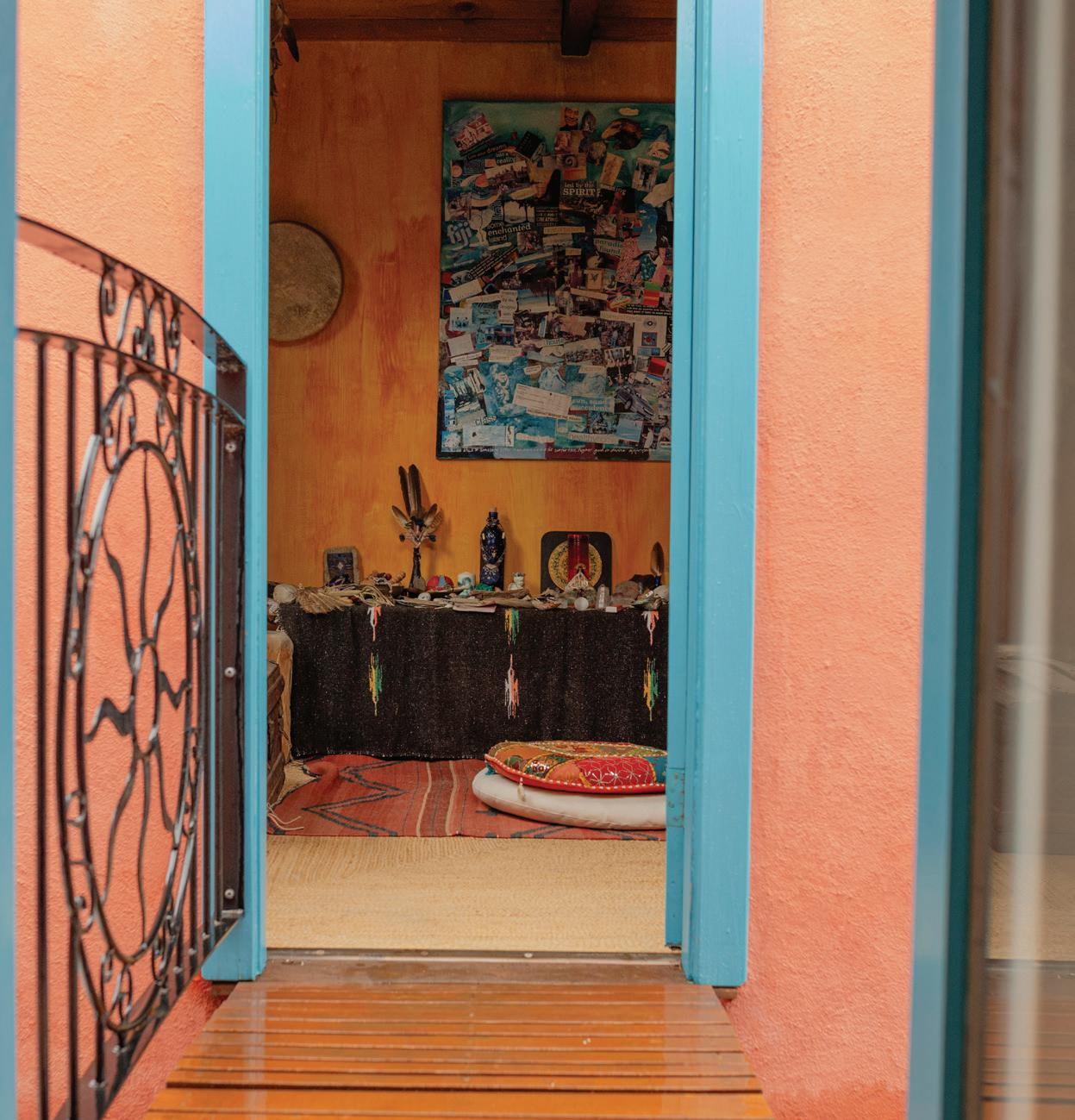
and upstairs, two bedrooms, an ensuite, and a meditation tower accessible only by bridge from our bedroom.
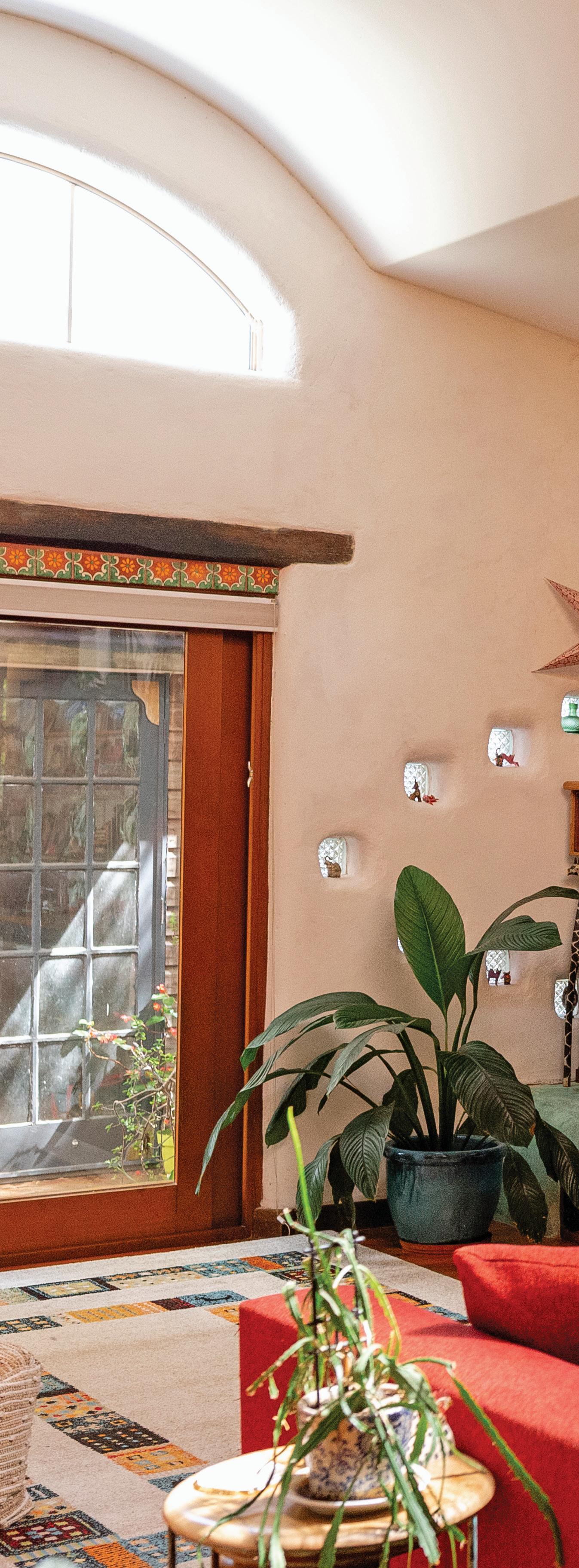
For both economic and ecological reasons, we sourced a treasure trove of second-hand and recycled materials: salvaged windows and doors, glass blocks from a demolished bathroom, and character-filled railway bridge timbers for posts and beams.
Our goal was to create an expansive, lightfilled home with unique character—an open kitchen flowing into the living area and rich with artistic touches: handmade niches, tadelakt finishes, and soulful stonework.
A Creative Life Together
In those early days, I was still gaining confidence as an artist, studying fine arts through Curtin University while learning from many other sources. I taught kids’ art classes for 12 years and worked in special education at our local high school. Those experiences gave me diverse perspectives on creativity and humanity, alongside our continued travels around the world.
Throughout our journey, we also made music together—forming two bands and releasing four CDs. As my art career began to flourish, Marco—by then an engineer and producer working from his own recording studio—launched his solo musical project, Owl Meets Cat. In 2012, I left teaching to become a full-time artist, offering workshops and retreats both in Australia and internationally.
Moments of Mayhem and Magic
We often joke that our renovation should’ve been featured on Grand Designs, given its share of chaos and calamity. During the build of the two-story adobe wall at our front entryway, we endured the rainiest July in years. One night, we woke to an explosive sound: the entire wall had collapsed.
Months later, while working above some beams over our entry, Marco fell two stories onto wooden pallets below. The girls and I watched in horror from the lounge room. He was rushed to the hospital with broken ribs and a fractured wrist. The house was wide open to the elements, but our amazing community rallied, weatherproofing everything until Marco could return to work.
The Heart of the Home
Despite the setbacks, we’re both proud of what we created. The house is filled with beloved features, but three stand out:
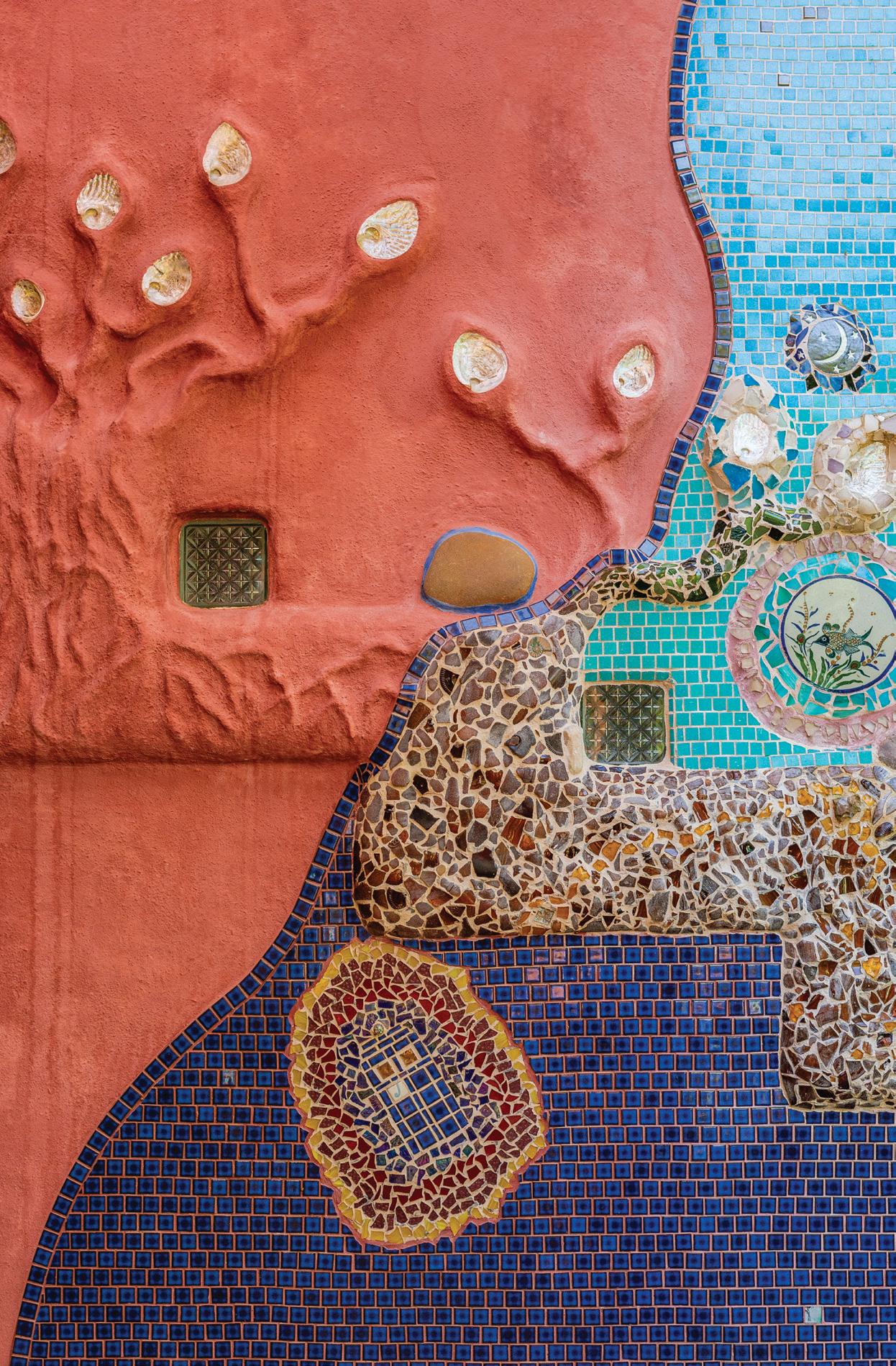
First, the Tree of Life mosaic at our entryway, which took Marco four months to complete.
After going through our life collection of sea glass we had foraged from our travels and local beaches, we realized we needed help. A callout on social media brought an incredible response—parcels filled with sea glass and ceramics arrived from around the world: pottery shards from the banks of the Thames, white and lavender glass from Iceland, entire collections sent with handwritten notes.
Knowing our community is embedded in that artwork brings us joy every day.
Second, the meditation tower—a peaceful haven filled with Indigenous artworks and accessed by a small bridge from our bedroom.
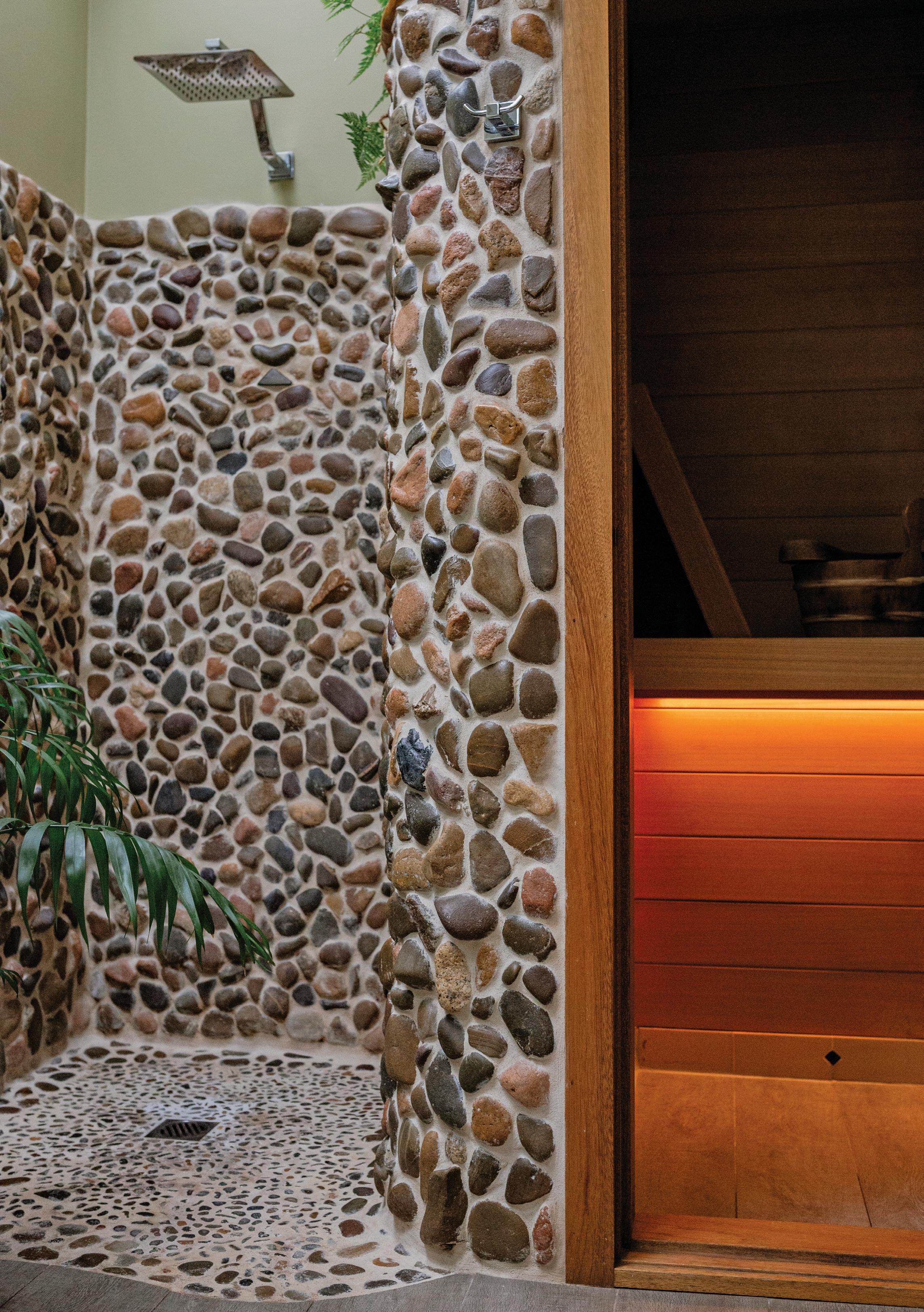
And third, the downstairs bathroom—once a cramped, sunless space shared with a tiny laundry—is now a stone-walled, skylight-filled sanctuary with a luxurious sauna at its heart.
Living with Soul and Story
We like to think of our home as a reliquary—a living archive of memory, meaning, and love. One of my favorite pieces is a quartz heart-shaped rock we found on a hike in New Mexico. It now rests in a handmade niche in our bedroom, glowing with light that beams through the glass blocks behind it.
From the beginning, plants—both inside and out—have been a constant part of our world. My passion for indoor plants intensified after finishing breast cancer treatment in 2016. Weekly nursery visits filled me with joy, and soon our home burst with even more greenery. Marco, with his deep love for all living things, kept them thriving. Eventually, he gently suggested a pause—he could hardly keep up with all his new “plant friends”!
Outside, our garden is a lush suburban sanctuary filled with native bottlebrush, paperbark, melaleuca, lilly pilly, and native ginger. Fruiting trees like olive, mulberry, lime, lemon, orange, and grapefruit grow among herbs and flowers. Just a block away, the shimmering bay continues to inspire us.
Spaces for Creation
We’re lucky to each have creative spaces. My studio evolved from a simple detached garage into the perfect light-filled art space, complete with recycled skylights and French doors. Marco’s music room is where he creates original compositions for both his solo work and my online art courses.
Our walls are filled with art collected over decades—pieces from our travels and from creative friends in our rich community of musicians, poets, and artists. Colorful tiles, soulful objects, and calming natural elements combine to make the house feel alive.
We still see it as a work in progress—a lifelong canvas we get to keep playing with. It holds our story, our creativity, and our spirit. And every time we step through the door, we feel its soul as an extension of our own.
Jen Parrish-Hill
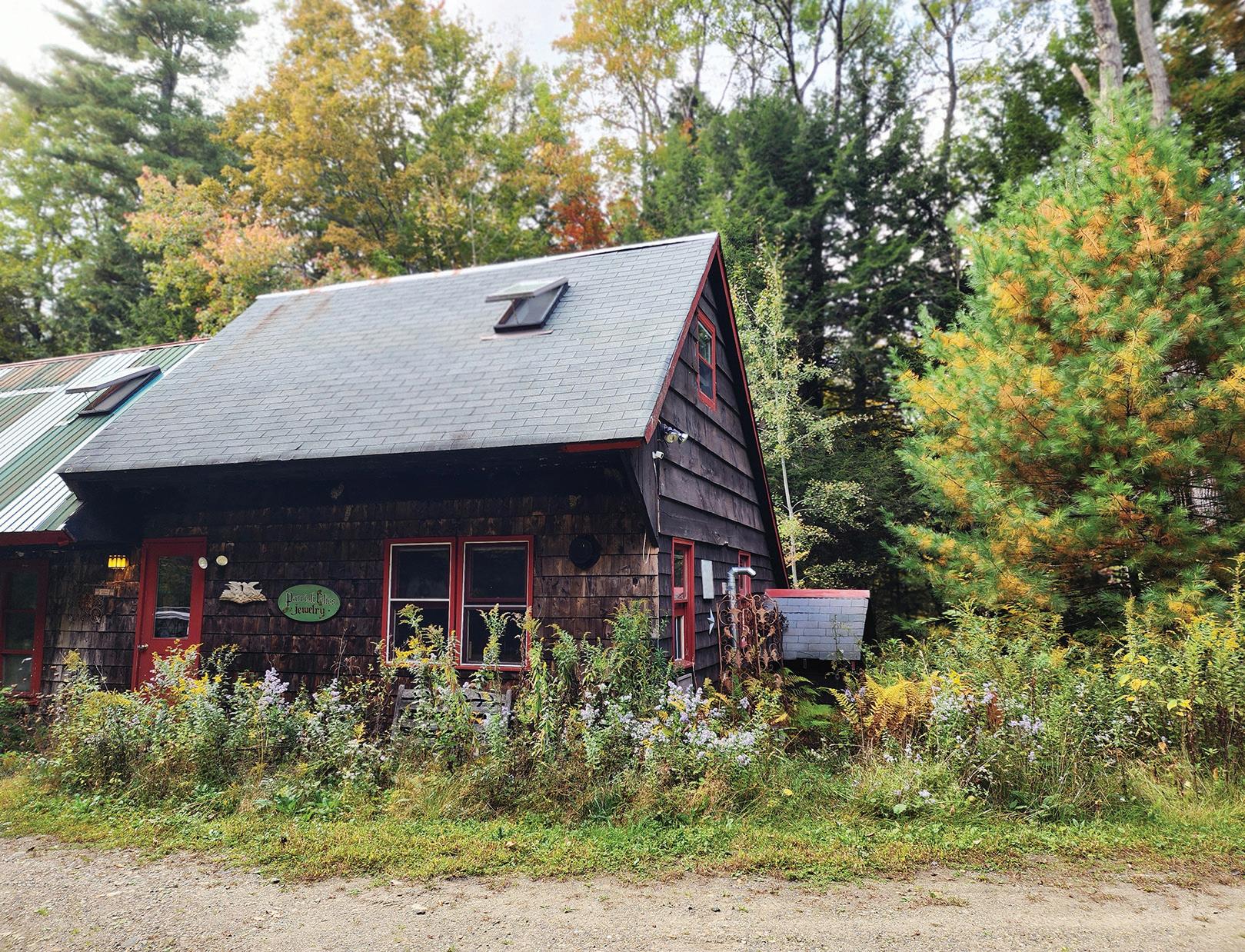
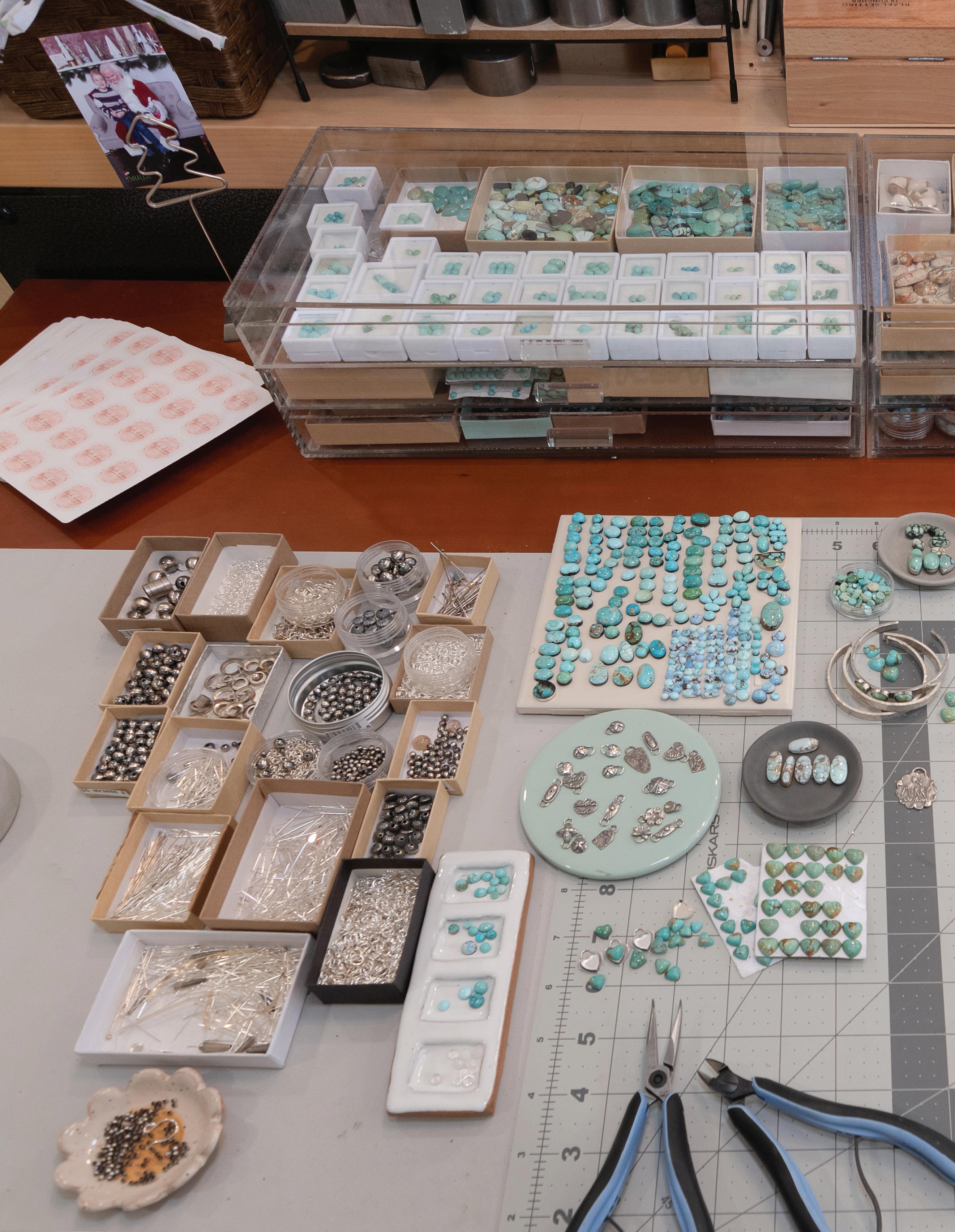
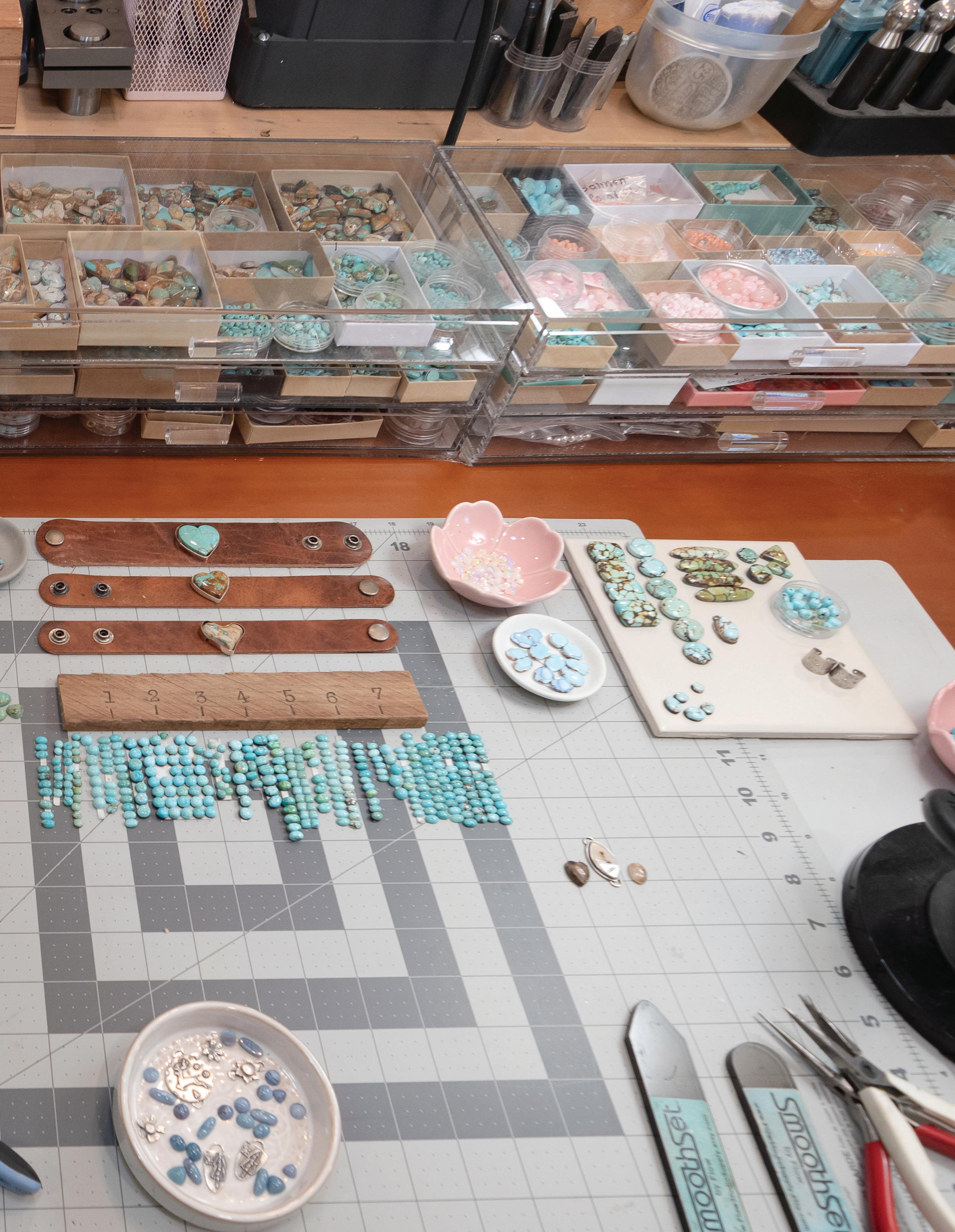
JEN PARRISH-HILL lives in the forest by a stream in the foothills of the Berkshire Mountains. She creates nature-inspired and historically-themed jewelry that ranges from America Ferrera’s iconic “B” necklace for the show Ugly Betty, to the recent Morris Mania Exhibition at the William Morris Gallery. Past work includes collections for the British Museum and Tate Britain. She works in stained glass, found ephemera, and mixed metals.
Nearing our ten-year anniversary at this beautiful property, perfectly named Frog Hollow, I am still in awe that there is a stream meandering the border that I can visit whenever I need the calming companionship of nature.
My partner, David, and I had a place in the city just outside Boston—the same tiny duplex we lived in when we were in our early twenties. After separating the first time around, we had both moved to different corners of the country before returning years later. He was my first love, and we had somehow found each other once again, serendipity!
David is an avid cyclist, so would visit his brother in the western part of the state for long-distance, rural rides. We fell in love with the area’s slower pace, the natural beauty, and the friendliness of the people who live here. Seeking more peace and quiet in our daily lives, we decided to make a move to the country. I love living deep in the forest—visited by so many creatures, including otters, bears, foxes, porcupines, rabbits, and coyotes. This pristine land and the lives within—so important to respect and protect. We explore every day with our rescue dog Grady, witnessing his exuberance
for life even on the harshest of winter days. I try to be as eco-conscious as possible in all aspects of what I do with Parrish Relics, and am currently in the process of going solar-powered.
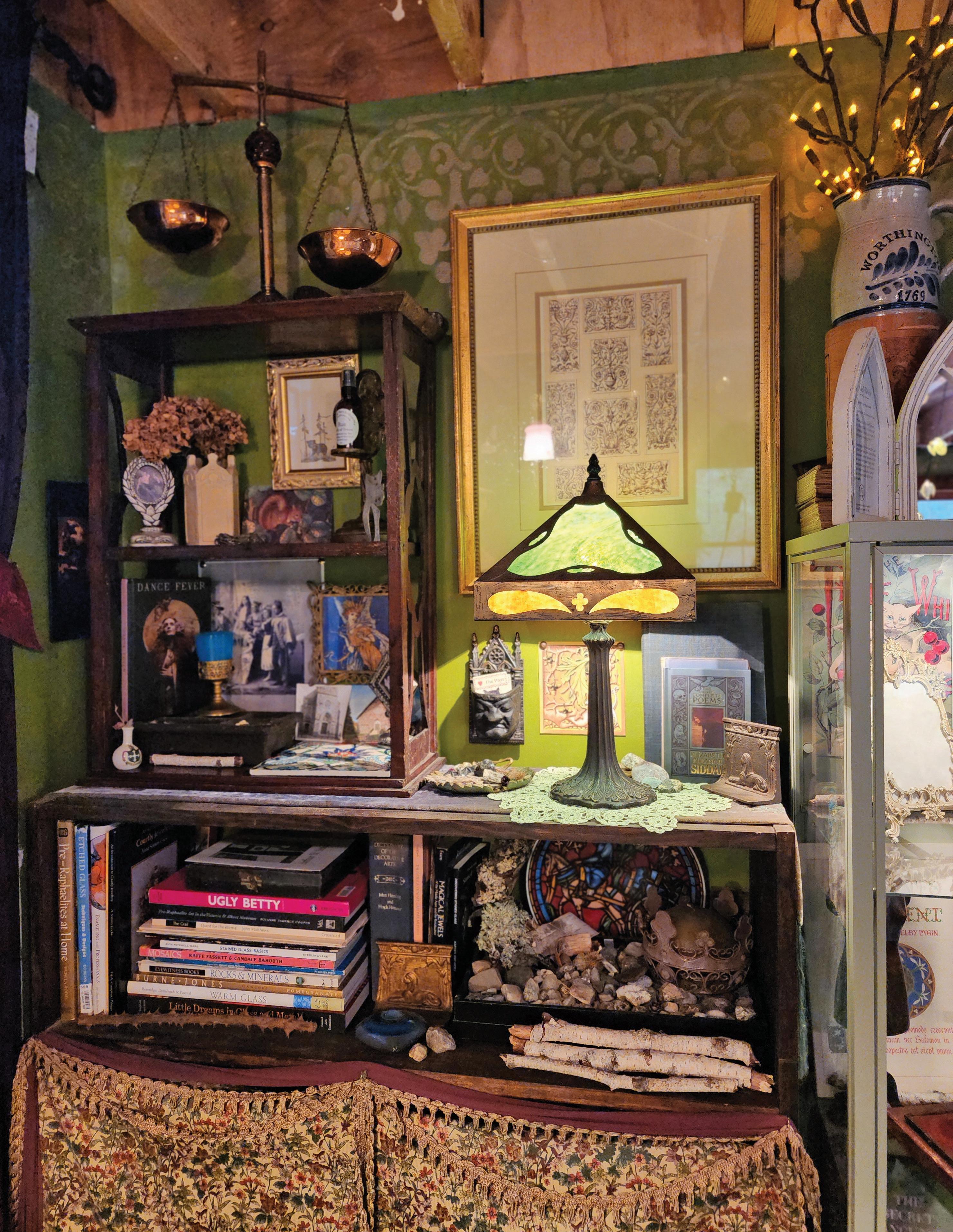
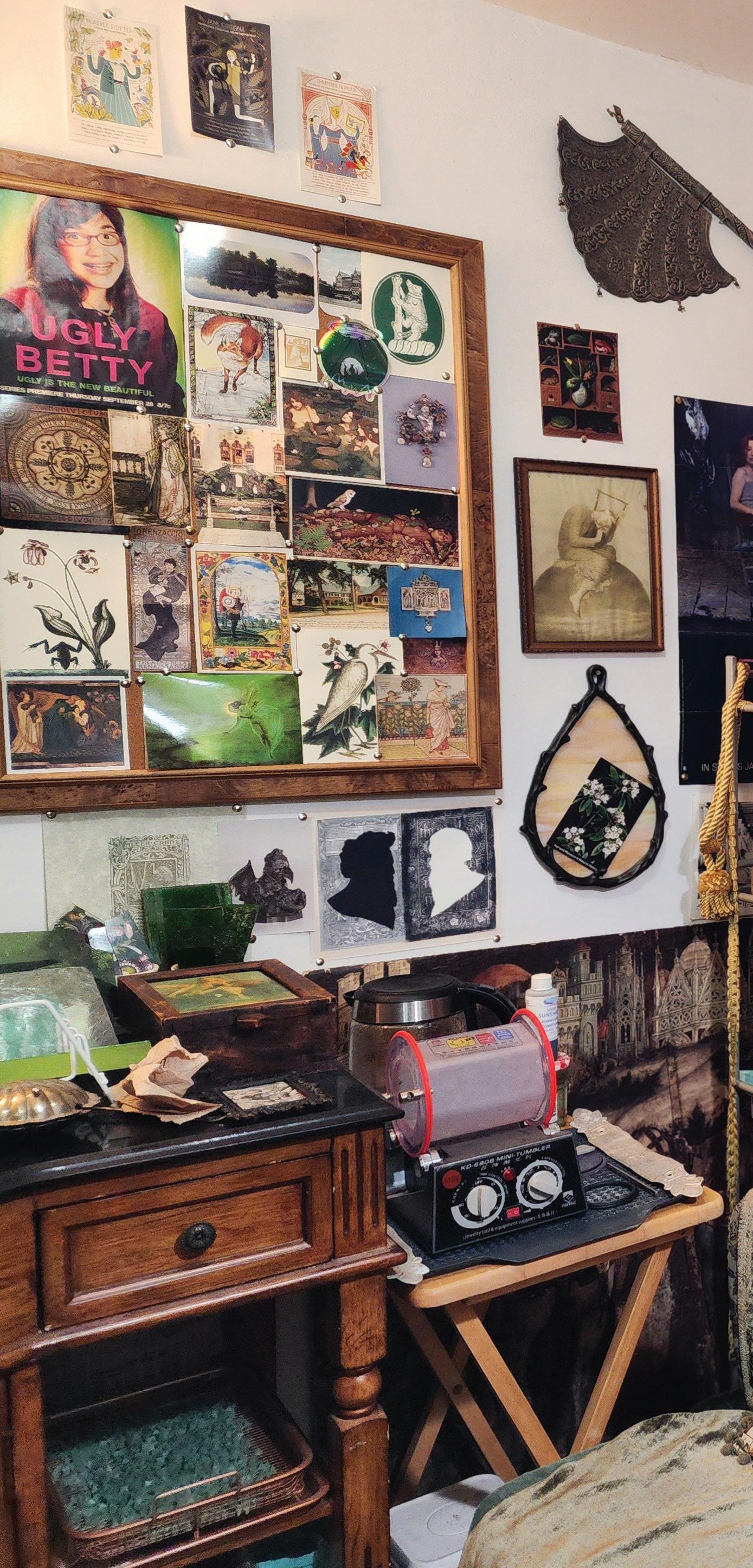
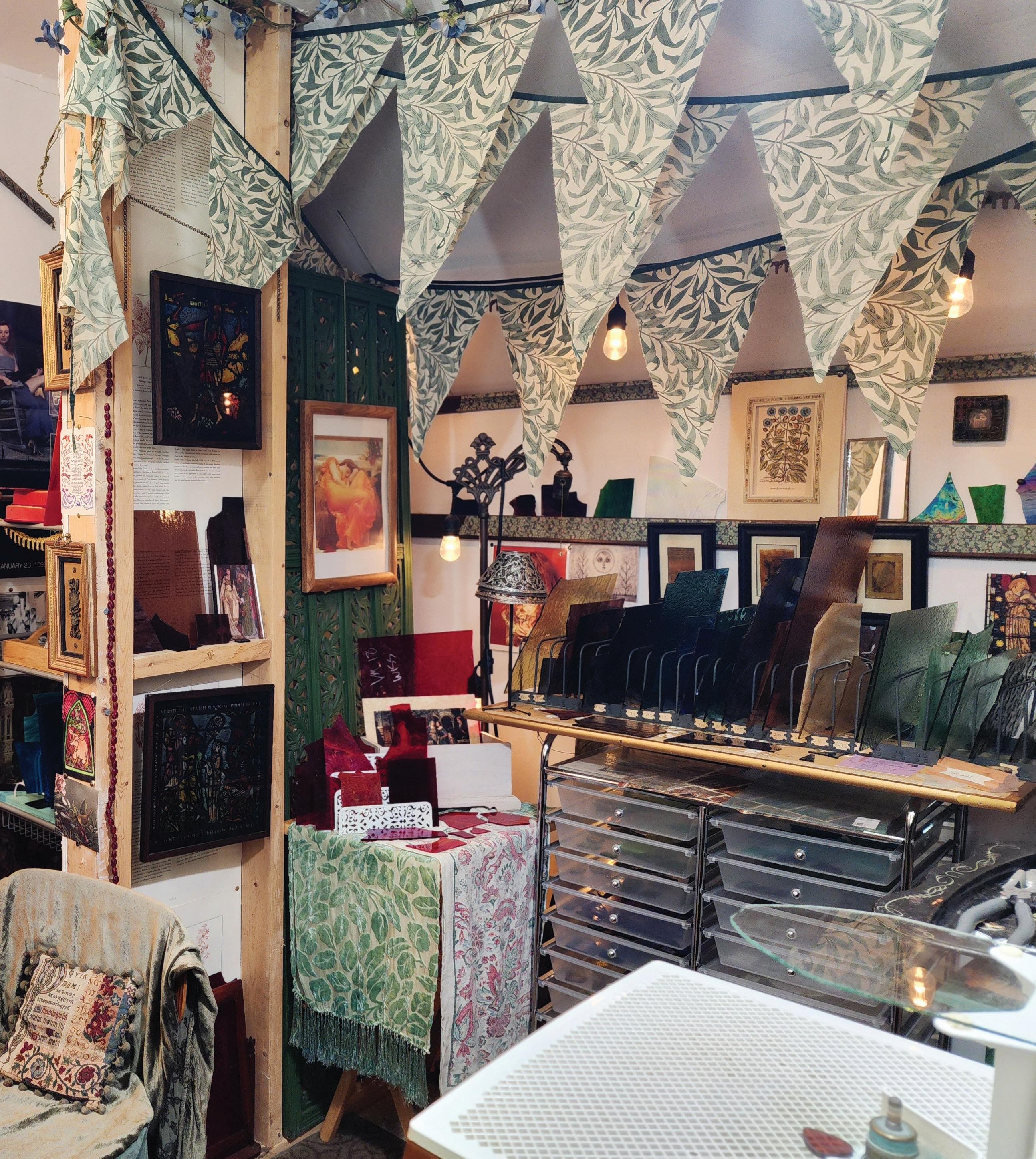
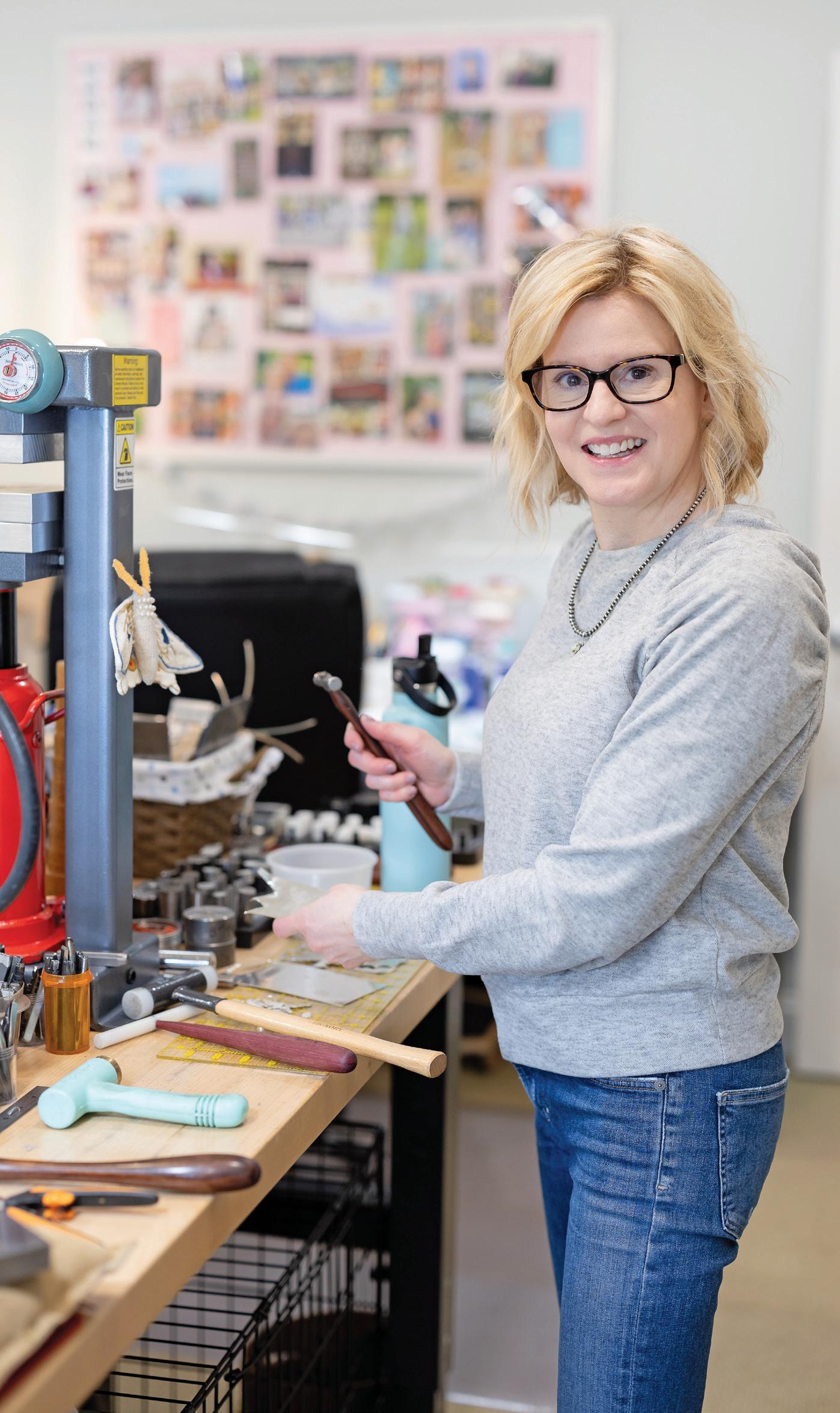
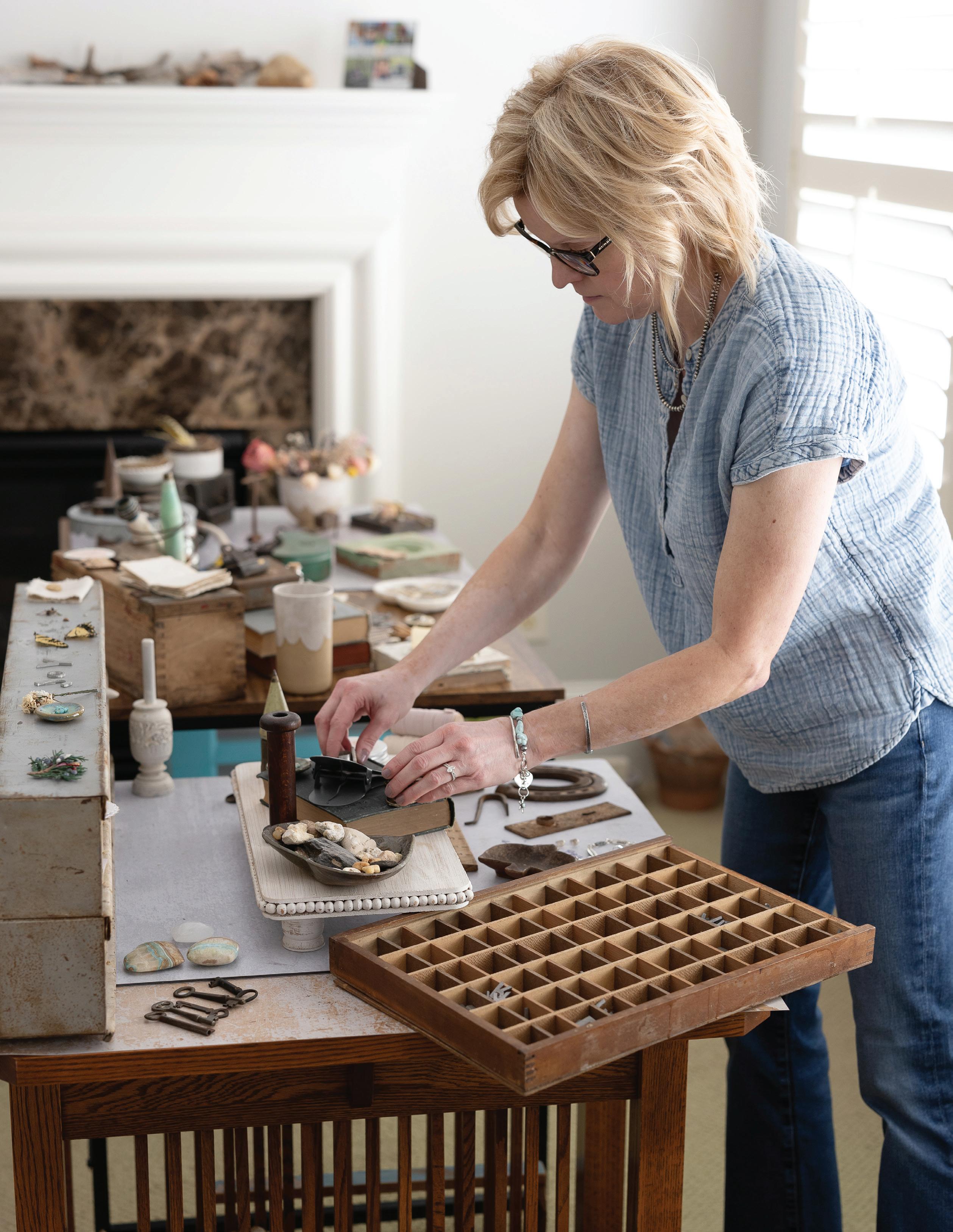
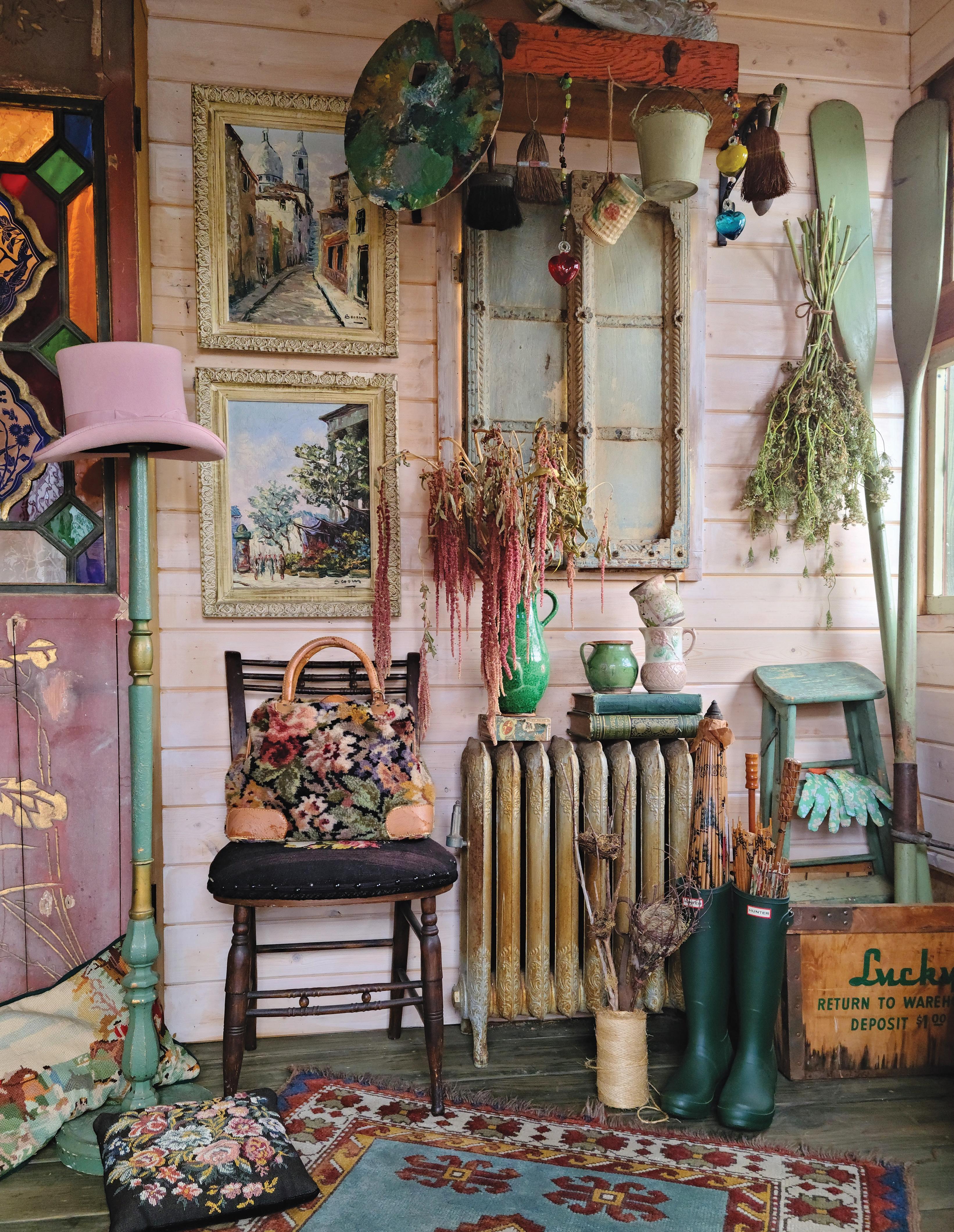
After outgrowing a small studio space within the house six years ago, I was lucky enough to be able to create a metalsmithing workshop and glass studio out in our converted garage. I light incense at the start of the day in this sanctuarylike space, surrounded by reminders of friends and family (along with too many books, posters of my favorite musicians, and my great-greatgrandfather’s Shakespeare Troupe). I am what could be called an eclectic sentimental maximalist and enjoy rescuing unloved items—though I dream of living on a narrowboat floating peacefully on the U.K. canals someday, so will have to pare down, eventually.
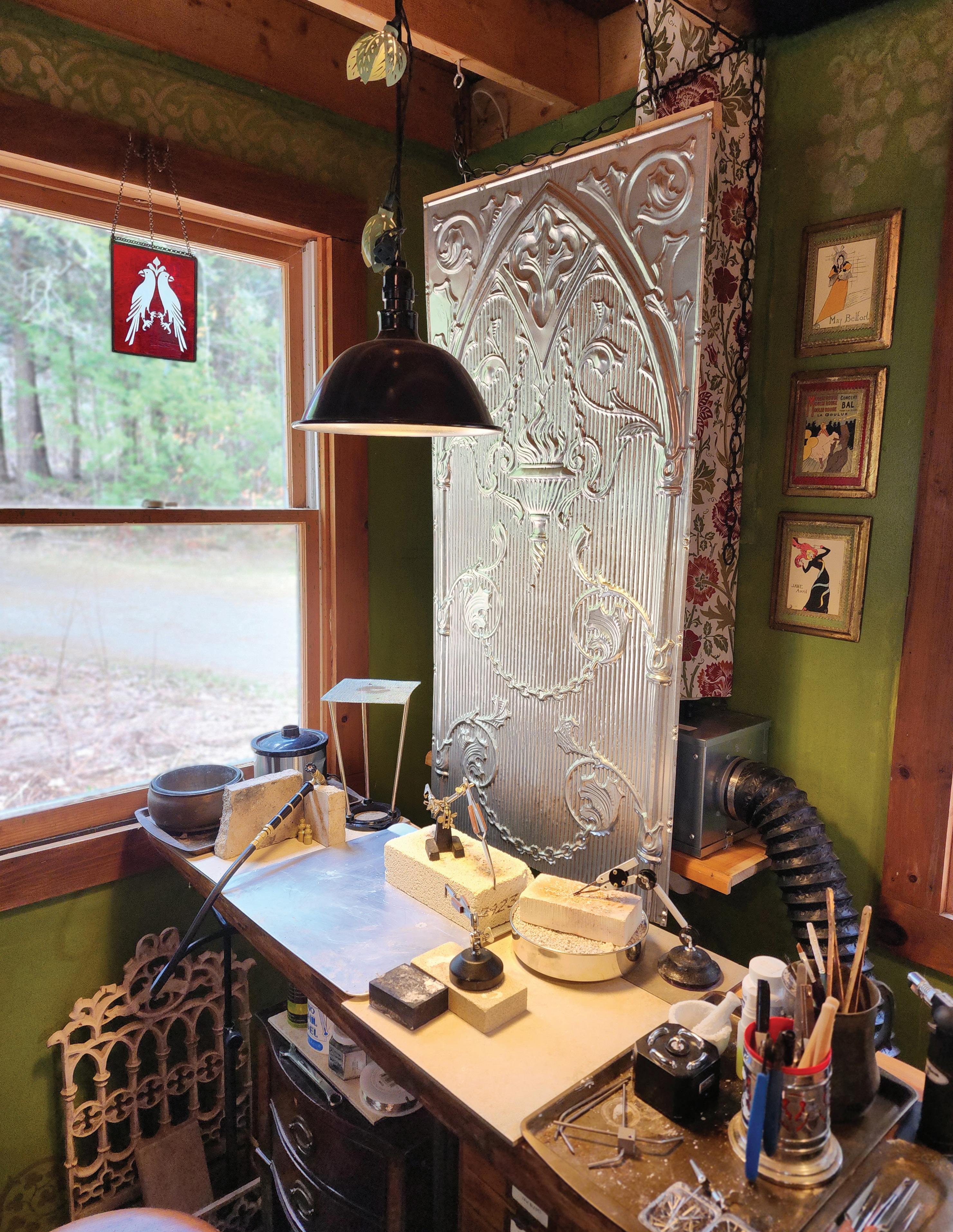
David built me a jeweler’s bench out of local live-edge wood and metal piping that is long enough to solder, drill, grind, and saw on, with windows facing out onto the beautiful landscape around us. A favorite birch tree that sadly had to be taken down is now a stump to hammer metal on. I still mourn the loss, but I’m grateful for what I can hold close and preserve while I am here. A reminder that life is fleeting, temporary, beautiful.
There is an inline fan vent held up in a vintage brass frame that I can move around to different work stations, the mechanics hidden (and protected) behind a beautiful Victorian replica tin panel. I had set up this part of my studio years before I worked up the courage to even buy a torch, but thanks to classes with a local metalsmith, Heather Beck, and at Snow Farm (The New England Craft Program), I am getting more confident with my beautiful “brass dragon” and less intimidated by the flame.
Dragons have been a running theme in my life and work; teal and pink Fisher Price dragons hover over my workspace—replacements for the original that was sadly run over by my father with a lawn mower. My first cast metal project was an ouroboros that I had originally made in polymer clay, used as a mold in a metal clay class with Terry Kovalcik. That was my way back into metalsmithing after a long time away from it, and I am so grateful.
I had taken jewelry design classes at the Museum of Fine Arts in Boston, along with art history, glass, and sculpture—that foundation formed the basis for a life of continual learning. I am always looking to test new techniques or to add a new medium to my repertoire.
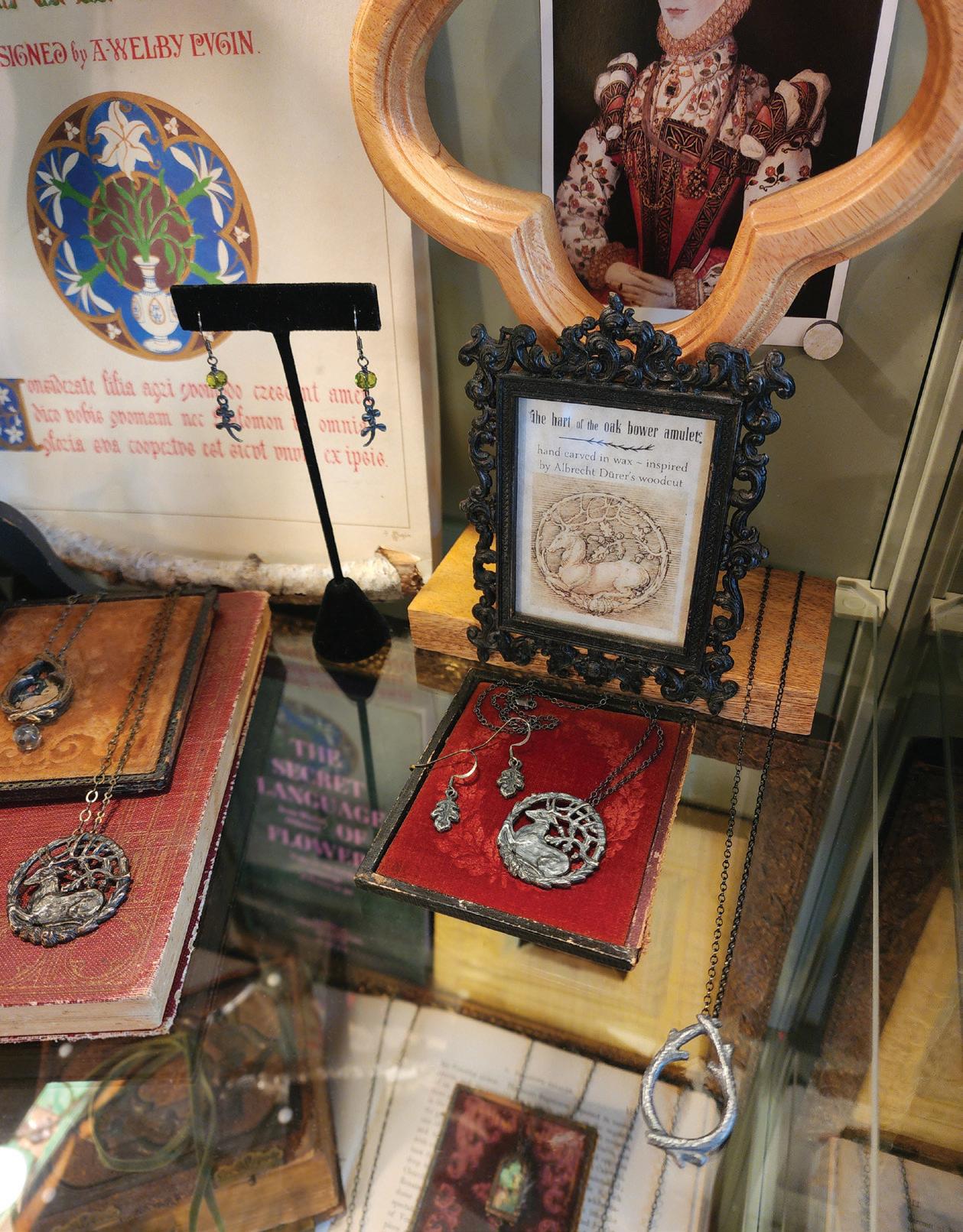
My designs are initially carved in wax or polymer clay, then cast in metal. Hand-cut shards of stained glass or found ephemera are set within. I recently enrolled in a local ceramics class with the hope of creating tiny tiles that will also fit inside these frames. A kind neighbor was cleaning out his garage and gave me some clay tools that he had found. At the time, I didn’t realize I would have a use for them, grateful to have a head start.
“I want to raise up the magic world all around me and live strongly and quietly there.”
VIRGINIA WOOLF
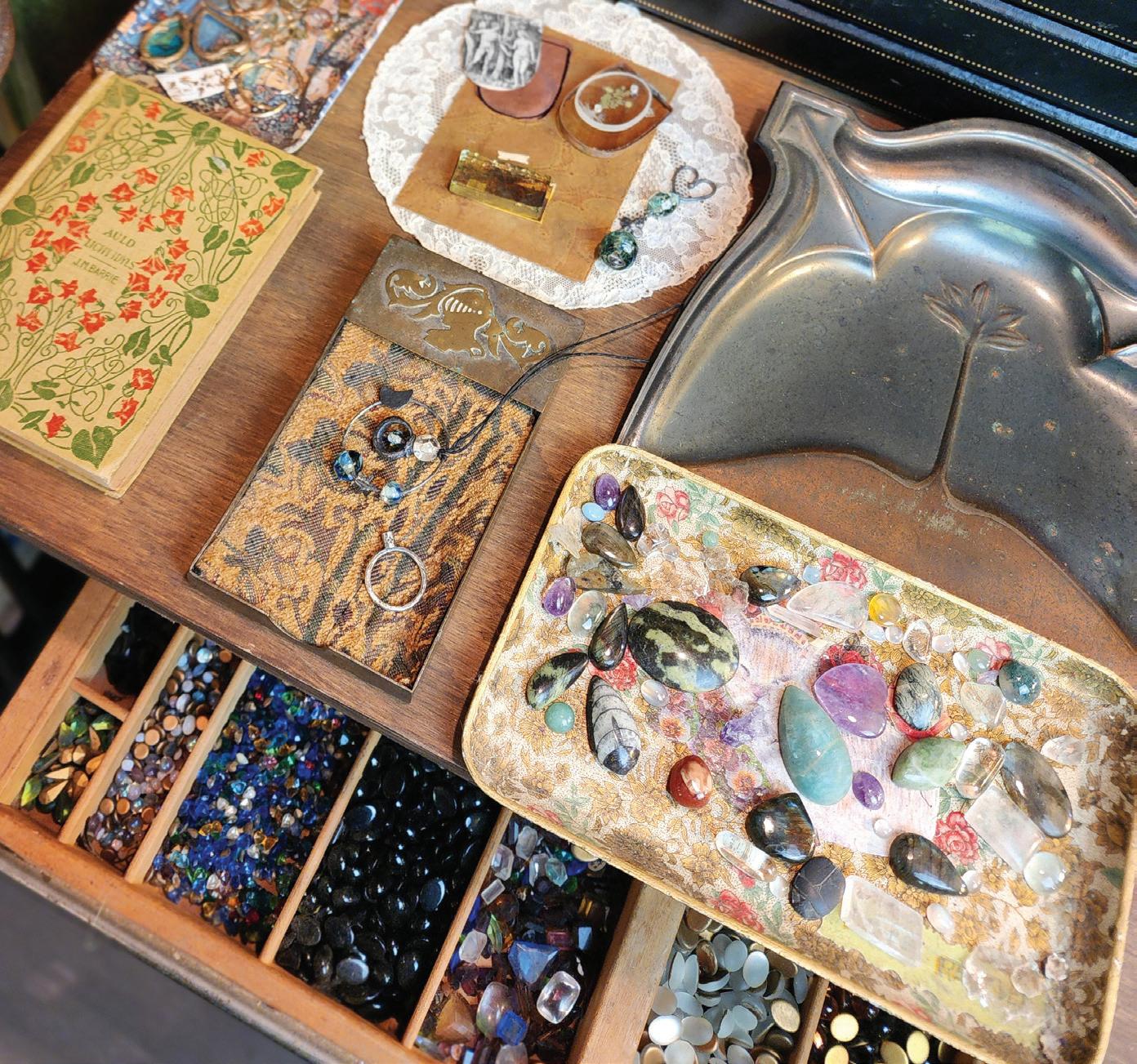
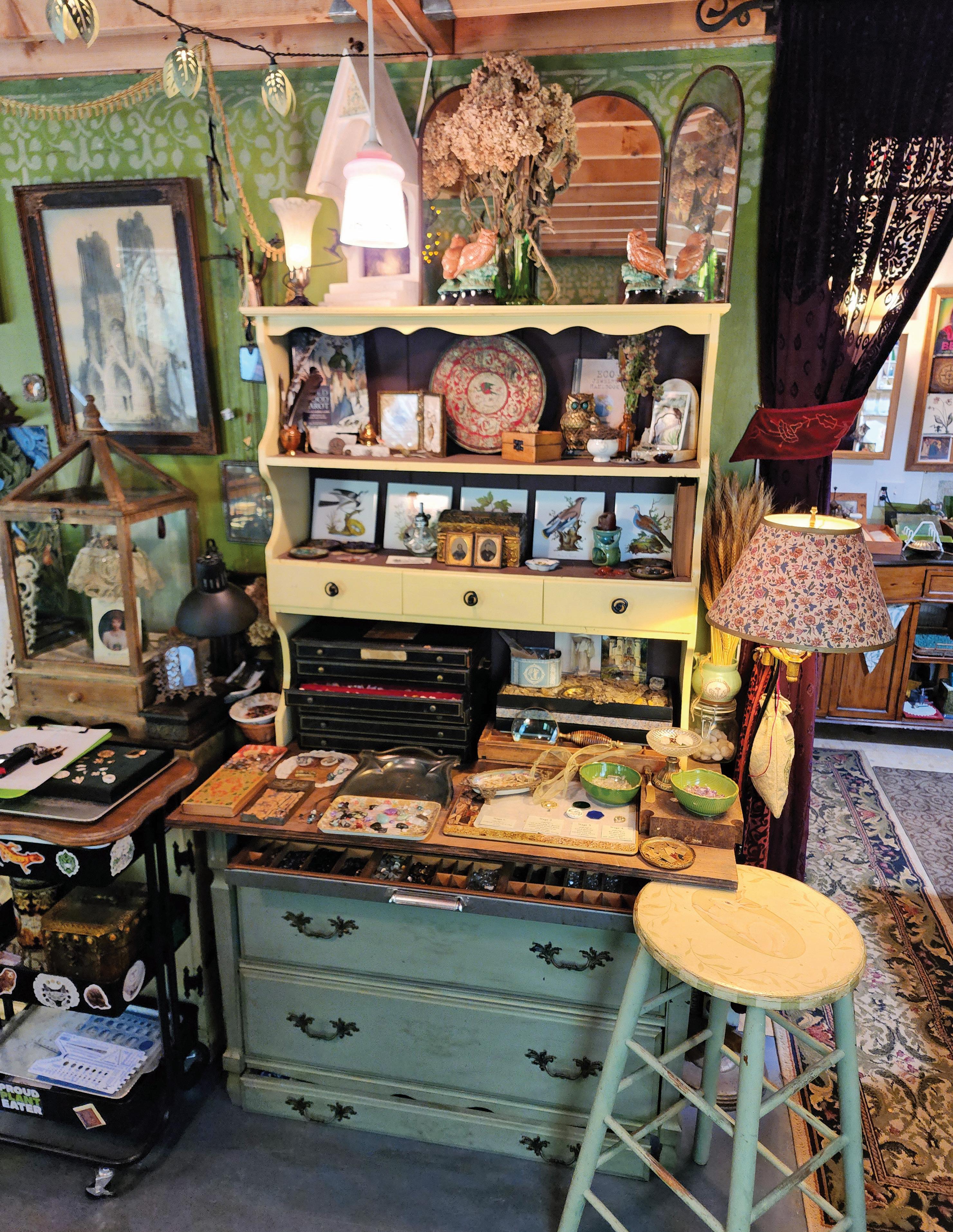
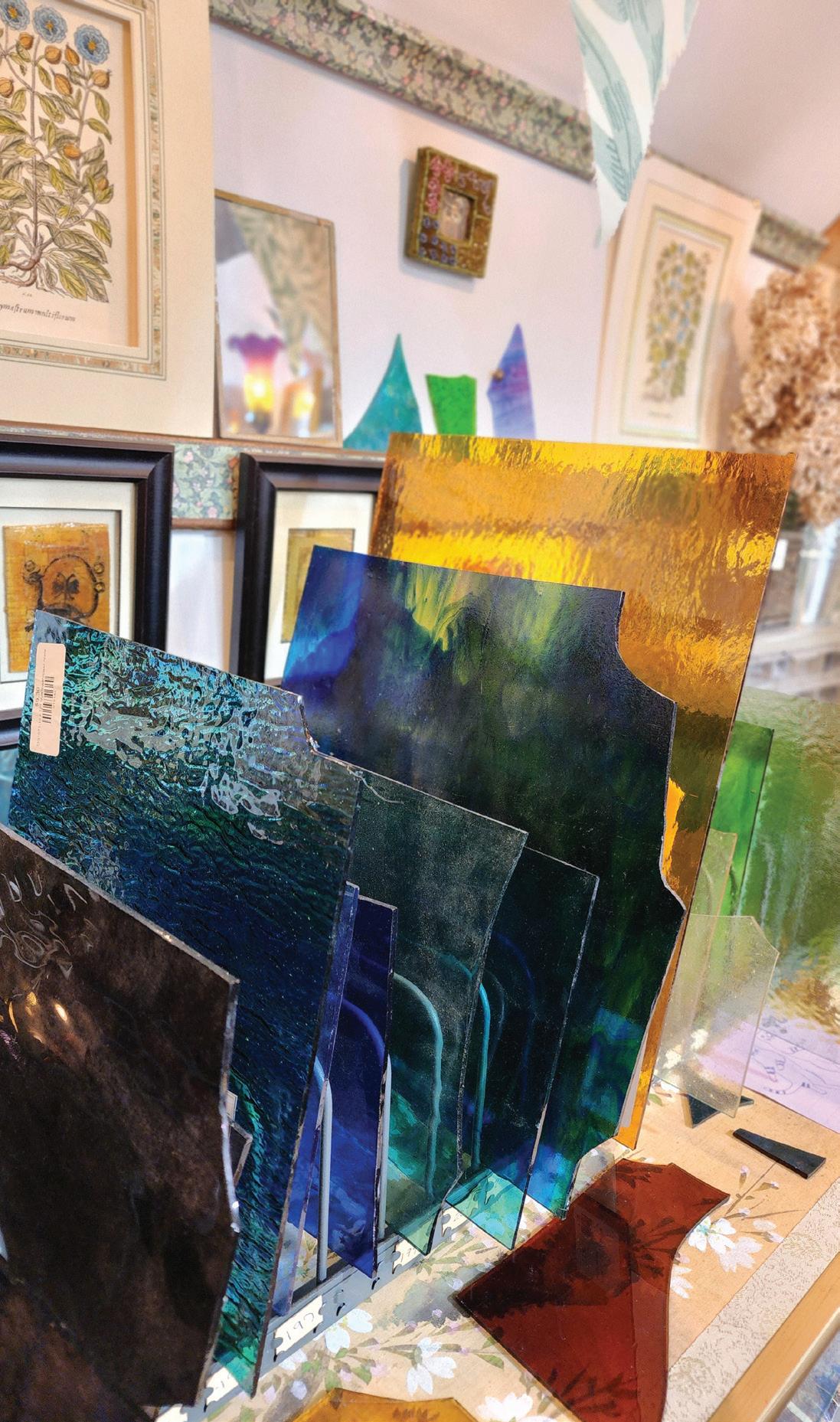
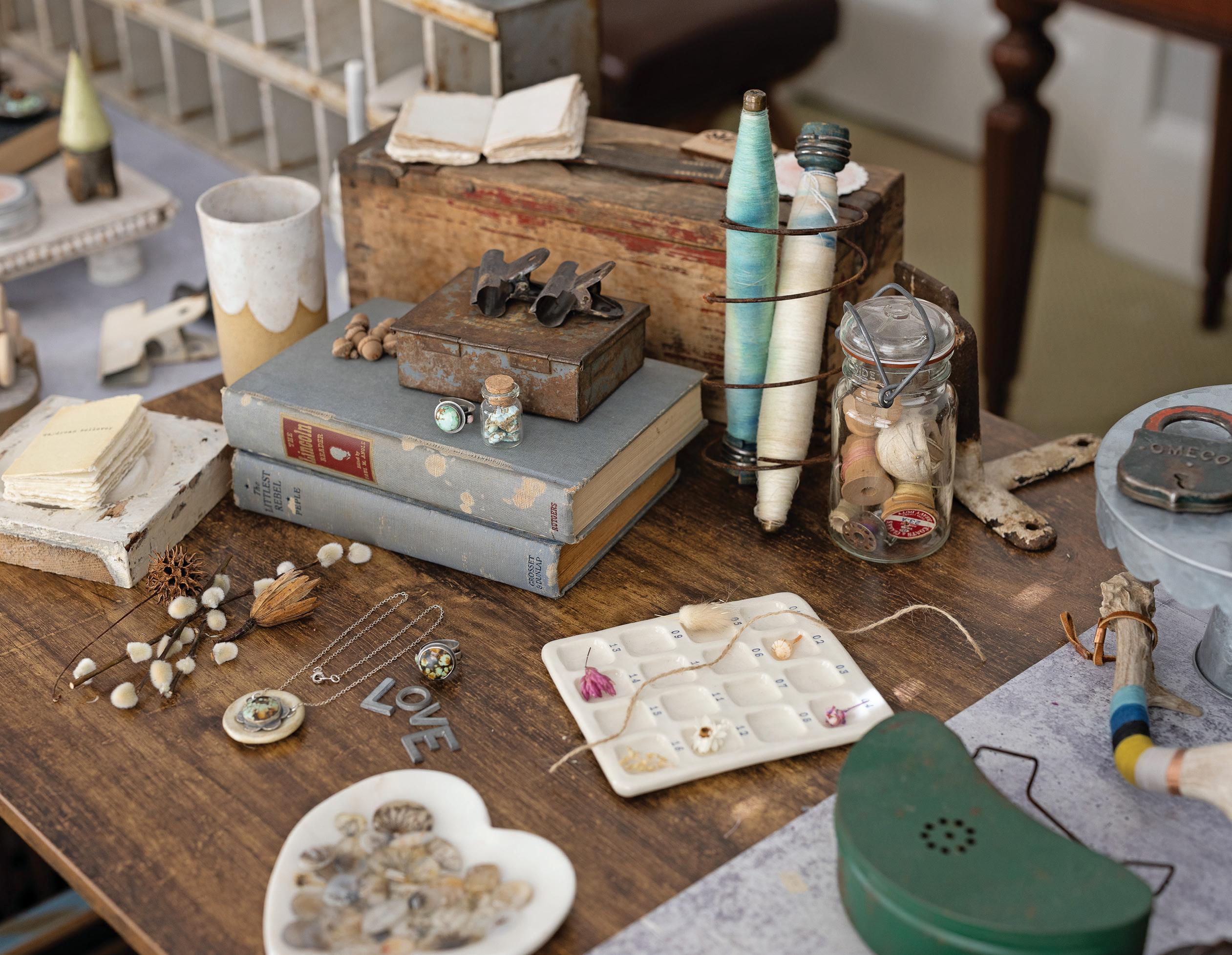
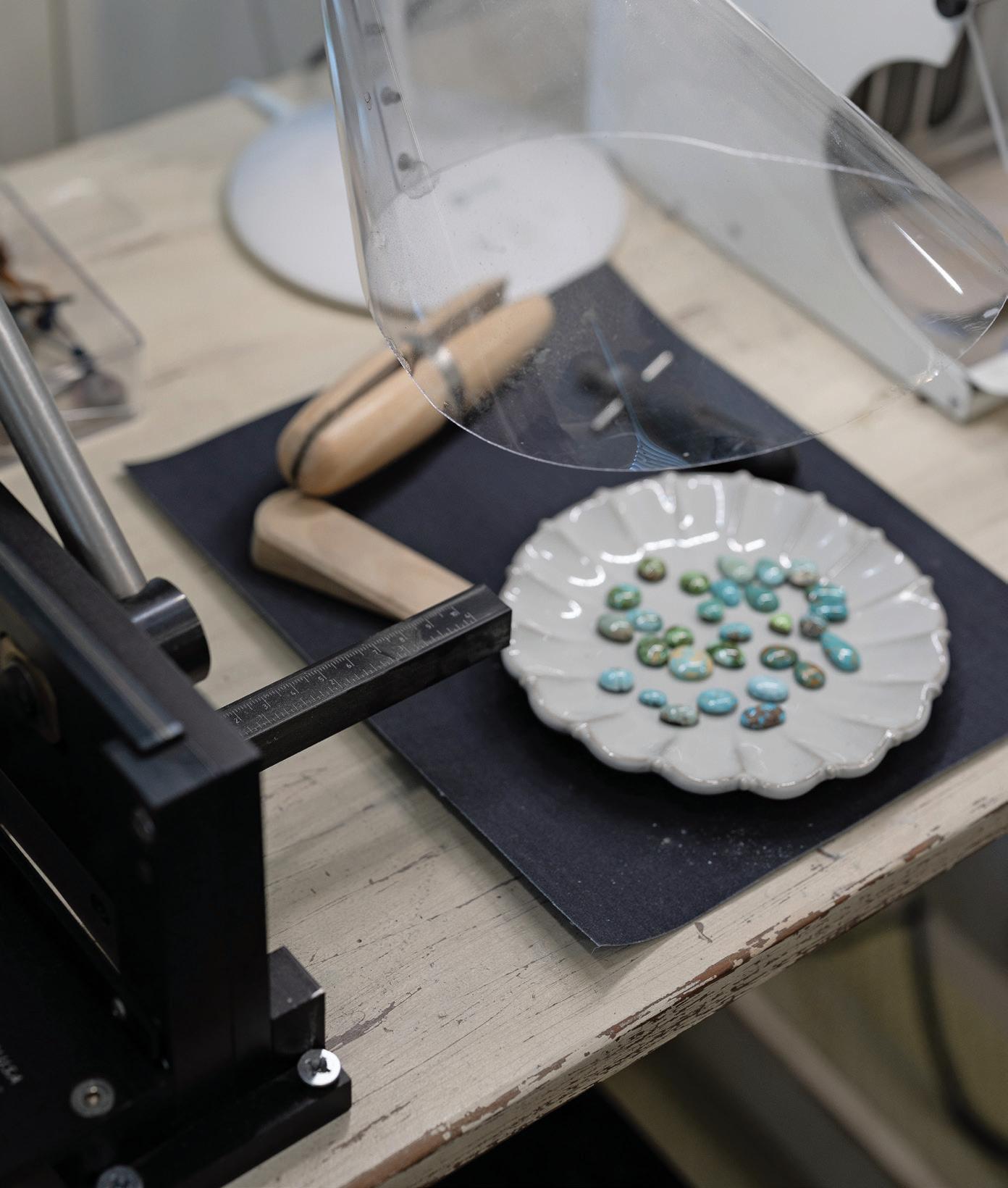
The unlimited variation in color, texture, and opacity of glass keeps me forever fascinated. I visit stained glass supply shops to purchase mostly off-cuts, discarded panels too small for window making. These jewel-toned shards can be etched, set with found imagery, or painted with enamel—I keep them displayed on dish racks or shelves in the studio’s converted bathroom (currently non-functional, no plumbing!) so that I can easily scan for whatever catches my eye. I tend to have “out of sight, out of mind” creativity, so I am glad to have ample spaces for each facet of my work to spread out in.
Much of my design inspiration comes from travel, museum visits, and books about Medieval and Renaissance Europe. (I hold a deep reverence for Venice, but still haven’t visited La Serenìssima yet, so that is an important goal for the future!) A few years ago, I designed a collection for the British Museum’s Thomas Becket exhibition that was inspired by a stained glass window that was moved from Canterbury Cathedral to the museum as the centerpiece of the show. What a thrill to be able to create something that was sold in the gift shop to remind visitors of this special experience. Working with museum shops is one of my favorite aspects of what I do, since my love of all things ancient began in one. Visiting the Museum of Fine Arts in Boston with my mom during their Pompeii exhibition really made an impression on me—all this fragile beauty and living art on display that had been frozen in time. I was awed by the vulnerability and moved by the stories of the humans and animals presented there.
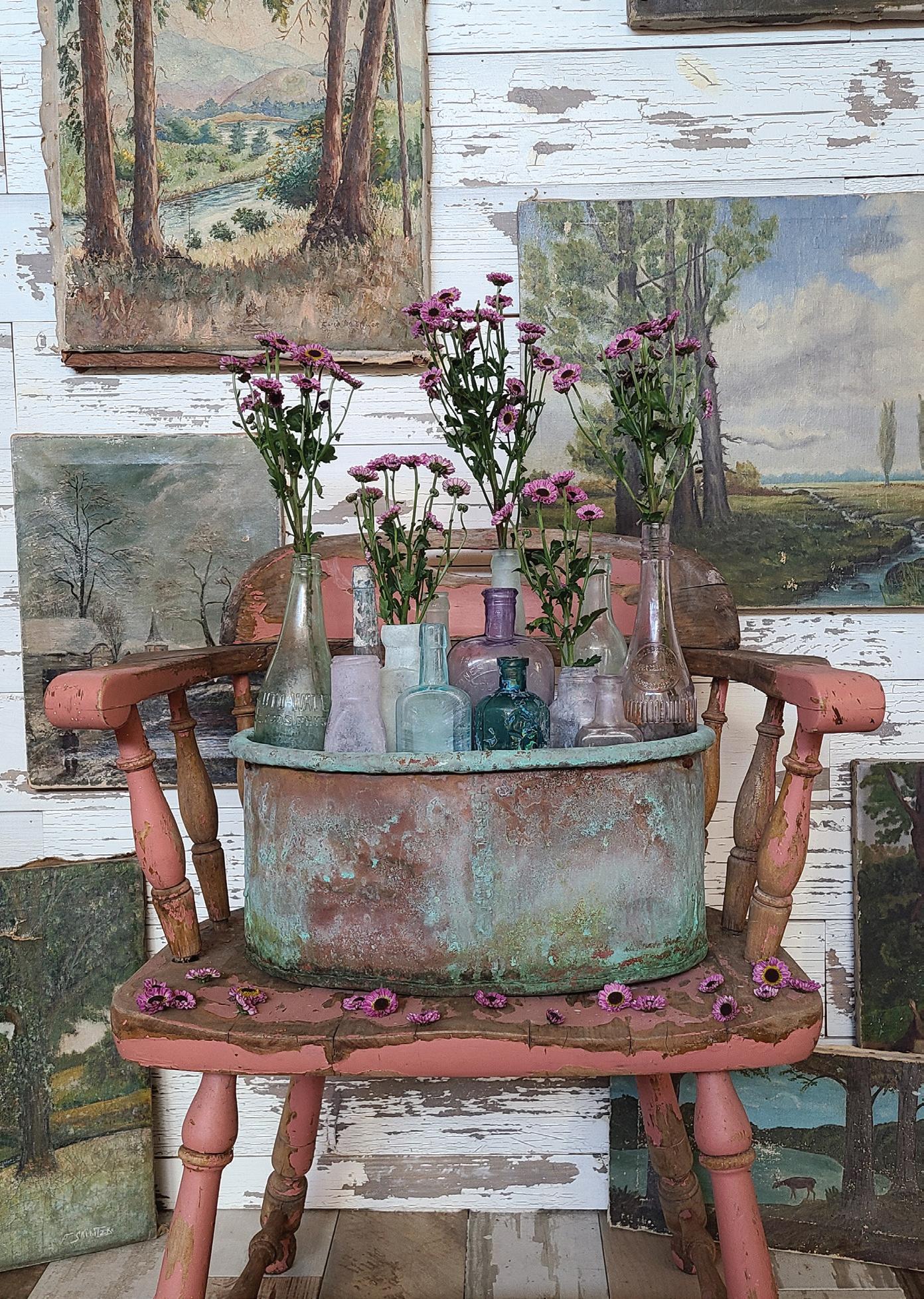
So many fellow artists live in this rural paradise, all forming the vibrant Hilltown Arts Alliance. We have been holding open studio tours for the past six years. I have really enjoyed introducing our neighbors and visitors to my workshop nestled in the hemlock, ash, pine, maple, and river birch. Some mention that it is like entering a fairyland, a big compliment for my mostly thrifted décor, and sometimes found on the side of the road furnishings! With the help of my husband (once again, he is amazing!), we turned the entrance and former closet space into a little pop-up shop just for the open studio weekends. That has been a lot of fun to set up, from the old doorway that was transformed with 18th- and 19th-century birds and nest prints from an old calendar behind garden trellis arches for displaying necklaces, other random tag sale and Facebook Marketplace finds serve as storytelling vignettes for each collection’s theme.
“Do not divert your love from visible things. But go on loving what is good, simple, and ordinary: animals and things and flowers, and keep the balance true.”
—RAINER MARIA RILKE
When feeling sad and overwhelmed, I try to use my work as a way to donate to the charities and organizations that are doing good things around the world. Jane Goodall is a huge inspiration of mine—her quote, “The greatest danger to our future is apathy,” is so important to remember. Living where I do, it is easy to see that we are all connected; every living creature around us has an important role in the ecosystem. It’s a delicate balance to try to live in this modern world while doing the least amount of harm possible. On warm, rainy days, it takes me longer to go anywhere as our driveway is dotted with tiny orange creatures that I adore—the Eastern newt in the red eft stage. We move them safely off the paths and road, and are on our way.
I will be exhibiting at the Paradise City Arts Festival close to home in Northampton, Massachusetts this October. I’m looking forward to introducing my work to a new audience there, very excited and a bit nervous!
www.parrishrelics.com
Facebook: parrishrelics
Instagram: parrish_relics
Dionne Woods
Photography by Matt Woods
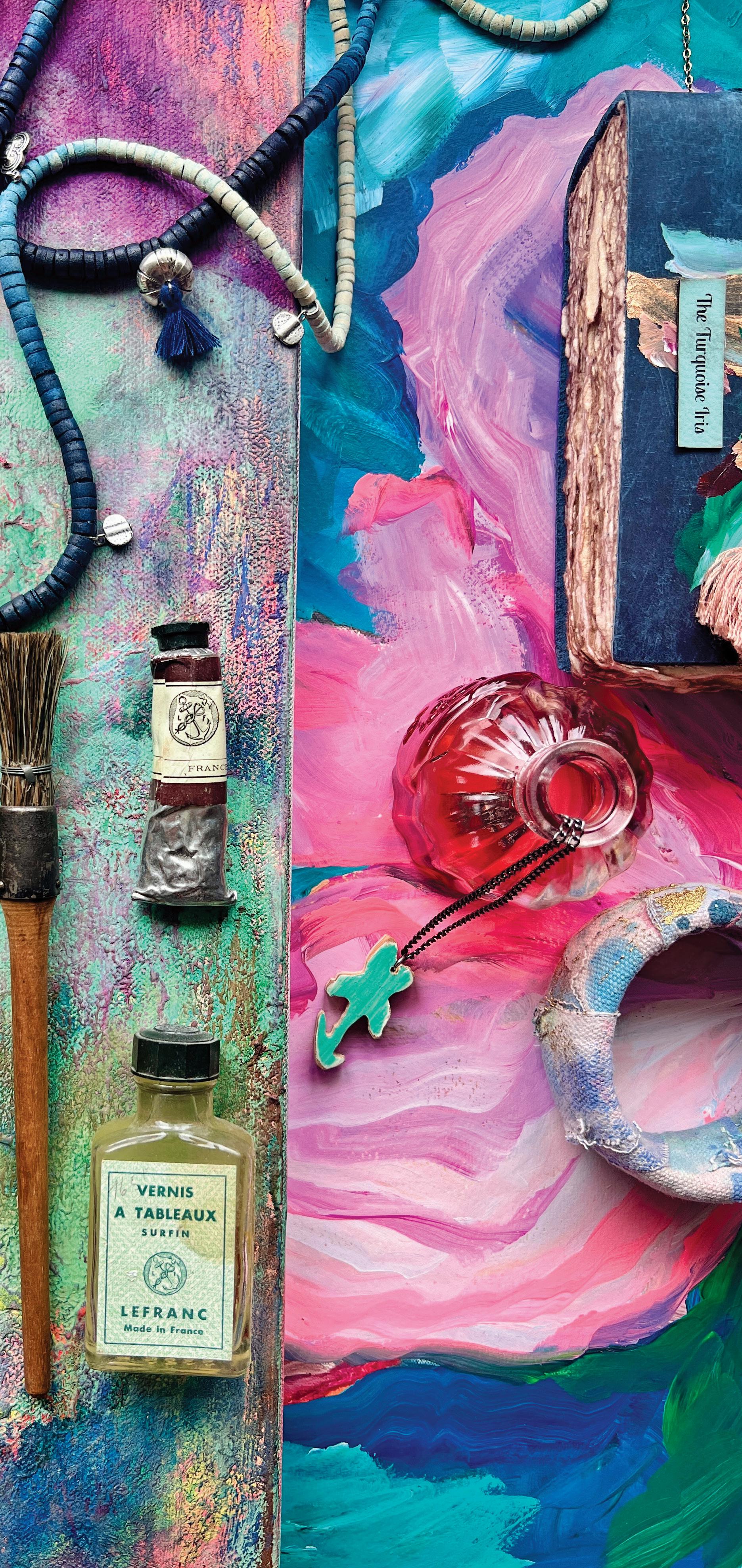
DIONNE WOODS is the founder of The Turquoise Iris and a passionate mentor to creative women. From painting in her garage to leading a global community, she empowers others in mindset, art, and business. Her studio is not only a sanctuary for bold color and storytelling, but also a space where transformation begins. Through workshops, videos, her magazine, and her memberships, Dionne helps women trust their voice, share their gifts, and grow with courage.
IF YOU WERE TO WALK INTO
my creative world, you wouldn’t just find paints and brushes—you’d find stories. Some loud, some quiet. All of them layered. My studio isn’t just where I make art; it’s where I’ve healed, dreamed, doubted, and grown into the woman I am today.
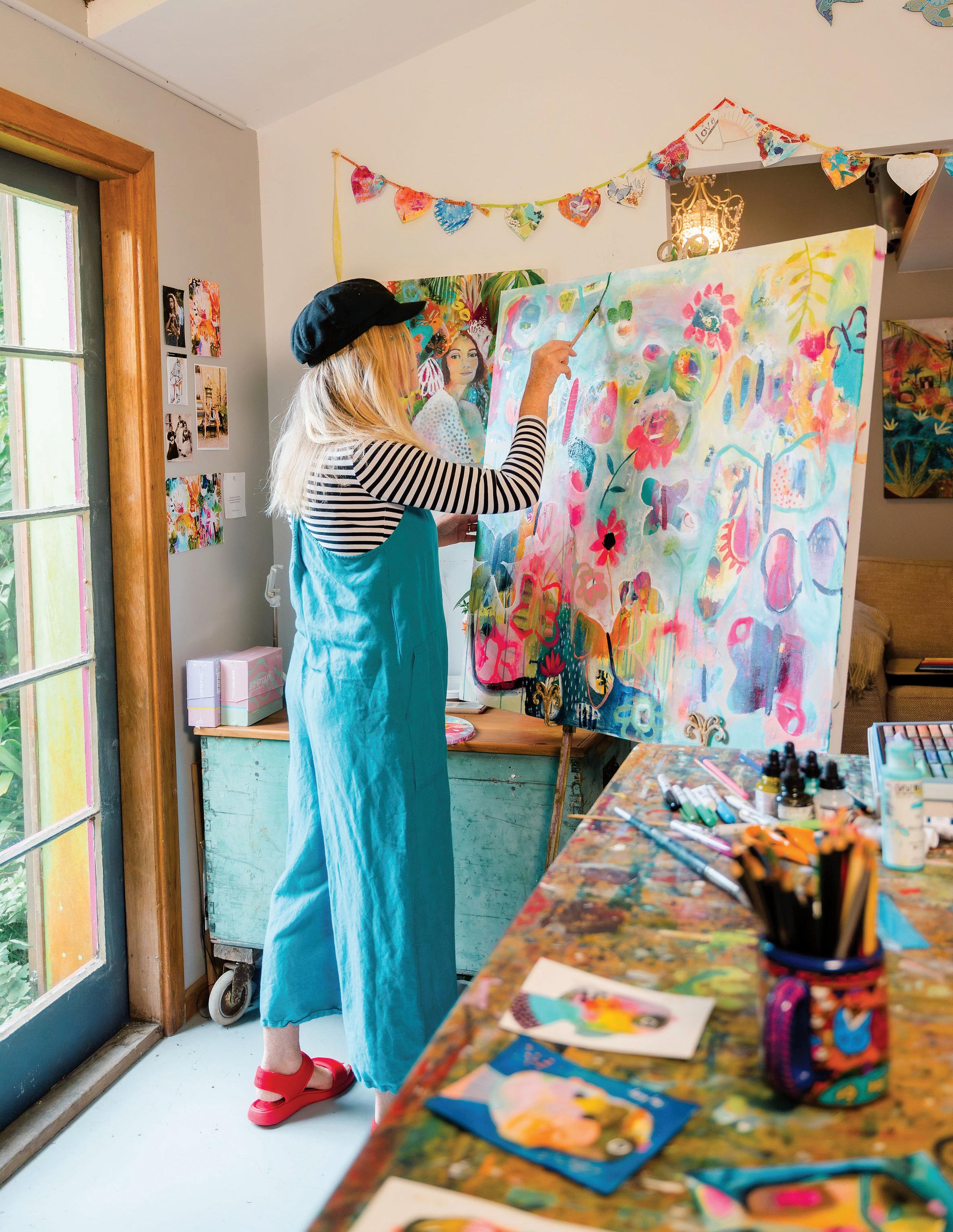
I didn’t set out to become an artist, let alone a creative business owner. I was a young mom of two boys, building my life around their schedules and their dreams. My time for painting came in quick snatches—sometimes between ball games and bedtime, often with laundry piled in the next room. I wasn’t sure where any of it was going. I just knew something inside me felt most alive when I was holding a brush.
Eventually, I turned that curiosity into something more. I started painting furniture in our garage, giving forgotten pieces new life. I called it The Turquoise Iris, never imagining those three words would someday represent a movement, a magazine, and a global community. What started as an effort to reclaim space for myself has become a full creative enterprise. But the heart of it all? It’s still the same. It’s about creating meaning—through color, through connection, through courage.
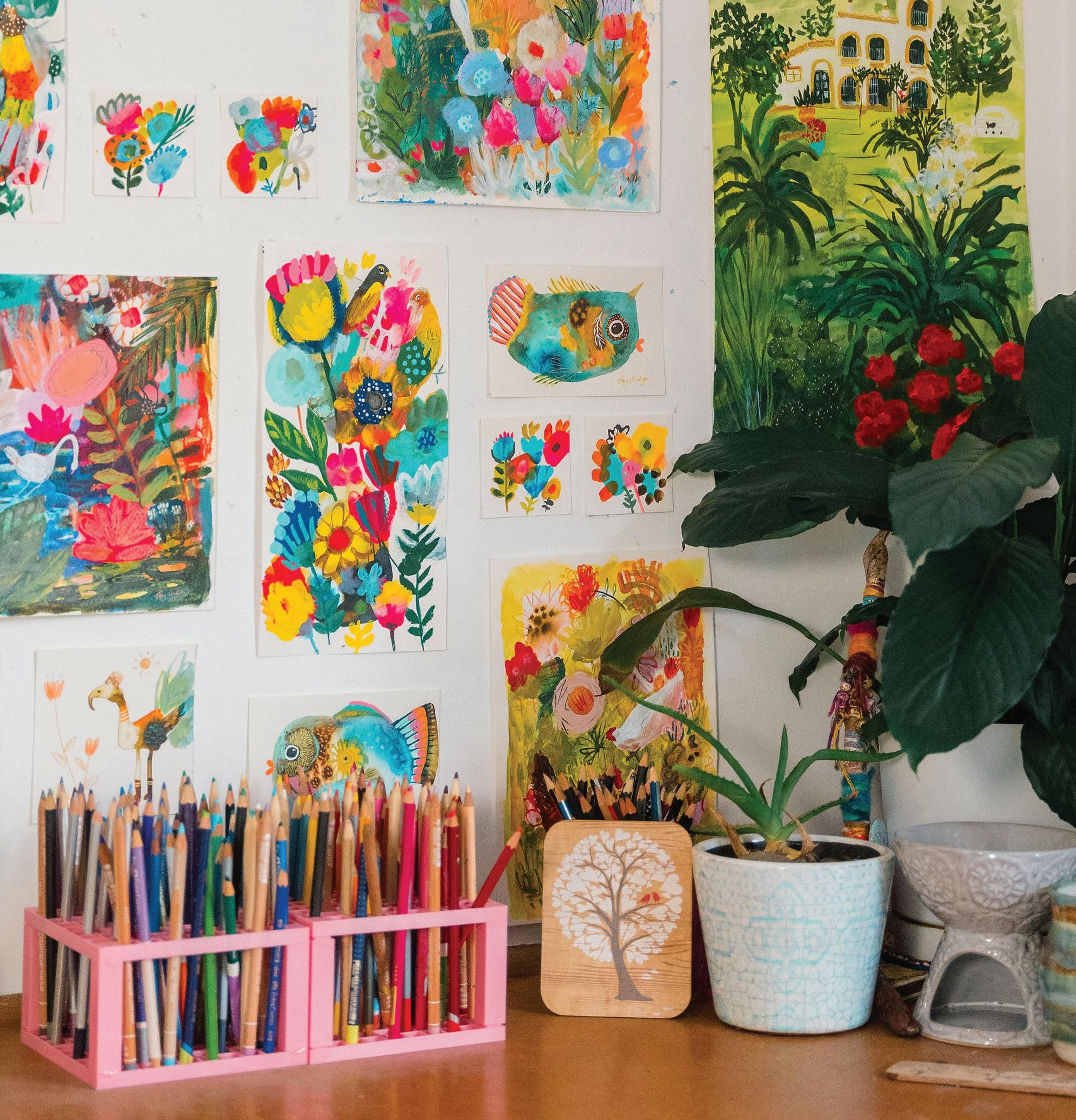
MY STUDIO TODAY IS A reflection of that evolution. It started as a single room, but creativity doesn’t like to be boxed in. Over time, I expanded into what used to be our formal living and dining rooms. Now, those spaces serve as my teaching, staging, and photography areas. I work in “stations” scattered throughout our home—an easel with rolling castors that glides in and out the back door, a watercolor nook tucked by the window, a dress painting setup basking in soft light, and a furniture painting space anchored in front of our large staging wall. On nice days, I head out to the patio barefoot, coffee in hand, and paint with the wind as my soundtrack.
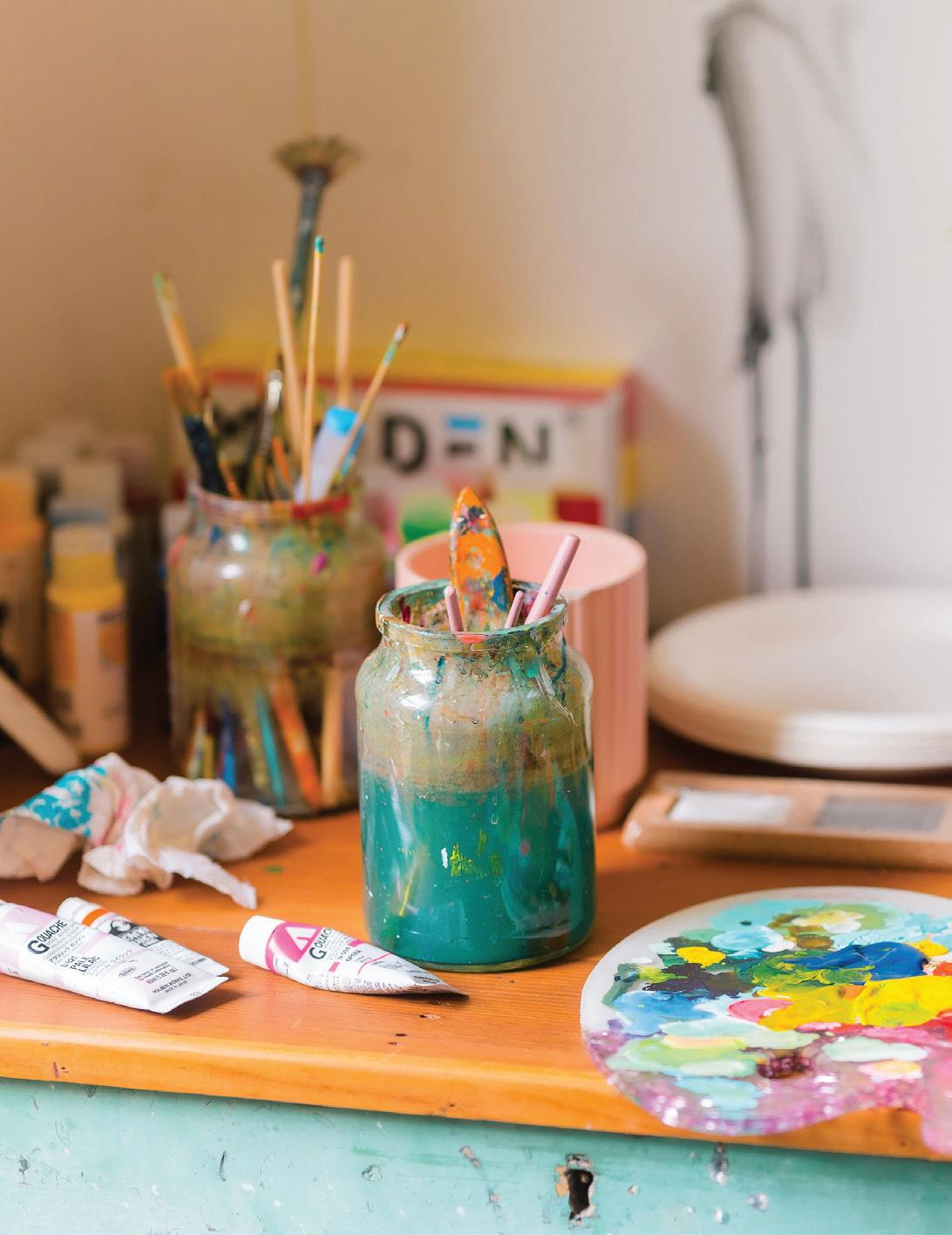
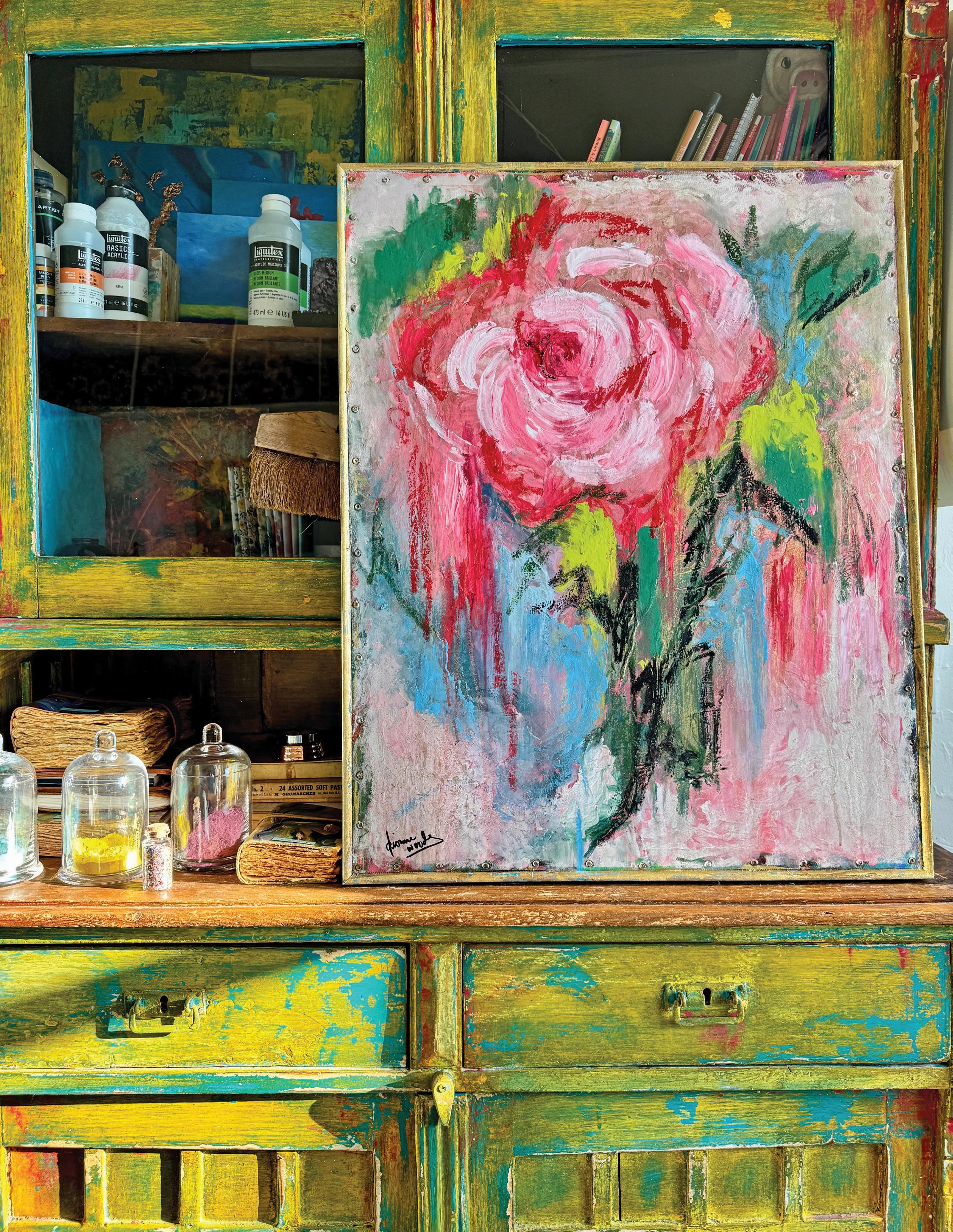
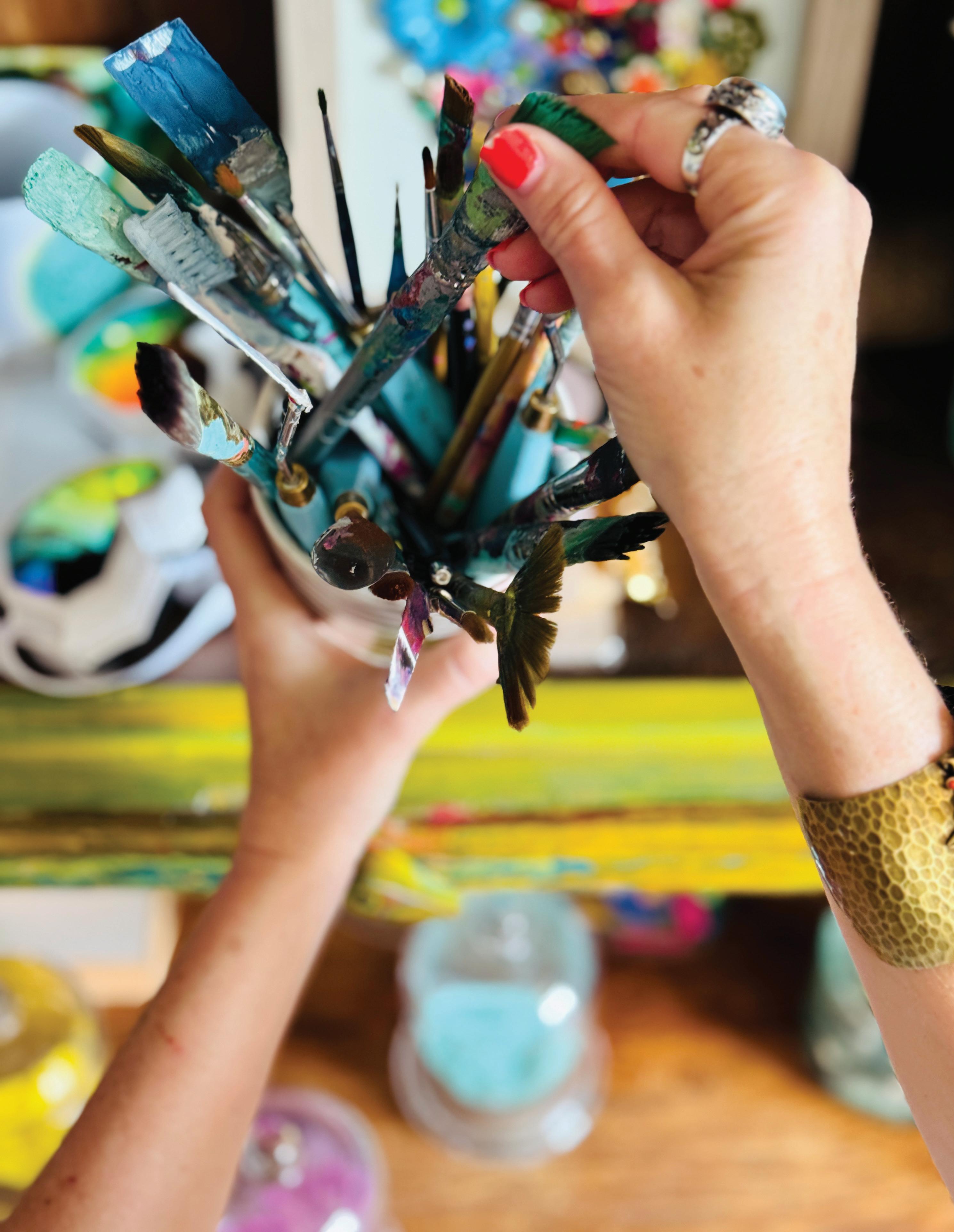
Some of my favorite pieces in the studio aren’t even “tools” in the traditional sense. I’m completely obsessed with old, half-used art supplies—rusty tins, brushes worn down
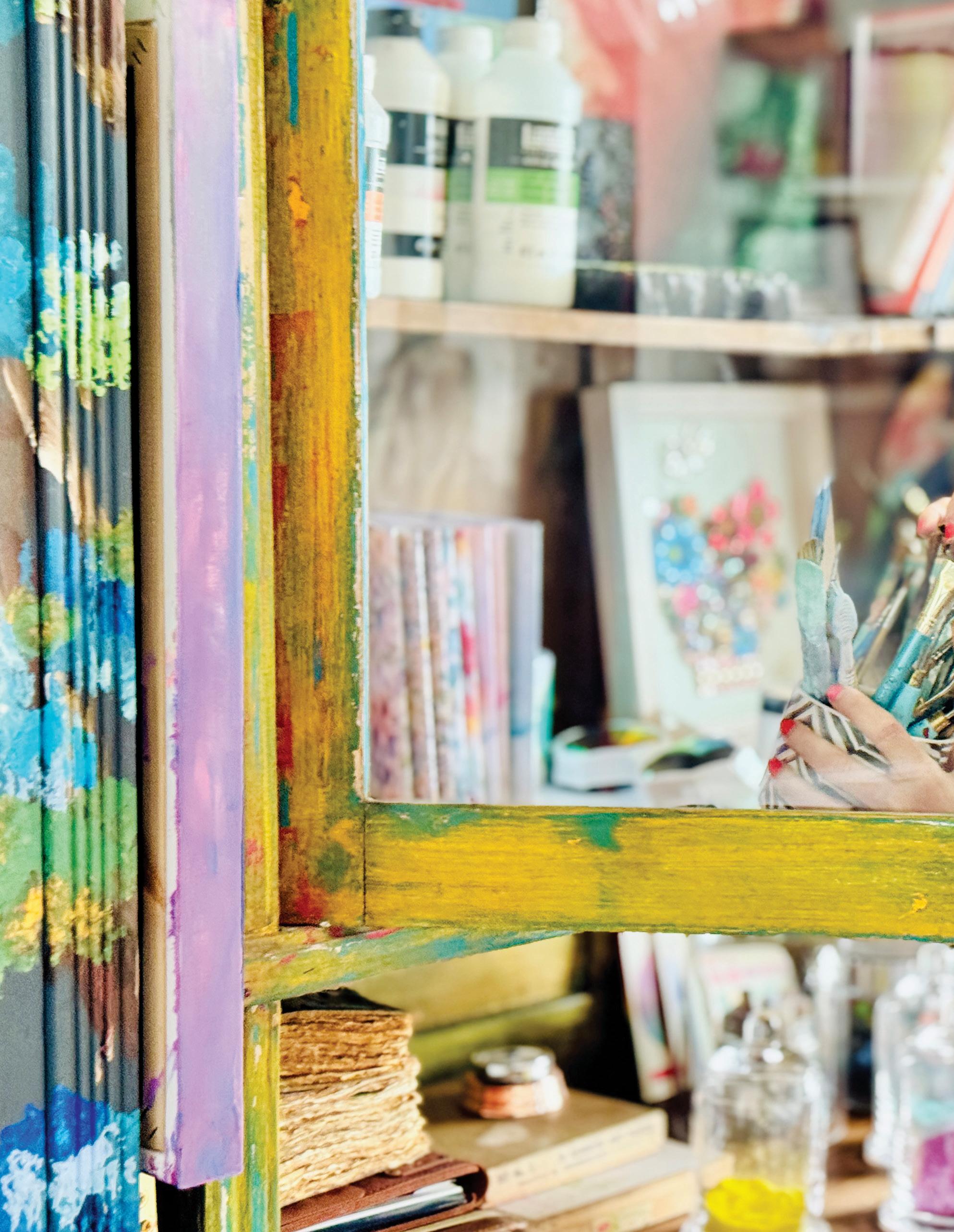
to the wood, and vintage Grumbacher pastel boxes that still carry the dust of past creativity. My oldest brushes hang on the wall like trophies, each one layered in memory. And there’s my big yellow cabinet—chipped, heavy, and full of soul—where I store paints, palettes, and a few dreams that haven’t been spoken aloud just yet.
To be honest, my husband Matt is the tidy one—he’s the MVP behind the scenes. He’s constantly adapting the space, cleaning up behind me, building solutions, and quietly making everything easier. He’s never once made me feel like I was asking too much, even as I slowly turned our home into a working art studio. Our boys have learned to step over paint buckets and pay no mind when the walls are suddenly a different color. The house evolves as often as I do. No one blinks anymore.
WHAT CHANGED EVERYTHING for me, though, was the moment I turned on my camera.
I began painting live on Facebook years ago— before it was trendy, before it was polished, and definitely before I felt “ready.” It was terrifying at first. But over time, I discovered that video wasn’t just a tool for marketing. It became part of my art. My brush moved while my heart spoke. The live interaction brought connection into a job that had once felt lonely and isolating. What started as a solitary experience bloomed into a lively exchange of stories, encouragement, and creativity in real time. Social media became my studio audience— and my soul needed it more than I realized.
“Don’t wait to believe in yourself until it makes sense to.”
—JAMIE KERN LIMA
That quote lives in me. I didn’t have all the answers when I started The Turquoise Iris. I still don’t. But I believed enough to begin—and that has made all the difference.
TODAY, I CONTINUE SHARING MY work through videos, workshops, and online courses, but also through my podcast, The Motivatarian Exchange, and my seasonal magazine, The Turquoise Iris Journal. Through both, I collect stories that stir my spirit and remind me why I started: to create with purpose, to connect through vulnerability, and to lead with heart.
My art has become more than just a finished canvas—it’s a vehicle for deeper creative connection. (Yes, that’s a little play on words for my membership group, The Creative Connection—where we turn curiosity into courage and creativity into community.)
We lost our beloved Doberman, Abbie, not long ago. She was always curled up at my feet while I painted, a quiet and steady presence. There’s a stillness now where she used to be, but her spirit lingers in every corner. She was a part of my journey, too.
And yes, I’ve had doubts. I’ve questioned my worth. I’ve wrestled with impostor syndrome and the fear of being misunderstood—or worse, unseen. But what scares me most isn’t failure—it’s ignoring the gift I’ve been given. It’s staying small when I know I was made to share. Every time I step into my studio, I remind myself: We are allowed to take up space.
MY DREAM NOW? TO KEEP
building this legacy, not just of color, but of courage; to license my watercolor patterns into textiles and wallpaper; to mentor women who are learning to trust their voice; to let this messy, magical path lead me into new rooms and new roles, all while creating from the heart.
To the woman painting in the corner of her kitchen or stitching fabric beside a crib, your space is worthy. It doesn’t have to be big. It just has to be yours. Let it be imperfect. Let it stretch. Let it speak.
Because where we create isn’t just a place—it’s who we are becoming.
www.theturquoiseiris.com
Facebook: theturquoiseiris
Instagram: theturquoiseiris
YouTube: theturquoiseiris
Pinterest: theturquoiseiris Scan
The Language of Flowers
3 Artists Inspired by Botanicals
PHOTOS: Tia Borgsmidt / House of Pictures
COPY: Bente Halkjær / House of Pictures
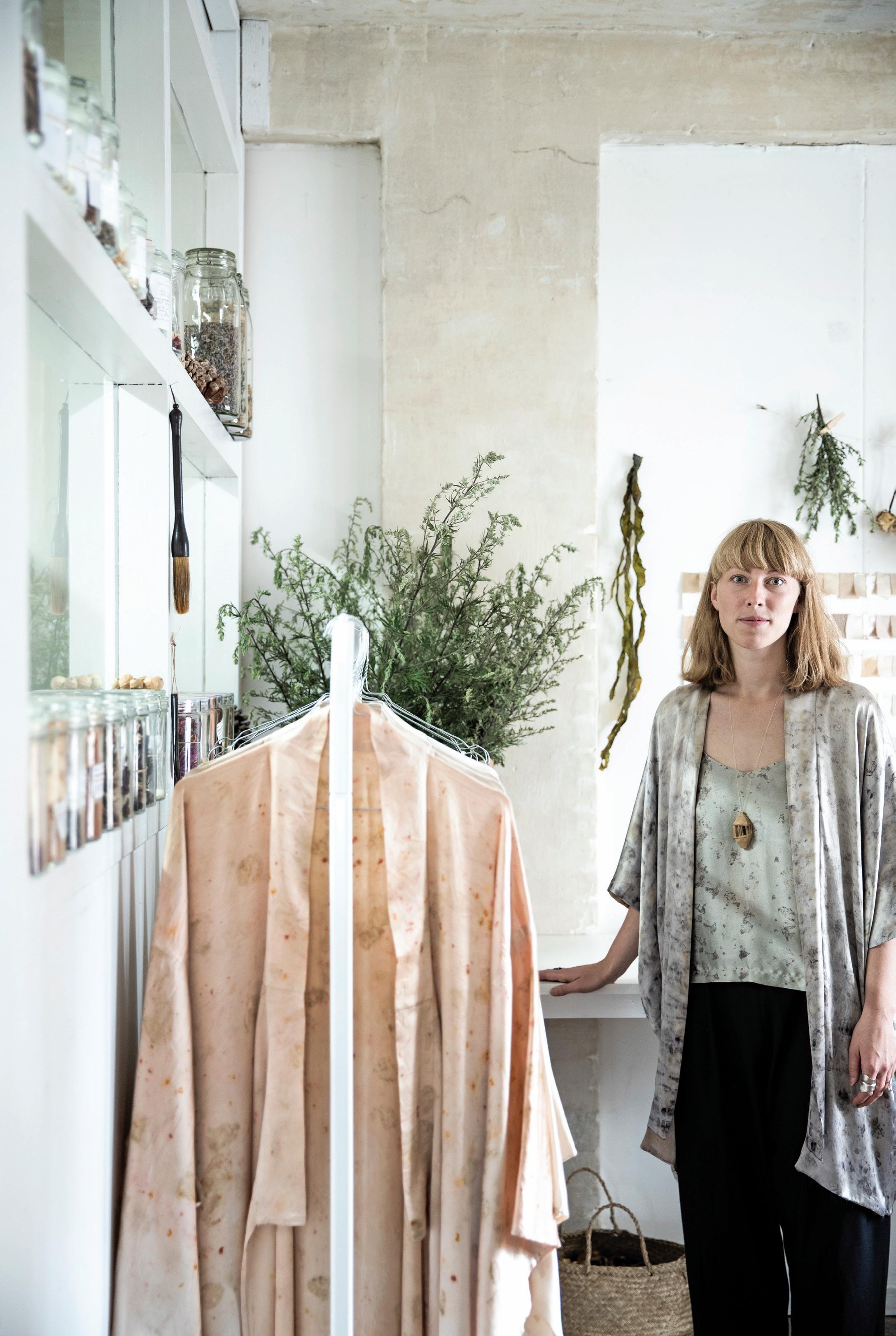
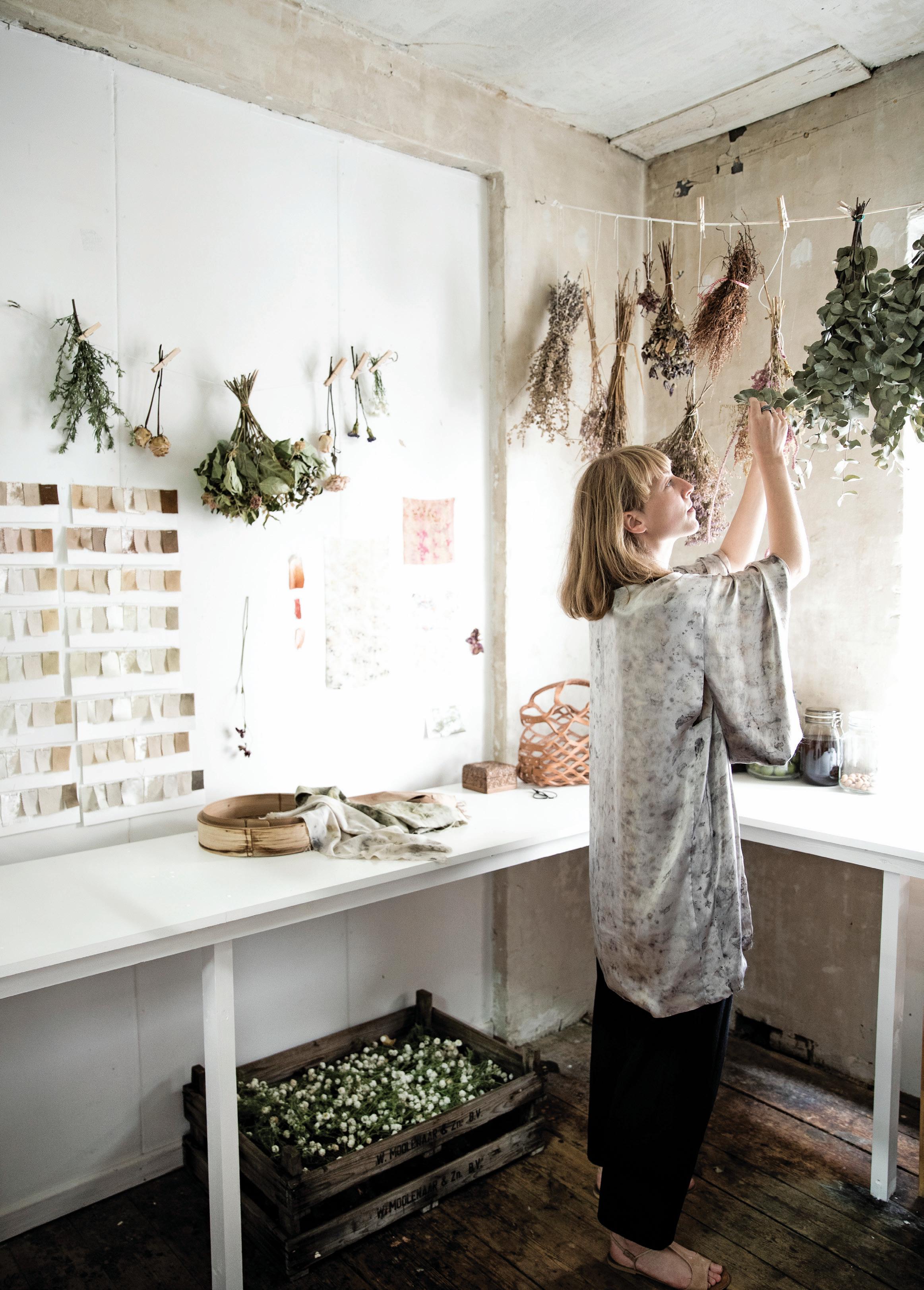
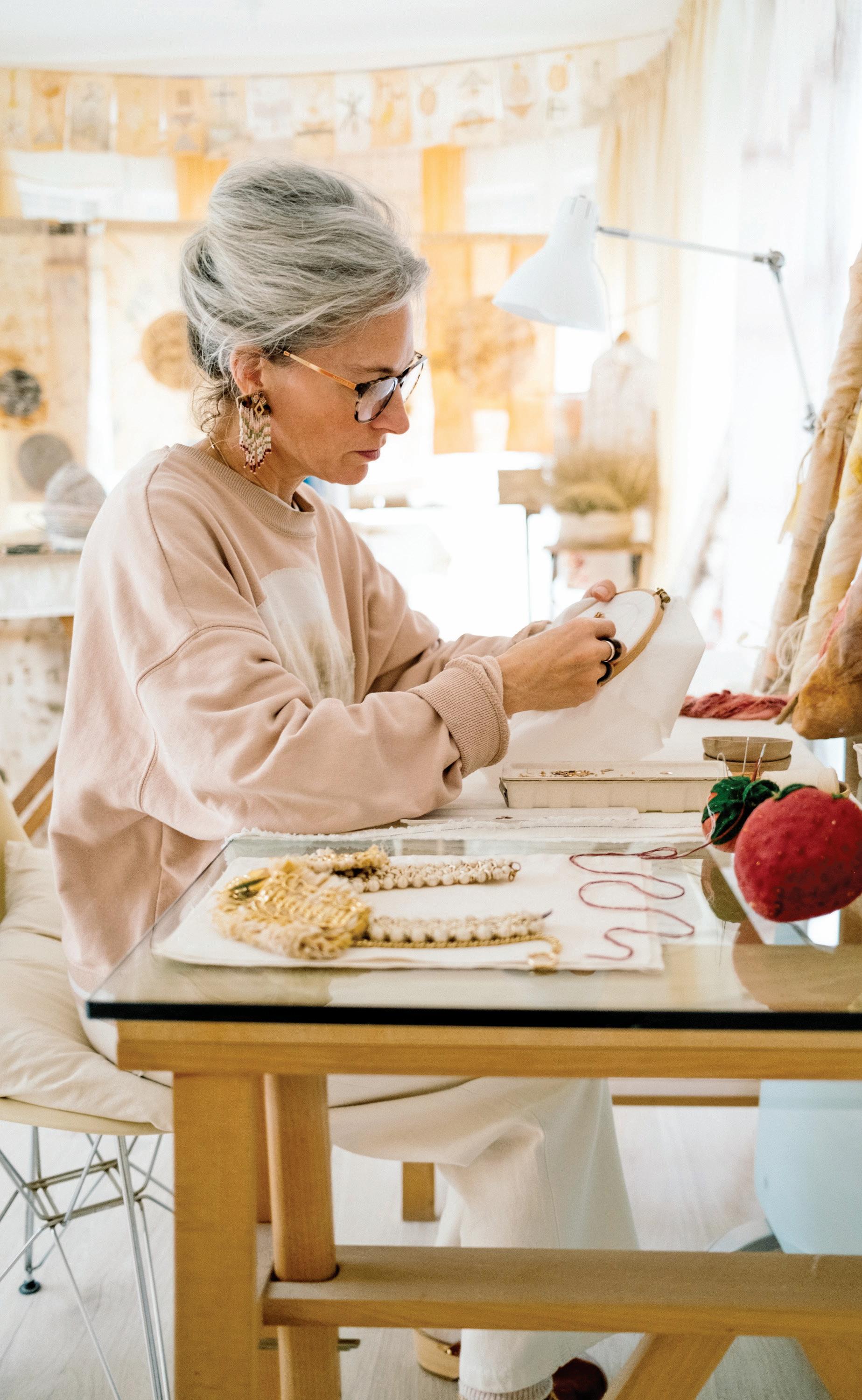
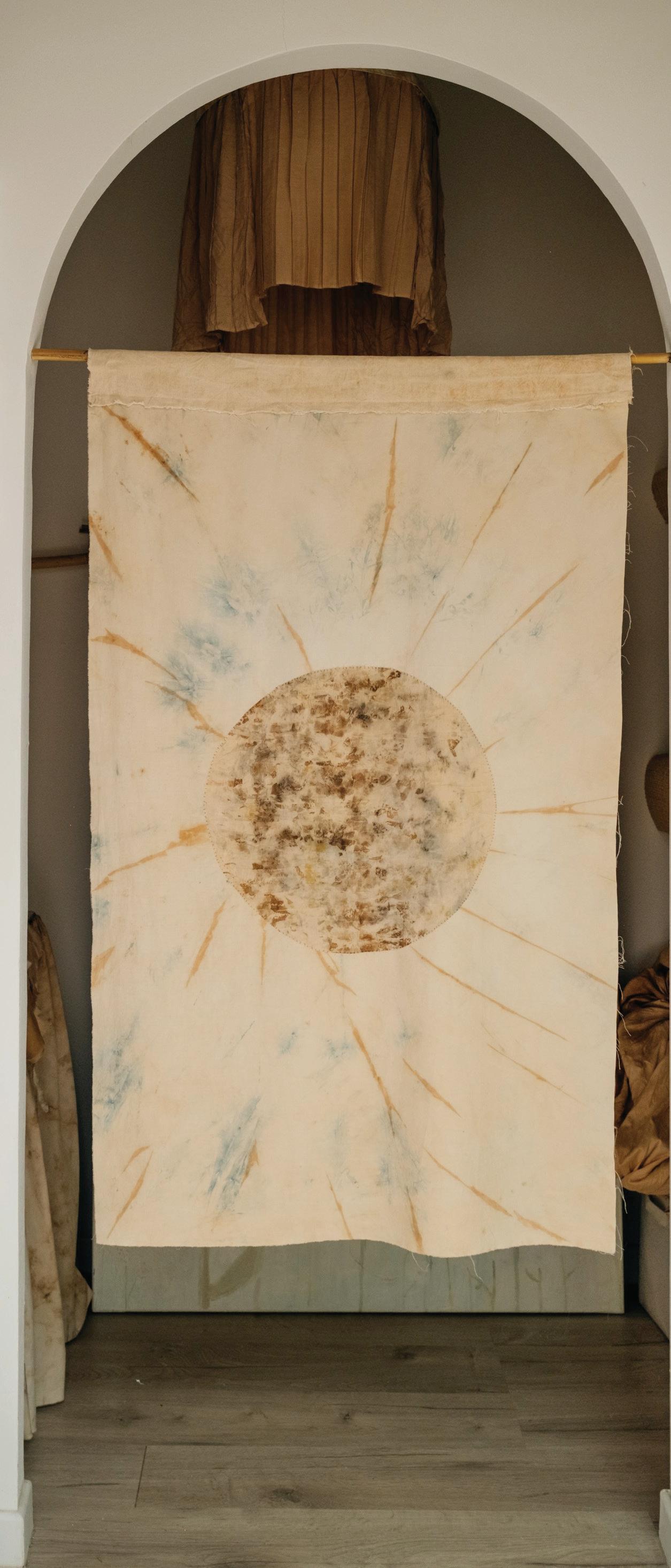
Step into the studios of three remarkable women, all drawing inspiration from the world of flora, but with distinctly different artistic expressions. ANE captures their essence through drawings and paintings, ELINE stitches intricate pieces from flowery vintage fabrics, and MAJA transforms textiles with plant-based dyes.
Ane Kirstine Bilde
Illustrator, artist, and freelance designer ANE KIRSTINE BILDE conjures up one pretty paper floral motif after another. The designs are lifelike, but with a beautiful, poetic touch. Here, dusty tones dominate in a sea of color. From her studio in the Danish countryside, Ane’s artistic work is inspired by the flora and fauna around her. It is from the forest, by the sea, and in her garden she finds the innovation and the calmness to express her imagination.
No matter if I am designing a surface pattern, drawing illustrations for packaging, or creating more artistic work, nature will always play a part. I never intended to become an artist; instead, I studied Nordic and humanistic design. However, unemployment was high when I graduated, so my priority was caring for my children. I grew up in a creative family, where my grandparents and mother all drew and painted. I’ve been drawing and painting since I was a child, as well as making and decorating playhouses out of cardboard boxes, so it was a natural step to get involved in more creative pursuits when the opportunity arose.
The products of these pursuits didn’t just end up on shelves and in desk drawers, as I was commissioned by the local library to create scenographic display furniture. I also sent dolls and drawings, as well as other pretty items for the children’s room, to the lifestyle company Rice, which soon led to drawing commissions. That was the start of creativity becoming my livelihood. Today, I work as a freelancer, both doing commissions for clients and creating artwork.
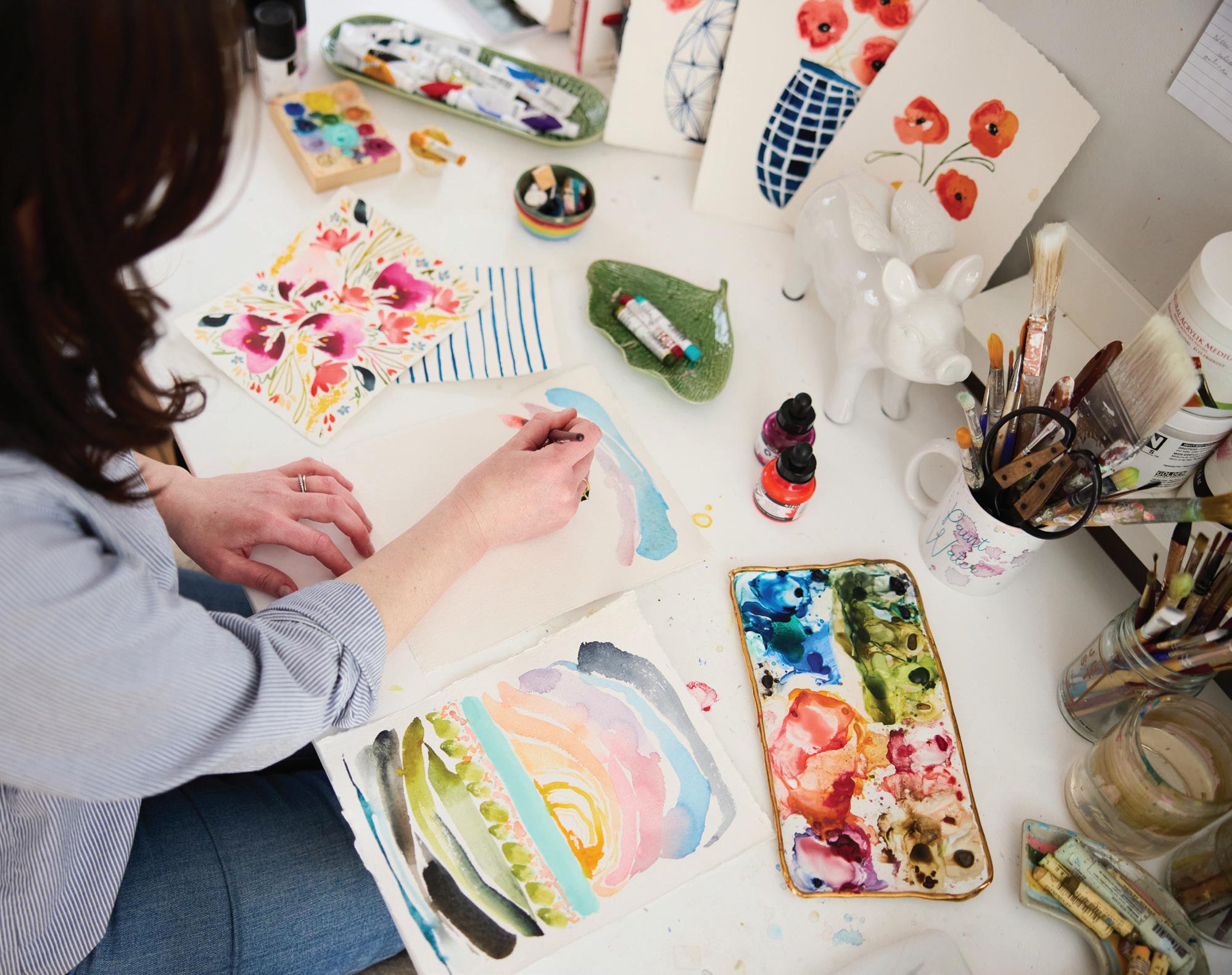
Creativity means a lot to me and is a big part of my life. I hand-draw everything with crayons, markers, and watercolors, and I like to mix things up, for example, using watercolors or crayons on top of markers. I just can’t live without a creative outlet, and won’t even go on holiday or to the beach without a drawing pad or some kind of needlework. I express myself creatively with brushes and pencils, but I also knit, embroider, and sew patchwork without patterns.
The LANGUAGE of FLOWERS
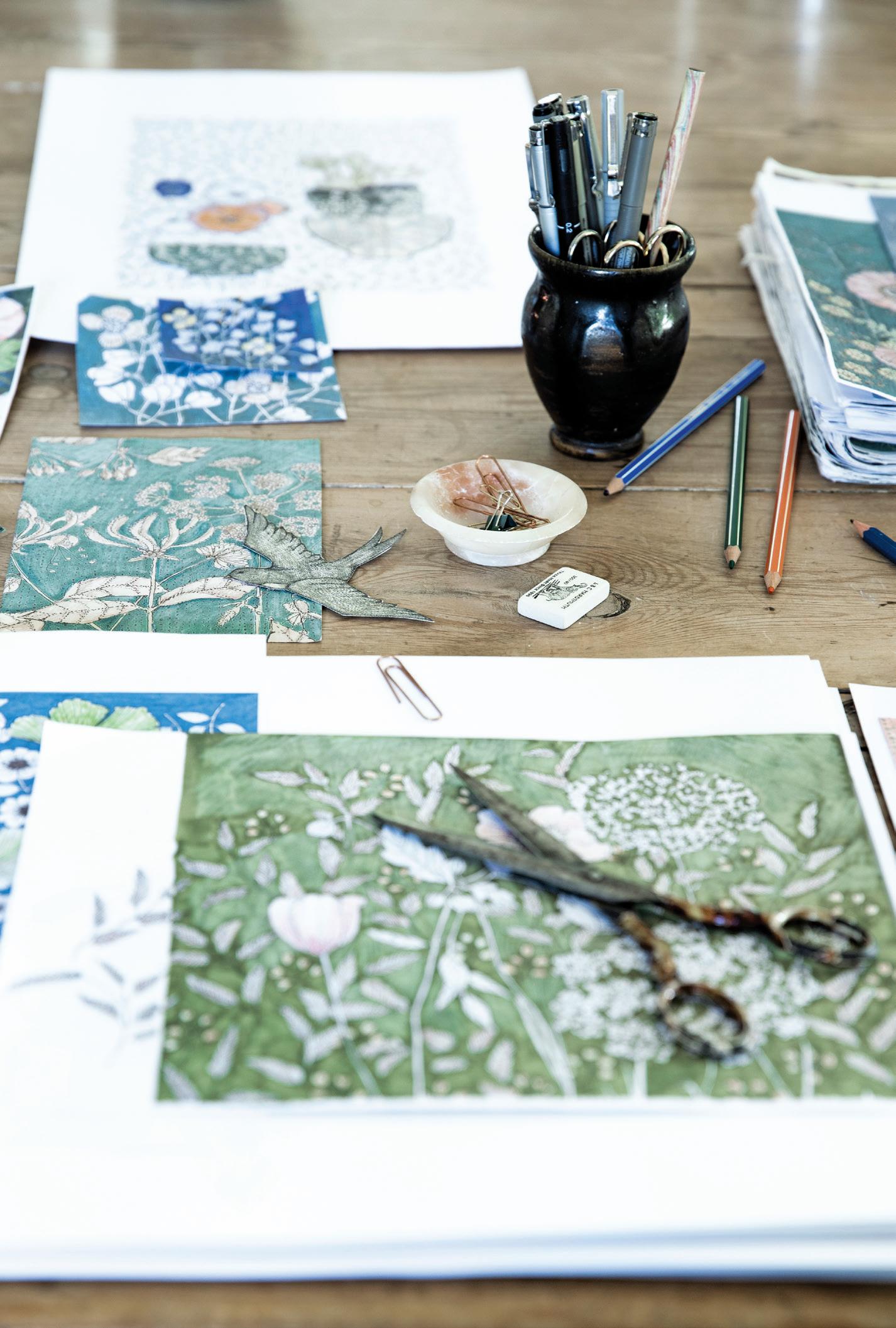
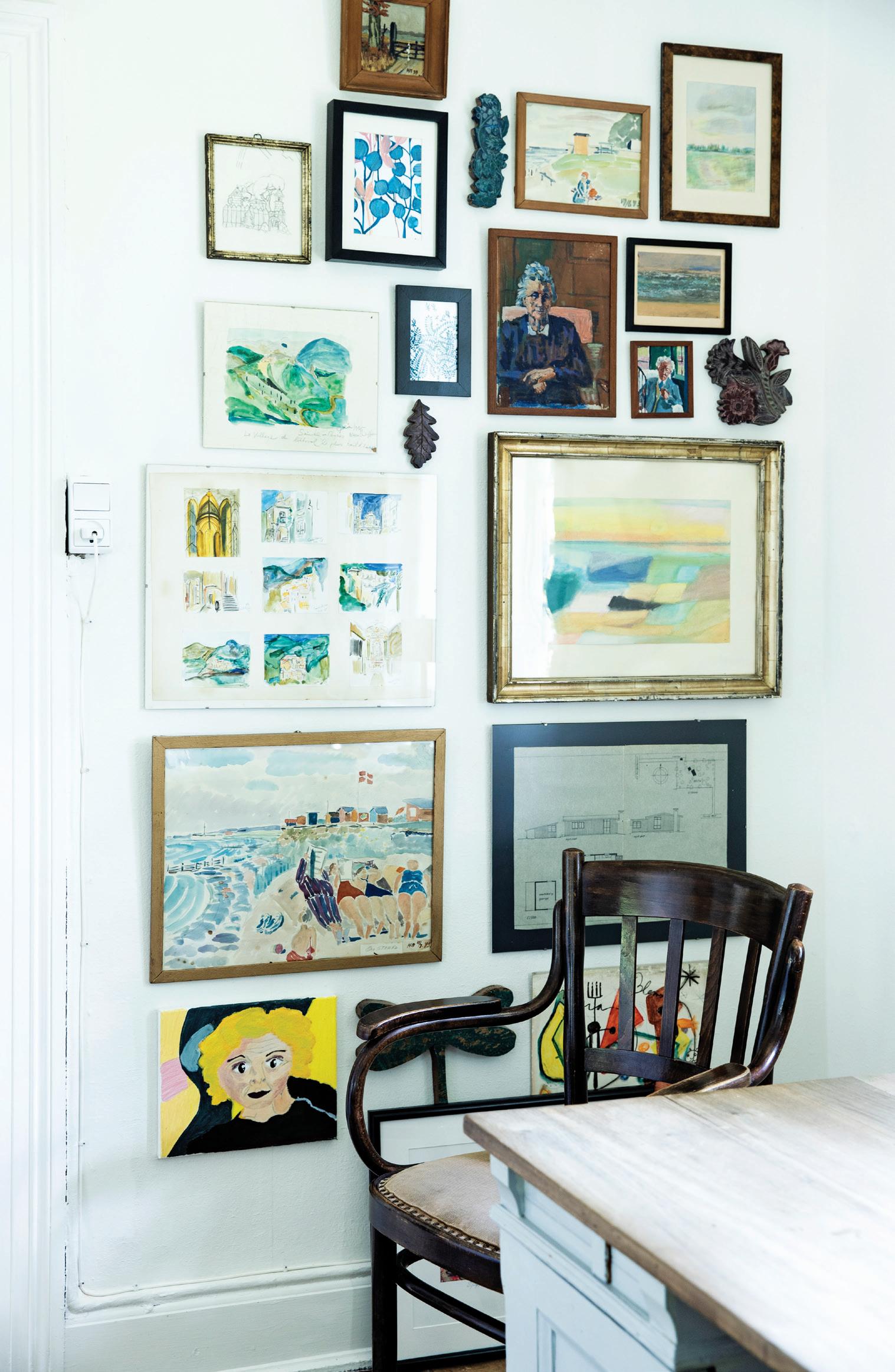
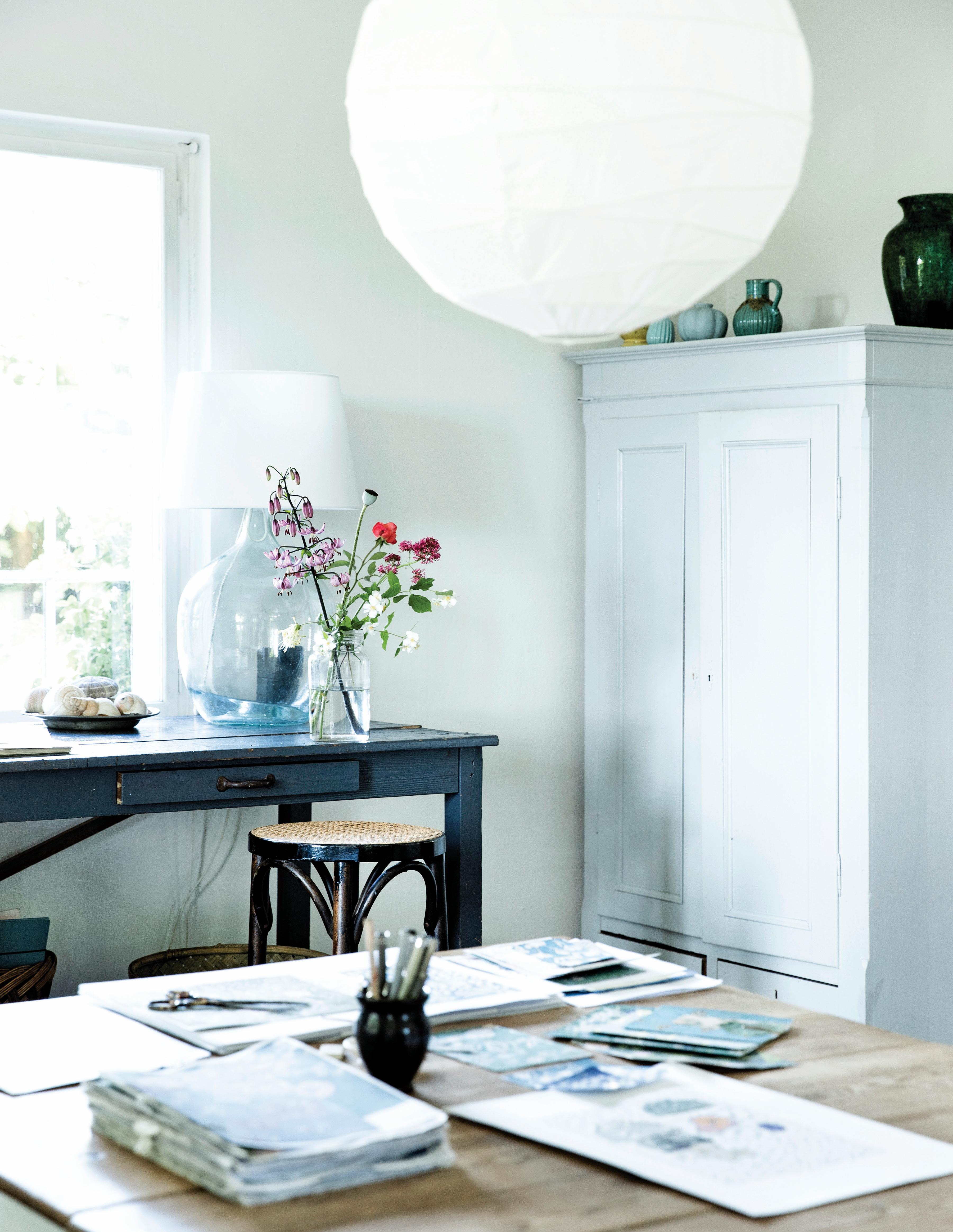
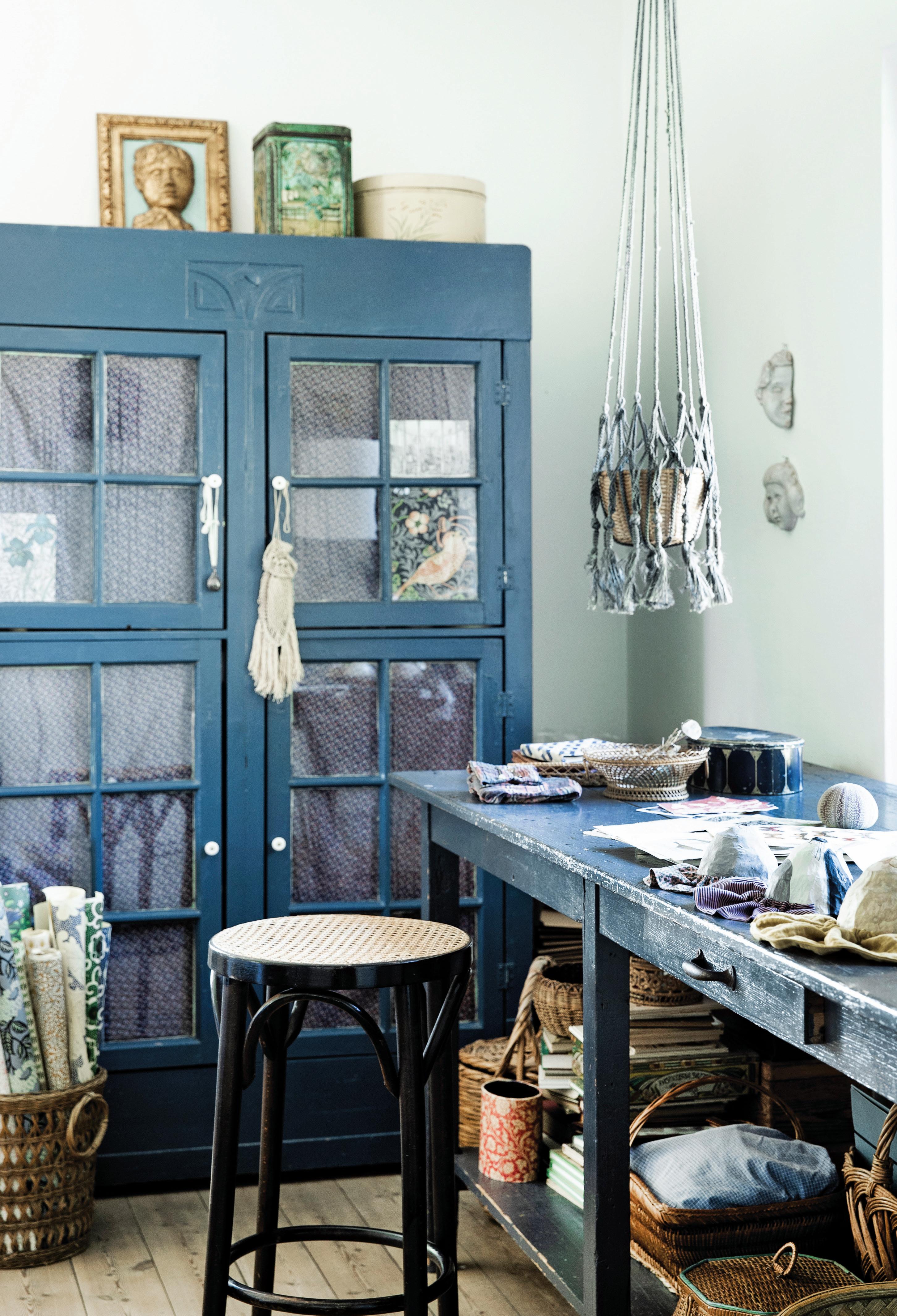
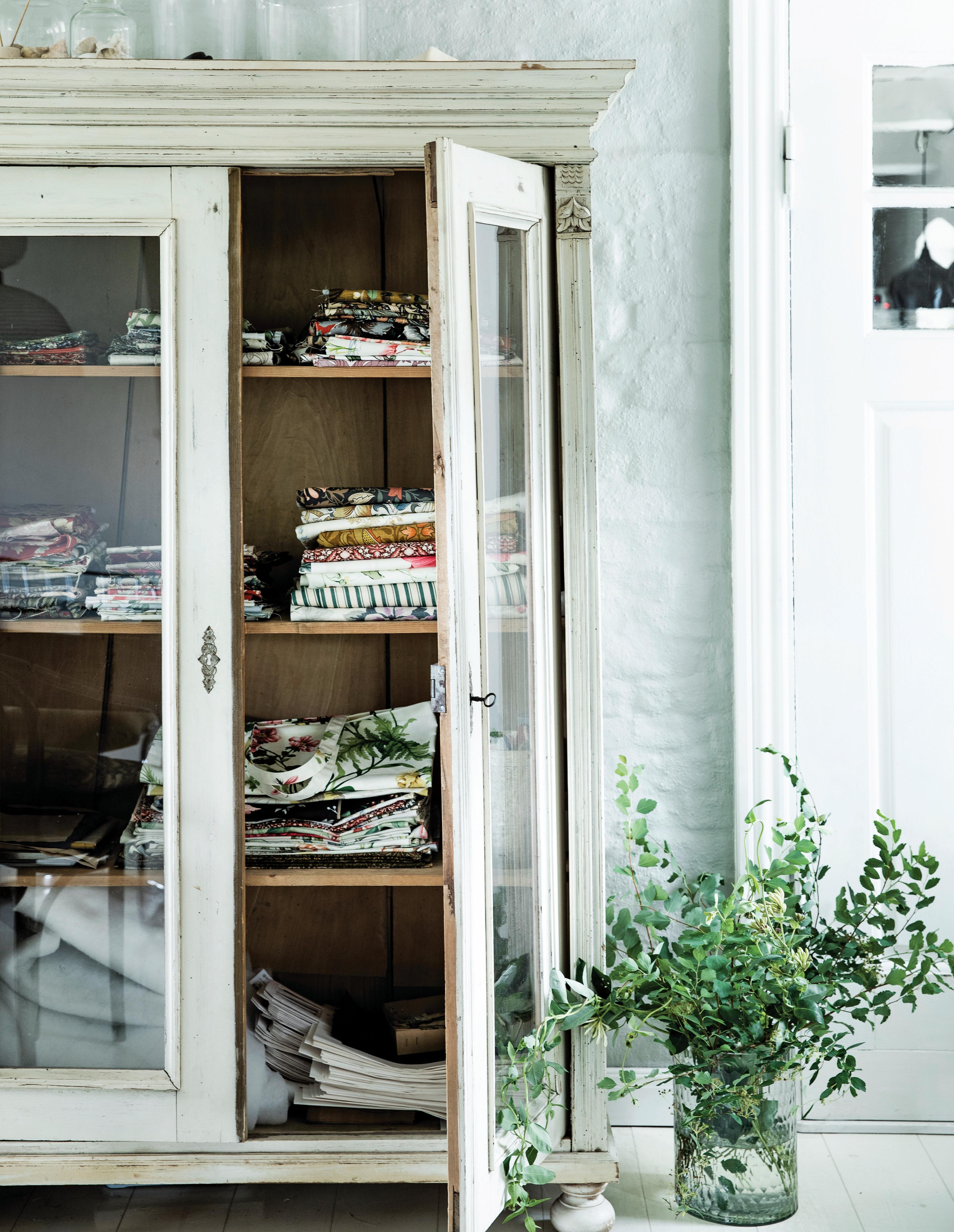
My workroom is large and bright with various tables for me to move around–all filled with pretty items that bring peace and joy, as well as help spark inspiration.
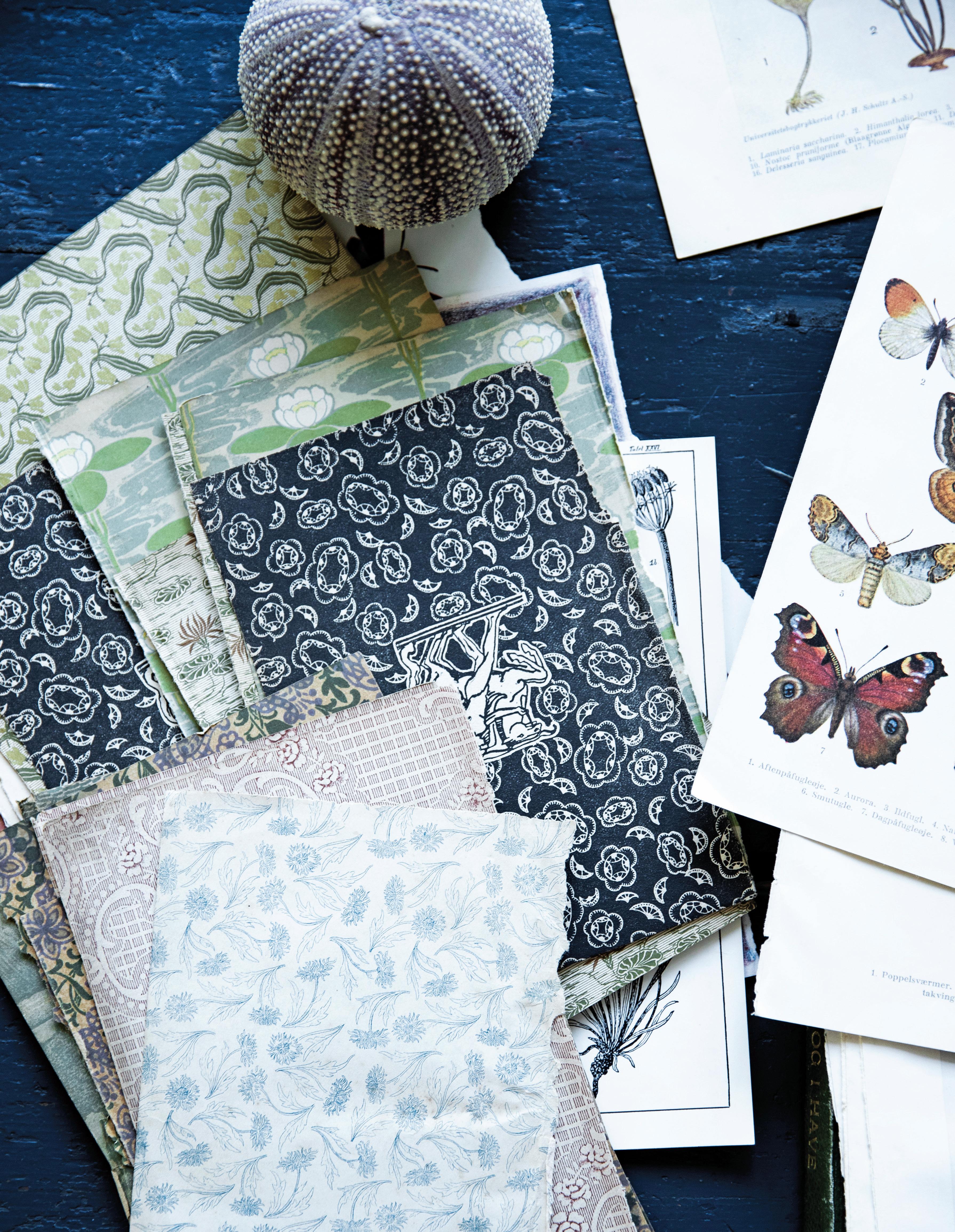
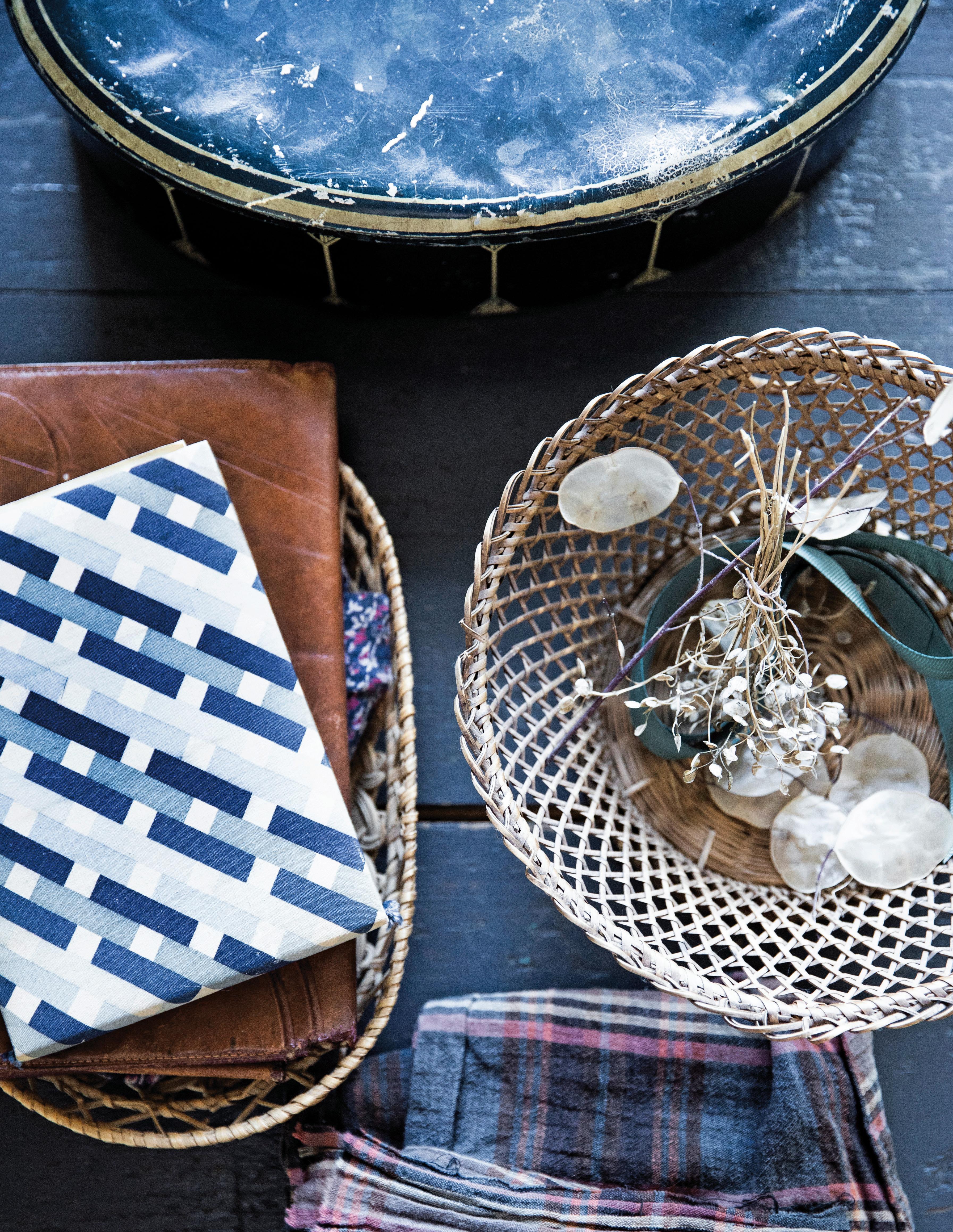
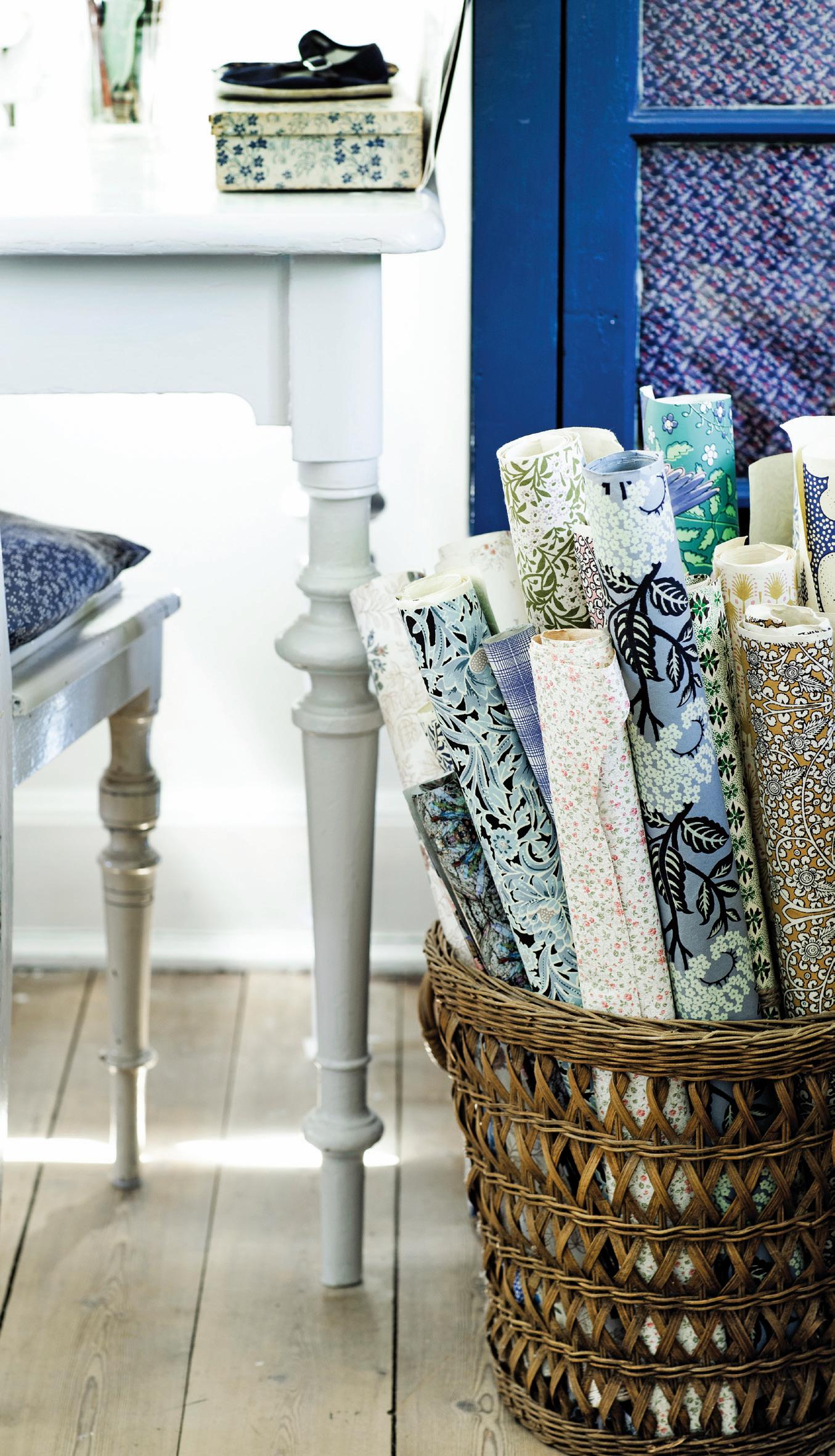
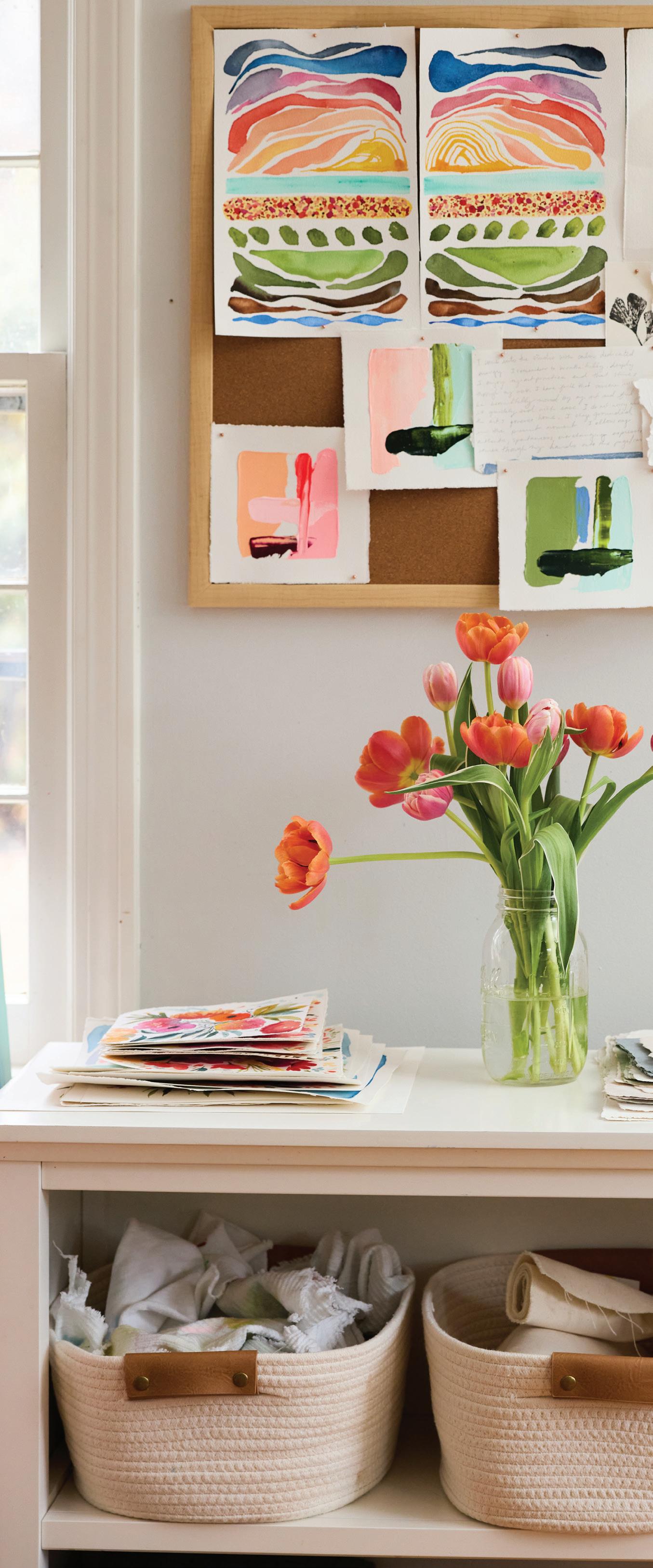
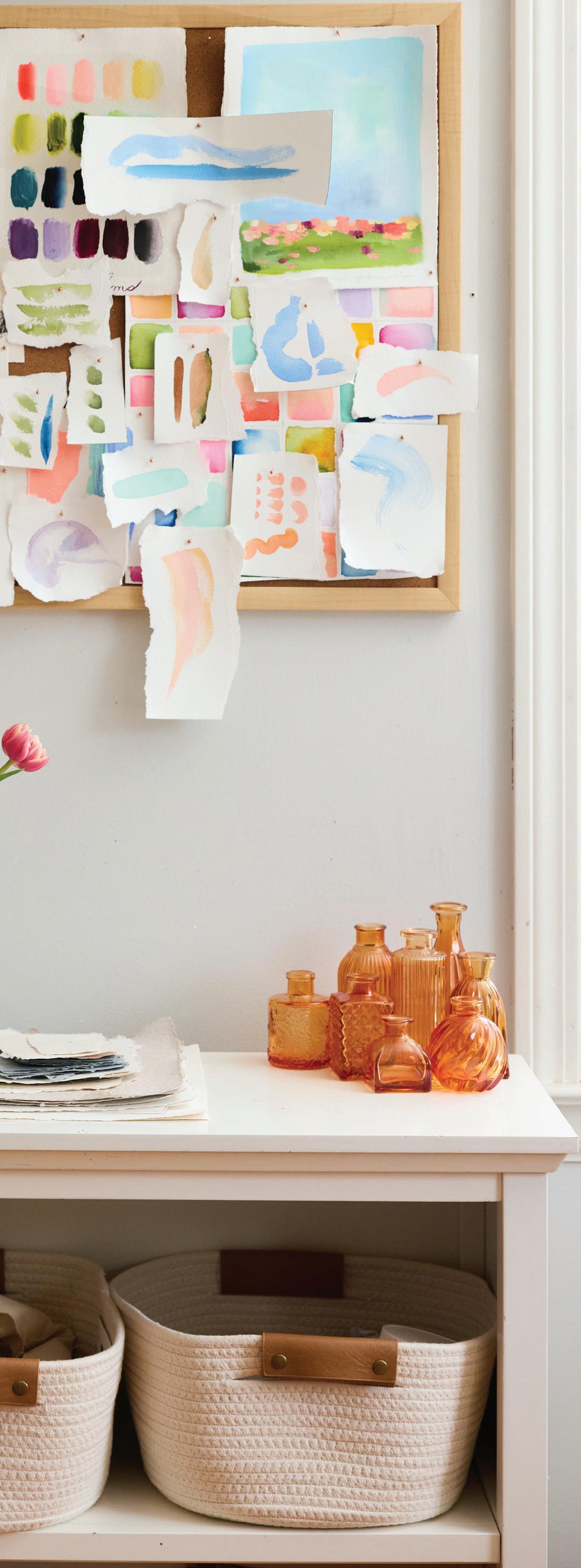
My baskets are filled with the most beautiful rolls of paper, some of which are my own work and others I’ve bought. I also like to visit flea markets to find beautiful items that ignite new ideas.
I’ve discovered old books often have a page with pretty patterns just behind the cover, and many books about animals and plants are filled with lovely illustrations.
Everything from colorful fabrics, old spoons, and graceful seedlings in baskets can inspire new patterns. Even a beautiful and simple bouquet of flowers from the garden can birth delightful illustrations. I’ll wander endlessly through our lovely country garden with a basket in hand to collect plants for my work. But I also love to sit at the white table by the studio window, from where I can see the surrounding nature unfold. I absolutely love being surrounded by details.
I like being surrounded by Mother Earth’s creations—there are small treasures everywhere.
If you, too, dream of awakening or boosting your creative side, my best advice is just to try—and keep trying. Don’t get dispirited if you don’t like what you’ve made, because every bit of practice is worthwhile. More on Ane Kirstine
www.anekirstinebilde.bigcartel.com
Instagram: anekirstine.bilde
Eline Engen
ELINE ENGEN, nestled with her family in a 200-yearold house on Denmark’s North coast of Funen, is celebrated for her handmade cushions and handbags. Her warm, inviting studio overflows with textiles, plants, and cherished finds—a true reflection of her passion for vintage items, soft colors, and beautiful patterns. She’s known for her unique business of repurposing vintage and remnant fabrics into beautiful, one-of-akind pieces, all meticulously crafted by hand.
Iwas taught to sew by my mother, who was a seamstress and part of an artists’ collective for which she made clothes.
Though I also took up sewing at a very young age, it didn’t really appeal to me, and I pursued a Spanish degree instead.
After graduation, I started an interior products web shop with my brother. When the company closed, I realized I needed to find a creative outlet and took up gardening, while the sewing machine also made a reappearance due to my ongoing fascination with patterns and colors.
Being creative is an important part of my life. Nowadays, I work in an interior design shop and sew items in my cozy studio corner. I love beautiful old fabrics from William Morris and Sanderson, and I’m always on the lookout for gorgeous materials. The fabrics don’t have to be unused by any means, as I prefer materials that carry a story and enjoy giving vintage fabrics, for example, old curtains, a new lease on life.
Due to my preference for old textiles, I’m dependent on what I can find, so I always have an antenna out… creativity never sleeps. I love using old textiles in new ways, for instance by sewing cushions that fit seamlessly into more modern interiors. Charming old fabrics with history become wonderful cushions and conversation pieces. My net bags, made of recycled fabric, can be used again and again–it’s the most practical and stylish alternative to a plastic bag.
I enjoy keeping up with the latest trends and find inspiration in magazines and on Instagram. But nature is also an inexhaustible source of influence. My lovely flower garden borders large fields, so a walk here feels both cozy and inspiring. It’s these charming rural surroundings with lots of gorgeous flowers that fuel my creativity. In my studio, my notice board is covered with beautiful fabrics in delicate floral motifs and pretty pictures in lovely colors. It’s another muse for motivation and stimulus.
Beautiful surroundings are key to my inspiration, so I’ve created a little oasis with fabrics and my sewing machine within easy reach. This once small study corner is now a creative sanctuary.
www.elineengen.com Instagram:
Maja Lund Hvidtfeldt
Based in Copenhagen, Denmark, MAJA LUND is an artist, designer, and ethnologist. She primarily works with textiles, focusing on natural dyes and fibers, and finds inspiration in landscapes, biodiversity, and cultural history. Maja’s unique practice blends art, craft, and academia as she researches the intricate relationship between materials, crafts, and textile cultures by studying and engaging with these elements in various contexts.
Ihave always drawn and painted, as well as had a keen interest in colors and nature. When I felt I needed more artistry and creativity in my working life, I decided to throw myself into a degree in textile design and craft, despite already having a bachelor’s in musicology. My interest in plant-based dyes was sparked when I realized that the prospect of working with the synthetic and polluting dyes that are industry-standard simply didn’t appeal. Instead, I saw a need to think in terms of sustainable and local alternatives, and started reading about natural dyes from around the world.
During my studies, I decided to start my own business, Københavns Plantefarveri, developing my own products and dyeing textiles for other designers. It’s all about breaking new ground in an aesthetically appealing way, and working to create something that is both sustainable and healthier to work with. It is possible to create a beautiful and modern alternative to industrial products.
I create dyes using a variety of natural materials and collaborate with local flower farmers and flower shops, who supply me with flowers that either can’t be sold due to imperfections or that have already been used in exhibitions or displays. In addition, I go out and collect from nature and like to experiment with different types of plant materials to achieve new effects.
I’ll use extracts of plant colors for printing and floating dyes for painting. When the plant materials are properly dried, their shelf life can be surprisingly long. I not only collect plants on land, I’ll go hunting for aquatic flora too. I’ve created beautiful color samples made with seaweed.
I really enjoy incorporating stories and moods into my dyes. For example, a bride may have a kimono dyed using her bridal bouquet, just as other special places and events marked with flowers may be immortalized in fabric. I’m quite fond of a kimono I dyed for a client who wanted to commemorate a specific meadow of bluebells–a place she had spent much of her childhood. It turned out as beautiful as the story behind it. I’m inspired by the idea of favorite items of clothing and think that stories can add a more personal connection to your clothes, in turn, encouraging you to wear and care for them.
Ialso developed the concept of creating nature images on silk kimonos with different color themes: Listening to Trees, In the Golden Hour, Shadows of the Sea, and My Childhood Garden. The themes are created from places in nature that have great meaning, and all kimonos are handdyed and unique, as no two dyes are the same. I draw inspiration from nature, but also from the textile world, as well as from art, architecture, literature, music, and travel. I’ll make countless color samples to gain knowledge about each plant, and have a deep understanding of the impact of season and growing location on the color content of flowers and leaves. It’s always nature that determines the color, and in Denmark, the most common outcomes are yellow and brown tones. The color spectrum is much broader in other parts of the world, and it’s exciting to travel around and experience and research what the botanicals from other local landscapes can do, and take those experiences back home to my own production.
The LANGUAGE of FLOWERS
Ilove giving new life to flowers and plants. Nature is full of color, which can be extracted, processed, and transformed into the finest dyes and patterns. Hidden away in the lush backyard, my creative work unfolds in a charming old workshop, formerly the home of painter Michael Kvium in the 80s. My lovely workshop is in a corner overlooking the large common room, where there is space to tackle larger projects. I always start new projects at the large worktable, which currently holds a large piece of silk fabric that needs to be dyed using dried flowers. My workshop feels like a cozy laboratory, where glass jars filled with dried petals are juxtaposed with exciting plant finds. Although they’re wilted and completely dry, the petals still contain lots of color.
Bunches of the most beautiful plants hang throughout the studio—some found directly in nature, while others are bouquets that have become too bedraggled to display, but which can easily be used in dyes. Experimenting with different plant parts produces exciting, new results. There’s always something going on in the workshop, and all the lovely plant materials are a great source of inspiration.
It’s important to harvest whatever plants are available, but I like to wait until the flowers are just starting to wilt. That way, bees and people alike can enjoy the flowers before they are worked into dyes.
I believe that anyone can learn to be creative, which could mean working with something familiar in a new way. It’s about immersion, but it’s also important to be disciplined to master a craft. Find a medium that inspires you, and after that, it’s all about practice and effort.
MELANIE LEGRAND is a self-taught metalsmith artist and jewelry designer. She resides in Georgia with her husband, their thirteen-yearold son, and Henry, their feisty terrier. Inspired by her travels with her family and time spent exploring nature, she weaves a story through metal and stone. When she isn’t in her studio hammering and shaping raw materials into meaningful works of art or sifting through trays of turquoise, you can find her in the garden, listening to the birds and enjoying her flowers.
CREATING AN AESTHETIC THAT suits my personal style and personality is my love language to myself. If a room or space, even my outfit, doesn’t feel right to me, I have a hard time concentrating on anything else. That holds especially true in my studio and my work. Authentic, meaningful work begins with an inspiring space and being present within my emotions. They go hand in hand. As I enter my studio, I tie my apron around my waist and flip on the lights. Immediately, I am enveloped within an environment that allows me to momentarily disconnect from the chaos and expectations of life. I enter an alternate world where it’s just me and my thoughts.
Which is not always easy with a thirteenyear-old, trumpet practice, mountain bike club, homework, church, and everything in between, including a busy 6-year-old terrier who requires ongoing activity. But family is the foundation of my love. And for me, love is the foundation where my creativity begins. All the busy days and weekends keep me focused on what really matters. Time is invaluable, and when I get the opportunity to work, I need a place to retreat and reflect.
My studio is my happy place, designed to be functional and fun. Whimsical art and family photos decorate the walls. Handwritten notes and crafts from my son when he was young, and a vision board, provide lots of color and joy. I keep inspirational magazines and books on hand. My favorite music and twinkle lights keep the studio cheerful and vibrant. These things I hold dear help me focus on what I’m passionate about, and that passion intertwines into my work.
Because I work with fire and a torch, manipulating sterling sheet and wire with tools and my hands, my workspace also has a certain practicality to it. Safety is the number one priority with ventilation and proper gear. Best of all, for a quiet introvert like me, I have the pleasure of working from home. I keep my schedule flexible based on family while being surrounded by all the things I enjoy.
After a difficult season (many years) of not being able to have children, we happily discovered we were pregnant all on our own, 2 years after walking away from all medical interventions. Feeling embraced by angels and blessings through the entire pregnancy with our son, my business, Angelic Whimsey, was born not long after. In the beginning, everything I created revolved around wings, angels, and feathers. Gradually, I learned additional metalsmithing techniques, continuing to develop and explore new ideas. My husband helped me turn what started as a confined station in an extra room in our house into a full-time jewelry business with a thoroughly equipped studio.
I’ve designated specific workstations for metal work and hammering, bezel and stone
setting, a hydraulic press and associated tools, an inspiration board, torch table, photographing station, a shipping station, and metal clay workstation complete with my pretty turquoise kiln. And of course, I have a special place designated just for our dog, Henry, even though he tries to steal my studio chair whenever he can!
Color plays a crucial role in my studio and my designs, influencing mood and overall impact. I have a vintage, turquoise (my favorite color) desk I acquired many years ago that I use for all of my computer, website, email work, etc. I use pink ceramic dishes for all of my solder chips. I create and design with turquoise, working with many lapidary artists throughout the west and southwest to acquire quality pieces.
MOST OF THE
TURQUOISE
I use is mined in the U.S. I am drawn to American Western style and design, and have many different varieties of turquoise to choose from. Sometimes I spend hours shifting stones around and journaling ideas. Chasing the wonder.
One of my favorite places in my studio after the hand-crafted work is complete is my photographing nook. As a collector of vintage smalls, including locks, sewing kits, and rusty metal boxes, I’ve situated all my collected treasures over the years in the background of my photo table. I enjoy working on flat lay designs to best represent my work and using these vintage items as props.
If I didn’t make jewelry, I would most certainly be a photographer. The method of capturing a moment in time with just the right lens, light, and angle is fascinating. I attempt to do what I can with my phone to set the mood for my jewelry. It’s not just a decorative piece you wear. It was brought to light by an experience and emotion I hope to convey to my customers. I make a great effort to do so through photos and social media.
Even my website has a certain aesthetic environment I hope exhibits my desire to make and share pretty things, heirlooms that are handcrafted with a depth of emotion I can’t always describe, but I hope photos can.
Mary Oliver has a quote I frequently refer to. “Breathe it all in. Love it all out.” For me, that means allowing the good and the bad, the disappointments and the triumphs to move through me and not dwell within me. Since I am prone to dwelling, which can turn into anxiety, this release is intentional.
One of my life gifts is the ability to discover the extraordinary within the ordinary. The little things that go unnoticed in a busy society. Most always, something I’ve observed in nature. It’s the little things that get me excited. Catching sight of the moon. Watching a bird in the bird bath or at the feeder. Listening to birds sing. Feeling the cool wind rustle the trees. I appreciate these experiences as they bring nature front and center. It’s a connection to something bigger than myself. It’s also humbling, and I find that tender place where I can’t always make sense of the world around me, the very place where new ideas come to light. Our charming, city backyard garden is only steps away, and I often retreat there for inspiration.
Each hammer swing, each thoughtfully selected stone moves me one step forward. I once read a quote by Miranda Lambert, “Somebody break my heart so I can write a great song.” It’s true. It’s quite powerful how art can emerge from personal experiences of pain or struggle.
MY OWN PERSONAL LOSS
and heartache as a child sways without consent in any direction on any given day. It brings something else as well. The desire to let go. At times, it remains, despite my best efforts. Letting go is visual as well as spiritual. To me, it looks like a wishing flower on the wind. For years, I created wishing flower jewelry and occasionally, still do. My art, my jewelry, is my wishing flower. All of life is a beautiful metaphor.
There’s a sense of freedom in the fractured spaces of the heart. Where resilience and purpose come together and illuminate something special. When they collide in my
work, it feels like magic. A hard piece of sterling sheet turned into a pretty cuff shaped for the delicate curve of a wrist. Soft turquoise hues, mined from dirt and mountains, paired with wildflower charms. Each piece I create conveys a narrative, born out of heart and soul. When I infuse that soulfulness into my work, the satisfaction is immense. And if it resonates with others as well, it is incredibly fulfilling.
My favorite part of this journey and my studio is how much I have been able to share it with my son. When he was little, I made a space where we created all kinds of art together, and also where he could explore ideas on his own whenever he wanted. With an abundance of art
supplies, we played music and worked side by side for many years. Now that he is 13, he enjoys designing robots and engineering projects and has his own “studio,” but often comes to my studio to use my tools and hang out. This summer, he recently took an interest in working with enamels, and I enjoyed teaching him and sharing the techniques.
It is my dream to one day have an open studio where I work, and also sell my jewelry. A place surrounded by natural beauty where I can offer private metalsmithing classes and share my knowledge with others. My business has become a platform not only for my work, but also a place to share my story. I am thankful
for those who support me and have encouraged me on my journey. My work continues to evolve as I readily explore and learn new techniques. Future travels on the horizon will no doubt ignite new ideas and opportunities, as does the change of every season. Inspiration is everywhere.
More on Melanie
www.angelicwhimsey.com
Facebook: angelicwhimseyhandcrafted
Instagram: angelicwhimsey
Krystle Stevenson
Photography by Allegra Anderson
KRYSTLE STEVENSON was always drawn to the creative life. She dedicated herself to creating fine art full time in 2020 and has been cultivating her studio art practice since. She lives and works in Connecticut, where her home studio is close to her husband, three sons, and rescue dog. Her studio is surrounded by floral, veggie, herb, and fruit gardens. She hopes to pass on her connection to nature through her fine art pieces.
A Winding Path to a New Beginning
My story is not one of flashy overnight success but of patience, perseverance, and staying open to new opportunities.
Adulthood started out on paths of fulfilling responsibility, executing carefully laid plans, and meeting other people’s expectations. After a series of major plot twists and perceived failures, my art career slowly began to take root and eventually bloom.
Would you believe I started my career as a certified public accountant?
All I cared about early in life was guaranteed financial security. I was creative, I loved to make art of every kind, and I took courses through college and after I graduated, but it was never on the radar as a viable career. Never.
I imagined myself climbing corporate ladders and smashing glass ceilings, donning a suit, all while a crew of nannies followed close behind, caring for my babies. Spoiler alert: when the babies actually came along, I found that I wanted to be the one to care for them. I quit and returned to my job more times than I care to admit. I was confused and unsure because I was taking a hard left off the path I had laid out for myself. My body and emotions were leading me, and my brain struggled to catch up. It was a time when the “power pause” language was just forming. I didn’t know yet
that pausing my career to take a breath with my new family could actually be exactly what I needed.
After my third pregnancy, I left my corporate career for good to stay home with my three boys full time. During this time, I tried, and failed, at several entrepreneurial pursuits. It was only when I truly slowed down to pay attention to my own passions, talents, and what lights me up, that I decided to pursue art professionally.
I started selling my artwork when I was 35. In the beginning, I thought I was too old and it was too late to truly launch a new career. Now, in my early 40s, I know that is complete and utter garbage. It’s never too late.
I have no regrets about this winding path I took. The journey pushed me to become the best version of myself. If I hadn’t established a financially lucrative career in the beginning, I wouldn’t have had the cushion to take my time finding myself as an artist. I’m grateful for everything I’ve learned along the way, even if some of it was learned the hard way.
Studio Space
Once my art career started taking off, I knew that I needed a studio space close to home. I wanted to be available for the kids’ sick days, summer pool days, and when they got home from school. I decided there was no better location than home itself.
We are lucky to live in an older home with smaller, closed-off rooms, built before open concept living was a thing.
My studio has four big windows that let in lots of natural light. I have a mood board full of inspiring colors, textures, and studies that changes as I work through collections.
My type-A side needs lots of neat and tidy storage so the studio can get cleaned up quickly after my type-B side makes a creative tornado. I love having lots of supplies. I am closer to a minimalist in many areas of my life, but not
when it comes to art supplies. I primarily paint in watercolor and acrylic, but give me all the micron pens, watercolor inks, oil pastels, and pigments. I love to explore new papers and painting surfaces, too. Play is a vital part of my creative practice. Playing with new supplies helps keep my perspective fresh.
I like to move around my studio and work in different spaces. I have an easel for canvases, a desk for watercolor, a movable tall table for when I feel like standing, and sometimes I use the walls as my easels. My studio chair is a newer addition and has quickly become one of my favorite features. It’s an armless desk chair on wheels. It’s extra wide and covered in a soft, fluffy fabric. This chair glides around the studio with me from station to station. I can curl up in it on days that are heavier at the computer.
The Inspiration
As an artist, and human in general, I am in awe of nature.
You’ll always see an array of green plants and fresh florals in my studio. My gardens provide all the inspiration I need from April through December. Once the weather warms up, I take my coffee outdoors to slowly stroll through the gardens barefoot. It’s my version of meditation. It also serves as a way to fill my brain with natural inspiration.
I use a lot of very bright colors that may not seem natural, but they are. When you start to observe and notice the outside world like an artist, you’ll find colors and textures you never knew were there.
I am also inspired by Henri Matisse. I relate to so much of his journey. He didn’t know he wanted to be an artist until after he tried to be a lawyer first. He created work that was true to him despite being deeply criticized by the art world at the time. He created several bodies of work as his life unfolded. Each collection is so unique to him and what was going on in his life at the time. He gives me permission to be inconsistent and follow my creative intuition.
“There are always flowers for those who want to see them.” —HENRI MATISSE
My Best Girl
My studio buddy is our rescue dog, Harlow. When people ask whose dog she is, our family unanimously agrees that she’s mine. We chose each other. She is a border collie mixed with some smaller breeds, leaving her the perfect size and temperament for us. She loves to be near me all day in the studio. She has a cozy spot to lounge. We take breaks for walks and go outside together. She’s super affectionate. When my boys get home from school, she’s ready to run around for hours and play with them.
PHOTO BY KRYSTLE STEVENSON
Challenges
One of the biggest challenges I faced early in my art career feels ridiculous to put into print now. I had trouble believing I was an artist. I didn’t think my work was worthy or that I was worthy because I didn’t go to art school. I sold my art for almost four years without believing I was a professional artist. It took significant mindset work and three months working with a trusted mentor to help me find my confidence. It was some of the most important work I’ve done on this journey.
My second biggest challenge is that I want to give everything away for free despite my extensive pricing and profitability background. My sister would often help me at in-person markets. She would not-so-gently nudge me to stop giving art away to every neighbor, friend, and distant acquaintance who came into my
tent. It was a strange challenge to overcome. At the time, it was payment enough knowing my art would be on a kitchen shelf, generating smiles and joy. After a few years of having a very expensive hobby, I realized I need to make a profit in order to sustainably continue my art business. I’ve made immense progress in this area, but I still feel twisted inside at times.
Learning to price my art appropriately is an ongoing journey. With a few years of experience under my belt, I have a much better idea of where my price points need to be in order to maintain and grow my art business. Supplies are expensive, websites are expensive, advertising is expensive, and my experience, uniqueness, and time are expensive. Therefore, my art must be… appropriately priced.
What’s Next
I have a loyal following on the East Coast, who I am deeply grateful for. I am working on building my brand and expanding more broadly into the world. I see myself on this career path for the long haul. Creating art lights me up. It gives me energy more than anything I’ve tried. I especially want to continue creating original artwork that goes into an individual collector’s home or office. It feels like a direct connection between two human beings—something that feels so rare lately. I love knowing that I created artwork from my soul that is met with appreciation in another soul. There’s something beautiful in that exchange.
Further down the line, I hope to offer coaching, mentorship, and classes. It’s been on my mind for a while now. I wouldn’t be here today without the support of many mentors, coaches, and teachers who I met along the way. I want to pay it forward, so to speak, to share all the things I’ve learned. Art is necessary to our survival. We use art to tell stories, find meaning, create a feeling, and create a home. Creating something so essential is empowering, life-giving. Knowing that this work is meaningful fuels me to keep going. I am honored to be an artist.
More
www.krystlestevenson.com
Betsy Hinze-Heart
Photography by Cristin Hinze-Heart
MISS WONDERSMITH lives in Boise, Idaho, where she creates ceramic art and unforgettable gatherings from the unexpected setting of her hospital bed. Confined by illness but unbound by imagination, she transforms limitation into a portal for radical beauty, kind-hearted mischief, and moments of shared wonder. Known for hosting free, invitation-only events for strangers, she uses handmade vessels, storytelling, and ritual to remind others that magic still exists—and that creativity always finds a way.
Ilive a very bountiful life. My “job” is creating beautiful artwork and then sharing it with others through magical events. Every day I wake up excited to work, and every night I go to bed dreaming of new possibilities. I have a loving family, a supportive and hilarious wife, a sweet little dog named Grimm to curl up with on hard days, and my own very active imagination. My community is full of people who value the work I do and share in my dreams. I have spaces to create, a garden to tend, and a mission that
brings meaning to my life. It feels like a wish come true, but those familiar with wishes know that every wish has unexpected consequences…
My studio isn’t what most people picture when they imagine an artist’s space. When I was a young artist dreaming about my future glass or ceramic studio, I never imagined there would be a hospital bed in the middle of it. But life, as it tends to, surprised me.
In my late teens, a freak accident triggered a rare genetic condition that changed everything. Overnight, I went from being a vibrant, active teenager to someone who couldn’t walk without fainting, couldn’t eat without agony, and couldn’t keep up with the life I’d planned. As I finished high school and began studying glassblowing at Alberta Arts University, I felt like I was a disaster held together with duct tape and Band-Aids. The duct tape failed at the end of my third year at uni, and I had to drop out of art school and return home, my body unraveling. That summer, I nearly died. And yet—I didn’t. I came through the other side with an entirely new clarity. I knew that, however much time I was given, I wanted to spend it creating wonder. I knew I wanted to offer others the kind of joy and magic that helped me survive. Several other near-death experiences since that summer have further underlined my sense of purpose and my identity as Miss Wondersmith.
My health necessitates that I live on IV nutrition, and I have to take extra precautions to avoid infection or injury. It’s been five years since I’ve eaten even a bite of food, and I can’t remember the last time I knew what it felt like to be pain-free. Despite these physical limitations, I’ve found ways to adapt. After a major health crisis and emergency surgery, I realized that even in a hospital bed, I could still create. I actually could create more easily during my painful recovery than I had before when I was trying to work at a normal table! My body supported by adjustable pillows, tools at hand, Grimm tucked in beside me—this became my studio. When I finally returned home from the hospital, my family helped me recreate that setup, this time with a much comfier bed. Now, I sculpt everything from tiny porcelain vessels to oversized teapots right here, often building a portion at a time for larger works.
My bedroom is my main work area. An overbed table holds my clay and tools. My shelves are filled with in-progress ceramics, paint, brushes, safety gear, and medical supplies. Art bleeds into medical necessity: bandage change kits beside paintbrushes, a wall of purple mannequin hands holding statement necklaces above a basket of empty syringes. A teapot perches on a shelf labeled “TPN supplies.” Our little fridge holds both cherished photos and life-saving medication. There is no distinct line between my work, my life, and my health: they are inextricably tangled.
My bedroom studio is a place of solace as much as it is of function. It moves and adjusts with me, becoming a place I can work on my
good days, a place I can rest on my worst days, and a place I can find distraction and comfort in the cool feeling of clay on my high-pain days. On days I’m not sculpting, I’m sketching, dreaming, imagining new worlds to build. I’ve come to understand that the days I am unable to physically create are just as important as the days I am sculpting, for these days give me the chance to dream.
Disability didn’t end my creative life. It made me even more intentional.
When I need more space, I move to the dining room, where an oilcloth covers our table. Here I roll slabs, glaze, cast plaster molds, and check on the small greenhouse shelves that keep my clay pieces moist or slowly drying. It smells like herbs in here, always—I hang them in bundles and dry them in baskets, preserving magic for future use in events and tea blends. I save up tasks to be done in that room for my most active days, and always plan at least one recovery day afterwards.
Outside, near my garden and a delightfully unruly kiwi vine, I do all my grinding and sanding on a wet wheel. I always wear a respirator—I have enough to worry about without adding silicosis
to the list. My kiln, Busy Bonnie, lives out here too, next to stacks of shelves and posts. I fire my work in stages, each firing a transformation. Many mornings, I leap out of bed to check what magic had happened in the kiln overnight. This is my own way of infusing wonder into my working process: the alchemy of heat and the surrender of trusting in my kiln builds so much anticipation that I feel like a kid on Christmas as I lift the lid!
As much as I love my studio here in the high mountain desert of Boise, Idaho, I hope to someday live closer to the ocean—specifically the Pacific Northwest coast, which feels like my soul’s home. The salty air is kinder to my aching joints, the people more accepting of a queer disabled artist and her wife, and the endless tide pools offer an infinite source of wonder. It’s a good thing adjustable beds are portable! I have had a lot of practice in my life of adjusting to “new normals,” and as I find myself more interested in installation art but less able to install it on specific days, I dream of a solution: building a small cabin on wheels that I can transform on my good days, installing the components I’ll make in bed. I imagine bringing it to different places, inviting others to step into a world of magic that I’ve built by hand. I want to keep showing people that creativity doesn’t disappear when you become disabled. Sometimes, it just shifts. It adapts.
“It’s still magic even if you know how it’s done.”
—Terry Pratchett, A Hat Full of Sky
There is mischief in my work—the gentle kind that surprises someone into joy.
Ialso hope to show that gatherings—when done with intention—can change lives. The gatherings I design around my ceramic creations are always free, always immersive, and rich with storytelling and ritual. Each one is designed to offer an emotional gift: joy, belonging, deep rest. Some are for friends, but most are for strangers, brought together by fate and the adventure of answering a mysterious invitation tucked into a public space. I may not be able to eat food, but I can still cook for
others, and to me, creating nourishment is a form of love and legacy. I started inviting strangers to gatherings via hidden invitations because I wanted to live in the kind of world where you might stumble upon a fairy feast in the woods or find an invitation to a magical gathering hidden somewhere entirely unexpected. So I created that world. The best way to live in a world filled with magic is to learn how to make it yourself.
There’s mischief in this, too—not the cruel kind, but the kind-hearted variety. I love nothing more than setting a trap of joyful, benevolent mischief and waiting to see who wanders in. Whether I’m hiding a pop-up invitation in a library book or tucking one inside a hollow tree by the river, it delights me to know someone might be having a hard day, only to find a hand-lettered scroll offering them tea and wonder. These playful acts of magic aren’t just charming—they’re radical. They’re an act of defiance against a world that says value must be earned, art must be monetized, and rest must be justified. I refuse all of that. I offer beauty freely, because it’s worth sharing. I design experiences that center accessibility, tenderness, and awe.
For a long time, I feared my illness would take art away from me. Instead, it taught me that creativity adapts. My studio isn’t just functional—it’s a declaration. A promise that a life shaped by disability can still be rich with wonder. Every piece I make is a gift: not just of beauty, but of resilience. Every event I host is an invitation: to notice, to connect, to believe in magic again.
I may be tethered to medical supplies, working from bed, and living with uncertainty. But I am also building enchanted tea sets, casting spells of kindness, and proving—daily— that creativity will always find a way.
More on Betsy
www.misswondersmith.com
Patreon: misswondersmith
Instagram: misswondersmith
Dawn Contreras
Photography by Dawn Contreras
DAWN CONTRERAS, a lifelong Southern Californian, is now embarking on a new chapter as she relocates to the Southern United States. Passionate about vintage treasures and creative storytelling through objects, Dawn has spent years breathing new life into forgotten pieces. Her studio is a sanctuary of inspiration and creativity, where vintage finds transform into enchanting displays. Through her journey, she hopes to inspire others to embrace the beauty, charm, and soulful stories that vintage design brings to life.
I’vealways believed that objects tell stories—real, soulful stories filled with memory, history, and love. That belief has guided me for as long as I can remember. Growing up in Southern California, I was surrounded by sunshine, eclectic design, and vibrant flea markets brimming with hidden gems. Over time, I began to see these vintage and antique pieces not just as décor, but as opportunities—each with its own character, potential, and a story waiting to be rediscovered.
My dream is simple, yet full of meaning: to inspire others to buy vintage, to give these beautiful old pieces a new life, and in the process, to bring warmth, character, and history into their homes. I’ve always felt a strong pull toward items that have lived a life before me—weathered woods, aged brass, hand-stitched linens—and I love nothing more than imagining where they came from and who loved them before me.
Creatively, I’m constantly searching for beauty in imperfection. An old chipped crock, a faded quilt, or a tarnished mirror can become the most soulful part of a room. These objects spark something in me—a kind of creative energy that makes me want to build, style, and share. My passion is to create enchanting spaces filled with charm, storytelling, and soul.
One of my biggest hopes for the future is to take more road trips through smalltown America. I love the thrill of the hunt— wandering through old barn sales, shops, and flea markets, spotting a unique piece, and immediately imagining how it could be used, restored, or styled in a new way. Those road trips feed my spirit and keep my creativity alive.
But of course, like any journey, mine hasn’t been without its disappointments. Sometimes I feel overwhelmed by the fast-paced world that so often values the new over the meaningful. It can be discouraging when others don’t see the value in slowing down, looking back, and treasuring the past. I’ve also faced challenges in letting go—of pieces, of ideas, of expectations. But each disappointment has taught me something, and they’ve all pushed me closer to my true creative self.
What scares me is losing that creative spark. I think every artist fears a time when inspiration won’t come, when the vision fades, or when the world feels too loud to hear that quiet whisper of imagination. But I’ve learned that by staying connected to my space—my studio—and continuing to surround myself with pieces that inspire me, I can always find my way back.
Right now, I’m in a moment of change. My family and I made the decision to move from Southern California to the Southern United States. It’s both exciting and intimidating. It
feels like a leap of faith—one that is leading me closer to the kind of lifestyle and creative rhythm that feels most authentic to me. I’m hoping to find an old home, one that already has inherent character and charm, to make my own. I want to bring it to life with vintage finds and my creative touch.
My studio has always been my sanctuary. It’s a space where my soul feels full, and my imagination can run free. Whether it’s a converted sunroom, a little corner of a cottage, or a full workshop, I’ve always carved out space to create. The studio I’ve been working in has truly fed my soul with gratitude and inspiration. It’s a room filled with textures, colors, and objects that bring me joy—vintage suitcases, stacked books, handmade trinkets, and flea market finds with stories woven into their patina.
This space means everything to me. It’s more than just a room. It’s where ideas are born and brought to life. It’s where I go to dream, to explore, and to be unapologetically myself. There’s something sacred about walking into my studio, turning on a soft lamp, putting on music or a podcast, and just getting lost in creation. I’ve filled it with things that bring me comfort and inspiration—cozy fabrics, weathered wood tables, old mirrors, and of course, lots of natural light.
“Would you like an adventure now, or shall we have our tea first?” —J.M. Barrie
, Peter Pan
I often say my studio is a canvas—one that’s ever-changing and constantly evolving. It’s where I test out styling ideas, photograph pieces for my Instagram account and work through creative visions that often start with just a feeling or a memory. Sharing my work online has allowed me to connect with others who share my passion. It’s a joy to know that something I’ve created might spark inspiration in someone else to embrace vintage in their own life.
My studio has helped me follow my dreams by giving me a space to escape into the world I love—a world of vintage enchantment. It’s a portal into creativity, and through it, I hope to invite others to slow down and rediscover beauty in old things. I believe that we all need a little magic in our lives, and sometimes that magic lives in a well-worn dresser, a faded floral painting, or old, time-worn books.
My passion for creating is rooted in moments of discovery. I love walking through a flea market and seeing something that instantly sparks an idea—a forgotten lamp base, a frayed lace curtain, or an old wooden crate. These aren’t just objects to me; they are possibilities. They stir up memories, stories, and design ideas all at once. I live for those moments when something just clicks, when the idea becomes clear, and I can’t wait to start bringing it to life.
There’s a kind of alchemy in what I do— taking something discarded or forgotten and transforming it into something beautiful, meaningful, and new. It’s not just about aesthetics; it’s about connection. Every piece I work with has a story, and when someone brings it into their home, that story continues.
As I move into this next chapter—new state, new home, new beginnings—I carry with me the lessons I’ve learned through vintage: that beauty lives in imperfection, that history matters, and that the most meaningful things in life often come with a little dust and a lot of heart. I’m excited to find a house with soul, a space where I can continue creating, dreaming, and inspiring others to fall in love with vintage, just as I have.
Scan here to follow Dawn on Instagram.
Laura Shabazz
Photography by Anne Van Druff
In her vibrant Bernardsville, New Jersey, studio, LAURA SHABAZZ creates striking representational collages entirely from salvaged paper— specifically rescued book pages and discarded magazines. Her work is a colorful meditation on reconstruction, blending personal reflection with environmental consciousness. Surrounded by stacks of rescued media, Laura transforms what’s been broken or cast off into new, expressive forms. Each piece reveals the beauty in rebuilding, offering visual proof that healing—and art—can emerge from what we choose to reimagine.
Early on, my studio space was my floor. As a Gen X kid, you could find me cross-legged with a notebook, various types of glue, and a flotsam of art supplies scattered around me. Projects were endless and compulsive, filling nearly all non-school hours. Even today, when I meet someone who didn’t have a creative pursuit in the 80s or 90s, my first question—asked with genuine confusion— is always: “But what did you do with your time?”
Sometimes my studio space was a classroom, though rarely a school one. I immersed myself in art through summer programs, including one at Carnegie Mellon University, where I learned to weld. I took endless classes at the Summit Art Center in New Jersey, including pottery, which led to a full-time apprenticeship that changed my life.
Moving to New York City made it difficult to keep up with ceramics. I’d been apprenticing at a studio in the Riker Hill Art Park—subsidized artist studios in a former Nike missile silo— where I only had to pay for clay: $8 for 25 lbs. Suddenly, in the city, there were studio fees, materials, and firing costs. Pottery wasn’t sustainable anymore. Neither was beading, my other obsession. The bead stores in the garment district were magical, but expensive.
In 2007, after getting married and buying a condo in Union City, New Jersey, I felt that familiar tingle in my fingers: the need to create. One day, while doing laundry in our building, I noticed an overflowing recycling bin. I grabbed a handful of magazines to see what I could make.
Once again, my studio was the floor. I started ripping and gluing, creating folksy, patchwork-style images. I enjoyed the process and gradually refined my technique to create more painterly collages: implying shading, incorporating patterns, pushing the boundaries of the medium.
When our daughter was born, we moved back to the town I’d grown up in. At first, art took a backseat to the fog of parenthood. But I eventually carved out time and space. My “studio” was a corner of the basement playroom, and then, when the playroom moved, I took over the main area of the basement. I joined an artist group and began showing work. Looking back, I see the threads of what my style would become, though much of it still felt primitive. I evolved mostly through commissions, which pushed me to explore unfamiliar territory. One dog portrait, Buddy, became a turning point. I realized: I have something here. I started having prints made and began pursuing shows and markets more seriously.
Working at the local public library gave me abundant access to donated books and discarded magazines—perfect raw material. In 2016, I began teaching magazine collage and exhibiting in Brooklyn and throughout New Jersey. I even held a solo show at our local Starbucks to raise funds for a nonprofit founded by a high school classmate. I taught evening workshops: “Sip ‘n’ Rip” in people’s homes, plus a non-alcoholic version, “Caffeine & Collage,” monthly at Starbucks.
In 2017, I submitted a piece for a national art call that sent protest art to the White House to be archived and exhibited. My piece became the promotional image for the show and was featured in a Huffington Post article. That visibility encouraged me to attend Surtex in 2019 to explore art licensing. I came home with a stack of business cards and optimism: our daughter was in school full time, and I was on the verge of replacing my library income with art. I felt ready to leap.
Then came 2020.
I had two solo shows and a group show opening that spring—all of which shut down with the world. My work sat locked in empty venues for months. Our library was one of only two in New Jersey to furlough employees without pay. I scrambled to support my daughter—who we later learned is dyslexic—through remote learning, while trying to keep my art practice alive. That December, I was featured in NJ Monthly, just in time for holiday shopping, which led to my best sales month ever. I tried to capitalize on the exposure, but the media world was in flux. Even Oprah Magazine, one of my favorite sources for colors and textures, announced it would stop printing that December.
Still, I kept going. I had a few commissions, and in September 2020, I participated in Born in Quarantine, a film project showcasing pandemic-related art. In early 2021, I launched a small Kickstarter to turn four collages into jigsaw puzzles. I only asked for a few hundred dollars, but ended up receiving ten times my goal. Producing those puzzles solidified a dream into a goal: to license my art for puzzles and home goods.
At the time, my husband and I were exploring franchise ownership, hoping to build a creativity-based lifestyle. After finishing my largest commission to date—a 60-by-40-inch collage of Cape Cod—we pivoted to teaching art to kids as part of a national franchise. It was fulfilling in many ways, but left little room for my own artmaking. I was creatively drained.
Then, in 2023, a house next to the home my parents still lived in, where I grew up, went on the market. My dad’s health had been declining since lockdown, and we made a quick decision to move. Not long after, we realized the franchise wasn’t sustainable and closed the business so I could shift into caring for my dad almost full time. Art became my refuge again—but I wasn’t quite ready to return to collage. I needed something more intuitive.
That’s when I looked around at our former office/art supply storage room and reclaimed it. I shoved everything aside and painted the wood-paneled wall in bright, joyful stripes. The grooves between the wood slats were hard to paint, so I filled them with gold pipe cleaners to catch the light. It wasn’t perfect, but it was mine On one side of the room is storage art supplies from the business and my tween daughter’s toys she refuses to part with. On the other side is my zone: vibrant, messy, alive.
“Art isn’t finished until it’s displayed in someone’s home.”
—My former mentor, the late Don Thieberger of Platypus Pottery
Since reclaiming that space, I’ve been wildly productive—back to collage, full of momentum. I’ve joined the New Jersey Artist Association, participated in group shows, and won my first Best in Show. I have a solo show coming up, and I’m signed up for the New Jersey Women’s Expo this fall—the most expensive show I’ve committed to yet. Fingers crossed!
It’s still challenging to reintroduce workshops and classes. Magazine collage isn’t an easy sell—it doesn’t have the immediate prestige of painting or drawing. But it’s a remarkable medium. I don’t allow scissors in class, so you can’t be overly precise. It’s perfect for people who are too self-critical, and I believe deeply in its ability to open creative doors.
My dad passed away last September, two weeks before my 47th birthday. As hard as it’s been, it also brought clarity. I know what I want now. I want this life—messy, colorful, unpredictable. I want to work in my colorful studio, my hands covered in glue, surrounded by paper, dreaming up new ways to piece the world back together.
This studio—this corner I’ve claimed—isn’t just where I make art. It’s where I remember who I am.
www.laurashabazz.com
Instagram: laurashabazz
Facebook: laurashabazzartist
Shop: laurashabazz.printify.me
Emma Cassi
Photography by Bertrand Bosredon
Creating in a Boat-Shaped Building: My Madrid Studio Journey
Four years ago, my family and I left England after twenty years to start fresh in Madrid. When we discovered this abandoned building, I knew immediately it was meant to be ours. The structure is unusual—long and narrow like a boat, with rounded ends and incredibly long rooms filled with natural light. We decided to renovate it completely, creating both our home and my working studio.
Designing the Space
My studio sits at the heart of the building, surrounded by large windows that flood the space with Madrid’s brilliant light. I’ve softened this intensity by dressing each window with vintage linen and sheer fabrics I’ve collected over the years. The layered textures create beautiful, filtered light throughout the day while adding warmth to what could otherwise feel stark.
Adjacent to the studio is a greenhouse that has become integral to my creative process. This space transforms with the seasons—in summer, I cover it with fabric to create shade, turning it into a comfortable area where I can serve tea and plant decoctions during studio events and workshops. In winter, it becomes my experimental zone where I hang fabrics and work with plant-based dyes.
The entire studio functions as a flexible space. I regularly open it for events, workshops, and community gatherings, so everything needs to be adaptable. Furniture can be moved, displays can be changed, and the greenhouse can shift from social space to working laboratory as needed.
EMMA CASSI is a French textile artist based in Madrid. Her work blends traditional embroidery, natural dyeing, and vintage materials to explore themes of nature, memory, and cultural heritage. Selftaught in embroidery, she brings an intuitive and poetic approach to her creations, often using hand-dyed silk and botanical elements. Emma also runs workshops that invite participants to reconnect with craft as a meditative, sensory experience rooted in slowness and storytelling.
Creative Influences and Inspiration
The Omega Workshops and the Bloomsbury Group have always inspired my approach to creative living. In the 1930s, they revolutionized the idea that interior design and fine art should be separate disciplines. Charleston House in England perfectly demonstrates their philosophy—every surface, every object was an opportunity for artistic expression. They wanted to live authentically and break free from society’s restrictions through creative work.
This philosophy drives my belief that all forms of creation—cooking, decorating, making clothes, weaving, embroidering, gardening— should be valued equally with traditional fine arts like painting or sculpture. Why should one be considered more artistic than another?
I’m also deeply influenced by Virgilio Martínez, the Peruvian chef featured in Chef’s Table. His approach to food combines beautiful presentation with deep respect for local ingredients and cultural traditions. His Mater Iniciativa project particularly interests me because it’s truly interdisciplinary—connecting biodiversity research with farming practices, traditional crafts like weaving and plant dyeing, and ancestral medicinal plant knowledge. This integrated approach to creativity perfectly captures what I’m trying to achieve in my own work.
Current Projects
Healing and Meditation Events
My recent Cosmic Project combined meditation with art exhibition in an immersive experience. Working with sound healer Chloé Van Zuylen, I displayed my textile pieces featuring alchemical symbols while she played harp for guided meditation sessions. The goal was to create a space where visitors could disconnect from daily stress and reconnect with something larger than themselves. These healing-focused events have become increasingly important to me—I see them as necessary pauses that help people reset and imagine new possibilities for their lives.
Herbalism and Textile Work
I’m currently researching Chinese herbalism while studying Qigong, and this learning is directly influencing my textile work. I’m creating embroidered pieces that incorporate actual medicinal elements—seeds, ginseng roots, and other plants from Chinese medicine—combined with vintage fabrics and silk threads. It’s a way of honoring ancient healing traditions while creating contemporary art.
My workshops blend these interests, teaching embroidery techniques alongside herbalism knowledge. Participants learn creative skills while discovering the healing properties of plants we use for natural dyeing and infusions. Everything connects—the plants that provide color for my fabrics often have medicinal uses, and the process of slow, mindful making becomes meditative in itself.
Community Building
Xtant has become central to my work in Madrid. This international organization is dedicated to preserving heritage textiles and empowering the artisans who keep these traditions alive. What draws me to Xtant is their understanding that textiles and craft are becoming a way to reconnect with nature— they’re repositories of culture and identity, predating written language as ways humans have communicated and preserved knowledge across generations.
This community has helped me connect with artisans and artists from all over the world with the same values. We’re all working against the pressure to produce quickly and cheaply, instead choosing methods that honor materials, traditions, and the time needed for meaningful work. Xtant’s four core values—consciousness, community, beauty, and craftsmanship—align perfectly with how I approach my studio practice.
What excites me most about Xtant is their vision for creating regenerative cultural practices. They’re building a global network where artisans can connect with patrons, where traditional knowledge gets passed to younger generations, and where the true value of handmade work is recognized and supported. Through their festivals, educational programs, and community initiatives, they’re proving that there’s an alternative to mass production— one that values the stories embedded in every thread, every technique, every piece created by human hands.
Being part of this movement has reinforced my belief that my studio should be more than just a workspace—it should be a gathering place where these values can take root and spread throughout Madrid’s creative community.
marketplace \ Products
Storey Publishing
Storey publishes craft books for makers of all skill levels. Topics include knitting, crochet, weaving, quilting, sewing, embroidery, soap-making, design, and more!
The Handsewn Wardrobe
By Louisa Owen Sonstroem
Discover the slow, quiet joy of sewing clothes by hand in this one-of-a-kind guide. Author Louisa Owen Sonstroem shares her sustainable, empowering, and portable craft with gentle encouragement and guidance. Featuring step-by-step, illustrated instructions, this hand-sewing course-in-a-book shows you how to create nine wardrobe staples, including a t-shirt, button-up, and jeans, using simple handstitching techniques.
Knitting Cowlettes
By Safiyyah Talley
Designer Safiyyah Talley celebrates the accessory that combines the beauty and drape of a shawl with the easy wearability of a cowl. Talley introduces knitters to the cowlette’s unique construction as a gateway to her 23 unique patterns, and showcases the cowlette’s endless versatility with a wide range of sizes and styles. If you’re a more adventurous knitter, Talley provides a foolproof template for creating your own gorgeous cowlettes.
The Stitched Landscape
By Anna Hultin
Observe and embroider the natural world with this inspiring guide to nature journaling with a needle and thread. Artist Anna Hultin’s step-by-step projects blend traditional embroidery skills with experimental techniques that draw inspiration from the lines, patterns, and textures of the natural world. Learn how to embroider flowers, plants, and trees using a few basic stitches, discover new techniques, and learn how to compose these elements into an original scene based on your own nature observations.
Weaving with Paper
By Helen Hiebert
Paper artist Helen Hiebert shares 30 unique paper weaving projects with stepby-step instructions and inspirational prompts for developing a daily practice. Combining fiber art and paper craft techniques, paper weaving is accessible, sustainable, and fun. Each of the 30 projects in the book includes a prompt, a technique, step-by-step instructions, and examples of the project, and will inspire readers to repurpose, recycle, and reuse papers they may already have, like maps, postcards, holiday cards, or journals.
Events & Coaching
Christmas Barn Sale
November 13–15
Massac County, Illinois
The highly anticipated Christmas Barn Sale Trail is back, and this year it’s better than ever before! Hosted by The 606 Market, this festive event promises to be a memorable road trip through Massac County, Illinois, where over ten participating barns will open their doors to shoppers and Christmas enthusiasts alike. Get ready for a festive extravaganza where local artisans and vendors come together to showcase their remarkable creations and spread holiday cheer. It will be a magical weekend of shopping, entertainment, and community spirit.
2025 Fall Open Studios Tour
October 11–13
Ojai, California
The Ojai Studio Artists tour is back this October with more than 70 studios open to the public. Artists share their creative spaces featuring paintings, sculptures, fiber arts, jewelry, glass, prints, mixed media, and many other art forms. This is a “choose-your-own-adventure” 3-day event not to be missed for collectors, decorators, and the merely curious.
Little Greene Paint & Paper
Little Greene is a family-run, luxury paint and wallpaper company based in the U.K., with stores and stockists across Europe. They opened their own store in Greenwich, Connecticut, and continue to grow their retail footprint across the country. Little Greene is an ecofriendly, family-run business cataloguing 300 years of paint and wallpaper. The pigments used in the paints and to print the wallpapers are completely non-toxic, and the company as a whole is dedicated to green thinking, with recycling, waste reduction programs, and more.
Feathers & Fleurs
April 20–26, 2026
Join Lori Siebert next spring for a joyful and creatively rich mixed media retreat in the south of France! During a week of exploring, discovering, creating, and tasting Provence, you will visit the historic towns and typical markets, take a tour of the gorgeous islands, participate in classes, and much more. Lori will make sure that your experience in Provence will be one you remember forever!
Through the LENS
Our Contributing Photographers
Lisa Haukom
Tricia Caracappa, Heather Hanson, Desha Peacock, Jenny Williamson, Robin Zachary
Lisa Haukom is a creative director, photographer, and visibility expert known for capturing magnetic, editorial-style portraits—often without ever stepping into the room. As the founder of The Goldenbrand, she pioneered the now widely adopted method of remote photography, using only an iPhone and her signature eye to help creatives, founders, and artists around the world become the reference in their own stories. Her work has appeared in Better Homes & Gardens, Sunset Magazine, Oregon Home, and Cottages and Bungalows, among others. Whether shooting remotely or directing on set, Lisa’s genius lies in helping women see themselves clearly—and show up powerfully in their work, their photos, and their lives. When she’s not behind the lens, she’s writing her Substack, I Would Never Gatekeep This, and enjoying her home on the Oregon coast.
WEBSITE: www.thegoldenbrand.co
INSTAGRAM: thegoldenbrandco
SUBSTACK: thegoldenbrand
Bertrand Bosredon
Emma Cassi
Bertrand Bosredon is a selftaught photographer whose career began in late 1990, shooting emerging artists like Radiohead, Blur, Jeff Buckley, and Daft Punk. Over two decades in London and now based in Madrid, his work has appeared in Italian Vogue, Elle Decoration, Country Living, and Vogue Living Australia. Bertrand’s interior images focus on the interplay of light, texture, and atmosphere.
WEBSITE: www.bosredon.com
INSTAGRAM: bertrandbosredon
Tia Borgsmidt
Ane Kirstine Bilde, Eline Engen, Maja Lund Hvidtfeldt
Tia Borgsmidt is a freelance photographer based just north of Copenhagen, where she’s been creating visual stories for nearly 20 years. She specializes in lifestyle, interiors, food, and gardens—often working with natural light to capture a sense of atmosphere and beauty. Whether styling on her own or teaming up with talented creatives, her passion lies in shaping spaces and moments into images that speak with soul.
Lisa M. Aceves
Melanie LeGrand
Lisa Aceves is a self-taught photographer, wife, and mother of two, with a passion for capturing the essence of beauty and style. With a background and degrees in fashion and marketing, she brings a unique perspective to every photoshoot. Lisa takes pride in empowering women through their work, showcasing their strength, grace, and entrepreneurship that defines them as the remarkable individuals they are.
When Lisa isn’t behind the lens, she enjoys supporting and collaborating with small business owners who are women, celebrating their achievements and contributing to their success through photography and insightful marketing strategies.
INSTAGRAM: lmarie.photography
Santana Verdugo
Tracy Verdugo
Santana Verdugo is a mom of two and a hobbyist photographer who picks up her camera whenever her creative cup needs filling. Growing up in a wildly imaginative family (and as the daughter of Tracy), she’s always had an eye for beauty and a love for capturing the magic in everyday moments.
Cristin Hinze-Heart
Betsy Hinze-Heart
Cristin Hinze-Heart (they/them) is far more comfortable behind a camera than in front of it, and loves shooting intimate sessions that make their models feel beautiful. Their work has been featured in Enchanted Living Magazine
When not taking pictures, Cristin can be found creating other forms of media or driving their wife crazy with bizarre questions and inane puns. They live in Boise, along with their wife, snuggledog Grimm, and a poltergeist named Hallway Ghost.
Anne Van Druff
Laura Shabazz
Anne Van Druff is a photobased artist and portrait photographer located in Bedminster, New Jersey. With a passion for storytelling through her imagery, she has over 10 years of experience photographing families, children, and small businesses. Anne specializes in printing her own work and is proud to offer her clients a fully curated experience from the shoot to the final pieces of art.
Isabella Merletti is a photographer and filmmaker based in Melbourne, Australia. Mixing old mediums with new techniques, she brings a dreamlike quality to traditional branding imagery and editorial concepts. Her favorite place to be is collaborating on a project or film; she believes working with like-minded creatives is where the magic happens.
Grace Smith
Taylor Smith
Grace Smith is an Indianapolisbased photographer. She graduated from the University of Iowa in 2024 with a B.A. in journalism and cinematic arts.
A career-shaping moment for Grace happened in her third year of college while studying abroad in the Czech Republic. Grace spent a few days with families and refugees who had moved from Ukraine to a shelter home near Prague. She formed bonds with the children, who embraced her despite language barriers. Before returning to the U.S., she gifted printed photos to the families who had lost everything. After seeing images of her children, one mother at the shelter home took Grace’s hand and started crying. She was immensely grateful for the images Grace created. Grace never wants to forget that experience and the impact her photos have on communities. She hopes to continue her passion for photography and connect with community members by sharing their stories.
WEBSITE: www.gracesmith.com
INSTAGRAM: gracesmithphotos
Allegra Anderson
Krystle Stevenson
Allegra Anderson is a Connecticut-based lifestyle photographer and Emmy Award winner. Allegra specializes in photographing stills and motion for people, brands, and magazines, including portraits, interior design, landscape architecture, food, and hospitality.
Following her artistic passions led her to start her own photography studio in 2013, and since then, she’s been building a community of clients whose goals and creative visions she truly believes in—she loves to connect with her clients on a meaningful level and create images that tell their stories. Her work has been published by The New York Times, This Old House Magazine, Carvel, ShopRite, The Washington Post, Yankee Magazine, and hundreds of independent entrepreneurs.
INSTAGRAM: allegraanderson
EMPOWERING WOMEN CREATORS
Women have long been at the forefront of creativity in art; however, they often face significant barriers in accessing funding and opportunities to nurture their visions. The Women Create Foundation is a catalyst for small but significant strides to empower women creators through grants that help bring projects to life and foster innovation.