PRINT SUBSCRIPTIONS: MAILED FIRST CLASS, IN AN ENVELOPE SAME DAY ISSUE IS DELIVERED FROM THE PRINTER: $28 one year, $52 two years, $75 three years. Phone & online orders accepted with credit cards. Gift subscriptions available. Single copies & back issues by mail, $2.50.
IF YOU MOVE: Missed issues will not be replaced if we do not receive an address change before issue mailing date. WE ARE AN AUDITED PUBLICATION Visit Our Web Site www.wnyfamilymagazine.com
17 n SPECIAL NEEDS A Special Pull-Out Section
• Navigating Special Needs
• Five Lessons I Learned After My Child’s Autism Diagnosis
• Financial Resources for Families of Autistic Children and Youth
• The Best Tips I Found for Helping Teens Manage ADHD
• Parents: Here’s How to Prepare Your Teen for Campus Life
• Sharing an Autism Diagnosis With Family and Friends
Directories:
37 n Single Parenting April is Stress Awareness Month by Meagan Ruffing
38 n The Daddy Track How Did Being Overwhelmed Become Standard for Parenting? by Shannon Carpenter
39 n Parent Previews by Kirsten Hawkes
40 n Raising Digital Kids
Raising Digital Empaths: Teaching Kindness in a Wired World by Mike Daugherty
42 n Dear Teacher by Peggy Gisler & Marge Eberts
43 n Family Travel: Family Fun in St. Augustine by Deborah Williams
46 n Family Pet
Understanding Heartworm
47 n Family Flavors
Save Time, Tackle Dinner with Quick, Convenient Recipes
web.finds
Great Toys for Newborns and Infants
In keeping with this issue’s “Having a Baby” theme, we went online to hunt for some great toys that will put your child’s development on the right track. Here are some of our favorites!
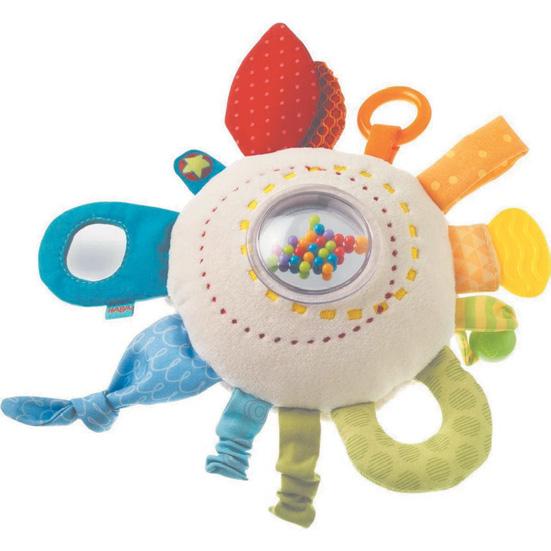
HABA CUDDLY RAINBOW ROUND TEETHER
This teether From HABA isn’t just soothing— it’s a sensory playground designed to nurture curiosity and comfort. Ideal for home or on-the-go, this soft, snuggly mirrored teether will not only soothe baby’s gums, it will delight their senses with its many features. The loops and tags of bright primary colors offer different textures for babies to explore with their hands and mouths, while the crinkling and rattling sounds will endlessly enchant little ears. ($17.99, habausa.com)
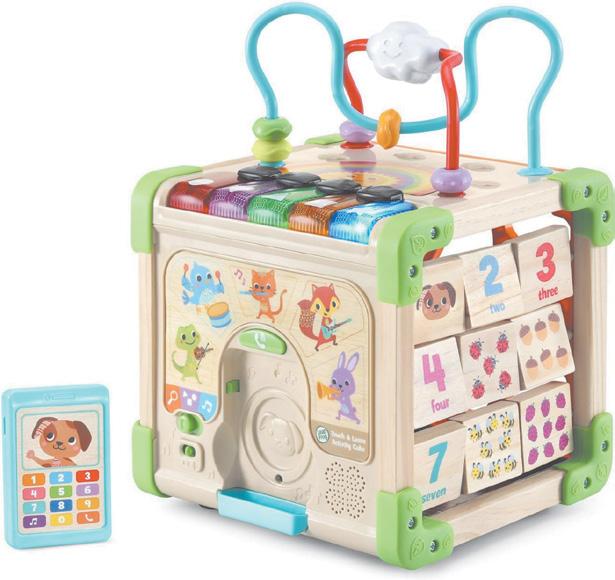
TOUCH & LEARN WOODEN ACTIVITY CUBE™️
It’s a block party with LeapFrog’s Touch & Learn Wooden Activity Cube. Exciting activities introduce toddlers to shapes, colors, numbers, and music. Five friendly musical animals play the fiddle, drum, flute, guitar, and trumpet in different music styles when you touch their pictures. Pushing, sliding, spinning, and flipping activities on five sides provide entertaining ways to work toddlers’ minds and hand muscles. ($34.99, Available at Target and on Amazon)
BABY EINSTEIN GO OPUS GO
Crawl, dance, chase, and learn with the Baby Einstein Ocean Explorers Go Opus Go 4-in-1 Crawl and Chase Activity Toy. This motion-activated toy grows with child from baby to preschool with 4 modes of learning and fun to inspire musical exploration, number & shape learning, sensory discovery, and movement. Opus comes alive and plays 4 songs from the new Baby Einstein Ocean Explorers series—“Octopus Hide & Seek,” “Feeling Curious,” “Still Learning,” and the “Jellyfish Wiggle.” ($39.97, Amazon)
FISHER-PRICE GIANT ROCK-A-STACK
At over 14 inches tall, this enlarged version of the Fisher-Price classic takes stacking play to new heights. It fosters fine motor skills, gross motor skills, and problemsolving skills in infants and toddlers 1 year and older. Your baby can grasp and shake the six extra-large, colorful rings, then stack ‘em high on the wibbly-wobbly super-sized base. And the littlest ring has swirling beads inside for your tot to shake and explore! ($15.99, Available at Target and Wal-Mart)
What’s New... IN THE KIDBIZ
THE TOOTH FAIRY GIVES KIDS A RAISE
New findings from the Delta Dental 2026 Original Tooth Fairy Poll® revealed the average value of a single lost tooth during the past year increased by 17% from $5.01 to $5.84. This marks the first year-over-year increase in Tooth Fairy giving since 2023, ending a two-year decline.
The loss of a first tooth is also being rewarded more generously worth 23% more than the average lost tooth. On average, a first tooth is now valued at $7.17, up from $6.24 in 2025. More than 1 in 3 parents (38%) say the Tooth Fairy leaves extra for their child’s first tooth compared with future teeth.
More kids are waking up to gifts beyond cash, as non-monetary presents from the Tooth Fairy are on the rise. Nearly 1 in 3 children (32%) received a physical gift this year, up from 19% in 2025.
“After a couple of thrifty years, the Tooth Fairy decided it was time to give kids a well-deserved raise,” said Gabriella Ferroni, Senior Director, Strategic Communications, Delta Dental Plans Association. “For the past 28 years, Delta Dental has tracked Tooth Fairy giving trends to help teach children about caring for their oral health through a trusted partner—the Tooth Fairy. The beloved tradition gives kids a reason to celebrate their healthy smiles.”
Since the poll’s inception in 1998, the average cash gift left by the Tooth Fairy has surged 349% from $1.30 to $5.84 per tooth.
Historically, the Original Tooth Fairy Poll® has typically mirrored the economy’s overall direction, tracking with the trends of Standard & Poor’s 500 Index (S&P 500). In recent years, however, the value of a lost tooth diverged from this pattern. For the first time since 2022, the poll has realigned with market trends. Over the past year, the average value of a single lost tooth increased 17%, in line with a similar 16% increase in the S&P 500 during the same period.
—by Rebecca Hastings
Walk down the baby aisles at any store, and you’ll see shelves full of products. Things that promise to be the perfect feeding accessories, the best diapers, and items to help your baby (and you) get a good night’s sleep. There are colorful toys, adorable clothes, and tiny shoes for little ones who won’t take their first steps for months.
It’s no wonder parents are overwhelmed and unsure of what they really need. The baby goods industry is projected to be worth over 80 billion dollars. With so much on the market, how do you know what you should have?
THREE TIPS TO DECIDE WHAT YOU NEED
If you just wander down the aisles and throw things in the cart, you’re bound to spend a lot of money on products you don’t need. That’s why it is important to find a way to filter through everything to know what’s best for you. Here are three easy tips that will help:
1. Think about your space: Before you buy a single thing, be realistic about the space you have. Don’t fill every nook and cranny with baby gear.
2. Talk to parents like you: The key here is to look for parents similar to you. These are parents who have a philosophy that aligns with yours, live similarly, or have a comparable economic status. If you listen to everyone, you’ll get a lot of things that don’t work for your life.
3. Don’t believe everything you read or see online: Social media is full of people getting paid to share products. Influencers are the new advertisements, and it feels very real. Just because someone online says you need something doesn’t mean you do.
When you use these three tips as filters to decide what is best for you and your family, you’ll find that you have the baby products that are best for you. These products may change over time, and as your situation changes. It’s natural for your needs to change.
PRODUCTS PARENTS LOVE
Here are some of the products parents are coming back to again and again. Some are newer on the market, while others have been tried and true for years.
Once Upon a Farm: Organic snacks and meals perfectly packaged for life on the go. Unsweetened with no preservatives, these can be found in
stores or delivered to your door. (https:// onceuponafarmorganics.com)
Newton Mattress: A revolutionary mattress with Breathe-Thru Technology allows your baby to breathe right through the mattress, reducing the risk of suffocation. It is also 100% washable. (https:// bit.ly/4cZ3oHx)
Nugget: This popular configurable play couch is perfect for lounging, playing, and growing with your child. (https://bit.ly/40HO5eW)
Frida Baby NoseFrida Nasal
Aspirator: A suction nasal aspirator to effectively clear the baby’s nose. (https:// amzn.to/47GmNqx)
Oogiebear: A simple, easy-toclean way to clean both nose and ears. This product is great to use on babies and toddlers. (https://amzn.to/3tZ1Qcw)
Bumco Spatula: Keep baby’s bum healthy and your hands clean with this tool for applying diaper cream. (https:// amzn.to/47Aa34E)
Shopping Cart Cover: Use a cart cover to keep germs at bay in the store.
Touchless Forehead Thermometer: A touchless thermometer allows you to take your baby’s temperature without waking them up.
Little Sleepies: The perfect pajama with two-way zippers and fold-over feet so your baby can continue to wear each adorable pair as they grow. (https:// littlesleepies.com/)
Bottle Drying Rack: Use a spacesaving drying rack for bottles, binkies, and sippy cups.
Boppy Pillow: The classic curved pillow that makes nursing more comfortable for you and your baby. (https:// amzn.to/3O7IGbp)
Munchkin Trainer Cups: Teach your little one to use a cup with this parent favorite no-spill trainer. (https:// amzn.to/3SnpdFW)
Diaper Genie: Hands-free with complete odor control, this is one of the top diaper pails. (https://amzn.to/4aZ90y6)
Easy Fold Stroller: Look for an easy fold stroller that keeps things simple, even when you’re juggling a little one.
Babybjörn Carrier: The classic carrier that helps you hold your baby and frees your hands to get things done. (https://bit.ly/46C2ay7)
Graco Pack ‘N Play: These portable cribs offer a variety of options for use with newborns, infants, and toddlers. (https://bit.ly/4r8k7vC)
Video Monitor: Check on your baby without disturbing them with a video monitor.
CONSIDER YOUR NEEDS
As you look through these products, consider whether they fit your current needs. Do they work with your space? Do they make sense for your family? Once you do this, you can purchase things confidently, knowing they are the best products for your family to try.
Rebecca Hastings is a former elementary teacher who traded the classroom for writing when she stayed home with her three children. Passionate about authenticity, faith, and family, you can find her at RebeccaHastings.net and on Amazon. In real life, she can often be found typing words, driving her kids places, or wherever there is chocolate.
a Family
ENTRY DEADLINE:
April 27th
—by Lucy Coady
HWhat is a Baby Café?
ow you will feed your newborn baby is an important decision for parents-to-be. For those considering providing breast milk, it is the perfect first food and has tremendous health benefits for both mom and baby. Human milk is considered a “living substance” because it contains live cells such as antibodies, enzymes, and bioactive proteins. The composition of breast milk is also dynamic, constantly changing to meet your baby’s specific needs. But are there local resources to support the decision to breastfeed and help you meet your breastfeeding goals? The answer is, YES, and Baby Cafés are one of the best places for help.
Support, Classes, Breast more, covered through insurance.
So, what is a Baby Café? NO—they do not typically serve chai nor latte. But they will welcome you and your baby to
Lactation Support, Classes, Breast Pumps & more, covered through insurance. Support your local small business for great shower gifts for mom or baby!
NEW address: 1360 North Forest Rd., Suite 111 Williamsville, NY 14221 716-725-6370
provide support along your breastfeeding journey. Trained staff, including Certified Lactation Consultants (CLCs), are available to offer expert advice and support. They can lend guidance on a good latch, weigh your baby, address your concerns, teach you infant feeding ques, understand your exhaustion, refer you to a higher level of care if necessary and build your confidence along your journey.
Baby Cafés and breastfeeding peer support groups are free, drop-in, informal breastfeeding spaces offering ongoing professional lactation care and guidance from trained professionals and experienced mothers. These spaces are inclusive and remove barriers to care to strengthen communities by providing free breastfeeding guidance, mentorship, and connection. They support all aspects of breastfeeding and its impact on daily schedules—from prenatal decisions to weaning. This includes assistance with pumping and maintaining supply when returning to work.
According to the CDC 2022 Breastfeeding Report Card for the US, “…83.2% of all babies started out receiving some breast milk. At 1 month, 78.6% were receiving any breast milk. At 6 months, 55.8% of infants received any breast milk, and 24.9% received breast milk exclusively… Once mothers
leave their birth setting, breastfeeding rates drop slowly but consistently. This finding suggests that mothers may need additional support to achieve exclusive breastfeeding and longer breastfeeding”.
Baby Cafés and peer support groups are designed to meet the family’s needs. Sometimes with a hospital birth, things can feel overwhelming, with a lack of time for lactation teaching. Parents often go home with a bit of uncertainty. This may also be true when parents bring the baby to the doctor for their first visits: appointments are not typically scheduled to include time for watching a baby feed. Or perhaps the baby latches fine in the hospital but, once at home, baby struggles to latch. Baby Cafés and peer support groups are intended to create a space where parents can relax, ask questions, and feed their baby with the help and guidance of trained lactation professionals and experienced moms. They realize that their feelings and challenges are normal. Breastfeeding can be a learned skill for the mama and the baby dyad; sometimes it just takes a bit of practice and support. This is a journey for you and your baby. Give yourself some grace when things don’t go exactly as you planned.
In Erie County we are fortunate to have 15 Baby Cafés and peer breastfeeding support groups. Some are offered virtual and others are in-person. Please visit https://bit.ly/4qKvVDS for the Free Community Support for Lactation in Buffalo & Erie County Calendar. You may also want to consider locating a Breastfeeding Friendly Provider Practice by visiting the New York State Breastfeeding Friendly Practice Designation website: https://www.health. ny.gov/prevention/nutrition/cacfp/ breastfeedingpractices.htm#erie. These medical practices are committed to promoting, supporting and protecting the choice to breastfeed.
Lucy Coady is employed by the United Way of Buffalo & Erie County as the Breastfeeding Project Coordinator under a New York State Breastfeeding, Chestfeeding and Lactation Friendly Grant. She has experience as a Registered Nurse, Nurse Educator, Certified Nurse Midwife and as a Certified Lactation Consultant.
Cesarean Birth Recovery: Tips for Healing and Bonding
Whether planned or unexpected, a cesarean birth, or C-section, can leave parents with a whirlwind of emotions. Relief that your baby arrived safely may mix with joy, exhaustion, grief, disappointment, or even guilt. Many parents are surprised by how layered their feelings are in the days and weeks after surgery.
If this is something you’ve experienced, you’re not alone. C-sections account for nearly one in three births in the United States. While common, recovery from a cesarean can be uniquely challenging, requiring both physical healing and emotional adjustment. The transition into parenthood is already intense, and adding major surgery to the mix can make everything feel heavier.
While every experience is unique, these gentle, practical tips can help parents heal their bodies, process their emotions, and nurture bonding with their baby and with each other during the recovery period.
1. GIVE YOUR BODY TIME TO HEAL
A C-section is major abdominal surgery, even if it’s often talked about casually. Recovery takes time, patience, and intentional rest. That can be tough to accept, especially when you’re eager to
care for your baby independently or feel pressure to “bounce back.”
Rest is not a luxury; it’s essential. Healing well now can prevent complications and make the weeks ahead smoother.
Go slow: Short, easy walks can support circulation and healing when your provider clears you for movement, but this is not the season to push yourself. Avoid heavy lifting, sudden movements, and unnecessary tasks. Let others handle chores, errands, and household responsibilities so your body can focus on recovery.
Manage pain proactively: Take pain medication as prescribed and on schedule, especially in the early days. Trying to “tough it out” can make recovery harder and increase fatigue. Pain management helps you move more comfortably, rest better, and care for your baby with less strain.
Protect your incision: Follow care instructions closely. Keep the area clean and dry, wear loose clothing, and use pillows for support when coughing, laughing, or standing up.
Watch for warning signs: Pay attention to your body. Fever, increasing pain, redness, swelling, discharge, or a foul smell around the incision site are signs to call your provider. Trust your instincts. If something feels off, it’s worth checking.
—by Rebecca Hastings
Healing doesn’t follow a straight line. Some days will feel easier than others. That’s normal.
2. HONOR YOUR EMOTIONS
Physical recovery is only part of the story. Emotionally, many parents feel caught off guard by how intense their feelings are after a C-section, especially if the birth didn’t go as planned.
You can love your baby deeply and still grieve the birth experience you hoped for. Those truths can coexist. Name it to tame it: Writing in a journal, talking with a trusted friend, or speaking with a counselor can help you process feelings of fear, disappointment, sadness, or trauma. Naming your emotions gives them less power and helps you move through them instead of around them.
Let go of comparison: It’s easy to measure your experience against others, especially in the age of social media. Try to remember that every birth is valid. A cesarean birth is not a failure. It’s a different way of bringing life into the world, often requiring immense courage and strength.
Watch for signs of postpartum mood disorders: Hormonal shifts, sleep
continued on page 10
But bonding is not fragile. It doesn’t have a deadline.
deprivation, and recovery from surgery can increase the risk of postpartum anxiety or depression. If feelings of sadness, panic, numbness, or hopelessness linger or intensify, reach out to a healthcare provider. Support is available, and you deserve it.
Give your partner space, too: Partners often feel helpless during the birth and recovery process. They may carry their own fears or emotional residue from the experience. Make space for honest conversations, even if they’re brief. Mutual empathy builds connection.
3. BONDING WITH YOUR BABY, YOUR WAY
After a C-section, bonding may not look the way you expected, at least at first. You may have been separated from your baby temporarily, limited by pain, or recovering from anesthesia. That can feel deeply disappointing.
HEALTH
Dr. Alaina Rowswell-Kulikowski
—by Cherie Gough
Get cozy in ways that work for your body: Side-lying or football-hold nursing positions can reduce pressure on your incision. Pillows and rolled blankets can offer extra support. If breastfeeding is challenging, pumping or formula feeding while holding your baby skin-to-skin still fosters closeness.
Use your voice: Your baby knows your voice from before birth. Talking, singing, humming, or reading out loud creates comfort and familiarity. These small interactions build trust and attachment.
short check-in at the end of the day can help you feel like a team again.
Embrace the ordinary moments: Bonding isn’t one magical experience; it’s built over time. Eye contact during feedings, gentle touch during diaper changes, and quiet moments together all matter. You don’t have to do everything “right” to build a strong connection.
4. RECONNECT WITH YOUR PARTNER
Recovering from surgery while caring for a newborn can strain even the strongest relationships. Exhaustion, stress, and shifting roles can create distance if left unspoken.
Talk openly about intimacy: Physical intimacy often takes a backseat during recovery. Healing, hormonal changes, and fatigue are real. Keep communication open and pressure low. Intimacy can look like holding hands, sitting together during feedings, or simply resting side by side.
5. ASK FOR—AND ACCEPT—HELP
Helping generations of families pursue optimal health... NATURALLY
Board Certified by ICA Council on Pediatrics 1567 Military Road Kenmore, NY 14217
Call: (716) 877-0676
Email: RiverviewChiropractors@gmail.com
Share the load intentionally: Divide responsibilities in ways that respect physical limitations. One partner may handle diaper changes and household tasks while the other focuses on feeding and resting. Clear expectations can reduce resentment.
Stay emotionally connected: Small gestures matter. A hug, a kind word, or a
You were never meant to do this alone. Recovery is faster and gentler when you allow others to support you. Make a specific help list: People often want to help but don’t know how. Be clear. Ask someone to drop off a meal, run errands, fold laundry, or sit with the baby while you nap or shower. Accept help without guilt: Letting others support you doesn’t mean you’re failing—it means you’re healing. Community care benefits both your body and your emotional well-being. Connect with other C-section parents: Whether through online groups, local meetups, or postpartum support groups, talking with people who understand can be deeply reassuring. Cesarean births happen every day, and shared stories remind you that you’re not alone.
Cesarean recovery isn’t a detour; it’s simply a different path. Be gentle with your body and your heart as you navigate it. You are doing hard, holy, beautiful work: healing, parenting, and loving all at once. And that work matters more than how your story began.
CAMPsSummer
• Mini Camp - Ages 5-12 M/W 9:00 - 11:30 am or Tu/Th 12:30 - 3:00pm Times are subject to change.
• Open Tumble/Cheer Class July/Aug. - Mon. 8:50-9:45pm
• NEW Monday morning classes!
• Boys Only classes for ages 7+ Summer 8 WEEK PROGRAM Starts July 6th
Help Your Child Grow In Reading
Evidence-based support for developing readers.
ACCESS Reading Summer Camp
Small-group instruction for rising 2nd–5th graders.
Individualized Literacy Tutoring
One-on-one, teacher-led support for all ages. Spots are limited. Apply online: www.buffalo.edu/clari
facebook.com/ubclari | Instagram @ub_clari
• Sports, Science, Theater Camps
• Disney Camps
• Seussical Camp
• Build a Stuffie Camp
• And Much More!
Everything Parents Need to Know About Choosing a Summer Camp for Their Kids
Choosing a summer camp for your kids can feel like a big decision, but with the right information, it can be a fun and exciting process. Here’s a quick guide to help you navigate the essentials.
1. KNOW YOUR CHILD’S INTERESTS
Start by thinking about what your child enjoys most. Are they into sports, arts, outdoor adventures, or technology? Matching the camp’s focus with your child’s passion is key to ensuring they have a fun and memorable experience.
2. DAY CAMP OR OVERNIGHT CAMP?
Decide whether your child is ready for an overnight experience or if a day camp is a better fit. Day camps are great for younger children who want the camp experience but prefer to come home at the end of the day. Older kids or those seeking more independence might thrive at an overnight camp.
3. SPECIALTY OR TRADITIONAL CAMP
If your child has a specific interest, like soccer, music, or science, a specialty camp might be the perfect option. If they love trying a bit of everything, a traditional camp with a variety of activities—like swimming, hiking, and arts and crafts—may be a better choice.
4. GET RECOMMENDATIONS
Word of mouth is powerful. Ask friends, neighbors, and other parents about their camp experiences. You can also look at online reviews or social media groups to get a broader sense of which camps have a great reputation.
5. CHECK ACCREDITATION
Look for camps that are accredited by the American Camp Association (ACA). Accreditation means the camp meets strict standards for safety, staffing, and program quality. This gives you extra peace of mind.
6. REVIEW THE CAMP’S STAFF
A well-trained and experienced staff is crucial for a positive camp experience. Ask about the counselor-to-camper ratio and the qualifications of the camp staff. Ideally, the camp should have counselors who are trained in first aid and child development. And there should always be certified lifeguards for any type of swimming or water activities.
7. SAFETY AND HEALTH PROTOCOLS
Safety should always be a priority. Ask the camp about their health protocols, including how they handle medical issues or emergencies. Does the camp have nurses or trained medical staff on-site?
8. CONSIDER LOCATION AND COST
For day camps, think about the commute. For overnight camps, consider how far away you’re comfortable with your child being. Cost is also important, but don’t be afraid to ask about scholarships or discounts that can make camp more affordable.
9. VISIT THE CAMP (IF POSSIBLE)
If you have the opportunity, visiting the camp in person can be a great way to get a feel for the environment. Many camps offer open houses or tours where you can meet the staff, see the facilities, and ask questions. This firsthand experience can help you feel more confident in your decision and give your child a sense of excitement about their upcoming adventure.
10. TRUST YOUR GUT
Finally, trust your instincts. If something doesn’t feel right about a camp, it’s okay to keep looking. You know your child best, and when you find the right camp, it will feel like the perfect fit.
With these tips in hand, you’re well on your way to choosing a summer camp that will give your child a summer full of fun, learning, and lasting memories!
—by Sarah Lyons
Navigating Special Needs
If your child was recently diagnosed with special needs or if you suspect they may have special needs, you may be wondering what your next steps should be. A new diagnosis is overwhelming and parents often feel alone and stressed about their child’s success in school. The good news is your child can live a happy, successful life, even if they learn differently or need extra help. Here are some tips for parents who are starting their journey.
SEEK SUPPORT FROM A PROFESSIONAL
If your child is showing signs of possible special needs, the first step is to talk to their pediatrician. They can help you identify any potential issues and refer you for additional testing, evaluation, and support if needed. You should also stay in close contact with your child’s teachers and school staff. They spend a large amount of time with your child and will have insights and observations that parents may not be aware of.
TALK WITH YOUR CHILD
Many parents may be worried about talking to their child about their diagnosis, however some kids find it a relief to understand why they learn differently or need resources and assistance to catch up to peers. Help your child understand their learning needs and let them know they can thrive with the right support and resources. It can be helpful to talk
with your child about what specific things are hard for them and what resources are helpful. When creating an Individualized Education Plan (IEP) you should plan to work with your child, their teacher, and any therapists to make sure your child has the right tools to be successful at school. It’s important to involve your child in any decisions made about their education or care. Ask them what kinds of things they want to do and learn. Listen to their ideas and concerns, and work with them to create an IEP that meets their needs.
SEEK RESOURCES FOR YOURSELF
Connecting with other parents in similar situations can be invaluable to any parent of a child with special needs. There are many support groups, websites, books, and social media groups with helpful information and advice from parents who have been in your shoes. It’s important for parents to stay informed about any new developments or treatments available. Talking to other parents in similar situations can be beneficial as they may have information and resources that could help you and your child in your own journey. Reach out to other parents and accept help from family and friends. You don’t have to do this alone.
EACH CHILD IS UNIQUE
It’s important for parents to understand that each child with special needs is unique. Therefore, it is essential to
Advocate
Specia l N eeds Insp ire
P otential Growth
Th ri
Strategies Empower
create an IEP tailored specifically to your child’s needs. It can also be helpful to consider different types of interventions which can help your child reach their goals and objectives. For example, physical therapy may help kids build strength and motor skills, while speech therapy can help them with communication and language development. Special education programs may also be a good resource to provide your child with the best experience possible and meet their unique needs. While it can be helpful to learn from other parents’ experiences, each individual case is unique and requires its own approach to accommodate your child best. Keep an open mind and explore all options available.
YOU ARE YOUR CHILD’S CHEERLEADER
It’s essential to remember that all kids can learn and thrive with the right support from their parents. Ultimately, the most important thing is to provide encouragement and unconditional love for your child. As they grow, celebrate each milestone as it comes, no matter how small. Make time in your day-to-day life to have fun with your child as well. Having a child with special needs doesn’t mean they can’t enjoy their childhood just like any other kid. Take advantage of any recreational activities available from swimming to art class. These activities can help your child develop their skills in a fun environment.
The most important thing is that your child feels loved and accepted for who they are. With the right guidance and support, they can reach their full potential. Above all else, never forget that you and your child are both on this journey together. With the ever-increasing resources available, it’s becoming easier every day for families to find the help they need. Take time to research, speak to other parents, and explore the range of options available so you can find the best fit for your child.
Sarah Lyons is a writer and stay at home mom of six children, including triplets.
MAY 28, 2026
JOIN US
—by Christina Abraham Thomas
F I V E Lessons I Learned After My Child’s Autism Diagnosis
Parenthood is full of surprises, but nothing prepared me for the day I learned my son was autistic. While there is no magic formula for special needs parenting, I’ve learned lessons that helped me find confidence and hope in a journey I never expected to take. Here are the five most important lessons I learned after my son’s autism diagnosis.
1. AUTISM IS NOT THE END
My son was flagged for autism during a routine checkup. At 18 months, he wasn’t speaking, had fine motor delays, and didn’t respond to his name. As a new mom, I didn’t realize this was out of the ordinary, so when the pediatrician mentioned autism, I was blindsided. When my son was diagnosed at 22 months, I cried for days. I worried about his future and mourned my expectations of motherhood. I knew our life would look different in ways others might not understand.
A few days later, I spoke to another autism mom over the phone. She let me cry, validated my fears, and then said
something I’ll never forget: “Autism is not a death sentence.” She reminded me that a diagnosis didn’t change who my son was or how much I loved him.
As my son began intensive therapies, I learned to focus on his strengths, not just his struggles. He had an incredible memory, a love for music, and the sweetest smile. I also noticed that I was becoming more patient, compassionate, and resilient as a parent. A diagnosis didn’t change my son, but in many ways, it changed me. There were still moments I wished our lives looked “normal,” but there were also moments of joy and gratitude I wouldn’t trade for the world. Autism wasn’t the ending I feared; it was just a different story than the one I expected.
2. GET SUPPORT EARLY
If I could give parents one piece of advice, it would be “Don’t wait.” If you have any concerns about your child’s development, seek help early. My son was referred to the Early Intervention (EI) Program when he was 18 months old. After an evaluation, my son qualified for speech, physical, and
occupational therapy at no cost to our family. In just over a year, he made incredible progress. He had better coordination, used American Sign Language, and was learning to drink from a sippy cup. By the time he entered school, his therapists were some of his strongest advocates.
Nowadays, I advise as many families as possible to take advantage of EI programs.
The only caveat is time. There may be waitlists, staffing shortages, and children age out at three. Waiting too long could delay services and widen developmental gaps.
For some families, early support may require pursuing an autism diagnosis. While this can be an emotional process, it opens doors to services that are otherwise inaccessible. A formal diagnosis allowed my son to increase his speech therapy from once a week to three times a week. It also allowed him to start preschool earlier and qualify for an Individualized Education Plan (IEP).
Many parents put off seeking support out of fear or stigma. A woman I knew was advised against a diagnosis
even though her child was clearly struggling. When she finally moved forward, her daughter had to wait 8 additional months and missed out on specialized services. Getting your child the help they need should never be a source of shame. Supports are not labels; they are tools to help your child grow and thrive.
3. PROGRESS LOOKS DIFFERENT
For many autistic children, skills come later, differently, or sometimes not at all. At three, my son was still in diapers and using a bottle. At first, seeing the gap was discouraging. Every unmet milestone reminded me that his life looked different. It was hard not to compare him to other children and wish he were further along. Over time, I learned to value all the progress he made, even if it took longer. Every babble and grunt had come after 40 hours of weekly therapies and tons of practice. Like many children with disabilities, my son was working twice as hard to reach the same milestones as his typical peers. His effort and resilience deserved to be celebrated, regardless of the timeline.
I once heard an autistic adult say that, despite holding a PhD and being a motivational speaker, he still struggles to button his shirt. His life reminded me that the skills we often value aren’t the ultimate measure of success. My son still can’t grasp a pencil correctly, but I no longer feel the need to compare his progress to anyone else’s. Seeing where he started and where he is now has given me a deeper appreciation for his strength and determination. No matter what his progress looks like moving forward, I am already proud.
4. PROTECT YOUR MENTAL HEALTH
A few months after my son’s diagnosis, I got into my first car accident. At the time, he had episodes where his body would freeze and become unresponsive. My husband was in the middle of a job transition, and our interim insurance hadn’t started. Our son’s neurologist ordered three days of seizure monitoring, but without active insurance, the hospital was hesitant to schedule it. I was warned that if it didn’t activate in time, we would face a $10,000 bill. Meanwhile, my son’s symptoms continued, and waiting didn’t feel like an option.
One afternoon, after hours of frustrating phone calls with the hospital and insurance company, I pulled out of a parking space at Target. Exhausted, I misjudged the angle and scraped another car. No one was hurt, but I was shaken and embarrassed at how thinly stretched I had become.
That moment was a wake-up call. I was doing my best to support my son, but my mental health was suffering. As parents, it’s easy to minimize our own needs, but that eventually limits our ability to care for our children. Self-care doesn’t need to be complicated. It can be as simple as crying to a friend, splurging on a favorite treat, or taking a few extra minutes in the shower.
For me, support came through local organizations like the Parent Network of WNY. They offered parent education, school advocacy services, and hosted events specifically for families of children with special needs. Having a resource that helped with practical challenges and offered a space for fun gave me some more breathing room.
Whatever your self-care looks like, make it intentional and consistent. Our children need us at our best, and sometimes the best way to show up for them is to take care of ourselves first.
5. YOUR RELATIONSHIPS WILL CHANGE
My son and I were once part of a playgroup. At the time, he was non-verbal and having daily meltdowns. One morning, he fixated on a toy and it triggered a severe meltdown. I got down on the floor and tried to calm him, but nothing worked. Watching my son scream and hurt himself broke my heart. Eventually, I started crying too. I was overwhelmed, desperate for another parent to offer help or encouragement, but no one did.
I finally decided to leave and carried him to the car, all while he screamed and thrashed violently. It took thirty minutes to get him into his car seat, and I knew he wouldn’t last the drive home. In desperation, I drove to the nearby house of a woman from church, even though I barely knew her. She welcomed me in, let me cry on her couch, and helped calm my son. Today, she and her family are some of my closest friends. That day shifted my connection with one group and opened the door to another.
When your child has a disability, your relationships inevitably change. Some people adapt, and the relationship deepens. Others pull away, and you grieve the loss. Declining repeated invitations because of my son made it hard to build deeper relationships. Babysitters became much harder to find. Even supportive friends sometimes felt uncomfortable, and I had to adjust my expectations.
Over time, you prioritize relationships in which your child is not just accommodated, but genuinely welcomed and loved. For my husband and me, our church became family. They visited our son during hospital stays, brought safe foods for him, and didn’t judge him during meltdowns. I also found community online by joining the WNY Safehaven for Families of Children with Special Needs. Connecting with parents who were on the same journey made me feel less alone. It may take time to find your village, but don’t give up. When you find your people, it makes all the difference.
Raising an autistic child has reshaped me as both a parent and a person. There are still hard days, but I’ve learned to celebrate progress, seek support early, protect my mental health, and invest in relationships that truly matter. Special needs parenting isn’t always easy or comfortable, but loving and advocating for your child is always worth the effort.
Christina Abraham Thomas is a North Tonawanda parent of two lively children. When she’s not advocating for her son, you’ll find her singing, scrapbooking, and joyfully expanding her ugly sweater collection.
—by Carolyn Tomlin
Financial Resources for Families of Autistic Children and Youth
When 6-year-old Emily was diagnosed with autism, her parents realized there would be numerous expenses involved with her education. Unexpected medical bills started coming in. She couldn’t function in a public school—even with a full-time aide. Their daughter was placed in a school for children with special needs. Although there was some government funding, the family still had a large monthly payment.
Fortunately, another parent shared her knowledge about vital grants available for families with autistic children. These funding opportunities are designed to support their unique needs. Offered through compassionate organizations, they include Autism Speaks, The Flutie Foundation, and various government programs. These grants ease the financial burdens associated with therapy, education, and essential living expenses. By reducing these pressures, these resources greatly enhance the overall well-being of autistic individuals and their families.
In addition to individual families, grants can provide programs and extra staff for schools that serve this population. Your child and hundreds of others can benefit for years to come by applying for a school grant.
THREE GRANTS FOR FAMILIES TO CONSIDER
ASA Media: Empowering Families with Resources for Autism Support. This grant focuses on enhancing the application of Applied Behavior Analysis (ABA) therapy.
Autism Speaks: Comprehensive Grants for Families with Autistic Children. Supports families facing financial hardships, providing up to $500.
Flutie Foundation: Tailored Financial Support for Autism Families. Includes various programs, such as Joey’s Fund and grants like the Autism Community Impact Grant.
OTHER FINANCIAL RESOURCES FOR FAMILIES
• Government Assistance Programs
• Special Education Funding
• Nonprofit Organizations
• Tax Deduction
• Health Insurance
• Respite Care Funding
SUGGESTIONS WHEN APPLYING FOR SMALL SCHOOL GRANTS
When applying for a grant, you need to show where the “gap” is and how a funder can fill that gap. Most grantors will not support constructing a building (known as “bricks and mortar” grants) but will support programs that will take place in that building.
Schools and churches are tax-exempt. They do not require a 501(c)(3) status. Use the school’s federal tax ID number.
Foundations and corporations are the best grants for a small special needs school. (Government grants are more complicated and detailed, although they are larger.) They are simpler to write and administer. Always, ALWAYS, use the funds for what was intended in the grant.
Writing a grant is one of the best and simplest fundraisers for a school or non-profit organization. Grants are not paid back. Bank loans have to be repaid. It’s been said that millions of dollars in grants go unclaimed each year because no one requests these funds.
COMMON QUESTIONS ABOUT GRANTS
These are the most sought-after questions that surface again and again when working with individual family or school grants.
1.Why is searching for foundation and corporate grants important?
As stated above, grants do not have to be paid back—loans do. Is there a gap or space in your organization where money can make a difference in what you are doing now…and what you would like to do?
2. How has the grant application changed over the last couple of decades?
Today’s application is much simpler. I wrote a large government grant that funded a special school that took almost a ream (500 sheets) of paper. I made copies for the team that would read the grant. The grant had to be mailed through the postal service because the government wanted us to support the USPS. Even a blue ink pen was used for the original signature, as a copy would show up as black.
Today’s grant applications are usually written online and emailed. Some require only 2 or 3 pages. Make sure you honor the deadline. One day late and you have to wait until the next quarter or annual reading.
3. Why do problems get attention?
It’s sad; but true. Problems gat attention. If a natural disaster occurs at or near your site, such as a hurricane, tornado, flood, or wind storm…contact a funder early. Keep newspaper and media references and place them in the attachment of the grant.
4. Where can I find local funds?
Contact the plant manager or CEO of the local company. Funders want to support projects where employees live and work. If a local business is part of a franchise or national chain, they usually have grants. But you have to research and contact the corporate office and ask. Utilities, banks, insurance companies, grocery stores, motels, and restaurants are usually in this category.
5. How can I involve others in my child’s school?
Do you have a friend who serves on boards of a possible grantor?
What about retired people in your community who have a strong desire to support families with autistic children or their school? Technology skills are vital as much time is spent researching grantors and what they fund.
6. What are some ways a family or school can show appreciation to a local business or industry that has given a grant?
Make a presentation to the CEO or plant manager at a service or a planned school banquet. Have children send birthday illustrations for the management’s birthday.
Grants come in a variety of sizes, meet specific needs, and can be used for a variety of projects. Writing grants requires knowledge of identifying the need and finding the foundation or corporation that can meet that need through funding. You can be that person! You can master the skill of becoming a successful grant writer!
Carolyn Tomlin was the grant-writer for the JacksonMadison County Schools in Jackson, TN. She teaches grant-writing workshops and writes for the magazine market.
The Best Tips I Found for Helping Teens Manage ADHD
When I became the mom of boy/girl twins, I had twice as much laundry, diapers, and crying as my mom friends of singletons. What I didn’t know at the time was that I also had twice as much Attention Deficient Hyperactivity Disorder (ADHD). There were plenty of clues along the way but my son didn’t get diagnosed until age 8 and his twin sister until age 15. Unfortunately, their gender differences might be one of the main reasons why there is a seven-year variance between the time that they were diagnosed.
Even though I used to be a counselor for teens who had ADHD, it’s different
when your own kids have the disorder. My former role definitely helped me understand terms and techniques but I still had to figure out what worked best for our family. My twins just graduated from high school and here’s what we found helpful to be successful during the past four years:
ROUTINES ARE
ESSENTIAL
The biggest issue that both of my twins have in relation to ADHD is forgetting things. On more than one occasion they would spend hours completing a project using posterboard
or creating a 3D model only to forget it at home. This might not make sense to someone who doesn’t have ADHD but for those who do, I’m sure you can relate.
The best way to fix this issue is to have routines and schedules so that the behaviors become habits rather than memory. For example, they would pack their bags the night before going to school and then place it by the front door. This way, they can see it before they leave the house and remember to take it. Next to their bag would be any sports equipment like a tennis racket and water bottle.
EXTERNAL REMINDERS
Another helpful tip is to use technology. Let’s face it—their phone is like a third appendage that they never seem to lose! So, using it is a great way to help them. There are plenty of apps on there that can help them with their ADHD but the easiest technique is to use the reminder alerts. Anytime they say, “I forgot,” I respond with, “Then next time set up a reminder alert on your phone.” It’s also a lot easier for all of us than having me nag them, which I also remind them is the alternative.
REGULAR
COMMUNICATION WITH TEACHERS IS KEY
At the beginning of the school year, I always made a point to speak with all of their teachers and offered them my cell phone and email to open the lines of communication. When I talked with them, we discussed what helped my kids to learn in previous years like a seat in the front row or visual pictures. I also let the teachers know that they have ADHD and truly care about school even though it might seem like they are not paying attention at times. Furthermore, I tell them that if their grades are slipping or they aren’t handing in their assignments that they should contact me so we can figure out what’s causing the problem. If they are having trouble paying attention, it tends to “snowball” without them realizing it. If we can prevent the avalanche from occurring, then everyone has a much better school year.
ACCOMMODATIONS CAN BE HELPFUL
If your child has ADHD, they may qualify for an Individual Education Plan (IEP) or a 504 plan. To qualify for an IEP, usually your child would need to have a learning disability diagnosis along with the ADHD but sometimes you can qualify for one with only an ADHD diagnosis. Students on an IEP would receive special education services whereas students on a 504 plan only have regular education services. On both plans though, you can receive accommodations for ADHD. Some common ones are preferential seating, testing in a distraction free setting and additional time on tests or homework.
My daughter did not qualify for either plan but that’s where the communication with the teachers can be helpful. Most teachers want their students to be successful so, even if they don’t have an official plan, they can work with the student to make sure they are learning in a suitable environment.
IT’S NOT WORTH ARGUING OVER A MESSY ROOM
One aspect of having ADHD can result in being disorganized or messy. My son is actually organized and neat for the most part but my daughter is a whole other story. I even wrote a few articles about it as a form of therapy since I’m an extremely neat and organized person. Besides getting some free therapy, what I learned after writing all these articles is that it’s not worth arguing over a messy room—arguing never solved anything and only caused a rift in our relationship. There are many ways you can handle it. I mostly use humor by making comments like, “Is this a science experiment?” And yes, she did laugh when I asked. Or probably the most effective method is keeping the door to her room always closed.
SLEEP, DIET AND EXERCISE ARE MORE IMPORTANT THAN YOU REALIZE
My twins had to figure this one out for themselves but I did often point it out for them. If they were having a hard time paying attention I might ask, “What time did you go to sleep last night?” Or if they were struggling to focus on their homework I might ask, “What did you eat for dinner?” They also both enjoy exercising by being on a sports team or strength training on their own. They found that it helps to release some of that energy they had to use all day to focus.
TEACH THEM HOW TO BE AN ADVOCATE FOR THEMSELVES
When you have ADHD, you need to learn how to be an advocate for yourself. My son really struggled with this when he was younger but slowly learned how to advocate for accommodations that helped him to be successful. During his senior year, one of his teachers told me that he asked her, “Can I please finish this project after school since I’m having trouble focusing right now?” I had tears in my eyes hearing this, knowing that he would have never done this even a year ago.
When you are a mom, it’s hard to figure out when to let them walk to the bus stop on their own or when to let them stay home alone. But when your kid has a disability it’s even harder to figure out that fine line of when to help them or when to let them try it on their own. You watch them struggle so much, more than your other kid without a disability, that sometimes you just want to make it easier for them by bringing them that forgotten Chromebook. In the end though, when they are able to advocate for themselves, it’s the greatest gift that you can give to both of you.
Cheryl Maguire holds a Master of Counseling Psychology degree. She is married and is the mother of twins and a daughter. Her writing has been published in The New York Times, National Geographic, The Washington Post, Parents Magazine, AARP, Healthline, Your Teen Magazine, and many other publications. She is a professional member of ASJA. You can find her at Bluesky @CherylMaguire
—by Johanna David-Tramantano, Ph.D.
Parents: Here’s How to Prepare Your Teen for Campus Life
Each fall, hundreds of thousands of parents send their teenagers off to college with hope, excitement— and possibly worry. Aside from all the new experiences, settling into a new learning environment and living away from home, today’s students face more challenges than in the past.
Despite strong grades in high school, many students arrive on campus unprepared for the independence, structure, and academic planning that college demands of them.
The transition is more overwhelming than many families expect, and this can be especially true for students with ADHD, learning differences, anxiety, or executive functioning challenges. Students with diverse learning needs can require exponentially more support during this critical time.
The good news is that college readiness is a skill set. I often refer to it as a “muscle,” but more accurately, it’s like a series of workouts that address the different “muscles” needed for college success, and parents can help students to build these skills long before college move-in day.
THE REAL GAP BETWEEN HIGH SCHOOL AND COLLEGE
Initially, note that there are significant differences between high school and college which can create obstacles for students. In my practice, I refer to this as “a pebble in your shoe.” And as we know, a tiny pebble can literally stop us in our tracks. The key differences facing students as they transition to college often fall into two specific areas.
The first area involves planning and organizational skills. Students suddenly need to manage their own time for socializing, schoolwork, and sometimes outside employment as well. Instructors won’t always remind students about missing assignments, and some professors may not accept late assignments without prior arrangements. According to Chloe Southon, in an article published in Frontiers in Psychology, early college success is more often predicted by executive function skills, and not necessarily intelligence. According to research outlined by Southon, “executive function skills” are the cognitive processes that support problem solving and goal-directed action. Additionally, these skills are essential for success in the academic setting.
Compared to earlier generations, today’s high school and college students are learning and experiencing the world significantly differently than their parents did. According to Larry Rosen, in his article “The Distracted Mind–Enhancing Its Focus and Attention,” students today are also experiencing higher digital distractions and lower stamina than what is required for deep work. Furthermore, Rosen states that in addition to attempting to multitask, even when they know they can’t, college students might open their phones over 50 times per day, and use them for over 4.5 hours every day. In short, managing time, reducing distractions, handling technology requirements and focusing on studying are increasingly more challenging for current students than for past generations.
In my own coaching practice, I typically spend the first series of sessions working on these critically important executive functioning skills, scheduling and mapping each student’s day,
week, and then their semester. We also discuss ways to minimize distractions. There are even time management apps that help students with planning out study time, even disabling access to other phone apps until the time is up!
The second area where we see college students routinely struggle, is with something I broadly define as social navigation skills. Students need to learn how to self-manage their relationships, including dorm roommates and new friends, and things like the dreaded Group Project. At college, this skill set includes managing the more “professional” interactions and the skills students need to timely and appropriately communicate/email with their professors, to ask for help, to self-advocate, and to coordinate with classmates on those projects. It also means having the self-advocacy skills to email professors, engage with instructors, and seek support during office hours when needed.
College now comes with more uncertainty, discomfort, and stress than ever. Navigating this independence and new social and professional academic situations, students need tools to cope with homesickness, roommate issues, and academic pressure.
Parent action you can take now: Encourage your high school teen to practice writing emails on their own. Also model self-regulation and normalize asking for help. Office hours serve all students, not just those facing challenges. They provide an opportunity to maintain progress and build strong content mastery. Your high school teen can practice this by meeting with their teachers during their senior year, and practicing asking questions to develop their content knowledge and build this communication skill.
INDEPENDENT DAILY LIVING SKILLS
Independent life skills are also important; examples are things like regular laundry, setting appointments, budgeting, and medication management. One way parents can help their high school student is by assigning two new independent tasks each week and practicing together. Help your child prepare by helping them establish healthy self-care routines, according to the Child Mind Institute’s authors Garey, Giller, and Macchia, and embrace the concept of “coping ahead,” advance planning for how to manage a potentially stressful situation. According to the authors, giving teens a “toolbox” of techniques to attempt when they’re feeling overwhelmed or very emotional can help them feel better and avoid feelings of failure or spiraling out of control.
STUDENTS WITH DIVERSE LEARNING NEEDS
Students who have an IEP or 504 plan in high school might be eligible for academic accommodations, but it is important to investigate this in advance with the Disability and Accessibility Office at your student’s prospective college, and the university will most likely require documentation. It’s also important to
note that what is offered at each school may be different, and it is helpful to learn about what is offered in advance so your student chooses the correct college and can plan accordingly. When visiting the campus, be sure to ask about available services and accommodations, as well as any assistive technology that may be offered.
It’s also important to note that college accommodations are usually not retroactive; in other words, they only apply from the time your child is officially registered for services, and applications may take some time to be reviewed. I therefore recommend that your student not wait until the semester has started to apply for accommodations and start that process early! And note—only the student can initiate this step; parents cannot gain access to or initiate this aspect of the process unless the student expressly gives such permission.
HOW TO BUILD THESE SKILLS WITHOUT MICROMANAGING
Parents can do so much during their child’s senior year of high school to support their child in this upcoming transition! A first step can be in reframing recommendations; from “reminding” students, to reflecting on where they are and helping them to learn. Consider also using Sunday afternoons as a “reset” to plan together. This is typically when I cook for the week, clean my house, plan for the week, and do laundry. This is a chance to build similar routines with your child, and carve out a weekly schedule you can continue with when your child goes off to college.
As a parent you will naturally be moving from more of a role as a parent-as-manager to parent-as-coach during this transition. Know that reframing your role as a parent can take some time, and this may not happen overnight, but it is an important shift that can have lasting results.
I offer the following recommendations to parents for how to support your child in the months before college:
January–July of Senior Year: Build routines, practice independence, model for your child how to manage stressful experiences and larger projects, and create a financial plan for continued on page 31
Sharing an Autism Diagnosis With Family and Friends
If your child has been newly diagnosed with autism, one thing that can be a challenge is telling your parents and extended family.
Autism is something that more and more people are aware of, but there’s still a lot of misinformation. Your family members might not know what it means, or they might have a limited or skewed understanding of what it looks like. They might have a stereotype of what autism is that doesn’t fit your child.
They also may have an understandable, if misguided, urge to resist the diagnosis. It’s not unusual to be told by your relatives that you are overreacting, or that it’s a mistake to give everyone who’s a little different a diagnosis.
But if you’ve gone through the process of getting your child evaluated, it’s because he is pretty clearly not developing in typical ways, or, if he’s older, he is struggling and impaired in some important ways. The problems he’s having may not be visible to everyone in your family. But you need the people you are close to as allies in help-
ing your child. So getting them on your team is worth the effort.
It’s a conversation that might be difficult or emotional, so here are some tips:
FOCUS ON BEHAVIORS
Using behaviors they might have noticed is one way to start explaining what autism is, and why your child was diagnosed.
For example, if your child doesn’t make eye contact and has a hard time connecting with other kids, you can explain that it’s not that he’s shy and he isn’t being rude—those are symptoms of his autism. Likewise, if he melts down when visiting family, it might be because he has a very hard time handling changes in routine—another thing common for autistic kids.
“If they understand that it’s something different about your child, and it’s not intentional, then that can be a springboard for a bigger discussion about what
autism is,” says neuropsychologist Michael Rosenthal, PhD.
EXPLAIN AUTISM BASICS
Let them know that behaviors associated with autism are divided into two groups.
Difficulty with social skills: For example, autistic kids might not respond to social pleasantries or understand how to behave in different social situations. They might have trouble with speech and with nonverbal communication, like facial expressions and eye contact.
Restricted or repetitive behaviors and interests: Some examples of this are depending on routines and rituals, like eating the same things or wanting to keep the same schedule or take a similar route. Autistic kids may also have intense interests, like wanting to talk only about trains or a favorite movie.
continued on page 30
SHARING AN AUTISM DIAGNOSIS
They may ask what causes autism
Here are the main things you want to cover:
• Autism is a neurodevelopmental disability.
• It is lifelong.
• We know it starts in utero.
• We know it is not produced by vaccines.
• It’s not caused by bad parenting.
YOUR CHILD MAY NOT FIT THEIR IMAGE OF AUTISM
Explain that autism is a spectrum of behaviors, and every autistic person is different in terms of onset, severity, and types of symptoms. For instance, some are nonverbal, and some are hyper verbal—they talk your ear off, though they don’t engage in the back-and-forth of conversation very well.
Psychologist Mandi Silverman, PsyD, notes, “We often say that children with autism are like snowflakes, no two are the same. Just because one child with autism looks and sounds one way does not mean that another child will.”
EXPLAIN HOW THE DIAGNOSIS WILL HELP YOUR CHILD
People often worry that having a diagnosis will negatively “label” a child, making people think she’s weird and hurting her opportunities and her self-esteem. In fact, the opposite is often true. It can be a relief to know that a child’s struggles (and strengths) have a name and are actually pretty well understood and not that unusual.
Having a diagnosis also means that your family is eligible for therapies and services, which can be transformative.
Do You Have Concerns About How Your Child is Developing and Learning?
ANTICIPATE DIFFICULT REACTIONS
Family members can have different reactions to hearing about a child’s diagnosis. Sometimes it’s a relief because there’s an explanation for the things that are challenging. Relatives might also feel sad or overwhelmed. It’s normal to experience a range of emotions. They might also reject the diagnosis, which can leave you feeling very hurt and isolated.
“Initially receiving a diagnosis is a very big event. Sometimes hearing a diagnosis challenges parents’ perceptions of what they envisioned parenthood would be,” says Dr. Silverman. This is also true for grandparents. “Sometimes relatives, like parents, need to take some extra time to put the pieces together. Frustration or confusion or anger—they are not uncommon. Sometimes we need time to process it,” she says.
Let your family members express their feelings, but also tell them that you’re working with a team of providers to do what’s best for your child. You can also say that they are important to you and your child, so you hope they will be supportive.
USE YOUR DOCTOR IF NECESSARY
If family members’ reactions don’t seem to be improving, Dr. Rosenthal recommends thinking about why they might be resistant. He says three common reasons are:
• They don’t understand autism so they push it aside.
• They think they know what autism is and they don’t agree it’s the right diagnosis.
• They don’t know how to handle it and it’s overwhelming for them to consider.
“I’ve had situations where I’ve encouraged parents to have their extended family come in if that person was having trouble coping or understanding what was happening,” he says. “Psychoeducation can be helpful for everyone no matter what, and if that person has really big misconceptions about the diagnosis or is feeling helpless, this is an opportunity to educate him.”
Dr. Rosenthal also notes that if you are currently going through the evaluation process, it can be a good idea to have your relatives come in for the feedback.
RECOMMEND RESOURCES
Dr. Silverman suggests that parents download the 100 Day Kit from Autism Speaks, which also has tips specifically for grandparents, brothers and sisters, and extended family members.
Family members can have different reactions to hearing about a child’s diagnosis.
“I tell people to download this kit and then go on a 30 day internet fast,” says Dr. Silverman. “Stay off of it. The great thing about the internet is that it gives us so much information, and the bad thing is that anybody who has an idea can write something and it can be toxic or incorrect.”
For family members who prefer books, she also recommends The Official Autism 101 Manual by Karen L. Simmons.
ASK PEOPLE FOR HELP
(AND BE SPECIFIC)
This can actually be a relief for you and the people you’re asking because it’s in our nature to want to help family and friends, but sometimes people don’t because they aren’t sure how or are afraid they might be overstepping. So if you want help, say it.
TALK WITH OTHER PARENTS
Parents making sense of a new diagnosis can sometimes feel overwhelmed and alone. Dr. Silverman says that one of the most important things, besides getting good treatment, is spending time with other special needs parents. “Being in the company of other parents can make you feel strong rather than alone and isolated. It’s important to have people who get it,” she says. “They can say, ‘Someone said that to me too, and it’s so frustrating because that’s not the way it is.’”
Your child’s doctor might be able to recommend a local support group, or you could look online or network with other parents at special needs sports or activity groups.
PARENTS: HERE’S HOW TO PREPARE YOUR TEEN FOR CAMPUS LIFE
continued...
expenses, making smart financial decisions, and helping them to open up a bank account if they do not have one yet.
August: Visit the college’s disability services office (if applicable), review each syllabus with your child, set up academic tools, and become familiar with the Learning Management System (each school uses a specific computer platform like Blackboard or Canvas, for example). Help your child to establish an organizational system, and also establish a “communication home” system and calendar with your child. Download the academic calendar, too, so you can plan and book transportation back home well in advance!
September: Check in without hovering, encourage campus extracurricular involvement, support your child’s sleep and structure routines.
A FINAL NOTE
College is not just an academic and intellectual transition; it’s an even larger developmental transition. Your child is finding themselves and becoming an adult. The goal isn’t to remove all the pebbles in their way, but to help our children navigate them and build their “muscles” one step at a time. With the right preparation, they will! For more transition tips, listen to the Professor on Your Side Podcast on Spotify.
Dr. Johanna David-Tramantano is a career educator, literacy scholar, and host of the Professor on Your Side podcast available on major podcasting outlets and on YouTube. With a PhD in Teaching & Learning and deep experience supporting students and families, she focuses on helping teens thrive in the transition from high school to college. She’s a proud University at Buffalo mom and is currently helping her second child, a high school senior, prepare for college.
Parents’ Night Out!
Food, fun and more…it’s what I do.
— by Tasha Wagner
Ooooh Canadaaaa—Right in Our Backyard!
Yes, the Falls draw visitors from all over the world every single day. And while they are absolutely breathtaking, I’m going to do you one better. Let me take you on a weekend getaway that goes beyond the mist and into something a little more elevated.
Grab your enhanced license or passport. Let’s hit the road!
First Stop: Sheraton Fallsview Hotel
Recently renovated, the rooms are immaculate, cozy, and stylish. There are multiple room options—some with spiral staircases and loft-style second floors, others with in-room hot tubs.
The way this hotel is positioned, you truly can’t go wrong. The views of Niagara Falls are front and center, and waking up to that sweeping water scene feels surreal no matter which room you choose.
Need
I say more?
As a born-and-raised Buffalonian, I know what a treasure it is to escape to another country in under 45 minutes. The Falls are one of the great natural wonders of the world, and if I’m being honest, I took them for granted as a child. Show of hands if you’ve lost count of how many times you’ve been? Every out-of-town visitor? Straight to the Falls.
But as an adult? I’ve developed a whole new appreciation for what Canada— especially the Ontario side—has to offer.
Crack open the sliding glass door to your balcony and let the steady, rushing hum of the water lull you to sleep. Dream state? Engaged almost immediately. It may be the best sleep you’ve had in months.
In the morning, order room service. Sit on your balcony with a hot cup of coffee, wrapped in a robe, watching the mist rise over the water. It feels indulgent—in the best way.
Dinner With a View
Next door is The Brock Niagara Falls—Fallsview, home to Prime Steakhouse.
“...the perfect dinner date.”
This restaurant is dark, romantic, and intentional in every detail. Nearly every table offers a dramatic backdrop of the illuminated Falls at night. Pair that view with a beautifully curated steakhouse menu, and you have the perfect dinner date.
I highly recommend sharing the Prime Beef Carpaccio—tender slices of beef are layered with thoughtful seasoning and delicate foie gras shavings that elevate the dish into something memorable. It’s refined, flavorful, and the perfect way to start your evening.
Next Morning: Hello, Niagara-on-the-Lake
After checkout, take the scenic 20-minute drive to Niagara-on-the-Lake (or NOTL, as locals call it).
This charming town is a worldwide wine destination and is especially known for its ice wine—a sweet nectar made from grapes that freeze naturally on the vine. It’s one of those magical by products of our cold climate that turns winter into something extraordinary. From wineries to shops, you can never get bored in NOTL and with each visit you will always find something new.
Start with lunch or a charcuterie board at The HobNob Restaurant inside
The Brock
PICK OF THE LITERATURE
— by Dr. Donna Phillips
Enough of winter! It is time to wake up! And we are not alone. Look around you. Trees are starting to bud. Green shoots and flowers are peeking up through the ground. Baby bunnies and fawns are starting to appear. Even bugs and worms are starting to show their heads. Birds have returned, are making nests, and chirping and calling out to others. It is time for us to do this too!
This year, April also brings us Easter and there are many books popping up to help us celebrate! Here are just a few to look for at your favorite bookstore, library, or online.
Perfect for little hands and Easter baskets—and a great way to celebrate your little reader—is the board book You’re Eggstrordinary (Scholastic, New York, 2026, $8.99) by Sandra Magsamen. A smiley chick peeking out of an egg with a tuft of fuzz on the top of its head welcomes us to this story of just how special our little one is. From their beginning and all their accomplishments along the way, we celebrate how every step and every moment make our world a more
special place. They are eggsactly, eggstra, eggsplosively, eggscellent, and eggstrordinary... and so is this little book!
I Love You a Bunch (Sourcebooks/ Wonderland, Naperville, 2026, $12.99) written by Rose Rossener and illustrated by Kathryn Selbert is another way to celebrate our little ones. This board book has textures, a surprise door to open, is full of puns, and will “bee” perfect for a spring celebration. While little ones may not get the puns, they will appreciate the illustrations, bright colors, and the feel of the book…the older ones will enjoy the humor and play on words…and everyone will enjoy the special moments sharing this book together. Find new ways to use “carrot,” “leaf,” “ewe,” “egg,” “peep,” “bee,” and “hoppy” and sprinkle them throughout your conversations. Connecting back with the book like this is a meaningful way to keep the fun going.
Big ones and tiny ones, indoor and outdoor pets, puffy tails or long ears, long silky hair or soft fluffy fur, a wiggling nose and hippity-hopping all along the way...all are sure to melt your heart. This sweet rhyming book will get everyone ready to welcome the Easter Bunny!
What could be a better way to welcome spring than Here Comes Easter! (Disney Press, New York, 2026, $12.99) written by Cristina Casas, illustrated by Jerrod Maruyama, and designed by David Roe? With more than 35 flaps to open to reveal hidden secrets, find answers to questions, and discover favorite story characters and Easter surprises, it will become a holiday favorite. This colorful and fun book will keep the attention of children and adults. The scenes will encourage conversations and exploration and is a wonderful way to welcome spring and celebrate Easter.
When we think of spring, we think of rabbits and Some Bunnies (Gibbs Smith, Kaysville, 2026, $17.99) illustrated by Lydia Nichols is an adorable, shaped board book about all different kinds of rabbits. Children and adults will love the variety.
Dr. Donna Phillips is an associate professor in the College of Education at Niagara University where her specialty is literacy and children’s literature. She lives on Grand Island, NY and is the mother of two adult children and the grandmother of one.
SINGLE PARENTING
— by Meagan Ruffing
April is Stress Awareness Month
As a licensed therapist, helping people manage their stress is something I love getting to do on a daily basis. I always tell my kids, I can’t believe I get to go to ‘work’ every day and sit with people who allow me to listen to them share some of their most vulnerable thoughts, feelings, and fears with me. Therapy is a practice I don’t take for granted and it’s also a space where I get to help clients become more self-aware so they can take better care of themselves. This April, I’ll be focusing on using activities in my practice that encourage and inspire my clients to reduce the amount of stress in their lives. I hope you’ll try them with me.
1. Make a list of everything that is stressing you out. This is quick, off the top of your head, scribble it down list. The thoughts in your head that are taking up space around things that stress you out need a place to go. Put them on paper. Once you’ve written them down, go through each one and figure out which ones are within your control to change and which ones are not. Circle the ones that you can change and start looking at ways to be able to take them off your list. We’ll circle back around to the ones that you’ve identified as being out of your control towards the end of the article.
2. Grab a piece of paper and draw four circles, one bigger than the other for each one. In the smallest circle, put your name. In the next circle, write the names of people who you trust the most (your closest friends, family, etc.). The next circle will be the names of people who you trust but
they might not be the first people you would call (neighbors, church friends, etc.). The next and final circle will be acquaintances or professionals. These are people you trust but don’t have as much access to you (doctor, hair stylist, etc.) Once you have drawn your circles and identified the different circles of support, put your paper somewhere where you can see it so that you’re reminded of all the support you have if and when you need it. This exercise can be especially helpful for when you’re feeling alone and need some support.
3. Ask yourself the Miracle Question: “If I were to wake up tomorrow and all of my stress went away, what would have to be different?” I realize that your answer might not be realistic and that’s okay. This is a helpful intervention to get your brain thinking in a solution-focused way. On the other hand, your situation might be changeable and, if so, this is a way to figure out what would have to be different in order for the problem to go away.
4. Something as simple as drinking more water, going to the bathroom when you need to go, having snacks on hand, or getting some fresh air during the middle of your work day, can make a difference in your stress levels. Doing these things means you’re taking care of yourself and taking care of yourself reduces stress.
5. Take a couple of deep breaths, several times a day. If you’re sitting at your desk, plant your feet firmly on the
continued on page 41
Daddy Daddy The Track
G– by Shannon Carpenter
et the kids ready for school, drive to the office, solve world hunger. Work all day, meet the deadlines, and make authentic pirate treasure maps for my kids’ class. Eat lunch, which consists of a single almond, replace my car battery during my next break, and answer emails from teachers.
Go home and make dinner, clean up afterward, remind myself to pay bills the moment I get a moment’s peace. Check on my parents, who are now 75. Mow their yard in the dark because it’s the only time I have. Exchange memes with friends and count that as a social interaction. Bend over and pick up everything that is wrecked in my house daily, and be proud of myself for the workout.
Go to bed at 9, get up by 9:30 because someone forgot about an assignment. Go to bed at 10:30, wake up at 11:30 because someone got sick. Go to bed at midnight, get up at 2 because the dog needs to go out. Since I’m up anyway, I come up with the practice schedule for my kids’ sports that I somehow ended up coaching. Could have sworn I said no, but I guess I didn’t.
Lay awake at night, giving myself affirmations that I’m doing everything right. I’m caring, and attentive, and loving, and loyal, and on the ball, and about ready to stick my head in the microwave.
This is the reality of parenting, and somewhere along the way, we all collectively agreed that being overworked was a sign of good parenting. We, all of us parents, are idiots.
There is a new book coming out by Stephanie Malia Krauss called How We Thrive: Caring for Kids and Ourselves in a Changing World. The subtitle is what hooked me: Overwhelmed and
Yup, this right here.
How Did Being Overwhelmed Become Standard for Parenting?
overworked—and caring for kids who feel the same.
We are all burnt out, and so are our kids. Overscheduled and pushed to be overambitious, they are tired. Now, don’t come at me that today’s kids are soft because that is a bunch of bunk. Don’t romanticize our own upbringing as if we were tougher; we were not. Our kids are being asked to do more with less than we were at that age. And somewhere along the way, we have lost ourselves, and so have our kids.
Normally, I don’t pick up any parenting book that is full of empty platitudes. If I hear “Oh, it gets easier” one more time, I’ll snap. It doesn’t get easier; it just gets different. Yes, I don’t have to be as physical anymore, but that has been replaced with emotional upbringing. I’m honestly not sure which one is more exhausting. I have a daughter in college, a son who is a senior in high school, and a thirteen-year-old.
Every day requires my emotional intelligence and the reminder that I have no idea what I’m doing. My dudes and dudettes, I’m still burned out.
But Stephanie’s book doesn’t contain those meaningless phrases that make me feel worse about myself. It’s science-based advice from people who STUDY these things. They study why we are burned out and then give good advice on how to combat that. Because I think we can safely say that we are all freaking tired, and it gets worse every day that I read the news in the morning.
One of the pieces of advice that hit home with me was the idea of a time oasis. It comes from Brigid Shulte, who, you
know, studies this type of thing. The idea is that you intentionally create moments throughout the day where you can focus on yourself and your family, without being interrupted by technology, schedules, or the demands of the outside world.
I put this into practice. I don’t start my morning by checking my email or doomscrolling. I don’t cook breakfast, and the laundry can wait. Instead, I sit on the floor with my back against the wall and allow my brain to “turn on.” Then I get out my yoga mat and do a simple routine. I’m a fifty-year-old overweight dude doing yoga...who would have thought? I don’t think about what else I have to do that day, and I don’t take any questions. This is my time oasis, and I want to be stranded there. It’s a small act that goes beyond “stop and smell the roses.” It puts me and my needs first, and does so without apology. To take care of others, we must take care of ourselves—how many times have we been told that and never acted on it? Now I am, and I’m implementing some of this with my kids as well.
This is just a small example out of How We Thrive. These small changes take fifteen minutes, but give us back a piece of ourselves.
Shannon Carpenter is the father of three and has been a stay-at-home dad since 2008. He’s the author of the book “Stay-at-Home Dad: Your Essential Manual for Being an Awesome Full-Time Father.” as well as the co-host of Dadhouse Pod. In addition to his writing on parenting, he is also a humor writer trained through the famous Second City. And we all know that having a sense of humor is essential to surviving parenthood!
Family Movie Options: In Theaters and Streaming Online
Raising Digital Empaths: Teaching Kindness in a Wired World
We all feel that specific knot of anxiety when we hand a child their first smartphone. Our minds immediately jump to the dangers we read about in the headlines: predators, privacy leaks, and the addictive “endless scroll.” As parents, we spend hours setting up filters and lecturing about strong passwords. These are the defensive walls we build to keep the bad stuff out.
But there is another side to the story that often gets lost. It is not just about what the digital world does to our children; it’s about what our children bring to the digital world.
Today’s kids are digital natives. For them, the line between “real life” and “online life” doesn’t exist. Their friendships, conflicts, and identities are built in group chats and comment sections. If we want them to navigate this world successfully, we have to teach them more than just safety. We have to teach them digital empathy: the ability to look past the pixels and see the human being on the other side of the screen.
WHY THE INTERNET MAKES IT HARD TO CARE
To teach empathy, we first have to understand why it is so difficult to practice online. When we speak face to face, our brains process a massive amount of “data.” We see a wince of pain, a sarcastic eye roll, or a genuine smile. These biological cues trigger our empathy; they tell us when we have gone too far.
Online, those cues vanish. Text on a screen is flat. Without a tone of voice or a facial expression, it is easy to forget that a real person is receiving the message. Psychologists call this the “online disinhibition effect.” It is the reason why a kid who is polite at the
dinner table might make a cruel comment on a classmate’s photo. They aren’t seeing the reaction, so they don’t feel the immediate emotional consequence.
The Fix: Sit down with your kids and explain this gap. Tell them, “When you can’t see someone’s eyes, your brain has to work twice as hard to be kind.” By naming the problem, you give them the power to overcome it.
THE POWER OF THE PAUSE
The internet moves at the speed of light, but empathy requires us to slow down. One of the most important skills we can teach is the “Power of the Pause.” Impulse control is a struggle for the teenage brain, and the “send” button makes it too easy to act on a whim.
Create a household rule: The Ten Second Rule. Encourage your child to read their message, count to ten, and read it again before hitting send. We often talk about a 24-hour rule at work. Pause and wait 24 hours to respond to a difficult email. The same idea applies here. During that pause, ask them to run the message through three filters:
1. Is it true?
2. Is it necessary?
3. Is it kind?
You can also use the “Hallway Test.” Ask your child, “Would you shout this sentence in the middle of a crowded school hallway while looking this person in the eye?” If the answer is no, it doesn’t belong in a group chat.
THE INVISIBLE AUDIENCE
Kids often feel like they are in a private bubble when they are texting a friend. They forget that the internet is never truly private. A vent session in a DM can become a public headline with one single screenshot.
We need to teach them to respect the “Invisible Audience.” This isn’t about scaring them; it’s about protecting their future selves. Remind them that anything they post, even in a private space, is a permanent part of their digital footprint.
The Lesson: Ask them, “Would you be comfortable with a coach, a future employer, or your grandmother reading this?” If you wouldn’t want the world to see it, don’t let the invisible audience catch you saying it.
DIGITAL BRAVERY: FROM BYSTANDER TO UPSTANDER
Perhaps the most crucial part of digital empathy is courage. In a massive group chat, it’s easy to stay silent when bullying happens. This is the bystander effect, where people assume someone else will help.
We need to raise upstanders…kids who intervene when they see digital cruelty. This doesn’t mean they have to start a war in the comments. Digital bravery can be a quiet act. It can mean sending a private message to the victim saying, “I saw what they said, and it wasn’t cool. Are you okay?”
It also means practicing digital bravery in disagreements. In a world of cancel culture, we can teach our kids how to have a different opinion without being a jerk.
The Goal: Teach them how to say, “I disagree with that point,” rather than, “You’re an idiot for thinking that.” Teaching them to
attack ideas, not people, is a superpower in the digital age.
MIRROR, MIRROR: MODELING DIGITAL GRACE
Finally, we have to look in the mirror. We cannot expect our children to be mindful digital citizens if we are reactive digital consumers. Children watch how we interact with our devices more closely than we realize.
Ask yourself:
1. Do I vent loudly while typing a furious email to a coworker?
2. Do I leave snarky comments on posts I disagree with?
3. Do I scroll through my phone while my child is trying to tell me about their day?
If we use our devices to disconnect from the people in front of us, our children will do the same. Narrate your positive choices. You might say, “I really disagree with what Aunt Sarah posted, but I’m not going to comment because I don’t want to embarrass her. I’ll call her later instead.” Show them that there is a human being behind every notification.
CONCLUSION
Raising digital empaths is not a one-time lecture. It is a series of hundreds of small conversations and shared moments. The goal isn’t to make our children perfect or to banish all conflict. The goal is to help them carry their humanity with them wherever they go, whether they are standing on a soccer field or logging into a server. By focusing on kindness and connection, we can help them transform their devices from walls that isolate them into bridges that bring them closer to the world.
Mike Daugherty is a husband, father of three young children, author, speaker, Google Innovator, and possible Starbucks addict. He is a certified educational technology leader who has served in a variety of roles through his twenty-year career in public education. Currently, Mike is the Assistant Superintendent of Innovation, Technology, and Communications for the Chagrin Falls Exempted Village School district in Northeast Ohio. As an IT director he has developed creative, well thought out solutions that positively impact teaching and learning.
PARENTS’ NIGHT OUT!
The Charles Hotel. If the weather cooperates, request a table out back overlooking Lake Ontario. The views are peaceful, expansive, and absolutely stunning.
Wine Tasting (You Knew This Was Coming)
With more than 37 wineries, Niagara-on-the-Lake has something for all wine lovers and even those new to wine! I could easily fill this entire article listing must-visits, but in the interest of word count (LOL), I’ll highlight two of my absolute favorites.
First: Amo Estate Winery.
One of the swankiest tasting rooms in the region, Amo offers unique sparkling wines—including sparkling Pinot Grigio and sparkling Cabernet Franc. Both are exceptional and unexpected. These are the kinds of wines that make you pause after the first sip.
Just across the street is Château des Charmes.
What I love here is the experience. When you reserve a tasting, you’re seated and guided by a knowledgeable team member who walks you through the history, the growing process, and the ideal pairings. It feels personal and immersive. They also offer curated wine, chocolate, and charcuterie pairings—or all three together, if you’re feeling bold. (And I suggest you do.)
Pro tip: These two wineries being directly across from one another makes for an effortlessly luxurious afternoon.
This is the kind of getaway that reminds you how fortunate we are to live in Western New York. World-class views. International travel without the airport. Luxury experiences just over the bridge.
It is truly a pleasure to share these escapes with you. Keep following along for more date-night, date-day, and weekend getaway inspiration!
Until next time—have fun, eat the food, enjoy the ambiance and date your partner!
Tasha Wagner is a Buffalo born and raised, recent empty nester, known for her connections in the local foodie scene. Tasha is fully equipped to be your personal date night concierge.
ground, with your back pushed against the back of the chair. With your head held straight and your shoulders away from your face, breathe in for four counts, hold for four counts, and breathe out for four counts. Repeat this three times. Box breathing, deep breathing, controlled breathing, all help calm the nervous system so that your body feels safe and grounded.
My best tip, however, is to talk to a therapist. Stress can cause so many health issues and really change your life in ways that are unhealthy. The best place to start is by looking at your insurance and doing a search for mental health therapists in your area. If you don’t have insurance, call private practices and ask to see an intern. These are master’s level students who have completed their classes and are working on their clinical hours to graduate. Interns typically charge no rate, a low rate, or a sliding scale depending on the state you’re in. Therapy is a great way to talk to someone outside of your circle who can listen with no judgement and help you gain clarity in many areas of your life. Make this April the most stress-free month you’ve ever experienced.
Meagan Ruffing is a parenting journalist, mental health therapist, and single mom who tries to do her best each day. She doesn’t always get things right but continually strives to do better.
DEAR TEACHER
– by Peggy Gisler and Marge Eberts
Helping all parents make their children’s educational experience as successful as possible
AN EXPLANATION OF WHAT PROJECT-BASED LEARNING (PBL) IS
PBL is becoming increasingly popular. Basically, it is students working on real-life problems and coming up with solutions that can be used to solve these problems. The final step is to present their solutions to a real audience of people or groups that can enact their solutions.
Here are several examples of projects:
Community Garden Project:
Students design and plant a community garden to provide food for a local food pantry, learning about biology, sustainability, and community needs.
Environmental Awareness Project:
Students research environmental pollution in their community, design an action plan, and present their findings through a PSA video or other presentation to raise awareness.
Engineering & Design Project:
Students design and build a model bridge, applying principles of physics and structural engineering while learning to collaborate and problem-solve.
Mock Trial:
Students research a historical event or legal case, take on roles of lawyers and witnesses, and present their arguments in a mock trial, learning about history, civics, and public speaking.
PBL is not a new form of learning. In fact, the famous educator John Dewey, back in the early 1900s, was a very strong supporter of students learning through their own experiences rather than from teacher-directed lectures. At first, it was most often used in the sciences. Today, it is driven by advances in technology. PBL changes the role of
teacher from instructor to that of mentor and collaborator with their students.
The advantages of PBL for students have been shown to include: bringing classwork alive which eliminates boredom, increasing their motivation, improving their problem solving and communication skills, and promoting teamwork.
Just as there are advantages for students, there are some disadvantages. Some PBL projects may be superficial or lack an obvious connection to real-world problems. And PBL makes it more difficult for teachers to assess how individual students are doing. Another problem is finding experienced teachers who can mentor the projects.
While PBL programs are definitely not seen in a high percentage of schools at present, teachers almost universally believe it would benefit their students.
ARE YOUR CHILDREN FINANCIALLY LITERATE?
Appropriately, this month (April) has been designated as Financial Literacy Month. It is a very necessary skill— taught in more and more of our high schools. If it is not being taught in your children’s schools, the need for it is a very important subject to bring up in parent/teacher meetings.
How Do You Know if Your Children are Financially Literate?
Naturally, what your children need to know about finances depends on their age. And if their schools are not teaching them financial literacy, that responsibility falls on you.
Toddlers
• Need to know the names of coins.
• Should have a piggy bank to learn about saving.
• Go shopping with parents and talk about how many coins are needed to buy small inexpensive items.
Preschool and Kindergarten
• Pay them for simple chores.
• Introduce the idea of budgeting by having them set aside money to purchase small things they want.
Primary Grades
• Give them an allowance.
• Encourage them to have a learning experience that will pay them money, even if it is taking out the garbage.
• Begin to show them how credit and debit cards work.
Tweens
• Understand what sales are, and if they are a good choice.
• Show them how sales taxes increase the price of items.
• Introduce them to the idea of earning money through babysitting or paper routes.
Teens
• Consider having them use a credit or debit card of their own for approved purchases.
• Let them see how their own family allots money for such regular expenses as mortgages, food, dining out, clothing, recreation, gasoline, schooling, and so on.
• Have them begin to understand the rudiments of investing by purchasing stocks or bonds or mutual funds.
• Understand the role of financial institutions including banks, credit unions, and insurance companies.
• Learn about how to deposit and withdraw money from ATMs.
• Become aware of what cryptocurrency is.
To aid you in supplementing or providing your children with a solid financial education, there are an endless number of books to promote your children’s financial literacy on every level.
Parents should send questions and comments to dearteacher@dearteacher. com and visit the dearteacher.com website to learn more about helping their children succeed in school.
SFamily Fun in St. Augustine
FAMILY TRAVEL
— by Deborah Williams
t. Augustine on Florida’s Atlantic coast is a more than 460-year-old city that has it all with an amazing array of fun activities for everyone—even the family dog.
It is filled with history, pristine beaches, a multitude of unique attractions including a zip line over alligators, the oldest wooden schoolhouse, a jail turned into a museum, the country’s oldest masonry fort, a pirate museum, and lighthouse ghost tours.
The well-preserved historic district showcases the city’s status as the oldest, continuously occupied European settlement in the continental United States.
A bonus to a family visit is its popularity as a destination for school groups learning about their state’s history. Staff at the many historic attractions are masters at engaging children’s interest and attention.
The city was founded in 1565—42 years before the English colonized Jamestown and 55 years before the Pilgrims landed at Plymouth Rock.
The settlement began when Pedro Menendez de Aviles discovered a harbor. On September 8, 1565, Menendez landed at the harbor site, heard Mass, and took possession of Florida in the name of the Spanish king.
St. Augustine became the center of Spanish control along the Atlantic coast. Sir Francis Drake burned the town in 1586, and later pirates and Native Americans threatened its existence until the massive Fort Castillo de San Marcos was constructed.
The fort, with its 13-foot-thick walls, is a national monument and the nation’s oldest masonry fortress. It never fell in battle. Guides tell the swashbuckling fort history from its beginning when it was the northernmost defender of Spain’s Caribbean empire.
Children are invited to become a Junior Ranger. It is a fun way for the whole family to learn more about the fort. Read exhibits and view the movie in the theater or take the self-guided tour. Attend a ranger talk or demonstration and ask questions. Then complete the activities in the booklet and earn an official Junior Ranger Badge.
As the country celebrates the 250th anniversary of the signing of the Declaration of Independence, there is much attention to the so-called original 13 colonies.
Dr. Roger Smith, local historian, professor, and author, tells the story of two additional colonies called East and West Florida. St. Augustine in East Florida was the center of British resistance to the American colonists.
“As the American Revolution came to an end, East Florida would be the only British colony south of the Canadian border to never lower the Union Jack,” Smith said. “But at the 1783 Treaty of Paris that ended the war, the British government gave East Florida back to Spain.”
It could be a good Jeopardy! question: “How many British colonies were there at the time of the American Revolution within the boundaries of what became the continental US?” Now we know it was not 13.
“St. Augustine has led the way when it comes to historic preservation, working tirelessly to protect centuries of culture, architecture and historic provenance,” said Susan Phillips, President and CEO of the visitors and convention bureau. “History comes to life at the Colonial Quarter, which showcases St. Augustine’s history through colonial buildings, hands-on learning and interactions with authentically garbed storytellers.”
Walk under the stone archway leading to the nation’s oldest street. Dating back to the 16th century, Aviles Street was then known as Hospital Street because it was home to the Spanish Military Hospital.
Near the end of the 19th century, oil magnate Henry Flagler brought the railroad to St. Augustine and envisioned the town as “America’s Riviera.” He transformed the slumbering town into one of Florida’s earliest resorts.
Surviving from this era are the ornate Moorish minarets of Flagler College, originally built as Hotel Ponce de Leon in 1888. The college opened in 1968 and certainly regains its title as an international architectural gem. It boasts 79 Tiffany-stained glass panels, the largest collection in the country. Thomas Edison installed the original electrical system.
Today it is likely that the college dining hall ranks as the country’s most opulent college dining room. Veranda Magazine continued on page 44
Aviles Street
Military officer at Fort Castillo de San Marcos
Jacksonville Zoo and Botanical Gardens
called it “one of the 12 most beautiful college campuses around the world.” Regular student led tours are offered.
Flagler also built the Alcazar Hotel during this period. It is now the Lightner Museum. Another glorious survivor of that era is the 138 room Casa Monica Hotel, now part of the Marriott group. Originally these hotels were just open from January to March and were accessible by the Flagler built trains that traveled from New York to St. Augustine.
The St. Augustine Alligator Farm opened in 1893 and is now one of the oldest zoos in the country. It is the only facility in the world housing every species of crocodilian and remains one of the area’s most popular attractions.
Time your visit to include one of the popular twice-daily alligator feeding sessions. Don’t miss a visit to Maximo, a 1,250-pound monster saltwater crocodile hatched from an egg collected on an Australian riverbank.
For the brave, there is the most bragworthy zip-line attraction called Crocodile Crossing. You can look down and see live alligators and crocodiles and zip past tropical birds at eye level. There are also Galapagos Tortoise Encounters, Rain Forest Sloth encounters, and Behind the Scenes Tours.
Alligators have no need for dentists. When a tooth is worn down, a new one moves into place and a trainer tells us that they often go through as many as 2,000 to 3,000 teeth in their lifetime with just 74-80 in their large mouths at one time. They have been trained to open their massive jaws as trainers walk amidst the gators.
Across the street is the distinctive black-and-white striped St. Augustine Lighthouse. Climb the 219 steps for a panoramic view of the city, bay and ocean beyond. A museum offers a look at what life was like for lighthouse keepers and their families.
Here’s a sampling of other favorite St. Augustine area attractions: Ripley’s Believe It or Not! Museum was founded by Robert Ripley to showcase some of the amazing oddities he had collected in his travels around the world and documented in his famous comic strip, “Believe It or Not!”
It is housed in an 1887 three-story castle that once served as a grand hotel. It is the first, oldest and largest Believe It or
Not attraction in the world and is celebrating its 75th anniversary. The museum is always looking for untold amazing stories or weird facts, and everyone is invited to submit them to Ripley’s.
Visitors can see real shrunken heads, a wax replica of the world’s tallest man, the world’s smallest production car, and even take a picture with the lizard man. The Space Oddities gallery includes a giant replica of the International Space Station made entirely from matchsticks and a display of crayons that have been carved into characters from the Star Wars movies.
Red Train Tours bills itself as St. Augustine’s original sightseeing tours and the trips begin in the Ripley’s parking lot. The whole family including children and dogs are welcome aboard for an hour-long adventure as everyone learns some history and laughs at jokes from our affable guide.
The Ponce de Leon Fountain of Youth Archaeological Park offers a look back into another time. Many excavations on the property proved that this is indeed the original location of St. Augustine.
The first stop was the Spring House with the original spring that was recorded in the 17th century land grant. Cups and dog bowls are provided so everyone can enjoy a drink from the Fountain of Youth. Peacocks add a dash of color as they strut around and occasionally spread their feathers.
Check the schedule for the musket firing demonstrations and be sure to visit the blacksmith shop where costumed interpreters demonstrate their skills. Exhibits, demonstrations, shows, reenactments and activities are spread out on the grounds of this waterside park.
The Old Jail is a unique attraction and surprisingly had prisoners as late as the 1950s. Built by Henry Flagler in 1891, this Romanesque style building is full of history and the occasional ghost. Costumed guides tell stories of infamous criminals and their life behind bars. Prisoners worked 10 to 12 hours a day.
“Just imagine the heat, the bugs, the horrible conditions here,” our guide tells us as he cast a look at the children in the group. “The punishment was quite severe for anyone who broke the law and everyone in here could look out and see the gallows for the really bad ones.”
The Pirate & Treasure Museum highlights St. Augustine’s history as a pirate stronghold. It features more than
800 authentic artifacts celebrating the history of piracy from the 1600s through present day.
Head just north to Jacksonville and the more than 100-year-old Jacksonville Zoo and Botanical Gardens. It is home to two jaguars among the more than 2,000 animals at the zoo. Special exhibits include the Giraffe Overlook, Land of the Tiger, and the Primate Forest.
Last month the J. Wayne and Delores Barr Weaver Manatee River and new zoo entrance opened. The Manatee River will allow the Zoo to rescue, rehabilitate and release manatees, protecting one of the state’s threatened species. Visitors will learn about manatees and be able to see the care and recovery efforts up close.
Travel Tip of the Month: For more information on St. Augustine visit floridashistoriccoast.com or call 904829-1711.
Deborah Williams lives in Holland, NY and is a veteran travel writer whose work has appeared in national and international publications. She is the recipient of the Society of American Travel Writers’ Lowell Thomas Gold Travel Writing Award.
Ponce de Leon Fountain of Youth Archaeological Park
Wellness
— Courtesy of the Niagara Frontier Veterinary Society
Understanding Heartworm
Heartworm disease is caused by parasitic worms that are transmitted through mosquito bites. These worms can grow up to 12 inches long and reside in the heart and lungs of infected animals, leading to serious health issues. The disease is not contagious between pets but can affect dogs, cats, and even ferrets. Early signs
Spring showers bring leptospirosis.
Check with your vet to make sure your pets’ vaccines are up to date.
Leptospirosis symptoms in dogs include not eating, vomiting, diarrhea, weakness, yellow eyes or gums, and stomach pain. You’ll be wondering why you didn’t give her the care you do for yourself and other family members.
of heartworm disease are subtle, making it easy to overlook until the condition has progressed significantly, resulting in symptoms like persistent coughing, fatigue, and difficulty breathing.
Heartworm infection is initially asymptomatic, meaning dogs show no obvious signs for months. When symptoms begin, they are often subtle and may include:
• Decreased appetite or slight weight loss, which may appear even if the dog’s eating habits remain normal.
• Mild, persistent cough, usually dry and sometimes triggered by exercise, caused by worms irritating the lungs and pulmonary arteries.
• Exercise intolerance or fatigue, where dogs tire quickly during walks or play due to impaired blood flow and reduced oxygen delivery.
As the infection worsens and adult worms multiply, more pronounced symptoms may develop:
• Swollen or distended abdomen, often due to fluid accumulation (ascites) associated with rightsided heart failure.
• Lethargy and weakness, making dogs less active and reluctant to engage in normal activities.
• Difficulty breathing or rapid, shallow breathing, resulting from fluid buildup in the lungs and pulmonary vessels.
In advanced stages, heartworm disease is life-threatening causing:
• Collapsing or fainting, which may occur due to cardiovascular shock or red blood cell destruction.
• Caval syndrome, a sudden blockage of blood flow in the heart, causing labored breathing,
pale gums, and dark or coffeecolored urine.
• Possible pneumonia, high blood pressure, seizures, blindness, or nosebleeds, though these are less common.
Heartworms can infect your pet any time mosquitos are present, and preventing infection is much easier, and healthier, for your pet than getting heartworms in the first place or treating heartworm disease afterward. Year-round prevention is key to keeping your pet heartworm free. Heartworm treatment is not without its challenges, given the need for multiple painful injections and veterinary visits, as well as activity restriction during and after treatment. When clinical signs are present, dogs might first need to be stabilized with medications such as steroids before heartworm treatment can begin.
Heartworm disease is transmitted by mosquito bites, and although dogs cannot directly infect each other, a mosquito could bite an infected dog and then infect several other dogs nearby. Routine screening for early detection is critical, as treatment becomes more complex and costly once symptoms appear. Regular veterinary testing and preventive medication are the most effective ways to protect pets from heartworm disease.
The Niagara Frontier Veterinary Society is a 501(c)3 organization comprised of more than 75 small animal hospitals and more than 225 practitioners in Erie and Niagara Counties. It exists to advance public awareness and understanding of appropriate and compassionate pet health care, veterinary services and the veterinary profession.
Save Time, Tackle Dinner with Quick, Convenient Recipes
(Family Features)
If hectic weeknights leave you feeling like time is constantly slipping away, saving a few extra minutes in the kitchen can begin with alternative cooking methods and easy recipes without all the fuss. Rather than waiting for the oven to preheat, you can tackle family dinners by stir-frying and air-frying your way to delicious meals.
For a fast and flavorful dinner, this Simple Chicken Stir-Fry is packed with tender chicken, crisp veggies and savory soy sauce to hit the spot without calling for takeout. It delivers on both taste and ease with the addition of Minute Sticky Rice Cups. Ready in 1 minute, they provide a perfect sticky texture to complement bold flavors. In just 15 minutes, you’ll plate a delicious recipe that’s sure to become a weeknight staple.
Endless customization is another benefit of stir-frying, allowing you to swap out chicken for shrimp or tofu while mixing and matching your loved ones’ favorite veggies. Drizzle it with sauces like teriyaki or sriracha for an added flavor boost, serve with spring rolls or wontons for extra crunch or pair with a fresh cucumber salad or steamed edamame for light, refreshing contrast.
Delivering the same set-it-and-forget-it convenience of baking but typically with a shorter preheating wait, air-frying is another solution for creating tasty family meals while taking back precious time. Loaded with rice, vegetables and melted cheese, these Air Fryer Veggie Rice Bites make for an easy, cheesy snack or light meatless meal.
With just a few simple ingredients and minimal prep, they’re ready in less than 10 minutes with Minute Butter & Sea Salt Jasmine Rice Cups serving as a rich and savory base that complements the mixed veggies and ooey-gooey cheddar. Don’t forget, you can take them to the next level with flavorful dipping sauces like:
● Ranch dressing: A classic choice that adds a creamy, herby flavor.
● Barbecue sauce: Adds a sweet and smoky touch.
● Sriracha mayo: This spicy, tangy dip is a great match for those who like a bit of heat.
● Honey mustard: A sweet and tangy combination that’s complementary to the mix of flavors.
● Garlic aioli: Rich and garlicky to enhance overall taste.
To find more fast, family-friendly meal ideas, visit MinuteRice.com.
Simple Chicken Stir-Fry
Prep time: 5 minutes
Cook time: 10 minutes
Servings: 2-4
2 Minute Sticky Rice Cups
2 tablespoons sesame oil
1 pound boneless, skinless chicken breast, cut into thin strips
1 cup mixed vegetables
3 tablespoons soy sauce
2 green onions, chopped
1 tablespoon sesame seeds (optional)
Heat rice according to package directions.
In large skillet or wok over medium-
high heat, heat sesame oil. Add chicken and saute 6 minutes until chicken is evenly browned and cooked through. Add mixed vegetables to skillet and stir-fry 4 minutes, or until tender but still crisp.
Add cooked sticky rice to skillet. Pour in soy sauce and mix thoroughly, ensuring rice is evenly coated and heated through.
Remove from heat, stir in chopped green onions; garnish with sesame seeds, if desired; and serve hot.
Tips: Chicken can be substituted for shrimp or tofu. Frozen vegetables can be used in place of fresh; cook 5 minutes, or until cooked through.
Air Fryer Veggie Rice Bites
Prep time: 5 minutes
Cook time: 9 minutes
Servings: 1-2
1 Minute Butter & Sea Salt
Jasmine Rice Cup
1/4 cup frozen mixed vegetables, thawed
1 egg
1/4 cup cheddar cheese, shredded 1/2 teaspoon garlic powder
1/8 teaspoon salt
barbecue sauce or ranch dressing (optional)
Preheat air fryer to 390º F. Heat rice according to package directions. In blender, roughly chop vegetables. In bowl, combine vegetables, egg, cheddar cheese, garlic powder and salt. Freeze 5 minutes to slightly firm up. Divide rice mixture into four portions and hand form into mounds. Air-fry 8 minutes, or until golden brown. Serve with barbecue sauce or ranch dressing for dipping, if desired.