New tech enhances safety, streamlines operations Facility of the Month
Saskatoon Correctional Centre addresses cultural needs, capacity and operational challenges
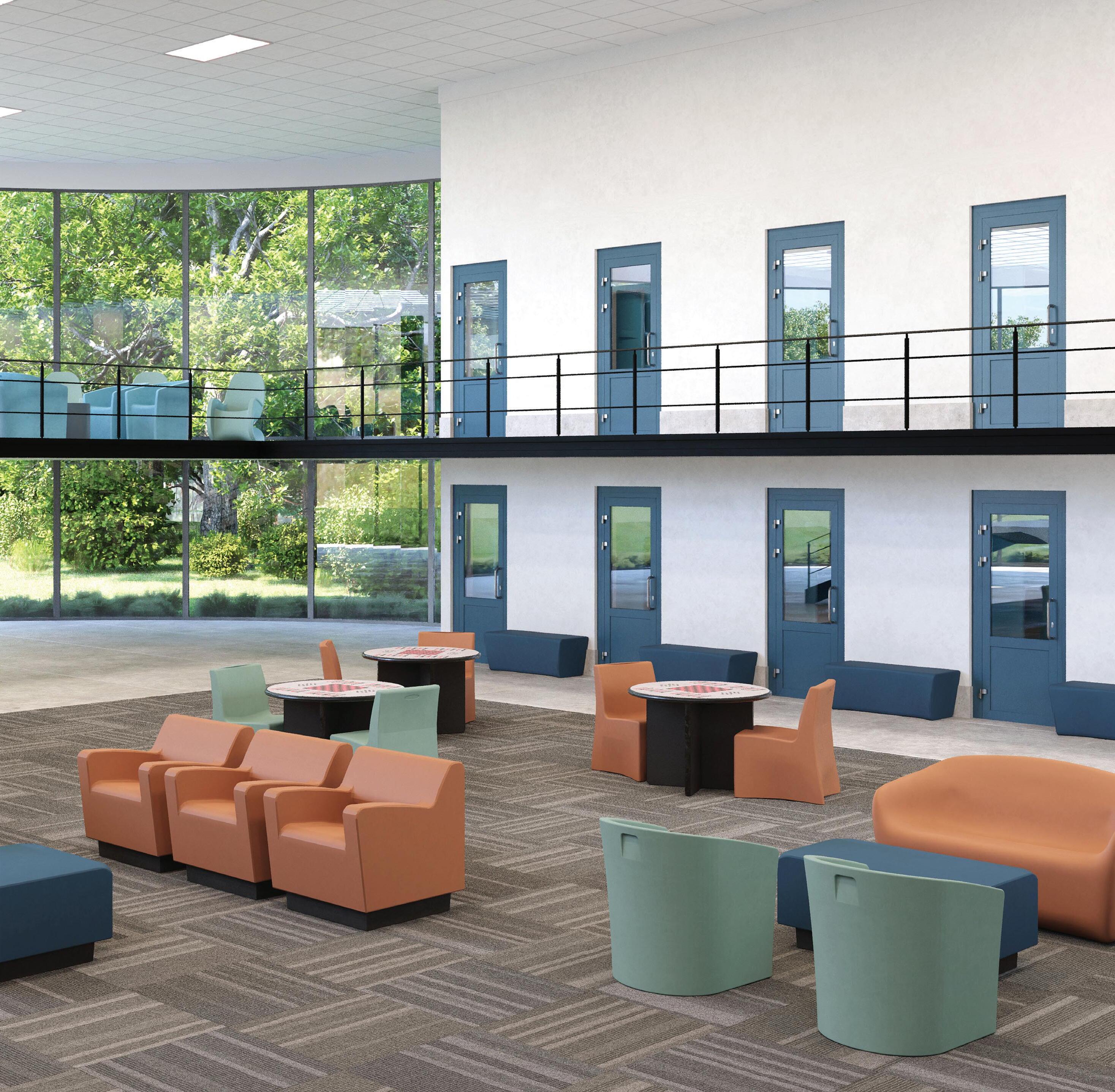
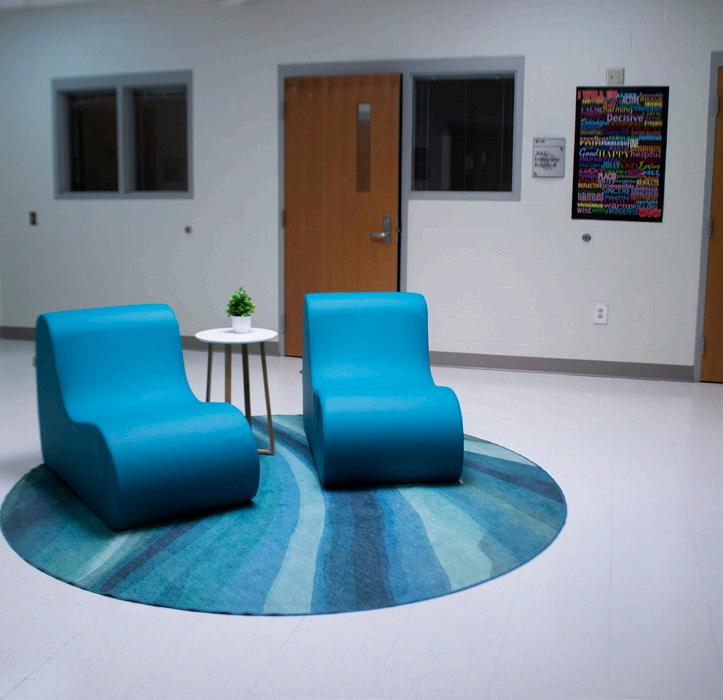
At Norix, we believe every person deserves to feel safe, respected, and at ease. That’s why we design furniture that quietly supports dignity and comfort – creating environments rooted in care, not crisis.
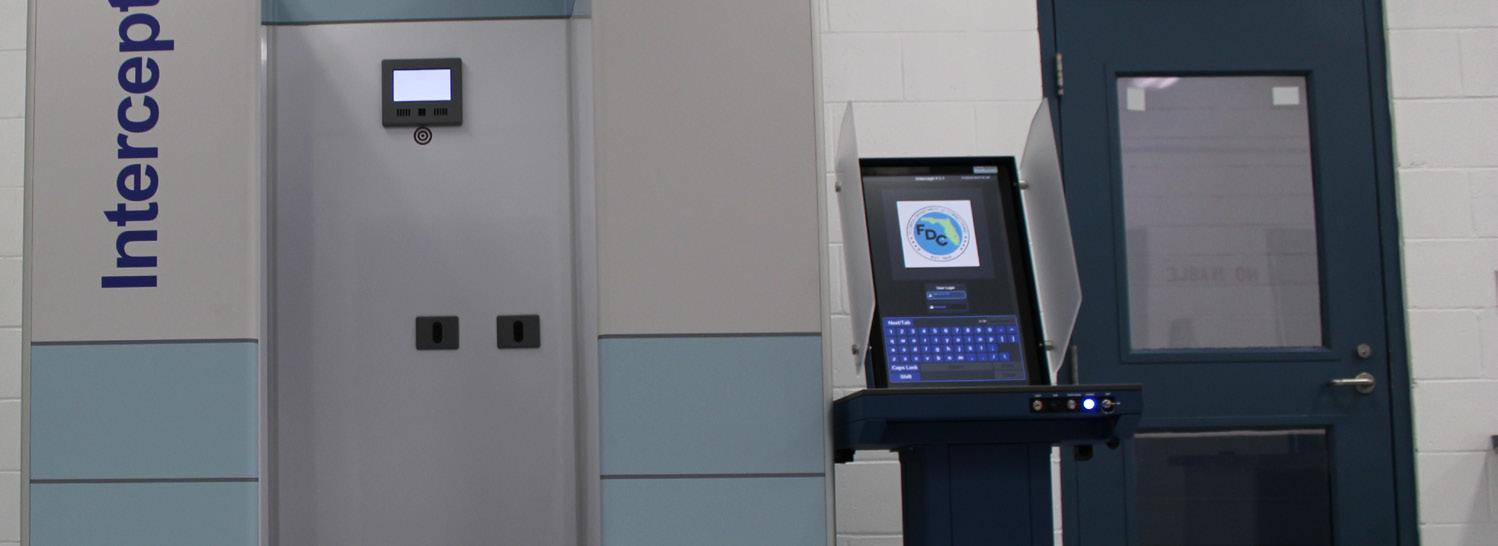
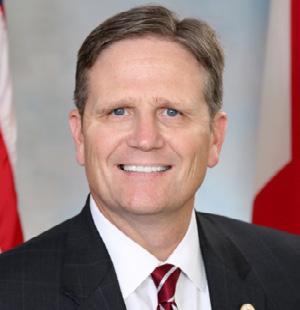
Florida Department of Corrections Secretary Ricky Dixon on How New Technologies are Redefining Corrections
MARCH 2026
SECURITY ELECTRONICS & DETENTION EQUIPMENT
COVER IMAGE:
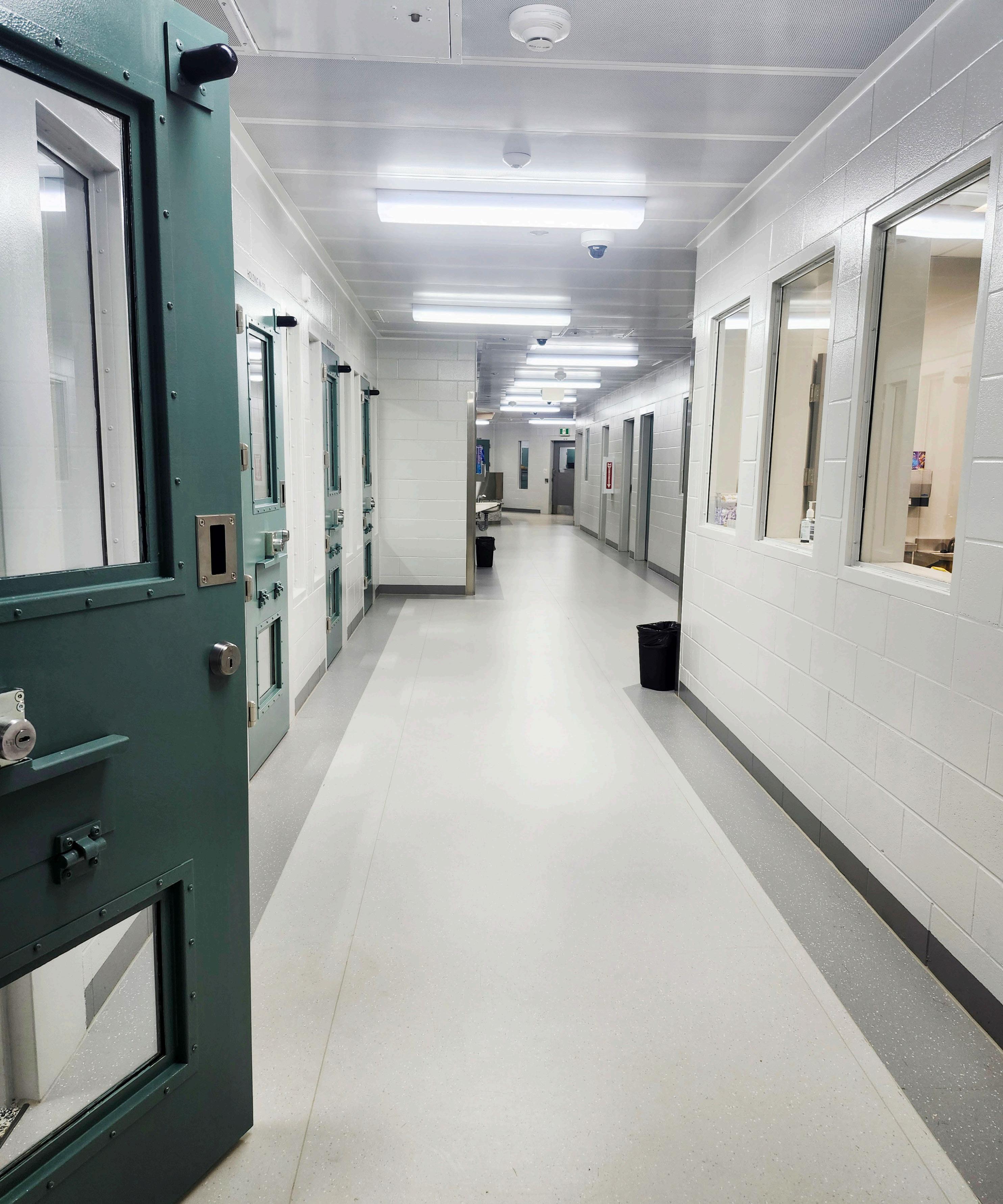
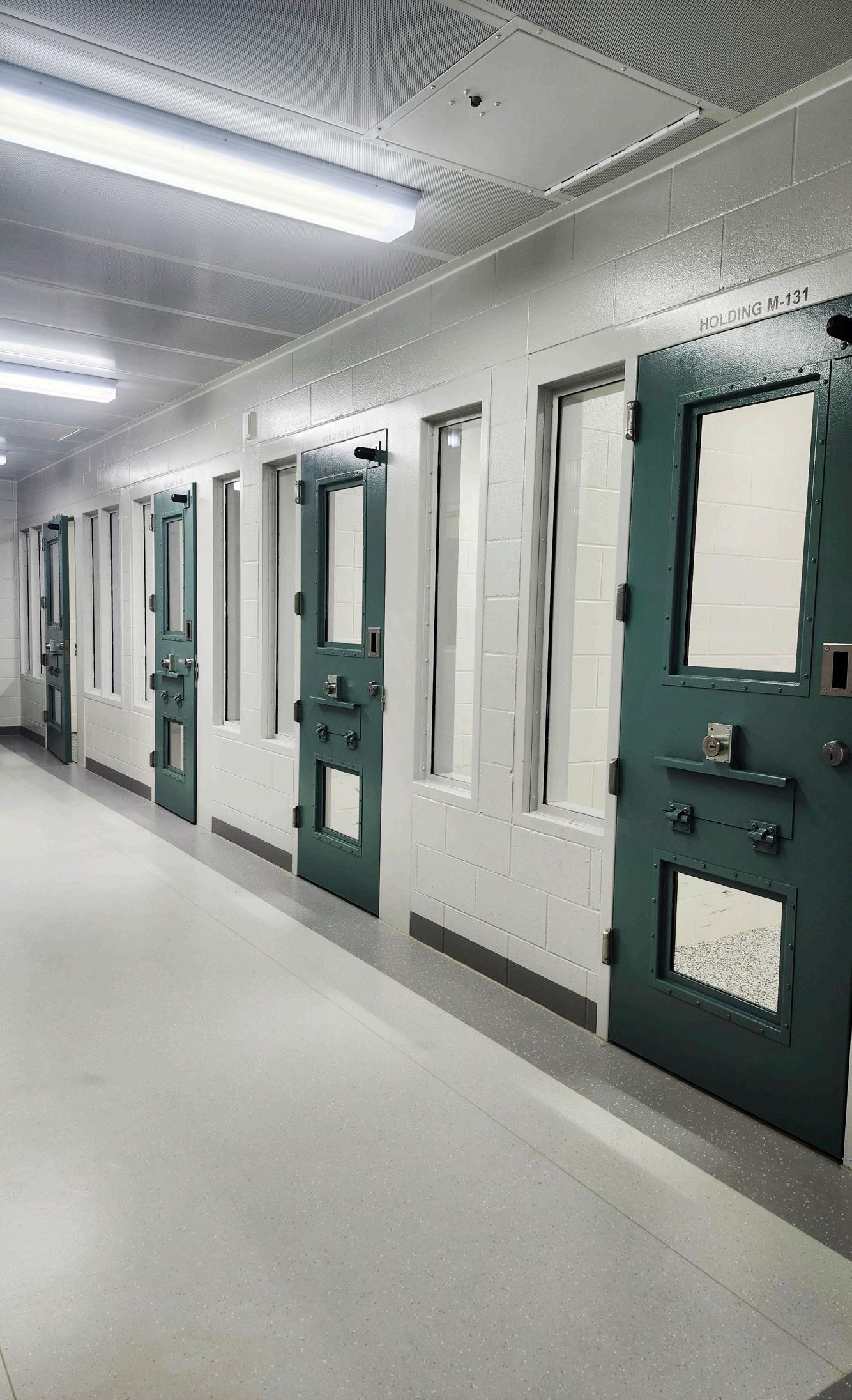
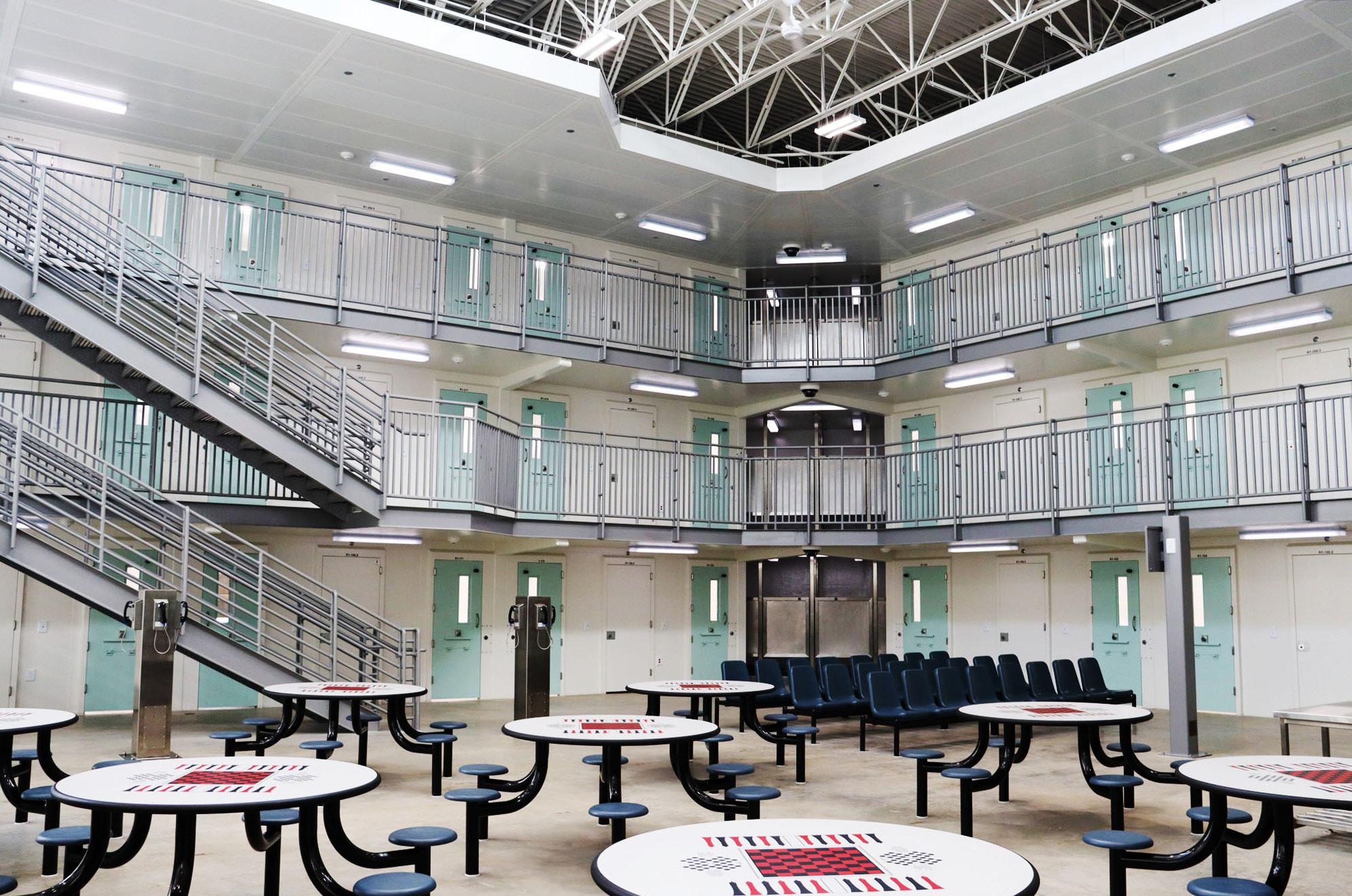
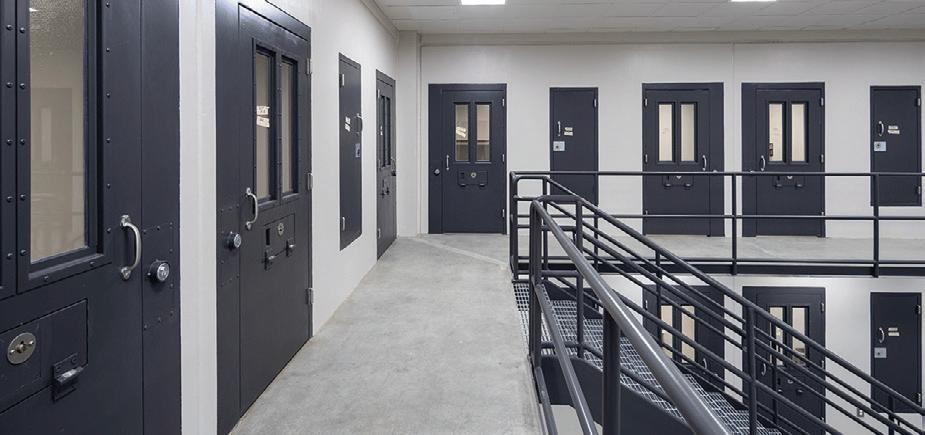
MARION COUNTY COMMUNITY JUSTICE CENTER
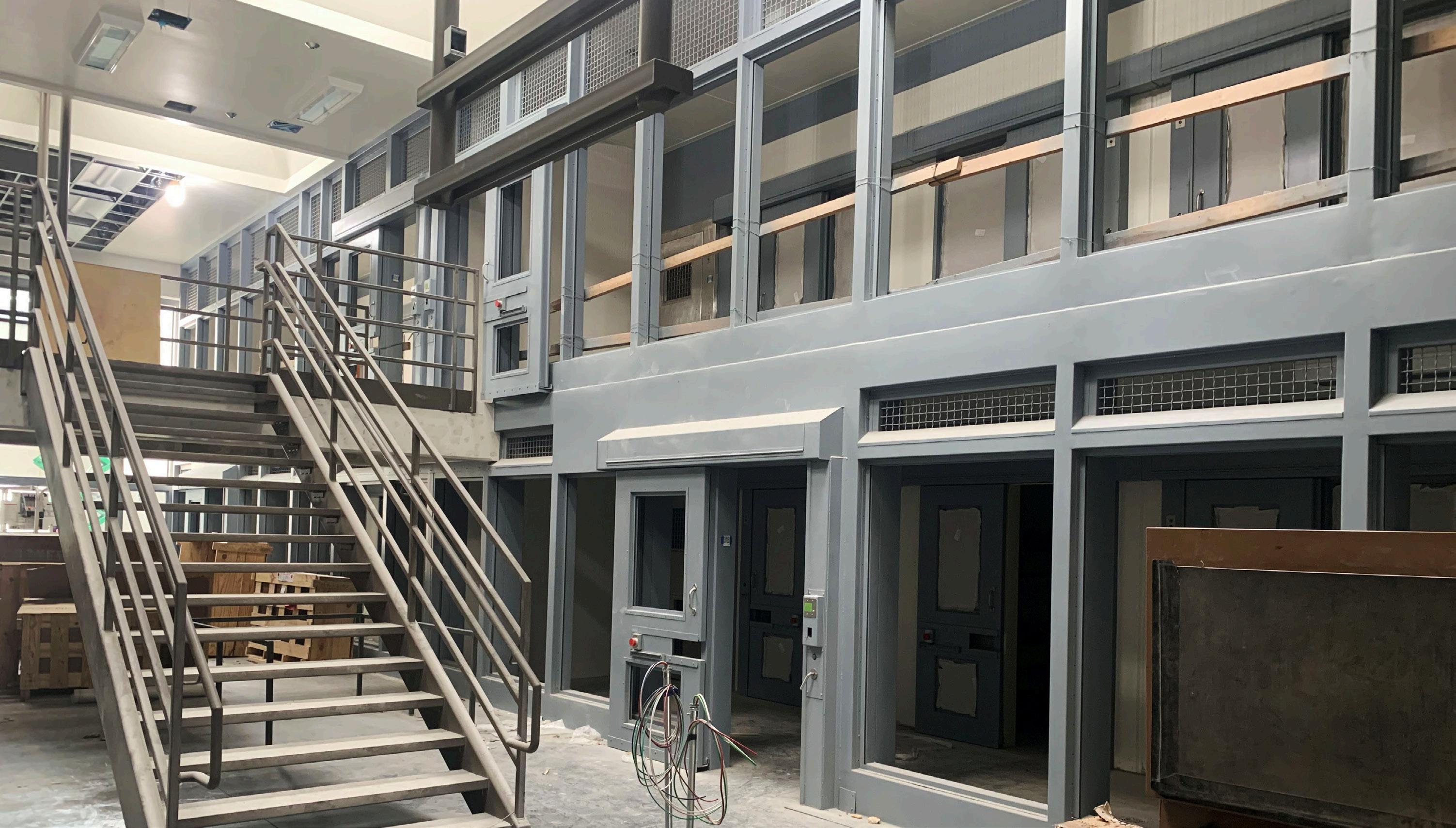
Images Courtesy of American Corrections Maintenance
2026 EDITORIAL ADVISORY BOARD
Editorial Deadline: 4/6/26
Ad Deadline: 4/20/2026
Contact: sarah@wmhmedia.com
Amy L. Ast Director, Ohio Department of Youth Services
Jeff Beard, Ph.D.
Former Secretary of Corrections for California and Pennsylvania
Bryan Collier Former Executive Director, Texas Department of Criminal Justice
Nicholas Deml Former Commissioner, Vermont Department of Corrections
Tyrone Oliver Commissioner, Georgia Department of Corrections
Wayne Salisbury Director, Rhode Island Department of Corrections
Cory Salzillo Managing Partner, WPSS Group
Nneka Jones Tapia, Psy.D. Managing Director for Justice Initiatives, Chicago Beyond
Josh Tewalt Former Director, Idaho Department of Correction
Felice Upton Former Asst. Secretary, Juvenile Rehabilitation, Washington DCYF
Tim Ward Former Commissioner, Georgia Department of Corrections
President
Torrey Sims Vice President of Sales and Marketing Sarah Clow
Sales
Sarah Clow Vice President of Sales and Marketing sarah@wmhmedia.com Editorial Charlie Lange, Reporter charlie@wmhmedia.com Subscription
SEC & DEC LIST
SEC & DEC REPORT
SEC & DEC PERSPECTIVES
SEC & DEC TRENDS EMERGING TECH INNOVATION CORNER FACILITY OF THE MONTH
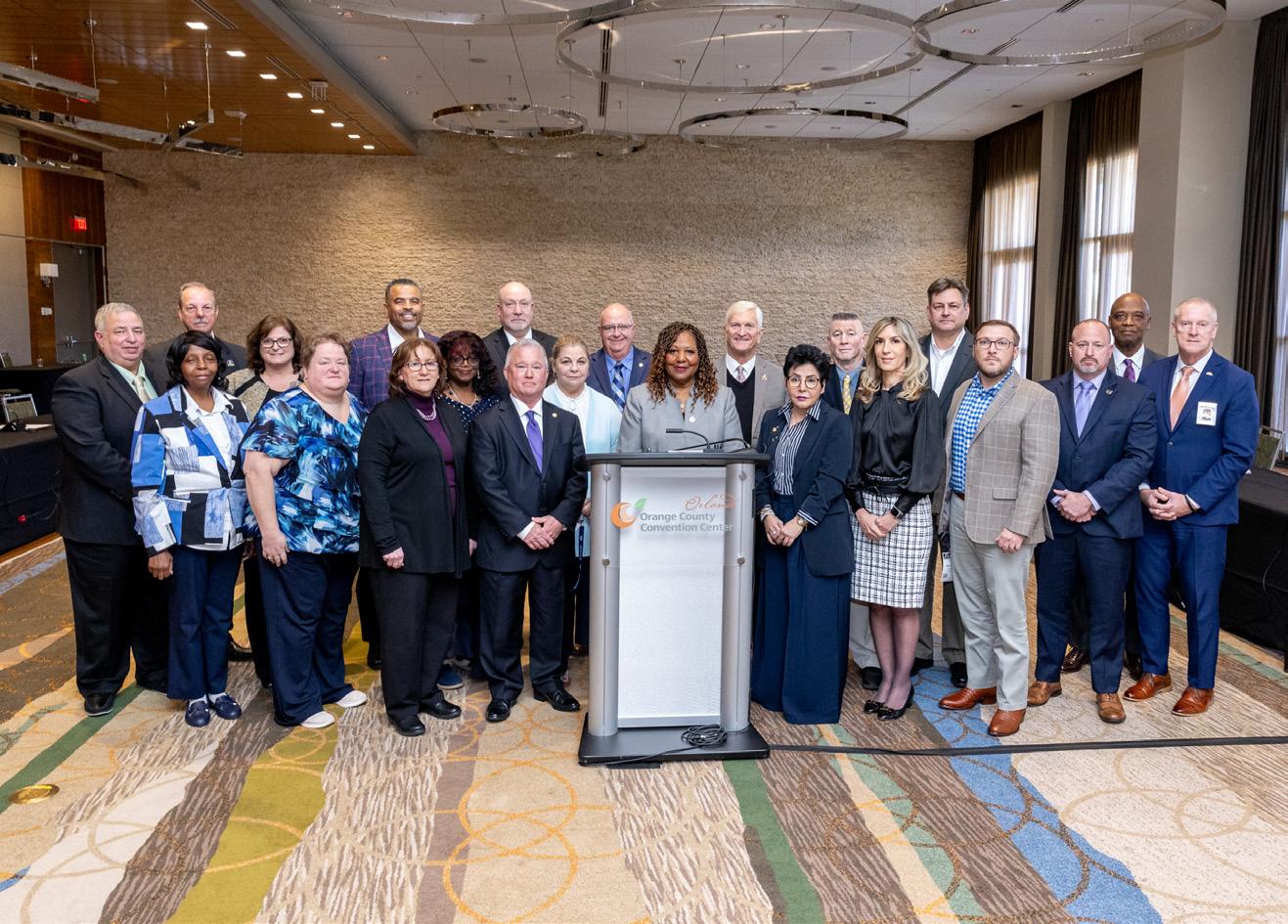
Welcome New Editorial Advisory Board Member
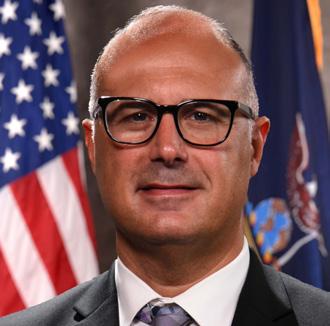
Daniel F. Martuscello III is the Commissioner of the New York State Department of Corrections and Community Supervision. He was nominated to the position by Gov. Kathy Hochul and confirmed by the New York State Senate in May 2024 after serving as Acting Commissioner since June 2023.
Commissioner Martuscello is the first former corrections officer to be appointed to the position of NYSDOCCS Commissioner. He began his career as a corrections officer with the then-New York State Department of Correctional Services in May 1997. He transitioned from security to administrative services in 2001, where he held a variety of titles within the Bureau of Personnel, including Director of Human Resources.
In August 2012, Commissioner Martuscello was appointed Deputy Commissioner for Administrative Services, where he oversaw the agency’s $3.6 billion budget. He was appointed Executive Deputy Commissioner for the agency in November 2017. In this role, he coordinated the activities of and provided general direction to the agency’s entire executive team and served as the Commissioner’s principal advisor, with an emphasis on labor relations, intergovernmental affairs, facility operations and community issues.
Commissioner Martuscello is a member of the American Correctional Association, New York State Minorities in Criminal Justice, New York Corrections and Youth Services Association, and the Chair of the Northeast Region of the Correctional Leaders Association. He holds a Bachelor of Arts in sociology with a concentration in criminology from SUNY Cortland.
A/E/C
The American Institute of Architects (AIA) has named Richard Branch as its new Chief Economist. In this role, Branch will analyze U.S. economic trends and construction markets, assessing their impact on architectural practice. He will also oversee the production of key indicators and reports to forecast construction activity and provide strategic guidance to AIA members. Most recently, Branch served as Chief Economist for Dodge Construction Network. As head of the Dodge Economics Group, his primary focus was to provide world-class tracking, analysis and forecasting of construction activity while working closely with national, regional and trade media to share insights. This included overseeing the execution of the monthly Dodge Momentum Index and National Construction Starts research as well as leading the annual Dodge Construction Outlook. Branch’s expertise is further highlighted by participation in AIA’s Consensus Construction Forecast panel, where he has contributed valuable economic perspectives.
Jim Hopper was recently named President of the Florida Division of Owen‑Ames‑Kimball (O-A-K), an employee-owned construction firm serving Southwest Florida since 1982. Hopper, who joined O-A-K in 2025 as Regional Vice President for
Florida operations, succeeds Matthew Zwack, who has served as President since 2020 and will move into a newly created role as Senior Director of Client Relations, where he will continue to support strategic initiatives, client relationships and community partnerships. Hopper’s career is defined by depth, range and steady leadership built over more than three decades in the construction industry. Prior to joining O-A-K he was President of 38NORTH Construction Group LLC and a Senior Project Manager with GE Johnson Construction Company.
Michael (Mike) J. Choutka has assumed the role of Board Chair for Hensel Phelps. Choutka began his career with Hensel Phelps as a Field Engineer, rising through the ranks to Office Engineer, Project Engineer, Project Manager, Operations Manager, Vice President, Executive Vice President, Chief Operating Officer, President and Chief Executive Officer before serving as Chair. He is a graduate of the University of Nebraska-Lincoln with a Bachelor of Science in construction management engineering. He serves on the executive committee of Construction Safety Week, is a board member of the Construction Industry Round Table and is a member of the National Academy of Construction. He is also a founding board member of AEC Unites, which aims to unify individuals and provide opportunities for all firms throughout the AEC industry.
Bradley Jeanneret has been appointed as President and Chief Executive Officer by the Hensel Phelps Board of Directors. Jeanneret began his career with Hensel Phelps in Southern California in 1996 as a Field Engineer and progressed through a broad range of operational and executive leadership roles, including Office Engineer, Project Engineer, Area Superintendent, Project Superintendent, Project Manager, Vice President, Executive Vice President and President and Chief Operating Officer. In 2026, he was appointed President and Chief Executive Officer. Throughout his career, Jeanneret has worked across numerous Hensel Phelps regional offices and business units, gaining broad operational insight and a strong, enterprise-wide understanding of the firm’s people, culture and execution. Jeanneret joined Hensel Phelps in 1996, where he developed his career in operations, including Regional Vice President and Executive Vice President. Before becoming Hensel Phelps’ seventh CEO, he served as Chief Operating Officer.
CORRECTIONAL PROFESSIONALS
Gov. Abigail Spanberger appointed Joseph Walters as the 11th Director of the Virginia Department of Corrections (VADOC) and Jermiah “Jerry” Fitz as the Chief Deputy Director. Director Walters brings more than 30 years of public safety experience to the position. Most recently, he served as the VADOC’s Senior Deputy Director, a role he assumed in 2025. In 2024, he was appointed to serve as the agency’s Chief Law Enforcement Officer while also serving as Deputy Director for Administration, a position to which he was
promoted in 2018. Director Walters first joined the VADOC in 2015 as the agency’s human resources director. He began his public safety career as a local law enforcement officer in Martinsville. In 1993, he joined the Virginia State Police as a state trooper, rising to the rank of Captain and Division Commander.
Chief Deputy Director Fitz brings nearly 30 years of experience in corrections and public safety to this role, having served in a variety of leadership positions throughout the agency. He began his career in 1997 at District No. 14 in Danville, Va., as a Surveillance Officer, and rose to the rank of Chief Probation Officer in Chesterfield County in 2013, later serving in Henrico County. Fitz has led VADOC’s Central Region as Regional Administrator for Community Corrections and later the Eastern Region as Regional Administrator for Institutions. His experience also includes serving as the agency’s Legislative Liaison, Corrections Operations Administrator, and most recently, Deputy Director of Community Corrections since March 2025.
COMPANY NEWS
Advanced Correctional Healthcare Inc. (ACH) announced Dr. Melissa Caldwell, Chief Behavioral Health Officer of Freedom Behavioral Health Inc., as a 2026 recipient of the Critical Thinking Award for her response to a high-acuity situation involving an individual in custody. The award recognizes an ACH associate who exhibits exceptional critical-thinking skills and adaptability in analyzing complex situations, making sound decisions and implementing innovative solutions to deliver high-quality patient care in conditions where death would otherwise be imminent. Caldwell is an award-winning Clinical-Forensic Psychologist with more than 30 years of correctional mental health experience. In 2022, she was also honored with the prestigious Edward A. Harrison Award of Excellence in Correctional Health Care Leadership from the National Commission on Correctional Health Care. She currently leads a team of qualified mental health professionals across 18 states.
IN MEMORIAM
Curtiss Jonah Pulitzer passed away on Jan. 23, 2026, at the age of 75. Pulitzer was one of the nation’s leading experts in justice-facility design and operations planning, with more than 35 years of professional experience. A licensed Architect and Criminal Justice Planner, he worked in more than 40 states, serving clients at the municipal, county, state and federal levels. As a Principal of Pulitzer/Bogard & Associates LLC, his work focused on needs- and evidence-based facility planning, operations and project management. He also served as Corrections Specialist for the Iowa Department of Corrections. Pulitzer frequently provided technical assistance and training for the National Institute of Corrections and professional justice organizations nationwide. He held a master’s degree in urban design and planning from the City University of New York.
Branch
Jeanneret
Hopper
Walters
Caldwell
Pulitzer
Fitz
Martuscello
Choutka
The Importance of Leveraging Detention Equipment and Security Electronics Contractors in Justice Architecture
By Gerry Guerrero, AIA, NCARB, DBIA
Designing justice facilities requires a high level of specialization and a team of architects, engineers and consultants that understands the complexities justice facilities present. These facilities operate under intense security requirements, complex life-safety regulations and demanding operational conditions. As a result, the successful delivery of a safe, secure, durable and operationally efficient facility can rely on early and continuous engagement with two critical specialty partners: the detention equipment contractor (DEC) and the security electronics contractor (SEC).
For architects and clients, understanding the distinct and complementary roles of these contractors is essential. Leveraging their expertise throughout the planning, design and construction phases significantly improves coordination, reduces risk, strengthens system reliability and ensures that the final product meets the rigorous demands of a modern correctional facility.
Leveraging the DECs
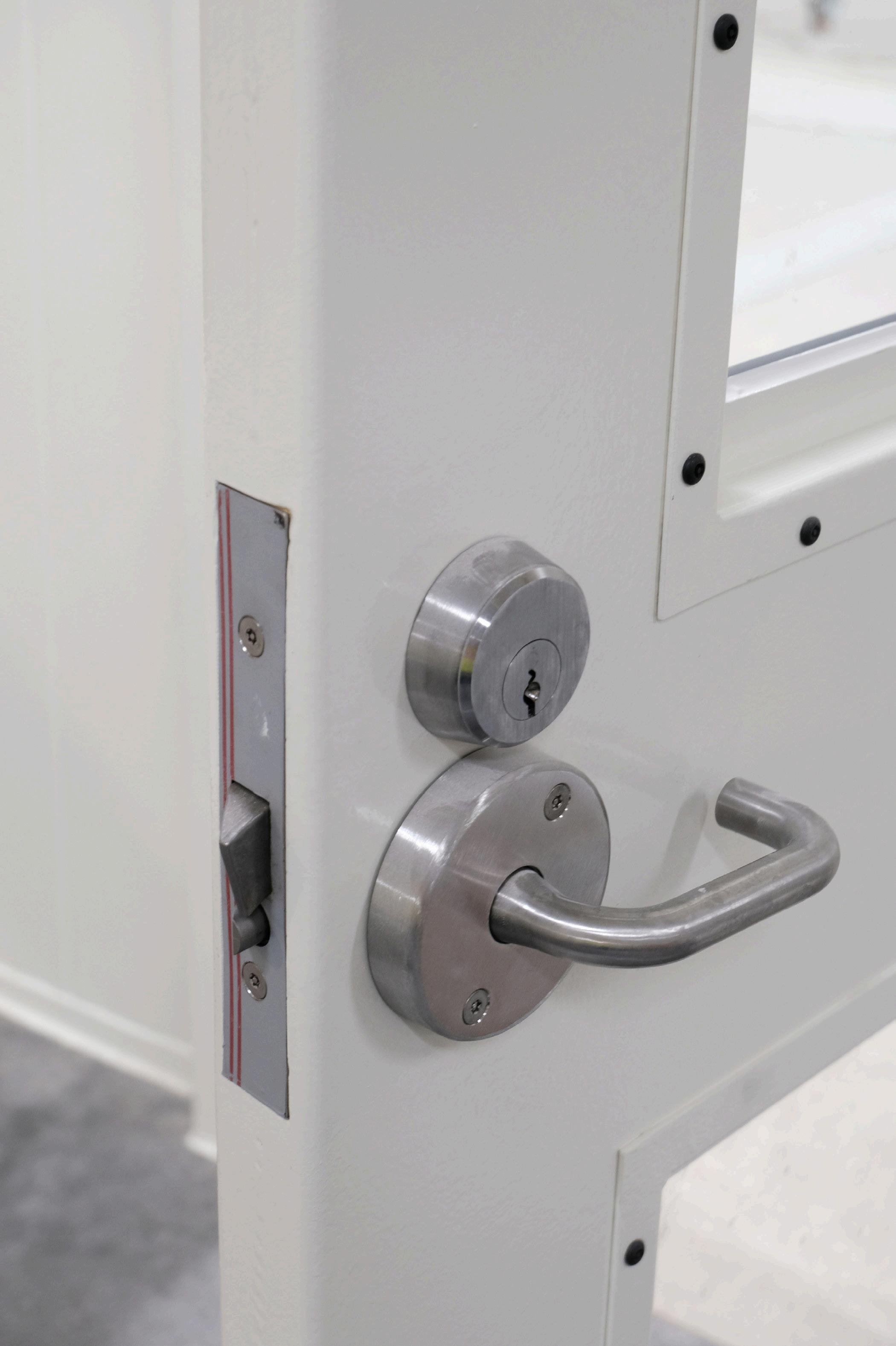
Detention environments require hardware and physical components designed to withstand high levels of abuse, tampering and continuous operation. DECs bring deep technical knowledge of these specialized systems, including security doors and frames, locking hardware, detentionspecific furniture, windows, glazing and hardware connections. These are often some of the costliest components within a secure facility, and as costs continue to rise, designers need to make sure proper components are selected based on the level of security required. Working closely with DEC partners can make decisions cost-effective without reducing the safety and needed security level.
The performance of such detention equipment directly impacts safety, security, daily operations and long-term durability. By engaging the DEC early in the design process, architects gain valuable guidance on product selection, integration requirements and installation considerations.
Ultimately, this helps eliminate design conflicts, reduce costly and time-consuming changes during construction, and ensure that the materials specified align with industry standards and agency expectations. For owners, this means a more reliable facility that remains safe, secure, durable and functional throughout its life cycle.
Leveraging the SECs
SECs brings expertise in sophisticated control, monitoring, tracking and communication systems. Today’s environments rely heavily on the seamless interaction between physical and electronic systems — and with persistent shortages of staff for these facilities, it is even more important to supplement safety and security with innovative technological solutions.
Engaging the SEC early
ensures that these interactions are designed correctly from the start. The SEC provides accurate device counts, power requirements, equipment-room needs, cable-routing details and system-architecture guidance. Their early input helps to clarify roles across disciplines, reduce ambiguity in construction documents, and results in a safer, more dependable control system.
All of this helps owners better understand their systems and make better-educated decisions
accurate cost estimates. For architects, this means protecting project schedule, budget and design integrity. Most importantly, for owners, it reduces the likelihood of change orders and delivers a smoother construction experience.
Flexibility and Long-Term Maintenance
By engaging the DEC early in the design process, architects gain valuable guidance on appropriate product selection, integration requirements and installation considerations.
based on their facility and staff. It isn’t productive to design systems that a client cannot operate or maintain, and SEC partners can assist in making informed decisions based on clients’ needs.
Cost Considerations
Similar to any complex institutional facility project, it’s advantageous to consult specialty contractors early in design coordination, as conversations can mitigate coordination gaps and reduce project losses. Because the security scope overlaps with architectural, electrical, mechanical and low-voltage systems, unresolved conflicts can lead to rework, redesign and schedule delays.
Leveraging the DEC and SEC during schematic and design-development phases allows these experts to identify potential issues before documents are issued for construction. Their value begins with conceptual planning, and thus, that is when the engagement makes sense to begin. Their input helps establish proper interface points between trades, allocate appropriate infrastructure and develop more
Justice facilities must remain operational for decades, often under heavy wear and with limited maintenance budgets. DEC and SEC teams help select materials and systems that are durable, maintainable and supported long-term. Their input can simplify maintenance access, reduce proprietary complexities and standardize critical components. With evolving policy amendments and classification changes, system flexibility is essential. Partner expertise supports designing systems that can accommodate future upgrades and modifications as technology changes.
As designers, one of the most beneficial outcomes of working with an integrated team early in the process is helping owners to manage operating costs and avoid committing to unsupportable technologies. Leveraging DEC and SEC partners is essential to achieving a successful outcome, and it is our responsibility as design professionals to help our clients realize these outcomes.
Gerry Guerrero, AIA, NCARB, DBIA, is Global Director, Justice + Civic, for HDR and a member of Correctional News’ Industry Knowledge Council.
CALL FOR BIDS
ELMORE COUNTY, ALABAMA
Governor Kay Ivey Correctional Complex
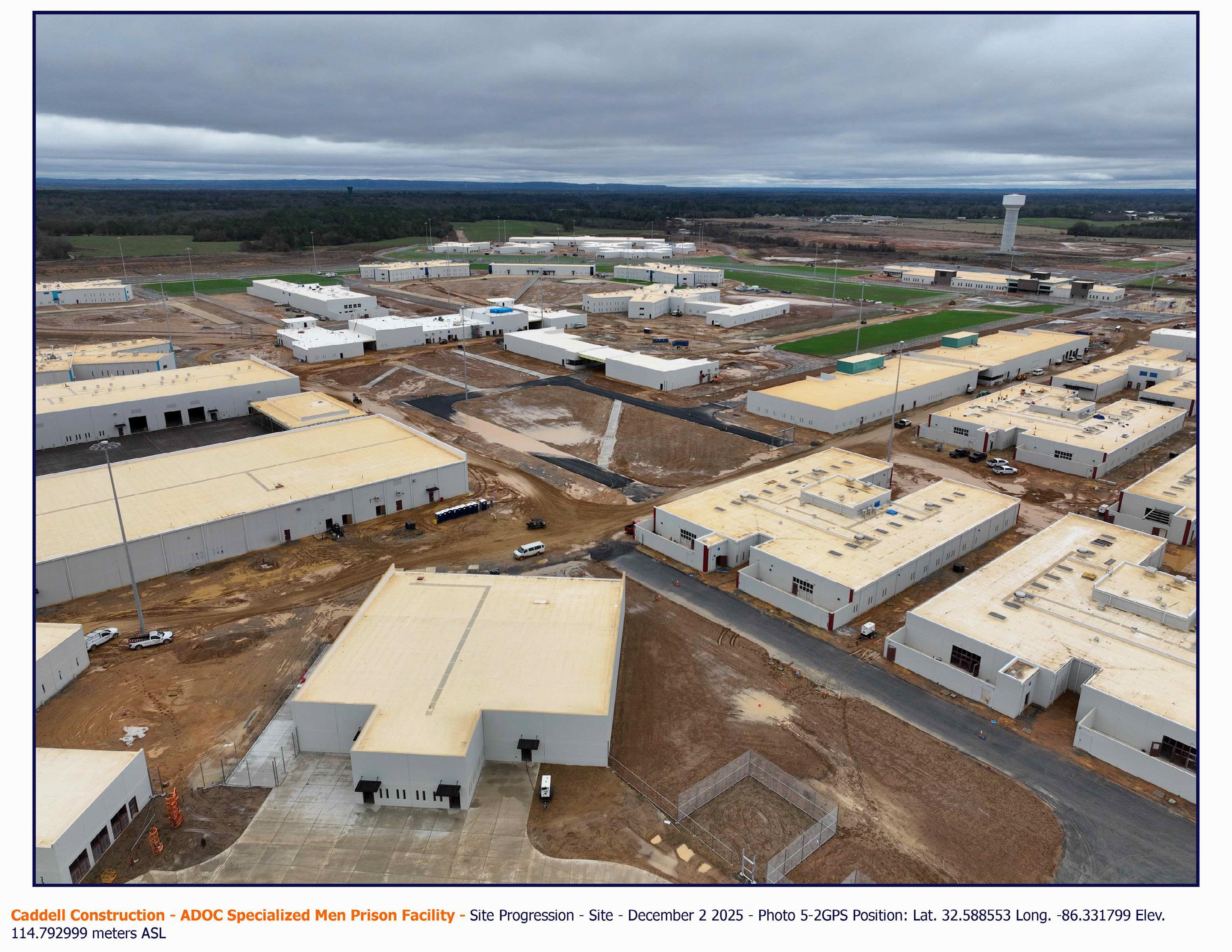
The Alabama Department of Corrections is seeking a single provider to perform comprehensive maintenance services at its new 4,000-bed Governor Kay Ivey Correctional Complex located in Elmore County, Alabama. This state-of-the-art complex, with 54 buildings and 1,438,448 Gross Square Feet, is slated to open in 2027.
S C O P E O F S E R V I C E S
BUILDING ENVELOPE HVAC
ELECTRICAL PLUMBING
MECHANICAL
Facility Maintenance Services Contract The ADOC will pre-qualify bidders and follow with a bid process for pre-qualified bidders only.
KITCHEN AND LAUNDRY EQUIPMENT LAWN SERVICES
SECURITY ELECTRONICS
DOOR AND SECURITY HARDWARE
STATE OF FLORIDA
DIRECTOR’S REPORT
From Chain-Link Fences to Intelligent Systems
How collaboration and new technologies are redefining corrections
By Ricky Dixon
My first exposure to prisons and the need for more advanced detention capabilities came when I was seven years old, when my father moved our family into housing reserved for employees of the prison where he worked. Our backyard sat a few hundred feet from the perimeter, where two chain-link fences separated more than a thousand incarcerated individuals from the free world. That was it: two fences topped with a few strands of barbed wire. There were no razor ribbons, no microphonic or microwave detection systems — and no modern perimeter technology of any kind.
Armed officers staffed guard towers around the facility, and more than once we heard the sharp crack of a rifle echo across the yard as an officer attempted to deter or stop someone making a desperate bid for freedom. Even routine operations were rudimentary by today’s standards. During shift changes, tower officers exchanged keys and equipment by lowering a milk crate or bucket tied to a rope. High-tech security, it’s safe to say, was in short supply. I later learned that this level of security wasn’t unusual. It was typical of prisons across America at the time.
Thankfully, the profession has evolved. Collaboration between corrections professionals and privatesector partners drove meaningful advancements, making facilities more secure and communities safer. Today, most modern prisons employ sophisticated detection systems that alert controlroom staff to activity near or along secure perimeters. What once relied almost entirely on human vigilance is now supported by layers of technology designed to prevent incidents before they escalate.
What I didn’t know back then was that less than two decades later I would become part of the profession myself, starting as a correctional officer, moving through the security ranks and eventually leading the Florida Department of Corrections (FDC), the nation’s third-largest corrections system.
Just as progress occurred before I entered the field, corrections has continued to evolve throughout my 30-year career for two consistent reasons. First, administrators learned never to underestimate staff members’ ability to identify better ways of doing business. Second, administrators learned to rely on
industry partners to help turn those ideas into reality.
Collaboration has been and will remain the essential ingredient for progress. In terms of advancement, I believe we’ve only scratched the surface. The Industrial Revolution may one day pale in comparison to the changes driven by artificial intelligence (AI), not just across society, but specifically within corrections. Even setting AI aside, the pace at which sophisticated security technology is being developed and deployed is remarkable. It’s fascinating to consider what prison operations might look like just a decade from now.
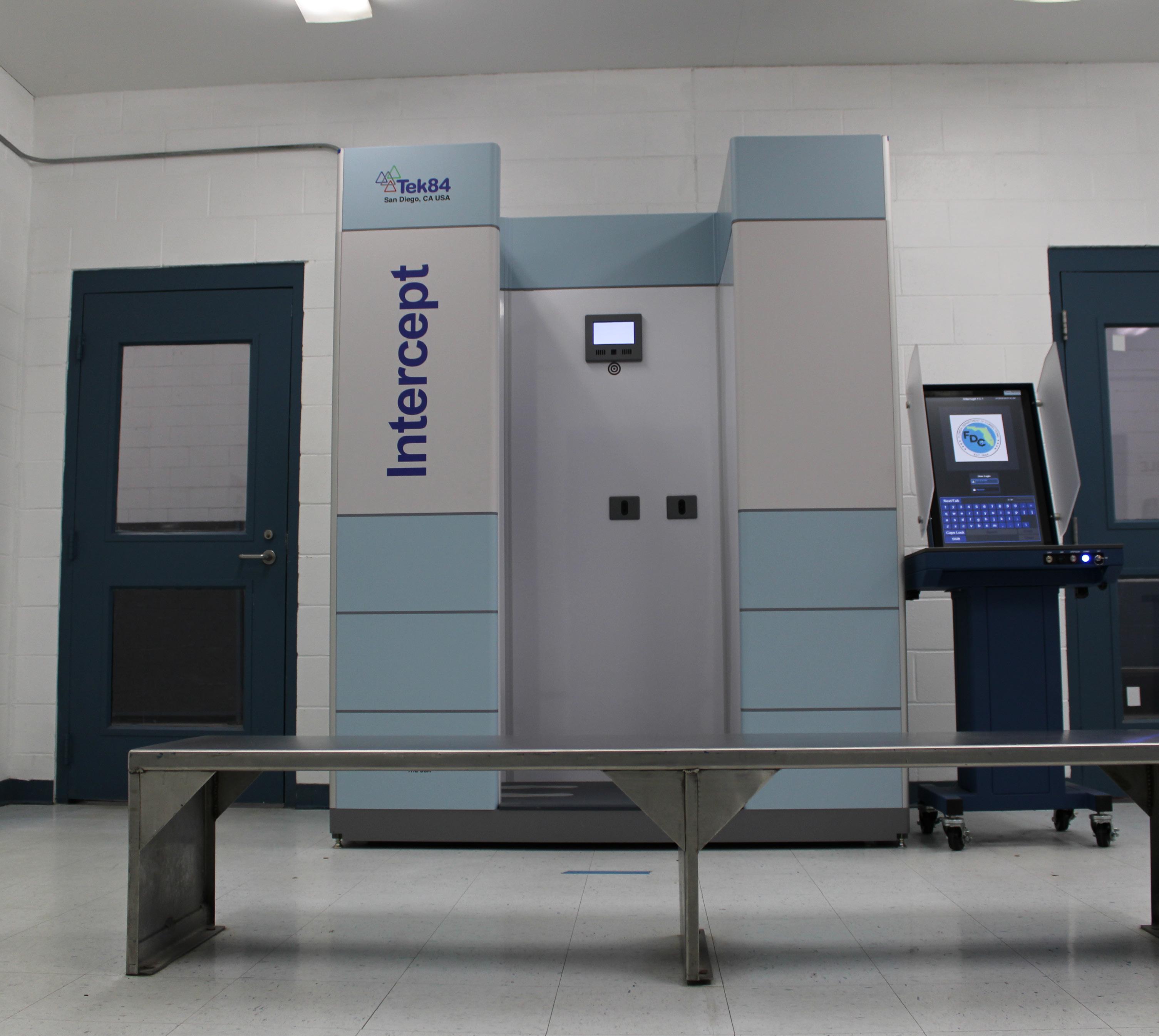
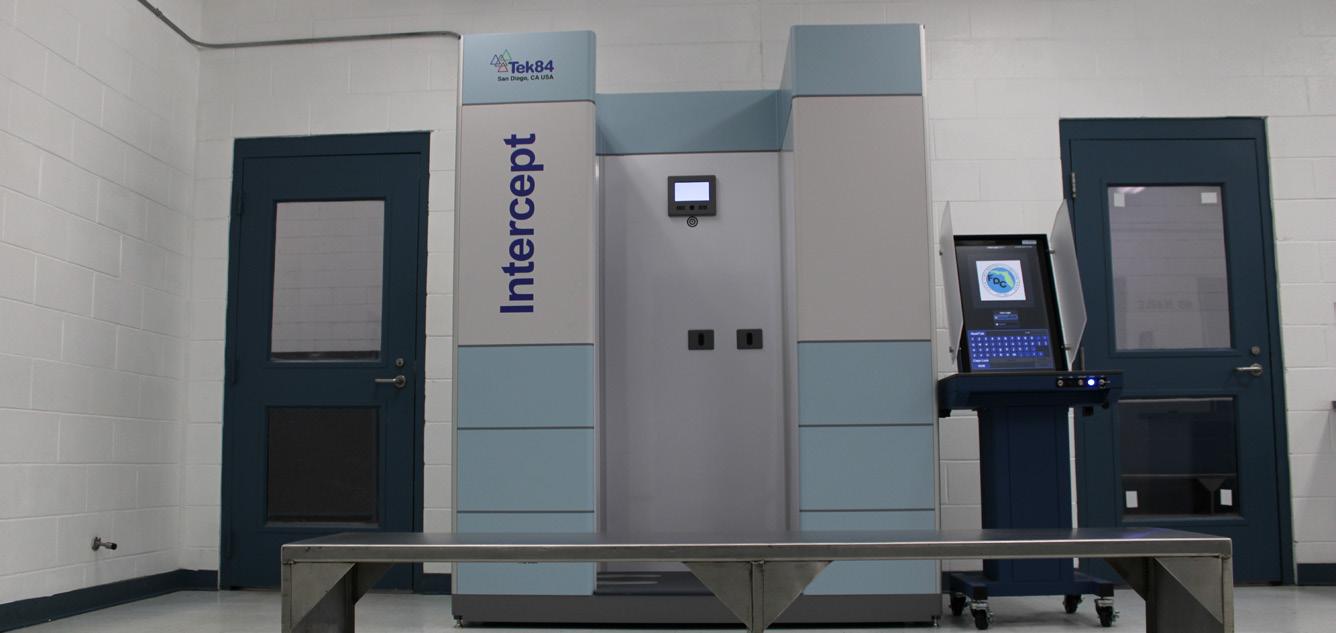
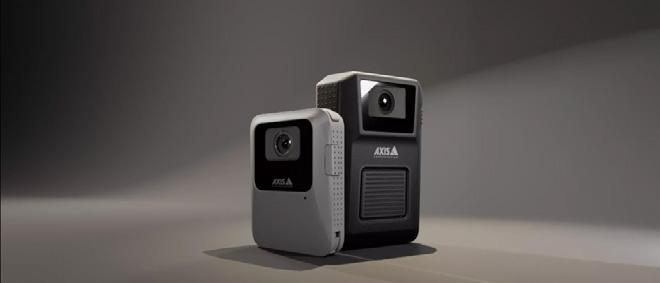
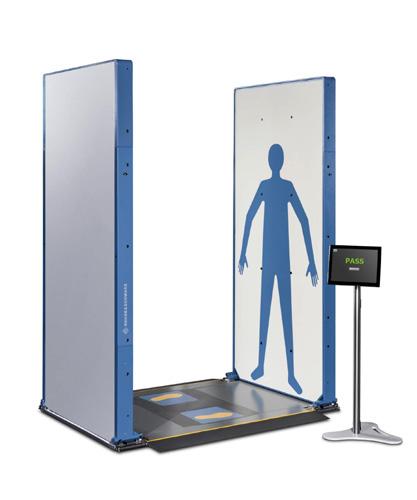
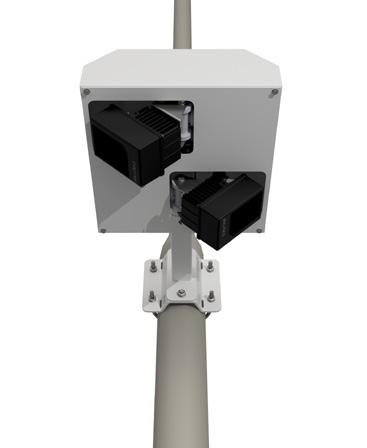
That said, it’s important not to overlook what is already available and in use today. Like many other states, we are deploying and piloting a range of technologies that make our facilities more effective and our operations more efficient. Biometric systems have improved accountability by ensuring the right individuals are entering and exiting facilities. Body scanners help prevent dangerous contraband from being concealed by those attempting to introduce it. Infrared perimeter systems now enhance traditional microwave and microphonic detection methods, while advances in metal detection and cellphone-interdiction technologies support staff in their ongoing efforts to reduce contraband.
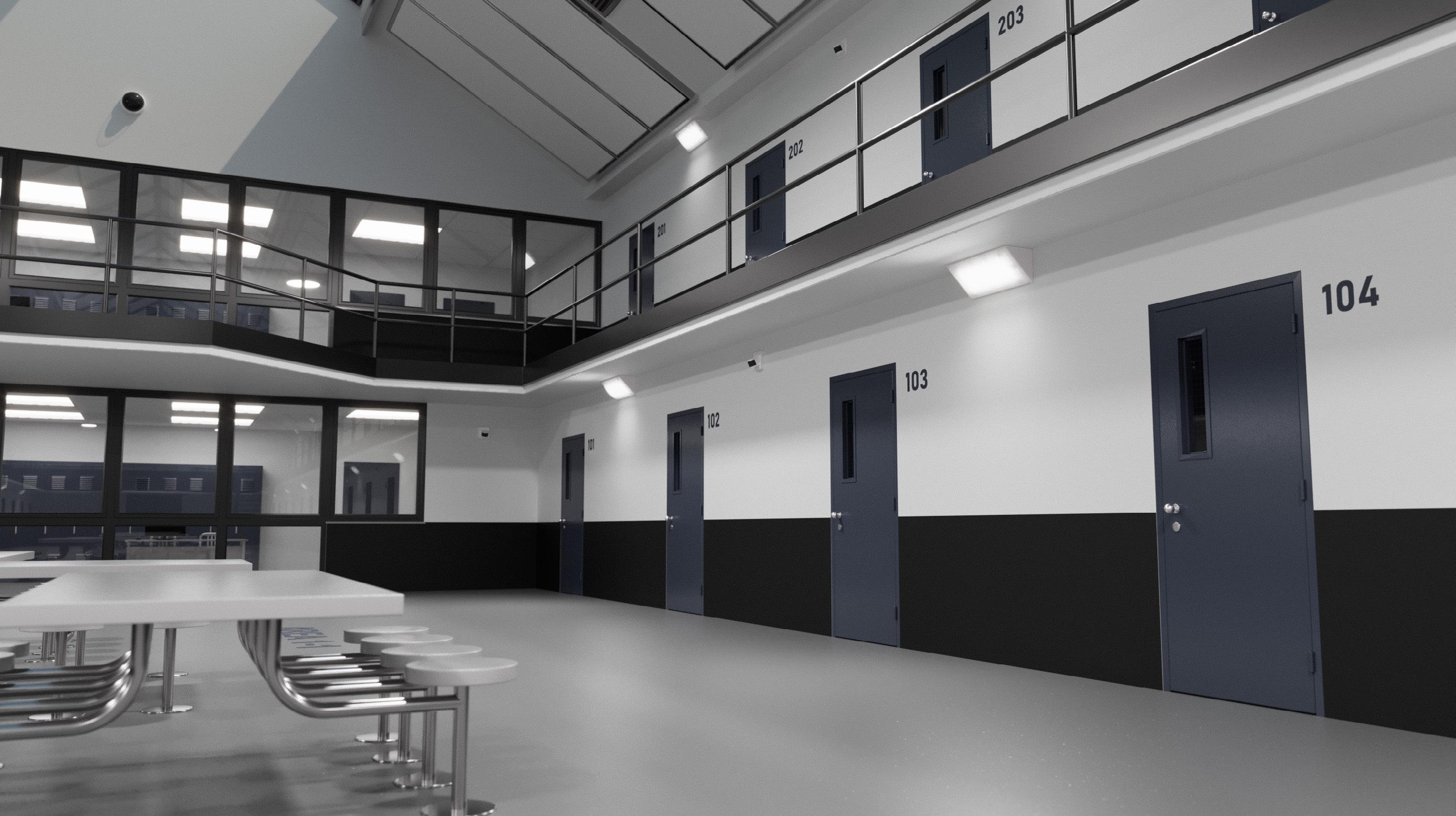
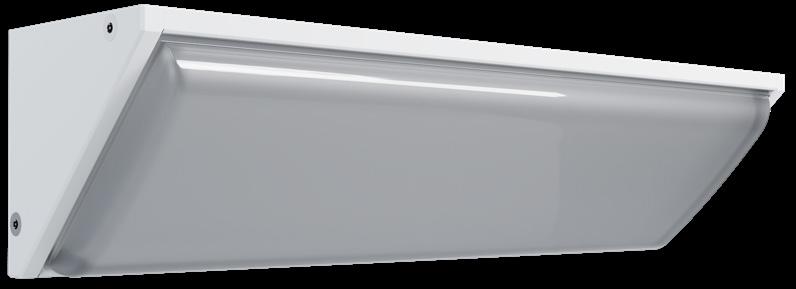
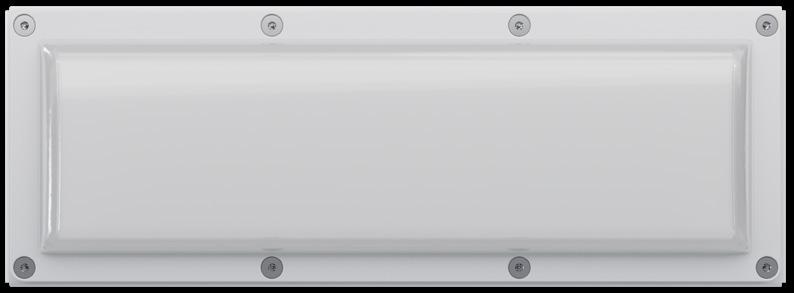
Mail-scanning systems now offer detection capabilities far beyond what human inspection alone can achieve. Even housing-unit lighting fixtures have been redesigned to be more secure, preventing misuse and reducing opportunities for tampering.
Technology has also transformed monitoring and intelligence gathering. Keyword-search capabilities allow staff to analyze telephone and tablet communications, work that once required hours of random listening by officers. Today, that same effort is faster, more precise and far more effective, allowing staff to focus attention where it is needed most.
As impactful as these advancements are, we should prepare ourselves for one of the most significant paradigm shifts of our careers. Could prisons that are largely free of violent incidents (or the contraband that drives many of those incidents) be possible? Could report writing, handwritten logs and manual audits become relics of the past? Could risk and needs assessments be dramatically improved by AI, reducing the enormous number of staff hours currently required while improving accuracy and outcomes?
Those questions are no longer theoretical. Private-sector partners are already
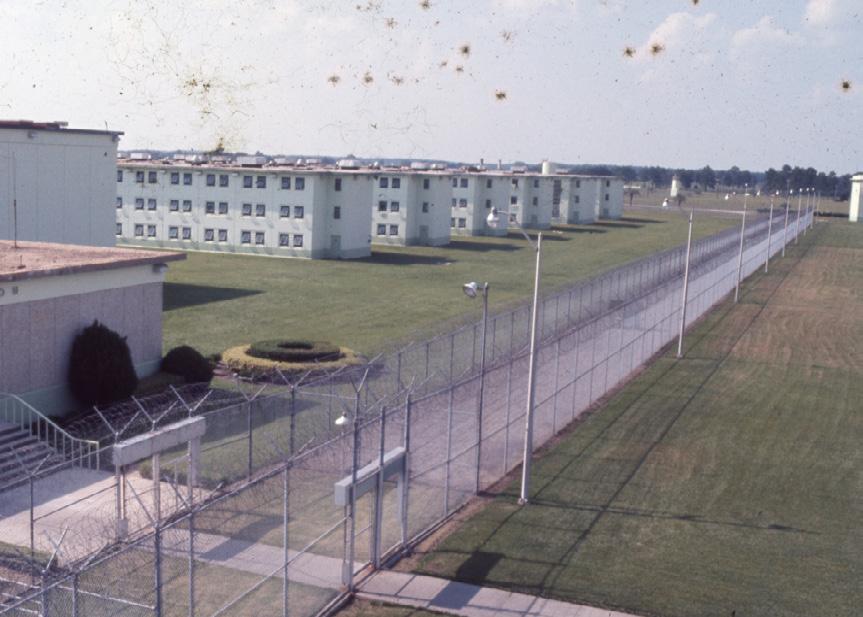
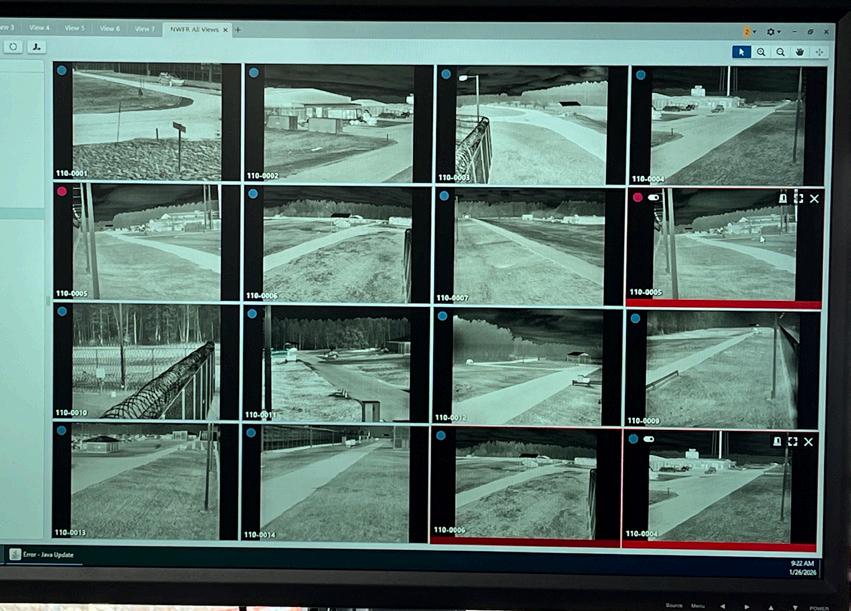
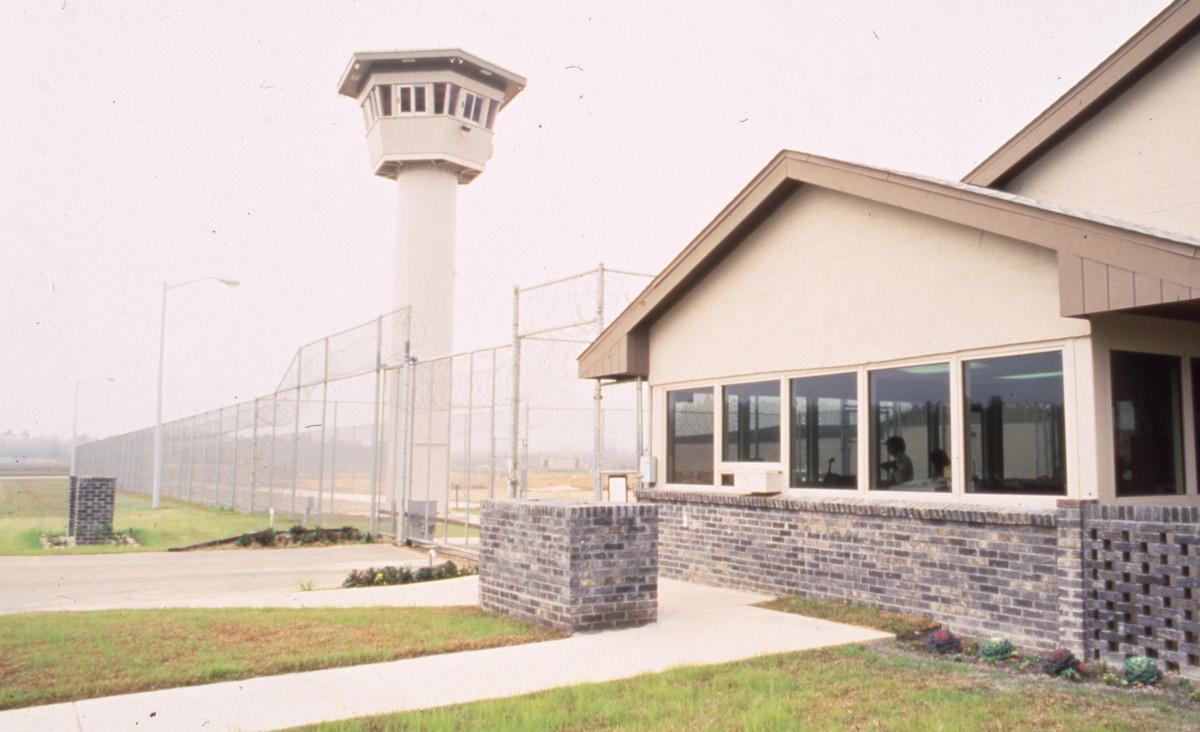
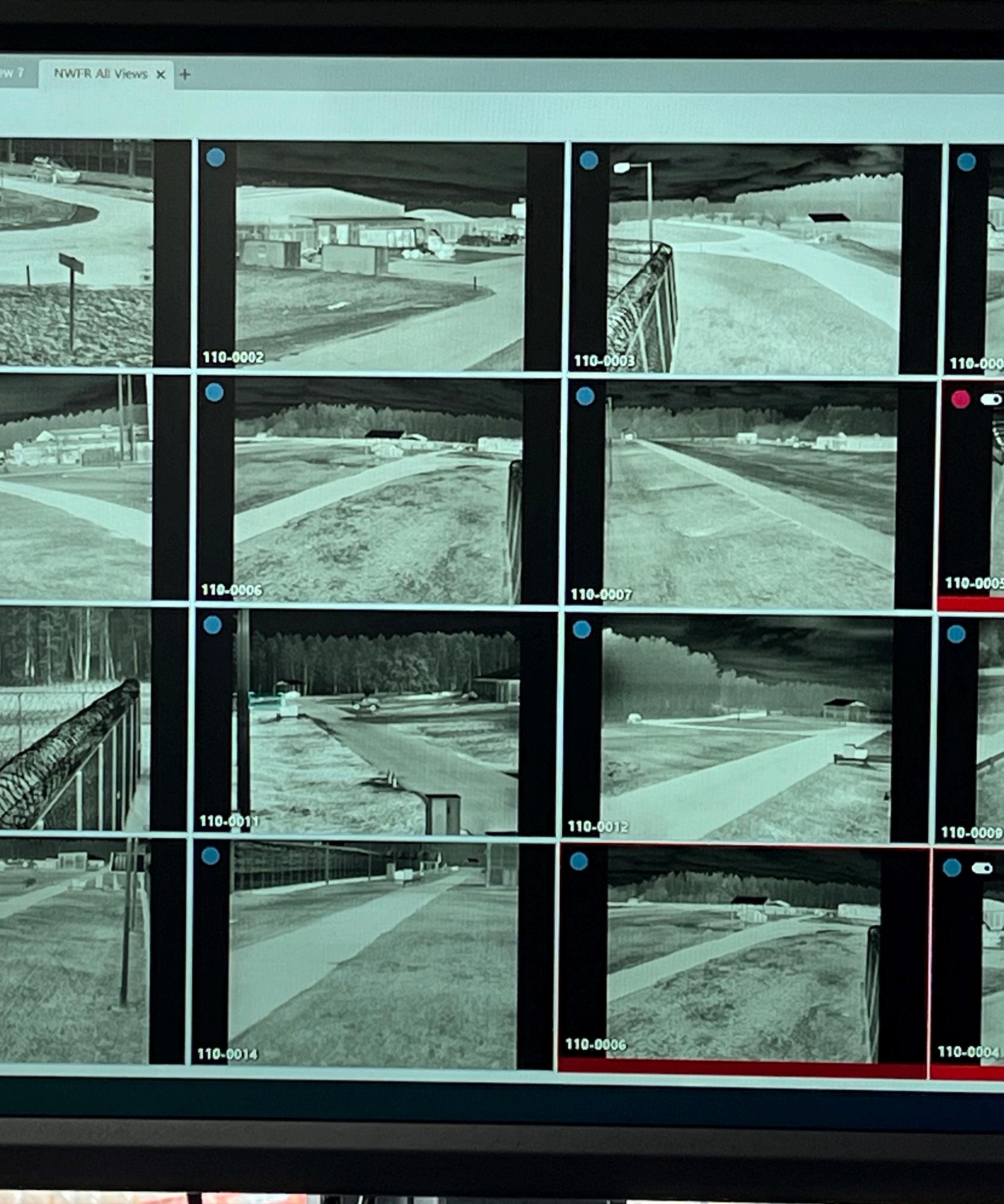
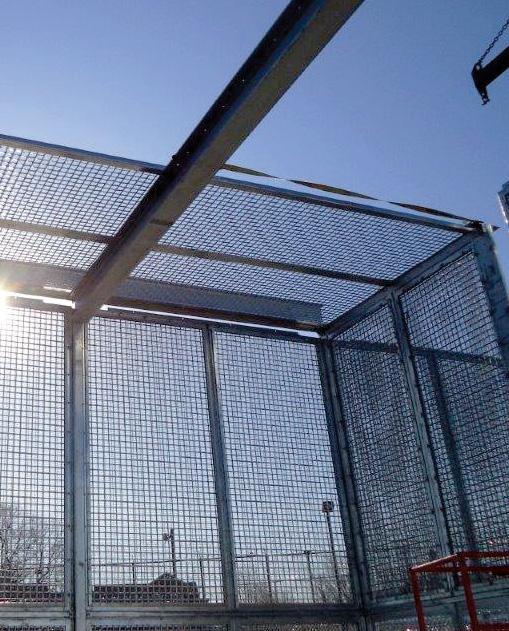
While facilities used to rely on chain-link fencing to protect perimeters, new thermal fencing systems offer enhanced security.
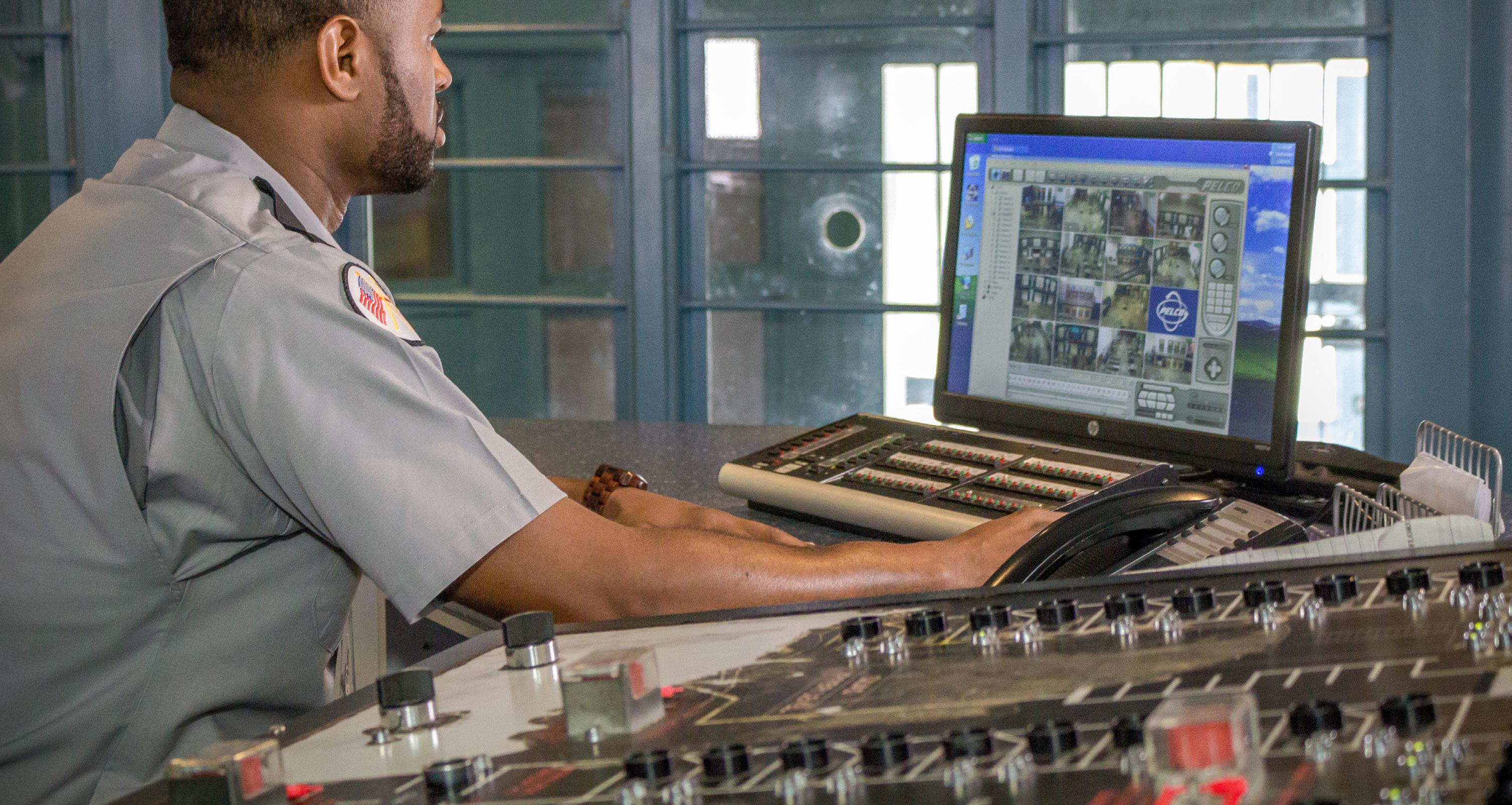
Today, digital technology allows for full-facility monitoring with details that traditional guard towers couldn’t adequately provide.
Photo Credit (all): Florida Department of Corrections
working with correctional leaders to turn these concepts into reality. Emerging technologies can analyze body language and trigger immediate, non-lethal responses designed to halt assaults before they escalate. I have previewed systems capable of instantly disorienting would-be assailants as well as protective equipment that creates a non-lethal perimeter around staff, preventing close contact without authorization.
Recent modifications to FAA and FCC regulations also mean that comprehensive drone mitigation and contraband cellphone prevention are increasingly within reach. The impact of eliminating these threats cannot be overstated. At the same time, AI platforms are making it possible to reduce or eliminate traditional report writing by enabling staff to verbally interact with systems that generate documentation automatically. Audit systems are becoming more sophisticated, continuous and reliable.
Transforming justice
Most importantly, these tools are improving our ability to accurately evaluate the risks and needs of individuals entering our facilities and assign them to programs that actually reduce recidivism. The downstream effects — safer institutions, fewer victims and stronger communities — are profound, and the possibilities are vast. Those of us currently in the profession have the privilege of shaping this transformation. Despite the innovation ahead, the formula for progress has not changed.
advancement continues to come from listening to the people who do this work every day and partnering with industry leaders who can bring their ideas to life.
The fences I grew up beside were simple, fragile barriers. Today’s systems are smarter, stronger and more humane, but their greatest strength still lies in collaboration. If we maintain that commitment, the future of corrections will not only look different than the past — it will be safer, more effective and worthy of the responsibility entrusted to us.
Protection from the Inside Out
Magos pairs its ground- and air-based perimeter protection technology with Actall’s interior monitoring solutions to offer efficient, facility-wide security
By Charlie Lange
Corrections operators know that security in jails and prisons depends on full-facility coverage. Any blind spots or otherwise unmonitored areas can be susceptible to outside threats, whether through individuals breaching perimeters or from drones and other aerial threats flying over facilities and dropping contraband. Even inside facilities, tracking people and resources as they move through oftentimes vast campuses is essential to ensuring the safety of both staff and the incarcerated population.
Since its founding in 2008, the Israel-based security and perimeter protection technology company Magos has successfully deployed its radar-based detection technologies across correctional facilities and critical infrastructure sites worldwide, including oil and gas installations, electrical utilities and water
conditions. At a manageable size and at less than 10 pounds, its low power and bandwidth also ensure easy installation and maintenance.
Freeing Staff of False Alarms
The Magos team acknowledges that not every object that flies near a facility or approaches a perimeter is a threat. Birds, animals, trees and other objects can set off false “nuisance” alarms that take valuable time to address, taking staff away from their posts and duties to respond.
“Other security systems that rely solely on camera analytics or fence sensors can overwhelm operators when false alarms accumulate,” said Palumbo.
She adds that such instances can inundate the security operations center and induce “alarm fatigue” for staff in charge of monitoring security, which can lead
“Corrections facilities operate as complex ecosystems. Our approach is layered and all integrated into the facility’s existing video-management or security platform.” – Nicole Palumbo, Chief Operating Officer, Magos America
to missing or overlooking actual intrusions.
treatment plants throughout the Middle East, Europe, North America and Latin America. Building on this global correctional experience, the company is now focusing on expanding its presence within the United States corrections market.
As Magos commences that foray into American corrections, the company has partnered with real-time locating systems (RTLS) technology provider Actall to offer a multi-layered solution. The collaboration brings together ground and airspace detection with interior location intelligence, delivering layered security architecture designed to address both external perimeter threats and internal movement visibility. Backed by Actall’s extensive experience inside correctional facilities, Magos is optimizing its offerings to contribute to a 360-degree security system that can transform a jail or prison into a “fortress,” according to Magos America Chief Operating Officer Nicole Palumbo.
By combining radar-based intrusion and drone detection with Actall’s RTLS platform, facilities gain continuous situational awareness, from fence line to facility interior. The integrated approach supports faster response times, improved staff coordination and a more resilient security posture tailored to the unique operational demands of correctional environments.
Evolution from Ground to Air
Founded by radar-based technology engineers Aviel Kisliansky and Amit Isseroff, Magos commercialized its radar systems in 2018, primarily focusing on ground-based radar for perimeter protection. The all-weather ground perimeter solution focuses on reducing nuisance alarms. It detects, follows and uses videobased AI technology to classify objects up to 1,000 meters away in real time.
About 18 months ago, the company further optimized that technology into its drone-detection system, with the ability to detect small, unmanned aerial vehicles from up to 300 meters away, and larger devices from up to 500 meters.
Magos’ drone radar has the ability to recognize not only registered drones, but also “dark” devices — the primary instruments for those flying contraband into correctional facilities — based on rotor signature. Magos also has technology partnerships that provide further information, such as the RFID of a device or the location of an operator.
Like its ground-radar systems, Magos’ drone-detection equipment can operate outside in a wide range of climates, with temperature resistance from -40 degrees to more than 130 degrees Fahrenheit and the ability to perform even in low-light
To address that challenge, Magos systems integrate radar detection with AI-driven classification capabilities that identify and categorize targets in real time. By distinguishing between animals, environmental movement and genuine human or aerial threats, the system significantly reduces nuisance alerts before they reach staff.
The result is a more disciplined alert environment — allowing officers to focus on meaningful events, maintain interior awareness through RTLS tools such as those provided by Actall, and respond with greater confidence and speed when an actual intrusion occurs.
“The ability to process and classify the targets accurately is critical to maintaining full situational awareness without overwhelming personnel,” said Palumbo.
A Unified Approach
Palumbo says the true value of the Magos-Actall partnership is the ability to unify interior and exterior security into a cohesive operating platform.
“Corrections facilities operate as complex ecosystems,” Palumbo said. “Our approach is layered and all integrated into the facility’s existing videomanagement or security platform.”
Because Magos systems are designed as an open, agnostic platform, they integrate seamlessly with third-party systems, including the RTLS infrastructure provided by Actall. The result is a unified command environment in which perimeter threats, airspace risks and interior movement data converge into a single, actionable workflow.
“What we find compelling about collaborating with Magos is the ability to connect perimeter awareness with what’s happening inside the facility,” said Bob Hampe, President and Chief Executive Officer of Actall. “Their radar technology provides early detection and situational awareness outside the secure boundary, while Actall’s real-time location platform helps operators gain locationbased intelligence inside complex environments.”
Bringing those streams of information together into a unified operational view allows agencies to respond faster with better context. Ultimately, the objective is to extend staff safety beyond the perimeter and give security teams better information earlier.
For further information, visit the company’s website at: www.magossystems.com.
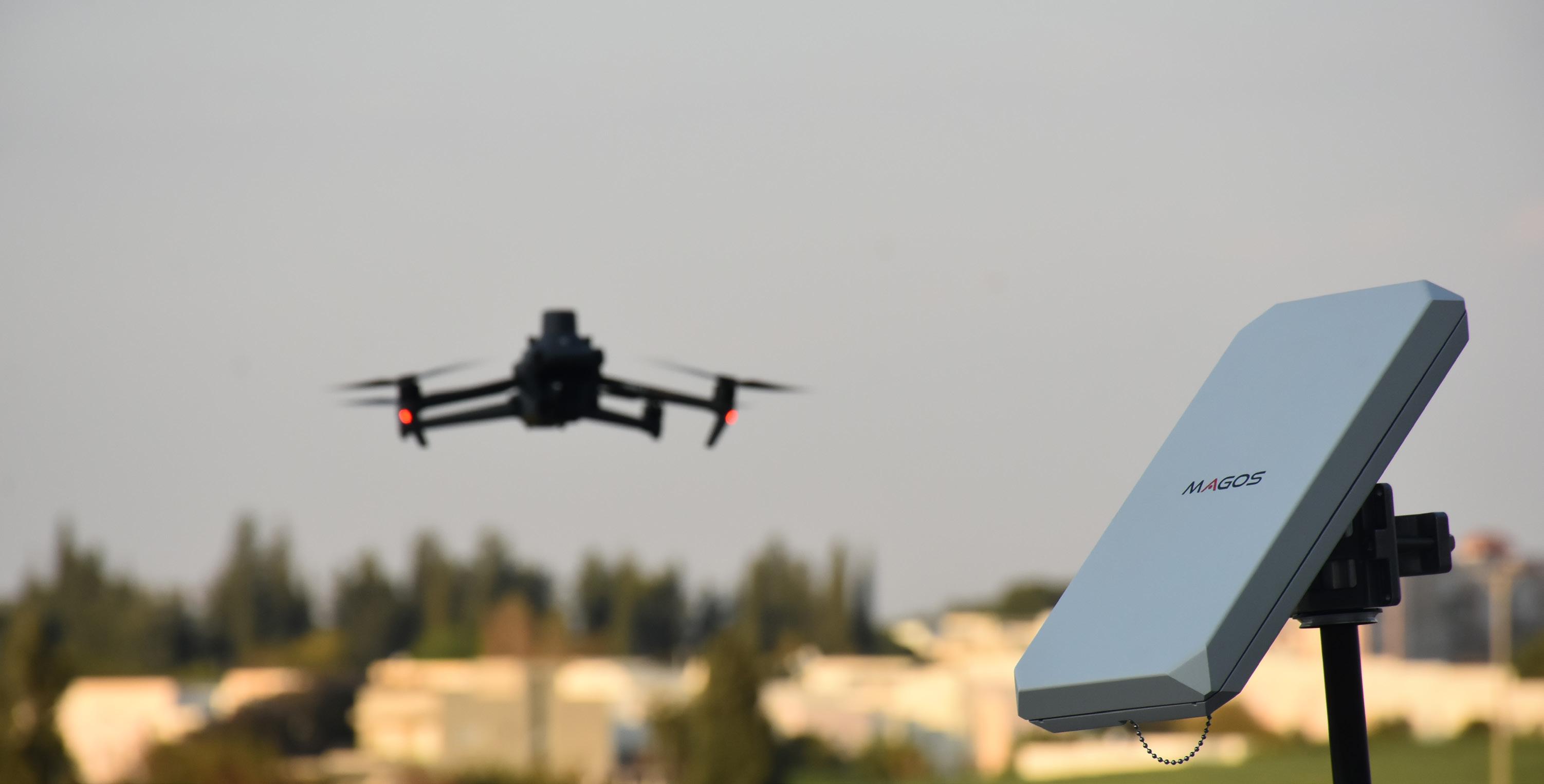
Magos’ drone-detection systems, paired with Actall’s interior monitoring solutions, offer facility-wide coverage. Photo Credit: Magos America
This article was sponsored by Magos America. Magos Systems provides comprehensive and advanced security solutions for multiple verticals.
First-of-Its-Kind MaxMod Unit Adds 126 Beds at Georgia DOC’s Dodge Facility
By Lindsey Coulter
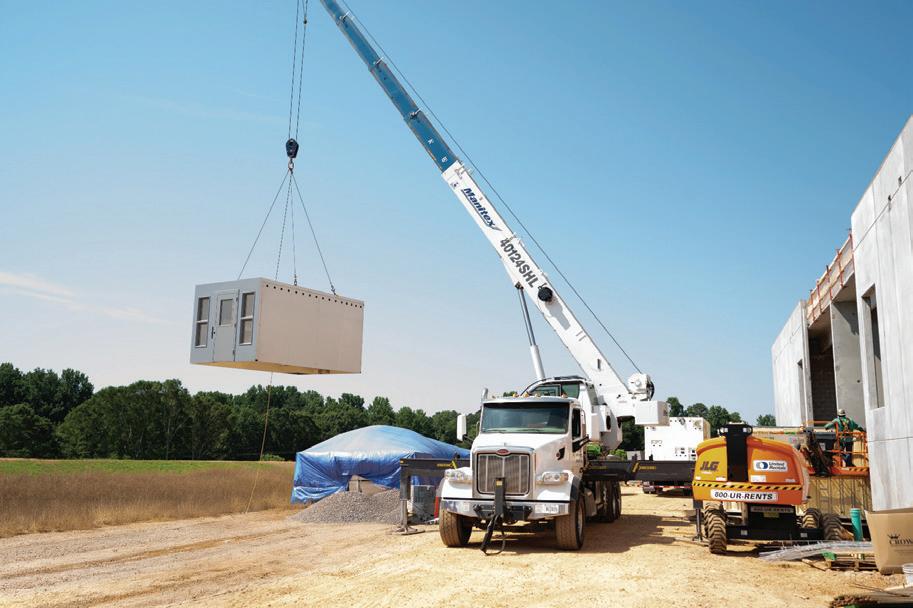
CHESTER, Ga. — ModCorr has delivered its first MaxMod high-security modular housing units to the Georgia Department of Corrections, marking both the inaugural deployment of the product line and the first MaxMod installation in Georgia.
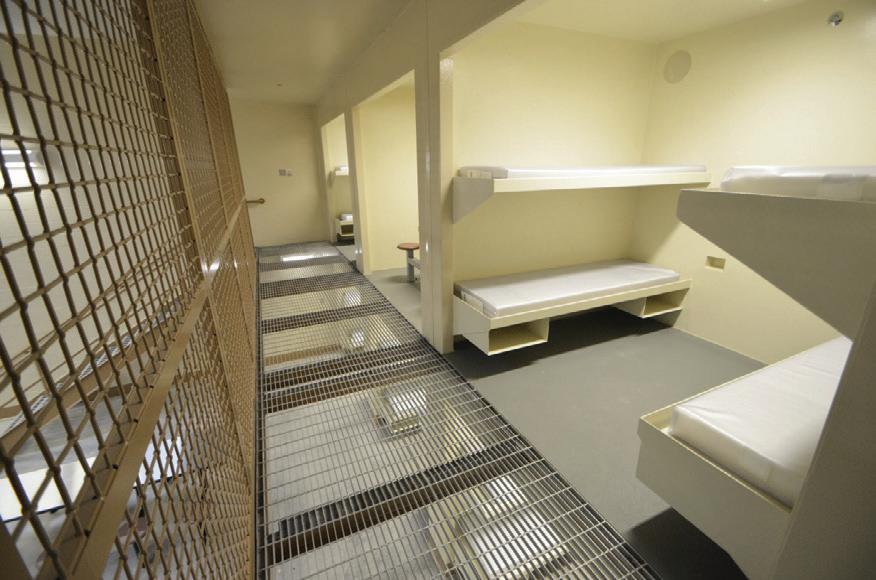
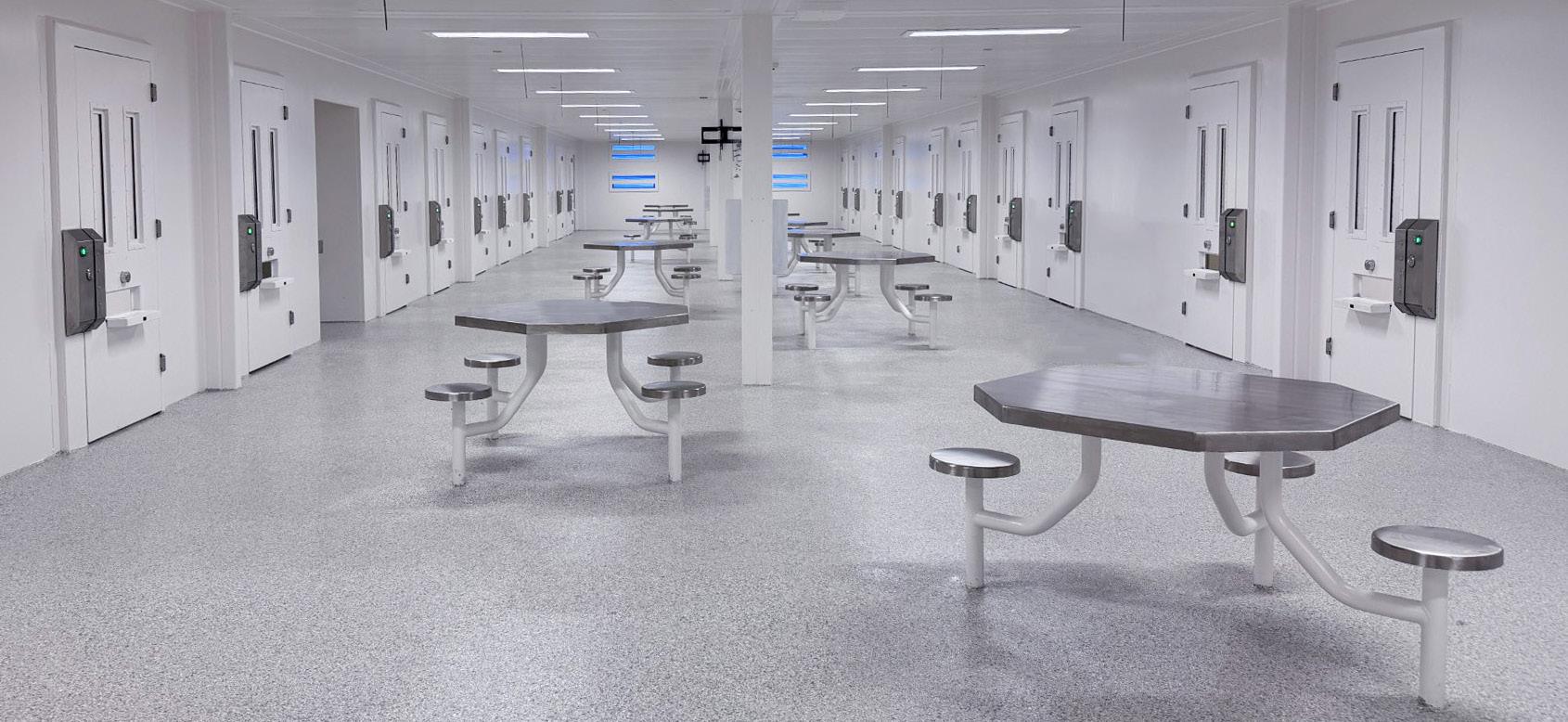
The two buildings, delivered March 1 to the Dodge State Prison in Chester, total 18,096 square feet — 9,048 square feet per structure — and add 126 beds to the campus. Each building contains 63 beds, including three ADA-compliant cells, along with a control room, sallyport and staff bathroom to support indirect supervision operations.
The state has struggled with overcrowding for years. According to Georgia DOC Commissioner Tyrone Oliver, Dodge State Prison, which prior to the installation had a capacity of just more than 1,200, was selected to receive the MaxMod units because of available land and sufficient staffing levels to support expansion. Additionally, based on five-year projections, leaders anticipate reaching maximum bed capacity by 2030, making proactive expansion essential.
“The addition of MaxMod units not only expands system capacity but also supports our broader capital improvement strategy,” Commissioner Oliver said. “Because of their accelerated delivery timeline, these modular units allow us to address immediate needs while advancing long-term infrastructure goals statewide.”
MaxMod is part of ModCorr’s broader line of modular correctional-housing solutions. In addition to MaxMod, designed for maximum containment and control, the line includes DormMod, which provides a
more normative living environment. Each unit can be tailored with a variety of interior services and security features, allowing agencies to adjust design, security posture and operational functionality.
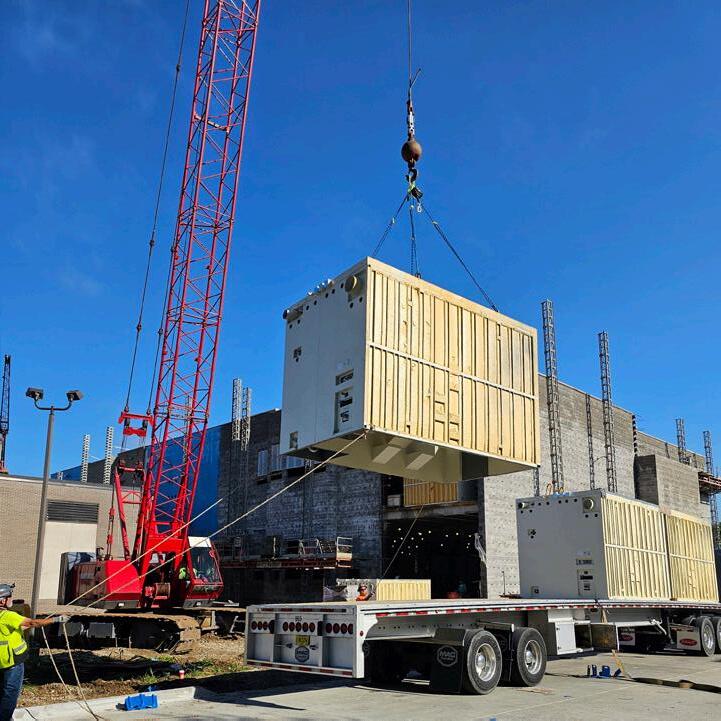
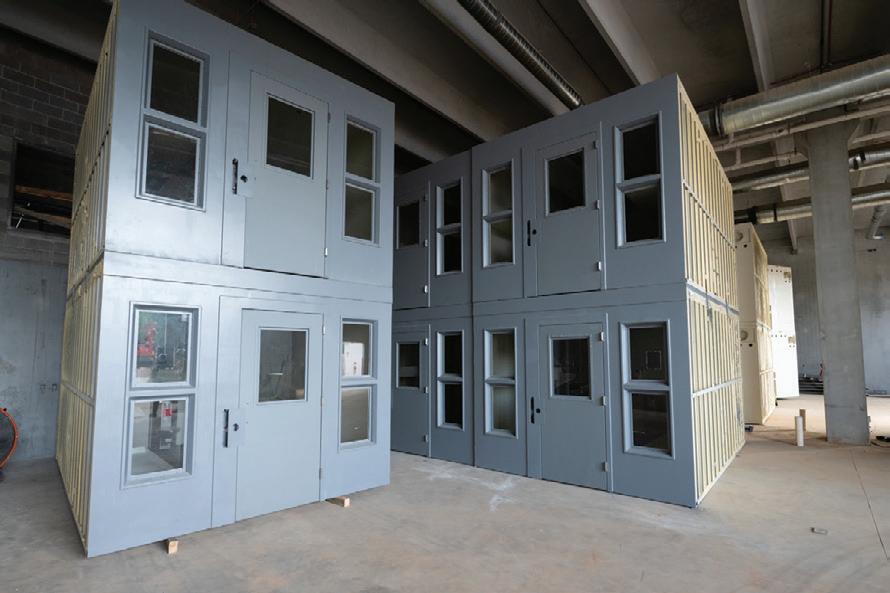
The Dodge installation was executed using modular off-site construction, with buildings
fabricated in ModCorr’s plant for on-site assembly. Wiring, HVAC, plumbing, detention equipment and security electronics were installed in the factory,
See News, page 50→
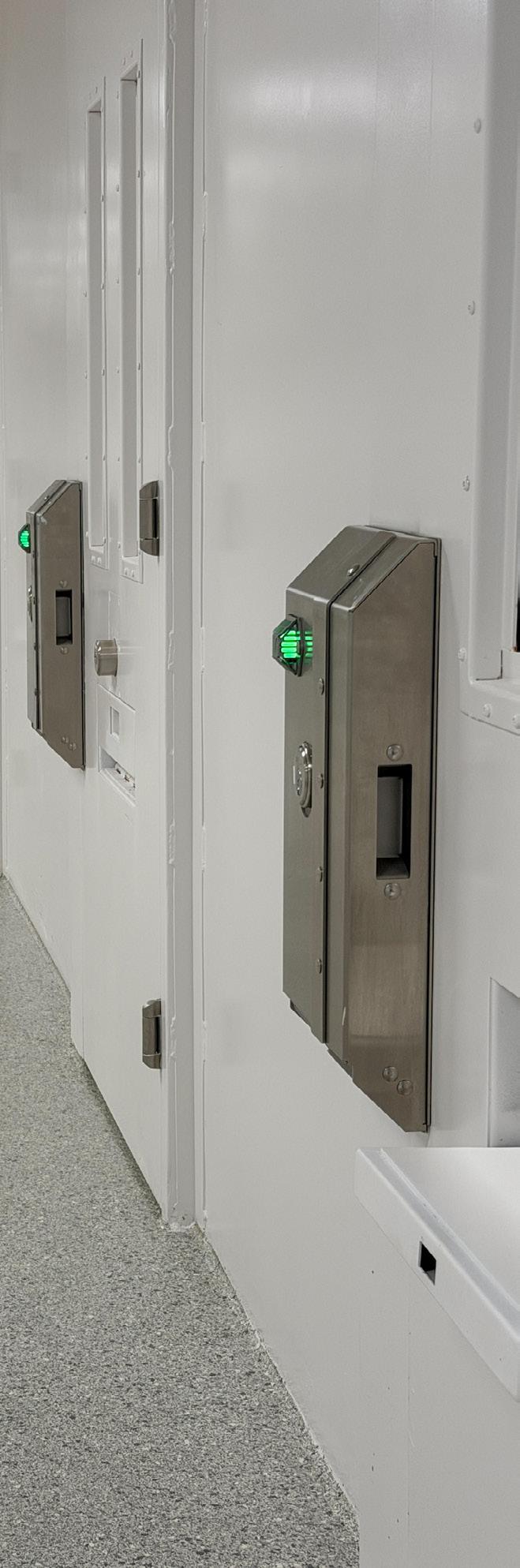
Willo Products Co. created the units’ special Willo Wedge lock. Photo Credit (all): ModCorr
New York’s Bedford Hills Correctional Facility Nursery, Rehabilitation Programs Showcased in New ‘Corrections Connections’ Docuseries
By Charlie Lange
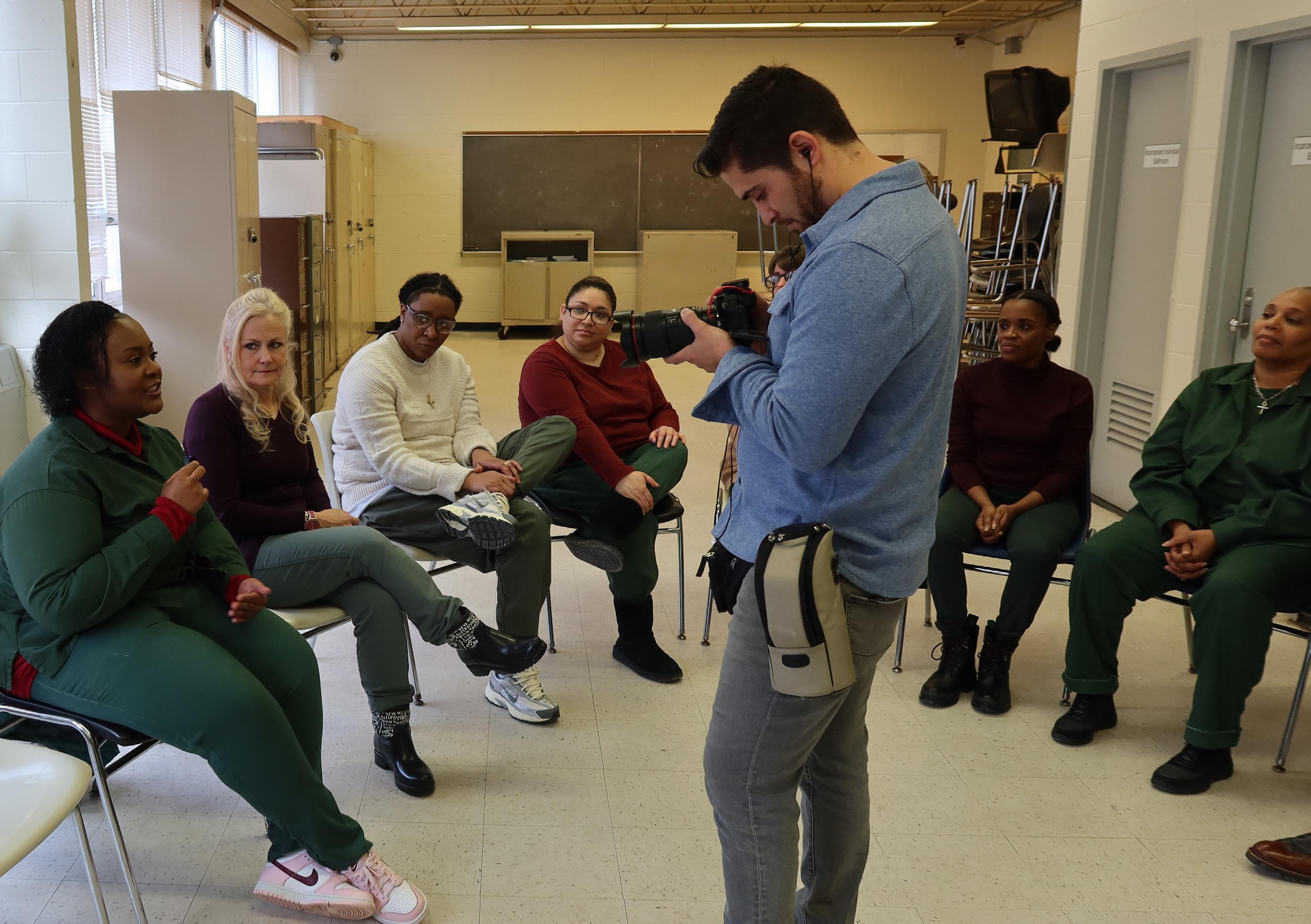
In February, Correctional News released the first episode of the new Corrections Connections video podcast documentary series, which highlights innovative programs across the country that are driving progress in correctional settings. The series centers facility leaders, staff members, partners and incarcerated individuals, celebrating the initiatives and collaborations that are changing outcomes and lives.
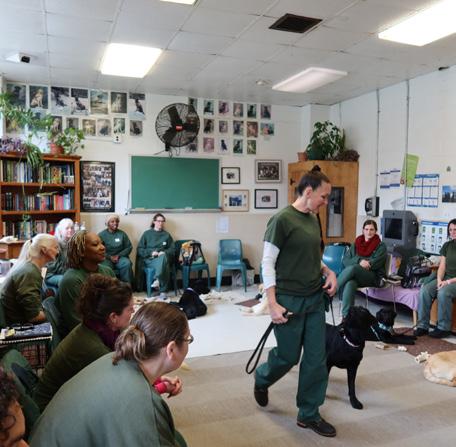
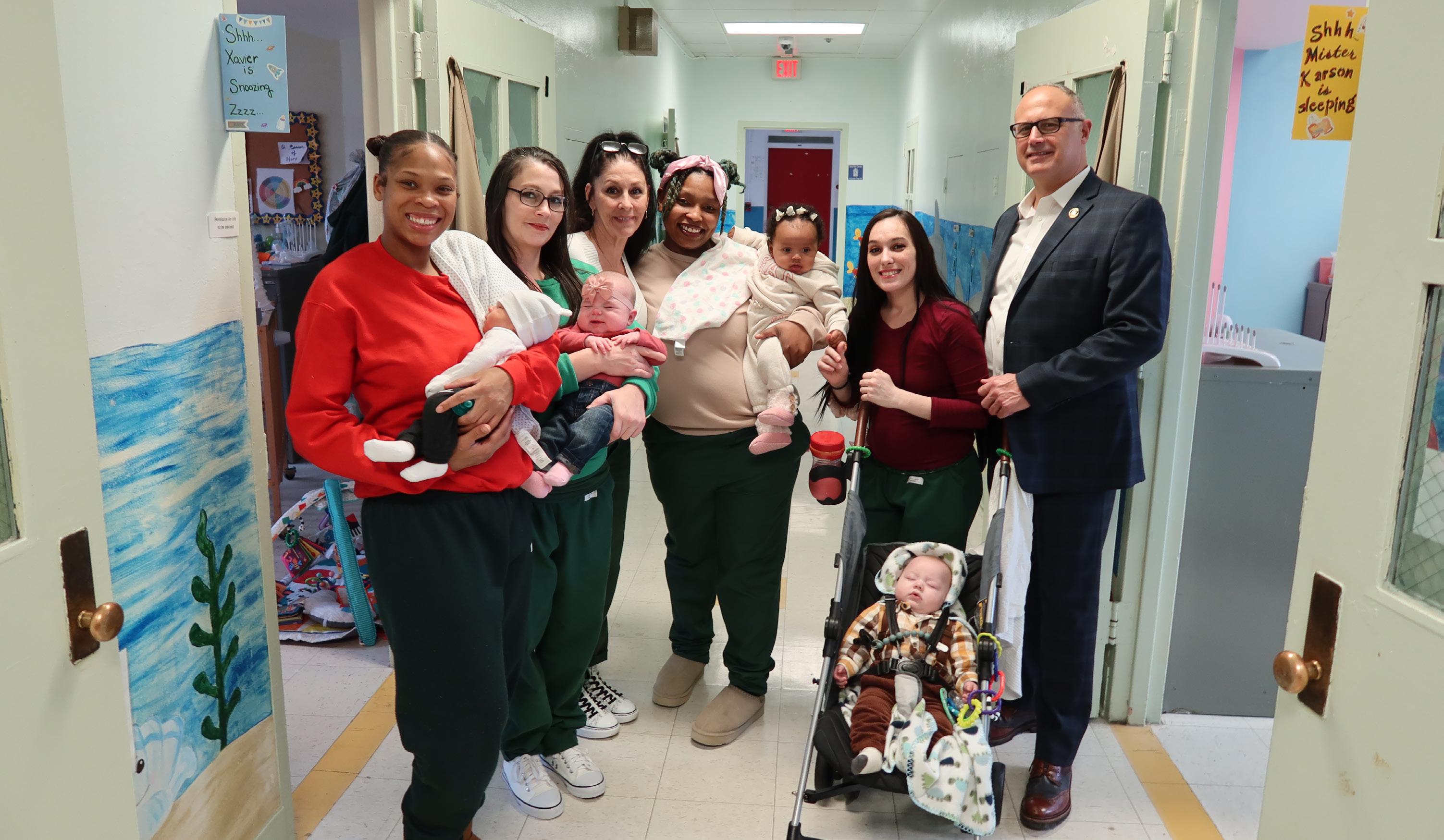
For the first Corrections Connections episode, “People-Centered Progress,” Correctional News visited the Bedford Hills Correctional Facility in Westchester County, N.Y. — the state’s only maximum-security prison for women — to get a behind-the-scenes look at the nation’s oldest prison nursery. The episode
also highlights the intentional programming and strategic facility upgrades that better support inmates’ journeys through motherhood, education and reentry.
The episode features insights from Daniel F. Martuscello III, Commissioner of the New York State Department of Corrections and Community Supervision, who centers his leadership on dignity and respect. Martuscello outlines how the 125-year-old nursery program operates in partnership with New York-based nonprofit Hour Children, which was started in the 1970s by Sister Tesa Fitzgerald to maintain connections between children and their incarcerated mothers. Through the nursery program, mothers receive not only critical visitation time with their babies, but they also benefit from parenting classes, lactation services, and access to social workers and doulas — many of whom are incarcerated themselves and have been certified through training offered within the program.
All combined, the Bedford Hills Correctional Facility nursery offers the support of an extended family for incarcerated mothers, which program leaders say is essential to pushing them forward on their journey to rehabilitation and reentry.
“Knowing that we have other people to support us to become the best mothers we can be makes a huge difference,” said Lindsey
Sean Pica, President of Hudson Link for Higher Education, and incarcerated women pursuing degrees shared their stories.
The Correctional News team spoke with Bedford Hills Correctional Facility staff who operate the women’s nursery.
New York State Department of Corrections and Community Supervision Commissioner Daniel F. Martuscello III with a program participant and her child.
in prison,” one participant said. “I’m here to do something. I’m not just here to be.”
Ultimately, the Bedford Hills staff strives to create an environment that is inspirational rather than punitive; one that gives women the resources they need to prepare for life after incarceration.
“It’s like the real world, but just inside this facility,” said Daniel. The first episode of the new Corrections Connections docuseries is now available at correctionalnews.com. Stay tuned for the second episode, which takes viewers inside Pennsylvania’s State Correctional Institution – Chester for a tour of the groundbreaking Little Scandinavia unit. Watch for more episode announcements.
Daniel, nursery manager. “This is not ‘every mother for themselves’ or ‘every baby for themselves’ ... this is your family, this is your community.”
Other programs within Bedford Hills Correctional Facility help incarcerated women to establish routines that mimic life outside of the prison, including art therapy, quilting and plating, where participants learn new skills and work therapeutically. Martuscello also highlights the wraparound services — such as career training, housing services, medical treatment and educational programs — offered through groups such as Hudson Link for Higher Education in Prison, another nonprofit dedicated to bringing higher education opportunities to incarcerated women. Through Hudson Link, participants can earn a range of degrees, from high-school equivalency to master’s degrees and doctorates. Additionally, those who earn degrees can become ambassadors, helping other incarcerated women achieve their goals.
Throughout the visit to Bedford Hills, the conversation circles back to the concept of community — women helping women, mothers helping mothers, graduates helping their fellow students become graduates themselves. That community extends from the incarcerated population to the administrators and other facility staff. As one incarcerated woman noted, these programs change the dynamic and help bridge the gap between the two groups, applauding staff members’ support of inmates as they raise their children, earn their education and lay the foundation for a better life.
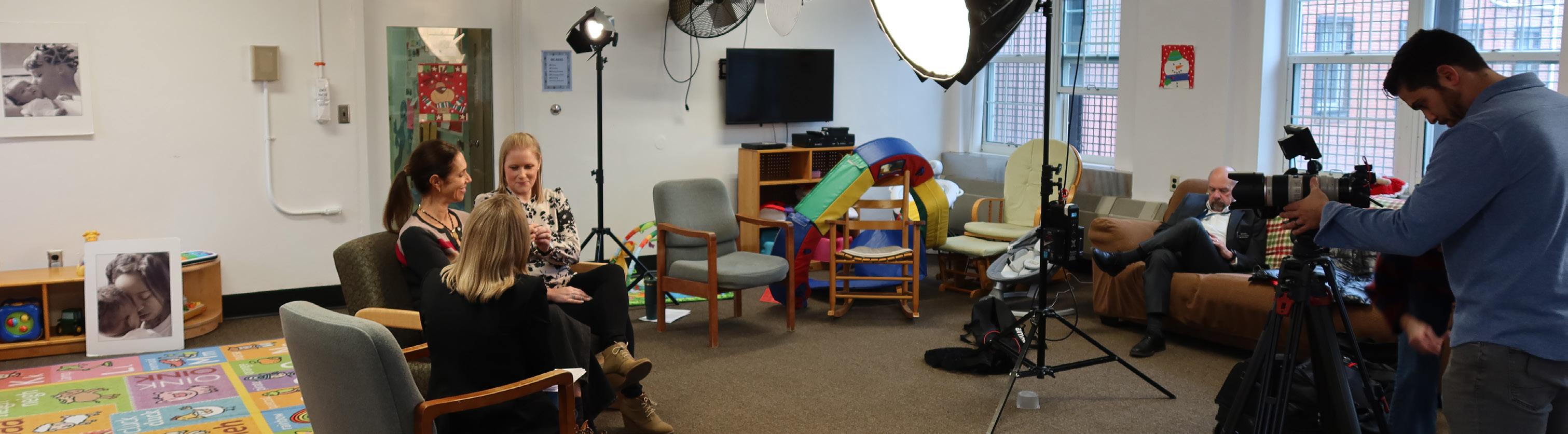
In the debut episode of the Corrections Connections docuseries, Correctional News goes inside Bedford Hills Correctional Facility — New York’s only maximum-security prison for women — for a rare, behindthe-scenes look at the nation’s oldest prison nursery program and the innovative initiatives supporting motherhood, education and successful reentry.
Featuring insights from New York State Department of Corrections and Community Supervision Commissioner Daniel F. Martuscello III, Bedford Hills leadership and staff, partners from Hour Children and Hudson Link, and the incarcerated women working to build brighter futures, this episode explores how dignity, opportunity and collaboration are reshaping outcomes in women’s corrections.
From correctional education to family-centered programming, Episode 1 highlights what people-centered progress looks like in modern corrections.
EDITORIAL + EVENT + DIGITAL MEDIA
Guiding the Federal Bureau of Prisons into the Future
With
new funding, Director William K. Marshall III looks to prioritize staff wellness, leverage new technologies
By Charlie Lange
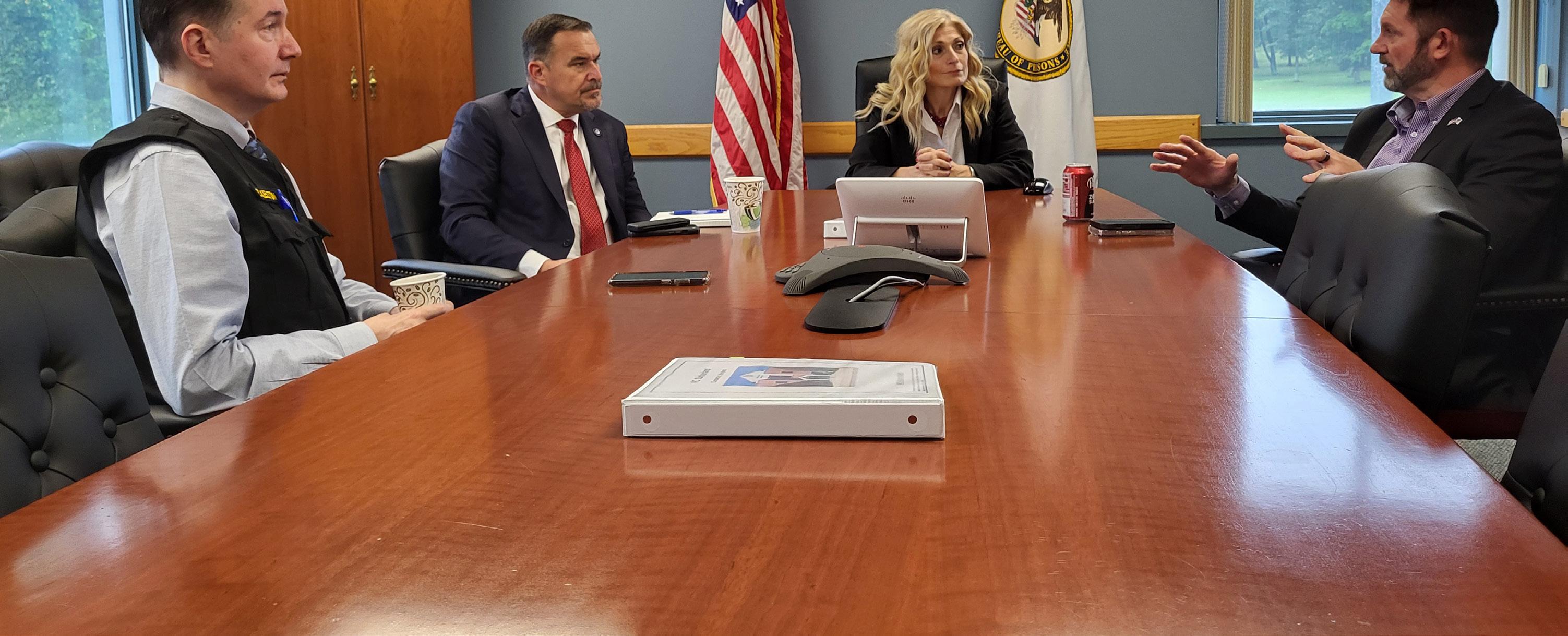
Since his official appointment in April 2025, Federal Bureau of Prisons (BOP) Director William K. Marshall III has already presided over an eventful tenure. Marshall hit the ground running after taking office, embarking on a series of facility visits to immerse himself in the operations and needs of the 36,000 staff members and 156,000 federal inmates across the BOP’s 119 active facilities.
In July, the BOP was awarded $5 billion in funding from the One Big Beautiful Bill Act, with $3 billion set aside for staffing and training and $2 billion earmarked for critical infrastructure improvements. In August, Marshall announced major enhancements to the First Step Act and the Second Chance Act to promote community-based supervision models and get more incarcerated people out of facilities and reintegrated into society.
Progress came to a temporary halt with the federal shutdown in fall 2025, but once the government reopened in mid-November, Marshall picked right back up where he left off. The 25-year veteran of the West Virginia State Police and former Commissioner of the West Virginia Division of Corrections and Rehabilitation has enthusiastically continued meeting with facility operators
where it is most needed — and that roadblocks hindering essential projects are efficiently assessed and removed.
Correctional News met with Marshall to discuss his vision for the BOP, his efforts to bolster staff morale and wellbeing and the Bureau’s embrace of new technologies.
Funding for Infrastructure and Training
To best utilize the One Big Beautiful Bill Act funding, Marshall said that the BOP is working closely with the U.S. Department of Justice and the Office of Management and Budget to evaluate existing facilities and determine whether to upgrade infrastructure or invest in replacement facilities.
“We have construction and maintenance projects at every facility, but for some of those facilities that need a lot of attention financially, we’re in the process of seeing what we want to maintain and what we want to walk away from,” Marshall said.
Marshall added that the Bureau is preparing to open a new $532 million replacement facility for the 126-year-old FCI Leavenworth in Kansas, which could serve as a model for how new facilities operate, adding that capacity issues persist throughout the BOP’s facilities and that determining the size, scope and location of new projects remains a challenge.
In addition to facilities and infrastructure, staff training — particularly new warden training — is essential.
“We have such high [employee] turnover in our facilities. People that leave the Bureau ... don’t feel trained well enough; therefore, they don’t feel safe, and they don’t feel respected by their supervision,” Marshall said. “We can better train them to make them feel confident in what they’re doing and what’s expected.”
Marshall also points to warden training as an area to enhance, noting high turnover and the cycling of supervisors through different positions and facilities
as a hindrance to providing effective supervisory training.
Connecting to Solve Common Problems
Marshall emphasizes the importance of networking and relationship-building within the industry, harkening back to his tenure leading the West Virginia Division of Corrections and Rehabilitation and participating with groups such as
the Correctional Leaders Association (CLA).
“I think back to the CLA on the Hill event in Washington, D.C., in 2024. I walked into that room and realized I wasn’t in this by myself. Other commissioners throughout the country were in the same boat, and guess what their problems were: staffing, not enough money in the budget and drugs in their facilities. I thought, ’we’re all in this together,’” he said.
Under his direction, the BOP has already reestablished a partnership with CLA — opening up a valuable network for finding solutions to common problems. Marshall says being able to call other directors and bounce ideas off each other regarding mental health efforts, technology and operations is essential.
Presence is Paramount
With so much work to be done, it would be easy for Marshall to silo himself in his office and delegate responsibilities across the BOP — but that’s not the way he views effective leadership. Instead, he is clocking long hours and logging miles of travel across the country to get a clear understanding of the challenges present in BOP facilities — and getting vital facetime with the Bureau’s most important assets: its people.
“Being in the facilities, walking the hallways, talking with everybody — staff and occasionally inmates — and hearing what matters to them, what drives them crazy every day, and what they love about the job,
Nationwide site visits demonstrate the Bureau’s commitment workforce development. | Photo Credit (all): Federal
William K. Marshall III, Director, FBOP
that’s the only way that I can connect with them,” he said.
For Marshall, prioritizing employee wellbeing is top-of-mind, as he cites high rates of suicide, domestic violence and other issues plaguing correctional staff that often stem from the risks and stresses of the job. Building workout rooms and respite areas for staff has helped to enhance their mental health, but meeting with staff and understanding their challenges helps Marshall tell their stories more effectively — especially when it’s time to advocate for resources.
“I’m not going to go to [Capitol] Hill and ask for money or staff; I’m going to tell
commitment to transparency, innovation and Federal Bureau of Prisons
[lawmakers] our story,” Marshall said. “The only way that they can help us is if they know about our problems. When I’ve seen corrections struggle is when [leaders] put up this wall and say, ‘Don’t look behind our curtain.’ So, I’m not going to hide from anyone. Inevitably, by the time I walk out the door, they’re saying, ‘How can we help?’”
Measuring Success
Marshall acknowledges that success in corrections is difficult to quantify — and that metrics such as recidivism rates don’t always tell the whole story. To him, true progress comes from optimizing initiatives such as the First Step Act to get more inmates out of BOP facilities and back into their communities equipped with the skills they need to succeed.
“If the First Step Act is implemented the way it’s supposed to be, we get more people transferred into halfway houses and home confinement. There are fewer inmates for our staff to manage, and that lowers costs,” Marshall said. “We spend almost $21 million a day housing federal inmates. If we can transition some of these individuals back into their communities with the tools that they need, that will help us focus on our infrastructure and our staff.”
Expanding inmate access to tablets will be a major piece in
accomplishing that goal.
“The tablets are going to be a complete game changer for us,” Marshall said. “Once we introduce those tablets, even if we have a staffing issue, or we have an incident and we have to lock down, inmates can continue their education, their FSA and Second Chance programming or vocational training. Even bigger than that, they can connect with their families on a video visit, which is a huge part of the rehabilitation. If we give them the right tools and they can survive and succeed with their families and in their communities ... we’re successful. That’s the
metric that I’m the most concerned about.”
In the end, Marshall believes that the Bureau has a solid foundation and the personnel needed to realize that success.
“The common-sense approaches I took in West Virginia — building relationships, putting people in the right places, being visible, being present, being accountable — that all translated when I got here,” said Marshall. “We’ve got so much talent. It’s exciting to see that we had the foundation when I got here. I’m just trying to get them what they need to do their jobs as best they can.”
SEC & DEC LIST
Correctional News contacted leading Security Electronics Contractors (SEC) and Detention Equipment Contractors (DEC) across the country to gather insights on the state of the market. Companies were invited
a
2026 Responses Reflect Progress, Positivity in SEC & DEC Market
In line with last year’s report, Correctional News again combined the annual Security Electronics Contractor (SEC) and Detention Equipment Contractor (DEC) lists to provide a comprehensive view of the major trends driving the corrections contracting market.
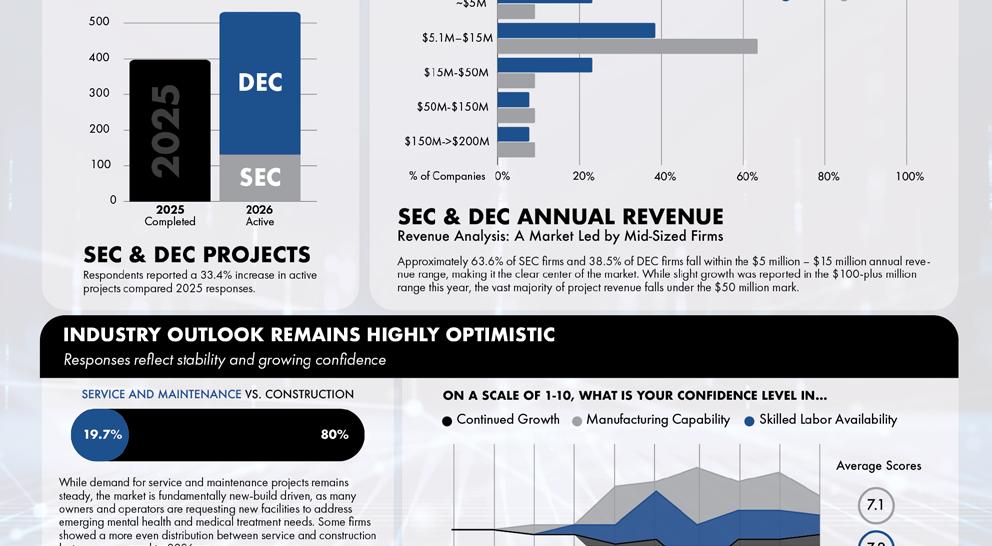
In addition to the information compiled in the SEC & DEC List, firm leaders weighed in on market health and the distribution of projects across revenue levels and project types. To assess 2026 project demand, Correctional News asked
Revenue
respondents to quantify the number of active projects their firms are involved with this year, along with completed projects in 2025, followed by a series of confidence-level queries gauging optimism in growth, labor and manufacturing capabilities.
Compared to project numbers and confidence ratings from 2025, an overall sense of optimism and continued growth emerges. Correctional News will continue to monitor the market throughout 2026 and into 2027.
SEC & DEC PROJECTS
SEC & DEC ANNUAL REVENUE
Revenue Analysis: A Market Led by Mid-Sized Firms
Approximately 63.6% of SEC firms and 38.5% of DEC firms fall within the $5 million-$15 million annual revenue range, making it the clear center of the market. While slight growth was reported in the $100-plus million range this year, the vast majority of project revenue falls under the $50 million mark.
INDUSTRY OUTLOOK REMAINS OPTIMISTIC
Responses reflect
While demand for service and maintenance projects remains steady, the market is fundamentally new-build driven, as many owners and operators are requesting new facilities to address emerging mental health and medical treatment needs. Some firms showed a more even distribution between service and construction last year compared to 2026.
44% of firms reported that at least 10% of their work came from first-time corrections clients. Four in 10 firms report meaningful new-client expansion, another indicator of a healthy, growing market.
HIGHLY OPTIMISTIC
Overall Average Market Confidence: 7.4/10
Respondents were most confident in the continued growth in number of projects over the next 12 months, with no respondents rating growth below 5 and multiple firms rating it a 10. When assessing the availability of skilled labor and adequate manufacturing capability to complete projects, firms were also generally positive, with averages in both
7. Both represent increased confidence from last
Evaluating the SEC and DEC Market Challenges, opportunities amid shifting technology landscape
By Charlie Lange
In addition to the perspectives provided in the SEC and DEC List and Trends Report, Correctional News posed questions to leaders on both the security electronics and detention equipment sides of the table to get further insights on the latest market shifts, project requests from owners and operators, and ongoing labor and supply challenges.
Representing the DEC side, Alan Birnbrauer is the President and Co-Founder of detention equipment contractor American Corrections Maintenance.
On the SEC side, Ed Pedersen is the Senior Vice President, Enterprises Sales, for Securitas Technology, where he leads a national team focused on partnering with state and county agencies, architects, engineers, and general contractors to deliver integrated security solutions designed for long-term operational resilience and lifecycle performance.
CN: Across jails, prisons, juvenile justice, courts and behavioral health, which project types are seeing growth in demand and which are stalling?
BIRNBRAUER: The DEC market has seen robust growth across all facilities, and demand remains healthy. In addition to the large new builds and rapid-response facilities, we have seen significant
growth in modernizations to existing, aging facilities. Large and regional DEC firms offer strengths in different contracting segments and offer more capabilities than just a few years ago. Through consolidation, teaming partnerships, and newly integrated companies, the industry has been able to respond to the strong demand.
The industry has also benefited from recent federal policy, and while the need for beds remains strong, we have experienced projects stalling due to political debate and community pushback. Our primary experience has been projects stalling for funding purposes. We are asked to provide pricing for various projects, and then the facility must get that funding approved. That process can take months, and in some instances over a year when we don’t have a response from the owner. If the funding is then approved, our pricing is no longer valid due to cost increases and schedule constraints — or the design has changed, and we must rebid the project. Additionally, we work with older facilities to provide preventative maintenance, as facility owners are looking to extend the life of existing doors, frames, hardware and such. With budgetary concerns, facilities are looking for longevity.
PEDERSEN: From our perspective as a national integrator, we continue to see opportunities in corrections, but what our clients are asking for has shifted. The demand now is in modernization and infrastructure refresh projects. A lot of facilities that were built 15 to 25 years ago are running on aging
INNOVATIVE SOLUTIONS.
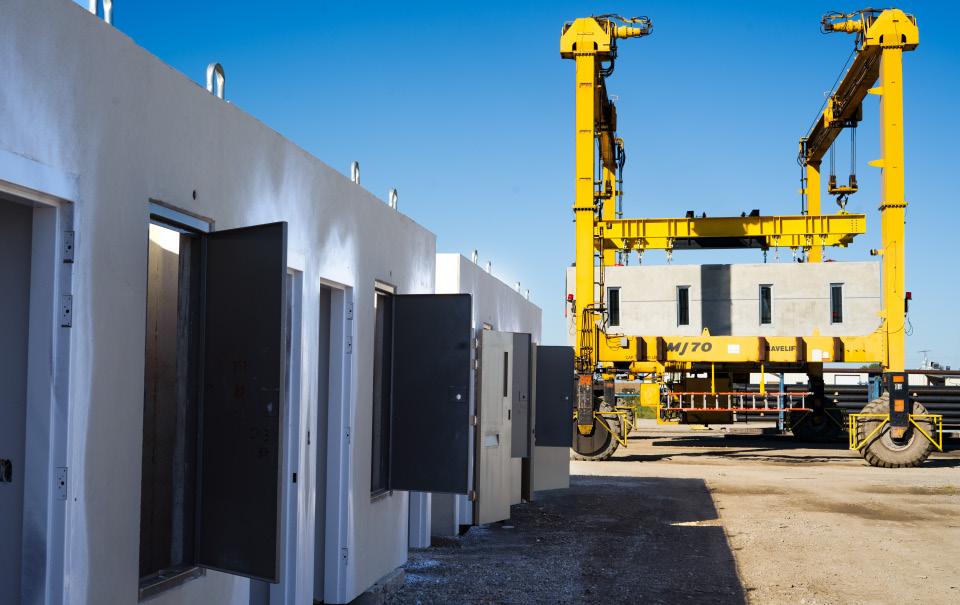
Off-site prefab construction that delivers secure, adaptable solutions for evolving facility needs.
security electronics, detention controls and network infrastructure that simply weren’t designed for today’s cybersecurity expectations, staffing challenges or reporting requirements. Counties and state agencies are prioritizing upgrades to control systems, video modernization, intercom replacements, network segmentation and general resiliency improvements. These projects are often easier to fund because they can help reduce operational risk and liability while keeping facilities up and running.
We’re also seeing increasing interest in behavioralhealth and special-management units. With mentalhealth needs growing, agencies are looking for ways to create safer spaces, improve staff visibility and build more integrated response capabilities. Technology is being deployed not just for containment, but as a tool to support de-escalation, improve staff safety and drive better outcomes.
Court security is another area where there are opportunities. Modernizing security screening procedures, upgrading access control systems, and integrating these systems into broader public safety ecosystems are gaining interest — particularly in jurisdictions that want to reduce risk without limiting public access.
CN: How are the priorities of owners and operators evolving?
BIRNBRAUER: We are seeing rapid technological advancements in the construction industry, not just specific to the corrections market. Owners are more insistent on new technologies that still support safety and security as top priorities, while building upon important priorities of the past several years. Facility design to include rehabilitation services, normative environments, and integrated healthcare remain important environmental shifts in our industry. For DEC and SEC companies, it represents a continued expansion of responsibilities and capabilities that extend outside of expectations only three to five years ago. We must be cognizant with larger construction trends, i.e., AI disruption, to be successful in our respective disciplines and to set new industry standards.
PEDERSEN: Three to five years ago, most conversations were straightforward: can the system meet the specification and do the job? That was the bar. Today, the discussion is far wider. Security leaders are thinking about resiliency, cybersecurity and how these systems will hold up over their full lifecycle.
Resiliency is front and center. Facilities want to know exactly what happens when things go sideways — during outages, partial failures or degraded conditions. They’re asking for defined failover paths, genuine redundancy and clear operational protocols for keeping the place running when systems are under stress. In a detention environment, downtime isn’t just inconvenient anymore; it carries real safety and liability implications.
Cybersecurity has become an assumed requirement. Agencies now expect hardened configurations, segmented networks, meaningful audit logs and secure remote-support options. Security electronics aren’t treated as isolated platforms — they’ve become part of the broader mission-critical IT infrastructure, and they’re evaluated the same way.
Workforce pressure is also reshaping requirements. Staffing shortages are hitting corrections everywhere, and it’s driving a push for solutions that streamline tasks, cut down on manual steps and give operators better situational awareness. There’s a strong preference for unified security-management platforms that bring video, access control, alarms and reporting into one operational picture.
to normal, and there’s far more predictability across the market. A lot of manufacturers and integrators have tightened their forecasting and procurement practices, which has helped stabilize things.
We continue to monitor areas around specialized detention hardware and electrified locking. When the system specifications are narrow or proprietary, the lead times can stretch quickly — as well as require specific technical expertise. Skilled labor in general remains an industry-wide issue, especially the availability of technicians with experience in detention-control integration and complex commissioning.
Scheduling pressures tie to construction timelines and are often compressed, but detention systems require deliberate sequencing and testing. Protecting commissioning time and aligning expectations early in the schedule are still essential.
What has improved is the level of coordination. Owners, general contractors, and integrators are engaging earlier on long-lead items and are building more realistic schedules from the outset. When those conversations happen up front instead of halfway through the project, the overall risk drops significantly.
System lifecycle expectations have taken on much more weight. Clients want clarity around parts availability, obsolescence management and service support over a 10- to 15-year span. They’re not looking for a one-and-done install — they’re looking for stability, predictability and a long-term partner they go to for customized advice.
CN: In terms of supply chain, labor and scheduling issues, what challenges are still present and what has improved since 2025?
BIRNBRAUER: Our industry is still short of technical expertise relative to industry demand and the diversity of projects. The DEC work we bid on is new construction, retrofits and preventative maintenance, which all present a wide range of skillsets needed by management and operations. Specific to field personnel, with the nature of work being physically demanding and travel-intensive, these critical roles remain hard to fill.
The biggest challenges center around industry standard expectations with our products, coordination and lead times — especially with general contractors without correctional experience. By addressing these critical path items in the bidding process and kickoff meetings, we have been able to get ahead of potential scheduling issues.
PEDERSEN: The supply chain is in a much better place than it was. Lead times on most electronic components are back
CONTROL STARTS
The Influence of SEC & DEC Innovations on Correctional Projects
As demand for facilities with modern technology and treatment spaces increases, security electronics and detention equipment contractors are meeting challenges head on
While innovation hasn’t slowed, security electronics contractors (SEC) and detention equipment contractors (DEC) are now applying those innovations both on new facilities that address secure treatment needs and renovation and retrofit projects that bring existing facilities up to modern standards.
IT LOOKS EASY WHEN IT’S DONE RIGHT
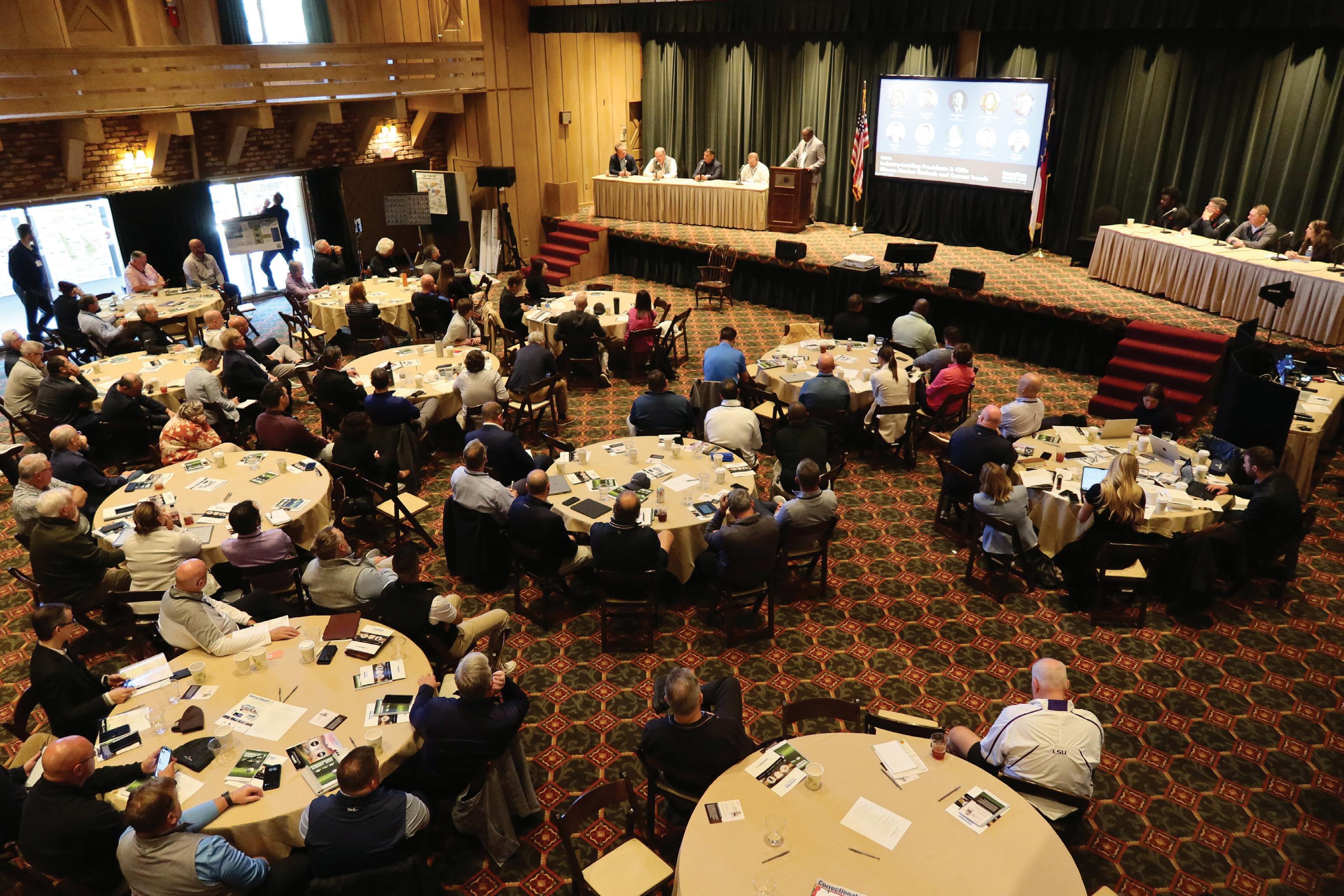
During a recent convening of the Correctional News Industry Knowledge Council, SEC and DEC experts shared their insights on the state of the market and the critical collaborations between providers, operators and facility designers that will be necessary to ensure continued progress and accomplish shared goals.
‘Unprecedented’ Demand and Staffing Strategies
According to Mitch Claborn, President of Cornerstone Detention Products, a boom in project demand means many DECs are struggling to spread staff across jobsites and manage tight timelines.
“There is a tremendous amount of work in the marketplace — maybe unprecedented in our industry,” said Claborn. “Staffing is becoming an issue, especially with a lot of the government work that is transpiring and the timeframe for some of these projects. We’re constantly looking for additional people and resources and having to use more subcontractors than we’ve ever used — including a temporary workforce.”
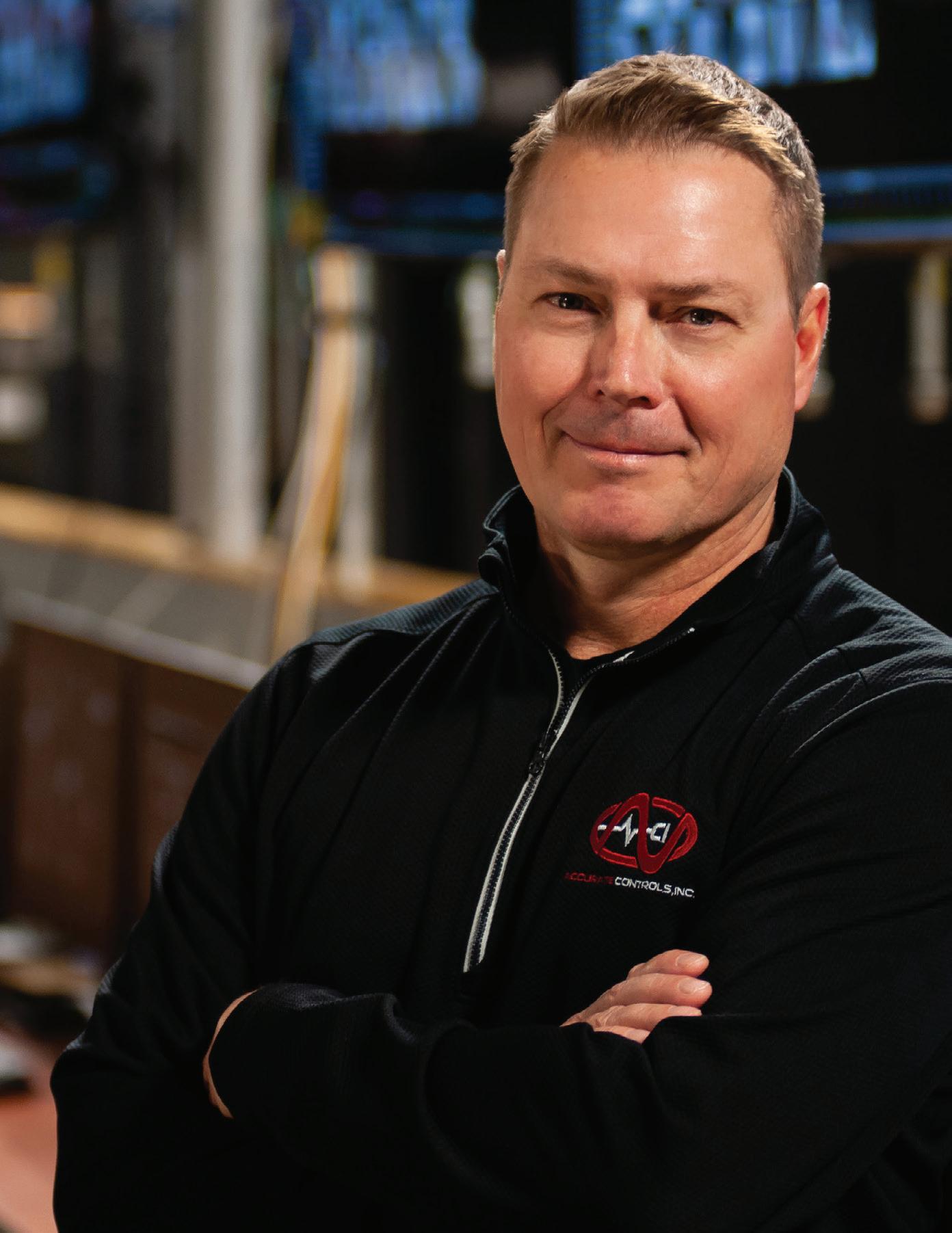
TJ Rogers, President and CEO of security electronics company Accurate Controls, agrees — and warns of unqualified suppliers entering the market to pick up work that more seasoned providers are unable to fulfill.
But it ’s harder than it looks. In a secure facility, ever y detail matters. You need a detention contractor who sweats the small stuff so you don’t have to.
“Because of the demand, there are a lot of companies that are entering the market that really don’t have the long-term commitment or understand why we do certain things in our industry,” said Rogers. “We’re seeing a lot of primarily retrofit projects that are being marketed by regional companies that are, frankly, not doing a very good job. We get multiple calls a month
Claborn
Rogers
from owners that bought something, didn’t realize what they were getting, and then it doesn’t work and they have to rebuy. It’s a real problem.”
Rogers also points to the volume of long-time consultants exiting the industry as a cause for concern, as many owners lack proper guidance on their security electronics and detention equipment projects. As a result, critical infrastructure funds are being misspent.
“We have a lot of owners that are struggling with their facilities and spending a lot of money they don’t need to,” Rogers said.
Brett Noecker, Vice President of Preconstruction with CML Security, adds that qualifications matter, and on the procurement side, the desire to encourage extensive competition on projects to achieve lower prices sets the stage for potentially unqualified entrants into the market.
“There are entities bidding on work that probably are missing a lot of the scope or even functions and features of what the design intent is, and that’s only realized well into the project when it’s too late to change course,” said Noecker.
New Building is Booming
When asked to gauge the balance of new construction versus renovation and retrofit projects, most Industry Knowledge Council members shared that new builds are driving much of their business.
“On the new construction side ... we’re at a very high point. An uptick has definitely occurred over the last three years,” said Noecker, citing an increase in new state-based facilities.
Russell Roberts,
President and Chief Executive Officer of Willo
bad shape and not aligning with some of the complexities of managing the juvenile population,”
MISSION CRITICAL SECURITY FOR CORRECTIONS
Justice Systems by LONG delivers unified, mission critical security systems for high security facilities, backed by decades of correctional security experience and recognition on the SEC DEC list.
As a corrections focused security integrator, we specialize in complex, high risk environments where reliability, accountability, and integration matter, providing single point responsibility for the systems corrections professionals rely on every day to protect people, facilities, and operations.
“What we’re seeing is that the existing facilities are really aging out,” added Tamara Clarke, Senior Vice President and Director of Design Services with CGL Companies. “They no longer align with what agencies are trying to accomplish with ... programs, behavioral health and substance-use disorder treatment. So, we’re seeing clients looking for replacement and new construction.”
Rogers agreed that mental health and other secure treatment needs are driving the push for new facilities.
“The shift to secure treatment or treatment-based programming has created a need for facilities to be new. Almost every one of these new projects has a secure treatment or mental health element to it, which is great — I think our industry absolutely needs that,” said Rogers.
BUILT FOR ENVIRONMENTS THAT CANNOT FAIL
Door Control & PLC Based Control Systems
Intercom and Communications
Video Surveillance VMS
Alarms and Monitoring
Paging and Mass Notifications
Real Time Locating Services (RTLS)
Clarke
Noecker
Advances in Security Electronics
New technologies enhance safety, streamline operations, and increase maintainability for owners and operators
By TJ Rogers
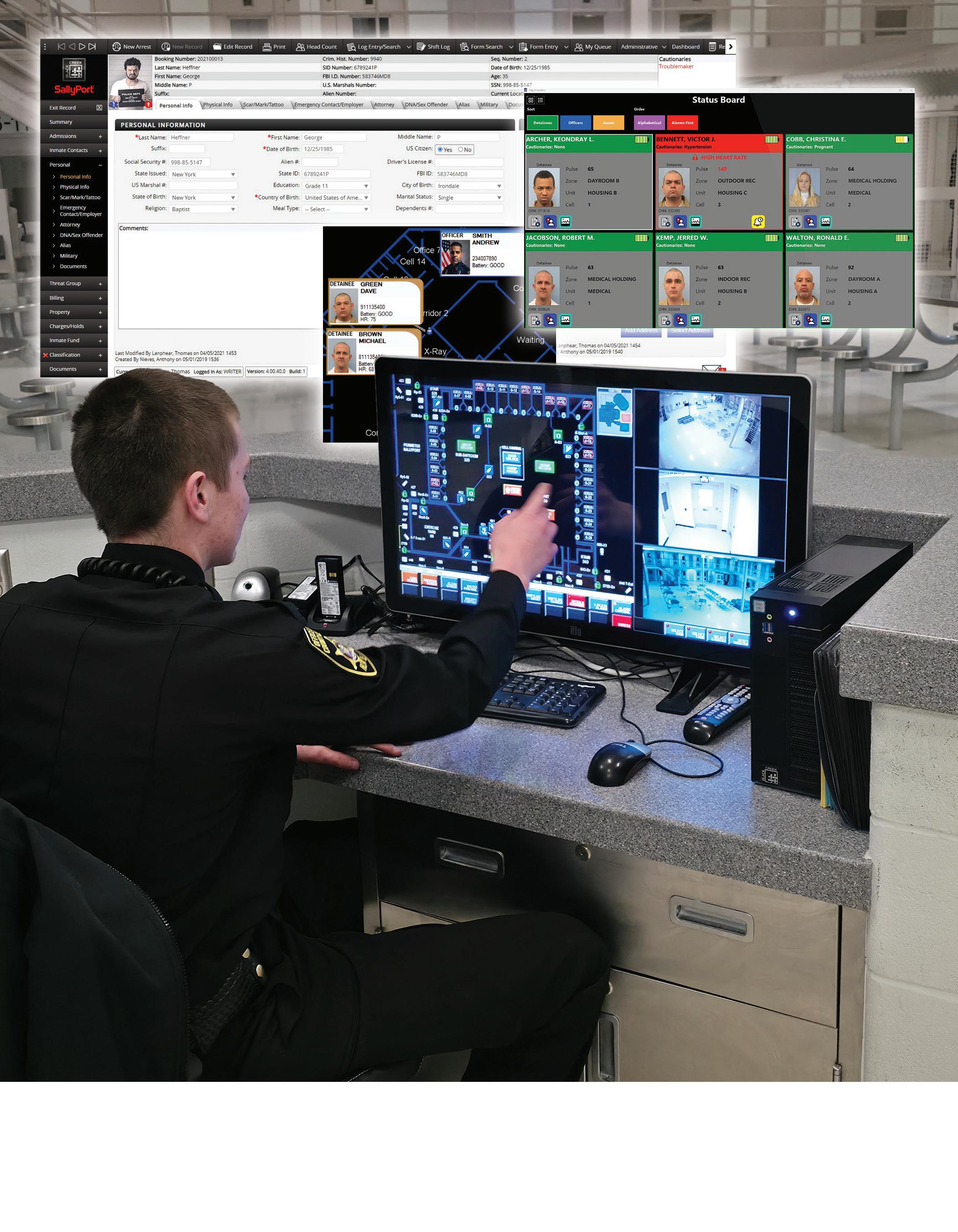
Many correctional agencies and facility operators are actively embracing advancements in security electronics, integrating new technologies into both new construction and modernization projects. Large statewide organizations such as the Indiana
level operators like Cuyahoga County in Ohio and Coffey County in Kansas — are leading the way by prioritizing functionality to address mental health needs, strengthen security and optimize staffing. What stands out is the shared willingness of both large metropolitan facilities and smaller rural jurisdictions to embrace emerging solutions and align
security electronics with operational requirements. These organizations are not only implementing new technologies — they are successfully leveraging them to improve living conditions, situational awareness, staff safety, system reliability and long-term maintainability.
Several technologies are shaping this transformation:
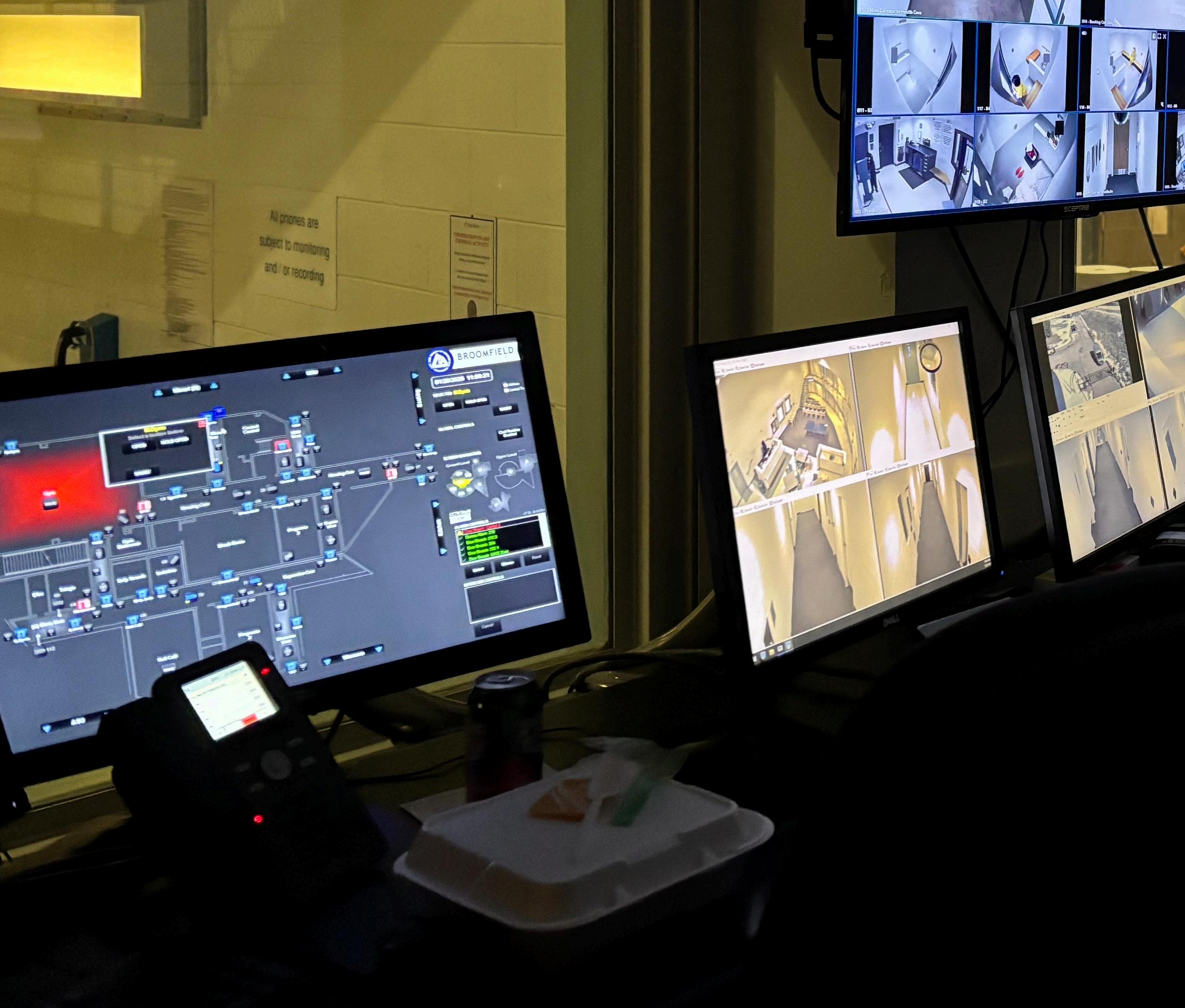
Video management systems are evolving from passive recording platforms into operational intelligence tools, driven by advances in analytics, camera capabilities and automation through integrated security systems. These systems can identify and alert staff to specific incidents that could require intervention, such as an inmate falling in a dayroom and requiring assistance, or one or multiple inmates running through parts of a facility, which could indicate a fight or a larger disturbance.
Other video systems are equipped with license-plate recognition (LPR) capabilities that can detect if vehicles that are not registered as patrol vehicles are approaching a facility. Thermal-imaging options can also indicate if a person is walking near a facility to toss contraband over a perimeter fence. Lastly, some 360-degree cameras can automatically focus on specific items or locations so that an operator can check on those items without losing sight of the entire area.
Modular security integration is expanding through solutions like those developed by SteelCell of North America, where raceways, cabling and devices are pre-installed offsite — reducing onsite labor, lowering infrastructure costs and improving long-term maintainability.
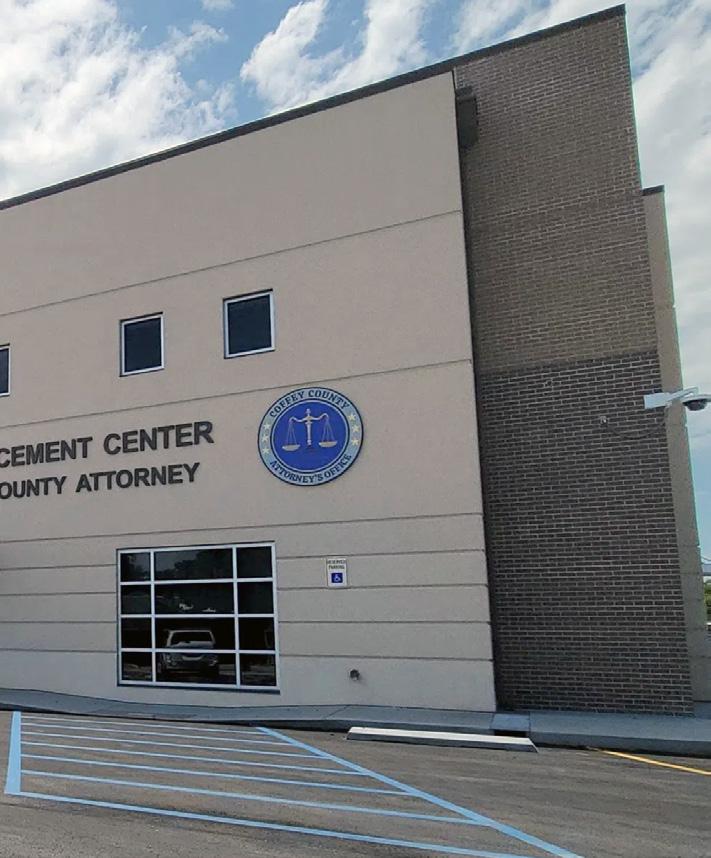
The new Coffey County, Kan., Law Enforcement security electronics technologies. Photo
modular control system has been implemented in more than 7,300 SteelCell units, with a total savings of more than $23 million. Some notable projects involving these modular security integrations include the ongoing projects such as the Northwest Indiana Correctional Facility in Westville, Ind., and the Pasco County Jail expansion in Florida, as well as completed projects such as the Marion County Community Justice Campus in Indiana and the Saginaw County Adult Detention Center project in Michigan, among others.
IP audio communication systems are replacing legacy intercoms with platforms that support programming, ambient soundscapes, facility announcements, time and date
Enforcement Center features extensive Credit (all): Goldberg Group Architects
environments in mental health housing units. The Westville project is one of the first projects to apply these technologies extensively throughout housing units.
Advanced detention lighting from companies such as Kenall — paired with LED technology — has significantly influenced sleep quality, mood and alertness, while visible-light-disinfection innovations continue to support healthier environments. These systems have been employed extensively throughout the Westville project and the Coffey County Detention Center.
Incorporating Design Partner Feedback
When working with design firms — from partnering with HDR and HOK to fine-tune plans for the upcoming Georgia state prison or the Cuyahoga County Central Services Campus projects, to teaming up with Goldberg Group Architects (GGA) on the Coffey County project — agencies are developing facilities that enhance operations while remaining within project budget parameters.
See Emerging Tech, page 49→
functions, and lighting control for dimming and color tuning. These features help inmates establish and follow routines and sleep patterns by matching natural circadian rhythm. These are especially useful in deescalation and contribute to safer, calmer
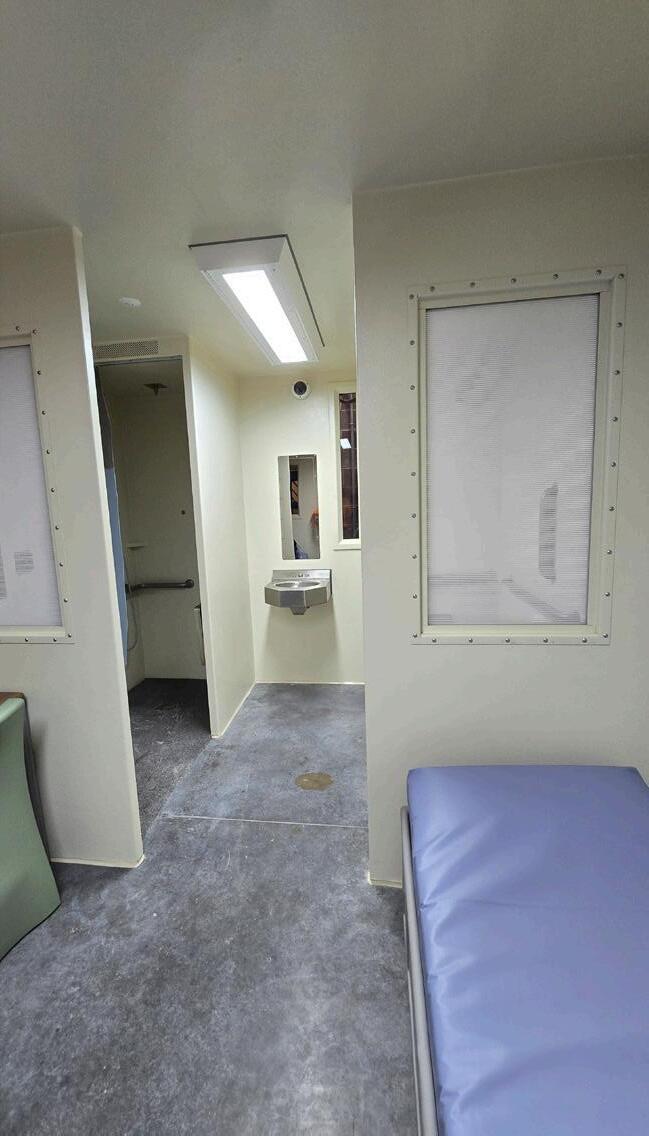
Advanced detention lighting and IP-based audio technologies were included in cells in the detention center portion of the Coffey County facility.
Why Violence Prediction in Corrections Needs a New Framework
By Julie van der Hoop, Ph.D.
Stop doing autopsies.
Start running an emergency room.
When violence erupts in a correctional facility, the response is predictable: reports are filed, medical care is provided, and the fallout — emergency transports, workers compensation claims and emotional trauma — spreads through the facility. Crisis management is prioritized over root-cause analysis. Even when a thorough review occurs, it happens too late. The injury is done. Lives may be lost. The next incident is already forming. This is the autopsy approach to institutional violence, carefully examining what already happened, with little capacity to prevent what’s happening next.
designed for violence risk face practical challenges. The HCR-20 is a strong risk-reduction planning tool that brings multidisciplinary teams together to create case-specific safety plans. But at roughly 20 hours per assessment and 6-month review cycles, facilities must triage carefully, and violence doesn’t wait for scheduled reviews. Conflicts escalate in days or hours.
The issue isn’t that the HCR-20 is ineffective; it’s the gap between periodic assessments and realtime conflict dynamics. Risk assessments inform decisions. Post-incident reviews improve systems. But neither prevents the assault that is brewing right now, between two specific individuals, in a specific housing unit.
flow into one integrated system. Post-incident analysis drives long-term improvements, but facilities need real-time access to this information to guide daily operational decisions.
· Real-time integration: Data must update continuously as events occur (not in batches), supporting immediate intervention and deeper analysis later.
· Decision support, not decision replacement: The system recommends targeted interventions, but staff retain full discretion with their expertise and facility knowledge guides every decision.
Post-incident analysis has real value. When facilities conduct thorough reviews, they can strengthen policy, sharpen staff training, improve supervision and enhance monitoring. Systems can and should learn from adverse events. But this reactive cycle can’t keep pace with the dynamic
“Most of us with years of service in corrections have witnessed more violence than should ever be accepted as inherent to this profession,” said Ricky Dixon, Secretary of the Florida Department of Corrections. “While we have grown more sophisticated in assessing risk and learning from past incidents, we now stand at a pivotal inflection point.
· Closed-loop feedback: Monitor interventions. Did they reduce risk or break conflict cycles? Learn and adjust accordingly.
· Authority to act: Risk scores matter only if linked to operational decisions, while respecting staff judgment and facility protocols.
“A future defined by substantially safer facilities is no longer aspirational, it is achievable. We owe that progress to the dedicated professionals who serve within our institutions and to those entrusted to our care and custody.”
–Ricky Dixon, Secretary of the Florida Department of Corrections
reality of institutional conflict.
What facilities need is a complementary approach: tools that work in real-time, suggesting interventions before any chance of escalation.
The Autopsy Problem
Most risk-assessment tools weren’t designed for institutional violence. COMPAS, LSI-R and VRAG analyze criminal history to forecast community reoffending. They generate risk scores that drive facility placement, in-facility housing and escort requirements. These operational decisions are important, but don’t predict or prevent specific conflicts that can lead to institutional violence.
Even tools explicitly
The convergence of integrated data systems and predictive analytics gives us the capacity to anticipate and disrupt violence before it materializes.”
“A future defined by substantially safer facilities is no longer aspirational, it is achievable,” Dixon added. “We owe that progress to the dedicated professionals who serve within our institutions and to those entrusted to our care and custody.”
The Emergency Room Model
An emergency room doesn’t just diagnose; it treats. A cardiologist doesn’t say to a patient “Your heart attack risk is 8/10,” and send them home. They run an EKG, order imaging, identify the specific blockage and intervene.
What Falcon is Building
Falcon Technologies is approaching this problem with a fundamental shift: violence prevention must become violence prediction through prospective analysis. The system we’re developing integrates data from across the facility ecosystem in real-time.
When significant operational, behavioral, or safety-related events occur, the system should update immediately and provide early, actionable intelligence.
Here’s how it could work in practice:
When operational, behavioral, or safety-related events occur, the system should update immediately and provide actionable intelligence.
Violence prevention needs the same framework — a framework that combines awareness of emerging risks, actionable guidance for intervention and monitoring results to improve outcomes.
The Ecosystem Effect
What’s missing is an approach that aligns individual risk profiles with operational factors to formulate better decisions. Outcomes emerge from the whole system, not just its parts.
The data exists; it’s just fragmented. Individual risk factors are documented but not integrated into real-time decision-making. Environmental risk factors, such as which events create predictable tension, remain untracked. Staff observations for example, are often dismissed, though staff who spend the most time with residents can sense when things “don’t feel right.” Gang intelligence sits in separate systems.
Operational Requirements
Moving from autopsy to emergency room means fundamental changes:
· Unified data infrastructure: Break down the silos so operational, behavioral and safety data
On Monday morning, Inmate A receives a disciplinary write-up for a verbal altercation with Inmate B. The system detects elevated risk by analyzing profiles and recent contextual patterns, generating a prioritized alert with recommended interventions.
A review team applies professional judgment, determines the appropriate course of action, and records their rationale and actions.
Two days later, both inmates remain incident-free, and the system uses this outcome to refine future recommendations.
This approach enhances safety for staff, visitors, and the incarcerated population by providing early warnings, guidance from similar cases and actionable data if violence occurs.
The goal is simple: reduce violence through proactive intervention. Even when combined with reactive learning, we are still meaningfully ahead. By delivering actionable intelligence early, we stay ahead of risk scores that come too late.
The real challenge and opportunity is transforming how we respond: shifting from learning after violence occurs, to preventing it before it ever starts.
Julie van der Hoop, Ph.D., is the Lead Product Manager for Falcon Technologies. She holds a doctorate from MIT.
The
supports an additional 312 inmates and establishes the
From Overcapacity to Optimized Operations at Saskatoon Correctional Centre
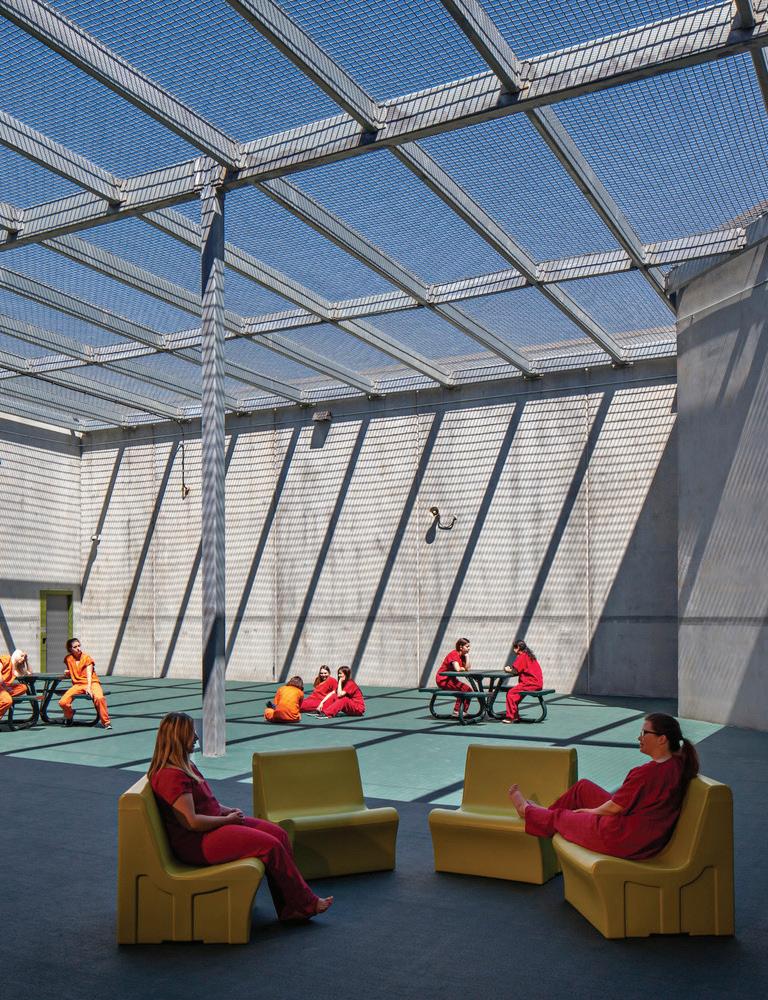
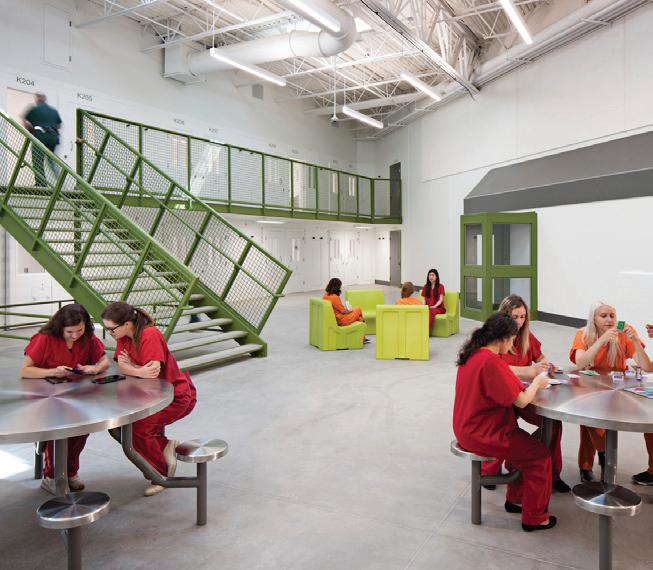
Technology, sightlines and cultural programming shape a modern custodial environment
By Lindsey Coulter
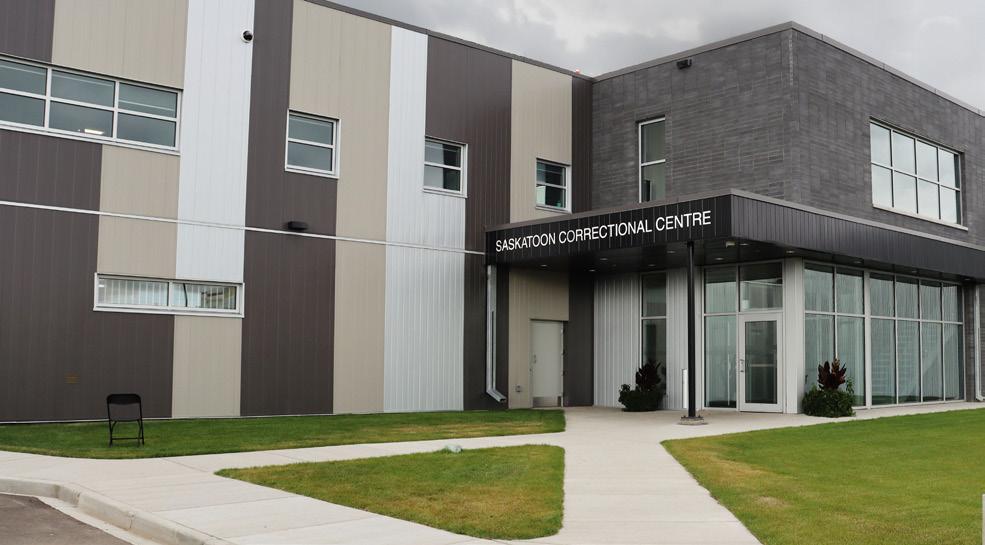
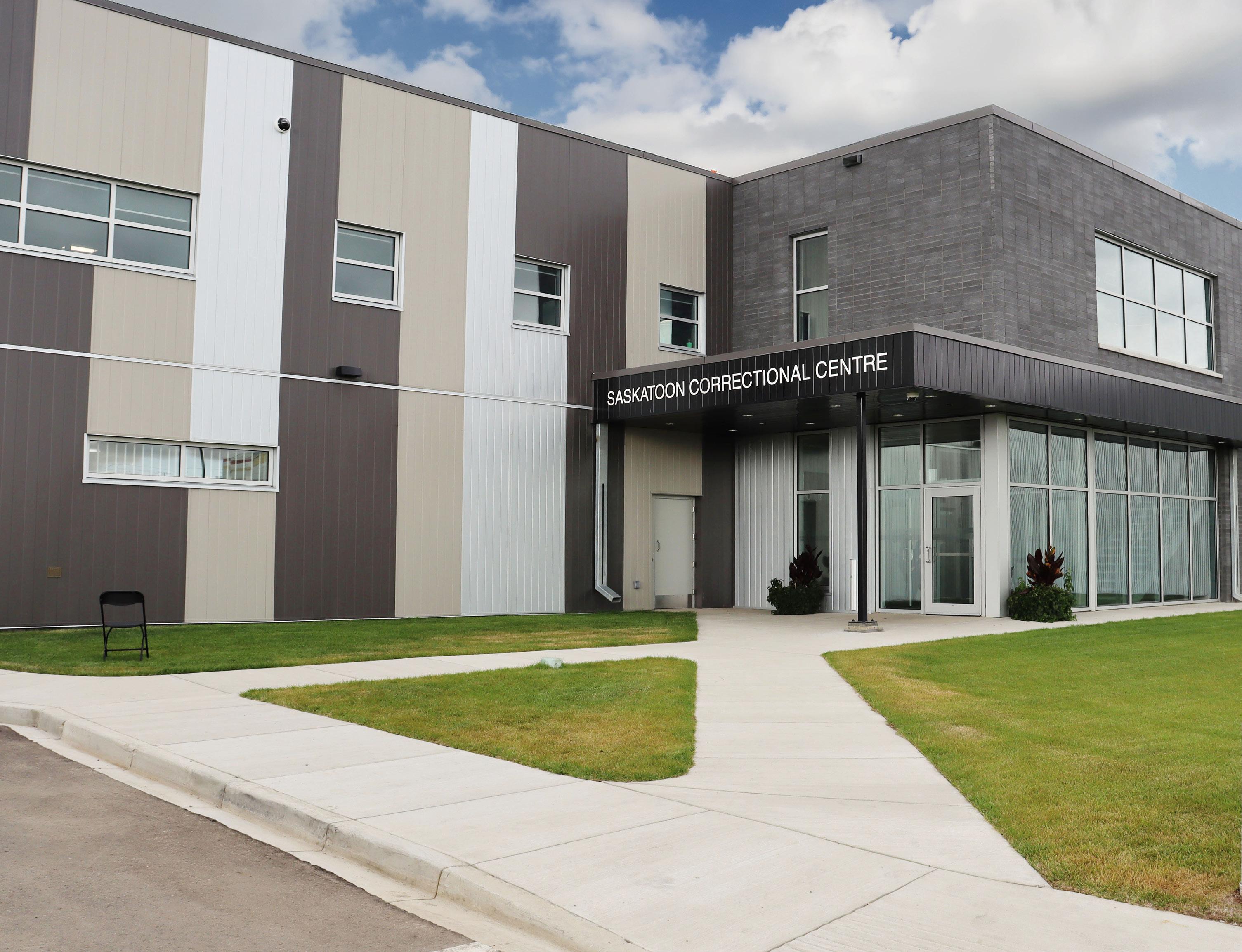
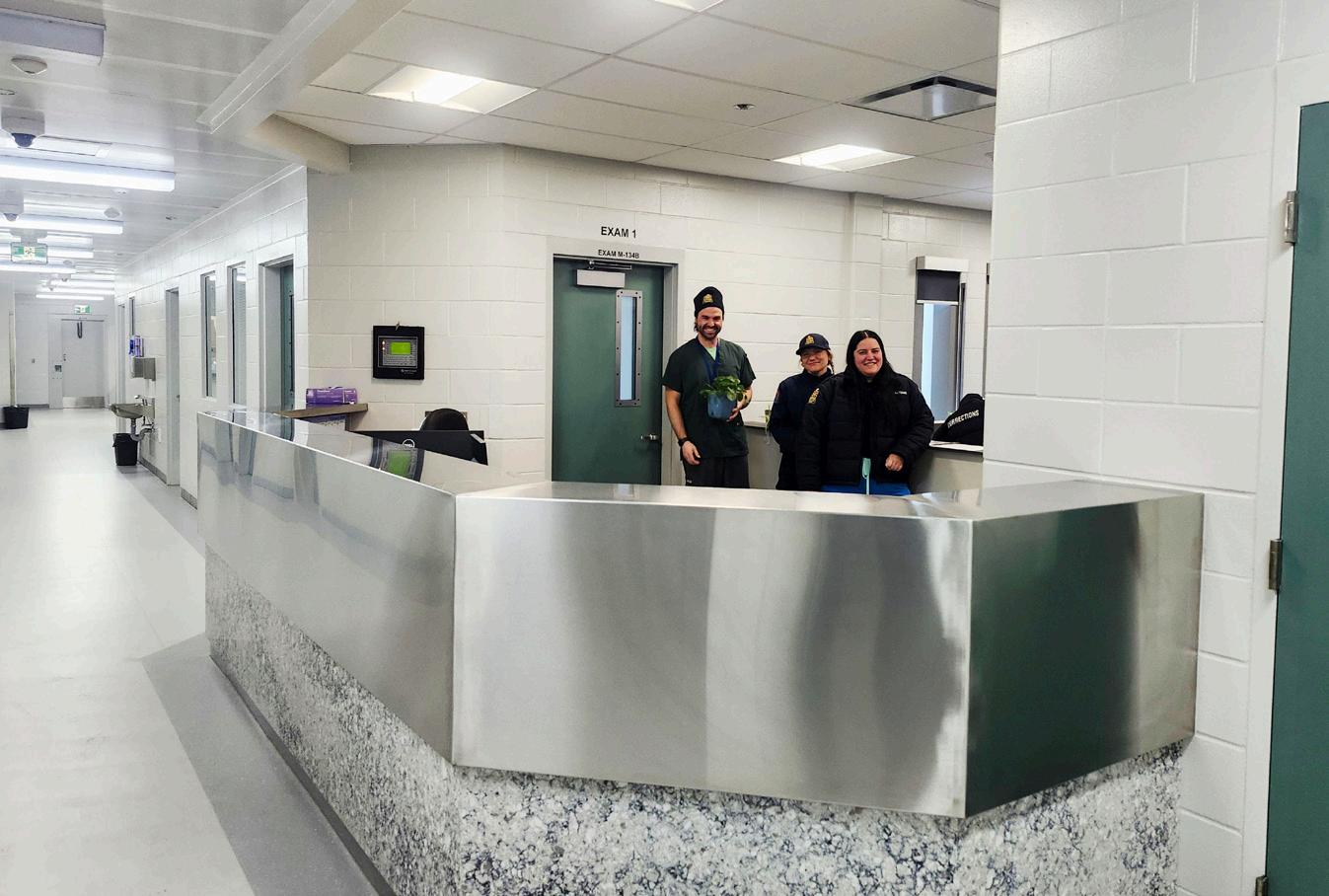
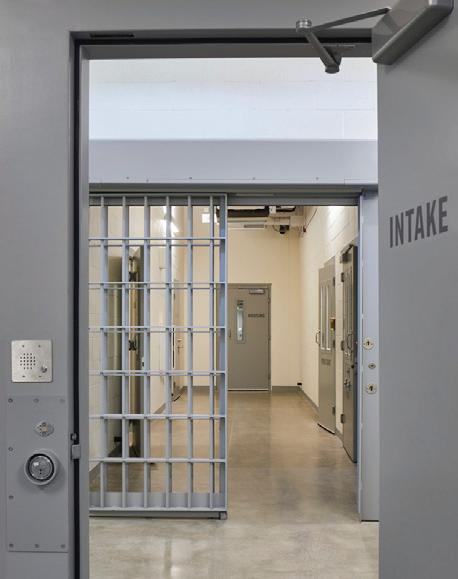
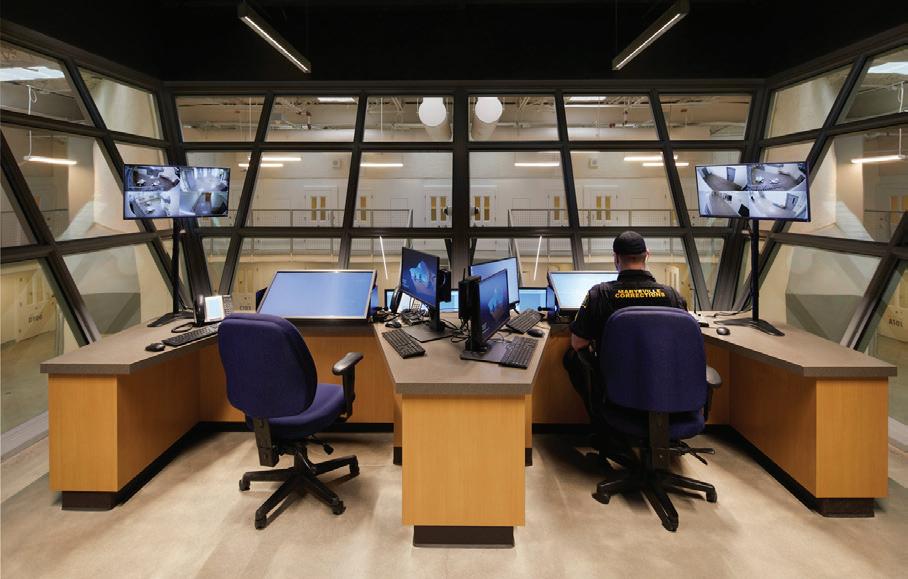
The $135 million expansion of the Saskatoon Correctional Centre represents one of Saskatchewan’s most consequential recent investments in custodial infrastructure. Designed to relieve sustained capacity pressure while modernizing operational safety, the project delivers new beds, a reorganized intake sequence, expanded medical and cultural programming space, enhanced video-court capacity and a scalable infrastructure backbone sized for long-term growth.
Originally built in 1981, the facility required substantial infrastructure renewal. Provincial inmate counts had steadily increased, placing pressure on remand operations across Saskatchewan.
“The Saskatoon Correctional Center was built in 1981 and required updated infrastructure,” the Ministry of Community Safety noted in a statement. “With inmate counts growing, the new infrastructure was needed to alleviate custody pressures in the province.”
At present, the expansion supports an additional capacity of 312 inmates. More importantly, it establishes the first phase of a campus master plan first articulated in a 2009 project development report examining full site build-out.
Master Planning and Long-Range Infrastructure
The expansion was conceived not as a standalone addition but as a scalable spine for future phases.
“It focused on addressing capacity challenges and correcting unsafe movement patterns, while developing a master plan that considers the site’s full, long-term build out, ensuring we have the ability to expand to meet future needs as the province and the city grow,” said Dustin Braun, Principal Architect and Partner at AODBT Architecture + Interior Design and a member of the Strategic Prairie Region Alliance design team.
The new structure is organized along what Braun described as a “master
spine.” That secure link intentionally anticipates future general-housing pods and a potential inpatient wing, with site capacity projected to support upwards of 1,700 beds at full build-out.
Critical infrastructure — including mechanical penthouse placeholders, looped water mains, scalable electrical sub-distribution and generator capacity — was sized for ultimate campus demand rather than initial occupancy.
expansion
first phase of a campus master plan first articulated in 2009. Photo Credit (all): Courtesy of the Ministry of Community Safety
The housing pod is divided into four, 36-cell units, enabling flexible classification.
“The food services [area] was able to accommodate around 1,000 meals at initial build-out,” Braun said. “At full build-out, it would be able to accommodate the 1,700-plus meals that would be required as additional general population pods were added to the campus.”
Kitchen, institutional services, property storage and waste management areas were also expanded and designed for integration with Urban Camp operations, allowing inmate workers to participate safely in food preparation.
Classification Strategy and Housing Configuration
The expansion comprises 288 general-population beds and 24 medical inpatient beds. The general-population component is structured as a 144-cell pod double-bunked to 288 beds. The pod is divided into four 36-cell units, enabling flexible classification management, including remand and sentenced inmates, gang separation, managed-open versus secure housing, and both vertical and horizontal tier separation.
“The classification was determined by the client based on the needs of the centre” Braun said. “The design was based off the Regina Provincial
blind spots. Anti-ligature detailing, correctional-grade fixtures, security caulking and anti-fishing window features were verified through full-scale mockups.
“Looking at anti-contraband and safety [measures], detailing such as correctional-grade fixtures, electrical outlets and switches were all supported by security caulking,” Braun said. “If you don’t specify the right type of caulking, it can actually be used as a weapon.”
In the Complex Needs Unit, elevating control posts to tier level also increased safety and supervision.
“Elevated control posts and raised unit desks improve visibility into commons, tiers and movement paths,” Braun added. “The General Population control post is centrally located between the four living pods and elevated to tier level for fullrange observation.”
Contraband Mitigation Through Circulation Design
Contraband control informed both macro circulation planning and material detailing.
“The expansion was designed in a way to limit cross traffic of different units
“The multi-purpose rooms allow for some of the ceremonies and other pieces that are required for our First Nations clientele. The focus is trying to bring those [elements] to the housing units as opposed to having a separate cultural space.”
– Dustin Braun, Principal Architect and Partner, AODBT
Kitchen, institutional services, property storage and waste management areas were expanded.
Correctional Centre Phase I expansion and Edmonton Remand
Centre designs.”
The project team drew inspiration from these facilities particularly in relation to pod geometry, daylighting and direct supervision.
“The model is proven with natural light, separate pods and central staffing desks that provide good supervision lines,” Braun said. “Each pod is equipped with multipurpose rooms, interview rooms and medication dispensing.”
Beds are located along exterior walls, creating a more open central commons area and improving sightlines compared with layouts that position bunks along interior walls.
Direct Supervision and Electronic Control
Technology and electronic systems are embedded throughout the design to support a direct-supervision operational model. Raised control posts and centralized desks provide improved visibility into commons, tiers and circulation paths.
“Optimizing that staffing opportunity and really trying to focus on providing that direct supervision operational model promotes engagement and communication between staff and inmates,” Braun said. “The same supervising officer in the central location really promotes that engagement.”
“The ministry tracks incidents of misconduct, such as inmate fights, assaults and disrespectful behavior towards staff,” the ministry added in a statement. “The building is designed for a direct supervision model, which improves report building with inmates to reduce the likelihood of incidents.”
Central Control is at the heart of inmate circulation on Level One, serving as the facility’s electronic command center.
“The central control integrates into the existing facility and controls the whole Saskatoon Correctional Center as the new main central control hub,” Braun said. “Integrating all of that technology definitely took some time and expertise. The new Central Control monitors and controls all perimeter activities and access into the facility. It overrides Unit Pods, if necessary, and controls all primary circulation routes.”
Fail-secure, programmable logic-controlled doors with interlocks prevent simultaneous door openings and allow for gang-control sequencing. CCTV saturation now extends to stairwells and exercise areas, eliminating historical
PROJECT DATA
Project Name: Saskatoon Provincial Correctional Centre Remand Expansion
Client: SaskBuilds and Procurement, Government of Saskatchewan
Cost: $135 million
Size: Main Floor (with GP Yard): 81,611 square feet
Second Floor: 34,057 square feet
Tier 2: 9,149 square feet
Tier 3: 9,149 square feet
GP Mech: 3,638 square feet
Total: 137,605 square feet
Current Capacity: 288 general-population, 24 medical inpatient
Future Capacity: 1,700 beds
General Contractor/Construction Manager: PCL Construction
Prime Consultant: Strategic Prairie Regional Alliance (SPRA), a partnership of AODBT Architecture Interior Design, P3A Architecture and START Architecture
Structural Engineer: BBK Engineering (Regina)
Mechanical: MacPherson Engineering Inc.
Electrical: ALFA Engineering
Civil & Landscape: KGS Group
Detention Consultant: Delco Automation
PRODUCT DATA
Security Plumbing Fixtures: Willoughby
Kitchen & Food Service: Kaizen Foodservice Planning & Design Inc.
to help reduce the movement of contraband throughout the facility,” the ministry noted in a statement. “The outside compound units are designed to minimize the risk of drug throwovers.”
All inmate movement occurs on the main level via a secure link. Staff and visitors circulate exclusively on Level Two. Intake and admissions follow a linear sequence — vehicle sallyport to secure vestibules, search and change areas, full-body scanner, property processing and interview rooms — minimizing incompatible contact.
“That goes back to our safe travel network first and foremost, ensuring everything is supervised and safe from a circulation perspective,” Braun said.
Video court expansion further reduces transport-related risk and the risk of contraband entering the facility, while also increasing operational efficiency.
The facility now includes 10 video-court suites — the largest deployment in Saskatchewan — with centralized second-floor suites and additional main-level rooms directly accessible from housing units. Wet and dry holding cells support the expanded capacity.
Unit-Based Programming and Cultural Integration
The new unit-based programming model reduces cross-facility movement while increasing access to services.
“We’ve tried to address those with prioritizing improved sight lines and supervision, improving support spaces, and centralizing support spaces within the pods to allow for smoother movement for inmates and staff,” Braun said. “You’re not taking people through the center and really can group all of those needs within the housing units.”
Each living unit includes multipurpose and program rooms, interview and disclosure rooms, exercise space and an outdoor yard, which are supported by strong staff supervision and visuals. Additionally, cultural programming is now embedded within housing units rather than isolated in a single ceremonial room.
“The multi-purpose rooms allow for some of the ceremonies and other pieces that are required for our First Nations clientele,” Braun said. “The focus is on
trying to bring those [elements] into the housing units as opposed to having to go to a separate cultural space.”
The expanded spaces also support core correctional programming, chaplaincy, NA and AA meetings, addictions counseling, education and reintegration planning.
“Positive behavior is a prerequisite for acceptance into any of our programming areas regardless of security level,” the ministry noted in a statement. “Correctional officers use core correctional practices and motivational interviewing to move offenders through the stages of program readiness.”
Medical Modernization and On-Site Care
The opportunity to address and expand medical facilities has resulted in a centralized ambulatory clinic and a 24-bed Medical Inpatient Unit. Over the past several years, there has been a notable increase in mental and physical health needs among the inmate population, according to a statement by the ministry. Thus, the new facility was designed to modernize and increase access to medical services and offer space for community partners to assist in release planning.
The Medical Inpatient Unit incorporates double-occupancy inpatient cells, including isolation rooms with airlock configurations.
“There was that need for onsite inpatient treatment,” Braun said. “Some cells are within an airlock and isolated infectious disease cells, as well as other cells with side-by-side beds for different medical needs.”
Additionally, medication can now be dispensed within housing units through secure assessment and dispensary rooms, reducing high-risk movement to the clinic. Meanwhile, the ambulatory clinic provides physician and nursing services, including a methadone clinic.
“It includes holding cells and other components that are critical to the safe flow of inmates through the medical wing, providing that ambulatory care with physicians, nursing, dental, travelling optometry and central medication,” Braun said.
Construction and Foundations
The three-story expansion with partial basement required deep foundations due to challenging subsurface conditions. Fill and topsoil overlay silts and clays, underlain by glacial till extending roughly 49 feet below grade, with groundwater encountered between 25 and 27 feet.
In response to these complex site conditions, foundation contractor Keller installed 807 drilled shafts ranging from 16 feet to 36 feet in depth. Pre-drilling addressed cobbles and rock obstructions, while temporary casing minimized groundwater infiltration. The team coordinated closely with PCL Construction Management Inc. and structural engineers to optimize shaft design and reduce concrete volume. Winter conditions added sequencing complexity.
Systemwide Relief
Less than a year after opening, the facility and its 312 additional beds have already delivered on the goal to provide systemwide support.
“At present, the biggest relief has been to the Saskatoon and Prince Albert correctional centres, which were operating above capacity,” the ministry said in a statement. “The ministry tracks these statistics and uses trends to guide programming and operations.”
With scalable infrastructure, electronic control integration, contrabandresistant detailing, embedded cultural programming and expanded medical capacity, the Saskatoon Correctional Centre expansion reflects a comprehensive reinvestment in custodial operations — one grounded in circulation control, technology integration and long-range adaptability.
Technology and electronic systems are embedded throughout the design to support direct supervision.
Each living unit includes multipurpose and program rooms, interview and disclosure rooms, exercise space and an outdoor yard.
STANDOUTPRODUCTS
Body-Worn Camera
Axis body-worn solutions are a suite of wearable camera systems designed for professional security, public safety, healthcare, education, and commercial environments that require reliable evidence capture and situational awareness. Built on an open ecosystem, these devices deliver high-resolution video with clear audio and robust data protection through end-to-end encryption and secure storage options. Users can activate recording instantly; systems also support pre- and post-event buffering to ensure full capture of relevant incidents. Connectivity features like Wi-Fi, Bluetooth, and optional LTE/4G enable live streaming and location tracking where supported. Lightweight, rugged and easy to integrate with existing video-management or evidence-management platforms, Axis bodyworn cameras scale from standalone use to enterprise-wide deployments.
Axis Communications www.axisbodyworn.com
Security Scanner
Security Sensor
Senstar’s Smart 3D LiDAR (short for Light Detection and Ranging) is an advanced sensing solution engineered for physical security applications where accurate threat detection and low false-alarm rates are critical. The system generates high-density 3D data on-device, enabling detailed analysis of object size, movement direction and speed within its monitored volume. Designed for consistent performance in diverse lighting and weather conditions, the sensor operates effectively both indoors and outdoors. Its privacy-conscious design captures spatial information without revealing identifying visual details. Smart 3D LiDAR integrates with leading video-management systems via ONVIF-compatible alerts, offering seamless connectivity with existing security infrastructure. With configurable parameters that refine detection criteria, it delivers dependable perimeter protection while minimizing unnecessary alerts.
Senstar www.senstar.com
High-Intensity Searchlight Systems
The Rohde & Schwarz QPS201 Security Scanner is a static, millimeter-wave screening solution designed for aviation, critical infrastructure and high-security environments. It uses AI-based algorithms to detect metallic and non-metallic threats on individuals with high resolution and fast throughput, delivering results within milliseconds. The system operates using non-ionizing millimeter waves, offering safe and contact-free screening without health risks. Its intuitive interface supports ease of use for operators and subjects, while symbolic body graphics help preserve privacy. Certified for aviation passenger screening, the QPS201 balances precision and reliability with low maintenance and automated options that support efficient security workflows. Optional centralized data management and customizable sensitivity further enhance operational flexibility.
Rodhe Schwarz www.rohde-schwarz.com
Perimeter Security System
The SensoGuard Seismic Shield Pro perimeter security system combines buried seismic sensing with AI-assisted verification to provide comprehensive intrusion detection and monitoring. Its invisible underground sensors form a continuous detection barrier, resilient to environmental interference and tampering. Upon detecting activity, the system activates a PTZ camera whose video feed is evaluated by deep learning analytics to distinguish genuine threats from false alarms. Seamless command and control software supports real-time tracking and alert management, with audiovisual data available for analysis and response coordination. Designed for large-scale and critical site protection, the Shield Pro’s architecture accommodates expansion and integration with additional components.
SensoGuard www.sensoguard.com
TrakkaBeam® is a family of high-intensity searchlight systems engineered to provide powerful, efficient illumination across airborne, maritime and land-based platforms. Utilizing advanced LED/LEP hybrid and Xenon light technologies, these searchlights deliver consistent, long-range light with reduced power consumption and robust performance in demanding operational conditions. TrakkaBeam models offer features such as 360-degree illumination, inertial stabilization for vibration resilience, and compact designs that support versatile installation on aircraft, vessels, ground vehicles or fixed mounts. Many units include integrated, multi-spectral filter wheels for optimized visibility in fog, rain or low-light scenarios and support expansion with additional sensors and controls. Built for mission-critical uses in public safety, search and rescue and defense environments, TrakkaBeam systems balance illumination power, adaptability and reliability.
Trakka Systems www.trakkasystems.com
Video Intercoms
Zenitel’s Video Intercom portfolio encompasses a range of IP/SIP-enabled devices that combine video, audio, and amplified communication to support secure access and announcement functions. Built for reliability in challenging environments, these intercoms deliver high-quality video and clear audio performance, maintaining communication even amid temperature extremes and harsh conditions. The offering includes multiple form factors such as video stations with keypads, card-reader support and compact or mini variants, enabling flexible installation across housing, campus or industrial access points. With SIP/VoIP compatibility, the systems integrate into modern networked communication infrastructures, facilitating efficient visitor interaction and controlled entry.
Zenitel www.zenitel.com
From Transport Risks to Reform How ACA responds to emerging challenges
By David Haasenritter
The American Correctional Association (ACA) plays a central role in shaping professional practice within the U.S. correctional system. Since its founding in 1870, ACA has sought to improve the quality, safety and effectiveness of correctional operations through research, training, accreditation and — most notably — the development of national expected practices (formerly known as standards).
These expected practices serve as benchmarks for prisons, jails, juvenile facilities, community corrections programs and other correctional agencies. ACA’s expected practices development process is a systematic, collaborative and evidence-informed process designed to ensure that correctional institutions operate safely, ethically and efficiently.
Establishing Order in a Fragmented System
The first organized attempt to formulate standards for prisons occurred in 1870 at a conference in Cincinnati. That conference, the Congress on Penitentiary and Reformatory Discipline, became the organizing meeting of
Accreditation for Corrections. The members include correctional administrators, practitioners from adult and juvenile systems, healthcare professionals and community corrections professionals. This committee is responsible for reviewing expected practice submissions from the field, ACA Committees and working groups; evaluating public and professional feedback to those submissions; and making final decisions on proposed expected practices for approval, disapproval or to be tabled to ACA staff or ACA committees for more work. The committee ensures that expected practices are not static; they evolve in response to new research and technology, legal requirements and emerging challenges.
The committee meets twice per year during ACA’s conferences, and the meetings are open to all attendees. Proposals for revision to existing standards are solicited from the field or ACA Committees prior to each ACA conference. ACA also opens an expected practice portal on its website for practitioners to submit new or revised expected practices, or to recommend deletion of expected practices. The submissions are reviewed by ACA staff to ensure no previously denied proposals within the last two years are selected for review and then posted on the portal for comment. The Performance-Based Standards Committee is provided with all vetted proposals and comments for consideration. All revisions
Through a structured, research-informed and collaborative approach, ACA ensures that its expected practices remain relevant, effective, and aligned with legal and ethical expectations.
the National Prison Association, which changed its name to the American Correctional Association in 1954.
In 1969, ACA received a Ford Foundation grant to study the desirability and feasibility of establishing national correctional standards. At this time, correctional practices varied widely across jurisdictions, often lacking oversight or uniform expectations. The goal was to create a consistent and professional set of expected practices that were realistic and achievable in most jurisdictions. In October of 1974, the Commission on Accreditation for Corrections was established to create standards, the accreditation process and grant accreditation.
Today, there are 29 different manuals of standards covering various aspects of correctional work, including facilities, programs and healthcare. The focus was on promoting safe and humane conditions of confinement, establishing operational consistency across facilities, reducing liability and risk, encouraging continuous improvement and providing a framework for accreditation. The process evolved from the creation of standards to Performance-Based Standards and Expected Practices. The Commission, now administered by ACA, developed these to enable administrators and practitioners to not only monitor activities in their facilities, but to also measure the outcomes of their efforts.
From Proposal to Adoption: How Practices Are Approved
The Performance-Based Standards and Expected Practice Committee is comprised of 12 members, along with eight members from the Commission on
must be approved by majority vote before going into effect. The results of each conference’s Performance-Based Standards Committee meeting are posted online via the Performance-Based Standards Committee Meeting Minutes. Occasionally new standards manuals are published depending on the needs of the field.
When Incidents Drive Innovation, Policy
In January 2025, inmate transportation was a hot topic among correctional leaders due to a number of recent incidents. Because of a request from the field to enhance the safety and efficiency of transportation operations, then-ACA President Denise Robinson formed a blue-ribbon committee to develop a new standard practices manual on the topic.
The committee included transportation staff practitioners and ACA staff, who collected and reviewed transportation policy and procedures from 17 counties as well as state and military adult and juvenile facilities and agencies. They received two after-action reports and two presentations on transportation incidents that happened within agencies, as well as the results of the investigations and the actions taken by those agencies due to the incidents.
With this information, the committee developed 114 expected practices covering subjects like transportation administration, contracting, planning, security, safety, equipment, training and healthcare. The new manual, “Performance-Based Standards and Expected Practices for Transportation of Inmates,” was approved and published by the Performance-Based Standards Committee at ACA’s 2025 Winter Conference. As Robinson stated at the time, there is no such thing as “routine transport,” and the manual plays a pivotal role in enhancing the safety and efficiency of transportation protocols today.
In January 2026, the Committee reviewed 17 submissions from the Parole and Probation Ad-Hoc Committee, which resulted in approval to publish a new edition of that manual. The committee also reviewed 21 submissions from the field and ACA staff. Of those, 24 expected practices were approved, seven were denied, four were referred to a subcommittee and three were withdrawn. Approved proposals included technology-based submissions, inspections and international expected practices.
Sustaining Safety Through Structured Oversight
The American Correctional Association’s expected practice development process is the cornerstone of modern correctional practice. Through a structured, research-informed and collaborative approach, ACA ensures that its expected practices remain relevant, effective, and aligned with legal and ethical expectations.
By guiding facilities toward best practices and providing a framework for accreditation, ACA plays a vital role in promoting safety, professionalism and continuous improvement across the correctional system. As corrections continue to evolve in response to societal needs, ACA’s expected practices will remain essential to shaping the future of the field.
David Haasenritter is the Director of the ACA’s Standards and Accreditation Department.
Then-ACA President Denise Robinson, along with members of the Committee on Standards and Accreditation and the Transportation Standards subcommittee, announced the implementation of new standards for transportation at the ACA Winter Conference in Orlando in January 2025.
Photo Credit: American Correctional Association
Data, Design and Dignity: Kansas Reimagines Youth Detention
By Megan Milner
In 2025, more than 2,000 youth stepped foot into a juvenile detention facility in Kansas. Compared to many other states, this is likely a relatively low yearly census. Nevertheless, it has been only recently that the Kansas Department of Corrections began officially tracking detention populations at a statewide level.
The nine juvenile detention centers in Kansas are operated by local county governments, and in more rural areas, through regional partnerships. The state began participating in 2010 with the Juvenile Detention Alternatives Initiative (JDAI) through the Annie E. Casey Foundation. This signaled a departure from an overreliance on detention to better understanding the science of adolescent development
and a commitment to improve conditions of confinement for youth. Landmark legislation in 2016 overhauled the Kansas juvenile justice system through a comprehensive, bipartisan juvenile-justice reform bill that better aligned with evidence-based, data-driven practices, saving the state more than $112 million over 10 years by reducing the reliance on confinement and costly out-of-home placements. Much of these savings have been reinvested into community-based programs such as functional family therapy, mentoring, behavioral health services and more.
In 2023, the legislature passed House Bill 2021, requiring the Kansas Secretary of Corrections to ensure that youth in a juvenile detention center have a timely risk and needs assessment, case plans and access to behavioral health services. While a few of the state’s juvenile detention centers started providing some programming during their participation in JDAI, this new legislation marked the first statutory requirement for detention facilities to provide assessment and treatment for youth while they are in the facility.
The Kansas Department of Corrections utilized the Global Assessment of Needs – Short Screen (GAIN-SS, Chestnut Health Systems) as the assessment instrument to help identify the need for more comprehensive substance use and/or mental health evaluations. In most areas of the state, this instrument is being administered at booking to ensure it reaches as many young people as possible.
Of the youth admitted to a juvenile detention center in calendar year 2025 who were administered the GAIN-SS, roughly 84% had an identified need for more comprehensive substance use evaluation and/ or treatment — and almost 55% of the youth needed additional mental health evaluation and/or treatment.
For juvenile justice practitioners, these numbers are not shocking. We generally know that justice-involved youth have high rates of trauma, substance use and mental health diagnoses, and examination of deeper touch points of the juvenile justice system will reflect even higher prevalence. For Kansas, this early data analysis has revealed key insights and pointed to additional work needed for youth at early stages of system involvement. Kansas partnered with the Council of State Governments (CSG) Justice Center in 2024 to launch the Stepping Up for Youth Initiative, the first state in the country to expand this model to the juvenile justice system, to address the prevalence
of behavioral health needs in the justice system. This work brings together state and local policy makers and system leaders from the juvenile justice system, child welfare system, and behavioral health system to accomplish two main objectives: adapt the Stepping Up model for juvenile justice and align state policies and practices with what research shows works to improve community safety and outcomes. Part of this work includes strengthening support and resources for counties, to include juvenile detention centers when determined to be necessary for public safety.
With a sharpened focus on expanding access to behavioral health services for youth, some Kansas counties have also prioritized their physical environment, with much of this work starting before the previously mentioned 2023 legislation.
The Sedgwick County
Department of Corrections, which serves one of the most urban counties in the central portion of the state, made several changes to its juvenile intake and assessment center over the past few years. Serving as the initial entry point for alleged juvenile offenders or children in need of care who are taken into custody by local law enforcement, the juvenile intake center and its staff play a critical role in the community. This role includes assessing the needs of youth and connecting them to community-based services that may prevent deeper system involvement or to make other appropriate release decisions, such as detention. County officials softened the existing environment to be responsive to the potential trauma of children and adolescents by creating quiet rooms with lively murals and more comfortable furniture.
Like Sedgwick County, the Johnson County Department of Corrections, which serves an urban county in northeast Kansas, had to consider how to soften a traditional correctional environment within the existing physical plant. The agency engaged one of its own custodians, as well as a local artist, to create unique and inspirational murals throughout the facility, including motivational words on the doors of all youth
rooms. With the state’s reduction in the use of detention, Johnson County was able to utilize an unoccupied portion of the facility and renovate it for educational and recreational purposes.
Both Sedgwick and Johnson Counties are participants in Performance-Based Standards with the Center for Improving Youth Justice (CIYJ), with a total of four juvenile detention facilities in the state participating. In 2024, Johnson County won CIYJ’s Barbara Allen Hagen Award for its efforts to strengthen family engagement for youth in detention.
Connecting youth and families to services is critical at every stage of the juvenile justice
Civic + Justice
system, but early intervention can prevent youth from progressing deeper into the system. Juvenile detention centers in Kansas are taking important steps, with the support from legislators and the Kansas Department of Corrections, to ensure youth have access to appropriate levels of care to meet their behavioral health needs.
ADVANCED OFFSITE CONSTRUCTION.
Megan Milner is the Deputy Secretary of Adult and Juvenile Community Based Services with the Kansas Department of Corrections.
Places in support of community
Osvaldo N. Soto Miami-Dade Justice Center • Miami, Florida
Normative furnishings create calm in this intake and assessment room. | Photo Credit: Sedgwick County Department of Corrections
Stainless Steel Reigns Supreme
Durable. Vandal Resistant. Anti-Microbial*.
OFF-FLOOR BLOWOUT JET STAINLESS STEEL TOILET MODEL NO. R 2100 STAINLESS STEEL SECURITY LAVATORY MODEL NO. 3325 BEFORE
REPLACE-WARE® FIXTURES
Featuring an anti-microbial powder coat and no-touch foot button, these replacements are not only superior in terms of durability—they’re more hygienic as well.
JET STAINLESS SIPHON JET STAINLESS STEEL TOILET WITH WALL WASTE MODEL NO. R2115-T-2
SIPHON
Powder coat, anti-microbial additive, and foot button are optional.
The Multi-Front Fight Against Contraband in Correctional Facilities
By Charlie Lange
The principle of supply and demand heightens in a controlled, secure environment such as a jail or a prison. As demand for drugs, cellphones, weapons and other prohibited items increases, so do the efforts inmates and their co-conspirators on the outside put forth to obtain them. As smugglers employ increasingly creative methods to introduce contraband into correctional facilities, see how states and counties are employing the latest counter-contraband tactics.
Counter-Drone Technology
Authorities are more determined than ever to address aerial threats. There’s no clearer sign of that commitment than the inclusion of the Safer Skies Act in the 2026 National Defense Authorization Act. The bill, authorized by Congress at the end of 2025, includes federal funding for technology and training to detect and track drones, identify operators, and disrupt or disable drones if a credible threat is determined.
At the American Correctional Association’s 2026 Winter Conference in Long Beach, Calif., Greggory Phillips, a special agent with the Georgia Department of Corrections
(GDC) and the FBI — and the Founder and President of the Correctional Officer & Detention Intelligence Network (CODIN) — outlined the latest development in the state’s Operation Skyhawk mission, which employs digital forensics, cellular analysis, and surveillance techniques to locate drone operators and halt smuggling networks. To date, more than 180 drone drops in correctional facilities have been stopped, with 151 drones seized and 178 felony arrests completed, including 10 GDC employees and two from outside law enforcement agencies.
During the Operation Skyhawk presentation, Brian Grant, Director of Flight Operations
for UAV manufacturer American Robotics, joined Phillips to discuss the latest drone detection and disabling technologies, including soft-kinetic strategies that contain and recover drones instead of destroying them, which reduces risk and preserves evidence.
Drones are even being deployed by correctional departments to monitor facility perimeters. Last fall,
A pilot program at Oklahoma’s Red Rock Correctional Facility utilized drones to patrol perimeters.
Photo Credit: Oklahoma Department of Corrections
Greggory Phillips of CODIN speaks about Operation Skyhawk at the ACA Winter Conference.
the Oklahoma Department of Corrections initiated a pilot program with drone manufacturers Skydio and Levatas to provide continuous aerial coverage at the Red Rock Correctional Center in Lawton. While intended primarily to prevent contraband smuggling, the program has also allowed more effective facility monitoring and resource allocation, freeing correctional officers from time-consuming perimeter patrols.
Mail and Body Scanners
As the illicit drug trade has evolved to include
Drug-laced paper strips can be smuggled into facilities via physical
synthetic sprays, paper strips and other substances that can be transferred to paper materials, smugglers have taken advantage of physical mail to introduce drugs and other hazardous materials into facilities. In response, correctional authorities are taking measures to limit the introduction of physical mail materials, while still balancing inmates’ rights to communicate with their support networks outside of facilities.
In December, the Arizona Department of Corrections, Rehabilitation and Reentry moved to a digital mail platform for all incoming mail aside from legal mail, parcels, publications and official government mail. The following month, the Michigan Department of Corrections implemented its new policy requiring that all confidential and legal mail sent to incarcerated individuals to be provided as a photocopy, with the original mail shredded. Michigan also uses the TextBehind DOCS system, which confidentially manages and verifies privileged mail sent to inmates.
Defining Durability since 1947.
Milnor’s V-Series open-pocket cylinder Washer-Extractors range from 40-160 lb capacities.
Times have changed since Milnor built its first commercial laundry machine, but Milnor’s dedication to quality construction and durability hasn’t. Our washer-extractors are built with high-quality components designed to last. Plus, each model design is tested in a significant out-of-balance state for over 1,000 hours at maximum extraction speed, which is why you see so many Milnor machines working for decades in laundries around the world. And that’s why you will continue to see machines bought today working well in the future. Find out more at milnor.com.
In addition to scanning mail for upload to digital platforms, facilities are employing scanning technology that can detect the presence of drugs and other dangerous substances in paper and other mailed materials. Such technologies include solutions from companies like RaySecur, which uses T-ray technology to produce live 3D imaging of mail that is 300 times more sensitive than conventional X-ray technology. Additionally, portable solutions from companies like 908 Devices employ mass spectrometry to detect even trace levels of illicit materials.
Some companies are even incorporating artificial intelligence (AI) into their scanning technology, such as the Sentinel CT scanner from ScanTech AI Systems, which uses non-intrusive, ‘fixed-gantry’ CT screening along with proprietary AI and machine learning capabilities to quickly and accurately detect hazardous materials and contraband. In 2025, the Virginia Department of Corrections became the first department to pilot such a system.
Body scanners also use low-dose X-ray technology to detect contraband within the incarcerated population as well as from staff, visitors and contractors entering facilities. The Missouri Department of Corrections has widely implemented systems such as the Intercept from Tek 84 — along with conventional walk-through and hand-held metal detectors and baggage scanners — to add an extra layer of security.
As these and other issues continues to develop, it’s clear that correctional operators are dedicated to not only preventing contraband from entering facilities but also to finding and destroying those items that have made their way inside.
mail.
Photo Credit: Michigan Department of Corrections
A Smarter, Safer Jail
Cape Girardeau County, Mo., increases efficiency and operations through prefabricated cells, updated security and integrated courthouse access
By Dena Sattler
In Missouri, the Cape Girardeau County Jail is being transformed in ways that will enhance efficiencies and improve regional cooperation, all while alleviating overcrowding.
A new addition completed last year and an ongoing remodeling of existing space at the county jail in Jackson, Mo., is addressing long-term needs with updated safety and technology systems to flexible spaces that support daily operations.
Part of a long-term master plan developed by the county and designers from Treanor, with Penzel Construction as the construction manager, the $51 million jail expansion and $4 million renovation feature new cells that will provide more than 500 additional beds.
Courthouse, Expansion Work
Andy Pitts, Principal with Treanor who helped lead the design-build project, said the first step was constructing a new 82,000-square-foot county courthouse. Completed in 2020, the $19 million courthouse features six courtrooms, a state-of-the-art security and mass-notification system, LED energyefficient lighting and plenty of natural lighting. The six courtrooms made it possible to consolidate the former county courthouse in Jackson and the Common Pleas Courthouse in Cape Girardeau.
In 2023, groundbreaking commenced for the jail expansion, along with a $9.6 million renovation of the county’s historic courthouse into an administrative facility. The expansion doubled the county’s detention capacity by installing 198 prefabricated, modular cells manufactured by SteelCell of North America to provide 368 beds in different configurations.
Treanor and Penzel Construction partnered with CML Security for detention equipment and security electronics installation. In addition to new offices, training facilities and locker rooms for detention officers and the Sheriff’s Department, the jail project also delivered a dedicated, more efficient booking area.
Now operational, the jail addition also features a larger kitchen, laundry facilities and an updated inmate property system.
Ongoing Renovations
Completion of the expansion allowed for the reloaction of inmates, enabling the TreanorPenzel team to address extensive deferred maintenance in the old
and then come back and renovate the existing facility,” said Pitts. “With more beds in the new building than they currently had, the county was able to move their entire population into the new facility to allow the Penzel team to come in and do retrofits.”
Renovation work involves installing new doors and locks on all cell fronts. The former booking area will be repurposed into a new medical wing with dedicated pods for mental health issues, while other
300 inmates in a facility built to house no more than 220, leading the county to place inmates in other nearby facilities. Pitts said that the combined new and renovated facility will aid in more efficient operations and increase safety by reducing the need to move inmates through different areas of the jail.
“The former facility was based on an old-school, indirect supervision model, where all of those in custody had to be moved from the day room to
renovations include upgrading security electronics infrastructure and adding office space.
Completion of work in the old section of the jail will increase capacity by 144 beds, including five new medical beds. The jail holds local and federal inmates, and the additional space also could be used to house inmates from neighboring counties facing their own space crunch.
Renovations to the old section of the jail continue, with completion expected this fall.
Addressing Modern Needs
Before the two-part project began, the county jail population was running roughly 285 to sometimes
recreation, visitation and programming areas,” said Pitts. “In the new addition, we built recreation within the units to minimize movement, which will help with staffing levels, security and operations.”
The new facility also increased space for state courts, secure passage between the county jail and the courtroom facilities, and enhanced staff and jury areas and attorney-client meeting rooms.
Funding was provided by a voter-approved 2020 sales tax; $32 million in certificate of participation bonds; and $10 million in federal funds from the American Rescue Plan Act (ARPA) of 2021.
“It has been a long process to get to where we are today, but we’re getting closer to completion,” said Pitts.
Actall builds real-time locating systems for the most complex, high-security, unpredictable, multipath-heavy environments in the world.
Our systems are designed to maximize value for YOUR operations with a variety of hardware options that feed to the HubSens API.
HubSens supports ATLAS, Sentry, PALS 9K and Bosch Security Escort - from one interface.
Visit https://actall.net/demo to learn more.
The addition to the Cape Girardeau County Jail added 368 new beds.
Photo Credit (all): Randy Braley Photography
Modular cells were provided by SteelCell of North America.
Correctional Technology Solutions Continue to Advance in Colorado Broomfield Detention Center provides progress
By Dena Sattler
In the corrections industry, the potential benefits of smart technology — systems and devices that fuel connectivity, automation and other efficiencies — are especially far reaching, with various promising technologies being tested, tweaked and implemented at Broomfield Detention Center (BDC) near Denver.
Shawn Laughlin is the Commander of the BDC, a member of the Correctional News Editorial Advisory Board and the 2024-25 president of the American Jail Association. When he spoke with Correctional News in 2025 about the BDC’s approach to testing new correctional tools, he called the facility an “incubator for technology.”
Maintaining a daily inmate count of 65 to 70 allows the facility to continue scaled testing of artificial intelligence (AI), data-driven tools and other strategies to enhance rehabilitation, safety and efficiency — all while balancing security and rehabilitation.
In some ways, much has changed in the past year across the correctional technology landscape, especially as AI and predictive technologies proliferate and facility operators embrace their potential. To gauge this progress, Correctional News followed up with Laughlin to hear updates.
Deploying Drones for Safety, Security
BDC continues to enhance security and safety with AI-powered surveillance, contraband detection and drone-defense systems. The drone technology in use also has accelerated “signs of life” and wellness checks, as it can detect the slightest movement of an inmate, such as under a blanket in bed. Through biometric sensors and drone footage, it’s also possible to greatly enlarge an image to see breathing or other movement.
“We’ve been able to pair our camera system with drones, and then through Wi-Fi. Because we already
check for deployment of drone technology, AI programs and more
have this infrastructure built, we’ve been able to test — within a few seconds — proof of life,” Laughlin said.
Counter-drone technologies are also being tested to deter contraband smuggling.
“These drones are getting so good” by masking their acoustic signal and through other tactics, Laughlin said. “It’s really difficult now to even hear them and tell us a drone is right on top of you.”
As such, BDC is set for expanded testing of drone countermeasures, Laughlin said, to include dronebased perimeter security. “That’s the next thing,” he said. “We’re going find a vendor to work with us.”
Identifying Feelings on the Phone
Large Language Model (LLM) is a powerful AI-based program for understanding and generating human text. In correctional applications, LLM enhances safety by using AI to extract thoughts, feelings, and emotions from spoken words, and thinking like a human in distinguishing between normal discourse and actual emergencies. By discerning voice inflection and other details, LLM can assess situations in real time and generate more rapid responses that contribute to overall safety — far better than the old approach of scrutinizing calls through word searches after the fact.
“We are moving very fast on our AI LLM Sentiment Technology with Smart Response Technologies, where we are training our LLM to seek our ‘sentiment’ changes in how inmates communicate,” Laughlin said, adding that such AI is a prime example of how current smart technology can be “frightening and fascinating” at the same time.
“You essentially have to figure out, even with
first, and then from there we lay out how we’re going to implement it.
Sharing Critical Inmate Data
Real-time sharing of inmate data statewide through the Colorado Trusted Interoperability Project (CTIP) continues to expand, ensuring the facility is operating on accurate and up-to-date information and eliminating the outdated system of relying on faxes, email and phone calls.
When inmates come in from other facilities, they aren’t always truthful about their situations. Staff
may not know their history of medical needs, violent behavior, outstanding warrants or other critical
CTIP continues to use MuleSoft’s API-driven integration to allow correctional officers to instantly access records from multiple jails to create a seamless, secure, automated exchange of data on suicide risks; escape history; disturbances; institutional violence; lockdowns; medication assistance; treatment programs; houselessness; and more.
“You don’t get a good, accurate picture about what [inmate] are going to do,” Laughlin said. “They might have just had a pregnancy test in the next county over two days ago, or they were on the other county’s withdrawal protocol for opioid disorder or use.”
Before CTIP, these unknown details on physical and mental health posed serious health and safety risks for detainees and staff. By year’s end, more than 20 jails in Colorado will be able to share inmate information rather than each site relying on its own Jail Management System. This approach has also reduced staff time and led to healthcare savings.
“It’s all electronic, so I know all those things in a matter of seconds,” Laughlin said. “It’s doing it in milliseconds, with just a massive volume of information.”
AECOM is a fully integrated leader in justice program management, bringing experience in managing over $30 billion in justice systems nationwide. Our recent judicial and criminal justice experience includes projects and programs for Los Angeles County, New York City, Harris County, TX, Brazoria County, TX, and Fulton County, GA.
Technological advances in the Broomfield Detention Center enhance security, connectivity and operations.
Photo Credit: Broomfield Detention Center
Easing the Path to Court Hearings
BDC’s ongoing development of automated warrant processing also identifies inmates with outstanding warrants, minimizes redundant arrests and lessens law enforcement resource demands. Thousands of warrants may be signed in a day in Colorado, possibly for hundreds of people already in custody.
“We’ve already been able to shave off hundreds of warrants ... because they’re in custody. We just get an alert that says, ‘Hey, this person is going to have a warrant issued for them,’” Laughlin said, noting warrants
in those areas, allowing inmates to perform tasks ranging from ordering items from the commissary to completing training programs.
Additionally, software carefully monitors and controls user capabilities, with biometric login, GPS tracking and secure, monitored access to education, entertainment and communication tools. Tablet use creates a safer environment in numerous ways, from reducing inmate movement via remote learning to alleviating stress with educational and therapeutic content.
The tablets also help facilitate personal
development while curbing idleness, which can spark unrest in a jail setting. Keeping inmates connected to the outside world through tablets and other digital means has been proven to reduce recidivism once they’re released.
“The technology in the private sector continues to hit our sector so much faster than it ever used to,” Laughlin said, adding he anticipates AI leading to more of a “personal assistant” approach to help with inmate rehabilitation, administrative tasks and mental health support, while at the same time bolstering security and creating new staff efficiencies.
“The goal, obviously, is that seamless transition throughout the entire facility,” Laughlin said. This approach requires infrastructure. With dedicated fiber running throughout the 80,000-square-foot property, BDC has established connectivity that’s akin to a person walking through their entire home with their tablet without losing service. Through waypoints — predefined geographic locations — the system automatically knows what’s permissible for a person
Tablet software monitors and control inmate capabilities.
Adding Technology to the Law Enforcement Tool Set
Montgomery County, Ala., Sheriff Derrick Cunningham blends cutting-edge innovations with community outreach
By Charlie Lange
On the surface, Montgomery County, Ala.,
to tackle crime
of opportunities, gun violence and young people seeking guidance in the wrong places.
isn’t content to tackle those challenges with the same conventional solutions. Instead, he’s embracing the latest technologies and building strong relationships within his jurisdiction to prevent crime in the community and enhance safety and operations within the county’s 1,200-bed Mac Sim Butler Detention Facility.
Those efforts are a large reason why Cunningham was named the 2026 Sheriff of the Year by the National Sheriffs’ Association. The 24-year veteran of the Alabama National Guard and Montgomery County’s first Black sheriff will be presented with the award at NSA’s summer conference in Omaha, Neb., in June.
Correctional News spoke with Cunningham to learn about the strategies he’s employing throughout his department, lessons learned over the course of his career and highlights from his tenure in law enforcement.
Sheriff Derrick Cunningham
Bureau of Investigation, U.S. Marshals, state bureau investigators and local police. We have approximately 700 cameras feeding into the system. Crime analysts monitor those feeds, along with ATF’s National Integrated Ballistic Information Network (NIBIN) ballistics data and other intelligence tools.
In the community, we’re also integrating residential camera systems into our real-time crime center. With permission, we can use citizen-provided video footage for investigations and prosecutions. This reduces the burden on witnesses who may feel intimidated in court. Technology allows us to rely more on video, fingerprints and other evidence instead of putting citizens in difficult positions.
Within the jail, we use LEO Technologies for inmate phone monitoring, which connects our system with other facilities and the Department of Corrections. If an inmate in our facility and an inmate in another facility are calling the same number, our analysts can identify patterns, flag those calls and take appropriate action. Our analysts conduct word searches and review and monitor calls to prevent contraband, look out for certain things during visitation and even detect staff corruption if necessary. We also use biometric systems to capture tattoos and iris scans and document those.
So, the use of technology on our jail side is tremendous. It helps us cut down on the contraband, and it keeps our staff honest. But at the end of the day, technology is just a resource. When you get out of that police car, people want to see you. They’re not going to go talk to a robot or a recording. They want to talk to a person that’s going to be able to listen and hear what they’re saying and help them. If you listen more than you talk, you can often de-escalate situations before they spiral out of control.
CN: How are you using technology to enhance programming and life skills for incarcerated people?
CUNNINGHAM: We’ve implemented tablets in our jail. Through the National Sheriffs’ Association’s I.G.N.I.T.E. program and other educational programs we have, inmates can use quiet time each day to work toward their GED and take trade courses and personal development classes.
If an inmate transfers to a DOC prison, their completed coursework follows them. We build a portfolio containing their certificates and a resume. When
they’re released, our job placement personnel helps connect them with employers who can see the skills they’ve developed.
We also have counselors that come in and talk to them about conflict resolution, anger management and financial literacy. What we’re trying to do is cut down on recidivism and set them up to make money and be successful on the outside so that they aren’t coming back to jail.
CN: How has mentorship shaped your career?
CUNNINGHAM: When I worked homicide
before coming to the county, my supervisor mentored me from day one. He taught me how to conduct investigations properly, develop informants, build strong cases and interact with all facets of society — from the richest of the rich to the poorest of the poor.
Today, I try to lead the same way. I don’t want my staff to feel intimidated by me. I wear the same uniform they do, and I work alongside them. If they’re handling a case, I may be there helping control a crowd or assisting with questions. I want them to see me as a co-worker and not an elected official.
Designing for Positive Outcomes
As leaders in justice design, we stand committed to using the design process to promote meaningful restorative justice and human dignity.
Your vision to create meaningful change starts here. Contact HDRjustice@hdrinc.com
Justice Center Expansion Calls for Precast Innovation
When the original design proved impractical, Tindall opened new possibilities.
With limited site space and an active facility to maintain, Putnam County needed a strategic plan for a dayroom expansion. By converting the existing design to a total precast structure, we eliminated interior columns to improve sightlines and operational efficiency. Learn more about this project and our proven approach to complex challenges.
Talk to Tindall.
James A. Musick Correctional Facility | Irvine, CA
Montgomery County’s Mac Sim Butler Detention Center holds up to 1,200 inmates.
Photo: Courtesy of Montgomery County
Corrections Community Convenes in California for ACA, CJJA Events
By Charlie Lange
Long Beach, Calif., played host to two major justice industry gatherings in February, as the American Correctional Association’s 2026 Winter Conference took place in conjunction with the Council of Juvenile Justice Administrators’ 2026 Winter Juvenile Justice Leadership Forum.
The co-located events brought together agency leaders and staff, service providers, manufacturers, and suppliers across the adult and youth corrections spectrum for information sharing, standards development, committee meetings,
networking, and showcasing of the industry’s latest products and technologies. The following is a brief recap highlighting some of the programming from each event. The ACA’s 156th Congress of Correction and the CJJA’s Summer Business Meeting are scheduled for July 30 through Aug. 2 in Pittsburgh.
Technology, Wellness Take Center Stage
At the ACA conference, many sessions and conversations centered on the proliferation of new technologies — including artificial intelligencepowered solutions — as well as the increased focus on the mental health and wellness of the incarcerated population and correctional staff.
Anti-drone technologies were a popular topic, with a number of sessions dedicated to the latest in counter-drone legislation and technology. The “Enhancing Your Counter-Drone Program in 2026: Grants, Authorities and Airspace Regulations” session, presented by Paragon Analysis, outlined the primary stipulations for correctional administrators and officers in the latest National Defense Authority Act, which includes regulations for anti-drone training and mitigation.
“Beyond AI: Building the Intelligent Operating System for Modern Corrections” featured representatives from LEO Technologies showcasing how their systems utilize generative, semantic and agentic AI models to monitor inmate phone calls, merge surveillance with offender management systems and enhance safety in correctional facilities.
“From Vision to Implementation: Harnessing the Power of AI to Advance Suicide Risk Prediction,” by Dr. Elizabeth Falcon and Dr. Angela Broida of Falcon Technologies showcased the company’s proprietary AI system for identifying behaviors and intervening to prevent suicides.
The ACA conference program featured a lineup of interactive presentations.
“Innovative Strategies for Suicide Prevention in High-Risk Correctional Environments” featured a panel of correctional leaders discussing their suicide assessment and prevention strategies, including Heidi Washington, Director of the Michigan Department of Corrections; Bobby Lumpkin,
Executive Director of the Texas Department of Criminal Justice; Andrew Prehm, Chief of the El Paso County, Colo., Sheriff’s Office; and Burl Cain, Commissioner of the Mississippi Department of Corrections. Notably, Chief Prehm touched on the key points of El Paso County’s Therapeutic Response Unit and Stabilization Team (TRUST) program, which won the National Commission on Correctional Health Care’s 2025 Program of the Year.
Evolving Spaces
The annual “Evolving Spaces: Creating Spaces that Work Symposium” featured presentations from correctional leaders and facility designers across the country on reimagined and repurposed facility spaces that support mental health and wellness, reentry and more.
Arizona Department of Corrections, Rehabilitation and Reentry Director Ryan Thornell spoke on how the department has embraced viewing spaces through a different lens, repurposing unused areas for programming. Director
of existing spaces, such as inmate-curated flower gardens and community engagement events, at the Noble Correctional Institution. Starr said the gardens expand agency for the incarcerated population, as they can choose what kinds of plants they grow, and donate vegetables produced to local food banks, nursing homes and churches.
Finally, Mike Seville, Warden of the Lawrenceville Correctional Center in Virginia, talked about a cultural transformation based on small changes that produced wide-ranging impacts. By successfully implementing the “Virginia Model,” Seville and his staff drastically reduced violence- and drug-related incidents within the facility.
CJJA Leadership Forum
ACA’s Facility Planning, Design and Preventative Maintenance Committee met during the organization’s winter conference.
Thornell stressed two major lessons: understanding the power of the physical environment in prison systems and jails, and realizing the impact of personal agency of staff and the incarcerated population in those spaces.
“We often overlook the role that the environment plays around us — especially when we’re on the front lines of our prisons and jails,” said Director Thornell. “The prison environment really gives us the most impactful opportunity for change in individuals.”
Nate Wilson, Assistant Sheriff of Orange County, Calif., discussed the county’s strategies for upgrading its Intake Release Center to house mental health-challenged and disabled populations. The project involved renovating cells for ligature resistance, installing new cell doors, making modifications for ADA compliance, building new direct-supervision guard and nursing stations, and removing large cinderblock walls dividing each housing unit, which Wilson said created a more open, communicative space to address mental health issues.
Amy L. Ast, Director of the Ohio Department of Youth Services — along with HDR’s Gerry Guerrero, AIA, NCARB, DBIA, Global Director, Justice + Civic, and Heather Lorenzo, Associate AIA, EDAC, Justice Planner and Researcher — showcased the plans for four new 36-bed facilities centered around connections, relationships, healing and home that incorporate calming colors, murals, natural light and soft furnishings.
Ast said partnering with a firm that understood and shared the department’s overall goals was critical. “What we’re building is something different that will really change the landscape of youth justice across the country,” said Ast.
Jodi Starr, Unit Management Chief with the Ohio Department of Rehabilitation and Correction, discussed programs and the reuse
In addition to the CJJA Board of Directors Meeting, Winter Business Meeting and Regional Meetings, the CJJA Winter Leadership Forum included presentations covering some of the most prevalent issues in the youth justice space. Sessions included:
· “System-Involved Emerging Adults: Applying the Science to Improve Outcomes,” presented by Lisa Jacobs, Associate Director of the Legislation and Policy Clinic at the Loyola University Chicago School of Law
· A roundtable discussion moderated by Lisa Bjergaard, Director, North Dakota Youth Correction Center Division of Juvenile Services
· “Pathways to Success: San Diego County Probation’s Career Technical Education and Facility Programs,” featuring a number of representatives from the county’s probation and fire departments on providing vocational training to youth offenders
· “Cultivating Change: Empowering Students Through Therapeutic Education,” presented by Toni Kersh, Director of Youth Services, Mississippi Department of Human Services; and Dennis Daniels, Director of Institutions/Superintendent of Education, Oakley Youth Development Center
· A current-issues roundtable discussion, moderated by CJJA Board President Anders Jacobson
For more information about future events, workshops and discussions with ACA and CJJA, please visit aca.org and cjja.net to learn more.
The exhibit hall showcased the latest products and services. Photo Credit (all): ACA
providers into the marketplace.
While some board members cited attending industry conferences and plugging into networks like the Correctional Leaders Association as useful forums for information-sharing and case studies, others rely “When serving as directors, we depend heavily on our owner’s
commitment to provide long-term support for the strategic decisions
investment and partnership, a
Dunn
Garcia
Emerging Tech, from page 27
“Our team challenges conventional thinking on every project and looks for opportunities to apply technology in ways that truly improve operations, safety and long-term flexibility,” said Gerry Guerrero, AIA, NCARB, DBIA, Global Director, Civic + Justice, for HDR.
“Instead of relying on ‘how it’s always been done,’ we work closely with owners and partners to explore new ideas, test emerging solutions and design systems that can evolve over time. Embracing technology isn’t just about innovation for its own sake — it’s about delivering smarter environments that
Overall, correctional agencies are moving beyond traditional security approaches by adopting integrated, technology-driven environments that support safety, operational efficiency and mental health. The shift toward modular construction, intelligent video, advanced communications, and adaptive lighting reflects a broader commitment to creating facilities that are more responsive, maintainable and aligned with the real-world needs of staff and the populations they serve.
Innovative Secure Facility Development
• We deliver secure, efficient facility designs that support operational performance and modern correctional standards.
• We provide high quality, compliant construction solutions built for durability, security, and on time activation.
• We offer full scope development services from concept through commissioning to ensure mission ready facilities.
TJ Rogers is the President and CEO of Accurate Controls and a member of the Correctional News Industry Knowledge Council.
Cornerstone Detention Products, Claborn Manufacturing Announce New Partnership with BaseRock Capital
TANNER, Ala. — Longtime detention equipment contractor Cornerstone Detention Equipment and Claborn Manufacturing have enlisted BaseRock Capital to serve as the exclusive financial advisor on their sale to a consortium of investors, including Castle Harlan.
The transaction represents a significant milestone for the Tanner, Ala.-based Cornerstone, which specializes in manufacturing, furnishing, and installation of security equipment and products for correctional and institutional facilities.
Founded in 1998, Cornerstone has completed
more than 5,000 projects across all 50 U.S. states and internationally, serving federal, state, county, local and private facilities. Claborn Manufacturing has also provided precision manufacturing and product quality within the detention and security markets. Together, Cornerstone and Claborn Manufacturing have established a vertically integrated platform capable of delivering complex, highly customized security solutions to a diverse customer base.
“The Claborn family is excited to share that we added new strategic partners into the business. Our entire leadership team, including each employee of Cornerstone and Claborn Manufacturing, is eager to begin this next phase,” said Mitch Claborn, CEO of Cornerstone.
YEARS
Your security system is only as good as the people behind it—and ours brings unmatched experience. The ACI team boasts an impressive 1150 years of combined experience with Accurate Controls.
Our expertise is recognized throughout the industry but so is our dedication and support. We continually strive to earn the trust of our customers by building the best products in the industry and doing it with honesty and integrity.
“I’m personally quite energized to continue as CEO and cement our company’s legacy while continuing to deliver high-quality, safetycritical products and services to our loyal customers.”
News, from page 11
enabling the structures to arrive ready for final connection. The approach allows core building systems, cells and security infrastructure to be integrated in a controlled manufacturing environment prior to delivery. During development, ModCorr also worked with Willo Products to create a Willo Wedge lock that is compatible with a smallerframe build necessitated by skid space constraints. The project was completed in 10 months, from contract signature in May 2025 to turnover. Construction began in June 2025.
The Dodge project is part of a larger program that includes three additional identical MaxMod sites across Georgia, along with a medical infirmary.
“We anticipate modular construction playing a vital role in Georgia’s capital-planning efforts,” Commissioner Oliver said. “As the first state in the nation to implement the MaxMod units, we were able to identify and resolve potential challenges during the initial deployment.”
Since delivery, several Georgia General Assembly members have toured the units and expressed strong support for the concept, which has translated into funding for an additional MaxMod in the state budget, reinforcing modular construction as a viable long-term solution to bedspace needs.
How Two Prison Design Experts Are Reimagining Correctional Spaces
By Laura Andrite
When Kavan Applegate first walked into a prison as an architecture student, he couldn’t shake the feeling that something fundamental was missing. Not just bars or security systems — but hope itself.
“I saw so many people whose lives had taken a very different path from mine,” recalls Applegate, now a Principal at Guymer Bailey Architects in
Australia. “I was fortunate enough to be there only for a day, in a professional capacity, and able to go home at night. That experience never left me.”
On the other side of the world, Marayca Lopez, Ph.D., was taking a different path to the same destination. As a criminologist turned Justice + Civic Sector Planning Leader at DLR Group’s New York office, she approached incarceration through a lens
of understanding rather than judgment.
“I’ve always been a person who believes in the goodness of people,” Lopez explains. “Through my training, I learned to ask ‘what has happened’ to people rather than viewing them through the lens of ‘what is wrong’ with them.”
These two perspectives — one architectural, one criminological — would eventually converge through Applegate and Lopez’s work with the International Corrections and Prisons Association (ICPA), a global network dedicated to advancing humane and effective correctional practices. Both serve on ICPA’s Prison Design and Technology Working Group, where they help shape conversations about how the physical environment of prisons can support rehabilitation rather than merely contain people. Now, they’re bringing their combined expertise to a larger stage.
From April 21-24, Rabat, Morocco, will host the inaugural Prison Design and Technology Conference (PDTC) — the first international conference to unite correctional design, technology and infrastructure under one roof. Co-organized by ICPA and Morocco’s Directorate General for Prison Administration and Reintegration, the conference has an ambitious theme: “Humane and Resilient Futures: Rethinking Prisons through Innovation, Infrastructure and Technology.”
For Applegate and Lopez, PDTC represents a chance to challenge the status quo and prove that prisons don’t have to choose between security and humanity.
“Often, we are faced with similar challenges around the world,” says Lopez. “We can learn from each other and continue to find better, more sustainable, and more cost-effective ways to improve the lives of incarcerated people and the staff that work with them — making communities safer, too.”
Beyond Bars and Concrete
The questions Applegate and Lopez are tackling aren’t simple: How do you design a space that’s secure but doesn’t feel punitive? How do you balance operational efficiency with human dignity? Can architecture actually reduce violence and self-harm?
“For people to change, grow and better themselves, we must plan safe spaces where people can be treated and design them in a way that people can heal,” Lopez said. “The process of healing is highly dependent upon the action
Applegate
and interaction we experience in those spaces.”
Applegate agrees but adds a counterintuitive twist. “Designs and operating models that support rehabilitation, prioritize staff wellbeing, and encourage positive interaction between staff and incarcerated people are safer and more secure environments. Security shouldn’t be an overlay — it should be integrated within a therapeutic and trauma-informed design response.”
The evidence backs them up. Research by Professor Dominique Moran of the University of Birmingham has shown that people within facilities that have more green space inside their perimeters experience lower levels of self-harm and violence. Staff report fewer sickness absences. The benefits are especially pronounced for younger and unsentenced individuals and in overcrowded settings.
The
Human ROI
But what about cost?
Correctional facilities are among the most resource-intensive public buildings, operating 24/7, 365 days a year. Surely all this focus on wellbeing and sustainability must come with a hefty price tag?
“The initial construction costs are significant, but they’re often eclipsed by ongoing operational expenses,” says Applegate. “Even modest improvements in energy efficiency, water conservation and waste reduction can yield substantial long-term savings.”
Lopez emphasizes another kind of return. “The most sustainable investment within correctional facilities is investing in incarcerated people and staff. Breaking the cycle of recidivism and generational incarceration can reduce the overall human and environmental impact.”
Lopez recalls a powerful example. “I’ve seen facilities where smaller, safer units — when combined with the right staffing models and meaningful engagement — can be managed at equal or lower cost compared to larger ones.”
Applegate has his own measuring stick for success. “I will never forget one interaction with a previously incarcerated person who told me, ‘There was something about that place — the opportunities offered to me, the care of the staff and the training facilities that gave me confidence in my skills — and the place just made me feel like there was a better life for me. Since release, I’ve had the same full-time job for over three years, my son has a stable household, and I know I won’t ever be going back.’”
“That,” he says simply, “is why we do this work.”
Join the Conversation
Building on the success of last year’s conference in Istanbul — which drew more than 250 delegates from around the world — PDTC 2026 will feature exhibitors, live technology demonstrations, panel discussions, workshops and tours of local prison facilities. It’s designed for correctional practitioners, architects, planners, technology developers, policymakers, and anyone interested in the intersection of justice and design.
“This is a unique opportunity for correctional practitioners to come together in exchanging field
knowledge and expertise with social innovators and reformers,” says Lopez. “Through this mix of formats, conferences like this offer a platform like no other for creative thinking, technology development and innovation.”
“Our fundamental belief is that our environment profoundly influences us. If we can create architecture that offers hope and can change lives, we have a responsibility to do so,” says Applegate.
Laura Andrite is Communications and Media Manager for ICPA. Information on the PDTC is available at icpa.org.
Lopez
Is There a Doctor in the House?
Why normalized, people-focused systems could reshape prisons and jails for staff and inmates alike
By Stephen Carter, AICP
Are you as weary as I am of the terms “normalized design,” “trauma-informed” and “userfriendly?” I have mentioned before in this magazine that I am skeptical of terms that divide (rather than support) the search for common commitments.
Remember how “direct supervision” initially separated the white-hat from black-hat designers and operators? I don’t have a clever substitute term, but like so many, the half-life of some terms seems interminable.
Is there such a thing as “normalized or trauma-
informed” security electronics? If we are going to use the term “normalization” in design, shouldn’t we also include that term in security electronics? And if so, what would that look like?
I did a little digging and found a definition that suggests “normalized security electronics are security technologies intentionally designed to feel like a natural, unobtrusive part of the built environment — not a separate layer of control.” They support safety without creating a sense of being watched, judged or restricted. Think of it as the opposite of the old model: big cameras, red lights, harsh buzzers and metal boxes bolted to walls. Normalized systems are ambient, integrated and human friendly.
We know a lot about the design and operation of security systems, but very little about the behavioral impact on those we are attempting to secure.
Recently, I joined a group of colleagues from Australia, the U.K. and U.S. to give substance to a European Unionsponsored, researched-based doctoral program. The focus is to train architects, planners, construction managers and other design-focused disciplines in the application of empirical research for design of correctional facilities. The three-year grants are quite generous. And since we have lately grown researchadverse in the U.S., I know of no parallel program here, so this could be a cutting-edge initiative.
Therefore, a logical question could be: Is there a need for doctoral-level research professionals in the field of “normalized” security electronics? That depends on a philosophical, operational and design response to some other questions:
Do staff spend more time with systems/devices than people? Do inmates behave, and staff respond to incidents more calmly, because of the chosen systems?
Are privacy and dignity preserved — even during monitoring?
Does the system support autonomy rather than restrict it?
Can staff, inmates and visitors walk through a facility without noticing most security elements? Most of the definitions of normalization address these questions. The answers
• Most experienced pre-fab steel cell provider in the industry.
• Don’t risk your project’s timeline or resources -- choose SteelCell.
differentiate punitive from normalized environments. We know a lot about the design, operation and maintenance of the security electronics systems, but very little about the behavioral impact upon those we are attempting to secure (inmates, staff and visitors). It starts with the trust of decision-makers, designers and vendors.
I think more research is needed on how security technology can be humanized in correctional environments. These days, a new prison or jail may spend upwards of 15% of the construction cost on security electronics systems. And, as we
reach towards artificial intelligence to decrease staff workloads (and perhaps staffing levels altogether), this percentage is unlikely to decrease. Is there such a thing as “humanized electronic security?” If so, what are some indicators of such technology?
What if security electronics were designed for people (meaning staff and inmates) rather than threats? Everyone knows prisons can be dangerous places, but we also know that very often the choice of security systems is based on worst-case scenarios. Leaving the perimeter systems aside for the moment, the traditionally most-used electronic systems in prisons are intercoms, cameras and remote
electronics occurs in the design process for a new or renovated facility, the most influential voice is the security manager,
What if security electronics were designed for people (meaning staff and inmates) rather than threats?
the designer, a vendor or the maintenance supervisor. How do they choose userappropriate systems? Would a peoplebased versus usability-based approach
Think for a moment how much time a control-room or housing-unit officer spends simply responding to intercom calls at access doors and from cells. A people-based approach could eliminate the need for the “switch operator” and hand over responsibility to direct staff, and in many instances, inmates. We know that the best technology can’t replace human reassurance. How, then, could having more “doctors in the house” reassure humans and focus technology on what is needed
Which brings the discussion back to trust. Most decisions on the appropriate security electronics systems are anecdotally based, rather than empirically derived. The research is more about what has been used, assuming past staff and inmate responses will continue in the future. But the staffing and inmate profiles are rapidly changing. The younger staff have exponentially greater skills in the use of technology (as do the inmates), and the profile of the inmate is marked by longer stays and aging.
A lot of dissertation material is here, and what evidence is available suggests that building trust by making security more visible, transparent, predictable, culturally appropriate, and embedded into daily routines supports an approach to care and custody that makes normalized environments achievable and affordable.
The proposed European doctoral program is a recognition that to make prisons more humane — “normalized,” if you will — we will have to have a sound, trustworthy body of empirical data and professionals that can explain and support the findings.
As one of the nation’s leading DEC providers, ModCorr | MSP delivers durable, long‑lasting detention products built for the daily, rigorous demands of correctional environments:
■ Full‑service design, installation, and maintenance
■ Secure and compliant solutions engineered for longevity
■ Built by experts to prioritize unmatched quality
■ Rapidly deployable to meet the future of detention
“
Correctional construction is our specialty, and we pride ourselves in the quality, speed-to-market, and expertise that we offer our clients.