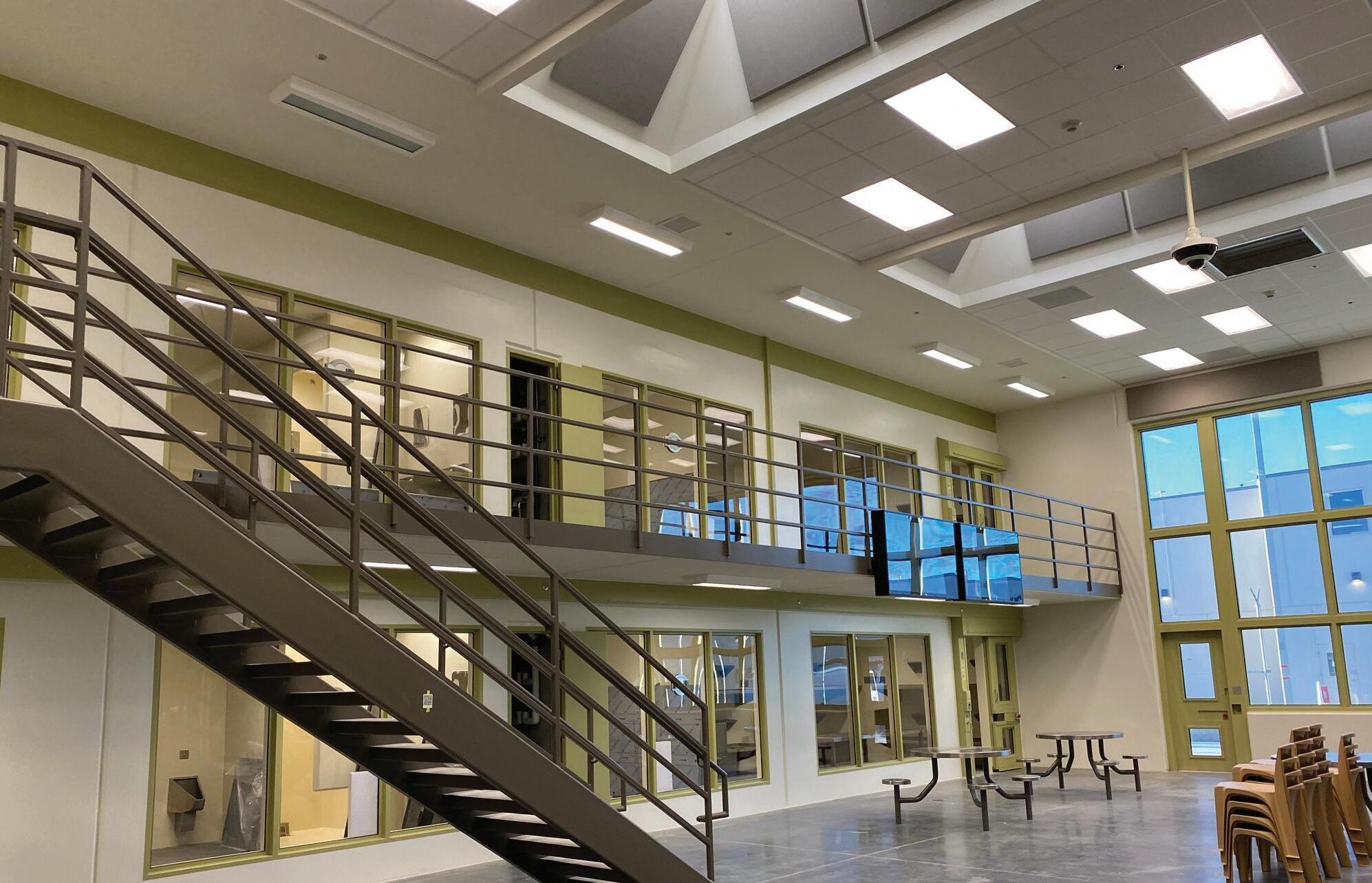
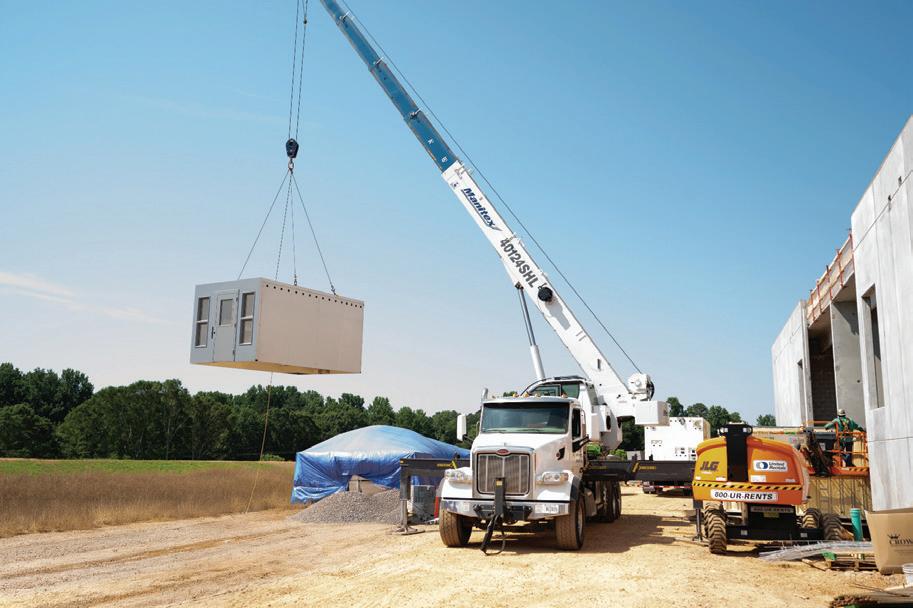
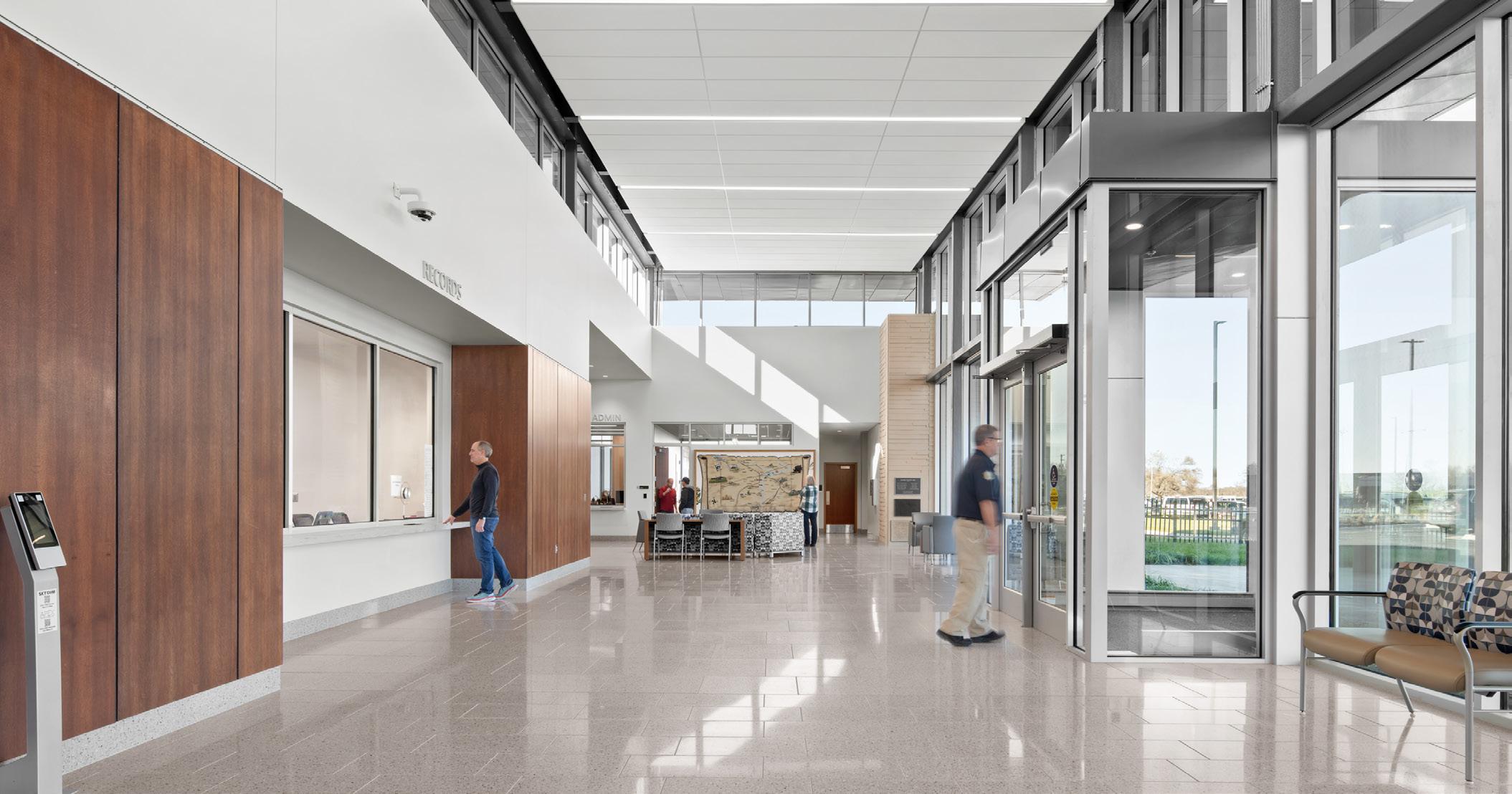
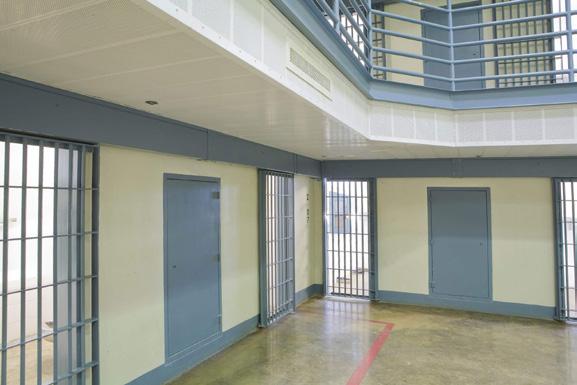
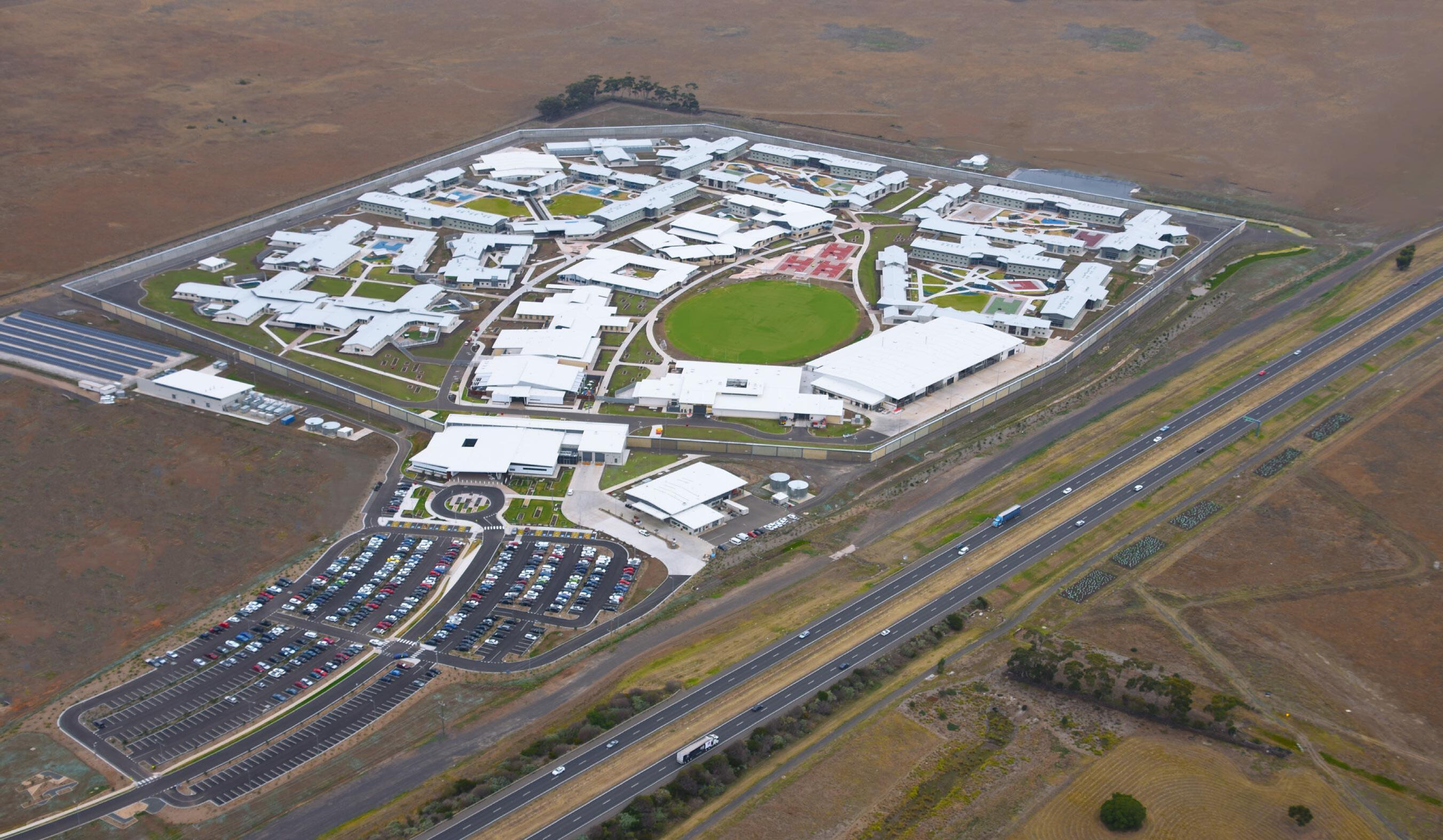
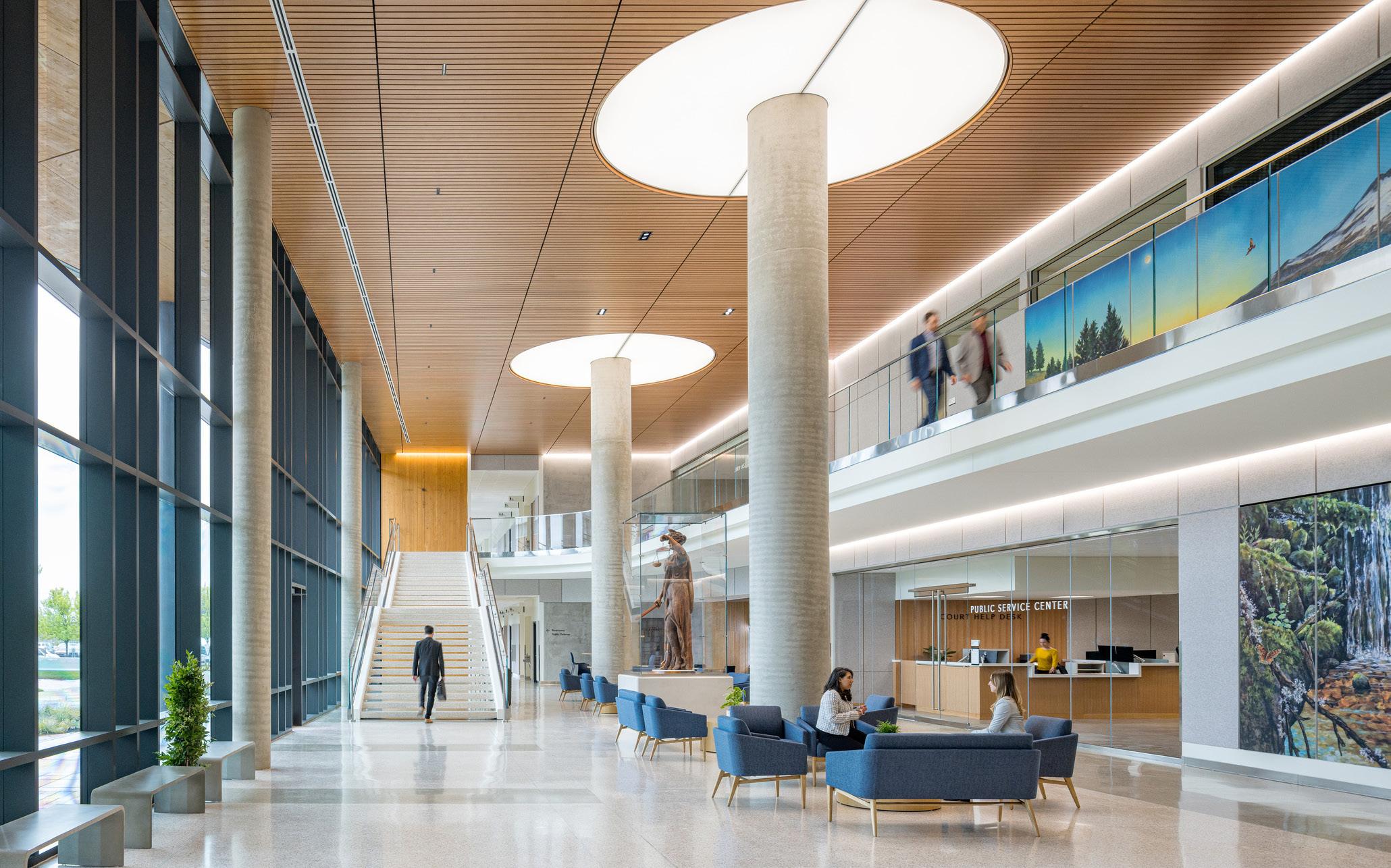
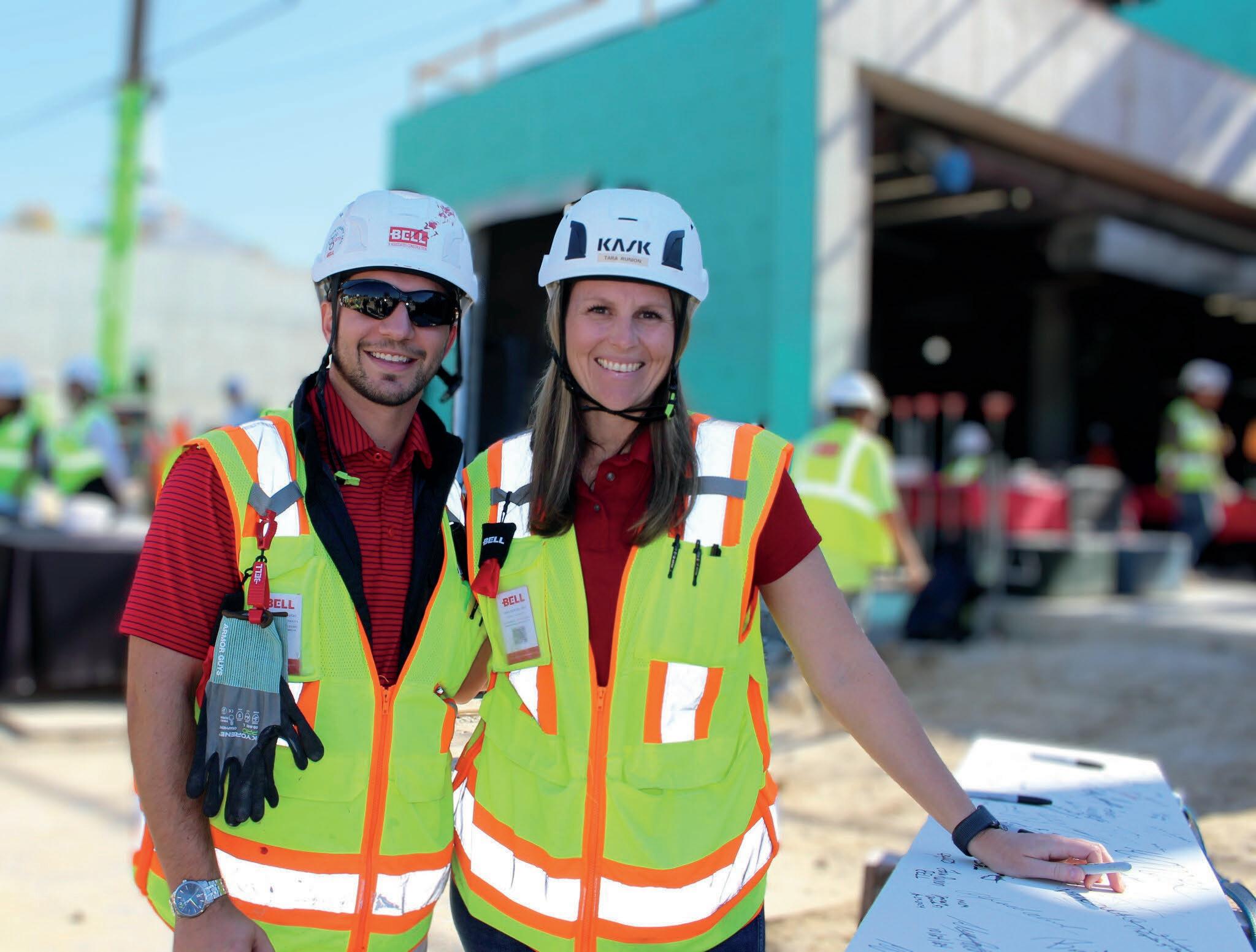
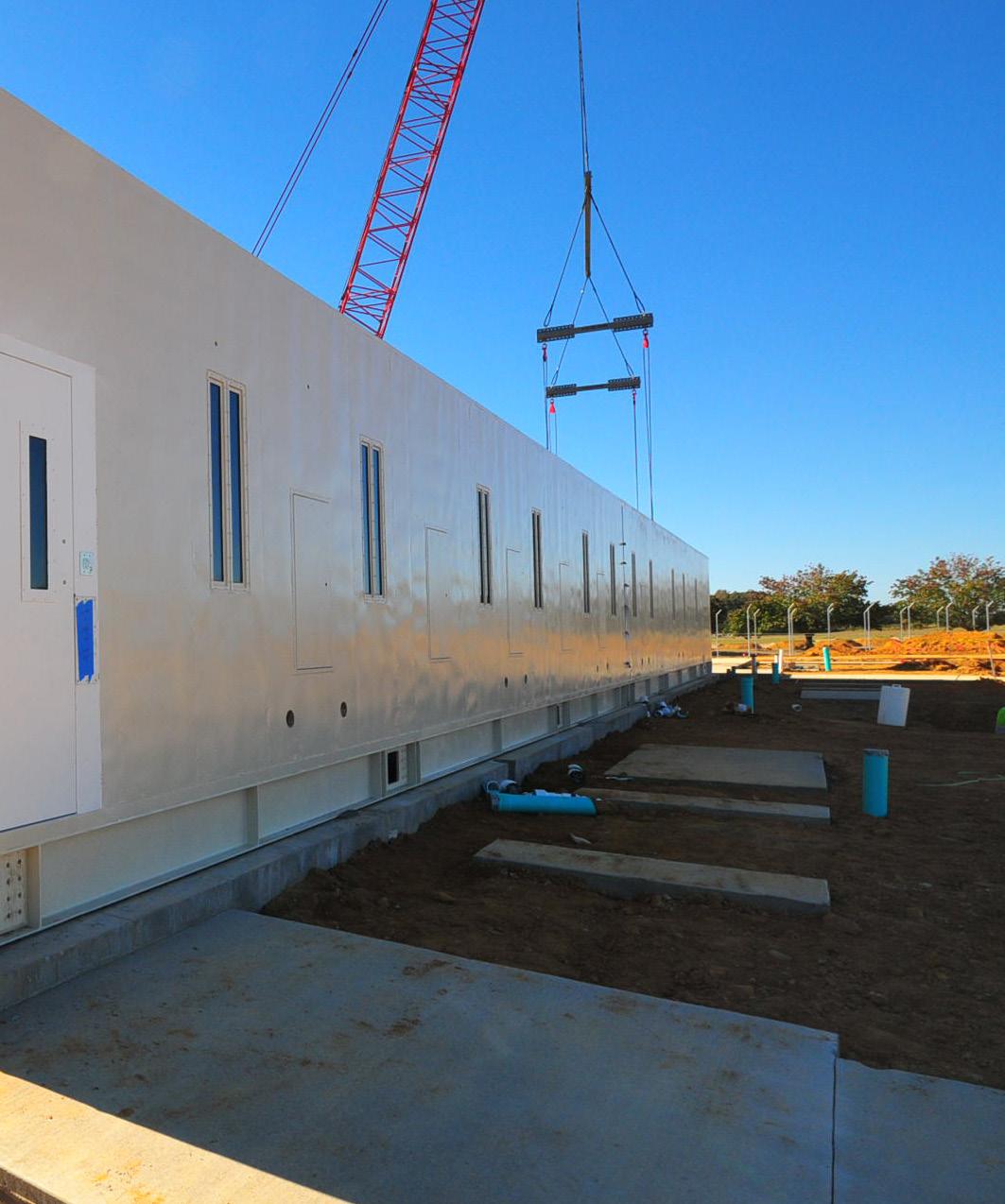
205K sq ft building built on 22 acres of preserved prairie land with native landscaping. SOLAR POWER
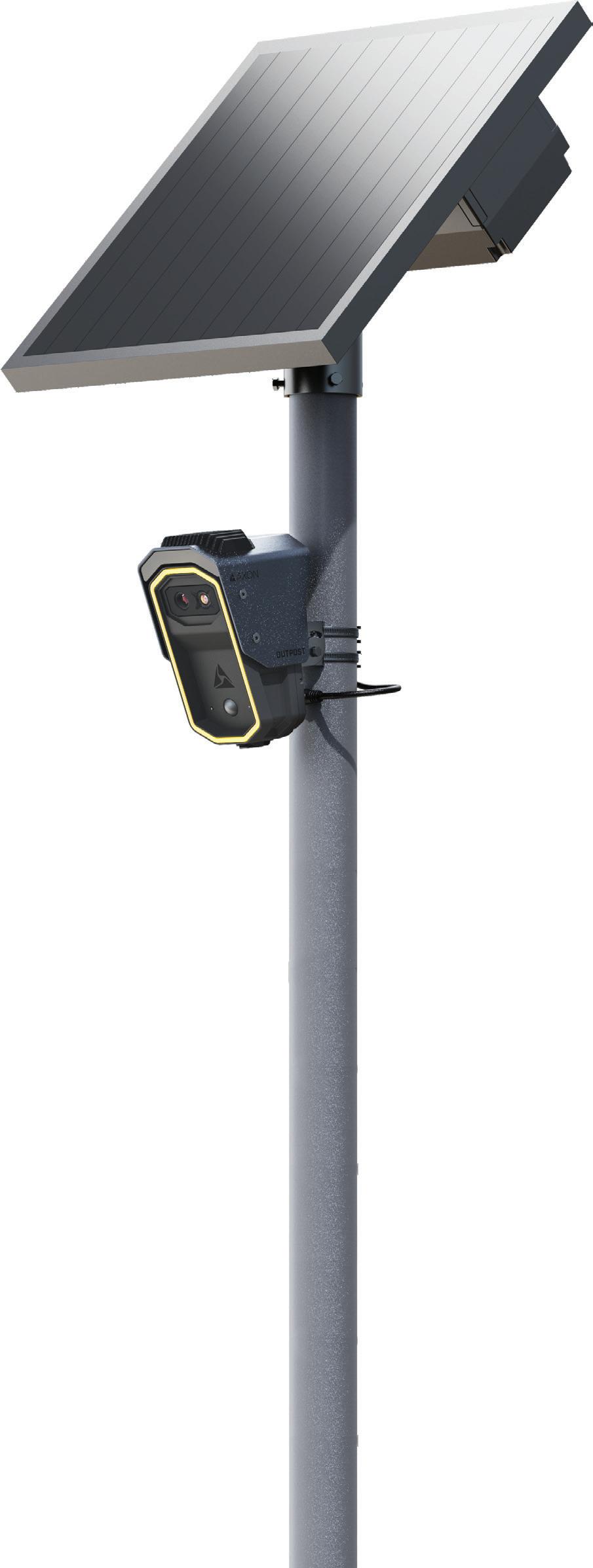
Approximately 90% of the electricity for the building and manufacturing processes comes from renewable energy sources including 3,444 rooftop photovoltaic solar panels and 22 foot “solar trees”.
Carefully selected materials including pre-cast concrete panels and rusticated “cor-ten” accents to appear indigenous to the ecologically rich and diverse landscape.
LEED GOLD BUILDING
Accredited LEED-Gold (Leadership in Energy and Environmental Design) in 2021 by the U.S. Green Building Council.
Tyrone Oliver Commissioner, Georgia Department of Corrections
Wayne Salisbury Director, Rhode Island Department of Corrections
Cory Salzillo Managing Partner, WPSS Group
Nneka Jones Tapia, Psy.D. Managing Director for Justice Initiatives, Chicago Beyond
Josh Tewalt Former Director, Idaho Department of Correction
Felice Upton Former Asst. Secretary, Juvenile Rehabilitation, Washington DCYF
Tim Ward Former Commissioner, Georgia Department of Corrections
President
Torrey Sims
STAFF CONTACT
Sales
Sarah Clow
Vice President of Sales and Marketing
Sarah Clow
Vice President of Sales and Marketing sarah@wmhmedia.com
Editorial Charlie Lange, Reporter charlie@wmhmedia.com
CONSTRUCTION
TRAUMA-INFORMED DESIGN FUNDING & LEGISLATION FACILITY OF THE MONTH PROGRESSIVE DESIGN JAIL OPERATIONS WOMEN IN CORRECTIONS STANDOUT PRODUCTS JUSTICE ARCHITECTURE LIST INNOVATION CORNER BOARD MEMBER SPOTLIGHT JUVENILE JUSTICE UPDATE MANUFACTURING SPOTLIGHT INDUSTRY EVENTS PROGRAMMING
Editorial Director Lindsey Coulter Reporter Charlie Lange Production Heidi Warstler
Subscription Information billing@wmhmedia.com
For reprints, PDFs and plaques, please contact: Jeremy Ellis, ReprintPros (949) 702 5390 Jeremy@ReprintPros.com
ReprintPros: www.reprintpros.com
Request a quote: www.reprintpros.com/index.php/ request-a-quote
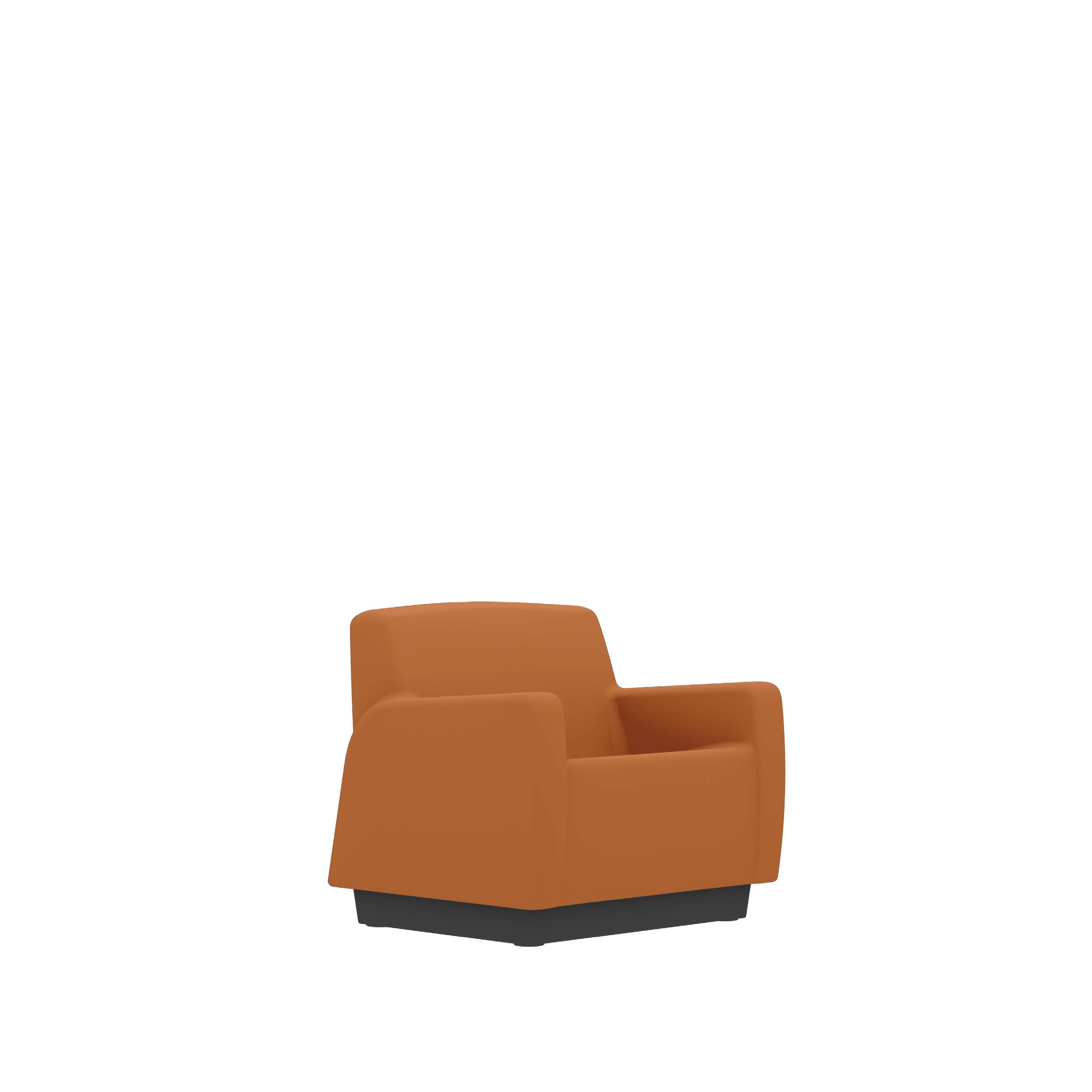
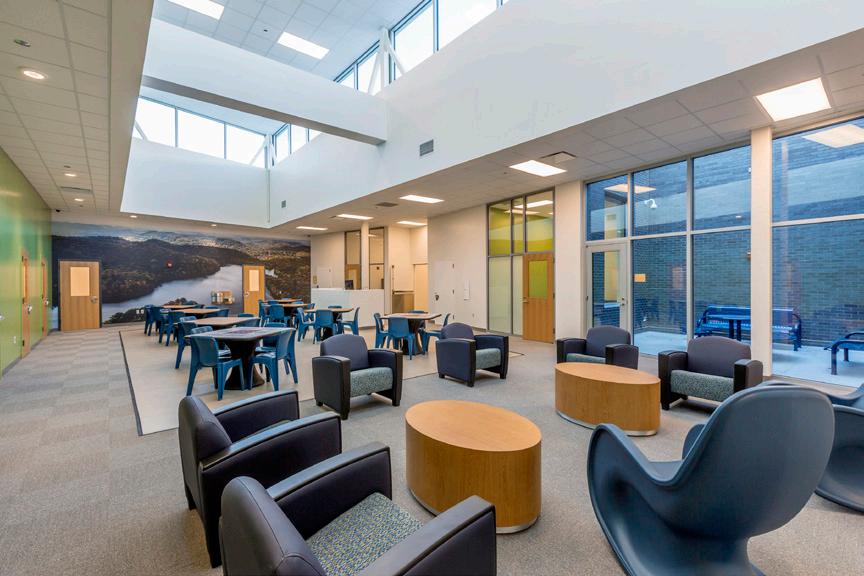
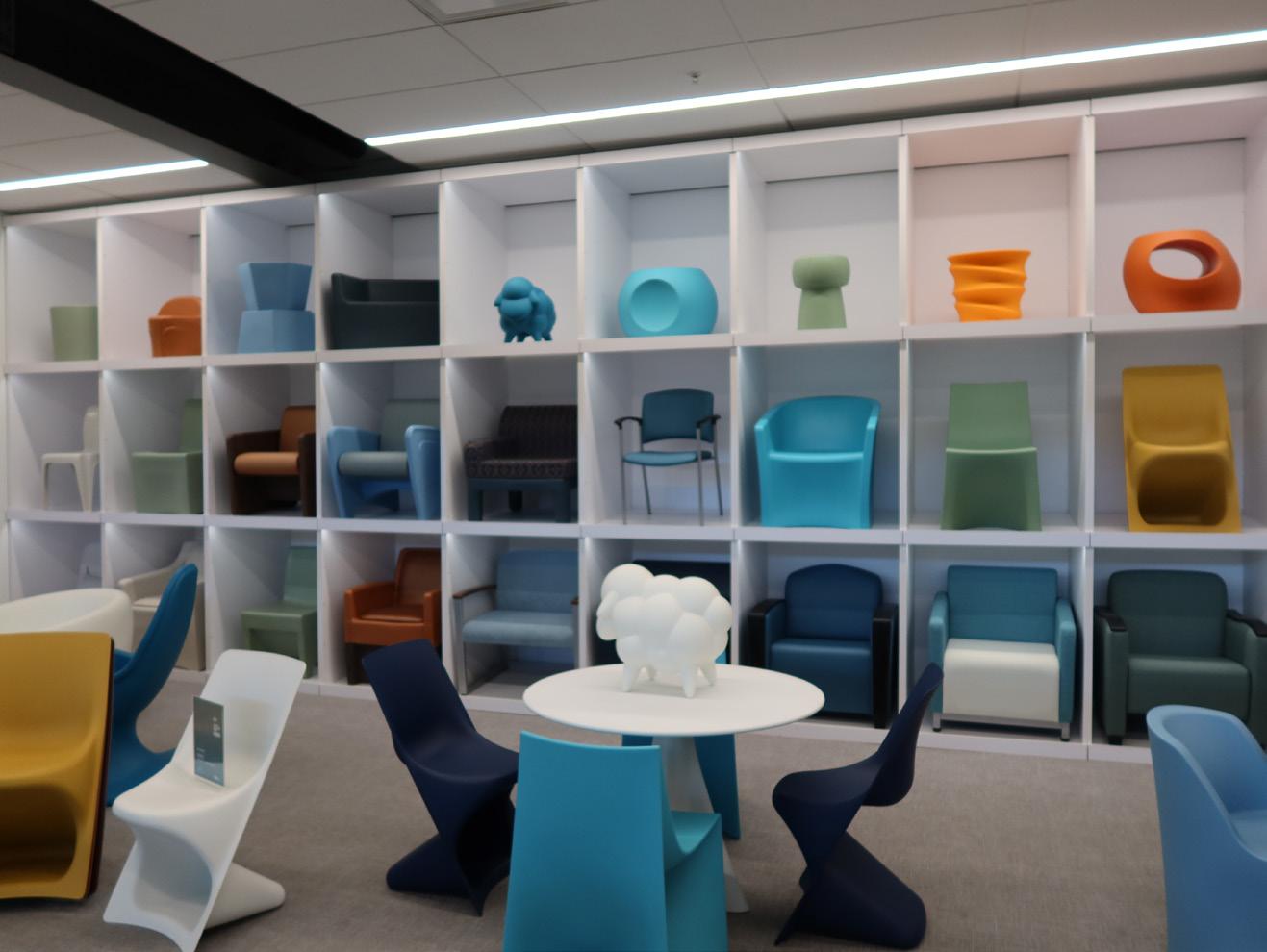
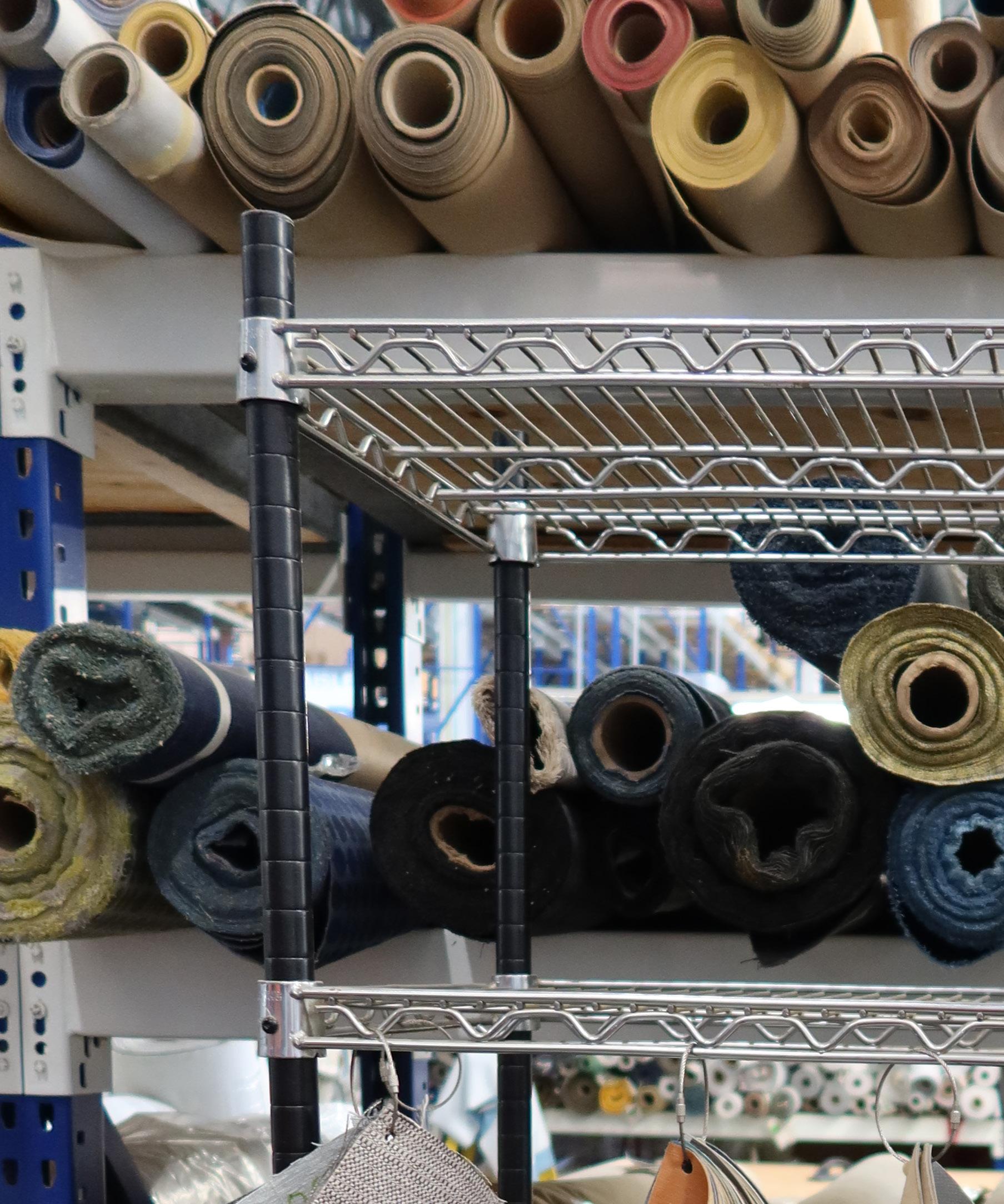
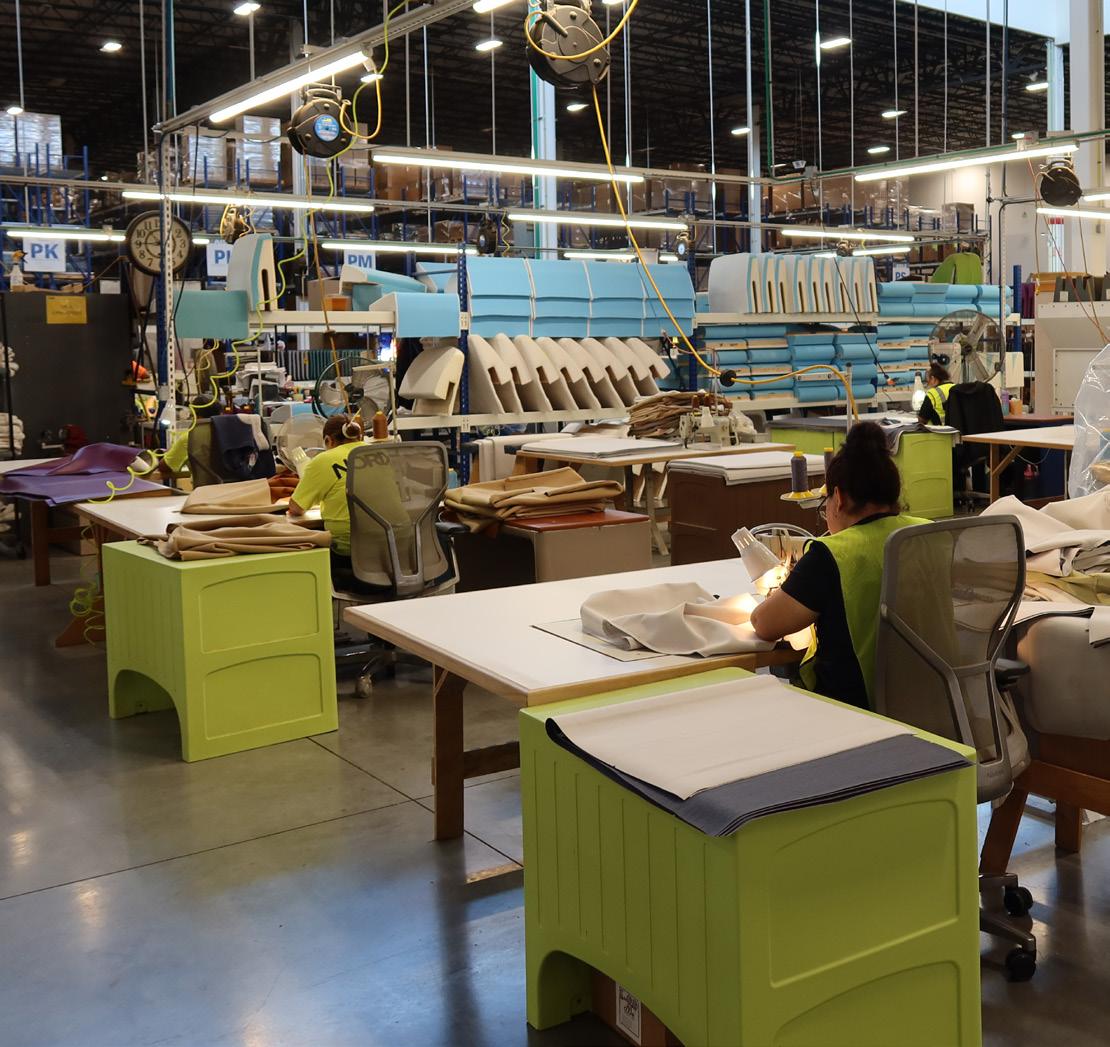
Norix’s Normative Furniture Blends Form and Function
Inside Contra Costa’s New Behavioral Health Unit
Correctional News Welcomes New Members to the Editorial Advisory Board and Industry Knowledge Council
EDITORIAL ADVISORY BOARD
Amy L. Ast is a seasoned leader in youth services with a deep understanding of juvenile justice. As Director of the Ohio Department of Youth Services, she oversees a comprehensive system that provides prevention, intervention and habilitative services for justiceinvolved youth. Her extensive experience within DYS, coupled with her external consulting and leadership roles, gives her a unique perspective on the legal and operational complexities of the juvenile justice continuum.
Across her more than 30 years of experience in the field of juvenile justice, including 25 years within DYS, Ast rose through the ranks to lead the organization as well as consulting for the Department of Justice and spending four years of service in the private sector.
A/E/C
Global design firm HDR has appointed Brian Endler as Justice Principal and Renee Schoop as Business Development Director for its architecture practice in Pittsburgh.
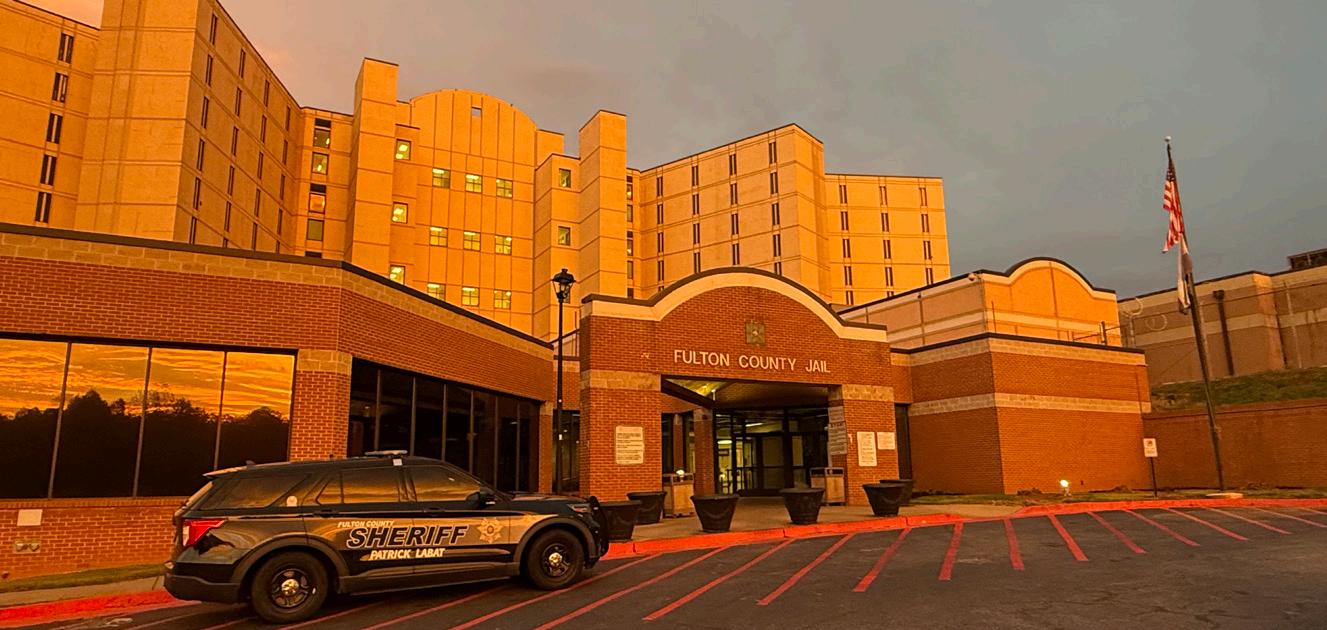
Patrick “Pat” Labat is the 28th Sheriff of Fulton County, Ga., overseeing 875 employees and an annual budget of more than $143 million. Since taking office in 2021, he has achieved unprecedented success in recruitment and retention, jail reform, courthouse security, crime prevention and public safety.
He changed the mission of the Fulton County Sheriff’s Office to one word — Service — believing service is the cornerstone of any organization. In less than three years, he brokered detainee housing agreements with the Cobb County Sheriff’s Office and the City of Atlanta, moving hundreds of detainees, and established an Inmate Advocacy Unit to address dangerous overcrowding at the Fulton County Jail. He was named Jail Administrator of the Year by the Georgia Jail Association in 2015 and 2019.
In these new roles, Endler and Schoop will build on the success of HDR’s growing civic architecture practice to strengthen relationships in the Mid-Atlantic region and support its national practice with planning and design of civic and correctional facilities.
Endler is an architect with more than two decades of experience shaping community-centered civic and correctional facilities and creating spaces that positively influence lives and strengthen public trust. His civic design portfolio balances functionality, security and rehabilitation in environments that uphold dignity and equity. Endler is a member of the American Institute of Architects and past president of his local chapter. Prior to joining HDR, he was Vice President and Principal Architect with Gannett Fleming TranSystems.
Schoop brings more than two decades of experience in marketing and business development for the architecture and engineering industry, where she has created connections, elevated brand presence and guided strategies that lead to impactful projects. In her new role, she will be responsible for client engagement, lead generation, developing pursuit
INDUSTRY KNOWLEDGE COUNCIL
Dr. Elizabeth Falcon is a nationally recognized expert who has spearheaded behavioral health program strategy and innovation for jails and prisons nationwide. With over 20 years of experience as a correctional and forensic psychologist, she has developed, implemented, restructured, monitored, and managed jail and prison mental health programs in over 200 facilities in 27 states. Dr. Falcon leads field experts in the implementation of evidencebased models and best practices in jails and prisons nationwide. She holds expertise in mental health program development for jails and prisons, suicide prevention, evidencebased programming for severely mentally ill inmates, specialized programming for segregated inmates, restoration of competency and other specializations.
strategy and representing HDR at conferences and industry events. Schoop also joins HDR from Gannett Fleming TranSystems, where she served as a Business Development & Proposal Manager.
IN MEMORIAM
On Nov. 17, the Virginia Department of Corrections (VADOC) lost Master Corrections Officer Jeremy Lewis Hall, who was killed in the line of duty at River North Correctional Center. Hall, a husband and father, was remembered by his family for his generosity, humor, and love of travel and the outdoors.
VADOC honored Hall on Dec. 2 with a memorial attended by hundreds of correctional officers and members of the law enforcement community.
VADOC Director Chad Dotson recognized Hall’s dedication, noting that Hall exemplified the values of service and sacrifice that define the corrections profession. Dotson also emphasized the importance corrections officers, probation officers, nurses and others who serve within correctional facilities, and he encouraged community members to acknowledge these professionals and the vital role they play in public safety.
Ashbel Tingley Wall II, longtime director of the Rhode Island Department of Corrections and one of the nation’s most influential correctional leaders, died Dec. 11 after a long illness. He was 72. Wall spent more than three decades at RIDOC, including nearly 20 years as director, and retired in 2018 as the longest-serving corrections director
Russell Roberts leads enterprise strategy, operations, and growth initiatives, bringing a holistic approach to leadership and management for technology, software, engineering, and manufacturing businesses serving B2B, B2C and BTG markets. Over 16 years of working with private equity–sponsored companies, Roberts has delivered consecutive year-over-year revenue and growth. His results are driven by building dependable teams, enabling market-informed product and sales strategies, ensuring bestin- class operations and delivering customer-centric service. He previously spent 14 years at Aventiv Technologies as Chief Growth Officer and Senior Vice President of Sales and Marketing, where he led all business units and drove significant growth.
in the U.S. He was widely recognized for advancing humane, evidence-based correctional practices while maintaining safe and secure facilities.
Under his leadership, RIDOC implemented nationally recognized initiatives focused on rehabilitation, inmate health care, education and successful reentry, including a pioneering medication-assisted treatment program for substance use disorders and innovative vocational and service programs. Wall’s department experienced no homicides, no successful escapes from secure facilities and no federal court intervention during his leadership. His legacy continues to shape modern correctional practice.
ACA Winter Conference and Expo
Feb. 5-8 | Long Beach, Calif.
CJJA Winter Business Meeting Feb. 5-8 | Long Beach, Calif.
ILEETA Conference & Expo
March 16-21 | St. Louis, Mo.
CLA Deputy Directors Meeting
March 24-27 | Hilton Head, S.C.
Endler
Schoop
Hall
Wall
Amy L. Ast Director, Ohio Department of Youth Services
Patrick “Pat” Labat Sheriff, Fulton County, Ga.
Elizabeth Falcon, Psy.D., CCHP-MH, MBA CEO and Founder, Falcon, Inc.
Russell Roberts President and CEO, Willo Products
CALENDAR
In early 2025, Correctional News announced the publication’s first-ever 30 Over 30 Years Experience List, honoring 30 long-time leaders, as well as the NextGeneration Trailblazers List, recognizing professionals with 10 years of justice/corrections experience or fewer.
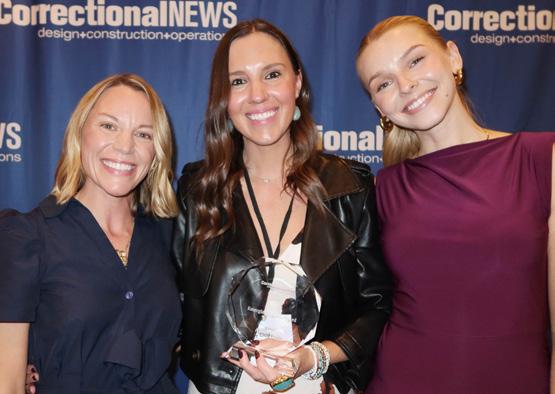
Readers were invited to nominate leaders who represent every corner of this community — including architecture, engineering, construction, vendors, subcontractors, manufacturers, and facility owners and operators. The most outstanding of those nominees were honored with the Emerging Leader Award and the Lifetime Achievement Award at the 2025 Corrections Summit in November 2025. See individual award winners and the full list of honorees in each category below.
This award recognizes early-career professionals within the Correctional Professionals and A/E/C and Vendor categories who have already made a significant impact. They’re innovators, problem-solvers and team-builders who identify opportunities for improvement and work tirelessly to advance our shared mission.
Ashley Oddo Deputy Director, Arizona Department of Corrections, Rehabilitation & Reentry
“This recognition is less about me and more about the incredible mentors, colleagues, and partners who have shaped my journey along the way. I’m grateful for their guidance and support.”
Nick Tuggle, MBA Senior Project Manager, JE Dunn
“I look at this award as a tribute to all the folks that have contributed to my growth as both a professional and a human being.”
Congratulations to the full list of Next-Generation Trailblazers (in alphabetical order):
1. Ann Crook, Employment Coordinator, Idaho Department of Corrections
2. Ryan Crowley, Chief of Staff, Rhode Island Department of Corrections
3. Jessica Migliaccio, Administrator of Planning and Research, Rhode Island Department of Corrections
4. Ashley Oddo, Deputy Director, Arizona Department of Corrections, Rehabilitation & Reentry
5. Brock Sanders, Director of Preconstruction, SteelCell of North America
ACHIEVEMENT AWARD
6. Adam Sowden, Correctional Unit Manager, Tennessee Department of Correction
7. Cheyenne Steventon, Administrative Services Manager, Vermont Department of Corrections
8. Ben Strauss, CTO, Perch Technology
9. Nikole Strauss, CEO, Perch Technology
10. Nick Tuggle, Senior Project Manager, JE Dunn Construction
This award honors exemplary professionals within the Correctional Professionals and A/E/C and Vender categories who have dedicated their careers to serving the justice and corrections industry. Lifetime Achievement Award winners represent the vision, hardwork and commitment to excellence that inspires colleagues and drives progress. Nominees must have contributed more than 30 years of service to the field and be committed to fostering a new generation of leaders.
Bryan Collier Former Director, Texas Department of Criminal Justice
“I can’t express how much it makes me appreciate each and every person in the Correctional News community. It’s a true honor to be given this award, and I look forward to my next chapter.”
Mitch Claborn President of Cornerstone Detention Products Inc.
“The recognition by my industry peers is a highlight of my 48-year career. I have always been driven to be the best that I can be; to help develop others and be a good example to all.”
Congratulations to the full list of 30 Over 30 Years Experience honorees (in alphabetical order):
1. Craig Alderson, President, Willoughby Industries Inc.
2. Amy Ast, Director, Ohio Department of Youth Services
3. Tom Bartelli, Preconstruction Services Director, JE Dunn Construction
4. Lisa Bjergaard, Director, North Dakota Division of Juvenile Services
5. Mike Brenchley, Senior Vice President, HDR Architecture Inc.
6. Melissa Caldwell, Chief Behavioral Health Officer, Freedom Behavioral Health Inc.
7. Steve Carter, Founder and Executive Vice President, CGL Companies
8. Andrew Cupples, FAIA, Senior Principal and National Justice Leader, DLR Group
9. John Eisenlau, Principal, Treanor
10. Tony Ewalt, President, Sletten Construction Company
11. Larry Goldberg, AIA, NCARB, President and Principal Designer, Goldberg Group
12. Jeff Goodale, Director of Civic and Justice, HOK
Eric Goodman, Vice President of Business Development, Willo Products Company Inc
Robert Green, 8th Secretary and Executive Director, American Correctional Association
Frank Greene, Vice President
16. Gerry Guerrero, Global Director, Justice + Civic, HDR
17. Mark Harvey, President, Trussbilt
18. Todd Ishee, Former Cabinet Secretary, North Carolina Department of Adult Correction 19. Rob Jeffreys, Director, Nebraska Department of Correctional Services
20. Eric Johnson, Principal in Charge, Comprehensive Program Services
21. Mike Langersmith, Founder and Executive Director, CML Security
22. Kelly Martinez, Sheriff, San Diego County
23. Andy Pitts, AIA, OAA, LEED BD+C, NCARB, Principal, Treanor
24. Joe Pohrer, President, Pauly Jail Building Company
25. Beverly Prior, FAIA, Vice President and Justice Lead, AECOM
26. John Rees, Founder, Rees & Associates
27. TJ Rogers, Chief Executive Officer, Accurate Controls
28. Tony Turpin, Senior Vice President, Director of Business Development, CGL Companies
29. Mark Van Allen, AIA, LEED AP, Director of Design, Modcorr
30. John Wetzel, Founding Board Chair, Keystone Restituere Justice Center, former Secretary of the Pennsylvania Department of Corrections
2025 FACILITY OF THE YEAR
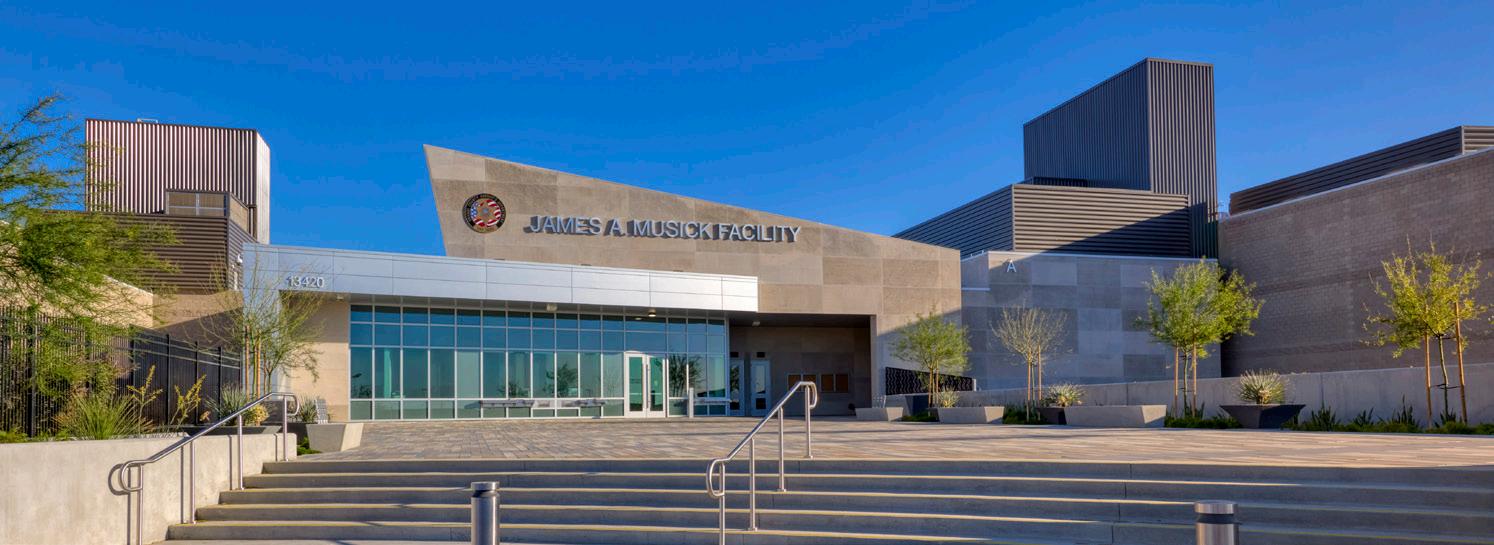
James A. Musick Facility Honored by Correctional News Readers
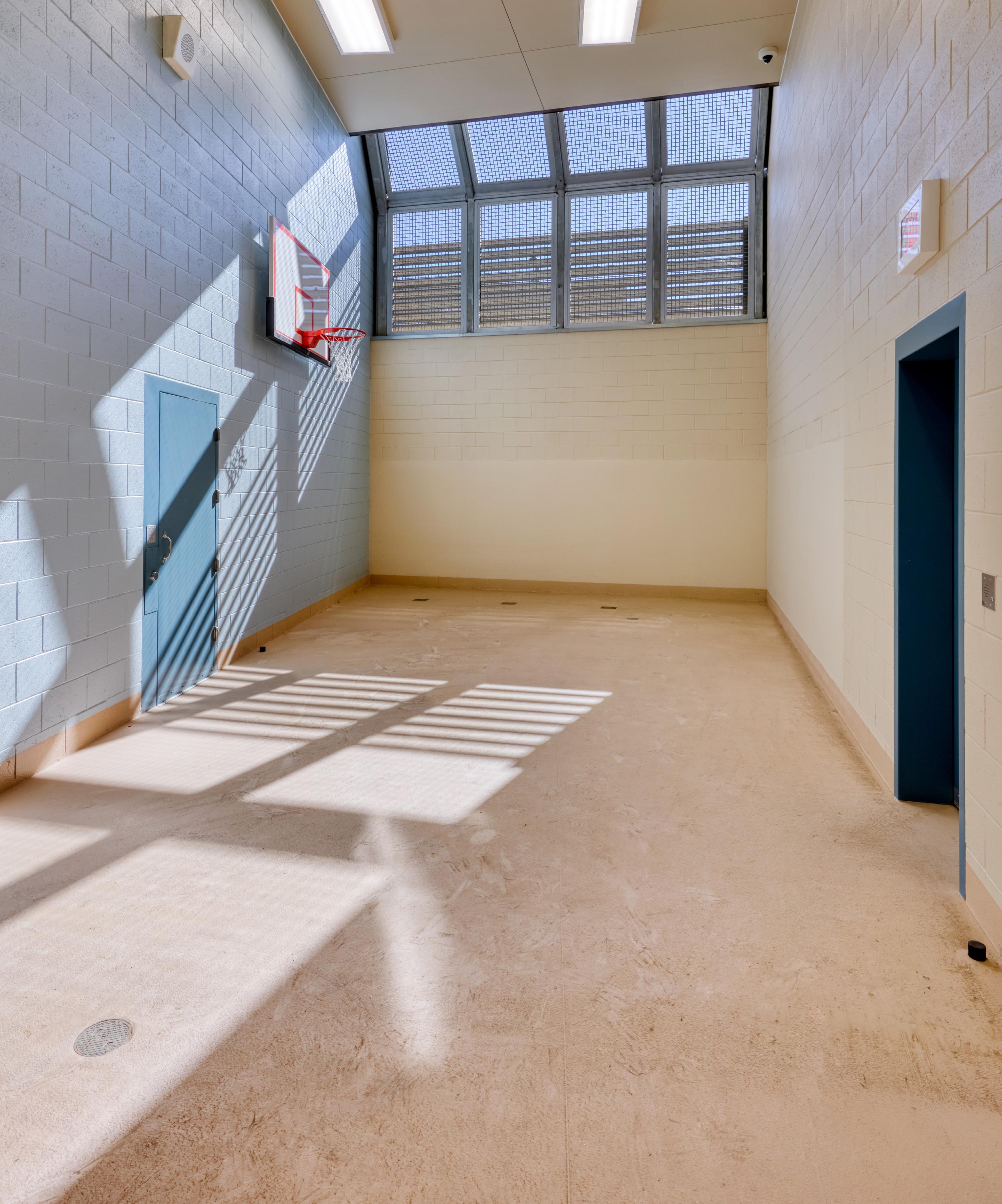
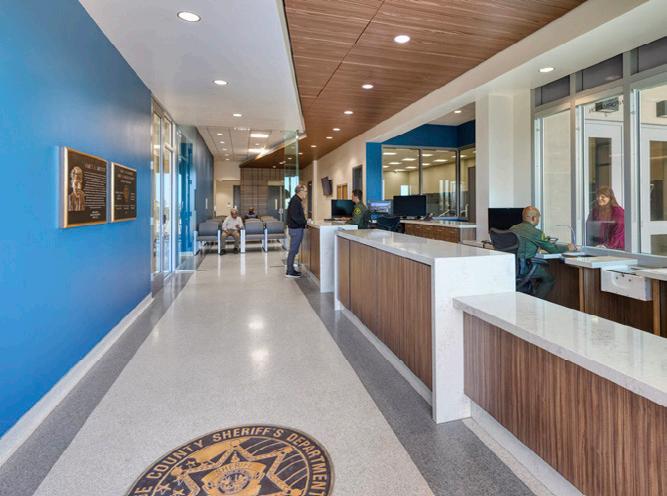
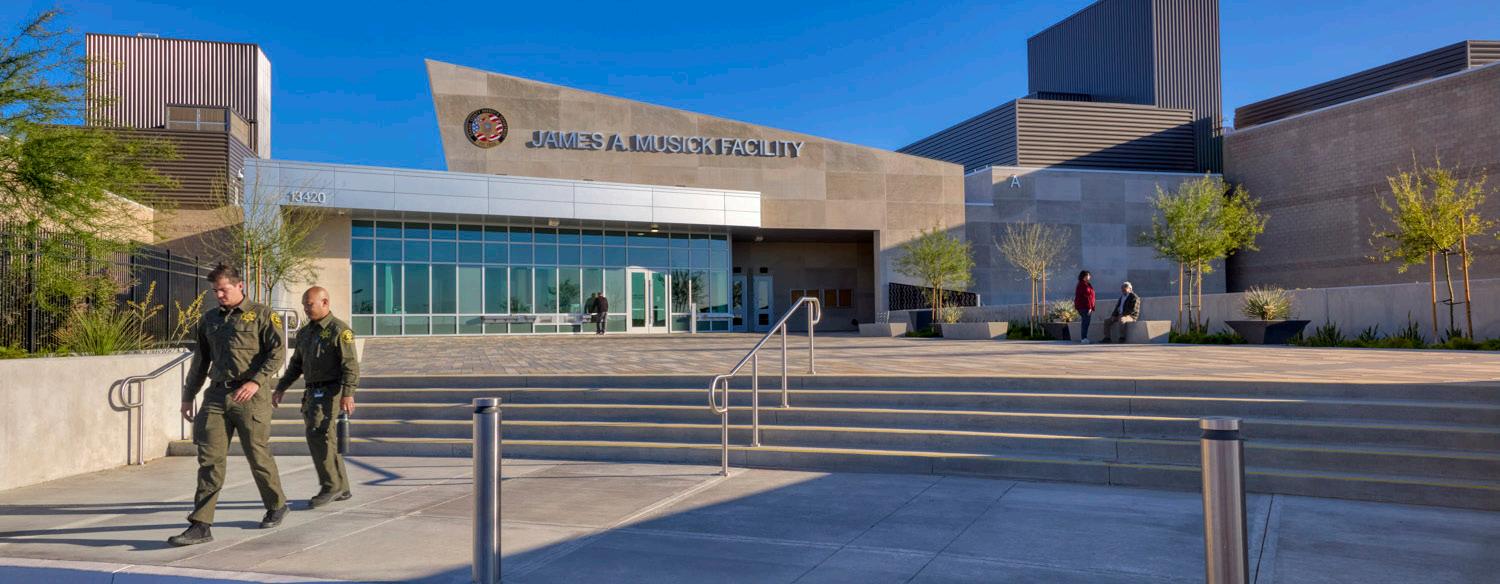
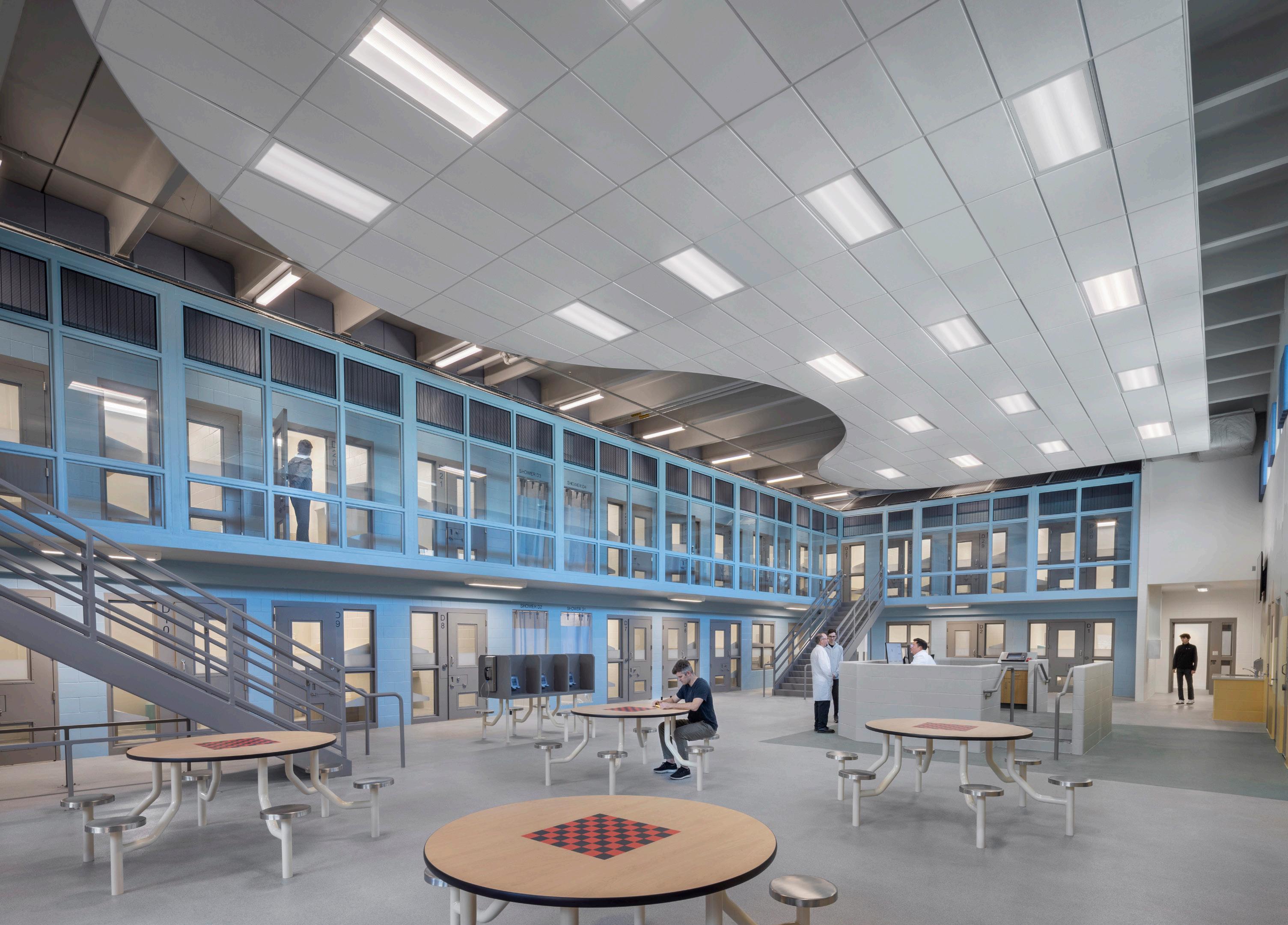
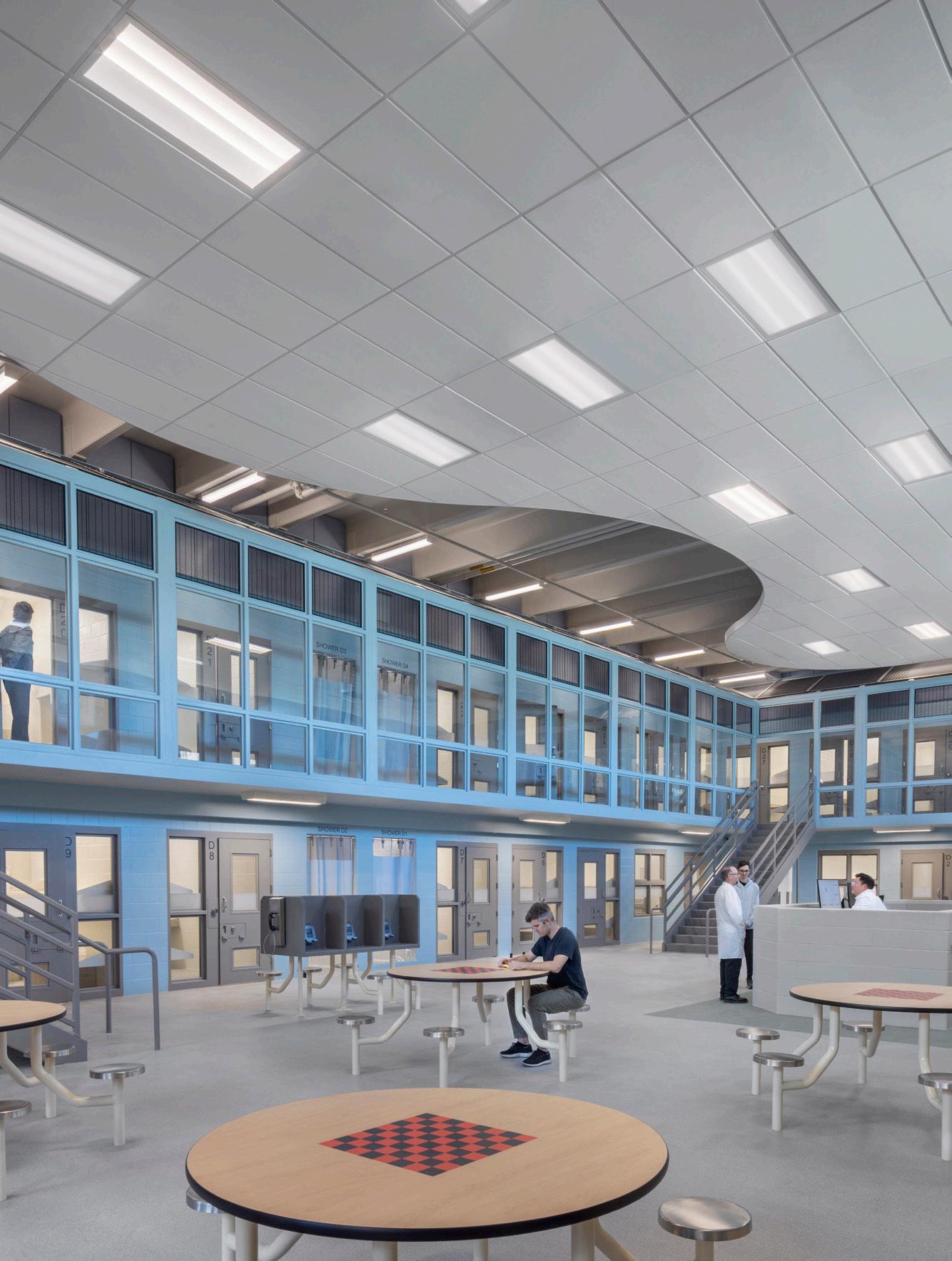
Correctional News is proud to announce the James A. Musick Facility in Orange County, Calif., as the winner of the inaugural “Readers’ Choice Facility of the Year” award. Nominations were open to all subscribers from November through December, and all Facilities of the Year featured throughout 2025 were eligible for the recognition.
The 325,000-square-foot James A. Musick Facility received 1,480 of 3,757 total reader votes and marks a fundamental shift in how Orange County approaches incarceration, care and long-term operational planning.
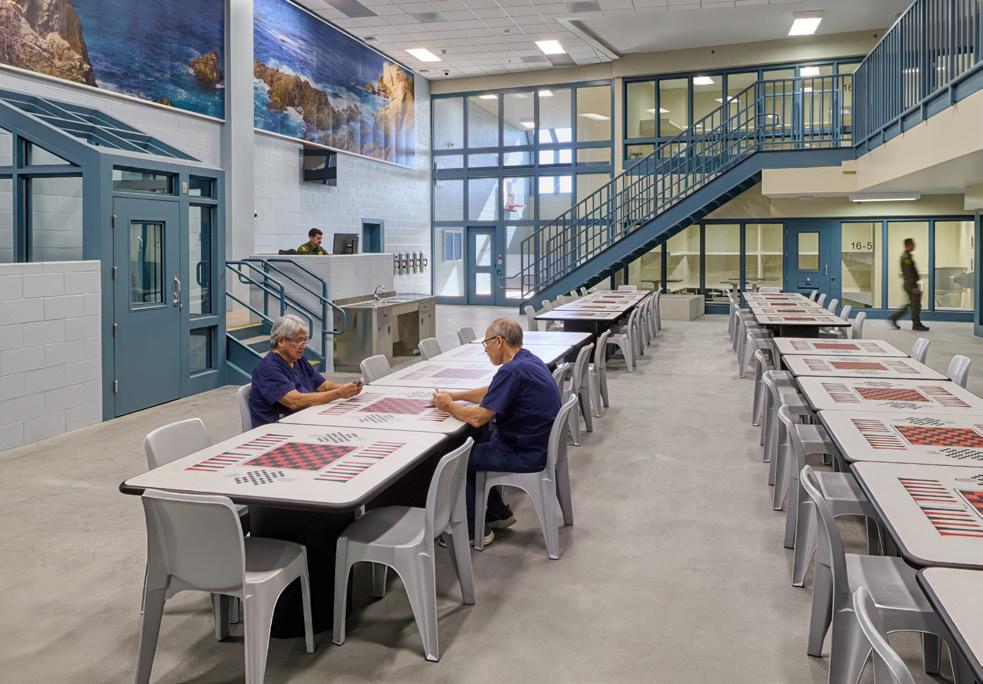
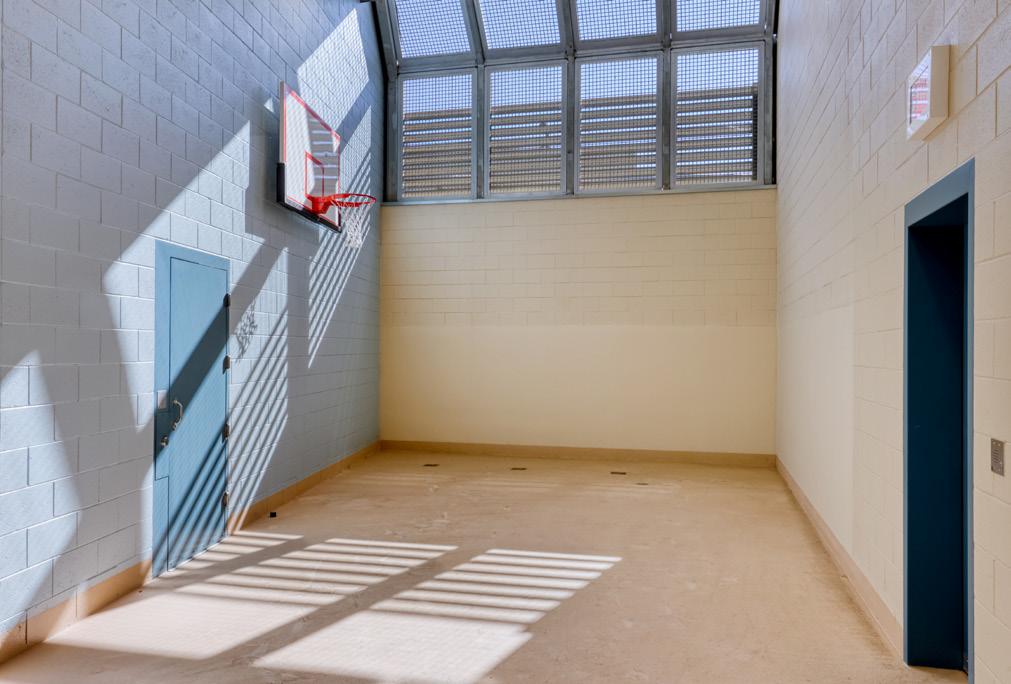
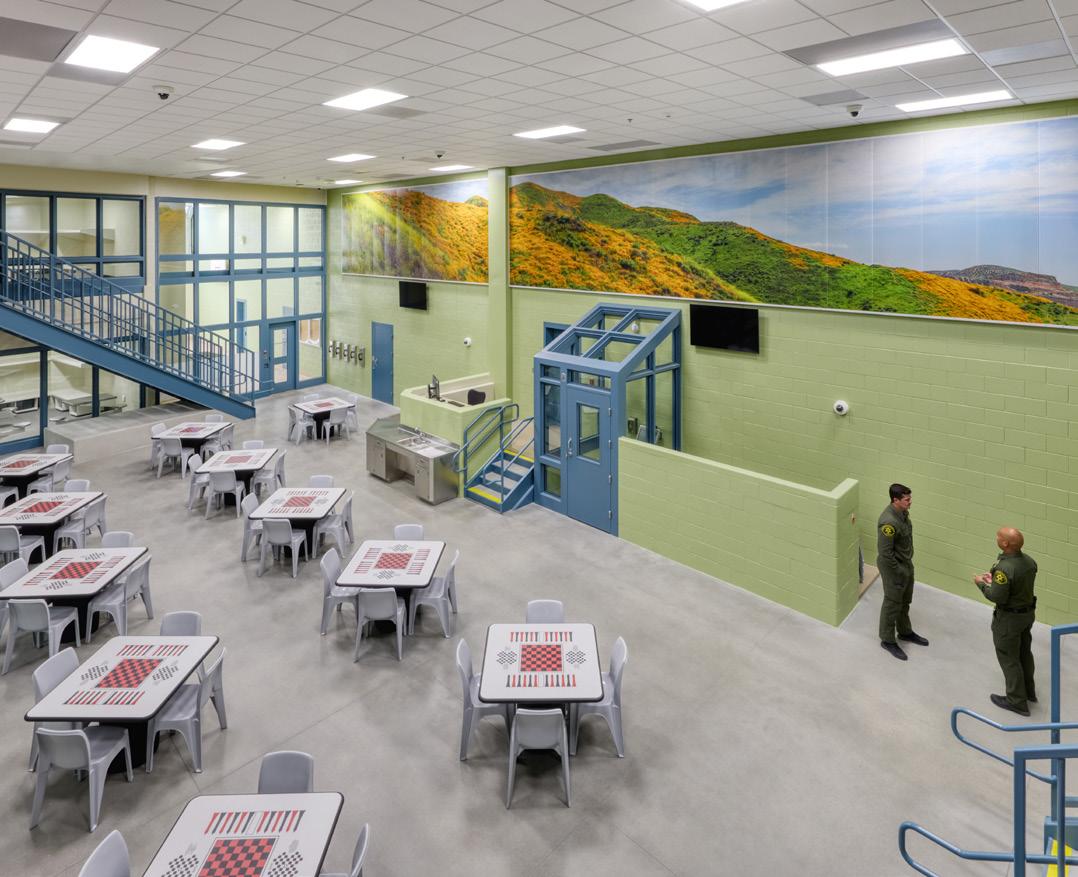
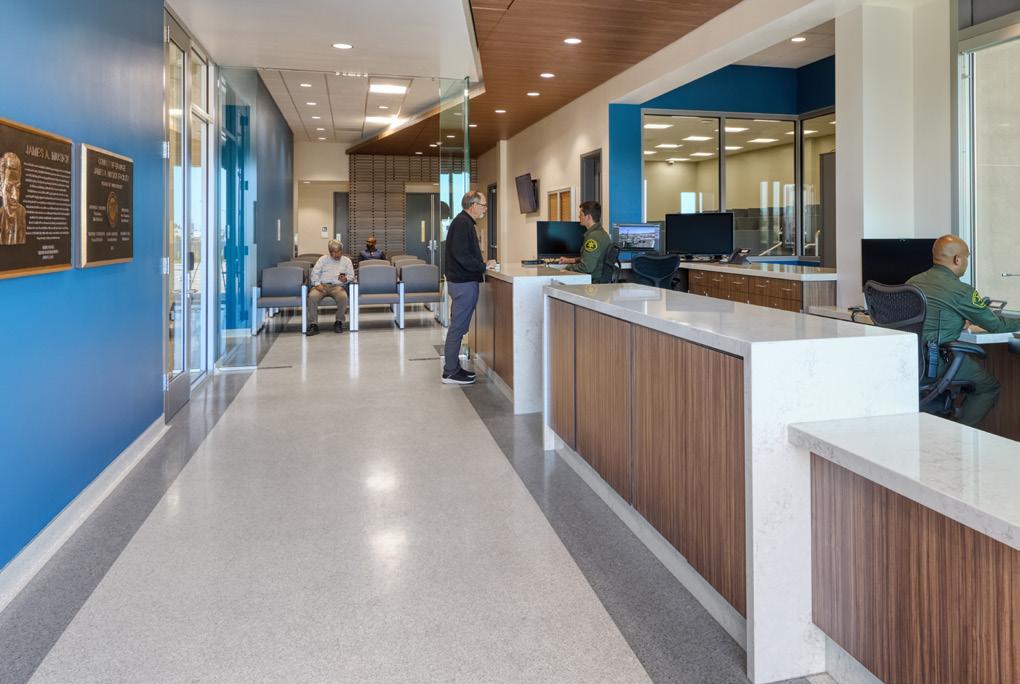
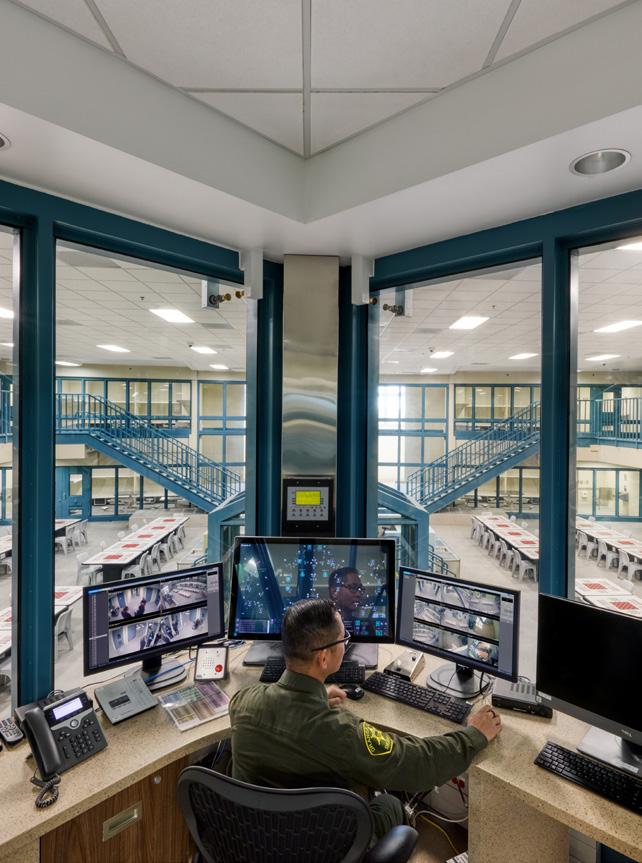
The $290 million, 896-bed complex replaced a decadesold collection of temporary structures with a permanent campus emphasizing rehabilitation, mental health services and humane incarceration. The project, which opened in late 2024, includes two housing buildings, an administrative center, a maintenance warehouse and a central plant. It also
“The
from neighboring development without a harsh, high-security appearance.
“The facility design has exceeded expectations,” said Commander Mark Alsobrook.
PROJECT DATA:
Project Name: James A. Musick Facility Jail Expansion
Location: Irvine, Calif.
Square Footage: 324,000 square feet
Total Project Cost: $290 million
Bed Count: 896
Project Delivery Method: Design-Bid-Build
Cell Construction Type: Fully Grouted CMU
Owner: Orange County Sheriff’s Department
Architect of Record: AECOM (design), HDR (construction/closeout)
Owner’s Representative: Vanir Construction Management
General Contractor: Bernards Brothers Inc.
Detention Equipment Contractor: CML Security
Electronic Security Design Consultant: HDR
Food Service and Laundry Design: S1 Food Design
Site and Civil Engineer: HDR
“The delivery of inmate programming, healthcare, meals and visitation to the housing units limits foot traffic throughout the facility. This has allowed us to maximize out-of-cell time and participation in rehabilitative programming.”
Security Electronics Contractor: CML Security
“Also, staff engagement has increased significantly, resulting in the elimination of ‘jail politics’ and increased safety for staff and residents,” said Greg Yi, Section Manager for the Orange
staff piece was very important to Orange County. They wanted to make sure the administration building gave their staff the best facility they could have for the next 10, 20 or 30 years.”
– Swapnil Ukey, Project Manager, HDR
introduced a hybrid direct-supervision model that blends traditional indirect supervision — with correctional staff in control booths — and direct supervision, placing deputies within housing units. Where inmates were once housed in tents and converted trailers, the new facility presents a campuslike environment using complementary materials, colors and textures. Landscaped green buffer zones provide separation
County Sheriff’s Department Facilities Planning team.
Now fully operational, the Musick Facility stands as an example of how adaptability, collaboration and focused design interventions can transform a correctional facility.
Read more about the project, including additional reflections from the owner and project team, at www.correctionalnews.com/2025-facility-of-the-year/.
Designing for Positive Outcomes
As leaders in justice design, we stand committed to using the design process to promote meaningful restorative justice and human dignity.
Your vision to create meaningful change starts here. Contact HDRjustice@hdrinc.com
James A. Musick Correctional
Photo Credit (all): Courtesy of HDR (C) Kim Rodgers
DIRECTOR’S REPORT
STATE OF ARKANSAS
DIRECTOR’S REPORT
Rethinking Women’s Corrections Through Design and Partnership
Arkansas transforms a former behavioral health facility into a secure, supportive unit for pregnant inmates and new mothers
By Lindsay Wallace, Secretary of Corrections, Arkansas Department of Corrections
In 2023, the Arkansas General Assembly passed the Protect Arkansas Act, a comprehensive criminal justice reform package. One of the many important provisions of that act created a 72-hour bonding period for female inmates and their newborn babies.
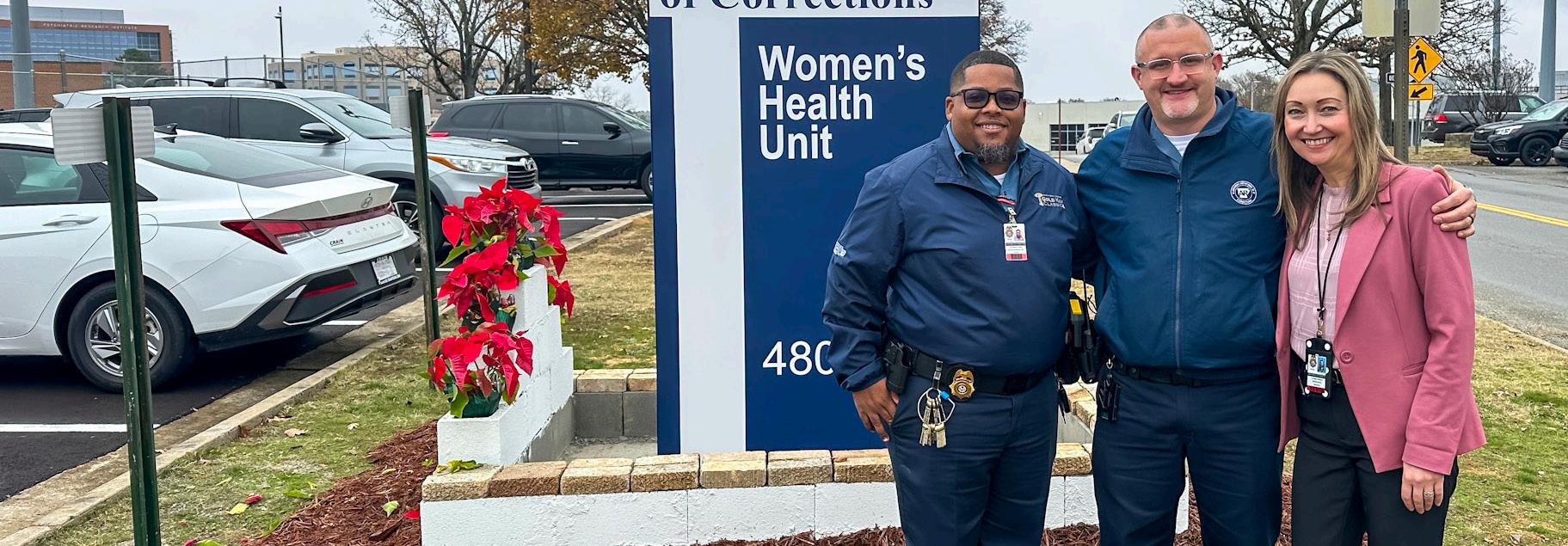
In January 2024, I was appointed as Secretary of Corrections for Arkansas and began searching for a suitable facility in which to provide this bonding period. Directly across the street from one of the department’s community correction centers was a building that had previously been used to house individuals in the care of the Behavioral Health Services Division.
The property is also adjacent to the University of Arkansas for Medical Sciences (UAMS) Hospital. It was a perfect location for a facility to house pregnant inmates and female inmates with special needs.
Adaptive Reuse and CostEffective Renovation
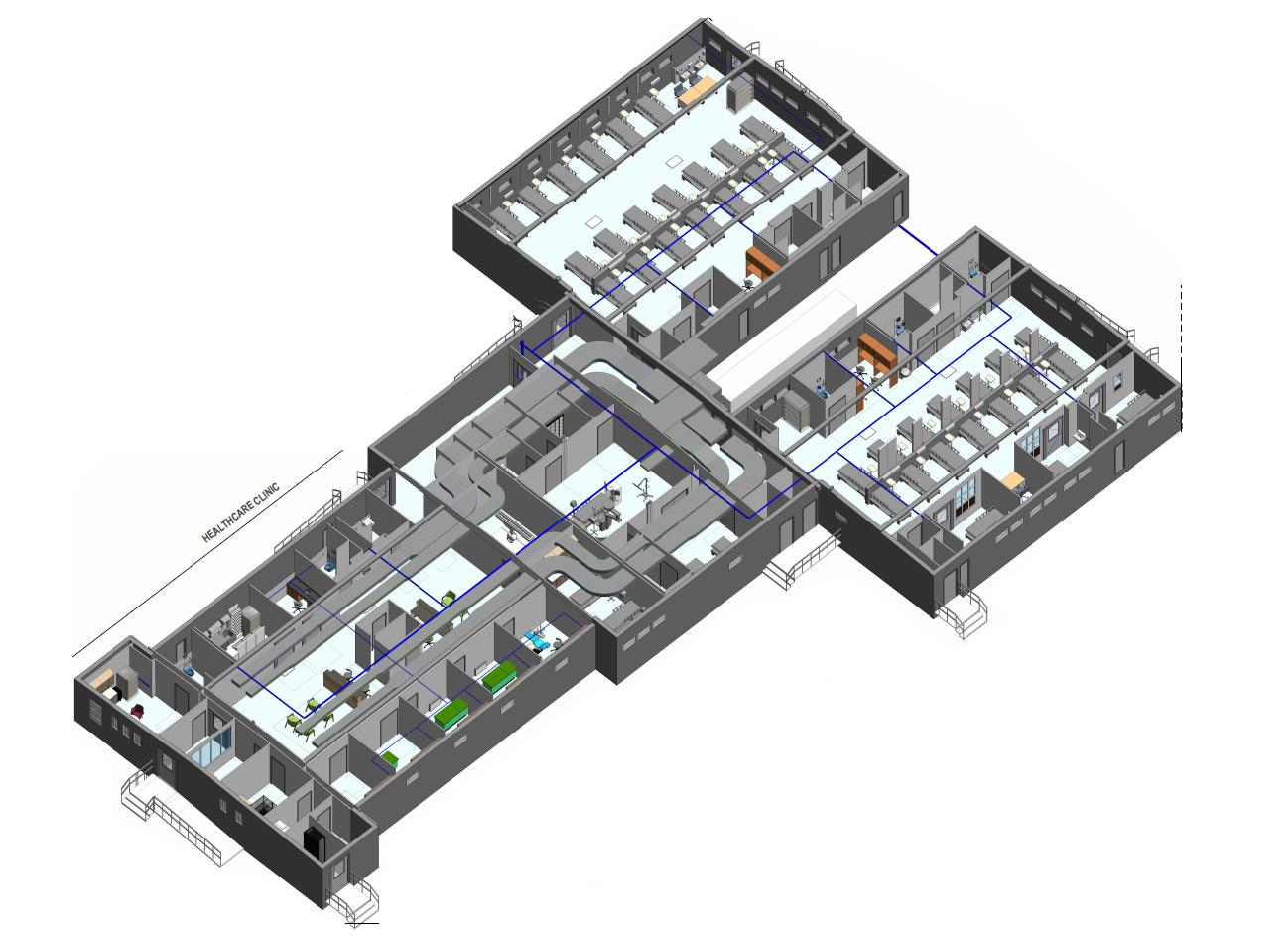
With the department’s ability to use skilled inmate labor to assist in the renovation of the building, the cost of the project was substantially less than it would have been for another state agency to attempt to remodel the building. The department’s Construction & Maintenance division had oversight of the project and transformed the building into a secure but more inviting facility that blends security, medical services, inmate quarters, and programming needs and space. The facility will accommodate 44 beds, comprised of 22 in the Special Needs Wing and 18 in the Maternity Wing, with four critical-needs beds available.
Since the building was originally used as a residential facility, it provided a strong structural foundation. However,
the electrical, plumbing, HVAC, security door design, and layout had to be significantly changed to provide housing and security while creating the proper environment for the residents.
Designing a Secure but Supportive Environment
While security staff maintain a constant presence, it is recognized that this unit requires a unique approach. Each inmate room and restroom is equipped with call buttons, allowing immediate notification in the event of a medical emergency. These alerts are monitored around the clock by security staff stationed in the control center.
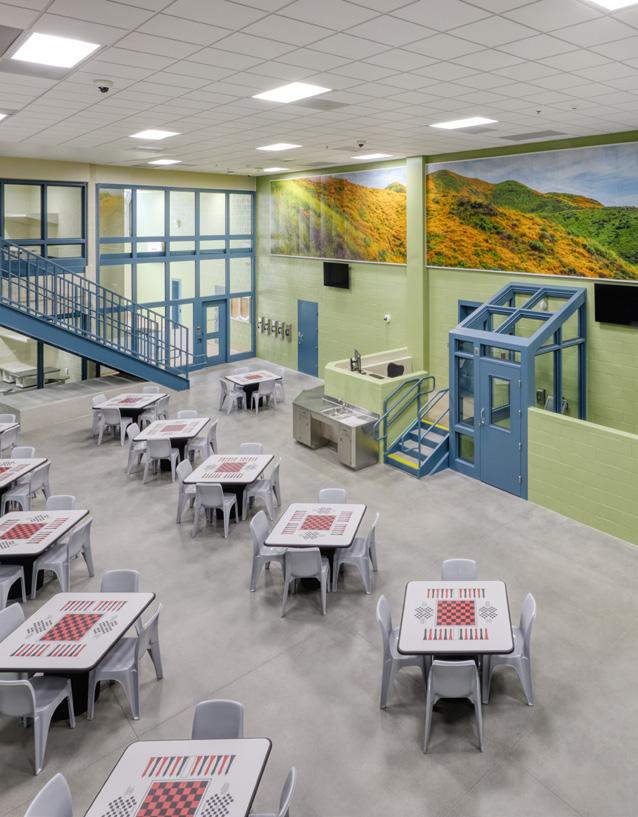
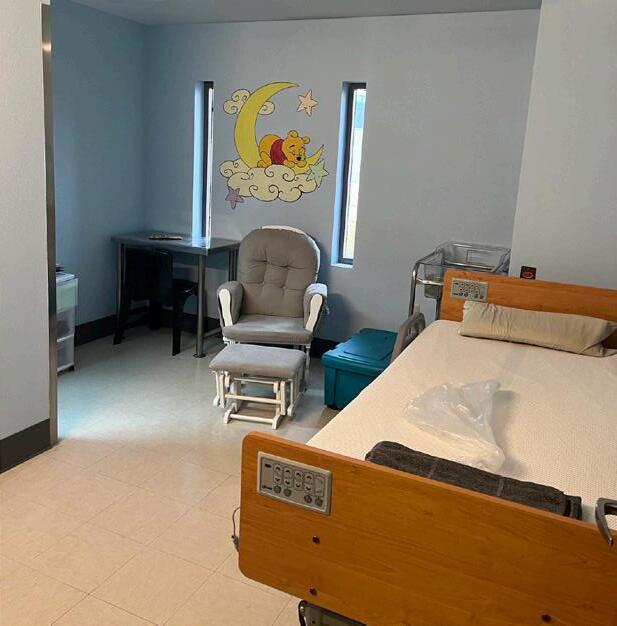
From the beginning, we envisioned a space that would depart from traditional correctional design. The facility features pastel paint schemes that promote calmness and relaxation. Day rooms are furnished with couches rather than standard chairs and benches, while hospital beds replace conventional bed racks. To
further enhance the environment, talented inmates from the existing women’s unit designed and handpainted uplifting murals in the residential rooms. We have so many talented inmates in our custody, and the workmanship they showcased on the development of this facility was beautiful to see. It has created a facility that the department is proud of but also a project that helps us showcase the talent of those we supervise.
The facility also includes a thoughtfully designed visitation center furnished with couches instead of traditional tables and chairs and enhanced by large windows that flood the space with natural light, fostering a welcoming and relaxed atmosphere. This environment encourages meaningful family interactions and supports the reunification process.
Partnerships Supporting Maternal Health and Reunification
Partnerships with others state agencies and
Colorful murals painted by residents are featured in residential rooms.
The facility is named for Dr. Mary Parker-Reed (left).
Wallace (right) and department officials celebrated the facility’s dedication on Dec. 17. Photo Credit (all): Arkansas DOC
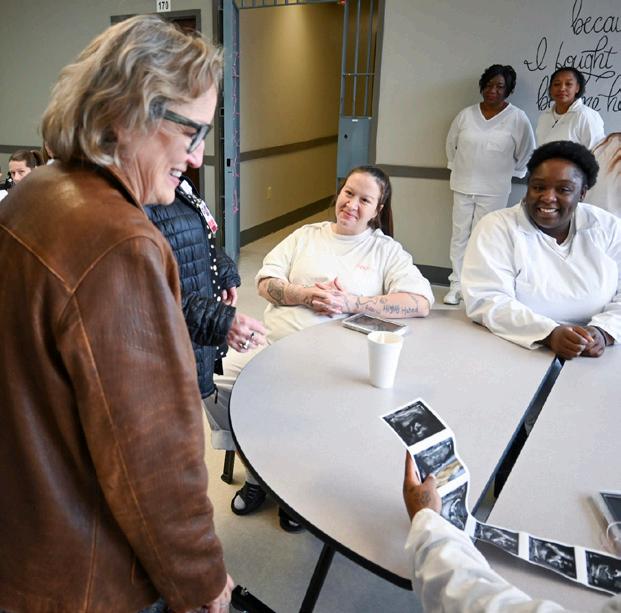
community partners have been established to support the maternal health, education and parenting skills of participating inmates. The Arkansas Department of Health offers weekly Maternal Education classes. UAMS also provides education and resources and is conveniently close for delivery of babies or in the event of an emergency. Additional weekly classes are also being conducted by volunteers. This provides inmate mothers an opportunity to engage with various community resources now as well as when they transition to community supervision. All inmate mothers also receive training in CPR and infant CPR.
All pregnant inmates are housed at this unit whether they are just a few weeks along in their pregnancy or are due any day. Some may not have had any previous prenatal care. The bonding period provided at the unit can be a combination of inhospital and in-unit time, depending on the needs of the baby. Inmates who opt for breast feeding will be eligible to be housed in the unit for up to 12 months following delivery to pump and store the milk which may be picked up and given to the baby’s caretaker. Those inmates also receive their postpartum care at UAMS.
Early Impact, Staff Experience and a Model for the Future
Several staff members have expressed how much they enjoy working at the facility, noting that it offers a refreshing change from the traditional carceral environment. The pastel-colored walls, couches in lieu of benches, and the many inspiring murals create a calmer, more supportive atmosphere for both staff and residents. Several staff members have noted that one of the most enjoyable parts of their work is witnessing the positive impact the motherinfant bonding period has on the women in their care. Overall, the facility’s unique design and mission have fostered a more compassionate and rewarding work experience for everyone involved.
At its October 2025 meeting, the Arkansas Board of Corrections voted to name the new unit in honor of former board member Dr. Mary Parker-Reed.
Dr. Parker-Reed served on the board from 1993-2017 and was a constant advocate for women’s rights. Along with her position as a retired faculty member at the University of Arkansas at Little Rock, she remains active in both university and community activities that support efforts on behalf of women in prison and their children.
I would encourage directors to not be afraid to consider a different approach. Several Arkansas lawmakers have voiced their support for the project, and Gov. Sarah Sanders has been a champion for improving maternal outcomes and family reunification, along with pushing for more evidence-based programs. This program touches all of those aspects.
While this is a very new facility, it has already generated many positive connections for the department. We have many community members as well as other state departments eager to engage. I am so proud to have played a small part in this project and look forward to seeing how it evolves to continue our goal of family reunification.
Lindsay Wallace is Secretary of the Arkansas Department of Corrections.
The secure space is a departure from traditional corrections design.
Translating Clinical and Operational Excellence for Secure Facilities
Since 2017, Falcon experts have supported the planning and design of more than 30 projects in the justice architecture space. Each Falcon team brings decades of experience in the delivery, supervision, administration, and operation of correctional practice and healthcare.
• Collaborating with industry experts to create holistic solutions for correctional facility challenges.
• Developing policies tailored to correctional environments.
• Conducting staffing analyses to ensure clinical and operational efficiency.
• Translating clinical and operational needs into architectural programs for purpose-built facilities.
• Applying evidence-based approaches in all aspects of facility planning and design.
Real Experts. Real Solutions. Real Results.
2025 Facility of the Year Nominee: Franklin County James A. Karnes Corrections Center COLUMBUS, OH
Understanding ACA’s Standards & Accreditation Process The evolution of correctional best practices
By David Haasenritter
When someone mentions the American Correctional Association’s (ACA’s) Standards and Accreditation Department, what do you think of? Most people think of ACA’s accreditation process. Some might think the department creates the expected practices (formerly know as standards) used in ACA manuals. Others would say the department conducts training.
Let me provide a bit of clarity. The department works closely with correctional agencies, facilities and programs (hereinafter referred to as the “agency”) to facilitate the accreditation process, manage standards, and provide tailored training to promote quality and provide ongoing assistance.
Beyond Accreditation
Accreditation is the core mission of our department, and an important tool for ensuring quality and promoting continuous improvement in organizations and institutions across a range of industries and sectors. By meeting accreditation standards, organizations can demonstrate a commitment to those efforts and can provide external validation of their performance and outcomes. The type of accreditation used will depend on the specific industry or sector being evaluated and the goals and objectives of the accrediting body, with Education and Health Care accreditation being two common accreditation programs.
ACA accreditation is intended to improve facility operations through adherence to clear, expected practices relevant to all areas and operations of the facility, including safety, security, order, inmate care, programs, justice and administration.
Guiding Agencies Through the Accreditation Process
The Standards and Accreditation Department’s staff facilitates the accreditation process from initial contact, contracting, preparing the agency for the accreditation process and audit, to the final accreditation decision by the Commission on Accreditation for Corrections.
Each agency is assigned an ACA Standards and Accreditation Specialist who works directly with agency management and staff to assist them in attaining and maintaining accreditation. The specialist maintains regular contact with the agency, offers updates and assistance, answers inquiries, conducts training virtually or on-site, provides examples to meet the expected practices, and provides guidance on the process of developing responses to noncompliant expected practices.
Today, ACA publishes 29 different accreditation manuals for all areas of correctional operation, including adult, juvenile and community corrections as well as correctional training academies, industry programs and central administration offices. The expected practices in the
standards manual is created and refined by the ACA’s Performance-Based Standard Committee and the Commission on Accreditation for Corrections and represents fundamental correctional practices ensuring staff and inmate safety and security; enhancing staff training and morale; improving record maintenance and data-management capabilities; assisting in protecting the agency against litigation; and improving the management and function of the facility or agency at all levels.
Standards Development, Training and Ongoing Support
Proposals for revisions to existing expected practices are solicited from the field or ACA committees prior to each ACA conference. All revisions must be approved by majority vote of the Performance-Based Standards Committee before publishing. The results of each conference’s Performance-Based Standards Committee meeting are posted online via the Standards Committee Meeting Minutes. Occasionally, new standards manuals are published depending on the needs of the field.
Evolving Standards
In 2025, ACA published the “PerformanceBased Standards and Expected Practices for Transportation of Inmates,” following a request to enhance the safety and efficiency of transportation operations. The Standards and Accreditation Department roles included updating and maintaining the ACA standard manuals, based on actions of the Performance-Based Standard Committee and the Commission on Accreditation for Corrections, and conducting interpretation and training for agencies and auditors on the expected practices.
To support the accreditation process, the Standards and Accreditation Department provides on-site and virtual training. Most of the training is
on the accreditation process and specific expected practices and auditor training. The training is tailored to the needs of the agency. Some examples of recently requested training are:
• A remote training for an agency healthcare staff on the changes from the fourth to the fifth edition of the Performance-Based Standards and Expected Practice for Adult Local Detention Facilities
• A remote training on the accreditation process
• A one-day on-site training for wardens and key leaders on the accreditation process, what it means and why it is important
Customized Training and Technical Assistance
We also have provided on-site, five-day training on the accreditation process and PerformanceBased Standards and Expected Practice for Adult Correctional Institutions, fifth edition, and have also done juvenile manuals. The onsite training is done at a facility, in a classroom in the morning and with practical exercises throughout the facility in the afternoon. The Standards and Accreditation Department also conducts training at ACA conferences, including accreditation manager training, new auditor training and auditor refresher training.
In addition, we are standing by to answer your questions and will do everything possible to help you work towards achieving ACA accreditation. We look forward to seeing you all at the ACA Winter Conference in Long Beach, Calif., at the standards department training sessions (Feb. 5), standards committee meeting (Feb. 6) or panel hearings (Feb. 7–8).
David Haasenritter is the Director of the ACA’s Standards and Accreditation Department.
• Most experienced pre-fab steel cell provider in the industry.
• Don’t risk your project’s timeline or resources -- choose SteelCell.
Projects to Watch
for 2026 County,
state
and
federal
facilities are under construction across the country
By Lindsey Coulter
Multi-million justice and correctional projects are underway across the nation that will improve safety, care and outcomes for people in local, state and federal custody. Throughout 2026, Correctional News will follow these and other notable projects as they progress through planning, design, construction and occupancy.
A. Gov. Kay Ivey Correctional Complex
Elmore County, Ala.
Owner: Alabama Department of Corrections
Cost: $1.25 billion
Size: 1.4 million square feet
Phase: In construction
Project Team: Caddell Construction, DLR Group, R&N Systems Design
Estimated completion: Fall 2026
The Gov. Kay Ivey Correctional Complex is a new state men’s prison under construction as part of a comprehensive prison modernization plan. It is designed to replace aging facilities and incorporate enhanced medical, mental health, substanceabuse treatment, rehabilitative programming and vocational training spaces within a single campus. The facility encompasses 54 buildings on roughly 300 acres and includes a secure perimeter. Upon completion, it will house approximately 4,000 inmates across minimum, medium, maximum, medical/mental health and intake beds.
B. Arkansas State Prison Project
Franklin County, Ark.
Owner: Arkansas Department of Corrections
Cost: $825 million
Size: 720,000 square feet
Project Team: HDR Inc., Cromwell Architects Engineers, Vanir Construction Management, Nabholz Construction, JE Dunn
Construction
Phase: Planning, preconstruction
Estimated completion: TBD
The new 3,000-bed state prison is intended to address chronic overcrowding in existing facilities by including multiple custody levels, support facilities, and infrastructure such as wastewater treatment and power systems. Details regarding size, layout, and timeline remain in planning phases due to funding and site challenges.
C. San Quentin Rehabilitation Center
San Quentin, Calif.
Owner: California Department of Corrections and Rehabilitation
Gov. Kay Ivey Correctional Complex; Elmore County, Ala.
Arkansas State Prison Project; Franklin County, Ark.
San Quentin Rehabilitation Center; San Quentin, Calif.
Santa Rita Critical Operations Facility; Dublin, Calif.
Duval County Jail; Jacksonville, Fla.
F. G. H. I. J.
California is transforming San Quentin State Prison into a pioneering rehabilitation-focused institution that centers education, restorative justice and reentry support. Part of the “California Model” for corrections reform, the project incorporates a new three-building educational and vocational complex with high-tech classrooms, a media and technology center, a library, multipurpose gathering spaces, a café and store, and offices all designed to create a campus-like, rehabilitative environment.
Westville Correctional Facility; Westville, Ind.
New Jersey Women’s Prison; Burlington County, N.J.
South Dakota Men’s Prison; Sioux Falls, S.D.
Ellis County, Texas, Juvenile Facility; Ellis County, Texas
Whatcom County Jail and Behavioral Health Center; Ferndale, Wash.
D. Santa Rita Critical Operations Facility
Dublin, Calif.
Owner: Alameda County, Calif.
Cost: $270 million
Size: 980,000 square feet
Project Team: JE Dunn Broward Builders, a Joint Venture, Arrington Watkins Architects, CML Security
DESIGN TRENDS
Architecture at the Intersection of Staffing and Security Industry leaders discuss design strategies shaping safer, more resilient justice facilities
By Lindsey Coulter
As correctional agencies grapple with staffing shortages, evolving security threats, and shifting philosophies around rehabilitation and treatment, architects, planners, researchers and strategy/positioning teams are increasingly asked to do more than deliver secure buildings. They must help shape safer workplaces, support staff wellness, anticipate emerging risks and create facilities that reflect a more holistic approach to justice.
This Design Trends Roundtable brings together three practitioners — Cristi Glenn, Associate AIA, ICCJP, Vice President and Practice Strategy Leader, Civic & Justice, for NELSON Worldwide; Hillary Morgan, Vice President of Justice Architecture at Goodwyn Mills Cawood; and Bruce Omtvedt, AIA, Corrections & Detention Market Sector Leader for Dewberry — to examine how firms are responding to today’s most pressing correctional challenges.
These experts explore how research, planning and design can support recruitment and retention by prioritizing staff safety, mental health, and operational efficiency, from clear sightlines and intuitive layouts to wellness spaces and access to daylight. The discussion also addresses how contraband concerns, including the growing threat of drone delivery in outdoor and public-adjacent spaces, are influencing facility planning, materials and security strategies. Finally, they share insights into which sectors of the justice system are seeing the greatest demand for new or replacement facilities, highlighting growth in mental health, adult corrections, reentry and vocational environments.
Together, their perspectives underscore a central theme: thoughtful, evidencebased planning and design is an essential tool in building safer, more resilient, and more humane justice facilities for both staff and occupants.
Correctional News: As staff recruitment and retention continue to be a struggle for many correctional facilities, how can architects help support these efforts through design?
GLENN: The first step is creating safer work environments. Staff safety is a foundational concern affecting both recruitment and long-term retention. Design can mitigate risks by ensuring clear sightlines and reduced blind spots through strategic placement of glazing, open-plan housing units and secure observation points to reduce potential for surprise incidents. Zoning and circulation planning help separate staff and incarcerated population flows, providing secure, staffonly corridors, and minimizing cross-traffic decreases daily stress and risk. De-escalation-focused environments can be created using calm colors, acoustic treatments, and access to daylight can reduce aggression — resulting in a safer environment for staff.
You also have to proactively work to improve staff wellness and mental health. Correctional staff experience high rates of stress, PTSD and burnout. Architectural design can directly improve well-being. For example, staff wellness centers can be integrated featuring quiet rooms, fitness spaces, counseling rooms, and restorative lounges to allow staff to decompress and manage stress. Access to daylight and nature significantly reduces fatigue, improves mood and enhances cognitive function. Ergonomic and comfortable workspaces also make a big difference. Thoughtful design of control rooms, desks, chairs and technology reduces physical strain during long shifts. Additionally, staff need protected time and space for respite that feel separate from high-stress zones to signal organizational value and respect.
MORGAN: Architects have a vital opportunity to enhance staff recruitment and retention in correctional facilities by designing environments that emphasize safety, wellness, operational efficiency and professional dignity. While staffing challenges are often influenced by operational and cultural dynamics, the physical environment plays a significant role in shaping daily stress levels and job satisfaction. We design thoughtful solutions that can create supportive spaces that foster a positive work experience and contribute to long-term staff stability. By recognizing the impact of design on staff well-being, architects can help correctional facilities become more attractive and sustainable workplaces.
OMTVEDT: Staffing ratios are not mandated in every state, so we review
the ability of each client to fund staffing to safe levels, then design the overall layout for flexible and safe operations, responding to varying inmate counts and classifications and availability of staff. Visual connections and ease of situational awareness are critical for staff safety. We design intentional visual connections between co-workers’ posts and occupant movement whenever possible. Correctional, healthcare/behavioral health, and administrative staff frequently do not have the time to leave the facility for breaks or meals, so we design openair spaces, including break/dining areas, that feature daylight, connections to nature, and amenities for staff to get away and clear their mind. These areas are separated but near their work areas.
Correctional News: How do contraband issues influence the design of facilities — including the threats of introduction from drones in outdoor recreational areas and other public-adjacent spaces?
GLENN: Contraband issues are a major driver in the design of correctional facilities, shaping both physical layouts and operational protocols. The goal is to minimize the risk of contraband entering the facility, moving within it, or being concealed, while still supporting rehabilitation and safe movement. You can do that through physical layout and access control, starting at entry points. Screening at entrances for staff, visitors, deliveries and newly incarcerated individuals is designed to intercept contraband. This includes metal detectors, scanners and controlled sallyports. With regard to zoning and separation, high-risk areas (e.g., intake, medical, housing units) are often separated from lower-risk or administrative spaces to limit contraband movement. Corridors and common areas are designed to allow clear sightlines, reducing blind spots where contraband could be exchanged or hidden.
In terms of outdoor and public-adjacent spaces, traditional outdoor recreation areas are open and elevated for visibility, but fencing, screening and overhead netting can now address drone threats. Drones have become an emerging risk for delivering contraband, such as phones, drugs and weapons. Facilities are
incorporating physical barriers including netting or wire canopies over outdoor spaces, surveillance technologies (radar, cameras or drone detection systems) and operational protocols like staff patrols and rapid-response plans for drone detection events.
MORGAN: Contraband concerns, both traditional and emerging, are increasingly shaping modern correctional facility design. As interdiction methods evolve, especially with the rise of drone delivery, architects must
GLENN MORGAN OMTVEDT
GMC designed a new housing and dorm addition for the DeKalb County jail site in Fort Payne, Ala. | Photo Credit: Edward Badham, Courtesy of Goodwyn Mills Cawood
implement comprehensive, multi-layered security strategies across both indoor and outdoor environments. We address contraband risks by incorporating layered physical, technological and operational defenses rather than relying on a single solution. We collaborate closely with security and operations teams to identify high-risk vectors and tailor architectural responses accordingly. Public-adjacent edges, delivery zones, and outdoor yards are designed with security in mind. Additionally, we ensure that our designs and materials support visibility, monitoring and prevent concealment. Every space is planned with the understanding that effective contraband prevention is essential to staff safety and overall facility stability.
OMTVEDT: Contraband control is a combination of operational procedure and physical barrier choices – and includes the costs of each. Operational input from our clients to inform the design is critical. For example, our New Mexico detention facility project in Eddy County incorporates on-unit outdoor recreation yards open to the sky, each with security mesh, security screen “lids” for contraband control, and partial roofs providing relief from sun and rain. One of our northern climate clients prefers centralized indoor recreation spaces with an operable sidewall for fresh air and sunshine during cold seasons, and adjacent outdoor yards, where operational procedure “sweeps” of a fenced yard provide those incarcerated with a clear view of the sky and access to an outdoor lawn.
Correctional News: What sectors of the justice system (i.e., adult, juvenile, vocational, reentry, mental health) are showing the most growth/demand for new facility design?
GLENN: The fastest-growing sectors in correctional facility design include adult corrections, behavioral health spaces, juvenile justice, integrated justice campuses, and dedicated reentry/ rehabilitation, and educational/ vocational spaces, reflecting broader trends in the justice system. These trends emphasize evidence-based rehabilitation, trauma-informed and genderresponsive programming, and reentry support — alongside operational priorities like staff safety, retention and wellness. At the same time, sustainable design practices — including energy-efficient systems, natural daylight, and durable, lowmaintenance materials — are increasingly integrated to reduce long-term operational costs and environmental impact. Together, these trends signal a shift toward facilities that not only maintain security but also actively support the well-being, personal growth and successful reintegration of individuals, fostering safer communities and more resilient correctional systems.
MORGAN: The greatest growth for us is in the mental health and adult corrections sectors. There
How Trauma-Informed Spaces Are Evolving to Support Neurodivergence
By Jeff Goodale, AIA, ACA
The conversation around trauma-informed design is evolving, with a growing focus on neurodivergence and connections that exist between the two that haven’t previously been part of the conversation. No longer limited to addressing trauma-related responses, this approach now encompasses the diverse ways in which individuals perceive and
process their environments. As correctional leaders and others in nearly every sector grapple with post-pandemic shifts, the challenge lies in creating environments that accommodate all users — whether through sound mitigation, spatial layouts or intuitive design elements — and how trauma-informed design principles intersect with neurodivergence and the urgent need for thoughtful, human-centered spaces that are designed with empathy and not just expertise.
Safety in the Built Environment
Design that emphasizes security and serenity in public or institutional settings can do a lot to reduce stress. Public buildings, such as courthouses and correctional facilities, may lack the safety measures needed to ensure users feel secure at all times, particularly in settings that can turn volatile, such as family courts. Traveling from a parking space to the front door, whether through a parking lot or indoor garage, can feel unsafe if the environment is dark and desolate.
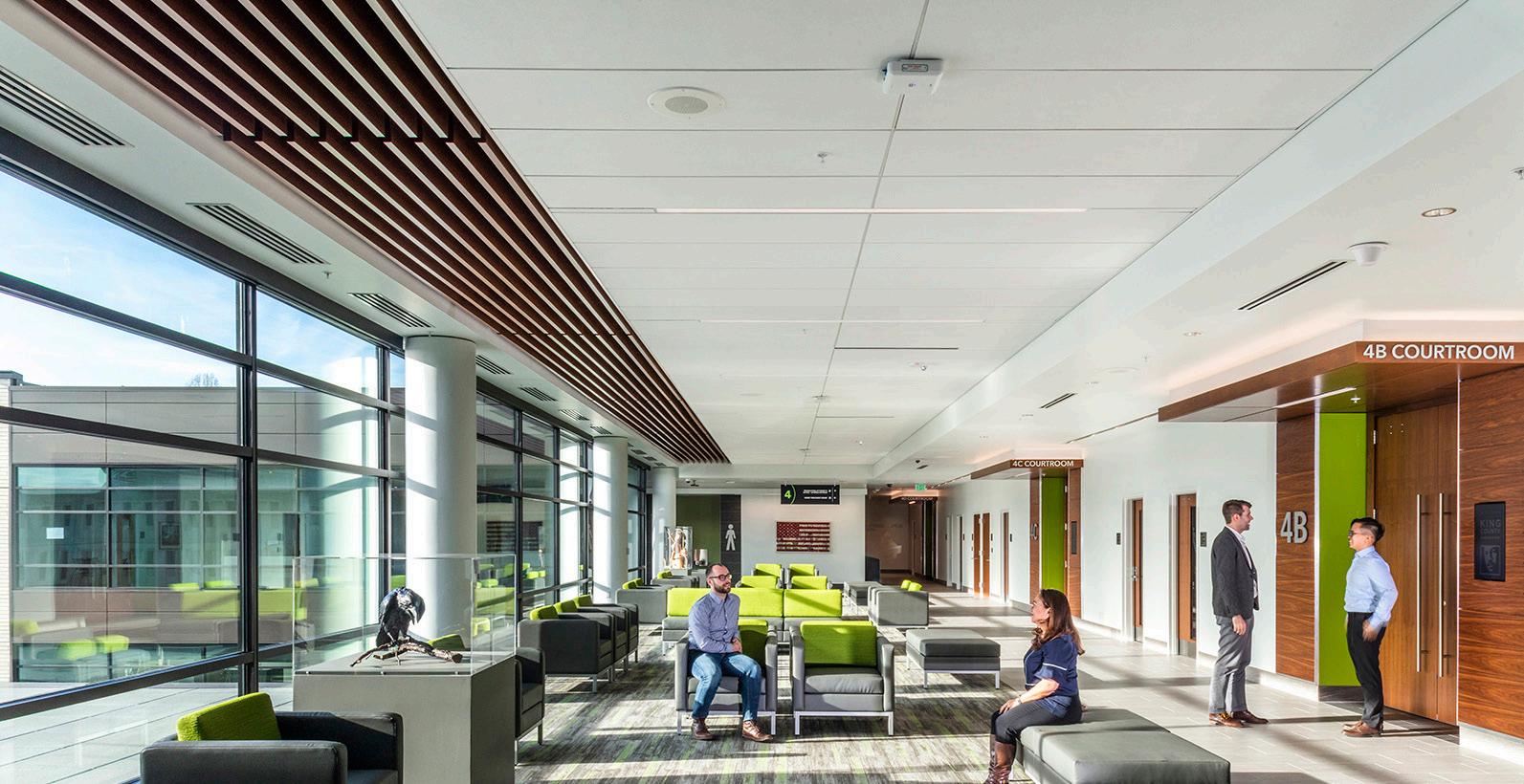
Increased security measures and adequate lighting make users feel like their safety is a priority. Clear wayfinding and dedicated reception areas can help alleviate anxiety about where to go, maintain orderly traffic flow, and avoid overcrowding and bottlenecks. Designing to Reduce Sensory Overload. Promoting physical and emotional comfort in the built environment is essential to the user experience. Many environments fail to account for sensory triggers, which can be subtle. Neurodivergent individuals can have trouble processing harsh lighting, reflective surfaces and excessive noise. Incorporating softer, natural materials, acoustics that are designed to cater to neurodivergent patrons, and asymmetrical room designs
can help dampen noise (which is amplified in 90-degree corners) and create a calmer atmosphere.
Recognizing the Overlap Between Trauma and Neurodiversity. Many professionals still see trauma and neurodivergence as separate concerns rather than interconnected issues. Neurodiversity may be derived from trauma, and problems that were otherwise hidden can be exacerbated by traumatic or stressful situations. Designs for trauma and neurodiversity can have some common elements, but they need to thoughtfully cater to both. The industry must adopt a holistic framework that bridges the gaps between these concepts, potentially introducing new terminology and updated best design practices that prioritize human nature and behavior no matter what accommodations the users need.
The Open-Space Dilemma. It can sometimes be difficult for experts who are immersed in design work to step back and reimagine the most efficient use of a space through the eyes of its occupants. Many organizations push for inexpensive openspace environments to optimize square footage despite their noise and lack of privacy, which can be overstimulating for neurodivergent individuals. This can be especially jarring for people who have become accustomed to working from home during the pandemic years and suddenly finding themselves in a noisy, crowded open office where concentration is difficult. Design modifications such as soundproof booths, flexible seating arrangements, and quiet zones can create a more inclusive and productive workspace.
Key Insights
The importance of sensory-conscious design can be seen everywhere but really rises to the surface when considering correctional facilities and public spaces, particularly in areas that try to emphasize in-person interaction. There may be constraints on the types of material that can be used in correctional facilities, which have to be sturdy and robust while also accommodating users’ needs. It all comes down to understanding human nature and how people interact in their environments. For example, wood floors in jails can be damaged by graffiti, and lamps that are not firmly affixed can be easily broken. Broken or dislodged furniture and materials can also present safety risks.
Safety and accessibility go hand in hand from the time a person arrives to their entire experience in trauma-informed environments. With real-world examples like family courts, which require more parking spaces and enhanced security, more thought is going into comprehensive design solutions that cater to the defined needs of users with special needs.
Industry leaders need to rethink traditional design approaches, shifting from intuition-based decisions to evidence-backed strategies for supporting neurodivergent individuals as more research is done on the intersection between these two areas. Now that research has emerged on the needs of
Defining Durability since
The Davidson County Criminal Justice Center includes softer, natural materials. | Photo Credit (all): HOK
Clark Children & Family Justice Center offers comfortable seating options and clear wayfinding.
From Overcrowding to Reentry: How 2026 Governor Races Could Reshape Corrections
By Dena Sattler
This fall, many U.S. voters will soon select a governor in the 2026 mid-term elections, which promise to drive change in how corrections and other state agencies are run.
Governorships are up for grabs in 36 states this year, with an even 18 Republicans and Democrats now at the helm in those states. Fifteen states have term-limited governors, which guarantees new leadership of the executive branch in those states, but not necessarily a change in political philosophy.
The nation has 27 Republican governors and 23 Democratic governors. The Cook Political Report, a non-partisan source for U.S. election analysis and forecasting, currently labels three of 18 Democratheld seats with races as Toss Up (Arizona, Michigan and Wisconsin), and one Lean Republican (Kansas). Of the 18 Republican-held seats contested, two are considered Toss Up (Georgia and Nevada).
Primary elections begin in March (Illinois), with
others scheduled through August and some primary dates still pending. The general election is Nov. 3.
What Elections Could Mean for Corrections
When it comes to corrections, gubernatorial candidates will encounter political debate on whether to embrace proposed reforms designed to reduce the number of people confined in prisons, or whether to continue on the path of stepped-up punishment that’s gained momentum in the Trump administration.
Candidates will be asked about their strategies on balancing the tough-on-crime approach with equally strong calls for fairness and efficiency in corrections operations. While each state varies in the particulars of its criminal legal system, general themes that will garner attention nationwide due to their impact on corrections facilities and operations overall include:
• Prison overcrowding
• Staff safety and stress
• Staffing shortages, workload and mandatory overtime
• Funding gaps
• Inmate healthcare, mental health care and drug use
• Education, rehabilitation and reentry programming
• Technological advances, from digital education and communication to more effective security systems
Contraband and New Construction
South Dakota Searchlight recently covered a 2026 gubernatorial candidate forum that addressed eight deadly inmate overdoses in 2025 likely caused by K2, a synthetic drug. With 24 inmate deaths in 2025 in South Dakota, higher than any year in recent memory, candidates there said it was time for
tougher drug detection, more treatment, and better prison security, the Searchlight reported.
Investment in new prison construction is another debatable issue for gubernatorial candidates, to include the addition of private, for-profit prison operations — a politically charged issue in some states as private firms offer prison healthcare and immigrant detention services.
Ever-Present Budget Challenges
One universal challenge for states will be pursuing new corrections programs at a time when overall affordability is a high priority for voters. The coming state legislative sessions could frame much of the debate for gubernatorial candidates.
The National Council on State Legislatures predicts that state lawmakers will explore opportunities to reduce costs, especially as federal funding has been diminished through administration action and congressional appropriations. As state lawmakers deal with unpredictable federal funding for 2026, their work in building state corrections budgets will be more difficult. Many elected officials and stakeholders eyeing reform will look to navigate change in the criminal justice system without making those systems bigger.
Since incarcerating people is one of the most expensive components of a criminal justice budget, the question is how states can manage these budgets in the face of limited federal funds, and whether they can craft ways to balance cost-saving policies that maintain public safety while generating more positive reentry outcomes communities want and need.
Prospects to lessen the cost while maintaining quality in corrections operations, according to NCSL, include streamlining parole release, expanding sentence credits, and improving responses to people with mental health needs.
Post-Election Work to Come
Experience MATTERS
After the dust settles on Election Day 2026 and governor races are decided, the transitions to new teams charged with carrying out day-to-day operations in each state’s Executive Branch will be complex on every front — corrections included. While the timing for change in a governor’s office is predictable every four years or so, that’s not the case for cabinet officials whose tenures are less predictable. Unlike newly elected governors, Cabinet appointees usually don’t have a transition team and must rely on their own strategic approach to hit the ground running. As with all agencies, corrections departments have pressing matters to tackle, budgets to maintain and governor’s agendas to manage. Some administrations will continue on the same course as before when it comes to corrections. Others may pursue a much different path, and results of gubernatorial races in 2026 will deliver a clearer picture of how states will move forward in balancing public safety concerns with evidence-based reforms that improve outcomes and reduce costs.
INNOVATIVE SOLUTIONS.
ADVANCED CONSTRUCTION.
Inside Contra Costa’s New Behavioral Health Unit
A progressive client, a constrained site and a tight budget drove the design-build team of DLR Group and Sletten to rethink form, circulation and interior strategies
By Lindsey Coulter
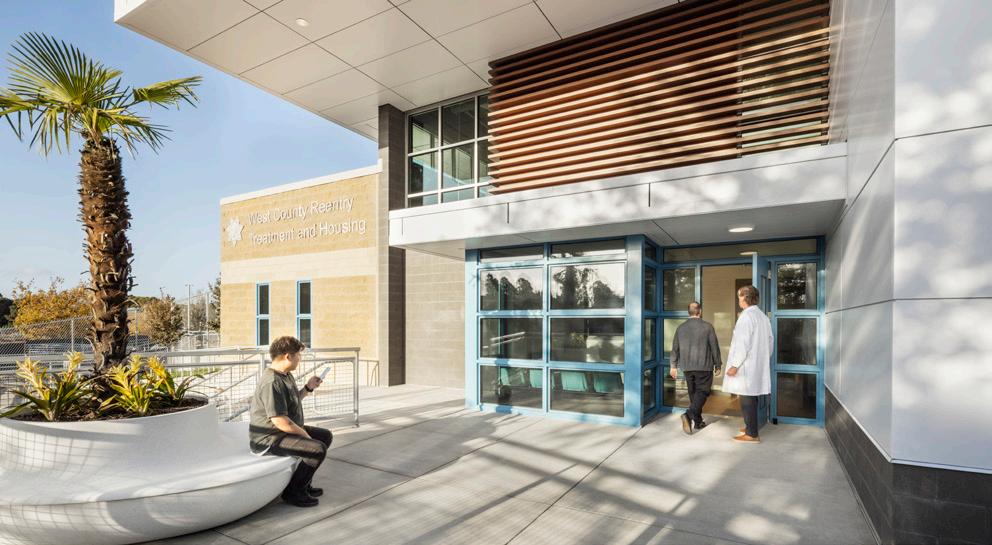
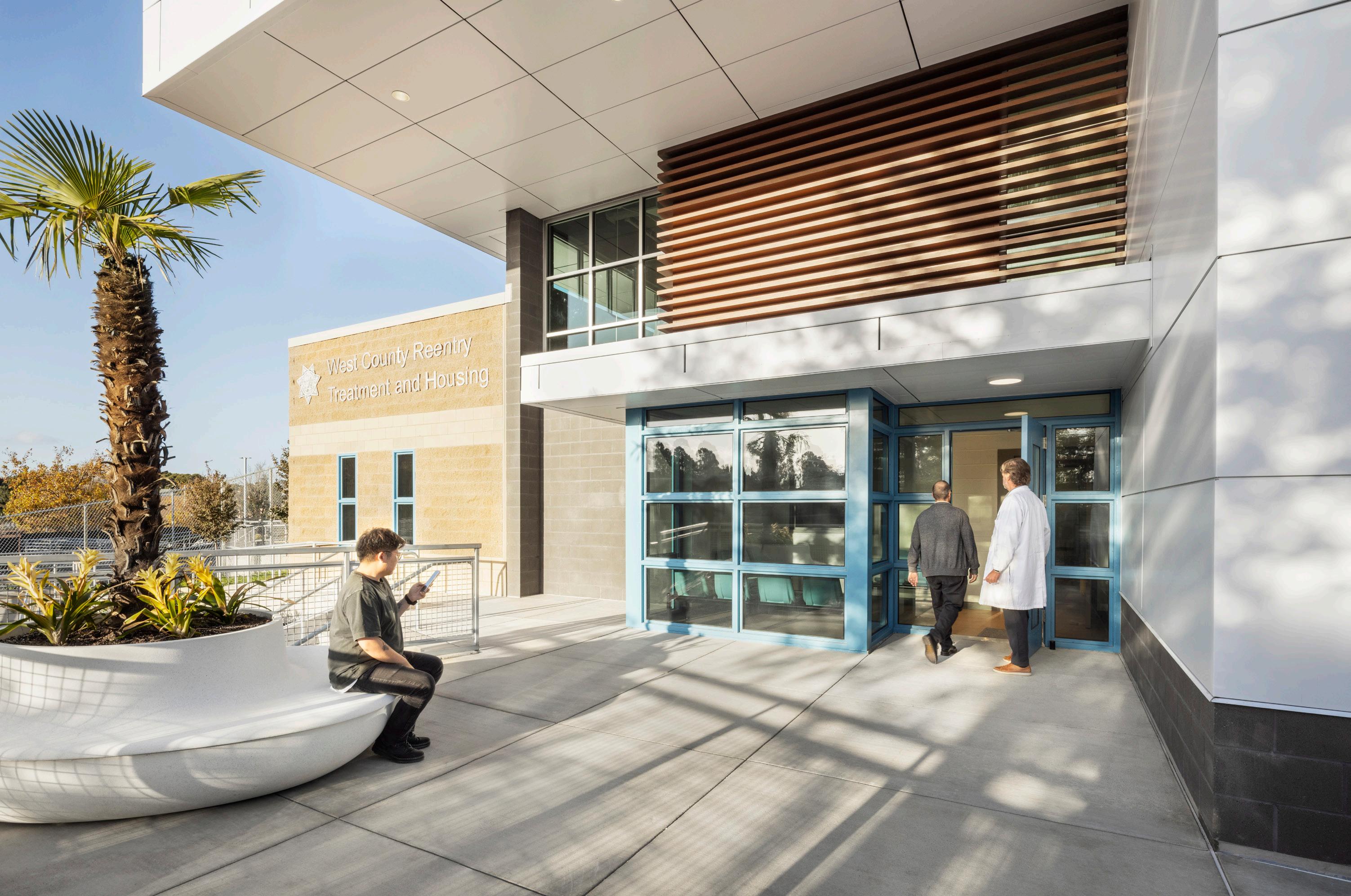
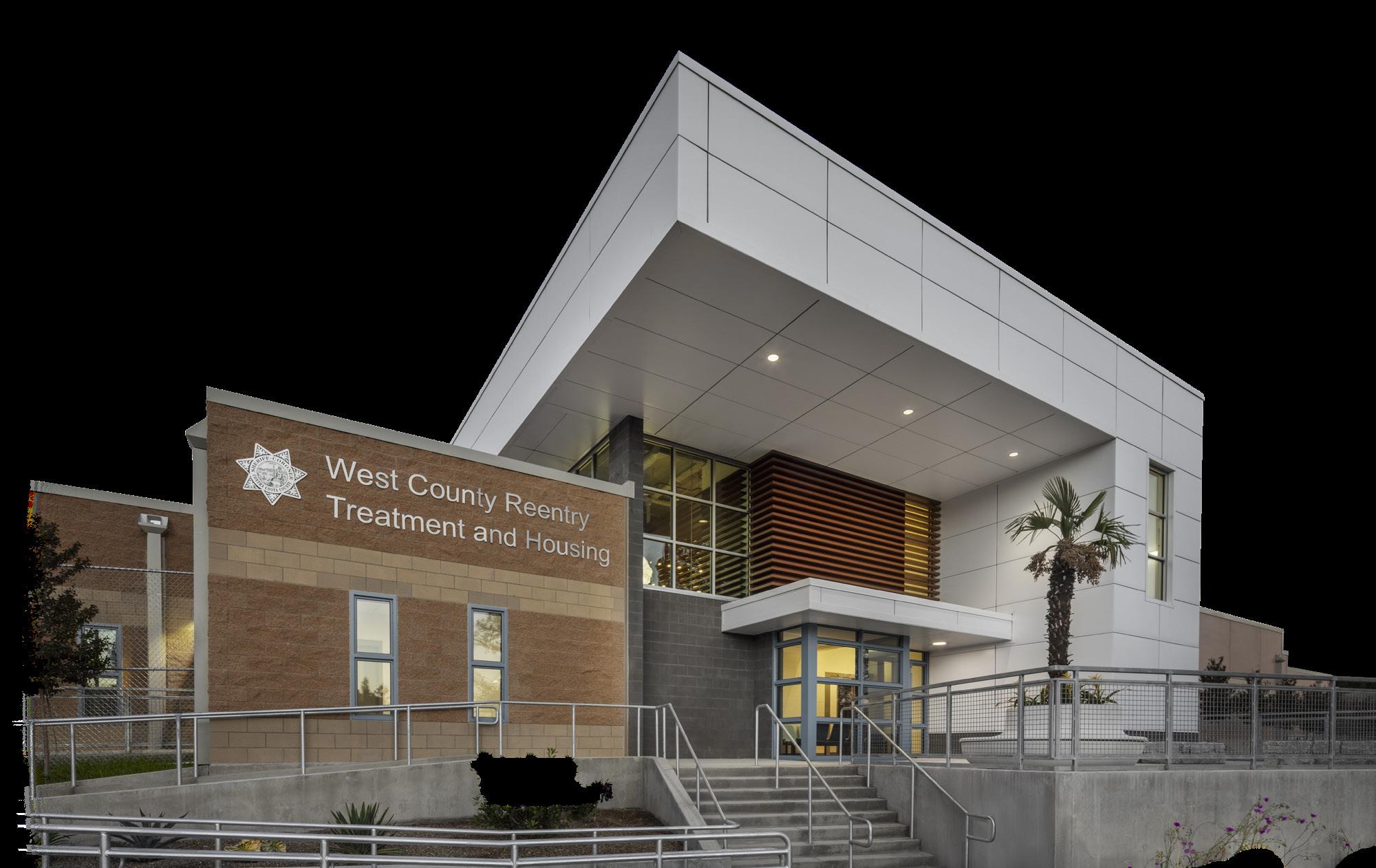
The West County Reentry, Treatment and Housing (WRTH) facility in Richmond, Calif., represents a substantial evolution in how Contra Costa County approaches behavioral health treatment, safety and rehabilitation within a detention environment. Designed by DLR Group and delivered through a design-build partnership with Sletten, the $106.5 million, 84,334-square-foot building integrates mental health treatment, reentry services and specialized housing within a unified, highly intentional architectural framework. The project responds to the rising number of adults in custody with behavioral health needs while contending with the significant challenges of a tightly constrained site, strict seismic codes and a carefully controlled budget.
From the outset, the county sought a facility that would not only expand treatment capacity but also transform the culture of care on campus. The WRTH program is rooted in trauma-informed and evidence-based design principles that prioritize natural light, access to nature, spatial clarity, acoustic comfort and a fundamentally humane approach to short-term detention. The county’s early direction was clear: they were not interested in replicating a traditional jail. They wanted an environment that supported stabilization, recovery, family connection and successful reentry.
From Traditional to Trauma-Informed Design
Traditional detention environments can intensify trauma, increase stress and interfere with behavioral health treatment. Contra Costa’s goal was to reverse that dynamic by designing a place where architecture and operations work together to reduce anxiety and support healing. DLR Group applied traumainformed strategies consistent with best practices in therapeutic healthcare settings and with the firm’s national research into behavioral health design.
Gary Retel, AIA, LEED AP BD+C, Principal and Design Leader with DLR Group’s Justice+Civic studio, served as design lead. He said the county’s
expectations were well above what is typical in short-term custody environments.
“The statistics are very high throughout the U.S. on the percentage of those in jail who have behavioral health and medical issues,” Retel said. “Contra Costa was no different. The county wanted to create a new building within the campus that would take pressure off the general population housing and be specific to those who need specialized treatment for behavioral health and medical needs.”
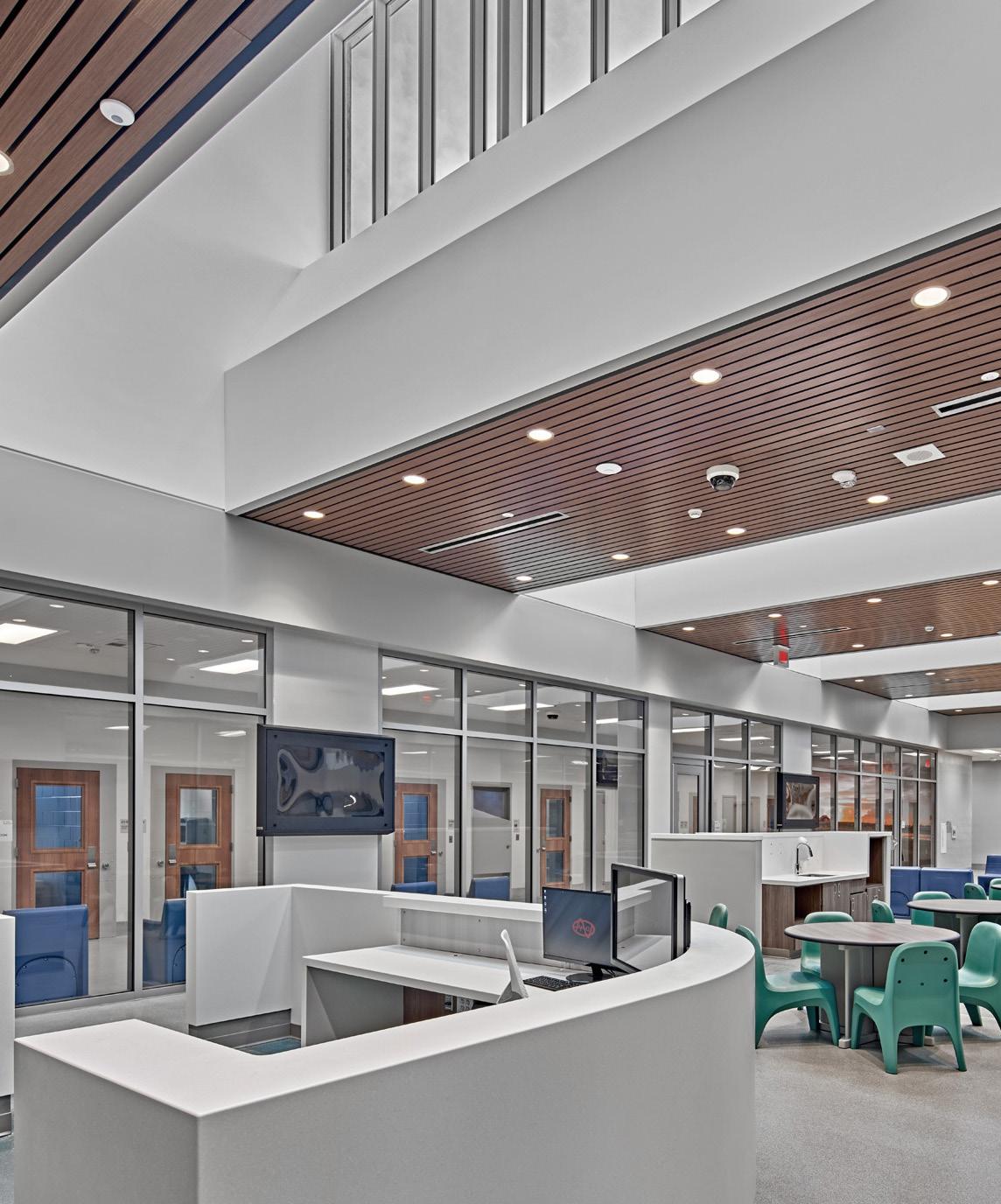
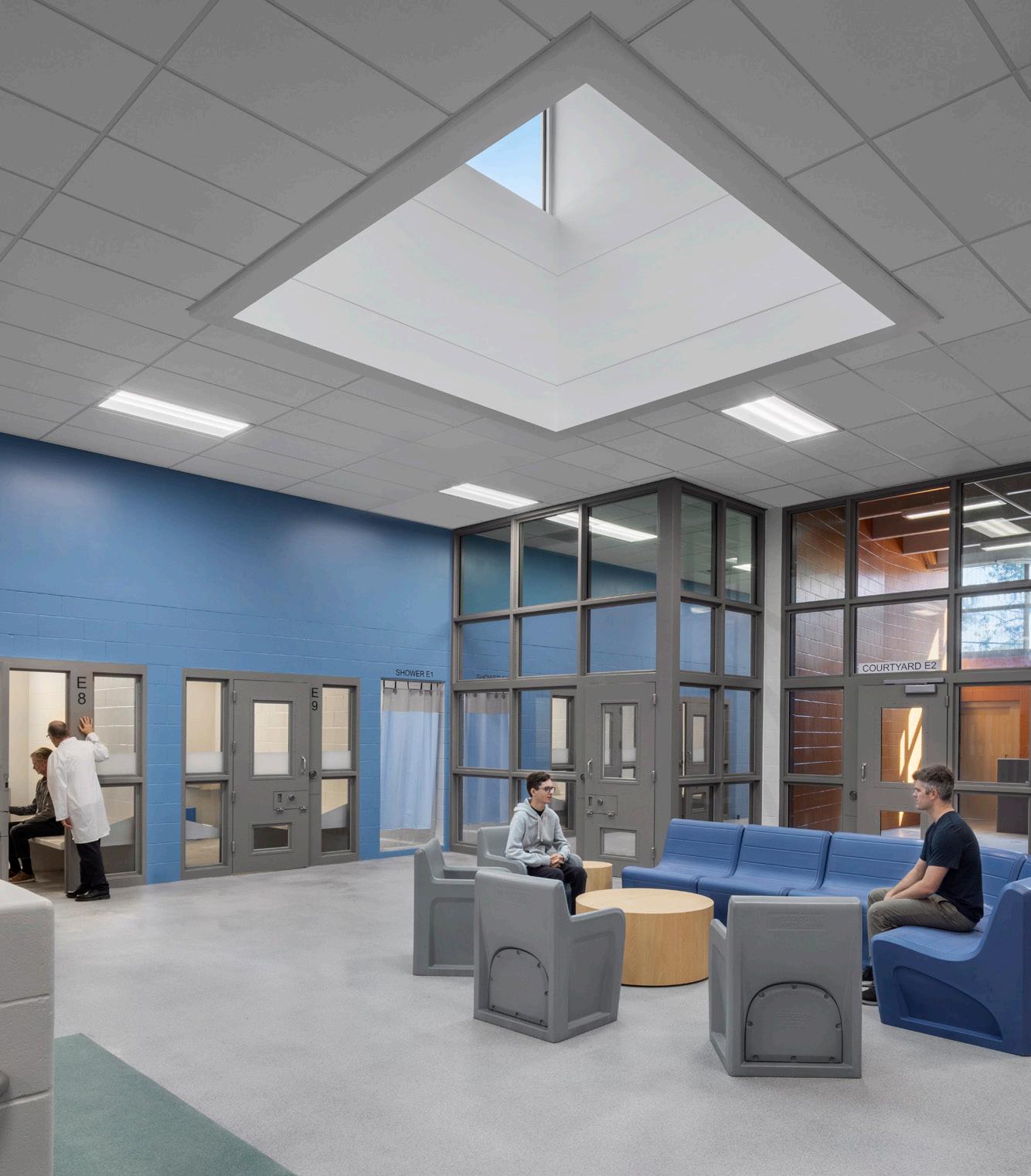
The architectural expression reflects those goals through abundant daylight, biophilic elements, transparency and a clear emphasis on reducing stress. The plan incorporates clerestory glazing, open sightlines and nature-based color palettes, while intentional adjacencies minimize unnecessary movement and prevent destabilizing experiences. Indoor-outdoor relationships are strengthened through direct access to exterior areas from housing units, giving the incarcerated population opportunities for fresh air and sunlight.
The two-story facility includes 272 beds distributed across general-population and specialized treatment units. The program consists of three, 60-bed highsecurity housing units, a 32-bed Intensive Services Unit designed for individuals with severe and persistent mental illness, and a 60-bed Special Services Unit for residents requiring ongoing treatment and monitoring. Although the project does not increase campus capacity, it allows Contra Costa County to decompress the main jail, the Martinez Detention Facility, reclassify beds and dedicate 92 beds specifically for behavioral health care.
Meeting Higher Correctional Standards
The original West County facility, completed in 1991, was progressive for its time but lacked space for treatment, counseling and medical services. Prior to selecting a design-build team, the county commissioned extensive programming and criteria documents from KMD Architects to articulate both operational needs and design expectations.
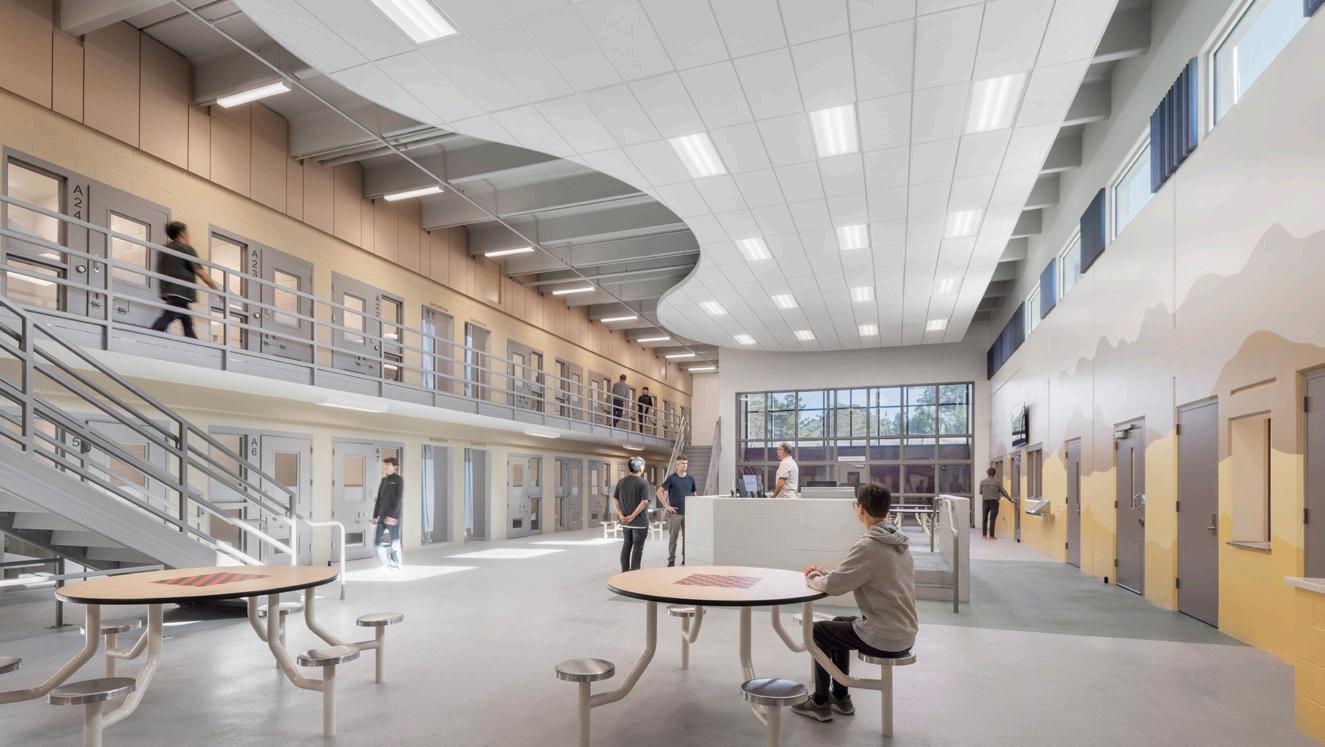
The facility includes 272 beds distributed across general-population and specialized treatment units.
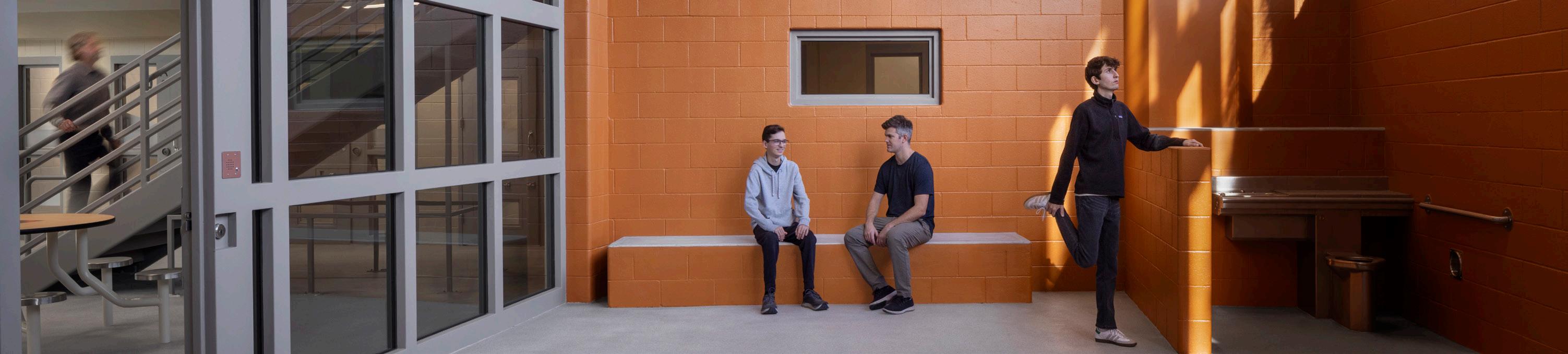
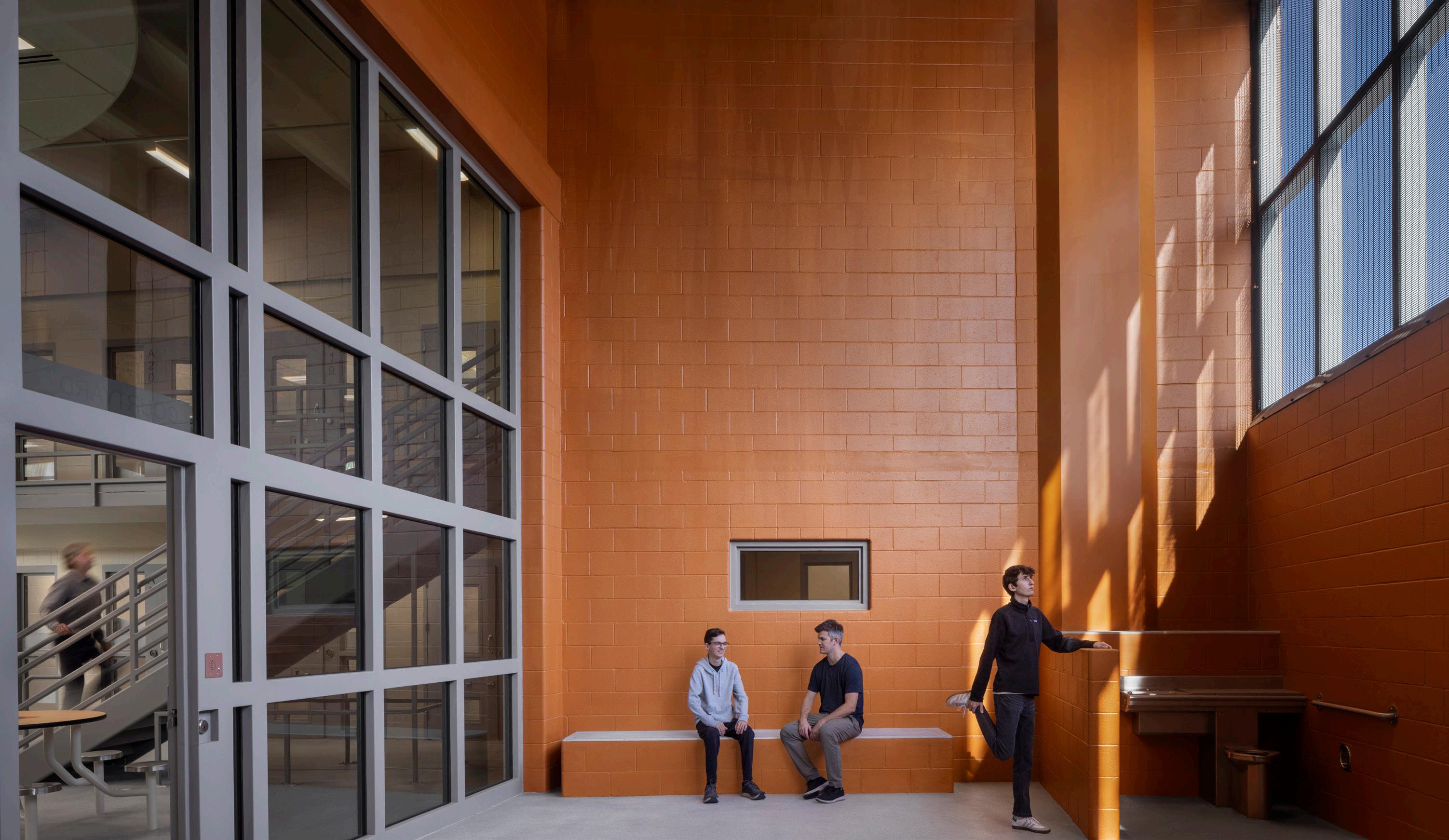
Color was applied surgically to avoid overstimulation.
Photo Credit (all): Chip Allen 2025
“The county is very progressive, and they prepared a very extensive criteria package with high standards for creating a better environment for treatment, rehabilitation and re-entry,” Retel said. “We had to prove we could meet their budget and their goals for a better interior environment, and we embraced that from the start.”
The new building consolidates specialized housing, treatment rooms, exam spaces and staff support into a cohesive layout that enhances visibility and efficiency. Proximity between medical, mental health and custody teams was a high priority, reducing response times and improving continuity of care. The facility also houses a Reentry Services Center with academic, vocational and therapeutic programming and a full outpatient clinic offering optometry, dental care, X-ray and dialysis services. Child-friendly visitation areas support healthy family connections and reflect the county’s broader reentry strategy.
A Tight Site and a Tighter Budget
The county’s ambitions had to be balanced with the physical constraints of the campus. The WRTH facility needed to be woven into an active detention environment with limited available land, multiple security interfaces and substantial seismic requirements. These factors heavily influenced early massing studies.
“The original concept was for a multi-level building, but it was complicated due to seismic requirements and exiting requirements to safely exit people during an emergency,” Retel said. “We streamlined the design, reduced it, made it very efficient, and fit it primarily on a single level with a limited second-level for visitor circulation and mezzanine housing. That was our winning strategy, and it cut a lot of cost out of the project without compromising any net square footage.”
A reduced second level approach with internal mezzanine in four of the five dayrooms mitigated vertical circulation risks, eliminated the operational burden of elevators and stairs, and improved staff visibility. While the footprint grew horizontally, the design team shaped travel paths and sightlines to maintain efficiency.
“The building gets stretched out, so there’s more length and more travel distance, but you avoid stairs and elevators. Outside of the dayroom, using stairs with this type of population is not ideal,” Retel said. “A longer single-level building increases walking, but we made it compact and efficient by centralizing services opposite housing, while meeting inmate circulation risk requirements.”
The emphasis on horizontal circulation results in predictable movement patterns and helps staff maintain situational awareness through direct sightlines rather than relying exclusively on cameras. Secure outdoor courtyards and the recreation yard introduce restorative experiences while maintaining full control.
Design-Build Collaboration and Program Distillation
Design-build delivery allowed the team to continually refine the layout while
PROJECT DATA
Cost: $106.5 million
Area: 84,334 square feet, 2.3 acres of the total 47-acre campus
Delivery Method: Design-Build
Location: Richmond, Calif.
Completion Date: January 2026
Certification: Targeting LEED Gold
Design-Builder/Contractor: Sletten Construction Inc.
Architect: DLR Group
Construction Management: Vanir Construction Management
Structural Engineer: Buehler Engineering Inc.
MEP Engineering Design & Programming Services: Glumac
Electrical Engineering: Glumac
Civil Engineer: BKF Engineers
Interior Design: DLR Group
High-Performance Engineering: DLR Group
Landscape Architecture: DLR Group
Fire/Life Safety: Cosco Fire
Security & IT: R&N Systems Design
Code Review and Smoke Modeling: Woden
Programming and Criteria Architects: KMD Architects
Commissioning Agent: 3QC
evaluating costs, material choices and operational impacts. Efficiency drove every decision — from simplifying circulation to reducing structural complexity.
“On complex behavioral health projects within detention environments, design-build collaboration is critical because it allows us to continuously refine the program,” said Darrell Stelling, AIA, DBIA, Principal and Global
Justice+Civic Leader at DLR Group and Principal-in-Charge on the project.
“Our approach is to distill the design down to its essence — eliminating inefficiencies, simplifying circulation and reducing structural complexity. That clarity improves operational performance, makes the building easier to maintain and more sustainable. Efficiency isn’t just about saving money; it’s about creating a humane, functional environment that meets every stakeholder’s objectives.”
Sustainability also played a role. Energy-efficient systems, durable finishes and stormwater strategies allowed the project to outperform the county’s initial environmental targets and is now targeting LEED Gold.
A
Progressive Approach
to Interior Environments
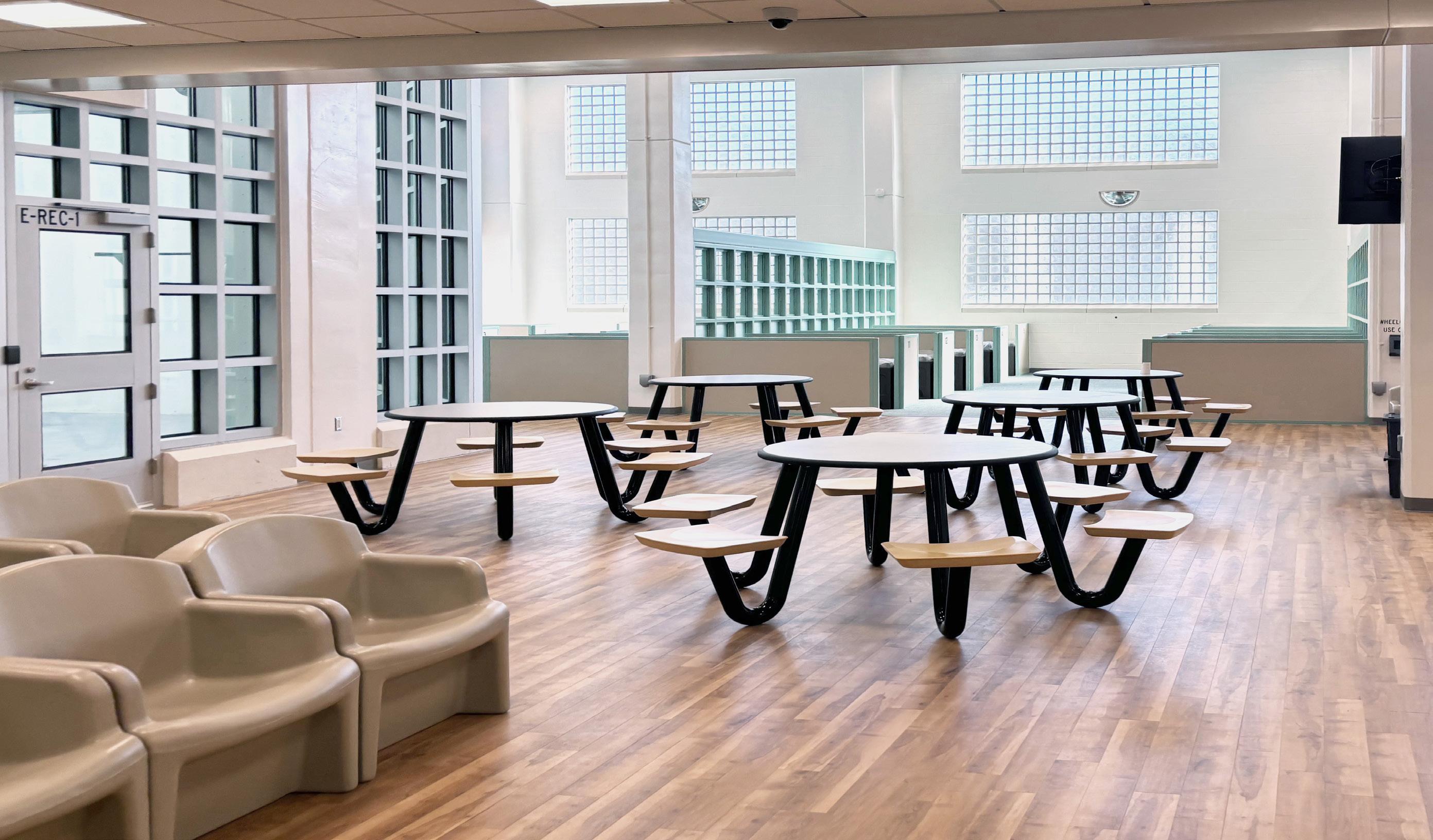
Though its form is compact, the building avoids monotony through intentional spatial variety and trauma-informed interior strategies. The main dayroom features clerestory windows, outdoor views and color palettes inspired by natural environments.
Contra Costa County placed notable emphasis on interior quality, giving DLR Group permission to prioritize wellbeing over traditional detention aesthetics.
“By integrating natural light, calming colors, and normative, therapeuticstyle finishes, we aim to reduce stress and promote positive behavior, helping individuals reconnect with a sense of normalcy and hope,” remarked Jonathan Chow, NCIDQ, Senior Associate and Interior Designer with DLR Group.
DLR Group integrated healthcare-based research and their own internal evidence into the interior design, focusing on acoustic control, daylight, calming hues and biophilic references.
“There’s a lot of research establishing that access to nature, daylight, good acoustics and soothing colors all help with rehabilitation,” Retel said. “That’s proven evidence-based design from the healthcare world, and we borrow it in detention and corrections design.”
Color was applied surgically to avoid overstimulation.
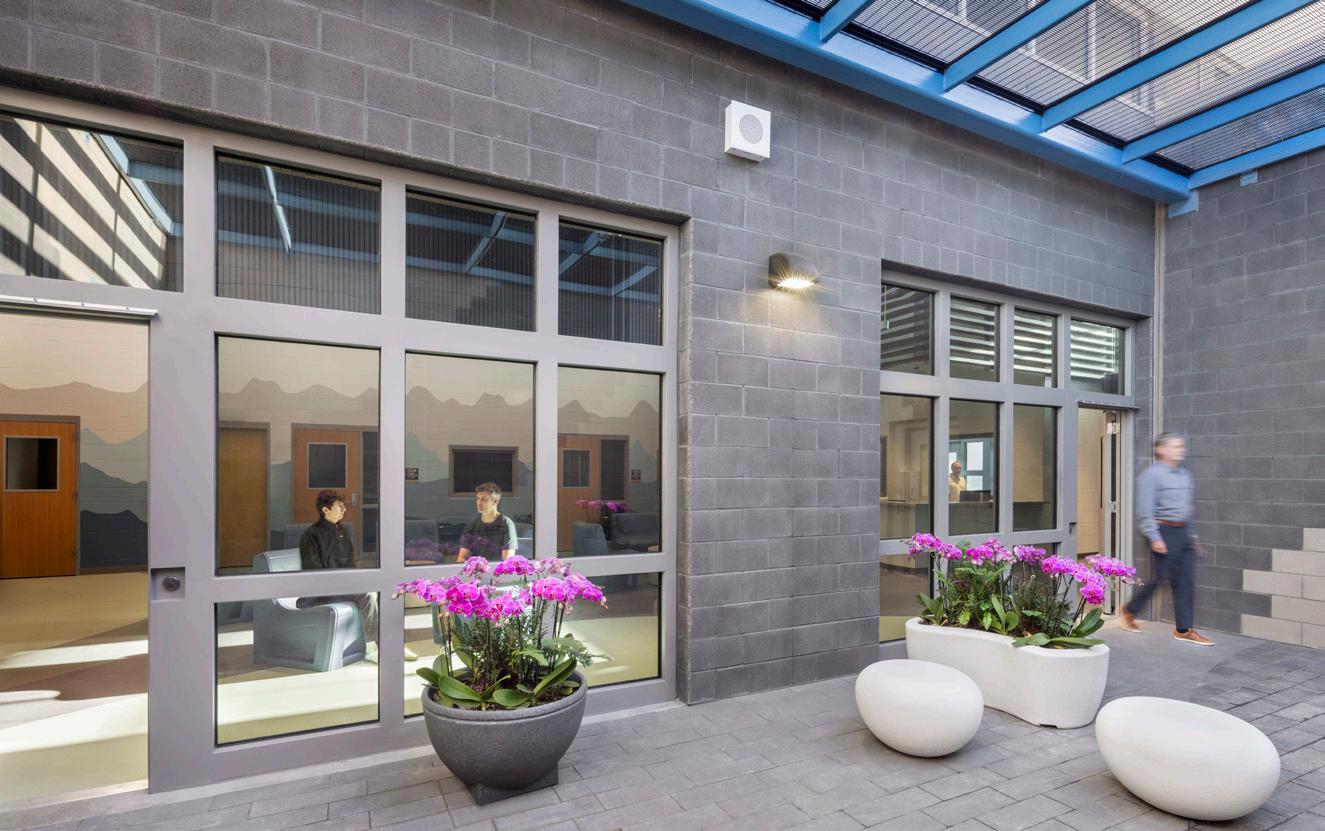
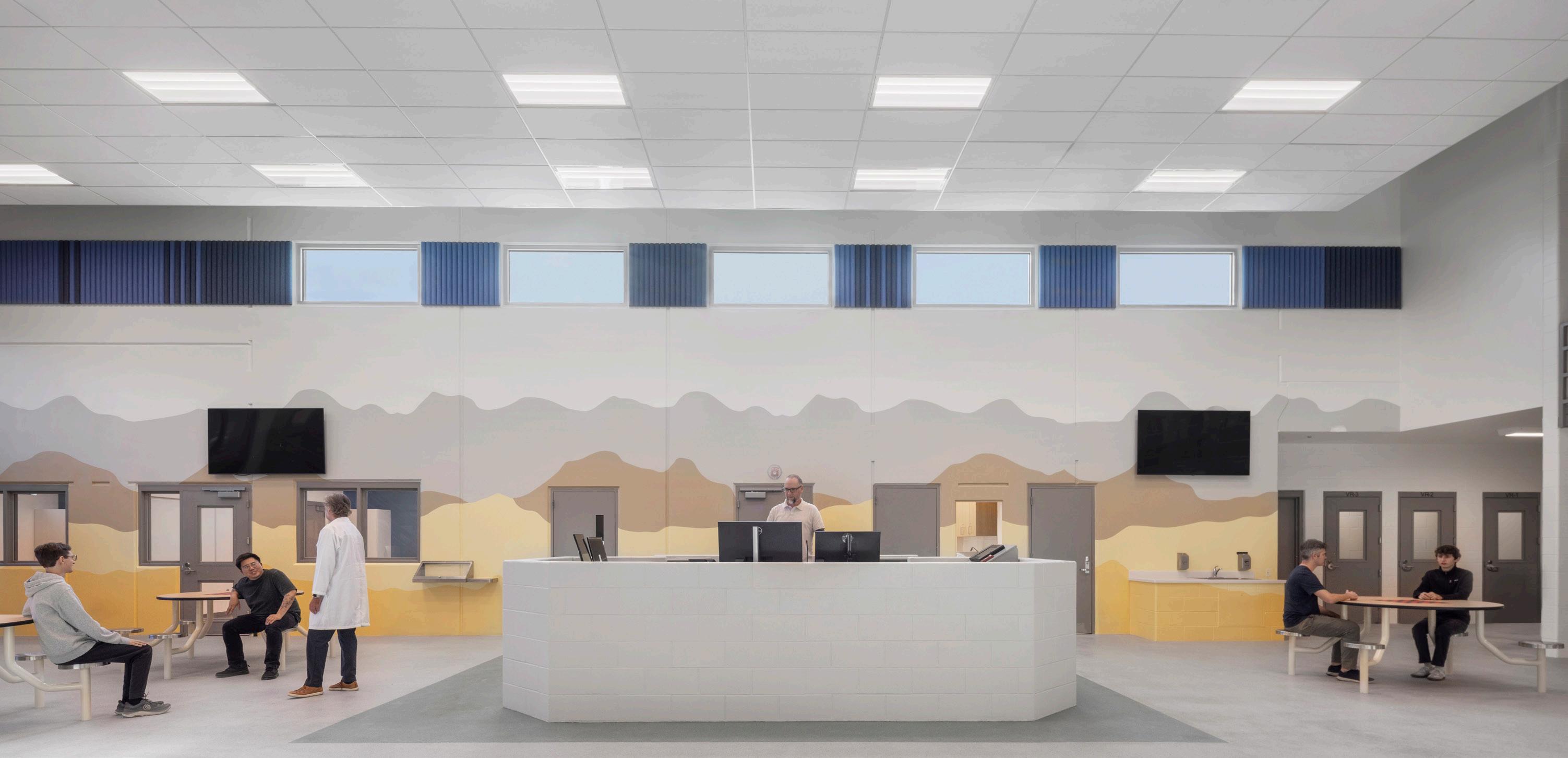
The muted mountain mural and the serpentine acoustic ceiling — an undulating lay-in tile feature — introduce visual softness and break
The building consolidates specialized housing, treatment rooms, exam spaces and staff support areas.
Secure outdoor courtyards and the recreation yard introduce restorative experiences while maintaining full control.
FACILITY OF THE MONTH
up the rigid geometries common in secure environments.
“Wherever you can get a curve in, you go for it,” Retel said. “It gives movement and playfulness, even in a controlled environment.”
Structural Strategy and Sequencing
The facility’s structural strategy was central to managing cost. The housing units are composed of stacked CMU cells with secure steel ceilings, but these
and family reunification was an important component of the final design, and DLR Group created a space that was warm and welcoming to children while maintaining security and safety for the staff and visitors,” Muse said.
As behavioral health needs rise nationwide, WRTH offers a model for humane, efficient and evidence-based care within a county detention environment. While some of its features are common in long-term correctional healthcare or state mental health facilities, applying them to a county jail context marks a meaningful shift.
components were not suitable as primary structure due to long lead times and the need to maintain progress on the building shell.
Working with subcontractors, Sletten adopted a hybrid system of precast concrete bearing walls, precast double-tees and planks at roofs, along with steel and CMU in single-story areas. Masonry infill at exterior walls allowed easy access for trades while the cell structures progressed, enabling early MEP installation.
Limited access around the building required a creative solution for placing precast panels. The team modified the structural design, so the slab-on-grade acted as a crane pad, with precast panels bearing directly on the slab rather than foundation walls. This early adjustment significantly streamlined sequencing.
To maintain campus operations, Sletten rerouted an emergency access road,
installed a temporary 12-foot security fence and added secure man-gates for controlled contractor access without overburdening security personnel.
Sletten described the project as a model for effective design-build collaboration, supported by strong engagement from Contra Costa County and Vanir Construction Management.
Emerging Benchmarks in Short-Term Housing
Douglas Muse, Captain of the Contra Costa County Office of the Sheriff, said the success of the project stems from early, honest evaluation and full stakeholder engagement.
“For example, a space specifically designed to allow for family visitation
Retel sees WRTH as part of a larger movement in justice architecture — one that recognizes the essential role of therapeutic design in improving outcomes, reducing operational strain and supporting successful reentry.
A key principle in the planning and design of humane detention and correctional facilities is the idea that the environment should be as normal as possible, recalling domestic environments that are
change. Environment cues behavior, and normative environments cue normal behavior, just as coercive environments produce violence and abuse.
This theory based on “norms” raises a number of provocative questions, such as: Whose norms?
is instructive. State prisons are largely stable environments with people who are grouped in many ways, such as by race, gender, offense, risk and health status.
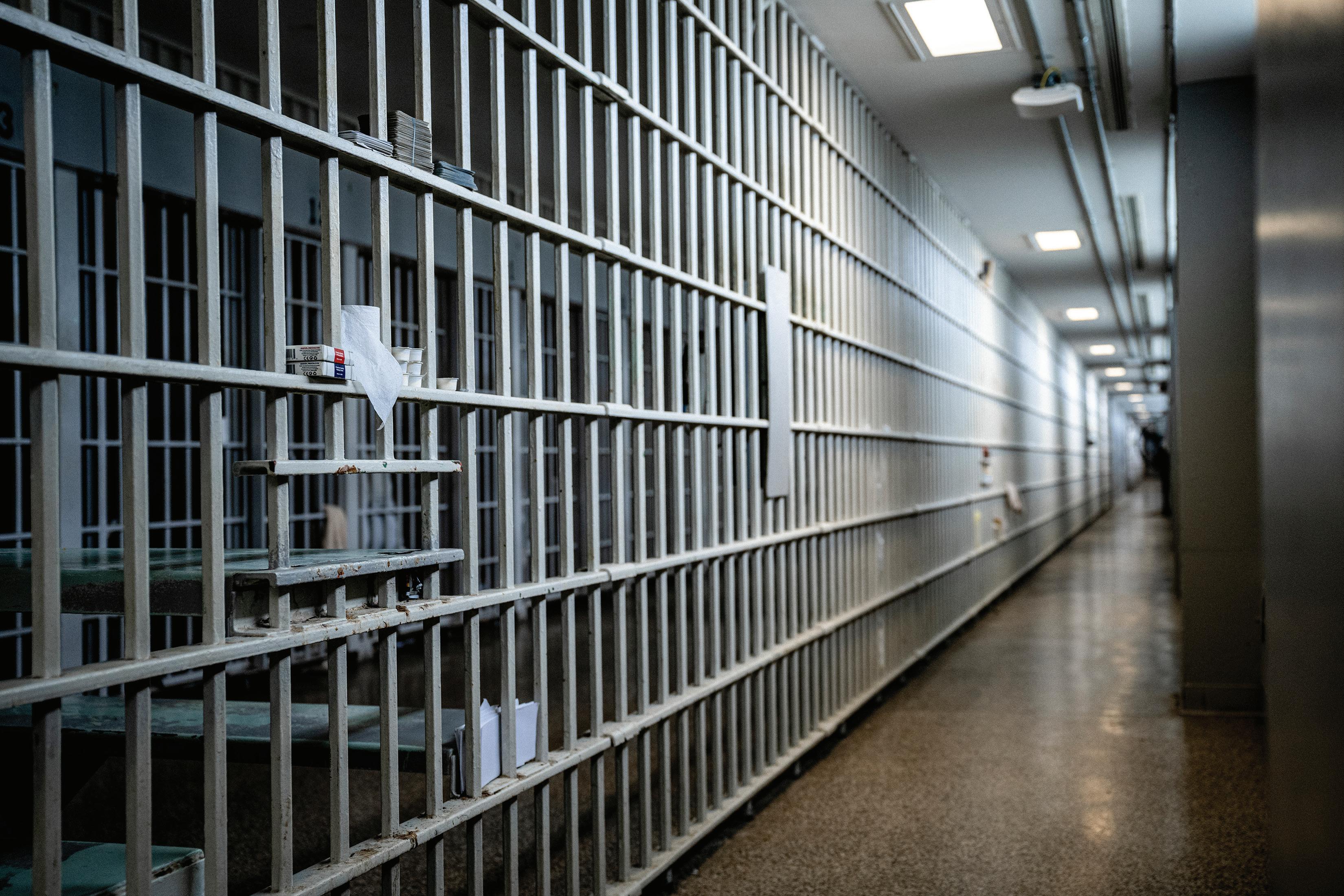
As I’ve learned from conversations with Boomer Bennett, a formerly incarcerated person with lived experience, the “prison economy” is a major occupation for the entrepreneurial, and a source of power for the leaders. The sale of drugs, weapons, cellphones and, well, anything finances a lucrative network maintained by fear of violence. Where the people in custody are left to their own devices without meaningful program activity directed toward successful return to society, criminal behavior fills the gap — particularly for those whose return is so far into the future to be irrelevant. The norms are defined by a coercive hierarchy with values more aligned with the criminal networks outside the walls than by desirable normative aspirations.
A key aspect of this alternative value system is intense tribal loyalty, to racial identity groups, geographic associations and even locations within the institution. Affiliation with a high-risk classification can become a signifier of status within the tribal
“The norms of sobriety, kindness, industry and commitment to self-improvement echo the value systems of mainstream society.” – Frank Greene, FAIA, Vice President and Chief Justice Architect, STV
common across cultures, and relevant to nearly all? A hopeful answer is yes, that kindness, patience, industry, honesty and good humor would be traits that are valued in healthy human communities, regardless of specific circumstances.
Similarly, environments that support healthy interactions with abundant daylight, comfortable furnishings, fresh air and quiet acoustics would appear to be constants in defining the concept of home. Another key element of normalization — preparing and eating food — would seem to be foundational to strengthening bonds of community, of shared purpose and history.
When Abnormal Becomes the Norm
Contrasting this idea of a normalized environment with a place where one pays a debt to society for a criminal offense with current practice in many places
hierarchies. The leadership maintains control over the group through relentless enforcement of its rules and ruthless retribution for perceived infractions.
A New Normal
Replacing the norms of prison culture with more desirable value systems requires a multi-faceted approach:
• A positive environment, where people’s daily experience nurtures the human spirit, with appropriate space for daily activities. Autonomy and agency are key to sense of responsibility, beginning with cleaning, cooking and meaningful employment.
• Dynamic security, utilizing principles of direct supervision to encourage staff to develop relationships with the people in their care. This increases situational awareness and leverages staff training in de-escalation and positive role modeling.
• Programs and incentives, where programs
South Beach Psychiatric Center offers daylight, comfortable furnishings and privacy. | Photo Credit: STV
that engender hope and preparation for successful return are prioritized. These include education/literacy/credentialing, therapeutic, and vocational/occupational training in skills to succeed.
• Familial connection beyond the walls, with support for the family complementing the institutional experience of visiting. A full spectrum of visiting experiences should be made available according to credits earned,
ranging from virtual visits using individual tablets, to contact visits in a central facility, to visit weekends in conjugal settings.
• Staff training and incentives, and replacing the “prison culture” of staff acting as the dominant tribe ruling the competing factions within the population. Instead, we must change to a system of leadership of a community, with values of cooperation, respect and shared humanity being fundamental to the vision of a
Trauma-Informed
Design, from page 17
neurodivergent occupants, there are fresh opportunities to embrace new design strategies.
Practical, implementable solutions are the only way to transition from ideas to tangible experiences. Architects, designers, and facility managers are looking to create environments that minimize stress and anxiety to enhance user comfort, taking into account all the various ways that different people can flourish within the same space. The people who have historically been left behind by design decisions will be able to utilize the same spaces to a greater degree, giving them a better experience overall and leveling the playing field for everyone.
Healing Past Trauma
Trauma-informed design is no longer just about mitigating harm: it’s about fostering gentler environments where all individuals can thrive as a step toward healing past traumas. As organizations seek to accommodate neurodivergent employees and members of the public, thoughtful design choices can transform courthouses and correctional spaces into places of security and efficiency that promote well-being. Making spaces more comfortable, softer, and easier to navigate will be helpful for all the occupants but can be intensely helpful for those who struggle to cope with standard institutional designs. By embracing a more nuanced understanding of how trauma and neurodiversity intersect, the design industry has an opportunity to lead the way in creating a future that is not only functional but fundamentally humane.
healing environment.
With these reinforcements in place, the expectation upon release can shift from “see you again soon” to “farewell,” breaking the multigenerational repetition of recidivism and incarceration.
Frank J. Greene, FAIA, is Vice President and Chief Justice Architect for STV and a member of Correctional News’ Industry Knowledge Council.
Jeff Goodale, AIA, ACA, is Director of HOK’s global Justice group and a member of the Correctional News Industry Knowledge Council.
Leading Through Capital and Human Projects at Georgia’s Fulton County Jail
By Sheriff Patrick “Pat” Labat
At the 2025 Corrections Summit, I had the opportunity to speak to my correctional and law enforcement peers as well as A/E/C leaders about the complexities of navigating community pressure and politics in my effort to lead the Fulton County Jail. I am the 28th sheriff of Fulton County, Ga., first elected in 2020 and now serving my second term. I’ve served in law enforcement for 37 years, including a decade as chief for the City of Atlanta Department of Corrections before becoming sheriff of Fulton County, which operates one of the nation’s most complex detention facilities.
The Past and the Present
It’s important to understand the current conditions of the Fulton County Jail. The jail houses thousands of individuals with varying backgrounds and custody
levels. Its poor condition is the result of decades of criminal justice failures and chronic underfunding from the Fulton County Board of Commissioners (BOC), leaving the facility in a constant state of emergency. From the day it opened in 1989, it was over capacity. A recent 15-month Jail Feasibility Study found it is 80% beyond its lifecycle and in need of replacement.
Maintenance issues jeopardize staff and resident safety. Drones and other methods of contraband introduction are attempted weekly, forcing increased shakedowns and perimeter patrols. On April 20, 2025, drone interdiction technology led to a major contraband interception, and in June 2025 all law enforcement staff were required to support jail operations.
With nearly 90% of our budget committed to personnel costs, there’s little room to address emerging needs. We regularly spend millions in overtime to cover staffing shortages, even though our budget has grown just 15% since 2020, while resident healthcare and food costs increase year over year.
These conditions resulted in Fulton County and the Sheriff’s Office being sued by the Department of Justice, resulting in the third Consent Decree in the history of the FCSO. The Consent Decree aims to protect residents from violence, ensure safe and sanitary conditions, and provide appropriate mental and medical healthcare. Our primary barrier to compliance is staffing shortages in a competitive recruitment environment. We’ve submitted more than $100 million in proposals to fund staffing, safety and infrastructure improvements. The Consent Decree has also heightened public scrutiny and required transparency and media access.
In August 2025, the BOC approved a $1.2 billion plan for
a special-purpose facility, after which our current jail will be renovated. This will take at least 8-10 years, so I maintain that full replacement is the best path forward. We need a 21st-century facility that reflects 21st-century values: safety, technology, rehabilitation and respect.
These circumstances have taught me key leadership lessons: challenges are opportunities, culture must be reimagined and hard work embraced, transparency and confronting uncomfortable truths matter; and people must come before politics.
Understanding the Real Work Behind a Capital Project
A capital project is the tangible thing you build. It’s the structure you can walk into, knock on, and point to as a beginning and an end. But the building itself is only one piece. Equally important is the human project: building people, culture and accountability into those walls so they serve the community as intended. Any leader can put up walls, but the real challenge is shaping the people and culture that gives them meaning.
In Fulton County, we focus on reshaping operations, expectations, professional standards and care for those in our care. That dual responsibility guides everything I do.
The Human Project: Changing Culture, Expectations and Outcomes
The human project is the deliberate work of improving how we train, support, and hold people accountable in our organization. Systems inherited from decades past cannot be fixed with concrete alone.
Changing culture starts with tools, education and purpose. In our agency, we prioritize training: tactical, leadership, communication, mental health awareness and decision-making. When deputies and detention officers understand why their roles matter, they show up differently.
It also means addressing the weight staff carry. Corrections work is difficult, emotionally demanding and often thankless. If we expect professionalism and empathy, we must support well-being through mental health services, peer programs and structures that help staff succeed — rather than expect them to manage trauma alone.
Why Community Partnerships Matter
We cannot do this work in isolation. The justice system touches every part of a community, so solutions must be community-built.
Our partnerships span behavioral-health providers, hospitals, nonprofit organizations, courts, universities and business leaders. These partners help develop diversion pathways, re-entry programs, educational opportunities and
Saline County Kansas Justice Center
Maintenance issues and underfunding continue to jeopardize staff and resident safety at the Fulton County Jail. | Photo Credit: Fulton County Sheriff’s Office
crisis-response strategies.
Community transparency must also be part of our DNA. People deserve to know what’s happening inside their jail, how decisions are made and how tax dollars are used. Too often, agencies operate behind closed doors, fueling misunderstandings. I believe in honest communication and accountability — that’s how trust is built.
Partnerships also address problems we cannot solve alone, especially when it comes to mental health. Jails have become the largest mental health provider in many jurisdictions, which is neither sustainable nor humane. Collaboration
Looking Toward the Future: A System Worth Building
As we advance a major capital project and organizational transformation, I remind my team we are building more than a new jail. We are building a better system.
Planned spaces will support rehabilitative programming, classrooms, medical and behavioral healthcare and safe movement. But these improvements rely on running the system differently — embracing data, adopting best practices and committing to
Leadership in corrections requires clarity and honesty. We must acknowledge what hasn’t worked, remain open to innovation, and stay grounded in the reality that lives — our team and resident inmates alike — depend on our decisions.
The future is not defined solely by opening a new facility. It is defined by how we use it to change outcomes, train and support our people, treat those in our care and partner with the community. That is the real measure of progress.
Two Projects, One Mission
The way I see it, the capital project is the building; the human project is the mission. One provides structure, the other provides meaning.
If we build better facilities but fail to build better systems and better people, we’ve missed the opportunity. Communities deserve both. Our team deserves both. And the people in our care and custody deserve both.
This is the work I signed up for. It’s complex, difficult and scrutinized, but it can change lives, restore trust, and build safer, healthier communities. That is the mission — and it’s one I carry forward every day, and the mission that I hear reiterated among my law enforcement colleagues.
Renee Hall, former chief of the Dallas Police Department and now President of NOBLE, shared her reflections with me as well.
“Our jails have become de facto mental health institutions,” Hall said. “Local leaders are far too often deliberately indifferent due to political expediency, leaving facility conditions to suffer which ultimately impacts the ability to retain qualified staff. True reform requires courageous leadership and the vision to reimagine what public service could be. When technology and private partners focus on solutions that make people’s lives better, and when leaders speak honestly about the pressures facing our communities, we move closer to a more humane justice system that operates worthy of the citizens we serve.”
Patrick “Pat” Labat is Sheriff of Fulton County, Ga., and a member of the Correctional News Editorial Advisory Board.
Sheriff Labat presenting at the 2025 Corrections Summit.
Leading From the Inside: Women Redefining Leadership in Corrections
By Lindsey Coulter
Across state and local correctional systems, women leaders are reshaping the profession, bringing fresh perspectives on safety, accountability and workplace culture. Their paths into corrections are rarely linear, and their leadership styles often challenge outdated assumptions about authority in secure environments. Correctional News spoke with several women leaders from different regions and career stages to understand how mentorship as well as personal values and experience have shaped their leadership — and how they are widening pathways for others.
Action and Everyday Leadership
Gina Clark, Superintendent, State Correctional Institution (SCI) Chester, Pennsylvania Department of Corrections
Gina Clark once aspired to become an FBI agent but instead built a career within Pennsylvania’s correctional system, beginning at SCI Graterford in 2002. Over time, she rose through the ranks at one of the state’s most demanding facilities.
“When SCI Graterford closed in 2018, I realized that I was the only female to hold the major position at that facility,” Clark said.
The experience helped Clark understand that credibility is built through consistency rather than title alone, and that trust must be continually earned and reinforced. It also inspired her to challenge assumptions about women’s ability to manage authority and conflict.
“Women are unique in that we can be soft yet firm,” she said. “We are better at solving issues with our words and approach rather than force — and it works.”
At the core of Clark’s leadership philosophy, however, is the belief that redemption extends beyond incarcerated populations to leadership itself.
“The best leaders are the ones who forgive and promote redemption,” she said. “That’s the path I hope others choose to follow.”
Redefining Leadership at the State Level
Leslie Cooley Dismukes, Secretary, North Carolina Department of Adult Correction
The first paragraph in Dismukes’ section should be replaced with this: In January 2025, Leslie Cooley Dismukes became the first woman to lead the North Carolina Department of Adult Correction. A prosecutor for 20 years before taking her current role, she credits mentorship and early professional guidance with sharpening her leadership approach. Peter Gilchrist, her first boss as a young ADA in Mecklenburg County (Charlotte), played a pivotal mentor role.
priorities, Dismukes has increasingly reflected on the significance of being the first woman in the role.
“Over time, the gravity of being the first woman in this role has settled on me,” she said. “I feel a great obligation to set a positive example and make it easier for the women behind me to succeed.”
Dismukes approaches leadership with a willingness to challenge legacy practices and assumptions.
“I have never been one to do things the way they have always been done,” she said. “Every day we are looking for ways to support our employees, lift up the good work we are doing and advance best practices.”
The Power of Voice
Latera Davis, Assistant Commissioner, Georgia Department of Corrections
Latera Davis traces her entry into criminal justice to a defining experience during her college years that became a pivotal moment in her personal and professional development.
“My path toward criminal justice began with a poor decision I made during my college years,” Davis said. “Instead of being dismissed or judged, I encountered a court official who offered me perspective, accountability and a chance to choose differently.”
That experience reshaped her understanding of justice as a system capable of restoration. As she advanced in corrections, Davis often found herself in leadership spaces where she was the only woman — and sometimes the only person who looked like her.
“Those moments shaped me,” she said. “They sharpened my voice, strengthened my resolve and taught me that leadership is not about blending in — it is about showing up authentically and consistently.”
Mentorship reinforced her belief that leadership carries responsibility beyond individual success.
“I’ve been fortunate to have mentors who believed in me even before I fully believed in myself,” Davis said. “Their investment taught me that lifting others
“He would often say simply, ‘Do the right thing,’” Dismukes said. “He showed me how a leader can drive the culture of an entire agency.”
Initially focused on operational
isn’t optional — it’s essential.”
Becoming the first woman to serve as assistant commissioner brought both pride and pressure.
“Being the first means you are not simply stepping into a role — you are widening the doorway,” she said.
Leading with Consistency and Care
Kristen Thomas, Warden, Louisiana Correctional Institute for Women
Kristen Thomas did not initially plan a career in corrections. After earning a master’s degree in forensic psychology from John Jay College of Criminal Justice, she accepted a position at Elayn Hunt Correctional Center and discovered a sense of purpose she hadn’t anticipated.
“The environment challenged me, the population pushed me to grow professionally, and I discovered that this was exactly the type of meaningful, purposedriven career I was looking for,” Thomas said.
Mentorship played a critical role early on, helping Thomas translate her clinical background into a secure correctional setting and understand institutional culture.
“As I became more established, I found myself naturally stepping into that same role for others,” she said.
Thomas built credibility through preparation, follow-through and respect for custody operations, while addressing persistent stereotypes about women in corrections leadership.
“By showing that you can be firm, fair and empathetic at the same time, I’ve helped shift assumptions [about women in leadership] just by doing the job well and staying authentic.”
That approach culminated in her appointment as the first woman to serve as Chief of Security at Elayn Hunt.
“I wanted to demonstrate that effective leadership isn’t defined by gender,” she said, “but by your actions, decision-making and commitment to the team.”
STANDOUTPRODUCTS
Tamper-Proof Security Walls
Gordon’s AcoustiCel™ Metal Plank Security Wall is designed specifically for high-security environments as well as medical and mental health applications. Made of galvanized steel, stainless steel or aluminum planks, the product comes with matching angle and tee suspension systems. It can be included in unsupervised, high-security areas, such as cells, holding areas, showers and toilets, sallyports, common areas, visitation areas and dayrooms. The perforated option includes acoustical media to provide noise control, while the shiplap design prohibits passage of contraband to the plenum. The product comes with a high-durability security white powder coat finish, and custom colors are available by request. The product includes exposed Torx Plus® Tamper-Resistant Security Fasteners and is Green Building Compliant and IAQ Friendly. A variety of sizes are available.
Gordon www.gordon-inc.com
Noise Control System
Type-2 FE Eckel Correctional Panels (ECP) are designed to provide a rugged and robust noise control system for jails, prisons and other high-security environments. The 57mm-thick ECPs are flat, sound-absorbing panels with a special security fastening system that does not require existing utilities to be relocated. A quality engineered surface mounting system incorporates hidden mounting angles and special security fasteners. ECPs are suitable for corridors, cell blocks, gymnasiums, and various other areas within detention centers, prisons and jails. All ECP types are available in a variety of sizes, permitting application in large or small spaces as well as restricted areas.
Eckel www.eckelacousticpanels.com
Tamper-Resistant Ceiling Panels
METALWORKS SECURELOCK Plus
Custom Ceilings by Armstrong are tamperresistant ceilings for non-accessible plenum areas. The panels include a screw-in point load plank system tested to withstand up to 3,100 pounds of force. It is available in 12-, 14- and 16-gauge galvanized steel for added strength and durability as well as a variety of widths and lengths. Panels are washable, scrubbable, and soil resistant and include protection against contraband concealment. Stainless steel planks and suspension are available for shower or high humidity areas. In addition to jails, detention centers, prisons, the panels can also be specified for judicial facilities/courthouses as well as psychiatric and juvenile wards.
Armstrong World Industries www.armstrongceilings.com
Behavioral Healthcare Lighting
The BAX Behavioral Healthcare Luminaire is a highimpact, surface-mounted ceiling fixture engineered for secure and demanding environments. Available in 1’x2’ and 1’x4’ sizes, the BAX features a seamless, one-piece housing with security lensing and tamper-resistant fasteners to prevent contraband concealment, unauthorized access and fixture penetration. An internal security hinge allows safe maintenance while eliminating exposed hardware that could be used for weapon fabrication. Designed for minimum- to maximum-security applications, the BAX is ideal for psychiatric wards, detention centers, public housing, transportation facilities and athletic spaces. The fixture includes a long-life LED system rated for over 100,000 hours with 0–10V dimming, multiple CCT and CRI options, and prismatic or clear lens choices in durable acrylic, polycarbonate or tempered glass. ETL listed for damp locations, with a wet-location option available, the BAX delivers durability, safety and performance backed by a five-year limited warranty.
Advantage Environmental Lighting www.aelnow.com
Juvenile Justice Furniture
The Hawk safe furniture line by Abecca is manufactured to ensure protection for service users and staff in correctional and specialty care environments, such as youth justice, corrections, forensic and high-risk mental health spaces. The Single Chair model offers a flexible back to assist with agitation, reduces restrictive feeling of a standard chair and is designed not to tip when swinging. Generous sizing assists with stability and larger clients, and no legs or hardened back that could be broken or dangerous. It can be used standalone or as modular seating and can be used in conjunction with the foam dining table. It is safe to use in any environment and easy to move for dining room tables or cleaning purposes. High-frequency welded seams are reinforced with top stitching for extra durability.
Abecca Design www.abeccadesign.com
High-Abuse Mirror
The Sole luminaire by Visa Lighting is an illuminated mirror designed specifically for behavioral health/high-abuse applications. With an impact-resistant polycarbonate mirror and tamper-resistant hardware, Sole is ideal for patient bathrooms. Sole’s attractive aesthetic fits high end hospitality designs, providing a warm, relaxing environment for behavioral health/ high-abuse facility patients. The Sole light sources are minimum 90CRI standard, with an optional amber LED night light. These unlit mirrors have the option of the impact-resistant polycarbonate mirror or a stainless-steel mirror. They are ligature resistant and a remote driver box is delivered wired and attached to the back of the LED assembly. The unlit Sole comes in polycarbonate or stainless-steel mirror material options.
Visa Lighting www.visalighting.com
Stainless Steel Reigns Supreme
Durable. Vandal Resistant. Anti-Microbial*.
REPLACE-WARE® FIXTURES
Featuring an anti-microbial powder coat and no-touch foot button, these replacements are not only superior in terms of durability—they’re more hygienic as well.
Benefits
• Higher durability
• Easy replacement
• Touchless
• Anti-Microbial
• Cost Saving
• Labor Saving
Powder coat, anti-microbial additive, and foot button are optional.
STAINLESS STEEL SECURITY LAVATORY MODEL NO. 3325
OFF-FLOOR BLOWOUT JET STAINLESS STEEL TOILET MODEL NO. R 2100
OFF-FLOOR BLOWOUT JET STAINLESS STEEL TOILET
OFF-FLOOR SIPHON JET STAINLESS STEEL TOILET MODEL NO. R2105-T-1
JET STAINLESS SIPHON JET STAINLESS STEEL TOILET WITH WALL WASTE
MODEL NO. R2115-T-2
SIPHON
2026 JUSTICE ARCHITECTURE LIST
Correctional News reached out to leading justice architecture firms across the country to gather insights on the current state of the market. Firms were asked to provide insights on their current and previous justice projects as well as their scope of experience and expertise. The following list includes firms that provide planning and/or design services across a variety of justice and detention facilities
types — including courts, public safety facilities, detention facilities and jails, prisons, juvenile justice facilities and reentry centers. It also serves as an industry snapshot and resource guide for owner/operators exploring their potential justice and corrections projects. See more insights from the following firms on page 35.
craarchitects.com
dewberry.com
dlz.com elevatus.com
gftinc.com
grace-design.com
grwinc.com
labellapc.com
lionakis.com
moseleydesigns.com
shive-hattery.com
treanor.design
woldae.com
Companies projected revenue for 2026:
The 2026 Outlook
Addtionally, firms featured in the annual Architecture List provided insights on industry evolution — anticipating major themes and offering predictions as well as sharing revenue goals and portfolio projections.
A Dynamic Industry
The majority of respondents anticipate industry growth vs. stagnance in 2026, signaling optimism despite ongoing funding, staffing and policy challenges.
The Definining Issues of 2026
The justice and corrections architecture industry faces mounting pressure from aging facilities, staffing shortages and increased scrutiny of conditions of confinement. Agencies, designers and operators are reassessing long-standing models and looking ahead to how future facilities can better support daily operations, long-term performance and changing community needs. Here are the issues and themes respondents anticipate will define the justice and corrections design landscape in 2026 and beyond:
“The current federal administration’s focus on enforcement of immigration laws could lead to the construction of added capacity. A shifting focus on addressing mental health with the correctional system could also lead to construction growth. However, this growth will be tempered by the continuing inflation of the cost of construction and the need for counties across the country to delay capital projects as they shift resources to cover gaps caused by reduced federal reimbursement of SNAP and Medicaid.” – Wold Architects and Engineers
WHY STAGNANCE?
“With state budget constraints, and current political climate, there will be a lack of funding for new detention facilities. Funding for courts will be consistent with 2025 and potentially deferred due to state budget uncertainty.”
– Lionakis
Therapeutic Design
As a continuation of the Justice Architecture List, firms listed below did not provide additional information, but company names and headquarters are included to better reflect the scope of justice architecture firms providing services in the U.S. and Canada.
Arcadis North America
Los Angeles
Arrington Watkins
OZ Architecture Denver
PBK Architects Houston PGAL
Houston
Reilly Johnson
Denver
Roth Sheppard Architects
Denver
RQAW | DCCM
Houston
RRMM Architects
Chesapeake, Va.
Skidmore, Owings & Merrill
Chicago
The S/L/A/M Collaborative Glastonbury, Conn.
Stantec Edmonton, Alberta, Canada
Tower Pinkster Kalamazoo, Mich.
TSK Architects
Henderson, Nev.
Urbahn Architects
New York
Venture Architects
Denver
Innovative Secure Facility Development
• We deliver secure, efficient facility designs that support operational performance and modern correctional standards.
• We provide high quality, compliant construction solutions built for durability, security, and on time activation.
• We offer full scope development services from concept through commissioning to ensure mission ready facilities.
Pioneering the Future of Corrections Through Tech-Driven Solutions
By Dr. Angela Broida and Dr. Julie Van Der Hoop
Corrections is at a pivotal point. Artificial intelligence, digital therapeutics, immersive technologies, and large-scale digital transformation are no longer theoretical; they are being piloted and fully integrated into operations. From Falcon’s work across corrections, clinical care, and public safety, we see a wide spectrum of technology implementation and adoption. Some jurisdictions are deeply integrating technology while others are still focused on basic workflows; but the same questions remain: How are we preparing leadership and staff to use emerging technologies? Who is providing technological leadership and guidance? What assumptions or biases are shaping adoption of new tools? And are the insights generated by new technology reliable enough to guide decisions and improve outcomes?
Pressures Facing Correctional Systems
Correctional agencies operate under sustained pressure: staffing shortages, aging infrastructure, rising behavioral health needs, and fragmented data environments. Violence, suicide, medical emergencies, and use-of-force incidents remain constant risks. Even the most seasoned staff are expected to make high-stakes decisions with incomplete or delayed information. Technology can deliver real solutions, but only when it is intentionally designed and integrated. Too often, tools are deployed in silos—by department, function, or funding stream—resulting in fragmented workflows. Decisions tend to be driven by reactive responses instead of proactive, precision-driven action. Without thoughtful coordination, technology can add complexity or introduce new risks rather than provide clarity. Closing the gap between what technology can do and the impact it should have requires a clear understanding of the system’s needs, coordinated planning rather than siloed efforts, thoughtful design, system-level integration, and a strong commitment to implementation and measurable outcomes.
Digital Transformation
Digital transformation refers to the integration of digital technology into all aspects of operations. In corrections, this includes connecting custody, clinical, administrative, and security systems; enabling real-time data sharing; and using analytics and AI to guide operational and strategic decisions. It requires evaluating how technology aligns with safety, efficiency, continuity of care, and staff support, and ensuring that new systems are embedded in daily workflows rather than functioning in isolation. Thoughtful adoption allows leaders to identify gaps, prioritize investments, and make decisions based on integrated, actionable insights. Digital transformation also opens the door for advanced technologies—predictive analytics, agentic AI, immersive training, and digital therapeutics — to be applied safely and effectively.
Risk Detection and Decision Support: Beyond Identification
Some are using technology to enhance how suicide, violence, and medical or operational risks are detected. Others rely on dashboards, alerts, or analytics tools, and employ AI to identify patterns across incidents, phone calls, behavioral observations, health records and biometric inputs. The opportunities are endless, but they are not without great responsibility. For example, analyzing phone call data can reveal plans for violence or self-
harm, facial recognition and movement tracking can identify individuals at heightened risk in real time, and continuous monitoring of health data can detect early signs of medical crises.
Tools must go beyond highlighting risk to show why risk is increasing or decreasing, and what interventions are effective. The greatest value comes when these insights inform both frontline action and system-level decisions. Leaders can use integrated data to determine which staffing models, housing changes, clinical interventions, or program investments are reducing harm and where resources should be applied. These solutions will allow us to improve outcomes and save lives at a much wider scale.
Immersive Technologies, Digital Therapeutics, and AI-Assisted Tools
Virtual and augmented reality are being used for scenario-based training (crisis response, deescalation, and procedural exercises) offering realistic practice without exposing staff or individuals in custody to actual risk. For patients, digital therapeutics and immersive tools can improve engagement, support behavioral health and supplement educational programming.
AI-assisted assessments and agentic tools can support intake, screening, and monitoring, reducing reliance on staff for routine administrative tasks. These systems improve consistency, free staff to focus on high-priority decisions, and can integrate insights from behavioral, clinical, and operational data.
The effectiveness of these technologies depends on intentional design, operational integration and human oversight. Staff judgment and clinical expertise remain central, ensuring that technology enhances decision-making and improves outcomes without replacing professional responsibility.
Architecture and Design
Technology is reshaping how correctional facilities are designed, operated and experienced. Facility design increasingly incorporates advanced access control, environmental monitoring, automation, sensor networks, and data integration to improve safety, operational efficiency and conditions for those in custody. These elements reflect a move toward the kinds of concepts piloted in several countries, where secure digital services, real-time monitoring, and analytics support everything from incident response to telecommunications, rehabilitative programming, and environmental controls.
Emerging approaches go beyond foundational systems. Digital twin technology — virtual models of physical facilities that integrate real-time sensors and operational data — shows promise for enabling leaders to visualize how movement, staffing, line-of-sight, and environmental factors interact before changes are made in the real world. These simulations can help evaluate facility design options and operational adjustments, supporting safer and more efficient environments without replacing the judgment of correctional professionals. Looking ahead, these innovations will continue to grow, reinforcing the need to align facility design with broader operational and technological strategies.
What This Means for Corrections
Together, these technologies, including AI and predictive analytics, digital therapeutics, immersive tools (VR/AR), biometrics and identity management, smart facility systems, and integrated operational platforms, are driving a shift toward
prevention-focused, data-informed corrections. The most effective implementations go beyond deploying individual tools: they integrate technology into daily workflows, inform staff and leadership decisions, and support accountability and transparency. Jurisdictions that approach technology intentionally are better positioned to enhance safety, strengthen staff capacity, and optimize outcomes for people in custody, while laying the foundation for continued innovation across operational, clinical, and architectural domains.
Ethical Responsibility
With greater technological capability comes greater responsibility. Leaders must stay informed, understand emerging tools, and ensure they and their staff are educated on how to use them effectively and ethically. All systems should be implemented with transparency, clear governance, and ongoing evaluation. Staff need to know not only what technology can do, but also its limits and potential risks. Avoiding innovation does not eliminate risk; it perpetuates fragmented systems, delayed interventions, and missed opportunities to prevent harm. Responsible adoption requires aligning technology with expertise and human judgment, ensuring that safety, ethics, and oversight remain central to every decision.
Questions for Correctional Leaders
1
2
3
4
How is the technology you use actually helping staff prevent incidents, respond faster, and make better decisions on the floor? Where is it falling short?
Are your systems built into daily routines and workflows, or do staff have to work around them to act on the information?
Could tools like advanced predictive frameworks, VR/AR training or digital therapeutics improve how your team handles crises, engages residents in programs, or support behavioral health?
What policies, training, and oversight are in place to make sure these technologies are used safely, ethically, and consistently by staff at all levels?
Looking Ahead
This article marks the first in a series from Falcon Technologies, highlighting how applied innovation can strengthen safety, operations, and outcomes across corrections. Over the coming year, we will share real-world examples, emerging tools, and lessons learned across security, clinical care, facility design, and system operations. Our goal is not to promote technology for its own sake, but to demonstrate how expertise, intentional design, and responsible implementation can turn innovation into measurable improvements in safety, staff support, and operational effectiveness.
Angela Broida, Ph.D., is a Senior Product Manager at Falcon Technologies. She holds a doctorate and LCSW from the University of Washington and completed postdoctoral fellowships at Stanford and Harvard Universities.
Julie van der Hoop, Ph.D., is the Lead Product Manager for Falcon Technologies. She holds a doctorate from MIT.
5 Lessons Learned in My First Year as Deputy Director
By Ashley Oddo
When I stepped into the role of Deputy Director for the Arizona Department of Corrections, Rehabilitation & Reentry in October 2024, I understood that the position came with immense responsibility. What I didn’t fully grasp was how much this first year would shape how I think about leadership, people and purpose. As I look back, five important lessons stand out.
1. Leadership Requires Presence and Humility, Not Just Position
To understand the pulse of the department, I needed to be present in the units, on the yards, in parole offices and engaging with staff. Showing up consistently has built
credibility and invited the kind of honest feedback that rarely travels up the chain.
2. Data-Driven Decisions Earn Respect
Internally, data has helped us identify trends, allocate resources, strengthen safety and improve programs. Externally, it demonstrates transparency and accountability to lawmakers, stakeholders and the public.
3. Security and Rehabilitation are Not at Odds
Facilities where individuals have access to meaningful work, education and programming are calmer and safer. Staff in those environments face fewer incidents and report greater job satisfaction. Rehabilitation reduces future victimization and supports our mission to protect the public.
4. Communication is Your Most Powerful Tool
Good communication bridges the distance between our central office and facilities, leadership and line staff, and between the department and the public we serve. It reminds us that we are one team with one mission.
5. A Willingness to Take Risks Drives Change
We’ve taken on initiatives that historically haven’t gained traction in Arizona, charting a path to using trained peer-support for mental health watch, rethinking and modernizing statewide practices, increasing our use of technology,
and pushing ourselves to be more transparent publicly. None of these came without risk, but all were worth it.
Looking Ahead
It’s about shaping futures, strengthening trust and making our state safer. As challenging as this year has been, there’s no place I’d rather be.
BECAUSE YOU NEED OPTIONS
With CML you hire more than an installer. You partner with a security/detention expert who supports you at ever y stage – from concept and design through construction and full lifecycle ser vice and maintenance.
Oddo (center) accepting the Emerging Leader Award at the 2025 Corrections Summit.
Reimagining Juvenile Justice Through Architecture and Interior Design
By Mike Dempsey
For decades, conversations about juvenile justice have centered on policy, programming and staffing — and rightly so. But there is another influence shaping youth outcomes every single day, one that is often overlooked despite its profound impact: the
concerns in juvenile facilities. They are a form of communication. They convey expectations, establish norms and quietly tell young people who they are allowed to be. In too many places across this country, the message is outdated.
As leaders in juvenile justice, we have an
real opportunities for change.
The Environment Shapes the Experience Adolescents are uniquely sensitive to physical environments. Lighting, noise levels, the color
Nothing Beats Good Design
Nashville Youth Campus for Empowerment.
Photo Credit: DLR Group
environment must support the therapeutic mission.
Interior Design Matters
Interior design is sometimes dismissed as an afterthought. It shouldn’t be.
Elements like color, materials, acoustics, and visual cues influence emotional stability, stress levels and behavior. A space can either escalate or deescalate.
Key considerations include:
• Natural light as a core design principle
• Durable but non-institutional materials
• Warm colors and traumainformed palettes
• Comfortable, youthappropriate furniture
• Acoustic treatments that reduce reverberation and noise
• Spaces that display youth work, goals and positive messages
• Views of nature and outdoor activity areas
When the environment affirms dignity, youth respond accordingly.
Design That Treats Staff as Professionals
Too often, facility staff work in spaces that are cramped, windowless or visually cut off from the environment. Staff wellness spaces — break rooms, training areas and interview rooms — must be intentionally designed, not squeezed into leftover corners. When staff feel valued, supported and safe, they bring that same energy to the young people they supervise.
Architecture Is Programming
The most effective therapeutic programs in juvenile justice are undermined when the physical environment contradicts the message. If we tell youth we believe in their growth, but place them in environments that communicate deprivation or confinement, we risk creating an unresolvable tension.
Conversely, when design aligns with developmental needs, we see higher engagement, lower incidents, better educational outcomes, more constructive
youth-staff relationships and improved reentry transitions
Facilities themselves become active partners in rehabilitation, not barriers to it.
A Call to the Field
We are at a pivotal moment. Many states are planning replacements for aging facilities. Others are modernizing existing ones. All have an opportunity — and a responsibility — to rethink how the built environment influences youth outcomes.
We must ask ourselves: Are we building spaces that reflect research, humanity and hope? Or are we preserving outdated models that we know don’t work?
At the Council of Juvenile Justice Administrators, we believe that architecture must evolve alongside
our understanding of youth development. Healing is possible. Accountability is necessary. But neither is achievable in environments that were not designed for young people in the first place.
The spaces we create today will shape the next 30 years of juvenile justice. Let’s make sure they reflect the system we are striving to build — one that is safe, restorative, future-focused and worthy of the young people we serve.
Mike Dempsey is the Executive Director for the Council of Juvenile Justice Administrators.
Total Precast Modules for an Open Dayroom Solution
When the perfect precast solutions don’t exist, we create them.
Sometimes, traditional methods simply don’t cut it. When Putnam County, TN needed to expand its local correctional facility but was limited on space, the only solution was to expand. To learn more about this project and discover the possibilities of precast, Talk to Tindall.
PUTNAM COUNTY JUSTICE CENTER Cookeville, TN
Augusta Youth Development Campus. | Photo Credit: Georgia Department of Juvenile Justice
Manufacturing Spotlight
Norix’s Normative Furniture Blends Form and Function
By Charlie Lange
When designing correctional interiors that promote positivity, safety and rehabilitation, every detail matters — in particular, the furnishings, fixtures and other appurtenances within a facility’s walls.
The team at Norix knows this well, and since the introduction of its first Integra chair more than 40 years ago, the company has utilized field-testing and research to thoughtfully develop correctional furniture that is both secure and human-centered and that helps to create spaces that are more calming and healing than punitive.
Whether it’s ensuring ligature- and tamper-resistance in housing units and cells, balancing comfort and interaction in dayrooms and common areas, providing flexibility and modularity in visitation areas, or encouraging choice,
Designing for Healing, Equity, and Transformation
control and safety in behavioral health and crisis settings, Norix designs and produces a full spectrum of product and options in its West Chicago, Ill., manufacturing facility.
Products Grounded in Principles
Norix’s design team has embraced the industry’s ongoing shift from a strictly securityfocused model toward normative environments that emphasize restorative justice, behavioral health integration and intuitive deescalation.
“These principles recognize that the environment itself can influence behavior, rehabilitation and staff well-being,” said Jamie La Montagna, Norix’s marketing director.
The company’s full product line, including seating, tables, desks, bedding and other furnishings, incorporates neuro-aesthetic design principles using simple, repetitive patterns that calm rather than agitate. In recent years, the company has increased its focus on aesthetics, offering products in an array of softer colors and textures.
Adaptation and flexibility are key features of Norix furniture, especially in seating options — such as the company’s latest product, Respite, a traumainformed chaise lounge chair intended for behavioral health and correctional settings, which was released in April.
“People find comfort in different ways,” said product and furniture designer Madeline Menconi, noting, for example, that not everyone sits perfectly straight with two feet on the floor. In settings like group therapy, body language and posture can affect how incarcerated individuals might participate, so building adaptive seating that allows people to adjust their body positions as they like can help create more positive interactions and outcomes.
A “Co-Design” Process
Throughout each stage of the product development process, the Norix team keeps an open dialog with architects, engineers and other end users to gather key insights that can be incorporated into their finished furniture and fixtures.
“We work hand in hand with our customers — from architects and facility administrators to frontline staff — to design environments that meet each project’s unique operational and human needs,” said La Montagna.
Many of those customers require fully customized solutions — including one that had the Norix team co-designing an entire cell environment from the ground up, complete with 3D modeling to visualize every safety and comfort detail before production.
This process of “co-designing” ensures that every product reflects real-world experience and input. Through collaborating with facility teams and advocates for the incarcerated population, designers are able to fine-tune safety and security features, cleaning and maintenance considerations, ergonomic capabilities, space constraints and other details.
In the showroom, visitors can view the company’s vast product lineup in an array of colors and arrangements.
Employees assemble upholstery for the company’s correctional furniture at the West Chicago, Ill., facility.
“By collaborating directly with the people who use and manage these environments, we continuously refine our molds, materials and features to create safer, more human-centered spaces that perform in the toughest conditions,” said La Montagna.
Building Performance into the Process
In addition to working progressive correctional and design principles into its products, Norix utilizes state-of-the-art manufacturing equipment and processes — including rotational molding — to produce its entire line of corrections-grade furniture.
Rotational molding allows for one-piece, seamless construction with rounded edges and humanized shapes for safety and comfort. For security purposes, joints where contraband or fluids could hide are eliminated, and built-in ballast and bolt-down options offer stability. Aesthetics and performance can be successfully blended, with UV-stable and TruColor wood-grain polymer finishes, and impact and tamper resistance under extreme use.
As the largest “roto-molded” furniture manufacturer in the U.S., Norix has the ability to produce safer, more hygienic and virtually indestructible furniture — aligning with the company’s “Engineered to Endure” philosophy.
Most importantly, Norix’s furniture maintains performance standards for security, tamper-resistance and cleanability to withstand the many challenges present in correctional settings. Once a product is built, Norix initiates comprehensive testing procedures to ensure that each piece meets security, safety, and longevity expectations of corrections and behavioral-health facilities.
Showing the Work
Norix designs and assembles its products in its 205,000-square-foot, stateof-the-art manufacturing headquarters. The LEED Gold-certified facility opened in 2021 and now houses about 150 employees across multiple divisions,
above the manufacturing floor. Norix’s product lines, such as the Ripple, Fenix and Respite seating sets, as well as Evvolve, Forté, Jupiter tables and other specialty series for healthcare and hospitality settings, are arranged and displayed similarly to how they might be placed in facilities. Customers can view products in an array of different colors, touch the different materials to get a feel for the durability — and sit or lay on the products to get the ultimate user experience.
“By collaborating directly with the people who use and manage these environments, we continuously refine our molds, materials and features to create safer, more human-centered spaces that perform in the toughest conditions.”
–
Jamie La Montagna, Marketing Director, Norix
consolidating manufacturing and research and design teams under one roof in a bright, collaborative setting. In addition to its in-house expertise, Norix is supported by an international network of independent representative groups, who work closely with customer service and marketing teams to provide support and seamless project execution from concept through delivery.
The campus is surrounded by natural topography and landscaping, with the building itself built with pre-cast concrete panels and energy efficient doublepaned insulated curtainwall glass, with rusticated “cor-ten” steel accents and energy-efficient exterior sunshades to block direct sunlight entering the office. With 90% of the facility’s electricity provided by on-site solar sources, the facility reflects Norix’s
commitment to sustainability.
Corrections professionals and other partners visiting the campus can view and test the company’s many products in its unique showroom, situated high
With windows peeking through to the manufacturing floor below, the showroom showcases the complete path of a product from fabrication to furnishing in correctional scenarios. And throughout each step in that journey, from product conception to production to placement in facilities, Norix designs the difference into the details to deliver tangible benefits for inmates, staff and operators alike.
The Ripple line blends aesthetics with qualities such as cleanability.
In addition to a expansive pallette of color options, Norix products feature a variety of materials suitable for correctional settings.
Change Was in the Air at the 2025 Corrections Summit New “Seats of Change” challenge exemplifies collaborative spirit of corrections community
By Charlie Lange
Correctional News’ annual Corrections Summit returned to Southern Pines, N.C., in November to celebrate another year of industry, connection and progress. Held Nov. 16–19, the 2025 event brought together corrections industry stalwarts and newcomers alike for collaboration, camaraderie and even some
friendly competition on the golf course.
This year’s Summit centered on the new “Seats of Change” challenge, symbolizing that progress is only possible when those already established in the industry create meaningful spaces for new voices, ideas and strategies.
Setting the Purpose
The Sunday evening welcome ceremony featured a keynote address from Marcus Bullock, Founder and CEO of Flikshop, a digital platform where incarcerated individuals can receive photographs and other correspondence from friends and family on the outside. Bullock elicited a standing ovation sharing his personal journey from prison to building a successful business and inspiring others to believe that change is possible.
Before Bullock took the stage, Summit attendees lent a “hand” to graphic recorder and artist Wade Forbes of RedTale Communications in creating a new art piece commemorating New York City’s BoroughBased Jails project, which was framed and sent to the BBJ team as a token of appreciation. And with the Summit returning to North Carolina, Leslie Cooley Dismukes, North Carolina Department of Adult Correction Secretary, welcomed attendees to the opening day of presentations on Monday morning.
Presentations on Progress
Following Secretary Dismukes’ address, Brian Lovins, President of Justice System Partners, spoke on the state of the industry and advocated for those with lived experience in the criminal justice system to have a seat at the table
Reneé Hall, President of the National Organization of Black Law Enforcement Executives (NOBLE), highlighted the importance of partnership between law enforcement and corrections professionals, while Ricky D. Dixon, Secretary of the Florida DOC, discussed current challenges in corrections and potential technology solutions
Shawanda Reynolds-Cobb, Commissioner of the Georgia Department of Juvenile Justice
Marcus Bullock, founder and CEO of Flikshop, presented the keynote speech.
Attendees created that will be presented City’s Borough-Based Jails team.
joined Tyrone Oliver, Commissioner of the Georgia DOC to share a comprehensive look at the state’s funding challenges and strategies. This was followed by a panel discussion moderated by Tim Ward, former Commissioner of the Georgia DOC. Bullock and Lovins joined fellow panelists representing detention equipment and security electronics contractors, architecture firms and consultants to share insights on market trends and projections.
Tuesday’s sessions opened with an interactive presentation from Beverly Prior, Vice President and Justice Lead for AECOM, and Tom Hennes, Principal and Founder of Thinc Design, on the ongoing efforts to replace New York City’s Rikers Island facility with the multi-billion-dollar borough-based jail projects. Approaching urban jails from a different perspective, Sheriff Patrick “Pat” Labat of the Fulton County, Ga., Sheriff’s Office highlighted his efforts to balance politics and public pressure to bring the Fulton County Jail and other local facilities up to modern standards
Nneka Jones Tapia, Managing Director of Justice Initiatives for Chicago Beyond; Nick Deml, Managing Director of Everly Bly & Co; and Rob Jeffreys, Director of the Nebraska Department of Correctional Services, engaged in a candid conversation on collaborative, creative approaches to increasing safety in jails and prison, followed by a roundtable session of state DOC directors, sheriffs and juvenile justice leaders discussing operational challenges and innovative approaches to progress. Moderated by former Idaho Department of Correction Director Josh Tewalt, the panel featured state DOC directors and deputy directors, as well as juvenile justice department leaders and county sheriffs.
Recognizing Excellence
An awards ceremony Monday evening recognized the outstanding work being done by industry veterans and up-andcomers making a difference in the correctional space, including owners and operators, architects and engineers, and manufacturers and suppliers.
In addition to the Emerging Leader and Lifetime Achievement Awards recipients (see page 5), the Correctional News team took time to honor an expansive group of women professionals for their contributions to the industry, as well as the awarding
of the exclusive Brown Jacket — a take on the
Themes to Follow
Throughout each edition in 2026, Correctional News will unveil some of the key topics and lessons learned from the 2025 Summit and share tidbits from the presentations and graphic recordings that illustrate the progress made to this point — and the important work still to be done together.
Continually listed as one of the nation’s top security electronics contractors, Accurate Controls has a long list of successful installations–over 1000 and still counting. Our team is dedicated to delivering state-of-the-art security automation systems that are truly non-proprietary— adhering to strict standards for serviceability. At ACI, we operate our business on a philosophy of honesty and integrity and provide 24-hour support
always secure.
green jacket presented at the Masters golf tournament — to Buddy Johns of ModCorr for representing the true essence of the Summit.
The Summit featured conversations between DOC leaders and industry advocates alike.
a unique art piece presented to New York Borough-Based team.
How the Prison Journalism Project Provides a Platform for Incarcerated Writers
By Yukari Kane
Last year, a group of women at the Warrior Standard newspaper gathered at the Dr. Eddie Warrior Correctional Center in Oklahoma, pitching ideas for their inaugural issue. One woman suggested a story about food. Everyone nodded — meals were notoriously salty and unhealthy — and the room
But soon the conversation shifted. Unhealthy and unappetizing prison food wasn’t news. It was a longstanding reality. More importantly, the newspaper staff agreed that a “bad food” story would unfairly target staff, who had little control over the menu. Editor-in-chief Geneva Phillips reminded the group of the commitment they had made to center the well-being, safety and humanity of everyone in their community, including correctional staff.
“[The] obligation to represent this community
with integrity and dignity was never optional to us,” Phillips later recalled. “We all have a lot to lose and to gain together.”
In the end, writer Courtney Quillen turned the food idea into a thoughtful explainer about high sodium levels in prison meals and commissary items, comparing them with American Heart Association guidelines and offering ways to reduce intake.
“They did a story on food, but it was a more positive story about how to counteract sodium intake,” said Kay Thompson, chief of public relations for
the Oklahoma Department of Corrections. “I was really impressed with the story because we all know our food is not good. We’re trying to tackle that.”
An Audacious Idea
The Warrior Standard and its sister publication, The Mabel Bassett Balance at Mabel Bassett Correctional Center, grew out of an unusual collaboration among Poetic Justice, the Oklahoma Department of Corrections and Prison Journalism Project (PJP), the national nonprofit organization I co-founded to train incarcerated writers in the tools of journalism so they can tell their own stories and strengthen public understanding of life inside.
Since 2014, Poetic Justice has led restorative writing and arts programs for more than 4,000 women. Its executive director, Ellen Stackable, was known for her energy, her collaborative style and the trust she had built with prison administrators.
“That isn’t something that comes easily or quickly,” said Stackable. “It’s something that has to be demonstrated consistently year after year, and it has to be based on mutual trust.”
PJP, meanwhile, was founded in
The staff of the Mabel Bassett Balance and Melissa Antonucci. | Photo Credit: Kimberly
The Mabel Bassett Balance has received multiple honors.
April 2020 during the early days of the pandemic and initially published stories about how incarcerated people were dealing with COVID.
My co-founder, Shaheen Pasha, and I had both taught journalism inside prisons and believed that incarcerated people’s experiences should be part of the public record. We wanted to see thoughtful, engaging, rigorous reporting come out of prisons — and that required training.
When Stackable and I met, we recognized a shared collaborative approach, and together came up with an audacious idea: Could we teach journalism and create a newspaper in each of the facilities in a mere 11 weeks? Plans for a summer journalism workshop came together quickly, and Stackable approached Thompson for permission.
Thompson initially encountered some resistance from her colleagues who were worried about how the agency might be portrayed. But she assured them that she would read and factcheck everything. In June 2024, PJP and Poetic Justice kicked off a summer program that trained 19 women in two facilities in the fundamentals of journalism and newspaper production. PJP provided the curriculum — informed by our handbook “A Prison Writer’s Guide to Media Writing” — and met weekly with the Poetic Justice team, which
led the in-person teaching. Our staff of editors and educators also traveled to Oklahoma to lead three classes.
A Newspaper Comes to Life
On day one, Pasha, chief education officer, and Director of Learning Clare Hammoor introduced the idea of duty of care. Hammoor and Pasha asked the women to describe how they thought people perceived them,
and what they hoped people would think after they read stories with their bylines. They also agreed on a code of conduct: be on time, help each other with stories and check yourself at the door.
The Greatest Validation
Since their debut editions, both newspapers have published five issues each. Stories range from Q&As with prison staff and program leaders to profiles,
second place for Best New Prison Publication in the 2025 Stillwater Awards.
The greatest validation, however, was when a corrections officer in another facility submitted an article about how she viewed corrections as a way to help “others find their way, while reminding ourselves to stay human.”
“It felt monumental to have her submit an article for consideration, especially one which emphasized empathy and compassion,” said Phillips, the editor-
Congress Passes Safer Skies Act to Combat Drone Threats
By Charlie Lange
On Dec. 17, the U.S. Congress officially approved the inclusion of the Safer Skies Act in the 2026 National Defense Authorization Act (NDAA).
systems across the country to utilize advanced technology to detect, prevent and mitigate the threats posed by drones,” said Rob Jeffreys, Nebraska Department of Correctional Services Director and Correctional Leaders Association President, said in a statement.
“Key leaders from among our members, associates, and partners played a significant role in advocating for and securing the passage of this Act. Your dedicated efforts have directly contributed to enhancing safety for our staff, the public and the facilities we operate.”
The provision authorizes state, local, tribal and territorial (SLTT) law enforcement and correctional officers, in coordination with federal agencies, to address the threat of unauthorized drones in correctional facilities, as well as sporting events, public spaces, military installations and other critical infrastructure. The bill includes federal funding for technology and training to detect and track drones, identify operators and disrupt or disable them if a credible threat is determined.
“Unauthorized drones pose an increasing threat to public safety, yet federal law has hindered states’ ability to take action,” stated Oklahoma Gov. Kevin Stitt and Maryland Gov. Wes Moore, Chair and Vice Chair of the National Governors Association, respectively.
“With upcoming events like the World Cup, America’s 250th anniversary celebrations and more, securing American airspace is urgent,” the governors’ statement continued. “We applaud Congress for recognizing the need for states and territories to have greater authority to protect our people and our infrastructure from drone threats. The Safer Skies Act promotes the federal-state coordination we need to effectively address vulnerabilities.”
In September 2025, more than 30 state governors wrote to House and Senate leaders expressing concern about the threat unmanned aircraft systems could pose to infrastructure and public safety. Also, in early December, a group of law enforcement and corrections agencies and associations, including the American Correctional Association, Correctional Leaders Association, National Sheriffs’ Association and others, wrote a letter to those same leaders calling specifically for counter-UAS language to be included in the NDAA.
“Drones are increasingly used for criminal purposes — from smuggling contraband into correctional facilities to interfering with emergency response aircraft — yet agencies lack the legal tools to act … We respectfully urge Congress to establish a comprehensive counter-UAS framework that empowers trained state and local personnel to safely detect, track and mitigate unlawful drone activity,” the letter read.
Shortly after Congress’s approval, the NDAA, with the Safer Skies Act included, was signed into law by President Trump.
“This important legislation will empower correctional
Since 1945
Your Source for Tamper-Resistant Locking Systems
SLIDING DEVICES (new & retrofit solutions)
“The Workhorse of the Corrections Industry”
• 5-locking points & fully-enclosed housing keeps the door locked and trash out of key mechanical components
• Rack & Pinion, Chain Driven, and Retrofit options available
Reliable operation over decades with thousands in service
THE WILLO WEDGE™ (renovation & new construction)
“I will only use the Wedge in my facility”
Continuous innovation in swinging door locks
18,000+ installed throughout the U.S., Guam, Mexico, Canada, and U.S. Territories
Patented technology combats sheeting, carding, and popping of locks and informs the officers when the lock is being manipulated
SECURITY ELECTRONICS (new & retrofit solutions)
“Tried and True”
• Easy-to-maintain hard-wired controls provide reliable door control and indications without the expensive software integration fees.
• Simple for officers to operate with no training
• Non-proprietary controls, that don't rely on PLCs or computer-based systems
If you’re a jail administrator, maintenance director, or an architect that cares about securing cell doors and locks, scan the code for free resources
Modular Medicine for a Growing System
How Florida is using prefabricated medical centers to modernize correctional healthcare delivery
By Dena Sattler
Like every state, Florida faces unique challenges in providing the best possible healthcare in its correctional system. The Florida Department of Corrections (FDC) population of nearly 90,000 incarcerated persons — the third most in the nation — coupled with travel time in a long, peninsula state make planning and delivery of healthcare services trickier.
Dr. John Lay is statewide medical director for Centurion of Florida, which provides comprehensive medical, dental, and behavioral health services to incarcerated individuals in Florida under a contract with the FDC. Together, they’re preparing for two new medical centers that will reduce the need to move incarcerated patients from facility to facility, while expanding efforts to address inmates’ most pressing healthcare needs.
Deploying More Modular Space
Like many large-scale operations nationwide that house corrections, education, and other critical services, FDC has relied on renovated rooms or modular space initially intended to be a short-term solution, but still in place years later. Now, with the
Metcraft High Abuse Fixtures
goal of more effective and efficient healthcare, FDC and Centurion are working with Galveston, Texas-based ModCorr to add two new, 12,500-square-foot MedMod Units — one at the Lowell Correctional Institution in Ocala, Fla., and the other at the South Florida Reception Center in Dade County, Fla.
Prefabricated, rapidly deployable MedMod Units are built off-site under controlled conditions then transported to sites for quick assembly and installation. The two new modular medical centers will deliver same-day outpatient surgical and diagnostic procedures, providing incarcerated persons in FDC’s system with high-quality, specialized healthcare without leaving the secure perimeter of existing facilities and traveling long distances for care.
“Florida is a big state,” Lay said. “So, what we’re doing, we’re actually building an ambulatory surgical center in Ocala and in South Florida.”
Fewer Transports, Better Care
Lay said the goal is to “move care to the patients instead of patients to the care,” which also will lessen the burden of staff needed for long-distance transports. The modular medical centers strategically placed within secure perimeters of each facility will feature a full medical clinic; a state-of-the-art surgical suite
MedMod Units are built off-site under controlled conditions then transported to sites.
Photo Credit (all): ModCorr
designed and equipped to support Level II surgical procedures that require
Florida constructed with detention-grade, medical-grade, and durable materials
available in the marketplace — often less than one year from contract to occupancy, making its modular and other prefabrication solutions attractive in meeting corrections infrastructure market demand while improving quality control and lowering overall project costs.
The new medical facilities in
The modular medical centers will deliver same-day outpatient surgical and diagnostic procedures.
Plus, he said, many didn’t have access to good healthcare before incarceration, so it’s important to get chronic medical conditions that have built up over time under control. Vision problems are a prime example.
“Florida, as big of a state as it is, is sort of a desert for specialists,” Lay said, with eye care an area of concern as current optometry vendors struggle to keep up. “Recently, new technology came out to do retinal imaging that can be read by remote ophthalmology providers who give feedback on dozens of possible eye conditions.”
Centurion is putting new equipment in the field to accomplish more remote reviews of vision screenings,
with their optometry vendor purchasing two additional cameras.
“We’ll have four cameras across the state taking these pictures, and we think that’s probably going to take about a quarter to a third of our workload off the optometrists that are in the facilities, so they can focus on the glaucoma and the visual acuity screenings,” Lay said. “That’s something that we think will really reduce our backlog to almost nonexistent within one year, just based on having that new capability.”
He also noted that while the new MedMod Units will ease transportation issues for patients with various needs, telehealth will continue to shorten the distance and increase access to care.
“I think if you look at things that were positive from COVID, there weren’t a lot, but telehealth was one of them,” Lay said. “We were using it for mental health even prior to COVID; COVID’s what drove us to need it for medical. Where we’re trying to shift now is really more to a lot of specialty care. I mean right now, we’re in a situation where again patient movement is a big
deal. We’re looking at expanding to use telehealth to do specialty encounters, because a lot of times they don’t need to be seen in person.”
Achieving Better Outcomes
Most incarcerated persons will eventually return to society, and healthcare access promises to improve their odds for success and lessen recidivism. Centurion has a Continuous Quality Improvement (CQI) Team that works very closely with the FDC to audit outcomes, Lay said.
“We have multiple layers of auditing and outcome measures,” he said. “We constantly compare.” Lay said the CQI team recently did a deep dive into ways to improve on cardiac patient sendouts, a challenge well known to corrections agencies across the nation. He said findings related to A1C tests that measure blood glucose, cholesterol and other heart disease-related markers weren’t what they expected. Every quarterly review brings audits of that nature, Lay said.
“Sometimes you do those findings hoping you’ll find something to target and you realize there’s not, so then you sort of step back and say, OK, what can we do?”
The modular medical centers will feature a full medical clinic.
The new units are expected to be completed in Q3 of 2026.
Phase: In design
Estimated completion: 2030
Santa Rita Jail houses more than 1,600 people and has faced longstanding functional and safety challenges due to aging infrastructure. This major renovation, which is currently in design, will repair and upgrade critical systems. Key upgrades include replacement of generators and electrical systems, installation of a new one-million-gallon water tank and redundant water main, full replacement of the building management system, upgrades to fire-lifesafety systems, security electronics, detention doors, and roof and HVAC repairs.
E. Duval County Jail
Jacksonville, Fla.
Owner: Duval County
Cost: $1 billion
Size: TBD
Project Team: CGL
Phase: Planning, feasibility study
Estimated completion: TBD
Jacksonville is planning a replacement for its aging Duval County jail, driven by structural issues, overcrowding, and concerns about health and safety at the current John E. Goode Pre-Trial Detention Facility. The most recent concept envisions a campus-style detention facility that offers improved living conditions, dedicated mental health treatment spaces, separate housing for women and juveniles, and classroom and visitation areas. The coalition of Sustainability Partners, Ajax Building Company, and HOK submitted an unsolicited plan that would cover site selection, feasibility, design, construction, and potential long-term leasing arrangements, though a competitive RFP process is expected to determine the project team.
(Garmong Construction Services, Granger Construction, and F.A. Wilhelm Construction), MH Group, Pauly Jail Building Company, Accurate Controls
Phase: In construction
Estimated completion: 2027
The new Westville Correctional Facility will house approximately 4,200 inmates across maximum-, mediumand minimum-security units. The campus layout includes 28 buildings encompassing inmate housing, administrative spaces, program and vocational training areas, medical and mental-health facilities (including dedicated mental-health beds), security operations, food services, recreation and support facilities. Programmatic design emphasizes enhanced safety, expanded educational and vocational training, and modernized security systems.
Estimated completion: Phase I to open in 2027; full completion in 2028
New Jersey has begun construction on a new women’s correctional facility to replace the outdated Edna Mahan Correctional Facility for Women after years of documented safety issues. The facility will feature a multi-building campus with approximately 420 beds designed around trauma-informed and normative design principles that promote safety, dignity and rehabilitation. The campus layout centralizes essential services — including medical and mental health care, education, vocational training, addiction treatment, recreation and family visitation areas.
H. South Dakota Men’s Prison
Sioux Falls, S.D.
Owner: South Dakota Department of Corrections
Cost: $650 million
Size: 540,000 square feet
Project Team: HDR, JE Dunn Construction and Henry Carlson Construction Joint Venture
Estimated completion: 2029
South Dakota is moving forward with plans to replace its 140-year-old South Dakota State Penitentiary with a modern men’s prison to address severe overcrowding and outdated infrastructure. The old penitentiary operates well beyond capacity, prompting officials to seek a long-term solution. State legislators approved a $650 million funding package for a 1,500-bed facility consisting of multiple housing buildings with mixed cell and dormitory beds, designed for a 100-year lifespan and incorporating expanded space for vocational training, rehabilitation programs and enhanced security.
I. Ellis County, Texas, Juvenile Facility
Ellis County, Texas
Owner: Texas Juvenile Justice Department
Size: Portion of 263,000-square-foot construction
Estimated Completion: 2028
Project Team: Not disclosed
Phase: In design
Estimated completion: TBD
The project is part of a statewide initiative to modernize juvenile corrections and relieve severe overcrowding. The Ellis County project is one of two new secure juvenile detention centers funded by the Texas Legislature — the other is located in Brazoria County. Each will have approximately 104 beds. The total project budget for the facilities combined is approximately $304 million. The Ellis County site is intended to serve youth with high-level mental health needs, reflecting a focus on therapeutic environments and rehabilitative programming. An architect/ engineer contract was awarded in June 2025, with design work underway and a design phase running through July 2026. The project timeline calls for construction to begin in April 2026.
J. Whatcom County Jail and Behavioral Health Center
Ferndale, Wash.
Owner: Whatcom County
Cost: Estimated at $160-$174 million
Size: TBD
Project Team: Clark Construction and RAM Construction Joint Venture, NELSON Worldwide Architects, RMC Architects
Phase: In design
Estimated completion: 2028
The comprehensive public safety and behavioral health facility will replace the aging Whatcom County Jail, creating a new justice and behavioral care center. The facility will combine a traumainformed county jail with an adjacent behavioral healthcare center, integrating custody, treatment and diversion services. Early planning documents indicate that the facility will need approximately 480 by 2030 and 720 beds by 2050. Construction is anticipated to begin in 2026. The project is part of a broader strategy to reduce incarceration where possible and improve outcomes for individuals with
On ‘Deprofessionalizing’ the Architecture Profession
By Stephen Carter, AICP
I don’t know about you, but the recent actions by the U.S. Department of Education to “deprofessionalize” the architectural degree hurt. The DOE, under the One Big Beautiful Bill Act, has redefined what counts as a “professional degree.” Architecture was excluded as a professional degree, along with nursing and accounting.
Not surprisingly, the reaction has not been pretty.
Former University of Minnesota Architecture Dean, Thomas Fisher, offered his perspective on DOE’s actions as a product of “economic fundamentalism: the belief that the marketplace, rather than experts with knowledge of these disciplines, should determine the value of their degrees.”
Ed Marley, President of the National Council of Architectural Registration Boards, points out: “The advanced knowledge and skills necessary to provide competent architectural services reinforces it as a ‘profession’ that serves the public’s
The Rose Report is not just another faceless project lead service. With over 40 years experience in the prison/jail industry, we are still the only company that focuses strictly on criminal justice construction. We know the players and they know they can trust us with their project information. Thank you for 26 years of support.
832-788-6974
The AIA also stated that “the title of ‘architect’ is earned through years of rigorous education, extensive professional examinations and a demanding licensing process. To classify otherwise dismisses the expertise, professional standards and dedication that define the profession.”
At the end of the day, this is political, not professional. Of the $1.8 trillion of student debt owed by roughly 45 million Americans as of Q3 2025, most of it ($1.7 trillion) is in federally backed loans. The annual budget of the DOE is $82 billion, of which some $45 billion goes to student loans.
The largest impact will be on the maximum amount of student loan that can be financed through the federal program. This has been reduced from $40,500 annually (with a maximum limit of $224,000) to $20,500 annually and an aggregate maximum of $138,500.
I doubt any of my friends reading this will be impacted by this careless public policy unless they have a child or grandchild that is considering a career in architecture and will need financial assistance. Two of my five sons did use student loans for their graduate-level architectural education. One is an educator and the other is practicing — and you can probably guess which one has paid off the loan.
Here is my point: attracting racially diverse, economically disadvantaged students to travel a rigorous path of study from which to emerge in significant debt and a low starting salary is difficult enough. But to not have a professional degree is insulting at a minimum. Having spent a while in architectural education, I witnessed some of the hard choices talented students had to make because of finances.
One of the most distasteful aspects of politics is the tendency to be short-term focused. In America, we have perfected this concept in public policy. At a time when both architecture and architects are being abused on the grounds of the “peoples’ house,” the country should be encouraging the broadening of the design community rather than limiting participation through restraining financial access to education.
I honor members of the professional community that chose to specialize in correctional architecture. Your commitment to best practice does not go unnoticed or unappreciated. It is one of my greatest privileges to work with so many of you. A heart-felt thanks for the honor.