First Friday Letter
The World Methodist Council
Greetings from the General Secretary
Greetings,
Pentecost will be celebrated on the 24th May this year. This will also be Aldersgate Sunday when Methodists and those who share a Wesleyan heritage commemorate John Wesley’s experience, described in his own words as:
“I felt my heart strangely warmed. I felt I did trust in Christ, Christ alone for salvation; and an assurance was given me that He had taken away my sins, even mine, and saved me from the law of sin and death”
We will also remember that a few days earlier, on the 21st May, Charles Wesley had experienced healing of a physical illness and strength of spirit by the words of a woman who commanded: “In the name of Jesus of Nazareth, stand up and walk”. He wrote later:
“My chains fell off, my heart was free, I rose, went forth and followed thee.”
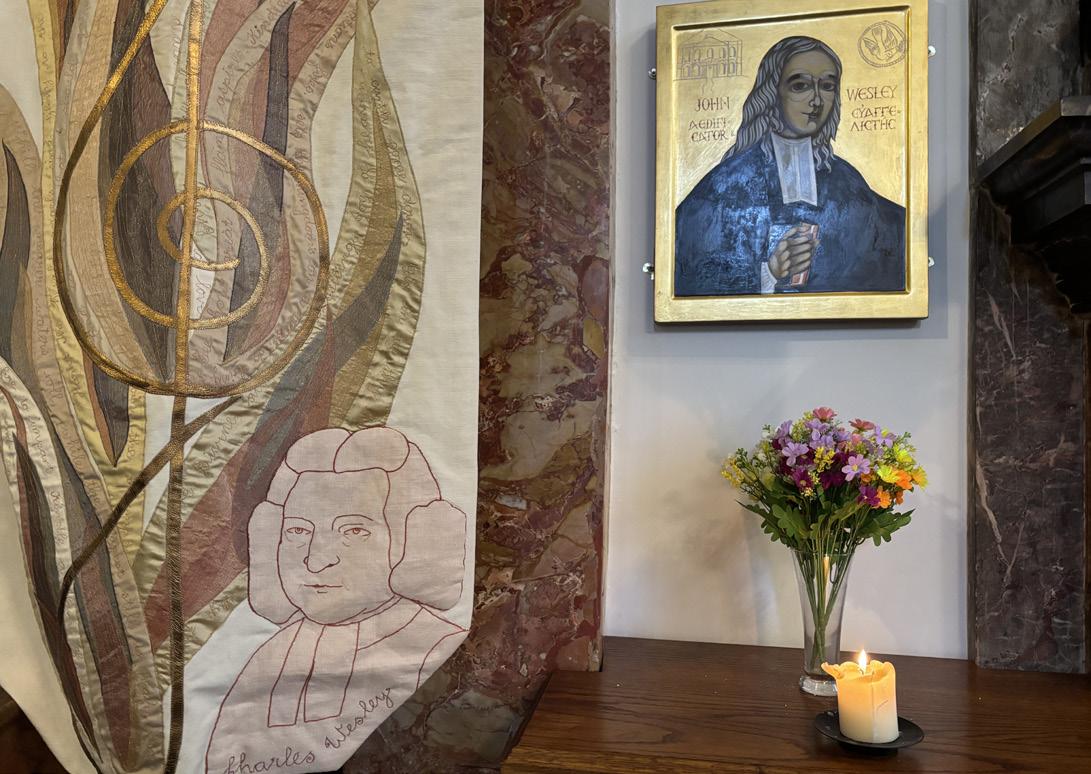
Both brothers were already ordained Anglican priests, they had been missionaries in North America, but in their May 1738 experience they received a spirit of assurance, confidence and strength. It was their Pentecost. That gave them strength. One to be the tireless organiser and preacher, who travelled preaching the Gospel of scriptural holiness and social reform. While the other, Charles, was a prolific hymn-writer whose hymns we sing to this day. “Christ the Lord is risen today, Alleluia”, would have been sang in many a church this past Easter.
“I can do all this through him who gives me strength” Philippians 4:13 is a biblical verse that expresses that same spiritual strength the Wesley bothers received. While often used today as a general motivational slogan for achieving personal goals, the actual context is about trusting in God whatever difficult situation one faces and finding blessedness, happiness. St. Paul wrote these words whilst in prison, showing that in Christ, risen and present, there can be contentment in any circumstances. Paul was explaining that whether he was well-fed or hungry, living in plenty or in want, he had the strength from Christ to persevere. This verse is well known and cherished as a positive expression of faith, inspiring resilience, and the hope that obstacles can be overcome with God’s help. It is faith in the force of God in us, anointing us to overcome difficult situations.
I say these words of encouragement, because we are living through a difficult time. There is a great deal of trouble in the world, wars, economic crisis, climate emergency. But we should cultivate the spirit of Easter
May 2026
and Pentecost, therefore never give up, be hopeful and resilient. The Lord is with us and calls us to be witnesses to his Kingdom of Justice, Peace and Joy in the Holy Spirit (Romans 14:17).
As we prepare for the Council Meeting in El Salvador this August, let us focus on the areas where we can make a difference. Let’s start with ourselves, the WMC itself. This is a period of Consultation with the Member Churches and Delegates. I would like to encourage full engagement with the consultation. It is about the vision and mission for the World Methodist Council. To listen to your voice on who we are and what our mission is as a worldwide organisation representing the Methodist/ Wesleyan movement. If you are not a delegate, get in touch with one of them or with your Church Leadership to express your opinion. If you have the questionnaire, please make sure to submit it. Thank you. And don’t forget to register to attend the Council meeting, of course!
Whilst National Governments seem distracted by issues of war and protectionism, afraid of immigration without considering the root causes, the greatest threat for now and the future is climate change. It has become a climate emergency. Let’s join hands in confronting it. The World Council of Churches is convening our joint efforts in the Decade for Climate Justice - 2025-2034.
Let us also follow the example of the Asian Methodist Council as they set their Declaration for Mission Partnership for Asia. They do that by spelling out the challenges of persecution, natural disasters, wars and forced displacement. And also by committing to confronting this in faith, to forming leadership for now and the future, and to working together. This and much more can be found in this FFL.
Rev. Dr. Reynaldo Ferreira Leão Neto (Léo) General Secretary
From the Diary of the President and General Secretary
Dear Friends,
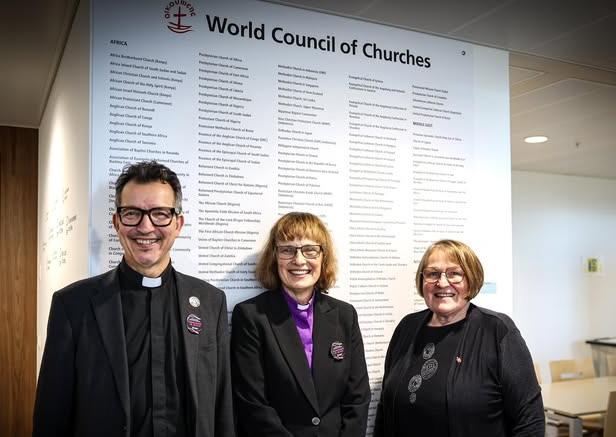
It was a joy to be hosted in Geneva by World Methodist Council Geneva Secretary Bishop Rosemarie Wenner on March 19-21. During the visit Bishop Wenner, General Secretary Rev. Dr. Leao Neto and I made a whirlwind visit to the World Council of Churches Office at Chermin du Pommier 42 in Geneva, Switzerland.
We converged in Geneva on Thursday afternoon and immediately took an uber to the World Council of Churches office where we were met by Director of Communications Ms. Marianne Ejdersten. Following an overview of the ministry of the World Council of Churches and our agenda, we heard a presentation from Director of Faith and Order Dr. Andrej Jeftic and Director of Life, Justice and Peace Rev. Dr. Kenneth Mtata. We retired to our hotels inspired by the knowledge of staff and breadth of the ministry of the World Council of Churches.
The next day we returned to the World Council of Churches office for hybrid Morning Prayer time with the staff led by Programme Executive Spiritual Life and Faith and Order Rev. Dr. Mikie A. Roberts. This week’s prayer focus was on Denmark, the Faroe Islands, Finland, Greenland, Iceland and Norway.
We then dove into a series of informative presentations and dialogue with Director of the Commission for Health and Healing Dr. Manoj Kurian, (see Pastoral Letter next page) Director of the Commission of the Churches on International Affairs Mr. Peter Prove, Executive for Programmatic Responses on Overcoming Racism Dr. Masiiwa Ragies Gunda and Programme Executive for Just Community of Women and Men Rev. Nicole Ashwood.
In keeping with their extraordinary hospitality, General Secretary Rev. Prof. Dr. Jerry Pillay and the staff provided a delicious lunch for us in the World Methodist Council office area. Following lunch, we concluded our time with the World Methodist Council leadership with presentations from Children and Climate/UNICEF Partnership Advisor Ms. Frederique Seidel and Coordinator for the Pilgrimage of Justice, Reconciliation and Unity Rev. Dr. Hyo Jin Kim.
Our time in Switzerland was topped off with a small dinner celebrating Bishop Wenner’s ministry as Geneva Secretary. The food and fellowship were great!
The next day as I boarded an airplane to fly home from Geneva, my heart was full of gratitude for the World Methodist Council’s collaborative relationships in the ecumenical world. Our connection with the World Council of Churches and other ecumenical groups enhances our ministry and work.
As always, it is a joy to serve as your President.
Blessings,
Debbie
Bishop Debra Wallace-Padgett
President World Methodist Council
From the left: - Rev. Dr. Reynaldo Ferreira Leão Neto (Léo), General Secretary, World Methodist Council, Bishop Debra Wallace - Padgett, President, World Methodist Council, Bishop Rosemarie Wenner, Geneva Secretary, World Methodist Council supporting Thursdays in Black. Photo Credit: World Council of Churches
WCC -
Peace and Healing in a Time of Conflict: A Call for Reconciliation
Across the world today, countless communities live under the shadow of war and conflict. The scale of human suffering is staggering and still growing. In 2024 alone, an estimated 160,000 people were killed in organised violence, while more than 123 million were forcibly displaced, the highest number in recorded history. Millions more live with injuries, grief, and trauma. Yet numbers alone cannot convey the true weight of what is unfolding.
We face not only crises of violence, but crises of health, dignity, and humanity. In Iran, reports of more than 160 schoolchildren killed by a single missile have left communities shattered. In Kabul, the deaths of over 400 patients in a drug rehabilitation centre after an airstrike exposed the fragility of those already on society’s margins. In Gaza, starvation has moved beyond warning to daily reality. In Sudan, the collapse of maternal and child health services leaves women and infants without even the most basic care. Years of conflict in Ukraine, Russia, and eastern DRC have devastated health systems, destroying or occupying facilities and rendering much of the infrastructure inoperable.
These are not isolated tragedies. They are interconnected signs of a world in which the essential conditions for life, health, food, safety, and trust, are being systematically dismantled. Too often, leaders prioritise power, profit, and selective political narratives over the long-term well-being of their people.
Health as a sign of God’s Reign
The healing ministry of Jesus Christ shows that health is central to reconciliation, concord and peace. Amid such suffering, concord, which in the Old Testament is the vision of “Shalom- Salaam- Shlomo” (in Hebrew, Arabic and Aramaic), calls us to a deeper understanding of peace. Shalom- Salaam- Shlomo is not merely the absence of war, as health is not just the absence of disease. ShalomSalaam- Shlomo and healing can both be described as a process by which that wholeness is restored in bodies, relationships, and communities: right relationship with God, with one another, and with creation. The prophet Isaiah envisions a world where “they shall not hurt or destroy… for the earth will be full of the knowledge of the Lord…” (Isaiah 11:9). This vision stands in stark contrast to our fractured reality. Conflict and war reverse these signs of life. Hospitals are destroyed. Health workers are displaced, targeted and killed. Treatment for chronic disease is interrupted. Livelihoods vanish. Epidemics spread. Entire populations are traumatised.
Conflict is not only a geopolitical failure but also a spiritual crisis: a breaking of sacred relationships and mutual accountability with each other. In this crisis, we risk taking the role of Cain in Holy Scripture, characterised by ungratefulness, envy and murder.
“Then the Lord said to Cain, ‘Where is your brother Abel?’ He said, ‘I do not know; am I my brother’s keeper?’” (Genesis 4:9)
Globally, an estimated 22% of people living in conflict-affected settings suffer from mental health conditions
such as depression, anxiety, or post-traumatic stress disorder- suffering that extends far beyond the individual and weakens the social fabric itself. Health in these contexts is both a casualty of war and a pathway toward restoration.
When the World Turns Away
There is another, quieter crisis spreading alongside the violence: the erosion of empathy and truth. As suffering intensifies, many turn inward, consuming selective narratives that reduce complex realities to partisan slogans. Human lives become abstracted through political filters. Compassion becomes conditional. In this climate, the suffering of others is not only distant but also distorted, denied, or ignored. This loss of empathy fragments our shared humanity, allowing injustice to persist and the unacceptable to become normal.
Healing as Reconciliation
Our faith calls us to resist fragmentation. As the Apostle Paul writes, “All this is from God, who reconciled us to himself through Christ and has given us the ministry of reconciliation.” (2 Corinthians 5:18). This ministry includes the healing of bodies through care and service; the healing of minds through accompaniment and psychological support; the healing of memories through truth-telling and lament; and the healing of relationships through dialogue, justice, and reparative action. Health ministries, in this sense, are also ministries of peace and reconciliation: they can rebuild what war has broken –and yet healing is always a sign of grace.
The Role of the Church: Living Signs of Shalom- Salaam- Shlomo
In some of the world’s most fragile contexts, churches and faith-based communities remain among the last institutions standing. They continue to serve, accompany, pray and advocate for those in need. The church is called to:
• Stand with the vulnerable and displaced. “He defends the cause of the orphan and the widow, and loves the stranger, giving them food and clothing.” (Deuteronomy 10:18)
• Speak truth to power. “Do what is just and right. Rescue from the hand of the oppressor the one who has been robbed.” (Jeremiah 22:3)
• Provide holistic healing—physical, mental, and spiritual; following Jesus’ ministry of preaching, teaching, and healing: “He cured every disease and every sickness among the people.” (Matthew 4:23–24)
Build bridges across division. “For he is our peace… that he might create in himself one new humanity… thus making peace.” (Ephesians 2:14–16)
• Provide safe spaces where homes are lost. - “I have said this to you so that in me you may have peace. In the world you face persecution but take courage: I have conquered the world!” (John16:33)
Continued on next page...
WCC - Peace and Healing in a Time of Conflict
In living out this witness, the church becomes a visible sign of Shalom- a reminder that another way of being is possible. As Isaiah foresees: “They shall beat their swords into ploughshares… nation shall not lift up sword against nation, neither shall they learn war any more.” (Isaiah 2:4)
A Prophetic Call: Wake from Our Slumber
The scale of suffering in our world leaves no room for indifference.
We cannot retreat into comfort while others struggle to survive.
We cannot accept narratives that distort truth or devalue human life.
We cannot normalise a world where children die, the sick are abandoned, and the displaced are forgotten.
The cries from Afghanistan, the Democratic Republic of Congo, Gaza, Iran, Lebanon, Sudan, Ukraine, and beyond are not distant echoes; they are urgent appeals to our shared humanity. This is a moment for awakening- from moral complacency, from selective attention, from the illusions that numb compassion.
To walk the path of Shalom- Salaam- Shlomo is to see clearly, feel deeply, and act justly. It is to affirm that health, peace, and dignity are not privileges for a few, but the birthright of all. It is to hear the voices of the vulnerable- and to respond consistently.
The suffering is real. Let us allow ourselves to be moved by it. Together, let us choose the hard, necessary work of healing our fractured world.
A pastoral message issued by the Commission of the Churches on Health and Healing of the World Council of Churches.
WCC - Ecumenical Decade of Climate Justice Action (2025–2034)
The Ecumenical Decade of Climate Justice Action (2025–2034) – Moving Together in Ecological Metanoia for Transformation, was launched at the World Council of Churches’ Central Committee meeting in Johannesburg, South Africa, last year. This Decade represents a bold, hope-filled, and prayerful response by the global fellowship of churches, ecumenical partners, and all people of goodwill to the growing climate emergency. It calls us as churches to:
• Repent of our complicity in systems of extractive capitalism, colonialism, and consumerism that have led to widespread ecological devastation (Matthew 3:8);
• Resist structures of greed and domination that exploit both people and the planet (Micah 7:13); and
• Reclaim our vocation as faithful custodians of God’s creation (Genesis 2:15; Psalm 24:1).
The success of this Decade depends on collaborative, coordinated, and sustained participation across the ecumenical family and beyond. Living into this vision will require the whole body of Christ – from global church institutions to grassroots communities – to share leadership, embody justice, and walk together in transformation. This is a call to deepened partnership and courageous collaboration, where every church, every community, and every voice has a vital role to play (Ephesians 4:16).
In this spirit, I warmly invite you to consider supporting or seconding a coordinator for the Decade, ideally located in the Pacific – a region on the frontlines of climate impacts and a leader in innovative and faithful responses. The coordinator would:
• Maintain regular communication with member churches and ecumenical and interfaith partners in planning, implementing, coordinating, and monitoring activities.
• Develop project proposals and assist with fundraising for key Decade initiatives.
• Gather and organise information on contributions and initiatives across the fellowship; and
• Support financial oversight, including budget preparation, and regular reporting on Decade implementation.
Your support in this effort would be a significant contribution to the shared witness and impact of this critical Decade. Should you wish to consider a secondment or support the position, please contact me or Athena Peralta at athena.peralta@wcc-coe.org
Yours in Christ,
Rev. Prof. Dr Jerry Pillay, General Secretary of the World Council of Churches
Join the Movement: Ecological Metanoia for Climate Justice
The climate emergency calls us to profound transformation—ecological metanoia—as we move together toward God’s vision of justice and healing for all creation. Churches worldwide are mobilizing for the Ecumenical Decade of Climate Justice Action (2025-2034), answering the prophetic call to care for our common home and stand in solidarity with those who suffer most from climate injustice.
“The earth is the Lord’s, and everything in it” (Psalm 24:1). As people of faith, we are called to be stewards of God’s creation, walking alongside frontline communities, Indigenous peoples, and youth while working urgently for systemic transformation. This is our kairos moment to bear prophetic witness, act with courage, and move together in hope toward the restoration of all creation.
Find more here!
WesleyMen 25th Anniversary Celebration
We are excited to officially launch the campaign for this year’s 25th Anniversary Celebration of WesleyMen. The World Fellowship of Methodist and Uniting Church Men also known as “WesleyMen” is the global connecting point of men’s ministry for Wesleyan, Methodist, and Uniting denominations. An affiliate organization of the World Methodist Council, our mission is to lead men in Christian Fellowship with a foundation rooted in the actions and words of Jesus Christ. Our three major priorities for the quinquennium 2025-2029 are summed up into three impactful words-- Connect, Cultivate & Collaborate.
The theme of the 25th Anniversary Celebration is “Offer Them Christ in Your Loaves and Fishes” based from Matthew 28:19-20 & 14:13-21. The anniversary theme captures the Wesleyan theology of personal holiness and social holiness. Toward the end of his life, John Wesley commissioned Thomas Coke to go to America and ordain Francis Asbury and others into the ministry. He stood at the pier, and, as the boat departed, said to Coke, “Offer them Christ, Thomas… offer them Christ.” These words were an evangelical call from Wesley to Coke as he boarded his boat and headed to the frontiers of America.
On the other hand, the “Missio Dei” is not just about saving souls, but about participating in God’s holistic, redeeming work in all of creation, establishing justice and righteousness. This involves healing the broken, feeding the hungry, and proclaiming the reign of God through both in word and in deed. John Wesley’s own witness compels us to action. His theology of practical divinity, of mercy and justice, of personal and social holiness walking hand in hand, demands that we not only feed the soul and hunger where we can, but also challenge the structures and powers that allow such suffering to persist.
“I Am WesleyMen” Stories of Faith
“I Am WesleyMen” will be initiated to share the success stories about WesleyMen— inviting Methodist men and women from around the world to share their faith stories throughout the year 2026 and 2027. The faith stories capture the overall anniversary theme of how Methodists around the world are offering Christ and giving our loaves and fishes in our communities and in our world today. The faith stories will be shared to our WesleyMen email, website, Facebook page and social media.
WesleyMen 90-Day Challenge
WesleyMen 90-Day Challenge will be launched during the 25th Anniversary Celebration in El Salvador as a worldwide men’s discipleship resource with a three-stage component: Connection - Cultivation –Commissioning. It is Wesleyan in core values, adaptive and contextually applicable to each national or region of the world. We are currently developing a strategic plan and explore ways to collaborate with various regional and national men’s organizations.
25th Anniversary Souvenir Program & Hymn
WesleyMen is prayerfully aiming to raise a God-sized goal of $1-M by producing the 25th Anniversary Souvenir Program as a fundraising effort of WesleyMen. We will solicit from individuals, businesses, churches, organizations and corporate sponsorships. The WesleyMen Handbook will be included in the Souvenir Program containing our organization’s logo, missional priorities, slogan, anthem, board members w/ brief introductions, structure, constitution & by-laws. The plan is to share the Souvenir Program and introduce the WesleyMen Hymn during the 25th Anniversary Celebration in El Salvador.
25th Anniversary Celebration during the 2026 World Methodist Council Meeting
With God’s grace, the 25th Anniversary Celebration of WesleyMen will take place during the 2026 World Methodist Council Meeting in August 2026 in El Salvador. We are immensely grateful to our WMC President Bishop Debra Wallace-Padgett and General Secretary Rev. Dr. Leão Neto for their wonderful support in having the celebration taking place during the 2026 WMC Meeting. The plan will be two-fold: First, the 25th Anniversary Celebration will take place during the 2026 World Methodist Council Meeting in August 2026 in El Salvador. The worship gathering will take place either on August 13th or August 14th. During the gathering, we will highlight the history, stories, leadership and missional priorities of WesleyMen The worshipful gathering will be opened to everyone including WMC delegates and participants, men’s organizations, Methodist congregations and ecumenical partners in El Salvador.
Continued on next page...
WesleyMen 25th Anniversary Celebration
Second, WesleyMen will offer a hunger-related immersion to delegates and participants attending the 2026 World Methodist Council Meeting in El Salvador. From its inception, WesleyMen has been advocating to end global hunger through the FastPrayGive project and is now currently involved with the Prayer & Action Against Hunger Coalition (PAAHC). We are closely coordinating the plan WMC staff and the Local Host Committee of the Methodist Church in El Salvador to have the immersion be held on Sunday afternoon of August 16th 2026 after the WMC delegates attended the Sunday worship services.
“Give Your Loaves & Fishes” Campaign
On its 25th Anniversary, WesleyMen is challenging the worldwide Methodist community to embrace the inward and outward aspects of the faith we share. Since 2011, WesleyMen’s action component is to bring awareness and advocate against global hunger, severe malnutrition, and starvation. As such, the WesleyMen 25th Anniversary Celebration is amplifying the global campaign of the Prayer & Action Against Hunger Coalition (PAAHC) called “Give Your Loaves & Fishes”. We are working closely with the PAAHC regarding the strategic plan, timeline and other details. PAAHC is a coalition of Christian organizations, church-based organizations, and NGOs with primary functions to ground and coordinate responses to the global hunger crisis in prayer, raise awareness about the issue, and mobilize the global church to take faith-driven action.
In closing, we are deeply grateful for your partnership as we seek your prayers and support for the success of the WesleyMen 25th Anniversary Celebration. We also invite you to give to WesleyMen to further our vital mission and priorities in 2026 and beyond. To donate, please go to the link: https:// wesleymen.org/.
With gratitude,
Rev. Edgar De Jesus, World President
Rev. Dr. William Allotey-Pappoe, Secretary
Andy Morris, Treasurer
Edward Ofori, WesleyMen Africa
Rev. Sikawu Makubalo, WesleyMen Africa
Rev. Denny Nainggolan, WesleyMen Asia
Barnabas Emmanuel, WesleyMen Asia
Anthony Seale, WesleyMen Caribbean
David Friswell, WesleyMen Europe
Rev. Scot Moore, WesleyMen North America
Fotu Yavala, WesleyMen Pacific
Bishop Cesar Llanco Zavaleta, WesleyMen South America
Rev. Dr. David Haley, Anniversary Celebration Liaison
Rev. Steve Hickle, Immediate Past World President of WesleyMen
Rev. Dr. Leão Neto, General Secretary of the World Methodist Council
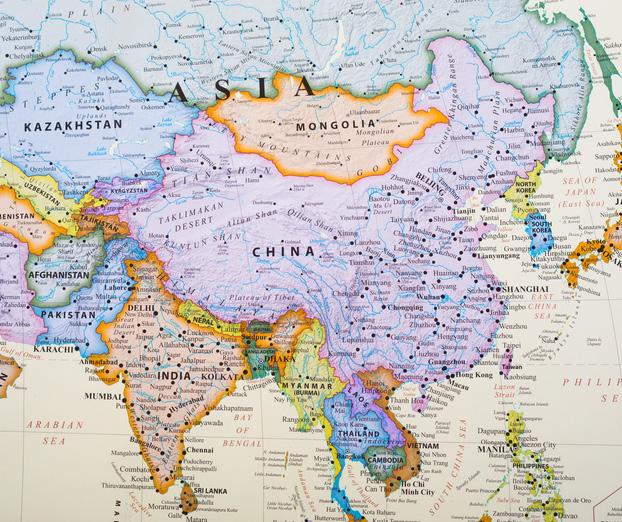
Asian Methodist Council - Declaration for Mission Partnership for Asia
We, the Methodist churches and mission partners of Asia, united in Christ and guided by the Holy Spirit, declare our common commitment to cooperative mission in response to the realities confronting Christian witness in Asia today. Rooted in the Wesleyan tradition of grace, holiness, and connectional partnership, and inspired by John Wesley’s conviction that “the world is my parish,” we dedicate ourselves to faithful participation in God’s mission (Missio Dei) across Asia.
1. On Our Missional Calling
We affirm that Asia stands at the heart of global Christian mission in this generation. In the Wesleyan understanding of prevenient grace, we recognize that God is already at work among all peoples. Despite persecution, disaster, war, political unrest, and instability, we see these realities not as barriers but as contexts where faithful witness and holistic mission joined with compassionate service are urgently required.
2. On Christian Persecution
We acknowledge that persecution remains a reality for many believers in Asia. Following Christ in the way of the cross, we commit ourselves to forming disciples and leaders grounded in resilient faith and the Wesleyan call to faithful holiness, developing context-sensitive mission structures, and standing in solidarity with persecuted churches through prayer, advocacy, and mutual support and count persecution a larger measure of conformity to Christ.
3. On Natural Disasters and Creation Care
We recognize that natural disasters frequently affect communities across Asia. In keeping with the Methodist tradition of stewardship of God’s creation and compassionate ministry, we commit ourselves to strengthening church-based disaster preparedness, response, and recovery, affirming local congregations as agents of community restoration, and integrating ecological responsibility into our mission practice to do all the good you can to all the people you can as long as you can.
4. On War, Conflict, and Forced Displacement
War and violence contradict God’s intention for peace and human dignity. Guided by the biblical vision of shalom and the Methodist commitment to reconciliation, we commit ourselves to ministries of peacebuilding, serving refugees and displaced peoples with compassion and dignity, and expanding trauma healing ministries for wounded individuals and communities.
5. On Next-Generation Leadership
The future of Christian mission in Asia depends upon faithful leadership formation. Following the Methodist tradition of discipleship and mentorship, we commit ourselves to developing contextual and resilient leaders, strengthening intergenerational partnerships as natural fruits of salvation, and utilizing digital and innovative platforms for theological education and mission training.
6. On Mission Cooperation in Asia
We affirm that the mission of God in Asia requires cooperation rather than competition. As a connectional people shaped by the Methodist movement, we commit ourselves to mutual trust, shared resources, and collective discernment among Asian churches and mission partners, rejecting isolation and dependency.
7. Our Common Commitment
Therefore, trusting in the grace of God and guided by the Holy Spirit, we dedicate ourselves anew to bear faithful witness to the gospel of Jesus Christ in Asia, to stand with those who suffer, and to prepare a hopeful future for generations to come—for the glory of God and the transformation of the world.
Adopted as a common declaration for the Asia Methodist Council Mission Cooperation at the Asia Methodist Council (AMC), Nepal; March 5, 2026.
CME prepares for General Conference
The Christian Methodist Episcopal Church will hold its next General Conference in June, bringing together delegates from across the denomination for its regular four-year governing assembly.
The CME Church is a historically African-American Methodist denomination, primarily based in the United States with a growing presence in Africa and the Caribbean.
It is part of the wider global Methodist family and a member of the World Methodist Council.
The conference, which opens on June 13, will exercise the Church’s full legislative authority and set its direction for the next quadrennium.
Confirmed business includes the election of bishops
and other senior leaders, with a number of episcopal retirements expected to create vacancies.
Delegates will also elect members of key connectional bodies, including judicial and administrative structures.
The General Conference will consider amendments to the Book of Discipline, the Church’s governing document, alongside petitions submitted by annual conferences and general departments.
It will also agree the denomination’s budget and financial priorities for the next four years.
This article first appeared in the “Methodist Recorder”, an independent, weekly newspaper published in Great Britain.
‘We are not alone!’ — Methodist bishops visit Ukraine
Three United Methodist Church (UMC) bishops travelled to western Ukraine to visit UMC congregations and meet people who have been living in war for years. Their conclusion: active love on the ground is a strong sign of hope. Sigmar Friedrich reports.
It is the small gestures that remain: a common prayer, a smile in the youth centre or a table where refugees tell what they have experienced.
Three Methodist bishops — Stefan Zürcher (Central and Southern Europe), Werner Philipp (Germany) and Knut Refsdal (Northern Europe, Baltic States and Ukraine) — visited congregations and projects in Transcarpathia and Lviv in western Ukraine.
They wanted to send a signal of solidarity and experience for themselves how the UMC in Ukraine is creating hope despite the war. The Methodist pastor and superintendent, the Rev Oleg Starodubets, accompanied the bishops together with his wife, the Rev Dr Yulia Starodubets.
Why this visit?
At a meeting in the autumn of 2025, Bishop Refsdal told them about his plans to visit, recalls Bishop Zürcher. “In conversation, Bishop Werner Philipp and I quickly realised that if all three of us went, it would send a strong signal.” They wanted to show through their visit to the people of the UMC in Ukraine that they are not alone.
Bishop Zürcher’s episcopal territory includes the UMC in Poland, Czechia, Hungary and Romania. “Since the beginning of the war, Methodists in these countries have accompanied refugees and also supported the work in Ukraine with humanitarian aid transports,” he said.
Now it was time to travel to Ukraine themselves and meet the people on the ground. It was Bishop Zürcher’s first visit to the country. Bishop Philipp was also there for the
first time, while Bishop Refsdal travelled to Ukraine for the third time since his election as bishop.
Encounters that leave their mark
The programme was packed: from Uzhhorod to Lviv, from youth centres to refugee shelters, worship services, celebrations and discussions with refugees.
In Lviv the bishops met a lively, young congregation. On Friday evening they were there for meetings and a simple worship service. “There were 25 to 30 young people there,” said Bishop Zürcher. Some of them had grown up in Lviv and the surrounding area, others had fled from eastern Ukraine to the comparative safety of the west.
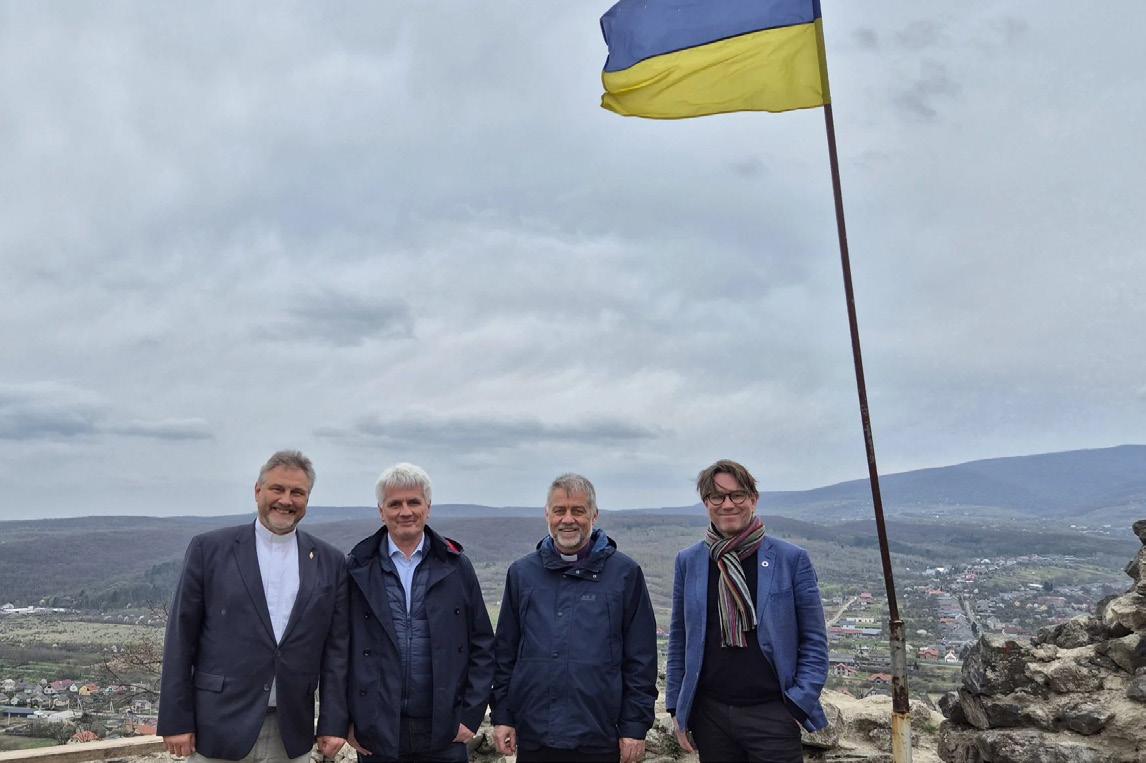
From the left: Bishop Werner Philipp, Hungarian local preacher István Pásztor, Bishop Stefan Zürcher and Bishop Knut Refsdal at Nevytske Castle, north of Uzhhorod, during their visit to Ukraine. (Photograph: EmK-Öffentlichkeitsarbeit.)
Continued on next page...
‘We are not alone!’ —
Methodist bishops visit Ukraine
The cities visited by the bishops had grown massively due to the influx of internally displaced people. Around 1 million people now live in Lviv, almost a third more than in 2022. In Uzhhorod, the number of residents has tripled from 120,000 to 350,000, which naturally brings with it corresponding challenges. This is not just about the required living space, but also about cultural differences between the west and east of Ukraine.
Creating safe spaces
The bishops also visited the Lighthouse youth centre in Uzhhorod during their trip. Many of the teenagers and young adults who meet at the centre, which is organised as a Non-Governmental Organisation (NGO), are internally displaced people. The work began in September 2025.
“It’s about giving teenagers and young adults a place where they can be and be safe. They can simply come here and belong,” said Bishop Zürcher.
In Uzhhorod, the leaders of the UMC run two shelters for internally displaced persons. Simple rooms and a communal kitchen have been set up in an old communist building in the middle of the city. Refugees find a more comfortable home in the former hotel called Under the Castle.
Refugee work as a testimony for God
One poignant moment was the encounter with refugee women there. “One woman said: ‘The fact that the Methodists are here and giving us this opportunity to stay is a proof to me that God exists,’” said Bishop Zürcher.
Very few of the refugees had any previous contact with a church, let alone the UMC. And here they experience it: ‘The Methodists accompany us. They make sure that we get what we need.’ “This active love has a very strong effect,” he said.
War in everyday life: normality and trauma
Despite the war, life in Lviv seems almost normal at first glance, Bishop Zürcher said. “The cafés are full, the streets are lively,” he said.
Nevertheless, traces of the war are omnipresent: destroyed houses, military cemeteries, memorial plaques.
continued...
“In Lviv, we saw a house that had been hit by a drone just days before. The windows of the neighbouring church were broken. However, everything had already been cleaned up.” The bishops felt the tension above all in the talks.
“Yulia Starodubets told us that she did not ask the women about their stories. ‘That could retraumatise them,’” she said.
Many of the refugees come from hotspots such as Bakhmut, Mariupol or Kharkiv. “When you listen to them, you realise that they have very difficult stories.”
Bishop Refsdal was impressed by the sight of the cemetery in Lviv. “It was moving to see the graves of so many young men and to know that these are only the fallen from this region.”
For Bishop Philipp, too, it was a moment in which the horror of war was palpable: “When it’s no longer just numbers, but names and faces, the war becomes tangible,” he said.
What remains? Connection and hope
“The visit showed us how important a physical presence is,” Bishop Zürcher said.
“The people there felt it: ‘We are not forgotten’. The fact that we came as bishops was a sign of solidarity for them.”
The reality of a global Church is not just an abstract idea but is experienced as concrete closeness in a difficult situation.
The trip had encouraged him to continue seeking such encounters. They showed that Christian solidarity does not end at borders and that help does not always have to be loud in order to have an impact.
This article first appeared in the “Methodist Recorder”, an independent, weekly newspaper published in Great Britain.
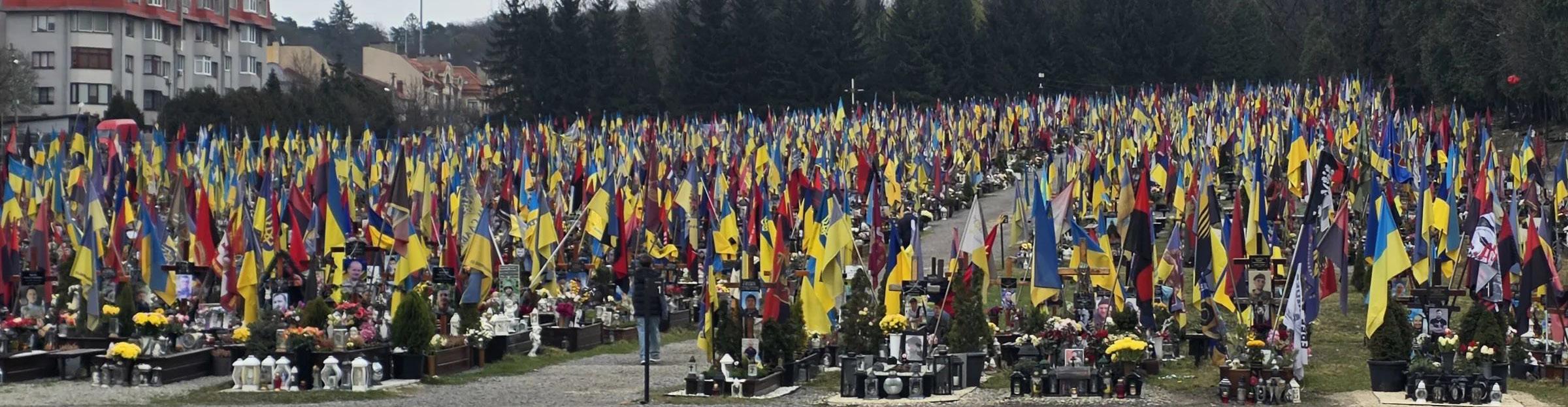
A military cemetery in Lviv was visited by the three bishops. (Photograph: EmK-Öffentlichkeitsarbeit.)
Upcoming World Methodist Council Meeting in El Salvador
The 2026 World Methodist Council Meeting will be held at the Hilton San Salvador Hotel. Meetings will start on the afternoon of 13th August, and end with lunch on 17th August. Please reach out to mbryson@worldmethodistcouncil.org for a list of additional hotel options.
You will fly into El Salvador International Airport (SAL), also known as Monseñor Óscar Arnulfo Romero International Airport, which is located about 45 kilometers (27–28 miles) from downtown San Salvador.
All travel expenses and hotel accommodations must be covered by the respective member church, delegate representative, or outside organization. The WMC will not cover these costs.
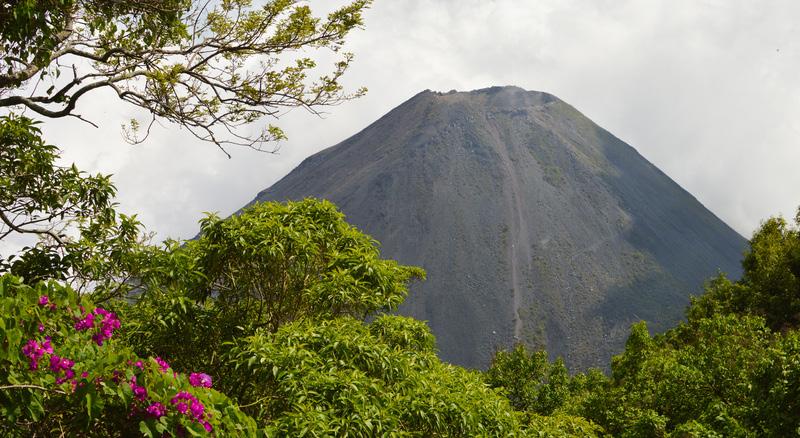
If you are planning to stay a few extra days after the meeting, El Salvador offers beautiful opportunities for local tourism. Participants may enjoy hiking in natural parks, visiting beaches along the Pacific coast, exploring volcanoes, and experiencing the rich culture and cuisine of the country. Click here to book through El Salvador Xpedition where you can find tours with information and pricing. Please contact xpeditionsv@gmail.com with any questions.
A second tour option is from Positive Tours in El Salvador, click here to find out more about pricing and the extraordinary places you can explore. If you have any questions regarding these tours please contact info@elsalvadorpositivetours.com.
Register before May 15th to receive the Early Bird rate of $100 per registrant. Starting May 16th, registration will increase to $150 per registration. Follow the link to register today! https://www.surveymonkey.com/r/NNXN3YW
Women and Methodism: Contested Identities, Past and Present
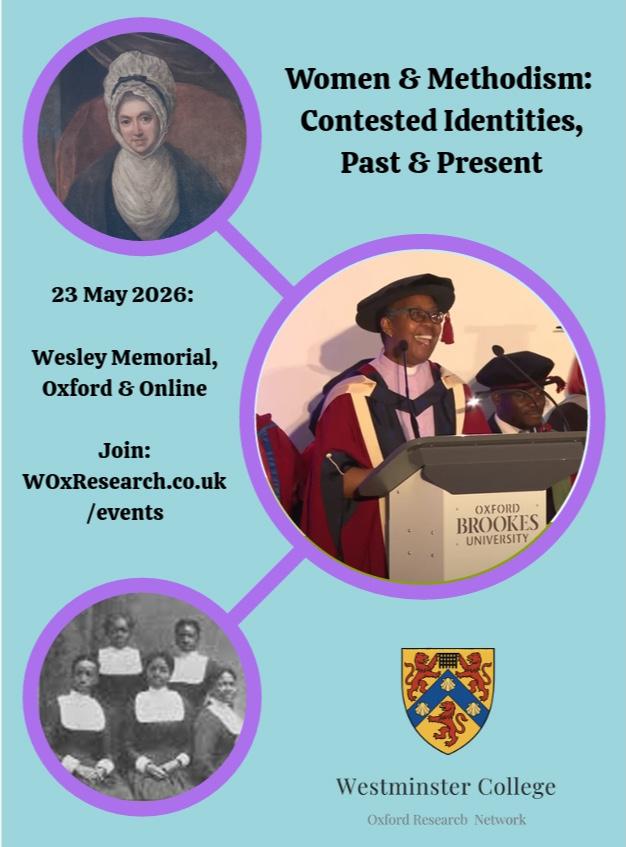
Join us in person at Wesley Memorial Church, Oxford, or online on Saturday, May 23, 10.00 to 17.30 (with a lunch break), for an engaging day of discovery on the topic, Women and Methodism: Contested Identities, Past and Present.
Multiple presenters will provide insight into women’s vital contribution to the life of the Methodist Church, past and present, and the communities it serves.
• A keynote lecture at 10.15 on the first generation of the international Methodist deaconess movement will be given by Priscilla Pope-Levison (Research Professor of Practical Theology, Southern Methodist University).
• A roundtable discussion at noon on the topic of women, ageing, menopause, and church leadership will be chaired by Ruth Slatter (Lecturer in Historic Environment and Knowledge Exchange Manager,
the Institute of Historical Research) and will feature contributions from Emma Pavey (Associate Director, the Susanna Wesley Foundation), and Beverley Clack (Emerita Professor of the Philosophy of Religion, Oxford Brookes University).
• A reflective lecture at 14.50 will be given by Novette Headley (Chair of the Birmingham Methodist District) on her experiences as a woman and minister within this context.
• After a time of discussion, the seminar will end with worship at 17.00 led by Miriam Moul (Superintendent of the Oxford Methodist Circuit).
Register to attend in person or online: https://woxresearch.co.uk/events/ This event is sponsored by the Westminster College Oxford Research Network.
Geneva Secretary Job Opportunity
The World Methodist Council is seeking a Geneva Secretary for the term of August 2026 - August 2029. This is not a salaried position. Expenses relating to performing the duties of the Geneva Secretary will be covered. Expression of interest accompanied by a CV and the contact details for a referee should be sent to communications email at communications@worldmethodistcouncil.org.
For further information contact the chair of personnel committee Rev. Dr. Jonathan Hustler at hustlerj@methodistchurch.org.uk or the WMC General Secretary at leo@worldmethodistcouncil. org.
Applications should be in by the end of June to be considered at the upcoming World Methodist Council Meeting in August 2026.
Aims:
- to develop and maintain important relationships between the WMC, the WCC, the Lutheran World Federation (currently based in Geneva) and the World Communion of Reformed Churches (currently based in Hannover, Germany)
- to intensify the connection within the World Methodist Council by fostering unity amongst the member churches and by exploring new ways how the “ecumenical spirit” expresses itself in bringing Christians together “though that the world may believe”.
- to strengthen the witness of the WMC and its member churches through intensified cooperation with ecumenical partners in the current changes in the world and in the religious landscape.
Tasks:
- to assist the General Secretary in his work to connect the WMC with its member churches and with the ecumenical partners, namely the World Council of Churches, the Global Christian Forum, the Lutheran World Federation and the and the World Communion of Reformed Churches.
- to interpret the work of the WMC to the WCC and related ecumenical bodies and vice versa to interpret the work of the WCC and others to the members and member churches of the WMC.
- to intensify the cooperation with the WCC
through regular contacts to the General Secretary, the staff and particularly to Methodists serving as staff as well as to Methodist members in the Central Committee and the Executive Committee of the WCC.
- to report regularly to the WMC and its member churches on developments in the fields of “faith and order” and “life and work” as well as in the Pilgrimage of Justice, Reconciliation and Unity.
- to cooperate with the chairs of the Committees of the WMC, particularly with the Committees on Ecumenical Relationships, Interreligious Relationships and Social and International Affairs.
- to connect regularly with the Rome Office and Methodist Liaison Office in Jerusalem.
Scope:
- the work is currently described as to a quarter of a fulltime position
- Regular presence in Geneva about 4 - 6 times a year 3-4 days, if possible when meetings of teams etc. take place.
- Attendance at the meetings of the WCC Central Committee and other meetings upon consultation with the General Secretary
- Attendance of meetings of the WMC and regional Methodist Councils and assisting the General Secretary in preparation for the meetings.
- Regular communication with the WMC General Secretary, Officers and Standing Committee Chairs.
On the Web
This and past First Friday Letters can be found online at FirstFridayLetter.worldmethodistcouncil.org
The World Methodist Council’s website may be found at worldmethodistcouncil.org.
To subscribe to this newsletter, please email communications@worldmethodistcouncil.org
Please send press releases, articles and resources! Submissions should be a page around 500 words, edited and ready to publish. Contact us by Friday, 22 May at mbryson@worldmethodistcouncil.org if you would like your story to be included in the June edition of the First Friday Letter.
About the First Friday Letter
Friday
All stories and photos, unless otherwise stated, are protected by their respective copyrights. Please do not copy without expressed written permission from the
The First
Newsletter is a monthly publication of the World Methodist Council.
Publisher: Rev. Dr. Reynaldo F. Leão Neto, General Secretary Layout Design, Art, and Graphics: Mrs. Michaela Bryson, Staff
Council.
Lysenko | Dreamstime.com