First Friday Letter
The World Methodist Council
Greetings from the General Secretary
In this time of war, I greet you in the name of the Prince of Peace, Jesus Christ, our Lord!
It is Lent! A period in the church calendar when Christians focus their faith even more sharply on the redemptive power of suffering and love: the suffering of Christ, his love showed on the cross, the redemption in his blood that leads to life here and in eternity, and the hope that the empty tomb represents.
I pray that you with every Methodist and Wesleyan fellow Christian may be able to immerse yourselves in Christ Jesus, journey with him to Jerusalem, listen to his teaching on the way there and experience the depth of God’s love that he showed on the cross of our salvation. So that if we die with him we may also attain life in him.
Wars, assassinations, destruction are the opposite of the life that Christ offers. The way of Christ is the way of peace. Very early on in this war I affirmed this conviction, see WMC website, here.
And together with ecumenical partners, the WMC General Secretary has expressed condemnation and horror at the USA’s and Israeli’s bombardment campaign on Iran. Please click here to read the joint letter.
To look with hope to the future, the World Methodist Council meeting of the delegates of member churches will take place in El Salvador from 13th to the 17th August. Please member churches send the names of your delegation to the WMC Office so that letters of invitation can be issued for visa purposes and plans can include more firm numbers. Registration is open through this link: https://www.surveymonkey.com/r/NNXN3YW Other participants are welcome as observers and visitors.
We start, in this edition of the FFL a column reflecting on our life together as an Association of Methodist, Wesleyan, Uniting and United churches. You will find an article inside reflecting on the WMC as a Connexion of Connexions, written by Rev. Kenneth Howcroft. He was the originator of such a vision in the past, that seems totally relevant for this time too. But his article is just a first article in a series intended to stimulate our thinking about the reason to be for the WMC and what it is supposed to be. This new series accom-
March 2026
panies the work of the Vision and Strategy working group. It is a conversation that the Steering Committee recognised is needed. The aim is to spell out a vision and a consequent strategy for the WMC, as we move forward. To that end, the working group has produced a questionnaire that will be sent to the member churches soon. This is to facilitate a listening exercise seeking your opinion and any suggestions you might have. So if you are not a delegate, please seek one and express your opinion. You can also write an article to the FFL to contribute to the discernment implied.
In this FFL there are a number of articles about Methodism worldwide, thanks to the items that the Methodist Recorder, an independent newspaper based in the UK has agreed to provide. In addition you can find inside an interview with Rev Harold Good, the 2007 Methodist Peace Award laureate, awarded because of his work of reconciliation between Protestant and Catholic communities in Ireland at the time when the conflict was raging.
Among so many reasons for prayer in this lent period, including for peace and for justice to prevail, I ask that you continue to pray for the WM Council meeting in El Salvador, for CIEMAL (The Latin American Council of Methodist Churches) and the Methodist Church in El Salvador as the hosts.
At the same time, let’s never tire of declaring the lordship of Christ over the church and history, until the Kingdom of God finally comes in full.
Yours
Reynaldo Ferreira Leão Neto (Léo) General Secretary
From the General Secretary’s Diary
Prayers at the Tomb of John Wesley on the 235th anniversary of his death on 2nd March 1791
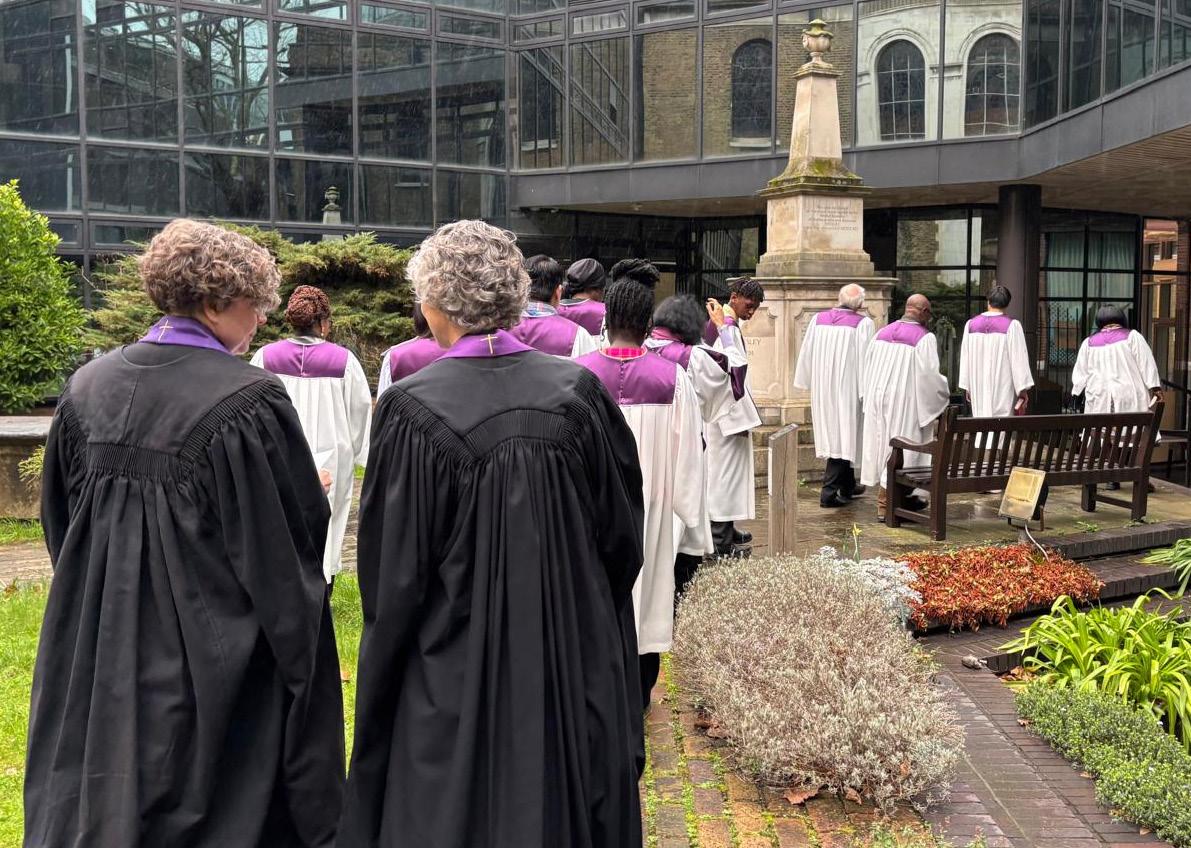
The Sunday service was planned to mark a significant moment in the Wesleyan/Methodist yearly calendar, the 2nd of March, the death of John Wesley. It was a service of divine worship of the Word and the sacrament of Holy Communion followed by a procession to John Wesley’s tomb located behind Wesley’s Chapel, City Road, London. We kept to the plan but our minds, concerns and prayers were directed at the state of the world after the USA/Israeli bombardment of Iran the day before.
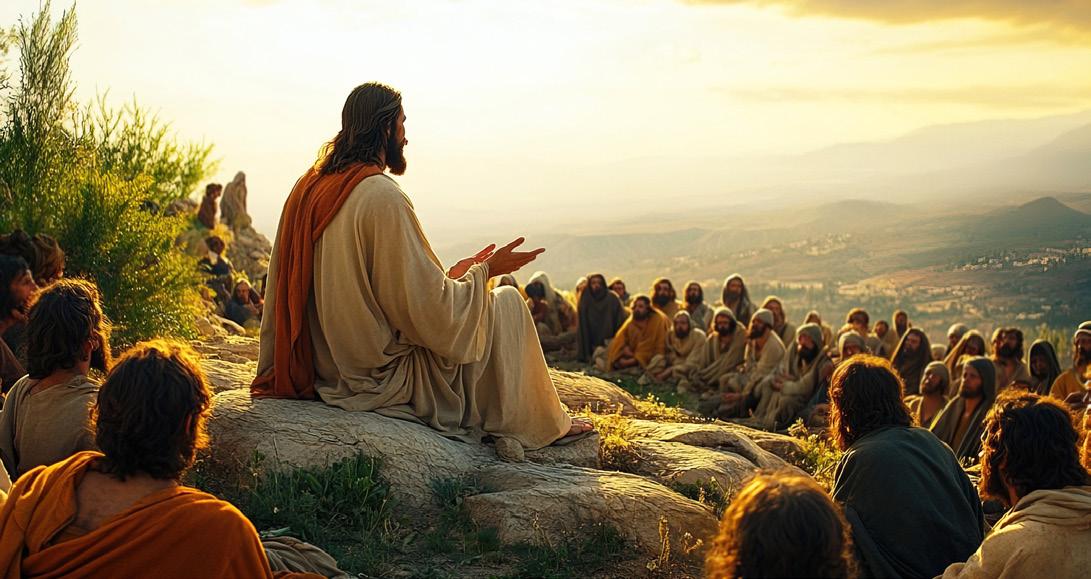
As soon as I walked into the Chapel the Superintendent minister, Rev. Dr. Jennifer Smith, expressed her sorrow to me, “What a mess! And I can’t stop thinking and praying for you!”. She and others would be expecting words from me on behalf of the World Methodist Council on the USA/Israeli attack on Iran. I have been avoiding great pronouncements, in particular when there isn’t a procedure in place for the WMC to make well supported statements. I said straight way to Jen: ‘we reject the ways of war’ and got a positive affirmation back. Of course much more could be said, firstly, it is an illegal war, no one went to the USA Congress to ask for authorisation and the UN Charter and International Law would rule out any such attack. It is illegal on all counts and comes on the back of what is happening to the population in Gaza and in the West Bank of the Palestinian Occupied Territories. But perhaps, the best chance to say something with which no-one could disagree, or denounce as not theirs was to say something about peace. Jesus; Sermon on the Mount came to mind, obviously.
Time came for prayers, for communion with God through Christ’s body and blood, in communion with the saints as we focused on John Wesley’s apostolic ministry. There were lots of Africans and Caribbean people at the tomb, Jennifer called John Wesley our uncle. I might have thought about John Wesley as a father in the faith, but not necessarily as an uncle. I loved it though for its closeness to my own culture. Brazilians call uncle someone to whom they feel great affection and respect for. They might not be family related but are made family in the spirit. In the context of John Wesley’s tomb, this was a recognition that here lies an ancestor. And I would add, an ancestor whose voice and leadership we still miss.
I can feel the grief that the early Methodists felt when John Wesley died. Who would speak on their behalf now? I took courage from that morning of worship, Jennifer’s words, and brought myself to say this: “Reflecting on the bombardment of Iran, the WMC General Secretary said: “the way of Jesus is the way of peace. He calls us all to follow peace and reject war. Jesus said: ‘blessed are the peace makers’. Let us all reject the ways of war and seek peace.” Though they are only a few words, I stand by them as a true representation of Jesus’s Spirit and his will for our time too.
Times are bad. Let us pray for the world with ‘uncle’ John Wesley’s prayer: “The winds are often rough, and our own weight presses us downwards. Reach forth, O Lord, thy hand, thy saving hand, and speedily deliver us. Amen.
And say equally the Collect for both Wesley brothers: Almighty God, You raised up your servants John and Charles Wesley to proclaim anew the gift of redemption and the life of holiness, pour out your Spirit, and revive your work among us; that inspired by the same faith, and upheld by the same grace in word and sacrament, we and all your children may be made one in the unity of your Church on earth, even as in heaven we are made one in you; through Jesus Christ our Lord, Amen.
The choir and ministers leading the procession to John Wesley’s tomb on the back of Wesley’s Chapel, City Road, London
AME Church Statement on the Removal of Exhibits
On Thursday, January 22, the exhibit “The Dirty Business of Slavery” and related interpretive panels were removed from the President’s House site at Independence National Historical Park in Philadelphia, Pennsylvania, in implementation of Presidential Executive Order 14253, “Restoring Truth and Sanity to American History.” Among the signs taken down were tributes to Bishop Richard Allen of the African Methodist Episcopal Church and Father Absalom Jones of The Episcopal Church, whose stories have stood at this site as a public witness to Black faith, resilience, and leadership.
We write to express our profound sorrow, righteous anger, and deep alarm at this assault on the history of the United States and on the history of Christianity in this land. This act does not “restore truth” but attempts to sanitize it—precisely targeting those narratives that name slavery, white supremacy, and Black resistance as central to the American story.
As formerly enslaved persons, Bishop Allen and Father Jones organized through the Free African Society in the 1780s to provide economic, spiritual, and social support for other formerly enslaved and free Black people in Philadelphia. They also ministered to the broader city during the Yellow Fever epidemic of 1793, tending the sick and burying the dead at great personal risk, embodying a Christian witness rooted in liberation, mutual care, and courageous service, even as they endangered their own health and well-being.
In 2016, the United States honored Bishop Richard Allen with a postage stamp recognizing “his inspirational life and profound contribution to American history.” That, a decade later, the federal government would remove his story and that of Father Jones from a public exhibit under the pretense that such content “inappropriately disparage Americans past or living” is not only incoherent—it is morally repugnant.
The true insanity is the belief that tearing down signs can alter the truth of this nation’s tortured past or erase the fact that many of the so-called Founding Fathers held human beings in bondage while proclaiming liberty. Removing these panels does not heal our divisions; it deepens unhealed wounds, obscures the sin of slavery and its ongoing legacies, and delays the honest reckoning that is necessary for repentance, reconciliation, and repair.
We name the pain and outrage these actions cause to the people of Philadelphia and to communities across the country who have looked to this site as a place of truth-telling and lament. We condemn the blatant attempt to repress and erase the real history of the United States—a nation whose lofty ideals of freedom and equality were articulated even as it
trafficked in human flesh, yet whose very ideals also inspired Bishop Allen, Father Jones, and their compatriots to struggle for a more just and inclusive democracy. Shortly before his death, Bishop Allen could still declare of this country: “This land, which we have watered with our tears and our blood, is now our mother country, and we are well satisfied to stay where wisdom abounds and the gospel is free,” a testimony that indicts any effort to make freedom’s story smaller, whiter, or less truthful.
Bishop Allen and Father Jones are inseparable from the faith journeys their denominations and from the broader story of Christian witness in the United States. No executive order and no act by the National Park Service can erase the churches they founded, the movements they led, the lives they transformed, the souls they nurtured, or the people they helped to free in body and in spirit.
We endorse the federal lawsuit filed by ATAC and the City of Philadelphia to have the exhibit restored, and we call on the National Park Service to immediately restore all removed panels at the President’s House site, including the tributes to Bishop Allen, Father Jones, and the nine Africans enslaved by President George Washington.
Furthermore, we endorse the advocacy of Bishop Samuel L. Green, Sr., and Rev. Carolyn Cavaness, in the State of the Black Community gathering during the First Episcopal District Founders Day Celebration, taking place February 10–12 in Philadelphia.
Bishop Silvester S. Beaman
President, Council of Bishops of the African Methodist Episcopal Church
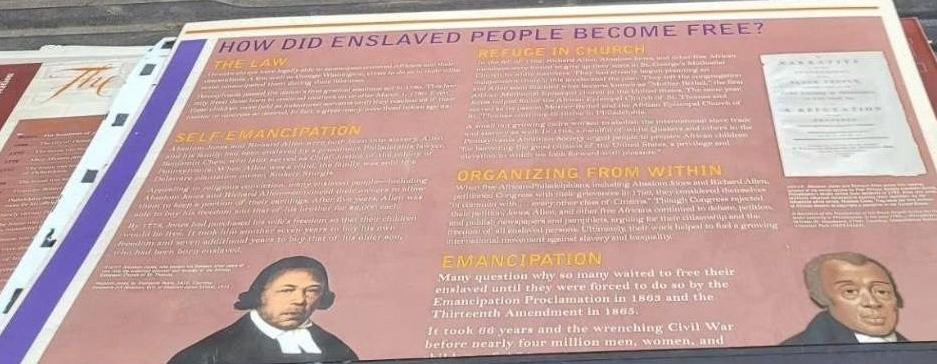
“On February 16, a Federal Judge ordered the Trump administration to restore the signs. Before reinstallation could be completed, the regional court of Federal appeals granted the Trump administration’s appeal to halt the restoration on February 20. While the sign showing Richard Allen and Abaslom Jones has been restored, the AME Church continues to support the litigation for the reinstalation of the full exhibit.”
A Connection of Connexions?
The Reverend Kenneth Howcroft is a Presbyter (Elder) in full connexion with the British Conference. Now a supernumerary (retired) he was President of the British Conference in 2014-5. Prior to that he had served at various times as Assistant Secretary of the Conference; its Ecumenical Officer; and its Secretary for Ministerial Formation and Theological Education. From 2011-14 he served in Rome helping to establish what became the Methodist Ecumenical Office Rome.
Is it best for the world-wide family of Methodist, Wesleyan or other churches with a Methodist strand in their genes to have an independent, privately funded agency to run particular programmes? Or to be a loose, voluntary association of independent national or trans-national churches, agencies and supporters? Or would it be more in tune with our Methodist DNA and way of being the church, the body of Christ, if it were a connexion of connections?
A lot depends on what we mean by Connectionalism/Connexionalism. You will notice that in the last sentence of the previous paragraph I have reversed the order in which I spelt the words in the title. One will be broadly recognised by those whose roots are in the American part of the tradition; the other by those whose roots are in the British part. As I am from the British Connexion I hope that you will forgive me if I continue to use the spelling that I have inherited!
It is not just our spelling that divides us. We often hope that we are united by our heritage, but sometimes we find ourselves divided by it. Connexionalism is a word that is used a great deal amongst us. It is often worried about but always cherished. Yet sometimes we have just paid lip-service to the idea. I played with the idea of calling this piece “Mind the Gap!: Explicit and Implicit Ways of Understanding What It Is To Be A (The?) Methodist Church” before deciding that a title like that was too complicated as well as too long.
In our various contexts we have all faced questions about what to do about things like evangelism, the war in Ukraine, the situation in Gaza, the migration crisis, the economic crisis, the climate crisis, and the issues of human identity, relationships and sexuality (I acknowledge that those examples come from my context, and that you may be able to think of others from yours). Yet as we have tried to respond we have often drawn back from talking to others about them, not only our ecumenical partners but also other members of the world-wide Methodist family.
Sometimes we have not felt able to confer with others because we are afraid to acknowledge to them or to ourselves just how divided each of our
churches is internally by the issues concerned. In other words we have implicitly taken refuge in separation even while explicitly praising and praying for unity (whether or not under the name of ‘connexionalism’). It is as if in many cases the glue of our connexionalism has lost its stickiness and things are starting to fall apart. In other cases, the glue might never have been fully or properly applied in the first place.
So what might Connexionalism have to offer? In the earliest stages of our history it was not a concept that was exclusive to Methodists, but was distinctive of them. It originally referred to those who were “in connexion with the Rev Mr Wesley”. Over the intervening years the emphasis has more and more been placed on the idea of preachers (and in particular those who became ordained ministers) being in connexion. Yet, as Brian Beck has shown, the concept was originally applied not just to preachers but also to all Methodist members and to the societies/congregations/local churches. All worked under Wesley’s ultimate guidance and authority, although that was itself influenced through a practice of Christian Conferring which Wesley embodied in his annual conferences with preachers and was replicated in every aspect of the movement’s life, including the classes and bands.
When Wesley died there was an uprising of feeling that there “should no longer be a King in Israel”. Wesley may have sensed that feeling in his latter days, and he organised things so that his role in the movement was replaced by the ‘Legal Hundred’ which later became a wider conference. The conference therefore became a pivot point in connexionalism. Members, societies and preachers were now in connexion with the Conference. It became psychologically, theologically and spiritually (and sometimes, in one way or another, legally) a corporate person.
In essence therefore connexionalism is about relationships and is therefore interpersonal, an embodiment of what Wesley called ‘social religion’. If members, societies/local churches and preachers/ ministers are each in connexion with the Conference, and the Conference actively in connexion with all of them, that vertical, mutual relationship in itself creates secondary lateral, mutual relationships and interdependence between them all. Properly understood, covenant theology and spirituality helps here. God freely commits to a relationship of love with us. We freely respond to that love, accepting that we are God’s people and committing ourselves to love God in worship and service in return. As we do that we find ourselves drawn into loving relationship with the others whom God loves, which is almost always a wider range of people than those we would normally associate with or like.
Continued on next page...
A Connection of Connexions?
As in a covenant relationship connexionalism can begin in a voluntary association (because it is a response to freely given grace) but by its very nature it does not end there. Covenant grace leads to covenant accountability to our Lord and, in Christ, to each other. That is true for individual members and disciples, local churches, and national or transnational church. As Brian Beck puts it “no church is an independent unit but a member in a wider network, in which it finds its identity”.
Connexionalism is therefore above all about meeting in order to worship, pray, confer, discern, evangelise, pursue justice, serve and share together in God’s mission of creative and redemptive love. As we do those things, we shall need structures to serve those relationships, and those structures will need to develop as circumstances change. Yet, as Brian Beck points out, rather than the structures developing they can often ossify and become things that need to be served rather than serving the needs of God’s love, turning from icons into idols.
Not surprisingly, the place of the Conference in connexionalism developed in different ways on either side of the Atlantic. The American Methodists became an independent ‘church’ first, whereas the process by which Methodists in England developed from being a movement or society for holiness and mission within the Church of England to being an independent ‘church’ happened in a much more ragged way and over a much longer period. Because the War of Independence made it hard for the Church of England to operate in America, and hard for American Methodists to accept any long term guidance or authority from the Conference in England that had succeeded Mr Wesley, American Methodists wished to be independent, and in the course of achieving that replicated many of the structures and terminology of the Church of England for itself. Hence ‘parishes’ and ‘bishops’ entered their tradition.
The result of this, as Russell Richey has pointed out, is that in the American tradition various dimensions of Wesley’s ‘connexional’ role have been institutionalised “into three competing power centres or structures: superintendency and appointment-making in bishops; legislative decision-making authority in conference; and organizational work in agencies”. That seems to place the Conference in a trio of three equal partners who in a variety of ways can presumably act as checks and balances to each other. In British Methodism however, despite some stresses and strains, it is the Conference that is the supreme body. It is ultimately the Conference which through appropriate conferring, discerning and deciding exercises pastoral oversight over the whole Connexion and stations ministers (presby-
ters/elders and deacons). Its presbyters exercise its oversight in the various roles and contexts in which they are stationed. If it were ever to move to calling its presbyters in senior leadership roles to be bishops, it is likely that they would clearly be servants and representatives of the Conference rather than set above it or over against it. The Conference’s officers and members (lay and ordained) represent it to their particular parts of the Connexion, and those parts of the Connexion to the Conference. It deals with matters of legislation and sets policy for agencies and programmes, which are managed through subsidiary bodies.
Various strands of Methodism with their historical roots in either the American or British tradition have, of course, developed their own variations of these basic themes. For example, a number of churches in the British tradition have incorporated bishops, or in the case of the Methodist Church in Ireland “episcopal ministers”, into their systems.
What then of connexionalism in the world-wide Methodist family? It is interesting to note that the main body that is championed is the World Methodist Council. The Council does hold a World Methodist Conference every five years, but that seems to be a wider inspirational and consultative adjunct to the Council. It would make more sense to me and feel more comfortable methodistically if the World Methodist Conference became the lead entity, and the officers and other members of the Steering Group were officers of the Conference rather than the Council. The Conference could then meet every five years or so with wider representation and in the intervening years with a smaller number of representatives. The latter body could still be called the World Methodist Council provided it was seen as being the World Methodist Conference and acting on its behalf between the meetings of the wider body.
What the relative responsibilities of the Conference and the Council are would have to be carefully worked out. For example, the Council would have the day-to-day management of the programmes.
One thing that a move to a connexional structure would provide is a means for us all to engage in deep Christian Conferring together. That would enable our current constituent national and transnational connexions, churches and agencies to express their accountability to each other within their common accountability to God in Christ in the power of the Spirit. That would be a transforming and renewing gift to each of us and to the wider ecumenical world.
Continued on next page...
A Connection of Connexions?
Above all, a connexional form of World Methodism should encourage and enable people to meet and share in each other’s experience, whether onsite or by digital or other means. When my Methodist siblings in other groupings or in other parts of the world are hurt, I should feel the pain and vice versa. That means that we have to be open to real communication. That communication should then enable appropriate working together. Take the migrant crisis as an example. Our churches exist in many of the countries from which people are fleeing or migrating; they exist in the countries through which they are travelling; they exist in the countries which they are trying to reach or where they end their journey. Some other churches are supporting the efforts of the Italian Methodist and their Waldensian and other partners in the Mediterranean Hope programme, but are we exercising the best stewardship of our interconnections across the world? And are we listening to each other about how best to evangelise people from different cultural and historical backgrounds?
Can World Methodism became a connexion of connexions? Dare it?
The views here are my personal reflections and opinions.
For further reading on the history and analysis of Connexionalism see
• “Connection and Connectionalism” by Russell E Richey in the Oxford Handbook of Methodist Studies ed. William J Abraham, James E Kirby; Oxford University Press 2009 pp. 211ff
• “Reflections on Connexionalism” and “Connexion and koinonia: Wesley’s legacy and the ecumenical ideal” by Brian E Beck in Methodist Heritage and Identity Routledge Methodist Studies 2018 pp. 45f
Direct quotes attributed to those authors are taken from those essays.
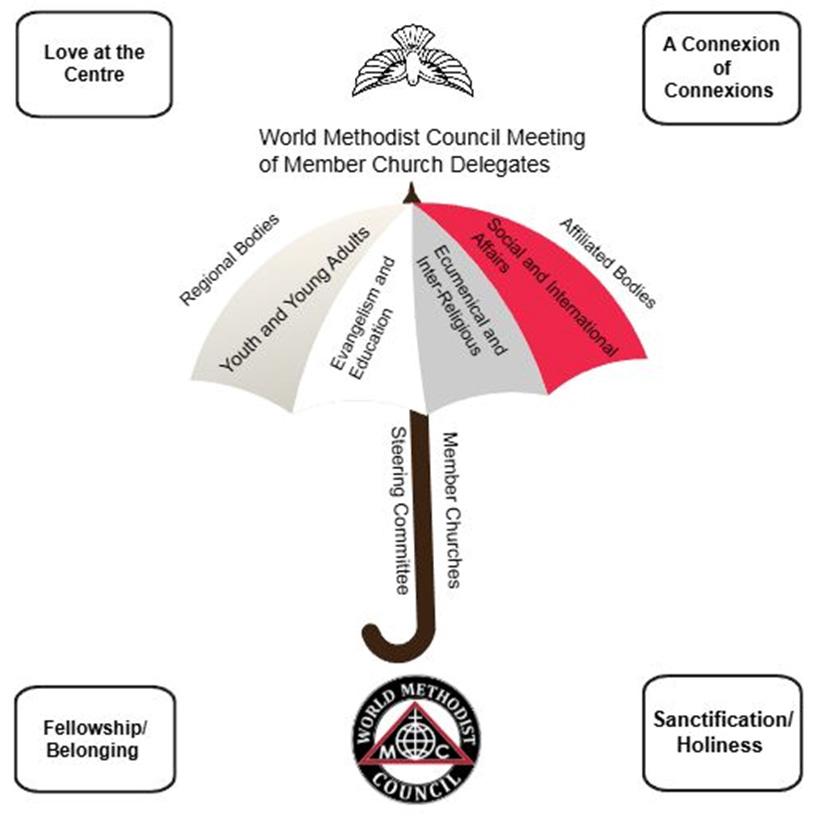
Last Call for Peace Award Nominations!
Nominations for the 2026 Peace Award are now open! Nominate someone who exemplifies Courage, Creativity, and Consistency for the World Methodist Peace Award. Applications must be submitted by April 15, 2026!
The nominee should show courage in regard to physical danger or putting personal interest at risk. Creativity should include opening new initiatives and attracting others in working for the cause of peace. Consistency is judged by effort over a period of time and intensity, despite setbacks.
Here is the link to read the full criteria: http://worldmethodistcouncil.org/whatwedo/world-methodist-peace-award/
The recipient receives a medallion, citation and US $1000 which is symbolic of the
larger recognition achieved in working for peace, justice and reconciliation. The awardee is included in the World Methodist Council Peace award booklet.
Go to www.worldmethodistcouncil.org and click on the “About the WM Peace Award” tab on the left side of the homepage and complete the online application. Please send all nomination forms to General Secretary at communications@worldmethodistcouncil.org today!
The 2026 Peace Award Ceremony will be held during the Council Meeting in San Salvador August 14, 2026. We look forward to receiving nominations for this prestigious award.
Upcoming World Methodist Council Meeting in El Salvador
The 2026 World Methodist Council Meeting will be held at the Hilton San Salvador Hotel. Meetings will start on the afternoon of 13th August, and end with lunch on 17th August.
You will fly into El Salvador International Airport (SAL), also known as Monseñor Óscar Arnulfo Romero International Airport, which is located about 45 kilometers (27–28 miles) from downtown San Salvador.
All travel expenses and hotel accommodations must be covered by the respective member church, delegate representative, or outside organization. The WMC will not cover these costs.
If you are planning to stay a few extra days after the meeting, El Salvador offers beautiful opportunities for local tourism. Additional information will be shared soon; however, participants may enjoy hiking in natural parks, visiting beaches along the Pacific coast, exploring volcanoes, and experiencing the rich culture and cuisine of the country.
Register before April 30th to receive the Early Bird rate of $100 per registrant. Starting May 1st, registration will increase to $150 per registration. Follow the link to register today!
https://www.surveymonkey.com/r/NNXN3YW

Methodist-linked hotel is rated excellent
THE Wesley Camden hotel in north London has been awarded a coveted Excellent rating under the Building Research Establishment Environmental As¬sessment Methodology (BREEAM) environmental as¬sessment scheme, recognising its sustainability credentials and careful heritage preservation.
The hotel, which shares its building with Camden Methodist church, is part of the Wesley Hotel Group, an organisation long associated with ethical practice, social responsibility and its roots in the Methodist tradition.
BREEAM is regarded as the world’s leading sustainability standard for buildings.
The rating reflects a combination of efficient design, low-impact technology and rigorous environmental management. At the Wesley Camden, rooms are only preheated when due to be occupied, water-saving devices are fitted throughout and the hotel operates without gas, significantly reducing carbon emissions.
Alongside these measures, the hotel has prioritised the conservation of the building’s historic character. Fixtures and fittings have been sourced from the Green Guide, parquet flooring and balcony metalwork have been reused and original stained-glass windows retained. Bat boxes have also been installed to support local biodiversity.
General manager James Barr said the award reflected “all the care and thought our team puts into making the Wesley Camden sustainable”.
“Sustainability is one of the pillars of our business at the Wesley and, crucially, it aligns with the Methodist Church’s aspirational net zero goal by 2030. Being a mixed use building, the Wesley Camden Town and Camden Methodist church is a perfect example of what can be accomplished in partnerships,” he said.
“The BREEAM Excellent award is a significant step in the right direction and an achievement by all concerned. From saving energy and water to reusing materials and supporting local wildlife, these small choices make a real difference for our guests, the community and the planet.”
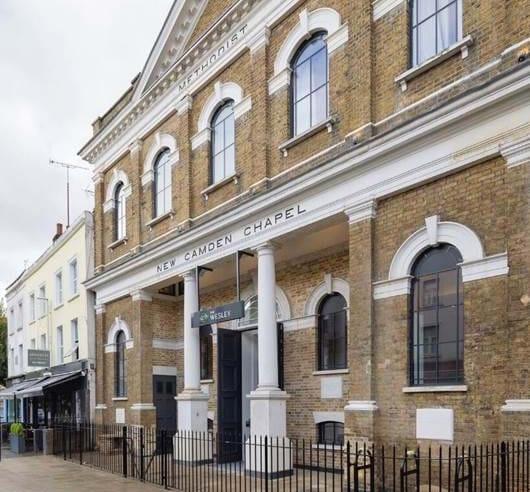
The Wesley Camden hotel in north London shares its building with Camden Methodist church. (Photograph: the Wesley Camden.)
This article first appeared in the “Methodist Recorder”, an independent, weekly newspaper published in Great Britain.
Young Adults Pilgrimage of Peace 2026: A Call to Action
In June 2025, young adults from across the Methodist, Wesleyan, Uniting and United churches within the World Methodist Council, gathered in the Republic of Korea for the Young Adults Pilgrimage of Peace (YAPP). Together we walked through places where memory and courage intersect, reminding us that peace is not abstract. It is learned through listening, confronting difficult histories, and building relationships across difference.
As we move further into 2026, the need for such encounters remains urgent. Across the world, communities continue to face war, displacement, polarisation, and humanitarian crises. Yet in many places people are also working patiently to rebuild trust and pursue reconciliation. In this spirit of resolutions of the 2024 World Methodist Council Conference in Gothenburg, the Youth and Young Adult Committee of the World Methodist Council invites young leaders to participate in the Young Adults Pilgrimage of Peace (YAPP) 2026, taking place in Colombia from 27th June to 2nd July 2026.
Organised in collaboration with the Korean Methodist Church Mission Board and the United Methodist Church–General Board of Global Ministries through the Methodist Church in Colombia in recognition of their long-standing missionary partnership, YAPP 2026 is part of the broader WMC YYA Peace Programme (2024–2029). The pilgrimage will explore Colombia’s ongoing journey towards peace and reconciliation.
YAPP 2026 invites young adults to walk, listen, and learn together—seeking how faith communities can nurture hope, justice, and peace in our time, and fostering ecumenical and interfaith collaboration with organisations such as the Methodist Liaison Office in Jerusalem, the World Council of Churches (WCC), and other ecumenical agencies the programme aims to build bridges of understanding and action.
Why Apply?
The YAPP and the WMC YYA Peace Programme will provide young adults with practical opportunities to deepen their understanding of conflict resolution, reconciliation, and non-violence. Successful applicants will become part of a worldwide network of young peacebuilders dedicated to long-term engagement and action. They will participate in both online and in-person learning sessions, discussions, and immersive activities, equipping them with the essential skills to advocate for justice and peace within their communities and beyond.
Who Can Apply?
Young adults aged 18 to 35 within the Methodist and Wesleyan faith traditions of the World Methodist Council are invited to apply. Applicants should meet one or more of the following criteria:
• Students in theological seminaries preparing for church ministry (lay or ordained).
• Young professionals actively involved in peacebuilding initiatives.
Emerging young ministries committed to justice, reconciliation, and ecumenical engagement.
How to Apply?
The online application form and other supporting documents will be available here: WMC YYA YAPP from Tuesday, 10th March 2026 until Tuesday, 31st March 2026 at 23:59 (AOE – local time). Applicants must submit a CV, a copy of passport, a personal statement, and a letter of recommendation from their national church leader, regional council, or seminary/ religious institution dean.
Bursaries are available to cover part of the expenses, with the remaining costs to be covered by the participant, their sending church, regional council or seminary/ religious institution.
For more information, please email: yya@worldmethodistcouncil.org
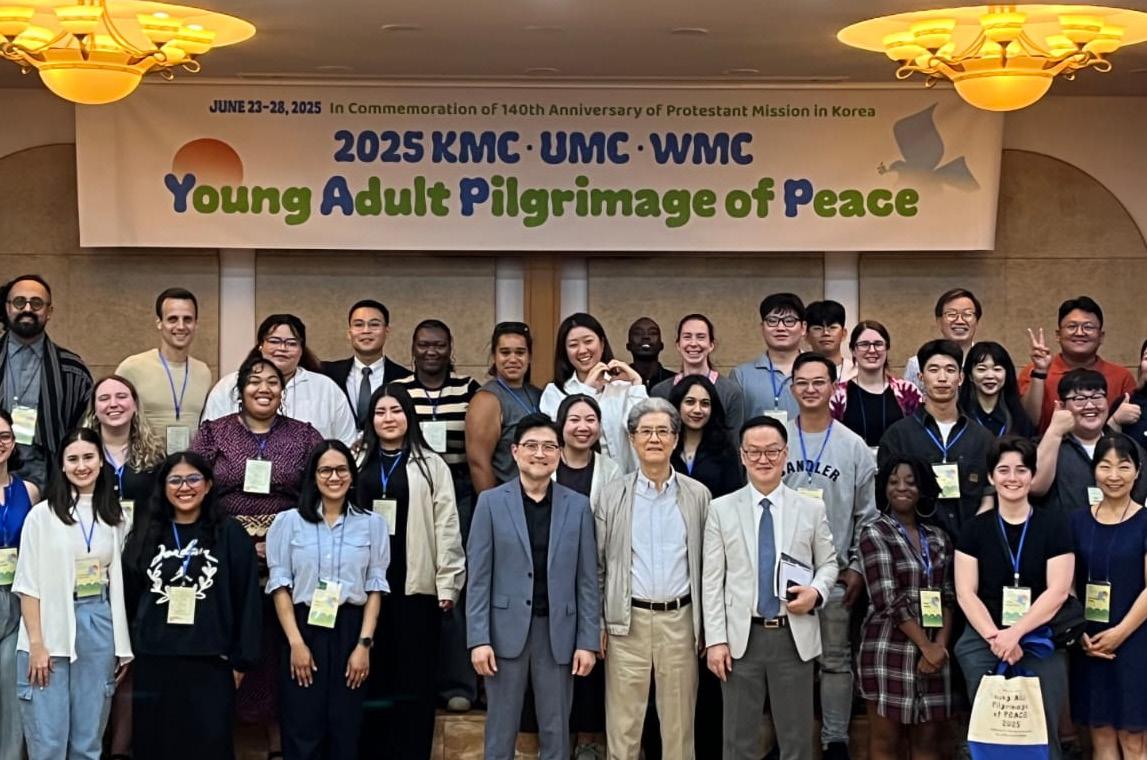
A photo from the 2025 Young Adult Pilgrimage of Peace
National treasure Harold Good: a relentless call to Christian action and peacebuilding
“You are a national treasure!”
Words spoken by Martin O’Brien, journalist and co-author of In Good Time, the autobiography of Rev. Dr Harold Good, who shared a conversation at an evening event as part of the fourteenth 4 Corners Festival in Belfast. The theme of this year’s festival was journey, and few figures in Northern Ireland are as closely associated with a peacebuilding journey as Harold Good.
A packed Jennymount Methodist Church in north Belfast heard Shannon Goodwin pose thoughtful questions to a reflective, humble, grateful, and prophetic Good, invited to consider the encounters, decisions, and moments of grace that have punctuated his remarkable journey. From pastoral ministry to international peace work, the gentle, powerful, and encouraging voice of Harold Good chimed with a seasoned authenticity and a relentless call to Christian action. Despite coping with the physical limitations of a recent fall and his advancing years, Good had a presence that was charming, charismatic, and humorous, yet deeply challenging and unequivocal on the demands of living out a life of faith in our post conflict society and world.
It was fascinating and pertinent to the context of the festival that Good framed his own identity as a traveller, whether as an itinerant “sent” Methodist minister or as an experienced international peacebuilder. The concepts of movement, adventure, growth, and learning, combined with the notion of a journey not over yet, brought challenge to the audience. Shaped by four formative years in the United States in the heady 1960s — including pastoring a black church in the civil rights era — his commitment to peacebuilding was nurtured by exposure to a divided community journeying forward. That formation then informed his commitment to peacebuilding when sent to the Shankill Road in 1968, including the decision to stay when an invitation to return to the US came.
Good expressed his deep spirituality and reliance on the promptings of the Holy Spirit, for example when he found himself in unexpected places: “I wasn’t clever enough to make some of the decisions which were made for me.” Listening to the Spirit was a vital part of his capacity to keep going in peacebuilding work and to demonstrate resilience and courage.
At the heart of peacebuilding for Good is the building of relationships, the quality and depth of which offer the potential for building bridges, however difficult or angry the context might be. He recounted a touching anecdote, quoting the historian and Sinn Féin politician, Tom Hartley, who, speaking at Edgehill College, stated: “The breakthrough came when you invited us to your home.” It was relationships that kept hope alive, the ability to call each other friends, Good explained.
Of particular interest in the conversation was the opportunity presented to Good, along with Father Alec Reid from Clonard, to witness the decommissioning of IRA
weapons. It was intriguing to hear Good’s appreciation of the privilege of being trusted with the process. Indeed the late David Ervine, former leader of the Progressive Unionist Party, asked him if he was “honoured” to perform this crucial task. Good replied that that wasn’t quite the right word. Rather, describing how he and Father Reid travelled with the IRA quartermasters for almost a week, sharing meals and conversations together, said, “I felt like a pastor.”
Good added: “A young man travelled with us the whole week, carrying a rifle. On the last day he approached General John de Chastelain, who oversaw the decommissioning process, stood in front of the General and handed him the last gun.” Father Reid commented, “There goes the last gun out of Irish politics.”
All of that significant week, Good had carried with him a bundle of bookmarks with the prayer of St Francis on them, which he gave to all those who had participated in the week. His heart was warmed when, three years later, he was told by someone attending an event, “My neighbour still carries the card and prays the prayer.”
Good was invited to reflect how his journey had shaped what faith means to him. He spoke thoughtfully about believing beyond ourselves, to that which we can’t explain — the unknown — something you didn’t sit down to plan, something only attributable to God working in a mysterious way.
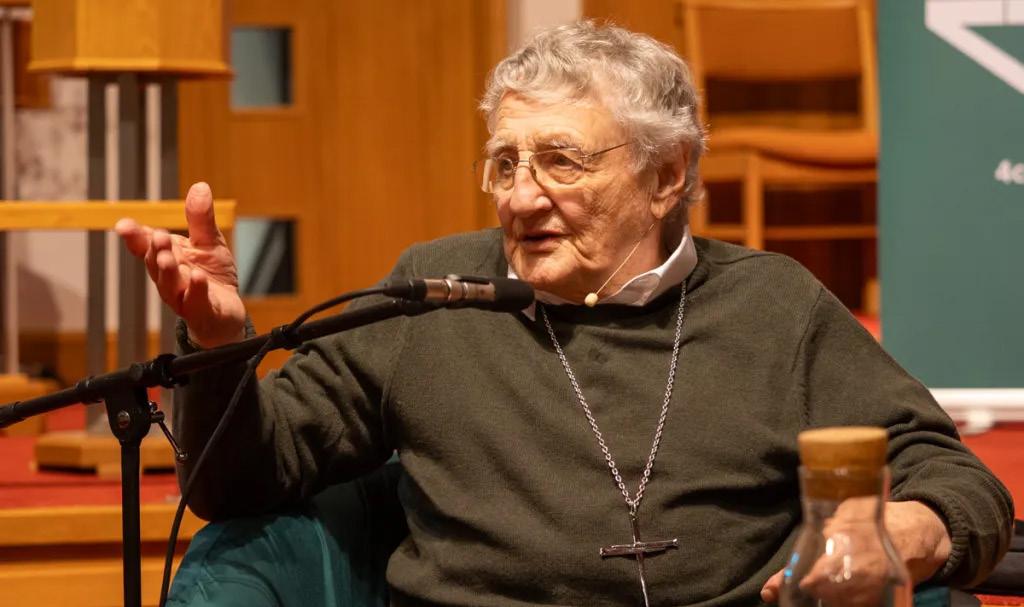
Harold GOOD. The Good Journey. Conversation with Rev. Dr Harold Good. 4 Corners Festival. Jennymount Methodist Church, Belfast, Northern Ireland. © Allan LEONARD @MrUlster
One of the noticeable aspects of the festival this year was the intergenerational dimension, with younger people involved as interviewers, presenters, and musicians. So, it was interesting to hear Good’s reflections on what he thought the current younger generation is being handed. He wondered where the younger generation even is, as far as the future of Northern Ireland is concerned. Good remarked that there seems little interest in what we’ve come through or where we might be going: “If you forget the past, you are in danger of repeating it.
Continued on next page...
National treasure Harold Good: a relentless call to Christian action and peacebuilding continued...
You need to know where we went wrong and how not to repeat it… If my generation had understood better… In schools there needs to be a full curriculum to tell the full history to help young people think. I want to challenge young people.” Good related an occasion when he was the guest speaker at the prize day for his old school. His wisdom shared with the young people that day was: “Travel, enjoy it, but don’t rule out this place. We need you. It’s not the worst place in the world.”
So how then do we deal with the past, especially from the perspective of the faith community? Good offered prophetically three words from the recently discovered notes of a sermon, three things upon which we might reflect — confession, grace, and forgiveness. He had recently shared these concepts with a troubled black and white congregation in Omaha, Texas, which had a history of division. Good challenged the audience to recognise that there is so much to bring to our context now through those three words: “Let’s stop singing it; let’s start doing it.”

Harold GOOD signs copies of his book, In Good Time. The Good Journey. Conversation with Rev. Dr Harold Good. 4 Corners Festival. Jennymount Methodist Church, Belfast, Northern Ireland. © Allan LEONARD @MrUlster
Good was also invited to reflect on whether globally other places could learn from us. His inspiring response was that other places do ask for help and support; we are a beacon of light with opportunity and responsibility given to us. Father Reid and Rev. Good were invited to the Basque country many times, to witness the decommissioning of ETA weapons, and to Colombia, to talk decommissioning with the leadership of FARC. Good said that we have responsibility, but need to get ourselves sorted to improve our credibility.
Goodwin’s final question was to consider what might be the next concrete step on our journey. As well as his three words — confession, grace, and forgiveness — Good’s reflection was that we must challenge our politicians to behave in a different way; in a world where people are dying by the thousands, our papers are about us fighting over street signs. He said that we’re not seeing a new generation coming forward, and that there must be another way other than squabbling — a new openness to say let’s talk about what matters. Good added that churches have no right to challenge if we haven’t shown a new way forward ourselves, trying to help those still living under the old dispensation: “We must show what it means to be one in Christ, one faith, one Lord.”
Good’s final words were to have these peacebuilding conversations around family tables, share with our children, so that they don’t inherit what we did. He quoted the poet Robert Frost in his poem, The Road Not Taken:
“Two roads diverged in a wood, and I-,
I took the one less travelled by;
And that has made all the difference.”
Good’s challenge was to ask us which road will we take — the old familiar or the one less travelled: “It’s a choice to make. The words of Jesus at the sea of Galilee, ‘Follow me’. The less travelled road makes a big difference. Populism is destroying our world, even close to home.”
Challenging and enduring words from a national treasure.
Watch the event here https://youtu.be/7vT2PIyhfFU
Reproduced with permission from Shared Future News. Originally published at https://sharedfuture.news/national-treasure-harold-good-a-relentless-call-to-christianaction-and-peacebuilding/ on 9 February 2026.
Haitian Methodists are facing escalating violence
The Église Méthodiste d’Haïti (Methodist Church of Haiti) and local partners have reported that “rampant” gang violence continues to disrupt daily life across the country, with many communities cut off from basic services and education.
Armed groups now control large areas in and around the capital, Port-au-Prince, and further afield, forcing hundreds of thousands into displacement, shutting schools and undermining community stability.
Humanitarian agencies estimate that up to 1.4 million people are internally displaced and that more than half the country’s population now needs aid because of ongoing conflict, hunger and insecurity.
Churches, schools and other community institutions have been repurposed as emergency shelters as civilians seek safety from extortion, shootings and kidnappings.
Many Haitians face extreme danger on a daily basis as armed groups consolidate territorial control, while the lack of secure transport routes severely hinders religious and aid organisations’ ability to maintain services.
In response to the deepening crisis, the Methodist Church in Britain has launched “Voices for Haiti”, a sixweek prayer and solidarity campaign.
The initiative invites Methodists in the UK and elsewhere to pray regularly for Haiti, to listen to testimonies from Haitian partners and to reflect on the impacts of violence, displacement, education dis¬ruption and community resilience.
Organisers said that the campaign sought to “stand in solidarity with the Haiti District of the Methodist Church in the Caribbean and the Americas” and to support prayerful engagement with both suffering and hope amid current conditions.
The campaign includes weekly short films and prayer resources portraying the lived realities of Haitians navigating violence and instability while striving to sustain worship, community care and mission.
Methodist leaders stressed the importance of long-term solidarity and engagement alongside local church partners as Haiti continues to face one of its most severe humanitarian and security crises in decades.
Haiti is currently governed by a nine-member Transitional Presidential Council (CPT, from the French “Conseil Présidentiel de Transition”), created in April 2024 after the resignation of acting Prime Minister Ariel Henry amid a surge in gang violence and the near collapse of state authority.
The council was established as a time-limited body
with the stated aim of restoring a minimum level of executive governance, appointing a Prime Minister and preparing the ground for elections after years without a functioning democratic mandate.
The CPT’s mandate is due to expire tomorrow (Saturday, February 7). It was designed as a stop-gap arrangement, intend¬ed to oversee security stabilisation, constitutional preparation and the appointment of a provisional electoral authority.
With elections still impossible amid continuing violence and displacement, the end of the council’s mandate raises fresh uncertainty about what form interim governance will take next and whether authority will pass to a successor transitional mechanism or lapse into further institutional paralysis.
Divisions within the CPT have intensified in recent days. Some members of the council have announced moves to remove Prime Minister Alix Didier Fils-Aimé, accusing him of failing to curb gang violence and restore basic state functions. Mr Fils-Aimé has rejected the move, disputing the council’s authority to dismiss him and accusing political opponents of acting in bad faith at a moment of national emergency.
The United States and other partners have urged Haitian leaders to avoid actions that could exacerbate the crisis, while reaffirming support for Haitian-led solutions and the eventual restoration of democratic governance. US Secretary of State Marco Rubio has publicly declared his support for Prime Minister Fils-Aimé remaining in office.
As the transitional framework reaches its formal end, pressure is mounting for clarity about Haiti’s next steps amid continuing violence and humanitarian need.
Judge grants reprieve for Haitians
MORE than 1,000 Christian leaders and congregants from across the US packed into St John Missionary Baptist church in Ohio to support Haitian migrants facing the looming end of their Temporary Protected Status (TPS).
TPS is a humanitarian scheme that has provided refuge for around 350,000 Hai¬tians, allowing them to live and work legally in the US following crises in their homeland.
The gathering came as Homeland Security Secretary Kristi Noem announced the immediate termination of TPS. Ms Noem said her decision reflected improved conditions in Haiti and the temporary nature of the programme.
Continued on next page...
Haitian Methodists are facing escalating violence continued...
Opponents argued that the move would unleash fear and potential deporta¬tions. The decision would have rendered around 350,000 people vulnerable to detention by Immigration and Customs Enforcement (ICE), as their status in the US shifted from legal to unlawful.
Within hours of Ms No¬em’s announcement, a fed¬eral judge in Washington, DC, blocked the action, rul¬ing that the termination was “null, void and of no legal ef¬fect” and likely unlawful.
Judge Ana Reyes cited procedural failures and pos¬sible bias in the decision-making process.
Judge Reyes said that the Government’s claims about Haiti conflicted with the re¬cord, which showed the country beset by a “perfect storm of suffering”, includ¬ing rampant gang violence and chronic insecurity.
The Department of Homeland Security responded angrily to the ruling, call¬ing it “judicial overreach”. A spokesperson said that the judgment would be ap¬pealed.Church leaders at the Oh-io vigil said that the re¬prieve was welcome but not enough, pressing for last¬ing protection amid contin¬ued violence and instability in Haiti.
Linda was shot in the neck after she was caught in crossfire while she was in a church in Port-au-Prince. “I just had a baby who is not even a month old,” she said. “And right after that, I was shot and now I will have to live with it.
“Some people told me that if the bullet is not removed, I might die. Since then, I’ve been asking myself a lot of ques¬tions: ‘Am I going to die?’ ‘Am I going to survive?’”
Linda is being treated by doctors working with the global charity Médecins Sans Frontières (Doctors without borders).
“It’s very shocking,” she said. “However, the medical team reassured me a lot and told me that I was not going to die.
“To think that just a few minutes earlier I was holding my baby … I had just passed him to the person next to me when I was hit.”
This article first appeared in the “Methodist Recorder”, an independent, weekly newspaper published in Great Britain.
Middle East event affirms Filipino migrants’ mission
FILIPINO Methodists living in the Middle East gathered in Jebel Ali in Dubai, United Arab Emirates, for the United Methodist Church’s (UMC) Middle East Mission District annual gathering.
The event had as its theme “Brave hearts, blessed hands” and was described as a celebration of unity in love, service and courage.
The UAE is home to a large number of Filipinos who work as migrant labour under an Overseas Filipino Worker (OFW) scheme in areas including healthcare, hospitality and tourism, retail, construction and domestic work.
Bishops from the UMC’s Philippines Regional Conference — Bishop Rubinal Estrella, Bishop Rodal Akdal and Bishop Israel Painit — joined the gathering in worship and offered encouragement to OFWs living out their faith abroad.
The programme featured a regional choir, praise teams, communal prayer and empowerment sessions for lay organisations. Speakers emphasised courageous love, humble service and faithful witness in challenging contexts.
Bishop Akdal reflected that authentic ministry is often unseen and rooted in humility, while Bishop Painit urged believers to show courage in the presence of fear.
The bishops also visited congregations across the UAE, reinforcing the Church’s mission among migrant communities in the region.
This article first appeared in the “Methodist Recorder”, an independent, weekly newspaper published in Great Britain.
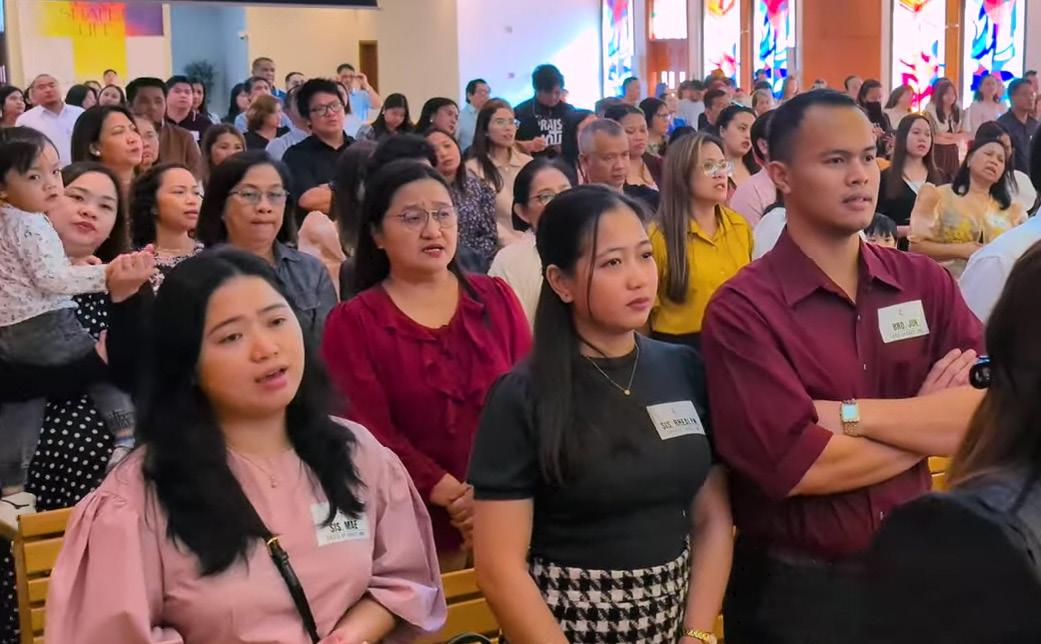
Filipino migrants from across the Middle East gathered in Jebel Ali, Dubai, for the annual gathering of the Middle East Mission District. (Photograph: UM News / YouTube.)
United Church blasts US tariffs on Cuba
The United Church of Canada has offered a strong expression of solidarity with the people of Cuba following a controversial executive order signed by US President Donald Trump introducing a new tariff regime targeting countries that supply oil to the island nation.
The Church has denounced the measure as a threat to the right to life and well-being of ordinary Cubans, urging increased humanitarian assistance and diplomatic engagement to alleviate hardship.
The Church began its statement by citing Scripture: “However, let justice roll down like waters and your righteousness like an ever-flowing stream” (Amos 5. 24) before expressing its “unwavering solidarity with Cuban mission and service partners and the people of Cuba”.
The Church’s acting general secretary, the Rev Cheryl-Ann Stadelbauer-Sampa (pictured), said: “We stand with partners and the people of Cuba, who are calling for respect for sovereignty, justice and an immediate end to the US blockade.
“The abuse of economic and political power by the Trump administration seeking regime change by imposing even more hardship on Cubans must be denounced by Canada and the international community.”
In its statement, the Church said: “Canada must unequivocally uphold respect for sovereignty and self-determination or risk endangering its own. Any failure to stand up to the dictates of the current US administration will only worsen regional and global tensions and lead to greater abuse because of American economic and military domination.”
Signed on January 29, the executive order declares a national emergency and authorises the imposition of tariffs on imports from any country that directly or indirectly supplies oil to Cuba, an escalation of decades-long US pressure on the island. President Trump and his administration frame the order as necessary to protect US national security and foreign policy interests.
Legal scholars and political opponents have raised concerns about the legality and scope of such executive action, arguing that imposing broad tariffs via emergency powers may exceed presidential authority and sidestep Congress’s constitutional role in trade policy — a debate that has already seen similar tariff actions struck down by US courts in 2025.
Critics warn that new sanctions could worsen fuel shortages, daily blackouts and rising food and transport costs for ordinary Cubans, already struggling under the long-standing US embargo that has restricted trade and access to essential goods.
The tensions follow broader regional instability: a US military raid in Venezuela in early January resulted in the capture of President Nicolás Maduro and the deaths of 32 Cuban officers serving there.
The United Church of Canada was formed in 1925 through the union of the Methodist Church, the Congregational Union of Ontario and Quebec and two-thirds of the Presbyterian Church in Canada, later absorbing the Evangelical United Brethren kmmChurch.
This article first appeared in the “Methodist Recorder”, an independent, weekly newspaper published in Great Britain.
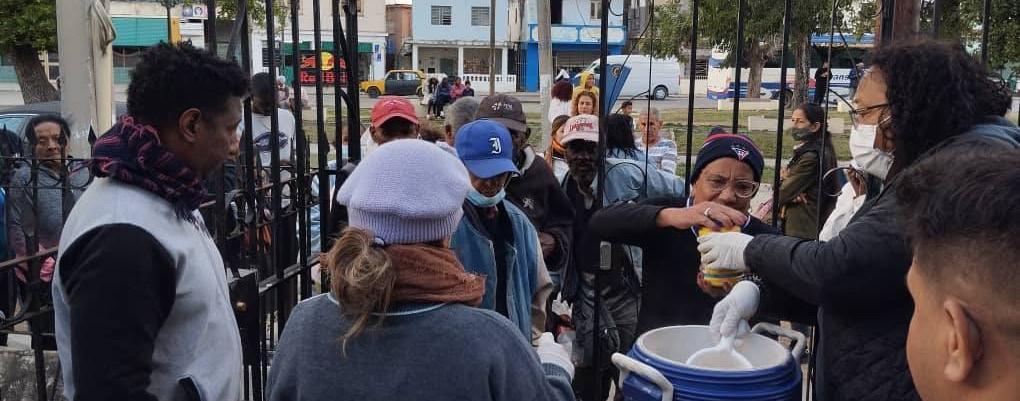
Members of churches and faith networks in Havana share hot chocolate, biscuits and blankets with local residents outside the Martin Luther King Memorial Centre, offering warmth, food and companionship to people facing hardship during Cuba’s deepening economic crisis. (Photograph: Martin Luther King Memorial Centre.)
Public worship resumes in Nigeria’s Taraba State
Worship services by the United Methodist Church (UMC) in Taraba State, eastern Nigeria, resumed after a ban was lifted by Taraba State Governor Agbu Kefas. Mr Kefas permitted the resumption of services following a reconciliation process within the Church.
UMC leaders in Nigeria welcomed the decision as a step toward peace and religious freedom for congregants across Taraba State.
UMC worship activities in Taraba were curtailed under the previous state administration after disputes deepened within the Church. Those disagreements fractured the denomination at the local level, leading to a de facto ban on formal church services in some communities because of the potential for conflict and division.
The dispute largely stemmed from disagreements over governance and property control, mirroring broader challenges faced by UMC national and regional Annual Conferences following the decision by the international denomination’s General Conference to remove long-standing prohibitions on samesex marriage and the ordination of openly LGBT+ clergy while allowing regional Annual Conferences greater discretion on these issues.
The recent reconciliation process was led in part by senior figures within the Church, including former Taraba Governor and UMC minister the Rev Jolly Nyame, whose involvement helped mediate between opposing groups. The Church hierarchy described his involvement as instrumental in reducing tensions.
The UMC bishop for Nigeria and the mission districts of Senegal and Cameroon, Bishop Ande Emmanuel (pictured), thanked Governor Kefas for what he described as a “wise and compassionate intervention” that respected freedom of worship and encouraged unity among church members.
He also noted the governor’s willingness to attend the recommencement service as a sign of official support for peaceful coexistence.
Church leaders urged members to use the resumption of services as an opportunity to sustain peace and reconciliation. They emphasised co-operation with Government authorities and an ongoing commitment to unity within the broader Christian community in the state.
Court clears way for cathedral reopening
A court in Nigeria’s Taraba State has struck out a claim by the Global Methodist Church (GMC) over ownership and control of the Jatutu Memorial Cathedral in Jalingo, clearing the way for the United Methodist Church (UMC) to resume worship.
The Upper Area Court II declined jurisdiction and dismissed the case, awarding costs of 1 million Naira (£527) against the GMC. Leaders of the UMC in Nigeria welcomed the ruling as a step towards reconciliation and confirmed that services have resumed at the cathedral after a 14-year shutdown. GMC representatives indicated that they intend to appeal.
The judgement follows recent moves by Taraba State authorities to permit the re-commencement of UMC worship after earlier long standing internal disputes predating the later UMC–GMC split resulted in a de facto ban.
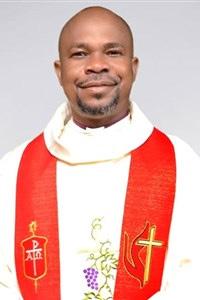
[Photo Credit — Ande-Emmanuel]:
(Photograph: United Methodist Church.)
This article first appeared in the “Methodist Recorder”, an independent, weekly newspaper published in Great Britain.
NIFEA GEM School August 17-28, 2026 Register Today!
The World Methodist Council, together with the World Council of Churches, Lutheran World Federation, World Communion of Reformed Churches, Council for World Mission and United Society Partners in the Gospel, has opened applications for the Ecumenical School on Governance, Economics, and Management for an Economy of Life (GEM School). The program is scheduled for Aug. 17–28, 2026, in Panama City, Panama (location to be confirmed).
The program will bring together 20–25 current and emerging church leaders for intensive training to strengthen the collective voice of churches on global economic and ecological issues. Participants will study topics ranging from eco-feminist economics to international finance, debt, and tax justice, using Bible studies, lectures, and group work. They will develop projects for an Economy of Life—an economic model that prioritizes people and the planet over financial gain. The curriculum includes a consultation on building an Economy of Peace and a fullday immersion in the local context. Bishop Rosemarie Wenner will be part of the leadership team.
Nomination Criteria and the link for registration can be found here: https://oikoumene.org/resources/documents/ecumenical-school-on-governance-economics-and-management-for-an-economy-of-life-gem-school-2026invitation-to-apply
All selected participants will receive a full scholarship, covering flights, accommodation, and full board. A USD 100 contribution is requested from each participant. The deadline for applications is March 1, 2026. Selected participants will be notified by March 31, 2026.
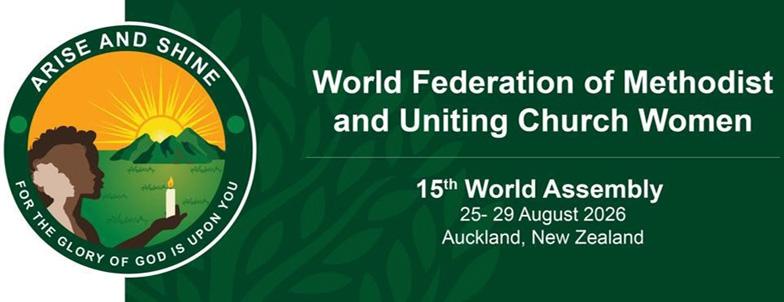
Registration is now open for the 15th World Assembly of the World Federation of Methodist & Uniting Church Women! Join us 25–30 August 2026 in Auckland, New Zealand, at the Due Drop Events Centre, under the theme: “Arise and Shine — for the glory of the Lord is upon you.”
This Spirit filled global gathering will offer inspiring worship, transformative workshops, leadership development, testimonies from around the world, and meaningful fellowship across cultures. It’s a sacred opportunity to be renewed in God’s presence and to strengthen our worldwide sisterhood.

Fees include lunches and dinners. Space is limited and allocated on a first come, first served basis.
• REGISTER NOW:
>> https://web.cvent.com/event/3fd29bd3-744e-440c-87f4-cad73ea7722c/summary
Let us Arise and Shine together in Auckland!
With love and blessings,
Sipiwe Chisvo, World President (2022–2026)
World Federation of Methodist & Uniting Church Women
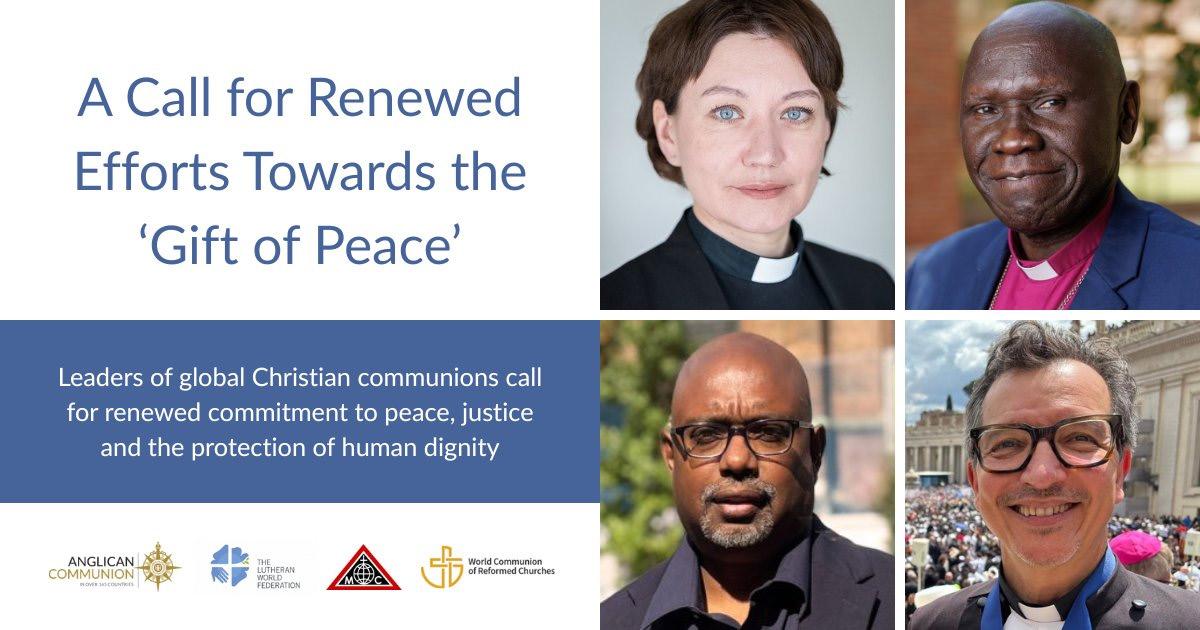
Four global Christian communions have issued a joint call for renewed efforts towards the ‘gift of peace’ in response to escalating conflicts and growing instability around the world. Read more here!
Please send press releases, articles and resources! Submissions should be a page around 500 words, edited and ready to publish. Contact us by Friday, 27 March at communications@worldmethodistcouncil.org if you would like your story to be included in the April edition of the First Friday Letter.
On the Web
This and past First Friday Letters can be found online at FirstFridayLetter.worldmethodistcouncil.org.
The World Methodist Council’s website may be found at worldmethodistcouncil.org
To subscribe to this newsletter, please email communications@worldmethodistcouncil.org
About the First Friday Letter
The First Friday Newsletter is a monthly publication of the World Methodist Council.
Publisher: Rev. Dr. Reynaldo F. Leão Neto, General Secretary
All stories and photos, unless otherwise stated, are protected by their respective copyrights. Please do not copy without expressed written permission from the Council.
the Council
@worldmethodistcouncil
Methodist Council
The Rt Revd Anthony Poggo (top right), The Revd Dr Anne Burghardt (top left), The Revd Dr Reynaldo Ferreira Leão Neto (bottom right), The Revd Vinod Peacock (bottom left)