The of a Lifetime
Washington and Lee University

In recent national surveys, W&L students have placed the university at or near the top for overall satisfaction with their college experience, quality of teaching, and financial aid.
The Investment of a Lifetime
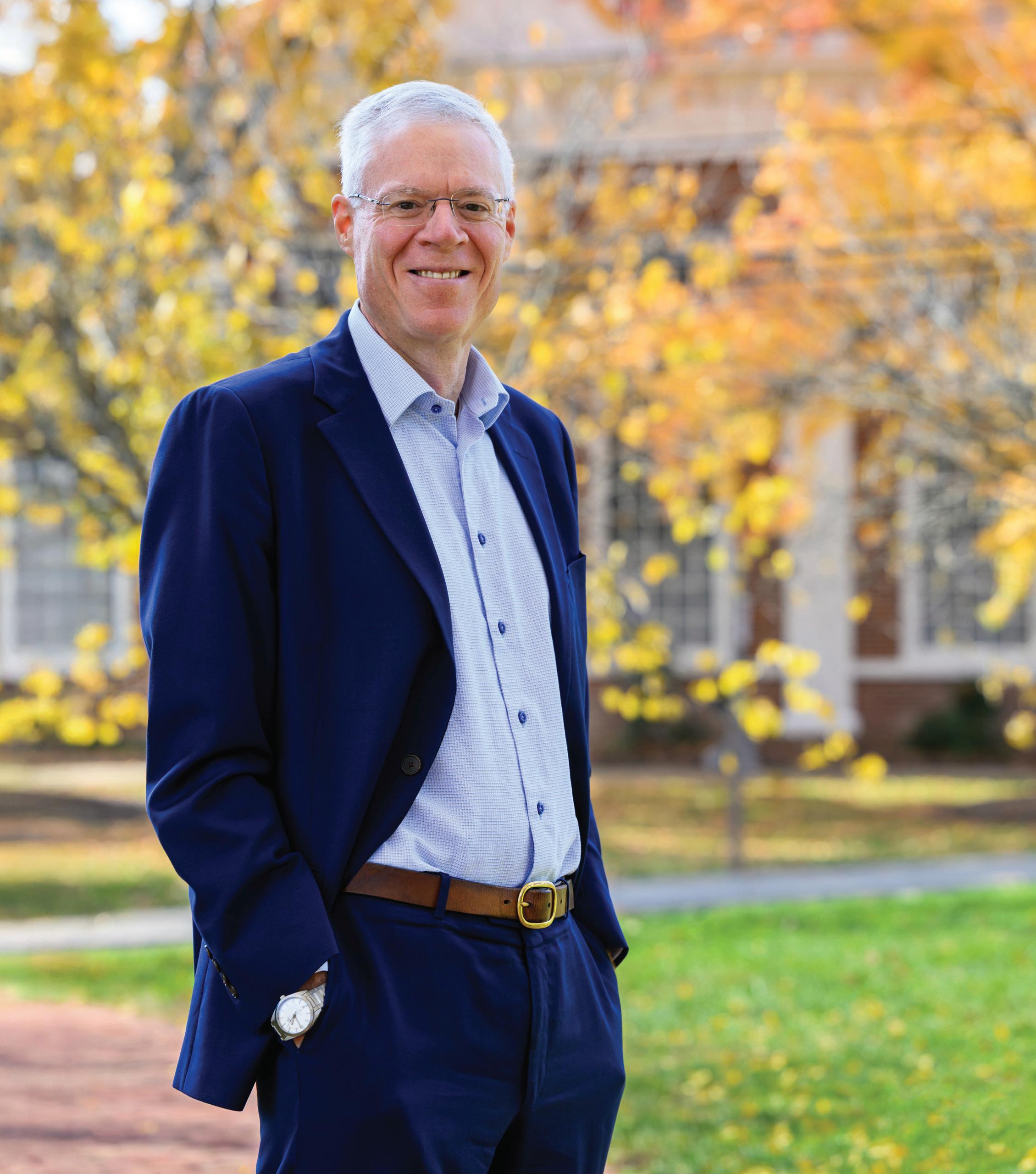
With my departure from Washington and Lee at the
end of this academic year, I feel like a graduating senior or third-year law student, soaking up every remaining opportunity on campus, and moved to reflect on the profound impact of our beloved university on the lives of its students and alumni.
JUST OVER A YEAR AGO, we launched W&L’s most ambitious fundraising campaign, Leading Lives of Consequence. Our goal is to raise $650 million to expand student access and opportunity, enhance our distinctive curriculum, build first-rate facilities that support our mission, and prepare our graduates to make a difference in the world. We are well on our way to success.
Since the public launch, I have been traveling the country, conducting regional campaign events with alumni and parents. The turnout and energy at these gatherings of Generals have been outstanding. People are happy to see each other, proud of their alma mater, interested in how things are going on campus, and excited about the future of W&L.
At these events, I always enjoy hearing stories of how Washington and Lee has enriched the lives of our alumni, and I am pleased to report how good our current students feel about the university. In recent national surveys, W&L students have placed the university at or near the top for overall satisfaction with their college experience, quality of teaching, and financial aid.
I am equally pleased to share the work we are doing to strengthen Washington and Lee for the benefit of rising generations. Every dollar raised in the campaign is an investment in our mission. We are increasing scholarship support, creating academic programs, funding summer opportunities, and improving our facilities. All of this prepares our graduates to lead lives of consequence, for the benefit of themselves, their families, and the public good. What we do here at Washington and Lee matters.
Our particular brand of liberal arts education is accessible: W&L provides best-in-class financial aid that ensures every admitted student can afford to attend.
It’s personal: Our 7:1 student-to-faculty ratio is among the best in the nation, enabling small class sizes and lifelong relationships between teachers and students.
It’s interdisciplinary: Our curriculum is both traditional and innovative, combining the liberal arts with preprofessional programs and our distinguished school of law.
It’s experiential: At Washington and Lee, education extends beyond the classroom through opportunities like study abroad, research, internships, and legal clinics.
And it’s consequential: The outstanding education we provide, with its emphasis on honor, integrity, civility, leadership, service, and citizenship, prepares our students to make a difference in their communities and their professions long after graduation.
In the following pages, we’ll explain how a W&L education is affordable to families across the income spectrum, showcase the distinctive qualities of our educational experience, discuss the strategic investments we’re making for continuous improvement, share the outstanding outcomes of our students, and walk through the finances underpinning it all.
As you read this report, I hope you will agree that Washington and Lee is a worthwhile investment in every sense of the term. Indeed, it is the investment of a lifetime. Our students invest their tuition dollars — and their trust — in us. And we invest the formidable resources of the
AccessINVESTED IN
One of our top strategic priorities is to ensure that W&L remains affordable to students across the income spectrum. We meet the full financial need of all students without loans. The W&L Promise guarantees that families making less than $150,000 pay no tuition, while those making less than $75,000 pay no tuition, room, or board. In 2024, we became need blind in undergraduate admissions thanks to the extraordinary generosity of Bill Miller ’72, ensuring that having financial need never hurts an applicant’s chance of admission. And over 90% of law students receive scholarships, with an average award of $31,753, thanks to our expanded endowment for financial aid.
#1 COLLEGE FOR GREAT FINANCIAL AID
— The Princeton Review’s The Best 391 Colleges, 2026 edition
Who Comes to W&L?
Undergraduate Class of 2029
14+
8,969
Undergraduate
ACT SAT
Medians
34
1480 for the 52% of enrolling students who submitted scores
35
42 Countries of origin represented U.S. states/territories represented
Opening Doors
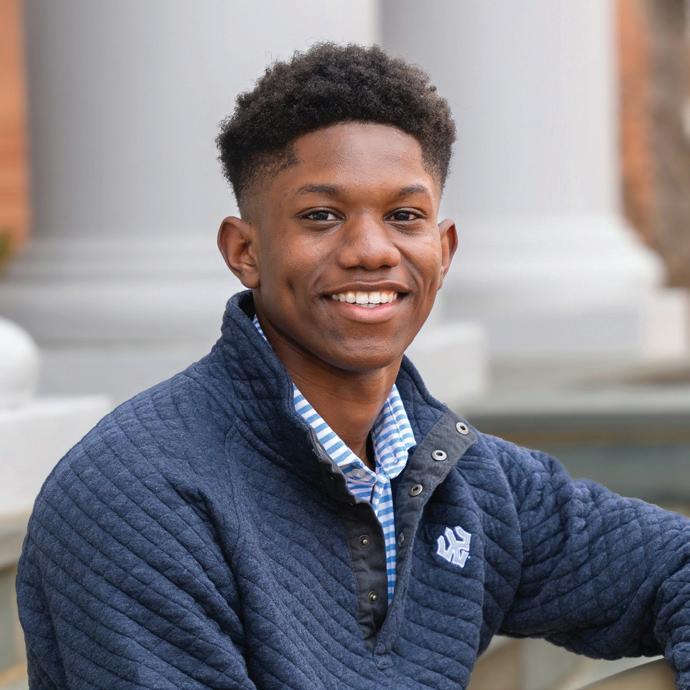
Ashton Mouton ’28
Miller Opportunity Scholar
Hometown: Rayne, LA
Majors: Politics and Sociology
Minor: Law, Justice, and Society
“I sought a place that would sharpen my mind, steady my voice, and strengthen my will to serve. I knew Washington and Lee was where I could maximize my potential and grow as a leader. By investing in students today, the university shapes leaders who will make the world more inclusive, kinder, and stronger. I owe a special debt of gratitude to Mr. Miller, whose generous support of W&L reflects his conviction that every student deserves a quality education, regardless of socioeconomic status.” n
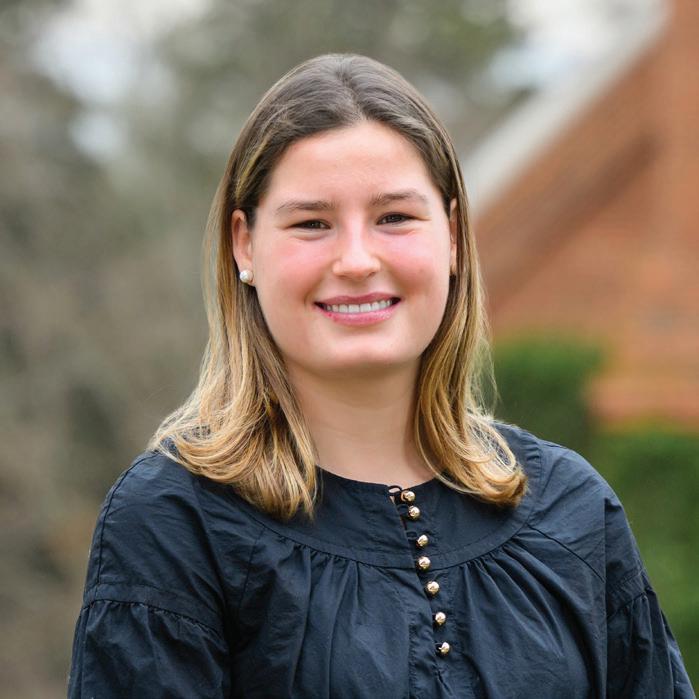
Camilla Wood ’28
Houston Honor Scholar
Hometown: Houston, TX
Majors: Accounting and Art History
“Being at W&L has been such an eye-opening experience. I have been exposed to so many different professions and opportunities. Being around high-aiming and achieving people has pushed me to work harder. I am motivated by the people around me and have been inspired to pursue a career in finance. I love W&L and feel so fortunate to call it my home, which would not be possible without the generous scholarship support I received.” n
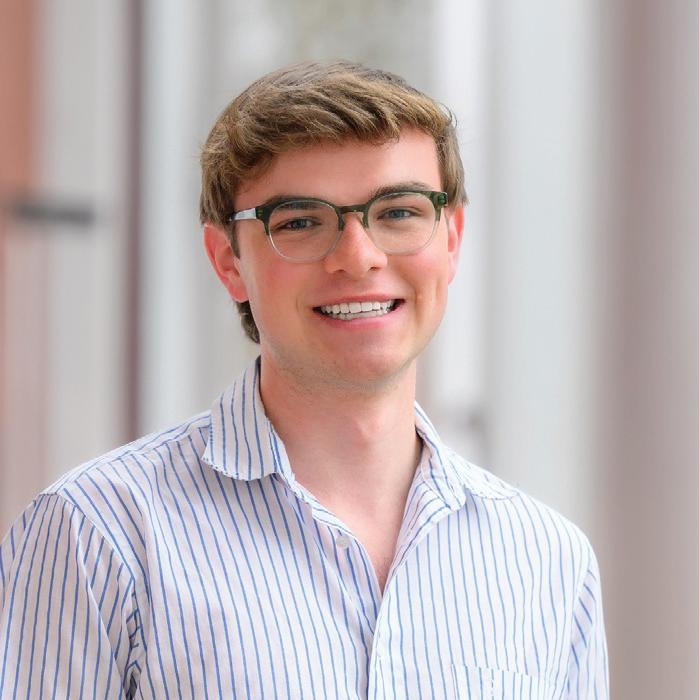
Trip Wright ’25
Johnson Scholar
Hometown: Park Hills, KY
Major: Sociology and Anthropology Minors: Data Science and Poverty and Human Capability Studies
“When I first stepped foot on campus, I wasn’t entirely sure who I would become or how W&L would shape me. The only thing I knew was that I had been given an incredible gift: the opportunity to learn and grow without hesitation. It’s clear that the freedom the Johnson Scholarship provided has been foundational to my W&L experience. The Johnson is more than a merit scholarship — it’s a vote of confidence and an investment in our potential as current and future leaders.” n
We asked six Washington and Lee students and recent graduates to reflect on how they benefited from financial aid at W&L.

Darya Philips ’24
QuestBridge Scholar
Hometown: Atlanta, GA
Major: Accounting Minor: Data Science
“I always knew that I wanted to attend a liberal arts college. The small class sizes and outstanding faculty provide for a unique and enriching college experience. What helped set W&L apart from other schools was the Honor System, which helps instill integrity into every student here. However, I never would have found out about W&L if not for its partnership with QuestBridge, and I never would have been able to attend if not for the school’s generous aid.” n
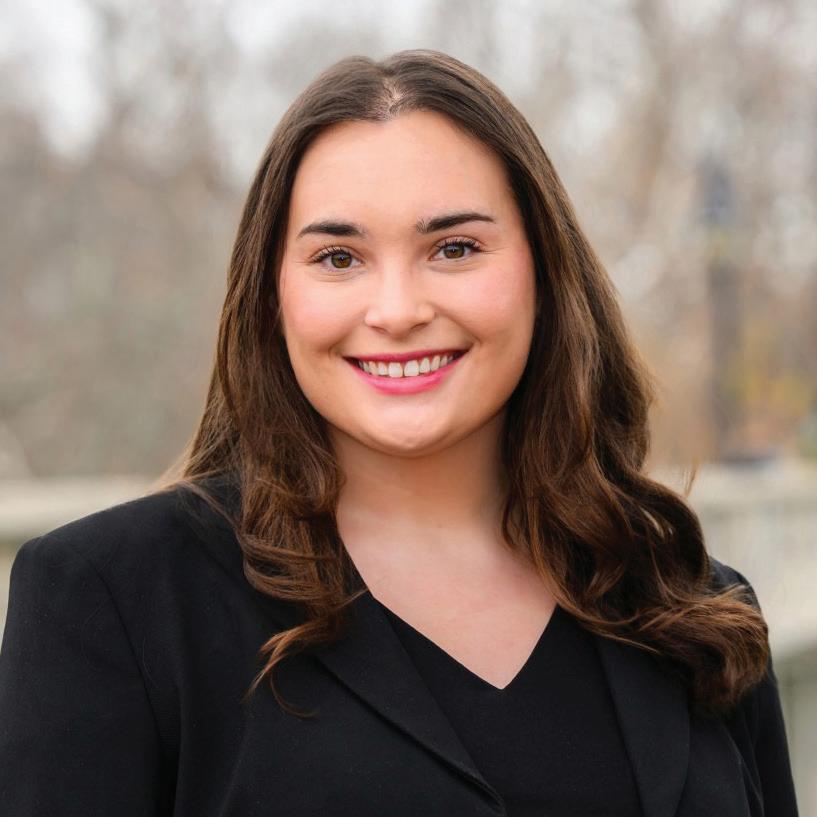
Gabrielle Dosev ’28L
Alexander M. Harman Scholarship
Hometown: Pensacola, FL
Undergraduate Institution: University of Florida
“Visiting W&L Law confirmed my decision to attend because it was clear that people here genuinely look out for one another. The surrounding Lexington community and the access to nature made the school feel like a place where I could actually live a balanced life, not just study. Because of the support of the Alexander M. Harman Scholarship, I’ve been able to start law school with a sense of stability and the freedom to fully engage in the experience.” n
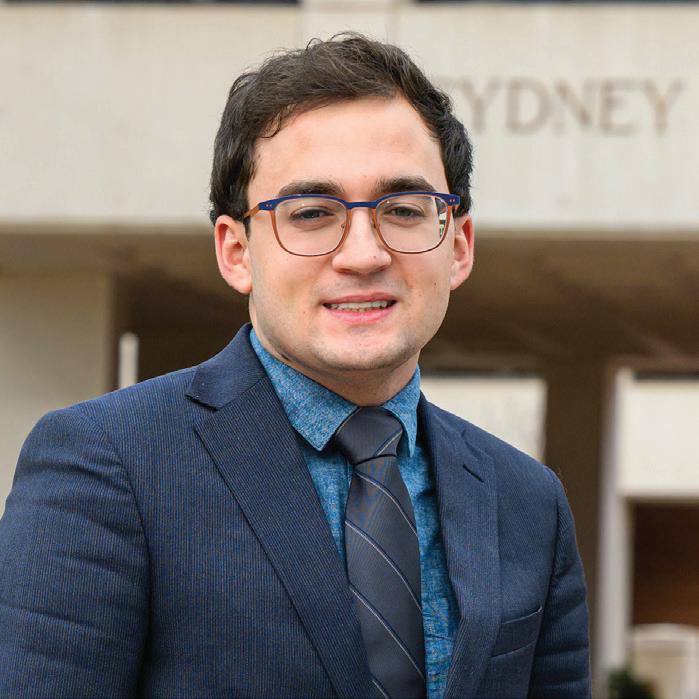
Riley Wolfe ’28L
Robert O. Bentley 1926L Scholarship
Hometown: Portland, OR
Undergraduate Institution: Portland State University
“I wanted to go somewhere small with good academics, so W&L was an easy choice. There was just one obstacle left: convincing my mother that I belonged at a school 3,000 miles from home. When we attended Admitted Students Day, her skepticism melted away as we met the amazing staff and students. W&L also offered a generous scholarship that sealed the deal. I know I’m exactly where I’m meant to be, and the scholarship I received is what made that possible.” n
Best in Class
Washington and Lee is one of the very few colleges and universities in the nation that is need blind and meets the full demonstrated financial need of every student in the form of grants and work-study jobs, rather than loans. With 10% of each incoming class also receiving a full, merit-based Johnson Scholarship, W&L stands alone in its commitment to access and affordability.
The Full Package
n Need Blind
W&L admits all undergraduate students without considering their ability to pay.
n No Loans
W&L financial aid packages consist exclusively of grants and campus jobs.
n 100% of demonstrated financial need is met for every admitted undergraduate student.
n 10% of each incoming class receives a full-ride, merit-based Johnson Scholarship.
Average Family Contribution Toward Total Cost of Attendance by
income, Class of 2029
The amount that families are asked to contribute is scaled to their income and assets. Families with complex financial situations sometimes have contributions that fall above or below the average for their income range. Class of 2029 domestic U.S. students (university need-based grant application submitted)

$35M Raised for law scholarships in the Leading Lives of Consequence campaign BY THE NUMBERS
#2 Best Value Private Law School National Jurist magazine Law Student Scholarships
90% of law students receive scholarships, with an average award of $31,753
MAKING IT COUNT
$0
Families with incomes less than $150,000 and typical assets pay no tuition, thanks to THE W&L PROMISE. Those with incomes less than $75,000 pay no tuition, room, or board.
#1
College for Great Financial Aid (The Princeton Review’s The Best 391 Colleges, 2026 edition)
20% ($21,578)
Annual subsidy from endowment and gifts for all undergraduate families, including those not receiving financial aid 63% of the entering first-year undergraduate class received W&L grant assistance
VALUE AT W&L
Let’s Do the Math
When it comes to the cost of a college education, you don’t always pay for what you get.
A student with a family income of $150,000 and typical assets would pay less to attend Washington and Lee than to attend either an in-state public flagship university or a less competitive private college that offers merit scholarships:
n W&L has the highest published price in the example above, but the family pays the lowest actual four-year cost, and the student graduates debt-free, thanks to our generous need-based aid.
n The public flagship institution has the lowest published price, but offers the least financial aid, resulting in a higher four-year cost for the family than W&L and debt at graduation.
n The private college has a lower published price and offers merit scholarships to strong students but still has a smaller overall financial aid award, resulting in the highest four-year cost for the family and debt at graduation.
THE BOTTOM LINE? Washington and Lee is often more affordable than institutions with lower published prices or merit scholarships. Given the quality of a W&L education, families receive exceptional value for their money.

Strategic Spotlight
$30 Million Gift will Create New Admissions, Financial Aid, and Conference Center
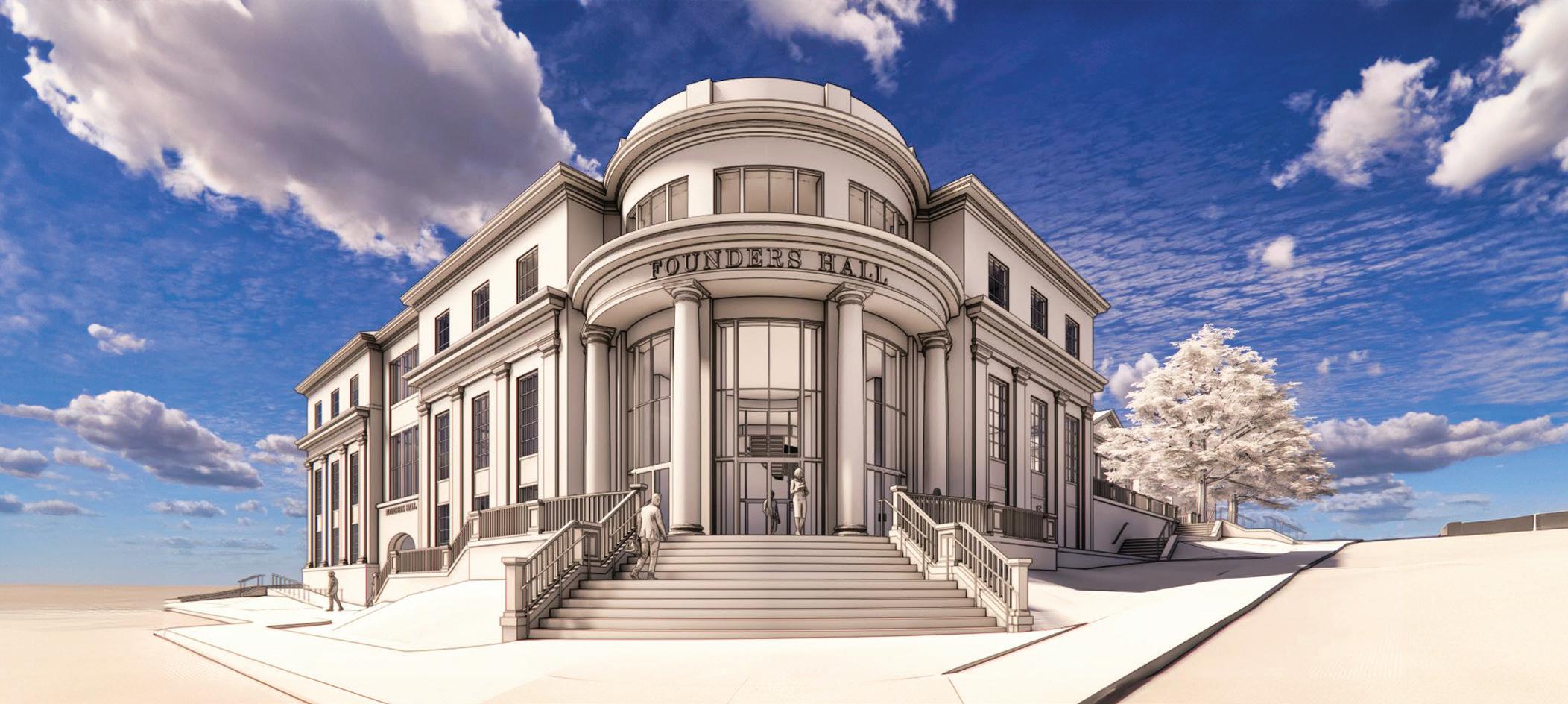
“Founders Hall is where students with extraordinary potential will begin their Washington and Lee journeys. It will help us attract the strongest students who are drawn to W&L’s distinctive opportunities and values for generations to come.”
— PRESIDENT WILL DUDLEY
Plans are underway for founders Hall, W&L’s new admissions, financial aid, and conference center. The facility, made possible by a $30 million anonymous gift, will bring the offices of Admissions, Financial Aid, and the Johnson Program in Leadership and Integrity together in one space for the first time, creating an inviting gateway to campus that helps prospective students understand the benefits of attending Washington and Lee and their ability to afford it.
Located on the corner of Washington Street and Lee Avenue, the 28,600square-foot structure will replace the Early-Fielding building and feature a
FAST FACTS
In 2024-25, the Admissions Office hosted:
8,571
total attendees for admissions visits and events
welcoming lobby, an outdoor patio, and space for events and information sessions. In addition to uniting critical student-facing offices, the new facility will also fill a long-standing need for flexible event space on campus. Founders Hall will connect to Evans Hall to provide access to large event venues and food service for small conferences, alumni programs, and major university events, such as Johnson Scholarship Selection Weekend, Admitted Students Day, the Entrepreneurship Summit, Lifelong Learning programs, and the Institute for Honor Symposium. n
2,773
prospective student tours and information sessions
Historic Gift Allows W&L to Adopt Need-Blind Admissions Policy
Most colleges Have to reject strong aPPlicants due to their financial need. Thanks to a historic, $132 million gift from investor, philanthropist, and W&L alumnus William H. “Bill” Miller III ’72, Washington and Lee became need blind in undergraduate admissions in 2024. Being need blind means that at W&L, no undergraduate student’s admissions decision will rest on whether their family can afford the cost of attendance. The admissions committee has the freedom to consider each student on the basis of their academic accomplishments and personal character alone.
Miller’s extraordinary gift is the single largest in the university’s history and one of the largest dedicated to financial aid at any private liberal arts college. Washington and Lee awarded its highest honor, the Washington Award, to Miller in October 2024. The Washington Award was established in 2001 and recognizes extraordinary acts of philanthropy in support of W&L and other institutions and distinguished leadership and service to the nation.
“We are so grateful to be able to make student talent the singular focus of our admissions process and to eliminate students’ ability to pay as a factor in admissions decisions,” said Sally Stone Richmond, vice president for admissions and financial aid.
“Thanks to Bill’s astonishing generosity, W&L’s distinctive education is accessible and affordable for talented and curious students from all walks of life.” n
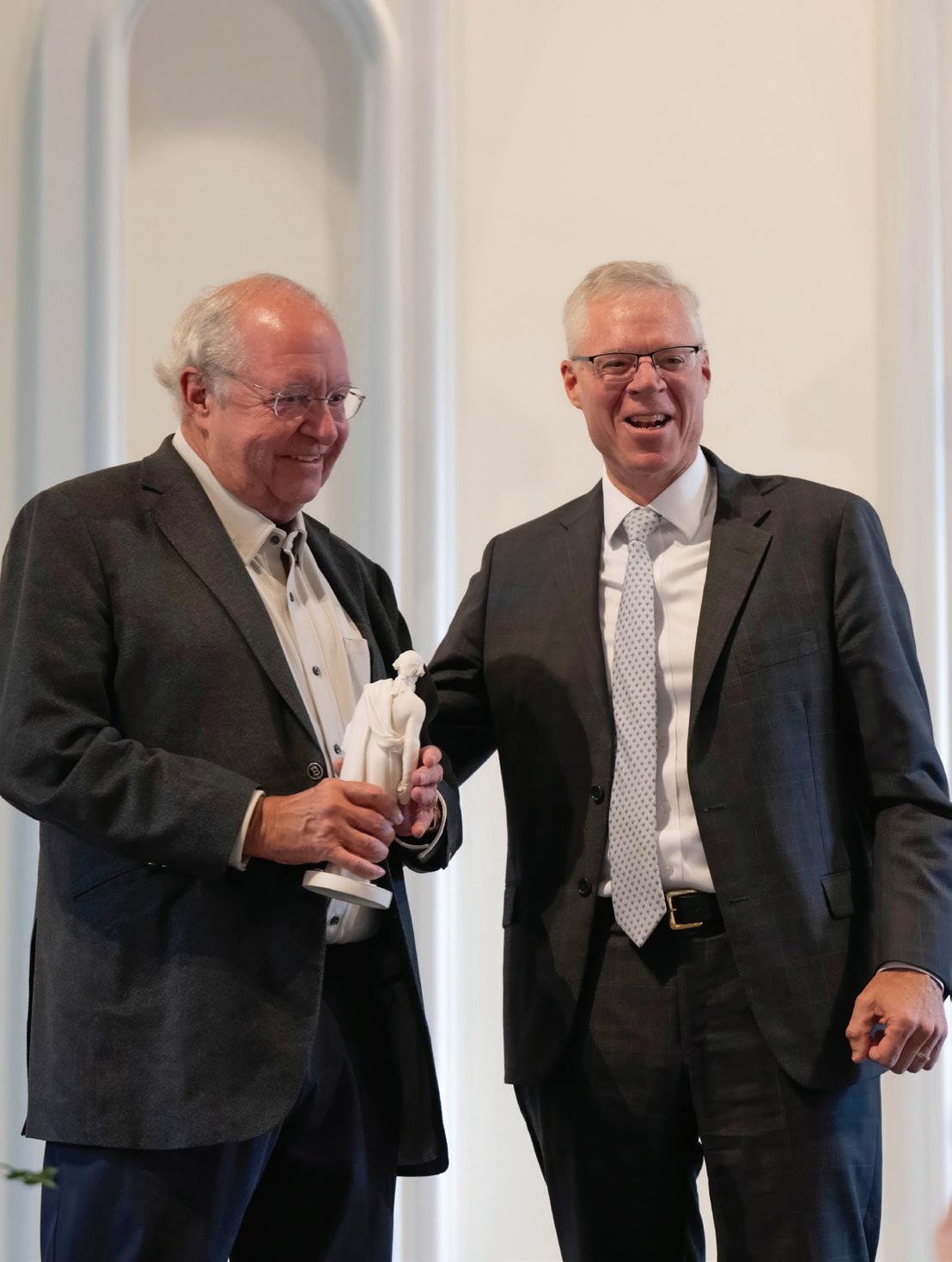
“Being need blind will allow Washington and Lee to attract the most highly sought-after students with a simple and powerful message: Your financial circumstances, however modest, will not prevent you from attending W&L. I hope my gift will inspire others to support this outstanding university.”
— BILL MILLER ’72
756 194 PARTNERING FOR SUCCESS
Johnson Scholars enrolled at W&L since 2008
One of the nation’s premier merit scholarship programs, the Johnson Scholarship rewards students on the basis of extraordinary academic achievement, demonstrated leadership and integrity, and their potential to contribute to the intellectual and civic life of the W&L campus and the world. The scholarship covers tuition and fees, room, board, and $10,000 in funding for summer experiences.
QuestBridge Scholars enrolled at W&L since 2010
QuestBridge connects exceptional low-income students with 55 of the nation’s leading colleges and universities. Twenty-two members of the Class of 2029 are QuestBridge scholars, and an additional 174 students discovered W&L through the QuestBridge program since the partnership began in 2010. W&L also partners with a variety of other national nonprofit organizations to expand opportunity and access for talented students with financial need.
Bill Miller ’72 receives the Washington Award from President Will Dudley in October 2024.
W Education INVESTED IN
ith our distinctive blend of liberal arts, preprofessional programs, and the School of Law, Washington and Lee stands out among our peers. We provide an outstanding undergraduate education in the arts, humanities, and sciences, as well as in accounting, business, education, engineering, and journalism. Our approach to legal education gives students unparalleled access to faculty, real-world experience, and the flexibility to customize their education to their career objectives. All of our students, regardless of their school or major, are exposed to a wide variety of disciplines and develop critical thinking, ethical reasoning, and problem-solving skills that prepare them for success throughout their lives and careers.
For the third year running, W&L STUDENTS RANKED #1 in student satisfaction among all liberal arts colleges. According to 2023-25 student surveys from The Wall Street Journal, they were more likely than their peers to recommend their college to a friend, to choose it again, and to express satisfaction with the value for their money.
Meaningful Connections
A hallmark of the liberal arts education we offer at Washington and Lee is connection. We prioritize small class sizes, personal relationships between students and faculty mentors that create lifelong ties, and a community of trust anchored in the Honor System.
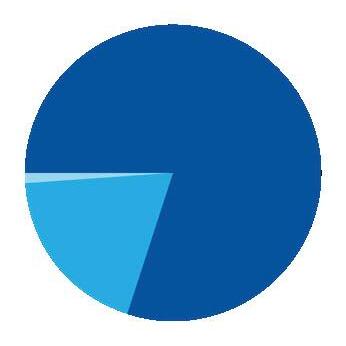
• 7:1 Student-to-faculty ratio (undergraduate and law)
• 44% of W&L students conduct research with a faculty mentor
• 26 faculty-led Spring Term Abroad courses in 2026
We offer a wide-ranging curriculum that encourages students to explore new academic interests, connect their coursework across disciplines, and identify links between classroom learning and real-world applications.
• 37 undergraduate majors
• 42 undergraduate minors
• 14 undergraduate interdisciplinary programs
• 12 world languages
• 70% of students participate in an experience abroad during their time at W&L
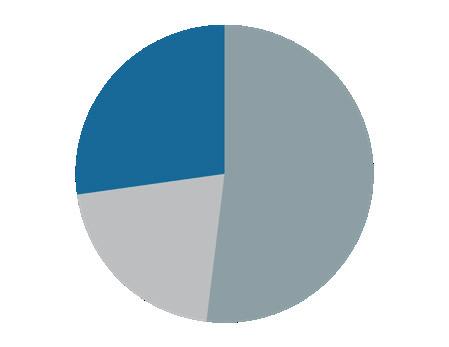
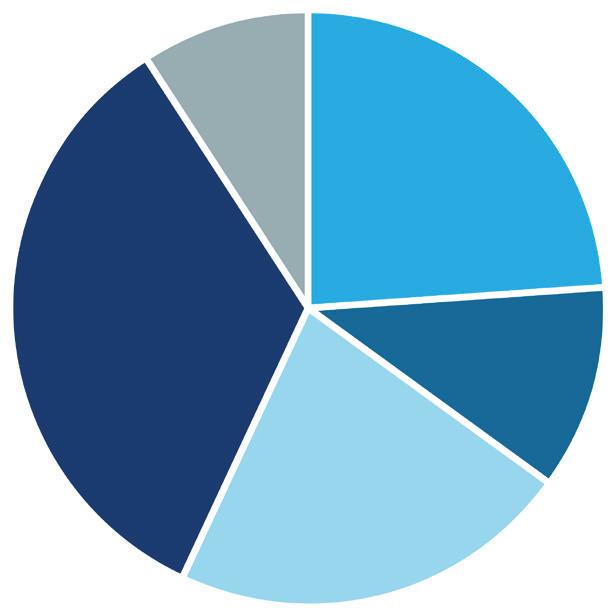
Class of 2025: MAJORS AND MINORS BY ACADEMIC DIVISION
• 46% College only
• 41% major or minor in both the College and the Williams School
• 13% Williams School only
Class of 2025
“The more we can provide students with clear, useful skills and interdisciplinary activities as part of this liberal arts experience, the better they’re going to be as citizens, as humans, as scientists, or anything they end up doing.”
— Jessica LaPrice, Associate Professor of Biology
• #1 in the nation for Classroom Experience (The Princeton Review’s The Best 391 Colleges, 2026 Edition)
• #1 in the nation for Learning Opportunities (2025 student poll by The Wall Street Journal)
• #1 in the nation for Learning Facilities (2025 student poll by The Wall Street Journal)

UNLIKELY PAIRINGS: SCIENCE, SOCIETY, AND THE ARTS
tHe science, society, and tHe arts (ssa) conference, held on campus every other spring, showcases student research from across the curriculum through poster sessions, presentations, art exhibitions and performances, and discussions.
The theme of the 2025 conference, which was entirely student-run, encouraged students to consider “Unlikely Pairings” that fused their academic interests and personal passions, highlighting the creative and interdisciplinary work that is essential to a W&L education.
“In running the conference, we wanted to create an exciting and unique theme, but ‘unlikely pairings’ is more so a description of what runs deep through W&L, which is pretty special,” said Gabrielle Ursin ’25, who served on the SSA planning committee. “I think it would be harder to have a conference that didn’t have unlikely pairings, given the range of interests and how our curriculum is set up to explore multiple different things during your time here.”
Students said that the theme encouraged them to think more creatively about their research and how it might pair with their interests outside the classroom.
Calla Andrews ’27, a biology and environmental studies double major, focused on the behavioral manipulation of ants. Her presentation, “Zombie Ants!,” was inspired by the HBO television adaptation of the video game “The Last of Us,” specifically investigating the scientific reality behind the premise of the O. unilateralis parasite jumping from ants to humans in the aftermath of a climate catastrophe. Andrews also presented a selection of photos she had taken around W&L and Lexington, highlighting her own unlikely pairing of interests and talents.
“Conducting independent research and presenting at a conference as an undergraduate is something I have found is truly unique to W&L and is something I don’t take for granted,” she said. “The more people who can understand a topic, the more knowledge we share, and the more knowledge we share, the better off everyone is.”
Stefanie Lehman ’25 saw SSA as an opportunity to dig deeper and think more broadly about connections in her research. She presented her art history senior thesis at the 2025 conference. Inspired by a Spring Term course on modern art in Barcelona that she took in 2024, her year-long independent research project
examined connections between Salvador Dalí and Johannes Vermeer.
“I really enjoyed learning about modern and post-modern theoretical lenses during my research, such as the phenomenology of perception and successive phases of the image,” said Lehman. “Now when I look at art, I understand it in a completely new light.”
With its unlikely pairing of the surrealist and the 17th-century Dutch painter, Lehman felt her thesis was a perfect fit for the SSA conference, and she found that the two artists were more alike than she anticipated. She appreciated how the theme urged students to think about research in a more interdisciplinary way and affirmed how exciting it can be to make unlikely connections in your research.
“That’s the beauty of unlikely pairings; they reveal connections that otherwise would not be made unless you take the time to seek them out,” she said. “SSA’s structure was exciting in the way it encouraged this same kind of thought process by establishing such a creative theme and pairing interdisciplinary topics in the same sessions. The possibilities of connection are endless!” n
My W&L Education
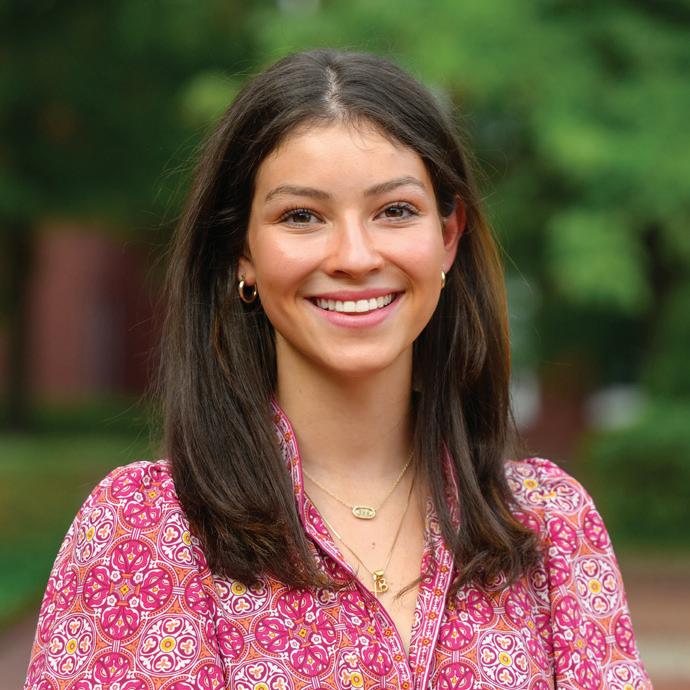
Bryn Gonzales ’28
Hometown: Whitefish Bay, WI
Major: Economics
Minor: Entrepreneurship
Why did you choose W&L?
“I wanted to combine my passion for the sciences with my interest in finance, but most schools pushed me to choose one or the other. W&L stood out, as it encouraged academic exploration. In a single semester, I went from Chemistry 110 straight to a roundtable discussion on Native American history in the Southwest. I’ve learned how to create interactive digital maps, studied the philosophical implications of large language models, and built discounted cash flow models to analyze investment opportunities, all in the same school year. My time at W&L has deepened my intellectual curiosity and broadened my sense of what’s possible.” n
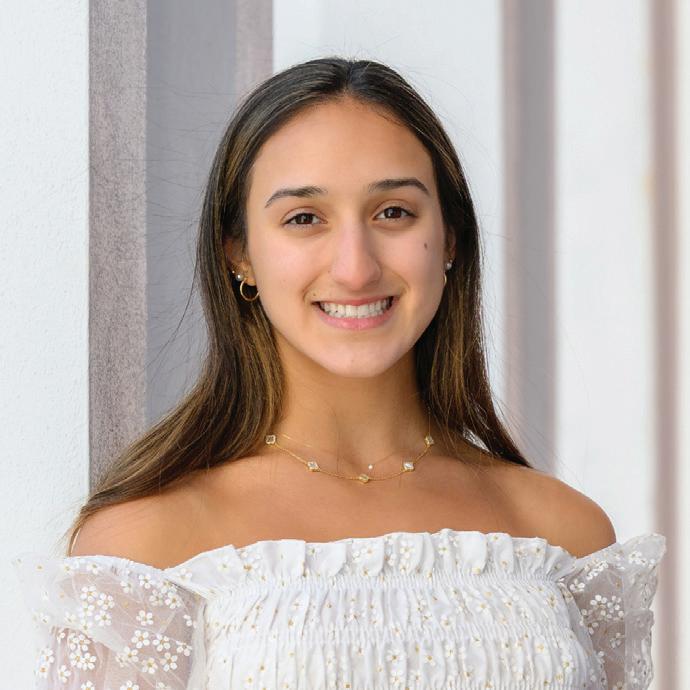
Sofia Iuteri ’27
Hometown: Greenwich, CT
Majors: Economics and Environmental Studies
Minor: Entrepreneurship
What was your favorite class and why?
“My favorite class so far has been Assistant Professor of Earth and Environmental Geoscience Nicholas Barber’s Volcanoes of Yellowstone Spring Term course. It was my first Spring Term class and combined two weeks of on-campus learning with two weeks of travel to Yellowstone National Park, Oregon, and Washington. Not only did I form lifelong friendships, but I also explored the field of geology — something I likely wouldn’t have encountered otherwise. From studying volcanic processes and historic case studies in the classroom to observing real-world volcanoes, waterfalls, and wildlife, I was constantly in awe.” n
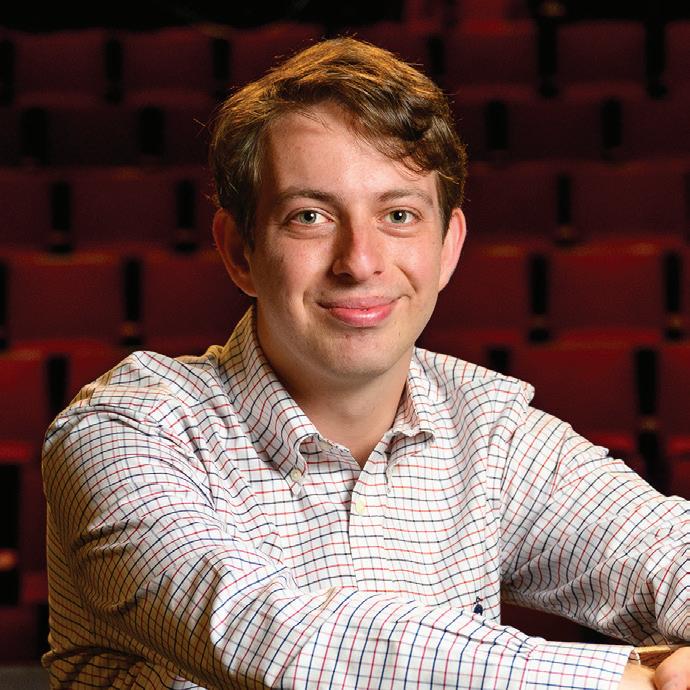
Daniel Reiter ’26
Hometown: Palm Beach Gardens, FL
Major: Arts Management (Independent Work)
What topic have you discovered that you didn’t expect to study at W&L?
“I never thought I’d end up studying arts policy or spending a semester doing political work in Washington, D.C., but Washington Term completely changed that. During my time in D.C., I worked on arts policy with Americans for the Arts. Being there and attending hearings, lobbying for arts funding, and seeing how advocacy organizations interact with the government made me realize how much I care about the intersection of policy and entertainment. It also helped me make connections and get a better sense of how things actually get done in Washington.” n
At the heart of the liberal arts experience is a journey of discovery. We asked six students how the courses, mentors, and experiences they’ve had at Washington and Lee have shaped their education in unexpected ways.

Juyoung Kim ’26
Hometown: Palisades Park, NJ
Major: Physics
How have your experiences at W&L prepared you for post-graduate success?
“W&L’s interdisciplinary approach has shaped me into a far more well-rounded student than I ever expected to become. It didn’t just push me to explore subjects outside my major — it also brought me into a community of friends whose interests range across every corner of the curriculum. Simply spending time with people who think about the world differently has expanded my own perspective in ways that no single program could have done on its own. I feel confident that I can bring an interdisciplinary mindset into whatever I pursue after graduation.” n
Julia Lanning ’26L
Hometown: Farmington, NY
Undergraduate: SUNY Brockport
What experience has had an impact on your time as a law student?
“Working in the Advanced Administrative Litigation (Black Lung) Clinic was a great learning experience as I gained valuable hands-on experience with nearly every stage of the litigation process. I drafted interrogatories, requests for admission, requests for production of documents, and initial disclosures. I also helped prepare evidence for hearings. The most valuable skill I developed this summer was persuasive legal writing. While working with Professor Evans on a closing brief, I learned how to strategically present our client’s strongest arguments while discrediting the opposing side’s case. This experience has helped me figure out that I want to pursue a career in litigation after graduation.” n
Zachary Kean ’27L
Hometown: Fort Lauderdale, FL
Undergraduate: Florida State University
What experience has had an impact on your time as a law student?
“The entire W&L staff is friendly, encouraging, and makes you feel at home the moment that you step foot on campus. One of my favorite memories was traveling to Washington, D.C., with a group of friends and classmates for Professor Parella’s International Business Law Roundtable, where we were invited to meet and speak with experts in the international business law field. It was an amazing experience for learning, professionalism, and networking with legal professionals.” n
Education
The Best of Both Worlds
“Our graduates at W&L bring a perspective that traditional business curricula often can’t cultivate, and employers notice.”
— AMANDA BOWER
Charles C. Holbrook Jr. ’72 Professor of Business Administration
W&L’s approach to preprofessional programs is rooted in and enhanced by our liberal arts tradition.
as a liberal arts institution with established undergraduate programs in business, accounting, education, entrepreneurship, journalism, strategic communication, and engineering, Washington and Lee stands apart from peer colleges for the breadth of its curriculum and from larger universities for its small classes and the way the liberal arts ethos informs every course of study. No matter their major, W&L students graduate with the broad knowledge and transferable skills that a liberal arts education provides, having spent four years immersed in a personalized learning environment that prioritizes interdisciplinary curriculum, strong relationships with faculty, and hands-on learning opportunities.
Taking this personalized, liberal arts approach to professional fields changes the way W&L faculty conceive of and deliver their curriculum.
Amanda Bower, Charles C. Holbrook Jr. ’72 Professor of Business Administration, believes that W&L’s interdisciplinary curriculum enriches a student’s study of a professional field, and that studying traditional liberal arts subjects like the arts, sciences, and humanities allows students to think more broadly, ethically, and contextually.
“Business is ultimately just applied human behavior, and a business major in a liberal arts context produces students who understand that every decision sits inside a cultural, technological, and societal system,” said Bower, who is also the head of W&L’s Department of Business Administration.
Bower notes that business is shaped by the world around it but can often feel siloed from the “real world” when studied in a university setting. W&L’s liberal arts focus uniquely prepares students for the real-world applications of their degree by enabling them to study a range of disciplines alongside business, such as cognitive and behavioral science or sociology and anthropology. And employers take note.
“Our graduates bring a perspective that traditional business curricula often can’t cultivate, and employers notice,” said Bower. “W&L graduates see context, they ask better questions, and they understand the human impact of the decisions they make.”
W&L’s small class sizes also enhance students’ experience studying professional fields. Joel Kuehner, professor of physics and engineering, says small classes help him gain a sense of how well students are understanding the material and to adjust his teaching accordingly.
“The ability to know our students well and to work closely with them gives us an advantage as professors,” Kuehner said. “I can look across the room and know students well enough that I can see on their faces if they’re struggling and take the time to help them learn and understand the material.”
Alecia Swasy, the Donald W. Reynolds Professor of Business Journalism, also credits W&L’s small class sizes for her ability to develop meaningful relationships with students. “We always joke that not only do we know our students’ names, but we know the name of the family dog because we spend that much time with them,” she said.
Personal relations H i P s between faculty and students also stem from W&L’s focus on experiential education, with professors directly guiding students through practical, project-based learning. The faculty in W&L’s Department of Journalism and Mass Communications — a mix of former professional journalists and those with doctorates —
“This class is very much hands-on — I don’t even use a textbook because the students just have to go out and experience it for themselves.”
— ALECIA SWASY
Donald W Reynolds Professor of Business Journalism, left, with her 2025 Follow the Money Spring Term students
can leverage their experience to best prepare students for professional success.
On-the-job learning defines the department’s approach to curriculum. With writing-intensive classes and immersive hands-on projects, the program helps students hone skills like critical thinking, effective communication, and problemsolving. W&L’s cable news program, the Rockbridge Report, perhaps most uniquely showcases this approach: Under the direction of journalism faculty members, students operate a fully equipped television studio and control room as a laboratory for television news and production courses. In the Reporting on Local Communities course, each student is assigned a local beat to cover in Lexington, Buena Vista, and Rockbridge County. Students interview people in the community and prepare a weekly multimedia package for the Rockbridge Report broadcast or website.
“This class is very much hands-on — I don’t even use a textbook because the students just have to go out and experience it for themselves,” Swasy said. “It really is diving into the deep end of the pool, but, by the end of the term, they’re ready for NBC News.”
THe dePartment of accounting and finance also encourages the practical application of classroom techniques, using the adaptable framework of the liberal arts to design courses that encourage interdisciplinary learning and collaboration among students and faculty. In Lawrence Term Professor of Finance Aliaa Bassiouny’s classes, students analyze real companies through case studies and recommend financial decisions that draw upon other fields, including mathematics, history, psychology, and the sciences.
“W&L’s liberal arts emphasis allows us to design courses where students learn finance through a hands-on approach,” Bassiouny said. “By working through real-world scenarios,
students develop financial plans for new disruptive businesses, building on their understanding of the events around them and connecting skills across courses.”
Like Swasy and Bassiouny, Kuehner believes his students benefit both academically and professionally from a hands-on curriculum rooted in the liberal arts tradition, and he frequently partners with W&L’s Office of Community-Based Learning to provide physics and engineering students with practical applications of what they are learning in class.
“We give them real clients and people to go talk to, meetings to make, and professional expectations to meet,” Kuehner said. “And that this is all happening in a classroom setting is transformative in a way that they can’t always put into words until they’re about two months into their first job, but it’s such a joy to watch it happen in real time.”
For Kuehner, it’s not so much about walking the students through a “day on the job” as providing them with enough opportunities that they can develop the skills needed to suit a range of professional settings. Kuehner routinely gets calls from companies that have hired a W&L graduate for the first time and are interested in hiring more just a few months later. He is always proud to let the company know that all his graduates from that year are already employed, and they’ll have to wait until the following year.
“This isn’t a technician’s program; it’s a liberal arts program,” Kuehner said. “Yes, it’s engineering, but it is woven into that fabric of discovery where you don’t always know what the problem is, but you do know what you already understand, what is out there, and what has been successful, and then you can figure out how to bridge the gap and help the client understand their goals and deliver a good solution to them. It works so well on a liberal arts campus, and I think that’s why the students are so successful.” n
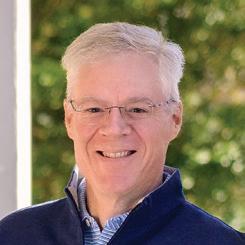
“Washington and Lee aspires to be a national model for liberal arts education in the 21st century. We’re committed to strengthening interdisciplinary programs, including our entrepreneurship program, and we want to ensure that there’s sufficient capacity in Williams School courses to accommodate students who are not majoring in Williams School departments. This new building helps us accomplish all three of those goals.”
– PRESIDENT WILL DUDLEY
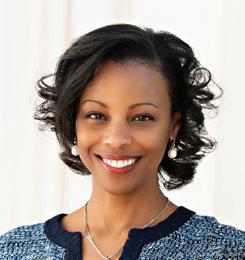
“This building really embodies the spirit of who we are. It’s a space designed truly to encourage conversation across different disciplines, to build relationships across different areas of study, and to spark new ideas that prepare us and our students to engage in principled, inclusive, forward-looking leadership in commerce, economics, politics, and beyond.”
– PROVOST LENA HILL
Strategic Spotlight
A New Home for the Williams School of Commerce, Economics, and Politics
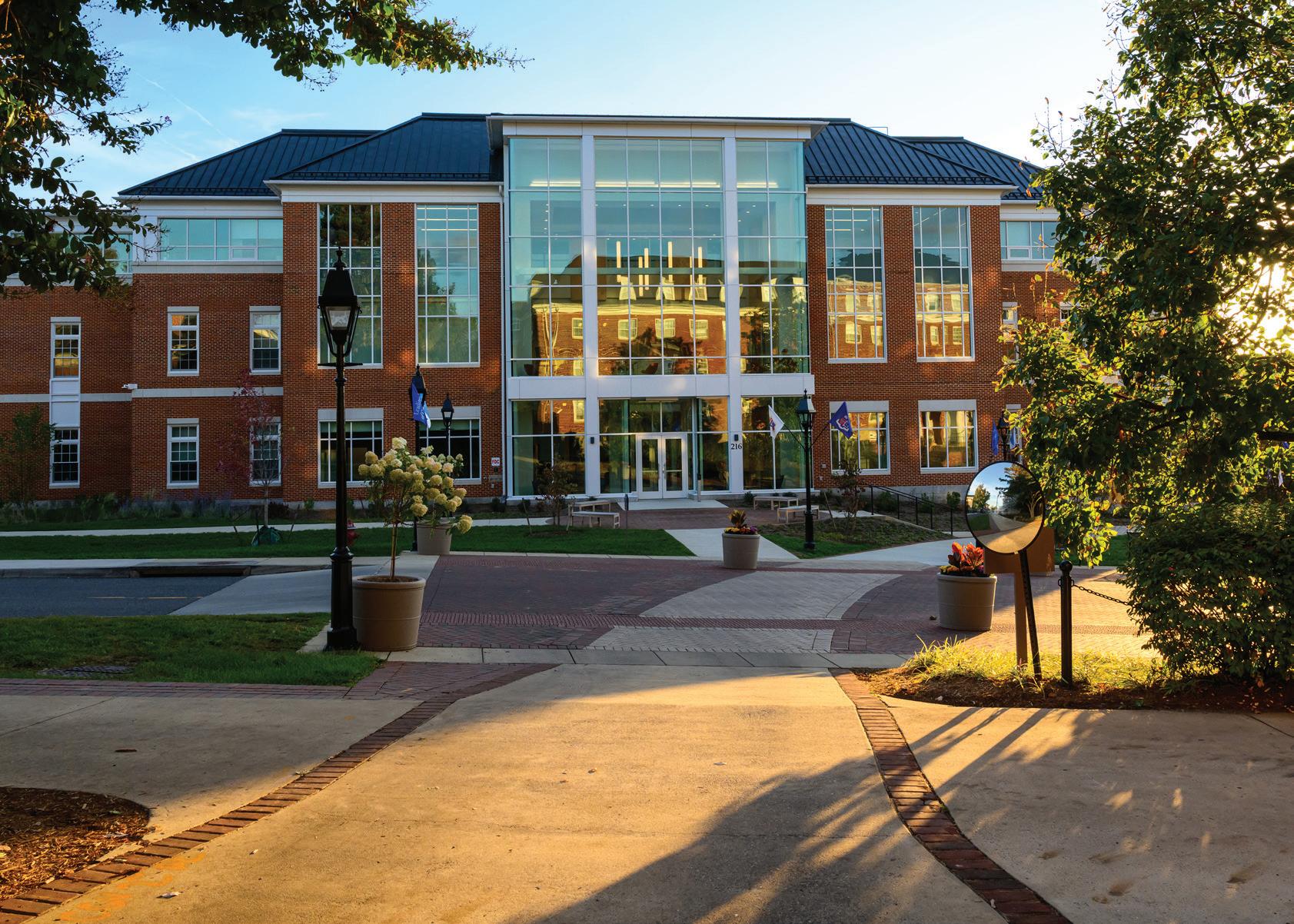
w&l celebrated tHe oPening of a new facility for the Williams School of Commerce, Economics, and Politics on the former site of Baker, Davis, and Gilliam halls on West Washington Street during Parents and Family Weekend in October.
Construction on the new 44,500square-foot building began in June 2023 and was completed on schedule, a few weeks before the start of the 2025 Fall Term. Classes are being held in both the new building and Huntley Hall. Space in Holekamp Hall was recently renovated to house the Connolly Center for Entrepreneurship and workspace for student startups.
As demand for classes in the Williams School has grown, so, too, has the need for additional classrooms and gathering
spaces for student organizations. The new classrooms not only serve students majoring in one of the four Williams School departments but also allow more non-Williams School majors to take these courses.
The building facade features natural light filtering in through three-story windows, with additional windows in classroom spaces throughout. State-of-the-art technology enhancements include whiteboards alongside projector screens for professors, multiple screens throughout classrooms where students can plug in their laptops for group work and presentations, movable desks and furniture for increased collaboration, and innovation labs that students can fit to their own needs for quiet study or engaging group work.
FAST FACTS
n 44,500-square-foot building
n 10 classrooms
n 1 outdoor classroom
n 1 Bloomberg terminal
n 2 innovation labs
n 52 offices
n The building is on track to earn the university’s first LEED Gold certification for environmentally friendly design, construction, and operation.
n 96.5% landfill diversion rate achieved during construction
n Other sustainability features include its energy efficiency, water conservation, waste management, FSC-certified finishes, indoor air quality, landscaping, exterior lighting, stormwater management system, and bird-safe glass.
Education
“The campus infrastructure project is a once-in-a-lifetime opportunity to reimagine how we manage the university’s heating and cooling. We have an obligation to be good stewards from a fiduciary and environmental standpoint. It is fortunate that this project does not force us to pursue one over the other, allowing us to make gains toward both of these objectives.”
– STEVE MCALLISTER, Vice President for Finance and Treasurer
Dollars and Sense
tHe comPletion of tHe new williams scHool building is a major milestone in the university’s plan to update the campus utility infrastructure and meet its goal of carbon neutrality by 2050. On track to be the university’s first LEED Gold-certified facility for environmentally friendly design, construction, and operation, it is home to a cutting-edge heat recovery chiller that contributes to a 37% building energy savings over standard code. It is also a critical element of W&L’s transformational utility upgrade, which will gradually replace the campus’ aging steam infrastructure with a low-temperature hot water (LTHW) system.
The transition to LTHW has the benefit of reducing both the university’s carbon footprint and its natural gas bill through the reduced use of natural gas and alternative energy sources to heat the water. W&L has reduced campus greenhouse gas emissions from energy by more than 70% since 2007. The transition to LTHW will significantly increase campus heating efficiency and ultimately allow for the elimination of fossil fuels in the campus heating plant. The entire phased project, which will take up to 10 years to complete, is projected to pay for itself in cost savings over time.
ON DECK
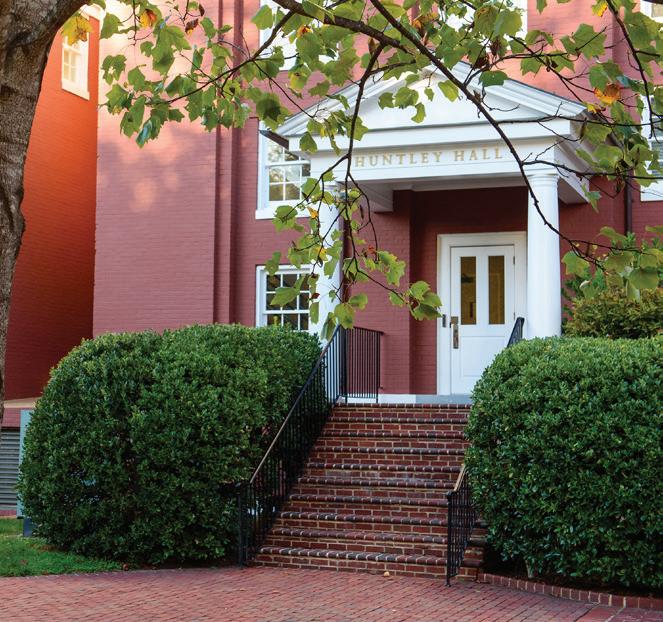
The Future of Huntley Hall
tHe scHool of commerce was establisHed in 1905 and was renamed tHe williams School of Commerce, Economics, and Politics in 1995 in honor of benefactor Ernest Williams II ’38, a longtime supporter of the university. The school was originally housed in Newcomb Hall and has been located in various buildings since its inception. For the last 45 years, Huntley Hall has served as the school’s flagship building.
Huntley Hall will remain a cornerstone of the Williams School and is slated for forthcoming renovation. Momentum for this project continues to build. Phil Barret ’98 and Reed Deupree ’98, founders of the Williams Investment Society (WIS), have launched a fundraising challenge to support the renovation and activities related to the Williams Investment Society. The renovation will include some features not available in the new Williams School building, like tiered classrooms and computer labs, transforming Huntley Hall into a multi-use hub designed for teaching, formal and informal gatherings, special events, and community connection.
QA INVESTING IN THE HUMANITIES
A Conversation with Genelle Gertz
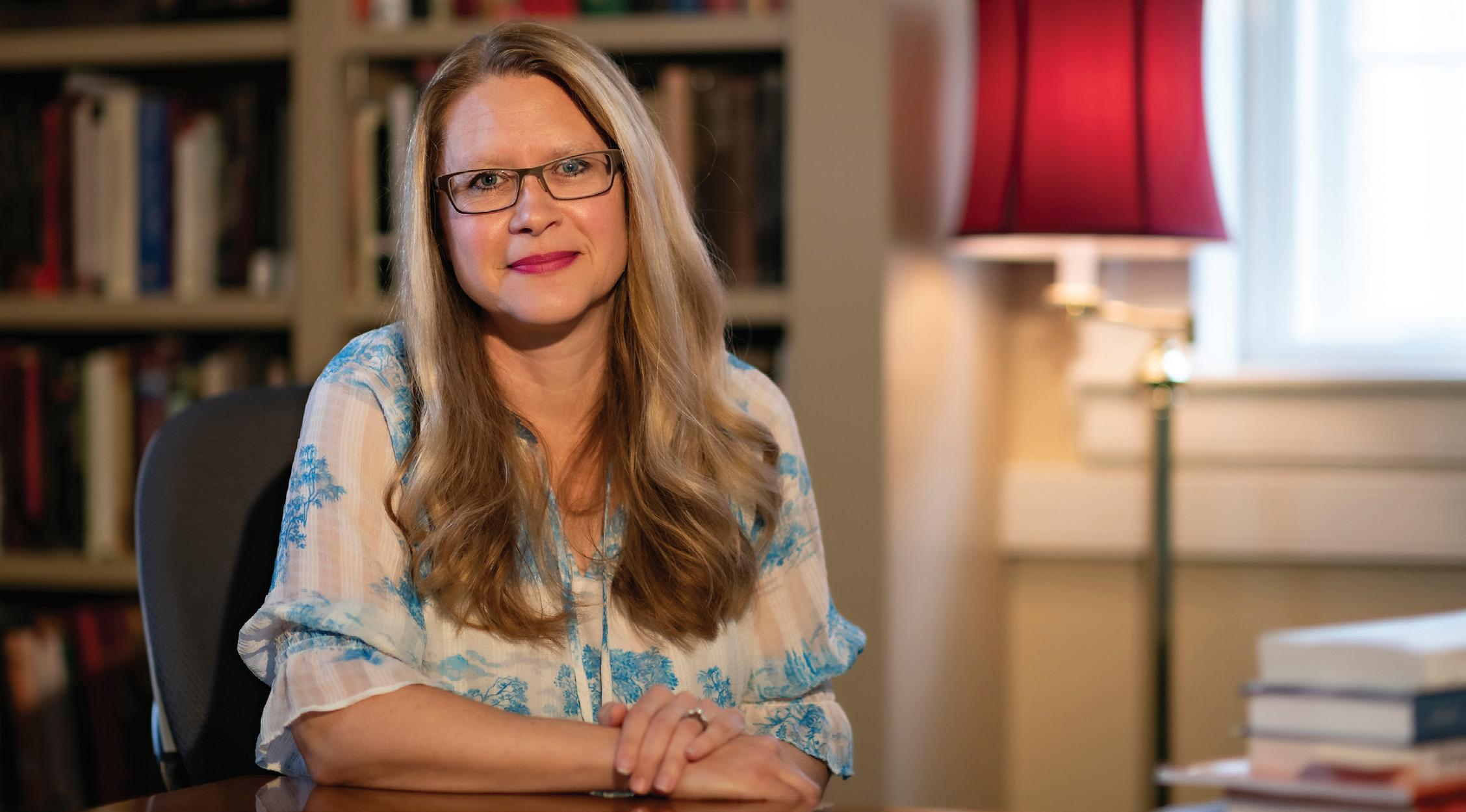
In her dual roles as English professor and associate dean of strategic initiatives, Gertz’s focus lies in amplifying the university’s commitment to the arts and humanities.
As the Thomas H. Broadus Jr. Professor of English and Associate Dean of Strategic Initiatives for the College, Genelle Gertz plays a pivotal role in strengthening the university’s commitment to the study of the arts and humanities through targeted initiatives designed to help students find meaningful professional futures. The humanities, which have always been grounded in human inquiry, allow students to study what they love and pursue successful careers based on their greatest skills.
Q. Why is it so important to invest in the humanities, and in what ways has W&L done that?
GG: The humanities are the bedrock of a liberal arts education. They help students to understand our place in history; to answer ethical questions; and to explore eternal concepts like truth, goodness, and beauty. Art, religion, philosophy, history, languages, theater, dance, music, and literature also develop students’ capacity for interpretation, reflection, and expression. And this strengthens their ability to address big, difficult problems, whether in government, business, or other professional arenas. The humanities are fascinating in their own right, and they also prepare W&L graduates for thoughtful civic participation and professional success. When students arrive at college, they often think they should choose a major that will lead to a well-paying job, and the professional value of studying the humanities is not always evident to them. So,
we’re crafting courses that help students understand how the humanities impart job skills, while also enabling them to enjoy the pleasures of studying the humanities for their own sake.
For example, the new arts management minor created by professors Jenefer Davies and Amanda Bower involves collaboration between the arts and humanities and the Williams School of Commerce, Economics, and Politics. Other faculty cohorts are exploring intersections between the humanities, medicine, and business. Lorri Olán in Career and Professional Development (CPD) set up a series of one-on-one career chats for our students with alumni who majored in the arts and humanities to talk about the fields they’re in now. CPD says those chats often have a far greater impact than a career fair or presentation. And we have also introduced my new Spring Term course, Austin Term, taught with Dean Molly Steele.
Education
Q. You’ve been conducting research on students’ perceptions of the humanities. What have you found?
GG: We asked W&L students why they chose their majors and how they perceive the arts and humanities. We found two main reasons why students choose their majors: instrumentality — in other words, with their professional path in mind — and passion for the subject matter. What I have been trying to show them — and what I think Austin Term best represents — is that pursuing your passion is also instrumental. You can study what you love and in the process become well-prepared for a successful and meaningful career based on your unique skills.
We also found examples of students whose parents were strongly encouraging them to pick a particular major because of their perception of what kind of financial stability it would provide. We’re able to show that nearly 90% of W&L students
with a major in the arts and humanities are employed within six months of graduation. This outstanding result is consistent with studies showing that employers value skills that arts and humanities students bring to the workforce: critical thinking, communication, and teamwork.
Q. You’ve mentioned the medical humanities cohort as another recent development. What does that involve?
GG: The medical humanities cohort is responsive to students’ desire for more courses that address the topic of care. Participating faculty come from religion, philosophy, environmental studies, history, English, French, and creative writing. Brittany Carr, who oversees the prehealth program in CPD, is also a member. She has been instrumental in explaining the kinds of preparation students need for their medical school interviews. The cohort is well-positioned to contribute to
curricular development that will broaden the thinking and training of our premed students, while also helping them achieve the very practical outcome of successfully applying to medical school.
Q. What are some of the initiatives you’d like to see in the future?
GG: I would love to see a first-year cohort emphasizing arts and humanities scholars, where students are working together on common texts and problems, with funding that helps them pursue an internship, especially in fields that often interest humanities students, like publishing, education, and nonprofits. I’d also love to see more outreach to high school students who are interested in arts and humanities. We want to find those students who love drama, music, writing, languages, art, or history and show them what that could lead to at W&L. n
Interdisciplinary Exploration
New minors and courses give students the opportunity and flexibility to pursue their passions in the arts and humanities.
ARTS MANAGEMENT
was H ington and lee ’ s new arts management minor offers students a structured way to blend their artistic passions with business acumen. The collaboration between the Theater, Dance, and Film Studies and Business Administration departments draws courses from business, the arts, sociology, anthropology, and philosophy to prepare students for careers at the intersection of creativity and commerce.
Students select courses from distinct categories designed to build specific competencies, including accounting, management and leadership, strategy, legal and ethical issues, and arts practice. A signature course, Arts Management, serves as an introduction to the field and is taught collaboratively by faculty from both departments. The final requirement, an arts practicum, offers hands-on experience through internships, independent
studies, or courses like stage directing or museum studies.
The program is ideal for students who love the arts but have chosen other majors, such as English, history, sociology, or the sciences, and want to build skills for arts-related careers. It’s also perfect for students who are passionate about the arts but hesitant about performing, as the minor offers several non-performance options, including dance history, art history, music theory, writing for stage and screen, narrative filmmaking, and studio art courses.
“Our students are committed to the liberal arts, but they are also savvy. Their careers are at the front of their minds,” said Jenefer Davies, professor of dance and theater and head of the Theater, Dance, and Film Studies Department. “I think that the arts management minor provides some amount of confidence knowing that they’re armed with certain things that will enable them to have a career and make their mark.”
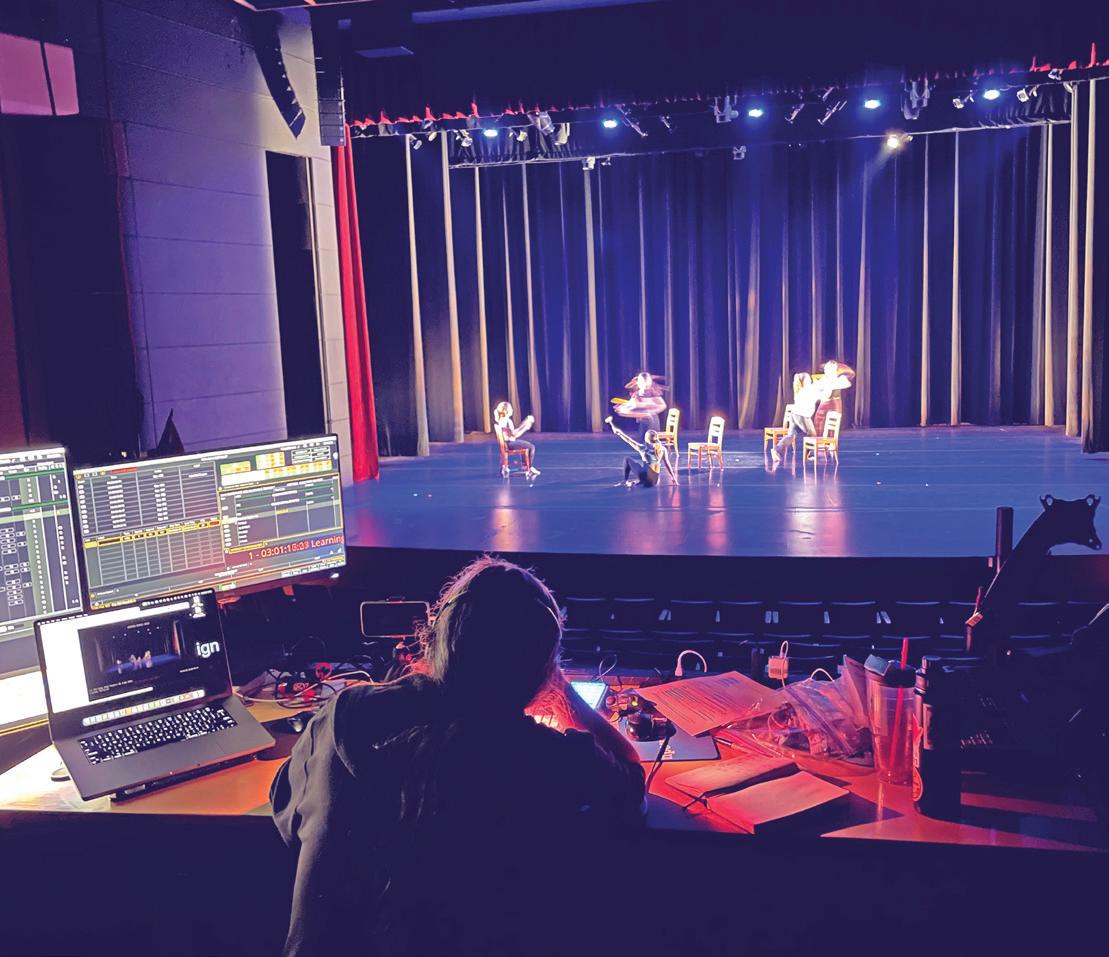
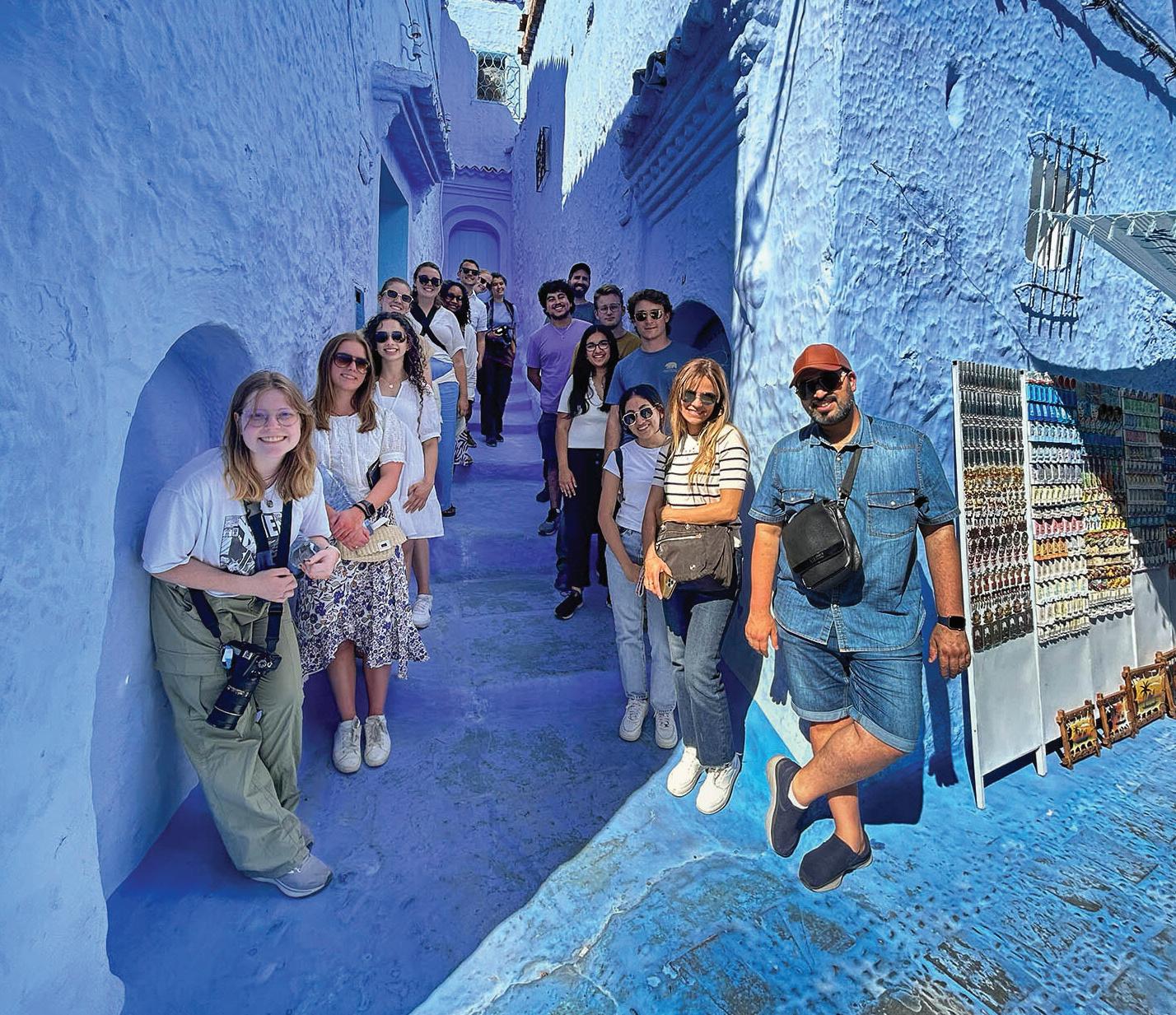
Left: Arts management minors will complete an arts practicum, gaining hands-on experience through internships, independent studies, or courses like stage directing or museum studies. Right: MESA minors are encouraged to visit the region through programs like POL 287 — The Maghreb: History, Culture, and Politics, a Spring Term Abroad course in Morocco.
Education
ARABIC AND MIDDLE EAST AND SOUTH ASIA STUDIES
This academic year marks a turning point for Washington and Lee’s Middle East and South Asia Studies (MESA) program. What was once a single interdisciplinary minor divided into two tracks has now evolved into two distinct credentials: the MESA minor and the newly established Arabic minor. The change gives students more flexibility to shape their studies around either regional expertise or linguistic proficiency.
“Restructuring the MESA program was a major undertaking,” said Seth Cantey, associate professor of politics and MESA program head. “After a comprehensive self-study, an external review, and a full curricular redesign, we have a program with real momentum. Arabic enrollments are strong, and the revamped MESA minor gives students more ways to explore the politics, history, and cultures of the region.”
The new Arabic minor requires six courses: five in Arabic language and culture and one related to the Middle East or North Africa.
“We’re focusing the curriculum more on the spoken variety,” said Anthony Edwards, associate professor of Arabic. “It’s about equipping students to navigate the everyday Arabic-speaking world. By the end, they can order at a restaurant, go to the doctor, or make a hotel reservation in Arabic. The Digital Arabic course will look at how people use the language on platforms like X and Instagram, reading comments written in both Arabic script and Latin transliteration.”
While the Arabic minor focuses on linguistic and cultural fluency, the newly revised MESA minor emphasizes the interdisciplinary study of the Middle East and South Asia across politics, religion, economics, history, art, and literature. The MESA minor now requires seven courses and offers more flexible pathways for students to tailor their studies.
For students, the changes have opened new pathways to connect their global interests with their professional goals. Edison Dokken ’28, a computer science and global politics double major, said the MESA minor complements his interests in cybersecurity and world affairs.
“I started with Islamic history because I didn’t know much about Islam, and I just kept going,” he says. “It’s fascinating. There’s always something happening in the Middle East. Taking Arabic now has made it even better. Professor Edwards makes it straightforward, and it’s not as hard as I expected.”
AUSTIN TERM
Many alumni are familiar with W&L’s beloved Washington Term, a six-week Spring Term program that pairs internships on Capitol Hill with an academic course and lecture series, providing a launch pad and professional network for students of all majors interested in careers in government, politics, and public policy. Austin Term, co-taught by Associate Dean of Strategic Initiatives and Thomas H. Broadus Jr. Professor of English Genelle Gertz and Barnett Family Dean of Career and Professional Development Molly Steele ’04, debuted in 2025. The inaugural cohort of six students spent the first two weeks of the Spring Term on campus, preparing for a week on site in Texas, where they were hosted by alumni at their companies, participating in mentor meetings and industry tours.
The class returned to Lexington for the last week of the term to complete and present final projects combining coursework in human-centered design and conversations with alumni with themes from Mary Shelley’s “Frankenstein.” Alumni mentors Bailey Brilley ’18, Carolina Rubio Regalado ’22, and Kelly Nichols ’00 met with students to share their own career journeys and brainstorm with them as they worked on their projects, which ranged from proposals for tech startups to public policy interventions.
“Arabic enrollments are strong, and the revamped MESA minor gives students more ways to explore the politics, history, and culture of the region.”
— SETH CANTEY
Associate Professor of Politics and MESA program head
Saaraim Nuñez ’27, a philosophy and politics double major from San Antonio, created a fictional consulting firm, Pathos Consulting Group, for his final project that focused on integrating Frankenstein’s creature into society.
“The idea was to explore how a modern consulting team might approach the challenge of reintegrating a being who has been misunderstood, abandoned, and feared,” Nuñez said. “My proposal included possible strategies for housing, legal recognition, trauma-informed care, public sentiment campaigns, and community engagement. Inspired by both the novel and my mentor, Kelly Nichols, the project gave me the chance to combine my passions with my career interests. It was the most creative and unique project I’ve worked on in college.”
Over the four weeks, students developed a broader understanding of practical skills such as networking and project design, as well as the variety of career paths available to arts and humanities majors.
“The final projects helped students develop valuable soft skills in project management, strategic thinking, and presentation, all abilities that today’s employers highly value,” Steele said. “Students can highlight these projects on their resumes to connect the dots between what they are learning in the classroom and how those skills are beneficial on the job.” n
Science Center Expansion Strategic Spotlight
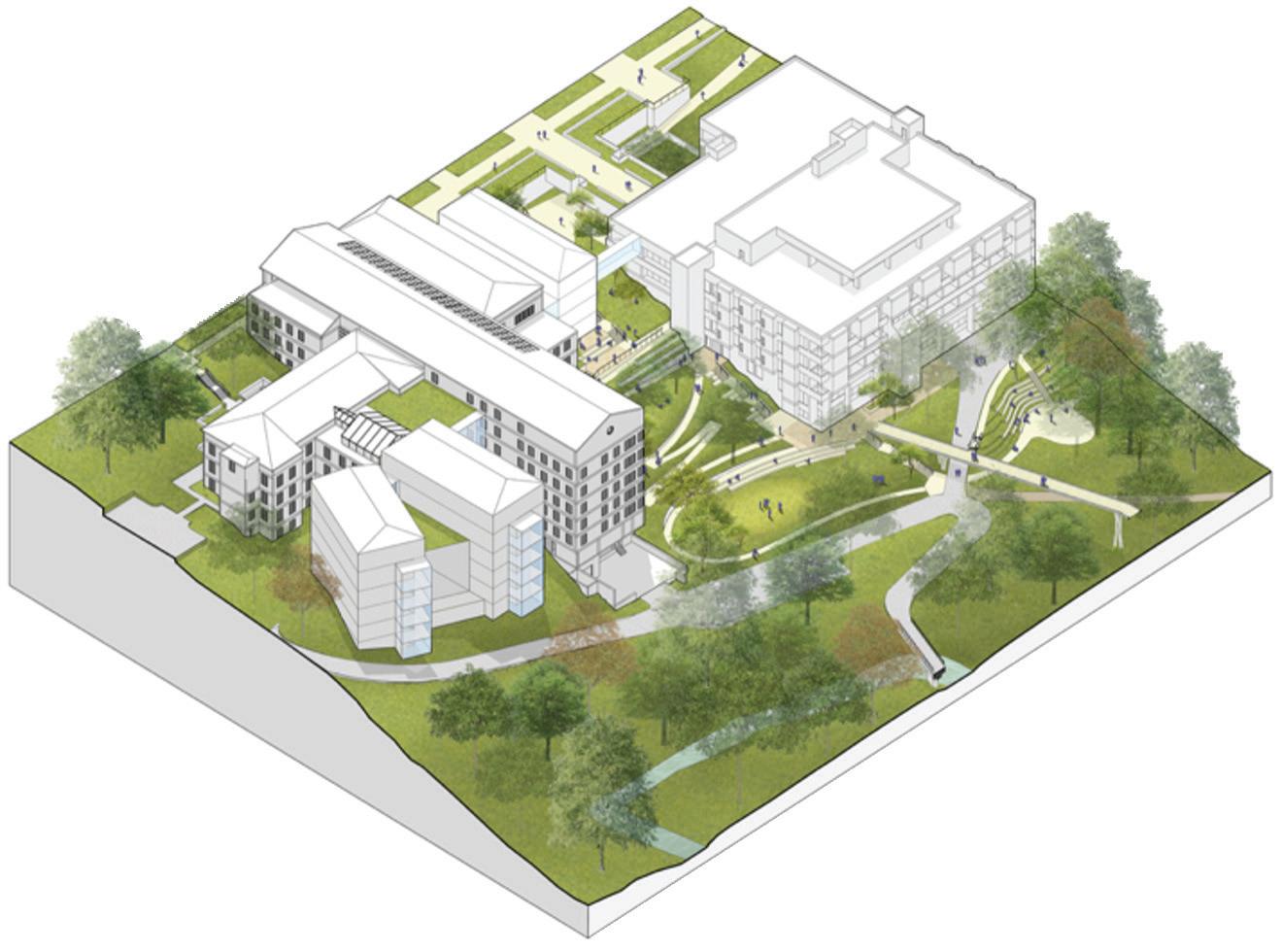
tHe exPansion and renovation of tHe Science Center will be the most extensive capital project ever undertaken at Washington and Lee. Since the existing Science Center was last renovated and expanded in 1996, W&L has experienced a 90% increase in majors across STEM departments and programs and an 89% increase in student summer research. Forty-two percent of the Class of 2025 completed a STEM major, and 52% of those graduates also completed a second major or minor outside STEM.
The proposed additions would increase the capacity of the existing facility by 43%, ensuring that W&L can provide high-quality instructional and lab spaces to meet the growth in demand for STEM programs at the university.
Reimagining the facility will provide flexible and active learning environments that facilitate interaction between faculty and students, strengthen interdisciplinary study and collaboration, support faculty expansion with dedicated research spaces, and improve energy efficiency, enabling
21st-CENTURY SCIENCE FACILITIES
W&L to compete more effectively with our peers in attracting the best faculty and students eager to teach and learn in a facility equipped to support their work.
Preliminary planning for the renovation of the Science Center was conducted as part of Washington and Lee’s 2021 Campus Master Planning process. Work is currently underway in the College to assess and update these preliminary plans based on faculty feedback and projected growth in STEM fields. n
Growing STEM enrollments require a modern hub for innovative scientific teaching and research.
The proposed additions would increase the capacity of the existing facility by 43%.
The proposed design would accommodate additional teaching and laboratory spaces and the expansion of the interdisciplinary Integrative and Quantitative (IQ) Center.
By the numbers
• 8 Departments and programs housed in the Science Center:
* Biology
* Chemistry and Biochemistry
* Cognitive and Behavioral Science
* Computer Science
* Earth and Environmental Geoscience
* Environmental Studies
* Neuroscience
* Physics and Engineering
• 90% growth in STEM majors since the Science Center was last renovated in 1996
• 42% of the Class of 2025 completed a STEM major.
• 89% growth in student summer research across departments in the last five years
• 80,000 square feet: Planned size of building expansion
Education
Professors in W&L’s STEM departments exemplify the commitment to the teacher-scholar model that makes a liberal arts education so powerful, involving students in intensive faculty-mentored research projects throughout the year.
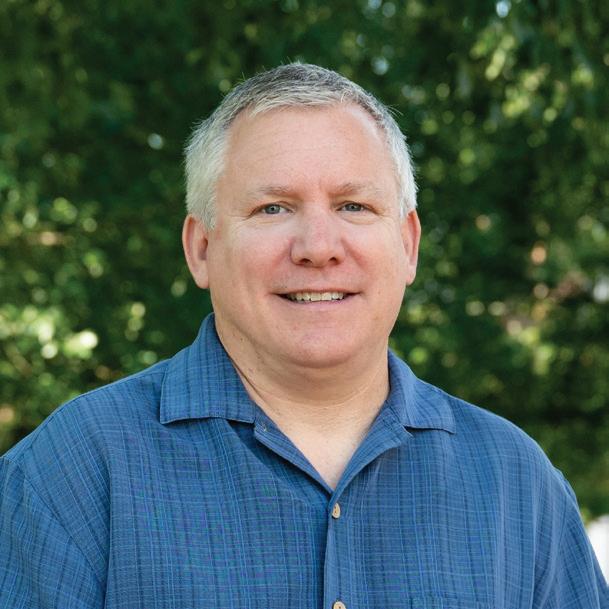
BILL HAMILTON, the John T. Perry Jr. Professor in Research Science, recently co-authored a paper featured on the cover of Science magazine, shedding new light on the value of bison recovery efforts in Yellowstone National Park. Hamilton has been conducting ecosystem research in the park since 2005, extensively studying the effects that grazing herds may have on the soils and grasslands. His research forms the basis of an annual Spring Term course, and, each year, he selects several W&L students as summer research assistants who help collect data to measure soil health, plant growth, grazing intensity, and plant community composition in the park’s northern grasslands.
“My students and I are fortunate to work in the world’s first national park on the only migratory herd of bison in North America. We contribute data important for management decisions as well as ecological knowledge. With the current large herds of bison, Yellowstone grasslands are functioning better than in their absence. This is a glimpse of what was lost when bison were nearly wiped out across North America in the late 1800s.”
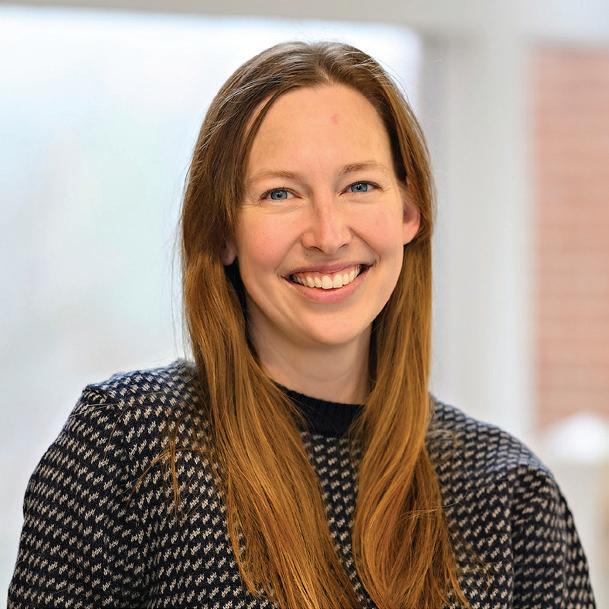
MARGARET ANNE HINKLE, associate professor of earth and environmental geoscience, is part of a collaborative team that received a $550,000 grant from the National Science Foundation to examine the potential of adapting acid mine drainage remediation systems to produce critical minerals in economically viable concentrations. With the projected growth in renewable energy and technology sectors, along with an increasing reliance on critical minerals, identifying domestic sources of these critical minerals has become essential. The grant provides funding for several undergraduate student summer researchers as well as field trips for a future Spring Term class to visit the acid mine drainage remediation sites where the team is deploying its field experiments.
“Involving students in investigating a potential solution to what is now an issue of environmental and national importance allows them to see scientists actively working together to solve such issues. They, too, can learn skills and content needed to get involved, no matter what career path they end up pursuing.”
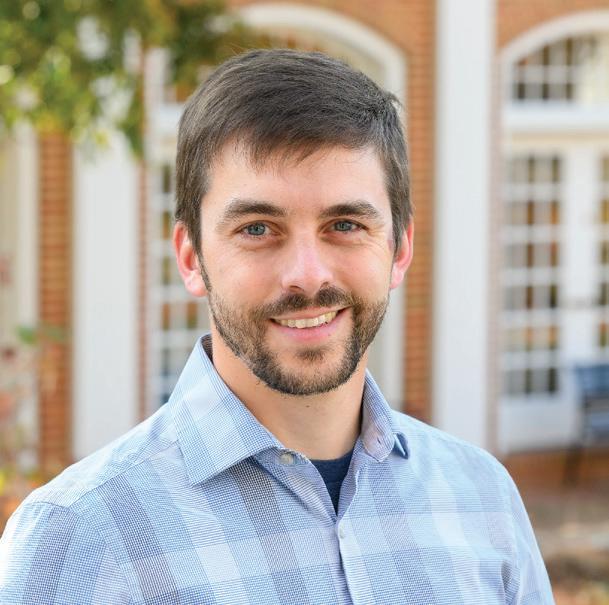
RYAN BRINDLE, associate professor of cognitive and behavioral science, conducts extensive research with students to measure the impact sleep can have on our health in one of the only undergraduate sleep labs in the country. In class, students visit the sleep lab, examine data, and conduct their own self-studies. Students also serve as research assistants. While guiding students in the lab, he aims to emphasize the importance of a liberal arts perspective and the transferable skills that hands-on research can teach.
“The research couldn’t be done without the undergraduates, and it creates rich experiences for the students. I like seeing them learn the skills and the content and then start to become independent operators in the lab themselves. Watching their confidence and their enthusiasm grow as they go through that process is just amazing. They gain so many skills that transcend the focus on science and sleep and can be applied to any field.”
Prepared for Practice Education
W&L Law’s commitment to experiential education readies graduates to contribute from day one.
in law scHool, so tHe old saying goes, “The first year, they scare you to death, the second year, they work you to death, and the third year, they bore you to death.”
While many doubt that was ever the case, especially at W&L Law, there was a pervasive feeling in the 1990s and early 2000s that the third year of law school could offer more to students as they prepared to enter the legal profession. Leave it to a law school well known for curricular innovation to help define just what that “more” could look like.
A Radical Change
Born out of a 2006 strategic plan that sought to expand the number of practicebased courses, like emeritus professor Lyman Johnson’s Business Planning capstone, the law faculty voted in 2009 to reform the third-year curriculum in its entirety. Students would spend a full year engaged in real practice experiences, developing their professional identities as lawyers. This would happen through clinics, practice simulations (practicums), public service obligations, and specialized courses that delved into all aspects of the legal profession.
The decision was celebrated by many in the legal academy, derided by others, and drew extensive national and international coverage in the media. Michelle Drumbl, founding director of the Tax Clinic, former interim dean, and current associate dean for academic affairs, recalled that it was
“a very exciting time in the life of the law school. We were pushing the envelope to really round out our students’ legal education and put them on a path to professional success.”
Phased in over several years, the “Third-Year Program,” as it was known, became required of all students in 2012. To meet the curricular demands, the school developed dozens of new practicum courses spanning both litigation and transactional practice areas and launched new clinics in criminal justice and immigrant rights to help fulfill one of the key components of the new curriculum: that each student graduate with legal experience serving actual clients.
An Evolving Concept
Students thrived in the new curriculum, with many reporting their clinical or real client interactions as the most formative of their legal education. Nevertheless, some students noted that the intense practice requirements of the third year left no time for traditional courses, particularly ones that would be important as their career objectives came into clearer focus. Beyond that, second-year law students were chomping at the bit to begin developing their practice skills as well.
Hearing these concerns, the faculty continued to refine the program to best align with student needs while injecting more flexibility into the experiential
program. Students were allowed to begin taking experiential credits during their second year. In addition, students were required to complete only one of the school’s two-week skills immersions — either litigation or transactional — prior to their third year. A more recent change moved the immersion courses to the spring after second-year exams, enabling rising 3Ls to take the skills gained during the immersion program with them into their summer positions. Together, these changes exposed students to practice experiences even earlier in their legal education, giving them a leg up in summer positions, where they found themselves contributing on significant client matters and trusted with responsibilities beyond their peers from other law schools.
“Because of the extensive, real-world experience our students gain representing people with significant legal challenges while under the guiding hand of exceptional and well-qualified law faculty, they emerge as capable and honorable lawyers at graduation, not years into their practice,” said Dean of the Law School Melanie Wilson.
Current Experiential Education
Today, W&L Law continues to lead the way when it comes to practice-based education for upper-level law students. The school requires 18 experiential credits for graduation, currently three times what the American Bar Association asks of law schools.
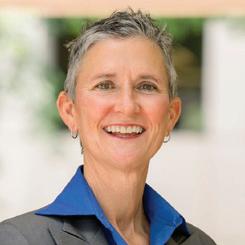
“Because of the extensive, real-world experience our students gain … they emerge as capable and honorable lawyers at graduation, not years into their practice.”
— MELANIE WILSON Dean of the Law school
The school offers numerous litigation and transaction-based practicum classes, covering topics such as civil litigation, real estate transactions, consumer protection, entertainment law, technology in legal practice, labor and employment law, intellectual property, and many more. In addition, the school operates six legal clinics: the Black Lung Clinic, the Community Legal Practice Center, the Criminal Justice Clinic, the Immigrant Rights Clinic, the Tax Clinic, and the Civil Rights and Racial Justice Clinic, which focuses on fair housing. A robust externship program allows students to work in public and private sectors, including with judges, district attorneys, and law firms. Select students work full-time in semester-long, residential placements across the country and sometimes even internationally.
As has been the case since the program’s inception, students gain irreplaceable exposure to real law practice — and the responsibility that comes with it. Spencer Thomas ’25L spent his third year as an extern with the commonwealth’s attorney for the city of Roanoke, where he first chaired an evidentiary hearing in circuit court. The experience combined his training in legal analysis with the trial advocacy skills developed during the externship. “I am proud to share that the court ultimately held for the commonwealth on both independent theories I argued during the hearing,” said Thomas. “The whole experience was one of the few times during law school that I have felt like a real lawyer.”
During her time as a student attorney in the Black Lung Clinic, Annelise Burgess ’25L successfully argued a case before the U.S. Court of Appeals for the Fourth
Circuit, representing the interests of the spouse of a deceased coal miner. Burgess’ preparation for what would be her firstever court appearance was extensive. She spent about 175 hours working on the case, including mastering the extensive case file and its complicated medical evidence. She wrote two dozen drafts of her oral argument and participated in numerous moot court arguments with different W&L Law professors who helped refine her argument and prepare her for the different ways the judges might push their inquiry.
“I knew I would have a great practice experience working in the clinic, but I did not predict I would get a master class in appellate litigation,” said Burgess. “I am grateful to the client for giving me permission to argue this case. It was quite the capstone to my 3L year.” n
Washington and Lee continues to be a leader when it comes to practice-based education for law students; the school requires 18 experiential credits for graduation.
Education
I mpactful
While our distinctive curriculum gives students academic options not available at other schools of our size, the full W&L experience extends beyond the classroom.
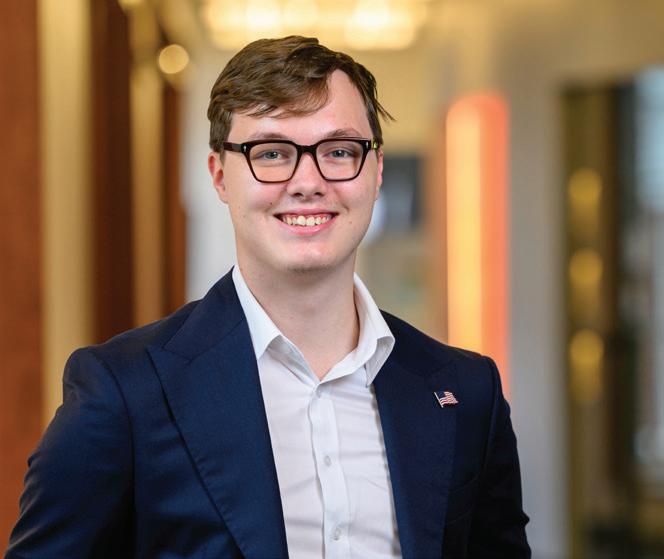
HOMETOWN Bettendorf, IA
BRANDON BISHOP ’26
Brandon’s love for international study and travel began with an introductory Arabic class the fall of his first year at W&L. That class laid a foundation for a global education that included an intensive summer studying Arabic in Amman, Jordan, funded by the Benjamin A. Gilman International Scholarship, a Summer Arabic Scholarship from the Center for International Education, and a Johnson Opportunity Grant. In addition, he took two Spring Term abroad classes to Copenhagen, Denmark, and Seoul, South Korea, and he completed a year-long fellowship in Germany through the Congress-Bundestag Youth Exchange for Young Professionals.
“I’d never even been abroad before W&L. I didn’t even have a passport. I fell in love with Arabic, and Professor [Anthony] Edwards became a close mentor. Then I took a Spring Term class my freshman year and received a scholarship to study Arabic over the summer. That was the start of everything. That’s when I really fell in love with traveling and studying abroad, and now I want to work in international relations. The faculty and administrators at W&L who have encouraged me have been the best part. I’ve changed a lot in the past four years, and a lot of it is because of the opportunities I’ve had here.” n
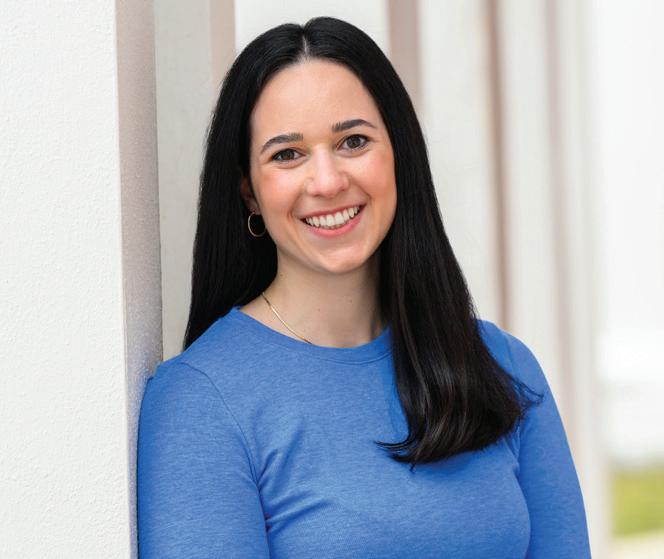
HOMETOWN Buffalo, NY
AVA GIANGRASSO ’26
An avid musician, Ava has played the violin for Alzheimer’s patients since the eighth grade, and an internship with Dana’s Angels Research Trust (DART) was a perfect match for her interest in medicine and research. DART, established in 2011 by established by Phil ’81 and Andrea Marella P’18, sends a select number of W&L students into labs at top-notch medical research facilities to study Niemann-Pick Type C (NPC), a lysosomal storage disease that manifests predominantly as a collection of progressive, degenerative neuropathologies. Ava was placed at the University of Illinois Chicago in a lab focused on pediatric neurodegenerative diseases. In July 2026, she will begin medical school at the University at Buffalo Jacobs School of Medicine.
“The DART internship gave me my first real wet lab experience, working directly on drug research for a rare pediatric neurodegenerative disease and shadowing the physician who treats these kids. I’d done of lot of volunteering before, but this was the first time I felt truly involved in work that was making a real difference for patients and their families. It confirmed that I want to do both research and medicine.” n
EXPERIENCES
We offer an array of opportunities that have been proven to have significant educational impact, including internships, service-learning, research with faculty members and alumni mentors, study abroad, and capstone projects.
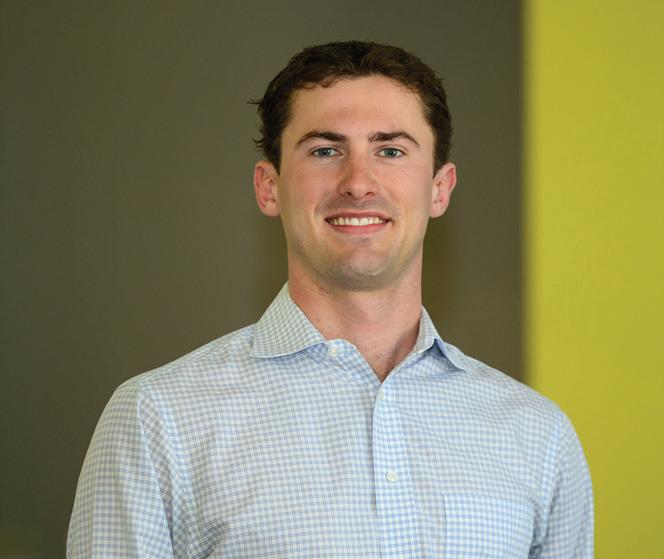
HOMETOWN Atlanta, GA
MAJORS European History Accounting
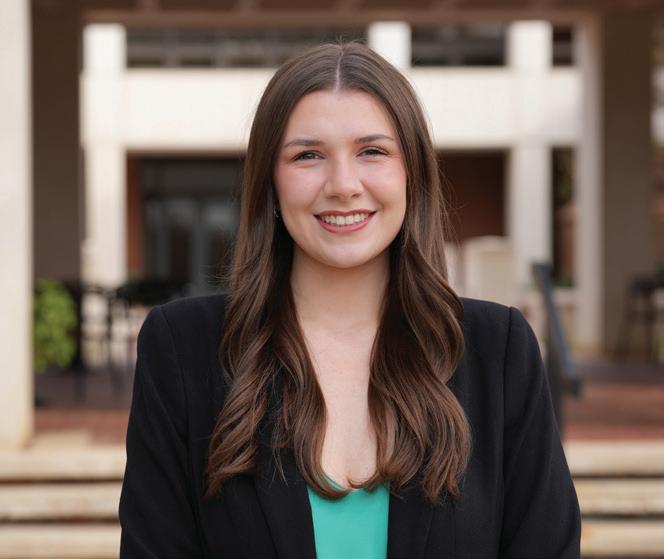
HOMETOWN Birmingham, AL
UNDERGRADUATE INSTITUTION
Elon University
PRESTON LARMORE ’26 CAROLINE PENFIELD ’26L
Preston says W&L’s liberal arts approach to teaching business helped him discover his calling for finance after taking his first accounting class. In summer 2025, he interned with Houlihan Lokey’s Industrials Group. His responsibilities centered on supporting live transactions and pitch work across mergers and acquisitions in the group, and he spent his summer building financial models, preparing client presentations, conducting industry and company research, and analyzing strategic alternatives for clients.
“I think accounting is the basis of everything finance-related and a true stepping stone to any financial career. I’m numbersoriented, and it’s a language I enjoy and feel comfortable speaking. From the start, the professors in the Accounting Department were so helpful, available, and impressive, and that initial attraction continued to grow with higher level classes.
“One of the most valuable learning experiences during my internship was understanding how to operate under pressure while maintaining accuracy and attention to detail. I also learned how to collaborate effectively with teams on high-stakes projects and to manage tight deadlines while balancing multiple workstreams. Beyond technical skills, I gained a deeper appreciation for the importance of clear communication with both colleagues and clients.” n
Caroline became interested in public service work after a summer working at a public defender’s office, and she currently serves as the executive articles editor for the Journal of Civil Rights and Social Justice and co-president of the Pro Bono Board. In summer 2025, she interned with the Colorado Office of the State Public Defender in Fort Collins, Colorado. With her third-year practice certificate, she was able to practice as a student-attorney and represented clients with misdemeanor cases from the initial client advisement through the end of their court cases. After law school, she plans to pursue a career in criminal defense.
“I gained a lot of experience speaking on the record in court, which improved my confidence and advocacy skills. Additionally, preparing for a jury trial where I had to write arguments, make objections, and think about how to interact with the jury, witness, and judge was all new for me. I was glad to have the advice from my professors here and a group of supportive attorneys in my office.” n
KEEPING AN EYE ON
AI
W&L is meeting the rapidly emerging technology head-on in multiple ways — including faculty experts Josh Fairfield and Sybil Prince Nelson ’01, P’28 sharing their knowledge of the latest trends and a dedicated AI lab that is available to the entire campus community. >>>
ILLUSTRATIONS BY ADRI Á FRUITOS

Law in the Age of Artificial Intelligence
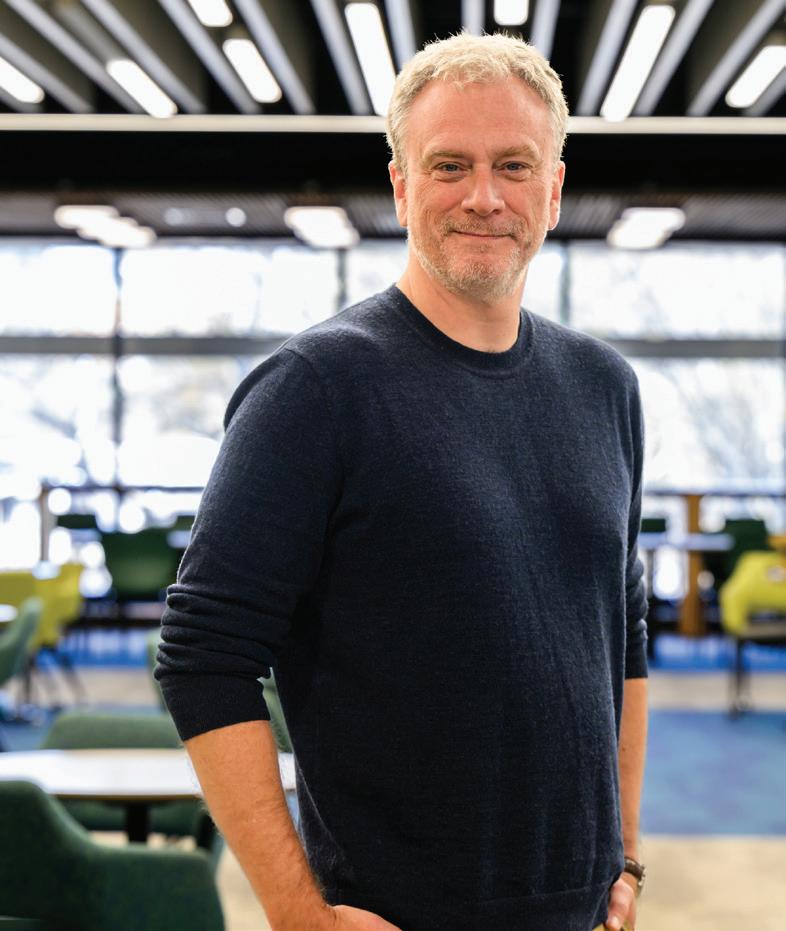
ACCORDING TO JOSH FAIRFIELD
William Donald Bain Family Professor of Law, Director of Artificial Intelligence Legal Innovation Strategy
Since 2023 , jos H fairfield H as served as Washington and Lee University School of Law’s first-ever director of artificial intelligence legal innovation strategy, where he spearheads efforts to integrate AI responsibly into legal education and practice. He has developed policies and designed initiatives and programming to help students understand and ethically use AI tools as the technology grows more central to legal work. He sees his role as helping the law school and the broader university community strike a balance between harnessing AI’s potential to accelerate legal research and work while safeguarding the ethical foundations that define justice.
When Fairfield discusses artificial intelligence, technology, and the future of our tech-driven society, the conversation inevitably circles back to the human story.

“The basic way that humans stay ahead of technology is the same way we’ve always stayed ahead of technology. We talk about it with each other in community.”
“The basic way that humans stay ahead of technology,” he said, “is the same way we’ve always stayed ahead of technology. We talk about it with each other in community, and we reason by analogy.”
That process of analogy and conversation, he argues, is what allows law to adapt.
“Humans evolve the language between us so that we can handle the problems of the future,” Fairfield said.
Fairfield brings these ideas directly into the classroom at Washington and Lee.
“Lawyers have it a little bit different than other professions,” he said. “We are sandwiched between two absolute obligations when it comes to artificial intelligence.”
The first, he explains, is the duty of candor, which, in the context of artificial intelligence, translates into the obligation not to produce falsified or hallucinated citations generated by AI tools. The second obligation, what Fairfield describes as “a duty of technological competence
and zealous advocacy,” is far more complex. For today’s lawyers, AI-assisted search tools are becoming essential.
“The lawyer’s fear has always been: What if there’s a case that’s exactly on point that I just don’t find?” he said. “The answer had been computers, but the back end of that computer search has now shifted. We’ve replaced the back end of the search in every discipline, and AI is a necessary part of practicing our profession.”
Fairfield’s Artificial Intelligence and the Law course challenges students to grapple with both the opportunities and the ethical pitfalls of this new landscape.
“The most important thing is understanding the ways in which AI is going to reinforce their own sloppy or biased thinking,” he said, “and how to build a workflow that protects them from that.”
At W&L, these conversations extend beyond a single course or symposium, and Fairfield points out that AI literacy is also being woven into the curriculum across the law school. The law library offers aid in AI-assisted research and search tools, and faculty across doctrinal, research, and writing courses are adapting their pedagogy to reflect the profession’s changing expectations.
“I believe we’re becoming known in the landscape of higher education for having a pragmatic and balanced approach to artificial intelligence,”
Fairfield said. “We’re not falling into the ‘All AI is plagiarism’ camp, and we’re not doing the corporate ‘AI solves everything’ approach either. In the true liberal arts tradition, our students are learning not just the material but how to learn.”
That, Fairfield insists, is the core of finding a strategy for AI’s future.
“AI is a very powerful tool,” he said. “It can either prevent people from learning, or it can accelerate their learning. What matters is whether we keep it human.” n
Navigating AI on Campus
WITH SYBIL PRINCE NELSON ’01, P’28 Assistant Professor of Mathematics, AI Fellow at Washington and Lee
Recognizing t H e oPP ortunity as well as concerns surrounding the rise of artificial intelligence, Washington and Lee created a fellowship to address the possibilities and challenges associated with the use of this emerging technology. Assistant Professor of Mathematics Sybil Prince Nelson ’01, P’28 is currently serving as W&L’s first AI fellow; her versatility as both a mathematician and published author of numerous science fiction novels for adults and children gives her an uncommon vantage point on AI’s creative boundaries.
As W&L’s first AI fellow, what do you see as your primary responsibilities to the university community?
I see my charge as three-fold. I need to stay up to date with what AI can do and how it affects our faculty, staff, and students. I need to educate all stakeholders in the W&L community about how W&L is handling this educational disruptor. And I need to help our campus community appreciate what it can do and help them integrate it into their lives in a meaningful and ethical way.
What was your biggest takeaway from the inaugural PLAI (Prompting, Learning, and Artificial Intelligence) Summit, hosted by the PLAI Lab? My biggest takeaway was that a liberal arts education is best suited to navigate this new world led by AI technology. Liberal arts education is more than just finding a numerical answer or completing a task. It is interpreting,
analyzing, and answering questions that no one has asked yet.
You write about being honest with students about when using AI is a disservice because it shortcircuits their development. How do you help students navigate this decision-making process?
I think showing the mistakes AI can make and the consequences it incurs helps with the decision-making process. There are people losing their jobs or their places in graduate school due to misuse of AI. They have to not only cite AI use properly, but be expert enough in their field to realize when AI is wrong. They have to be completely ready and willing to accept any consequences from blindly relying on AI.
You’ve noted that W&L has “emerged as a leader for other liberal arts universities in terms of defining what it means to be AI competent.” What does AI competence look like at a liberal arts institution?
To me, AI competence means knowing when and when not to use AI. You don’t want to use AI when you want to express your creative voice. Only you have that voice. AI will not be able to replicate it, and it may stifle your own. When you do use AI, you have to be enough of an expert in the field to question the results. You have to be able to identify errors and hallucinations and be able to fix them.
I tell students and faculty that AI should be a tool, an assistant, or a tutor. You are the expert, not the AI. If you keep AI in its role, then it reduces the possibility of unethical usage.” n
“AI competence means knowing when and when not to use AI. You don’t want to use AI when you want to express your creative voice. Only you have that voice.”

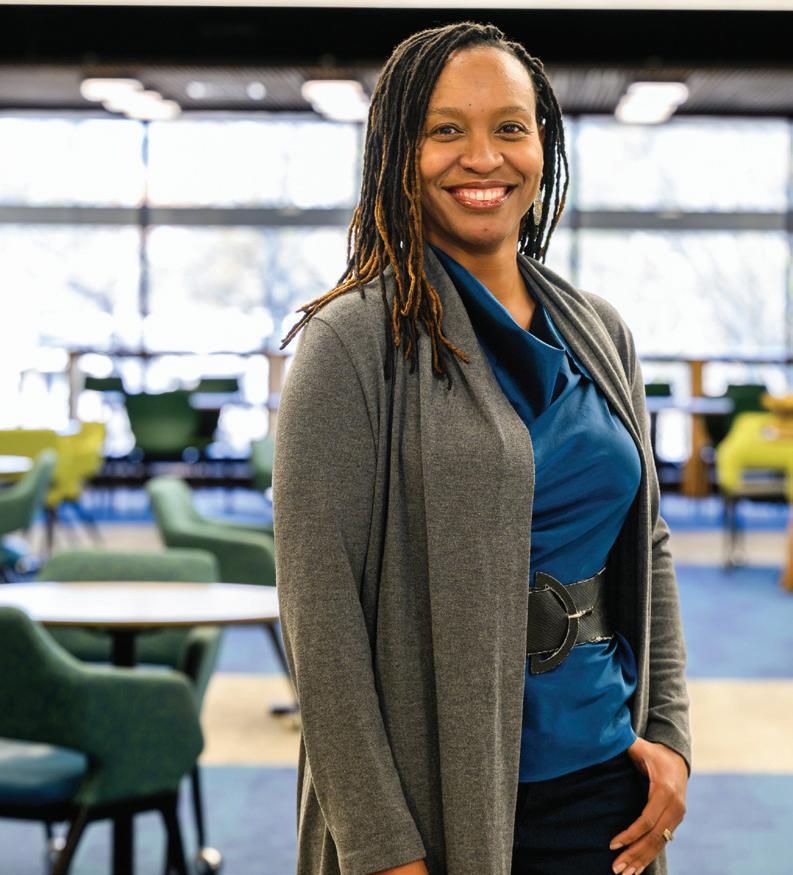
AI RESOURCES AT W&L
PLAI (Prompting, Learning, and Artificial Intelligence)
p The PLAI Lab is a hands-on space at the Houston H. Harte Center for Teaching and Learning in Leyburn Library where W&L students, faculty, and staff can experiment with AI tools under the guidance of campus experts.
p The PLAI Gallery provides a digital space to share communitycreated art either with or about AI.
p The PLAI Summit, held in September 2025, was a day-long gathering designed to spark dialogue about AI between faculty, students, and alumni across disciplines.
AI-Focused Courses:
p Managing Artificial Intelligence (Business Administration)
p AI and Machine Learning for Business Decisions (Business Administration)
p Artificial Intelligence (Computer Science)
p Living with AI (Sociology)
p AI and the Law (Law)
QA
INVESTING IN CIVIL DISCOURSE
A Conversation with Lucas Morel P’18
The John. K. Boardman Jr. Professor of Politics leads Liberating Ideas, an initiative that supports intellectual pluralism on campus.
Lucas Morel is one of nine professors
Academic Leadership Fellowship. assumed
of the Provost where he is focusing on
Lucas Morel is one of nine professors nationwide to win the Associated Colleges of the South (ACS) Mellon Academic Leadership Fellowship. Through the fellowship, he has assumed a two-year leadership role in the Office of the Provost where he is focusing on launching the university’s Liberating Ideas initiative. A nationally regarded scholar on Abraham Lincoln, Morel joined the W&L faculty in 1999 and has served as head of the Politics Department since 2010. In the following Q&A, he discusses Liberating Ideas.
Q. What is the Liberating Ideas initiative?
Q. How do you define civil discourse?
scholar on Abraham Lincoln, Morel Department since 2010. In the following
because we don’t want to make it seem that an “ideological monoculture,” in the words
LM: Civil discourse is an expression of opinions or perspectives in a manner conducive to reasoning about those perspectives. Just because you hold an opinion, it doesn’t mean it’s the right opinion. If it’s a true education, you want to move from mere opinions to reasoned knowledge.
LM: Liberating Ideas is an effort to improve the intellectual pluralism and civil discourse offered through our liberal arts education. I underscore “improve” because we don’t want to make it seem that none of this is going on already. It is part and parcel of a liberal arts education that students consider a variety of approaches to problems. We are responding to a consistent critique of American academia as an “ideological monoculture,” in the words of New York University social psychologist Jonathan Haidt. That is, students are coming to campus hearing only one side of the world’s problems. Our goal is to put on the faculty’s radar, and ultimately the students’ radar, that the way to look at life rigorously and scientifically is from diverse perspectives. And when it comes to the most contentious issues, this must be done with civility, which is in W&L’s DNA.
W&L is a small community of truth seekers. You get at the truth by hearing a variety of perspectives. You take turns. You’re polite, calm, dispassionate, and sober in the expression of opinions. You need to hear a variety so you can discern where the truth lies. That does not mean you simply give in to someone else’s position. Ultimately, this is a basic understanding of free speech. The purpose of free speech isn’t to vent. The purpose of free speech is to persuade, and the best way to persuade is to let everyone have a chance at the microphone. A critique of civility, or civil discourse, is that it’s a cover for “Let’s
coming to campus hearing only one side on the way when most contentious issues, this must be done which it’s seekers. You get at the truth by hearing you simply give in to someone else’s position. basic free the critique discourse,
Education
all be nice. Let’s not rock the boat.” The liberal arts are not about holding on to the status quo. If there’s any place where one should be free to challenge, contest, and question what’s held to be true, it’s at a liberal arts college.
Q. What is the structure under which the Liberating Ideas initiative will operate?
LM: Under the leadership of Provost Lena Hill, I am running point on the initiative, and we have invited a cohort of six professors representing a range of disciplines across the university to join in this effort. During this first year, we are gathering information and trying things out. As part of the annual Fall Academy with faculty and staff, we had our first event during which two prominent legal scholars, Micah Schwartzman of the University of Virginia and Vincent Phillip Muñoz of the University of Notre Dame, had a moderated conversation
about the Supreme Court’s ruling on freedom of religion and education in Mahmoud v. Taylor , and we hosted another session in the Winter Academy. To begin engaging students, I spoke with the first-year class during Orientation Week, emphasizing to them that in any class they take, especially social sciences and humanities, they should expect to hear what a broad array of scholars think are the problems and solutions about any issue, especially contentious issues. I told them to speak and listen to one another with respect and the presumption of good faith and encouraged them to develop the patience and discipline to hear each other out, to do the hard work of listening to opposing views. Following my talk, the students met in smaller groups for what was called a Braver Angels debate in which they practiced civil discourse together. This was, I think, a good start, but only a start.
Q. How does this initiative fit into W&L’s mission?
LM: Liberating Ideas builds on W&L’s distinctions. Civility is in our mission statement, and civil discourse grows out of that. Intellectual pluralism per se is a new locution for us but is fundamental to a liberal arts college. This is my 27th year at W&L. We are what I would call an “old school liberal arts college” where faculty can’t get hired without an active research agenda but where the principal reason we are hired is to teach. We hire good teachers and hope we can make them great teachers. And part of being a great teacher is presenting a set of ideas and questions in a way that is intellectually rigorous and gets students to think about a subject from more than one perspective. This kind of initiative should take root here naturally and enhance our mission to think, to do good, and to help others do the same. n
Education
Strategic Spotlight
Preserving a Landmark
The reopening of the University Chapel and Galleries and the establishment of the Institutional History Museum will inspire visitors to reflect on W&L’s history — and its place in the history of the nation.
tHis fall, university cHaPel closed for significant updates, including a new exhibit in the large gallery on the lower level, a modernization of the building’s HVAC system, and an expansion of the fire and life safety system. The project will create a safer and more comfortable, climate-controlled environment for visitors while ensuring the long-term conservation of both the building and its collections. It is expected to be completed in spring 2026.
The previous exhibit in the main gallery, which opened in 2007, will be replaced with a new exhibit to complement exhibits planned for the forthcoming Institutional History Museum. The work will be done in accordance with the preservation treatment standards expected for a National Historic Landmark.
Originally opened in 1868, University Chapel has received several structural and cosmetic renovations over the years, from the addition of the annex in 1883, to the 1962 restoration completed with the support of the Ford Motor Company Fund. Recent work has included the 2022 remodel of the auditorium as directed by the Board of Trustees, trimming of the iconic exterior ivy, and a replacement of
the chapel’s foundation plantings. The University Chapel Galleries have also received periodic updates, including new exhibits in the large gallery in 1998 and 2007 and the addition of the “Setting the Stage: A Glimpse Inside 150 Years of the University Chapel Auditorium” exhibit in 2021. The galleries also include the statuary chamber, Robert E. Lee’s office, and the Lee family crypt, all of which will reopen with the building this spring.
The Institutional History Museum
Washington and Lee University’s Institutional History Museum will complement existing historical exhibit spaces in the University Chapel and Washington Hall Galleries with modern exhibitions, comprehensive interpretation, and engaging programs that educate and inspire visitors to reflect on W&L’s past history and its place in the history of the nation.
Located near the intersection of Jefferson Street and Washington Street, at the northern end of what is currently the Corral parking lot, the facility will occupy about 40,000 square feet and
contain multiple galleries, with space for professional exhibits that span the university’s history, including George Washington’s and Robert E. Lee’s legacies and their respective contributions to education and to W&L, as well as student exhibitions, a seminar room, a multipurpose community meeting room, storage and conservation of collections, and administrative offices. Visitors will access the museum through the Memorial Gateway on Jefferson Street and through an entry point and plaza facing W&L’s historic Front Lawn.
The museum was identified as a priority in the university’s strategic plan, which was approved by the Board of Trustees in 2018. A working group composed of trustees, administrative staff, faculty, and alumni was formed to imagine and develop the museum and to consider how it will relate to the university’s other campus galleries. When complete, the Institutional History Museum will present important exhibits and artifacts to help visitors understand the many people and events that shaped Washington and Lee’s history and contributed to making W&L the distinctive university it is today.
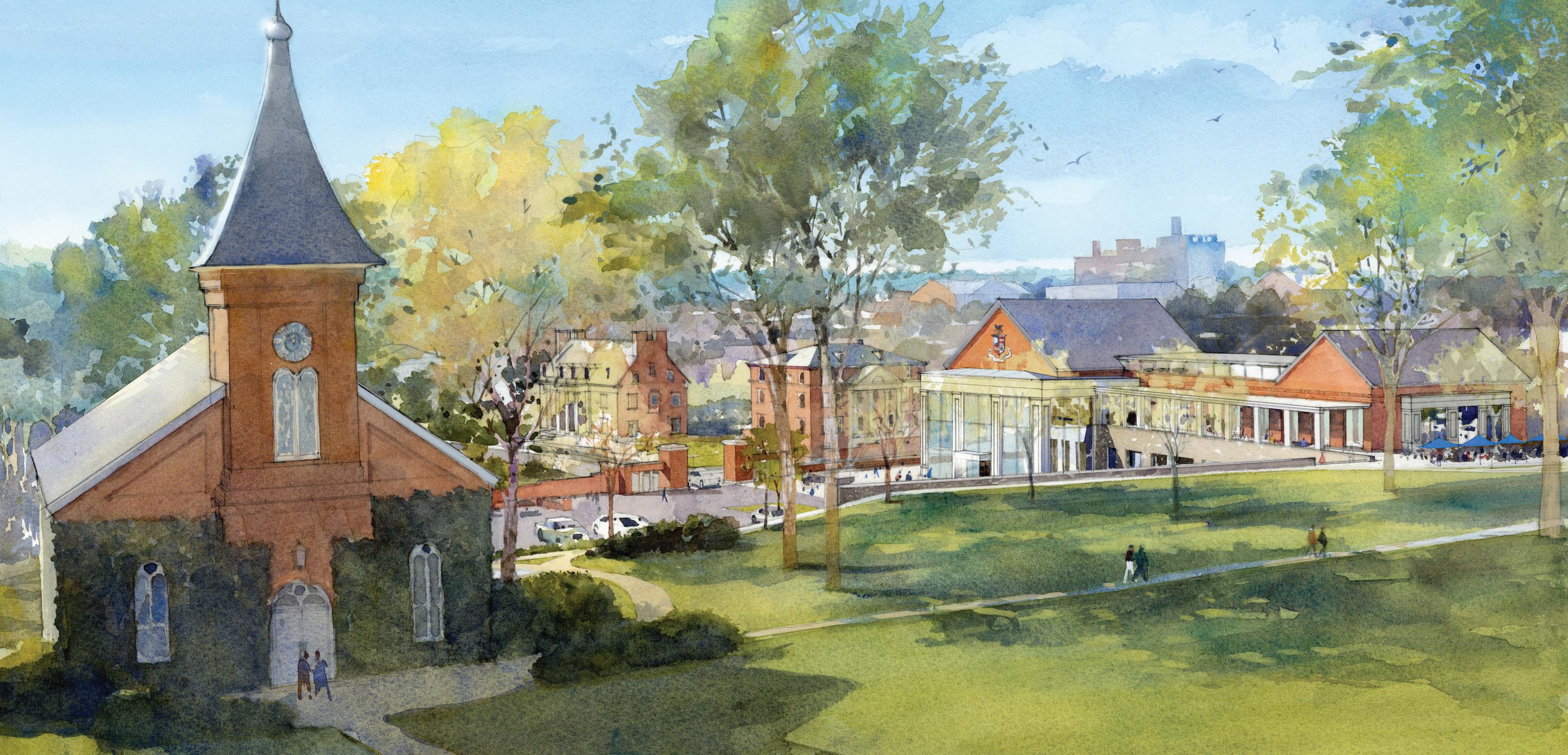
QA
with Matt Davis
Matt Davis became director of Washington and Lee’s Institutional History Museum and Galleries on July 29, 2024. A museum professional, preservationist, and public historian, Davis earned a Bachelor of Science and a Master of Arts from Georgia College & State University, where he served as director of historic museums from 2018-2024.
Q. What drew you to W&L?
MD: When I first heard about the position, I was intrigued about the opportunity to build a new museum and a collection that would help tell the story of an institution with such a rich and complex history. I am honored to have been selected for this role and to have the opportunity to tell this university’s stories through exhibitions and public programming.
Q. What have you been focused on since you arrived?
MD: Since my hiring, I have primarily focused on five key areas: reading and learning about the institution and its history and traditions; engaging with the Museum Working Group, campus stakeholders, alumni, and friends of the university to gain as much perspective as possible on the community’s opinions on the museum and its development; building my team; preparing for the new chapel gallery exhibit and planning for the Institutional History Museum; and reviewing existing collections and identifying areas in which we can grow the museum’s holdings to support our mission and vision.
Q. What can visitors expect when the University Chapel reopens in the spring?
MD: Once the HVAC and fire suppression upgrades are complete, visitors will be able to enjoy a new exhibition in the main lowerlevel gallery that examines the complete history of University Chapel, its connection to campus, and its preservation as a National Historic Landmark. The existing galleries, which include the Recumbent Lee statuary chamber, President Lee’s office, the Lee Family Mausoleum, and the
“Setting the Stage” exhibition of portraits that have hung in University Chapel, will be updated with new interactive displays that will aid in telling the history of the site.
Q. What is your vision for the Institutional History Museum?
MD: My vision is to build a world-class museum that will have modern exhibitions, interpretation, and engaging programs that connect with all audiences and help our campus community, as well as the public, reflect on the history of W&L and its place in the nation’s history.
Q. How will it connect to other historic sites and galleries on campus?
MD: As part of the Museums at Washington and Lee, the Institutional History Museum and Galleries has developed partnerships with our colleagues in the Art Museums and Galleries; Special Collections and Archives; various academic departments; and other local, state, and regional museums. These connections will aid us in the development of collections and future programming and will help to promote the museum as we continue our development. n
The new Institutional History Museum will be located on front campus near the intersection of Jefferson Street and Washington Street, close to University Chapel.

Student Success I NVESTED IN
We take a holistic view of student success, emphasizing personal development both inside and outside the classroom. With recent investments in student orientation and wellness, a top-tier Division III athletic program, robust opportunities to apply classroom learning to real-world experiences, and personalized career advising, it is no surprise that our students not only report extraordinarily high levels of satisfaction but also achieve outstanding placement rates in graduate school, competitive fellowships, legal clerkships, and the professions.
94% of the undergraduate Class of 2024 and 98% of the law Class of 2024 were employed or attending graduate school within six and 10 months of graduation, respectively.
Alex Miller and Maria Saez Tatman on
INVESTING IN WELLNESS
The Vice President for Student Affairs and Associate Dean of Law Student Affairs, Community, and Belonging cultivate a culture of care at W&L.
QA
Q. How do you define wellness?
you
MST: When we talk about wellness, there are a lot of dimensions. It’s not just mental or physical health. It’s also about social connection and even financial wellness. Wellness isn’t about perfection or comparison. It’s about balance. The point is to stay mindful of where you are and what you need and to find what works for you. That’s why we try to offer many different wellness opportunities. We just want people to explore and try new things.
The hard part is helping them find it for themselves because just as we have to try many different things to see what works for us, they have to try things to see what works for them, too.
Q. How do you introduce the importance of wellness to students?
The approach to student health and wellness at Washington and Lee is multidimensional, with opportunities for support across campus, including the new Lindley Center for Student Wellness, which houses both health and counseling services for undergraduate and law students.
I could prescribe to every student their own to
us, they have to try things to see what works and wellness at Washington across campus, including the health and counseling services for law
AM: Wellness is so individual. How I define it when I’m well is different than how you might define it when you’re well. Providing our community with the skills and tools to manage that for themselves is the goal. If I could prescribe to every student their own wellness story, my job would be easier.
AM: When I arrived at W&L, I put together a working group to create a strategy for what our institutional approach should be in advance of the Lindley Center’s opening — an approach that addresses wellness for faculty and staff as well as students. We arrived at three broad goals that will inform the next phase of our work. First is allowing folks to be agents of their own well-being; second is creating a culture of well-being; and third is exploring the idea of connection and belonging. That group, the Well-Being Work -
ing Group, is now entering a new phase of its work with the addition of more colleagues from athletics, human resources, and other areas across campus who can help us think about this from a truly cross-institutional lens, and we’ve really started to think about what skills, opportunities, and institutional resources we need to leverage to raise the visibility and awareness around wellness.
MST: Everything we do in the law school is through the lens of getting them ready for the legal profession. The legal profession is a service profession, and when we talk about wellness, we really emphasize to them, “How can you be at your best to be able to provide the best service to your clients as future lawyers?” Helping students develop healthy ways to manage their stress, their anxiety, and their workload is an important piece of what we do. Being a legal practitioner isn’t just about knowing the law. There are so many other pieces to it, like knowing how to navigate a heavy workload, building your executive skill set, being able to meet deadlines, being able to communicate effectively with your client and partners, and remaining clear-headed.
Q. How has the Lindley Center for Student Wellness impacted your students?
MST: We were so excited when we learned that the Lindley Center was going to be right next door. We try to normalize with our students early on the importance of having a support system in place, and sometimes part of your support system is regular check-ins with your doctor or therapist. We meet with the leaders of Lindley Counseling and Lindley Health regularly to talk about how we can help their efforts and how they can help our efforts to build better lawyers.
AM: The Lindley Center is one component of our wellness strategy, but we also have the opportunity to infuse our work around wellness across campus, from Elrod Commons to the Williams School to the fitness
Student Success
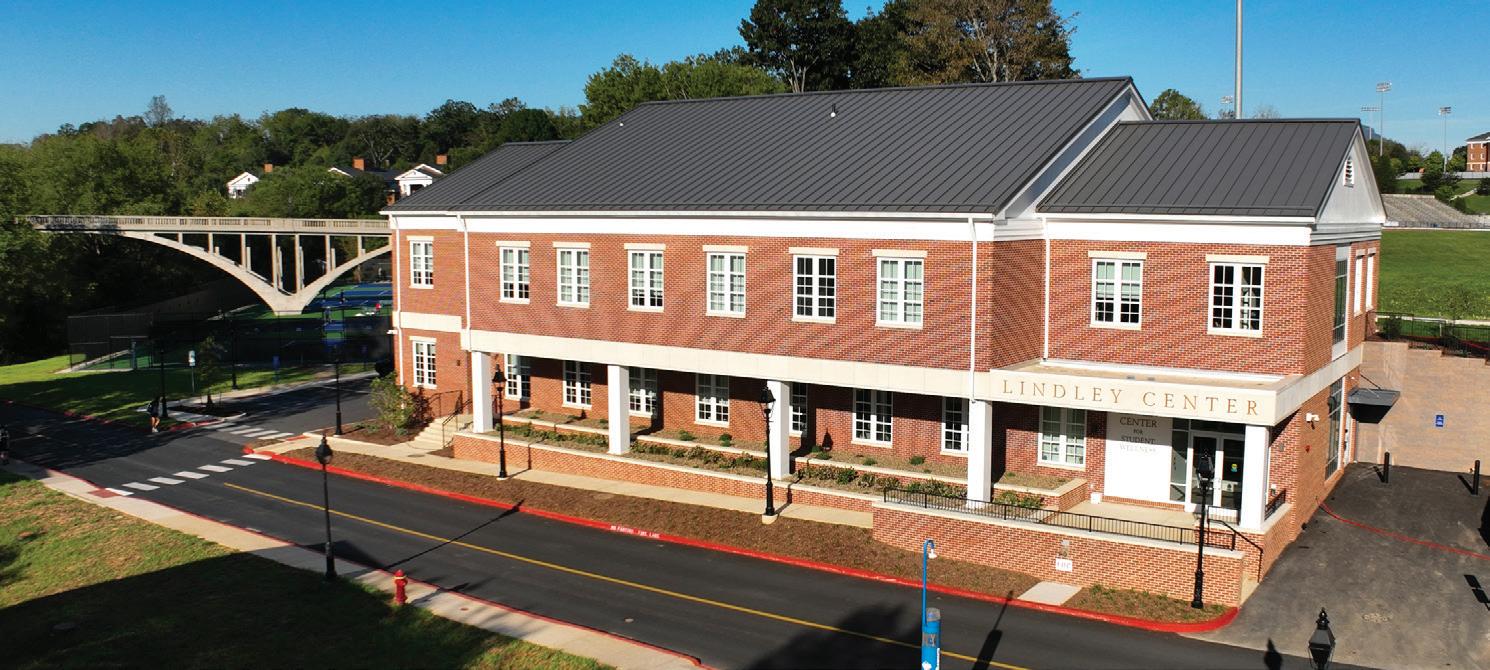
The Lindley Center for Student Wellness, named in honor of the late Dr. Lindley Spaht Dodson ’99, opened in August 2025 thanks to generous support from lead donors Holden and Claire Spaht P’26 and the Classes of 1996, 1999, and 2000.
center. I’m hopeful that in the future we can expand upon our programs and interventions in a thoughtful and strategic way.
Q. How has the university invested in the concept of belonging as it relates to wellness and educating the whole student?
AM: At W&L, one of our strengths is that we’re a deeply relational community. Feeling part of something bigger than yourself, feeling seen and valued, is a huge part of wellness. When your well-being is off, it’s easy to feel like you’re the only one struggling. But simply connecting with someone else, even a quick hello or a 15-minute chat in your residence hall, can make a real difference. Those small, genuine interactions help people feel alive, heard, and less alone. The more we create space for that, the stronger and healthier our community becomes.
MST: When I started, the word “belonging” was added to my title, and that was a specific choice, because we really do need every law student to feel that they belong here. The science and the research behind belonging shows that folks who feel like they belong learn better, interact better with others, and feel better, and so, for us, that all ties into wellness. n
HOLISTIC HEALTH
Home to both Lindley Counseling and Lindley Health, the Lindley Center for Student Wellness serves the needs of W&L undergraduate and law students through the lens of holistic care for each person.
Lindley Center 24/7 operating hours while classes are in session
6 overnight rooms in the infirmary
9 exam rooms
7 counselors at Lindley Counseling
11 counseling spaces
2024-25 Student
Health Center Stats
3,000 counseling sessions
25% of students sought counseling
300 urgent overnight visits
2024-25 Athletic Highlights
A WINNING FORMULA
Washington and Lee boasts one of the most successful Division III athletic programs in the country. The Generals finished 13th last year in the Learfield Directors’ Cup, which measures success in NCAA championships across all sports. This marked the sixth time in a row that W&L has finished in the top 20 nationally, the best streak in school history. The guiding philosophy of Division III is that athletes are students, in every respect, and academics comes first. Our athletes participate in the full range of opportunities at W&L, and our coaches prioritize the personal development of the members of their teams. But that doesn’t stop the Generals from achieving remarkable competitive success.
594
students on varsity athletic rosters in 2024-25
31
49
All-Americans
12
45
individual ODAC champions
2
National Players of the Year
CONFERENCE CHAMPIONSHIPS
Women’s Cross Country, Women’s Soccer, Men’s Soccer, Volleyball, Women’s Indoor Track & Field, Women’s Swimming, Men’s Swimming, Women’s Outdoor Track & Field, Women’s Tennis, Women’s Lacrosse, Men’s Lacrosse, Women’s Golf of the student body participated in intercollegiate athletics
71
overall winning percentage
23
consecutive ODAC Commissioner’s Cups
ODAC Coaches of the Year
National Coach of the Year
Recent upgrades to athletic facilities include:
13 11
teams and 24 individuals advanced to NCAA postseason competition
• Competition surface upgrades and a new video and sound system at Wilson Field (football, men’s lacrosse, track & field)
• New Bermuda grass on Watt and Liberty Hall fields
• Renovation and resurfacing of The Washburn Lower Tennis Courts
ODAC Players of the Year
7
10 1
ODAC Rookies of the Year
• Sound system refresh at Alston Parker Watt Field (soccer, women’s lacrosse). Watt Field was recently named 2025 Virginia Sports Field Management Association Field of the Year, recognizing it as the a top natural-grass collegiate playing surface in the commonwealth.
Teeing Up for the Next Shot Strategic Spotlight
w & l and l exington g olf and c ountry Club (LGCC) have formed a new partnership to undertake a complete renovation of the golf course and ancillary facilities. The project, on which ground was broken this summer, will provide a competition and practice venue for Washington and Lee’s varsity golf teams, while also revitalizing LGCC — Virginia’s second-oldest country club — for the benefit of the LexingtonRockbridge community.
LGCC has long served as the home course for our men’s and women’s golf teams, despite being too short for collegiate competition. The existing driving range can only accommodate iron shots, and in recent years, the greens and bunkers on the course have degraded. The W&L golf teams regularly travel to the Omni Homestead Resort, driving an hour each way, for better practice opportunities.
Despite their home course challenges, both the men’s and women’s teams have achieved remarkable success in recent years. The men’s golf team earned a fourth-place finish in the 2025 NCAA Division III Championship. Pete Gyseck, the Thomas R. Wall IV ’80 Head Men’s Golf Coach, was named the Division III National Coach of the Year and also received his second ODAC Coach of the Year award.
Jonathan McEwen ’27 won the Jack Nicklaus Award as the NCAA Division III Player of the Year and was also recognized as the ODAC Golfer of the Year. The women’s team ranked 14th in the country, competed in the NCAA Championship, and won its seventh consecutive ODAC Championship.
The renovated course in Lexington has been designed by renowned golf course architect Lester George. When complete in May 2027, the course will extend to 7,000 yards and be maintained to standards suitable for NCAA competition. Priorities include rebuilding greens and bunkers, constructing full-length practice facilities, and installing a new irrigation system. The existing clubhouse will also be replaced. Landscapes Golf Management has been retained to sustain the golf course and its operations.
“It’s great that the university embraced the vision of revitalizing this valuable community and university resource,” said emeritus trustee and senior advisor to University Advancement Beau Dudley ’74, ’79L. “Our very fine golf teams need an appropriate, high-quality golf course and practice facilities, and our alumni will have a great venue when they come back to Lexington.” n
Student Success
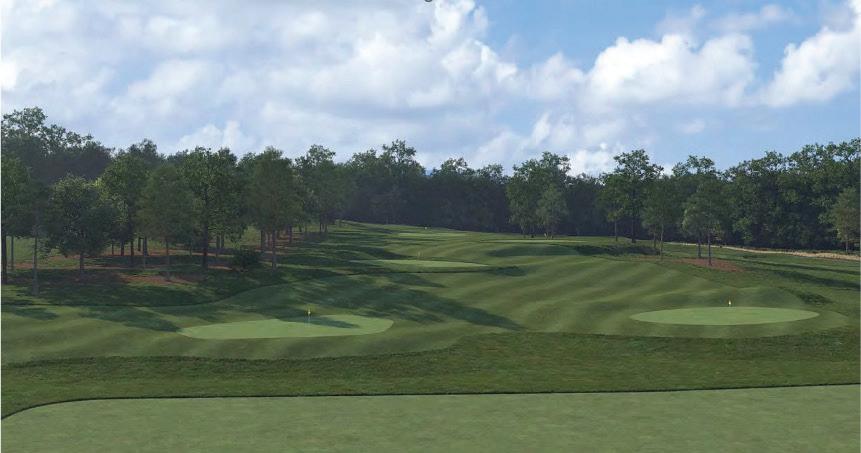
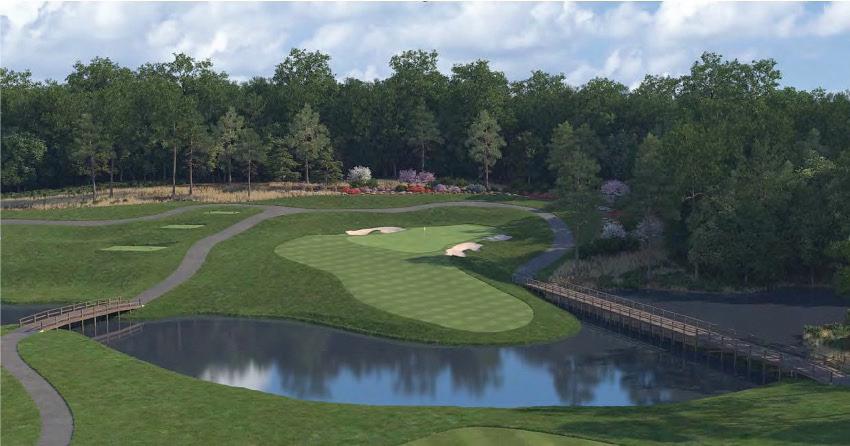
ON DECK
Varsity Softball
In addition to a new golf facility, Washington and Lee’s strategic priorities for athletics include adding a varsity women’s softball team and field. Softball is the fourth-most popular sport for women nationwide, and W&L is the only school in the ODAC and the only top 25 private liberal arts college that does not offer a varsity program. Establishing softball as W&L’s 25th varsity sport will increase athletic opportunities for women and strengthen the university’s ability to recruit high-achieving student-athletes from across the nation. The facility will be adjacent to Cap’n Dick Smith Baseball Field, creating a unified home for diamond sports at Washington and Lee.
Student Success
POWERFUL PERSONAL &
UNDERGRADUATE CAREER OUTCOMES
Personalized Advising
n 6,280 individual student appointments
n 83% of students had an individual appointment or attended a CPD program
n 942 individual alumni appointments
n 150+ student participants in career exploration trips to New York City and Washington, D.C., to explore career options with alumni in fields including:
● Accounting
● Advertising, Marketing, and Communications
● Business
● Finance
● Healthcare
● Law
● Life Sciences
● Nonprofit and Social Impact
● Public Policy
● Real Estate
● Social Sciences
● Technology
Career Exploration
Some of CPD’s most popular programs connect students and alumni with shared interests in specific professional sectors, including:
n The Policy Forum (Fall 2024 in Washington, D.C.)
n The Energy Forum (Winter 2025 in Houston)
n The Real Estate Forum (Fall 2025 in Washington, D.C.)
Recent Notable Employers
n Amazon, Bain & Company, Campbell’s, Citi, Dana-Farber Cancer Institute, Deloitte, Goldman Sachs, Lockheed Martin, Microsoft, OmnicomGroup, PepsiCo, Tampa Bay Times
CLASS OF 2024: AT SIX MONTHS AFTER GRADUATION
94% of the Class of 2024 was employed or attending graduate school
92% Five-Year Medical School Acceptance Rate
87% Five-Year Law School Acceptance Rate
CLASS OF 2024: 16% ATTENDED A GRADUATE PROGRAM IMMEDIATELY AFTER W&L
Masters: 64%
Law School: 15%
Ph.D. Program: 10%
Health: 7%
Medical School: 4%
CLASS OF 2024: FELLOWSHIP SUCCESS
24 awarded nationally competitive fellowships abroad
1st Marshall Scholarship awarded in W&L history
7 consecutive years as a top producer of Fulbright U.S. Students
CLASS OF 2024: TOP EMPLOYMENT INDUSTRIES
#1
Liberal Arts College (and #2 overall) for Career Preparation (2025 Wall Street Journal student poll)
#2
Liberal Arts College for Long-Term Career Success (LinkedIn Top Colleges 2025)
#3
Best Career Services, Best Private School Alumni Network, and Best Private School for Internships (The Princeton Review’s The Best 391 Colleges, 2026 Edition)
$2.92M
40-Year Return on Investment: #6 among liberal arts colleges (2025 study by the Georgetown Center for Education and the Workforce)
The offices of Career and Professional Development (CPD) and Career Strategy (OCS) take a proactive and personalized approach to career advising for undergraduates and law students, respectively, offering one-on-one advising, career exploration programs, and skill development workshops that drive exceptional outcomes.
LAW CAREER OUTCOMES
#2
Best Value Private Law School (The National Jurist 2025 rankings)
#5
Overall in Two-Year Employment Average (The National Jurist 2025 rankings)
CLASS OF 2025L: EMPLOYMENT HIGHLIGHTS AT GRADUATION
90% employed at graduation
72% employed outside of Virginia
48% at firms with 100+ lawyers
15% to federal and state clerkships
93%
CLASS OF 2024L: AT 10 MONTHS AFTER GRADUATION
CLASS OF 2024L: EMPLOYMENT BY FIRM SIZE
National Bar Pass Rate (Class of 2025, July first-time takers) #28
in Law Schools with the Most Graduates at Big Law Firms (U.S. News and World Report 2025 rankings)
95% were employed in bar passage required or J.D. advantage jobs
98% were employed across all professional employment types or attending graduate school
23 states in which members of the class secured jobs
CLASS OF 2024L: EMPLOYMENT BY SECTOR
Recent Notable Employers
n Law Firms: Kirkland & Ellis, Ropes & Gray, Troutman Pepper Locke
n Clerkships: U.S. Bankruptcy Court, U.S. Court of Federal Claims, U.S. District Court of the Virgin Islands
n Public Interest or Government: Manhattan District Attorney’s Office, Texas Office of the Attorney General
n Business and Industry: IBM, Fidelity National Finance, State Street
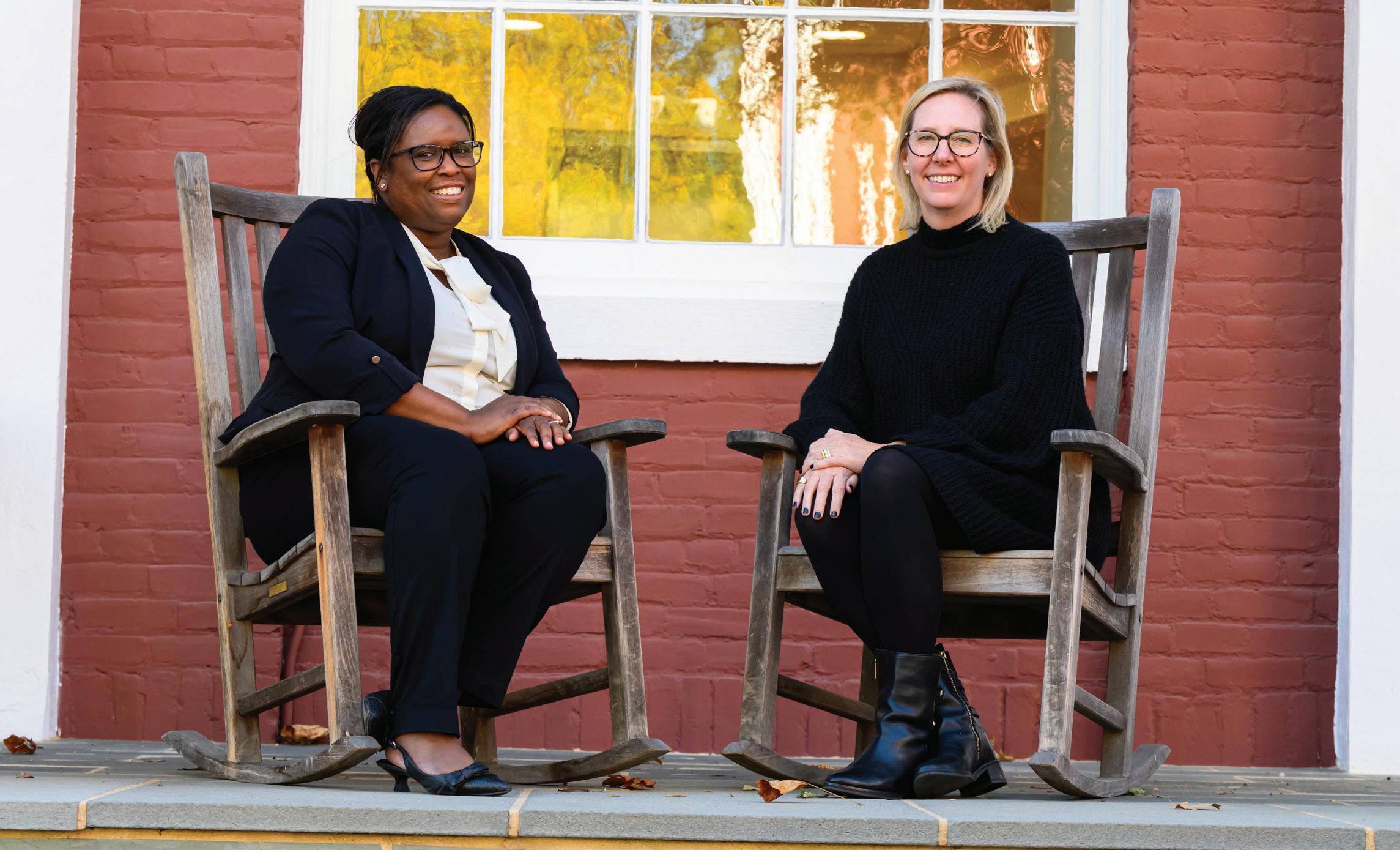
Freda Coleman-Jackson and Molly Steele ’04 on
INVESTING IN OPPORTUNIT Y
IN OPPORTUNIT
The Office of Career and Professional Development and the Office of Career Strategy both serve to connect students with job opportunities, career advising, and alumni mentors.
The Career and Professional Development and Office Strategy serve to students career and mentors.
Molly Steele ’04 (pictured right, above), Barnett Family Dean of Career and Professional Development at W&L, and Freda Coleman-Jackson (pictured left, above), assistant dean of career strategy at W&L School of Law, both assist students in all aspects of career readiness. Steele oversees undergraduate student and alumni career advising as well as manages employer recruiting and career exploration programming on- and off-campus. Coleman-Jackson directs law student and alumni advising as well as guides employer engagement events.
Molly Steele ’04 (pictured Barnett Family of and (pictured left, above), dean career strategy at W&L of both students in all aspects of career readiness. Steele oversees student and alumni as as employer recruiting and career exploration programming on- off-campus. student and alumni advising as well as guides employer engagement and Molly Steele on
Q. Are there any major career trends or shifts you all are seeing at the moment?
Q. any or shifts all are seeing at moment?
FC-J: Through the leadership of our dean and the support of our alumni, we’ve been able to tailor our advising to help students be prepared for a faster recruiting timeline and evolving job market. Recruiting has been dramatically pushed forward, so much so that it begins the minute students arrive on campus. Our office has been able to be responsive to meet the needs of our students and alumni. Fortunately, given our resources, the Office of Career Strategy (OCS) has increased advising opportunities, onsite programming, and
FC-J: Through leadership of dean and support of our alumni, been able to tailor our advising help students be prepared for faster timeline evolving job market. Recruiting has been drapushed so much so it the minute students on campus. Our office has been able needs our students alumni. our Office Career Strategy has increased advising and
virtual programming. This has meant that our students are prepared to be competitive despite this earlier timeline.
MS: Our students are excited, competitive, and eager to learn what’s out there, so they are increasingly seeking internships earlier on in their academic careers. The CPD office has responded by sourcing exploratory internships and opportunities that answer questions like: How does a business work, what are the different functions and how do they collaborate together, and could I see myself working in this industry? We’ve partnered with four alumni chapters over the past two years, asking alumni to help source opportunities for students, which generated over 60 new opportunities last summer. It has been a great way for alumni to volunteer and support current students.
Q. How do you think being in this liberal arts setting helps our students succeed?
FC-J: A unique feature of the law school experience is that students come from all different majors and a variety of disciplines. Having a liberal arts background gives our students the perspective that there are many different career paths available to them. The advantage of being at W&L is that if there is something in the law that they want to do, we can help our students carve out a path to get there. Our graduates don’t feel limited to one particular field or path and know they can truly pursue whatever their interests may be. For this reason, W&L students go on to do many amazing things.
MS: It allows for flexibility and adaptability as the job market fluctuates. Often during a job interview, an unexpected topic arises to which students are able to speak. This is not due to a specific major, but because of the variety of classes and interdisciplinary studies that increase points of connection with the interviewer. Students who have a broad knowledgebase and are comfortable in a variety of professional
settings, such as business dinners or client meetings, have a major advantage during the hiring process. Plus, they are more interesting people!
Q. To what do you attribute W&L’s strong employment outcomes six months (94% of undergraduates) and 10 months (98% of law school students) after graduation?
MS: The benefit of advising at a small school is the ability to develop personal relationships with every single student. Not only do we help them explore their interests and discover what they want to be when they grow up, but we get to know them well as people early on. Our team can then better help students determine their professional options and priorities. We also help harness the power of our very engaged alumni network. Our alumni participate in on-campus and virtual information sessions as well as formal recruiting. They also serve as sounding boards and mentors for students to explore career paths and determine what is a good fit.
FC-J: I think the small size of the law school — we average about 125 students per entering class — allows us to really engage with the student body. This year, we did resume reviews over the summer to help them come into the first semester with something very tangible in hand. I think the biggest thing, though — and Dean [Melanie] Wilson’s office calls it “our secret sauce” — is our alumni network. We have such invested alumni from the law school (and undergrad as well) who are always reaching back out. They want to come on campus and conduct interviews or do virtual information sessions.They’re offering informal and formal mentorship by providing our students with a variety of networking opportunities. As a result, our students benefit from being part of the entire W&L community and really feel so supported by the alumni.
Student Success
MS: Every student, regardless of major or career interest, develops a foundational set of skills to prepare to enter the workforce. They learn how to network, tell their story, and connect the dots between academics and life after W&L. CPD offers a safe place to discuss those topics and practice delivering the answers. Advisors serve as a sounding board and coach, which is crucial, so as students leave W&L, they feel confident in their endeavors and will be successful in whatever they choose to pursue.
Q. What do you think makes our Washington and Lee network so strong?
MS: There is a sense of shared success across the W&L community. We are interested in individually supporting every single person, and students realize that a lot is invested in their success, whether that’s in the classroom, from the staff, or through peer mentor programs. The W&L network believes that we all succeed if the students succeed. W&L graduates get the benefit of seeing many alumni volunteer their time and their resources to help with career exploration, recruiting, hiring, and providing feedback. We hope students leave with a sense of gratitude and wish to pay it forward.
FC-J: Most students choose W&L because of that sense of community. Law school is quite the intense three-year process, but our students feel supported both academically and personally by everyone from their professors, all the way to the dean of the law school. And, perhaps more significantly, the students make lifelong friendships and feel that they will receive lifelong support. For example, in October, our office kicked off the recruiting season with a Meet the Firms event. Nine firms came to campus, and almost every single employer representative was either a graduate of the law school or the undergraduate university. For students beginning the law school experience, it really reinforced the sense that they made the right choice about where to begin their legal career. n
Student Success
Communal Career Mentorship
The Rachford Fellows and Career Fellows offer peer-to-peer support,
helping students take that next step beyond W&L.
Guy Mannick ’26L, Lindsay Lankau ’26L, and John Reynolds ’26L serve as 2025-26 Rachford Fellows.
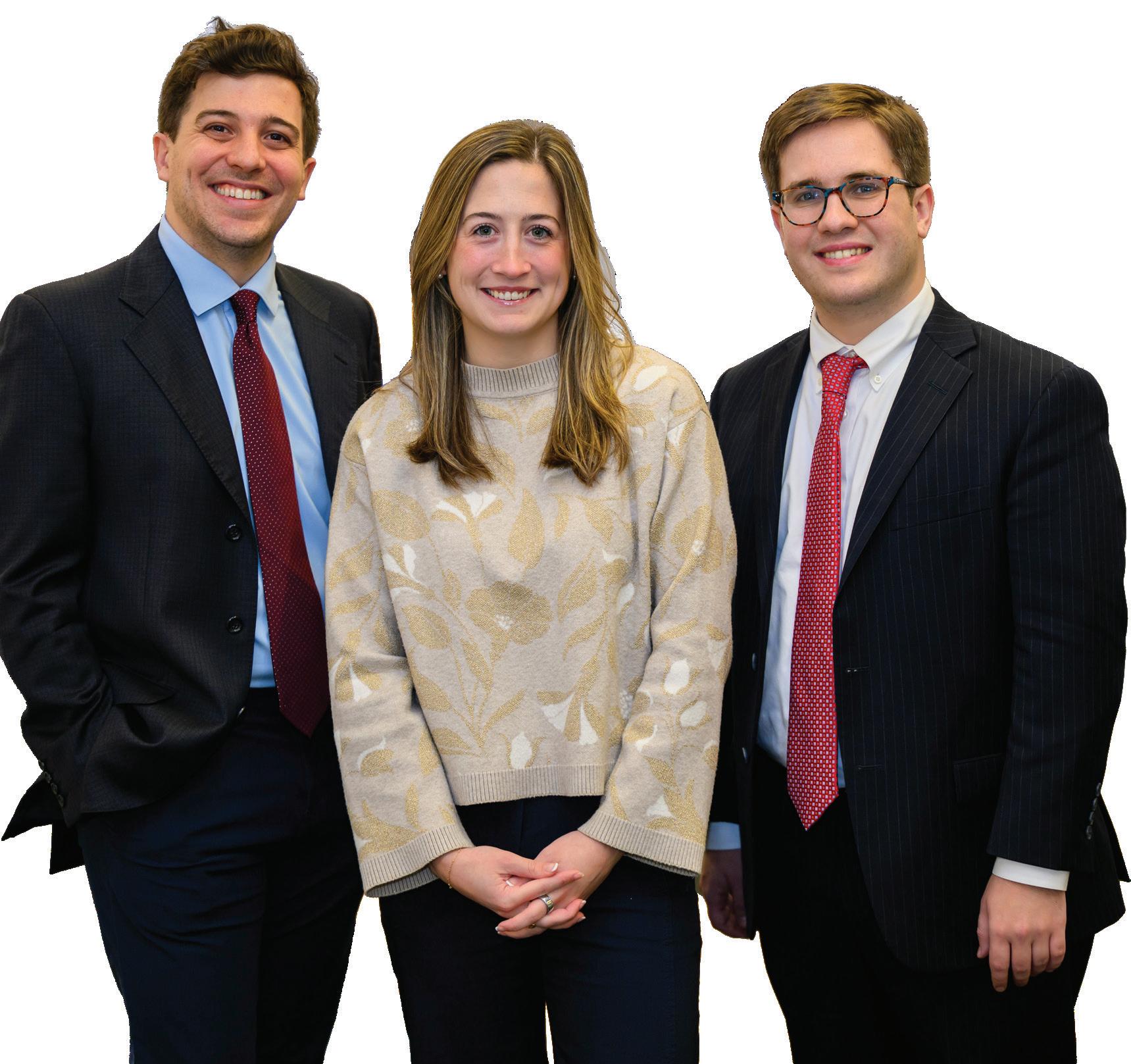
THe breakfast sandwicH line at Café 77, a table in the main reading room of the law library, and the weights section of the fitness center have all marked Washington and Lee students’ first entry point to the undergraduate Office of Career and Professional Development (CPD) and W&L Law’s Office of Career Strategy (OCS). As students themselves, undergraduate Career Fellows and law school Rachford Fellows serve as unassuming, approachable career resources for their peers. And what can start as a passing question or casual conversation can lead to follow-up meetings focused on resumes and cover letters.
“For my peers, the program lowers the barrier to asking for help,” said Head Career Fellow Abid Jeem ’26. “Students who may feel nervous about meeting with professional advisors often feel more comfortable starting with a peer. I’ve seen students who came in ‘just to ask a quick question’ end up gaining confidence, building structured application plans, and developing a sense of agency in their careers.”
On the undergraduate side, the current Career Fellows program took shape in 2014, starting with three students working
with the office’s professional staff as trained career advisors. Since then, it has grown to 40 fellows, including three Head Career Fellows, with CPD fielding over 100 applications for the program each year.
“These students truly have a genuine interest in their peers’ passions and successes. It’s inspiring to watch,” said Brooke Peccie ’17, associate director of CPD and Career Fellows program manager. “The best part of my job as the Career Fellows’ supervisor is seeing their faces light up when they tell me about helping a student land a dream job or internship thanks to their resume review or interview prep meeting.”
Career Fellows take appointments to help with resumes, cover letters, and job and internship searches, and they introduce their peers to the resources available to them through CPD. The program has helped CPD broaden its reach across campus, with the fellows taking over 1,500 appointments annually.
“They are our boots on the ground,” said Molly Steele ’04, Barnett Family Dean of Career and Professional Development. “They are from a variety of majors, career interests, and student organizations. These students are awake when I’m not awake, and they are available on the weekends, too, which helps. They make the office approachable so that students can come in without feeling like they know what they want to do.”
The Rachford Fellowship program at W&L started in 2019 through the generous support of Laurie Rachford ’84L, who wanted to encourage professional development in law students. Each spring, OCS opens applications for incoming third-year law students to apply to be a Rachford Fellow. In addition to articulating their interest in the program and their ability to serve the student body, applicants complete a technical assignment where they must edit a mock resume and cover letter in a certain timeframe. For the 2025-26 academic year, OCS has three Rachford Fellows.
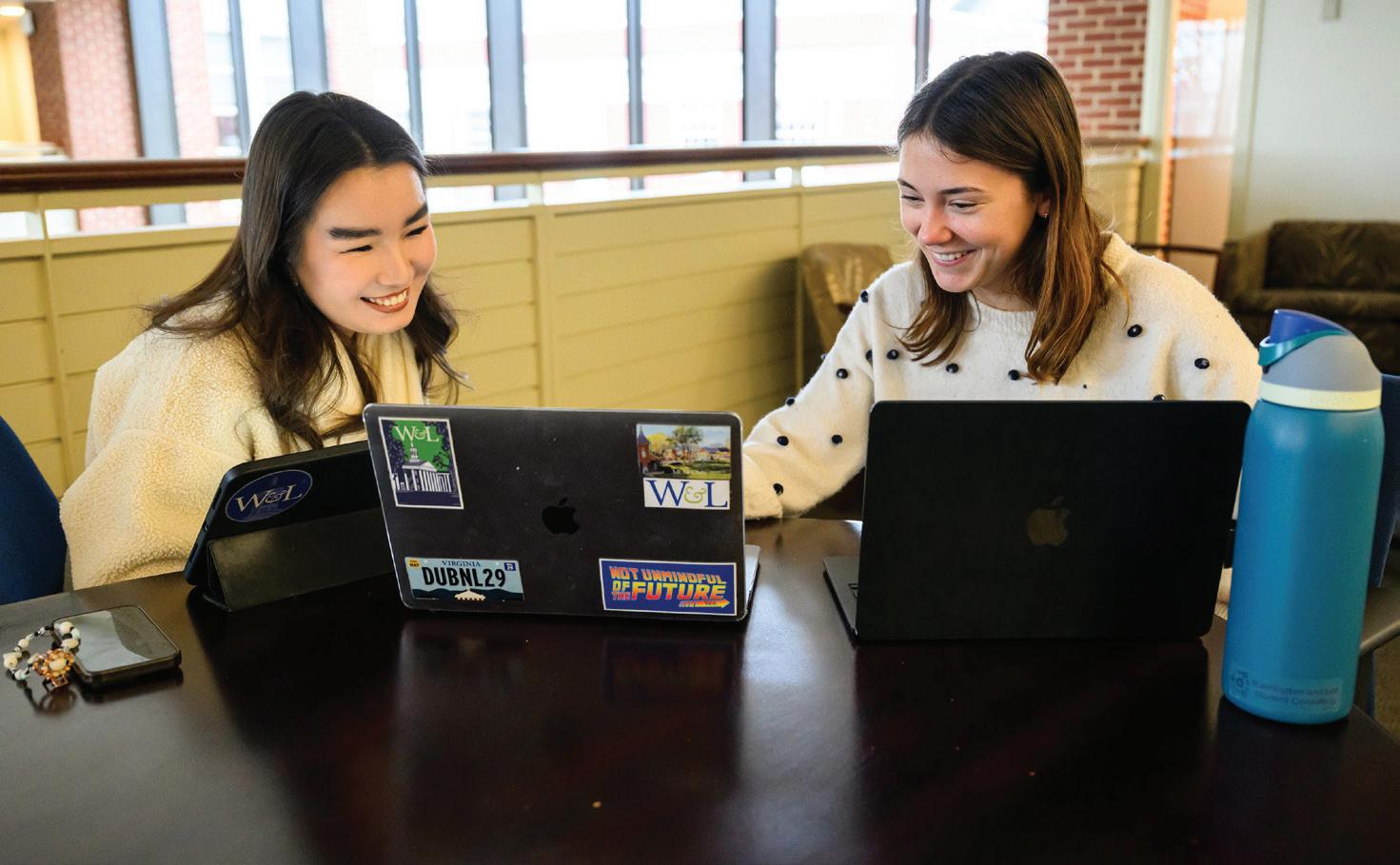
“The Rachford Fellows are an extension of our office,” said Freda Coleman-Jackson, assistant dean of career strategy at the law school. “They have self-selected. They are accomplished in their own right and have successful academic and professional legal careers on the horizon. We really see them as the first line of support for students.”
With their post-graduation plans solidified, Rachford Fellows serve as examples to 1L and 2L students as they start to navigate the job search process. OCS identifies fellows on different legal career paths and from different geographic areas, and, much like Career Fellows, Rachford Fellows review and help draft resumes and cover letters and assist with initial outreach emails and interviews.
“They serve as examples of somebody who’s actually done this,” said Melanie Starks, associate director of law career strategy. “When they’re having a conversation, it’s a little bit more personalized and intimate than the conversations they would have with us because they’re closer in age, they’ve been within this particular
culture of this law school, and they are examples in terms of how you professionally present yourself in the process of finding a job.”
“During my 1L fall and spring semesters, I leaned really heavily on the Rachford Fellows and OCS to help with job searching,” said Rachford Fellow Lindsay Lankau ’26L. “I found a lot of benefit, in particular, from talking to the Rachford Fellows because of their ability to relate to what I was going through in trying to balance school, life, and career prospects.”
Beyond the technical skills, Career Fellows and Rachford Fellows also contribute to the culture of community found on both sides of the W&L campus, where peers look to each other as supporters rather than competitors.
“Our community is built on trust and relationships that cross class years and backgrounds,” Jeem said. “The Career Fellows program mirrors that ethos: students helping students, not out of obligation, but because that’s how our campus operates at its best. It proves that our mentorship is not transactional, but communal.” n
Career Fellow Campbell Musslewhite ’26 (right) helps first-year Kamila Shaipranova ’29 navigate her career goals.
From Here to There
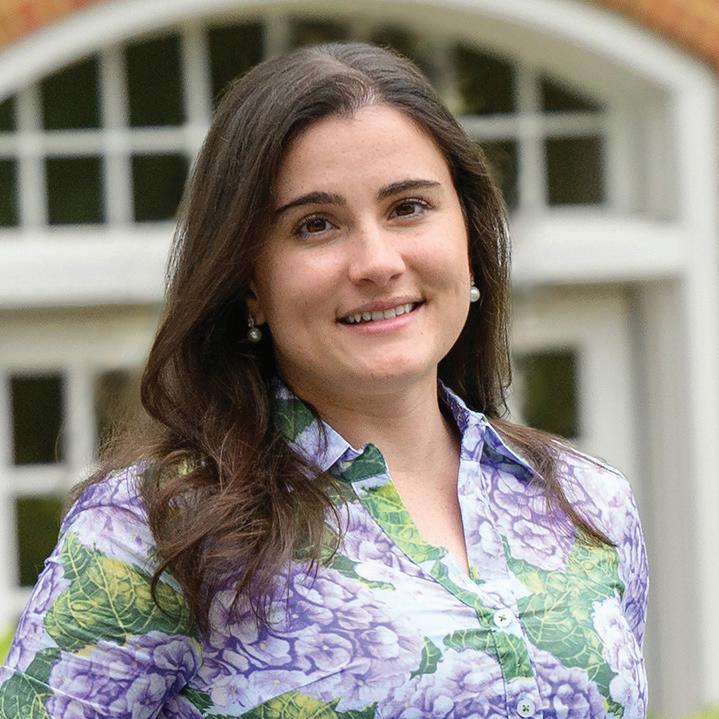
Tara Trinley ’25
Tara graduated with dual majors in history and Eastern European and Russian area studies. She accepted an officer commission with the U.S. Army National Guard upon graduation and will attend Columbia Law School in 2027 after completing her training.
“I always knew that I wanted to live a life of public service, but I didn’t know what it would look like. I went abroad to Denmark and learned my passions aren’t best represented by commercial pursuits, and I learned during my 1789 Constitutional Convention course that it’s not politics that motivates me but a pure love for the rule of law itself. During my freshman year, Russia launched its full-scale invasion of Ukraine — a seismic geopolitical decision I could not look away from. Slowly but surely, I rekindled my old love for history and international affairs, and I found a new talent in foreign languages and Mock Trial. I confirmed my strength lies in the law, and I realized I’m much better at executing and interpreting the law than I am at crafting it. I love my new career opportunity with the Army, and I hope my experience in law school will make me a better-informed service member and global citizen.” n
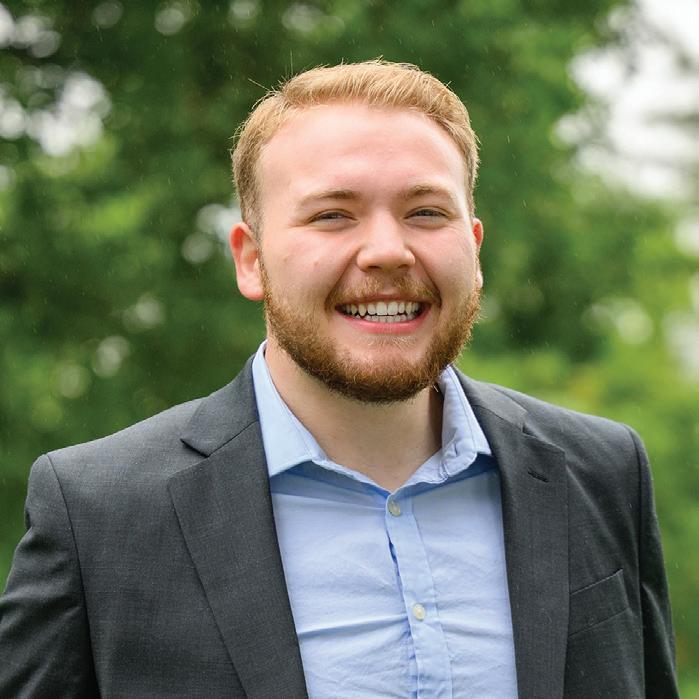
Charlie Mlcek ’25
Charlie graduated with a major in economics and minors in education policy and poverty and human capability studies. He is currently an AI Policy Fellow with the House Energy and Commerce Committee through the Horizon Institute for Public Service. He is the first recipient to be awarded the congressional fellowship directly out of undergraduate studies.
“I came into W&L thinking I wanted to do commercial real estate development, but courses in the Shepherd Program changed my aspirations. Later, I thought I might go to law school straight out of undergraduate. While law school might still be in the cards, I’m more focused on promoting American AI innovation and ensuring national security; I plan to pursue whichever role best enables this objective. For now, that means working to advance the interests of a congressional office or committee as an AI Policy Fellow. Just as my path in college wasn’t straightforward, I expect my career will similarly evolve in ways I can’t yet imagine.” n
Student Success
A liberal arts education isn’t just training for your first job. It instills the transferable skills and habits of mind that prepare graduates for fulfilling careers. We asked four recent graduates what’s next for them and how W&L helped them get there.
Caroline Linen ’25
Caroline graduated with a dual major in cognitive and behavioral science and French and a minor in biology. She is working as a medical assistant at Carolina Neurosurgery & Spine Associates in Charlotte, North Carolina, and will begin the physician assistant program at Medical University of South Carolina in May 2026.
“By the start of freshman year, I was already set on becoming a physician assistant, but I didn’t fully understand what that path entailed until I immersed myself in it at W&L. Shadowing Janice Hagan, a PA I admire deeply, gave me an inside look at the kind of provider I hope to become — knowledgeable, compassionate, and team-oriented. Founding the Pre-PA Advising Club helped me connect with others on the same path and pushed me to take ownership of my goals. And working as an emergency medical technician and patient care technician gave me hands-on experience that confirmed how much I enjoy direct patient care. These experiences didn’t change my plan, but they deepened my understanding of the role and strengthened my commitment to it.” n
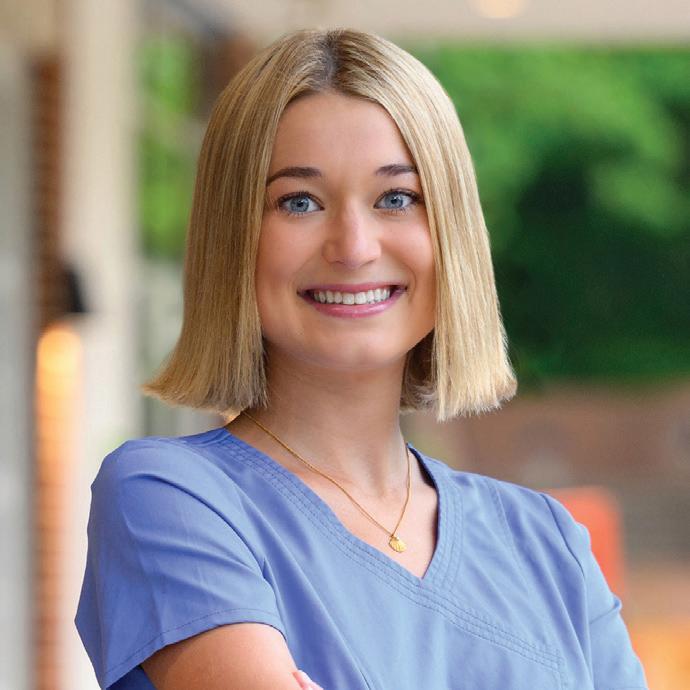
Jacob Kansco ’25L
Jacob attended Virginia Tech for his undergraduate degree, where he received a B.A. and M.A. in political science. He now works in the general litigation group at Kirkland & Ellis LLP in New York City.
“I knew coming into law school that I wanted to work at a large firm in New York City. What I did not appreciate was the difference between transactional and litigation work. I found that I enjoyed my 1L coursework, which leans heavily toward litigation work, and my 1L judicial internship. These experiences made it clear that I would likely enjoy litigation work over transactional. One of the best things about working in a general litigation group is that the subject matter of the cases varies widely. I think any course that has you engaging with case law and understanding arguments is helpful for a career in litigation. However, I believe that participating in a clinic is one of the best things you can do in law school. I worked in the Community Legal Practice Center Clinic, and there are skills that I gained there that could really only be learned through practical work.” n
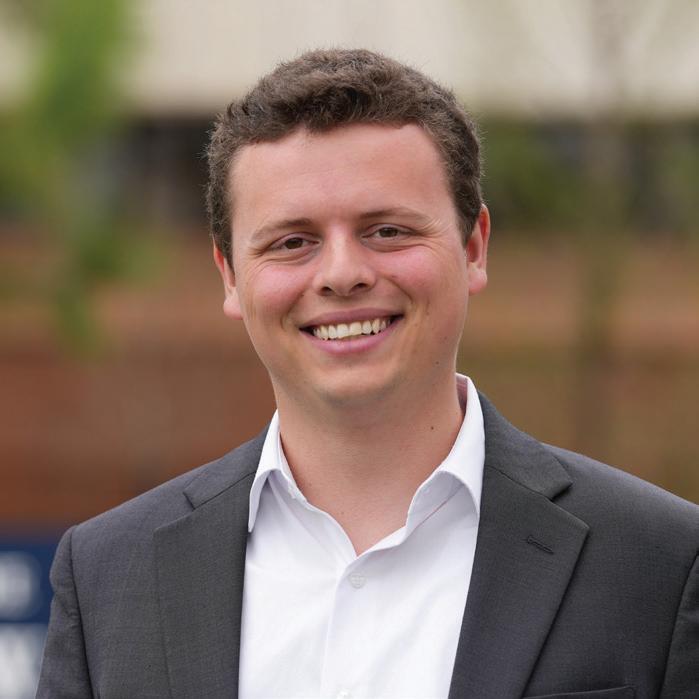

Our Future I NVESTED IN
Guided by our motto — non incautus futuri — we are always mindful of the future. Our recent fundraising success, coupled with careful stewardship of our resources, places Washington and Lee in an enviable position in higher education. Our endowment per student — an important driver of educational quality — is among the highest in the nation, while our administrative spending relative to educational expenditures is among the lowest. We are laser-focused on our mission, providing the best possible education to W&L students today, while preserving our ability to continue to do so for generations to come.
In 2024-25, W&L’S ENDOWMENT PER FULL-TIME STUDENT WAS $978,237 — a figure that has increased by over 415% over the last 30 years.
Strength in Numbers
With an endowment topping $2 billion, a strong credit rating, and the most successful fundraising year in history, W&L occupies a position of strength from which to educate the most talented students and advance our strategic plan. We continue to steward our resources carefully, delivering the highest-quality education more efficiently than other top-tier colleges, while also making purposeful investments in educational programs and facilities for the benefit of current and future students. And we continue to be a good neighbor in Lexington and Rockbridge County, contributing jobs, revenue, research, and volunteer services to support the local community.
$2.19B
Endowment value as of June 30, 2025
In 2024-25, W&L’s endowment per full-time student was $978,237 — a figure that has grown by over 415% over the last 30 years.
$1.433 BILLION
Why does endowment per student matter?
Endowment per student is a measure of an institution’s financial health, which enhances both its affordability and educational quality. A higher endowment per student increases the extent to which the institution can subsidize the cost of attendance for all students and provides greater support for academic programs, including top-quality professors, meaningful student opportunities, and academic support services.
ANNUAL PAYOUT AND RELATION TO OPERATIONS
As the endowment has grown over time, the income it generates has accounted for an increased share of the operating budget, improving both the quality and affordability of a W&L education. Thirty years ago, the endowment accounted for only 22.5% of operating costs.
Cumulative endowment payout over the last 30 years — $1.125 billion from the internal endowment and $308 million from Trusts Held by Others (THBO). Internal Endowment Trusts Held by Others % of Operations
Spending on the Student Experience
EXPENDITURES PER STUDENT IN 2023-24
For the fiscal year 2024, W&L spent $2,135 more per student on educational expenditures while spending $12,866 less per student in total expenditures than other top 25 liberal arts colleges.
2024-25 University O perating E xpenses
An outstanding liberal arts education is expensive primarily because it depends upon surrounding students with a large number of dedicated teachers and mentors. We rely on a highly educated workforce to deliver a high-quality education and have adapted to meet the changing needs and expectations of today’s students and families.
Washington and Lee is committed to providing a high-quality education as efficiently as possible. W&L has the third-lowest ratio of administrative costs to educational expenditures among the top 25 liberal arts colleges.
SUSTAINED BY PHILANTHROPY
2024-25 University Operating Revenues
Endowment distributions and annual gifts account for 55% of our annual operating revenue, while tuition and fees provide 32%.
Through the generosity of undergraduate and law alumni, parents, students, and friends, The 2024–25 W&L Fund surpassed its goal of $10.65 million, raising funds to directly support all areas of the university’s strategic plan, including student opportunities and educational excellence. The W&L Fund has exceeded $10 million for 10 of the last 11 years.
TOTAL ANNUAL GIVING, 2000-2025
Many Pieces, One Whole:
W&L’s endowment is composed of more than 1,500 individual endowment accounts, each with its own restrictions and purpose of support that is designated by the donor. The largest portion of endowment support goes to student financial aid, followed by support for university operations, professorships, and departmental support. The remaining portion supports other expenses, including faculty research, student research, and facilities.
At W&L, even students paying full tuition do not pay the full cost of their education. Thanks to philanthropic support, all W&L students receive a substantial subsidy of $21,578 each year. More than 60% of our undergraduate students receive additional financial aid, scaled to their ability to pay.
A Shared Investment
W&L charges less than it costs to educate our students. Educational expenses and services total $108,308 per student each year, while our published tuition and fees total $86,730. The $21,578 gap between real cost and “sticker price” amounts to a subsidy for every family — even those not receiving financial aid — that is covered by income from the endowment and gifts.
COST OF A WASHINGTON AND LEE EDUCATION
Meanwhile, more than half of W&L students receive an additional discount in the form of financial aid. Our net price per student — the average cost for all families — is $47,911. W&L meets the full demonstrated need of every family with grants and work-study, rather than loans.
A Lasting Impact: Thanks to careful stewardship, endowment gifts can actually do more today than when they were given. The university’s endowment has significantly outpaced inflation over time, even after annual payouts to support operations.
VALUE OF $1 OVER 30 YEARS
$10.89 Million
Received in 2024-25 to support the W&L Fund, the highest annual giving total in the university’s history
A Consequential Campaign
$153.1 Million
New gifts and pledge payments in 2024-25, representing the largest level of annual gift additions to the endowment in the last decade
$223.7 Million
Received in 2024-25, marking the highest annual fundraising total in Washington and Lee’s history
$574+ Million
Received to date in support of the priorities outlined in our 2018 Strategic Plan
OVER 23,000
Investing in the Community
The work we do at W&L prepares students for lives of consequence in their professions and in their local communities. But it is also consequential for our own community and region.
$275 Million Total regional economic impact*
$247 Million Regional spending impact from W&L and its employees, students, and visitors
1/60
Community engagement impact from almost 72,000 W&L student and employee volunteer hours
2,464
Jobs supported in the region by Washington and Lee
Cultural benefit impact from concerts, plays, and other programs sponsored by W&L $1.74M $1.92M +
The university is responsible for $1 of every $60 of economic activity in the Shenandoah Valley economy, including Augusta, Botetourt, Roanoke, and Rockbridge counties, and the independent cities of Buena Vista, Lexington, Roanoke, Staunton, and Waynesboro.
$1.73M
Net benefit to Lexington government, with contributions to local government revenues outpacing city expenditures on W&L
$430,000 Community grants to 35 local nonprofit organizations
*All figures from a 2025 EconImpact report examining Washington and Lee’s spending, knowledge, local government, cultural, and community engagement impacts on the Shenandoah Valley for fiscal year 2025.
70,000+
Visitors drawn to the Shenandoah Valley by W&L, generating $19.6 million in spending

FUNDING FOR THIS REPORT PROVIDED BY THE CLASS OF 1942 ENDOWMENT

204 W. Washington St.
Lexington, VA 24450-2116 wlu.edu
“Washington and Lee is more than just another university. It is a powerful incubator that cultivates the considerable potential of our students and prepares them to lead lives of consequence.”
a report from president will dudley