AVAILABLE TELEHEALTH APPOINTMENTS INSURANCE ACCEPTED FREE PARKING
CASH PAYMENT
Print edition published two times this semester by WKU Student Publications at Western Kentucky University. First copy: free | Additional copies: $5
EDITORIAL BOARD
Jake McMahon Editor-in-Chief
Anthony Clauson News Editor
David Quintanilla Herald en Español Editor Von Smith Visuals Editor
Austin Rice
Sports Editor
Summer Crawford
Sports Visuals Editor
Shelbi Bale Design Editor
Kane Smith
Assistant News Editor
Emmy Libke
Multimedia Editor
Jonah Savage
Multimedia Visuals Editor
Michael Givner Jr.
Assistant Sports Editor
OTHER LEADERS AND ADVISERS
Sarah Thompson
Cherry Creative Director
Carrie Pratt Herald Adviser
Avari Stamps Advertising Adviser and Sales Manager
Olivia Games Co-Advertising Manager
Harrison Rogers Co-Advertising Manager
Chuck Clark
Student Publications Director
POLICIES
Opinions expressed in the College Heights Herald are those of student editors and journalists and do not necessarily represent the views of WKU. Student editors determine all news and editorial content, and reserve the right to edit or reject submissions.
CONTACT US
REPORT AN ERROR: herald.editor@wku. edu 270-745-5044
NEWSROOM: herald.digital@wku.edu
270-745-2653 or 270-745-5044
ADVERTISING: herald.advertising@wku.edu
270-745-6285
LETTERS TO THE EDITOR: herald.opinion@wku.edu
ON CAMPUS:
Adams Whitaker Student Publications Center, 1660 Normal St.
ONLINE: WKUHerald.com
NEWSLETTER: WKUHerald.com/newsletter
SOCIAL MEDIA:
• X: @wkuherald, @wkuheraldsports
• Facebook, Instagram: @WKUHerald
• YouTube: wkuheraldvideo
• Tiktok: @wkuherald
Letter from the Editor
Hello, Hilltoppers!
What a weird start to this semester it’s been. I hope you all enjoyed the early week off and are getting back into the swing of classes. Here at the Herald, we’re hoping to give you some campus normalcy by keeping the Herald’s tradition alive through our first magazine of the year. Last semester, the Herald provided three editions featuring award-winning journalism, and we will continue that excellence with our two magazines this spring semester.
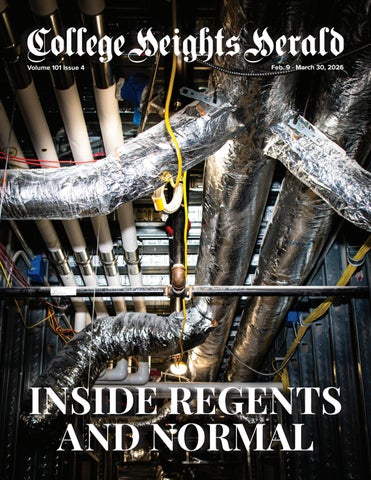
News Editor Anthony Clauson reported on updates to the Regents and Normal repairs in this issue’s cover story.
News Reporter Diego Alcaraz-Monje and Clauson delved into proposed legislation in the Kentucky Senate that would require state and local law enforcement to collaborate with Immigration and Customs Enforcement, and how this could impact Bowling Green.
News Reporter Josh Baumgardner reported on the possible demolition of the on-campus greenhouses. Men’s Basketball Beat Reporter Peyton Reid and Women’s Basketball Reporter Adrianna Lein gave their thoughts on why both the Hilltoppers and Lady Toppers have struggled this season.
Lastly, I reported on the change of a mainstay tradition in our publication. For the first time since at least 1997, the president of WKU will not sit down with the Herald editorial board to begin the semester.
Even through the storm, our team has worked tirelessly to bring you the content you deserve in this magazine, and it’s an effort that will carry over to WKUHerald.com, in our daily email newsletter and on social media platforms.
Sincerely,
Jake McMahon Editor-in-Chief
Photo by Carrie Pratt
Letter from the Herald en Español Editor
This semester marks the first full semester of Herald en Español at the College Heights Herald.
In our 101 years as a publication, the College Heights Herald has served as a reliable news source for Western Kentucky University and the Bowling Green community. The Herald has earned the trust of its readers through consistent local reporting for more than a century. That role carries a responsibility to reflect the people who live, work and study here.
Until now, there has been no consistent, local, Spanish-language news source serving our diverse campus and Bowling Green communities.
Journalism exists to inform the public, and when that news is only published in English, people are left out. People who are part of the community deserve to know what is going on in their city, their schools and their neighborhoods. We believe that language should never be a barrier to staying informed.
At a time when immigration rhetoric has become louder and more hostile, especially toward Hispanic communities, access to accurate news matters more than ever. This work is not about advocacy or activism; it is about responsibility. As a newspaper, our job is not only to report news but to make sure those stories can be read and understood by all.
As someone who was born in Bowling Green, my life has always been intertwined with the city’s Hispanic community. Through shops, restaurants and cultural celebrations, I have been sur -
Photo by Jacob Sebastian
rounded by the people who make this city vibrant and welcoming. When Herald en Español first launched, I saw an opportunity to support that community and help build something meaningful.
Now, as I step into the role of the first Herald en Español Editor, I feel honored to serve the community that
shaped me. This community contributes to the city every day through work, culture, family and faith.
Herald en Español is one step toward a more informed and connected campus and Bowling Green. We are proud to publish it, and we are committed to continuing this work with accuracy, fairness and care.
Sincerely,
David Quintanilla Herald en Español Editor
Carta del Editor de Herald en Español
Esta publicación impresa empieza el semestre completo de Herald en Español en el College Heights Herald.
En nuestros 101 años como publicación, el College Heights Herald ha sido una fuente de noticias confiable para la Universidad de Western Kentucky y la comunidad de Bowling Green. Durante más de un siglo, el Herald ha ganado la confianza de sus lectores gracias a su constante cobertura local. Esta función conlleva la responsabilidad de reflejar a las personas que viven, trabajan y estudian aquí. Hasta ahora, no existía una fuente de noticias local y constante en español que sirviera a nuestro campus diverso y a la comunidad de Bowling Green. El periodismo existe para informar al público y cuando las noticias solo se publican en inglés, hay personas que
se quedan fuera. Personas que forman parte de la comunidad y merecen saber lo que ocurre en su ciudad, sus escuelas y sus barrios. Creemos que el idioma nunca debe ser una barrera para mantenerse informado.
En un momento en que la retórica sobre la inmigración se ha vuelto más fuerte y hostil, especialmente hacia las comunidades hispanas, el acceso a noticias precisas es más importante que nunca. Este trabajo no se trata de abogar ni de activismo. Se trata de responsabilidad. Como periódico, nuestro trabajo no es solo cubrir las noticias, sino también asegurarnos de que todas las personas puedan leer y comprender esas historias.
Habiendo nacido en Bowling Green, mi vida siempre ha estado entrelazada con la comunidad hispana de Bowling Green. A través de negocios, restau-
rantes y celebraciones culturales, he estado rodeado de personas que hacen que esta ciudad sea vibrante y agradable. Cuando se lanzó Herald en Español, vi la oportunidad de apoyar a esa comunidad y ayudar a construir algo significativo.
Ahora, al asumir el cargo de primer editor de Herald en Español, me siento honrado de servir a la comunidad que me ha formado. Esta comunidad contribuye no solo a mí, sino también a la ciudad cada día a través del trabajo, la cultura, la familia y la fe.
Herald en Español es un paso hacia un campus y un Bowling Green más informado y conectado. Estamos orgullosos de publicarlo y nos comprometemos a continuar con este trabajo con precisión, imparcialidad y cuidado. Atentamente,
David Quintanilla
Editor de Herald en Español
Foto de Hallie Stafford
Campus greenhouses in jeopardy
Story by Josh Baumgardner
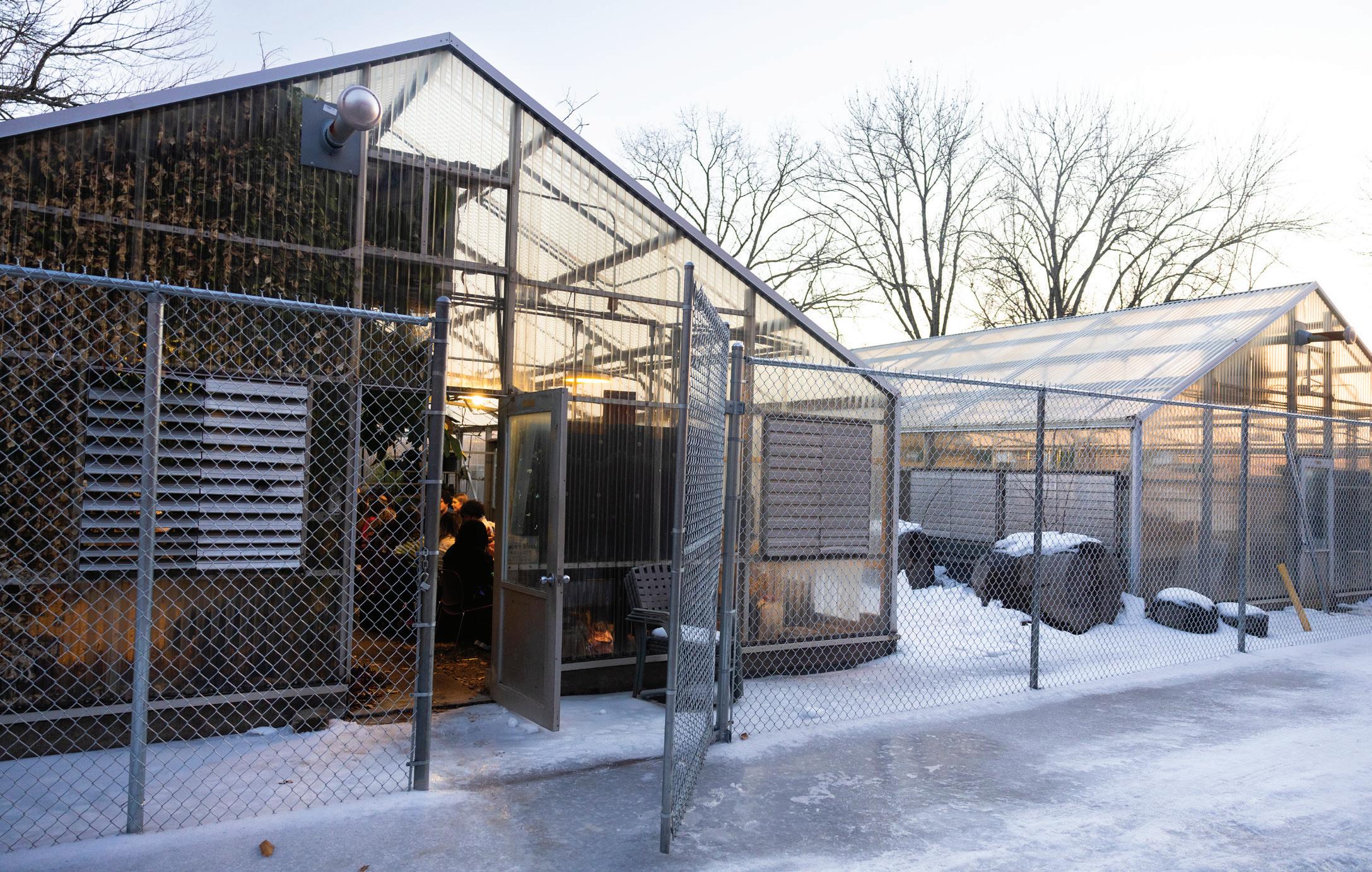
Leaders of WKU clubs and programs that use the on-campus greenhouses returned to the Hill this semester to find the greenhouses fenced off — with no notice as to why.
The greenhouses provide a space for students to get experience taking care of a diverse range of plant life. Both the Department of Biological Sciences and the Department of Agriculture & Food Science use the greenhouses as a space to teach classes on propagation techniques.
The university marked the campus greenhouses for destruction over the break. While no final decision has been made, the university plans to “evaluate the degree to which the greenhouses are utilized,” University Spokesperson Jace Lux said.
The evaluation will be done “primarily by reviewing the number of courses that have used the greenhouses and how often they have been used in recent years,” Lux said.
Brooke Meyer, president of the Ecology Club, secretary of the Horticulture Club and a senior biology major, said the greenhouses are “very actively used.”
“There was no true evaluation on how these spaces were used,” Meyer said.
David Brown, dean of the Ogden College of Science and Engineering, was not made aware of the plans to demolish the greenhouses.
“We were surprised to see them (the greenhouses) being fenced into the construction zone adjacent to the Environmental Science and Technology building earlier this month and to subsequently learn that they were slated for destruction,” Brown said.
The news came as a surprise to professors in the Agriculture & Food Science and Biological Sciences departments, as well as to the Ecology Club, which was working with its club advisor and Biology Professor Jarrett Johnson on making a pollinator garden this semester in the now
fenced-off space.
“I think it’s disrespectful to both your student community and the professors in your department,” Meyer said.
The Horticulture Club has experienced a significant increase in attendance at its meetings since Meara Wilcox, the club’s president and a senior environmental science major, began her presidency during her freshman year.
The club hosts pottery painting nights, movie nights and game nights in the greenhouses. Students who utilize the greenhouses and members of the Horticulture Club are tasked with maintaining plants throughout the year.
Meyer said there was no communication between departments, with most finding out about its potential demolition when they encountered the greenhouses fenced off without access. Meyer first discovered news of the possible demolition from an executive board meeting for the Hor -
Photos by Gabriel Milby
The greenhouses behind the Environmental Science and Technology building were slated for demolition and fences were put up around the buildings. Gates were later implemented to allow access to the greenhouses.
ticulture Club.
“I think the main thing that was frustrating for both myself and Meara was the fact that we heard about this through word of mouth,” Meyer said.
Wilcox first heard of the possible demolition around mid-January after her boyfriend discovered the gate around the greenhouses on his way to water the plants inside. She learned about the possible plans for demolition after inquiring about the fence to both the Agriculture & Food Science and Biological Sciences departments.
“It does seem almost out of nowhere,” Wilcox said. “I know, at least as a student, it’s not something I’ve even heard mentioned or talked about.”
For Wilcox, the space was used to display her passion for plant life to the members of her club.
“I love to share things I’m passionate about with other people, and it’s been a really great space for that,” Wilcox said. “I feel like I’ve made valuable connections with people in my department, and outside of my department, and have had a lot of hands-on time with plants.”
Wilcox felt disappointed and overlooked by the university after discovering that a place she had put a lot of her passion into was being demolished.
Brown remains in contact with the university to hopefully work out a compromise for the students and professors.
“After we informed central administration that the greenhouses are still in use, we were provided with gates in the fence to access them,” Brown said. “We continue to work with central administration on trying to find a positive long-term solution.”
Editor’s Note: Editor-in-Chief Jake McMahon and Assistant News Editor Kane Smith, who edited this article, are friends with quoted source Meara Wilcox.
News Reporter Josh Baumgardner can be reached at joshua.baumgardner760@topper.wku.edu
Counseling, Master of Arts in Education
- Fall 2026 Applications Due March 1
- No GRE Required
- Online or In-Person
- More info at wku.edu/csa
“Losing the greenhouse would have a detrimental impact on the community, liveliness and quality of WKU’s campus, and it would mean losing a space that has been cared for, cultivated and loved by students and staff for decades,” WKU’s Horticulture Club President Meara Wilcox said.
Costly repairs under way to fix two newest dorms
Normal and Regents halls will cost more to fix than was spent building the two dorms, contracts show.
The two dorms opened in 2021 for a total of $48 million. Both halls were abruptly shut down in May 2025, after the discovery of issues with the steel framing and fire codes, leaving 635 beds vacant.
A year earlier, the 400-bed Hilltopper Hall, which opened in 2018 for $40 million, was also shuttered due to structural failures and is set to be demolished this summer.
The Student Life Foundation, a nonprofit that owns the halls, built the three dorms, totalling 1,065 beds, over the past eight years for $88 million. Repairing the two dorms WKU intends to salvage will cost about $55 million — $7 million more than the cost to build them, according to a contract between the SLF and facilities management company Sodexo.
The SLF entered into an agreement with Sodexo on Sept. 1, 2025 for Sodexo to act as the SLF’s representative on the Normal and Regents Hall renovations and the Hilltopper Hall demolition.
The demolition of Hilltopper Hall will start “the day after graduation,” WKU President Timothy Caboni said. It will add another estimated $2.1 million to the SLF’s tab.
In a Feb. 3 press conference, Caboni said that the university’s goal is to have students moved back into Normal and Regents halls by fall 2027.
A contract between the SLF, construction manager Reeves Young and engineer Brown+Kubican has an early construction finish date of “substantial completion” of June 30 this year.
“(June) is a stretch, but we’re gonna run towards that goal as hard and as fast as we can,” an on-site contractor, who asked to remain anonymous to not jeopardize his company’s agreement, said.
The contract has an estimated late substantial finish date of Oct. 15 this year.
The City of Bowling Green is acting as a conduit for a $55 million bond to the SLF for the dorm repairs. The bond has a permitted increasing adjustment of 10% and an unlimited decreasing adjustment, according to minutes from a Dec. 2 Board of Commissioners meeting. The City of Bowling Green bears no financial responsibility but is acting as a passthrough authority for the SLF.
The contractor said his company was hired late last year. He said the cost has increased “significantly,” but he declined to disclose a precise figure to protect his relationship with general contractor Reeves Young.
The contractor said that as the project progressed, the scope of the repairs proved to be more extensive, specifically reinforcing the steel with existing structures in the residence halls.
“I think they knew they had their hands full, but the further we dig in, the harder it is to remedy the issues,” the contractor said.
The Herald was granted access to Normal and Regents halls for a tour of the repairs on Feb. 4. When asked about the scope of repairs, WKU Director of Facilities Management Ken Branch said the purpose of the visit was for photos, and all questions should be directed to Tad Pardue, legal counsel for the SLF.
Pardue said the project remains on budget, and he is not aware of any changes to the scope of repairs in an email before the visit.
The Kentucky-based engineering firm, Brown+Kubican Structural Engineers, uncovered issues with Normal, Regents and Hilltopper halls during inspections conducted on Jan. 19, 2024, and May 9, 2025, respectively.
Brown+Kubican sent Branch a proposal on how it would fix Normal and Regents halls on May 21, 2025.
The list included:
• Demolition and reconstruction of cavity walls and staircases
• Structural upgrades
• External fireproofing
• Reconstruction of smoke dampers, fire sealant, sprinklers and fire alarms
• Reconfiguration to maintain emergency exits
• Selective architectural, mechanical, electrical and plumbing demolition and reconstruction to fit structural upgrades
Branch said the project is currently still in the demolition phase.
The SLF signed a contract on June 6, 2025, to pay Brown+Kubican a percentage of the cost of work. Brown+Kubican will receive a range of pay from 10.7% if the cost is under $2 million to 8.75% if the project exceeds $21 million.
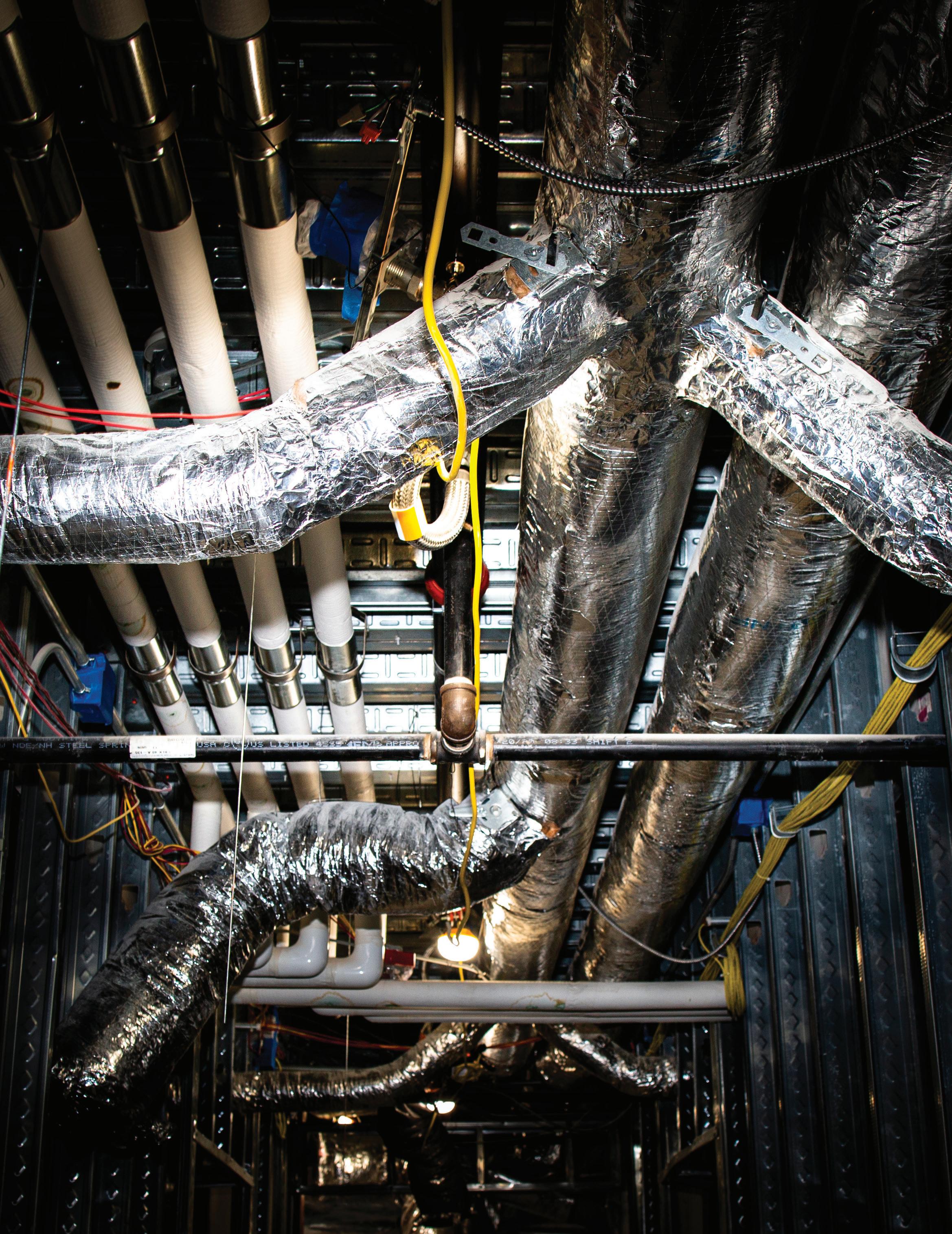
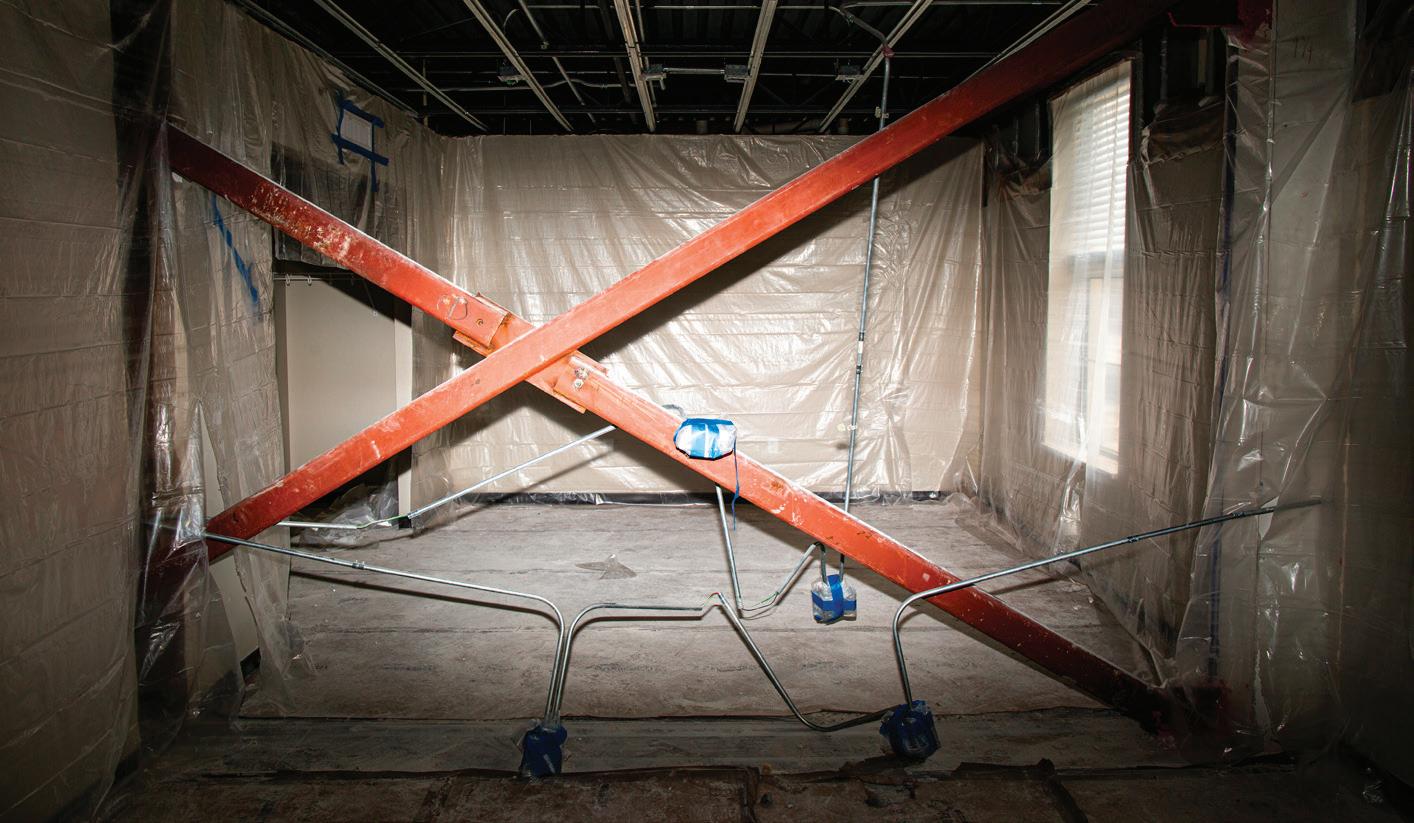
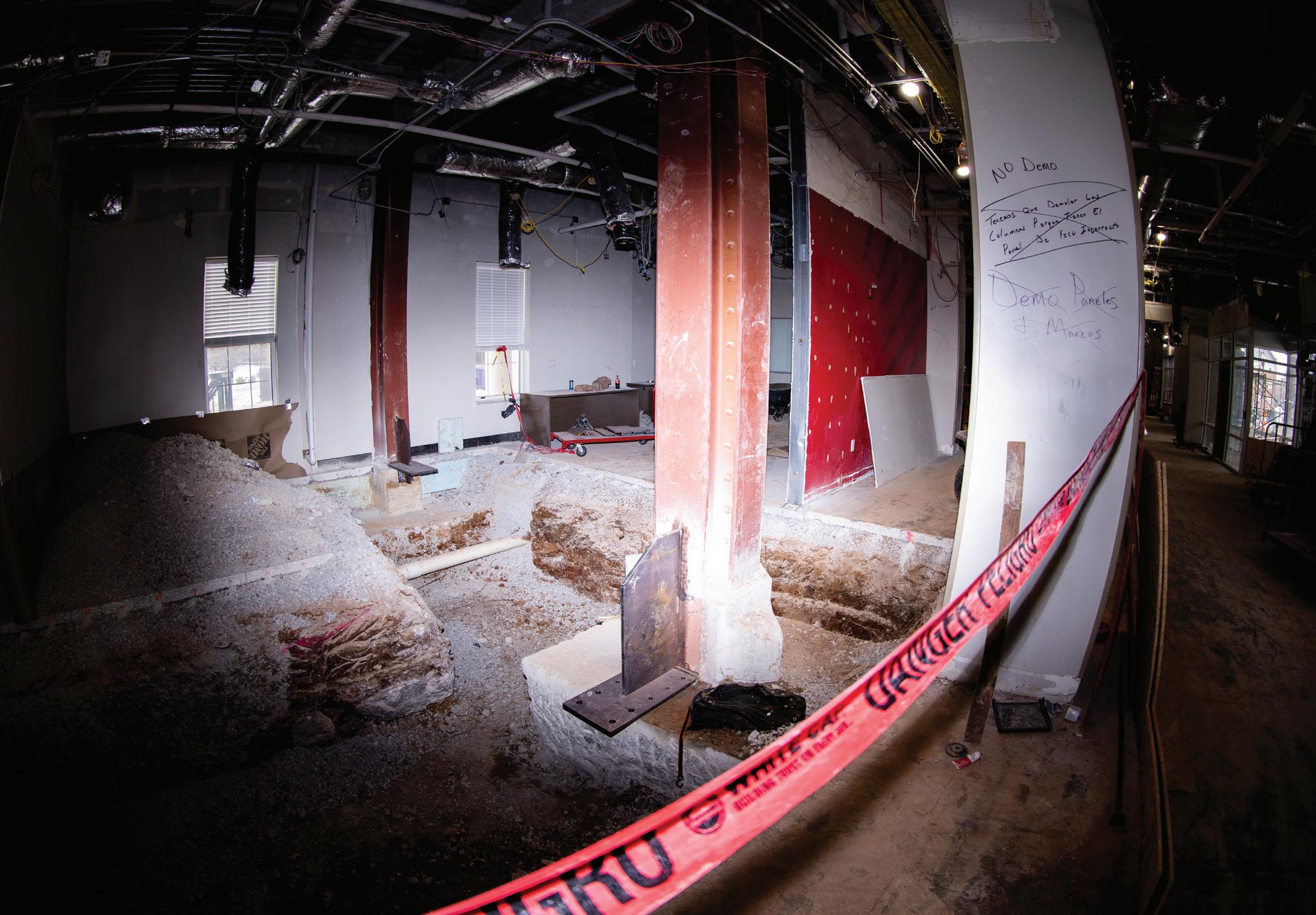
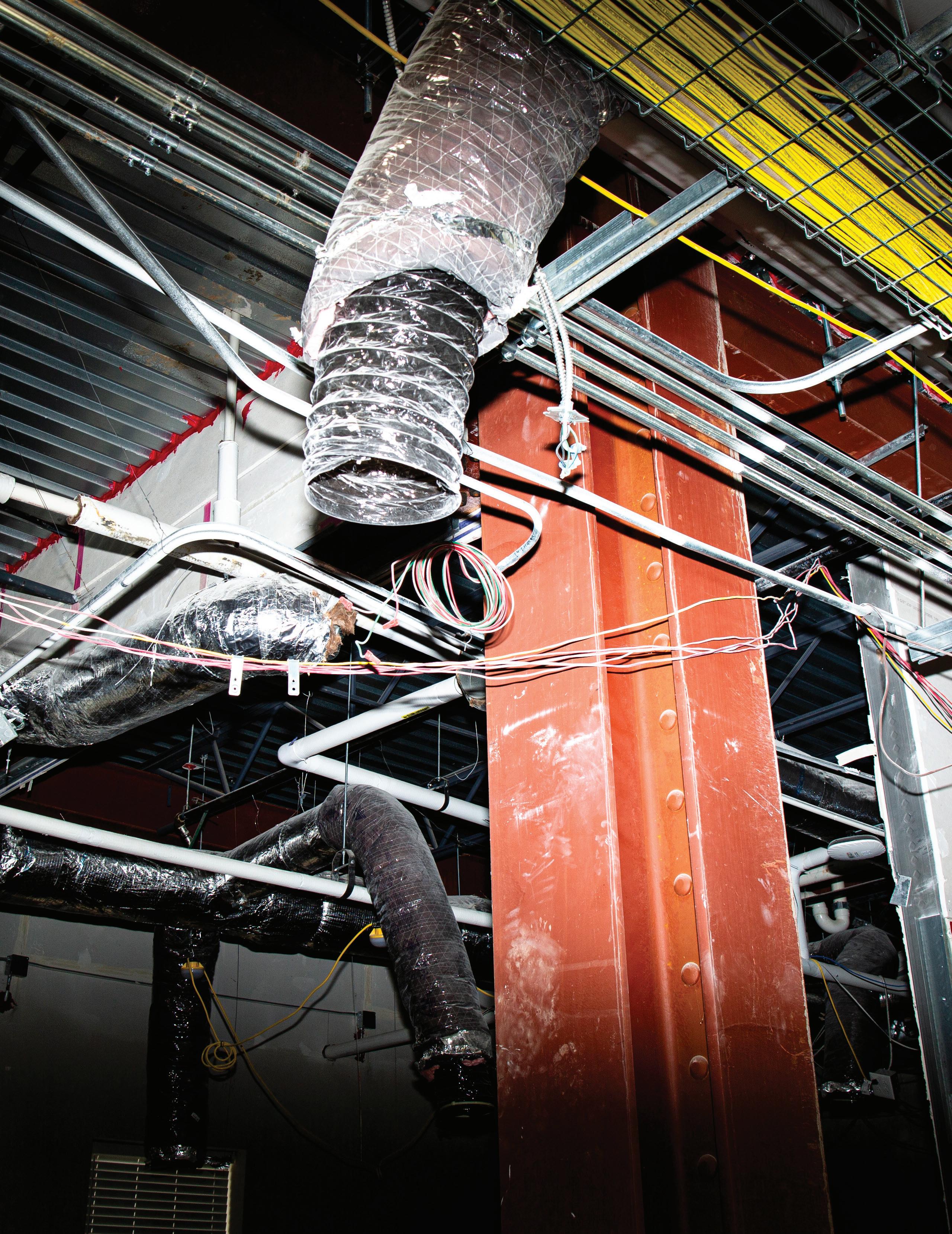
Currently, the steel beams on the first and second floors of the halls are exposed for reinforcement. There are holes dug into the foundation of Normal and Regents halls where steel reinforcements can be added. The ceilings on all six floors have been removed, and sections of the walls have also been exposed.
The contractor said the ongoing renovations in Normal and Regents halls, while not totally uncommon, are comparable to renovating structures from the 1960s to meet modern codes.
Moving forward
Douglas Keen and Hugh Poland halls could also be demolished this summer, along with Hilltopper Hall, as part of WKU’s new housing plan with the international real estate company Gilbane.
“We’re going to begin replacing Douglas Keen and Hugh Poland Hall, those will come down hopefully over the summer and construction will begin on a new 1,000-bed facility once the deal is approved in May or June of this year,” Caboni said.
Story by Anthony Clauson
Photo by Jonah Savage
The Board of Regents approved a $5.8 million pre-development agreement for a public-private partnership with Gilbane at its Dec. 11 meeting. Gilbane will operate, manage and renovate WKU’s existing dorms and oversee future construction. Gilbane will initially cover the cost of pre-development and then be reimbursed through the project’s financing.
Julian Sagastume, a senior analyst for consulting firm Brailsford & Dunlavey, said at the Dec. 11 Board of Regents said the pre-development agreement would include “defining the scope of housing renovations” and establishing a “fully articulated design” for the next phases of housing.
After the predevelopment agreement has concluded, the entire project will return to the Board of Regents for approval later this semester or over the summer, according to WKU Spokesperson Jace Lux.
The Collegiate Housing Foundation would also be brought in along -
side Gilbane and take a “very similar seat” to the SLF, which is currently on track to be retired in May. The Collegiate Housing Foundation is a non-profit organization with “the sole purpose of assisting colleges and universities in acquiring or developing student housing facilities,” according to its website.
The SLF was formed in 1999 by former WKU President Gary Ransdell to own WKU’s dorms and, in turn, cover the debt of construction and renovation. The Collegiate Housing Foundation would own WKU’s dorms for 40 years and then turn over ownership to the university if the Board of Regents approves the full agreement.
The SLF also ensured that money generated by housing would be used to sustain housing needs. Caboni said in an interview after the Board of Regents meeting that a part of the public-private partnership will include a “housing reserve” that the University could supplement with
“additional dollars.”
Sagastume said at the Dec. 11 Board of Regents meeting that the initial investment into the new housing plan will be “north of $300 million.” He said the university could finance the plan without raising housing rates.
The new housing plan, including Gilbane, would span two phases to be completed by 2030.
Phase one would include 1,000 beds in Freshman Village across suite- and hotel-style residence halls, to be completed by fall 2028.
Phase two would include 1,400 beds, replacing Pearce-Ford Tower, McCormack, Gilbert, Hilltopper and Rodes Harlin halls. Construction is slated to begin in 2028.
News Editor Anthony Clauson can be reached at anthony.clauson994@ topper.wku.edu.
Holes in the base level floor reveal the gusset plates that Regents Hall rests on. An inspection of the hall last year revealed structural flaws within the building that closed both dorms. Contractors continued working around the clock during January’s winter storm to keep Normal and Regent’s Hall repairs on schedule.
Kentucky bill would extend ICE’s reach in Warren County
Story by Diego Alcaraz-Monje and Anthony Clauson
Abill proposed in the Kentucky Senate in January would require state and local law enforcement to work with U.S. Immigration and Customs Enforcement.
Kentucky Senate Bill 86, sponsored by Senator Phillip Wheeler, R-Pikeville, would integrate Kentucky law enforcement agencies into ICE’s Section 287(g) Program, derived from the Immigration and Nationality Act.
Section 287(g), created in 1996, authorizes local law enforcement to essentially act as immigration officers under ICE supervision. On President Donald Trump’s first day of his second term, he signed Executive Order 14159, “Protecting The American People Against Invasion,” which encourages ICE to promote the program to various law enforcement agencies.
ICE has signed 1,381 agreements with law enforcement agencies, 31 of which are in Kentucky, as of Feb. 4. So far, Warren County law enforcement has not agreed to participate in the 287(g) program.
Wheeler said it was too early in the legislative process to provide a comment on Senate Bill 86.
WKU Police Department Chief Mitch Walker doesn’t believe the potential law would significantly change the department’s day-to-day operations because the department lacks staffing for immigration enforcement.
Walker said WKUPD and the Department of Homeland Security have an ongoing relationship, mostly to identify suspects in child exploitation cases or terror threats to university campuses.
Warren County Sheriff Brett Hightower is concerned that the legislation may detract from the mission of the Sheriff’s Office.
“We don’t have time to necessarily devote to going out here and knocking on people’s doors and checking their immigration status,” Hightower said. “We have a lot of other things that will take a higher precedence
from this office.”
Public Information Officer for BGPD Ronnie Ward declined to comment on Senate Bill 86.
In addition to law enforcement’s existing duties, the bill would mandate law enforcement to participate in three models under Section 287(g): the Jail Enforcement Model, the Warrant Service Officer Model and the Task Force Model.
In each model, law enforcement agencies would nominate specific officers to receive training funded, organized and overseen by ICE. Certain models would allow agencies to fulfill the following duties:
Jail Enforcement Model
• Identify and process “removable aliens” in jails or detention facilities that have pending/active criminal charges
• Issue immigration detainers
An immigration detainer is a request that asks law enforcement agencies, as well as any detention facility, to notify ICE before they release a “removable alien.” The agency or detainment facility would hold them for up to 48 hours beyond their initial release so that DHS can assume custody.
Warrant Service Officer Model
• Serve and execute administrative warrants
Unlike judicial warrants, administrative warrants do not require the approval of a judge or magistrate and do not give law enforcement the right to enter private property. An ad -
Kentucky law enforcement agencies have signed contracts with ICE
ministrative warrant is a supporting arrest document signed by an agent, according to immigration law firm Motion Law.
Task Force Model
• Give “limited immigration authority” under ICE supervision
• Arrest “aliens” they believe are entering or attempting to enter the United States without a warrant
• Arrest “aliens” for a felony without a warrant
The Herald reached out to the ICE media email and to ICE Public Affairs Officer Christopher Meares for clarification on the models and their implementation but did not receive comment by the time of publication.
Price Wilborn, communications adviser for the Office of the Secretary for Kentucky’s Justice and Public Safety Cabinet, said the decision to enter the agreements should be left to the Executive Branch and the Commissioner so that Kentucky State Police resources are allocated according to its capabilities and the needs of the Commonwealth.
“Diverting them from their current duties to undergo such training would deplete resources — meaning there would be less Troopers assigned to the important work that keeps Kentuckians safe like pursuing violent criminals, child predators and removing drugs from our communities,” Wilborn said.
Wilborn is a former editor-in-chief of the Herald.
Additionally, the bill would require law enforcement to “identify, process, and hold non-citizens in local jails.” Thirty-three of Kentucky’s 116 jail facilities are already overcrowded, according to the Kentucky Department of Corrections’ Jan. 22 weekly report.
Kentucky facilities that already
hold ICE detainees, according to the ICE website, include:
• Boone County Jail
• Campbell County Detention Center
• Christian County Jail
• Daviess County Detention Center
• Grayson County Detention Center
• Hopkins County Jail
• Kenton County Detention Center
• Oldham County Detention Center
As of Feb. 4, Bullitt County Detention Center, Grayson County Detention Center and Oldham County Detention Center participated in the 287(g) Program through the Jail Enforcement Model.
Warren County Jailer Stephen Harmon declined to comment on Senate Bill 86 or its potential impact on overcrowding. The Warren County Regional Jail was overcrowded by 87 inmates as of Jan. 22.
According to the bill, “The fiscal impact of SB (Senate Bill) 86 is indeterminable, but expected to be
TOP: Congressional candidate Megan Wingfield speaks with Captain Mike Elliott of the BGPD after ICE agents called to have protestors removed from the building’s parking lot on Wednesday, Nov. 5, 2025, during a protest of the recent arrest of Ismael Cruz Sanchez.
Photo
by
Cayden Duncan
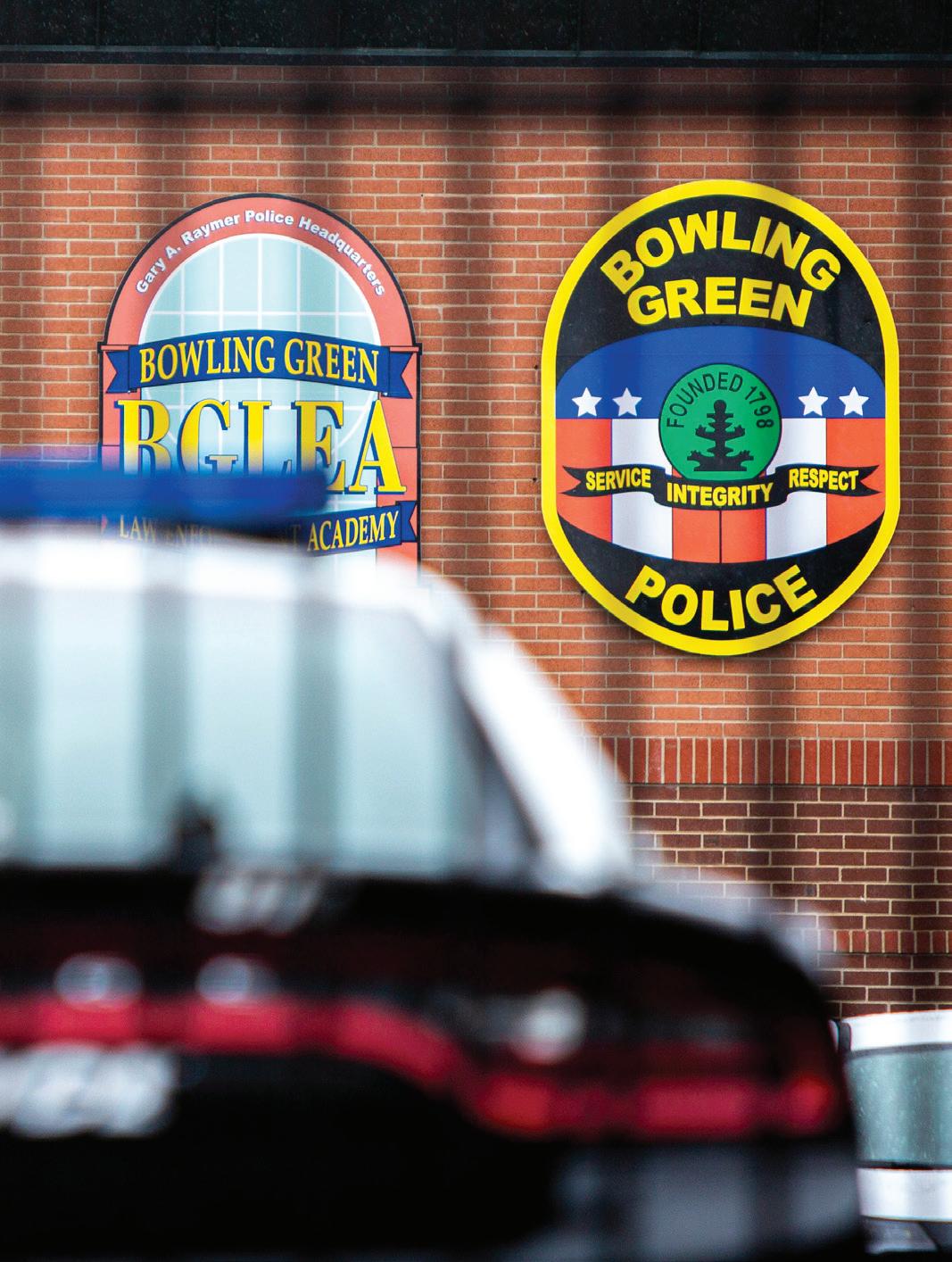
BOTTOM: The Bowling Green Police Department declined to comment on Senate Bill 86. In Jan. 2025, BGPD Public Information Officer Ronnie Ward said BGPD had no interest in working with U.S. Immigration and Customs Enforcement amid plans for mass deportations by the Trump administration.
Photo by Von Smith
negative.” But Hightower said that as an officer of a growing community like Bowling Green, the city would likely require more funding to accommodate additional duties.
On Sep. 2, 2025, DHS announced reimbursement opportunities for full salaries and benefits for trained officers, partial overtime coverage and “quarterly monetary performance awards” for agencies participating in the Task Force Model. The funding for this reimbursement comes from Public Law 119-21, also known as the “One Big Beautiful Bill.”
However, the model agreements state that participating law enforcement agencies would be responsible for all additional expenses, including salaries, overtime for training, local transportation and administrative supplies.
“There’s money, there’s manpower, there’s resources, there’s other vehicles, there’s equipment, there’s radios, there’s a whole lot of expense that sometimes goes into things like that,” Hightower said.
Hightower also worries the bill could discourage community members from reporting crimes.
“My belief is we have to stay in good, close communication with our community,” Hightower said. “If people feel fearful, whether they’re here legally or not legally, we don’t want somebody here not to report a crime when a crime occurred, if they were fearful of reporting that for local law enforcement.”
Walker said he thinks the strength of the WKU and Bowling Green community would prevent any issues that could come from the bill.
“In this country, over the last 10 years, we have been through a lot, and we just haven’t seen (issues) here, and I would say (this bill) would be pretty much the same,”
Walker said. “We understand each other, we have great relationships and I think that’s key.”
While he doubts the law would significantly affect campus, Walker understands the anxiety around increased immigration enforcement. In response, he is planning a training between students, faculty, staff and agents from DHS. In the training, he hopes to discuss what ICE agents would be looking for and how to respond if they operate on campus.
Walker said there will be more information about the training in the coming weeks.
If ICE comes on campus, which Walker believes would be “very rare,” he suggests students cooperate and call WKUPD to help the situation.
Wyatt Southerland, media liaison
for Bowling Green Community Defense, said that the activist organization anticipates a more antagonistic relationship with law enforcement, like the Bowling Green Police Department, if the bill were to pass.
“We also know that the Bowling Green Police Department so far has not been very amicable to working with ICE, and they have been very, very friendly to our protest efforts,” Southerland said. “So far, they’ve made that very easy for us, but we don’t know how far that’s going to last.”
News Reporter Diego Alcaraz-Monje can be reached at ealcarazmonje@ gmail.com
News Editor Anthony Clauson can be found at anthony.clauson994@ topper.wku.edu
WIFI INCLUDED PET FRIENDLY FREE PARKING FOR RESIDENTS ONLY .1 MILE AWAY FROM WKU P
VISUALS
Sam Huffman, Staff Photographer
Canada’s biggest export to BG? Hockey.
Players from Canada, Ohio, Indiana, Tennessee and South Carolina convened at the SOKY Ice Rink to compete in one of America’s growing obsessions: hockey. The 3rd annual BG Puck Classic was complimented by severe winter weather that closed Western
Kentucky University for a week and placed much of Bowling Green under a sheet of ice. Fueled by growing popularity in southern states (with some help from HBO’s hit show ‘Heated Rivalry’), hockey has quickly etched a foothold in Kentucky.
Caboni cuts semesterly meeting with Herald
Story by Jake McMahon
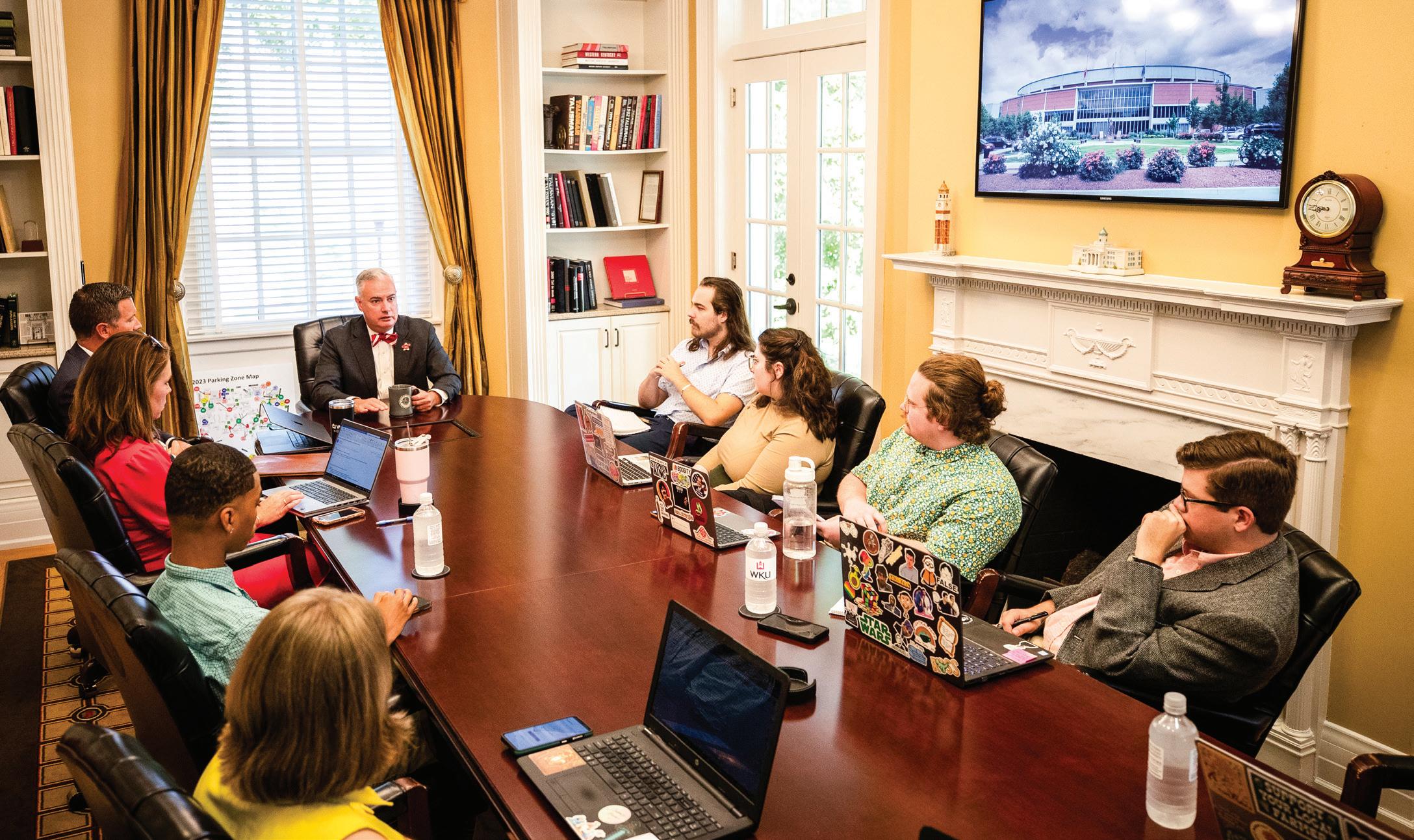
For the first time in three decades, the WKU president will not sit down with the College Heights Herald editorial board for a wide-ranging meeting about campus issues to start the semester.
Former Director of Student Publications Robert Adams said the tradition dates back to as early as 1997 under former President Gary Ransdell. It has survived as a kickstarter for the Herald each semester, and an avenue for student journalists to ask the most pressing questions about campus.
Recently, the meeting has served as one of the only opportunities for Herald staff to ask President Timothy Caboni questions directly. Most of the Herald’s com-
munication with Caboni is mediated through email by University Spokesperson Jace Lux.
Tessa Duvall is a journalist who serves as the public affairs and politics editor at the Lexington Herald-Leader. She served as Herald editor-in-chief in the fall semester of 2012 and remembers participating in multiple sit-down interviews with Ransdell.
Duvall said the opportunity to interview one-on-one with university higher-ups as a young journalist was “huge.” She said it isn’t often that students of a university have the opportunity to sit down with administrators. In the meetings, Duvall was treated like an actual journalist, not a student.
Duvall believed there was
a “commitment to the educational component” from Ransdell in his meetings with the Herald.
“WKU is an institution of higher learning, and the Herald and the journalism program are some of the most important on this campus,” Duvall said. “I think sitting for that interview was also probably in some part a recognition that this was an important, hands-on learning experience for the students involved.”
The meetings with Ransdell developed a good working relationship, Duvall said, and created respect between administration and reporters. She said covering WKU is the Herald’s purpose, and providing that sit-down is “a recognition that we’re going to be working together a lot.”
The Herald still had an
opportunity to ask questions, just not in its usual one-onone format. On Tuesday, Feb. 3, Caboni held a press conference with members of local media to address university affairs and take questions.
The press conference lasted 35 minutes, with around 28 minutes of questions. Last fall’s semesterly meeting went for more than 50 minutes.
Caboni opened his press conference and said that he was going to continue to spend time with the Herald at the beginning of every semester.
“The Herald and I would spend some time together at the beginning of the semester. We’re going to continue to do that,” Caboni said. “But I thought this was an interesting, different kind of format for us to start off.”
The first mention of
HERALD ARCHIVES
President Timothy Caboni speaks with the staff of the College Heights Herald ahead of the new school year in the Office of the President at the Craig Administrative Center on WKU Campus in Bowling Green, Ky. on Friday, Aug. 19, 2022.
switching the format to a press conference came in an August email from Lux. The Herald had already scheduled its fall meeting with Caboni, but in the email, Lux said the possible change to a press conference would “take place of the traditional fall semester interview with the Herald.”
After the switch to a press conference in the spring had already been made official, the Herald reached out to Lux on Jan. 22, asking the administration to reconsider.
“We believe the meeting provides great value for our audience, especially students, who can get a better grasp of the university’s goals ahead of each semester, but also a fantastic experience for young journalists to get to interview the president of the university,” the Herald said in its email to Lux.
Lux denied the request to reconsider the semesterly meeting in a follow-up email.
“While we realize it represents a change from previous years, this approach will allow us to address media requests for time with President Caboni more efficiently and equitably at the start of each semester while ensuring that the president’s key messages are shared as broadly and comprehensively as possible,” Lux said.
However, after Caboni said that he would continue to spend time with the Herald at the beginning of the semester at his press conference, the Herald reached out for clarification.
Lux responded and said, “The press conference will continue to be the format each semester.” Lux followed up around an hour later with a clarifying email.
“The press conference we hosted today will remain the format for media’s engagement with President Caboni at the start of each semes-
ter, as it increases access and broadens our reach,” Lux said. “However, we are continuing to explore other ways to get the editorial boards of all of WKU’s student media outlets engaged with President Caboni and other members of campus leadership. I anticipate something at some point next academic year.”
The Herald responded to that email requesting a definitive standing for its semesterly meeting with the President. Lux said WKU will continue to “explore opportunities for all WKU student media editorial/leadership boards - not just the Herald.”
“Nothing definitive is planned,” Lux responded. “At this point, it is just an idea based on ongoing internal conversations about ways to provide more opportunities for students who are pursuing careers in media.”
Former Herald Editor-in-
Chief Jeremy Chisenhall, the executive editor of the Lexington Herald-Leader, said his meetings with Caboni in 2018 and 2019 gave him a “really good experience.”
“There was a lot of magnitude to the conversation,” Chisenhall said.
While these meetings exist to help the Herald’s reporting, and are beneficial for the “entire campus community,” Chisenhall said the meetings are also great for young journalists.
“Getting that opportunity for a one-on-one sitdown with a very prominent person in that community is a really great learning experience, and the type of thing that can go a long way to prepare you for real-world journalism,” Chisenhall said.
Editor-in-Chief Jake McMahon can be reached at michael.mcmahon480@ topper.wku.edu
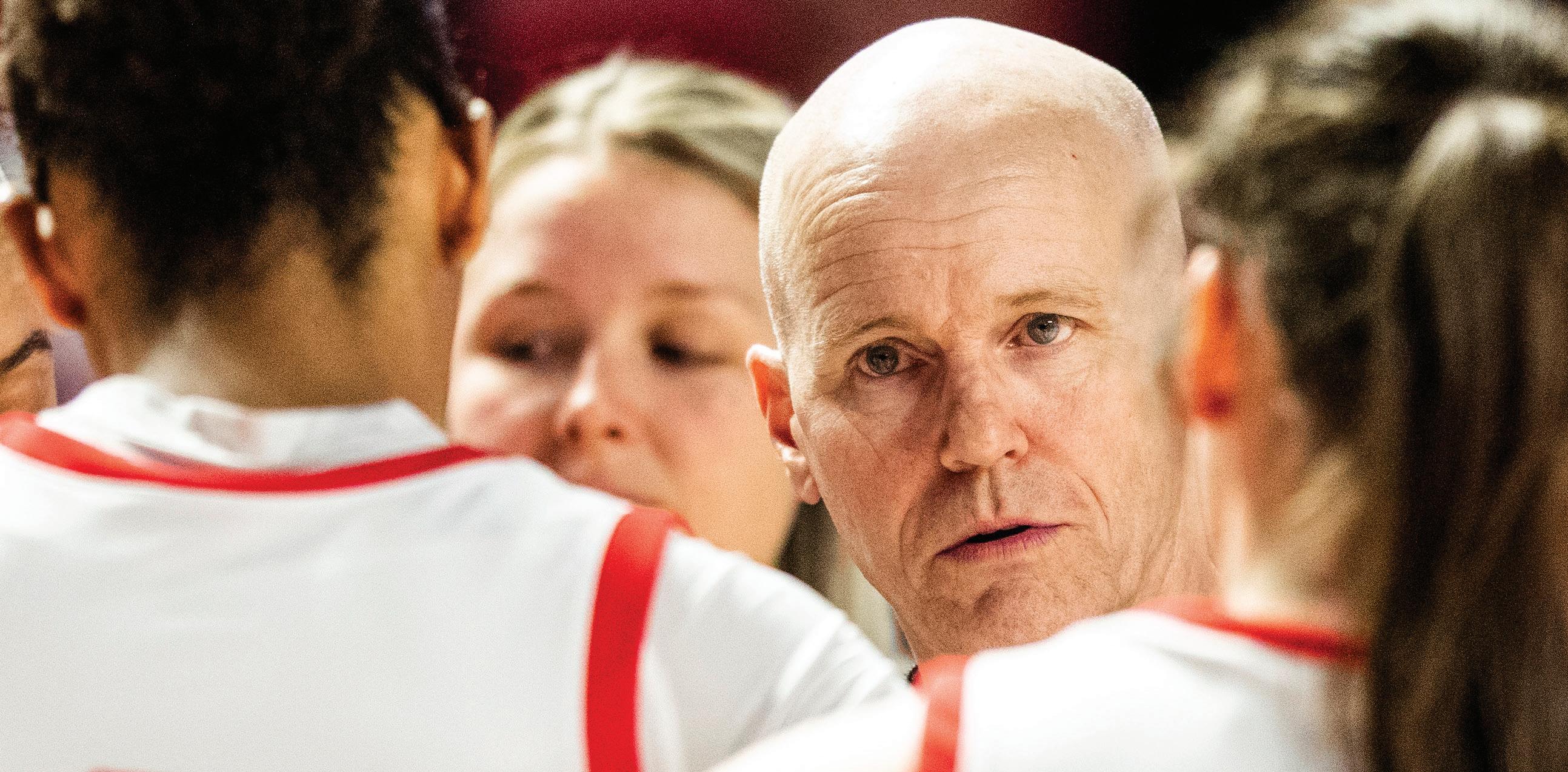
WKU Women’s Basketball Head Coach Greg Collins speaks to his team during a timeout in E.A. Diddle Arena on Saturday, Jan. 28, 2023. Collins entered his eighth season at WKU in 2025 and has lead the team to 120 wins during his tenure.
What’s gone wrong with WKU Basketball?
Story by Adrianna Lein and Peyton Reid
WKU Men’s and Women’s Basketball have both underperformed from their sixth and fifth place rankings in the Conference USA Preseason Poll.
Following a breakthrough 202425 season for the Lady Toppers, the current campaign has reached record lows. The Lady Toppers sit at 5-15 (1-8 CUSA) as of Feb. 4. WKU must win at least three of its final 10 games to surpass their lowest win total in team history.
In the first two seasons under Hank Plona, and just two years removed from an NCAA tournament appearance, the Hilltoppers are 29-25 (13-16 CUSA) as of Feb. 4.
WKU sits at 12-10 (5-6 CUSA), eighth out of 12 teams in conference as of Feb. 4. The Hilltoppers need to find an endof-season spark to salvage this rough season.
Here’s what’s gone wrong for both teams.
Women’s Basketball
No go-to scorer
WKU’s leading scorer barely averages double-digit points. Sophomore guard Salma Khedr leads the team
with 10.1 points per game, and no Lady Topper ranks among CUSA’s top 25 in average scoring.
Bad on the boards
WKU has struggled to control the boards, preventing second-chance points on offense. The Lady Toppers have been outrebounded in 16 of 20 games this season.
Back to the basics
WKU struggles with fundamental basketball skills, ranking eighth in CUSA in turnover margin. The Lady Toppers frequently miss layups, travel and make poor passes.
“How many times do I say ‘play on two feet’? How many times do we practice jump stops?” Head Coach Greg Collins said after WKU’s loss at Sam Houston Jan. 15.
Working harder, not smarter
Several of the Lady Toppers choose to take a tough, contested layup rather than kick the ball out for an open 3-pointer. Also, many of WKU’s players use a spin move to try to get open underneath the rim instead of making contact with the defense to draw a foul.
“Did anybody score off of a spin tonight? I can’t tell you the last time anybody scored (off a spin). I can tell you how many times they (Lady Toppers) shoot the ball over the rim and miss a layup because they spin,” Collins said after WKU fell at Sam Houston.
Where’s the big?
The Lady Toppers don’t have a consistent center. Six-foot-4 senior forward Jeniffer Silva averages just 15.1 minutes per game because of inadequate defense, Collins said. Sixfoot-1 redshirt sophomore forward Tatum Boettjer has stepped in, but she plays more like a shooting guard than a center, shooting primarily from the perimeter instead of posting up in the paint. WKU ranks last in CUSA in rebounds with 31.7 per game. The Lady Toppers are giving up the second-most rebounds in the conference, allowing 38.3.
Passive offense
WKU’s offense lacks off-ball movement. Rather than cut to get open or set a screen to create a shot for a teammate, the Lady Toppers keep their feet glued to the floor when they don’t have the ball.
HERALD ARCHIVES
OUCH!
Sophomore guard Trinity Rowe underwent surgery for a left-hand injury in early November, benching her for over a month. Against Delaware, Jan. 23, Khedr suffered a concussion, and sophomore forward Torri James saw limited minutes due to undisclosed issues. Battling injuries prevents consistency, especially when those affected are crucial players.
Down in the dumps
The Lady Toppers have won just one conference game and have lost 10 of 12 as of Feb. 4. Any athlete would be discouraged by this underwhelming record, but nothing can excuse a lack of effort, something Collins has made very clear.
“It’s one thing to be embarrassed about playing poorly. It’s another thing to be embarrassed because you didn’t fight back as soon as things get tough… We had a group in there that just flatout didn’t want to fight,” Collins said after WKU’s conference-opening loss to Jacksonville State Jan. 2.
Men’s Basketball
Inconsistent offense
WKU can’t score. The Hilltoppers sit last in CUSA in shooting percentage (40%). In the Hilltoppers’ 10 CUSA games, they have shot better than 40% three times as of Feb.4.
No true big man
WKU has one of the biggest rosters in CUSA with three players 6’11 or taller, but none play more than 13 minutes per game. Between the three, they average less than a point per game.
Injury bug
The Hilltoppers have had five key injuries this season. Guard Teagan Moore (concussion), guard Armelo Boone (ankle), guard Terrion Murdix (knee), forward Louie Semona (back), forward Bryant Selebangue (Achilles). The five combined for 39 missed games as of Feb. 4. Much like season one under Plona, the Hilltoppers can’t catch a break.
No second option
WKU relies heavily on Moore. He leads the Hilltoppers with 17.2 points per game and shoots 50% from the floor. Despite having four players averaging double-figures, Moore is the go-to option in the final minutes of play.
No facilitator
A big contributor to WKU is the lack of a true point guard. Murdix is the go-to point guard, but due to a recurring knee injury, Murdix has appeared in just 14 of the team’s 22 games.
Can’t close games
Five of the Hilltoppers’ 10 losses have come within seven points or less.
In the five losses, WKU was outscored by four or more points in the closing five minutes of play. The lack of ball movement proved crucial in the close games, averaging just two assists in the closing minutes.
“We have to learn how to keep scoring in the last five minutes with leads,” Plona said in his Feb. 2 press conference.
New faces
After a disappointing end to last season, the Hilltoppers underwent a complete roster revamp. Just six Hilltoppers returned from last season, none of whom played significant minutes. With nine new faces, WKU has had to adjust on many fronts to translate games into wins.
“At this point, whoever plays with a passion, to win and represent the name on the front of that jersey is going to play,” Plona said when asked about the starting lineup.
CUSA struggles
Under Plona, the Hilltoppers have struggled in CUSA play. In two seasons under Plona, WKU has accumulated a 1316 record in CUSA. With just a little over a month left in the regular season, the Hilltoppers look to regroup after snapping a four-game losing streak (Jan. 30).
Sports Reporter Adrianna Lein can be reached at adrianna.lein265@ topper.wku.edu.
Sports Reporter Peyton Reid can be reached at peyton.reid502@topper. wku.edu.
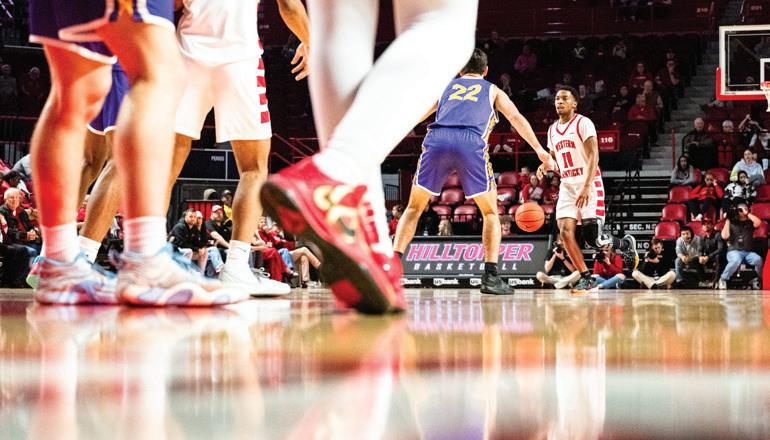
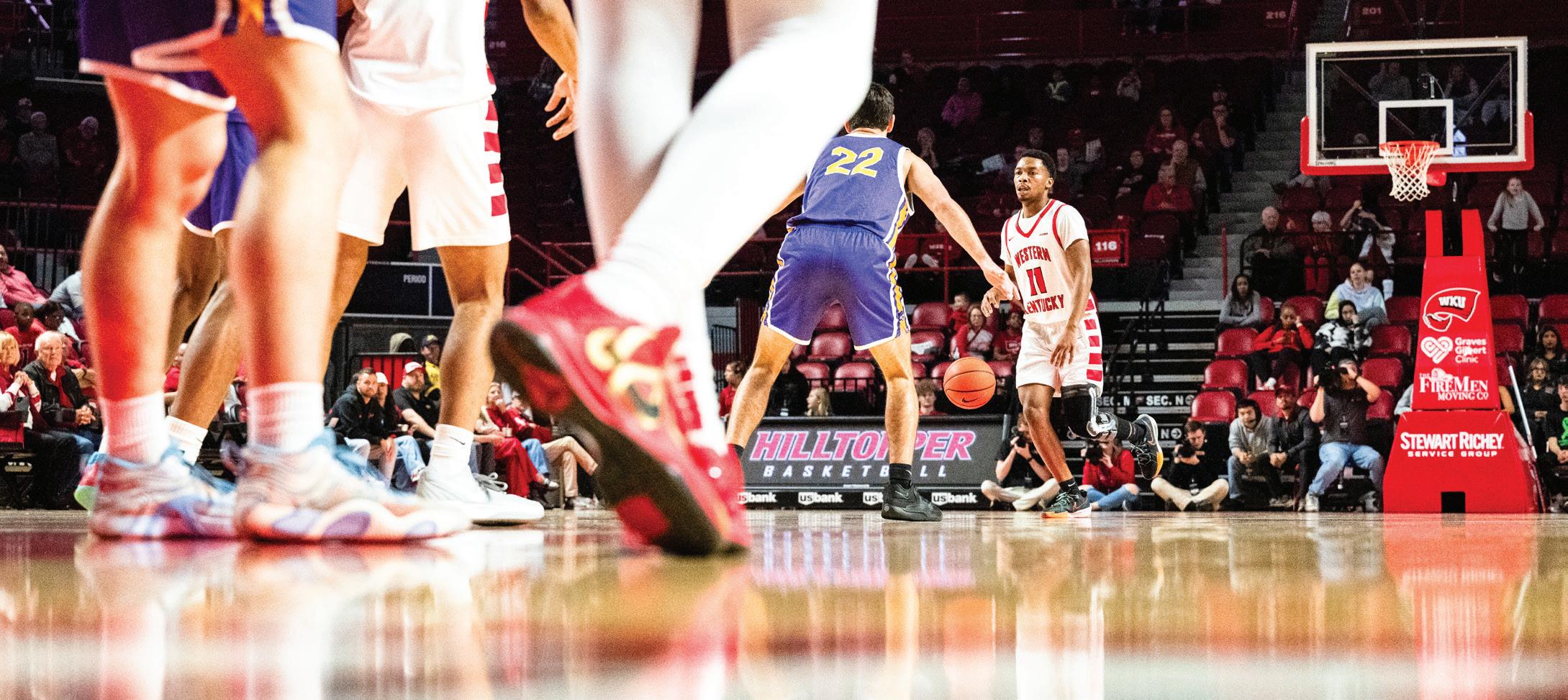
Western Kentucky University Hilltoppers guard Terrion Murdix (11) brings the ball up the court during WKU’s game against Bethel on Tuesday, Nov. 18, 2025 in E.A. Diddle Arena in Bowling Green, Ky.
Photo by Adin Parks
A contract between the Student Life Foundation, construction manager Reeves Young and engineer Brown+Kubican expects to finish early construction of “substantial completion” by June 30 of this year. “(June) is a stretch, but we’re gonna run towards that goal as hard and as fast as we can,” an anonymous contractor said.