Jazz Emma Lacy & Hadassah Weinmartin jazz@wkcr.org
New Music
Phi Deng newmusic@wkcr.org
Classical
Charlie Kusiel King classical@wkcr.org
American
Ben Rothman american@wkcr.org
In All Languages
Jayin Sihm ial@wkcr.org
Latin Merielen Espino latin@wkcr.org
News & Arts
Ian Pumphrey news@wkcr.org
Sports
Mason Lau & CJ Gamble sports@wkcr.org
Dear Listeners,
Elections for WKCR’s new executive board have concluded, making this my final address to you all. In exciting news, I’d like to introduce my new successor, and the new Station Manager, Solène Millsap! I thank you all for reading and am grateful to have had this year-long term as Station Manager. I look forward to continuing my programming hosting Afternoon Classical every week, as I have been for the past two years.
This next month is packed with great programming and articles. We have an abundance of special broadcasts, including a celebration of the great Maestro Zakir Hussain on March 8th, our annual Ornette Coleman—Bix Beiderbecke back-to-back 48-hour birthday broadcast on the 9th and 10th, and celebrations of the great Béla Bartók and Sarah Vaughan later in the month.
March’s edition of On Air has great pieces written by a variety of writers and programmers here at the station. Our Jazz Director, Emma Lacy, wrote a wonderful editorial on Women’s History Month. Additionally, you will find a history of the quickly-growing Groove Trackers hosted every week by Thomas “Prezzo” Preston, an album review of Mon Rovîa’s newest album, and a piece on Pancake Records.
Thank you all for reading. It has been a pleasure to be your station manager this past year, and I look forward to the new Executive Board—I can assure you that the station is in very capable hands.
Radio On,
Casey Lamb
Station Manager
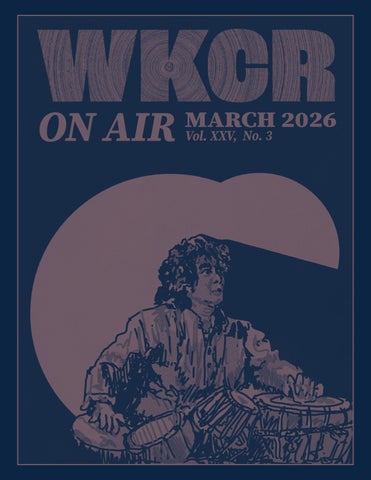
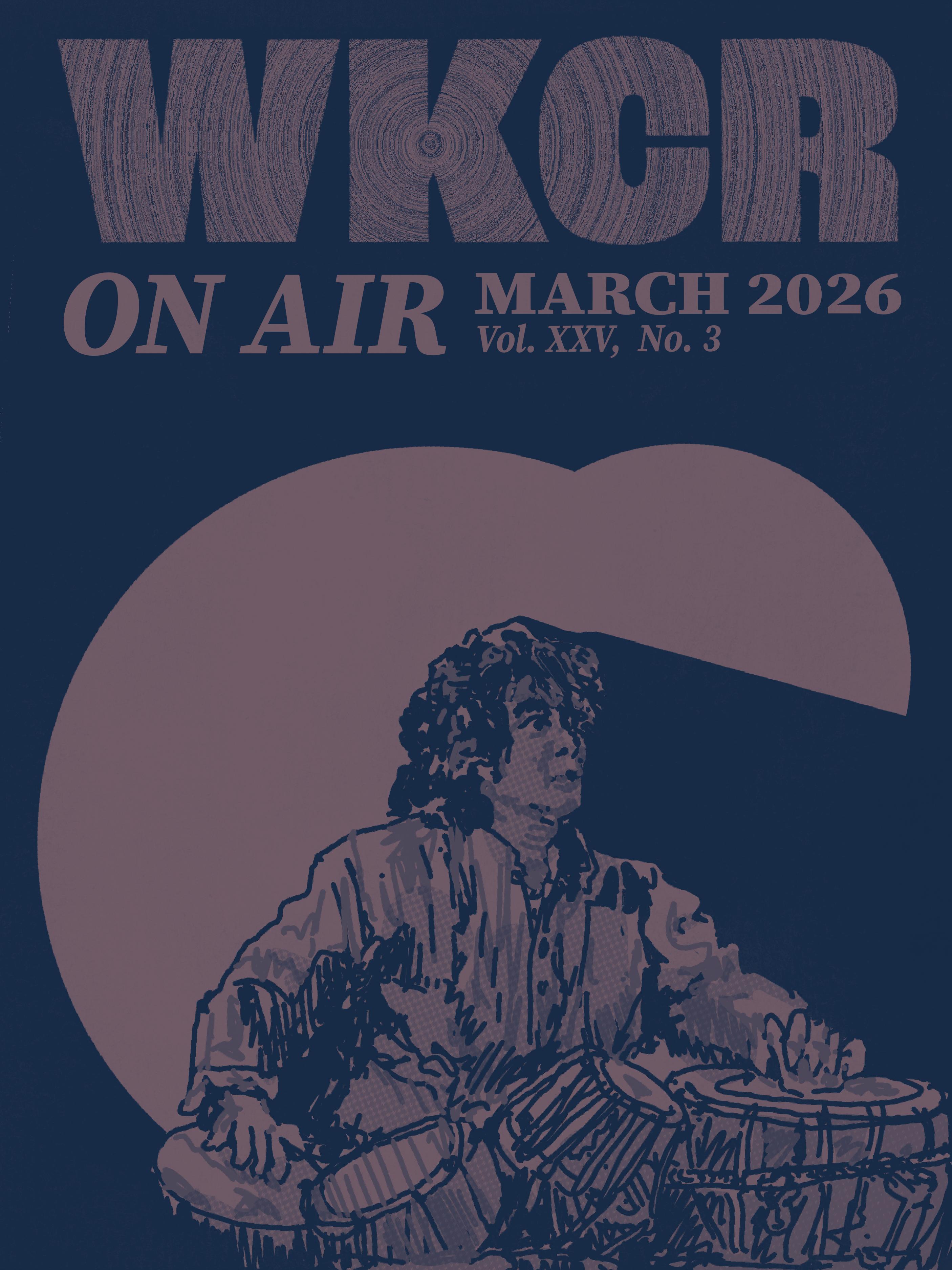
Cover by Jonah Stockwell
&
ARTS
by Thomas Preston NEWS
IGroove Trackers Celebrates Its 40th Episode
f you’ve ever tuned in on a Sunday night from 9-10pm and heard a vinyl mix featuring anything from house and techno music to Pakistani film soundtracks, you were listening to Groove Trackers. On our show, we invite a guest from New York’s DJ underground and club circuits to play their favorite records live on the airwaves, and on March 1st will be airing our 40th episode.
While there are now many internet radio stations which livestream audio and video, WKCR provides our guests with a unique opportunity because only on FM radio can their music go out to anyone within a 50-mile radius. We even take callers live on-air, which produce moments of connection for all of our listeners to hear.
The Groove Trackers story
Groove Trackers started in September 2024, and now some of the city’s most highly respected DJs travel across the city to join us on a Sunday night. It feels like we are building on the tradition that Stretch & Bobbito laid down in the 1990s, when 89.9FM became 89 TEC9 because of rappers’ techniques on the mic and Stretch’s skills on the Technics SL1200s)—the same type of turntables we use in the station today.
The story of Groove Trackers’ inception goes back further than 2024. I first tuned into WKCR in early 2022 towards the end of my PhD, and, by chance, someone was playing acid house (Paranoid London to be precise, which I loved!). As a consequence I started to listen regularly, but whenever I tuned in I only ever heard Jazz or Classical, so I filled out a
A first job out of grad school took me to Vermont in 2023, and I invited Jake (now my co-host on Groove Trackers) to help me track down guests for the Friday night slot, but the mixes remained pre-recorded at home. Jake and I started thinking how to make it all live: to incorporate interviews with live dj mixing on the turntables, and with that Groove Trackers was born: “the cooking show for DJs” as Groove Trackers
listener feedback form and requested more house music. Fast forward to the Spring of 2023 and, on the encouragement of a student of mine, Ian Pumphrey, I started programming Workaround, KCR’s then-newly introduced Friday night DJ show. I played mixes I had recorded on my turntables at home with my own growing 12” record collection. Eleven years into my university career, I had finally started student radio!
Jake described it. We were still broadcasting remotely (living in Vermont meant that I would travel down monthly and we would record as many as four shows in a single day), but at least now the DJ mixing and interviews were happening live in the studio. Our opportunity to go fully live finally arrived this past Fall when I began a lecturer position back at Columbia. What’s more, the station was generous enough to give us a dedicated slot. Given our guests are DJs, their Fridays tend to be pretty booked up, so the station offered every other Sunday from 9-10pm.
The show is now a team of four including a photographer, Nikita Kraxhofer, and social media manager, Talia Rudofsky, and we have started programming monthly Live Hardware shows side-by-side with our traditional DJ show. In collaboration with Live Constructions (Sundays 10-11pm) and Signal Route (DJ & Producer Sweater on Polo’s label/journalistic endeavour), we have an electronic music producer bring in all of their musical machines from home and produce an hour of fresh, new, improvised electronic music.
Chance encounters: why our guests and listeners love Groove Trackers
WKCR offers the possibility of chance musical connections all across the city, and any of our guests will tell you how special it is to learn that their records resonate with our listeners. When we invite a guest onto the air, we explicitly ask them to bring in their most treasured records, because we appreciate the uniqueness of every DJ’s personal collection.
As a material object, each record finds its way to a collector along a specific path, defined by moments of complete chance. Say you were out digging in a second-hand record store, you might pick out a given record because you happened to be looking in that one bin, and you’d never heard of the artist or label but you liked the artwork on the sticker so you thought why not. You listen to it and it gives you that feeling and you know you need to have it. What’s more, had you walked into
that record store but ten minutes later, there’s a chance someone else may have taken it and you’d have never even found it. When you play your records out live, you are presenting your listeners with these chance encounters which nevertheless capture your musical taste in a manner that words cannot communicate.
FM Radio amplifies this contingency: Nowhere else can our guests receive a phone call from a random person up in Inwood who doesn’t really listen to house music but loves what our guest is playing and would love to hear more. These are the moments that make DJ-ing meaningfu—it’s why our guests are so excited to be on FM.
Stay in touch
What does the future hold for Groove Trackers? Simply more of everything: More music, more DJs, more live hardware performances, more live events around New York.
You can stay up to date on Groove Trackers by finding us on Instagram, or joining our mailing list by searching “Groove Trackers FM” on substack.com. All of our previous shows are available at www.soundcloud.com/wkcr, look out for the playlist entitled Groove Trackers FM.
Lastly, some trivia: the name Groove Trackers comes from the Shure Brother’s “An Audio Obstacle Course” (1967)—a test record, owned by Jake, to evaluate the “trackability” of phono cartridges. You can hear a sample from that record at the beginning of all of our archived shows on the WKCR soundcloud.
Tune in to hear Groove Trackers every Sunday from 9 PM to 10 PM.
by Ben Rothman AMERICAN
WAlbum Review: The Sorrow, Spirit, and Solidarity of Mon Rovîa’s Bloodline
hittle me ‘til I’m little me / Back to banyan trees, cassava leaves / Wartorn screams, Maria / Birthing me in a black cauldron.
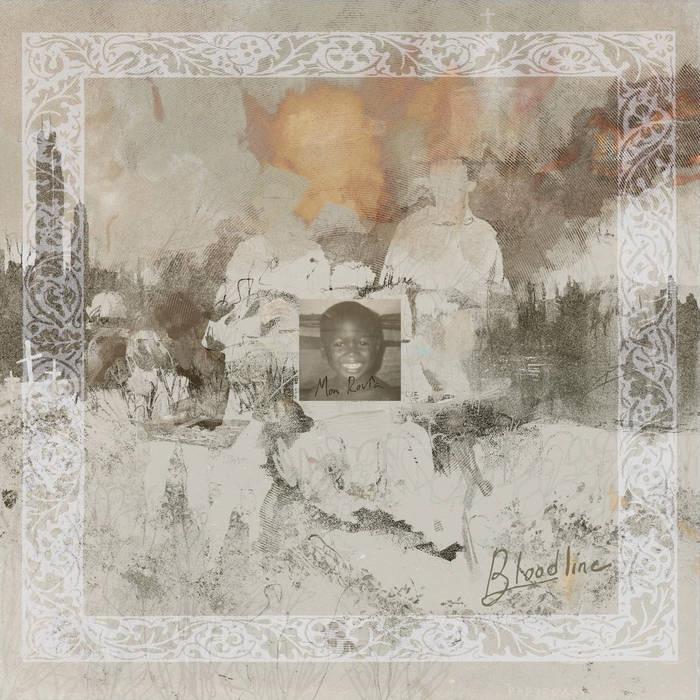
Folk singer Mon Rovîa opens his album Bloodline with a visceral mental homecoming. Although he is currently based in Chattanooga, the city where he acquired much of his musical influence, Mon (whose real name is Janjay Lowe) was born in Liberia, and takes his stage name from the capital city of Monrovia. In interviews, he has claimed that had he not been rescued by missionaries in the midst of the Second Liberian Civil War, he would have become a child soldier. Bloodline is Mon’s debut album after a series of EPs in 2023 and 2024, and like the opening lyrics, much of it deals with the singer’s struggle to understand his Liberian roots and find the good underneath his troubled childhood. Producers Cooper Holzman and Eli Teplin help create a warm, dreamlike, and comfortable sound that blends bluegrass, folk, and gospel music, reflecting Mon’s Appalachian coming-of-age as well as the general African roots of American music. In some key tracks, the pain of war turns into a call for radical empathy that brings the record out of the past and into the future.
The opening tracks of Bloodline are the most autobiographical. “Black Cauldron” ‘whittles’ Mon down to his younger self, as he remembers both the natural beauty of his home country and the ‘war torn screams’ he escaped. He croons over a ghostly piano later accompanied by a sharp guitar melody. “Day at the soccer fields” dives headfirst into the tragic reality of war, with the seemingly innocent song title belying lyrics about RPGs, assault rifles and
“black skin turning red.” With the title track “Bloodline,” over bright guitar picking, Mon bridges his Liberian and American upbringings and overcomes the cognitive dissonance of being raised so far away from his birthplace. The most striking and inspiring track of the album’s opening segment is “Pray the Devil back to Hell.” After a voice note gives context to the Civil War, Mon sings about the activist movement Women of Liberia Mass Action for Peace, a group of women (“dressed in all white”) who demanded peace. Beautiful layered vocals underlie this memory of collective action.
Sonically, Bloodline’s opening act is fairly samey. By the fifth track, the eerie “A Foreshadowing,” the listener might be wondering what the album can do sonically to pick up the pace. Starting with “Little by Little,” however, things start to shift to a more upbeat, bluegrass-inspired sound. The track features a confident drum beat that kicks in a little over halfway through the song and underscores lyrics about perseverance under extremely harsh circumstances (“Left on the highway I / stood there out alone / Little by little, I’ve grown”). Unlike previous tracks, Lowe sounds less trapped in the past and more like he’s speaking from his current perspective. The following number “Old Fort Steel Trail” is similar. He urges himself to “put the past down” and remembers a road he used to frequent in Montana, asking “Have I learned my lesson since then?” Lowe’s reflective lyrics are once again assisted by drums and banjo that pull together for a relatively bombastic chorus.
“Whose face am I” is a definite highlight of the album as Mon tries to imagine the parents he never got to know. On the second verse, he
sings about the soldier he imagines fathered him: “What’d you go see her for / Was it love in the war / Or the vices of a man / Did you even know / You left something behind?” The track perfectly captures Mon’s yearning for the truth about his parentage, and its short length (many of the songs on this album are quite brief) leaves the listener longing for more in the same way the singer longs for answers. The most upbeat song on Bloodline is the jaunty “Field Song.” which positions itself as a mantra for a young person working day and night for a future they are unsure of. It’s a veritable anthem that shows the strength of Mon’s bluegrass sensibilities. “Field Song.” feels like a tribute to the Black American musicians that cultivated genres like folk, country, and bluegrass, a theme continued in the beautiful “Somewhere down in Georgia” which features beautiful choir-like vocals that transition into an African drumbeat. Conveying an experience of the South and the contradictions of his upbringing, Mon combines American genres in ways that feel natural.
civil war on “Pray the Devil” or his own cry for exploration of the world on “Oh Wide World.” In an increasingly bleak world, “Heavy Foot” is a protest song that reminds us of humanity’s capacity to rise up.
Mon Rovîa finishes his narrative in a place of peace, even if he is not fully settled in his search for answers.
Nowhere does Mon Rovîa’s outward turn towards radical empathy hit harder than on “Heavy Foot,” perhaps the most standard pop tune on the record, but one that packs a hefty lyrical punch. Mon doesn’t necessarily call for a revolution, but he seems to feel like a swell of compassion could come if the downtrodden start to see each other. He calls for humanization of the homeless (“it could’ve been you or me / If we didn’t ever find our feet”), the incarcerated (Do you see the birds in the cage? / On the highway working likе slaves”), and more. A refugee himself, it feels natural that this is the conclusion to a line of thinking Mon started with his own journey of self-discovery. The call of “they’re never gonna keep us all down” reflects Mon’s learned experience of standing up to complacency, whether that be women in his hometown who stood up during the
On “Infinite Pines” he sings, “Though the lights keep fading, there’s a peace that’s waiting for us,” while on the closer “Where the mountain meets the sea,” he reminisces on what it means to be hopeful in the face of tyranny (“And through all of man’s tirade, a few of us beliеve in something beyond oursеlves”). A swell of guitar, drums, and strings in a rollicking bluegrass rhythm brings the song home, ending in a flurry of happiness. Like any good concept album, Bloodline ends in a very different place than where it started, the lush and full production of “Where the mountain” contrasting the conflicted stillness of “Black Cauldron.” On the album, Mon finds catharsis through radical empathy, calling on his listeners to do the same. Bloodline by Mon Rovîa may not challenge its listeners much sonically, but its cozy sound provides a perfect bed for incredible depth, sometimes disturbing and sometimes inspiring, leading the record to serve as a stunning debut album for a fascinating artist.
Ben Rothman is the 2025-2026 head of the American department at WKCR, regular programmer of Offbeat, semi-regular programmer of Tennessee Border Show, and far-too-regular repeat listener of the 1969 Flying Burrito Brothers album, Gilded Palace of Sin.
Bloodline album cover
Don’t Ask Me to Program a “Women’s History Month” Jazz Show
by Emma Lacy
March 1st marks the start of my least favorite month: Women’s History Month (WHM). The conclusion of February brings 31 days of numerous jazz venues blasting out brightly-colored promotional emails encouraging you to show your #support for women. Specially curated all-women bands will grace their stages, and compositions by Mary Lou Williams, Alice Coltrane, and Geri Allen will ring out and proclaim their right to be heard just as much as those of their male counterparts—and then before you know it, April Fools’ Day will roll around with perfect ironic timing, reveling in four weeks of performative activism followed by eleven months of regularly-scheduled, male-dominated programming. Excuse my skepticism, but as a woman-identifying jazz musician myself, I’ve never walked out of WHM feeling particularly included.
It is no secret that the patriarchal pillars of our society also upheld the jazz idiom in the 20th century. Third-wave feminism and the general political progress that comes with the sheer passing of time can give the illusion that considerable strides have been made toward the inclusion of non-male musicians in the jazz scene. In my experience, this has served as an excuse and justification for a continued lack of effort towards inclusion. The mainstream mentality seems to be, “But it’s 2026—we’ve come such a long way!”
In reality, such a sentiment only gets us a short way. Today, in 2026, out of the 68 bandleaders and sidemen currently listed on the Village Vanguard’s calendar between now and early May, three are women. In its 38 year lifespan, the Jazz at Lincoln Center Orchestra
has only welcomed one woman as a full-time member. I can’t remember the last time I was at a jam session and a composition by a non-male composer was called, and it’s been well over six months since I last heard one performed live (it was Alice Coltrane’s “CHARANAM,” which Immanuel Wilkins’s quartet played at the Village Vanguard in May. A stunning live recording was just released on Blue Note Records).
This is not to say that no efforts are being made—just that productive ones aren’t made frequently enough. For example, when the Future of Jazz Orchestra honored Melba Liston’s centennial at Dizzy’s last January, they featured an all-women trombone section. Still, their latest big band lineup for their regular monthly hit, which didn’t honor any composer in particular, was a completely male-identifying band. While female representation is objectively great, condensing it all into one occasional “Women in Jazz” program is counterproductive. How inclusive is calling a female trombone player for Melba Liston’s centennial if she doesn’t get a call back for the regular hit? Her call to play for the centennial certainly proves that she’s qualified to play in the band. Yet, limiting her involvement to the centennial reduces her to her gender identity and pigeonholes her into only playing women-in-jazz gigs in the minds of her male counterparts, and even in the minds of the receptive audience. I myself have performed in various all-women bands, or on gigs featuring all-women composers (often both at the same time), and I’ve certainly had my fair share of Baby Boomers to middle-aged people approaching me after gigs, raving about how they’ve never seen a female saxophonist
before.
Additionally, the confinement of womenidentifying musicians to women-in-jazz gigs is othering not only to women, but also to femininity. Eighteen men seated onstage in suits becomes the norm and expectation of a jazz band. As soon as you add even one woman to the stage, long hair, makeup, and heels stick out like a sore thumb. She becomes something of a spectacle. Instead of “playing well,” she is thought to “play well for a woman.” This is made evident when Alexa Tarantino receives the most applause out of any musician by far at Jazz at Lincoln Center Orchestra concerts. This creates a biased listener who does not view all band members as equals, doing its greatest disservice to the musicians. The overwhelming masculinity in “regular” bands frequently manifests in a status quo of male entitlement, rendering that masculinity toxic. Any expression of the traditionally feminine, be it a change in wardrobe, thoughtfulness, expressions of homosexuality, and especially the inclusion of non-male musicians, breaks this status quo. Ultimately, it others anything associated with women, limiting the selfexpression and personal reflection of the male musician as well as the emotion and beauty of his music.
WHM is a hotbed of these counterproductive inclusions of women, working against all genders—and even against the music itself, which is what we’re all here for, after all. What then, you may ask, does productive inclusion look like? (Hint: calling a female trombonist for the regular hit seems like an easy place to start.)
Truthfully, breaking the cycle of exclusivity in jazz spaces is not an overnight process. Representation in jazz performance now will set future generations up closer to the ideal egalitarian view of gender in jazz. A shining example is the Blue Note Records supergroup, ARTEMIS. Formed in 2016, ARTEMIS have found themselves at events such as Newport Jazz Festival, at venues such as the Village Vanguard, on NPR’s Tiny Desk Concert series, and as “Jazz Group of the Year” in the DownBeat
Readers Poll for two consecutive years—all while never advertising themselves as an allwomen ensemble. On a personal note, my discovery of ARTEMIS in high school proved to me that there was a place for women in the jazz scene after graduating. The representation of women who can perform jazz at a high level not ‘because they’re women,’ but just because they’re talented and hard-working, will shape the status quo of the future generations of jazz.
I am hopeful that jazz music—protest music—can become proof that patriarchal norms do not belong in the arts—maybe even to the point that March is just another month where I’m not asked to program a WHM jazz show on the radio.
Emma Lacy is a Jazz Department Director and programmer of Out to Lunch every other Friday from 12 PM to 3 PM.
am
am
Sin Fronteras
Jazz Alternatives
Nueva Canción
Som do
Special Broadcasts
SPECIAL BROADCASTS
Zakir Hussain Birthday
Broadcast Sunday, March 8, 2-9 PM
Tabla master, percussionist, and composer Zakir Hussain would have celebrated his 75th birthday this year. Hussain was not only a gifted musician, but also a brave promoter of India’s musical traditions. It is largely thanks to Hussain that Indian classical music enjoys its global audience. This broadcast will take the place of the Sunday Profile and Raag Aur Taal programs for a 7-hour celebration of Zakir Hussain.
Ornette Coleman Birthday
Broadcast Monday, March 9, all day
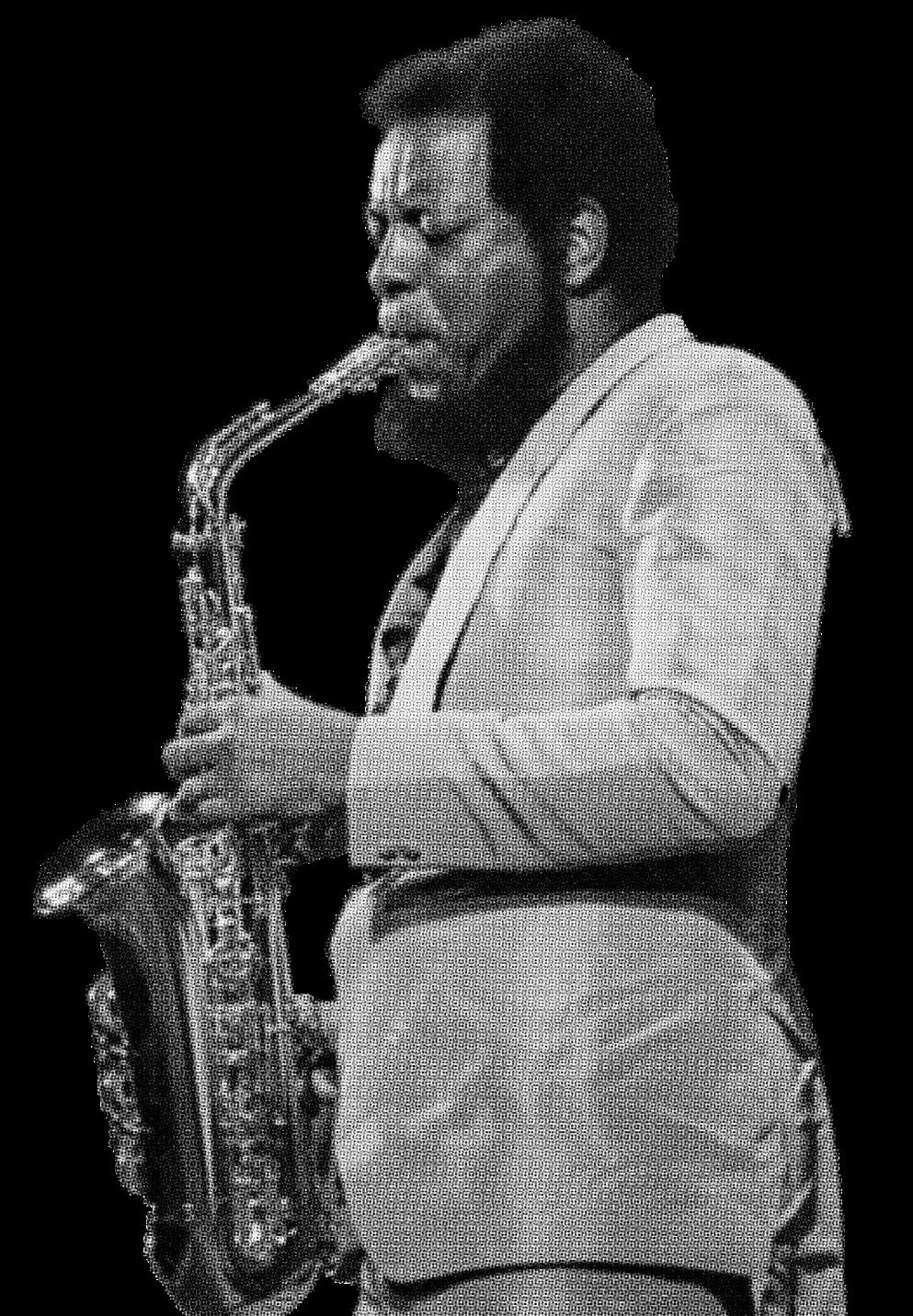
WKCR celebrates, as we do every year, the birth of saxophonist and composer Ornette Coleman with a 24-hour birthday broadcast. The broadcast will explore as many facets as possible of this creative musician’s output, from landmark albums such as The Shape of Jazz to Come to live performances and sideman recordings.
Bix Beiderbecke Birthday
Broadcast Tuesday, March 10, all day
Directly after the Ornette Coleman birthday broadcast is the beloved Bix Beiderbecke birthday broadcast––24 hours in honor of the cornetist, pianist, and composer of hot jazz. Though he passed away at only 28 years old, he left a large and lasting impact on the history of the music.
Béla Bartók Birthday Broadcast
Wednesday, March 25, 9:30 AM - 9 PM
WKCR dedicates 11.5 hours to a groundbreaking composer, pianist, and music intellectual: Béla Bártok. Listeners can celebrate the 145th anniversary of his birth by turning in for solo piano works, string quartets, ballets, and more.
Sarah Vaughan Birthday
Broadcast Friday, March 27, all day
Our third jazz honoree of the month is The Divine One: Sarah Vaughan. With her impressive vocal range and enjoyable stage presence, Vaughan was a defining voice of the 20th century. This broadcast will put on full display the breadth of Sassy’s career––from her start, Amateur Night at the Apollo Theater in Harlem, for $10 and a weeklong engagement opening for Ella Fitzgerald, to her last recordings.
THEMED SHOWS
SUNDAY PROFILES
Sundays 2:00-7:00 PM
Brian Blade
March 1
Host: Lena Nelson
This five-hour broadcast hosted by a WKCR Jazz Department alumna will focus on the life and music of drummer and composer Brian Blade, known particularly for his Fellowship Band (formed in 1997 and active through the present).
TBD
March 15
Host: Sid Gribetz
WKCR’s iconic Sunday Profile host, Sid Gribetz, returns with a five-hour broadcast diving into the life and work of a jazz great.
Dave Van Ronk
March 22
Host: McCartney Garb
American Department host McCartney Garb brings you a deep dive into the career of the Mayor of MacDougal Street, Dave Van Ronk. Ronk played a pivotal role in the revival of the folk scene in the 1960s, both right here in New York City and in America at large.
Protest music
March 29
Host: Ella Presiado, McKenna Roberts Ella Presiado and McKenna Roberts take to the studio to present a Sunday Profile about protest music and its significance in the American folk tradition.
Show Listings
SATURDAY NIGHT AT THE OPERA
Saturdays 9:00-12:30 AM
Lear (Reimann)
March 7
Host: Simon Reich
Imeneo (Handel)
March 14
Host: Winni Xu
La Clemenza di Tito (Mozart) March 21
Host: Simon Reich
Djamileh (Bizet) March 28
Host: Winni Xu
JAZZ
Daybreak Express, Mon.-Fri. 5-8:20am
Out to Lunch, Mon./Tues./Thurs./Fri. 12-3pm
Jazz Alternatives, Mon.-Fri. 6-9pm
The core of our jazz offerings, these three programs span the entire range of recorded jazz: everything from New Orleans jazz, jazz age, swing era, bebop, hardbop, modal, free, and avant-garde. Hosts rotate daily, offering an exciting variety of approaches, some of which include thematic presentation, artist interviews, or artist profiles. On the first Wednesday of every month, Jazz Alternatives becomes “The Musician’s Show” and is hosted by a professional working musician.
Birdflight, Tues.-Thurs. 8:20-9:30am
Archival programs from the late Phil Schaap, one of the world’s leading jazz historians, producers, and an NEA Jazz Master, who hosted this daily forum on the music of Charlie Parker for about 40 years.
Now's The Time*, Fri. 8:20-9:30am
The newest show from WKCR Jazz is dedicated to jazz as a living art form and features the music of young, upand-coming musicians pushing the genre forward.
Traditions in Swing, Sat. 6-9pm
Archival programs from the late Phil Schaap. This awardwinning Saturday night staple presents focused thematic programs on jazz until World War II. Schaap presents the music, much of it incredibly rare, from the best sound source—often the original 78 issue.
Phil Lives*, Mon. 3-5am
Selections of archival programs from late Phil Schaap. This show features interviews, tributes, and portions of longform programs.
Jazz ‘til Dawn, Sun. 4-6 AM
An early Sunday morning jazz program, limitless in era and style.
CLASSICAL
Cereal Music, Mon.-Thurs. 9:30am-12pm
An entirely open-ended classical show to start your weekdays.
The Early Music Show, Fri. 9:30am-12pm
Dedicated primarily to European medieval, Renaissance, and baroque music before c. 1800.
Extended Technique*, Wed. & Thurs. 3-6pm
WKCR’s first interdepartmental show (in the New Music and Classical departments) dedicated to contemporary classical music. Under the direction of the New Music and Classical departments, this program is dedicated to experimental classical music.
Afternoon Classical, Fri. 3-6pm.
Two hours of unrestricted classical music selections followed by one hour dedicated entirely to the music of J.S. Bach.
Saturday Night at the Opera, Sat. 9pm-12:30am.
One of NYC’s longest running opera shows, Saturday Night at the Opera features one opera in its entirety, with time for history and commentary, each week.
NEW MUSIC
Afternoon New Music, Mon. & Tues. 3-6pm
Our daytime new music program features a wide variety of music that challenges boundaries and subverts categorizations. Shows include everything from seminal new music compositions to the most challenging of obscure deep cuts and new releases.
Transfigured Night, Tues./Thurs. 1-5am and Sat. 2-6am
Our overnight explorations into the world of new music, Transfigured Night rewards our late night listeners with a wide range of sounds and experimental music.
Workaround*, Fri. 9-10pm
WKCR presents live sets from local professional and student DJs.
Live Constructions, Sun. 10-11pm
This weekly program features a live in-studio performance or a previous performance recorded at WKCR.
* Indicates show was created after January 2022
LISTINGS FOR LISTENERS
Honky Tonkin’, Tues. 10-11pm
One of WKCR’s longest-running American music programs, Honky Tonkin’ focuses on country music from the 1930s through the 1950s.
Tuesday’s Just as Bad, Tues. 11:30pm - Wed. 1am
For the first hour, Tuesday’s Just as Bad explores the world of blues prior to World War II. In the final half hour, hosts turn to the post-war years.
Night Train, Wed. 1-5am
All aboard! One of two overnight programs in the American Department, Night Train rolls through the post-war R&B and soul tradition, from the genre’s emergence in the 1940s and ‘50s through the funk revolution in the ‘70s. Shows often feature extended live recordings and concerts.
Offbeat, Fri. 1-5am
Offbeat exposes undiscovered, underplayed, or up-andcoming new hip hop artists, including experimental instrumental artists not typically played on mainstream hip hop radio.
Across 110th Street, Sat. 12-2pm
Across 110th Street airs soul, funk, and dance music from the 1960s through the ‘80s and ‘90s.
Something Inside of Me, Sat. 2-4pm
WKCR’s Saturday afternoon blues show, Something Inside of Me focuses on electric and post-war styles.
Hobo’s Lullaby, Sat. 4-6pm
Rooted in the folk revival of the 1950s and ‘60s, Hobo’s Lullaby airs American folk and traditional music styles from the early 20th century through the present day. Shows feature old staples like Leadbelly, Elizabeth Cotton, and Woody Guthrie through contemporary stalwarts like the Carolina Chocolate Drops.
Notes from the Underground, Sun. 12:30-2am
Notes from the Underground showcases contemporary hip hop and rap music with an emphasis on emerging and experimental artists. The program also hosts local and visiting artists for interviews, freestyles, and guest curation.
Amazing Grace, Sun. 8-10am
Greeting listeners on Sunday morning, Amazing Grace shares the African-American gospel tradition.
The Moonshine Show, Sun. 10am-12pm
On the air for nearly 60 years, The Moonshine Show showcases the American Bluegrass tradition, from the earliest roots in vernacular string-band music, the genre’s pioneers in the 1940s and 50s and advancements in the 60s and 70s, through the leading innovators of today.
The Tennessee Border Show, Sun. 12-2pm
The Tennessee Border Show highlights the singersongwriter tradition, from Hank Williams and Townes Van Zandt to Lucinda Williams.
LATIN
Caribe Latino, Mon. 10pm-12am
Caribe Latino features the diverse, upbeat music from Latin communities in the Caribbean. Popular Latin rhythms such as Salsa, Merengue, Bachata and Latin Jazz take center stage throughout the program.
Urbano Latinx, Tues. 12-1am
From salsa and merengue to Latin punk rock, Urbano Latinx airs contemporary sounds from Latin America, the Caribbean, and the diaspora.
Sin Fronteras*, Wed. 12-3pm
Occupying the time slot of Out to Lunch on Wednesday afternoons, Sin Fronteras explores the tremendous and growing tradition of Latin Jazz.
Nueva Canción, Wed. 10-11pm
Nueva Canción explores protest music created throughout Latin America during the 1960s and ‘70s, on its own and in the context of protest music from other countries and during time periods.
Som do Brasil, Wed. 11pm - Thurs. 1am
From samba and bossa nova to MPB, Som do Brazil features the enchanting sounds and rhythms of Brazil.
Sonidos Colombianos, Fri. 10-11pm
Sonidos Colombianos presents music from Colombia. The bilingual musical tour includes not only cumbia, but also the guitar-based bambuco from the Andean region, the harp llanero music from the Eastern Plains, the marimba-infused currulao from the Pacific Region, and the accordion-driven vallenato of the North Atlantic Coast.
* indicates show was created after January 2022
LISTINGS FOR LISTENERS
The Mambo Machine, Fri. 11pm - Sat. 2am
The Mambo Machine is the longest running salsa show in New York City. The program plays a wide spectrum of Afro-Latin rhythms perfect for dancing.
El Sonido de la Calle*, Sun. 2-4am
The Latin companion to Sunday morning’s Notes from Underground, El Sonido de la Calle highlights the diverse world of contemporary Spanish-language hip hop and dance music.
IN ALL LANGUAGES
The Celtic Show, Mon. 12-1am
Music from across the island of Ireland throughout the era of recorded music, particularly focusing on traditional folk and vernacular music forms.
Coordinated Universal Time, Mon. 1-3am
Coordinated Universal Time brings listeners the latest cut of music from across the globe, especially highlighting music that does not get attention in America.
The African Show, Thurs. 10pm-12am
The longest running African music radio show in the United States, The African Show brings listeners a variety of music from the entire continent of Africwa.
Middle Eastern Influences, Fri. 12-1am
Middle Eastern Influences features selections from the Middle East and North Africa, with particular attention on traditional forms.
Sounds of Asia and Couleurs Antillaises, Sat. 6-8am
Previously Sounds of China, Sounds of Asia explores the recorded musical traditions and innovations of Asia and the Pacific Islands. Couleurs Antillaises features music from Haiti and the French-speaking Carribean. These shows alternate in the Saturday morning timeslot so each airs every two weeks.
Eastern Standard Time, Sat. 8am-12pm
One of New York’s most popular Reggae programs, Eastern Standard Time captures listeners with the hypnotic sounds of Reggae and Jamaican dance music.
Field Trip, Sun. 6-8am
Field Trip focuses on the music and practice of field recordings: music recorded outside of a studio. This definition is expansive and includes everything from released recordings to street music documented by WKCR.
Raag Aur Taal, Sun. 7-9pm
Raag Aur Taal (which means “melody and rhythm”) explores the classical musical heritage of South Asia.
Back in the USSR, Sun. 11pm-12am
Back in the USSR features music from Eastern Europe, East Asia, and Central Asia, from the mid-20th century through the present.
NEWS & ARTS
Monday Morningside*, Mon. 8:30-9:30am
WKCR’s morning news broadcast, Monday Morningside features segments on events around Morningside Heights and upper Manhattan. All episodes are available as podcasts on Spotify.
News and Arts Program, Sun.-Thurs. 9-10pm
These programs form the core of our News and Arts programming. On Sundays, “Soundstage” features a live reading of a play; on Mondays, “Late City” offers retrospective coverage on local cultural happenings; on Thursdays, “Playlist Profiles” characterize a person through music. As news is constantly evolving, note that these programs are subject to change and preemption.
SPECIAL BROADCASTS
Sunday Profile, Sun. 2-7pm*
This five-hour program dedicated to a longform, researched profiles of a pioneering artist, label, or musical movement. Originally known as “Jazz Profiles,” this show has expanded its scope; today, it may feature any of the musical traditions represented by WKCR’s programs.
* indicates show was created after January 2022
Spinning on Steinway Street: Pancakes Records
by Jack Serpick
Taking the M60 bus from Morningside Heights to Astoria is shockingly convenient. What’s more, the OMNY tap machine on the particular bus I took was broken—so fare not!
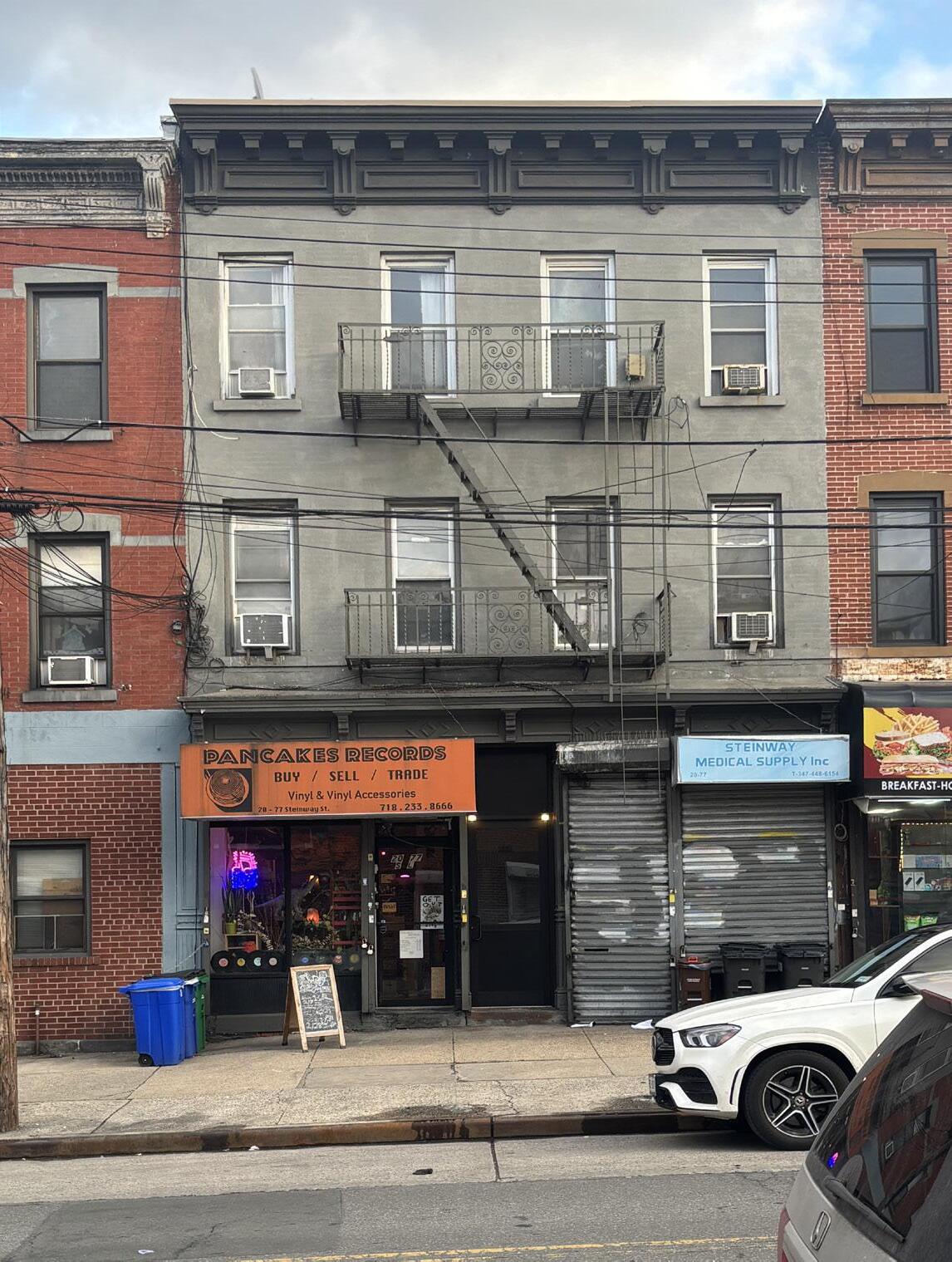
After a smooth 35-minute ride, I hopped off the bus and into the low-rise wonderland. Though it took everything in me not to stop for the Greek or Mediterranean food that I’d heard so much about, I made the short walk from the bus stop to Pancakes Records at 20-77 Steinway Street.
Upon entering, I was immediately struck by the dinosaur decorations that filled the small store. A dinophile myself, I couldn’t help but ask the woman at the front desk what the deal was. Contributing to the mom-and-pop charm of the place, the woman, named Tanya Gorbunova, happened to be one of the two owners, the other being AJ Pacheco, who was fiddling with a retro videogame controller in the back. She seemed happy to explain the dinosaurs: “AJ, my partner, has loved dinosaurs since he was a kid. When we were building the shop, his parents came by to help us build up some of the store, and they brought him a big container of his old dinosaurs and said, ‘Now you have this space for them, just take them away.’ So we decorated the shop, and people have been bringing us dinosaurs ever since.” She continues, “It’s like once you have a thing, people just lean into the thing, so we’ve had some regulars that have brought us dinosaurs. We’ve also invested in a couple, just to keep up the aesthetic.”
Pancakes Records has a distinctly homey vibe, not unlike the bedroom of an angsty teenager—an on fleek angsty teenager with
wildly impressive music taste, that is. The crates of records are meticulously organized and well-kept. I got the sense that both the records and the decor were curated intentionally to create a simultaneously welcoming and nifty environment. It’s clear that the owners have a deep respect for the place.
When Pancakes Records first opened in the summer of 2023, Gorbunova and Pacheco had a clear vision for the store. They wanted “a store for Astoria, where all can feel welcome.” As such, Gorbunova told me that they don’t necessarily specialize in any single genre, though they “try to carry a little more of the psych rock stuff, psych rock and prog rock, both the old school stuff and the revival.” She adds, “We also try to order as much as we can from international labels.” Lô Borges was spinning when I first walked in.
Pancakes Records is not only a record store, but a venue for budding music artists as well; the night I was there, for example, an up-andcoming acoustic singer-songwriter named Greta Keating performed. Pancakes regularly hosts open mics, pop-ups, and live music like Keating’s. (Check out @pancakes.records on Instagram for upcoming events.)
The pair of owners has lived in Astoria for over a decade now and had something of a reputation in the area even before Pancakes Records. Both Gorbunova and Pacheco previously worked at a record store and coffee shop called Hi-Fi Records at 23-19 Steinway Street, which closed in January 2023 when the owner, Javi Velazquez, moved back to his hometown in Puerto Rico. Although the store was no longer there, the community and the customers were. “We saw that there was
a void. We saw that people still want to buy records. People want to connect about music.” Gorbunova continues, “[Astoria’s] the place I know. I’m not planning on leaving. Honestly, if I were living anywhere else, I probably wouldn’t want to open a record shop because if you go to Brooklyn, there’s a ton of them.”
When I was done chatting with Gorbunova, I hit the crates. Starting with the international section, I was floored by the geographic range of the selection, considering the relatively small size of the shop. Sections included Latin, Brazil, Europe, Reggae, Asia, Japan, Africa, South Africa, Mali, Zambia, Ghana, Nigeria, Fela Kuti, the Middle East, and more. After about an hour of browsing, I got to the folk section, came across a Donovan record for six dollars, and just couldn’t stop myself.
indeed, around twenty–Thee Oh Sees records. I ended up, along with my Donovan record, buying a “Live in San Francisco” vinyl with a dope cover displaying Thee Oh Sees front man, John Dwyer, vomiting while playing guitar and leaning over so as not to allow the vomit to disrupt his picking.
With the record in hand, I made my way back to the front desk, where Gorbunova sat, looking at the Habibi Deli & Grocery Inc. across the street. Once she broke her gaze, I asked her for a recommendation. With a smile, she introduced me to Thee Oh Sees: “You ever listen to them? They’re a staple band, and you’ll see there’s probably ten to twenty of their records in our stacks. I would recommend any album by Thee Oh Sees. If you’re looking for specifics, the one we spin a lot is called Thee Hounds of Foggy Notion. It’s an old one.”
She then led me to an extensive collection of–
On my way out, Gorbunova left me with a final note: “Just please write ‘Pancakes’ and not ‘Pancake’.” The owners seem to have an air of specificity surrounding the name; I guess people have botched it in the past. (I noticed Greta Keating calling it “Pancake Records” on her Instagram, @gretakeating–do better.)
The Pancakes Records website gives two definitions: 1) “pancake - (verb) to continuously flip a vinyl record after it ends to listen to it again” and 2) “pancakes - (noun) stacks of delicious
flat discs for aural consumption.” Fair enough.
Once I left the store, with the corners of my newly bought records visibly poking out the sides of my backpack, I had one thing on my mind: Greek food.
Jack Serpick loves to program Daybreak Express from 5 AM to 8:30 AM.
Pancakes Records
Photo by Jack Serpick
Francisco Javier Reyes, Programmer: MILES DEWEY DAVIS.
Charlie Kusiel King, Classical Head: Björk!! Shostakovich!! Richard D. James!!
Kelly Yan, Programmer: Erik Satie!
Maddie Gibson, Programmer: Tracy Chapman.
Ben Rothman, American Head: Willie Nelson! One of the godfathers of outlaw country and a member of the Highwaymen, who are still releasing new music.
Hadassah Weinmartin, Jazz Head: Esperanza Spalding, Christian McBride, Chick Corea, or for a classical pick: Chevalier de Saint-Georges!
Noel Siegert, Programmer: Hugh Masekela.
Casey Lamb, Station Manager: Pete Seeger, Morton Feldman, Laurie Anderson, Eric Dolphy.
David Gonzalez, Programmer: Gustavo Cerati, and I’m using the second half to showcase his producer credits.
Emma Lacy, Jazz Head: Billy Strayhorn, Oscar Peterson, Stevie Wonder, Kenny Garrett, Roy Hargrove, Ruben Blades, and of course, Miles!!!!!
AROUND THE STATION
Iris Eisenman, Programmer: Marvin Gaye?
If you could have a birthday broadcast for anyone, who would it be?
Divya Chaudhry, Programmer: Nusrat Fateh Ali Khan, my GOAT.
Maxim Koretsky, Programmer: David Bowie!
Ted Schmiedeler, Head Archivist: Brian Eno.
Rachel Smith, Program Director: This is such a hard one! I think doing a birthday broadcast for Manfred Eicher where we play all ECM would be pretty cool…it’s jazz, it’s classical, it’s new music, it’s so WKCR.
Sara Carson, Student Life Director: Barry Harris, Cannonball Adderley, Jackie McLean, Kenny Dorham.
Kurt
Gottschalk, Programmer: For listening: Sophia Gubaidulina. For learning: Giacinto Scelsi. But for real? Olivier Messian.
Simon Reich, Programmer: Jean Sibelius!
Stella Lucine Manyan, Programmer: Nancy Wilson.
Ale Díaz-Pizarro, Former Station Manager: David Berman or Wendy Carlos.
Isabel Norman, Programmer: Neil Young, Sarah Vaughan*, and Debussy!
Merielen Espino, Latin Head: Cal Tjader, Dinah Washington, & Miles.
*this birthday broadcast already exists and it's one of this programmer's favorites!
SUPPORT WKCR
HOW TO DONATE TO WKCR IN 4 STEPS
ONLINE
Step 1: head to www.wkcr.org
Step 2: Click the yellow “DONATE TO WKCR” banner at the top of the page
Step 3: Fill out the form in the giving portal and enter your information...
Step 4: ...and VOILÀ! Just like that, you have become a WKCR supporter!
BY MAIL
Step 1: Locate your nearest checkbook
Step 2: Indicate “WKCR” as payee and fill out as usual
Step 3: Mail check to CU Gift Systems, 622 West 113th Street, MC 4524, New York, NY 10025
Step 4: ...and VOILÀ! Just like that, you have become a WKCR supporter!
Did you know you can make recurring donations to WKCR when you donate online? Just indicate your frequency preferences on the giving portal when prompted!
WKCR also accepts checks to our direct address. Just follow the same steps listed above but mail the check to: 2920 Broadway, New York, NY 10027
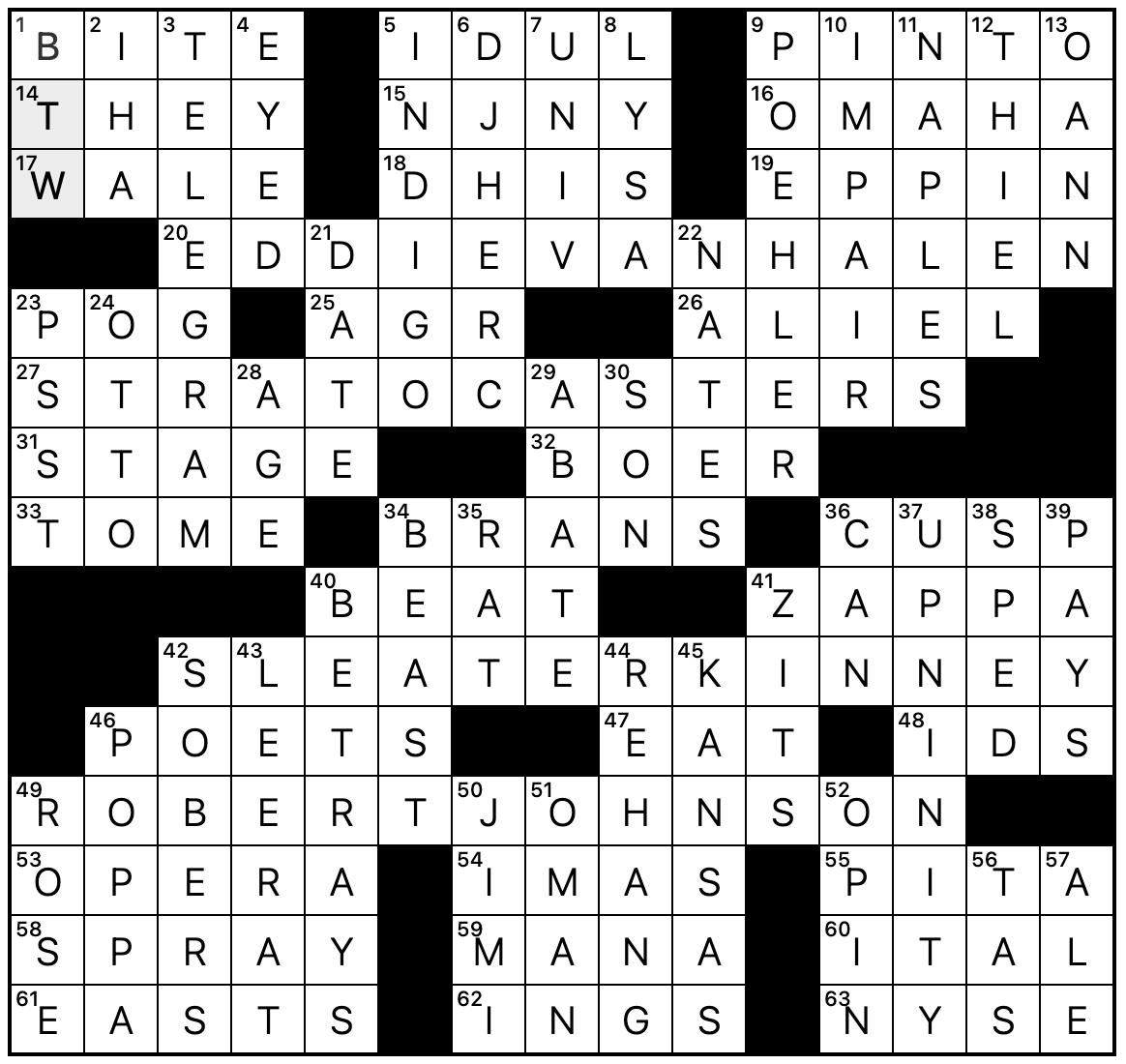
Crossword Solution
Photo of Ornette Coleman
by Jean-Pierre Roche
On Air 's editorial board is McCartney Garb, Ella Werstler, Jem Hanan, & Olivia Callanan
The editorial team for this issue was Charlie Kusiel King, CJ Gamble, Emma Lacy, Jonah Stockwell, Kitty Speer, Maya Phillips, & Sylvia Lipsyte
Special thanks to Ale Díaz-Pizarro, Ben Rothman, Casey Lamb, David Gonzalez, Divya Chaudhry, Ethan Draughon Thacker, Francisco Javier Reyes, Hadassah Weinmartin, Iris Eisenman, Isabel Norman, Jamie Treatman-Clark, Kelly Yan, Kurt Gottschalk, Maddie Gibson, Maxim Koretsky, Merielen Espino, Noel Siegert, Rachel Smith, Sara Carson, Simon Reich, Stella Lucine Manyan, & Ted Schmiedeler